


Creating a 1970s-inspired kitchen celebrates an era of bold colors and distinctive character. This design movement embraced avocado green appliances, harvest gold cabinetry, and geometric patterns. The decade brought warmth and personality to home spaces through unique material choices and architectural details.
The 1970s kitchen aesthetic has experienced renewed interest among homeowners and designers. These spaces offer refreshing alternatives to stark modern minimalism. Authentic period elements like Formica countertops, vinyl flooring, and earth-tone color palettes create memorable cooking environments that feel both nostalgic and surprisingly functional.
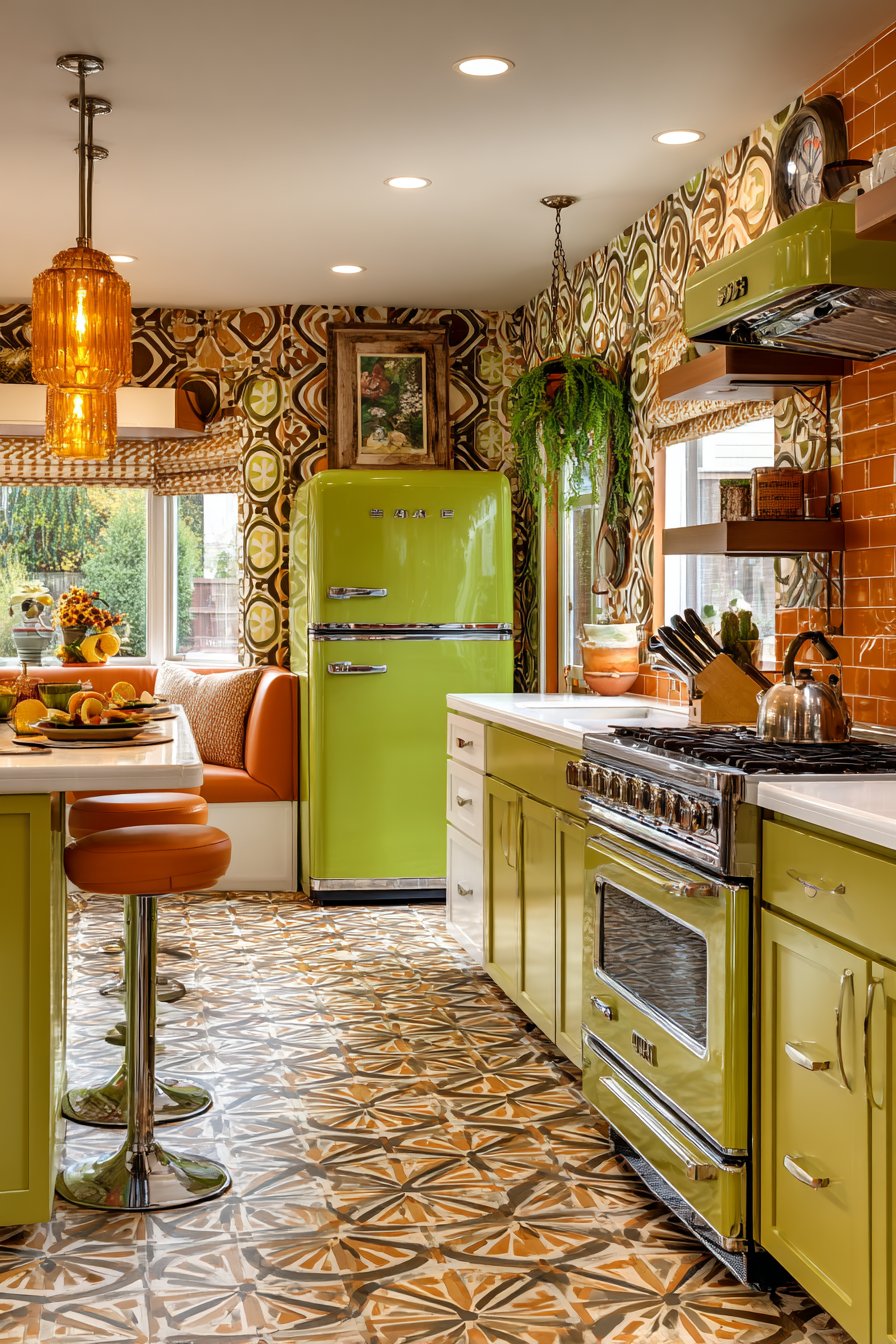
This comprehensive guide explores twenty distinctive 1970s kitchen designs. Each concept showcases signature materials, color schemes, and layout solutions. From compact galley kitchens to open peninsular designs, these ideas demonstrate the era’s approach to combining style with practical functionality.
1. Avocado Green Appliance Showcase

The authentic avocado green refrigerator and range anchor this classic 1970s kitchen. Warm harvest gold cabinetry surrounds these iconic appliances. Simple flat-panel doors feature basic chrome hardware throughout. The burnt orange ceramic tile backsplash creates bold visual contrast in a classic subway pattern.
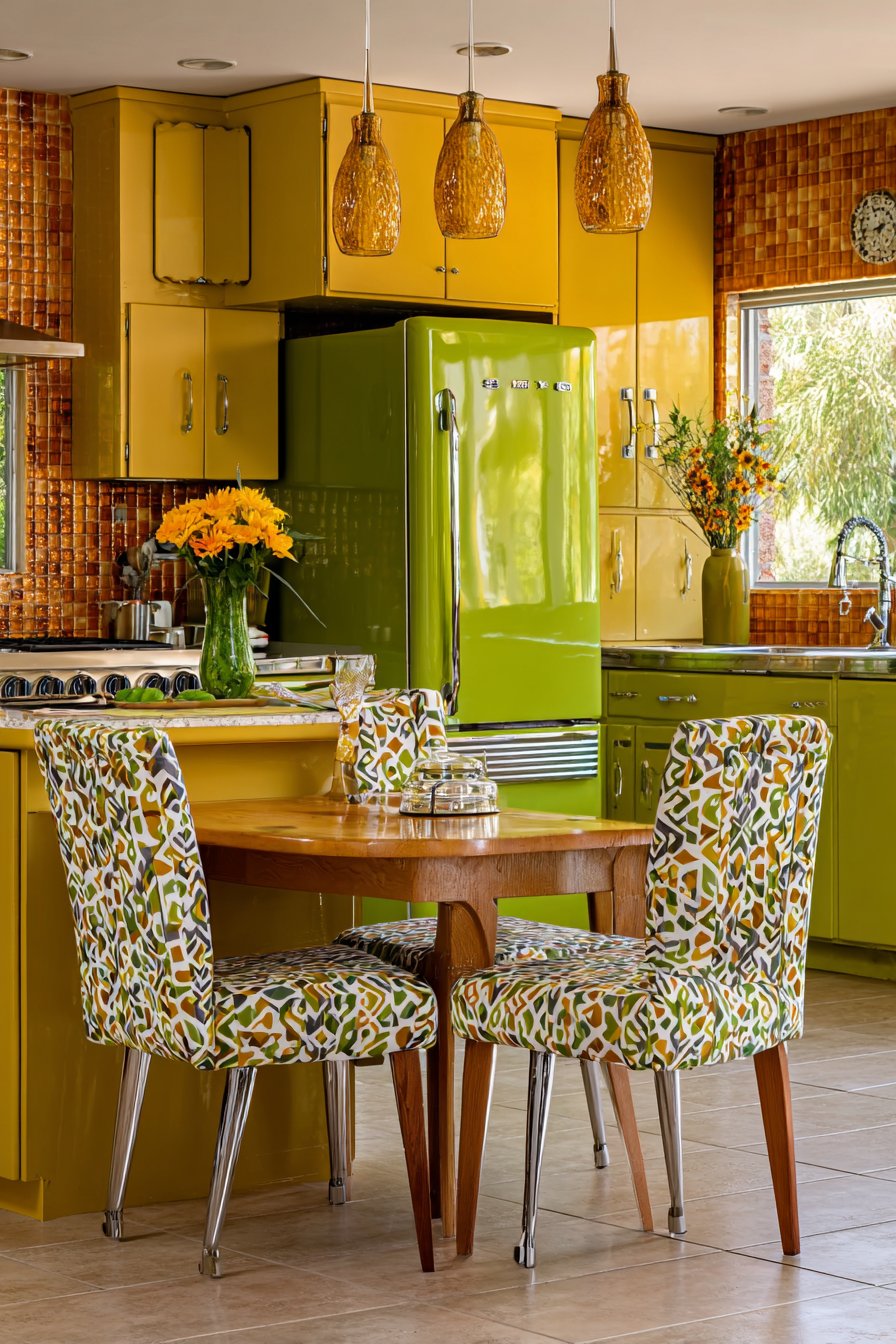
A Formica countertop displays the beloved wood-grain pattern of the era. This surface provided durability while maintaining period-appropriate aesthetics. Pendant lights with amber glass shades hang gracefully above the breakfast nook. The small dining area features a chrome-legged table surrounded by vinyl-upholstered chairs in geometric prints.

Natural light streams through the window above the sink. The sunlight illuminates the entire workspace beautifully. Wide-angle views capture the authentic retro color palette that defined the decade. The functional layout demonstrates thoughtful kitchen planning from this memorable design period.

Key Design Tips:
- Choose authentic avocado green appliances as statement pieces for immediate period recognition
- Pair harvest gold cabinetry with burnt orange accents for classic 1970s color harmony
- Install Formica countertops in wood-grain patterns for authentic surface treatments
- Add amber glass lighting fixtures to enhance the warm, nostalgic atmosphere
- Position chrome hardware throughout for metallic accents that complement the color scheme
2. Cozy Burnt Orange Breakfast Nook
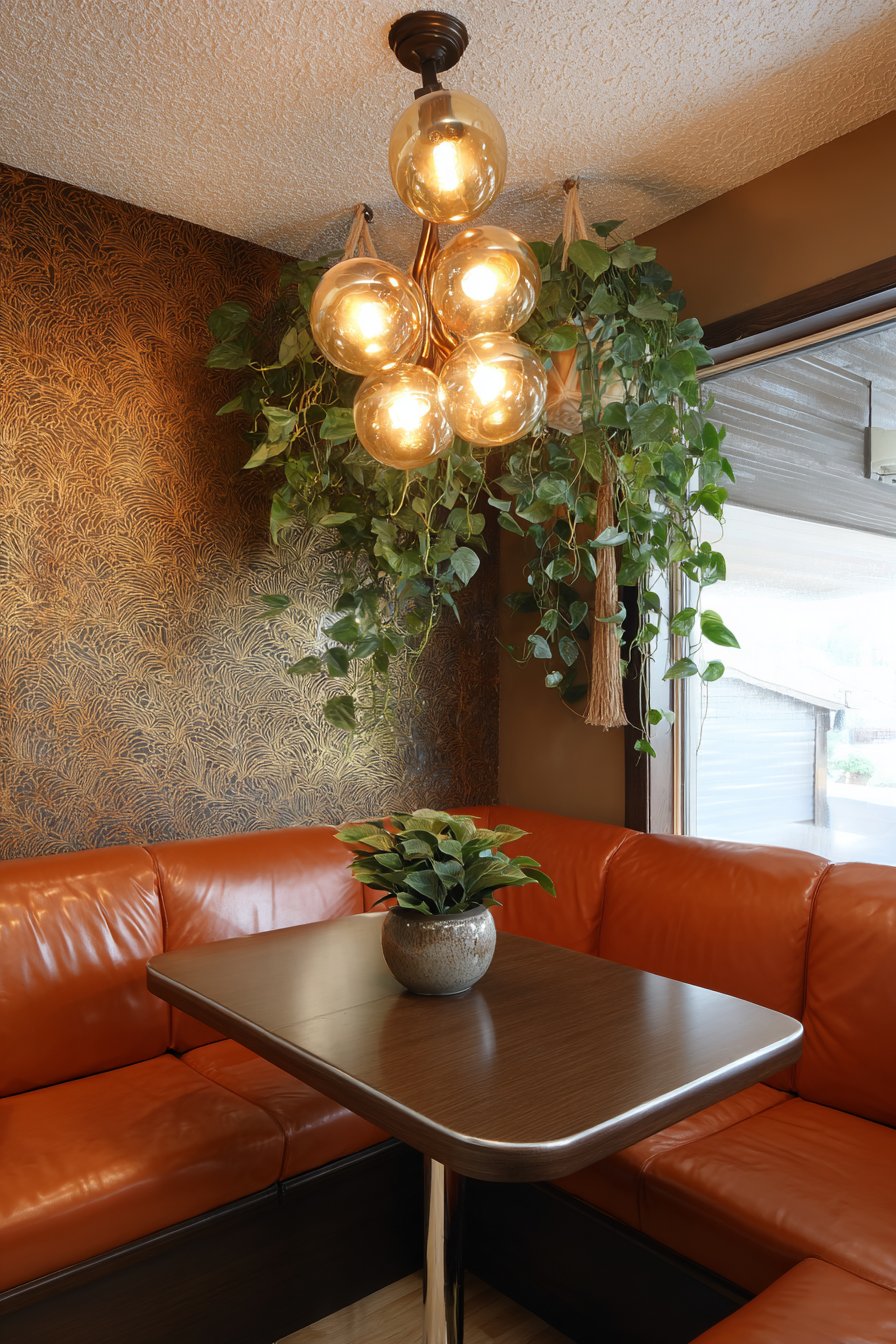
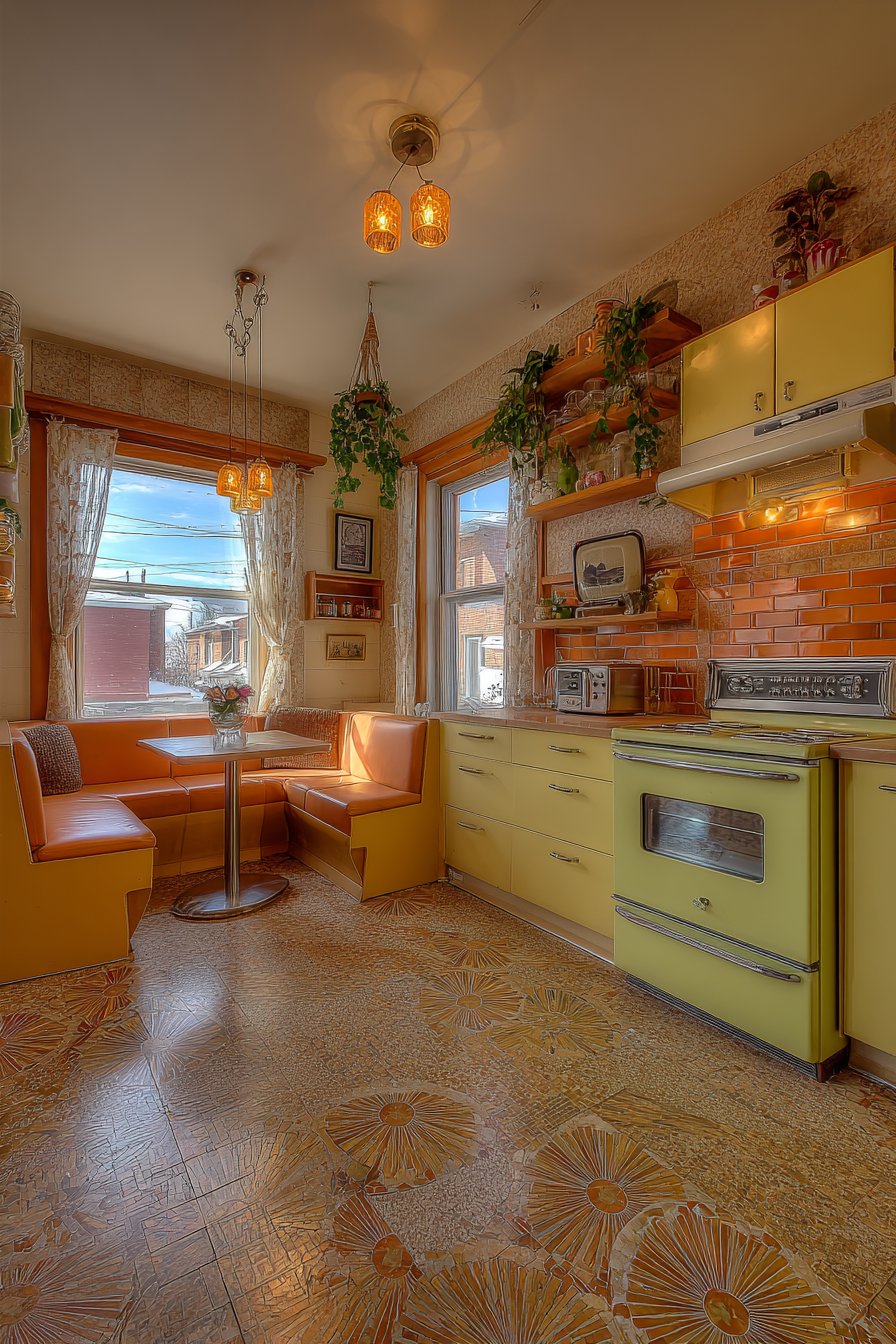
A built-in banquette transforms this breakfast area into an inviting gathering spot. Burnt orange vinyl cushions rest against a dark walnut wood frame. The small dining table features a laminate top with convincing woodgrain finish. A chrome pedestal base provides sturdy support beneath.

Macramé plant holders suspend trailing pothos plants from above. These natural elements bring life and texture to the space. Textured wallpaper covers the wall in brown and gold geometric patterns. The bold design creates visual interest throughout the nook area.
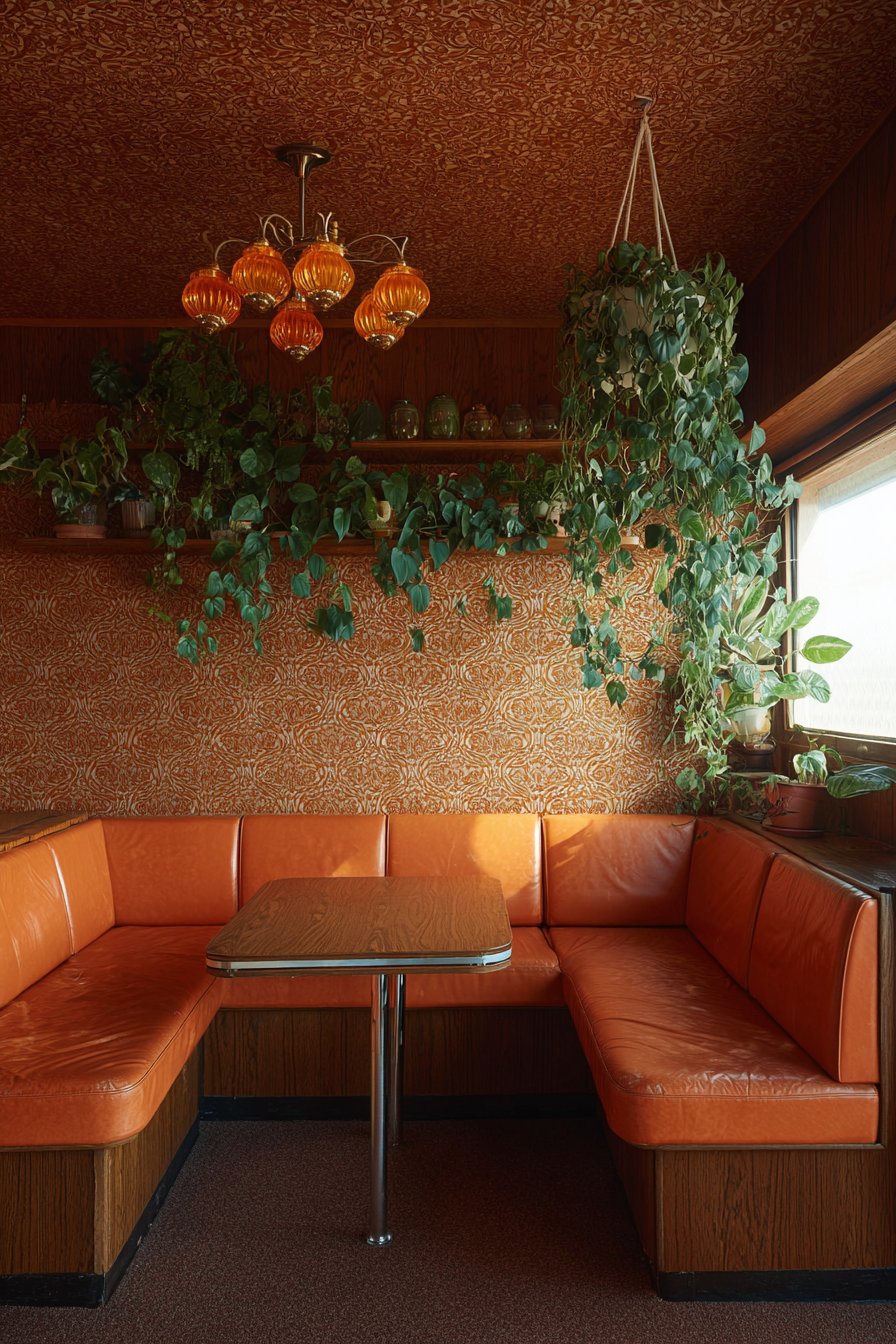
A vintage swag lamp illuminates the space with multiple amber glass globes. The warm overhead lighting enhances the cozy conversation-friendly layout. Soft natural light from an adjacent window complements the artificial illumination. This breakfast nook embodies the social, family-focused design philosophy of the 1970s.

Key Design Tips:
- Build in banquette seating to maximize space efficiency in smaller kitchens
- Select burnt orange vinyl for easy cleaning and authentic 1970s aesthetics
- Hang macramé plant holders to add organic vertical interest
- Install swag lamps with amber glass for adjustable, period-appropriate lighting
- Choose geometric wallpaper patterns in earth tones for bold visual impact
3. Dark Walnut Wood Cabinetry Statement

Rich walnut-tone cabinetry dominates this sophisticated 1970s kitchen design. Simple recessed panel doors showcase the beautiful wood grain naturally. Basic brass knobs provide functional hardware with understated elegance. Brown Formica countertops feature subtle speckled patterns throughout.

Patterned linoleum flooring spreads across the space in harvest gold and brown. This flooring choice adds authentic vintage character underfoot. Open shelving displays period-appropriate dishware including fondue sets and colored glassware. The visible storage creates both function and decorative interest.

A wall-mounted rotary telephone in avocado green hangs beside the doorway. This authentic detail transports visitors back to the era immediately. Natural lighting from cafe-curtained windows illuminates the workspace effectively. The bold floral print curtains frame the window beautifully while filtering sunlight.

Key Design Tips:
- Choose dark walnut cabinetry for sophisticated depth and timeless appeal
- Display vintage dishware on open shelving as functional decoration
- Install patterned linoleum in earth tones for authentic flooring character
- Add brass hardware for warm metallic accents throughout the space
- Incorporate avocado green accessories as signature 1970s color touchpoints
4. Exposed Brick Accent Wall Drama

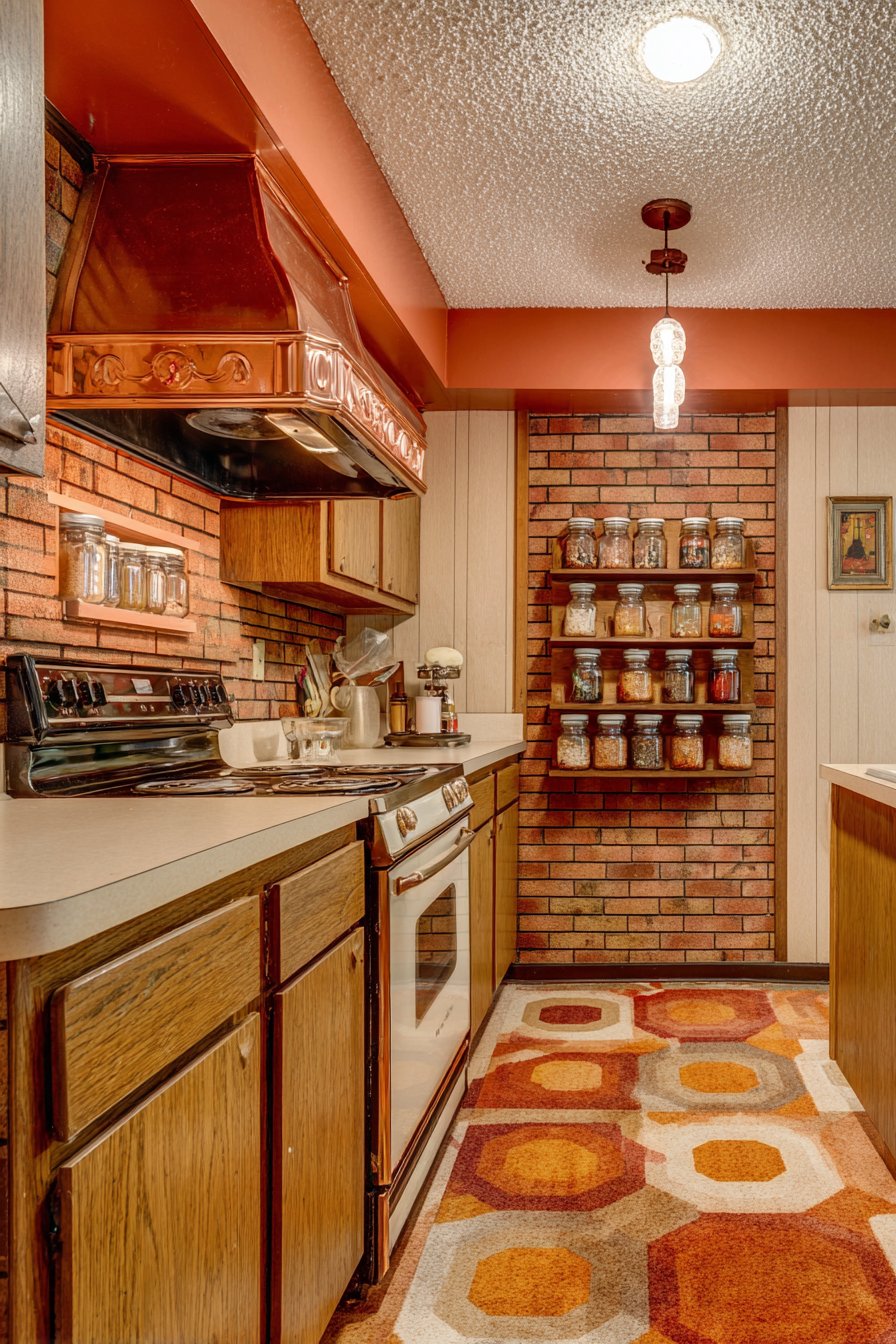
A distinctive brick accent wall creates dramatic focal interest behind the cooking area. Warm red-orange tones radiate natural texture and depth. The copper-toned range hood features decorative detailing that complements the exposed brick. Light wood cabinetry keeps the surrounding space bright and open.

Formica countertops in butterscotch tones tie the warm color scheme together seamlessly. Sheet vinyl flooring displays bold geometric patterns throughout. Browns, oranges, and harvest gold create visual rhythm across the floor. A wooden spice rack mounts directly on the brick wall for practical storage.

Vintage glass jars display colorful spices in organized rows. Pendant lighting with smoked glass shades hangs from the ceiling above. The professional lighting captures textural contrast between different materials. This design demonstrates the 1970s love for mixing natural and manufactured elements.
Key Design Tips:
- Install exposed brick accent walls for instant texture and warmth
- Select copper-toned range hoods to complement brick and earth-tone palettes
- Use butterscotch Formica countertops to bridge multiple warm colors
- Mount wooden spice racks on brick for practical storage with visual appeal
- Add geometric vinyl flooring to introduce pattern without overwhelming the space
5. Harvest Gold Appliance Coordination

Authentic harvest gold appliances define this coordinated 1970s kitchen. The double oven range and matching dishwasher create visual harmony. Medium brown wood cabinetry features simple flat fronts throughout. Basic chrome handles provide functional hardware with clean lines.

Pale yellow Formica countertops display subtle metallic flecks beautifully. The workspace surfaces catch and reflect light throughout the day. Square ceramic tiles create a checkerboard backsplash pattern. Alternating brown and gold tones add geometric visual interest behind the cooking area.

Vinyl flooring mimics convincing faux brick patterns underfoot. A ceiling-mounted fluorescent light fixture provides general illumination overhead. The decorative wood surround adds warmth to functional lighting. Bamboo roll-up shades dress the windows with natural material texture.

Key Design Tips:
- Coordinate appliance colors in harvest gold for cohesive visual impact
- Create checkerboard tile patterns with alternating earth tones for geometric interest
- Install pale yellow Formica with metallic flecks for light-reflecting work surfaces
- Add bamboo window treatments for natural texture and light control
- Use faux brick vinyl flooring for period-appropriate pattern without maintenance concerns
6. Compact Galley Layout Efficiency

This efficient galley kitchen maximizes limited space with thoughtful planning. Pale yellow painted wood cabinetry brightens the narrow corridor. Simple chrome knobs provide minimal decorative details throughout. Butcher block countertops add natural warmth and practical work surfaces simultaneously.

A white porcelain sink sits beneath a small window. Brown and white gingham cafe curtains frame the window opening cheerfully. Vinyl flooring features geometric patterns in browns and golds underfoot. Wall-mounted accessories include a can opener and paper towel holder in harvest gold.

A vintage wall clock with sunburst design serves as the focal point. Natural morning light streams through the window generously. The efficient layout demonstrates the practical approach to 1970s small kitchen design. Every inch of space serves a functional purpose without sacrificing style.

Key Design Tips:
- Paint cabinets pale yellow to maximize light reflection in narrow spaces
- Install butcher block countertops for warmth and practical cutting surfaces
- Add gingham curtains for cheerful pattern without visual weight
- Mount wall accessories in period colors to save precious counter space
- Choose geometric vinyl flooring to add interest without cluttering compact areas
7. Bold Floral Wallpaper Expression

Distinctive patterned wallpaper dominates the upper walls with confidence. Large-scale floral motifs combine browns, oranges, and harvest gold beautifully. Lower cabinets in dark walnut finish contrast with white painted upper cabinets. The two-tone cabinetry creates visual interest and spatial definition.

Copper-toned hardware adds metallic accents throughout the kitchen. Brown-speckled Formica countertops display subtle gold shimmer. A vintage electric range in white anchors the cooking zone with chrome details. Cork bulletin board mounts on the wall for family photos and handwritten recipes.

Linoleum flooring mimics convincing wood plank patterns convincingly. Soft diffused daylight filters through the window above the sink. The bold decorative sensibility captures the era’s confidence with pattern. This design demonstrates how wallpaper transformed 1970s kitchen personality.

Key Design Tips:
- Select large-scale floral wallpaper in earth tones for dramatic upper wall impact
- Create two-tone cabinetry with dark lowers and white uppers for visual balance
- Add copper-toned hardware throughout for warm metallic consistency
- Install cork bulletin boards for practical display and period-appropriate texture
- Choose linoleum with wood plank patterns for maintenance-friendly traditional appearance
8. Open Shelving Display Solution

Open shelving showcases colorful vintage dishware as functional art. Avocado green mixing bowls nest beside harvest gold serving pieces. Amber glassware catches and reflects natural light beautifully. Simple wood boards mount with basic chrome bracket supports against geometric wallpaper.

Lower cabinets in medium oak finish provide enclosed storage below. Bronze metallic Formica countertops extend beneath the open shelves continuously. A matching harvest gold canister set sits on the counter alongside a vintage chrome toaster. The display area demonstrates practical storage meeting decorative appeal.
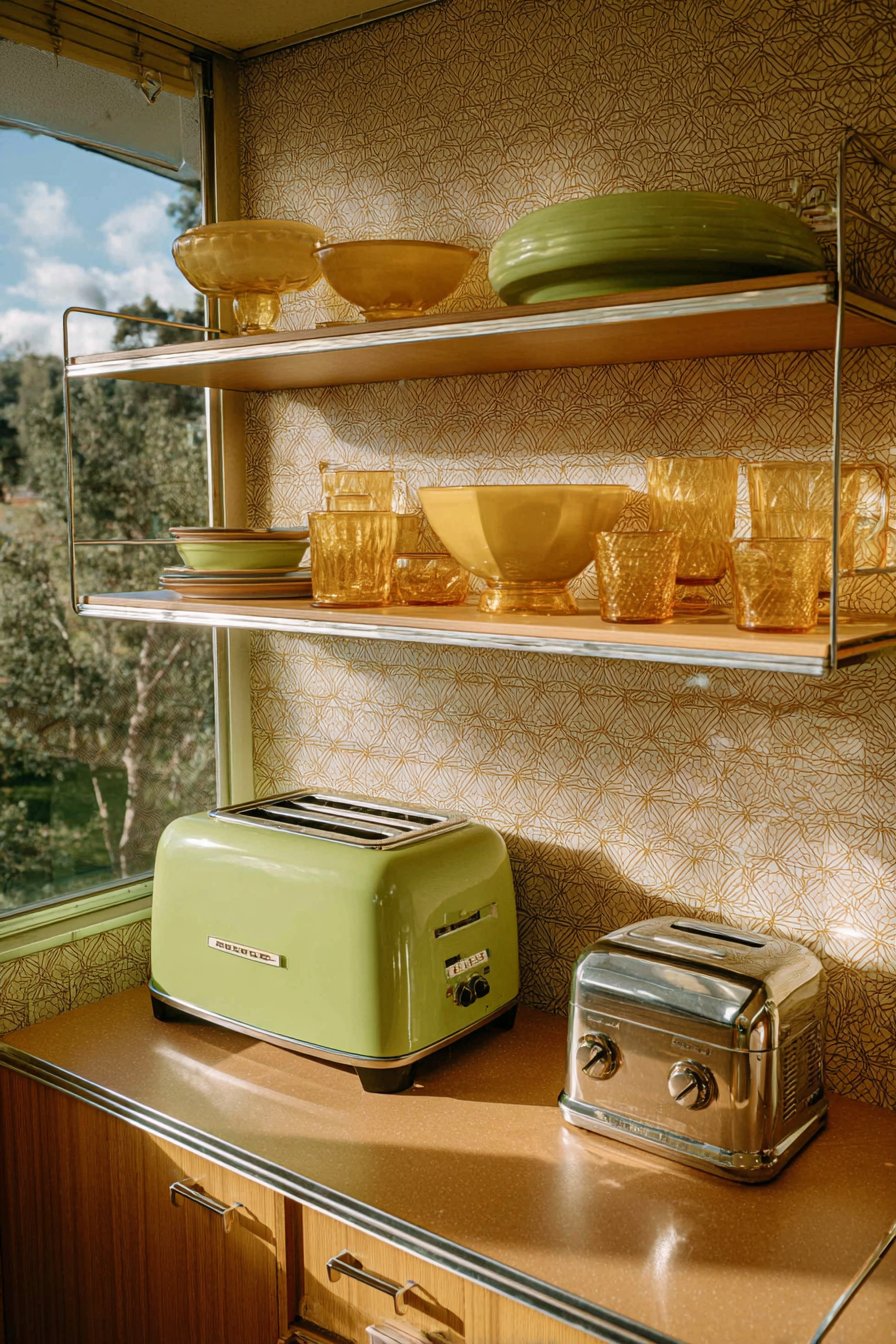
Natural light from nearby windows creates highlights on the glassware surfaces. The colorful material palette characterizes the 1970s love for bold hues. This organizational approach keeps frequently-used items accessible while creating visual interest. The open shelving trend continues influencing contemporary kitchen design today.

Key Design Tips:
- Display vintage dishware in signature 1970s colors on open shelves
- Use simple wood boards with chrome brackets for authentic mounting
- Arrange items by color to create cohesive visual collections
- Position shelving near windows to maximize light reflection on glassware
- Balance open storage with closed cabinetry below for concealing less attractive items
9. Peninsula Breakfast Bar Layout

The peninsular layout creates a breakfast bar extending from main cabinetry. Burnt orange Formica countertops define the casual dining space clearly. Three swivel bar stools feature chrome bases supporting vinyl seats. Brown and gold striped patterns cover the comfortable seating.

Dark walnut base cabinets anchor the peninsula with simple recessed panels. A hanging pot rack fashioned from wood and brass chains suspends above. Copper-bottomed cookware dangles within easy reach of the cooking area. Harvest gold appliances and brown cabinetry continue throughout the main kitchen.

Linoleum flooring in geometric patterns flows throughout the space seamlessly. Pendant lights with amber glass shades illuminate the eating area specifically. The open, social layout emphasizes family interaction during meal preparation. This peninsular design represents the era’s shift toward more casual, connected kitchen spaces.

Key Design Tips:
- Extend peninsula countertops in burnt orange Formica for defined eating areas
- Install swivel bar stools for flexible, comfortable casual seating
- Hang pot racks with brass chains for accessible storage with decorative appeal
- Use striped vinyl upholstery for easy maintenance and period-appropriate pattern
- Position pendant lighting directly above eating areas for focused task illumination
10. Window Area Work Zone

The kitchen window area features a deep windowsill displaying decorative canisters. Avocado green and harvest gold ceramic containers add color and function. Louvered shutters in natural wood tone tilt for customizable light control. The window treatment balances privacy needs with natural illumination.

A white porcelain double-basin sink sits in brown speckled Formica. The chrome gooseneck faucet provides classic style with practical function. Dark wood cabinetry with brass hardware flanks the window symmetrically. A hanging plant in macramé holder cascades green foliage from above.

Small square tiles create the backsplash in warm brown tones. Natural daylight illuminates the primary workspace throughout the day. This functional sink area demonstrates the layered, nature-inspired decorative approach. The design combines practical necessity with the era’s love for organic elements.

Key Design Tips:
- Install louvered shutters for adjustable natural light control and ventilation
- Display ceramic canisters in signature 1970s colors on deep windowsills
- Hang macramé plant holders near windows for healthy indoor greenery
- Choose chrome gooseneck faucets for timeless functionality and visual appeal
- Use small square tiles in earth tones for low-maintenance, period-appropriate backsplashes
11. Acoustic Ceiling Treatment Detail

Textured acoustic ceiling tiles create distinctive overhead character. A decorative dropped ceiling detail houses recessed lighting strategically. Pale yellow laminate cabinetry features dark brown trim creating two-tone effects. White appliances provide neutral bases allowing other elements to shine.

Bold patterned sheet vinyl covers the floor in geometric sunburst motifs. Browns, oranges, and golds create energetic patterns underfoot. Harvest gold Formica countertops display slight metallic sheens throughout. A wall-mounted spice rack in dark wood displays uniform glass jars.

Copper-colored lids coordinate with the warm metallic accents. A small television sits on the corner counter for entertainment. Fluorescent under-cabinet lighting provides practical task illumination for food preparation. This design captures the complete ceiling treatment popular in 1970s kitchen remodels.
Key Design Tips:
- Install acoustic ceiling tiles for sound dampening and textured visual interest
- Create two-tone cabinetry effects with contrasting trim colors
- Use geometric sunburst patterns in sheet vinyl for bold floor statements
- Add fluorescent under-cabinet lighting for energy-efficient task illumination
- Position small televisions in corner areas for entertainment without workspace sacrifice
12. Wood Paneling with Wallpaper Combination

Distinctive wood paneling covers the lower half of walls. Rich pecan tones create warm backdrops throughout the space. Oversized daisy print wallpaper tops the paneling in browns and golds. White laminate upper cabinets contrast with wood-matched lower cabinets beautifully.

Formica countertops simulate butcher block patterns convincingly. A vintage electric cooktop with coil burners sits flush in the counter. Sheet vinyl mimics brick patterns in reddish-brown tones underfoot. Wooden cutting board collections hang on walls alongside copper measuring cups.

Natural light from bamboo-blinds-dressed windows illuminates the cooking area. The layered textures demonstrate the casual, warm aesthetic of the era. This combination of materials creates depth and visual interest. The design represents the 1970s embrace of mixing natural and synthetic materials creatively.

Key Design Tips:
- Combine wood paneling on lower walls with coordinating wallpaper above
- Match lower cabinet finishes to wall paneling for cohesive design flow
- Display wooden cutting board collections as functional wall art
- Install flush cooktops for streamlined counter surfaces and modern convenience
- Use bamboo blinds for natural texture with adjustable light filtering
13. Home Bar Corner Entertainment Area

A dedicated home bar corner showcases built-in wine rack in dark walnut. Bottles display horizontally for proper storage and visual appeal. Open shelving above holds amber and green vintage glassware collections. A small counter area in copper-toned Formica provides drink preparation space.

Chrome pedestal bar stools feature burnt orange vinyl seats. Mirrored tiles on the backsplash create depth and reflect ambient light. A vintage ice bucket and cocktail shaker set in harvest gold sit ready. Pendant lighting with smoked glass shades hangs overhead creating ambiance.

Adjacent kitchen cabinetry continues the dark wood theme throughout. This entertaining-focused corner reflects the era’s cocktail culture enthusiasm. The social, leisure-oriented design encourages gathering and conversation. Home bars became standard features in 1970s kitchen planning.

Key Design Tips:
- Build in wine racks for proper bottle storage and design integration
- Install mirrored backsplash tiles to visually expand small bar areas
- Display vintage glassware in signature 1970s colors on open shelves
- Add copper-toned Formica surfaces specifically for drink preparation zones
- Use smoked glass pendant lighting for sophisticated bar area ambiance
14. Pass-Through Window Connection
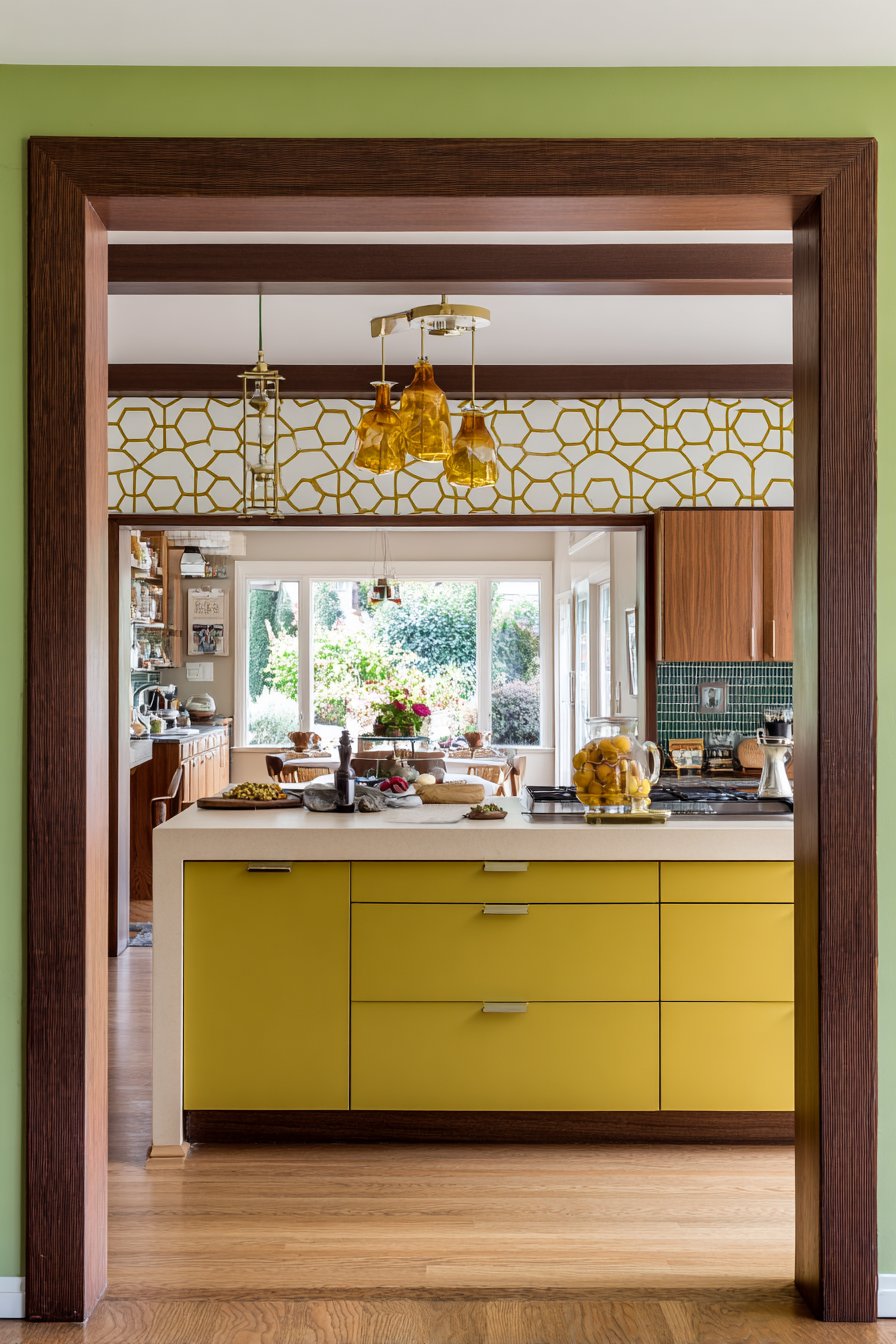
The pass-through window opens into an adjacent dining area creatively. A laminate counter ledge in harvest gold extends through for easy serving. Dark walnut wood trim frames the opening with architectural definition. Upper cabinets in matching walnut flank the pass-through symmetrically.

Lower cabinets in lighter wood tones provide base storage below. The visible dining area beyond displays coordinating abstract geometric wallpaper. Decorative amber glass pendant lights hang centered in the opening. Small hexagonal tiles create the kitchen backsplash in brown tones.

This design demonstrates the open-concept approach that gained popularity. The pass-through facilitates conversation between spaces while maintaining definition. Kitchen and dining areas connect visually without complete wall removal. This layout solution suited the era’s emphasis on casual family interaction.

Key Design Tips:
- Create pass-through windows with serving ledges for convenient entertaining
- Frame openings with coordinating wood trim for architectural polish
- Hang pendant lights centered in pass-throughs for dramatic focal interest
- Coordinate wallpaper patterns between connected spaces for visual flow
- Use hexagonal tiles for geometric interest with period-appropriate patterns
15. Dropped Soffit Architectural Element

A distinctive dropped soffit runs along upper cabinets throughout. Deep burnt orange paint houses recessed lighting within. Medium oak cabinets feature simple raised panel doors below. Brass hardware provides warm metallic accents on all cabinet doors.

Brown and gold speckled Formica provides durable work surfaces. Cushioned vinyl flooring displays geometric patterns in earth tones. A vintage copper-tone range hood covers the cooking area with decorative detailing. Roman shades in woven jute material dress the windows naturally.

A small desk area includes matching cabinetry and a wall-mounted phone. The avocado green telephone adds signature color to the workspace. This complete architectural detail represents typical 1970s kitchen renovations. The layered, warm color scheme creates inviting cooking environments.

Key Design Tips:
- Install dropped soffits in bold colors to house recessed lighting
- Choose raised panel oak cabinets for traditional warmth and texture
- Add cushioned vinyl flooring for comfortable standing during meal preparation
- Create small desk areas within kitchens for household management tasks
- Use woven jute roman shades for natural texture with light control
16. White Appliances with Dark Contrast
Sleek white appliances represent modern conveniences of the era. The side-by-side refrigerator features ice dispenser technology. Dark brown cabinetry in simple slab-door style provides strong contrast. Minimal chrome hardware keeps the focus on material contrasts.

White Formica countertops display gold metallic flecks throughout. Decorative tiles create patterned backsplashes with abstract floral designs. Browns, golds, and oranges combine in the tile patterns. Sheet vinyl mimics parquet wood looks in medium brown tones.

A hanging plant in ceramic pot suspends by macramé holder. Track lighting on ceilings provides adjustable task lighting. A garden window above the sink fills with herbs in ceramic pots. Natural light brightens the space while providing fresh ingredients.

Key Design Tips:
- Choose white appliances to create contrast against dark cabinetry
- Install garden windows for herb growing and increased natural light
- Add track lighting for adjustable, directional task illumination
- Use abstract floral tile patterns for artistic backsplash interest
- Hang plants in macramé holders to introduce organic vertical elements
17. Copper-Covered Range Alcove Feature

A distinctive range alcove features decorative copper-colored metal panels. Surrounding walls showcase exposed brick painted in warm terracotta. Light maple cabinetry with simple hardware flanks the cooking area. Buttery yellow Formica countertops provide workspace with subtle texture.

Sheet vinyl displays Mediterranean tile patterns in earth tones underfoot. Open shelving on one wall displays copper cookware and earthenware pottery. A small window with stained glass details adds decorative interest. Amber and brown tones in the glass coordinate with the palette.

Pendant lights with woven wicker shades provide ambient lighting throughout. The textural variety creates sophisticated rustic-modern hybrid style. This design represents higher-end 1970s kitchen approaches. The combination of materials demonstrates confidence with mixing finishes.

Key Design Tips:
- Create range alcoves with decorative metal panels for focal drama
- Paint exposed brick in coordinating colors rather than leaving natural
- Display copper cookware on open shelving as functional decoration
- Add stained glass window details for artistic light filtering
- Use woven wicker lighting shades for organic texture and warm illumination
18. Bay Window Dining Booth Integration

A dining booth built into a corner bay window maximizes natural light. Vinyl bench seating features bold geometric fabric patterns. Oranges, browns, and golds combine in the upholstery design. The table displays wood-grain Formica top with chrome trim details.

Chrome pedestal legs support the table sturdily. Natural light floods through windows with bamboo roll-up shades. Harvest gold appliances anchor the adjacent kitchen area. Two-tone cabinetry scheme features dark walnut lowers and pale yellow uppers.

Cushioned vinyl flooring displays brick patterns throughout. A hanging light fixture combines wood and frosted glass elements. The cozy, integrated dining solution emphasizes family-focused layouts. This design encouraged casual gathering during meal preparation and dining.

Key Design Tips:
- Build dining booths into bay windows to maximize seating and light
- Select geometric fabric patterns in earth tones for authentic period upholstery
- Use wood-grain Formica table tops for durability and easy maintenance
- Install bamboo shades for natural light control with tropical aesthetic
- Create two-tone cabinetry schemes for visual interest and spatial definition
19. Floor-to-Ceiling Storage Wall

Floor-to-ceiling cabinetry maximizes vertical storage potential completely. Medium brown oak cabinets feature simple recessed panel doors. Basic brass knobs provide functional hardware throughout. One section includes built-in pantry with louvered doors for ventilation.

A countertop section in brown-speckled Formica houses small appliances. Vintage blender and mixer in harvest gold tuck into appliance garages. Display shelving with decorative brackets holds amber glass bottles. Ceramic containers in period colors add decorative storage.

Sheet vinyl flooring displays geometric sunburst patterns in earth tones. A small chalkboard mounts on cabinet doors for grocery lists. Natural light from adjacent windows casts soft shadows across surfaces. This design emphasizes practical storage solutions and efficient space use.

Key Design Tips:
- Extend cabinetry floor-to-ceiling to maximize storage in limited square footage
- Create appliance garages to conceal small appliances when not in use
- Add louvered pantry doors for ventilation and period-appropriate texture
- Mount chalkboards on cabinet doors for practical household communication
- Use decorative shelf brackets to display collections while maintaining function
20. Mediterranean-Inspired Architectural Character

Wood-beamed ceilings with natural finish create architectural drama. Textured stucco walls in warm cream tones provide rustic backdrop. Dark walnut cabinetry with simple hardware anchors the design. Open shelving displays vintage dishware including fondue sets and colored glassware.

Butcher block countertops add natural warmth throughout work areas. The cooking area features brick accent wall behind harvest gold range. Terra cotta tile flooring in large squares completes the Mediterranean look. A hanging rack suspends copper pots and pans overhead.

Natural light from wooden-shuttered windows illuminates the workspace. Pendant lights with amber glass shades provide evening lighting. This sophisticated rustic-modern aesthetic represents higher-end 1970s approaches. The design demonstrates confidence with mixing natural materials and architectural elements.

Key Design Tips:
- Install wood beam ceilings for architectural character and visual height
- Apply textured stucco walls for rustic Mediterranean atmosphere
- Use terra cotta tile flooring for an authentic warm-climate aesthetic
- Hang copper pot racks for accessible storage with decorative appeal
- Combine butcher block counters with tile and brick for textural variety
Why These 1970s Kitchen Designs Are the Best
These 1970s kitchen designs represent the finest approaches to creating warm, characterful cooking spaces. Each concept demonstrates thoughtful consideration of color theory and material combinations. The designs showcase versatility suitable for different home styles and personal preferences.
The incorporation of authentic avocado green and harvest gold appliances adds historical accuracy. These signature colors immediately transport viewers to the distinctive decade. The bold color choices reflect confidence and personality often missing from contemporary neutral kitchens.
Natural materials like butcher block countertops and wood cabinetry bring organic warmth. These elements balance manufactured materials like Formica laminates and vinyl flooring. The combination creates approachable spaces that feel both practical and inviting for daily use.
Geometric patterns in flooring, wallpaper, and textiles add visual energy throughout. The patterns prevent spaces from feeling flat or monotonous despite earth-tone palettes. Strategic pattern placement creates focal points without overwhelming smaller kitchen spaces.

Lighting solutions combine natural illumination with period-appropriate fixtures. Amber glass pendant lights and fluorescent under-cabinet lighting provide layered illumination. The thoughtful lighting approaches ensure functional workspaces while maintaining atmospheric warmth.
Open shelving and display storage showcase colorful vintage dishware as functional art. This approach keeps frequently-used items accessible while creating decorative interest. The displays celebrate the era’s love for bold, colorful household goods.
Breakfast nooks and dining booths integrate casual eating areas directly into kitchens. These built-in solutions maximize space efficiency while encouraging family interaction. The social layouts reflect the decade’s emphasis on informal gathering during meal preparation.
Pass-through windows and peninsular layouts create connections between kitchen and adjacent spaces. These architectural features facilitate conversation without complete wall removal. The semi-open designs suited the era’s transition toward more connected home layouts.
Textured materials like exposed brick, wood paneling, and acoustic tiles add depth. The varied surfaces create visual and tactile interest throughout these spaces. Material diversity prevents monotony while maintaining cohesive earth-tone color schemes.
Home bar corners and entertaining features reflect the decade’s social culture. Built-in wine racks, mirrored backsplashes, and specialized drink preparation areas became standard. These elements demonstrate how kitchens evolved beyond pure cooking function.

Architectural details like dropped soffits and decorative range hoods add character. These elements transformed basic kitchens into distinctive spaces with personality. The willingness to embrace architectural embellishment created memorable, individualized cooking environments.
Two-tone cabinetry schemes create visual interest and spatial definition throughout. Dark lower cabinets paired with lighter uppers prevent spaces from feeling heavy. This thoughtful color blocking demonstrates sophisticated understanding of visual weight and balance.
Practical storage solutions maximize every inch of available space efficiently. Floor-to-ceiling cabinetry, built-in pantries, and appliance garages hide clutter. The organizational approaches prove that bold style and practical function coexist successfully.
Mediterranean-inspired elements bring rustic sophistication to 1970s kitchen design. Terra cotta tiles, stucco walls, and exposed wood beams create atmospheric warmth. These higher-end approaches demonstrate the decade’s design range beyond basic builder-grade kitchens.
The authentic period materials and finishes distinguish these designs from modern reproductions. Genuine Formica laminates, vinyl flooring, and ceramic tiles provide historical accuracy. Using period-appropriate materials ensures designs feel authentic rather than costume-like.
Conclusion
These 1970s kitchen designs demonstrate that personality and warmth come from bold choices. The key takeaways include embracing signature avocado green and harvest gold colors. Authentic materials like Formica countertops, vinyl flooring, and wood cabinetry create cohesive vintage aesthetics.
Successful 1970s kitchen design balances pattern with solid colors throughout spaces. Geometric flooring and wallpaper patterns add energy without overwhelming earth-tone palettes. Layered lighting combines natural illumination with amber glass fixtures for atmospheric warmth.
Start your 1970s kitchen transformation by introducing one signature element first. Choose vintage appliances, install geometric vinyl flooring, or paint cabinets harvest gold. Your dream retro kitchen awaits creation through thoughtful planning and authentic material selection.
