


Creating a baby nursery is one of the most exciting parts of preparing for a new arrival. This special space serves as more than just a room. It becomes a sanctuary for both baby and parents. Thoughtful interior design transforms an ordinary room into a functional haven. The right choices in furniture, colors, and layout make daily care easier and more enjoyable.
The beauty of nursery design lies in its versatility and personal expression. Some parents prefer classic traditional styles with vintage charm. Others gravitate toward modern minimalist aesthetics with clean lines. Each approach offers unique benefits for creating a peaceful environment. The designs featured in this article showcase diverse themes and practical solutions. From small space innovations to nature-inspired themes, these concepts demonstrate how various styles cater to different needs and preferences.

The following twenty designs represent carefully curated approaches to nursery planning. Each concept balances aesthetic beauty with practical functionality. Whether you’re working with limited square footage or a spacious room, these ideas provide inspiration. The focus remains on creating comfortable spaces where memories begin. Let’s explore these thoughtful designs that make nursery planning both enjoyable and achievable.
1. Classic White and Sage Green Serenity

A classic white convertible crib with natural oak spindles creates a timeless foundation for this peaceful nursery. The soft sage green accent wall provides a calming backdrop without overwhelming the space. Natural oak details add warmth while maintaining the room’s light and airy feel. This combination of white and sage creates visual harmony that soothes both baby and parents.

The comfortable upholstered glider chair sits perfectly positioned near a large window. Flowing white linen curtains filter gentle morning light throughout the room. The glider’s matching ottoman provides essential support during feeding times. This seating arrangement becomes the heart of the nursery for bonding moments. The window placement ensures natural light enhances the room’s peaceful atmosphere.

Storage solutions blend seamlessly with the overall design aesthetic. A wooden changing table offers organized storage through woven baskets. Floating shelves display children’s books and soft toys within easy reach. The plush cream-colored area rug with subtle texture adds comfort underfoot. Every element serves both form and function in this well-planned space.

The complete layout demonstrates how traditional comfort meets modern functionality. Natural daylight creates soft shadows that highlight the peaceful atmosphere. The sage green accent wall draws the eye without dominating the design. White elements unify the space while oak accents add natural warmth.
Key Design Tips:
- Position the glider near windows to maximize natural light during feeding times
- Choose convertible cribs that grow with your child for long-term value
- Use floating shelves to display items while keeping floor space clear
- Select a textured area rug in neutral tones for added comfort and visual interest
- Incorporate natural wood tones to warm up predominantly white spaces
2. Modern Minimalist Grey Sophistication

A sleek grey crib with clean lines anchors this contemporary nursery design. The minimalist aesthetic celebrates simplicity without sacrificing comfort or functionality. Warm neutral walls create a cozy backdrop for modern furnishings. One accent wall features subtle geometric wallpaper in soft blues and grays. This pattern adds visual interest while maintaining the room’s calm atmosphere.

The mid-century modern dresser serves double duty as a changing station. Its clean lines complement the crib’s contemporary design perfectly. A contoured changing pad topped with woven storage baskets keeps essentials organized. The practical arrangement makes diaper changes efficient and stress-free. Contemporary pendant lighting with a fabric shade provides soft ambient illumination throughout the space.

Hardwood flooring brings natural beauty and easy maintenance to the nursery. A thick white shag rug partially covers the floor for comfort. The textural contrast between smooth hardwood and plush rug creates visual depth. Balanced exposure in the photography showcases the organized contemporary space. The interplay of textures elevates this minimalist design beyond basic simplicity.

Modern nursery design proves that less can indeed be more. The absence of clutter creates a peaceful environment for rest and care. Each furniture piece earns its place through both beauty and purpose. The neutral color palette allows for easy updates as the child grows.
Key Design Tips:
- Select furniture with dual purposes to maximize functionality in modern spaces
- Use geometric patterns sparingly to add interest without overwhelming the design
- Invest in quality lighting fixtures that provide both ambiance and task illumination
- Layer different textures through rugs, fabrics, and materials for visual depth
- Keep color palettes neutral to create a timeless foundation for future changes
3. Whimsical Yellow Closet Organization

A custom-built closet organization system transforms nursery storage into something beautiful and functional. Open cubbies and adjustable shelving display neatly folded baby clothes with pride. Organization becomes part of the room’s design rather than hidden away. White storage bins with fabric labels keep smaller items accessible yet tidy. The lower hanging rod places tiny outfits within easy reach for quick changes.

The closet interior is painted in a cheerful pale yellow shade. This unexpected pop of color brings joy to the practical task of organizing. LED strip lighting illuminates the organized space effectively. The lighting ensures you can find items quickly during late-night care sessions. This attention to illumination shows thoughtful consideration for real-world nursery needs.

Detail-focused photography captures the practical functionality of this storage solution. Natural lighting highlights the efficient use of vertical storage space. Every inch of the closet serves a purpose in keeping the nursery organized. Neatly folded items create a visually pleasing display that makes finding clothes simple.

Thoughtful organization reduces stress during the busy early months of parenting. The system grows with your child as storage needs evolve. Adjustable shelving adapts to changing requirements over time. This flexibility makes the investment worthwhile for years to come.
Key Design Tips:
- Install LED lighting in closets for clear visibility during nighttime changes
- Use fabric labels on storage bins for easy identification of contents
- Position hanging rods at accessible heights for frequently used items
- Choose cheerful paint colors inside closets to brighten functional spaces
- Incorporate adjustable shelving systems that adapt to changing storage needs
4. Cozy Reading Nook with Window Seat

A cushioned window seat with built-in storage creates a special corner for bedtime stories. The seat’s storage drawers underneath provide practical space for books and toys. Soft pillows in various patterns including stripes, polka dots, and woodland creatures add personality. This mix of patterns creates visual interest without overwhelming the cozy space. The window seat becomes a cherished spot for connection and comfort.

Blackout roller shades control light for naptime while sheer white curtains filter natural light. This dual window treatment approach offers flexibility throughout the day. A small side table holds a reading lamp for evening story sessions. A stack of colorful children’s books sits ready for exploration. Hand-painted tree murals in soft earth tones surround this intimate space.

The afternoon light creates a warm and inviting atmosphere perfect for quiet time. Professional photography captures how this corner becomes a retreat within the nursery. The combination of comfortable seating, good lighting, and accessible books encourages early literacy. Parents appreciate having a dedicated space for this important bonding ritual.

Window seats maximize often-underutilized architectural features in nurseries. The built-in storage eliminates the need for additional furniture pieces. This efficient design solution works especially well in smaller nurseries. The reading nook becomes a favorite feature that children cherish for years.
Key Design Tips:
- Install blackout shades behind decorative curtains for naptime flexibility
- Mix complementary patterns in throw pillows for visual interest and personality
- Ensure adequate task lighting near reading areas with adjustable lamps
- Utilize window seat storage for books, toys, and seasonal items
- Create defined zones within the nursery for specific activities like reading
5. Gender-Neutral Natural Materials Haven

A natural rattan crib with a firm mattress centers this earthy nursery design. The organic cotton fitted sheet demonstrates commitment to natural materials throughout the space. Warm beige walls create a soothing backdrop that complements the rattan beautifully. This neutral foundation allows natural materials to shine without competition. The overall aesthetic celebrates sustainable design choices and timeless beauty.

A handwoven jute rug with a geometric pattern anchors the space beneath the crib. The texture adds visual and tactile interest to the floor surface. A simple wooden mobile with felt animal shapes hangs above the crib. This handmade touch adds character while maintaining the natural aesthetic. Morning light streams through gauze curtains, enhancing the room’s peaceful atmosphere.

A linen upholstered rocking chair sits beside a tall bookshelf made from light oak. The bookshelf displays a curated selection of board books and soft plush toys. Wide-angle photography shows how these elements create a cohesive earthy aesthetic. Sustainable materials and calming neutral tones work together harmoniously. The design proves that eco-conscious choices can be beautiful and practical.

Natural materials age gracefully and develop character over time. The neutral color palette works for any gender and adapts as children grow. This thoughtful approach reduces the need for future redesigns. Parents appreciate the longevity of quality sustainable pieces.
Key Design Tips:
- Choose furniture made from natural materials like rattan, wood, and linen
- Select organic cotton bedding to minimize chemical exposure for sensitive skin
- Use jute or sisal rugs to add texture while maintaining natural aesthetics
- Opt for handmade mobiles and decor for a unique character and artisan support
- Keep the color palette neutral for versatility and timeless appeal
6. Vintage-Inspired Romantic Elegance

A beautiful vintage-inspired white wrought iron crib serves as this nursery’s stunning centerpiece. The quilted cotton bumper and matching crib skirt feature delicate floral prints. Traditional details like pale pink walls with white wainscoting create classic elegance. Crown molding adds architectural interest that elevates the entire space. This design celebrates traditional nursery aesthetics with confidence and grace.

A distressed white dresser with crystal knobs serves as the changing table. The changing pad is covered with soft terry cloth for baby’s comfort. These vintage touches create cohesion throughout the carefully curated space. A crystal chandelier provides elegant ambient lighting from above. Table lamps offer practical task lighting for nighttime diaper changes and feedings.

The romantic traditional aesthetic appeals to those who appreciate classic beauty. Soft natural light highlights the vintage charm and attention to detail. Every element from hardware to window treatments shows thoughtful selection. The pale pink walls create a warm and welcoming atmosphere without being overwhelming.

Vintage-inspired nurseries never go out of style because they draw from timeless design principles. The wrought iron crib becomes a family heirloom passed down through generations. Quality pieces justify their investment through beauty and durability. This approach to nursery design creates spaces with soul and history.
Key Design Tips:
- Invest in statement pieces like wrought iron cribs that become family heirlooms
- Layer different light sources, including chandeliers and task lamps for flexibility
- Incorporate architectural details like wainscoting and crown molding for elegance
- Choose distressed finishes on furniture for authentic vintage character
- Use coordinating fabrics in bedding and window treatments for cohesive design
7. Small Space Urban Solution

A mini convertible crib that transforms into a toddler bed maximizes functionality in compact urban apartments. Wall-mounted furniture and vertical storage optimize every available inch. A tall narrow dresser provides ample storage while maintaining a small footprint. The wall-mounted changing pad folds down when needed and tucks away when not in use. This clever approach makes small space living with a baby completely feasible.

Floating shelves display necessities within arm’s reach without consuming floor space. A compact glider chair fits snugly in the corner for feeding sessions. Light grey-blue walls create the illusion of more space through color psychology. Professional wide-angle photography captures the clever space optimization techniques. Natural light from a single window brightens the entire efficient nursery design.

Multi-functional furniture becomes essential in small urban nurseries. Every piece must earn its place through practical use and space efficiency. The folding changing pad represents innovative thinking about nursery essentials. Vertical storage draws the eye upward and makes ceilings feel higher. These design strategies help small spaces feel open and functional.

Small nurseries require careful planning but offer their own advantages. The compact layout keeps everything within easy reach during middle-of-night care sessions. Less square footage means less to clean and maintain. Creative solutions for space constraints often result in the most thoughtful designs.
Key Design Tips:
- Choose convertible furniture that grows with your child to maximize investment
- Mount changing stations and shelves on walls to preserve floor space
- Use light colors on walls to create the perception of a larger space
- Select furniture with small footprints designed specifically for compact rooms
- Maximize vertical storage with tall narrow units and floating shelves
8. Woodland Forest Nature Theme

A wooden crib with a light walnut finish sits surrounded by a hand-painted forest mural. Tall trees, woodland creatures, and birds create an immersive natural environment. The ceiling is painted sky blue with fluffy white clouds overhead. This comprehensive approach to theming creates a magical forest atmosphere. Natural wood elements continue throughout with matching dresser and bookshelf pieces.

A thick organic cotton rug in forest green anchors the space beneath the crib. Woven storage baskets in natural tones hold toys and blankets throughout the room. Natural daylight filters through leaf-patterned curtains enhancing the woodland effect. The hand-painted details show dedication to creating an authentic natural setting. Earthy materials complement the whimsical painted elements beautifully.

Interior design photography captures the immersive quality of this themed nursery. The forest mural surrounds the baby with nature’s calming influence. Woodland creatures add whimsy without becoming overly juvenile or cartoonish. The natural materials ground the design in tactile reality. This balance between artistic expression and practical function makes the design successful.

Themed nurseries create wonder and imagination from an early age. The nature-inspired approach connects children to the natural world. Hand-painted murals add unique character that mass-produced decals cannot match. This investment in custom art makes the nursery truly one-of-a-kind.
Key Design Tips:
- Hire local artists for hand-painted murals to ensure unique quality designs
- Continue the theme through ceiling treatments for full immersion
- Match furniture finishes to the color palette of painted elements
- Use natural fiber rugs and storage that complement woodland themes
- Select window treatments with nature-inspired patterns to reinforce the design
9. Smart Organization Changing Station

A three-drawer dresser topped with a custom changing pad station demonstrates intelligent organization. Divided organizers hold diapers, wipes, creams, and changing essentials in dedicated compartments. Wall-mounted shelf systems above display labeled fabric bins for different clothing sizes. This systematic approach eliminates searching for needed items during diaper changes. A nearby hamper with removable liner keeps dirty clothes contained and separate.

Clean white walls with one accent wall showing subtle grey-and-white stripes create visual interest. The striped pattern adds dimension without overwhelming the organized space. Detail-focused photography shows the practical arrangement and accessibility of all items. Soft overhead lighting illuminates the organized functional space evenly. Every element serves the practical goal of efficient baby care.

The systematic organization reduces stress during the demanding newborn period. Having everything within arm’s reach makes diaper changes faster and safer. Labeled bins help other caregivers quickly find what they need. The removable hamper liner makes laundry day simpler and more hygienic.

Thoughtful organization systems prove their value hundreds of times during baby’s first year. The time saved through efficient setup accumulates significantly over months of care. This practical approach to nursery design prioritizes function without sacrificing aesthetics. Clean lines and neutral colors create visual calm in frequently used spaces.
Key Design Tips:
- Use divided organizers in drawers to keep changing supplies neatly separated
- Label all storage bins clearly for quick identification by any caregiver
- Position wall shelves at convenient heights above changing stations for easy access
- Choose hampers with removable washable liners for better hygiene
- Install adequate overhead lighting directly above changing areas for clear visibility
10. Modern Farmhouse Rustic Charm

Shiplap accent walls painted in crisp white create the foundation for this modern farmhouse nursery. A rustic grey-washed wooden crib with simple lines balances vintage and contemporary aesthetics. The shiplap texture adds architectural interest while maintaining clean modern lines. Vintage-style metal and wood shelving displays woven baskets, potted plants, and framed family photos. This mix of old and new creates the signature farmhouse aesthetic.

An oversized upholstered chair in neutral linen provides comfortable feeding space. A chunky knit throw blanket adds cozy texture and warmth. Wide-plank oak flooring is softened by a braided jute rug underneath. Edison bulb pendant lighting adds authentic farmhouse charm overhead. The blend of rustic and modern elements creates visual interest throughout the space.

Natural afternoon light highlights the texture of shiplap and warm wood tones beautifully. Wide-angle photography captures how these elements work together cohesively. The neutral color palette allows natural materials to showcase their inherent beauty. Potted plants add life and improve air quality in the nursery.

Modern farmhouse style appeals to those who appreciate both contemporary simplicity and rustic warmth. The aesthetic works equally well in urban and rural settings. Quality materials like real wood and natural fibers ensure longevity. This design approach creates nurseries that feel both current and timeless.
Key Design Tips:
- Install shiplap on one or more walls for authentic farmhouse texture
- Choose furniture with grey-washed or distressed finishes for rustic character
- Incorporate vintage-style industrial lighting like Edison bulbs for atmosphere
- Mix oversized comfortable seating with natural fiber rugs for cozy spaces
- Add living plants to bring freshness and natural beauty to the room
11. Custom Built-In Window Bench

A custom-built window bench with storage underneath maximizes the bay window’s architectural potential. Cushioned seating in soft blue fabric creates a comfortable spot for nursing or reading. Storage compartments beneath hold blankets, toys, and seasonal items out of sight. Decorative pillows in coordinating patterns add color and comfort. White plantation shutters frame the window and control natural light effectively.

Built-in bookshelves on either side of the window hold children’s literature and decorative items. This custom millwork creates symmetry and architectural interest in the nursery. Warm ivory walls with subtle texture provide a neutral backdrop. Morning light streaming through the window highlights the craftsmanship of custom woodwork. The built-in seating area becomes a defining architectural focal point.

Custom built-ins add significant value to homes beyond their immediate functionality. The window bench provides storage without requiring additional floor space. The built-in bookshelves eliminate the need for freestanding furniture pieces. This integrated approach to design creates cohesive and polished spaces. The craftsmanship shows in every detail of the custom millwork.

Window benches transform underutilized spaces into favorite nursery features. The comfortable seating encourages parents to pause and enjoy quiet moments. Built-in storage keeps the nursery organized without visible clutter. This investment in custom cabinetry pays dividends in both beauty and function.
Key Design Tips:
- Design window bench cushions with removable washable covers for easy maintenance
- Include storage compartments beneath seating for maximum space efficiency
- Frame windows with built-in shelving to create symmetrical architectural interest
- Choose plantation shutters for classic style and excellent light control
- Coordinate cushion and pillow fabrics with the nursery’s overall color scheme
12. Celestial Navy and Gold Dreams

Navy blue walls painted with gold star constellations create a magical celestial atmosphere. A crescent moon mural adds whimsy to the starry night sky effect. The white wooden crib with gold accent details sits beneath a flowing white canopy. This dramatic contrast between dark walls and white elements creates visual impact. A plush navy area rug with moon-and-stars pattern covers bamboo flooring.

A modern glider in grey fabric with gold metal legs provides comfortable seating. The metallic accents tie together the gold constellation details throughout the room. String lights shaped like stars add ambient lighting along the perimeter. A gold pendant light fixture provides central illumination. Carefully balanced lighting shows both the dark walls and illuminated decorative elements effectively.

The celestial theme creates a dreamy environment perfect for sleep and imagination. The navy blue walls make the room feel cozy rather than overwhelming. Gold accents add luxury and sophistication to the playful theme. Professional photography captures the magical nighttime sky atmosphere successfully. The design proves that bold wall colors can work beautifully in nurseries.

Themed nurseries with darker colors require thoughtful lighting strategies. Multiple light sources at different levels create flexibility for various activities. The celestial theme grows with children who develop interests in space and astronomy. This forward-thinking approach means the nursery remains relevant for years.
Key Design Tips:
- Balance dark wall colors with ample lighting from multiple sources
- Use metallic accents strategically to add luxury without overwhelming spaces
- Layer ambient, task, and decorative lighting for flexibility and mood
- Choose plush area rugs in coordinating patterns to anchor themed designs
- Install canopies above cribs for added drama and cozy enclosed feeling
13. Montessori-Inspired Floor Bed Setup

A low wooden bed frame allows independent access following Montessori principles of child development. The floor bed sits positioned on a large neutral-toned area rug for comfort. Low open shelving displays age-appropriate toys and books at the baby’s eye level. This child-centered approach encourages exploration and independence from early months. A full-length safety mirror is mounted securely to the wall for self-discovery.

The room remains uncluttered with minimal furniture pieces chosen intentionally. A simple wardrobe features child-height hanging rods for developing independence. Warm white walls with natural wood trim create a calm environment. Large windows with simple roller shades provide abundant natural light throughout the day. The emphasis on accessibility and open floor space encourages movement and development.

Wide-angle photography shows the child-centered accessible environment clearly. The low furniture arrangement puts everything within reach for developing motor skills. Open floor space allows for safe rolling, crawling, and eventually walking. The minimal clutter reduces overstimulation and promotes focus on chosen activities. This thoughtful approach supports natural development and growing independence.

Montessori-inspired nurseries reflect respect for children’s capabilities and developing autonomy. The floor bed eliminates the need for crib transitions later. Open shelving teaches organization and decision-making from early ages. This philosophy creates prepared environments that support natural development patterns.
Key Design Tips:
- Choose floor beds or very low bed frames for safe independent access
- Position toys and books on low shelves at child’s eye level
- Install safety mirrors to encourage self-awareness and motor skill development
- Keep furniture minimal to maximize open floor space for movement
- Use natural materials and neutral colors to create calm environments
14. Dedicated Feeding and Bonding Corner
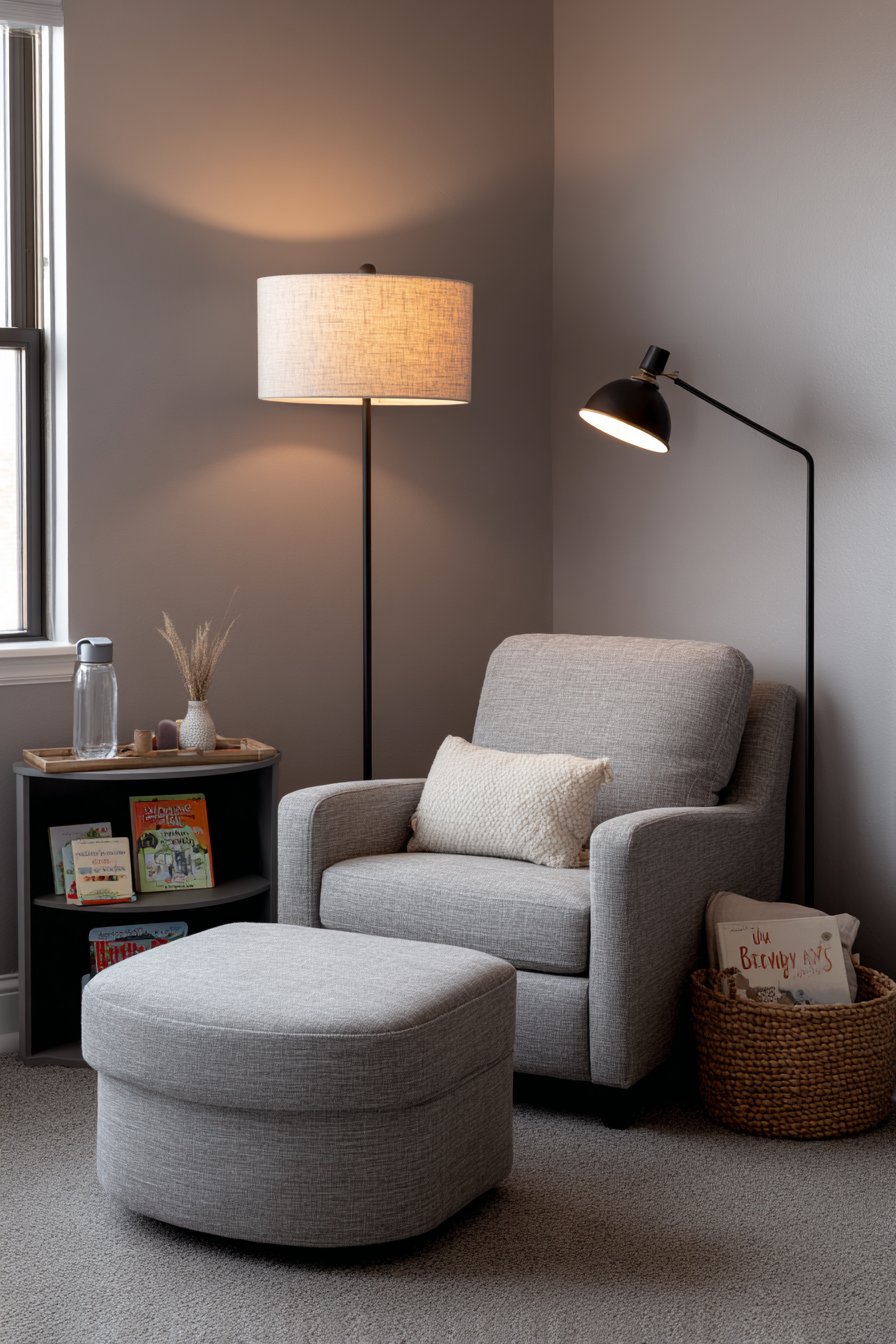
An oversized upholstered glider chair in soft grey fabric centers this nurturing space. A matching lumbar pillow and ottoman provide essential support during feeding sessions. A C-shaped nursing pillow rests ready on the chair’s arm. This dedicated corner prioritizes comfort during the many hours spent feeding and bonding. A round side table holds essentials within easy reach.

The side table features a lamp with adjustable brightness for nighttime feedings. A water bottle, basket of nursing essentials, and small bookshelf sit within arm’s reach. Board books on the nearby shelf provide options for reading to baby during quiet moments. Calming lavender walls create a peaceful backdrop for this important space. A floor lamp with fabric shade provides additional soft lighting flexibility.

Interior photography focuses on this cozy corner with warm lamp light and natural window light. The comfortable functional space is designed specifically for peaceful feeding times. The adjustable lighting accommodates different times of day and activities. Everything needed for comfortable feeding sessions stays organized in this dedicated zone. The thoughtful arrangement reduces stress during nighttime care routines.

Comfortable seating makes significant difference during the demanding newborn feeding schedule. The dedicated corner becomes associated with calm bonding time. Having supplies organized nearby eliminates searching during tired moments. This investment in comfort pays off through countless feeding sessions.
Key Design Tips:
- Choose gliders with high backs and padded arms for extended comfort
- Position side tables within easy reach without requiring awkward stretching
- Install dimmer switches or use lamps with adjustable brightness
- Keep water bottles, burp cloths, and nursing supplies organized nearby
- Create a small library of board books within arm’s reach for reading together
15. Twin Nursery Practical Symmetry

Twin cribs positioned parallel along the wall create symmetrical organization for multiples. A shared changing station between them provides efficient centralized care. Each crib features matching bedding in coordinating but distinct patterns for individuality. One crib displays stripes while the other shows polka dots in the same color family. A double-wide dresser serves both cribs with organized drawers designated for each baby.

Two matching glider chairs sit side by side near the window for tandem feeding. The symmetrical layout creates visual balance and practical functionality. Neutral grey walls with white trim provide a calm unified backdrop. A large area rug anchors the space and unifies both sleeping areas. The balanced practical layout accommodates the unique demands of caring for twins.

Wide-angle photography captures how the coordinated spaces maintain individual identity for each baby. The symmetry simplifies decision-making about furniture placement and organization. Having two feeding chairs acknowledges the simultaneous care needs of multiples. The shared changing station means fewer steps during busy diaper changes. This thoughtful planning makes twin care more manageable.
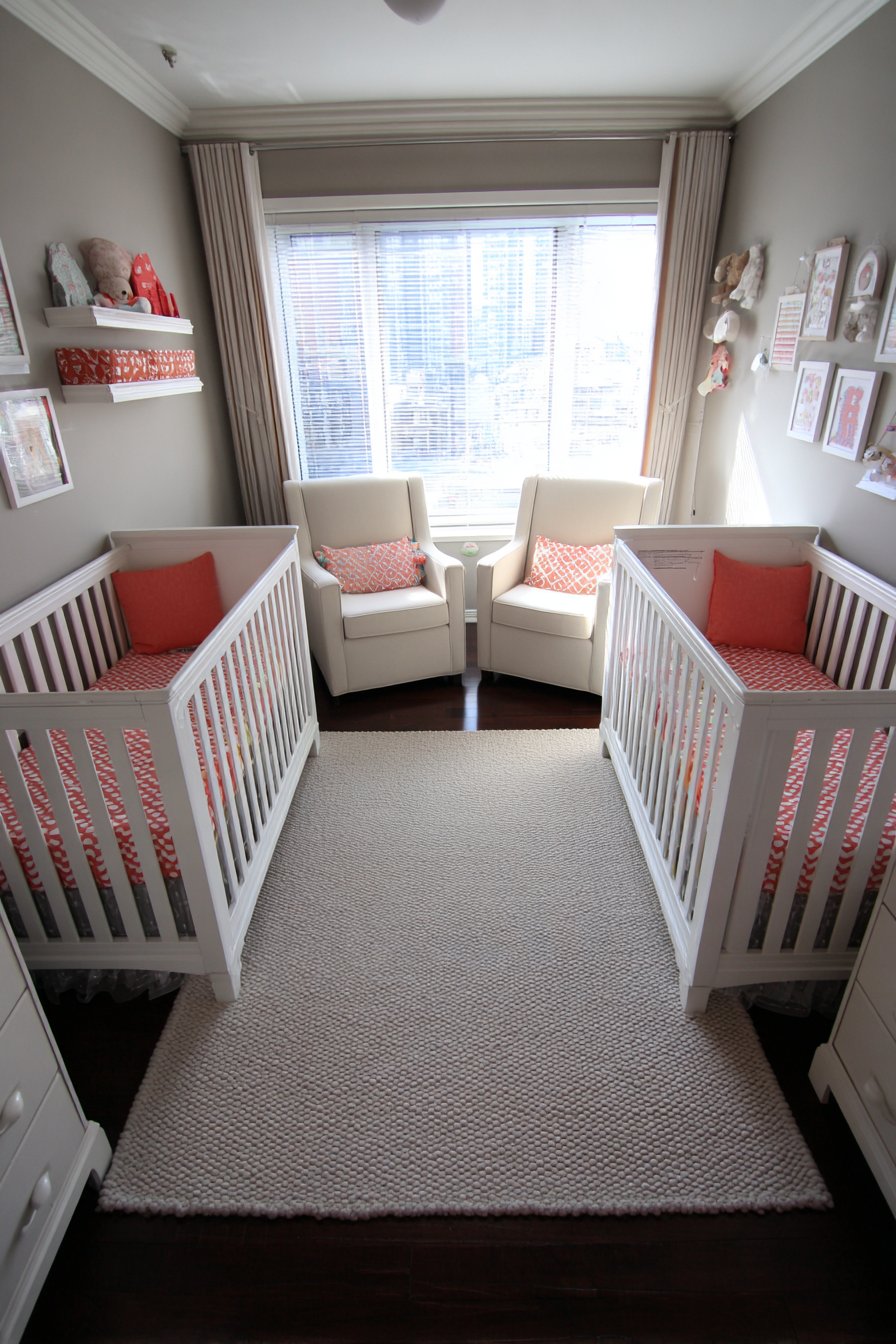
Twin nurseries require extra consideration for flow and accessibility between sleeping areas. The symmetrical approach creates fairness and visual harmony. Coordinating patterns in different variations provides individuality within cohesion. This design proves that practical planning enhances both function and beauty.
Key Design Tips:
- Position twin cribs parallel with adequate space between for easy access
- Use coordinating but distinct patterns to honor each child’s individuality
- Include sufficient seating for simultaneous feeding when needed
- Choose double-wide dressers or storage systems for organizing items separately
- Create symmetrical layouts for visual balance and simplified care routines
16. Sophisticated Monochromatic Elegance

Walls in varying shades of grey from charcoal to pale silver create subtle sophistication. The white convertible crib with grey bedding anchors the monochromatic color scheme. Abstract art in black, white, and grey tones hangs above the crib as a focal point. This restrained palette demonstrates how limitation creates visual impact. A grey velvet glider chair with geometric patterned throw pillow provides luxurious seating.

Light grey engineered hardwood flooring establishes the room’s foundation. A white-and-grey chevron pattern rug adds geometric interest beneath the crib. Chrome hardware and light fixtures introduce metallic accents throughout the space. The tonal variations create depth without requiring multiple colors. Professional photography captures the sophisticated design with balanced exposure.

Natural light filtered through sheer grey curtains highlights layered textures beautifully. The monochromatic approach creates calm sophisticated spaces suitable for any gender. The scheme allows for easy updates through accent pieces as the child grows. Texture becomes the primary tool for creating visual interest within the limited palette.

Monochromatic nurseries challenge designers to work with tone and texture instead of color. The sophisticated result appeals to design-conscious parents seeking modern aesthetics. The neutral foundation adapts easily to changing tastes and needs. This timeless approach remains stylish through all developmental stages.
Key Design Tips:
- Layer multiple shades of one color family for depth and sophistication
- Use varying textures like velvet, metal, and fabric to create visual interest
- Incorporate geometric patterns in rugs and textiles for dimension
- Choose abstract art in coordinating tones as focal points
- Add metallic accents through hardware and fixtures for subtle shimmer
17. Personalized Gallery Wall Display

A curated gallery wall above the crib displays personalized artwork and family photos. Watercolor animal prints, inspirational quotes in various typography styles, and black-and-white family photos create visual storytelling. Matching white and natural wood frames unify the diverse collection. Soft blush pink walls provide a gentle backdrop for the gallery arrangement. The white spindle crib sits centered below the carefully composed display.

A simple white dresser with round wooden knobs serves as the changing table beneath. Natural light from a window with white roman shades illuminates the wall display perfectly. The personalized gallery creates visual interest and personality unique to this family. Detail-focused photography captures thoughtful spacing and sizing of each frame. The composition demonstrates how collections create character in nurseries.

Gallery walls allow for personal expression and evolving displays over time. The mix of quotes, animals, and family photos tells the family’s story. Coordinating frames create cohesion among diverse artwork styles. The arrangement above the crib becomes a focal point for visual stimulation. This personalized approach makes the nursery feel authentic and meaningful.

Curated art collections reflect family values and create conversation starters. The gallery wall grows and changes as the family adds new memories. This flexible approach to wall decor allows for updates without major renovation. The personal touches make the space feel uniquely theirs.
Key Design Tips:
- Plan gallery wall layouts on the floor before mounting to walls
- Mix artwork sizes and orientations for dynamic visual interest
- Coordinate frame colors and styles for cohesive collections
- Include personal photos alongside purchased art for authentic character
- Position gallery walls as focal points above cribs or changing tables
18. Sustainable Eco-Friendly Design

An FSC-certified solid wood crib finished with non-toxic stain demonstrates eco-conscious choices. Organic cotton bedding in natural oatmeal tones continues the sustainable approach. A changing table made from reclaimed wood displays cloth diapers in woven seagrass baskets. Zero-VOC paint in soft sage green covers walls for healthier indoor air quality. A glider chair upholstered in recycled fabric sits on a rug made from recycled materials.

Living plants in ceramic pots purify air throughout the room naturally. The sustainable materials create beautiful spaces while minimizing environmental impact. Wide-angle photography emphasizes natural materials and eco-conscious choices throughout. Bright natural daylight highlights sustainable textures and earth-friendly design elements. The health-conscious nursery space prioritizes both baby’s wellbeing and environmental responsibility.

Sustainable nursery design proves environmental consciousness enhances rather than limits beauty. Natural materials age gracefully and often outlast synthetic alternatives. The investment in quality eco-friendly pieces provides long-term value. Reduced chemical exposure benefits developing immune systems and respiratory health. Parents appreciate creating healthy environments for their most vulnerable family members.

The eco-friendly approach extends beyond initial purchase to longevity and disposal considerations. Sustainable materials often come from renewable sources or recycled content. This mindful approach to consumption models values for growing children. The beautiful results prove sustainability and style coexist perfectly.
Key Design Tips:
- Choose FSC-certified wood furniture from responsibly managed forests
- Select organic cotton bedding and textiles to minimize chemical exposure
- Use zero-VOC paints to improve indoor air quality for developing lungs
- Incorporate living plants as natural air purifiers and calming elements
- Invest in quality sustainable pieces that last through multiple children
19. Parent Workstation Corner Integration

A small desk with laptop, baby monitor display, and organizers creates a functional parent zone. The desk coordinates with nursery furniture in matching white finish for visual cohesion. A comfortable desk chair allows parents to work during baby’s naptime. A bulletin board above displays important schedules, doctor appointment cards, and feeding charts. The area includes a mini filing system for organizing baby documents and medical records.

Soft desk lamp lighting complements the nursery’s main lighting without disturbing sleeping baby. The practical arrangement allows multitasking while remaining present in the nursery. Natural light from a nearby window creates a functional work area. The parent zone integrates seamlessly with the baby care space design. This thoughtful addition acknowledges the reality of modern parenting demands.

Interior photography captures how this corner serves dual purposes effectively. Parents appreciate the ability to handle tasks while supervising naptime. The organized bulletin board keeps important information visible and accessible. The mini filing system prevents important documents from getting lost. This practical integration of parent needs shows comprehensive nursery planning.

Parent workstations in nurseries reflect modern work-from-home realities. The desk provides space for both baby-related tasks and professional work. Having a dedicated workspace in the nursery prevents disturbing sleeping babies elsewhere. This forward-thinking approach creates truly functional family spaces.
Key Design Tips:
- Choose compact desks that coordinate with nursery furniture styles
- Position workstations near windows for natural light and visual breaks
- Install bulletin boards for organizing schedules and important information
- Use desk lamps that provide adequate light without disturbing sleeping babies
- Include filing systems for organizing medical records and important documents
20. Bold Geometric Accent Wall Feature

Removable wallpaper in a modern geometric pattern creates a striking focal point. The design combines soft pink, grey, and white triangles in a contemporary mountain range effect. A white mid-century modern crib with tapered wooden legs sits against this feature wall. The bold pattern adds personality while remaining soothing enough for sleep. Matching pink and grey storage bins on white bookshelves coordinate with wallpaper colors.

A sheepskin rug adds soft texture beside the crib for comfort underfoot. A modern mobile with geometric shapes hangs above repeating the angular theme. The coordinated color scheme throughout creates visual harmony despite the bold pattern. Natural light filtered through gauze curtains highlights the contemporary pattern beautifully. Professional photography captures how accent walls create focal points in thoughtfully designed spaces.

Removable wallpaper offers commitment-free pattern experimentation in nurseries. The contemporary geometric design grows well from nursery to toddler to child’s room. Bold accent walls work when surrounded by simpler complementary elements. The mountain-inspired triangles add modern edge while maintaining gender neutrality. This design approach proves that nurseries can be both bold and peaceful.

Accent walls concentrate visual interest on one surface while keeping other walls simple. The technique adds personality without overwhelming small spaces. Coordinating accessories throughout the room tie the design together cohesively. This balanced approach to pattern creates memorable spaces without sensory overload.
Key Design Tips:
- Use removable wallpaper for commitment-free pattern experimentation
- Coordinate accent wall colors throughout room accessories and textiles
- Balance bold patterns with simpler elements on remaining walls
- Choose geometric designs that transition well as children grow
- Position cribs against feature walls to create natural focal points
Why These Baby Nursery Designs Are the Best
These twenty nursery designs represent the finest approaches to creating functional and beautiful baby spaces. Each concept demonstrates thoughtful consideration of both aesthetic appeal and practical daily use. The designs showcase remarkable versatility that accommodates different home sizes, architectural styles, and family preferences. From compact urban solutions to spacious dedicated nurseries, these concepts prove that thoughtful design works in any space.
The incorporation of sustainable materials and eco-friendly choices reflects growing awareness of health impacts. Natural woods, organic textiles, and non-toxic finishes create safer environments for developing babies. These materials also demonstrate superior durability compared to synthetic alternatives. The investment in quality pieces that grow with children provides long-term value beyond initial cost considerations.
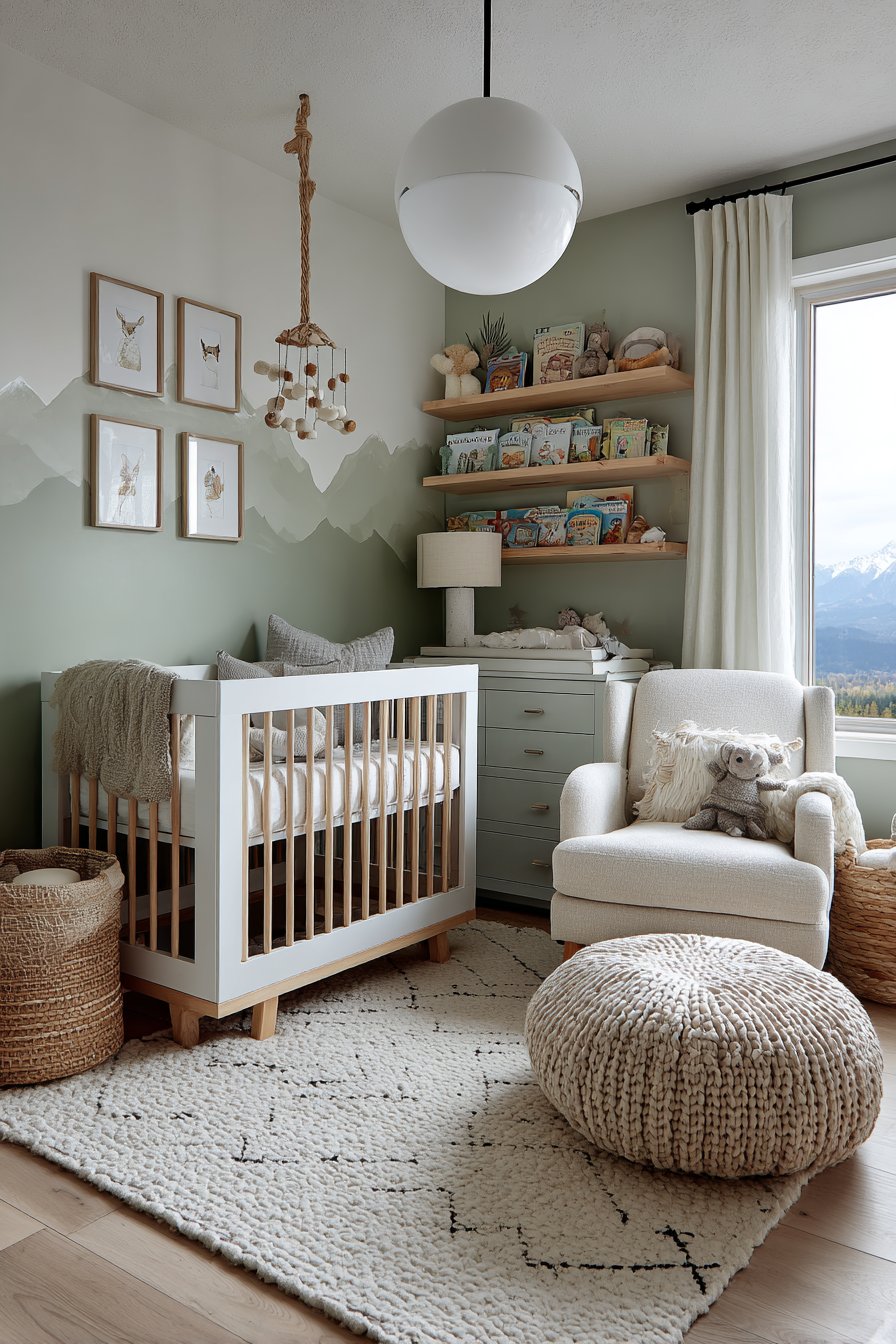
Color theory plays crucial roles in successful nursery design across all featured concepts. Soft neutrals create calming foundations while accent walls add personality without overwhelming small occupants. The featured designs demonstrate how both bold and subtle color approaches work effectively. Monochromatic sophistication proves equally successful as cheerful multi-color palettes when applied thoughtfully.
Spatial planning considerations address real-world challenges of nursery design. Small space solutions maximize every square inch through clever furniture choices and vertical storage. Larger nurseries benefit from defined zones for sleeping, feeding, changing, and play. The featured designs show how proper furniture placement creates efficient traffic flow and accessible care stations.

Lighting strategies across these designs balance natural daylight with layered artificial illumination. Multiple light sources at different levels provide flexibility for various times and activities. Task lighting near changing stations and feeding areas combines with ambient lighting for safe nighttime navigation. These thoughtful approaches to illumination demonstrate understanding of nursery function beyond pure aesthetics.
The designs successfully balance timeless appeal with contemporary functionality. Classic elements like convertible cribs and quality wood furniture ensure longevity through developmental stages. Modern innovations including smart organization systems and multi-functional pieces address current parenting realities. This combination creates nurseries that feel both current and enduringly beautiful.
Conclusion
These twenty baby nursery designs demonstrate that thoughtful planning creates spaces serving both immediate needs and long-term functionality. The key takeaways include the importance of quality convertible furniture, layered lighting strategies, and personal expression through color and decor. Successful nurseries balance aesthetic beauty with practical considerations for daily care routines. The featured designs prove that various styles from traditional to contemporary each offer unique advantages.
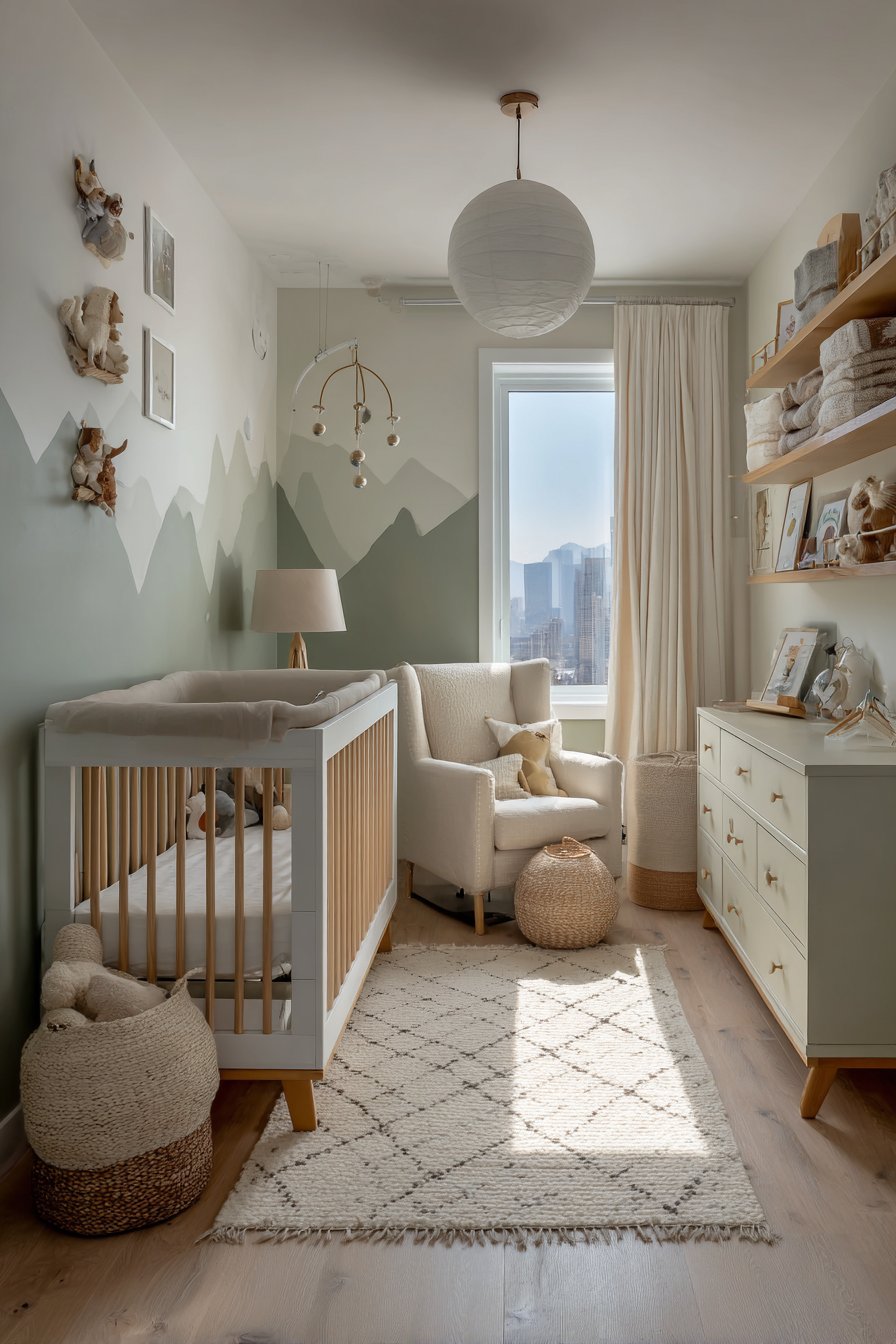
Start your nursery planning by identifying your personal style preferences and practical space constraints. Choose one or two concepts that resonate with your vision and adapt elements to your specific situation. Remember that nurseries evolve as children grow, so flexible design choices provide the best long-term value. Your dream nursery awaits creation through thoughtful selection of quality pieces and meaningful personal touches that reflect your family’s unique story.
