


Have you ever walked into a room filled with greenery, natural light, and earthy textures — and instantly felt at ease? That feeling is no coincidence. Biophilic design is the art and science of integrating nature into built environments to support human wellbeing. It goes far beyond placing a potted plant on a windowsill. It is a holistic design philosophy that reconnects us with the natural world we evolved in.

Modern life keeps us indoors for up to 90% of the day, according to environmental health research. This disconnection from nature has real consequences — increased stress, reduced focus, and lower mood. Biophilic design addresses this by weaving natural elements, patterns, and sensory experiences into our homes and workspaces. The result is a space that feels alive, restorative, and deeply human.

Whether you live in a compact urban apartment or a sprawling countryside home, biophilic design principles are accessible and adaptable. This guide covers the most impactful ways to bring nature indoors — from living walls and natural materials to light, water, and organic form. Let’s explore how each element transforms your interior into a sanctuary.
1. Understanding the Core Philosophy of Biophilic Design
Biophilic design is rooted in the concept of biophilia, a term popularized by biologist Edward O. Wilson. It refers to humanity’s innate need to connect with other living systems. This is not a trend — it is a fundamental aspect of our biology. When we surround ourselves with nature, our nervous systems respond positively, lowering cortisol and promoting calm.

There are three core dimensions of biophilic design: direct experience of nature (plants, light, water), indirect experience (natural materials, colors, textures), and the experience of space and place (spatial openness, refuge, prospect). A well-executed biophilic interior addresses all three. Understanding these layers helps you design with intention rather than simply decorating with greenery.
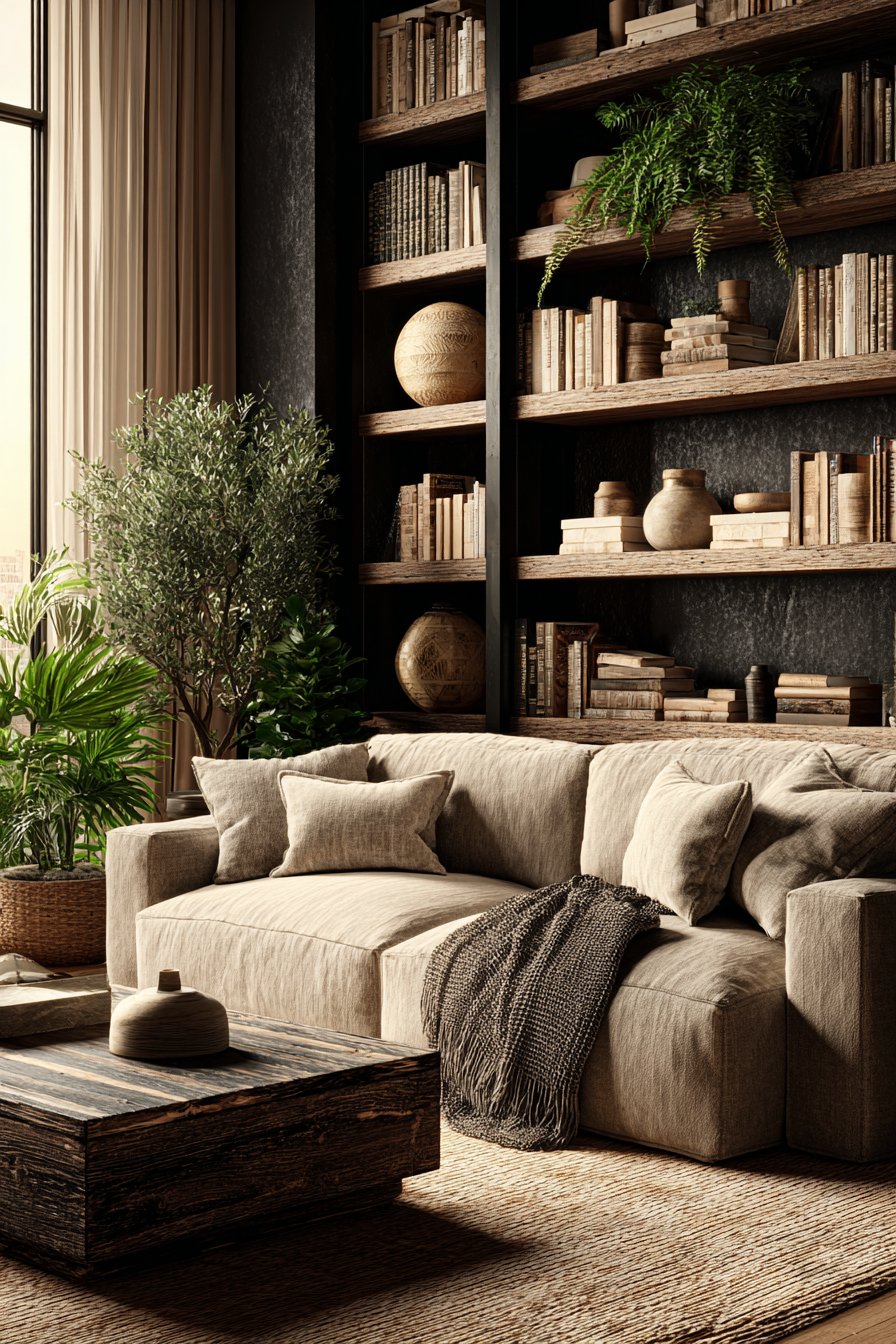
The philosophy also recognizes that nature is dynamic, not static. Flickering light, moving water, the seasonal change of a plant — these dynamic elements engage our senses and create spaces that feel alive. This is what separates biophilic design from generic “natural decor.” It is about living, breathing, ever-changing interiors.
- Research your home’s existing natural assets — orientation, light, and ventilation
- Think in layers: direct, indirect, and spatial nature experiences
- Design for all five senses, not just visual appeal
- Choose living elements that change with seasons for dynamic interest
- Study the work of biophilic architects like Ken Yeang or Kengo Kuma for inspiration
2. Maximizing Natural Light for a Nature-Connected Interior
Light is the single most powerful biophilic element in any interior. Natural daylight regulates our circadian rhythms, improves mood, boosts vitamin D production, and makes spaces feel open and alive. Designing your home around light is one of the most impactful decisions you can make.

Start by auditing your windows at different times of day. Where does morning light enter? Where does afternoon sun linger? Use this data to arrange your spaces around natural rhythms. Position seating and work areas where daylight is richest. Remove heavy window treatments that block light and replace them with sheer linen curtains or bare glass where privacy allows.
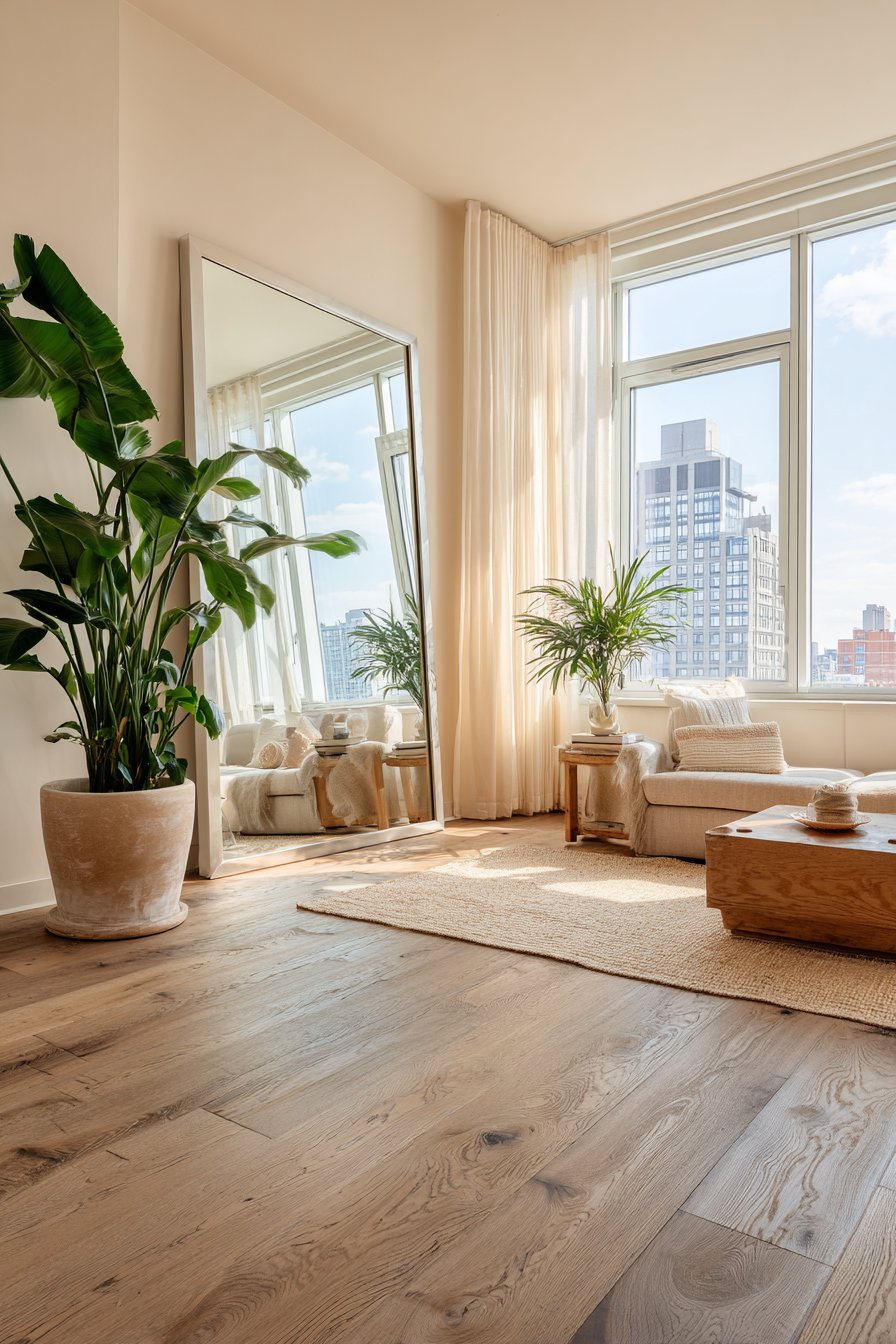
For rooms with limited windows, light-enhancing strategies include mirrors placed opposite windows to bounce light deeper into a room, glass interior doors, and skylights where structurally possible. Light tubes are another underrated solution that channels sunlight into windowless rooms. Every additional lumen of natural light strengthens your home’s biophilic impact.
- Conduct a light audit across morning, afternoon, and evening hours
- Replace heavy drapes with light-filtering sheers or woven bamboo shades
- Use large, frameless mirrors to amplify natural light
- Consider skylights or solar tubes for north-facing or interior rooms
- Paint walls in warm whites or pale naturals to reflect light more effectively
- Arrange furniture to keep window sills and light paths clear
3. Incorporating Living Plants at Every Scale
Plants are the most immediate and accessible entry point into biophilic design. They purify air, reduce noise, introduce color and texture, and create a powerful sense of life within a room. The key is to think beyond a single houseplant and consider green as an architectural material.

Large statement plants like fiddle leaf figs, monstera deliciosa, or olive trees anchor a room and act as living sculpture. Medium plants grouped in odd numbers on shelves or sideboards create lush visual layers. Trailing plants cascading from high shelves or hanging planters add vertical movement and softness to hard architectural lines.
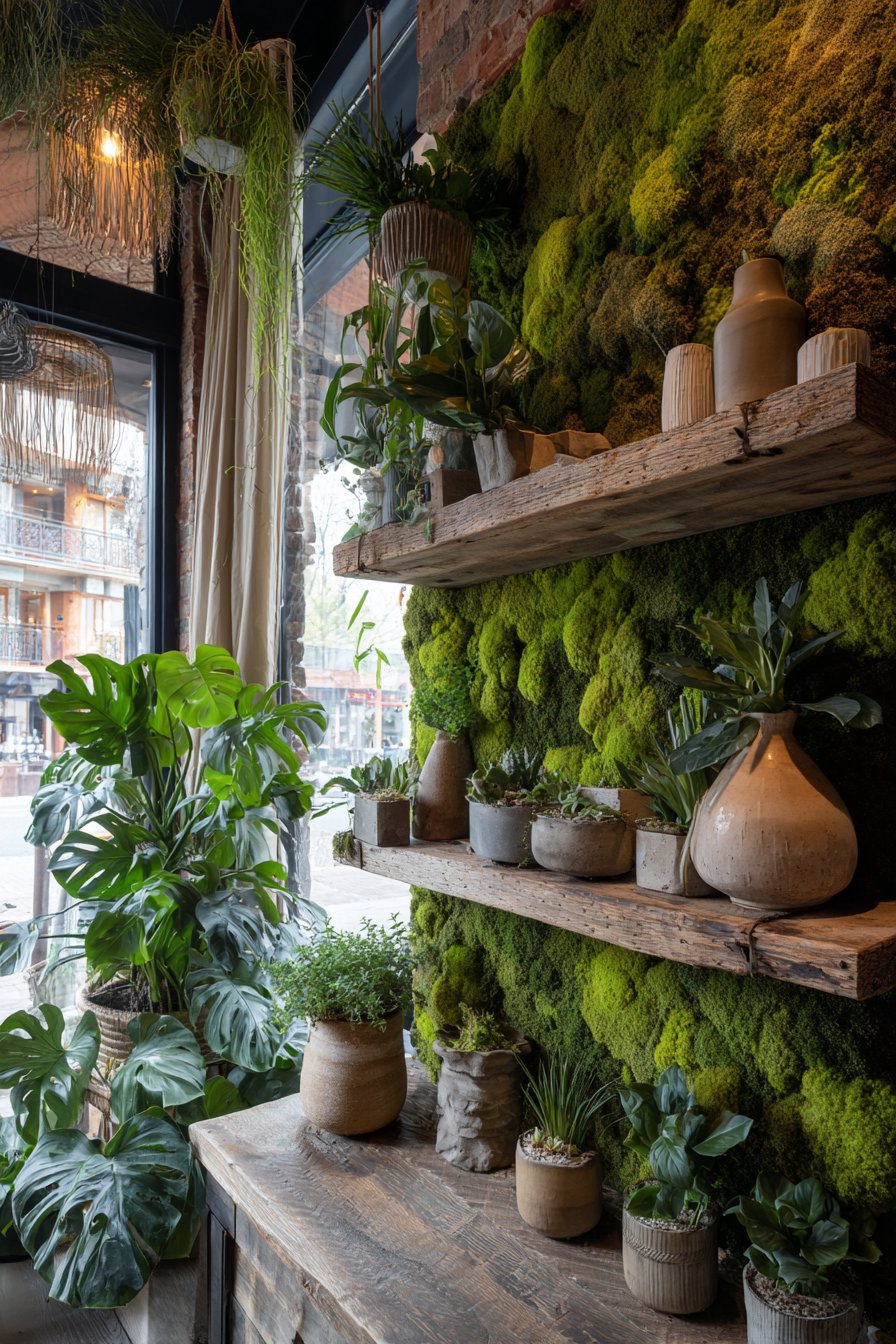
For advanced biophilic impact, consider a living wall or green wall installation — a vertical garden mounted on an interior wall. These can be soil-based, hydroponic, or moss-based. Even a 1-meter-wide panel of preserved moss creates a striking natural focal point while requiring zero watering. Pairing plants with natural stone or terracotta planters deepens the organic aesthetic.
- Group plants in clusters of three or five for a natural, abundant look
- Choose plants suited to your room’s actual light conditions, not aspirational ones
- Use varying heights and textures — spiky, rounded, trailing, and upright together
- Invest in a living moss wall panel for a low-maintenance statement feature
- Rotate plants seasonally to keep arrangements feeling fresh
- Try herb gardens on kitchen windowsills for functional biophilic design
4. Using Natural Materials to Ground Your Interior
Natural materials are the backbone of indirect biophilic experience. They carry the memory of the outdoors — the grain of a tree, the texture of stone, the warmth of woven fiber. When layered thoughtfully, they create interiors that feel rooted and authentic rather than synthetic or sterile.

Solid wood is the most versatile natural material in interior design. Whether expressed as a raw-edge dining table, exposed ceiling beams, or wide-plank oak flooring, wood introduces warmth and organic pattern. Every piece of solid timber has a unique grain — a reminder of the living organism it once was. This individuality is what makes natural wood irreplaceable by laminates or vinyl.

Stone, rattan, linen, jute, and cotton each bring their own tactile and visual character. Limestone or slate flooring grounds a room with geological permanence. Rattan furniture introduces lightness and craftsmanship. Linen upholstery breathes and softens with use. Layering these materials creates richness through natural contrast — rough against smooth, matte against warm-toned wood.
- Choose solid wood furniture over MDF or particleboard wherever the budget allows
- Introduce natural fiber rugs in jute, sisal, or wool for tactile grounding
- Use honed rather than polished stone for a more earthy, matte finish
- Mix materials intentionally — wood, stone, and linen work beautifully together
- Expose structural materials like timber beams or brick where possible
- Avoid overly uniform finishes — natural imperfection is part of the appeal
5. Introducing Water Features for Sensory Richness
Water is one of the most emotionally resonant biophilic elements available to an interior designer. The sound of moving water is deeply calming, masking urban noise while engaging our auditory senses in a positive, primal way. Even a small tabletop fountain can shift the atmosphere of a room significantly.
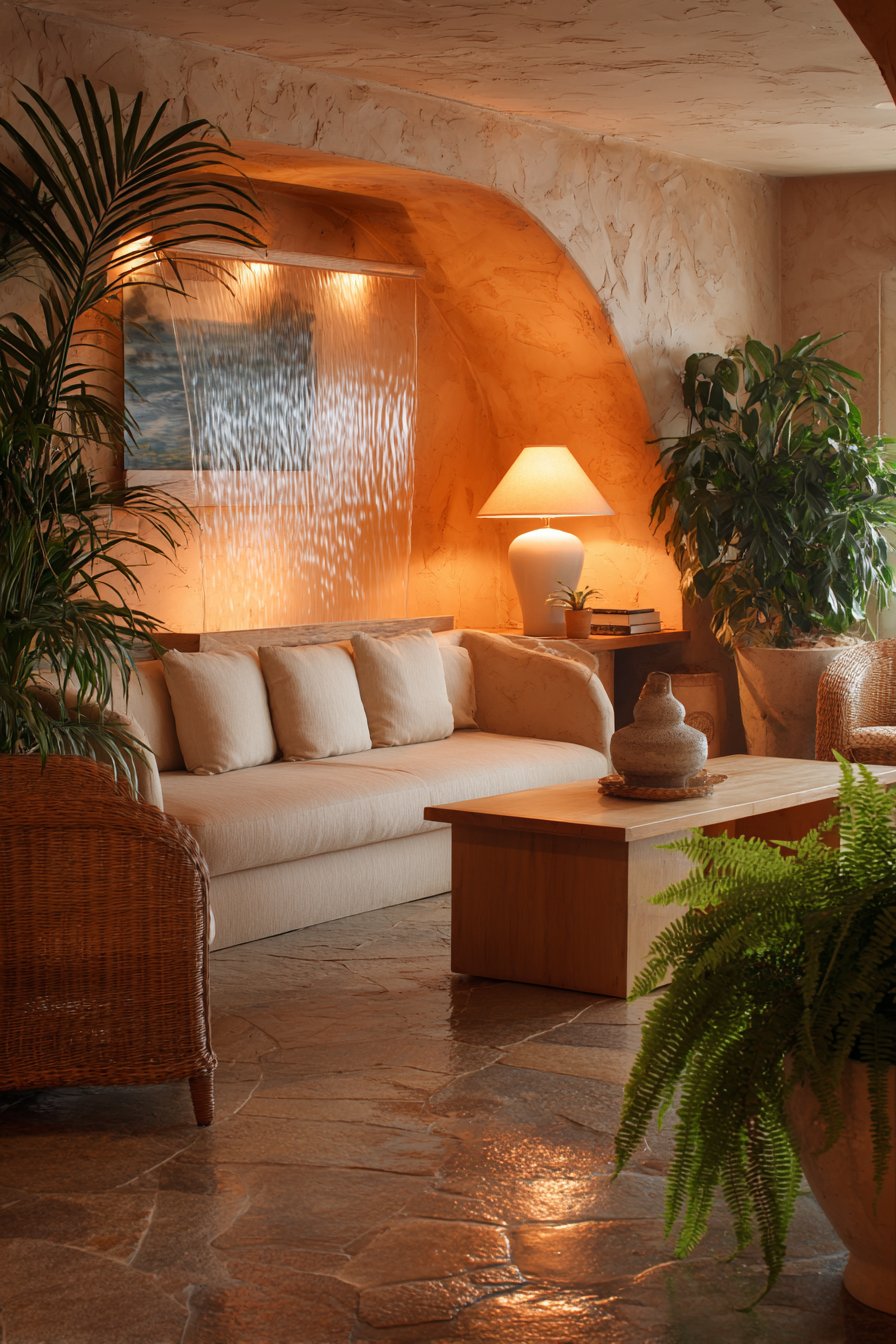
Indoor water features range from wall-mounted cascades and tabletop fountains to full floor-to-ceiling water walls in commercial-grade installations. For residential settings, a small ceramic or stone tabletop fountain placed near a seating area provides a gentle acoustic backdrop that reduces stress and promotes focus. The visual element of moving water — its reflections, ripples, and constant change — also satisfies our innate attraction to dynamic natural phenomena.
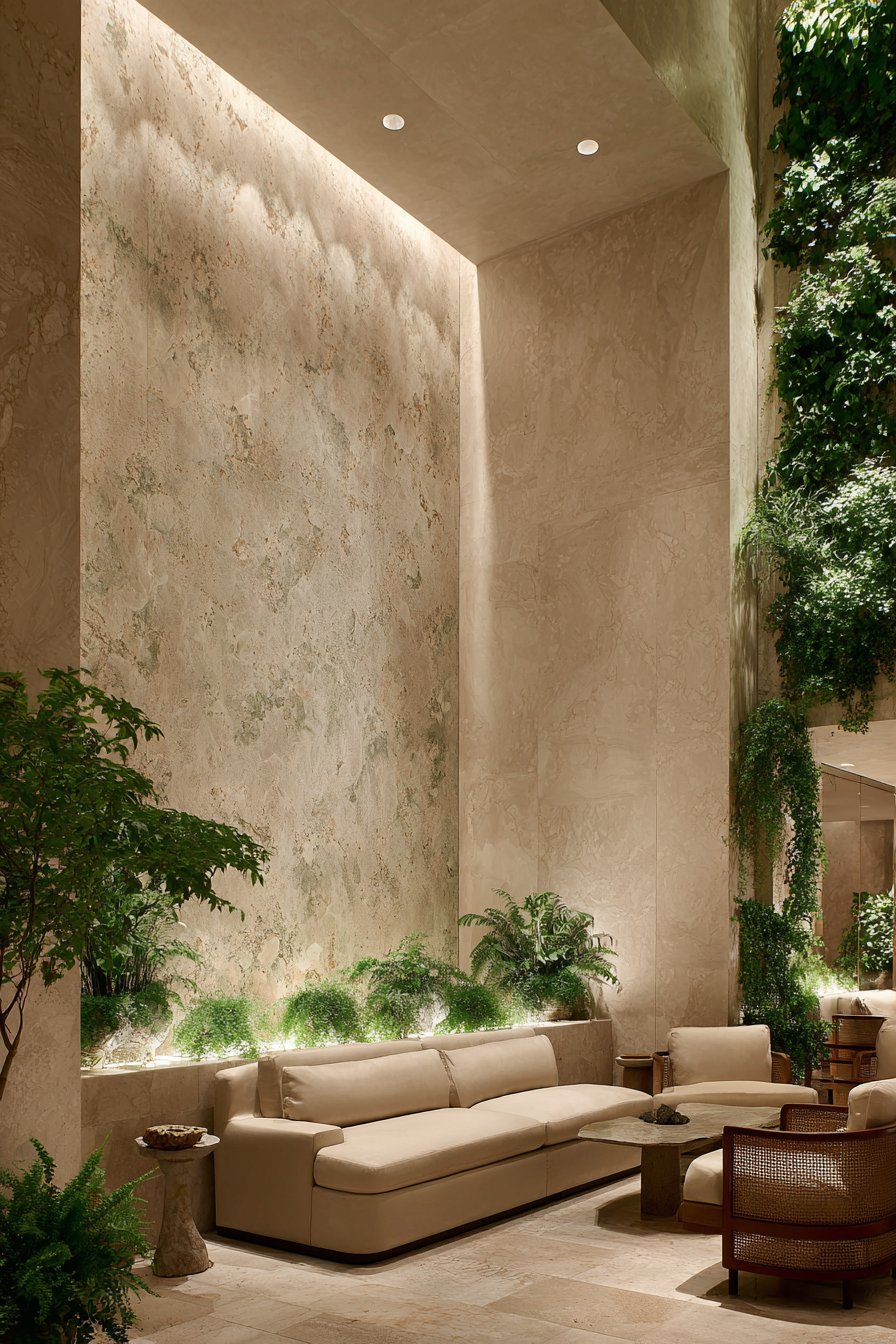
For those not ready to commit to a water feature, aquariums offer a compelling alternative. Studies show that watching fish reduces anxiety and lowers blood pressure. A well-planted aquarium using the aquascape method — designed to mimic natural river or pond ecosystems — brings together water, light, plants, and living creatures in one powerful biophilic installation.
- Start with a small tabletop fountain in stone or ceramic to test the impact
- Position water features near seating areas to maximize calming benefit
- Keep water clean and moving — stagnant water undermines the effect
- Consider a wall-mounted water feature as an artistic focal point in entryways
- Use aquascaping to combine water, plants, and aquatic life beautifully
- Layer soft lighting near water features to enhance reflective and rippling effects
6. Embracing Organic Forms and Curved Geometry
Nature rarely produces straight lines. Leaves, rivers, coastlines, and cellular structures are defined by curves, spirals, and irregular edges. Bringing organic form into your interior creates a subconscious sense of natural harmony that rigid, rectilinear design cannot replicate.
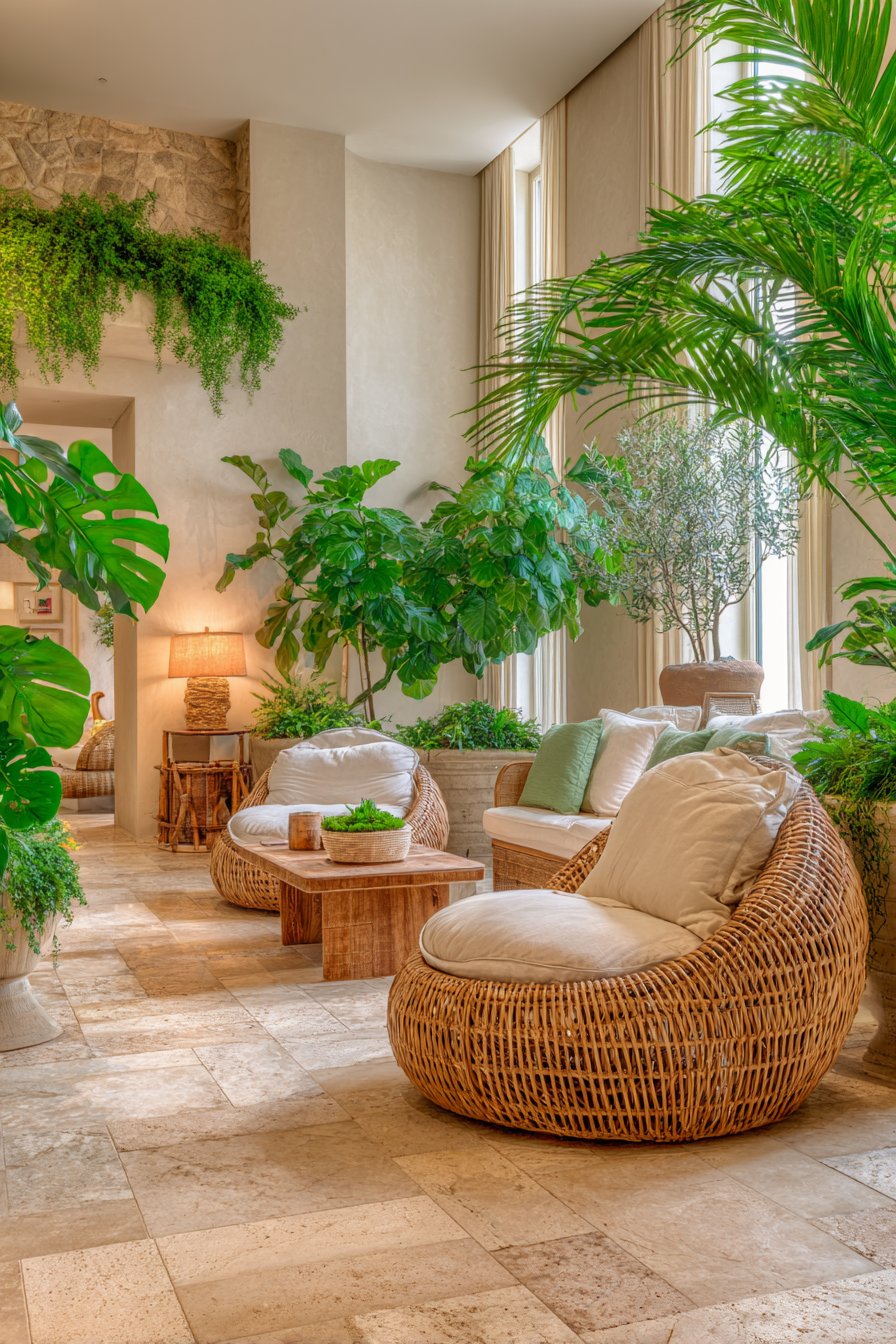
Curved furniture has seen a dramatic resurgence in contemporary interior design — and for good reason. A curved sofa, arched doorway, or round dining table softens a room’s geometry and introduces the flowing quality of natural forms. These pieces feel more inviting and less institutional than their angular counterparts. Even small additions, like a curved mirror or oval ottoman, shift a room’s character meaningfully.
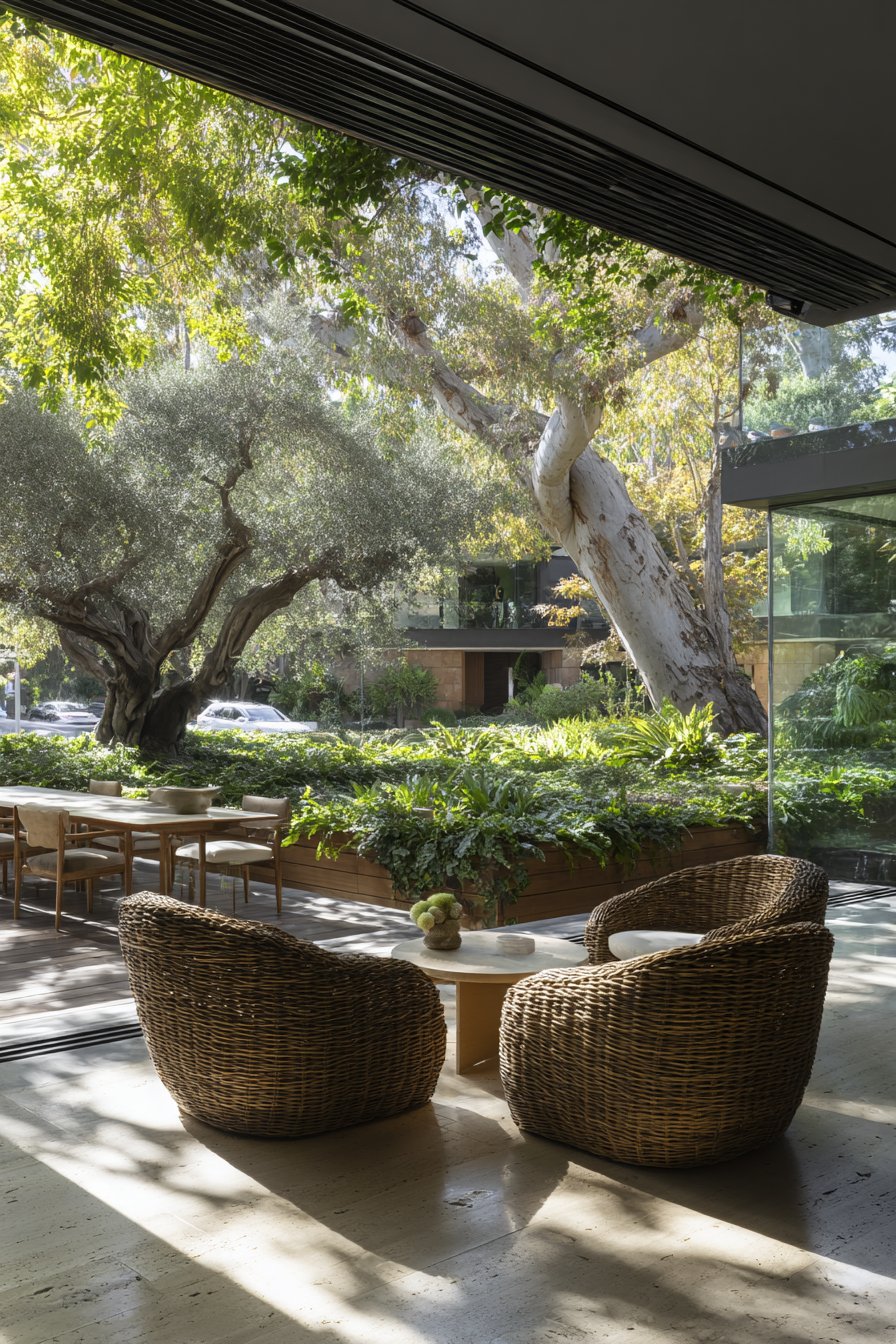
Biophilic design also draws on fractal patterns — the self-repeating patterns found in ferns, tree branches, and snowflakes. Incorporating fractal-inspired textiles, wallpapers, or architectural details engages our visual system in a uniquely satisfying way. Research by physicist Richard Taylor suggests that fractal exposure reduces stress by up to 60%, making pattern selection a genuinely therapeutic design decision.
- Replace rectangular rugs with oval or organically shaped alternatives
- Choose a curved sofa or sectional as a central biophilic statement
- Incorporate arched doorways or window surrounds where structurally feasible
- Use botanical-print wallpaper or upholstery with fractal-inspired patterns
- Select round or oval dining and coffee tables to soften room geometry
- Display driftwood, coral, or sculptural branches as organic art objects
7. Connecting Interior Spaces to the Outdoors
The boundary between inside and outside is one of the most powerful levers in biophilic design. Spaces that visually and physically connect to nature — through large glazing, indoor-outdoor transitions, and garden views — dramatically enhance wellbeing and create a sense of expansiveness.
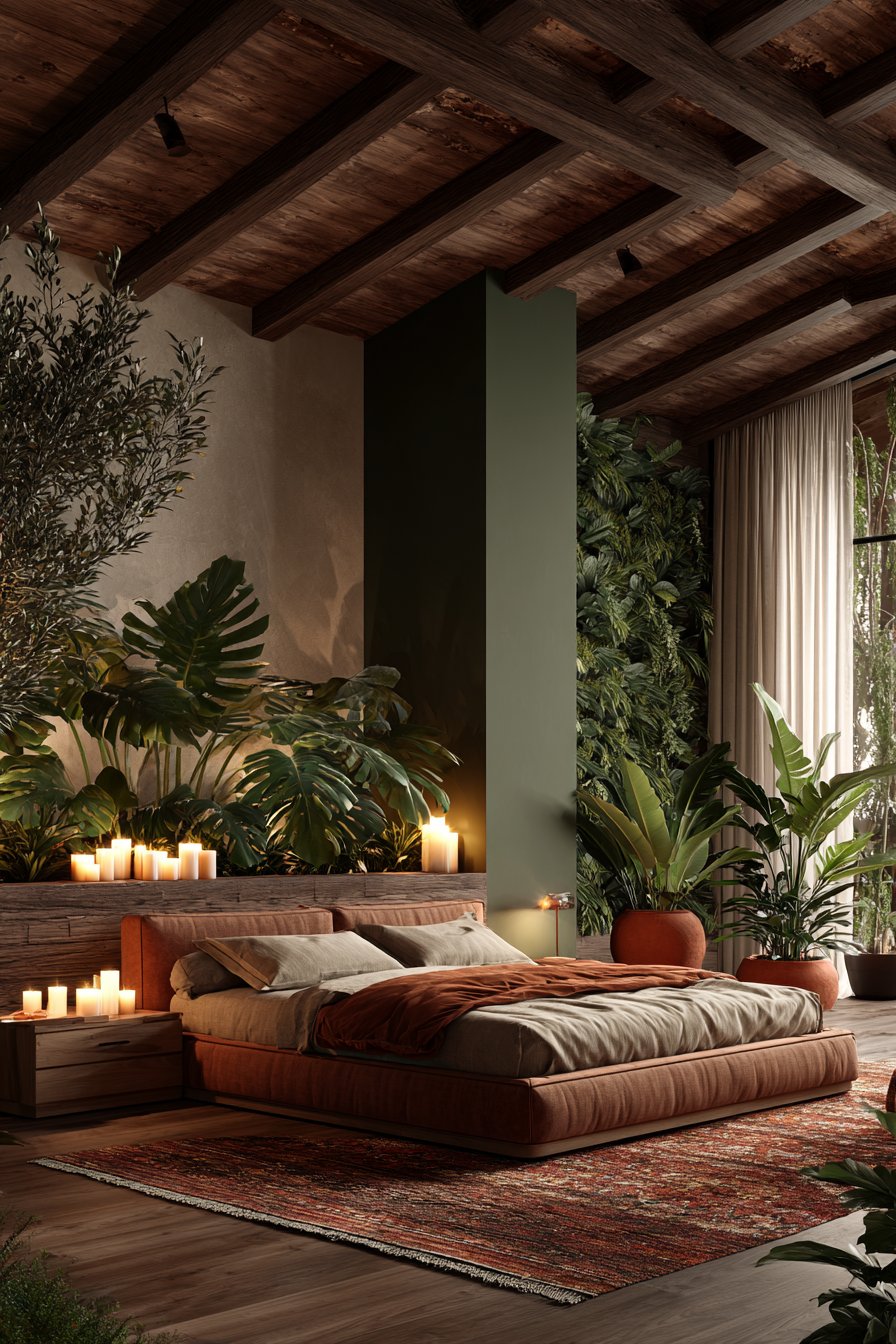
Floor-to-ceiling glass doors or bifold walls that open to a garden, terrace, or balcony create the ultimate biophilic connection. When open, they eliminate the barrier between inside and outside entirely. Even when closed, framed garden views act as living artwork that changes with the season, the weather, and the time of day. A well-planted garden viewed from a kitchen or living room is worth more than any piece of wall art.
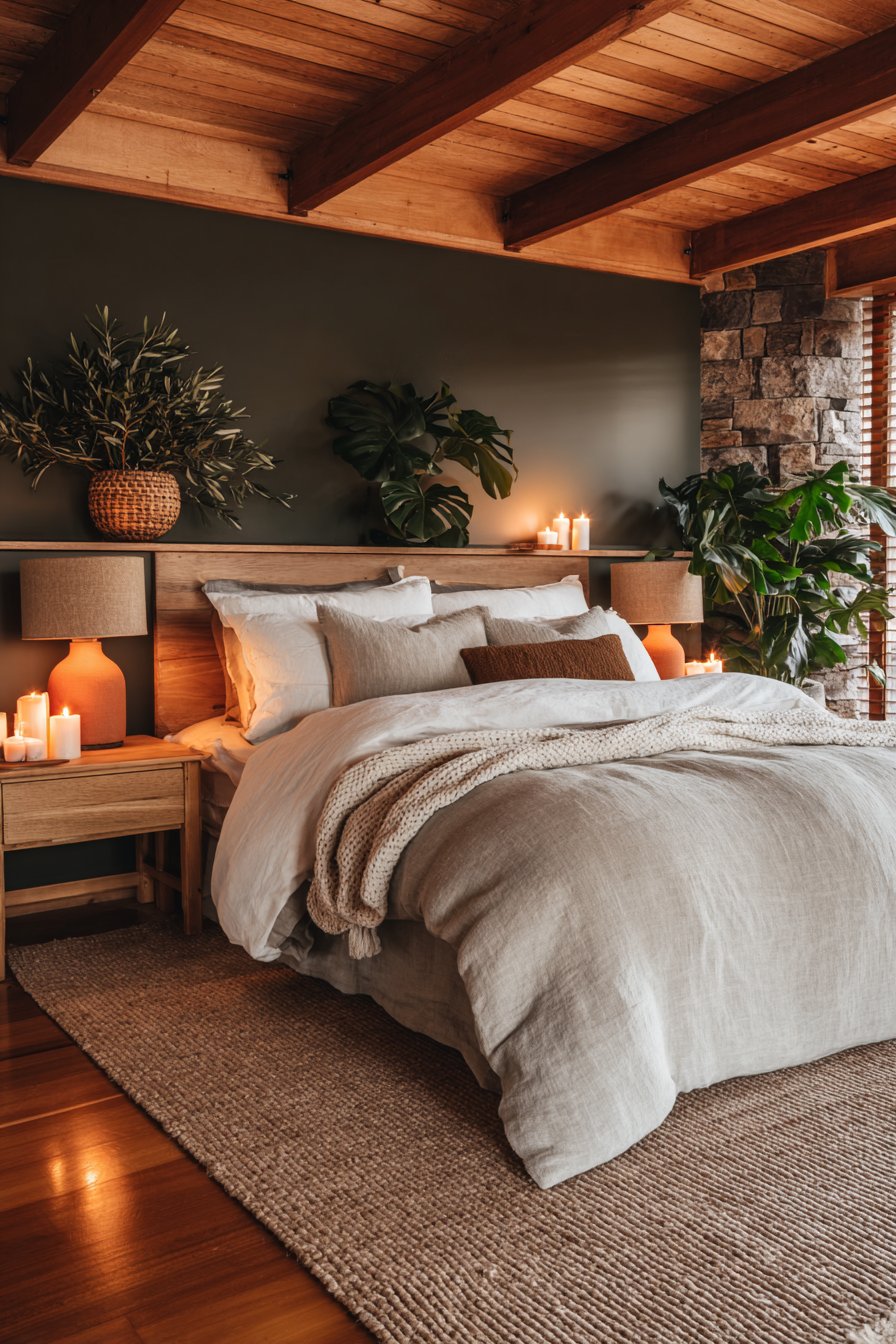
If structural changes are not possible, you can simulate connection through thoughtful arrangement and landscaping. Position seating to face windows with garden views. Use window boxes with trailing greenery to blur the sill boundary. Plant trees or tall shrubs close to windows so their movement is visible from inside. These borrowed landscape techniques create a strong biophilic connection without significant renovation.
- Maximize window openings and keep sills clear to preserve sightlines
- Plant the garden immediately adjacent to frequently used windows
- Use indoor-outdoor paving materials to blur transition zones
- Install window boxes to frame and extend interior plant displays outward
- Arrange furniture so primary seats face garden views
- Use the same material palette indoors and out for visual continuity
8. Applying a Nature-Inspired Color Palette
Color is one of the most immediate ways to evoke nature in an interior. Biophilic color palettes draw from landscape, sky, stone, bark, and soil — creating environments that feel grounded and serene rather than artificial or overstimulating.
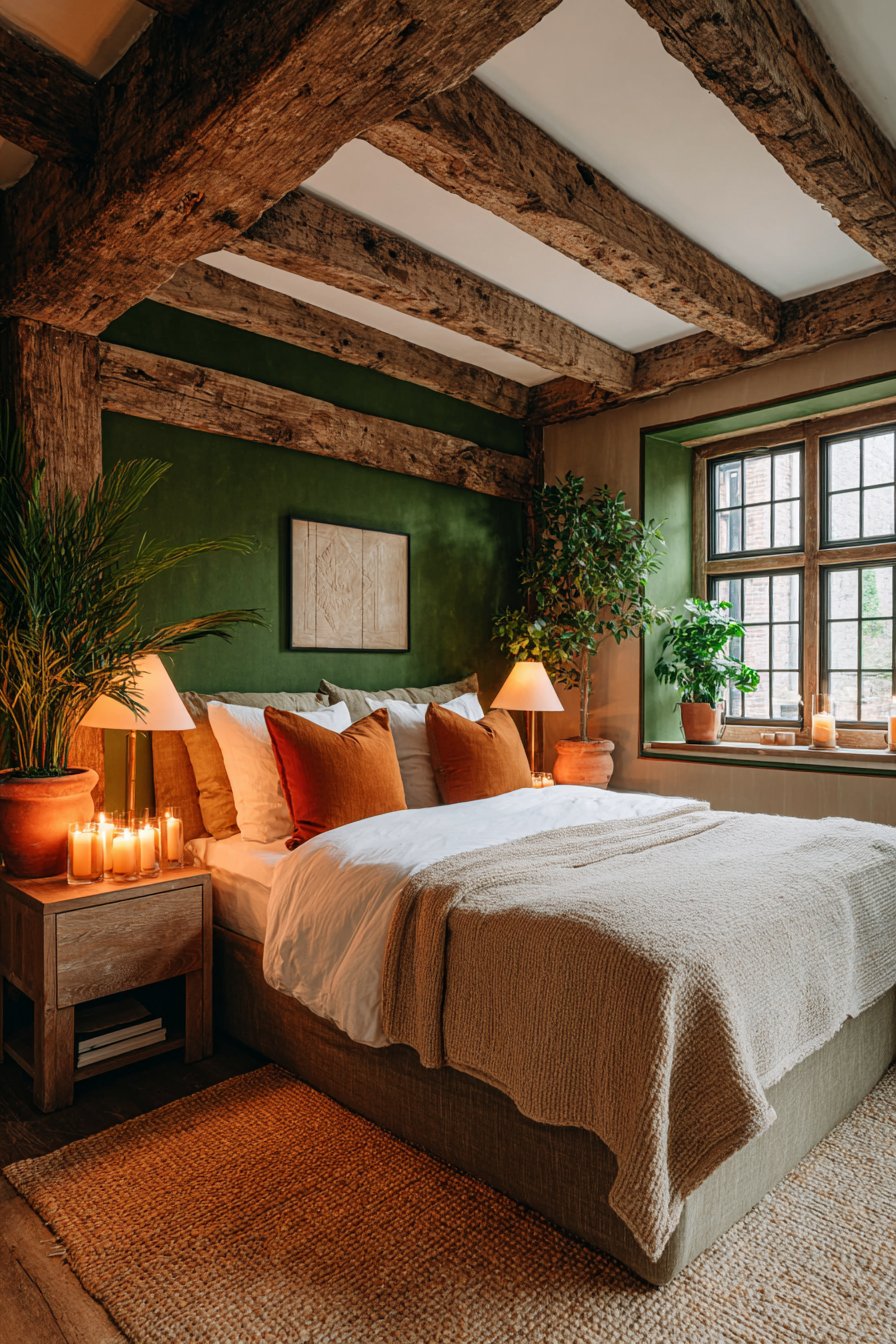
Earthy neutrals — warm whites, sandy beiges, warm taupes, and soft terracottas — form the most versatile biophilic base palette. These tones echo desert sand, limestone cliffs, and clay earth. They recede gracefully, allowing natural materials and plants to take center stage. Paired with forest greens and deep moss tones, they create a layered palette reminiscent of a sunlit woodland interior.
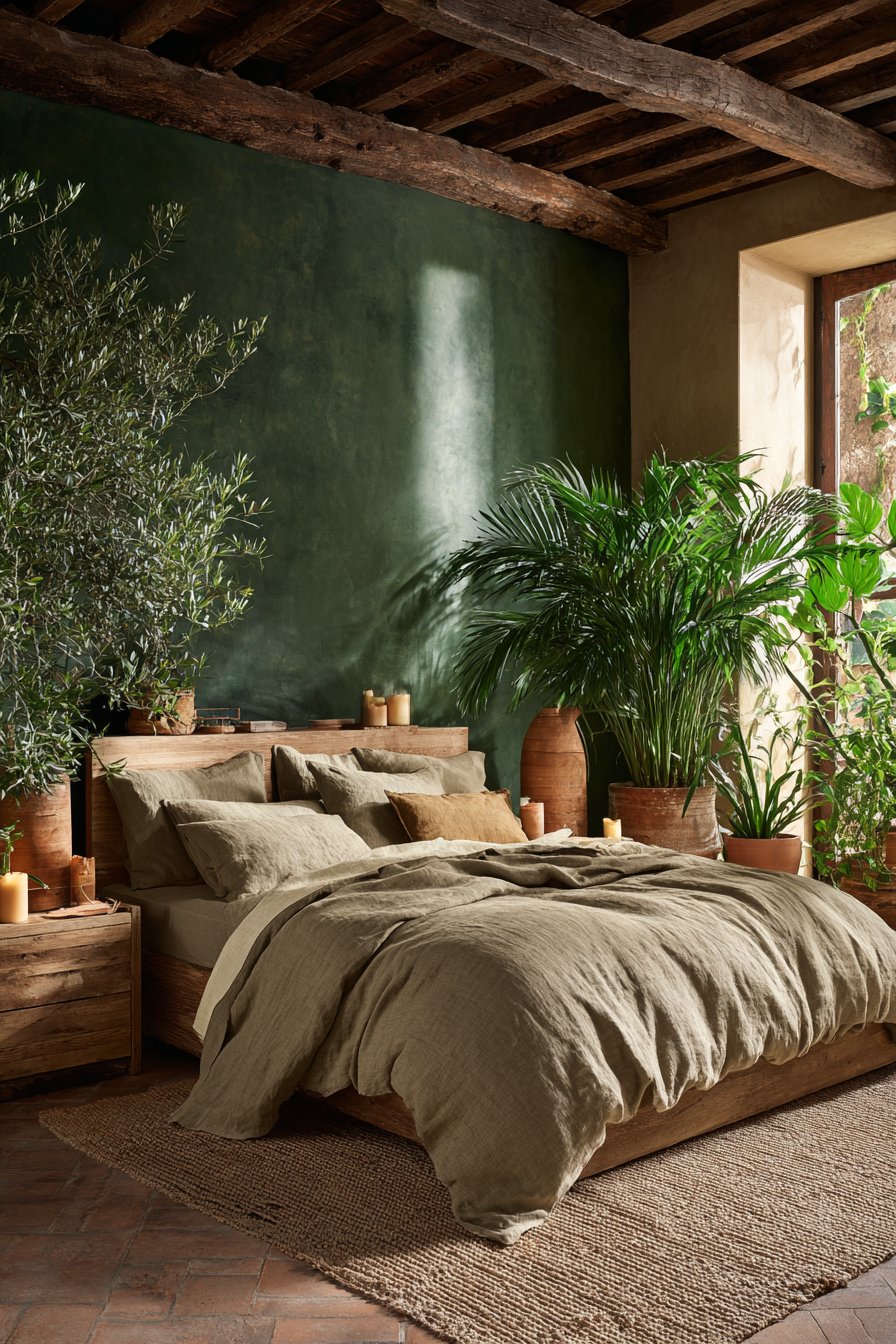
For those who want deeper color commitment, consider painting a single wall in a rich botanical green, warm clay, or deep ocean blue. These saturated nature tones create a sense of depth and enclosure — what biophilic design calls the refuge experience. Layered with texture and natural light, they feel far from oppressive. They feel enveloping, like being inside a living landscape.
- Build your base palette from warm neutrals and earthy tones
- Introduce botanical green through paint, upholstery, or soft furnishings
- Use terracotta and rust tones to echo clay earth and autumn foliage
- Avoid overly cool or blue-based neutrals — they feel less biophilically grounded
- Test paint colors at multiple times of day under natural and artificial light
- Let your plant selection guide your color palette — match pots and textiles to foliage
9. Layering Natural Textures for Tactile Depth
Texture is underutilized in mainstream interior design, yet it is central to biophilic experience. Nature is profoundly textural — rough bark, smooth river stones, soft moss, coarse sand. When we surround ourselves with layered natural textures, we engage more of our senses and create richer, more human spaces.
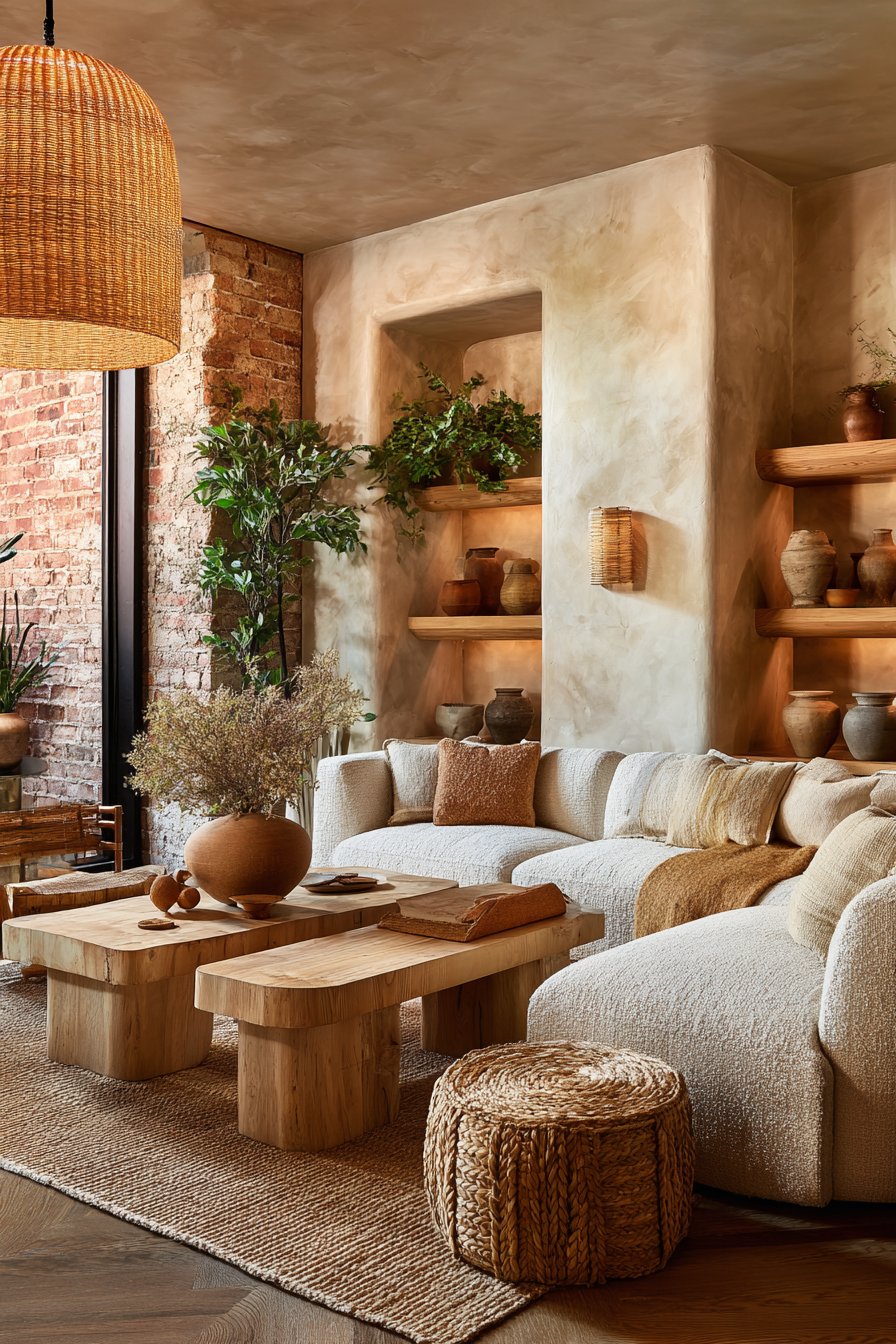
Textural contrast is the key principle. A rough linen sofa against a smooth plaster wall. A chunky wool throw against a polished timber floor. A woven rattan pendant light against a clean white ceiling. These contrasts create visual and tactile interest that flat, uniform surfaces simply cannot match. Each layer adds depth and warmth, drawing the eye and inviting touch.
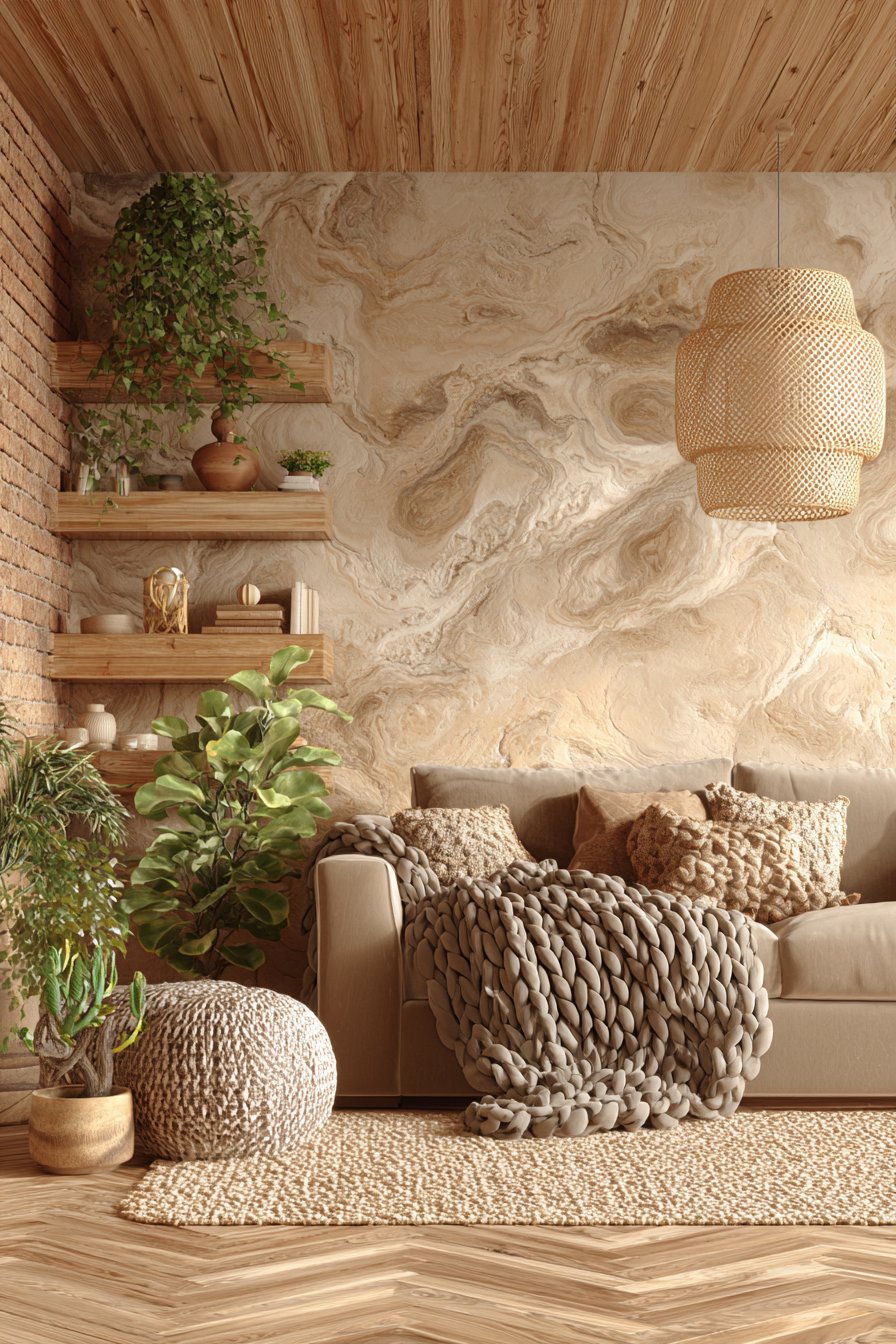
Wall treatments offer significant textural opportunity that is often overlooked. Limewash paint creates a soft, cloudy depth reminiscent of aged stone. Venetian plaster reflects light beautifully with subtle tonal variation. Exposed brick or raw concrete brings urban nature — the material reality of earth and aggregate — directly into the living space. Even simple textured wallpaper in a natural motif can transform a room’s tactile character.
- Layer minimum three textures in every room — smooth, mid, and rough
- Use limewash or Venetian plaster on feature walls for earthy depth
- Introduce chunky knit or woven wool throws on sofas and chairs
- Select handmade or artisan ceramics for shelving to add irregular, organic texture
- Combine matte and low-sheen finishes rather than high-gloss surfaces
- Add woven or rattan lighting to introduce texture overhead
10. Using Scent as a Biophilic Tool
Scent is the most direct route to emotional memory and mood, yet it remains the most neglected dimension of interior design. Nature has its own profound aromatic vocabulary — petrichor after rain, pine resin in sunlight, the sweetness of blooms, the earthiness of damp soil. Introducing these scents into your interior creates a powerful multisensory biophilic experience.
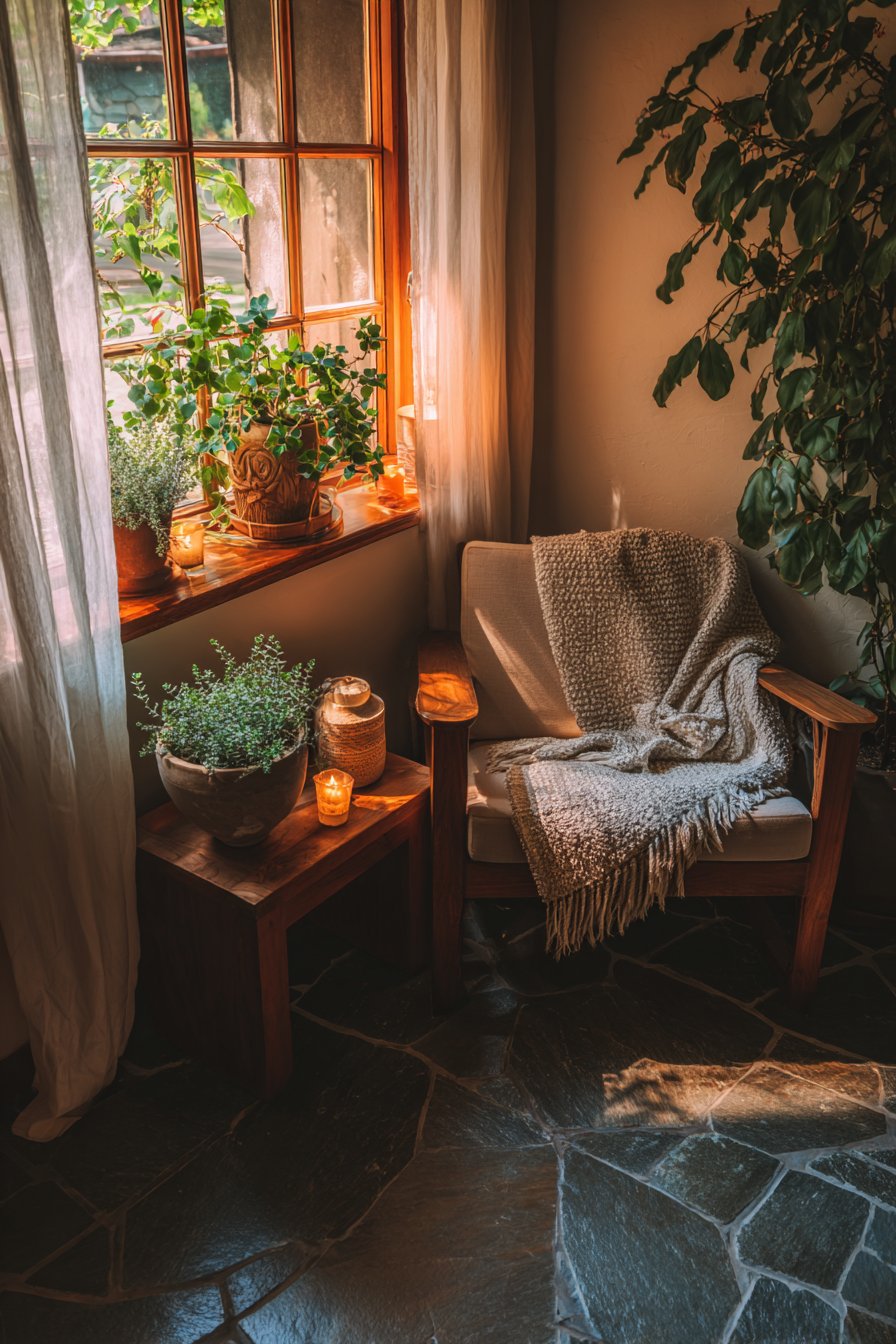
Living plants contribute real, living fragrance. Jasmine, lavender, gardenias, and eucalyptus are among the most fragrant plants suitable for indoor cultivation. Placing a gardenia near a frequently used chair or a bunch of fresh eucalyptus in a bathroom introduces subtle, ever-changing natural scent that no synthetic fragrance can replicate. As the plant grows, flowers, or dries, the scent evolves — adding another layer of natural dynamism.
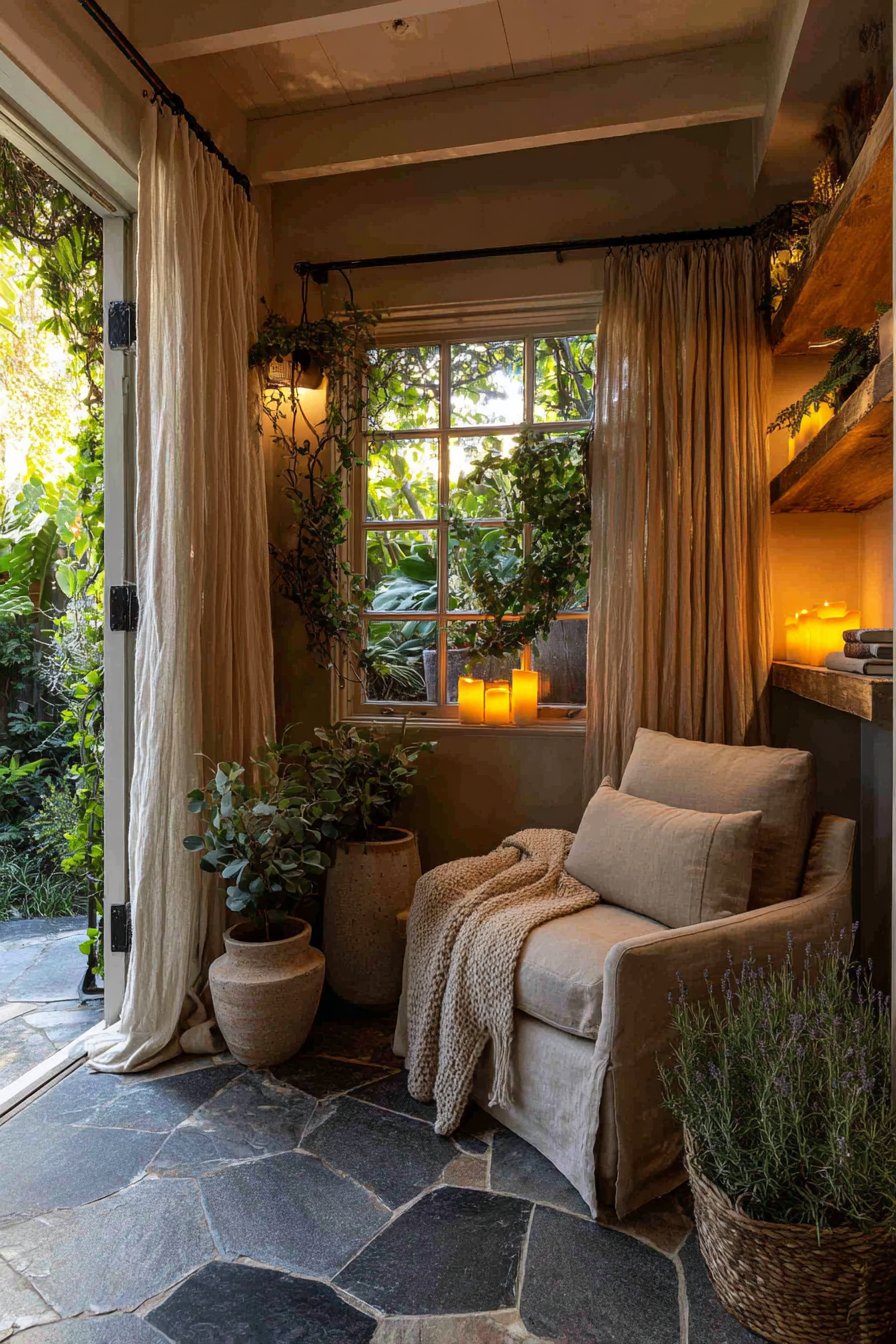
For additional ambient scenting, choose natural alternatives to synthetic air fresheners. Beeswax candles, essential oil diffusers, and botanical incense made from cedar, sandalwood, or frankincense provide layered, complex scents that reference the natural world authentically. Avoid synthetic fragrances where possible — they can contain compounds that undermine the clean, healthy air quality that biophilic design seeks to cultivate.
- Grow fragrant indoor plants like jasmine, lavender, or mint in lived-in areas
- Use beeswax candles scented with pure essential oils rather than synthetic fragrance
- Diffuse cedarwood, pine, or eucalyptus oils to evoke forest environments
- Place fresh eucalyptus bunches in bathrooms for a spa-like natural experience
- Open windows regularly to introduce fresh outdoor air and natural scent
- Use untreated natural wood — its subtle scent is itself a biophilic element
Conclusion
Biophilic design is not a trend — it is a return to something deeply human. By reconnecting our interiors with nature, we create spaces that support our health, calm our minds, and inspire our creativity. From maximizing natural light and layering organic textures to incorporating living plants, water features, and nature-inspired scent, every principle covered here is an invitation to design more intentionally and more humanely.

The beauty of biophilic design lies in its scalability and accessibility. You do not need a complete renovation or a large budget to begin. Start with one element — a living plant, a natural material, a scented candle, a sheer curtain that lets the light flood in. Build layer by layer. Let your home become a living ecosystem that nourishes you every single day. Nature is the greatest designer — your only job is to invite it in.
