


The world of interior design is cyclical, and right now, curves are having their moment. After decades dominated by sharp angles and rigid minimalism, curved furniture is reclaiming its place at the center of modern home décor. From softly arched sofas to circular dining tables, rounded silhouettes are appearing in living rooms, bedrooms, and even home offices across the globe. This shift signals more than just a passing trend — it reflects a deeper desire for warmth, comfort, and human connection in our living spaces.
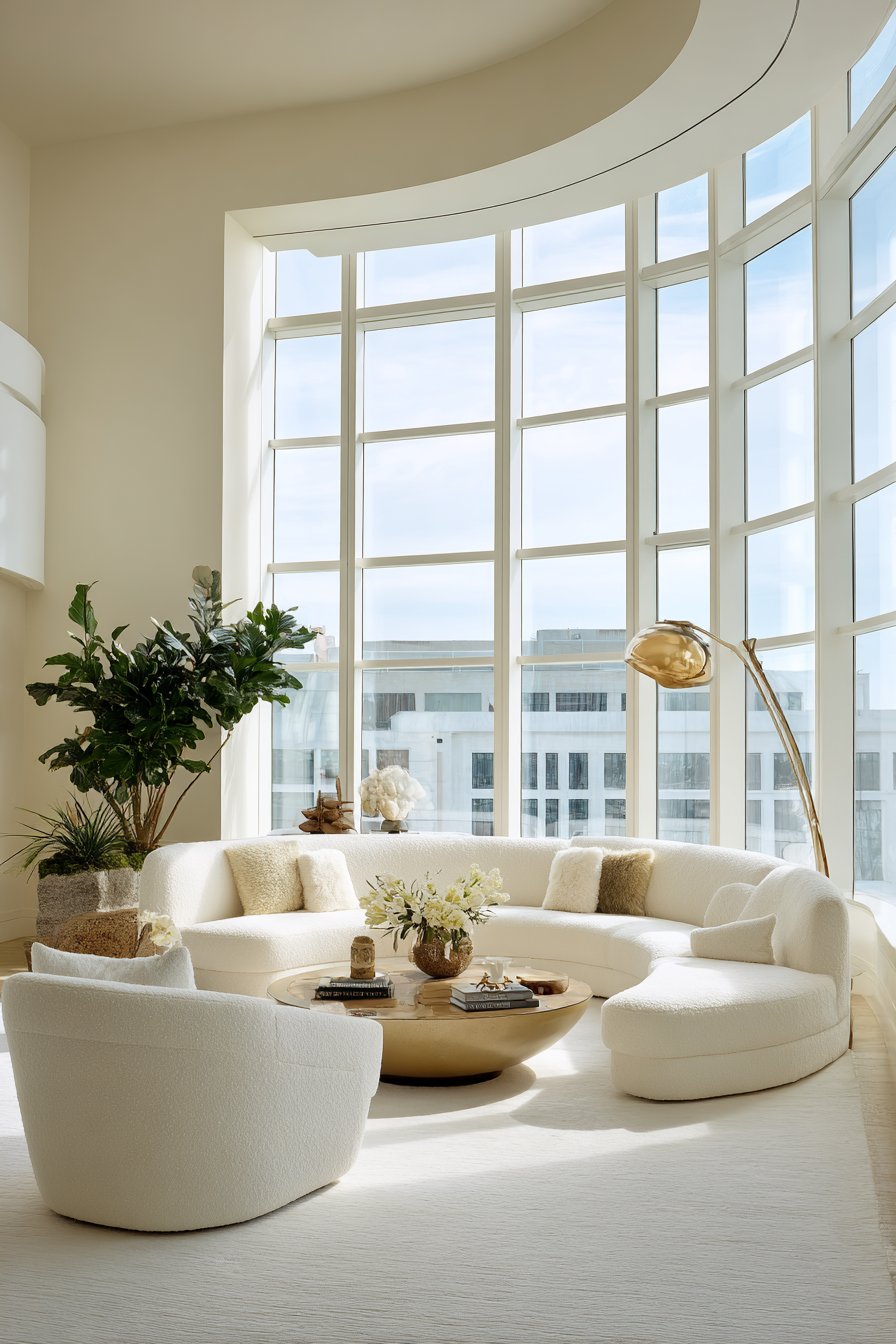
Interior design has always mirrored the cultural mood of its time. The clean-line aesthetic of the early 2000s spoke to a generation chasing efficiency and simplicity. Today, however, people want their homes to feel like sanctuaries — soft, inviting, and emotionally nurturing. Curved furniture delivers exactly that. Its organic shapes echo the natural world and invite a sense of ease that straight-edged pieces simply cannot replicate. Designers and homeowners alike are embracing this return to fluidity.
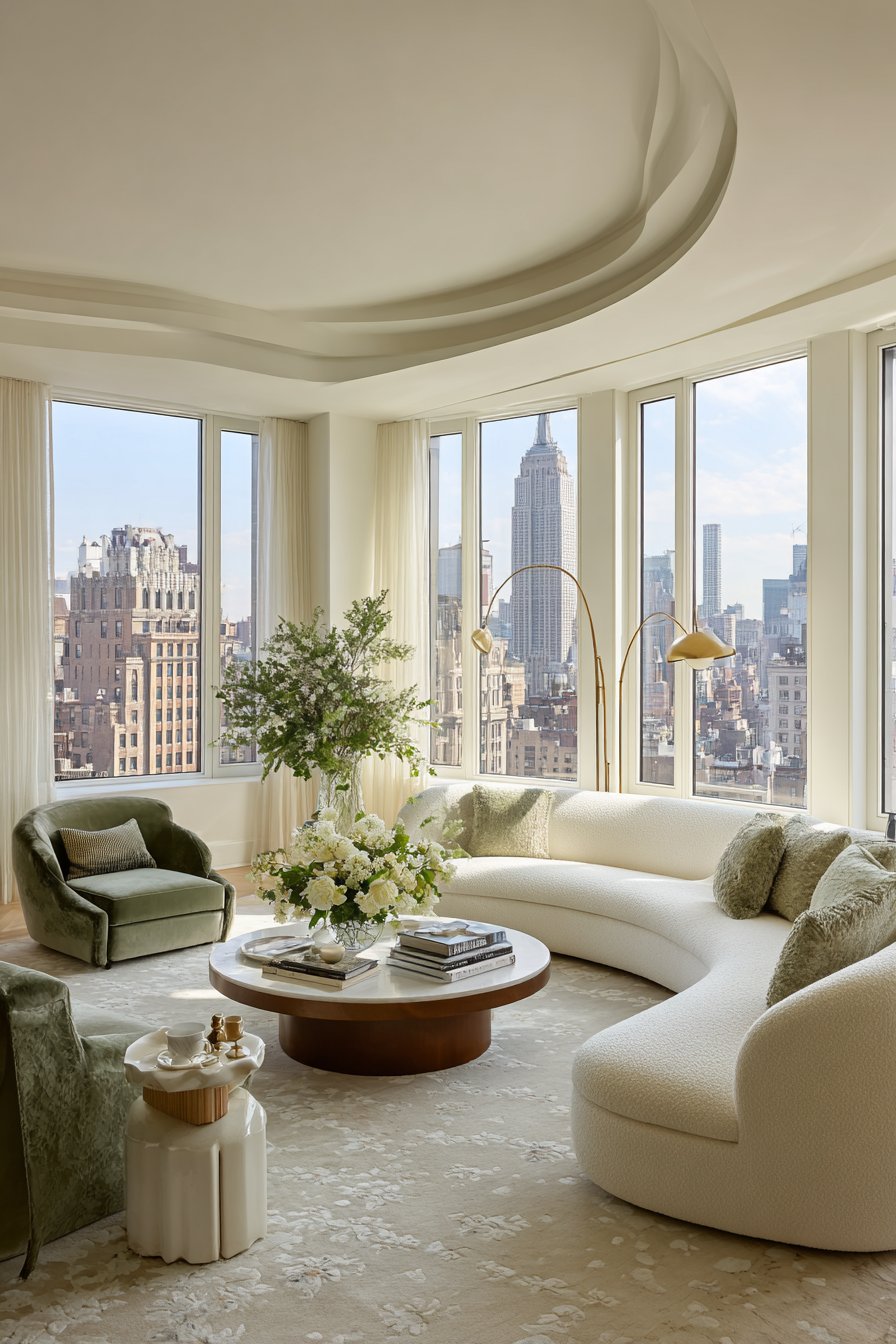
This article explores why curved furniture is making such a powerful comeback and how you can integrate it into your own home. Whether you’re redesigning a living room or simply refreshing a single corner, understanding the appeal of curves will help you make more intentional, beautiful design choices.
1. The Psychology Behind Curved Shapes
There is genuine science behind why curved furniture feels so good. Research in environmental psychology suggests that rounded shapes reduce stress and signal safety to the human brain. Sharp angles can unconsciously trigger a threat response, while curves communicate softness and approachability. This is why curvilinear forms have long been used in spaces designed for comfort and healing.
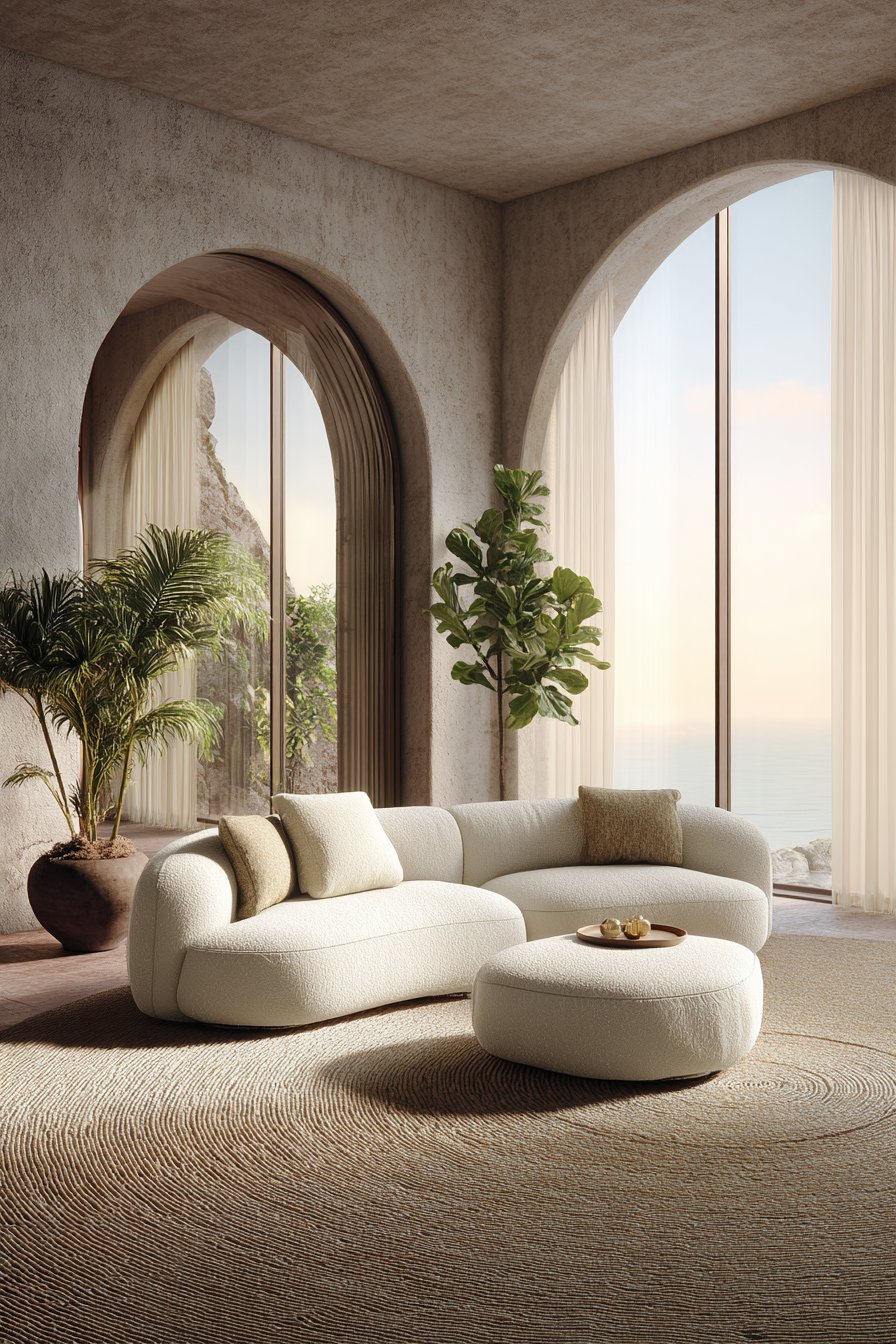
When you walk into a room filled with curved furniture, you immediately feel more at ease. The visual flow created by arched lines guides the eye gently around the space rather than stopping it abruptly. This creates a sense of harmony and continuity that is deeply satisfying. Designers often describe this phenomenon as “biophilic resonance” — curves mimic the natural forms found in nature, from rolling hills to river bends.
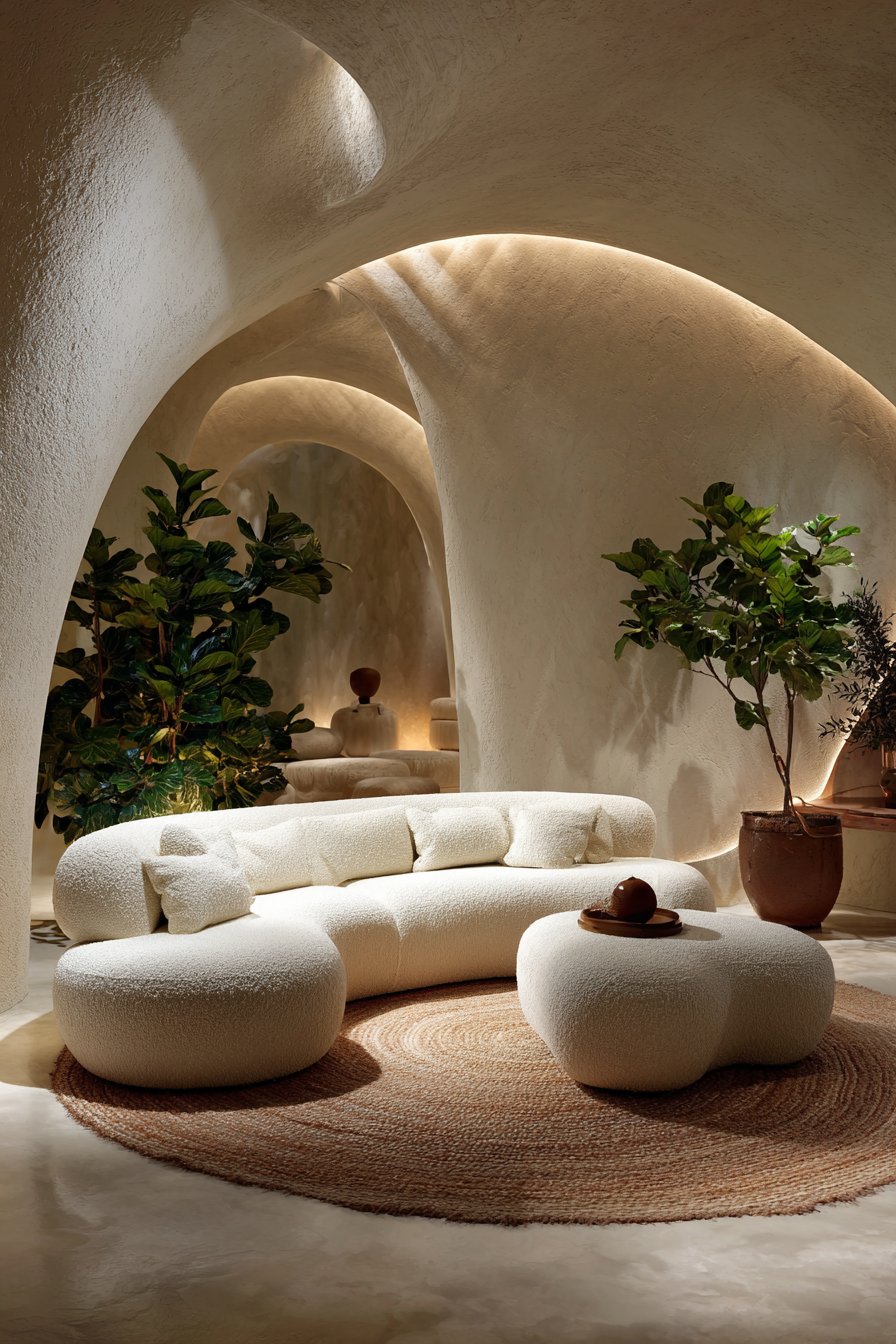
Incorporating curved pieces into your home taps into this innate human preference for organic shapes. It transforms a room from merely functional to emotionally resonant. The psychology of curves is one of the most compelling reasons designers and clients are returning to them after years of boxy, angular dominance.
- Choose rounded sofas or sectionals to create a welcoming focal point
- Add a curved accent chair to soften a room dominated by rectangular furniture
- Opt for arched mirrors to introduce gentle lines on flat walls
- Use circular rugs to anchor a seating area with organic flow
- Consider a kidney-shaped coffee table for a retro yet modern feel
2. A Nod to Mid-Century Modern and Art Nouveau Roots
Curved furniture is not a new invention — it is a rich design legacy being rediscovered by a new generation. The Art Nouveau movement of the late 19th century celebrated flowing, organic lines inspired by natural forms. Later, the Mid-Century Modern era brought curved sofas, tulip chairs, and kidney-shaped tables into mainstream interiors. Designers like Eero Saarinen and Isamu Noguchi made curves synonymous with sophisticated, forward-thinking design.
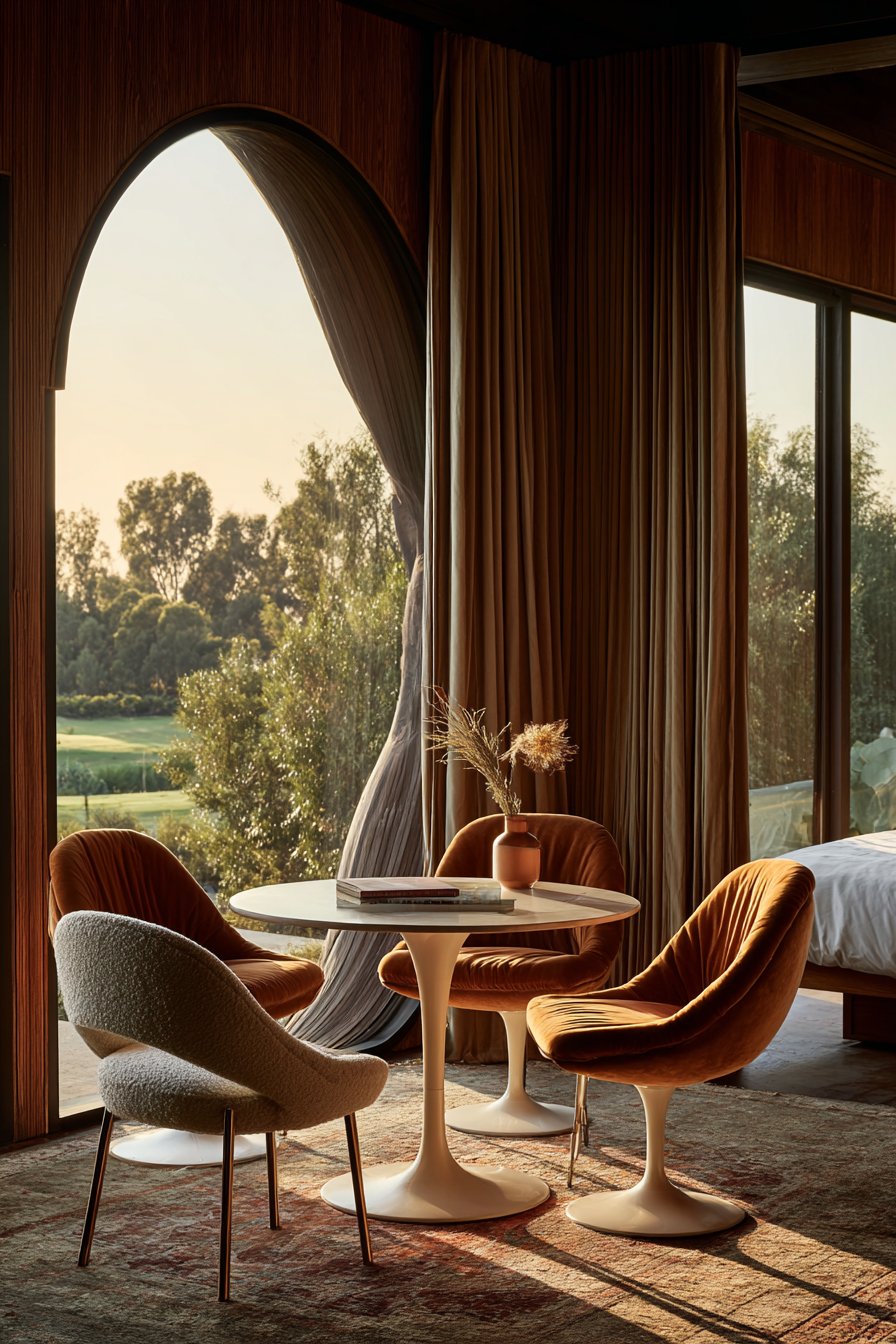
Today’s curved furniture revival pays homage to these iconic movements while adapting them for contemporary living. You will find modern pieces that echo the sensuous curves of a vintage Womb Chair but rendered in updated fabrics and finishes. This fusion of old and new is part of what makes the trend so compelling — it feels both nostalgic and fresh at the same time.
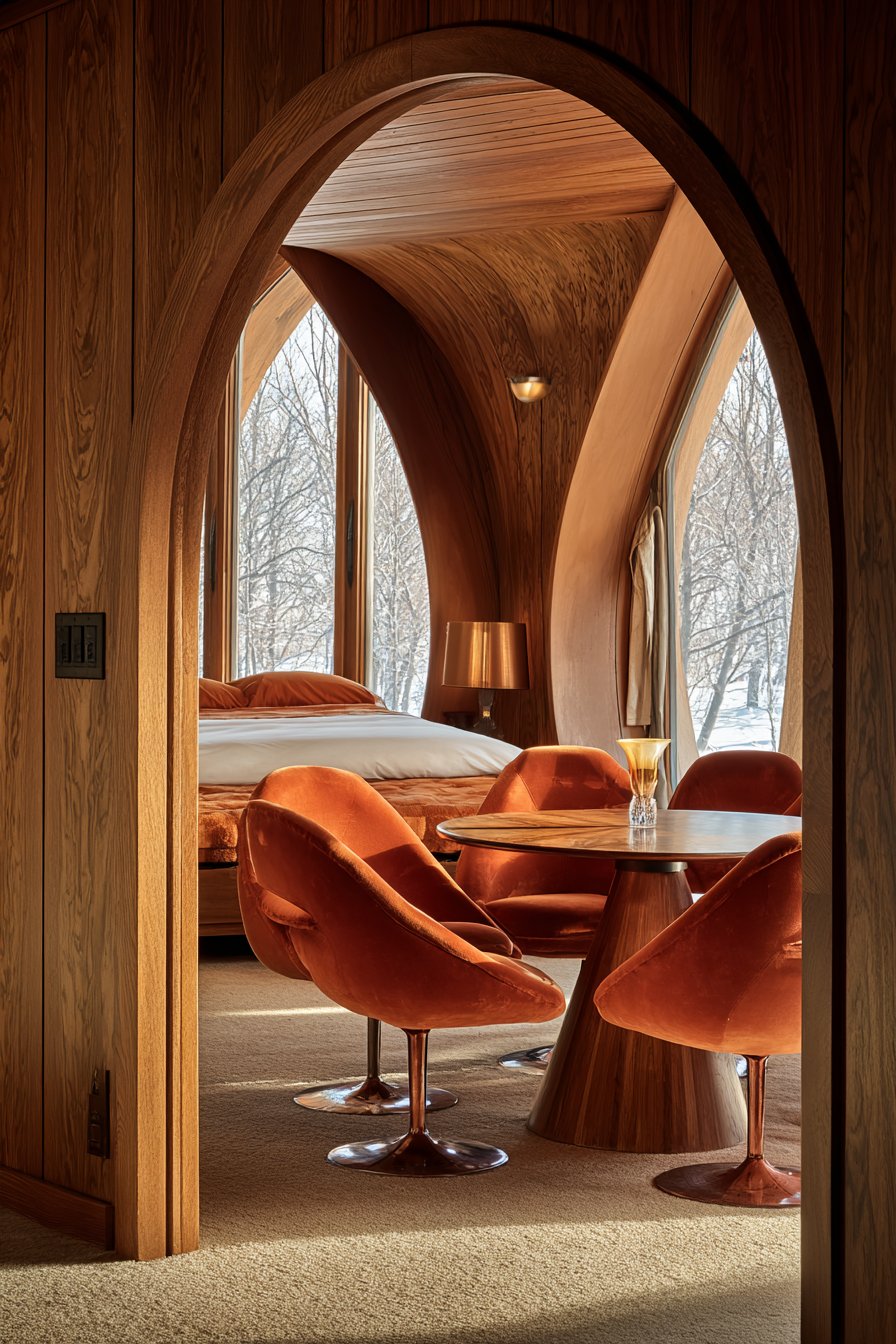
Understanding the historical context of curved furniture adds depth to your design decisions. When you choose a curved piece, you are participating in a long tradition of thoughtful, humanistic design. This legacy gives curved furniture an authority and timelessness that purely trendy pieces often lack.
- Reference Mid-Century Modern icons with tulip-style dining chairs
- Incorporate an Art Nouveau-inspired arched headboard in the bedroom
- Mix vintage curved pieces with contemporary materials like bouclé or velvet
- Look for designers inspired by Saarinen, Noguchi, or Eames for quality references
- Balance retro silhouettes with modern color palettes for a fresh look
3. Curved Sofas as Statement Centerpieces
Perhaps no piece of curved furniture has generated more excitement than the curved sofa. Whether it is a crescent-shaped sectional or a classic camelback silhouette, the curved sofa has become the defining centerpiece of contemporary living rooms. It commands attention without aggression, making it a perfect anchor piece for a variety of design styles.
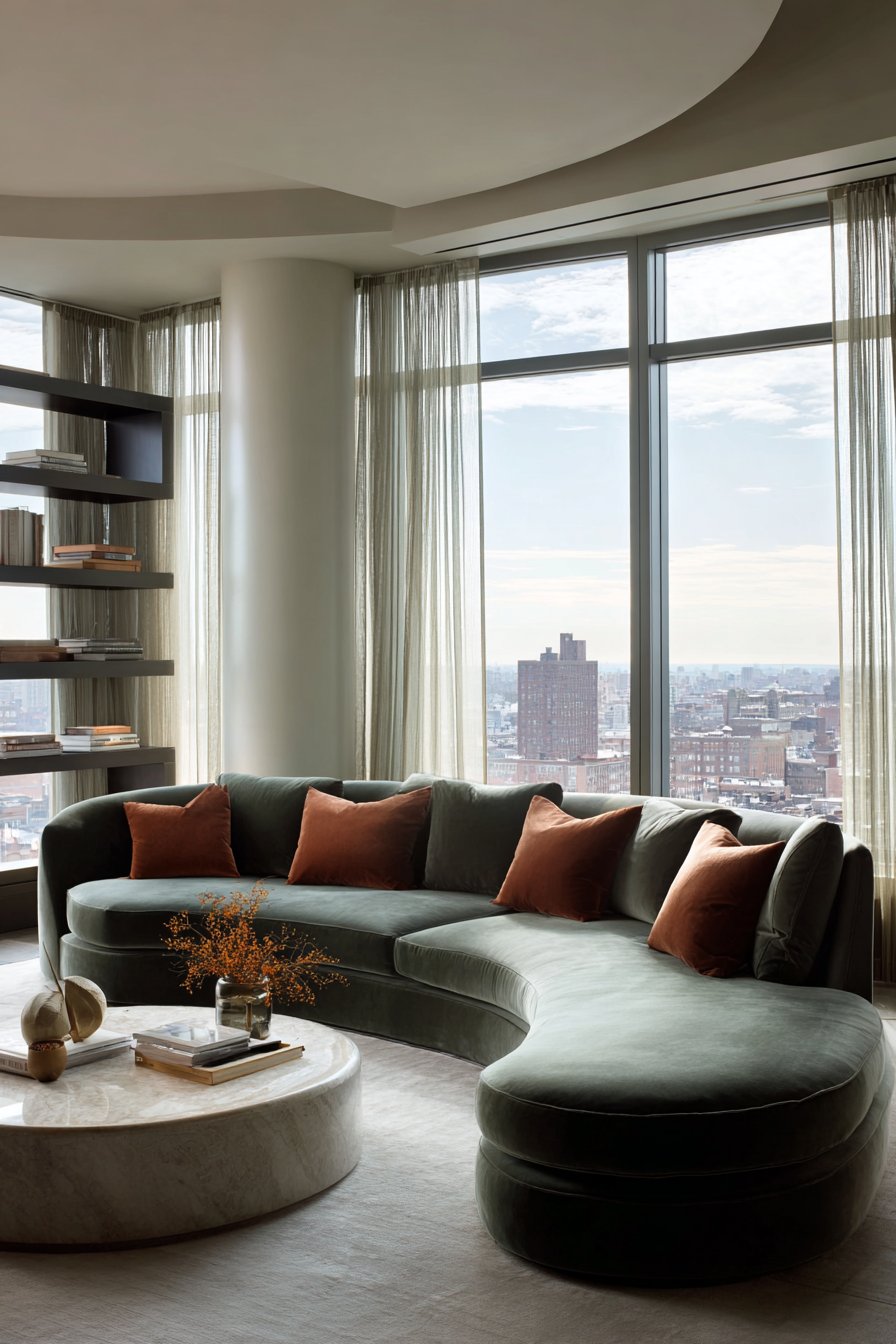
A curved sofa works especially well in open-plan spaces where it can float in the center of the room and define a seating zone without the need for walls. Its rounded back creates a natural sense of enclosure, making the seating area feel intimate even in a large, open room. This is a design trick interior designers have used for years to create coziness in expansive spaces.
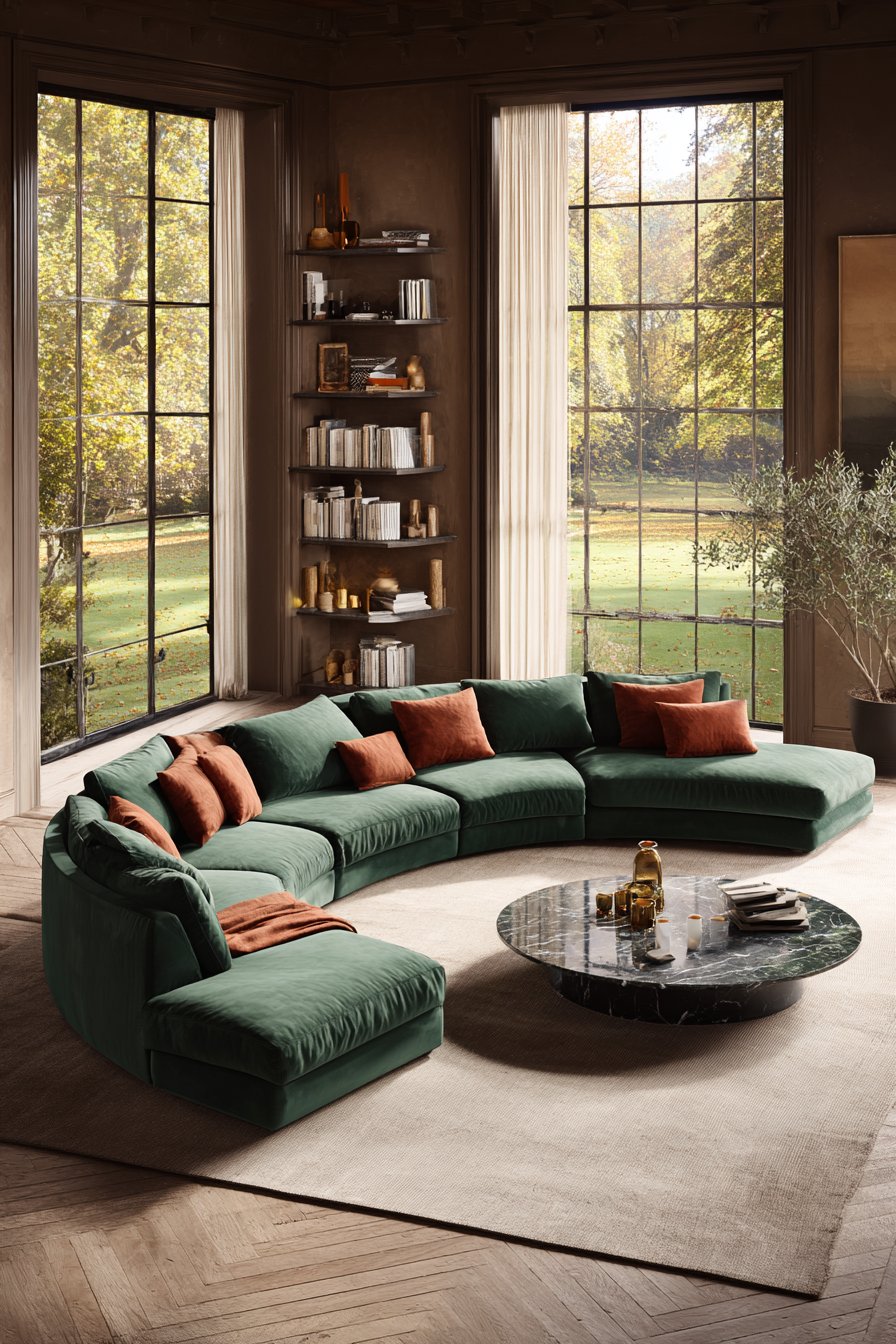
The versatility of curved sofas is also worth noting. They pair beautifully with everything from Scandinavian minimalism to maximalist eclecticism. Whether upholstered in neutral linen or bold velvet, a curved sofa elevates the sophistication of any room it enters.
- Choose a crescent or semi-circular sectional for open-plan living areas
- Float the sofa in the center of the room rather than pushing it against a wall
- Style with symmetrical throw pillows to enhance the balanced silhouette
- Select rich fabrics like bouclé, velvet, or chenille for maximum visual impact
- Use a circular coffee table to complement the sofa’s rounded profile
- Keep surrounding furniture more angular to create contrast and visual interest
4. The Rise of Curved Dining Furniture
Curved dining furniture is another major trend reshaping modern interiors. Round dining tables have always had a place in design, but now curved-back chairs, oval tables, and arched banquettes are joining them to create fully fluid dining environments. The result is a dining experience that feels more communal and convivial — no head of the table, no hierarchy, just connection.
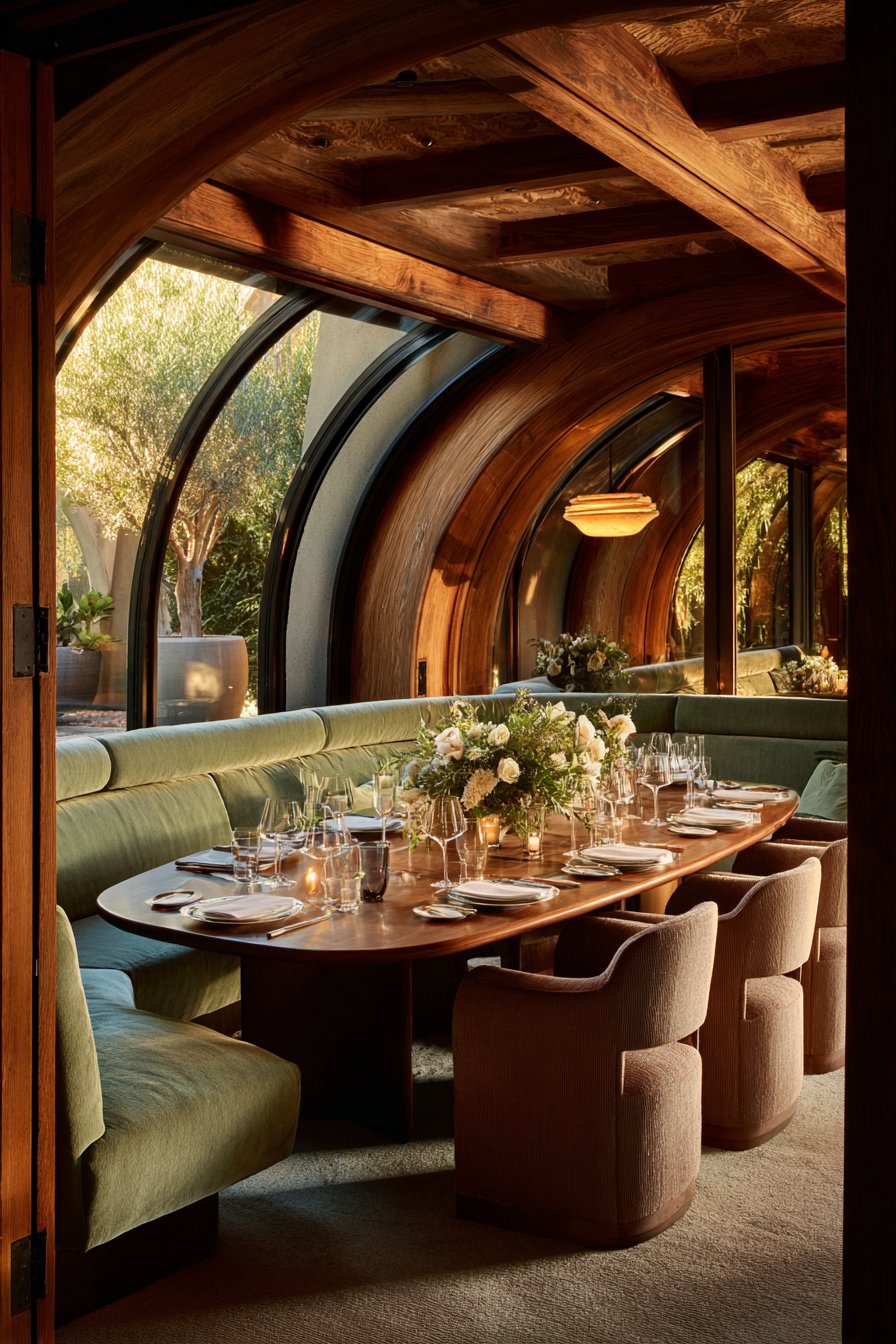
Oval and round tables are particularly effective in smaller dining rooms. They maximize seating capacity without the awkward corners of a rectangular table cutting into circulation paths. Curved banquette seating built into a corner can transform an underused space into one of the most beloved spots in the home.
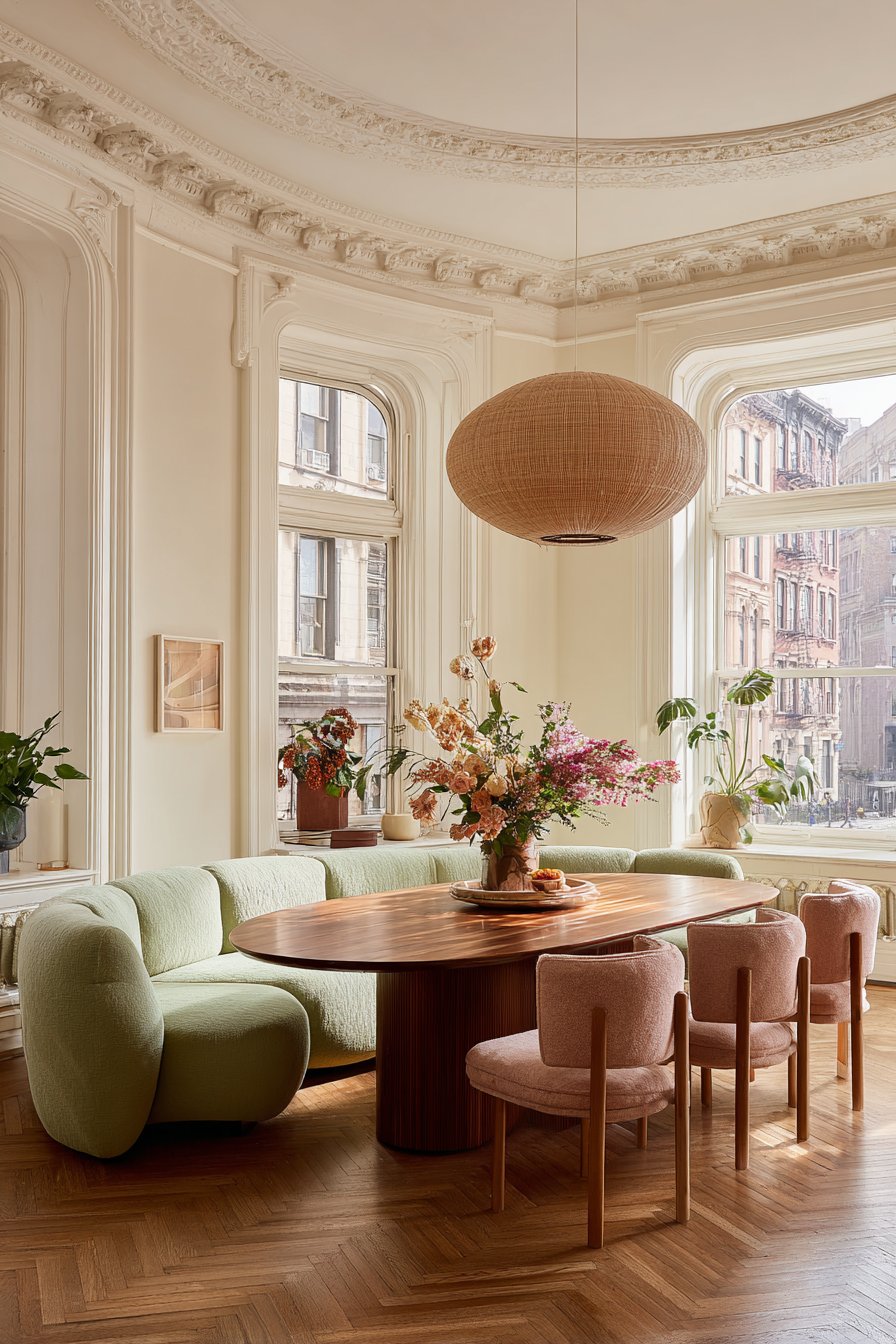
The move toward curved dining furniture also reflects a broader cultural shift toward hospitality and togetherness. After years of isolation, people are investing in spaces that encourage gathering. Curved furniture inherently signals openness and welcome — qualities that are deeply valued in today’s dining room design.
- Opt for an oval dining table to seat more guests without sacrificing floor space
- Pair rounded tables with curved-back dining chairs for a cohesive aesthetic
- Consider a built-in curved banquette to maximize corner seating
- Choose tables with pedestal bases to keep the floor plan open and uncluttered
- Add a round pendant light above the table to echo circular shapes overhead
- Use curved dining furniture in both formal and casual dining spaces
5. Bedroom Bliss: Curved Headboards and Bed Frames
The bedroom is one of the most natural environments for curved furniture design. After all, the bedroom is a space for rest and restoration — and nothing signals comfort quite like a softly arched headboard or a gently rounded bed frame. The arched headboard trend in particular has taken social media by storm, appearing in everything from luxury hotel rooms to modest apartment makeovers.
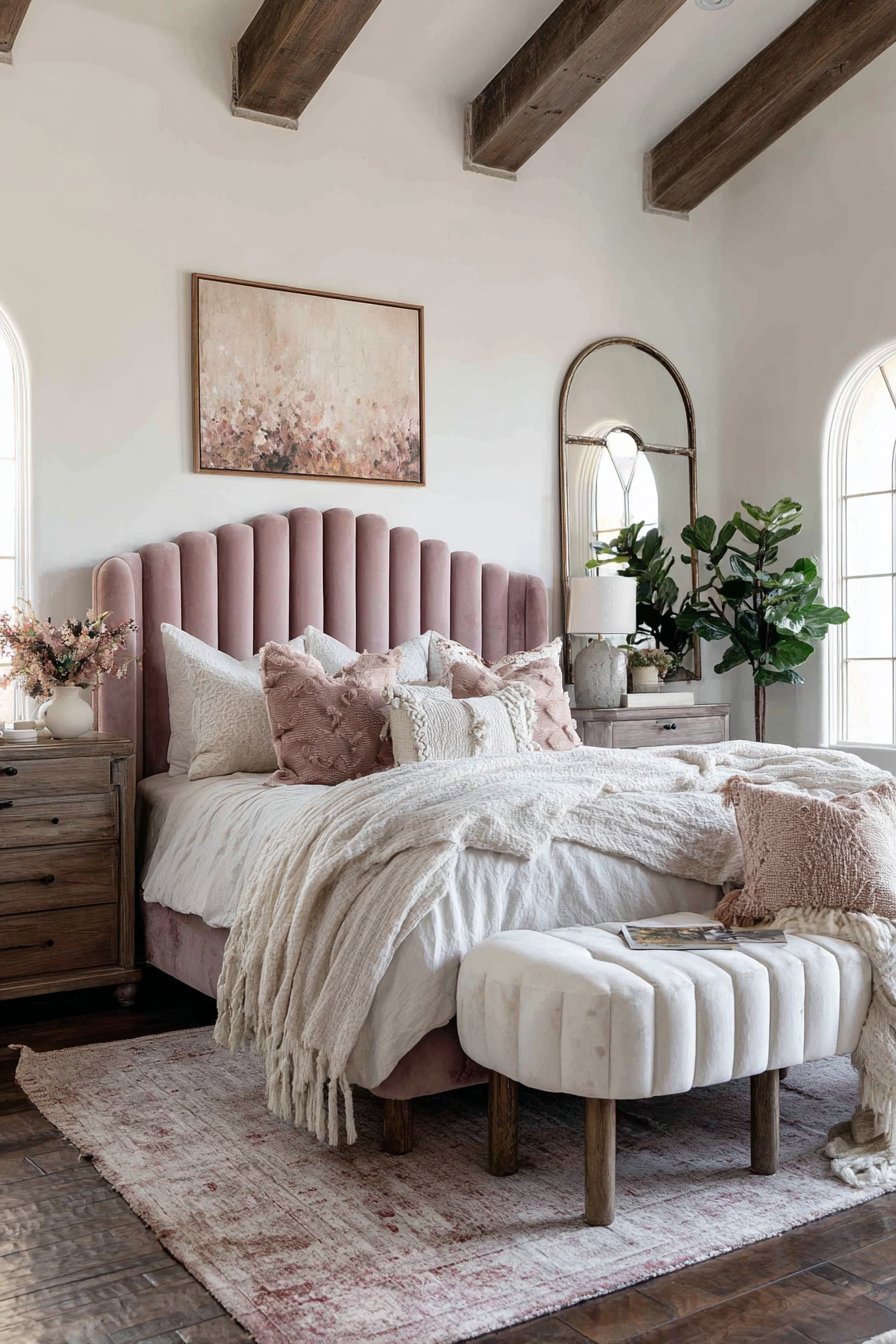
A curved headboard instantly becomes the focal point of the bedroom. It draws the eye upward and creates a sculptural quality that flat or rectangular headboards simply cannot achieve. Whether upholstered in velvet, linen, or leather, an arched headboard adds drama and elegance in equal measure. It works beautifully with organic, Japandi, and maximalist design styles alike.
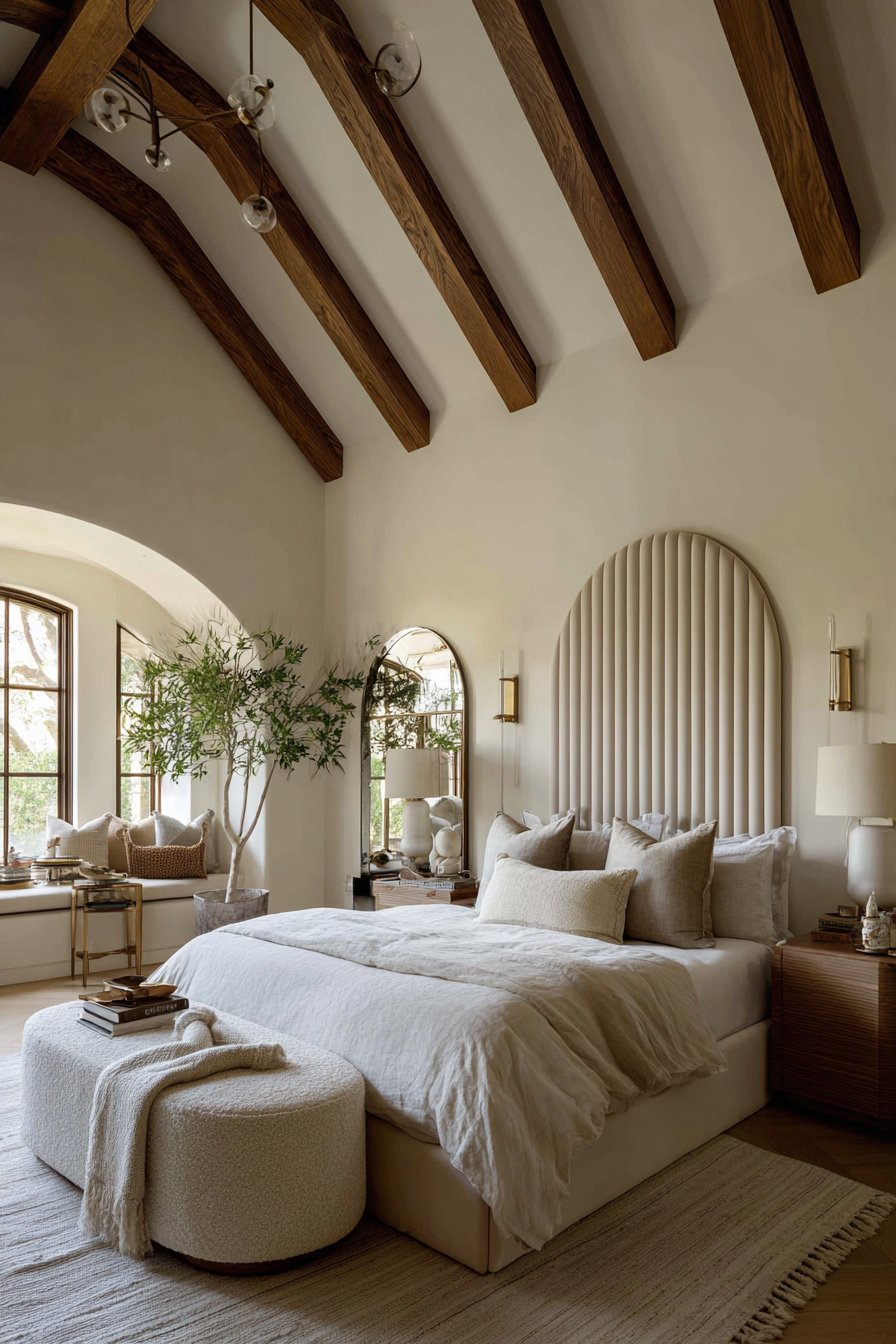
Beyond headboards, curved dressers, nightstands, and vanities are also emerging as key bedroom furniture trends. Their soft profiles reduce the visual weight of the bedroom and create a more calming, spa-like atmosphere. Introducing even one curved piece can dramatically shift the energy of a sleeping space.
- Select a tall arched headboard as the bedroom’s primary focal point
- Choose upholstered options in textured fabrics like boucle or velvet
- Pair with curved nightstands to maintain visual consistency
- Keep bedding soft and layered to complement the furniture’s gentle lines
- Use a rounded bedroom bench at the foot of the bed for a polished look
- Incorporate a curved vanity mirror to reinforce the arched aesthetic
6. Curved Storage and Shelving Solutions
Storage does not have to be utilitarian and boxy. Curved shelving units and rounded cabinets are emerging as design-forward alternatives to traditional rectangular storage. These pieces prove that function and beauty can coexist — and they do so in a way that adds significant character to a room.
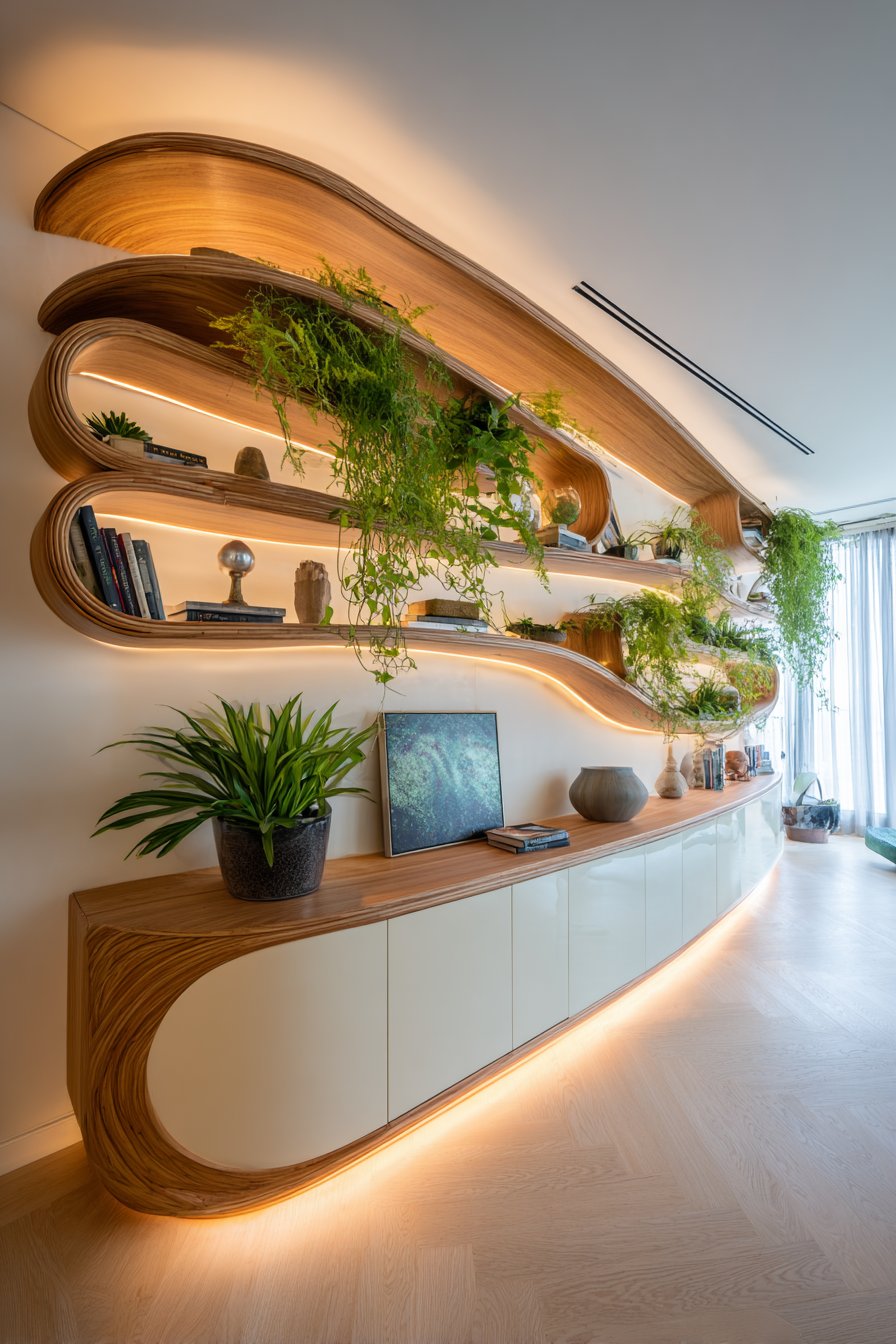
Curved bookshelves and display units create a sense of movement and flow along a wall. Rather than dividing a space rigidly, they soften vertical surfaces and give the eye a more interesting journey. In living rooms, they can serve as stunning backdrops for displaying art, books, and decorative objects. In home offices, they bring an unexpected touch of elegance to a typically functional space.
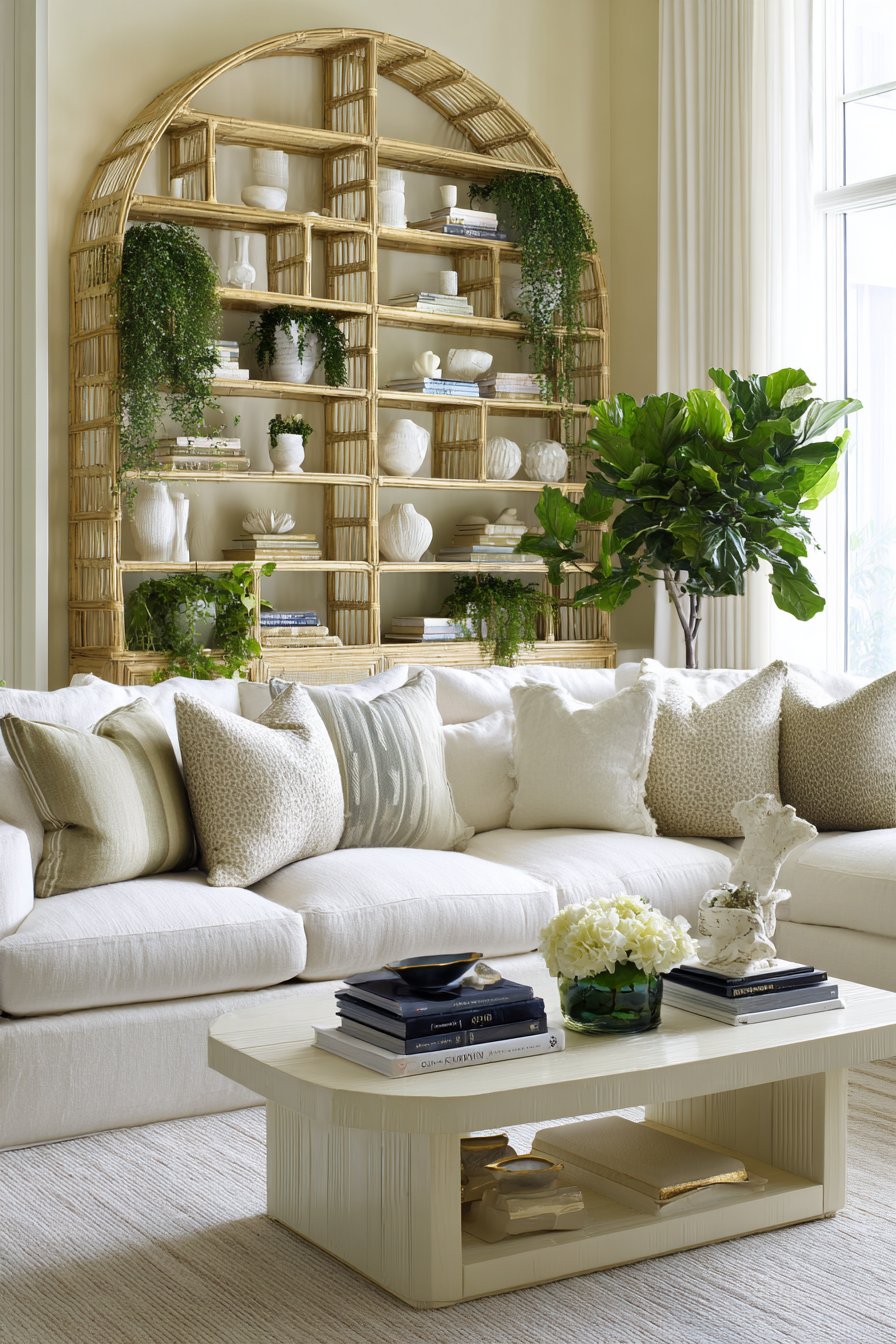
Rounded cabinets and curved sideboards are also gaining traction in dining rooms and entryways. Their gentle profiles feel more welcoming than boxy alternatives, and they offer the same storage capacity without the visual heaviness. Choosing curved storage is one of the easiest ways to introduce the trend without committing to large upholstered pieces.
- Look for curved bookshelves in rattan, wood, or lacquered finishes
- Use a curved sideboard in the dining room for storage and style
- Style curved shelves asymmetrically to enhance their organic character
- Choose pieces with natural wood tones for a warm, earthy aesthetic
- Pair curved storage with rounded decorative objects for a cohesive look
- Consider curved built-ins for a custom, high-end finish
7. How Curved Furniture Improves Room Flow
One of the most practical benefits of curved furniture is its impact on spatial flow. Sharp corners can create bottlenecks and awkward traffic patterns, especially in smaller rooms. Curved pieces, by contrast, guide movement naturally and improve circulation throughout a space. This makes them particularly valuable in compact apartments and busy family homes.
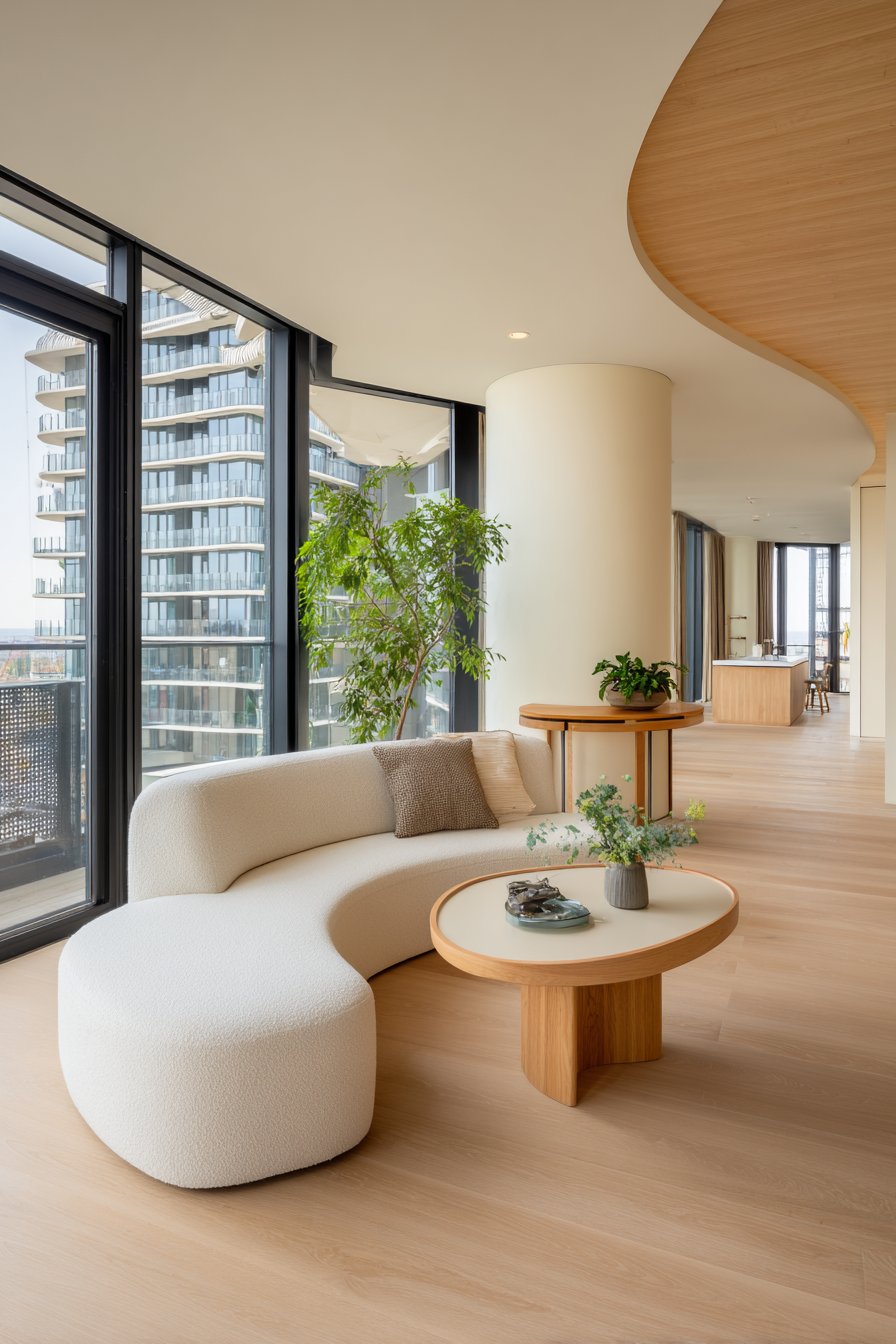
A curved sofa, for example, allows people to move around it effortlessly in multiple directions. A round dining table eliminates the pinch points created by rectangular corners. Even a small curved accent table can make a tight corner feel more navigable and intentional. Designers frequently use curved furniture as a spatial problem-solving tool.
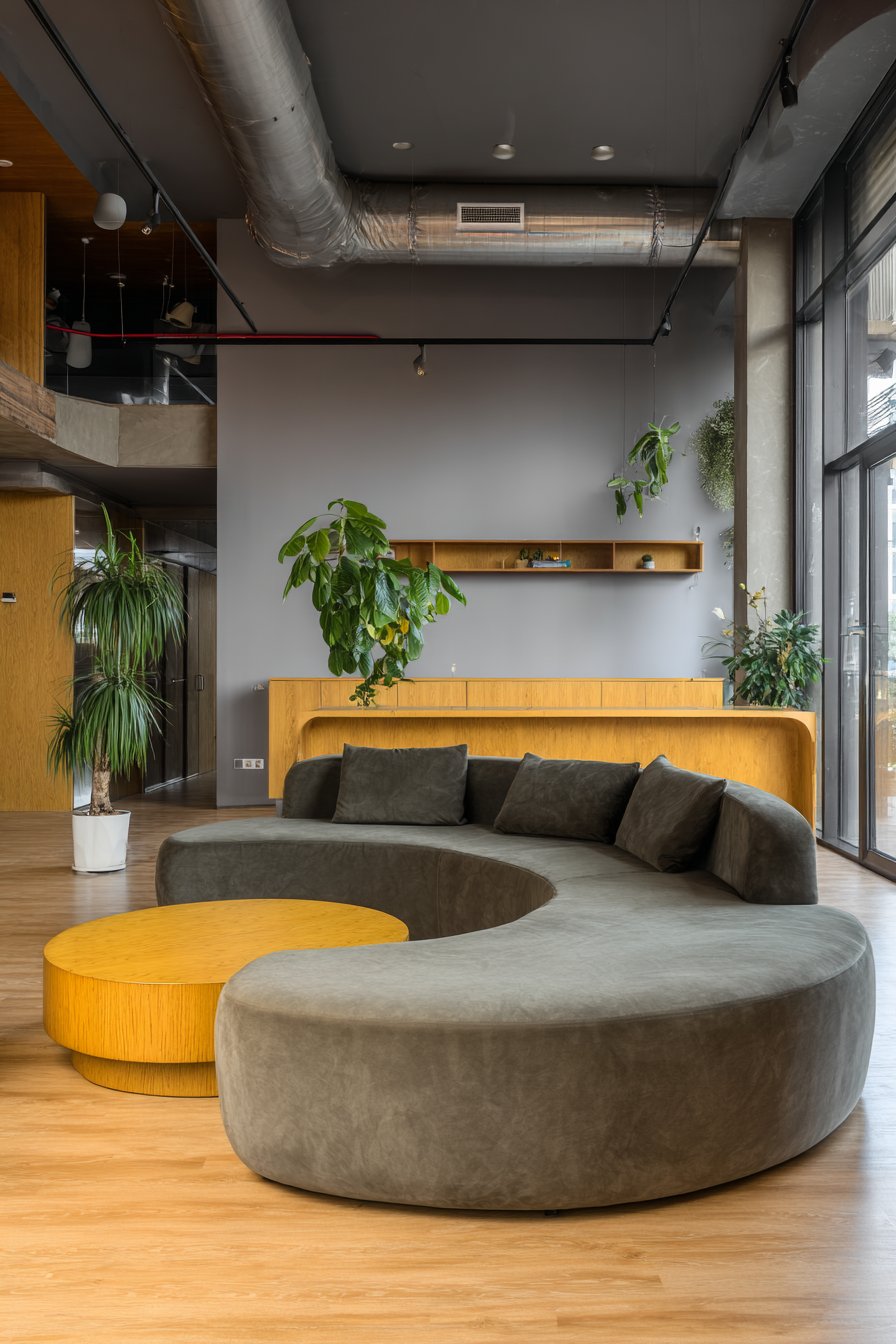
Beyond pure functionality, curved furniture also creates visual openness. Because rounded forms have no hard termination points, they appear to take up less visual space than their angular counterparts. This makes a room feel lighter and more airy — a significant advantage when working with limited square footage.
- Use a curved sectional to define zones in an open-plan space without blocking flow
- Choose round or oval coffee tables to keep central areas clear and accessible
- Avoid clustering too many curved pieces — balance with angular elements
- Place curved furniture away from walls to maximize its three-dimensional beauty
- Use curved console tables in hallways to keep narrow spaces feeling open
- Consider how traffic moves through a room before placing large curved pieces
8. Materials and Finishes That Enhance Curved Forms
The impact of curved furniture is amplified significantly by material choice. Certain fabrics, finishes, and textures are especially well-suited to curved silhouettes, enhancing their sculptural quality and tactile appeal. Understanding how materials interact with form is key to making the most of this design trend.
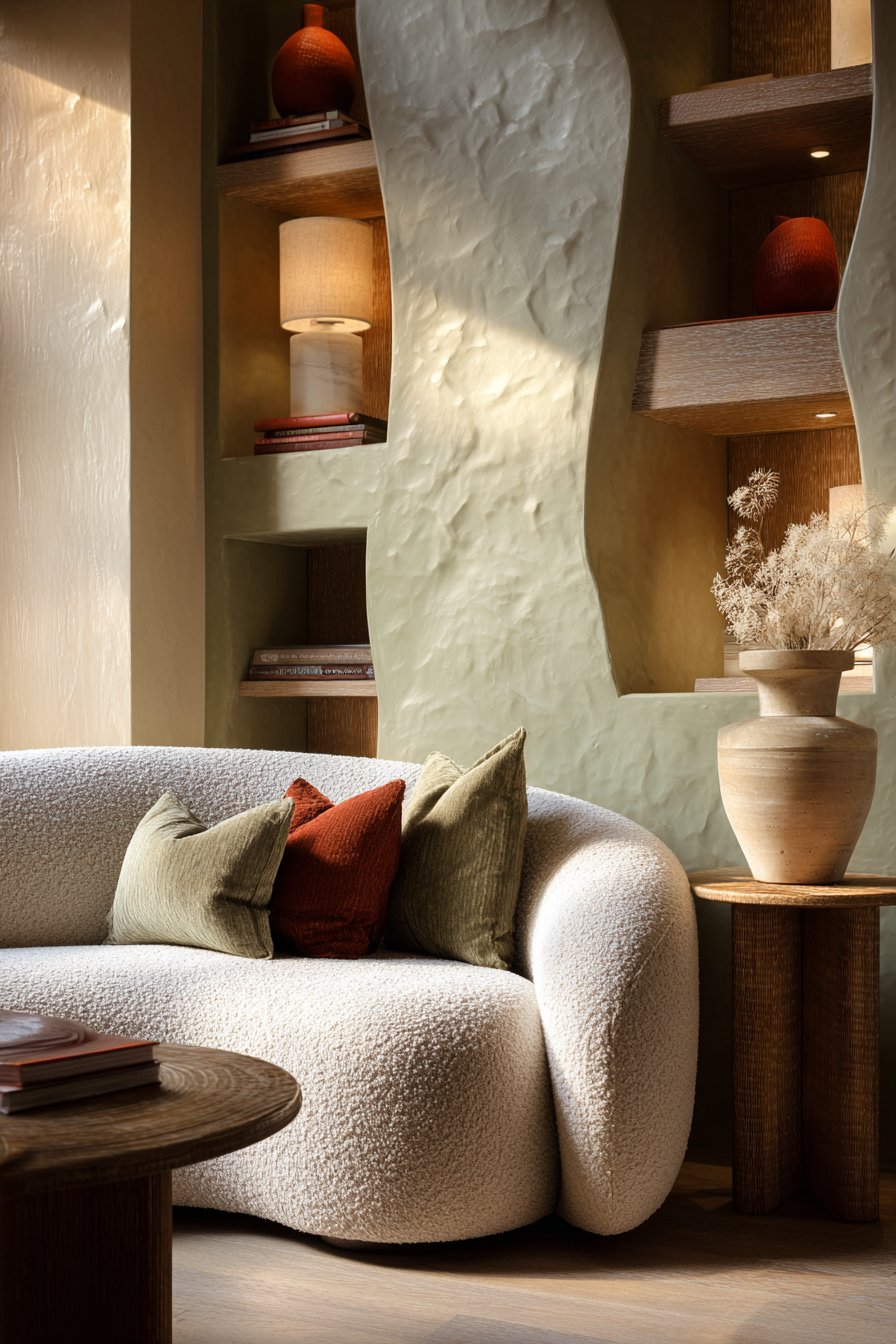
Bouclé fabric has become almost synonymous with curved furniture. Its looped, textured surface catches light beautifully and adds a sensory richness that smooth fabrics cannot replicate. Velvet is another excellent choice — its sheen emphasizes the curvature of a sofa or chair, making the piece look almost three-dimensional. For a more understated look, linen and performance fabrics offer durability with natural elegance.
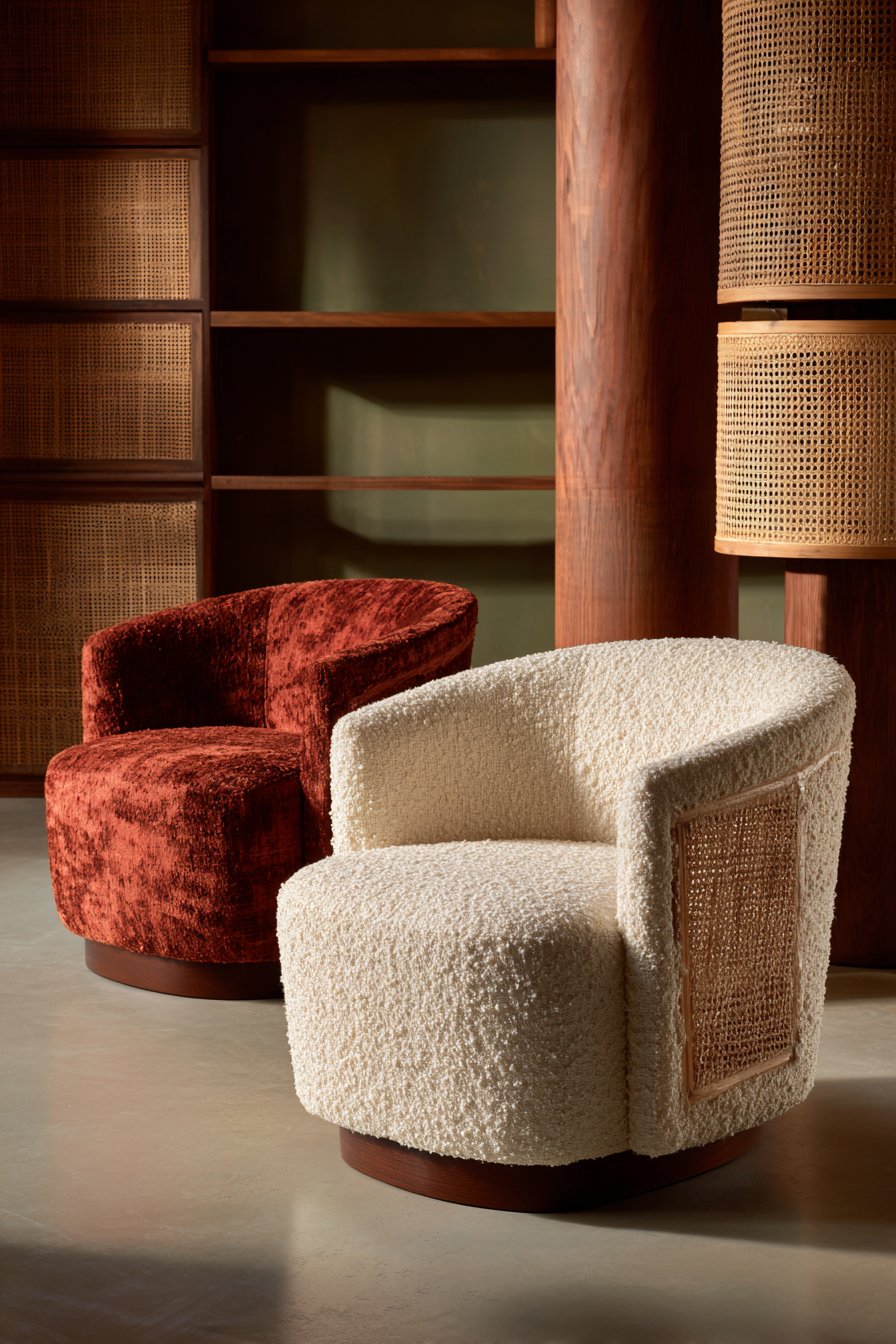
In terms of hard materials, natural wood with rounded edges, rattan, and cane are particularly complementary to curved furniture forms. These materials reinforce the organic, nature-inspired quality of the pieces they comprise. Lacquered finishes in creamy whites, sage greens, and earthy terracottas are also trending as finishes for curved cabinets and sideboards.
- Choose bouclé upholstery to emphasize texture and depth on curved sofas
- Use velvet for a more glamorous, sculptural effect on chairs and headboards
- Explore natural rattan and cane for curved accent furniture and shelving
- Select warm wood tones to enhance the organic quality of curved forms
- Avoid overly shiny or industrial finishes — they work against the softness of curves
- Layer different textures to add richness without visual clutter
9. Mixing Curved and Angular Furniture Effectively
Knowing how to balance curved and angular furniture is one of the most important skills in contemporary interior design. An entirely curved room can feel unstructured and soft to the point of formlessness. Conversely, a room with no curves at all can feel cold and unwelcoming. The magic lies in the contrast between these two worlds.
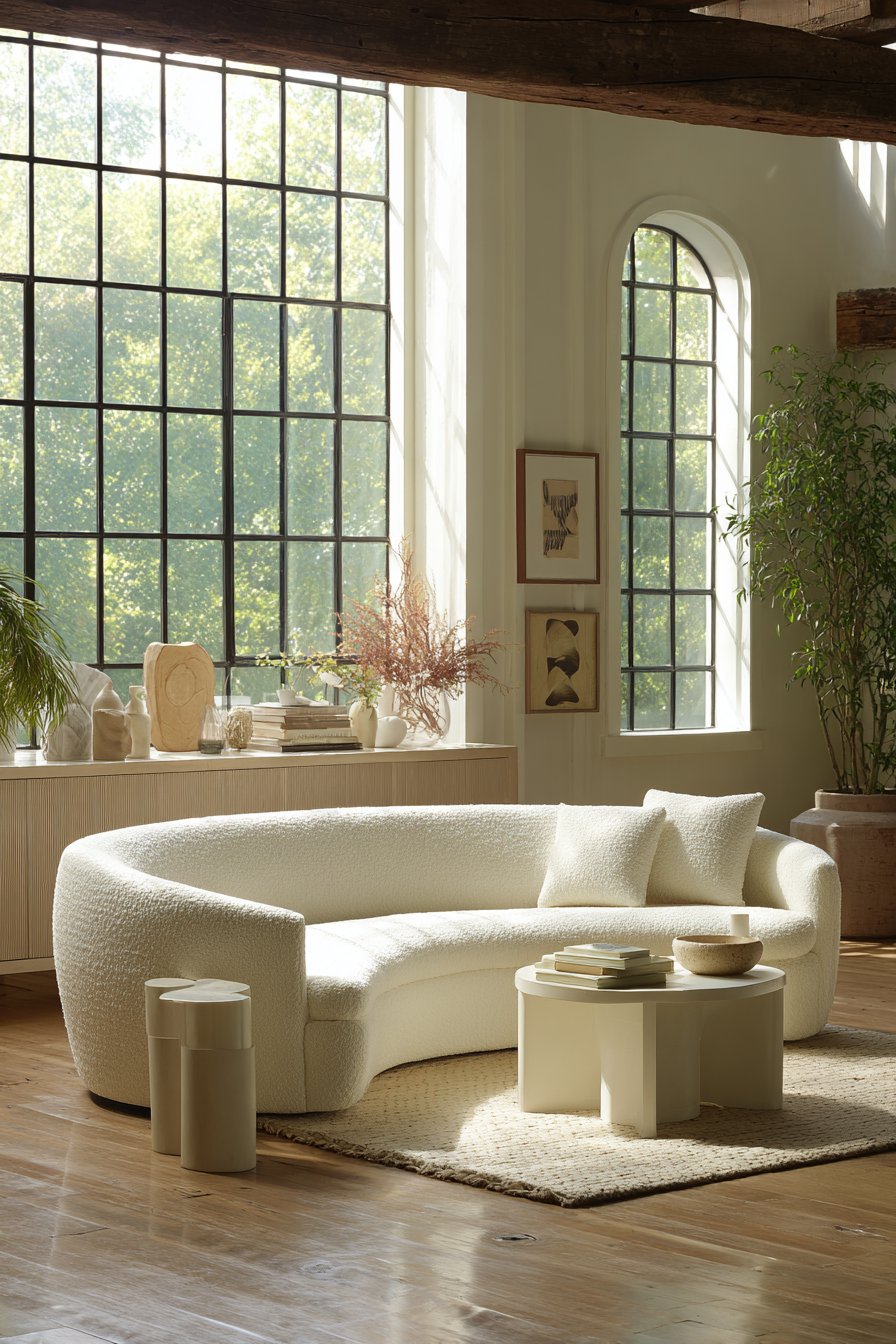
A common and highly effective approach is to pair a curved sofa with a rectangular coffee table, or a round dining table with linear bench seating. This juxtaposition of forms creates visual tension in the best possible sense — it keeps the eye engaged and gives the room a dynamic, layered quality. Interior designers call this principle “tension and balance.”
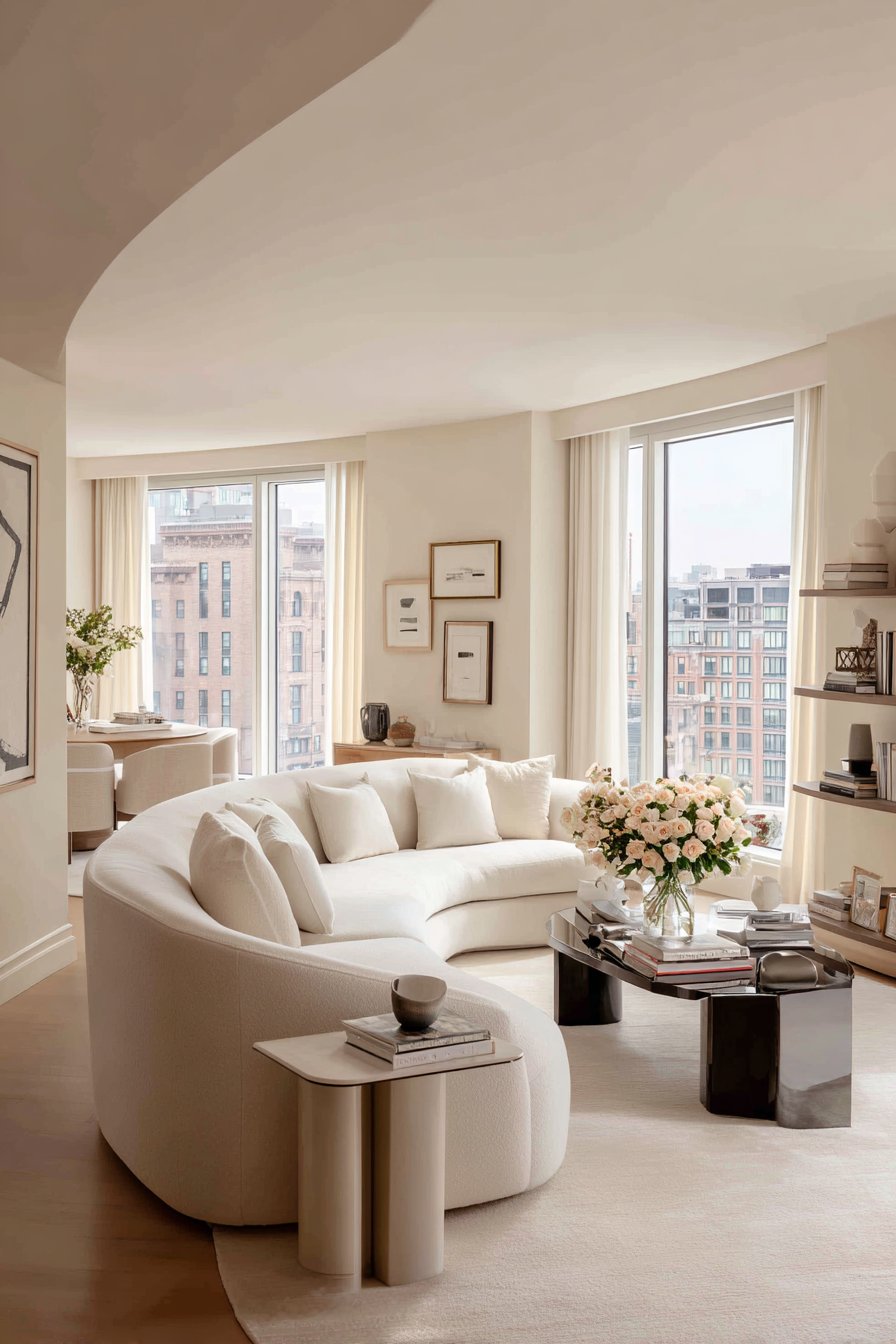
When mixing shapes, it helps to establish one dominant form and use the other as an accent or counterpoint. If your sofa is curved, let it be the hero and use more angular side tables, shelving, and architectural elements to frame it. This approach ensures visual coherence without monotony.
- Pair a curved sofa with a rectangular media unit for balanced contrast
- Use angular artwork to provide structure against a backdrop of rounded furniture
- Alternate curved and straight-edged pieces throughout a room for dynamic rhythm
- Stick to a consistent color palette to unify mixed shapes
- Use architectural lines (doorframes, shelving grids) to anchor soft, curved forms
- Avoid mixing too many different curves — consistency in radius creates harmony
10. Curved Furniture in Small Spaces
Many people assume curved furniture is only suitable for large, open rooms — but this is a common design misconception. In fact, curved furniture can be one of the smartest choices for small spaces. Its absence of sharp corners reduces the visual weight of a piece, making a room feel more open and less crowded.
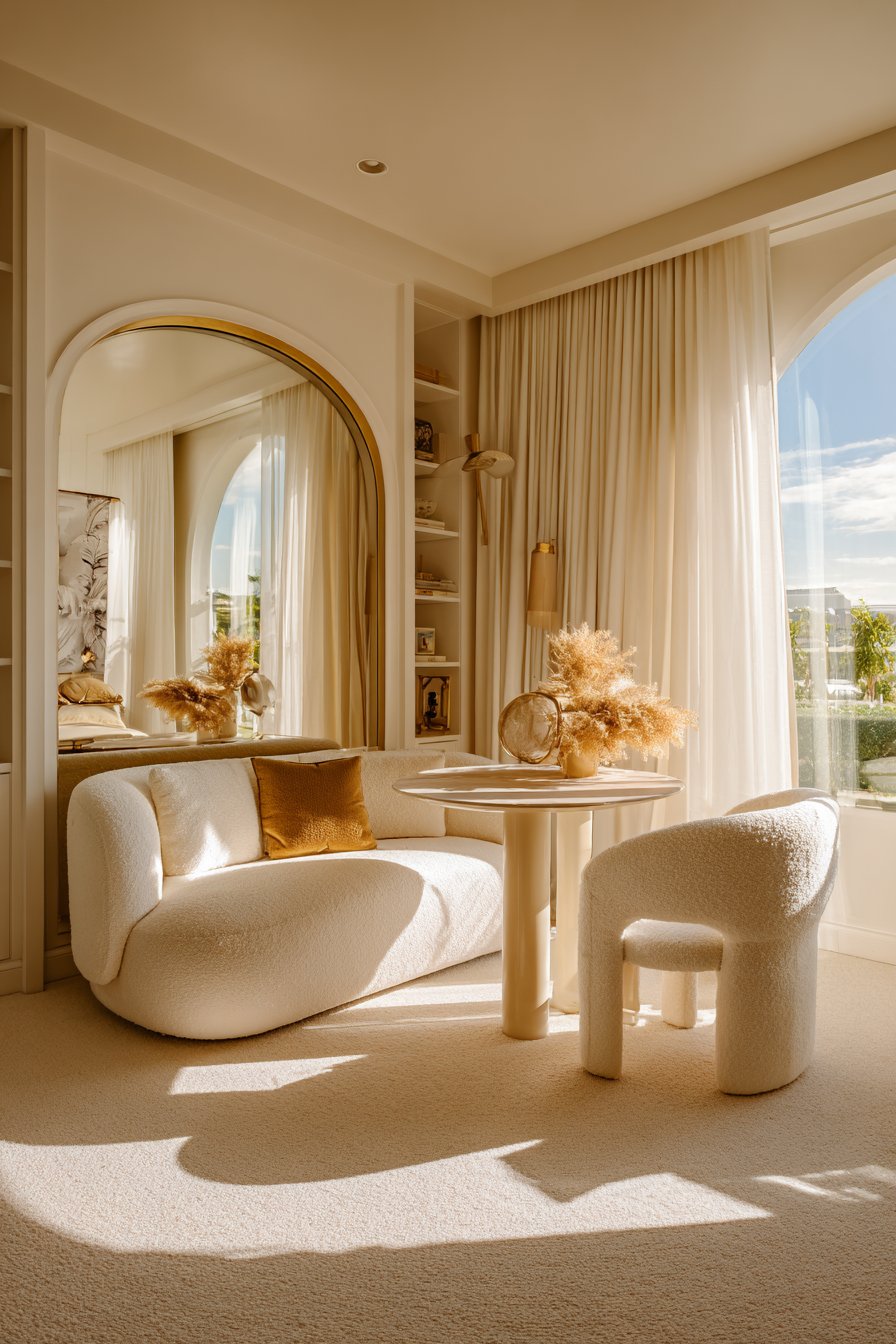
In a compact living room, a small curved loveseat or a kidney-shaped accent chair can define a cozy seating nook without overwhelming the space. A round dining table in a small kitchen or dining room allows more people to sit comfortably while keeping the center of the room clear. Even a small curved console table in an entryway can introduce the trend without consuming precious square footage.
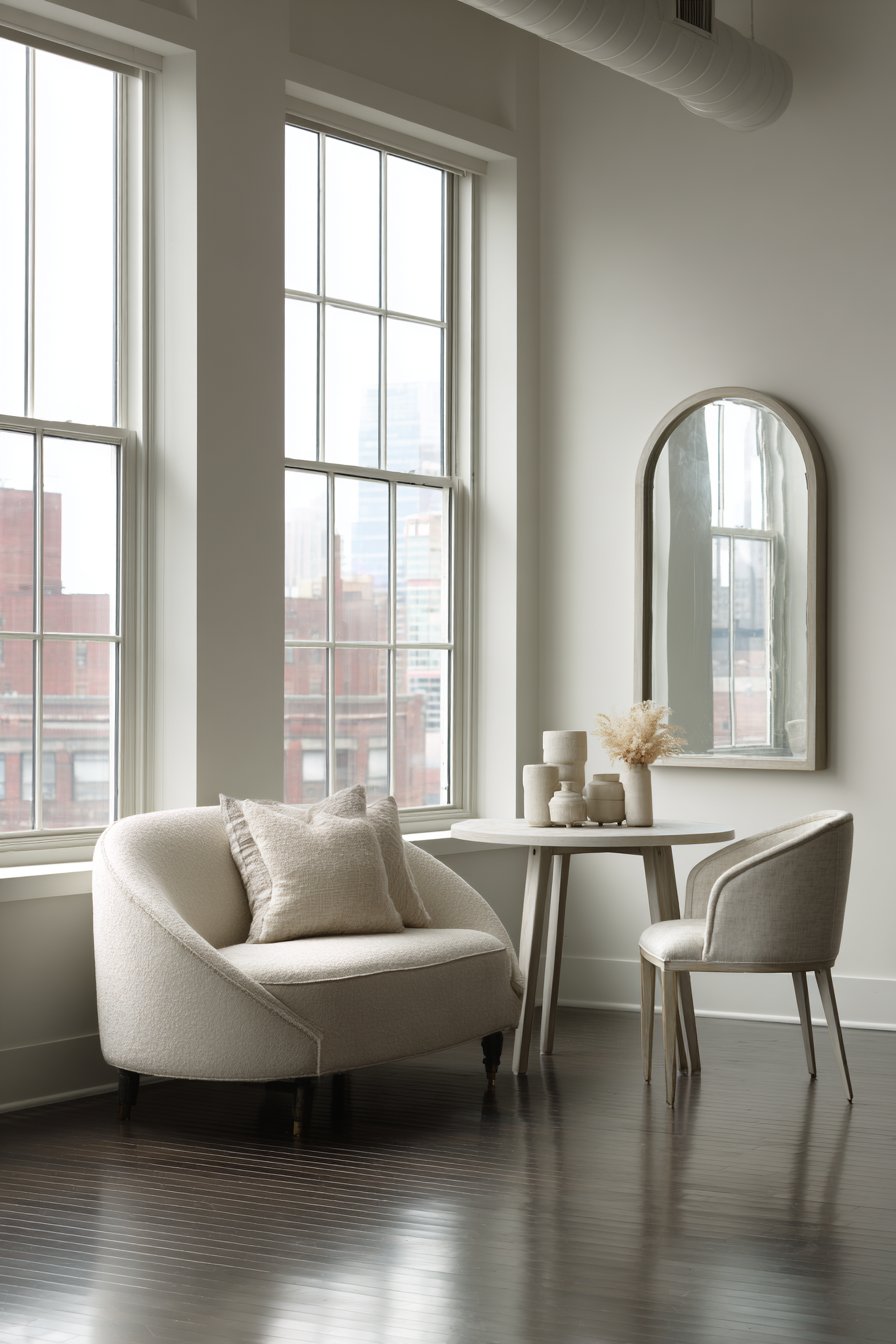
The key in small spaces is to choose scale wisely. A massive curved sectional will overwhelm a tiny room regardless of its shape. But a thoughtfully proportioned curved piece in the right spot can make a small room feel more intentional, curated, and spacious than a boxy alternative of the same size.
- Opt for a curved loveseat instead of a full curved sectional in small living rooms
- Choose a round dining table with a pedestal base to maximize floor visibility
- Use a curved accent chair in a corner to make an underused area feel purposeful
- Select pieces with slender legs to maintain a light, airy visual footprint
- Avoid dark upholstery in small spaces — light tones enhance the sense of openness
- Use mirrors with arched frames to reinforce curves and amplify natural light
11. The Color Palette That Complements Curved Furniture
Color plays a crucial role in how curved furniture reads within a space. Warm, earthy tones are the most natural companions to curved silhouettes — they reinforce the organic, nature-inspired quality of the shapes. Think terracotta, warm sand, dusty rose, sage green, and rich camel. These colors feel harmonious with curved forms in a way that cooler, starker palettes sometimes do not.
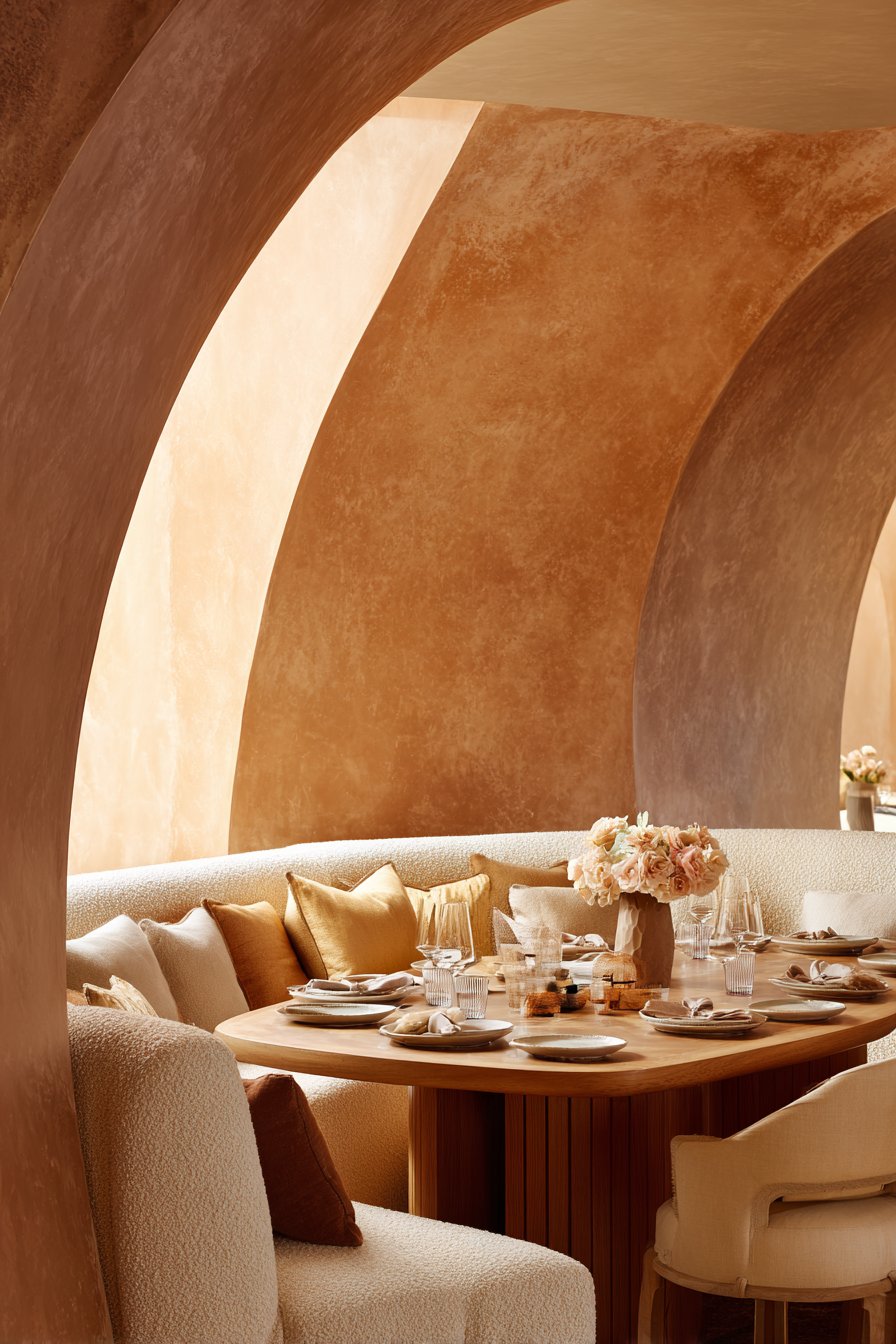
That said, bold jewel tones can be extraordinary on curved furniture. A deep emerald curved sofa or a sapphire blue curved headboard becomes an instant work of art. The sculptural quality of the curved form is enhanced by the richness of the color, creating a visually arresting focal point that is hard to ignore.
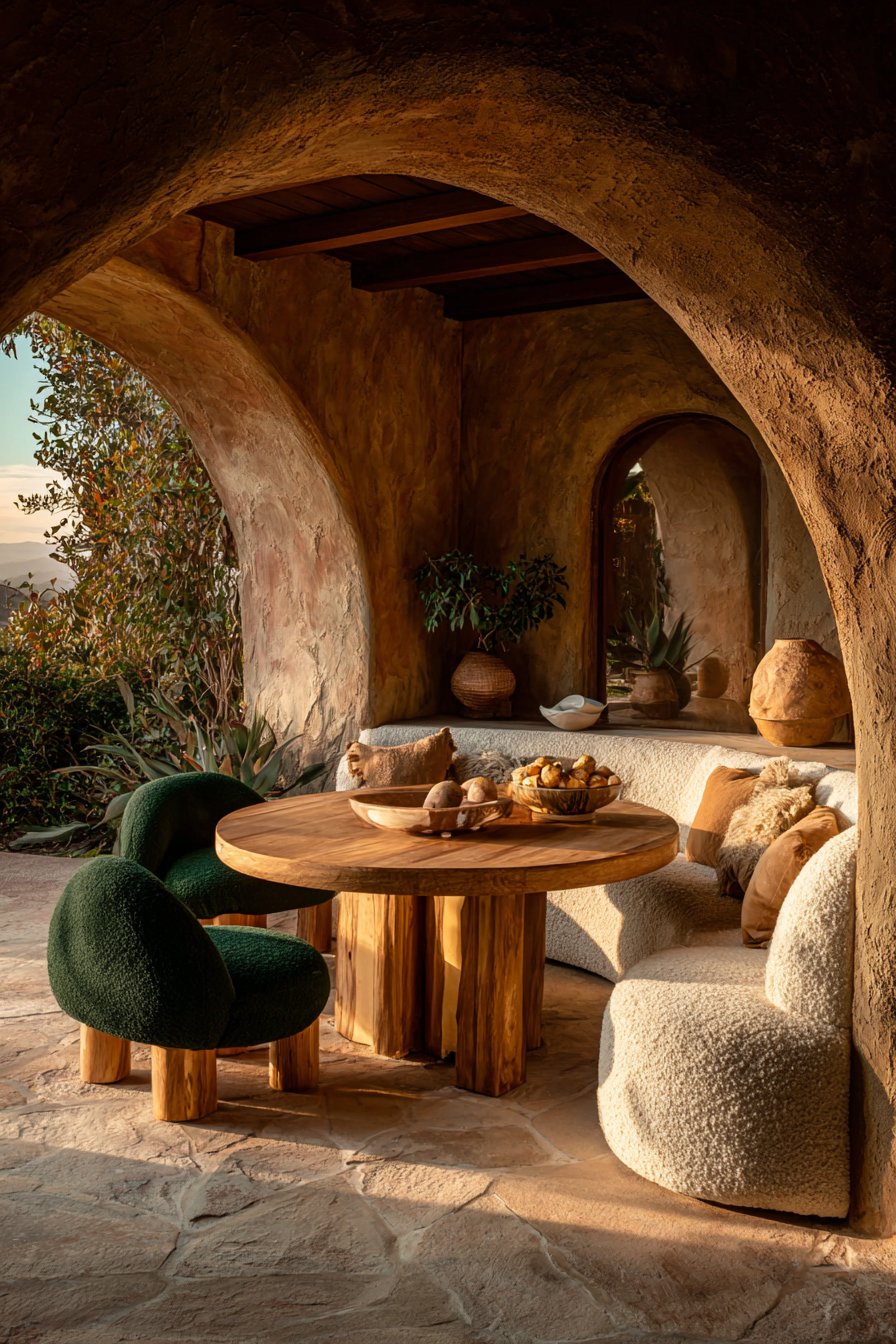
For a softer, more understated look, neutral and tonal palettes work beautifully. Cream-on-cream, ivory, and off-white curved pieces create an atmosphere of serene luxury. Layer different textures within the same neutral palette to prevent the look from feeling flat or monotonous.
- Build a base palette of warm neutrals — cream, sand, and camel — around curved pieces
- Introduce one jewel tone through a curved accent chair or headboard
- Use sage green or terracotta walls to complement natural, curved wood furniture
- Avoid overly cool or sterile palettes — they work against the warmth curves project
- Layer tone-on-tone with varied textures for a sophisticated monochromatic look
- Use colorful cushions and throws to add pops of personality to neutral curved sofas
12. Sustainability and Curved Furniture Design
The curved furniture renaissance intersects meaningfully with the sustainable design movement. Many of the most beautiful curved pieces are crafted from natural, renewable materials — bentwood, rattan, cane, and solid hardwood. These materials have been shaped into graceful curves for centuries using traditional techniques that prioritize craftsmanship over mass production.
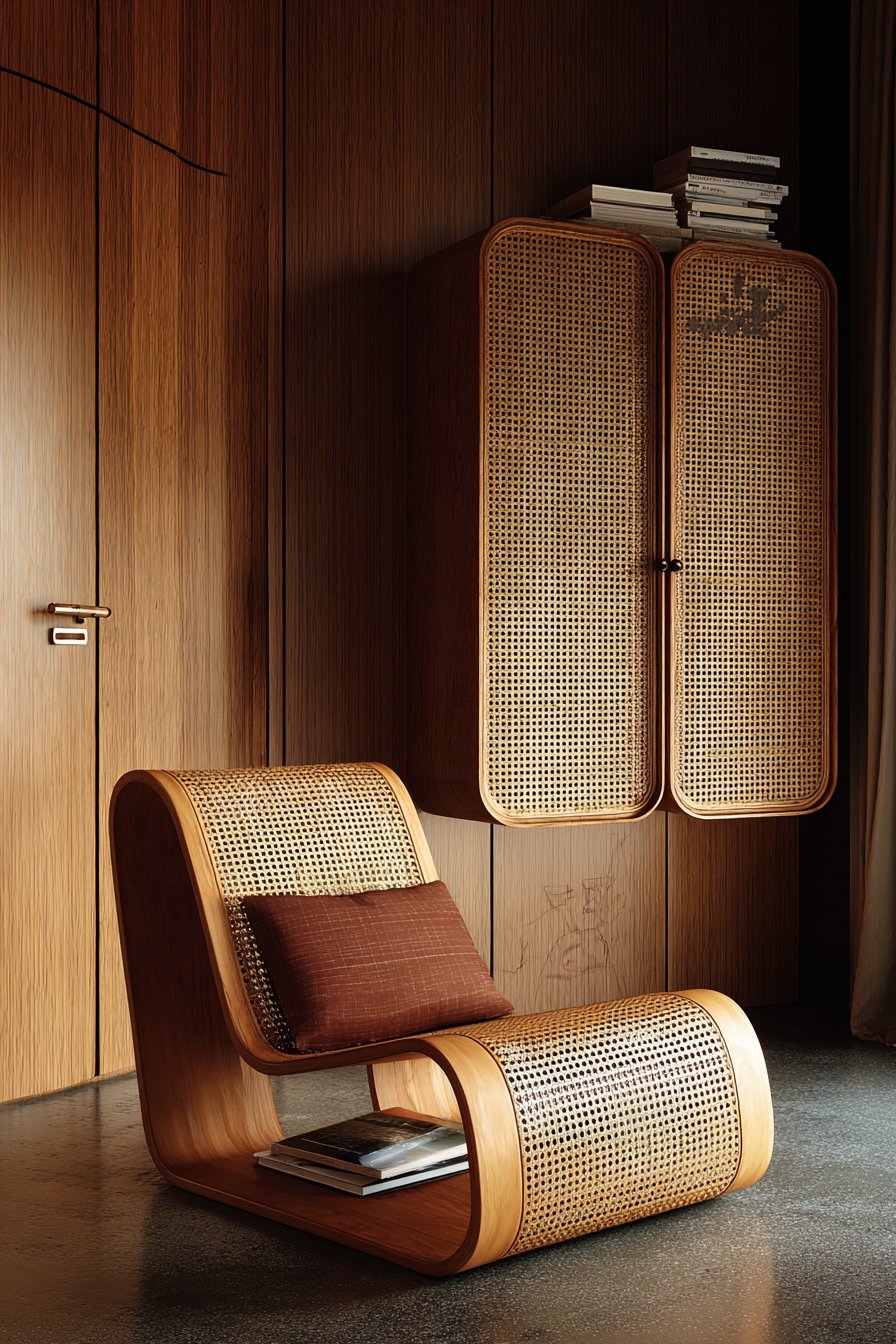
Steam-bent wood, for example, is one of the oldest and most eco-friendly manufacturing methods in furniture design. It uses heat and moisture to curve solid wood without cutting away material or relying on synthetic adhesives. The result is structurally superior and visually stunning — and it produces significantly less waste than conventional manufacturing.
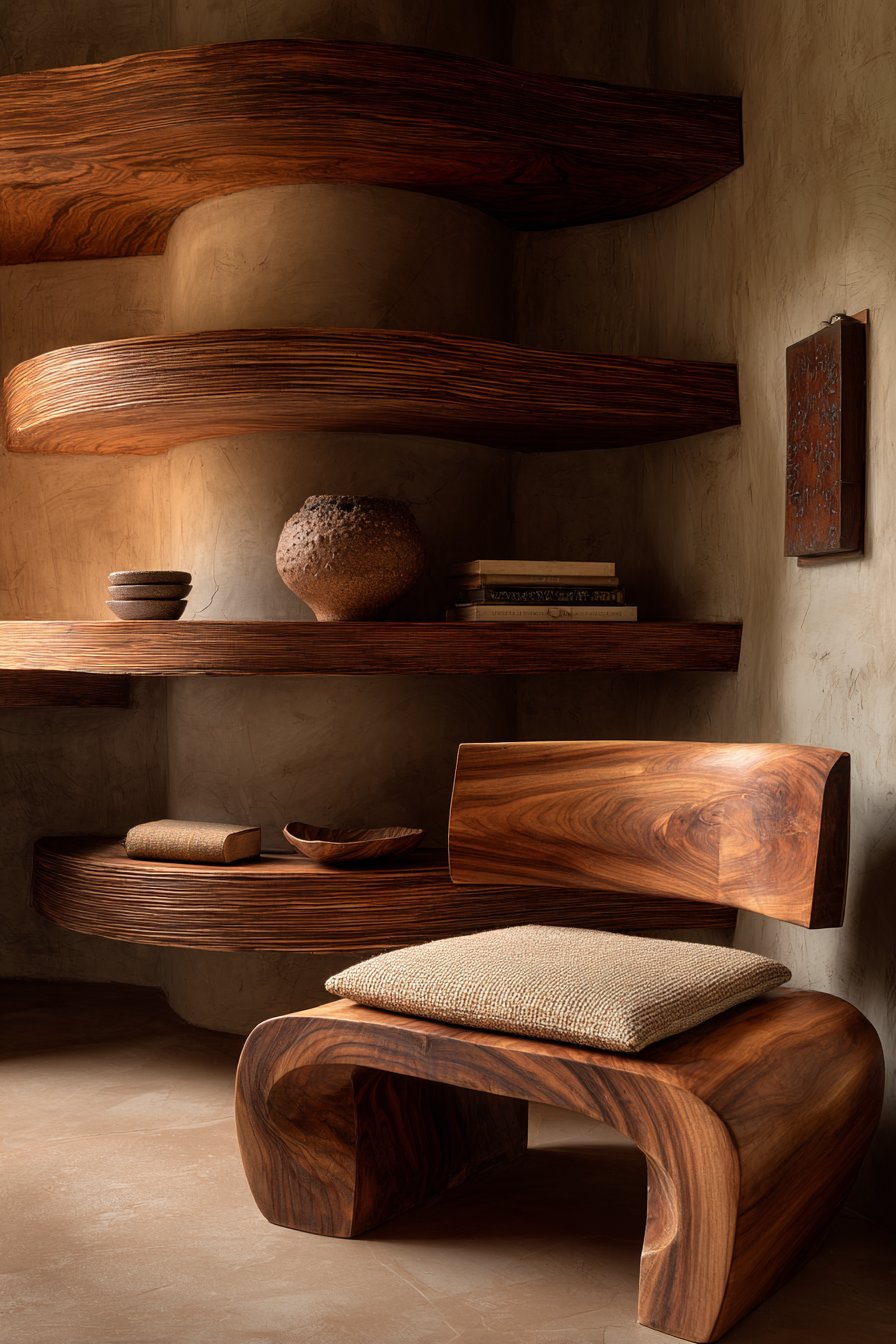
As consumers become more conscious of the environmental impact of their purchases, choosing well-crafted curved furniture made from sustainable materials is a meaningful choice. Investing in one exceptional curved sofa or dining table — built to last decades — is far more sustainable than cycling through cheaper, trendier pieces every few years.
- Seek curved furniture crafted from FSC-certified wood or sustainably sourced rattan
- Look for manufacturers using steam-bending techniques for minimal material waste
- Choose pieces built for longevity — curves in solid wood can last generations
- Reupholster rather than replace curved sofas to extend their lifespan
- Support artisan makers who use traditional curved furniture-making techniques
- Opt for natural fiber upholstery like wool, linen, or cotton for eco-conscious choices
Conclusion
Curved furniture is not merely a passing trend — it is a meaningful design movement rooted in psychology, history, sustainability, and the universal human desire for comfort. From sculptural curved sofas to arched headboards and rounded dining tables, these pieces bring warmth, flow, and personality into every room they inhabit. They soften our spaces and, in doing so, soften the way we feel within them.
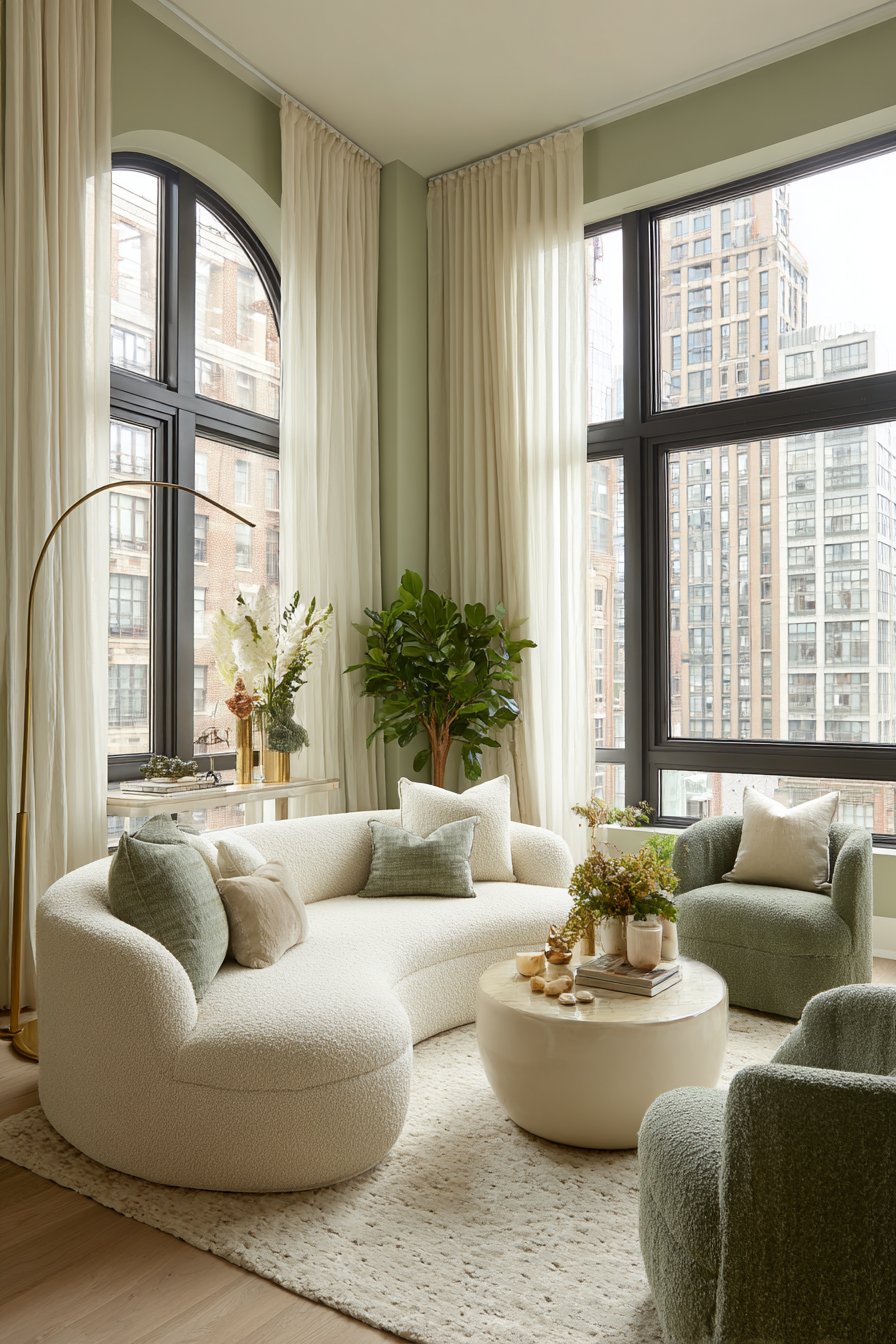
Now is the perfect time to embrace the curve in your own home. Start with one statement piece — a curved sofa, an arched headboard, or a round dining table — and let it transform the energy of your space. Trust the organic shapes, lean into the texture, and allow your home to become the warm, welcoming sanctuary you deserve. The comeback of curved furniture is not just a design story — it is an invitation to live more beautifully.
