


Green laundry rooms represent a refreshing departure from traditional, stark white utility spaces. This versatile color brings nature indoors while creating calming environments. The psychological benefits of green promote relaxation during mundane household tasks. From sage to emerald, green offers countless shades for personalized design expression.
Modern homeowners increasingly prioritize aesthetics in every room, including laundry spaces. Green provides the perfect balance between functionality and visual appeal. This color complements natural materials beautifully while hiding minor stains effectively. The designs featured here span multiple styles from coastal to contemporary.
Each concept in this article showcases unique approaches to green laundry room design. You’ll discover traditional farmhouse charm alongside sleek minimalist aesthetics. These ideas demonstrate how green adapts to various design philosophies and spatial constraints. Whether renovating or building new, these concepts offer inspiring starting points for transformation.
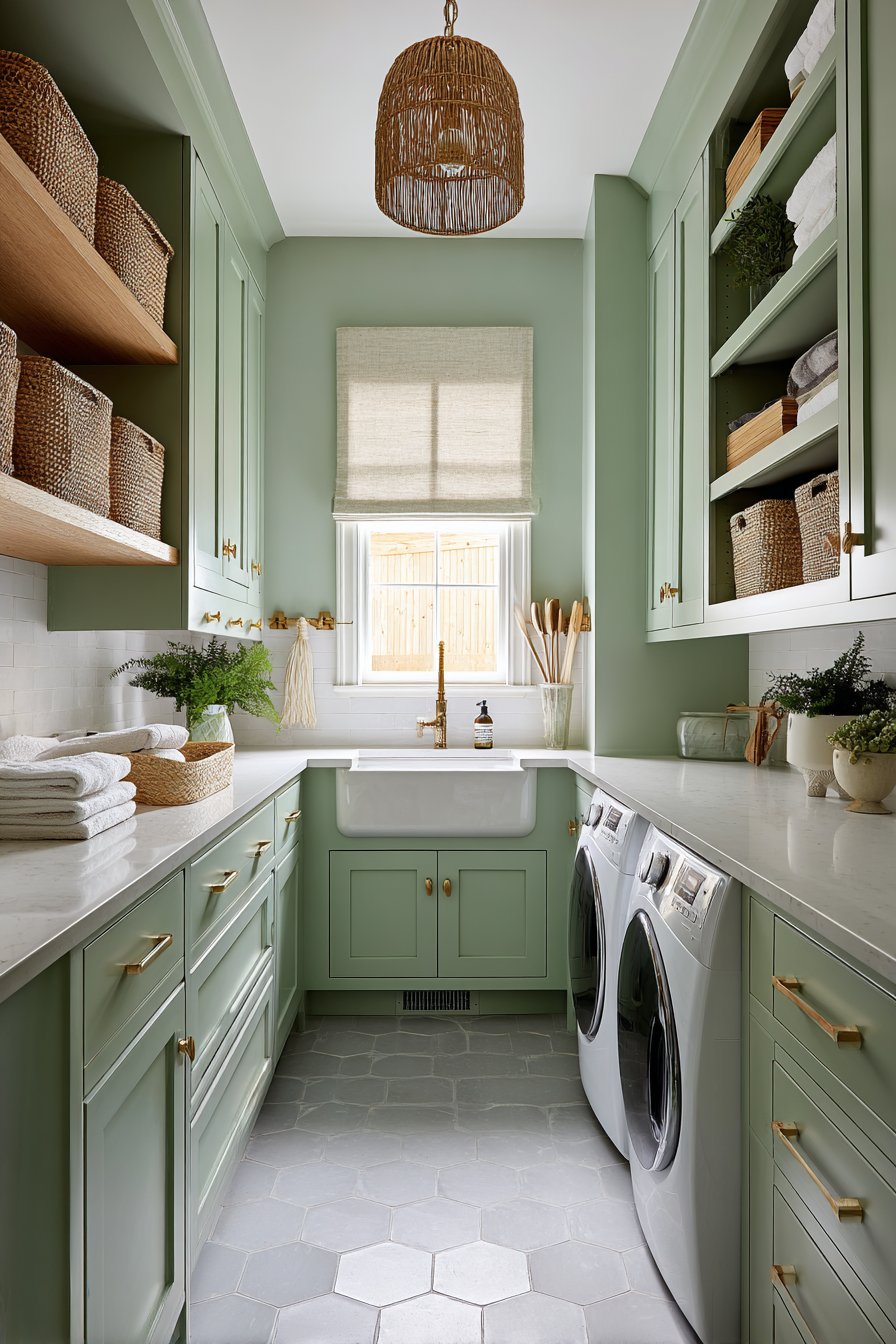
1. Sage Green Shaker Cabinet Elegance

The combination of sage green Shaker-style cabinets creates timeless appeal in functional spaces. Brushed brass hardware adds warmth against the soft green cabinetry. White quartz countertops provide crisp contrast while offering durable workspace. The continuous countertop design maximizes usability for folding and sorting tasks.

Mint green walls complement the sage cabinetry without overwhelming the senses. This subtle color variation adds depth while maintaining cohesive design. The front-loading appliances nestle beneath the countertop seamlessly. Open shelving displays woven baskets that combine storage with decorative appeal.

Natural light transforms this space throughout the day. Morning sun highlights the varied green tones beautifully. The interplay between natural and painted surfaces creates visual interest. Glass storage jars add transparency that breaks up solid surfaces.

Practical organization meets aesthetic refinement in this balanced design. The workspace remains clutter-free yet accessible for daily use. Material textures from smooth quartz to woven baskets create tactile variety. This layered approach prevents monotony in a single-function room.
Key Design Tips:
- Select Shaker-style cabinets for versatile appeal that suits multiple design eras
- Install continuous countertops to create uninterrupted workspace for household tasks
- Choose brushed brass hardware to add warmth against cool green tones
- Incorporate open shelving with baskets for visible organization that remains tidy
- Paint walls in complementary green shades to create depth without contrast
2. Bold Emerald Green Statement Walls

Deep emerald walls create dramatic backdrops that command attention immediately. This bold color choice demonstrates confidence in design decisions. White built-in cabinets provide essential contrast against the rich walls. The color combination feels both fresh and sophisticated simultaneously.

A ceramic farmhouse sink anchors the functional workspace beautifully. Vintage-style chrome fixtures add period-appropriate character to the design. Natural linen curtains soften the window while allowing filtered light. The textile element introduces organic texture against hard surfaces.
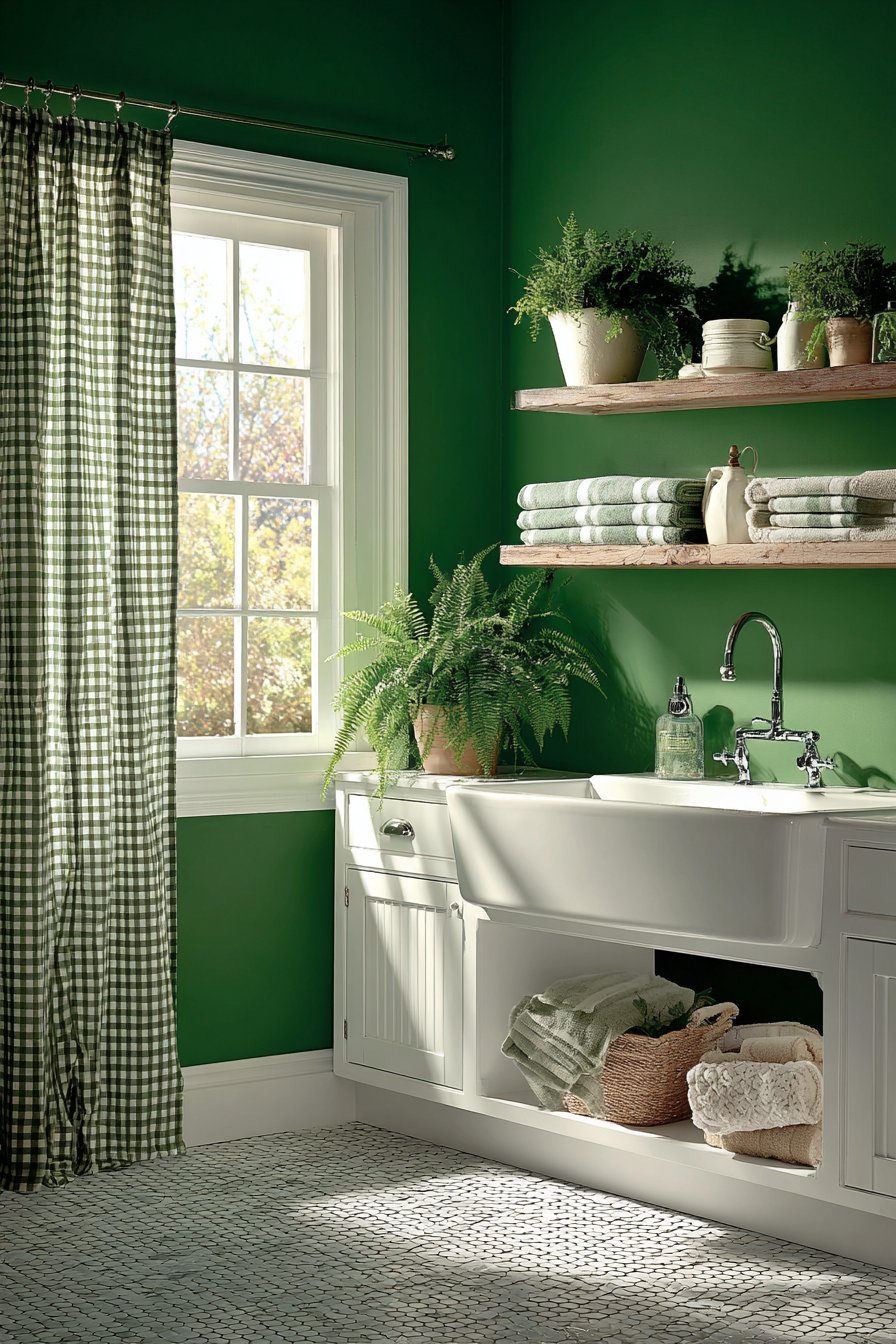
Classic hexagonal floor tiles in white and grey ground the design. The geometric pattern adds visual interest at foot level. Floating oak shelves introduce natural wood warmth to the palette. Potted ferns bring living elements that complement the green walls.
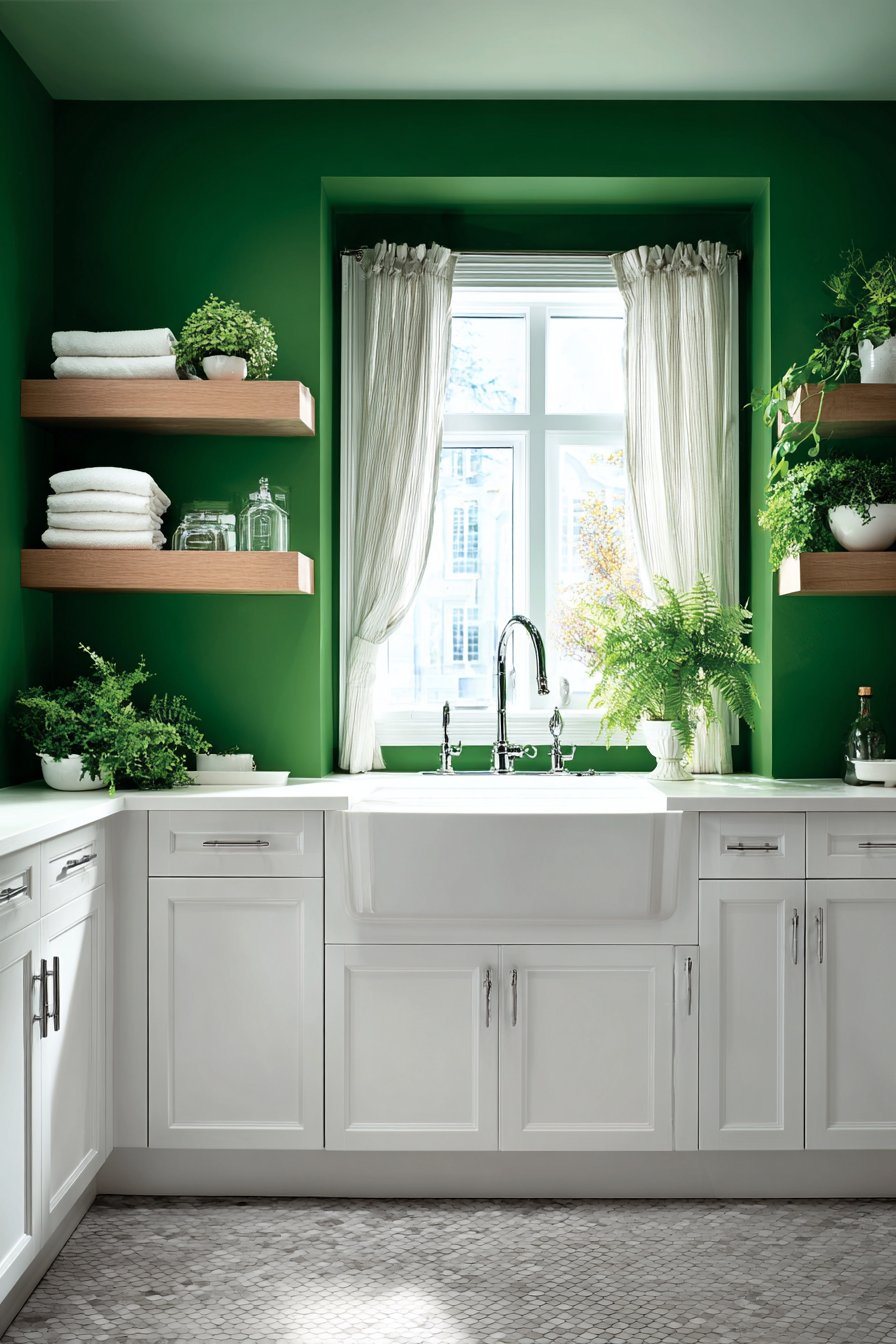
Diffused daylight creates gentle shadows across the textured surfaces. The lighting quality changes throughout the day, transforming the space. This dynamic quality prevents the bold color from feeling static. The room demonstrates how strong color choices create memorable spaces.
Key Design Tips:
- Paint walls in deep emerald for dramatic impact in small spaces
- Install white cabinetry to balance bold wall colors effectively
- Choose farmhouse sinks to add functional character and vintage appeal
- Add potted plants to reinforce the natural green color scheme
- Use hexagonal tiles to introduce pattern without competing with the walls
3. Forest Green and Cream Balance
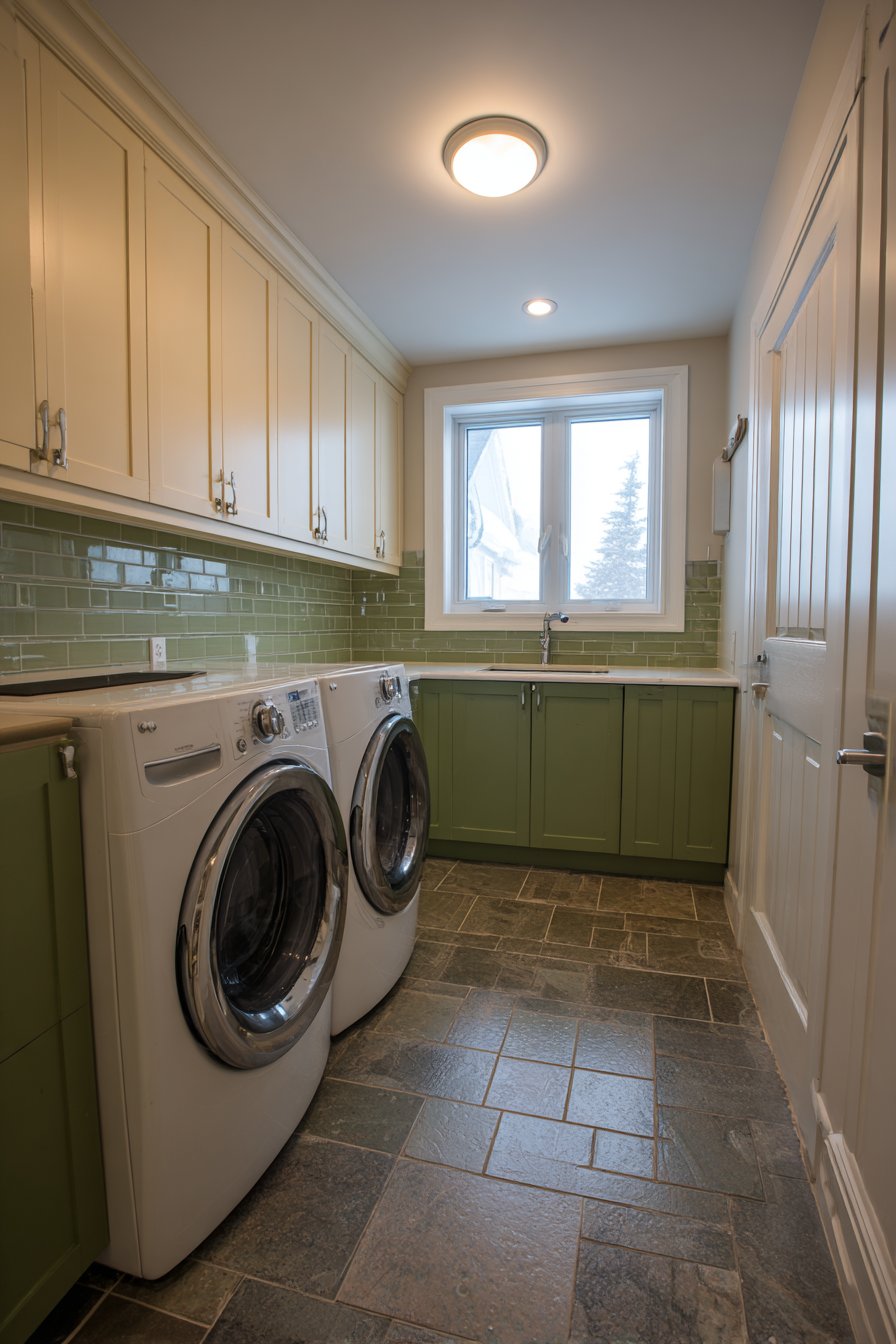
The combination of forest green lower cabinets with cream uppers creates visual equilibrium. This two-toned approach adds sophistication to utilitarian spaces. The color division prevents overwhelming the room with single tones. Celadon green subway tiles bridge the cabinet colors harmoniously.
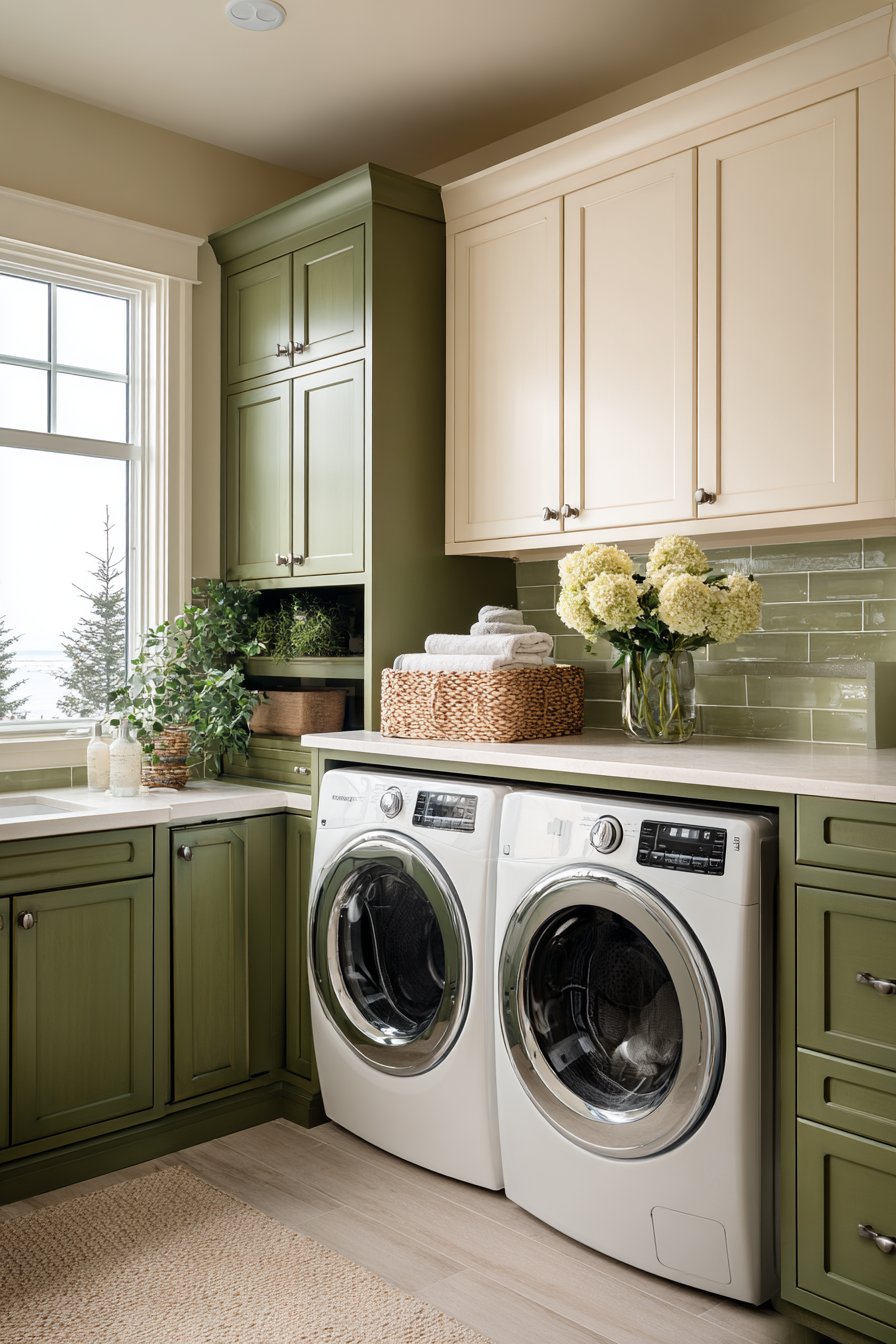
White grout lines add definition to the backsplash pattern. This detail creates subtle grid interest against monochromatic tiles. The pull-out drying rack demonstrates thoughtful space planning for daily needs. Built-in ironing boards maximize functionality without sacrificing floor space.
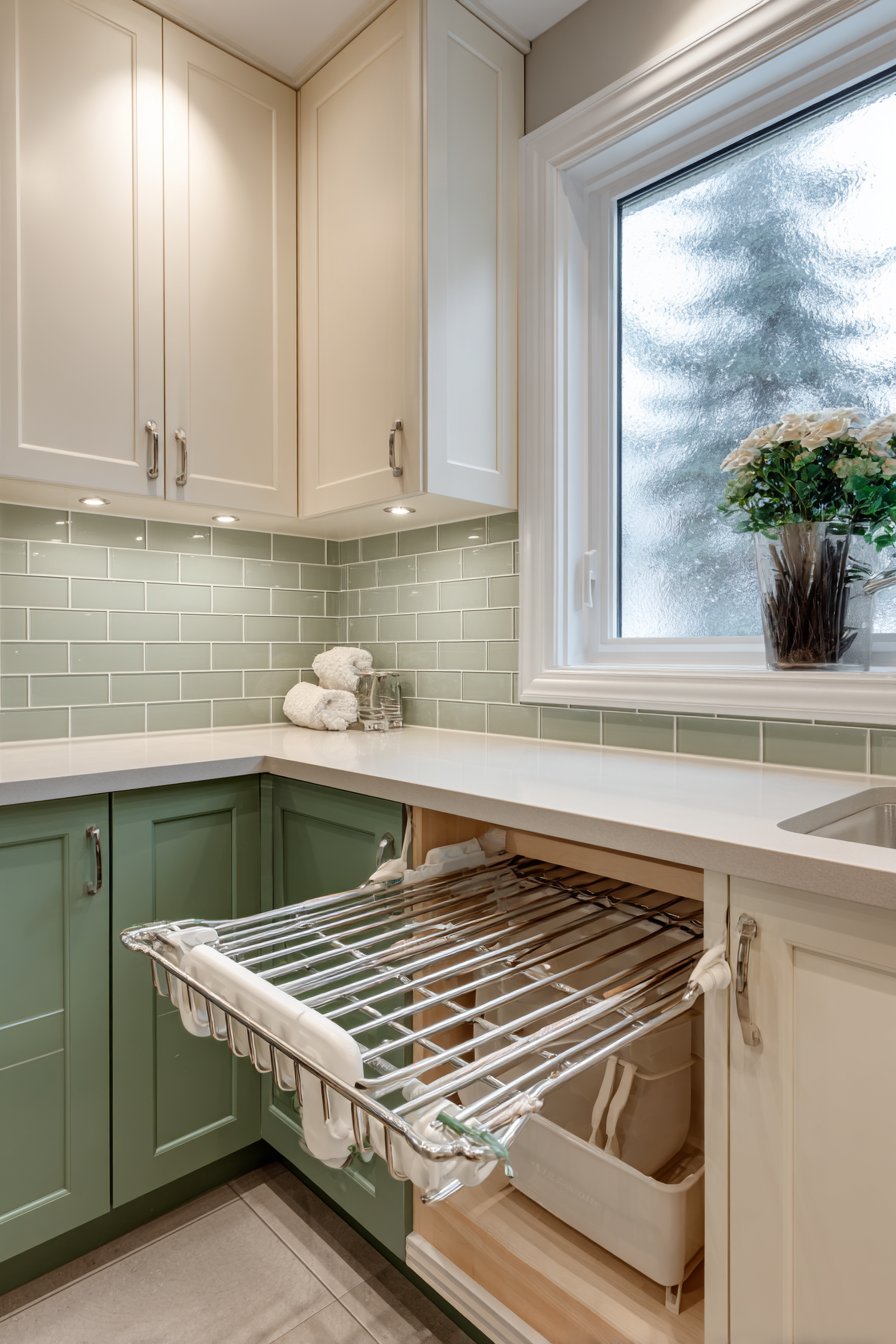
Brushed nickel fixtures provide subtle contrast against the green cabinetry. The metallic finish adds contemporary refinement to traditional forms. Morning light through frosted glass creates soft, even illumination. The privacy glass maintains natural light without compromising discretion.
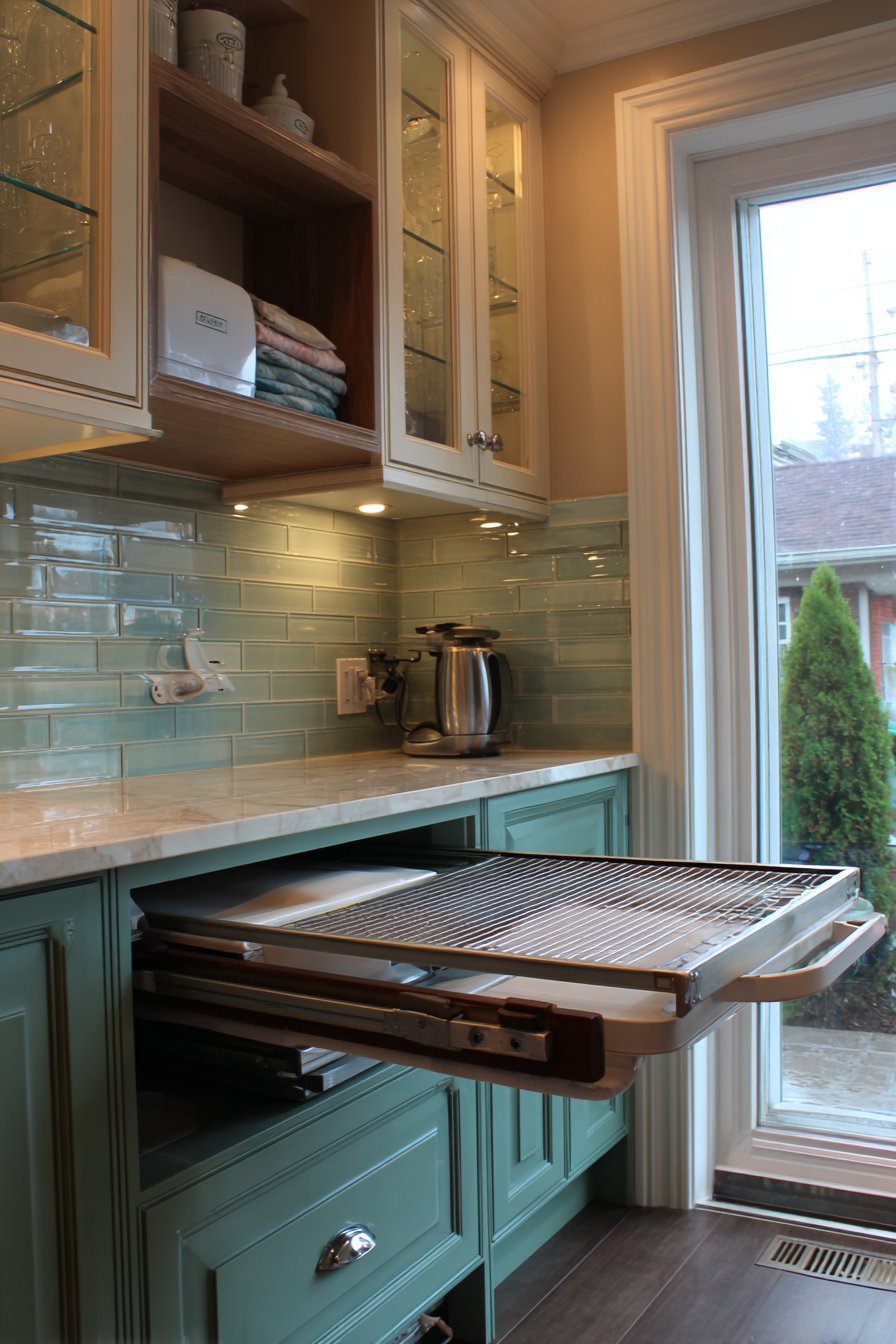
Efficient layout planning makes every square inch count in this design. Storage solutions integrate seamlessly into the cabinetry system. The workspace remains clear for active use while storing supplies. This balance between accessibility and organization defines successful laundry room design.
Key Design Tips:
- Combine forest green lowers with cream uppers for balanced visual weight
- Install celadon subway tiles to create cohesive color transitions
- Incorporate pull-out drying racks for space-efficient functionality
- Choose brushed nickel fixtures for subtle contemporary contrast
- Use frosted glass windows to maintain natural light with privacy
4. Olive Green Beadboard Cottage Charm
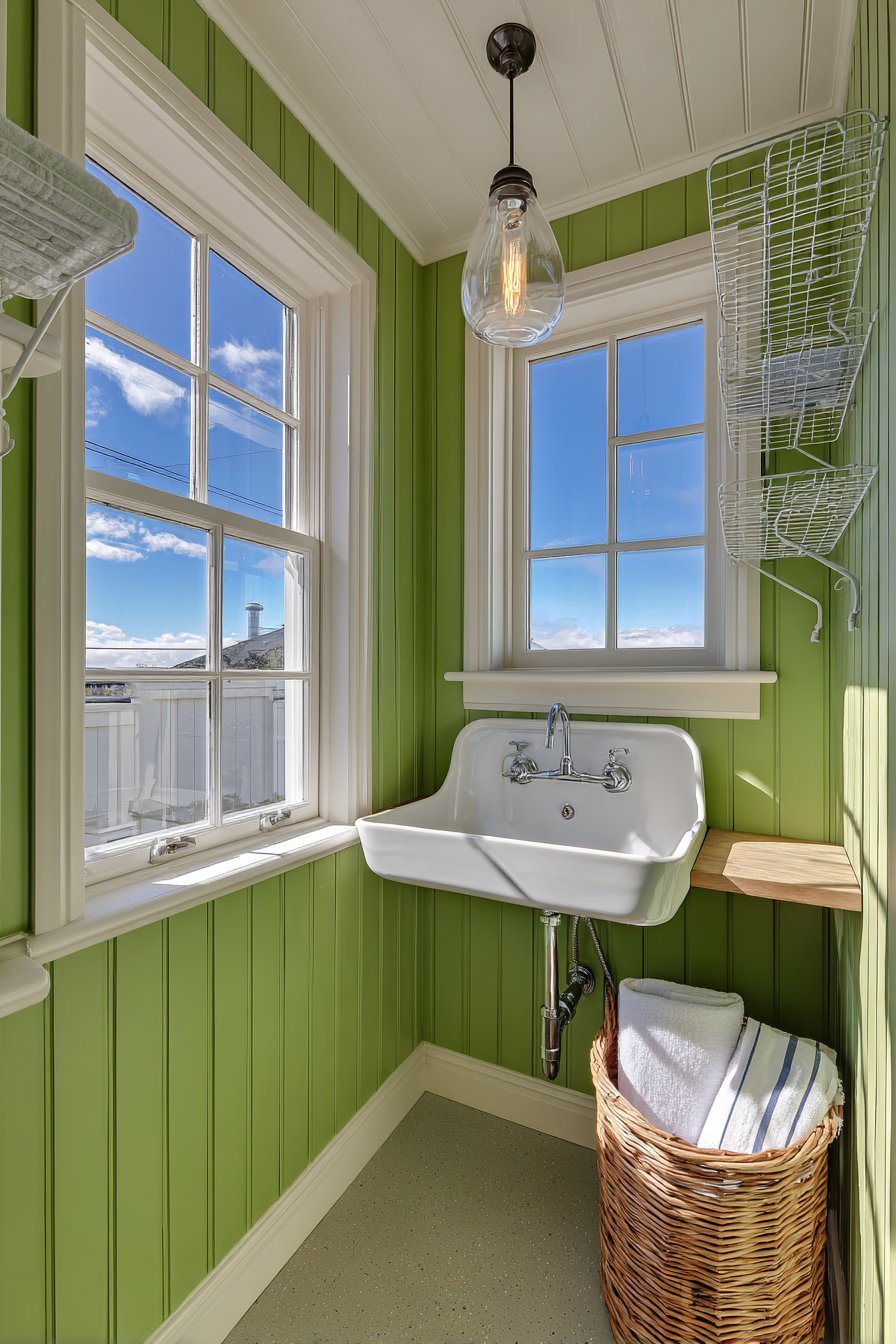
Olive green beadboard wainscoting introduces cottage-style character through architectural detail. The vertical paneling adds texture and traditional craftsmanship appeal. White upper walls prevent the green from overwhelming smaller spaces. This classic division creates balanced proportions throughout the room.

A vintage-inspired utility sink features exposed plumbing as decorative element. The honest materials approach celebrates functional components aesthetically. Wire basket storage mounts directly to walls for accessible organization. This open storage keeps frequently used items within easy reach.
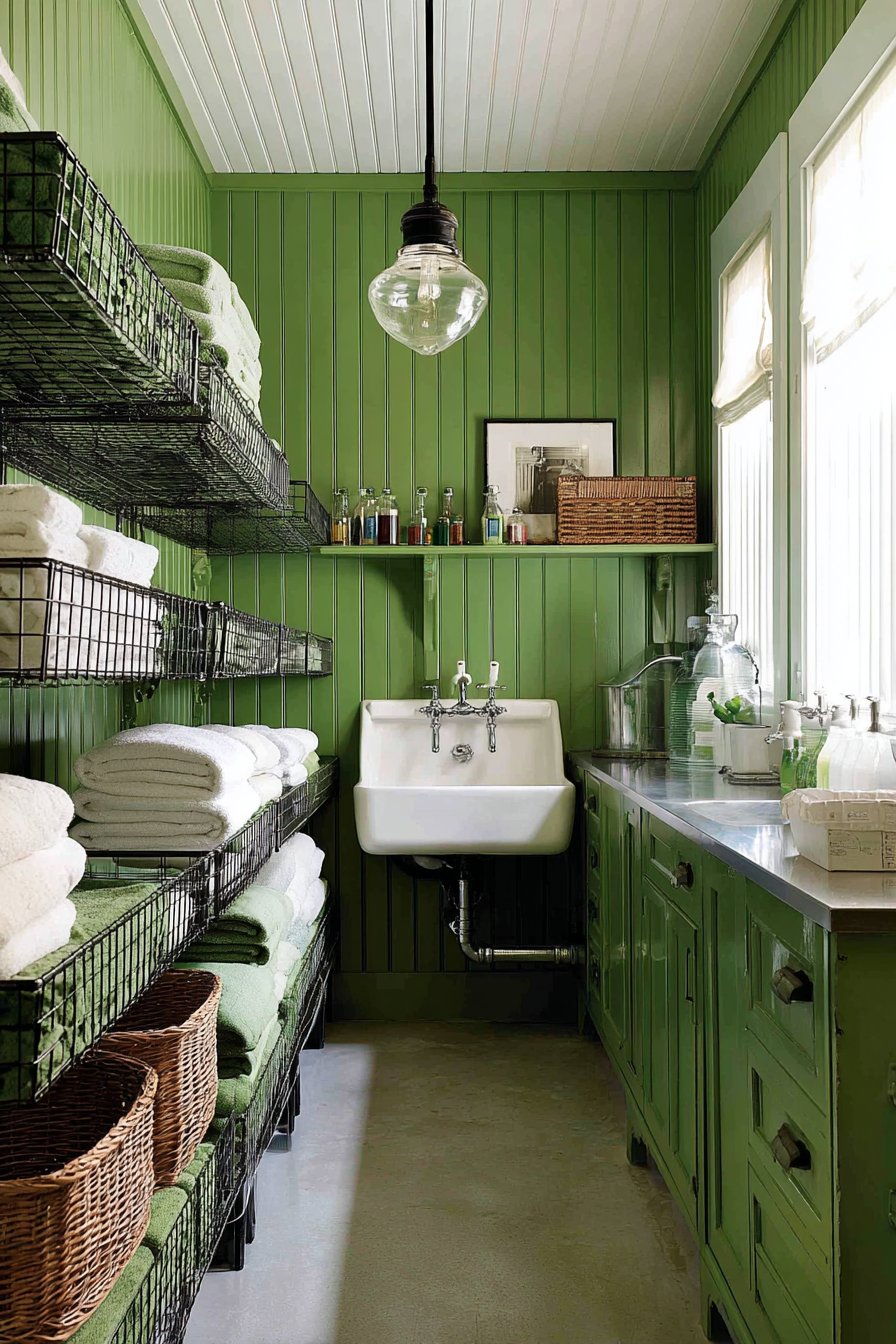
Sealed concrete flooring provides durable, low-maintenance surfaces with industrial character. Natural variations in the concrete add organic interest underfoot. The single pendant light features clear glass that showcases the bulb. This transparent fixture maintains the cottage aesthetic without adding visual weight.
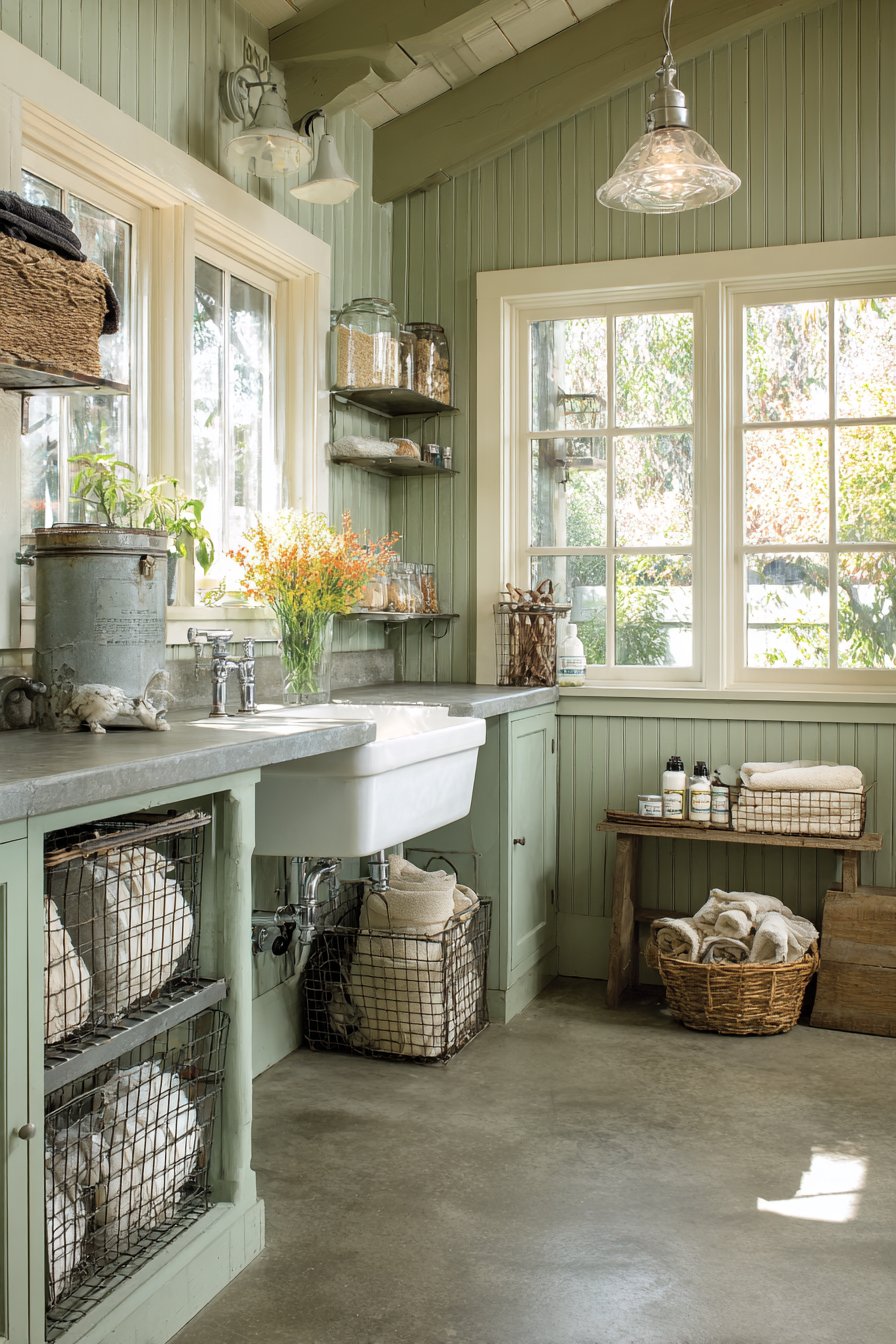
Natural lighting emphasizes the authentic material textures throughout the space. The beadboard grain remains visible beneath the olive paint. This layered finish adds depth that flat surfaces cannot achieve. The cottage style proves that functional spaces deserve architectural consideration.
Key Design Tips:
- Install beadboard wainscoting to add cottage character and wall protection
- Choose olive green for earthy warmth that complements natural materials
- Use wire baskets for practical storage that doubles as decoration
- Select clear glass pendant fixtures to maintain light and airy feelings
- Apply sealed concrete flooring for durable industrial-meets-cottage aesthetic
5. Matte Hunter Green Contemporary Sleekness
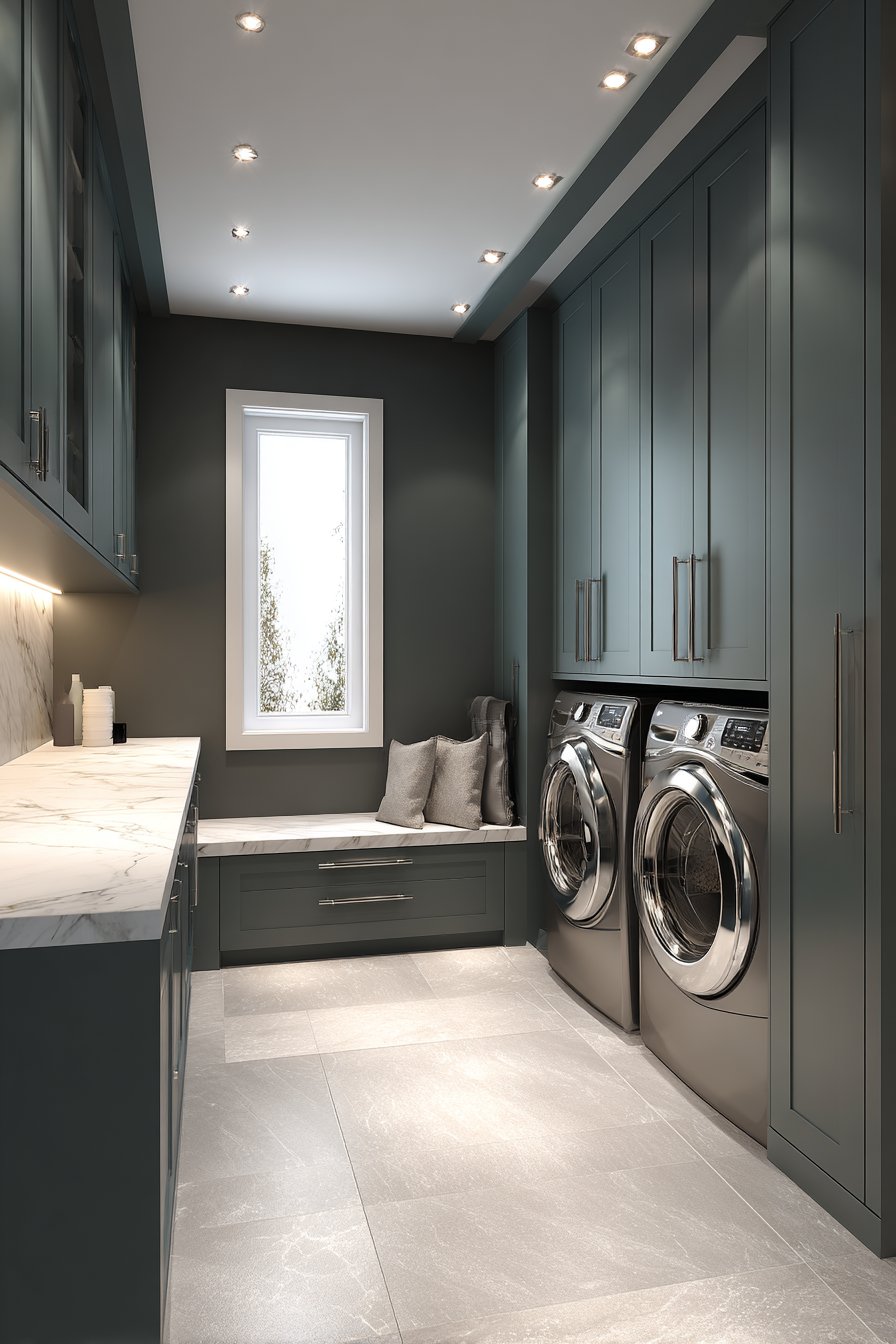
Matte hunter green flat-panel cabinets create sophisticated contemporary aesthetic. The deep color adds drama while the matte finish prevents visual glare. Integrated appliances disappear seamlessly into the cabinetry system. This streamlined approach maximizes the clean, modern appearance.
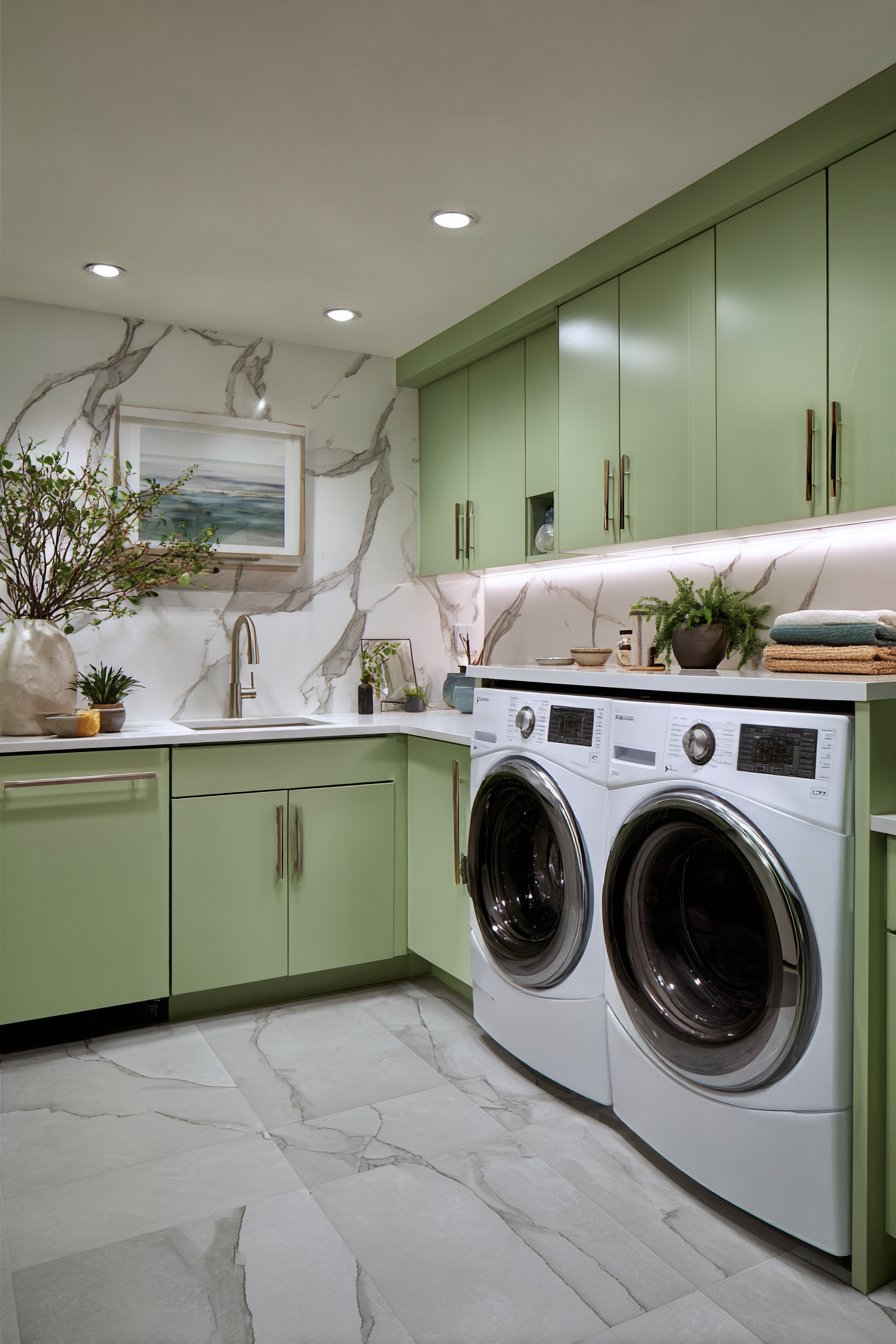
White marble-look porcelain countertops introduce elegant veining patterns. The grey veining coordinates with the deep green cabinetry beautifully. Large-format grey floor tiles minimize grout lines for cleaner appearance. This creates visual continuity that expands perceived space.
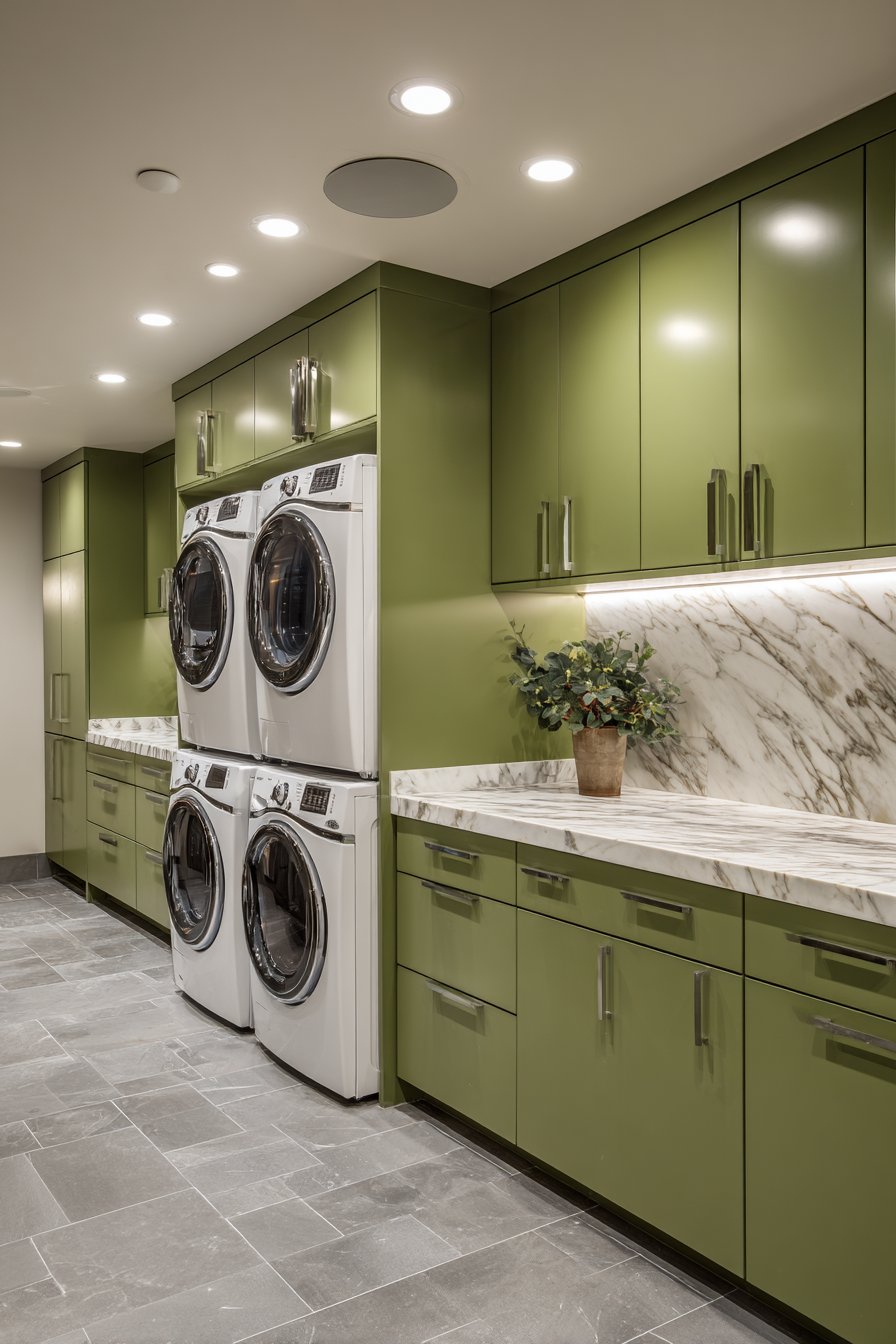
Recessed lighting provides even illumination without visible fixture intrusion. Under-cabinet LED strips add task lighting exactly where needed. The layered lighting approach ensures functionality at all hours. A pull-out folding surface demonstrates clever space-saving design.

The contemporary aesthetic prioritizes clean lines and hidden storage. Every element serves a purpose without decorative excess. The sophisticated green cabinetry elevates the functional space into a design statement. Modern design proves that utility spaces deserve architectural consideration.
Key Design Tips:
- Choose matte finishes to reduce glare and add contemporary sophistication
- Install integrated appliances for seamless, streamlined visual flow
- Use large-format tiles to minimize grout lines and expand space perception
- Add under-cabinet LED lighting for practical task illumination
- Incorporate pull-out surfaces to maximize functionality in compact areas
6. Seafoam Green Coastal Relaxation

Seafoam green painted brick walls introduce coastal texture and character. The painted brick maintains surface dimensionality beneath the color. White shiplap ceilings add classic coastal architectural detail above. This material combination creates authentic beach house aesthetics.

Weathered wood shelving introduces natural tones that complement seafoam green. The aged wood texture adds organic warmth to the palette. Deep utility sinks accommodate large cleaning tasks with practical depth. Wall-mounted faucets free up counter space while adding period character.
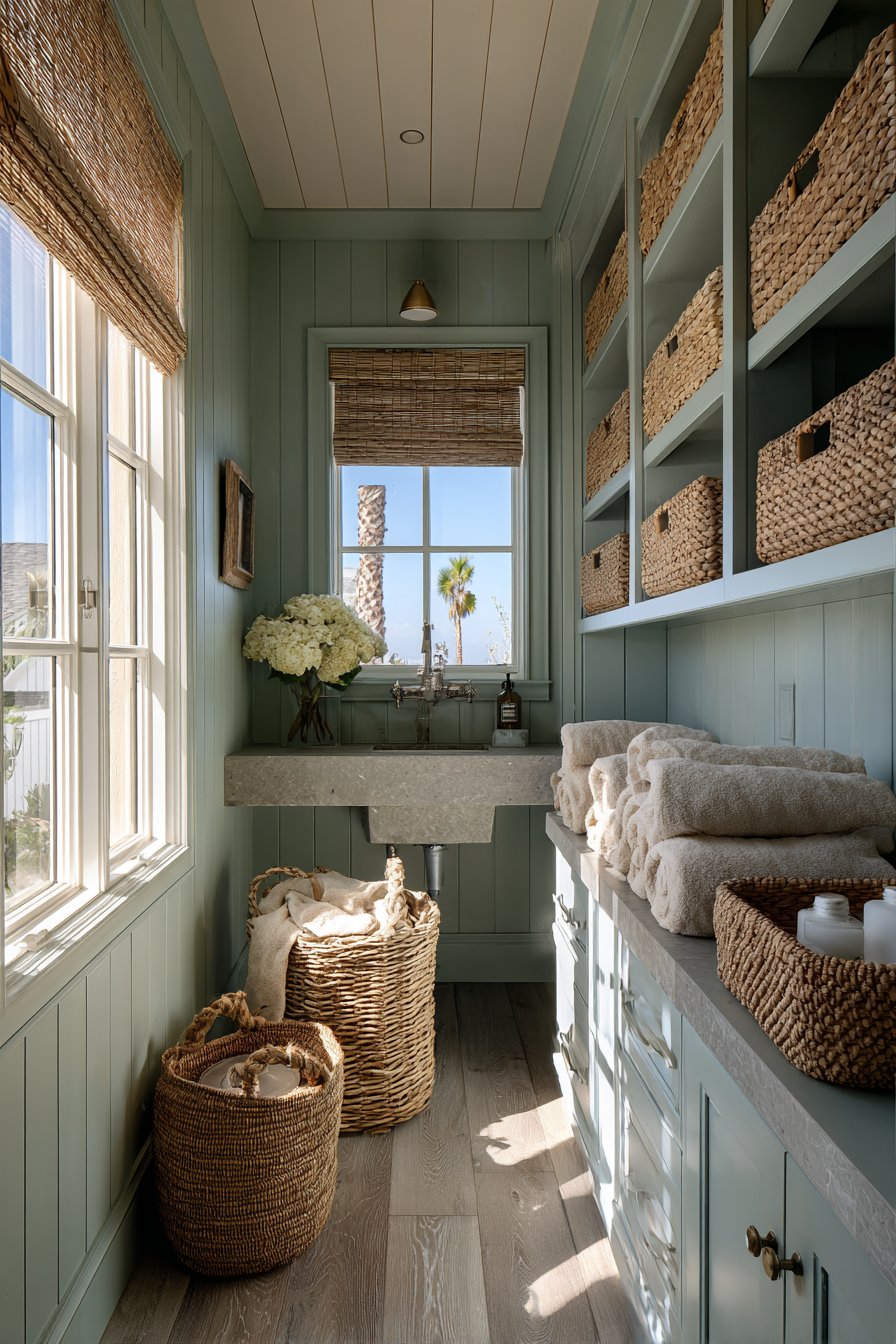
Bamboo window blinds filter light while introducing sustainable natural materials. The neutral blind color coordinates without competing with wall colors. Water-resistant vinyl planking in driftwood grey provides practical flooring solutions. Natural rope details on basket storage reinforce the coastal theme.

Golden hour sunlight creates warm highlights on the textured brick. The changing light quality throughout the day transforms the atmosphere. This dynamic natural lighting prevents static appearance in functional spaces. The coastal aesthetic brings vacation relaxation into everyday household tasks.
Key Design Tips:
- Paint brick walls to add texture while maintaining coastal color schemes
- Install shiplap ceilings for authentic beach house architectural detail
- Choose weathered wood shelving to introduce natural warmth and patina
- Use bamboo blinds for sustainable light filtering with coastal appeal
- Add rope details to accessories for cohesive nautical theme reinforcement
7. Bottle Green Sophisticated Formality

Dark bottle green walls paired with white trim create sophisticated contrast. The crown molding adds architectural refinement to functional spaces. This formal approach elevates the laundry room beyond basic utility. A marble-topped folding table with chrome legs introduces unexpected elegance.
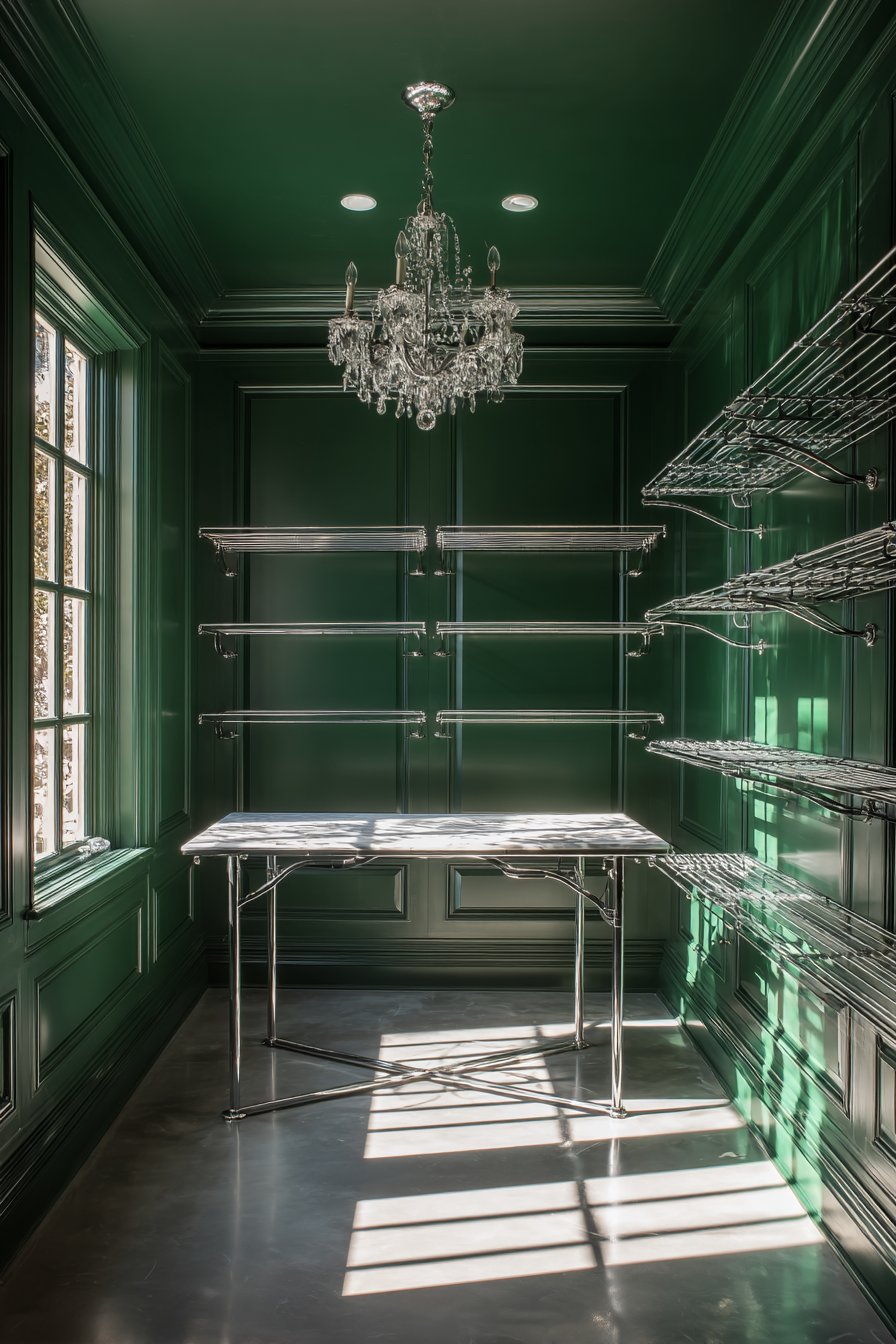
Wall-mounted drying racks fold away to maintain clean lines. Brushed nickel finish on folding racks coordinates with overall metal accents. Polished concrete flooring reflects light while providing durable surfaces. The subtle sheen adds refinement to industrial material choices.

A crystal chandelier transforms the space with dramatic lighting statement. This unexpected element demonstrates that functional rooms deserve beautiful fixtures. Tall windows allow natural light that creates dramatic shadows. The interplay of light and shadow emphasizes the rich wall color.

Balanced exposure in photography captures both light and shadow details. The sophisticated design approach challenges conventional laundry room expectations. Formal elements prove that every room deserves thoughtful design consideration. This space demonstrates confidence in unconventional design choices.
Key Design Tips:
- Use bottle green walls for sophisticated drama in unexpected spaces
- Add crown molding to introduce architectural refinement and formal detail
- Install marble-topped furniture to elevate functional spaces with luxury materials
- Choose crystal chandeliers to make bold statements in utility rooms
- Select polished concrete floors for refined industrial aesthetic appeal
8. Kelly Green Compact Vertical Storage
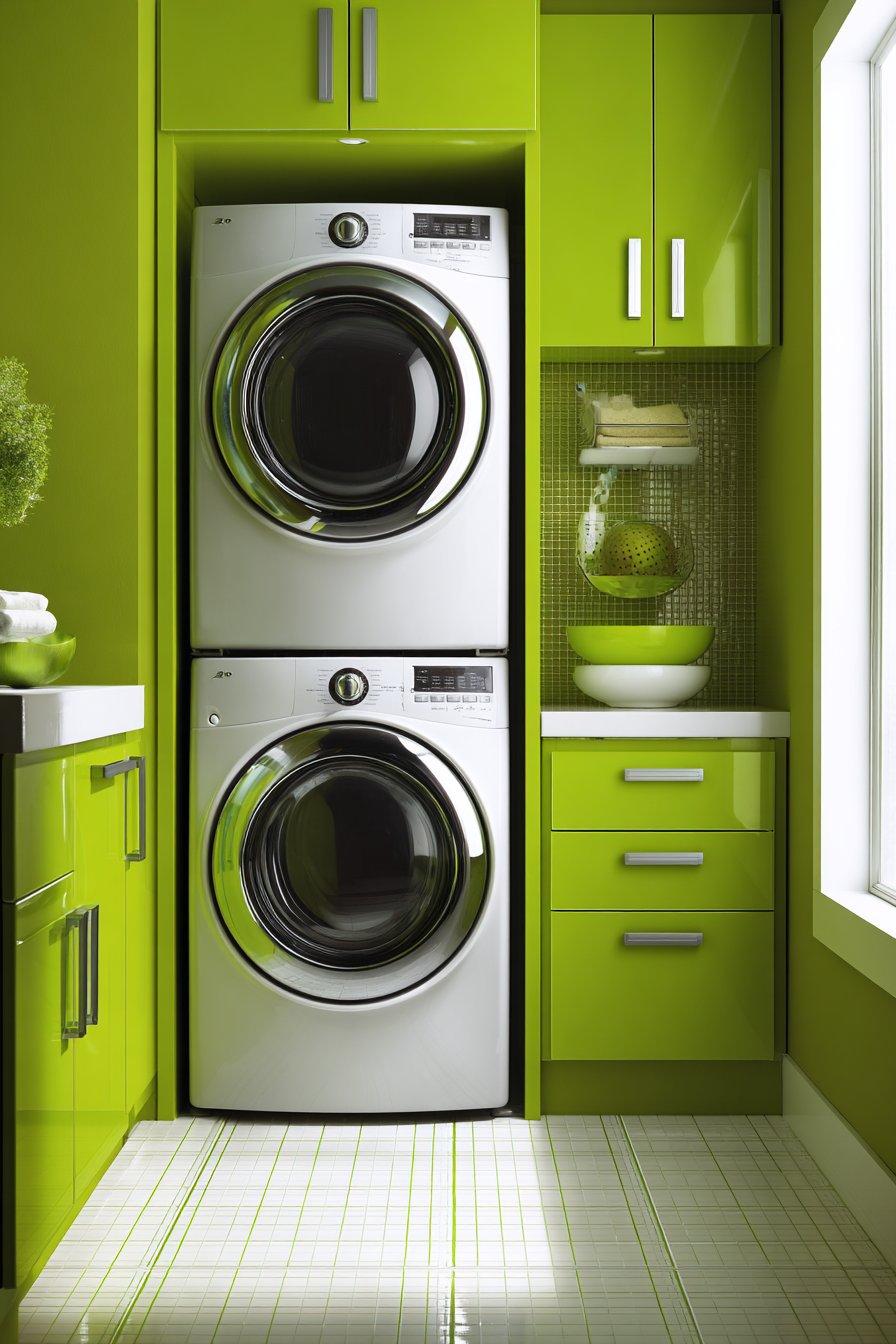
Floor-to-ceiling kelly green cabinets maximize vertical storage in compact spaces. The cheerful bright green adds personality to small functional areas. Stackable washer-dryer units fit efficiently into dedicated alcoves. Surrounding storage makes every inch count in space-challenged rooms.

Pegboard organization systems mount on remaining wall surfaces efficiently. Painting pegboard to match cabinetry creates a cohesive visual flow. White ceramic floor tiles with green grout reinforce the color scheme. The grout color choice transforms standard materials into custom details.
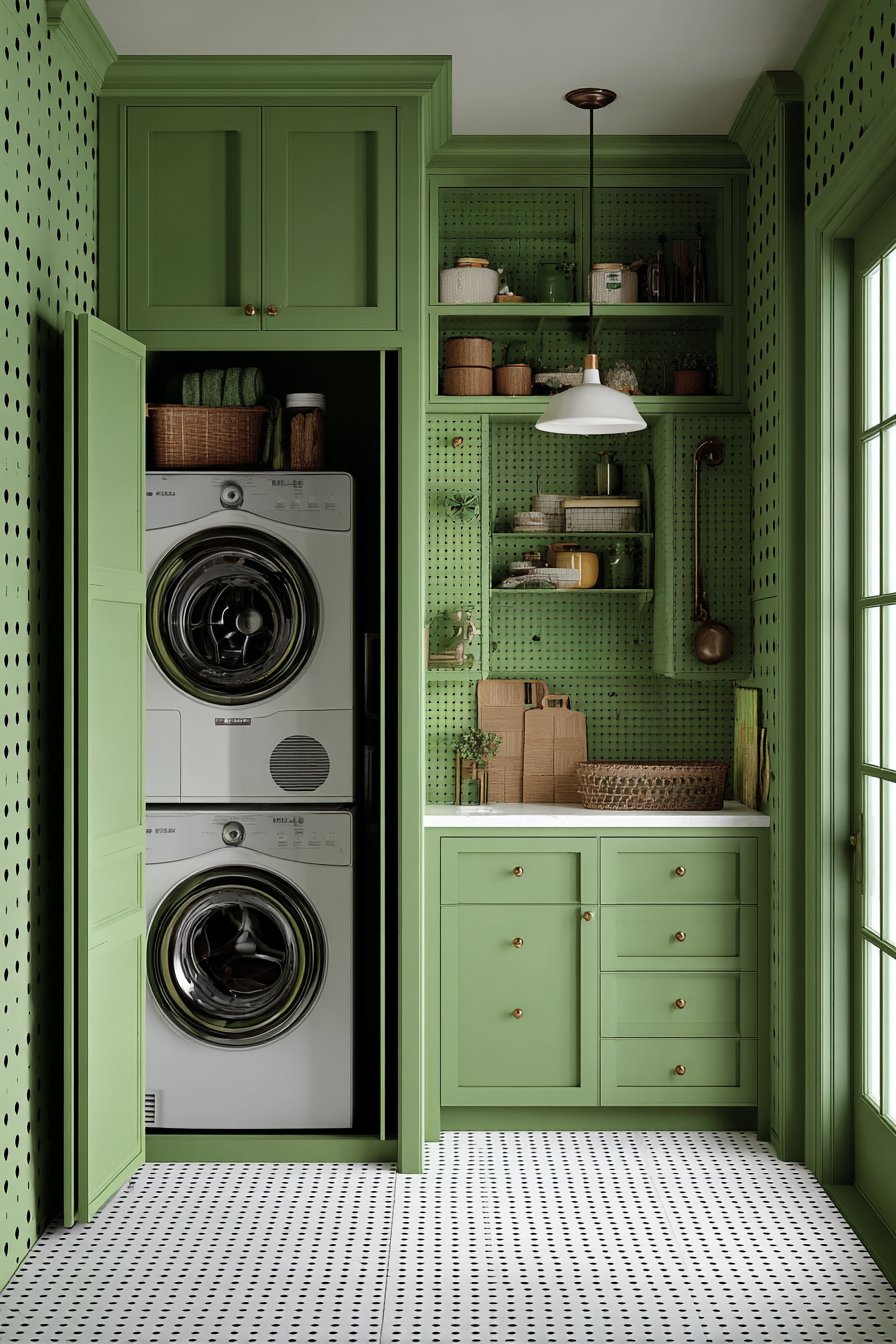
Fold-down ironing boards integrate seamlessly into the cabinetry system. This hidden functionality maintains clean appearance when not in use. Bright overhead lighting ensures adequate visibility for detailed tasks. Good lighting proves essential in windowless or compact spaces.
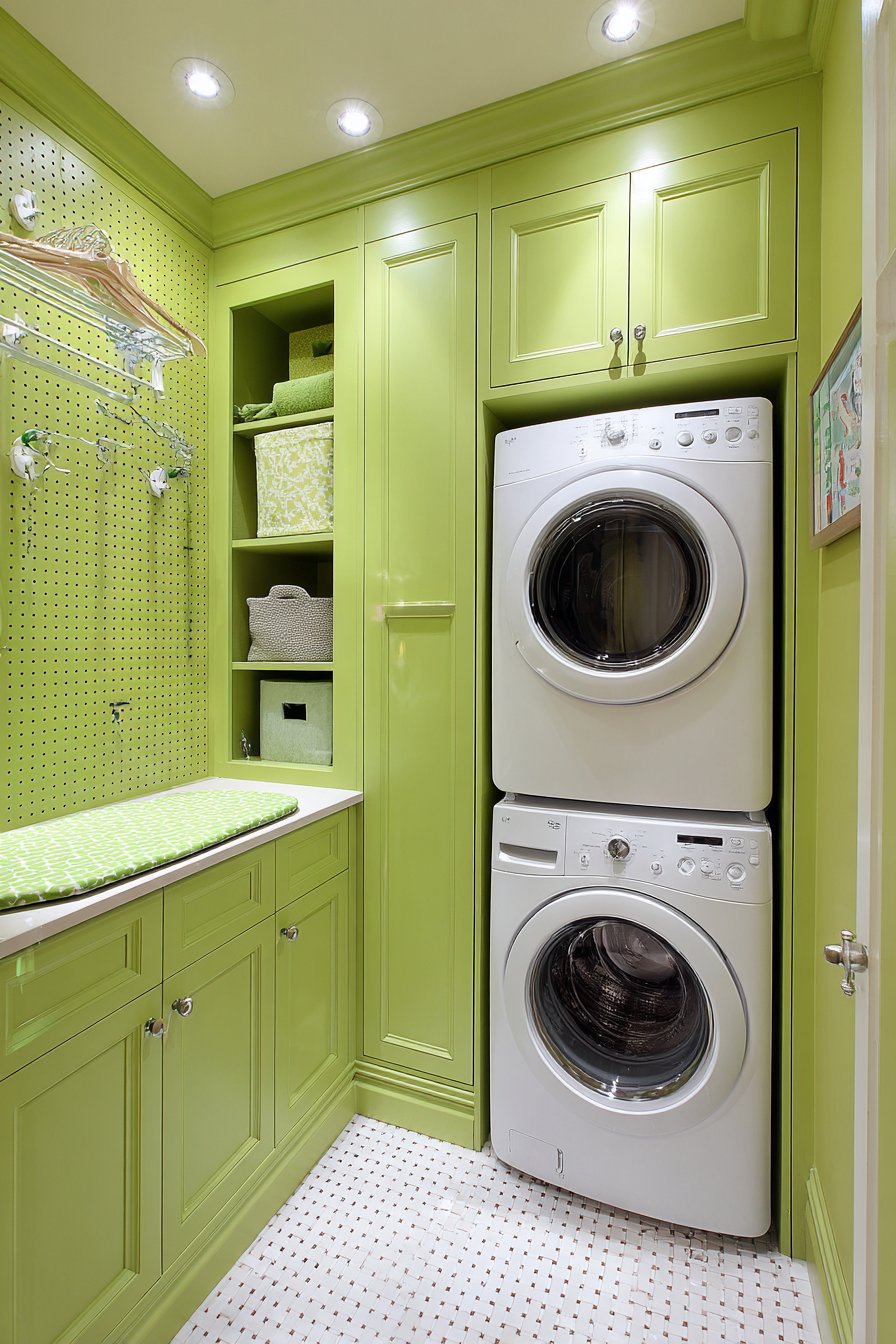
Efficient space utilization demonstrates creative problem-solving in design. Small rooms require strategic planning to maximize functionality. The cheerful green color prevents small spaces from feeling claustrophobic. This design proves that size limitations need not restrict style.
Key Design Tips:
- Install floor-to-ceiling cabinets to maximize vertical storage potential
- Paint pegboard systems to match cabinetry for cohesive appearance
- Use colored grout with white tile for custom details and color reinforcement
- Integrate fold-down elements to maintain clear space when not needed
- Choose bright overhead lighting to compensate for limited natural light
9. Distressed Sage Farmhouse Character
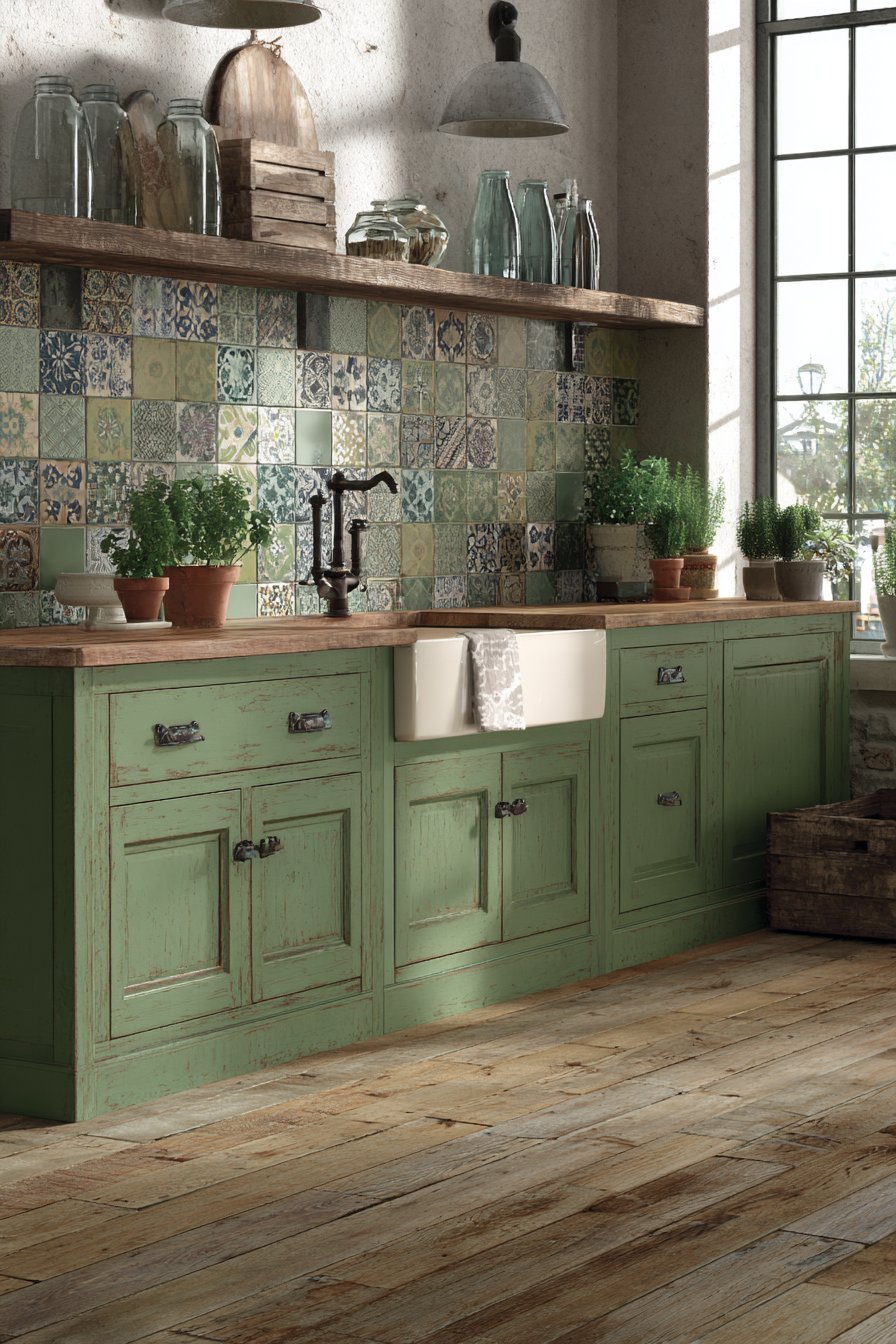
Distressed sage green cabinets showcase intentional wear that adds authenticity. The subtle distressing at edges reveals underlying wood character. This technique creates aged appearance that suggests history and longevity. Porcelain apron-front sinks serve as traditional farmhouse focal points.
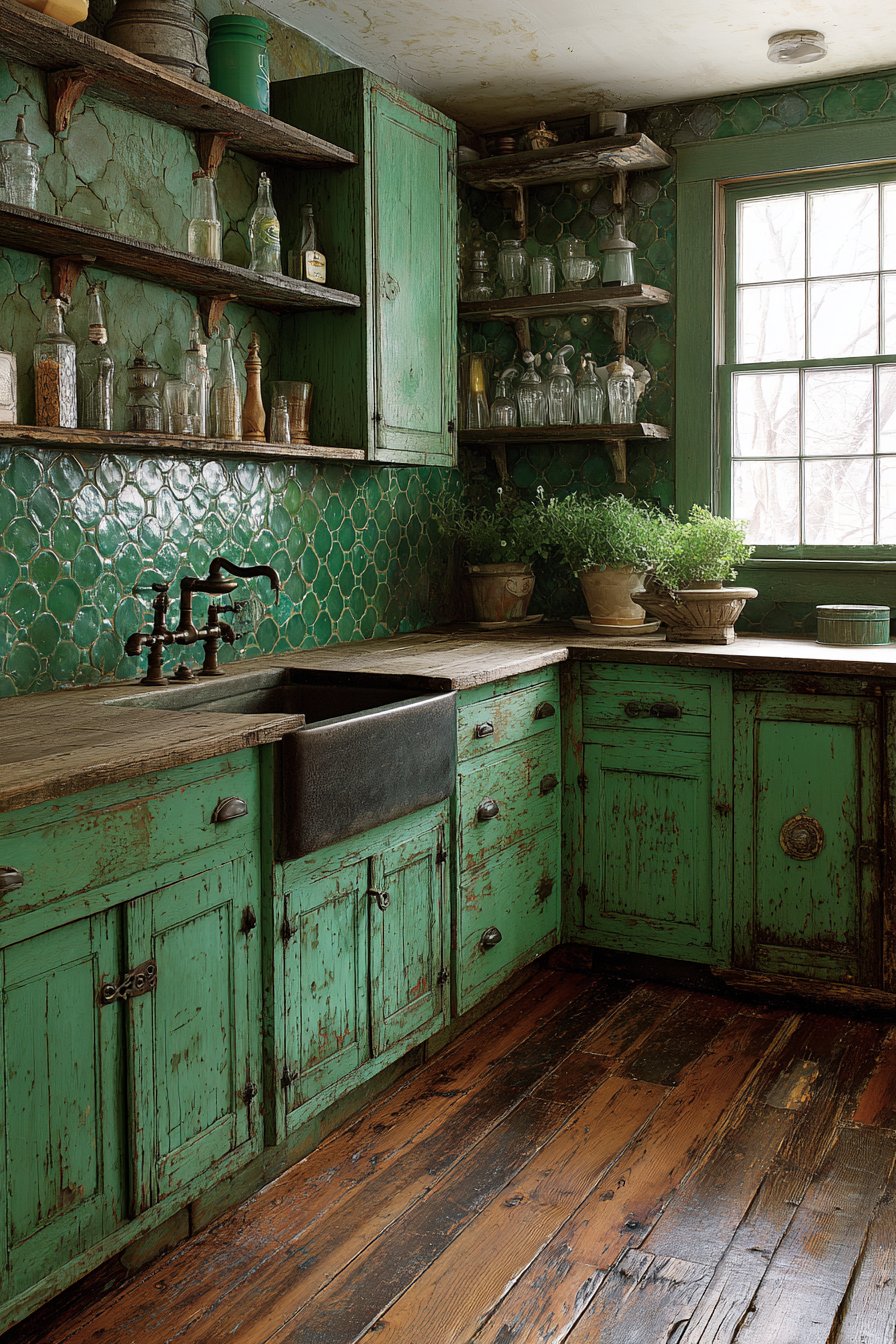
Oil-rubbed bronze fixtures complement the aged cabinetry finish beautifully. The warm metal tone adds richness against sage green. Handmade ceramic tile backsplashes feature varied green tones for organic patterns. The irregular tile variations prevent mechanical perfection that contradicts farmhouse aesthetic.

Reclaimed wood floating shelves introduce natural grain patterns and knots. These authentic wood characteristics celebrate material honesty in design. Natural pine flooring shows grain detail that adds warmth underfoot. Vintage glass bottles and potted herbs add living decorative elements.
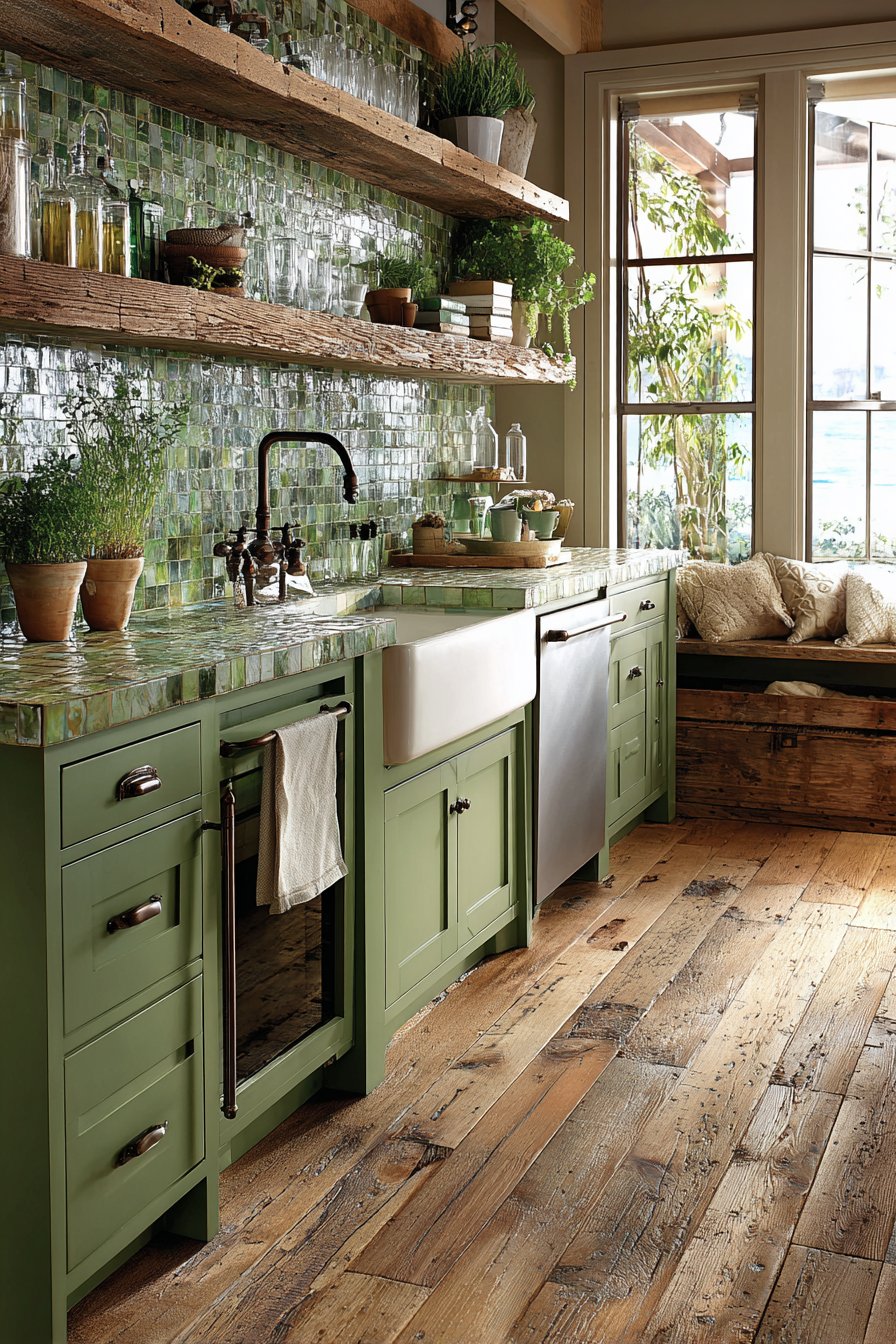
Soft morning light through multi-pane windows illuminates the space gently. The divided-light window style reinforces traditional farmhouse architecture. Naturally weathered materials create cohesive authentic farmhouse aesthetic. This design celebrates imperfection as character rather than flaw.
Key Design Tips:
- Distress cabinet edges to create authentic aged appearance and character
- Choose oil-rubbed bronze fixtures for warm traditional metal finishes
- Install handmade tiles with natural variations for organic pattern interest
- Use reclaimed wood shelving to celebrate authentic material characteristics
- Add vintage accessories and herbs to reinforce farmhouse lifestyle aesthetic
10. Pistachio Green Scandinavian Minimalism
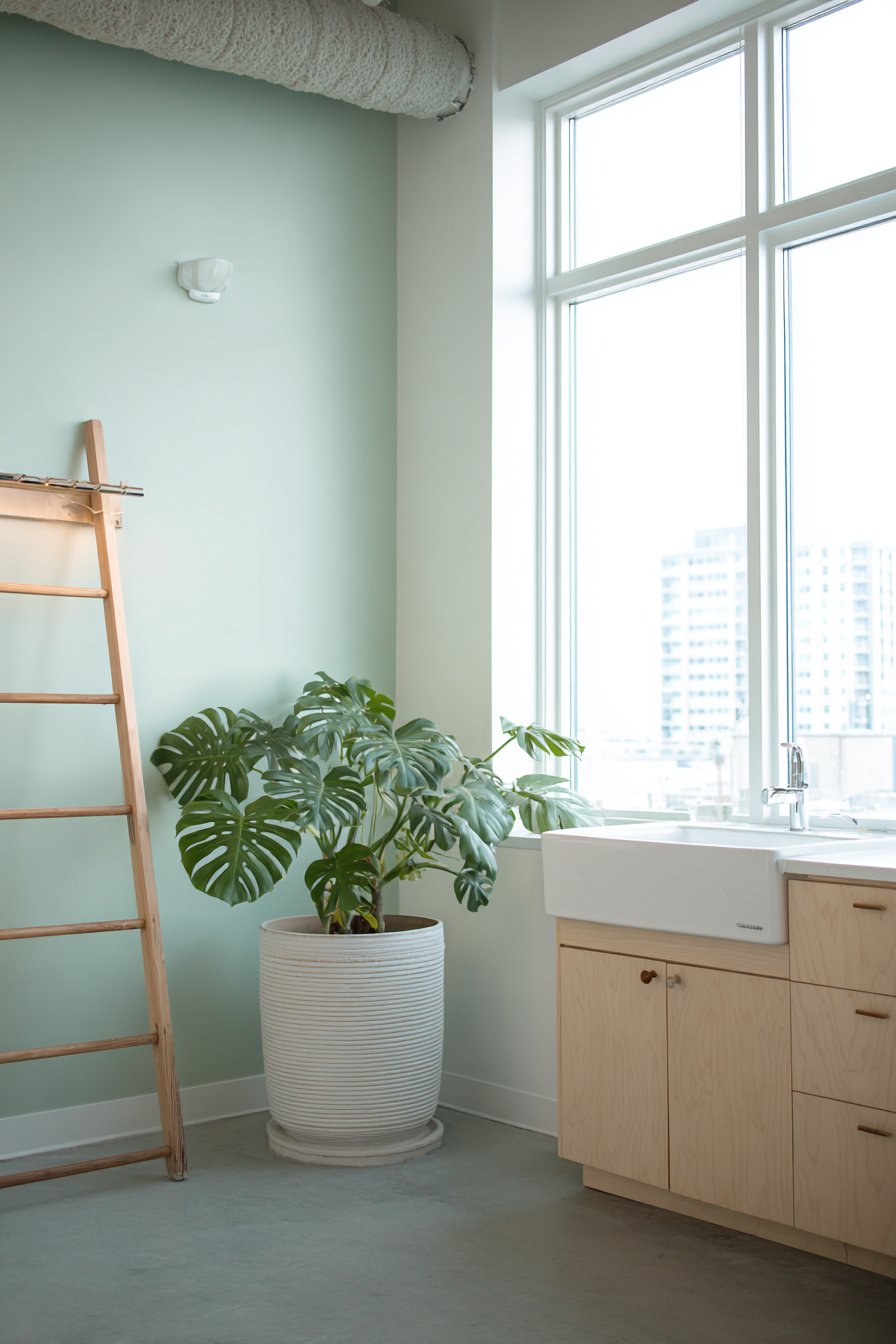
Pale pistachio green walls provide subtle color in minimalist spaces. The soft green adds warmth without overwhelming the clean aesthetic. White oak cabinets feature simple round knobs for understated hardware. The light wood grain adds natural texture without decorative excess.
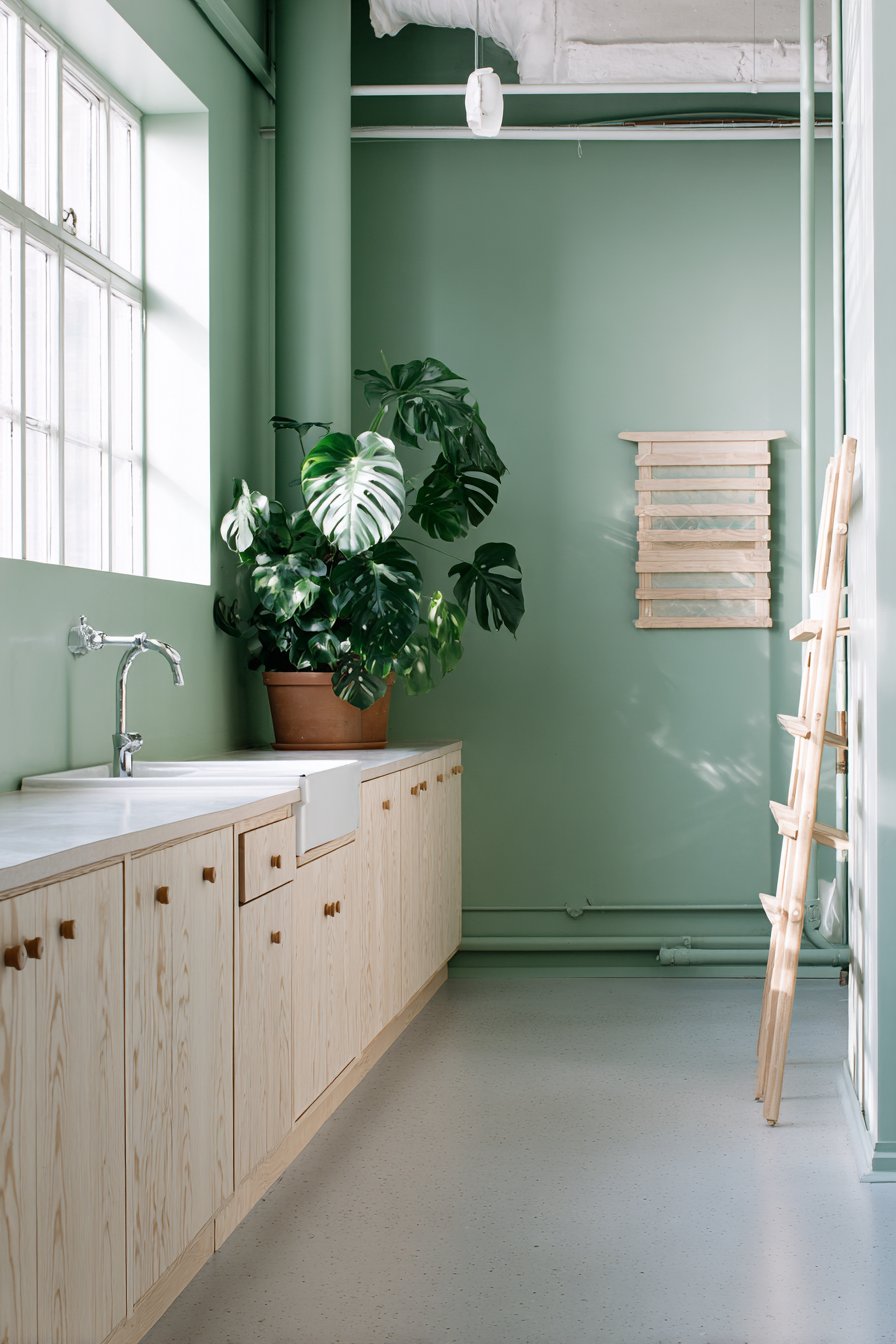
Minimalist white ceramic sinks pair with single-lever chrome faucets. The streamlined fixtures maintain the clean Scandinavian aesthetic. Light grey concrete flooring provides smooth matte surfaces underfoot. The neutral floor anchors the space without demanding attention.
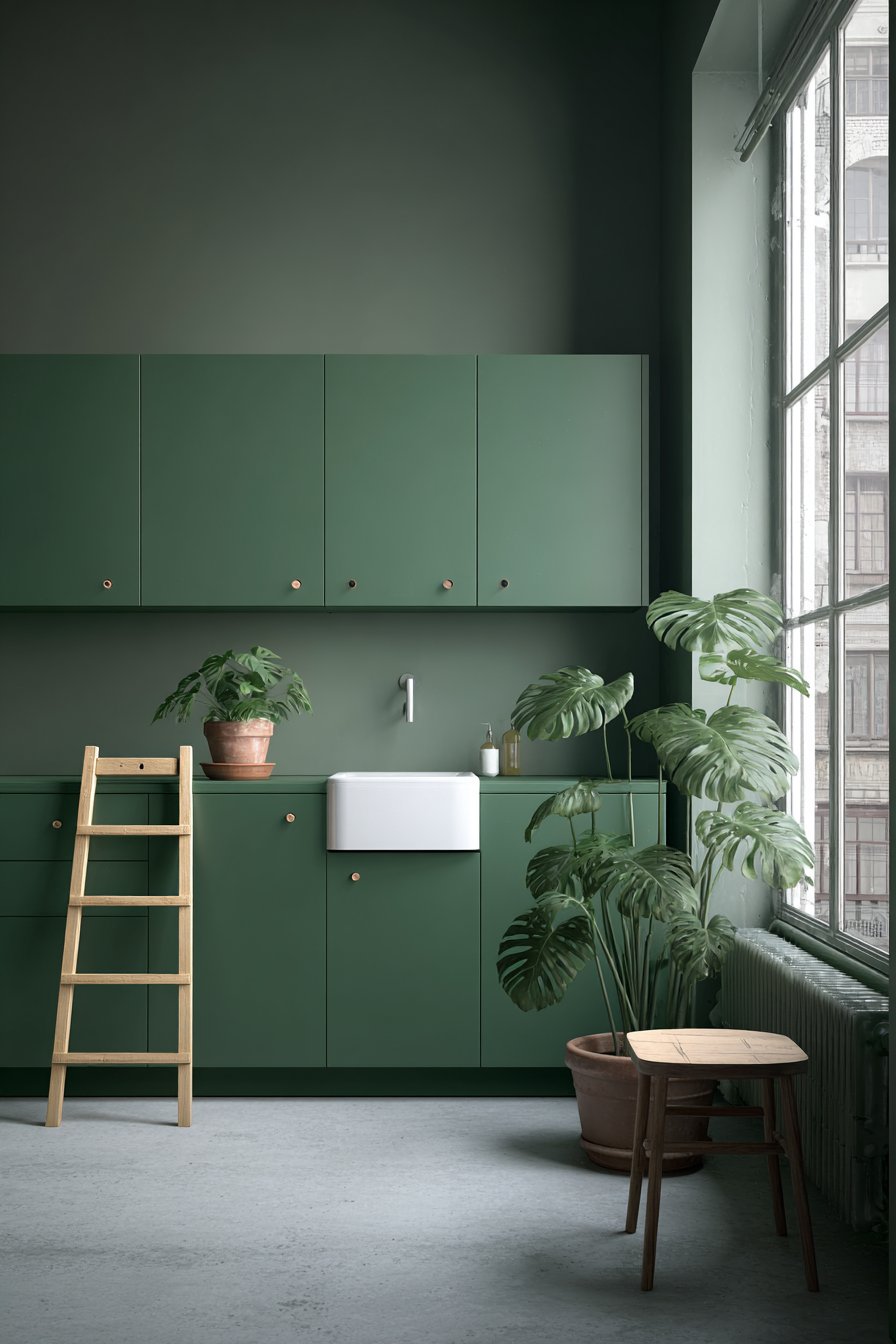
Simple wooden drying racks lean casually against walls functionally. Large windows without treatments maximize natural light penetration. The absence of window coverings embraces Scandinavian light-focused design. A single monstera plant adds organic form without clutter.
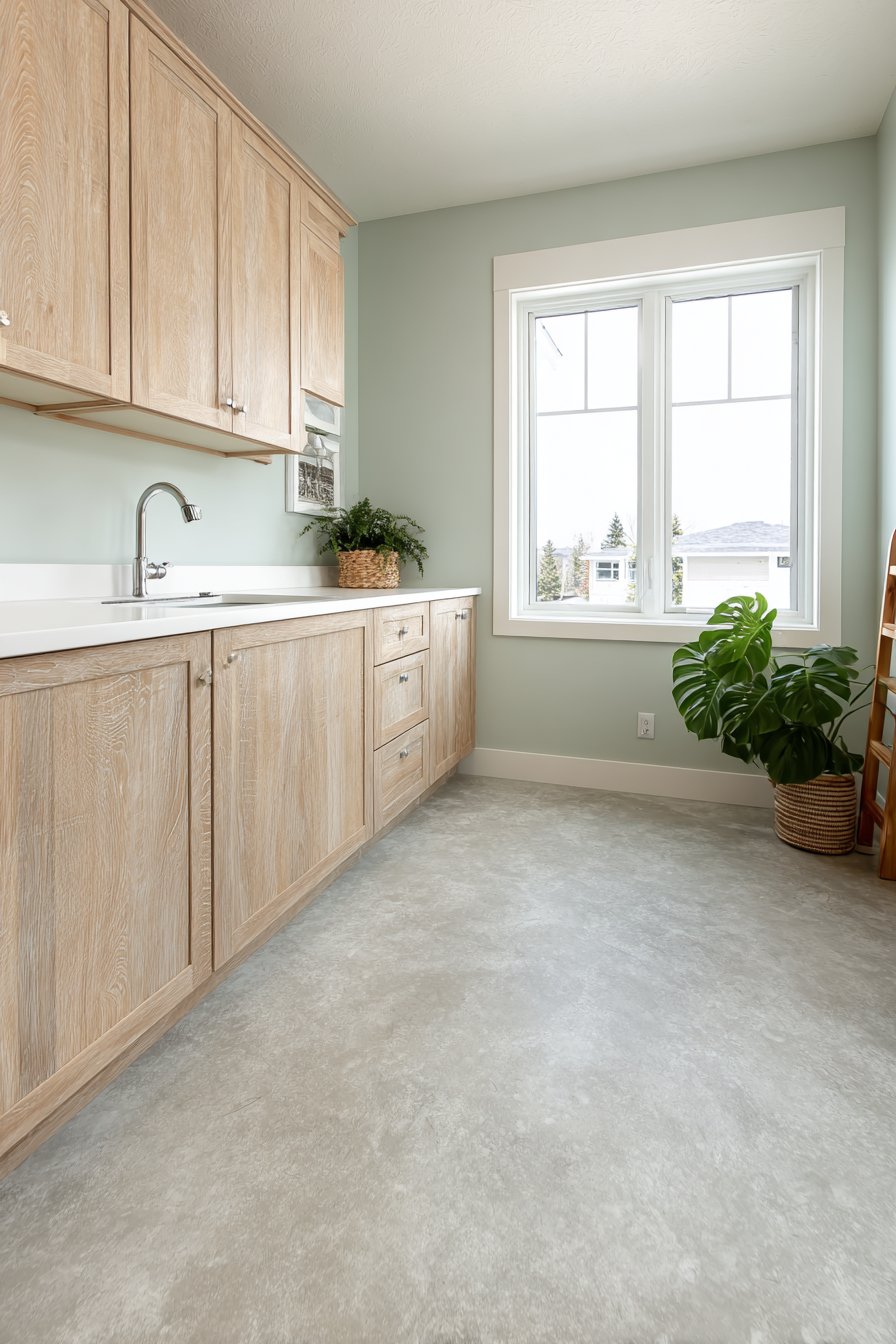
Soft diffused lighting emphasizes the clean minimalist aesthetic throughout. The subtle green accent color prevents sterile white-dominated spaces. Scandinavian design proves that less creates more impactful spaces. This approach celebrates functionality and natural light above decoration.
Key Design Tips:
- Choose pale green tones for subtle warmth in minimalist color schemes
- Install white oak cabinets for natural texture without visual weight
- Maximize window sizes and eliminate treatments for maximum natural light
- Select simple fixtures and hardware that blend rather than contrast
- Add single plants for organic elements without decorative clutter
11. Moss Green Traditional Raised-Panel Elegance

Moss green raised-panel cabinets introduce traditional craftsmanship and detail. The cabinet door construction showcases classic woodworking techniques. Antique brass cup pulls add period-appropriate hardware with warm patina. Butcher block countertops provide natural wood workspace with practical durability.

Cream-painted walls above cabinetry create balanced color distribution. Decorative plate rail molding adds architectural interest at the division. Belfast-style ceramic sinks bring classic European charm to the design. Bridge faucets complete the traditional fixture selection with period accuracy.

Small black and white checkered floor tiles create timeless pattern. The high-contrast flooring adds visual interest at ground level. Vintage-style ceiling fixtures provide ambient lighting with traditional character. Natural light from cafe-curtained windows creates gentle highlights throughout.

The timeless traditional design elements resist trend-driven obsolescence. Quality craftsmanship and classic materials ensure longevity and lasting appeal. Rich moss green cabinetry provides distinctive color without temporary trendiness. This design celebrates proven traditional approaches to functional spaces.
Key Design Tips:
- Choose raised-panel cabinets for traditional craftsmanship and architectural interest
- Install butcher block countertops for warm natural wood workspace
- Use antique brass hardware for authentic period-appropriate metal finishes
- Add plate rail molding for decorative architectural detail and display
- Select checkered floor tiles for timeless high-contrast pattern interest
12. Eucalyptus Green Two-Tone Contemporary Design

Matte eucalyptus green lower cabinets pair with glossy white uppers. The two-toned cabinetry creates contemporary visual interest through contrast. Different finishes on coordinating cabinet types add sophisticated layering. Large-format rectified backsplash tiles minimize grout lines effectively.
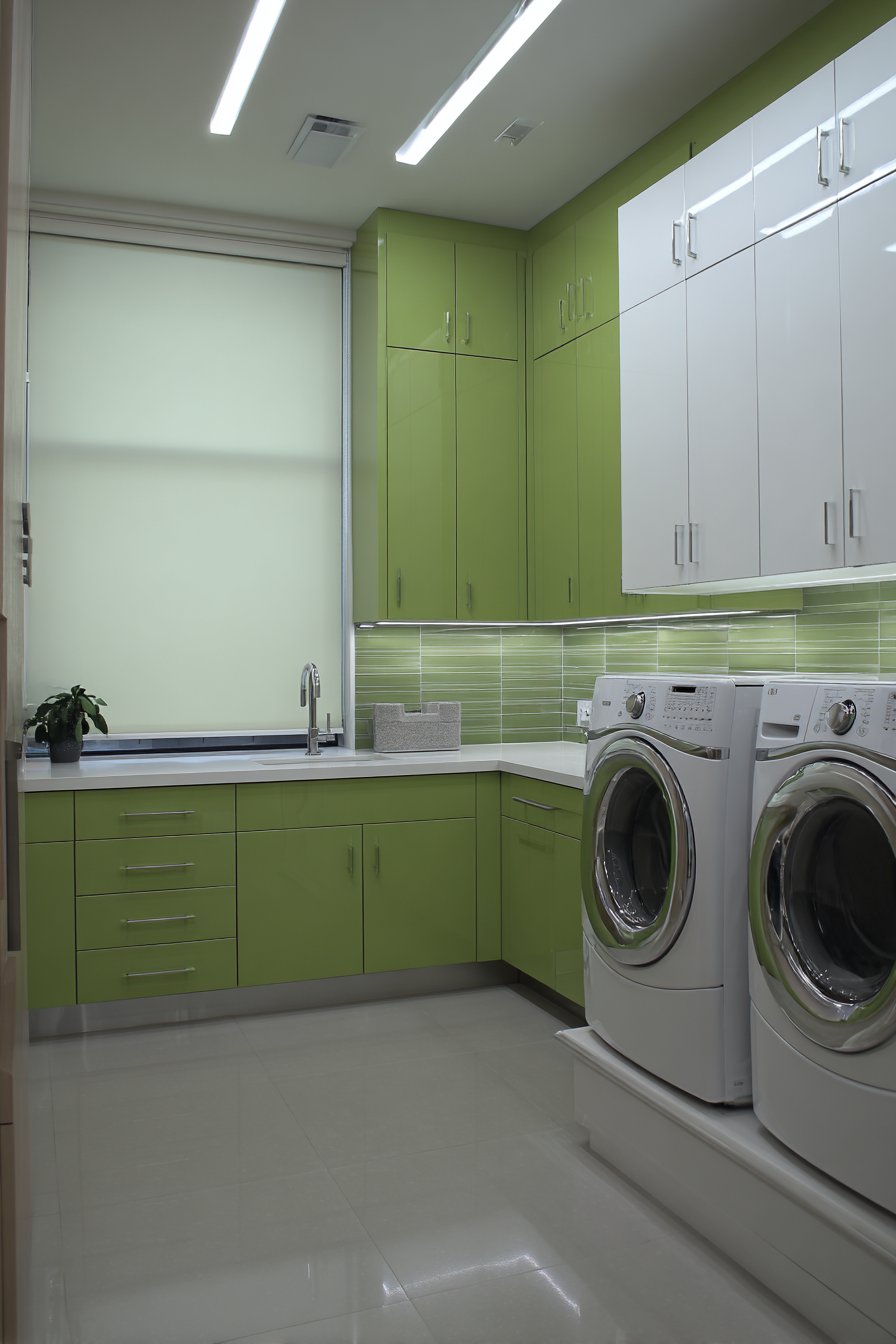
Pale green tiles create subtle color connection between cabinet tones. Integrated handle-less cabinets maintain smooth clean contemporary lines. Push-to-open mechanisms eliminate visual hardware for streamlined appearance. Composite stone countertops in solid white provide durable pristine workspace.
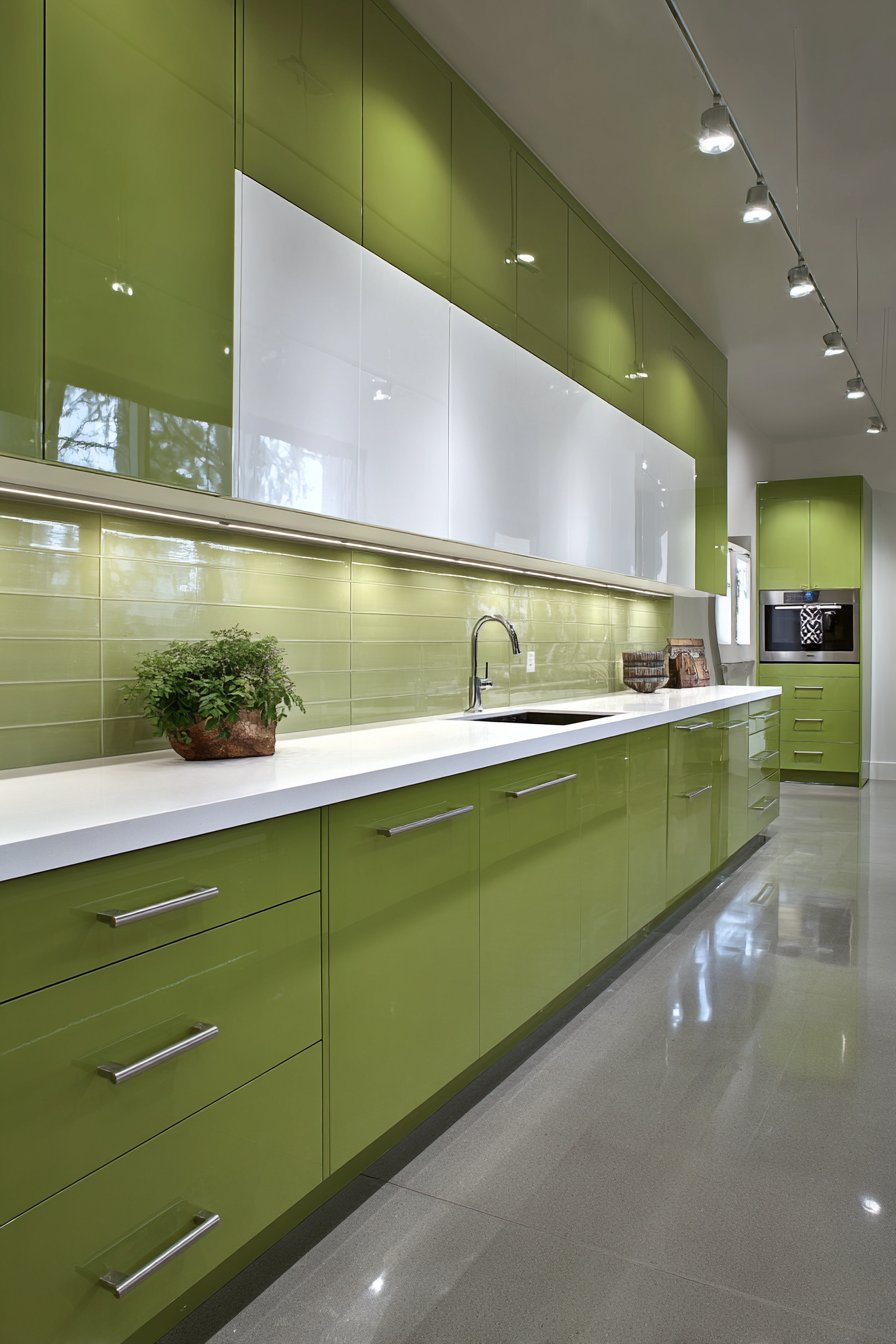
Polished porcelain flooring in light grey reflects ambient light. The smooth reflective surface expands perceived space in compact rooms. Linear LED fixtures mount beneath upper cabinets for task lighting. The concealed light source provides illumination without visible fixture clutter.

Balanced artificial lighting showcases the modern aesthetic effectively. The sophisticated green and white combination feels fresh and contemporary. Modern design celebrates clean lines and innovative material applications. This approach proves that functional spaces benefit from contemporary thinking.
Key Design Tips:
- Combine matte and glossy finishes for sophisticated two-toned cabinetry
- Install handle-less cabinets with push-open mechanisms for clean lines
- Use large-format tiles to minimize grout and create seamless appearance
- Choose linear LED fixtures for sleek concealed task lighting
- Select polished flooring to reflect light and expand space perception
13. Faded Mint Rustic Reclaimed Character

Reclaimed barn wood walls painted in faded mint green reveal texture. The underlying wood grain remains visible beneath transparent paint. This technique celebrates material history while introducing color. Industrial-style open shelving features black pipe brackets for functional hardware.

Vintage enamelware and cotton linens display on the industrial shelving. The combination of soft textiles and hard industrial metal creates contrast. Deep concrete sinks with exposed aggregate finish showcase material honesty. Simple metal brackets support the sink without decorative embellishment.

Original wide-plank wood flooring shows natural patina and wear marks. These authentic aging characteristics add character that new materials lack. Edison bulb fixtures on exposed conduit provide warm ambient lighting. The visible electrical components celebrate industrial aesthetic principles.
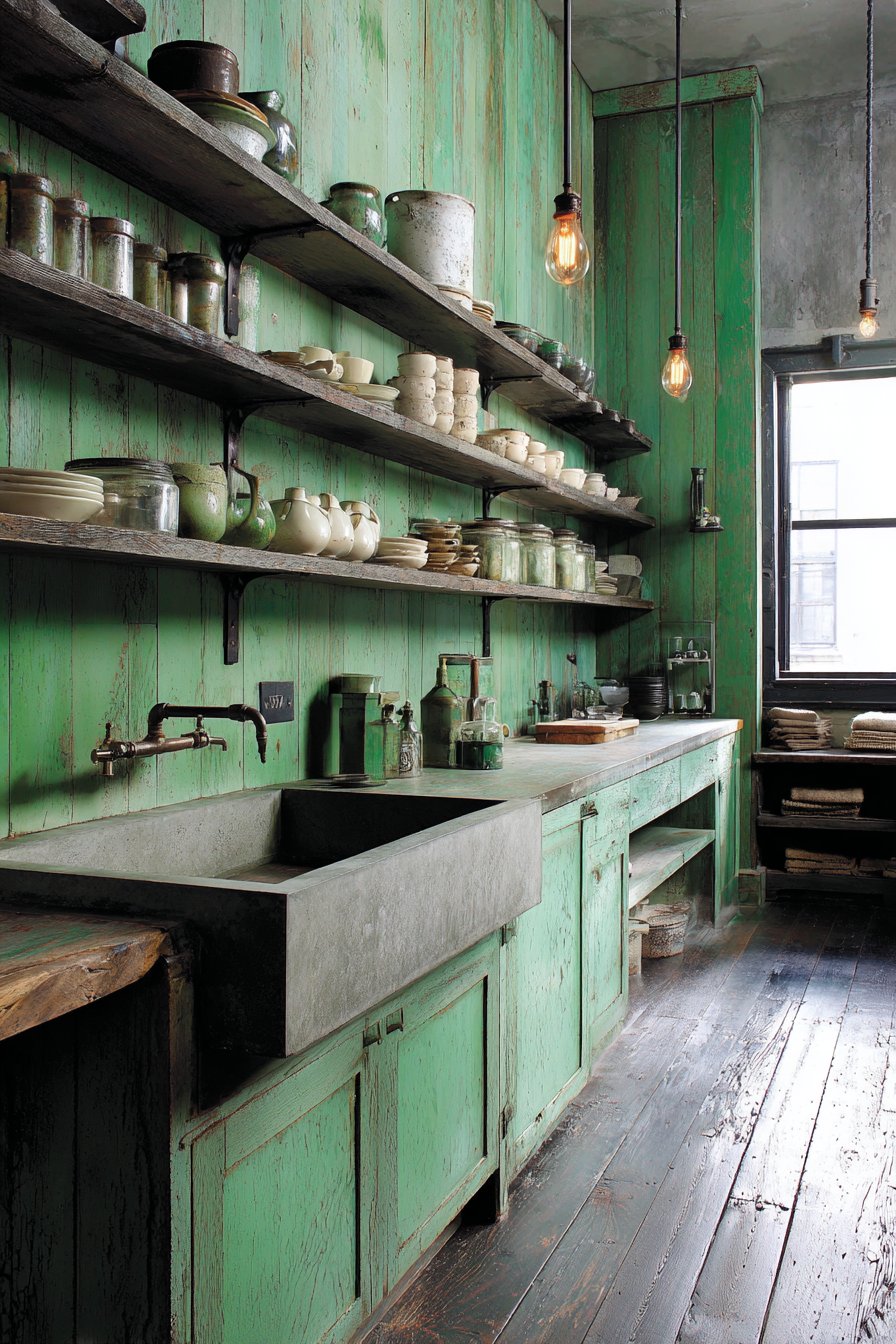
A small window without treatment allows natural light honestly. The rustic character emerges from weathered materials and industrial elements. This authentic approach values material history over pristine newness. Rustic design celebrates age and wear as beauty rather than defect.
Key Design Tips:
- Paint reclaimed wood to add color while preserving visible grain texture
- Install industrial pipe shelving for authentic utilitarian hardware aesthetic
- Choose concrete sinks with exposed aggregate for honest material expression
- Use Edison bulbs on exposed conduit for warm industrial lighting
- Preserve original flooring patina to celebrate authentic aging characteristics
14. Jade Green Lacquered Luxury Finishes

Custom jade green lacquered cabinets create high-gloss luxury surfaces. The rich color and reflective finish demonstrate upscale material choices. Polished nickel hardware adds refined metal detailing throughout. Inset panel doors showcase precision craftsmanship and premium construction.

Calacatta marble countertops feature dramatic grey veining patterns. The elegant stone provides workspace that functions as visual centerpiece. Honed marble flooring in coordinating grey tones unifies the design. Professional-grade sinks with commercial-style faucets demonstrate serious functionality.

Crystal cabinet knobs add sparkling refined details that catch light. Recessed lighting with decorative trim rings provides architectural detail. Under-cabinet xenon lights create warm task lighting without LED coolness. The layered illumination approach ensures proper lighting for all tasks.

Professional lighting captures the upscale finishes and material quality. The rich jade green cabinetry adds bold personality to functional spaces. Luxury finishes prove that laundry rooms deserve investment-grade materials. This design demonstrates that utility and elegance coexist beautifully.
Key Design Tips:
- Choose lacquered cabinets for high-gloss luxury finishes and rich color
- Install Calacatta marble for dramatic veining and elegant natural stone
- Use crystal knobs to add refined sparkling details throughout
- Layer multiple lighting types for comprehensive illumination coverage
- Select commercial-grade fixtures for professional functionality and durability
15. Olive and Sage Bohemian Layered Color

Hand-painted terracotta walls feature layered olive and sage green tones. The organic color variation creates artistic depth impossible with single coats. This technique adds handcrafted character to functional spaces. Open wooden shelving with irregular live-edge boards celebrates natural wood forms.

Colorful woven baskets and ceramic vessels add global textile influence. The eclectic accessories introduce pattern and cultural references. Hammered copper utility sinks showcase artisanal metalwork craftsmanship. Exposed wall-mounted faucets add honest functional beauty.

Moroccan-style cement tiles feature green and cream geometric patterns. The intricate floor pattern adds significant visual interest underfoot. Macramé plant hangers suspend potted plants at varying heights. This creates vertical layering that draws eyes upward.

Natural light from skylights creates dappled shadows throughout the day. The changing light quality adds dynamic visual interest. The eclectic layered aesthetic celebrates artistic expression and global influences. Bohemian design embraces abundance over minimalist restraint successfully.
Key Design Tips:
- Layer paint colors by hand for organic variation and artistic depth
- Choose live-edge shelving to celebrate natural wood forms and irregularity
- Install Moroccan cement tiles for intricate geometric pattern interest
- Add macramé hangers to create vertical plant displays and texture
- Use hammered copper fixtures for artisanal metalwork character and warmth
16. Seafoam Green Transitional Style Blending

Seafoam green Shaker cabinets blend with modern slab-style white uppers. This combination bridges traditional and contemporary design philosophies successfully. Grey quartz countertops with subtle veining connect the different styles. The neutral stone provides visual bridge between design approaches.
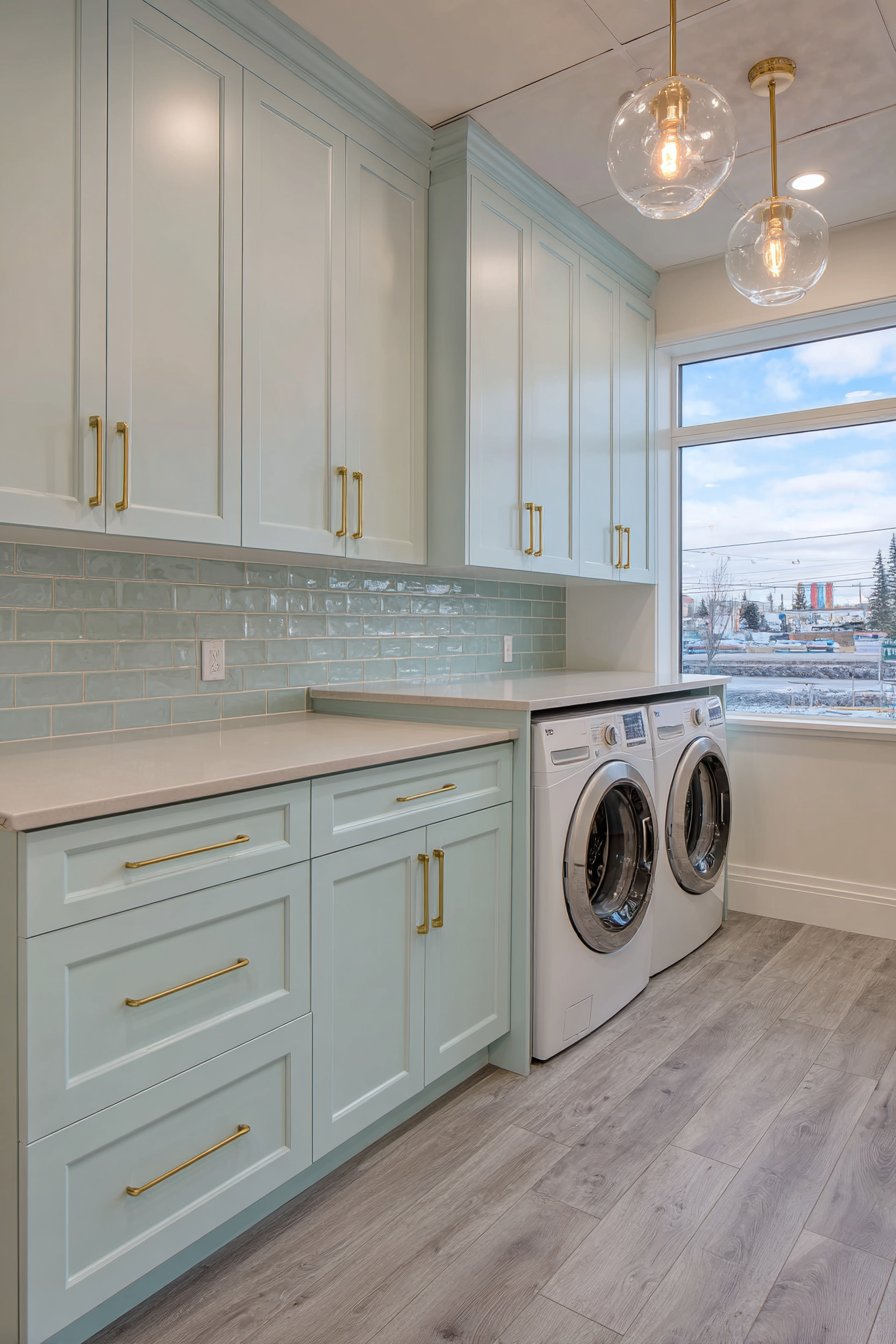
Classic subway tile backsplash arranges in contemporary vertical pattern. This unexpected orientation updates traditional materials with modern thinking. Transitional-style hardware in brushed gold adds warmth throughout. The mixed-metal finish works across both traditional and contemporary elements.

Wide-plank luxury vinyl flooring mimics greyed oak authentically. The resilient material provides practical benefits without sacrificing aesthetics. Pendant lights feature clear glass shades with brass fittings. This fixture style works equally well in traditional or contemporary contexts.

Natural light from large windows illuminates the balanced design. The transitional approach offers flexibility for evolving design preferences. This style proves that traditional and contemporary elements coexist harmoniously. Refined green color scheme unifies diverse design elements successfully.
Key Design Tips:
- Combine Shaker and slab cabinets to bridge traditional and contemporary styles
- Arrange classic materials in unexpected patterns for modern updates
- Choose brushed gold hardware for warmth that spans design eras
- Install luxury vinyl planks for practical resilient flooring with authentic appearance
- Use clear glass fixtures to maintain visual lightness across styles
17. Vintage Mint Metal Cabinet Nostalgia
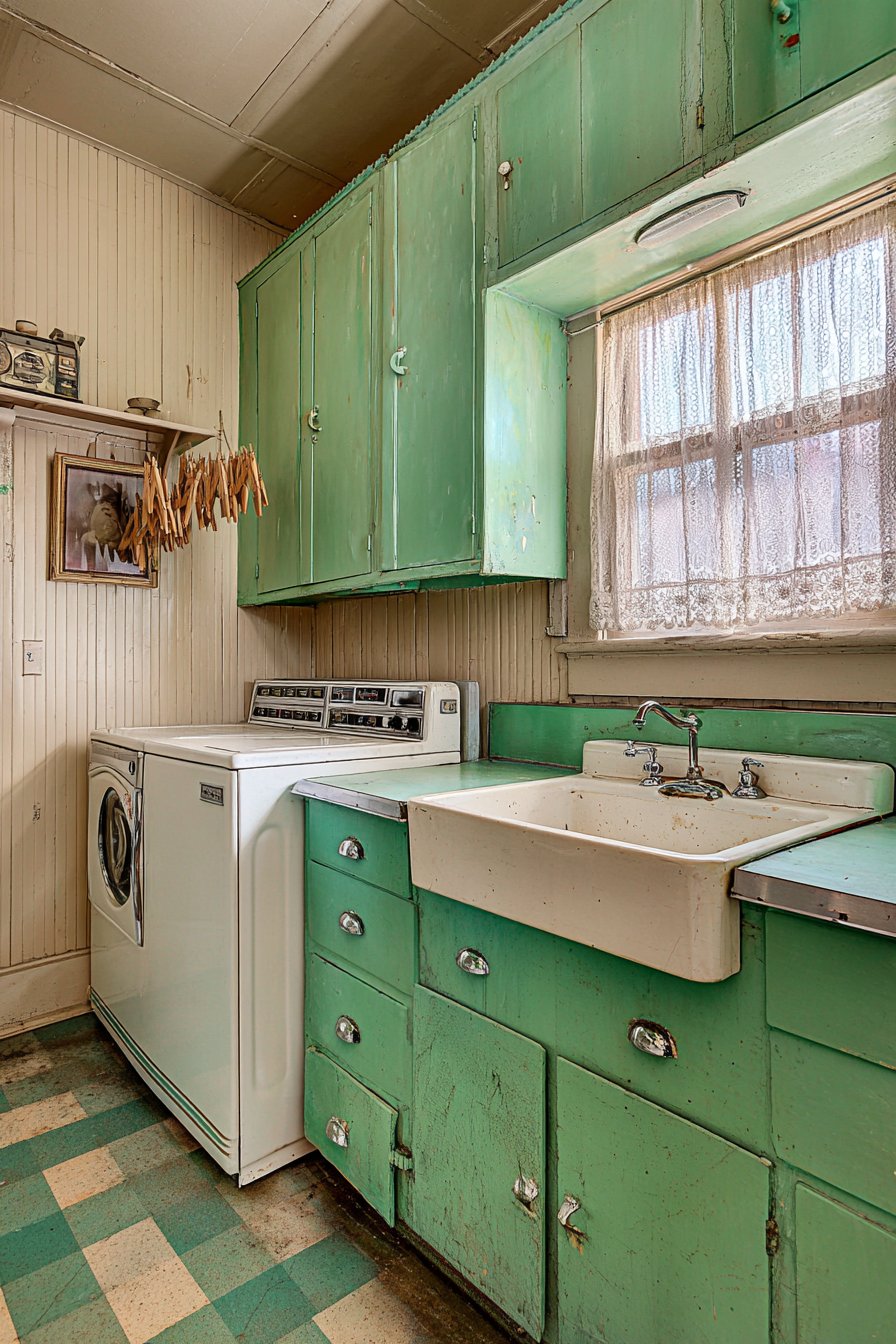
Vintage mint green metal cabinets showcase authentic period details. The metal construction demonstrates mid-century utilitarian design aesthetics. Porcelain knobs add authentic period-appropriate hardware detailing. Deep rectangular white ceramic sinks sit in painted green base cabinets.

Classic beadboard in cream extends halfway up the walls. Green painted upper walls create balanced color distribution throughout. Checkerboard linoleum flooring in green and cream adds nostalgic charm. The retro flooring pattern reinforces the vintage cottage aesthetic.

A vintage-style clothesline with wooden pins hangs across one wall. This functional element doubles as charming decorative feature. Natural light from small windows with lace curtains creates soft illumination. The delicate curtain fabric adds romantic vintage textile detail.

The authentic vintage aesthetic celebrates mid-century design honesty. Period-appropriate materials and fixtures create cohesive historical accuracy. Cheerful mint green cabinetry adds optimistic color to functional tasks. This design proves that vintage styles remain relevant and appealing.
Key Design Tips:
- Source authentic vintage metal cabinets for genuine period character
- Install beadboard wainscoting for classic cottage wall treatment and protection
- Choose checkerboard linoleum for nostalgic retro flooring pattern
- Add functional vintage elements like clotheslines for charming practicality
- Use lace curtains for delicate romantic textile detail and soft light
18. Muted Sage Minimalist Serenity

Handle-less cabinets in muted sage green feature push-to-open mechanisms. The seamless facades create serene minimalist aesthetic without visual interruption. Smooth plaster walls in pale cream provide clean, neutral backdrop. The minimal color palette promotes calm focused atmosphere.
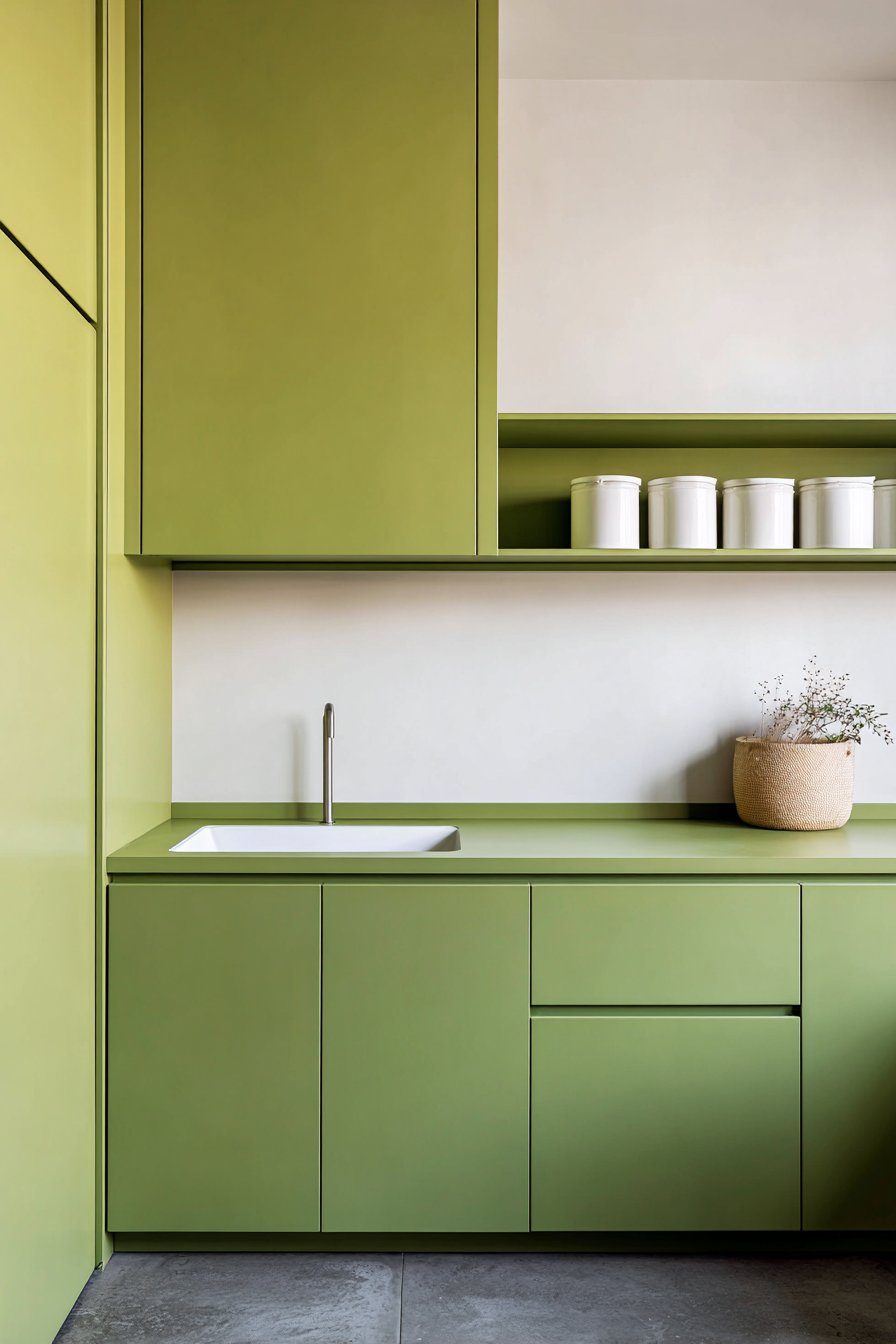
Simple rectangular undermount sinks disappear into seamless green countertops. The integrated appearance maintains clean unbroken horizontal lines. Large-format grey concrete tiles feature tight grout lines. The minimal grout maximizes visual continuity across floor surfaces.
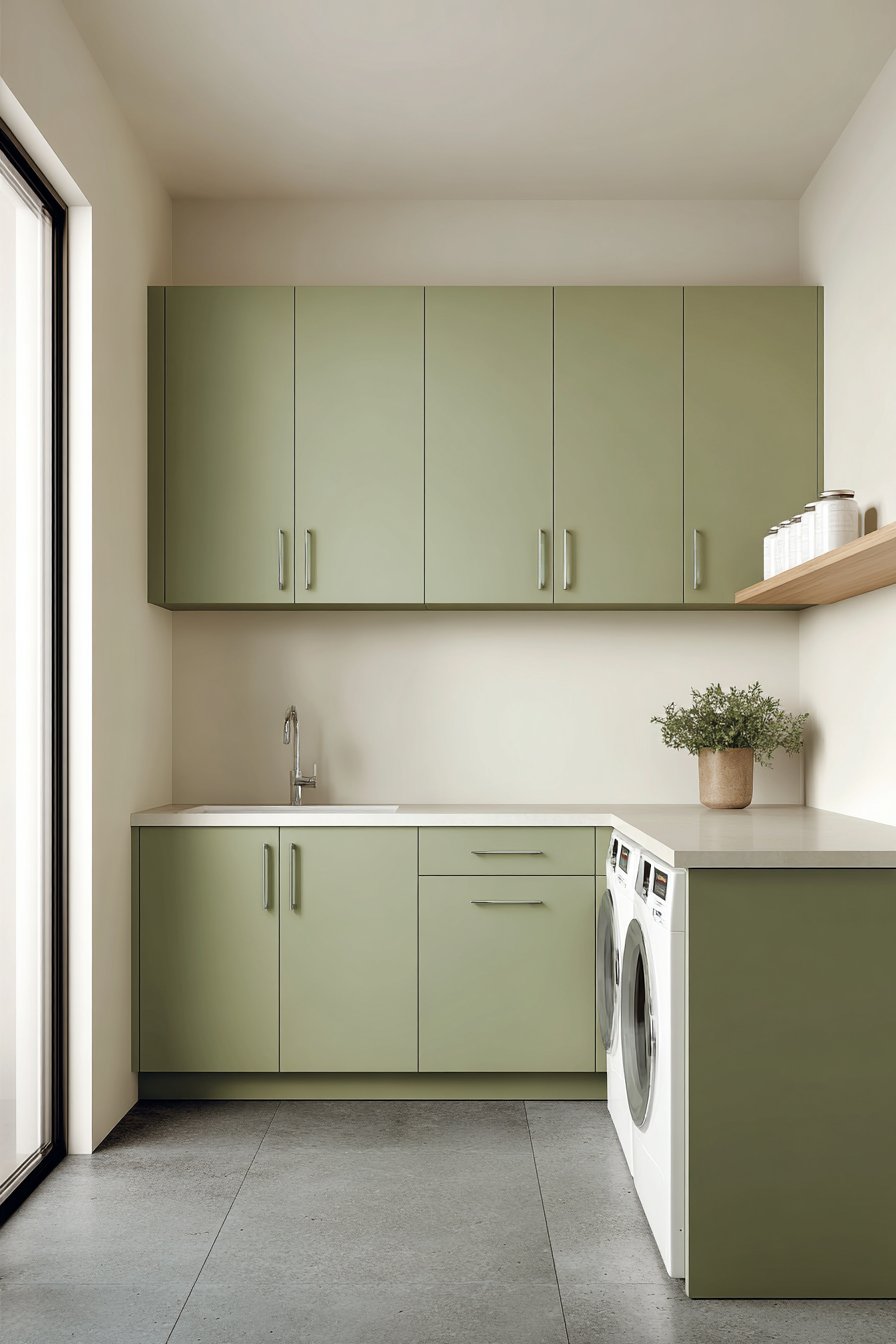
A single floating shelf in matching green holds essential supplies. Uniform white containers create organized visual consistency. Concealed LED strip lighting provides even illumination without visible fixtures. The hidden light source maintains the minimalist aesthetic completely.

Soft diffused lighting captures the serene minimalist atmosphere effectively. The subtle sophisticated green cabinetry adds warmth without overwhelming. Minimalist design proves that restraint creates peaceful functional spaces. This approach values silence and simplicity over visual abundance.
Key Design Tips:
- Choose handle-less cabinets with push-open for seamless minimalist facades
- Install undermount sinks that integrate into countertops for clean lines
- Use large-format tiles with tight grout for maximum visual continuity
- Conceal LED lighting strips to maintain fixture-free minimalist aesthetic
- Limit accessories to essential items in uniform containers for organization
19. Forest Green Mudroom Multi-Functionality

Upper cabinets in forest green combine with lower bench seating. The dual-function design addresses mudroom and laundry needs simultaneously. Storage cubbies beneath benches organize shoes and outdoor gear. Black metal coat hooks line the green wall above seating.
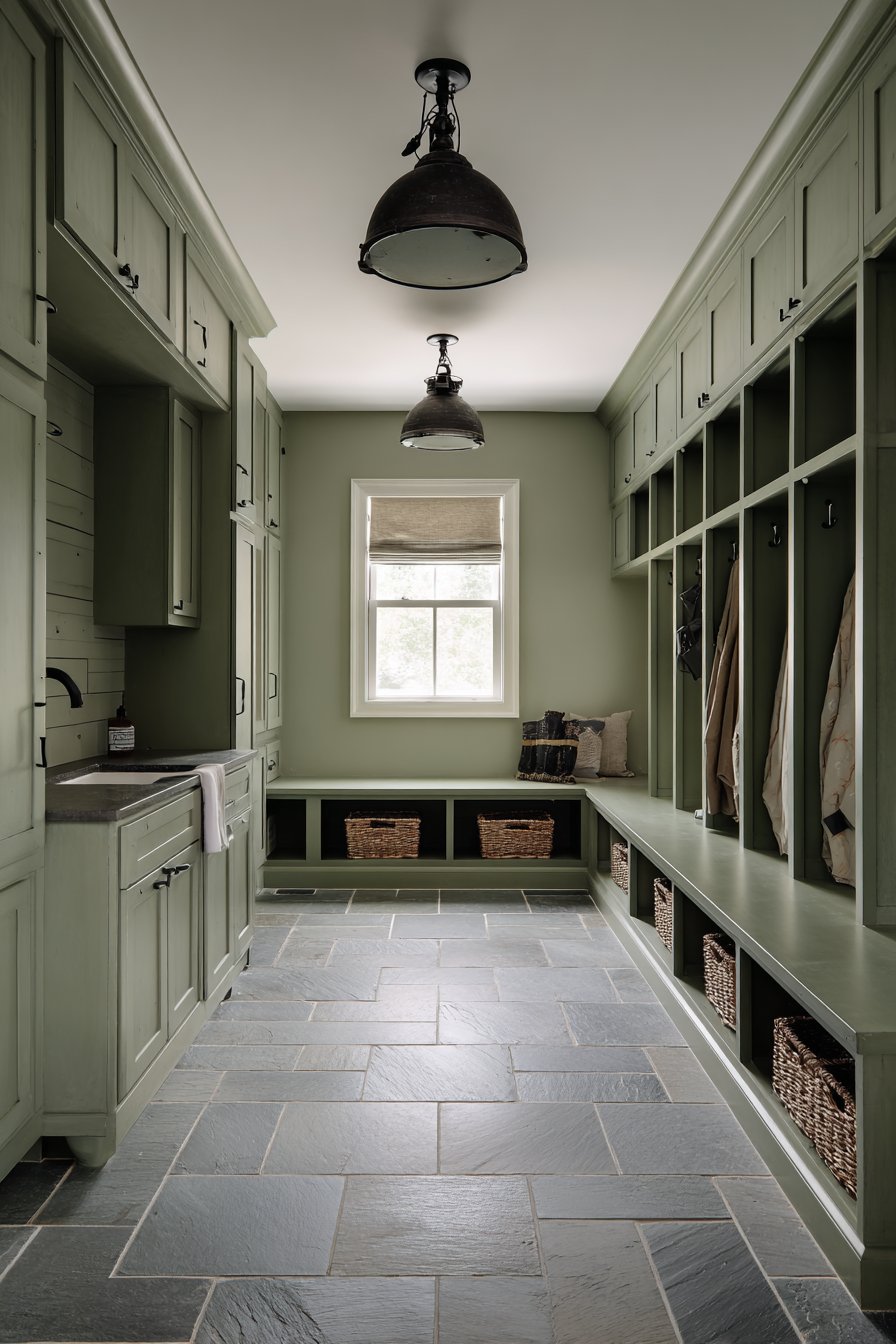
A utility sink with pull-down faucet integrates into green cabinetry. The flexible faucet accommodates various cleaning tasks efficiently. Durable slate floor tiles in natural grey withstand heavy traffic. Slight color variation in slate adds organic natural character.
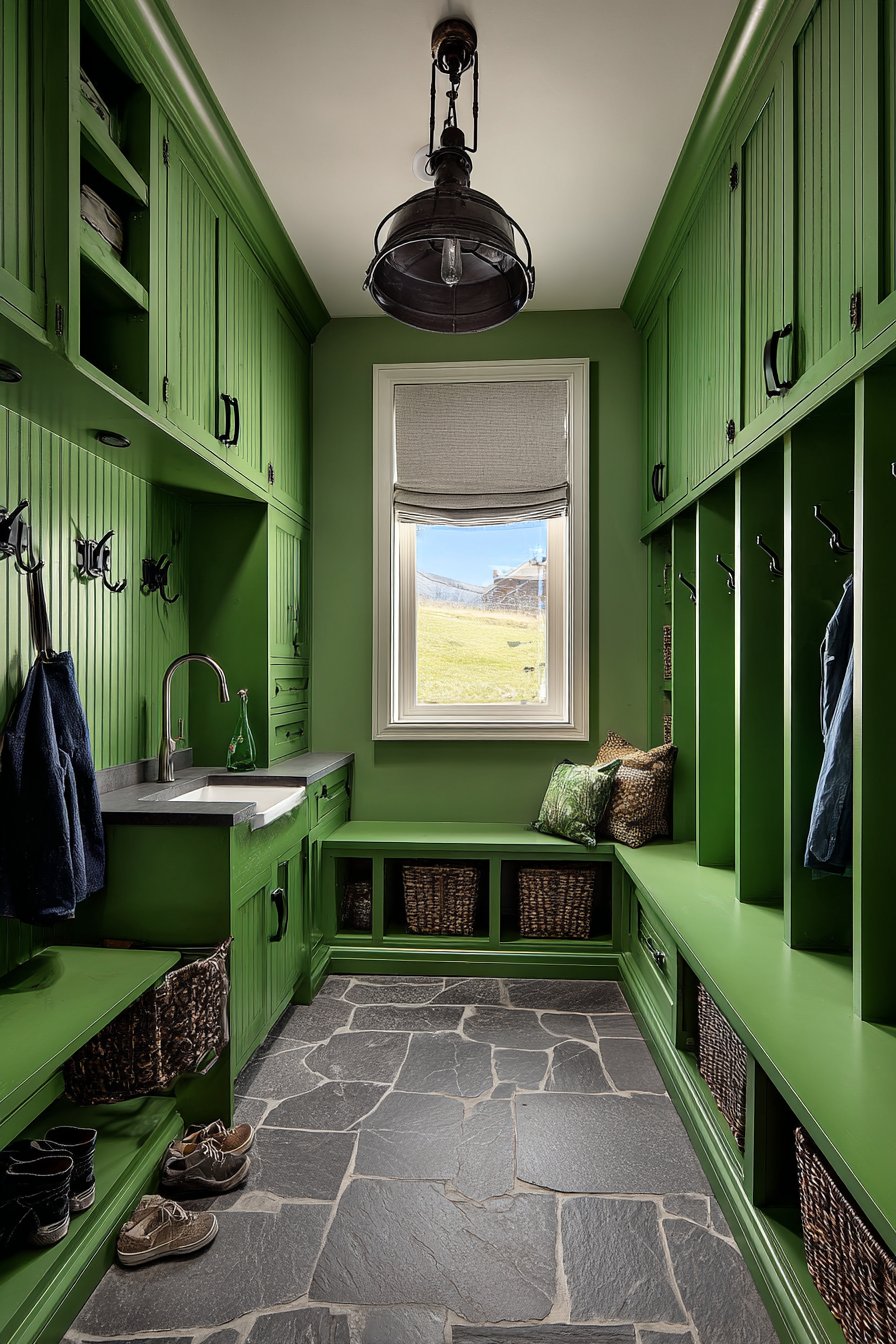
Wire baskets on lower shelves hold shoes and outdoor accessories. The open basket storage allows ventilation for damp items. Pendant lights with industrial styling hang above the central area. Natural light from roller shade windows illuminates the multi-functional space.

The practical mudroom functionality combines seamlessly with laundry tasks. The forest green storage elements unify disparate functional requirements. Multi-functional design maximizes efficiency in transitional home spaces. This approach proves that rooms can serve multiple purposes successfully.
Key Design Tips:
- Combine upper cabinets with lower bench seating for dual functionality
- Install slate tile flooring for durable natural material with traffic resistance
- Use wire baskets for ventilated storage of potentially damp items
- Add coat hooks to maximize vertical wall space for storage
- Choose pull-down faucets for flexible utility sink functionality
20. Lime Green Smart-Home Technology Integration

App-controlled appliances house in custom lime green cabinets. The bright contemporary color suits technology-forward design approaches. Touch-activated LED lighting strips integrate throughout the cabinetry. The interactive lighting responds to presence and needs automatically.
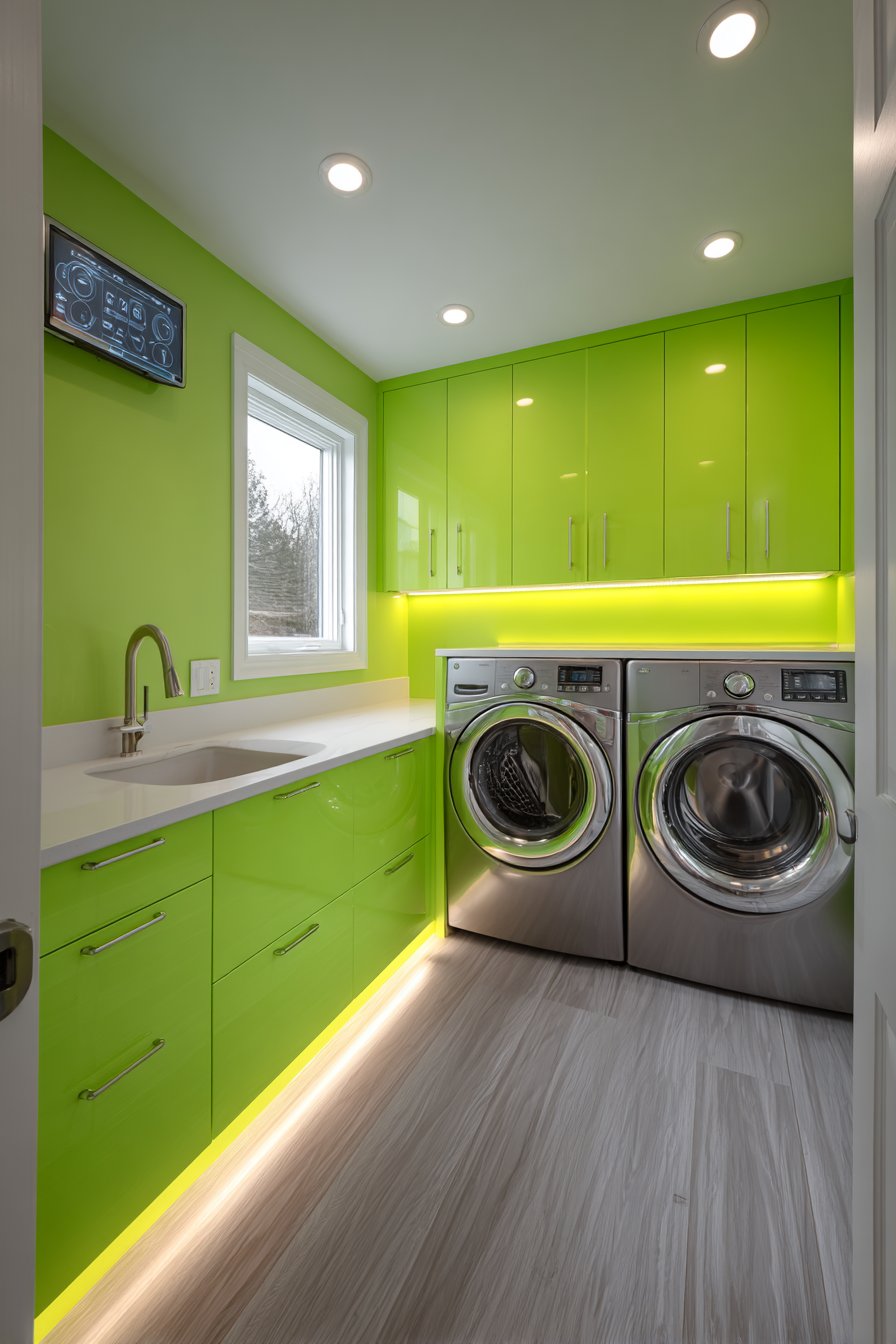
Built-in wireless charging pads and USB outlets sit in countertop workspace. These integrated power solutions support modern mobile device requirements. A large digital display mounts on the green wall. The screen shows laundry cycles and home system controls centrally.
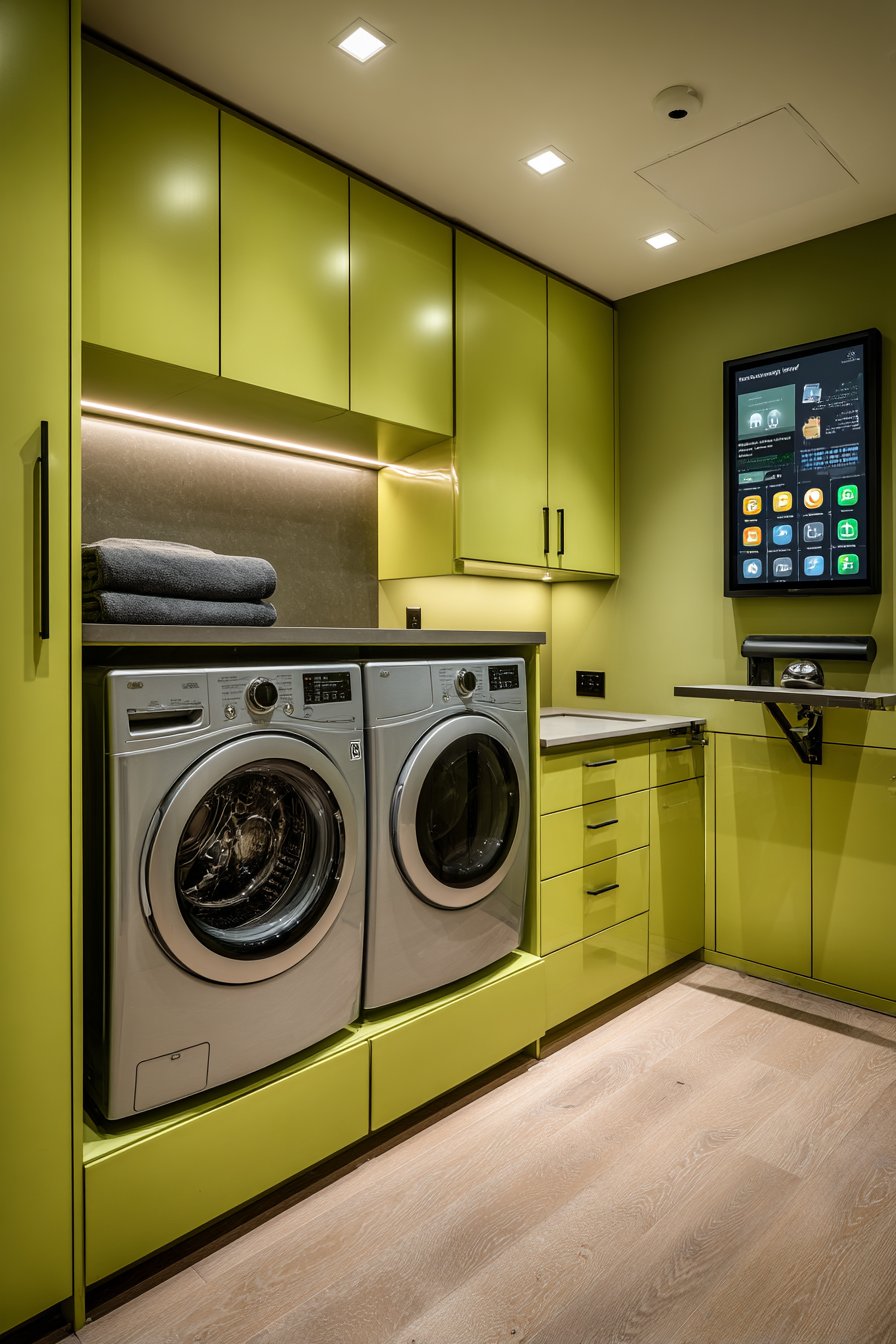
Water-resistant laminate flooring in coordinating green-grey tone provides practical surface. Motion-sensor overhead lighting automatically adjusts brightness based on activity. The automated system reduces energy consumption while ensuring adequate visibility. Wall-mounted folding tables drop down when needed for space efficiency.

Bright artificial lighting showcases the technology-integrated design effectively. The contemporary lime green cabinetry makes bold statement about innovation. Smart-home design proves that technology integration enhances functional spaces. This forward-thinking approach anticipates future living requirements today.
Key Design Tips:
- Choose lime green cabinets for bold contemporary color suitable for technology
- Install touch-activated LED strips for interactive responsive lighting systems
- Integrate wireless charging and USB outlets into countertop work surfaces
- Add digital displays for centralized home system and appliance control
- Use motion-sensor lighting for automated energy-efficient illumination adjustment
Why These Green Laundry Room Designs Are the Best
These green laundry room designs represent thoughtful approaches to color psychology and material selection. Green naturally promotes calm and relaxation in spaces typically associated with mundane tasks. The color’s versatility spans from soft sage to dramatic emerald, accommodating diverse style preferences and existing home aesthetics.
The designs demonstrate how green works effectively across all major design movements. Traditional styles benefit from moss and forest greens paired with classic materials. Contemporary spaces shine with matte hunter green and sleek integrated appliances. Coastal designs embrace seafoam tones that reference natural beach environments authentically.
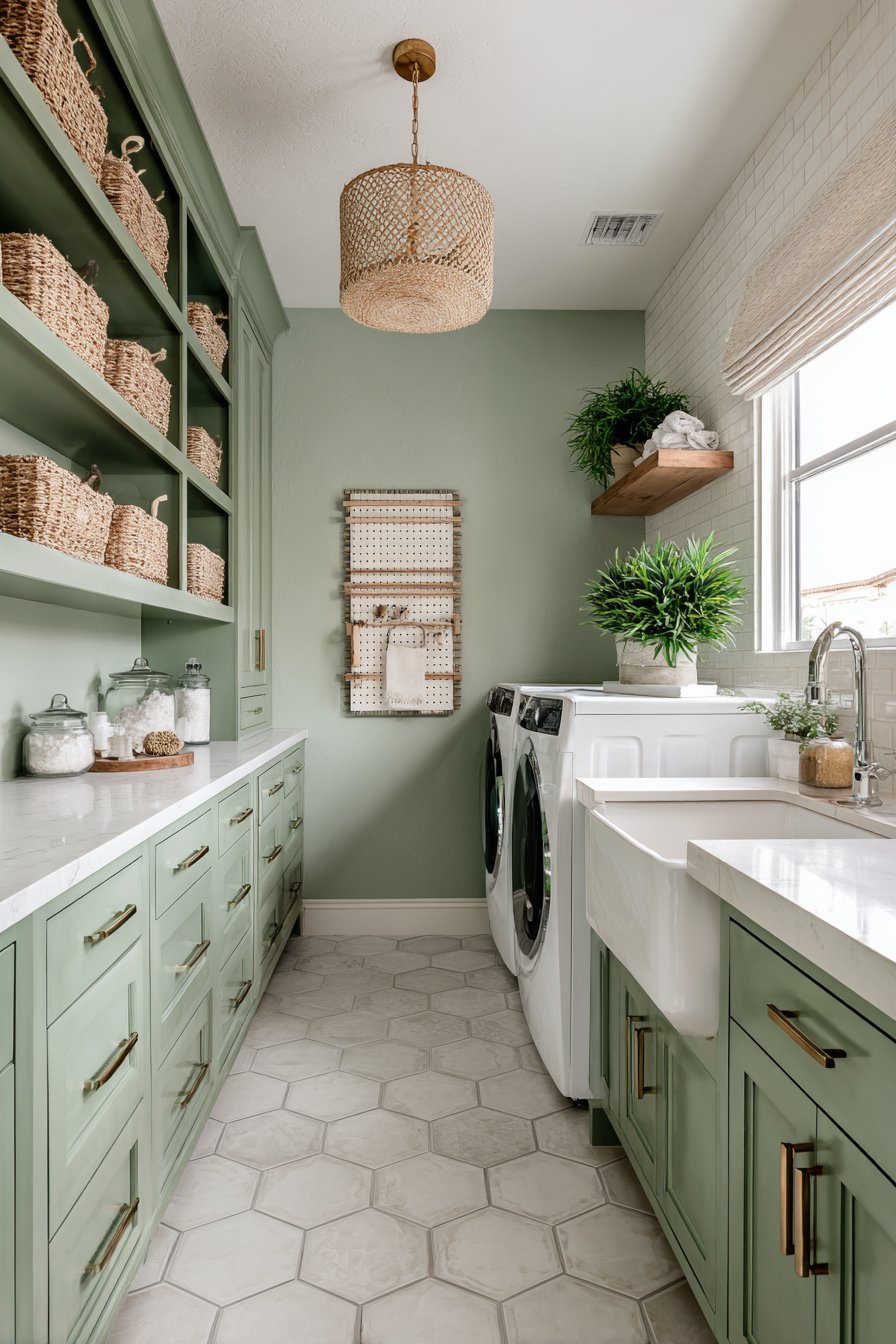
Material choices in these designs prioritize durability and authentic quality. Natural wood elements from butcher block to reclaimed barn wood add warmth. Stone surfaces including marble and quartz provide lasting beauty and practical functionality. Metal finishes from brushed brass to oil-rubbed bronze introduce necessary contrast and refinement.
Color theory principles guide successful green laundry room implementation. Complementary whites and creams prevent color overwhelm in compact spaces. Coordinating grey tones ground bolder green choices with neutral sophistication. Natural wood tones bridge green walls and neutral countertops harmoniously.
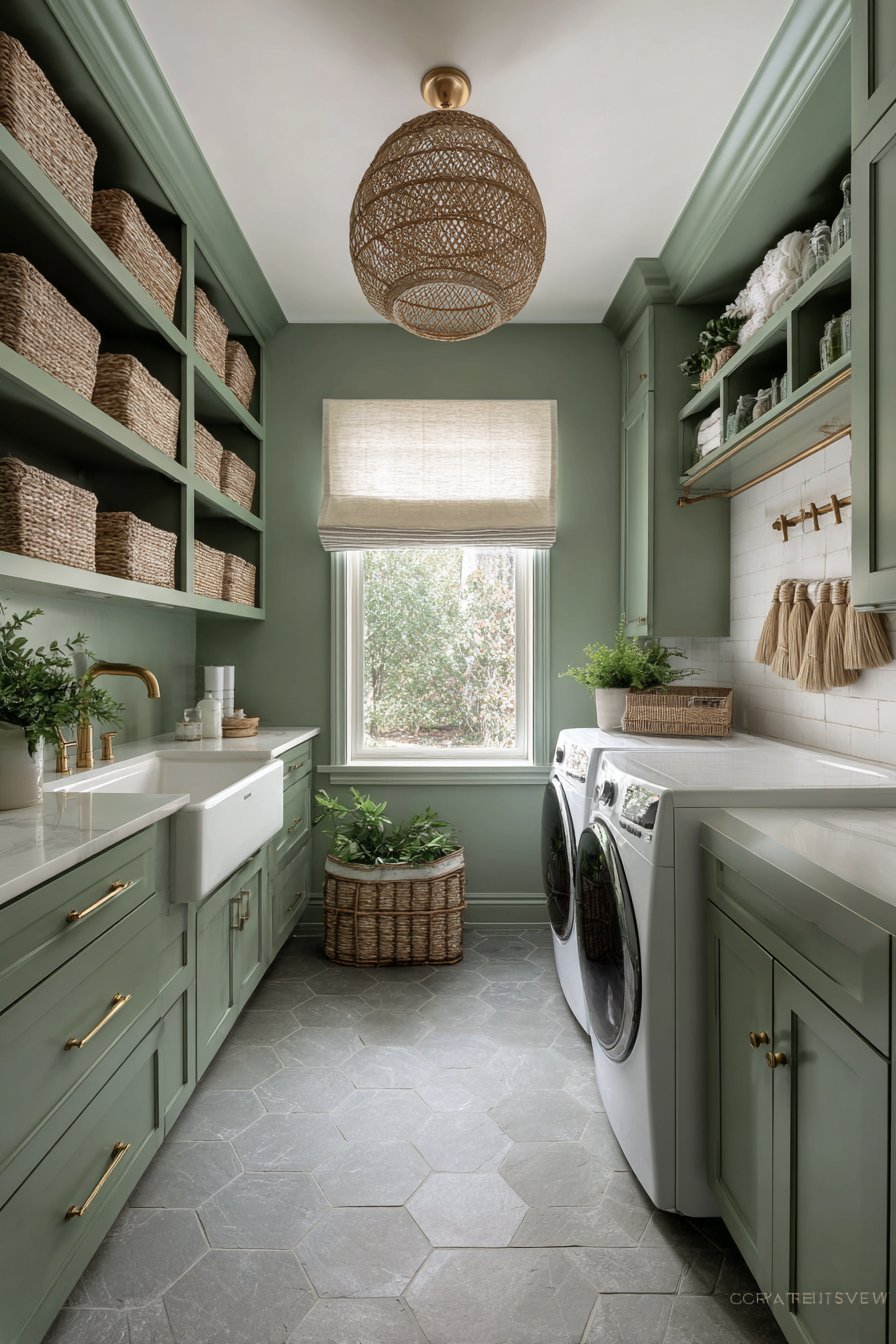
Spatial considerations influence design approaches significantly across these concepts. Vertical storage solutions maximize functionality in compact square footage. Open shelving prevents visual heaviness while maintaining accessible organization. Integrated fold-down elements preserve clear floor space when not actively needed.
Lighting strategies prove essential in optimizing green color presentation. Natural light changes green tones dramatically throughout the day. Layered artificial lighting ensures consistent color appearance and task functionality. Under-cabinet and recessed lighting prevents shadows in work areas critically.
Sustainability considerations align naturally with green color choices philosophically. Many designs incorporate reclaimed materials and vintage elements successfully. Energy-efficient appliances and LED lighting practically reduce environmental impact practically. The timeless color choice itself resists trend-driven renovation cycles economically.
Conclusion
Green laundry rooms transform functional necessity into aesthetic opportunity through thoughtful design. These twenty concepts demonstrate remarkable versatility across traditional, contemporary, and transitional styles. The color psychology benefits of green create calmer atmospheres for everyday household tasks.
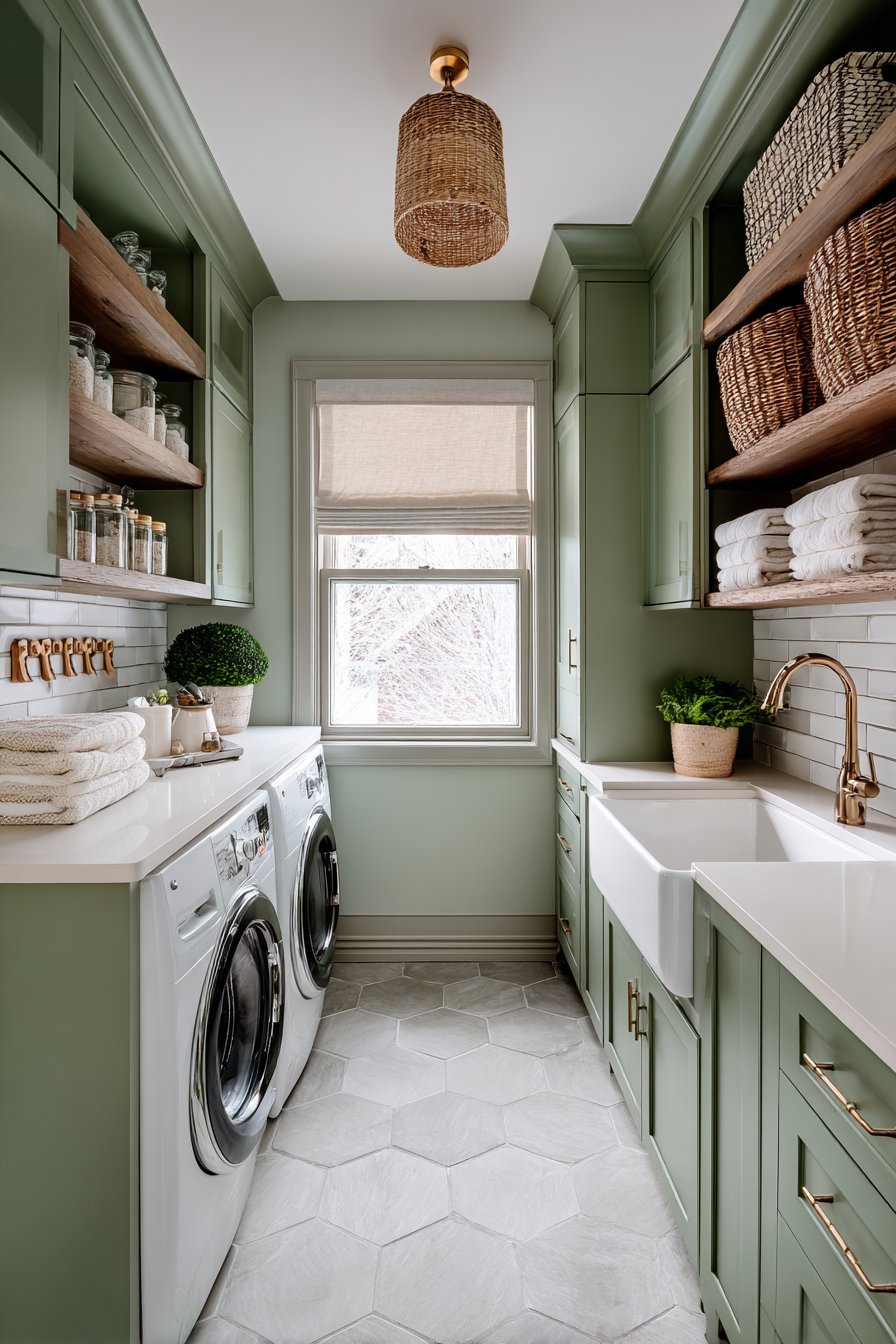
Key takeaways include balancing green intensities with neutral elements thoughtfully. Natural materials from wood to stone complement green tones beautifully. Proper lighting ensures consistent color presentation and practical task functionality. Quality durable materials justify investment in frequently-used household spaces.
Start your transformation by selecting green shades that complement the existing home aesthetics. Consider both natural and artificial lighting in your space before finalizing colors. Incorporate organizational solutions that maintain clean appearance between laundry sessions. Your dream green laundry room awaits through strategic planning and creative material selection.
