


The laundry room is one of the most overlooked spaces in home design. Yet it’s a room many people visit multiple times each week. When designed thoughtfully, it can shift from a dreaded chore zone into a genuinely uplifting environment. Green — in all its many shades — has emerged as the defining color choice for laundry rooms that feel alive, clean, and invigorating.
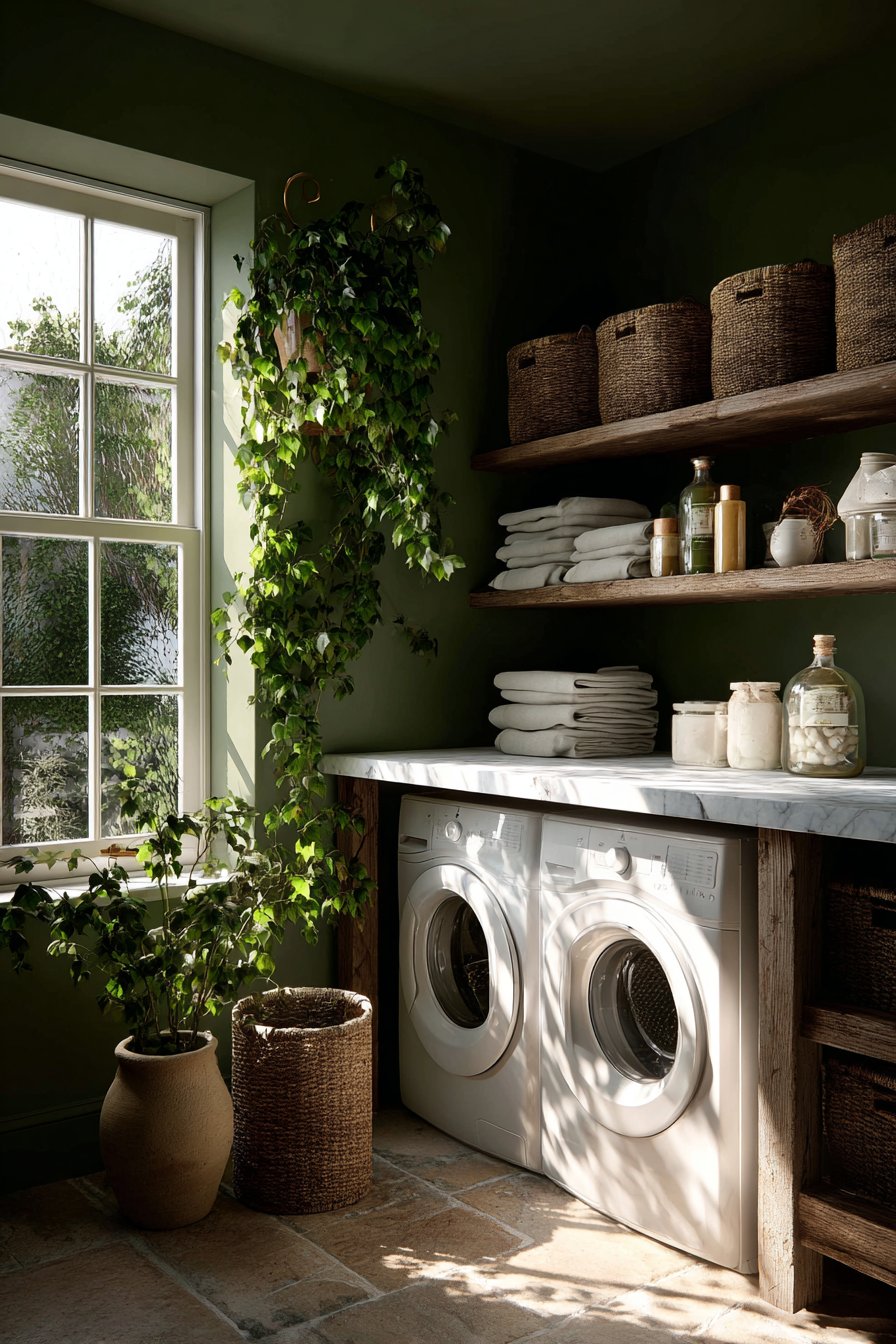
There’s a reason why green resonates so powerfully in utilitarian spaces. It carries deep psychological associations with nature, cleanliness, and renewal — all themes that align perfectly with what a laundry room represents. From sage to emerald, from mint to forest green, every shade brings its own personality while maintaining that unmistakable sense of freshness.
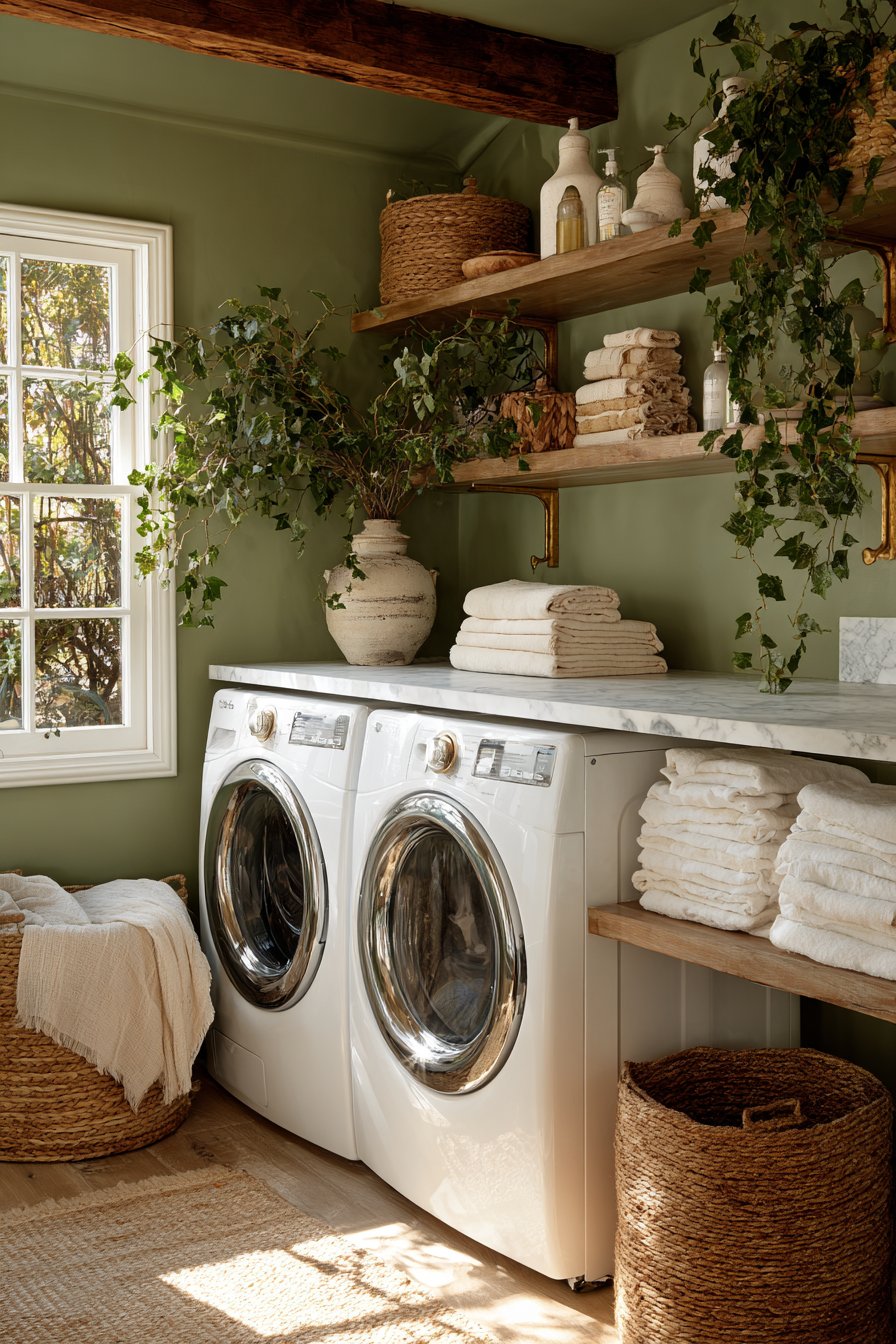
This article explores exactly why green laundry rooms work so well, and how you can harness this color’s energy to transform your own space. Whether you’re working with a compact closet laundry or a generous dedicated room, these insights will help you design a space that motivates and energizes rather than drains you.
1. The Psychology of Green in Interior Spaces
Color psychology plays a powerful role in how we experience any room. Green sits at the intersection of warm and cool tones on the color wheel, giving it a uniquely balanced energy. It doesn’t agitate the way red does, nor does it feel as sterile as stark white. Instead, green communicates calm vitality — an alert but relaxed state of mind.
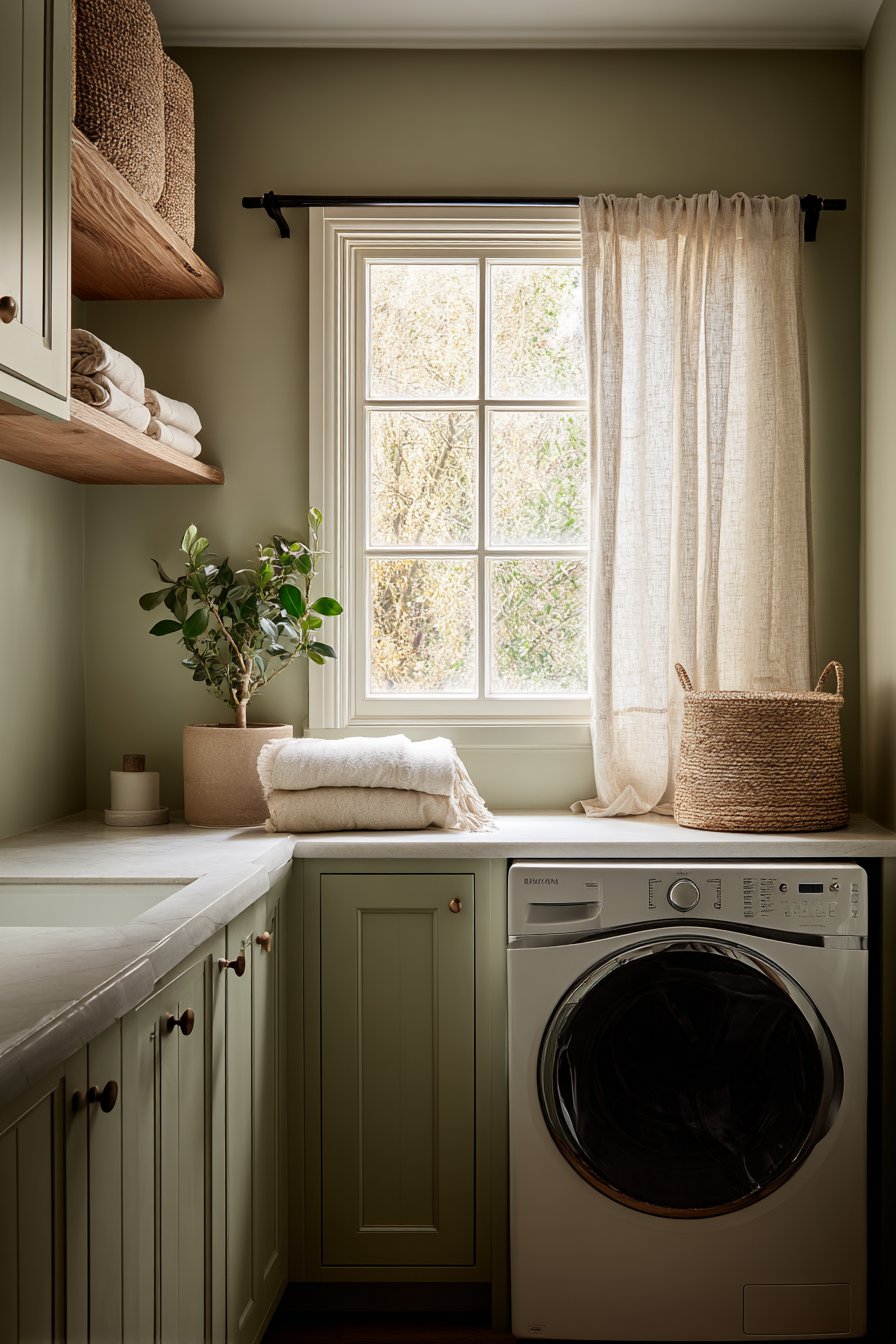
Research in environmental psychology consistently shows that green tones lower perceived stress and increase feelings of mental clarity. In spaces where you perform repetitive tasks — like sorting, folding, and washing — this is enormously beneficial. The color gently sustains your energy without overstimulation, making the work feel less burdensome.
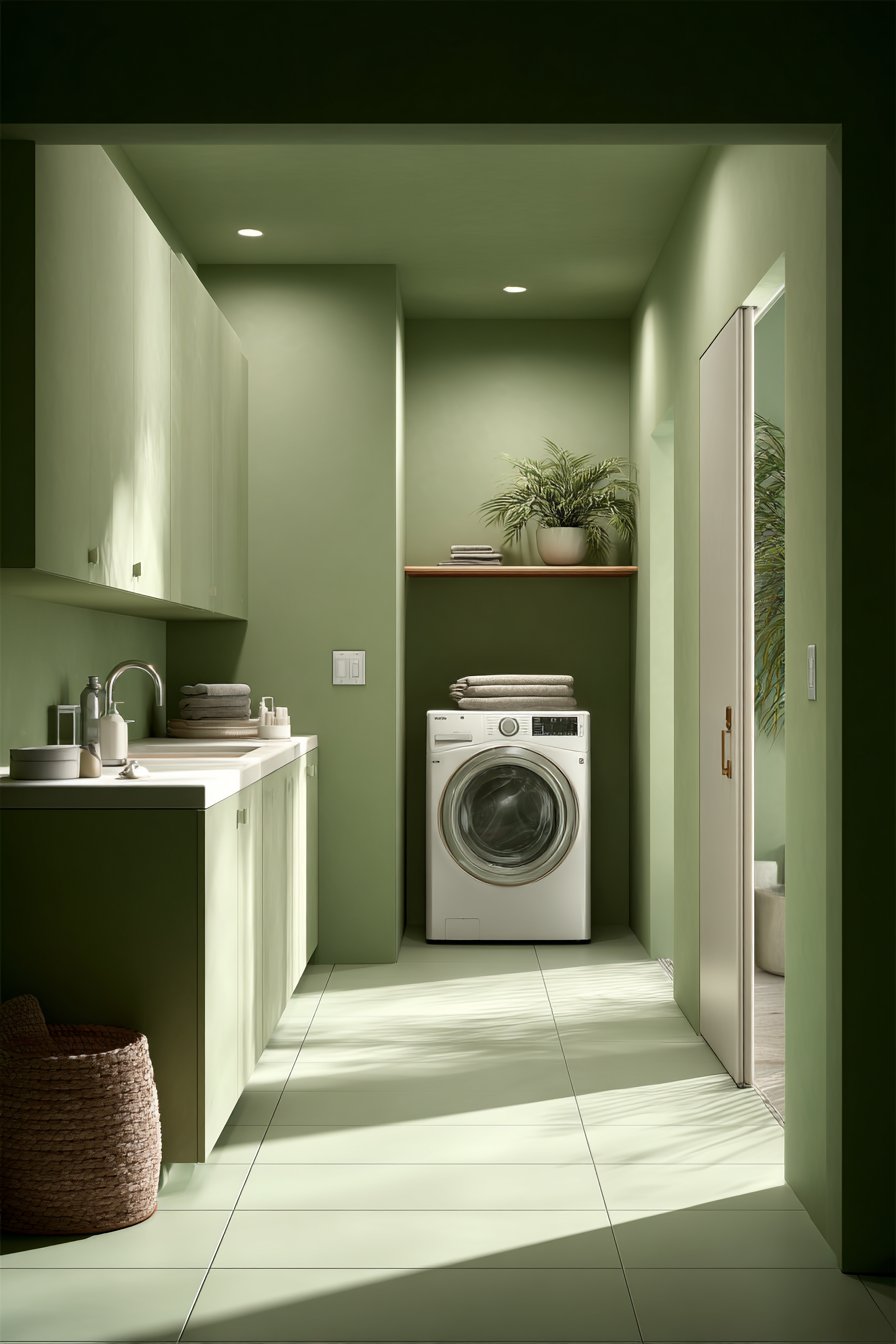
Green’s connection to the natural world is deeply encoded in human perception. Our ancestors spent millennia surrounded by green landscapes, and our brains still respond to the color with a sense of safety and abundance. Bringing that psychological comfort into a laundry room creates a subconscious association between the space and feelings of wellbeing.
- Choose soft sage or eucalyptus for a calming laundry environment that reduces task fatigue
- Use deeper greens like hunter or forest for grounding energy and a sense of focus
- Pair green walls with natural materials to reinforce the nature connection
- Avoid overly saturated greens in small spaces — muted tones breathe better
- Use green as an accent if full commitment feels too bold — even a painted door makes an impact
- Consider how your lighting affects green tones — warm bulbs shift green toward olive, cool bulbs toward teal
2. Green Mimics the Freshness of Clean Laundry
There is a deeply satisfying color harmony between green and the concept of cleanliness. Fresh linens, crisp whites, and the scent of clean clothes all feel naturally at home in a green environment. The color visually echoes the freshness that laundry is supposed to deliver.
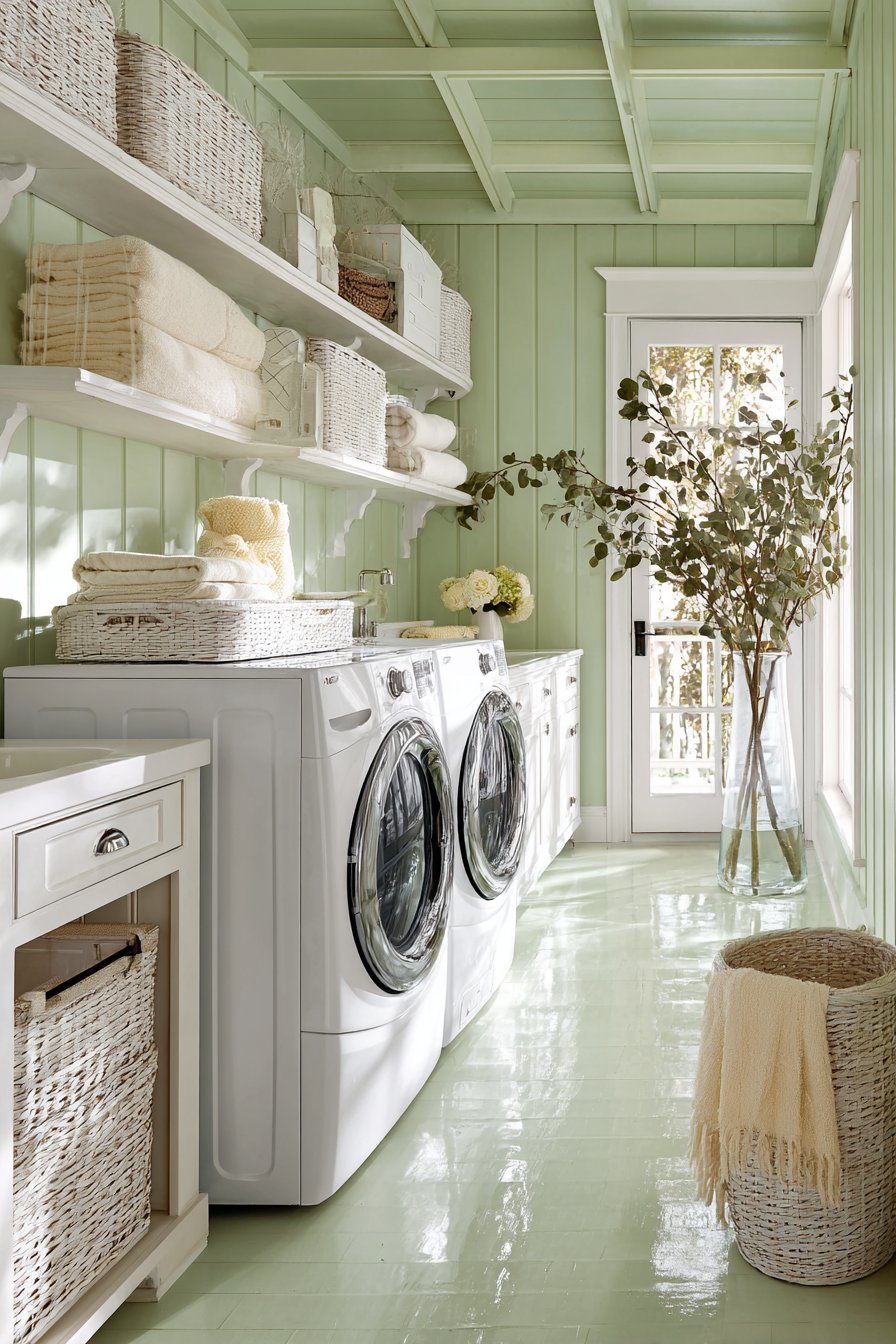
Mint and pale greens in particular evoke hygiene and purity without feeling clinical. Unlike the cold sterility of a pure white or grey laundry room, green adds warmth and life while maintaining that essential sense of cleanliness. It’s the perfect backdrop for gleaming white appliances and pristine folded clothes.
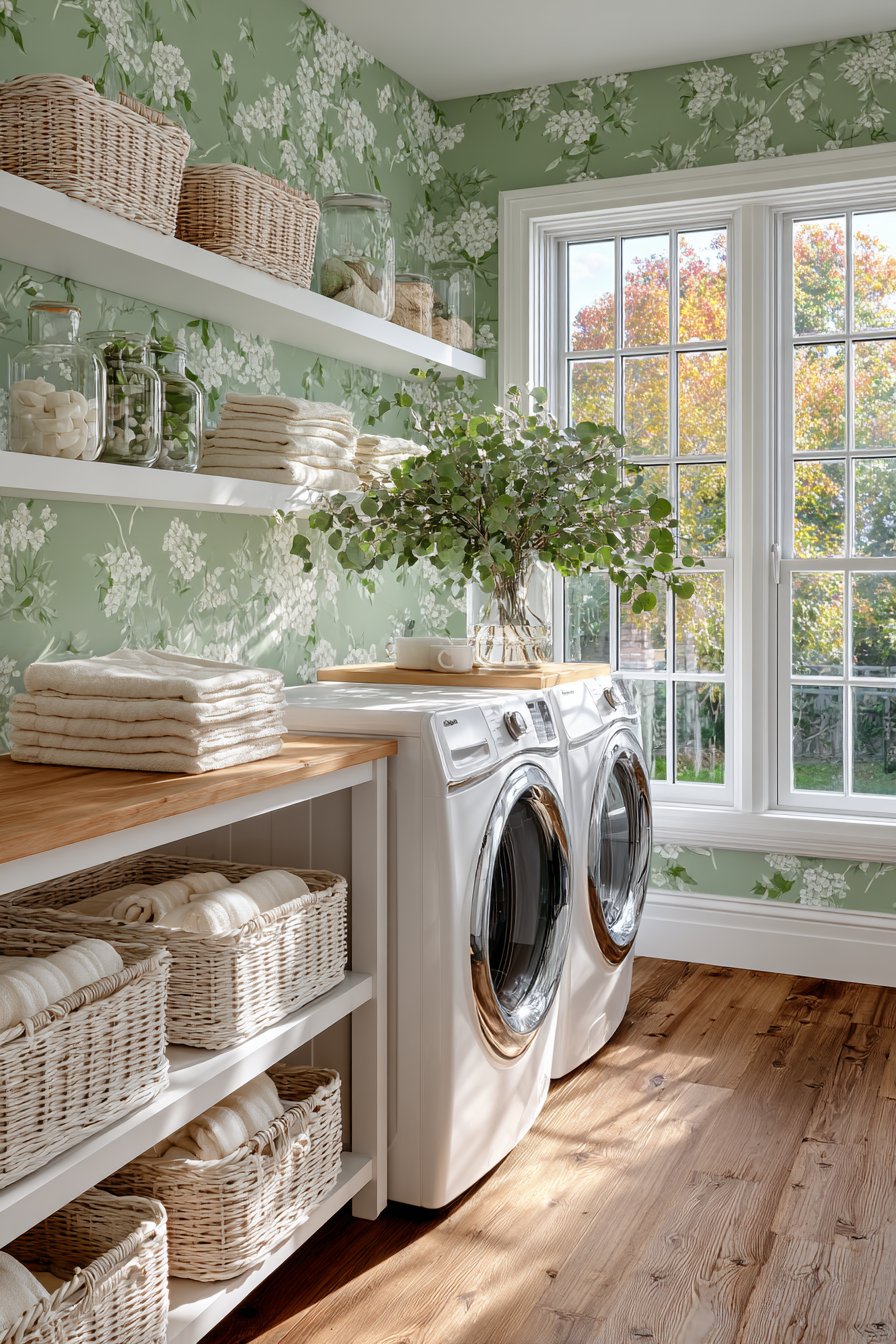
This visual synergy between green and laundered fabrics also has a practical benefit. Whites look exceptionally bright against green walls, and neutral tones like linen, cream, and ivory appear richer and warmer. Every load of folded laundry becomes a satisfying visual display against this backdrop.
- Use mint or pale celadon on walls to maximize the fresh, clean aesthetic
- Let white appliances and cabinetry contrast beautifully against your green palette
- Add white or cream textiles — baskets, towels, ironing covers — to amplify the clean contrast
- Install bright task lighting to keep greens looking vibrant and fresh, not dark
- Use glossy or semi-gloss paint finishes in green for a crisp, clean surface that’s also easy to wipe down
- Hang eucalyptus or herbs near the space to reinforce the multi-sensory freshness experience
3. How Natural Light Transforms Green Walls
The relationship between natural light and green paint is one of the most dynamic in interior design. No other color shifts and breathes quite the way green does throughout the day. In a laundry room with even a modest window, green walls become a living, changing element of the space.
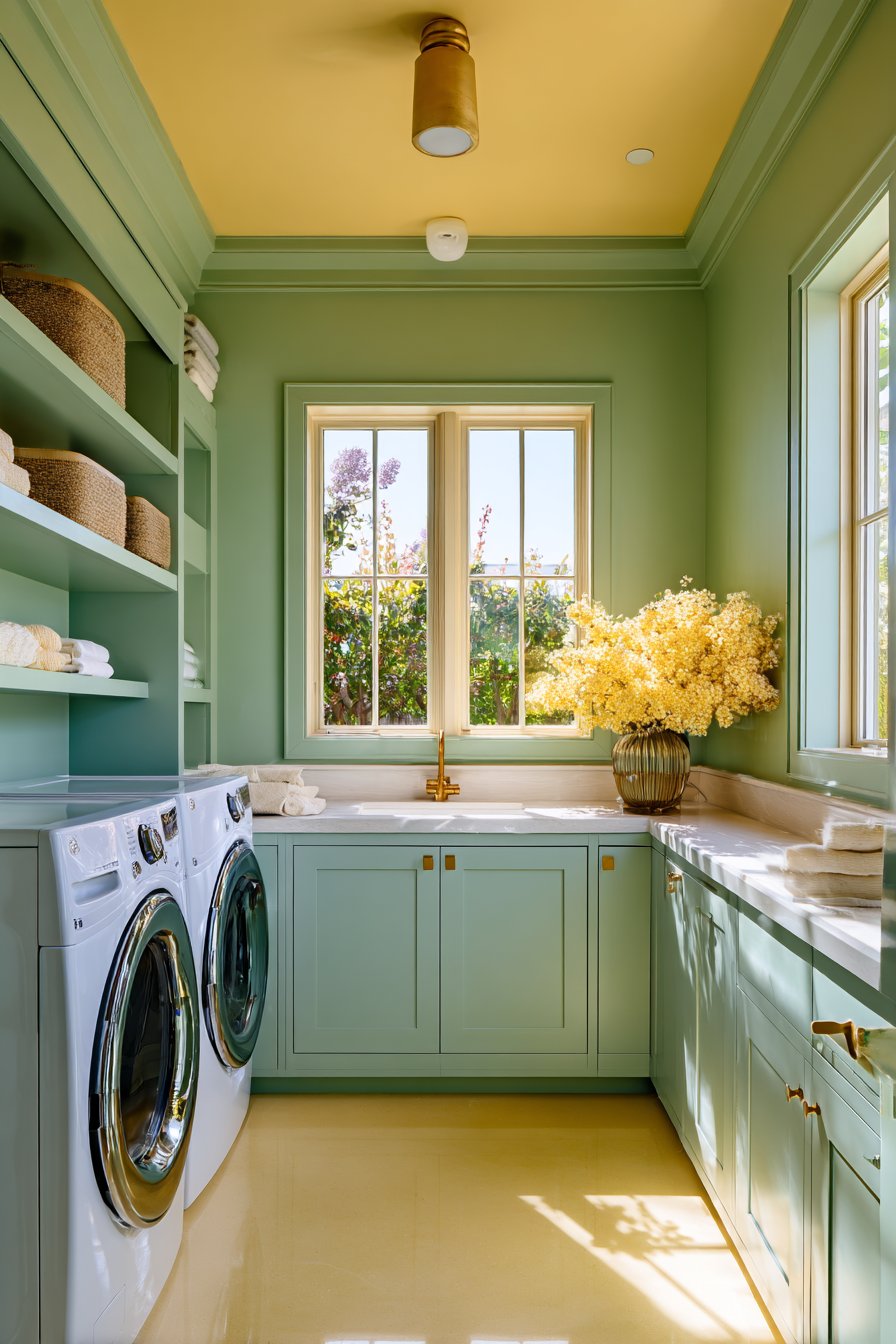
In morning light, cooler greens take on a crisp, invigorating quality that sets a productive tone for the day’s chores. As afternoon light warms, the same paint can shift toward golden-green, creating a cozy, nurturing atmosphere. This variability keeps the room feeling dynamic rather than static and monotonous.
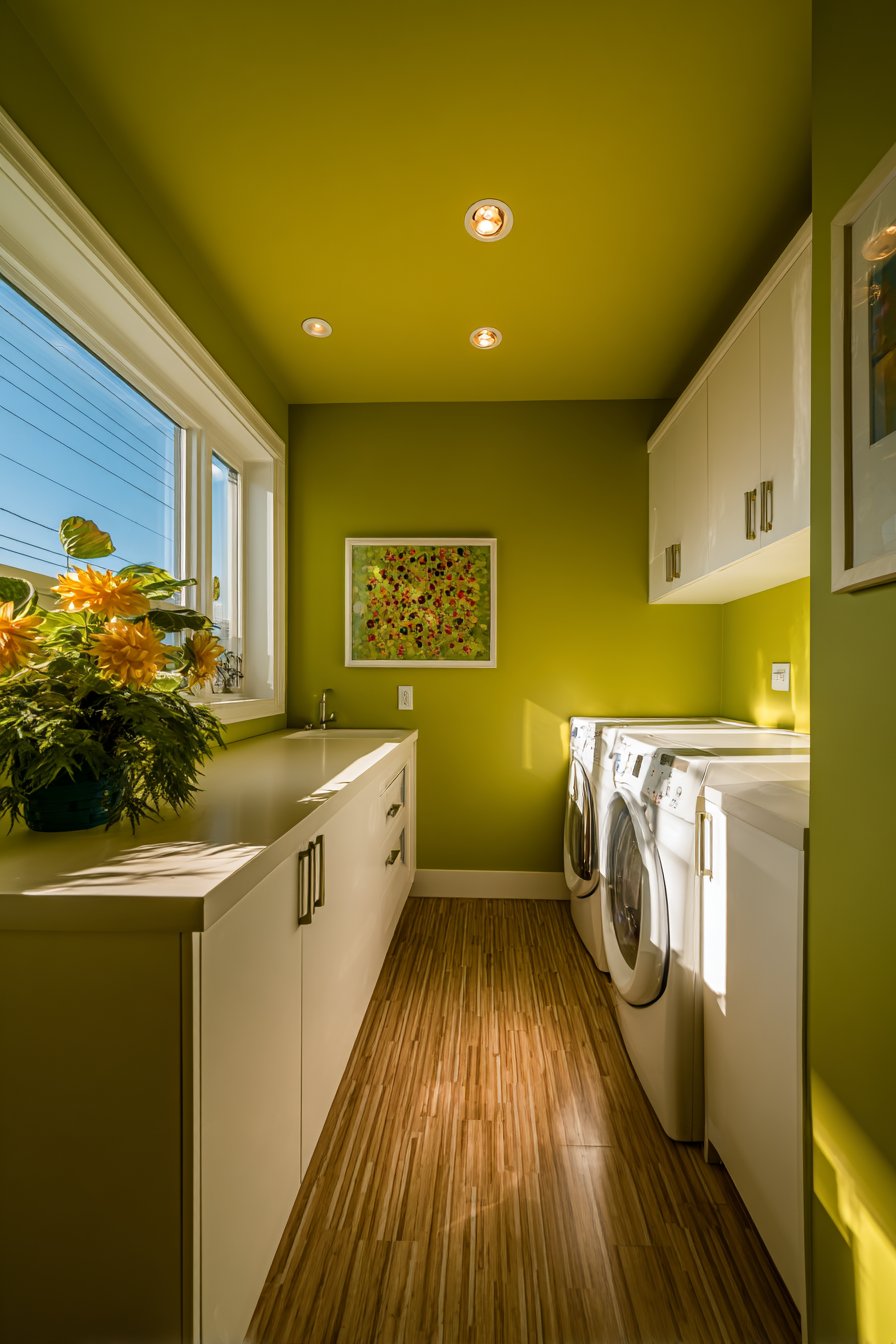
If your laundry room lacks natural light, choosing the right green shade becomes even more critical. Warmer greens with yellow undertones — like sage or olive — hold up better under artificial light. Cooler greens can grey out or look murky under incandescent lighting, so warm LED bulbs are essential in windowless laundry spaces.
- Place a mirror opposite any window to double the natural light and make green walls glow
- Choose warm-toned greens like sage, avocado, or moss for rooms with limited natural light
- Test paint swatches at different times of day before committing to a shade
- Install under-cabinet lighting to illuminate green lower walls and prevent shadowy corners
- Use daylight-spectrum bulbs (5000K–6500K) to maintain the fresh, vibrant quality of cooler greens
- Layer multiple light sources — overhead, task, and accent — for dimensional lighting that showcases your green walls
4. Green Creates a Biophilic Connection in a Windowless Room
Not every laundry room has a garden view or even a window. Yet biophilic design principles — the concept of connecting interior spaces to nature — are especially powerful in rooms we’d otherwise find uninspiring. Green walls are one of the most effective tools for creating that connection without requiring architectural changes.
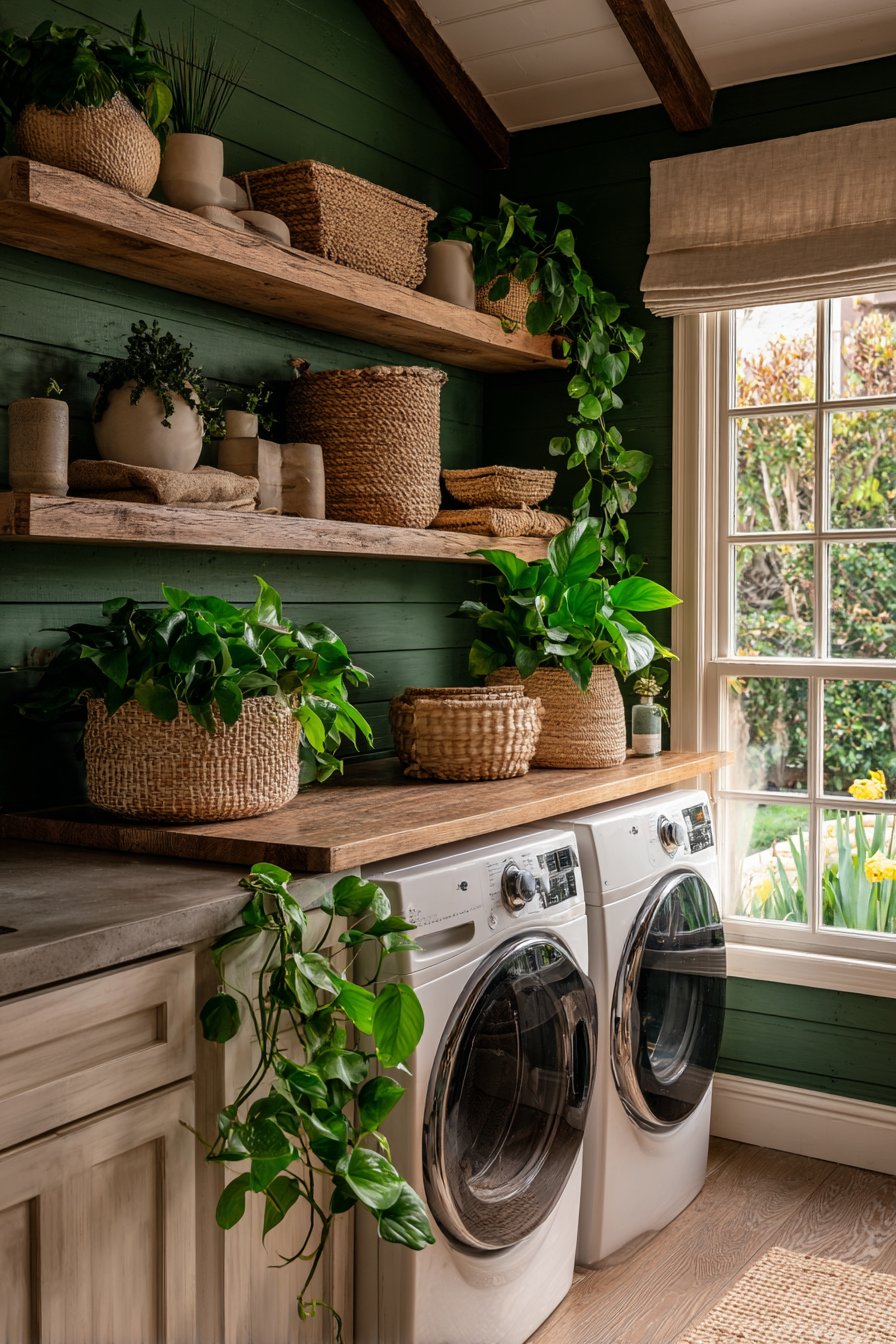
When surrounded by green, the brain interprets the environment through its natural memory bank. Even in a basement laundry room with no daylight, a deep sage or warm forest green wall can trigger the same restorative psychological response as looking at a garden. This is the power of color as architecture — transforming perception without changing structure.
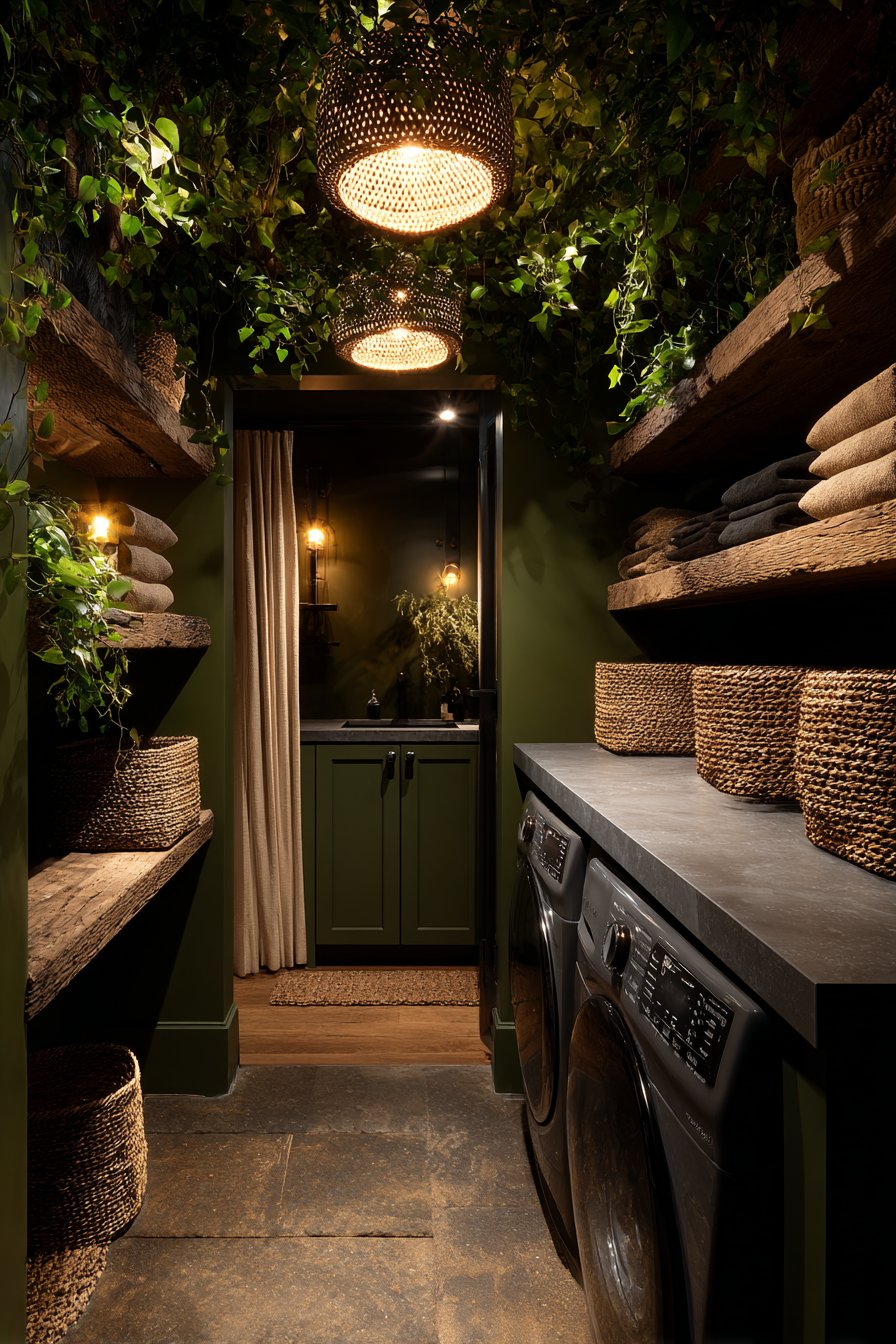
Amplify this biophilic effect by layering green with other nature-inspired elements. Woven baskets in jute or seagrass, wooden shelving, stone countertops, and potted plants (even low-light varieties) all reinforce the connection to the natural world. Together with green walls, these elements create an environment that feels organically alive.
- Hang a trailing pothos or heartleaf philodendron — both thrive in humid laundry rooms with low light
- Use natural wood shelving or floating oak boards to warm up green walls
- Choose woven baskets in natural materials for laundry sorting and storage
- Add a stone or concrete countertop above your washer/dryer for a grounded, earthy feel
- Use linen curtains in cream or terracotta to soften green walls and add natural texture
- Install a small herb shelf near a window — herbs respond to laundry room humidity and reinforce the fresh theme
5. The Energizing Effect of Saturated Green Accents
Not everyone wants to commit to full green walls. Saturated accent greens offer a powerful alternative — delivering all the energizing impact of the color through strategic placement rather than full coverage. This approach works especially well in small laundry rooms where bold wall color might feel overwhelming.
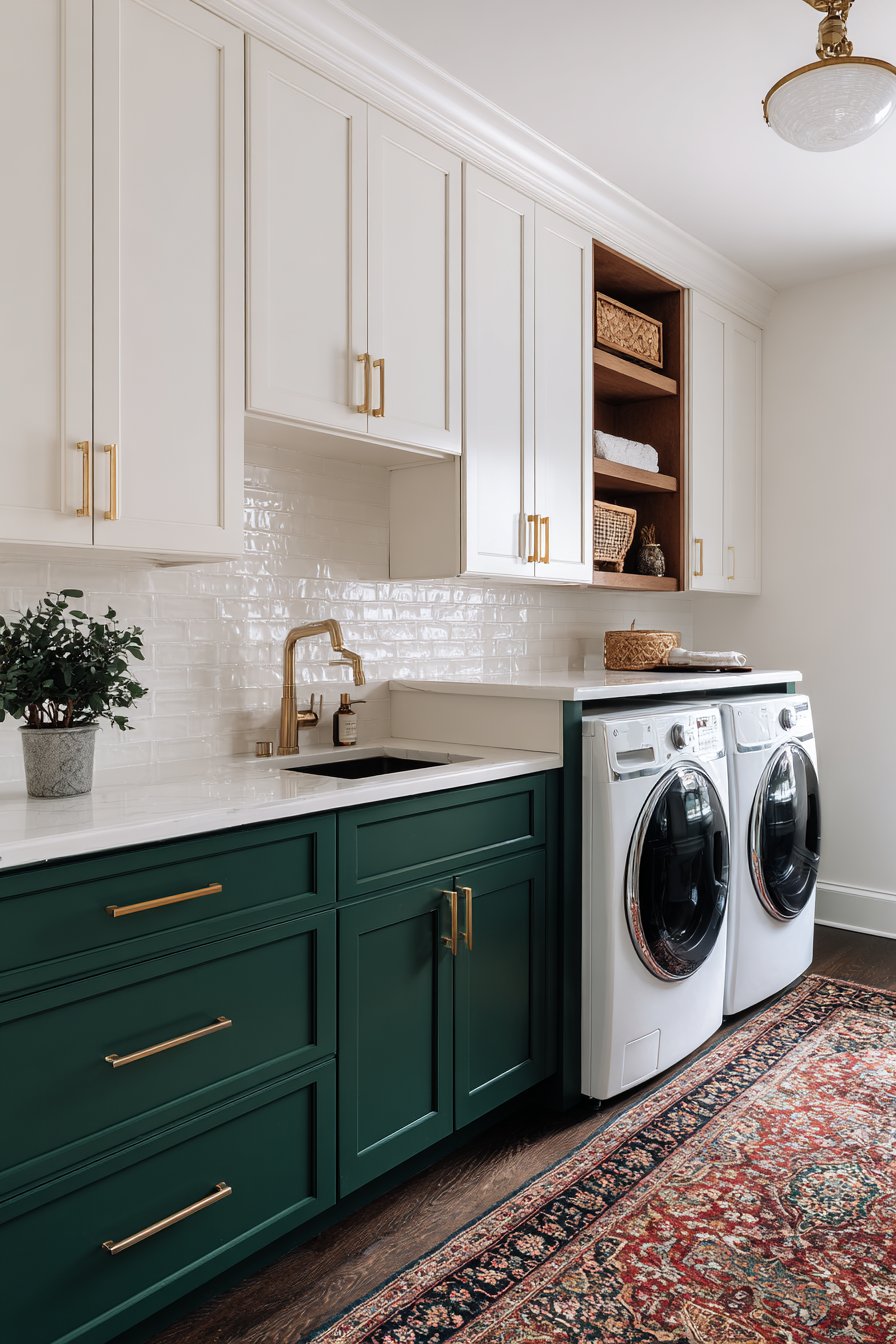
A single statement green element — a painted cabinet front, a tiled backsplash, or a bold runner rug — can anchor the entire room’s palette. Saturated shades like emerald, jade, or deep teal bring a jewel-like richness that elevates even the most utilitarian laundry space into something special.
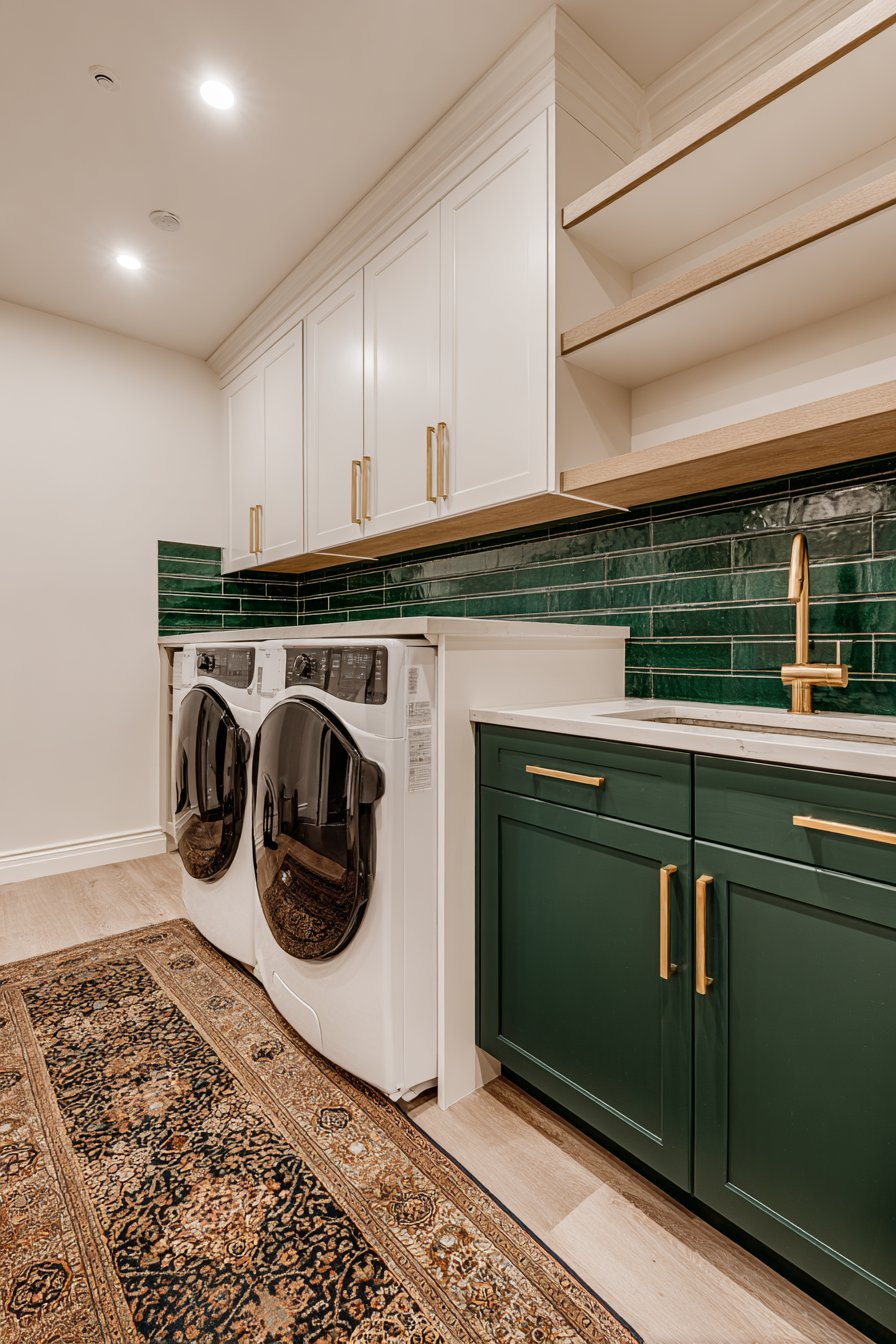
The strategic use of high-saturation green also creates a focal point that draws the eye and adds depth to the room. Pair it with brass or gold hardware, white walls, and warm wood accents for a combination that feels both modern and timeless. The contrast between saturated green and neutral surroundings amplifies the energizing quality of the color.
- Paint lower cabinets in deep emerald or jade while keeping upper units white for balance
- Install a green subway tile backsplash between countertop and upper cabinets for a classic, vibrant look
- Use a bold green runner rug to inject color and comfort underfoot without committing to paint
- Add brass or matte gold hardware on green cabinets for a sophisticated, high-energy palette
- Frame a green laundry room door in the same shade for a design-forward statement from the hallway
- Use saturated green in small doses on open shelving backs to create depth and dimension
6. Sage Green: The Perfect Balance of Calm and Energy
Among all the greens available to designers, sage green has achieved near-universal acclaim in contemporary interiors. Its appeal lies in a perfect formula: enough grey to keep it sophisticated, enough green to retain warmth, and enough muted quality to make it effortlessly liveable. In a laundry room, it performs exceptionally well.
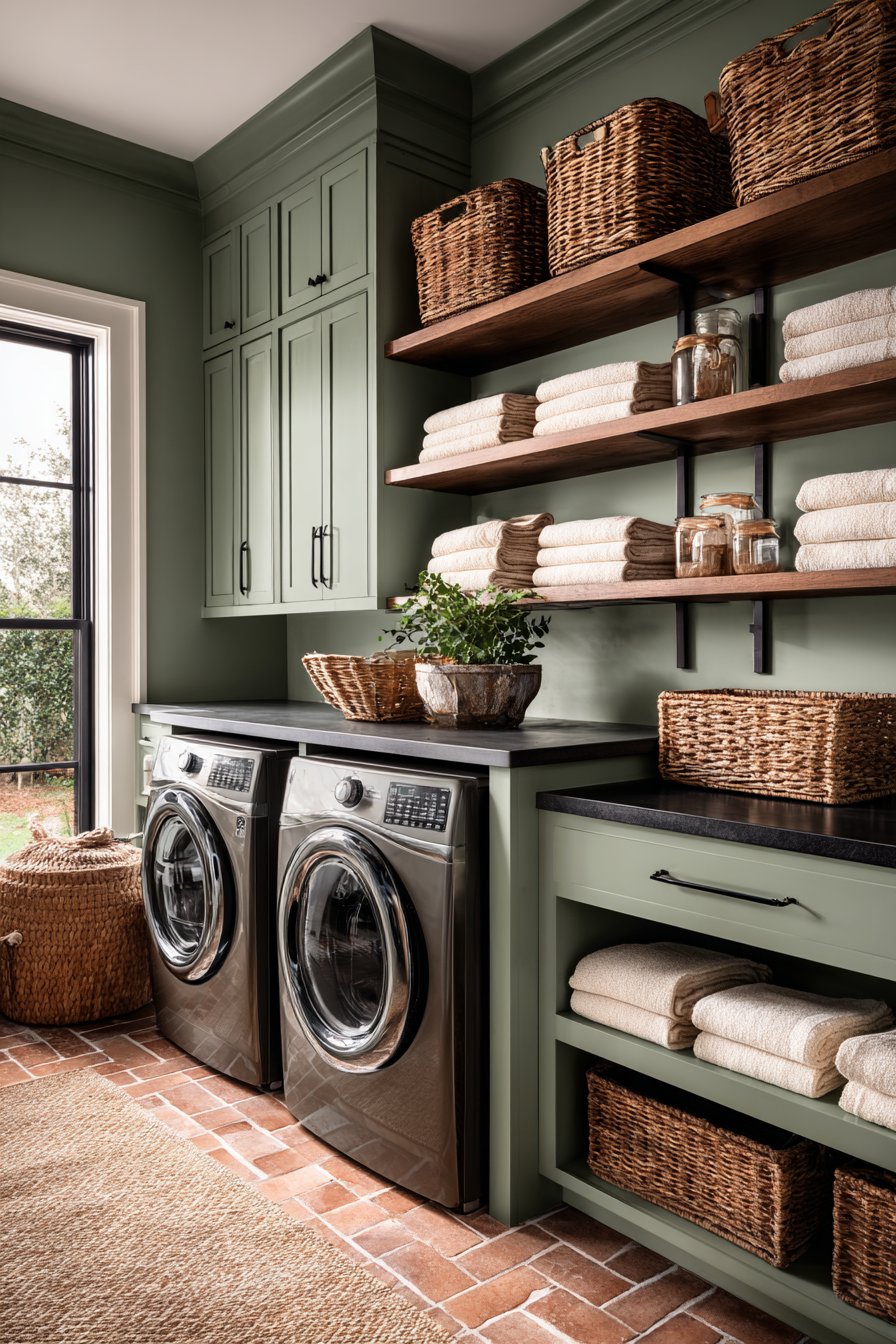
Sage green works in virtually every light condition, pairs with almost every material, and suits both traditional and modern design styles. Its muted warmth makes it feel welcoming without being aggressive — it energizes gently, like a slow morning coffee rather than a jolt of espresso. This makes it ideal for a room you enter when already mid-task.
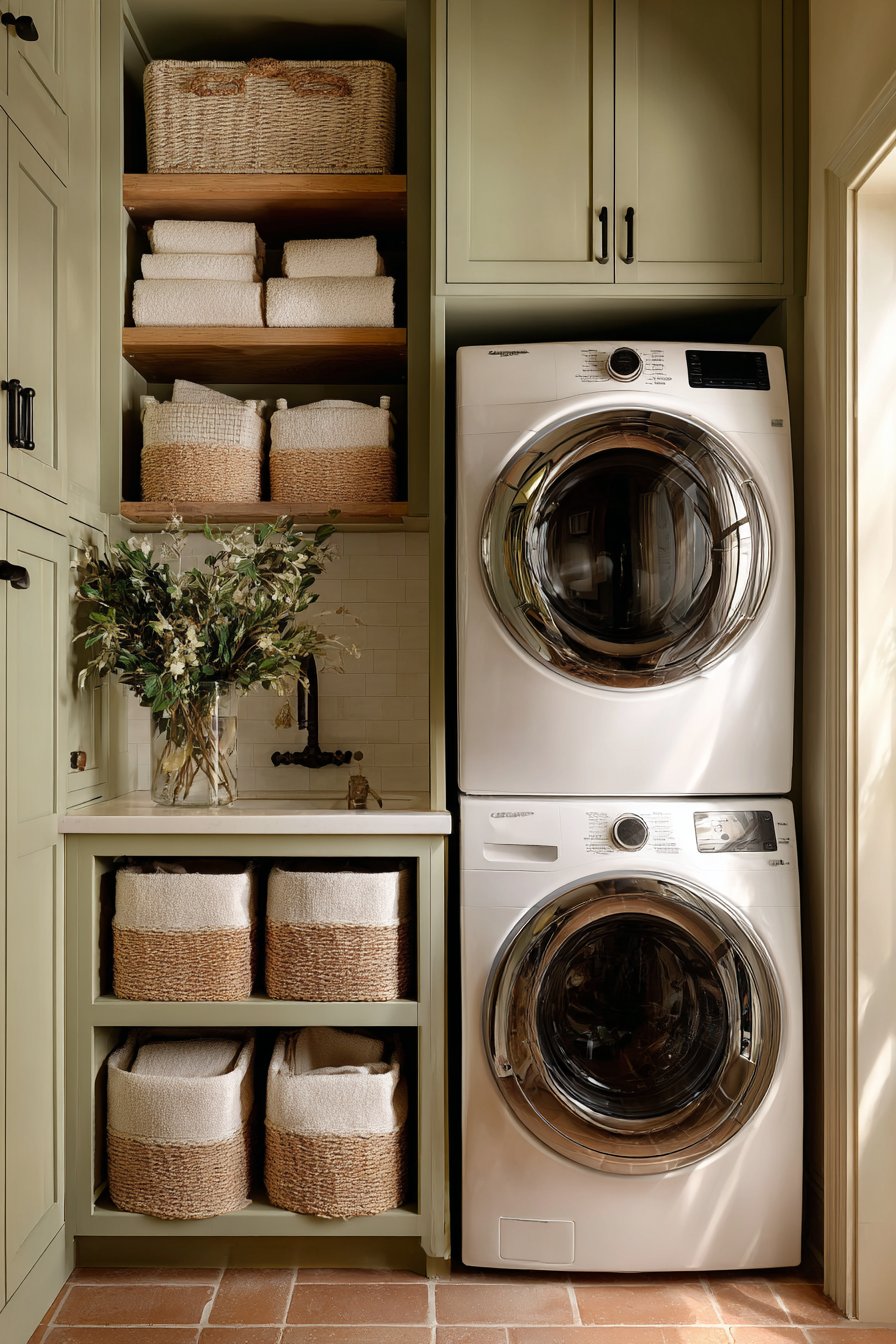
The versatility of sage also means it can support a wide range of accent colors. Terracotta and rust tones add earthy warmth. Crisp white and cream create a fresh, airy feel. Black hardware and fixtures add modern sharpness. Navy or deep blue accents create an unexpected but sophisticated contrast.
- Use Benjamin Moore’s Aganthus Green or Sherwin-Williams Softened Green as reliable sage starting points
- Pair sage walls with terracotta tile floors for a warm, Mediterranean-inspired palette
- Add matte black fixtures and hardware for a contemporary edge against sage’s softness
- Combine sage with open wooden shelving for a Scandinavian-inspired, organic look
- Layer cream linens and woven baskets for a cottagecore aesthetic that maximizes sage’s warmth
- Use full-spectrum sage — wall paint, cabinetry, and trim in the same family — for a cohesive tonal look
7. Green Tile: Bringing Texture and Vibrancy to Laundry Walls
Paint is the most obvious vehicle for green in a laundry room, but green tile opens up an entirely different dimension of design possibility. Tiles add texture, depth, and durability — qualities that are especially valuable in a high-humidity, high-activity space like the laundry room.
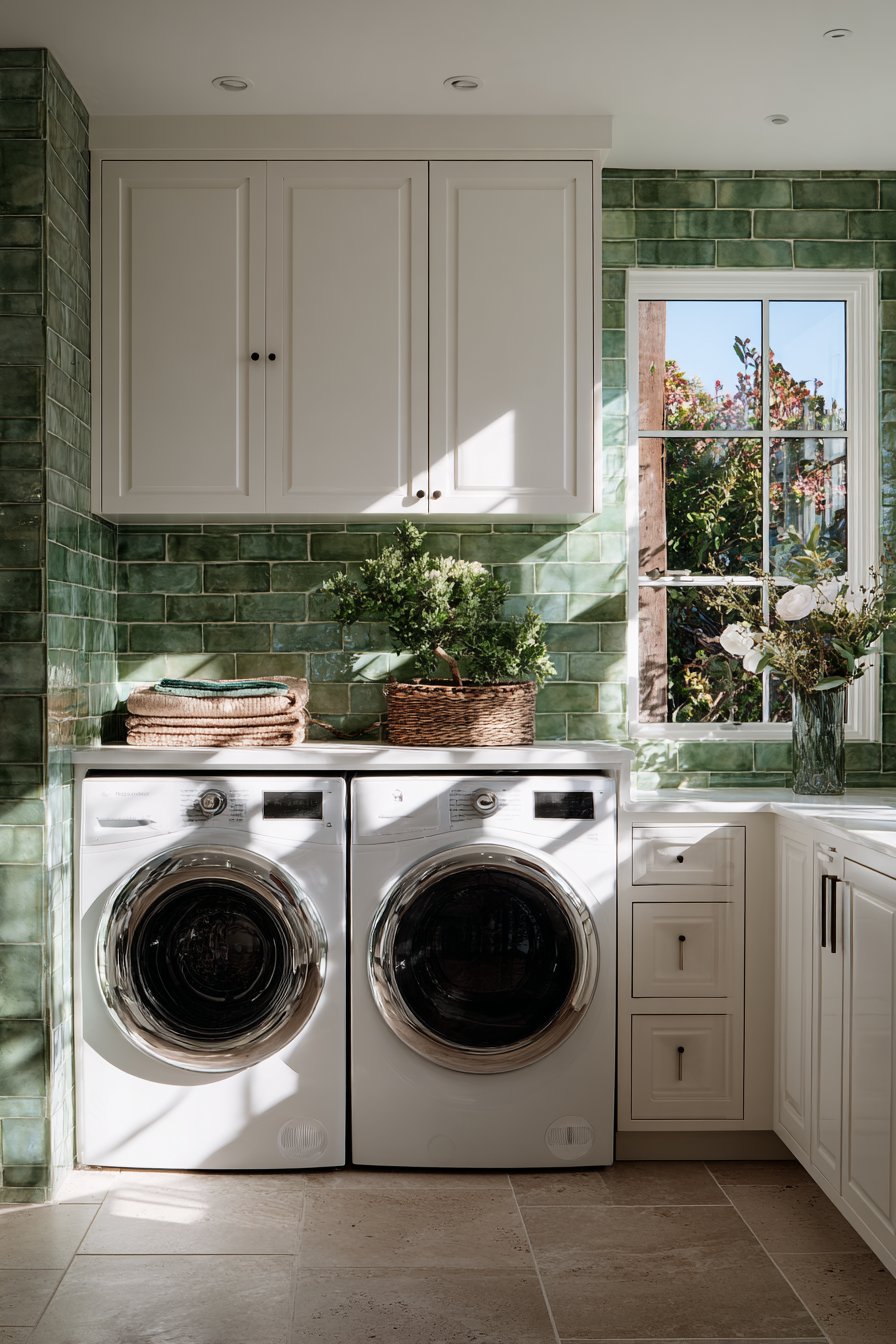
Glossy green subway tiles in mint or seafoam evoke vintage charm and reflect light beautifully. Matte green zellige or handmade tiles bring artisanal warmth and an organic irregularity that makes walls feel like living surfaces. Larger format tiles in sage or olive create a sleek, contemporary look with fewer grout lines to maintain.
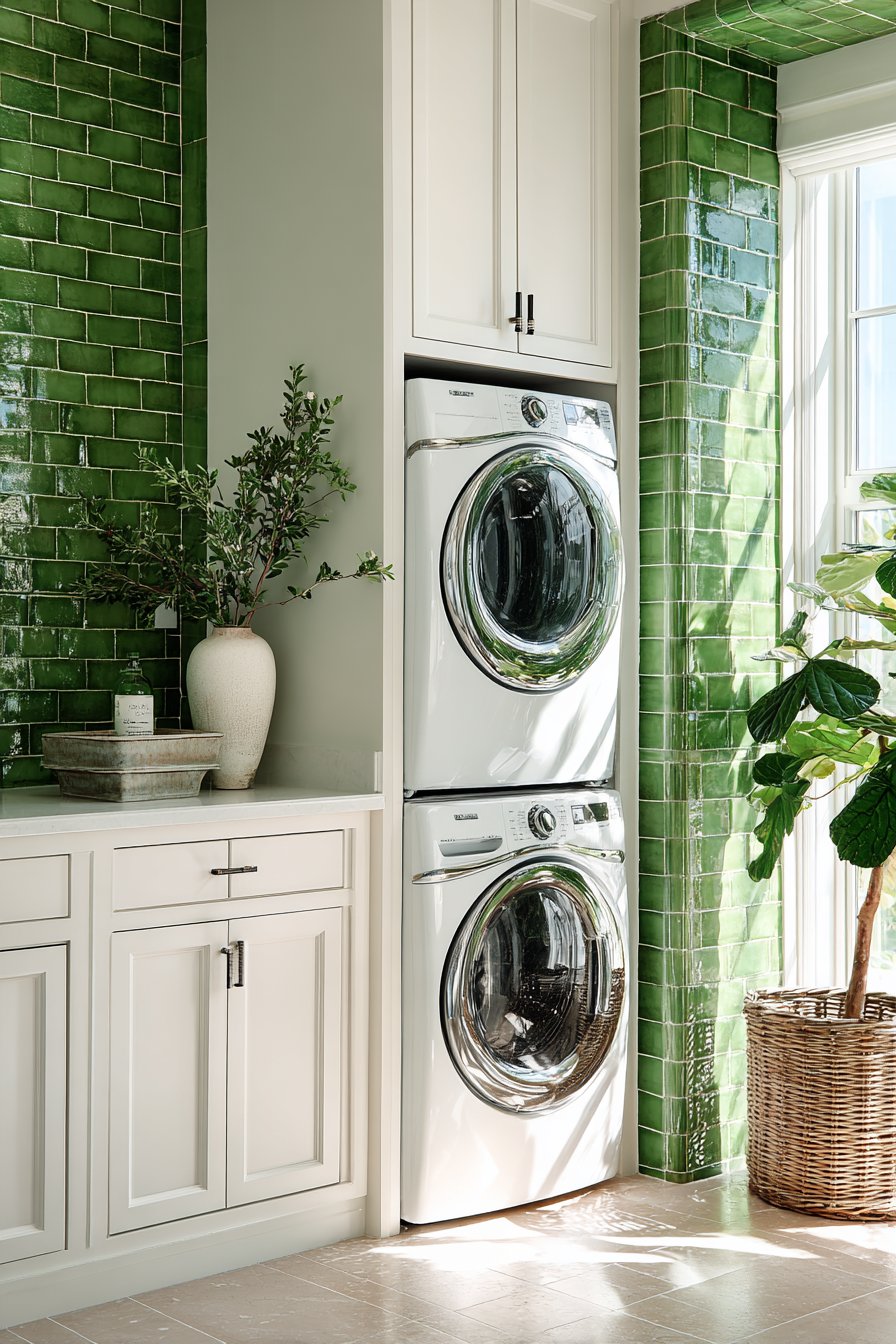
Green tile also provides the practical advantage of a fully washable surface. In a room where water, detergent, and lint are constant companions, having a tiled wall section means less repainting and more long-term durability. Even a tiled backsplash above the machines makes a meaningful difference in both aesthetics and maintenance.
- Install green zellige tiles in a full wall behind the washer and dryer for a striking focal point
- Use classic mint subway tile in a brick pattern for a retro-inspired, timeless look
- Choose large-format sage or moss tiles for a sleek, modern aesthetic with minimal grout
- Combine a tiled lower half (in green) with painted upper walls (in white) for a two-tone approach
- Use hexagonal green floor tiles for a bold, graphic statement underfoot
- Seal grout in tile installations to maintain the clean, fresh look over time without discoloration
8. Pairing Green With White for Maximum Freshness
The combination of green and white is one of the most enduringly popular in interior design — and nowhere does it perform better than in the laundry room. White amplifies green’s freshness, provides visual relief, and creates the crisp, clean-feeling environment that laundry spaces demand.
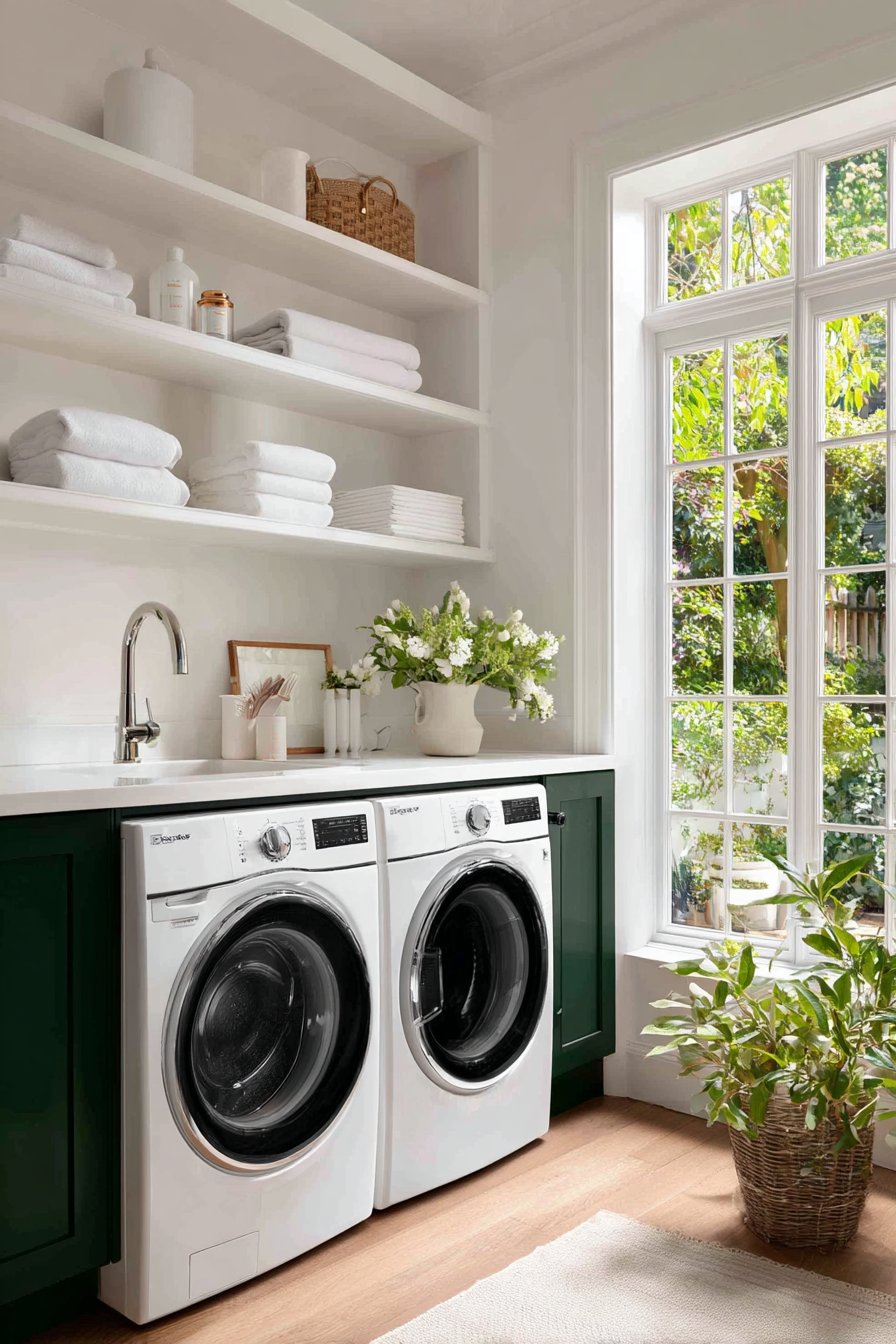
The ratio of green to white matters enormously. A dominant white room with green accents feels airy and spa-like. A dominant green room with white trim and fixtures feels bold and immersive. Both work, but they deliver very different experiences. Consider your room’s natural light and size when deciding on the ratio.
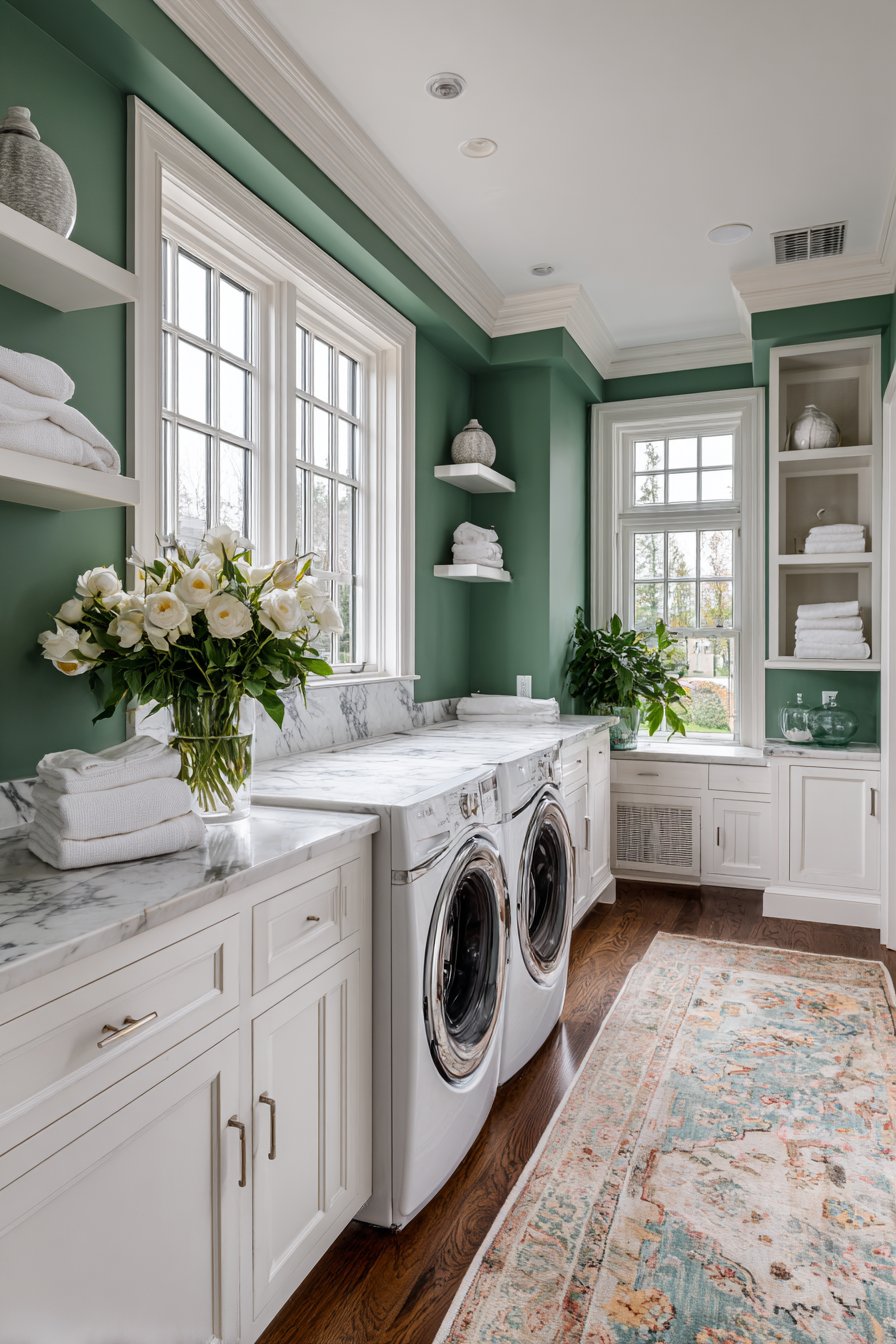
White appliances — historically the standard for washers and dryers — look exceptional against green walls. The visual pairing feels intentional and cohesive, as though the entire room was designed as a complete composition. Even if you have older white appliances, repainting your walls green can make them feel like a deliberate design choice rather than a default.
- Use crisp white trim, molding, and ceiling to keep green walls from feeling heavy
- Choose white or off-white cabinetry above appliances when walls are in deeper greens
- Install white open shelving against green walls for a high-contrast, graphic storage solution
- Use white grout with green tile to emphasize the individual tile shapes and enhance the fresh look
- Add a white farmhouse sink to a green laundry room for a classic, charming combination
- Keep folded white towels or linens on display — they become part of the design against a green backdrop
9. Using Green to Make a Small Laundry Room Feel Larger
Conventional design wisdom often advises using light colors in small spaces to make them feel larger. But green — particularly in the right shade and finish — can work beautifully in compact laundry rooms without feeling claustrophobic. The key is understanding how different greens affect perceived space.
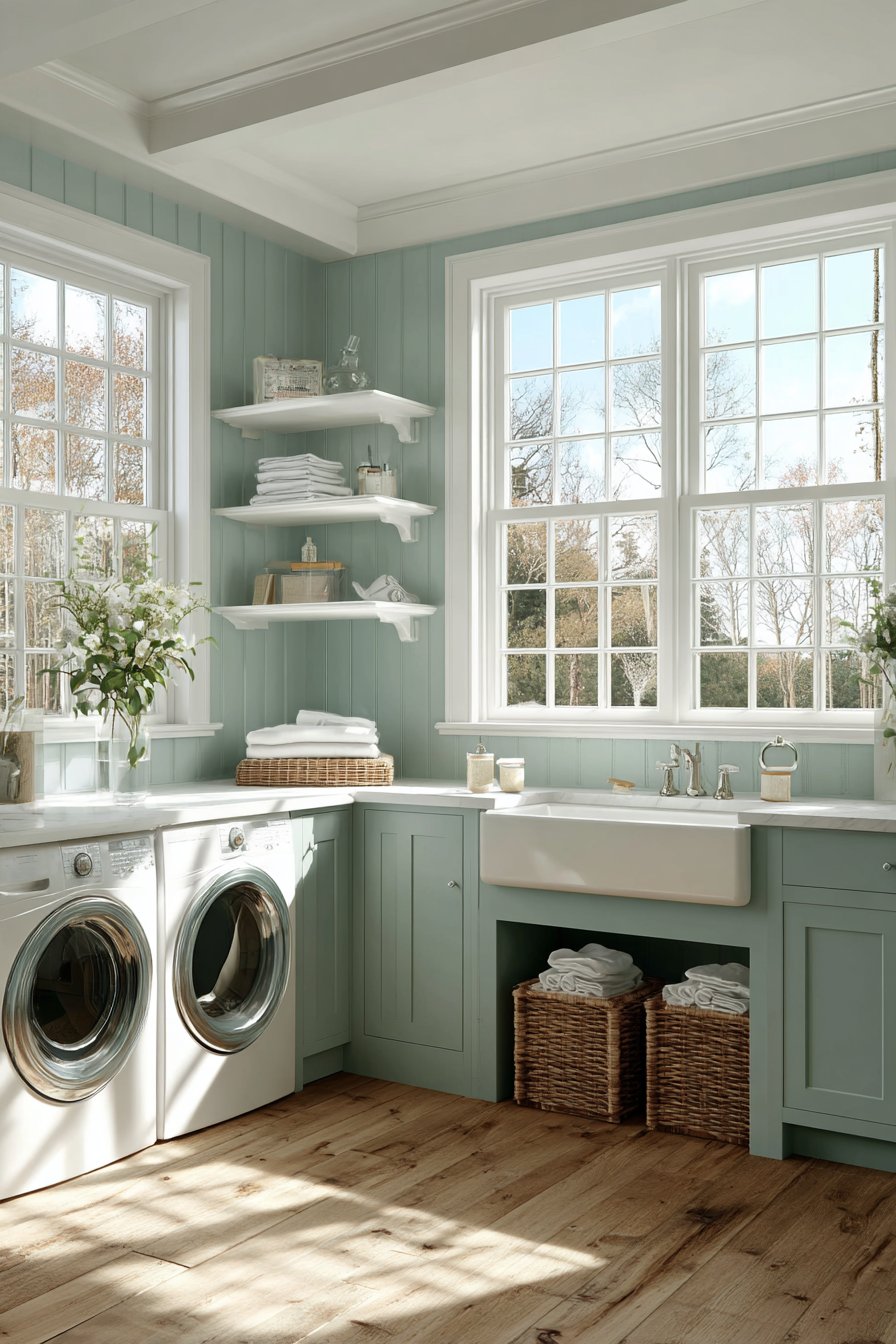
Light, muted greens in a high-reflectance finish bounce light around a small laundry room effectively, maintaining openness while adding color. Painting all four walls, the ceiling, and even the trim in the same soft green creates a tonal envelope that actually makes rooms feel larger by eliminating the visual interruption of contrasting trim.
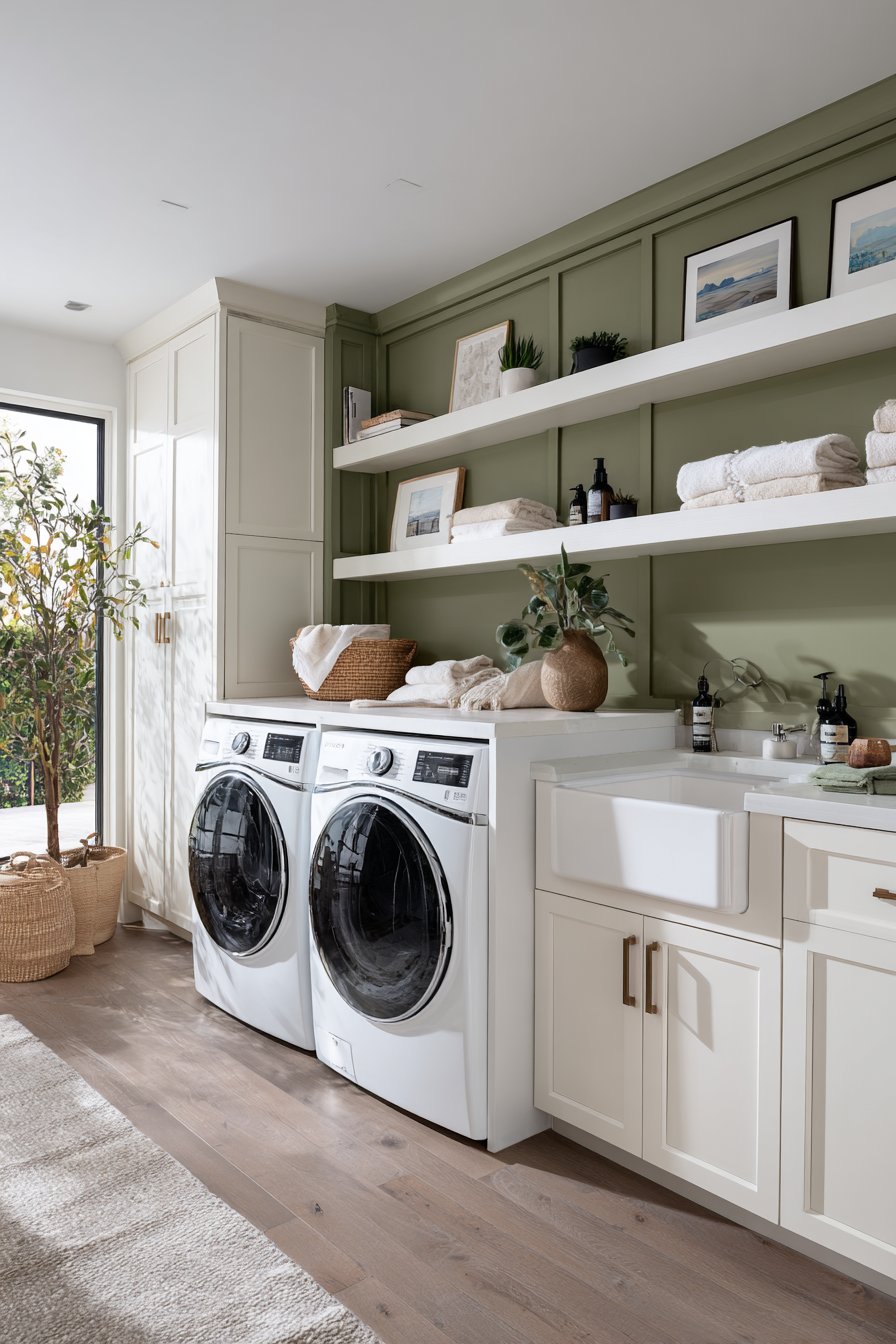
For compact laundry closets, glossy or semi-gloss green is a smart choice. The reflective surface maximizes every source of light, making the space feel more open and vibrant. Pair this with strategic mirror placement and well-organized storage to keep the green walls visible rather than obscured by clutter.
- Choose pale celadon or mint with a semi-gloss finish to maximize light reflection in small spaces
- Paint walls, ceiling, and trim in the same green tone for a seamless, space-expanding effect
- Install a large mirror or mirrored cabinet to double the sense of depth and light
- Use built-in storage to minimize clutter and keep green walls visible and impactful
- Choose slimline appliances in small green laundry rooms to preserve visual breathing room
- Avoid dark, saturated greens in very small spaces without strong light sources
10. Green Laundry Rooms and the Mood-Boosting Routine
The most practical argument for a green laundry room may be this: it transforms a dreaded task into a more enjoyable ritual. When your environment actively supports your mood, even repetitive chores carry less psychological weight. Color is one of the most cost-effective tools for improving how a space makes you feel.
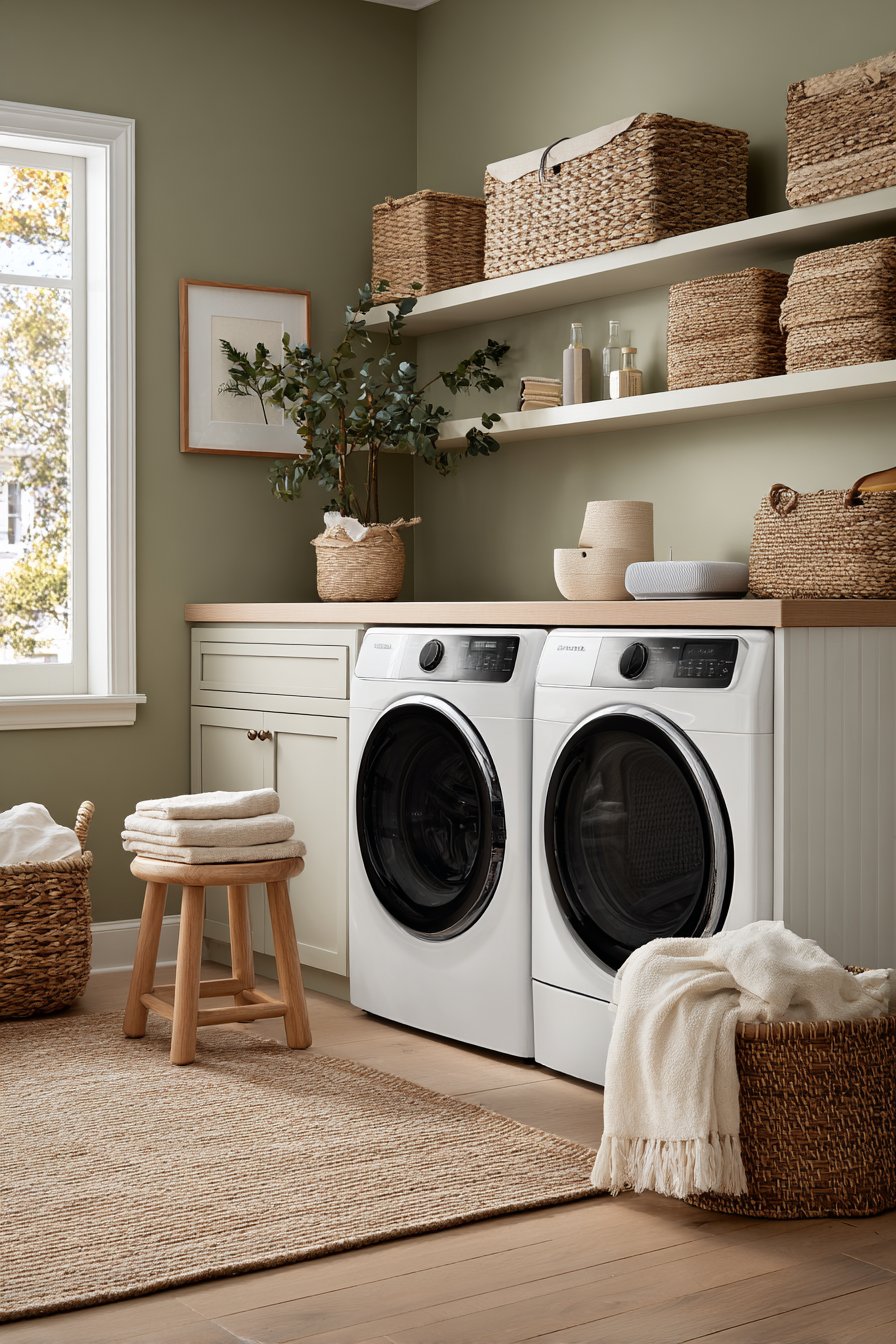
Studies in environmental psychology show that color-enhanced environments increase task completion satisfaction and reduce perceived effort. In practical terms, people who enjoy their laundry room — even just a little — tend to stay more organized and consistent with laundry routines. A beautiful green room motivates return visits rather than avoidance.
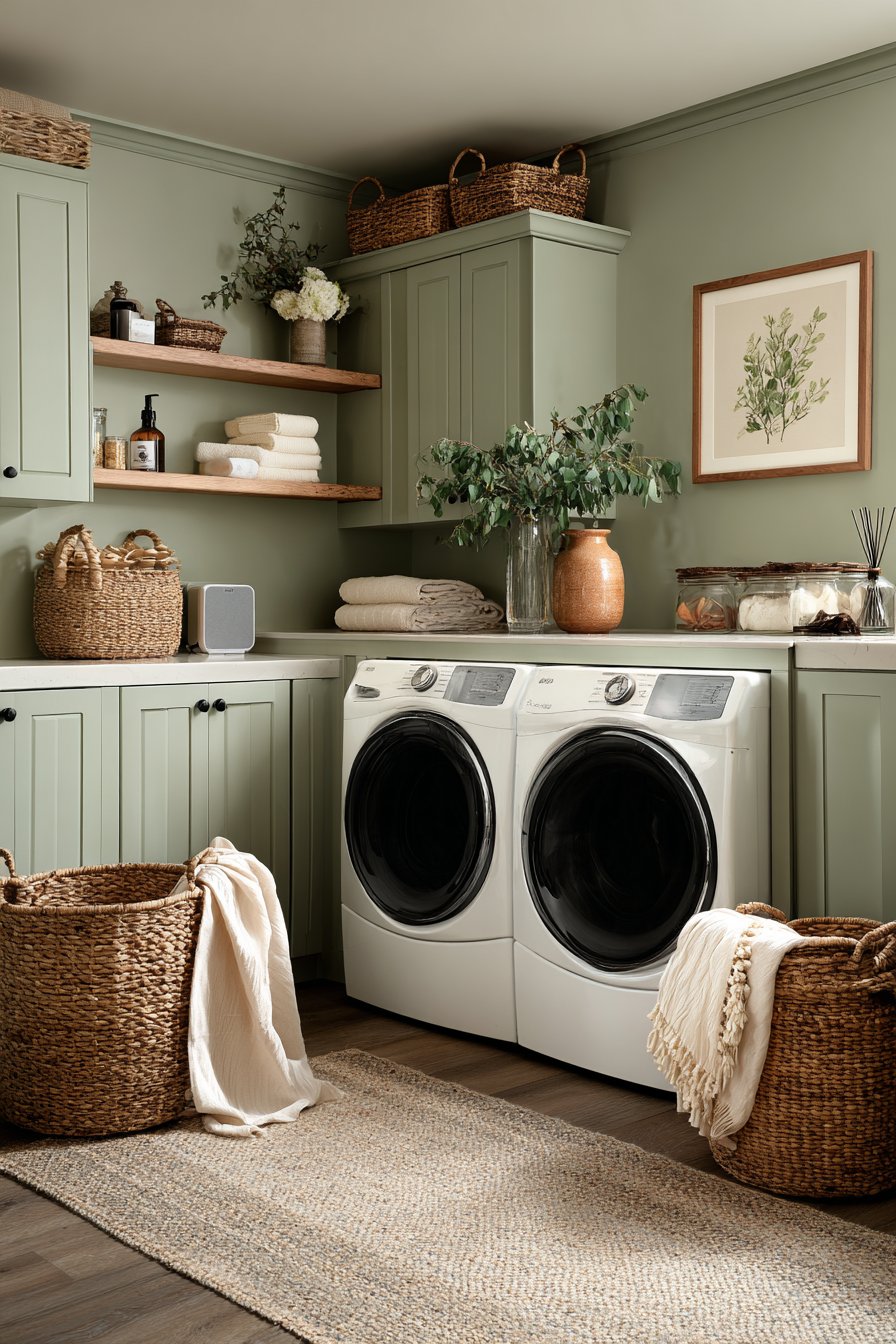
Think of your laundry room as a micro-retreat within your home. Green walls, good lighting, organized storage, and a few decorative touches turn a functional space into one that rewards you simply for being in it. This positive feedback loop — enjoying the space, maintaining it well, enjoying it more — is one of the most powerful arguments for investing in laundry room design.
- Hang artwork or a small print in your green laundry room to signal that the space deserves attention
- Add a Bluetooth speaker to make the room an audio sanctuary during laundry tasks
- Use a scented candle or diffuser with fresh notes like eucalyptus or citrus to reinforce the green energy
- Install a folding station at the right height to make the most-dreaded task comfortable and efficient
- Add a small footstool or stool to make the room a place you can briefly sit and sort
- Treat the laundry room with the same decorative respect as any other room in your home
Conclusion
Green laundry rooms feel fresh and energizing because they tap into something deeply human — our connection to nature, our psychological response to color, and our need for environments that support rather than undermine our mood. From the calming sophistication of sage to the bold vitality of emerald, green offers a range of expressions that all share one quality: transformative energy.

The laundry room doesn’t have to be the home’s forgotten space. With the right shade of green, thoughtful material choices, and good lighting, it can become one of your favorite rooms in the house — a place where a necessary task becomes a genuinely pleasant ritual. Take the first step: pick your green, and let the transformation begin.
