


The kitchen has always been the heart of the home. In 2026, it is evolving into something far more intentional and sophisticated. Thoughtful kitchen design now balances aesthetics with deep functionality, creating spaces that inspire creativity and foster connection. Homeowners are no longer satisfied with generic layouts — they want kitchens that reflect their personality and lifestyle.
Interior designers and architects are responding with bold new directions. From sustainable materials to integrated smart technology, the trends shaping 2026 kitchens are both forward-thinking and deeply human. These movements are not fleeting fads — they represent a fundamental shift in how we relate to our cooking and living spaces.
This article explores the seven most defining kitchen design trends of 2026. Whether you are planning a full renovation or a simple refresh, these ideas will help you create a kitchen that feels current, functional, and uniquely yours. Each trend has been selected for its practicality, visual impact, and longevity.
1. Warm Minimalism Replaces Cold Sterility
The ultra-sleek, all-white kitchen is stepping aside. Warm minimalism is taking center stage in 2026, blending the clean lines of minimalist design with natural tones and tactile materials. Think creamy whites, soft terracottas, warm taupes, and earthy greiges replacing stark, clinical palettes. This approach creates a kitchen that feels edited and serene without feeling cold or unwelcoming.
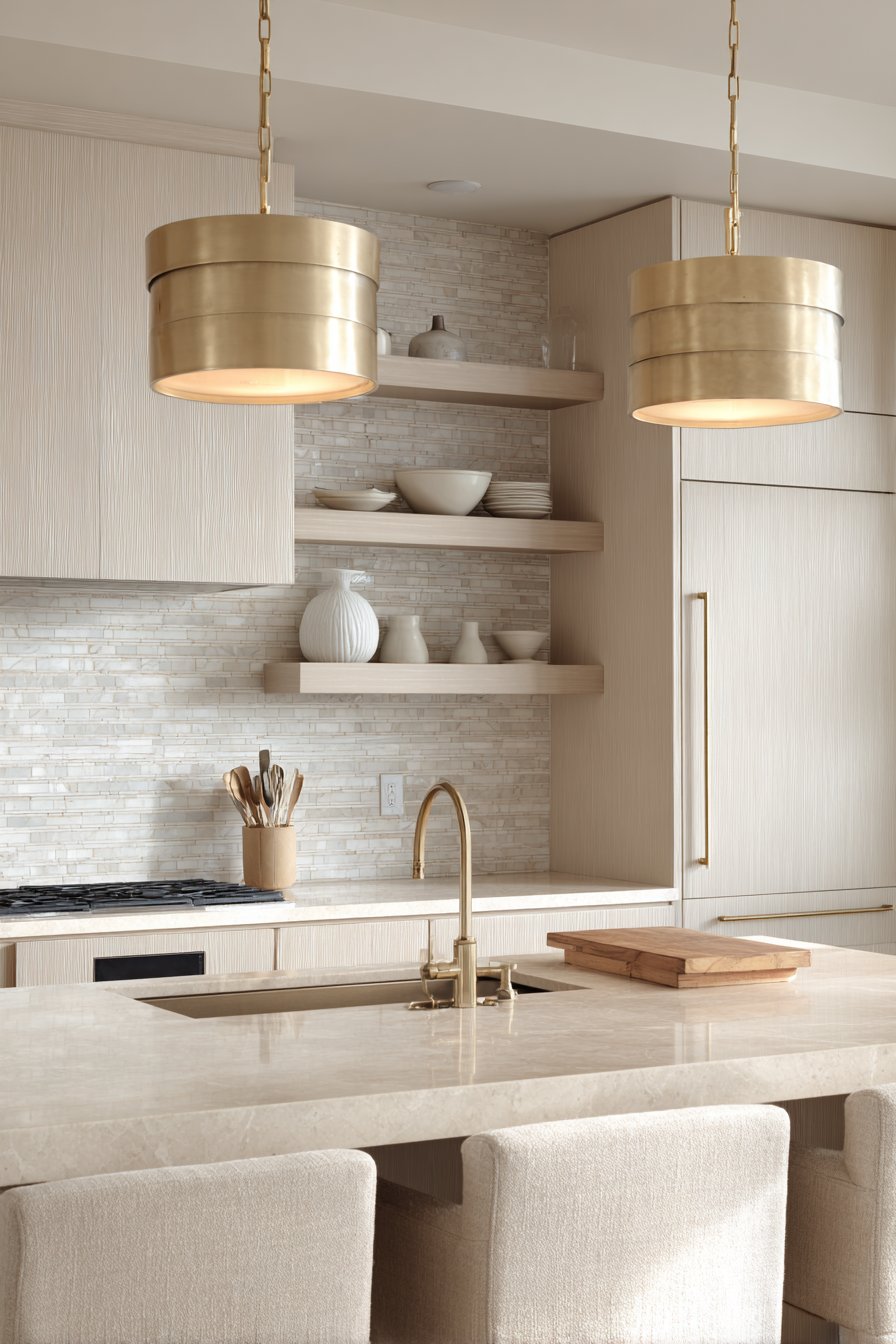
The key to warm minimalism lies in material selection. Natural wood grains, honed stone countertops, and matte ceramic tiles bring organic warmth into a clean, uncluttered framework. Cabinet fronts in flat or shaker profiles maintain simplicity while textured surfaces add depth and visual interest. The overall effect is a space that breathes calm confidence.
Lighting plays a critical role in achieving this look. Warm-toned bulbs between 2700K and 3000K enhance the golden undertones in natural materials. Pendant lights in brushed brass or aged bronze complement the palette beautifully. The result is a kitchen that looks inviting at every hour of the day.
- Choose cabinet colors in warm neutrals like linen, sand, or soft sage
- Opt for honed or leathered stone finishes over high-gloss options
- Replace chrome hardware with brushed brass or matte black for warmth
- Use open shelving sparingly to display curated, beautiful objects
- Incorporate a natural wood island or butcher block countertop section
- Layer lighting with under-cabinet strips, pendants, and recessed fixtures
2. Integrated and Invisible Appliances
In 2026, the most sophisticated kitchens are defined by what you cannot see. Integrated appliances — built fully behind cabinetry panels — are becoming the gold standard for high-end and mid-range kitchen design alike. Refrigerators, dishwashers, and even ovens are disappearing seamlessly into the cabinetry line, creating an uninterrupted visual flow across the kitchen.
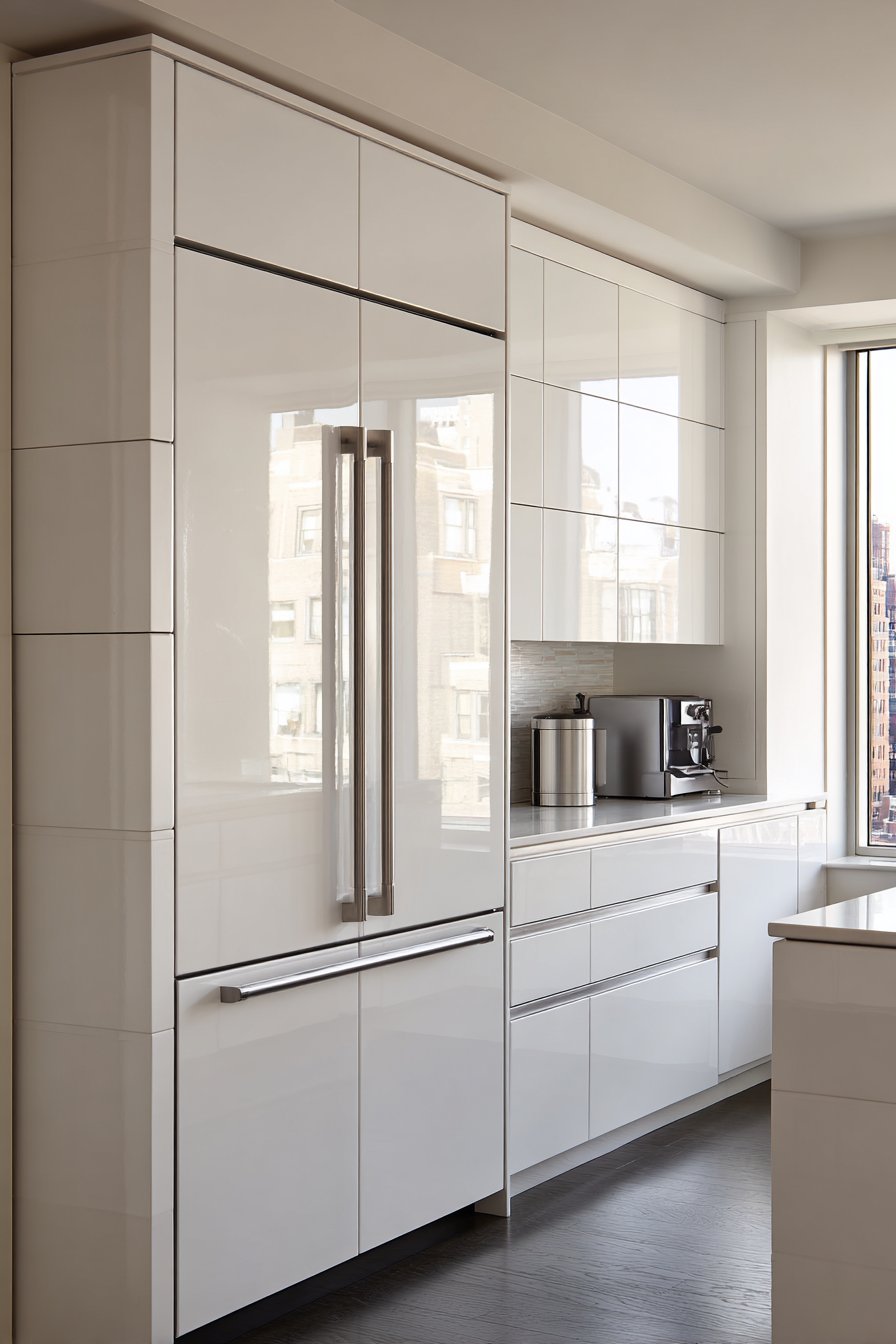
This trend is driven by a desire for visual cohesion. When appliances blend into the surrounding cabinetry, the kitchen reads as a single, intentional composition rather than a collection of separate components. Custom panel-ready refrigerators and dishwashers are now more accessible than ever, making this once-luxury detail achievable across various budgets.
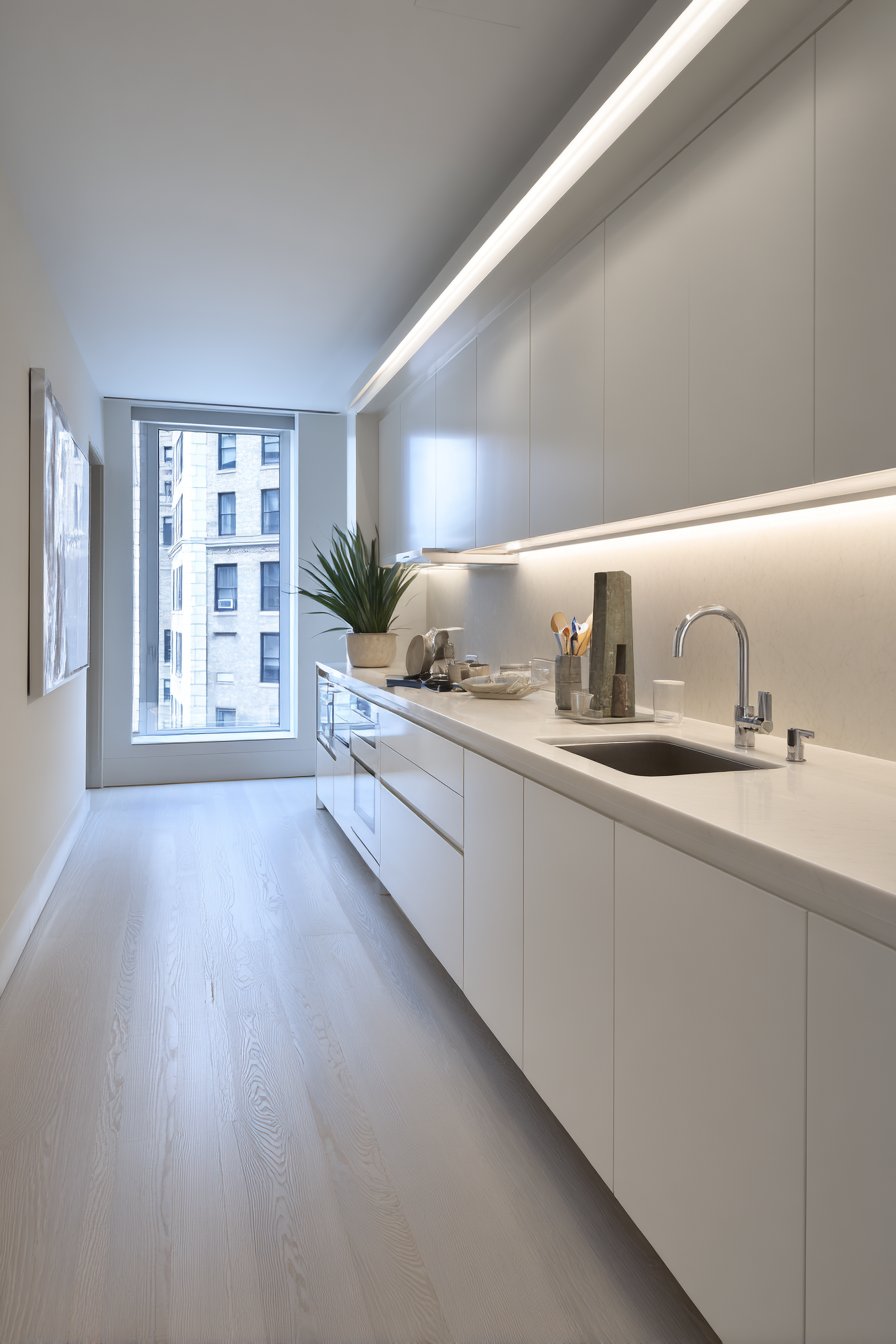
Beyond refrigerators and dishwashers, hidden ventilation systems are rising in popularity. Ceiling-integrated extractors and downdraft systems eliminate the need for bulky range hoods. The result is a clean, uninterrupted sightline above the cooking zone that feels architectural and refined.
- Invest in panel-ready appliance lines for seamless cabinetry integration
- Choose push-to-open or handle-free mechanisms for a streamlined look
- Explore downdraft ventilation as an alternative to traditional range hoods
- Use matching cabinet hardware consistently across all surfaces
- Conceal small appliances like toasters and coffee makers behind appliance garages
- Consult an appliance specialist early in the design process for proper planning
3. Japandi-Inspired Kitchens
The Japandi aesthetic — a blend of Japanese minimalism and Scandinavian warmth — continues its powerful rise into 2026. Japandi kitchens are defined by natural materials, neutral palettes, purposeful simplicity, and an unwavering commitment to craftsmanship. This style resonates deeply with homeowners seeking calm, intentional spaces in an increasingly chaotic world.
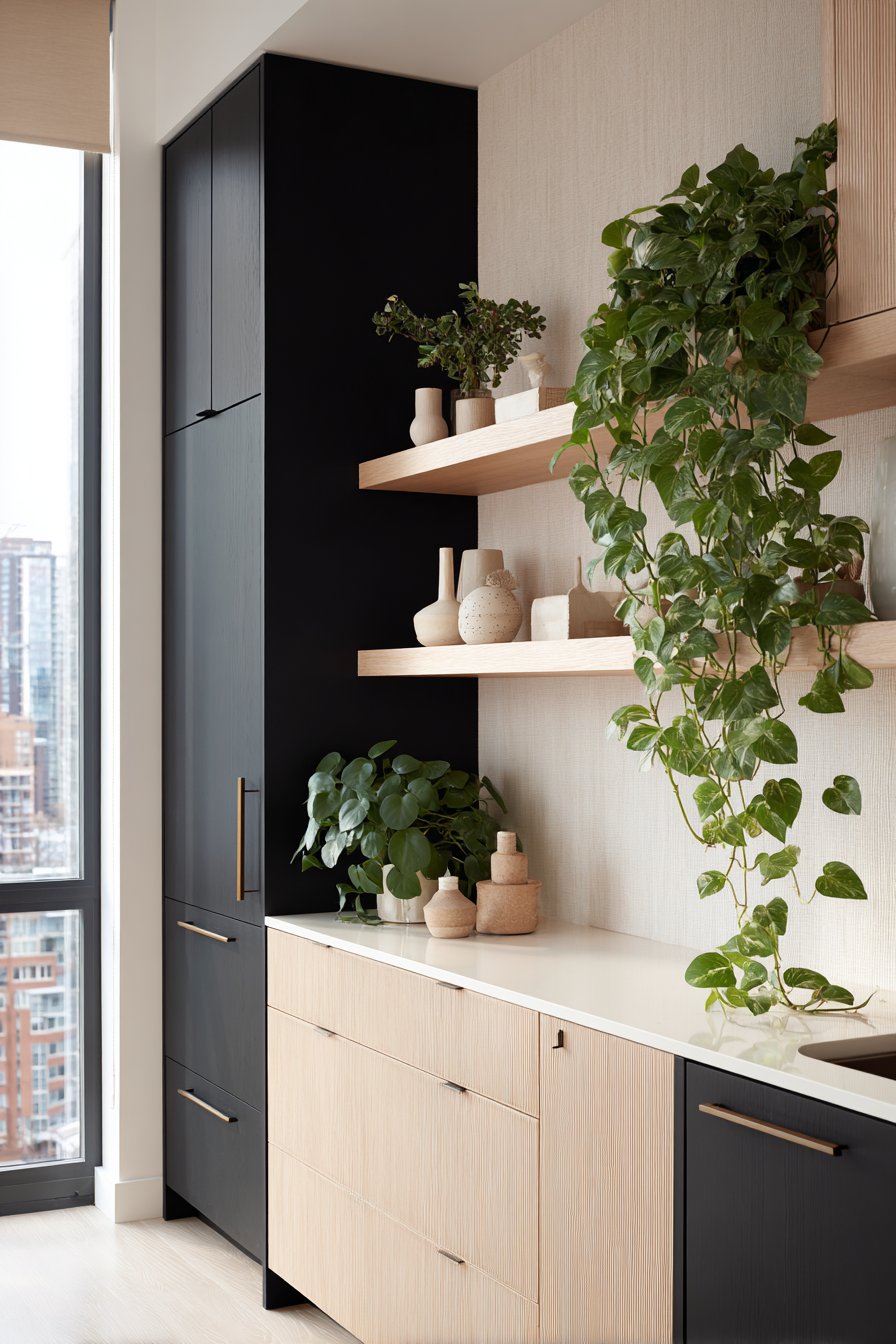
In the kitchen, Japandi translates to low-profile cabinetry in muted tones like charcoal, warm white, or dusty green. Natural materials dominate — think whitewashed oak, hand-thrown ceramic hardware, washi-textured wallcoverings, and linen window treatments. Every element earns its place through both beauty and utility. Unnecessary ornamentation is removed entirely.
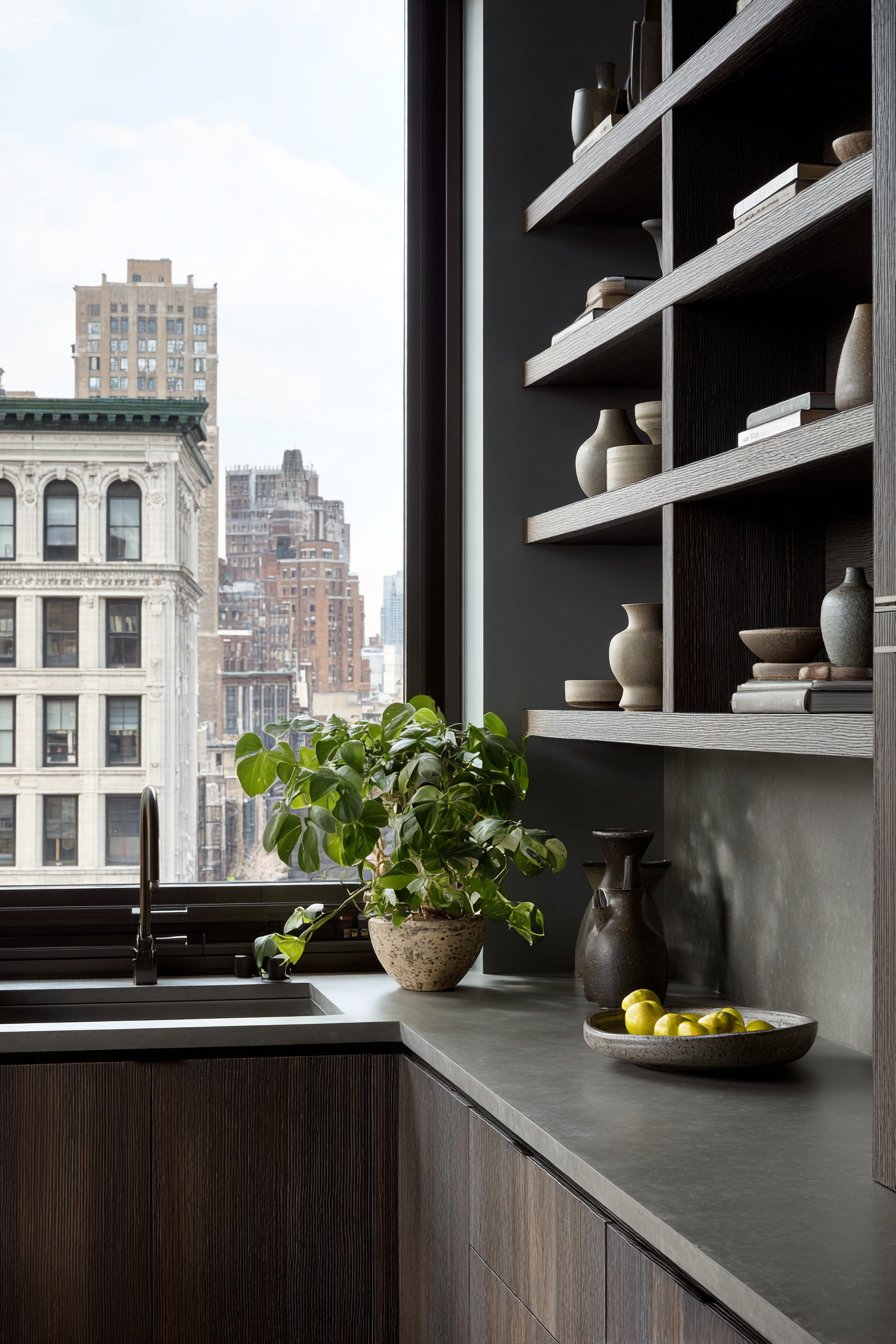
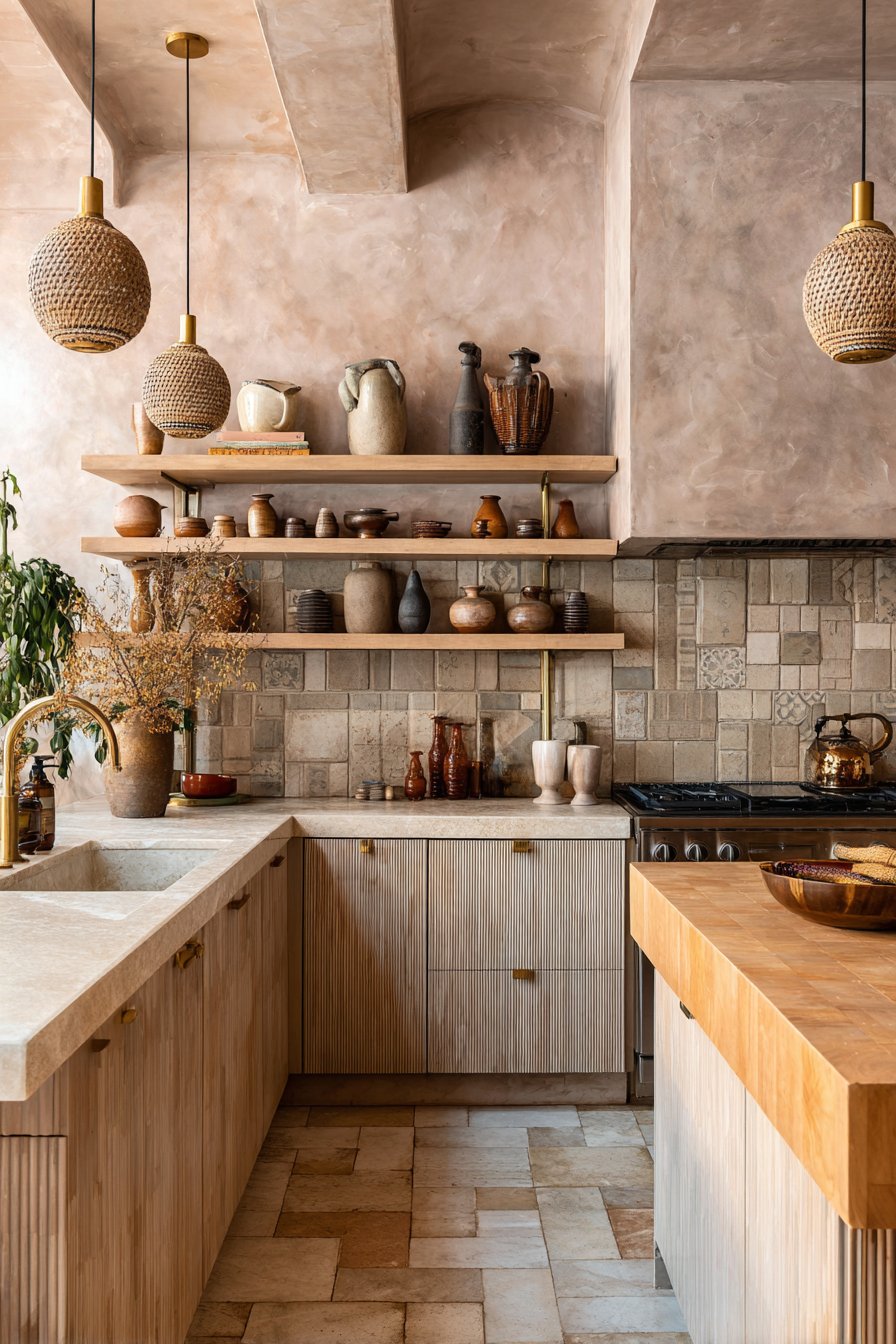
The wabi-sabi philosophy — finding beauty in imperfection — underpins the Japandi kitchen. Slightly uneven handmade tiles, patinated metal fixtures, and live-edge wood shelving all celebrate natural variation. This creates kitchens that feel authentically human rather than showroom-perfect, and they grow more beautiful with use and age.
- Select cabinetry in muted, nature-inspired tones like slate, warm white, or clay
- Use handmade ceramic tiles with slight variation in color and texture
- Incorporate bamboo, rattan, or whitewashed oak as natural material accents
- Choose simple, sculptural fixtures over ornate or decorative ones
- Display only a curated selection of beautiful, functional kitchen objects
- Add greenery like trailing pothos or a small herb garden on the windowsill
4. Statement Stone and Dramatic Countertops
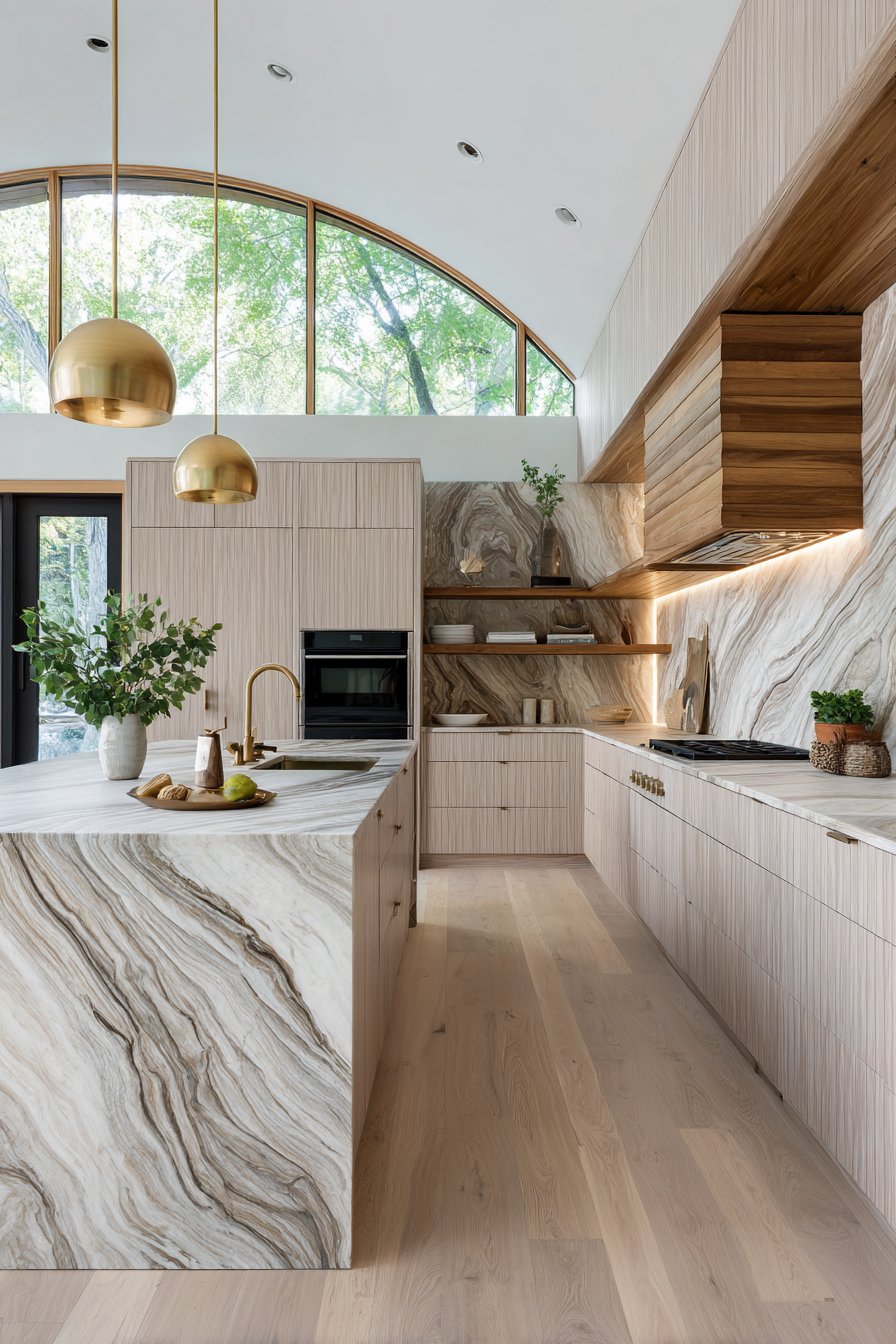
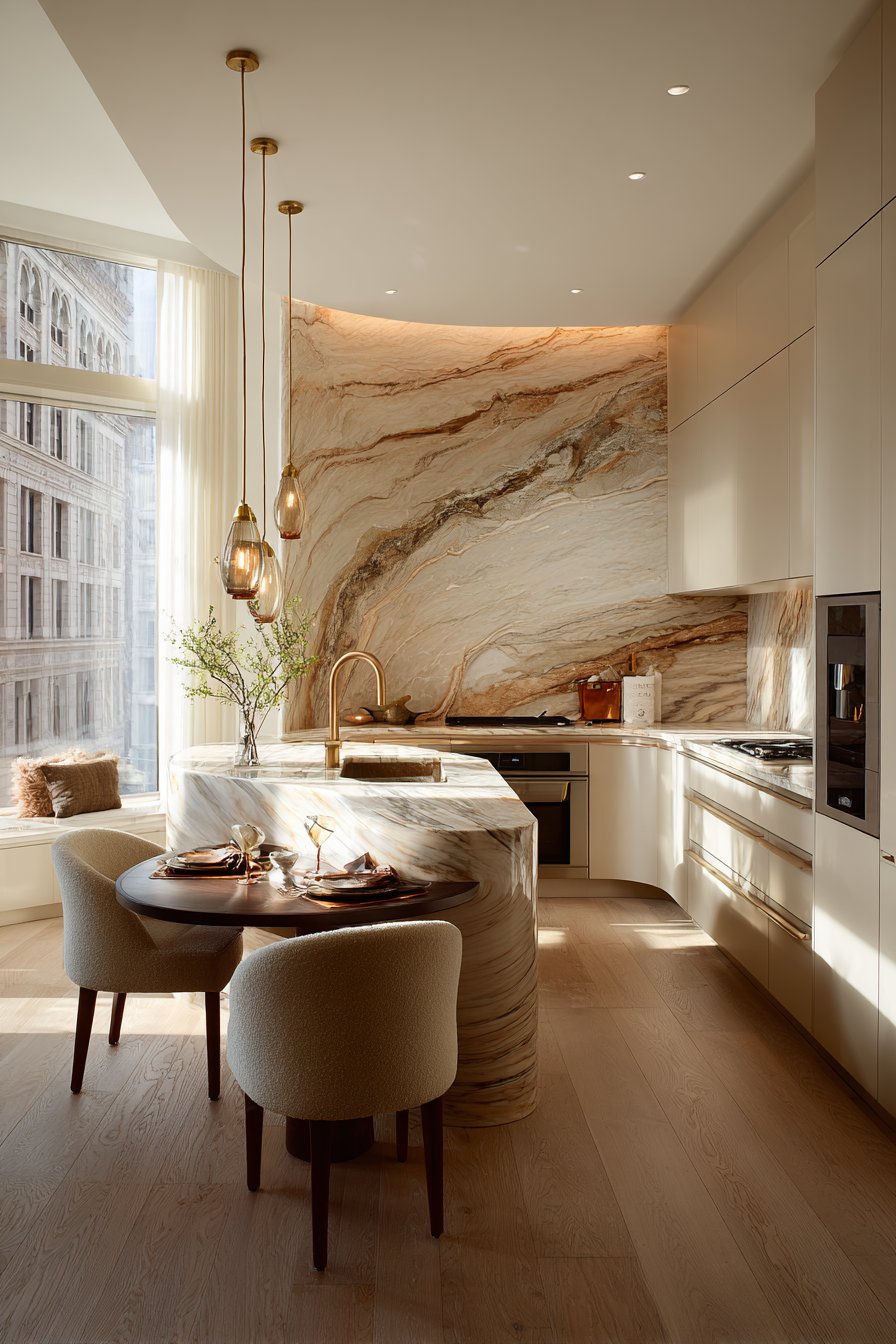
Stone is no longer just a countertop material — it is becoming the visual centerpiece of the 2026 kitchen. Dramatic, book-matched marble slabs, bold quartzite with sweeping veining, and richly patterned granite are being used to make powerful design statements. The countertop and backsplash are treated as a single, continuous canvas of natural artistry.
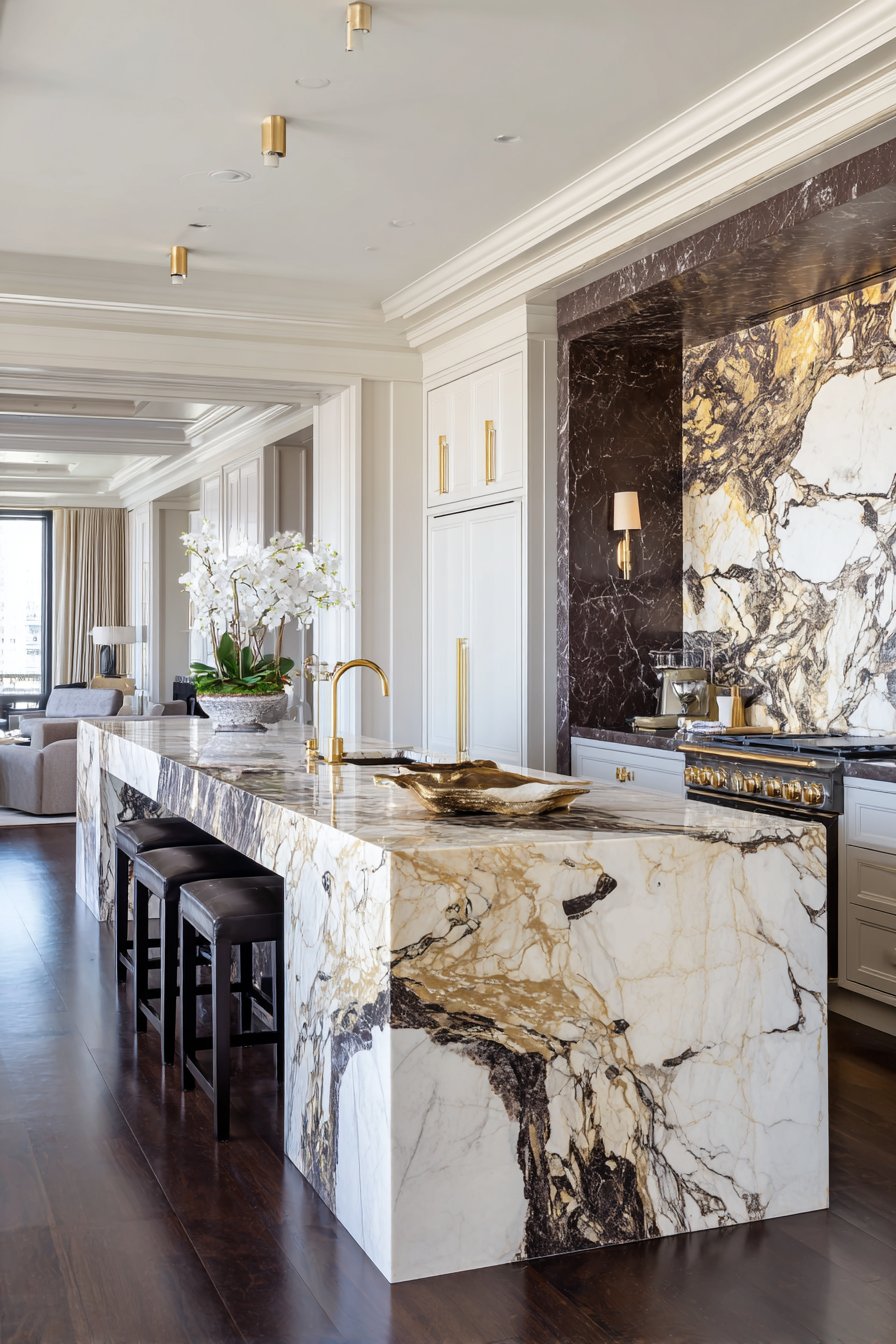
The slab backsplash is one of the most impactful trends emerging from this movement. Running the same countertop stone vertically up the wall behind the range creates a dramatic focal point. This continuity makes even a modest kitchen feel architecturally significant. It also simplifies cleaning and maintenance compared to grout-heavy tile installations.
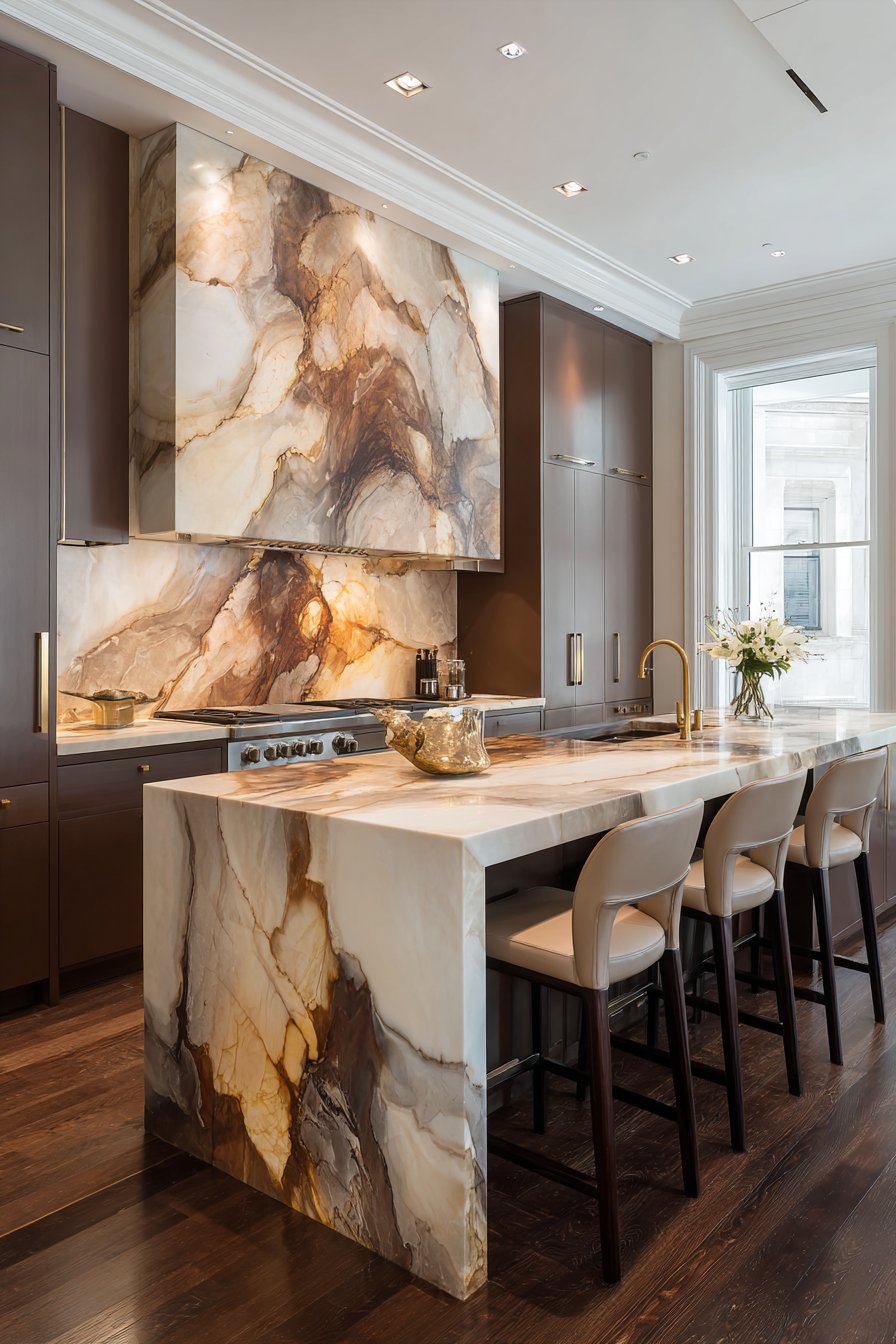
Designers are also embracing bold stone colors beyond traditional white and gray. Deep forest green quartzite, rich burgundy marble, warm honey onyx, and dramatic black granite are appearing in kitchens designed for homeowners who want maximum visual impact. These stones introduce color, texture, and organic artistry simultaneously.
- Request book-matched slabs when using marble or quartzite for the island
- Extend countertop material up the wall as a full slab backsplash
- Explore colored stone options beyond white and gray for a distinctive look
- Seal natural stone properly and re-seal annually to prevent staining
- Choose leathered or honed finishes on dark stones to reduce fingerprints
- Work with a stone specialist to source slabs in person before purchasing
5. Curved and Organic Forms
Straight lines and sharp corners are yielding to softer, more organic shapes in 2026 kitchen design. Curved kitchen islands, arched cabinet openings, rounded cabinetry corners, and sinuous countertop edges are replacing the rigid geometry that dominated kitchens for the past decade. This shift reflects a broader cultural movement toward spaces that feel more human, more gentle, and more inviting.
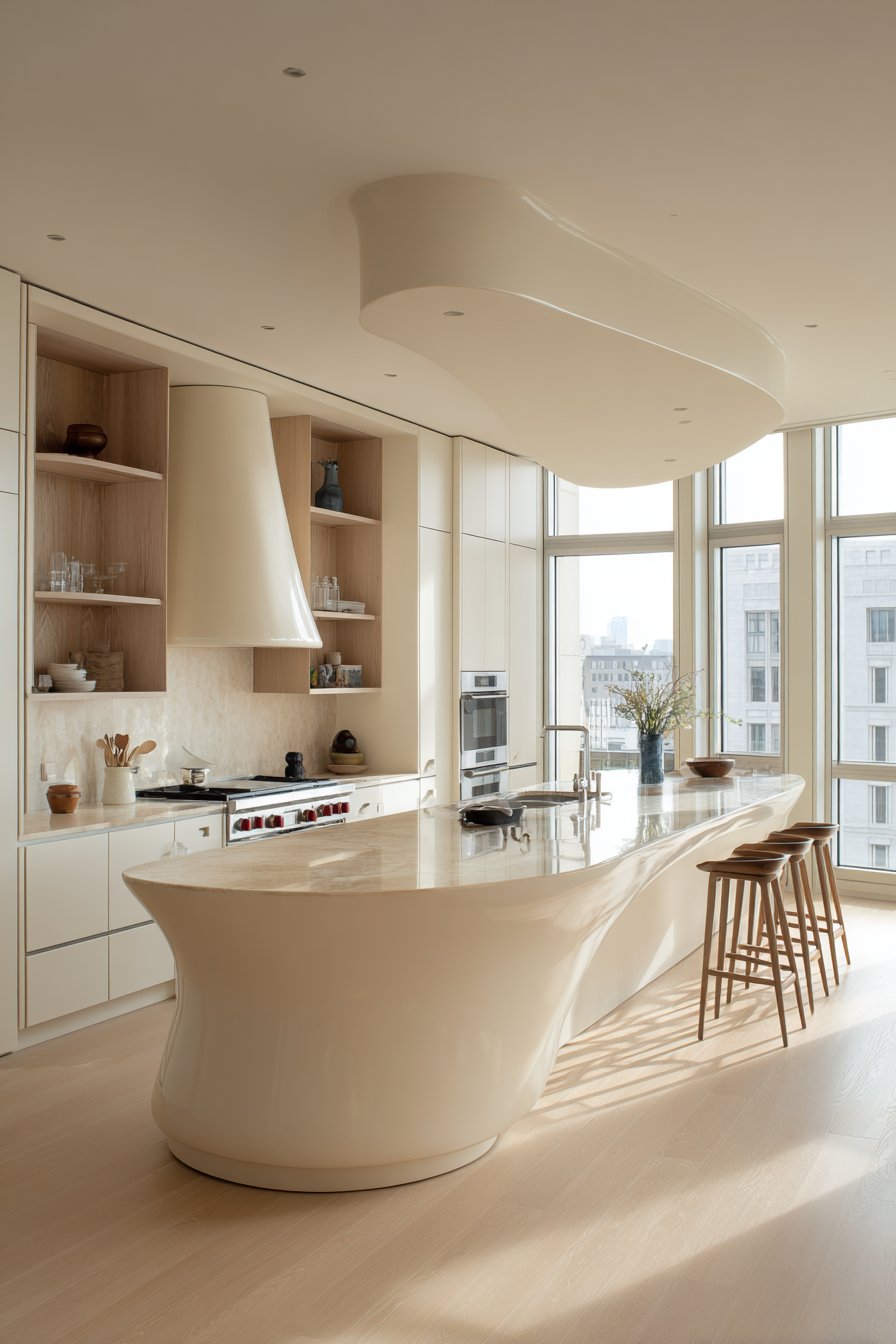
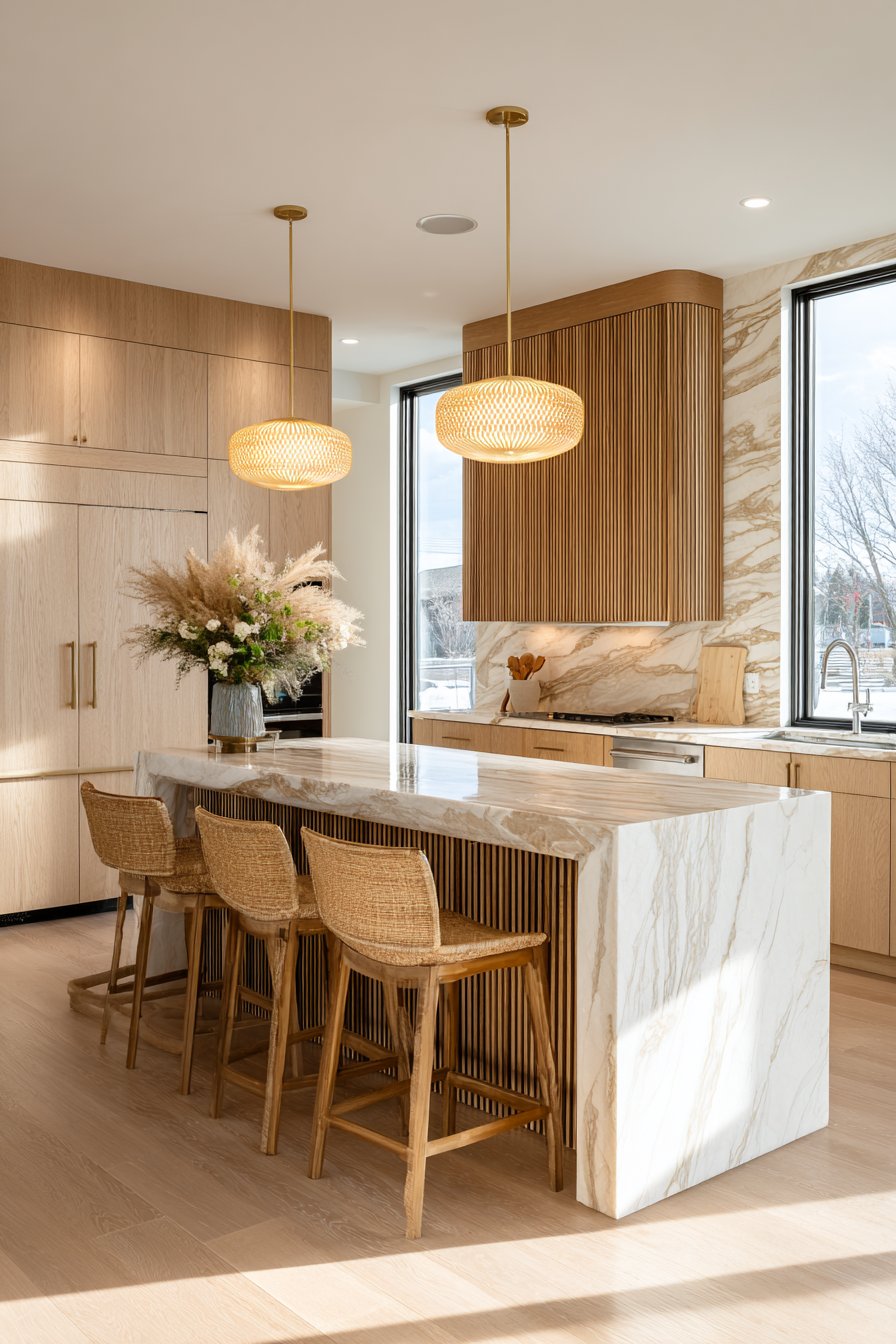
The curved island is perhaps the most significant expression of this trend. An island with a waterfall edge and softly curved ends immediately transforms the energy of a kitchen. It improves traffic flow, creates a more social atmosphere, and introduces a sculptural quality that standard rectangular islands simply cannot achieve. This design choice works in both large and compact kitchens when scaled appropriately.
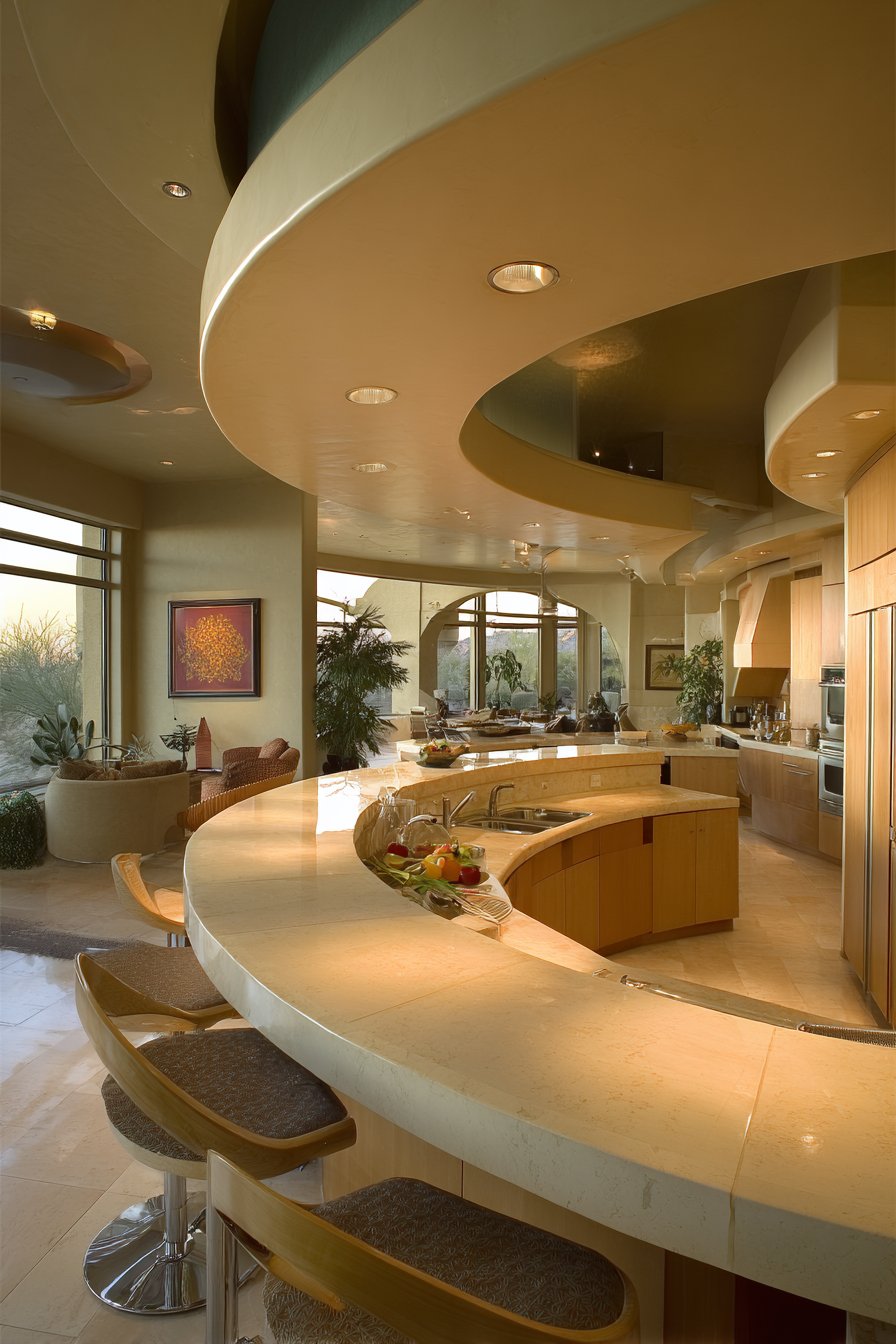
Beyond islands, arched details are appearing in cabinet doors, range hood profiles, and even window treatments. These arches echo classical architectural proportions while feeling fresh and contemporary. When combined with warm materials and a restrained palette, arched elements bring timeless elegance without feeling overly traditional or historic.
- Consider a curved waterfall island as the kitchen’s primary focal point
- Introduce arched openings in upper cabinet or display shelving designs
- Use rounded edge profiles on countertops rather than sharp 90-degree angles
- Select bar stools with curved backs or organic silhouettes for the island
- Choose a range hood with a softly arched or domed profile
- Balance curved elements with some linear structure to avoid visual chaos
6. Sustainable and Bio-Based Materials
Sustainability is no longer optional — it is an expectation in 2026 kitchen design. Homeowners and designers alike are prioritizing materials that are responsibly sourced, low in toxins, and designed for longevity. This trend is reshaping material choices across every surface, from flooring to cabinetry to countertops.
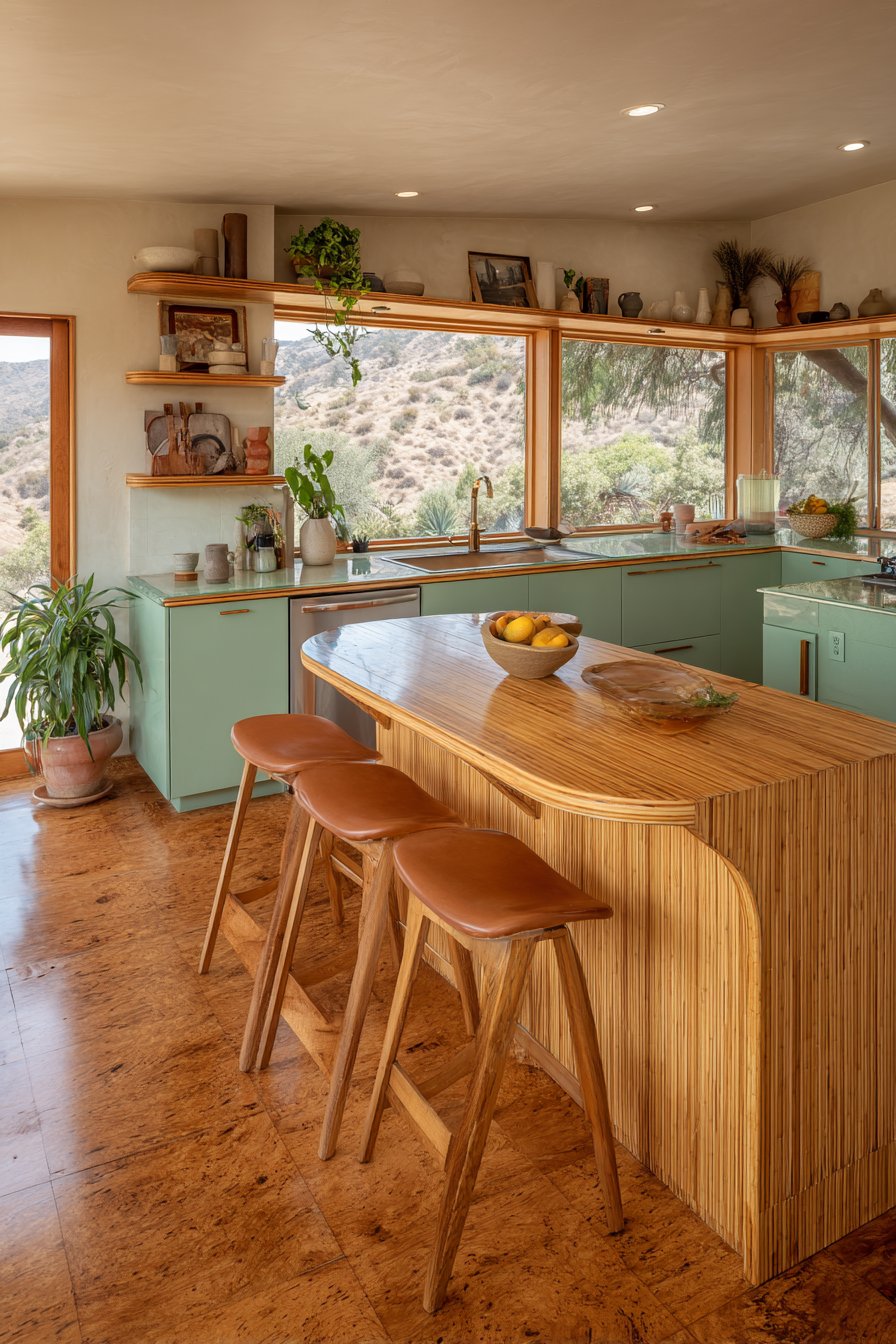
Reclaimed wood, recycled glass countertops, bamboo cabinetry, and cork flooring are gaining significant momentum. These materials carry beautiful imperfections and unique histories that add character to the space. Beyond aesthetics, they reduce environmental impact and align with a growing consumer desire to make conscious design choices that reflect personal values.
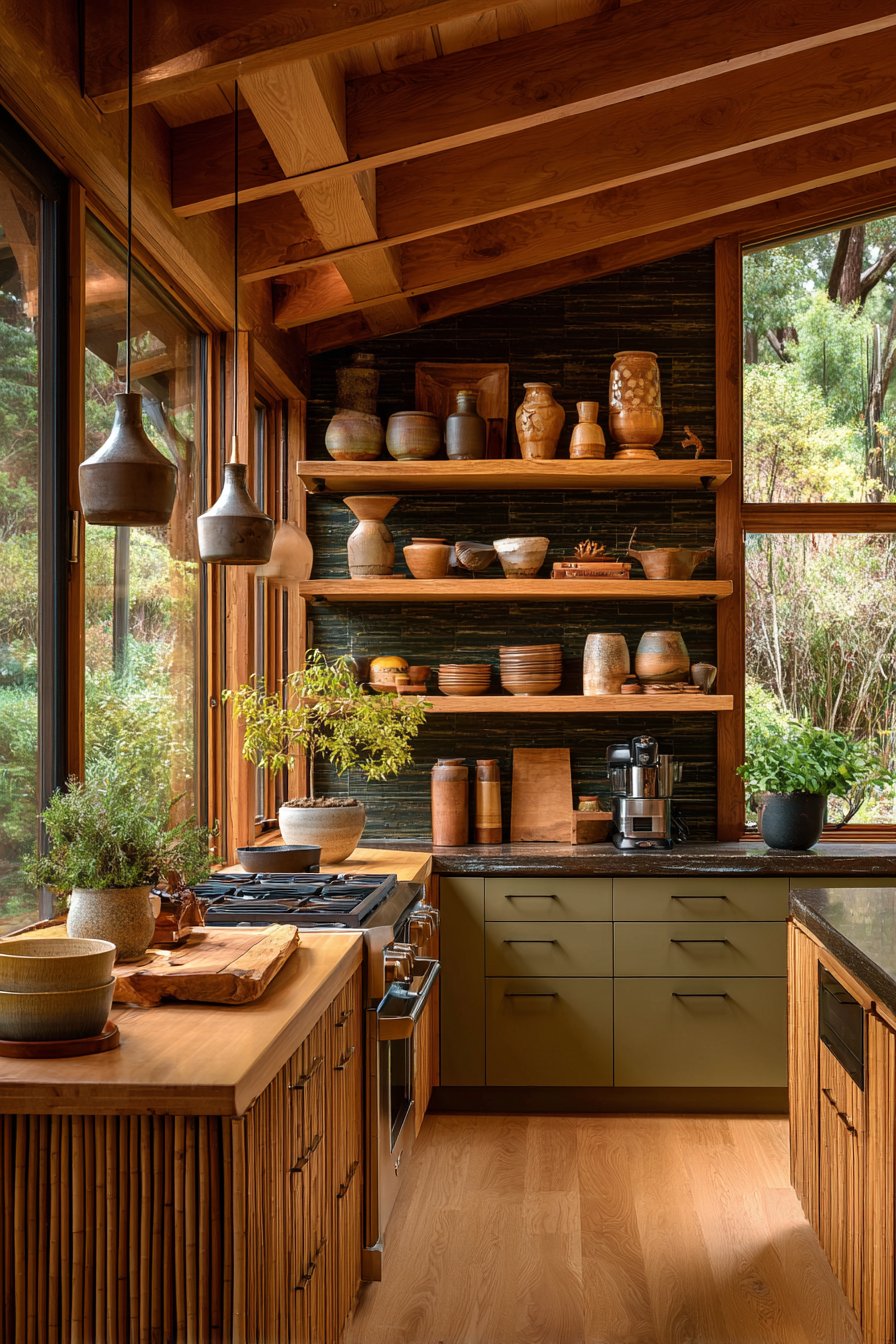
Paint and finish choices are also shifting toward low-VOC and zero-VOC formulations. Natural plaster wall treatments, clay-based paints, and oil-finished wood surfaces replace chemical-heavy alternatives. These choices improve indoor air quality — particularly important in a room where food is prepared and families spend significant time together.
- Source cabinetry from manufacturers using FSC-certified wood materials
- Choose recycled glass or paper composite countertops as eco-friendly alternatives
- Install cork or bamboo flooring for sustainable, durable, and warm surfaces
- Use zero-VOC paints and finishes throughout the kitchen for healthier air quality
- Incorporate reclaimed wood as open shelving, island cladding, or accent beams
- Select appliances with Energy Star certification to reduce long-term energy use
7. Smart Kitchen Technology, Seamlessly Integrated
Technology in the 2026 kitchen is smarter, more capable, and — crucially — more discreetly integrated than ever before. The goal is no longer to display technology but to embed it invisibly into the kitchen’s design. Smart refrigerators, voice-controlled faucets, induction surfaces built directly into countertops, and AI-assisted cooking systems are redefining the cooking experience.
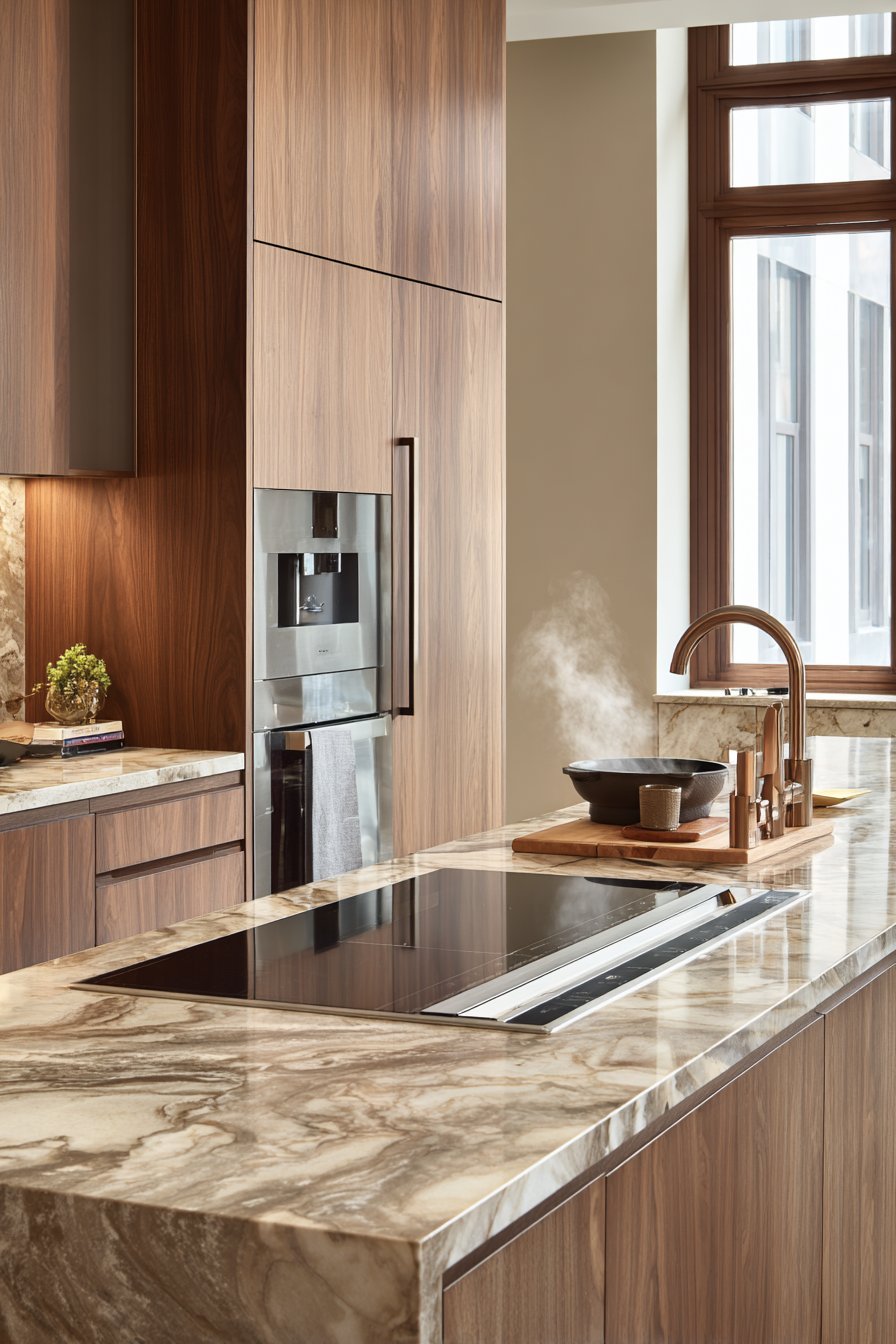
Induction cooktops flush with the countertop surface are a particularly exciting development. These systems eliminate the raised cooktop entirely, creating a perfectly flat counter that can function as additional prep space when not in use. Combined with smart ventilation that activates automatically when cooking begins, this technology makes the kitchen safer, more efficient, and visually seamless.
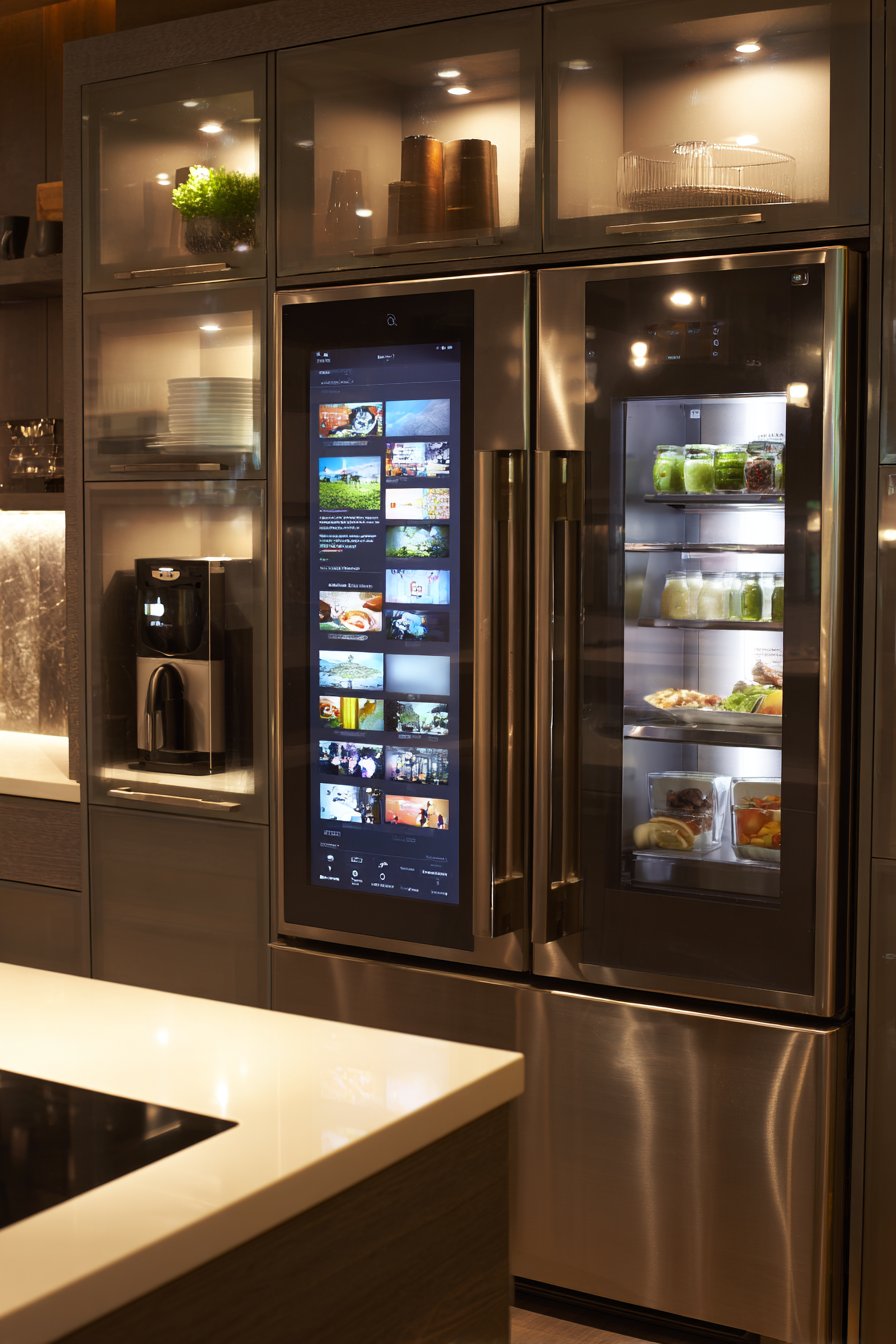
Home automation integration is also transforming kitchen lighting and climate control. Smart lighting systems that adjust color temperature based on time of day, automated blinds that respond to sunlight levels, and refrigerators with internal cameras for remote inventory management are all becoming standard in well-designed kitchens. The key is ensuring all technology serves the human experience rather than complicating it.
- Install flush induction cooktops integrated directly into the countertop surface
- Choose a smart faucet with touchless or voice-activated controls
- Integrate smart lighting scenes for cooking, dining, and evening ambiance
- Select a refrigerator with internal cameras for remote food inventory management
- Use hidden charging stations built into island surfaces or drawer interiors
- Ensure all smart systems connect through a single unified platform for easy control
Conclusion
The kitchen trends defining 2026 share a common thread: intentionality. Each movement — from warm minimalism to smart technology integration — reflects a desire for kitchens that are more human, more conscious, and more beautiful. These are not random aesthetic shifts. They are responses to how we actually live, cook, and connect with the people we love.
You do not need a complete renovation to embrace these ideas. Start with a single bold change — a curved island, a dramatic stone slab, or a set of integrated appliances — and let it inspire the rest. The best kitchens are built gradually, with care and intention. Trust your instincts, invest in quality, and design a space that will inspire you every single day.
