


The kitchen has evolved from a purely functional space into the heart of the home. It’s where families gather, conversations flow, and memories are made over shared meals. Yet many homeowners overlook one of the most impactful design opportunities: kitchen wall decor. Thoughtfully styled walls can transform a sterile cooking space into a warm, personalized environment that reflects your unique personality.

Well-designed wall decor serves multiple purposes beyond aesthetics. It can create visual focal points, enhance the room’s color scheme, and even improve functionality through strategic placement of organizational elements. Whether you’re working with a compact galley kitchen or an expansive open-plan design, the right wall treatments can dramatically elevate your space. From gallery walls to floating shelves, the possibilities are both practical and inspiring.

This article explores seven distinctive approaches to kitchen wall styling that cater to various design preferences and lifestyles. Each method offers unique benefits and can be adapted to work with different budgets, kitchen sizes, and existing decor schemes. Let’s discover how you can turn those blank walls into captivating design statements.
1. Create a Gallery Wall with Food Photography
Gallery walls bring artistic sophistication to kitchen spaces while celebrating culinary culture. Food photography, whether vintage market scenes or contemporary minimalist shots, adds personality without overwhelming the cooking environment. This approach works exceptionally well in kitchens with neutral color palettes that need visual interest.
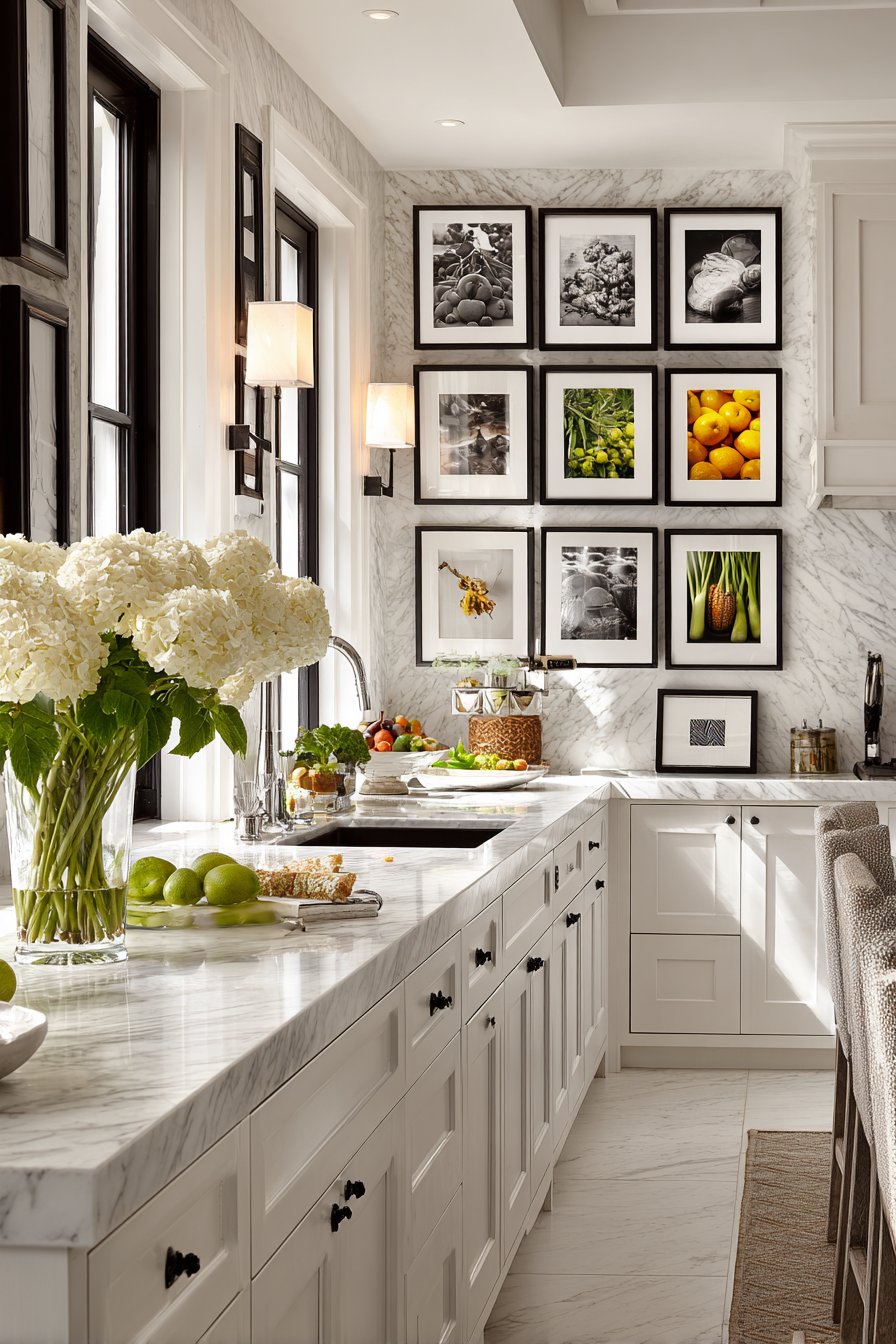
The key to successful food-themed gallery walls lies in cohesive curation. Mix various frame sizes and orientations while maintaining a unified color story or theme. Black and white photographs create timeless elegance, while vibrant produce shots inject energy into modern kitchens. Consider the wall’s relationship to your cabinetry and ensure frames complement rather than compete with existing finishes.

Start small if you’re hesitant about commitment. A collection of three to five framed pieces creates impact without requiring extensive wall space. Position your gallery at eye level, typically with center points around 57 to 60 inches from the floor. This creates comfortable viewing and maintains professional presentation standards.
- Select frames that match your kitchen’s metal finishes for cohesion
- Mix vintage botanical prints with modern food photography for depth
- Use matching white matting to unify different colored frames
- Arrange frames on the floor before hanging to perfect layout
- Include at least one larger statement piece as an anchor
- Consider LED picture lights for evening ambiance
2. Install Open Floating Shelves
Floating shelves offer the perfect balance between decorative display and functional storage. They create opportunities to showcase beautiful dishware, cookbooks, and decorative objects while keeping frequently used items accessible. This styling choice works particularly well in smaller kitchens where traditional upper cabinets might feel oppressive.
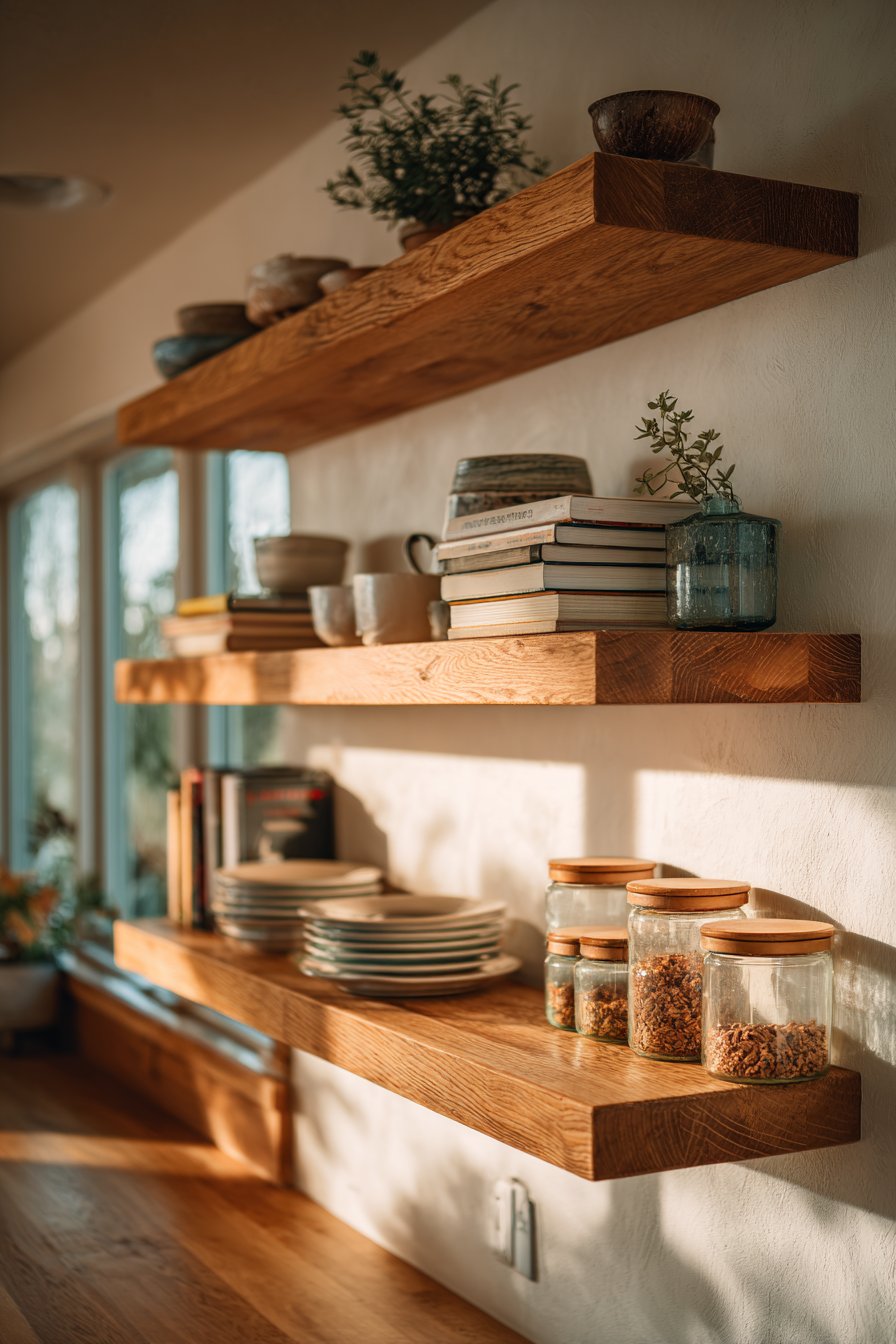
The beauty of floating shelves lies in their versatility and customization potential. Wood shelves add warmth and organic texture, while metal or glass options suit contemporary aesthetics. Styling these shelves requires thoughtful curation—too much creates clutter, too little appears sparse. Aim for a balanced composition mixing heights, textures, and negative space.
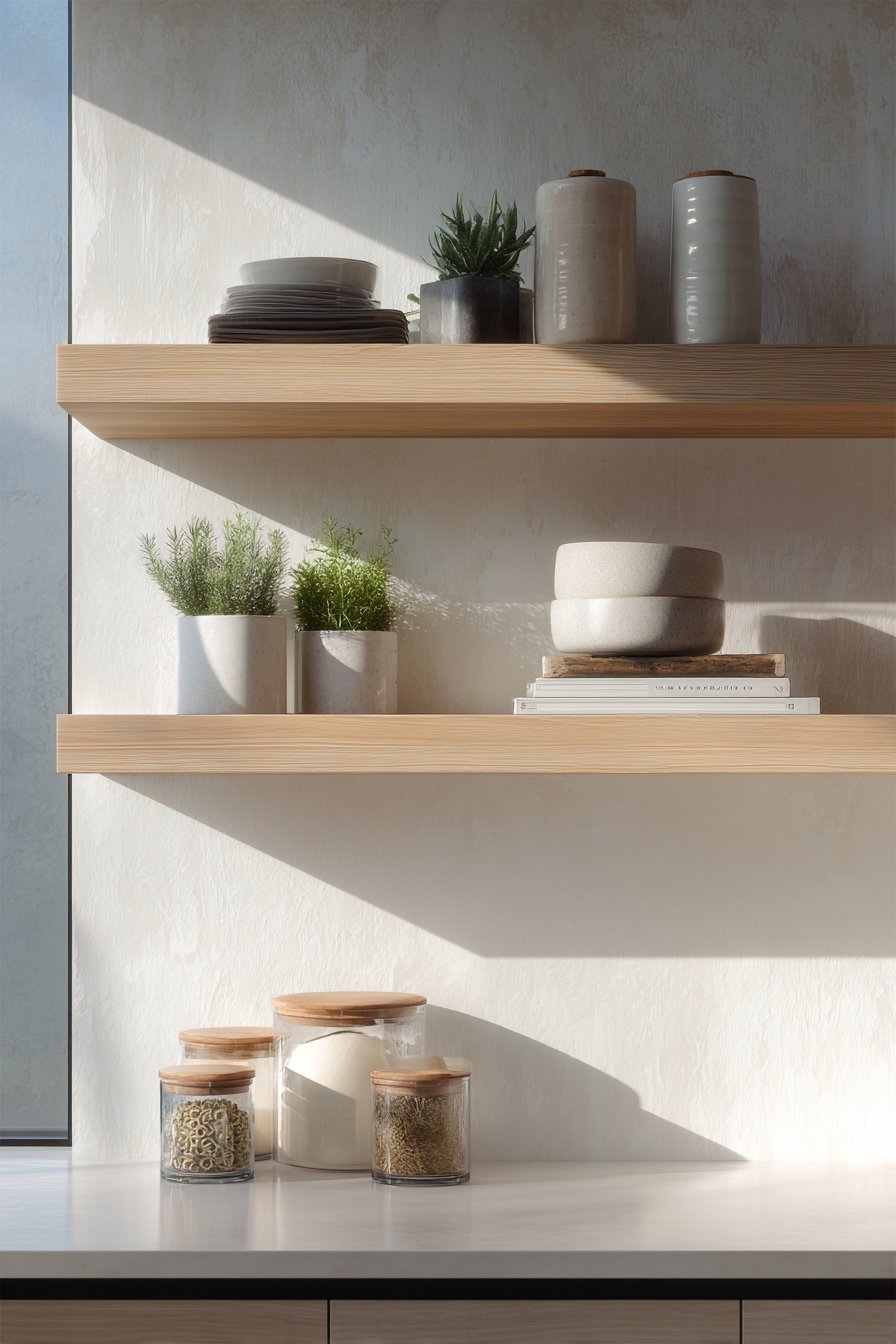
Consider the practical aspects before installation. Shelves near the stove need heat-resistant materials and should display items that won’t be damaged by cooking splatter. Position shelves at comfortable reaching height, typically between 12 to 18 inches above countertops. Ensure proper anchoring with appropriate hardware based on your wall construction and intended load.
- Group items in odd numbers for more natural visual appeal
- Layer items by height with taller pieces at the back
- Incorporate greenery with small potted herbs or trailing plants
- Use matching containers or jars for cohesive aesthetic
- Leave some empty space to avoid cluttered appearance
- Rotate seasonal decorative elements to keep displays fresh
3. Incorporate a Statement Tile Backsplash
A tile backsplash transforms from purely functional to stunning focal point with the right design choices. Extending your backsplash higher than standard creates a dramatic wall feature that draws the eye upward and makes ceilings appear taller. This approach works beautifully in kitchens with limited wall space for traditional decor.

Pattern and color selection dramatically impact your kitchen’s overall atmosphere. Bold geometric patterns create contemporary energy, while classic subway tile offers timeless sophistication. Consider your countertop and cabinet colors when selecting tiles—complementary hues create harmony, while contrasting choices make bold statements. Textured or three-dimensional tiles add architectural interest and catch light beautifully.

Installation height matters significantly for visual impact. Extending tile to the ceiling or installing a tile feature wall behind open shelving creates cohesive design flow. Consider practical placement near cooking zones where splatter protection matters most. Professional installation ensures proper sealing and longevity, though skilled DIYers can tackle simpler patterns.
- Choose handmade or artisan tiles for unique character and texture
- Mix tile sizes within the same color family for dynamic interest
- Consider reflective or metallic tiles to enhance natural light
- Use contrasting grout color to emphasize pattern and geometry
- Extend backsplash around windows for continuous visual flow
- Pair patterned tile with solid-colored cabinetry to avoid overwhelm
4. Display Vintage Kitchen Tools as Art
Vintage kitchen implements possess inherent sculptural beauty that modern equivalents often lack. Wooden spoons, copper molds, enamelware, and antique utensils become conversation pieces when thoughtfully displayed. This approach celebrates culinary heritage while adding warmth and personality that mass-produced art cannot replicate.

Arrangement strategy determines whether collections appear curated or chaotic. Group similar items together—all copper pieces, all wooden implements, or all enamel containers. This creates visual cohesion despite varied sizes and shapes. Mount items using appropriate hardware that supports their weight while remaining visually discreet. Shadow boxes work beautifully for smaller collectibles like vintage measuring spoons or cookie cutters.

Source vintage pieces from antique shops, estate sales, or family heirlooms for authentic character. Functionality adds charm—displaying items you actually use creates lived-in warmth. Clean pieces thoroughly before display, but embrace patina and wear as marks of history. Rotate collections seasonally to keep the display feeling fresh and engaging.
- Mount vintage cutting boards in varying sizes as a wall installation
- Hang copper molds in descending size order for rhythm
- Frame vintage recipe cards or handwritten family recipes
- Use plate hangers for decorative enamelware or ceramic pieces
- Create a pegboard system for hanging vintage utensil collections
- Pair vintage displays with modern elements for balanced eclectic style
5. Add Greenery with Wall-Mounted Planters
Living walls bring organic vitality into kitchen environments while improving air quality. Herbs serve double duty as both decorative elements and practical ingredients, creating a functional design feature that engages multiple senses. Wall-mounted planters work exceptionally well in kitchens lacking counter space for traditional potted plants.

Plant selection should consider your kitchen’s light conditions and maintenance commitment. South-facing windows support sun-loving herbs like basil and rosemary, while lower-light areas suit pothos or philodendron. Consider water drainage carefully—use planters with proper drainage holes and protective backing to prevent wall damage. Magnetic planters, hanging systems, and tiered shelves offer various installation approaches.

Styling vertical gardens requires attention to visual composition beyond plant health. Vary planter heights and sizes to create dynamic interest. Mix trailing plants with upright varieties for dimensional depth. Choose planter finishes that complement your kitchen’s color palette—matte black for modern spaces, terracotta warmth for farmhouse kitchens, or sleek ceramics for contemporary designs.
- Install a rail system for easily adjustable planter positions
- Choose drought-tolerant herbs if you travel frequently
- Group plants with similar watering needs for easier maintenance
- Use self-watering planters near stoves where evaporation increases
- Incorporate trailing plants like string of pearls for vertical interest
- Label herbs with small chalkboard tags for functional charm
6. Hang a Large-Scale Piece of Art
A single oversized artwork creates immediate impact and serves as the room’s visual anchor. This approach suits homeowners who prefer streamlined, uncluttered aesthetics over eclectic gallery walls. The right piece can establish your kitchen’s entire color palette and set the emotional tone for the space.
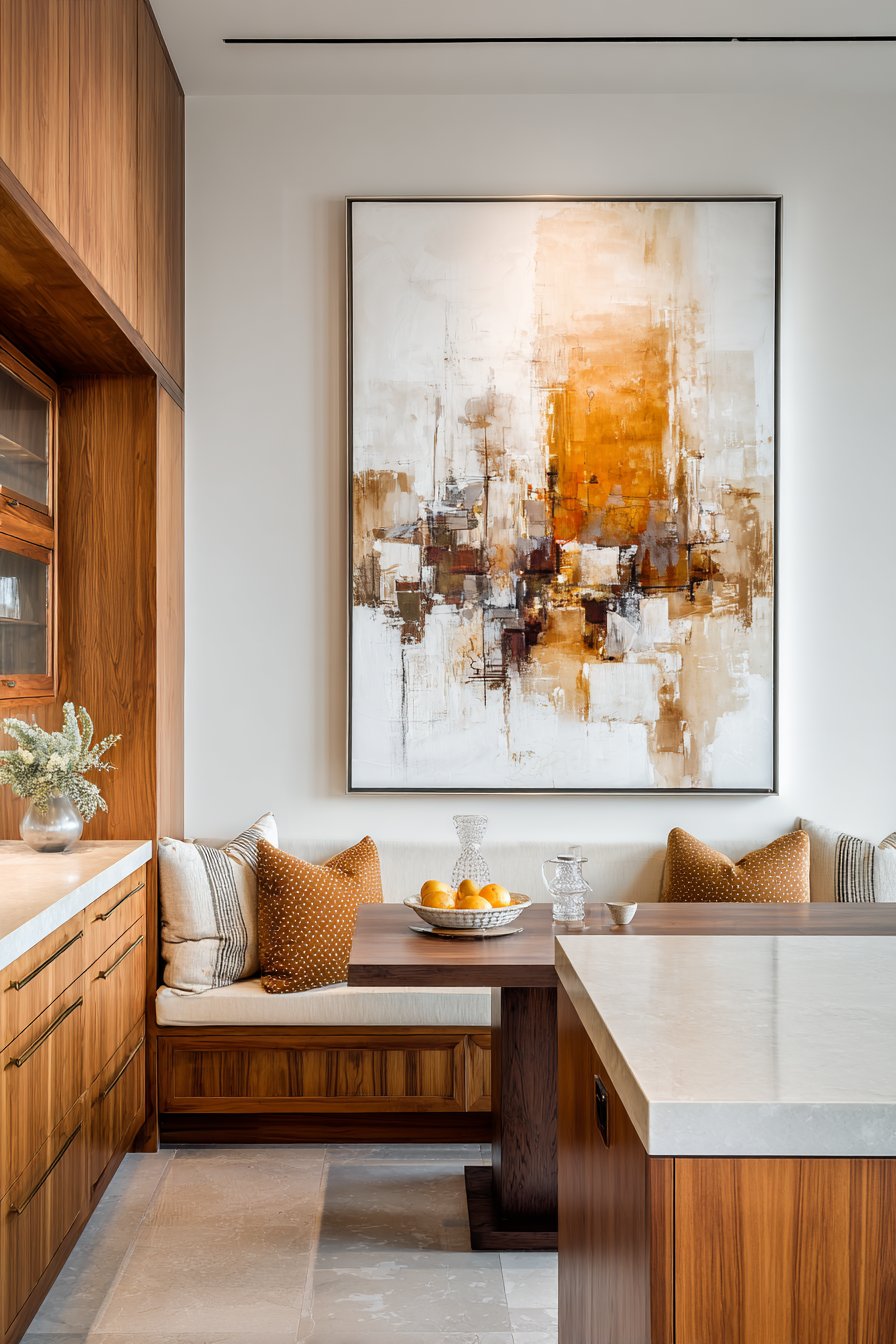
Scale matters tremendously when selecting statement art. A piece that’s too small appears lost on a large wall, while properly sized art commands attention and grounds the space. For walls above dining areas or breakfast nooks, allow 6 to 12 inches of space on each side of furniture. Art should span two-thirds to three-quarters of the furniture width beneath it for balanced proportions.

Subject matter and style should complement your kitchen’s function without overwhelming it. Abstract compositions work well because they’re open to interpretation and don’t compete with busy environments. Consider moisture resistance if placing art near sinks or cooking areas. Canvas or acrylic prints withstand humidity better than watercolors or works on paper. Frame behind glass for additional protection in high-moisture zones.
- Choose abstract or geometric pieces that coordinate with existing colors
- Consider commissioning local artists for truly unique custom pieces
- Use acrylic or metal prints in high-humidity areas
- Position art away from direct cooking splatter zones
- Ensure proper lighting with track lights or picture lights
- Select pieces that evoke positive emotions during meal preparation
7. Create a Chalkboard or Magnetic Wall
Interactive walls transform kitchen spaces into functional command centers that engage the entire family. Chalkboard paint creates surfaces for grocery lists, meal planning, or children’s artwork, while magnetic paint allows flexible attachment of notes, photos, and reminders. This approach particularly suits busy households needing organizational solutions.

Application requires careful surface preparation for best results. Clean walls thoroughly, fill imperfections, and apply primer before chalkboard or magnetic paint. Multiple coats ensure proper coverage and functionality. Season chalkboard surfaces by rubbing chalk over the entire area then erasing before first use. This prevents permanent ghosting from initial writing.

Styling functional walls maintains aesthetic appeal alongside practicality. Frame chalkboard sections with decorative molding for a polished custom look. Combine chalkboard areas with open shelving or magnetic strips holding knives and utensils. Keep chalk colors coordinated with your kitchen’s palette—white chalk on black backgrounds creates classic contrast, while colored chalk adds playful energy to family-friendly kitchens.
- Install a chalkboard wall in the breakfast nook for daily planning
- Add a magnetic border for displaying children’s artwork or photos
- Use chalk markers instead of traditional chalk for crisp lettering
- Include a small ledge below for chalk and eraser storage
- Paint just one accent wall rather than overwhelming the space
- Combine chalkboard paint with open shelving for mixed functionality
Conclusion
Kitchen wall decor offers endless opportunities to personalize your space while enhancing both beauty and function. From gallery walls celebrating culinary artistry to living herb gardens providing fresh ingredients, each approach brings unique character to your kitchen. The most successful designs balance aesthetic appeal with practical considerations like moisture resistance and accessibility.

Start with one approach that resonates with your style and lifestyle needs. Remember that great design evolves over time—allow your walls to grow and change as your tastes develop. Whether you choose vintage collections, statement art, or interactive surfaces, thoughtful wall styling transforms your kitchen into a space that truly feels like home. Embrace experimentation and create a kitchen environment that inspires both cooking and connection.
