


The living room serves as the heart of every home. It’s where families gather, guests are welcomed, and memories are created. This versatile space demands thoughtful design that balances aesthetics with functionality. The right interior approach transforms an ordinary room into an extraordinary sanctuary.
Contemporary living room design offers endless possibilities for personal expression. From minimalist Scandinavian aesthetics to maximalist bohemian charm, each style speaks to different personalities and lifestyles. The beauty lies in finding the perfect balance between visual appeal and practical comfort. Today’s homeowners seek spaces that reflect their unique tastes while accommodating daily living needs.

This comprehensive guide explores twenty distinctive living room interior concepts. Each design showcases unique materials, color palettes, and spatial arrangements. Whether you’re drawn to rustic farmhouse warmth or sleek industrial edge, these ideas provide inspiration for creating your ideal living space. The diverse themes demonstrate how different elements combine to produce cohesive, inviting environments.
1. Contemporary Comfort with Natural Elements

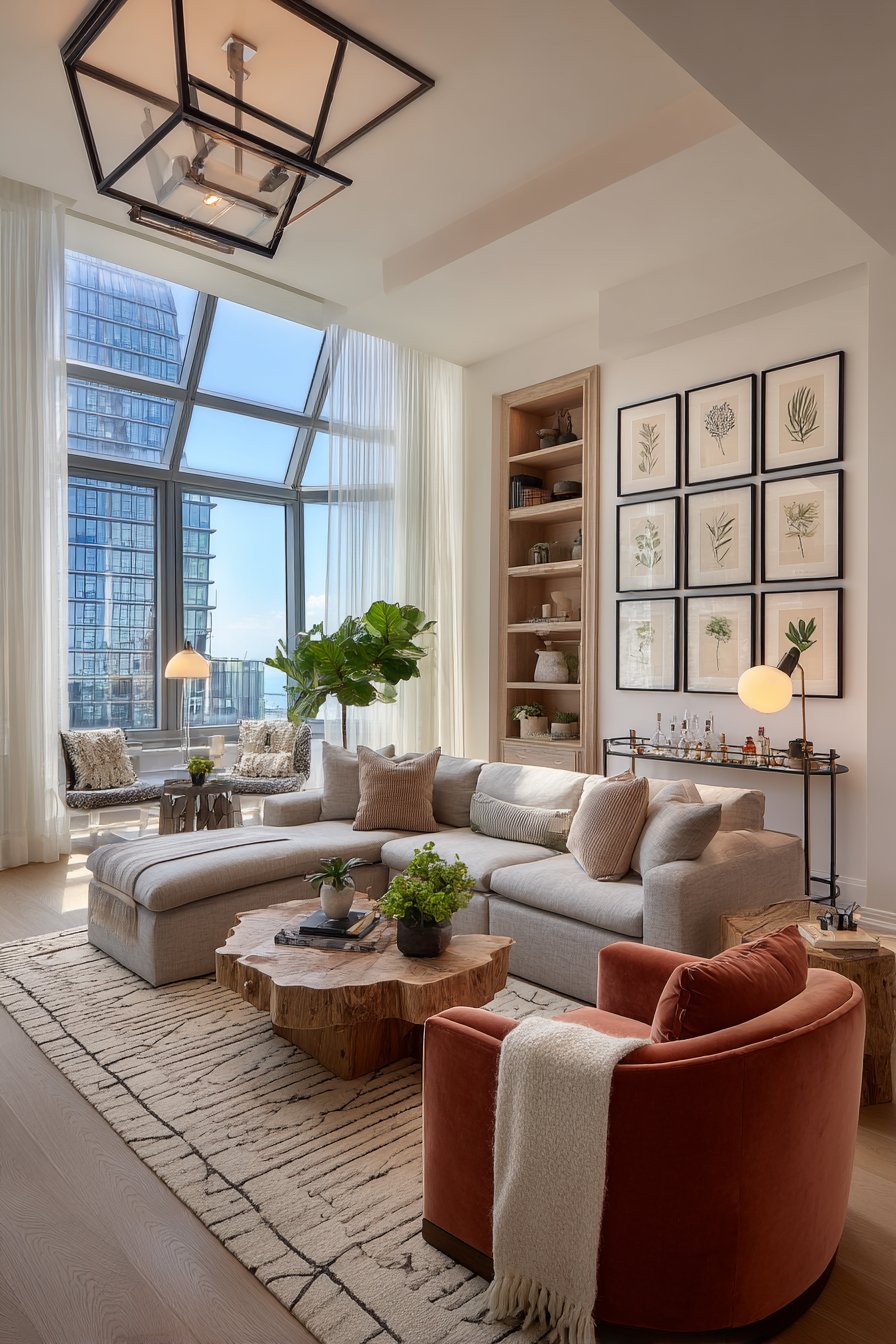
A contemporary living room achieves perfection through thoughtful material selection and spatial planning. The plush sectional sofa in warm oatmeal linen defines the seating area beautifully. Natural wood coffee tables with live edge details bring organic character to the space. These elements create visual interest without overwhelming the senses.

The hand-woven jute rug anchors the room with subtle geometric patterns. Floor-to-ceiling windows flood the space with soft diffused daylight. Sheer white curtains filter the light gently, creating an ethereal atmosphere. The gallery wall featuring framed botanical prints adds personality to the main wall. Black frames provide consistent visual rhythm throughout the display.

Living plants breathe life into this contemporary setting. Fiddle leaf figs and snake plants contribute organic elements that soften modern lines. The modern floor lamp with brass accents provides functional task lighting. Textured throw pillows in terracotta and sage tones add warmth and depth. The layered textures create dimensional quality that evolves throughout the day.

Morning light creates gentle shadows across various surfaces. The interplay between natural materials and contemporary furnishings feels effortless. This design demonstrates how simplicity and sophistication coexist harmoniously. The neutral palette allows flexibility for seasonal decor changes.
Key Design Tips:
- Select a neutral sectional sofa that anchors the space without dominating it
- Incorporate live edge wood pieces for organic visual interest
- Layer natural fiber rugs to add texture and warmth underfoot
- Create gallery walls with consistent frame colors for cohesive impact
- Add brass accents through lighting and hardware for subtle elegance
- Choose plants that thrive in your natural light conditions
- Use sheer curtains to maximize daylight while maintaining privacy
2. Scandinavian Simplicity and Function

Scandinavian design philosophy celebrates minimalism and functionality in perfect harmony. The low-profile grey sofa features clean lines and wooden legs. Light oak floating shelves display curated books and ceramic vases against pure white walls. This aesthetic embraces the concept that less truly becomes more.

The round marble coffee table sits centered on a cream wool rug. Subtle texture variations in the rug add visual interest without pattern. Natural light streams generously through large windows dressed simply with linen curtains. The modern pendant light with matte black finish provides focused illumination. A butter-soft leather reading chair invites quiet moments of relaxation.

Woven storage baskets tucked beneath the console demonstrate practical beauty. Every element serves dual purposes of form and function. The airy, uncluttered space promotes mental clarity and peaceful living. Natural daylight interacts beautifully with the neutral color palette throughout the day.

This design proves that simplicity requires careful curation. Each piece earns its place through thoughtful selection. The organic materials create warmth within the minimalist framework. The result feels serene yet inviting.
Key Design Tips:
- Choose furniture with exposed wooden legs to create visual lightness
- Install floating shelves to maximize storage without bulk
- Select a round coffee table to soften angular room layouts
- Invest in quality wool rugs with subtle texture for understated elegance
- Maximize natural light through simple window treatments
- Add one statement leather piece for warmth and character
- Use woven baskets for attractive storage solutions
3. Bohemian Layers and Eclectic Spirit

Bohemian style celebrates collected treasures and personal expression through layered textiles. The vintage-inspired velvet sofa in deep emerald green anchors the space boldly. An array of patterned throw pillows featuring ethnic prints creates visual richness. Embroidered details add handcrafted authenticity to the design.

Macramé wall hangings and woven tapestries transform walls into textural art. Multiple area rugs in complementary patterns layer across natural hardwood floors. This technique adds depth and visual intrigue. Rattan furniture pieces including peacock chairs introduce organic shapes and natural materials.

Abundant potted plants create an indoor garden atmosphere. Various sizes and species contribute to the lush aesthetic. String lights and Moroccan-style lanterns provide ambient lighting options. The collected, lived-in feeling develops through intentional layering and personal curation.

Natural afternoon light highlights the rich colors throughout the space. The varied textures create dimensional interest from every angle. This design encourages continuous evolution and personal expression. The bohemian aesthetic welcomes imperfection and celebrates individuality.
Key Design Tips:
- Start with a bold velvet sofa in a jewel tone as your anchor piece
- Layer multiple rugs with complementary patterns for depth
- Incorporate rattan and wicker furniture for organic texture
- Create textile wall art using macramé and woven pieces
- Add string lights for flexible ambient lighting options
- Fill corners and surfaces with varied plant life
- Mix patterns confidently through pillows and textiles
4. Modern Farmhouse Rustic Elegance

Modern farmhouse design blends rustic charm with contemporary comfort seamlessly. The shiplap accent wall painted in soft white provides perfect backdrop. A comfortable sectional in neutral linen invites relaxation. Reclaimed wood beams spanning the ceiling add architectural character and visual interest.

The sliding barn door serves both functional and decorative purposes. A distressed wooden coffee table with metal frame hardware centers the seating area. The vintage-inspired area rug features a faded floral pattern. Black metal wall sconces flank a large mirror with weathered wood frame.

The brick fireplace with wooden mantel becomes the room’s focal point. Galvanized metal accents and fresh greenery create seasonal styling opportunities. Natural light from multiple windows creates warm illumination throughout the space. The harmonious blend of rough-hewn textures and refined furnishings defines this style.

This design celebrates authentic materials and honest construction. The combination feels both timeless and current. The neutral palette allows flexibility for changing accent colors. The space invites gathering and comfortable living.
Key Design Tips:
- Install shiplap on one accent wall for farmhouse character
- Choose furniture with both linen and distressed wood elements
- Add reclaimed wood beams for architectural interest
- Incorporate sliding barn doors as functional art pieces
- Select metal hardware and fixtures in matte black finishes
- Style mantels with galvanized containers and natural greenery
- Layer vintage and new pieces for authentic farmhouse feel
5. Industrial Loft Raw Authenticity

Industrial design celebrates raw materials and honest construction. Exposed brick walls and concrete flooring create the foundation. Area rugs define the seating zone without hiding the architectural character. The charcoal grey leather sofa pairs perfectly with metal-framed armchairs showing slight wear patina.

Edison bulb pendant lights hang from black iron piping suspended from exposed ductwork. This lighting solution embraces the industrial aesthetic completely. A reclaimed wood coffee table with hairpin legs sits atop a cowhide rug. Open metal shelving displays books and industrial decor objects without concealment.

Large factory-style windows with black frames allow abundant natural light. Vintage industrial elements include repurposed metal lockers used as storage. A gear-driven wall clock adds authentic period detail. The raw, authentic aesthetic celebrates material textures and honest construction.

Natural shadows from window light create dramatic visual effects. The interplay between rough and refined surfaces adds complexity. This design approach requires confidence and restraint. The industrial style makes bold statements through material choices.
Key Design Tips:
- Expose existing brick walls or add brick veneer for texture
- Choose leather furniture that develops beautiful patina over time
- Install Edison bulb lighting on visible piping or chains
- Select coffee tables with hairpin legs for iconic industrial look
- Use open metal shelving to display collections
- Add vintage industrial finds like lockers and factory elements
- Maintain black window frames for authentic factory aesthetic
6. Coastal Breeze and Ocean Inspiration

Coastal design creates bright, airy atmospheres reminiscent of seaside living. The white slipcovered sofa shows relaxed fit with natural wrinkles and texture. This casual approach defines coastal comfort perfectly. A driftwood coffee table with glass top centers the space on natural fiber sisal rug.

Walls painted in soft seafoam green complement white-washed wood plank flooring. Large windows with bamboo roman shades filter natural sunlight gently. Striped throw pillows in navy and white add nautical touches. Woven seagrass baskets provide texture while offering practical storage solutions.

Coral specimens displayed on floating shelves bring ocean elements indoors. Rope-wrapped table lamps reference maritime heritage. Potted palms contribute tropical beach atmosphere. A vintage wooden oar and framed coastal photography complete the beachy aesthetic.

The breezy, light-filled space promotes relaxation and casual living. Natural daylight emphasizes the bleached wood tones throughout. The ocean-inspired color palette creates serene environments. This design celebrates coastal living whether near water or far inland.
Key Design Tips:
- Choose white slipcovered furniture for casual coastal elegance
- Incorporate driftwood pieces for authentic beach character
- Paint walls in soft seafoam or sandy beige tones
- Add striped textiles in classic navy and white combinations
- Display natural coral and shell collections on open shelving
- Use bamboo roman shades for natural light filtration
- Include tropical plants like palms for lush coastal feel
7. Mid-Century Modern Timeless Design

Mid-century modern design showcases iconic elements from the 1950s-60s era. The walnut credenza with tapered legs and brass pulls anchors one wall beautifully. Topped with a vintage record player and ceramic table lamp, it tells a design story. A tufted leather sofa in cognac brown pairs with molded plywood lounge chair.
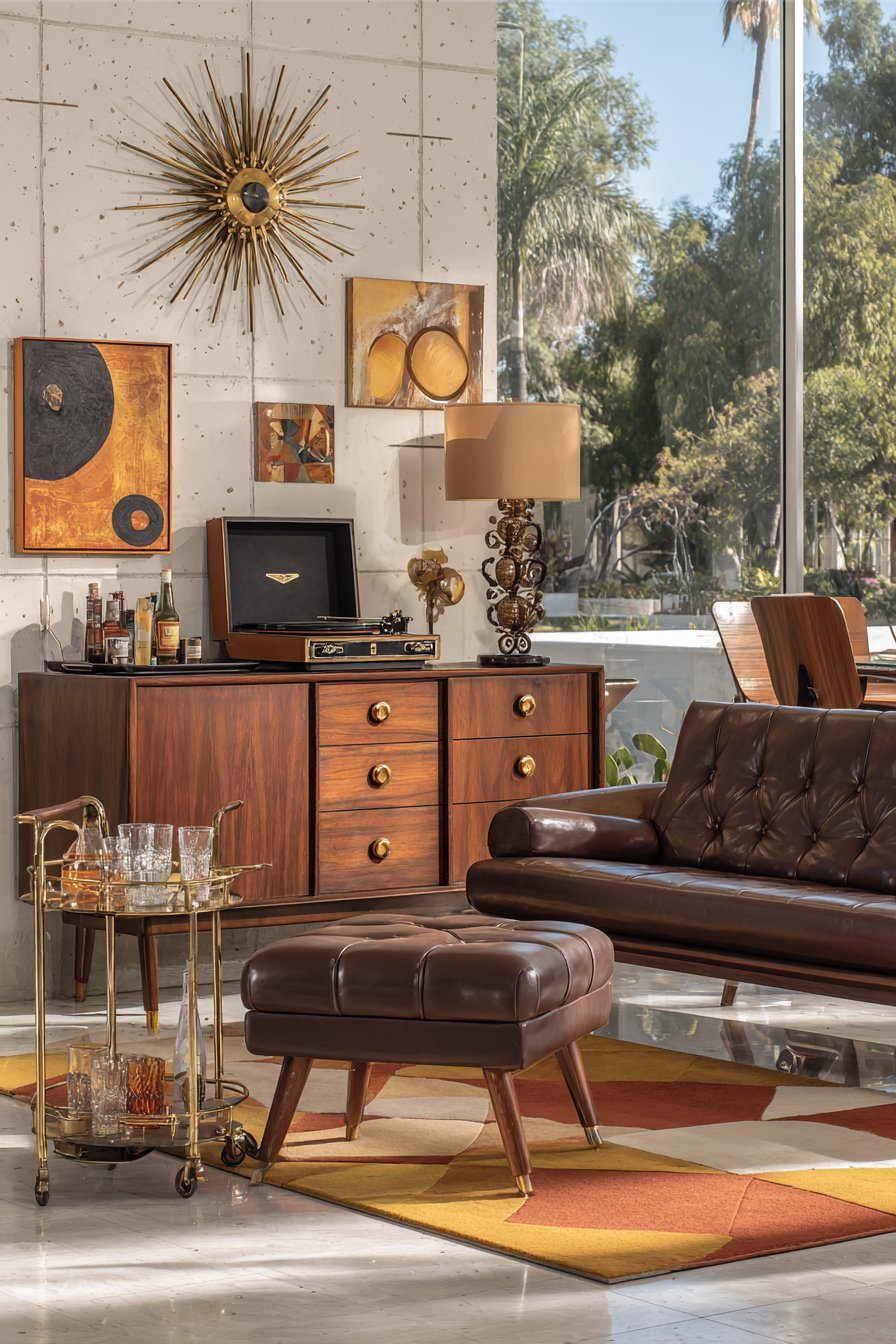
The geometric area rug in mustard, orange, and brown tones defines the conversation area. A sunburst wall clock and abstract art prints in teak frames provide period-appropriate wall decor. Large picture windows with minimal treatment allow natural light to showcase warm wood tones. The bar cart with brass details and vintage glassware adds functional elegance.

This design celebrates organic and geometric forms in harmony. Warm wood grains create natural beauty throughout the space. Afternoon light creates authentic vintage ambiance. The carefully curated pieces represent the best of mid-century design principles.

The timeless appeal of this style continues growing. Quality craftsmanship and clean lines remain perpetually relevant. This aesthetic works beautifully in modern homes. The mid-century modern approach balances form and function perfectly.
Key Design Tips:
- Invest in walnut furniture with tapered legs and brass accents
- Add a cognac leather sofa for warmth and patina development
- Choose geometric rugs in period-appropriate color palettes
- Display vintage bar carts with brass details and glassware
- Hang sunburst clocks and abstract art in wooden frames
- Select ceramic lamps with sculptural bases
- Maintain minimal window treatments to showcase architecture
8. Small Space Smart Solutions

Small apartment living demands space-efficient design solutions. The compact loveseat in slate blue features storage compartment underneath. Wall-mounted floating shelves in light wood create display and storage without consuming floor space. A nesting coffee table set provides flexibility for different activities.

The fold-down wall-mounted desk serves multiple purposes efficiently. A large mirror with simple frame amplifies natural light and creates expanded space illusion. Multi-functional ottoman with removable tray top serves as seating, storage, and table. Vertical storage cabinet reaches ceiling height maximizing cubic footage.

Sheer curtains on tension rods maintain privacy without blocking precious light. Light grey walls and white trim enhance spaciousness perception. Every element serves multiple functions in the compact footprint. Clever space planning demonstrates that small doesn’t mean limited.

The practical layout maintains style without sacrificing functionality. Each piece earns its place through dual purposes. This approach proves that thoughtful design overcomes spatial constraints. Small spaces can feel open and organized simultaneously.
Key Design Tips:
- Choose furniture with built-in storage compartments
- Install floating shelves to maximize vertical space
- Select nesting tables that adapt to different needs
- Add large mirrors to create illusion of expanded space
- Use multi-functional ottomans for flexible seating and storage
- Paint walls in light colors to enhance spaciousness
- Install fold-down furniture for occasional use needs
9. Transitional Balance and Timeless Appeal

Transitional design blends traditional comfort with contemporary clean lines. The neutral sofa with rolled arms and nail head trim anchors the space traditionally. A modern glass coffee table adds contemporary lightness and transparency. Classic wingback chairs in updated grey fabric flank the fireplace with simple mantel styling.

Traditional crown molding and wainscoting painted crisp white contrast with grey walls. Modern abstract artwork in gold frame provides focal point above the sofa. The room balances ornate table lamp with ceramic base against sleek floor lamp with chrome finish. Area rug features traditional pattern in contemporary color palette.

Natural hardwood floors show realistic grain variation. The sophisticated balance of old and new creates timeless appeal. Natural window light highlights the layered textures throughout. This approach satisfies lovers of both traditional and modern aesthetics.

Transitional design offers flexibility for evolving tastes. The neutral foundation accommodates changing accent pieces. This balanced approach remains perpetually stylish. The combination feels neither dated nor trendy.
Key Design Tips:
- Mix traditional furniture silhouettes with modern materials
- Choose neutral upholstery with classic details like nailhead trim
- Add glass tables to lighten traditional wood furniture
- Update classic patterns through contemporary color choices
- Balance ornate and simple elements throughout the space
- Install traditional architectural details painted in fresh colors
- Select artwork that bridges style periods
10. Maximalist Celebration and Bold Abundance

Maximalist design celebrates bold patterns, rich colors, and collected treasures. The jewel-toned velvet sofa in sapphire blue serves as stunning anchor. Piled with pillows in various patterns including paisley, floral, and geometric designs. The gallery wall covers entire wall with ornate gold frames of varying sizes.

Multiple area rugs layer across floor creating visual richness and depth. Statement chandelier with crystal details provides ambient lighting. Table lamps with patterned shades add pools of warm light. Lacquered side tables in glossy emerald green hold decorative objects beautifully.

Window treatments feature heavy damask curtains with tasseled tiebacks. Every surface displays collections and decorative items creating curated abundance. The intentional layering and visual complexity require careful curation. This design approach makes bold statements through fearless combination.

The densely decorated space reveals new details with each viewing. The maximalist aesthetic celebrates more is more philosophy. This style suits confident decorators who embrace visual richness. The result feels luxurious and highly personalized.
Key Design Tips:
- Start with jewel-toned velvet furniture as foundation pieces
- Layer multiple rugs to add pattern and visual depth
- Create gallery walls covering entire walls with varied frames
- Mix patterns confidently through pillows and textiles
- Add statement lighting with crystal or ornate details
- Display collections on every available surface
- Choose heavy curtains with decorative hardware and tiebacks
11. Minimalist Serenity and Intentional Space

Minimalist design emphasizes clean lines and intentional emptiness. The low-profile sofa in warm grey linen features simple wooden legs. Pure white walls create backdrop for careful curation. A single sculptural floor lamp with arched design provides task lighting elegantly.

One carefully chosen piece of large-scale abstract art creates focal point. Simple wooden coffee table with seamless joints demonstrates craftsmanship quality. Polished concrete floor shows natural tonal variations beautifully. Large windows with no treatments allow maximum natural light penetration.

Built-in shelving with asymmetric composition holds few carefully curated objects. Abundant negative space between items creates breathing room. The room demonstrates restraint with quality over quantity philosophy. Each piece chosen for both form and function serves specific purpose.

The serene, uncluttered space promotes mental clarity and peace. Natural daylight emphasizes clean surfaces and precise geometry. The beauty of empty space becomes apparent. Minimalist design requires discipline and thoughtful curation.
Key Design Tips:
- Select low-profile furniture with exposed wooden legs
- Choose one statement art piece rather than multiple small ones
- Invest in quality pieces with exceptional craftsmanship
- Leave walls predominantly empty to emphasize architecture
- Remove window treatments to maximize natural light
- Display very few carefully chosen decorative objects
- Embrace negative space as design element
12. Rustic Cabin Natural Warmth

Rustic cabin design features natural materials and cozy textures. The stone fireplace with rough-hewn mantel beam serves as architectural focal point. Leather sofa showing natural patina pairs with plaid upholstered armchairs. Solid wood coffee table displays visible knots and grain variation naturally.

Wool area rug features Native American-inspired geometric pattern. Exposed log beams span ceiling while pine plank walls show authentic wood character. Antler chandelier provides rustic lighting ambiance. Plaid and fur throw blankets layer on seating for warmth and texture.

Large windows frame forest views while wooden shutters provide privacy options. Vintage camping lanterns and woven baskets add authentic lodge touches. Nature-inspired artwork reinforces the outdoor connection. Natural light filters through pine trees creating dappled illumination.

The authentic lodge atmosphere celebrates outdoor living. Wood textures and natural material variations create organic beauty. This design connects inhabitants with nature. The rustic cabin style offers retreat from modern life.
Key Design Tips:
- Install stone fireplace as architectural centerpiece
- Choose leather furniture that develops authentic patina
- Add exposed log beams or wood ceiling treatments
- Select plaid and fur textiles for cabin coziness
- Hang antler chandeliers or nature-inspired lighting
- Display vintage camping equipment as decorative elements
- Frame windows to showcase outdoor views
13. Eclectic Mix and Global Influence

Eclectic design mixes styles, periods, and cultural influences fearlessly. Modern sectional in charcoal grey pairs unexpectedly with ornate Victorian side chair. The Victorian piece gets reupholstered in contemporary fabric successfully. Global textiles including Moroccan pouf, Turkish kilim rug, and Indian block-print pillows create worldly layering.

Industrial metal coffee table with reclaimed wood top bridges style periods. Gallery wall mixes contemporary photography, vintage botanical prints, and ethnic textile art. Mismatched frames add to the curated collection aesthetic. Mid-century credenza provides storage while displaying travel souvenirs.

Plants in various vessels add living elements throughout. Mix of lighting includes Moroccan metal lantern, modern tripod floor lamp, and vintage brass table lamp. The curated collection demonstrates personal style through intentional choices. Natural daylight reveals how disparate elements create cohesion.

Color palette and balanced composition unite different elements. This approach celebrates individual taste and travel memories. Eclectic design requires confidence and editing skills. The result feels collected rather than decorated.
Key Design Tips:
- Mix furniture from different style periods confidently
- Reupholster vintage pieces in contemporary fabrics
- Layer global textiles from various cultures
- Create gallery walls with mismatched frame styles
- Display travel souvenirs and collected treasures
- Combine modern, vintage, and ethnic lighting fixtures
- Unite diverse elements through cohesive color palette
14. Open Concept Contemporary Flow

Contemporary open-concept design creates fluid connection to adjacent spaces. Large L-shaped sectional in performance fabric defines living zone without blocking sightlines. Floating media console in white lacquer provides storage while maintaining visual lightness. Low-profile furniture keeps space feeling expansive and airy.

Modern artwork in oversized format creates impact without overwhelming. Area rug grounds seating area while hardwood floors flow continuously through space. Floor-to-ceiling windows with motorized shades provide convenient light control. Recessed lighting supplements natural illumination effectively.

Minimal window treatments and hidden storage solutions maintain clean aesthetics. Wireless technology integration keeps the space uncluttered. Contemporary furniture shows clean lines with subtle curves for comfort. The spatial flow supports modern living patterns.

Natural light travels beautifully through the open floor plan. The modern aesthetic celebrates connection and transparency. This design suits contemporary lifestyles perfectly. Open concept living promotes family interaction and entertainment.
Key Design Tips:
- Choose low-profile sectionals that define zones without blocking views
- Install floating furniture to maintain visual lightness
- Use area rugs to define spaces within open plans
- Select floor-to-ceiling windows with motorized shade systems
- Add recessed lighting for clean ceiling lines
- Incorporate hidden storage to maintain uncluttered appearance
- Choose oversized artwork for appropriate scale
15. Luxury Materials and Sophisticated Detail

Luxury living room design features high-end materials and sophisticated details. Velvet Chesterfield sofa in rich charcoal with deep button tufting anchors formal seating. Marble coffee table with brass inlay detail demonstrates exceptional craftsmanship. Hand-knotted silk area rug features intricate pattern and superior quality.

Custom built-in bookcases in dark stained wood include interior lighting. Leather-bound books and objets d’art display beautifully. Coffered ceiling adds architectural distinction while crystal chandelier provides elegant ambient lighting. Silk drapery panels with contrasting lining frame tall windows luxuriously.

Wingback chairs upholstered in luxe fabric offer comfortable seating. Lacquered side tables and original artwork in gilded frames complete the refined aesthetic. Attention to detail shows in crown molding, baseboards, and hardware finishes. Material quality and craftsmanship create lasting luxury.

The refined elegance demonstrates investment in quality. Subtle sheen of fabrics catches light beautifully. This design approach celebrates enduring style. Luxury living rooms showcase exceptional taste and attention to detail.
Key Design Tips:
- Invest in Chesterfield or tufted velvet furniture pieces
- Choose marble tables with brass or gold inlay details
- Select hand-knotted silk rugs for exceptional quality
- Install custom built-ins with interior lighting
- Add coffered ceilings for architectural distinction
- Hang crystal chandeliers for elegant ambient lighting
- Use silk drapery with contrasting lining for luxury
16. Family-Friendly Style and Practical Durability

Family-friendly design balances style with durability and function. Sectional sofa in stain-resistant performance fabric accommodates multiple people comfortably. Upholstered ottoman with storage interior serves as coffee table with soft edges. Washable area rug in forgiving pattern shows minimal wear over time.

Built-in toy storage with decorative baskets keeps clutter contained effectively. Durable laminate flooring resembles hardwood without maintenance concerns. All furniture features rounded corners and stable construction for safety. Child-height bookshelf encourages independence and reading habits.

Comfortable adult seating maintains good sightlines for supervision. Flexible lighting includes dimmable fixtures for various activities. Decor remains stylish while being breakage-resistant. The practical layout functions beautifully for family life.

This design proves family-friendly doesn’t mean sacrificing style. The space accommodates children while maintaining design integrity. Easy maintenance features support busy family schedules. Family rooms should serve all household members equally.
Key Design Tips:
- Choose performance fabrics that resist stains and wear
- Select ottomans with storage for toys and supplies
- Use washable rugs in forgiving patterns
- Install built-in storage with decorative baskets
- Choose durable flooring that resembles natural materials
- Select furniture with rounded corners for safety
- Add child-height storage to encourage independence
17. Biophilic Design and Nature Connection

Biophilic design emphasizes connection to nature indoors. Floor-to-ceiling windows without heavy treatments maximize natural light and outdoor views. Large fiddle leaf fig, monstera, and bird of paradise plants create indoor forest atmosphere. Natural materials dominate including jute rug, linen upholstery, and live-edge wood coffee table.

Stone accent wall with natural variation provides textural backdrop. Rattan hanging chair suspended near window creates perfect reading nook. Organic shapes appear in furniture curves and decorative elements. Color palette draws from nature with sage greens, warm browns, and soft creams.

Natural fiber window shades filter light without blocking it completely. Water feature adds gentle ambient sound enhancing tranquility. The serene atmosphere promotes wellbeing and relaxation. Abundant natural daylight shows how plants thrive in the space.

Natural materials interact beautifully with changing light throughout the day. This design approach supports mental health and wellness. Bringing nature indoors creates calming environments. Biophilic principles improve quality of life measurably.
Key Design Tips:
- Maximize windows and natural light access
- Fill space with various plant species and sizes
- Choose natural materials like jute, linen, and wood
- Add stone or natural material accent walls
- Include water features for ambient sound
- Select furniture with organic curved shapes
- Use nature-inspired color palettes throughout
18. Smart Home Technology Integration

Smart home design integrates technology seamlessly with aesthetics. Built-in speakers hidden in ceiling maintain clean aesthetic while providing immersive sound. Motorized curtains on large windows respond to daylight sensors automatically. TV recessed into wall appears as art display when not in use.

Wireless charging side tables eliminate cord clutter effectively. Smart lighting system with recessed fixtures provides customizable ambiance. Furniture includes integrated USB ports and power outlets discreetly. Hidden cable management keeps technology invisible and organized.

Voice-controlled features operate through minimalist interfaces. Contemporary furniture in neutral palette allows technology to remain unobtrusive. The modern space balances functional technology with design purity. Technology integration maintains aesthetic integrity throughout.

This design demonstrates technology enhancing rather than detracting from beauty. Smart features provide convenience without visual clutter. The seamless integration supports modern lifestyles. Technology should serve inhabitants invisibly when designed properly.
Key Design Tips:
- Install built-in ceiling speakers for invisible audio
- Add motorized curtains with sensor automation
- Choose TVs that display artwork when not in use
- Select furniture with integrated charging capabilities
- Install smart lighting with customizable scenes
- Hide all cables through built-in management systems
- Use voice control with minimalist interfaces
19. Vintage Retro Authentic Period Style

Vintage-inspired design celebrates retro aesthetics with authentic period pieces. Curved sofa in original 1970s harvest gold velvet shows slight patina adding character. Teak coffee table with magazine rack underneath displays vintage design magazines. Shag area rug in burnt orange grounds the seating area perfectly.

Geometric wallpaper in period-appropriate pattern covers accent wall. Vintage floor lamp with three globes provides ambient lighting. Rotary phone serves as decorative element referencing the era. Vintage bar cart with chrome details holds period glassware.

Wood paneling on walls shows authentic finish from the era. Macramé plant hangers hold spider plants near windows with original aluminum frames. Original artwork in period frames completes the authentic atmosphere. The warm color palette and textural elements define the vintage aesthetic.

This design celebrates genuine period details rather than modern reproductions. The authentic vintage atmosphere transports inhabitants to different era. Collecting authentic pieces requires patience and knowledge. Vintage design celebrates nostalgia and design history.
Key Design Tips:
- Source authentic vintage furniture rather than reproductions
- Choose period-appropriate color palettes like harvest gold and burnt orange
- Add shag rugs for authentic 1970s texture
- Install geometric wallpaper on accent walls
- Display vintage bar carts with period glassware
- Hang macramé plant holders with trailing plants
- Include wood paneling with authentic finishes
20. Japanese Zen Simplicity and Natural Materials

Japanese-inspired design emphasizes simplicity and natural materials. Low platform seating with neutral cushions creates floor-level living arrangement. Shoji screen-inspired sliding panels diffuse natural light beautifully. Tatami mat-style area rug defines the main living area.

Simple wooden coffee table with clean joints demonstrates superior craftsmanship. Minimalist shelving displays few carefully chosen objects including bonsai tree and ceramic vessels. Natural wood elements show grain and knot patterns honestly. Paper lantern pendant provides soft ambient lighting.

Large windows frame garden views creating indoor-outdoor connection. Color palette remains neutral with natural materials providing visual interest through texture variation. Small ikebana flower arrangement adds living element. The zen-like atmosphere promotes meditation and peace.

Natural daylight creates subtle shadows emphasizing clean lines. Natural materials and intentional use of negative space define the aesthetic. This design philosophy celebrates simplicity and craftsmanship. Japanese-inspired spaces promote mindfulness and tranquility.
Key Design Tips:
- Choose low platform seating for floor-level living
- Install shoji screen-inspired sliding panels
- Select simple wooden furniture with visible joinery
- Display minimal decorative objects with intention
- Add bonsai trees and ikebana arrangements
- Frame windows to create indoor-outdoor connection
- Maintain neutral palette with natural material variations
Why These Living Room Interior Designs Are the Best
These twenty living room interior design concepts represent the finest approaches to creating functional, beautiful living spaces. Each design demonstrates thoughtful consideration of materials, spatial planning, color theory, and lifestyle needs. The diversity showcases how different aesthetic preferences can coexist while maintaining design excellence.
Contemporary designs with natural elements excel through their balance of modern simplicity and organic warmth. The combination of clean lines with natural wood and plant life creates spaces that feel both current and timeless. These designs work exceptionally well for homeowners seeking sophisticated spaces without cold minimalism.
Scandinavian and minimalist approaches demonstrate that restraint creates powerful impact. The emphasis on quality over quantity, natural light maximization, and functional beauty produces serene environments. These designs particularly suit those seeking calm, uncluttered spaces that promote mental clarity and wellbeing.
Bohemian and maximalist concepts celebrate personality and collected treasures. The layered textiles, mixed patterns, and abundant decorative elements create visually rich environments. These designs work beautifully for creative individuals who embrace abundance and personal expression through their living spaces.
Rustic styles including farmhouse and cabin aesthetics excel through authentic material use. Reclaimed wood, natural stone, and vintage elements create warm, inviting atmospheres. These designs appeal to those seeking connection with traditional craftsmanship and natural materials in their homes.
Industrial loft designs celebrate honest construction and raw materials. Exposed brick, concrete floors, and metal elements create urban sophistication. These concepts work exceptionally well in converted spaces and for those appreciating architectural authenticity and urban aesthetics.

Coastal and biophilic designs prioritize connection with nature through different approaches. Coastal designs evoke seaside relaxation through light colors and natural textures. Biophilic designs bring nature indoors through abundant plants and natural materials. Both create restorative environments promoting wellness and tranquility.
Mid-century modern and transitional designs bridge historical periods successfully. Mid-century celebrates iconic 1950s-60s design through organic shapes and warm wood tones. Transitional blends traditional comfort with contemporary clean lines. These approaches offer timeless appeal that transcends temporary trends.
Smart home and open concept designs address contemporary lifestyle needs. Technology integration supports modern convenience without compromising aesthetics. Open concept layouts facilitate family interaction and flexible living. These designs reflect current living patterns and technological advancement.
Luxury designs showcase superior materials and exceptional craftsmanship. Velvet upholstery, marble surfaces, and custom millwork demonstrate investment in quality. These spaces celebrate enduring elegance and refined taste through attention to detail and material selection.
Family-friendly designs prove that practical durability doesn’t require aesthetic sacrifice. Performance fabrics, washable rugs, and rounded furniture corners support active family life. These designs demonstrate that beautiful spaces can accommodate children without compromising style or safety.
Vintage and eclectic approaches celebrate individual taste and collected treasures. Authentic period pieces and mixed style elements create personalized environments. These designs work beautifully for confident decorators who embrace their unique aesthetic vision rather than following prescribed formulas.
Japanese-inspired zen designs offer peaceful simplicity through natural materials and intentional space use. Low platform seating, minimal decoration, and nature connection create meditative environments. These spaces promote mindfulness and tranquility through design philosophy rooted in centuries of tradition.

Each design concept addresses specific lifestyle needs while maintaining aesthetic integrity. The variety demonstrates that exceptional living room design accommodates diverse preferences, budgets, and spatial constraints. Whether prioritizing relaxation, entertainment, family function, or personal expression, these concepts provide actionable inspiration.
The best living room designs balance multiple considerations simultaneously. Visual appeal combines with functional requirements, material quality meets budget realities, and personal taste aligns with practical needs. These twenty concepts demonstrate that thoughtful planning creates spaces serving inhabitants beautifully for years.
Successful living room interiors reflect occupant personalities while accommodating daily activities. The space should feel inviting to family while impressive to guests. Comfort and beauty coexist when design decisions consider both aesthetic impact and practical function. These principles unite all excellent living room designs regardless of style.
Conclusion
These twenty living room interior design concepts demonstrate the remarkable diversity available to homeowners today. From minimalist Scandinavian serenity to maximalist bohemian abundance, each approach offers unique benefits. The key takeaways include the importance of material selection, lighting strategy, spatial planning, and personal expression in creating successful living spaces.
Quality design begins with understanding your lifestyle needs and aesthetic preferences. Consider how you use your living room daily before selecting a design direction. Balance visual appeal with practical function through thoughtful furniture selection and strategic layout planning. Remember that great design evolves over time through careful curation rather than instant completion.
Experiment with these ideas in your own home by starting small. Add one element from your preferred style before committing to a complete transformation. Mix concepts that resonate with your personality to create truly personalized spaces. Your living room should reflect your unique story while accommodating your daily living needs beautifully.
