


The mid century modern aesthetic continues to captivate homeowners with its timeless appeal. This design philosophy emerged in the 1950s and 1960s. It celebrates clean lines, organic forms, and functional beauty. Today’s laundry rooms benefit tremendously from these enduring principles. The style transforms mundane utility spaces into inspiring environments.

Mid century design brings warmth through natural materials like walnut, teak, and brass. These elements create sophisticated spaces that feel both retro and contemporary. The aesthetic emphasizes clever storage solutions and efficient workflows. Every element serves both form and function. From geometric patterns to atomic-era hardware, these details add personality without overwhelming the space.
This article explores twenty distinct mid century laundry room concepts. Each design showcases authentic materials, period-appropriate colors, and innovative storage solutions. Whether you’re working with a compact corridor or a spacious dedicated room, these ideas offer inspiration. The designs range from bold color blocking to serene natural palettes. They demonstrate how mid century principles adapt to modern appliances and contemporary needs.
1. Built-In Walnut Cabinetry with Terrazzo Flooring

Custom walnut cabinetry defines this mid century laundry room. The wood features characteristic tapered legs that elevate the design. Recessed brass pulls add subtle metallic accents throughout. These horizontal lines create visual calm and organization. The upper cabinets maintain the same clean aesthetic. They provide ample storage while preserving the streamlined look.

A white quartz countertop spans above the appliances. This creates a practical folding station with durable surfaces. The seamless built-in washer and dryer disappear into the cabinetry design. This integration exemplifies mid century emphasis on concealment. The appliances function perfectly while maintaining aesthetic harmony.

Terrazzo flooring grounds the space with muted tones. Subtle flecking in various colors adds visual interest underfoot. This material choice reflects authentic mid century preferences. Large windows with simple wooden frames flood the room with daylight. Natural light highlights the warm wood tones beautifully. The space feels open and inviting throughout the day.

Key Design Tips:
- Select walnut cabinetry with tapered legs for authentic mid century character
- Install recessed brass pulls to maintain clean horizontal lines
- Choose terrazzo flooring for durable, period-appropriate foundation
- Maximize natural light with large windows and simple frames
- Create continuous countertop surfaces for efficient folding stations
2. Geometric Wallpaper with Open Teak Shelving

Open shelving constructed from teak wood brings practical elegance. The shelves display laundry supplies in glass containers. Woven baskets add organic texture to the storage system. This open approach keeps essentials visible and accessible. The teak’s warm honey tones create visual warmth.

The wall features distinctive geometric wallpaper in bold colors. Mustard yellow and charcoal grey create striking contrast. This pattern recalls 1960s design sensibilities. The wallpaper becomes an focal point without overwhelming. It adds personality and era-specific charm to the functional space.

A slim console table with angled legs provides additional surface area. The characteristic mid century leg design adds sculptural interest. A potted snake plant introduces living greenery. The plant’s architectural form complements the geometric patterns. Side window lighting creates gentle shadows. These shadows accentuate the wood grain and wallpaper texture beautifully.

Key Design Tips:
- Use geometric wallpaper in mustard and grey for authentic period appeal
- Install open teak shelving for accessible, attractive storage
- Display supplies in vintage glass containers for cohesive aesthetics
- Add angled-leg furniture to reinforce mid century design language
- Incorporate snake plants for architectural greenery that thrives indoors
3. Boomerang Pattern Laminate with Sage Cabinetry

The sink area showcases ceramic undermount basin simplicity. It sits within laminate countertop featuring boomerang pattern edging. This distinctive edge detail screams mid century authenticity. The organic shape adds visual movement to practical surfaces. It demonstrates the era’s love for atomic-age forms.

Cabinet doors below feature flat panels in soft sage green. This muted color provides calm sophistication. Atomic-era starburst hardware in brushed brass adds playful detail. These small touches reference space-age optimism. The hardware becomes jewelry for the cabinetry.

A sunburst mirror hangs above the sink. It reflects natural light throughout the space. This iconic mid century shape adds decorative punch. Hexagonal floor tiles in white and grey create authentic flooring. The geometric pattern provides visual interest underfoot. These elements combine to create cohesive period design.

Key Design Tips:
- Choose laminate countertops with boomerang edging for authentic detailing
- Paint flat-panel cabinets in sage green for sophisticated color
- Install starburst hardware in brushed brass for atomic-era charm
- Hang sunburst mirrors to reflect light and add iconic shapes
- Use hexagonal tiles for period-appropriate flooring patterns
4. Floor-to-Ceiling Oak Veneer Storage

Vertical space maximization defines this compact design. Floor-to-ceiling storage cabinets in light oak veneer line the walls. Clean lines and minimal ornamentation maintain visual simplicity. The wood’s natural grain adds warmth without busy patterns. This efficient approach suits smaller laundry rooms perfectly.

A pull-out ironing board integrates seamlessly into the cabinetry. This clever storage solution exemplifies mid century innovation. The board disappears when not needed. It emerges effortlessly for use. This design thinking maximizes functionality within limited square footage.

The opposite wall displays a pegboard system. Wooden pegs hold vintage-inspired cleaning tools. This organizational method keeps items accessible and visible. Pendant lighting with brass and milk glass shades illuminates the workspace. The fixtures provide focused task lighting. Natural daylight supplements artificial sources throughout the day.

Key Design Tips:
- Install floor-to-ceiling cabinets to maximize vertical storage capacity
- Integrate pull-out ironing boards for space-saving functionality
- Use pegboard systems with wooden pegs for flexible organization
- Choose pendant lights with milk glass shades for period lighting
- Combine natural daylight with strategic artificial illumination
5. Vertical Wood Slat Accent Wall

Vertical wood slats create striking dimensional texture. The walnut-stained slats add depth and visual interest. This accent wall becomes the room’s focal point. The vertical orientation draws eyes upward. It makes the ceiling feel higher than actual measurements.

Modern front-loading appliances sit beneath butcher block countertops. The wood grain and rounded edges add organic warmth. This natural material softens the appliances’ hard edges. Lower cabinets feature tambour doors in teak. These rolling doors provide concealed storage with distinctive character.

A geometric area rug in burnt orange and cream anchors the space. The colors reference classic mid century palettes. The rug defines the folding zone clearly. Morning light streams through clerestory windows. These high windows maintain privacy while maximizing natural illumination. The light emphasizes natural material textures throughout.

Key Design Tips:
- Create accent walls with vertical wood slats in walnut tones
- Choose butcher block countertops with visible grain and rounded edges
- Install tambour doors for distinctive concealed storage solutions
- Use geometric rugs in burnt orange to anchor functional zones
- Add clerestory windows for natural light and privacy balance
6. Post-and-Beam Ceiling with Cork Flooring

Exposed wood beams create architectural drama overhead. The post-and-beam ceiling detail showcases structural elements. Natural wood beams contrast beautifully against white painted ceiling. This exposed structure adds character and authenticity. It references mid century architectural movements.

The room features combined open and closed storage solutions. Walnut cabinets below provide concealed organization. Floating shelves above display vintage ceramic containers. This mixed approach balances display with practical storage. A rolling cart with hairpin legs adds mobile functionality.

Cork flooring offers authentic period-appropriate material selection. The natural material provides practical benefits including comfort. Cork absorbs sound and feels warm underfoot. It resists moisture naturally. The material ages gracefully with proper maintenance. Balanced natural lighting showcases the interplay between structural and functional elements.

Key Design Tips:
- Expose post-and-beam ceiling details for architectural interest
- Combine walnut cabinets with floating shelves for storage variety
- Add rolling carts with hairpin legs for mobile organization
- Choose cork flooring for comfort, sound absorption, and authenticity
- Paint ceilings white to maximize light reflection and contrast
7. Eames-Era Color Blocking Design

Iconic color blocking defines this bold approach. Cabinets alternate between seafoam green and natural birch wood. This contrasting combination creates dynamic visual rhythm. The colors reference Eames-era optimism and playfulness. Each color zone maintains clean boundaries.

The backsplash features rectangular ceramic tiles in glossy white. Stacked bond pattern arrangement adds contemporary edge. The glossy finish reflects available light beautifully. Circular brass knobs provide authentic hardware details. These simple shapes complement the cabinet geometry.

A narrow aluminum-frame window offers natural light and ventilation. The slim frame maintains period authenticity. Built-in hamper with flip-top lid integrates into cabinetry. This concealed storage keeps dirty laundry hidden. The design maintains clean lines throughout. Bold yet balanced composition characterizes this mid century approach.

Key Design Tips:
- Use color blocking with seafoam green and natural birch wood
- Arrange rectangular tiles in stacked bond patterns for interest
- Install circular brass knobs for authentic mid century hardware
- Add narrow aluminum-frame windows for period-appropriate openings
- Integrate built-in hampers with flip-top lids for concealed storage
8. Dedicated Folding Station with Checkerboard Flooring

A long continuous countertop creates dedicated folding space. White laminate with polished chrome edge banding adds retro flair. The extended surface accommodates large laundry loads. The chrome detail catches light and adds subtle shine. This practical design prioritizes workflow efficiency.

Drawers below feature recessed pulls in alternating widths. This creates visual rhythm and reduces visual clutter. The varied widths accommodate different storage needs. Wall-mounted drying racks in brass fold out when needed. They disappear against the wall when not in use.

Vinyl tiles in checkerboard pattern cover the floor. Grey and white create classic contrast. This flooring choice offers durability and easy maintenance. Recessed can lighting provides even illumination throughout. The lighting eliminates shadows in work areas. Functional workflow design guides every element placement.

Key Design Tips:
- Create long continuous countertops for efficient folding stations
- Use chrome edge banding on laminate for retro metallic detail
- Install drawers with alternating widths for visual rhythm
- Add fold-out brass drying racks for flexible functionality
- Choose checkerboard vinyl tiles for durable, classic flooring
9. Kidney-Shaped Table with Horizontal Paneling

A kidney-shaped sorting table serves as the centerpiece. Tapered wooden legs support the organic form. Durable laminate top in pale yellow adds cheerful color. This curved shape exemplifies mid century organic design. The form creates visual softness in the functional space.

Horizontal wood paneling in light ash covers surrounding walls. The paneling creates warmth and dimensional texture. The horizontal orientation emphasizes room width. A row of vintage-style metal lockers provides storage. Matte black paint gives them sophisticated presence. The lockers organize cleaning supplies efficiently.

Natural linen roman shades dress the windows simply. The fabric filters light while maintaining privacy. The natural fiber reinforces organic material emphasis. Soft diffused daylight enhances the room’s warmth. The combination of curves and straight lines creates quintessential mid century aesthetic.

Key Design Tips:
- Use kidney-shaped tables as centerpieces for organic form
- Install horizontal wood paneling to emphasize room dimensions
- Add vintage-style metal lockers painted in matte black
- Choose natural linen roman shades for simple window treatments
- Balance curved forms with straight lines for classic mid century look
10. Terrazzo Countertops with Two-Tone Cabinetry

Authentic terrazzo countertops display colorful aggregate chips. Pink, teal, and yellow chips sparkle against neutral base. This material choice adds playful sophistication. The varied colors create visual interest without patterns. Terrazzo develops character as it ages gracefully.

Two-tone cabinetry showcases blonde wood upper cabinets. Lower cabinets feature deep teal paint. This vertical color division creates visual balance. The light upper cabinets keep the space feeling open. Dark lower cabinets ground the design. An atomic age starburst clock hangs prominently.

Simple open shelving holds woven baskets. The baskets provide flexible storage solutions. Cork board tiles on one wall create functional pin-up space. The natural material adds texture and practicality. Natural lighting emphasizes material textures throughout. Era-specific design details appear in every element.

Key Design Tips:
- Choose terrazzo countertops with colorful aggregate for playful sophistication
- Create two-tone cabinetry with blonde wood above and teal below
- Display atomic age clocks and accessories for period authenticity
- Use woven baskets on open shelving for natural storage
- Install cork board sections for functional organization and texture
11. Frosted Glass Sliding Doors
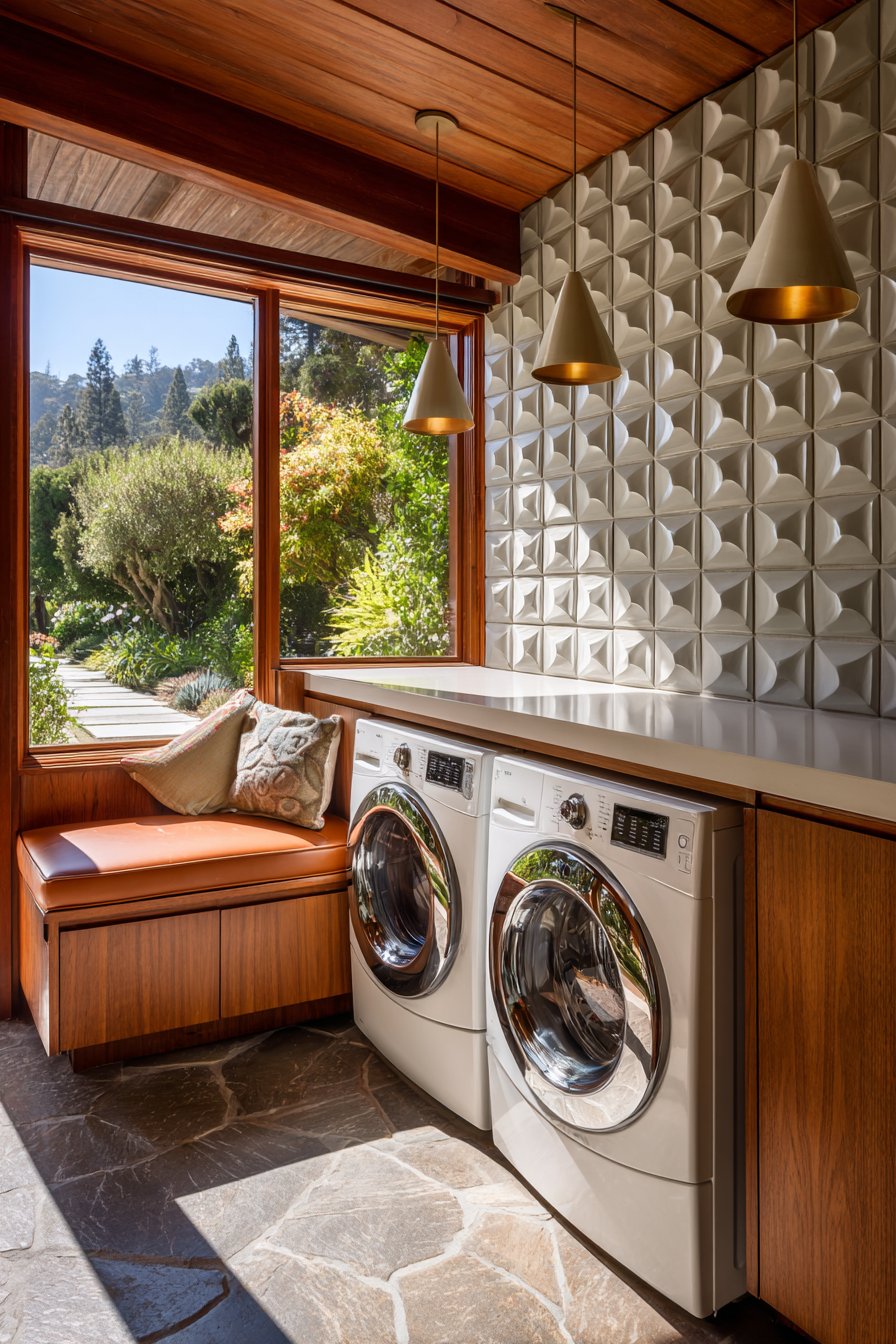
Floor-to-ceiling sliding doors conceal washer and dryer units. Frosted glass panels in wooden frames provide privacy. The doors slide smoothly to hide appliances when not needed. This concealment maintains clean aesthetics. The visible wall displays ceramic tiles with subtle geometric relief.

Soft grey paint covers the dimensional tilework. The texture adds depth without bold pattern. A floating bench with cognac leather cushion provides seating. The leather adds warmth and luxury. Cone-shaped pendant lights hang at varying heights. Brass fixtures complement the warm material palette.

Morning light creates natural shadows across dimensional tiles. The shadows emphasize the tile’s relief pattern. Thoughtful space planning guides the design. Form and function integrate seamlessly throughout. This approach exemplifies mid century design philosophy perfectly.

Key Design Tips:
- Install floor-to-ceiling sliding doors to conceal appliances elegantly
- Choose frosted glass panels for privacy with light transmission
- Add dimensional ceramic tiles painted in soft neutrals
- Include floating benches with leather cushions for functional seating
- Hang cone-shaped pendants at varying heights for dynamic lighting
12. Narrow Corridor Maximization

Stacked washer and dryer units maximize vertical space. Seamless walnut cabinetry encloses the appliances completely. This arrangement suits narrow corridor layouts perfectly. Upper cabinets feature glass panel doors. They display organized supplies attractively. The visibility encourages organization.

A pull-down ironing board integrates into wall design. The board folds completely flat when stored. A full-length mirror with brass frame hangs opposite. The mirror expands visual space dramatically. It reflects light throughout the narrow corridor.

Vinyl composition tile flooring features speckled grey pattern. The material provides durable, period-appropriate foundation. The speckled pattern hides dirt between cleanings. Balanced artificial and natural lighting illuminates the corridor. Practical mid century approach guides small space design.

Key Design Tips:
- Stack washer and dryer units in narrow spaces for efficiency
- Use glass panel cabinet doors to display organized supplies
- Integrate pull-down ironing boards into wall systems
- Hang full-length mirrors to visually expand narrow corridors
- Choose speckled vinyl composition tiles for durable flooring
13. Statement Brass Globe Lighting

Multiple brass arms ending in opal glass globes create drama. This statement fixture illuminates from wood beam ceiling. The fixture becomes sculptural focal point. Each globe provides ambient illumination. The brass finish adds warmth and luxury. The fixture references Sputnik-era design optimism.

Mixed storage includes open wire shelving in black metal. Closed cabinets in natural oak balance the openness. A ceramic apron-front sink provides utility washing station. The gooseneck faucet in chrome adds vintage character. Cement tiles in graphic pattern cover the floor.

Ochre and grey colors create sophisticated foundation. The graphic pattern adds visual interest underfoot. Natural and artificial light interact throughout the space. The layered lighting design adapts to different times. Authentic material combinations showcase mid century preferences.

Key Design Tips:
- Install statement light fixtures with multiple brass arms and globes
- Mix open wire shelving with closed oak cabinets for storage variety
- Add apron-front ceramic sinks with gooseneck faucets for character
- Use cement tiles in graphic patterns for sophisticated flooring
- Layer natural and artificial lighting for adaptable illumination
14. Shadow Box Storage Wall

Recessed square compartments create three-dimensional wall interest. The shadow boxes build into walnut veneer wall. They’re perfect for displaying vintage detergent boxes. Accessories and collectibles add personality. This display-focused storage adds visual depth. The compartments become miniature stages.

Front-loading machines sit beneath continuous white Formica countertop. Aluminum trim adds authentic period detail. Lower tambour doors feature horizontal slats in teak. The rolling doors open smoothly and quietly. A vintage pendant lamp with conical enamel shade provides task lighting.

Soft natural light from horizontal window highlights wood grain. The light emphasizes the shadow box depth. The design balances display with concealment beautifully. This duality exemplifies mid century thinking. Form and function receive equal consideration throughout.

Key Design Tips:
- Create shadow box storage with recessed square compartments
- Display vintage accessories and detergent boxes for personality
- Use white Formica countertops with aluminum trim for authenticity
- Install tambour doors with horizontal slats for smooth operation
- Add vintage pendant lamps with conical shades for focused lighting
15. Biophilic Design with Picture Window

A large picture window overlooks greenery outside. Simple wooden trim frames the view naturally. The window creates strong connection to nature. Teak cabinets feature rounded edges throughout. Integrated wood handles maintain clean lines. The organic forms feel natural and inviting.

A live edge wooden shelf spans one wall. The natural edge celebrates the tree’s original form. Potted plants and woven storage baskets occupy the shelf. Cork tiles in natural tone cover the floor. The material provides warmth and comfort underfoot. Ceramic wall tiles in sage green create calming backdrop.

Natural light floods the space throughout the day. Dappled shadows from plants create moving patterns. The organic materials emphasize connection to nature. This biophilic approach aligns with mid century philosophy. The design celebrates natural materials and living elements.

Key Design Tips:
- Maximize nature views with large picture windows in simple frames
- Choose teak cabinets with rounded edges and integrated handles
- Display live edge wooden shelves celebrating natural forms
- Install cork tile flooring for warmth and natural comfort
- Use sage green ceramic tiles for calming wall surfaces
16. Modular Storage Cubes

Modular storage cubes in blonde wood create flexible organization. Some compartments remain open for display. Others feature cabinet doors in vibrant colors. Turquoise and coral add playful pops. The asymmetric arrangement creates balanced composition. The modular approach allows future reconfiguration.

Sleek grey laminate countertop features waterfall edge. The continuous surface flows over cabinet edge. Simple metal frame chairs provide seating. Molded plastic seats in white add retro character. Linoleum flooring in marbled pattern combines cream and soft grey.

The playful modular design showcases mid century flexibility. Authentic color blocking creates visual interest. Natural daylight emphasizes varied surface textures. The composition feels dynamic yet organized. Form follows function throughout the design.

Key Design Tips:
- Use modular storage cubes for flexible, reconfigurable organization
- Add cabinet doors in turquoise and coral for playful color
- Create asymmetric arrangements that maintain visual balance
- Choose grey laminate with waterfall edges for sleek countertops
- Install marbled linoleum flooring in cream and grey tones
17. Pull-Out Drying Rack System

Wooden dowels create innovative drying rack system. The racks pull out from wall on brass hardware. They fold flat when not in use. This ingenious mechanism saves space brilliantly. The system demonstrates mid century innovation. Functionality drives design decisions completely.

Tongue and groove paneling painted warm white surrounds the racks. The paneling adds texture and interest. Lower cabinets in walnut veneer provide enclosed storage. Characteristic recessed toe kicks add authentic detail. A roller shade in canvas fabric covers the window.

Pendant lighting with schoolhouse glass shades illuminates workspace. The classic fixtures provide focused task lighting. Soft window light demonstrates functional design in use. The space-saving mechanism exemplifies practical thinking. Innovation and efficiency define the design approach.

Key Design Tips:
- Install pull-out drying racks on brass hardware for flexibility
- Use tongue and groove paneling painted in warm white
- Add walnut veneer cabinets with recessed toe kicks for authenticity
- Hang schoolhouse glass pendant lights for classic task illumination
- Cover windows with canvas roller shades for simple light control
18. Seafoam Mosaic Tile Backsplash

Small square mosaic tiles create shimmering backsplash. Seafoam green provides the dominant color. Occasional gold accent tiles add subtle sparkle. The reflective surface catches and distributes light. The tile work becomes jewelry for the space. The craft quality shows throughout.

Flat panel doors in natural birch feature elongated brass pulls. The hardware emphasizes horizontal lines. Butcher block countertop displays visible end grain. The rounded front edge adds organic softness. A vintage-style utility sink sits on exposed legs. Cast iron construction references industrial heritage.

Natural lighting from casement window highlights reflective tiles. The light emphasizes wood grain details throughout. Material richness defines the space completely. Period-appropriate color palette creates cohesion. Every element supports the authentic aesthetic.

Key Design Tips:
- Create backsplashes with seafoam mosaic tiles and gold accents
- Install flat panel birch cabinets with elongated brass pulls
- Choose butcher block countertops showing end grain patterns
- Add vintage utility sinks with exposed cast iron legs
- Maximize natural light from casement windows for material emphasis
19. Exposed Brick Accent Wall

Natural red-orange brick provides textural contrast. The exposed brick remains in original condition. This raw material creates industrial edge. Floating teak shelves span the brick surface. They hold vintage glass storage jars. The contrast between refined and raw materials works perfectly.

Floor-to-ceiling cabinets in light maple line opposite wall. Simple round knobs in black add minimal hardware. A rolling ladder on brass rail provides upper access. The ladder adds both function and visual interest. Concrete floors sealed with natural finish offer durability.

Carefully placed recessed lighting creates dramatic brick shadows. The lighting emphasizes texture and depth. The mix of materials characterizes mid century aesthetic. Refined cabinetry balances industrial elements. The design celebrates material honesty throughout.

Key Design Tips:
- Expose brick accent walls in natural red-orange tones
- Install floating teak shelves across brick for textural contrast
- Add rolling ladders on brass rails for functional upper access
- Use light maple cabinets with simple black round knobs
- Seal concrete floors naturally for industrial durability
20. Pegboard Wall Organization System

Painted pegboard in dusty rose creates functional focal point. Wooden pegs hold cleaning tools and folded towels. Small storage containers add organized charm. The system provides both function and visual interest. The vertical organization maximizes wall space. Everything remains visible and accessible.

Modern appliances integrate into custom walnut cabinetry. Vertical groove detail adds dimensional interest. A slim console table with hairpin legs serves folding needs. Large format concrete tiles in light grey cover floor. A globe pendant in amber glass provides warm illumination.

Natural light from transom window emphasizes dimensional textures. The pegboard texture creates interesting shadows. Authentic mid century materials appear throughout. Warm wood tones balance cool grey surfaces. The organized vertical solution demonstrates thoughtful planning.

Key Design Tips:
- Paint pegboard walls in dusty rose for functional focal points
- Use wooden pegs for flexible, changeable organization systems
- Add console tables with hairpin legs for folding stations
- Choose large format concrete tiles in light grey for flooring
- Install amber glass globe pendants for warm ambient lighting
Why These Mid Century Laundry Room Designs Are the Best
These mid century laundry room designs represent exceptional approaches to functional space creation. Each concept demonstrates thoughtful material selection and authentic design principles. The emphasis on natural materials like walnut, teak, brass, and cork creates lasting beauty. These materials age gracefully and develop rich patinas over time.
The designs showcase remarkable versatility across different space configurations. Narrow corridors receive the same design attention as spacious dedicated rooms. Vertical storage solutions maximize limited square footage effectively. Floor-to-ceiling cabinetry and stacked appliances work brilliantly in compact spaces. Open floor plans benefit from modular storage and flexible furniture arrangements.

Color theory application distinguishes these concepts significantly. The period-appropriate palettes balance bold accent colors with neutral foundations. Seafoam green, dusty rose, mustard yellow, and deep teal add personality without overwhelming. These colors reference authentic mid century optimism while remaining timeless. Neutral bases in blonde wood, white, and grey provide sophisticated foundations.
Functional innovations reflect mid century problem-solving ingenuity. Pull-out ironing boards, fold-down drying racks, and integrated hampers maximize utility. Tambour doors, shadow box storage, and pegboard systems offer flexible organization. These solutions demonstrate that beauty and practicality coexist successfully. The designs prioritize workflow efficiency alongside aesthetic appeal.

Lighting design receives careful consideration throughout these concepts. Statement fixtures with brass and opal glass provide ambient illumination. Task lighting from schoolhouse pendants and cone shades ensures functional visibility. Natural light from large windows, clerestory openings, and transom windows floods spaces naturally. This layered approach adapts beautifully to different times of day.
Sustainability emerges through quality material choices and timeless design. Investing in solid wood cabinetry, durable terrazzo, and authentic brass hardware reduces replacement needs. These materials improve with age rather than deteriorating. The classic aesthetic transcends trends, preventing premature renovation. Cork flooring and reclaimed wood demonstrate environmental consciousness.
Conclusion
These twenty mid century laundry room designs demonstrate how functional spaces become inspiring environments. The key takeaways include prioritizing natural materials, embracing clean lines, and celebrating innovative storage solutions. Authentic hardware details and period-appropriate colors add character without sacrificing timelessness. Each design balances aesthetic appeal with practical workflow requirements.

The versatility of mid century principles allows adaptation to various spaces and budgets. Start with one signature element like terrazzo flooring or walnut cabinetry. Add geometric wallpaper or brass hardware for instant period character. Layer in functional innovations like pull-out ironing boards or pegboard organization. Your dream mid century laundry room awaits creation through thoughtful material selection and authentic design principles.
