


Creating a nursery is one of the most exciting aspects of preparing for your new arrival. This special space should blend comfort, functionality, and beauty seamlessly. The right nursery design supports both infant development and parental well-being during those crucial early months.
Modern nursery design has evolved beyond simple pastel walls and basic furniture. Today’s parents seek spaces that reflect personal style while meeting practical needs. From Scandinavian minimalism to luxurious vintage aesthetics, the possibilities are endless. Each design approach offers unique benefits for creating calming, organized environments.

This comprehensive guide explores twenty distinct nursery design concepts. Each style demonstrates how thoughtful planning transforms ordinary rooms into extraordinary infant sanctuaries. Whether you prefer natural materials, bold themes, or timeless elegance, these ideas provide inspiration for every taste and budget.
1. Serene Scandinavian Simplicity

A Scandinavian-inspired nursery embodies the principles of functional beauty and calming minimalism. Natural oak furniture with clean lines creates visual harmony against soft white walls. The shiplap accent wall adds subtle texture without overwhelming the senses. This design philosophy prioritizes quality over quantity in every element.

The nursing chair upholstered in light grey linen provides comfort during feeding sessions. Flowing white cotton curtains filter morning sunlight beautifully. The gentle illumination creates perfect conditions for peaceful mornings. A plush cream wool rug anchors the space beneath the crib. The tactile warmth underfoot adds comfort during nighttime visits.

Storage solutions remain practical yet aesthetically pleasing in this design. Woven baskets on the changing table organize essentials efficiently. The simple white bookshelf displays children’s books and soft toys accessibly. Minimal botanical prints in natural wood frames complete the wall decor. Each element serves both functional and decorative purposes.

The overall atmosphere promotes tranquility for both baby and parents. Natural materials create a healthy environment free from harsh chemicals. The neutral palette adapts easily as your child grows. This timeless approach ensures the room remains relevant for years.
Key Design Tips:
- Select natural oak furniture for durability and timeless appeal
- Use white cotton curtains to maximize natural light diffusion
- Incorporate woven storage baskets for organized, attractive storage
- Choose cream wool rugs for warmth and acoustic softening
- Keep wall art minimal with simple botanical prints
- Maintain a neutral palette for long-term versatility
2. Whimsical Woodland Wonder

Transform your nursery into an enchanted forest with hand-painted murals and natural elements. Soft sage green walls provide the perfect backdrop for delicate forest scenes. Deer, rabbits, and towering pine trees create magical imagery. The vintage Jenny Lind crib adds charming spindle details that complement the woodland theme.

Organic cotton bedding with subtle animal patterns maintains the nature connection. Natural wood elements bring authentic warmth throughout the space. The live-edge floating shelf showcases small potted succulents beautifully. Wooden animal figurines add whimsical touches without overwhelming the design. These carefully curated accessories enhance rather than dominate.

The modern rocking chair in muted taupe offers comfortable seating for parents. A neutral jute rug grounds the space with geometric patterns. String lights with warm Edison bulbs create magical nighttime ambiance. The felt mobile featuring woodland creatures adds gentle movement above the crib. These lighting layers serve both practical and atmospheric purposes.

Golden hour photography captures this room’s enchanting quality perfectly. The interplay of natural light with warm artificial lighting creates depth. Layered textures from various natural materials add visual interest. This cohesive design demonstrates how themed nurseries can remain sophisticated.
Key Design Tips:
- Commission hand-painted murals for personalized woodland scenes
- Choose vintage cribs for character and unique style
- Use organic cotton bedding for baby’s sensitive skin
- Incorporate live-edge wood for authentic natural elements
- Install string lights on dimmers for adjustable ambiance
- Select neutral jute rugs for texture and durability
3. Modern Minimalist Sanctuary

A minimalist nursery prioritizes function and simplicity without sacrificing style. The low-profile white crib features hidden hardware for clean lines. Soft blush pink creates a gentle accent wall without overwhelming. This restrained color application adds warmth while maintaining the minimalist aesthetic.

The sleek white dresser doubles efficiently as a changing station. Matching white containers organize supplies with visual consistency. Wall-mounted pegboard with wooden pegs holds essential baskets. This vertical storage solution keeps items accessible yet uncluttered. The simple white glider provides comfortable seating without visual bulk.

Blackout roller shades ensure optimal sleep conditions for your infant. Light grey engineered hardwood flooring offers durability and easy cleaning. A simple white cotton rug defines the main activity area. One large-scale abstract print provides focal interest without cluttering walls. The carefully edited decor maintains breathing room throughout.

This uncluttered approach reduces visual stimulation for better infant rest. Every item serves a clear purpose within the space. The minimalist philosophy creates calm environments that benefit developing babies. Parents appreciate the ease of cleaning and maintaining organization.
Key Design Tips:
- Select cribs with hidden hardware for a streamlined appearance
- Use wall-mounted pegboard for flexible vertical storage
- Install blackout roller shades for sleep optimization
- Choose performance fabrics for easy maintenance
- Limit art to one large-scale piece per wall
- Maintain monochromatic palette with a single accent color
4. Charming Vintage Romance

Step into a bygone era with vintage-inspired nursery design that exudes elegance. The antique white iron crib features delicate scrollwork beneath ivory muslin canopy. Distressed white furniture creates romantic atmosphere while providing ample storage. The tall armoire and vintage dresser with crystal knobs blend beauty with function.

A gallery wall of ornate gold frames displays pressed botanical specimens. Vintage children’s book illustrations add nostalgic charm. The plush pink velvet ottoman pairs beautifully with the antique rocking chair. Floral needlepoint cushioning adds handcrafted detail. A faded Persian-style rug in soft pinks and creams grounds the space.

Decorative elements elevate this nursery beyond basic functionality. Vintage glass bottles holding fresh eucalyptus add organic beauty. The crystal chandelier with fabric shades provides ambient lighting with sparkle. Soft afternoon light filters through lace curtains creating dreamy atmosphere. These layered vintage elements create collected aesthetic without feeling cluttered.
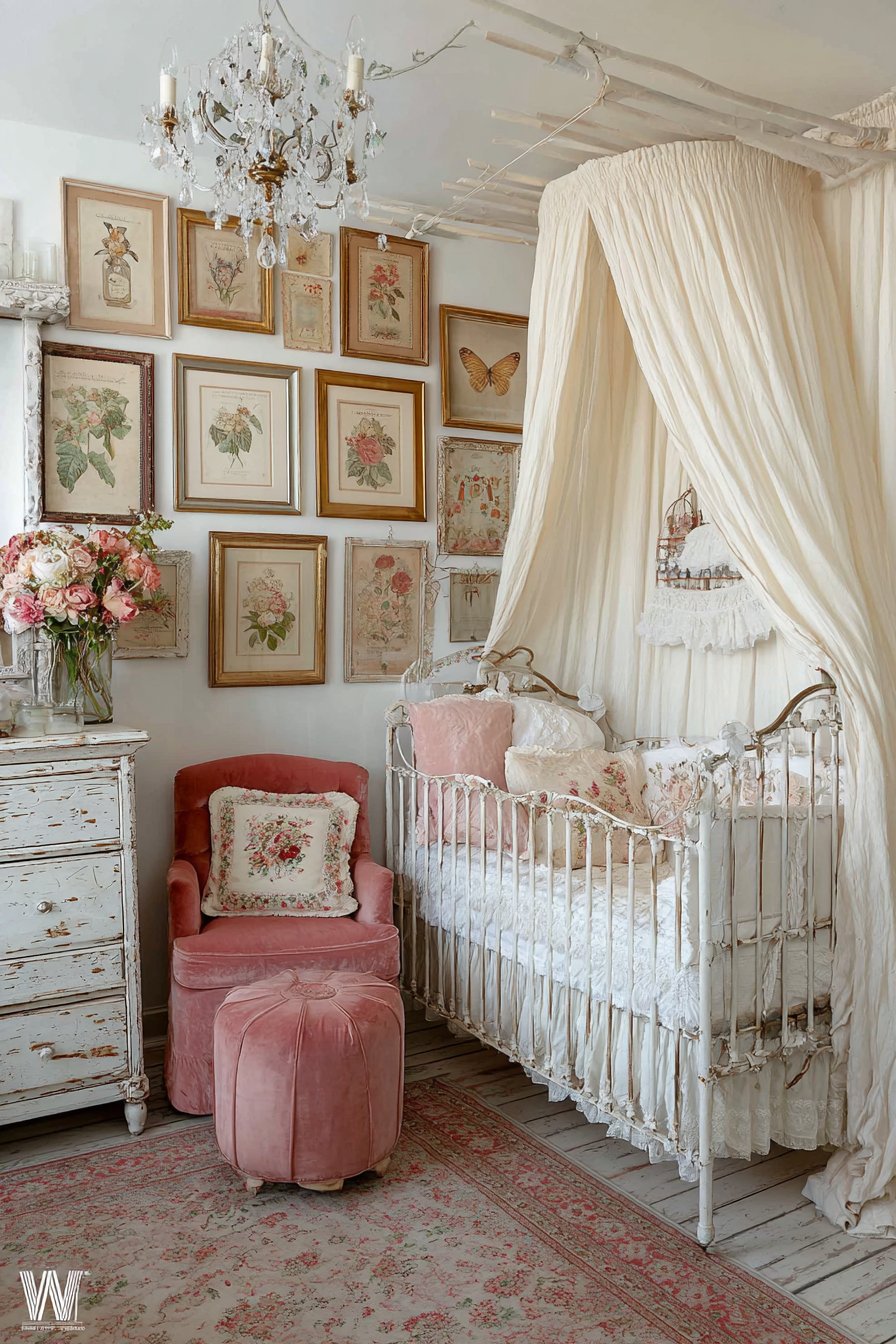
This design demonstrates how vintage pieces create character-rich nurseries. The romantic details transform practical spaces into beautiful sanctuaries. Each antique element tells a story while serving modern needs. The collected feel develops naturally through thoughtful curation.
Key Design Tips:
- Source authentic antique furniture for genuine character
- Create gallery walls with ornate frames for impact
- Layer vintage textiles like lace curtains with heavier drapes
- Use crystal chandeliers for romantic ambient lighting
- Incorporate fresh flowers in vintage containers regularly
- Select Persian-style rugs for color and pattern
5. Smart Small-Space Solutions

Urban living demands creative approaches to nursery design in compact spaces. The convertible mini crib with built-in storage drawers maximizes functionality. Wall-mounted folding changing tables conserve precious floor space efficiently. Narrow vertical bookshelves utilize height rather than footprint. This vertical thinking transforms limitations into opportunities.

Multi-functional furniture becomes essential in small nursery planning. The sleek glider fits snugly in corners without blocking pathways. A small side table provides surface area without overwhelming space. Wall-mounted organizers keep essentials within arm’s reach during changes. These strategic choices maintain full functionality despite limited square footage.

Light warm grey paint enhances the sense of spaciousness. Floating corner shelves display minimal decorative items efficiently. The compact area rug in soft cream defines floor space without crowding. A simple white cellular shade maximizes natural light penetration. Thoughtful organization prevents small spaces from feeling cluttered.

This design proves that size limitations need not compromise style or function. Every piece serves multiple purposes through intelligent selection. The clever use of vertical space creates surprising storage capacity. Small nurseries can feel open and organized with proper planning.
Key Design Tips:
- Choose convertible cribs with integrated storage drawers
- Install wall-mounted folding changing tables to save floor space
- Use vertical storage solutions like tall narrow bookshelves
- Select corner-friendly furniture with compact footprints
- Paint walls in light colors to enhance spatial perception
- Invest in multi-functional pieces that serve dual purposes
6. Sophisticated Gender-Neutral Design

Gender-neutral nurseries embrace sophisticated color palettes beyond traditional pink and blue. Warm greige walls create versatile backdrop for any child. The deep charcoal accent wall provides dramatic contrast for the modern white crib. Subtle geometric details add contemporary interest without overwhelming simplicity.

The mid-century modern walnut dresser functions beautifully as changing table. Brass hardware accents add warm metallic touches throughout. A leather changing pad introduces rich texture and easy cleaning. The statement mobile made from natural wood geometric shapes adds kinetic sculpture above the crib.

Gallery walls featuring black and white animal photography create striking focal points. Simple black frames maintain clean lines throughout the display. The comfortable leather wingback chair in cognac brown adds classic elegance. A small ottoman provides leg support during lengthy feeding sessions. These furniture selections demonstrate timeless style transcending gender conventions.

Textured elements prevent the neutral palette from feeling flat. Chunky knit throw blankets in cream add cozy softness. Braided wool rugs in natural tones provide warmth underfoot. Linen roman shades in warm grey control light beautifully. This refined approach creates versatile spaces adaptable for any child.
Key Design Tips:
- Use warm greige as neutral base color
- Incorporate brass hardware for sophisticated metallic accents
- Select mid-century modern furniture for timeless appeal
- Display black and white photography for striking art
- Layer various textures to add depth to neutral palettes
- Choose leather furniture pieces for durability and elegance
7. Breezy Coastal Retreat

Bring seaside serenity indoors with coastal-themed nursery design. Soft blue-grey walls paired with white wainscoting create classic nautical foundation. The feature wall with subtle navy and white stripe wallpaper adds pattern without overwhelming. White wooden crib with rope detailing reinforces maritime aesthetic authentically.

Wide-plank whitewashed oak flooring evokes driftwood on sandy beaches. Natural fiber rugs in cream and blue add textural interest underfoot. Maritime elements include vintage oars mounted horizontally as decorative shelving. Glass jars filled with collected shells and sand bring beach memories indoors. Framed vintage nautical maps add historical maritime charm.

The navy upholstered glider with white piping provides comfortable seating. A round side table in distressed white maintains the weathered coastal look. White sheer curtains with navy trim frame windows beautifully. Rope baskets provide practical storage with authentic texture. These carefully selected elements maintain cohesive coastal theme.

Decorative touches complete the seaside atmosphere without feeling kitschy. The driftwood mobile adds natural sculptural element above crib. Navy and white striped ottoman provides additional seating and storage. Wall hooks shaped like boat cleats add functional whimsy. This layered approach creates sophisticated coastal nursery perfect for landlocked homes.
Key Design Tips:
- Use blue-grey and white as primary color palette
- Incorporate authentic nautical elements like rope and driftwood
- Select whitewashed flooring for beach-inspired foundation
- Display collected shells and sand in glass containers
- Choose striped patterns for classic maritime style
- Add rope baskets for practical textured storage
8. Contemporary Boho Comfort

Contemporary bohemian design brings relaxed sophistication to nursery spaces. Natural rattan cribs with organic curves soften modern nursery aesthetics. The warm terracotta accent wall creates earthy backdrop for layered textures. Macramé wall hangings in various sizes add handcrafted artisanal quality. These fiber arts introduce movement and dimension.
Woven seagrass baskets in graduating sizes provide practical storage solutions. The low-slung modern glider in oatmeal linen offers comfortable seating. Vintage Moroccan rugs in rust and cream tones anchor the space. Floating shelves made from reclaimed wood display potted trailing plants. Handcrafted wooden toys add organic decorative elements that double as future playthings.

Natural light filters beautifully through woven bamboo shades. The rattan pendant light with warm LED bulb provides ambient evening glow. The changing table features live-edge wood top on simple white base. Open shelving underneath holds neatly arranged cotton storage bins. This furniture combination balances organic forms with practical functionality.

Golden hour lighting emphasizes the warm organic material palette perfectly. Pampas grass in ceramic vases adds sculptural dried botanicals. Canvas wall art with abstract earth tones complements the color scheme. A cozy sheepskin throw draped over the glider invites tactile comfort. This relaxed bohemian aesthetic creates welcoming environment for modern parents.
Key Design Tips:
- Choose rattan furniture for organic bohemian foundation
- Use terracotta accent walls for warm earthy backdrop
- Incorporate multiple macramé pieces at varying scales
- Display trailing plants on floating shelves for living decor
- Select vintage Moroccan rugs for pattern and color
- Add pampas grass for low-maintenance dried botanicals
9. Sophisticated Safari Adventure

Safari-themed nurseries can achieve sophistication through restrained natural palettes. Warm sand-colored walls provide neutral canvas for hand-painted savanna landscapes. Acacia trees and distant mountains in muted earth tones avoid cartoon aesthetics. The simple white crib allows the mural to shine as focal point.

Organic cotton bedding with subtle giraffe print maintains theme without overwhelming. Natural elements dominate throughout the carefully curated space. Jute rugs with geometric tribal patterns add cultural authenticity. Rattan storage baskets provide practical organization with natural texture. The vintage leather chair in caramel brown with brass studs adds sophisticated seating.

Wooden animal figurines in natural finish line floating oak shelves. The sustainable wood mobile features elephants and giraffes in natural tones. This approach to safari theme emphasizes natural materials over bright colors. Light pine changing table with woven basket drawers maintains organic aesthetic. Sisal changing pad covers add natural fiber textiles.

Large leafy plants in terracotta pots bring living greenery to corners. These living elements strengthen the connection to natural environments. The earthy color palette creates calming atmosphere suitable for infant rest. This sophisticated execution proves themed nurseries need not feel juvenile.
Key Design Tips:
- Commission custom murals in muted earth tones
- Use natural wood animal figurines instead of plastic toys
- Select jute and sisal textiles for authentic natural fibers
- Incorporate vintage leather furniture for sophisticated seating
- Add large living plants to reinforce nature connection
- Choose organic cotton bedding in subtle patterns
10. Modern Farmhouse Charm

Modern farmhouse style brings rustic warmth with contemporary cleanliness. Shiplap walls painted in soft white create textural backdrop. Exposed dark wood ceiling beams add architectural interest overhead. The distressed white wooden crib with turned spindles balances rustic and refined. Reclaimed barnwood-look flooring provides authentic farmhouse foundation.

The cream braided wool rug defines the main activity area softly. A refurbished antique dresser in pale grey serves dual purpose as changing table. Galvanized metal bins provide industrial storage contrast. The comfortable upholstered rocker in grey linen features white slipcover for easy cleaning. A vintage ladder repurposed as blanket display adds functional decoration.

Black metal wall sconces with Edison bulbs flank simple wooden name sign. White plantation shutters allow precise light control throughout the day. Sheer white curtains add softness without blocking natural illumination. Wire baskets hold rolled receiving blankets with farmhouse aesthetic. Mason jars organize small items like cotton swabs efficiently.

Simple greenery in white ceramic containers brings fresh organic elements indoors. This modern farmhouse approach balances rustic elements with clean contemporary lines. The mix of distressed and fresh white finishes creates layered interest. Practical storage solutions maintain the uncluttered aesthetic essential to modern farmhouse design.
Key Design Tips:
- Install shiplap walls for authentic farmhouse texture
- Use reclaimed or barnwood-look flooring for foundation
- Incorporate galvanized metal for industrial storage contrast
- Select Edison bulb fixtures for warm ambient lighting
- Repurpose vintage items like ladders for functional decor
- Choose white slipcovers for easy cleaning on upholstered pieces
11. Luxurious Elegance

Create opulent nursery sanctuary with upholstered walls and crystal chandeliers. Soft blush pink velvet with white decorative molding creates elegant panels. The ornate white crib features carved details and gold-leaf accents. Dramatic fabric canopy in ivory silk suspends from antique brass crown. This theatrical element adds romance without compromising safety.

The tufted chaise lounge in champagne velvet provides glamorous seating option. A mirrored dresser with crystal knobs functions beautifully as changing table. Plush cream shag rug over pale grey hardwood adds luxurious softness. The oversized crystal chandelier with silk shades provides ambient lighting with sparkle. Silk draperies in ivory with pink ribbon trim frame tall windows elegantly.

Decorative elements transform this functional space into elegant retreat. Fresh white roses in silver vases add living luxury regularly. Monogrammed embroidered linens add personalized sophistication. Framed vintage French children’s prints in ornate gilded frames create gallery display. White bookcase with glass doors displays heirloom children’s books and porcelain dolls.

This luxurious approach demonstrates that nurseries can achieve elegance without sacrificing function. Quality materials and refined details create spaces that feel special. The layered textures of velvet, silk, and crystal create rich sensory experience. Golden chandelier glow mixed with natural light creates beautiful illumination throughout the day.
Key Design Tips:
- Upholster accent walls in velvet for luxurious texture
- Install crystal chandeliers with dimmers for adjustable sparkle
- Select ornate cribs with carved details and metallic accents
- Use mirrored furniture to enhance light and space
- Incorporate fresh flowers regularly for living luxury
- Choose monogrammed linens for personalized elegance
12. Eco-Friendly Natural Haven

Sustainable nursery design prioritizes health and environmental responsibility. Natural clay paint in earth tones provides chemical-free wall coverage. Non-toxic grasscloth wallpaper in warm wheat creates accent wall texture. Certified organic cribs in unfinished natural hardwood showcase beautiful grain. Non-toxic finishes protect without harmful off-gassing.

Sustainable cork flooring provides cushioned surface with renewable materials. Organic cotton rugs in undyed natural cream avoid chemical dyes completely. Secondhand furniture reduces environmental impact while adding character. The refinished vintage dresser in pale sage green serves as changing station. Wooden rocking chairs with organic hemp fabric cushions provide comfortable seating.

Reclaimed wood floating shelves display wooden toys and cloth books. All textiles feature organic certification for peace of mind. Natural cotton curtains filter light without chemical treatments. Wool throw blankets provide warmth from sustainable sources. Linen storage baskets organize items with natural breathable fibers.

Living plants in ceramic pots improve indoor air quality naturally. The simple wooden mobile made from sustainably harvested wood adds movement. Natural light maximizes through large windows with bamboo shades. This comprehensive approach to sustainability creates healthy environment for developing infants. Every material choice reflects commitment to environmental and child health.
Key Design Tips:
- Choose certified organic cribs with non-toxic finishes
- Use natural clay paint for chemical-free walls
- Select sustainable cork or bamboo flooring options
- Incorporate secondhand furniture to reduce waste
- Buy only organic certified textiles and bedding
- Add living plants to naturally purify air
13. Modern Monochromatic Sophistication

Monochromatic design creates sophisticated nurseries through tonal variation. Various shades of grey from soft dove to deep charcoal create depth. Different walls in graduated grey tones add subtle dimension throughout. The sleek grey upholstered crib with button tufting adds luxurious texture. Light grey oak flooring provides neutral foundation.

Geometric patterned rugs in white and grey tones add visual interest. The modern grey velvet glider with chrome legs offers contemporary seating. White lacquer dresser with grey marble top serves as elegant changing area. Acrylic floating shelves display grey and white books and minimalist objects. These transparent shelves maintain airy feeling despite storage needs.

The monochromatic palette extends through all textile choices carefully. Grey linen curtains provide privacy without adding color distraction. White ceramic planters with green succulents offer only color accent. Framed black and white photography maintains the sophisticated palette. Modern chrome and glass light fixtures provide illumination with contemporary style.

Grey felt mobile with white elements adds subtle interest above crib. Storage solutions include grey fabric bins and white containers maintaining color scheme. This sophisticated approach proves monochromatic need not feel boring. Various textures and finishes create visual interest without color variation. The tonal approach creates serene environment perfect for infant rest.
Key Design Tips:
- Use graduated grey tones on different walls for depth
- Incorporate various textures to prevent flatness in monochrome
- Select upholstered cribs with button tufting for luxury
- Choose chrome and acrylic accents for contemporary shine
- Limit color accents to living plants only
- Display black and white photography for sophisticated art
14. Bright Scandinavian Light

Nordic design principles create airy nurseries filled with natural light. Pure white walls maximize light reflection throughout the space. Light birch plywood accent panels add natural warmth with visible grain. The simple white crib features rounded corners and minimalist design. Pale grey engineered wood flooring provides subtle neutral foundation.

Small geometric wool rugs in soft grey and white define areas. Light oak rocking chairs with white sheepskin throws provide comfortable seating. Simple white dressers with light wood tops and dowel legs maintain Nordic aesthetic. Open shelving in natural birch displays minimal toys and folded white linens. This restrained approach emphasizes quality over quantity.

Abundant natural light floods through large windows without heavy treatments. Simple white roller shades provide privacy when needed without blocking light. Modern white pendant lights with wood accents supplement natural illumination. Decorative elements remain minimal with simple line drawings in white frames. Wooden bead garlands add subtle Scandinavian charm.

Single potted fiddle leaf fig provides only greenery in the space. All textiles feature natural fibers in white, cream, and light grey. This bright Scandinavian approach creates calm spacious feeling perfect for nurseries. The airy uncluttered aesthetic reduces visual stimulation for better infant rest. Natural wood elements prevent all-white spaces from feeling cold or sterile.
Key Design Tips:
- Maximize natural light with minimal window treatments
- Use birch plywood for warm wood accent walls
- Select furniture with dowel legs for Nordic style
- Keep decorative elements minimal and functional
- Choose geometric patterns for subtle visual interest
- Incorporate single statement plant for greenery
15. Playful Rainbow Sophistication

Rainbow themes can achieve sophistication through muted pastel execution. White walls provide clean canvas for subtle rainbow arc mural. Hand-painted pastel shades create gentle color progression across one wall. The white wooden crib with simple spindle design remains neutral focal point. This restrained approach prevents overwhelming color saturation.

Creative color organization appears throughout the thoughtfully designed space. Low bookshelves with books organized by color create rainbow spectrum display. Felt ball garland in soft rainbow order strings across wall. Storage baskets in various pastel hues provide colorful organization. The comfortable grey linen glider grounds the space with neutral seating.

Rainbow striped pillow adds playful accent without overwhelming design. White plush rug provides soft foundation for play and tummy time. The changing table features white finish with rainbow gradient drawer knobs. Window treatments show white curtains with subtle rainbow embroidered trim. These delicate touches maintain cohesive theme throughout.

The sophisticated color palette uses dusty rose, pale yellow, soft mint, light lavender, and powder blue. These muted tones feel calming rather than overstimulating for infants. Natural oak flooring adds warmth beneath the colorful elements. Modern white pendant light provides clean contemporary illumination. This joyful yet restrained approach creates cheerful environment suitable for infant care.
Key Design Tips:
- Use muted pastels instead of primary colors for sophistication
- Organize books by color for rainbow display
- Select gradient hardware for subtle color progression
- Keep large furniture pieces neutral to balance color
- Choose felt ball garlands for soft texture and color
- Paint rainbow murals in soft watercolor style
16. Transitional Growth-Friendly Design

Design nurseries that evolve gracefully from infancy through childhood years. Convertible cribs in natural oak transform efficiently into toddler beds. Clean modern lines ensure furniture remains stylish as child grows. Neutral greige walls provide timeless backdrop adaptable to changing tastes. This long-term thinking saves money and reduces waste.

Quality furniture investments serve through multiple life stages successfully. White and natural wood dressers work equally well for infant supplies and later for children’s clothing. Adjustable floating shelves at multiple heights adapt to changing storage needs. Classic upholstered chairs in durable charcoal grey performance fabric withstand years of use. These pieces avoid trendy styles that quickly feel dated.

Modular storage cubes reconfigure easily as needs evolve over time. Simple framed art showing abstract shapes in muted colors transcends baby-specific themes. Neutral linen window treatments adapt to changing room functions gracefully. The color palette of whites, greys, and natural wood allows easy accessory updates. This flexibility enables simple refresh without complete redesign.

Durable luxury vinyl plank flooring in grey oak tone withstands childhood activities. Washable area rugs in geometric patterns handle inevitable spills and messes. This practical approach prioritizes quality over trendy themed elements. The sophisticated aesthetic grows with the child rather than requiring replacement. Thoughtful long-term design saves resources while maintaining beautiful functional spaces.
Key Design Tips:
- Invest in convertible cribs that transform into toddler beds
- Select timeless furniture in quality materials and finishes
- Use neutral color palettes that adapt to changing preferences
- Choose performance fabrics for durability and easy cleaning
- Install adjustable shelving systems for flexible storage
- Avoid heavily themed decor that quickly feels outgrown
17. Celestial Nighttime Magic

Create magical nursery inspired by stars and celestial wonders. Deep navy blue walls provide dramatic backdrop for hand-painted gold constellations. Subtle star patterns create night sky effect without overwhelming darkness. The white crib with gold metallic accents centers beneath moon-phase mobile. Painted wooden circles depicting lunar phases add kinetic educational element.

Astronomical elements appear throughout the thoughtfully themed space. Vintage-style globe on dresser encourages future geographic curiosity. Framed star maps with cream matting add scientific authenticity. Plush navy rug with scattered white embroidered stars provides soft foundation. The comfortable glider in cream linen with navy piping balances the dramatic walls.

Brass floor lamp with white shade provides practical reading light for parents. The changing table features navy blue painted finish with brass hardware. Star-shaped drawer pulls add whimsical functional detail. White sheer curtains layer under navy blackout drapes for light control. String lights with star-shaped covers add ambient nighttime glow perfect for feedings.

Storage includes cream fabric bins with navy star patterns maintaining theme. Decorative touches include telescope on wooden tripod inspiring future exploration. Books about space arrange on floating white shelves building early interest. Throw blanket with moon and stars pattern adds cozy themed accent. This celestial concept creates wonder while maintaining functionality for daily infant care.
Key Design Tips:
- Use deep navy walls balanced with white furniture
- Hand-paint constellation patterns for custom artistic touch
- Incorporate brass accents for warm metallic contrast
- Install layered curtains for flexible light control
- Choose star-themed textiles and hardware for cohesion
- Add educational elements like globes and star maps
18. Montessori-Inspired Independence

Montessori philosophy emphasizes child independence through thoughtful environmental design. Floor beds consisting of natural wood frames at ground level allow infant freedom. Organic cotton mattresses provide safe comfortable sleeping surface accessible to baby. This low arrangement supports natural movement development without crib confinement. Safety remains paramount with all furniture secured to walls.

Child-centered elements appear at appropriate heights throughout the space. Low wooden mirrors mounted horizontally encourage self-discovery and recognition. Accessible toy shelves at infant height display carefully curated wooden toys. Simple black and white high-contrast images position at baby’s eye level when on floor. These intentional placements support developmental milestones naturally.

The room features neutral walls in warm beige creating calm environment. Natural jute rug defines the floor bed area softly. Minimal furniture includes simple nursing chair in corner for parent use. The changing station shows low table allowing older infant participation eventually. This preparation for independence begins from birth through environmental design.

Large windows with bottom portions uncovered provide outside views for infant observation. Simple natural linen curtains offer privacy without blocking developmental visual stimulation. Woven baskets on low shelves keep items organized yet accessible. Living plants in safe locations add natural elements and improve air quality. This child-centered philosophy creates environments supporting infant development and growing independence.
Key Design Tips:
- Use floor beds to support natural movement development
- Mount mirrors horizontally at floor level for self-discovery
- Position toys and images at infant eye level
- Choose neutral colors to reduce overstimulation
- Select natural materials like wood and organic textiles
- Ensure all furniture securely mounts to walls for safety
19. Twin Nursery Organization

Designing for twins requires strategic planning and doubled functionality. Two matching white cribs position on opposite walls creating symmetrical balance. This layout allows independent sleep training while maintaining room cohesion. The large central dresser serves dual purpose with two changing pads. Coordinated but distinct bedding allows individual identity development from birth.

Efficient organization becomes crucial when managing two infants simultaneously. The comfortable double glider with ottoman positions between cribs strategically. This central location enables simultaneous soothing when needed. Soft grey walls with two separate name plaques maintain individual recognition. Matching frames and styles with different personalization celebrate each twin.

Practical storage solutions prevent chaos with doubled baby supplies. Divided closet organization system separates each twin’s items clearly. Labeled baskets in soft blue and soft green enable easy identification quickly. Twin floating shelves display books and matching decorative elements efficiently. Adequate lighting includes ceiling fixture plus two matching table lamps.

Grey engineered hardwood flooring with large neutral area rug anchors central furniture grouping. This design demonstrates how twin nurseries maintain organization and aesthetic appeal. Dedicated spaces for each baby prevent confusion during sleep-deprived moments. The symmetrical layout creates visual harmony while meeting doubled practical demands. Strategic furniture placement and smart storage systems make twin parenting more manageable.
Key Design Tips:
- Position cribs symmetrically for balanced layout
- Use central dresser with two changing pads for efficiency
- Install double gliders for simultaneous soothing capability
- Create separate storage with color-coded organization systems
- Provide individual name plaques for identity recognition
- Choose coordinating but distinct bedding for each twin
20. Nature-Inspired Biophilic Haven

Strengthen the connection between nursery and natural world through biophilic design. Soft moss green walls create living backdrop for nature immersion. Floor-to-ceiling nature photography mural showing birch forest adds depth and brings outdoors inside. The natural wood crib with organic curves and non-toxic finish maintains natural aesthetic. Medium-toned oak flooring provides warm natural foundation.

Thick wool rug in cream and sage green adds softness underfoot. Live edge wood changing table with leather pad celebrates natural imperfections. The comfortable chair upholstered in forest green linen reinforces color connection. Extensive botanical artwork in natural wood frames shows pressed leaves and ferns. These scientific displays add an educational element to decorative scheme.

Living plants appear throughout the carefully designed space abundantly. Hanging pothos, tall snake plants in corners, and small succulents on shelves improve air quality. This abundance of greenery strengthens nature connection significantly. Natural materials dominate including jute storage baskets and linen curtains. Undyed natural fabrics avoid chemical treatments completely.

Cotton knit blankets and wooden toys displayed on floating oak shelves maintain organic palette. Natural rattan pendant fixture provides ambient lighting with organic form. Maximized window light through minimal treatments supports circadian rhythm development. Small water feature provides soothing natural sound promoting calm. This biophilic approach creates peaceful grounding environment promoting calm for both the infant and parents.
Key Design Tips:
- Incorporate living plants abundantly for air quality and connection
- Use nature photography murals for immersive forest atmosphere
- Select live-edge furniture to celebrate natural wood characteristics
- Choose botanical artwork like pressed leaves for natural art
- Install water features for soothing natural sound
- Maximize natural light to support healthy circadian rhythms
Why These Nursery Designs Are the Best
These nursery designs represent the finest approaches to creating functional, beautiful infant spaces that support both child development and parental well-being. Each concept demonstrates thoughtful consideration of materials, lighting, spatial planning, and aesthetic cohesion. The variety spans multiple design philosophies, ensuring options for every preference and lifestyle.
The inclusion of Scandinavian minimalism emphasizes quality over quantity and natural materials. These principles create calm environments reducing overstimulation for developing infants. Vintage and luxurious designs prove that nurseries can achieve elegance while maintaining full functionality. The sophisticated execution of themed nurseries like woodland, coastal, and safari demonstrates how personality expresses through restraint rather than cartoon excess.

Practical considerations receive equal attention across all design concepts. Small-space solutions show that limited square footage need not compromise style or function. Twin nursery designs address the unique organizational challenges of multiple infants. Montessori-inspired approaches support child independence through intentional environmental design. These practical innovations solve real problems parents face daily.
Sustainability emerges as crucial consideration in modern nursery planning. Eco-friendly designs prioritize non-toxic materials and organic certifications protecting infant health. Secondhand furniture reduces environmental impact while adding character. Transitional designs that grow with children prevent waste from complete redesigns. These sustainable approaches benefit families, children, and the environment simultaneously.

Color theory applications demonstrate versatility from monochromatic sophistication to playful rainbow palettes. Natural materials like wood, wool, linen, and cotton appear across nearly all designs. These authentic materials age beautifully and create healthier environments than synthetic alternatives. Lighting strategies balance natural daylight with adjustable artificial illumination, supporting infant sleep cycles. The successful nursery designs share commitment to quality materials, thoughtful spatial planning, and flexibility, adapting to changing needs.
Conclusion
These twenty nursery designs demonstrate that thoughtful planning creates spaces serving both aesthetic and practical needs beautifully. The key takeaways include prioritizing quality natural materials, maximizing natural light, incorporating flexible storage solutions, and selecting furniture that grows with your child. Successful nursery design balances personal style expression with functional requirements for infant care.

The variety of approaches ensures inspiration for every family situation and preference. Whether drawn to minimalist simplicity, vintage romance, or nature-inspired biophilic design, the fundamental principles remain consistent. Quality materials, proper lighting, efficient organization, and attention to child development create nurseries that feel both beautiful and welcoming.
Start your nursery planning by identifying which design philosophy resonates most with your lifestyle. Consider your space constraints, budget, and long-term vision. Incorporate elements from multiple concepts to create personalized spaces reflecting your unique family. Your perfect nursery awaits creation through thoughtful planning and creative expression.
