


The open kitchen has revolutionized contemporary home design by breaking down barriers between cooking, dining, and living spaces. This architectural approach creates fluid environments where families connect naturally throughout their daily routines. The elimination of walls transforms how we experience our homes fundamentally.
Open concept kitchens offer more than aesthetic appeal. They maximize natural light distribution across multiple zones. Sightlines extend throughout connected spaces, creating perceived spaciousness even in modest square footage. Parents can supervise children while preparing meals. Hosts engage with guests instead of working in isolation. These practical benefits make open kitchens increasingly popular in modern residential design.
This article explores twenty distinctive open kitchen concepts spanning various design styles and functional approaches. From compact efficiency-focused layouts to expansive entertaining spaces, each design demonstrates unique solutions for creating successful open concept environments. Whether you prefer coastal tranquility, industrial edge, or traditional warmth, these concepts provide inspiration for transforming your home’s heart into a connected, functional, and beautiful space.
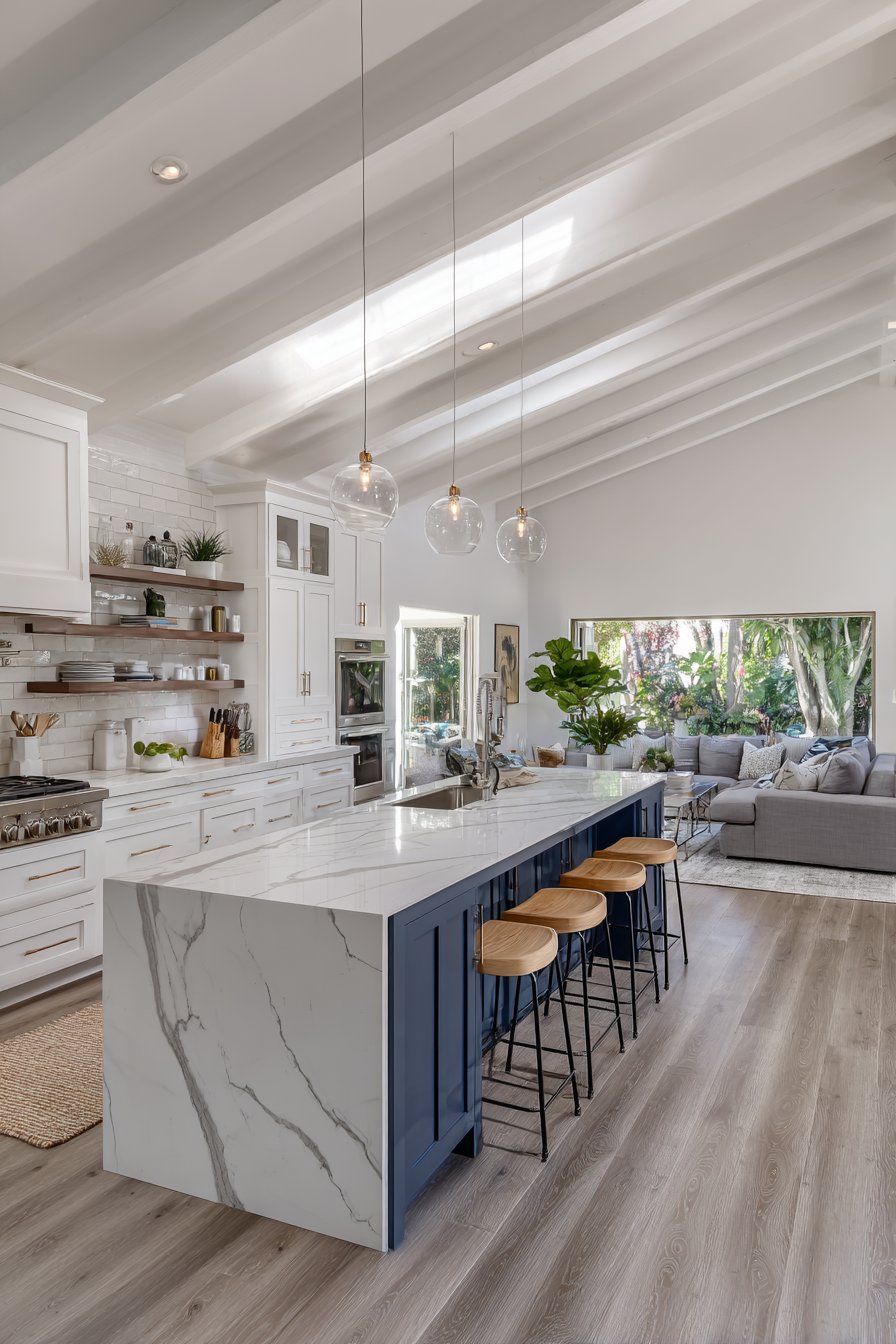
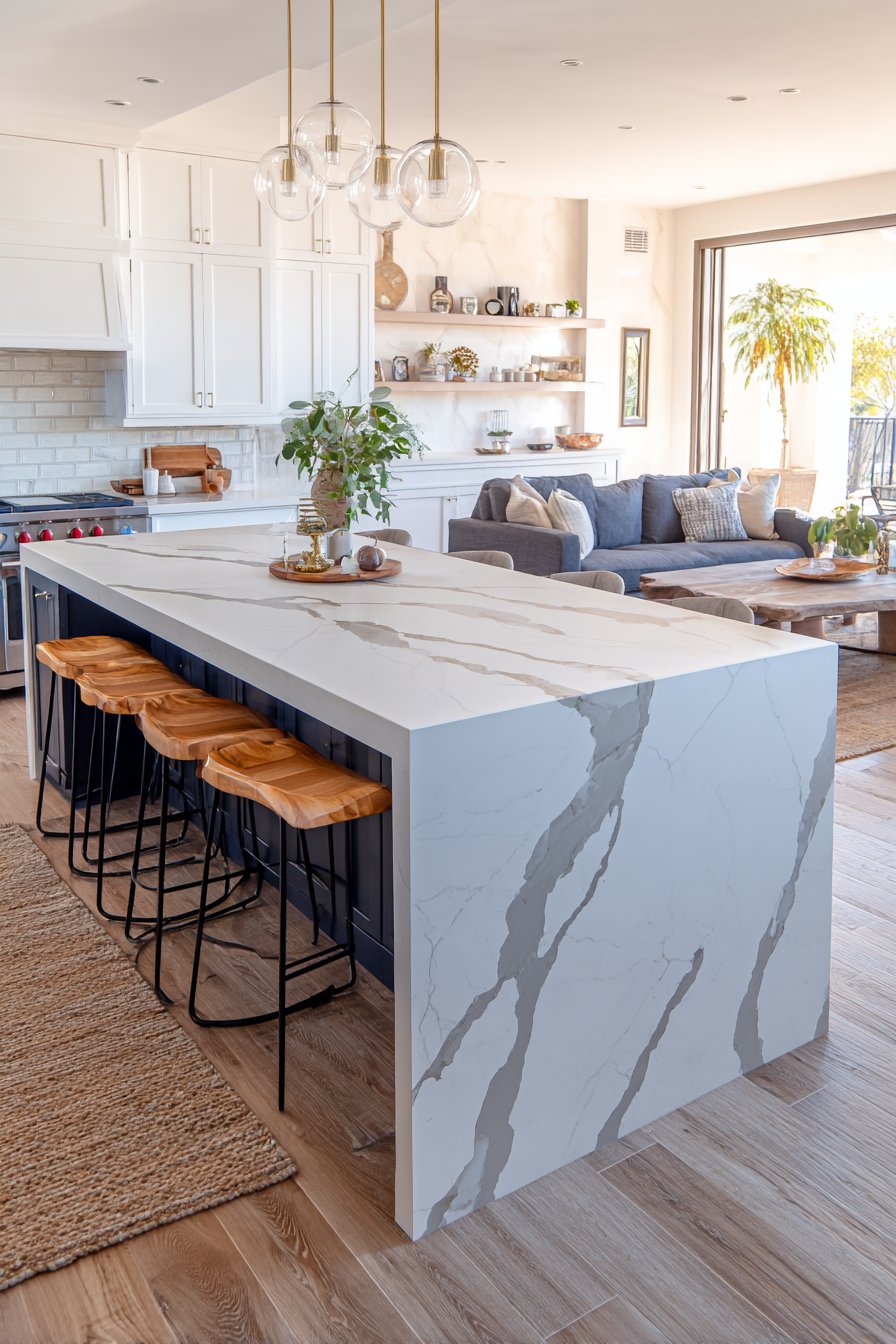
1. Waterfall-Edge Quartz Island with Sage Green Cabinetry
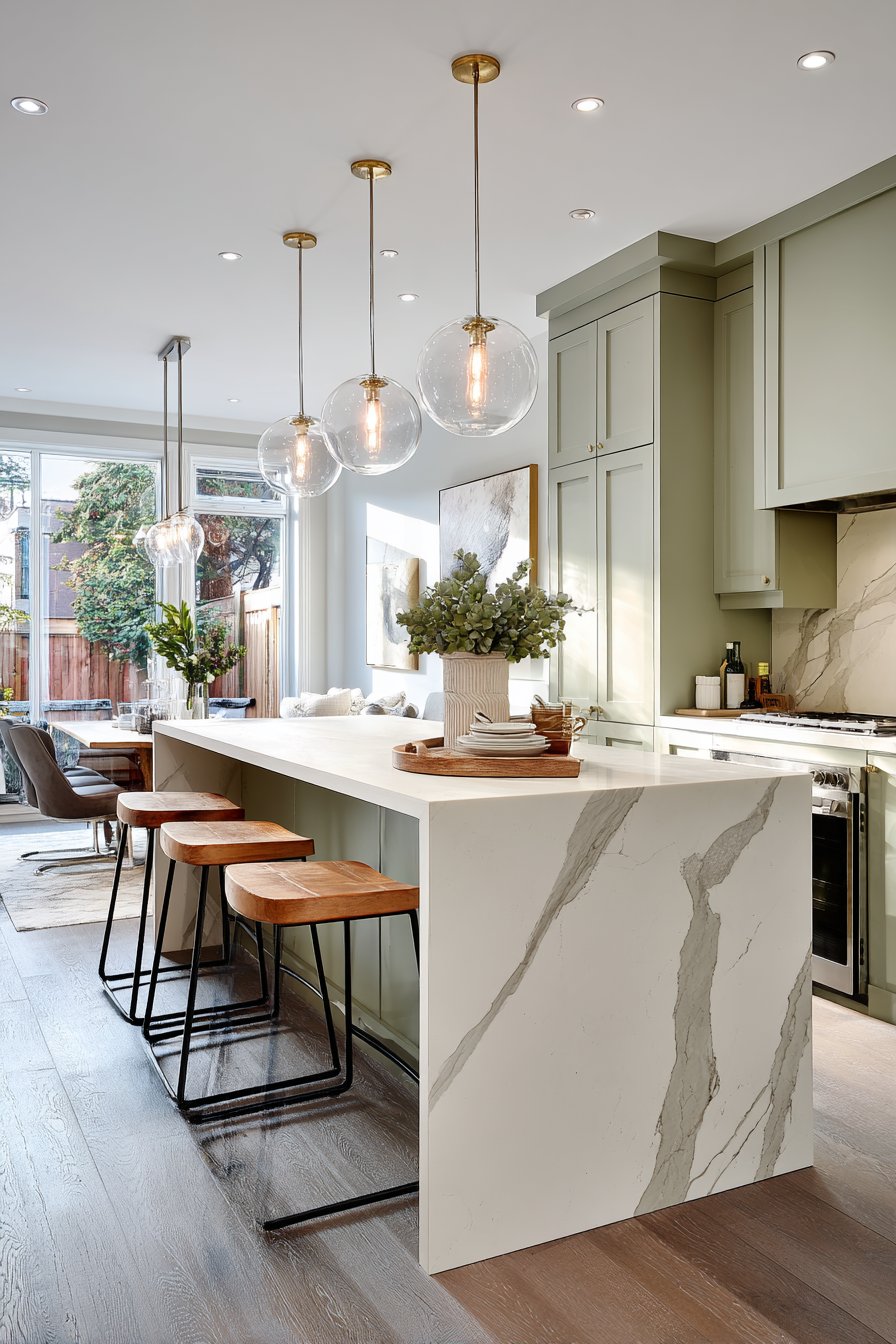
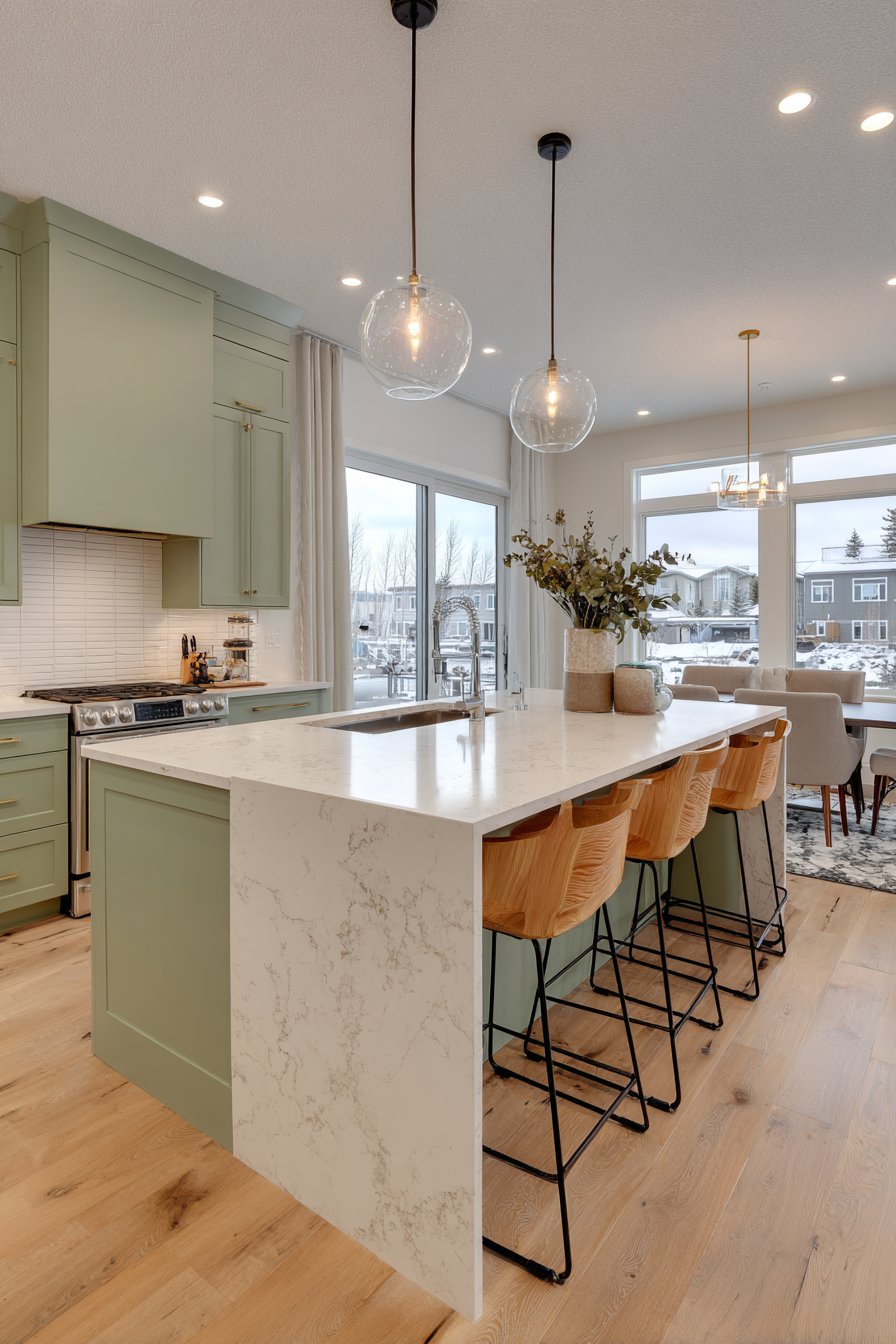
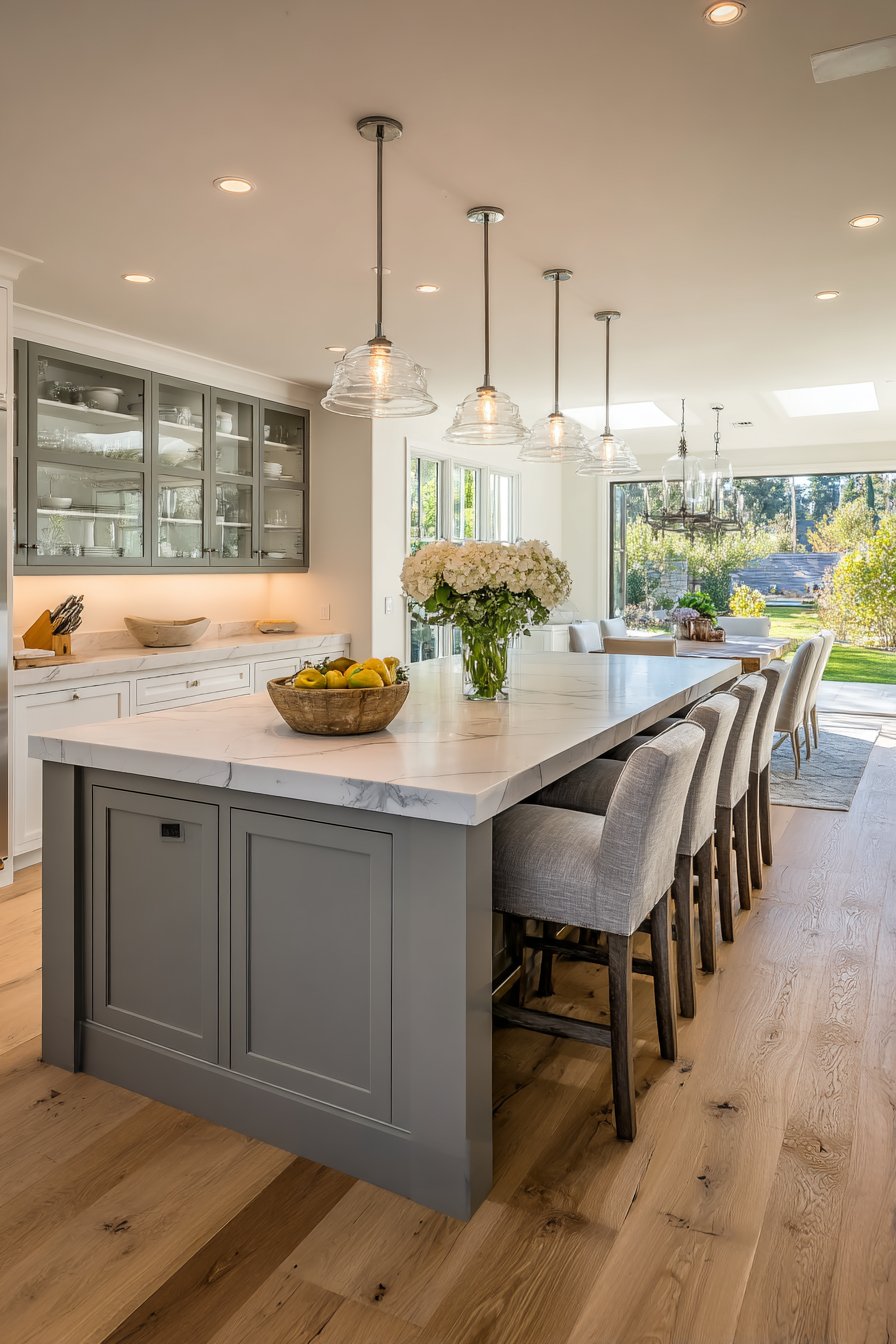
A large central island commands attention with its waterfall-edge quartz countertops in soft white with subtle grey veining. The dramatic edge treatment creates visual interest from multiple viewing angles. This island serves as the kitchen’s functional and aesthetic centerpiece. Built-in storage features shaker-style cabinetry in sage green, adding natural color warmth.
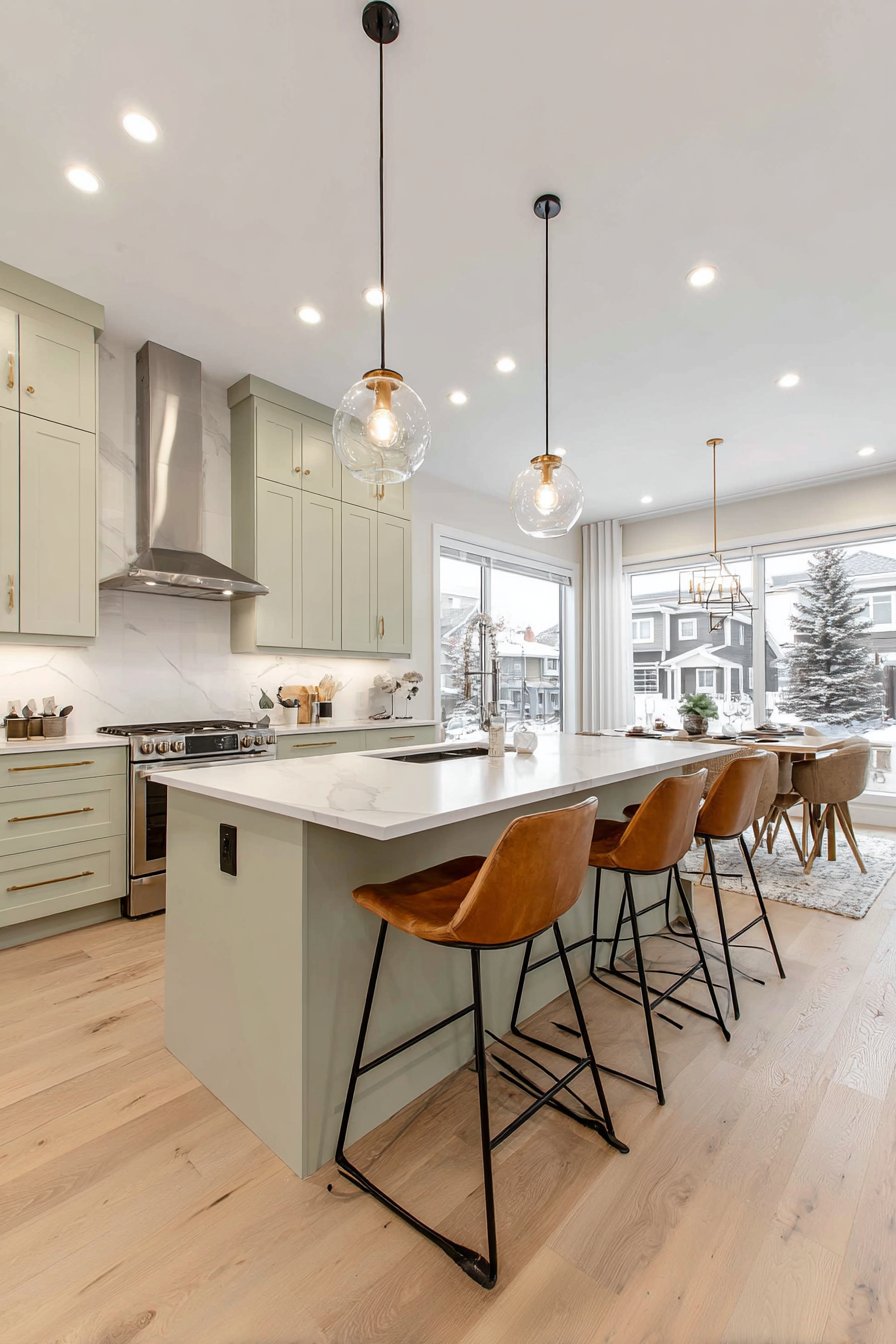
Seating for four incorporates modern counter stools with natural oak seats and black metal frames. The material combination feels both contemporary and organic. Pendant lights with clear glass globes and brass hardware suspend above the island. The transparent fixtures maintain open sightlines while providing focused task lighting. Wide windows flood the space with soft natural daylight throughout the day.
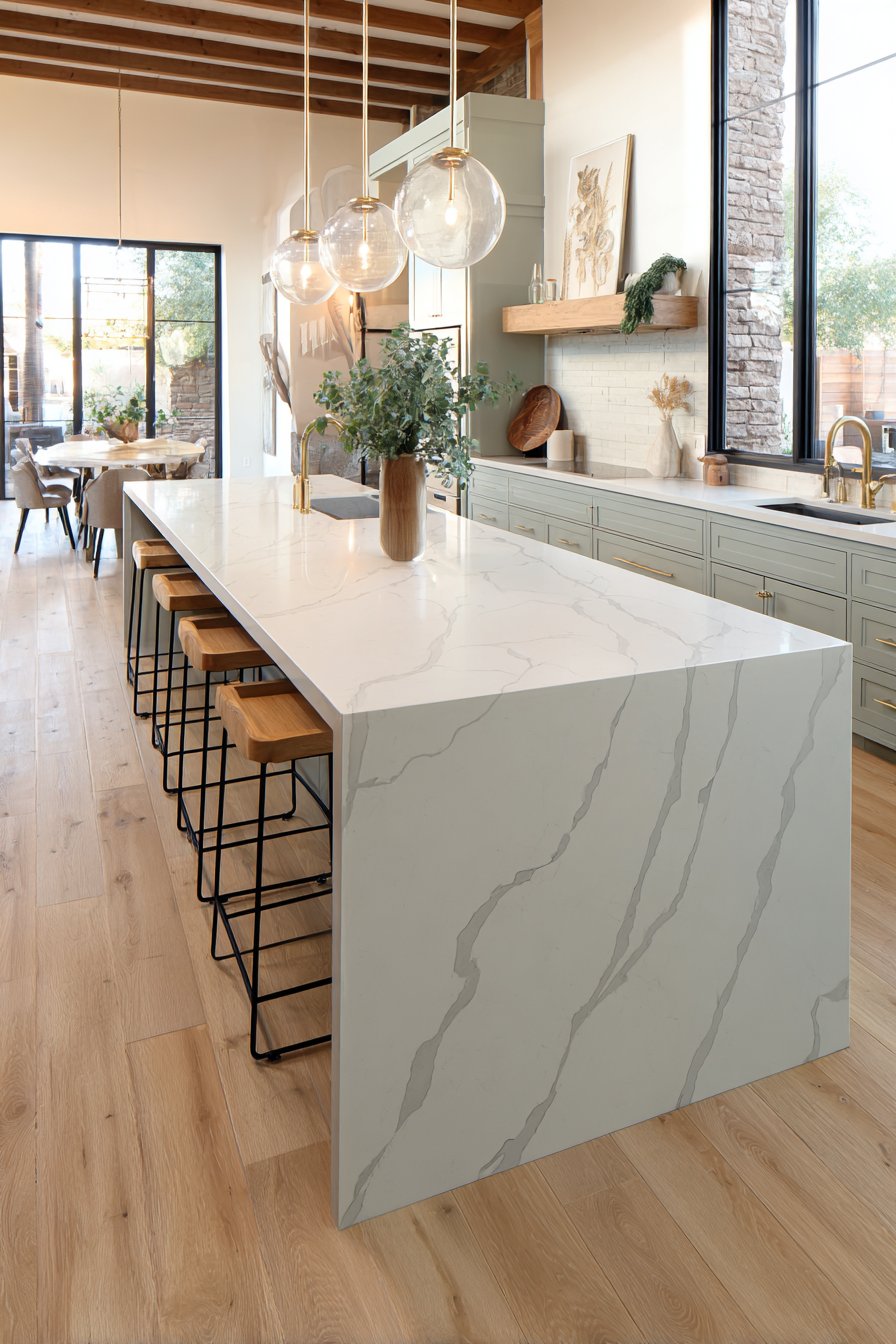
The kitchen opens directly into a dining area, demonstrating fluid space connection principles. Visual flow remains uninterrupted between functional zones. The seamless transition encourages movement and interaction between spaces. Material textures throughout the layout create subtle definition without physical barriers. The sage green cabinetry introduces personality while maintaining overall visual harmony.
This design exemplifies how a statement island can define kitchen boundaries within open concepts. The waterfall edge adds architectural interest that elevates the entire space. The sage green color choice brings current design trends into a timeless layout.
Key Design Tips:
- Select waterfall-edge countertops to create sculptural focal points that look finished from all angles
- Incorporate sage green cabinetry for on-trend color that adds warmth without overwhelming
- Choose transparent pendant lights to maintain openness while providing necessary task lighting
- Install seating for four or more to encourage casual dining and social interaction
- Use shaker-style cabinetry for versatile appeal that works with multiple design aesthetics
- Position the island to allow clear pathways between kitchen and adjacent spaces
2. Compact White Shaker Kitchen with Peninsula Seating
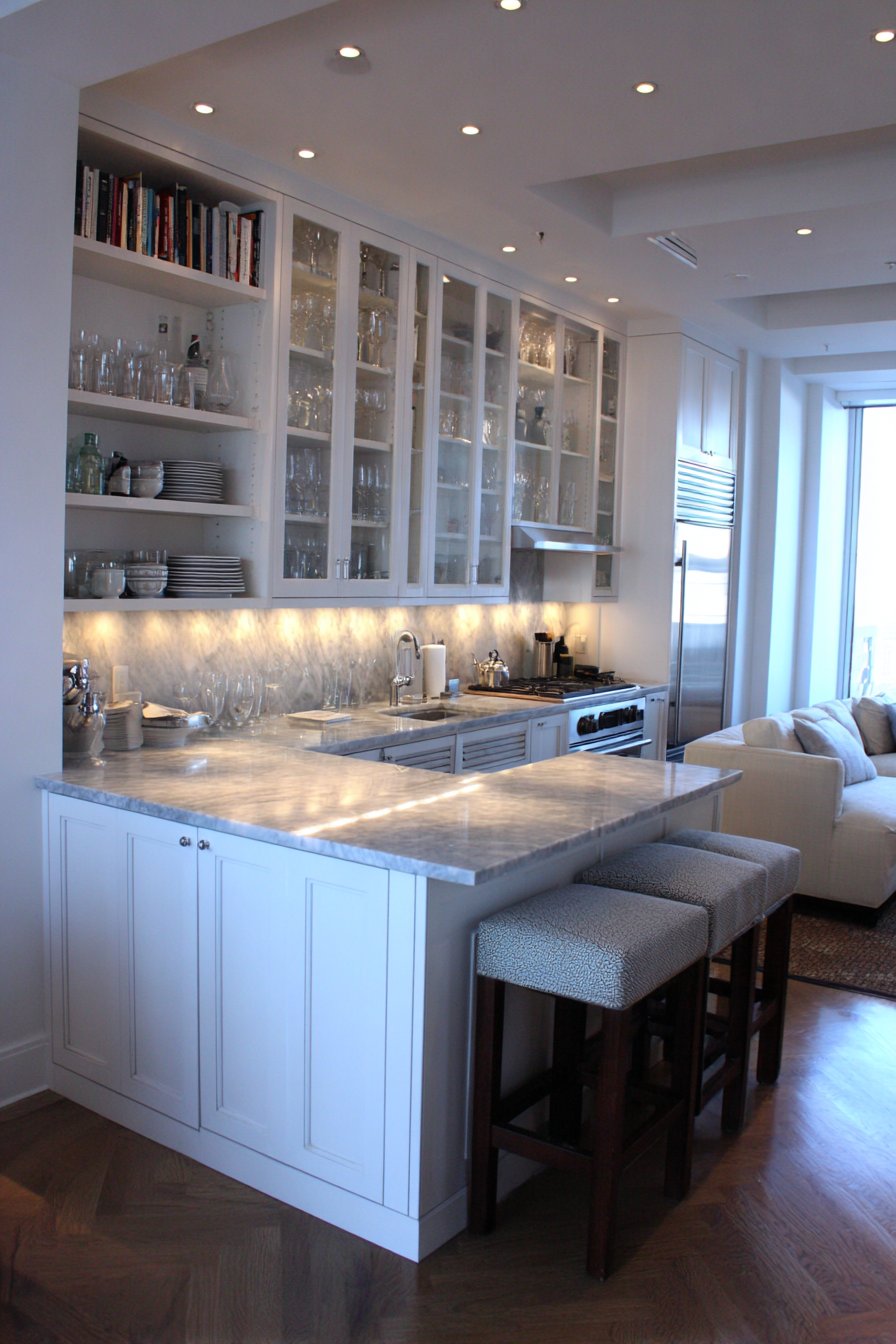
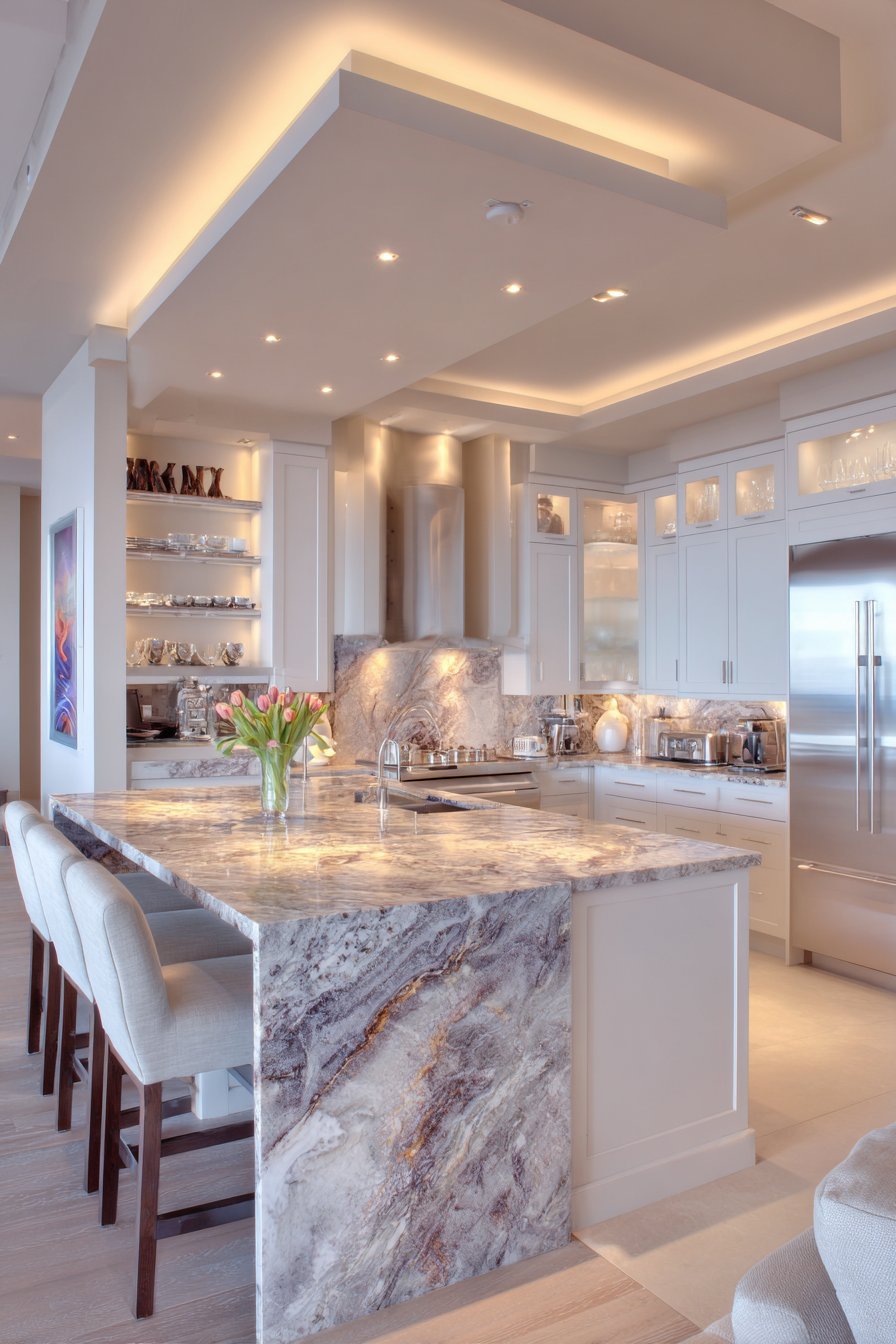
Floor-to-ceiling white shaker cabinets maximize vertical storage along one wall. Open shelving displays everyday dishware and glassware, adding visual interest and accessibility. The opposite side opens completely to a living room without walls interrupting sightlines. This complete openness creates remarkable spatial flow despite the modest footprint.
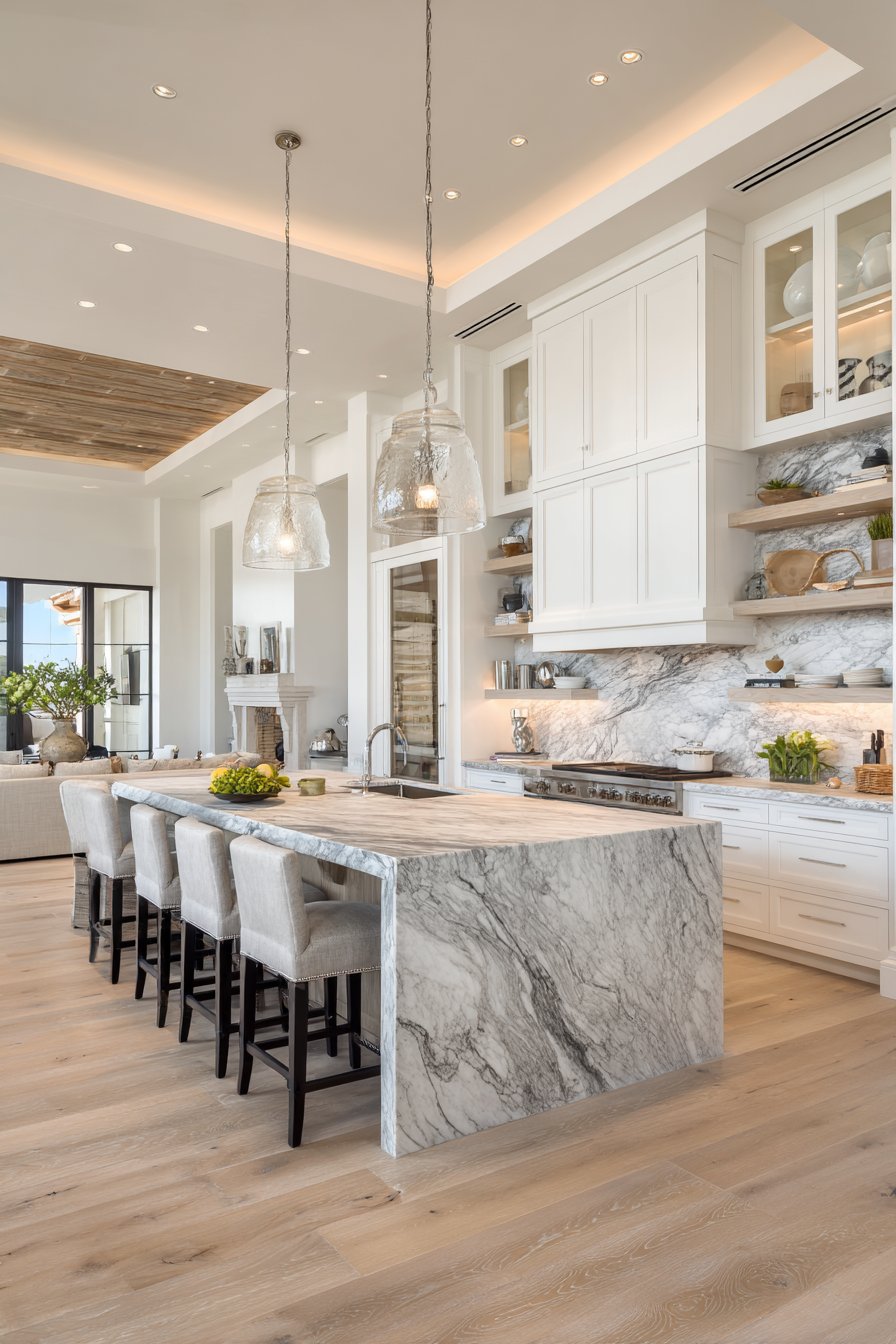
A compact peninsula with grey marble countertop provides additional prep space. Three upholstered bar stools offer casual dining options without requiring a separate eating area. The peninsula serves as a gentle room divider while maintaining visual connection. Recessed lighting and under-cabinet LED strips ensure functional illumination throughout the workspace.
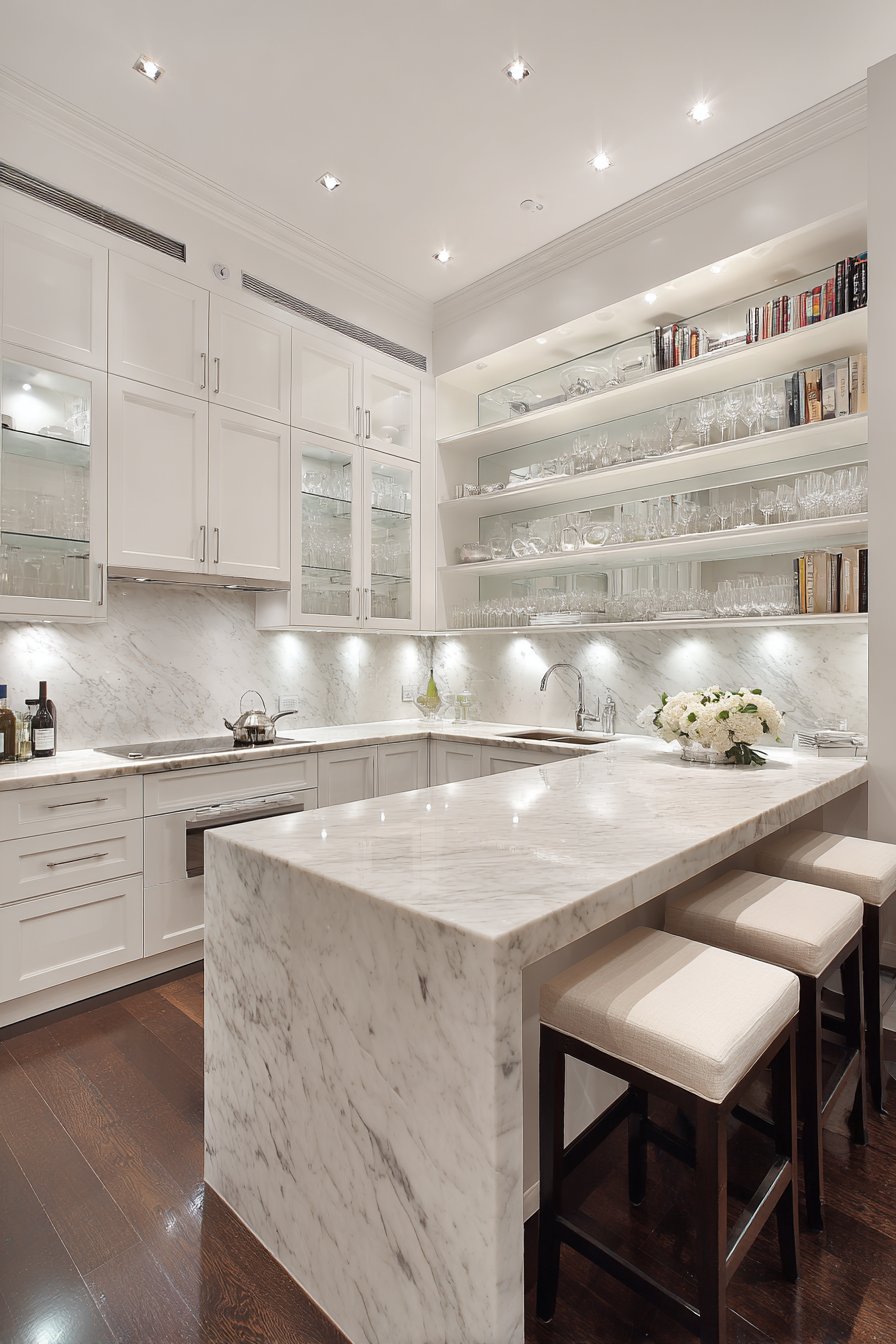
Strategic furniture placement creates distinct zones within the unified space. Flooring transitions subtly mark boundaries between kitchen and living areas. The white cabinetry reflects available light, enhancing the sense of spaciousness. This approach proves particularly effective for smaller homes or apartments.
Professional planning maximizes every square inch without sacrificing openness or functionality. The peninsula configuration provides workspace and seating efficiently. The continuous sightlines prevent the compact space from feeling cramped or isolated.
Key Design Tips:
- Install floor-to-ceiling cabinets to maximize storage in smaller kitchen footprints
- Add open shelving to break up solid cabinetry and display attractive dishware
- Choose a peninsula instead of an island when space constraints require efficiency
- Select upholstered bar stools for comfort during extended casual dining
- Layer lighting with recessed fixtures and under-cabinet LEDs for complete coverage
- Use furniture placement and flooring transitions to define zones without walls
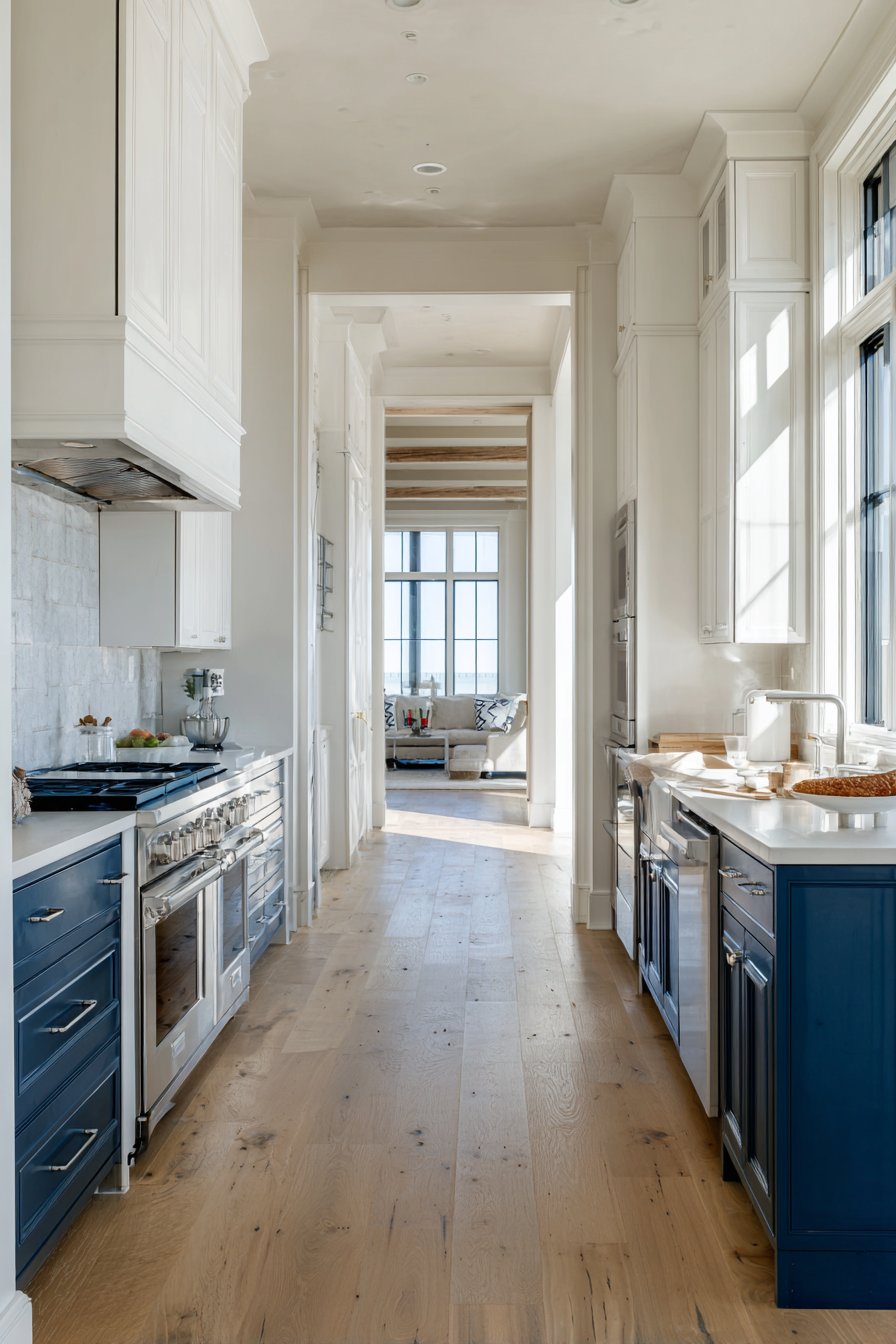
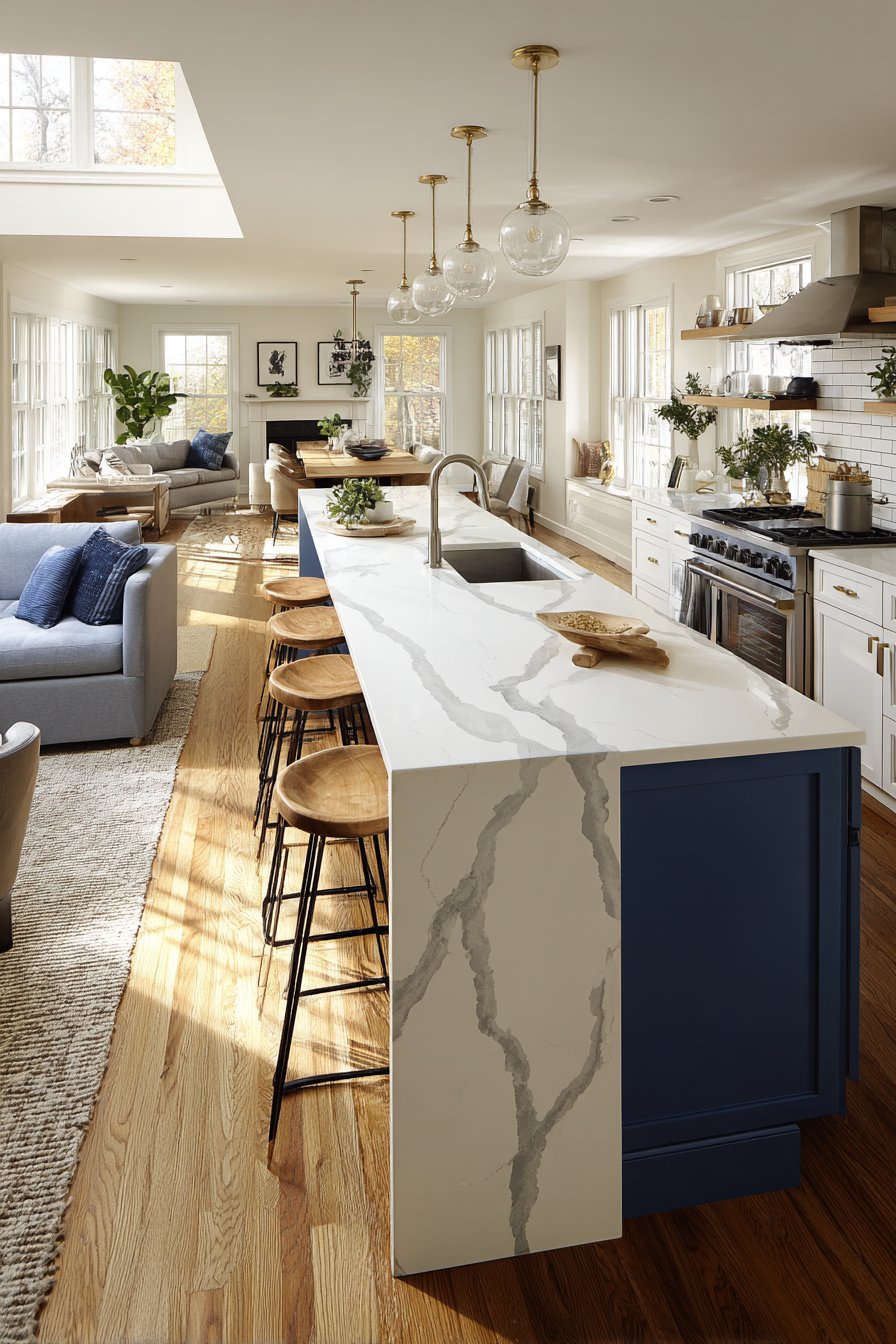
3. Navy and White Galley Kitchen with Family Room Flow
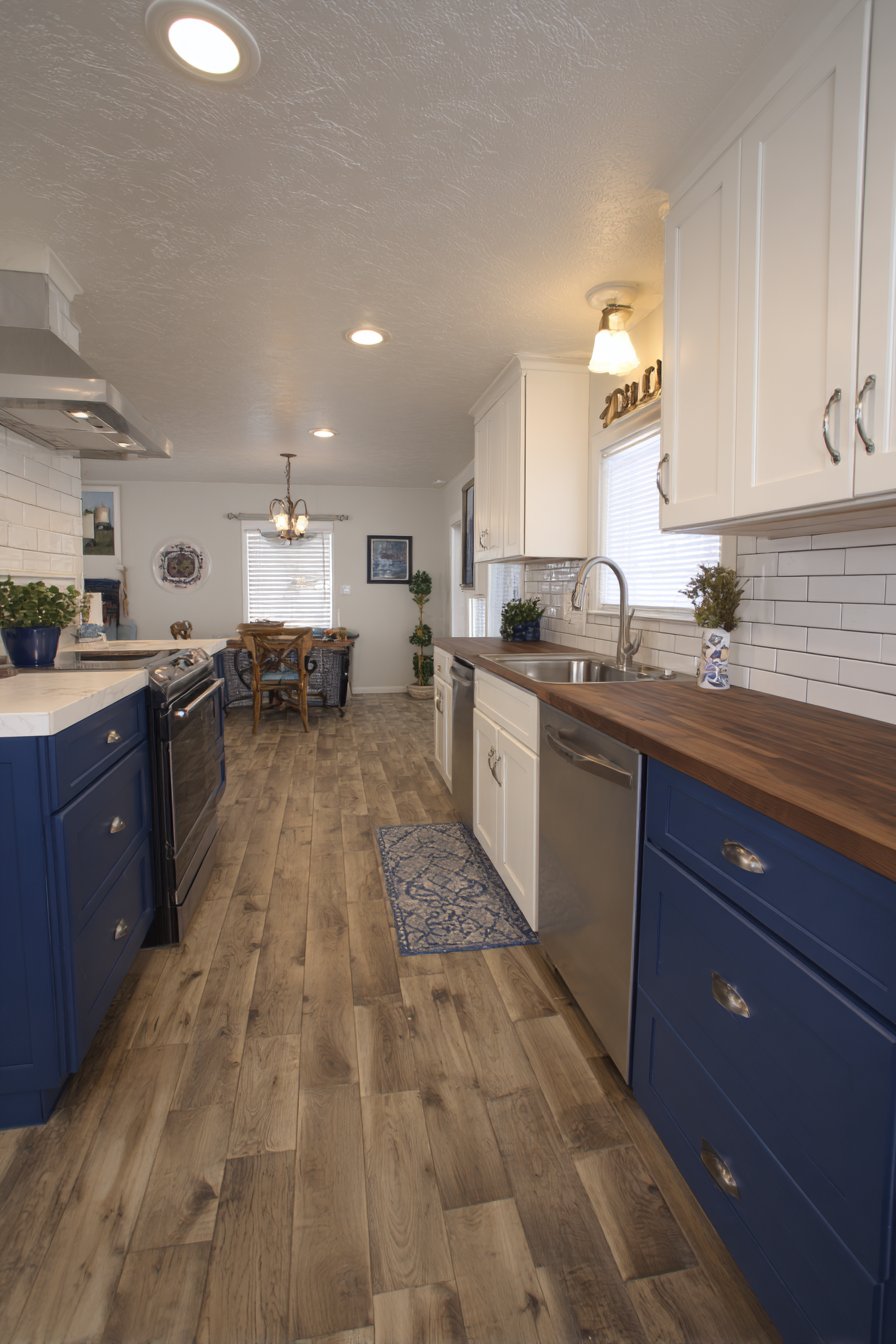
A galley-style cooking zone flows into an adjacent family room without barriers or interruptions. Two-tone cabinetry features navy blue lowers and white uppers, creating visual interest and depth. A white subway tile backsplash with dark grey grout connects the contrasting cabinet colors. This classic material choice adds texture while remaining timeless.
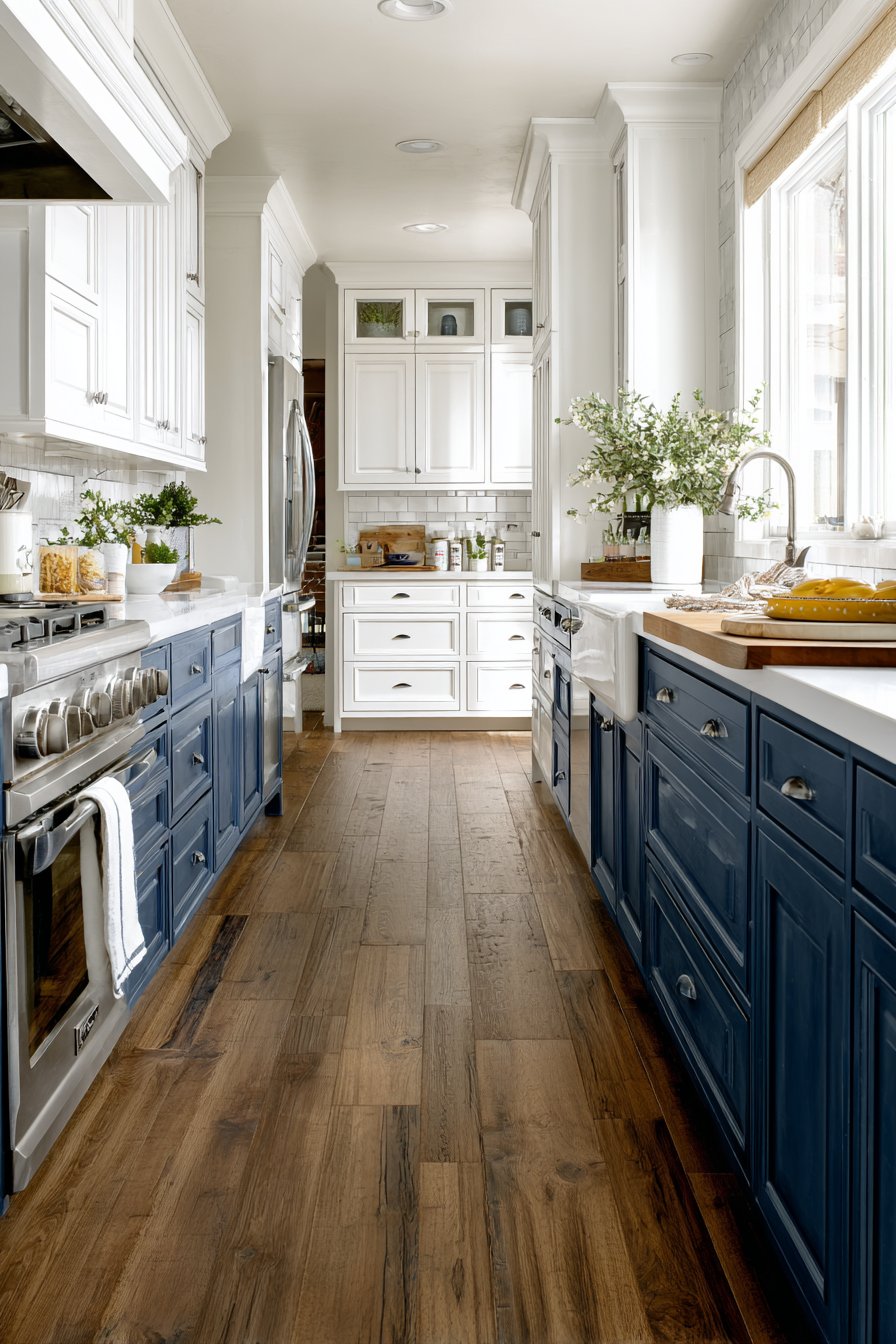
Stainless steel appliances integrate seamlessly along one wall. Professional-grade functionality meets residential aesthetic appeal. A narrow breakfast bar with butcher block countertop provides casual eating space. The warm wood tone softens the navy and white palette beautifully.
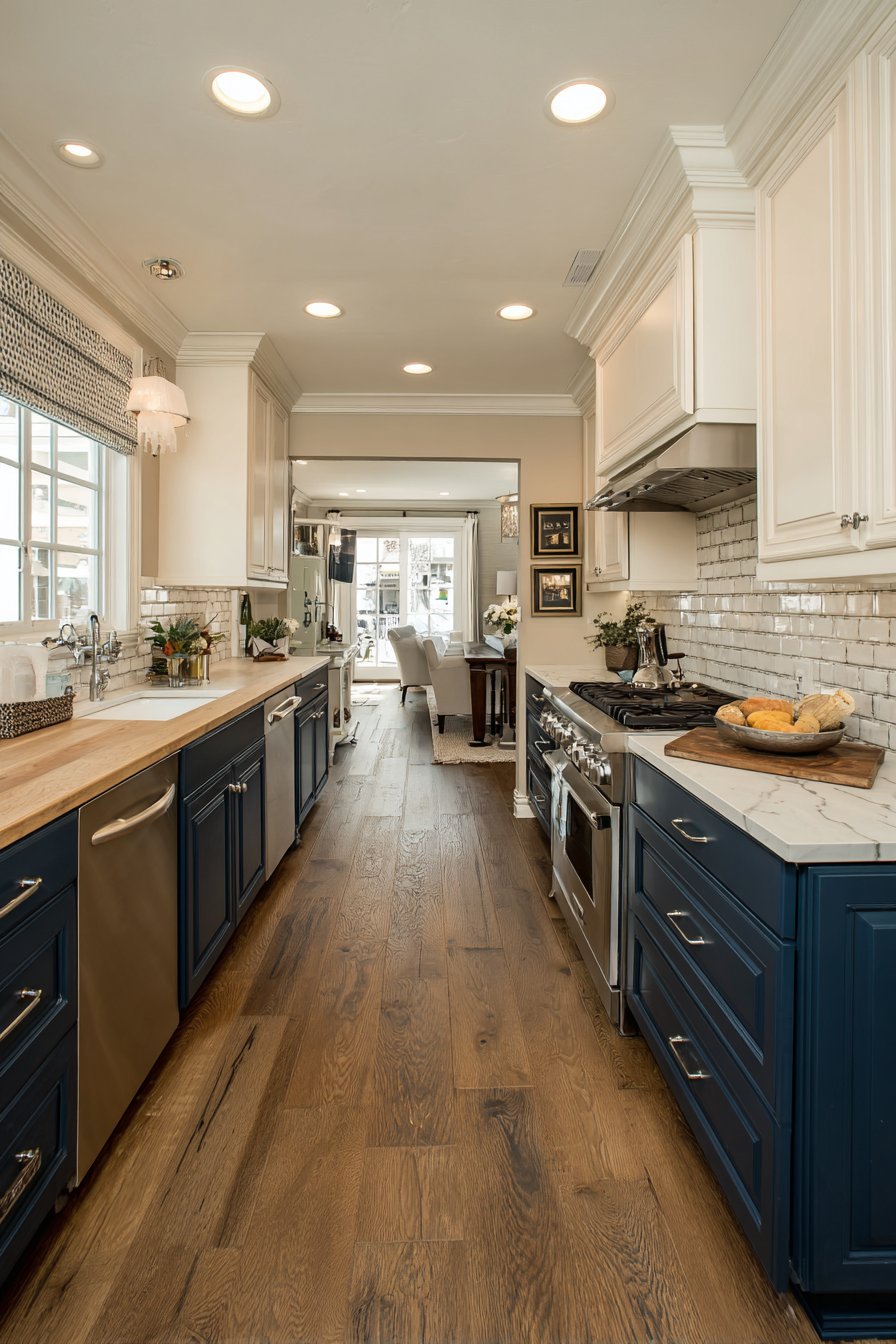
Natural oak flooring runs continuously from kitchen through living space. This unified flooring visually connects the open concept zones. Morning light filters through nearby windows, emphasizing the practical layout. The design encourages family interaction throughout daily activities naturally.
The galley configuration proves highly efficient for cooking workflows while maintaining openness. The two-tone cabinetry adds personality without overwhelming the space. The breakfast bar provides functionality without obstructing the essential open flow.
Key Design Tips:
- Choose navy blue lower cabinets to add sophisticated color while hiding wear
- Keep upper cabinets white to maintain brightness and prevent visual heaviness
- Install butcher block countertops on breakfast bars for warmth and contrast
- Use continuous flooring throughout connected spaces to unify the open concept
- Position the breakfast bar to allow comfortable circulation around both sides
- Select subway tile with contrasting grout to add subtle visual texture
4. Expansive L-Shaped Island with Vaulted Ceilings
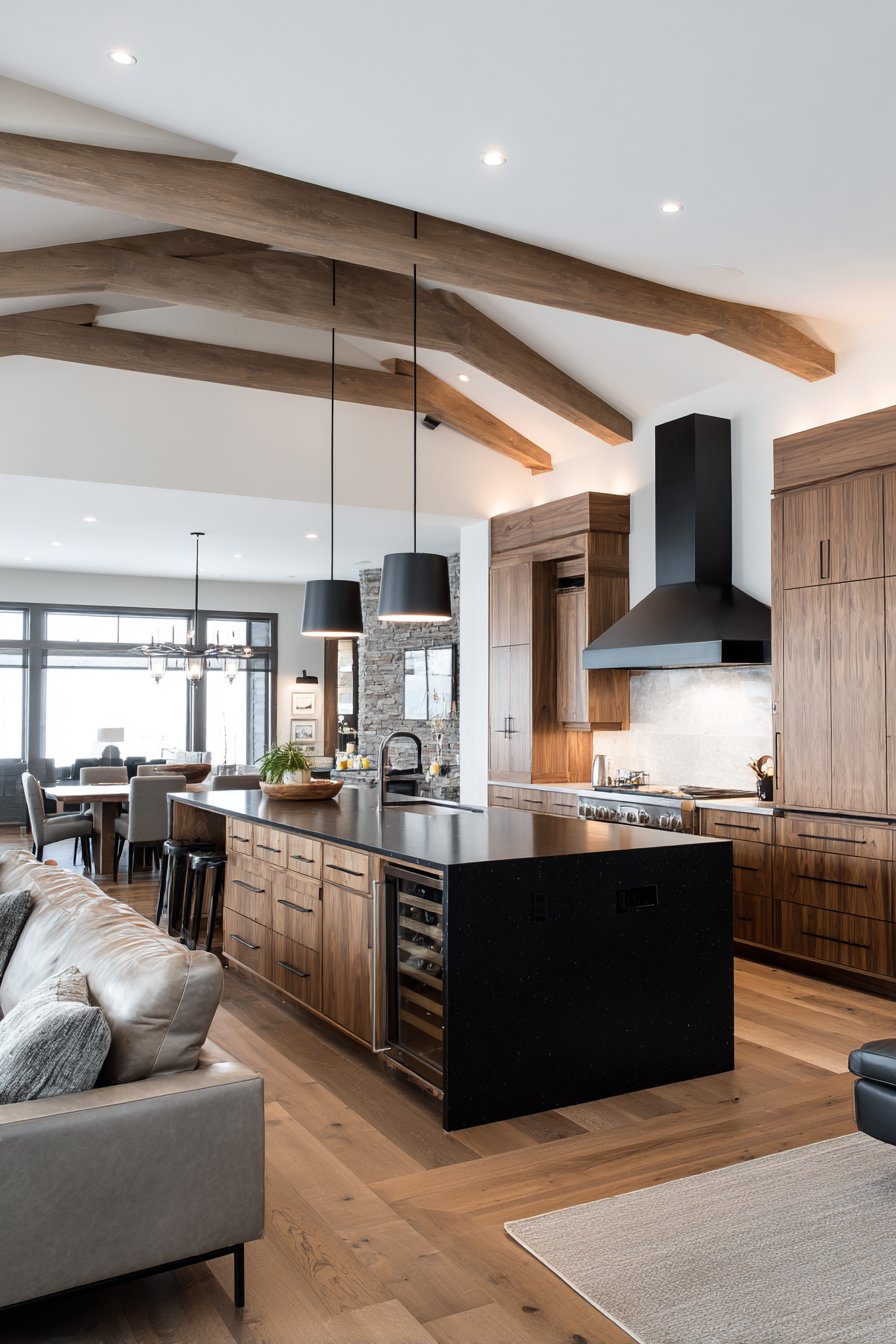
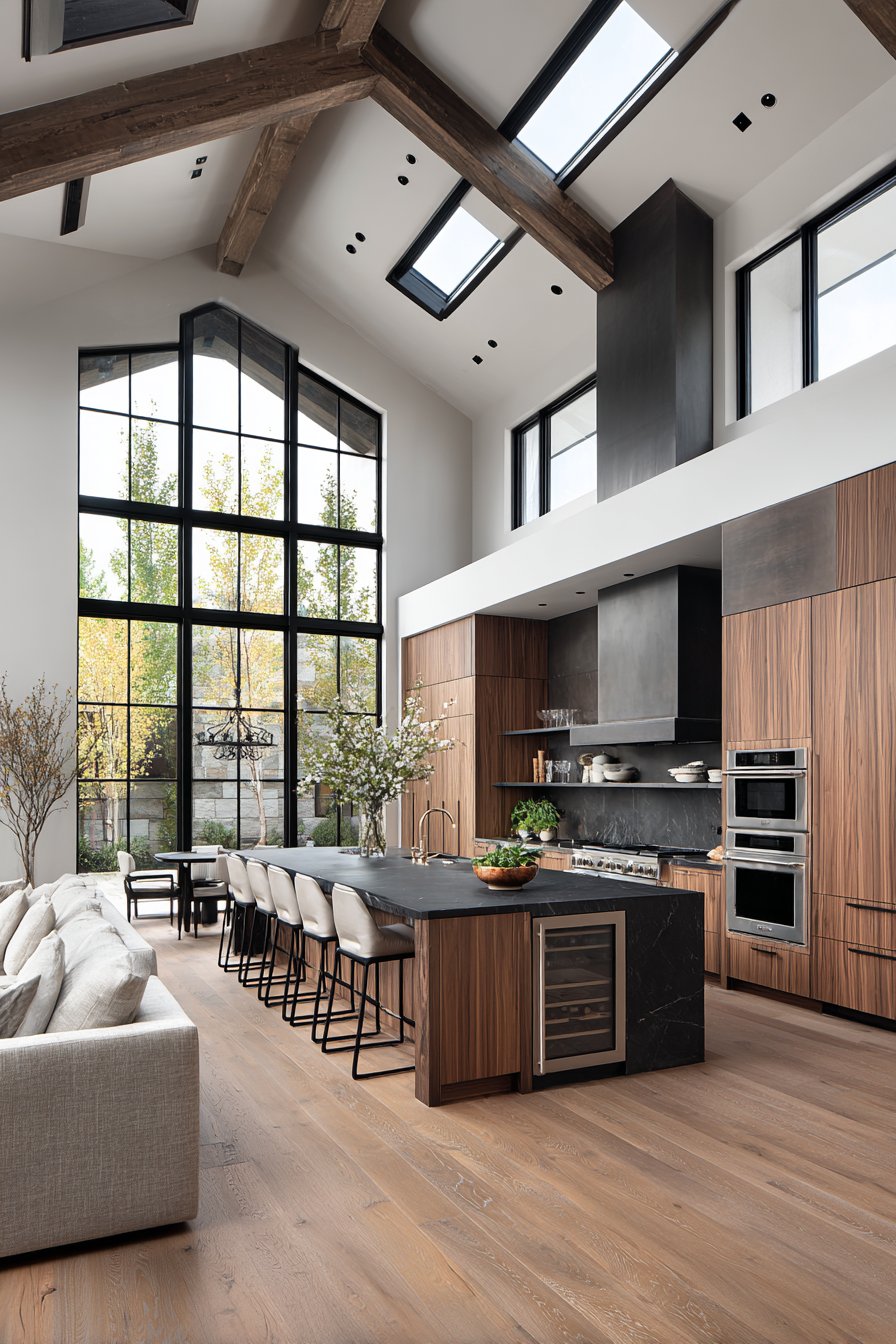
A substantial L-shaped island features honed black granite countertops that make a bold statement. Custom cabinetry in warm walnut includes integrated appliance panels for streamlined aesthetics. The island incorporates a prep sink and wine cooler for entertaining functionality. Extended seating accommodates six people comfortably for casual dining or socializing.
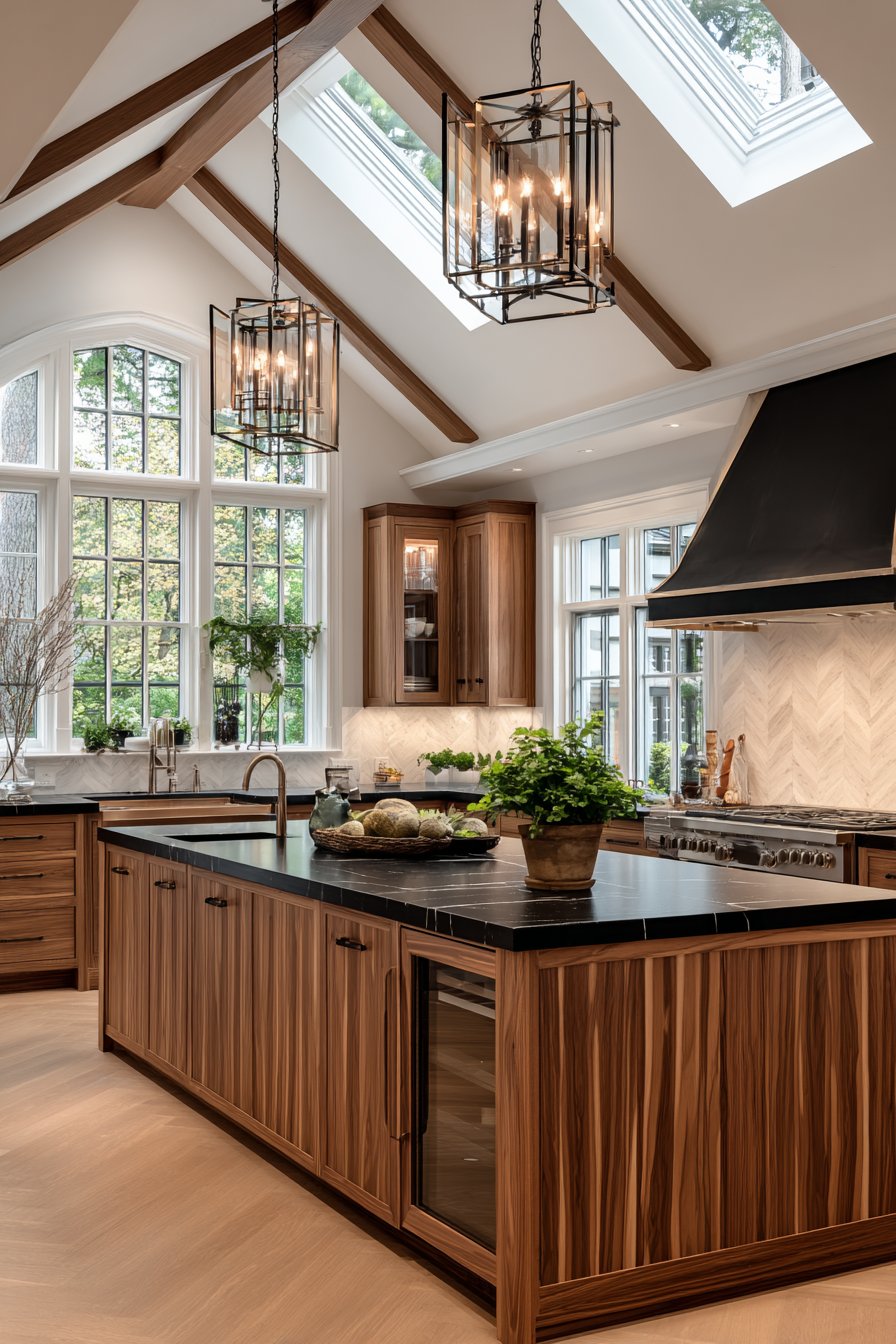
Behind the cooking zone, the space opens to a vaulted-ceiling great room. Visible architectural beams add structural drama and visual interest overhead. Professional-grade stainless appliances anchor the cooking wall with serious culinary capabilities. A dramatic range hood serves as both functional necessity and design focal point.
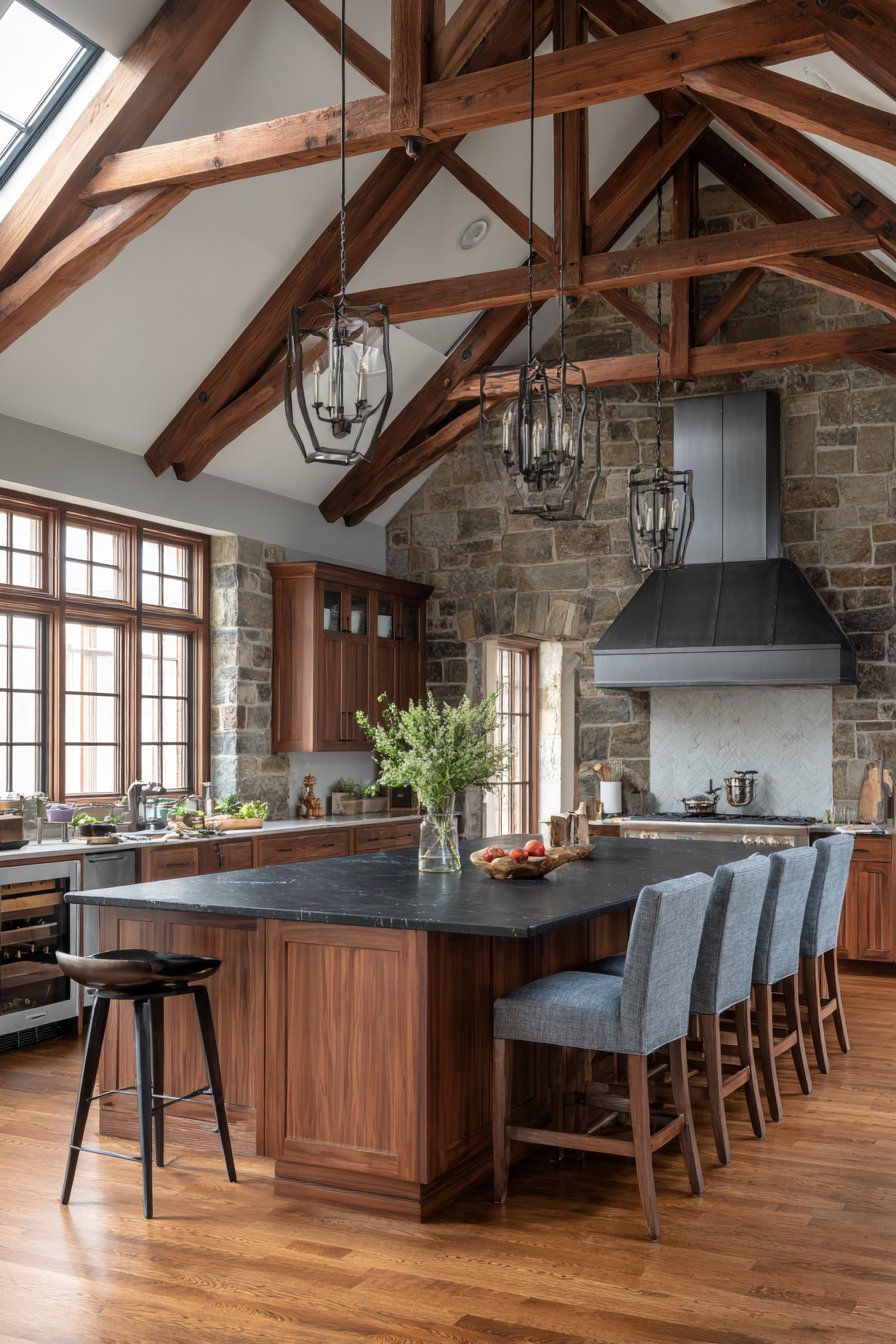
The generous island defines the kitchen zone within the larger open space clearly. Visual connection remains constant throughout all areas despite the substantial square footage. The balance between functionality and spatial flow demonstrates expert design planning. Morning and afternoon light patterns shift across the varied surfaces throughout the day.
This design suits homes where entertaining and cooking occupy central roles. The generous proportions accommodate multiple cooks working simultaneously. The walnut cabinetry adds natural warmth that prevents the expansive space from feeling cold.
Key Design Tips:
- Design L-shaped islands to maximize counter space while maintaining circulation flow
- Include prep sinks in islands to create multiple work zones for efficient cooking
- Select honed granite instead of polished for sophisticated texture with easier maintenance
- Incorporate wine coolers and specialty appliances for serious entertaining capabilities
- Use integrated appliance panels to maintain clean sightlines throughout open spaces
- Add vaulted ceilings with exposed beams to enhance spatial volume and architectural interest
5. Modern Farmhouse with Floating Shelves
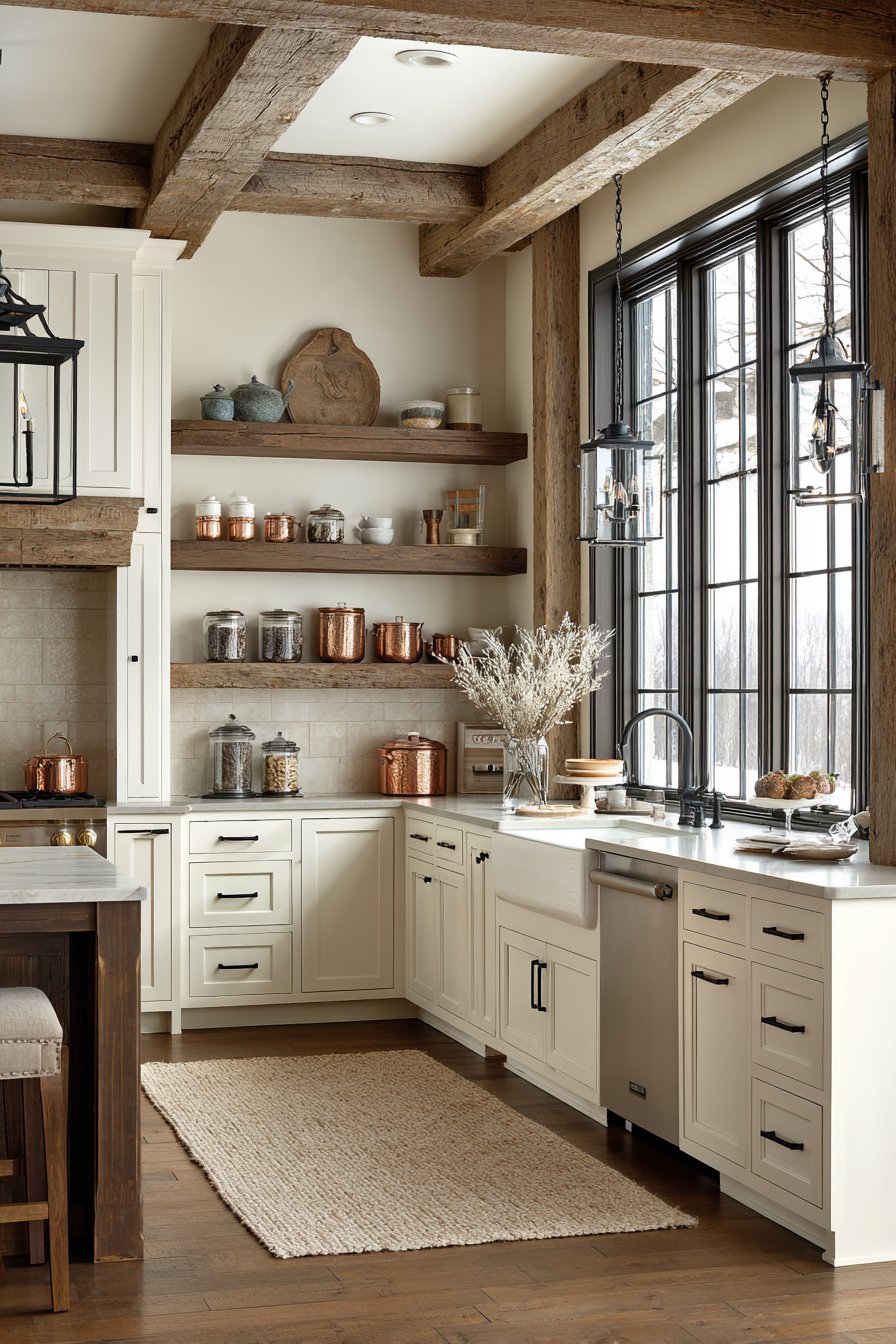
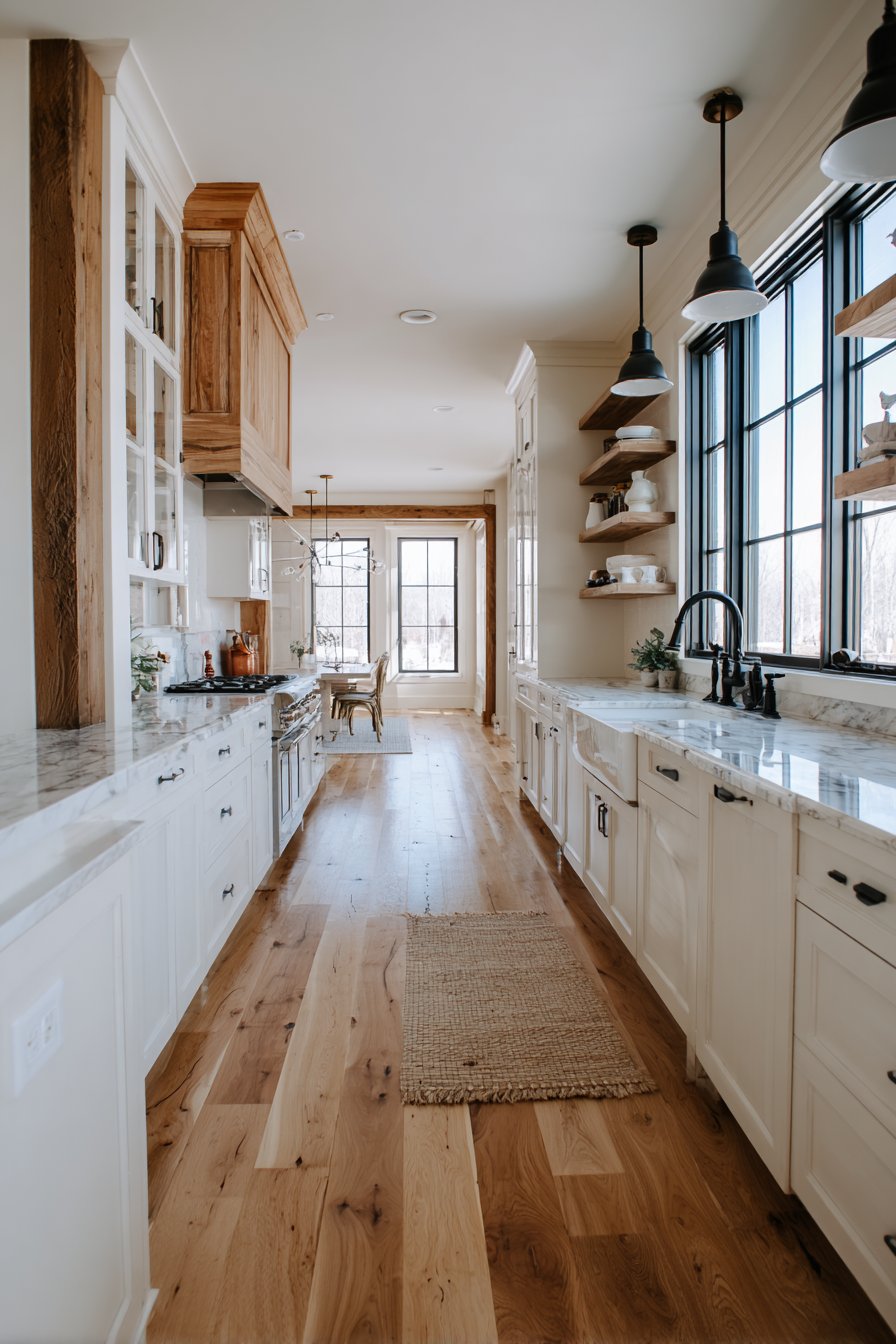
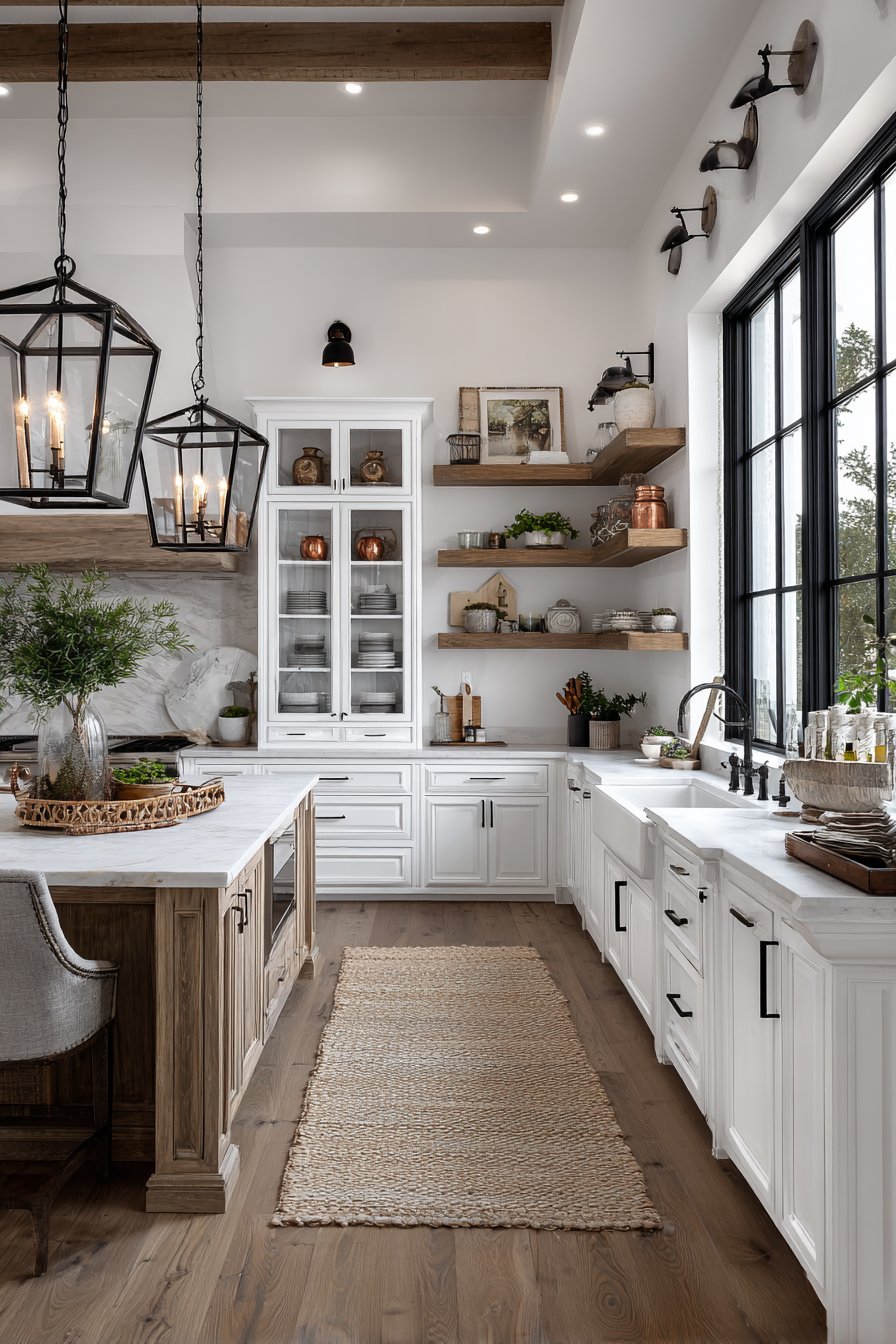
White painted cabinetry combines with natural wood floating shelves displaying vintage ceramics and copper cookware. The mixed materials create characteristic farmhouse warmth. Continuous hardwood flooring extends from kitchen through adjacent living area. A textured area rug under the dining table marks the transition between zones subtly.
A farmhouse sink under a large window provides natural light for food prep activities. The window offers views into connected spaces, reinforcing the open concept principles. Black iron pendant lights and hardware add striking contrast against bright cabinetry. These dark accents prevent the white-dominated space from feeling sterile.
The open floor plan maintains inviting, connected atmosphere throughout all zones. Furniture arrangement creates distinct areas without requiring walls or barriers. Layered lighting from multiple sources adapts to different activities and times of day. The vintage ceramics and copper cookware add personality and lived-in character.
This approach demonstrates how traditional farmhouse elements translate beautifully into open concepts. The floating shelves provide storage while maintaining visual lightness. The combination of white paint and natural wood creates timeless appeal.
Key Design Tips:
- Install floating shelves from reclaimed or natural wood for authentic farmhouse character
- Position farmhouse sinks under windows to maximize natural light and views
- Use black iron fixtures and hardware to create contrast against white cabinetry
- Layer area rugs to define dining zones within open floor plans
- Display vintage ceramics and copper cookware as functional decoration
- Choose white painted cabinetry as a versatile backdrop for evolving decor
6. Minimalist White Gloss with Carrara Marble
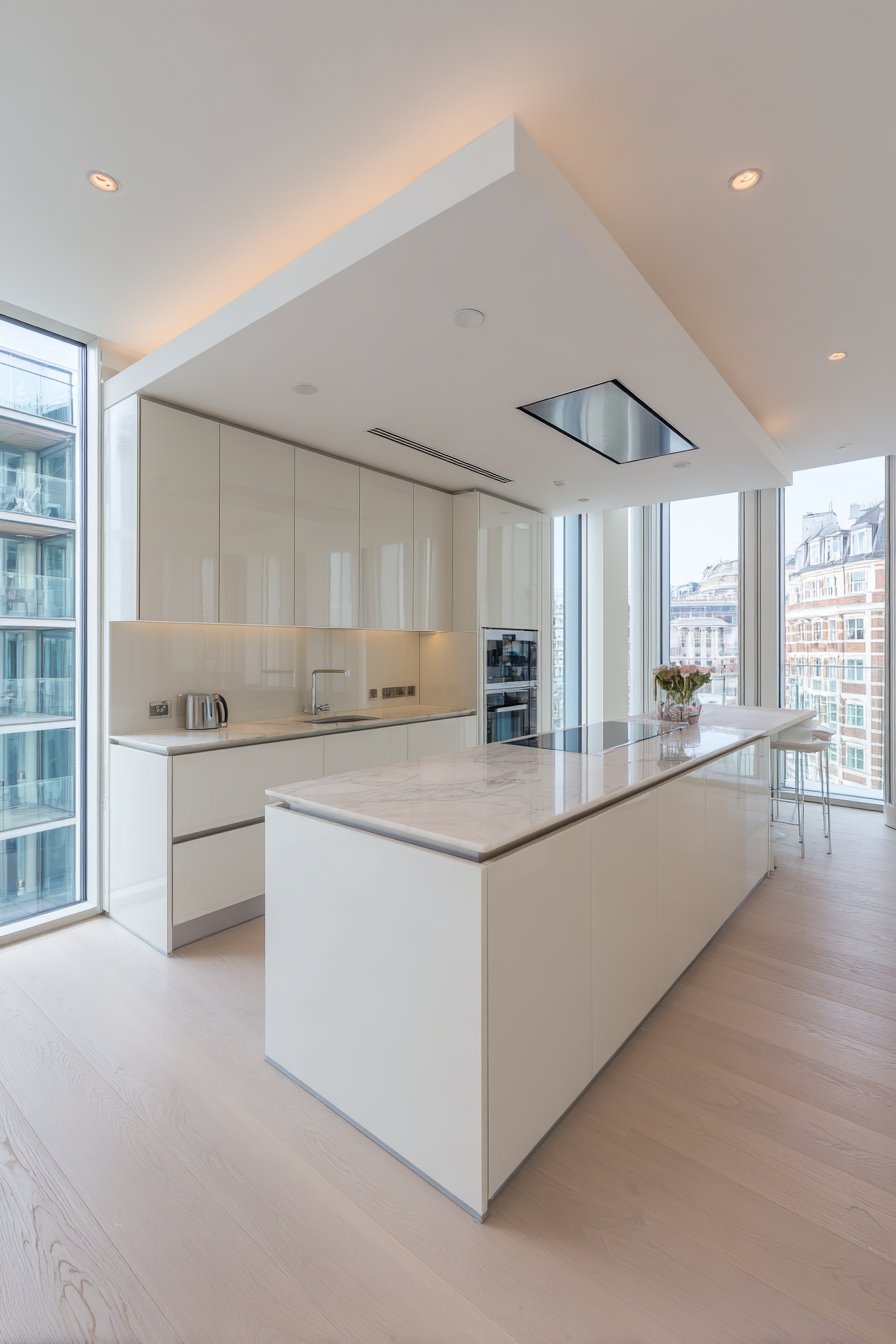
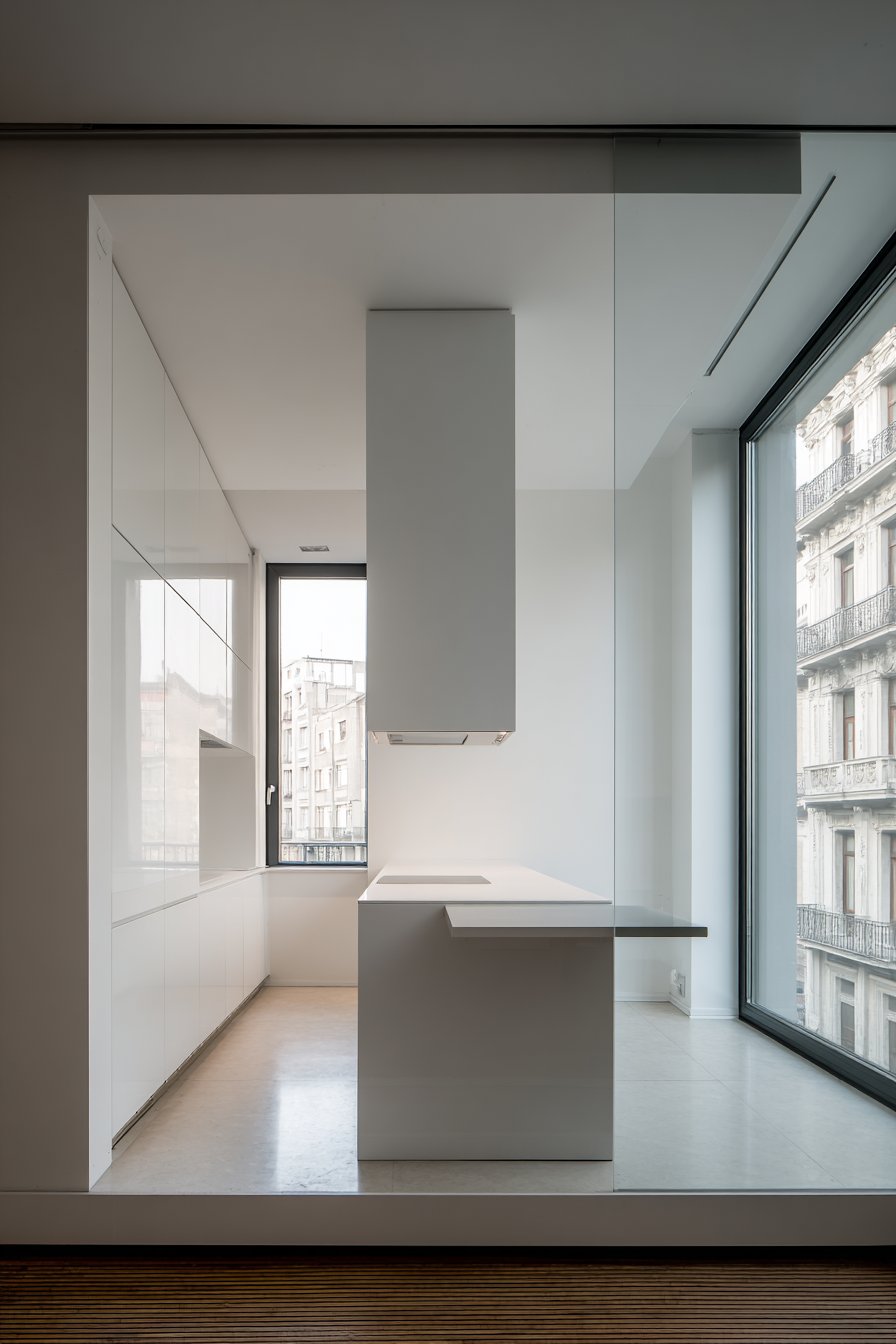
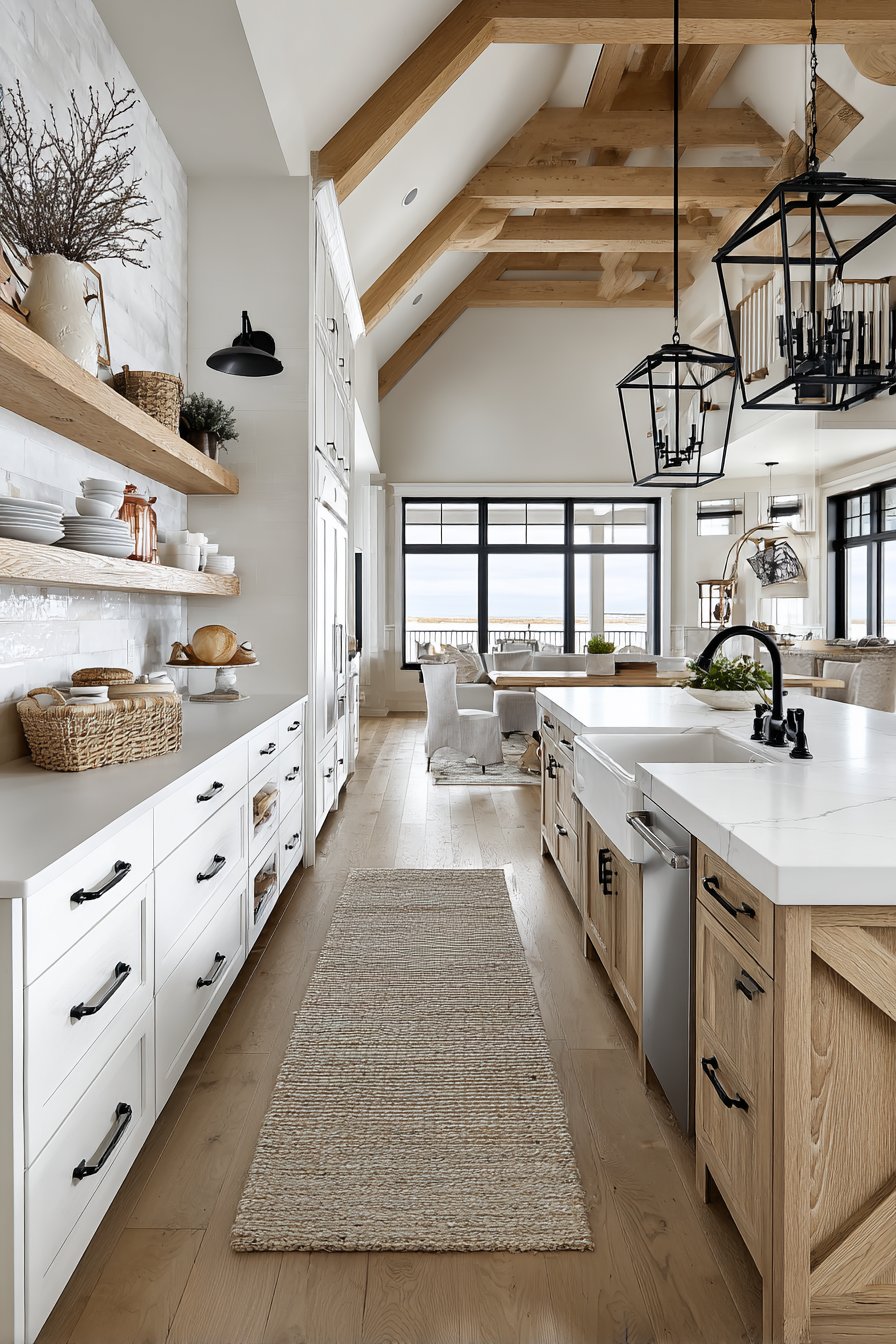
Handleless white gloss cabinets create a streamlined minimalist aesthetic throughout the cooking zone. A sleek island with Carrara marble countertop serves as the refined centerpiece. The marble veining adds natural pattern to the otherwise clean-lined space. Subtle flooring changes define zones without visual disruption.
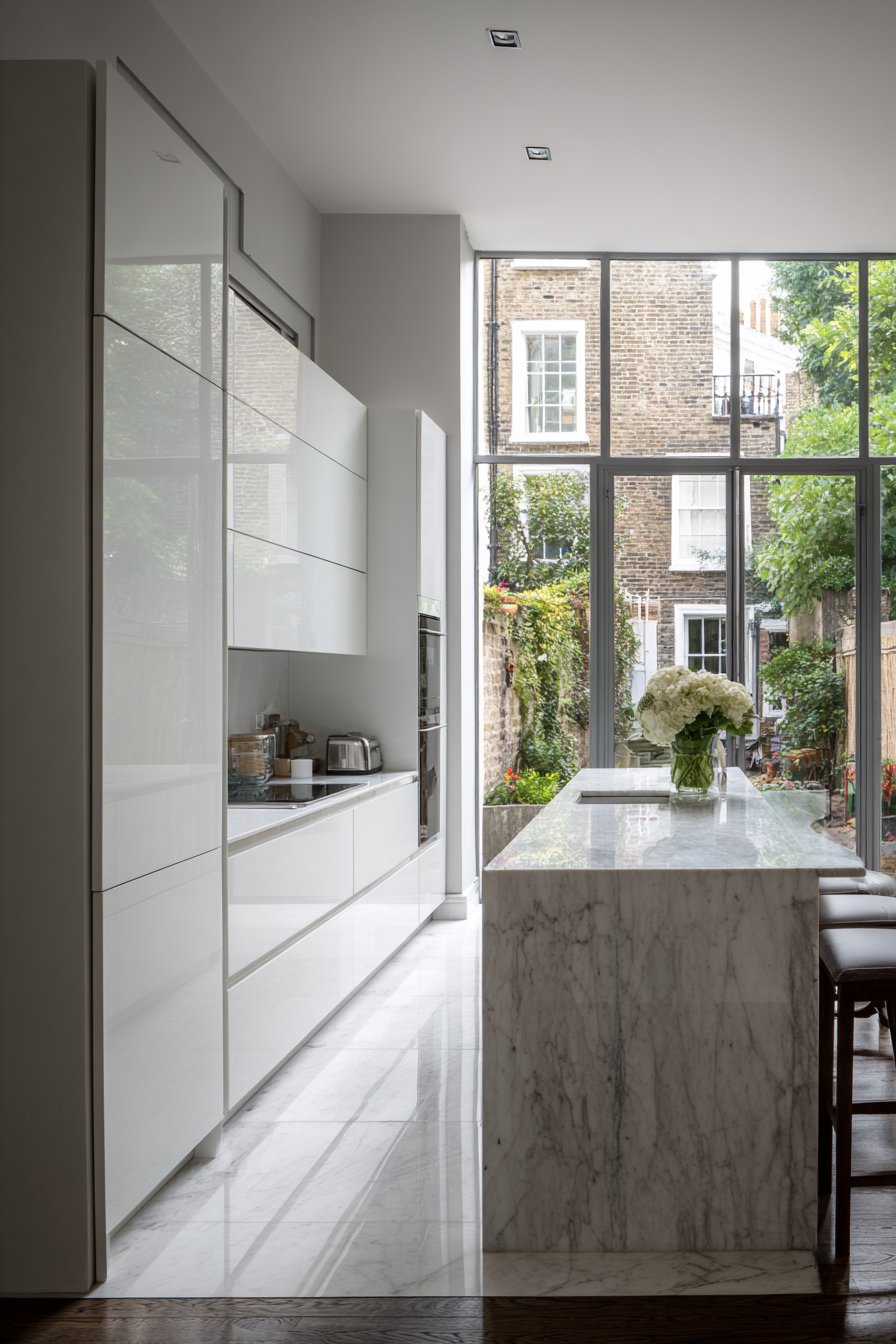
Large-format porcelain tile in the cooking area transitions to wide-plank oak in the living space. This material shift provides practical durability where needed while adding warmth elsewhere. A slender breakfast bar with cantilevered overhang provides seating without disrupting sightlines. The floating appearance enhances the minimalist design principles.
Floor-to-ceiling windows along one wall flood both kitchen and living areas with natural light. The abundant daylight emphasizes the clean lines and unobstructed views throughout. The minimal design creates genuine spaciousness while maintaining functional kitchen storage. Every element serves a clear purpose without unnecessary ornamentation.
This design appeals to those who appreciate restraint and simplicity in their environments. The handleless cabinets maintain smooth surfaces that are easy to clean. The Carrara marble adds luxury without compromising the minimalist aesthetic.
Key Design Tips:
- Choose handleless white gloss cabinets for seamless modern aesthetics
- Select Carrara marble for subtle veining that adds interest to minimal spaces
- Use flooring transitions to define zones while maintaining visual continuity
- Install cantilevered breakfast bars to preserve open sightlines throughout
- Maximize floor-to-ceiling windows to flood connected spaces with natural light
- Limit decorative elements to maintain true minimalist principles
7. Transitional Grey-Washed Oak Family Hub
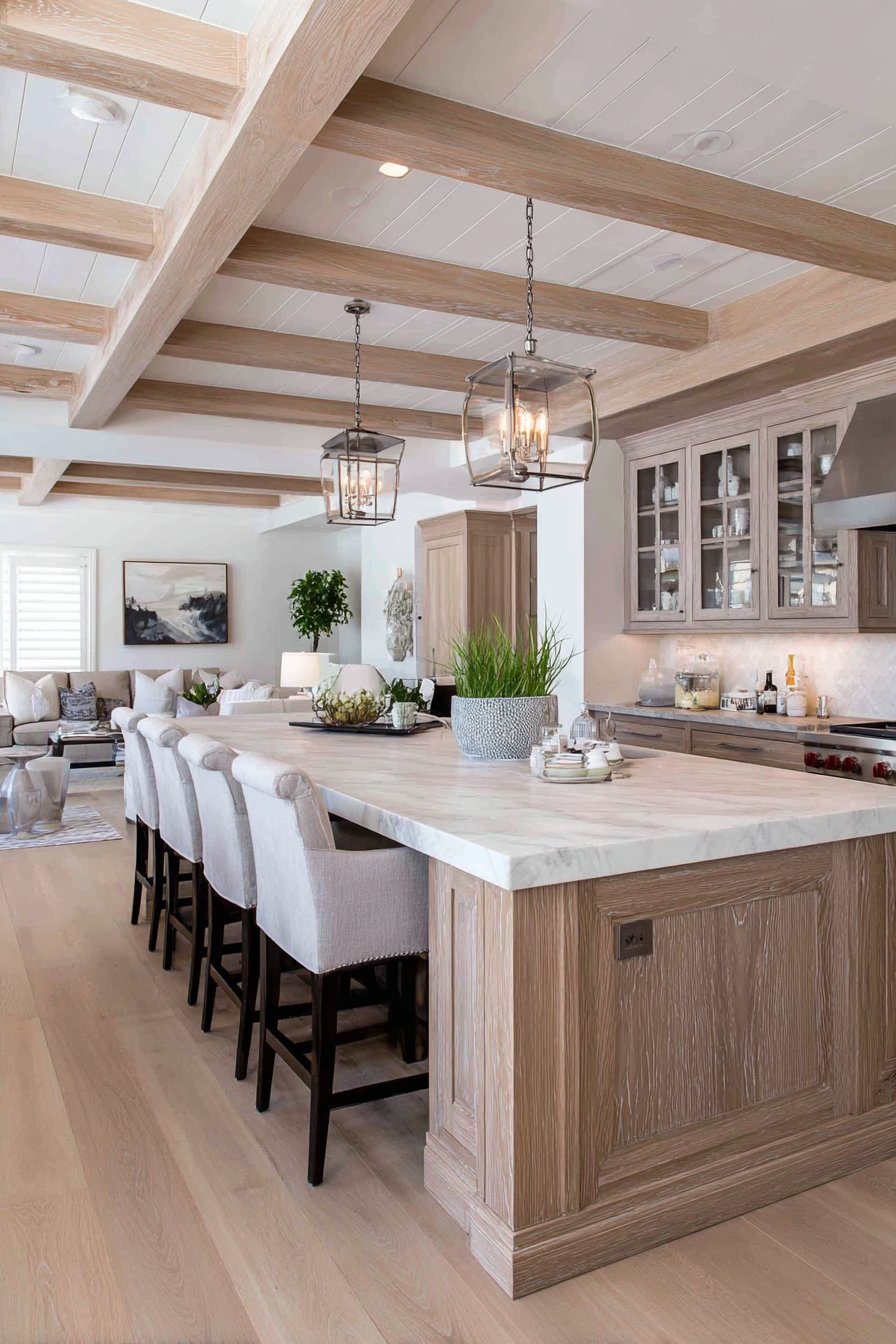
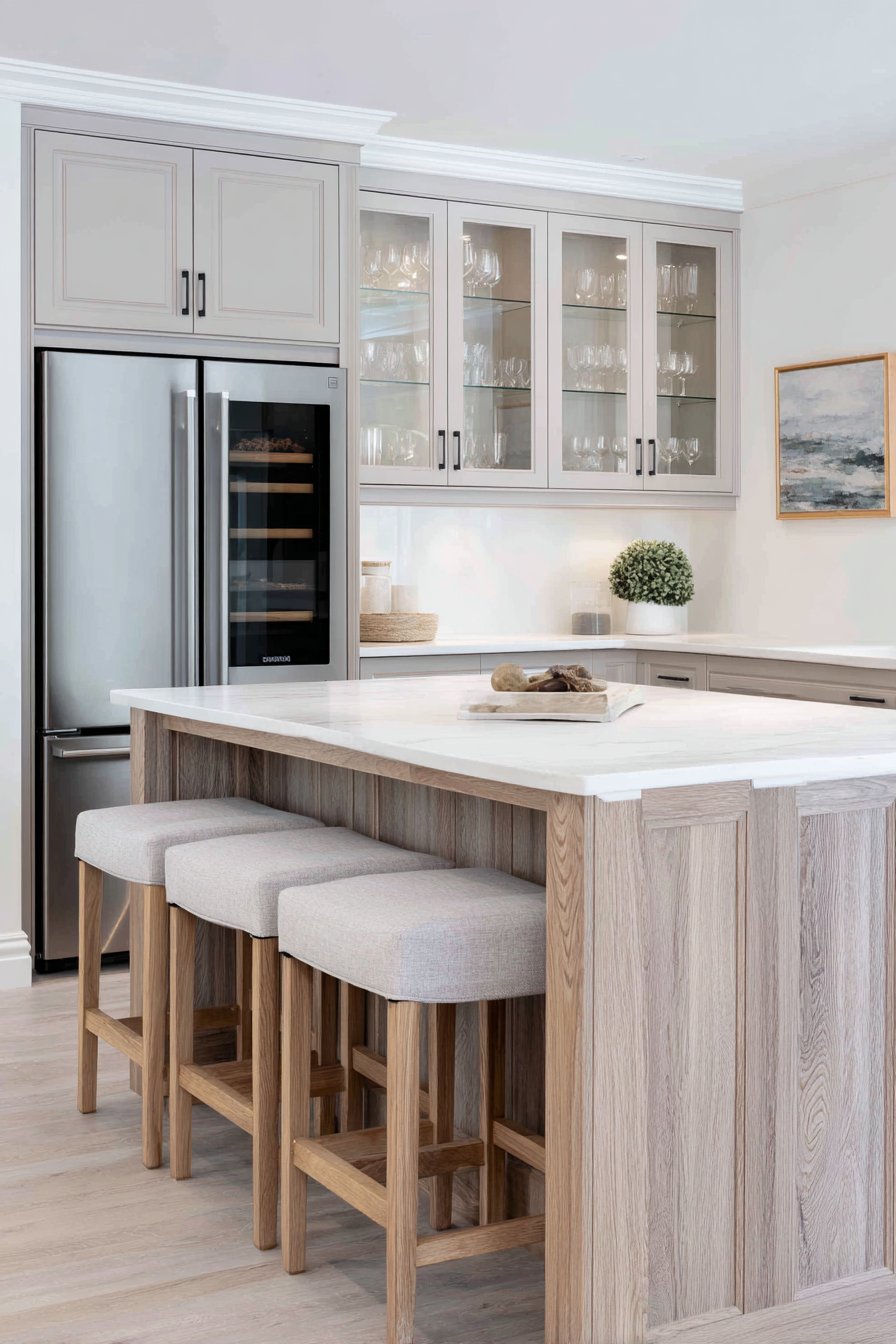
A generous island with grey-washed oak base cabinets anchors this family-focused design. White quartz countertops provide durable surfaces for homework and casual dining. Comfortable upholstered counter stools encourage extended sitting for various activities. The island truly functions as a multi-purpose family hub throughout daily life.
Soft grey perimeter cabinets connect visually with the open living room’s neutral palette. Glass-front upper cabinets display glassware while maintaining visual lightness. Panel-ready appliances maintain clean sightlines into adjacent spaces without visual interruption. The cohesive material selections create harmony throughout the connected zones.
Golden hour lighting captures the thoughtful open layout supporting family life beautifully. Designated zones for cooking, eating, and gathering encourage interaction naturally. Strategic furniture placement ensures parents can supervise children from the kitchen. The design prioritizes practical family needs without sacrificing aesthetic appeal.
This transitional style bridges traditional and contemporary elements successfully. The grey-washed oak adds organic texture while feeling current. The white quartz provides worry-free surfaces for active family living.
Key Design Tips:
- Design islands as multi-functional spaces for homework, dining, and food prep
- Select upholstered counter stools for comfort during extended family activities
- Choose panel-ready appliances to maintain cohesive aesthetics throughout open spaces
- Install glass-front upper cabinets to balance storage needs with visual openness
- Use grey-washed oak finishes for contemporary appeal with natural warmth
- Create clear sightlines from kitchen to living areas for child supervision
8. Industrial Loft with Exposed Brick
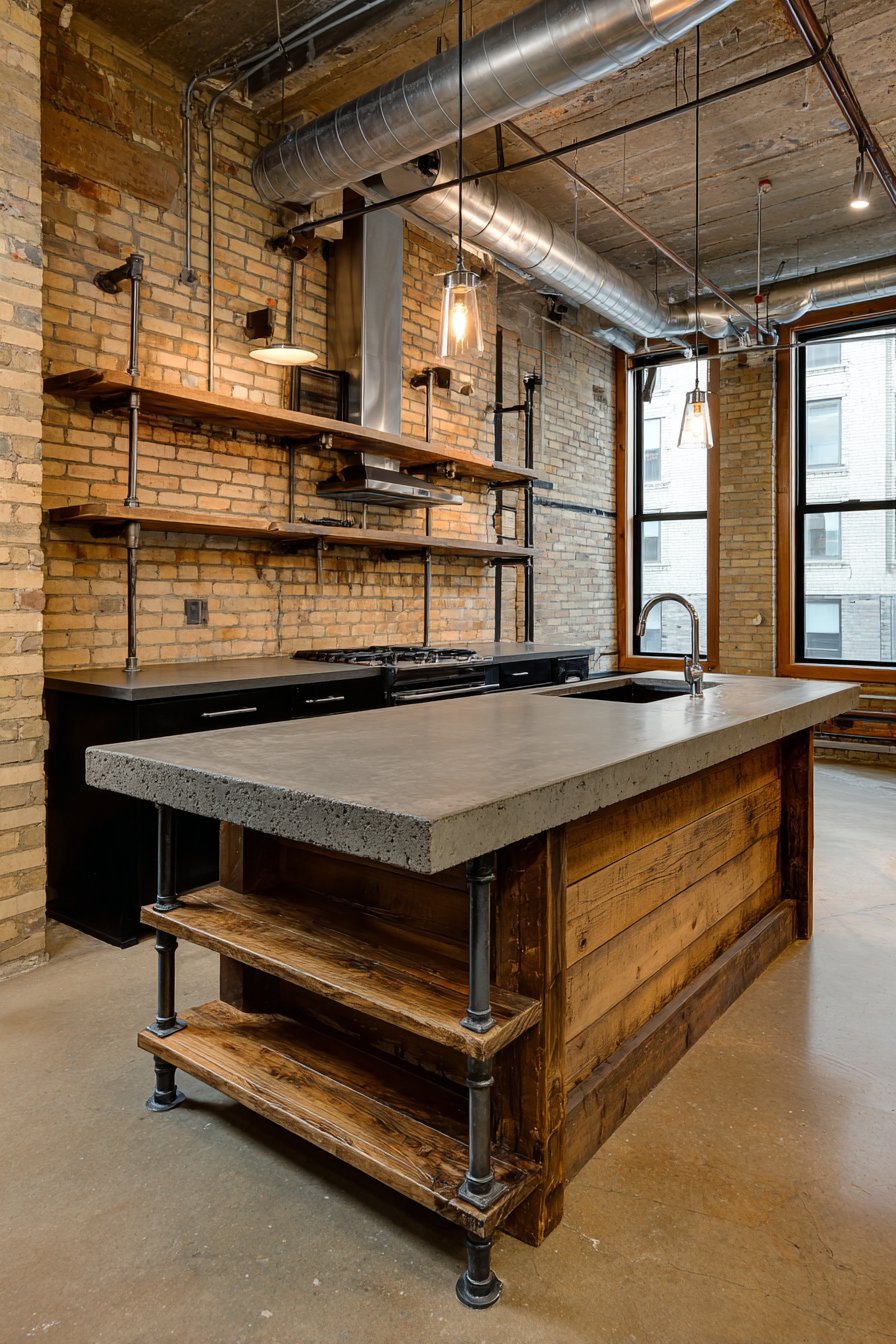
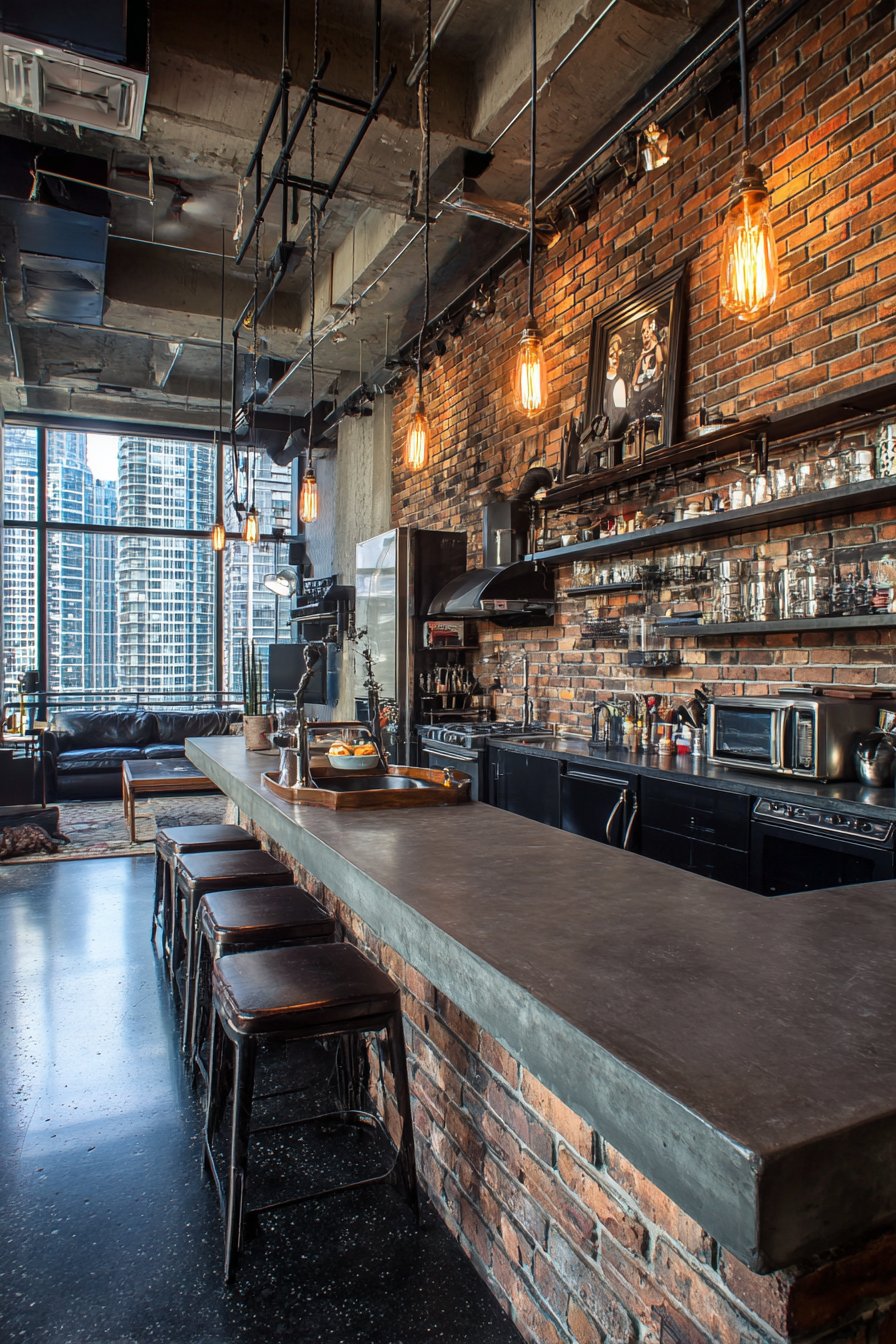
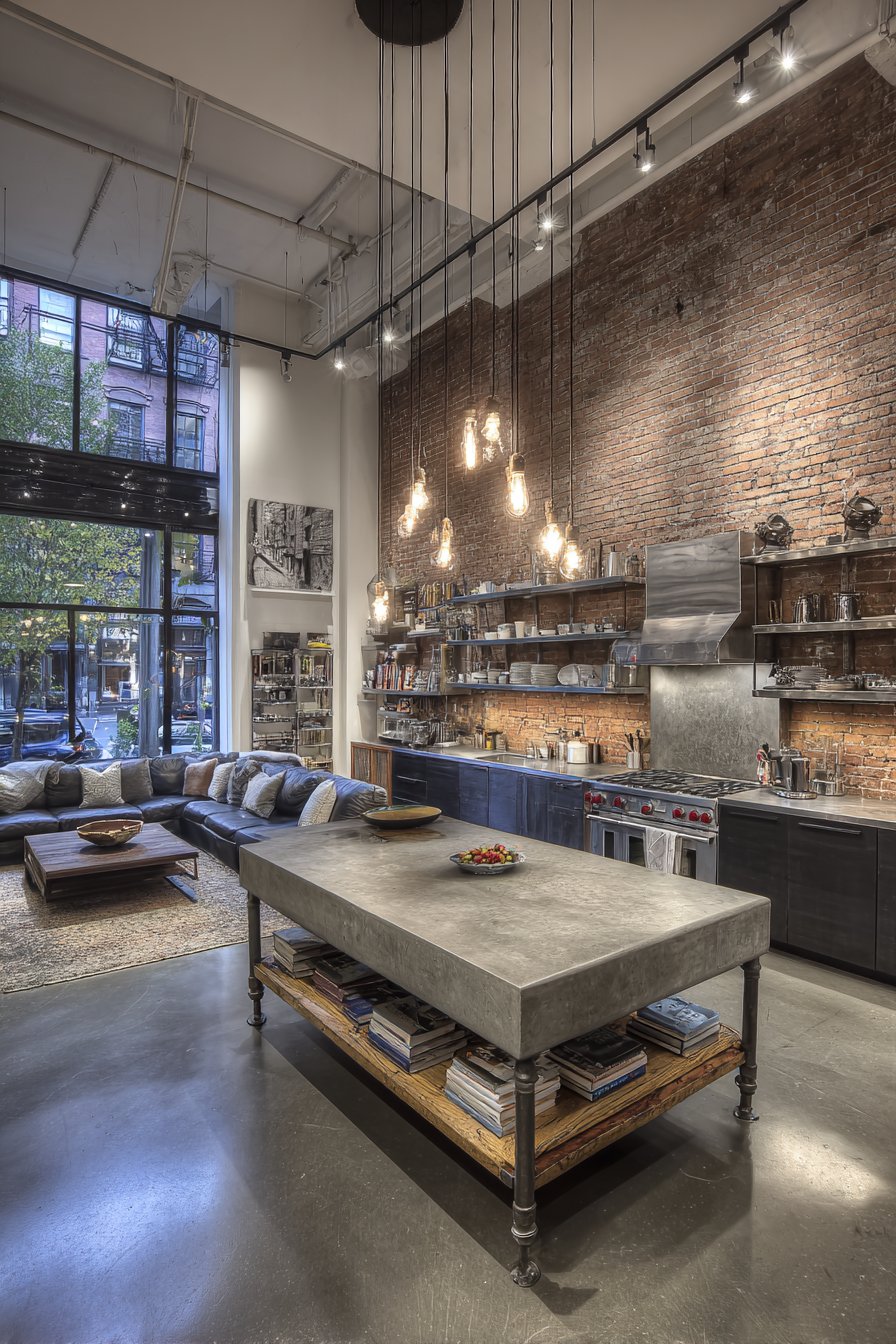
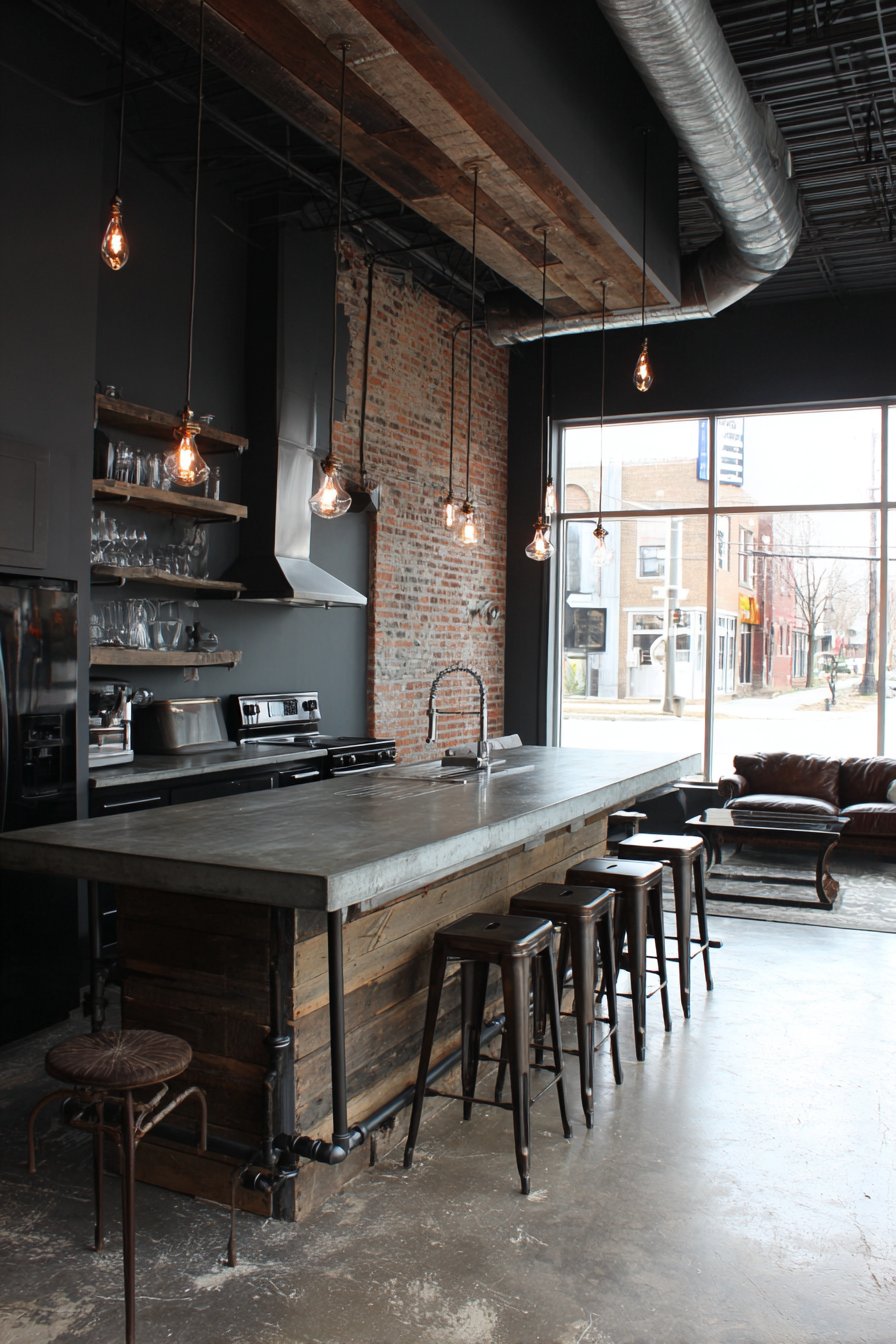
Exposed brick accent walls and open metal shelving create authentic urban loft character. A concrete countertop island with reclaimed wood base makes a striking industrial statement. Metal pipe supports add structural transparency and raw aesthetic appeal. The island remains visible from the connected loft-style living area continuously.
Matte black appliances and fixtures complement the urban aesthetic throughout. Edison bulb pendants on exposed cord hang above the island dramatically. The vintage-style lighting adds warmth to the industrial materials. Raw materials and open shelving maintain visual connection between zones effectively.
Tall windows provide natural light that highlights material textures beautifully. The industrial elements create cohesion throughout the open space naturally. The exposed brick brings history and character that new construction cannot replicate. This authentic urban style appeals to those seeking edgy, non-traditional aesthetics.
The open metal shelving displays kitchen essentials as functional art. The concrete and reclaimed wood combination creates tactile interest. The industrial approach proves that open kitchens can embrace bold, distinctive character.
Key Design Tips:
- Expose original brick walls to add authentic texture and historical character
- Combine concrete countertops with reclaimed wood for industrial contrast
- Install open metal shelving to display kitchen items as functional decoration
- Choose matte black appliances and fixtures for cohesive industrial aesthetics
- Use Edison bulb pendants on exposed cord for vintage industrial lighting
- Incorporate metal pipe supports to add structural transparency
9. Compact Smart Storage with Banquette Seating
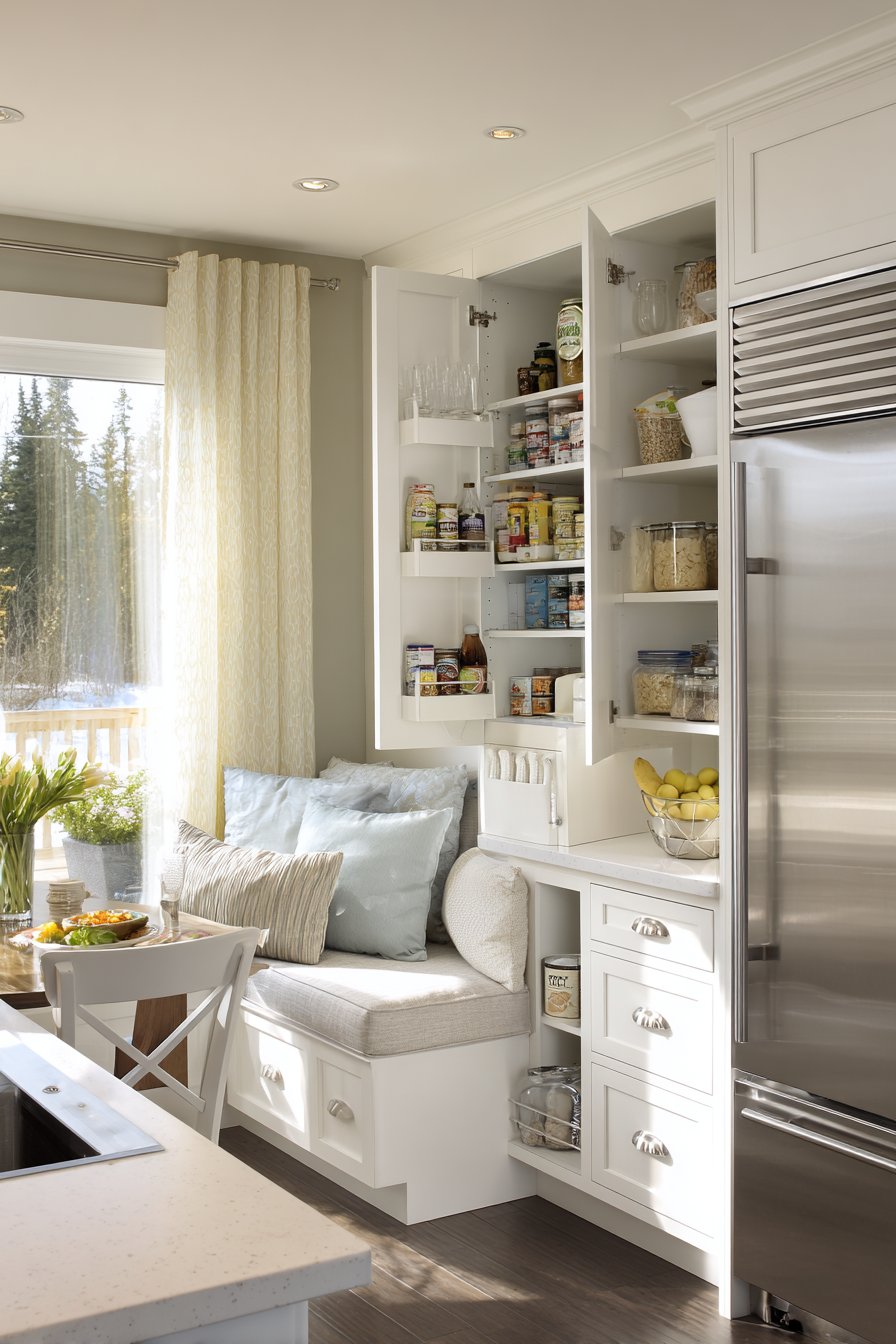
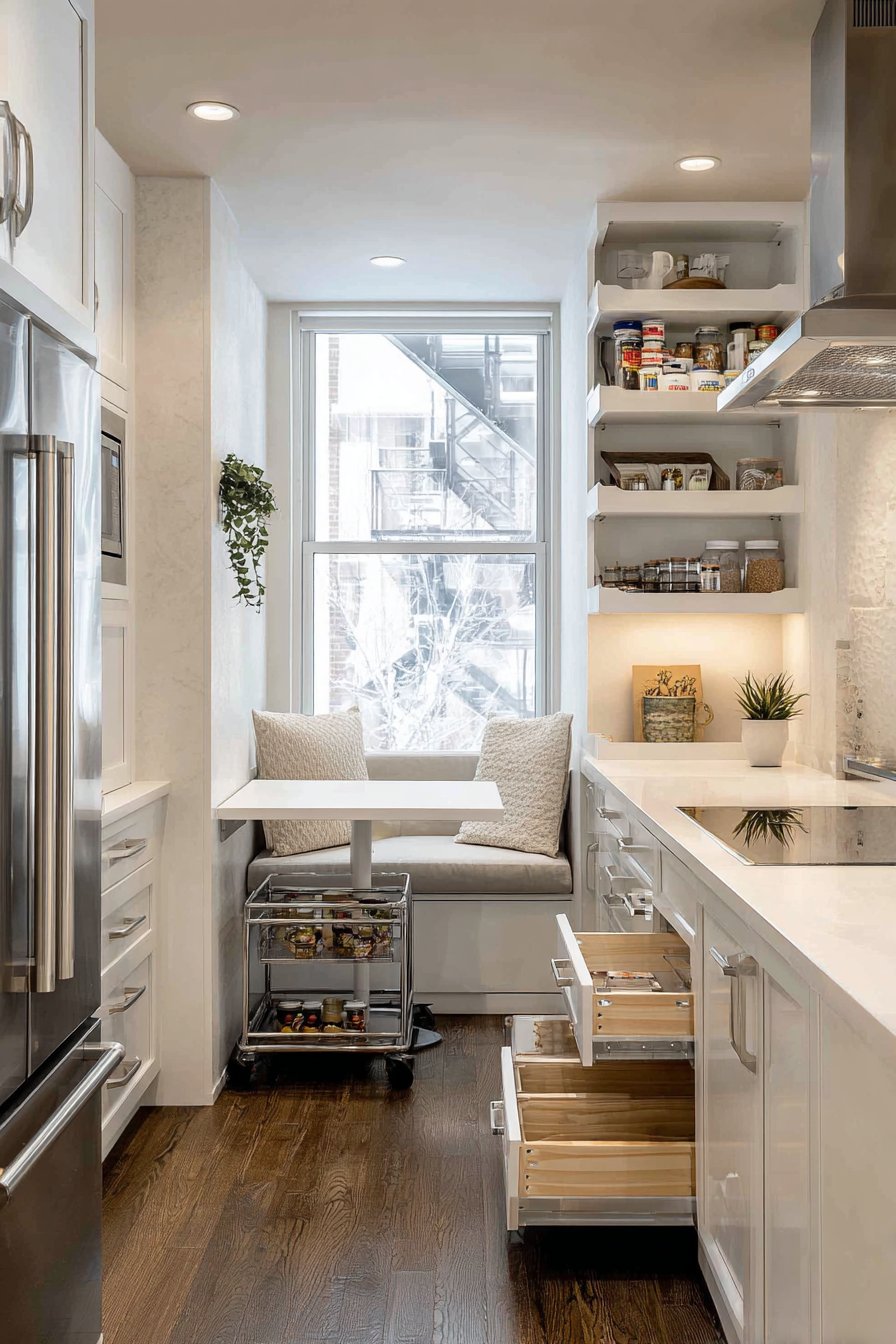
Smart storage solutions maximize efficiency in this compact open kitchen design. Pull-out pantry units, deep drawers with organizational inserts, and a narrow rolling cart optimize every inch. The rolling cart tucks beside the refrigerator when not needed. This clever approach prevents the small footprint from limiting functionality.
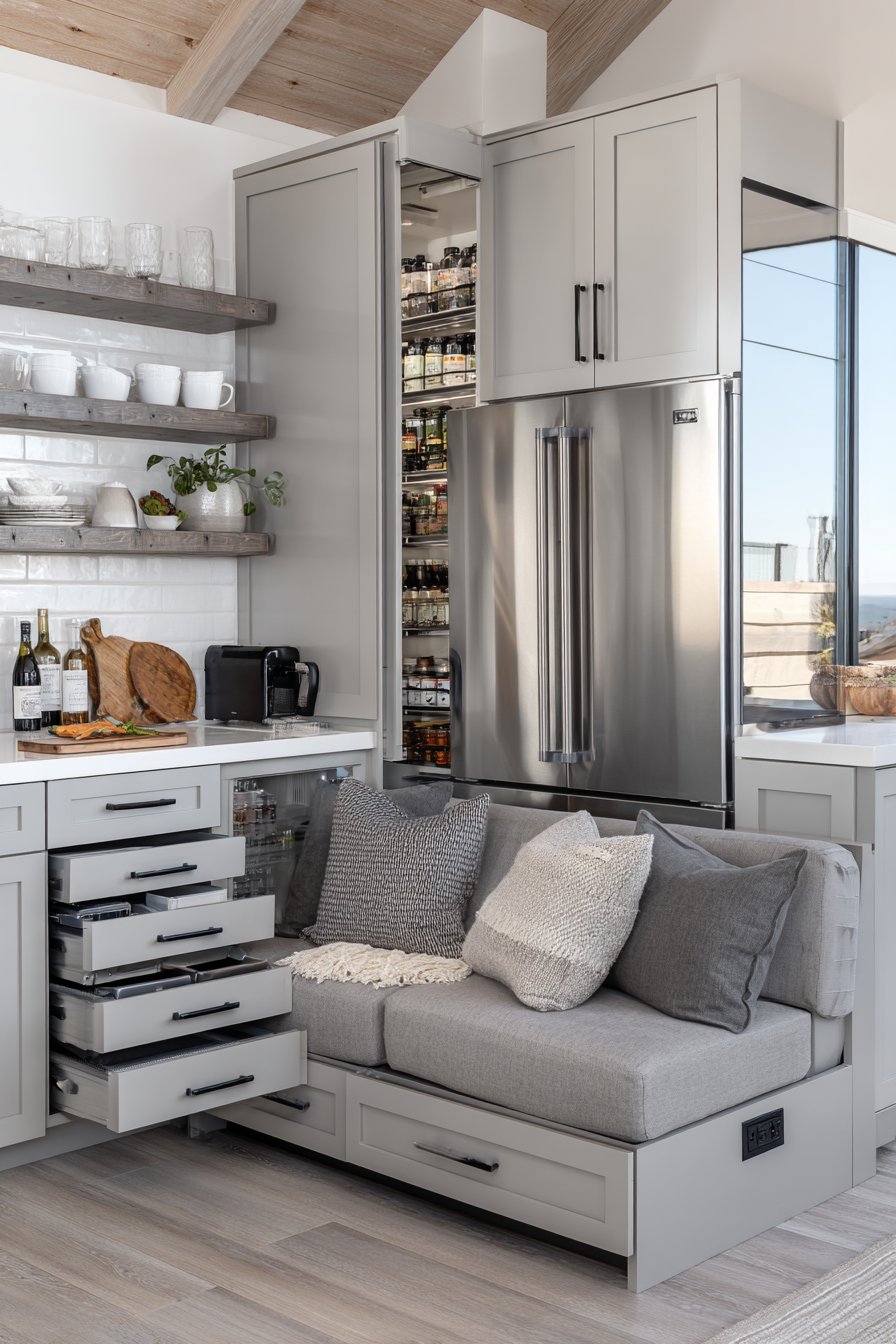
The kitchen opens into a dining nook with built-in banquette seating. This configuration creates functional eat-in space without requiring a separate dining room. Light grey cabinetry with white countertops keeps the compact space feeling bright and open. A window over the sink provides natural light and visual connection between zones.
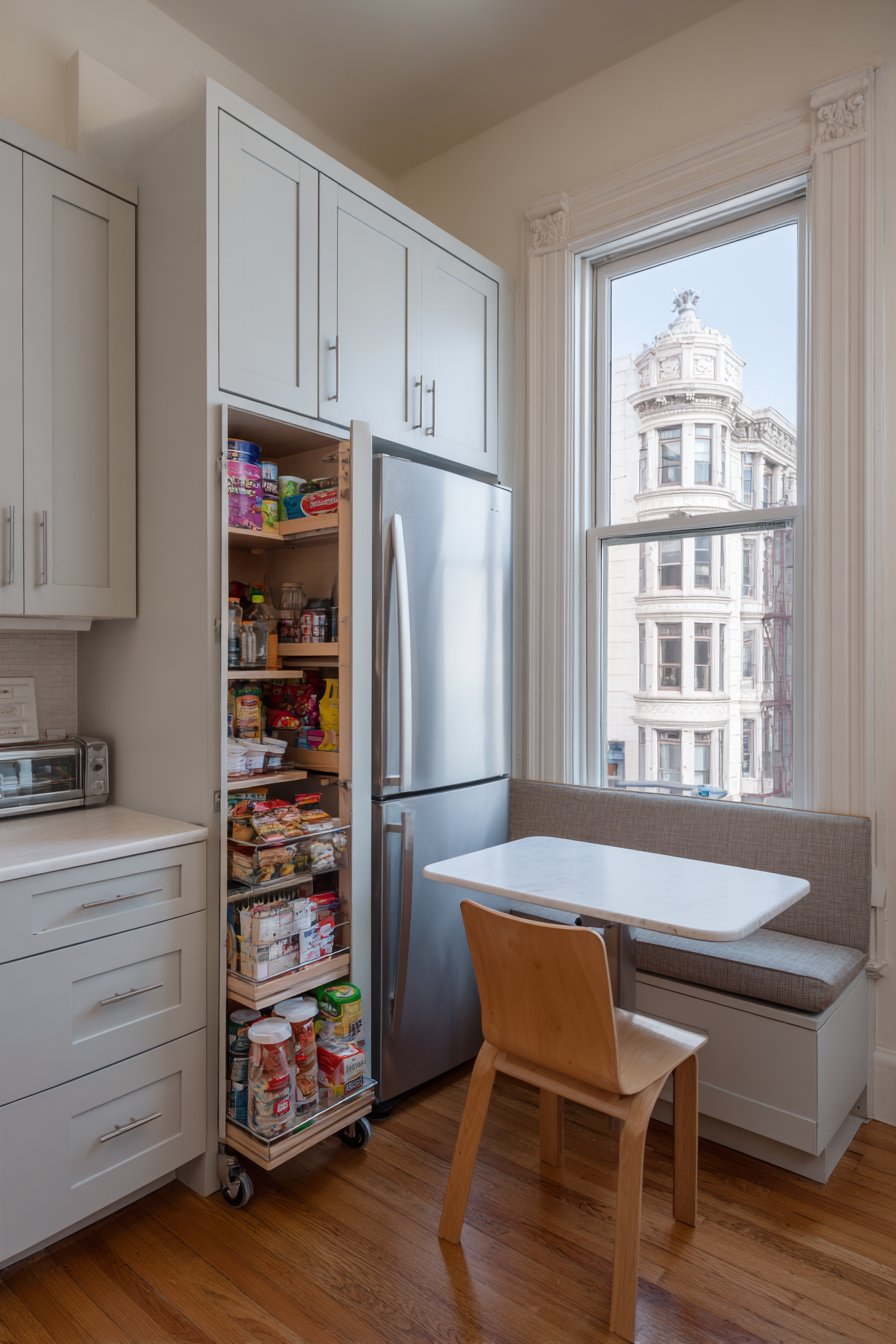
Clever design and open sightlines make the small footprint feel surprisingly spacious. Balanced lighting showcases the practical storage innovations throughout. The efficient layout proves that limited square footage need not compromise open concept benefits. Built-in seating eliminates the need for bulky dining chairs.
This design demonstrates that open kitchens work beautifully in smaller homes. The banquette seating provides charm while saving precious floor space. The light color palette maximizes the perception of spaciousness.
Key Design Tips:
- Install pull-out pantry units to maximize vertical storage in narrow spaces
- Add deep drawers with organizational inserts for efficient storage solutions
- Choose banquette seating to save space while adding built-in charm
- Select light grey and white palettes to enhance spaciousness in compact areas
- Position windows above sinks for natural light and visual connection
- Incorporate rolling carts that tuck away when not actively needed
10. Dramatic Two-Level Island with Quartzite
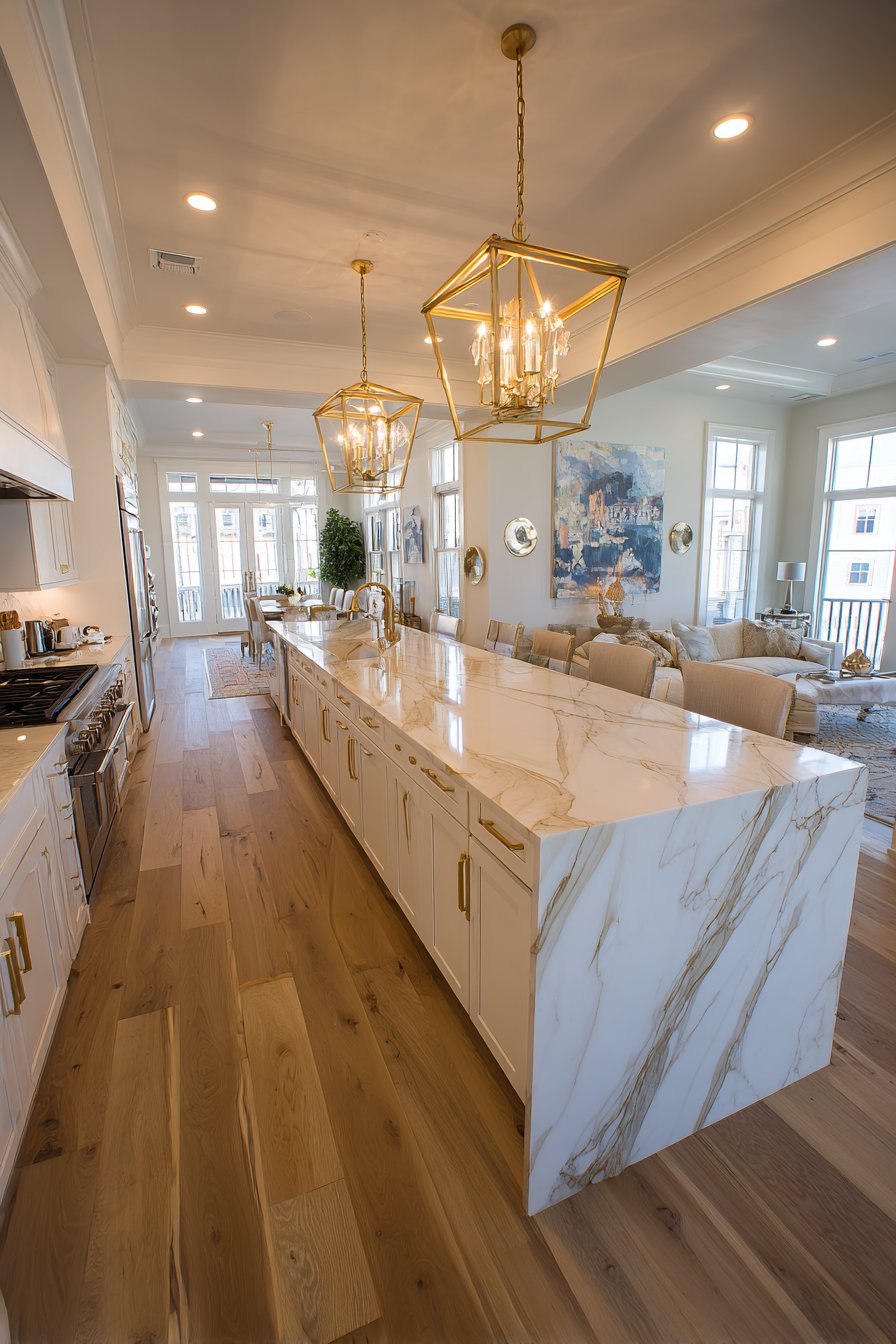
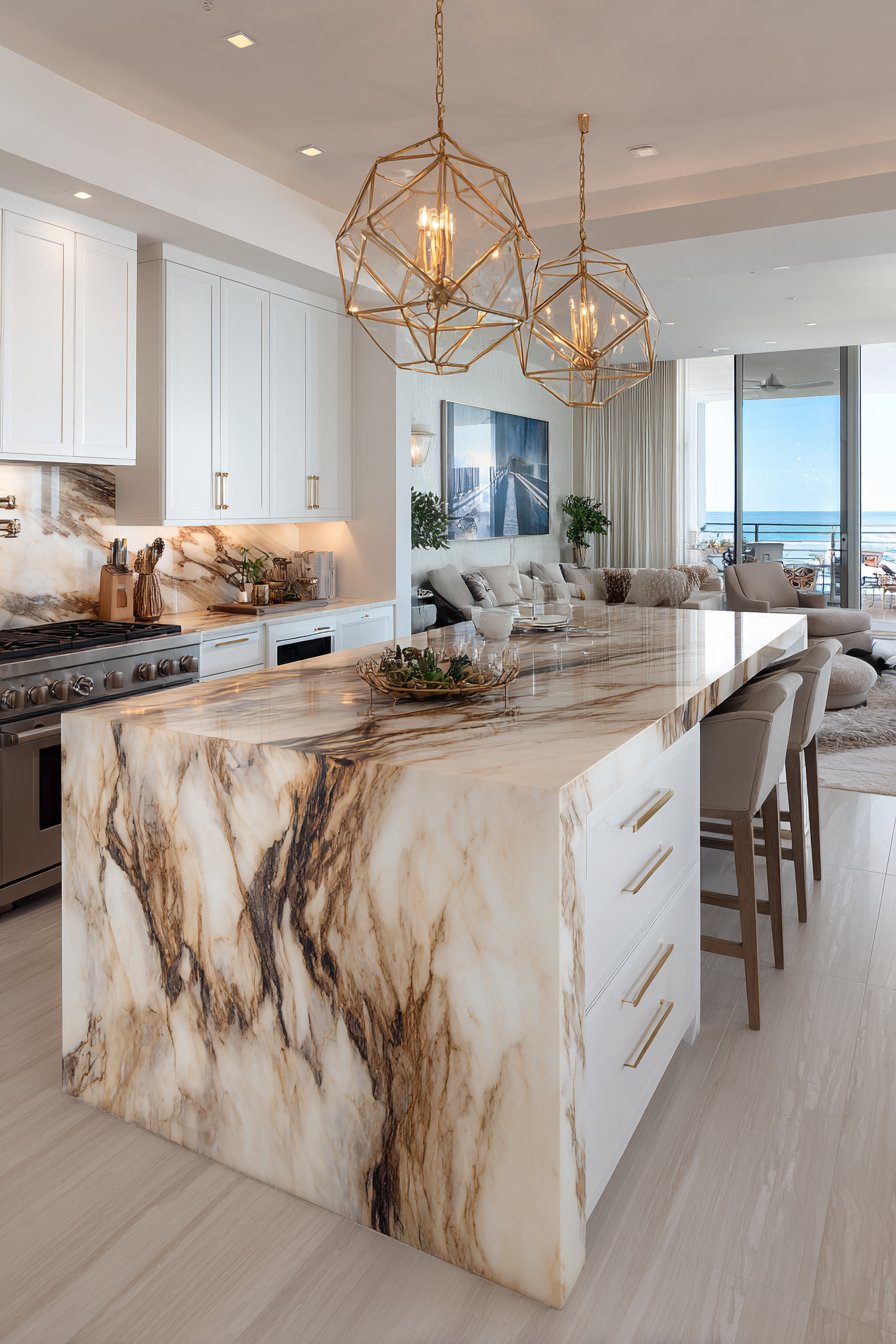
A dramatic two-level island features raised bar seating on one side and lower prep surface on the other. The waterfall edge showcases book-matched quartzite with distinctive natural veining. This stone selection creates a true showpiece visible from all angles. White perimeter cabinets with gold hardware surround professional-grade appliances elegantly.
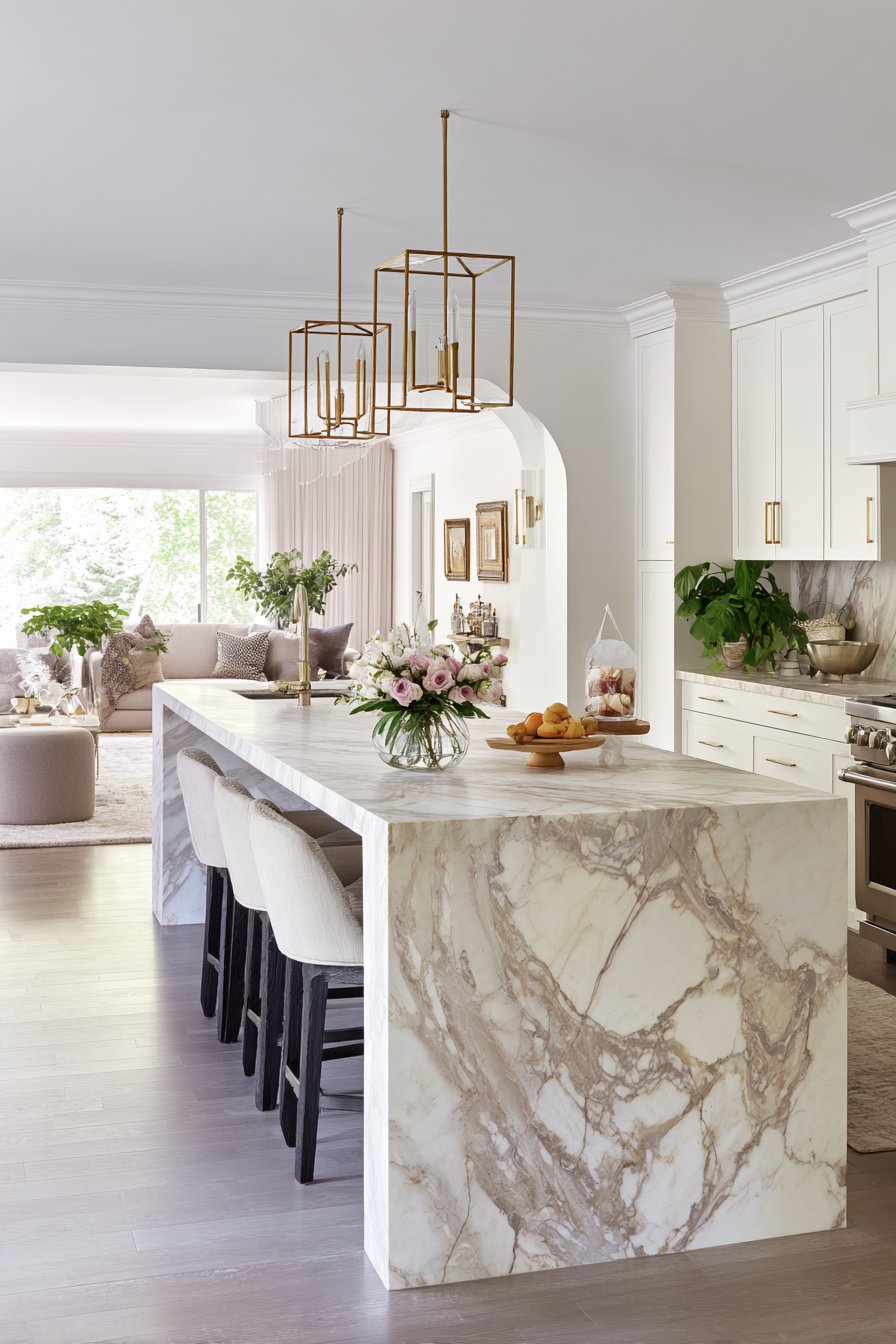
Large-format floor tiles transition to hardwood in the living zone smoothly. Architectural pendants with geometric brass frames illuminate the island dramatically. The multi-functional island serves as both essential workspace and subtle room divider. The two-level design maintains connected, flowing quality while defining boundaries.
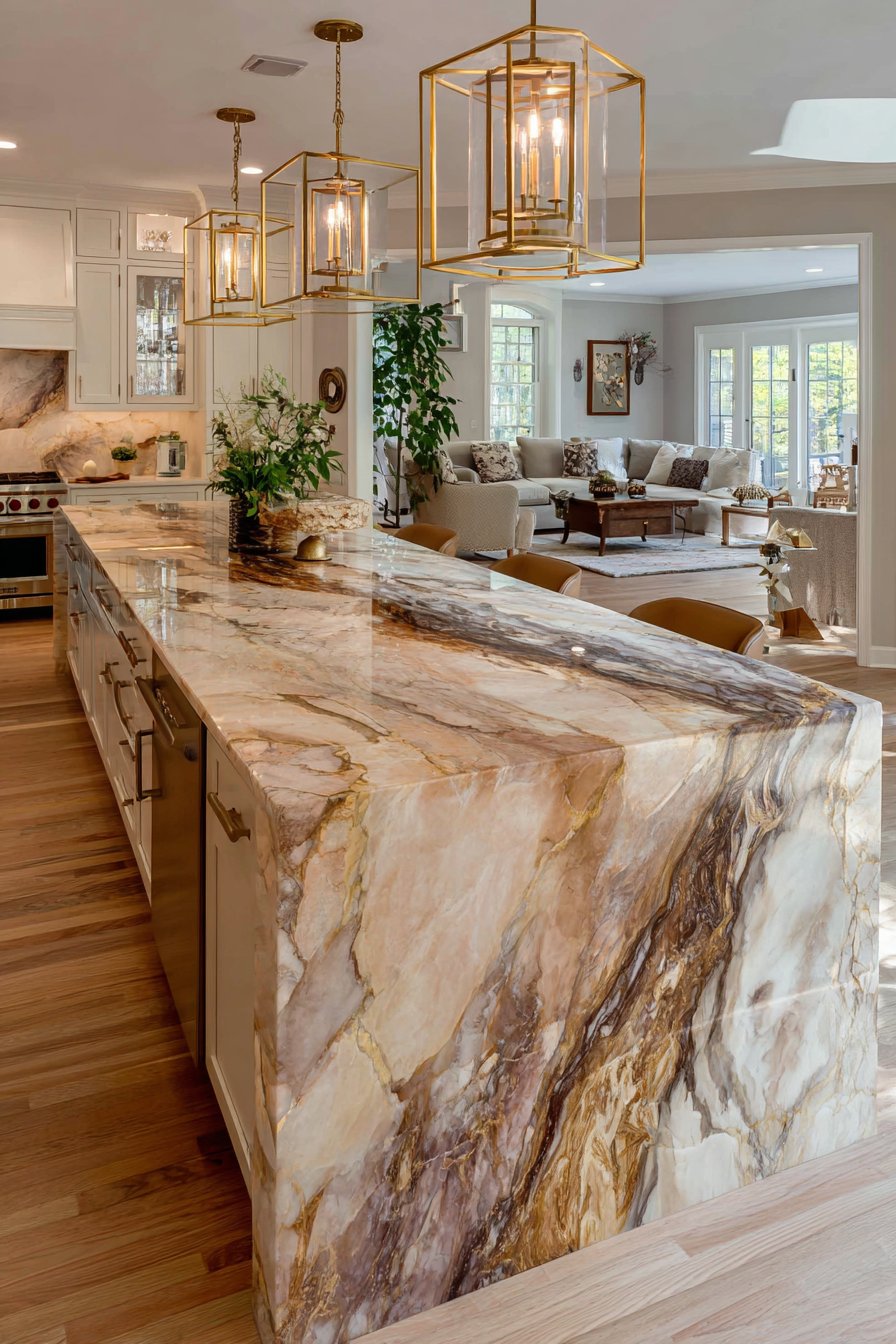
The book-matched quartzite becomes the design’s focal point through its dramatic natural patterns. Professional-grade appliances indicate serious cooking capabilities. The gold hardware and brass pendants add warmth and luxury throughout. The design balances high-end materials with practical open concept principles.
This approach suits those who appreciate statement materials and dramatic design elements. The two-level island provides practical advantages for different activities. The quartzite investment creates lasting beauty and value.
Key Design Tips:
- Design two-level islands to separate prep work from casual dining visually
- Select book-matched quartzite for dramatic natural patterns and luxury appeal
- Install waterfall edges on islands visible from multiple sides for finished appearance
- Choose geometric brass pendant lights for contemporary sculptural interest
- Use gold hardware throughout to add warmth to white cabinetry
- Transition flooring materials to subtly define kitchen and living zones
11. Coastal White and Blue with Natural Textures
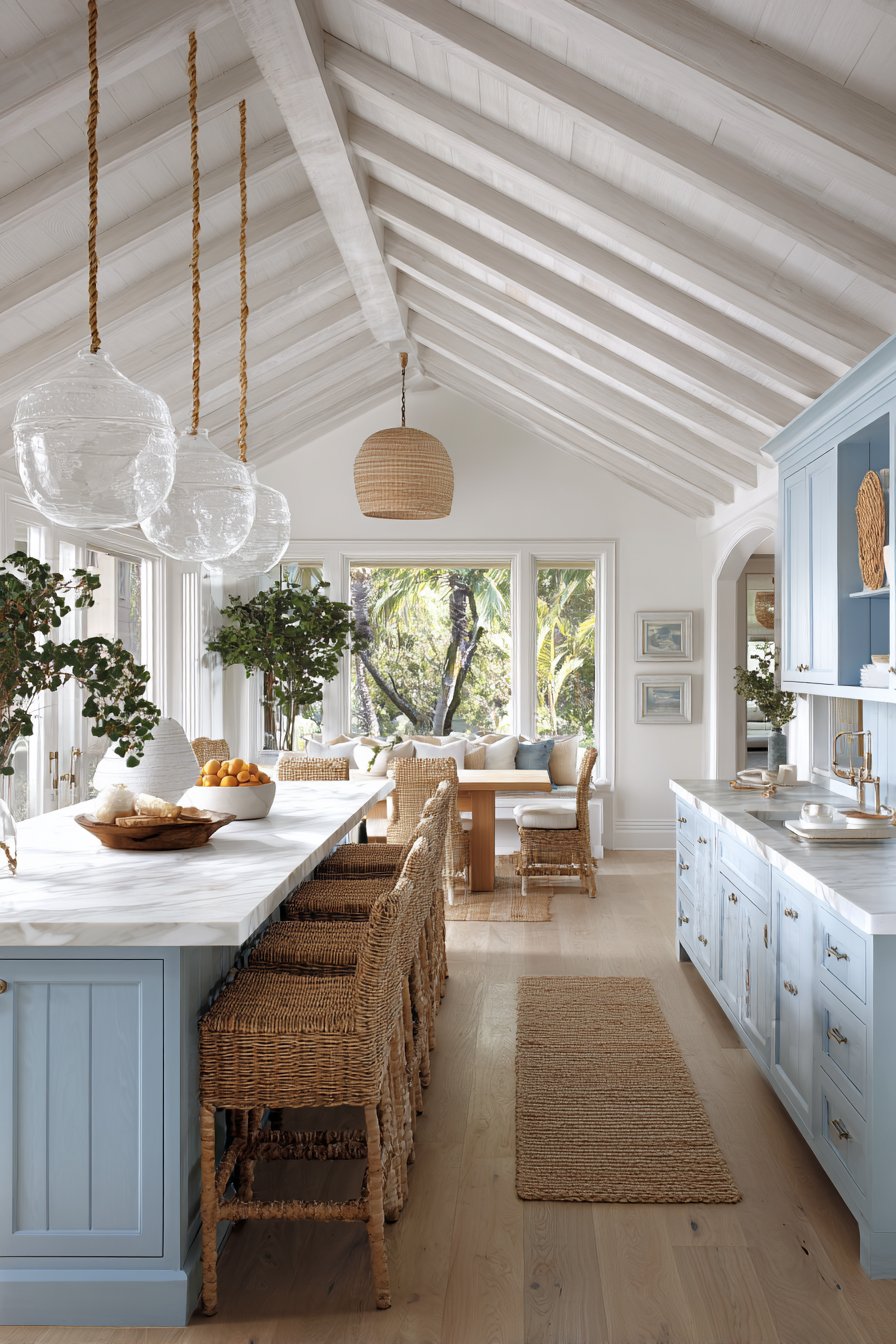
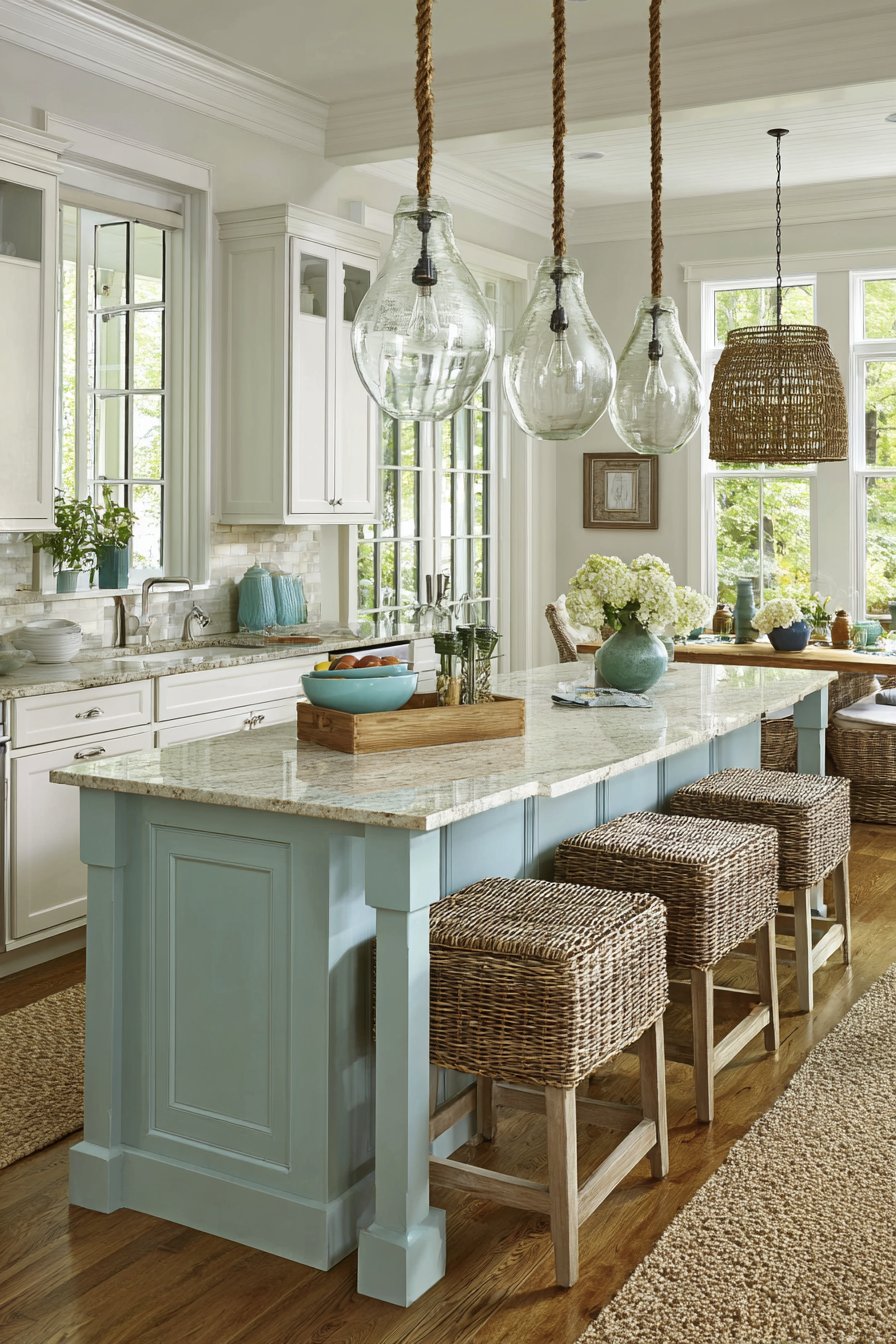
White shaker cabinets combine with marble countertops for classic coastal elegance. A light blue island serves as the color focal point visible from the adjoining family room. The soft blue introduces personality without overwhelming the space. Woven counter stools add natural texture and casual comfort at the island.
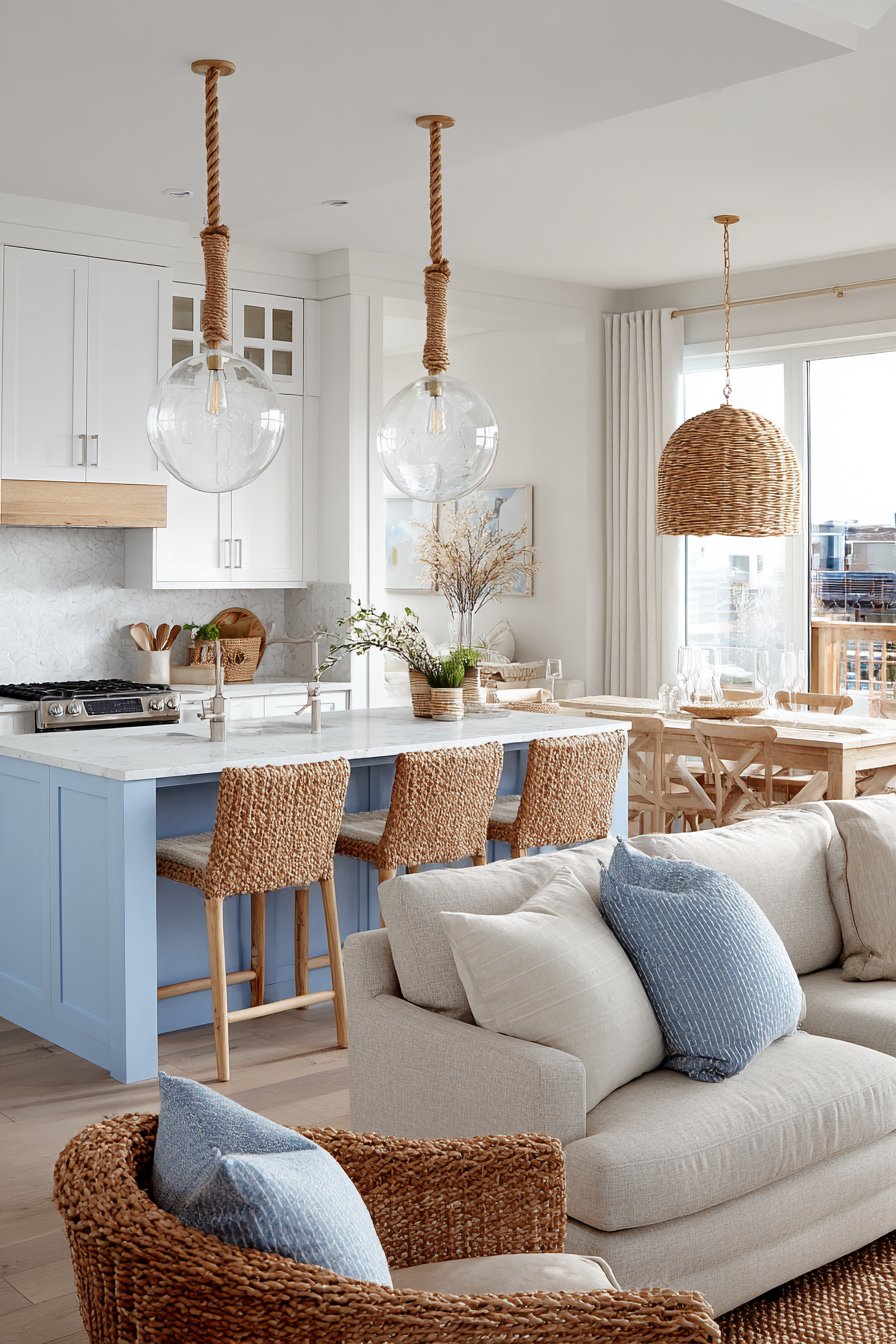
The kitchen opens to a dining space with natural fiber rug and whitewashed wood table. Glass pendant lights with rope detailing hang above the island cheerfully. Wide windows without heavy treatments allow maximum natural light throughout connected spaces. The breezy, relaxed atmosphere embodies coastal living principles perfectly.
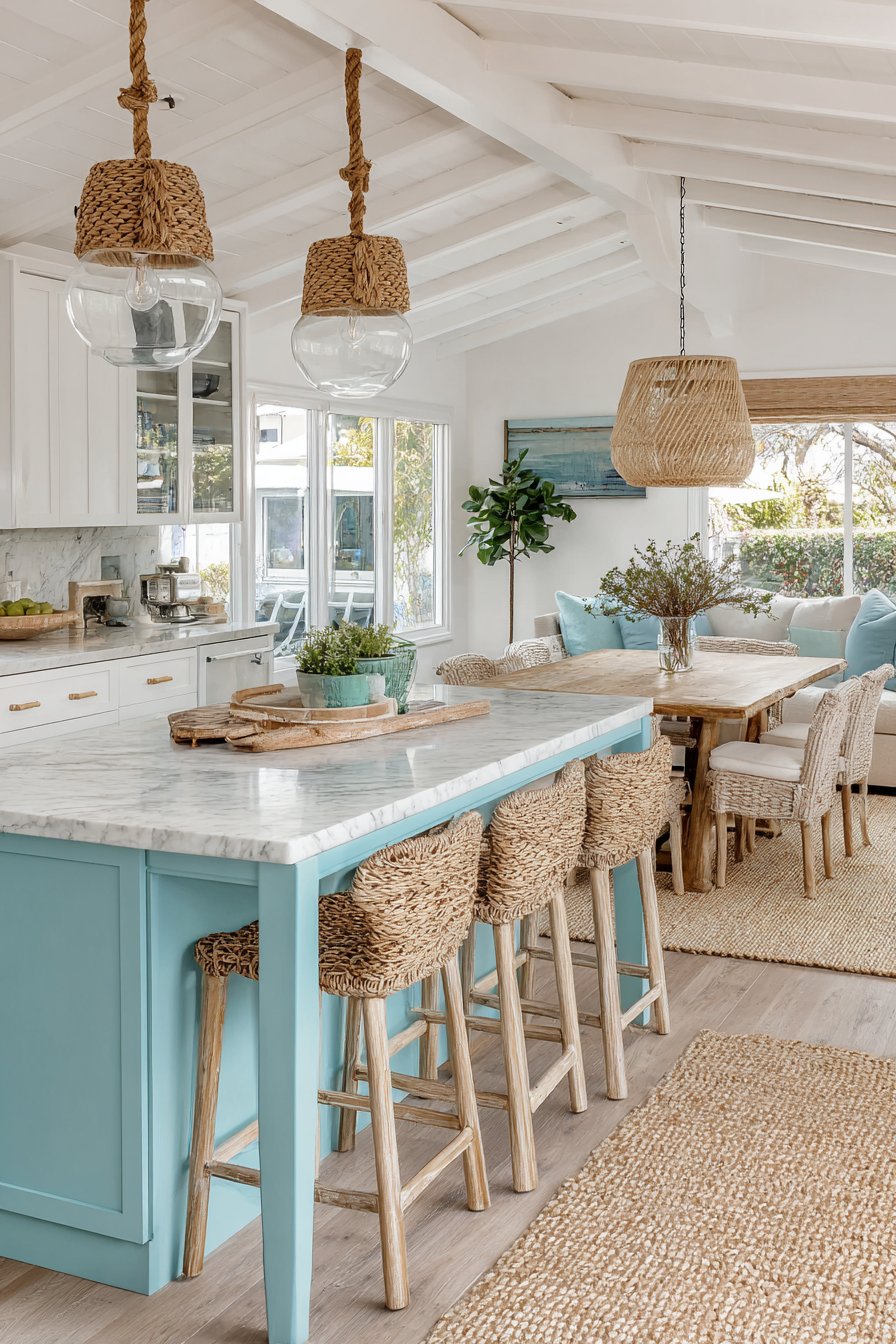
The cohesive coastal palette creates effortless flow between kitchen, dining, and living areas. Natural materials including woven textures and whitewashed wood enhance the beach-inspired aesthetic. Soft diffused lighting highlights the relaxed, inviting atmosphere throughout. The design proves that coastal style translates beautifully into open concepts.
This approach works particularly well for homes near water or those seeking vacation-like ambiance. The light blue island adds just enough color without commitment. The natural textures prevent the white-dominated space from feeling cold.
Key Design Tips:
- Paint islands in light blue for coastal focal points that add personality
- Choose woven counter stools to introduce natural texture and casual comfort
- Install glass pendant lights with rope detailing for authentic coastal character
- Select natural fiber rugs to define dining zones with appropriate texture
- Keep window treatments minimal to maximize natural light throughout
- Use whitewashed wood furniture to maintain bright, breezy coastal aesthetics
12. Scandinavian Light Ash with Mid-Century Elements
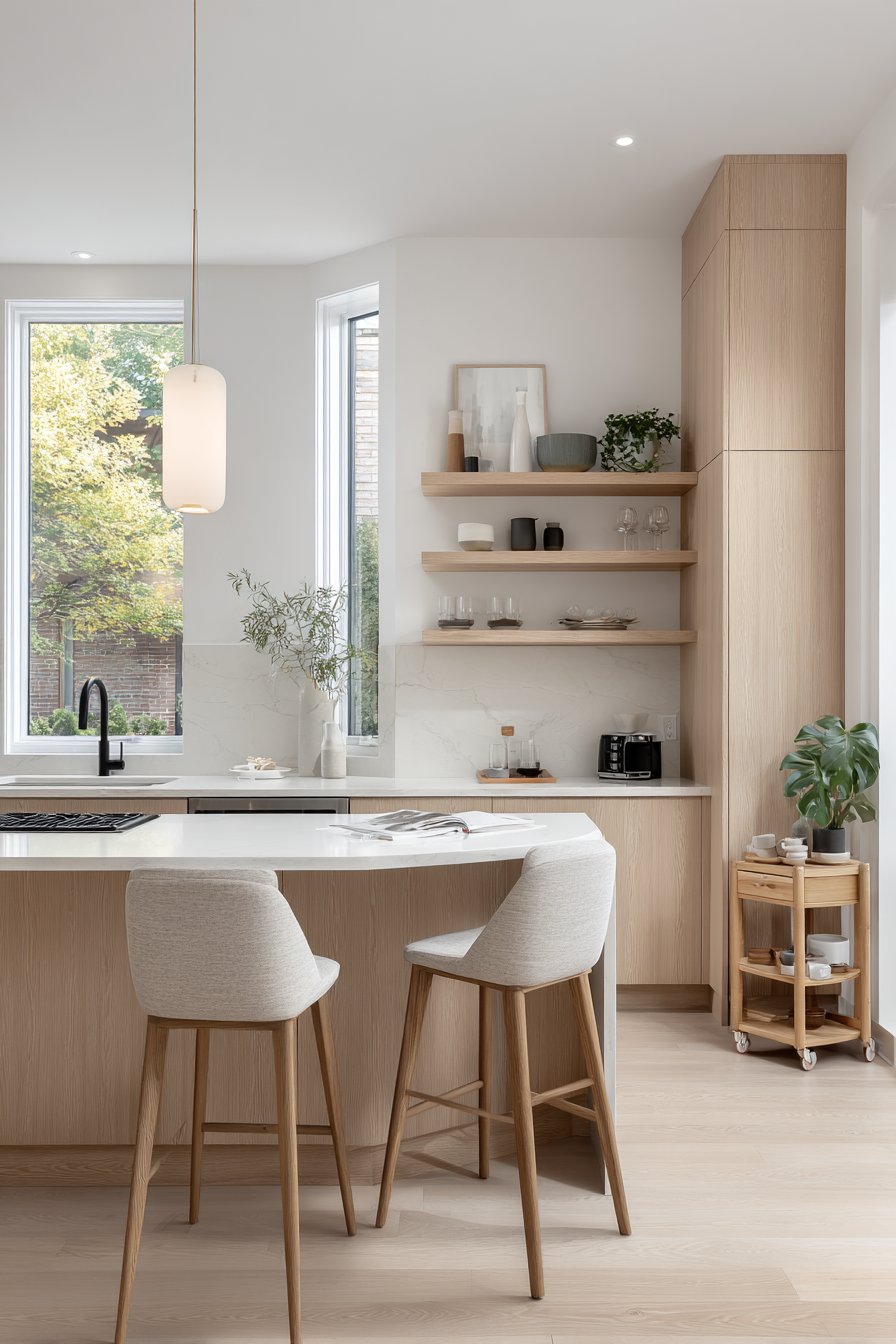
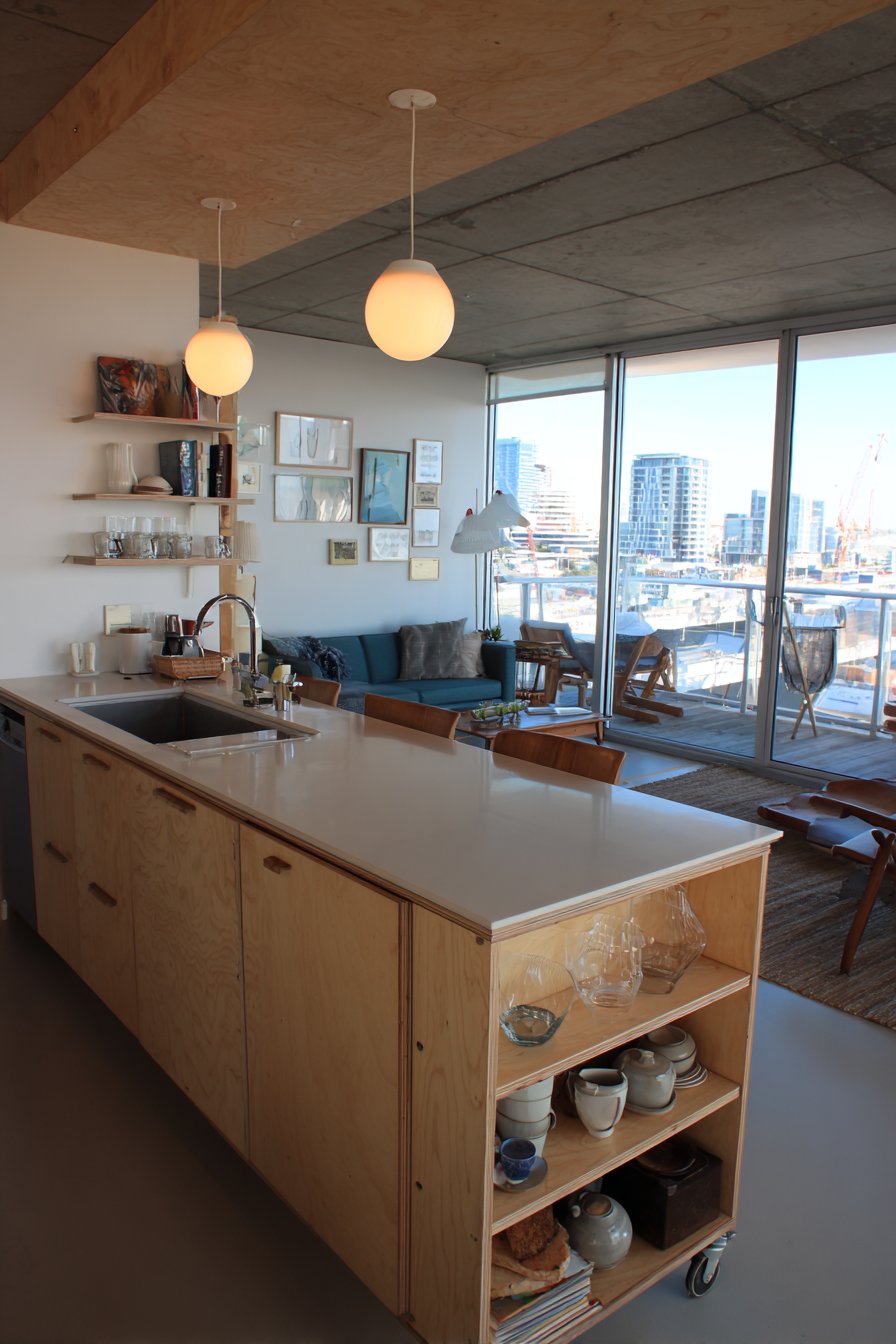
Light ash wood cabinets with minimal hardware embody Scandinavian design principles beautifully. White countertops and open shelving displaying simple ceramics maintain visual calm. The kitchen flows seamlessly into a living area furnished with mid-century modern pieces. A small mobile kitchen cart in matching wood provides additional prep space flexibly.
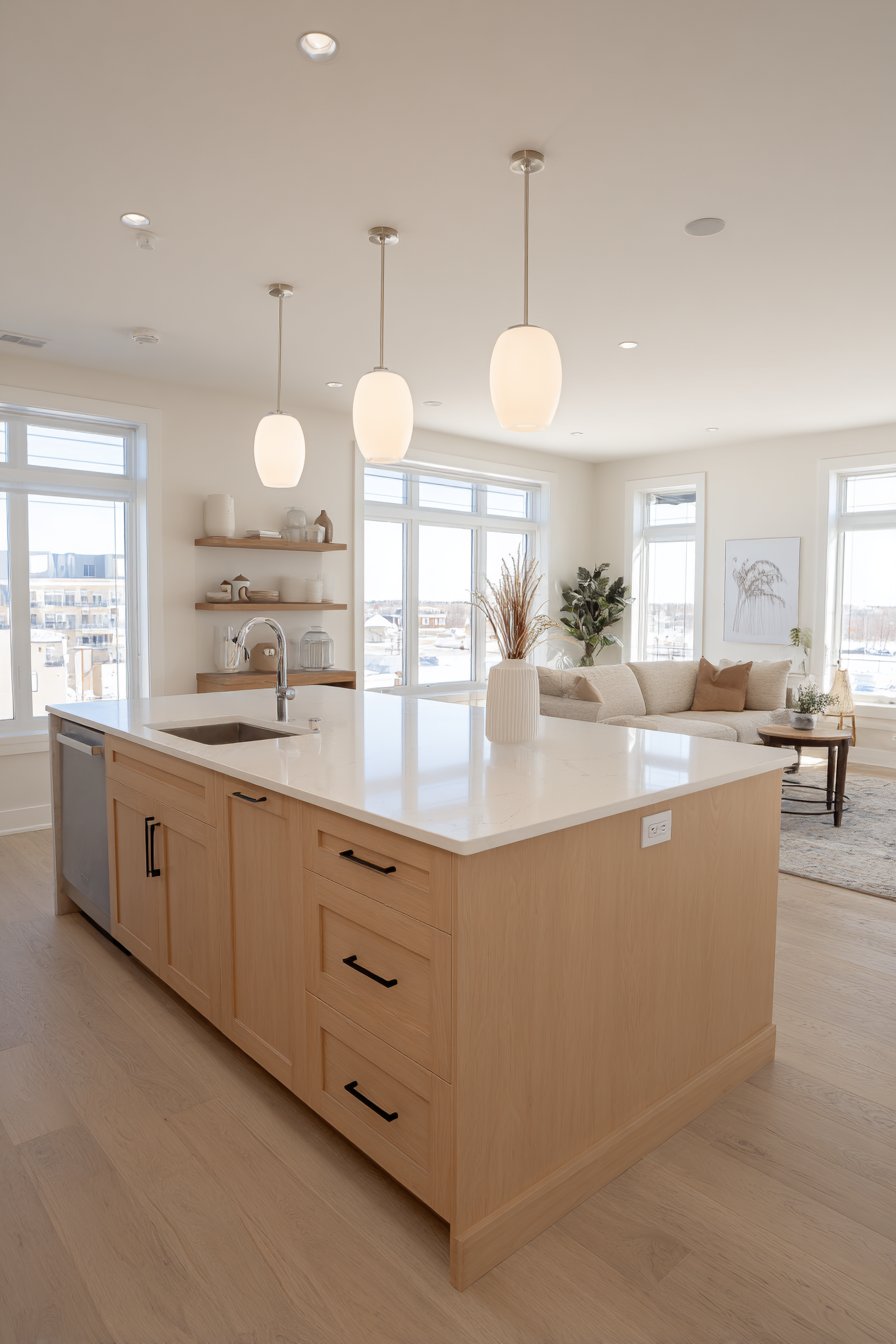
Understated pendant lights with white glass shades hang above a compact breakfast bar. Natural light from large windows illuminates both spaces generously. The clean, functional aesthetic demonstrates Scandinavian design philosophy effectively. Minimal design approach maintains openness and visual calm throughout connected spaces.
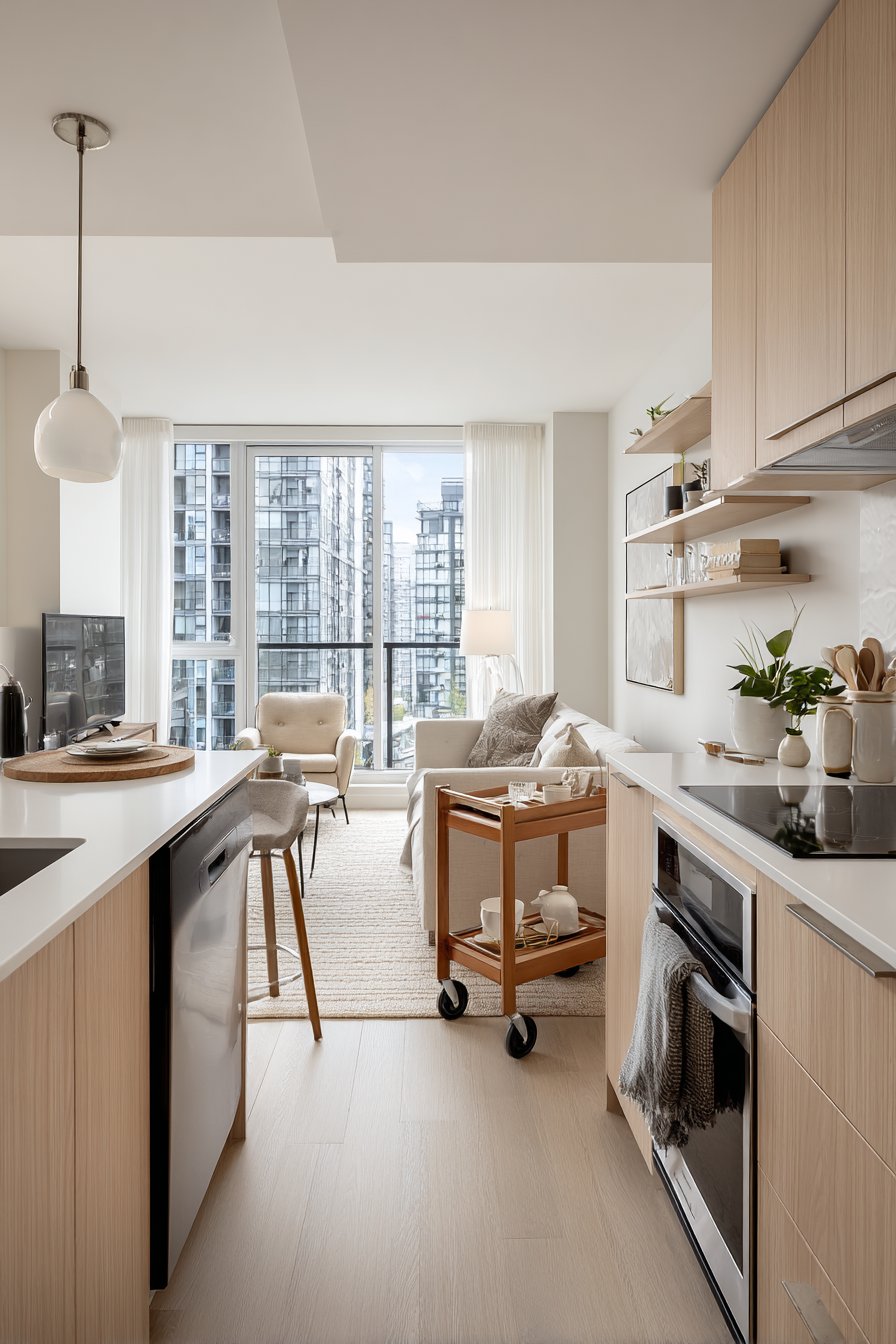
Natural wood tones and simplified forms define the Scandinavian open concept approach. The mobile cart adds functionality without permanent space commitment. The mid-century furnishings complement the Scandinavian kitchen aesthetics naturally. This design celebrates simplicity, functionality, and natural materials simultaneously.
The Scandinavian approach proves that less can genuinely be more. The light ash wood brings warmth without visual weight. The open shelving keeps essential items accessible while maintaining clean lines.
Key Design Tips:
- Choose light ash wood cabinets for authentic Scandinavian warmth and simplicity
- Install minimal hardware to maintain clean lines throughout the space
- Add mobile kitchen carts for flexible additional storage and workspace
- Display simple ceramics on open shelving for functional decoration
- Select mid-century modern furnishings to complement Scandinavian kitchen aesthetics
- Maximize natural light through large unobstructed windows
13. Luxury White with Leathered Quartzite
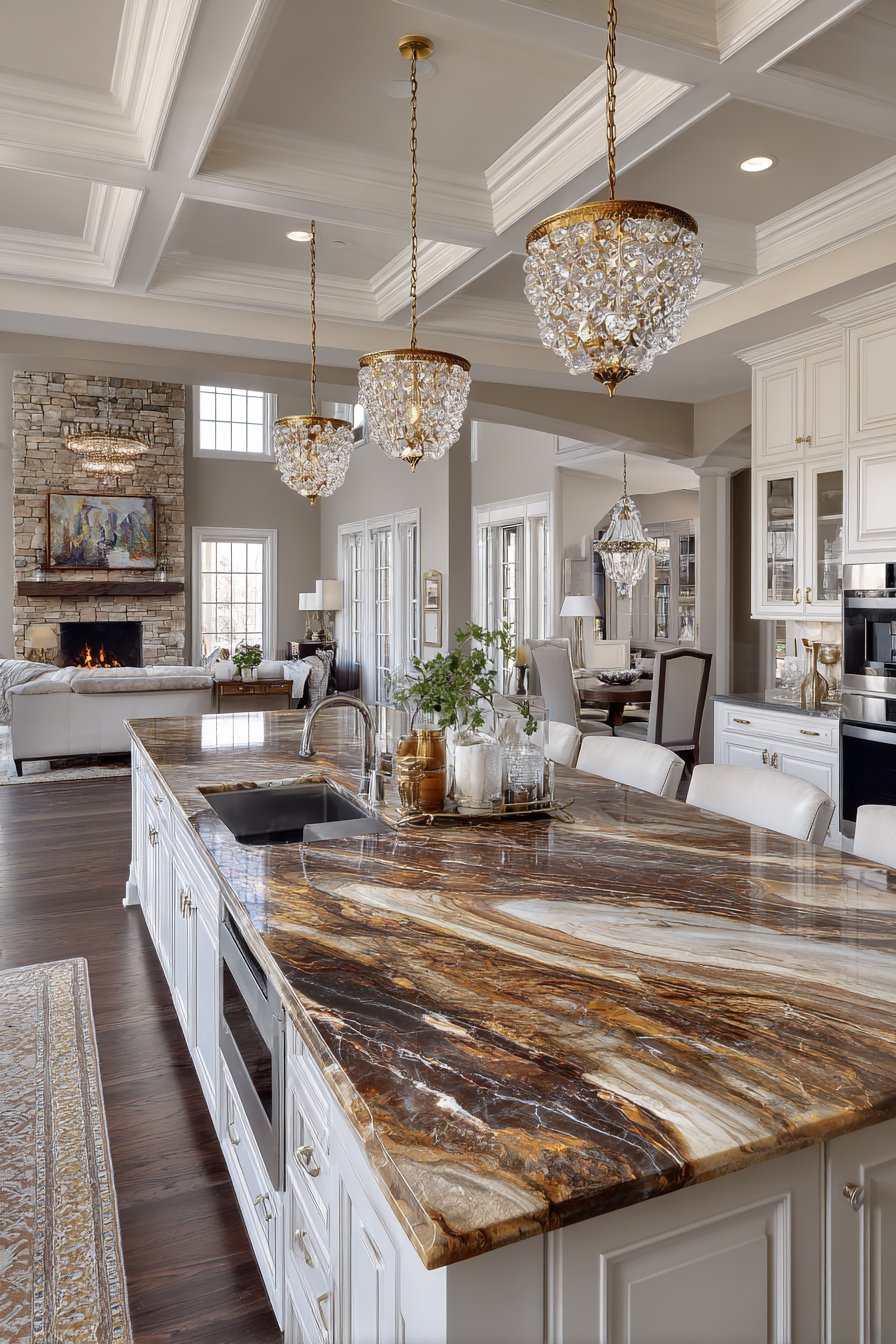
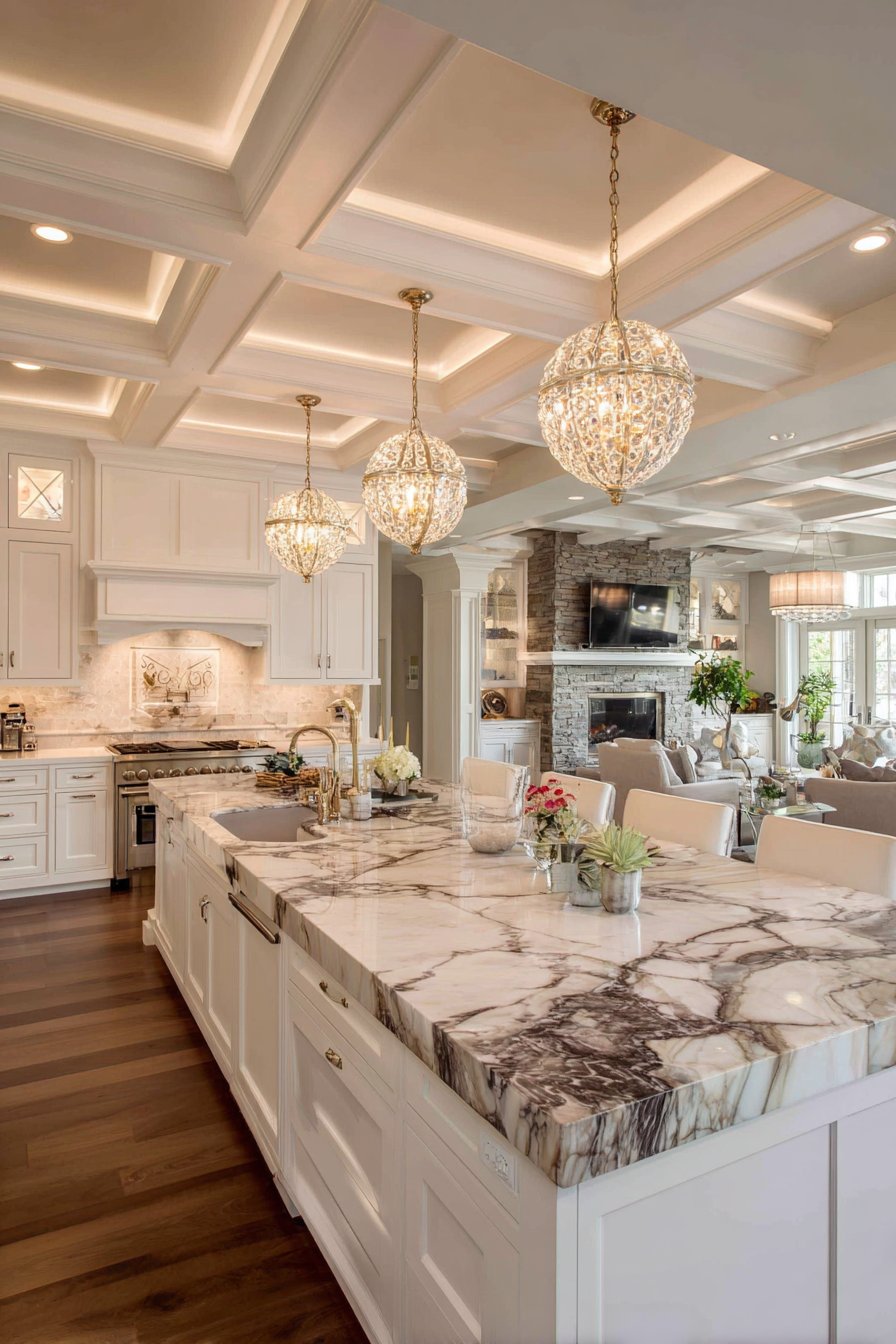
Custom white cabinetry with inset doors demonstrates high-end craftsmanship throughout. A massive center island topped with leathered quartzite in warm brown tones becomes the showpiece. The leathered finish provides sophisticated texture and enhanced durability. The island includes a second sink, microwave drawer, and seating for six people comfortably.
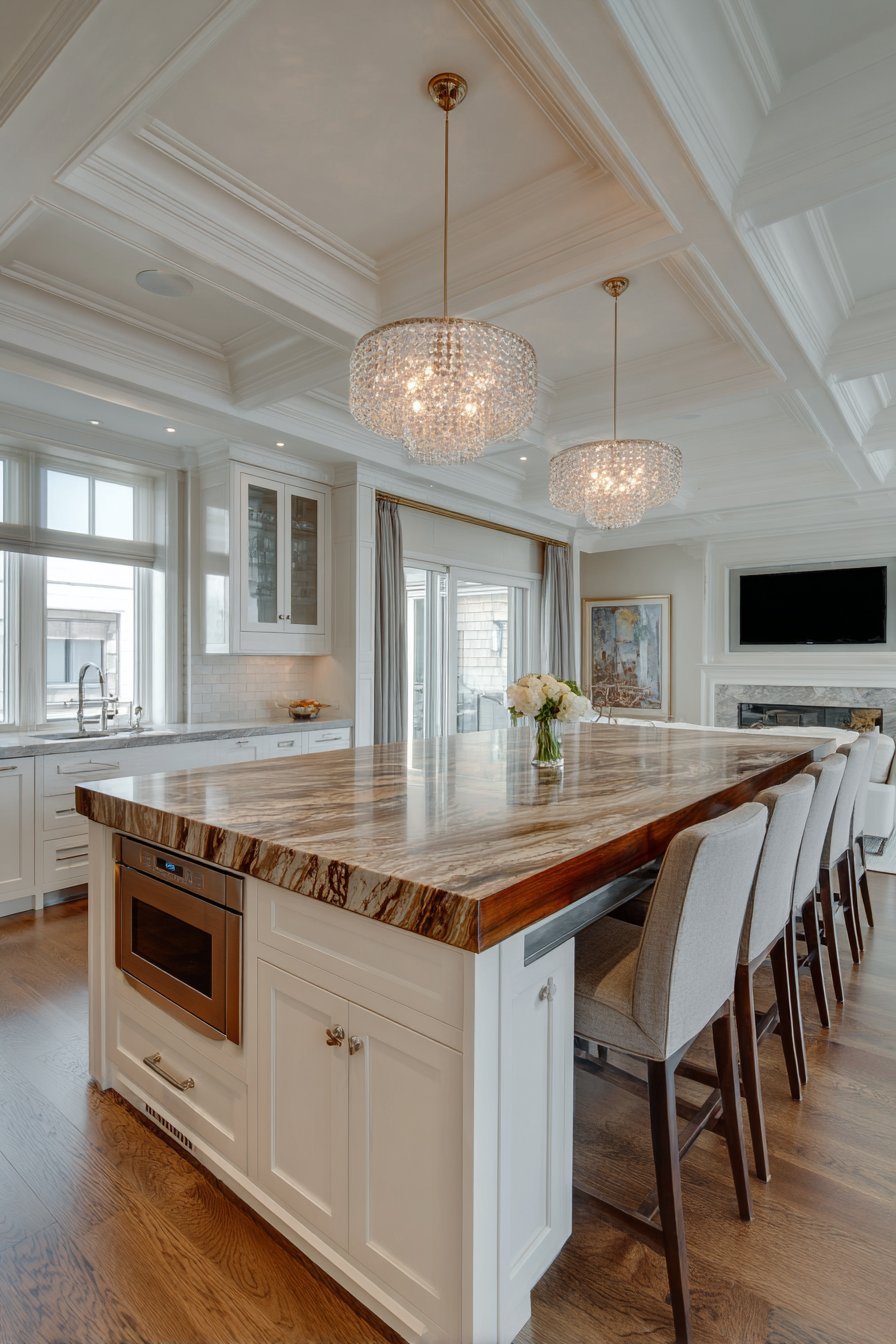
High-end integrated appliances maintain clean lines while providing professional capabilities. The kitchen opens to a great room with coffered ceiling and stone fireplace. A butler’s pantry doorway provides additional closed storage without interrupting open flow. Elaborate pendant lights with crystal and brass elements hang above the island elegantly.
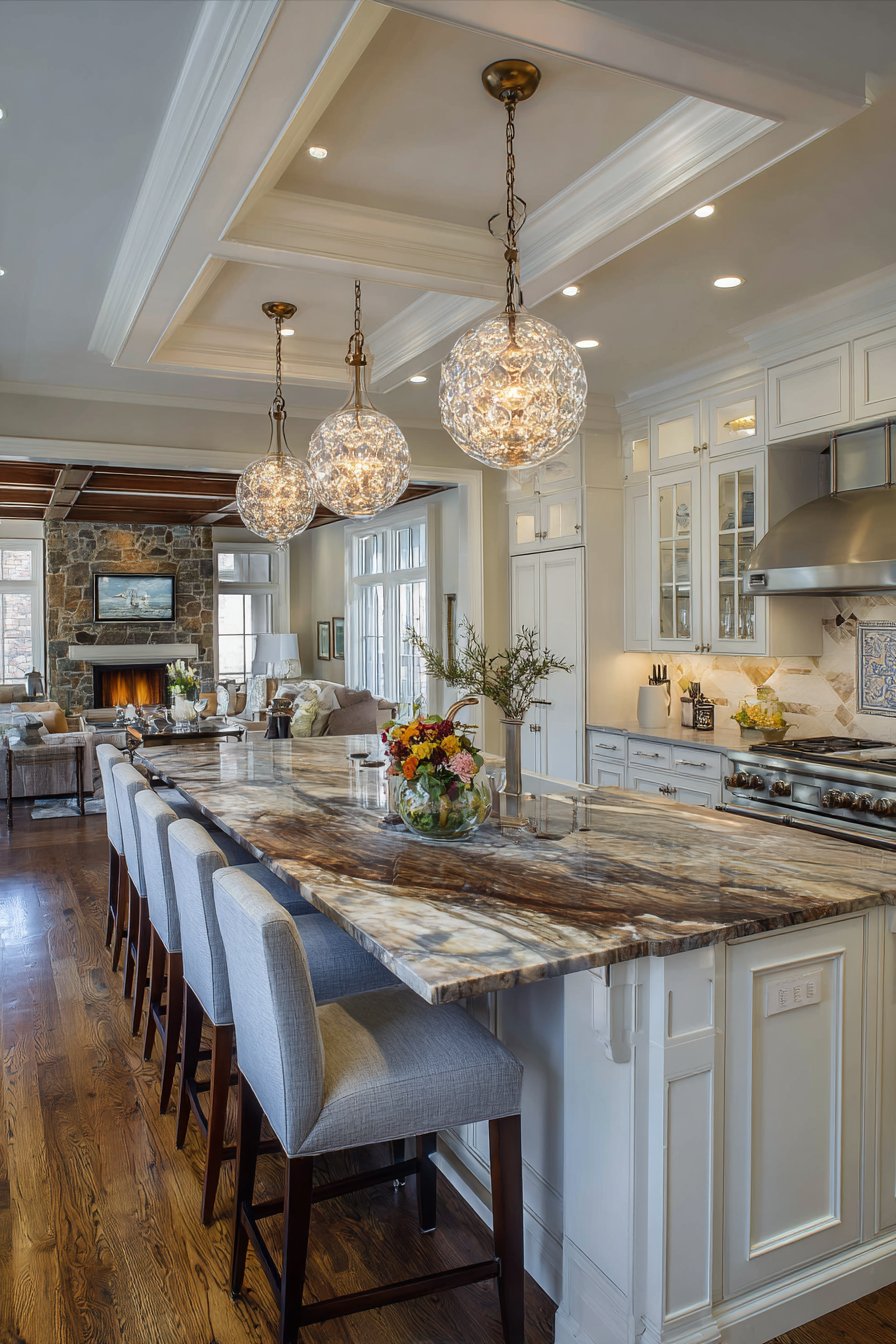
The substantial island defines the kitchen zone within the expansive living area effectively. Balanced professional lighting showcases the high-end finishes throughout all zones. The leathered quartzite adds luxury through unique texture and rich coloration. This design targets those seeking the finest materials and craftsmanship available.
The coffered ceiling and stone fireplace extend the luxury aesthetic beyond the kitchen. The butler’s pantry adds practical storage for entertaining essentials. The design proves that open concepts can achieve truly luxurious results.
Key Design Tips:
- Select leathered quartzite for sophisticated texture and enhanced stain resistance
- Install inset cabinet doors for traditional craftsmanship and luxury appeal
- Include second sinks in large islands to create efficient multiple work zones
- Add butler’s pantries for hidden storage without disrupting open aesthetics
- Choose crystal and brass pendant lights for elegant statement lighting
- Integrate high-end appliances behind panels for seamless visual flow
14. Contemporary Bold Two-Tone with Walnut
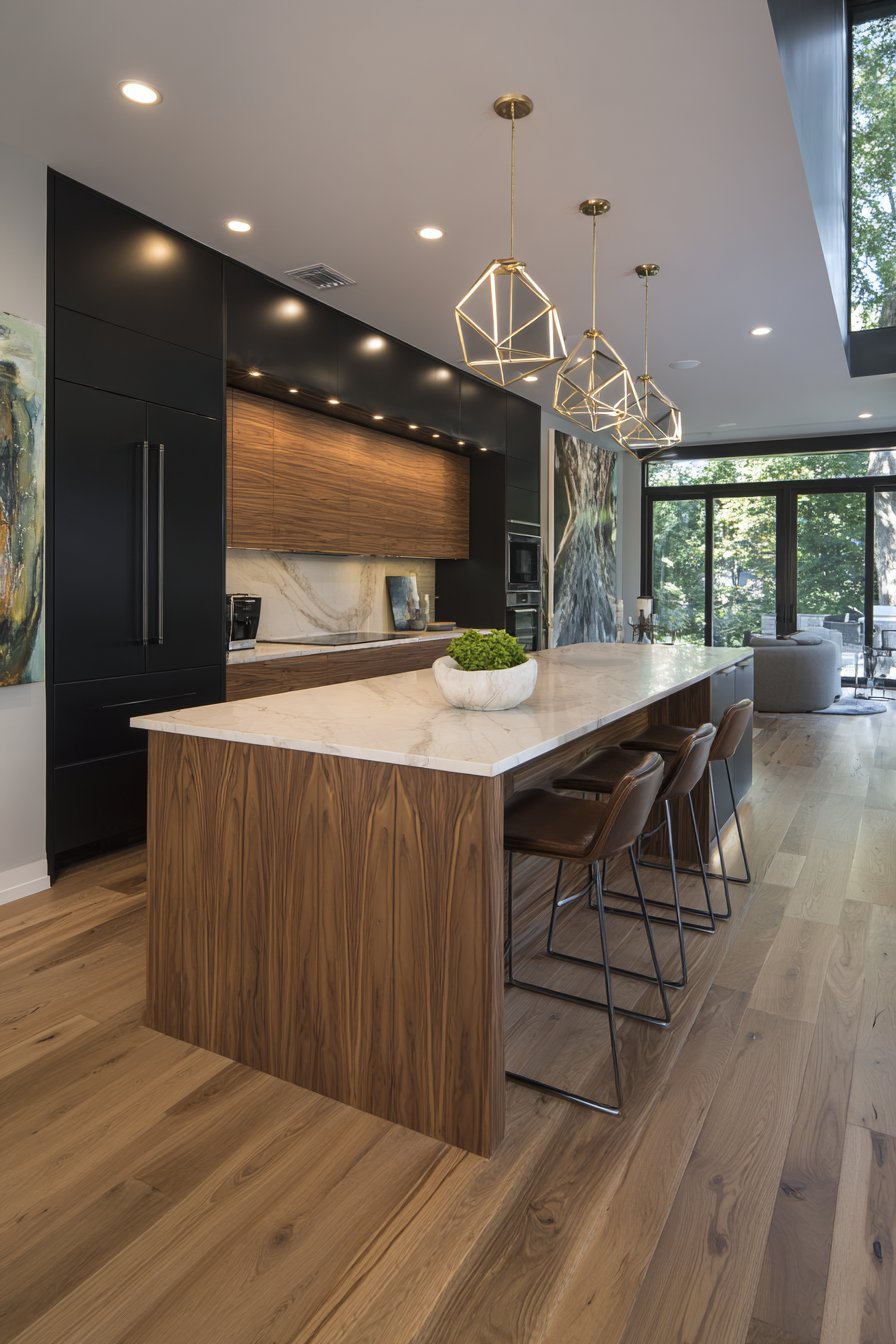
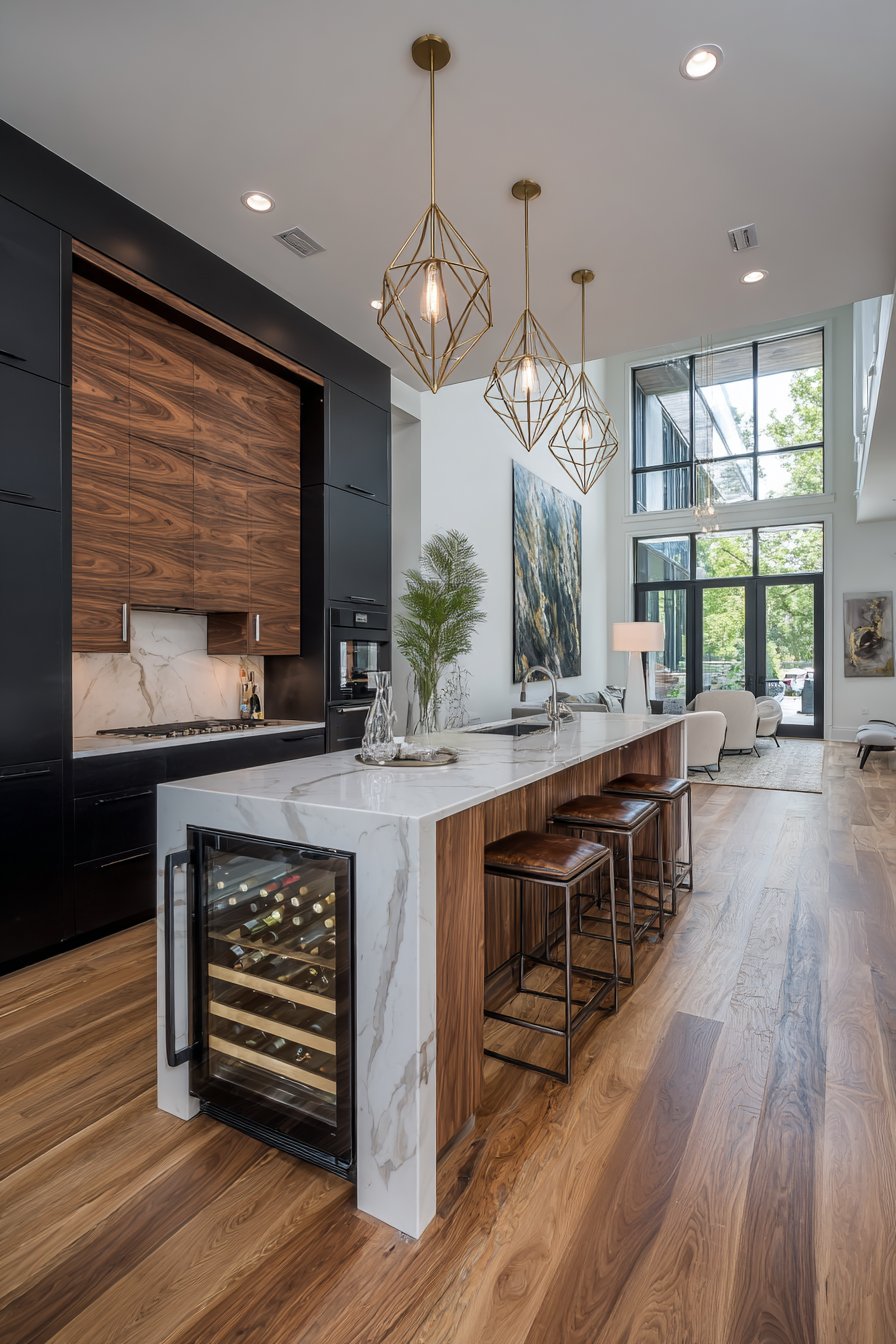
Matte black lower cabinets create dramatic contrast with horizontal-grain walnut upper cabinets. Integrated lighting in the upper cabinets adds functional and aesthetic illumination. The angular island with white quartz countertop includes built-in wine refrigerator for entertaining. Sleek metal bar stools with leather seats provide comfortable seating for three people.
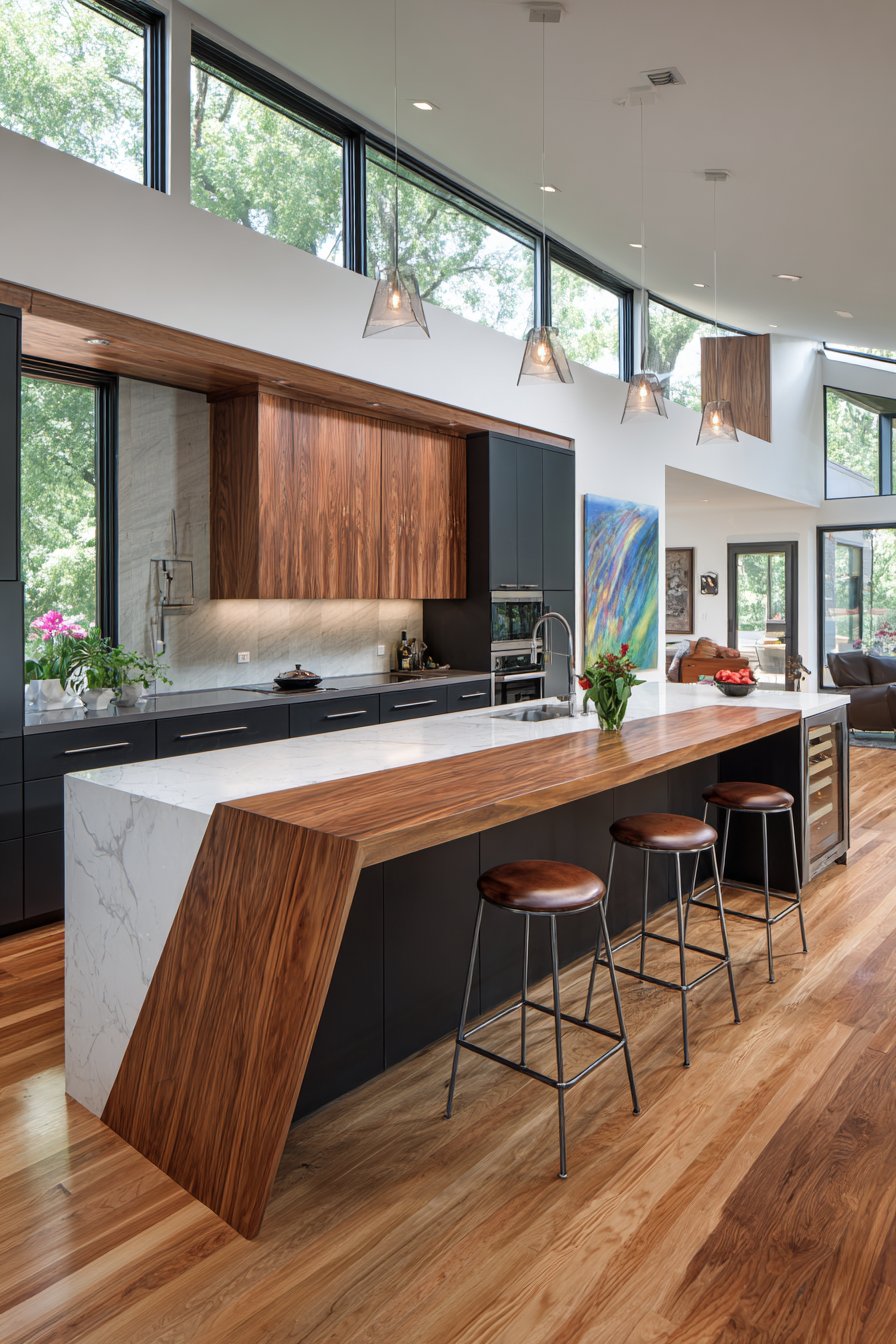
The kitchen opens to a modern living area with large-scale abstract art visible beyond. Geometric pendant lights in brushed brass hang above the island architecturally. Floor-to-ceiling windows along one wall provide abundant natural light throughout. The strong design elements and dramatic color contrasts define the kitchen space boldly.
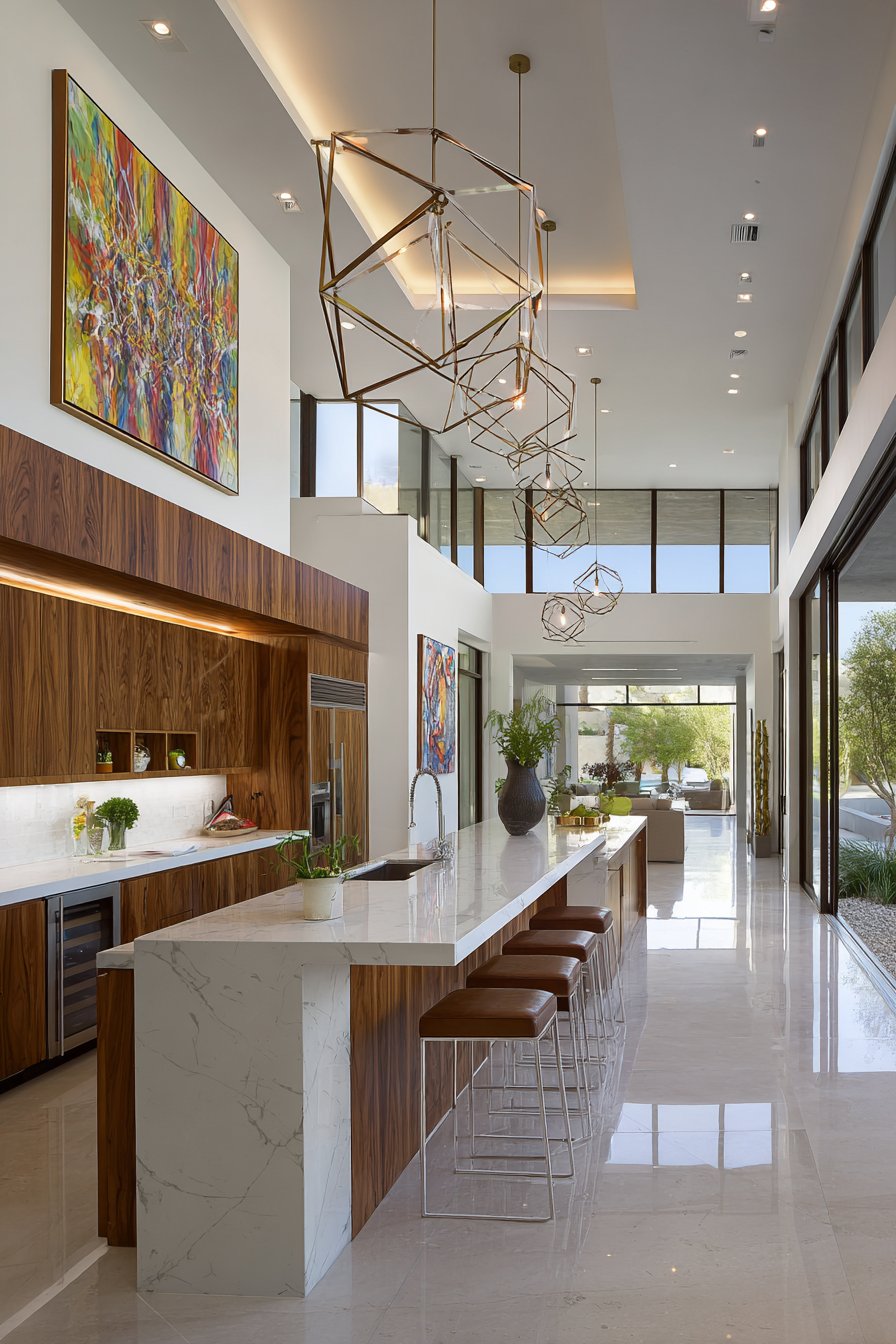
Continuous flooring and aligned sightlines maintain open, connected feeling throughout. The horizontal-grain walnut adds organic texture to the contemporary aesthetic. The white quartz countertop provides neutral ground between the bold cabinet colors. This design appeals to those who appreciate contemporary drama and sophisticated contrast.
The integrated lighting transforms the upper cabinets into glowing design elements. The geometric pendant lights add sculptural interest above the island. The bold approach demonstrates that open kitchens can embrace striking contemporary statements.
Key Design Tips:
- Combine matte black and walnut cabinetry for sophisticated contemporary contrast
- Select horizontal-grain walnut to add distinctive organic texture
- Install integrated lighting in upper cabinets for functional ambiance
- Include wine refrigerators in islands for dedicated entertaining capabilities
- Choose geometric brass pendant lights for contemporary sculptural statements
- Use white quartz countertops to balance bold cabinet color choices
15. Entertaining-Focused Wraparound Island
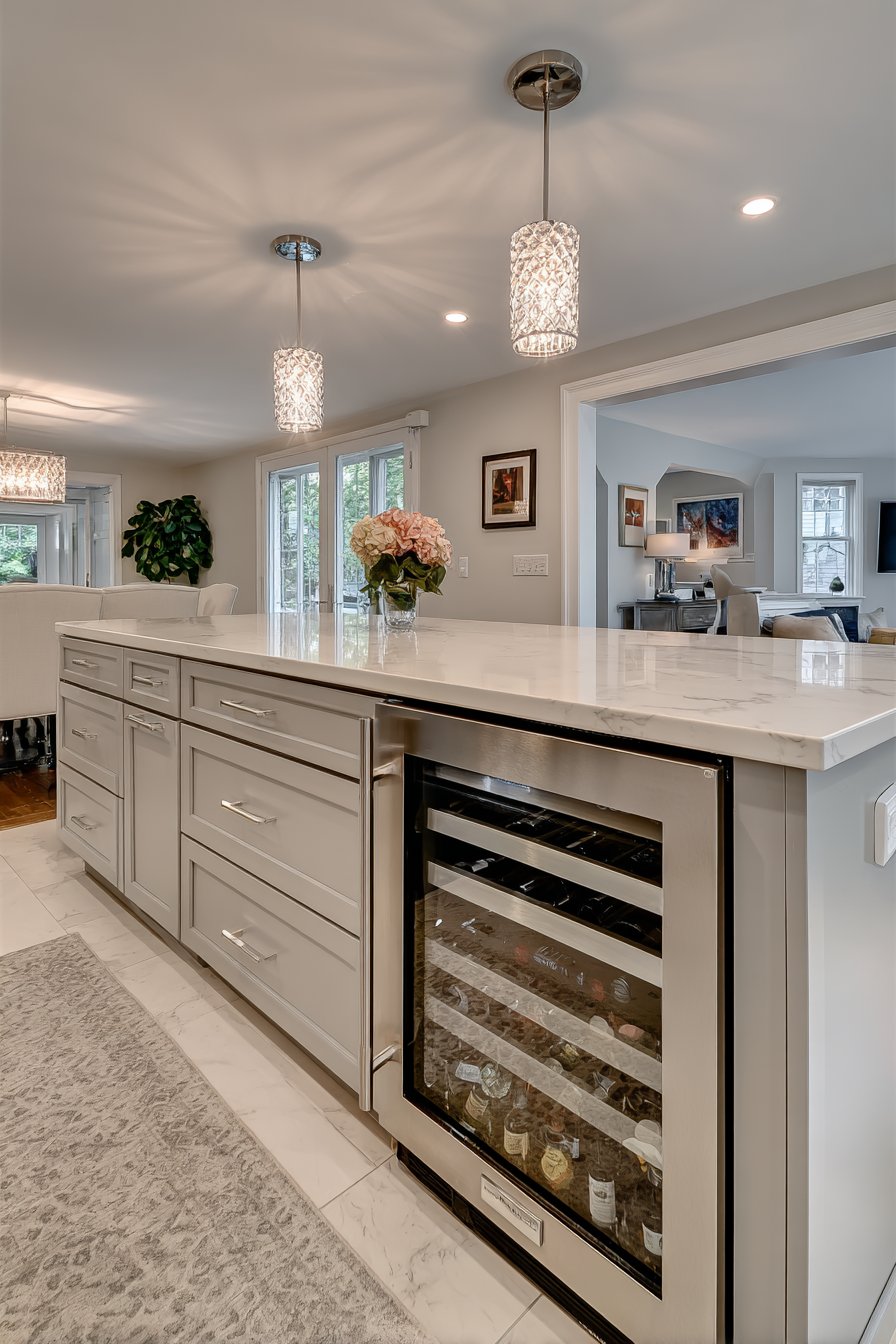
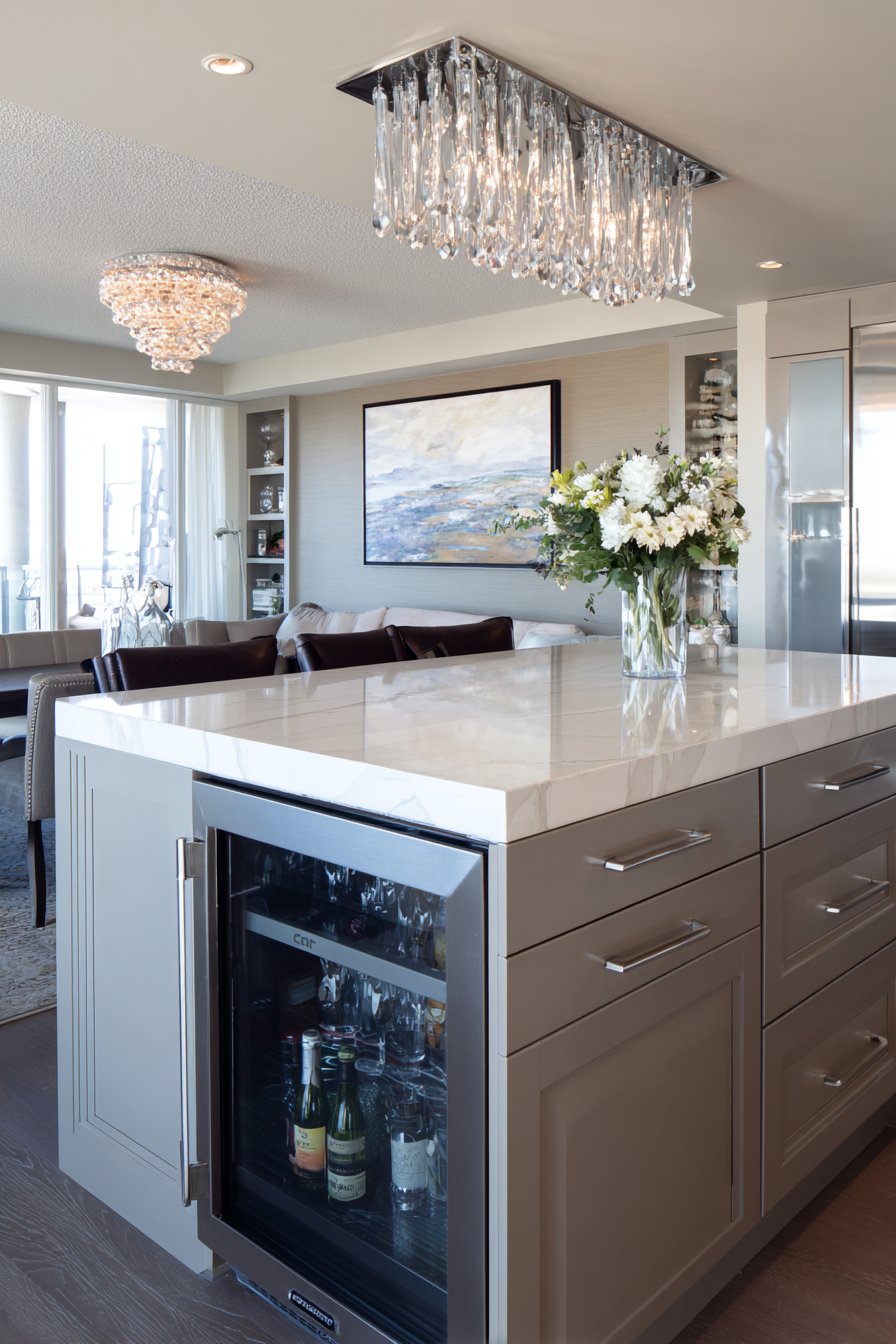
A wraparound island features raised bar seating facing into the living room directly. This orientation encourages natural conversation between hosts and guests throughout gatherings. The kitchen includes beverage refrigerator, ice maker, and glass-front cabinets displaying glassware. Everything needed for entertaining remains within easy reach always.
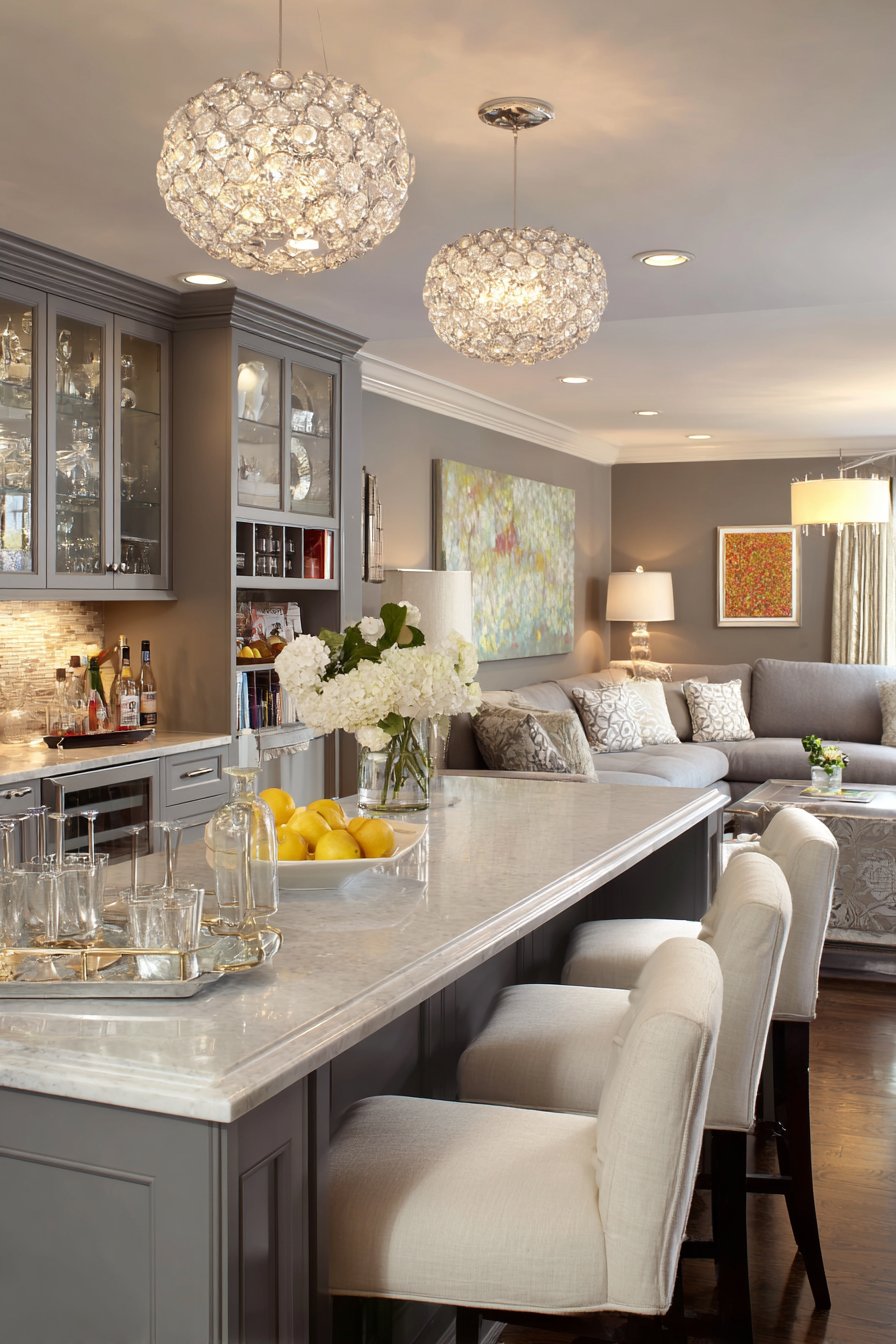
Warm grey cabinetry with satin nickel hardware surrounds stainless appliances professionally. Creamy white quartz countertops provide ample workspace for food preparation. The kitchen opens fully to dining area and living room creating one large entertaining space. Statement chandelier-style pendants hang above the island dramatically.
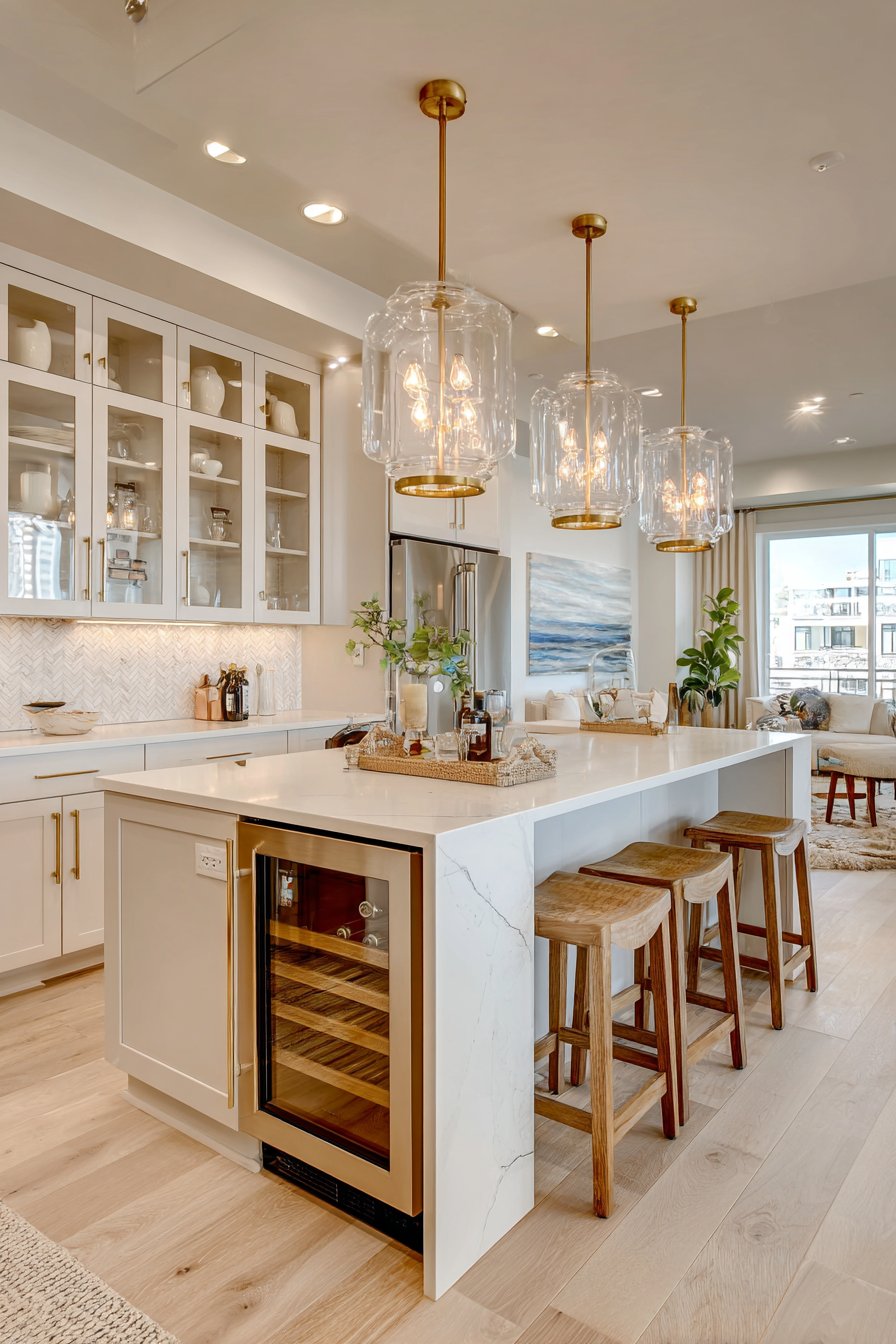
The party-friendly layout facilitates social interaction naturally throughout the space. Strategic island orientation allows hosts to face guests while working. Layered lighting from multiple sources creates inviting atmosphere across all connected zones. The design prioritizes social functionality above all other considerations.
This approach suits those who entertain frequently and enjoy hosting gatherings. The beverage station eliminates trips to the main refrigerator constantly. The wraparound configuration maximizes both seating capacity and social connection.
Key Design Tips:
- Orient island seating toward living areas to encourage host-guest interaction
- Include beverage refrigerators and ice makers for dedicated entertaining stations
- Install glass-front cabinets to display glassware within easy entertaining reach
- Choose warm grey cabinetry to create inviting atmosphere for social gatherings
- Add statement chandelier-style pendants for elegant focal point lighting
- Design wraparound islands to maximize seating capacity for frequent entertaining
16. Rustic Reclaimed with Exposed Beams
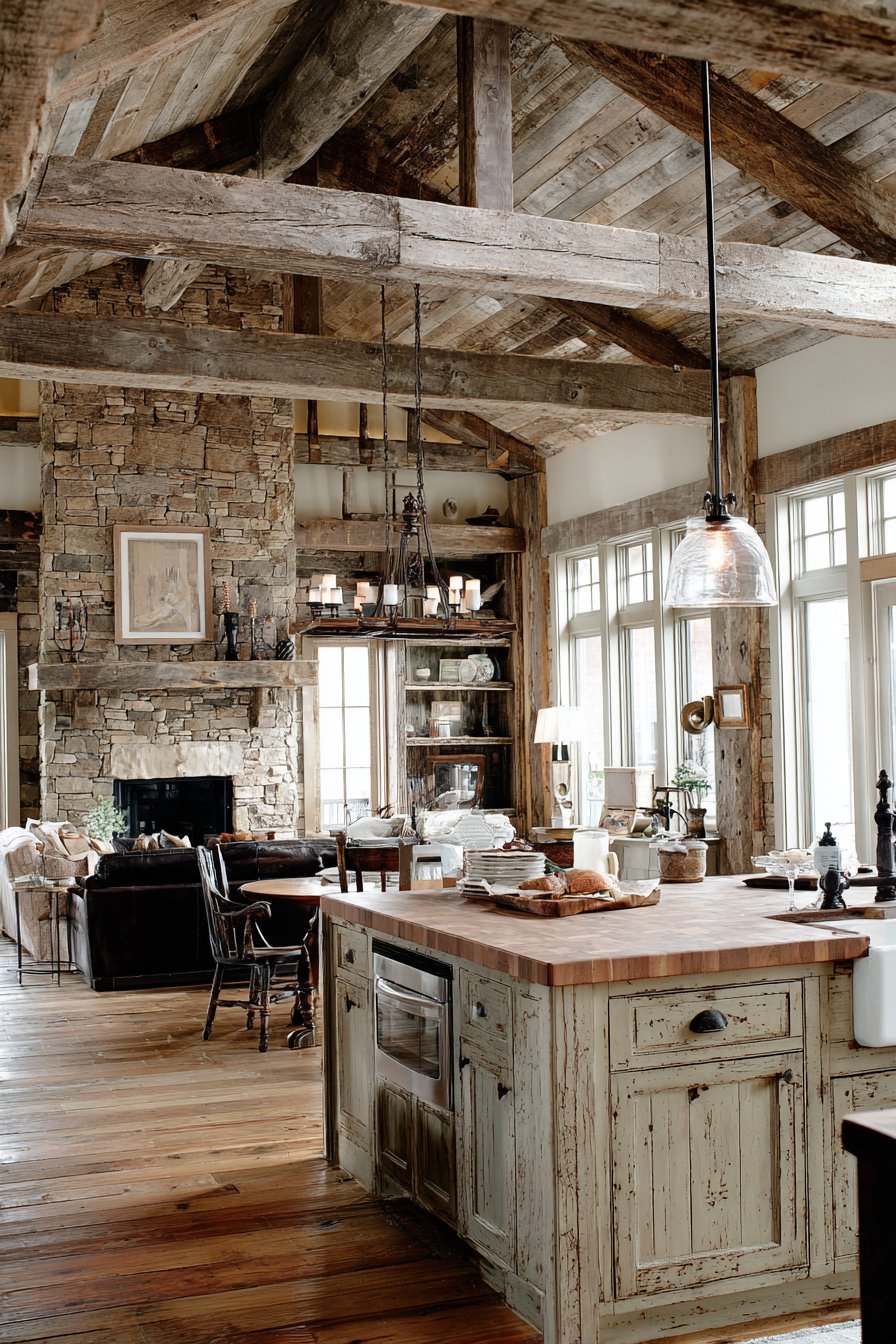
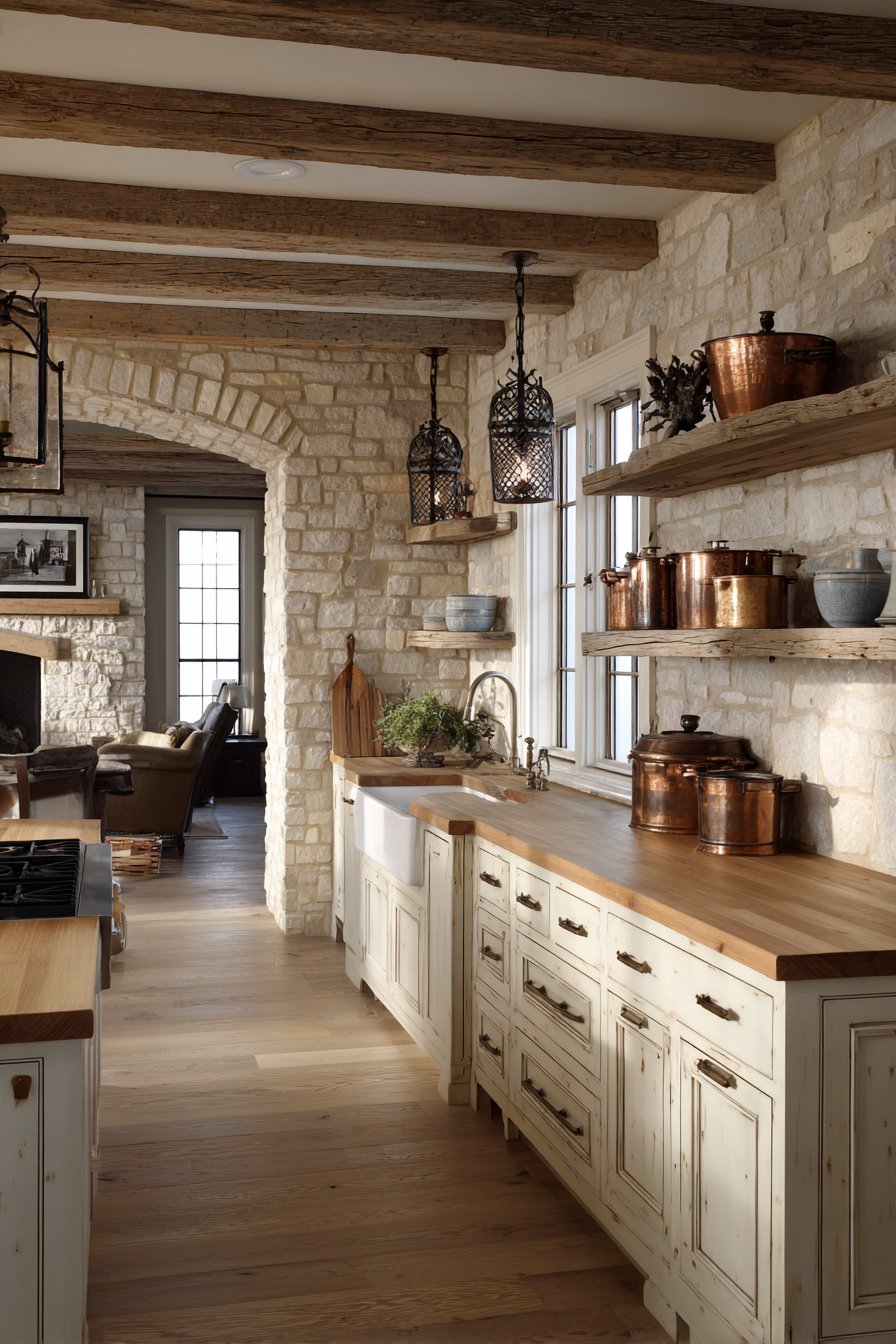
Reclaimed wood beams across the ceiling add authentic rustic character overhead. Custom cabinetry in distressed cream paint with antique brass hardware creates vintage appeal. A chunky butcher block island top provides warm, functional workspace. The kitchen flows into a great room with exposed stone fireplace visible beyond.
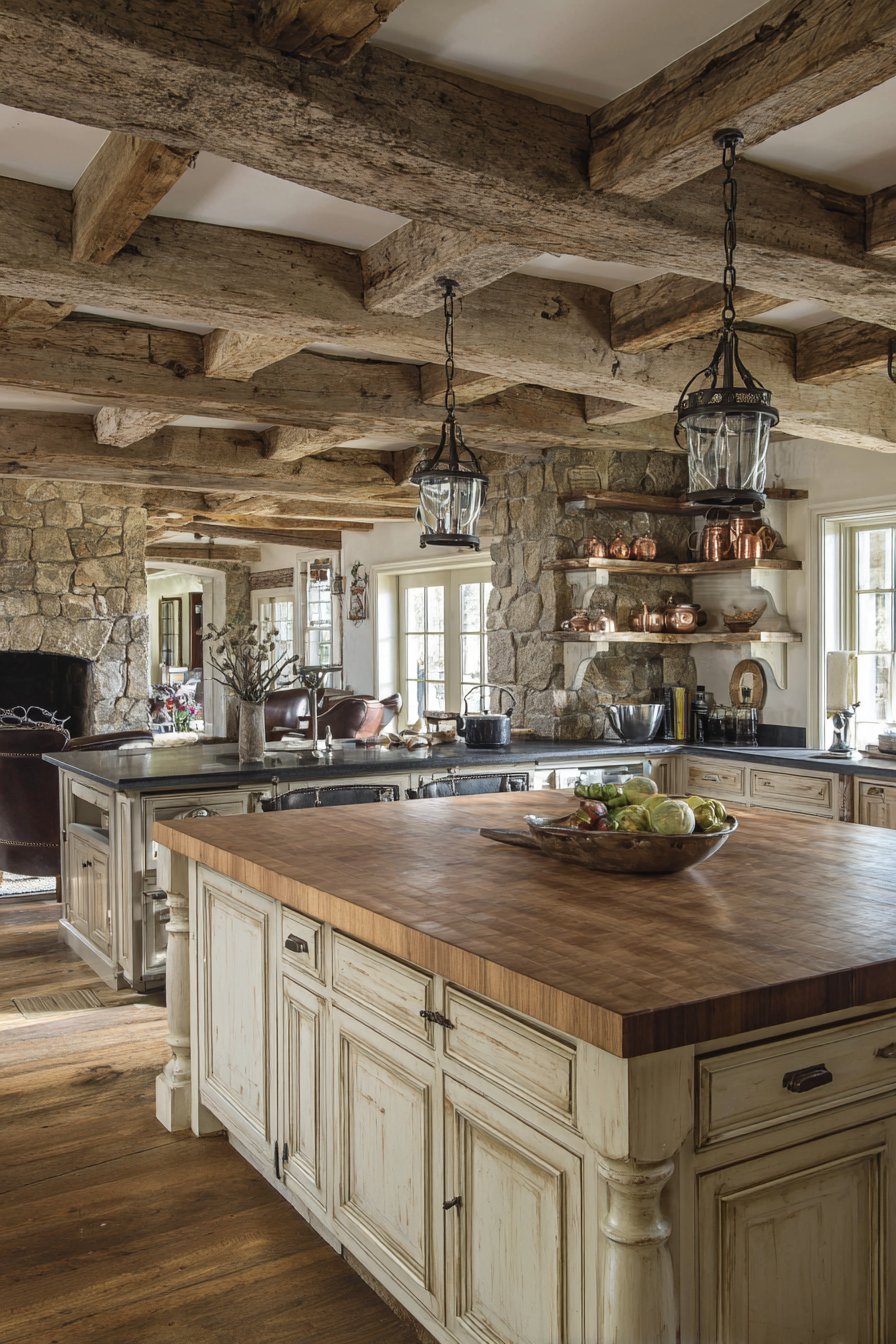
Open shelving made from reclaimed barn wood displays vintage kitchenware and copper pots. A farmhouse sink under a window provides natural light and views. Wrought iron pendant lights with seeded glass shades hang above the island characterfully. The rustic materials and vintage elements create lived-in aesthetic throughout.
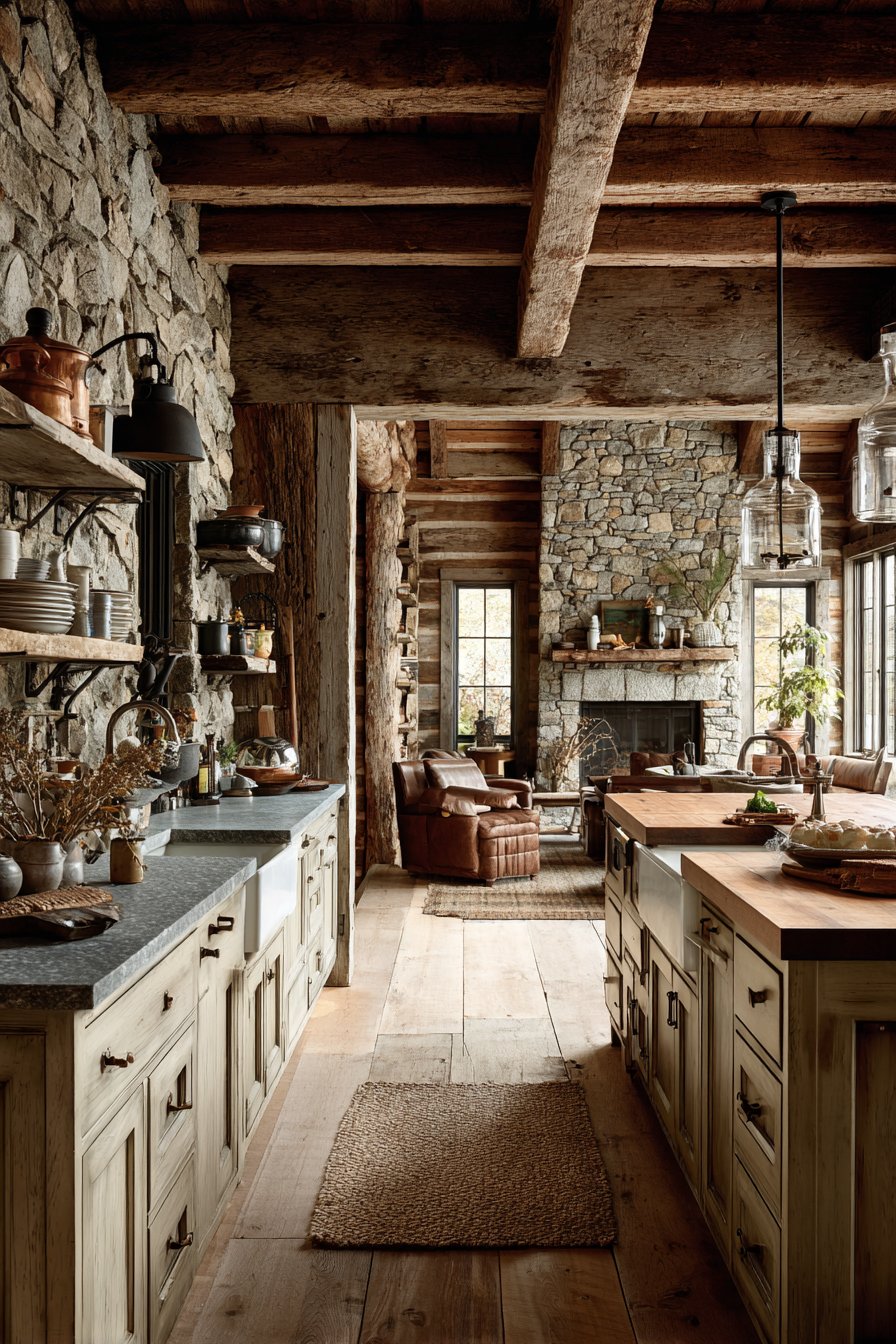
Warm natural lighting emphasizes authentic textures and patina of aged materials. The exposed beams draw the eye upward, enhancing spatial volume. The reclaimed materials bring environmental sustainability to beautiful design. This approach celebrates imperfection and history as essential design elements.
The rustic style proves perfect for those seeking warmth and character. The distressed finishes age beautifully over time naturally. The vintage elements create instant collected, timeless appeal.
Key Design Tips:
- Install reclaimed wood beams to add authentic architectural character overhead
- Choose distressed cream paint finishes for vintage rustic appeal
- Select chunky butcher block for island tops with warm functional surfaces
- Display vintage kitchenware and copper pots on reclaimed wood shelving
- Use wrought iron pendant lights with seeded glass for rustic illumination
- Incorporate farmhouse sinks under windows for traditional functionality
17. Family-Optimized with Durable Materials
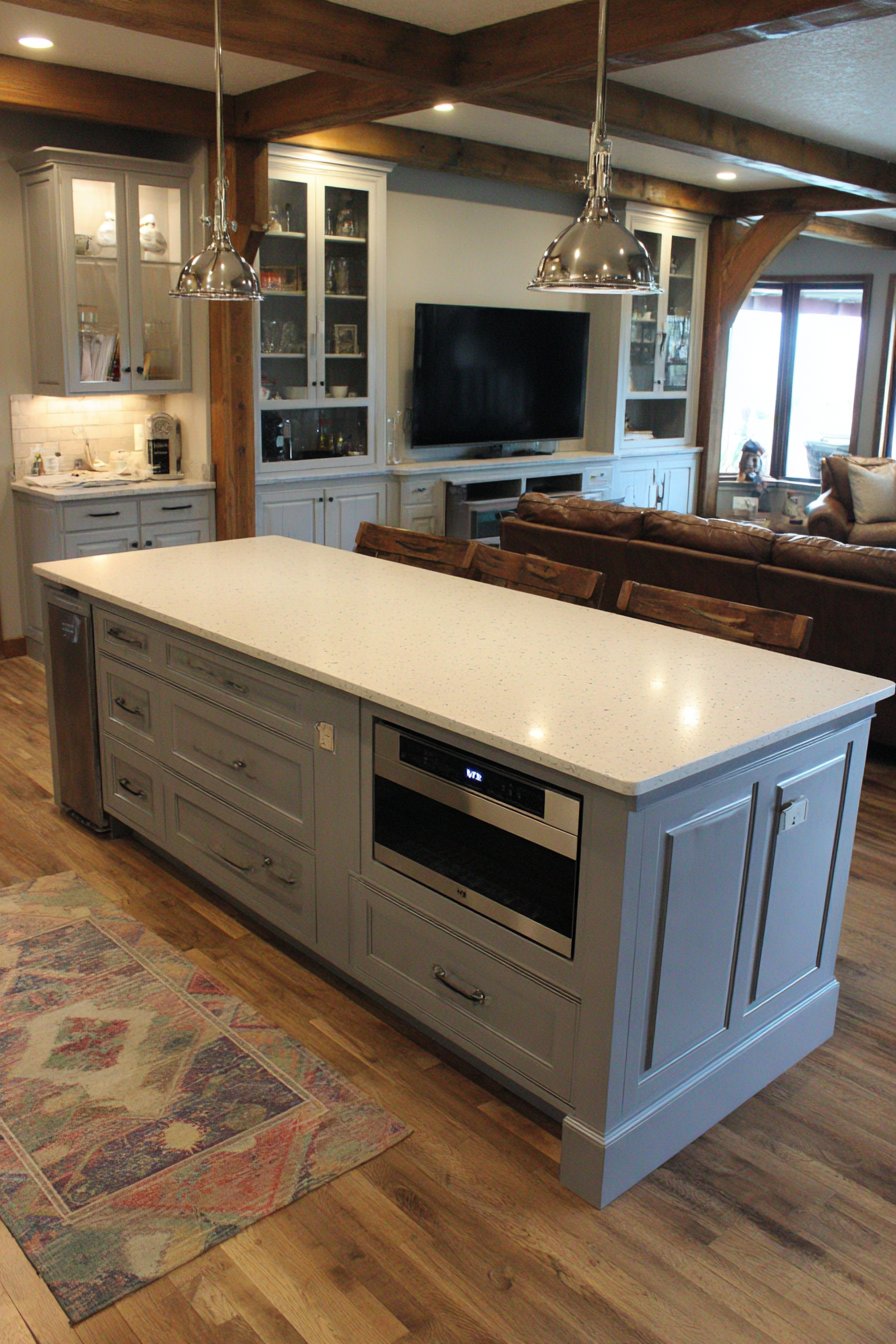
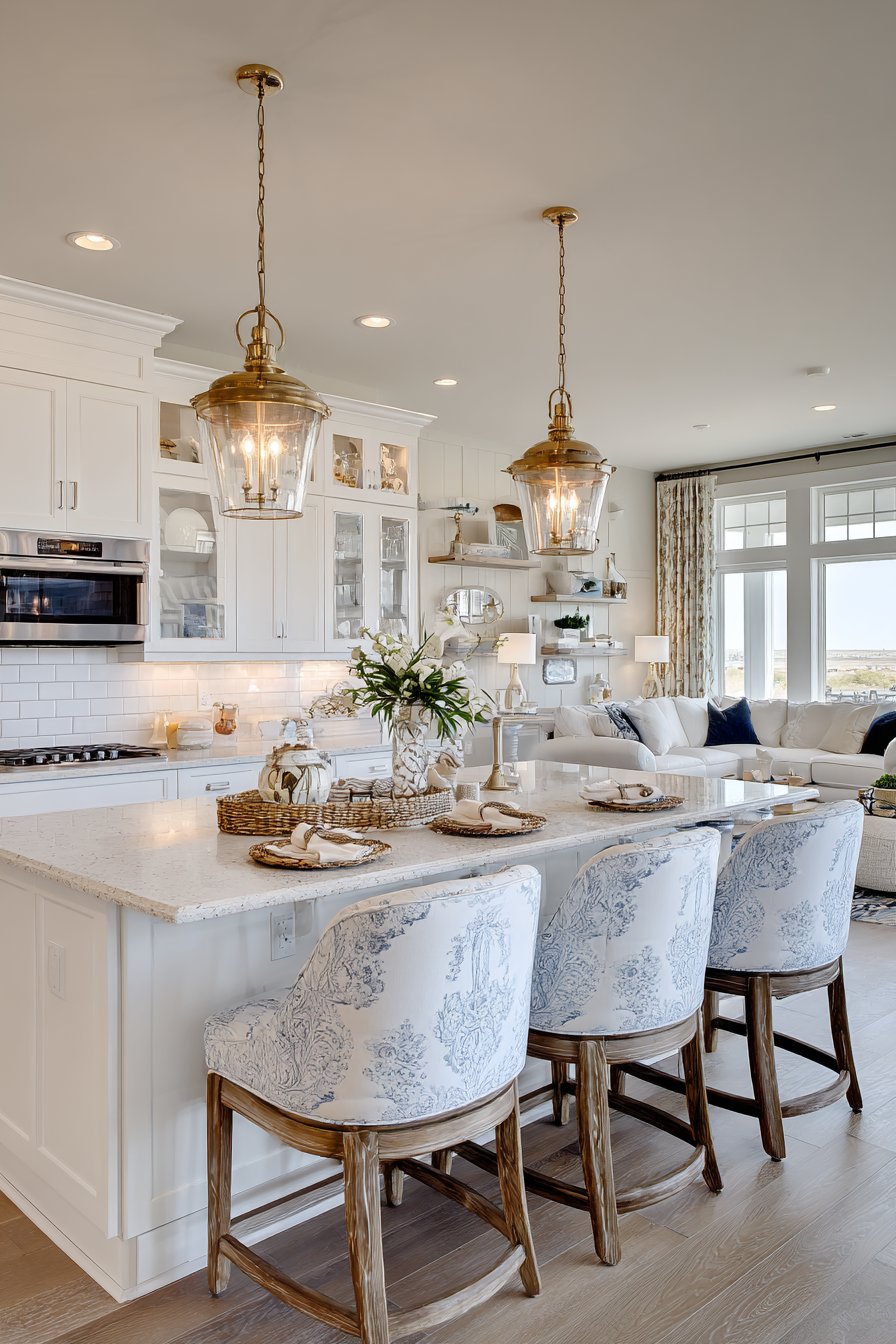
A large island built specifically for family life includes built-in microwave and charging station. Plenty of seating accommodates kids’ meals and homework sessions comfortably. Durable quartz countertops in speckled grey hide everyday wear effectively. Easy-clean white subway tile backsplash extends to full height for practical maintenance.
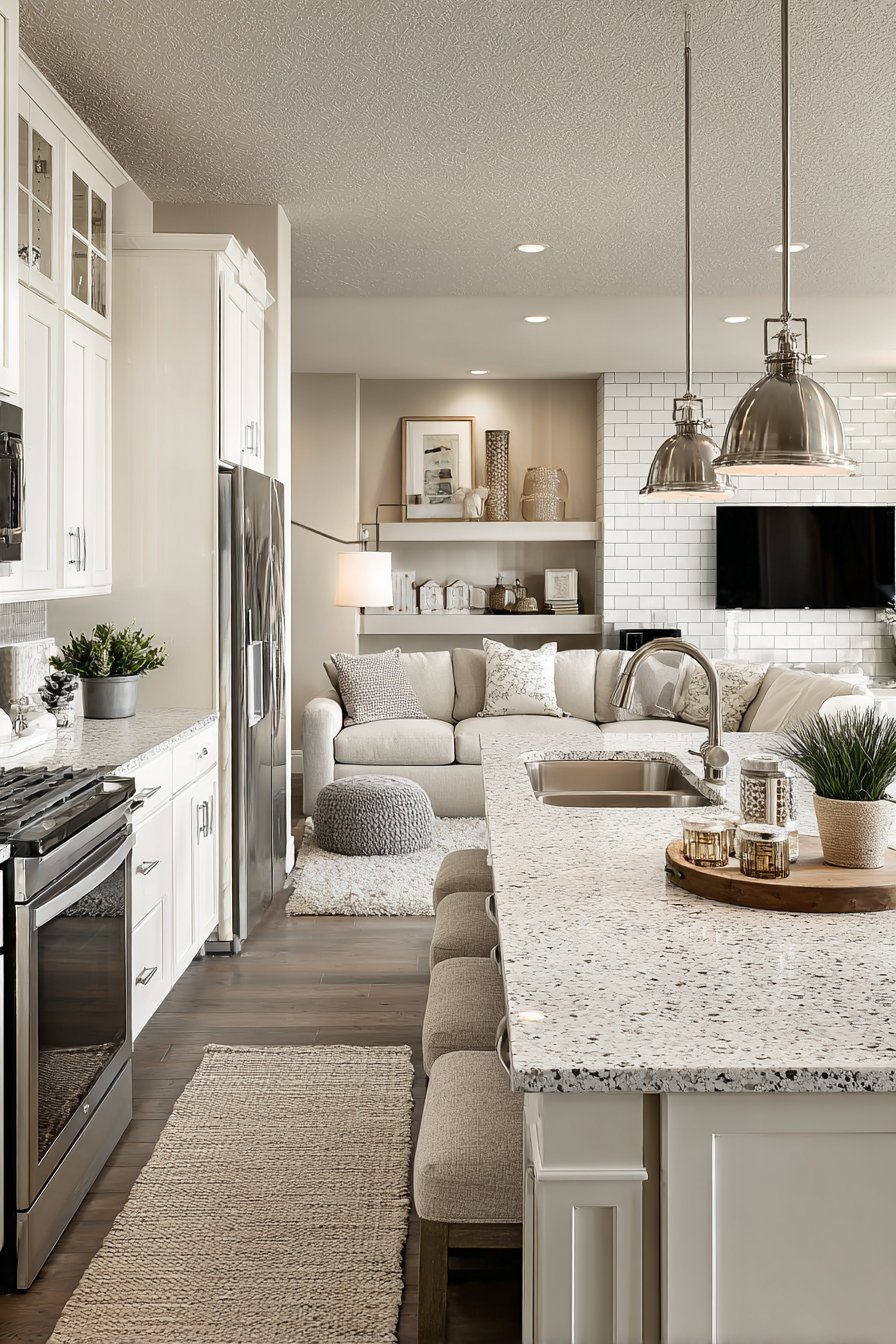
The kitchen opens to a casual family room with comfortable sectional visible beyond. Lower cabinets with soft-close drawers provide kid-friendly storage accessibility. Upper cabinets with glass doors keep special items visible but protected. Practical pendant lights with metal shades provide focused task lighting where needed.
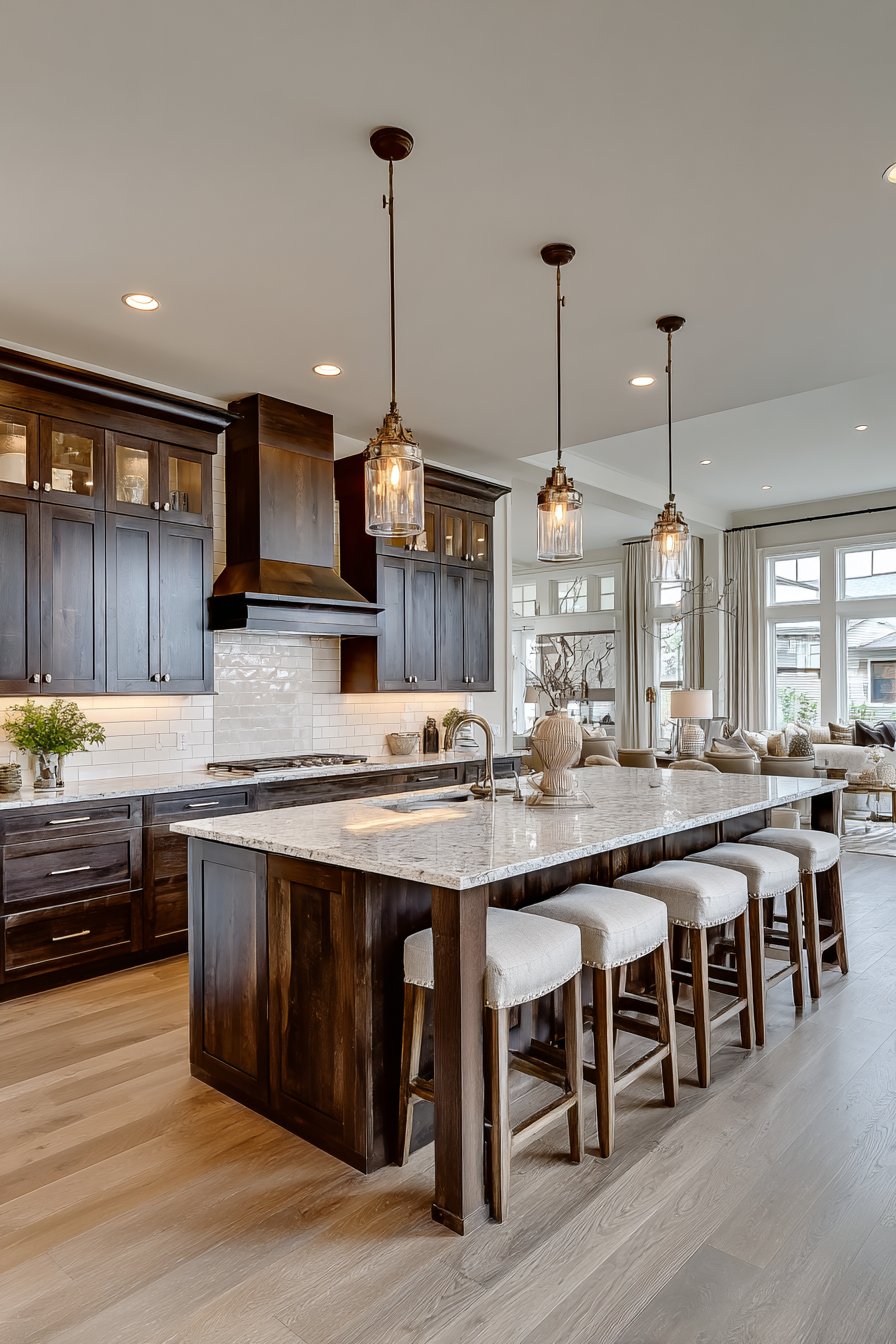
The family-focused open layout supports daily life with clear sightlines for supervising children. Abundant seating allows multiple activities to occur simultaneously. Durable materials withstand the realities of active family living. Natural daylight creates warm, functional atmosphere throughout connected spaces.
This design prioritizes practical family needs without sacrificing attractive aesthetics. The built-in charging station keeps devices organized centrally. The soft-close drawers prevent slammed fingers and loud noises.
Key Design Tips:
- Include built-in charging stations in islands for centralized device management
- Choose speckled quartz countertops to hide everyday wear and stains
- Install soft-close drawers for kid-friendly safety and noise reduction
- Extend subway tile backsplashes to full height for easier cleaning
- Design islands with abundant seating for multiple simultaneous activities
- Create clear sightlines from kitchen to family areas for child supervision
18. Transitional Taupe with Balanced Sophistication
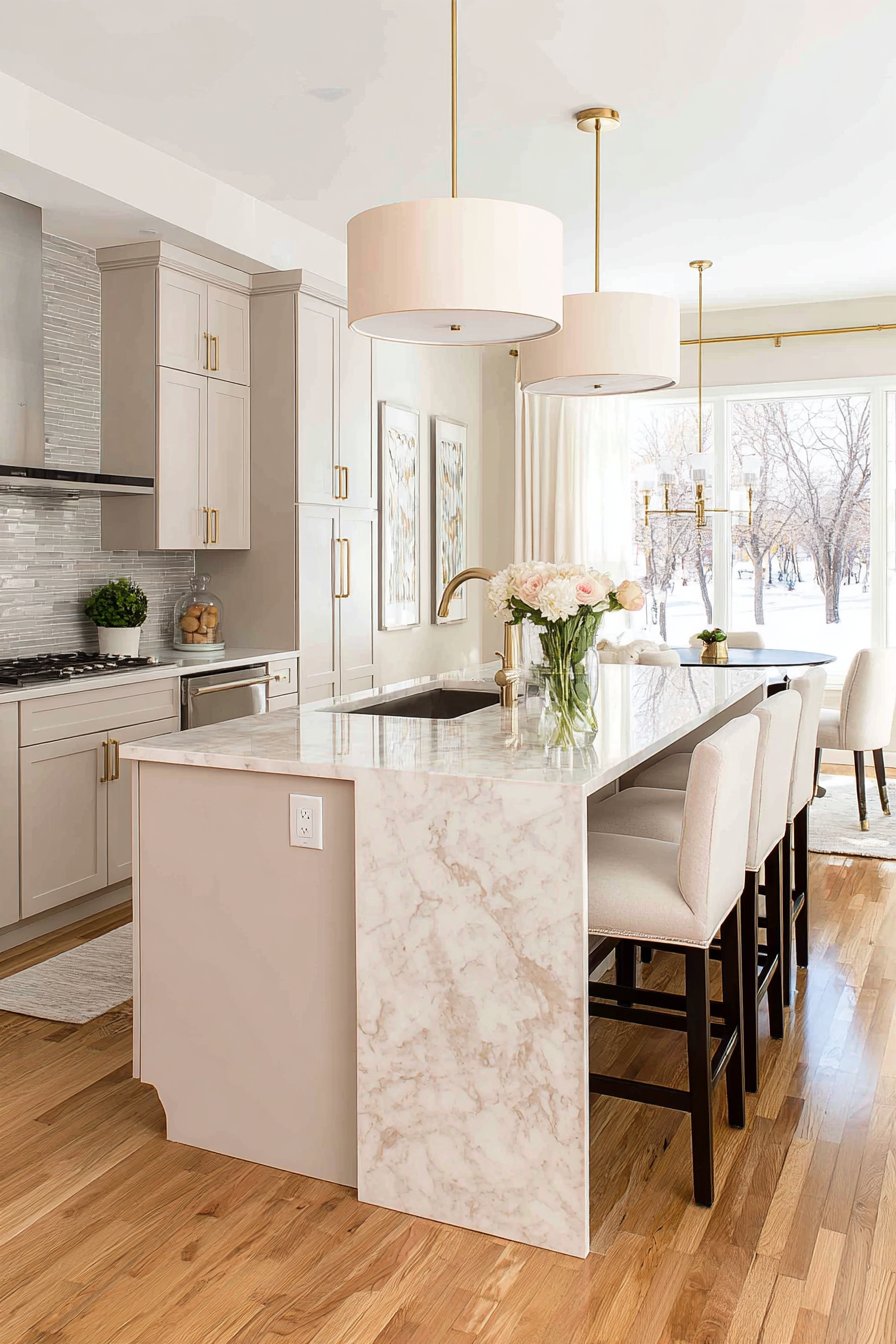
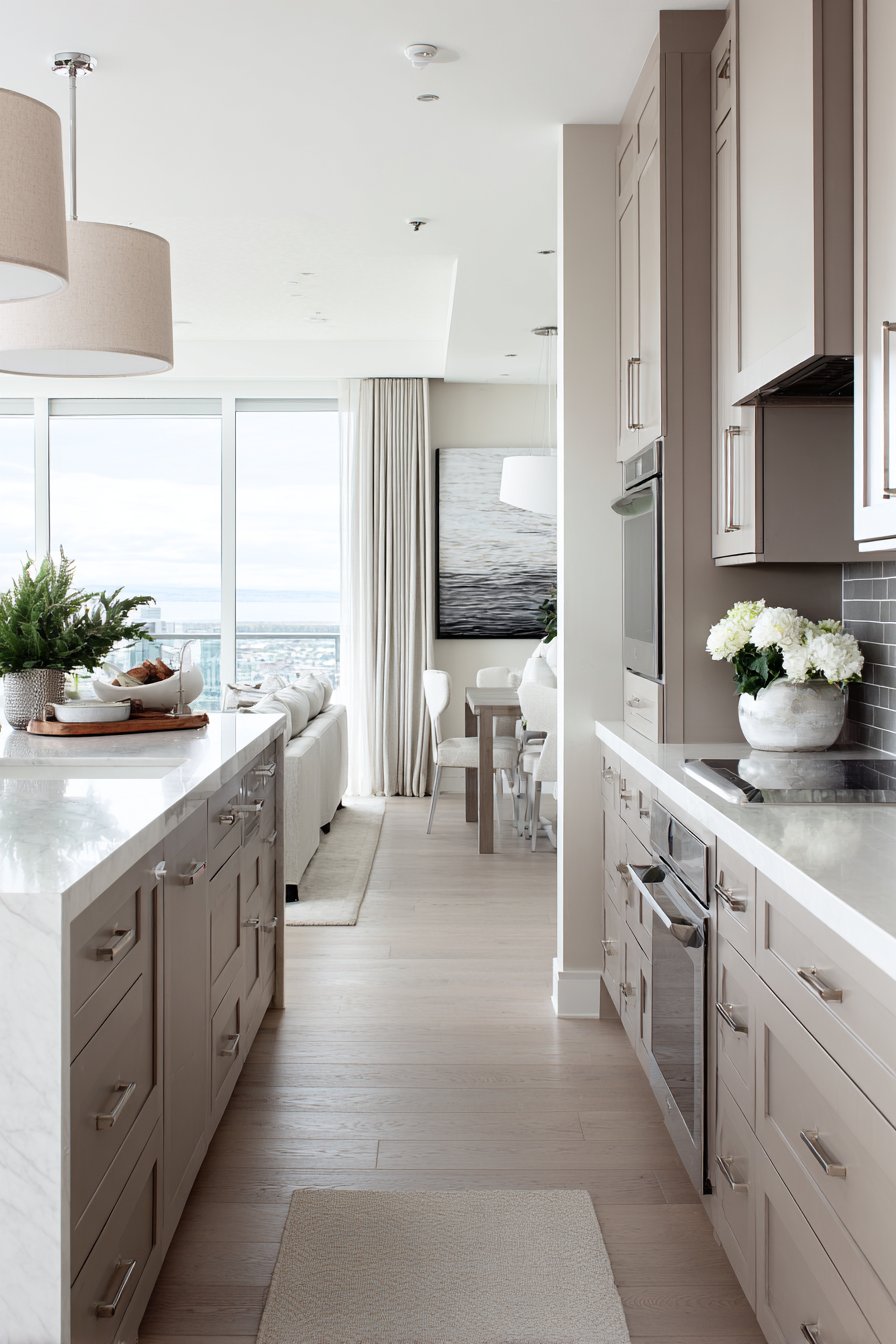
Soft taupe cabinetry creates a subtle, sophisticated foundation throughout. White marble-look quartz countertops add elegance without maintenance concerns. A grey tile backsplash in linear format provides contemporary texture. The medium-sized island with seating for four serves dual purposes effectively.
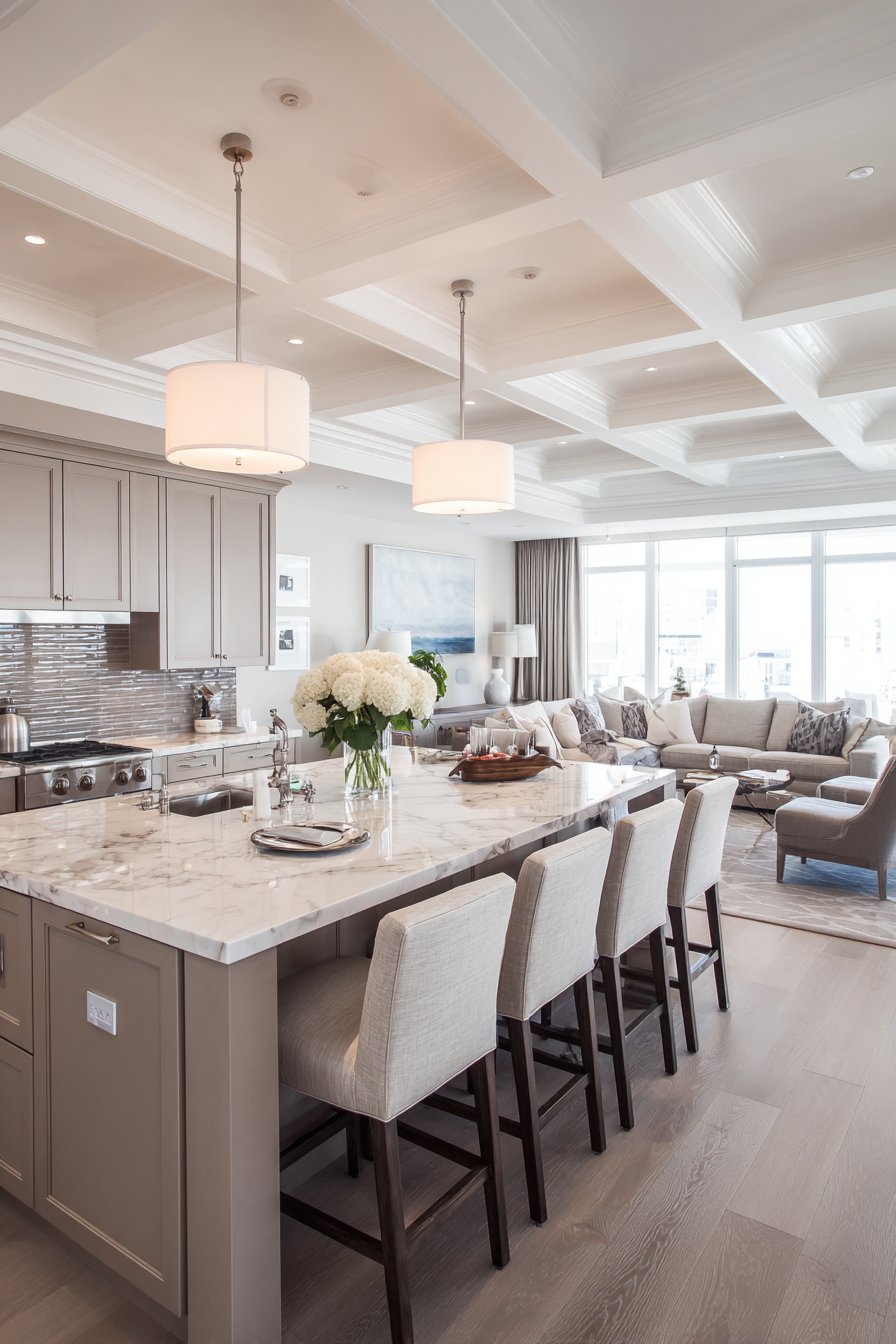
The space opens to formal dining room on one side and living area on the other. The kitchen becomes a central hub connecting multiple spaces naturally. Brushed gold hardware and fixtures add warmth without overwhelming the neutral palette. Simple drum pendant lights with linen shades hang above the island softly.
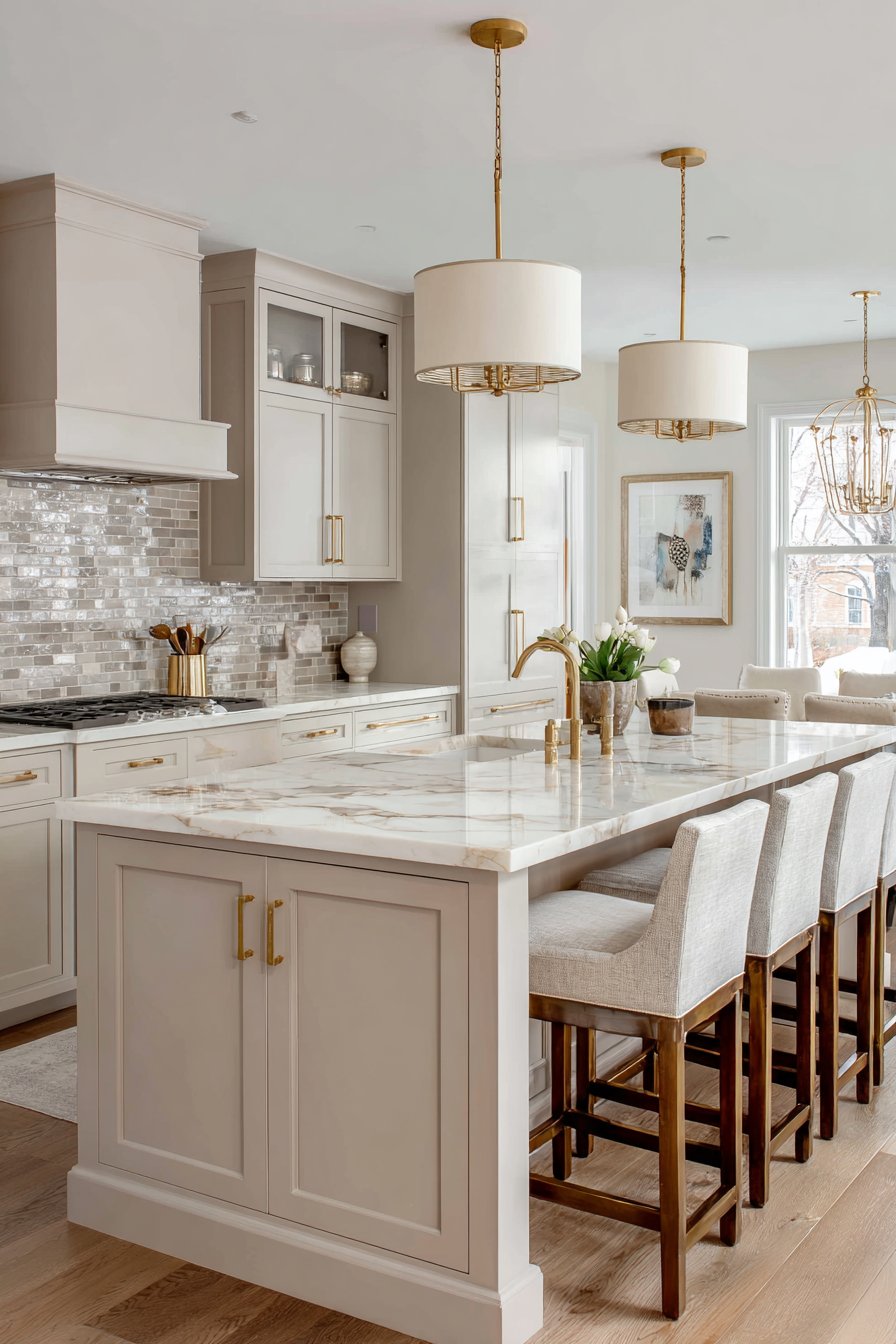
The balanced, sophisticated aesthetic works equally well for everyday living and entertaining. The neutral palette creates seamless flow between three connected spaces. Soft natural window light highlights elegant material selections throughout. The versatile design adapts to changing decor preferences over time.
This transitional style appeals to those seeking timeless, adaptable design. The taupe cabinetry provides warmth while remaining neutral. The marble-look quartz offers luxury aesthetics with practical durability.
Key Design Tips:
- Choose soft taupe cabinetry for sophisticated warmth that remains versatile
- Select marble-look quartz for luxury aesthetics with practical maintenance
- Install linear tile backsplashes for contemporary texture and visual interest
- Add brushed gold hardware throughout for warm metallic accents
- Use drum pendant lights with linen shades for soft, diffused illumination
- Position islands to connect multiple adjacent spaces as central hubs
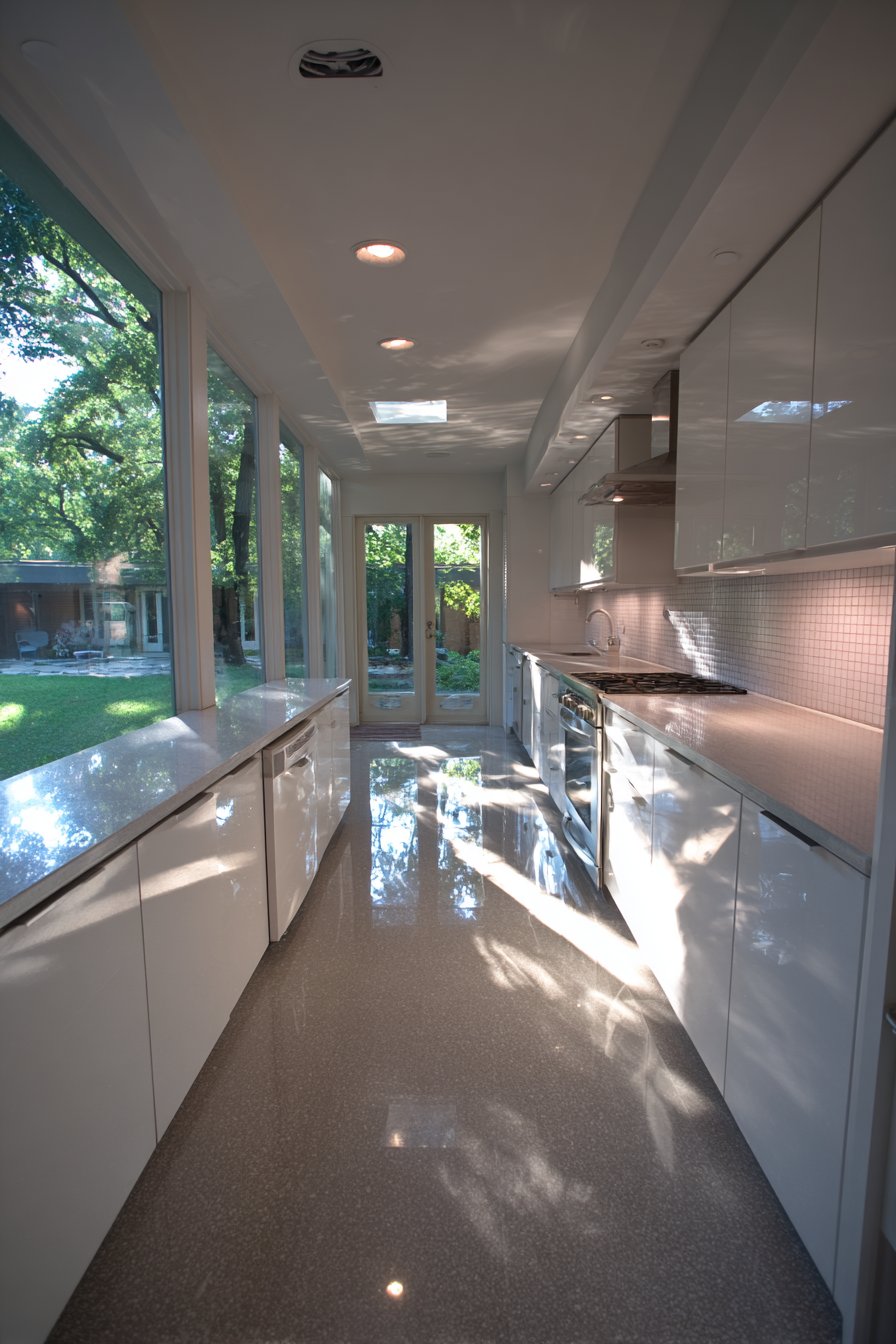
19. Single-Wall Galley Maximizing Openness
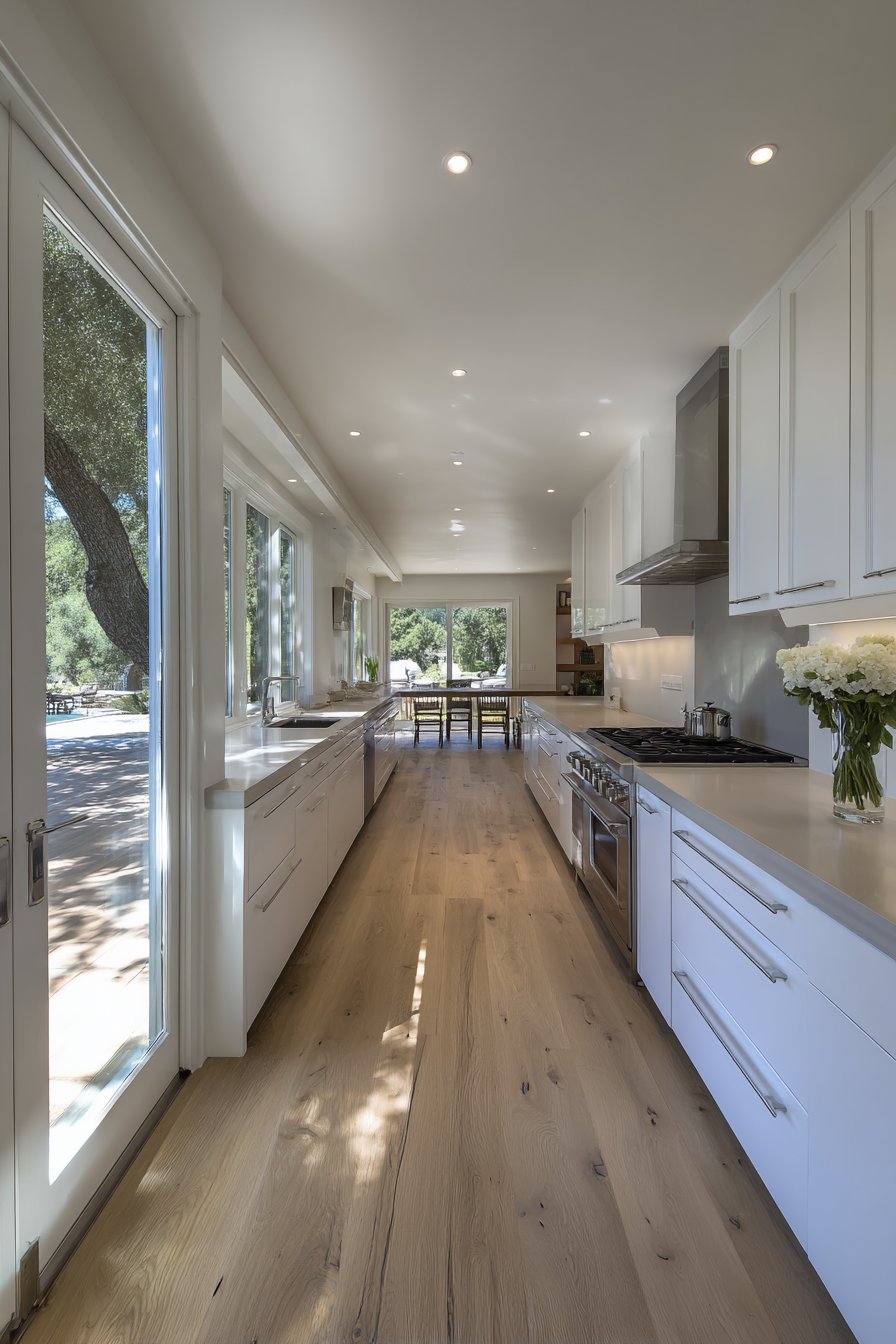
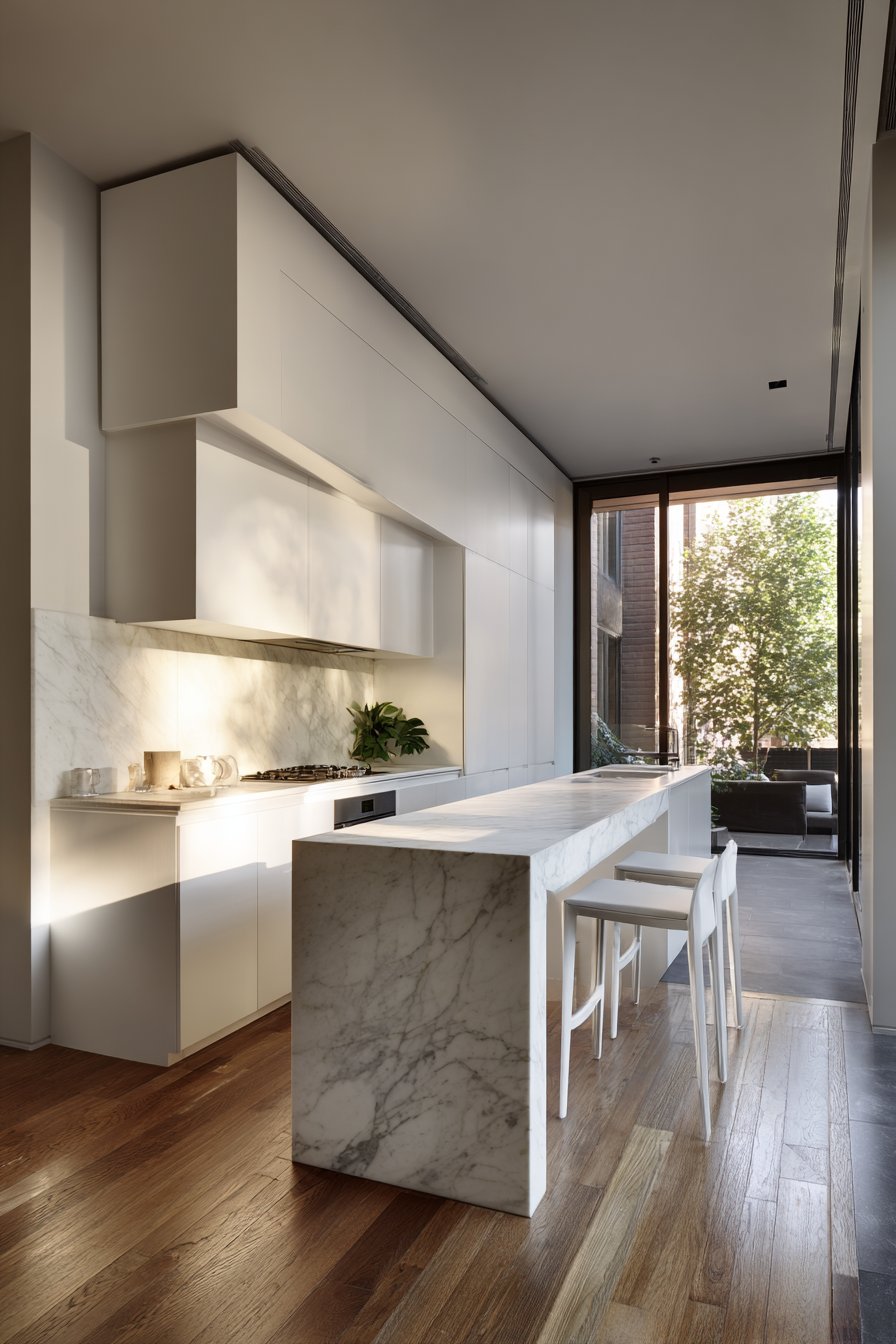
A galley-style kitchen runs along one wall of a great room entirely. This single-wall approach maximizes open feel by consolidating all functions. White flat-panel cabinets extend floor to ceiling for maximum storage capacity. A narrow peninsula extends perpendicular, defining kitchen boundary without blocking views.
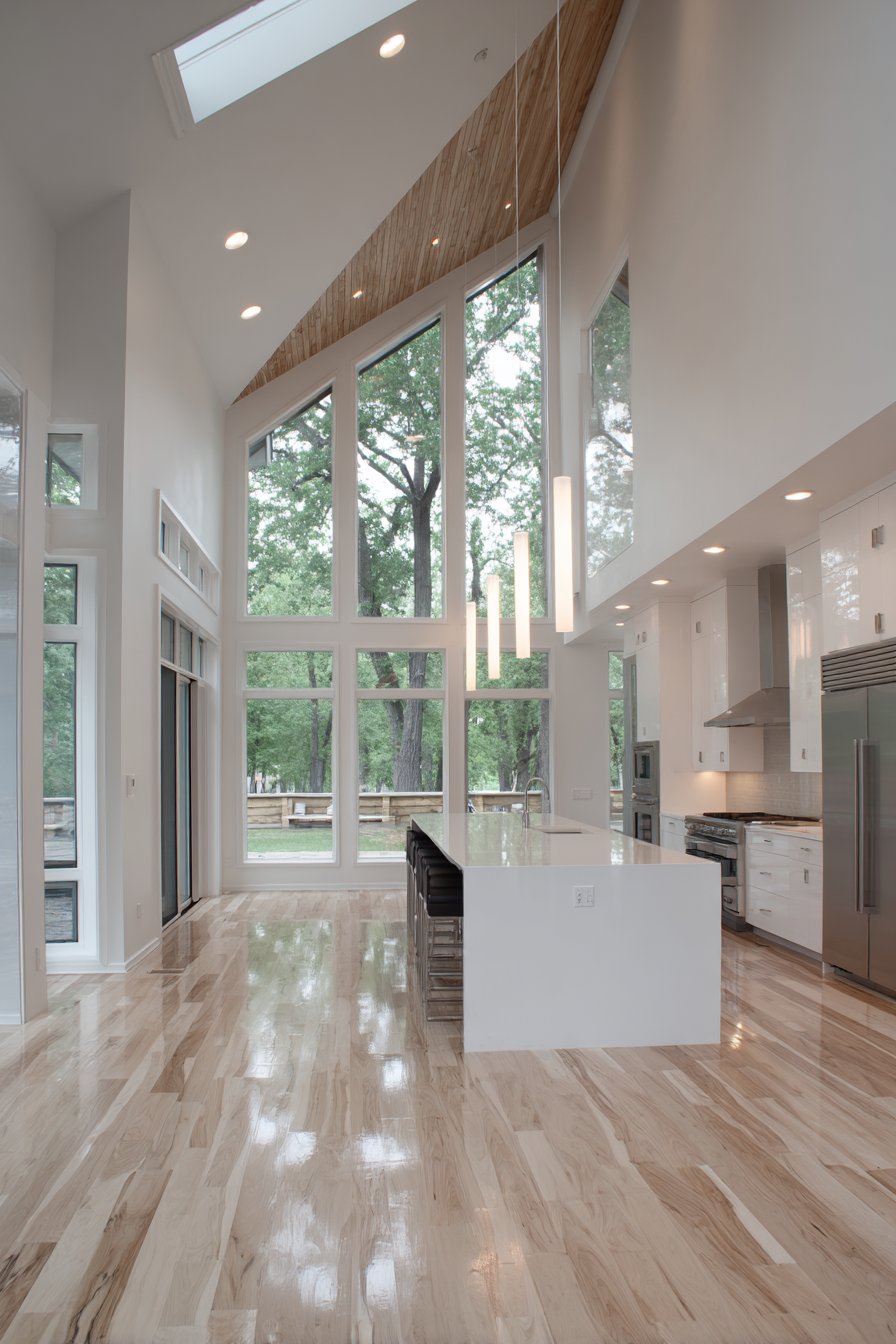
Pale grey countertops and simple white tile backsplash maintain light, airy aesthetic. The opposite wall features large windows and French doors opening to outdoor space. Abundant natural light floods through windows throughout the day. The streamlined design maximizes both space efficiency and visual connection simultaneously.
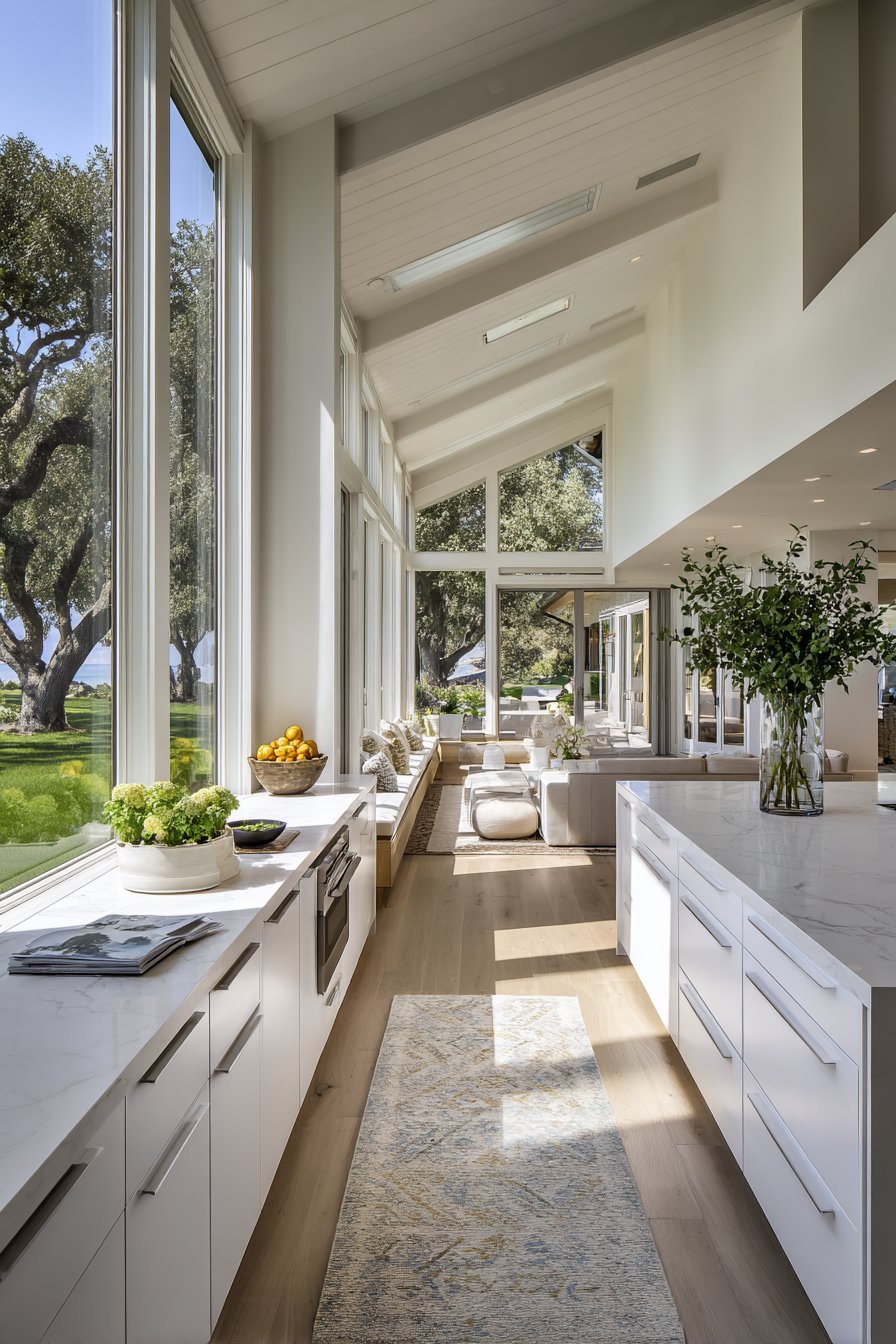
The single-wall layout preserves openness while providing full functionality. Storage capacity remains substantial despite the compact linear configuration. The French doors extend the open concept outdoors seasonally. This approach proves ideal for homes prioritizing maximum openness above all else.
The single-wall kitchen works beautifully for smaller homes or open lofts. The perpendicular peninsula provides just enough separation without walls. The design demonstrates that open kitchens can be truly barrier-free.
Key Design Tips:
- Consolidate all kitchen functions along one wall to maximize openness
- Extend cabinets floor to ceiling for maximum storage in linear layouts
- Add narrow peninsulas perpendicular to define boundaries without blocking views
- Choose pale grey countertops to maintain light, spacious aesthetics
- Position opposite walls with large windows for abundant natural light
- Include French doors to extend open concept connections to outdoor spaces
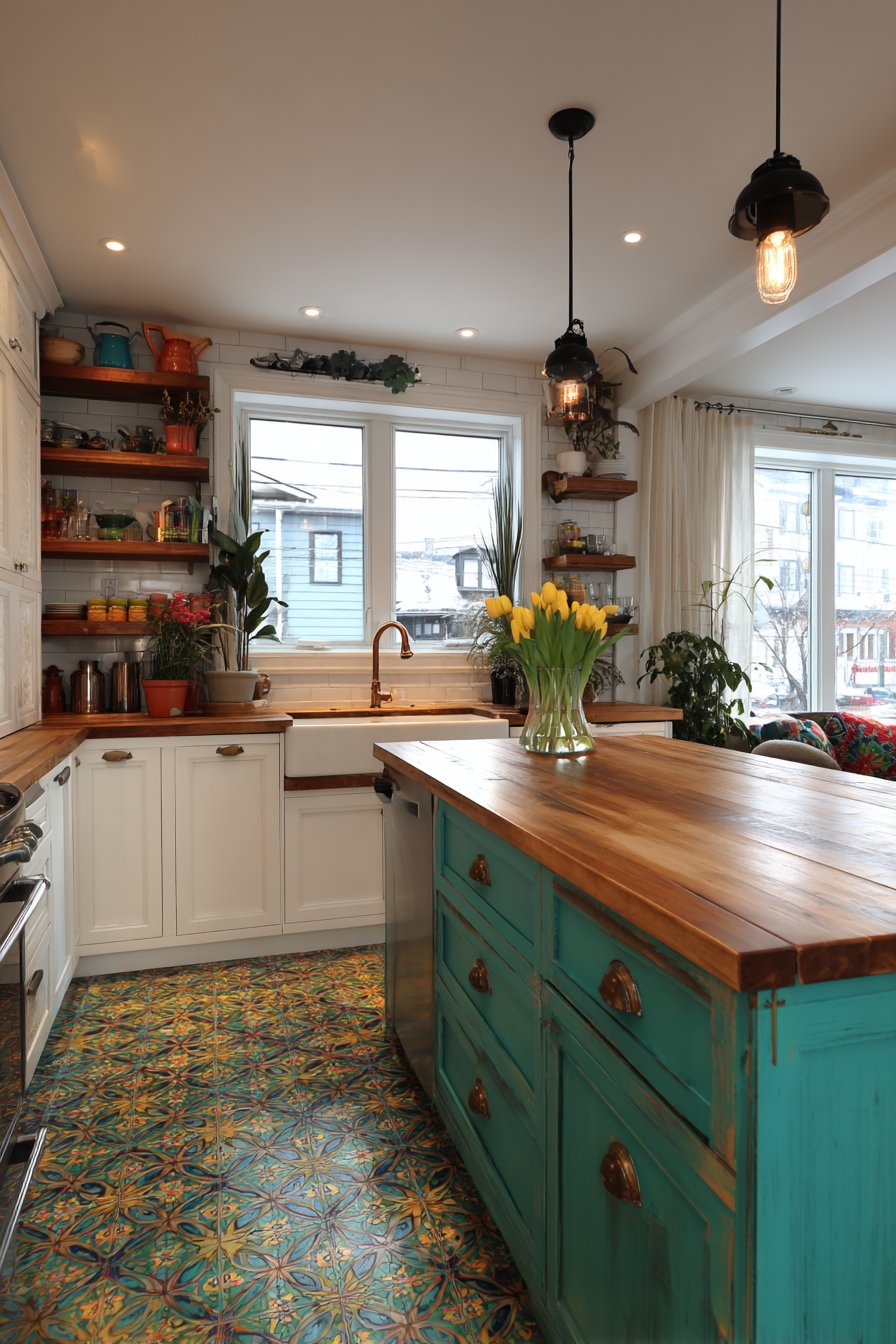
20. Eclectic Colorful with Mixed Materials
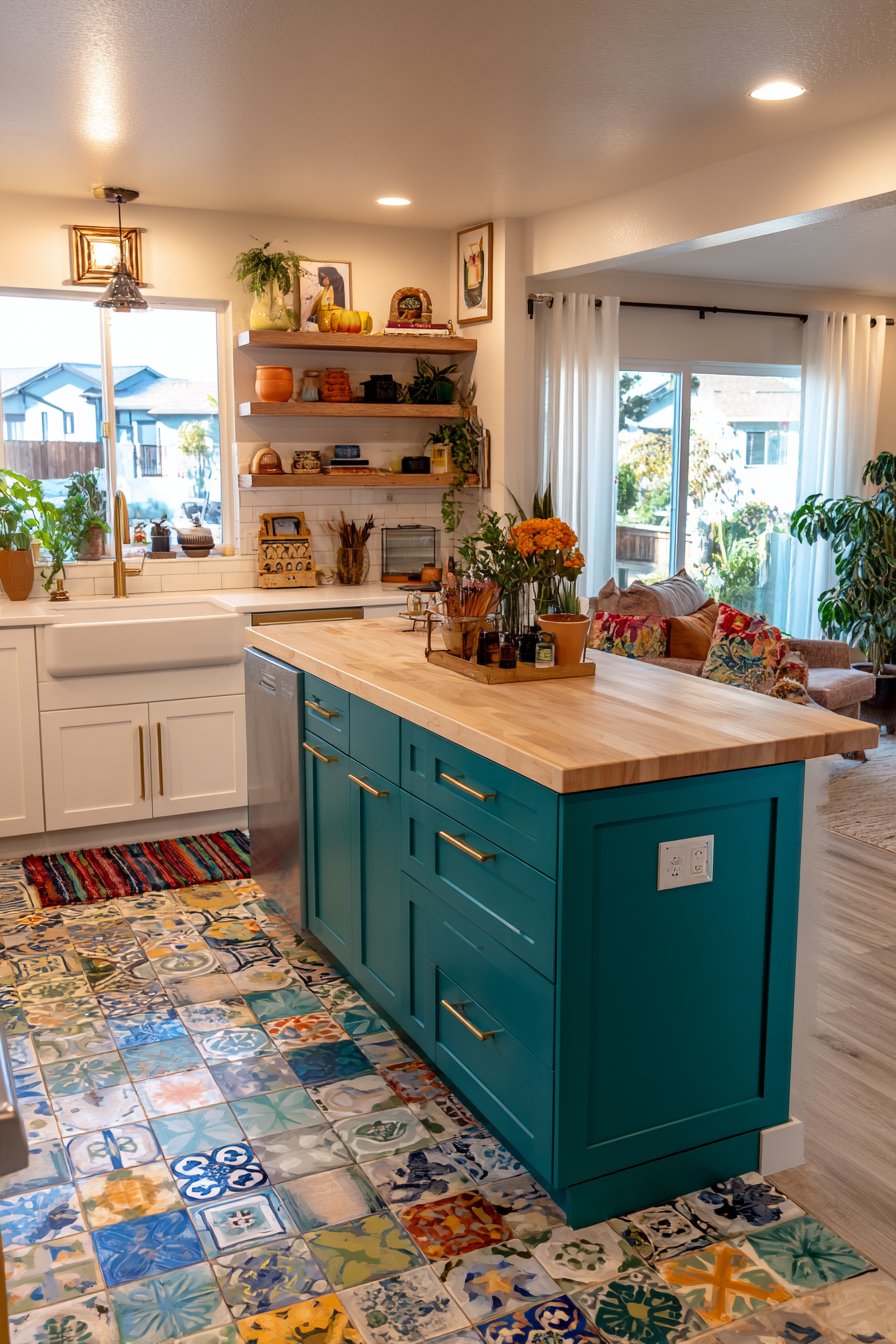
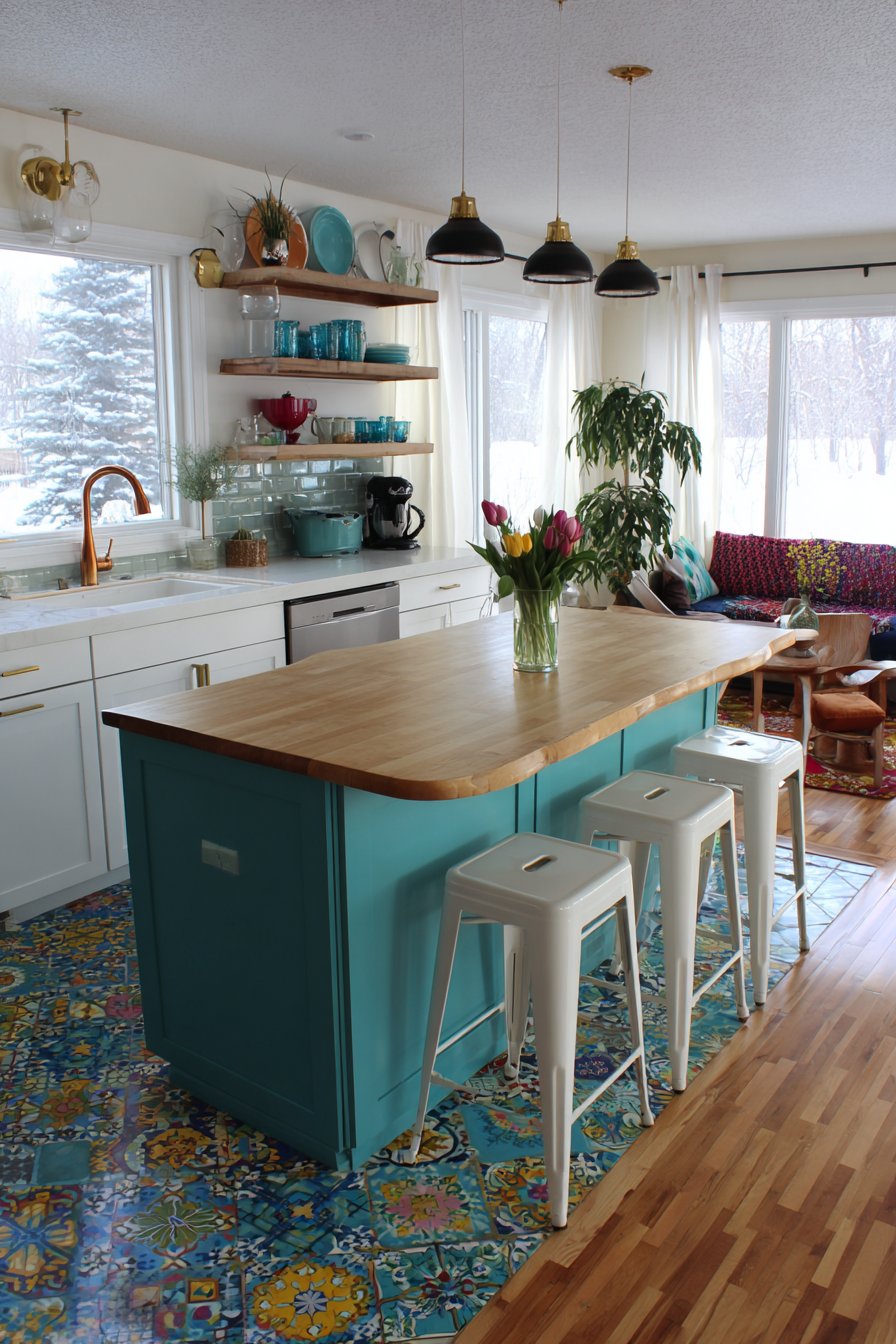
Colorful patterned cement tile flooring makes an immediate bold statement. White shaker cabinets provide classic backdrop for eclectic layering. A vibrant teal island with natural wood countertop adds personality instantly. The kitchen opens to bohemian-style living area with colorful textiles visible beyond.
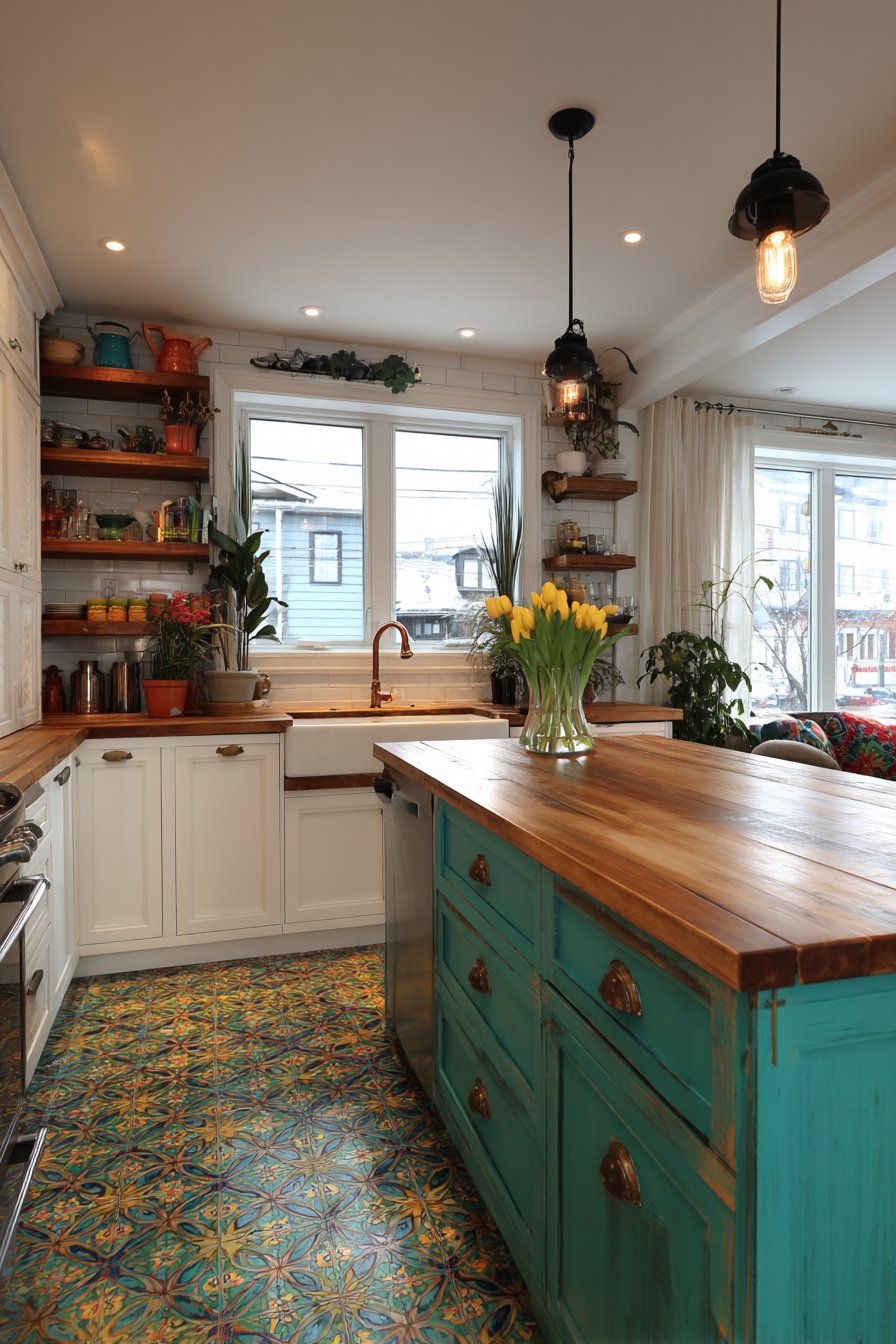
Open shelving displays collected mix of pottery and glassware in various styles. Mixed metal finishes including copper faucet, brass pulls, and black pendants create visual interest. Wide windows with simple white curtains allow natural light throughout. The personality-filled space demonstrates creative, individualistic approach to open design.
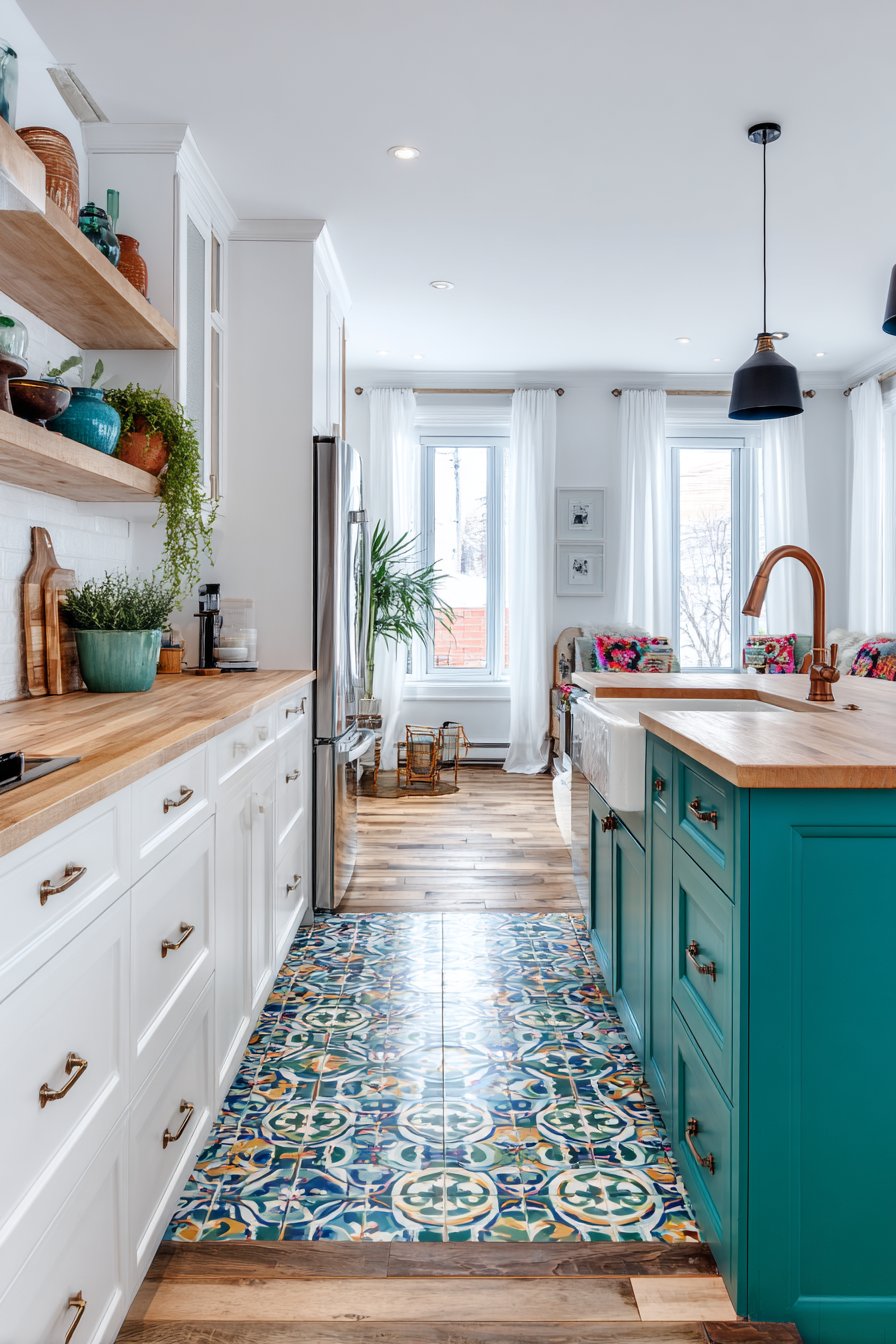
Bold color choices and mixed materials maintain cohesion through repeated colors. Complementary textures create unity despite the eclectic variety. Bright natural lighting celebrates the creative aesthetic throughout. This design proves that open kitchens can embrace maximalist, collected personalities.
The eclectic approach allows for personal expression and collected treasures. The colorful cement tile adds pattern and interest underfoot. The mixed metals prevent the space from feeling too matched or sterile.
Key Design Tips:
- Choose colorful patterned cement tile flooring for bold personality statements
- Paint islands in vibrant colors like teal for instant focal points
- Mix metal finishes throughout to add visual interest and eclectic character
- Display collected pottery and glassware on open shelving as functional art
- Use natural wood countertops on colored islands for organic contrast
- Repeat colors throughout connected spaces to maintain cohesion despite variety
Why These Open Kitchen Designs Are the Best
These open kitchen designs represent the finest approaches to creating connected, functional, and beautiful living spaces. Each concept demonstrates thoughtful consideration of spatial flow, material selection, and practical functionality. The designs showcase remarkable versatility that accommodates different home styles, family needs, and personal aesthetic preferences.
The waterfall-edge quartz island design exemplifies how statement pieces create visual anchors within open concepts. The sage green cabinetry brings current color trends into timeless layouts. The compact white shaker kitchen proves that limited square footage need not compromise open concept benefits. Strategic peninsula placement and floor-to-ceiling storage maximize efficiency while maintaining essential openness.
The navy and white galley kitchen demonstrates how traditional configurations adapt beautifully to open concepts. Two-tone cabinetry adds visual interest without overwhelming smaller spaces. The continuous oak flooring creates unity between kitchen and family room effectively. The expansive L-shaped island design shows how substantial islands can define zones while maintaining connection. The honed black granite and warm walnut combination creates sophisticated contrast.
The modern farmhouse design balances traditional elements with contemporary open living requirements. Floating shelves provide storage while maintaining visual lightness essential to openness. The minimalist white gloss kitchen proves that restraint and simplicity create genuine spaciousness. Handleless cabinets and Carrara marble combine luxury with clean-lined aesthetics. The transitional grey-washed oak design addresses real family needs without sacrificing beauty.
The industrial loft kitchen brings authentic urban character to open concepts. Exposed brick, concrete countertops, and reclaimed wood create distinctive personality. The compact smart storage design demonstrates that clever solutions overcome spatial limitations. Pull-out pantries and built-in banquettes maximize efficiency in smaller footprints. The dramatic two-level island showcases how book-matched quartzite creates showstopping focal points.
The coastal white and blue kitchen embodies relaxed, vacation-like atmospheres through color and natural materials. Light blue islands add personality without overwhelming commitment. The Scandinavian design celebrates simplified forms and natural wood tones beautifully. Mobile carts and minimal hardware maintain flexibility and visual calm. The luxury white kitchen with leathered quartzite demonstrates that open concepts can achieve truly high-end results.
The contemporary bold two-tone design proves that open kitchens can embrace dramatic statements. Matte black and horizontal-grain walnut create sophisticated contrast. The entertaining-focused wraparound island prioritizes social functionality through strategic orientation. Beverage stations and abundant seating support frequent gatherings naturally. The rustic reclaimed design brings environmental sustainability to authentic character.
The family-optimized kitchen addresses practical realities of active household life. Durable quartz, soft-close drawers, and built-in charging stations support daily functions. The transitional taupe design offers balanced sophistication that adapts over time. Versatile neutral palettes work equally well for everyday living and entertaining. The single-wall galley maximizes openness by consolidating all functions linearly.
The eclectic colorful kitchen celebrates personal expression through bold choices. Patterned cement tile, vibrant island colors, and mixed metals create collected character. These designs succeed because they balance aesthetic appeal with practical functionality. They demonstrate proper material selections for durability and maintenance requirements. They show appropriate scale relationships between islands, cabinetry, and overall space.
The best open kitchen designs create clear zones without physical barriers. They maintain visual connection while supporting different activities simultaneously. They incorporate adequate storage to prevent cluttered countertops that disrupt openness. They provide proper lighting layers for tasks, ambient illumination, and accent lighting. They select durable materials that withstand daily use while remaining beautiful.
These designs prove that open kitchens work beautifully across all aesthetic preferences. Whether preferring coastal tranquility, industrial edge, rustic warmth, or contemporary drama, successful open concepts share common principles. They prioritize natural light distribution throughout connected spaces. They use flooring transitions and furniture placement to define zones subtly. They incorporate islands or peninsulas as functional centerpieces that organize the layout.
The quality of materials elevates these designs above basic open concepts. Natural stone countertops, solid wood cabinetry, and authentic tile create lasting value. The thoughtful lighting designs ensure functionality while creating atmosphere. Task lighting over work surfaces, ambient recessed fixtures, and decorative pendants combine effectively. The proper scale of islands ensures they serve as assets rather than obstacles.
These open kitchen designs demonstrate that successful concepts require professional planning. Adequate circulation space around islands prevents crowding despite openness. Proper appliance placement creates efficient work triangles within open layouts. Strategic cabinet heights and depths maximize storage without visual weight. The designs show how open concepts actually increase home value and marketability.
The incorporation of seating transforms islands into social hubs that justify their footprint. Counter stools invite casual dining and homework sessions naturally. The connection to adjacent living areas encourages family interaction throughout daily activities. Open kitchens facilitate supervision of children while cooking or working. They allow hosts to entertain guests instead of working in isolation.
These designs succeed because they solve real problems while creating beautiful spaces. They maximize natural light that reduces energy costs and improves wellbeing. They create flexible spaces that adapt to changing family needs over time. They incorporate personal style through color, materials, and decorative choices. They demonstrate that open kitchens represent the future of residential design.
Conclusion
These twenty open kitchen designs demonstrate the remarkable versatility and enduring appeal of connected living spaces. From compact efficiency to expansive luxury, each concept offers unique solutions for creating beautiful, functional, and socially connected homes. The key takeaways include the importance of statement islands as organizational centerpieces, strategic use of materials to define zones without walls, and proper lighting layers that support various activities.
Successful open kitchen design balances aesthetic preferences with practical functionality. Material selections must withstand daily use while maintaining beauty over time. Scale relationships between islands, cabinetry, and overall space require careful planning. Adequate storage prevents cluttered countertops that disrupt the essential openness. Natural light distribution throughout connected zones creates inviting atmospheres that encourage gathering.
Whether you gravitate toward coastal tranquility, industrial edge, rustic warmth, or contemporary drama, these concepts provide inspiration for transforming your home. Start by identifying your primary needs—entertaining, family functionality, or efficient cooking. Consider which aesthetic resonates with your personal style and existing home architecture. Consult with design professionals to ensure proper proportions and technical requirements.
Your dream open kitchen awaits creation through thoughtful planning and creative expression. The investment in quality materials and professional design yields spaces that enhance daily life while increasing home value. Begin exploring these concepts today to discover how open kitchen design can transform your home into a connected, functional, and beautiful environment where life naturally unfolds.
