


There is a growing shift happening in the world of interior design. Homeowners and designers alike are moving away from loud, logo-driven aesthetics toward something far more refined. Quiet luxury is emerging as one of the most compelling design philosophies of our time — a movement that values restraint, quality, and timeless elegance over trend-chasing excess.
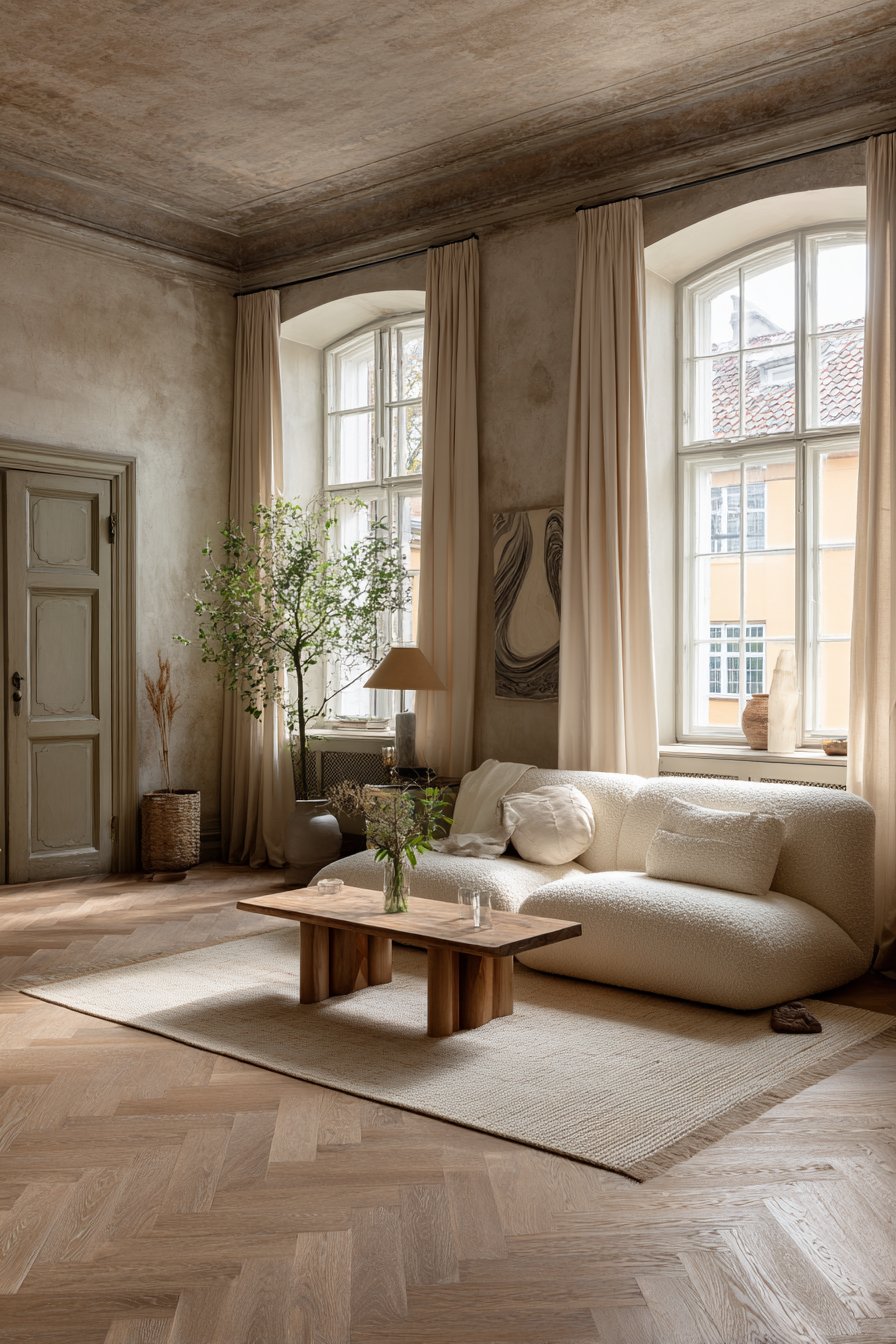
Quiet luxury in home design is about intentional living. It is about curating spaces that feel calm, considered, and deeply personal. Unlike maximalist or flashy interiors, quiet luxury communicates status and sophistication through texture, proportion, and craftsmanship. It speaks softly — and that is precisely what makes it so powerful.
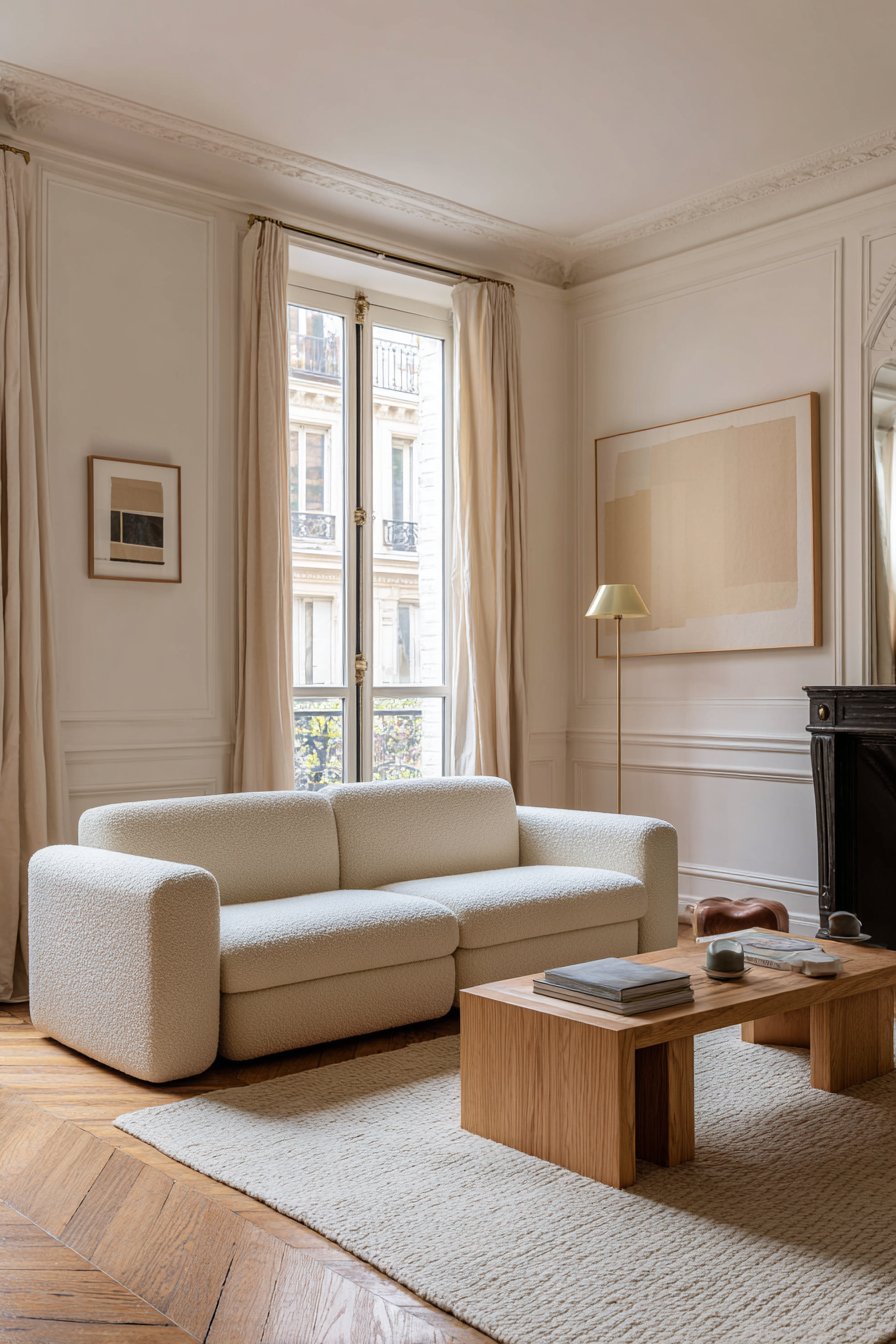
This article explores what quiet luxury truly means in the context of home design. We will cover its defining characteristics, how to implement it room by room, and why this approach to decorating has become so deeply relevant for modern living. Whether you are redesigning your entire home or simply refining your space, these insights will guide you toward a more elevated and serene aesthetic.
1. Understanding the Core Philosophy of Quiet Luxury
Quiet luxury is not simply a decorating style. It is a design philosophy rooted in the idea that true elegance never needs to announce itself. Originating from fashion — think of understated brands like The Row or Loro Piana — this philosophy has translated beautifully into interior spaces. It prioritizes the experience of a room over its visual spectacle.
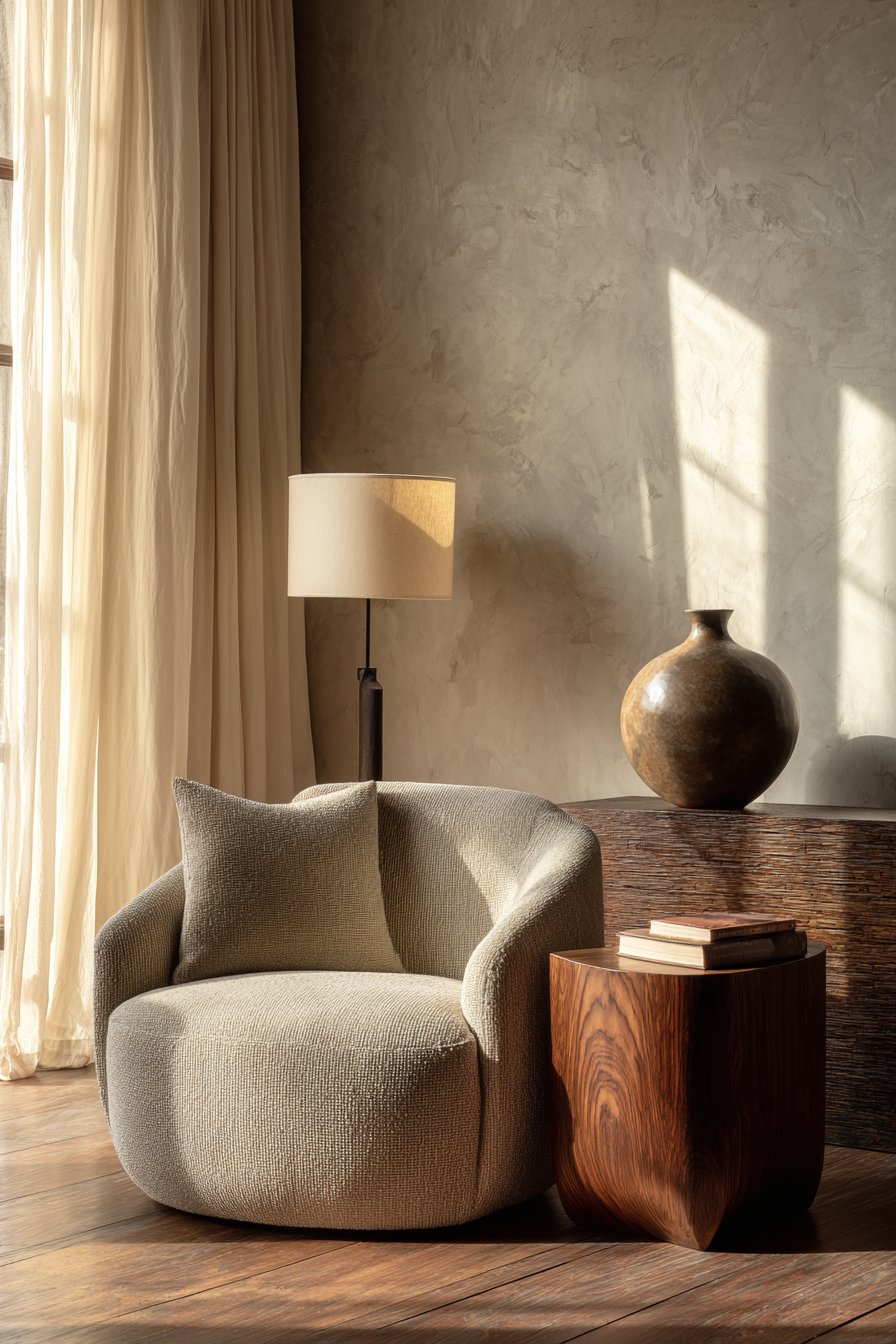
At its heart, quiet luxury embraces the principle of less is more. Every object in a space must earn its place. Clutter is the enemy. Instead, rooms are composed with deliberate restraint, where a single beautifully crafted side table says more than a room filled with trendy accessories ever could. The result is a space that feels deeply curated rather than casually assembled.
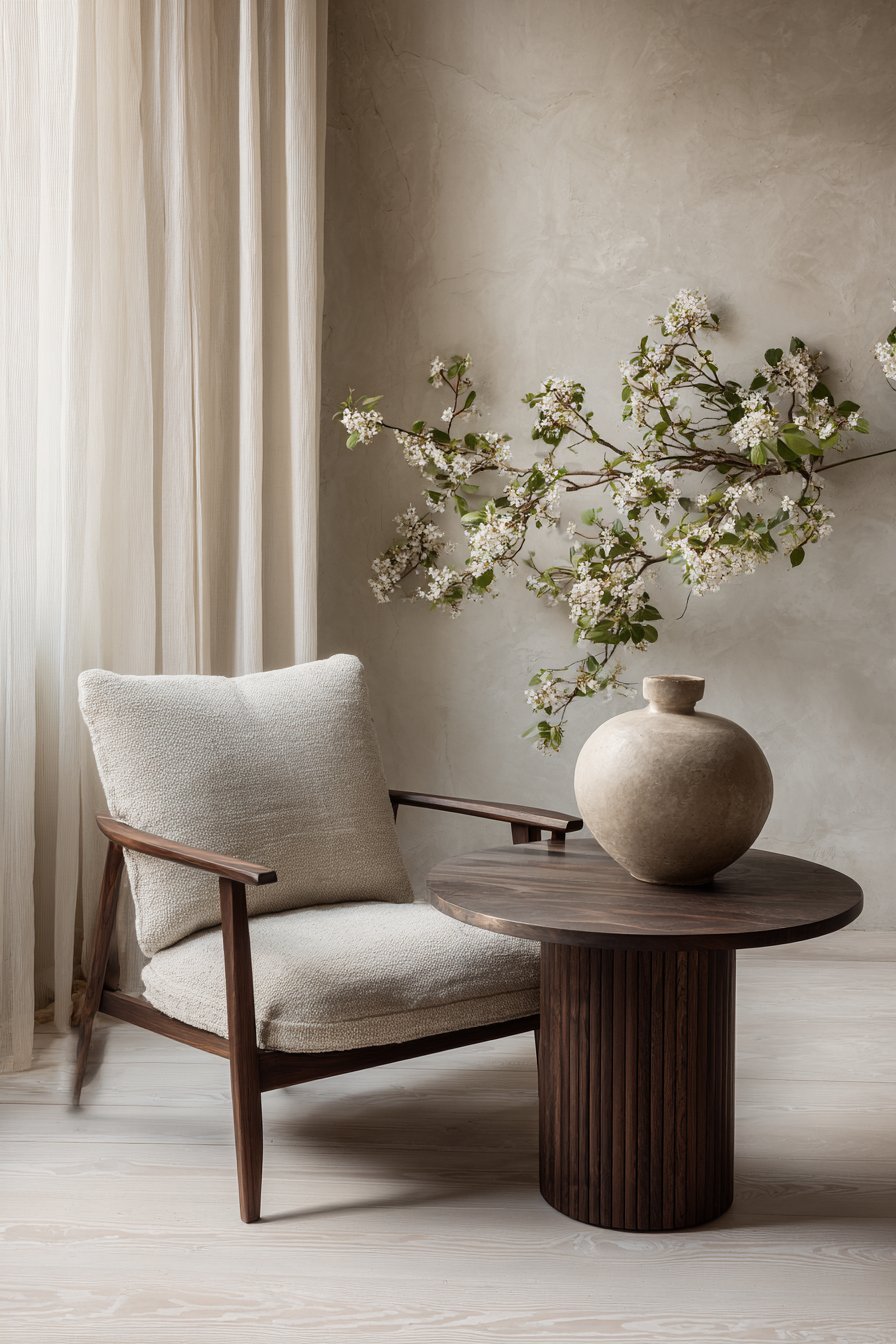
This philosophy also values longevity over novelty. Rather than following fast-moving design trends, quiet luxury leans into timeless choices — natural materials, neutral palettes, and enduring silhouettes. The goal is a home that feels just as relevant in twenty years as it does today.
- Choose pieces with enduring shapes rather than trend-driven novelty
- Edit your space ruthlessly — remove anything without purpose or meaning
- Invest in fewer, better things rather than many inexpensive items
- Prioritize emotional resonance over visual impact
- Ask yourself: does this piece feel considered or does it feel convenient?
2. The Role of Neutral and Muted Color Palettes
Color is one of the most powerful tools in quiet luxury design. Muted tones — warm whites, soft greiges, deep taupes, and chalky creams — form the backbone of this aesthetic. These colors do not compete for attention. Instead, they create a unified, calming backdrop that allows texture and form to take center stage.
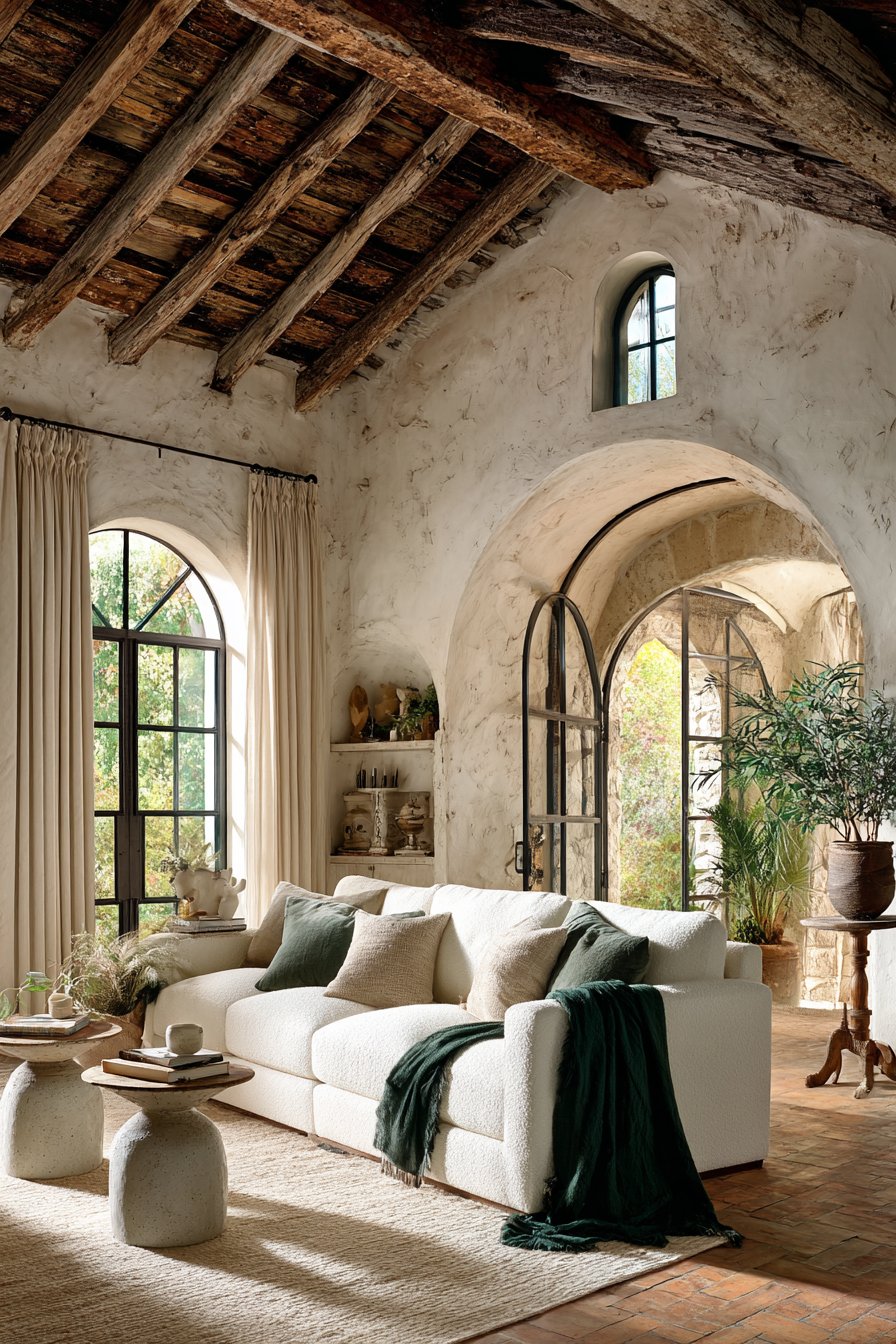
The quiet luxury palette avoids anything overly saturated or trend-specific. Earthy neutrals like raw linen, stone, sand, and bone anchor a space in nature, evoking a sense of grounded tranquility. Deeper shades — charcoal, slate, warm black, or forest green — can be introduced carefully as accents without disrupting the overall serenity.
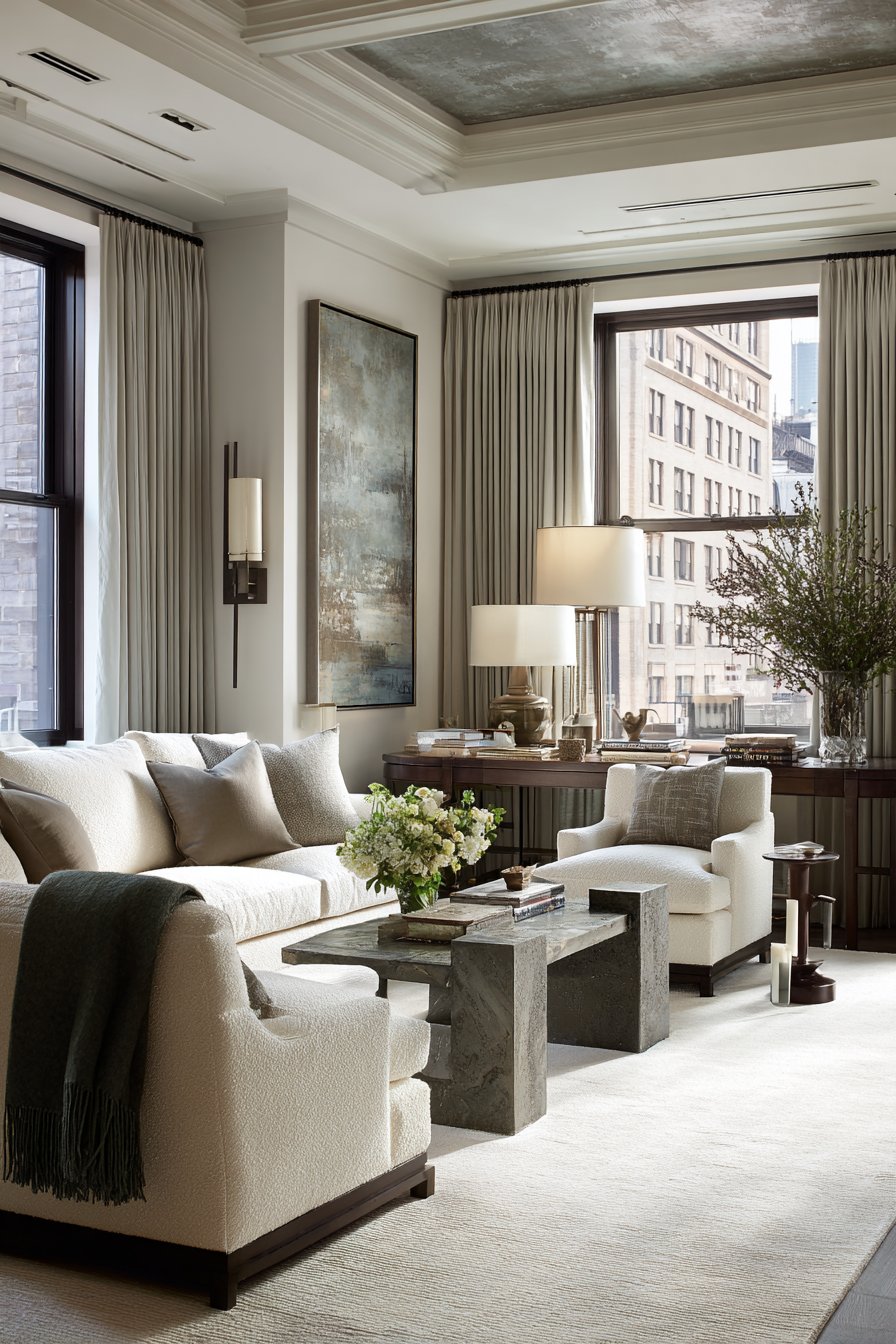
It is important to understand that a monochromatic approach does not mean boring. Layering similar tones in different textures creates enormous visual depth. A room with walls in soft white, a sofa in creamy boucle, and a rug in warm ivory appears effortlessly sophisticated despite the absence of bold color contrast.
- Build your palette around two to three tonal shades that complement each other
- Avoid bright whites that feel sterile — opt for warm, slightly off-white tones
- Use deeper accent colors sparingly and intentionally in textiles or art
- Test paint samples in natural light before committing to a color
- Layer textures within a neutral palette to add dimension and warmth
3. Prioritizing Quality Materials Over Quantity
In quiet luxury interiors, material quality is everything. This is where investment matters most. Natural materials — stone, solid wood, linen, wool, silk, cashmere, and leather — are the foundation of this aesthetic. These materials age beautifully, develop character over time, and possess an inherent richness that synthetic alternatives simply cannot replicate.
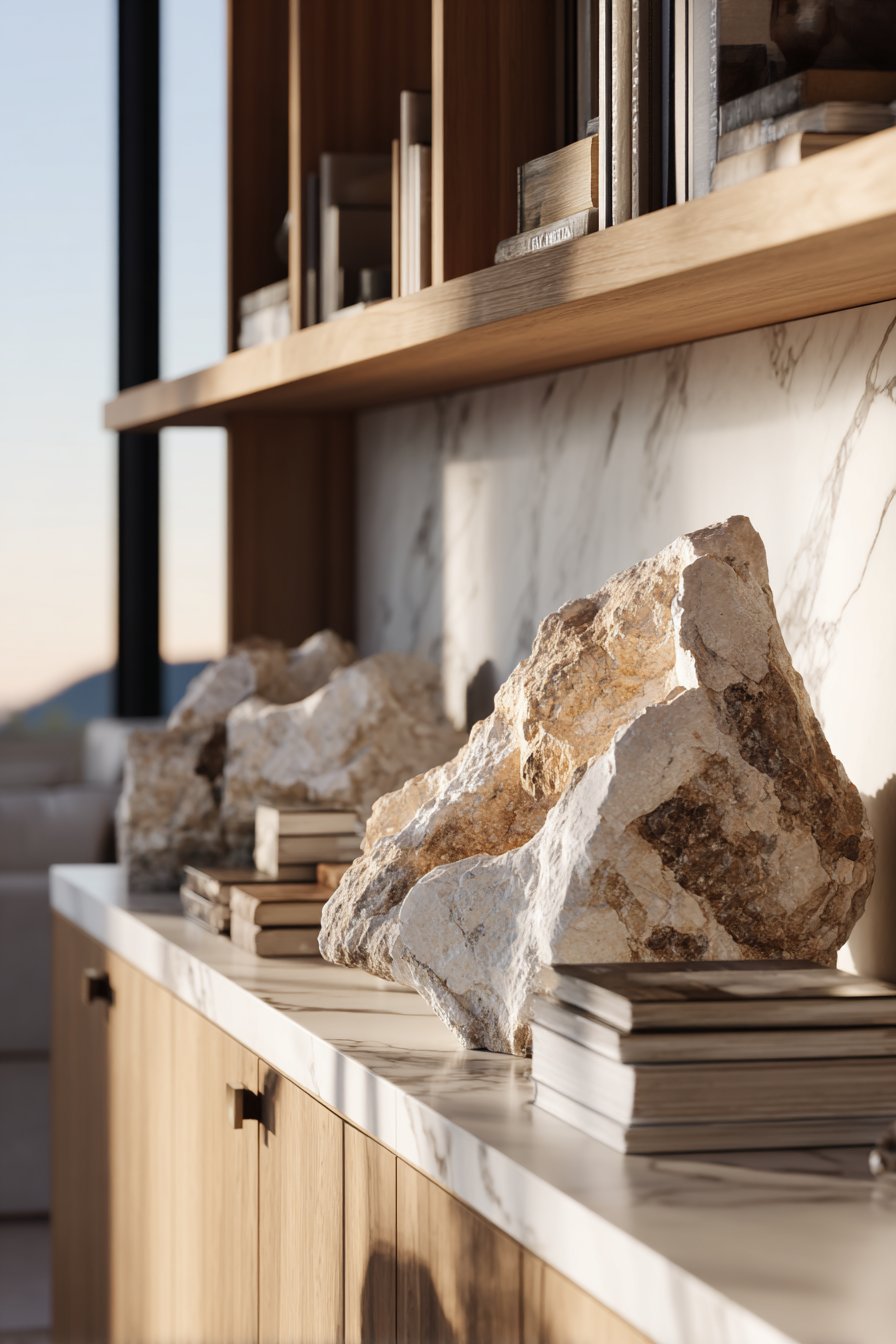
Tactile experience is a defining feature of quiet luxury. Run your hand across a room and you should feel cool marble, warm timber, soft wool, and smooth plaster. These sensory layers communicate a level of care and investment that immediately elevates a space. When every surface feels considered, the room achieves a level of cohesion that is deeply satisfying.
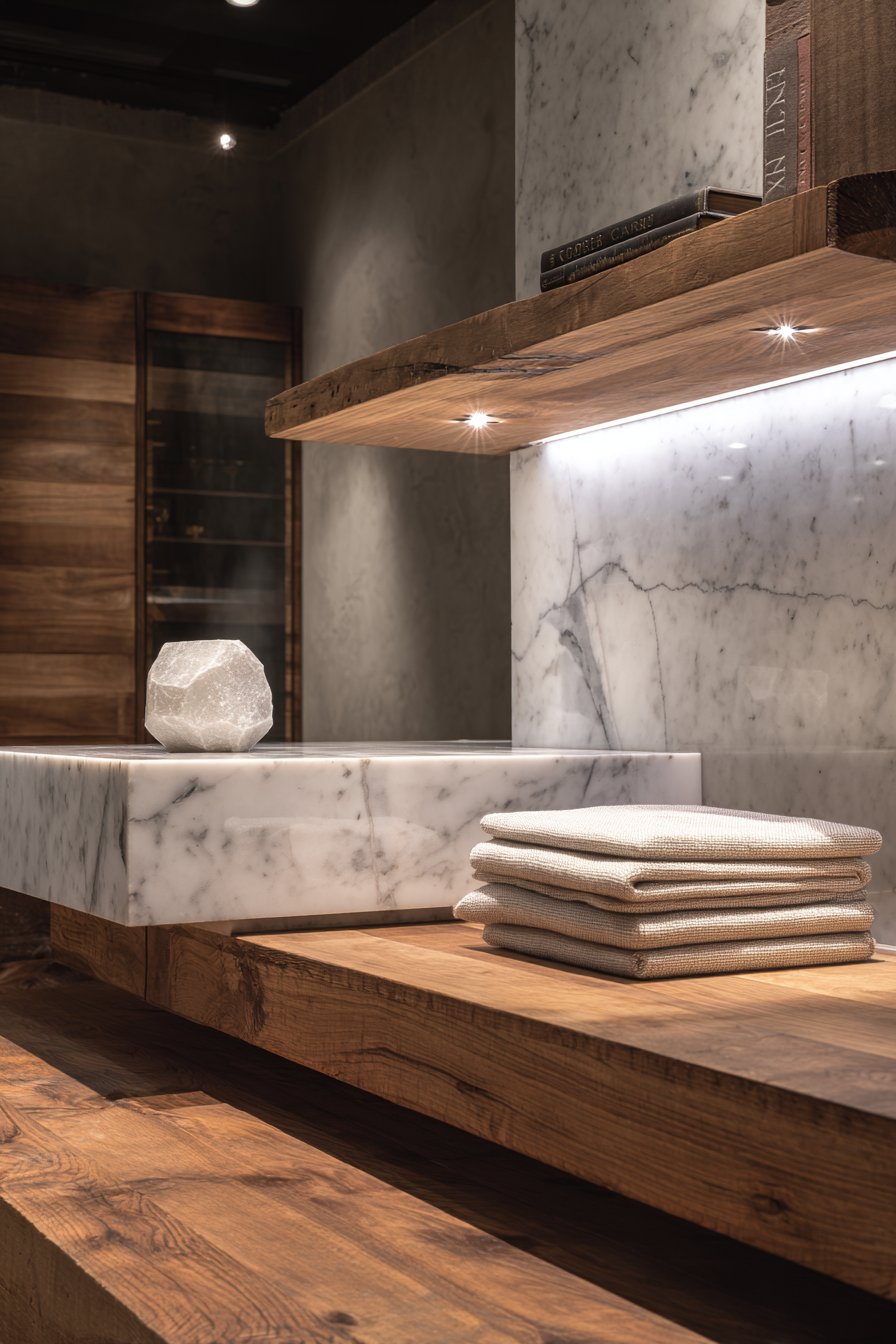
This focus on materials means that budgeting strategically is essential. You do not need to splurge on everything, but you should identify the key surfaces and pieces that receive the most attention — flooring, key furniture, countertops — and invest there first. Lesser-seen items can be sourced more modestly without compromising the overall feel.
- Choose solid wood or stone over veneers or composite alternatives where possible
- Invest in natural fiber textiles: linen, wool, cashmere, or cotton over polyester blends
- Prioritize flooring quality — it sets the tone for every room
- Source vintage or antique pieces for unique materiality and character
- Allow materials to patina naturally rather than over-finishing or over-maintaining them
4. Furniture Selection: Silhouette, Scale, and Craft
Furniture in a quiet luxury interior is selected with great care. Clean silhouettes with considered proportions are preferred over ornate or overly decorative pieces. Think low-profile sofas with deep cushions, dining tables in solid oak, and beds with simple upholstered frames. The shapes are timeless, not trendy.
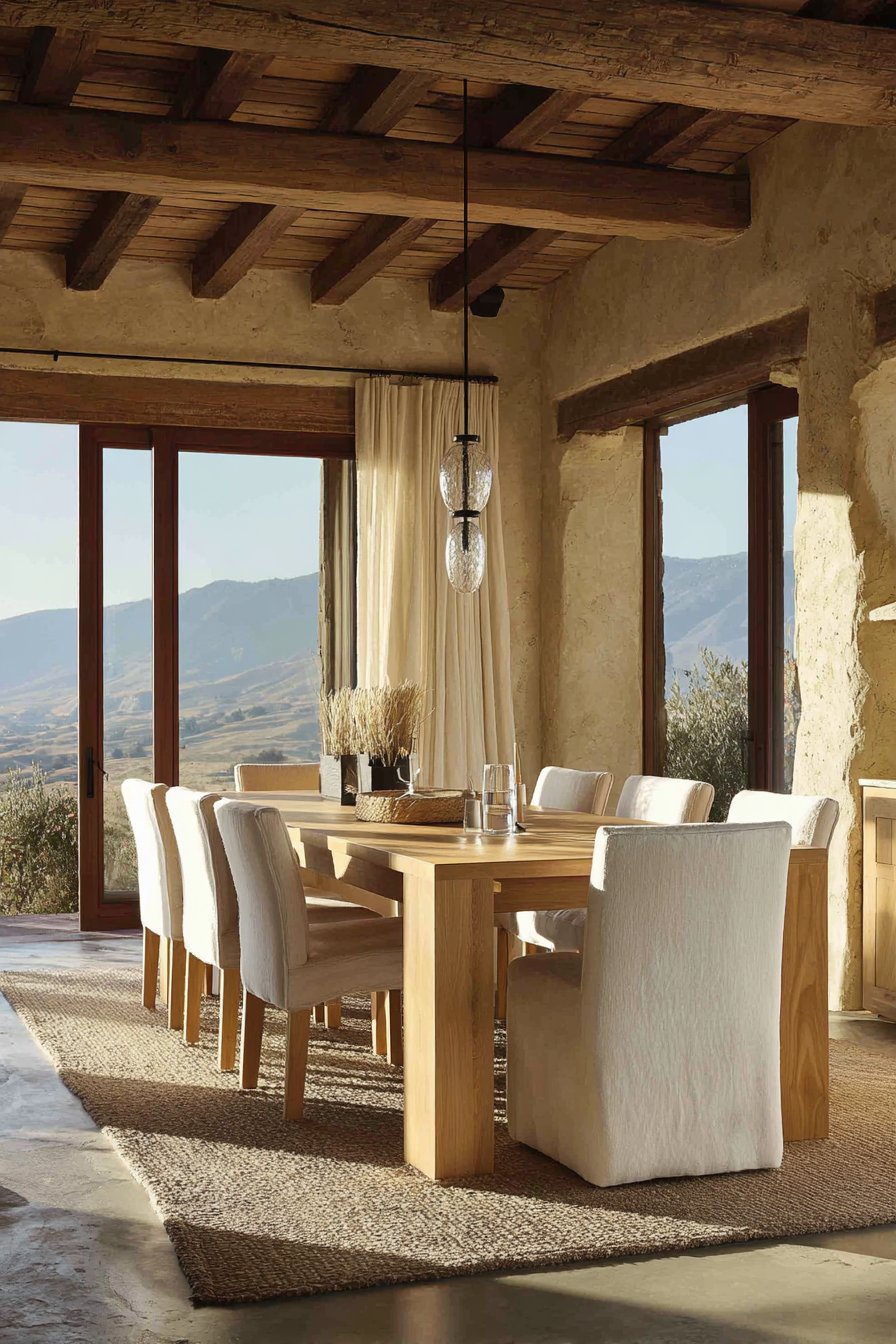
Scale and proportion are critical. Furniture must suit the room’s dimensions. Oversized pieces in a small room feel oppressive. Undersized pieces in a grand room feel lost. Quiet luxury gets this balance right — the furniture feels as though it was designed specifically for its space, even when it was not. This illusion of fit is a hallmark of thoughtful design.
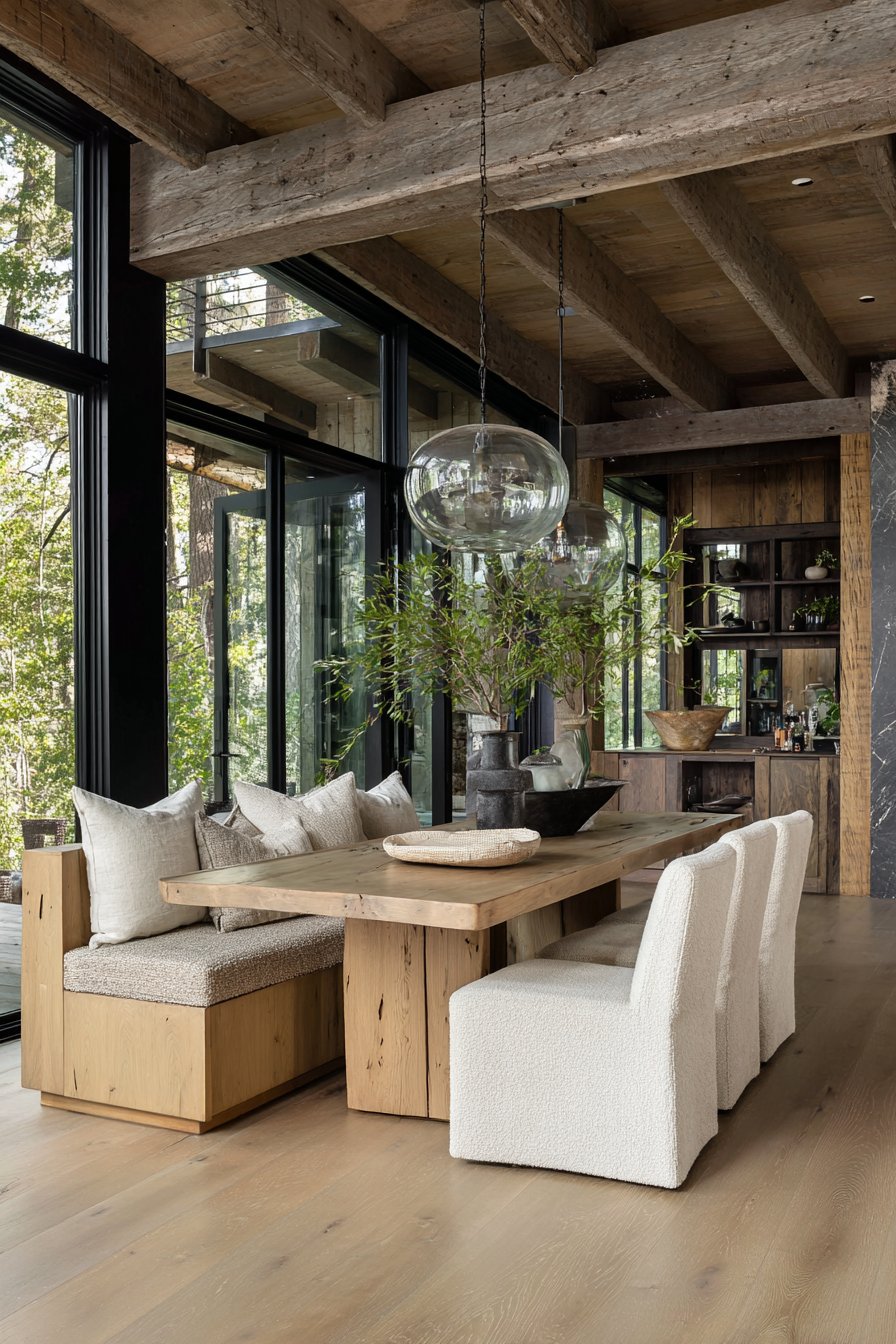
Craftsmanship is another non-negotiable. Joinery details, the weight of a drawer, the way upholstery wraps a corner — these nuances separate truly excellent furniture from ordinary pieces. They are the details guests may not consciously notice but will absolutely feel. Quiet luxury is as much about the feel of a home as its appearance.
- Select furniture with simple, architectural lines that will not date quickly
- Prioritize pieces with solid construction — check joinery and frame quality
- Consider the negative space around furniture as part of the design
- Mix old and new pieces for depth and a sense of curated history
- Reupholster quality vintage frames in natural fabrics rather than buying cheap new pieces
5. Lighting as a Design Element
Lighting in quiet luxury interiors is layered and intentional. A single overhead light source is never enough. The goal is to create pools of warm, ambient light that make the room feel intimate and inviting at any hour. This is achieved through a careful combination of ceiling fixtures, wall sconces, table lamps, and floor lamps.
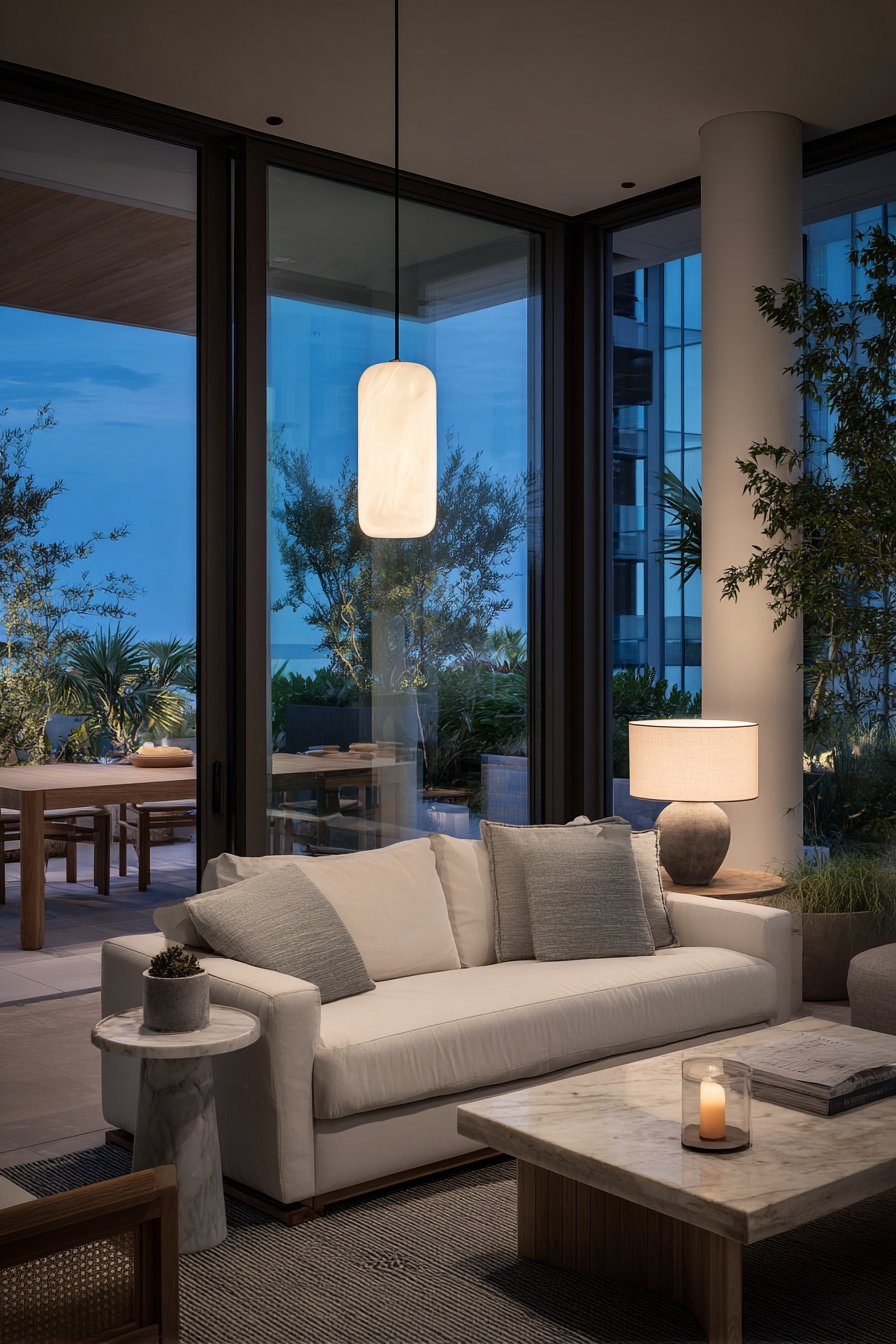
Warm light temperatures — around 2700K to 3000K — are essential. Cool or bright white lighting destroys the atmosphere that quiet luxury spaces work so hard to build. Dimmer switches are a must, allowing you to shift a room’s mood effortlessly from day to evening without changing a single piece of furniture.
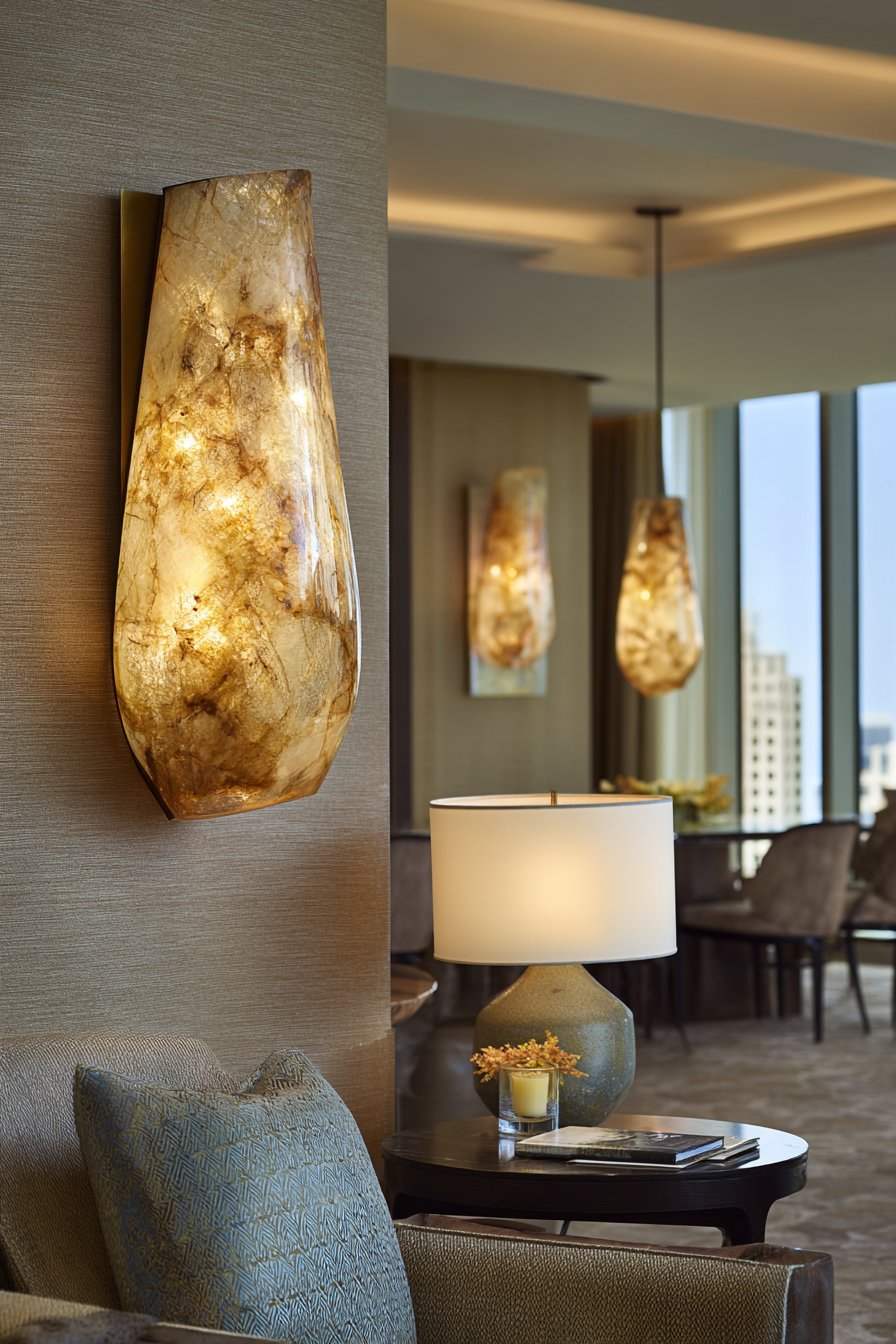
The fixtures themselves should be sculptural and refined. Handblown glass pendants, aged brass sconces, ceramic table lamps, and simple linen shades all contribute to the aesthetic. Lighting fixtures in quiet luxury spaces are chosen as much for their form when unlit as for the quality of light they produce.
- Install dimmer switches on all controllable light sources throughout the home
- Layer at least three types of lighting in every primary living space
- Choose warm bulbs between 2700K and 3000K for atmosphere
- Select fixtures with natural material bases: ceramic, stone, brass, or wood
- Use candlelight occasionally — nothing matches its warmth and intimacy
6. Texture and Layering: The Secret to Depth
One of the most misunderstood aspects of quiet luxury is that restraint in color does not mean restraint in texture. In fact, texture is the primary tool designers use to create visual and tactile richness in a neutral space. Without it, a muted palette can feel flat, cold, and clinical rather than warm and inviting.
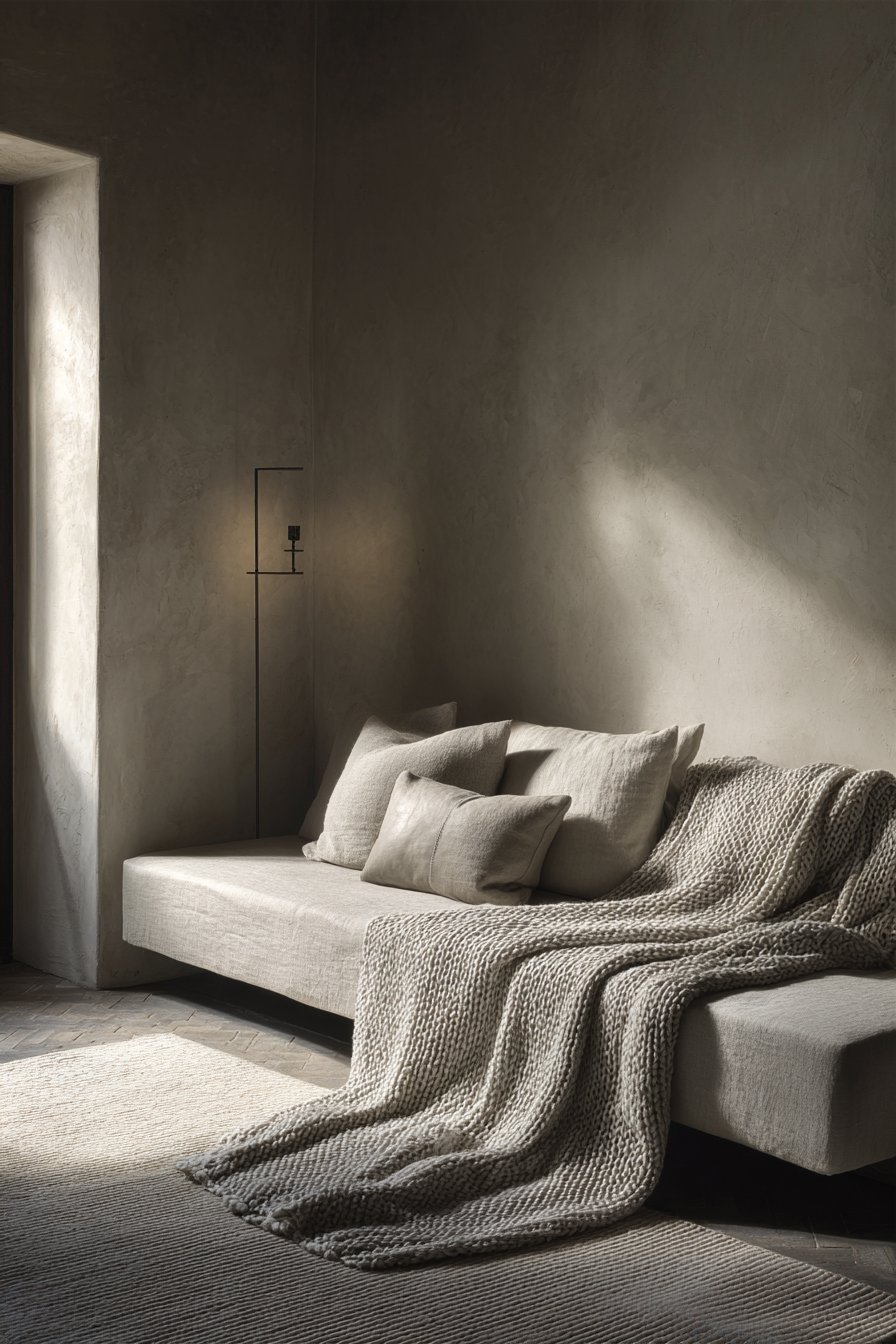
Layering textures thoughtfully is an art form. Consider a living room with a chunky knit throw, a smooth leather cushion, a rough-hewn linen sofa, a silky wool rug, and a polished plaster wall. Each surface offers something different to both the eye and the hand. Together, they create an environment of extraordinary sensory richness — all within a single tonal color story.
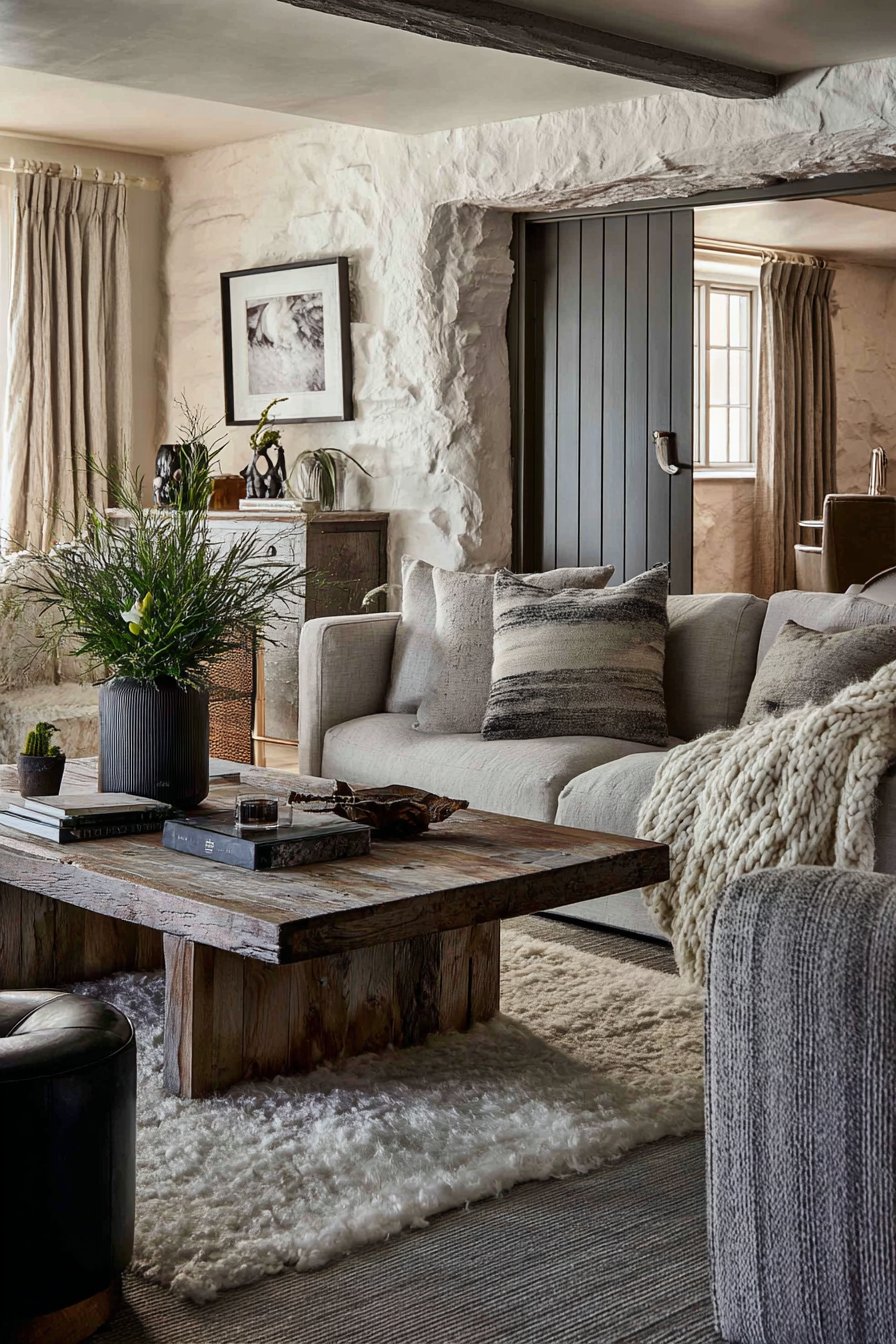
The key is to vary texture weight and scale. Pair fine textures with coarse ones. Combine matte finishes with subtle sheen. Layer lightweight textiles over heavier base materials. This interplay creates tension and interest in a way that no amount of pattern or color could achieve so elegantly.
- Layer at least four to five distinct textures in every primary living space
- Combine matte and sheen finishes on surfaces within the same room
- Use textiles generously — throws, cushions, and rugs are low-cost impact investments
- Introduce natural rough textures through stone, rattan, or raw plaster finishes
- Refresh texture layers seasonally by swapping in heavier or lighter textiles
7. Art and Accessories: Curated, Not Collected
In quiet luxury spaces, art and accessories are edited to a meaningful minimum. Every object has a reason to exist — whether it is a beautiful piece of pottery, a meaningful artwork, or a single branch in an architectural vase. Nothing is displayed out of habit or obligation. The result is that everything you see carries weight.
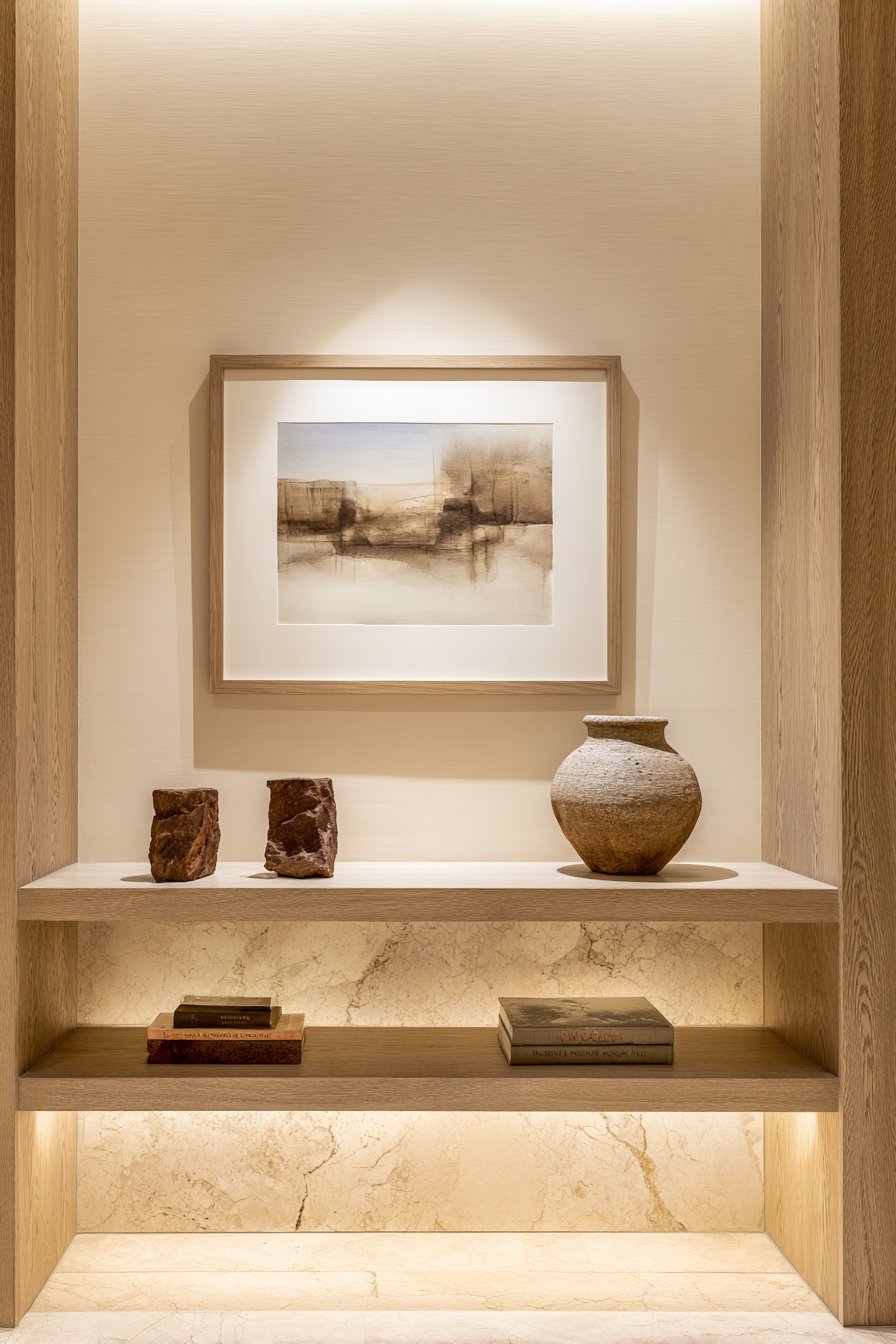
Artwork choices tend toward abstract, landscape, or figurative works with a restrained palette. Large-scale single pieces often make more impact than gallery walls, which can feel busy in this context. The framing matters enormously — simple gallery frames in natural wood, black, or aged gold keep the focus on the work itself.
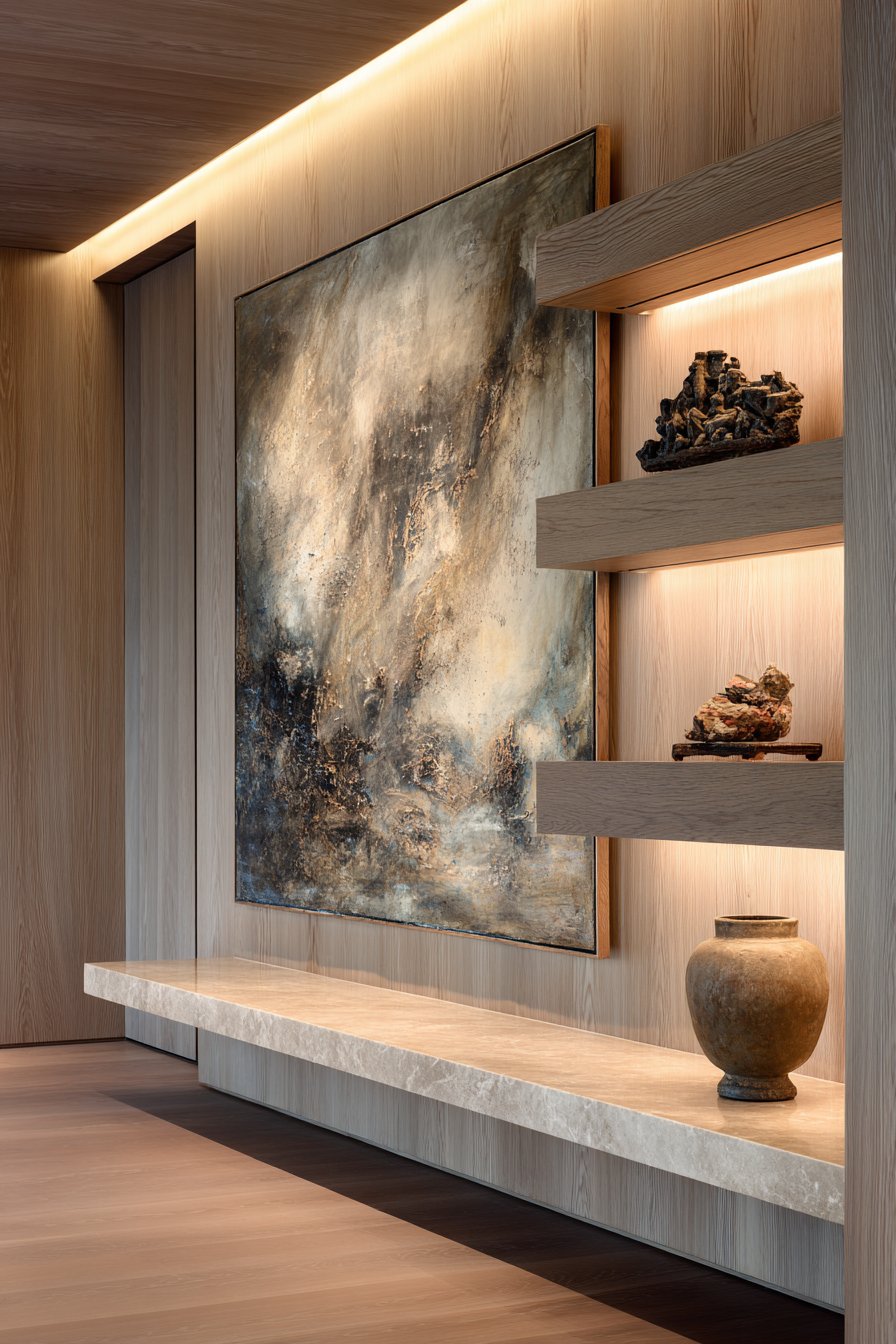
Accessories should reflect personal narrative as much as aesthetic preference. A well-traveled piece of ceramics, a vintage wooden bowl, or a sculpture from an independent artist all bring authenticity that no mass-produced accessory can replicate. Quiet luxury is deeply personal — it resists the look of a styled showroom.
- Apply the one-in, one-out rule when adding new objects to a space
- Choose one large statement artwork over several smaller pieces where possible
- Display objects in odd-numbered groupings of one, three, or five for visual balance
- Invest in a few meaningful ceramics or sculptures rather than many decorative objects
- Leave surfaces deliberately bare — negative space is a design element in itself
8. The Importance of Scent and Atmosphere
Quiet luxury extends beyond the visual. Sensory atmosphere — what a room smells and sounds like — is an often-overlooked dimension of elevated home design. A beautifully styled room that smells stale or feels acoustically harsh will never achieve the full experience that quiet luxury promises.
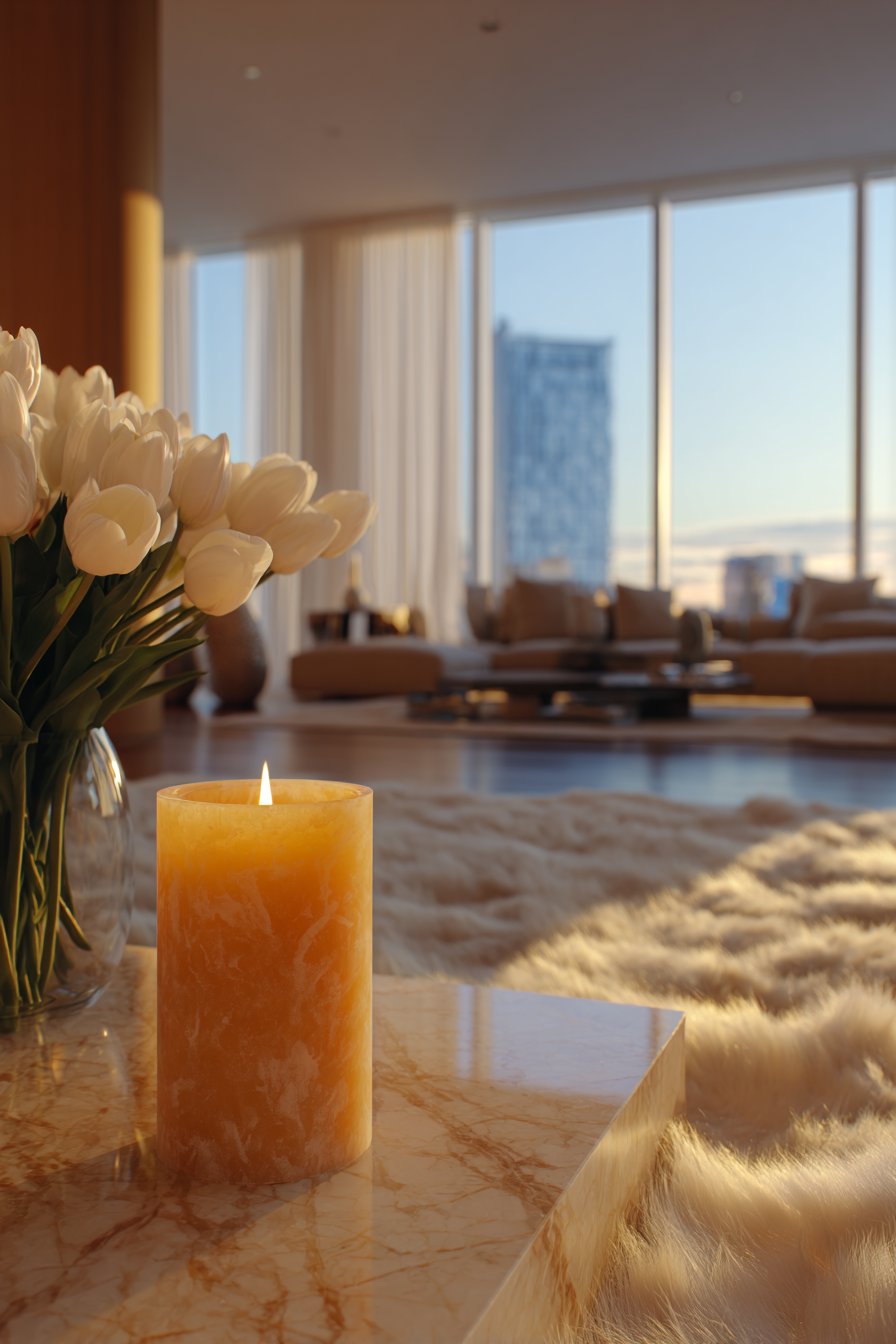
Scent is immediately evocative. A carefully chosen home fragrance — whether a high-quality candle, a diffuser with clean botanical oils, or fresh flowers — adds an invisible layer of luxury that guests notice subconsciously. Choose scents that are clean, natural, and understated: sandalwood, white tea, cedarwood, or fresh linen rather than synthetic or overpowering fragrances.
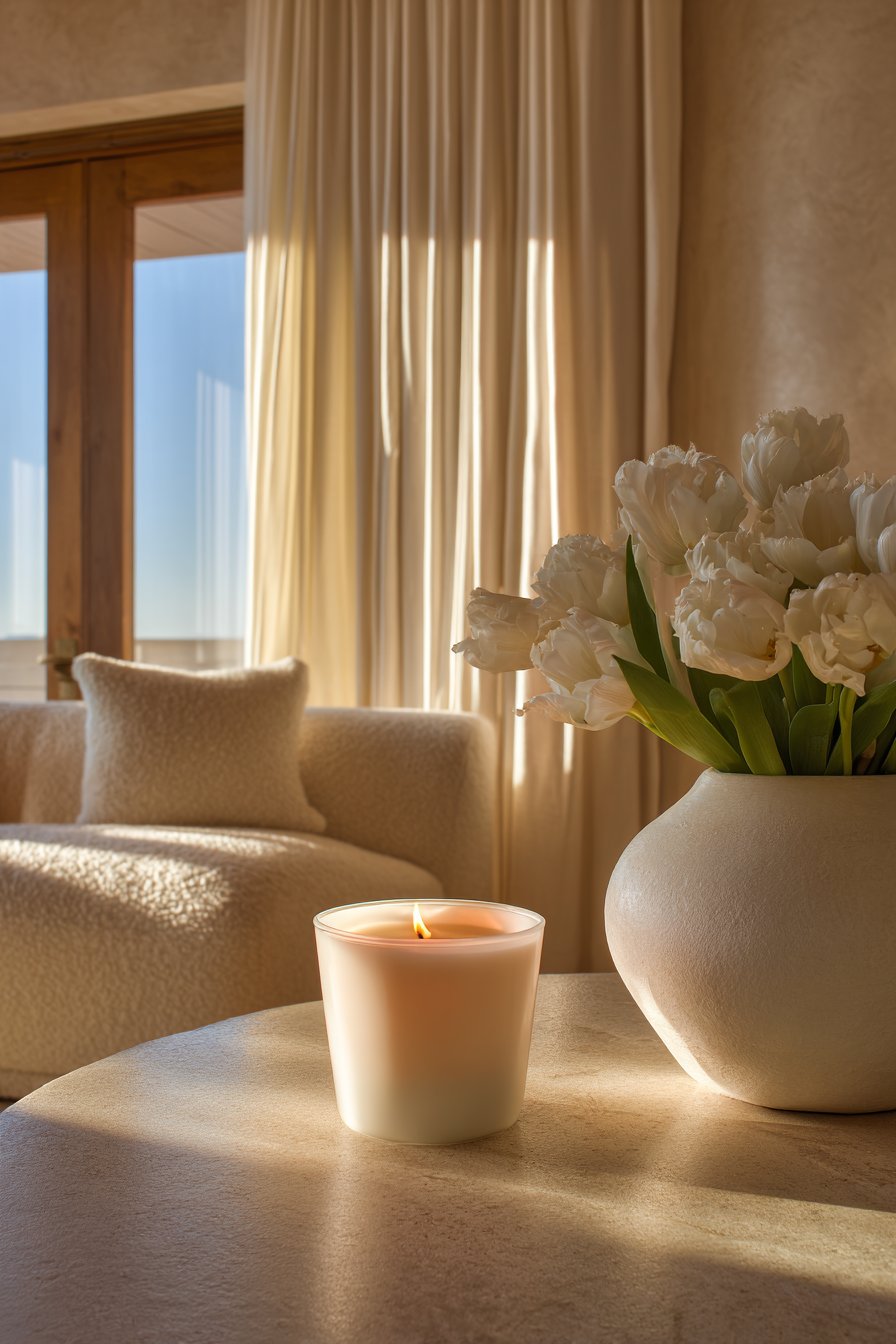
Acoustics also matter. Soft furnishings absorb sound and reduce the echo that hard surfaces create. Rugs, upholstered furniture, curtains, and cushions all contribute to a room that feels acoustically warm and intimate. A quiet, softly resonant environment communicates a level of considered comfort that is central to this aesthetic.
- Invest in two or three signature home fragrances that work across your spaces
- Choose candles made from natural waxes with clean-burning, botanical scents
- Use generous rugs and curtains to improve room acoustics alongside aesthetics
- Keep fresh flowers or sculptural dried botanicals as a living sensory element
- Avoid synthetic air fresheners — they undermine the authentic quality of the space
9. Quiet Luxury in the Bedroom
The bedroom is perhaps the most natural home for quiet luxury principles. It is the most private room in the house — a sanctuary dedicated entirely to rest, comfort, and personal renewal. Here, the philosophy of understated elegance translates into deeply restorative design.
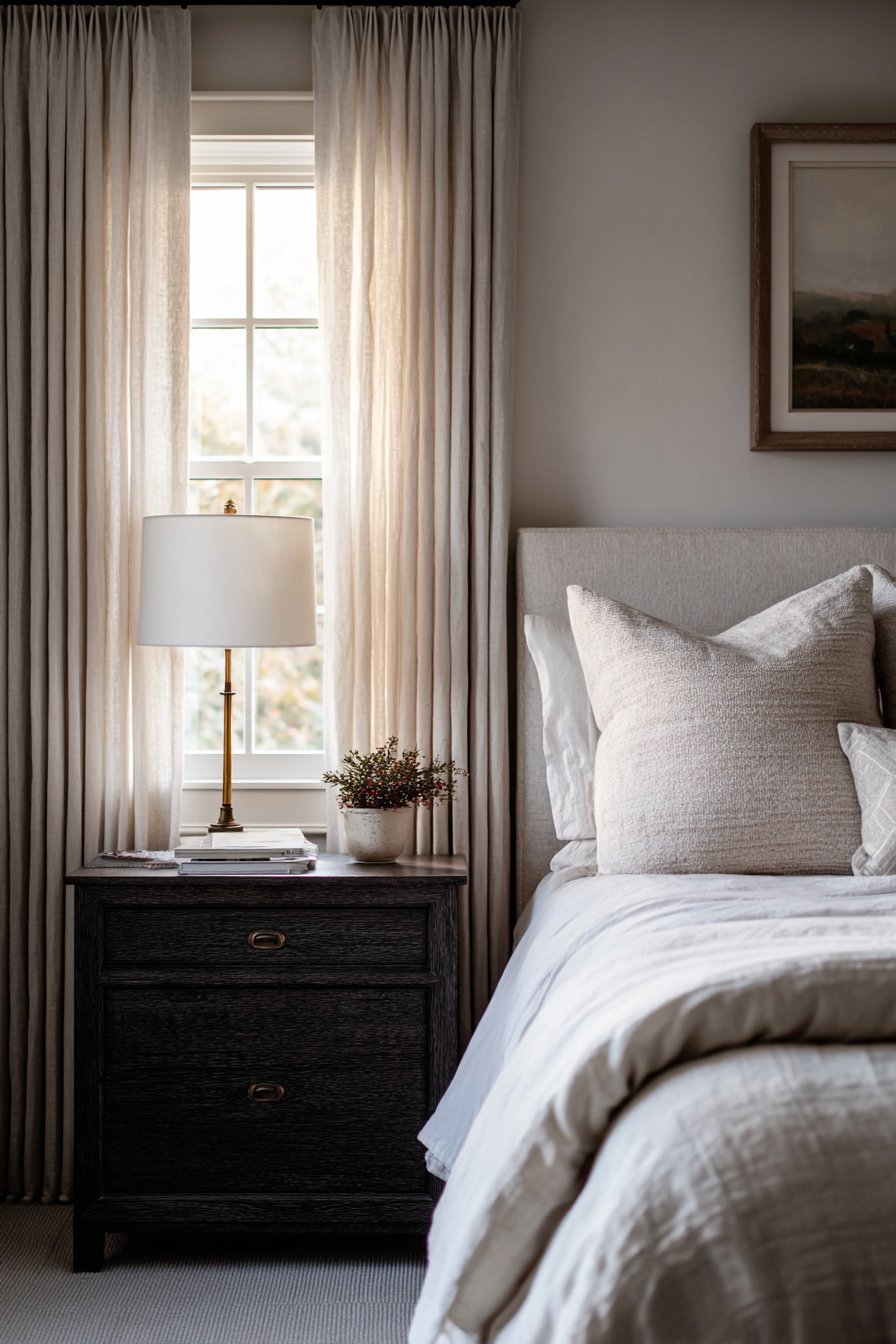
Bedding quality is paramount. Invest in high thread-count linen or cotton sheets, a substantial duvet, and generous European pillows layered with sleeping pillows. The bed should feel like an invitation. Avoid overly styled arrangements with excessive decorative pillows — a few well-chosen pieces in quality natural fabrics are far more elegant.
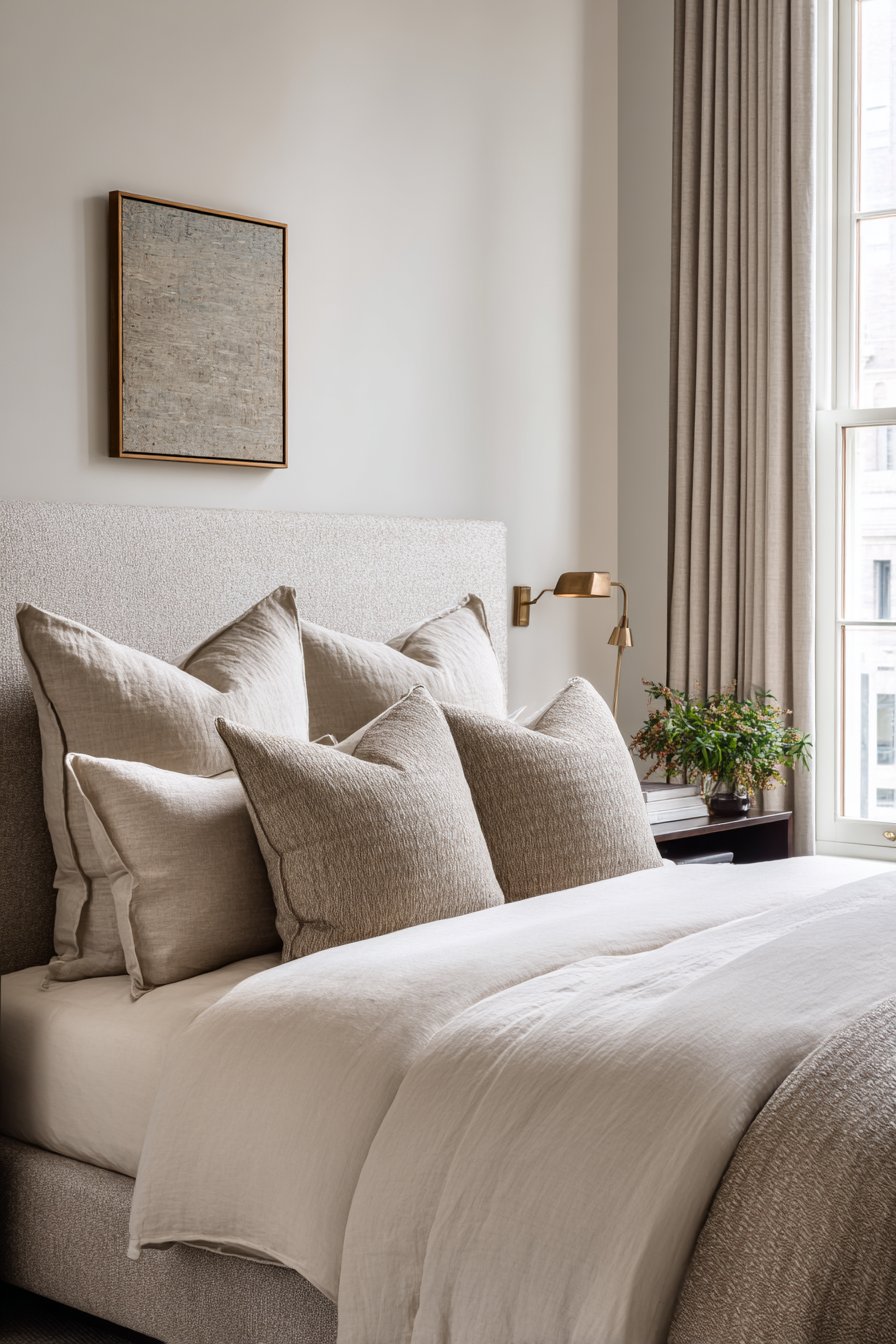
The bedroom should also practice strict visual restraint. Nightstands benefit from a single lamp and perhaps one or two small objects. Wardrobes should be concealed where possible — fitted joinery with simple handles maintains calm sightlines. The goal is to eliminate every visual demand so the room can do its single, essential job beautifully.
- Choose linen or high-quality cotton bedding in soft, tonal neutrals
- Invest in blackout lining behind beautiful curtains for both form and function
- Keep nightstand surfaces minimal — lamp, book, water glass, and nothing more
- Conceal storage with fitted, handleless cabinetry for clean visual sightlines
- Use a single large textile artwork or headboard as the room’s focal anchor
10. Quiet Luxury in the Kitchen and Living Spaces
In kitchens, quiet luxury is expressed through material restraint and craftsmanship. Stone countertops, handleless cabinetry, integrated appliances, and deep sinks in natural materials like fireclay or stone create a kitchen that feels both professional and serene. The emphasis is on function married to beauty rather than visual spectacle.
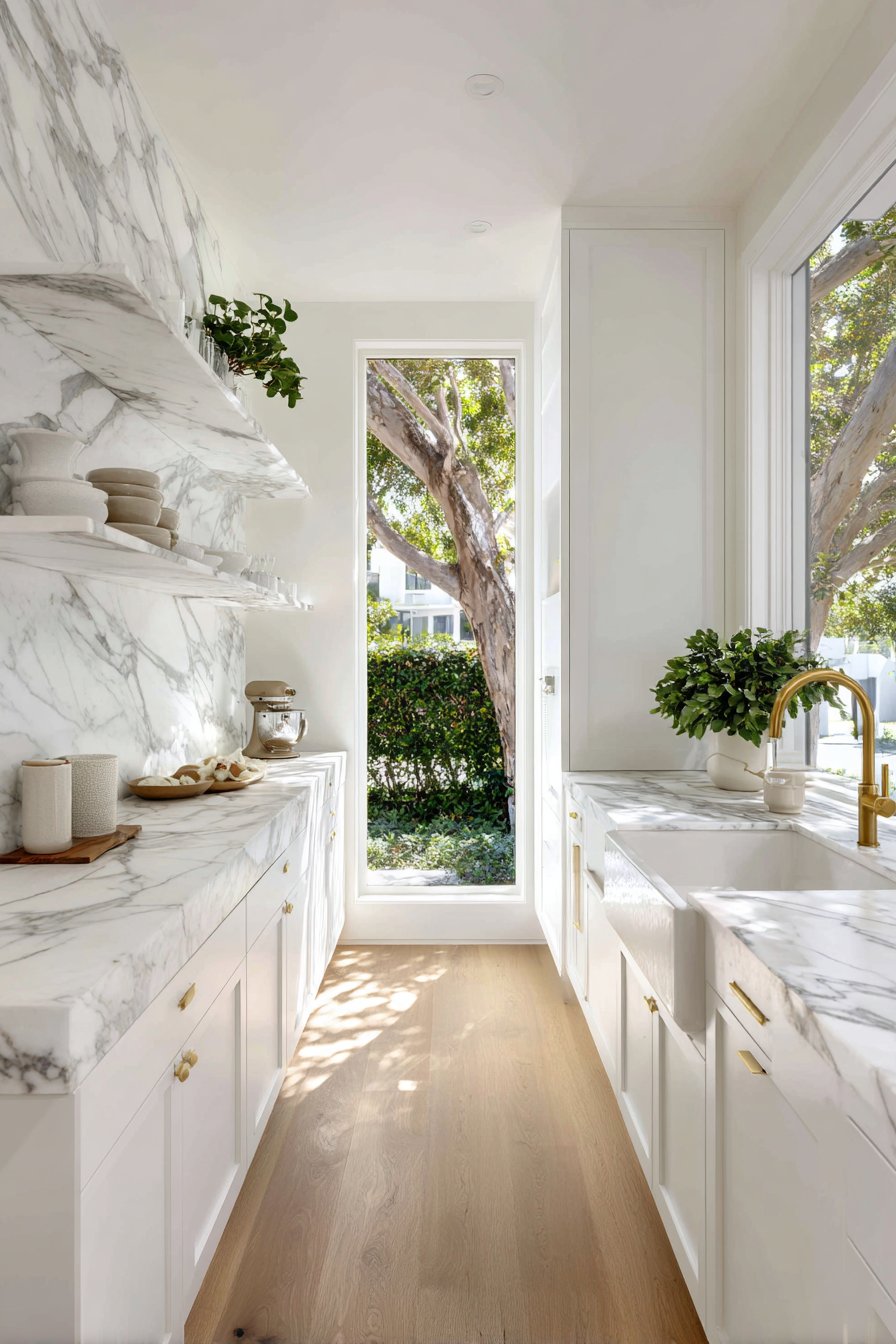
Living spaces benefit from a carefully anchored layout. A quality sofa, a well-proportioned coffee table, and a meaningful rug define the room’s core. Additional seating is added deliberately — an occasional chair in a beautiful fabric, a low side table in marble or wood. The arrangement feels open and breathable rather than packed or overfurnished.
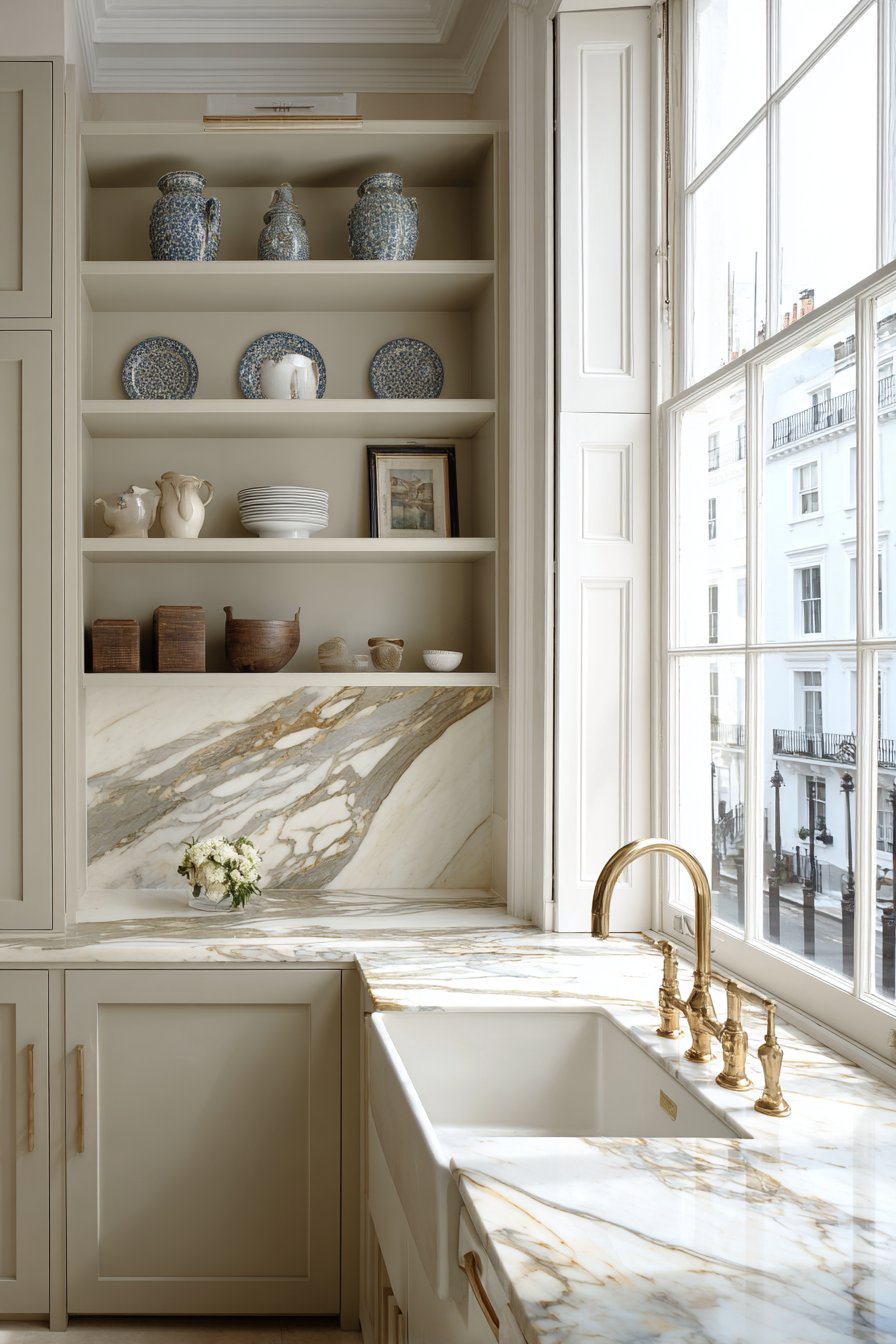
Throughout both spaces, the principle of integrated storage is critical. Quiet luxury spaces appear effortlessly tidy because everything has a designated, concealed home. Visible clutter is the fastest way to undermine this aesthetic — so invest in storage solutions that work invisibly within the room’s overall design.
- Invest in stone or marble countertops as a long-term quality kitchen anchor
- Choose integrated appliances to maintain clean, uninterrupted cabinetry lines
- Ground living spaces with a quality area rug that unifies furniture placement
- Ensure generous storage is built in so everyday items remain concealed
- Select a sofa as your primary investment piece in the living room — quality lasts
11. Sustainability and Quiet Luxury
Quiet luxury and sustainable design are natural allies. Both philosophies reject disposable, trend-driven consumption in favor of enduring quality. Choosing pieces made to last, sourcing from ethical makers, and investing in materials that improve with age are all core to both movements.
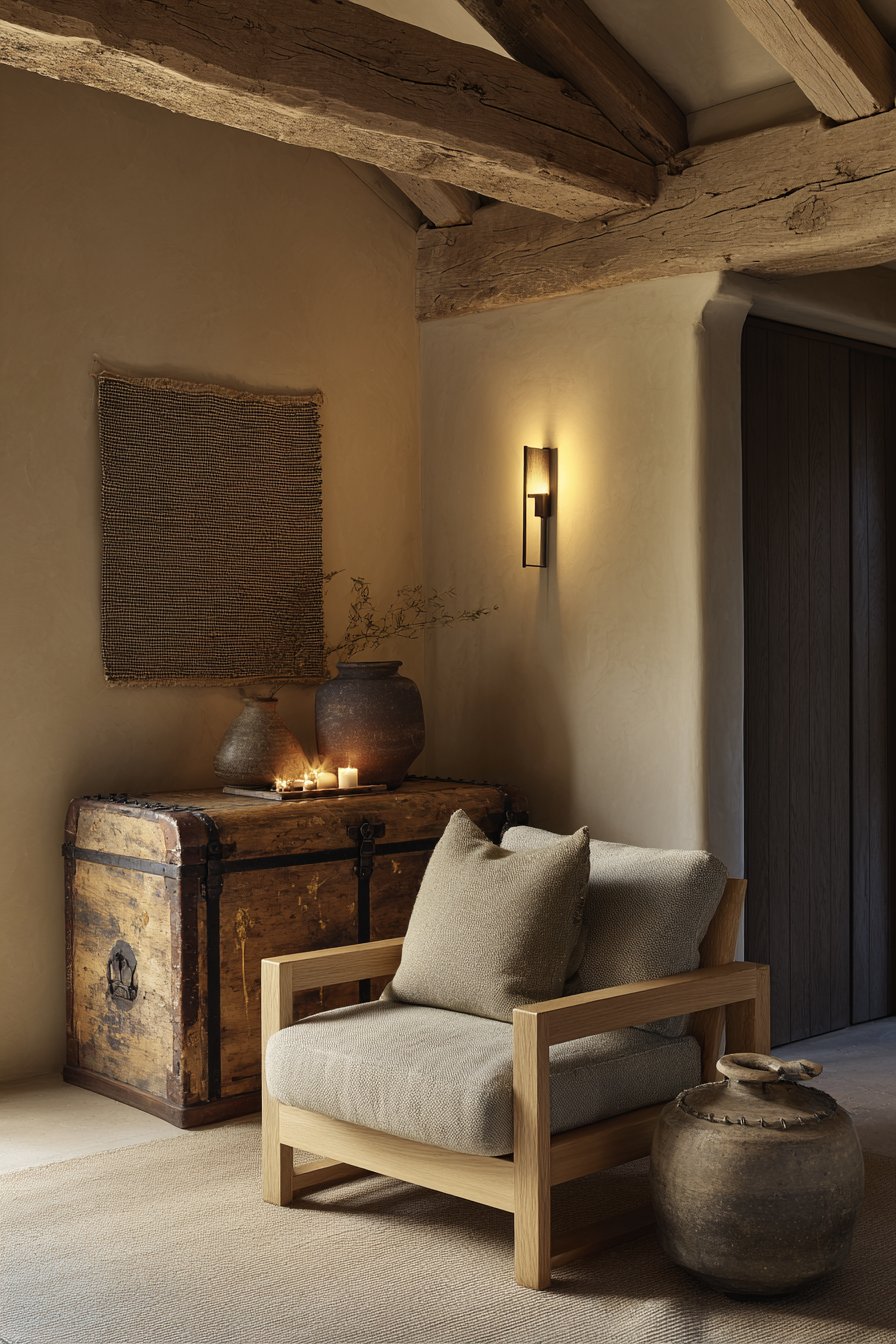
Vintage and antique sourcing is one of the most sustainable and aesthetically rewarding approaches within quiet luxury design. A well-made vintage piece carries history, character, and craftsmanship that new production rarely matches. It is also a deeply personal choice — an antique chest or a mid-century chair immediately distinguishes a home from any showroom replica.
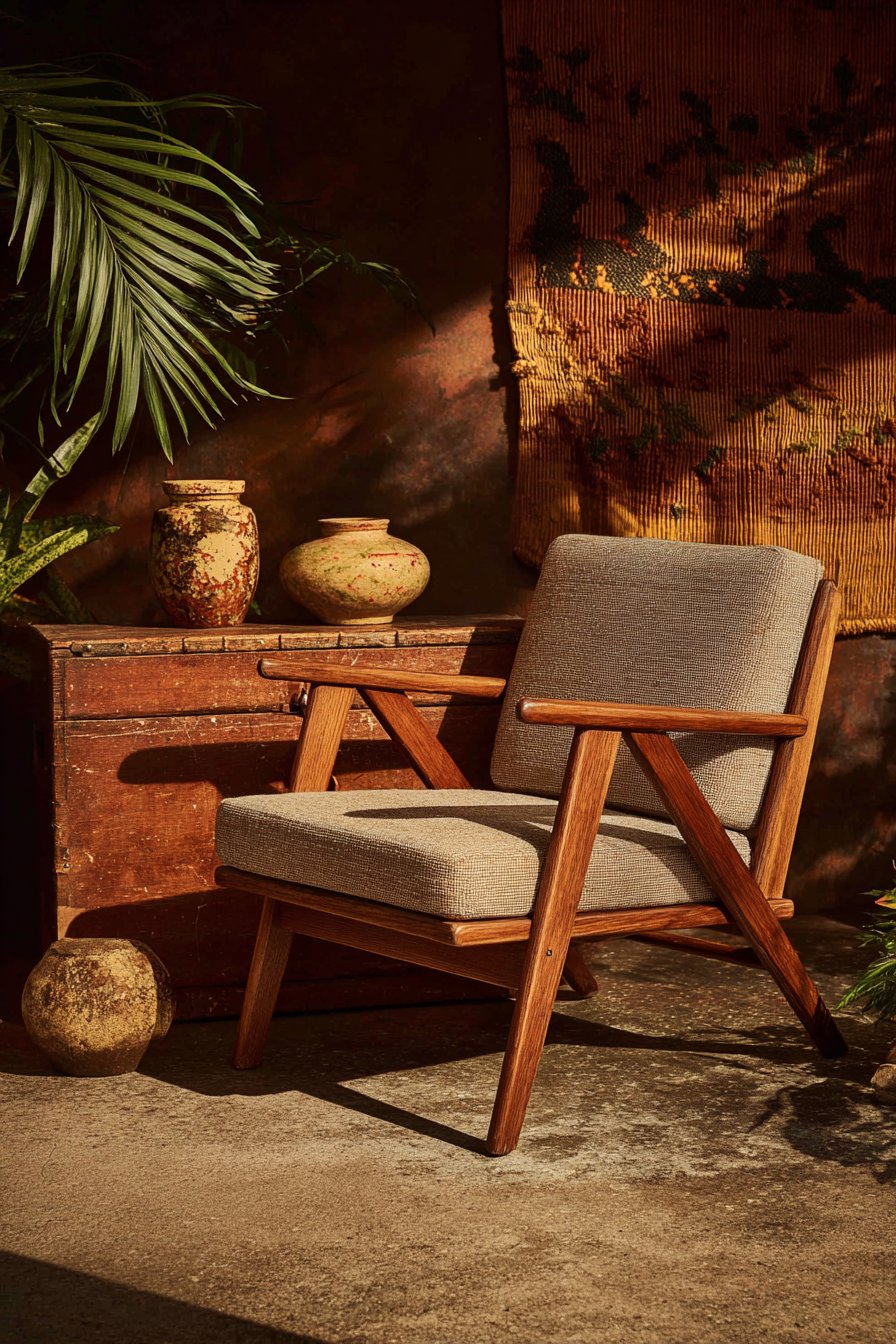
Choosing locally sourced or small-batch makers also aligns beautifully with this philosophy. Artisan ceramics, handwoven textiles, and small-studio furniture pieces bring authenticity and ethical provenance to a space. These choices communicate values as much as they communicate taste — and that is ultimately what quiet luxury is about.
- Source vintage or antique anchor pieces for character and sustainability
- Support independent makers and artisans for ceramics, textiles, and small furniture
- Choose materials that age gracefully rather than those requiring frequent replacement
- Avoid fast-furniture retailers — invest in fewer, longer-lasting pieces instead
- Consider reupholstering quality frames rather than discarding and replacing them
12. Why Quiet Luxury Matters More Than Ever
We live in an era of relentless visual noise. Social media, advertising, and fast-trend cycles constantly push us toward more, louder, and newer. Quiet luxury offers a genuinely counter-cultural response — a home philosophy built on slowing down, choosing carefully, and living with only what is truly meaningful.
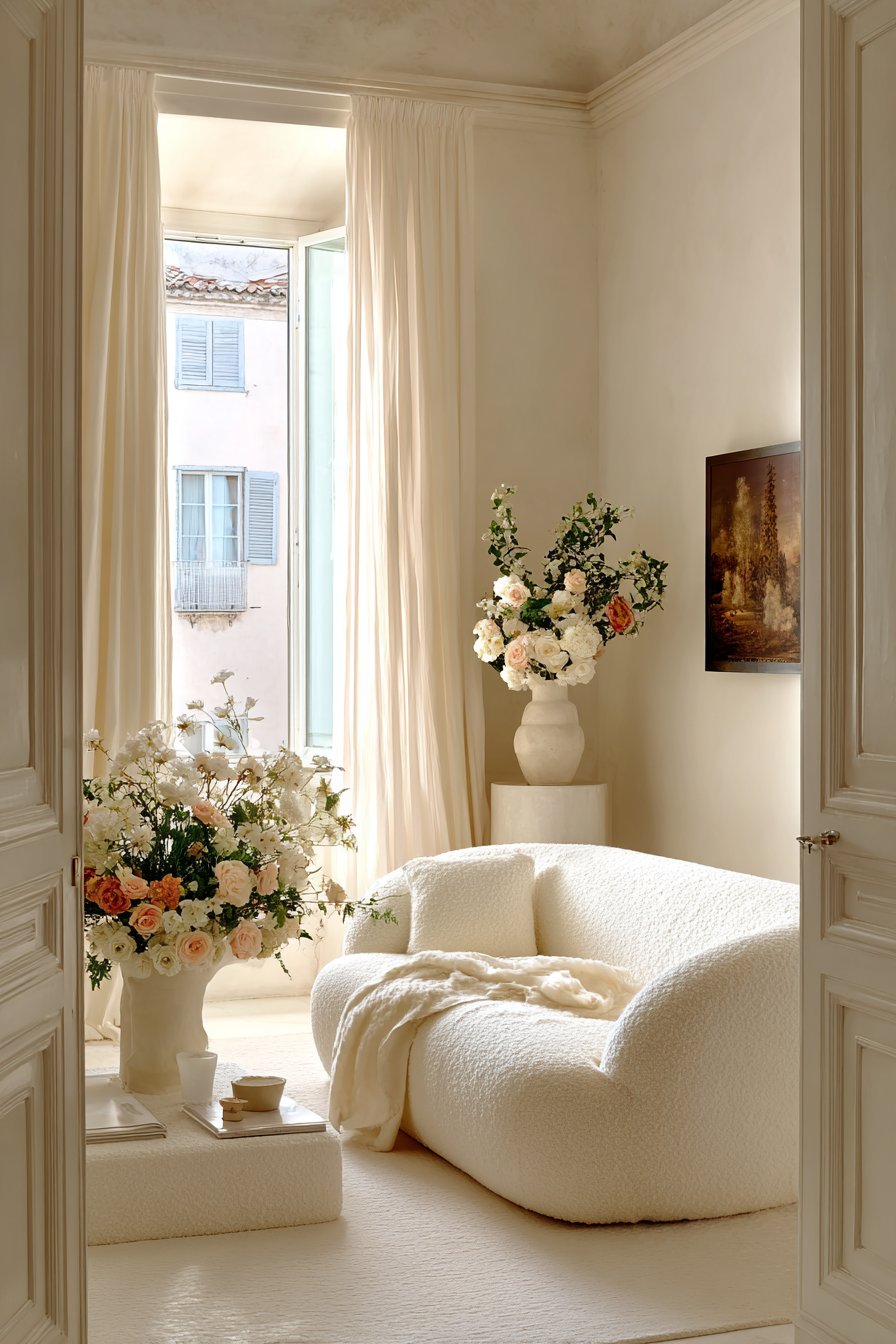
There is also a psychological dimension to this aesthetic that matters deeply. Spaces that are calm, ordered, and materially honest have a measurable effect on mental wellbeing. They reduce cognitive load, promote rest, and create the conditions for genuine relaxation. In a world where overstimulation is the norm, a quiet, beautiful home becomes an act of intentional self-care.
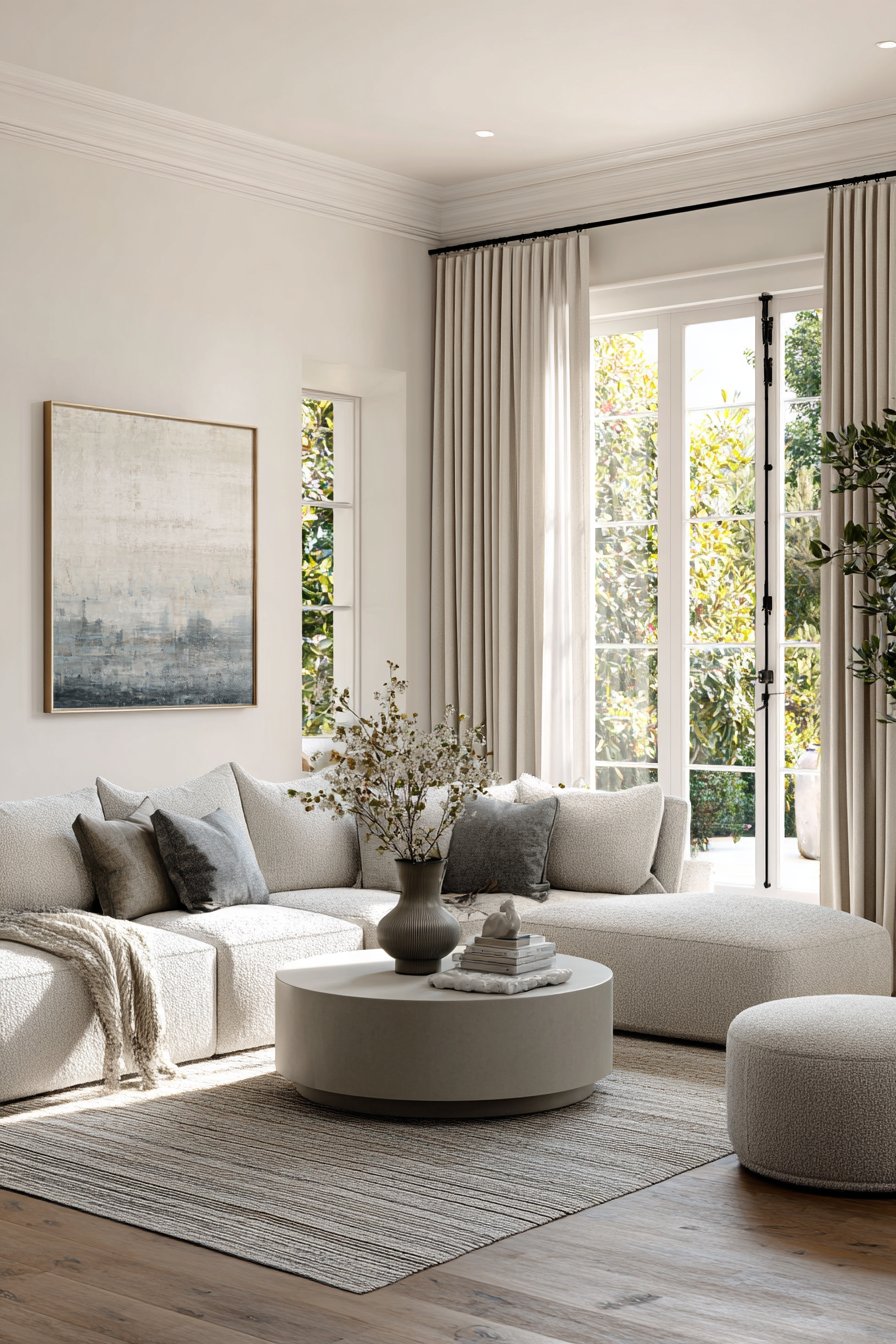
Finally, quiet luxury represents a mature design literacy. It requires confidence to resist trends and choose restraint. It requires patience to edit relentlessly rather than accumulate. And it requires a clear sense of personal values to build a home that reflects who you are rather than what is currently fashionable. That is the true measure of design sophistication — and why this movement matters.
- Treat your home as a long-term investment in your wellbeing and quality of life
- Resist the pull of fast design trends in favor of timeless, personal choices
- Edit your space seasonally to ensure it reflects your current values and needs
- Share the philosophy with your household — collective buy-in makes the vision sustainable
- Remember: the goal is a home that feels deeply yours, not perfectly styled
Conclusion
Quiet luxury in home design is ultimately about choosing depth over spectacle. It is the art of creating spaces that are profoundly comfortable, visually calm, and materially honest. It asks us to slow down, invest wisely, and curate with intention. The result is a home that feels like an exhale — a place of genuine restoration in an overstimulated world.
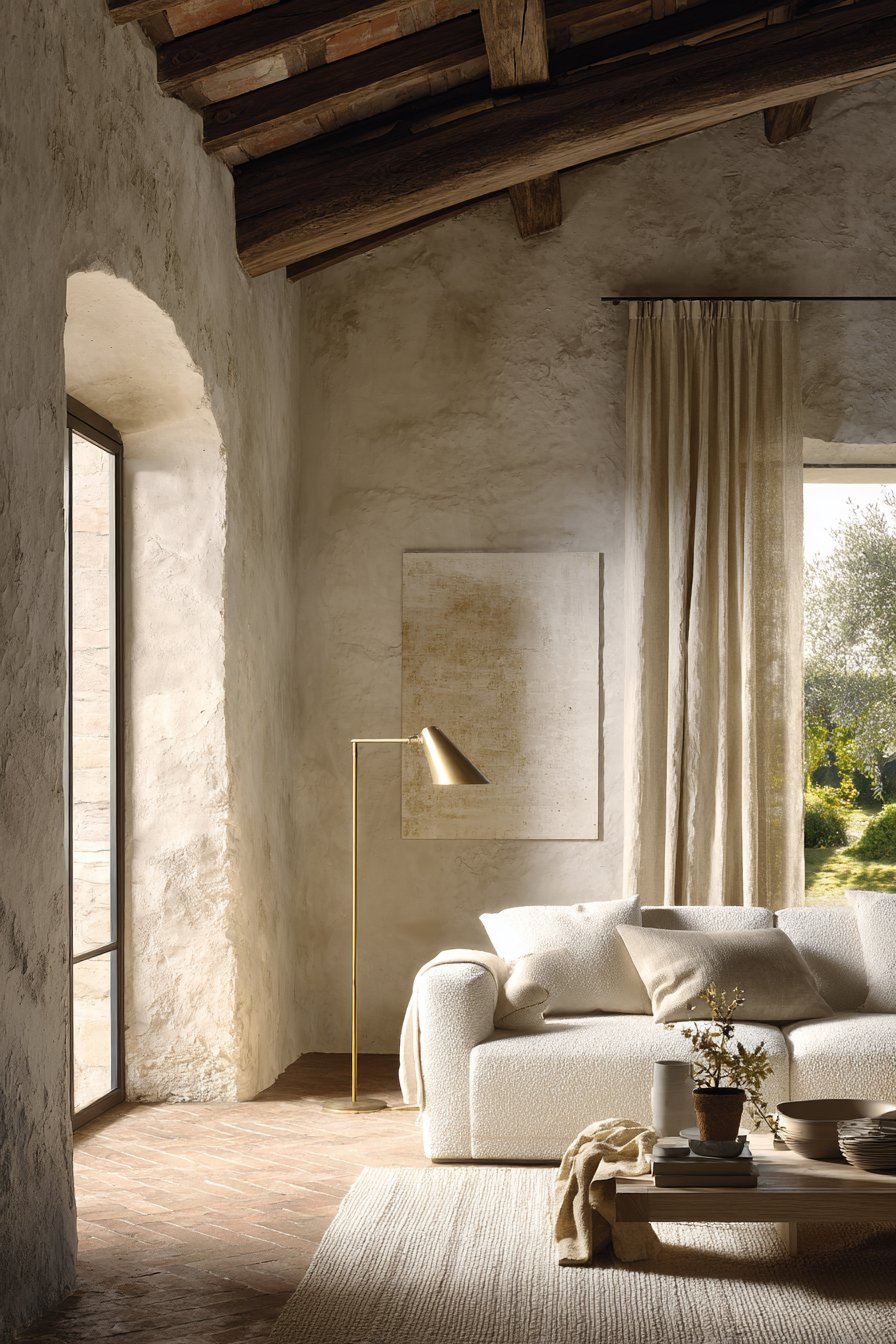
Begin where you are. You do not need to redesign everything at once. Start with one room, one surface, one considered choice. Remove something that no longer serves you. Invest in one beautiful thing that will last. Each small decision in the direction of quiet luxury builds toward a home that is more authentically and beautifully yours. That is not just good design — it is a meaningful way to live.
