


Transforming a simple living room into a luxurious space doesn’t require a complete renovation or unlimited budget. With strategic design choices and thoughtful placement of key elements, you can create an upscale ambiance that rivals high-end interiors. The secret lies in understanding fundamental design principles that professional interior designers use to elevate ordinary spaces.
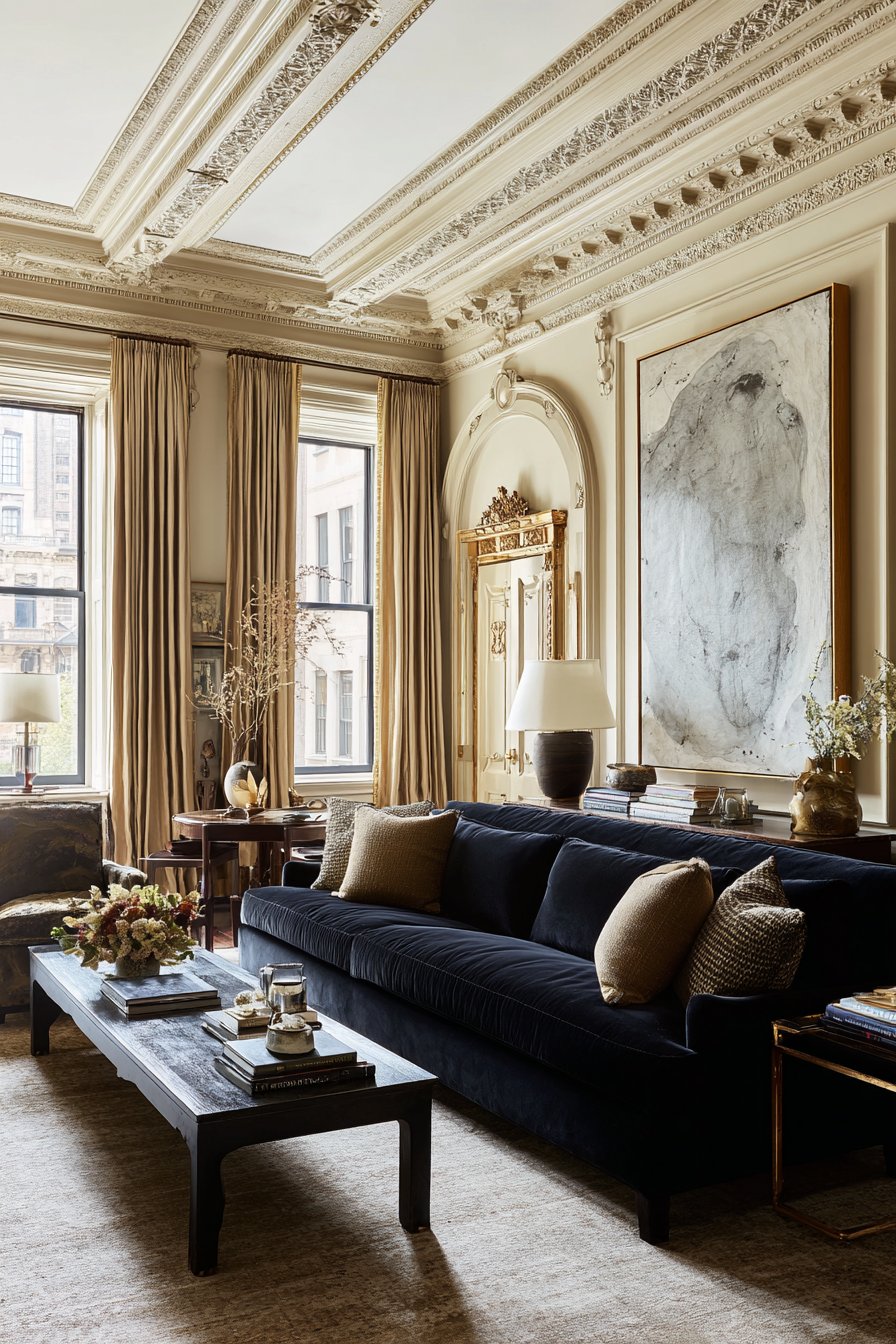
Interior design is more than just decorating—it’s about creating environments that reflect sophistication while maintaining functionality. Whether you prefer minimalist elegance or classic luxury, the right approach can make any living room appear more expensive than its actual cost. This article explores proven techniques that transform budget-friendly spaces into stunning showcases of style and refinement.

From strategic furniture placement to clever lighting solutions, these design strategies work together to create visual impact. Each tip builds upon fundamental principles of color harmony, texture layering, and spatial awareness that define expensive-looking interiors. Let’s explore how simple adjustments can dramatically enhance your living room’s perceived value.
1. Embrace a Cohesive Color Palette
A unified color scheme instantly elevates any living room by creating visual sophistication. Professional designers know that color consistency across walls, furniture, and accessories signals intentional design rather than haphazard decorating. Stick to three main colors maximum, with one dominant shade and two complementary accents for balance.
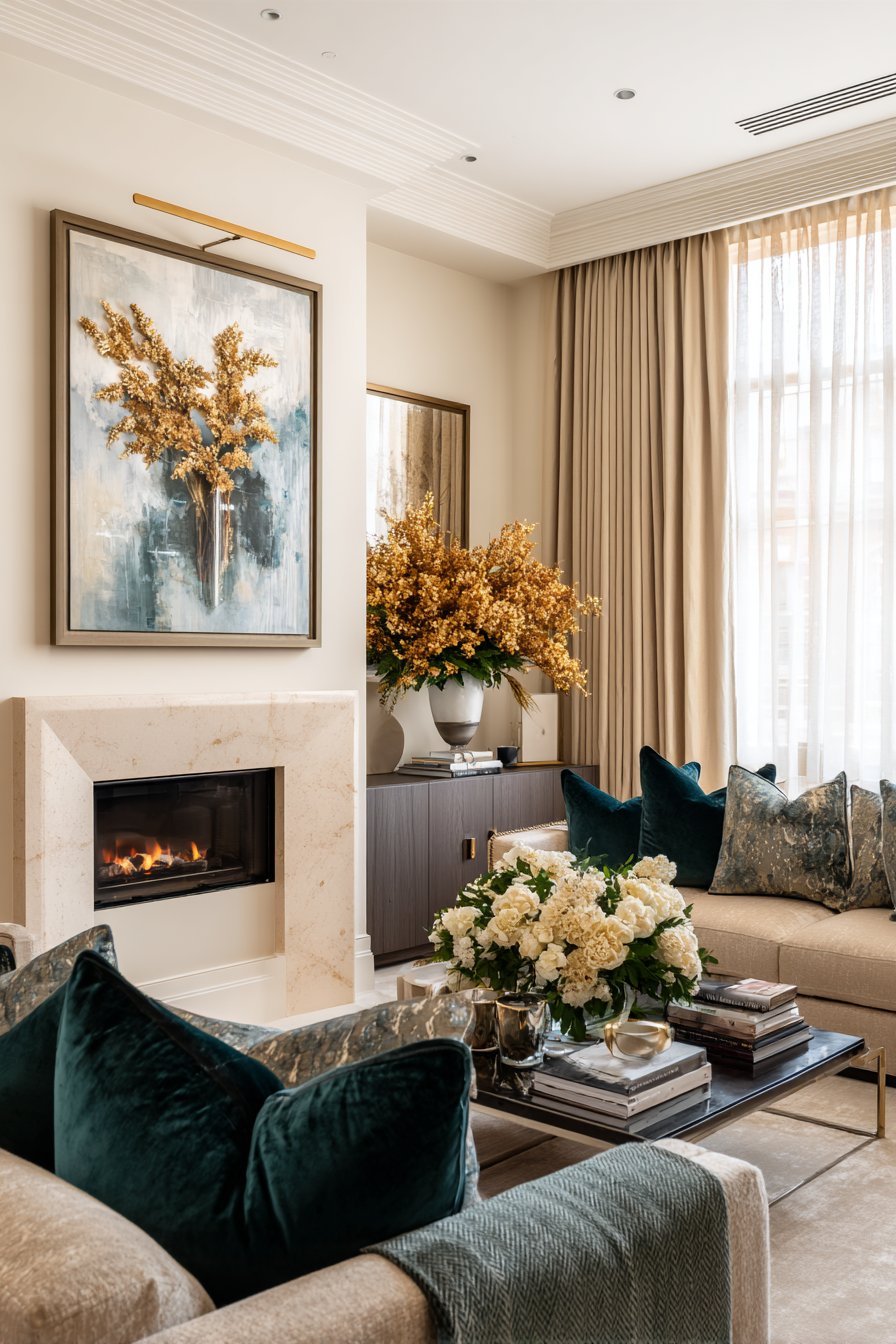
Neutral tones like cream, taupe, and soft gray create an expensive foundation that never feels dated. These timeless hues allow you to incorporate bolder accents through pillows, artwork, or throws without overwhelming the space. The restraint shows design confidence that screams luxury rather than chaos.
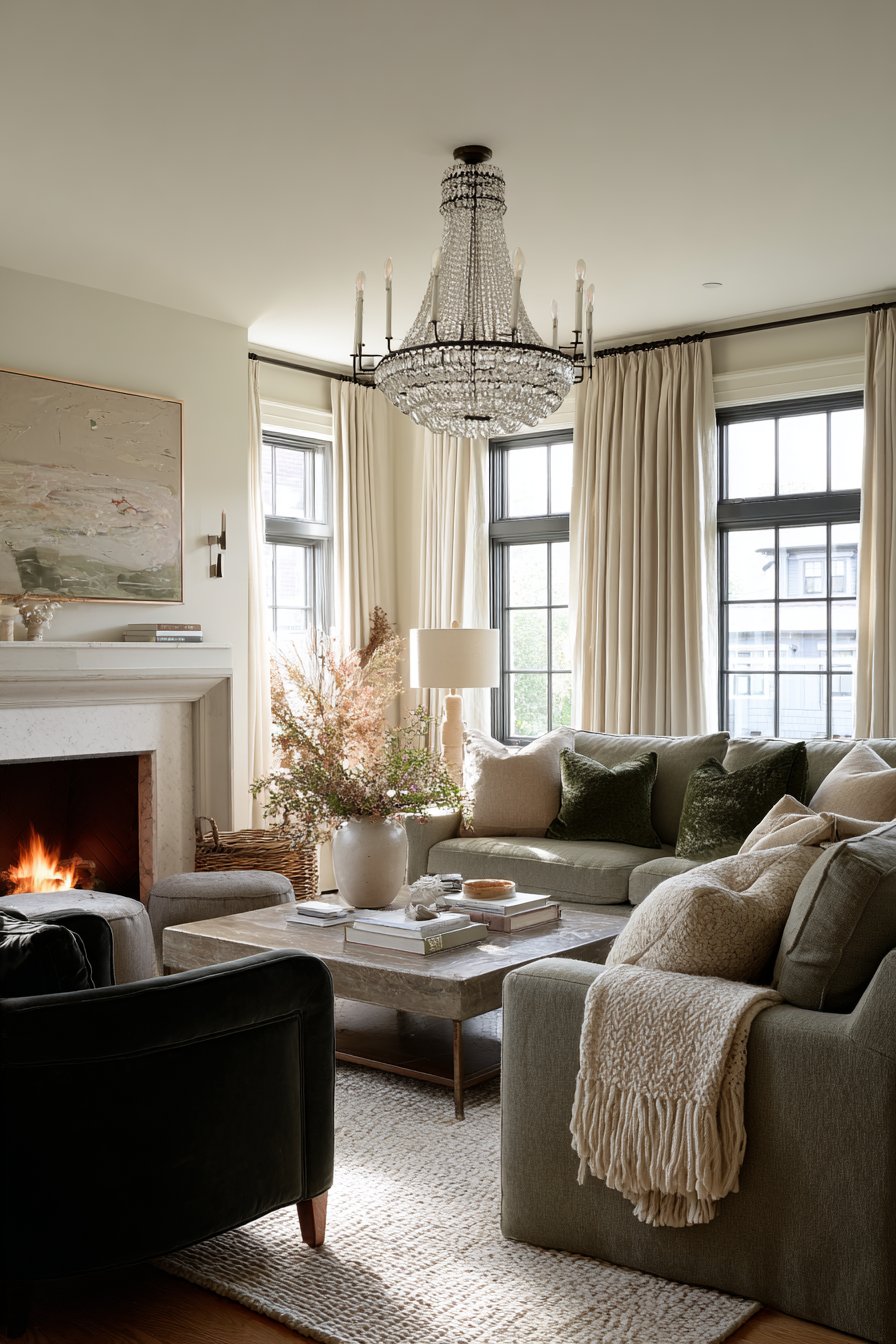
Rich, saturated colors work best when used sparingly as statement pieces rather than covering entire walls. A deep navy accent chair or emerald velvet cushions against neutral backgrounds create focal points that draw the eye. This strategic approach mimics high-end design where every element serves a deliberate purpose.
- Choose one neutral base color for walls and large furniture pieces
- Add two accent colors through smaller decorative elements
- Avoid mixing too many competing patterns or colors
- Use varying shades of the same color for sophisticated depth
- Consider the natural light in your room when selecting colors
- Test paint samples before committing to full application
2. Invest in Statement Lighting
Lighting transforms spaces more dramatically than almost any other design element. Chandeliers or sculptural fixtures immediately draw attention upward, creating the illusion of height and grandeur. Replace basic ceiling lights with distinctive pieces that serve as functional art rather than mere illumination.
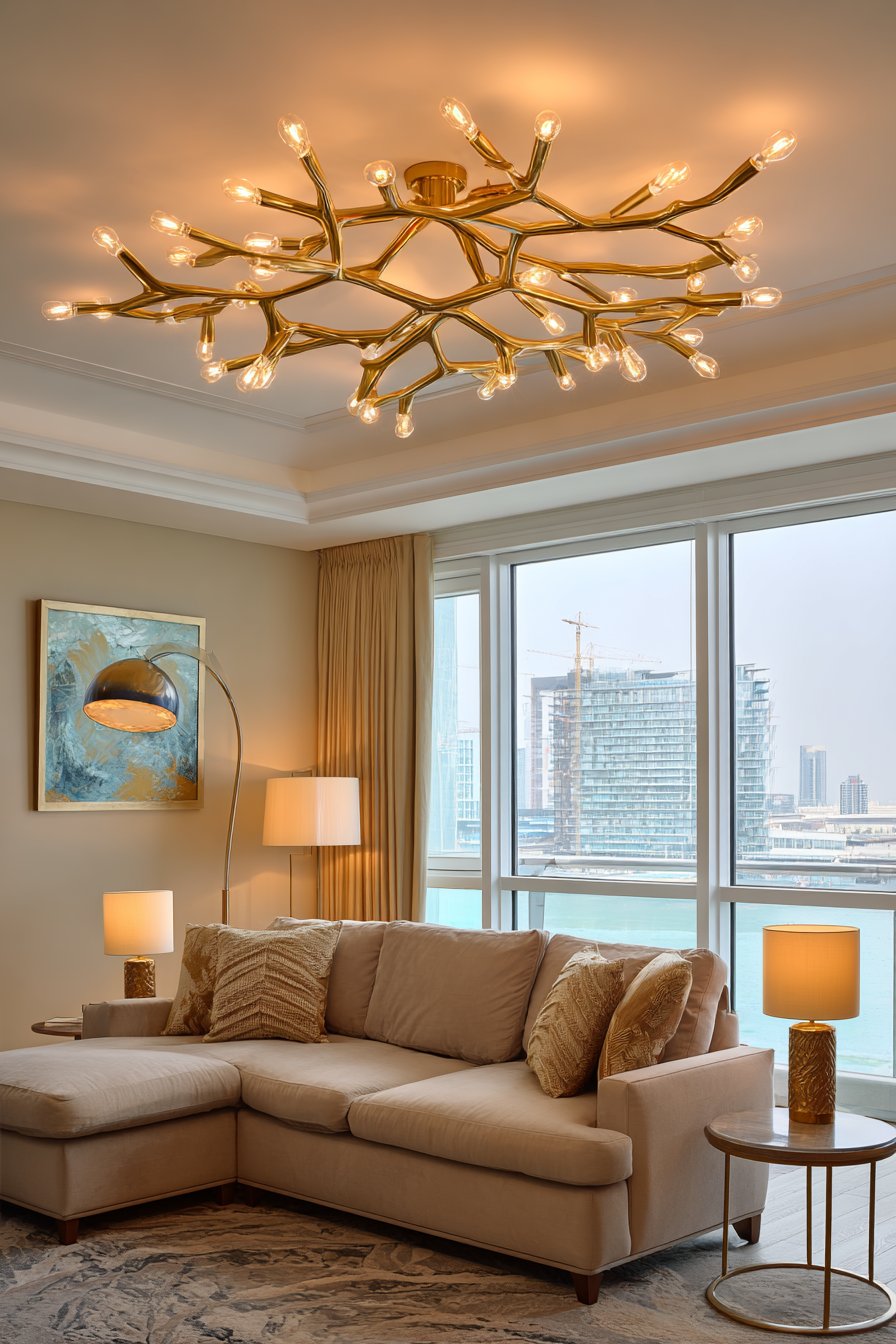
Layered lighting creates dimension that flat, single-source lighting cannot achieve. Combine overhead fixtures with table lamps and floor lamps at varying heights throughout the room. This approach mimics professional design where multiple light sources create warmth and visual interest at every level.

Dimmer switches add flexibility that expensive homes always feature. The ability to adjust ambient lighting for different moods shows sophisticated understanding of how light affects atmosphere. This simple upgrade costs minimal money but delivers maximum impact on perceived luxury.
- Replace builder-grade fixtures with unique statement pieces
- Add floor lamps in corners to eliminate dark spaces
- Install dimmer switches for adjustable ambiance control
- Use warm-toned bulbs rather than harsh cool white
- Position lamps to highlight artwork or architectural features
- Consider LED strips behind furniture for modern edge lighting
3. Declutter and Edit Ruthlessly
Expensive homes never feel cluttered or chaotic. The principle of “less is more” allows each carefully selected piece to shine without competition. Remove excess accessories, knick-knacks, and furniture that doesn’t serve a clear purpose or bring genuine joy.

Empty space itself becomes a luxury element in well-designed rooms. Strategic negative space around furniture and on shelves creates breathing room that feels intentional rather than sparse. This approach requires confidence but delivers immediate results in perceived sophistication.

Quality over quantity defines luxury interiors across all price points. Three beautiful objects displayed with intention create more impact than twenty crowded items fighting for attention. Edit your belongings until only your favorite pieces remain, then give each proper space to be appreciated.
- Remove 30-50% of current accessories and decorative items
- Keep surfaces mostly clear with just one or two display items
- Store seasonal decorations rather than displaying everything simultaneously
- Create visual breathing room between furniture pieces
- Display collections in curated groups rather than scattered placement
- Regularly reassess and remove items that no longer serve the design
4. Add Texture Through Layered Fabrics
Texture creates visual richness that flat, single-material rooms lack completely. Layering different fabric types—velvet, linen, cotton, wool—adds depth that reads as expensive regardless of actual cost. This technique engages multiple senses and creates sophisticated complexity.

Throw pillows in varying textures transform basic sofas into designer statements. Mix smooth silk with nubby wool, or pair leather with soft chenille for contrast that feels intentional. Use odd numbers of pillows (three or five) for professional-looking arrangements.
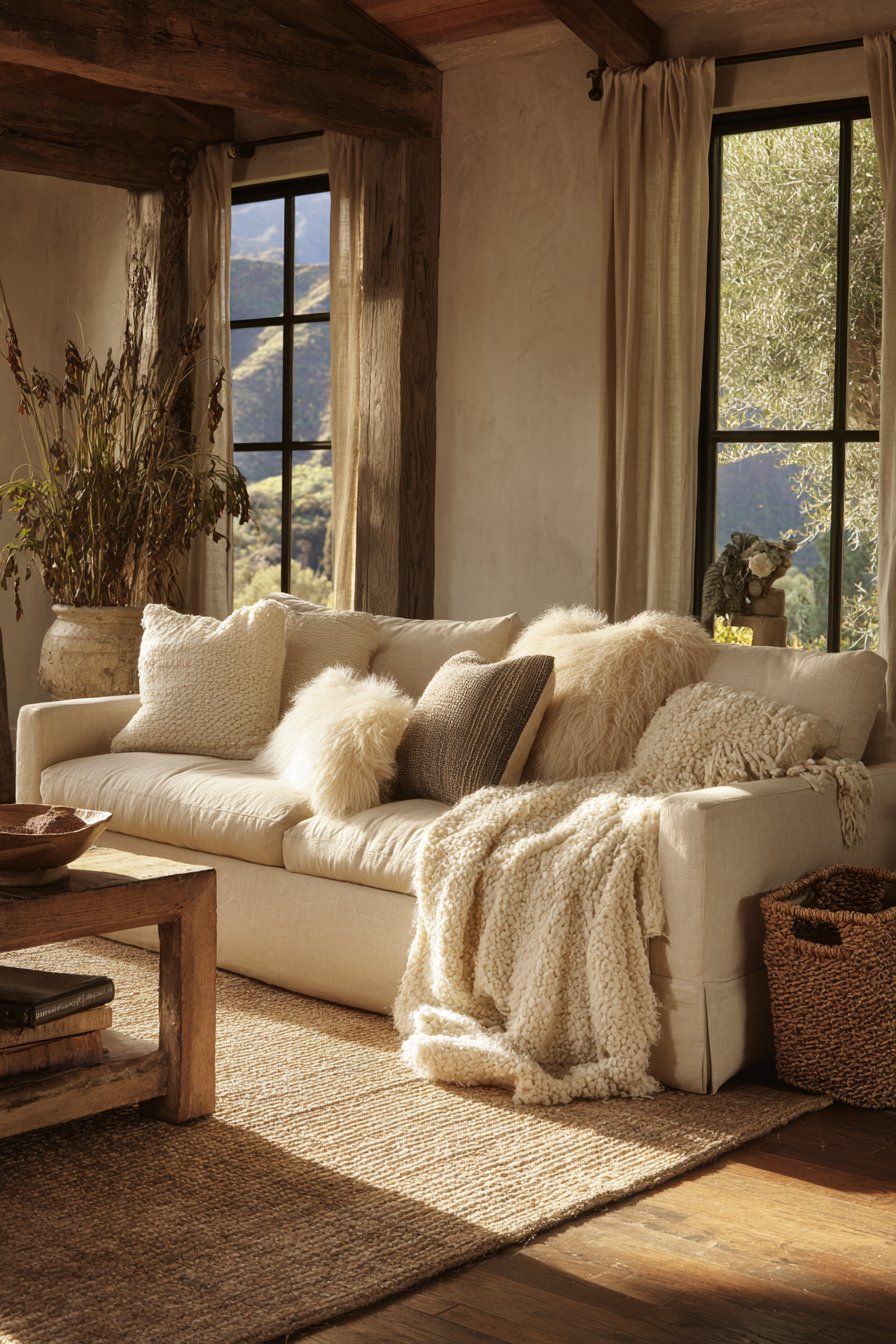
Heavy curtains or quality window treatments frame views like artwork. Floor-length panels in rich fabrics add vertical drama and luxury that short curtains never achieve. Ensure curtains puddle slightly on the floor or hang precisely at floor level for polished appearance.
- Layer multiple throw blankets in complementary textures
- Mix matte and shiny fabric finishes for visual interest
- Choose curtains that extend from ceiling to floor
- Add textured area rugs to define seating zones
- Include woven baskets or natural fiber elements
- Incorporate velvet, linen, or faux fur accent pieces
5. Incorporate Metallic Accents Strategically
Metallic finishes reflect light and add glamorous sparkle to any space. Gold, brass, or chrome accents catch the eye and create focal points throughout the room. Use consistent metal finishes rather than mixing multiple types for cohesive sophistication.
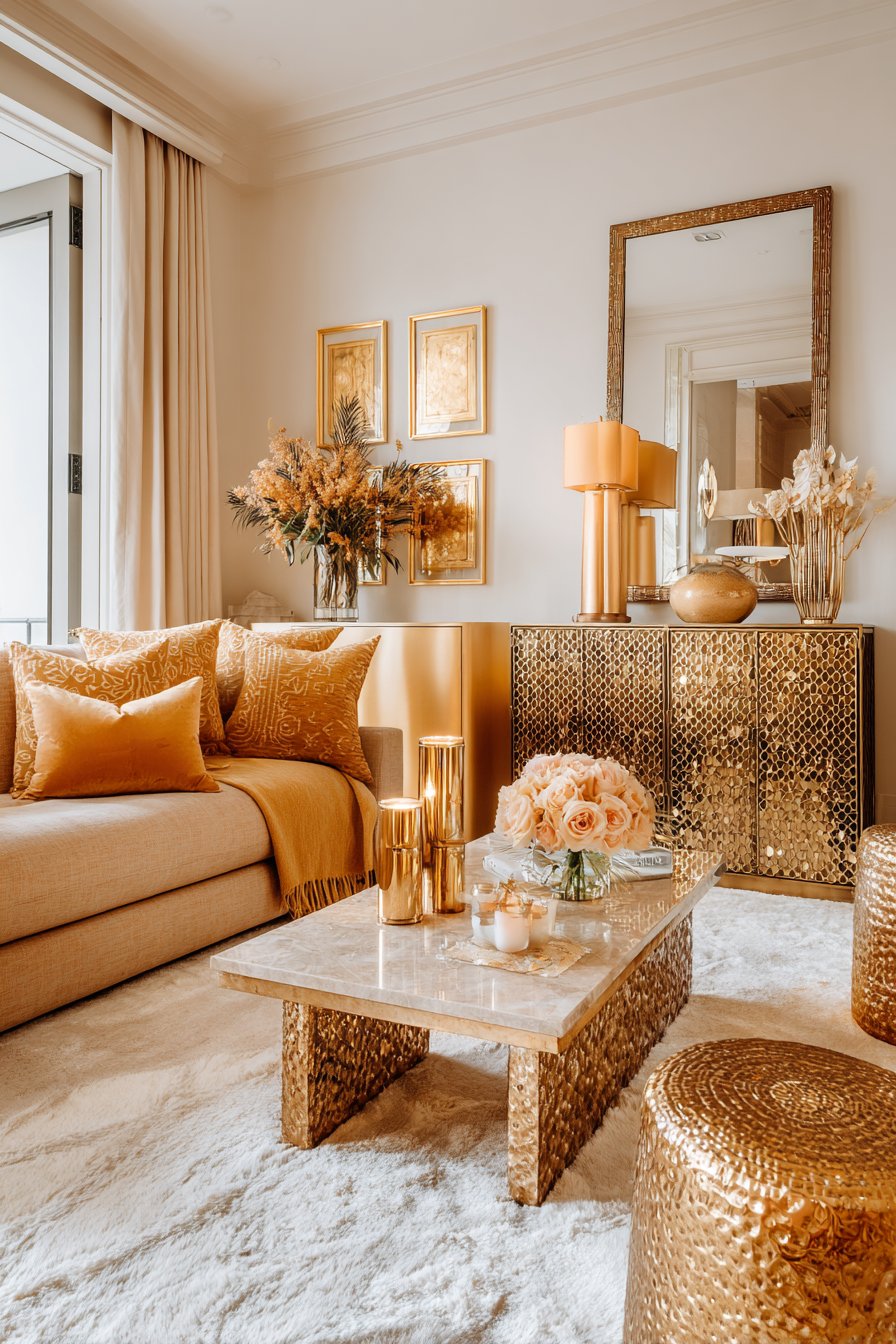
Picture frames, lamp bases, and decorative objects in metallics elevate perceived value instantly. Even budget-friendly pieces in metallic finishes read as expensive when used thoughtfully. The reflective quality adds dimension and prevents spaces from feeling flat or dull.
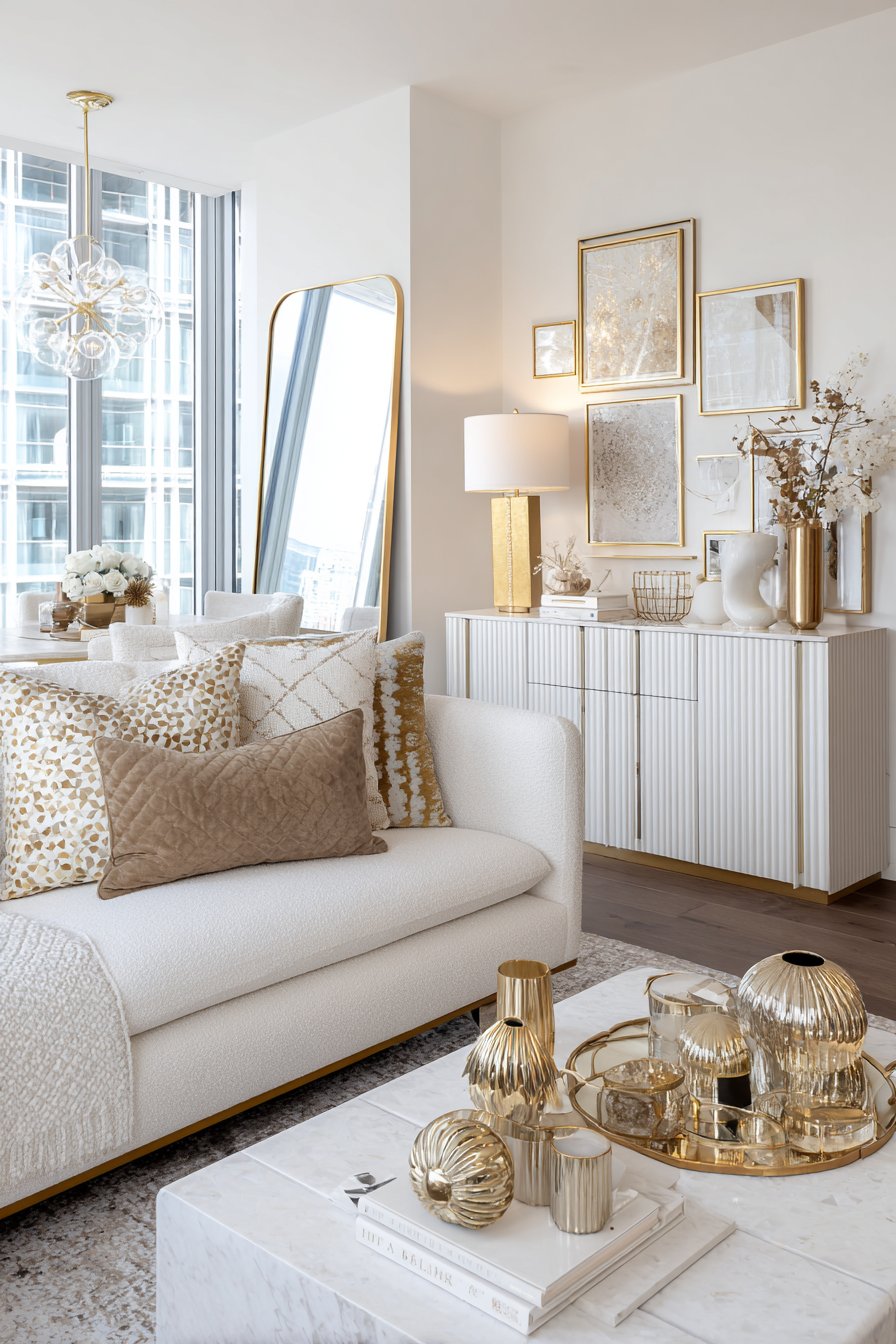
Hardware updates on existing furniture provide instant luxury upgrades. Replace basic knobs and pulls with brass or gold alternatives for dramatic transformation at minimal cost. This attention to detail signals quality that expensive homes always display.
- Choose one primary metal finish and use consistently
- Add metallic picture frames or mirrors throughout
- Replace furniture hardware with upgraded finishes
- Include brass or gold decorative accessories
- Consider metallic table lamps or floor lamp bases
- Use mirrored or glass surfaces to multiply light reflection
6. Style with Oversized Art and Mirrors
Large-scale artwork creates instant drama and sophistication. A single oversized piece above the sofa makes stronger impact than multiple small frames scattered randomly. Size matters significantly in creating expensive-looking focal points that command attention.
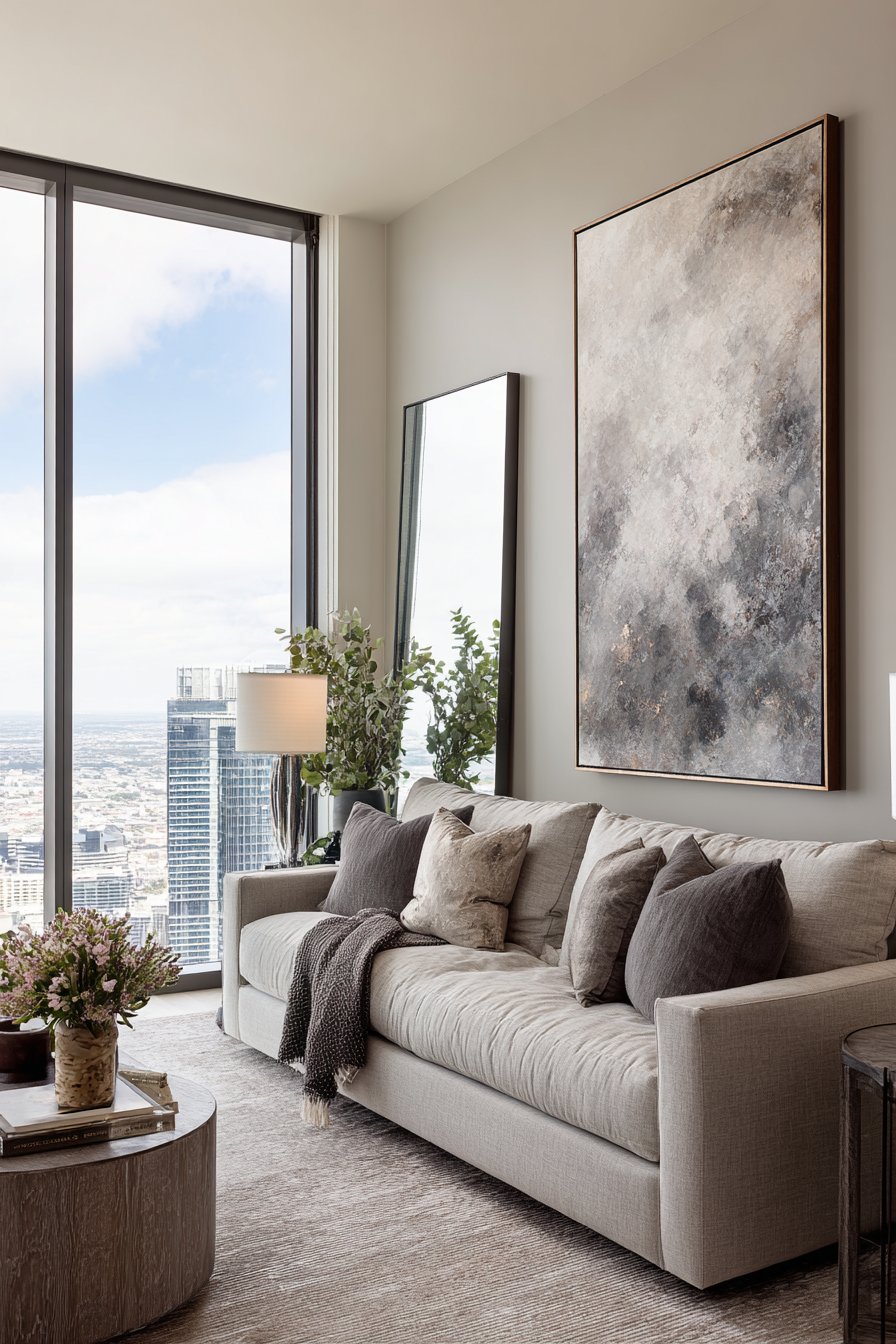
Mirrors multiply light and create the illusion of expanded space effortlessly. Position large mirrors opposite windows to bounce natural light throughout the room. This designer trick brightens spaces while adding architectural interest that feels intentional and luxurious.
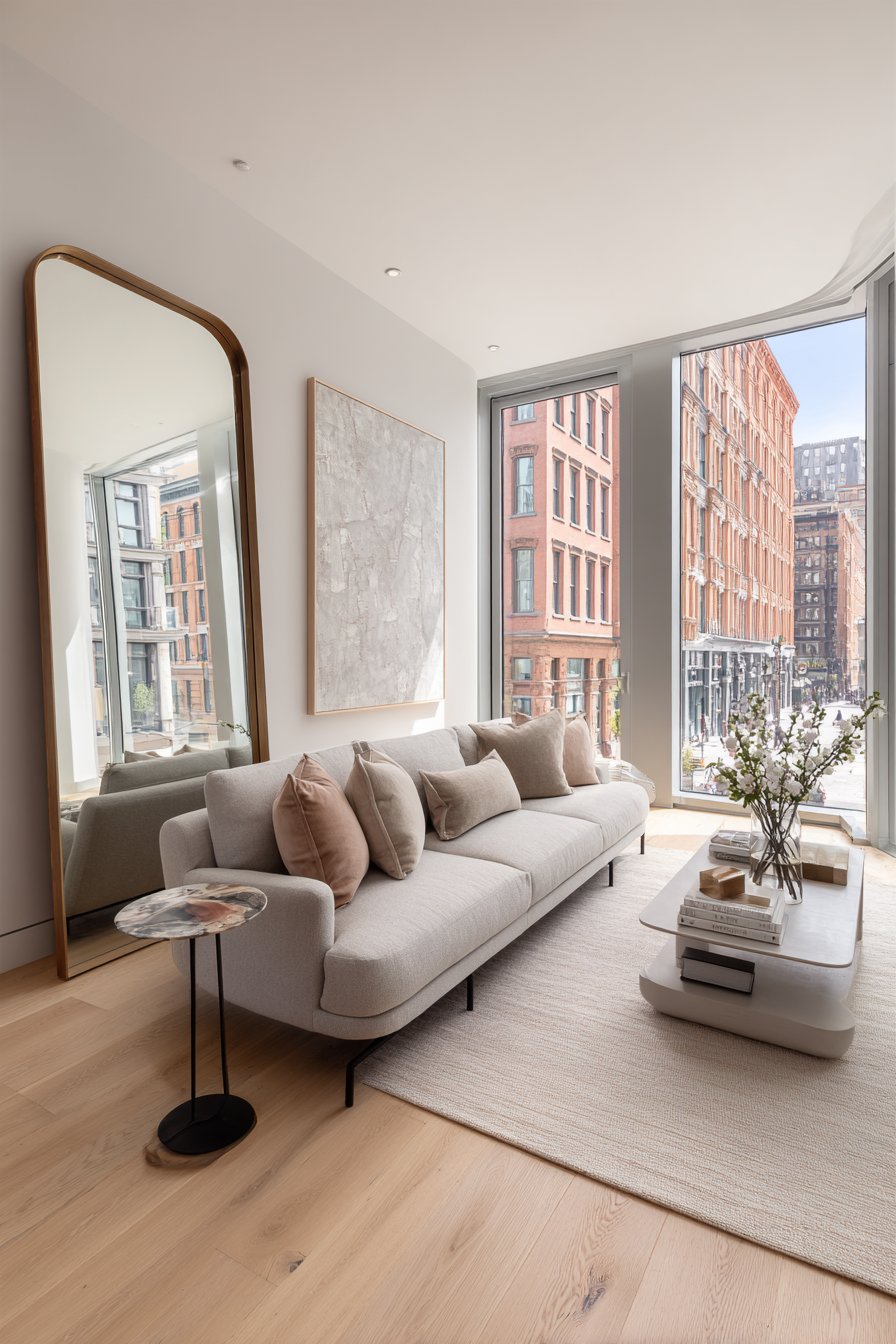
Frame quality matters as much as the art itself in high-end presentation. Invest in substantial frames even for affordable prints or personal photographs. The proper frame elevates any image into gallery-worthy art that enhances rather than cheapens your space.
- Hang artwork at eye level (approximately 57-60 inches to center)
- Use one large piece rather than multiple small items
- Position mirrors to reflect light sources or beautiful views
- Lean oversized art against walls for casual luxury
- Choose frames that complement your color scheme
- Consider abstract or black and white photography for timeless appeal
Conclusion
Creating an expensive-looking living room requires strategy rather than unlimited funds. By implementing these design principles—cohesive color, statement lighting, decluttering, layered textures, metallic accents, and oversized art—you transform ordinary spaces into sophisticated sanctuaries. Each element works synergistically to create overall impressions of luxury and intentional design.

Remember that true luxury lies in restraint, quality, and thoughtful curation. Start with one or two strategies that resonate most with your style, then gradually incorporate additional elements. Your living room will evolve into the expensive-looking space you’ve always envisioned, proving that exceptional design is accessible to everyone.
