


Creating a functional nursery in a limited space presents unique challenges for new parents. Every square foot matters when designing a room that must accommodate sleeping, changing, feeding, and storage needs. The key lies in thoughtful planning and strategic design choices that make the most of vertical and horizontal space.

Modern interior design offers countless solutions for small nurseries that don’t sacrifice style for functionality. From multi-purpose furniture to clever storage systems, today’s parents have access to innovative products specifically designed for compact living. Understanding how to layer these elements creates a nursery that feels spacious, organized, and nurturing despite its modest footprint.

The beauty of small-space design is that it forces creativity and intentionality. Rather than filling every corner with unnecessary items, you’ll curate a thoughtfully designed environment that contains only what truly matters. This approach not only maximizes physical space but also creates a calming atmosphere that benefits both baby and parents during those crucial early months.
1. Choose Multi-Functional Furniture
Multi-functional pieces form the foundation of any successful small nursery design. A crib with built-in storage drawers eliminates the need for a separate dresser, instantly freeing up valuable floor space. Similarly, a changing table that converts into a regular dresser extends the furniture’s lifespan well beyond the diaper years, making it a smart long-term investment.
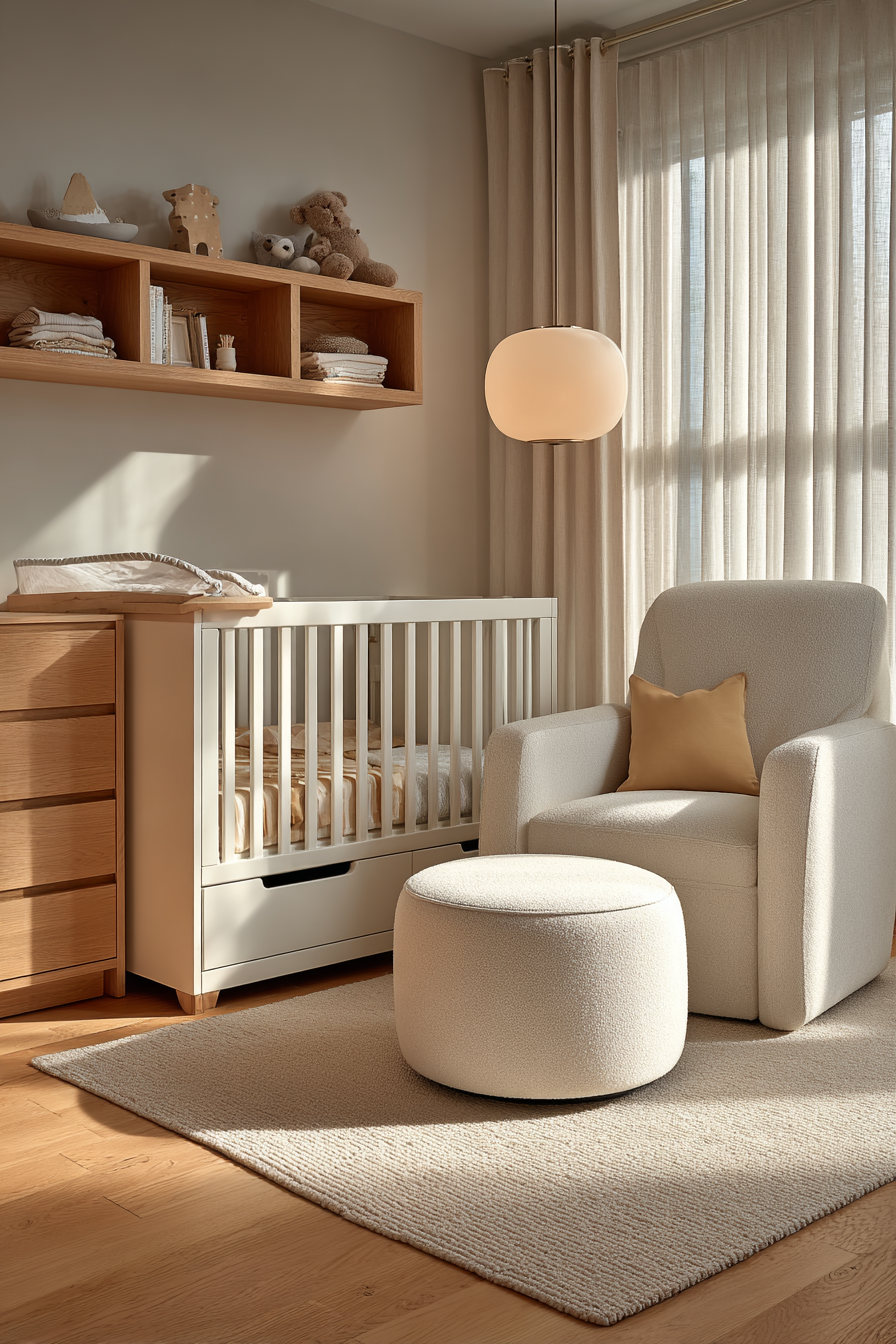
Consider furniture that serves triple duty in your compact space. A glider with storage pockets holds books and nursing supplies while providing a comfortable feeding spot. Ottomans with hidden compartments store toys or blankets while offering extra seating for guests. These pieces reduce clutter while maintaining the room’s functionality and aesthetic appeal.
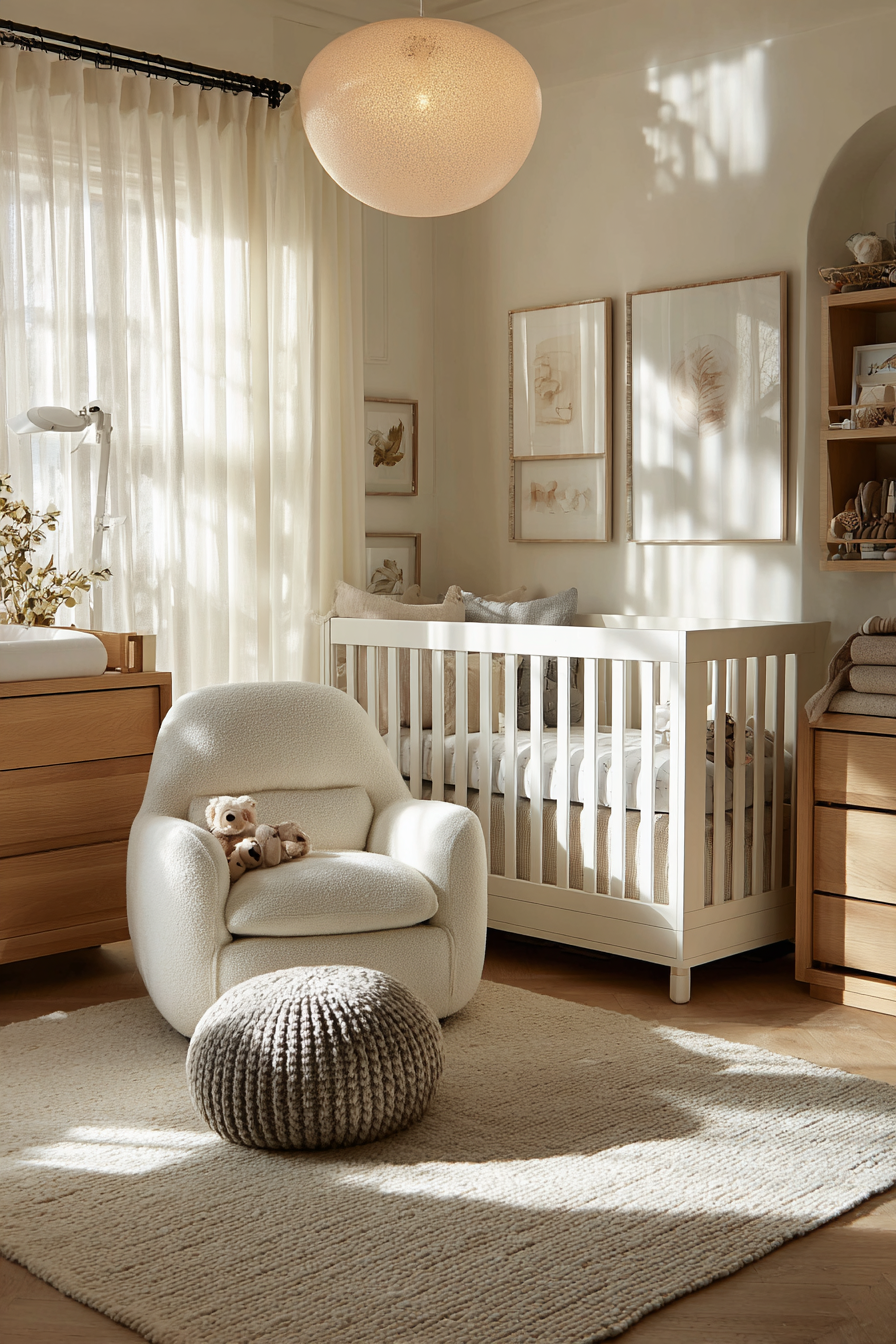
The right furniture choices can reduce your nursery footprint by up to 40%. Focus on pieces with clean lines and compact dimensions specifically designed for small spaces. Avoid bulky traditional furniture that overwhelms the room and creates cramped pathways.
- Select a crib with underneath drawers for storing diapers, wipes, and clothing
- Choose a changing table topper that fits securely on a dresser
- Invest in a slim-profile glider that doesn’t dominate the room
- Consider a bassinet that converts to a bedside sleeper for the first months
- Look for stackable or nesting storage bins that maximize vertical organization
- Purchase furniture with rounded edges to improve traffic flow
2. Utilize Vertical Storage Solutions
When floor space is limited, vertical storage becomes your greatest ally in nursery organization. Wall-mounted shelves installed above changing areas or the crib keep essential items within reach without consuming precious square footage. Floating shelves create visual interest while providing practical storage for books, decorative items, and daily necessities.
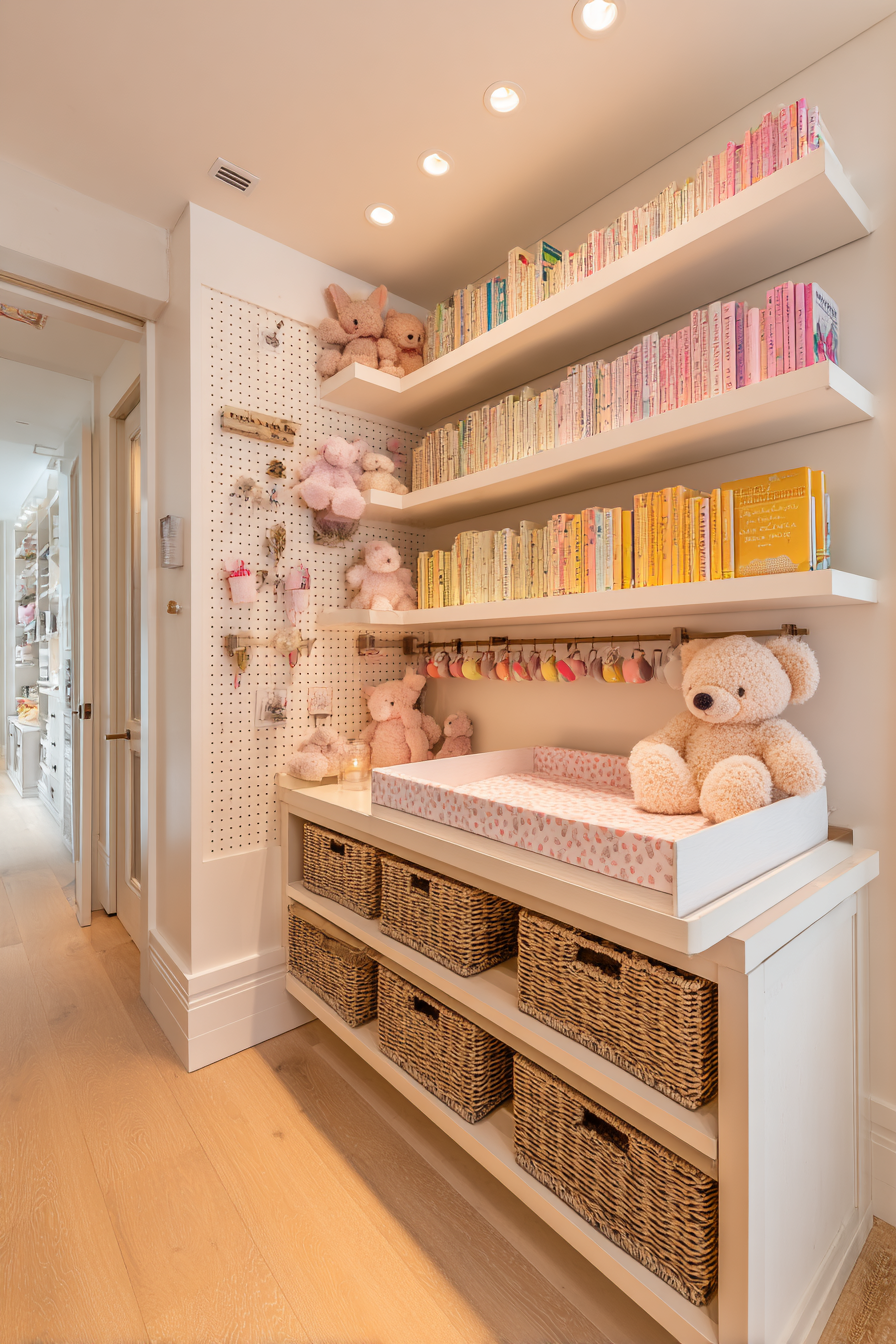
Consider installing shelving units that extend from floor to ceiling to maximize every inch of wall space. The upper shelves can store items you don’t need daily, while lower shelves remain accessible for frequently used supplies. This approach creates a streamlined look that draws the eye upward, making the room feel taller and more spacious.
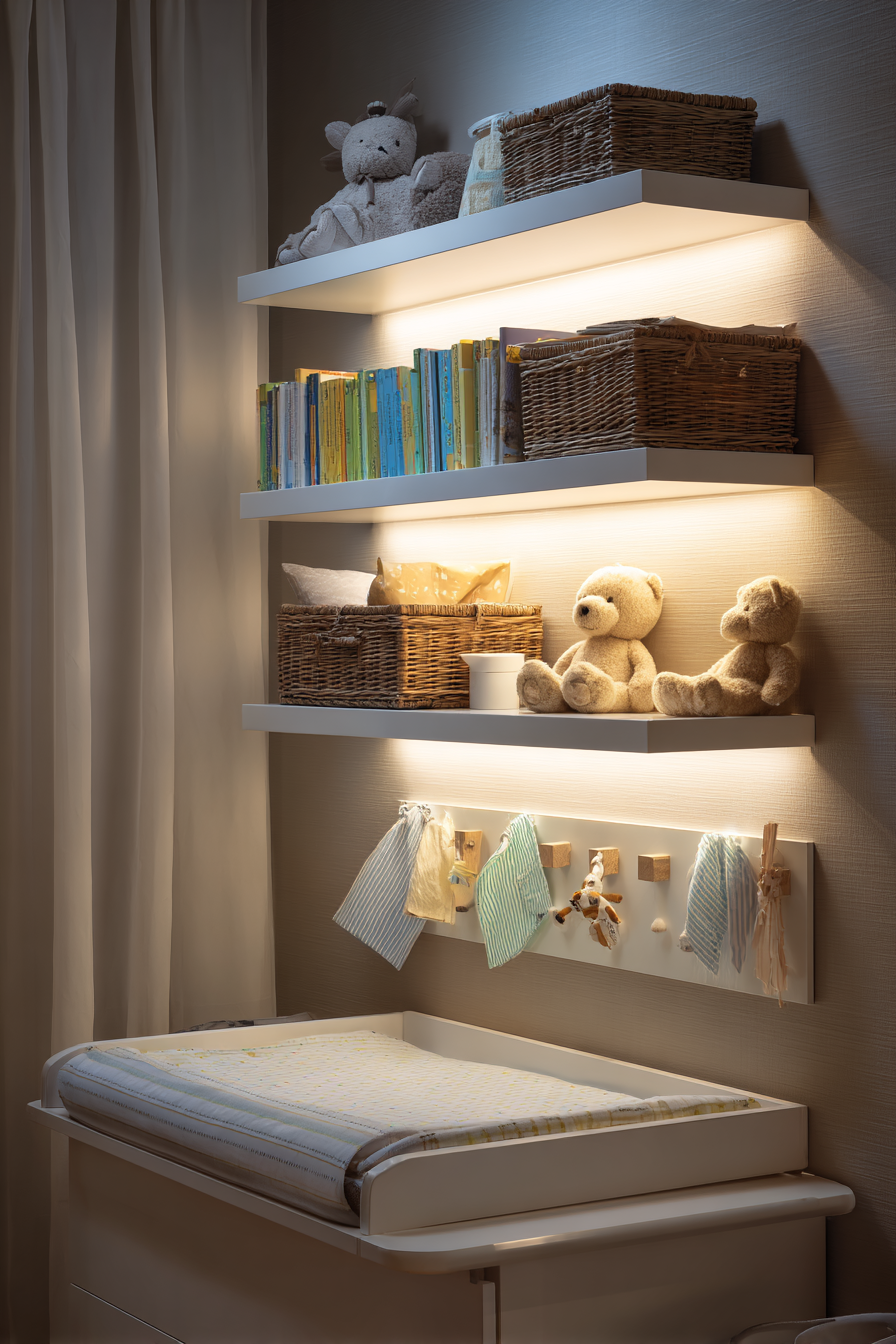
Pegboards offer another versatile vertical solution for small nurseries. Mount them at changing table height to hang baskets, hooks, and organizers that keep supplies visible and accessible. The customizable nature of pegboards means you can adjust the configuration as your baby’s needs change, making it a flexible storage system that grows with your child.
- Install floating shelves 60-72 inches above the floor for adult access
- Use wall-mounted baskets for diaper and wipe storage
- Add hooks behind the door for hanging sleep sacks and robes
- Mount a narrow bookshelf to display board books vertically
- Install corner shelving units to utilize awkward spaces
- Create a gallery wall that combines decorative frames with functional storage
3. Embrace Light Colors and Minimal Patterns
Light, neutral colors are essential for creating the illusion of more space in a small nursery. Whites, soft grays, and pale pastels reflect natural light and make walls appear to recede, visually expanding the room. A monochromatic palette with varying textures adds depth without the visual clutter that bold patterns can create.
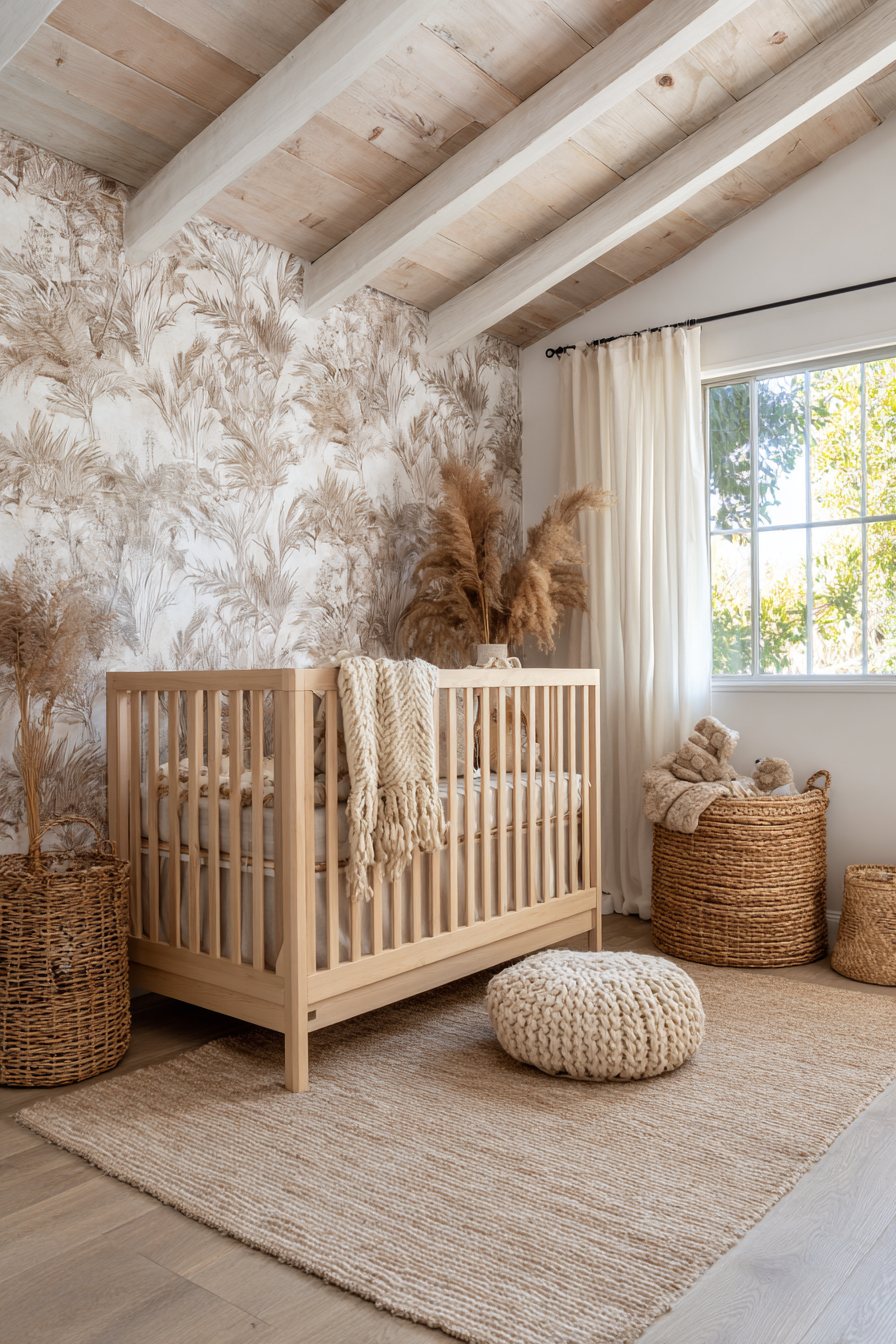
Limit bold patterns to small accent pieces like throw pillows or a single wall decal. Too many competing patterns make a small space feel busy and cramped. Instead, introduce visual interest through texture and tone using natural materials like woven baskets, linen curtains, and wooden furniture that add warmth without overwhelming the senses.
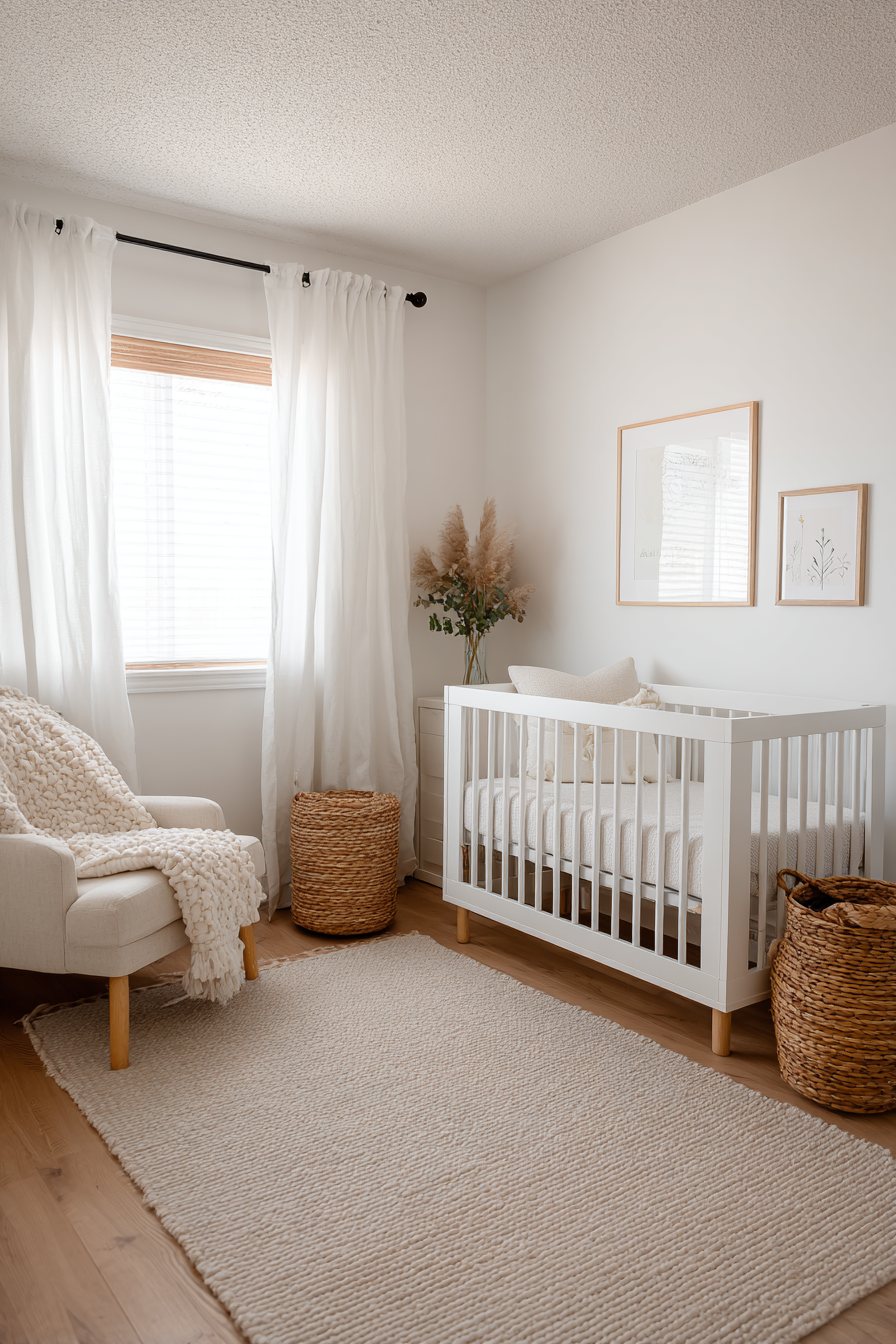
Consider painting the ceiling the same color as the walls to blur boundaries and create a seamless flow. This technique eliminates visual breaks that can make a room feel smaller. Add one statement piece, like a subtle wallpaper accent wall, to create personality without sacrificing the airy atmosphere essential to small-space design.
- Paint walls in soft white, cream, or light gray tones
- Use sheer curtains to maximize natural light penetration
- Select furniture in light wood tones or white finishes
- Add texture through knit blankets and woven storage baskets
- Limit pattern to one accent wall or small decorative elements
- Choose a solid-colored area rug in a neutral shade
4. Implement Smart Closet Organization
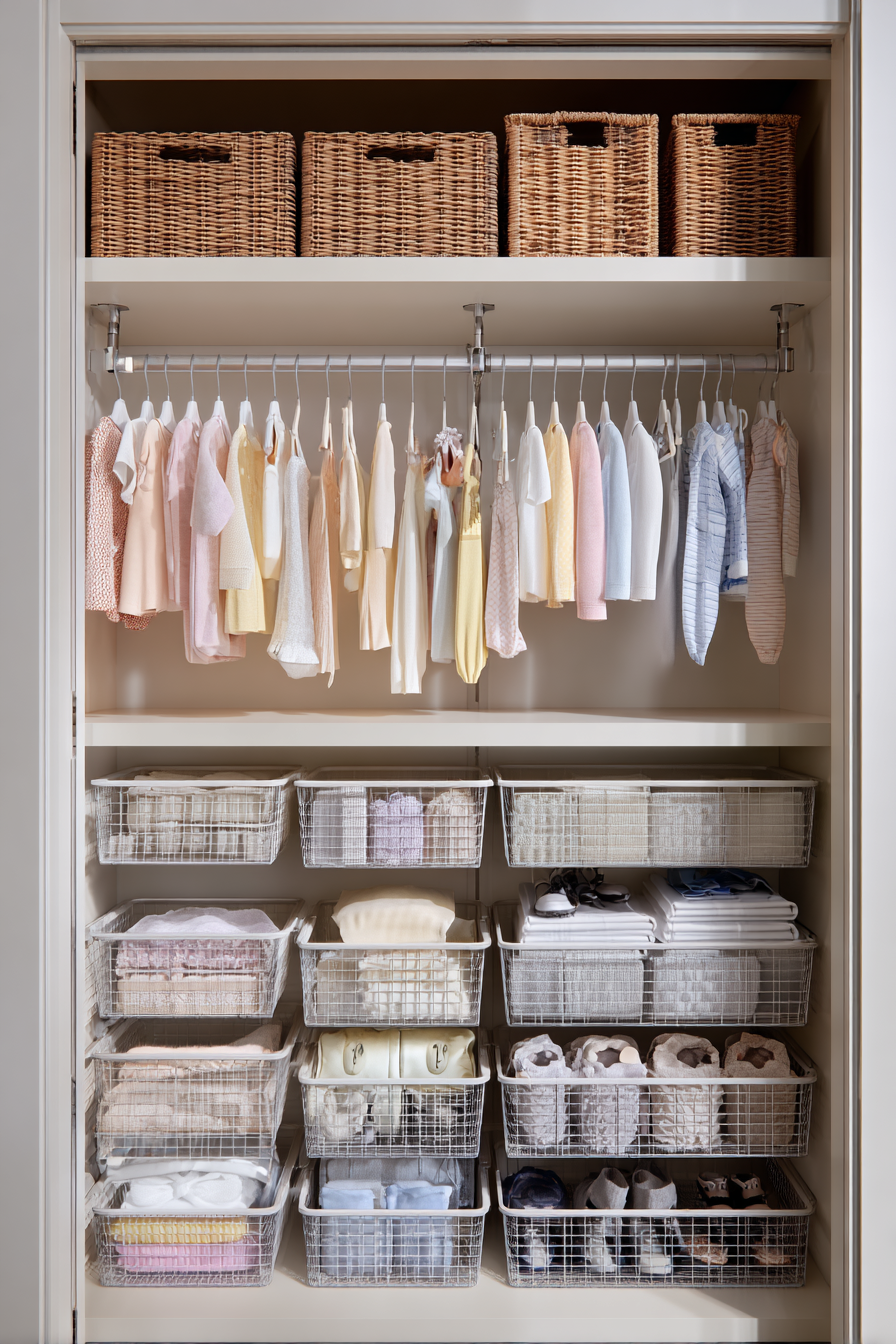
A well-organized closet can eliminate the need for additional furniture in a small nursery. Installing a custom closet system with adjustable shelving and double hanging rods maximizes storage capacity. The vertical space in most closets remains underutilized, but strategic organization can transform it into a storage powerhouse that holds everything from clothes to toys.
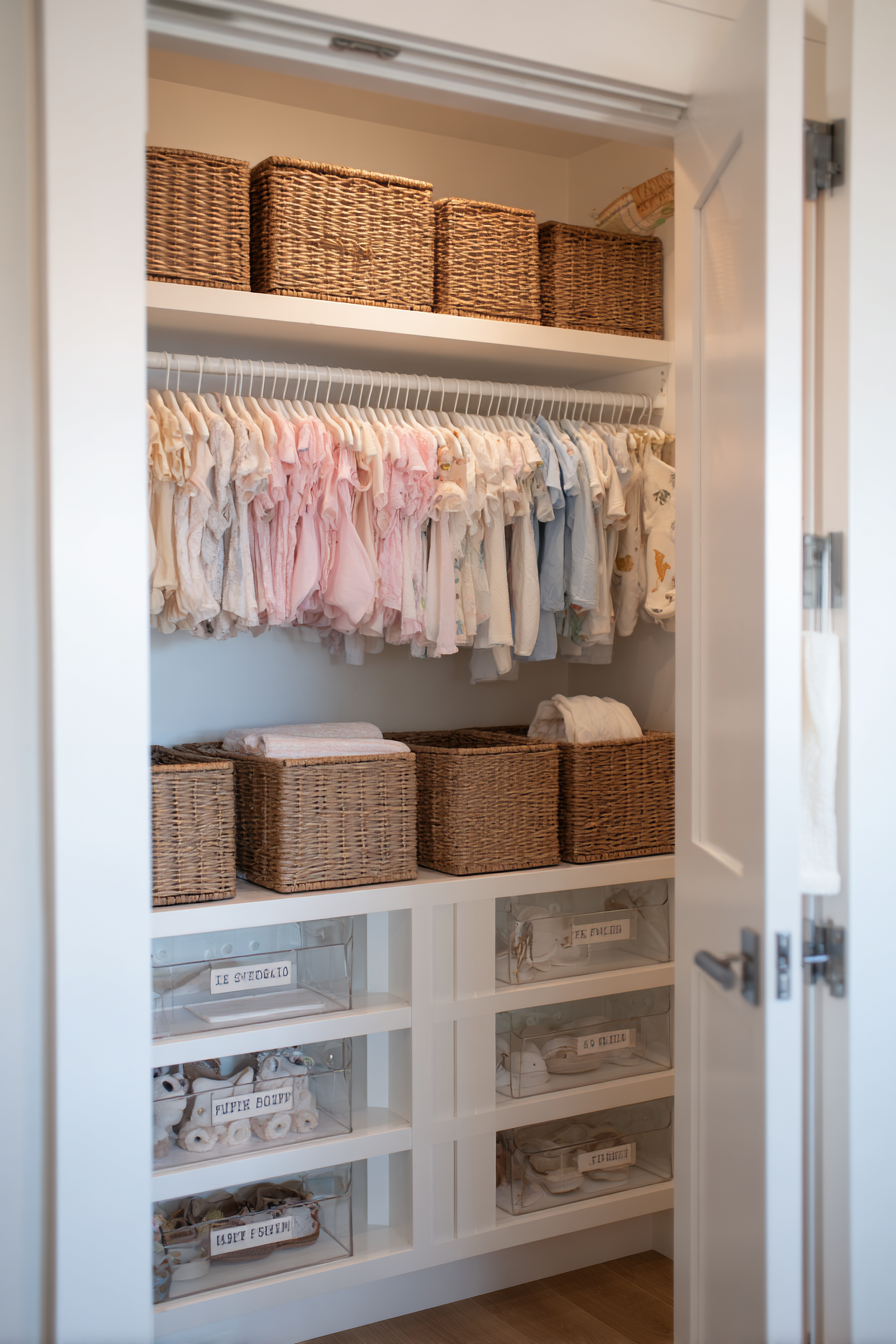
Divide the closet into zones for different categories of items. The top section stores seasonal clothing and items you’ll need later. The middle zone holds everyday essentials at eye level for easy access. The bottom section can accommodate bins for toys, books, or bulky items like extra bedding and blankets.
Door-mounted organizers add another layer of storage efficiency to your closet system. Over-the-door shoe organizers work perfectly for storing small items like socks, bibs, pacifiers, and grooming supplies. This approach keeps everything visible and accessible while maintaining the nursery’s clean appearance, since clutter remains hidden behind closed doors.
- Install double rods to maximize hanging space for small clothes
- Use shelf dividers to keep folded items neat and separated
- Add drawer units specifically designed for closet systems
- Label bins and baskets for quick identification
- Hang a closet organizer for diaper supplies and accessories
- Utilize floor space for larger toys or a hamper
5. Select Compact, Essential Items Only
Minimalist thinking serves small nurseries exceptionally well by preventing unnecessary items from consuming limited space. Before purchasing any item, ask whether it serves a critical function or if something you already own could work instead. This intentional approach keeps the nursery from becoming cluttered with rarely used gadgets and accessories.
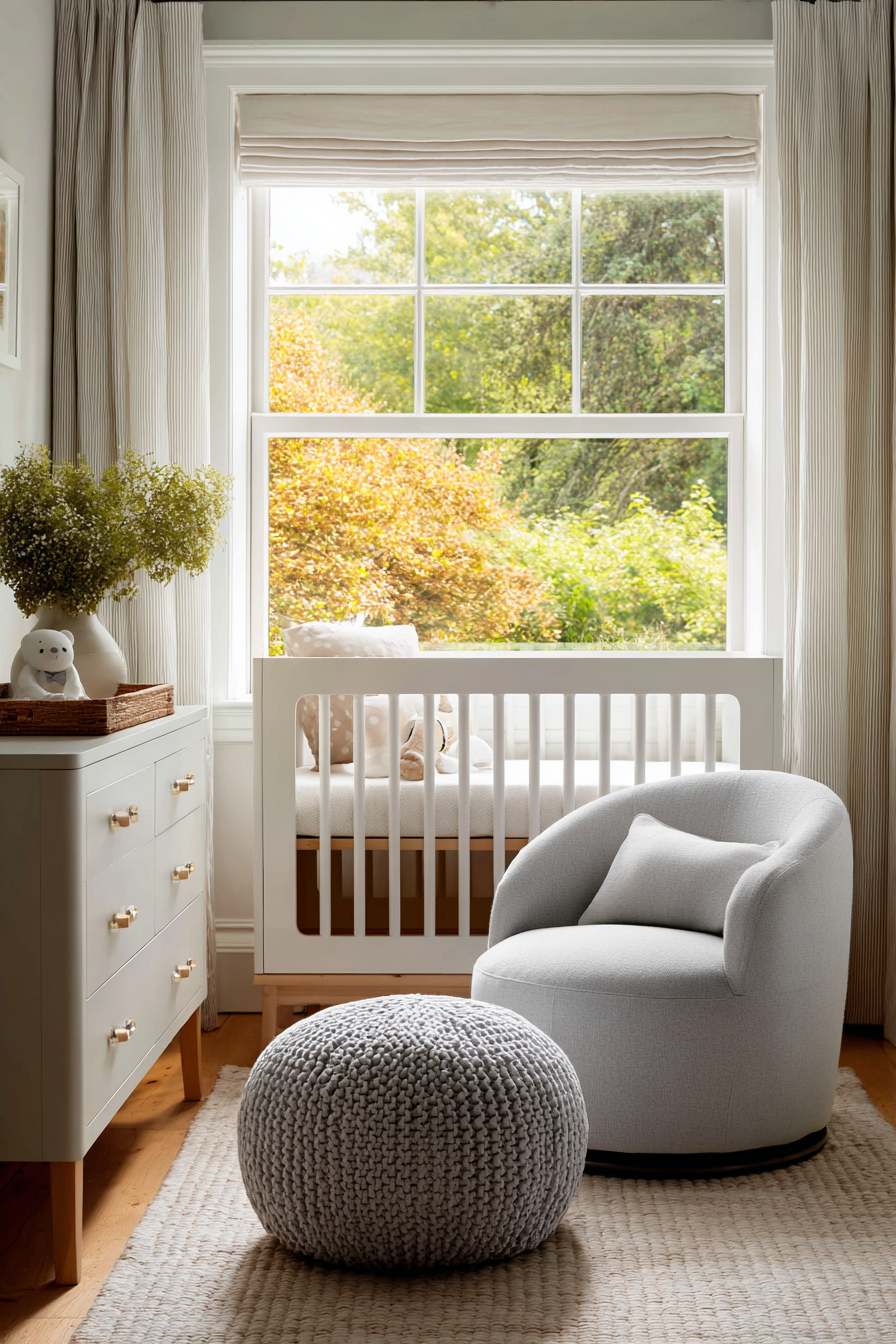
Create a priority list of absolute essentials: crib, changing surface, storage for clothes, and a comfortable feeding spot. Everything else becomes optional. Many parents discover they don’t need dedicated furniture for every baby care task. A changing pad on a dresser works just as well as a changing table while taking up less room.
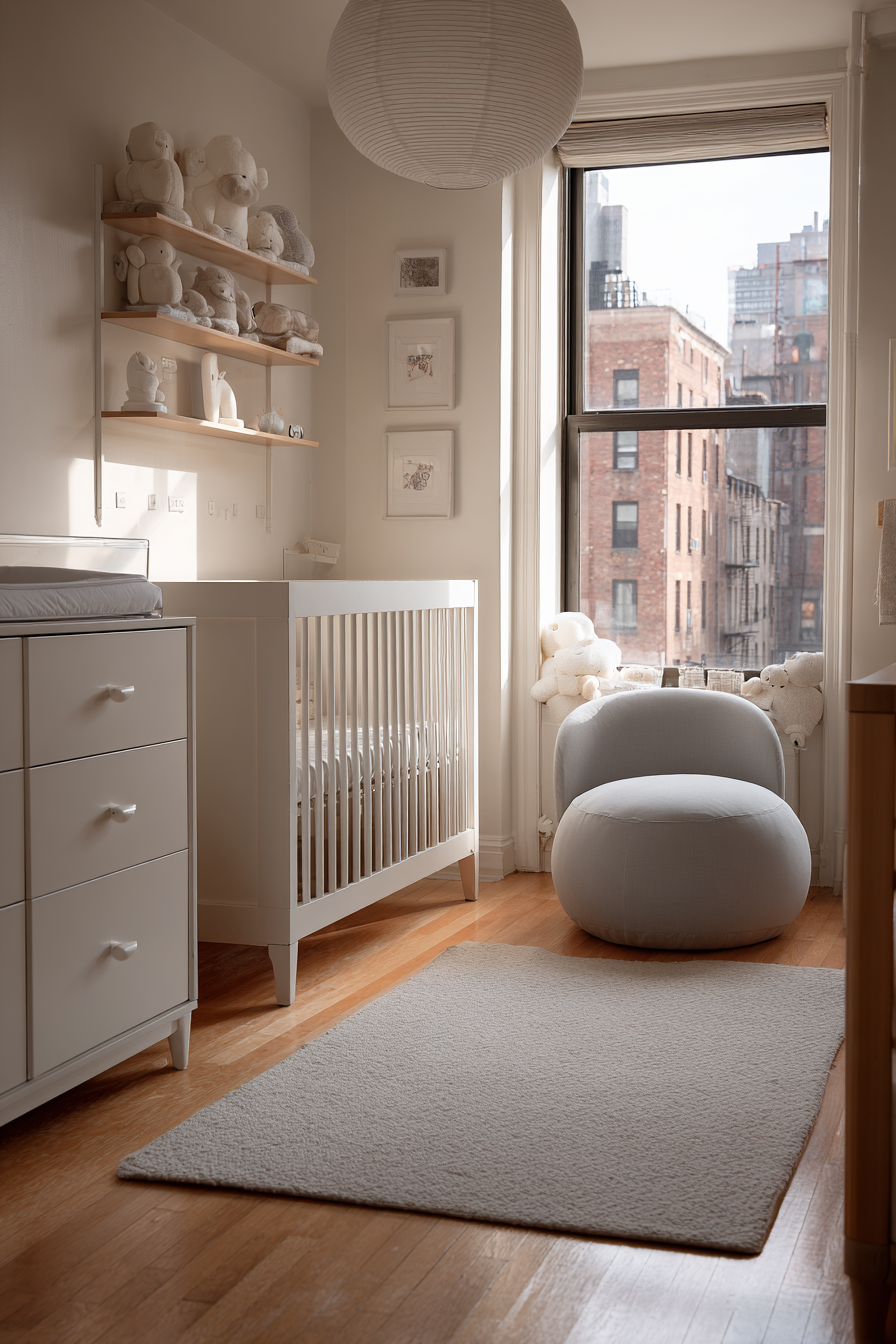
Resist the temptation to fill every corner with decorative items or furniture. Negative space actually makes a room feel larger and more peaceful, which benefits both parent and baby. Focus on quality over quantity, investing in fewer, higher-quality pieces that truly enhance the room’s functionality and aesthetic value.
- Skip the traditional rocking chair if a glider serves the same purpose
- Use a dresser with a changing pad instead of a dedicated changing table
- Eliminate decorative furniture that serves no practical function
- Choose a smaller diaper pail that fits in tight spaces
- Avoid bulky toy boxes in favor of wall-mounted storage
- Opt for a mini crib if your space is extremely limited
6. Maximize Natural Light and Mirrors
Natural light dramatically impacts how spacious a room feels, making window treatments a critical consideration in small nurseries. Heavy drapes and dark curtains absorb light and create a closed-in feeling. Instead, choose sheer curtains or light-filtering blinds that provide privacy while allowing maximum daylight to brighten the space.
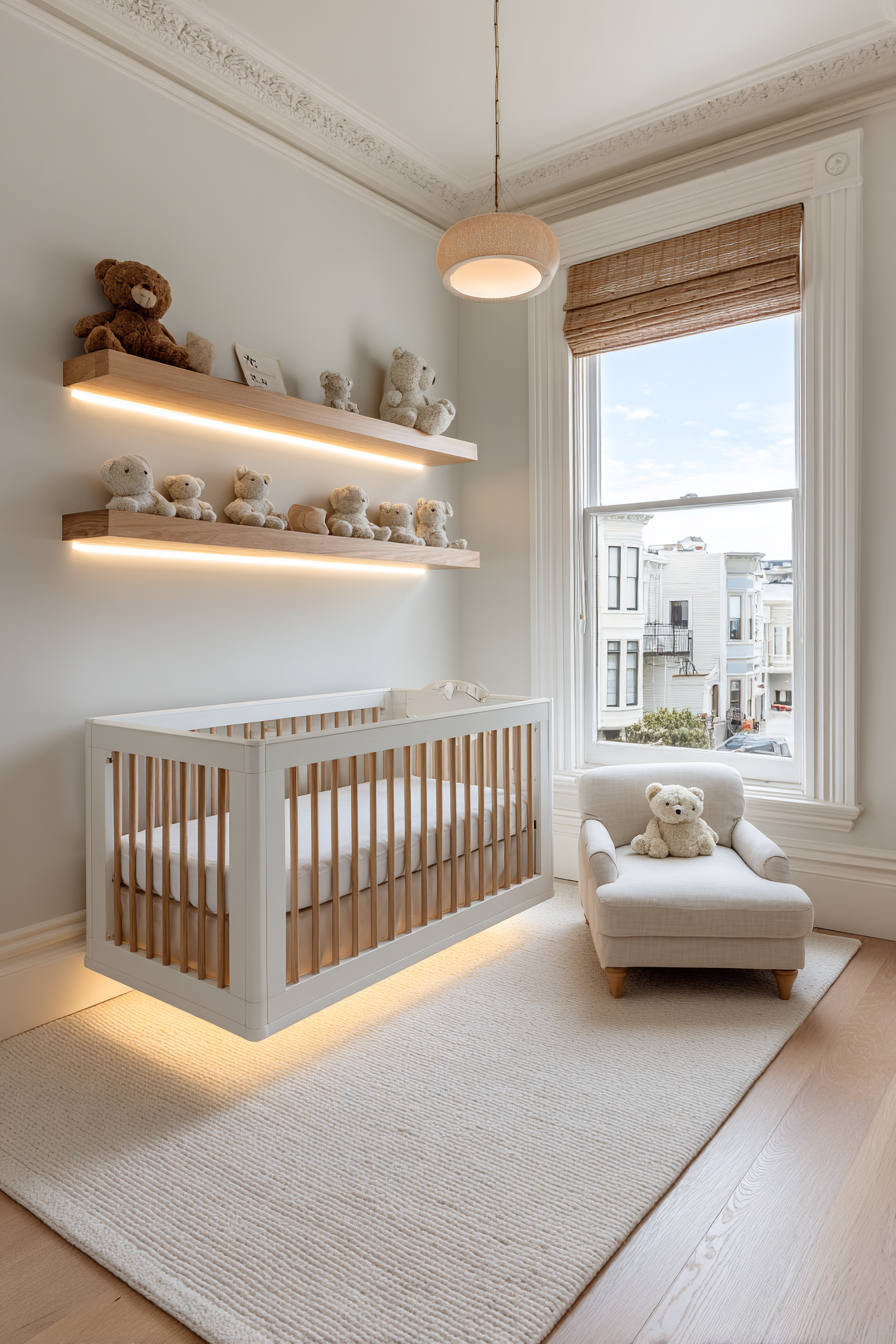
Position mirrors strategically to reflect both natural and artificial light throughout the room. A well-placed mirror opposite a window effectively doubles the natural light and creates the illusion of additional depth. Choose mirrors with slim frames or frameless options to avoid adding visual clutter while achieving this space-expanding effect.
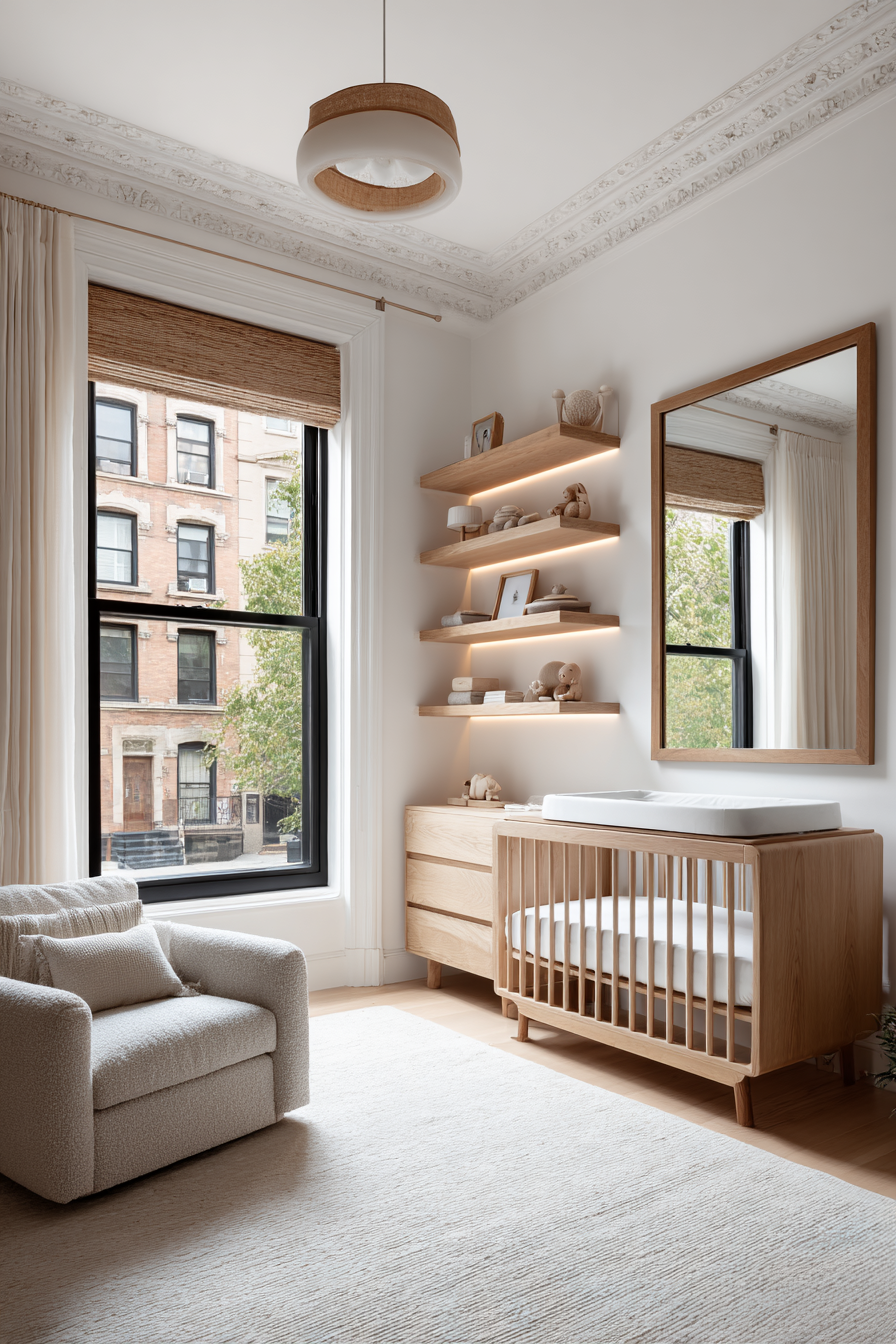
Layer your lighting with multiple sources to eliminate dark corners that make rooms feel smaller. Install a dimmer switch on overhead lighting for nighttime feedings. Add a small table lamp or wall sconce for task lighting during diaper changes. This thoughtful lighting design creates ambiance while making the nursery feel more open and inviting throughout different times of day.
- Replace heavy curtains with bamboo shades or sheer panels
- Hang a large mirror at adult eye level to reflect light
- Paint window trim white to maximize brightness
- Add LED strip lights under shelving for subtle illumination
- Choose light fixtures with uplighting to bounce light off ceilings
- Keep windows unobstructed by furniture whenever possible
Conclusion
Maximizing space in a small baby nursery requires thoughtful planning, but the results create a peaceful sanctuary that serves your family’s needs beautifully. By focusing on multi-functional furniture, vertical storage, and intentional design choices, you can craft a nursery that feels spacious and organized despite its compact dimensions. Remember that less truly is more when it comes to small-space design.

These strategies prove that square footage doesn’t determine a nursery’s functionality or charm. Embrace the opportunity to create a carefully curated space where every item earns its place. Your small nursery can become a testament to smart design that prioritizes what matters most: a safe, comfortable, and loving environment for your growing family.
