


Creating a functional small kitchen requires strategic planning and creative design solutions. Limited space should never limit your culinary dreams or design aspirations. The right approach transforms even the tiniest kitchen into an efficient, beautiful workspace.
Small kitchens present unique opportunities for innovative design thinking. Every square inch becomes valuable real estate for storage and function. Modern design solutions prove that compact spaces can be just as stylish and efficient as expansive kitchens. The key lies in maximizing vertical space, choosing appropriate-scale appliances, and incorporating multi-functional elements.
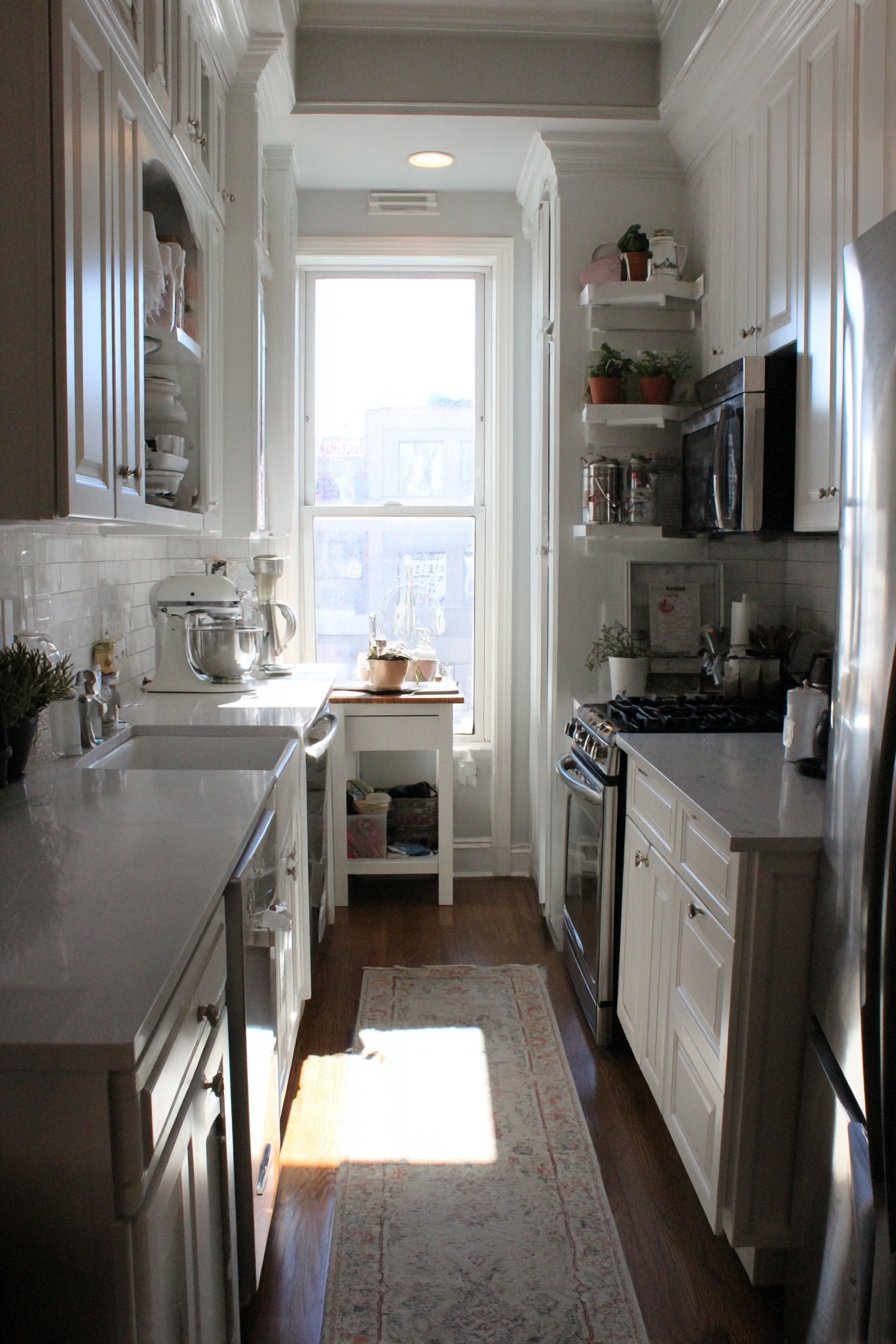
This collection showcases twenty distinct small kitchen designs. Each concept demonstrates different approaches to space optimization. From galley layouts to mobile islands, these ideas prove that small kitchens can be both beautiful and highly functional. Whether you’re working with a studio apartment or a cozy cottage, these designs offer inspiration for your space.
1. Classic White Galley Kitchen with Ceiling-Height Storage
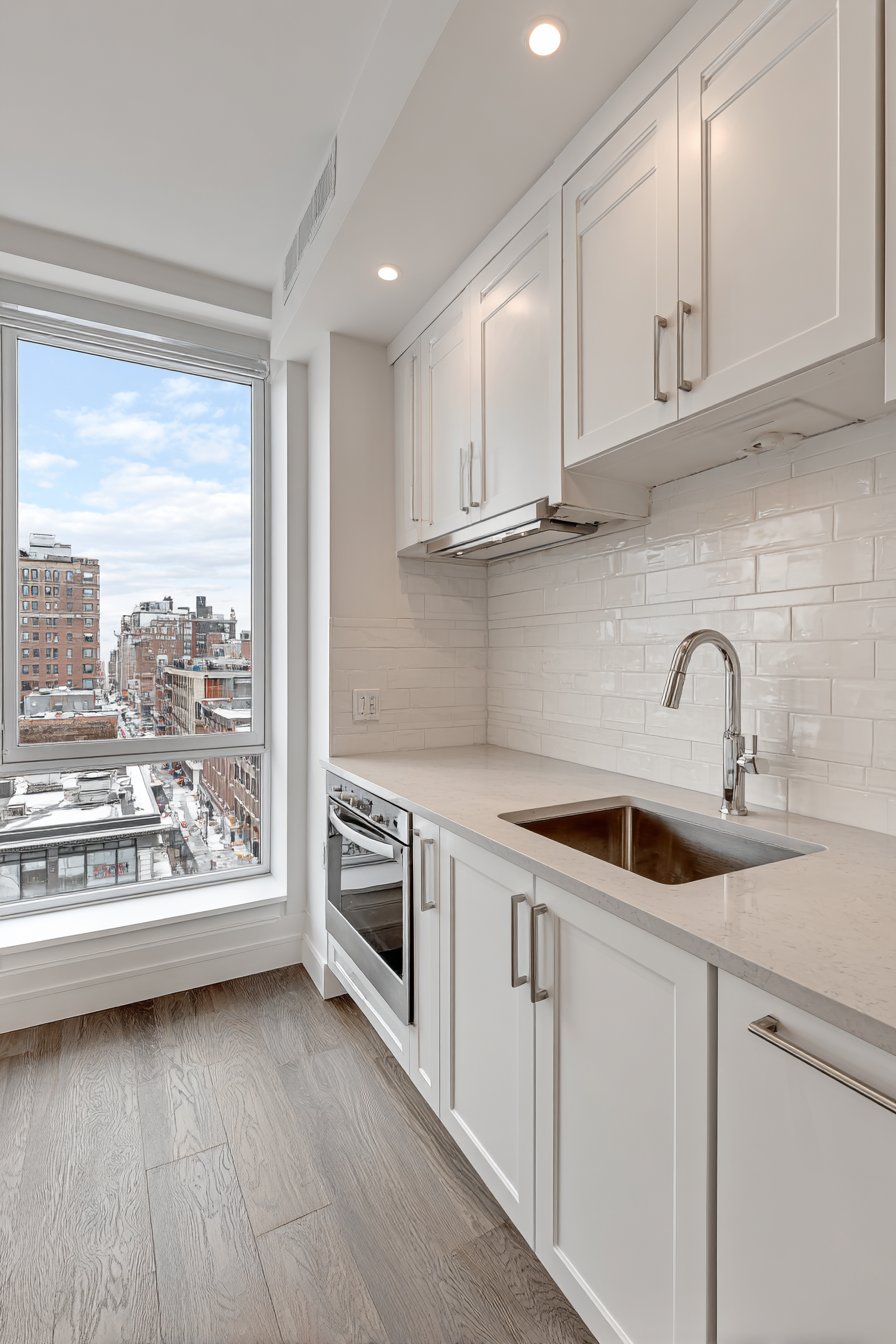
The galley kitchen represents one of the most efficient small kitchen layouts available. White shaker cabinets extend from floor to ceiling, maximizing every vertical inch for storage. Brushed nickel hardware adds subtle sophistication to the clean cabinet fronts. The narrow corridor design creates a natural workflow between preparation and cooking zones.
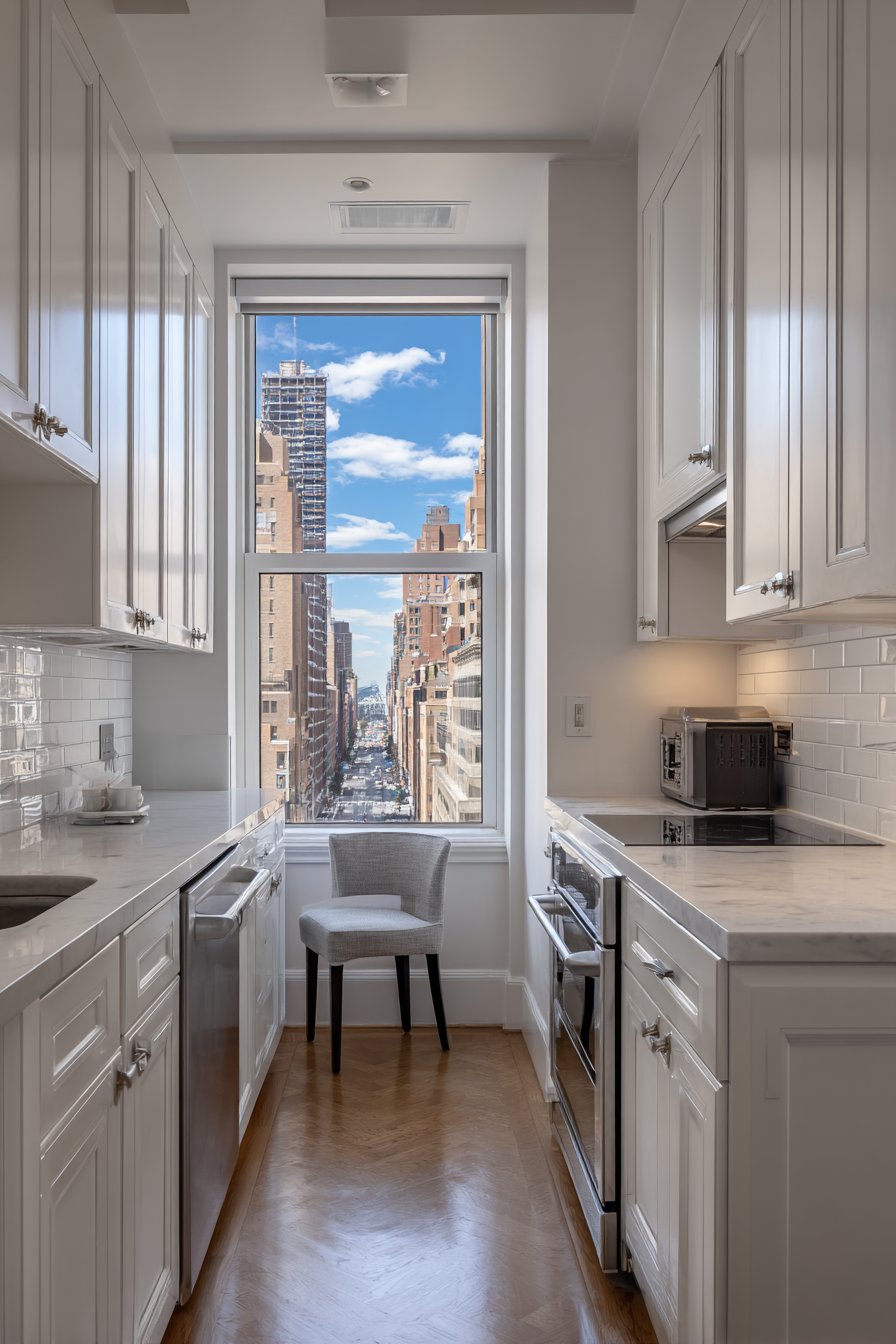
Light grey quartz countertops provide durable workspace that withstands daily cooking demands. The neutral palette keeps the compact space feeling open and airy. White subway tile backsplash reflects natural light streaming from a nearby window. This reflection effectively brightens the entire workspace throughout the day.

Recessed LED lighting eliminates the need for bulky fixtures that consume visual space. The lighting provides even illumination across all work surfaces. A small stainless steel sink fits perfectly within the efficient layout. Compact appliances maintain proportional scale with the room dimensions.
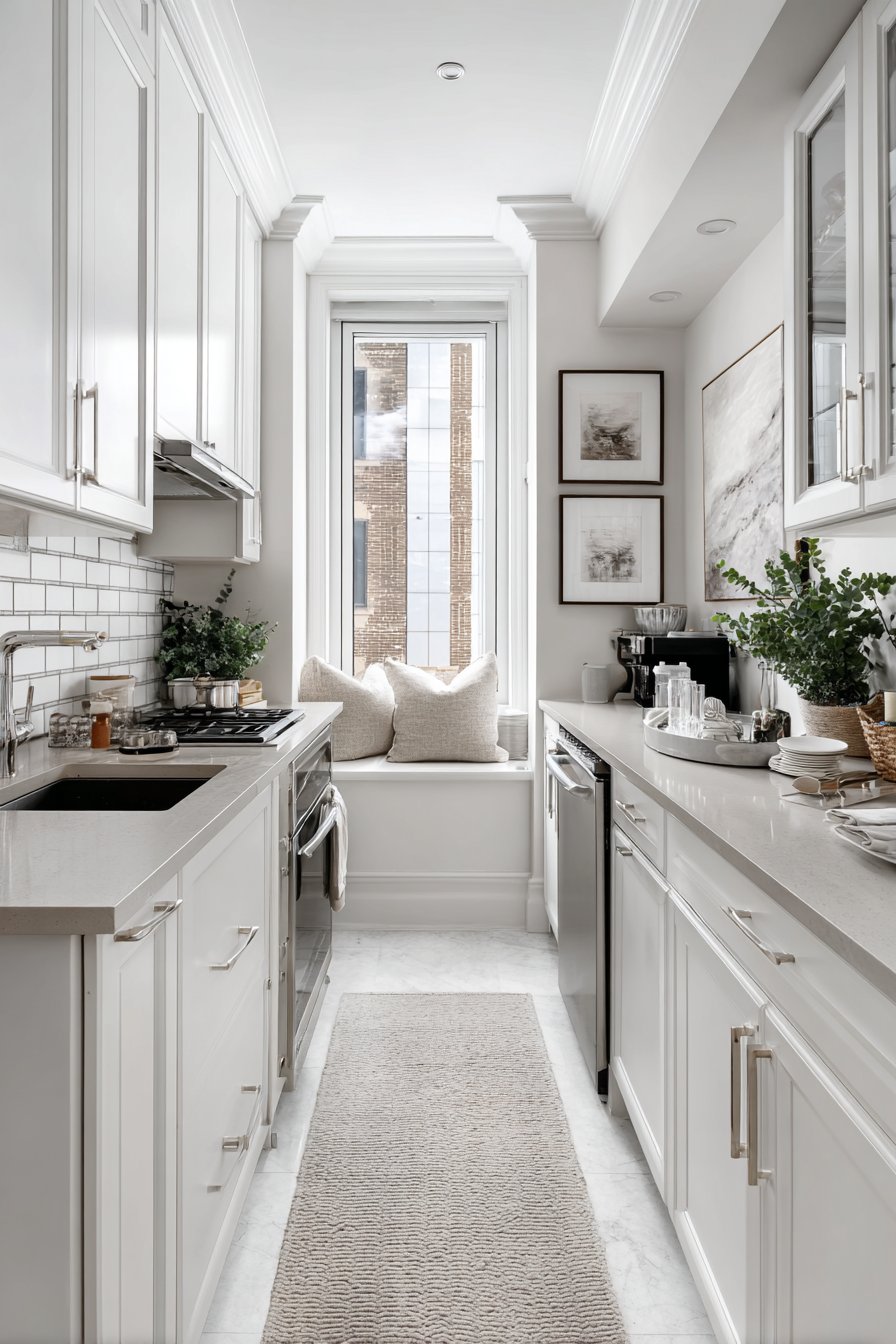
The beauty of this design lies in its simplicity and functionality. Every element serves a purpose without unnecessary decoration. The streamlined approach creates visual calm in a potentially cramped space. This kitchen proves that classic design choices never go out of style.
Key Design Tips:
- Extend cabinets to the ceiling to maximize vertical storage capacity
- Choose light-colored finishes to reflect natural light throughout the space
- Install under-cabinet and recessed lighting for layered illumination
- Select compact appliances that fit the scale of your kitchen
- Use subway tile backsplash to create visual continuity and brightness
2. L-Shaped Kitchen with Peninsula Breakfast Bar
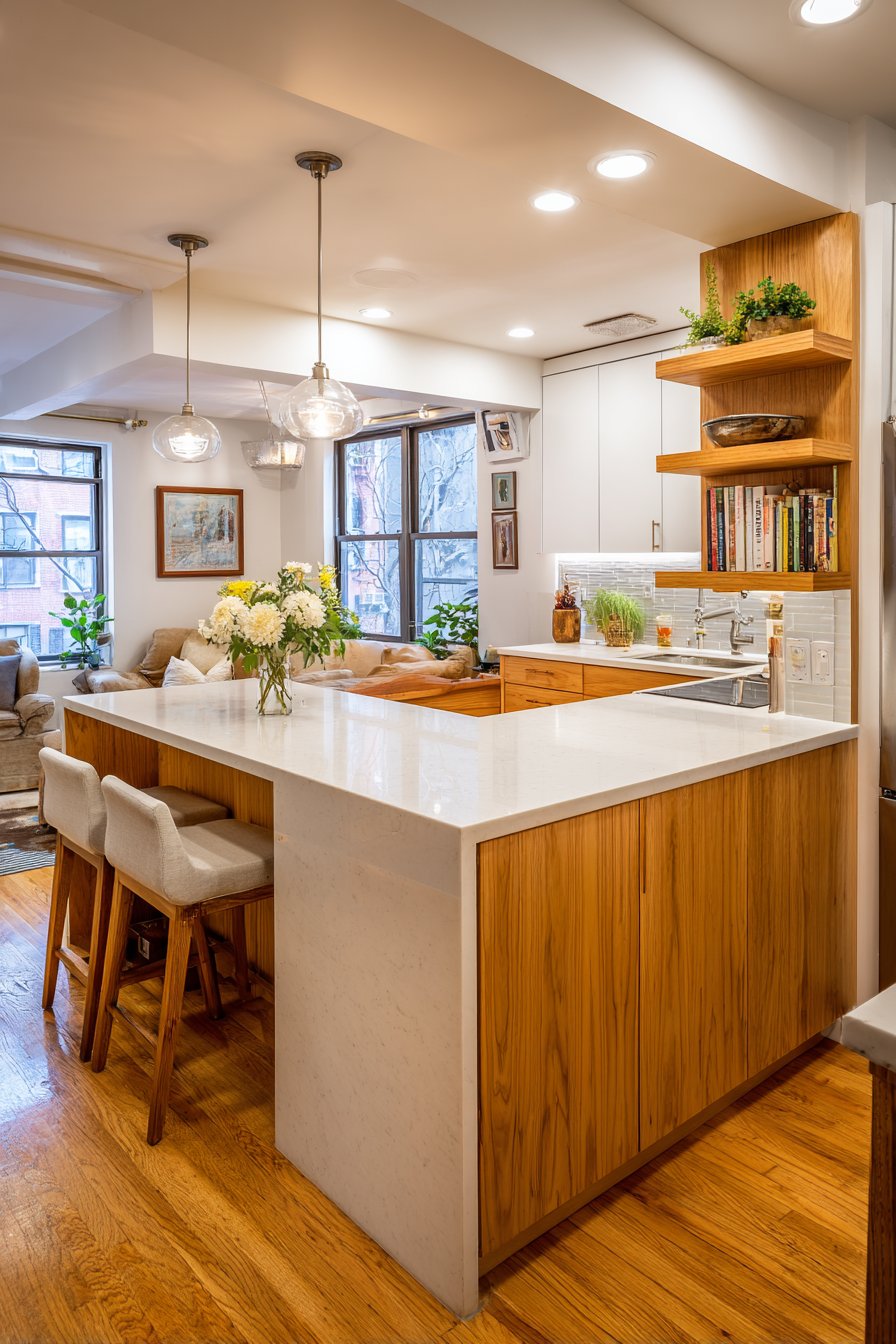
A small kitchen peninsula creates valuable counter space while defining the cooking area. Natural oak lower cabinets provide warm contrast against crisp white walls. Open floating shelves display everyday dishware and small potted herbs accessibly. This combination of closed and open storage reduces visual weight.
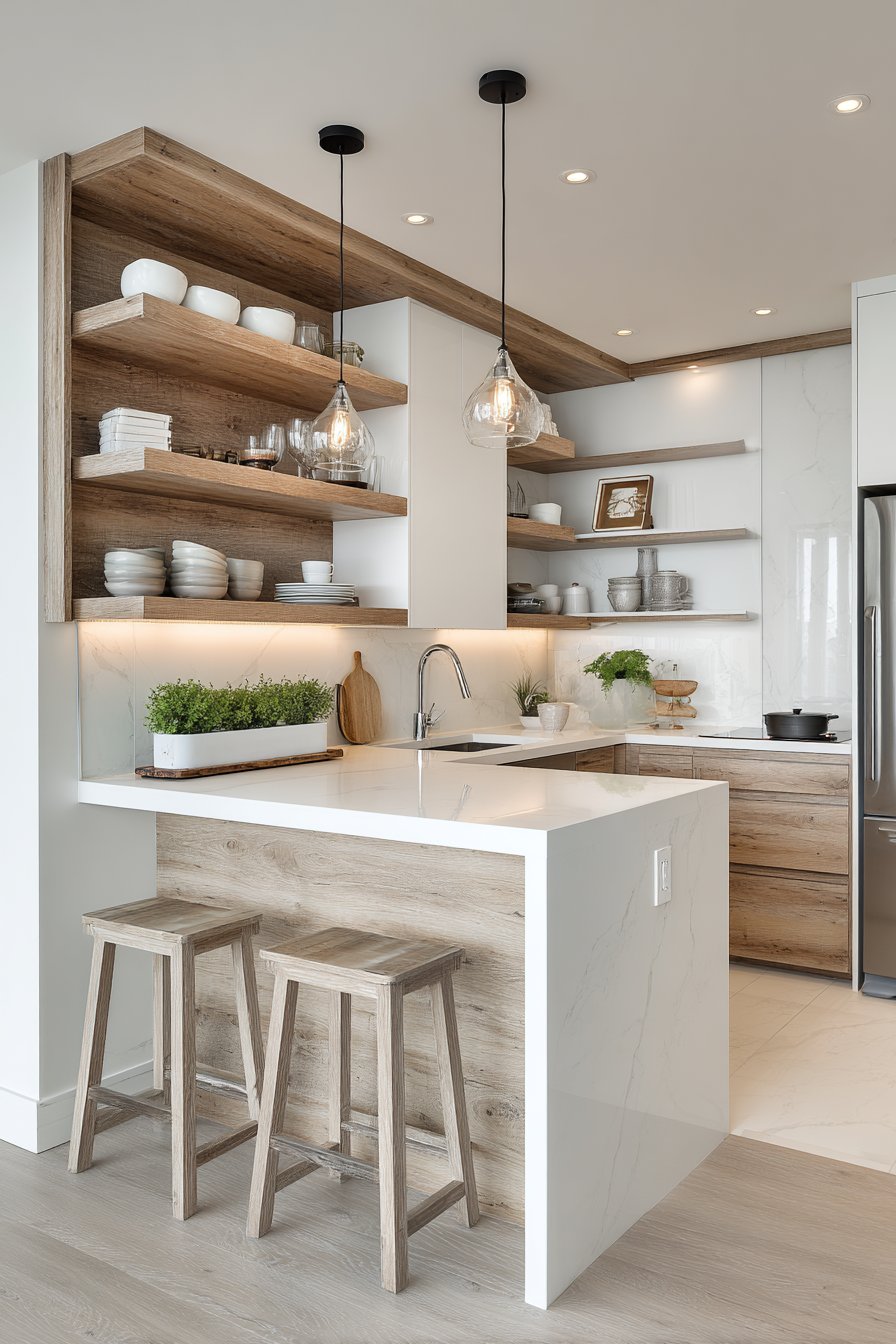
The white quartz waterfall countertop extends gracefully to form a dining ledge. Two modern counter stools tuck underneath when not in use. This arrangement provides casual seating without permanently occupying floor space. The peninsula effectively divides the kitchen from the adjacent living area.
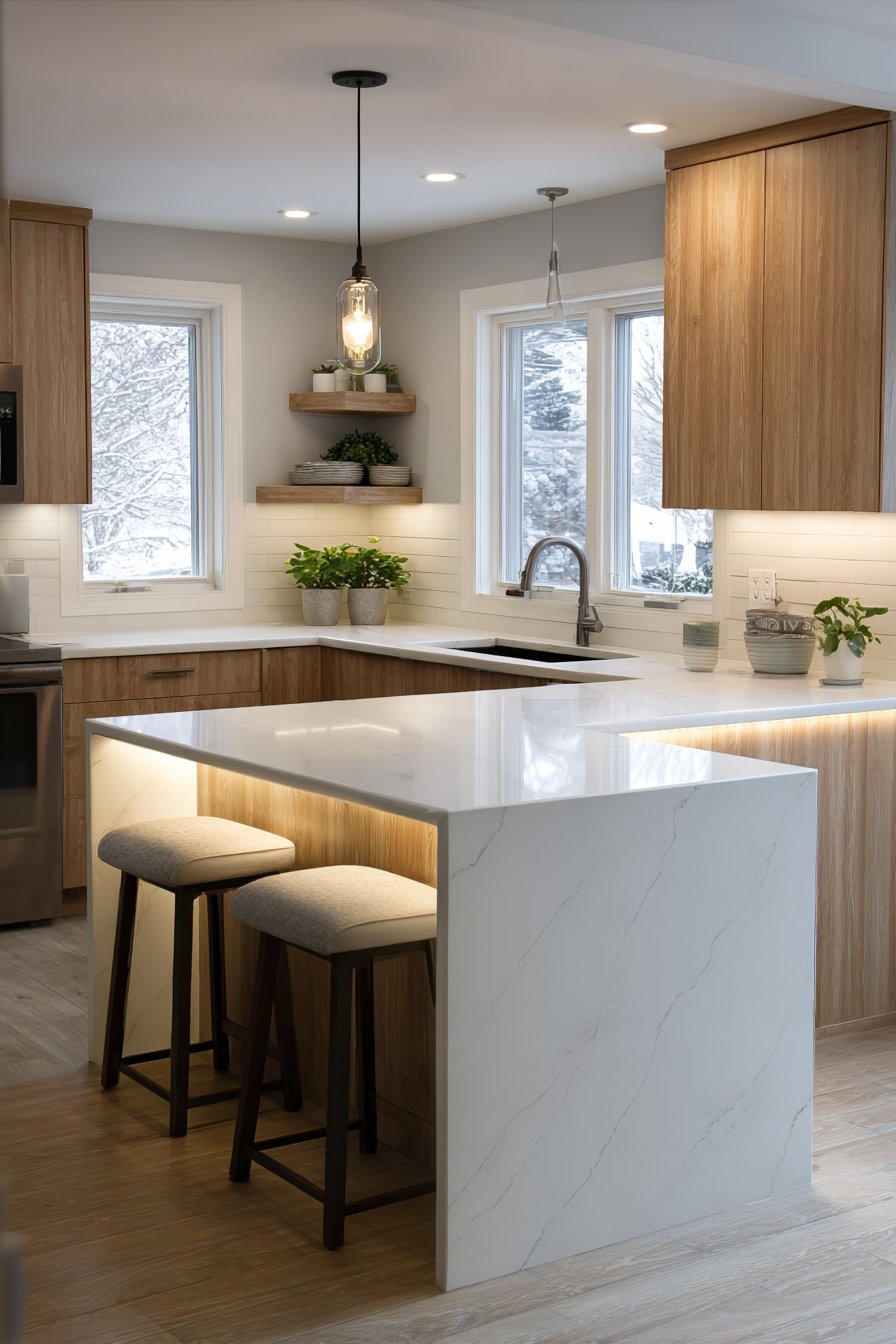
Pendant lighting hangs strategically above the eating area for task illumination. Under-cabinet LED strips illuminate the workspace below the floating shelves. The layered lighting approach ensures adequate brightness for both cooking and dining activities. Natural wood tones introduce warmth to the predominantly white palette.
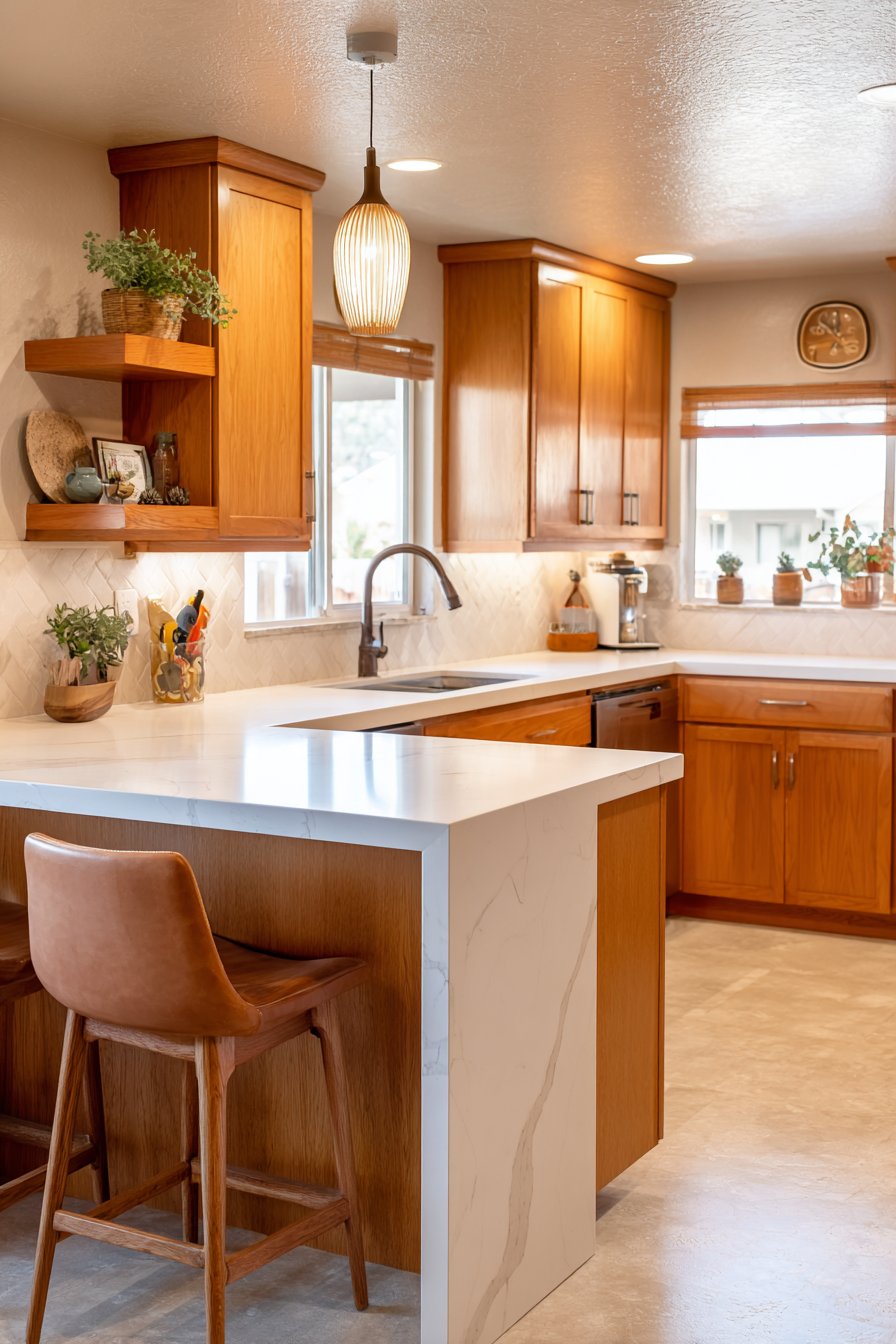
This layout maximizes functionality in limited square footage remarkably well. The peninsula serves triple duty as prep space, dining surface, and room divider. Open shelving keeps frequently used items within easy reach. The design demonstrates how thoughtful planning creates multifunctional spaces.
Key Design Tips:
- Install a peninsula to add counter space and casual dining options
- Combine closed cabinets with open shelving for visual balance
- Use waterfall countertops to create a polished, contemporary look
- Add pendant lights above dining areas for focused task lighting
- Choose bar stools that tuck completely under the counter
3. Bright White Kitchen with Glass-Front Upper Cabinets
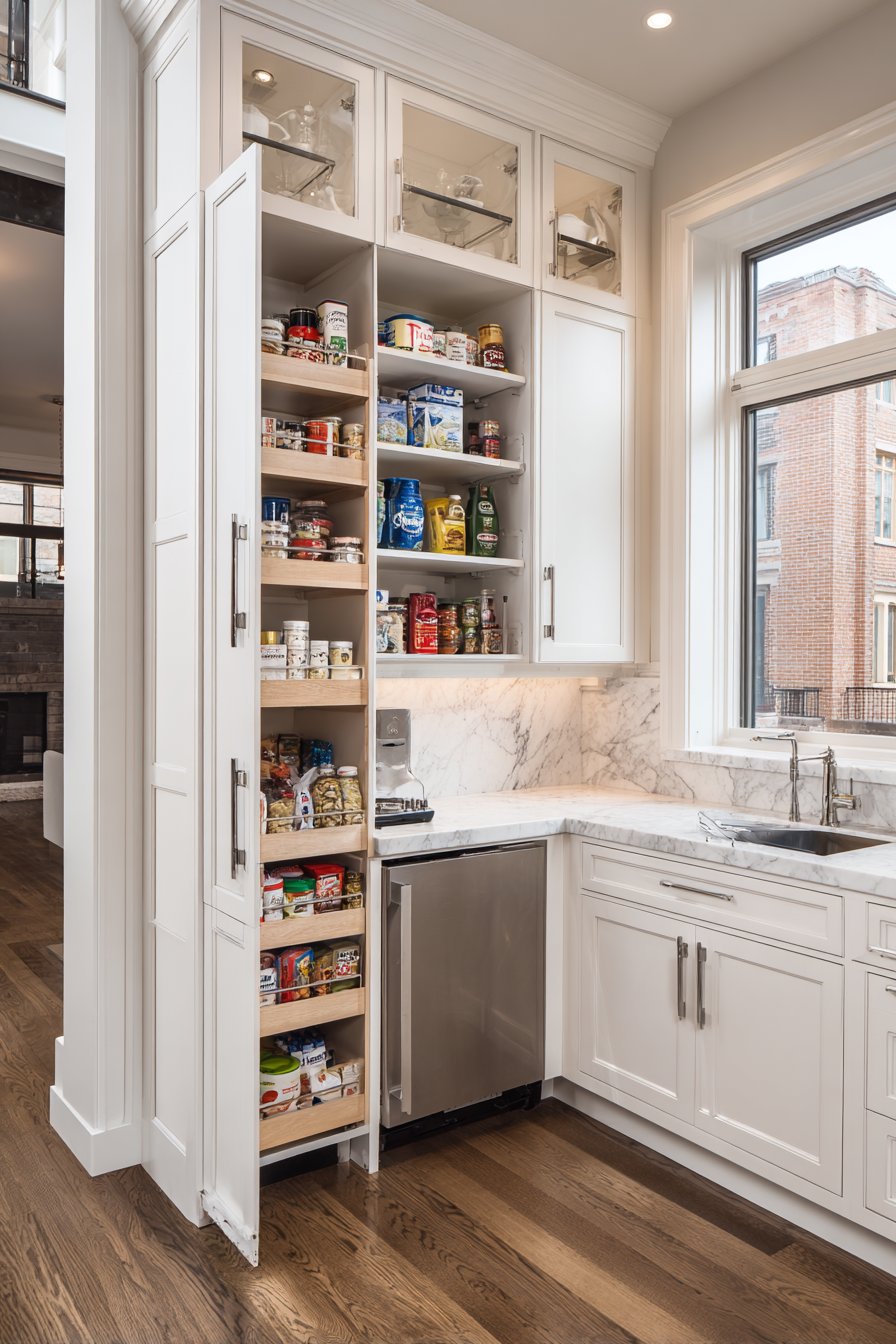
Floor-to-ceiling white cabinetry creates impressive storage capacity in this small kitchen. Glass-front upper cabinets introduce visual openness while maintaining dust-free storage. The transparent doors showcase organized dishware and glassware attractively. This display element adds personality without cluttering the space.
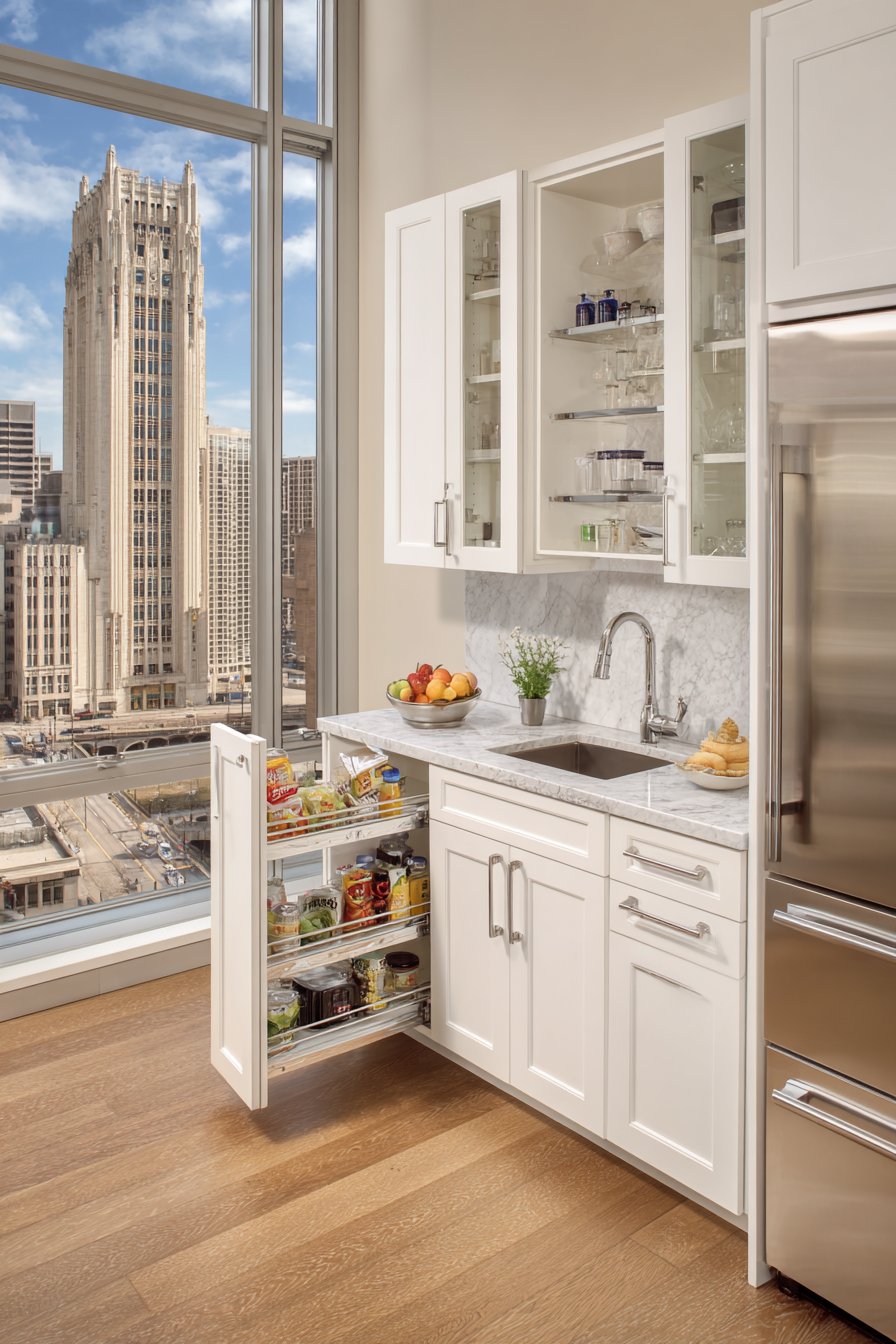
Carrara marble-look porcelain countertops add elegance without overwhelming the compact dimensions. The veining provides subtle visual interest against pristine white cabinets. A slim pull-out pantry ingeniously utilizes the narrow gap beside the refrigerator. This clever storage solution holds spices, oils, and dry goods efficiently.
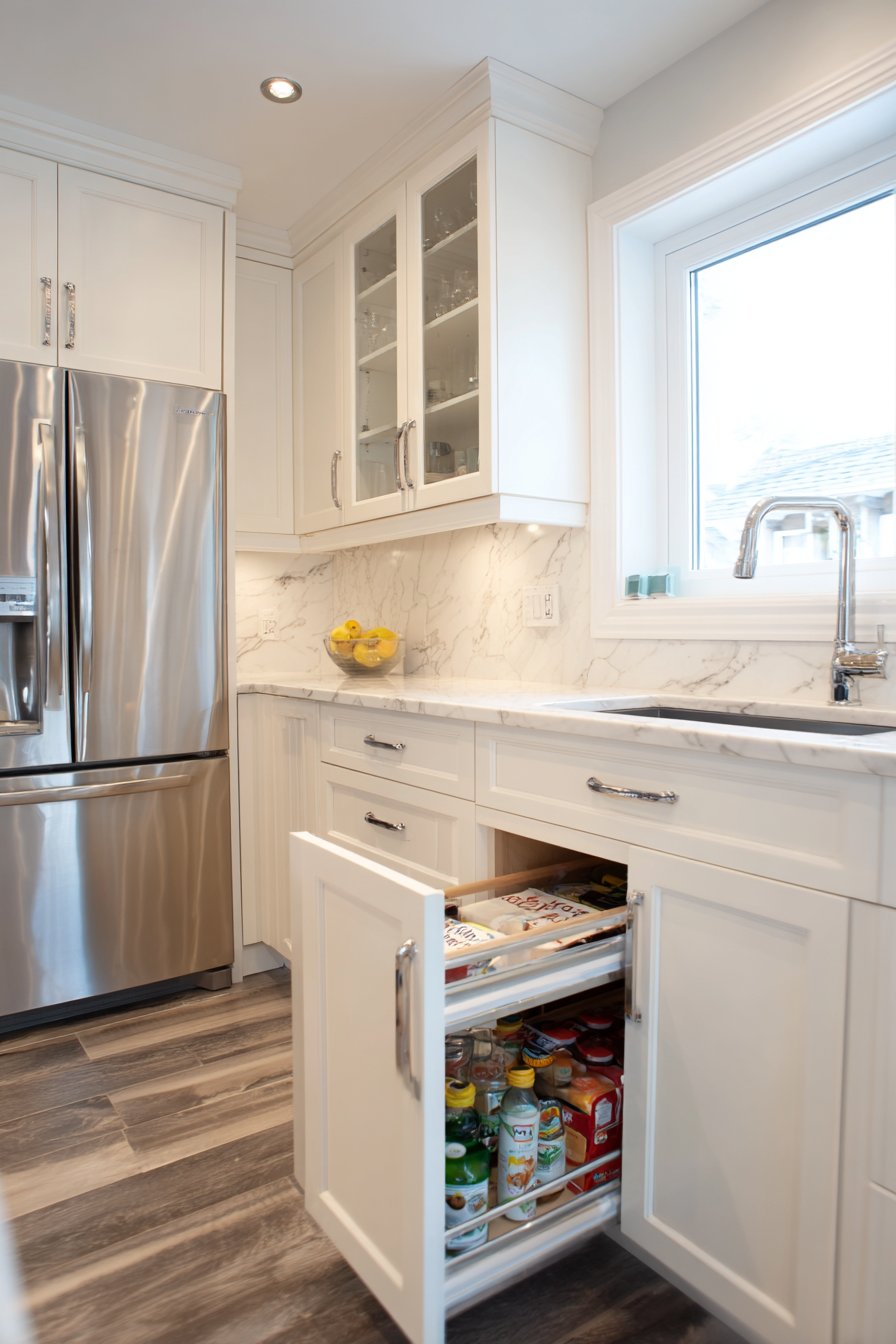
Polished chrome fixtures catch and reflect available light throughout the space. A small undermount sink optimizes the limited counter area for food preparation. Natural morning light streams through a window positioned above the sink. This placement ensures the primary workspace receives abundant natural illumination.
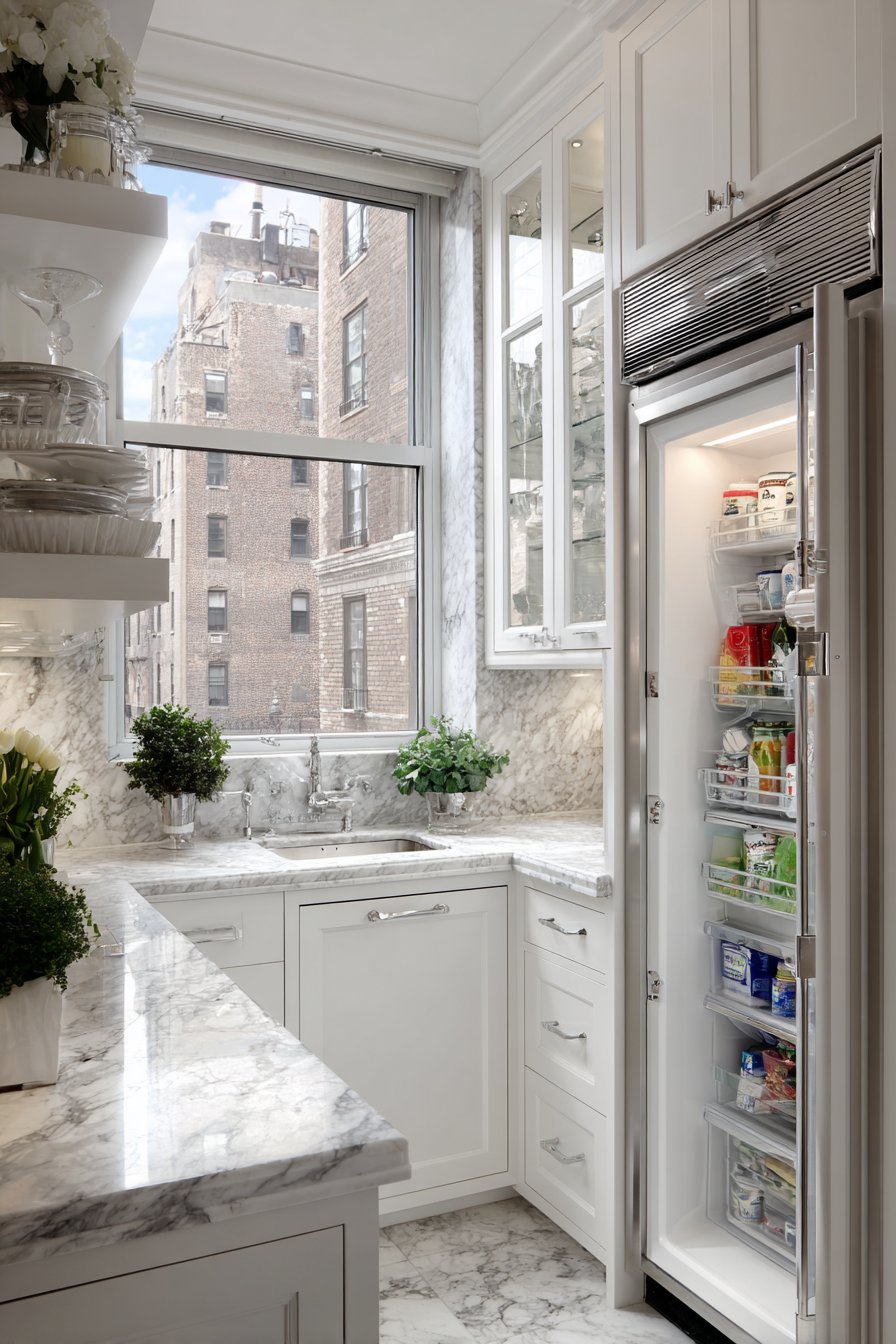
The vertical emphasis in this design draws the eye upward effectively. High cabinets create the illusion of greater ceiling height. Reflective surfaces multiply available light, making the room feel significantly larger. This approach demonstrates how strategic material choices transform spatial perception.
Key Design Tips:
- Use glass-front cabinets to create visual depth and openness
- Install slim pull-out pantries in narrow gaps between appliances
- Choose polished chrome fixtures to maximize light reflection
- Position windows above primary work zones for natural task lighting
- Select porcelain countertops that mimic natural stone for elegance
4. Mobile Kitchen Island for Ultimate Flexibility
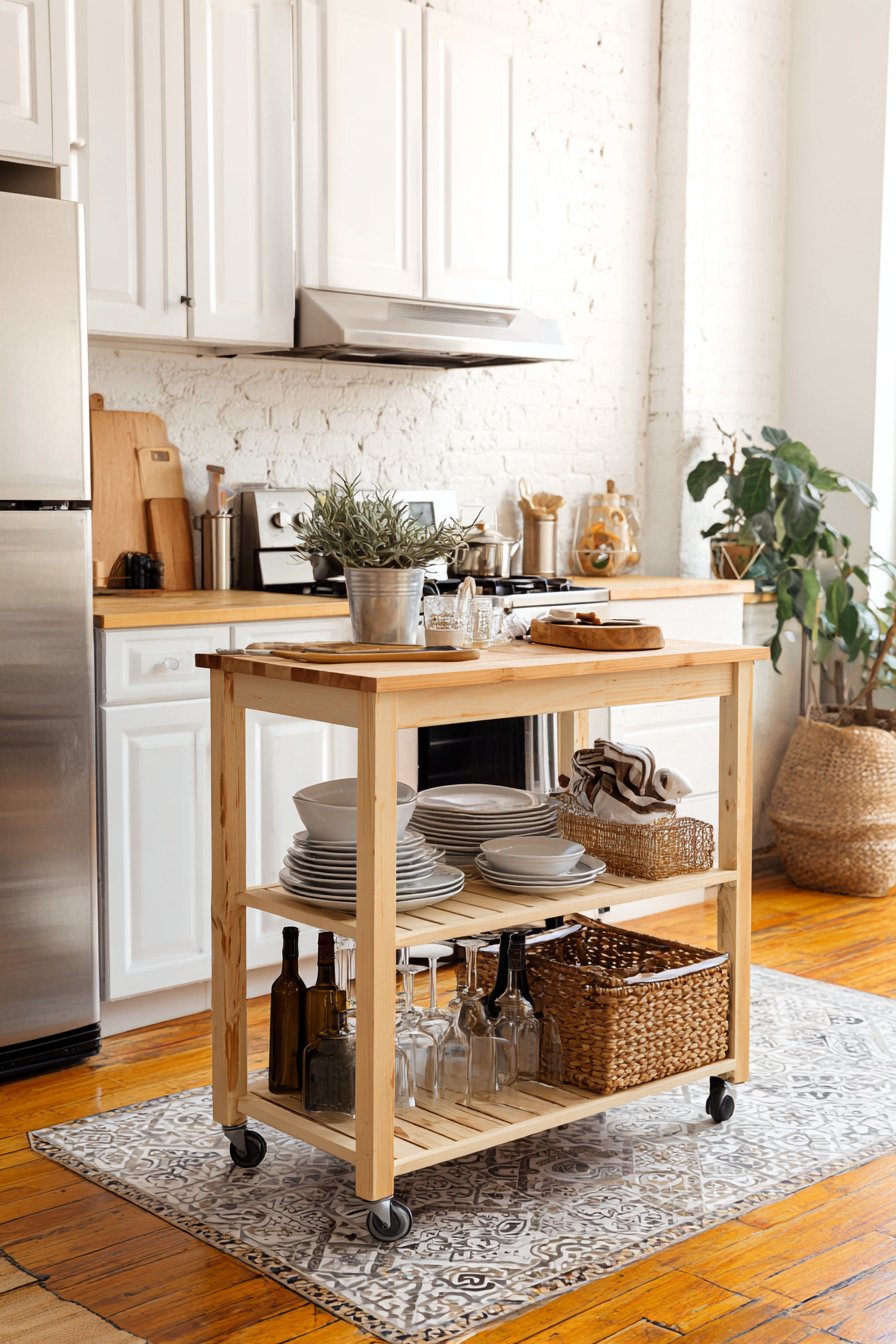
A compact kitchen island on wheels provides exceptional versatility in small spaces. The butcher block top offers a dedicated surface for meal preparation. Open shelving below stores cookware, mixing bowls, and baking equipment accessibly. The mobile design allows repositioning based on current cooking needs.
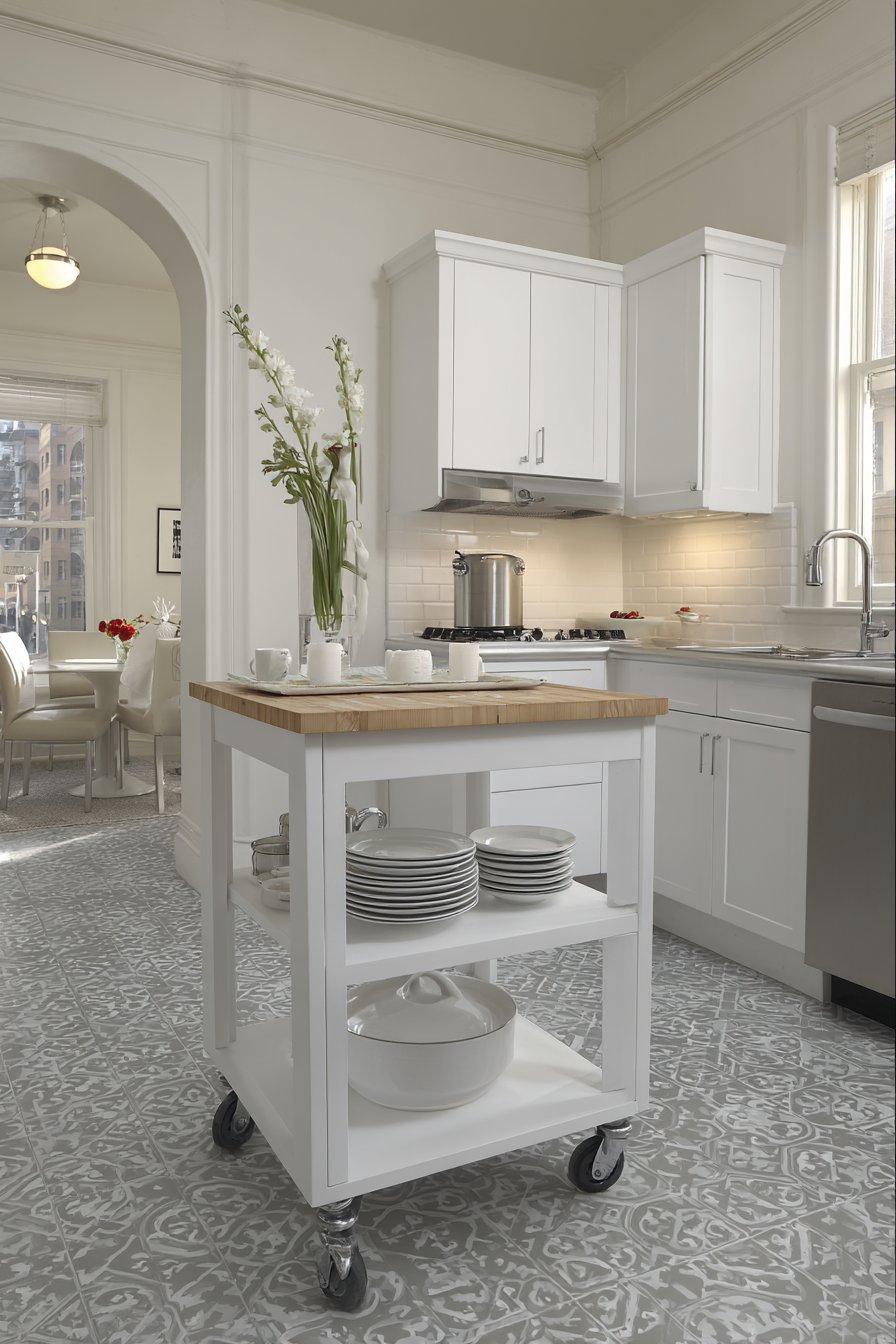
Surrounding white cabinets maintain bright, reflective wall surfaces throughout the room. The neutral backdrop allows the wood island to become a warm focal point. Patterned cement tile flooring adds personality and visual interest underfoot. The decorative floor pattern draws attention away from the room’s modest dimensions.
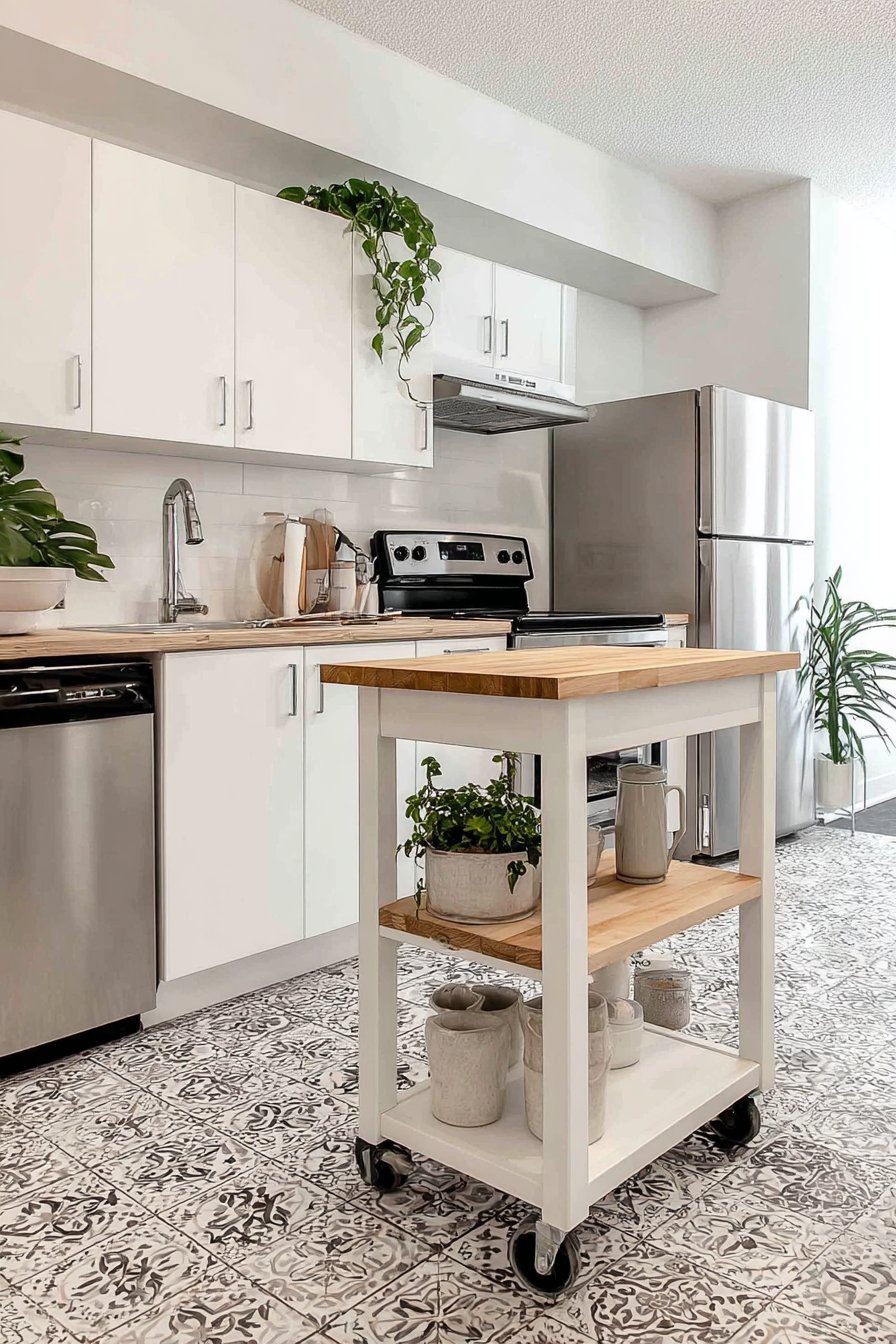
Stainless steel appliances in apartment sizes maintain appropriate scale for the space. Oversized appliances would overwhelm the proportions and consume valuable floor area. The compact refrigerator, range, and dishwasher fit perfectly within the available footprint. Each appliance delivers full functionality despite reduced dimensions.
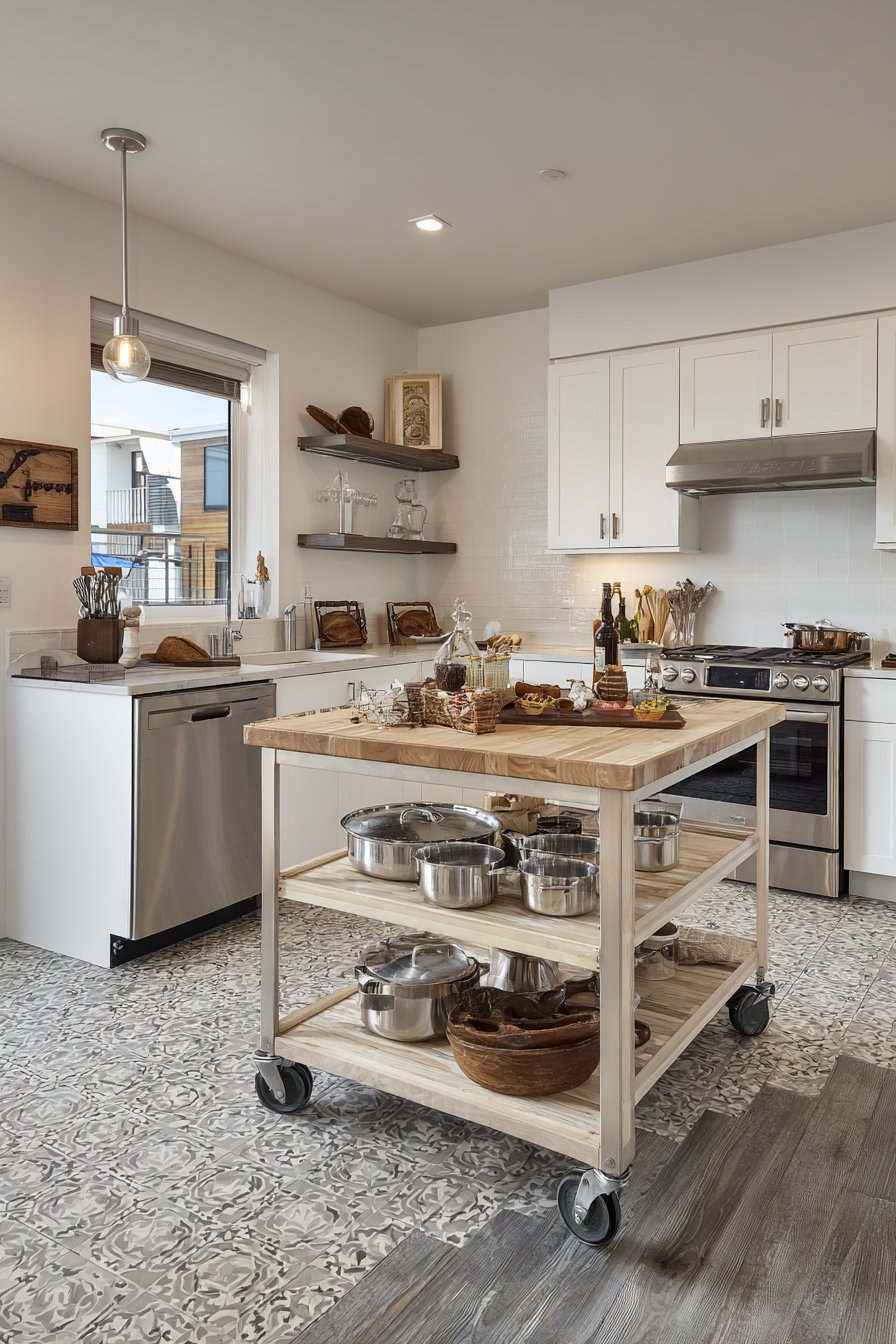
This design showcases how movable furniture enhances small kitchen functionality dramatically. The island can be centered during meal prep and rolled aside for entertaining. This flexibility proves invaluable in multi-purpose spaces. The approach demonstrates that permanent fixtures aren’t always the best solution.
Key Design Tips:
- Choose a rolling island for flexible workspace that moves as needed
- Select butcher block tops for durable, knife-friendly prep surfaces
- Use patterned flooring to add visual interest without wall clutter
- Install apartment-sized appliances that match your space proportions
- Keep surrounding cabinetry light-colored to maximize brightness
5. Navy and White Kitchen with Smart Corner Storage
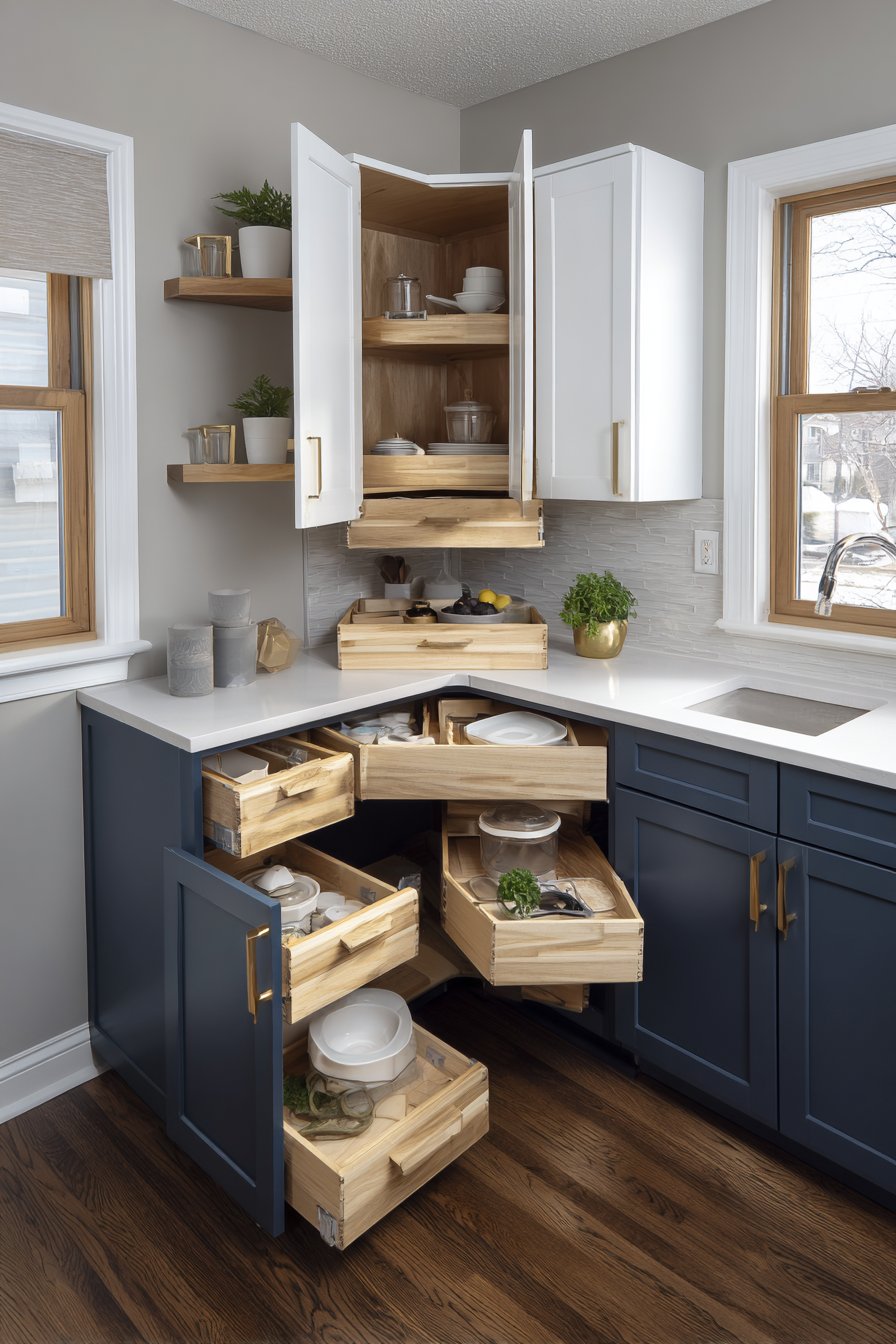
Two-tone cabinetry creates visual depth in this thoughtfully designed small kitchen. Deep navy lower cabinets ground the space with rich color. White upper cabinets maintain brightness and prevent the room from feeling dark. The color division draws the eye horizontally across the space.
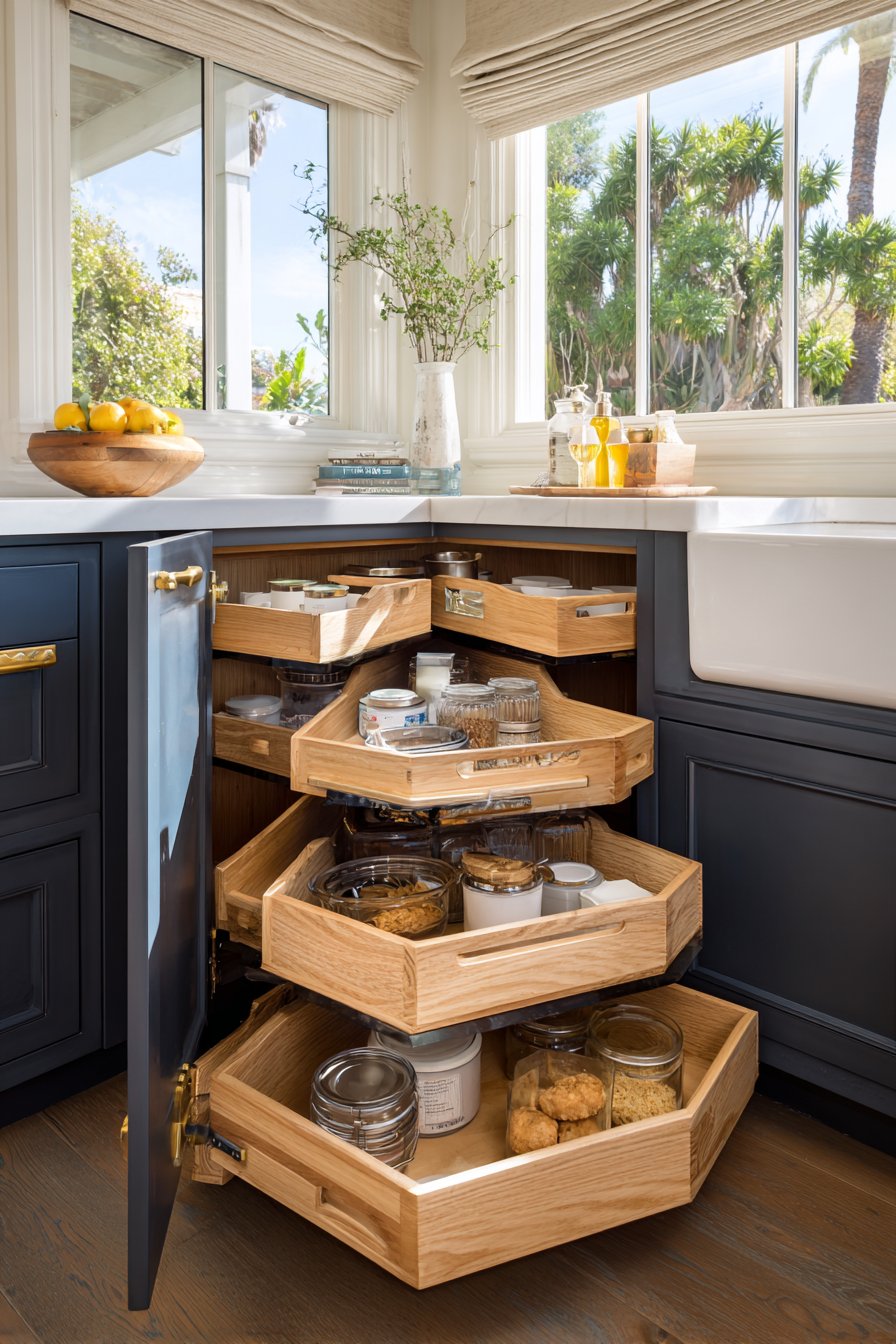
Smart corner storage solutions maximize typically wasted areas with lazy Susan cabinets. Pull-out corner drawers provide accessible storage for pots and baking sheets. These specialized organizers ensure every cubic inch serves a practical purpose. No space goes unused in this efficient design.
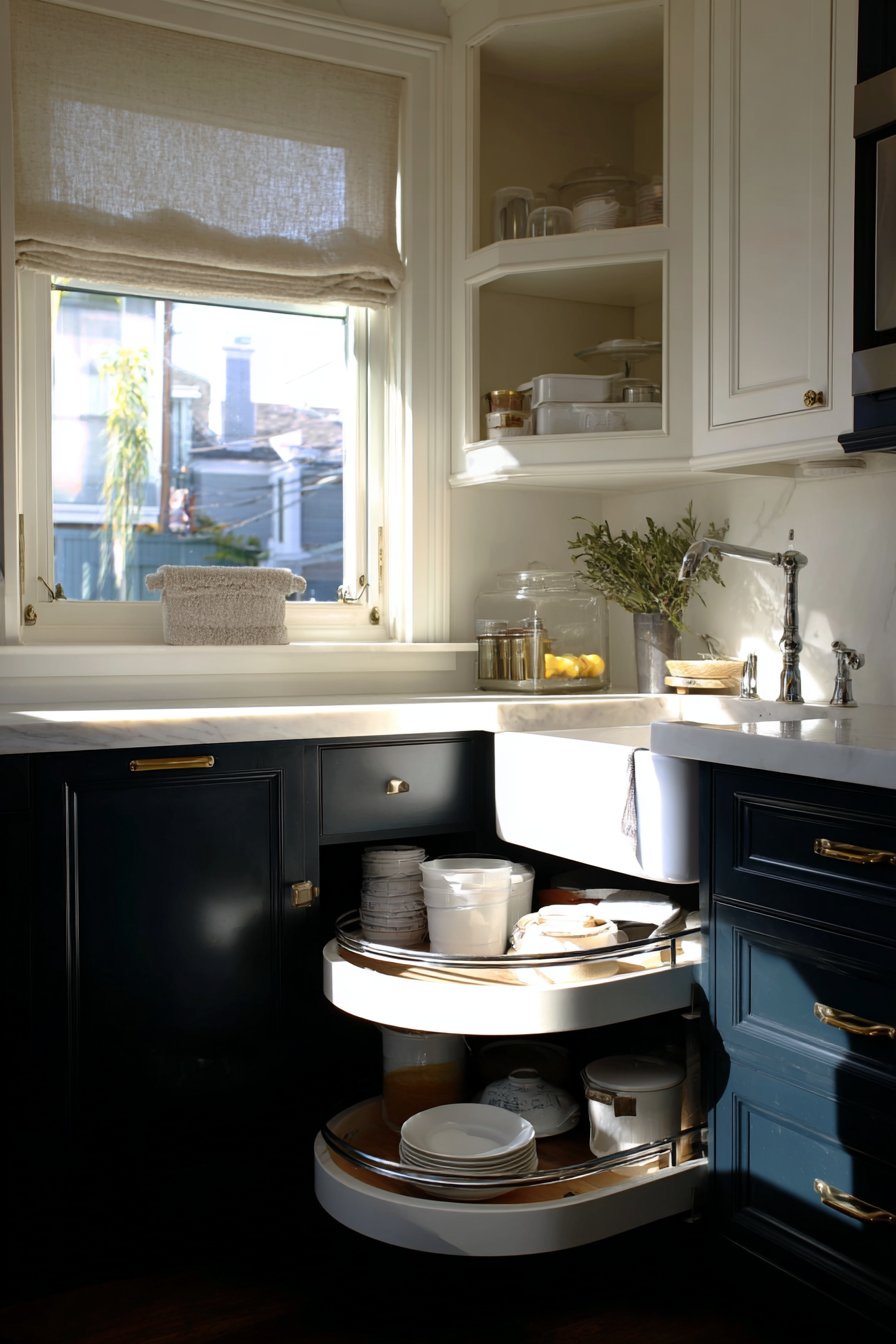
Brass hardware provides warm metallic accents against the painted cabinet surfaces. The golden tones complement both the navy and white elements beautifully. A compact farmhouse sink sits beneath a window dressed simply with linen cafe curtains. Natural light floods the sink area during daytime hours.
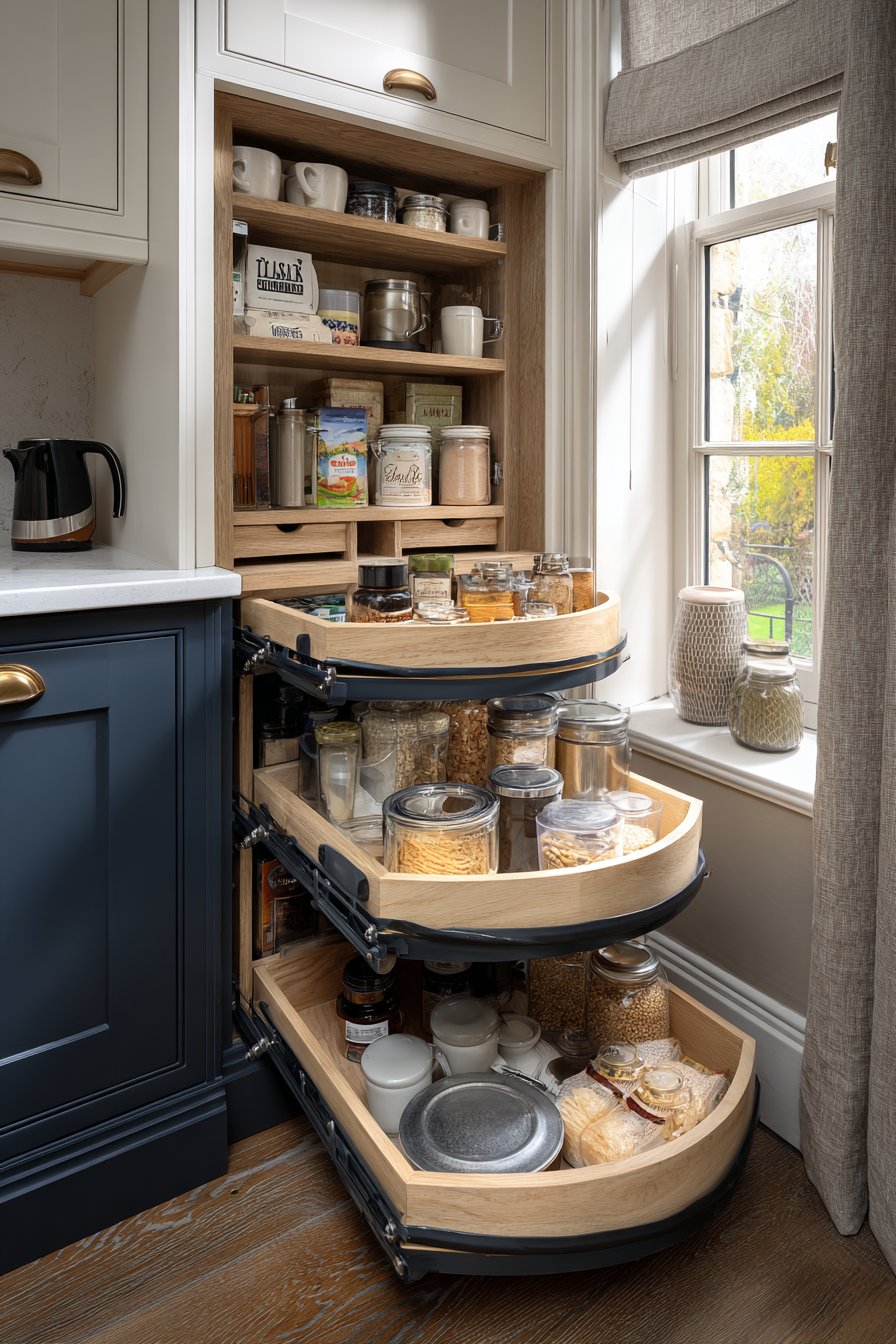
The corner solutions in this kitchen deserve special recognition for their ingenuity. Standard corner cabinets often become black holes where items disappear forever. These pull-out systems bring everything to the front with minimal effort. The investment in quality corner hardware pays dividends in daily functionality.
Key Design Tips:
- Use two-tone cabinetry to add depth without overwhelming the space
- Install lazy Susan cabinets and pull-out drawers in corner areas
- Choose brass hardware for warm metallic accents
- Position sinks beneath windows for natural task lighting
- Add simple window treatments that allow maximum light penetration
6. Galley Kitchen with Open Shelving and Appliance Garage
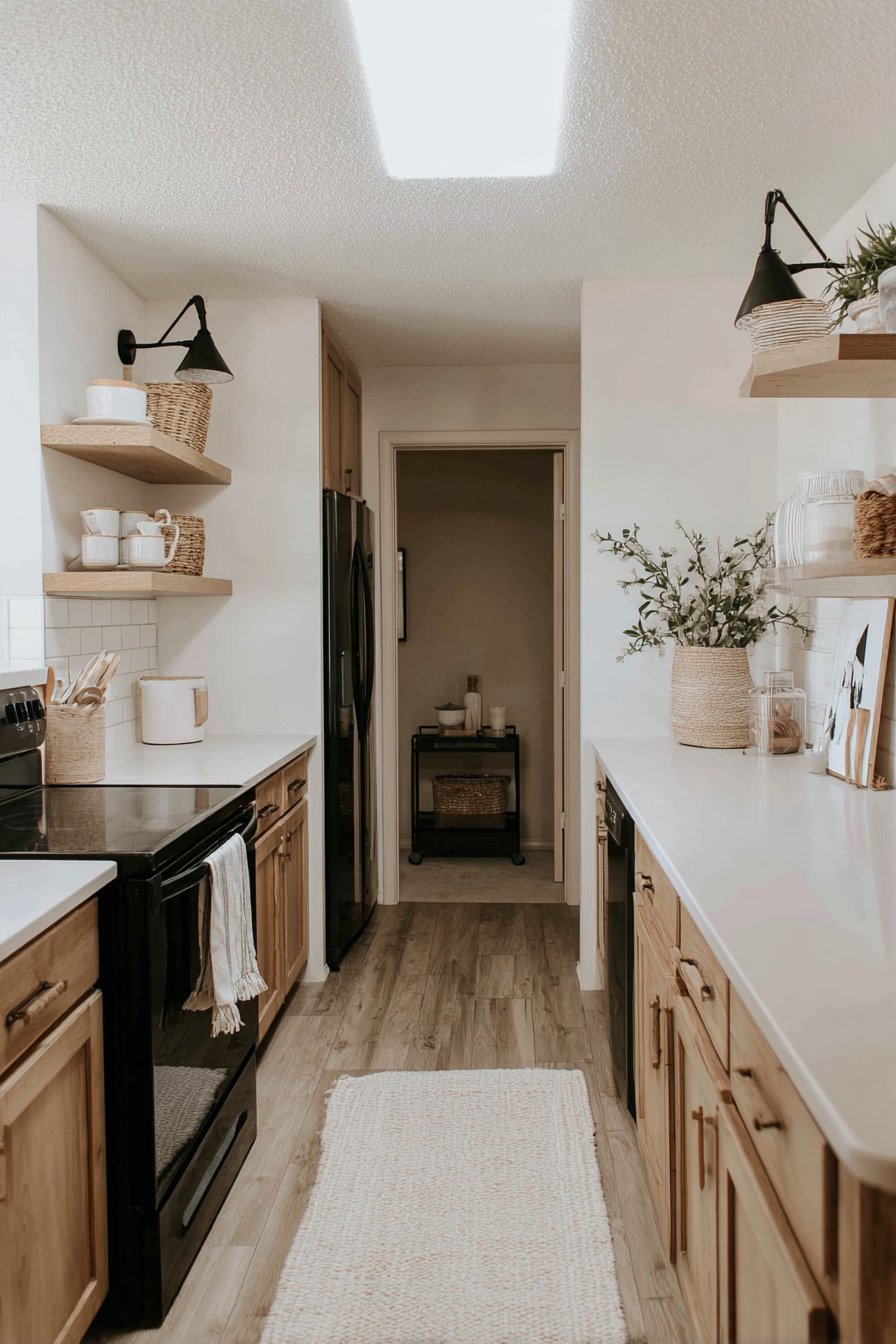
This galley design balances closed storage with accessible open shelving beautifully. One wall features traditional cabinetry for concealing less attractive items. The opposite wall showcases light wood floating shelves displaying attractive storage containers. A compact appliance garage keeps small electronics organized and hidden when not in use.
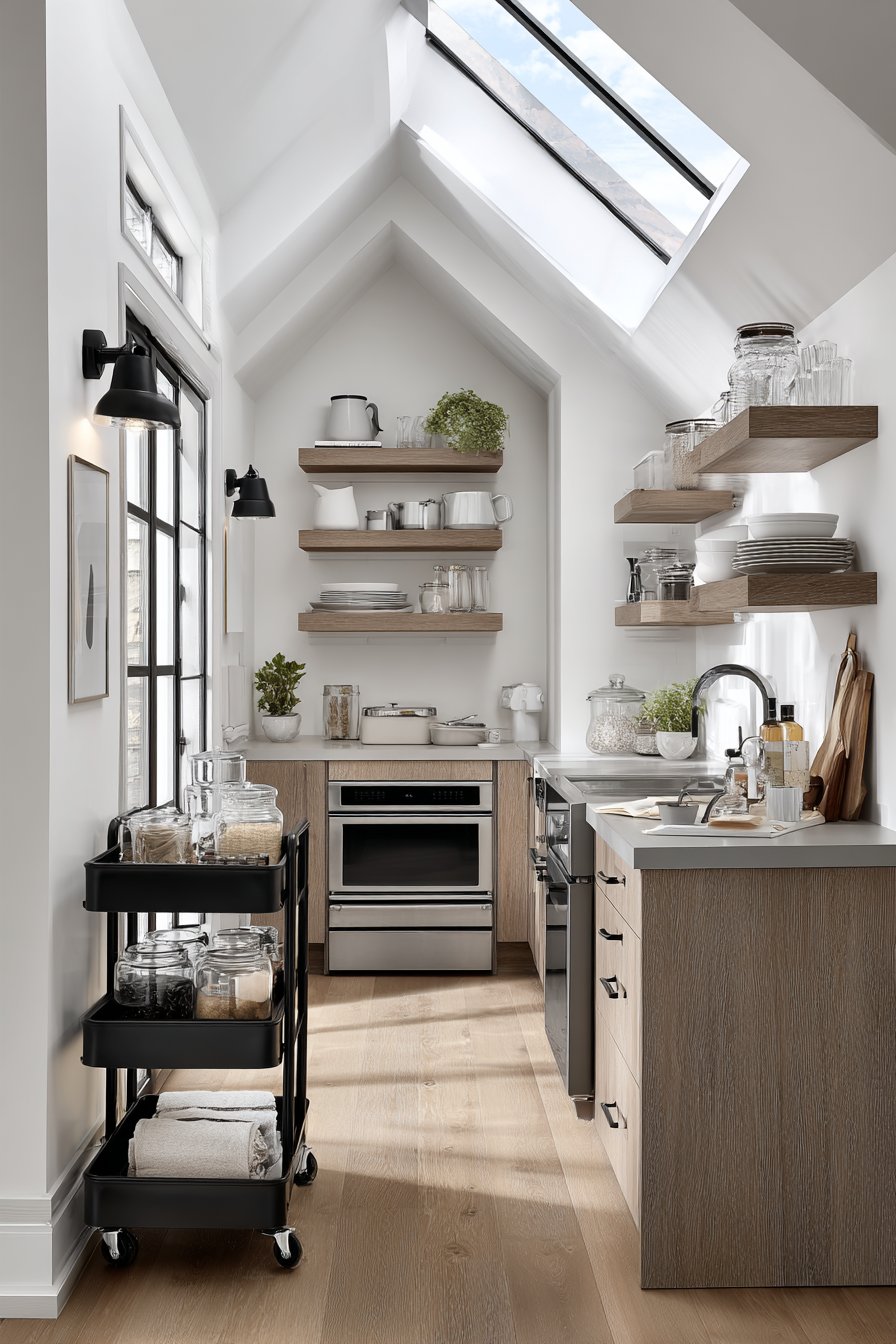
Matte black fixtures create striking contrast against white walls and pale grey countertops. The dark accents add modern sophistication to the streamlined design. Open shelving keeps everyday essentials within easy reach during cooking. Glass jars and matching containers create visual cohesion on the floating shelves.
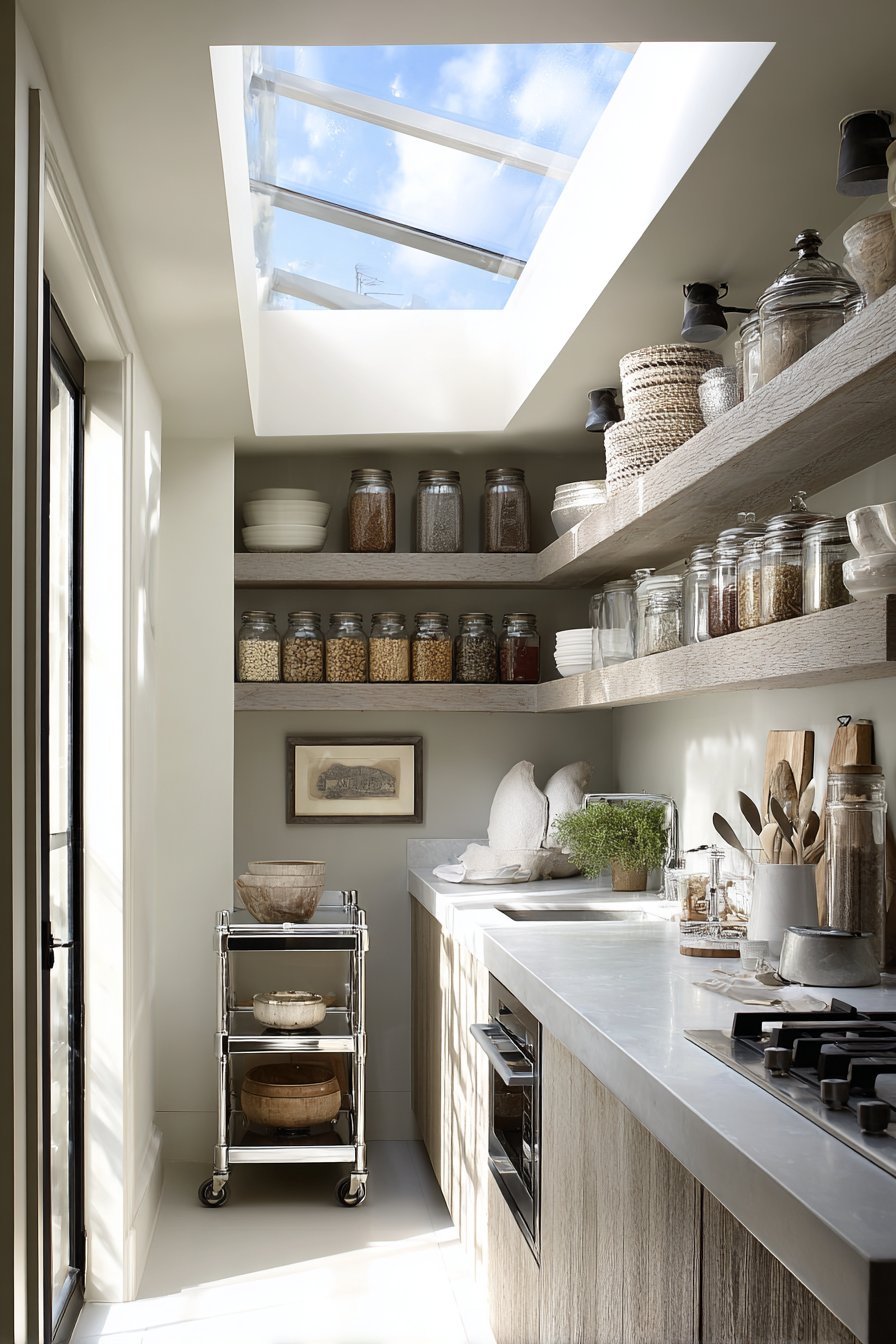
A narrow rolling cart tucks beside the range, providing additional mobile prep space. The cart holds cutting boards vertically and supports a microwave on top. Soft natural lighting from a skylight above illuminates the entire galley evenly. This overhead light source eliminates the need for bulky hanging fixtures.
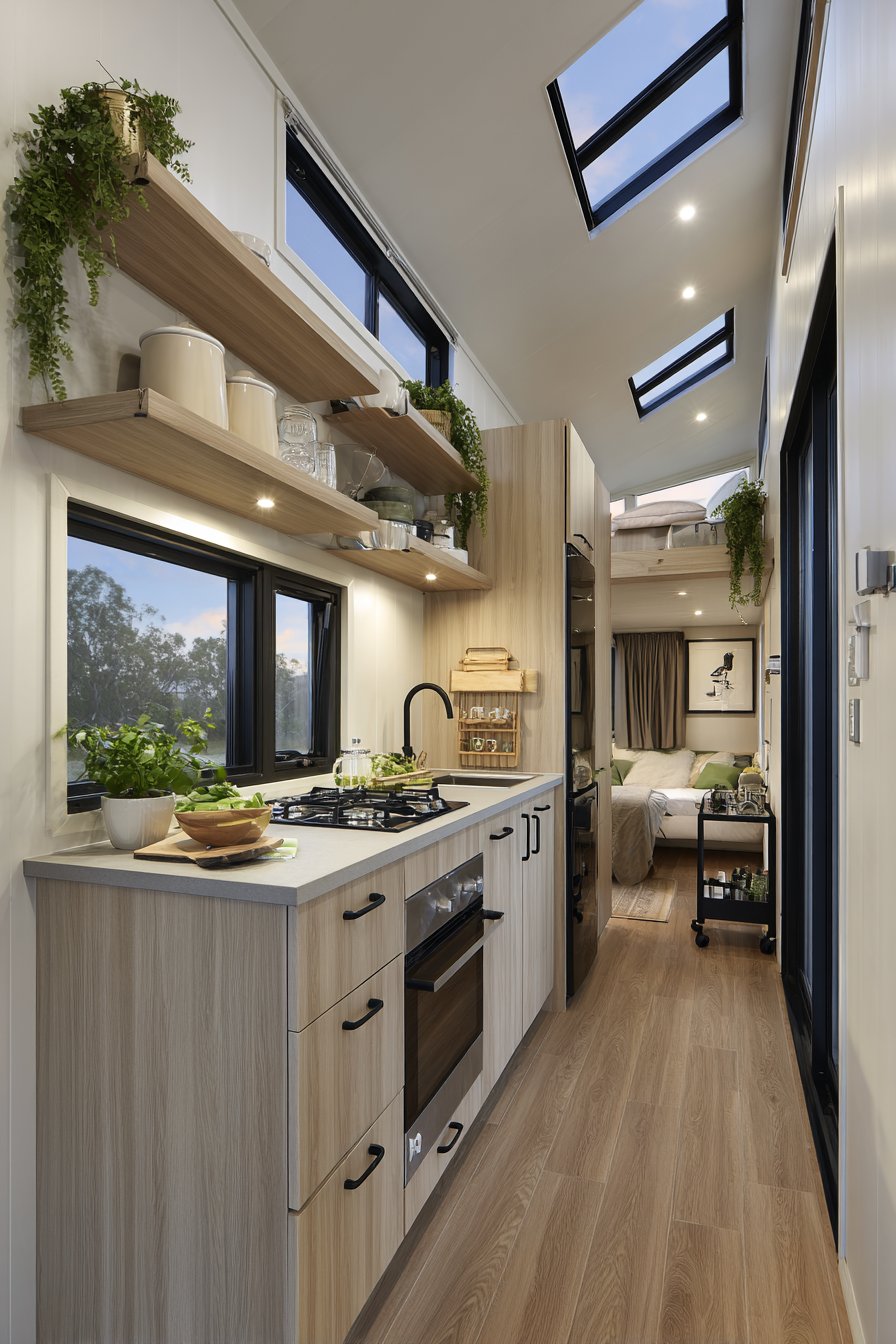
The appliance garage concept deserves attention for its practical storage solution. Small appliances often clutter countertops or hide in lower cabinets. The dedicated garage keeps them accessible yet hidden behind cabinet doors. This approach maintains clean countertops while ensuring appliances remain easy to access.
Key Design Tips:
- Combine closed cabinets with open shelving for functional balance
- Install an appliance garage to hide small electronics neatly
- Use matte black fixtures for modern contrast against light surfaces
- Add a rolling cart for flexible additional workspace
- Consider skylights to bring natural light into windowless kitchens
7. Space-Saving Pocket Door Pantry Solution
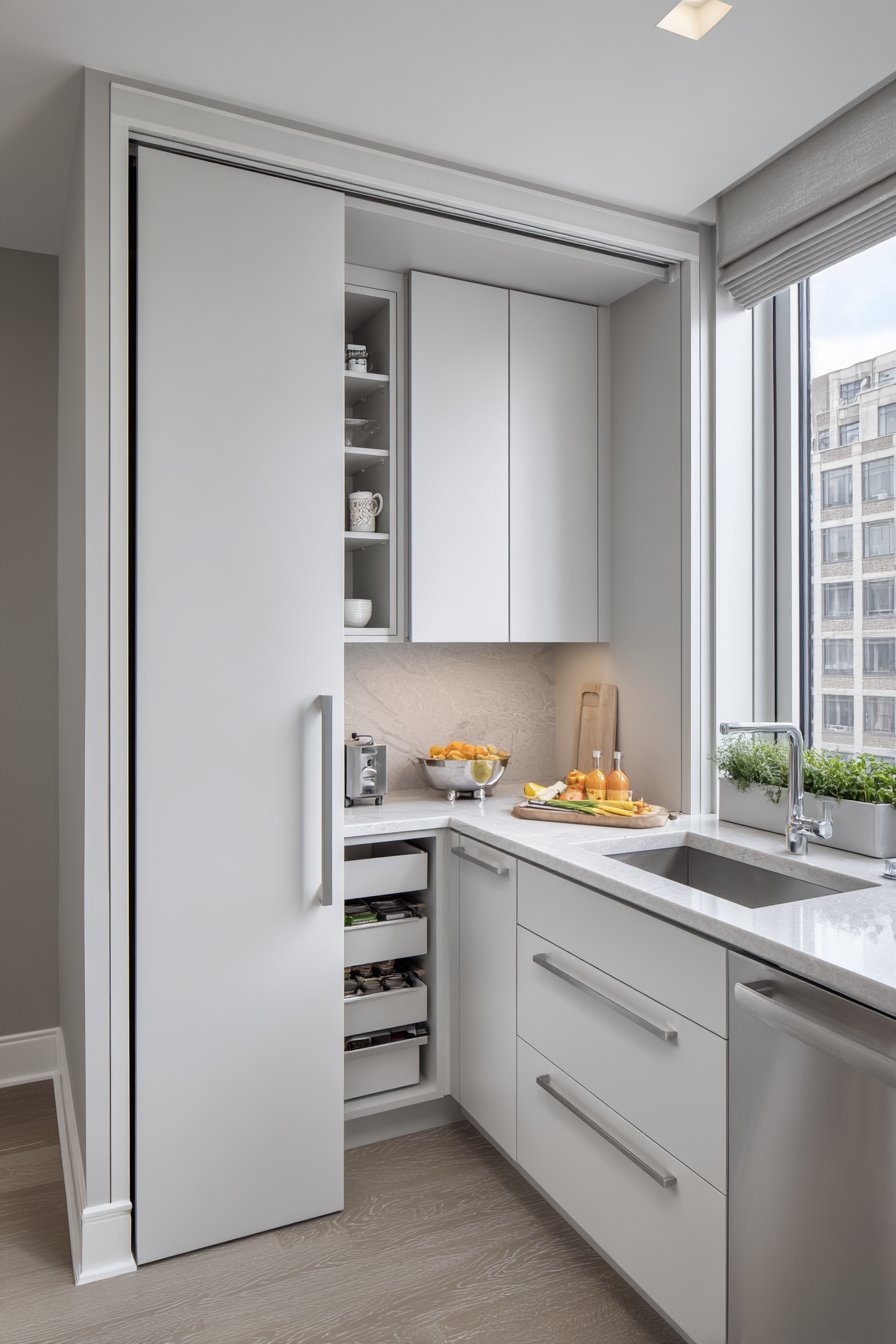
A space-saving pocket door leads to a compact pantry with custom organizers. The sliding door eliminates the swing radius required by traditional hinged doors. Inside, pull-out drawers and adjustable shelving maximize vertical storage potential. This hidden pantry significantly increases storage capacity without consuming precious kitchen space.
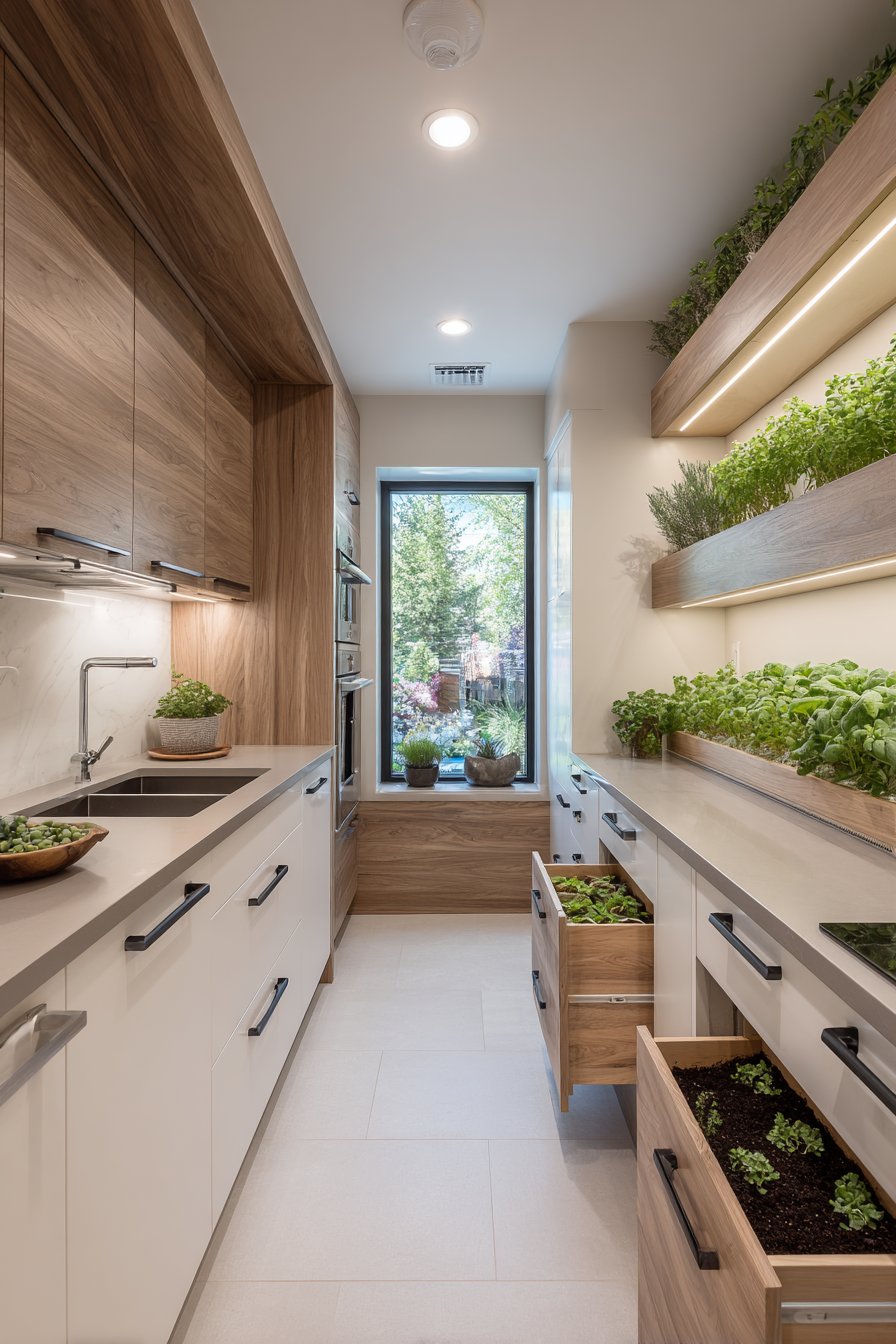
White cabinets with minimalist flat-panel doors maintain clean, uncluttered lines throughout. The simple door style prevents visual complexity in the small footprint. A single-basin undermount sink in stainless steel sits below a window. Small potted herbs line the window sill, adding freshness and greenery.
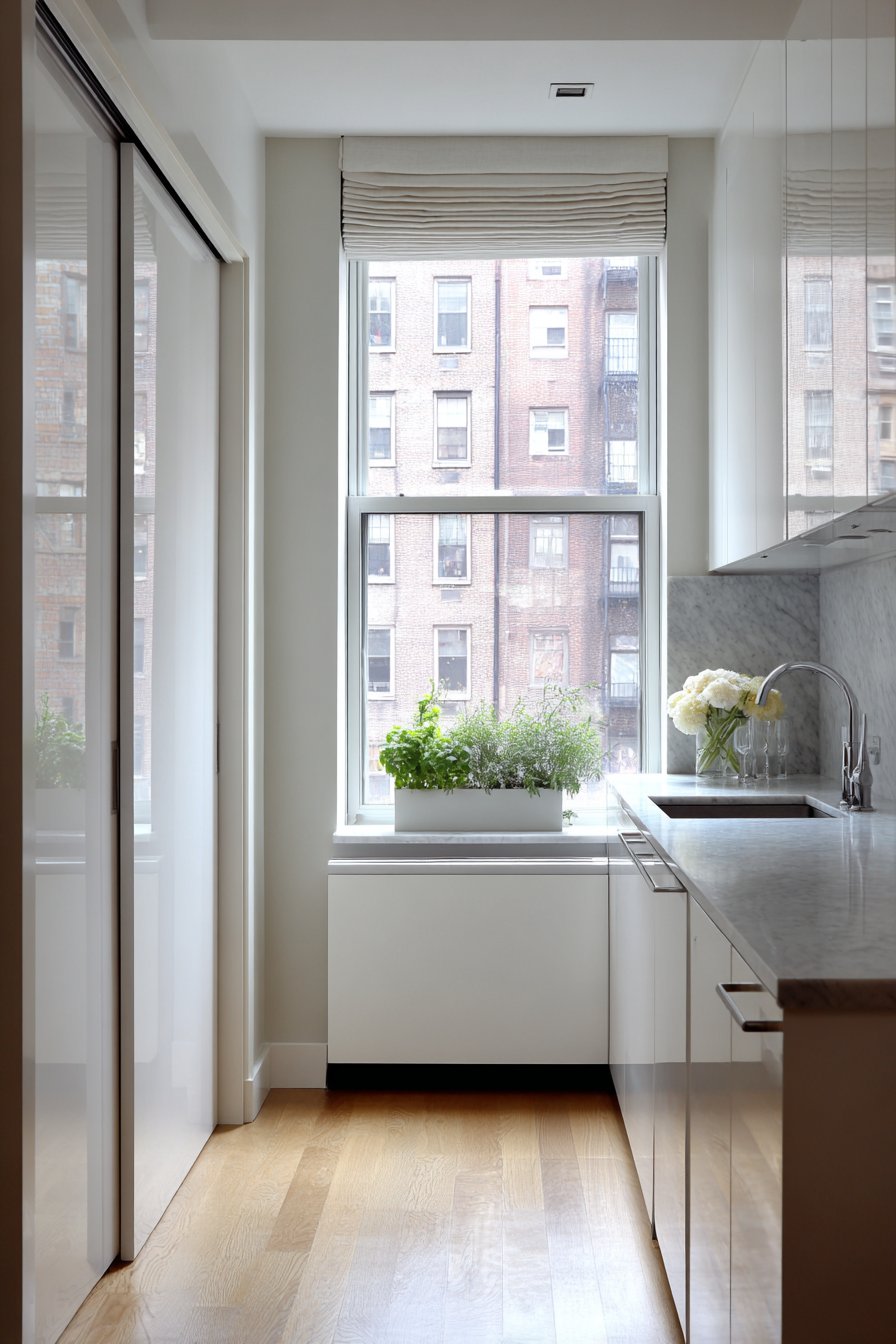
Warm grey quartz countertops extend upward as a narrow backsplash. This continuous surface simplifies cleaning and creates sleek visual flow. Recessed lighting provides even illumination across all work surfaces without protruding fixtures. The lighting design maintains maximum headroom in the compact space.
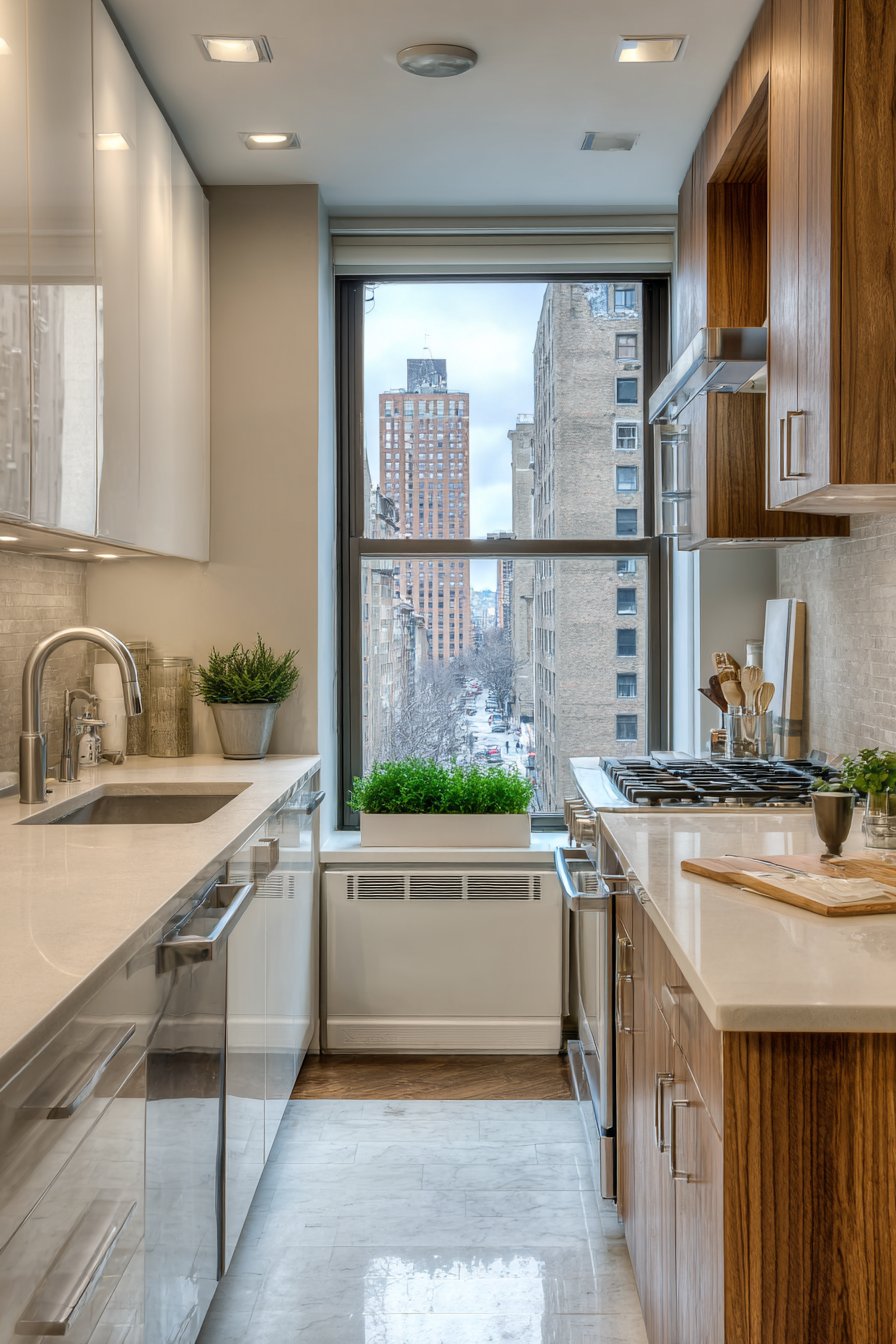
The pocket door pantry represents exceptional space planning for small kitchens. Traditional pantries consume valuable square footage even when not in use. This hidden solution provides extensive storage that appears only when needed. The investment in custom pantry organizers ensures efficient use of the enclosed space.
Key Design Tips:
- Install pocket doors to eliminate door swing radius requirements
- Customize pantry interiors with pull-out drawers and adjustable shelving
- Use flat-panel cabinet doors for minimalist, clean aesthetics
- Position herb gardens on windowsills for fresh ingredients
- Extend countertop material as backsplash for easy maintenance
8. Built-In Banquette with Storage Integration
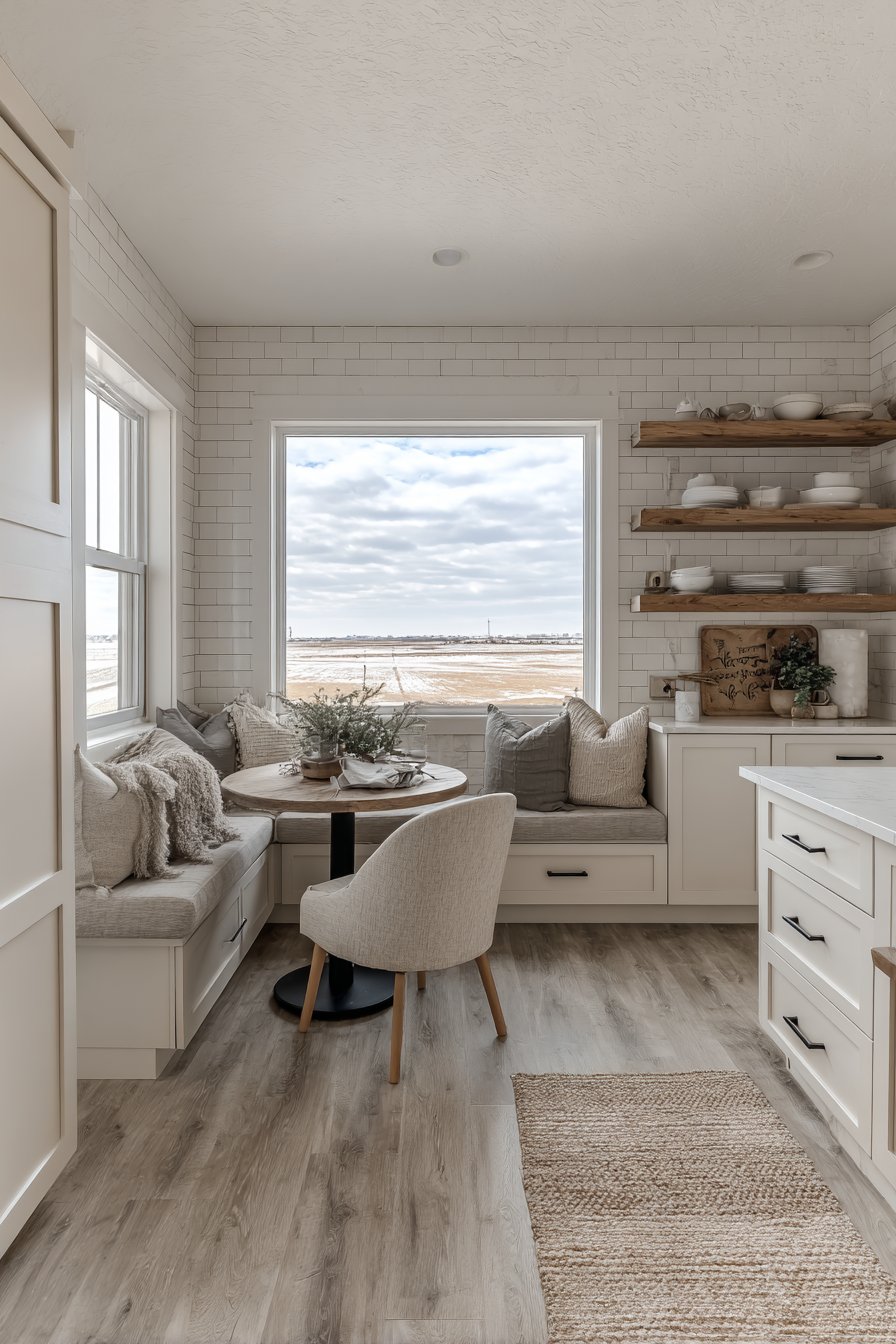
A built-in banquette creates a charming breakfast nook against one wall. Storage drawers underneath provide hidden space for table linens and serving pieces. The compact dining area features a small round pedestal table. Grey linen cushions on the banquette offer durable, comfortable seating.
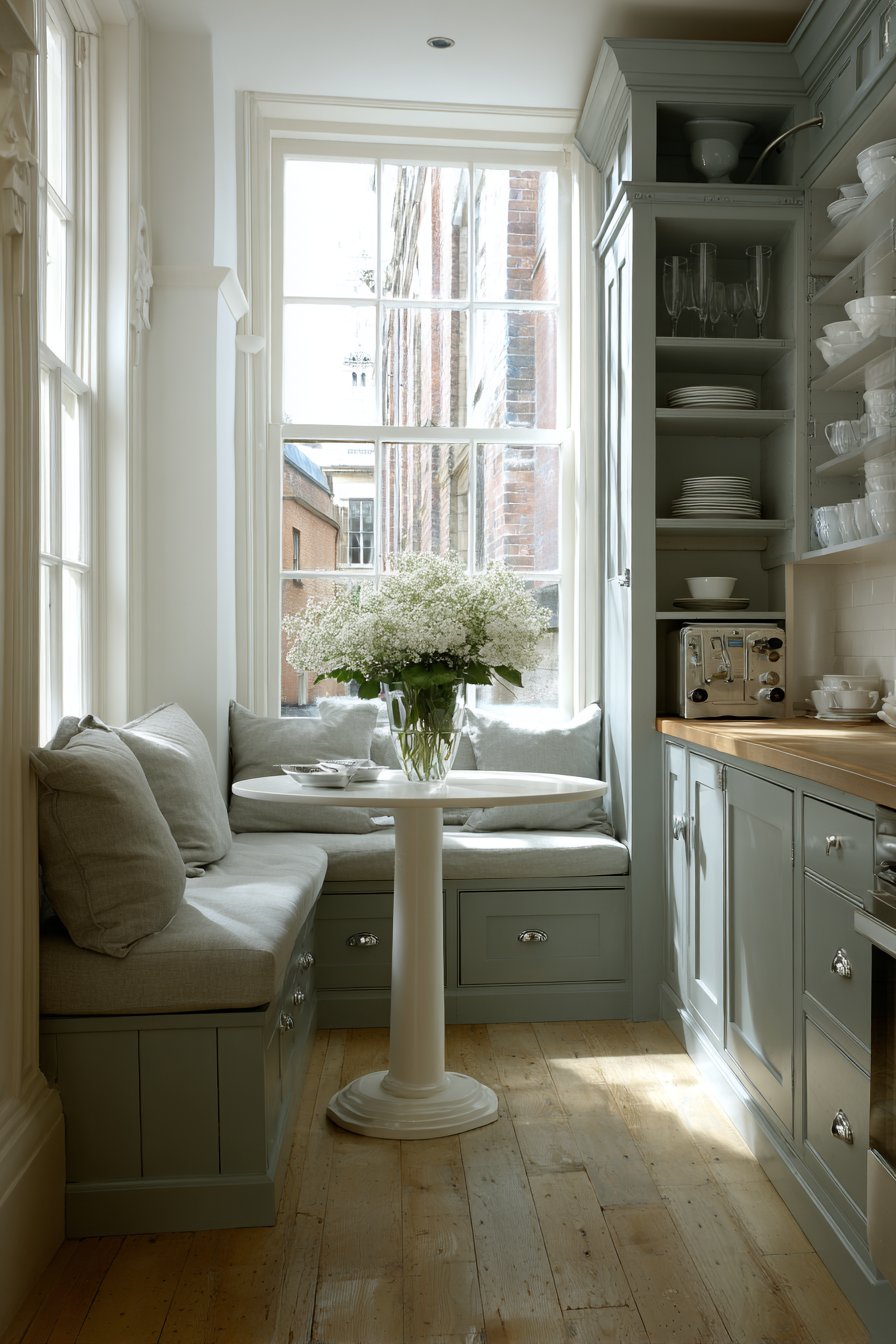
The adjacent kitchen workspace includes white shaker cabinets and butcher block countertops. Open shelving displays white dishes in coordinated arrangements. A window above the banquette floods both areas with natural daylight throughout the morning. The integrated design creates a cohesive kitchen-dining zone.
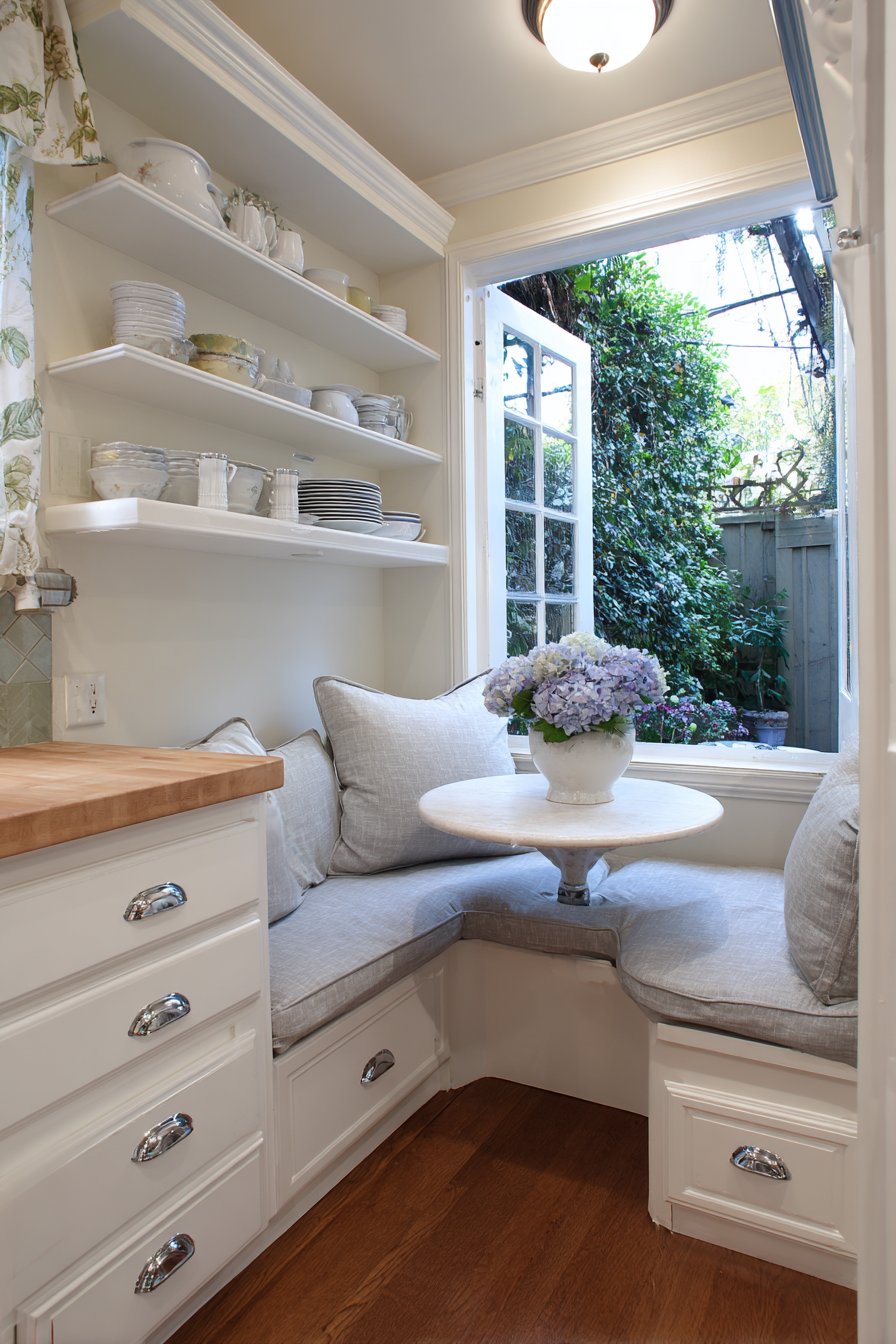
The round table shape facilitates conversation while maximizing usable floor space. Sharp corners would create awkward navigation in the compact area. The pedestal base eliminates chair legs that could interfere with seating. This thoughtful furniture selection enhances both function and flow.
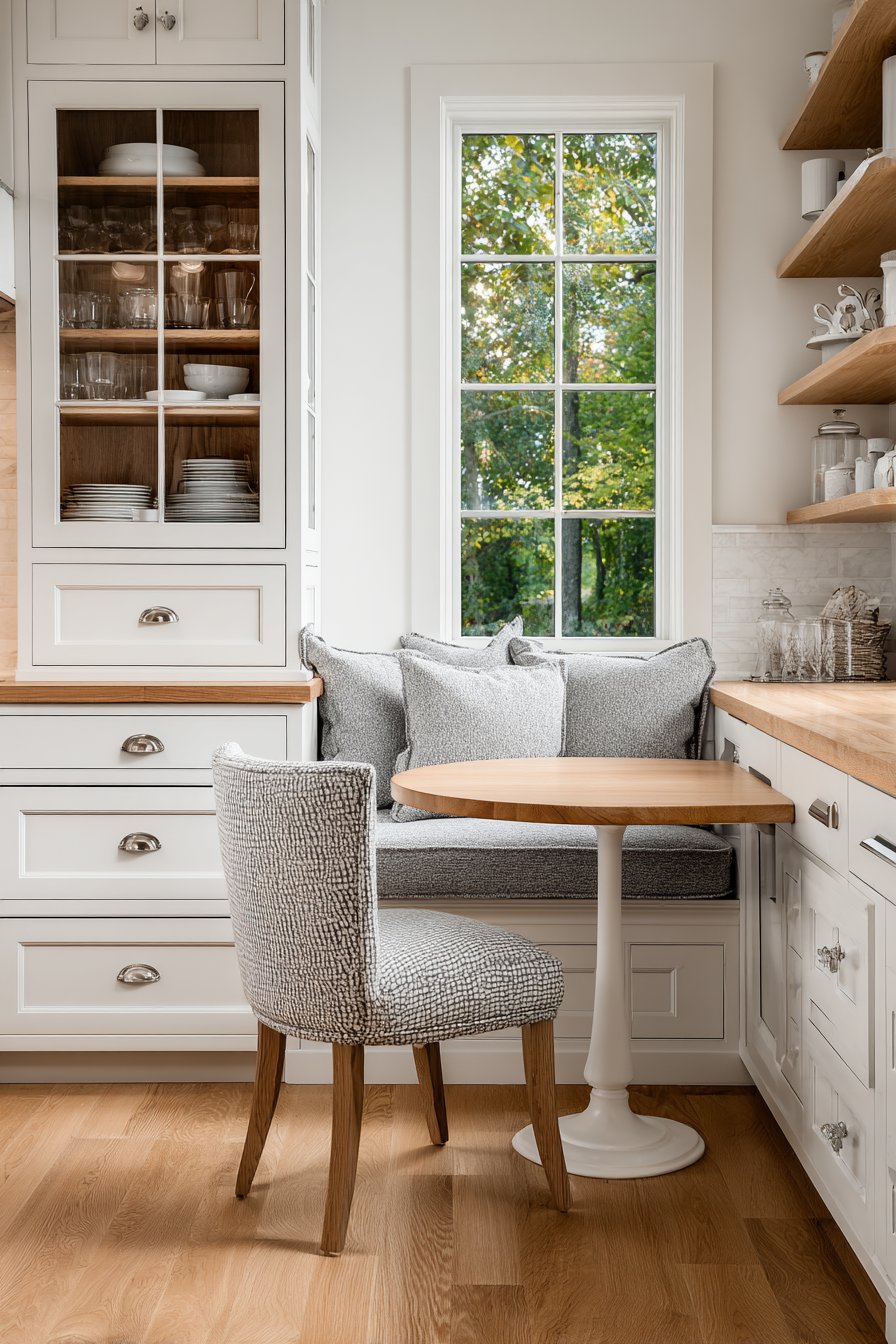
Built-in seating with storage represents smart multi-functional design at its finest. The banquette provides dining accommodations without occupying valuable kitchen floor area. Drawers below offer practical storage that would otherwise require separate furniture. This integrated approach exemplifies efficient small space planning.
Key Design Tips:
- Build banquettes with storage drawers for dual-purpose furniture
- Choose round pedestal tables to maximize floor space
- Position dining nooks near windows for natural lighting
- Use durable fabrics like linen for easy-clean cushions
- Coordinate dishware displays for cohesive visual appeal
9. Modern Minimalist Kitchen with Integrated Appliances
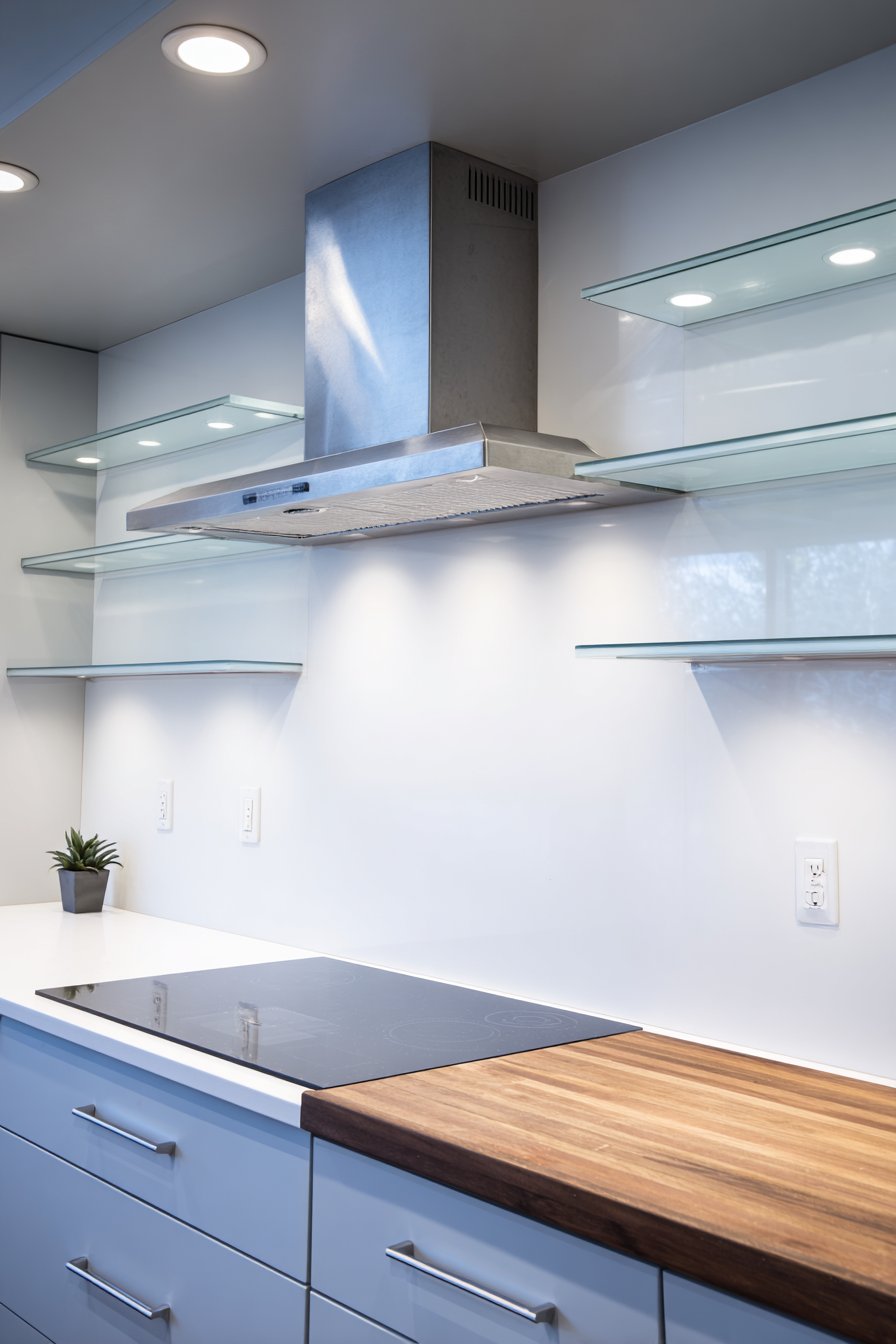
Handleless cabinet doors in matte grey create seamless, contemporary surfaces throughout. The push-to-open mechanism eliminates protruding hardware that could catch clothing. Integrated appliances blend completely into the cabinetry for unified appearance. A compact induction cooktop sits flush with white solid surface countertops.
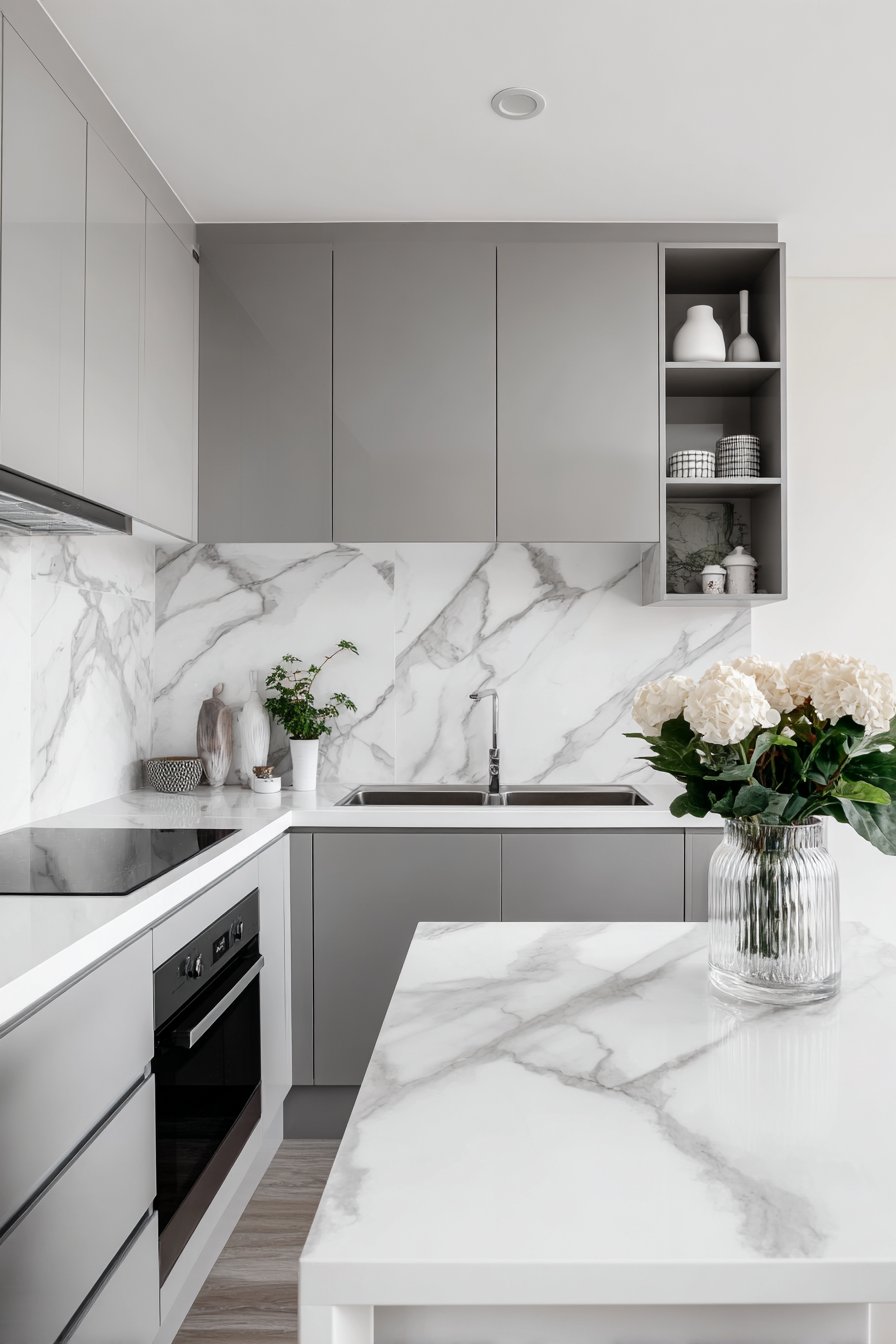
The slim profile hood vent integrates into the cabinet run above the cooktop. Upper cabinets feature interior lighting and glass shelves for display. A small breakfast bar with waterfall edge extends from the main counter. The waterfall detail adds architectural interest and polish.
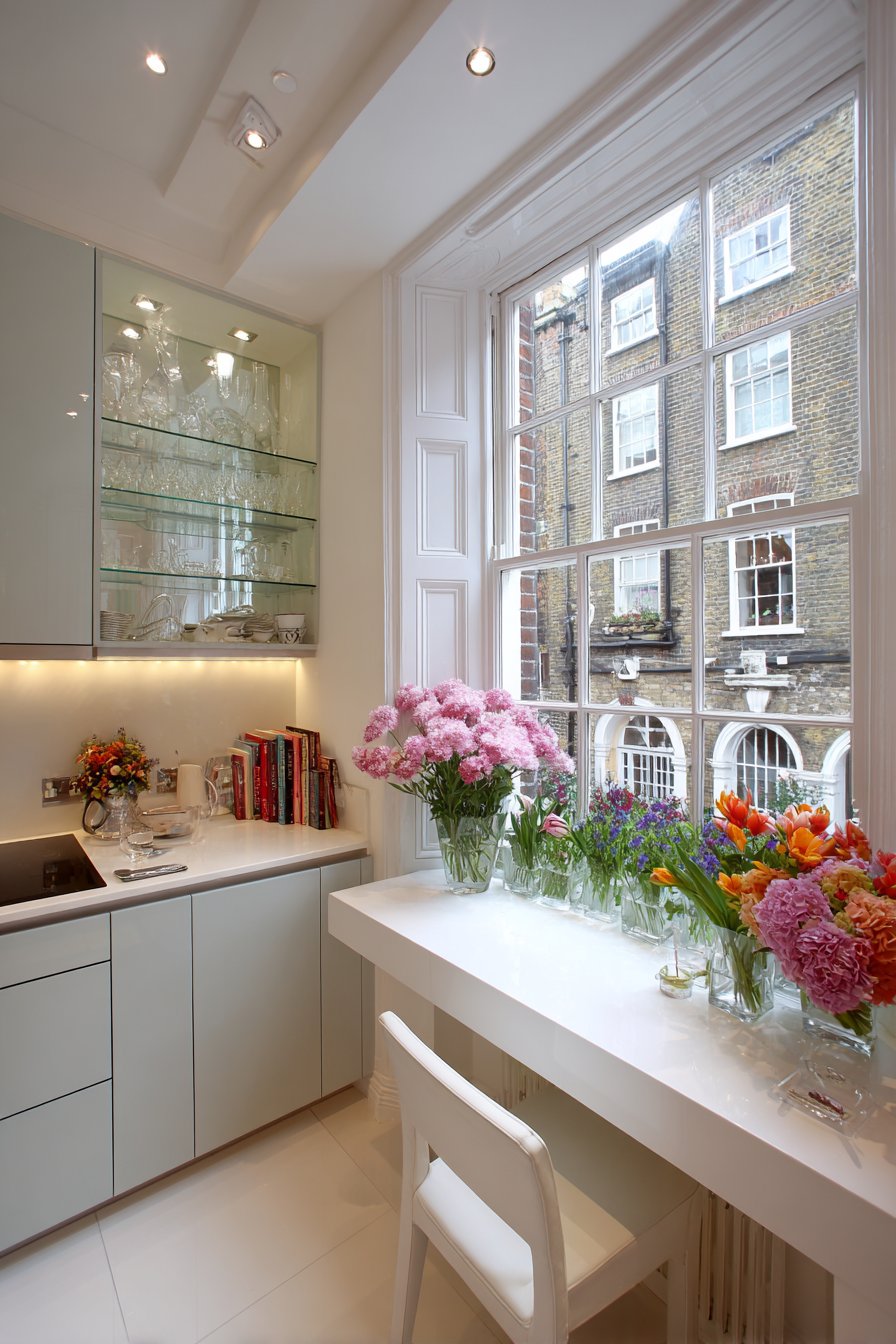
This minimalist approach reduces visual clutter dramatically in the small footprint. Every surface appears smooth and uninterrupted by handles or exposed appliances. The matte grey cabinetry provides sophisticated color without overwhelming the space. White countertops maintain brightness and create material contrast.
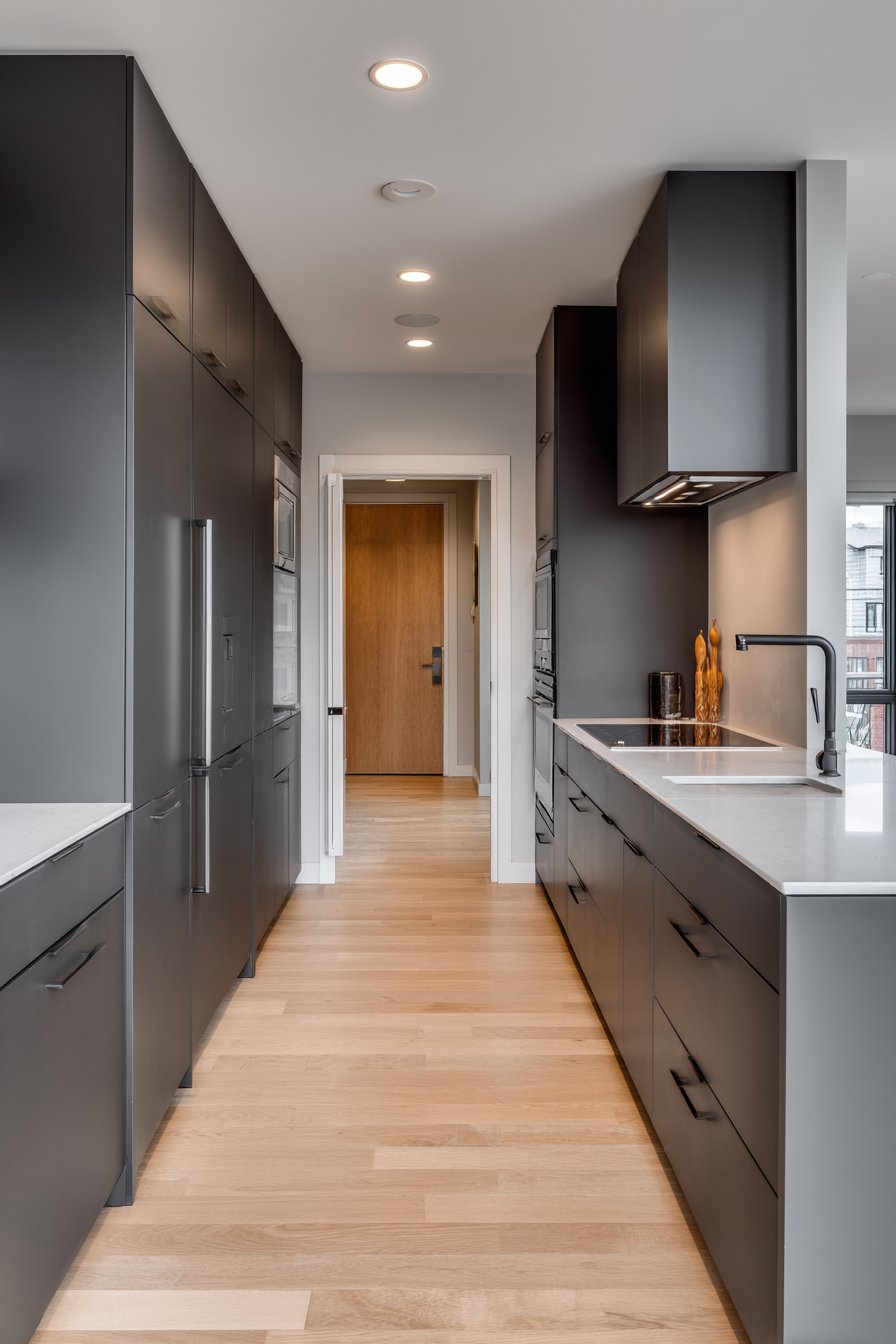
The integrated appliance approach works exceptionally well in small kitchens. Traditional appliances can dominate compact spaces with their varied finishes and proportions. Concealed appliances create visual calm and make the room appear larger. The seamless aesthetic appeals to those who appreciate clean, modern design.
Key Design Tips:
- Choose handleless cabinets with push-to-open mechanisms for seamless looks
- Integrate appliances within cabinetry for unified appearance
- Install flush-mount induction cooktops for sleek surfaces
- Add waterfall edges to countertops for architectural detail
- Use interior cabinet lighting to illuminate display areas
10. Compact Farmhouse Kitchen with Vintage Charm
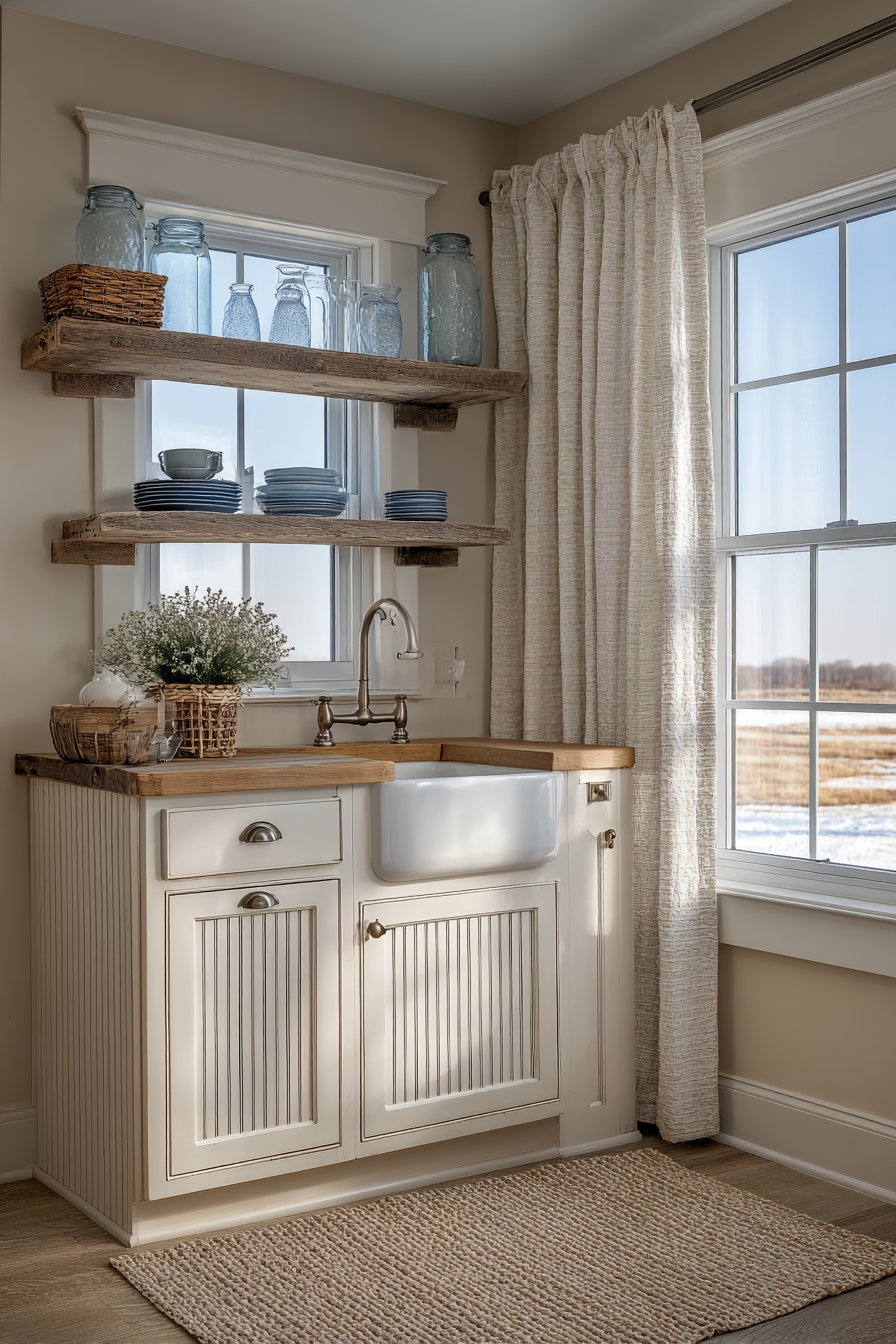
White beadboard cabinet doors bring cottage character to this small farmhouse kitchen. Vintage-inspired brass hardware adds authentic period detail to the cabinet fronts. Open shelving made from reclaimed wood holds mason jar storage and antique dishes. The mix of closed and open storage creates visual interest.
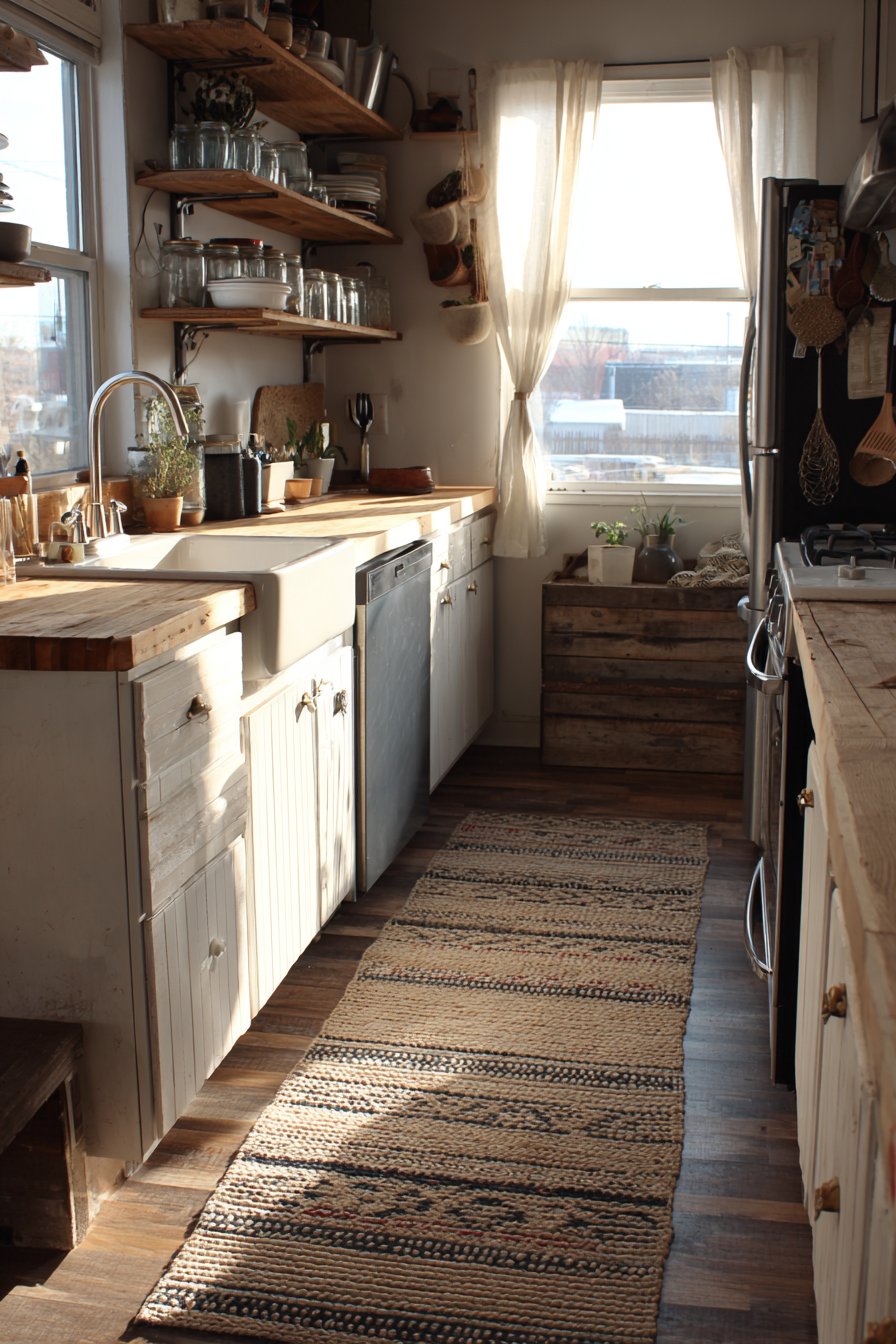
A small farmhouse sink with gooseneck faucet sits beneath a window. Simple white cafe curtains frame the window without blocking precious light. Butcher block countertops introduce natural warmth against the white cabinetry. A vintage-style runner rug defines the work zone with color and pattern.
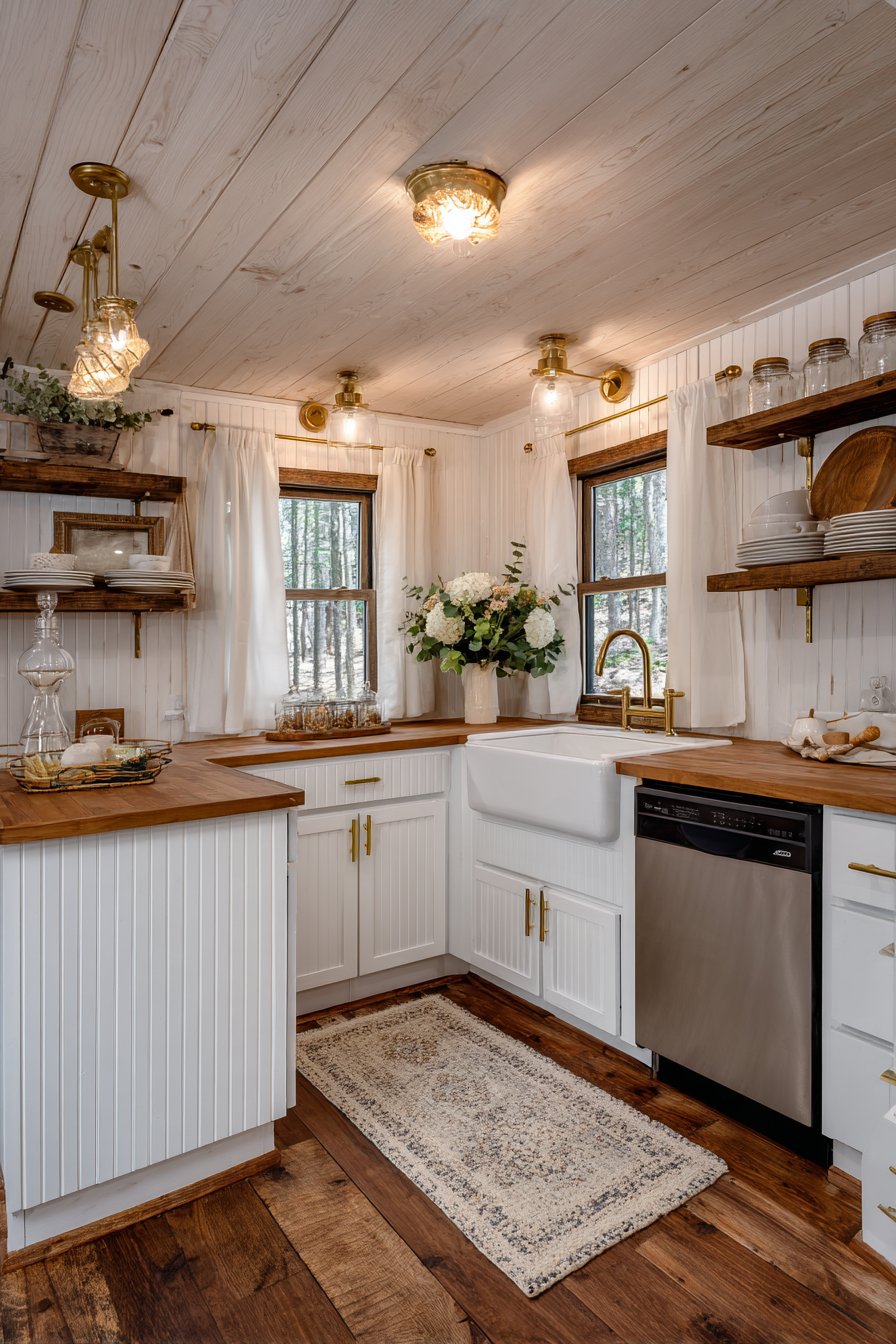
Natural light streaming through the window highlights the charming character pieces. Antique dishes and glass storage jars catch the sunlight attractively. The reclaimed wood shelving shows authentic patina and grain patterns. These vintage elements prevent the white palette from feeling sterile.
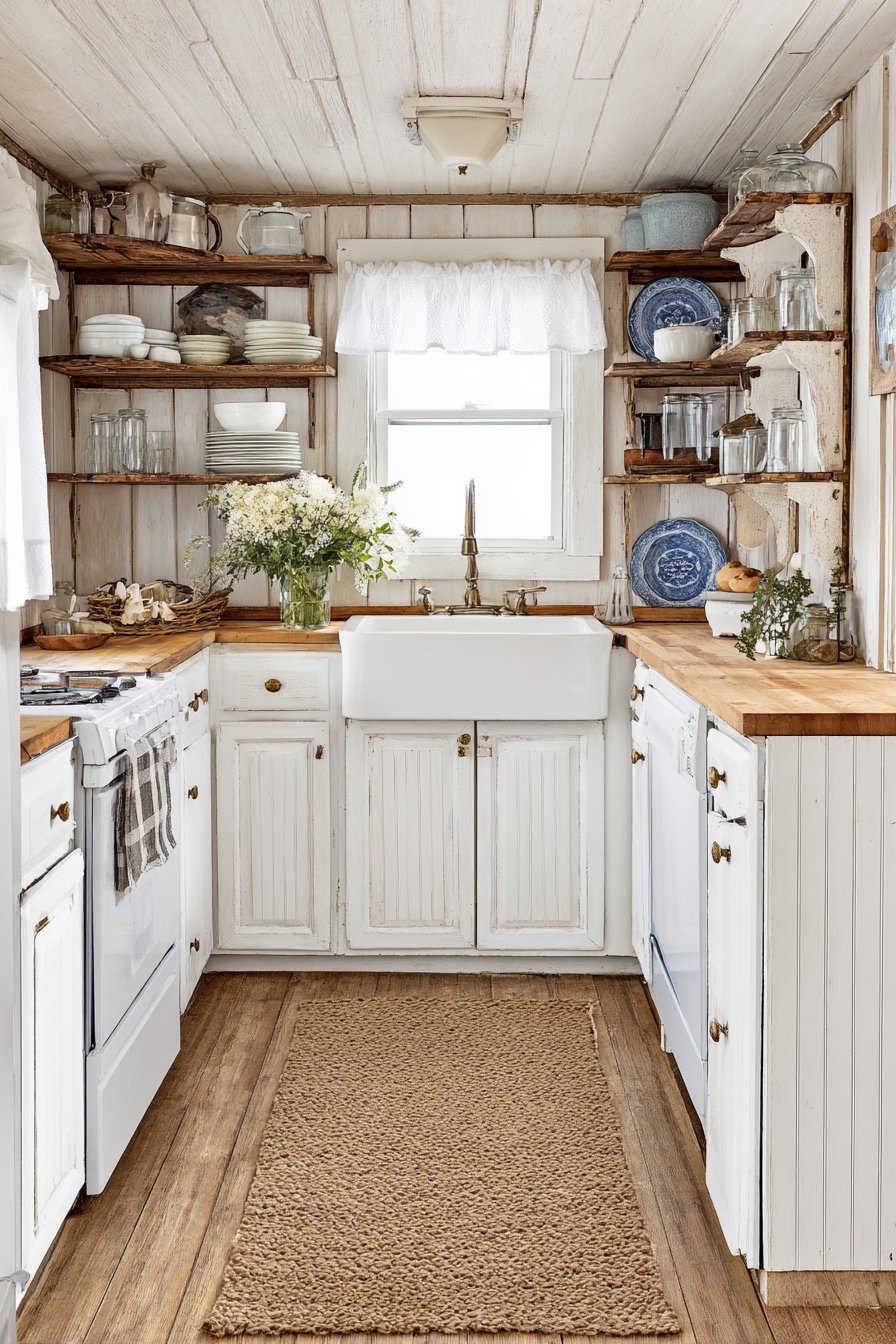
The farmhouse aesthetic proves highly adaptable to small kitchen spaces successfully. The style emphasizes function and practicality over unnecessary ornamentation. Vintage elements add character without requiring additional square footage. This approach creates cozy, welcoming spaces that feel lived-in and authentic.
Key Design Tips:
- Use beadboard cabinet doors for cottage farmhouse character
- Install farmhouse sinks with high-arc gooseneck faucets
- Display antique dishes and mason jars on open shelving
- Choose butcher block countertops for warmth and functionality
- Add vintage runner rugs to define work zones with pattern
11. Mirrored Backsplash Kitchen for Visual Expansion
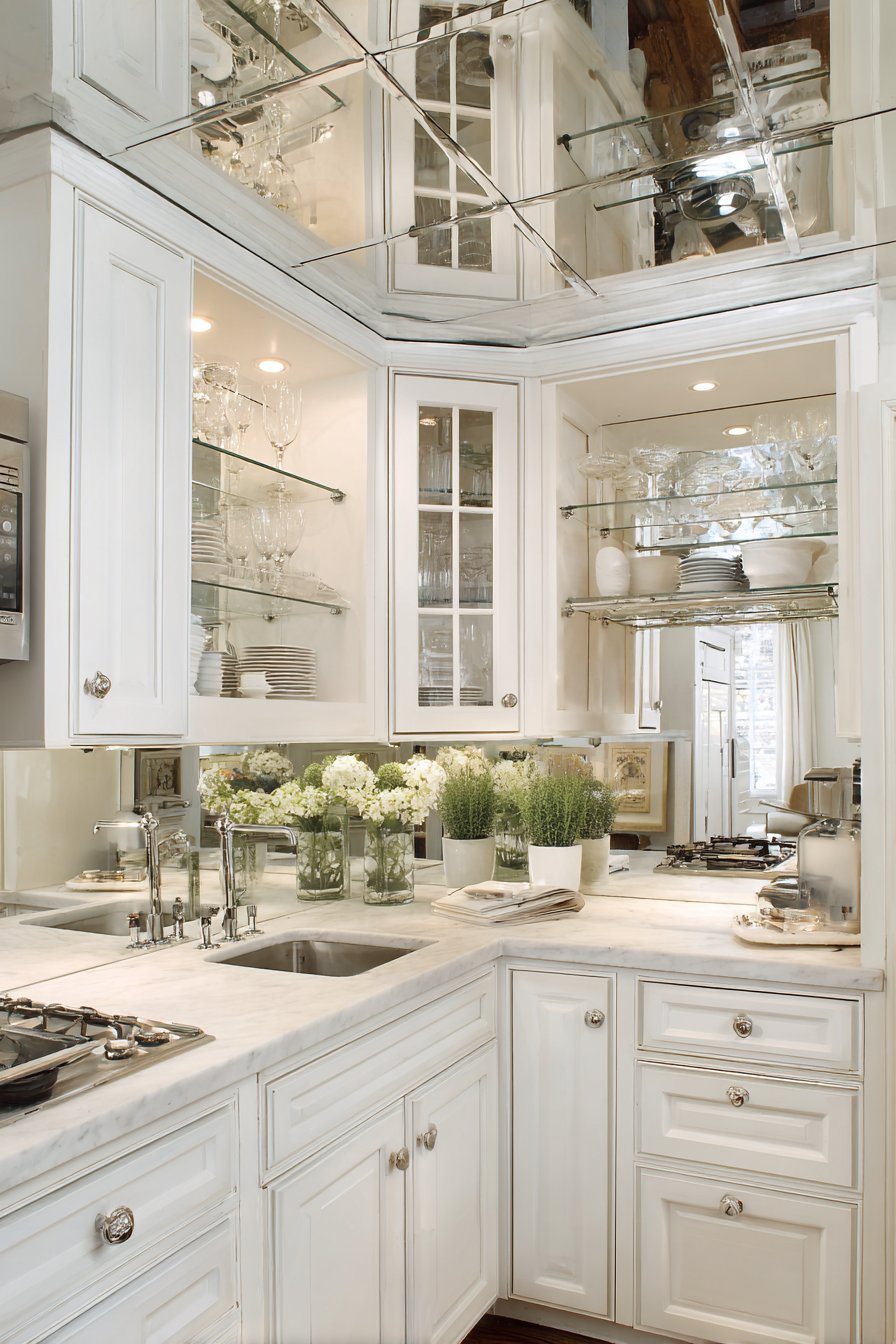
Mirrored backsplash tiles create the illusion of expanded space dramatically. The reflective surface doubles the visual depth of the room. White gloss cabinets with crystal knobs enhance the bright, reflective quality throughout. Light bounces between mirrors and glossy surfaces, maximizing available illumination.
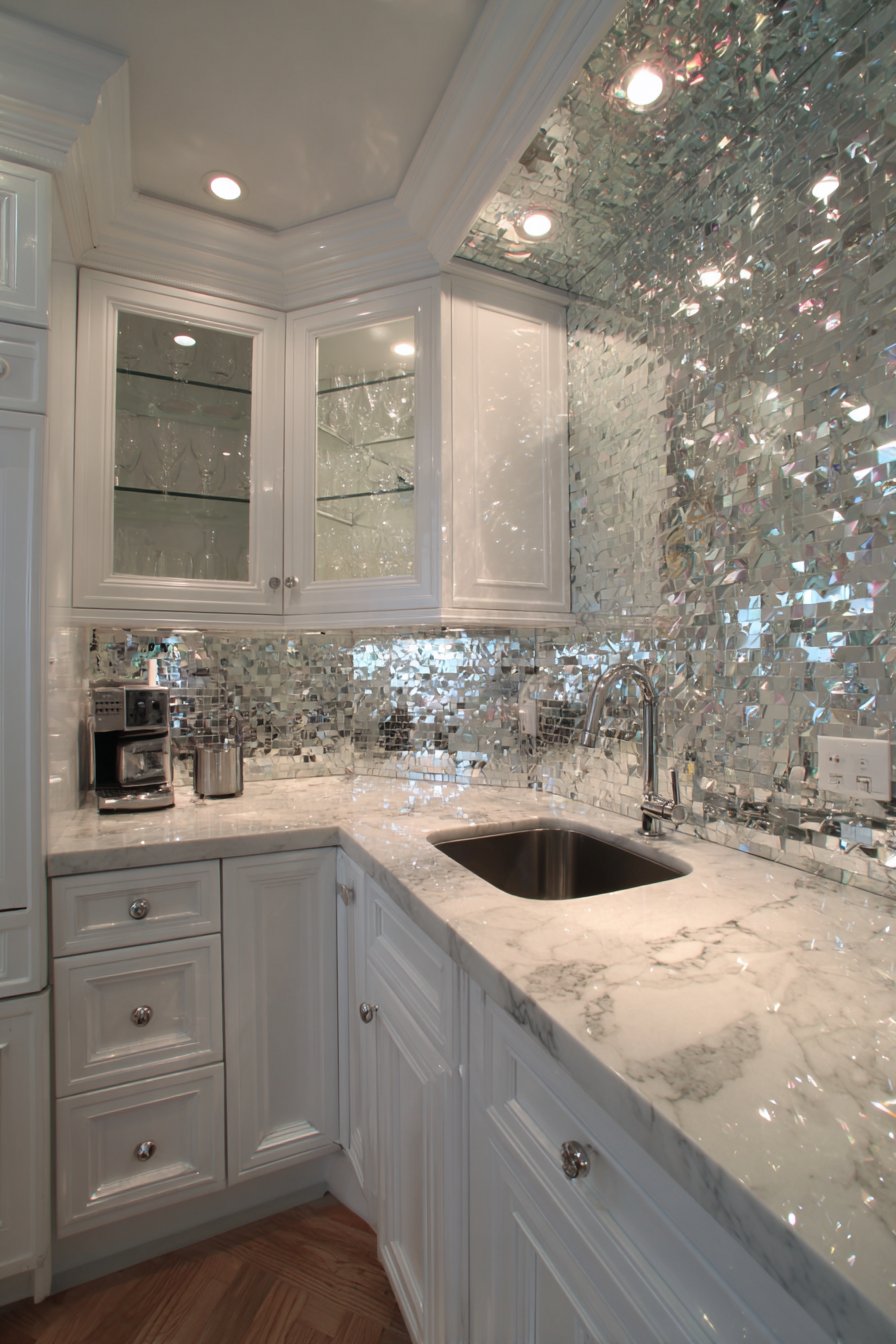
A small glass-front cabinet displays stemware and adds another transparent element. Corner cabinets feature pull-out shelves that bring items forward easily. Marble-look quartz countertops provide elegant surfaces without natural stone maintenance requirements. A small single-bowl sink with modern faucet completes the workspace efficiently.
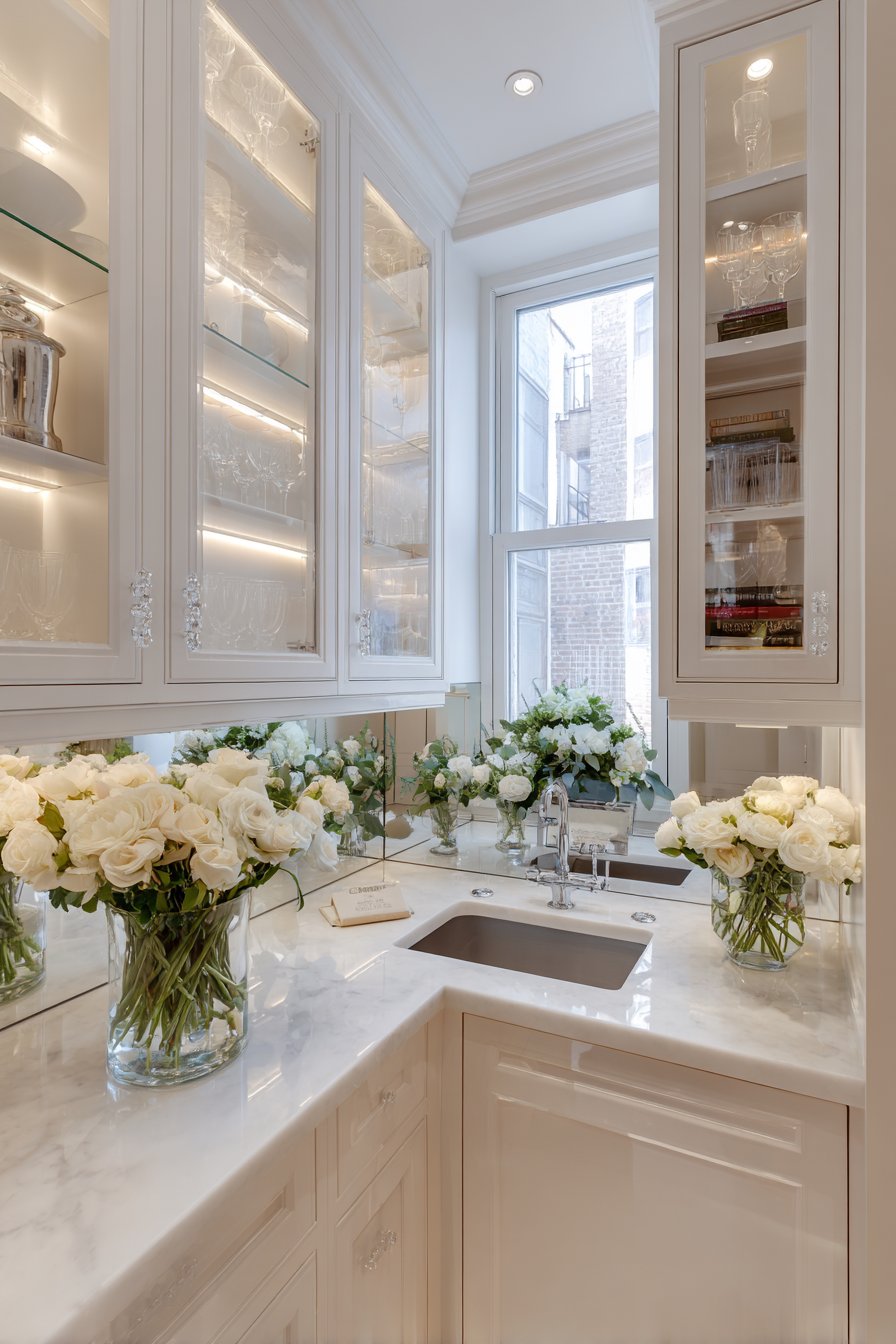
Recessed lighting and under-cabinet LED strips create ambient glow throughout the day. The multiple light sources eliminate shadows in work areas. Mirrors amplify every light source, making the kitchen feel bright even during overcast days. The reflective strategy proves highly effective in windowless or dimly lit spaces.
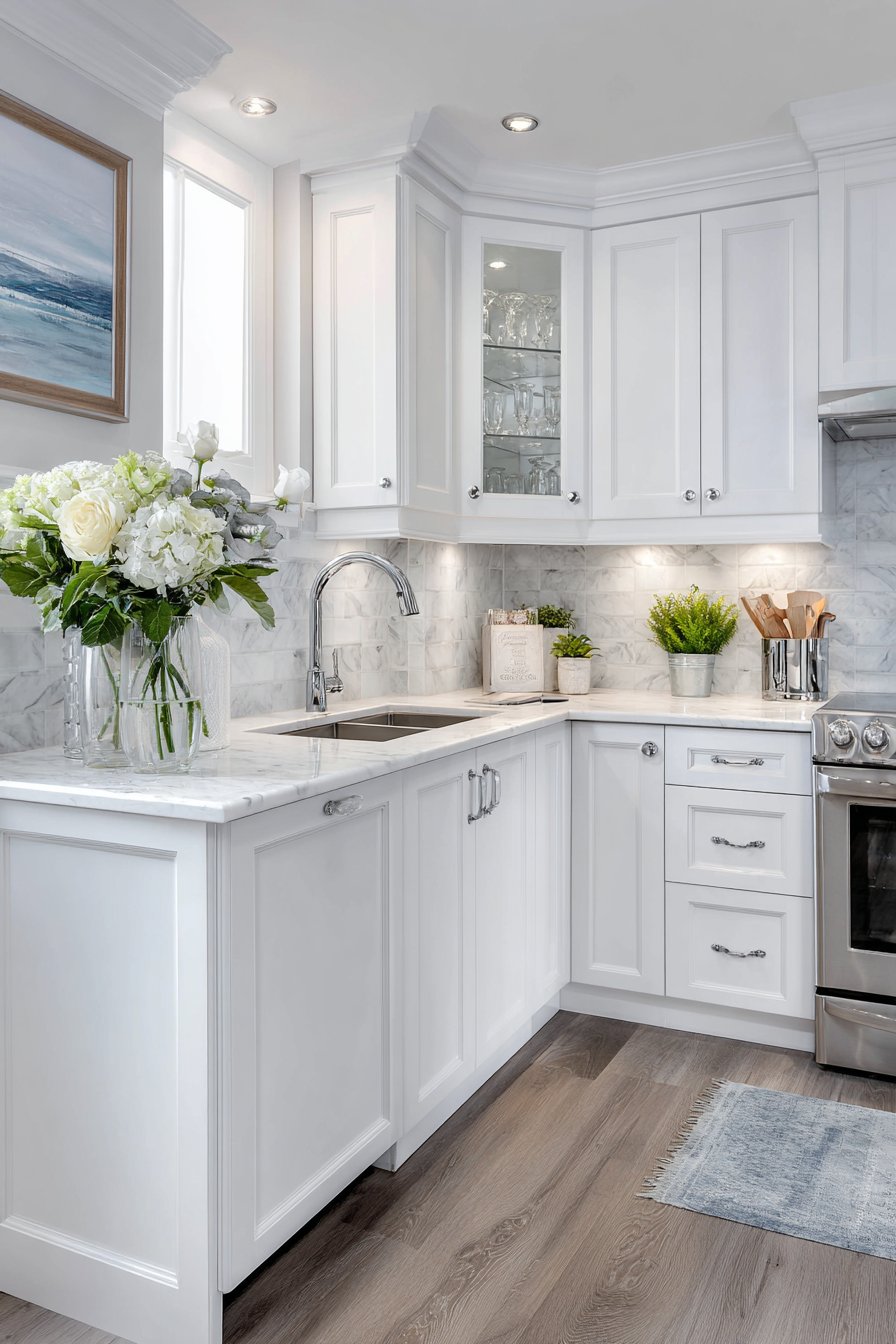
The mirrored backsplash represents a bold design choice with significant spatial benefits. Some homeowners worry about maintaining reflective surfaces in cooking areas. However, modern mirror tiles resist heat and clean easily with standard glass cleaner. The visual payoff justifies the minimal additional maintenance required.
Key Design Tips:
- Install mirrored backsplash tiles to visually double your space
- Choose glossy white cabinets to enhance light reflection
- Add glass-front cabinets for additional transparent elements
- Use LED lighting throughout to maximize the mirror effect
- Select easy-clean quartz countertops for low maintenance
12. Vertical Storage Kitchen with Tall Pantry Cabinets
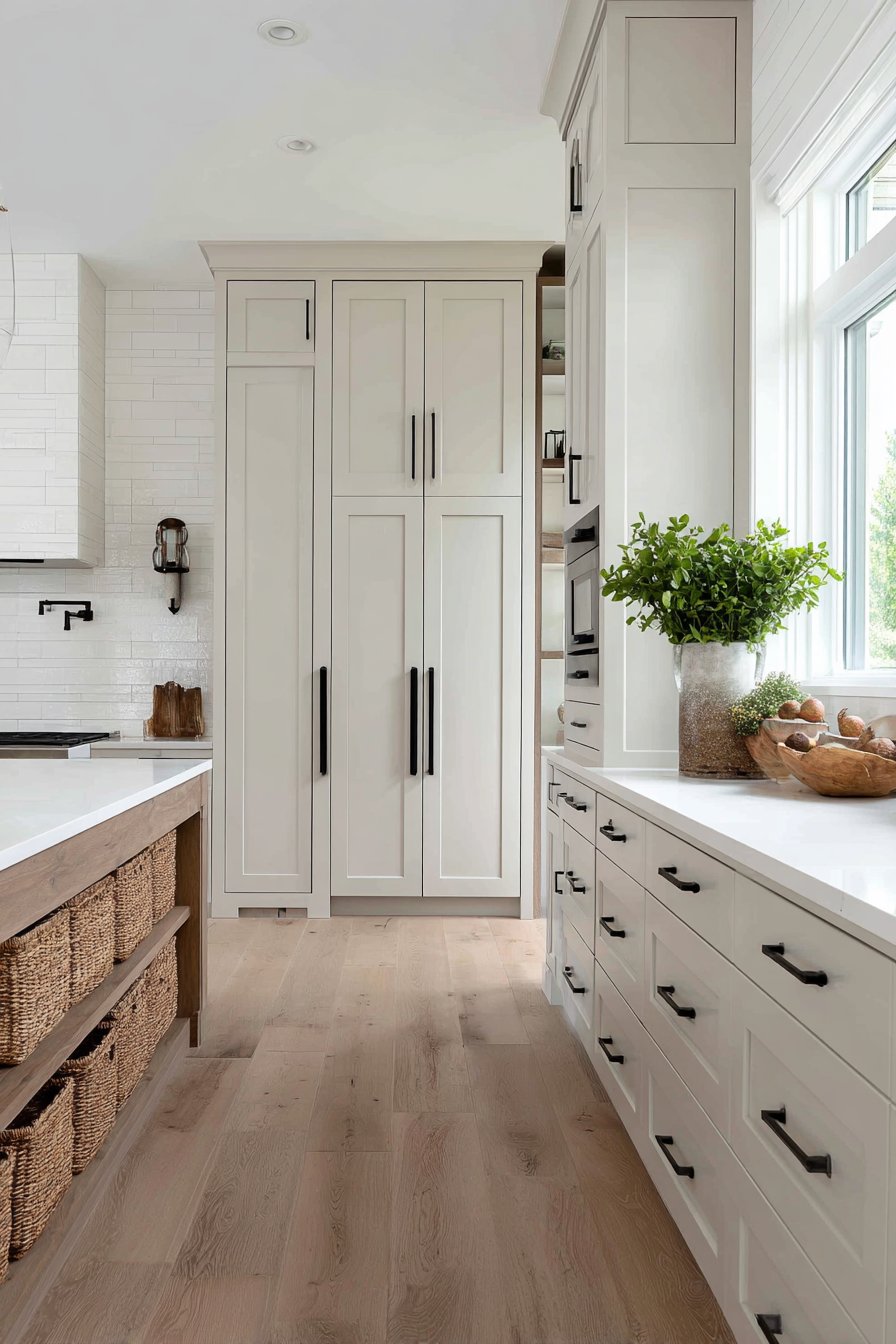
Tall pantry cabinets flanking the refrigerator extend to nine-foot ceilings dramatically. The vertical emphasis draws the eye upward and creates impressive storage capacity. A compact range with slim slide-in design fits perfectly within the layout. Wall-mounted microwave placement saves valuable counter space for food preparation.
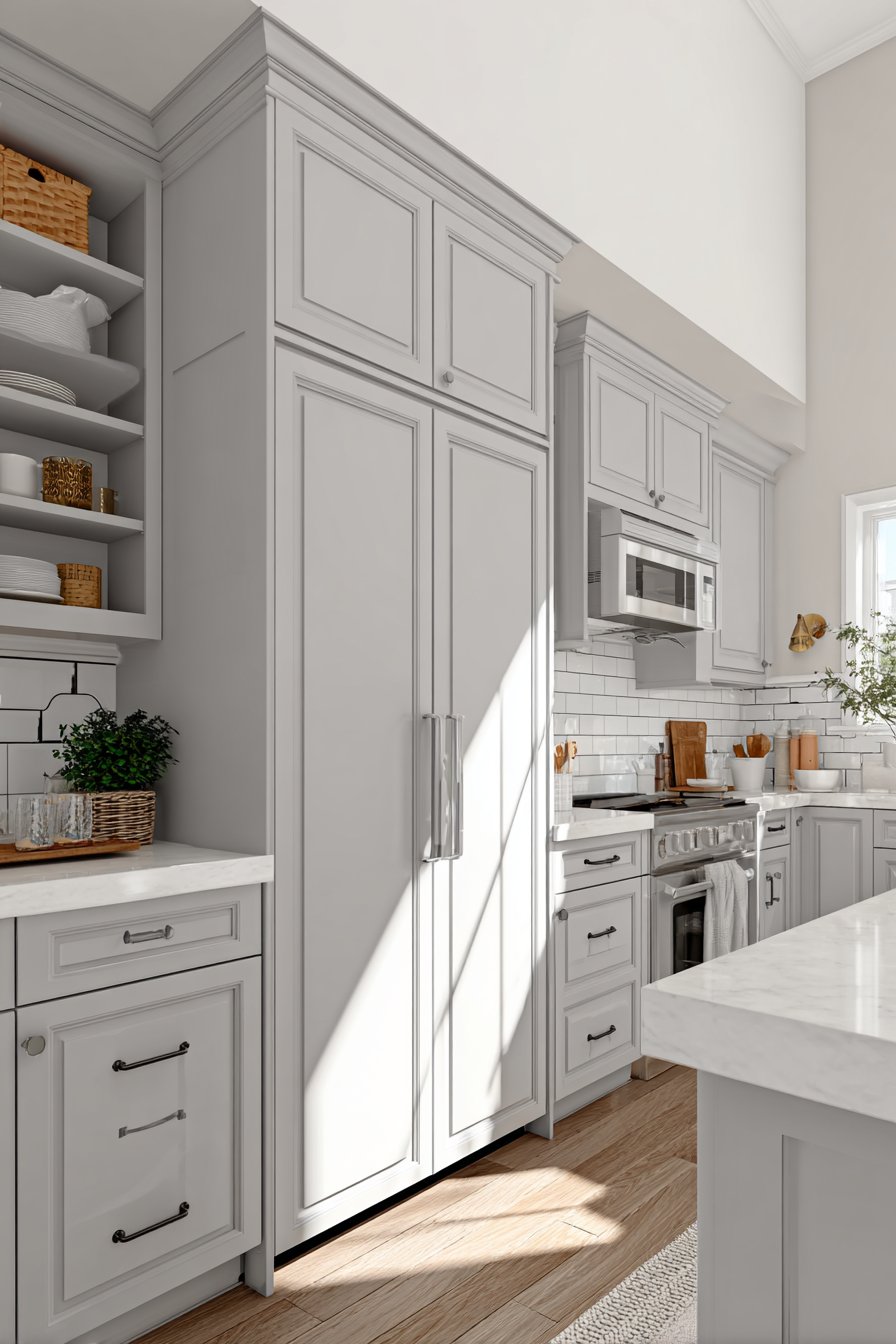
Light grey shaker cabinets with matte black hardware provide contemporary contrast. The neutral grey offers sophistication without the starkness of pure white. White subway tile backsplash and white quartz countertops keep the overall palette bright. The combination prevents the grey cabinetry from darkening the space.
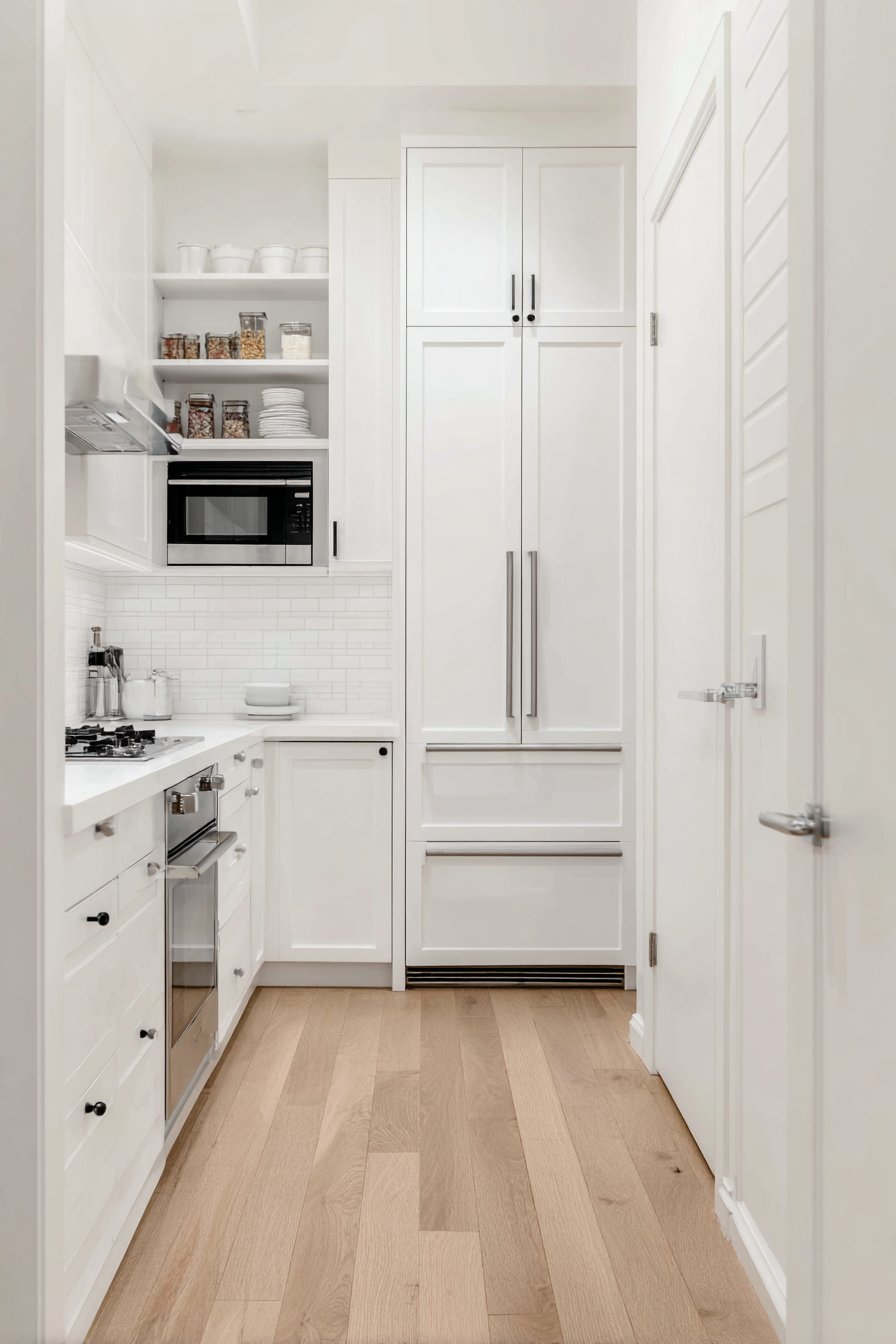
The tall pantry cabinets solve the storage challenge many small kitchens face. Standard cabinets often stop at eight feet, leaving unused vertical space above. These extended cabinets utilize every available inch to the ceiling. The increased storage capacity rivals much larger kitchens with standard cabinetry.
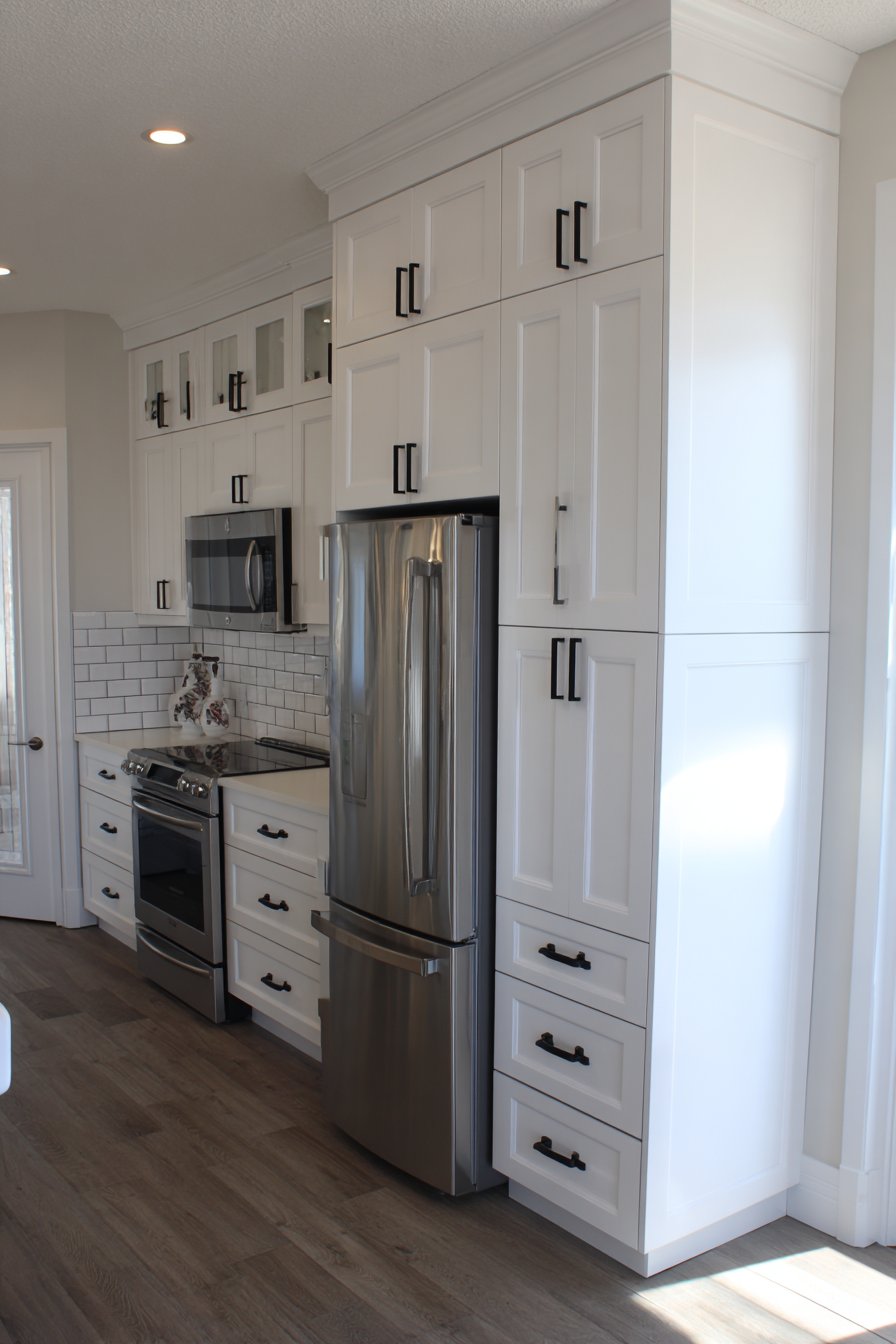
This design demonstrates that thinking vertically transforms small kitchen functionality completely. Floor space remains open while storage capacity increases substantially. The tall cabinets require a step stool for access to upper shelves. However, these higher areas suit storing infrequently used items perfectly.
Key Design Tips:
- Extend pantry cabinets to the ceiling for maximum storage
- Choose slim slide-in appliances to save counter space
- Mount microwaves on walls to free up counter areas
- Use light grey cabinets for sophisticated neutral tones
- Install matte black hardware for modern contrast
13. Creative Pegboard Organization Kitchen
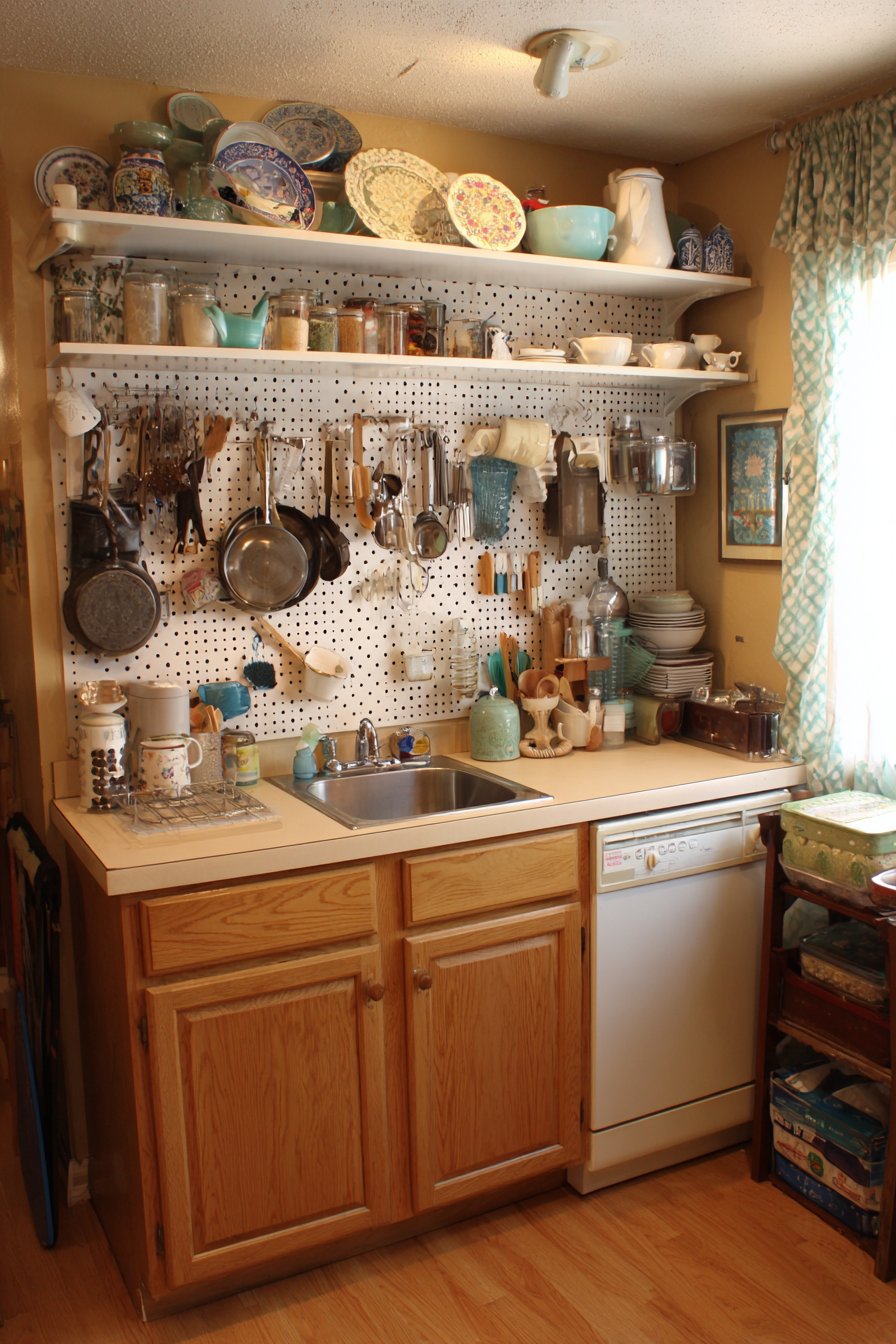
A pegboard organization system transforms one wall into flexible storage space. Frequently used utensils, pots, and cutting boards hang within easy reach. The visible storage keeps essential tools accessible while creating visual interest. Customizable hooks allow rearranging the layout as needs change.
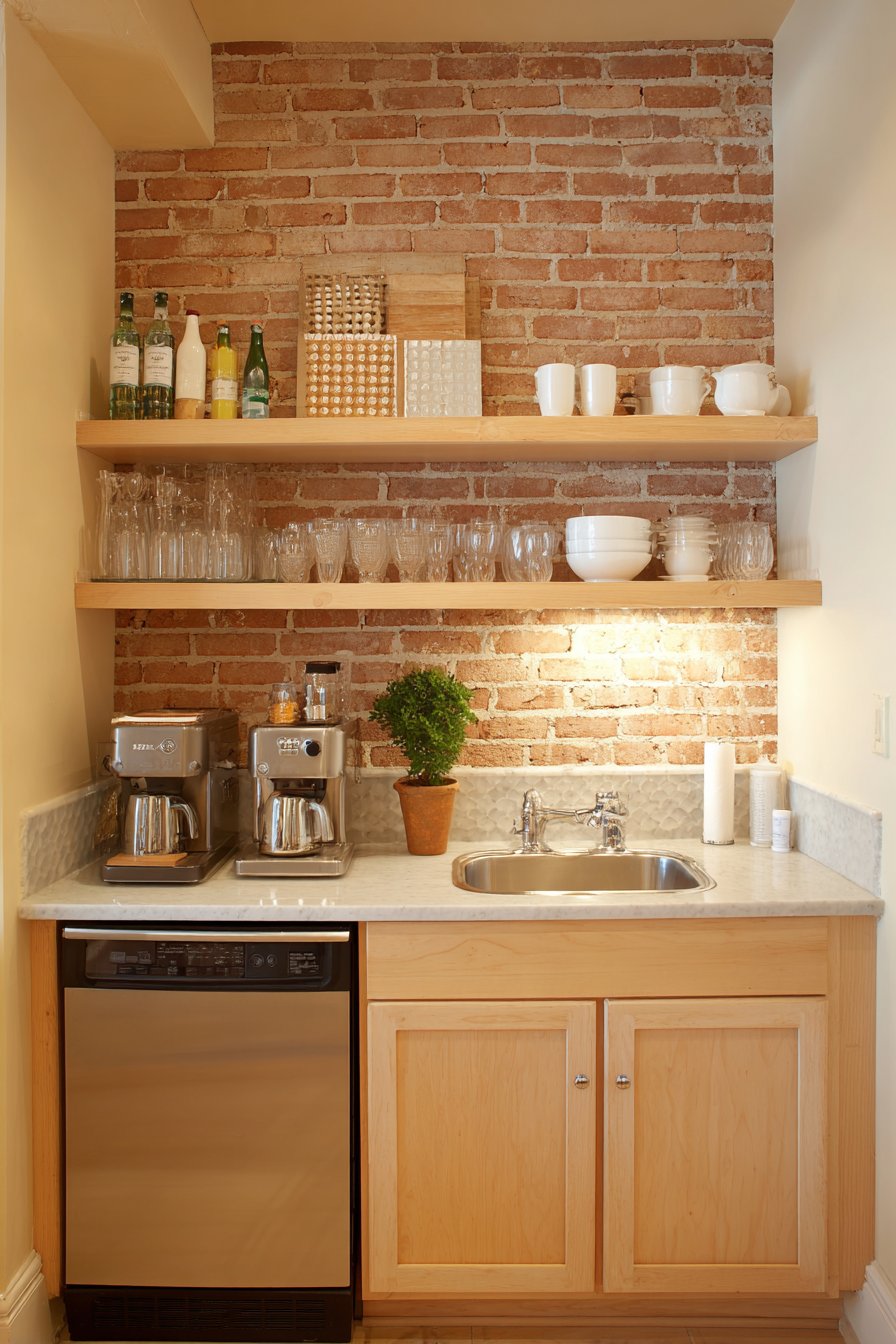
Natural wood cabinets with simple cup pulls maintain an unfussy, practical aesthetic. A small portable dishwasher rolls under the counter when not in use. This mobile appliance provides cleaning convenience without permanent space commitment. A small stainless steel prep sink serves as the main washing station.
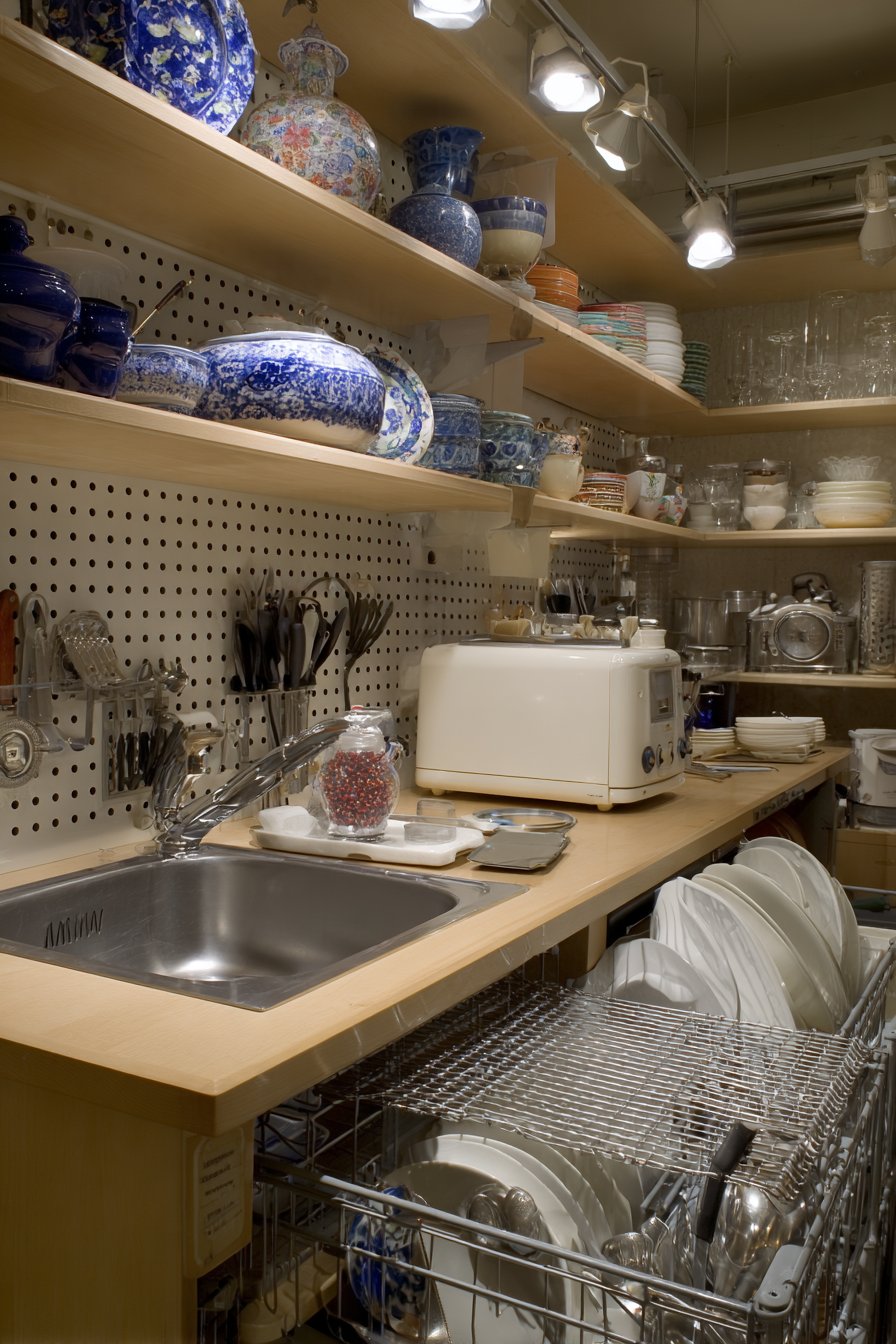
Open shelving above the pegboard holds attractive ceramics and glassware for display. Soft natural light illuminates the creative storage solutions throughout the day. The mix of open and closed storage creates functional balance. Frequently used items remain visible while less attractive necessities hide behind cabinet doors.
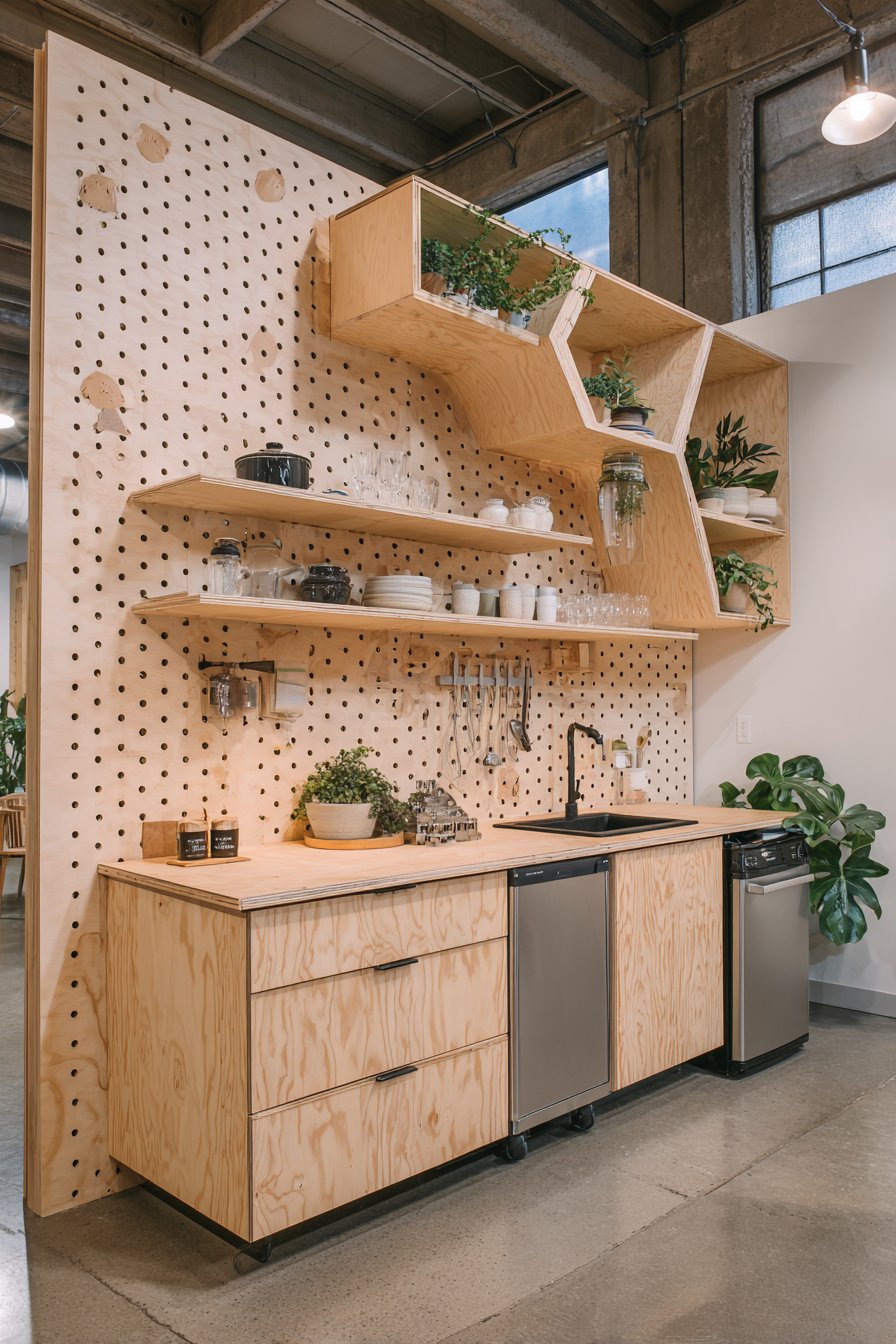
The pegboard approach offers exceptional flexibility for evolving cooking needs. Traditional fixed storage can’t adapt as easily to changing requirements. Pegboard hooks move and adjust infinitely without permanent modifications. This adaptable system suits renters and homeowners alike perfectly.
Key Design Tips:
- Install pegboard walls for flexible, customizable storage
- Choose portable dishwashers that roll away when not needed
- Display attractive ceramics on open shelving
- Use natural wood cabinets for warm, unfussy aesthetics
- Add prep sinks for additional washing stations in compact spaces
14. Single Wall Kitchen with Fold-Down Table
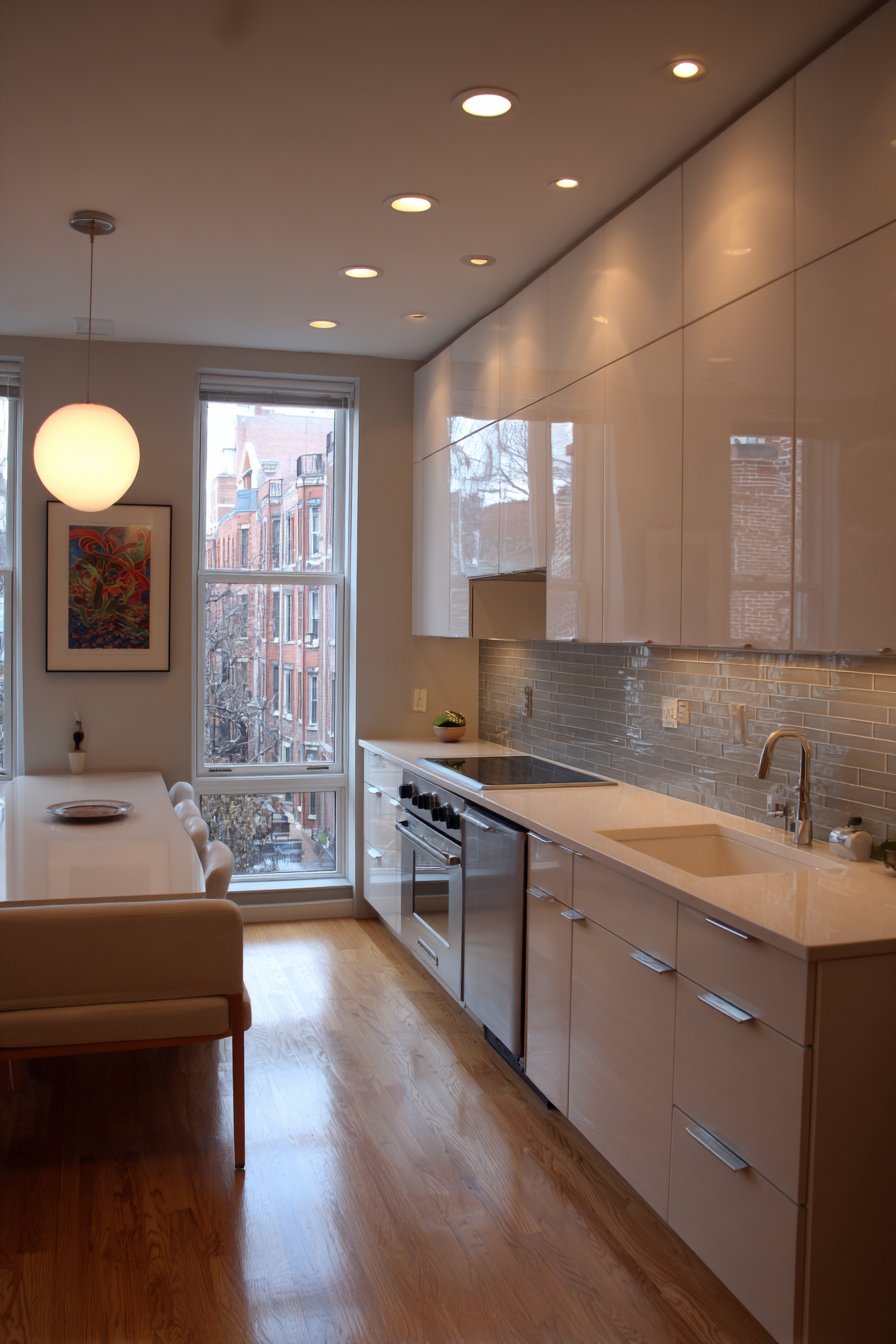
A single wall layout incorporates all kitchen essentials along one continuous run. White flat-panel cabinets from floor to ceiling maximize available storage vertically. A fold-down table attached to the wall provides dining space when needed. The table disappears against the wall when not in use.
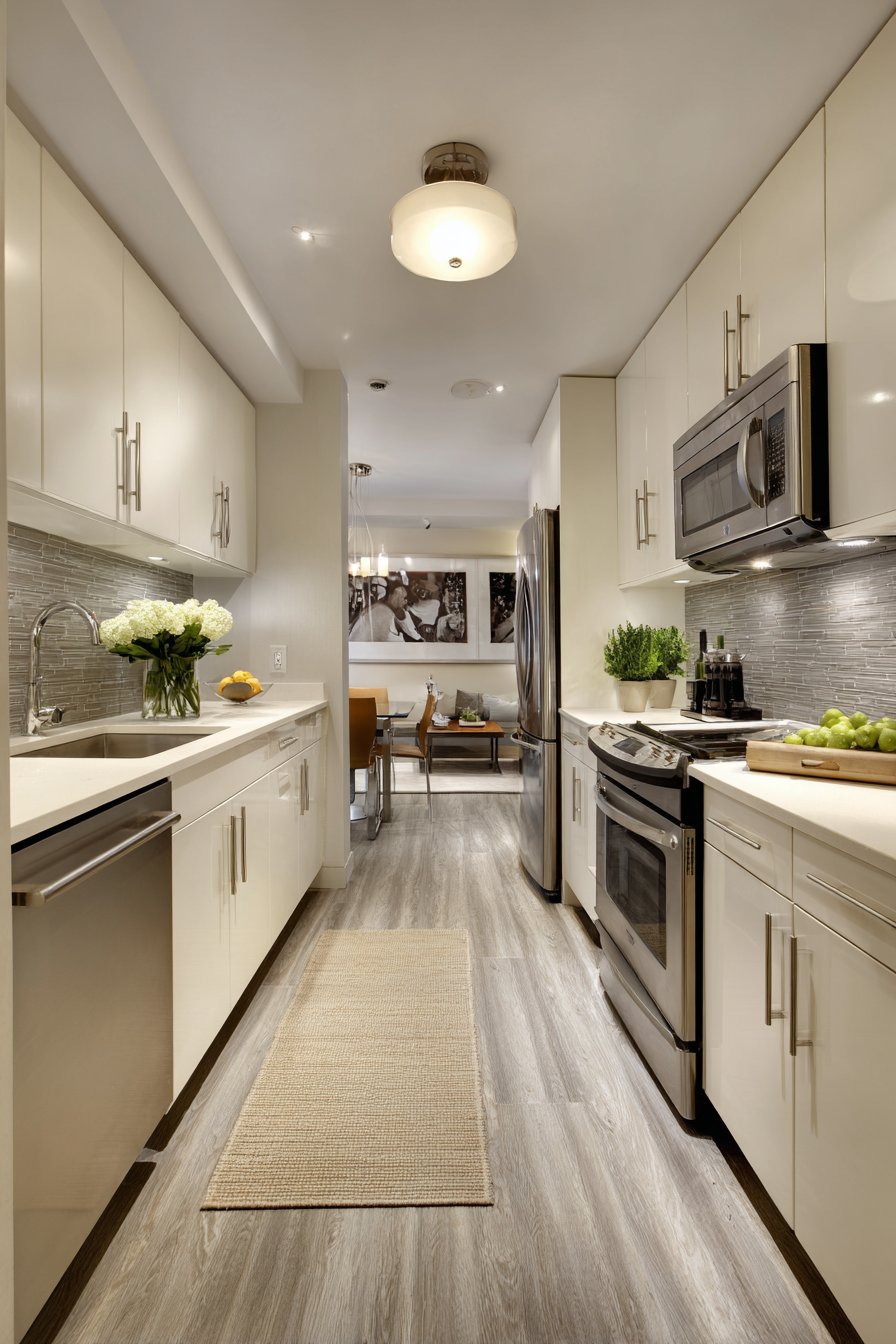
Compact appliances in stainless steel fit within an eight-foot cabinet span. Every appliance maintains an appropriate scale for the limited footprint. Grey subway tile backsplash and white countertops keep the design clean and simple. The neutral palette creates visual calm in the efficient workspace.
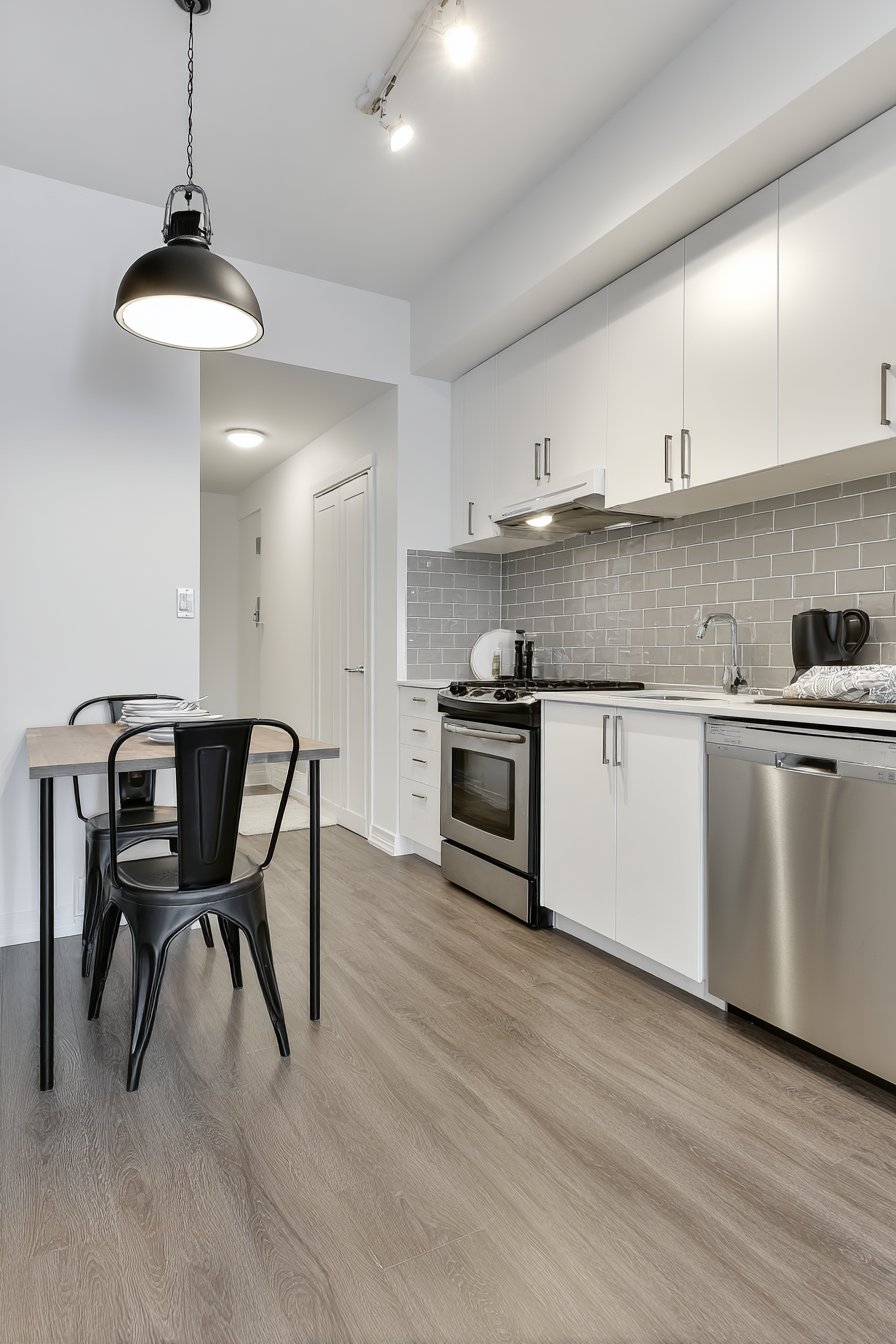
A pendant light above the fold-down table adds focused task lighting. The fixture provides adequate illumination for dining without occupying floor space. The single-wall configuration works perfectly for studio apartments and tiny homes. All kitchen functions remain accessible from one standing position.
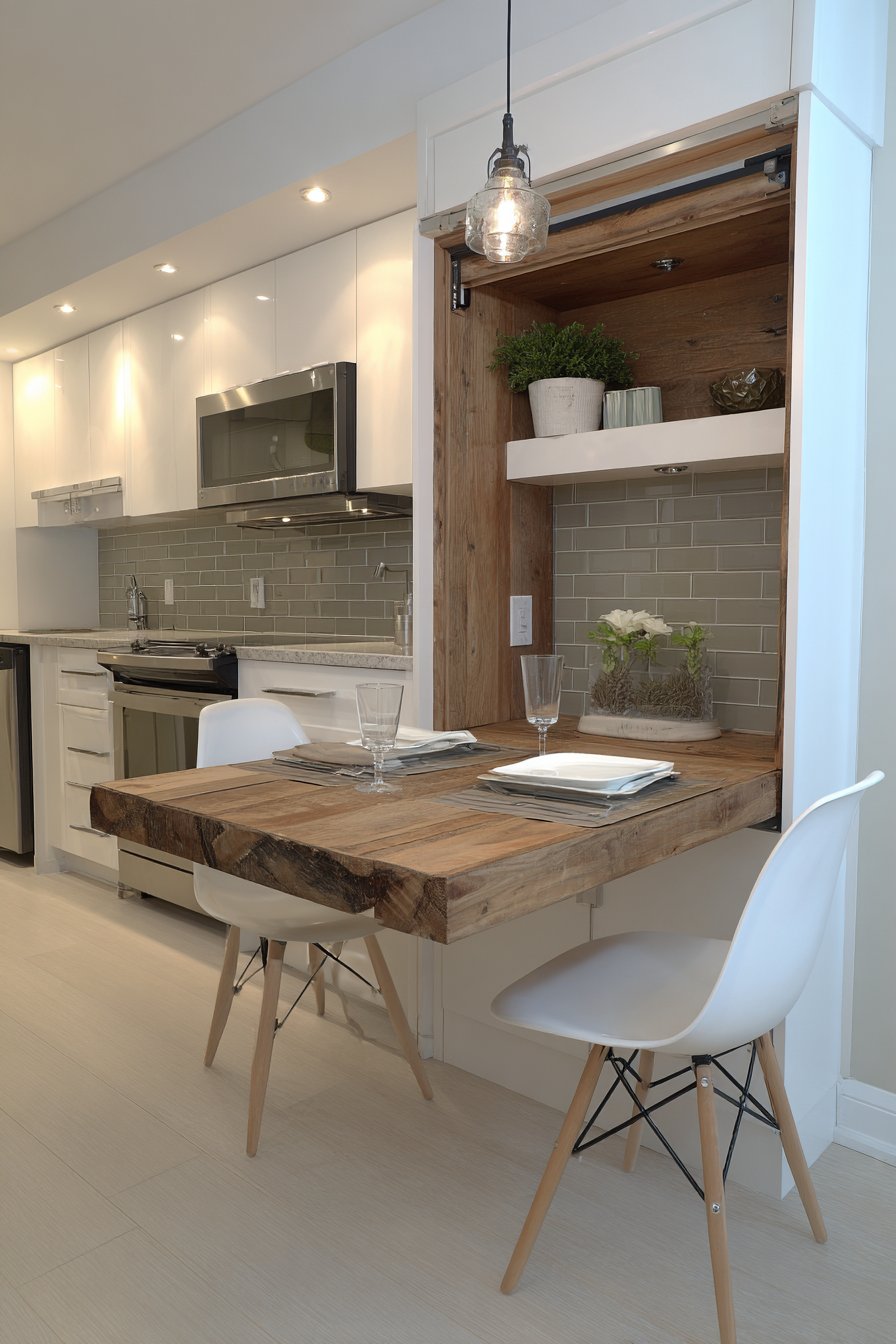
This ultra-compact design proves that even minimal space can accommodate full kitchen functionality. The fold-down table concept delivers dining accommodation without permanent furniture commitment. When folded, the wall-mounted table occupies virtually no space. This clever solution epitomizes efficient small kitchen design thinking.
Key Design Tips:
- Use single wall layouts for extremely compact spaces
- Install fold-down tables for dining without permanent furniture
- Choose flat-panel cabinets for clean, simple aesthetics
- Select compact appliances that fit within limited runs
- Add pendant lights above dining areas for task illumination
15. Efficient U-Shaped Kitchen Layout
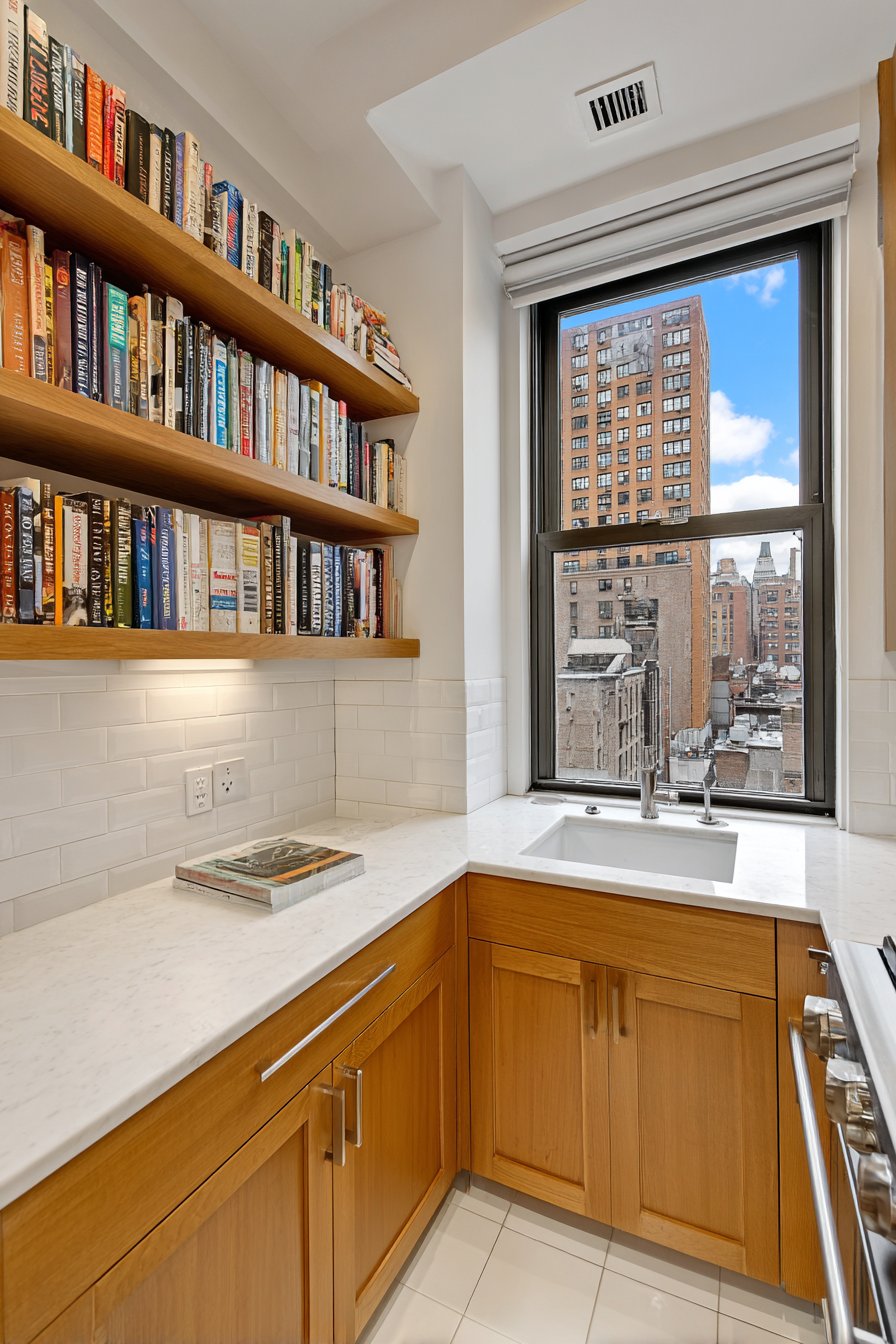
A compact U-shaped layout wraps three walls with continuous countertop workspace. Light oak cabinets with minimalist hardware create Scandinavian simplicity and warmth. A corner sink positioned at the bend maximizes usable counter space on both sides. This placement creates efficient work triangles between sink, range, and refrigerator.
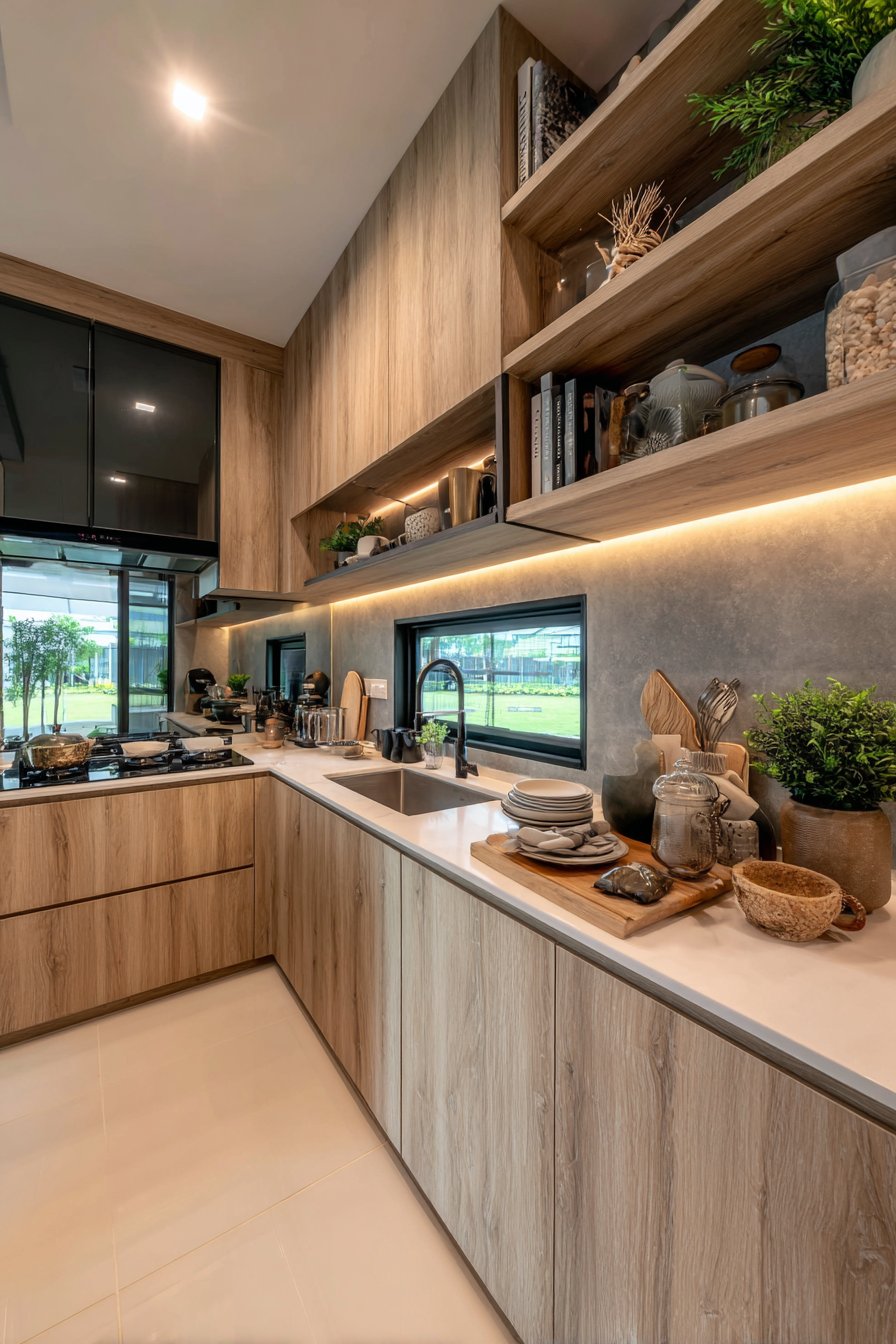
Floating shelves on the back wall hold cookbooks and decorative items accessibly. White porcelain tile floor reflects light upward throughout the space. A small window above the sink brings natural daylight into the cooking area. Natural light combines with under-cabinet lighting for adequate illumination.
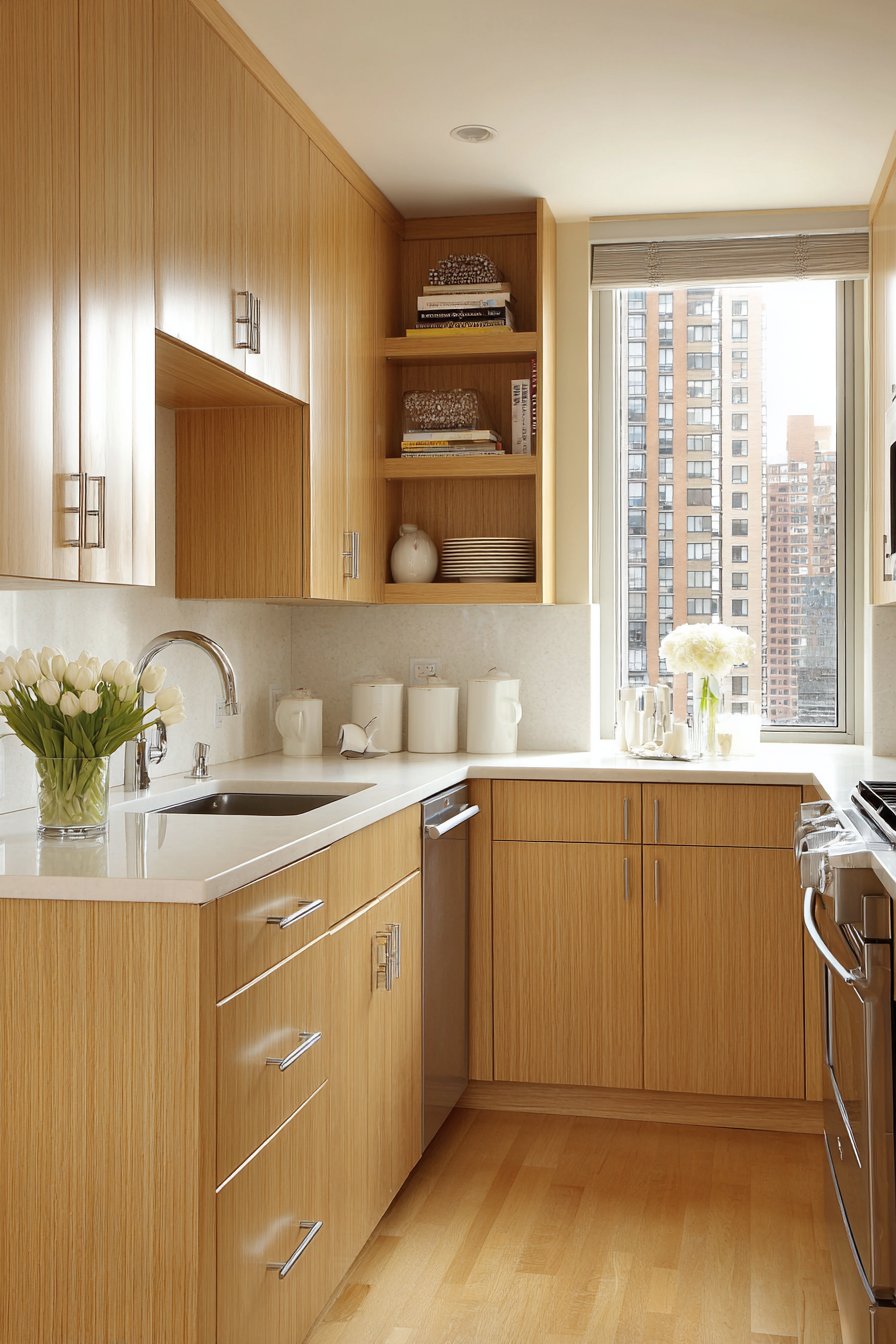
The U-shaped configuration provides maximum efficiency in compact footprints remarkably well. Every essential element remains within a few steps of every other element. The continuous counter eliminates gaps where items could fall or accumulate. This layout suits serious cooks who need efficient workflows despite limited space.
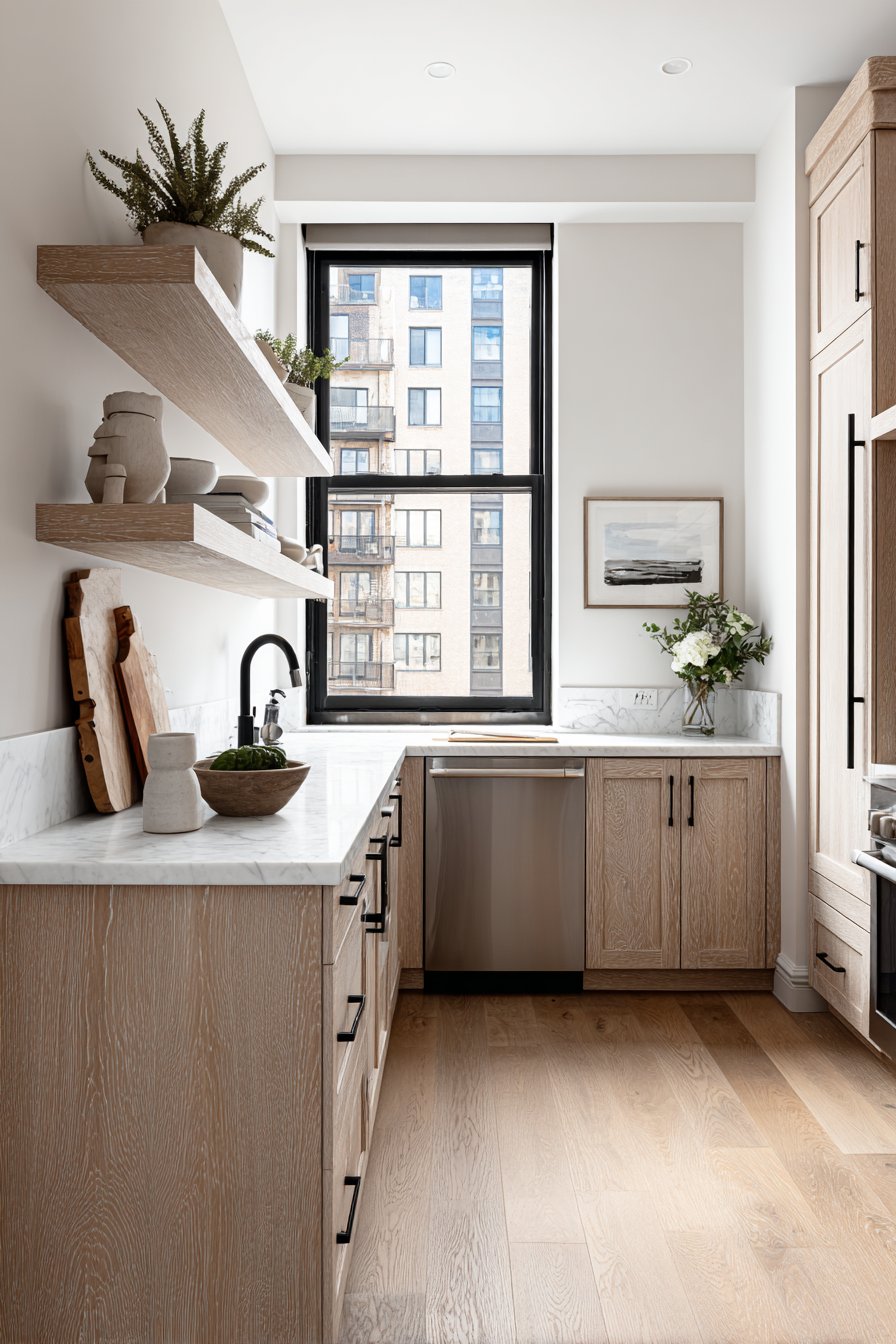
The Scandinavian aesthetic pairs perfectly with small kitchen requirements naturally. The style emphasizes functionality, natural materials, and uncluttered surfaces. Light wood tones maintain warmth without overwhelming compact dimensions. This design philosophy aligns perfectly with small space needs.
Key Design Tips:
- Create U-shaped layouts for maximum counter space efficiency
- Position corner sinks to optimize counter space on both sides
- Use light oak cabinets for Scandinavian warmth and simplicity
- Install floating shelves for cookbook storage and display
- Choose white flooring to reflect light throughout the space
16. Narrow Rolling Pantry Cart Solution
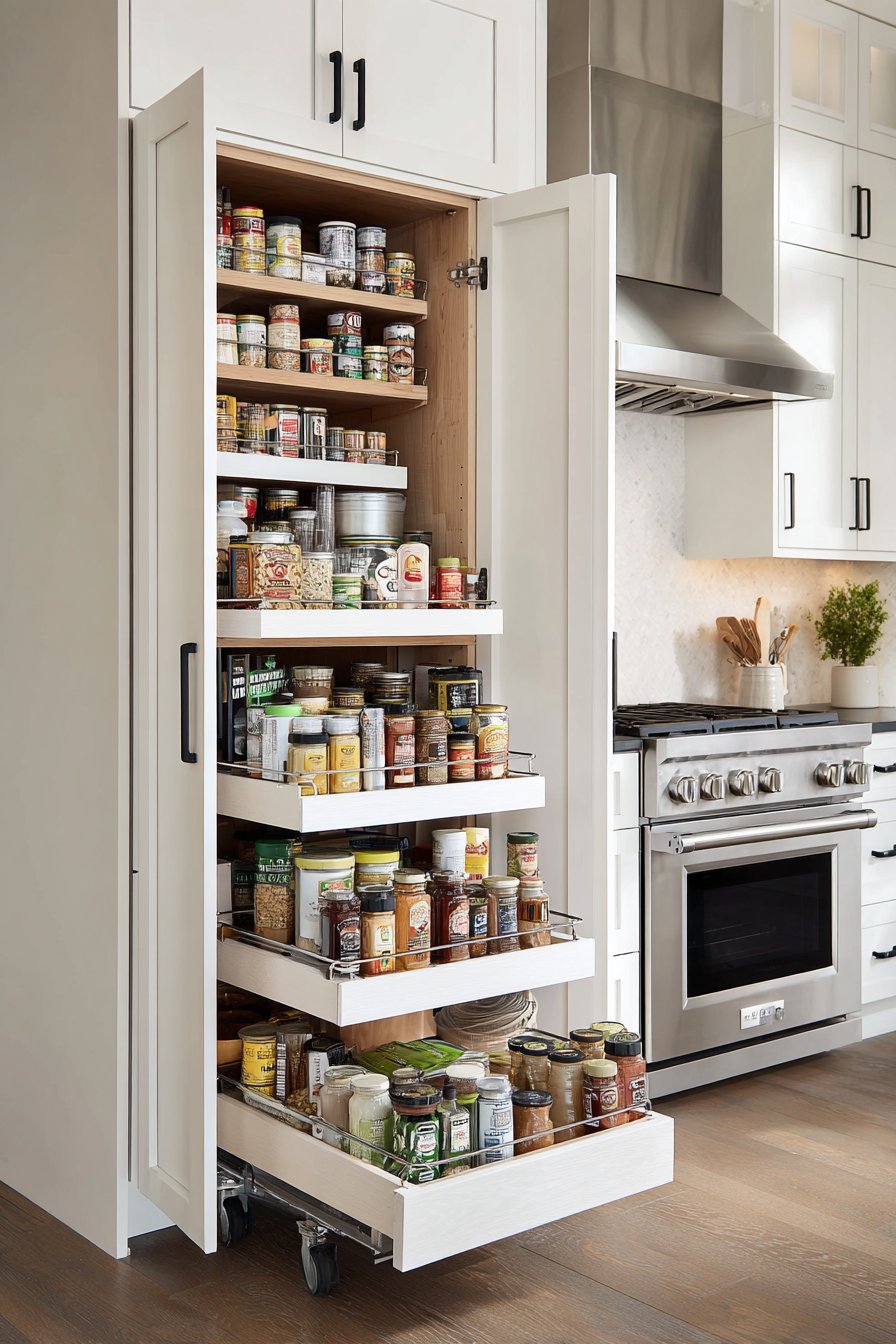
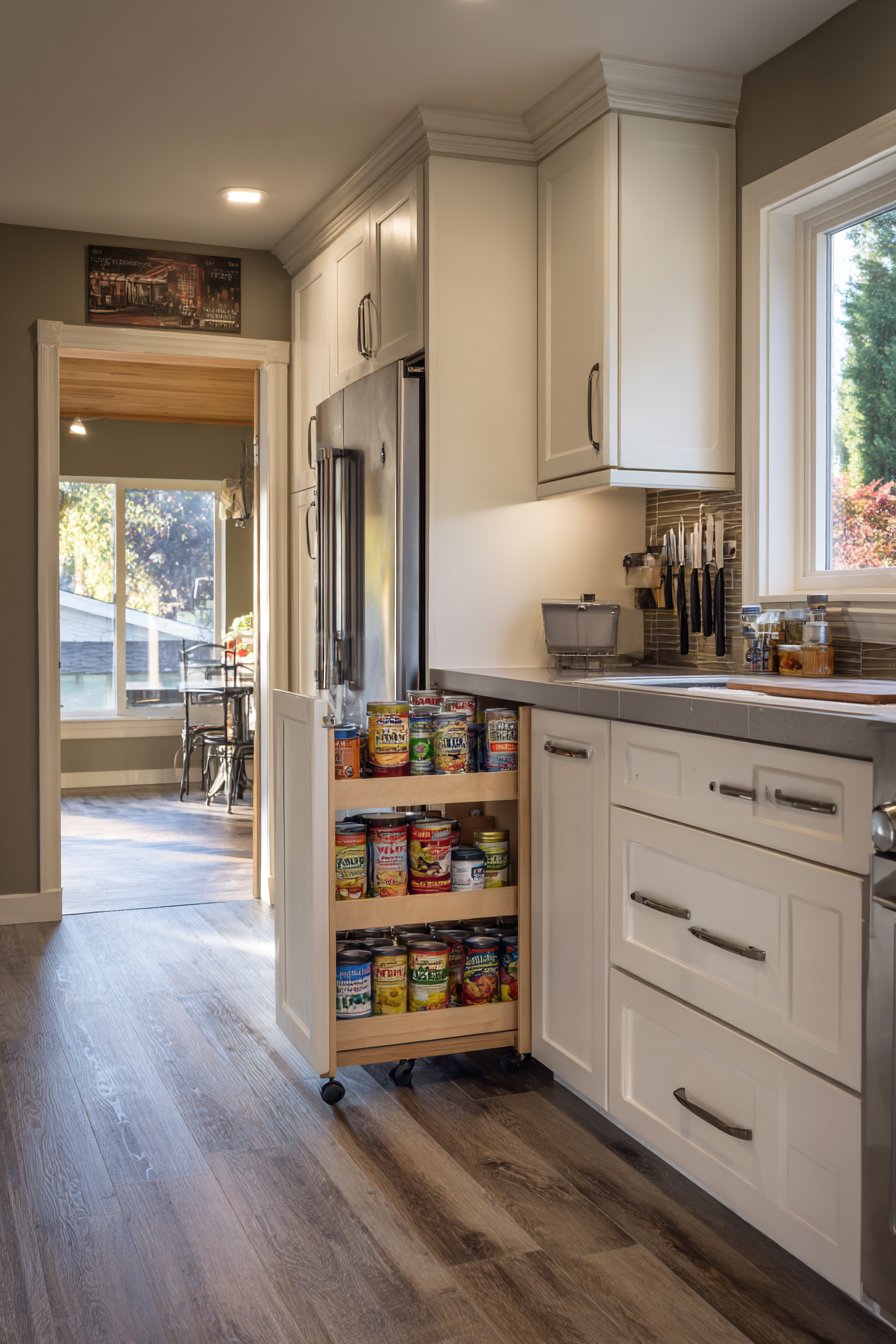
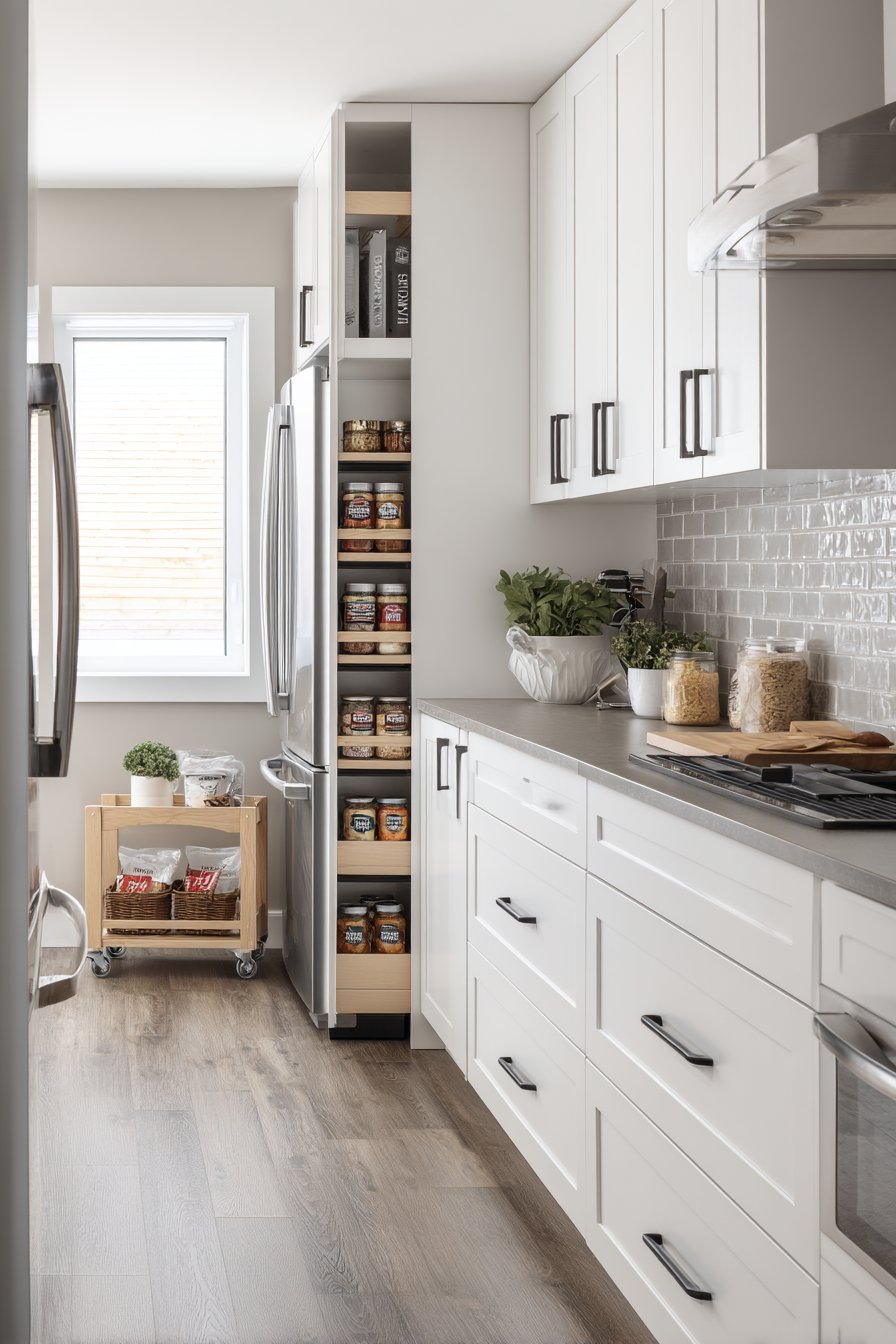
A narrow rolling pantry cart slides into a six-inch gap beside the refrigerator. Five tiers provide substantial storage for canned goods and dry ingredients. The slim profile fits otherwise wasted space between appliances and walls. The cart rolls out completely for easy access to all stored items.
White cabinetry features a magnetic knife strip and hanging rail for utensils. These wall-mounted storage solutions keep counters clear for food preparation. A small two-burner cooktop and compact oven fit the limited available space. Grey laminate countertops provide durable, budget-friendly work surfaces.
A pull-out cutting board extends from the cabinet run when needed. The hidden cutting board saves permanent counter space while remaining accessible. The highly organized system ensures every item has a designated storage location. Nothing clutters the compact workspace when not actively in use.
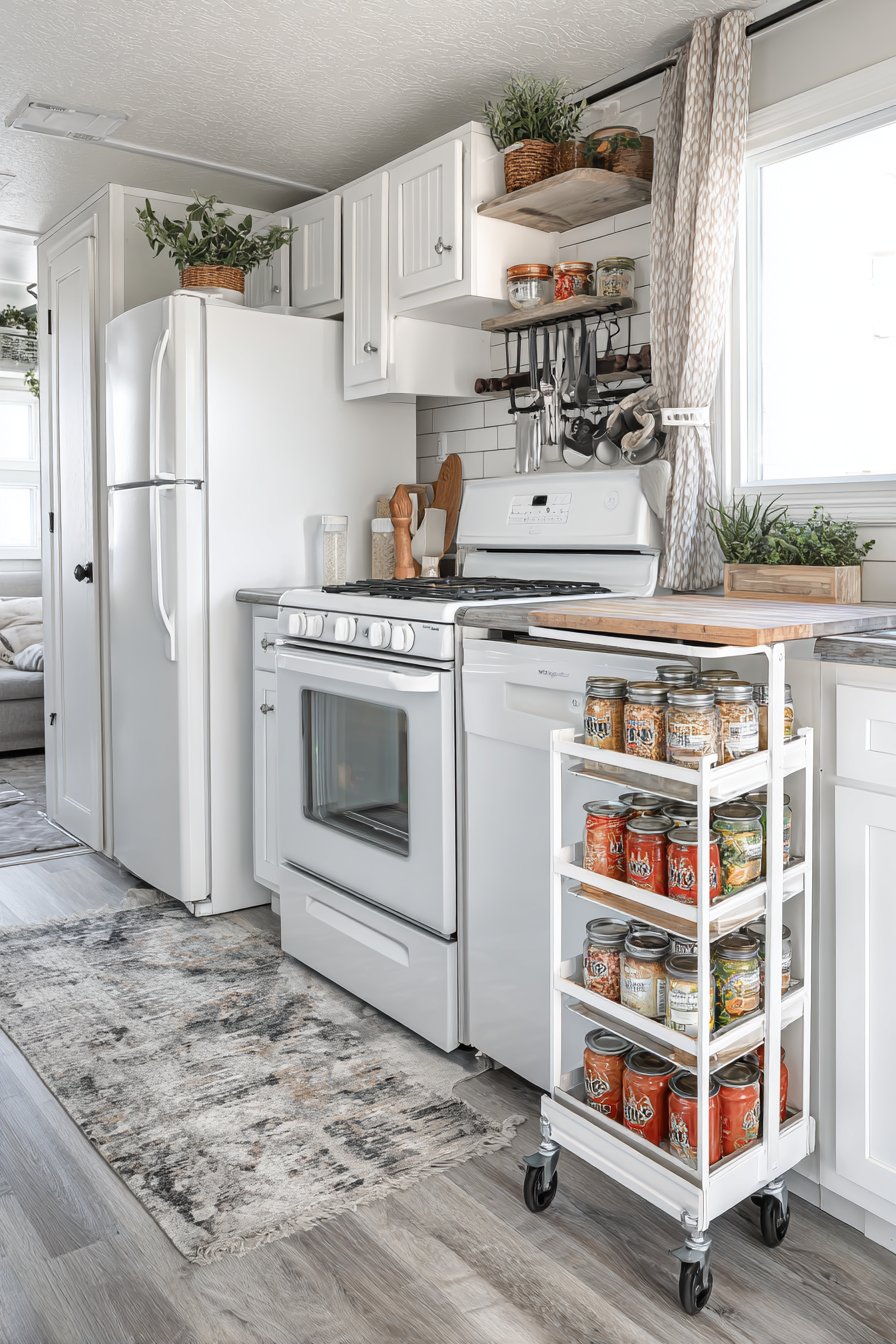
The slim rolling pantry represents ingenious space utilization at its finest. Standard pantries require substantial floor space even in closed position. This vertical solution captures wasted gap space effectively. The rolling mechanism ensures easy access despite the narrow profile.
Key Design Tips:
- Use slim rolling pantry carts in narrow gaps beside appliances
- Install magnetic knife strips to free up counter and drawer space
- Choose compact two-burner cooktops for minimal cooking needs
- Add pull-out cutting boards that hide when not needed
- Mount utensil rails on walls for accessible storage
17. Tiny Island Kitchen with Sage Green Cabinets
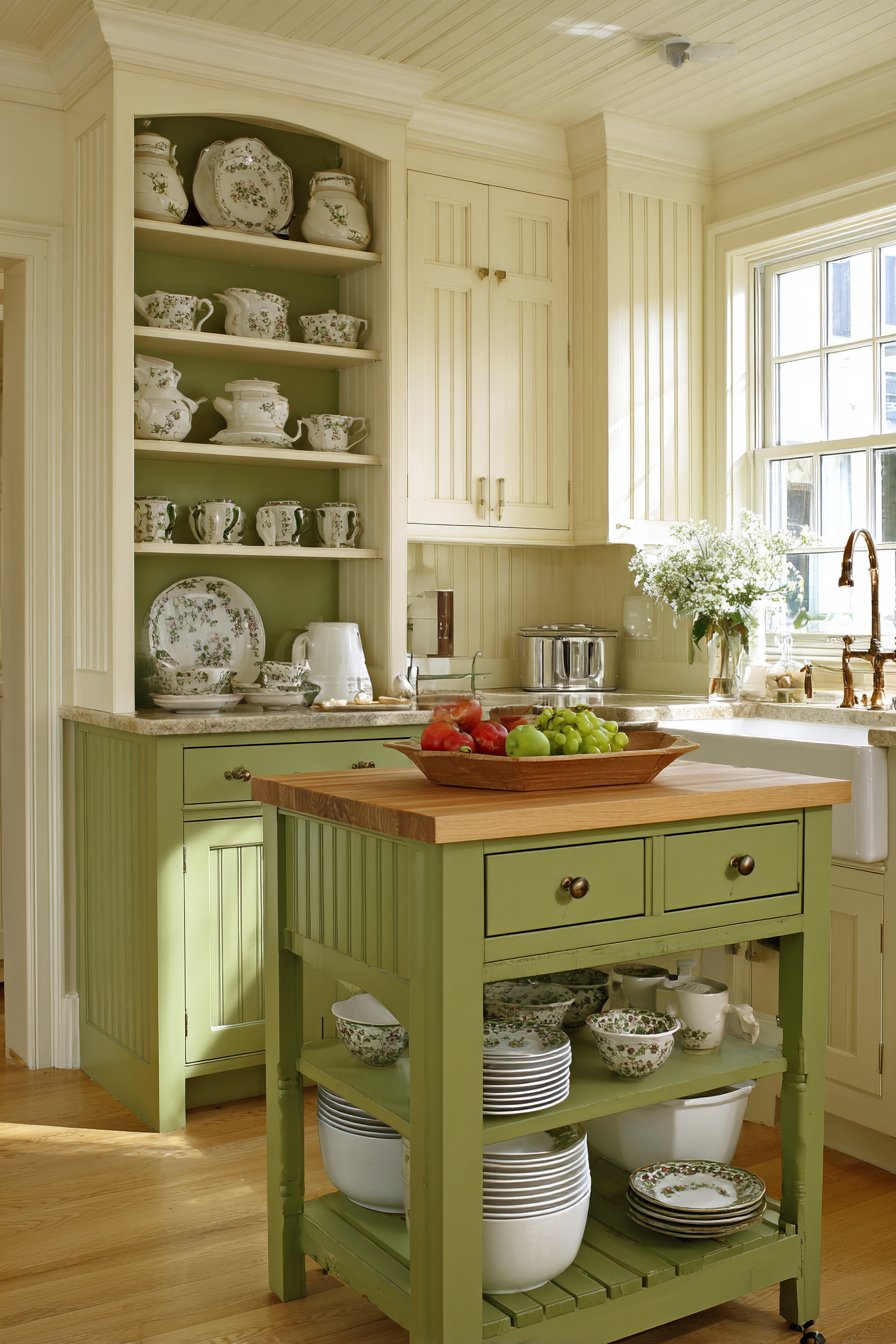
A compact prep station features a small kitchen island measuring just twenty-four by thirty-six inches. The butcher block top provides dedicated prep surface despite modest dimensions. Two shelves below hold mixing bowls and baking sheets within easy reach. Even tiny islands add valuable function to small kitchens.
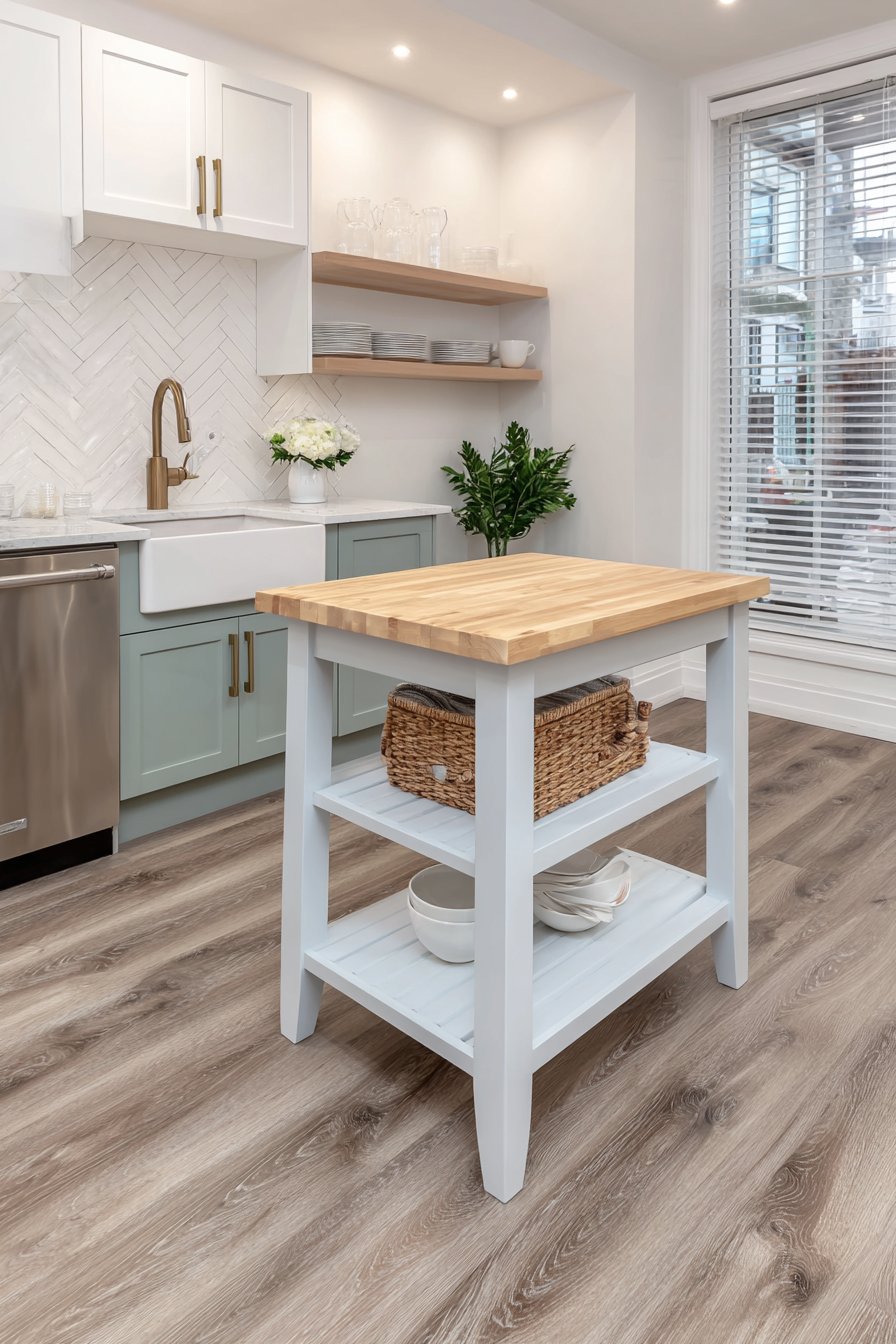
Two-tone cabinets combine white uppers with sage green lowers for visual interest. The color division creates depth without overwhelming the compact space. A small apron-front sink and antique brass faucet add farmhouse character. Open corner shelving displays white dishware in coordinated arrangements.
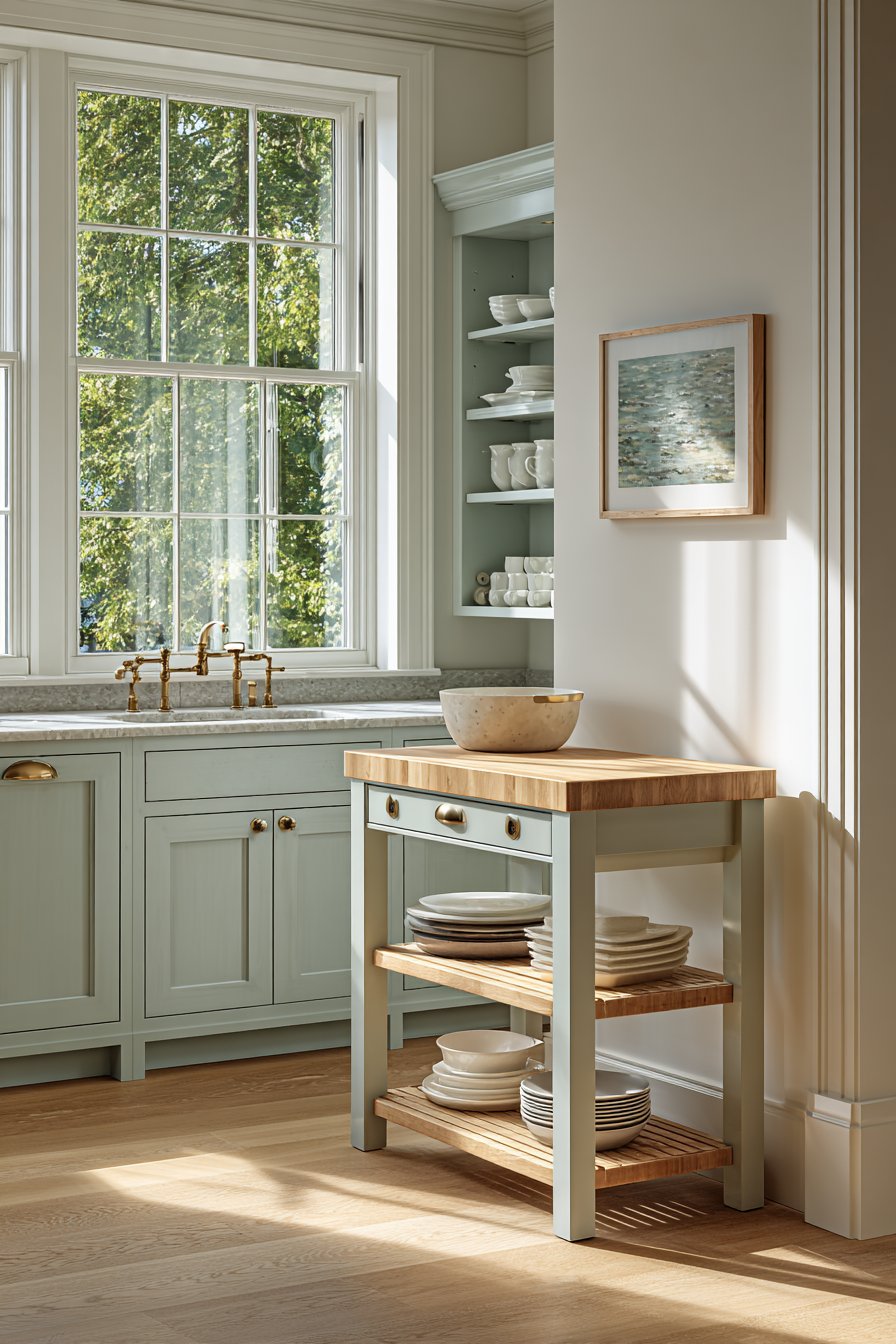
Morning light through a nearby window illuminates the efficient layout beautifully. The natural light highlights the sage green cabinetry attractively. White upper cabinets reflect light downward toward work surfaces. The thoughtful color placement maximizes the brightening effect of available light.
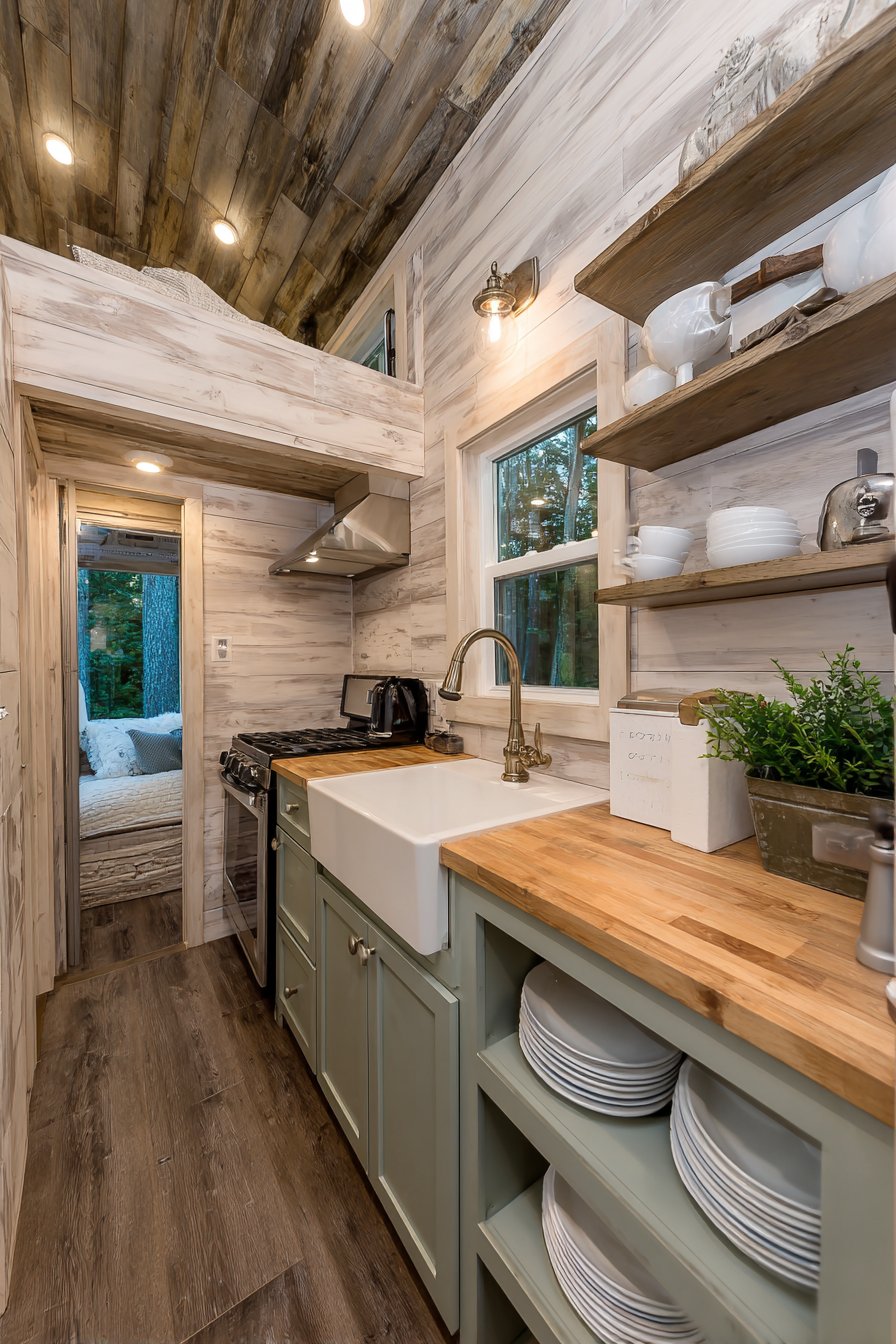
This design proves that islands aren’t exclusive to large kitchens successfully. Even a modest island provides additional prep space and storage capacity. The key lies in selecting appropriate dimensions for your available floor area. Tiny islands deliver disproportionate value relative to their small footprint.
Key Design Tips:
- Add tiny islands measuring 24×36 inches for compact spaces
- Use two-tone cabinetry with darker lowers and lighter uppers
- Choose butcher block tops for durable prep surfaces
- Install apron-front sinks for farmhouse character
- Display coordinated dishware on open corner shelving
18. Dedicated Coffee Station Nook
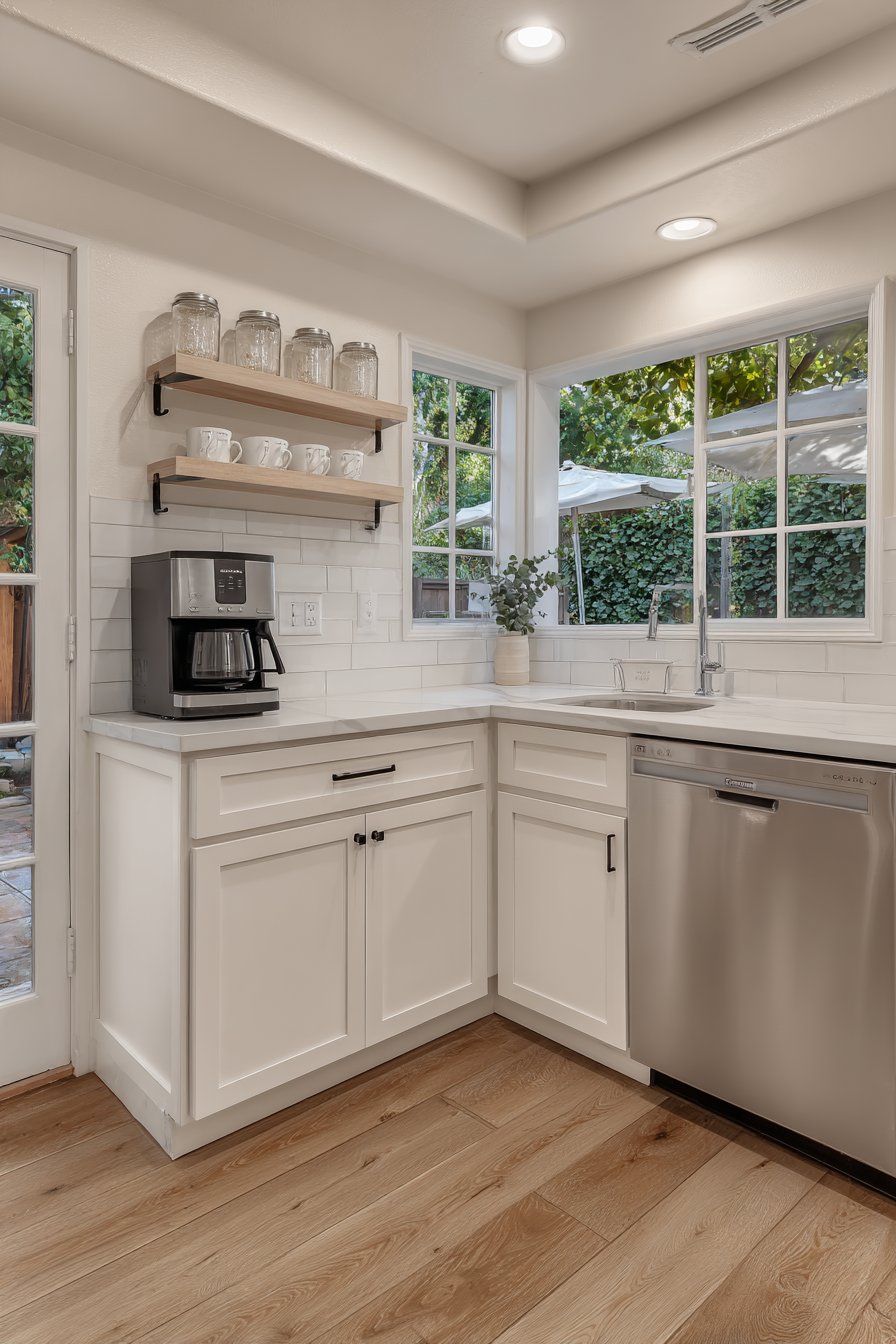
A compact coffee station nook occupies a corner with focused purpose. A small floating shelf holds a coffee maker, mugs on hooks, and supplies in glass jars. The dedicated zone keeps coffee essentials organized and accessible each morning. Creating specific zones maximizes functionality in thoughtfully planned small kitchens.
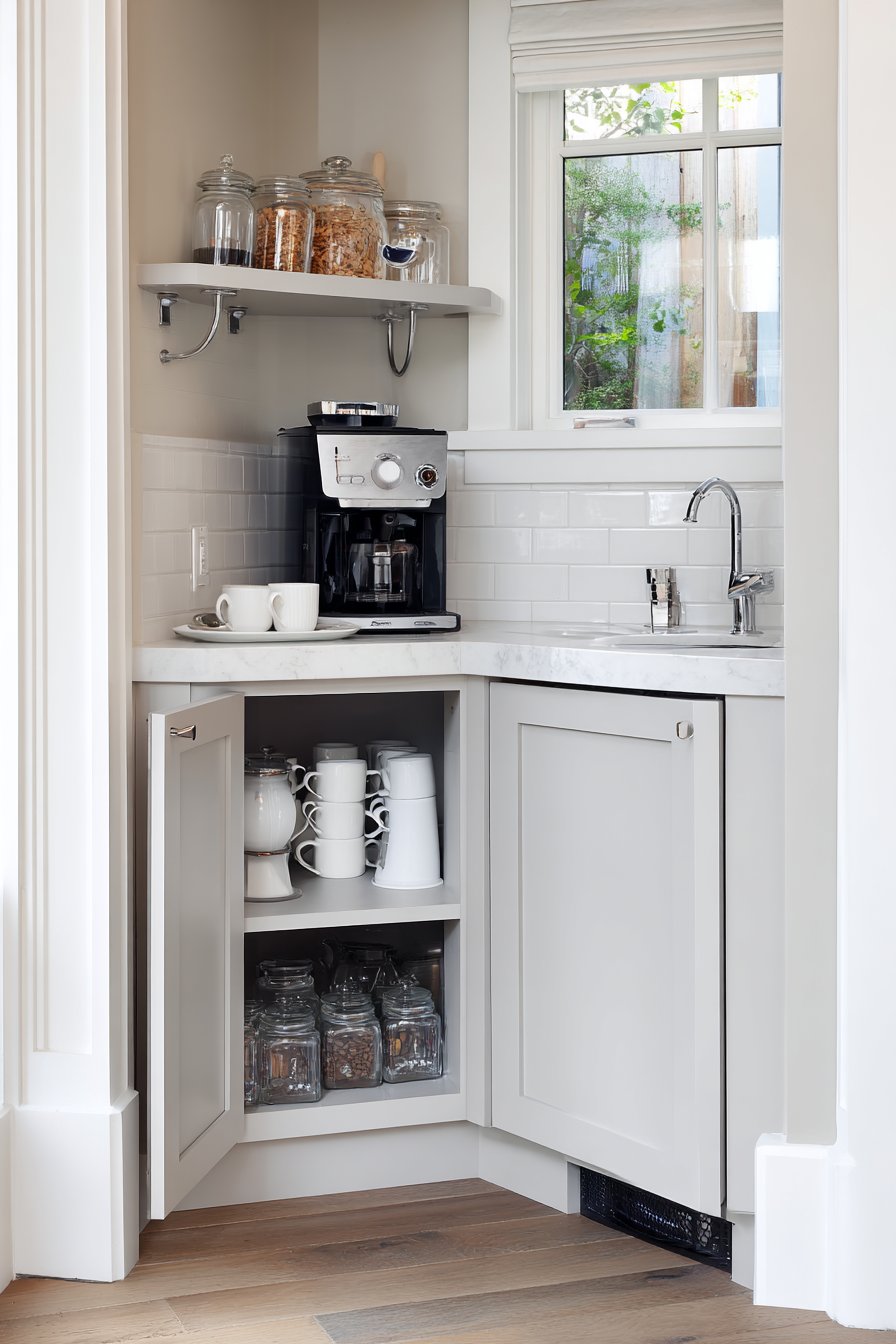
White shaker cabinets include a small double-basin sink and compact dishwasher drawer. The drawer-style dishwasher saves space compared to full-size models. Light grey quartz countertops and white subway tile backsplash maintain overall brightness. A small window above the sink brings natural daylight into the workspace.
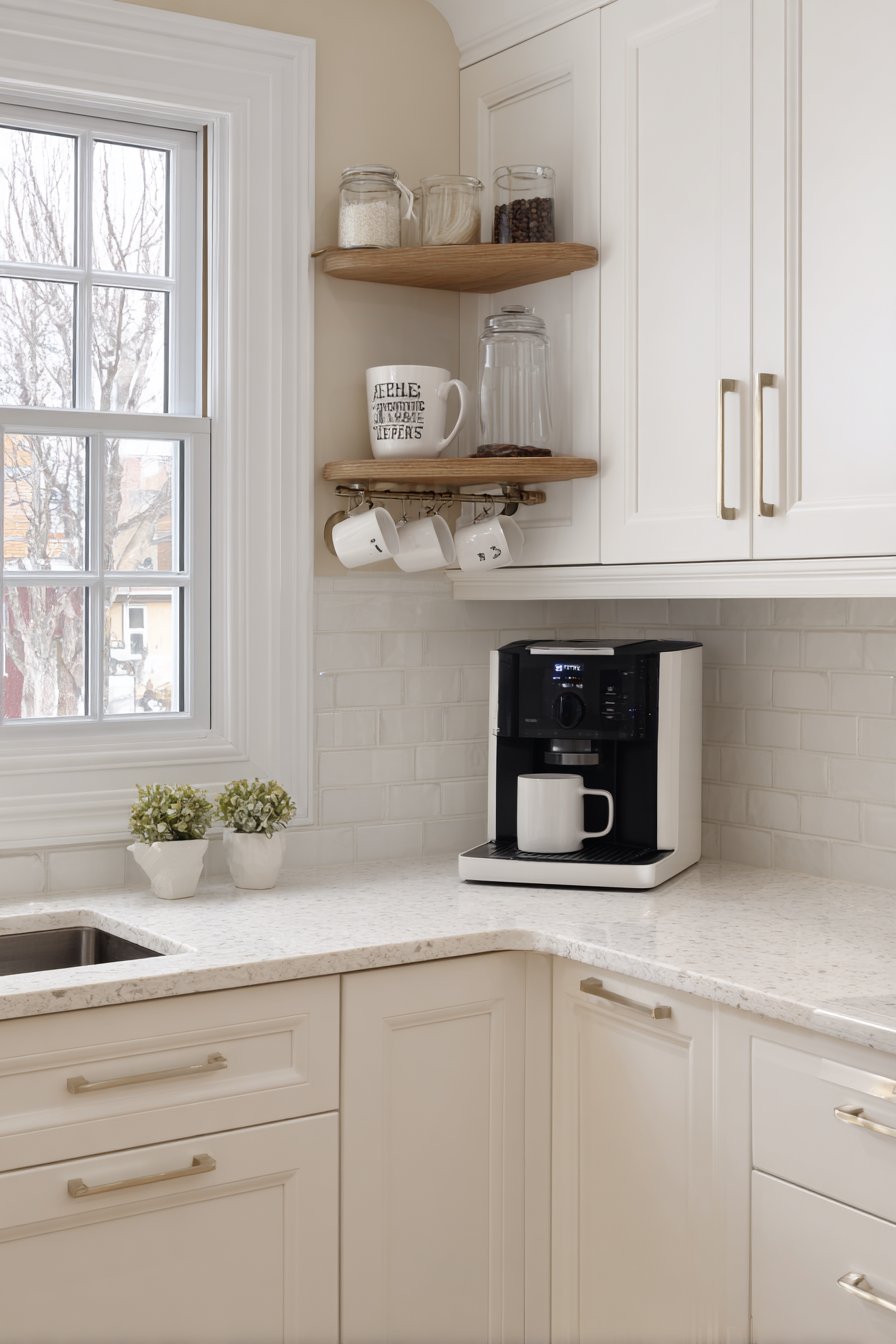
The coffee station concept demonstrates zone planning benefits clearly. Grouping related items creates efficient workflows for specific tasks. Morning coffee preparation happens entirely within the dedicated corner. This organization prevents cluttering the main food prep areas with coffee equipment.
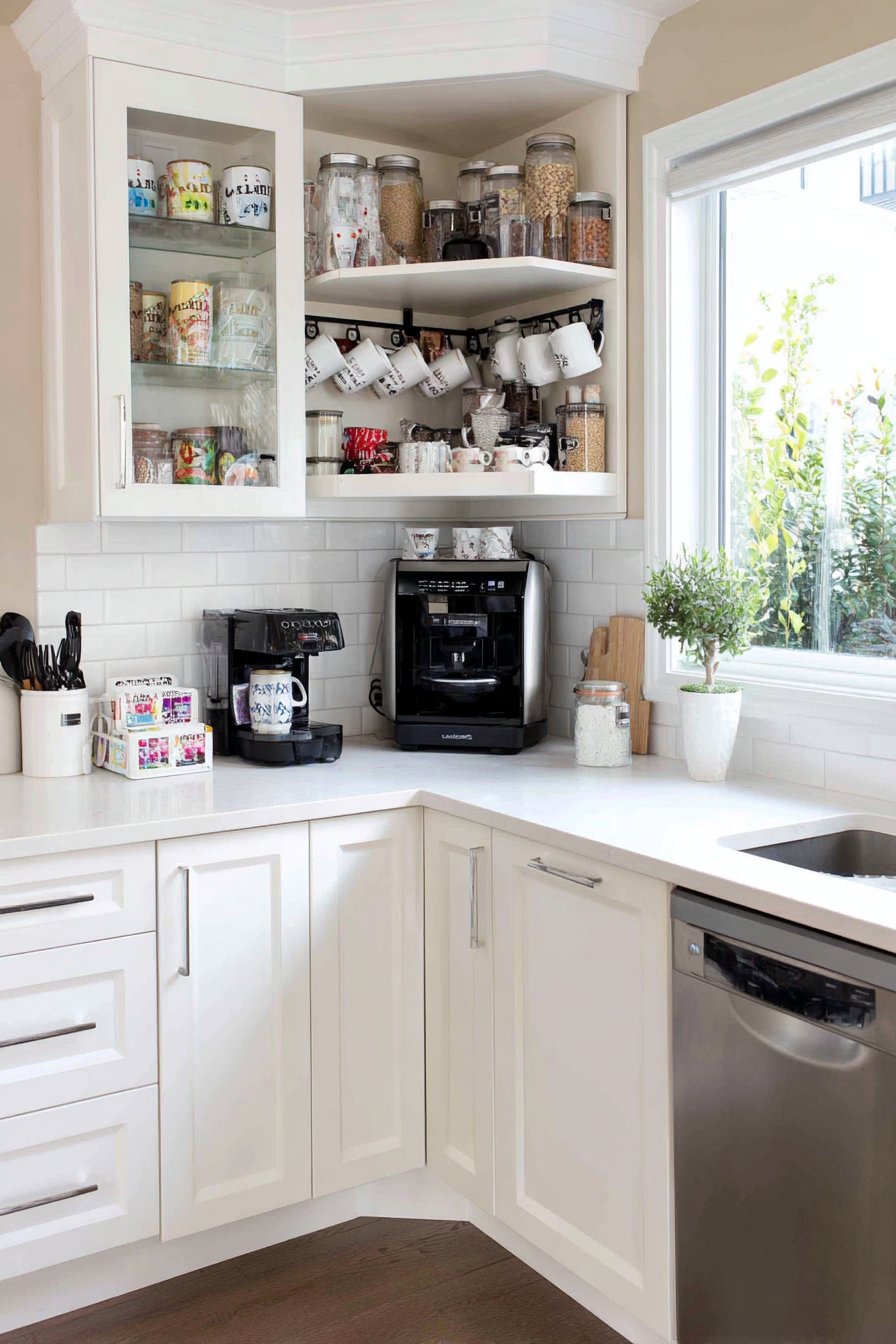
Specialized zones suit small kitchens particularly well despite seeming counterintuitive. Dedicating areas to specific functions actually improves overall organization. Each zone serves its purpose without interference from other activities. This planning approach maximizes efficiency in every square inch available.
Key Design Tips:
- Create dedicated coffee stations with floating shelves
- Use drawer-style dishwashers to save space
- Hang mugs on hooks for accessible storage
- Store coffee supplies in attractive glass jars
- Position windows above sinks for natural task lighting
19. Convertible Furniture Kitchen Solution
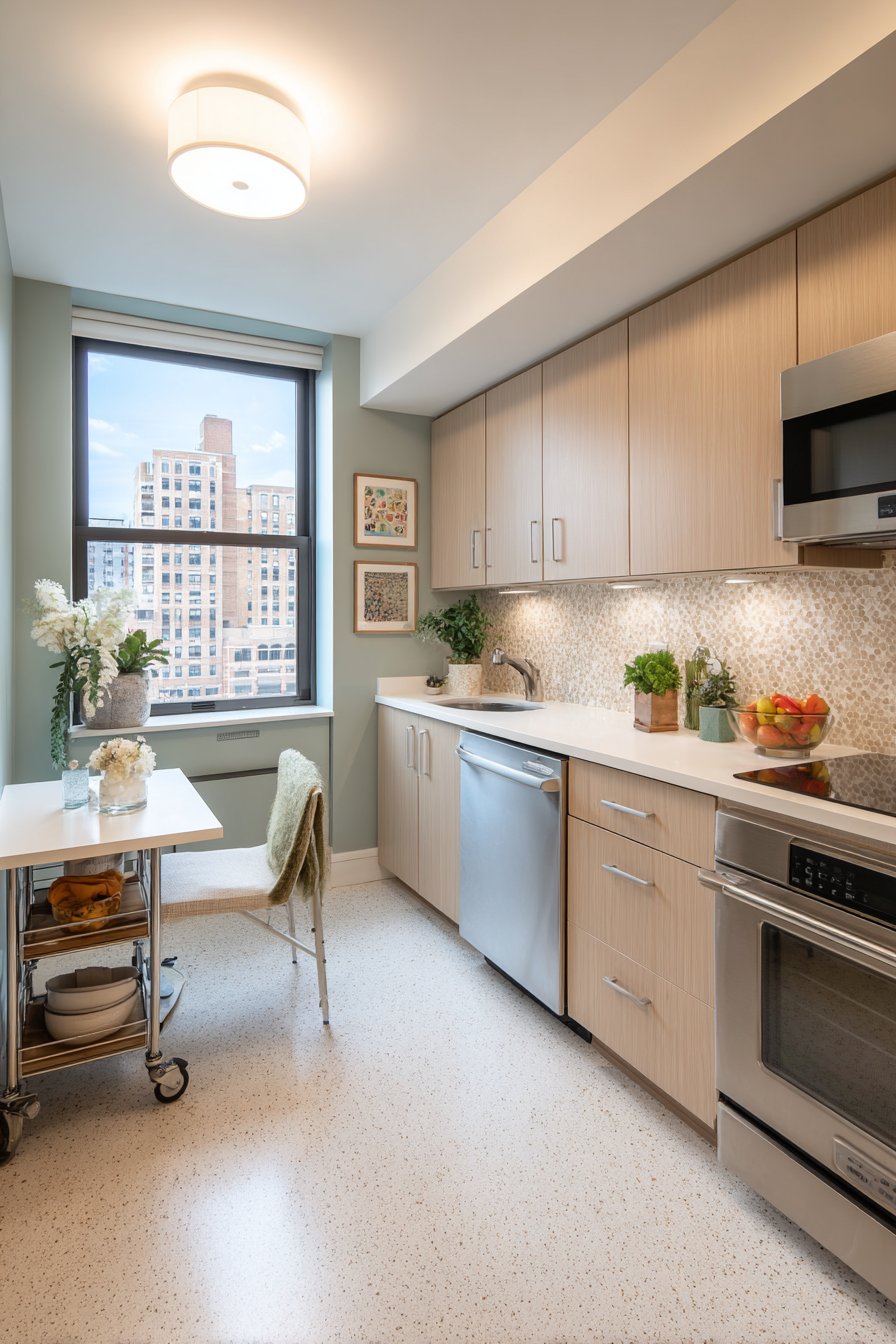
A wall-mounted fold-down dining table accommodates meals without permanent floor commitment. Two wall-mounted folding chairs tuck away completely when not in use. The convertible furniture approach maximizes flexibility in multi-purpose spaces. The dining area appears only when needed for meals or work.
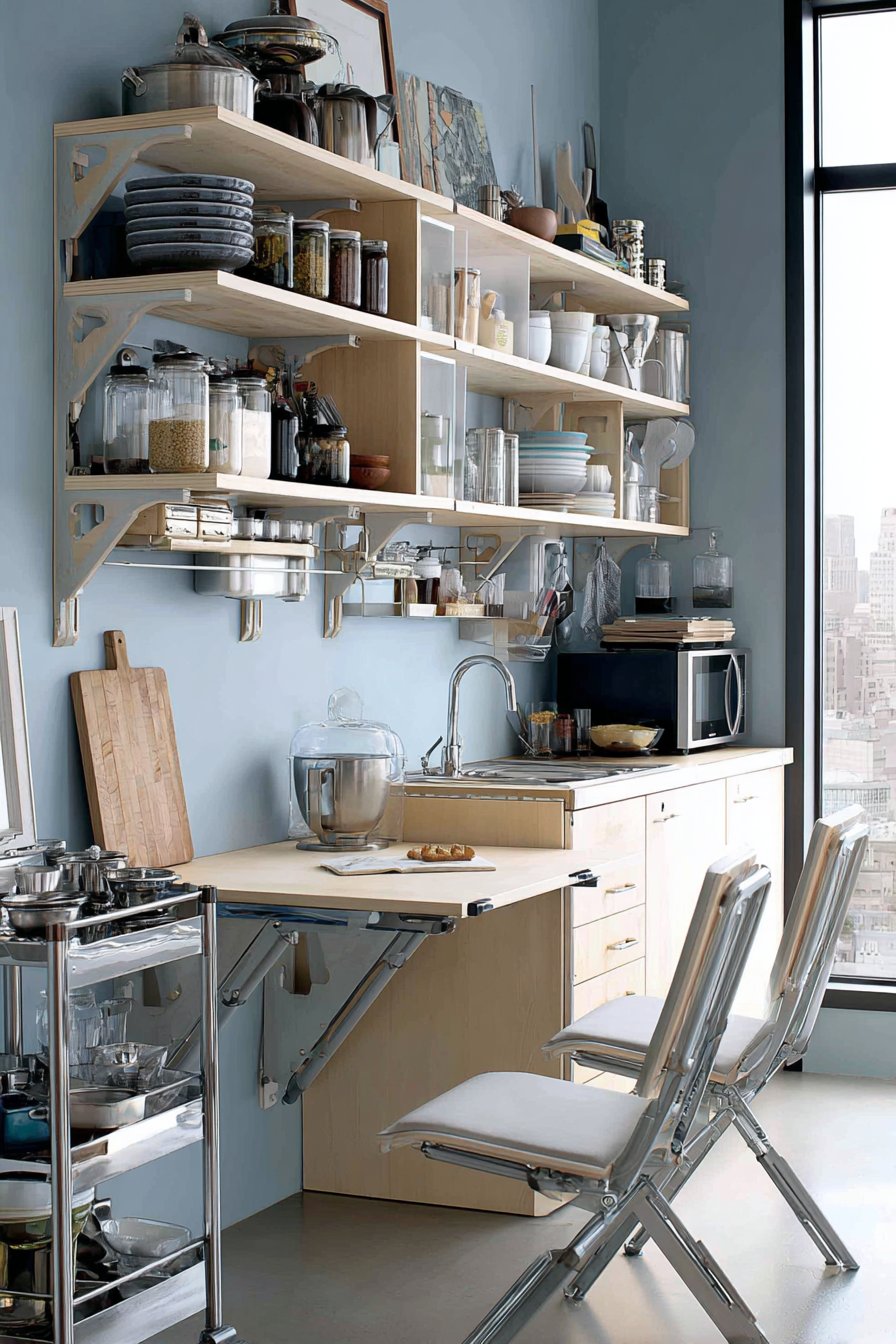
Light wood cabinets with interior organizers maximize storage efficiency internally. Slim-profile appliances maintain appropriate scale throughout the compact kitchen. A single-bowl sink handles washing tasks without consuming excessive counter space. A narrow cart on casters stores cutting boards and holds a microwave.
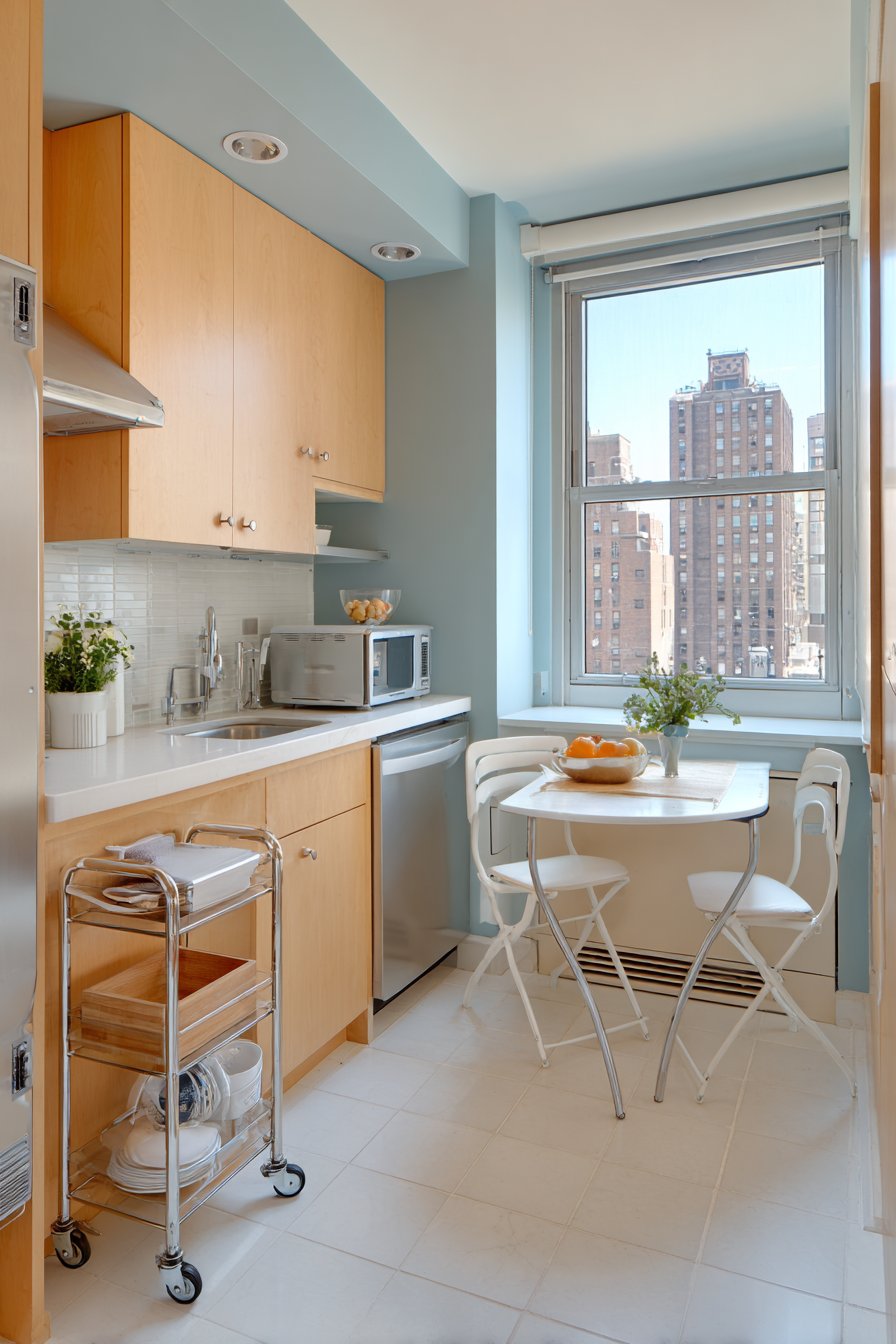
Pale blue-grey walls and white countertops keep the space feeling open and airy. The soft color palette creates calm without stark white sterility. Natural light from a corner window brightens the entire area throughout the day. The corner placement captures light from multiple angles.
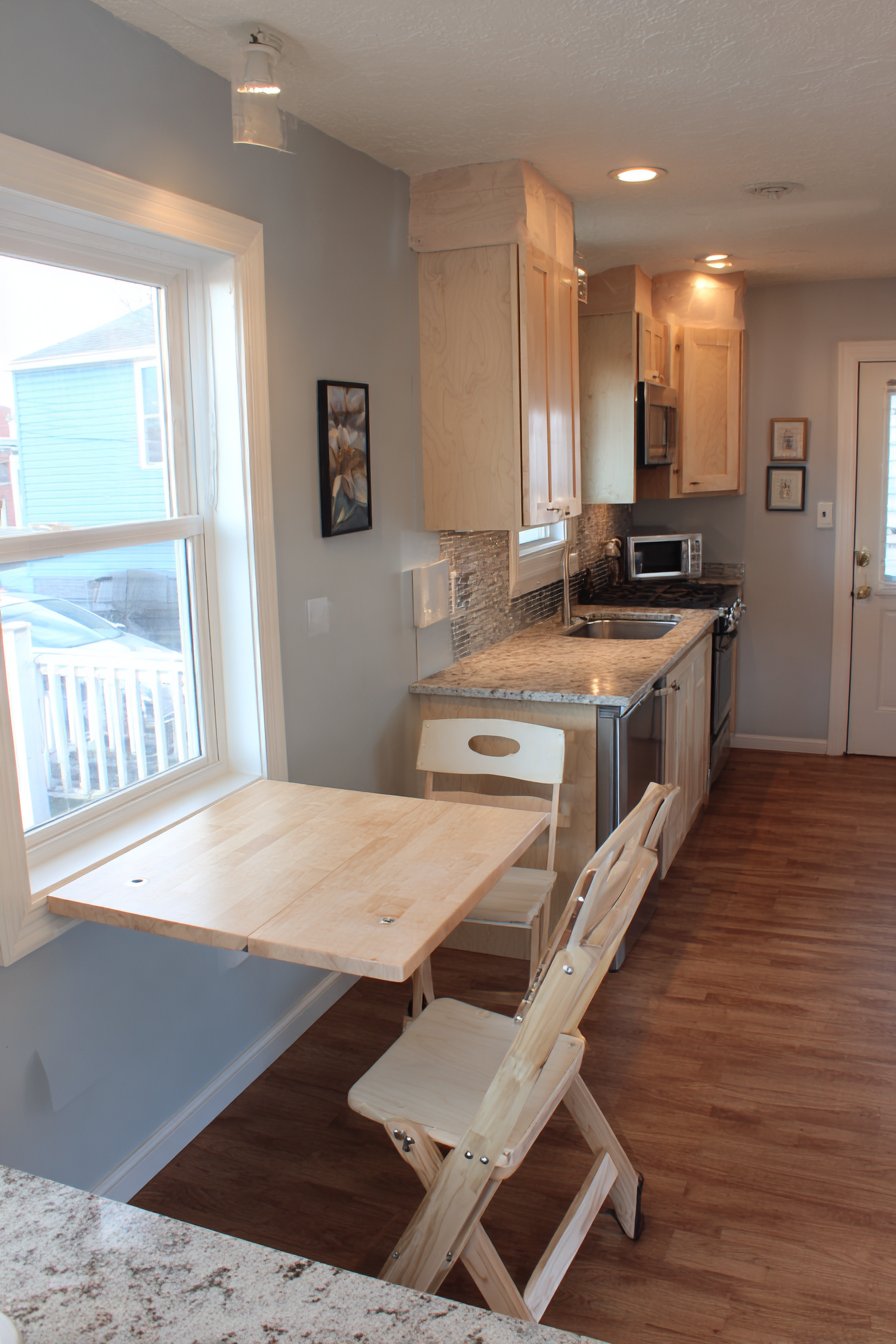
This design exemplifies ultimate flexibility for small kitchen living successfully. The convertible table and chairs occupy zero floor space when folded away. The space serves as pure kitchen during cooking and transforms for dining when needed. This adaptability proves invaluable in studio apartments and tiny homes.
Key Design Tips:
- Install wall-mounted fold-down tables for flexible dining
- Choose folding chairs that hang on walls when not needed
- Use narrow rolling carts for mobile appliance storage
- Paint walls in pale blue-grey for soft, calming color
- Position kitchens near corner windows for maximum natural light
20. Bold Black Accent Wall Kitchen
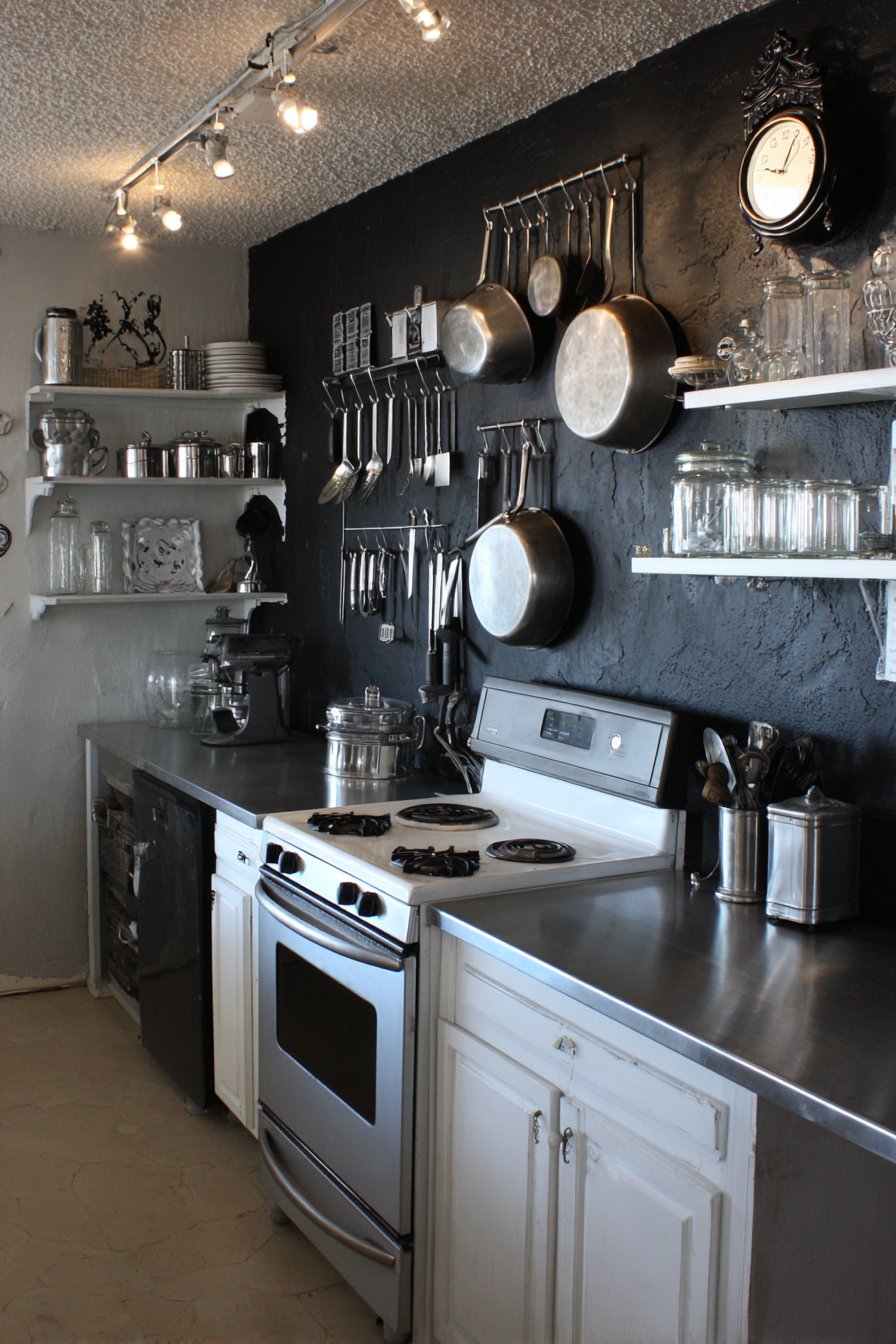
A dramatic black accent wall features magnetic knife strips and pot racks. The contrast wall makes the small kitchen feel intentional rather than cramped. Storage and decor combine on the black surface functionally and beautifully. White cabinets on the remaining walls create balance against the bold statement wall.
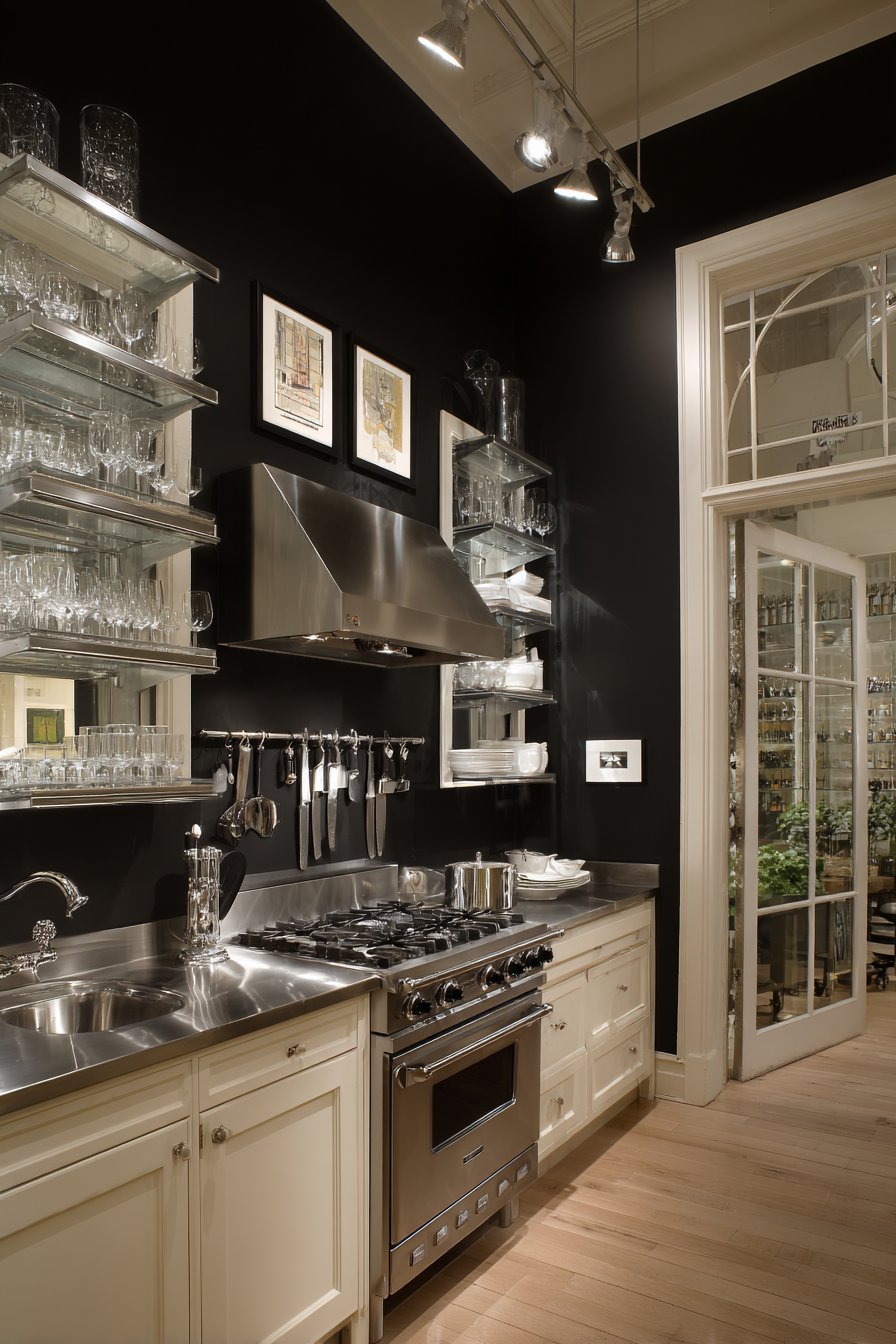
Stainless steel countertops provide professional appearance and durability simultaneously. A compact range with four burners and small convection oven fits the scale perfectly. Open shelving displays minimal dishware and glassware in curated arrangements. Track lighting highlights the functional storage along the black wall.
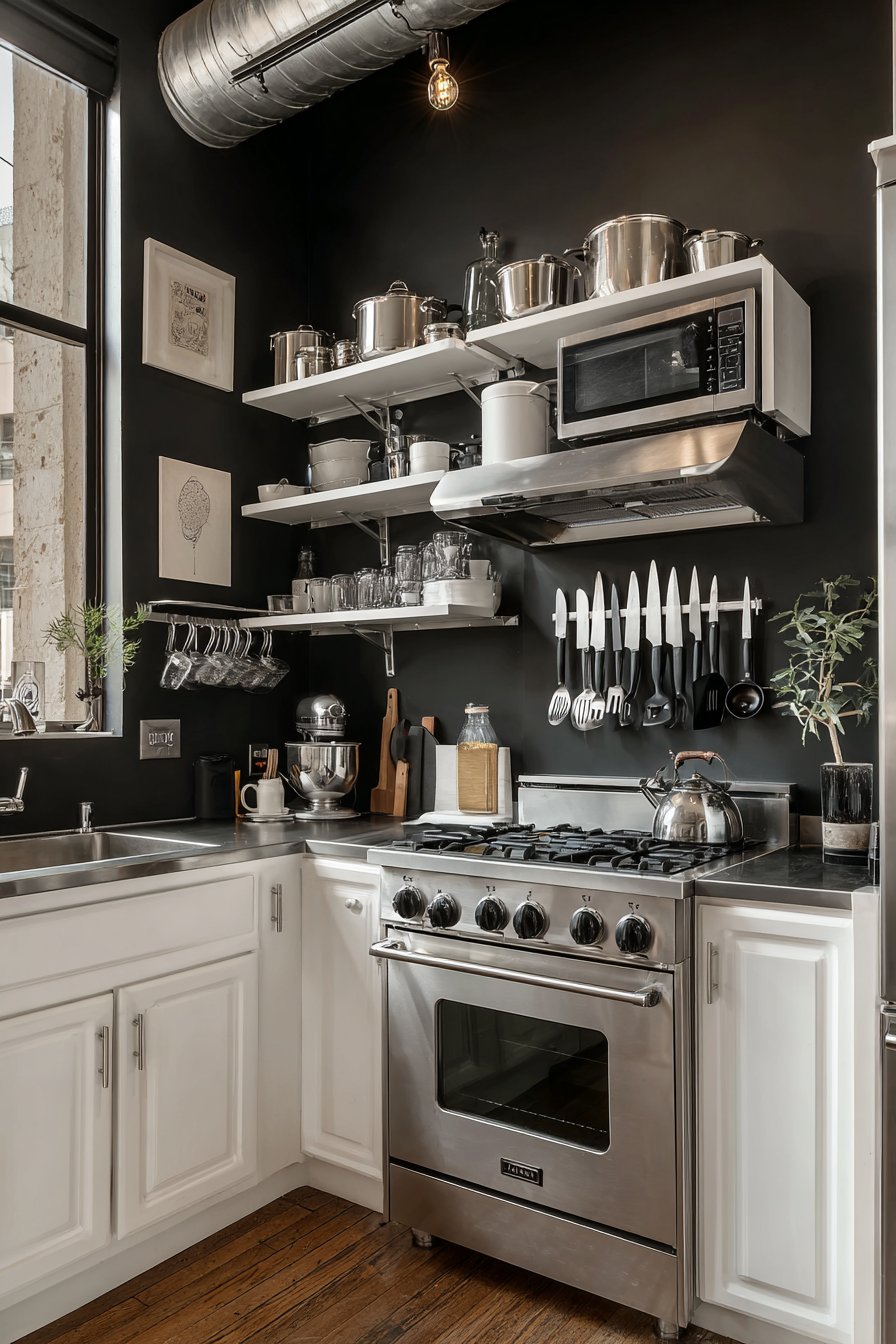
The bold design choice demonstrates that small kitchens can handle dramatic elements. Many people default to all-white small spaces fearing color will shrink rooms. However, intentional accent walls create depth and visual interest effectively. The black wall becomes a design feature rather than a limitation.
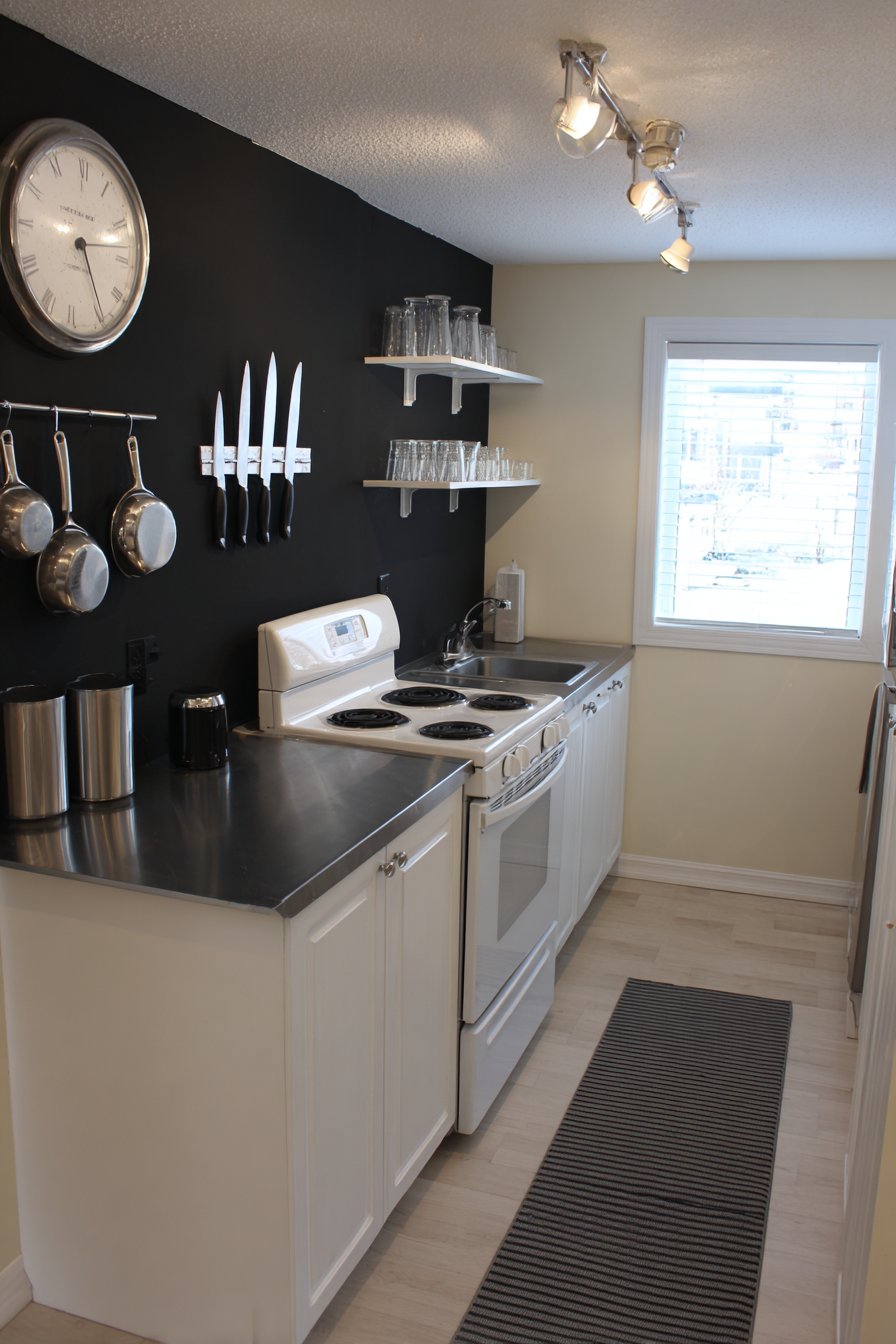
This approach suits confident designers willing to embrace bold choices enthusiastically. The contrast between black and white creates a striking visual impact. Stainless steel elements bridge the color extremes with neutral metallic tones. The professional aesthetic appeals to serious home cooks who appreciate restaurant-inspired design.
Key Design Tips:
- Create black accent walls for dramatic, intentional design
- Use magnetic strips and pot racks for wall storage
- Balance bold walls with white cabinetry on remaining surfaces
- Choose stainless steel countertops for a professional appearance
- Install track lighting to highlight functional storage displays
Why These Small Kitchen Designs Are the Best
These small kitchen designs represent the finest approaches to maximizing limited culinary spaces. Each concept demonstrates thoughtful consideration of spatial constraints while maintaining style and functionality. The designs showcase versatility that suits different home types, from studio apartments to cozy cottages.
The galley kitchen layouts utilize corridor spaces efficiently with strategic appliance and storage placement. These linear configurations create natural workflows between prep, cooking, and cleaning zones. The vertical storage emphasis in multiple designs captures unused ceiling height effectively. Floor-to-ceiling cabinets provide storage capacity rivaling much larger kitchens with standard cabinetry.
Mobile and convertible furniture solutions deliver exceptional flexibility for small kitchen living. Rolling islands provide prep space when needed and move aside for entertaining or traffic flow. Fold-down tables offer dining accommodation without permanent floor space commitment. These adaptable elements prove invaluable in multi-purpose living environments where flexibility reigns supreme.
The peninsula and breakfast bar concepts add counter space while creating casual dining options. These integrated solutions eliminate the need for separate dining furniture in limited square footage. The peninsula configuration effectively divides cooking zones from living areas without solid walls. This open concept approach maintains spatial flow while defining functional areas clearly.
Smart storage solutions throughout these designs maximize every available cubic inch brilliantly. Lazy Susan cabinets and pull-out corner drawers utilize typically wasted corner spaces effectively. Slim rolling pantry carts capture narrow gaps between appliances and walls ingeniously. Pull-out cutting boards and appliance garages keep counters clear while maintaining accessibility.
The two-tone cabinetry approach adds visual depth without overwhelming compact dimensions. Darker lower cabinets ground spaces while lighter upper cabinets maintain brightness and openness. This color strategy creates dimension that makes small kitchens feel more substantial. The contrast prevents monotonous single-color schemes that can flatten spatial perception.
Integrated and compact appliances maintain appropriate scale throughout these small kitchen designs. Apartment-sized refrigerators, ranges, and dishwashers deliver full functionality without dominating available space. Slim slide-in ranges and drawer-style dishwashers fit seamlessly within compact layouts. Wall-mounted microwaves free valuable counter real estate for food preparation activities.
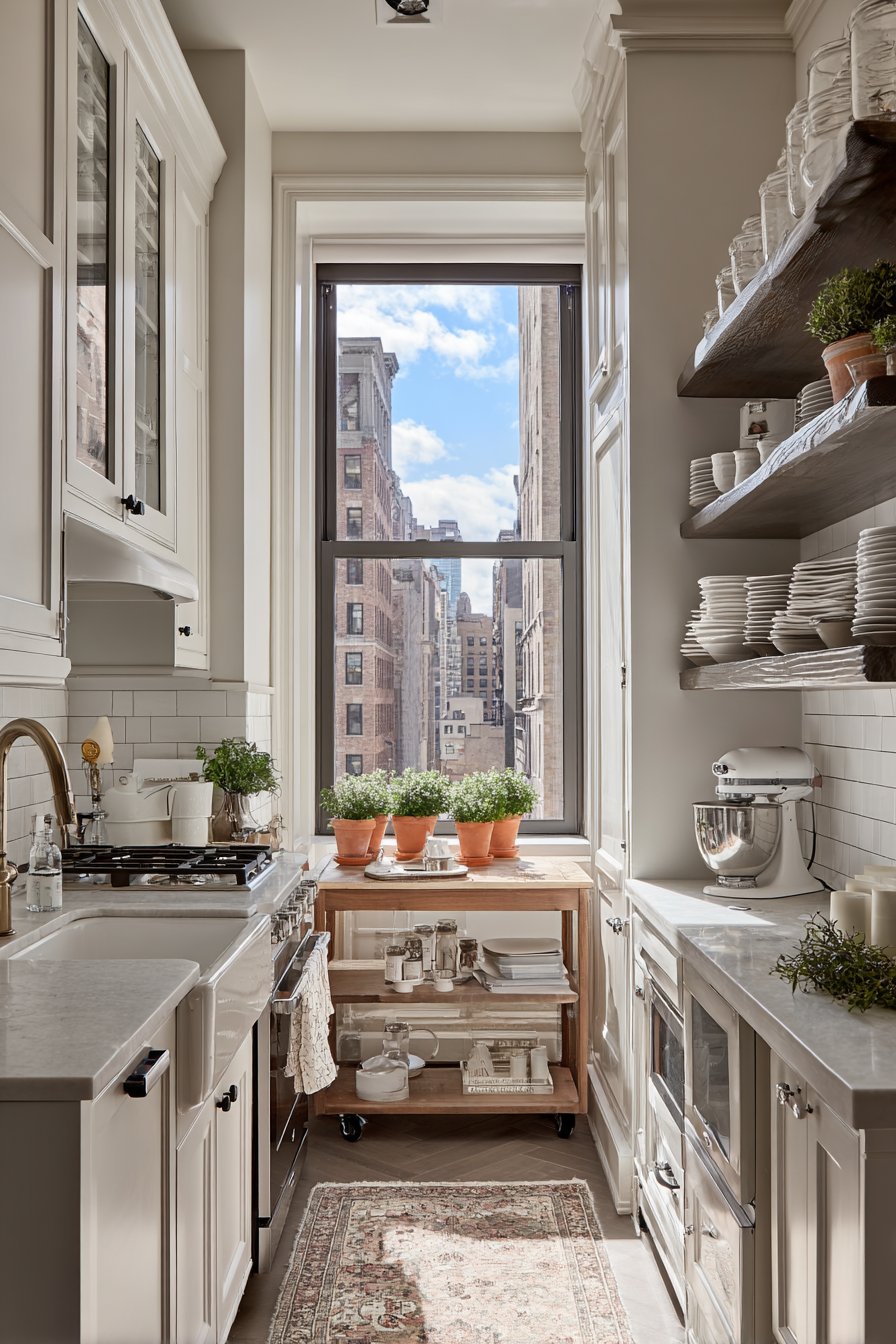
The lighting strategies employed across these designs deserve special recognition for spatial enhancement. Recessed LED fixtures provide even illumination without consuming visual space. Under-cabinet lighting eliminates shadows on work surfaces while adding ambient glow. Natural light from strategically positioned windows brightens spaces while providing pleasant cooking environments.
Reflective surfaces throughout multiple designs multiply available light and create spatial illusions. Mirrored backsplashes double visual depth dramatically through reflection. Glossy white cabinets and polished chrome fixtures bounce light throughout compact spaces. These reflective strategies prove highly effective in windowless or dimly lit kitchens.
The farmhouse and cottage design elements bring warmth and character to small kitchen spaces. Beadboard cabinet doors, apron-front sinks, and reclaimed wood shelving add authentic charm. These vintage-inspired details prevent all-white palettes from feeling sterile or institutional. The cozy aesthetic creates welcoming environments despite modest square footage.
Open shelving throughout these designs reduces visual weight while maintaining storage functionality. Floating shelves display dishware and glassware attractively while keeping items accessible. The transparent quality prevents the closed-in feeling that solid upper cabinets can create. Strategic mixing of open and closed storage balances display with concealment perfectly.
Color choices across these designs demonstrate sophisticated understanding of small space psychology. White and light grey dominate palettes to maximize brightness and openness. Sage green, navy, and pale blue-grey introduce color without overwhelming limited dimensions. These thoughtful color applications prove that small kitchens can embrace personality while maintaining spatial flow.
The Scandinavian and minimalist aesthetics featured suit small kitchen requirements naturally. These design philosophies emphasize functionality, natural materials, and uncluttered surfaces inherently. Light wood tones provide warmth without visual heaviness. The clean-lined approach creates calm, organized environments where cooking becomes enjoyable.
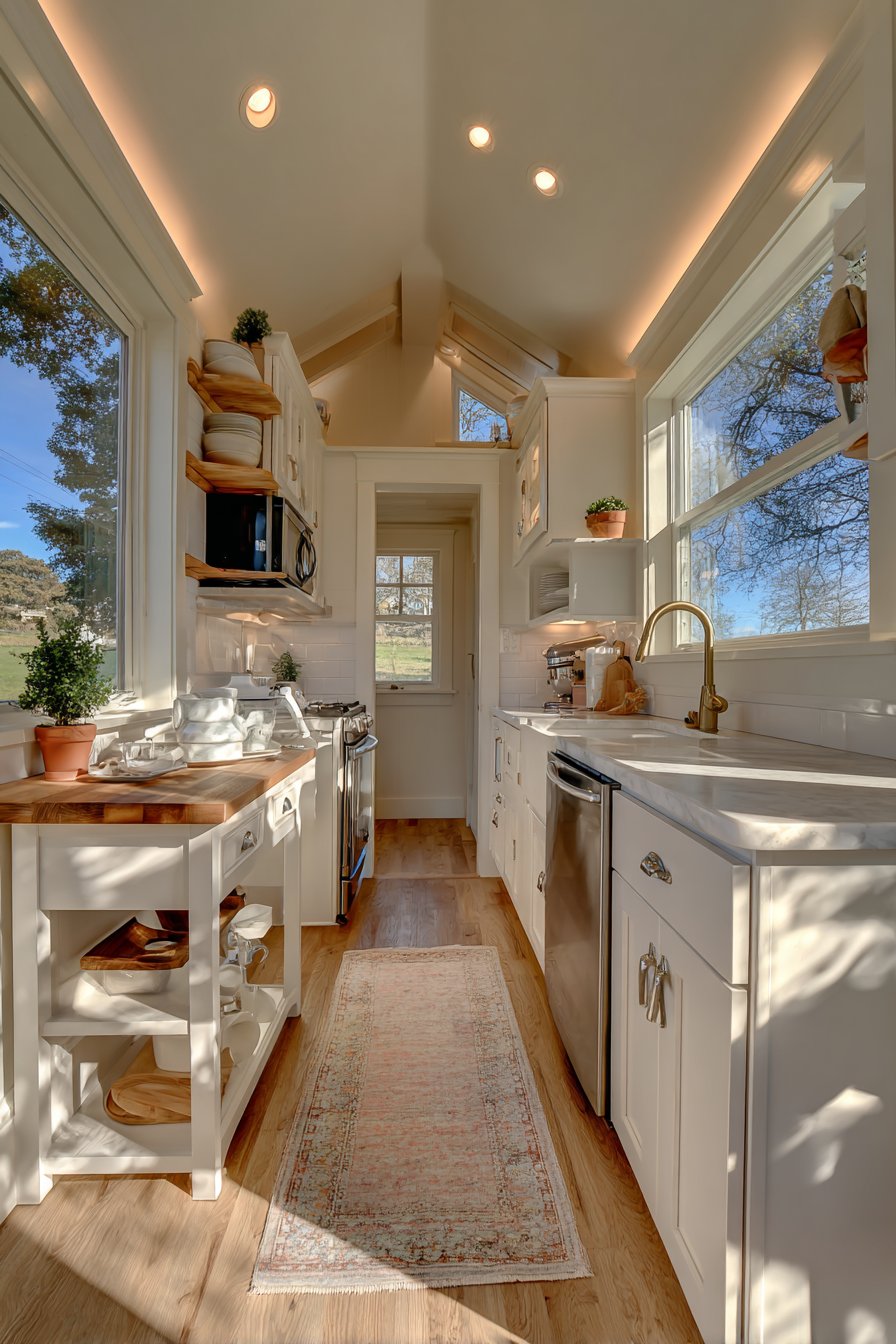
Specialized zones for coffee stations and prep areas improve organization through dedicated purposes. Grouping related items creates efficient workflows for specific tasks throughout the day. The zone planning prevents cluttering main food prep areas with equipment for other activities. This organizational strategy maximizes efficiency in every available square inch successfully.
Built-in banquettes with storage integration exemplify multi-functional furniture at its finest. These permanent fixtures provide dining seating without occupying kitchen floor area. Drawers below offer practical storage that would otherwise require separate furniture pieces. The integrated approach demonstrates exceptional space planning for compact living environments.
The pegboard organization systems offer unmatched flexibility for evolving cooking needs over time. Customizable hooks allow infinite rearrangement without permanent modifications to walls. This adaptable storage suits renters and homeowners equally well. The visible storage keeps essential tools accessible while creating interesting visual displays.
Professional-looking elements like stainless steel countertops and integrated appliances elevate small kitchens beyond basic functionality. These upscale materials prove that compact spaces can achieve sophisticated, restaurant-inspired aesthetics. The seamless surfaces and quality finishes create environments that inspire culinary creativity daily.
These designs prove conclusively that small kitchens need not compromise style, functionality, or cooking enjoyment. The creative solutions transform spatial limitations into opportunities for innovative design thinking. Each approach offers actionable ideas that adapt to various space configurations and personal preferences. The collective wisdom demonstrates that thoughtful planning conquers spatial constraints beautifully.
Conclusion
These twenty small kitchen designs demonstrate that limited space never limits culinary possibilities or design aspirations. The key takeaways include maximizing vertical storage, choosing appropriately scaled appliances, and incorporating multi-functional elements. Mobile furniture, convertible dining solutions, and smart storage systems transform compact kitchens into highly efficient spaces.
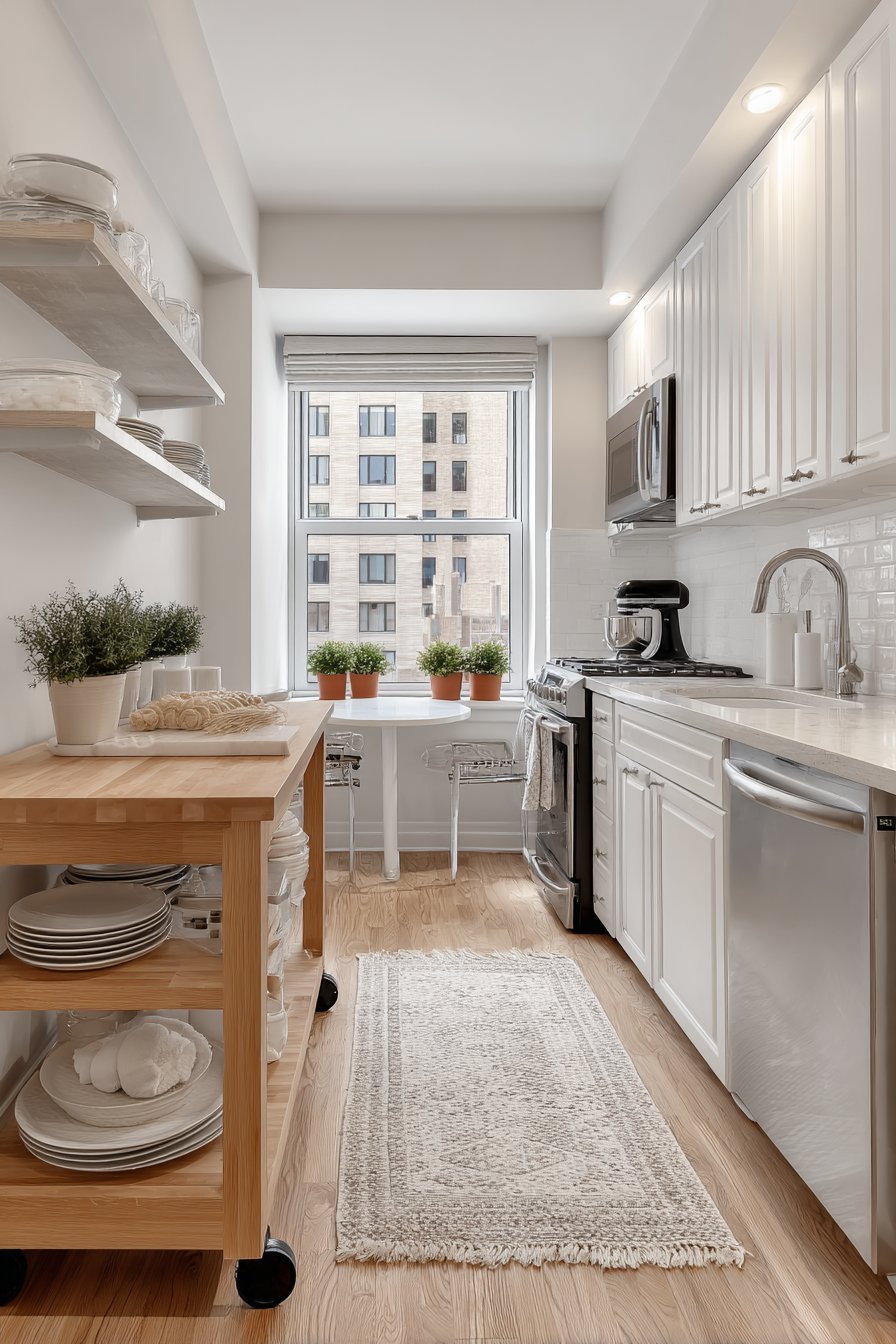
Successful small kitchen design balances aesthetic appeal with practical functionality seamlessly. Start by assessing your specific needs and available square footage honestly. Implement one or two strategies from these designs initially. Your dream small kitchen awaits creation through thoughtful planning, creative problem-solving, and strategic material selection.
