


Creating a functional and beautiful tiny kitchen requires thoughtful planning and creative solutions. Small spaces demand intelligent design choices that maximize every available inch. The right approach transforms cramped quarters into efficient cooking spaces that rival larger kitchens in functionality.
Tiny kitchens have become increasingly common in urban apartments and compact homes. These spaces challenge designers to think vertically and innovatively. The solutions presented here demonstrate that size limitations need not compromise style or practicality. Each design showcases how strategic planning creates complete cooking environments within minimal square footage.
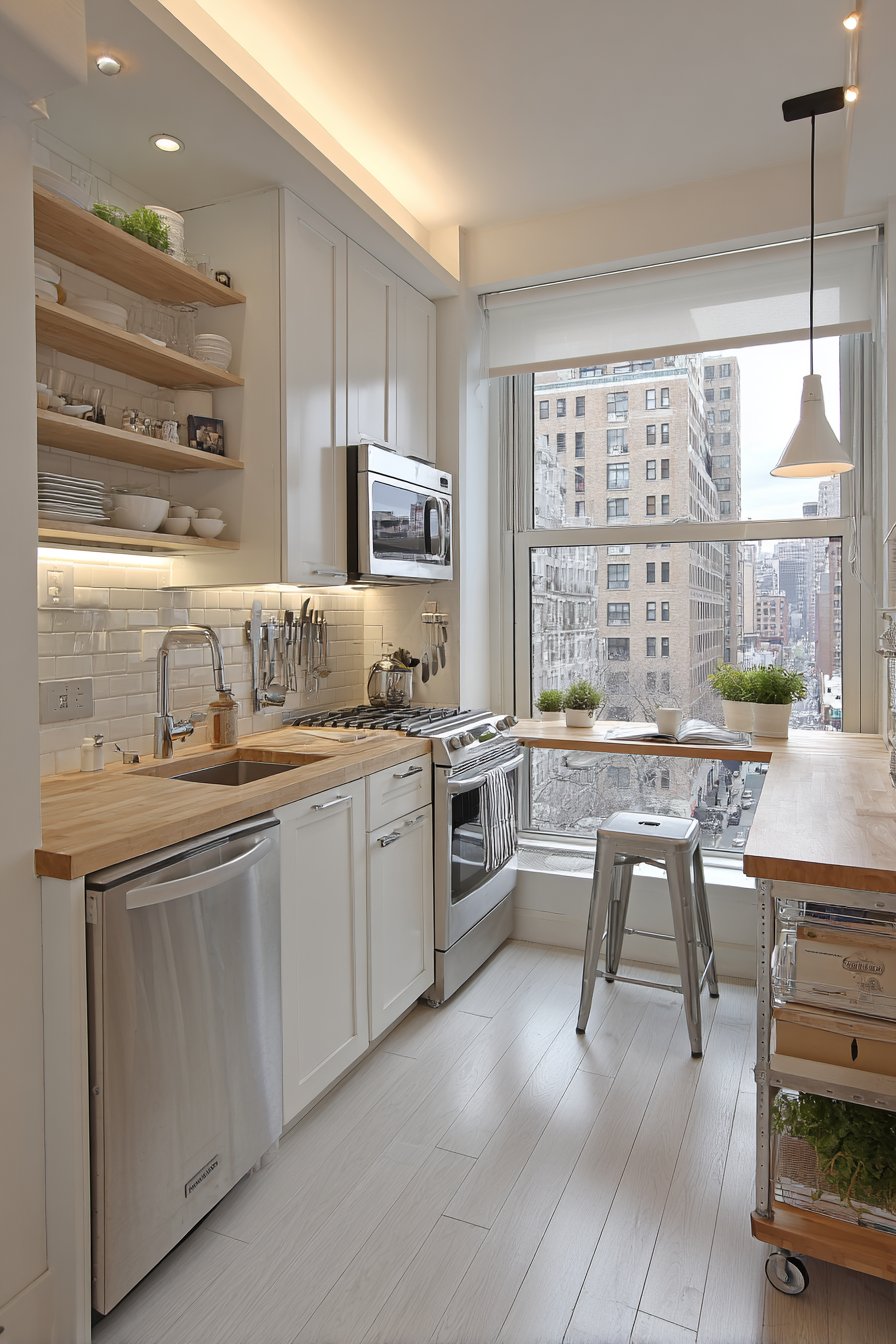
The following concepts explore diverse aesthetic approaches from Scandinavian minimalism to industrial chic. Every design emphasizes smart storage, appropriately scaled appliances, and multi-functional elements. These ideas prove that tiny kitchens can be both beautiful and highly workable spaces.
1. Efficient L-Shaped Layout Maximization

White shaker-style cabinets extend from floor to ceiling in this space-saving design. The vertical storage approach captures every possible inch. A compact butcher block countertop provides essential workspace along two walls. The warm wood grain contrasts beautifully against crisp white cabinetry.

The corner placement of a slimline stainless steel sink optimizes the layout. A single-lever faucet provides modern functionality without visual bulk. Above the sink, a small window allows natural light to flood the workspace. The brightness makes the compact area feel more spacious and welcoming.
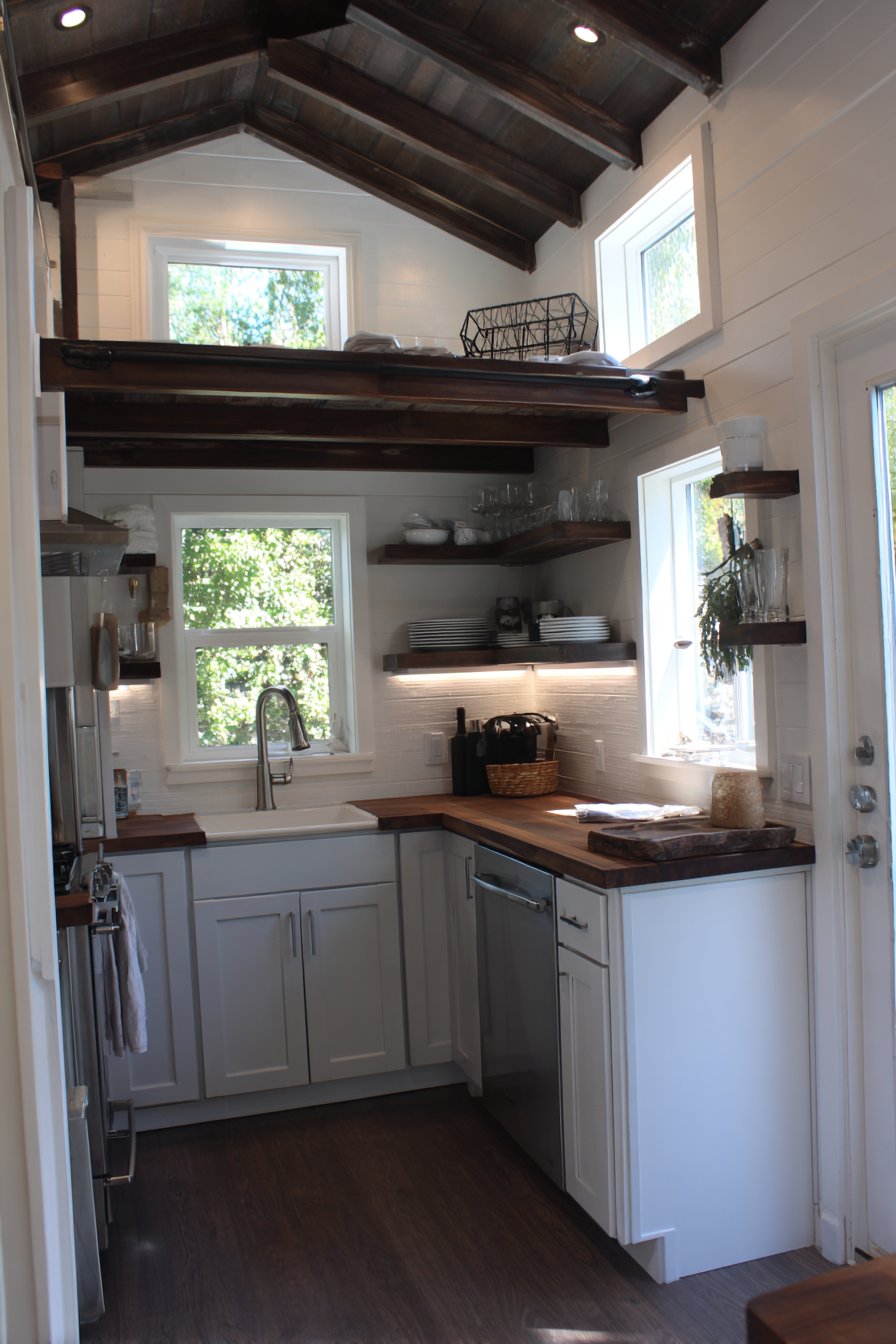
Open floating shelves display everyday dishes and glassware within easy reach. This reduces the need to open cabinet doors repeatedly during meal preparation. Under-cabinet LED lighting illuminates work surfaces with energy-efficient brightness. The layered lighting approach enhances functionality during evening cooking sessions.

The L-shaped configuration creates an efficient work triangle. Movement between sink, cooking, and preparation areas flows naturally. Every element serves multiple purposes while maintaining clean aesthetic lines. This design proves that thoughtful planning makes tiny spaces highly functional.
Key Design Tips:
- Install floor-to-ceiling cabinets to maximize vertical storage potential
- Choose compact butcher block countertops for warmth and durability
- Position the sink in the corner to optimize counter space
- Add under-cabinet LED lighting for task illumination
- Use open shelving to display frequently used items and create visual lightness
2. Vertical Storage Innovation
Floor-to-ceiling pull-out pantry cabinets transform this tiny kitchen into an organizational masterpiece. Integrated spice racks and organizing baskets keep ingredients accessible and visible. Light grey cabinetry creates an open, airy feeling despite limited square footage. Minimalist hardware maintains clean lines throughout the space.

A narrow rolling cart provides mobile storage and additional prep space when needed. The cart slides into tight corners when not in use. This flexibility allows the kitchen to adapt to different cooking tasks. Magnetic knife strips and hanging utensil rails maximize wall space efficiency.

The compact design incorporates a slim dishwasher integrated seamlessly into the cabinetry. Modern conveniences need not be sacrificed in tiny spaces. Soft morning light through a nearby window highlights the organized efficiency. Natural illumination reduces the need for artificial lighting during daytime hours.
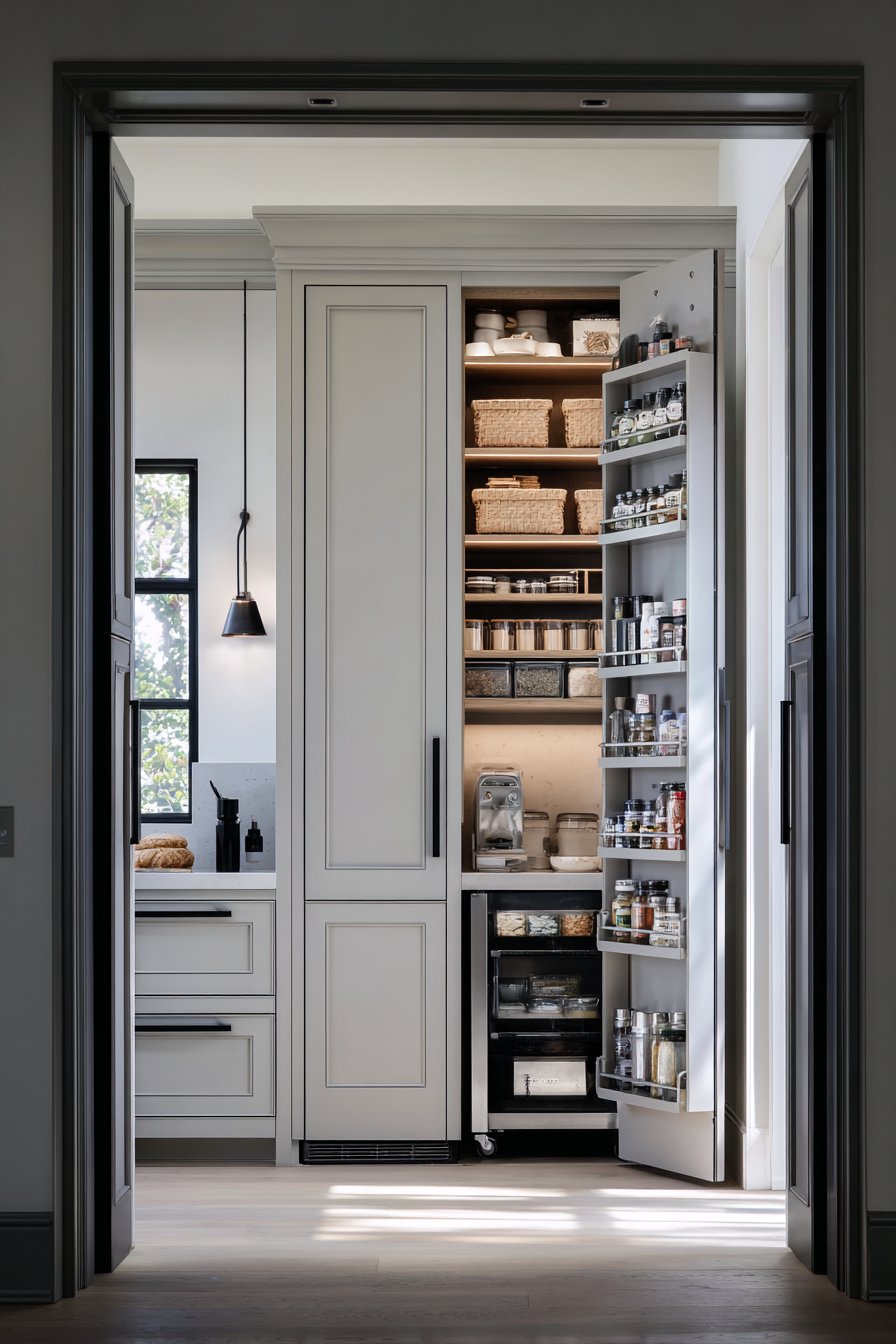
Vertical thinking solves many tiny kitchen challenges. Wall-mounted storage keeps countertops clear for food preparation. The organized approach reduces visual clutter while increasing functional capacity. This design demonstrates that clever storage solutions create surprisingly spacious-feeling kitchens.
Key Design Tips:
- Install full-height pull-out pantry cabinets for maximum storage density
- Use magnetic strips and hanging rails to utilize vertical wall space
- Choose light-colored cabinetry to enhance the sense of openness
- Add a mobile rolling cart for flexible workspace options
- Integrate slim appliances that fit seamlessly into the design
3. Streamlined Galley Configuration

Facing counters create an efficient workflow in this classic galley layout. White subway tile backsplash reflects light throughout the narrow corridor. The reflective surface makes the space feel wider than actual measurements. Compact stainless steel appliances fit seamlessly into custom cabinetry.

A 20-inch range and apartment-size refrigerator provide full functionality without overwhelming the space. Appropriately scaled appliances are crucial in tiny kitchen success. Open shelving on one wall displays frequently used items while maintaining visual lightness. The balanced approach combines closed and open storage effectively.

A fold-down breakfast bar attached to the end wall provides dining space when needed. The hinged design allows the table to disappear completely when not in use. Natural daylight from a small window creates soft shadows throughout the space. The lighting highlights the efficient organization and clean aesthetic.

The galley layout maximizes linear space with parallel work surfaces. Everything remains within easy reach during food preparation. The streamlined design eliminates unnecessary elements while preserving complete functionality. This proves that tiny kitchens can accommodate all essential cooking needs.
Key Design Tips:
- Choose a galley layout for narrow spaces to optimize workflow
- Install white subway tile to reflect light and brighten the area
- Select appropriately scaled appliances that fit the space
- Add a fold-down table for dining flexibility without permanent space commitment
- Balance open and closed storage for functionality and visual appeal
4. Compact U-Shaped Peninsula Design

Two-tone cabinetry creates visual interest without overwhelming this compact space. Upper white cabinets maintain airiness while lower navy blue adds depth. The color separation draws the eye through the vertical plane. Quartz countertops in warm white provide durable workspace throughout.
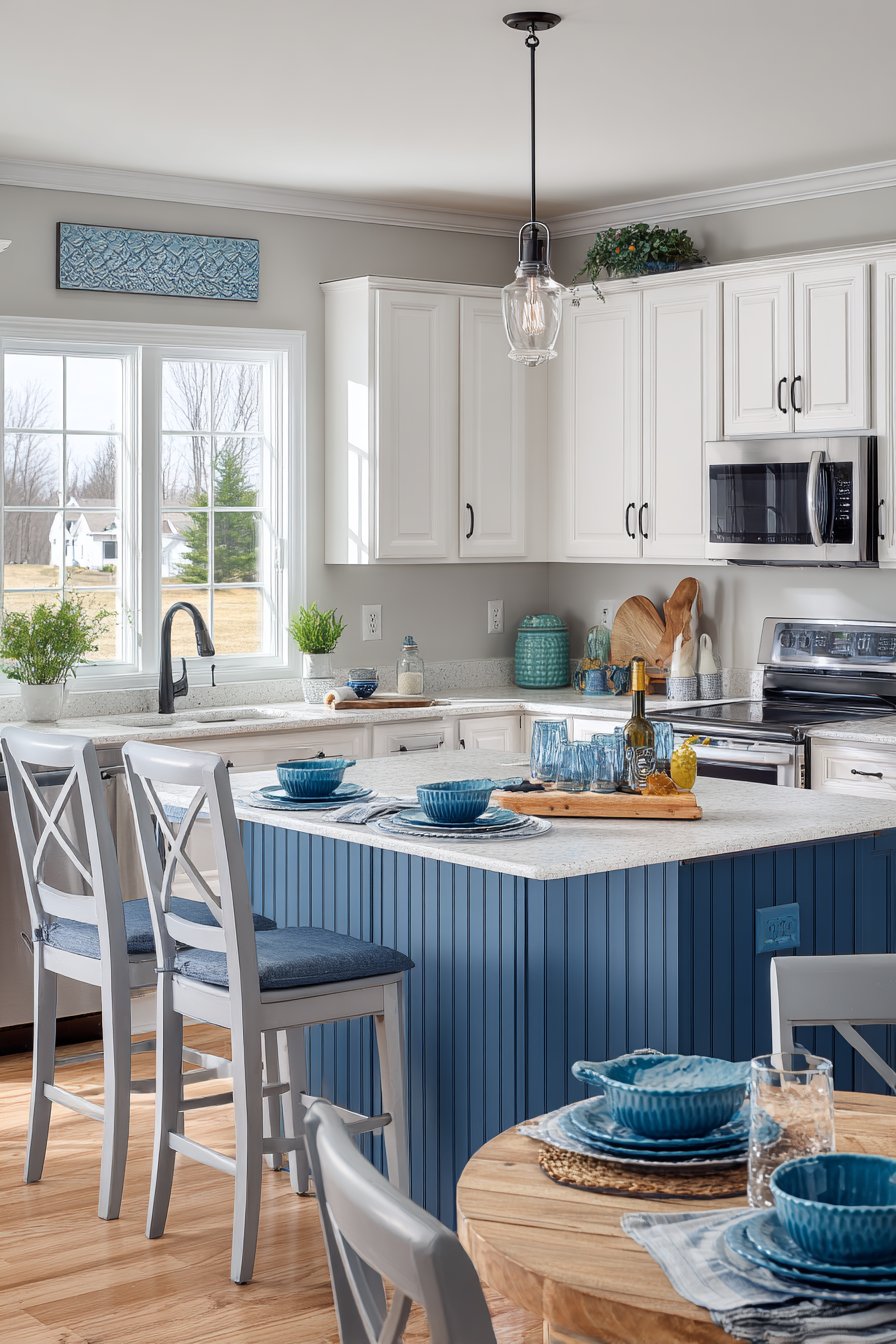
A small peninsula extends from the main counter for casual dining. Two modern stools tuck underneath when not in use. The peninsula adds valuable counter space while defining the kitchen boundary. A compact over-the-range microwave saves precious counter real estate.

Built-in wine racks and plate racks add specialized storage for entertaining essentials. These custom touches demonstrate that tiny kitchens can accommodate lifestyle preferences. Pendant lighting over the peninsula adds focused task lighting and decorative style. The fixture becomes a focal point in the compact space.

The U-shaped configuration surrounds the cook with everything needed within arm’s reach. The efficient layout reduces unnecessary movement during meal preparation. Every cabinet and drawer serves a specific organizational purpose. This design shows how color and configuration create functional tiny kitchens.
Key Design Tips:
- Use two-tone cabinetry to add visual interest without clutter
- Add a small peninsula for dining and additional workspace
- Install an over-the-range microwave to preserve counter space
- Incorporate specialized storage like wine racks for personalization
- Choose pendant lighting for both function and style
5. Streamlined Single Wall Solution
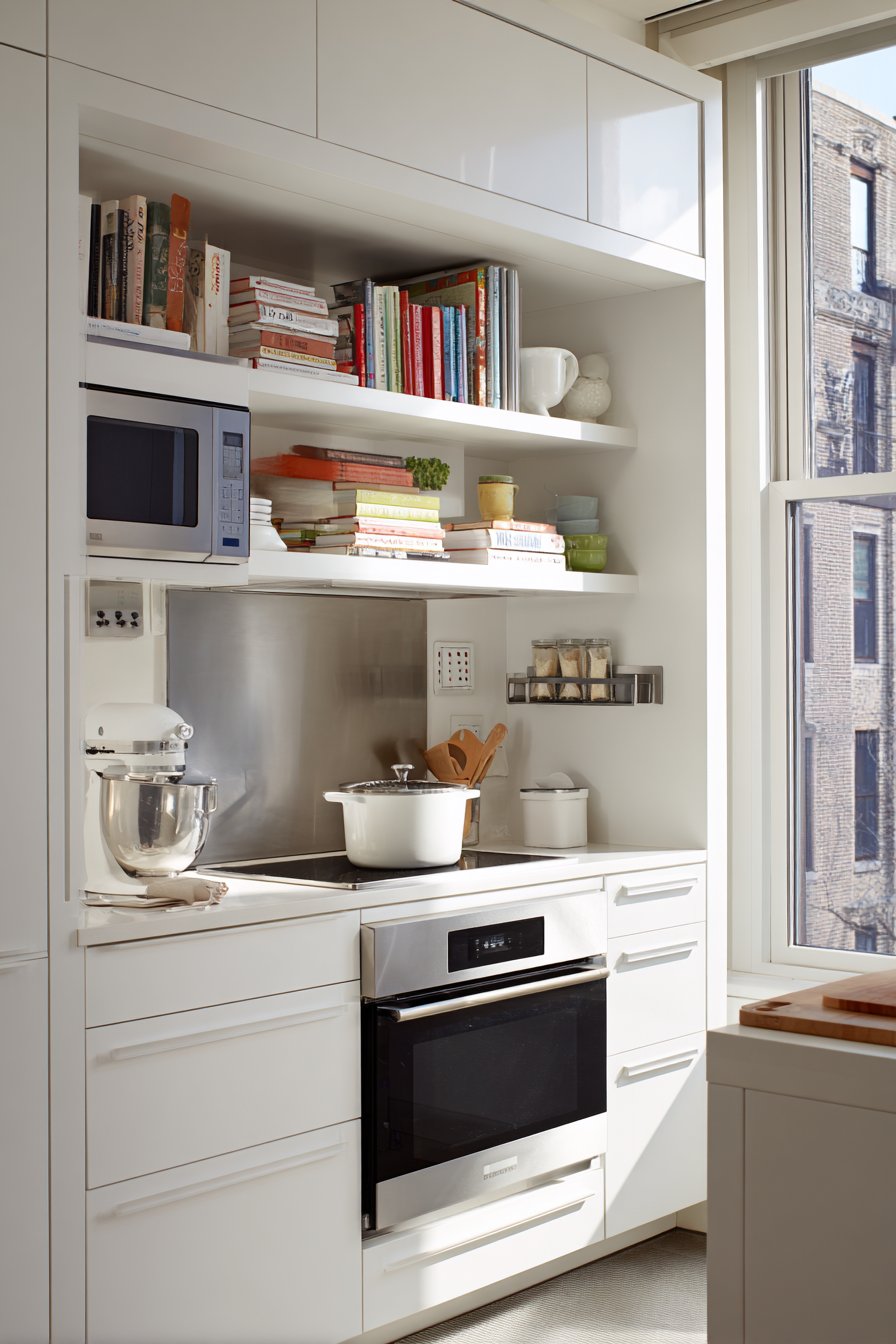
White cabinetry with integrated appliances creates a complete cooking station along one wall. This configuration works perfectly for studio apartments with limited space. A compact induction cooktop provides modern cooking technology in minimal space. The combination microwave-convection oven offers versatile cooking methods.
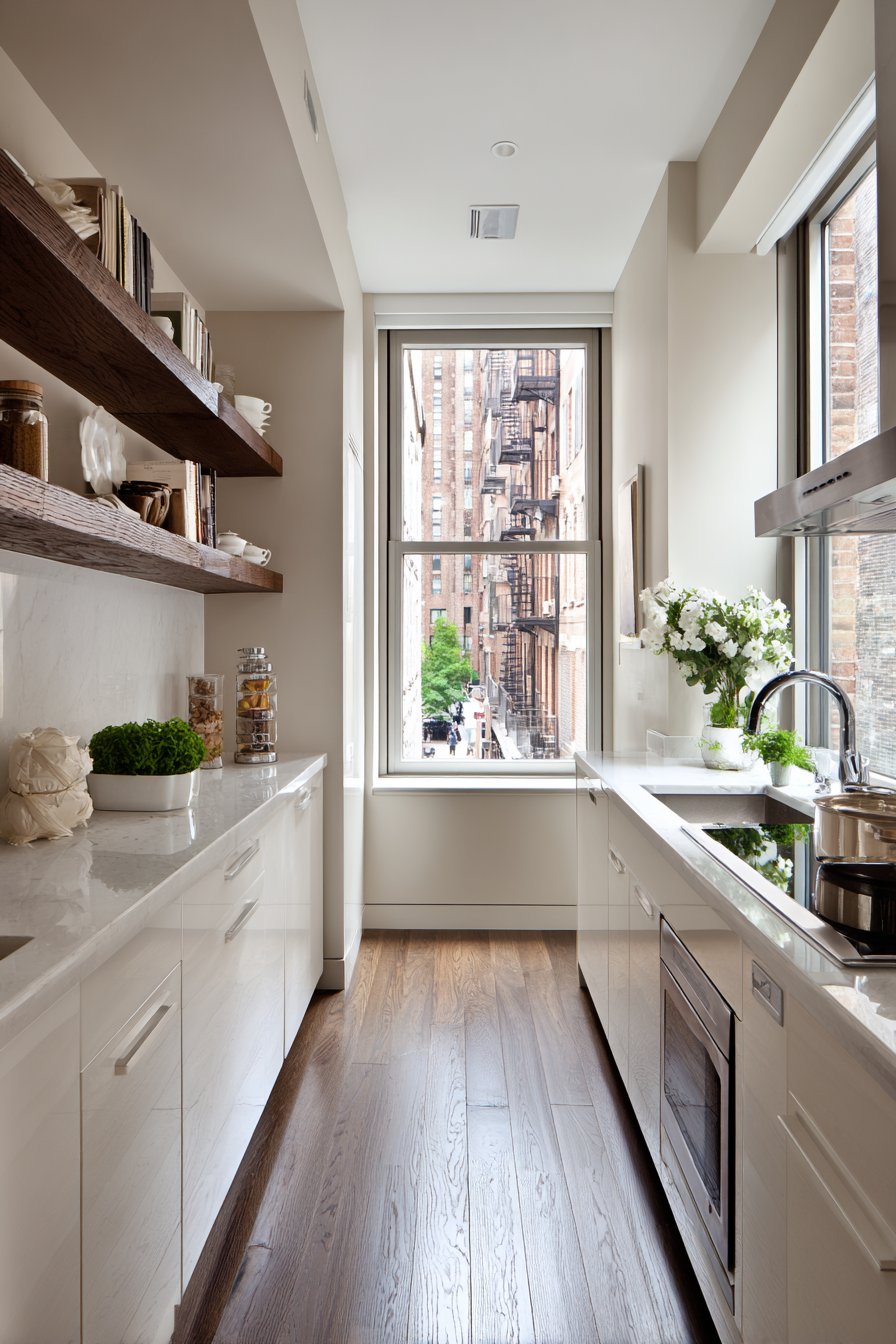
An under-counter refrigerator maintains the streamlined aesthetic while providing necessary cold storage. Floating wooden shelves above the counter display cookbooks and decorative items. The open shelving breaks up solid cabinetry while adding warmth. Magnetic spice containers attach directly to a metal backsplash panel.

A slim pull-out cutting board extends workspace when needed for food preparation. The board slides away completely when not in use. Natural light from an adjacent window illuminates the efficient setup throughout the day. The single wall design maximizes floor space for other apartment functions.
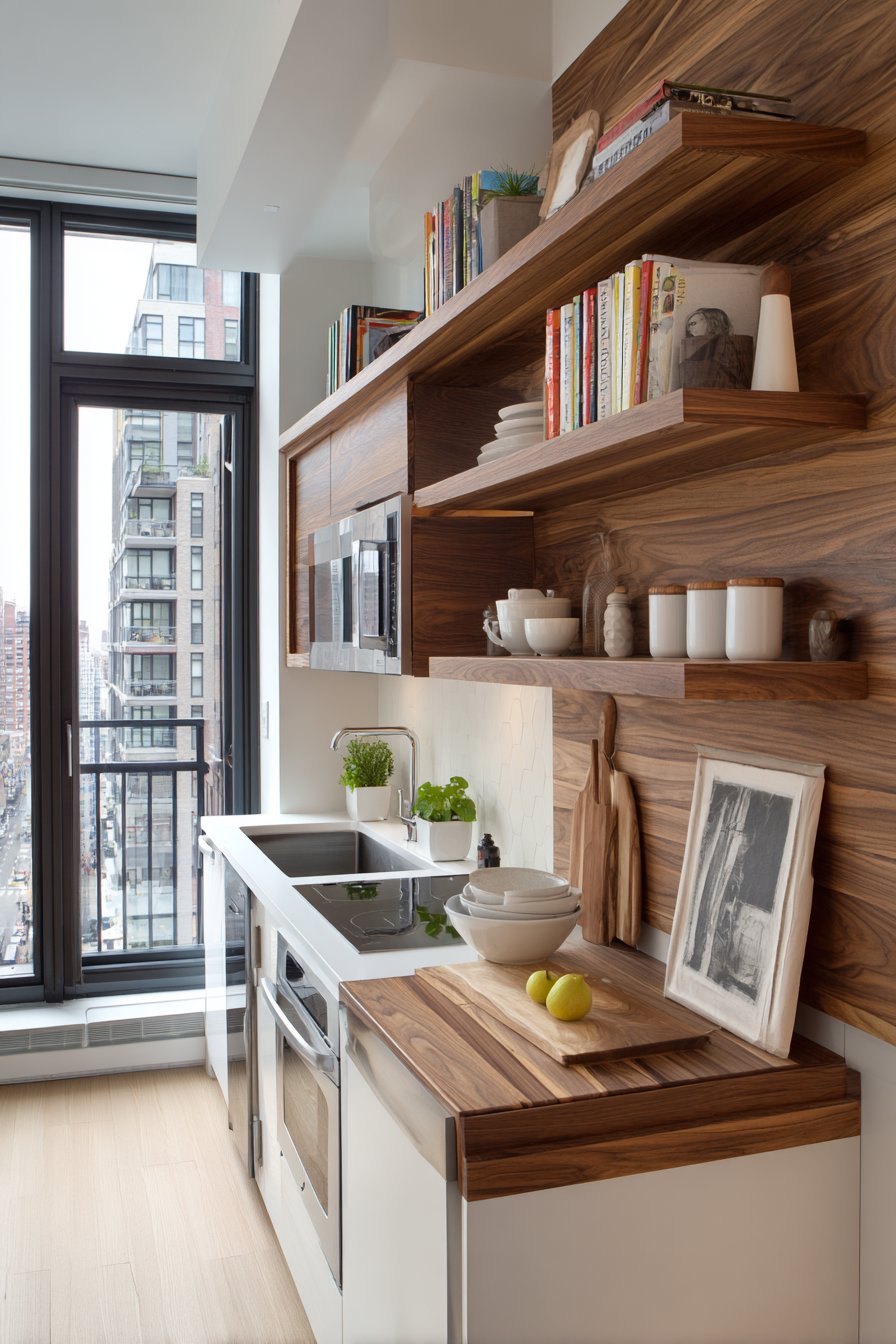
This configuration proves that complete kitchens can exist along one wall. Every cooking, cleaning, and storage function remains accessible. The integrated approach maintains visual harmony throughout the compact space. Thoughtful appliance selection makes this minimal footprint fully functional.
Key Design Tips:
- Choose integrated appliances to maintain a streamlined appearance
- Install floating shelves for display without visual bulk
- Use a metal backsplash for magnetic spice storage
- Add a pull-out cutting board for flexible workspace
- Select compact appliances that offer multiple functions
6. Corner Optimization Mastery

A custom corner sink and angled cabinetry eliminate wasted space in this intelligent design. Corner areas often become dead zones in small kitchens. This approach transforms challenging angles into functional workspace. Light oak cabinets with glass-front uppers create visual lightness throughout.

A compact 18-inch dishwasher and slimline range fit perfectly into the layout. These appropriately sized appliances provide full functionality without dominating the space. A small breakfast bar with two modern stools extends from the counter. The dining area requires no additional floor space.

Pendant lights provide focused task lighting over the breakfast bar. White beveled subway tiles reflect light throughout the compact area. The dimensional tile adds subtle texture without visual weight. Natural light from a corner window illuminates the efficient layout beautifully.

Thoughtful corner solutions maximize every available inch in tiny kitchens. The angled approach creates surprising functionality from typically wasted space. Glass-front cabinets maintain openness while providing necessary storage. This design demonstrates that corners offer untapped potential in compact spaces.
Key Design Tips:
- Install corner sinks to utilize typically wasted angular space
- Choose angled cabinetry to eliminate dead corner zones
- Add glass-front upper cabinets for visual lightness
- Select narrow appliances like 18-inch dishwashers
- Use beveled subway tile for texture and light reflection
7. Minimalist Contemporary Aesthetic

Handleless white lacquer cabinets with push-to-open mechanisms create sleek sophistication. The hardware-free approach maintains clean lines throughout the space. A compact waterfall-edge quartz island provides prep space and concealed storage. The continuous surface creates visual flow despite the small footprint.

Integrated appliances, including a flush-mount cooktop maintain the minimalist aesthetic. A concealed refrigerator disappears behind cabinet panels. The seamless integration eliminates visual interruption. A narrow window backsplash brings natural light while mirrored tile expands visual space.

Under-cabinet and recessed ceiling lighting creates layered illumination throughout the day. The multiple light sources eliminate shadows during food preparation. The contemporary design emphasizes quality over quantity in every element. Each piece serves a purpose without unnecessary decoration.

This minimalist approach proves that simplicity maximizes small spaces. Clean lines and integrated elements create visual calm. The lack of hardware and exposed appliances reduces visual clutter significantly. Sophisticated finishes elevate the tiny kitchen beyond basic functionality.
Key Design Tips:
- Choose handleless cabinets for a sleek, modern appearance
- Install a compact waterfall-edge island for visual flow
- Integrate appliances behind panels for seamless design
- Add mirrored backsplash to expand perceived space
- Layer lighting sources for flexibility and functionality
8. Scandinavian Simplicity
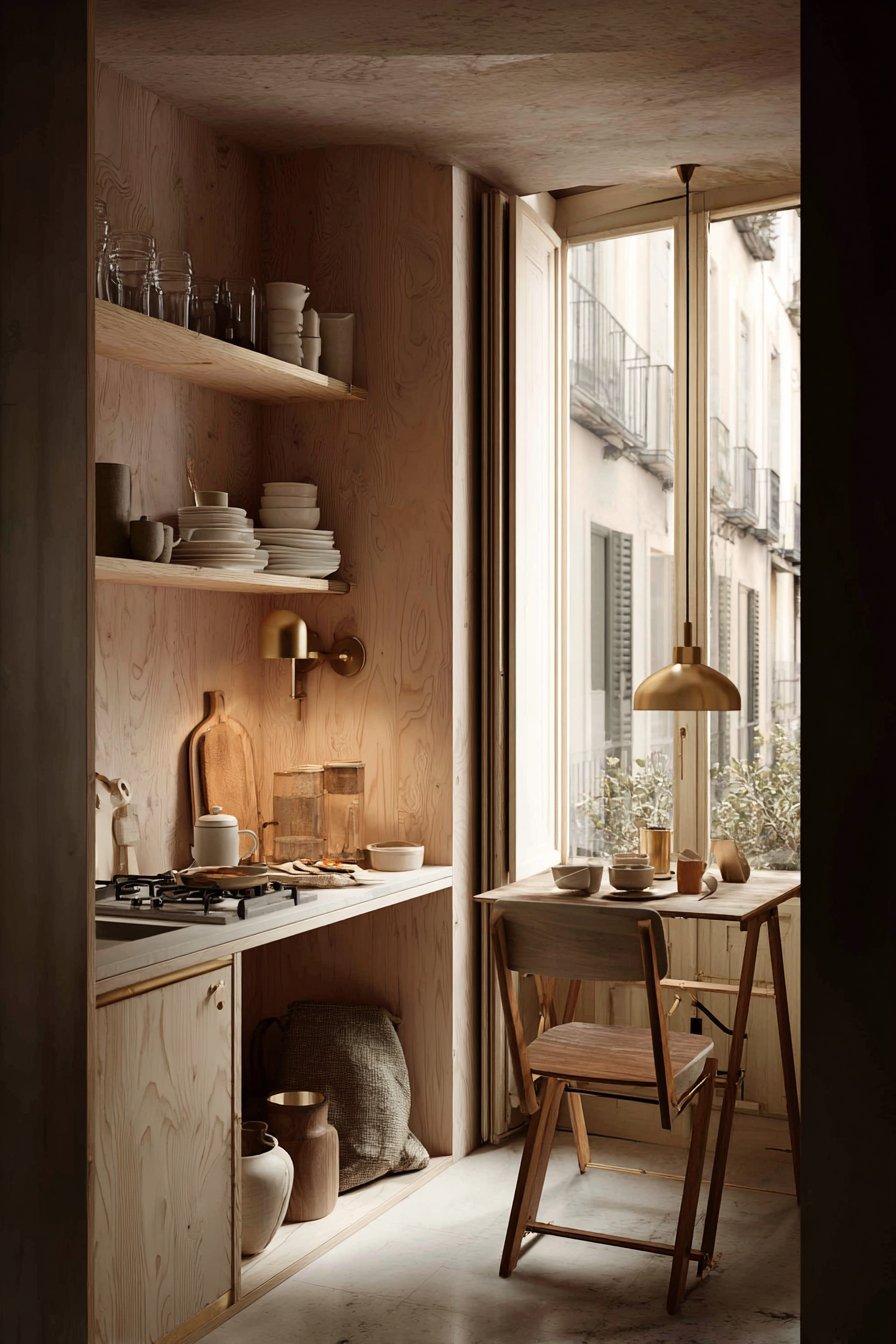
Light birch wood cabinetry and white countertops embody Nordic design principles. The natural wood grain adds warmth without heaviness. Open upper shelving displays white dishes and glassware creating uncluttered visual appeal. The monochromatic display maintains cohesive simplicity.
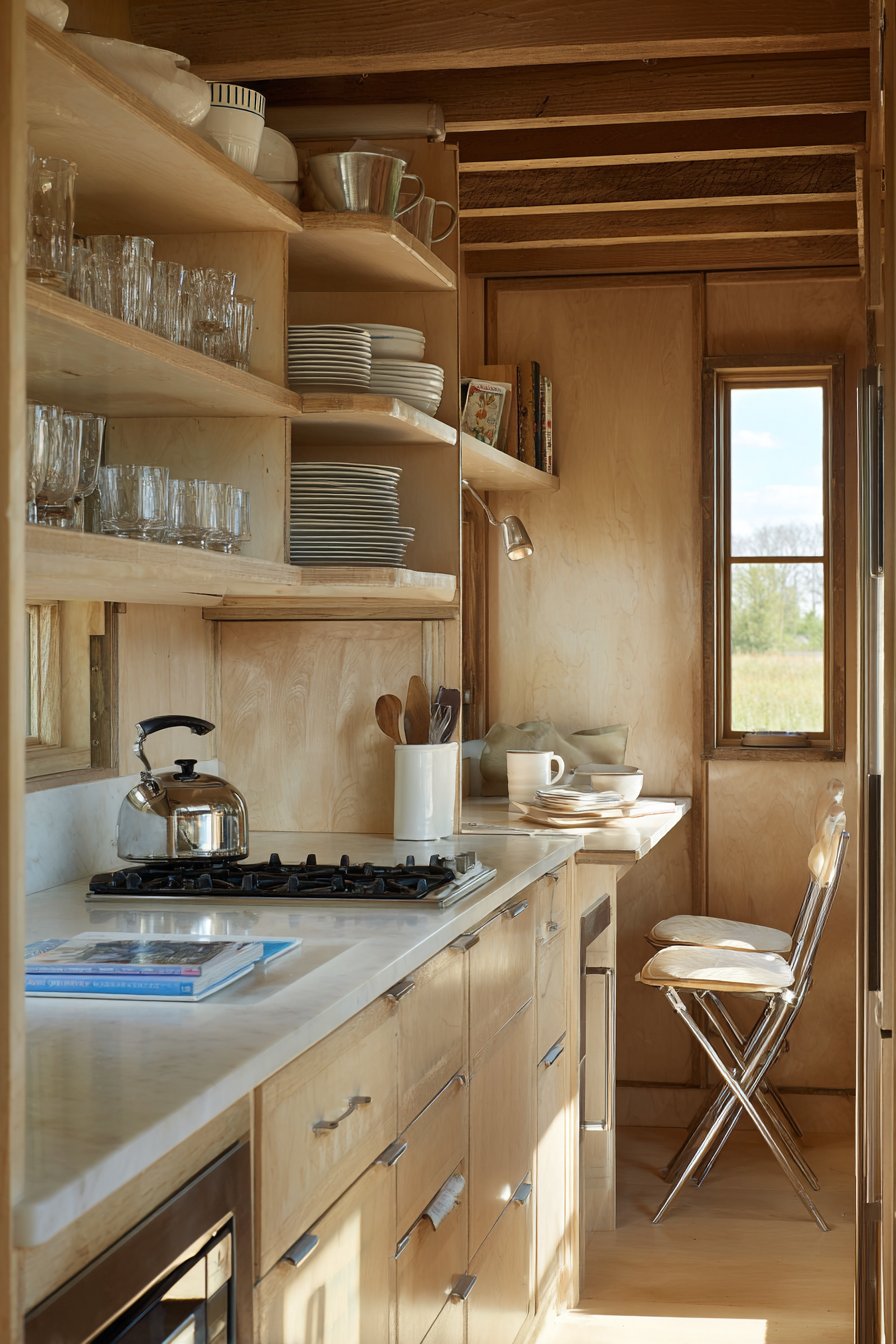
A compact two-burner cooktop and small convection oven fit into the streamlined counter. The scaled-down appliances provide complete cooking functionality. A tiny breakfast nook features a wall-mounted drop-leaf table and folding chairs. This dining solution requires no permanent floor space commitment.

Brass hardware and fixtures add warm metallic accents throughout the space. The gold tones complement the light wood beautifully. Soft natural light from a small window highlights the wood grain texture. The Scandinavian approach emphasizes natural materials and functional beauty.
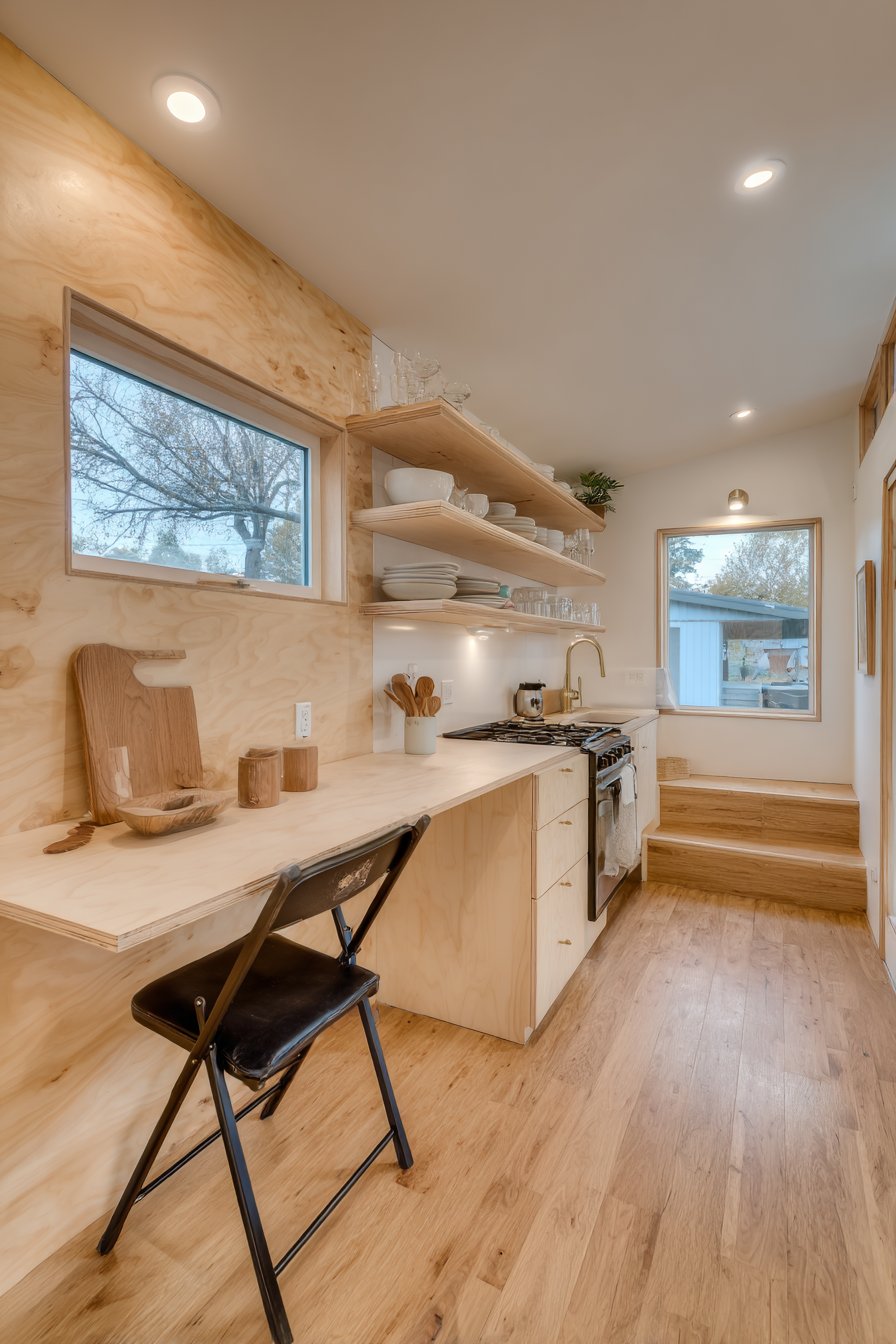
This design demonstrates that simplicity creates peaceful, functional spaces. The limited color palette reduces visual complexity. Natural materials bring organic warmth to the compact area. Every element serves a purpose while maintaining aesthetic harmony.
Key Design Tips:
- Choose light wood cabinetry for Scandinavian warmth
- Install open shelving with monochromatic displays
- Add a wall-mounted drop-leaf table for flexible dining
- Use brass hardware for warm metallic accents
- Emphasize natural light and materials throughout
9. Smart Appliance Scaling

A compact 24-inch French door refrigerator provides ample cold storage without overwhelming the space. The appropriately sized appliance allows proper traffic flow. A 20-inch gas range offers complete cooking capability in minimal width. A drawer-style dishwasher fits into lower cabinetry seamlessly.

Shaker-style cabinets in soft grey with marble-look quartz countertops create classic elegance. The timeless design ensures long-term aesthetic appeal. A pegboard backsplash provides flexible storage for frequently used utensils and pans. Tools hang within easy reach during cooking.

A rolling step stool stores in a narrow gap between appliances. The mobile platform provides access to upper cabinets safely. Under-cabinet task lighting illuminates work surfaces during food preparation. The focused lighting reduces eye strain during detailed cooking tasks.

Appropriately scaled appliances are crucial to tiny kitchen success. Full-size equipment overwhelms small spaces and reduces functionality. Compact models provide complete features in smaller footprints. This design proves that right-sized appliances create better tiny kitchens.
Key Design Tips:
- Select compact appliances that match your space proportions
- Choose drawer-style dishwashers for flexible installation
- Install pegboard backsplash for customizable tool storage
- Add a rolling step stool for safe upper cabinet access
- Use under-cabinet lighting for focused task illumination
10. Farmhouse Compact Charm

Reclaimed wood open shelving against white shiplap walls creates rustic appeal. The vintage materials add character and warmth to the compact space. A vintage-inspired compact range with small hood becomes a charming focal point. The nostalgic appliance anchors the farmhouse aesthetic beautifully.

Butcher block countertops provide warm contrast to a white ceramic farmhouse sink. The natural wood surface offers durability and timeless beauty. Glass-front upper cabinets display everyday dishes while lower cabinets feature traditional hardware. The mixed approach balances openness with necessary concealment.

A narrow kitchen cart with butcher block top provides mobile workspace. The rolling element adds flexibility for different cooking tasks. Natural light through cafe curtains creates a cozy, welcoming ambiance. The soft window treatment filters light beautifully throughout the day.

Farmhouse style adapts successfully to tiny kitchen spaces. The warm materials and vintage touches create inviting atmospheres. Personal style need not be sacrificed for functionality. This design shows how aesthetic preferences enhance small cooking spaces.
Key Design Tips:
- Use reclaimed wood shelving for rustic character
- Choose a vintage-inspired compact range as a focal point
- Install butcher block countertops for warmth and durability
- Add a mobile kitchen cart for flexible workspace
- Incorporate cafe curtains for soft natural light
11. Bold Black and White Contrast

Matte black lower cabinets and white upper cabinets create dramatic visual separation. The strong contrast defines the compact space clearly. White hexagonal tile backsplash adds geometric interest without overwhelming the area. The dimensional pattern catches light beautifully throughout the day.

Compact stainless steel appliances provide modern functionality between bold cabinetry. A narrow peninsula with white waterfall countertop extends the workspace significantly. Two industrial metal stools provide casual dining without permanent floor space commitment. The seating tucks completely underneath when not in use.

Exposed shelving displays curated accessories and frequently used items. The open storage maintains visual lightness in the contrasting design. Track lighting with adjustable heads provides flexible illumination throughout the space. The directing capability allows light to focus where needed most.

Strong contrast defines compact spaces effectively. The black and white scheme creates clear boundaries and visual interest. Bold choices prevent tiny kitchens from feeling bland or boring. This design demonstrates that small spaces can handle dramatic aesthetics.
Key Design Tips:
- Use contrasting upper and lower cabinets for visual definition
- Add geometric tile patterns for interest without clutter
- Install a waterfall-edge peninsula for extended workspace
- Choose track lighting for adjustable illumination
- Display curated accessories on open shelving
12. Compact Kitchenette Unit

An all-in-one kitchenette unit features built-in cooktop, mini refrigerator, and storage cabinets. The space-saving configuration provides complete functionality in minimal square footage. Warm wood veneer cabinetry creates a furniture-like appearance. The cohesive design integrates seamlessly into apartment living spaces.
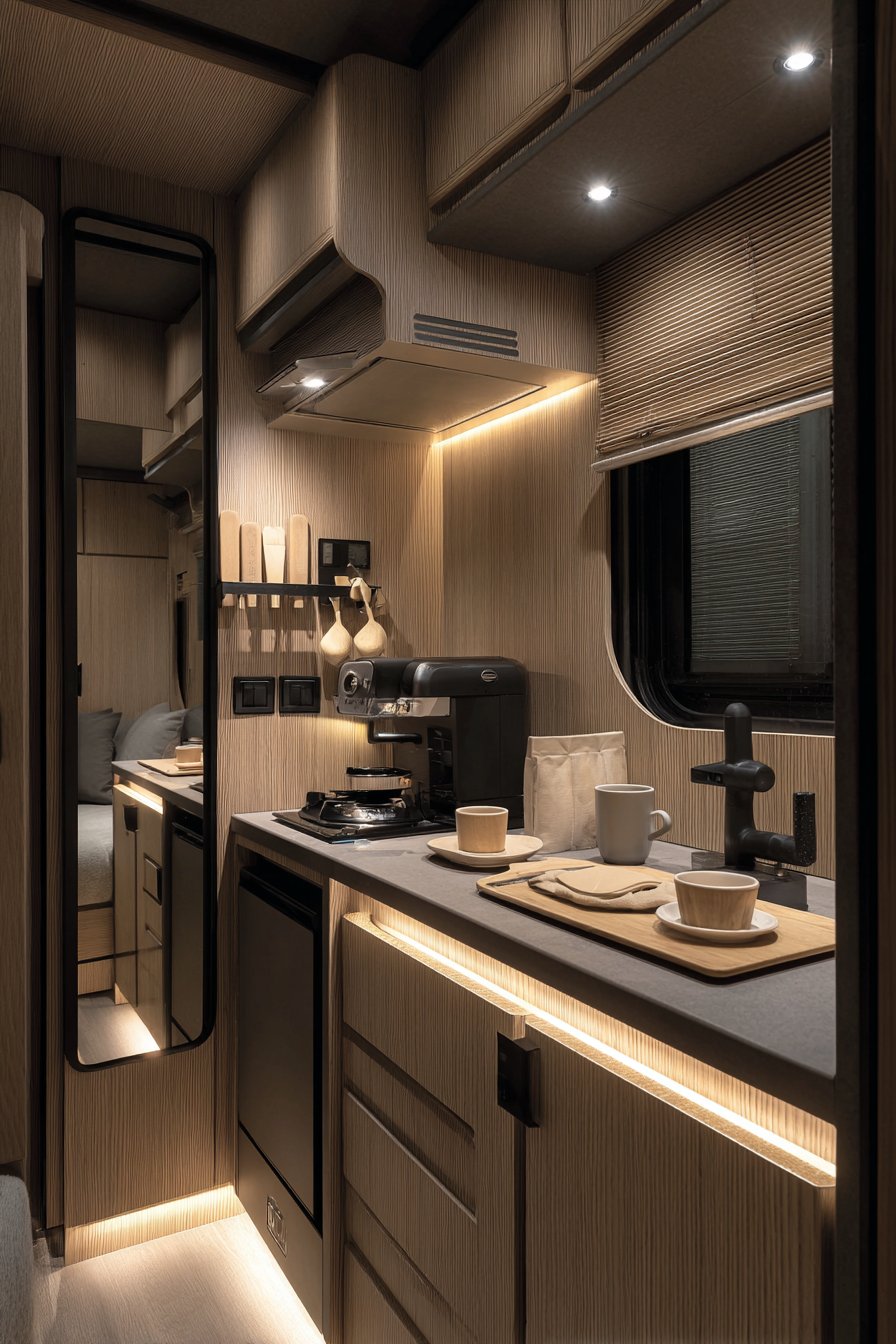
A fold-out countertop extension provides additional prep space during cooking. The surface folds flat against the wall when not needed. Wall-mounted magnetic knife strips and utensil holders keep essentials accessible. The vertical storage maximizes limited wall space efficiently.

A small window with roller shade provides natural light and privacy control. The simple treatment maintains clean lines throughout the space. Under-counter LED strip lighting illuminates the compact workspace effectively. The focused lighting enhances functionality during food preparation.
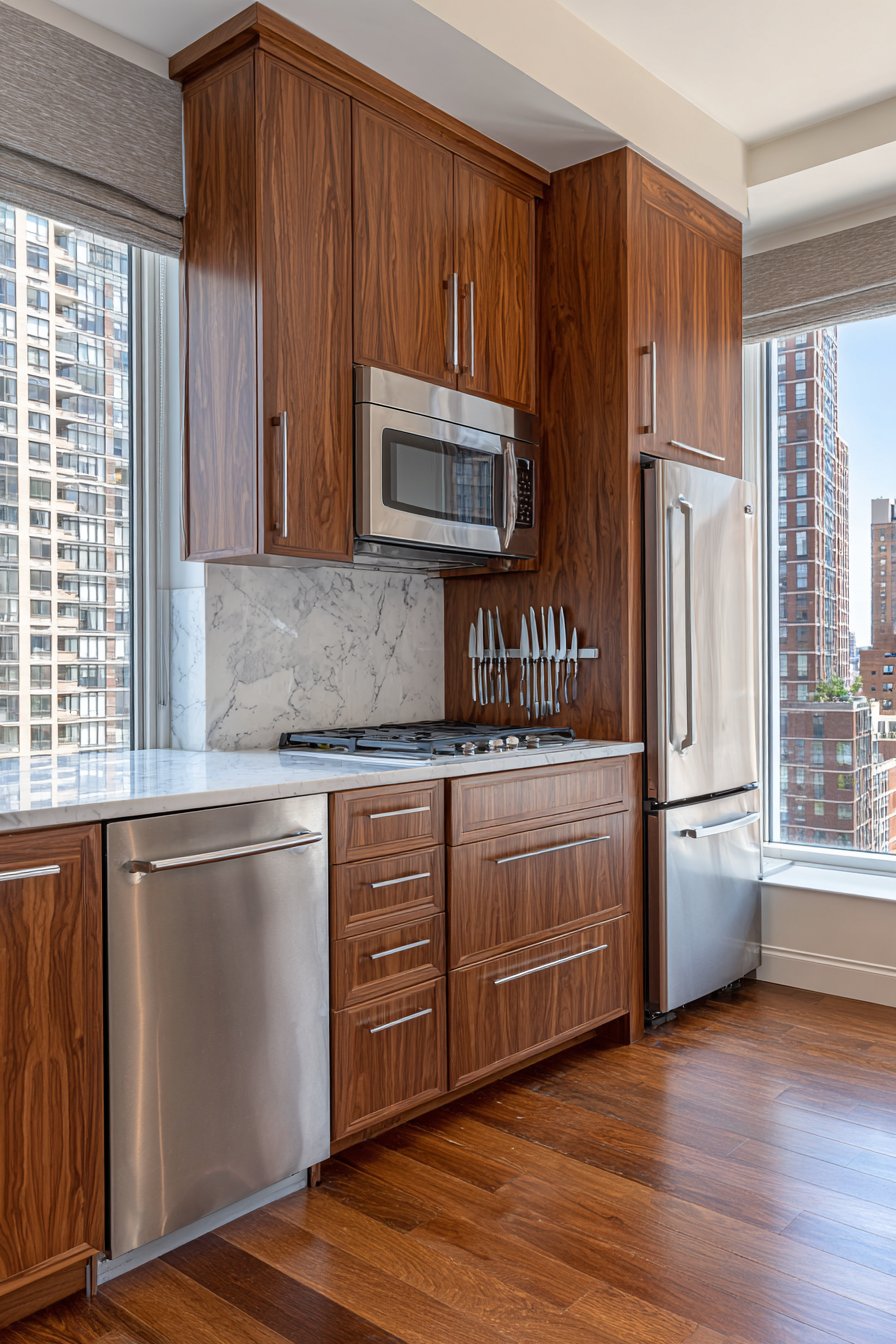
Kitchenette units offer complete cooking solutions for the smallest urban spaces. The integrated approach combines all necessary elements efficiently. Fold-out features add flexibility without permanent space commitment. This design proves that even micro-spaces can accommodate cooking needs.
Key Design Tips:
- Choose an all-in-one kitchenette for ultra-compact spaces
- Install fold-out countertops for flexible workspace
- Use magnetic strips for vertical tool storage
- Add under-counter LED lighting for task illumination
- Select furniture-like finishes for aesthetic integration
13. Coastal Cottage Brightness

White beadboard cabinets and light blue painted lower cabinets create breezy coastal appeal. The soft color palette evokes seaside relaxation and lightness. Butcher block countertops add natural warmth to the cool color scheme. A compact sink with bridge-style faucet creates vintage coastal charm.

Open shelving with white subway tile backsplash displays beach-inspired dishware. The collections add personality without permanent commitment. Compact white appliances blend seamlessly with surrounding cabinetry. The integrated approach maintains visual harmony throughout the space.

A small window with natural light creates an airy, open atmosphere. The brightness makes the compact space feel larger than actual dimensions. Brushed nickel hardware adds subtle shine throughout the cabinetry. The metallic accents complement the coastal aesthetic beautifully.

Coastal style brings personality to tiny kitchen spaces successfully. The light colors and natural materials create refreshing environments. Personal style enhances functionality rather than competing with it. This design shows how themed aesthetics work in compact areas.
Key Design Tips:
- Use light coastal colors to enhance brightness
- Add butcher block for natural warmth in cool palettes
- Display themed dishware on open shelving
- Choose vintage-style fixtures for coastal charm
- Install brushed nickel hardware for subtle shine
14. Industrial Urban Edge

Open metal shelving units with reclaimed wood shelves stand against exposed brick walls. The raw materials create authentic urban industrial character. A compact stainless steel prep table serves as a mobile island. The restaurant-style element adds professional functionality to the compact space.

Matte black compact appliances including a small range and under-counter refrigerator maintain industrial aesthetic. The dark finishes contrast beautifully against brick and metal. Edison bulb pendant lights hang from black cord adding vintage industrial charm. The exposed filaments create warm ambient lighting.

Concrete-look laminate countertops provide durable workspace with industrial appeal. The surface mimics expensive concrete at accessible price points. A narrow window with black frame brings natural light into the space. The dark frame emphasizes the industrial design direction.

Industrial style embraces raw materials and utilitarian functionality. The aesthetic works exceptionally well in urban apartment settings. Honest materials create authentic character in compact spaces. This design proves that tiny kitchens can have bold personality.
Key Design Tips:
- Use open metal shelving with reclaimed wood for industrial character
- Choose matte black appliances for cohesive aesthetic
- Add Edison bulb pendants for vintage industrial lighting
- Install concrete-look surfaces for durable industrial style
- Embrace exposed brick and raw materials authentically
15. Contemporary Grey Sophistication

Flat-panel grey cabinets and white quartz countertops create modern sophistication. The neutral palette provides versatile backdrop for changing accessories. A compact induction cooktop with sleek glass surface saves valuable space. The modern technology provides precise cooking control efficiently.

Integrated appliances including panel-ready dishwasher and refrigerator create seamless lines. The cohesive approach eliminates visual interruption throughout the space. Minimalist chrome hardware and fixtures maintain the contemporary aesthetic. The metallic accents add subtle shine without decoration.

A small window backsplash with frosted glass provides privacy while allowing natural light. The translucent material diffuses harsh sunlight beautifully. Under-cabinet LED lighting creates a floating effect above countertops. The indirect illumination adds modern sophistication to the compact space.

Contemporary style maximizes visual calm in tiny kitchens. The clean lines and integrated elements reduce visual clutter significantly. Neutral palettes allow flexibility in accessorizing and personalizing. This design demonstrates that modern aesthetics suit compact spaces perfectly.
Key Design Tips:
- Choose flat-panel cabinets for contemporary clean lines
- Install integrated appliances for seamless visual flow
- Use frosted glass for privacy with natural light
- Add under-cabinet LED for modern floating effect
- Select neutral grey and white for versatile backdrop
16. Mediterranean Rustic Warmth

Terracotta tile flooring and warm white plastered walls create Mediterranean ambiance. The earthy materials establish authentic cultural character. Compact wooden cabinets with wrought iron hardware add rustic charm. The traditional details honor Mediterranean design heritage beautifully.

Open shelving displays colorful ceramic dishes and olive oil bottles. The collections add personality and functional accessibility. A small farmhouse sink with brass faucet creates a charming focal point. The vintage-style fixture adds warmth to the compact space.

Compact white appliances fit within arched alcoves characteristic of Mediterranean design. The architectural details add visual interest without requiring space. A small window with wooden shutters provides natural ventilation and light control. Hanging copper pot racks utilize vertical space efficiently.

Mediterranean style incorporates cultural aesthetic while maintaining practicality. The warm materials create inviting cooking environments. Traditional details add character to compact modern spaces. This design shows how cultural heritage enhances tiny kitchens.
Key Design Tips:
- Use terracotta flooring for authentic Mediterranean warmth
- Add wrought iron hardware for traditional character
- Display colorful ceramics on open shelving
- Install arched alcoves for architectural interest
- Choose brass and copper fixtures for warm metallic accents
17. Modern Two-Tone Elegance

Upper cabinets in glossy white and lower cabinets in matte charcoal create sophisticated contrast. The different finishes add textural interest to the compact space. A compact waterfall-edge countertop in light grey quartz extends slightly for breakfast bar function. The continuous surface creates visual elegance.
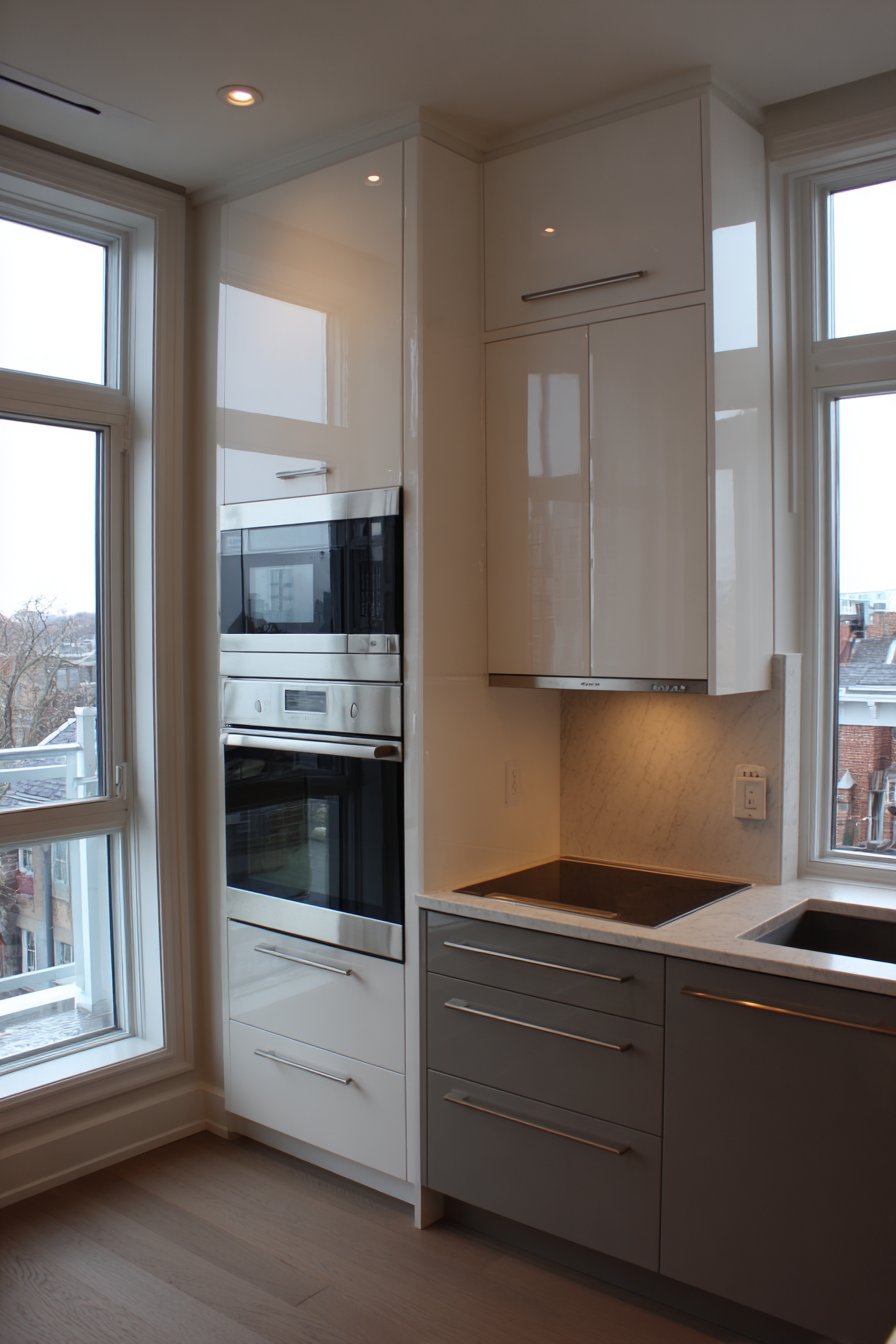
Integrated handleless cabinets maintain sleek modern lines throughout. The hardware-free approach emphasizes clean geometric forms. A small window with minimal trim brings natural light without visual interruption. Compact built-in appliances including combination steam oven maintain streamlined aesthetic.

Recessed lighting provides even illumination throughout the compact space. The flush fixtures maintain clean ceiling planes. The sophisticated finishes and integrated solutions create maximum visual impact. Quality materials elevate the tiny kitchen beyond basic functionality.
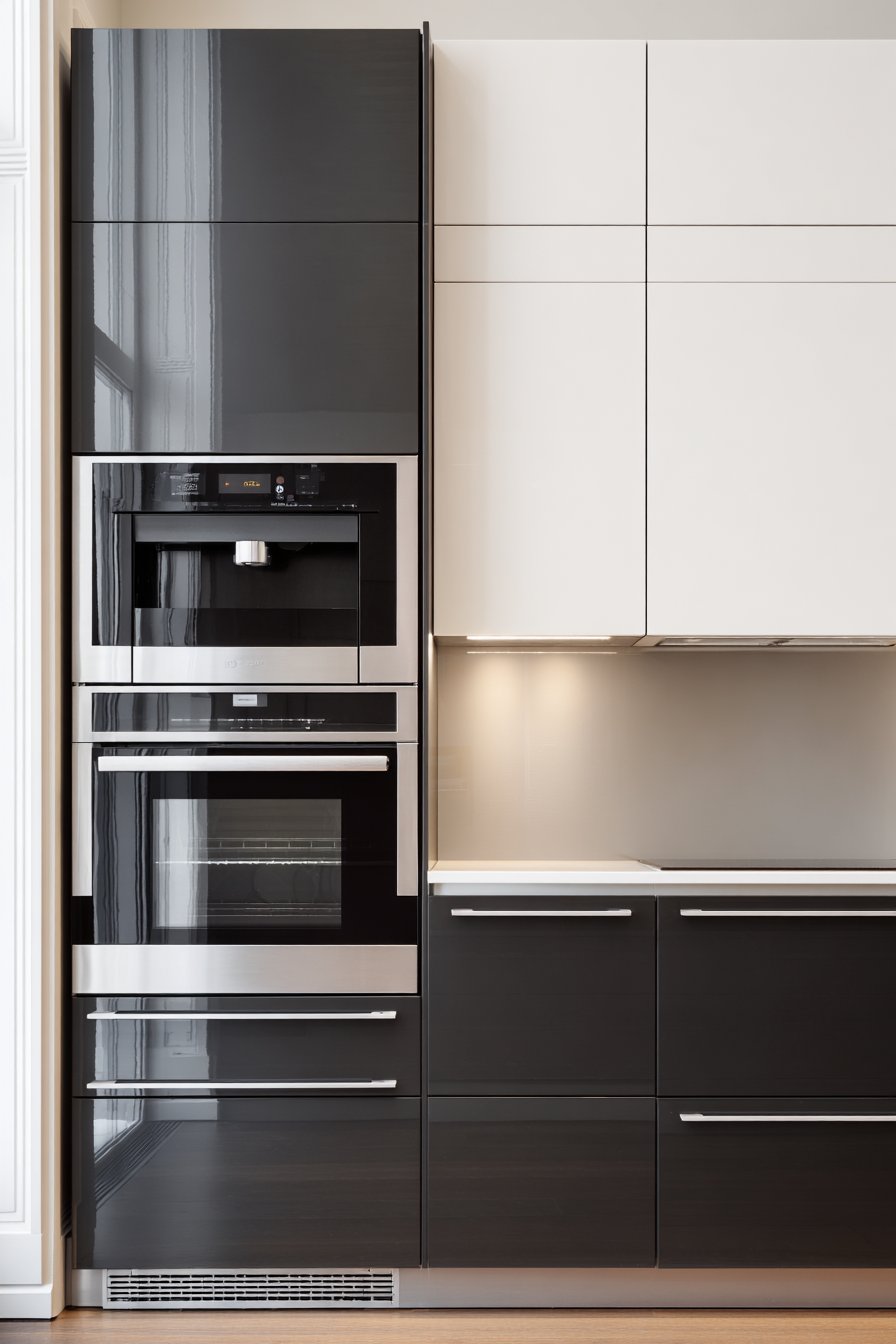
Two-tone cabinetry adds sophistication to compact kitchens effectively. The contrasting finishes define different functional zones. Modern integrated solutions maintain visual calm in small spaces. This design demonstrates that tiny kitchens can achieve luxurious aesthetics.
Key Design Tips:
- Use contrasting cabinet finishes for sophisticated definition
- Install waterfall-edge countertops for visual elegance
- Choose handleless cabinets for sleek modern lines
- Add combination appliances for space-efficient functionality
- Use recessed lighting to maintain clean ceiling planes
18. Corner Solution Expertise

A custom lazy susan corner cabinet and diagonal corner sink eliminate dead space completely. The specialized solutions maximize typically wasted angular areas. Light maple cabinets with glass inserts create visual lightness throughout. The transparent doors reduce visual weight while providing storage.
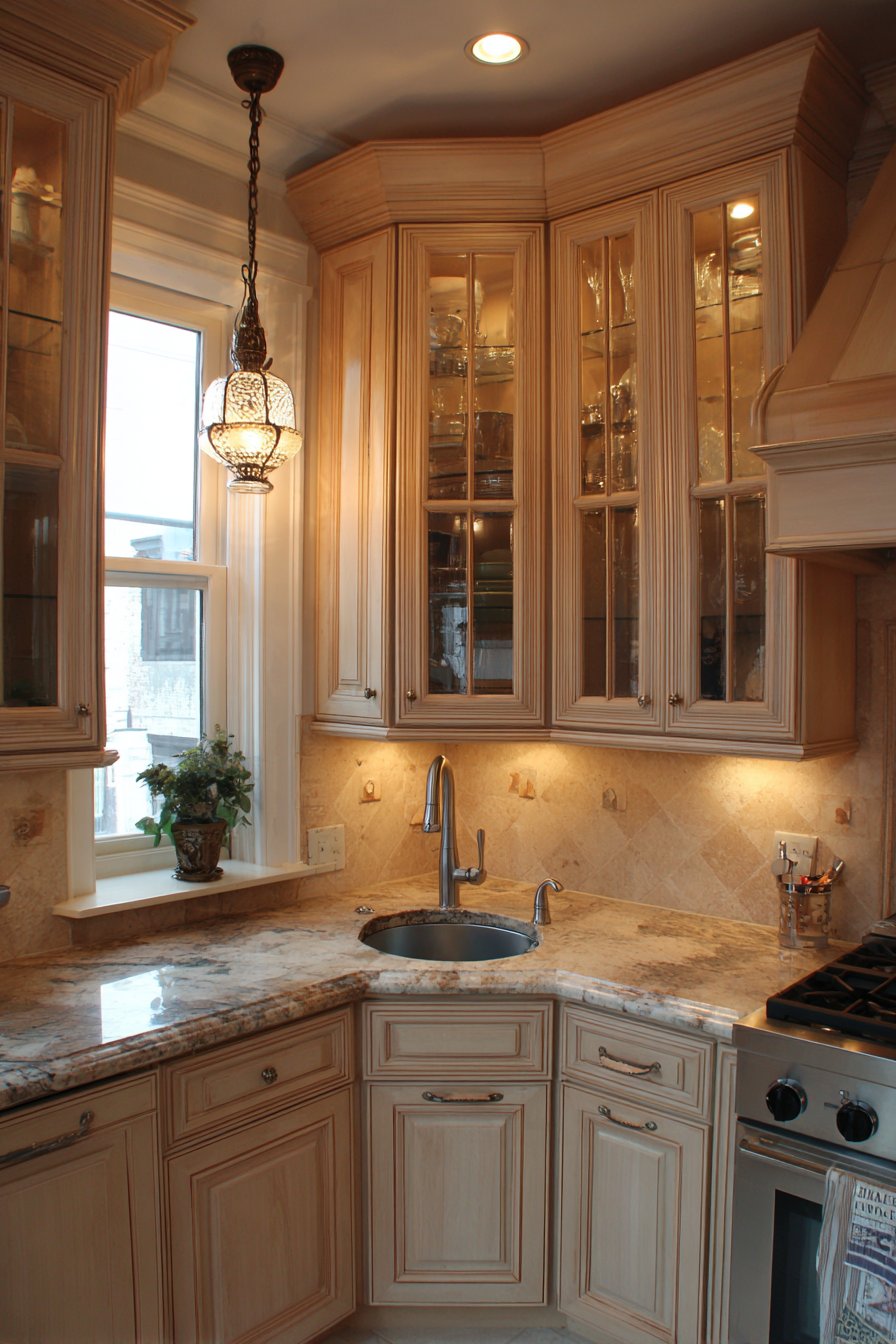
A compact slide-in range fits perfectly between counters without gaps. The precise fit creates integrated appearance and easier cleaning. Pull-out cutting boards and hidden trash bins maximize functional efficiency. The concealed elements maintain clean countertop surfaces.

A small pendant light over the sink adds focused task lighting. Natural light from a corner window illuminates the efficient layout beautifully. The window placement takes advantage of two wall orientations. The thoughtful design addresses corner spaces with surprising functionality.

Corner solutions transform challenging angles into valuable kitchen real estate. Specialized storage mechanisms access deep corner cabinets effectively. Diagonal sinks utilize angular spaces that rectangular fixtures waste. This design proves that corners offer tremendous potential in tiny kitchens.
Key Design Tips:
- Install lazy susan cabinets to access deep corner storage
- Choose diagonal corner sinks to eliminate wasted space
- Add pull-out cutting boards for flexible workspace
- Use glass-front cabinets for visual lightness
- Position windows to take advantage of corner locations
19. Linear Gallery Efficiency

One long counter creates an efficient gallery kitchen perfect for narrow spaces. White cabinets line one side while open shelving on the opposing wall creates visual balance. The mixed approach prevents the narrow space from feeling boxed in. Compact stainless appliances line one side creating efficient work triangle.

A slim rolling cart stores between refrigerator and wall when not in use. The mobile element adds flexibility for different cooking needs. Subway tile backsplash with dark grout adds subtle pattern interest. The dimensional grout lines create texture without visual weight.

A single window at the end of the galley creates focal point and brings natural light. The linear illumination travels the length of the space effectively. The window view provides visual relief in the narrow corridor. The gallery layout maximizes linear space with single-side work surface.

Linear spaces benefit from gallery kitchen configurations. The streamlined approach creates efficient workflows in narrow areas. Strategic storage placement maintains clear pathways. This design demonstrates that narrow spaces can accommodate complete kitchens.
Key Design Tips:
- Use gallery layout for narrow linear spaces
- Balance closed and open storage on opposing walls
- Add slim rolling carts for mobile flexibility
- Choose dark grout with subway tile for subtle pattern
- Position windows at corridor end for natural light
20. Multi-Functional Versatility

A compact island on wheels serves as prep space, storage, and mobile dining table. The multi-functional element adapts to different cooking and entertaining needs. White shaker cabinets with practical pull-out organizers maximize every cabinet interior. The internal organization systems reduce wasted space significantly.
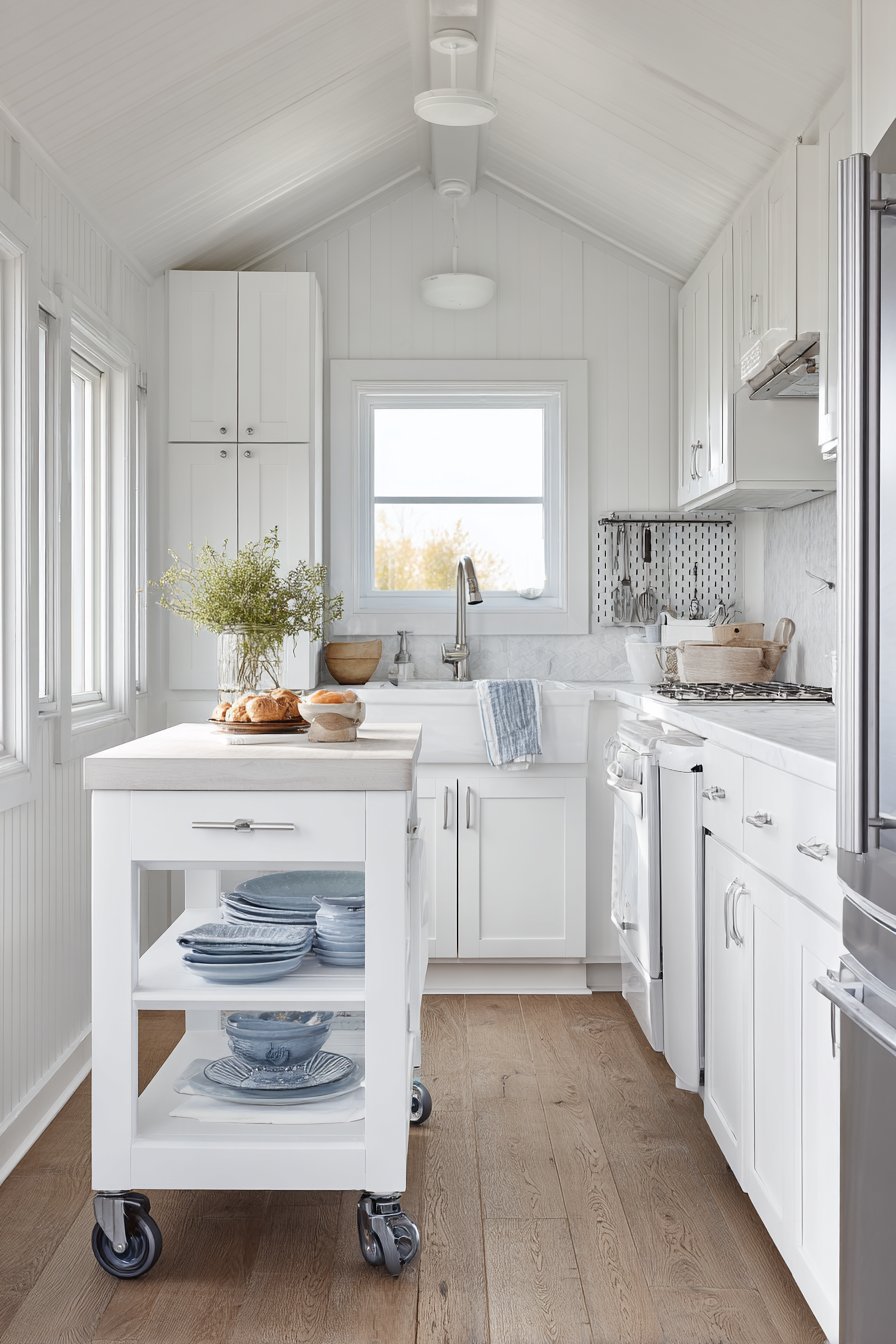
A small window over the sink provides natural light and ventilation. Compact apartment-size appliances in stainless steel fit seamlessly into the layout. The appropriately scaled equipment provides complete functionality. Magnetic knife strips, hanging pot racks, and pegboards utilize vertical wall space efficiently.

Under-cabinet lighting illuminates work surfaces during food preparation. The focused lighting reduces shadows during detailed cooking tasks. The complete tiny kitchen demonstrates how thoughtful design creates fully functional cooking space. Every element serves multiple purposes without compromising aesthetic appeal.
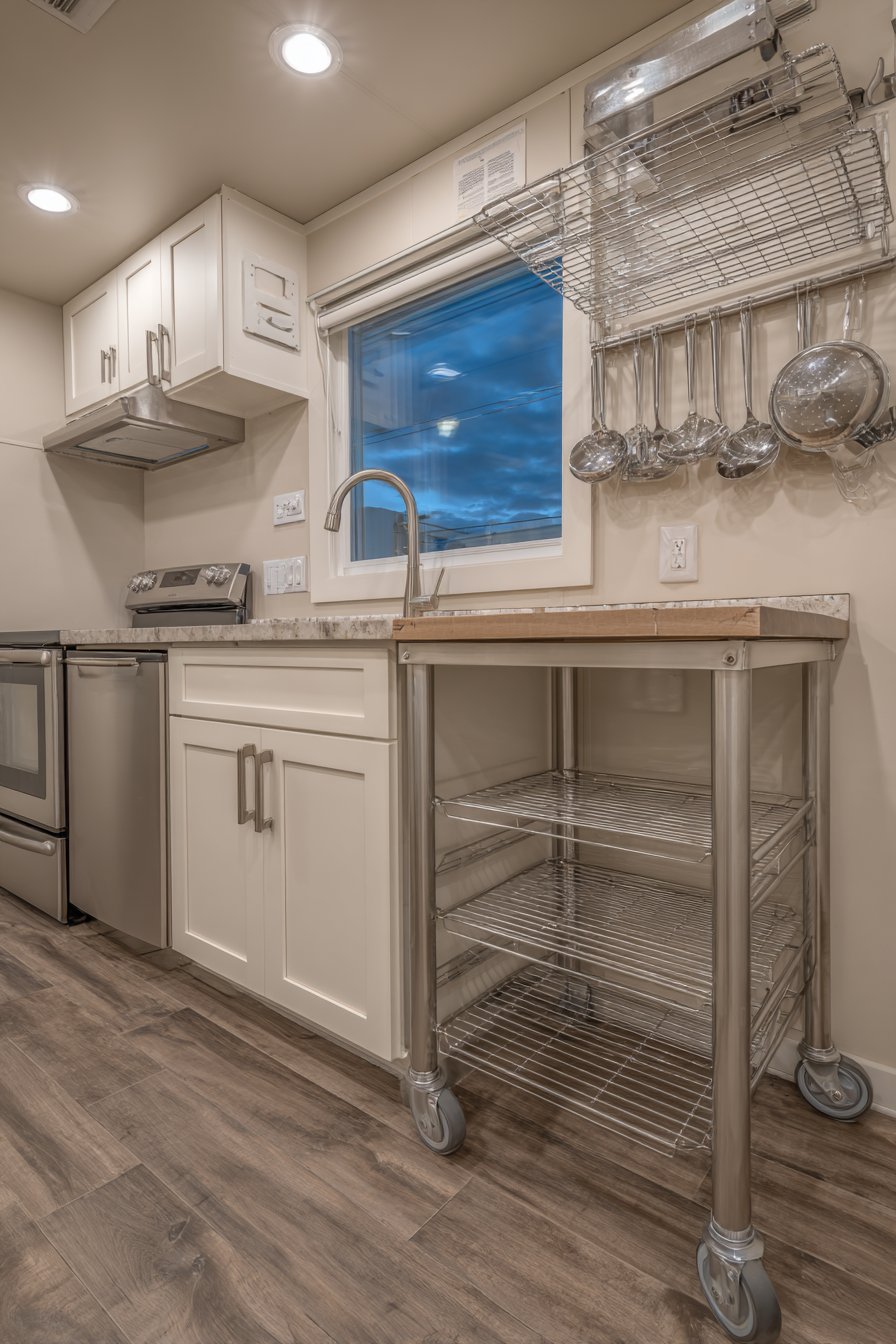
Multi-functional elements are essential in tiny kitchen success. Furniture that serves multiple purposes maximizes limited square footage. Mobile components add flexibility that fixed elements cannot provide. This design shows how comprehensive planning creates complete tiny kitchens.
Key Design Tips:
- Choose mobile islands for flexible multi-function use
- Install pull-out organizers in every cabinet
- Maximize vertical wall space with hanging storage
- Add under-cabinet lighting for task illumination
- Select appropriately scaled appliances for complete functionality
Why These Tiny Kitchen Designs Are the Best
These tiny kitchen designs represent the finest approaches to compact space optimization. Each concept demonstrates intelligent planning that maximizes limited square footage. The designs balance aesthetic appeal with practical functionality successfully. Thoughtful consideration of workflow, storage, and visual harmony creates exceptional tiny kitchens.
The incorporation of vertical storage solutions transforms walls into valuable organizational space. Floor-to-ceiling cabinetry captures storage potential that shorter cabinets waste. Pull-out organizers, lazy susans, and specialized corner solutions eliminate dead space completely. These innovative storage approaches create surprisingly spacious functionality in minimal footprints.
Appropriately scaled appliances are crucial to tiny kitchen success. Compact refrigerators, narrow dishwashers, and slimline ranges provide complete functionality without overwhelming spaces. Combination appliances like microwave-convection ovens offer multiple cooking methods in single units. Smart appliance choices preserve precious counter and floor space.

Multi-functional elements add flexibility that fixed components cannot provide. Mobile islands serve as prep surfaces, storage, and dining tables simultaneously. Fold-down breakfast bars provide eating areas without permanent space commitment. Pull-out cutting boards extend workspace exactly when needed. These adaptable features respond to changing kitchen activities throughout the day.
Lighting strategies enhance both functionality and perceived spaciousness in tiny kitchens. Under-cabinet LEDs illuminate work surfaces for detailed food preparation. Natural light from strategically placed windows brightens compact spaces significantly. Layered lighting from multiple sources eliminates shadows while creating ambient warmth. Proper illumination makes small kitchens feel larger and more inviting.
Color selection dramatically impacts how tiny kitchens feel spatially. Light cabinetry in whites, soft greys, and natural woods creates airy openness. Reflective surfaces like subway tile backsplashes and glossy finishes bounce light throughout spaces. Strategic contrast with two-tone cabinetry adds visual interest without overwhelming compact areas. Thoughtful color application expands perceived dimensions.

The mixing of open and closed storage creates visual balance in tiny kitchens. Open shelving displays frequently used items while maintaining lightness. Closed cabinetry conceals less attractive necessities and reduces visual clutter. Glass-front cabinets offer compromise between display and concealment. The balanced approach prevents tiny kitchens from feeling cramped or chaotic.
Corner optimization eliminates typically wasted angular spaces in tiny kitchens. Diagonal corner sinks utilize space that rectangular fixtures cannot access. Lazy susan cabinets make deep corner storage easily accessible. Angled cabinetry transforms awkward corners into functional workspace. These specialized solutions add surprising capacity to compact layouts.
Workflow efficiency becomes paramount in tiny kitchen design. Strategic appliance placement creates compact work triangles between sink, cooking, and preparation areas. Everything remains within easy reach during meal preparation. The streamlined layouts reduce unnecessary movement and increase cooking efficiency. Thoughtful planning transforms size limitations into workflow advantages.
These tiny kitchen designs prove that space constraints inspire creative solutions. Limited square footage demands innovative thinking about storage, layout, and functionality. Each design demonstrates that tiny kitchens can be beautiful, efficient, and complete cooking spaces. The concepts showcase versatility across different aesthetic styles from contemporary to farmhouse, industrial to coastal.
Conclusion
These tiny kitchen designs demonstrate that limited space need not limit functionality or beauty. The key takeaways include maximizing vertical storage, choosing appropriately scaled appliances, and incorporating multi-functional elements. Thoughtful planning transforms compact kitchens into efficient cooking spaces that rival larger designs in capability.
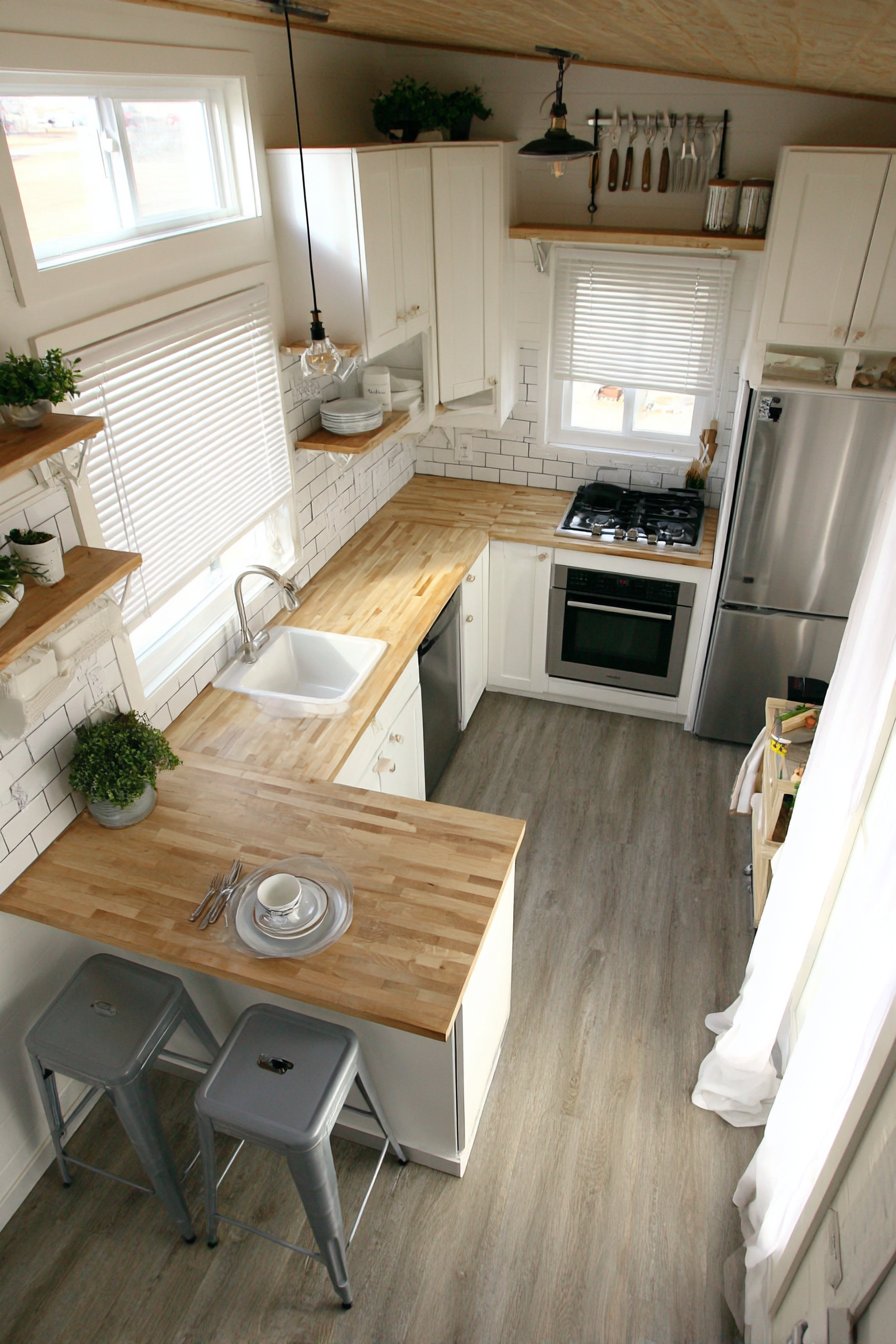
Successful tiny kitchen design balances aesthetic preferences with practical requirements. The concepts presented showcase diverse style options from minimalist contemporary to warm farmhouse aesthetics. Each approach proves that personal style enhances rather than compromises functionality in small spaces.
Start your tiny kitchen transformation by assessing your specific needs and space constraints. Consider which storage solutions, appliance scales, and layout configurations suit your cooking habits best. These designs offer inspiration and practical guidance for creating your ideal compact kitchen. Your dream tiny kitchen awaits through intelligent planning and creative implementation.
