


A tiny laundry room can feel like a constant source of frustration. Limited floor space, cluttered surfaces, and poor organization make even simple tasks feel chaotic. Yet with thoughtful interior design, even the smallest laundry space can become a highly efficient, enjoyable room in your home.
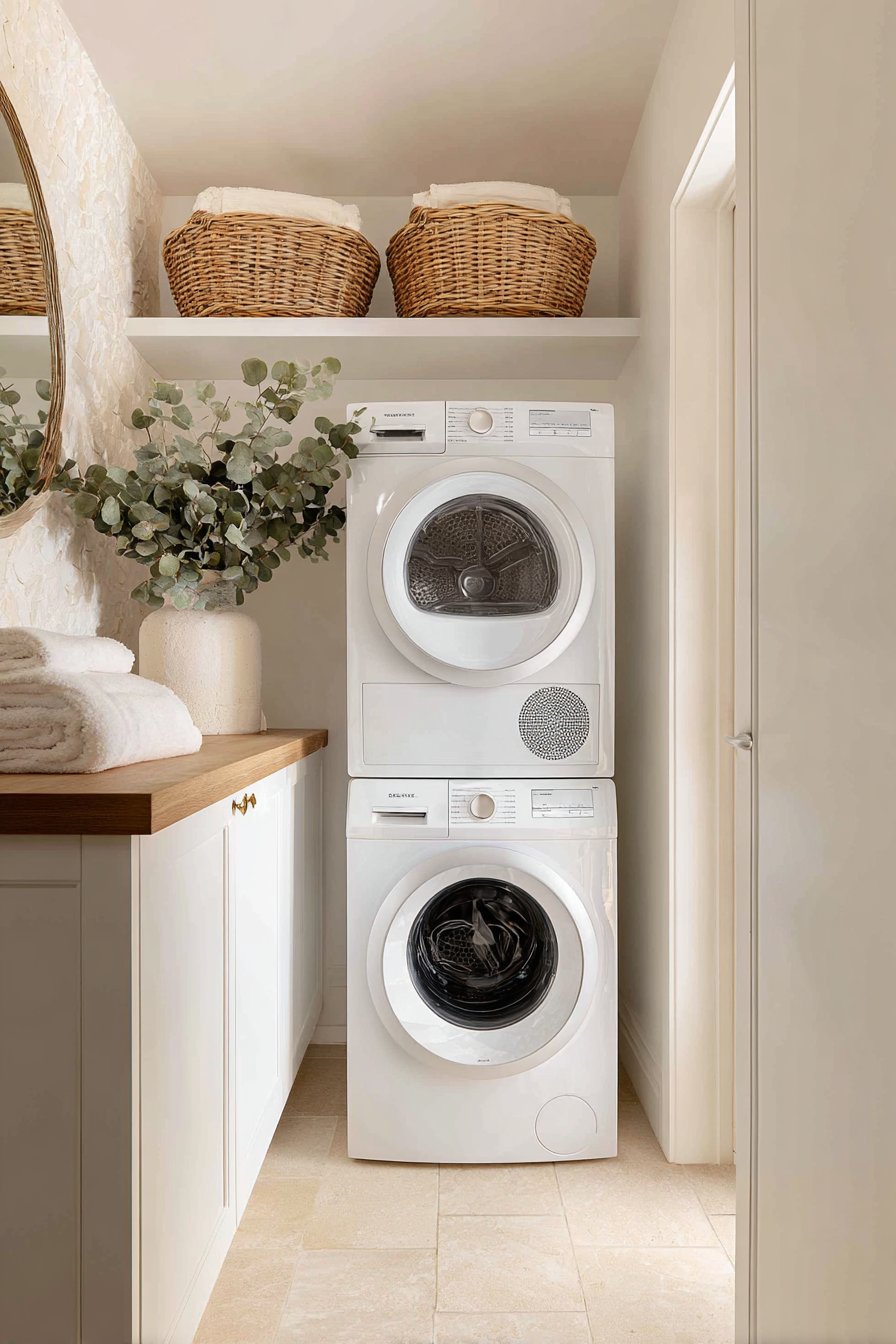
The key is shifting your mindset from what the room lacks to what it can offer. Smart spatial planning transforms awkward corners and narrow alcoves into powerful, purpose-driven areas. Whether you’re working with a closet-sized laundry nook or a compact dedicated room, the right strategies make all the difference.

This article covers six practical, proven ways to unlock the full potential of a tiny laundry room. Each approach focuses on maximizing functionality without sacrificing style or overspending. These ideas work across a wide range of budgets and living situations — from apartments to single-family homes.
1. Go Vertical With Wall-Mounted Storage
When floor space is scarce, the walls become your most valuable asset. Vertical storage is the single most impactful upgrade you can make in a small laundry room. Installing shelves, cabinets, or pegboards above your washer and dryer immediately reclaims dead space that would otherwise go unused.
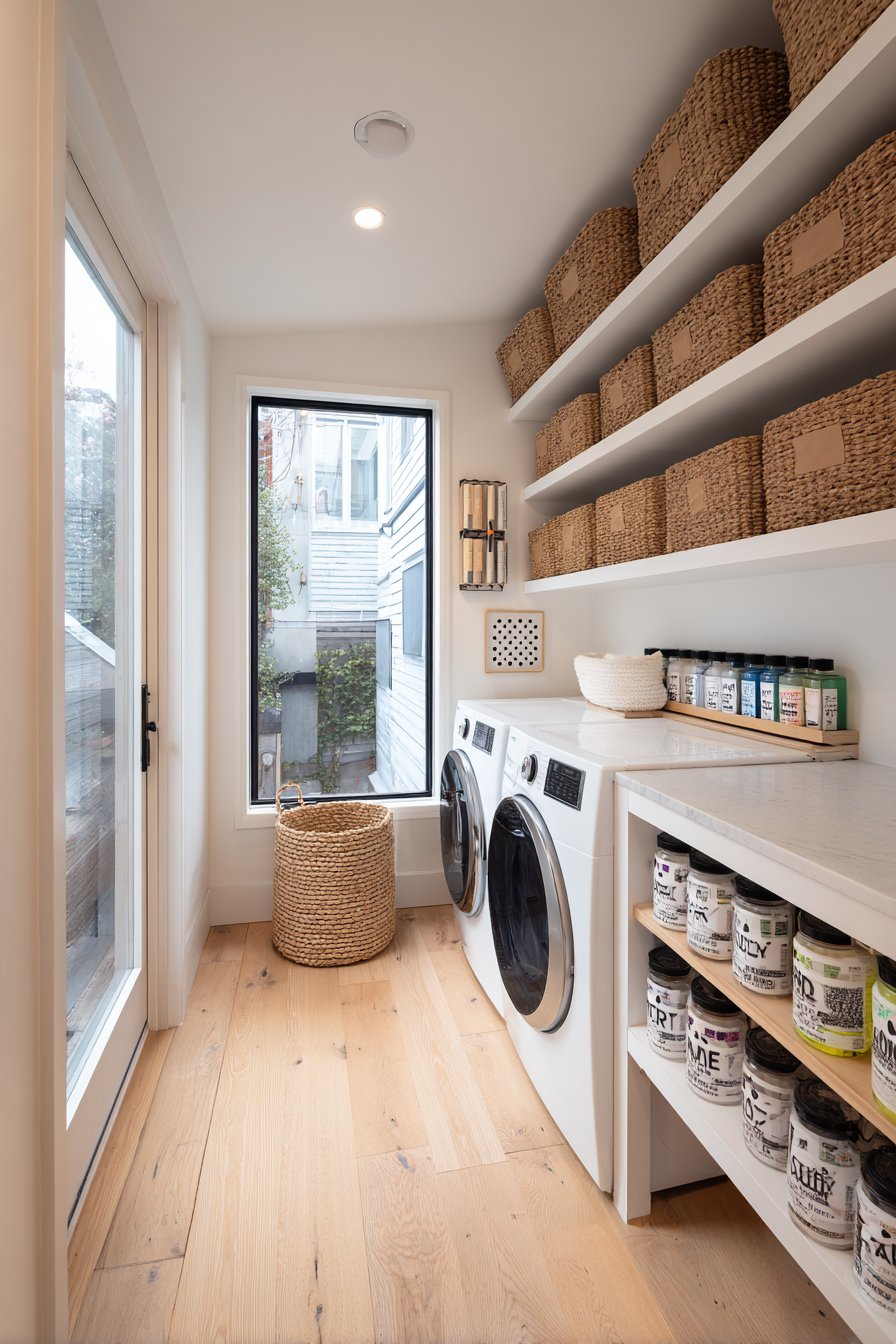
Open shelving is particularly effective because it keeps frequently used items within arm’s reach without requiring you to open doors. Use baskets or labeled bins to corral detergents, dryer sheets, and fabric softeners. This creates a clean, organized look while keeping everything accessible. Shelves installed 12 to 16 inches apart give you flexibility for both tall bottles and folded items.
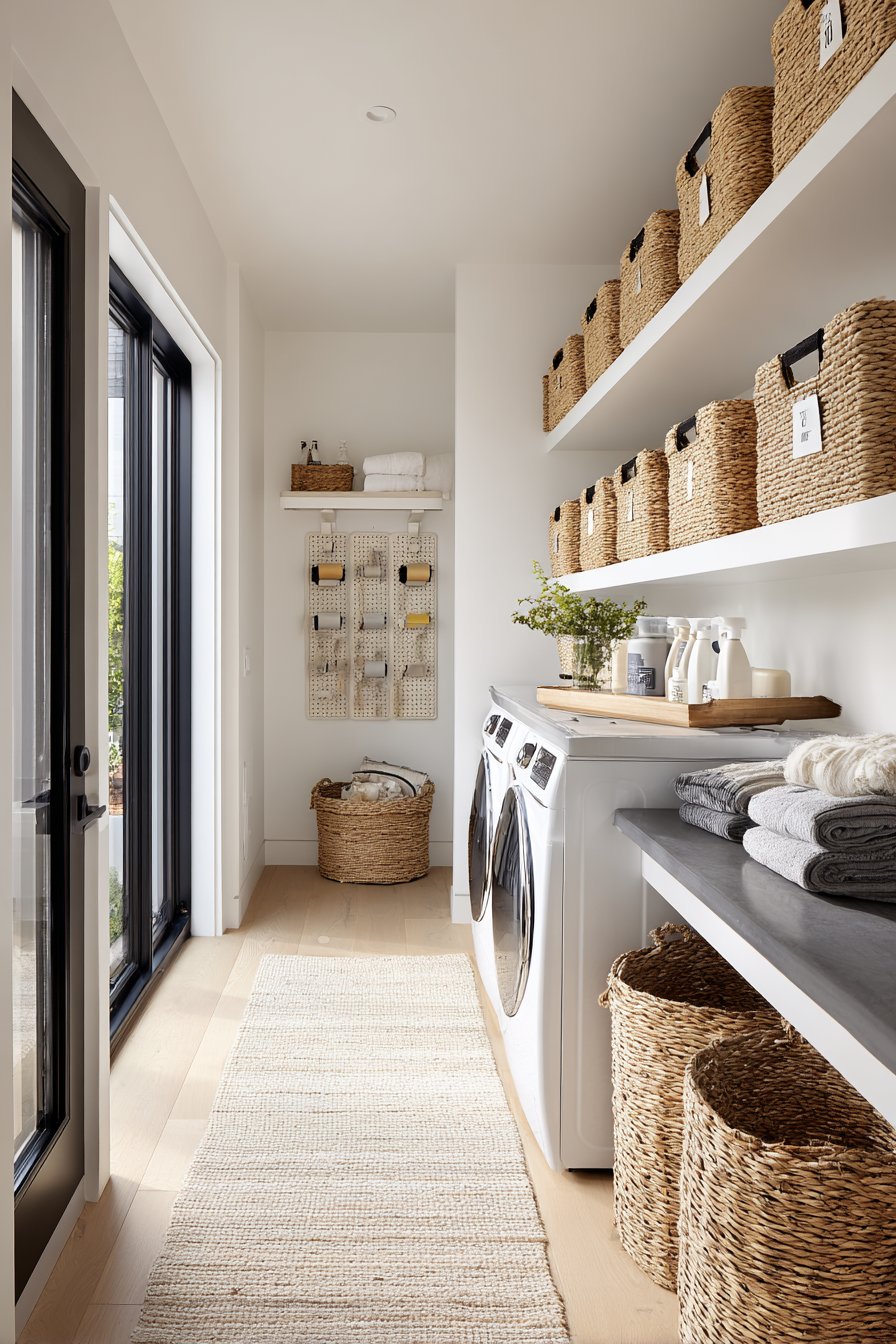
Wall-mounted cabinets with doors are ideal if you prefer a neater, hidden look. They conceal clutter and give the room a more polished, finished appearance. For a budget-friendly option, floating shelves from a hardware store can be installed in under an hour and cost as little as $20 to $40 per shelf.
- Install open shelves 18 inches above the appliances for easy reach
- Use uniform baskets or bins to keep shelves visually organized
- Add a pegboard for hanging ironing boards, lint rollers, and small tools
- Mount a fold-down shelf for temporary folding space
- Label every container to speed up your laundry routine
- Choose rust-resistant hardware to withstand moisture and humidit
2. Stack Your Washer and Dryer
If you currently have a side-by-side washer and dryer setup, switching to a stacked configuration can literally double your usable floor space. Most front-loading washers and dryers are compatible with stacking kits, making this a straightforward upgrade. The result is a dramatically more open room layout.

A stacked unit frees up the adjacent wall for a storage cabinet, a countertop, or even a hanging rod for air-drying clothes. In rooms narrower than 5 feet wide, stacking is often the only layout that makes sense. It transforms a cramped corridor into a workable, single-task zone with clear movement pathways.
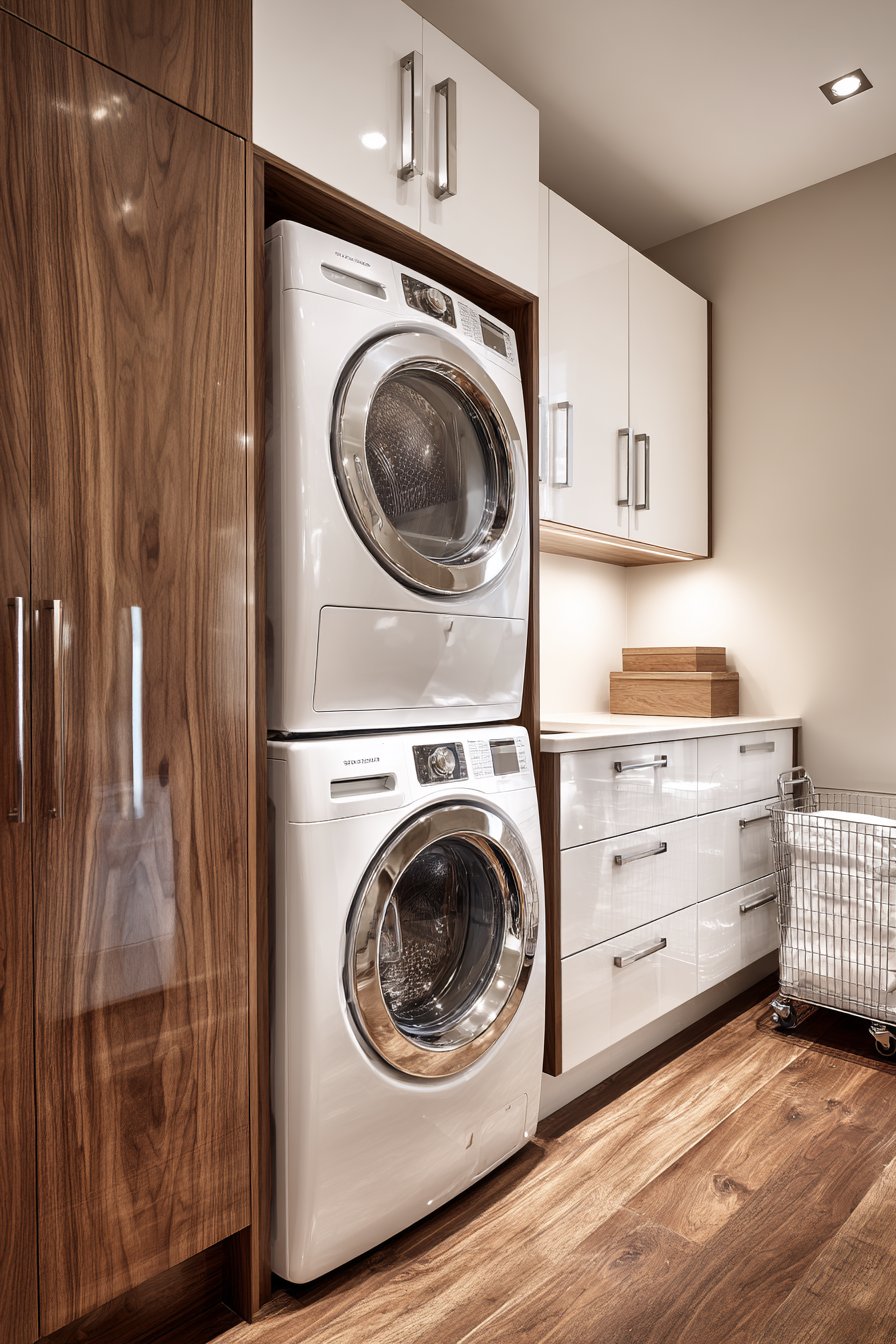
If purchasing a new appliance, consider a washer-dryer combo unit — a single machine that washes and dries in one cycle. These units are ideal for tight spaces and eliminate the need for two separate appliances altogether. Though they have a higher upfront cost, the space savings are unmatched in studio apartments or compact homes.
- Confirm compatibility before purchasing a stacking kit
- Secure the dryer firmly to prevent vibration movement
- Use the freed floor space for a rolling storage cart or hamper
- Place a small step stool nearby for comfortable dryer access
- Consider a combo washer-dryer for spaces under 30 square feet
- Keep the front panel area clear for easy appliance access
3. Install a Fold-Down or Wall-Mounted Ironing Board
A full-size ironing board is one of the most space-consuming items in any laundry room. Replacing it with a wall-mounted or fold-down version immediately frees up significant floor and closet space. These compact alternatives are available in a range of styles and price points, making them accessible for almost any budget.
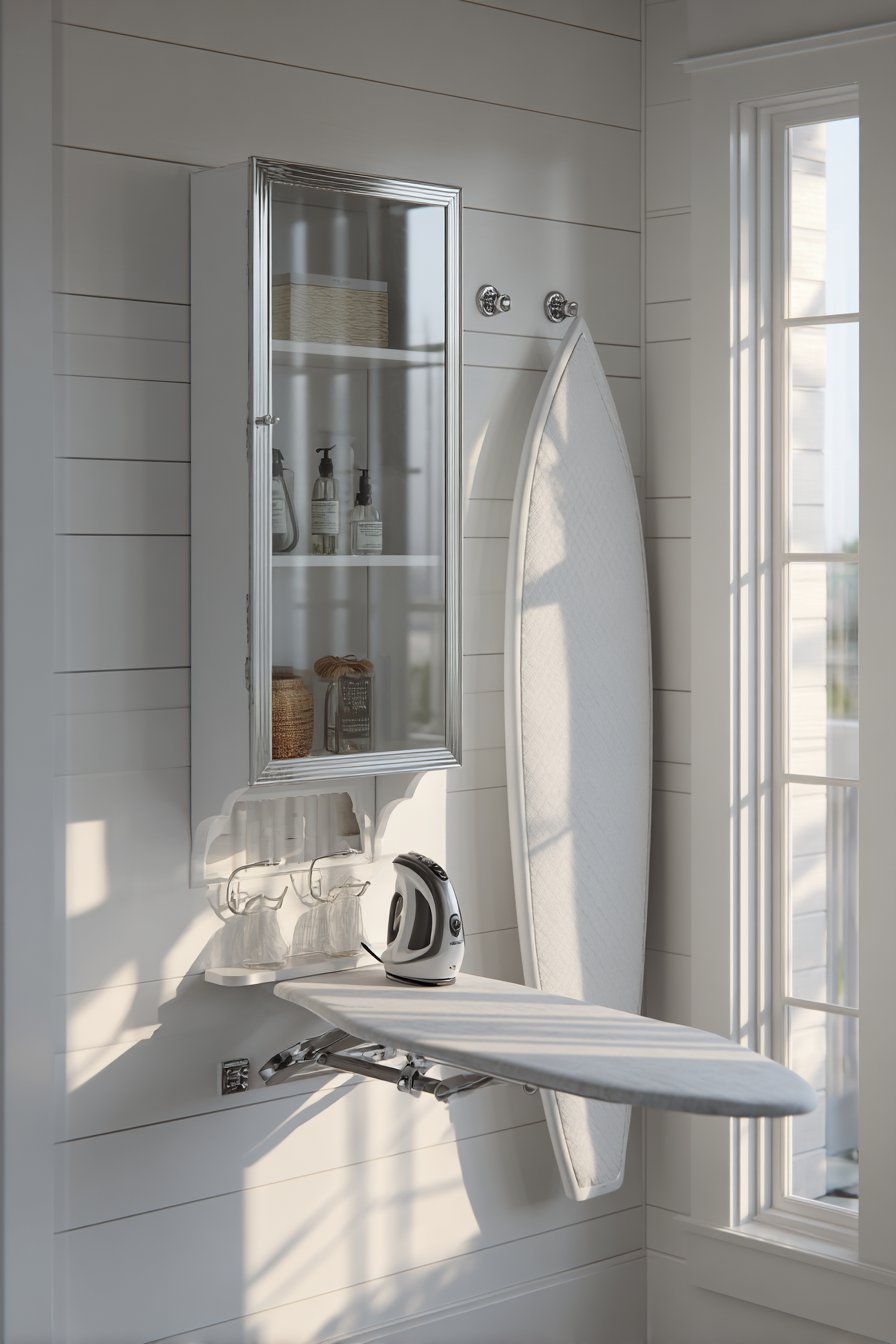
Wall-mounted ironing boards fold flat against the wall when not in use, taking up less than 4 inches of depth. Many models include a built-in heat-resistant cover and storage hooks for the iron itself. When open, they function just as well as a traditional board — often at a more ergonomically comfortable height since they can be installed at the exact height you prefer.
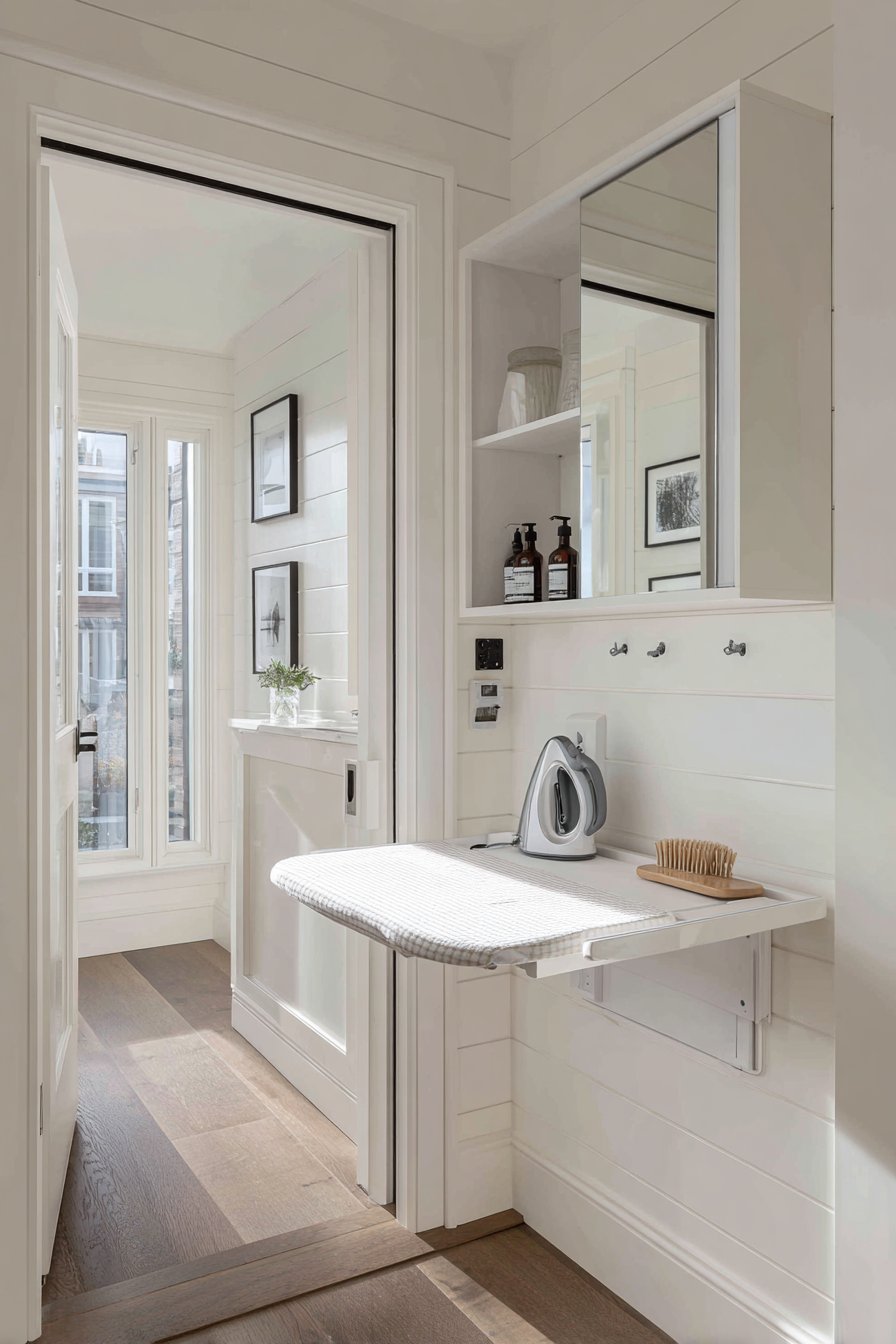
Some cabinet-style models conceal the ironing board entirely behind a mirrored or wood-paneled door. These dual-function units are particularly clever in small spaces, serving as both a mirror and a hidden appliance storage center. Installation typically takes under 30 minutes with basic tools.
- Choose a retractable model that mounts between wall studs for stability
- Install at a height that suits the primary user to reduce back strain
- Look for models with a built-in iron rest and cord holder
- Paint or stain the mounting board to match your wall for a seamless look
- Store a small spray bottle and heat-resistant pad on a nearby hook
- Opt for a mirrored cabinet version to add light and depth to the room
4. Add a Countertop for Folding and Sorting
One of the biggest complaints about small laundry rooms is the lack of a dedicated folding surface. Without it, clean laundry ends up piled on top of the washer, on the floor, or carried to another room. Adding even a modest countertop solves this problem instantly and dramatically improves workflow.
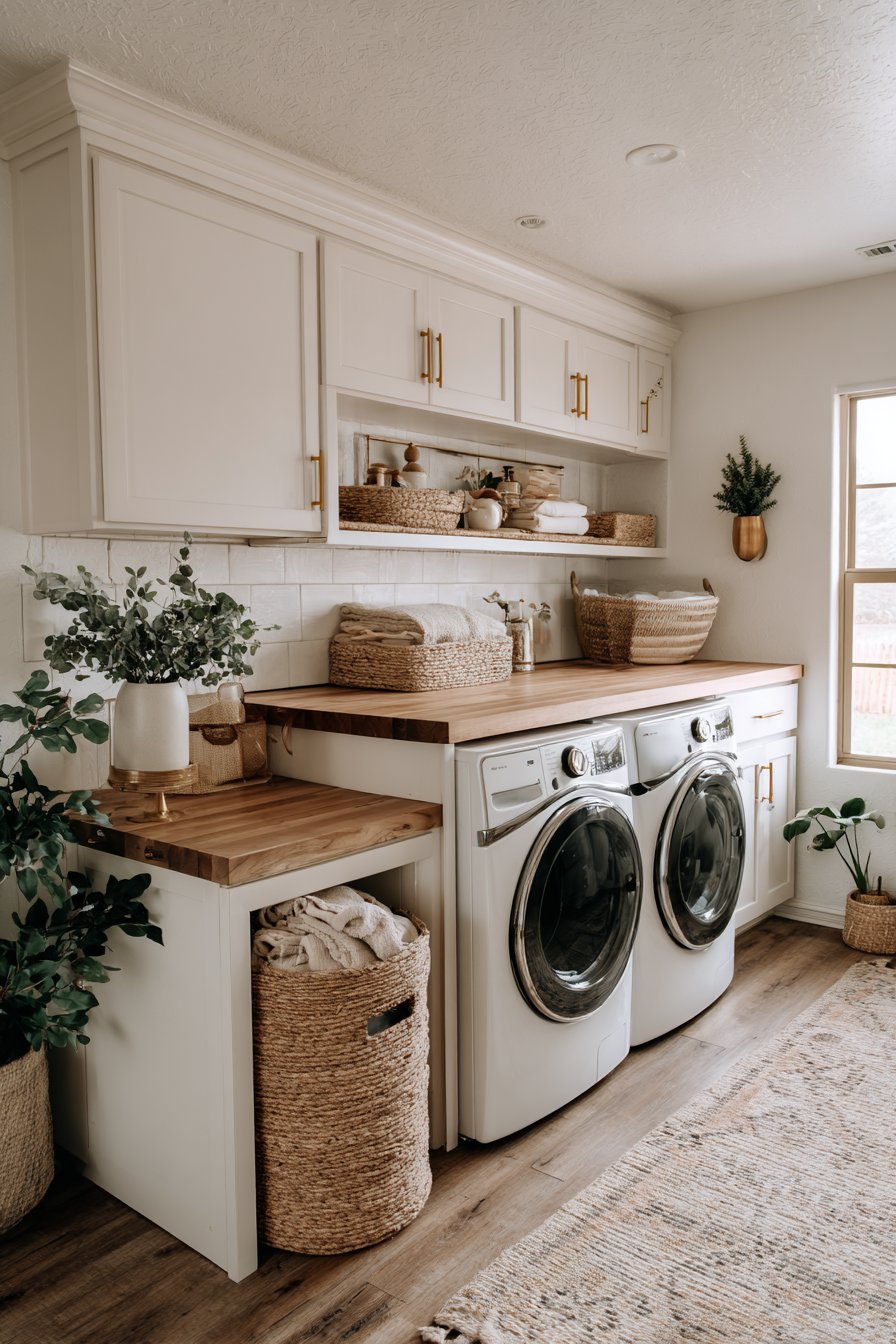
A laminate countertop installed above the washer and dryer (or along a side wall) gives you a firm, flat surface for folding, sorting, and treating stains. Standard countertop depth of 24 to 25 inches fits comfortably over most front-loading appliances. Many homeowners use a simple butcher block or a prefabricated countertop cut to size — both are affordable and easy to install.
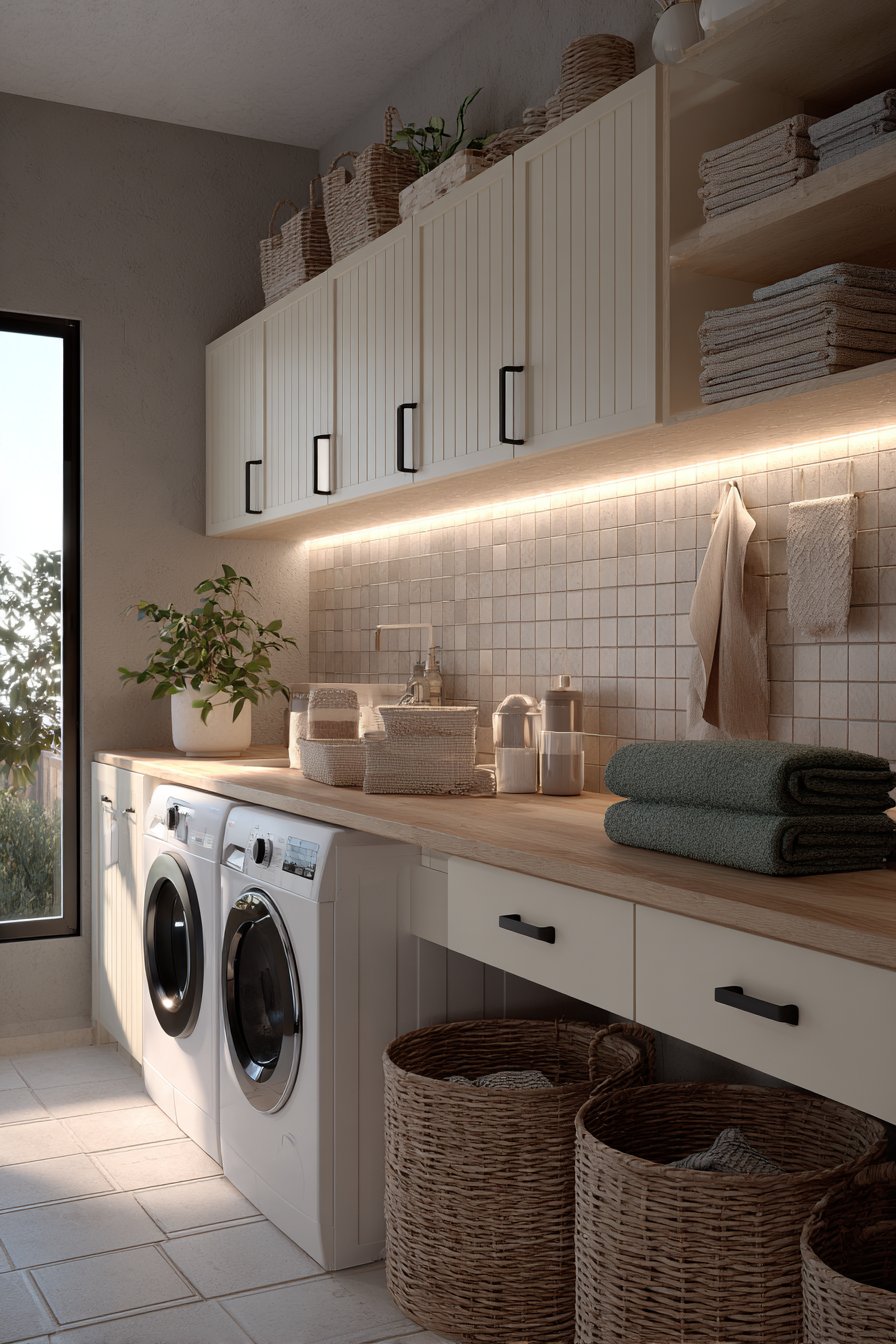
For maximum efficiency, add divided bins or baskets beneath or beside the countertop to sort laundry by color, fabric type, or family member. This system speeds up the entire laundry process and keeps the room tidy between loads. A mounted light strip under upper cabinets above the counter adds task lighting that makes folding easier and the room feel brighter.
- Use prefabricated countertop sections for an affordable, quick installation
- Seal butcher block countertops with a waterproof finish to prevent warping
- Mount pull-out drawers underneath for detergent and supply storage
- Add a tension rod beneath the counter for hanging freshly pressed items
- Use the countertop surface for a small potted plant to brighten the space
- Keep the surface clear by storing items in labeled bins, not loose on top
5. Use Every Door and Corner Strategically
Doors and corners are often overlooked in small room planning, but they hold tremendous storage potential. The back of the laundry room door can hold an over-the-door organizer with pockets for small supplies, dryer sheets, stain removers, and cleaning cloths. This zero-floor-space solution keeps essentials visible and accessible without crowding shelves.
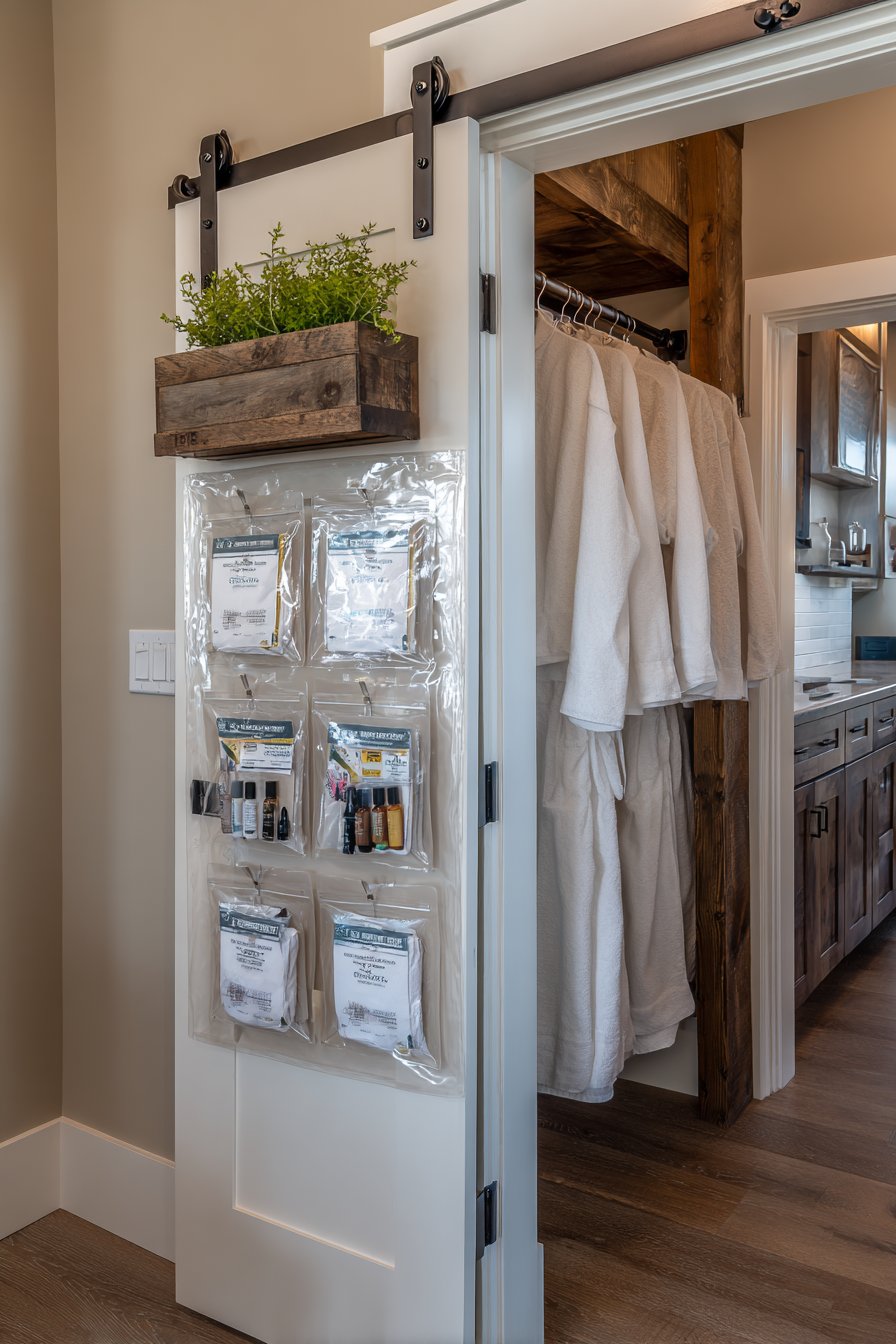
Corner spaces are another underutilized area. A corner shelf unit or a rotating lazy Susan-style organizer can turn an awkward alcove into a fully functional storage zone. Even a tension rod installed in a corner creates a hanging space for clothes that need to air-dry or de-wrinkle. These micro-organization zones add up quickly in a small room.
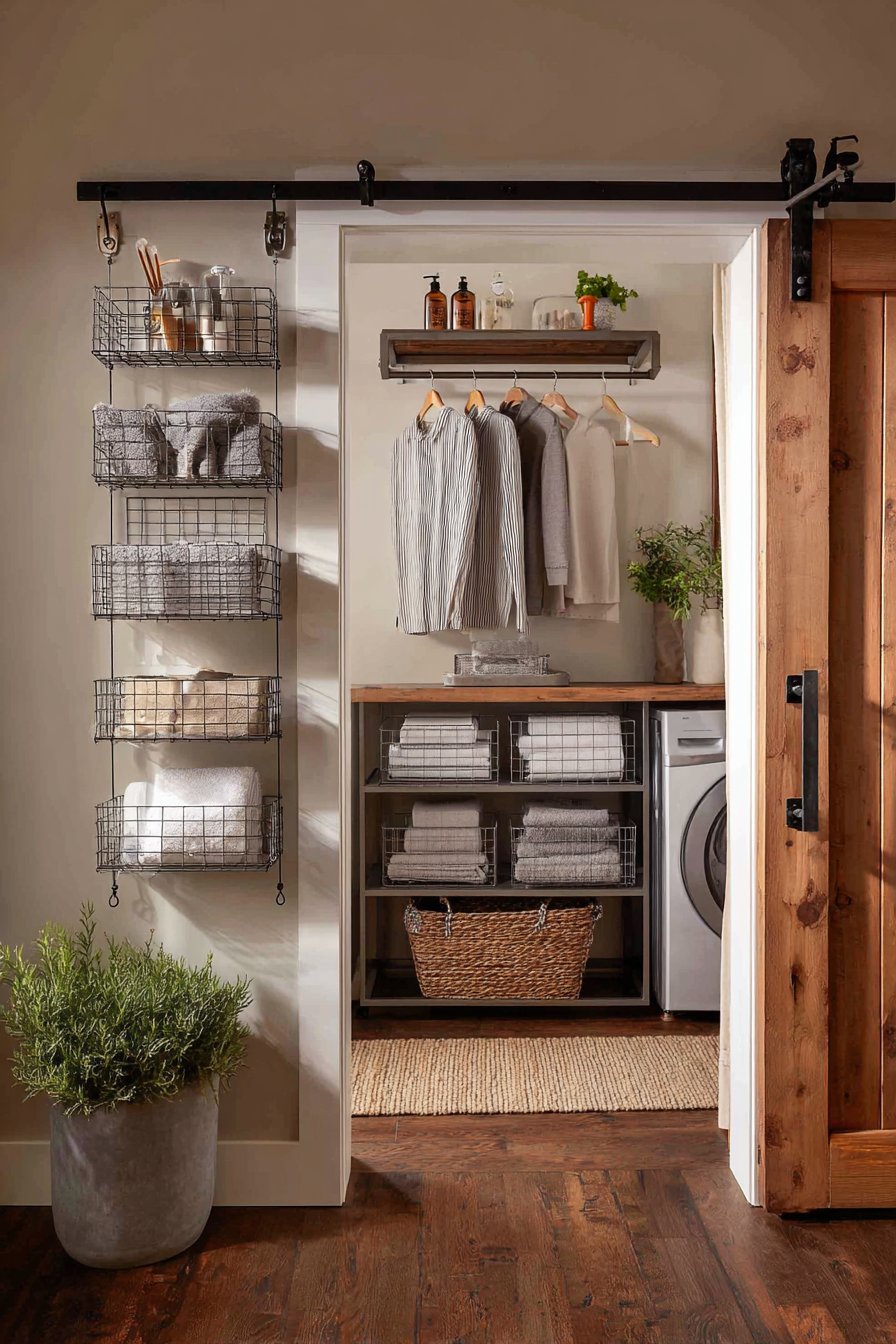
If your laundry room has a door that swings inward, consider replacing it with a sliding barn door or a pocket door. These door styles eliminate the swing radius, reclaiming several square feet of usable space. A pocket door in particular disappears entirely into the wall, giving you full, unobstructed access to every corner of the room.
- Install an over-the-door organizer with clear pockets for easy visibility
- Use tension rods in corners for a no-drill hanging solution
- Replace a swing door with a sliding or pocket door to free up floor space
- Add a small corner shelf at eye level for decorative or functional items
- Hang a corkboard on the back of the door for notes and reminders
- Use adhesive hooks on door sides for lightweight hanging items
6. Choose Light Colors and Smart Lighting
The visual design of your laundry room has a direct impact on how spacious and functional it feels. Light, neutral wall colors like soft white, pale gray, or warm beige reflect natural and artificial light, making a small room feel significantly larger. Dark or saturated colors absorb light and visually compress already-tight spaces.
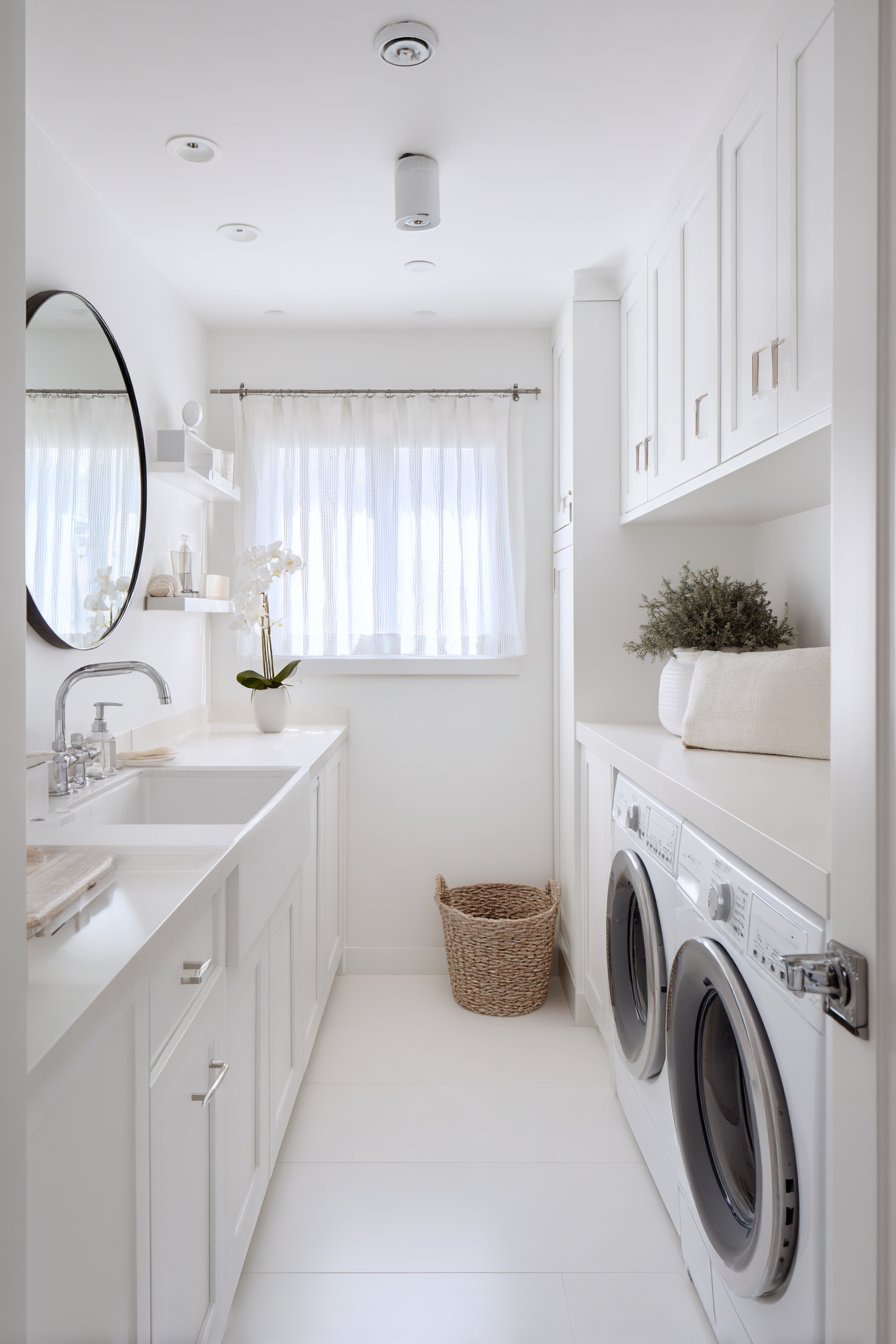
Recessed lighting or flush-mount ceiling fixtures are ideal for low-ceiling laundry rooms because they don’t reduce headroom. If adding overhead lighting isn’t possible, under-cabinet LED strips provide excellent task lighting at a low cost. Bright, cool-white bulbs in the 3000K to 4000K range mimic daylight and make sorting colors and reading care labels much easier.
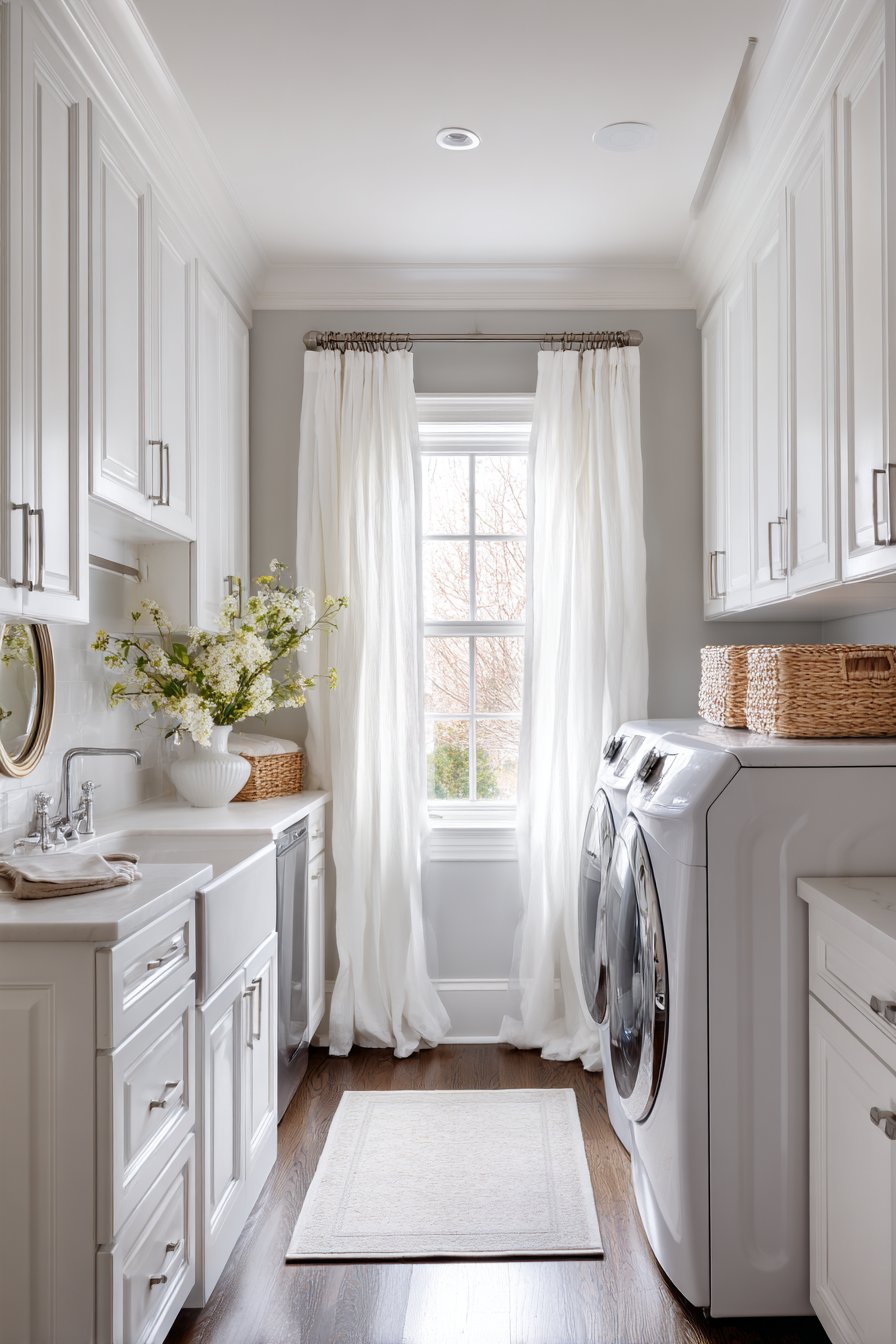
Mirrors are another powerful tool in small spaces. A small mirror mounted above the sink or along one wall reflects light and creates the illusion of depth. Combined with light paint colors and good lighting, mirrors can make a laundry room feel nearly twice its actual size. This visual expansion technique is widely used by professional interior designers in compact spaces.
- Paint walls in soft white or light gray to maximize light reflection
- Install LED under-cabinet strips for affordable, effective task lighting
- Use a small mirror to double the perceived depth of the room
- Choose gloss or semi-gloss paint finishes for easier cleaning and more reflection
- Add a window treatment in sheer white fabric to maintain privacy and light
- Replace a single ceiling bulb with a multi-bulb fixture for even illumination
Conclusion
A tiny laundry room doesn’t have to be a source of daily frustration. By going vertical with storage, stacking appliances, adding a fold-down ironing board, installing a countertop, maximizing doors and corners, and choosing light colors with smart lighting, you can transform even the smallest space into a highly functional room.

Start with one or two changes and build from there. Every improvement compounds — each addition creates more room for the next upgrade. The goal isn’t perfection; it’s creating a space that works reliably and feels good to use. With the right approach, your tiny laundry room can become one of the most organized and efficient areas in your entire home.
