


Designing a nursery goes beyond simply choosing cute decorations and pastel colors. It’s about creating a magical sanctuary where your little one can dream, grow, and explore their imagination from day one. A thoughtfully designed nursery balances functionality with fantasy, providing both practical storage solutions and enchanting visual elements that spark wonder.

Whimsical design transforms ordinary spaces into extraordinary realms that nurture creativity and joy. When you incorporate playful elements into your nursery, you’re not just decorating a room—you’re crafting an environment that celebrates childhood wonder. This approach allows you to express personality while maintaining the essential comfort and safety every baby needs.

The seven strategies we’ll explore offer diverse approaches to infusing magic into your nursery design. From ceiling installations to unexpected color palettes, these ideas help you create a space that feels both enchanting and purposeful. Whether you prefer subtle touches or bold statements, these methods provide flexibility to match your personal style while keeping your baby’s comfort paramount.
1. Transform Your Ceiling Into a Fifth Wall
Most parents overlook the ceiling when designing their nursery, missing an incredible opportunity for whimsical impact. The ceiling offers a vast canvas for creativity that captures your baby’s attention during those countless hours spent lying on their back. Consider it your secret design weapon for adding unexpected delight.
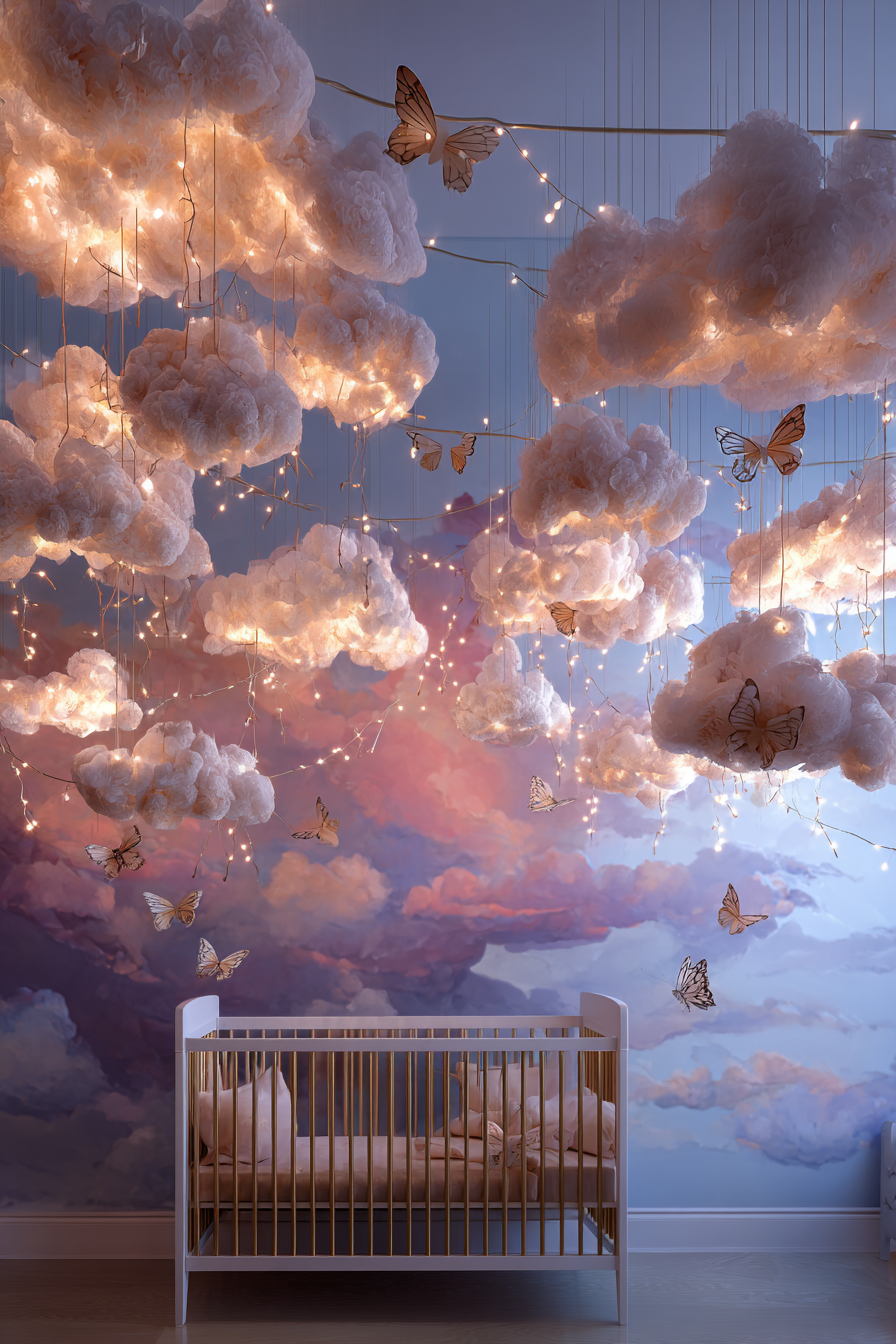
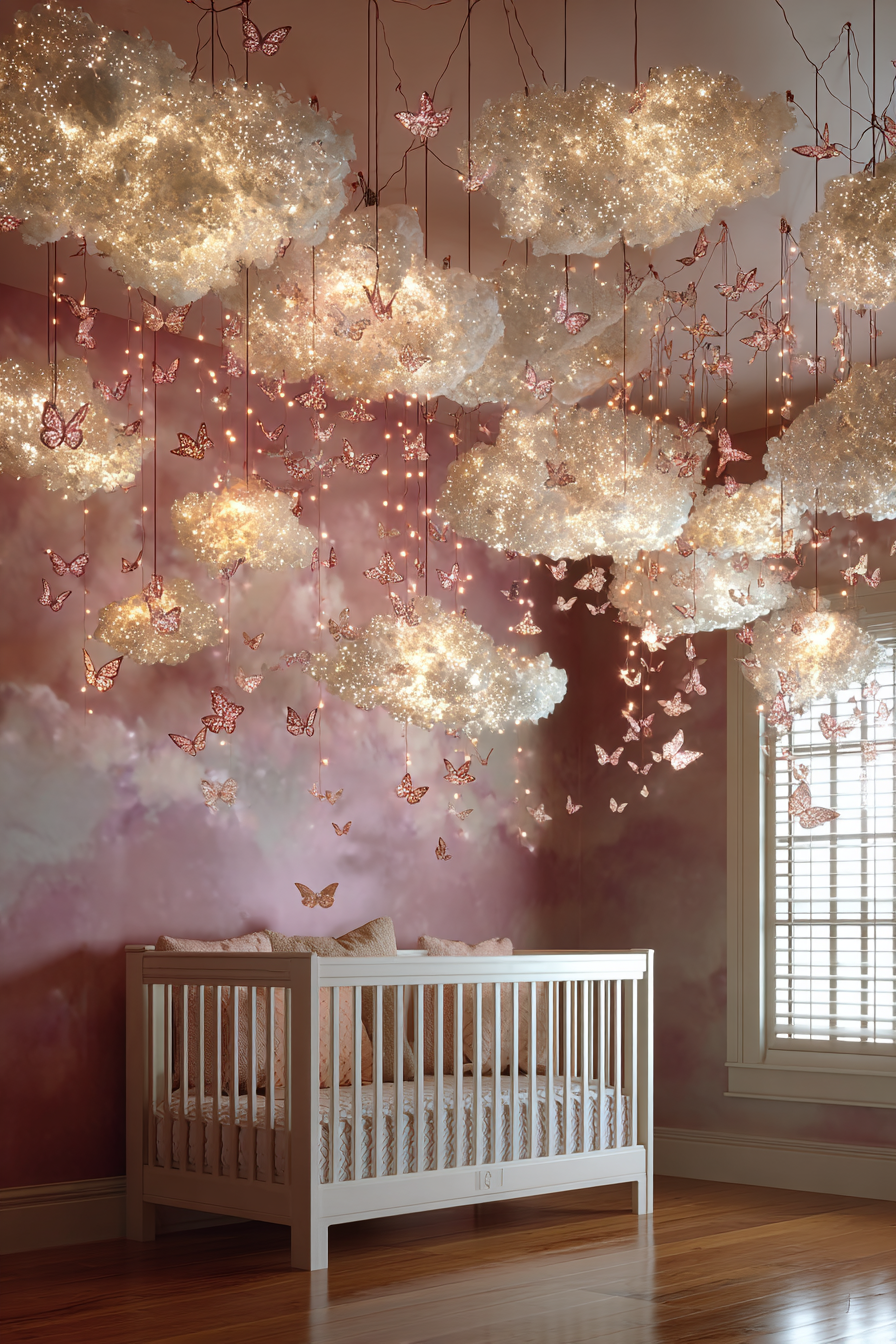
Ceiling treatments create immersive experiences without cluttering floor space or walls. Install cloud-shaped panels in varying sizes, hang paper lanterns resembling hot air balloons, or apply removable decals depicting starry night skies. These overhead elements draw the eye upward and create depth and dimension that makes the room feel larger and more engaging.
Paint techniques also work beautifully on ceilings. Try an ombre effect transitioning from deep twilight blue to soft morning pink, or create a subtle rainbow gradient. Glow-in-the-dark paint adds nighttime magic that soothes babies during those late-night wake-ups while providing just enough ambient illumination for parents.
- Apply peel-and-stick stars or moon decals for easy customization
- Hang lightweight fabric to create a canopy effect over the crib
- Install a ceiling medallion painted in unexpected colors like mint or coral
- Use string lights with dimmers to create adjustable mood lighting
- Paint ceiling borders with whimsical patterns like scallops or gentle waves
- Attach paper butterflies or birds on invisible fishing line for floating effect
2. Embrace Unexpected Color Combinations
Forget the traditional pink-and-blue paradigm that dominates nursery design. Bold color pairings inject personality and visual interest that standard pastels simply cannot achieve. Mixing unexpected hues creates a sophisticated playfulness that grows with your child rather than feeling too babyish.
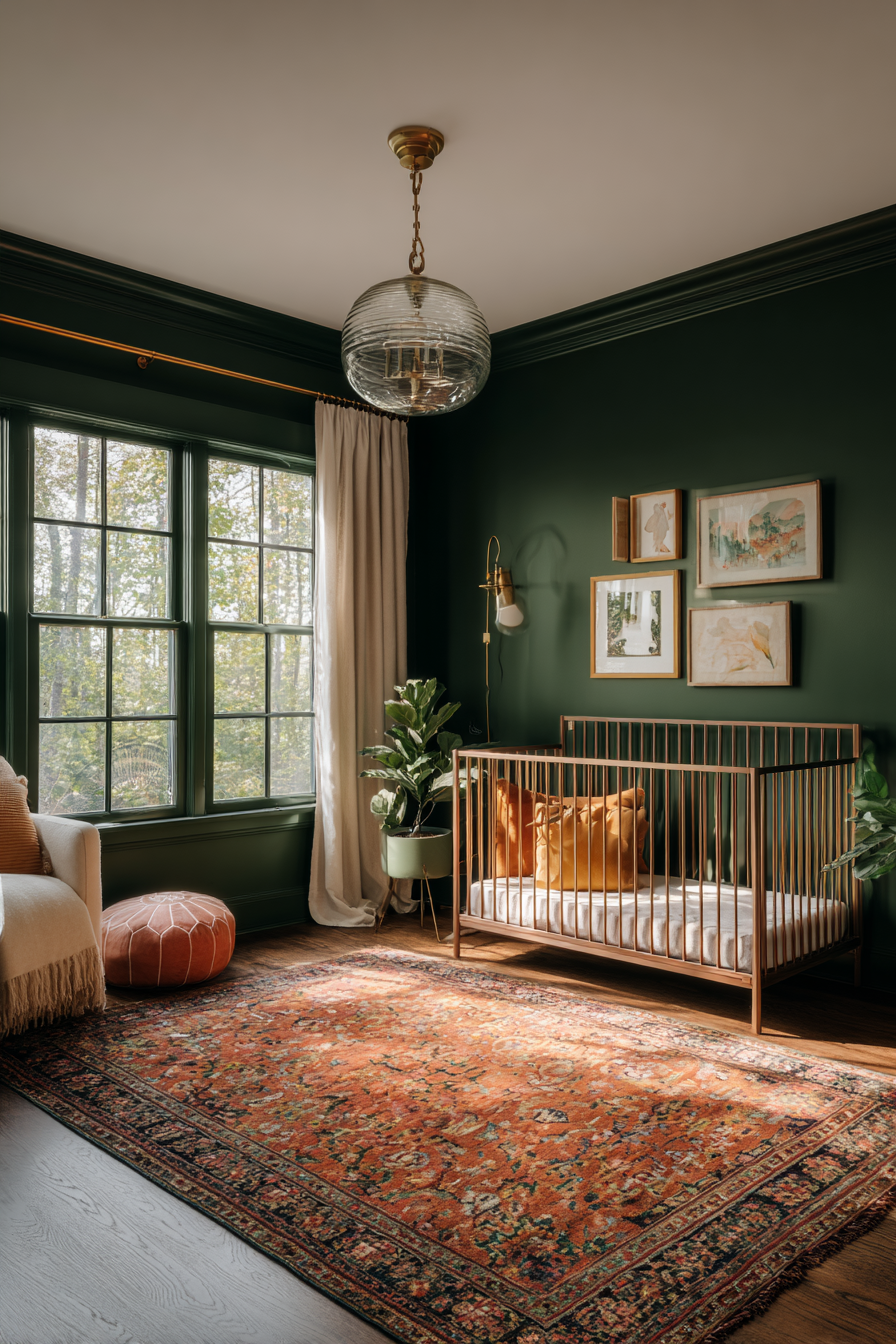
Consider pairing mustard yellow with sage green, or combine terracotta orange with dusty lavender for a sunset-inspired palette. These unconventional combinations feel fresh and modern while maintaining the softness appropriate for a nursery. The key is balancing saturated tones with neutral elements to prevent overwhelming the space.
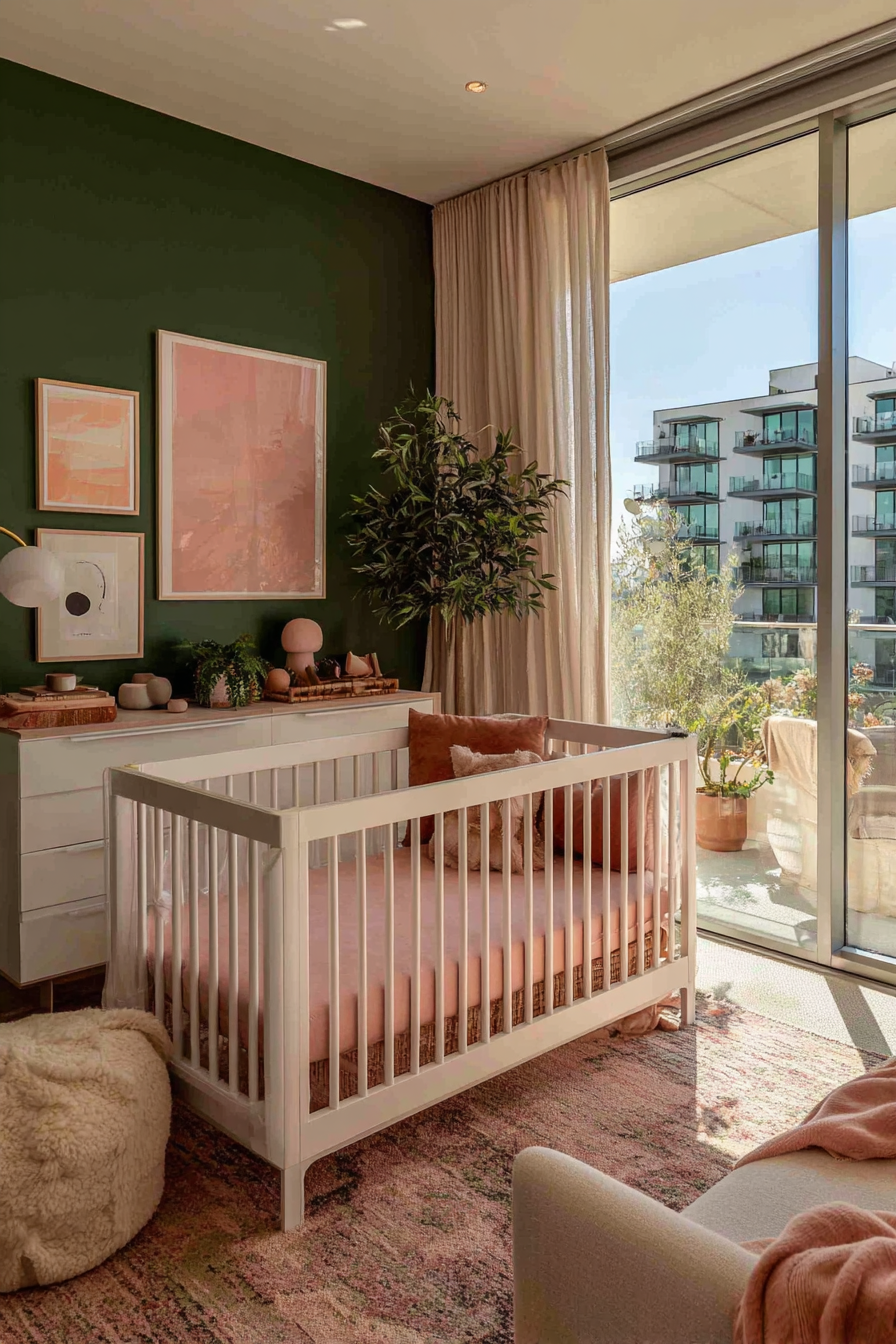
Don’t shy away from jewel tones either. Deep emerald, sapphire blue, or ruby red as accent colors create drama and richness when paired with cream or soft gray walls. These colors stimulate visual development in babies while creating a gallery-worthy aesthetic that adults appreciate during those long hours spent in the nursery.
- Test paint samples in different lighting conditions before committing
- Use the 60-30-10 rule: 60% dominant color, 30% secondary, 10% accent
- Incorporate colors through easily changeable elements like pillows and art
- Consider color psychology and how different hues affect mood
- Add metallic accents in copper or brass for warmth
- Create an accent wall with your boldest color choice
3. Install Whimsical Lighting Fixtures
Lighting serves both functional and decorative purposes, making it perfect for whimsical expression. The right fixture becomes a sculptural focal point that sets the tone for the entire room. Choose something that makes you smile every time you flip the switch—that’s the essence of playful design.
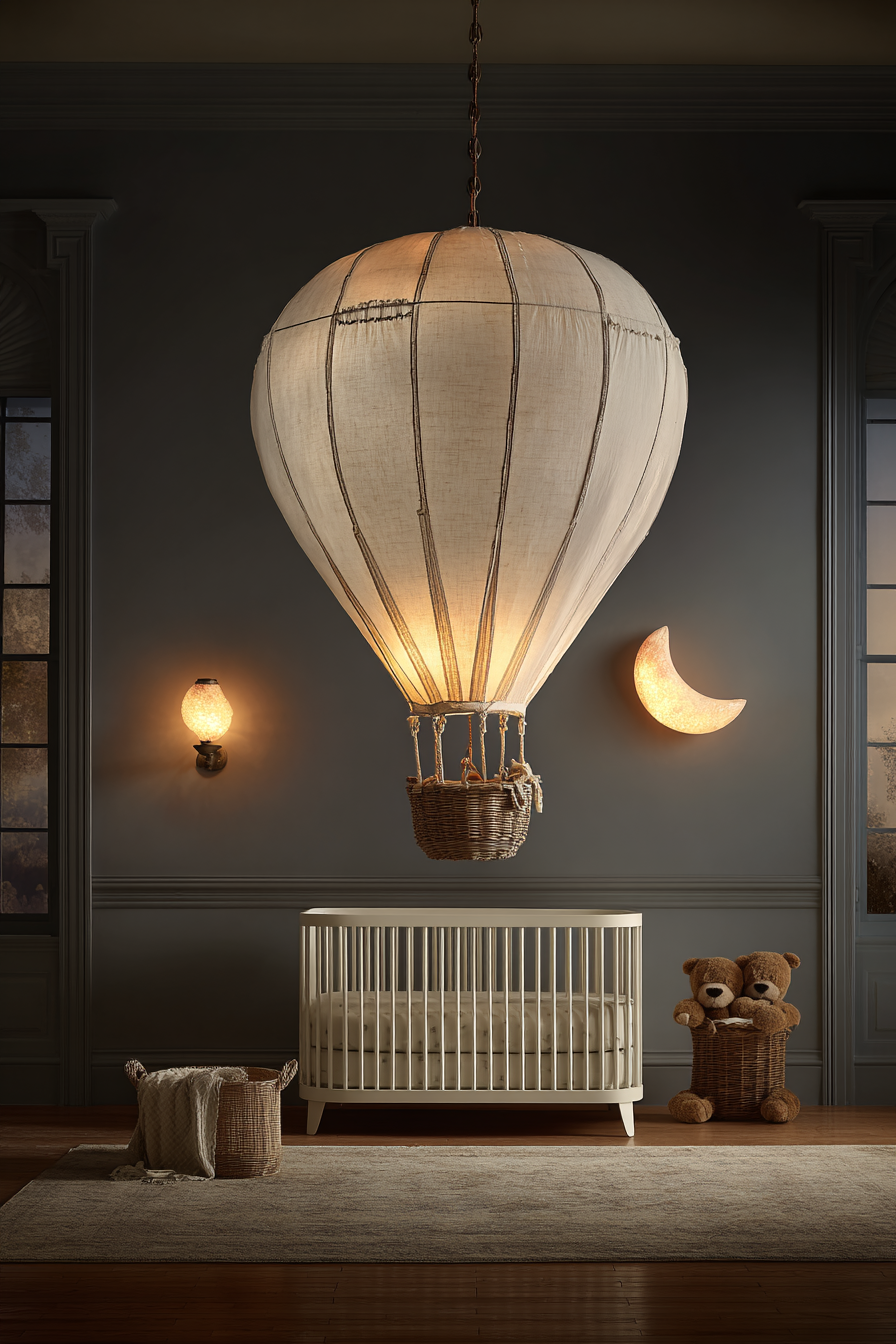
Look for chandeliers shaped like hot air balloons, pendant lights resembling jellyfish, or sconces that look like woodland creatures. These statement pieces provide adequate illumination while serving as conversation starters and artistic elements. Avoid anything too childish that you’ll want to replace in just a few years.
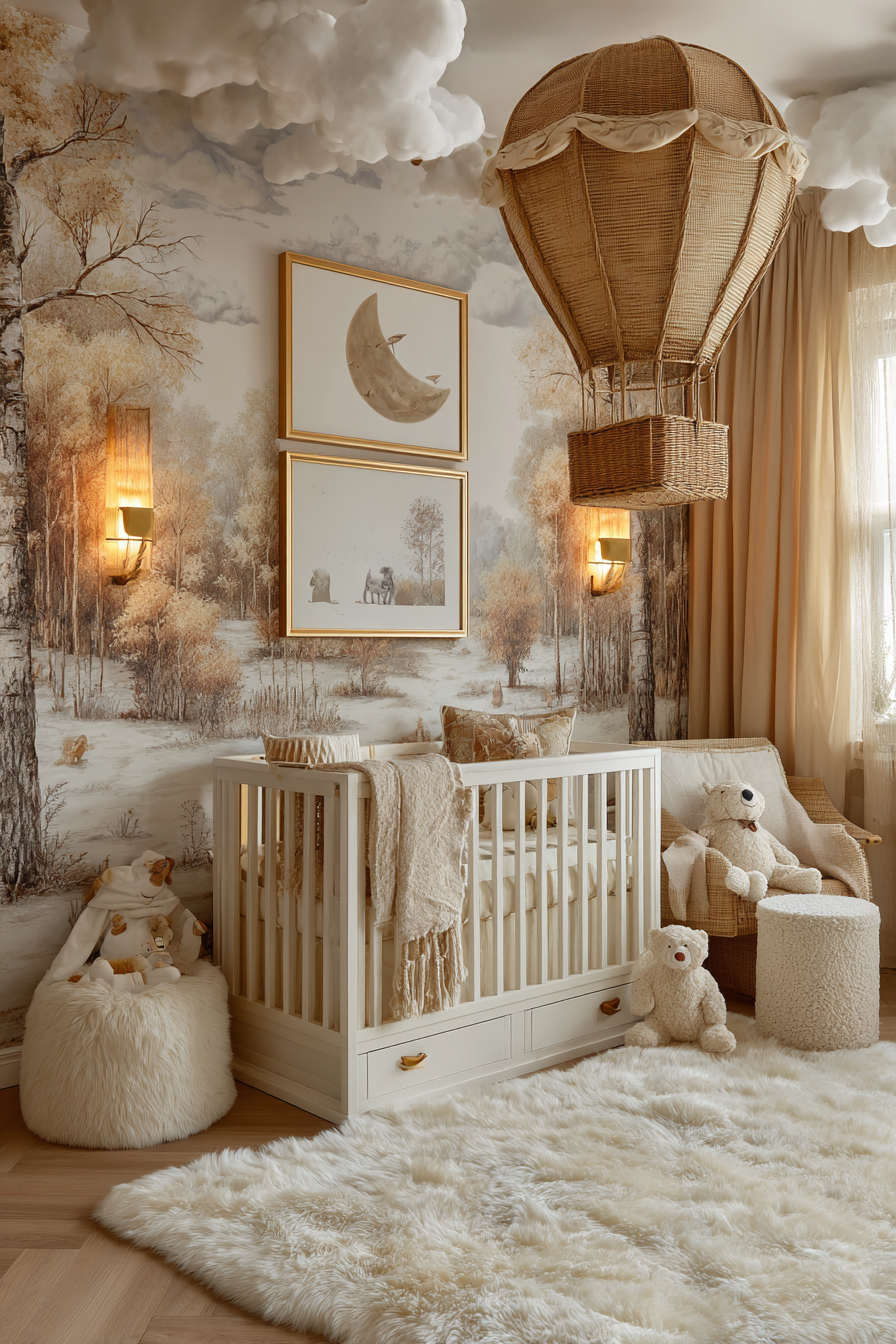
Layer your lighting to create versatile ambiance throughout the day. Combine overhead fixtures with table lamps, wall sconces, and string lights. Install dimmer switches on all major light sources to transition from bright playtime to soft bedtime glow. Consider adding a small moon-shaped nightlight that provides just enough light for midnight diaper changes.
- Choose fixtures with LED bulbs for safety and energy efficiency
- Install at least three different light sources at varying heights
- Ensure all lighting is safely secured and out of reach
- Consider smart bulbs that change color for different activities
- Add battery-operated closet lights for easier outfit selection
- Use lampshades with cutout patterns that project shapes onto walls
4. Create a Gallery Wall With Unexpected Art
Skip the generic animal prints and mass-produced nursery art. A curated gallery wall featuring unexpected pieces adds sophistication and personality that reflects your unique taste. This approach transforms the nursery into a mini art installation that evolves as your child grows.
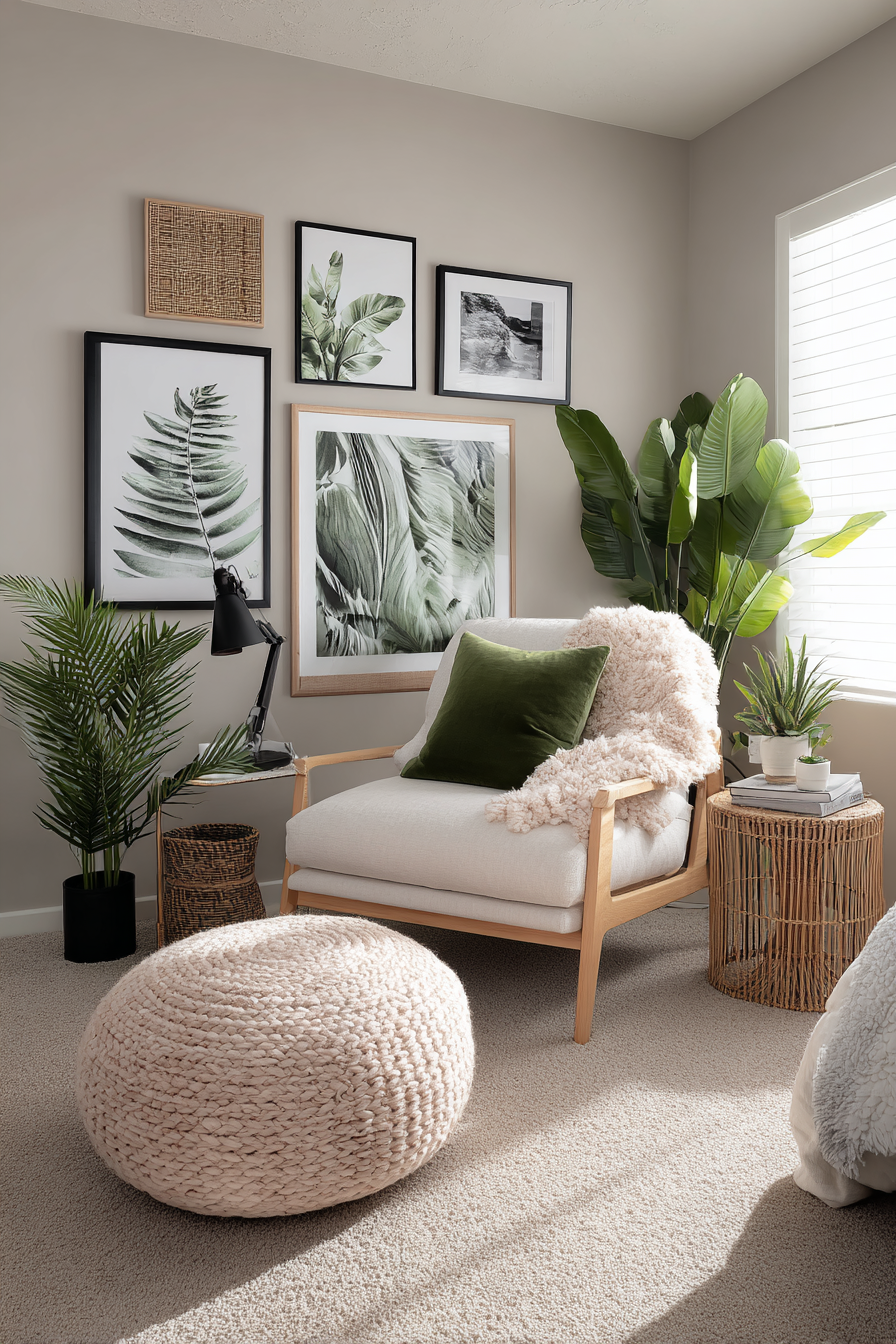
Mix vintage botanical prints with modern abstract pieces, or combine black-and-white photography with colorful illustrations. Include three-dimensional elements like small woven baskets, decorative plates, or shadow boxes containing special mementos. The variation in textures and mediums creates visual interest that keeps the wall from feeling flat or boring.
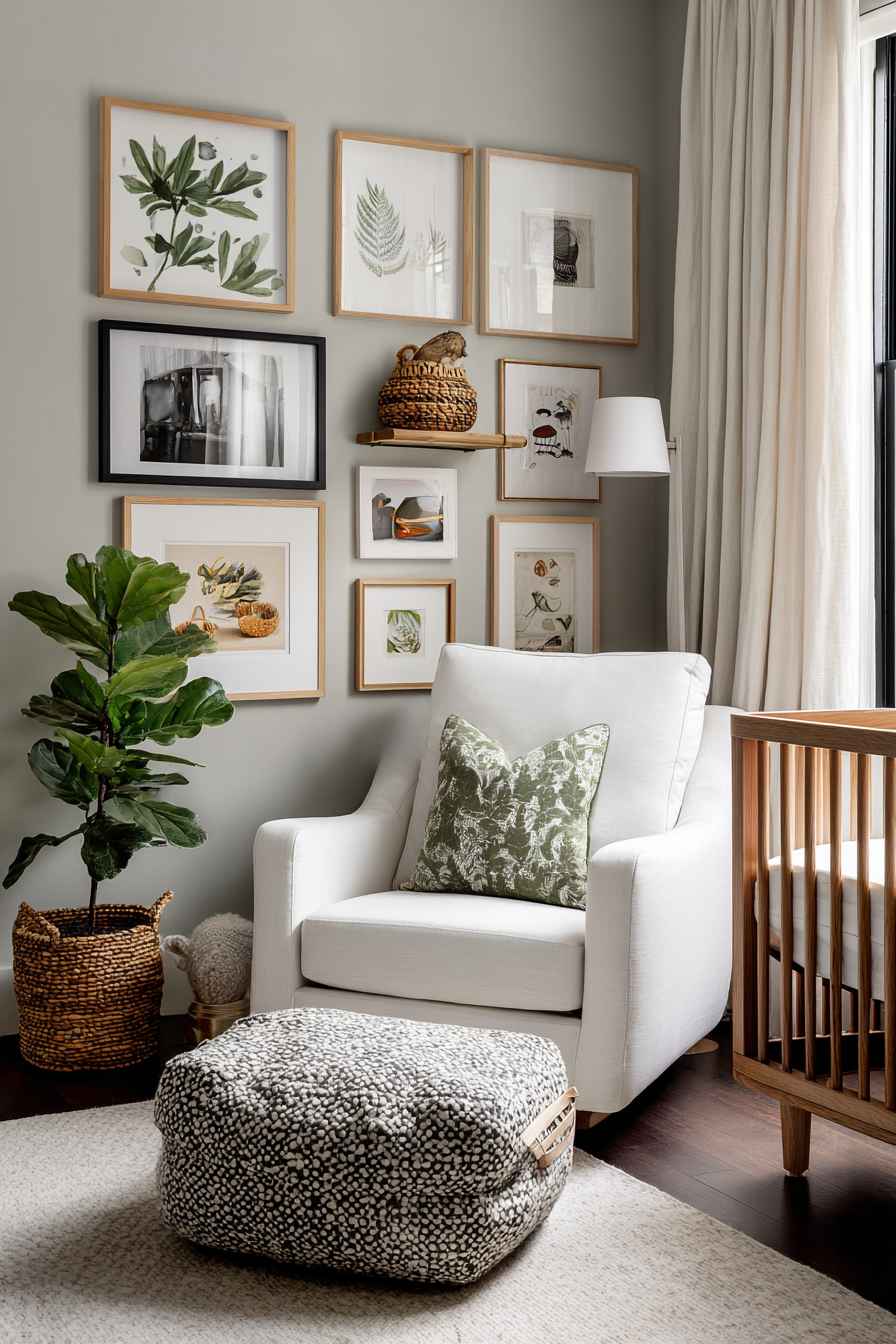
Don’t be afraid to include sophisticated art that isn’t specifically “for kids.” Babies benefit from exposure to various artistic styles, and you’ll appreciate having museum-quality pieces during those countless hours spent nursing or rocking. Frame inexpensive art prints in quality frames for a polished, expensive look without the hefty price tag.
- Start with odd numbers of pieces for better visual balance
- Use paper templates to plan layout before hammering nails
- Include at least one personal piece like family heirloom or custom portrait
- Vary frame sizes and styles for eclectic, collected-over-time feel
- Leave space to add pieces as child grows and interests develop
- Consider a picture ledge for easy rotation of artwork
5. Add Oversized or Miniature Elements
Playing with scale creates instant whimsy and visual surprise. Oversized elements make children feel small in a magical world, while miniature versions of adult furniture spark imagination and charm. This contrast in proportions adds delightful tension that makes spaces memorable.
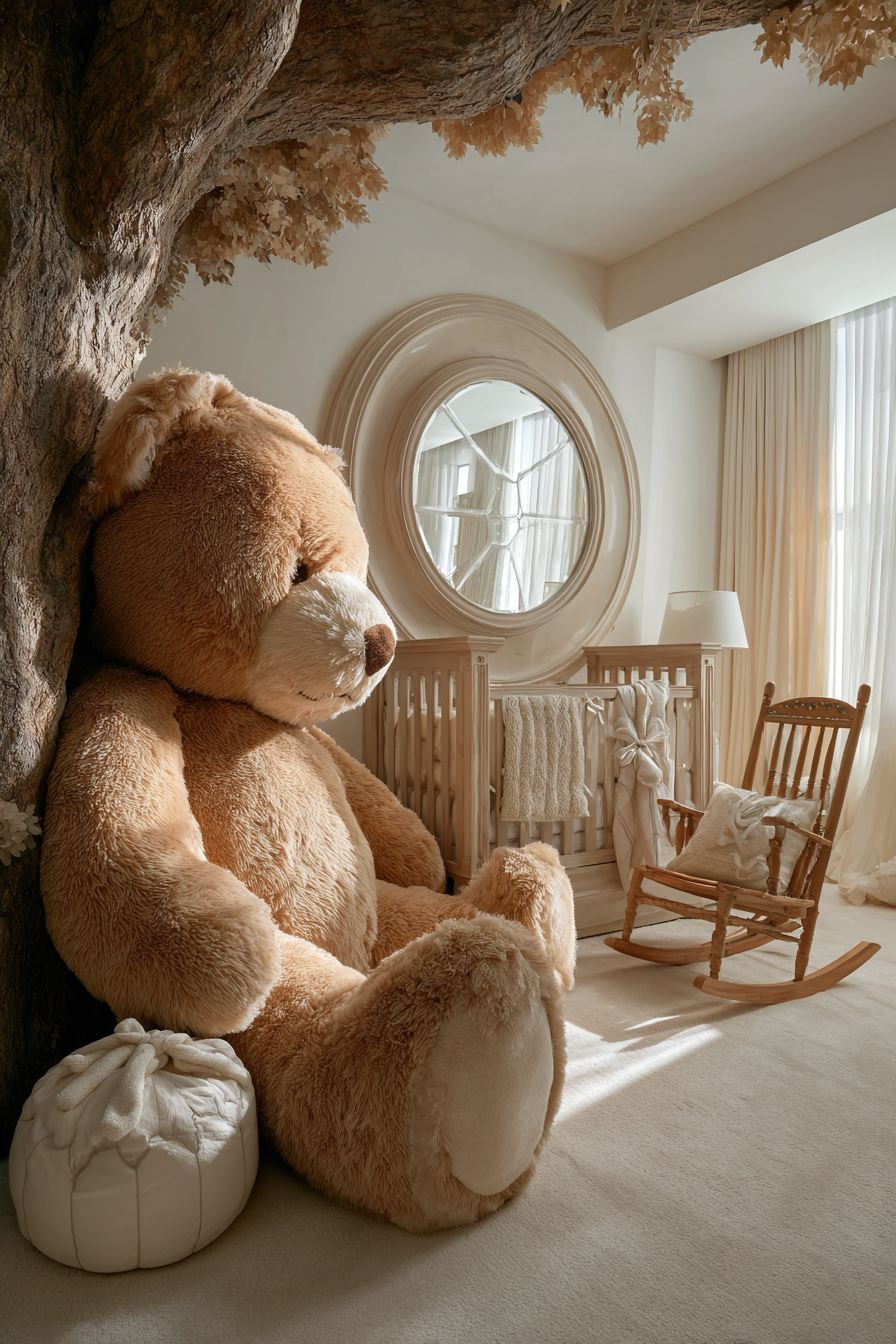
Consider a giant stuffed animal that serves as both decor and floor cushion, or install an oversized mirror that reflects light and makes the room feel larger. On the flip side, tiny furniture pieces like a miniature rocking chair or small bookshelf create cozy reading nooks that feel specially sized for little ones.
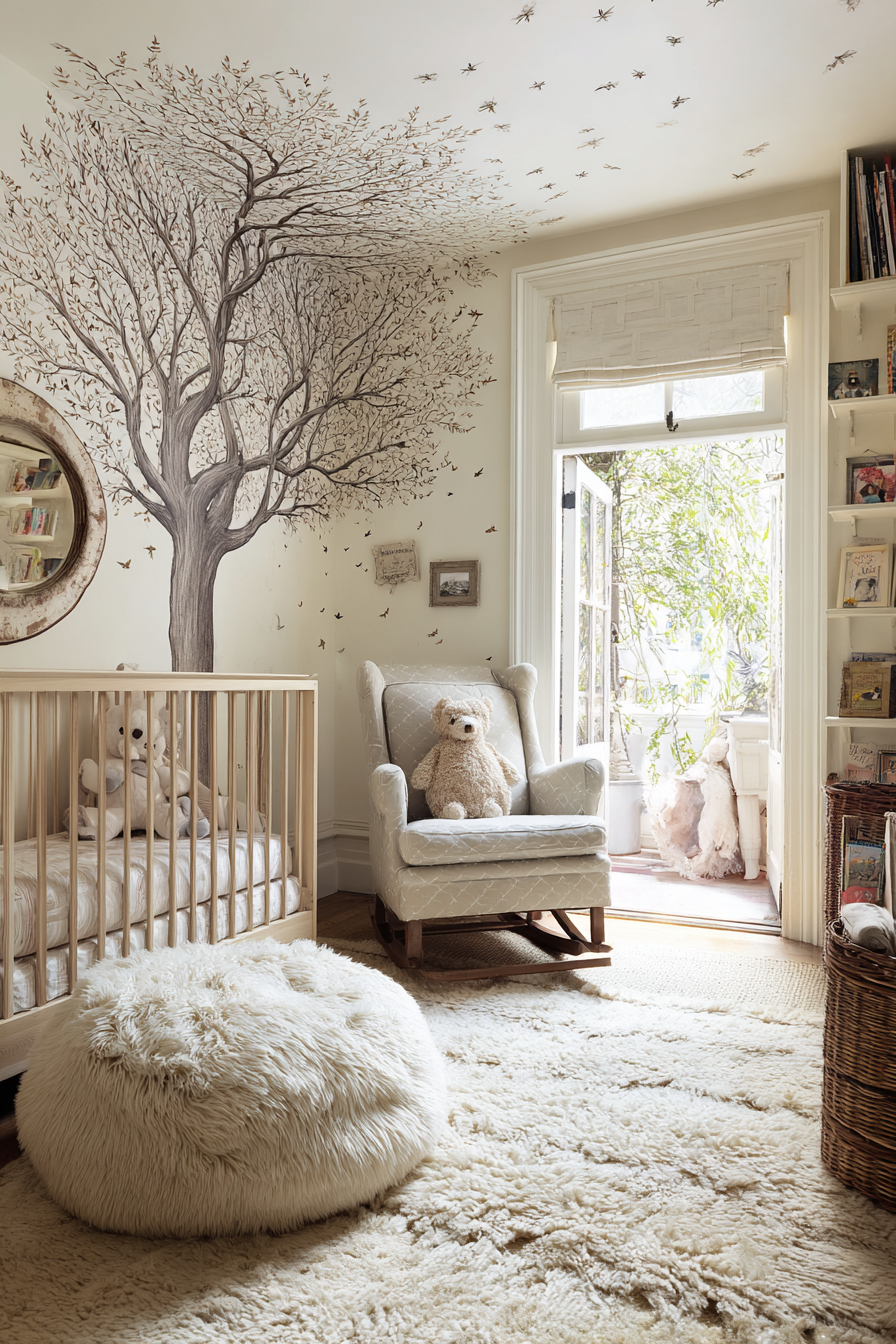
Wall decals in exaggerated sizes work beautifully too. Apply a larger-than-life tree that reaches from floor to ceiling, or use enormous flower decals as a headboard alternative. These dramatic scale shifts create focal points without requiring expensive furniture or permanent renovations.
- Measure carefully to ensure oversized pieces don’t overwhelm the space
- Use scale contrast strategically rather than randomly throughout room
- Consider child’s perspective when placing oversized elements
- Choose miniature pieces that remain functional and safe
- Balance large and small elements for harmonious composition
- Photograph room to check if scale feels intentional versus accidental
6. Incorporate Unexpected Textures and Materials
Texture adds tactile interest that engages babies’ developing senses while creating visual depth. Mixing materials like velvet, rattan, wool, and metal creates a layered, sophisticated look that transcends typical nursery design. These varied surfaces invite touch and exploration as your baby grows.
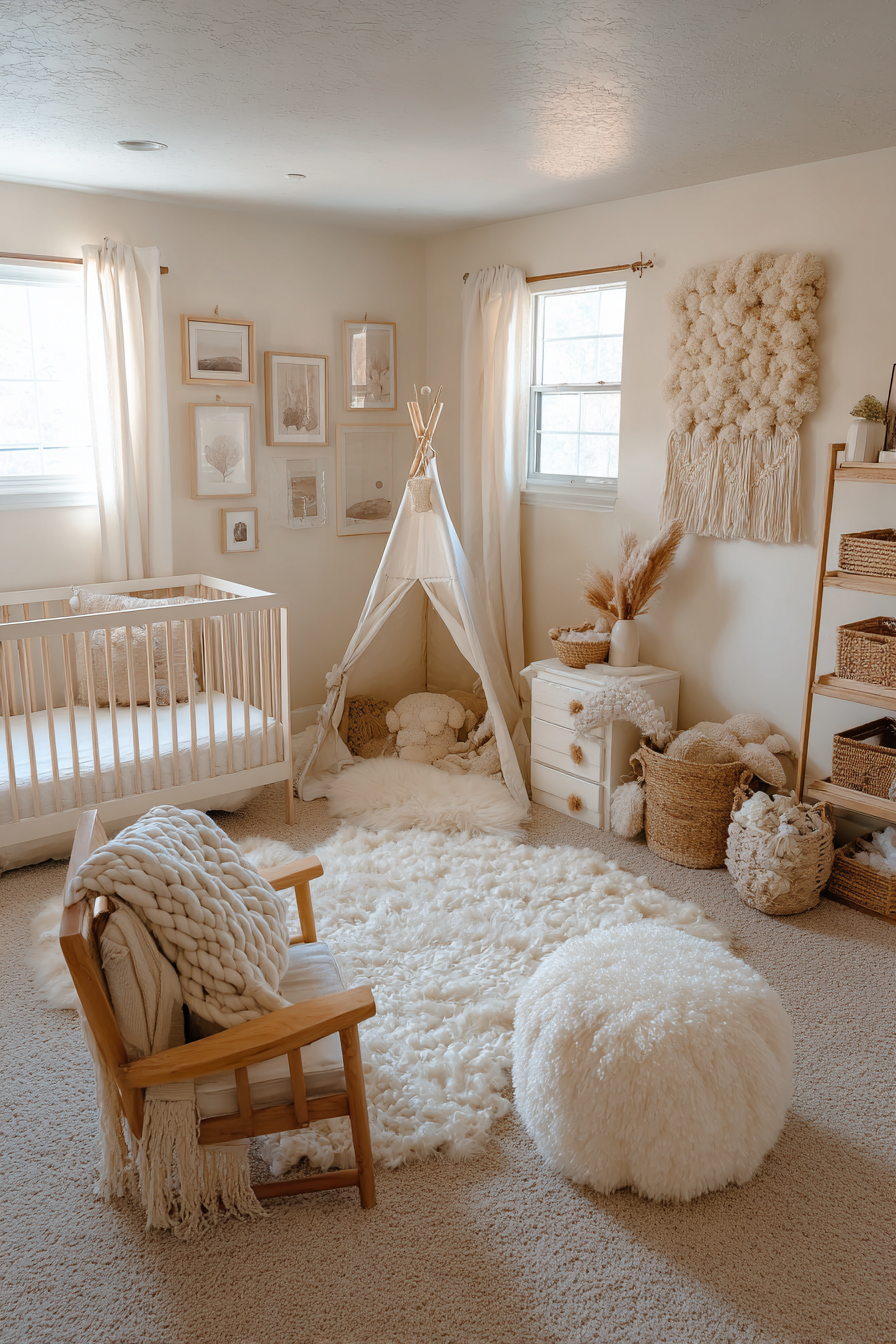
Hang a macramé wall hanging as soft sculpture, or add a sheepskin rug for cozy tummy time sessions. Install rattan storage baskets that bring organic texture while providing practical organization. Consider a velvet ottoman that serves as both seating and visual softness against harder surfaces like wooden floors and metal crib frames.

Don’t forget about fabric choices beyond bedding. Use linen curtains for natural texture, add a canvas play tent for adventure-ready corner, or include chunky knit blankets as decorative throws. These textural layers make the room feel curated and intentional rather than decorated with a one-stop shopping trip.
- Include at least five different textures throughout the space
- Balance rough and smooth surfaces for sensory variety
- Choose washable fabrics for high-use areas like rugs
- Avoid anything with loose threads or small detachable pieces
- Mix organic materials with modern elements for updated bohemian feel
- Test textures against baby’s skin to ensure softness
7. Design a Statement Feature Wall
A feature wall anchors the entire room and provides the perfect opportunity for bold whimsy. Whether you choose paint, wallpaper, or three-dimensional elements, this focal point establishes the room’s personality and theme. It draws the eye immediately upon entering and sets expectations for the space.
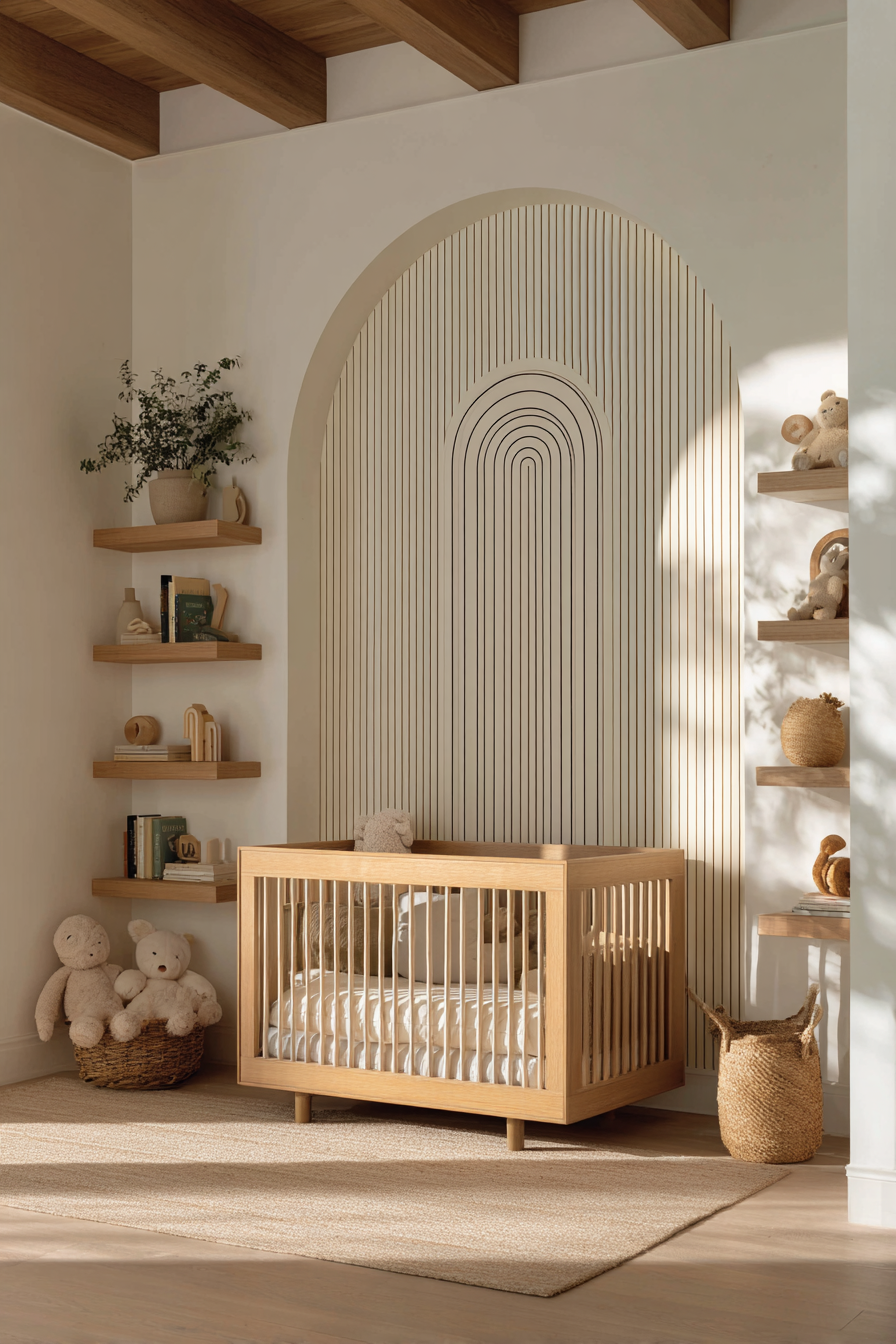
Removable wallpaper offers endless possibilities without long-term commitment. Choose patterns like oversized florals, watercolor rainbows, or hand-drawn maps of imaginary lands. If wallpaper feels too permanent, create an accent wall using painted shapes like mountains, arches, or geometric patterns that add graphic impact.
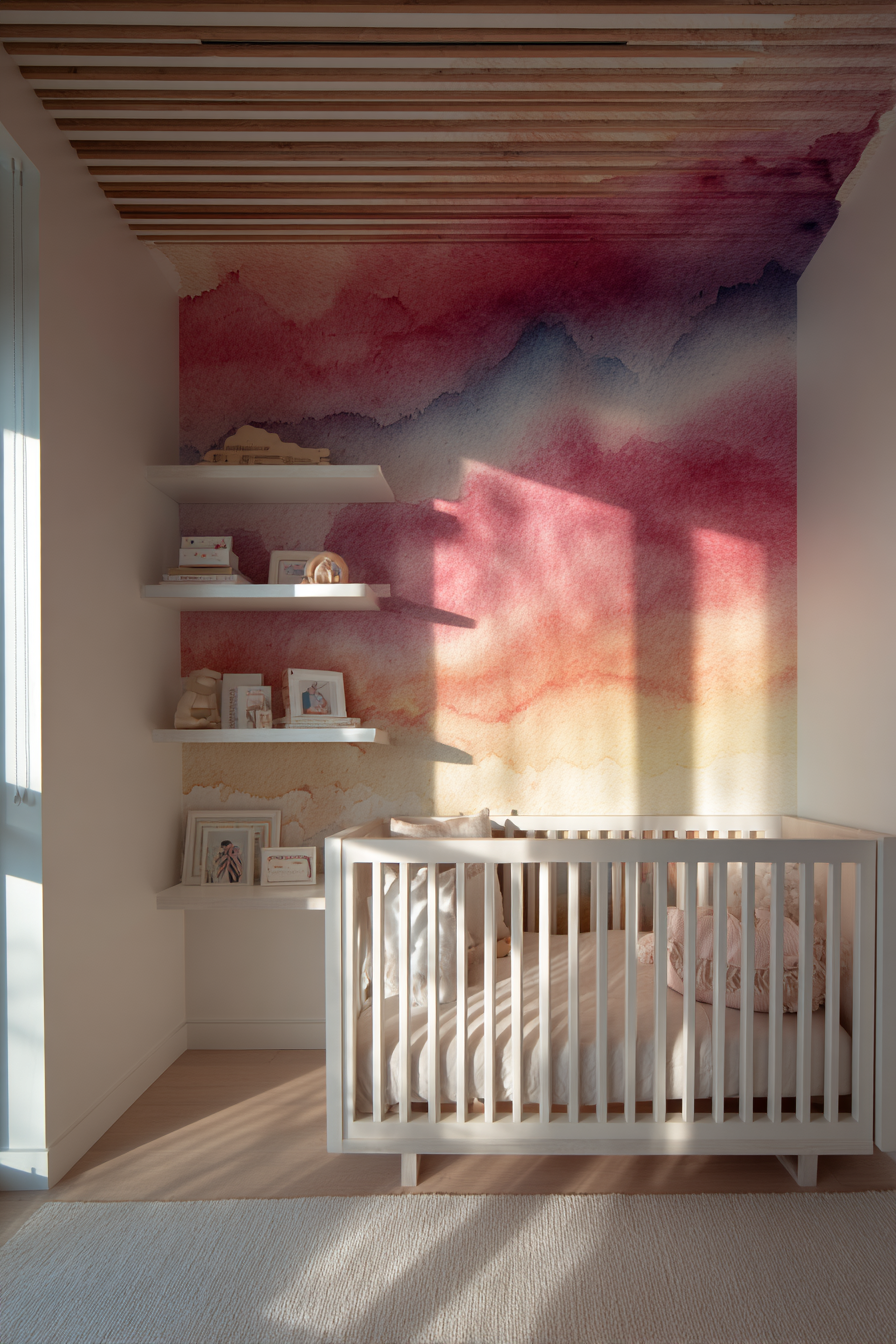
Three-dimensional feature walls provide extra wow factor. Install wooden dowels in graduated lengths to create a mountain range effect, or attach floating shelves in asymmetrical arrangements that hold books and treasures. Wood slat walls painted in ombre colors create modern texture while providing sound dampening benefits for better sleep.
- Choose wall behind crib for maximum visual impact
- Ensure all materials are low-VOC and baby-safe
- Consider how wall will photograph for those first-year photos
- Balance busy feature wall with simpler remaining walls
- Use painter’s tape to mock up painted designs before committing
- Select pattern scale appropriate to room size and ceiling height
Conclusion
Incorporating whimsy into your nursery design creates a space that celebrates childhood while providing the functionality modern families need. These seven strategies prove that practical and playful can coexist beautifully when you approach design with intention and creativity. Remember that the most successful nurseries reflect your family’s unique personality rather than following prescribed formulas.

Start with one or two ideas that resonate most strongly with your style, then build from there as budget and time allow. The beauty of whimsical design lies in its flexibility and evolution—you can add, change, and grow these elements as your child develops. Trust your instincts, have fun with the process, and create a space where both you and your baby feel inspired, comforted, and delighted every single day.
