


Wood kitchens represent timeless elegance that never goes out of style. The natural warmth of wood creates inviting spaces where families gather and memories form. From light Scandinavian aesthetics to rich traditional designs, wood offers endless possibilities for personal expression.
The versatility of wood as a kitchen material continues to captivate homeowners and designers alike. Different wood species bring unique characteristics through grain patterns, colors, and textures. Whether you prefer the honeyed glow of oak or the sophisticated depth of walnut, wood transforms ordinary kitchens into extraordinary spaces.

This comprehensive guide explores twenty distinct wood kitchen designs that showcase the material’s remarkable range. Each concept demonstrates how thoughtful wood selection and placement create cohesive, functional, and beautiful culinary environments. These designs span multiple styles while celebrating wood’s inherent beauty and practical benefits.
1. Warm White Oak Shaker Kitchen

Natural white oak cabinets bring organic beauty to this welcoming kitchen design. The visible grain patterns create subtle visual interest across each cabinet face. Custom shaker-style doors with soft-close hinges combine traditional aesthetics with modern functionality.
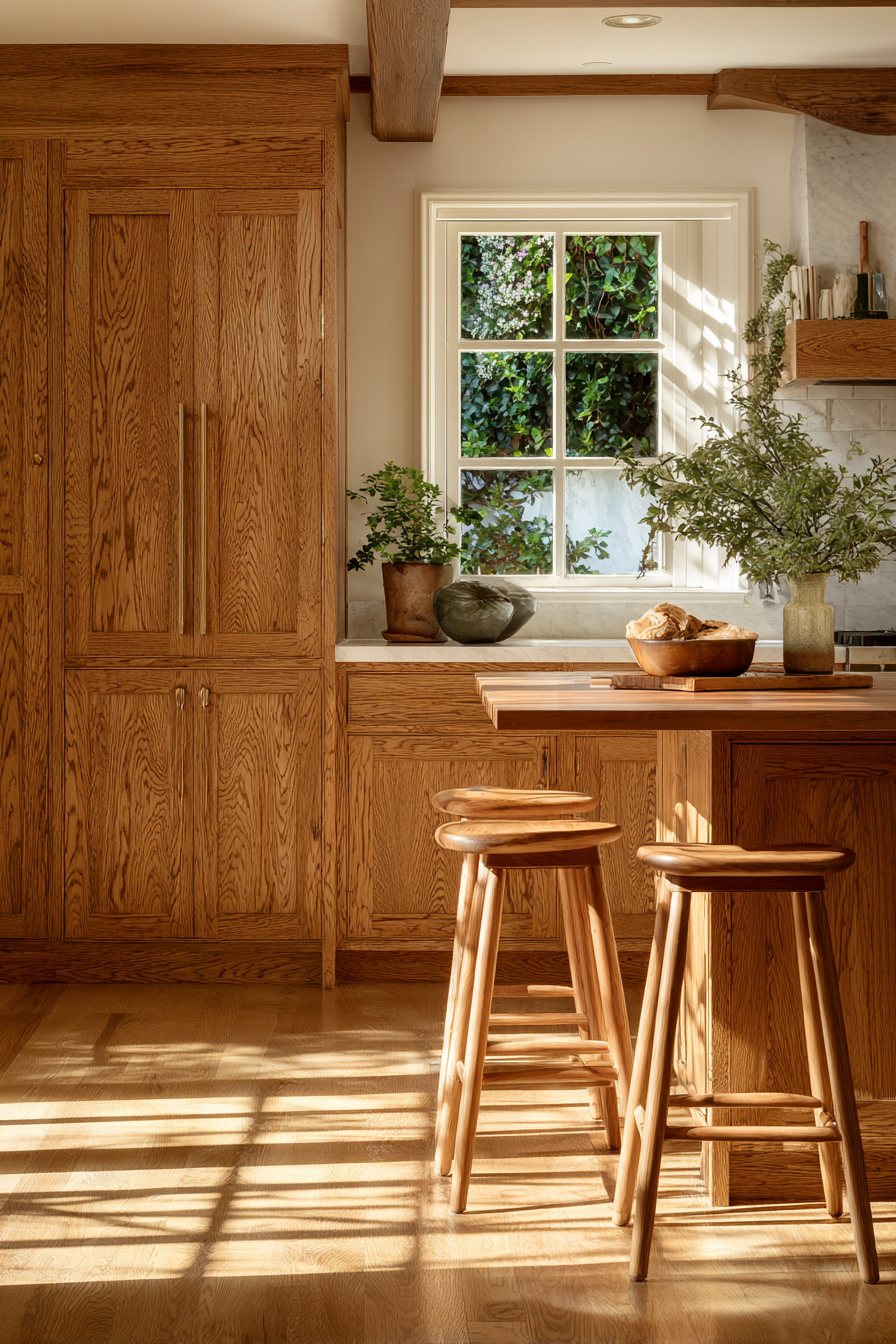
The kitchen island commands attention with its thick walnut butcher block countertop. Rich brown tones contrast beautifully with the lighter perimeter cabinets. Rounded edges invite comfortable interaction while three modern bar stools provide casual seating.

Brushed brass hardware adds refined elegance throughout the space. Morning light streams through a large window above the farmhouse sink. The natural illumination highlights grain variations and creates dimensional shadows.

Key Design Tips:
- Select white oak for its durability and beautiful grain patterns
- Combine different wood species for visual contrast and interest
- Install soft-close hinges for quiet operation and longevity
- Position the sink near windows to maximize natural light
- Choose brass hardware for warmth that complements wood tones
2. Scandinavian Light Birch Kitchen
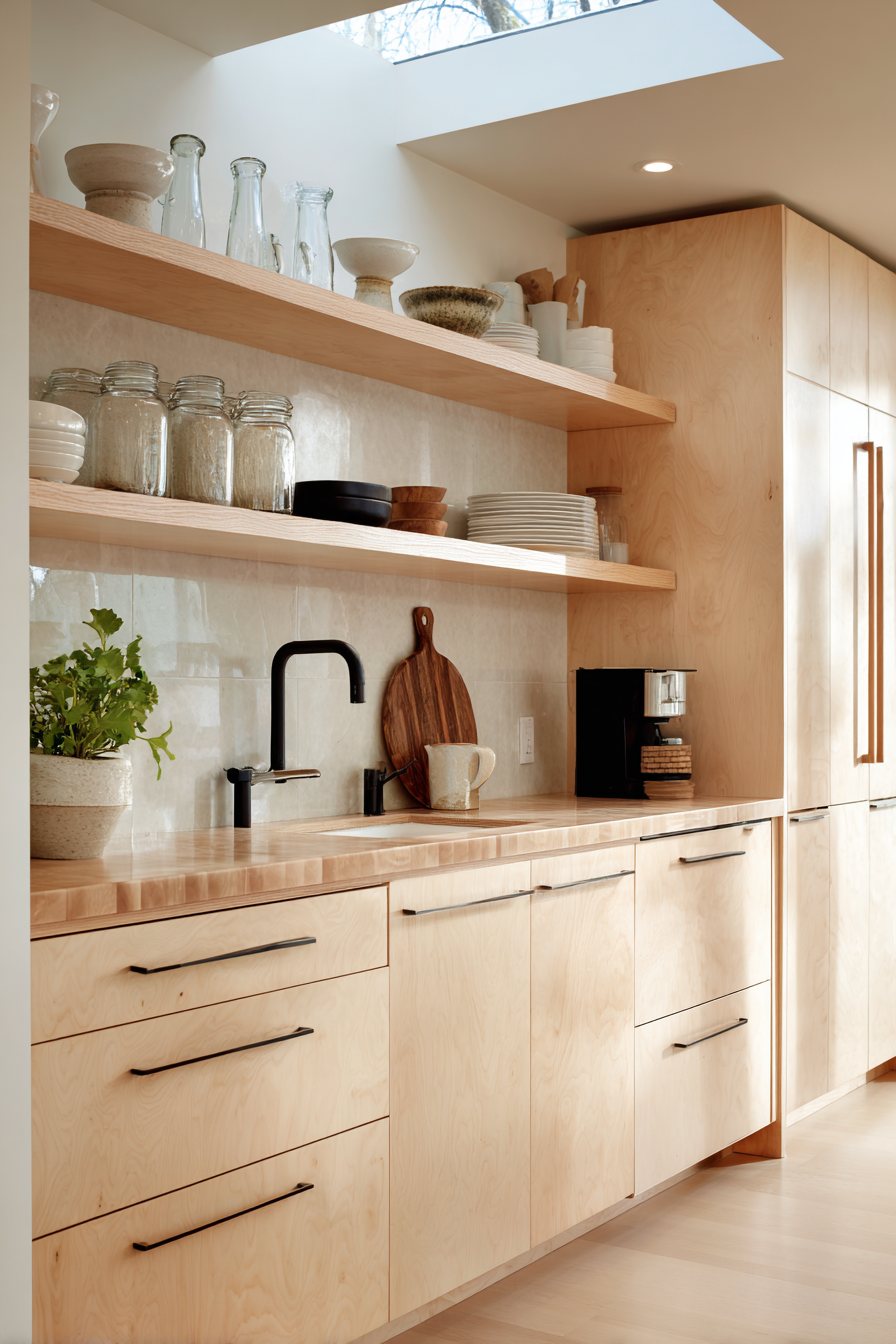
Minimalist design principles guide this bright and airy kitchen concept. Light birch plywood cabinets feature integrated handles for seamless surfaces. The pale wood creates a serene backdrop that emphasizes simplicity and function.

Open wooden shelving displays white ceramic dishware in organized arrangements. Glass storage jars add transparency while maintaining the clean aesthetic. Lower cabinets with push-to-open mechanisms eliminate visible hardware completely.

Pale maple butcher block countertops show subtle natural variations. Matte black fixtures create striking contrast against the light wood palette. A skylight bathes the space in soft, diffused daylight throughout the day.

Key Design Tips:
- Use light wood species to maximize brightness in smaller kitchens
- Incorporate open shelving to display beautiful dishware and reduce visual weight
- Select push-to-open mechanisms for handleless cabinet fronts
- Add skylights to introduce natural light from above
- Create contrast with black fixtures against pale wood tones
3. Rustic Reclaimed Barn Wood Kitchen

Weathered grey patina tells stories of history on this reclaimed barn wood island. Visible nail holes and authentic wear patterns add character impossible to replicate. The concrete countertop with organic edges provides modern contrast to rustic wood.
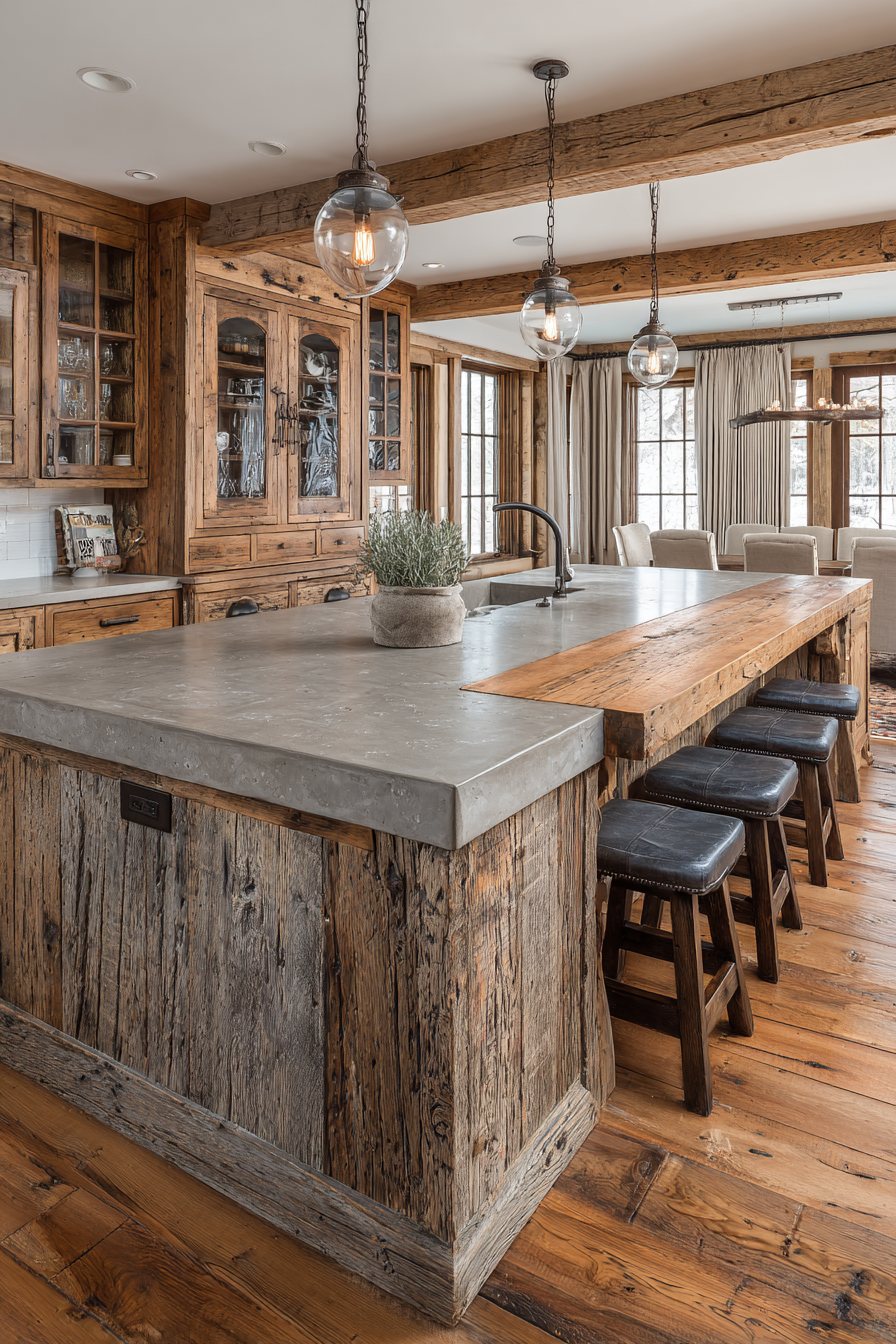
Natural knotty alder perimeter cabinets celebrate wood’s authentic imperfections. Varying grain patterns create visual texture across cabinet faces. Wrought iron hardware reinforces the rustic aesthetic with its substantial presence.

Vintage-style pendant lights with Edison bulbs hang above the island. Golden hour sunlight filters through linen curtains creating warm highlights. The layered textures combine to create a space with lived-in authenticity.

Key Design Tips:
- Source reclaimed barn wood for sustainable and characterful materials
- Embrace natural imperfections like knots and nail holes
- Pair rustic wood with modern materials like concrete for balance
- Install Edison bulb pendants for authentic vintage lighting
- Use linen window treatments for soft, filtered natural light
4. Contemporary Horizontal Walnut Kitchen

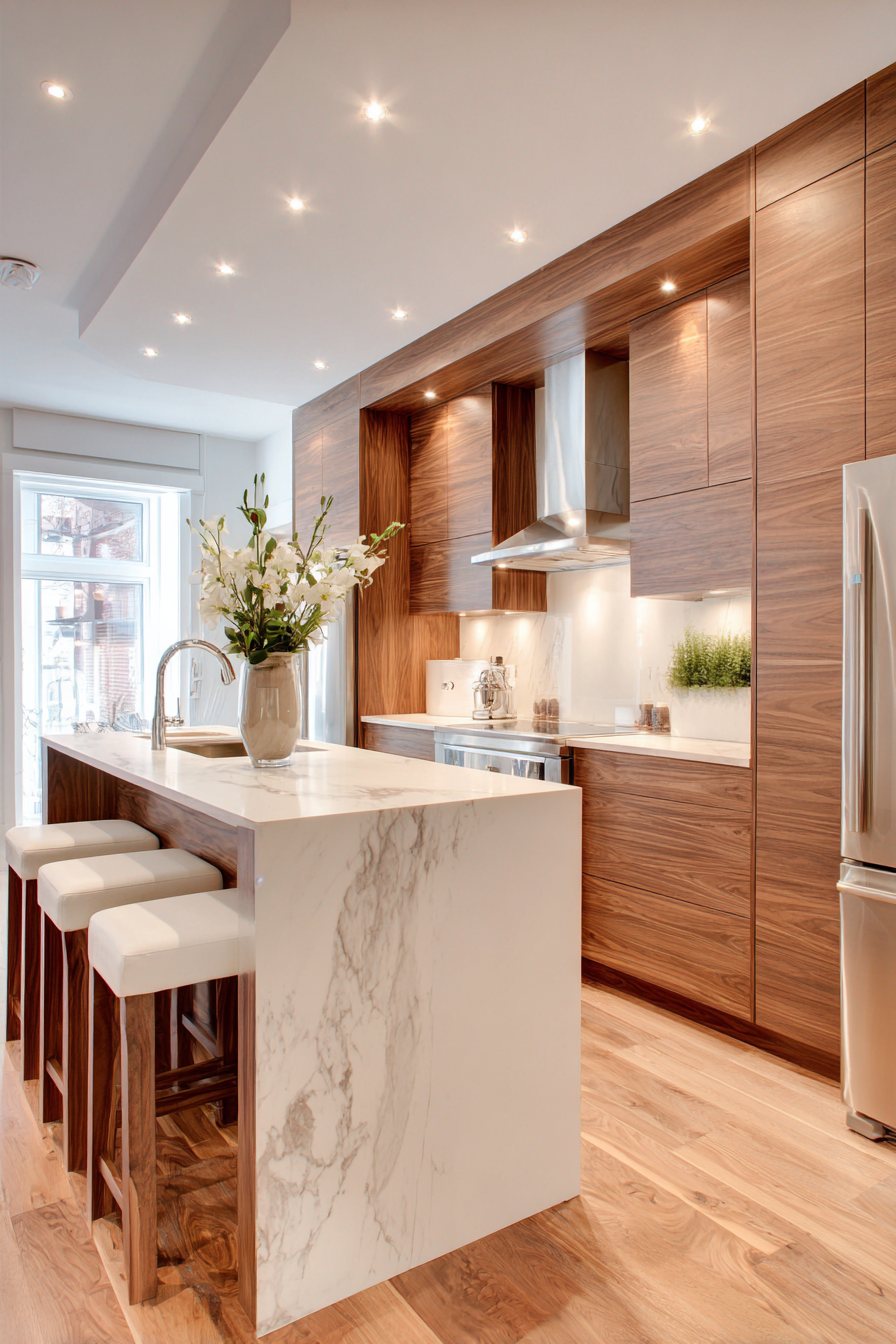
Sleek horizontal-grain walnut cabinets make a sophisticated design statement. The dramatic wood grain creates natural visual movement across flat-panel doors. Integrated groove handles maintain clean lines while providing functional access.
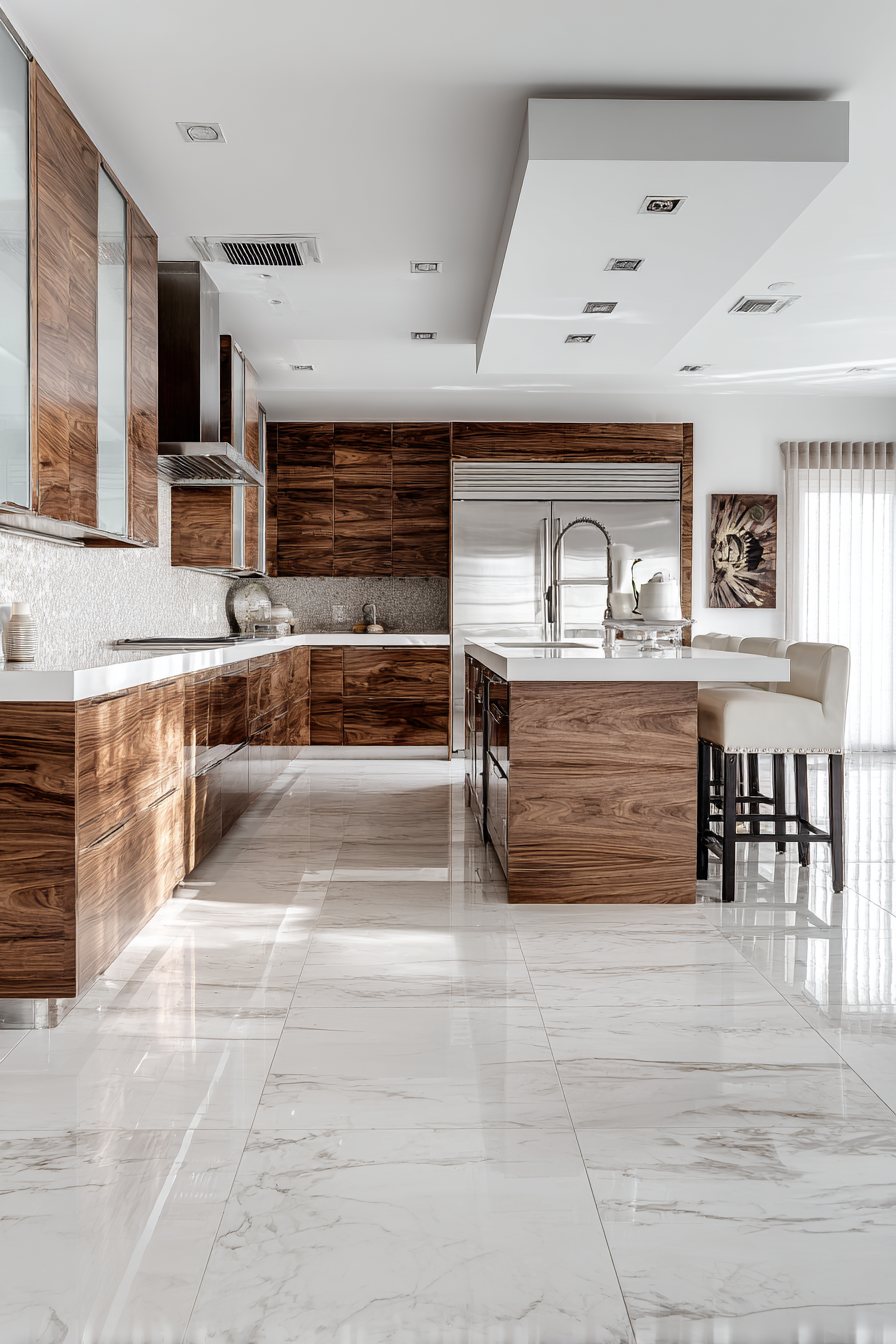
A waterfall-edge island continues the walnut theme with seamless corners. The continuous grain flow creates striking visual impact from multiple angles. Leather upholstered counter stools add luxury and comfort for island seating.

White quartz countertops provide crisp contrast against rich wood tones. Stainless steel appliances integrate seamlessly into the contemporary design. Recessed LED lighting and under-cabinet strips highlight the exceptional wood grain.
Key Design Tips:
- Choose horizontal-grain wood for contemporary visual interest
- Create waterfall edges for dramatic modern aesthetics
- Contrast dark wood with white countertops for balance
- Install LED strip lighting to showcase wood grain patterns
- Select integrated appliances to maintain clean sightlines
5. Farmhouse Sage and Maple Kitchen

Soft sage green painted lower cabinets bring gentle color to this farmhouse design. Thick maple butcher block countertops show honest wear and knife marks. The combination creates practical beauty that improves with age and use.

Upper cabinets feature glass-front doors with wooden mullions. Vintage dishware displayed behind glass adds personality and charm. A large pine farmhouse table serves as the island with natural patina.

Brass cup pulls and bin pulls provide period-appropriate hardware details. Multiple windows flood the workspace with even natural daylight. The authentic farmhouse character shines through every thoughtful design choice.

Key Design Tips:
- Paint lower cabinets while leaving upper wood visible for balance
- Select butcher block that shows wear as a design feature
- Display vintage dishware behind glass-front cabinet doors
- Use a farmhouse table as an island for authentic character
- Install brass hardware for traditional farmhouse appeal
6. Modern Blonde Ash Minimalist Kitchen
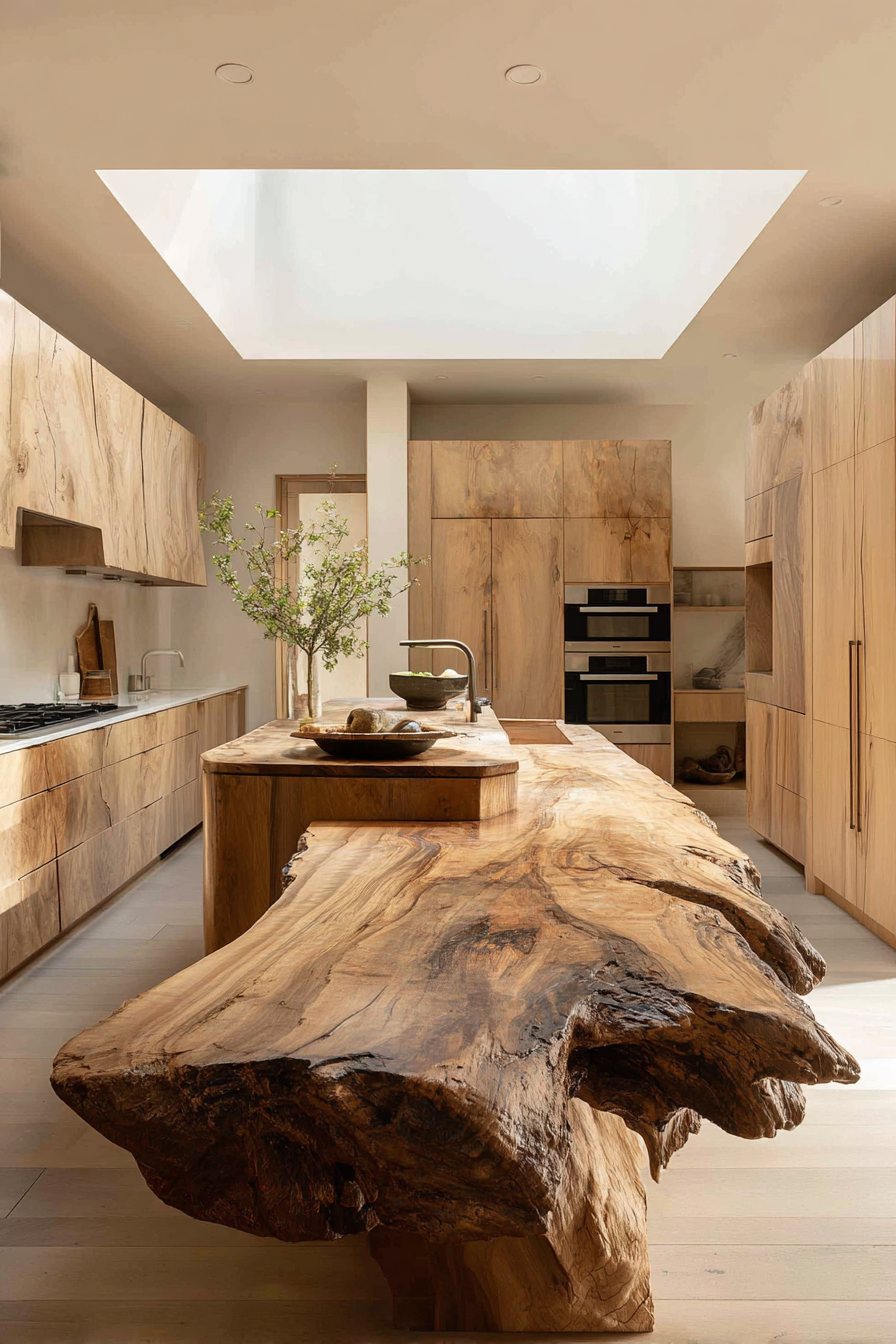
Floor-to-ceiling blonde ash cabinets create monolithic wood surfaces. Invisible push-latch mechanisms eliminate hardware for uninterrupted visual flow. Vertical grain orientation emphasizes ceiling height and architectural lines.

A cantilevered breakfast bar extends from the island with live edge details. The natural tree form showcases organic beauty within modern design. Hidden steel brackets provide support while maintaining visual lightness.

Integrated appliances disappear seamlessly into the wood cabinetry. Northern light from clerestory windows provides even, flattering illumination. The contemporary craftsmanship celebrates wood’s natural beauty through restraint.

Key Design Tips:
- Use floor-to-ceiling cabinets to maximize storage and visual impact
- Install push-latch mechanisms for handleless modern aesthetics
- Incorporate live edge elements for organic interest
- Integrate appliances behind wood panels for seamless design
- Add clerestory windows for natural light without sacrificing wall space
7. Transitional Cherry Island Kitchen

White painted perimeter cabinets provide a neutral canvas for drama. The stunning cherry wood island features cathedral grain patterns throughout. Rich reddish-brown tones create a warm focal point in the space.
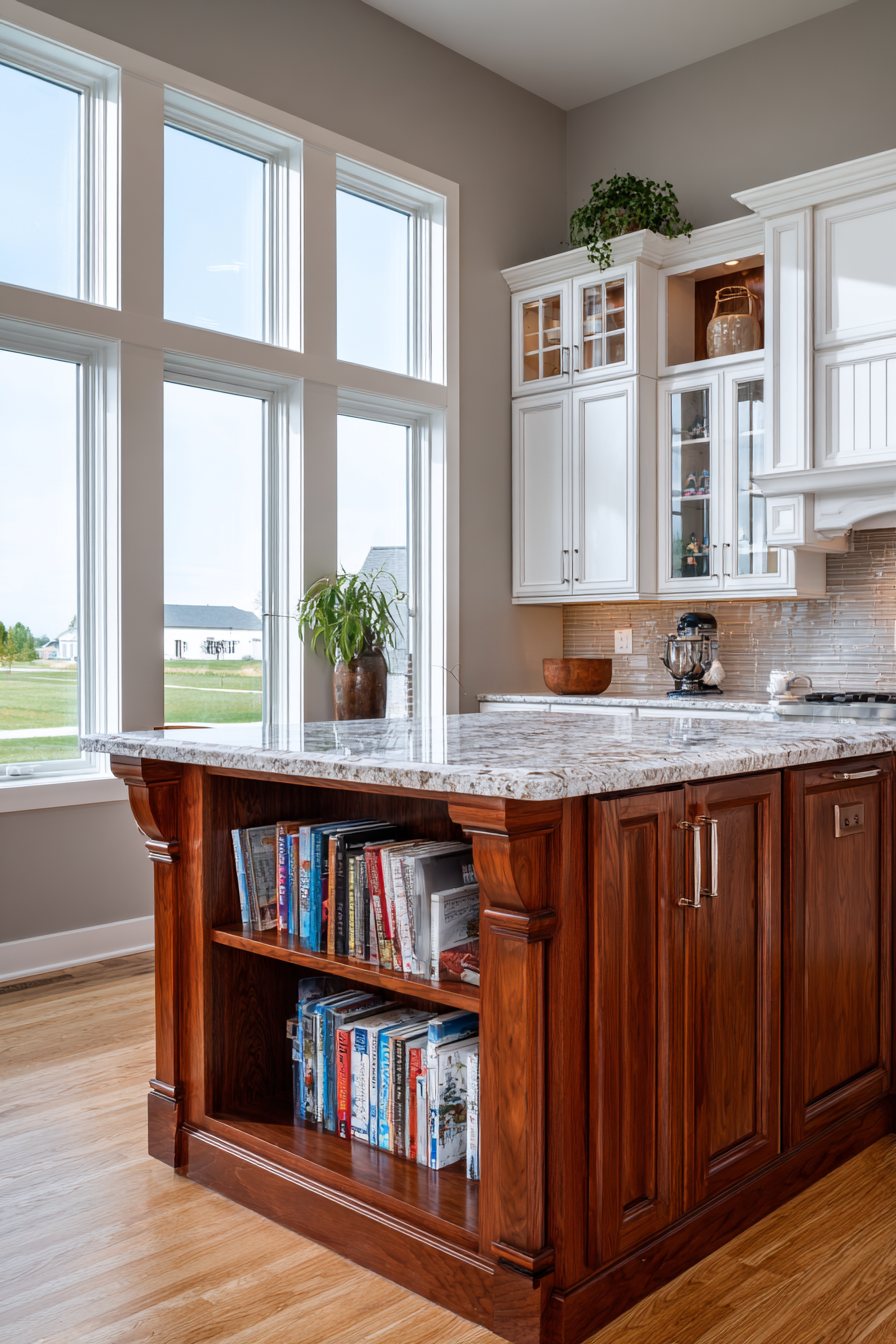
Furniture-style turned legs and wood corbels add architectural detail. The granite countertop shows subtle movement that complements wood graining. Open wooden shelves flanking the range display cookbooks and pottery.

Brushed nickel hardware and fixtures complement the warm wood beautifully. Garden-facing windows fill the space with natural afternoon light. The sophisticated blend of painted and natural finishes creates timeless appeal.

Key Design Tips:
- Create focal points with dramatic wood islands against painted cabinets
- Select cherry wood for its rich color and beautiful grain
- Add furniture-style legs to islands for traditional elegance
- Install open shelving flanking appliances for practical display
- Choose brushed nickel to complement both painted and wood finishes
8. Compact Honey Oak Kitchen

Vertical storage maximizes functionality in this efficient small kitchen. Floor-to-ceiling oak cabinets in honey tones create abundant storage. Glass inserts in upper doors reduce visual weight while displaying contents.

A narrow rolling butcher block cart provides mobile counter space. The flexibility allows reconfiguration based on cooking needs and entertaining. Displayed wooden accessories reinforce the natural material theme throughout.
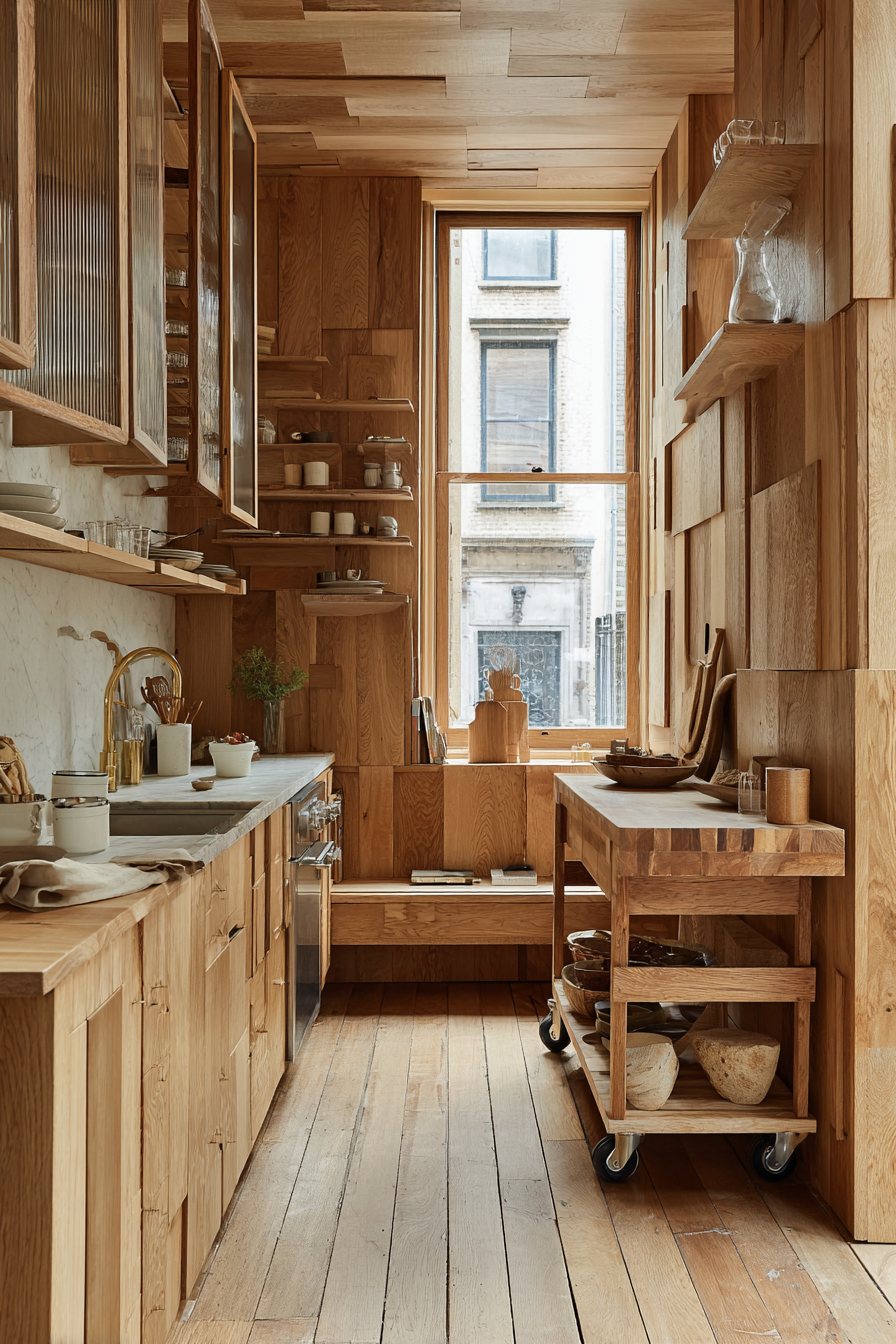
Brass hardware catches and reflects natural light from the window. The wood floor extends the warm material palette across surfaces. Every element works together to create an efficient, welcoming small kitchen.

Key Design Tips:
- Maximize vertical space with floor-to-ceiling cabinetry in small kitchens
- Add glass cabinet inserts to reduce visual heaviness
- Use rolling carts for flexible counter space and storage
- Display wooden accessories to reinforce the design theme
- Extend wood flooring to create material continuity
9. Craftsman Quarter-Sawn Oak Kitchen

Prominent ray fleck patterns distinguish this authentic craftsman design. Quarter-sawn white oak cabinets showcase exceptional wood characteristics. Oil-rubbed bronze hardware provides period-appropriate Arts and Crafts details.

The kitchen island features thick wood top with breadboard ends. Visible joinery details celebrate honest construction methods. Built-in plate racks and spice drawers demonstrate thoughtful storage solutions.

Mica-shade pendant lights illuminate work surfaces with warm glow. Prairie-style windows create geometric shadow patterns on wood surfaces. Every detail honors the craftsman tradition of quality and beauty.

Key Design Tips:
- Choose quarter-sawn oak for distinctive ray fleck patterns
- Select oil-rubbed bronze hardware for authentic period style
- Incorporate visible joinery as decorative design elements
- Install built-in storage solutions like plate racks and spice drawers
- Add prairie-style windows for geometric light patterns
10. Mediterranean Distressed Wood Kitchen

Warm honey-toned cabinets show deliberate aging and distressing techniques. Hand-rubbed edges reveal layers beneath the surface finish. The authentic aging creates depth impossible to achieve with new materials.

A large center island features turned wood legs and plank top. Visible plugged screws and color variations add rustic authenticity. Wooden ceiling beams echo the kitchen’s natural material theme overhead.

Wrought iron hardware and terracotta tile flooring complement wood perfectly. Integrated wine racks display bottles within the island base. Warm chandelier lighting illuminates the rich wood patina throughout.

Key Design Tips:
- Use distressing techniques to create authentic aged appearance
- Add turned legs to islands for Old World character
- Install wooden ceiling beams to extend the material palette
- Incorporate wine storage within island cabinetry
- Pair wood with terracotta tile for Mediterranean warmth
11. Japanese Hinoki Cypress Kitchen

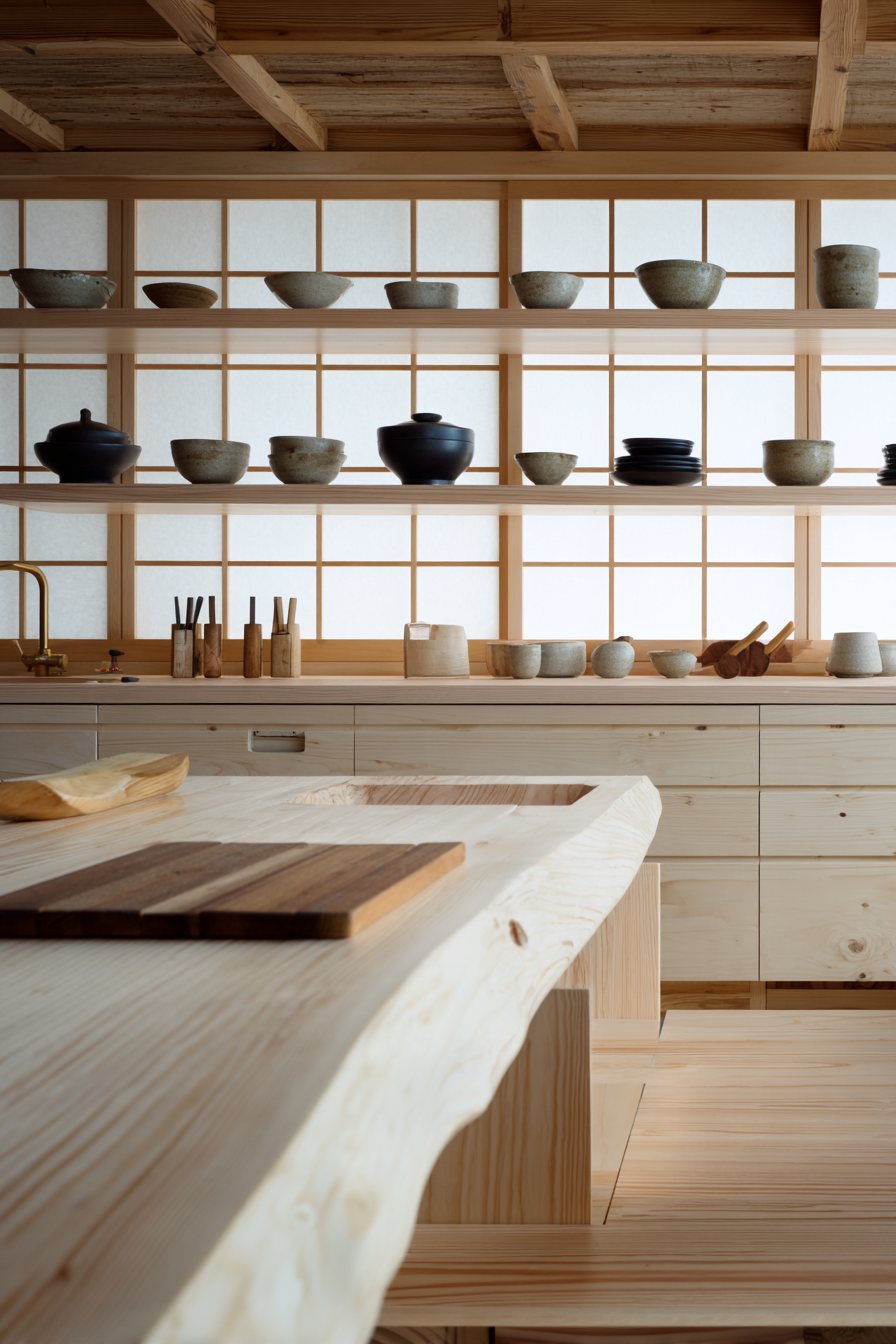
Clean lines and minimal hardware define this serene Japanese-inspired design. Pale hinoki cypress cabinets feature precise joinery and craftsmanship. The wood’s natural antibacterial properties make it ideal for kitchens.

A low wooden platform serves as a prep area with integrated cutting surfaces. Open shelving displays handmade ceramics in organized, mindful arrangements. A wooden slatted screen provides subtle spatial separation.

Natural bamboo flooring complements the cypress cabinetry beautifully. Shoji-style screens diffuse daylight for peaceful, even illumination. The refined craftsmanship creates tranquil space for culinary pursuits.
Key Design Tips:
- Select hinoki cypress for its beauty and natural antibacterial properties
- Minimize visible hardware for clean, serene aesthetics
- Create integrated prep surfaces for functional simplicity
- Display ceramics in organized arrangements on open shelving
- Install shoji-style screens for soft, diffused natural light
12. Cottage Beadboard Kitchen

Cream-painted beadboard cabinet doors create charming cottage character. Natural beech countertops show gentle wear and honey tones. The combination balances painted surfaces with warm wood elements.

A wooden plate rack above the sink displays vintage china collections. Decorative wood corbels support open shelving holding glass canisters. Wide-plank wood flooring shows natural knots and subtle color variation.

Vintage-style wooden bar stools with turned legs complement the island. Lace-curtained windows create soft, romantic lighting throughout. The collected-over-time feeling makes the space feel like home.

Key Design Tips:
- Paint beadboard cabinet doors for traditional cottage charm
- Select beech countertops for warm tones and durability
- Install plate racks to display vintage china collections
- Add decorative corbels to support open shelving
- Use wide-plank flooring for authentic cottage character
13. Industrial Reclaimed Wood Kitchen

Rough-sawn reclaimed shelving on black iron brackets creates industrial edge. Modern flat-panel walnut cabinets provide refined contrast to raw elements. The combination balances rough and polished aesthetics beautifully.

A massive wood beam serves as floating shelf above the range. Copper pots and wooden cutting boards create functional display. The butcher block island top shows visible end grain patterns.

Exposed wooden ceiling joists contrast with sleek concrete countertops. Edison bulb pendants on fabric cords provide ambient illumination. The layered textures create depth and visual interest throughout.

Key Design Tips:
- Combine reclaimed wood with refined cabinetry for industrial style
- Mount shelving on iron brackets for authentic industrial hardware
- Use massive wood beams as floating shelves for impact
- Show end grain butcher block for textural interest
- Install Edison bulb pendants for vintage industrial lighting
14. French Country Grey-Washed Kitchen

Antiqued cabinets with raised panels show soft grey-wash finish. Wood grain remains visible beneath the translucent finish. The technique adds age and sophistication to new cabinetry.

A large center island features chunky turned legs in natural wood. The limestone countertop provides neutral elegance and practical durability. Wooden chicken wire inserts add rustic French country charm.

A suspended wooden pot rack holds copper cookware overhead. Repurposed wooden wine crates provide authentic vintage storage solutions. Golden hour sunlight bathes the space in ambient warmth.

Key Design Tips:
- Apply grey-wash finishes to reveal wood grain beneath
- Add chunky turned legs for French country authenticity
- Install chicken wire cabinet inserts for rustic charm
- Hang wooden pot racks to display copper cookware
- Repurpose vintage wooden crates for characterful storage
15. Coastal Whitewashed Wood Kitchen

Whitewashed cabinets allow wood grain to show through weathered finish. Natural wood open shelving displays beach glass and white pottery. The layered white-on-wood creates relaxed coastal sophistication.

A driftwood-gray island with furniture legs anchors the design. Wood plank ceiling with exposed beams adds architectural interest overhead. The vertical wood elements draw eyes upward throughout the space.

Rope-wrapped pendant lights reinforce the coastal nautical theme. Natural jute rug defines the island area with organic texture. Bright seaside light highlights the sun-bleached quality of wood finishes.

Key Design Tips:
- Whitewash cabinets while allowing grain to remain visible
- Create contrast with driftwood-gray islands against white cabinets
- Add wood plank ceilings with beams for architectural character
- Install rope-wrapped pendants for coastal design elements
- Use natural jute rugs to define spaces with organic texture
16. Mid-Century Teak Kitchen

Horizontal-grain teak cabinets showcase characteristic warm reddish-brown tones. Integrated pulls maintain clean mid-century modern lines throughout. The wood grain creates natural pattern and visual movement.

Tapered wooden legs support lower cabinets in period-accurate style. A credenza-style island features sliding tambour doors concealing storage. Molded plywood bar stools with bentwood backs complete the aesthetic.

Teak cutting boards and sculptural wooden objects provide functional decoration. Period globe pendant lights illuminate the rich wood surfaces. The authentic mid-century details create sophisticated vintage appeal.

Key Design Tips:
- Choose teak for its warm color and mid-century associations
- Add tapered legs to lower cabinets for period accuracy
- Install tambour doors for authentic mid-century storage solutions
- Select molded plywood seating for design cohesion
- Display teak accessories to reinforce the material theme
17. Dramatic Vertical Oak Plank Kitchen

Dark-stained oak planks on walls create striking architectural backdrop. Floating white quartz countertops and minimalist cabinets provide contrast. The vertical wood orientation emphasizes ceiling height dramatically.

A live-edge walnut breakfast bar cantilevers from the island. Natural bark inclusions celebrate the tree’s original form. Hidden steel brackets provide support while maintaining visual lightness.

Wide chevron-pattern wood flooring adds geometric interest underfoot. Modern linear pendants with LED strips provide efficient task lighting. Floor-to-ceiling windows connect interior wood with forest views outside.

Key Design Tips:
- Install vertical wood planks on walls for architectural drama
- Create floating elements for contemporary visual lightness
- Incorporate live edges to showcase natural wood forms
- Use chevron flooring patterns for geometric interest
- Position windows to connect interior wood with nature views
18. Traditional Cherry Wood Kitchen

Rich cherry cabinets with raised panel doors exude formal elegance. Classic crown molding details add architectural sophistication throughout. The traditional woodwork creates timeless beauty and substantial presence.

The large island features decorative corbels and turned corner posts. Furniture-style feet elevate the island with graceful proportions. A built-in wooden hutch displays fine china behind glass doors.

Carved wood valance above the sink features dentil molding details. Multiple wood tones from cherry to walnut create layered depth. Chandelier and sconce lighting creates warm ambiance on polished surfaces.

Key Design Tips:
- Select cherry wood for rich color that deepens with age
- Add crown molding for traditional architectural detail
- Incorporate furniture-style elements like corbels and turned posts
- Install built-in hutches for formal display and storage
- Layer multiple wood tones for visual depth and interest
19. Bohemian Eclectic Wood Kitchen

Reclaimed scaffolding boards create open shelving with industrial character. A vintage butcher block on castors provides mobile island functionality. Refinished cabinets with mismatched hardware add collected-over-time charm.

Wooden crates mounted as wall storage hold plants and glassware. A wooden ladder leans decoratively while displaying copper pots. Natural wood tones range from pale pine to dark walnut.

Macramé pendant lights and hanging plants enhance the bohemian atmosphere. Multiple natural light sources create dynamic shadows on varied textures. The eclectic mix celebrates individuality and creative expression.

Key Design Tips:
- Mix reclaimed and vintage wood pieces for bohemian character
- Add mobile elements like butcher blocks on castors for flexibility
- Create eclectic appeal with mismatched hardware on cabinets
- Mount wooden crates as creative wall storage solutions
- Layer multiple wood tones from light to dark for variety
20. Luxury Exotic Wood Kitchen

Book-matched sapele veneer cabinets showcase dramatic ribbon striping. Reddish-gold tones create warmth and extraordinary visual impact. The figured wood grain becomes artwork throughout the space.

A massive island features single-slab wood countertop with exceptional grain. Epoxy-filled natural cracks create organic art within functional surfaces. The unique piece becomes conversation starter and functional centerpiece.

A custom wood range hood with corbels creates architectural focal point. Integrated wine storage with individual cradles displays collections beautifully. Herringbone wood flooring complements the exceptional cabinetry throughout.

Key Design Tips:
- Invest in book-matched veneers for dramatic visual symmetry
- Select exotic woods with distinctive grain and color
- Embrace natural wood characteristics like cracks as design features
- Create custom range hoods as architectural focal points
- Install herringbone flooring to complement exceptional cabinetry
Why These Wood Kitchen Designs Are the Best
These wood kitchen designs represent exceptional approaches to culinary space creation. Each concept demonstrates thoughtful consideration of wood species selection and application. The designs showcase remarkable versatility across multiple aesthetic preferences and functional requirements.
Natural wood brings warmth impossible to replicate with synthetic materials. The organic grain patterns create visual interest that never becomes tiresome. Different wood species offer unique characteristics from pale birch to rich walnut.
The white oak shaker kitchen combines traditional styling with contemporary functionality. Soft-close mechanisms paired with natural materials create lasting quality. The butcher block island provides durable work surface that improves with use.

Scandinavian birch designs maximize light reflection in smaller spaces. The minimalist aesthetic reduces visual clutter while maintaining warmth. Push-to-open mechanisms eliminate hardware for seamless contemporary appearance.
Reclaimed barn wood kitchens celebrate sustainability and authentic character. Weathered patina tells stories that new materials cannot communicate. The combination with modern elements creates balanced transitional design.
Contemporary walnut kitchens showcase wood’s sophisticated potential in modern settings. Horizontal grain orientation creates distinctive visual movement across surfaces. Waterfall edges demonstrate advanced fabrication capabilities and design commitment.
Farmhouse designs with painted cabinets and wood countertops balance color and natural materials. The combination creates approachable spaces perfect for family gatherings. Honest wear patterns on butcher block surfaces become beautiful over time.
Minimalist blonde ash kitchens push wood design toward architectural sculpture. Floor-to-ceiling applications create a monolithic presence and maximum storage. Live edge elements introduce organic forms within geometric modern design.
Transitional cherry island kitchens demonstrate effective focal point creation. The dramatic wood grain against painted cabinets draws attention purposefully. Furniture-style details add traditional elegance to contemporary layouts.
Compact honey oak designs prove small kitchens can showcase beautiful wood. Vertical storage maximizes functionality without sacrificing aesthetic appeal. Glass cabinet inserts reduce visual weight while displaying contents.
Craftsman quarter-sawn oak kitchens honor traditional woodworking excellence. Ray fleck patterns showcase premium wood selection and milling techniques. Visible joinery celebrates construction methods as decorative elements.
Mediterranean distressed wood designs create Old World charm through finishing techniques. Hand-rubbed edges and deliberate aging add depth and character. The combination with terracotta and wrought iron creates cohesive style.
Japanese hinoki cypress kitchens demonstrate restrained elegance and natural beauty. The wood’s antibacterial properties add practical benefits to aesthetic appeal. Minimal hardware and precise joinery showcase superior craftsmanship.
Cottage beadboard designs create charming, approachable spaces with painted wood. The combination of cream cabinets and natural wood countertops balances color and warmth. Wide-plank flooring adds authentic cottage character underfoot.
Industrial reclaimed wood kitchens balance rough and refined elements successfully. The contrast between raw shelving and polished cabinets creates dynamic tension. Exposed ceiling joists extend the material palette vertically.
French country grey-washed cabinets achieve sophisticated aging effects on new wood. Visible grain beneath translucent finishes adds depth and authenticity. Chunky turned legs and chicken wire inserts complete the provincial aesthetic.
Coastal whitewashed designs create relaxed sophistication through weathered finishes. Driftwood-gray islands anchor bright spaces with grounding elements. Wood plank ceilings add architectural interest while reinforcing the material theme.
Mid-century teak kitchens capture authentic vintage appeal through material selection. Horizontal grain and integrated pulls maintain period-accurate styling. Tapered legs and tambour doors demonstrate attention to historical detail.
Dramatic vertical plank walls create bold contemporary statements with dark wood. The contrast against white minimalist elements emphasizes architectural drama. Live edge elements maintain an organic connection within the geometric design.
Traditional cherry kitchens showcase formal elegance through rich wood and detailed molding. Multiple wood tones create sophisticated layered depth throughout the space. Built-in hutches and furniture-style islands add functional beauty.
Bohemian eclectic designs celebrate creative freedom through mixed wood elements. The combination of reclaimed materials and vintage pieces creates a collected charm. Varied wood tones from light to dark enhance the individualistic aesthetic.
Luxury exotic wood kitchens demonstrate premium material selection and craftsmanship. Book-matched veneers create symmetrical patterns impossible to achieve otherwise. Single-slab countertops with natural characteristics become functional artwork.
Wood kitchen design success depends on thoughtful species selection and finish application. The material’s natural variations ensure each kitchen possesses unique character. Proper maintenance preserves beauty while allowing wood to develop desirable patina.

Quality wood cabinetry represents a significant investment with exceptional longevity potential. The material’s durability combined with timeless appeal ensures lasting value. Wood kitchens adapt successfully to changing design trends through refinishing options.
Environmental considerations make sustainable wood sourcing increasingly important in design selection. Reclaimed materials reduce environmental impact while providing superior character. Responsibly harvested new wood supports forest management and future availability.
These twenty designs demonstrate wood’s remarkable range across diverse kitchen styles. From rustic farmhouse to contemporary minimalist, wood adapts beautifully to varied aesthetics. The material’s warmth and natural beauty create inviting spaces where families naturally gather.
Conclusion
These wood kitchen designs prove that natural materials create timeless, inviting culinary spaces. The key takeaways include thoughtful wood species selection, appropriate finish application, and balancing wood with complementary materials. Quality craftsmanship combined with beautiful natural wood creates kitchens that improve with age.

Successful wood kitchen design requires understanding each species’ unique characteristics and appropriate applications. Start by identifying your preferred aesthetic from traditional to contemporary options. Your dream wood kitchen awaits creation through careful planning, quality materials, and skilled execution.
