


Creating an earthy living room transforms your space into a natural sanctuary. This design approach celebrates organic materials and warm tones. The aesthetic brings the calming essence of nature indoors. Your living room becomes a peaceful retreat from modern life.
Earthy living rooms have captured the attention of design enthusiasts worldwide. They offer authentic warmth that synthetic materials cannot replicate. The combination of natural textures and earth-toned palettes creates environments that feel both grounded and sophisticated. These spaces invite relaxation while maintaining visual interest through varied organic elements.
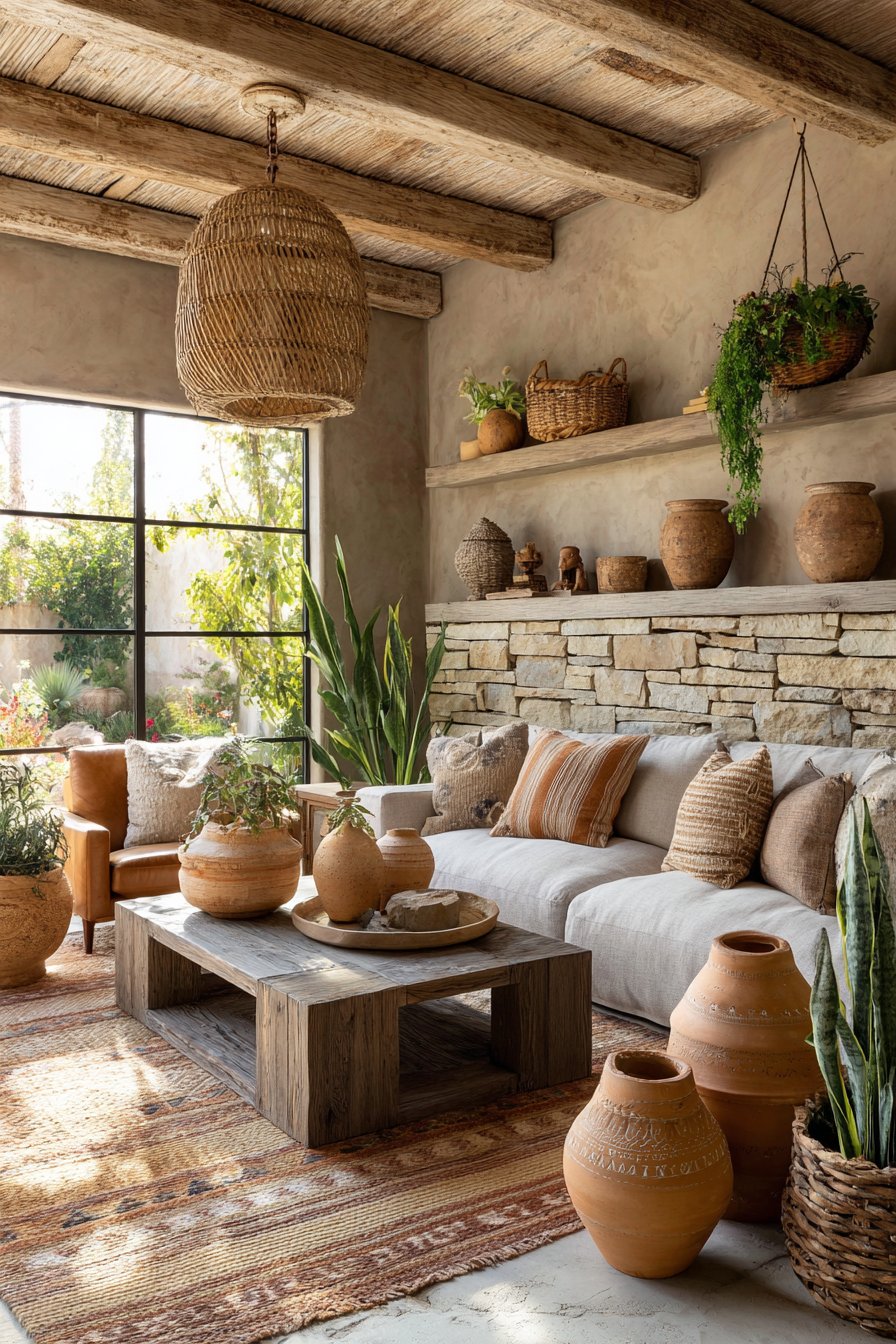
The following designs showcase diverse approaches to earthy living room aesthetics. From minimalist interpretations to richly layered spaces, each concept demonstrates unique possibilities. These rooms prove that natural design works beautifully across different architectural styles and spatial configurations.
1. Natural Linen and Jute Serenity
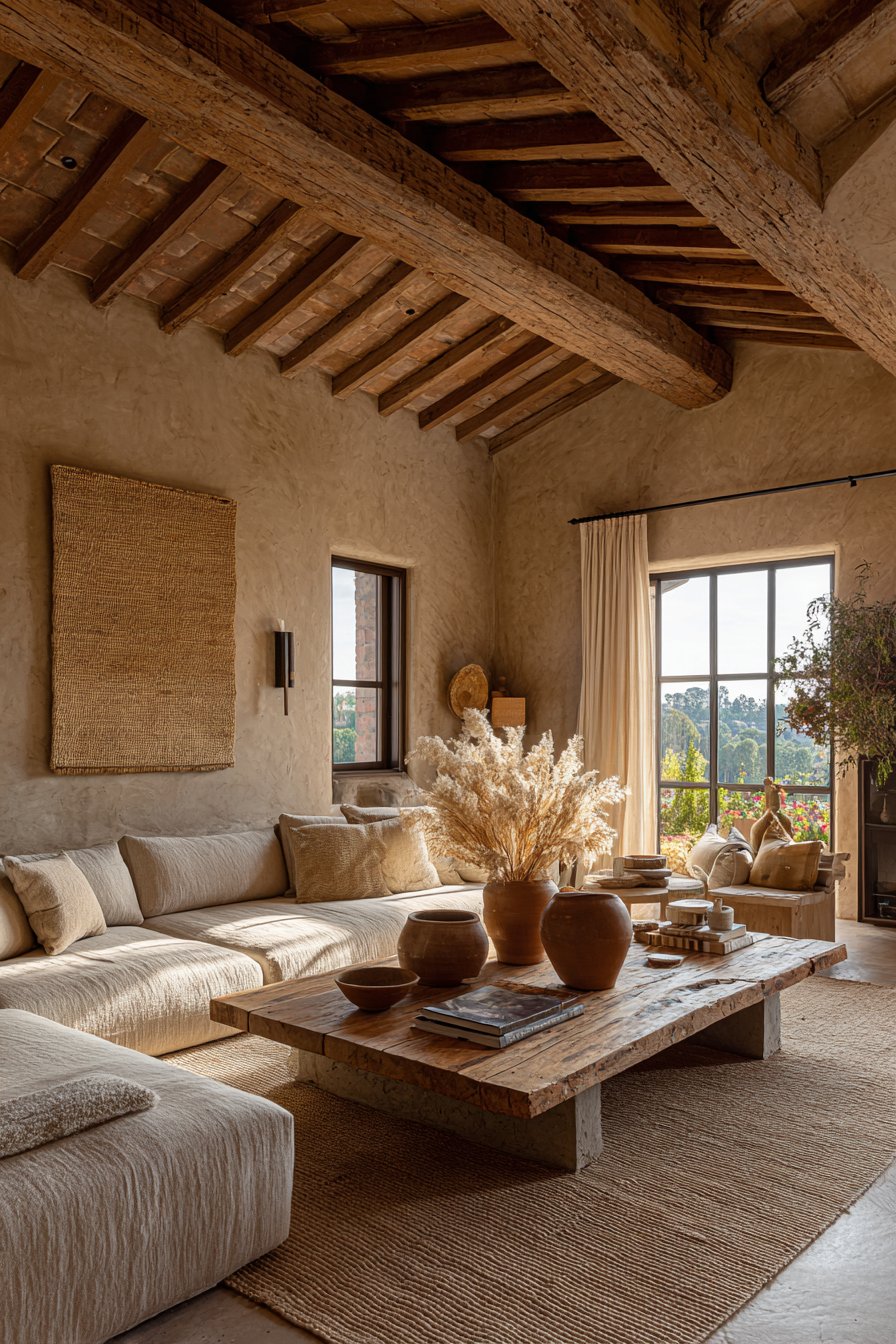
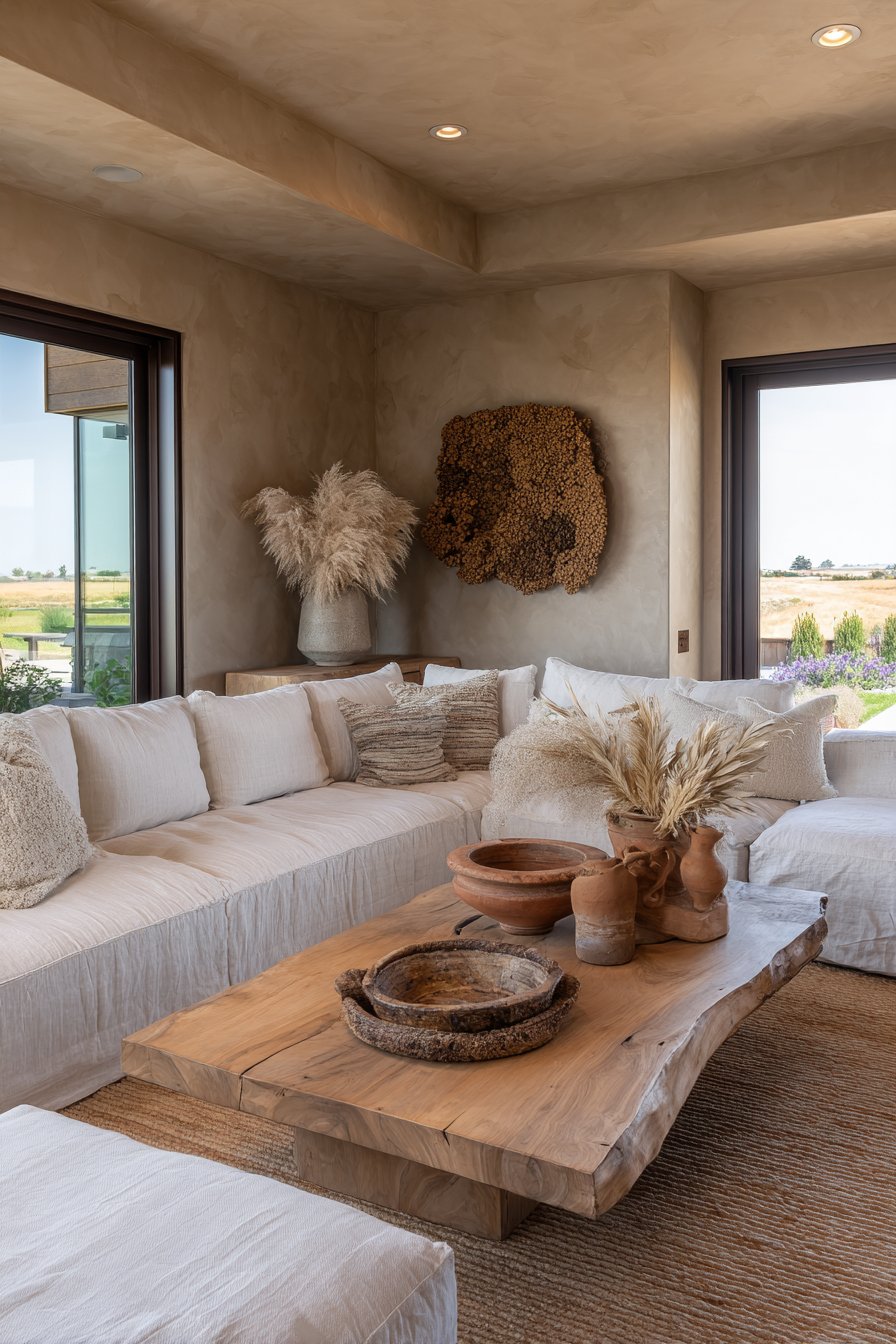
A low-profile sectional sofa anchors this peaceful living room. The oatmeal linen upholstery features visible weave texture. This natural fabric choice adds subtle visual interest. A large jute area rug spreads beneath the seating arrangement. The natural fiber tones vary beautifully across the surface.
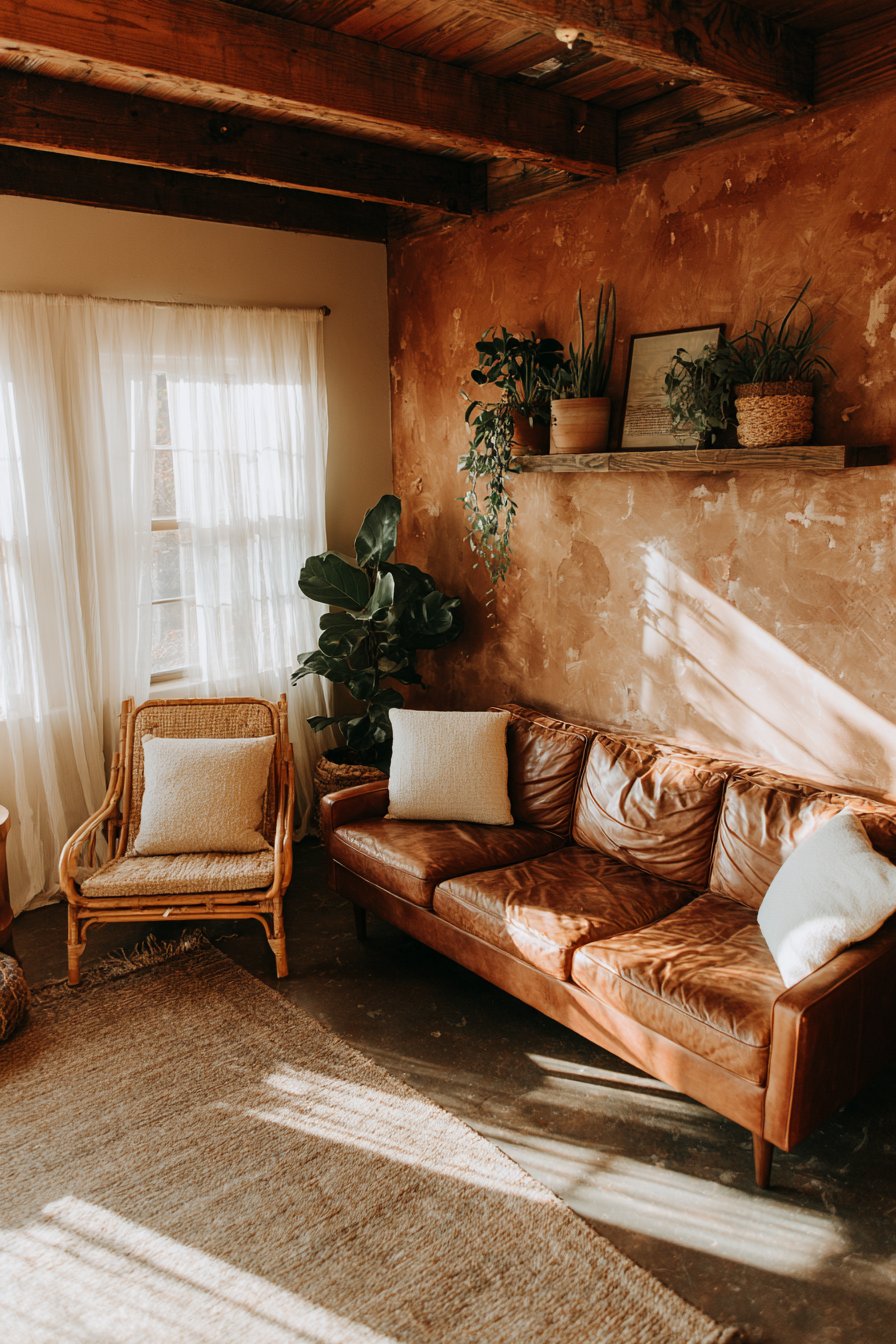
The reclaimed wood coffee table displays living edge detail. Terracotta pottery and dried pampas grass arrangements create organic focal points. Walls finished in warm clay-toned plaster provide depth without overwhelming the senses. The textured surface catches light differently throughout the day.
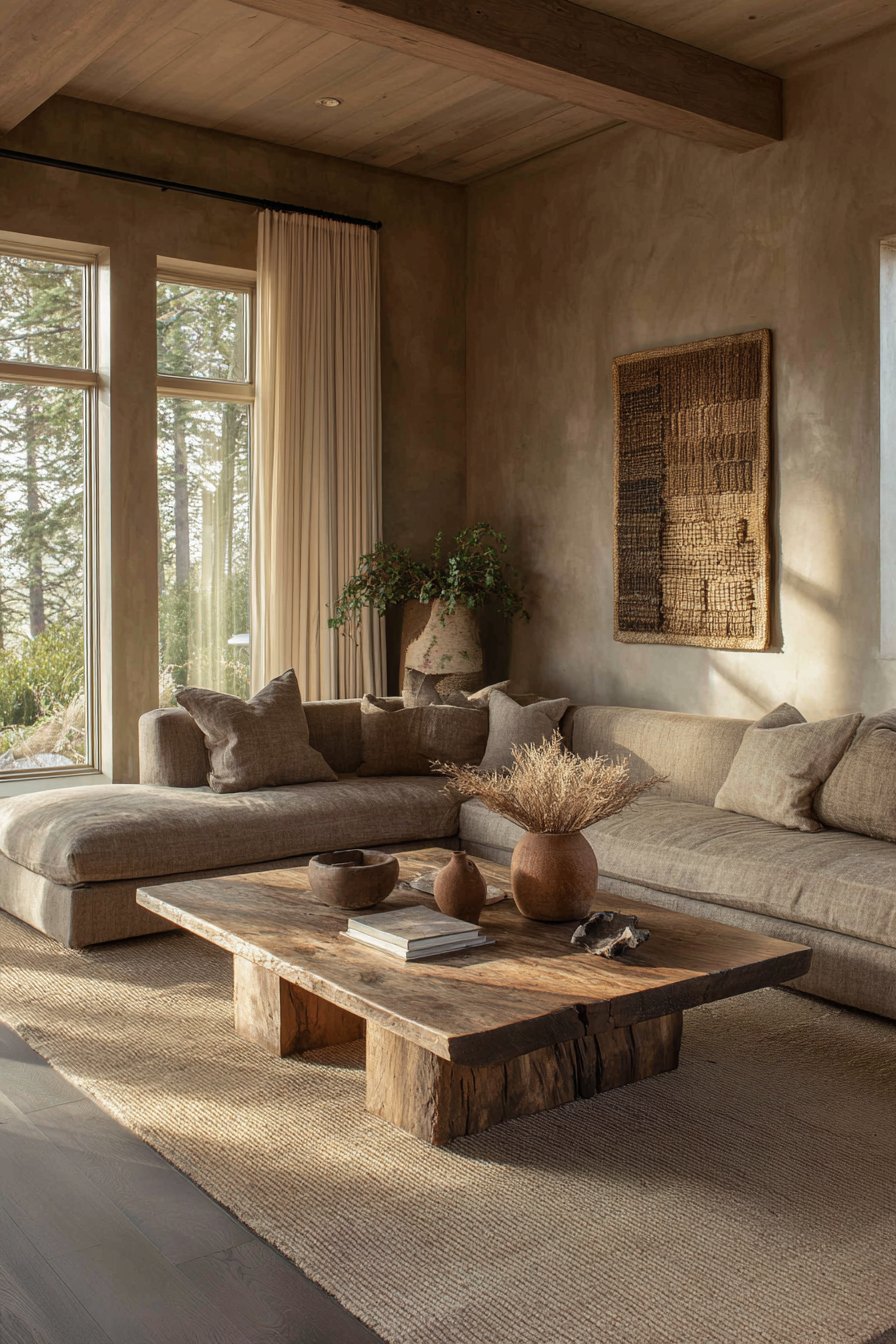
A statement piece of woven wall art introduces additional organic texture. Large windows frame the space with unbleached cotton curtains. Soft natural daylight filters through the fabric. The light highlights the earthy material palette beautifully. This cohesive design celebrates natural aesthetics through careful material selection.
Key Design Tips:
- Select low-profile furniture to maintain an open, airy feeling
- Layer natural fiber rugs for added texture and warmth
- Display dried botanicals in handcrafted ceramic vessels
- Choose unbleached fabrics that showcase natural fiber colors
- Apply textured plaster finishes for subtle wall interest
2. Weathered Oak and Terracotta Warmth
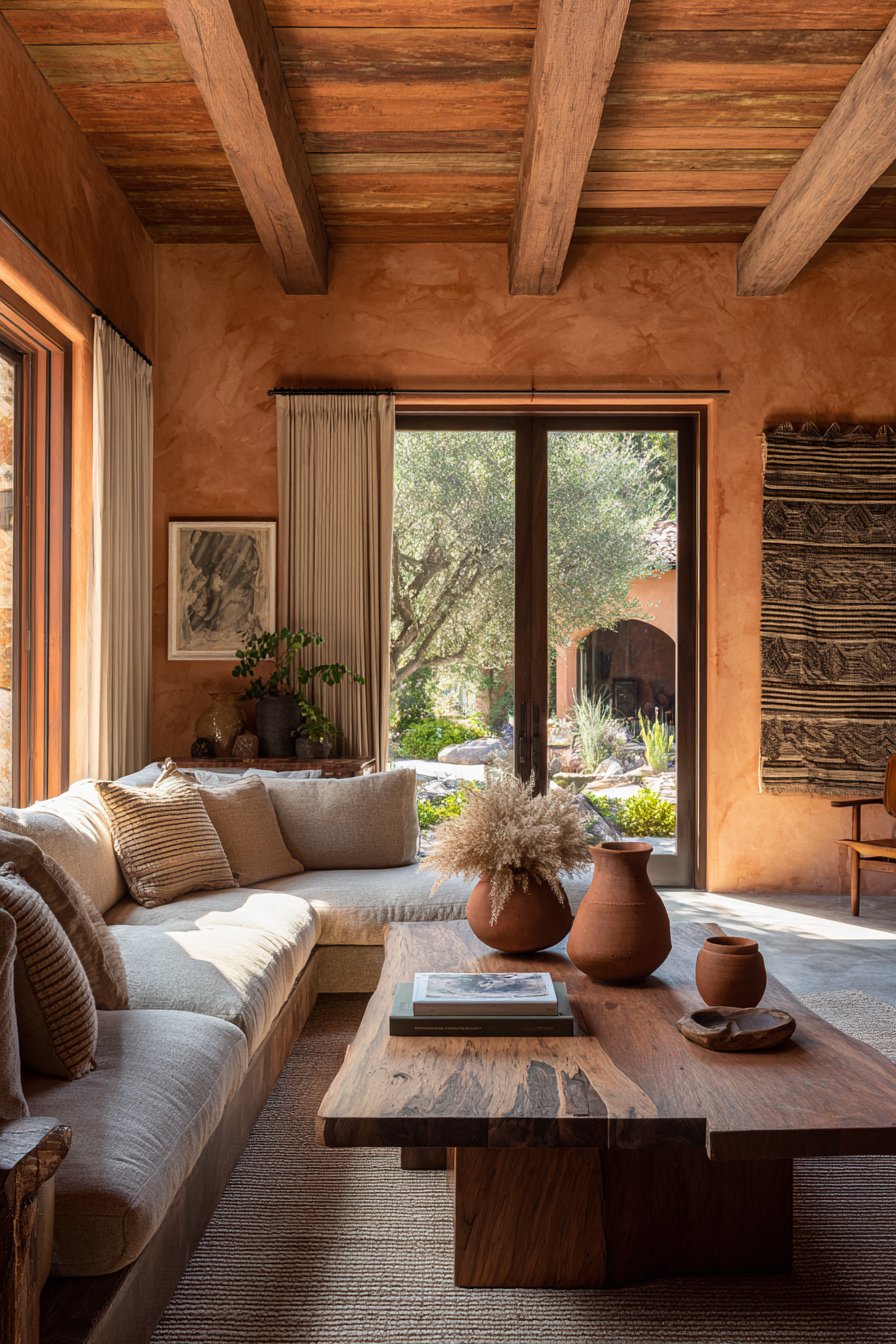
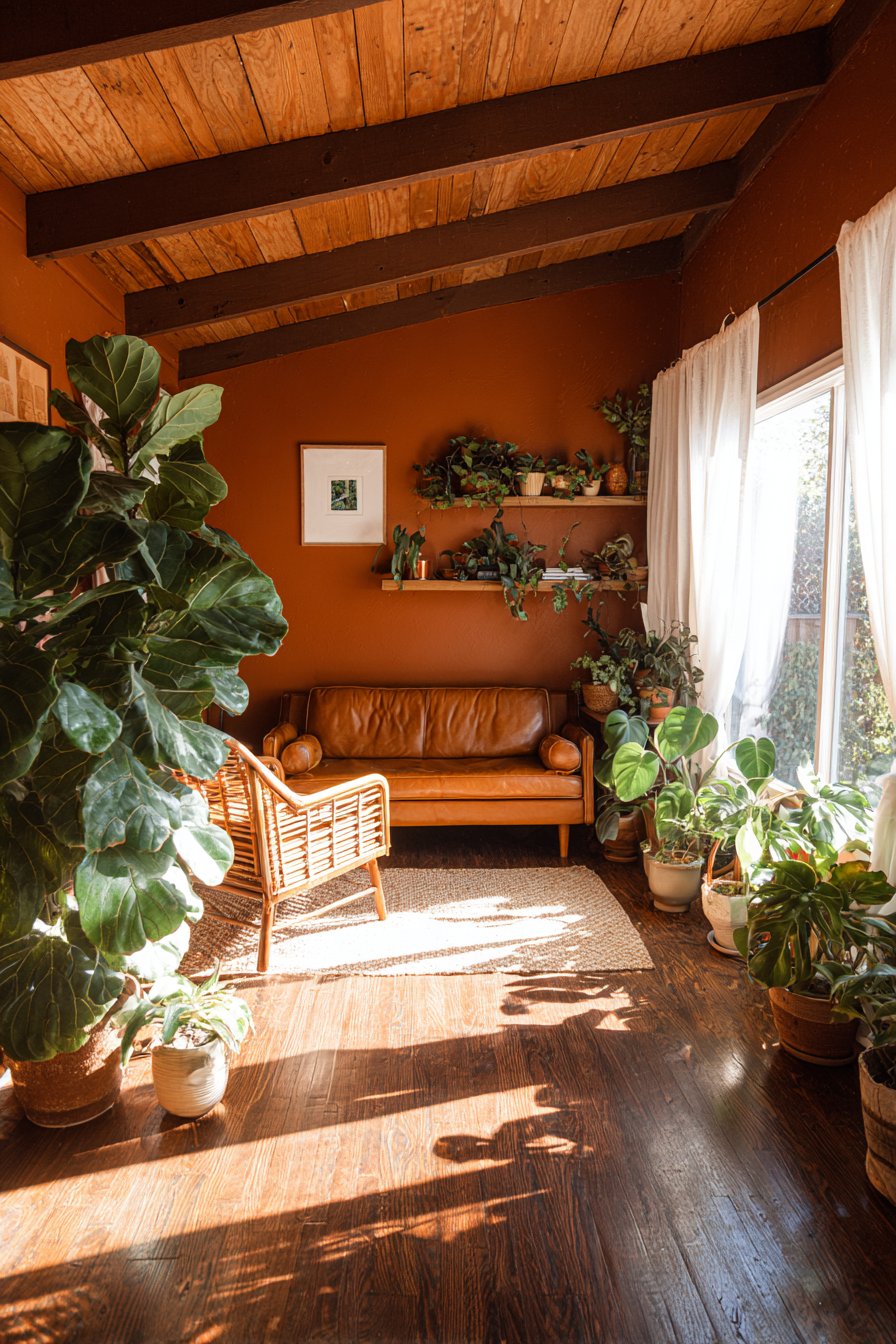
Exposed wooden ceiling beams in weathered oak create architectural drama overhead. The natural aging process adds character to the structural elements. Walls painted in warm terracotta shades complement the wood beautifully. This color combination evokes Mediterranean countryside charm.
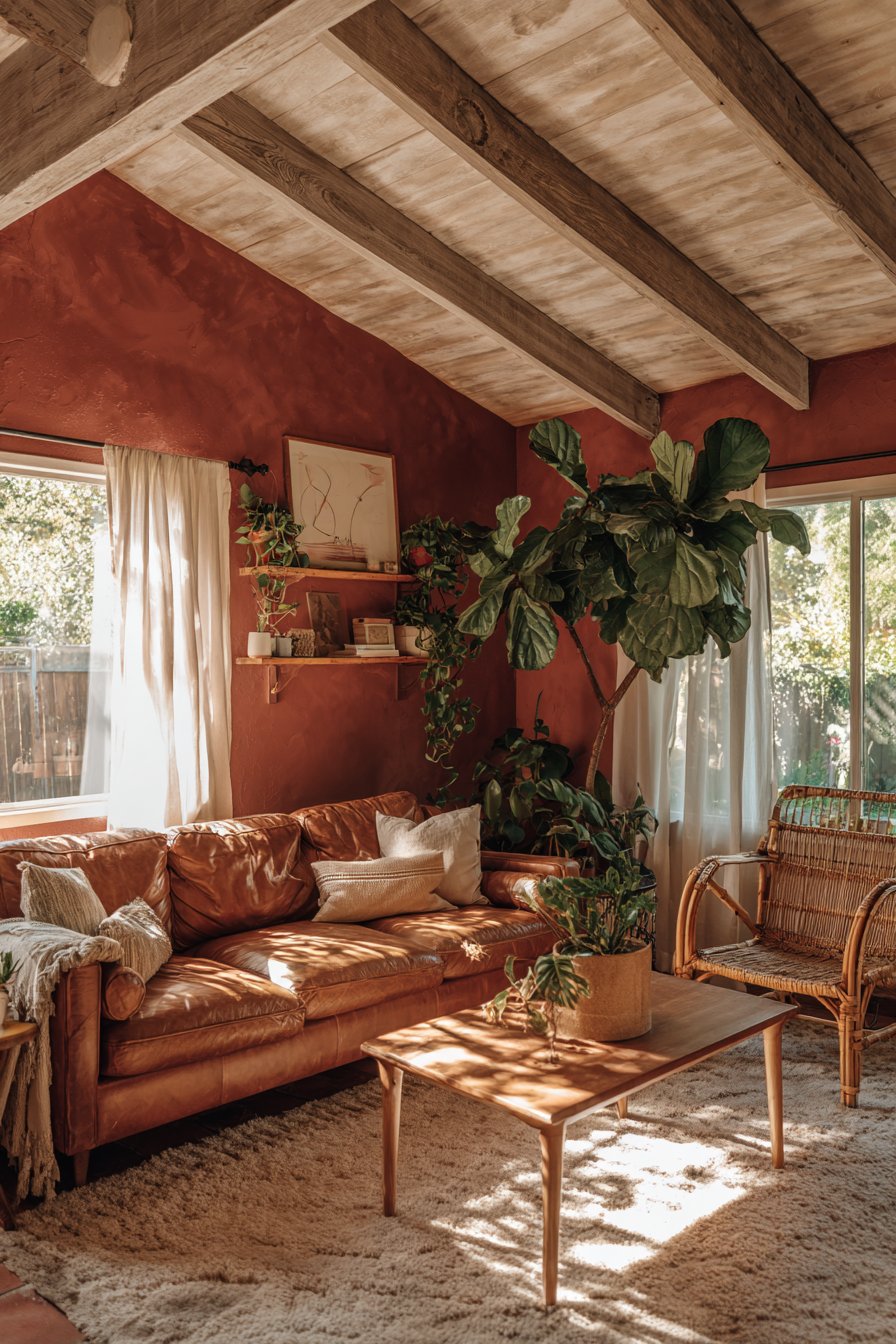
A mid-century inspired sofa features cognac leather upholstery. The natural patina develops character over time. Woven rattan accent chairs pair perfectly with comfortable linen cushions. The seating arrangement encourages conversation while maintaining visual lightness.
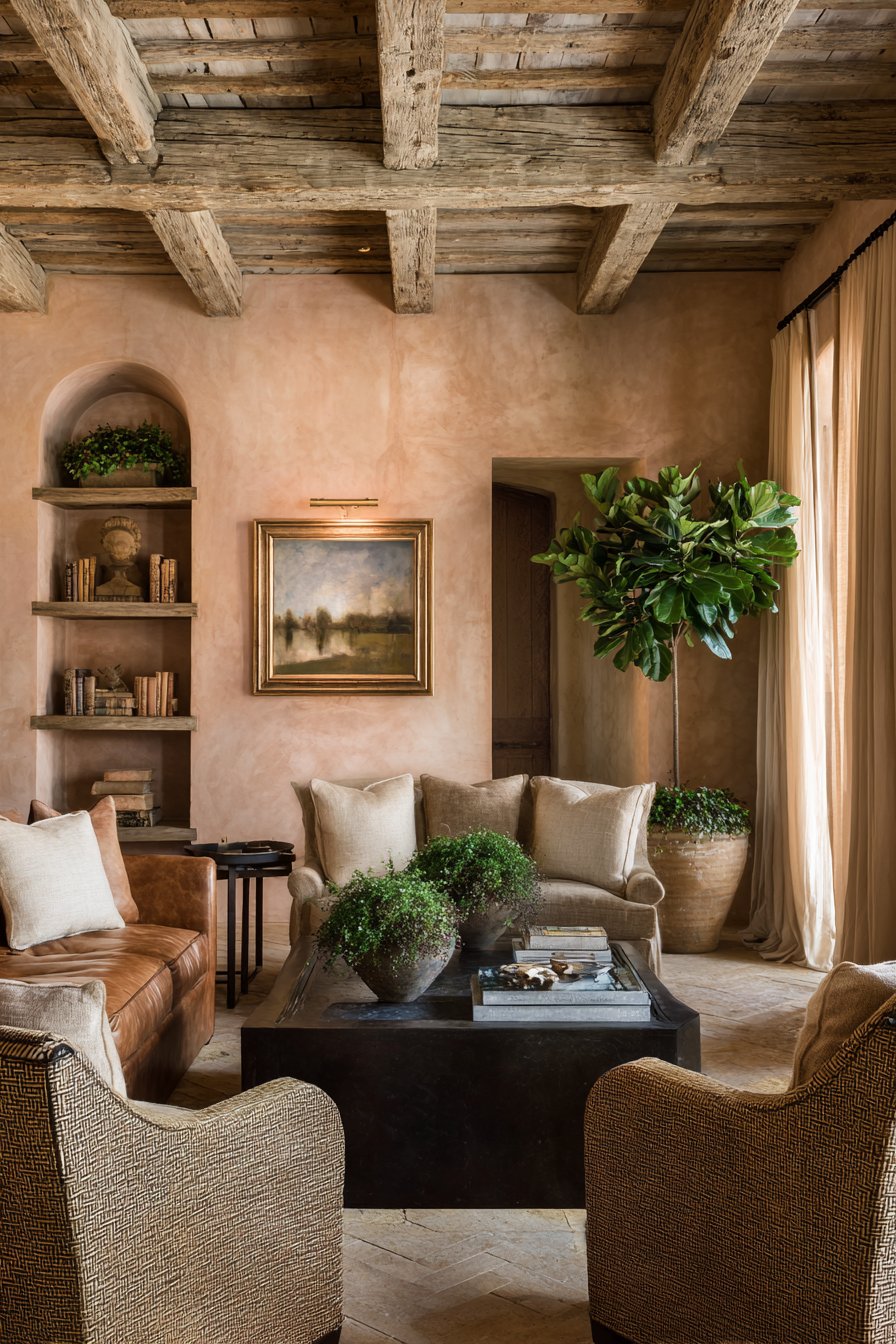
Abundant greenery brings life to every corner. A large fiddle leaf fig tree stands proudly in a ceramic pot. Trailing pothos cascades from floating shelves crafted from reclaimed barn wood. Natural afternoon light streams through sheer linen drapes. Soft shadows enhance the organic warmth throughout the space.
Key Design Tips:
- Embrace leather furniture that develops beautiful patina over years
- Incorporate exposed ceiling beams for architectural interest
- Add multiple plant varieties at different heights for dimension
- Use reclaimed wood for shelving to add history and texture
- Choose sheer curtains that filter light while maintaining privacy
3. Stacked Stone Drama
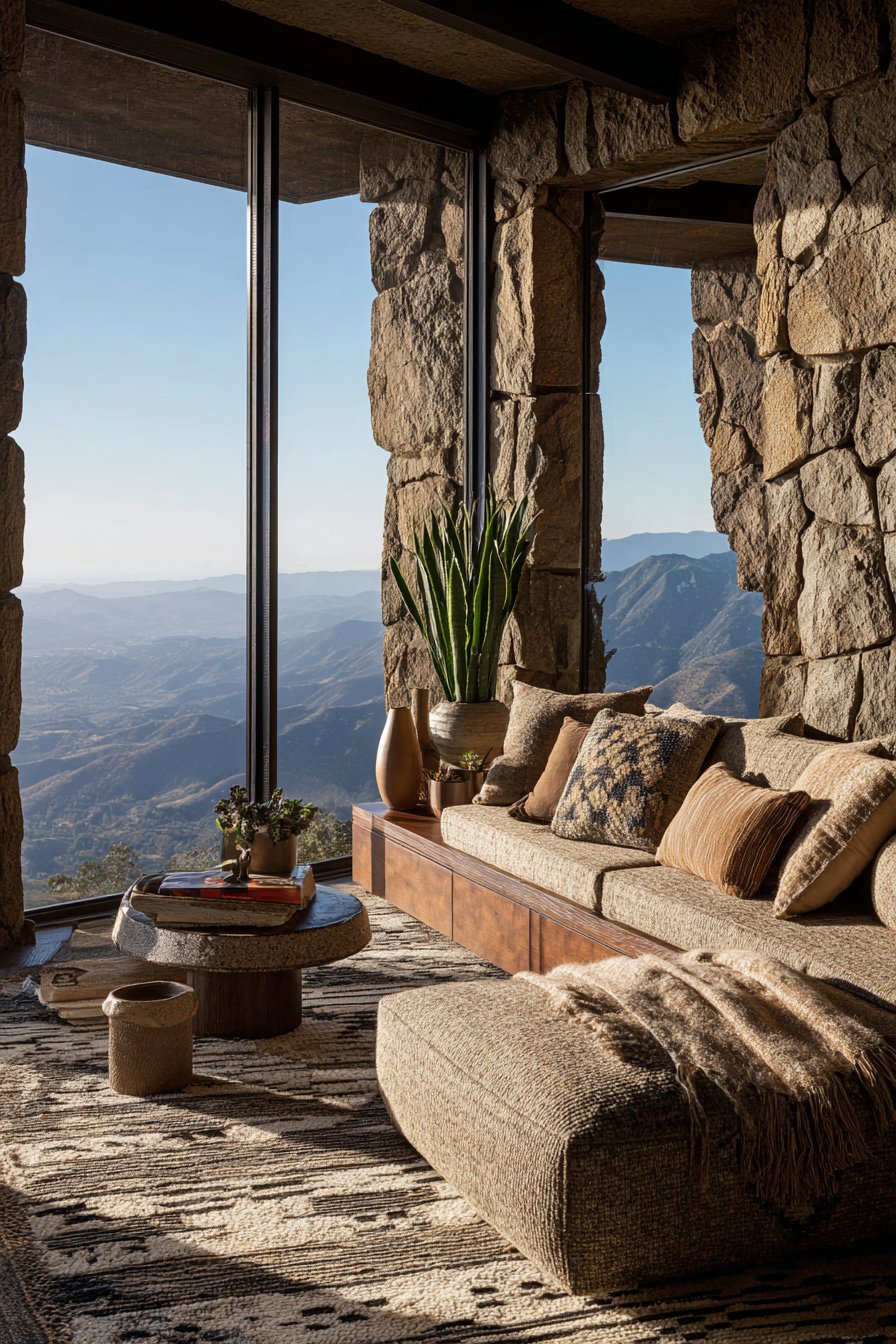
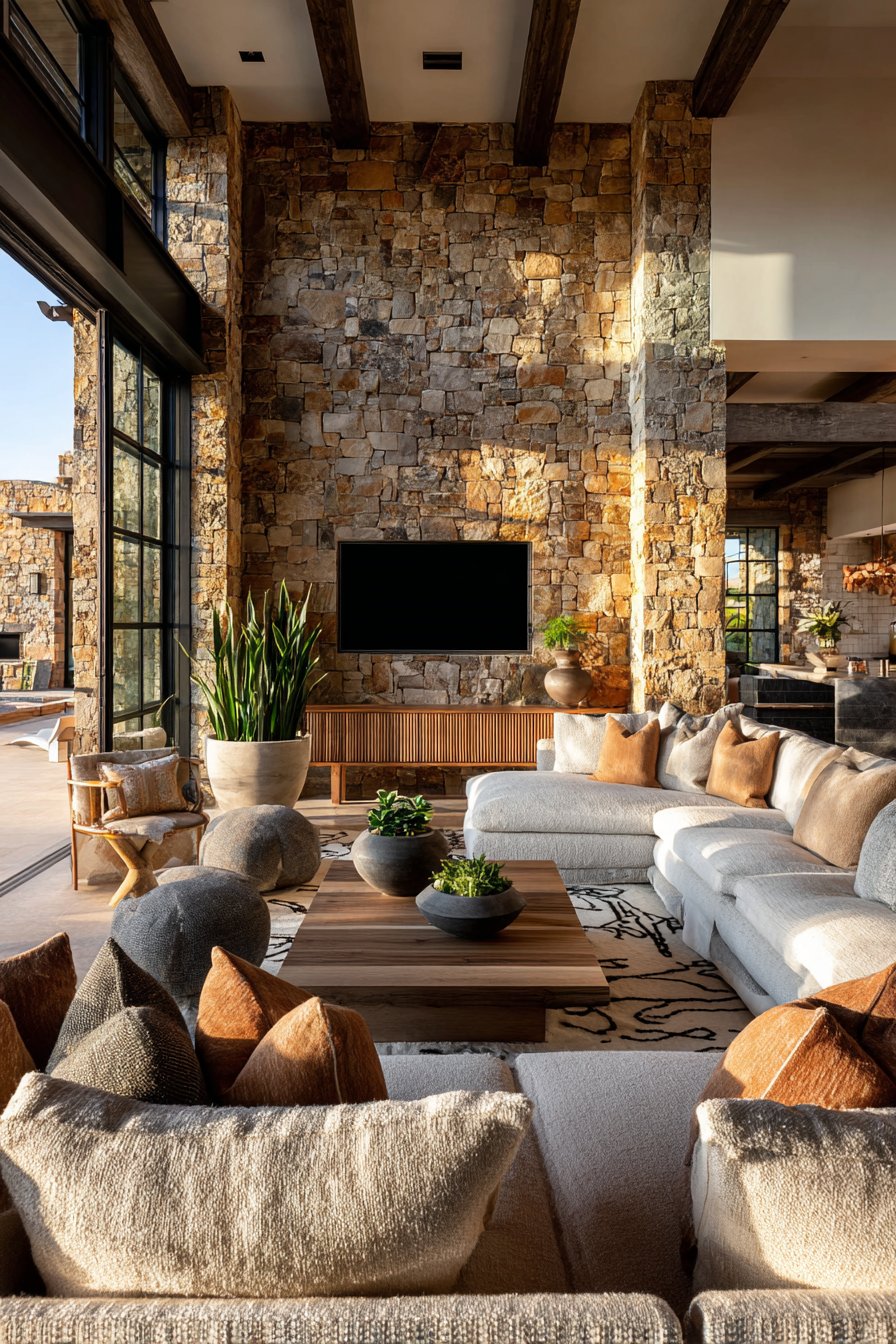
A stone accent wall commands attention with natural stacked ledgestone. Warm brown and beige tones create dramatic texture. The wall serves as backdrop for a low media console. Solid walnut construction showcases visible wood grain patterns. This combination balances rough and refined elements.
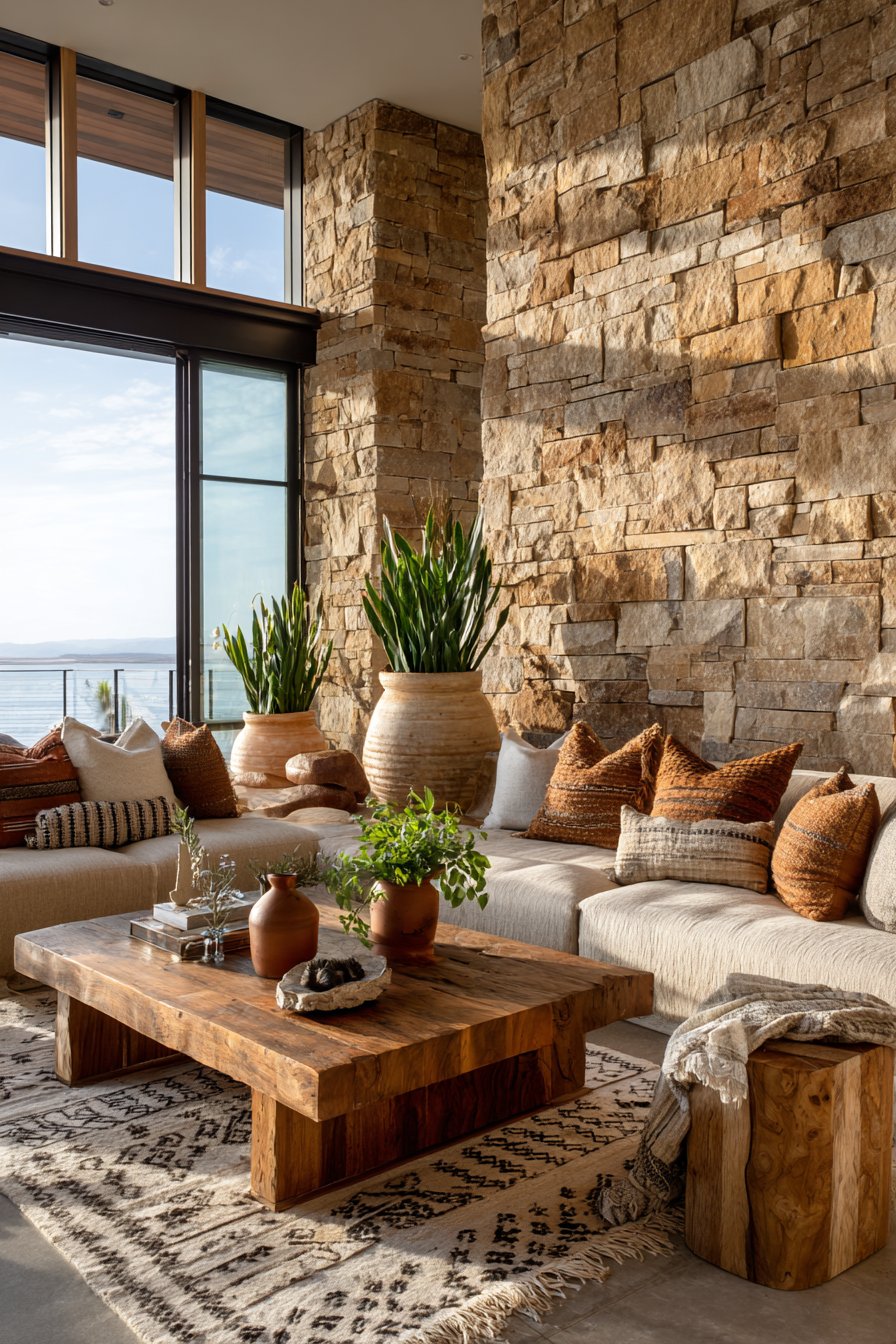
Modular seating features deep cushions covered in thick woven fabric. Sand and rust tones echo the natural stone colors. The flexible arrangement adapts to different gathering needs. A hand-knotted wool area rug anchors the seating zone. Geometric patterns using natural dyes add visual rhythm.
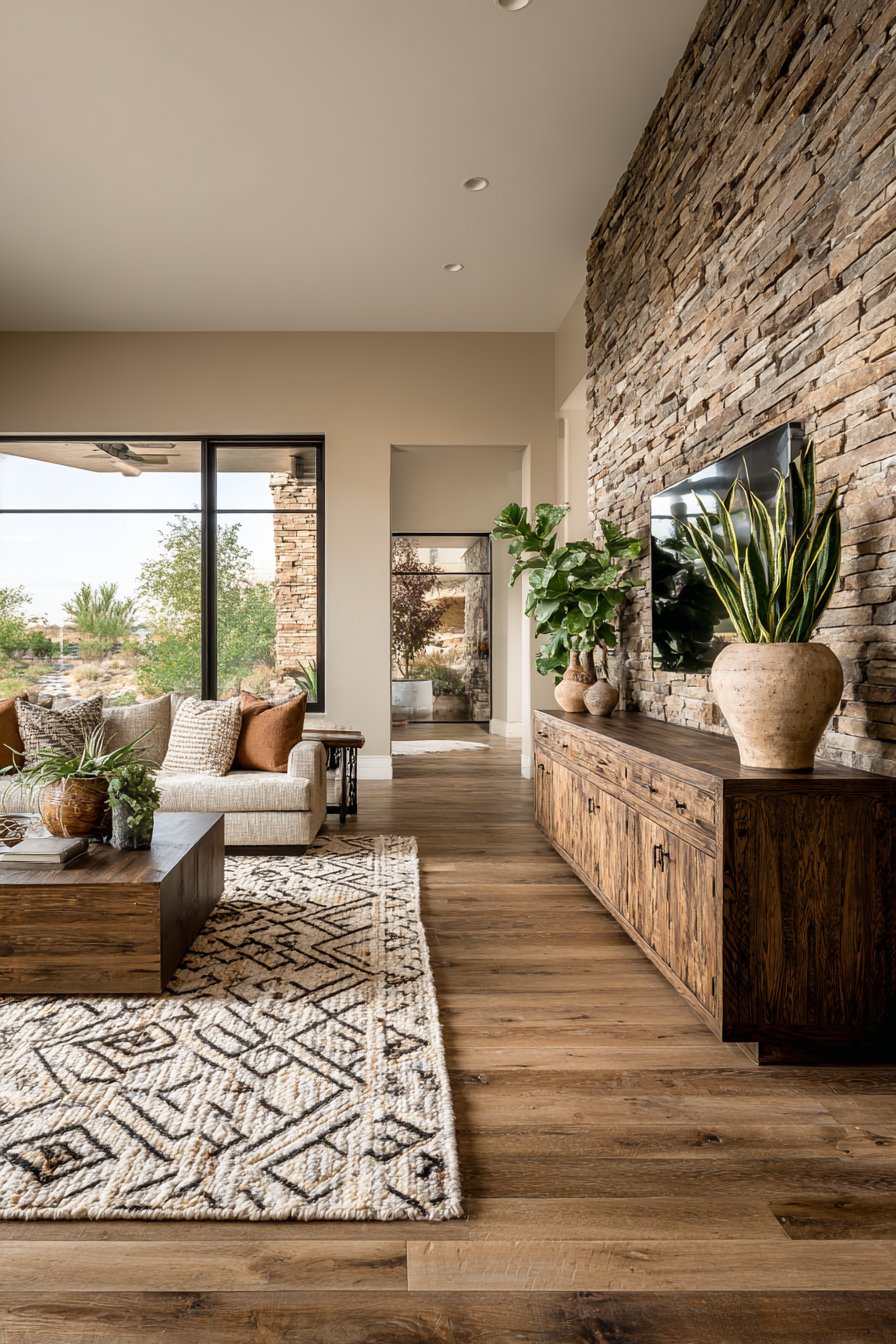
Potted snake plants provide vertical green accents throughout the room. Ceramic vessels in earth-glazed finishes complement the stone wall beautifully. Large windows without treatments allow abundant natural light. Morning light showcases the varied textures and warm material palette perfectly.
Key Design Tips:
- Install stone accent walls to create powerful focal points
- Choose modular seating for flexible entertaining configurations
- Select hand-knotted rugs with natural dye colors
- Display low-maintenance plants in handcrafted ceramic containers
- Maximize natural light by leaving some windows uncovered
4. Limestone Fireplace Centerpiece
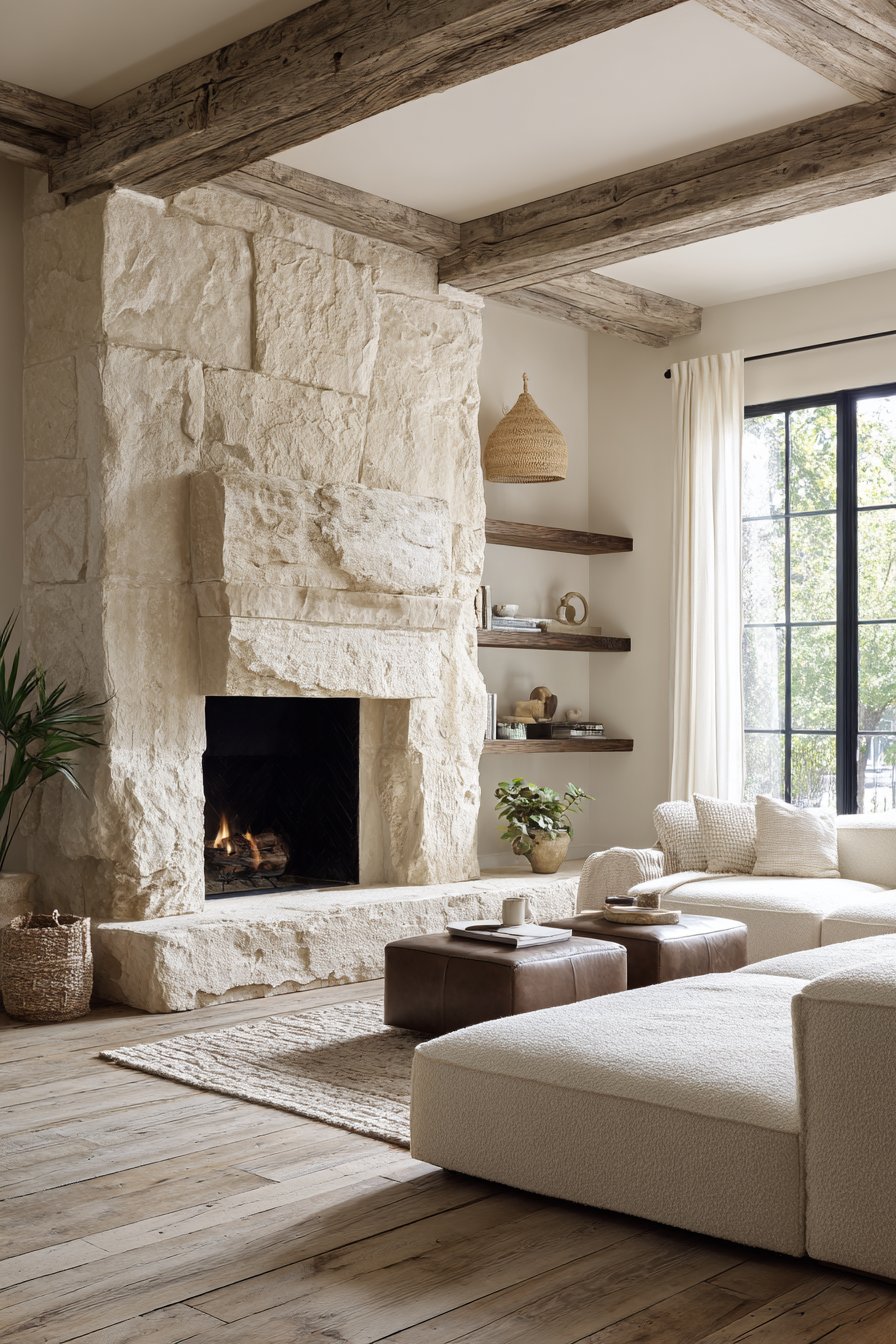
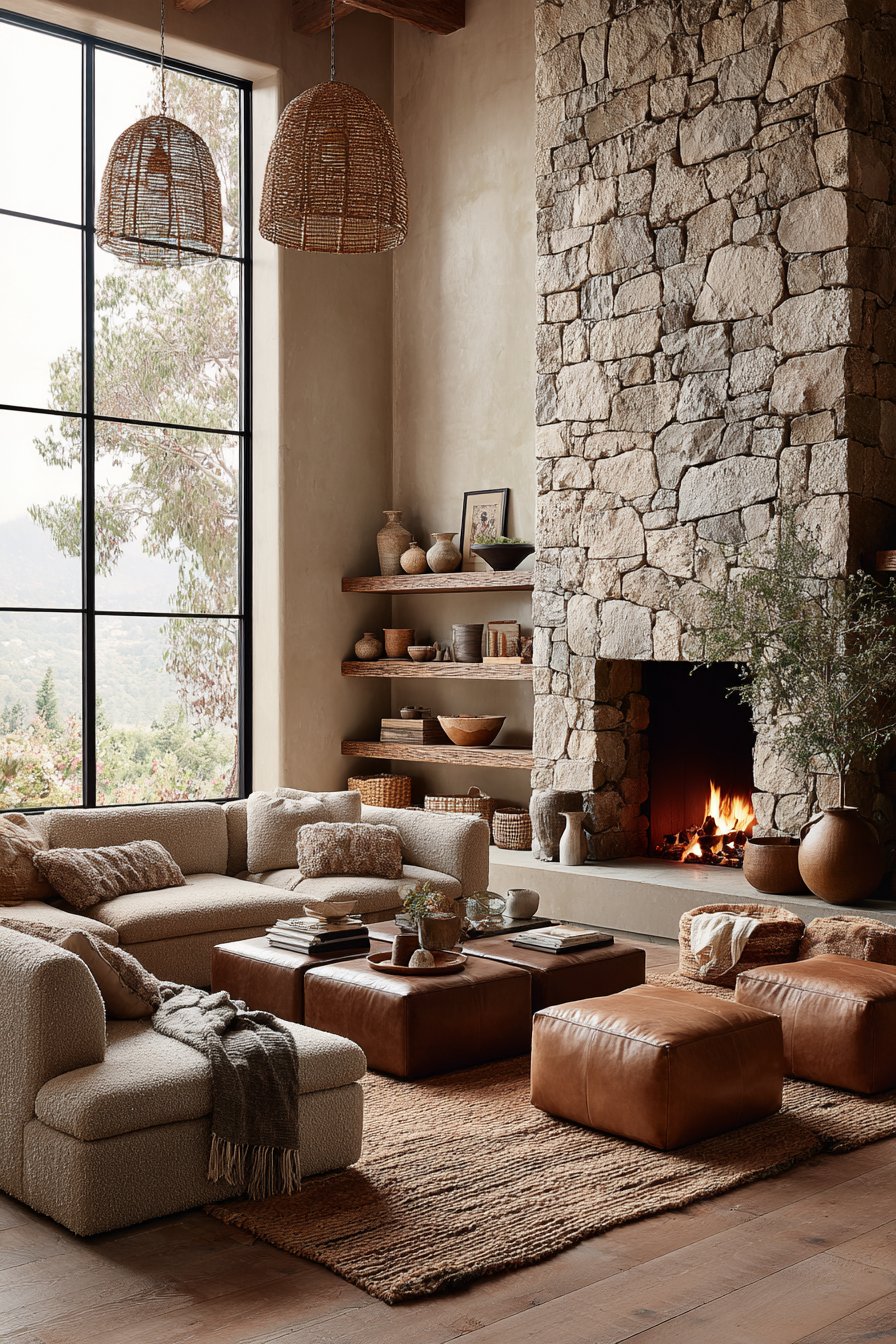
A substantial fireplace clad in rough-hewn limestone dominates this living room. Natural color variations range from cream to caramel tones. The textured surface creates visual warmth even without flames. An oversized sectional in undyed natural wool bouclé provides comfortable seating.
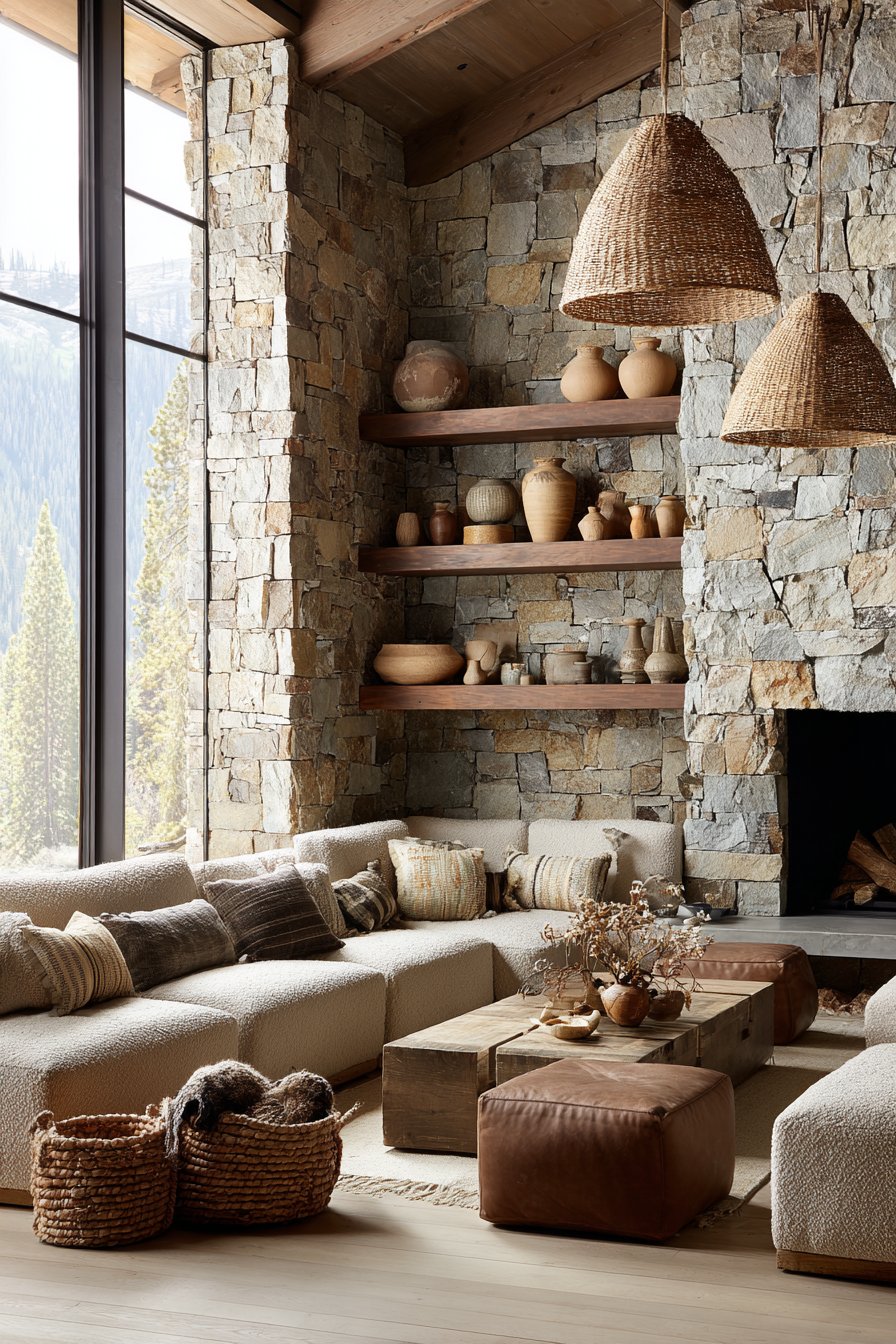
Subtle texture variations in the fabric add depth. Leather ottomans showing honest wear complement the sectional perfectly. Floating shelves in live-edge walnut display handcrafted ceramics and woven baskets. The organic shelf edges echo the natural stone texture.
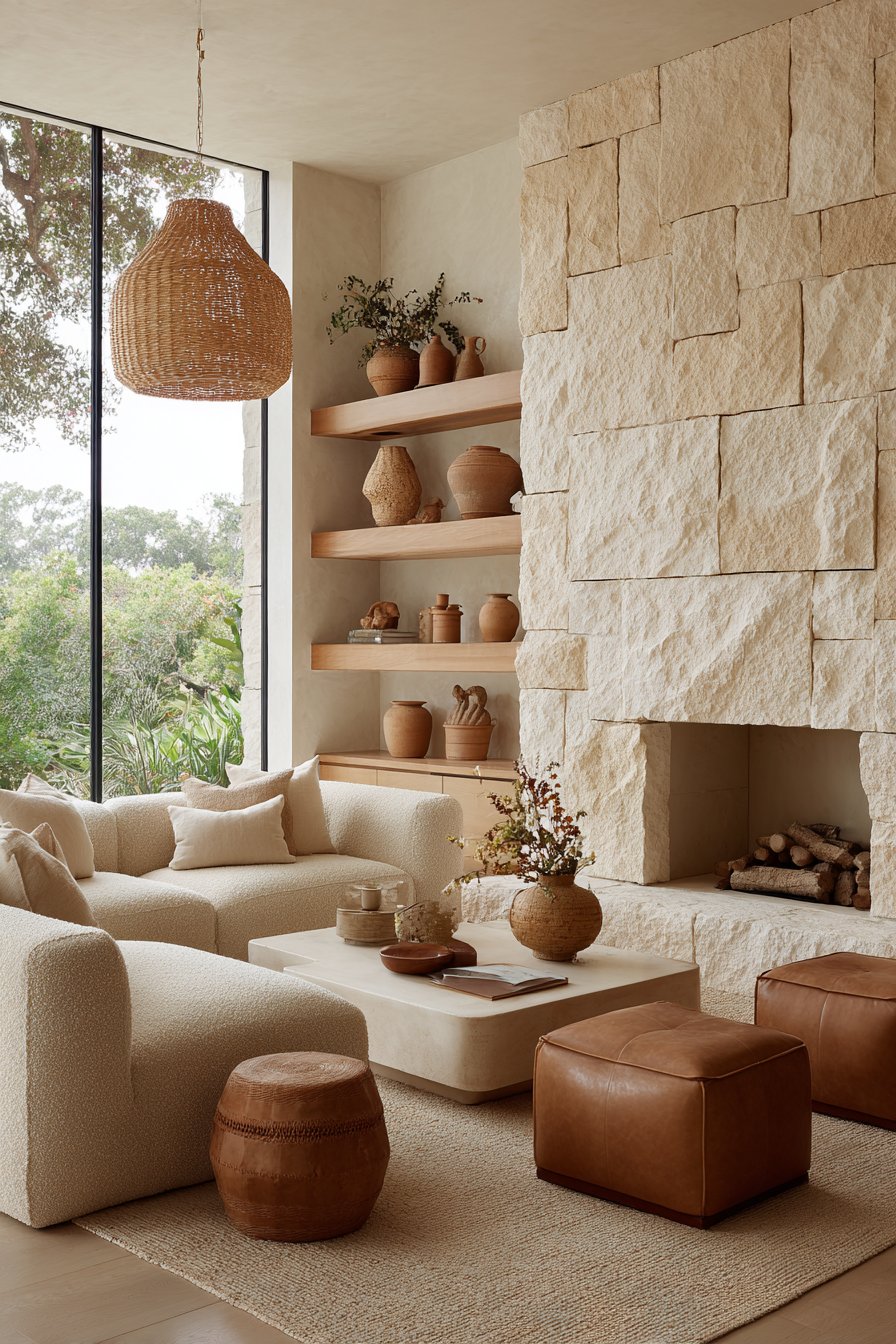
Wide-plank oak flooring features a natural matte finish. Visible knots and grain patterns celebrate the wood’s authentic character. Woven jute pendant lights provide warm ambient illumination overhead. Floor-to-ceiling windows flood the space with natural daylight. The light highlights authentic materials and earthy color progressions beautifully.
Key Design Tips:
- Feature rough-hewn stone for authentic natural texture
- Select undyed fabrics that showcase natural fiber colors
- Display handcrafted objects on live-edge shelving
- Choose wide-plank flooring that shows wood’s natural character
- Install woven pendant lights for sculptural lighting elements
5. Conversation Pit Sanctuary
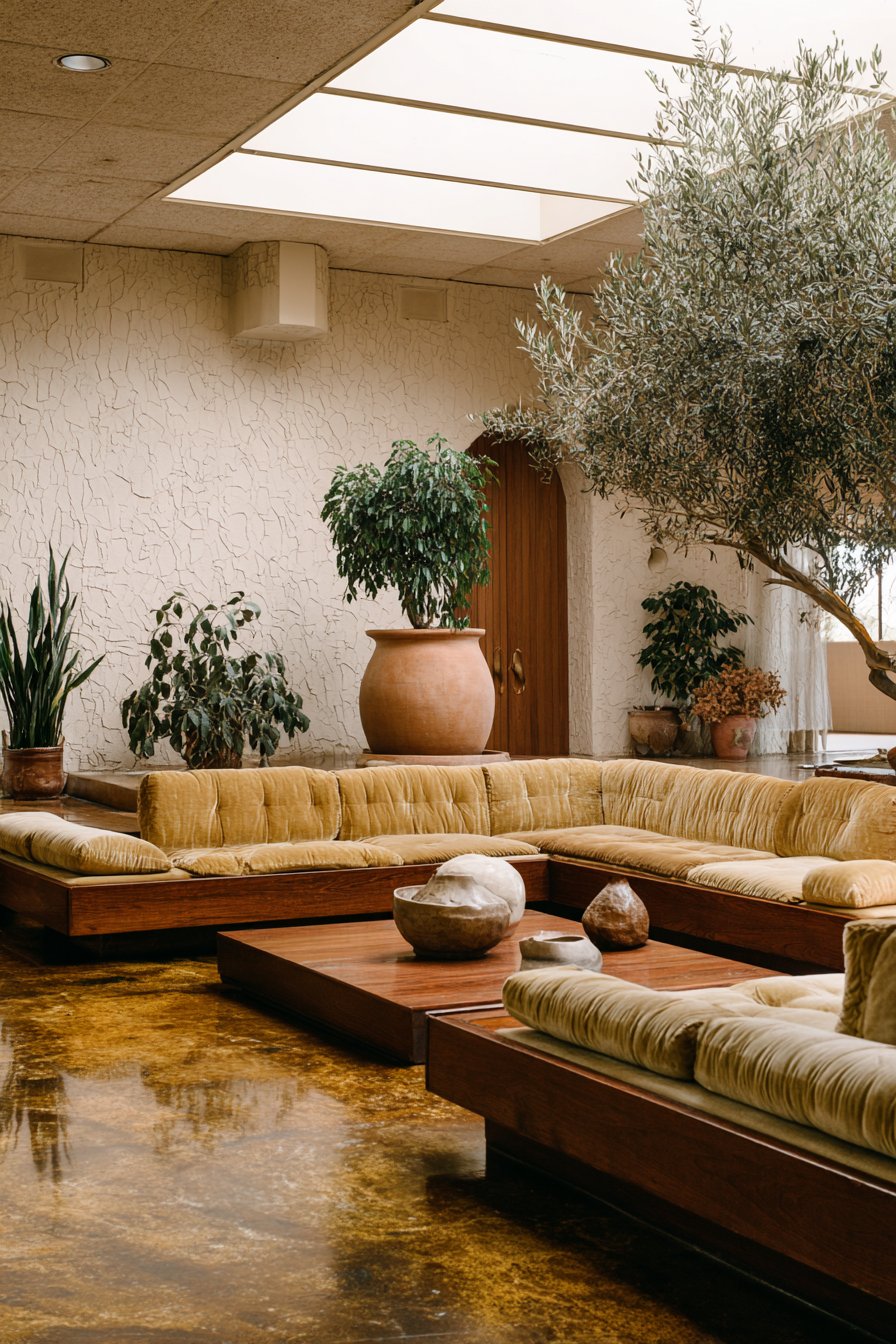
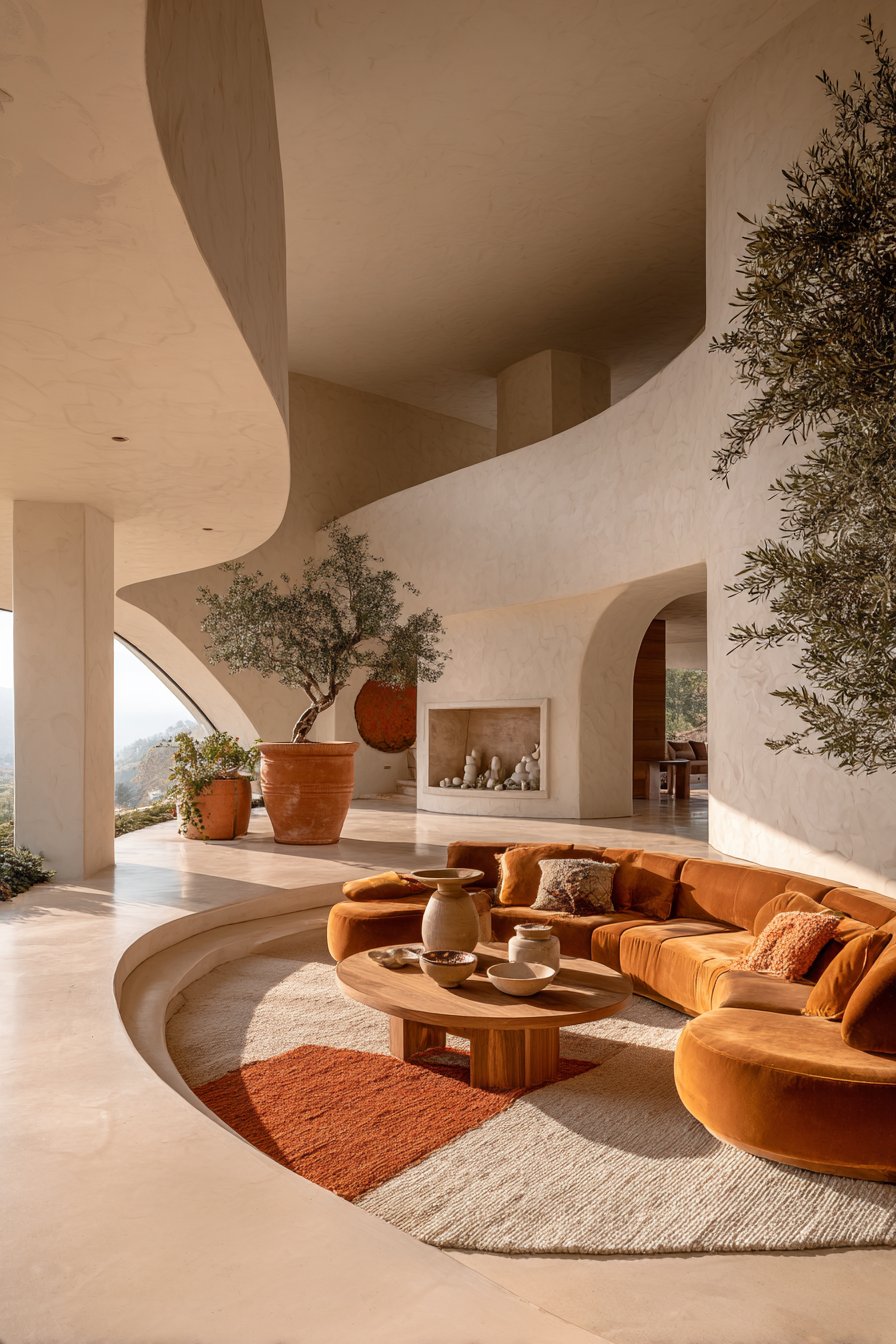
A sunken conversation pit creates an intimate gathering space. Built-in seating features camel-toned velvet upholstery. Natural luster variations in the fabric catch light beautifully. The surrounding floor showcases polished concrete in warm amber tones. Subtle surface variations add organic interest.
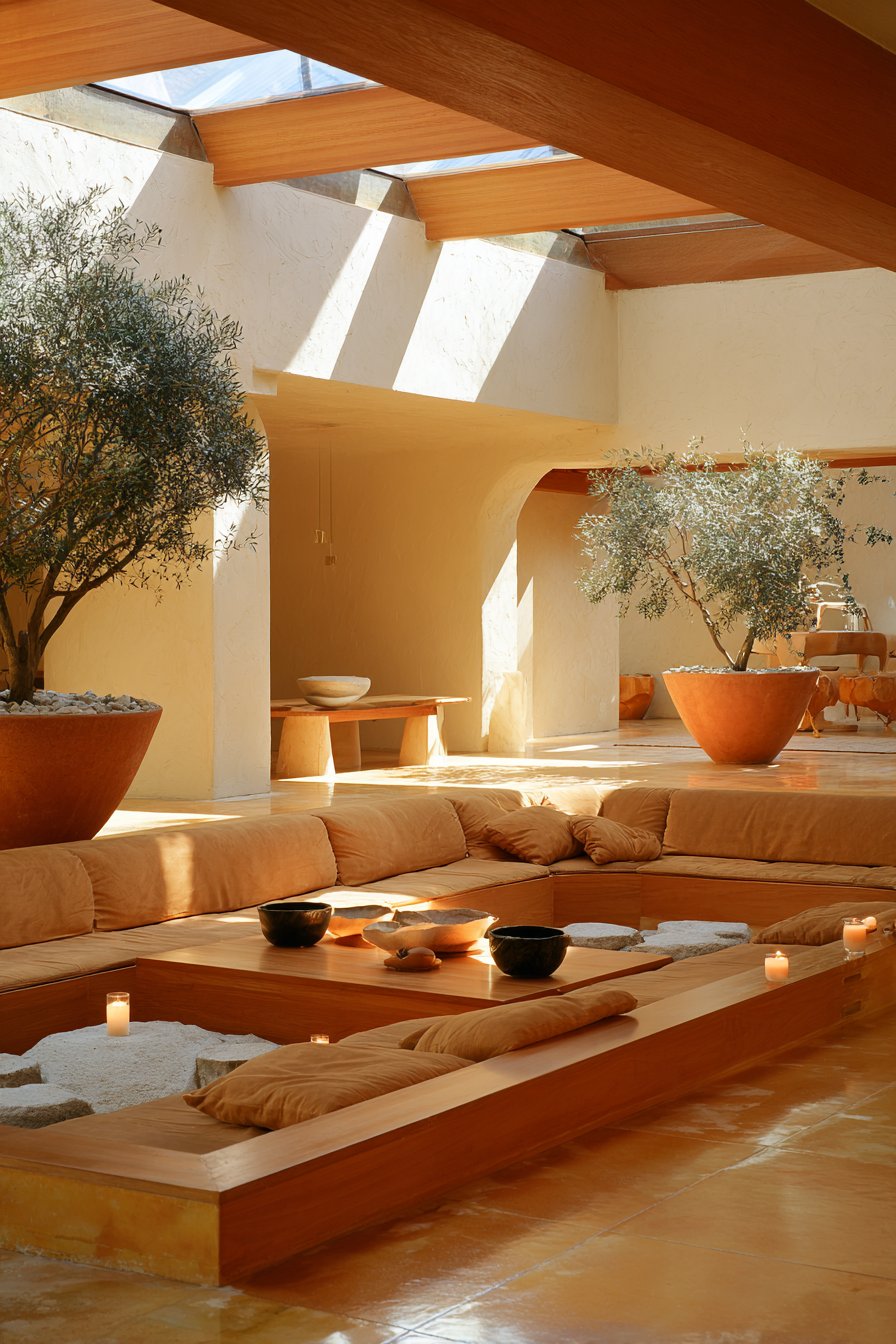
A low wooden platform serves as communal coffee table. Ceramic bowls and natural stone objects create simple displays. Walls finished in limewash paint offer soft clay color. The texture appears without obvious pattern or repetition.
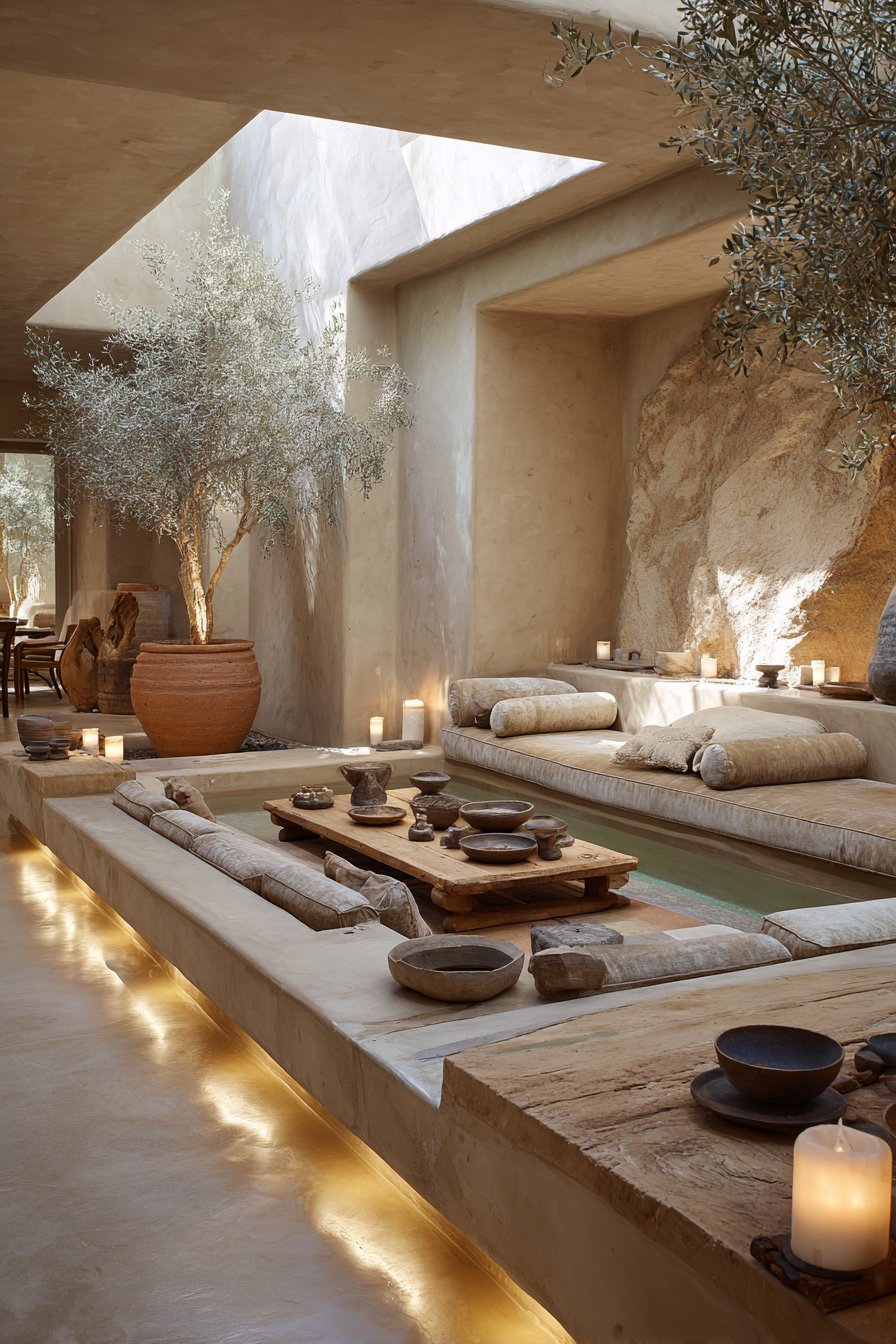
Large terracotta planters hold mature olive trees indoors. These sculptural natural elements bring Mediterranean character. Skylights provide even natural illumination throughout the day. The lighting changes subtly as the sun moves across the sky.
Key Design Tips:
- Create sunken seating areas for intimate conversation spaces
- Use polished concrete flooring for durable natural surfaces
- Display simple ceramic and stone objects as artistic elements
- Apply limewash paint for subtle textured walls
- Bring mature trees indoors for dramatic natural sculptures
6. Grasscloth and Vintage Leather
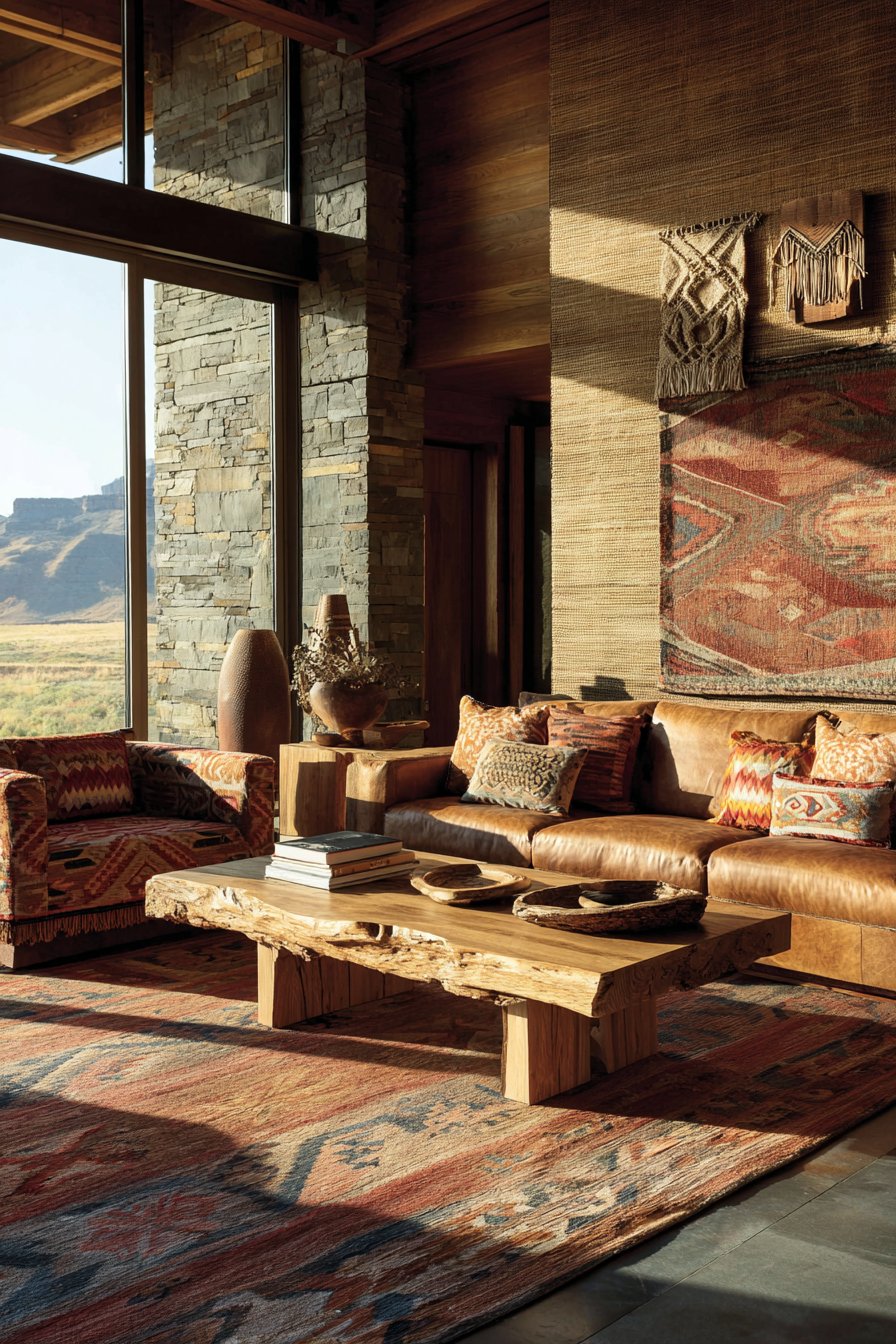
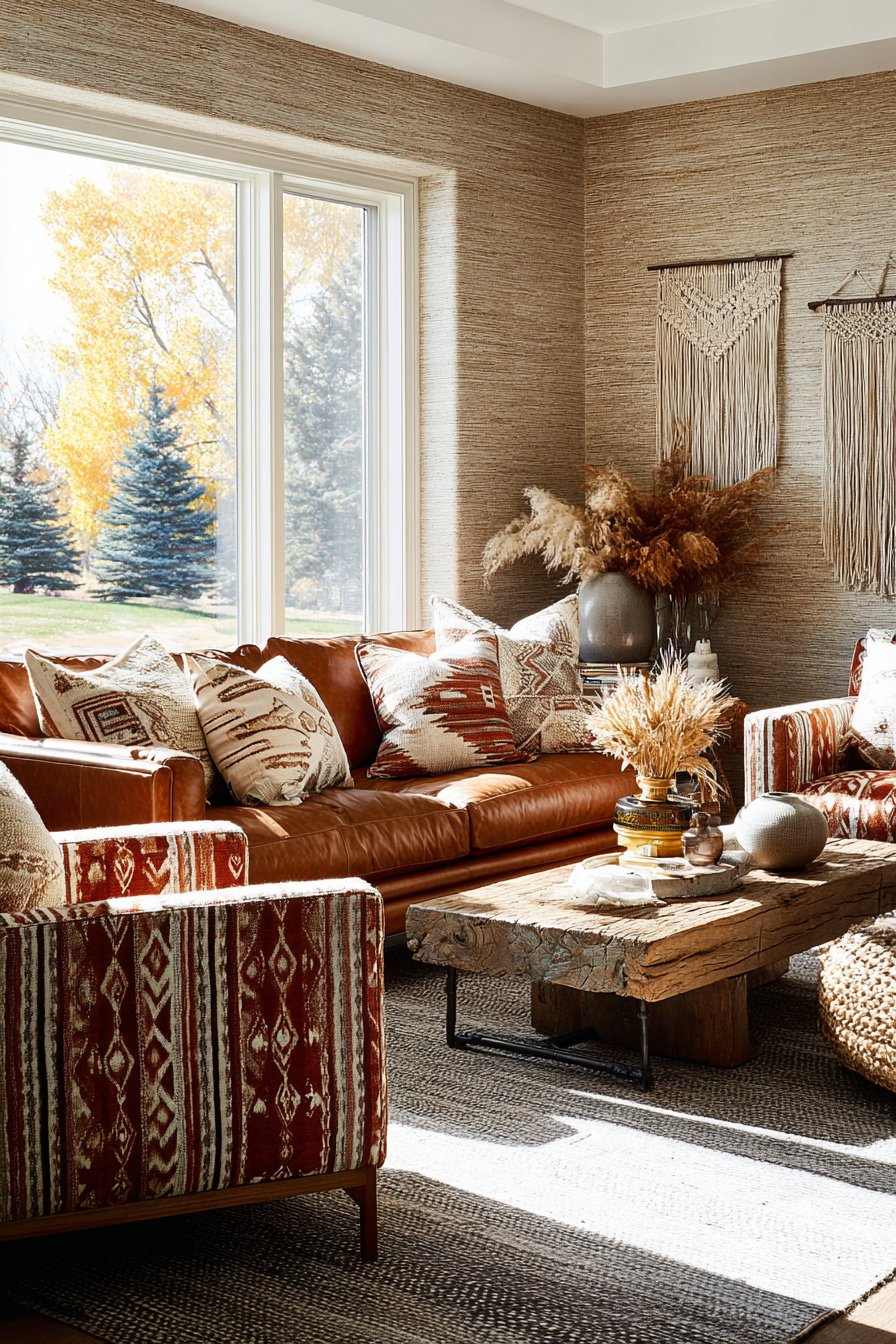
A feature wall covered in natural grasscloth wallpaper shows visible fiber texture. Color variations across the surface add organic authenticity. A vintage-inspired sofa in tobacco leather provides substantial seating. The rich color develops more character with age and use.
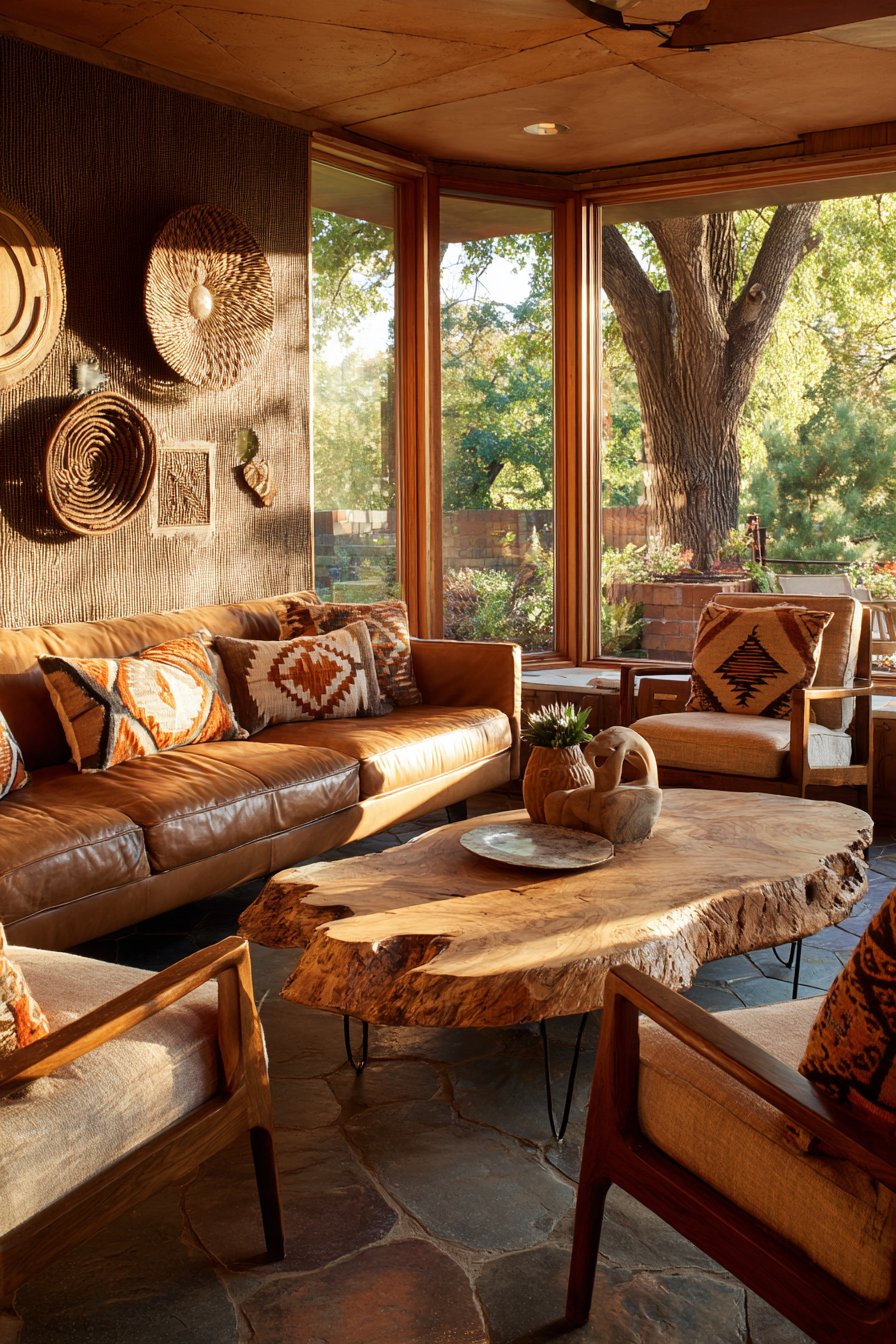
Armchairs upholstered in handwoven kilim fabric feature geometric patterns. Rust, ochre, and cream colors echo throughout the space. The coffee table crafts from a thick wood slab with natural edge. Metal hairpin legs provide functional support while maintaining visual lightness.
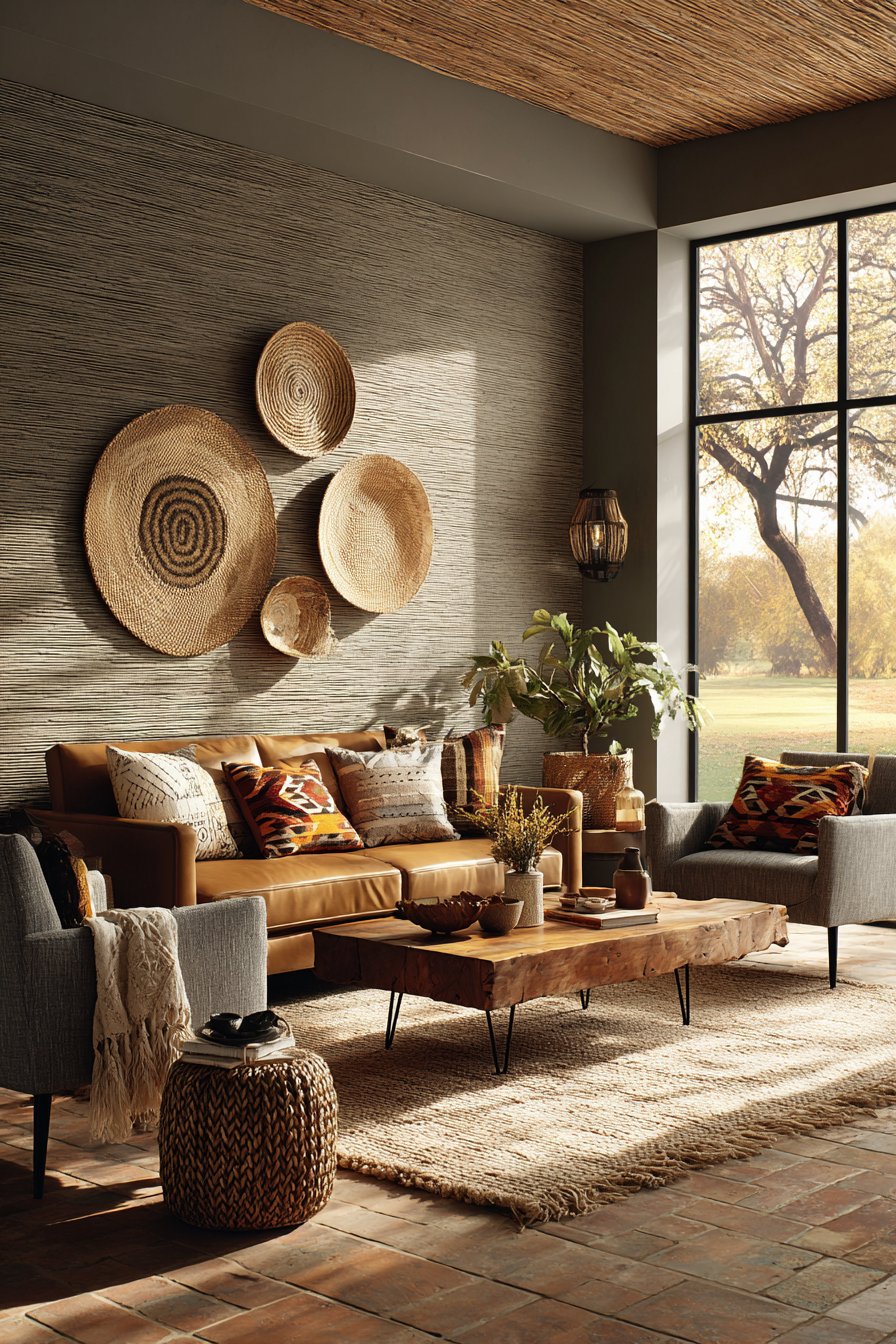
Macramé wall hangings and woven textile art add layered texture. Terracotta floor tiles show slight variations in color and finish. These inconsistencies enhance the natural aesthetic. Large windows create dynamic shadows across textured surfaces. Golden hour lighting emphasizes the warm organic material story.
Key Design Tips:
- Apply grasscloth wallpaper for natural fiber wall texture
- Choose vintage leather furniture that ages beautifully
- Incorporate kilim textiles for geometric pattern interest
- Display macramé art for additional layered texture
- Select terracotta tiles with natural color variations
7. Built-In Natural Display
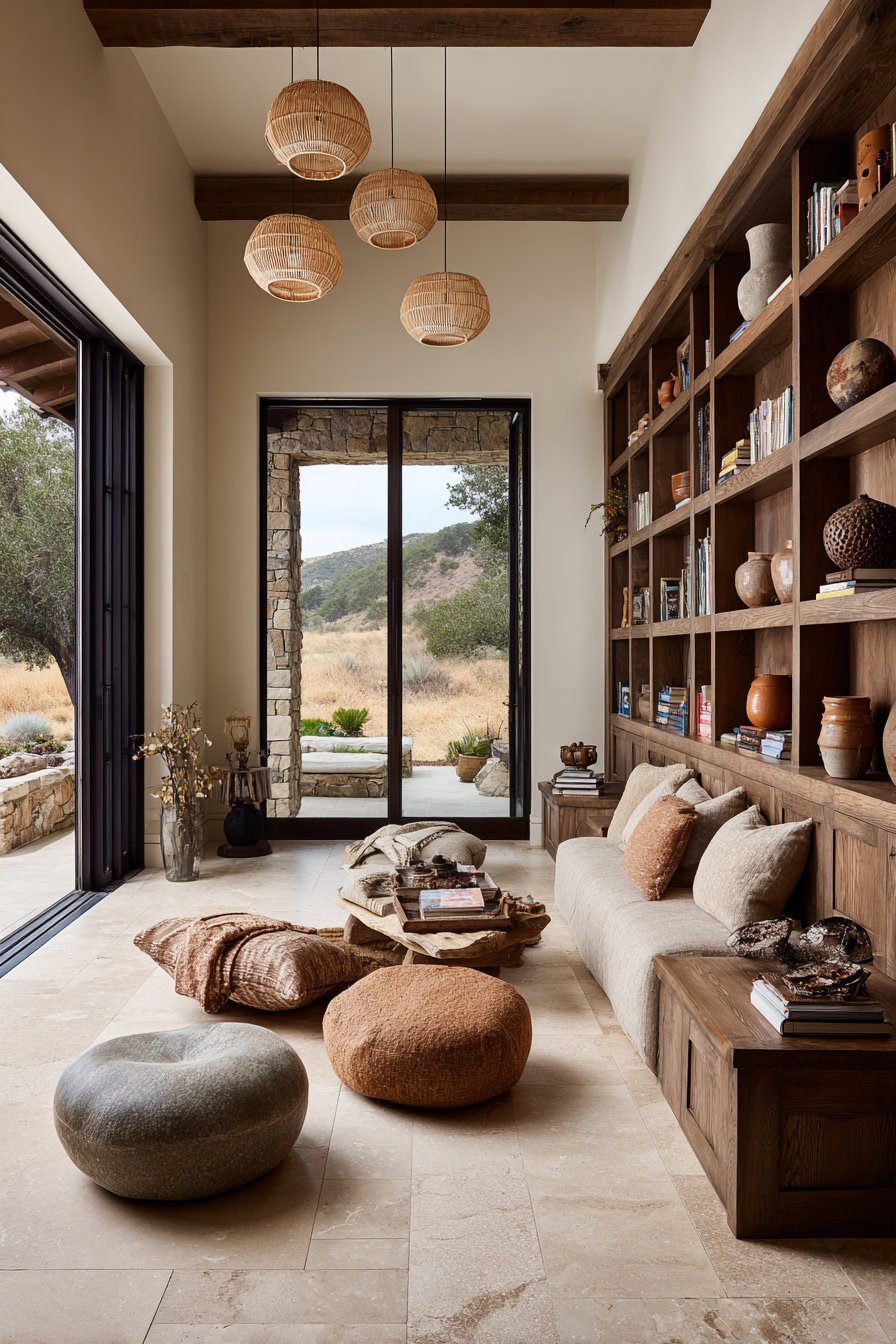
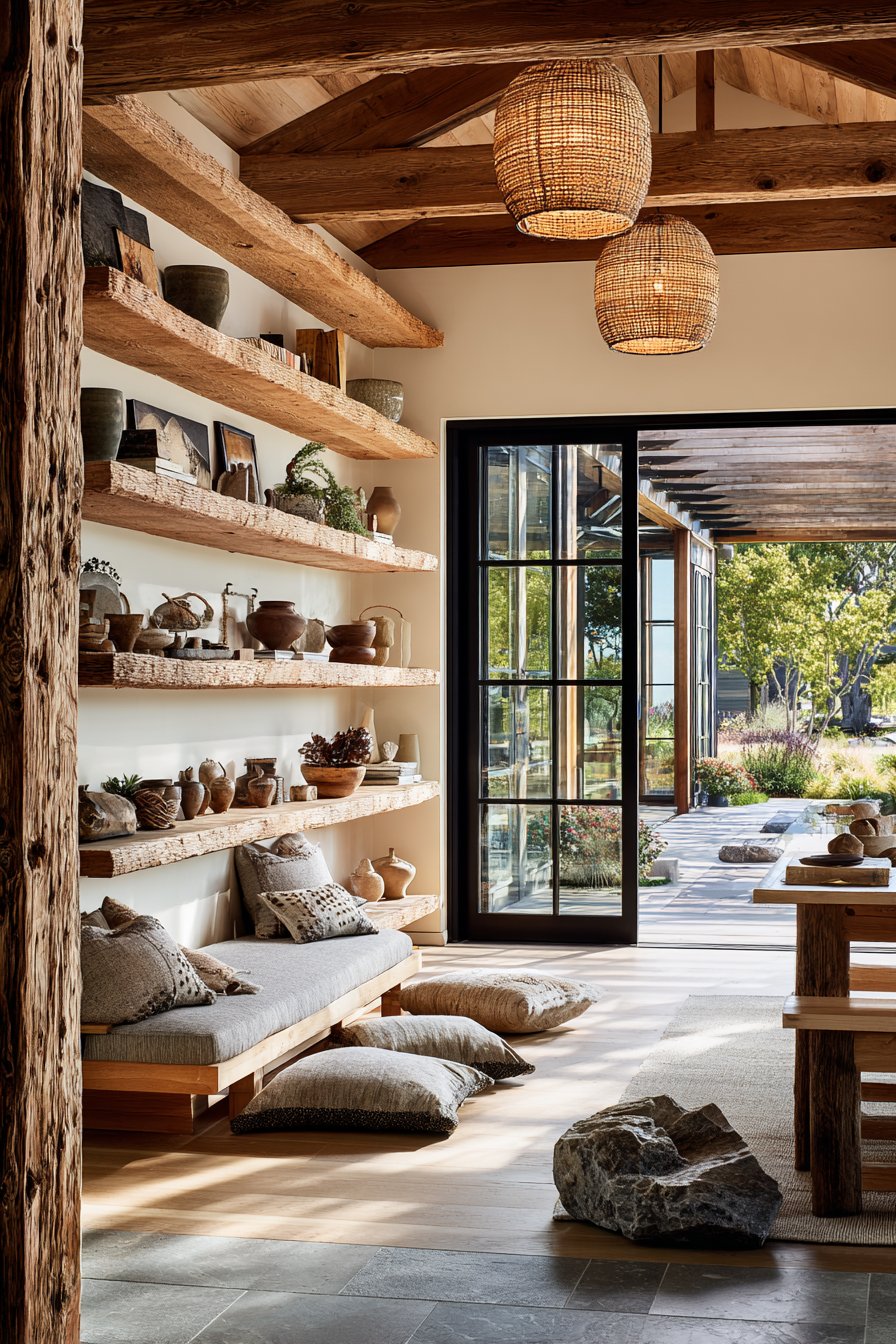
Built-in shelving constructed from rough-sawn lumber showcases natural wood finish. The shelves display curated pottery, woven baskets, and natural objects. Driftwood and stones bring outdoor elements inside. A low-profile sofa in mushroom-toned linen sits beneath the shelving.
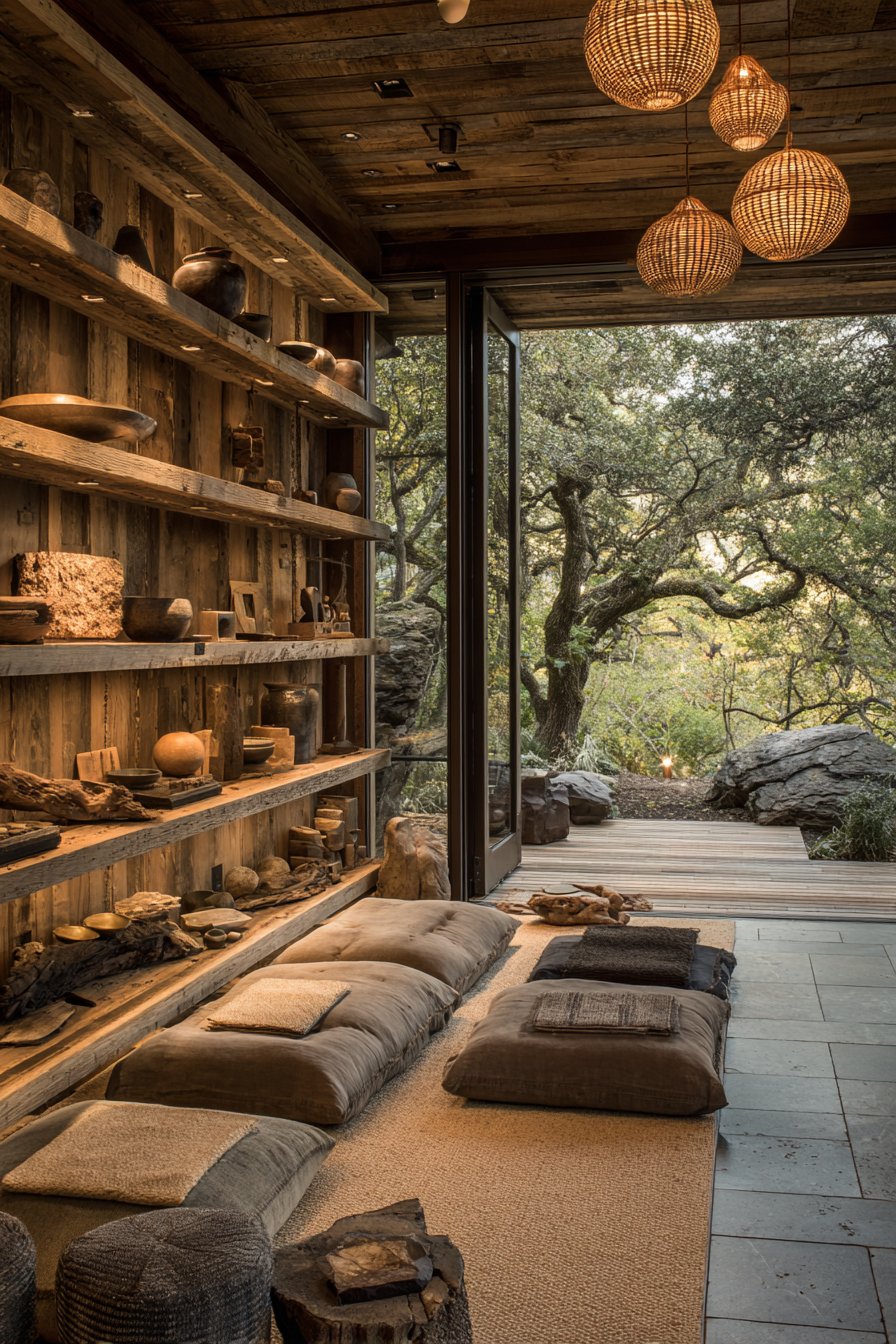
Floor cushions in various earth-toned fabrics scatter nearby. These provide flexible seating for casual gatherings. Large-format porcelain tiles mimic natural travertine beautifully. Realistic vein patterns and color variations enhance authenticity.
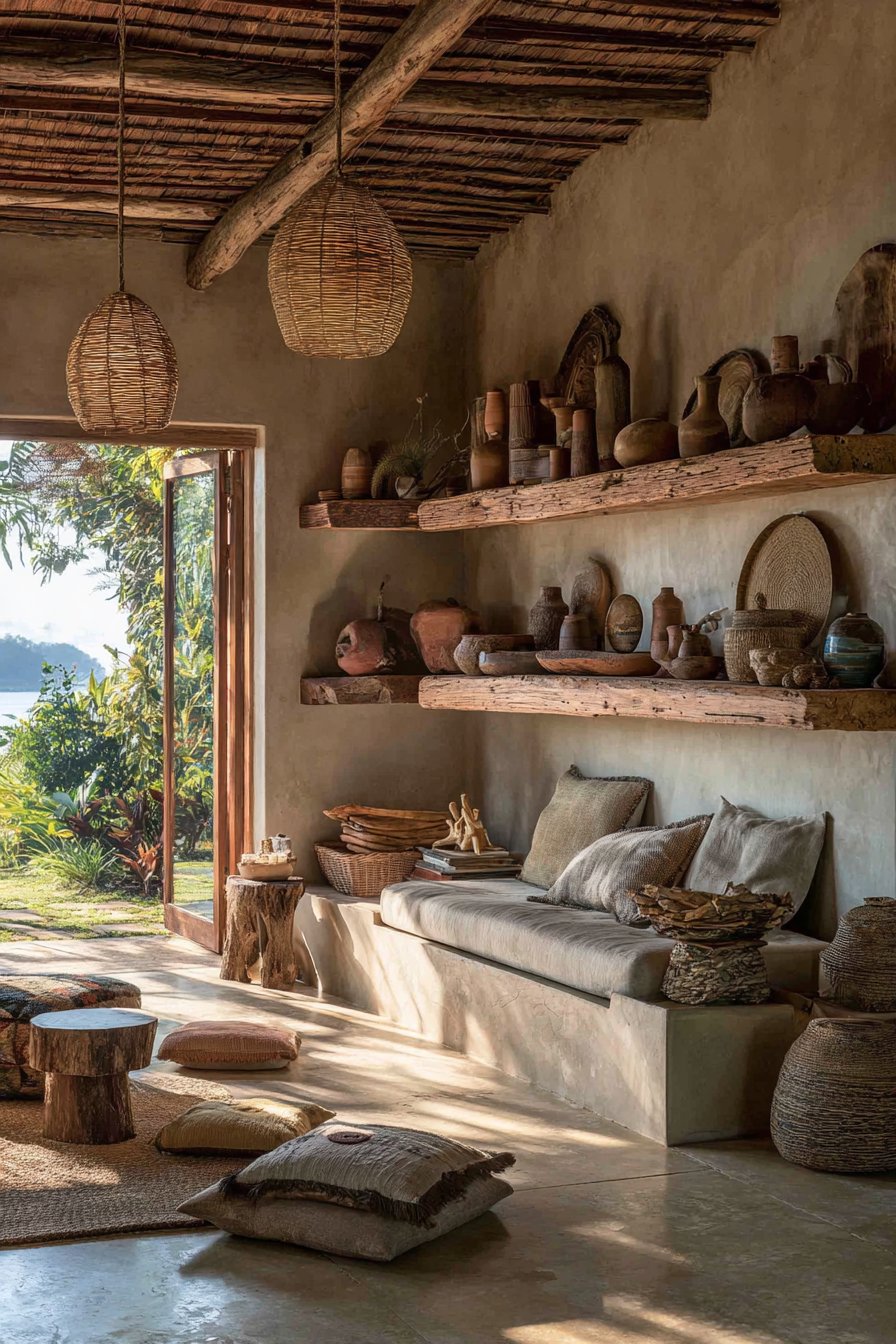
Pendant lights with woven rattan shades provide warm ambient glow. Large sliding glass doors open to outdoor space. This connection blurs interior-exterior boundaries effectively. Natural light interacts beautifully with layered earthy textures throughout the space.
Key Design Tips:
- Build custom shelving from rough-sawn lumber for authenticity
- Curate displays of natural objects and handcrafted pieces
- Add floor cushions for flexible casual seating options
- Choose porcelain tiles that mimic natural stone patterns
- Install sliding glass doors to connect indoor and outdoor spaces
8. Cedar Ceiling Architecture
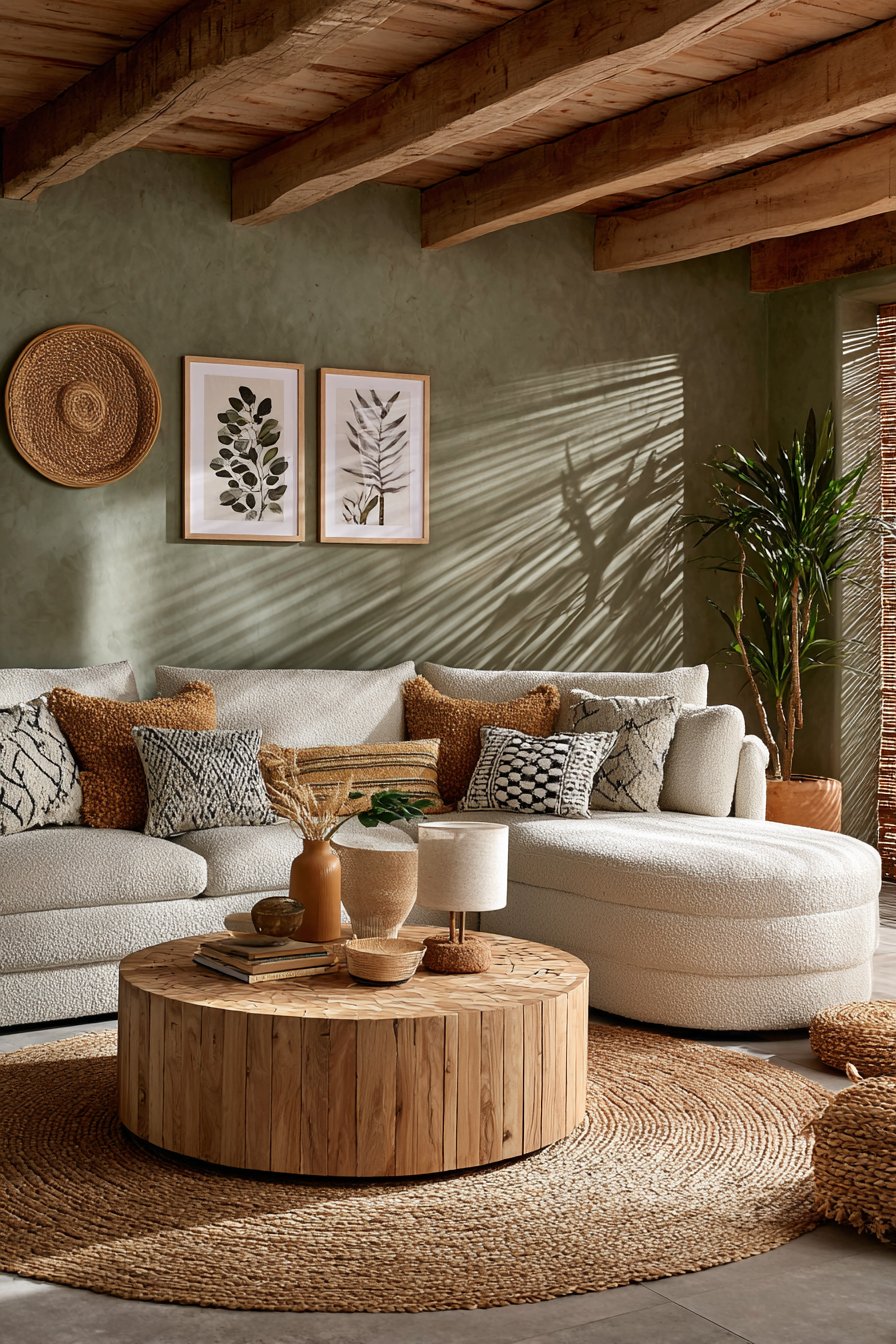
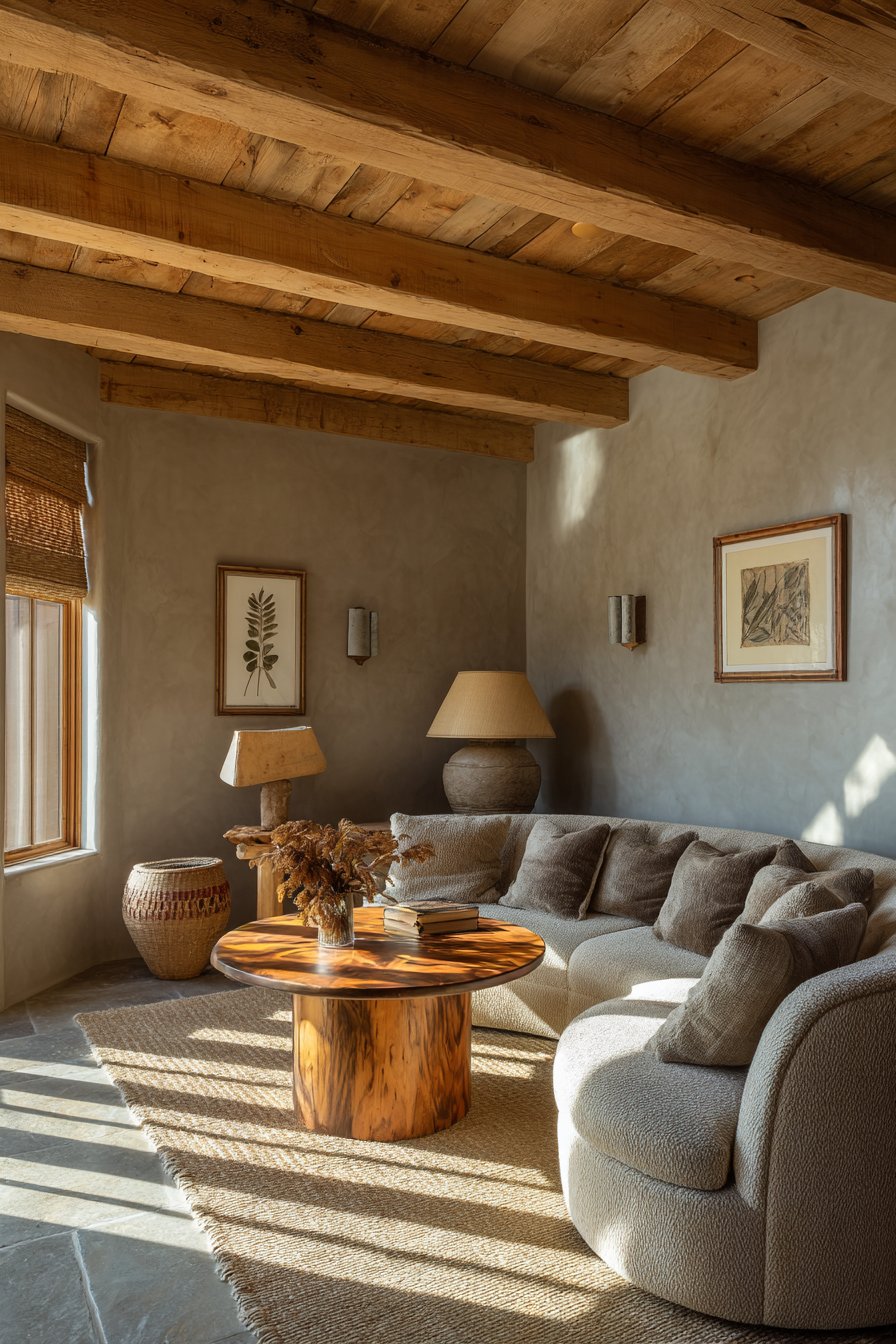
A statement ceiling treatment features exposed wooden joists in natural cedar. The architectural warmth overhead draws the eye upward. A curved sofa upholstered in bouclé fabric provides comfortable seating. The warm sand tone complements the ceiling beautifully.
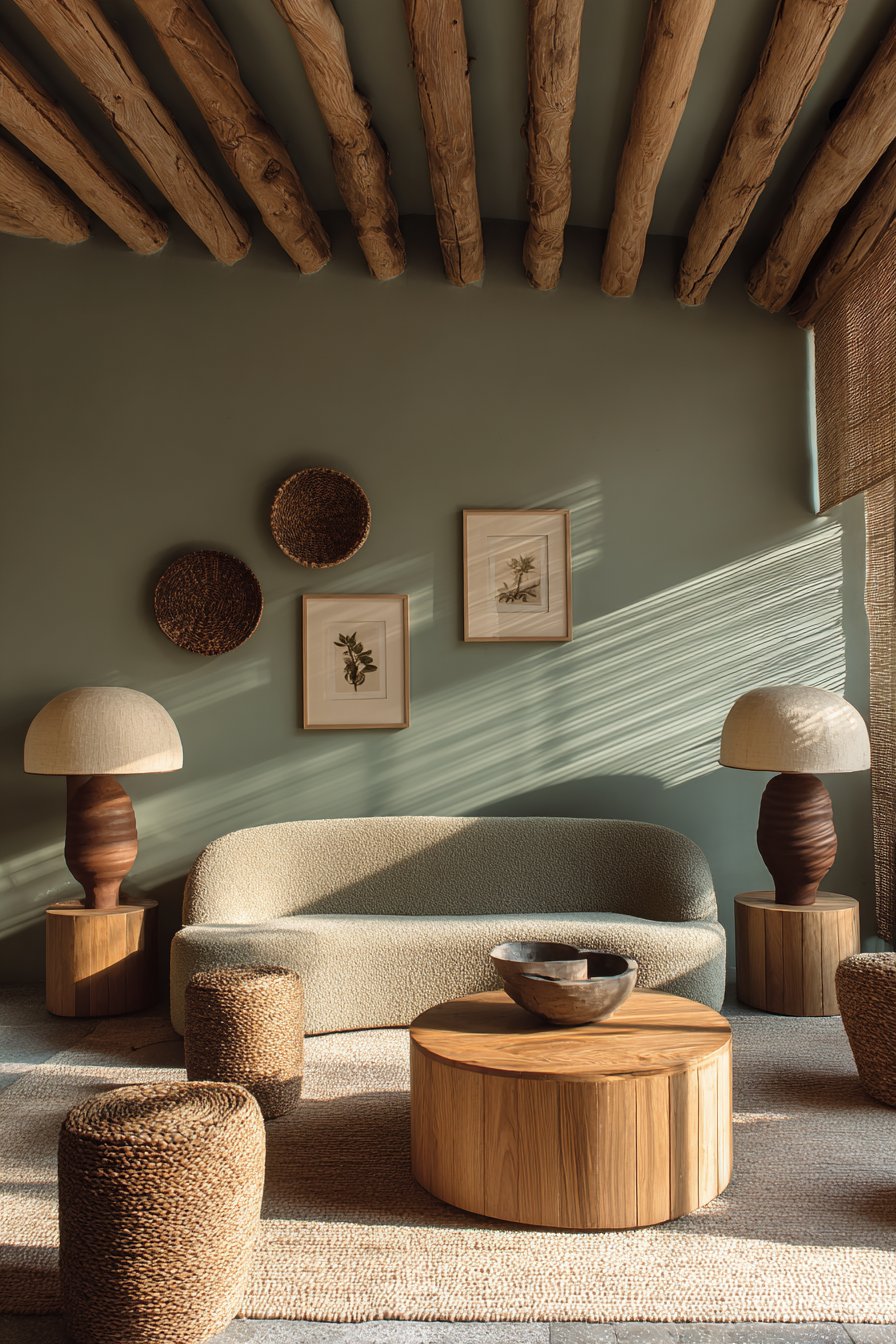
A round coffee table crafted from solid teak displays visible grain patterns. The circular shape softens the angular ceiling lines. Walls painted in muted sage-brown hybrid color provide subtle backdrop. Woven wall baskets and framed botanical prints add organic decoration.
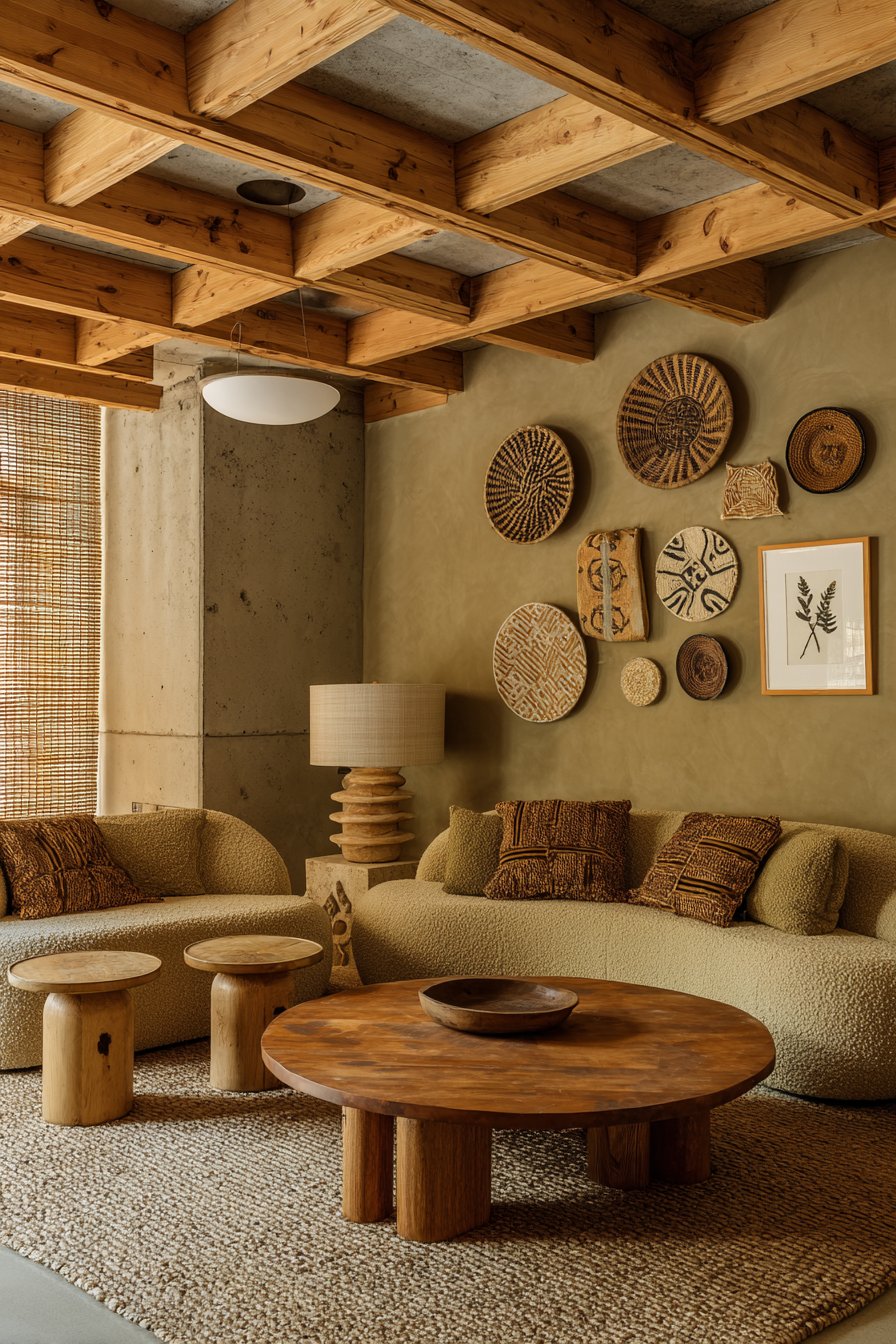
A large sisal rug with chunky weave texture grounds the furniture arrangement. Clay-colored ceramic table lamps with linen shades provide task lighting. Afternoon natural light filters through bamboo roller shades. Striped shadow patterns create dynamic visual interest throughout the day.
Key Design Tips:
- Expose ceiling joists to add architectural warmth overhead
- Choose curved furniture to soften angular architectural elements
- Paint walls in hybrid colors that bridge multiple earth tones
- Display botanical prints in natural wood frames
- Install bamboo shades for filtered natural light and shadow play
9. Reclaimed Brick Character
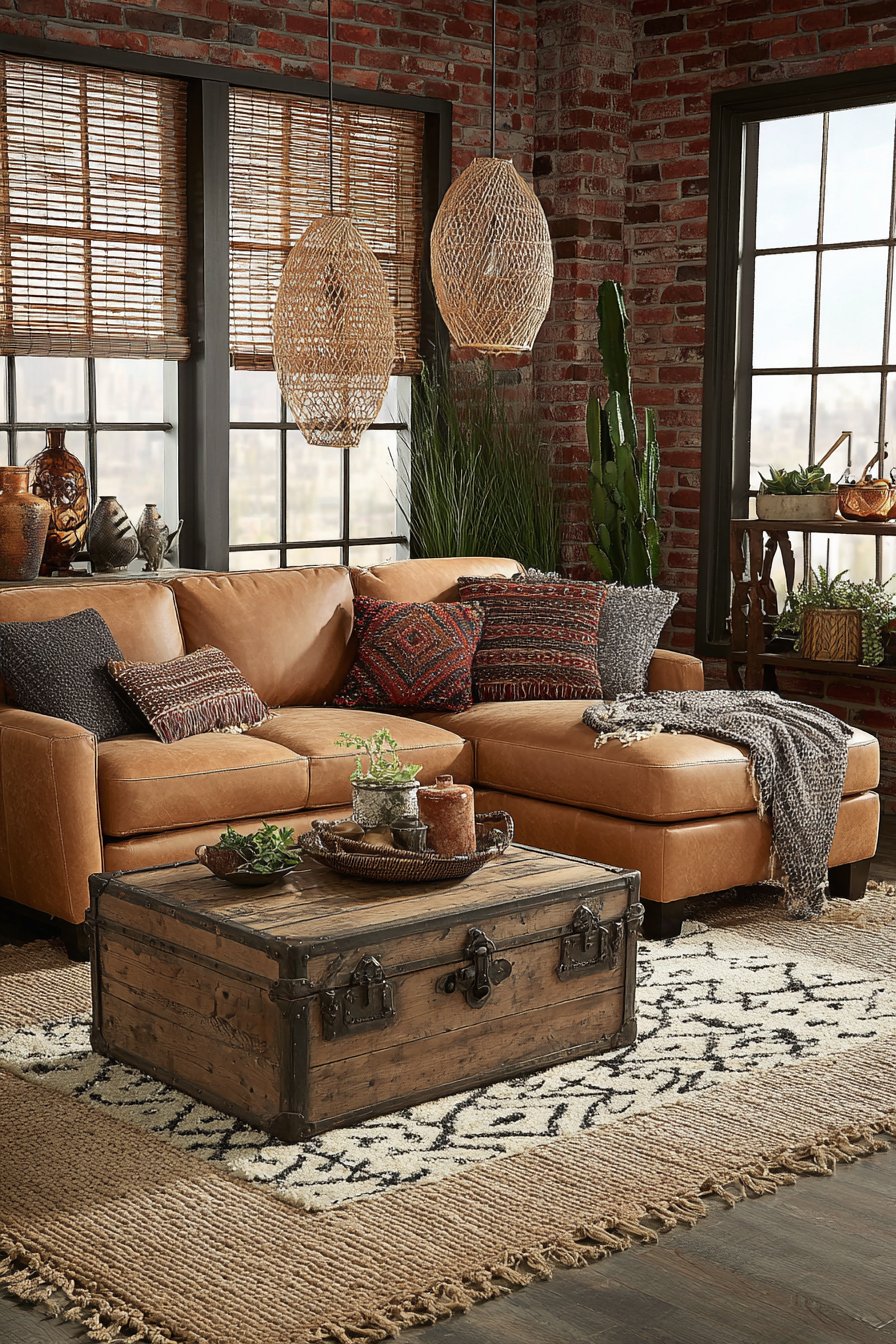
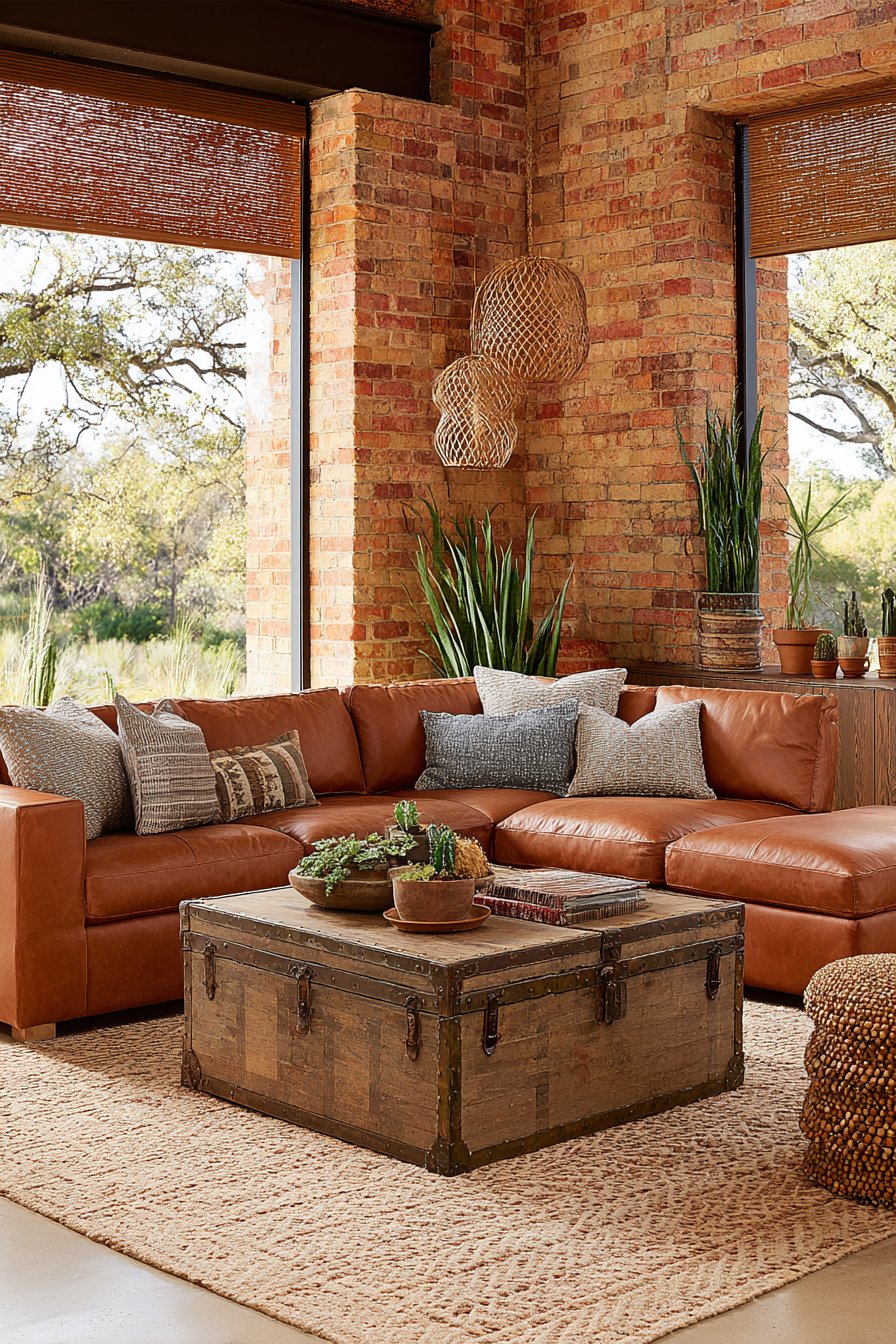
A brick accent wall features reclaimed bricks in varied warm tones. Colors range from dusty rose to deep terracotta. Authentic age and weathering add character impossible to replicate. A comfortable sectional in caramel-colored leather anchors the seating area.
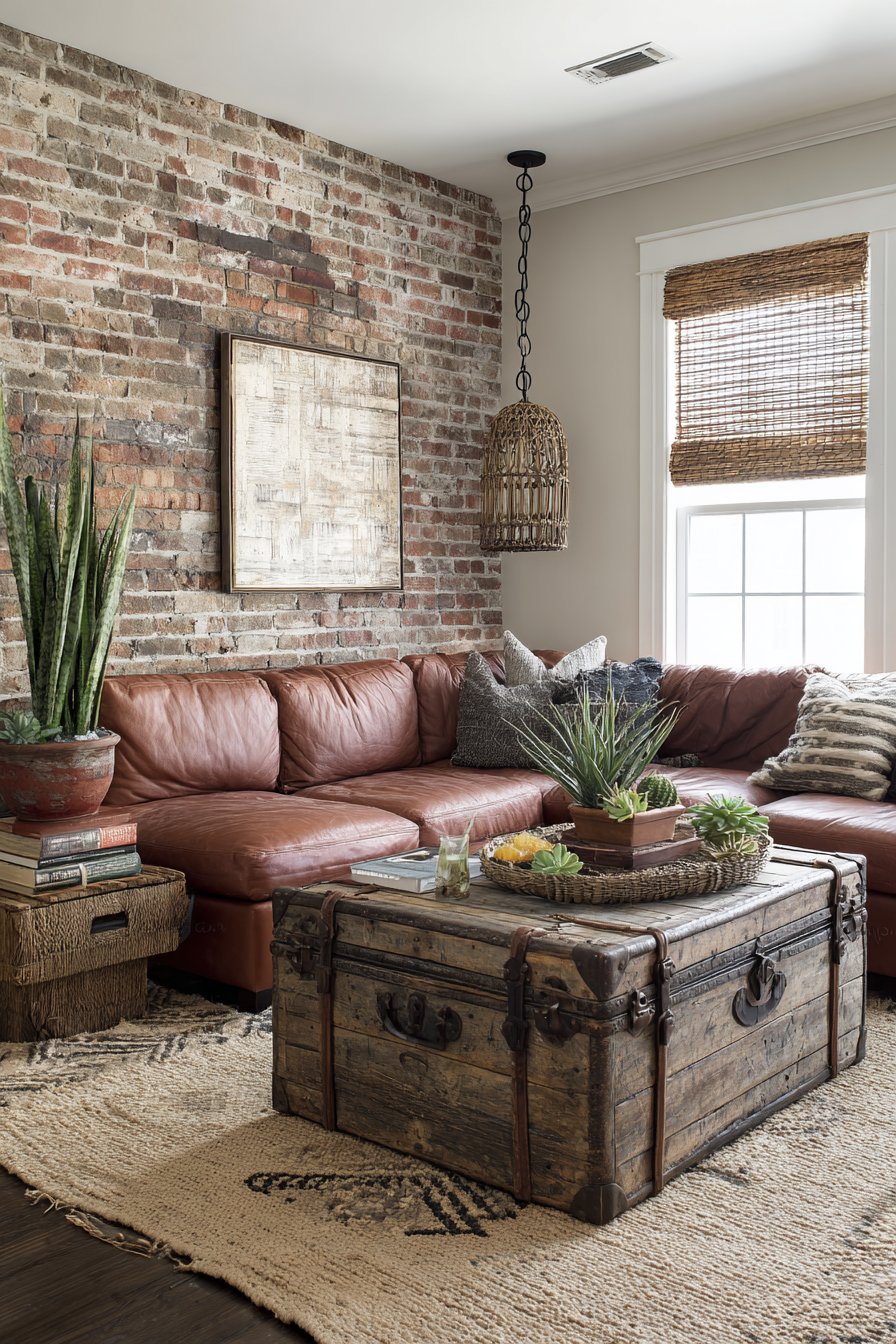
A vintage wooden trunk serves as coffee table. Visible wear and patina tell stories of previous lives. Layered textiles include a large jute rug topped with smaller wool kilim. Geometric earthy patterns add visual complexity without overwhelming.
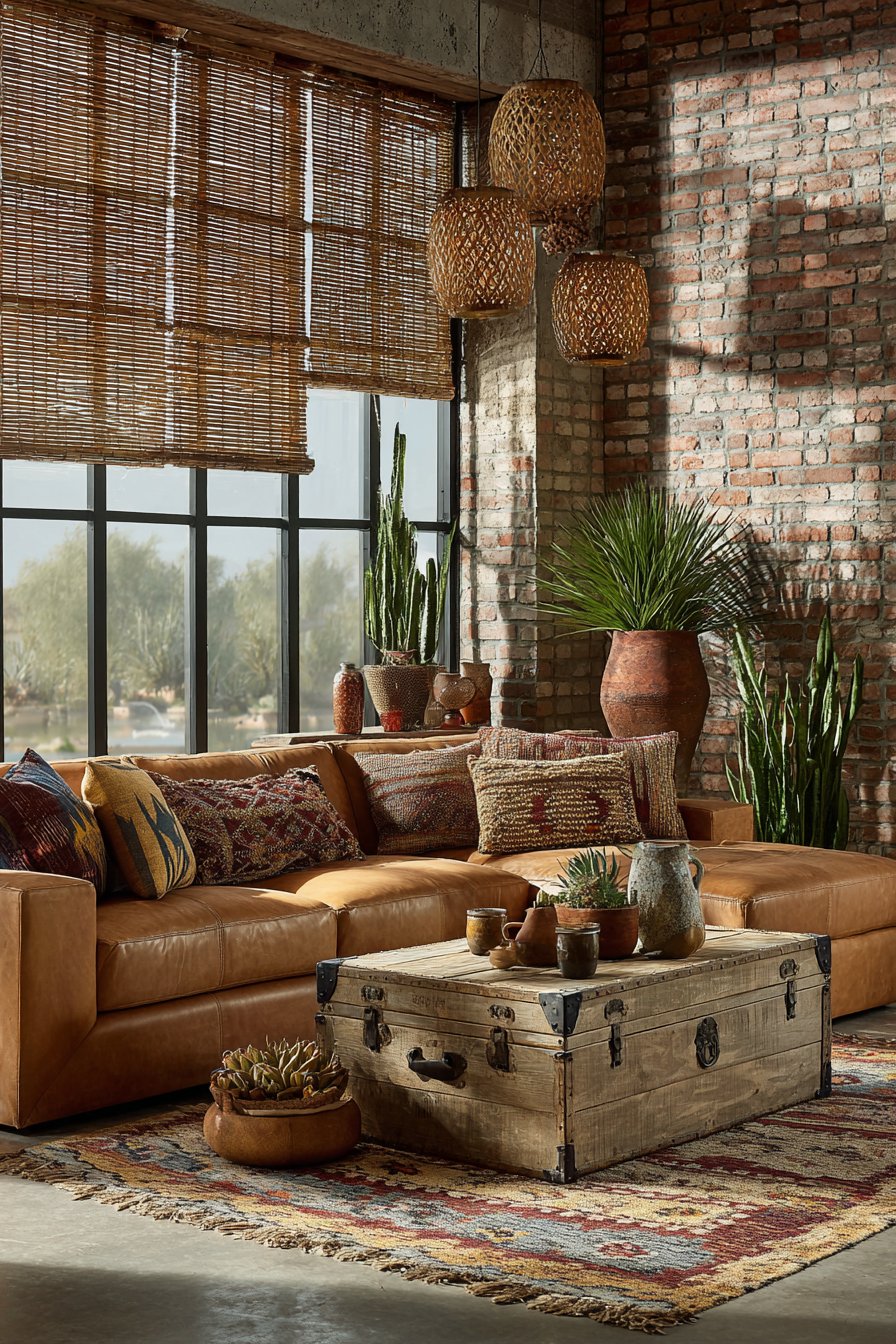
Wooden blinds in natural bamboo filter sunlight effectively. Woven pendant lights add sculptural interest overhead. Potted succulents and air plants in ceramic vessels provide living green elements. The textural brick wall serves as compelling focal point throughout.
Key Design Tips:
- Source reclaimed bricks for authentic aged character
- Layer rugs of different materials and patterns for depth
- Repurpose vintage furniture as functional coffee tables
- Display low-maintenance plants in handcrafted ceramic vessels
- Install bamboo blinds for natural light control
10. Oak Cabinetry Media Wall
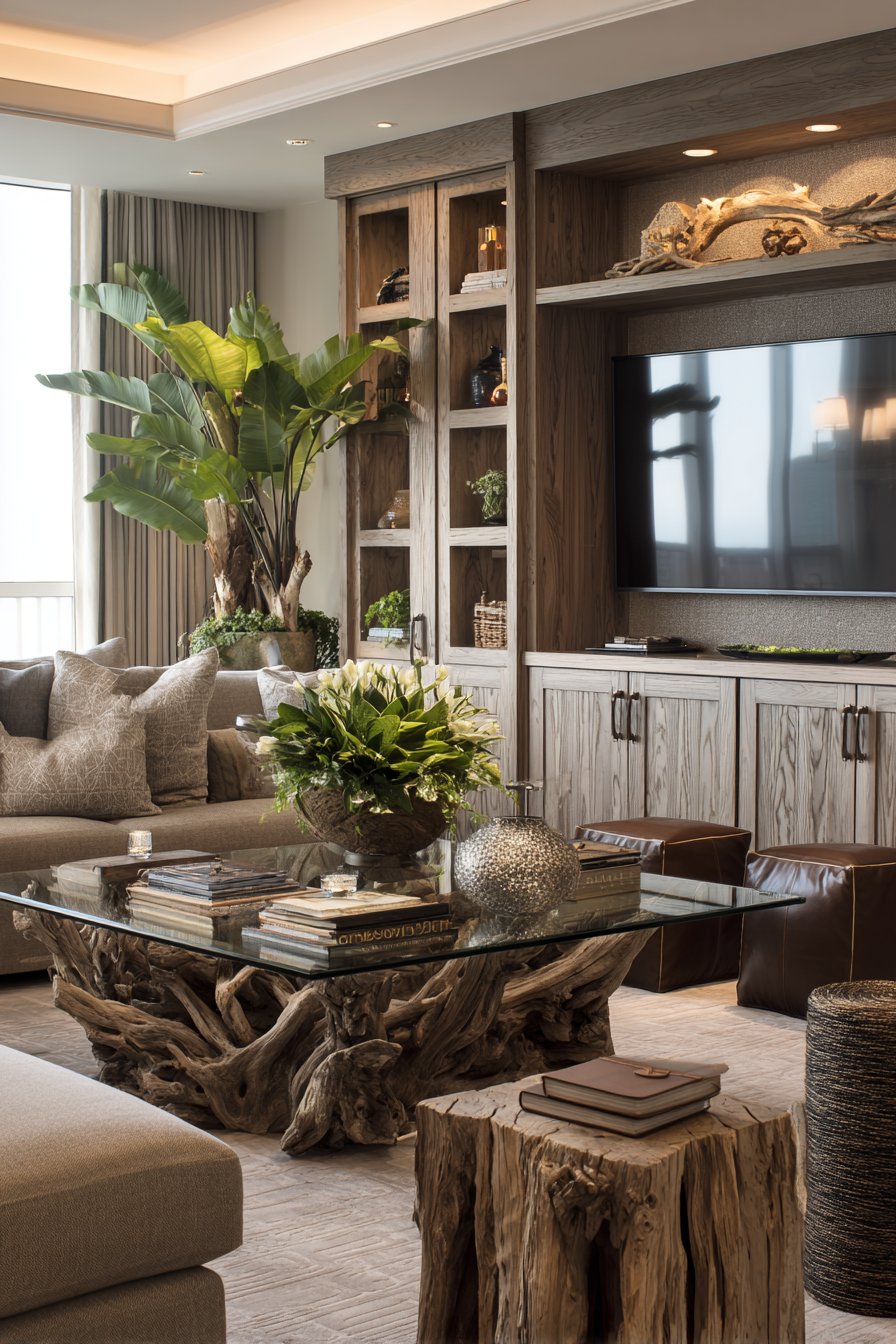
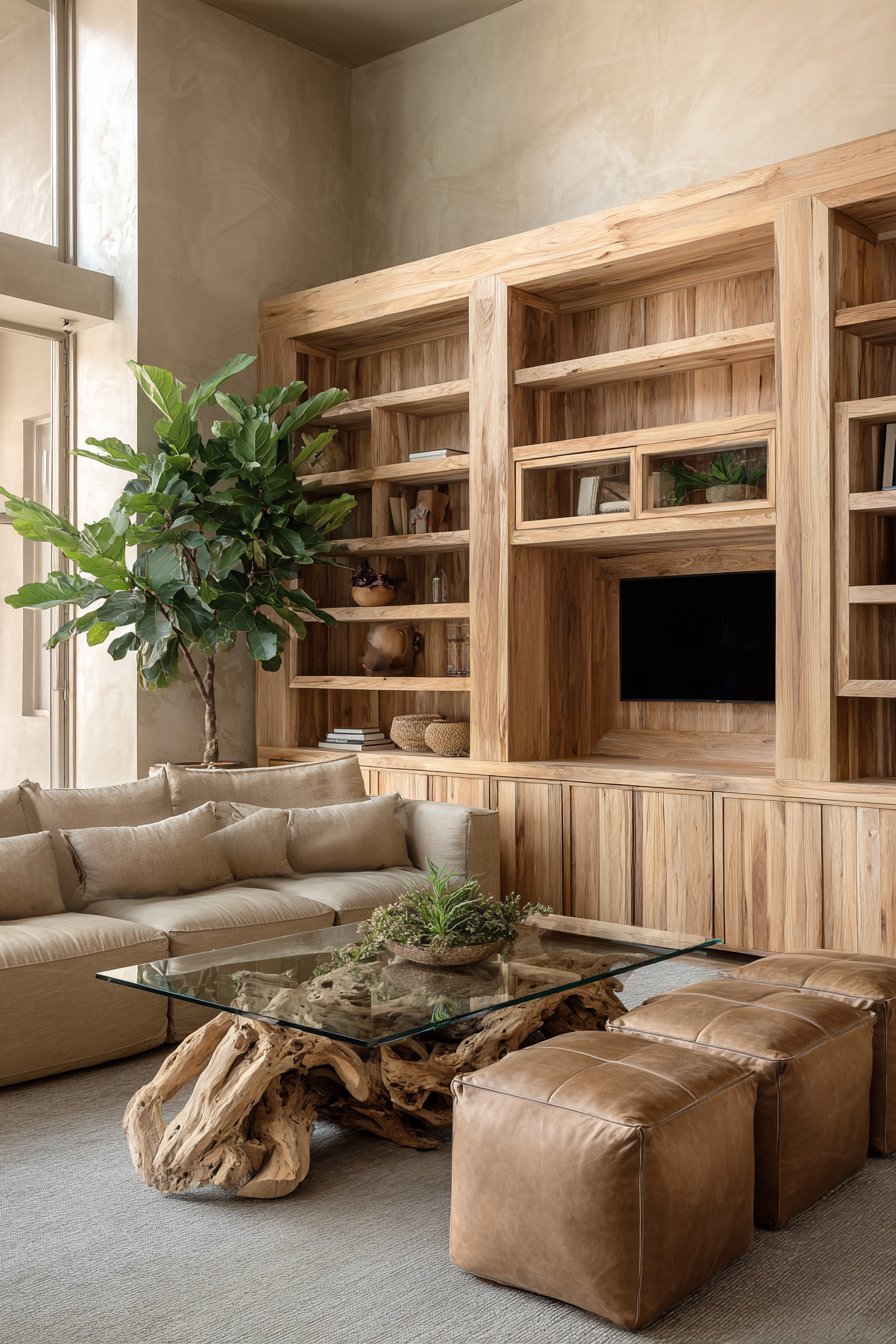
Custom-built media wall combines natural oak cabinetry with open shelving. The design integrates storage and display in warm wood tones. A modular sofa system upholstered in durable canvas fabric offers flexible seating. The khaki tones coordinate perfectly with the wood cabinetry.
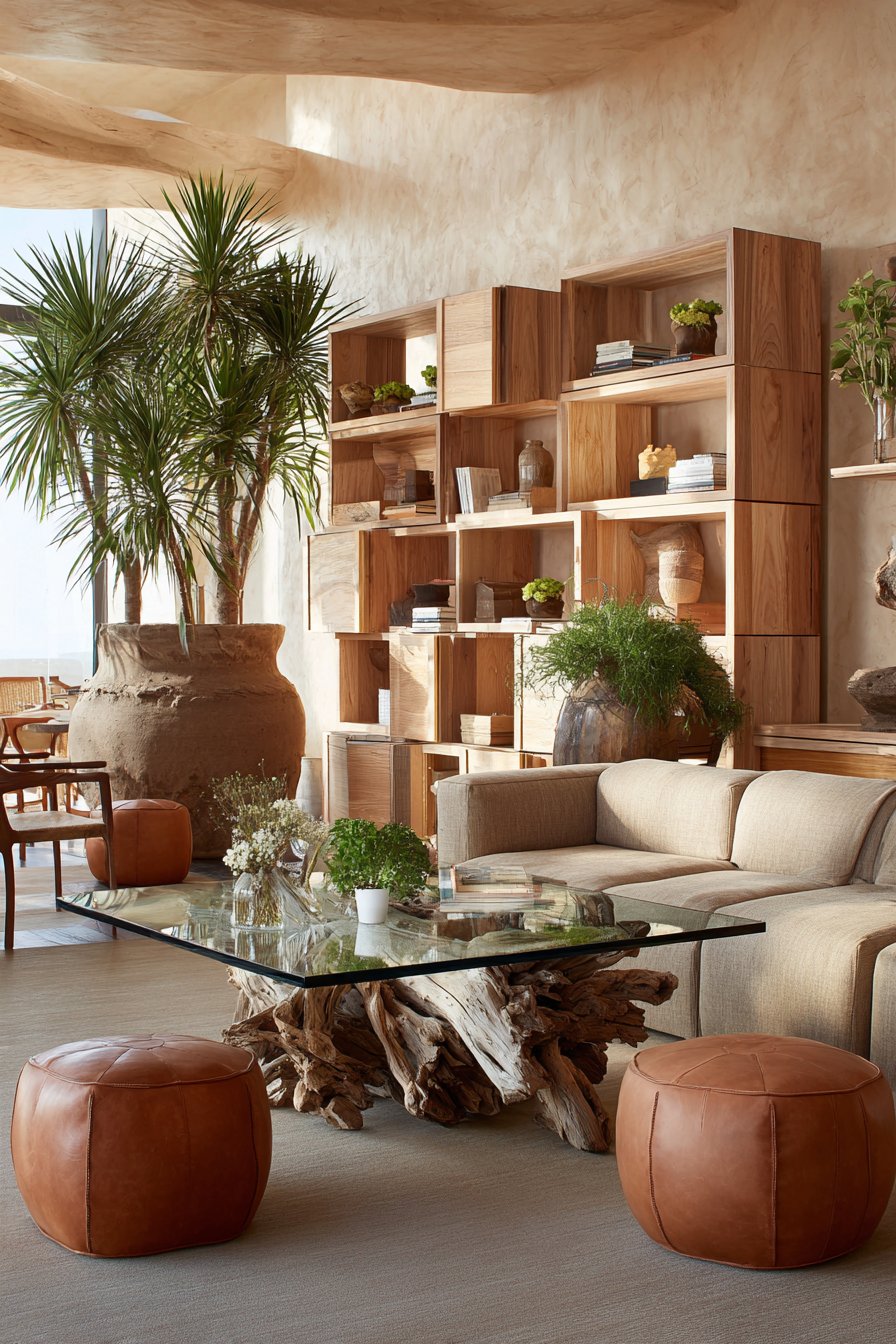
Poufs covered in leather show natural grain visible across the surface. The coffee table features thick glass top on sculptural driftwood base. This piece merges function with organic art. Walls finished in textured plaster create subtle depth in warm beige.
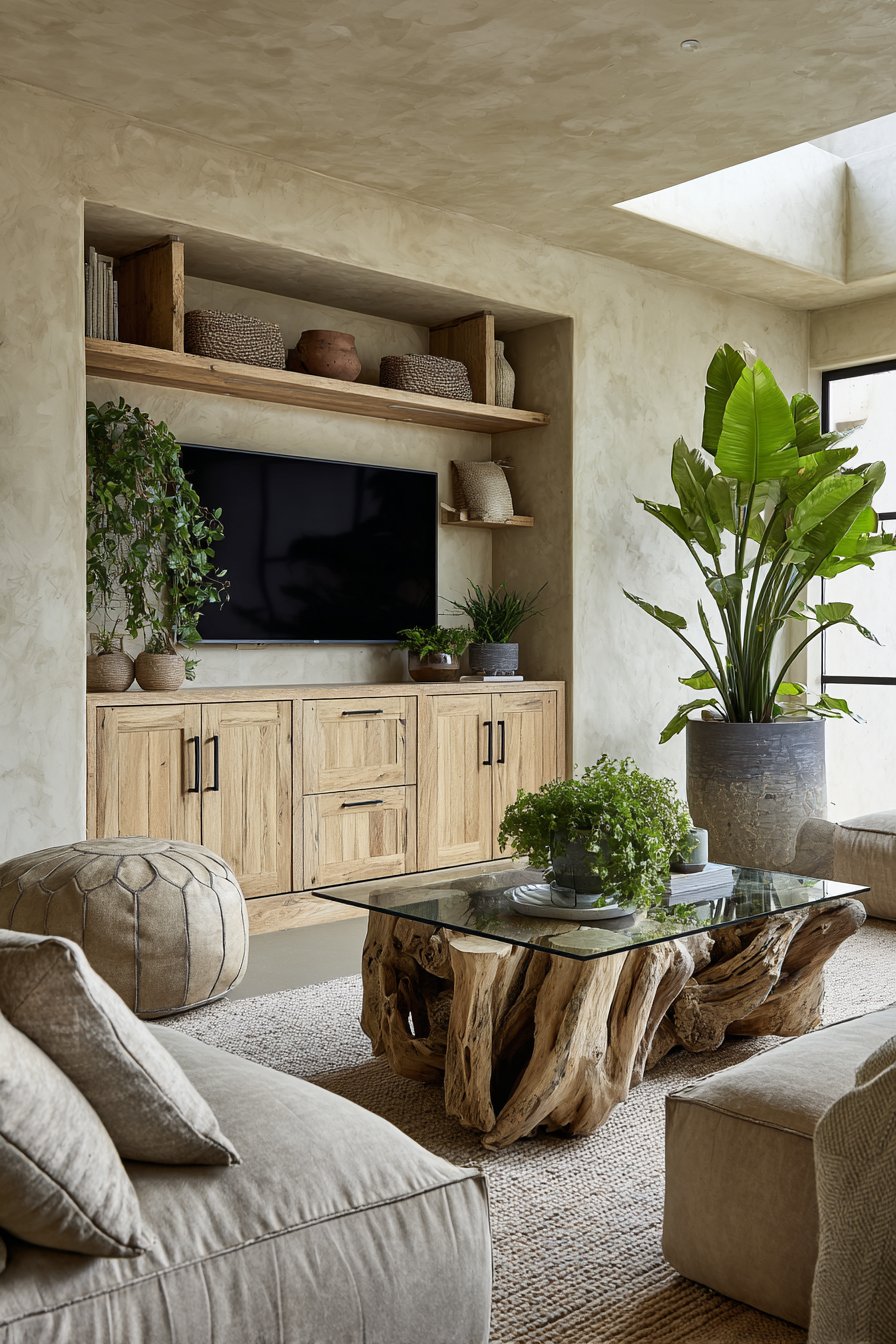
Large potted plants including bird of paradise and rubber tree add vertical green elements. Natural light from clerestory windows provides even illumination throughout the day. The functional yet organic design approach balances practical needs with aesthetic goals.
Key Design Tips:
- Design custom media walls that integrate storage with display
- Choose modular sofas for flexible seating arrangements
- Select driftwood furniture pieces as functional sculpture
- Apply textured plaster for subtle wall depth
- Position large plants to add vertical natural elements
11. Sunken Leather Conversation Area
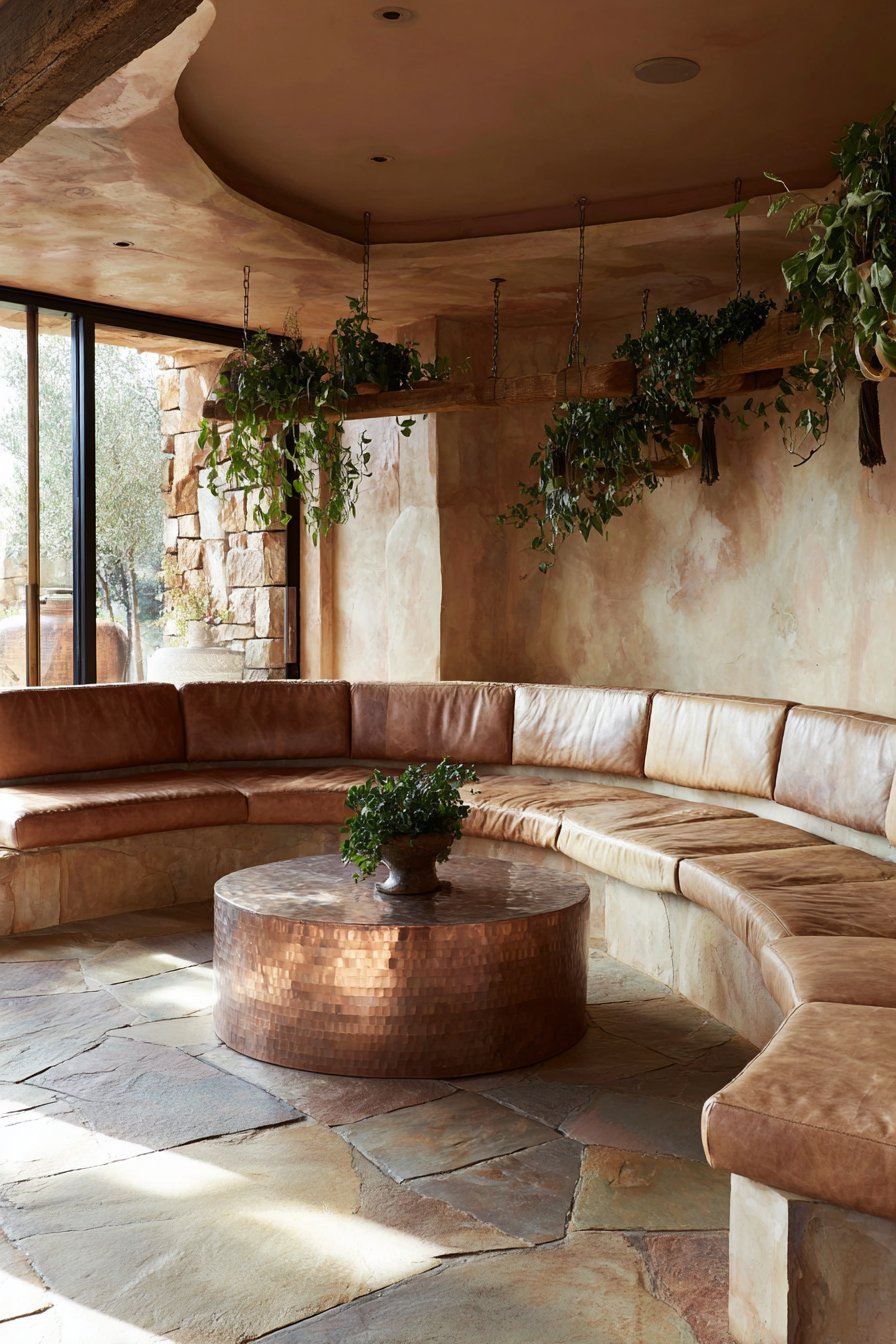
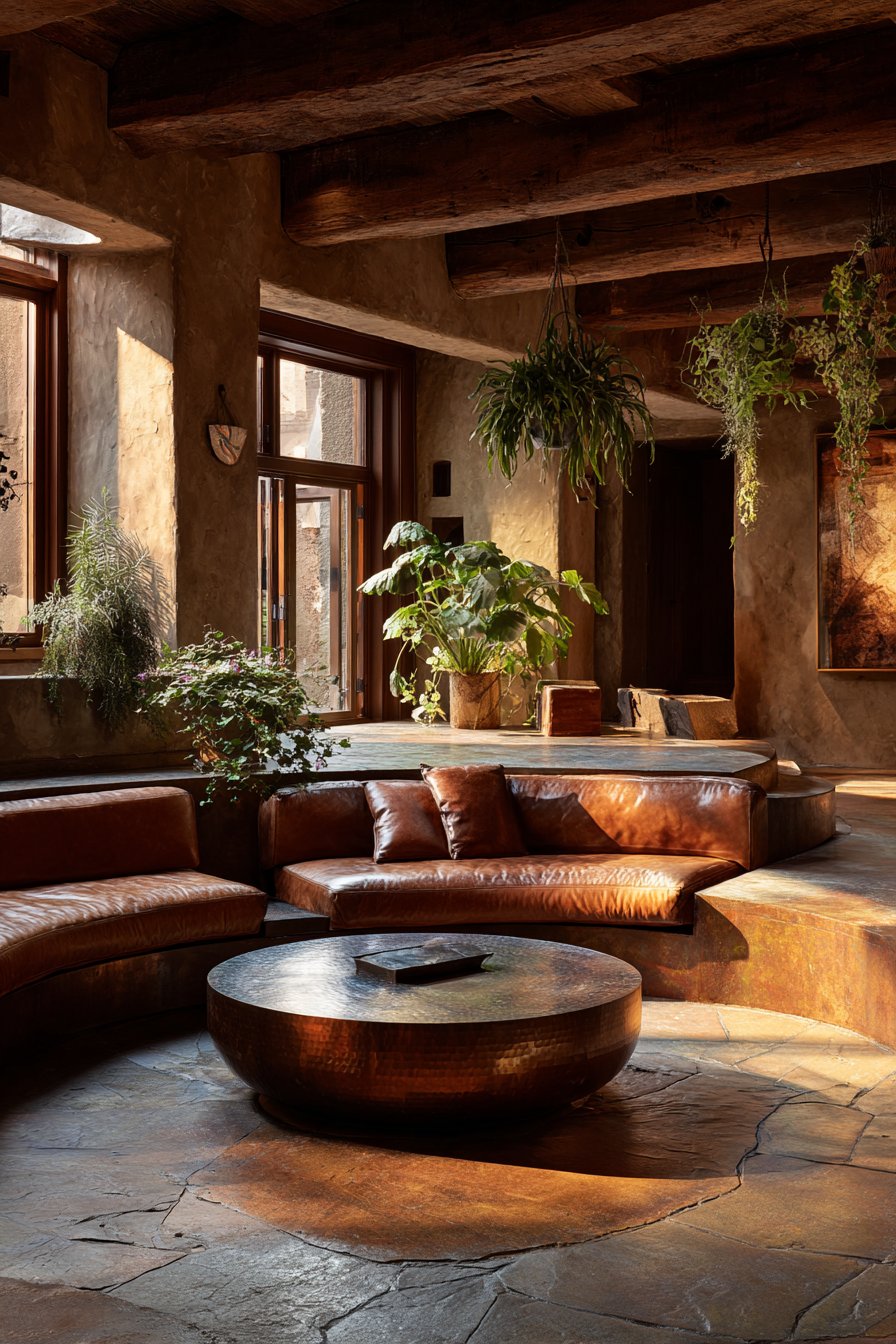
A sunken conversation area features built-in bench seating upholstered in cognac leather. Natural variations show across the surface. Comfortable worn-in character develops over time. The surrounding floor transitions from wide-plank oak to natural stone pavers.
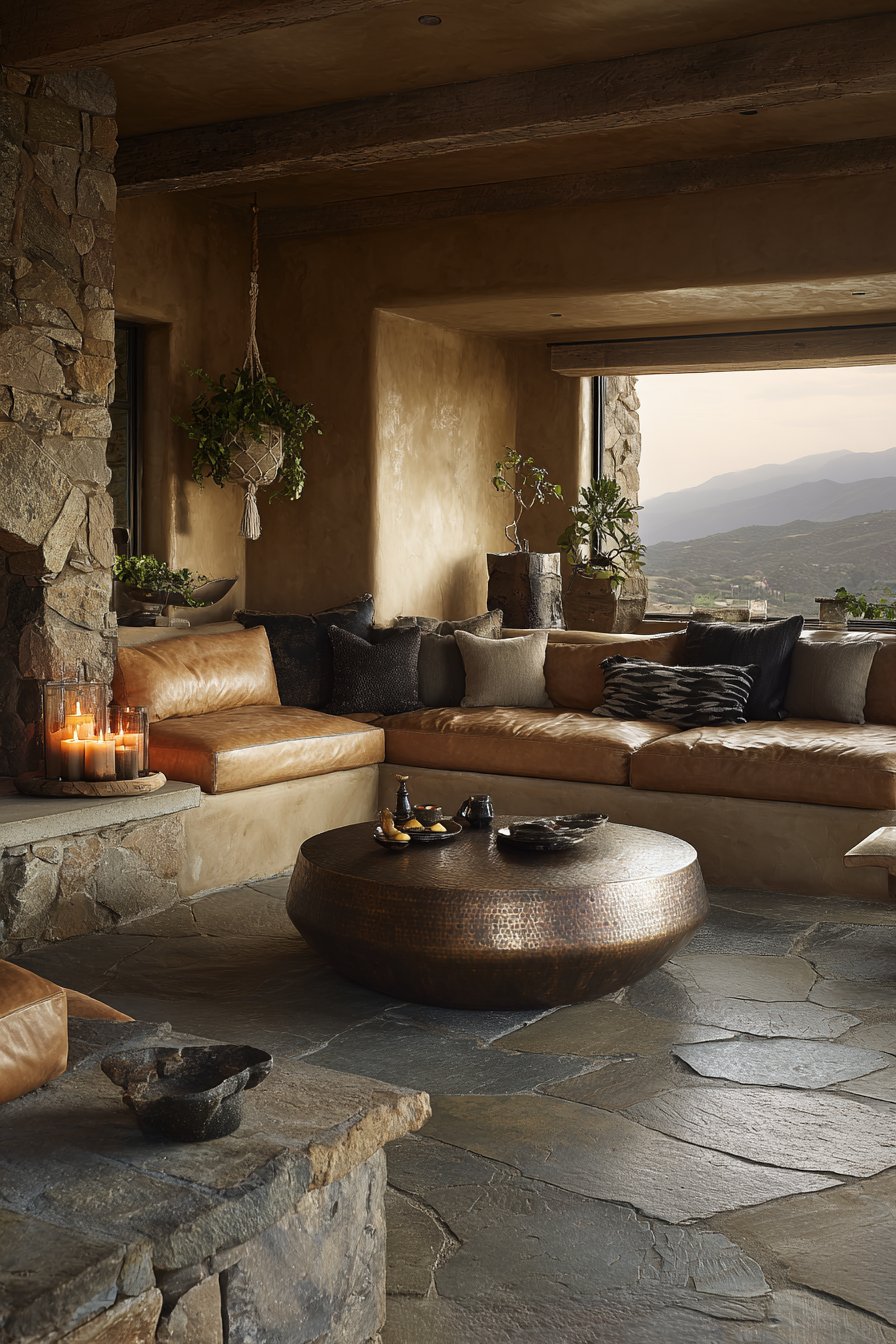
This material variety demonstrates possibilities within earth-toned palettes. A low circular coffee table in hammered copper provides central gathering point. Natural patina develops beautifully on the metal surface. Walls incorporate natural lime plaster with intentional texture.
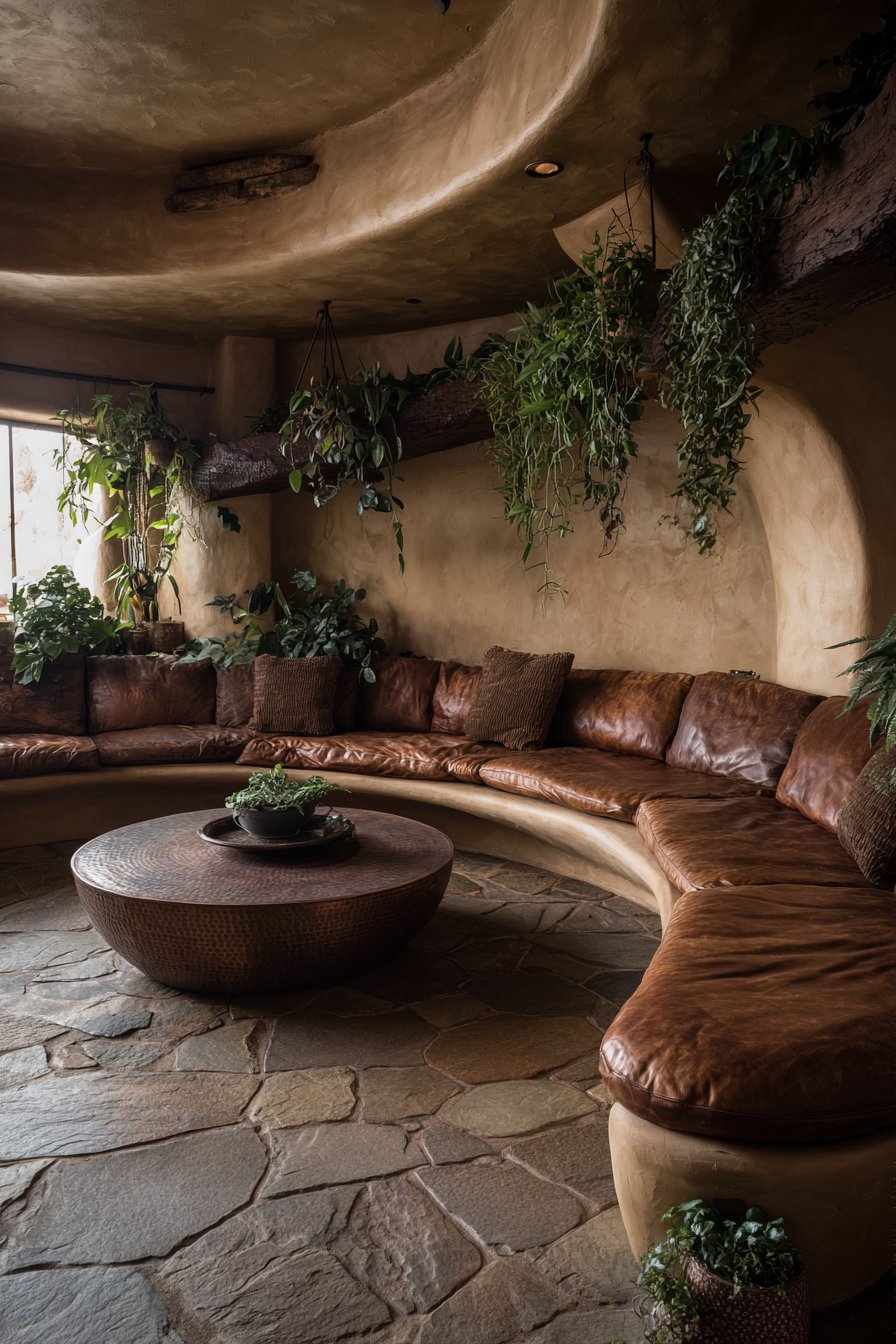
Warm ochre tones create inviting atmosphere. Hanging plants in ceramic and macramé planters descend from exposed ceiling beams. Large windows without treatments maximize natural light exposure. Morning light highlights texture details throughout the unique spatial arrangement.
Key Design Tips:
- Create sunken seating for intimate conversation zones
- Mix flooring materials within consistent color palettes
- Choose copper furniture that develops natural patina
- Apply lime plaster for intentional textured wall finishes
- Hang plants from ceiling beams for vertical greenery
12. Vaulted Ceiling Grandeur
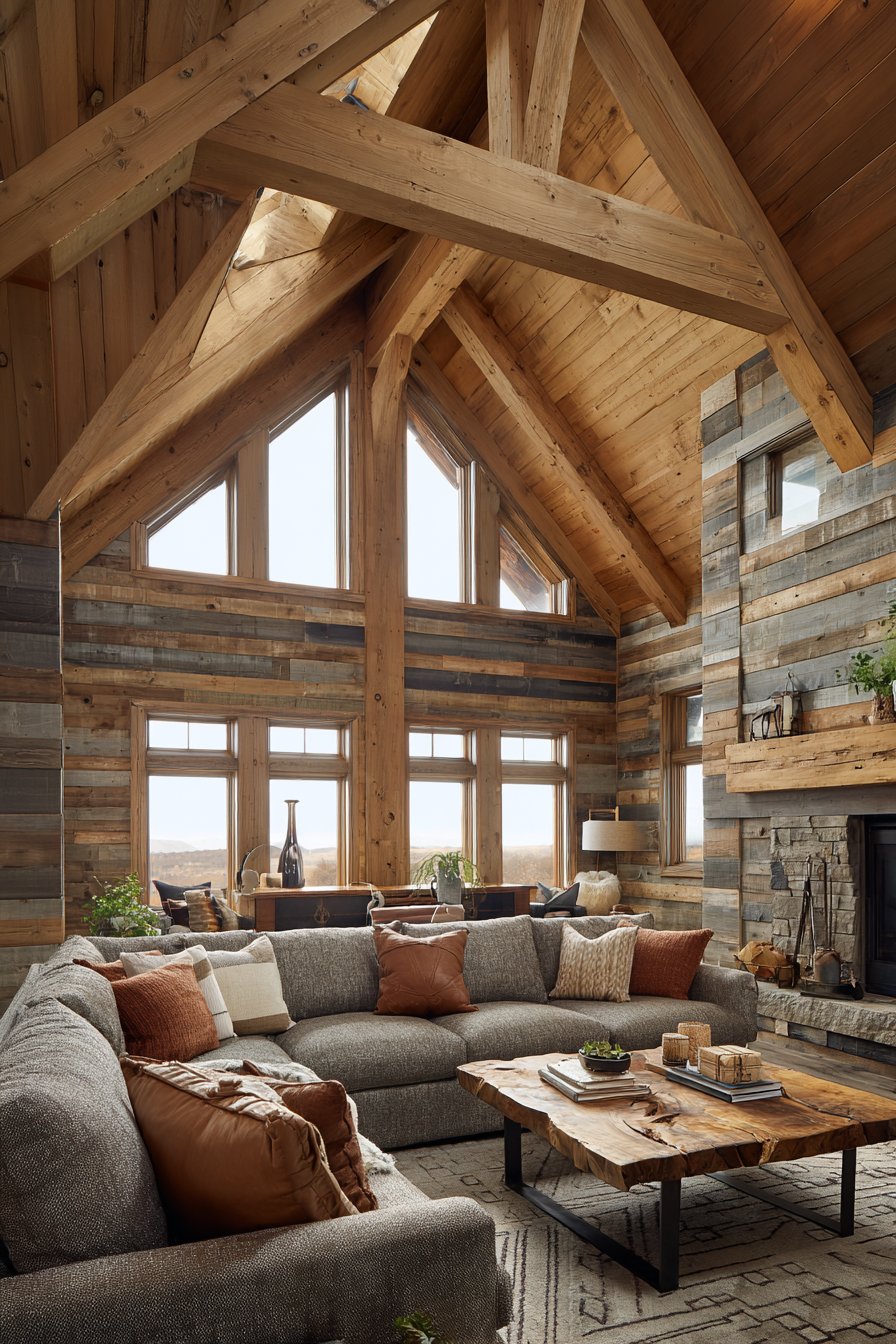
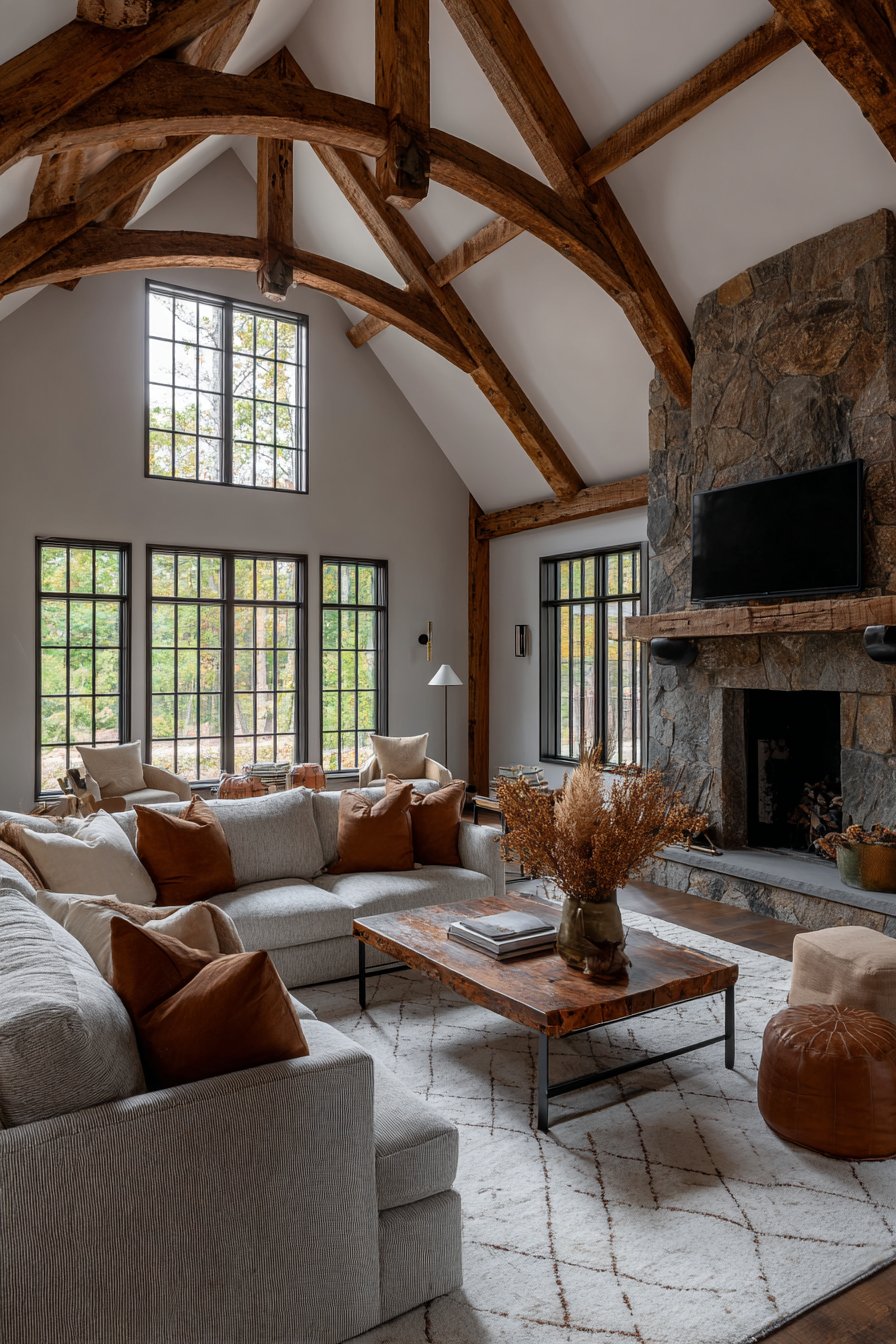
A dramatic vaulted ceiling features exposed wooden trusses in natural finish. Strong architectural presence dominates the vertical space. A large L-shaped sectional in textured linen provides ample seating. Warm gray-brown tones create neutral foundation.
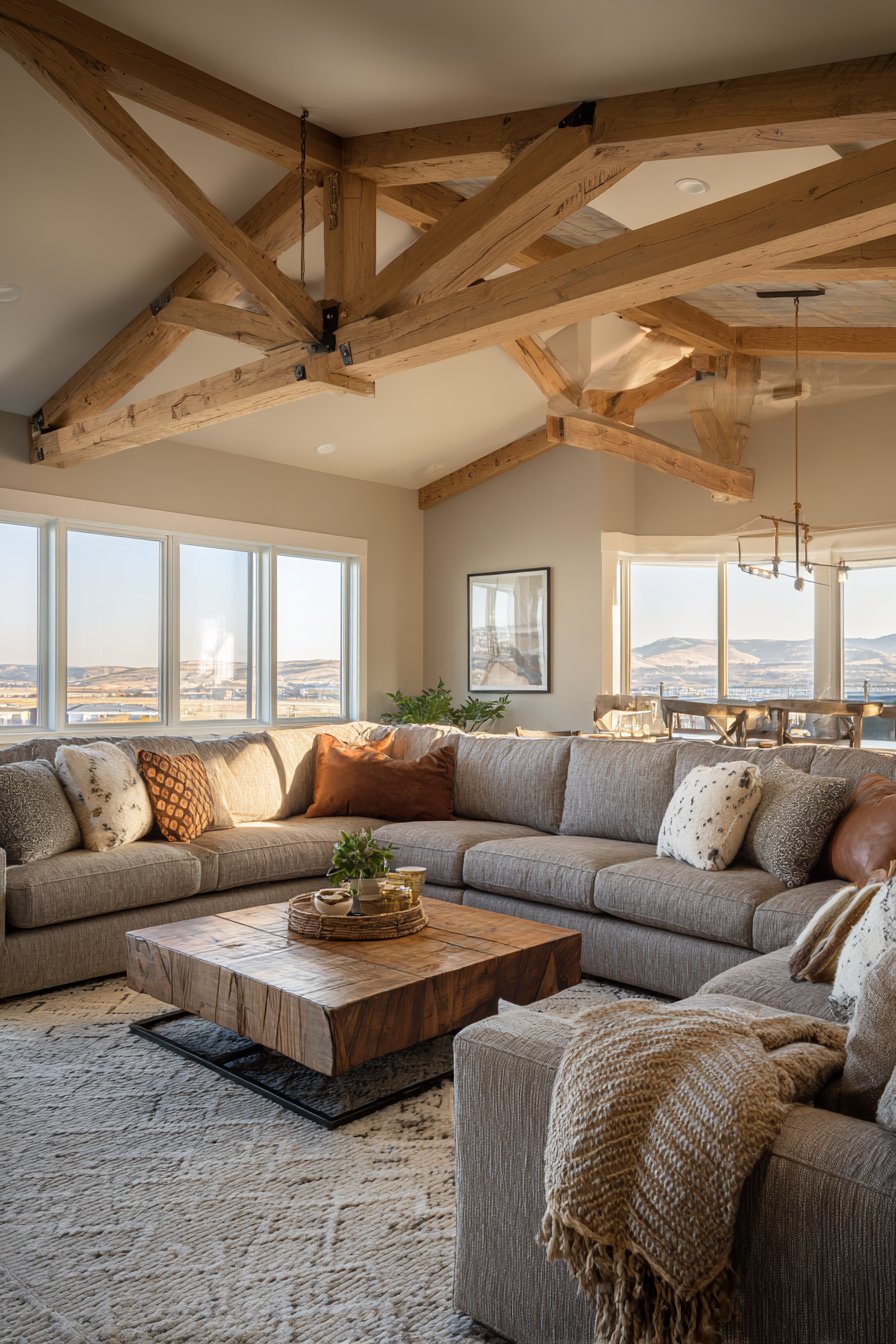
Leather and wool throw pillows in rust, caramel, and cream add color accents. The coffee table made from live-edge wood slab sits on industrial metal legs. This combination merges organic and raw elements effectively. Walls clad in horizontal wood planking add warmth and texture.
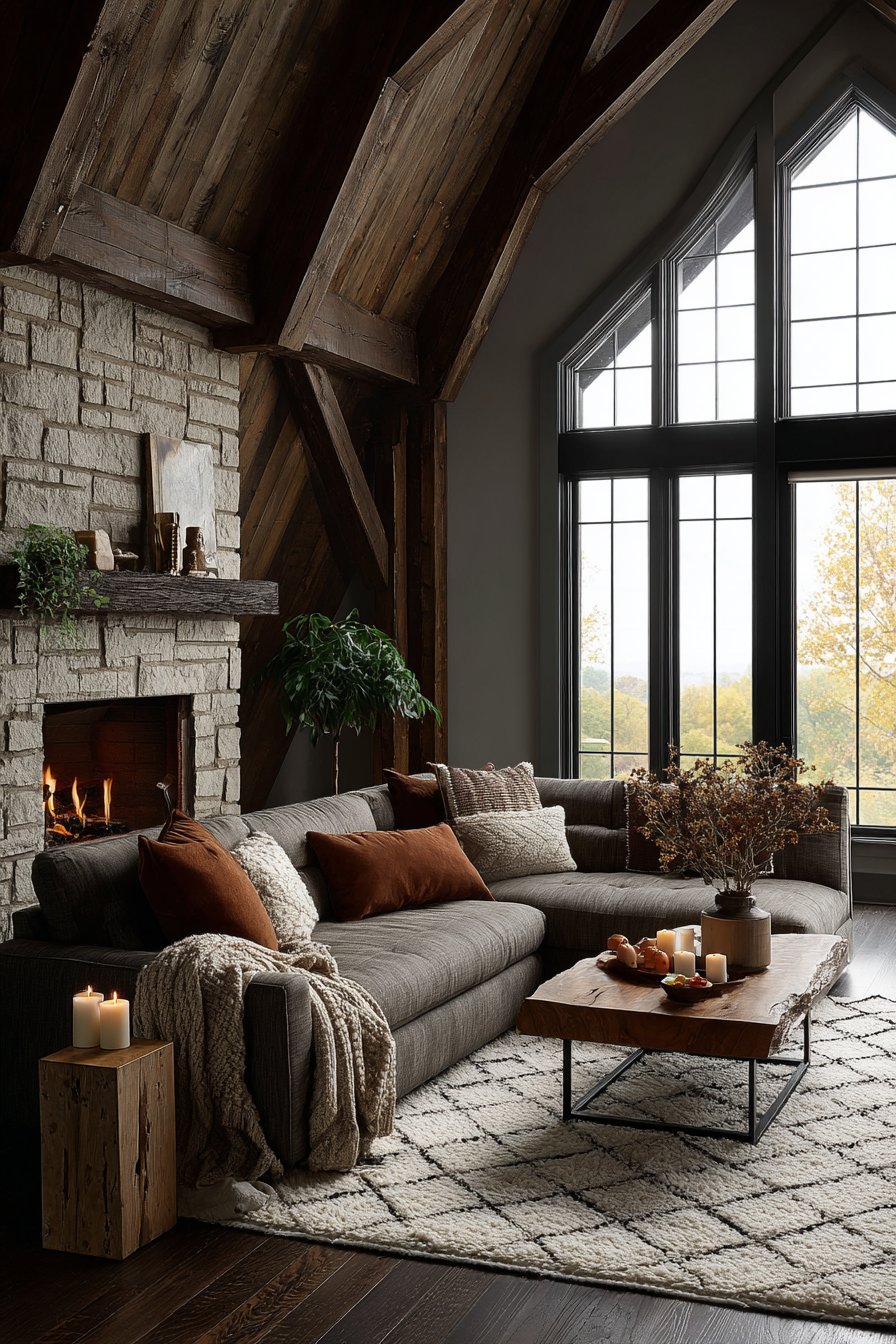
A stone hearth fireplace serves as focal point. Aged brass fireplace tools provide functional decoration. Wool area rug in earthy geometric pattern grounds the seating area. Natural light from multiple windows creates dynamic lighting throughout the day.
Key Design Tips:
- Expose vaulted ceiling trusses for dramatic architectural impact
- Mix throw pillows in varied earthy tones for color depth
- Combine live-edge wood with metal for organic-industrial balance
- Install horizontal wood planking for textured wall warmth
- Layer geometric wool rugs for pattern without overwhelming
13. Gallery Wall Natural Fiber Art
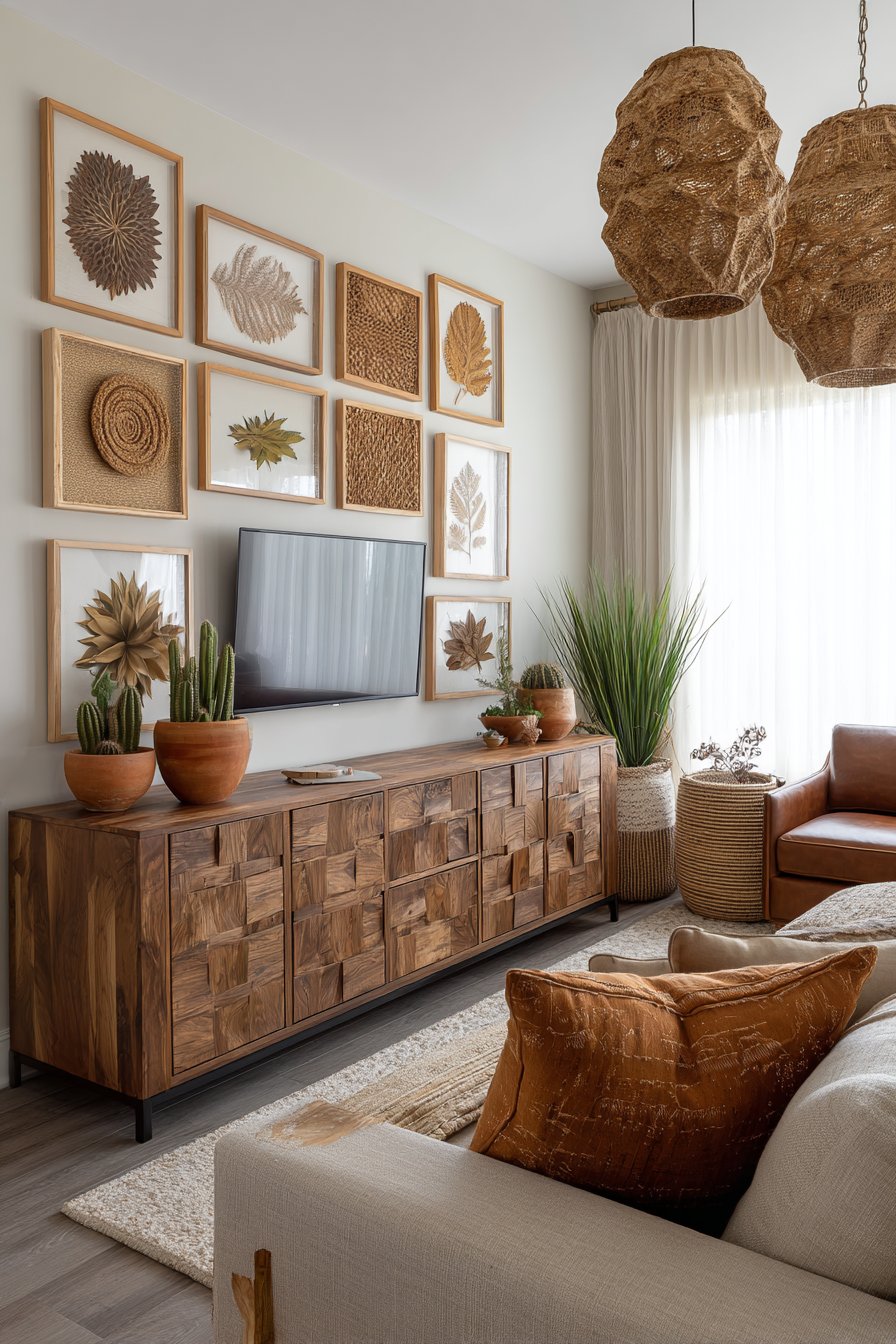
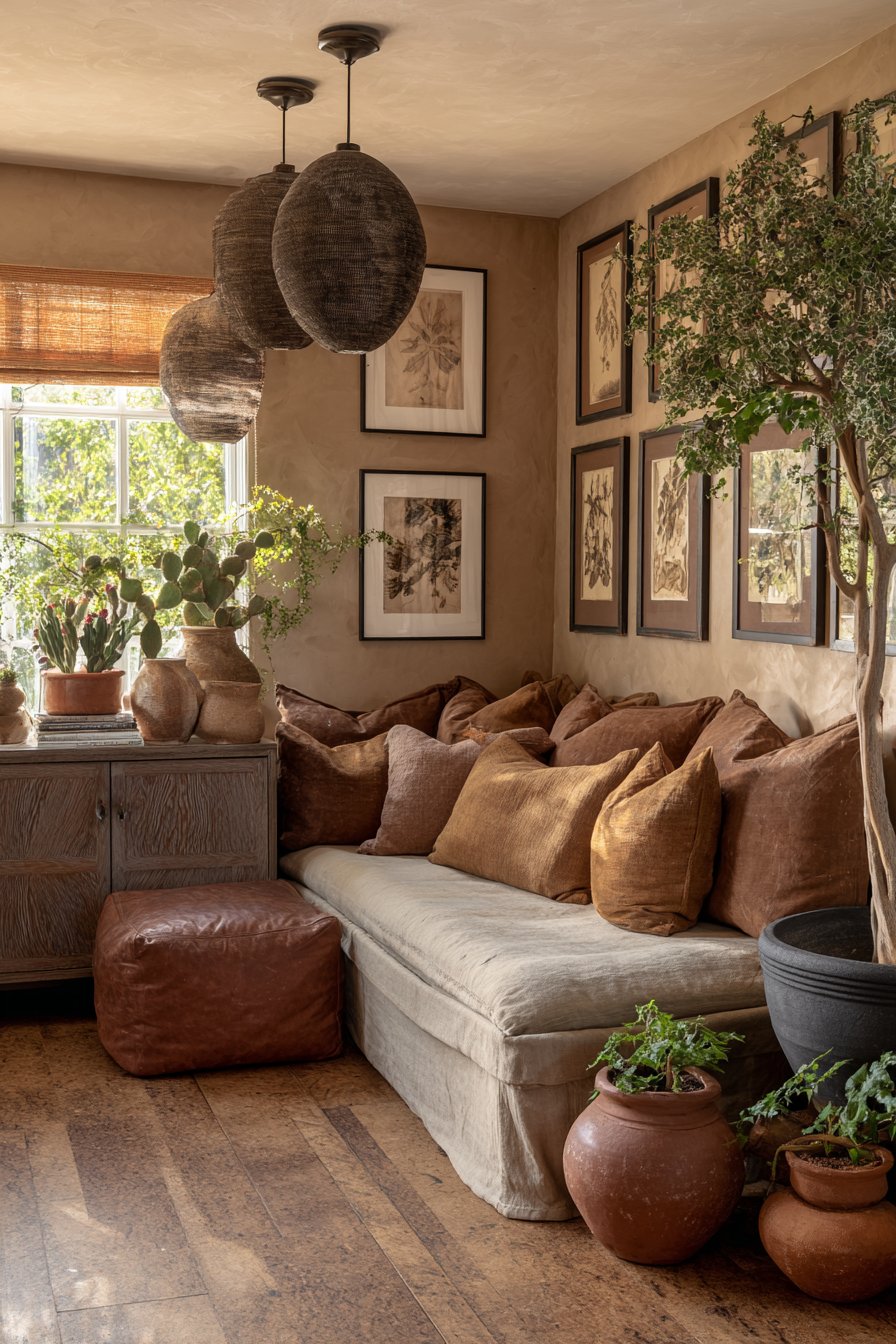
A gallery wall arrangement features natural fiber art pieces and woven tapestries. Framed pressed botanicals in warm wood frames complete the display. This textural focal point hangs above low sideboard in walnut. Visible grain patterns showcase the wood’s natural beauty.
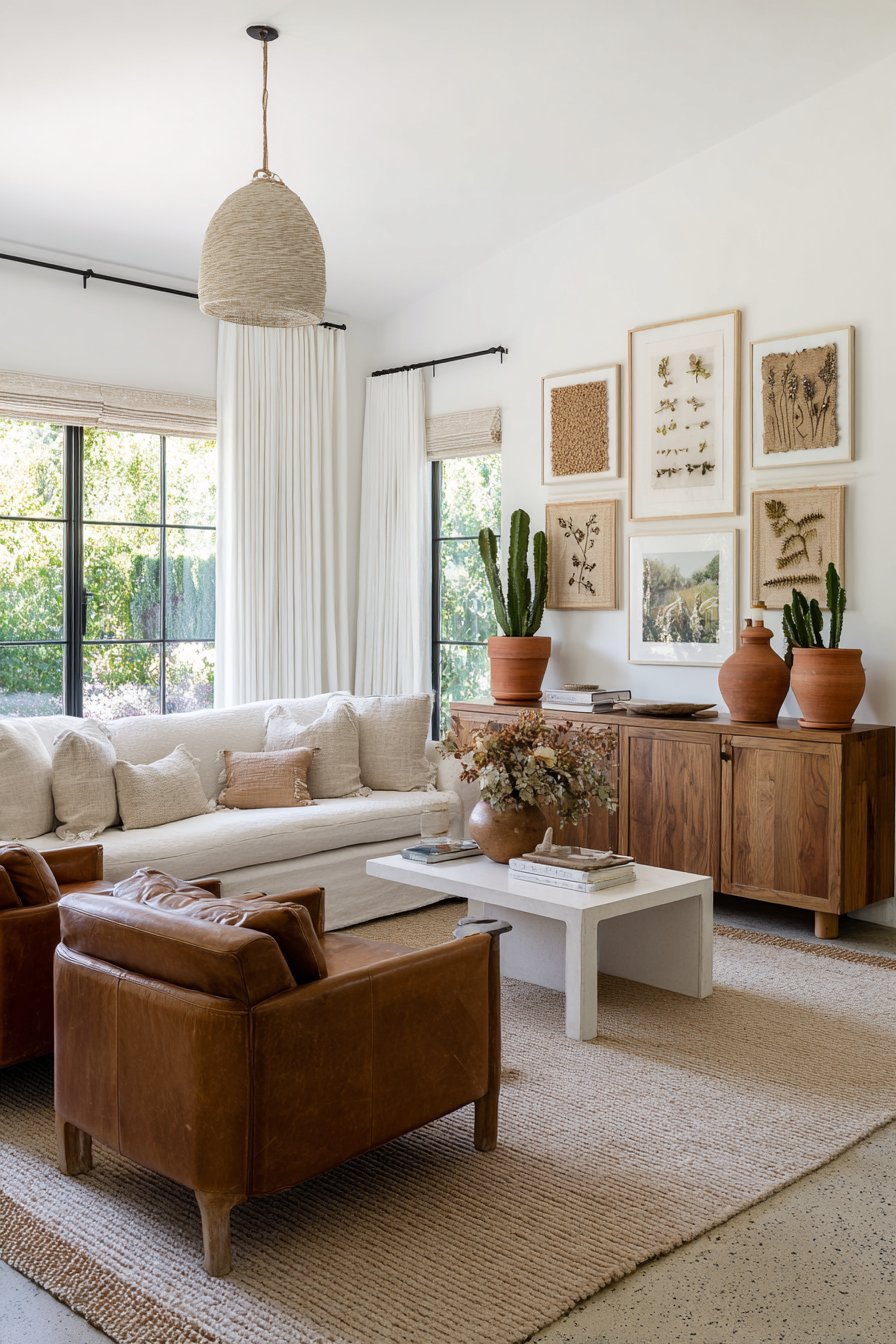
A deep-seated sofa upholstered in thick cotton canvas provides comfortable seating. Sand color creates neutral backdrop. Vintage leather club chairs showing honest patina add character. Terracotta pots in various sizes hold sculptural cacti and succulents.
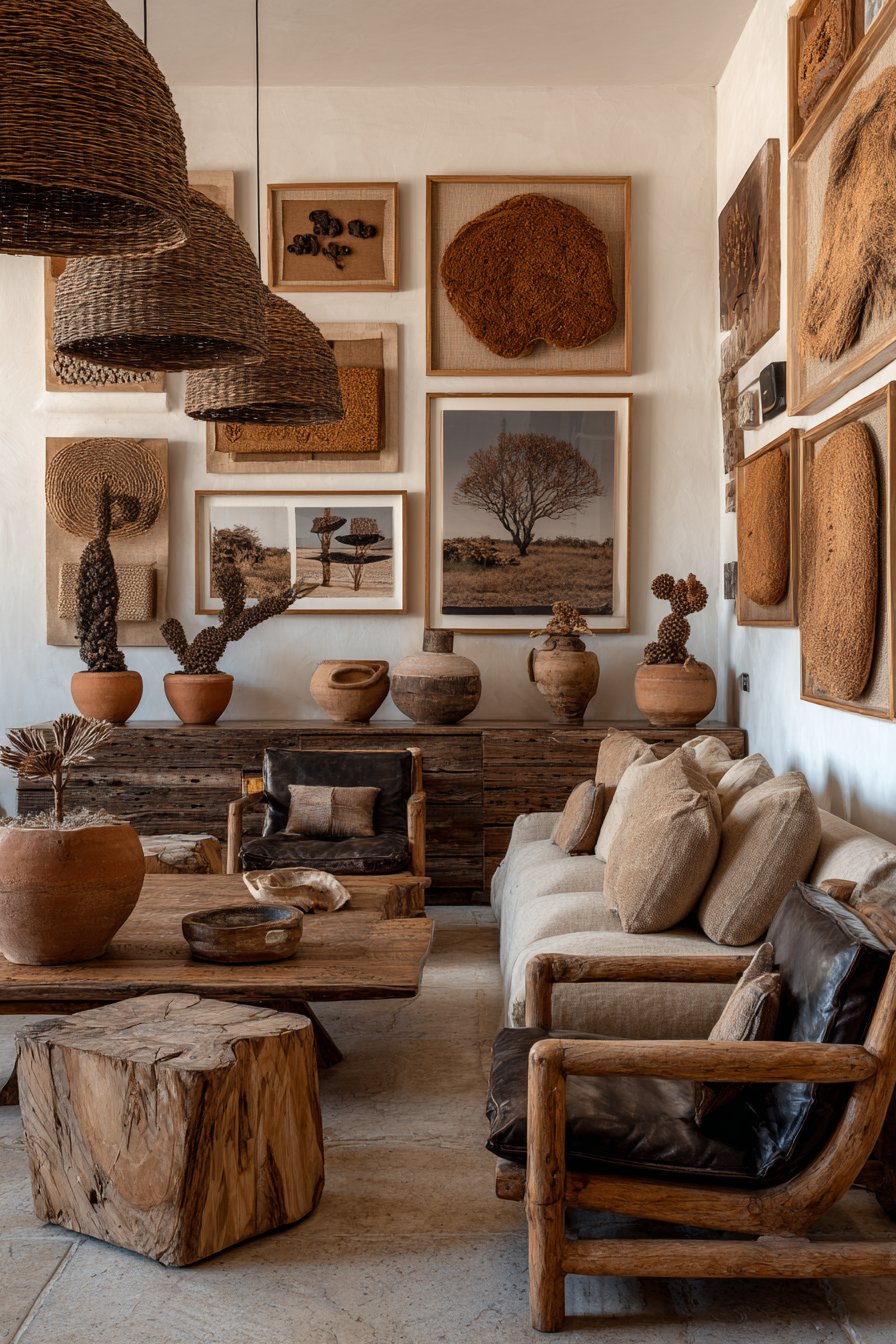
Cork tile flooring provides natural warmth and acoustic properties. Subtle color variations add organic interest. Linen Roman shades filter natural light softly. Ceramic pendant lights with reactive glaze in earth tones provide ambient lighting.
Key Design Tips:
- Create gallery walls featuring natural fiber art and pressed botanicals
- Choose deep-seated sofas with thick natural fabric upholstery
- Display succulents in varied terracotta pot sizes
- Install cork flooring for warmth and sound absorption
- Select ceramic lighting with reactive glazes for unique finishes
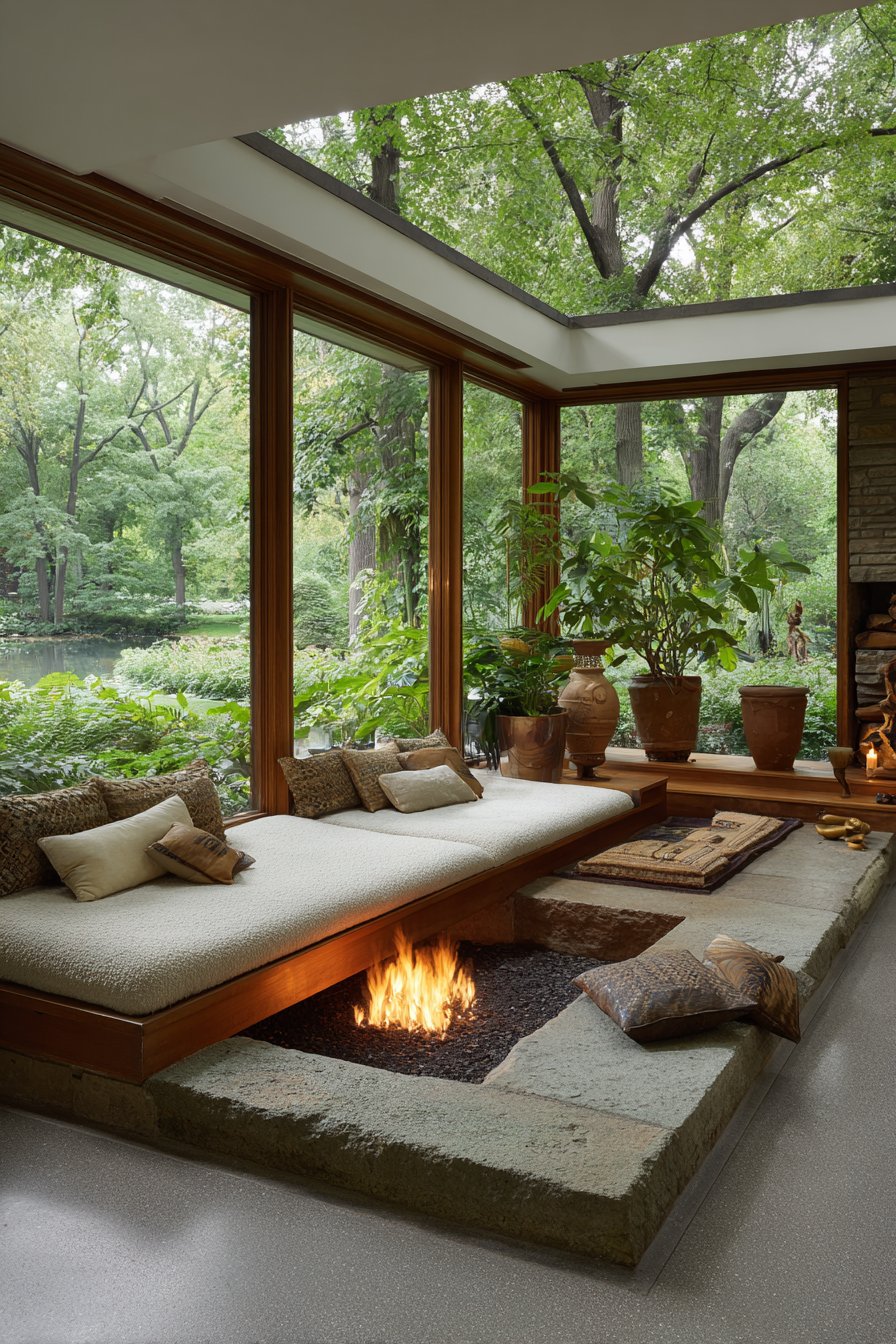
14. Floor-to-Ceiling Window Connection
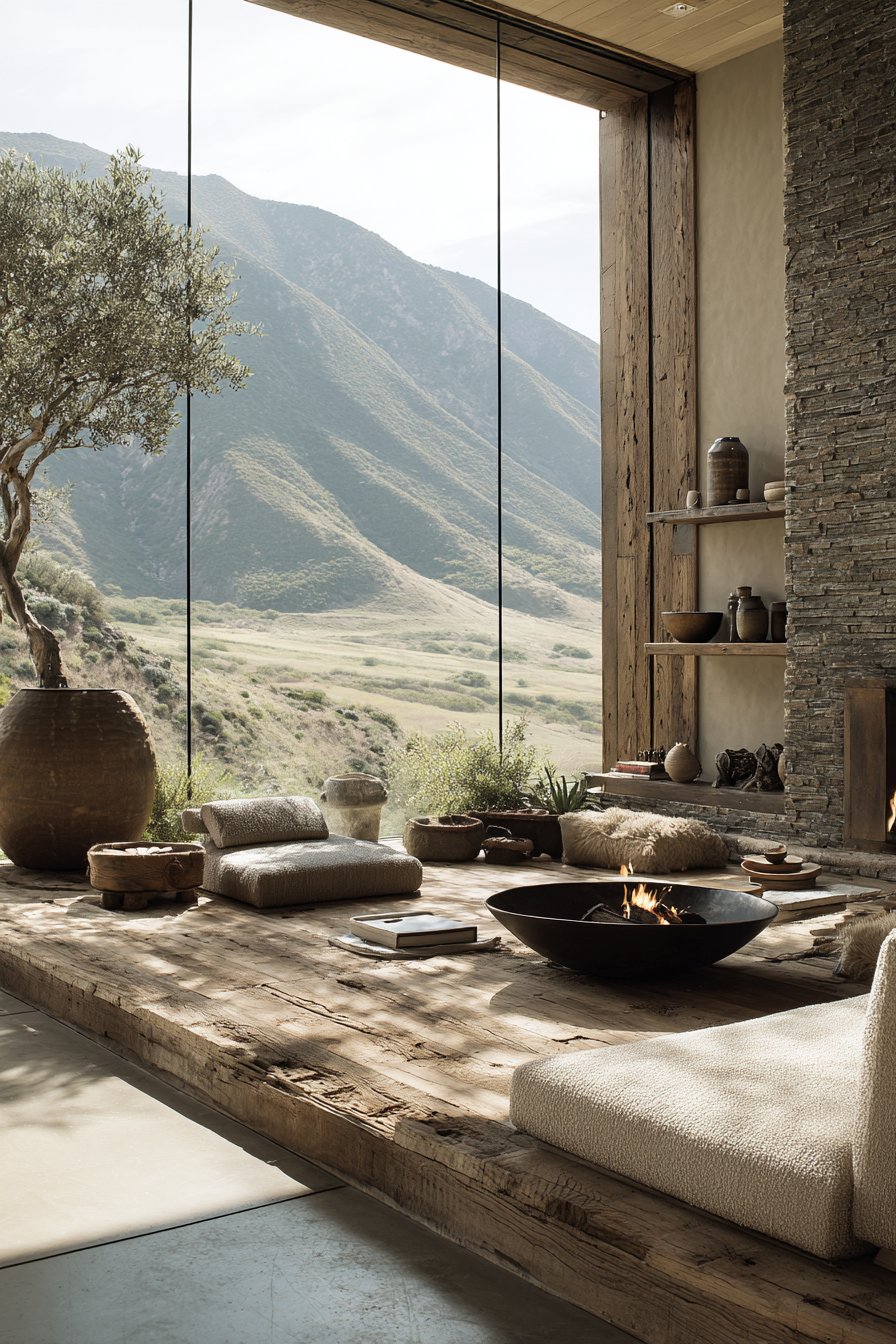
Floor-to-ceiling windows framed in natural wood offer outdoor landscape views. Abundant natural daylight floods the interior space. A low-profile sofa platform upholstered in bouclé fabric follows the window line. Oatmeal tone creates soft neutral base.
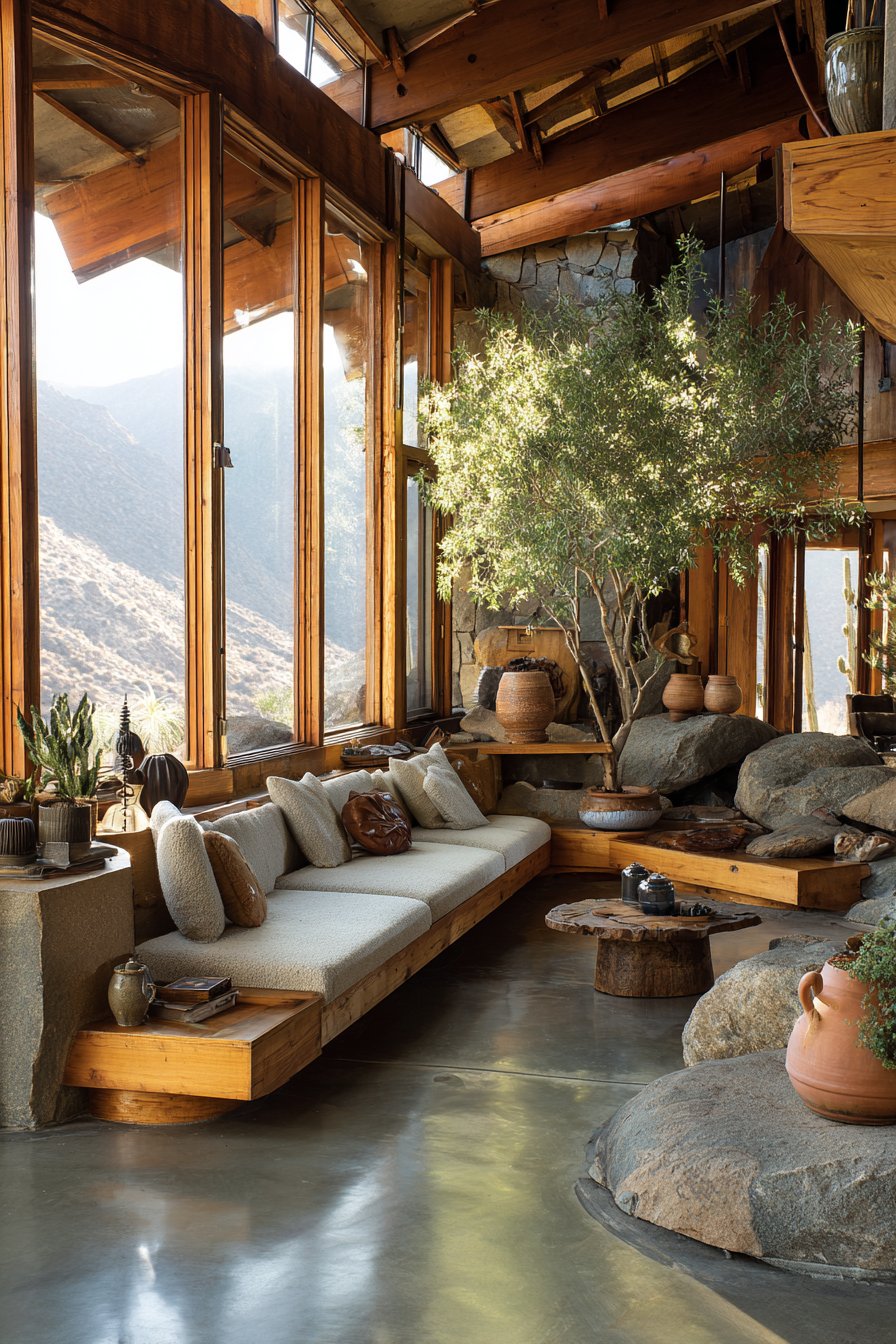
Floor cushions in leather and linen scatter for additional seating. A sunken fire pit clad in natural stone creates gathering point with warmth. Concrete floors polished to matte finish anchor the space. Warm gray tones complement other natural materials.
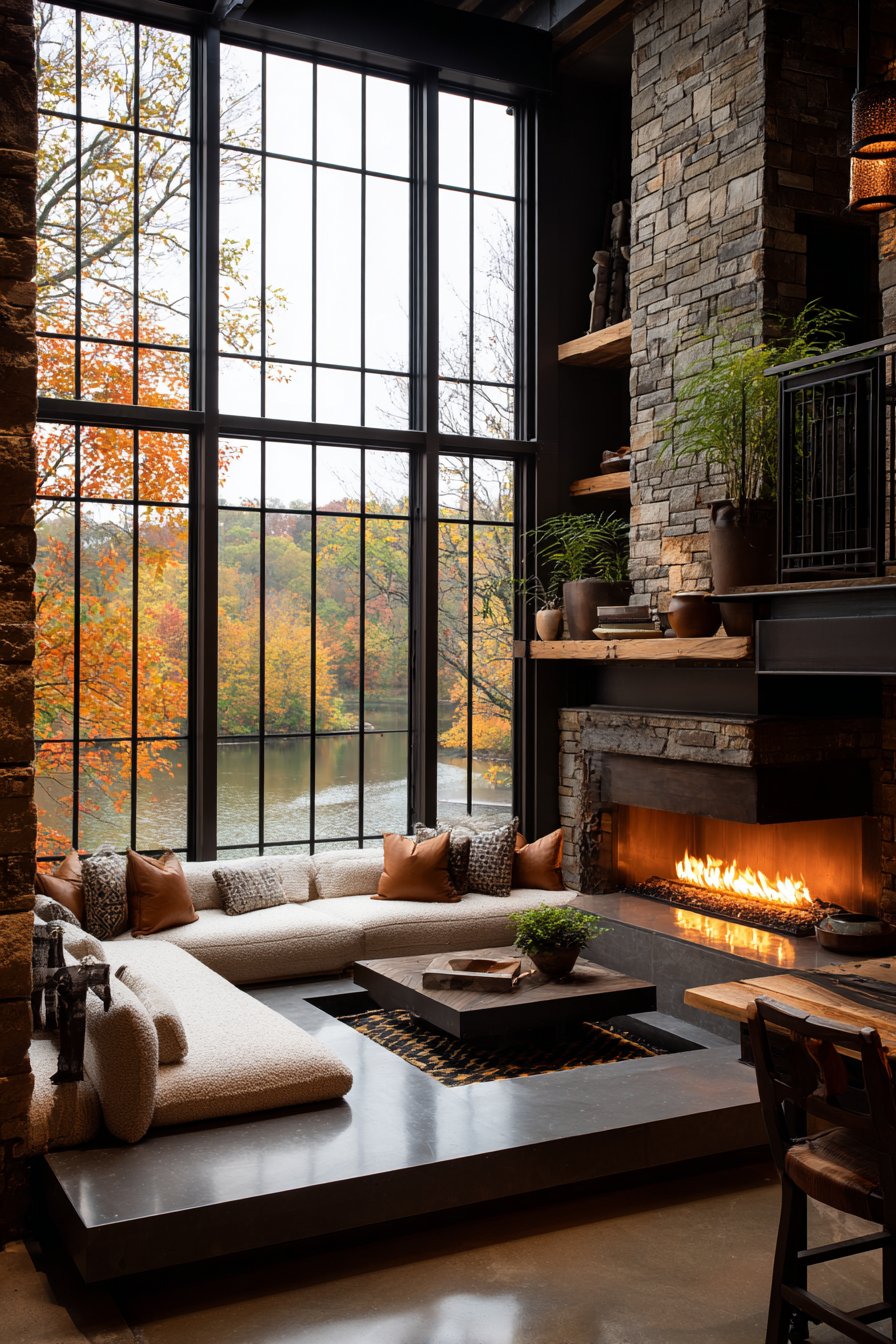
Suspended shelving made from thick wood slabs displays pottery and natural objects. Large-scale planters in raw terracotta hold indoor trees. The seamless indoor-outdoor connection celebrates organic material palette throughout.
Key Design Tips:
- Maximize window sizes to connect interior with outdoor views
- Create low seating platforms that follow window lines
- Install sunken fire pits for warmth and gathering focus
- Polish concrete floors to matte finish for natural appearance
- Display pottery on suspended wood slab shelving
15. Vertical Wood Plank Rhythm
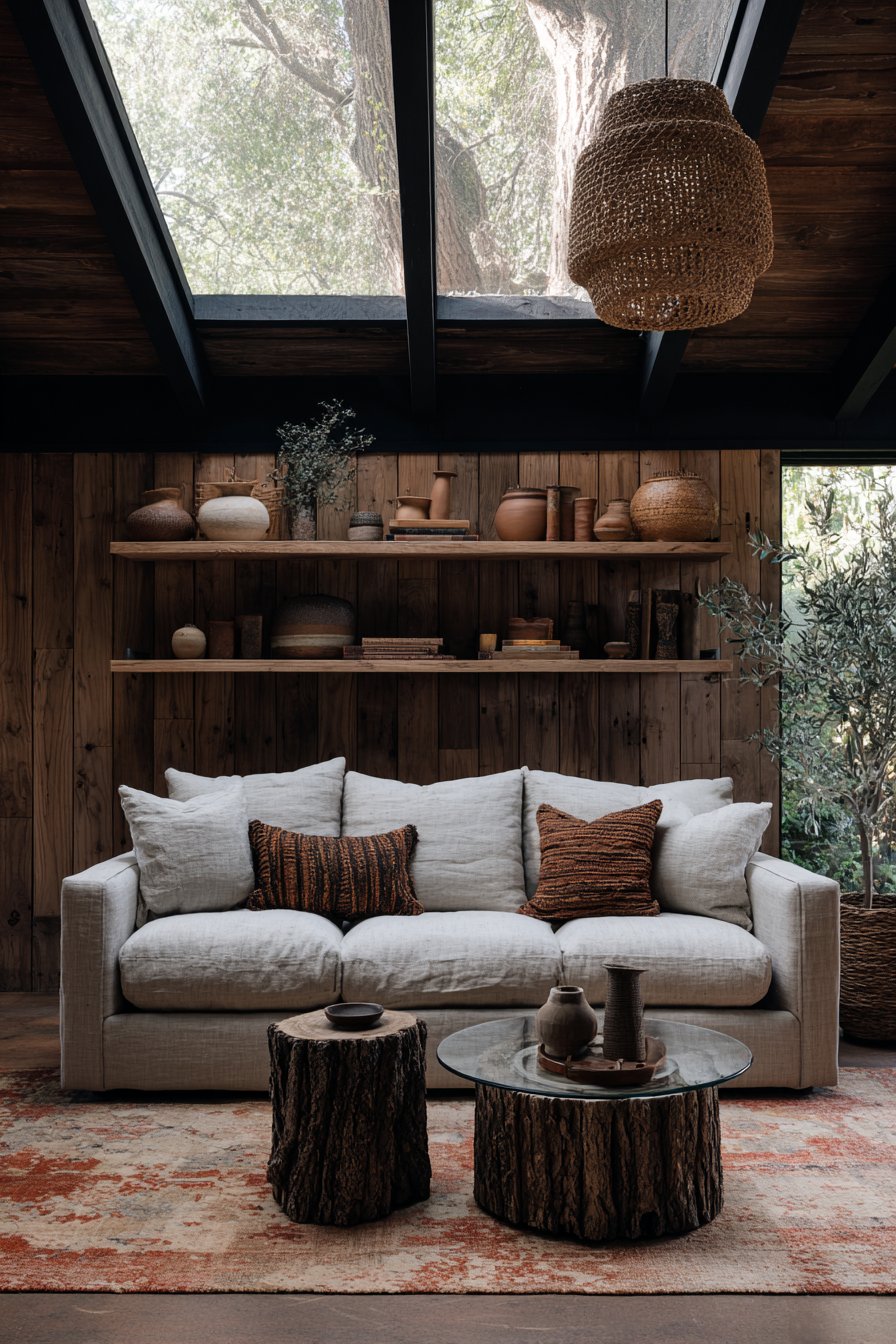
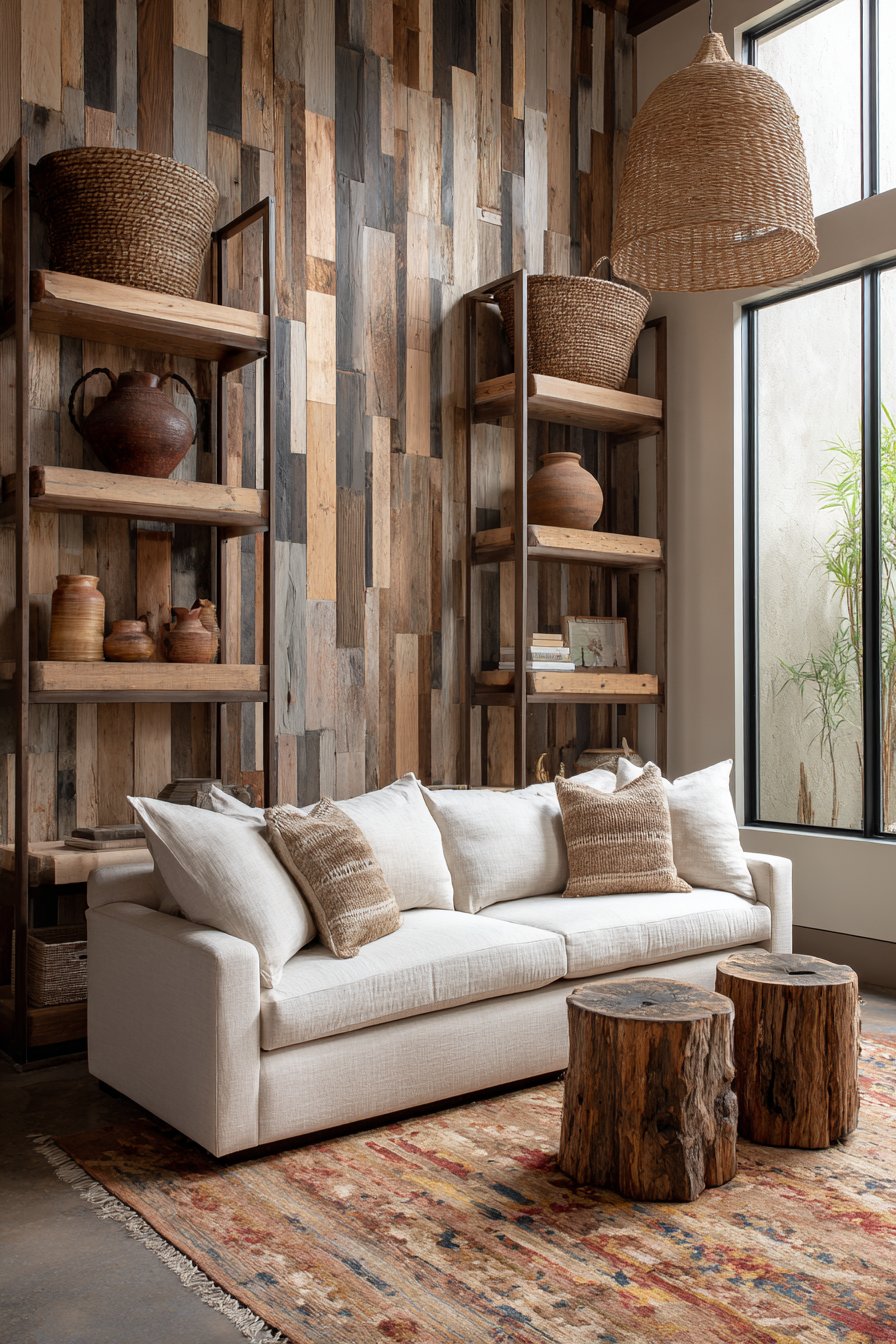
A statement wall treatment features vertical wood planks in varied natural tones. Light oak to dark walnut creates rhythmic visual texture. A comfortable three-seater sofa in undyed natural linen centers the space. The neutral fabric showcases natural fiber beauty.
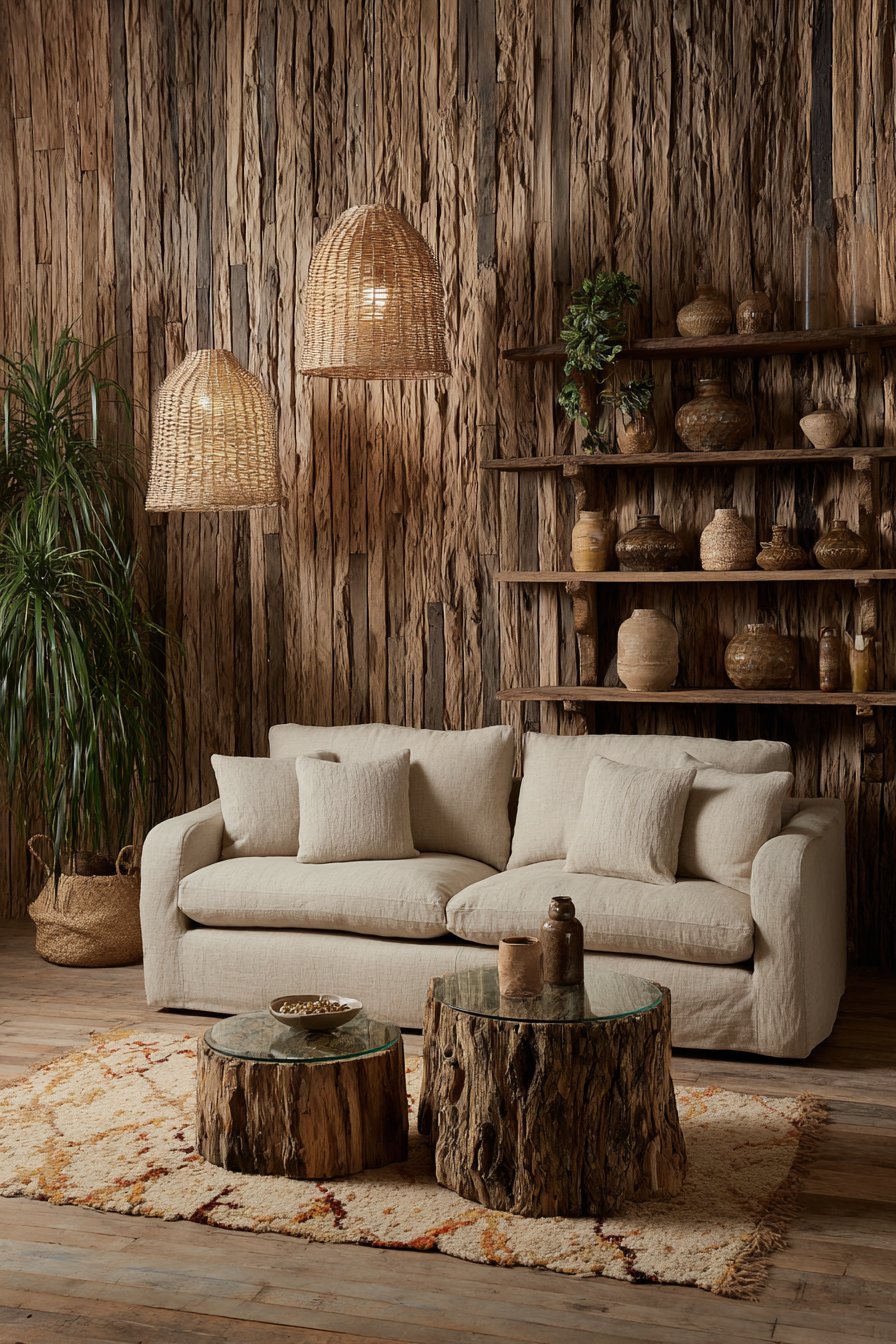
Accent tables crafted from tree stumps with preserved bark edges add organic elements. Glass tops provide functional surface area. Hand-tufted wool rug in organic abstract patterns uses natural dyes. Rust, mustard, and cream colors ground the seating area.
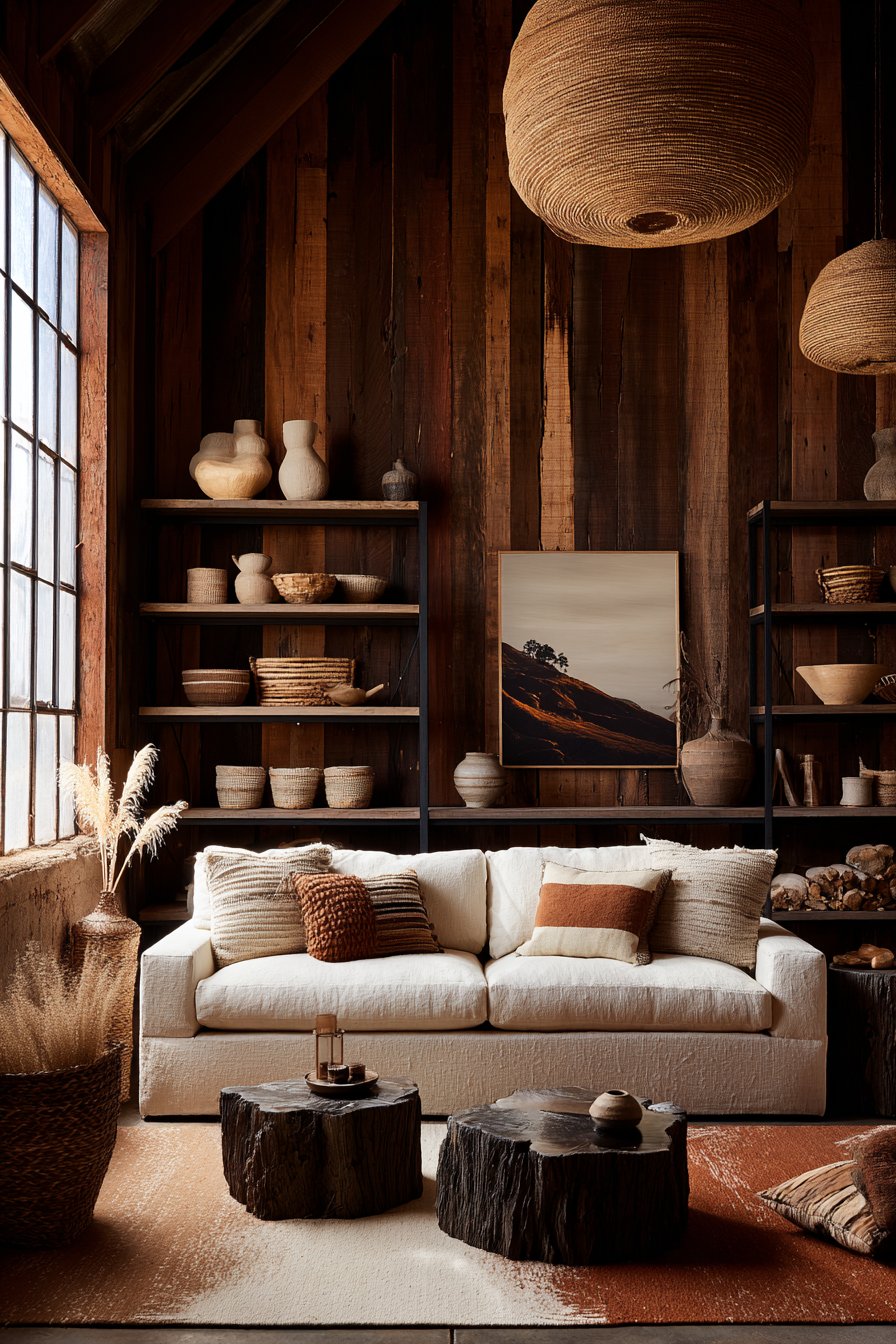
Open shelving in wrought iron and reclaimed wood displays earthenware vessels. Woven baskets provide storage and decoration. Natural light enters through clerestory windows. The elevated placement highlights wood wall texture beautifully. Woven hemp pendant lights provide warm evening illumination.
Key Design Tips:
- Install vertical wood planks in mixed tones for rhythmic texture
- Repurpose tree stumps with glass tops as side tables
- Choose hand-tufted rugs with naturally dyed abstract patterns
- Combine wrought iron with reclaimed wood for open shelving
- Add clerestory windows for elevated natural light sources
16. Venetian Plaster Luxury
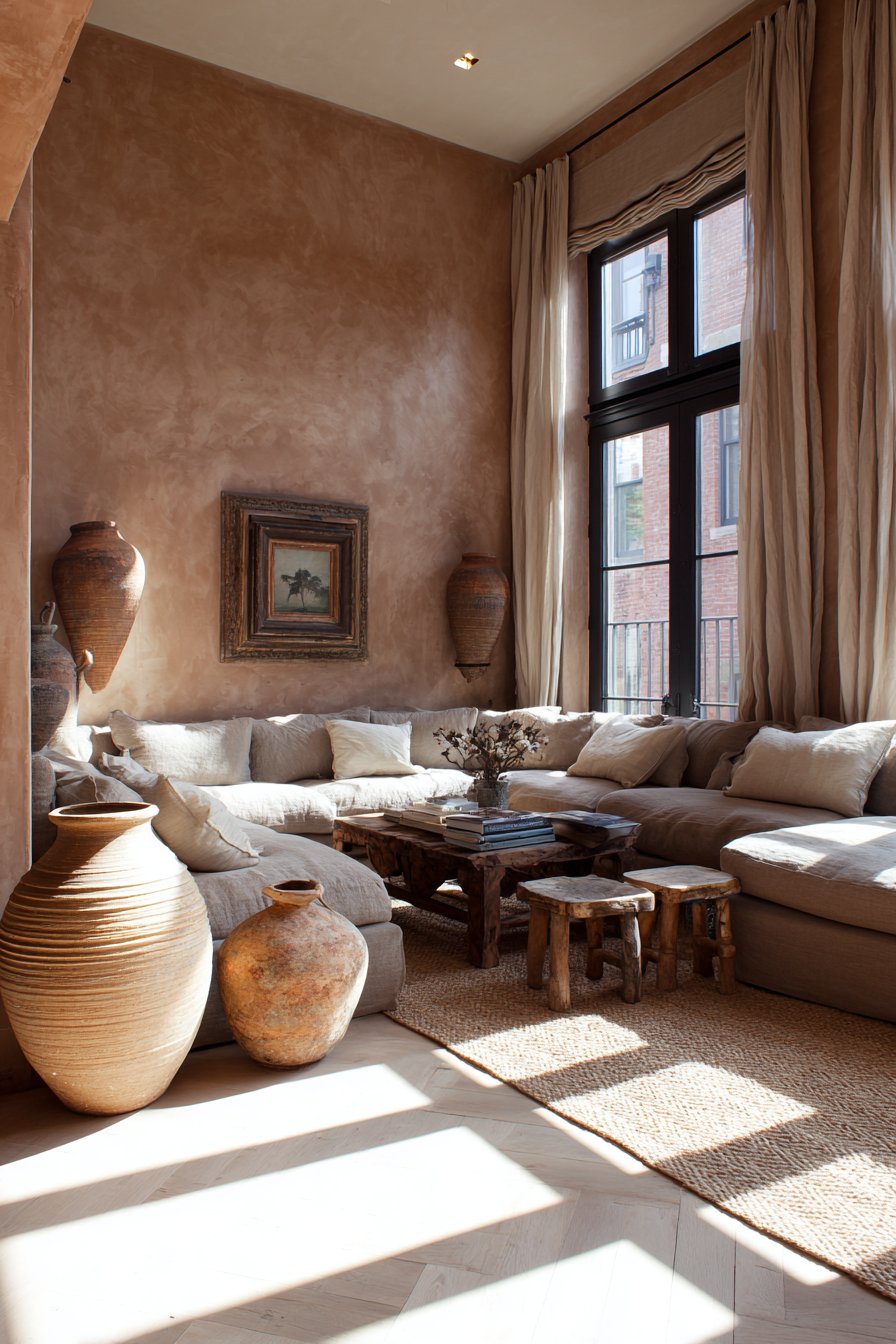
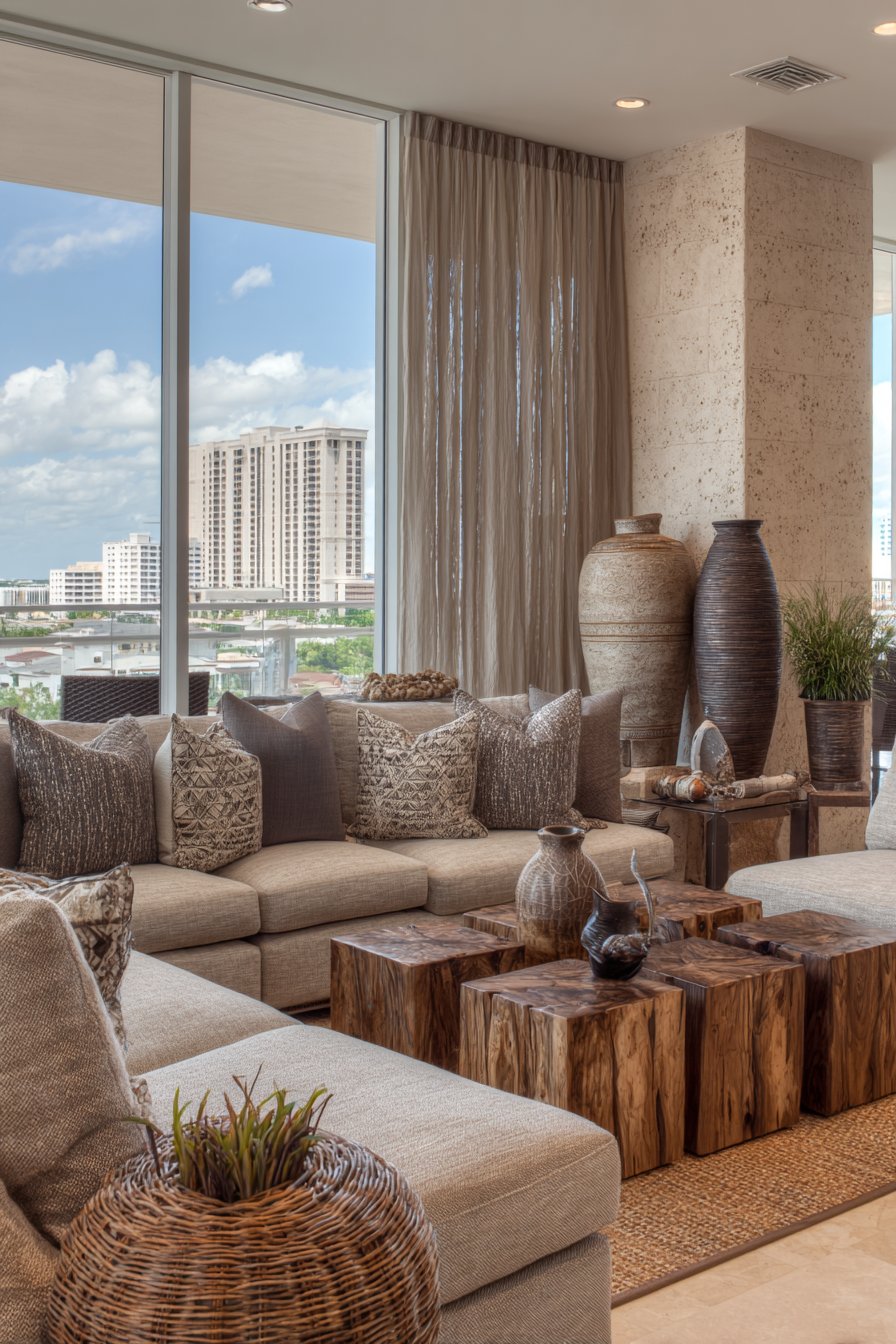
An oversized sectional in textured fabric resembling raw silk dominates the seating area. Warm taupe color creates sophisticated base. The configuration maximizes lounging comfort for relaxation. Multiple nesting coffee tables in various wood species show distinct grain patterns.
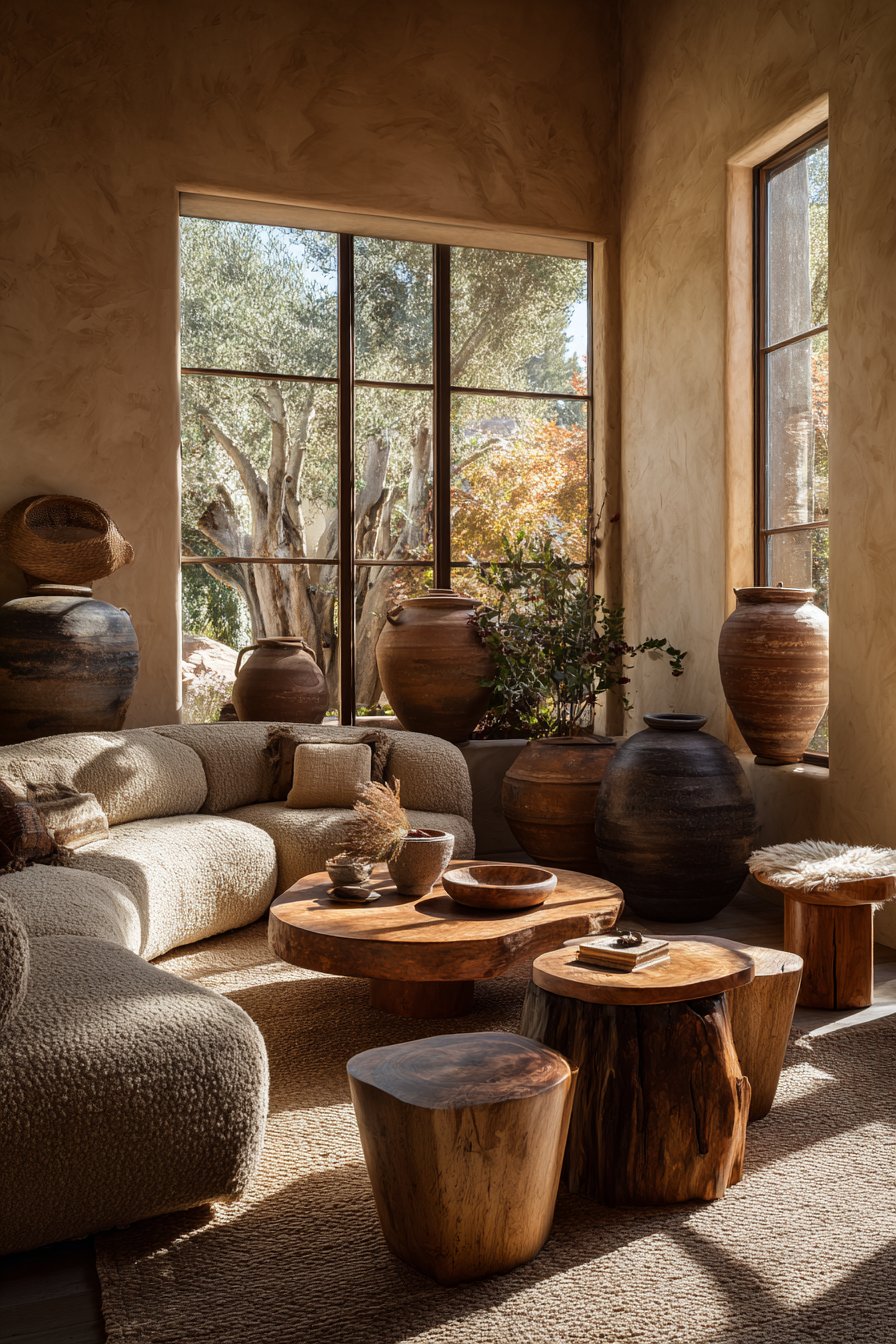
Natural edges add organic character to each piece. Walls feature Venetian plaster finish in warm terracotta. Subtle color variations and organic texture create depth. Large-scale ceramic vessels and sculptural wood objects provide artistic focal points.
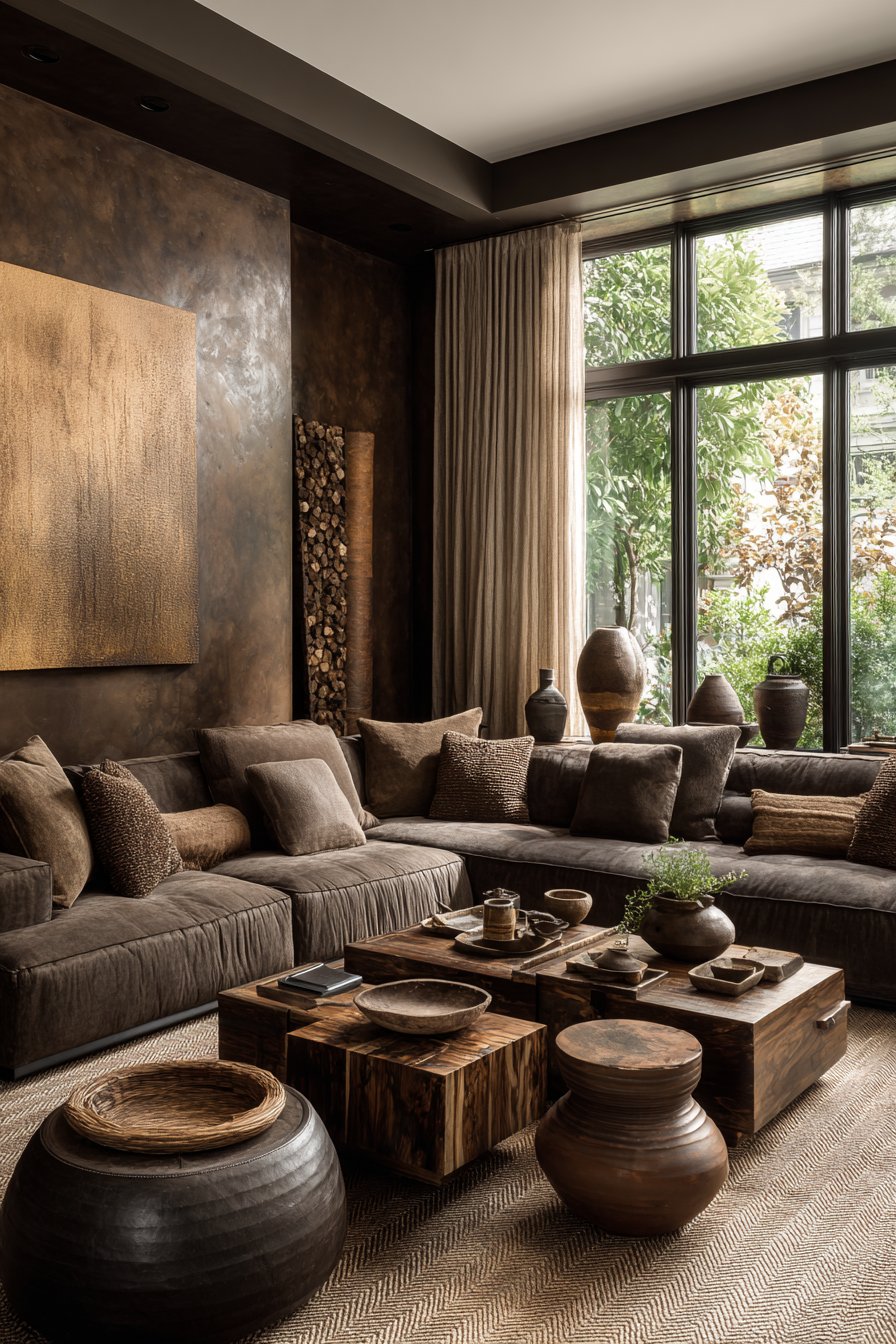
Jute area rug with herringbone pattern adds geometric interest. The natural fiber aesthetic maintains consistency. Floor-to-ceiling linen draperies in unbleached natural color frame large windows. Natural afternoon light creates soft shadows across textured surfaces throughout.
Key Design Tips:
- Choose oversized sectionals configured for maximum comfort
- Use nesting tables in varied wood species for flexibility
- Apply Venetian plaster for luxurious textured wall finishes
- Display large-scale ceramic and wood sculptures as art
- Install floor-to-ceiling linen draperies for elegant window treatments
17. Bi-Level Natural Stone Architecture
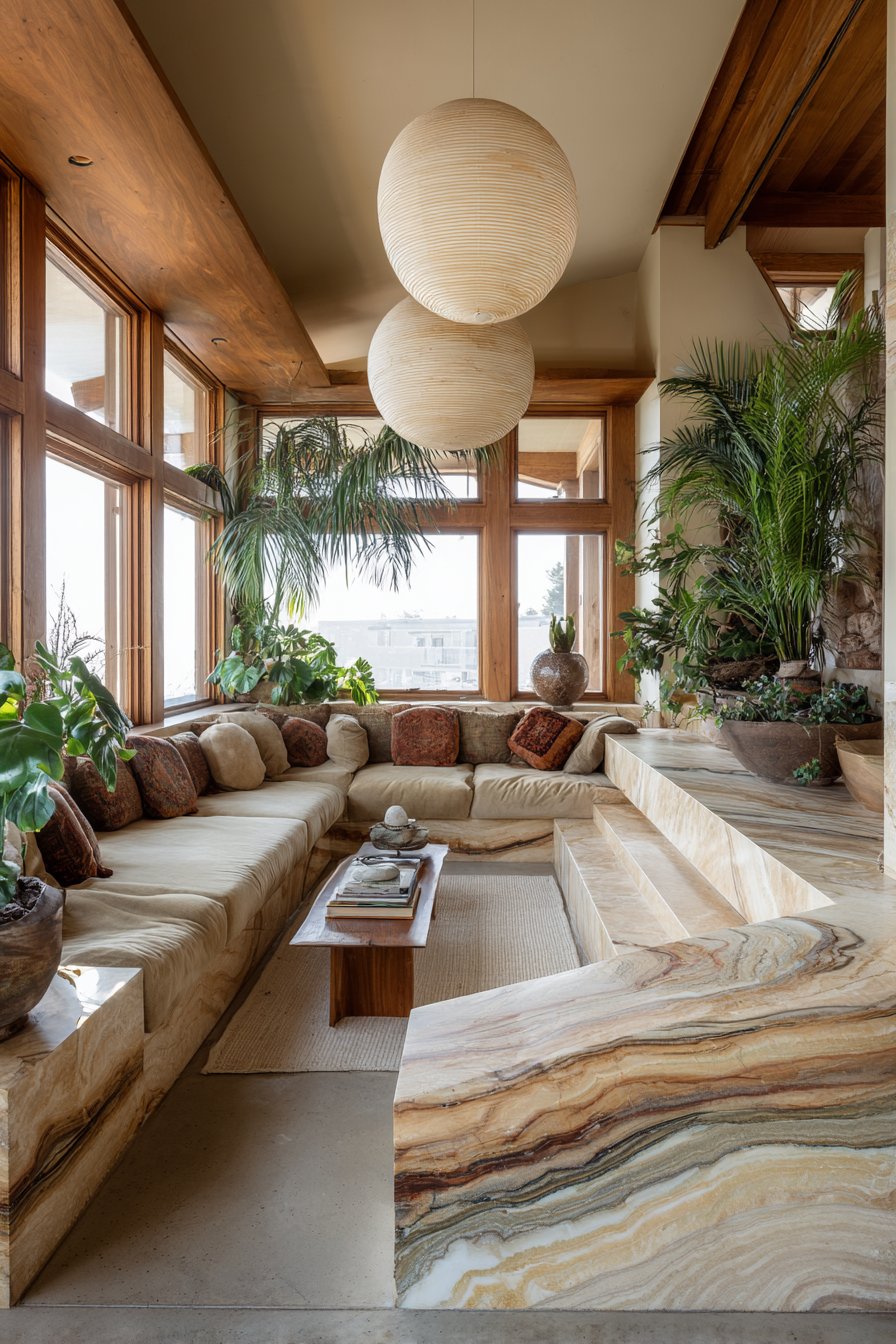
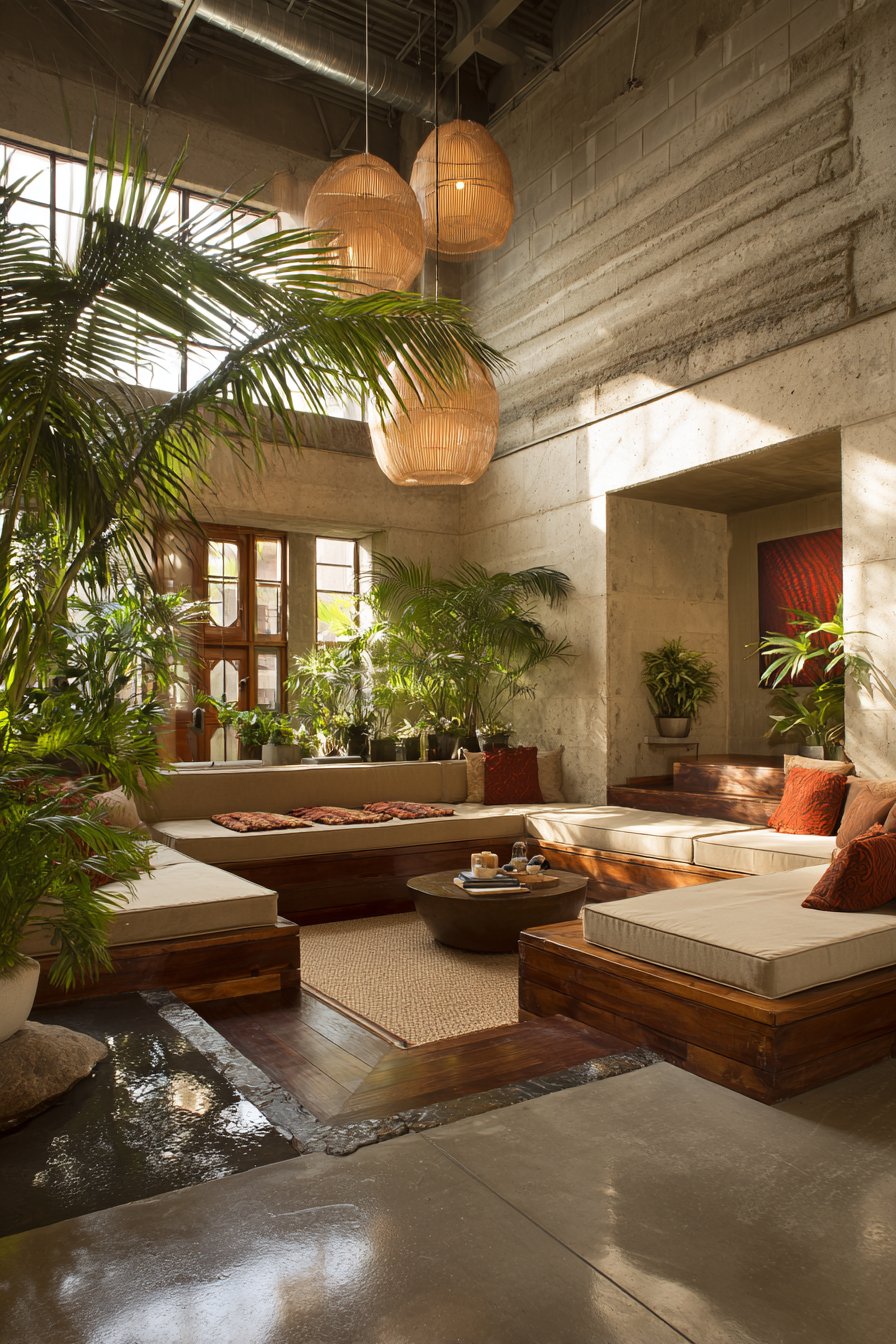
A bi-level design features upper seating area and lower conversation pit. Natural stone retaining walls in warm sandstone define the levels. Visible stratification adds geological interest. Modular seating upholstered in heavy cotton canvas offers flexible arrangement options.
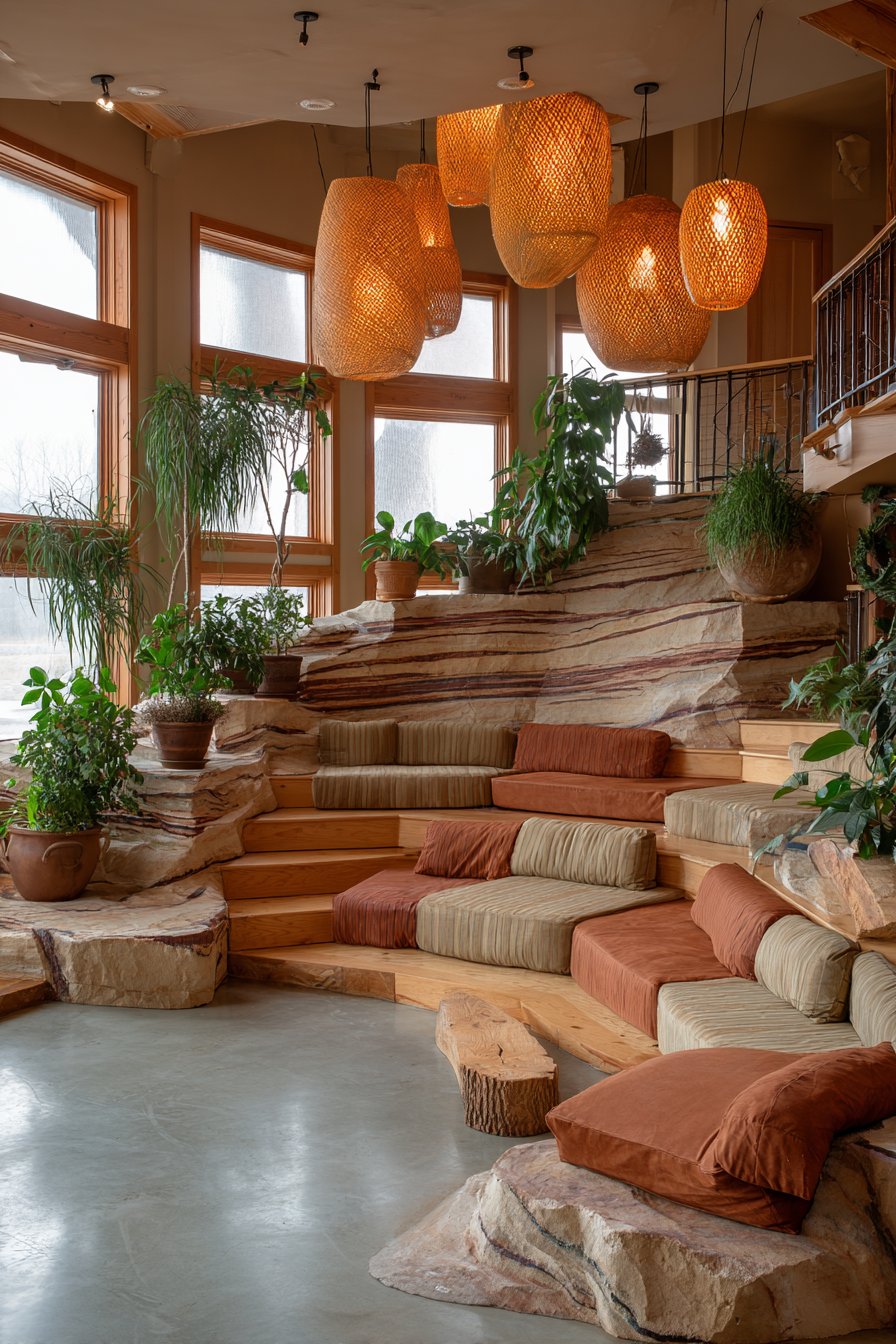
Khaki and rust tones coordinate with stone walls. Live-edge wooden benches offer additional perching surfaces. The floor combines polished concrete in warm gray with inset areas. Natural wool carpeting provides soft contrast.
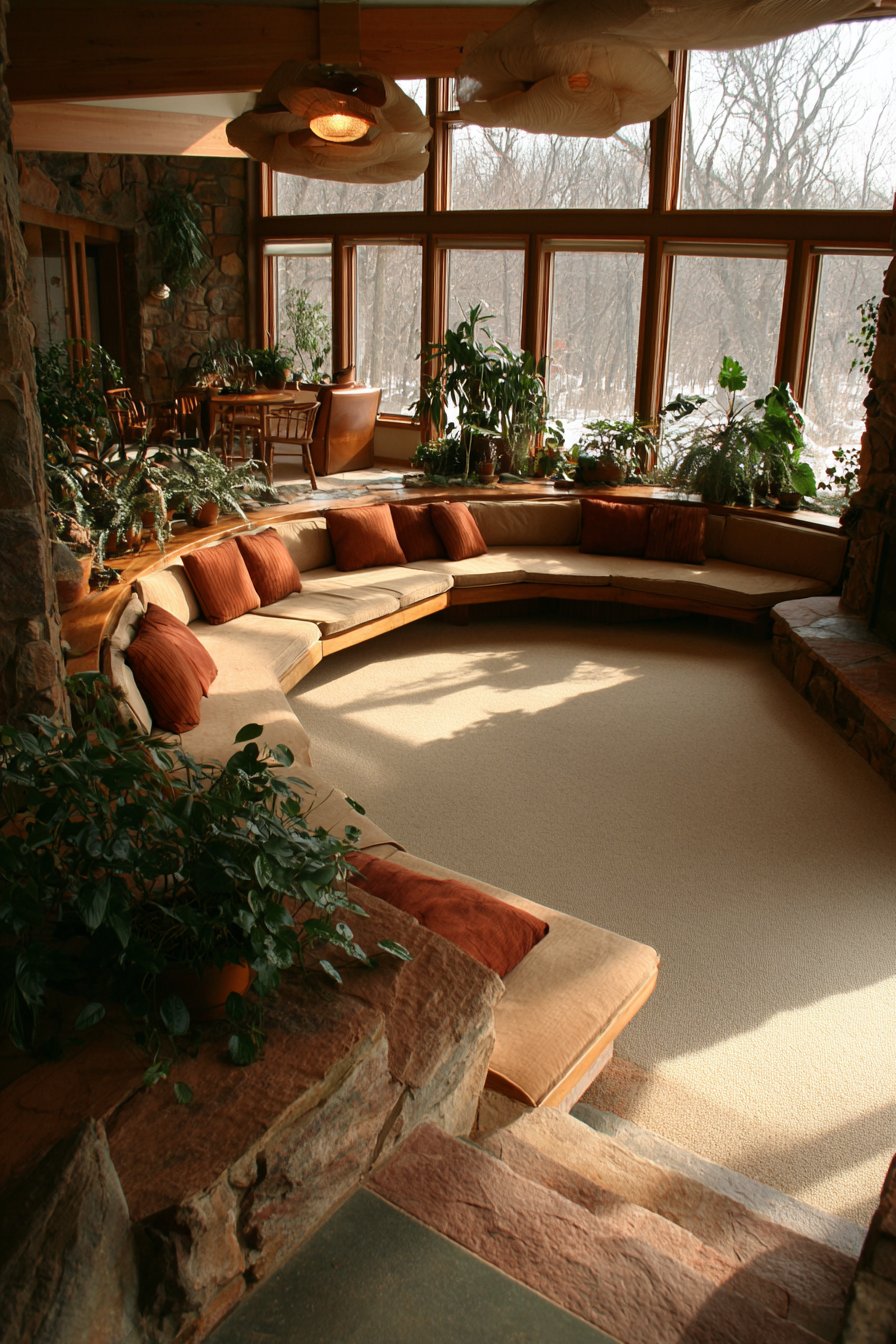
Abundant potted plants including palms and philodendrons create indoor garden atmosphere. Large operable windows with wood frames allow cross-ventilation and natural light. Rattan pendant lights in oversized scale provide sculptural lighting elements throughout the unique space.
Key Design Tips:
- Design bi-level spaces with natural stone retaining walls
- Choose modular seating for flexible entertaining needs
- Add live-edge benches for additional organic seating
- Combine polished concrete with inset wool carpeting
- Install oversized rattan pendants as sculptural lighting
18. Minimalist Hemp Platform
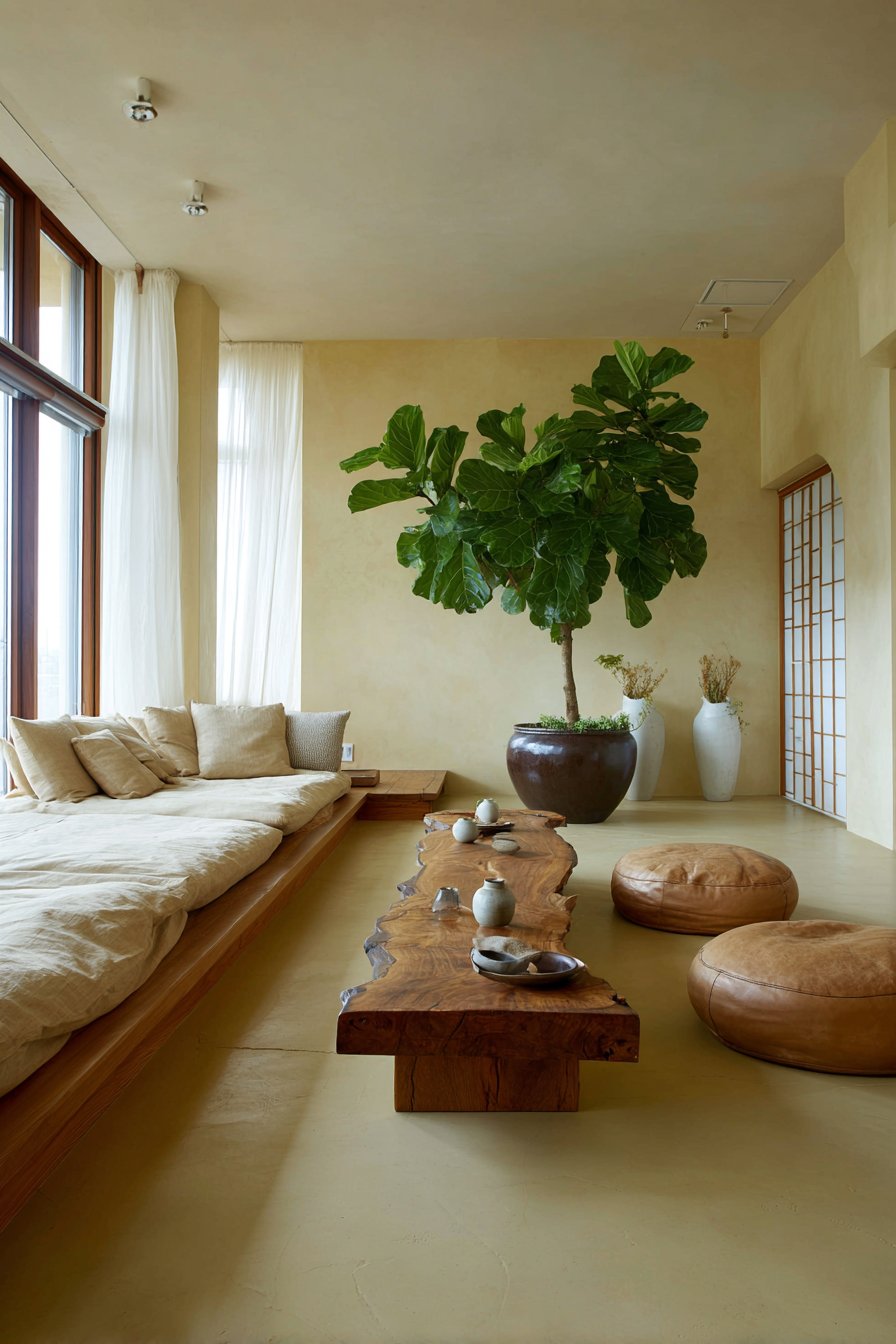
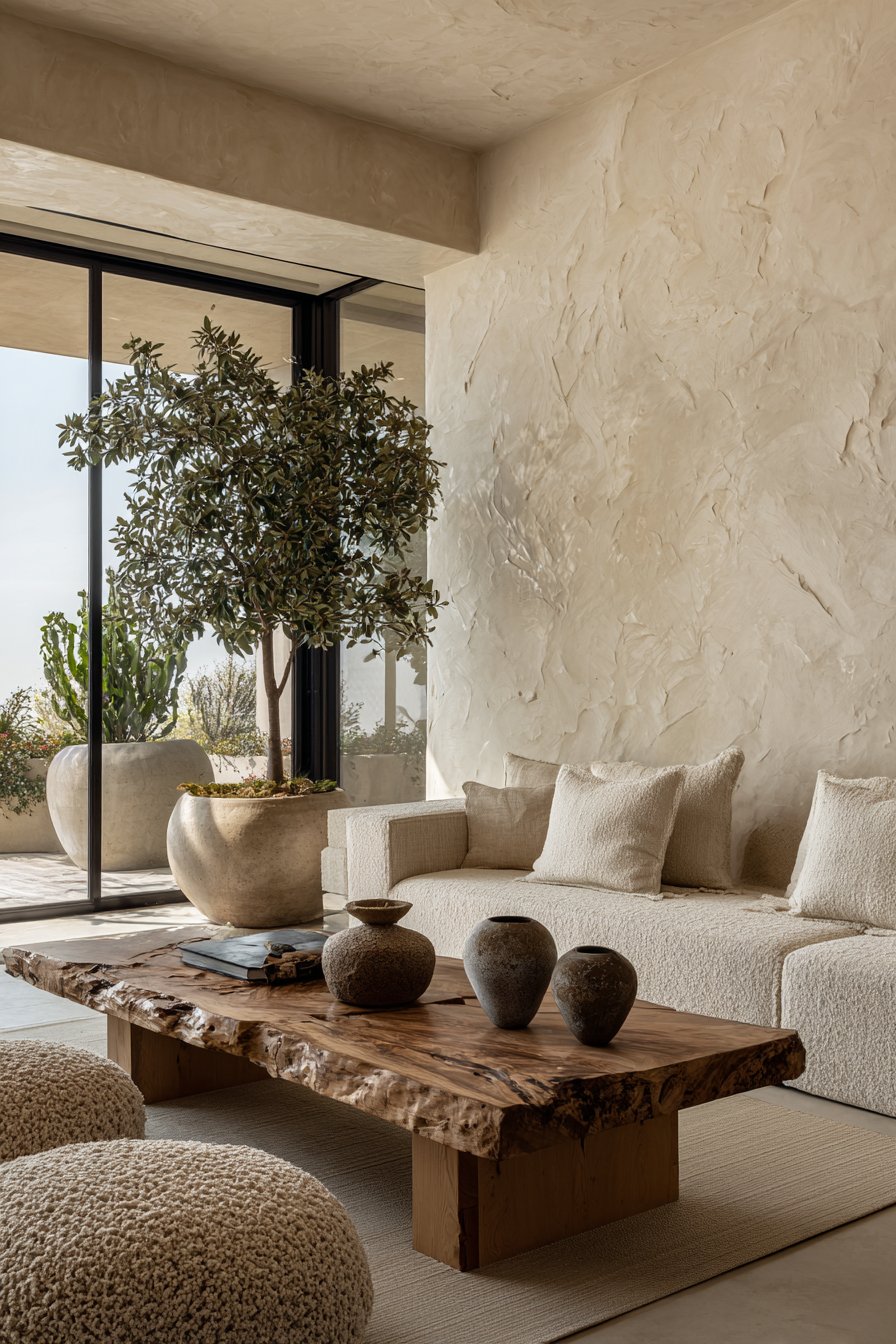
A minimalist approach features low platform sofa upholstered in natural hemp fabric. The raw beige color celebrates natural fiber beauty. The sofa sits directly on raised tatami-style platform. Light oak construction adds warmth underfoot.
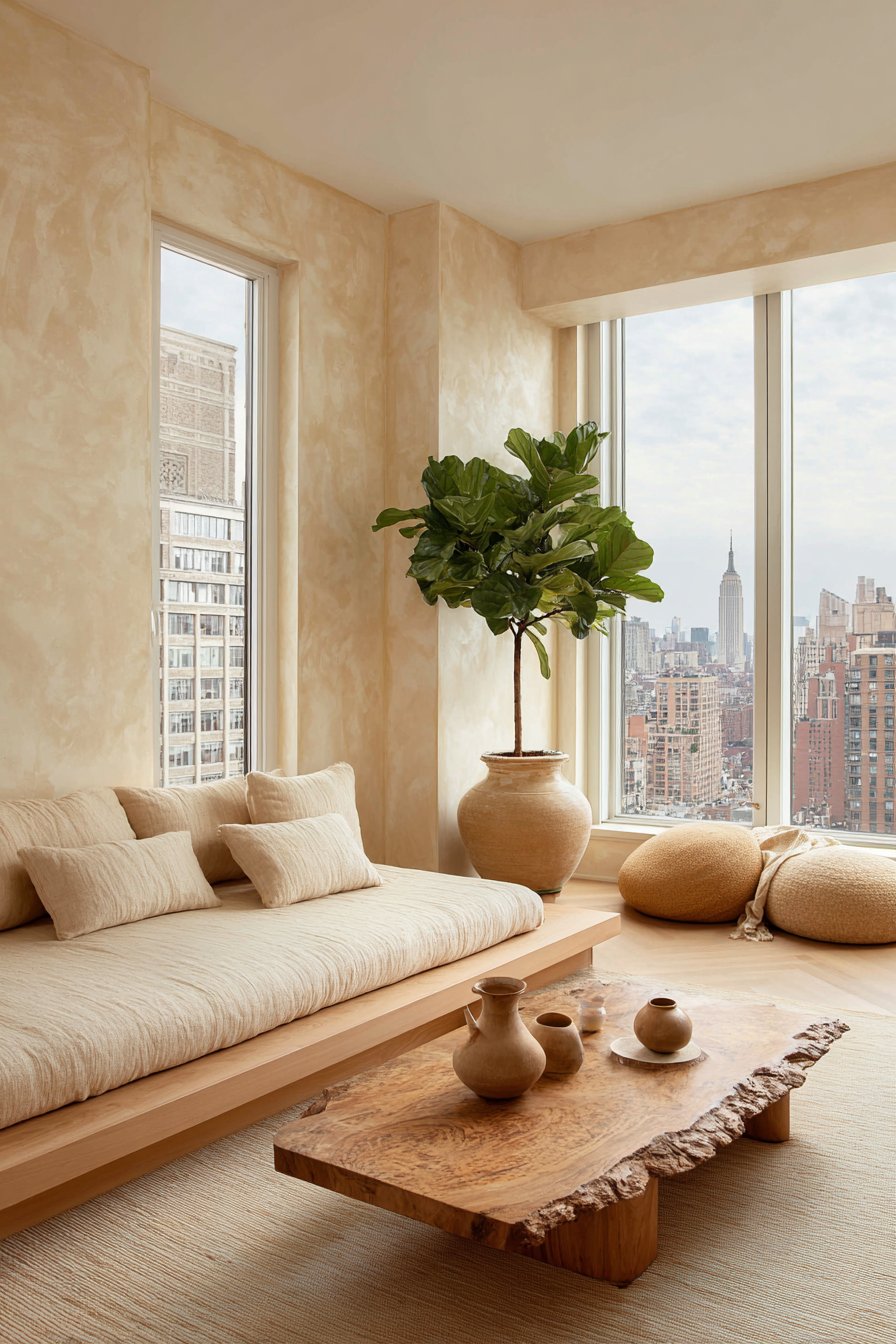
A coffee table made from single thick slab of burled wood displays natural edge. Simple ceramic tea vessels create serene display. Walls finished in polished plaster provide subtle texture. Warm cream tones avoid visual distraction.
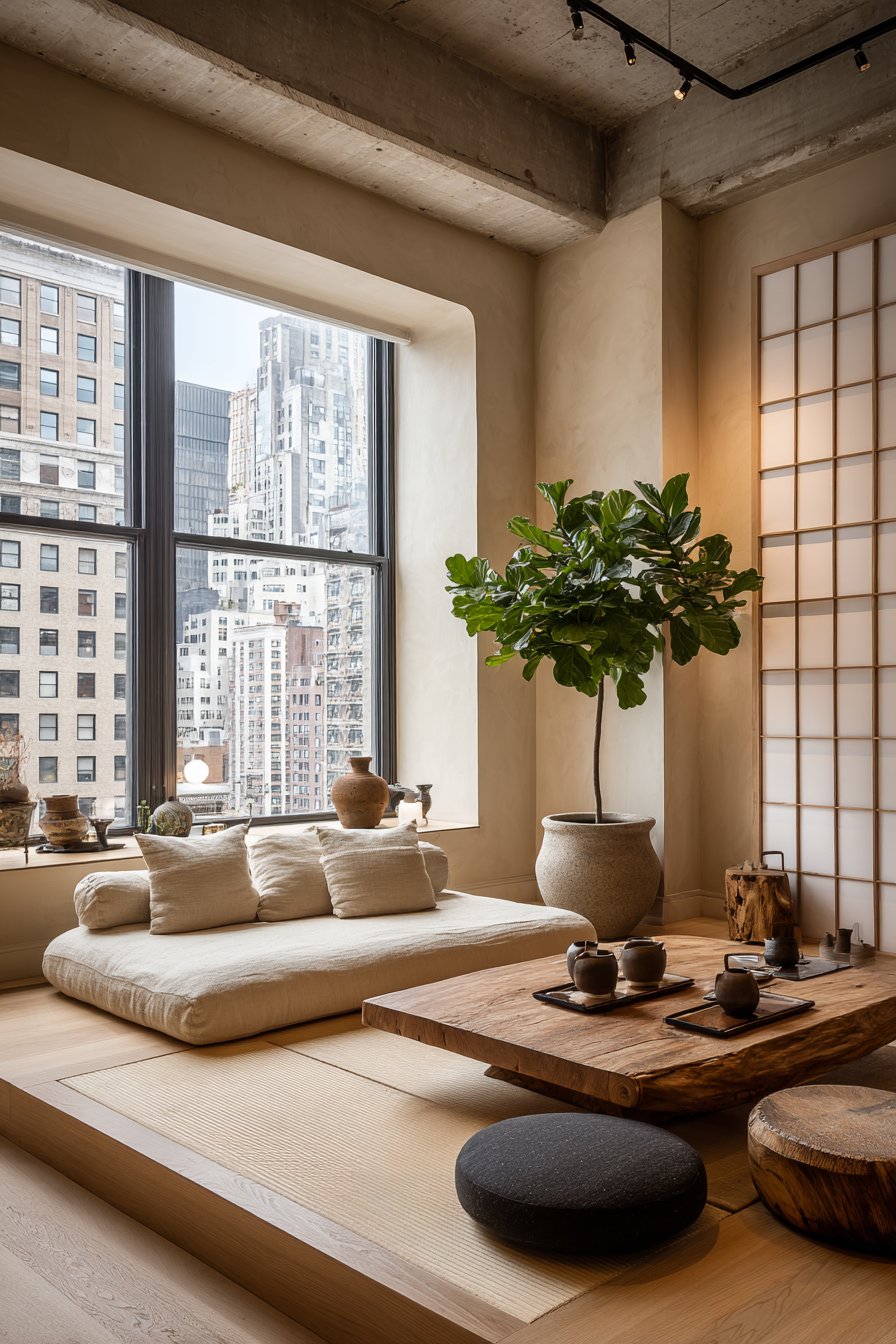
Floor cushions covered in leather and thick wool felt offer additional seating. A single large-scale ceramic planter holds mature fiddle leaf fig tree. Natural light from floor-to-ceiling windows illuminates throughout the day. Shoji-inspired paper screens diffuse harsh light beautifully.
Key Design Tips:
- Create platform bases for low-profile minimalist seating
- Choose hemp fabric that showcases natural fiber texture
- Display burled wood slabs as coffee table statements
- Apply polished plaster in warm cream for subtle walls
- Install shoji-inspired screens for soft light diffusion
19. Floor-to-Ceiling Fieldstone Drama
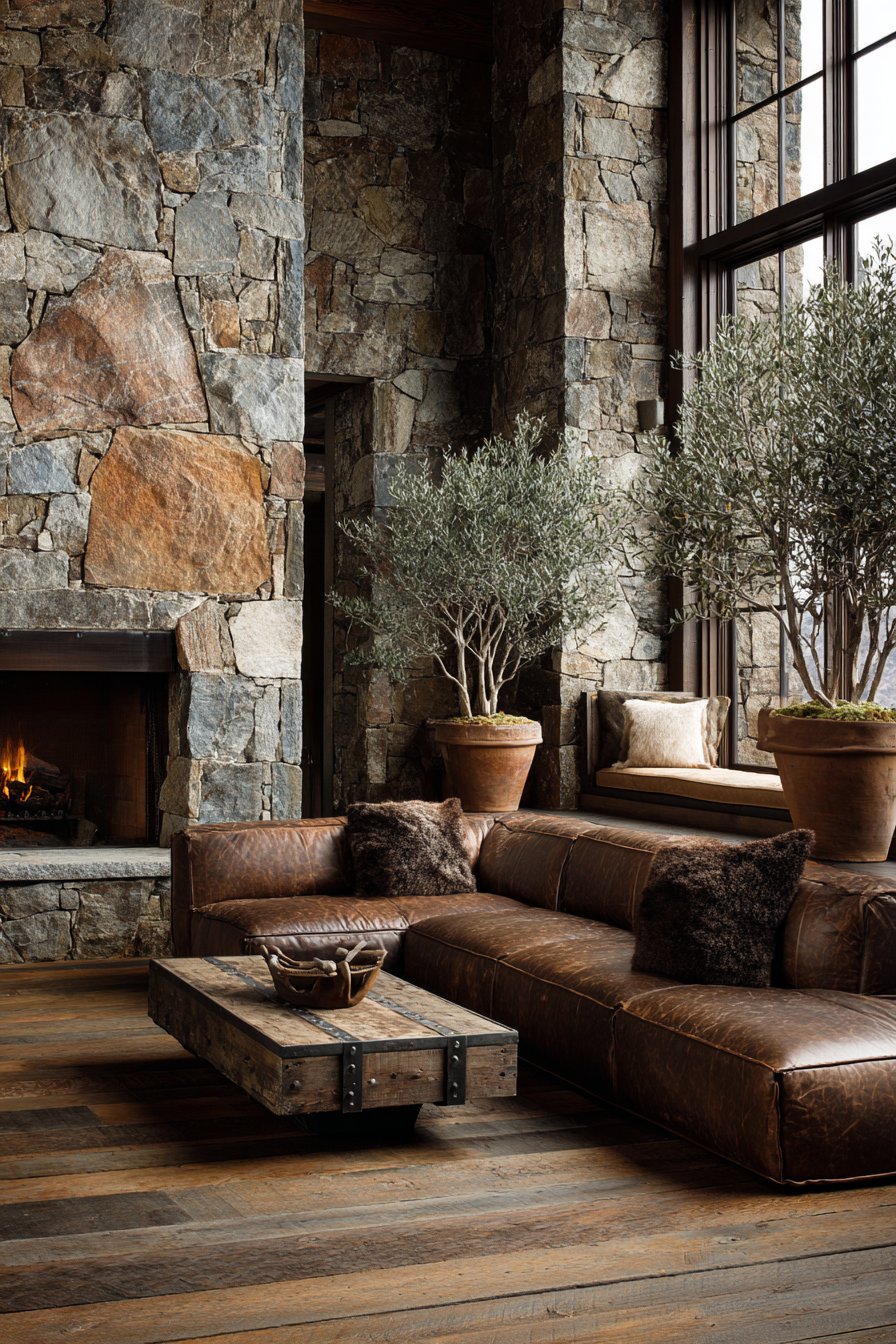
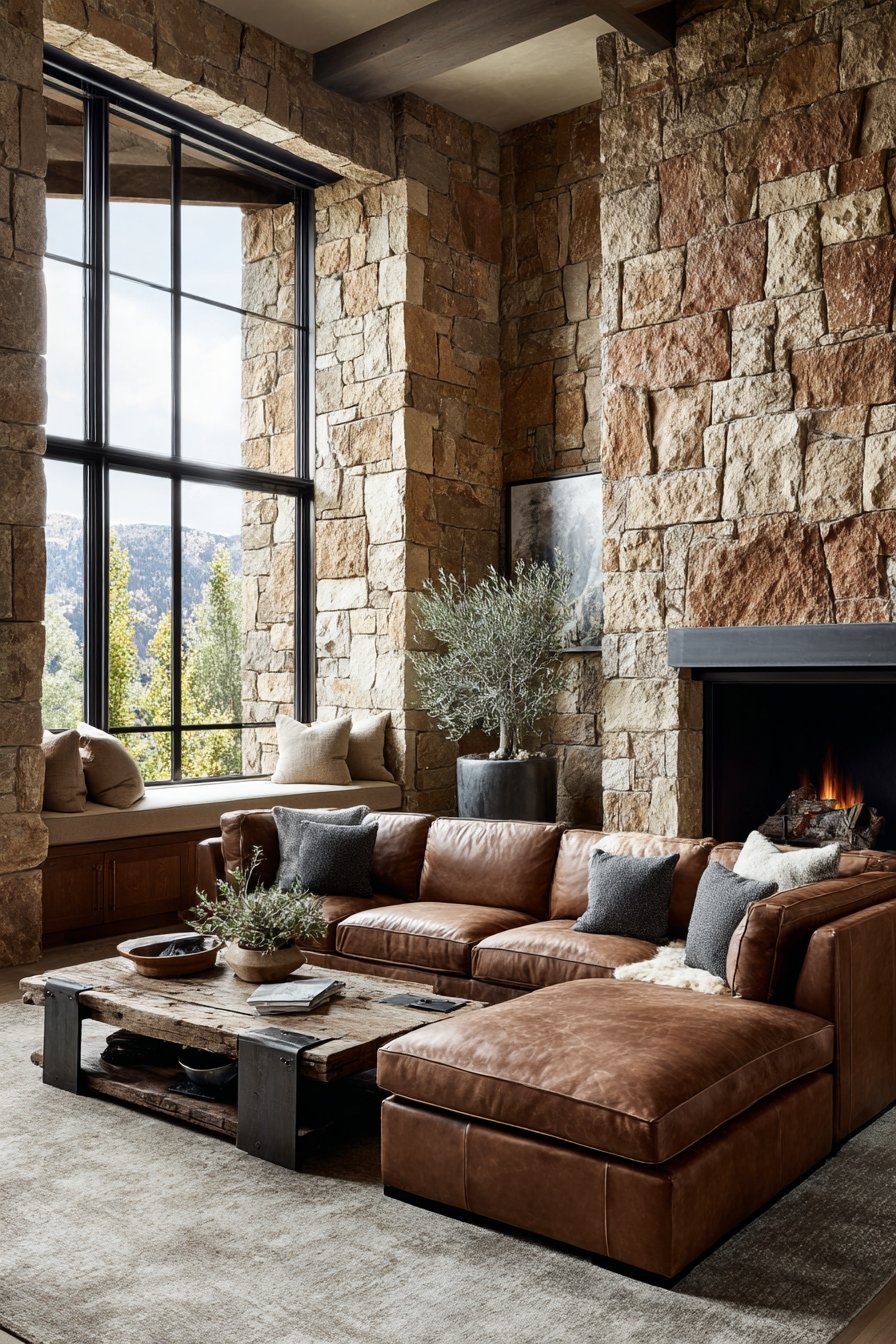
A dramatic stone fireplace wall extends from floor to ceiling. Natural fieldstone in varied warm tones creates impressive focal point. Colors range from tan to rust. Authentic masonry with visible mortar showcases craftmanship.
A large sectional in distressed leather faces the fireplace. Tobacco brown color develops character over time. Sheepskin throws add soft textural contrast. The coffee table crafted from railway sleeper wood maintains industrial-organic balance. Iron brackets provide structural support.
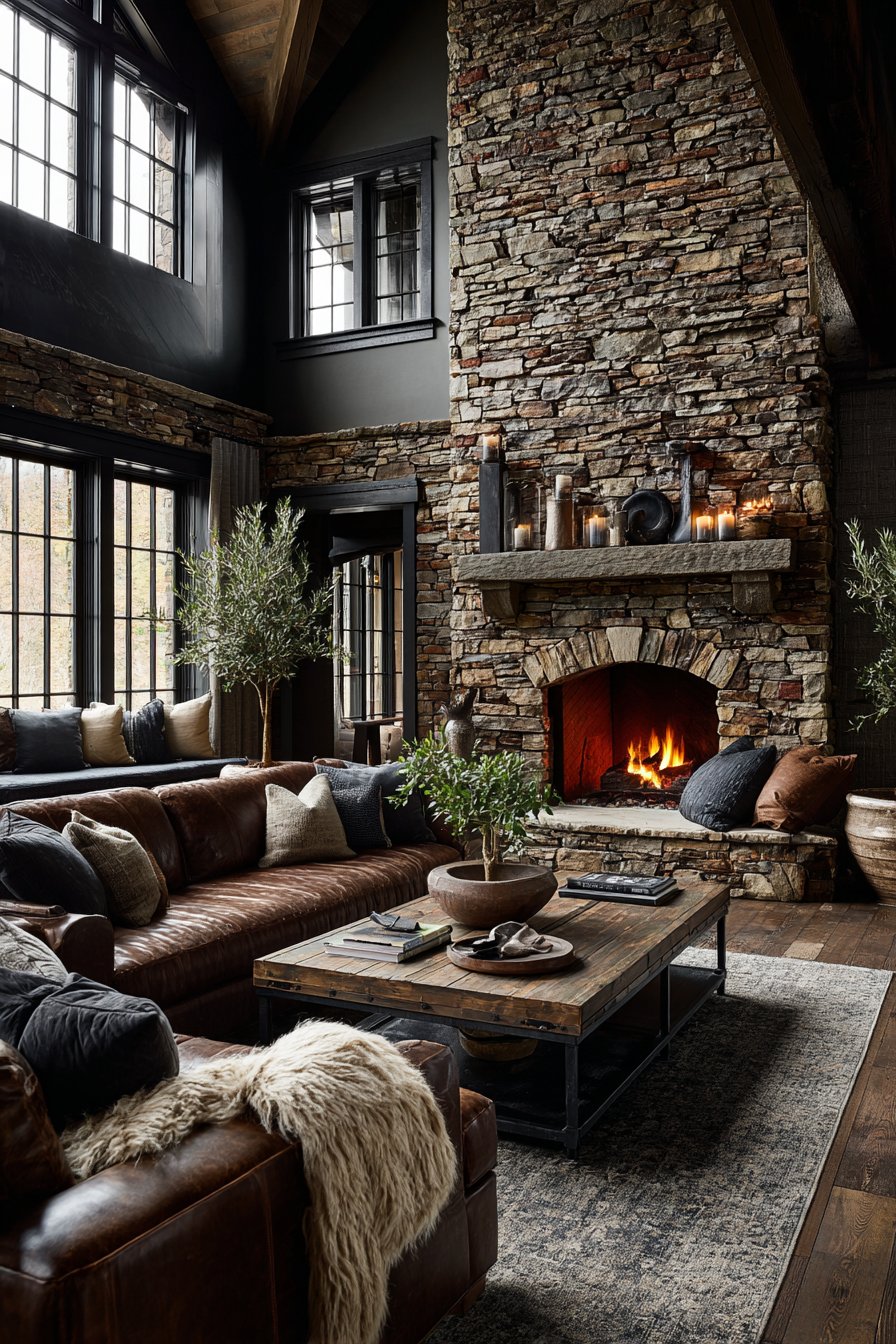
Wide-plank oak flooring with wire-brushed finish shows natural character. Built-in window seats with linen cushions flank the fireplace. Potted olive trees in large terracotta urns add sculptural green presence. Natural light from multiple exposures creates dynamic lighting throughout the day.
Key Design Tips:
- Build floor-to-ceiling stone fireplaces as dramatic focal points
- Choose distressed leather that develops character over time
- Repurpose railway sleeper wood for industrial-organic furniture
- Install built-in window seats for additional cozy seating
- Display olive trees in large terracotta urns as sculptures
20. Cozy Reading Nook Integration
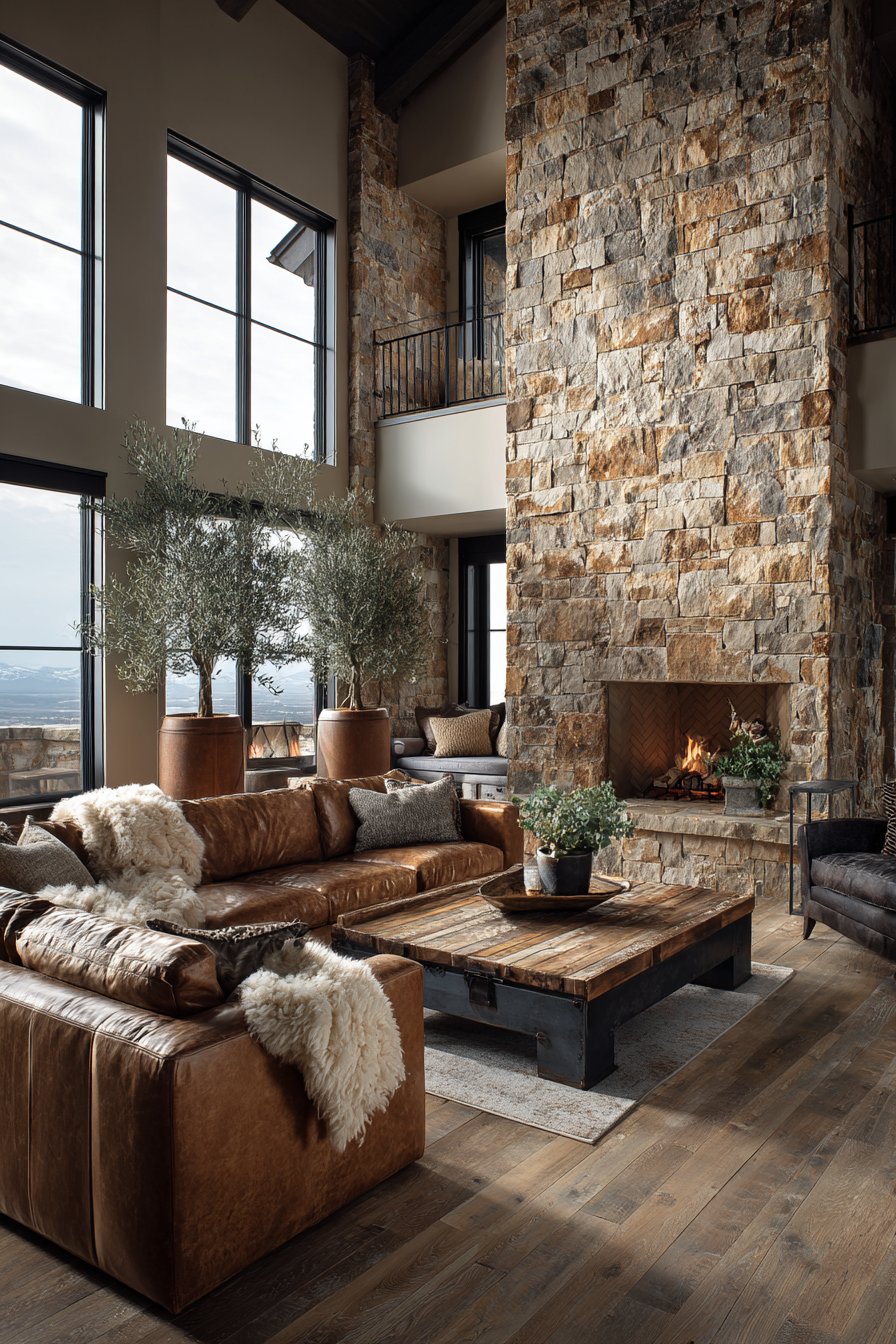
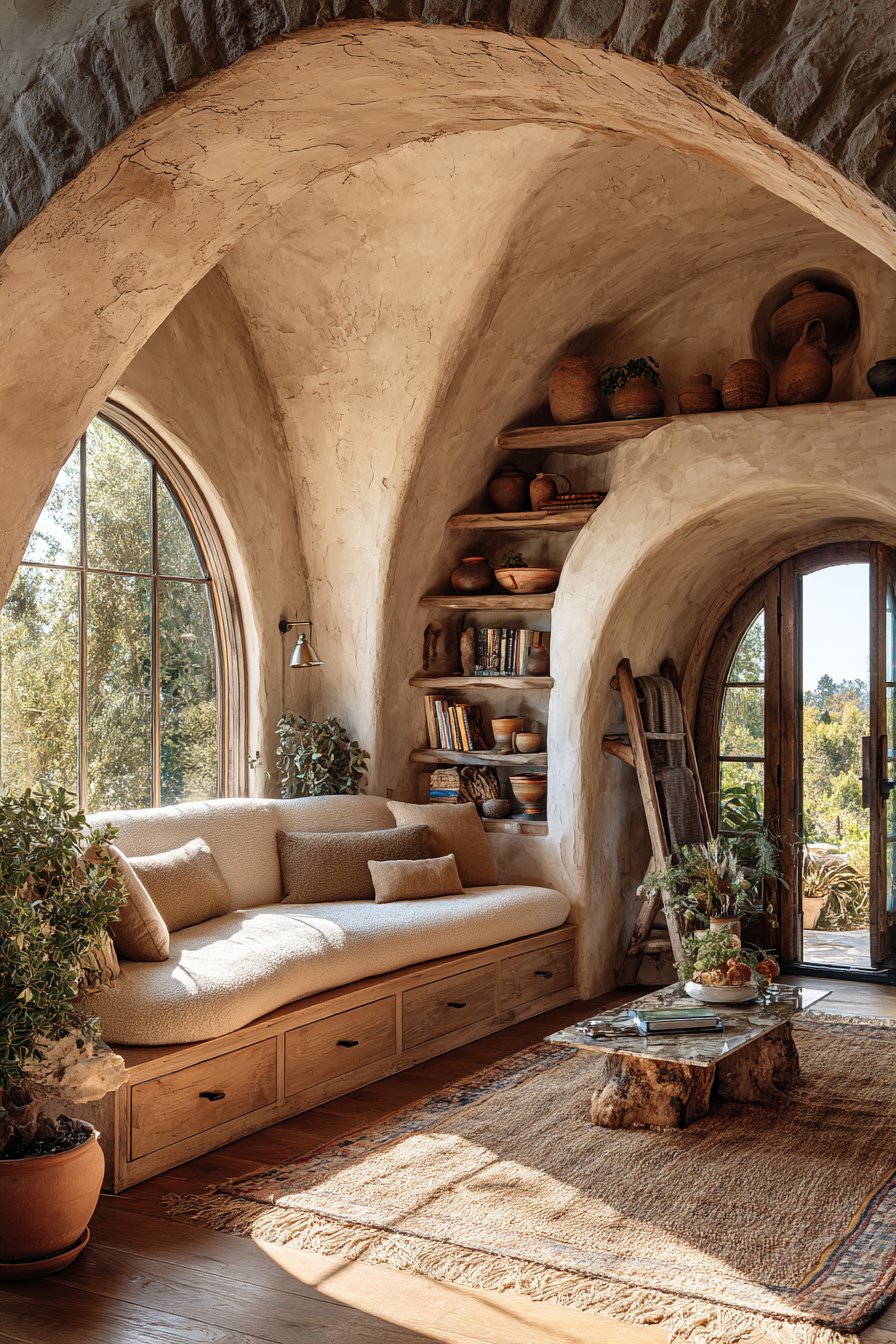
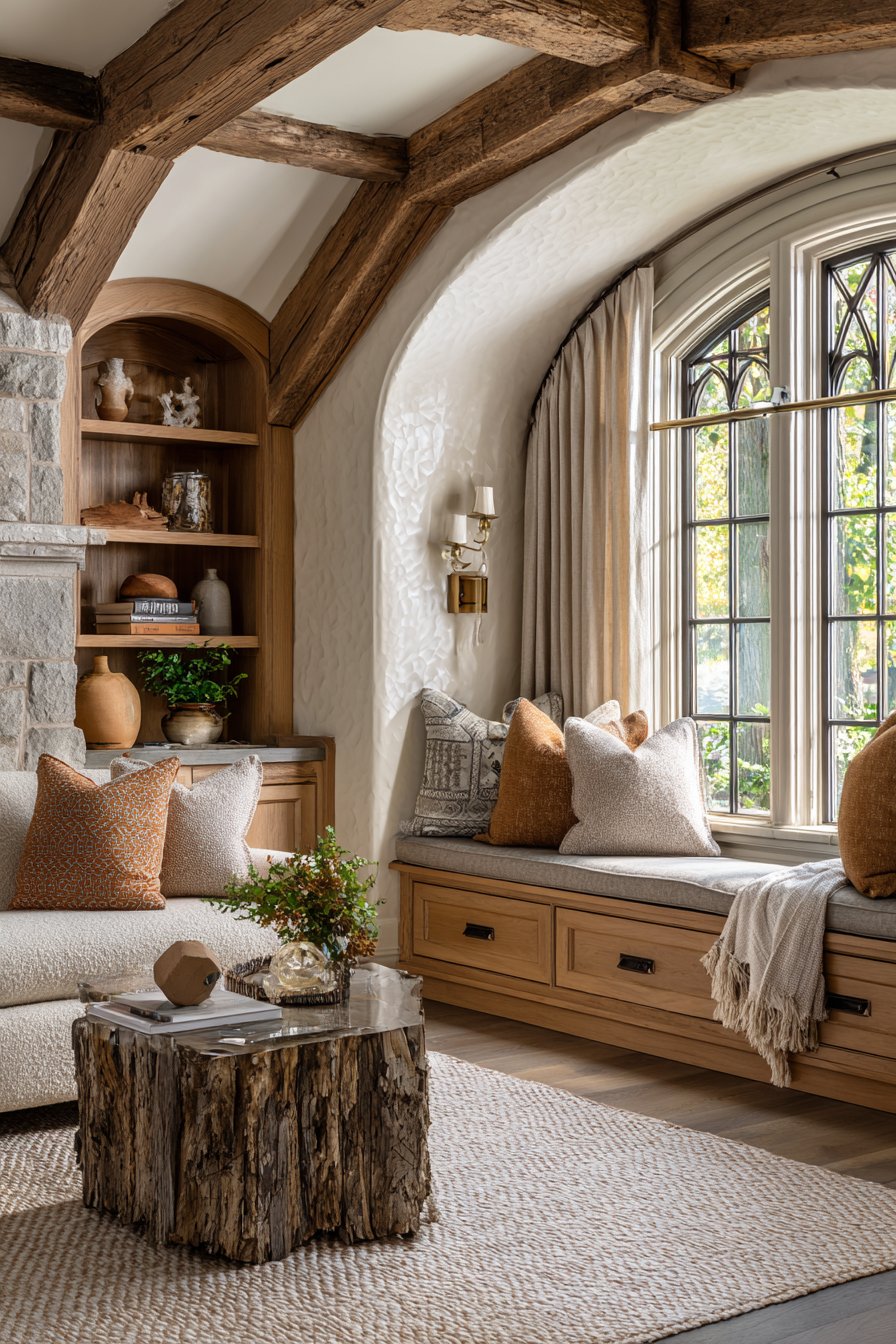
A reading nook tucked into windowed alcove features built-in bench seating. Storage drawers in natural oak provide hidden organization. Thick cushions upholstered in camel-colored wool felt add comfort. The main seating area includes curved sofa in bouclé fabric.
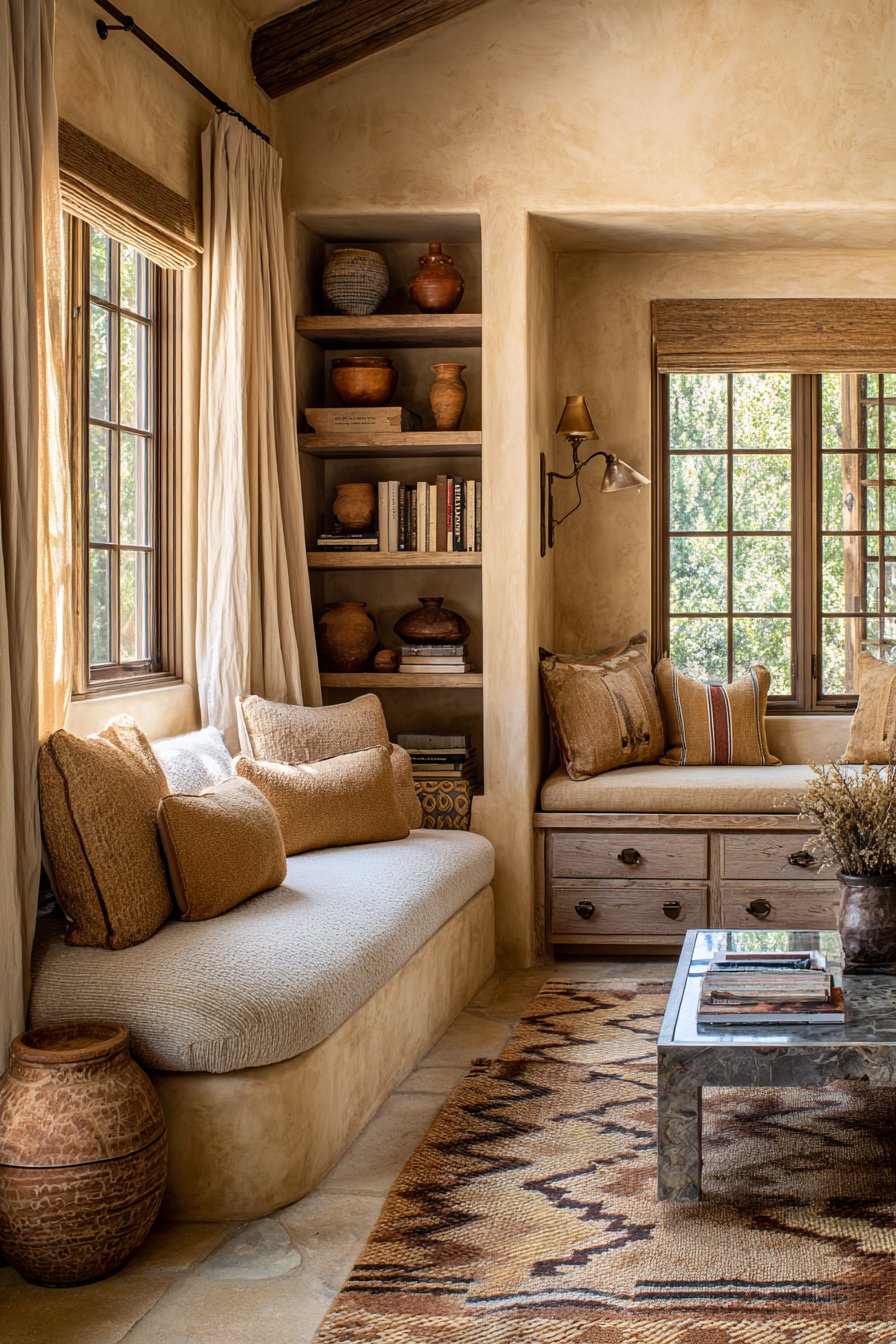
Warm sand tone creates inviting atmosphere. A low coffee table made from petrified wood features glass top. The glass protects natural fossilized patterns underneath. Walls incorporate wainscoting in natural wood below. Textured plaster in warm beige covers upper portions.
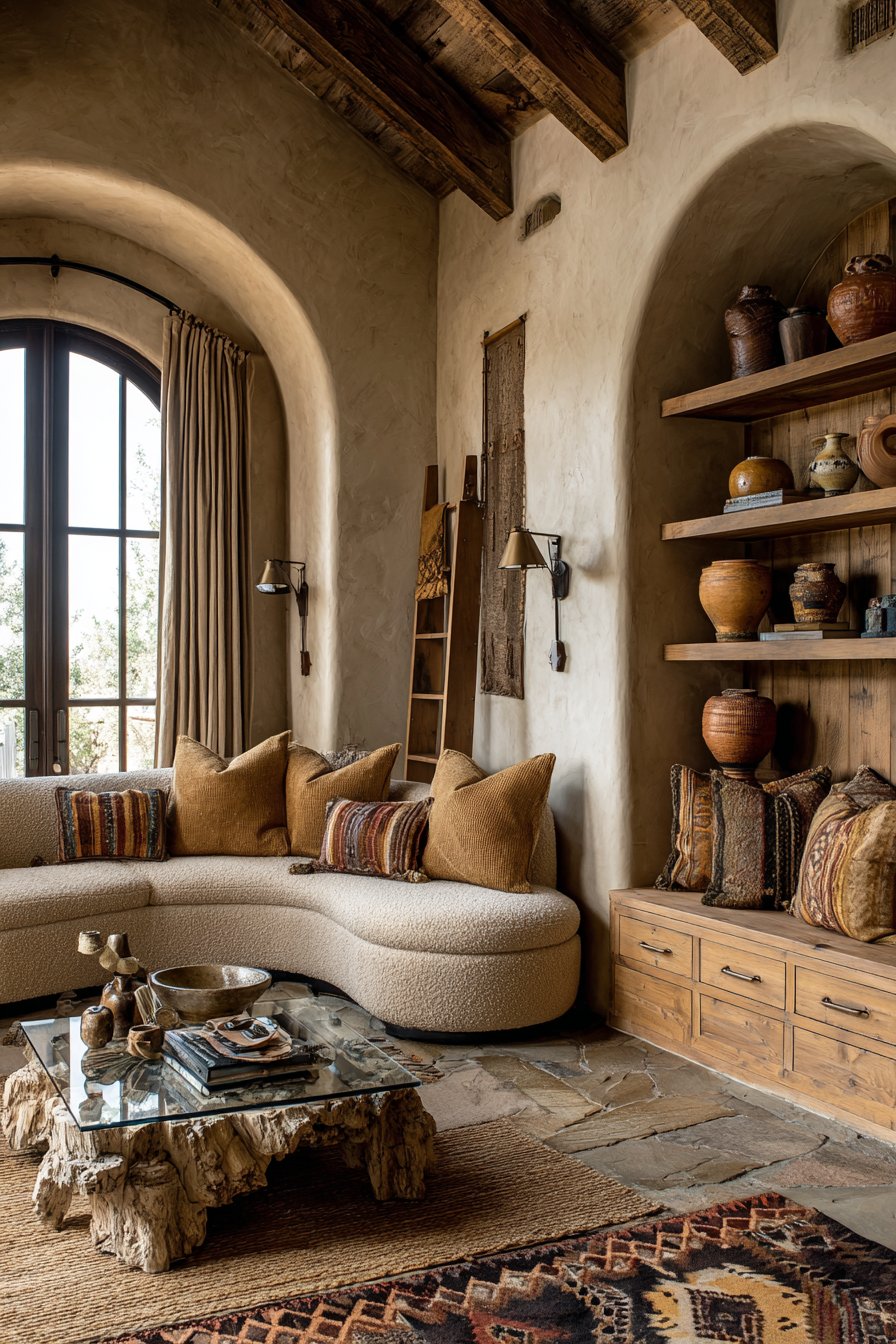
A ladder leads to upper shelving displaying pottery and natural curiosities. Layered rugs include large jute base with smaller vintage kilim overlay. Earthy geometric patterns add visual interest. Brass pharmacy-style floor lamps provide reading light. Natural daylight filters through linen curtains beautifully.
Key Design Tips:
- Create window seat reading nooks with built-in storage
- Choose petrified wood furniture as conversation pieces
- Combine wainscoting with textured plaster for wall interest
- Layer jute base rugs with vintage kilim overlays
- Install brass pharmacy lamps for an adjustable reading light
Why These Earthy Living Room Designs Are the Best
These earthy living room designs represent the finest approaches to natural interior aesthetics. Each concept demonstrates thoughtful consideration of organic materials and earth-toned color palettes. The designs showcase versatility that suits different architectural styles and personal preferences. From minimalist interpretations to richly layered spaces, these rooms prove that natural design works beautifully.
The incorporation of reclaimed wood adds sustainability to beautiful design choices. These materials bring history and character that new furniture cannot replicate. Natural stone elements provide geological interest and textural drama. The varied surfaces create visual depth while maintaining cohesive earthy palettes. Leather furniture develops authentic patina over time, improving with age rather than deteriorating.
Natural fiber textiles, including linen, jute, cotton canvas, and hemp showcase organic beauty. These materials breathe better than synthetics and age gracefully. Woven elements from rattan pendant lights to macramé wall hangings add handcrafted character. The textures create visual interest without relying on synthetic patterns or colors.
Earth-toned color palettes ranging from cream and sand through rust and terracotta create warmth. These colors connect to natural landscapes and geological formations. The warm hues promote relaxation and comfort in living spaces. Color variations within natural materials add organic authenticity, impossible to achieve with painted surfaces.
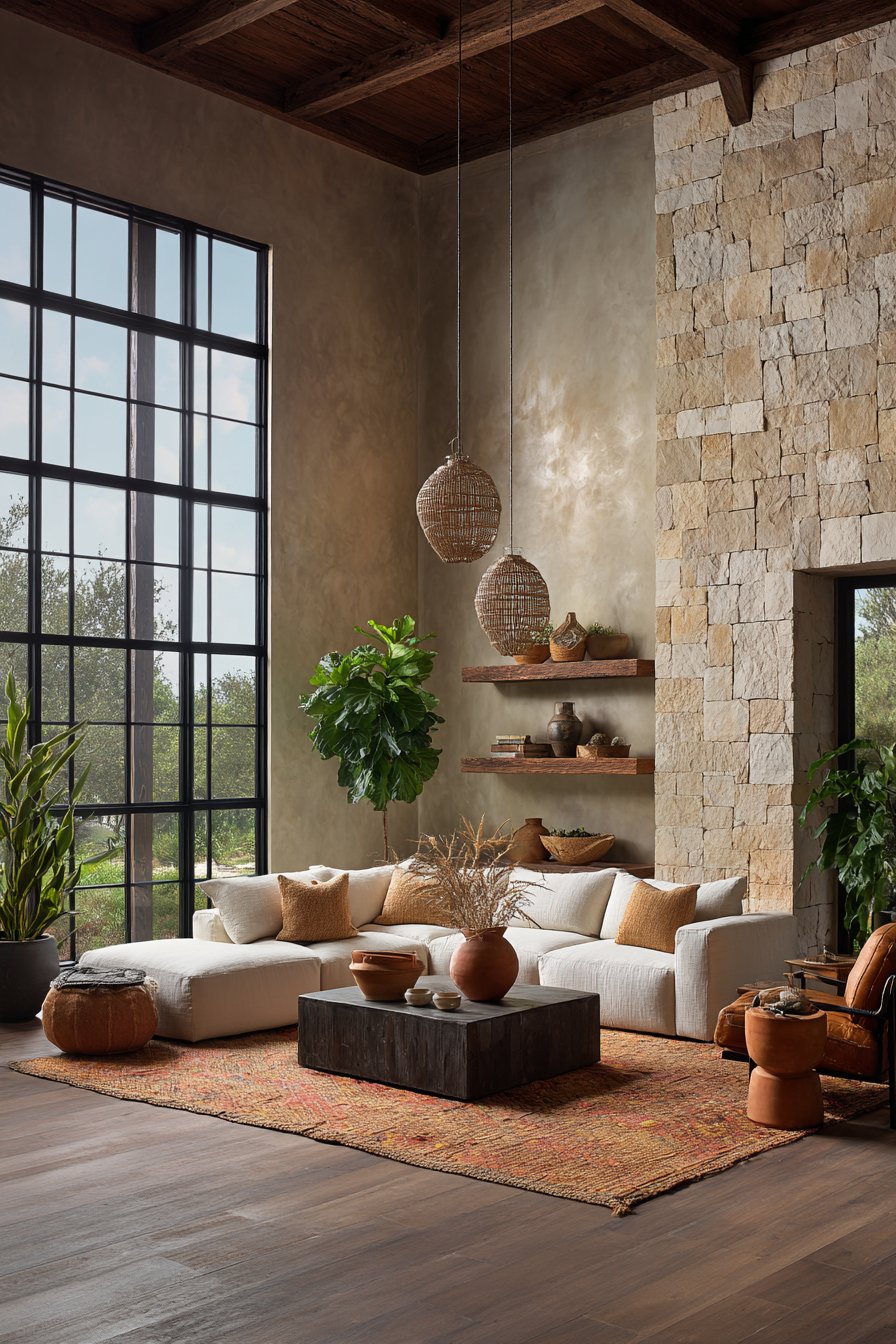
Living plants bring essential life force to earthy living rooms. Fiddle leaf figs, olive trees, pothos, and snake plants purify air naturally. The greenery provides color contrast against earth-toned backgrounds. Plants create a connection to nature even in urban environments. Terracotta planters complement the organic aesthetic while supporting plant health.
Natural lighting strategies maximize connection to outdoor environments and daily rhythms. Floor-to-ceiling windows blur interior-exterior boundaries effectively. Clerestory windows provide elevated natural light without sacrificing wall space. Linen curtains and bamboo shades filter harsh light while maintaining natural quality. The changing light throughout the day creates dynamic shadow patterns across textured surfaces.
Architectural elements including exposed ceiling beams, stone accent walls, and built-in seating, add structural character. These features feel integral rather than decorative additions. The authentic materials create rooms with lasting appeal beyond temporary trends. Vaulted ceilings and sunken conversation areas demonstrate how spatial architecture enhances earthy aesthetics.
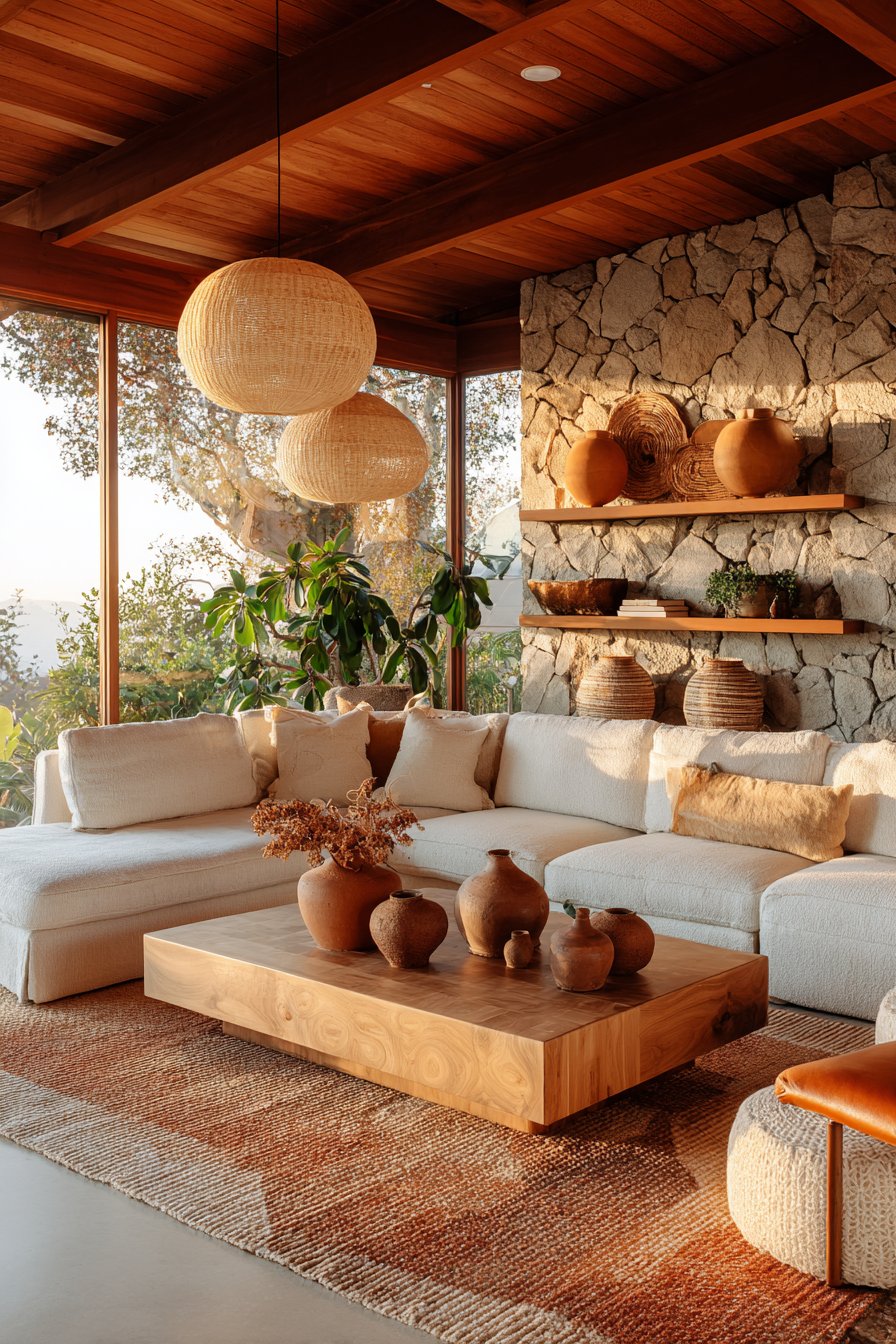
Handcrafted elements from pottery to woven baskets add human touch to natural materials. These objects celebrate traditional craftsmanship and sustainable creation methods. The imperfections in handmade items add character impossible in mass production. Displaying natural curiosities like driftwood and stones brings outdoor elements inside meaningfully.
The layering of varied textures creates sophisticated depth in earthy living rooms. Rough stone contrasts beautifully with soft linen fabric. Smooth leather complements chunky woven rugs. Polished wood surfaces balance against textured plaster walls. These material combinations create sensory richness that engages multiple senses simultaneously.
Flexible seating arrangements from modular sofas to floor cushions support different gathering styles. Built-in benches and window seats maximize space efficiency while adding architectural interest. The varied seating options accommodate both intimate conversations and larger gatherings. Low-profile furniture maintains open, airy feelings even in smaller rooms.
Sustainable material choices make earthy living rooms environmentally responsible. Reclaimed wood, natural stone, and organic textiles reduce environmental impact. Cork flooring provides renewable surface options with natural acoustic properties. The longevity of quality natural materials reduces replacement cycles compared to synthetic alternatives.
These earthy living room designs create environments that support wellbeing naturally. The organic materials and warm colors reduce stress and promote relaxation. Natural light exposure supports healthy circadian rhythms. Living plants improve indoor air quality measurably. The overall aesthetic creates sanctuary spaces where occupants feel grounded and connected to nature.
Conclusion
These earthy living room designs demonstrate that natural beauty comes from authentic material choices and thoughtful composition. The key takeaways include the importance of organic textures, earth-toned color palettes, and sustainable materials. Quality natural pieces combined with living plants create rooms that feel both beautiful and grounding. Successful earthy design balances aesthetic appeal with environmental responsibility.
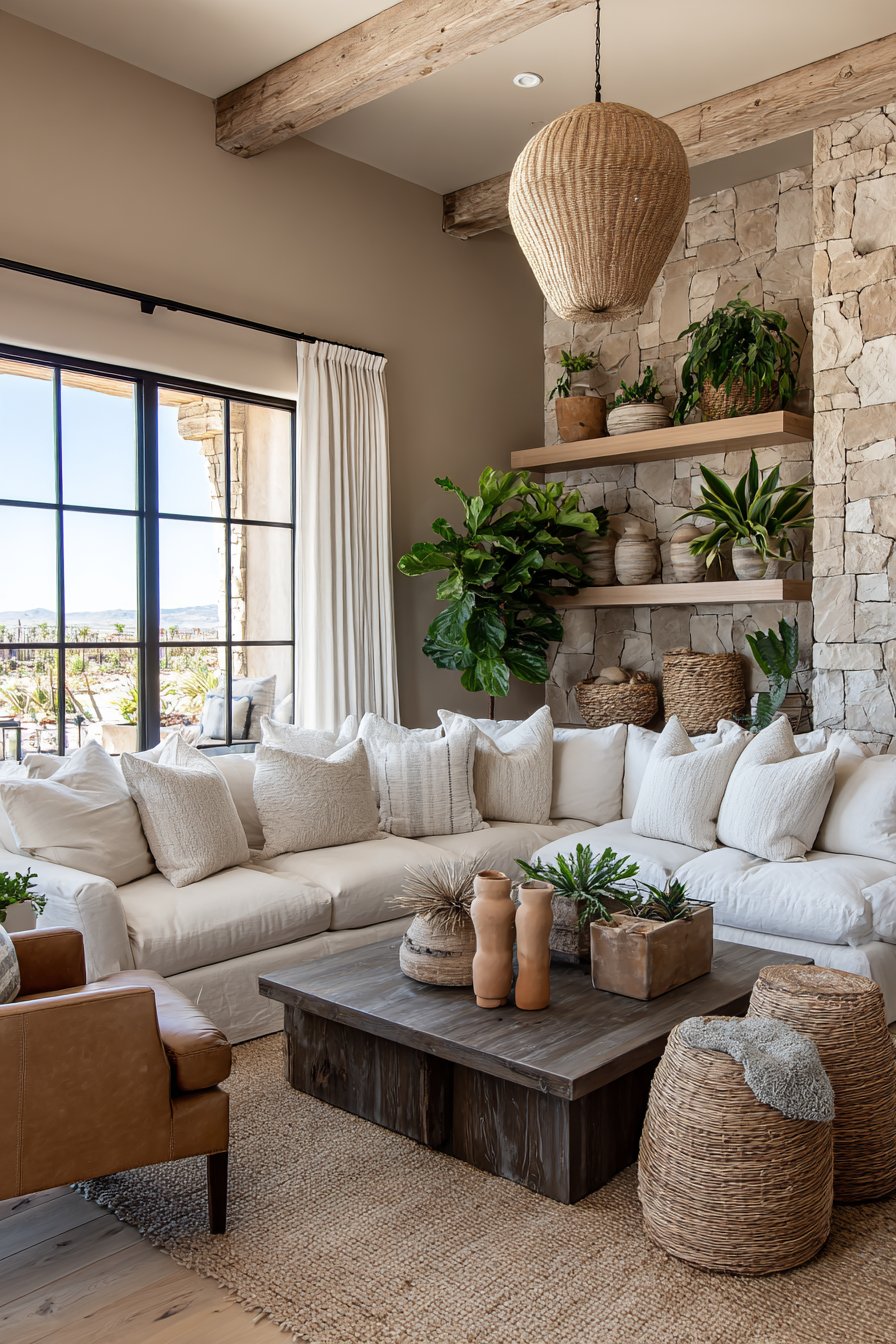
The varied approaches showcase possibilities for different budgets and spatial constraints. Start small by introducing natural fiber rugs or reclaimed wood furniture. Add living plants in terracotta containers for immediate organic impact. Layer textures through throw pillows and woven baskets. Your dream earthy living room awaits creation through mindful material selection and authentic design choices that celebrate nature’s inherent beauty.
