


Olive green has emerged as one of the most sophisticated color choices for modern kitchens. This versatile shade brings the calming essence of nature indoors while creating spaces that feel both timeless and contemporary. The beauty of olive green lies in its ability to adapt to various design styles, from rustic farmhouse to sleek modern aesthetics.
Kitchen design has evolved beyond simple functionality to become a reflection of personal style and lifestyle values. Olive green represents this evolution perfectly, offering a departure from predictable neutrals while remaining elegantly understated. This earthy hue creates kitchens that feel grounded, warm, and welcoming—spaces where cooking becomes a pleasure and gathering feels natural.
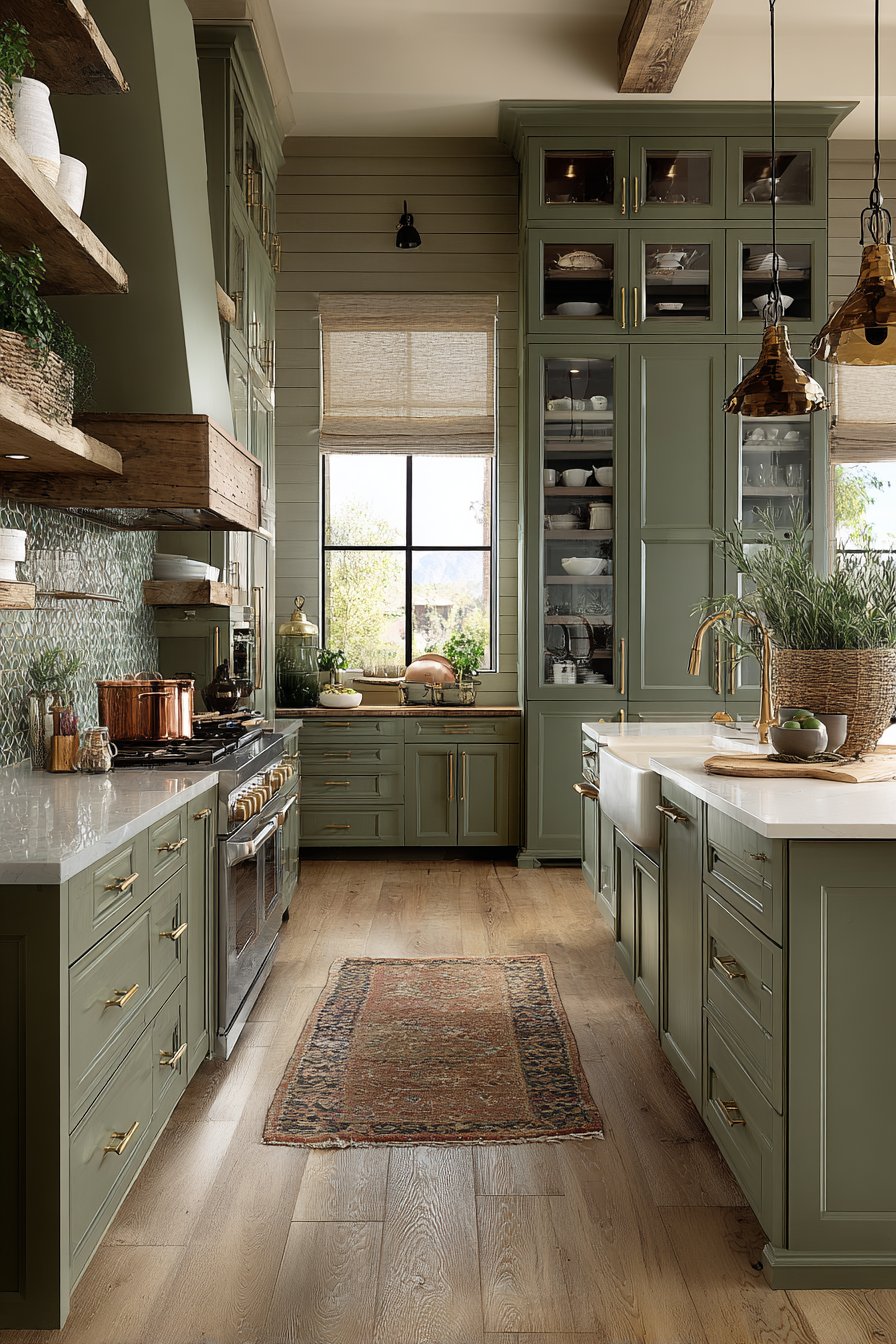
This article explores twenty unique approaches to incorporating olive green into kitchen design. Each concept demonstrates different applications of this beautiful color, from full cabinetry installations to subtle accent elements. Whether you’re planning a complete kitchen renovation or seeking inspiration for a simple refresh, these designs showcase the remarkable versatility and enduring appeal of olive green in culinary spaces.
1. Classic Shaker-Style Olive Green Cabinets
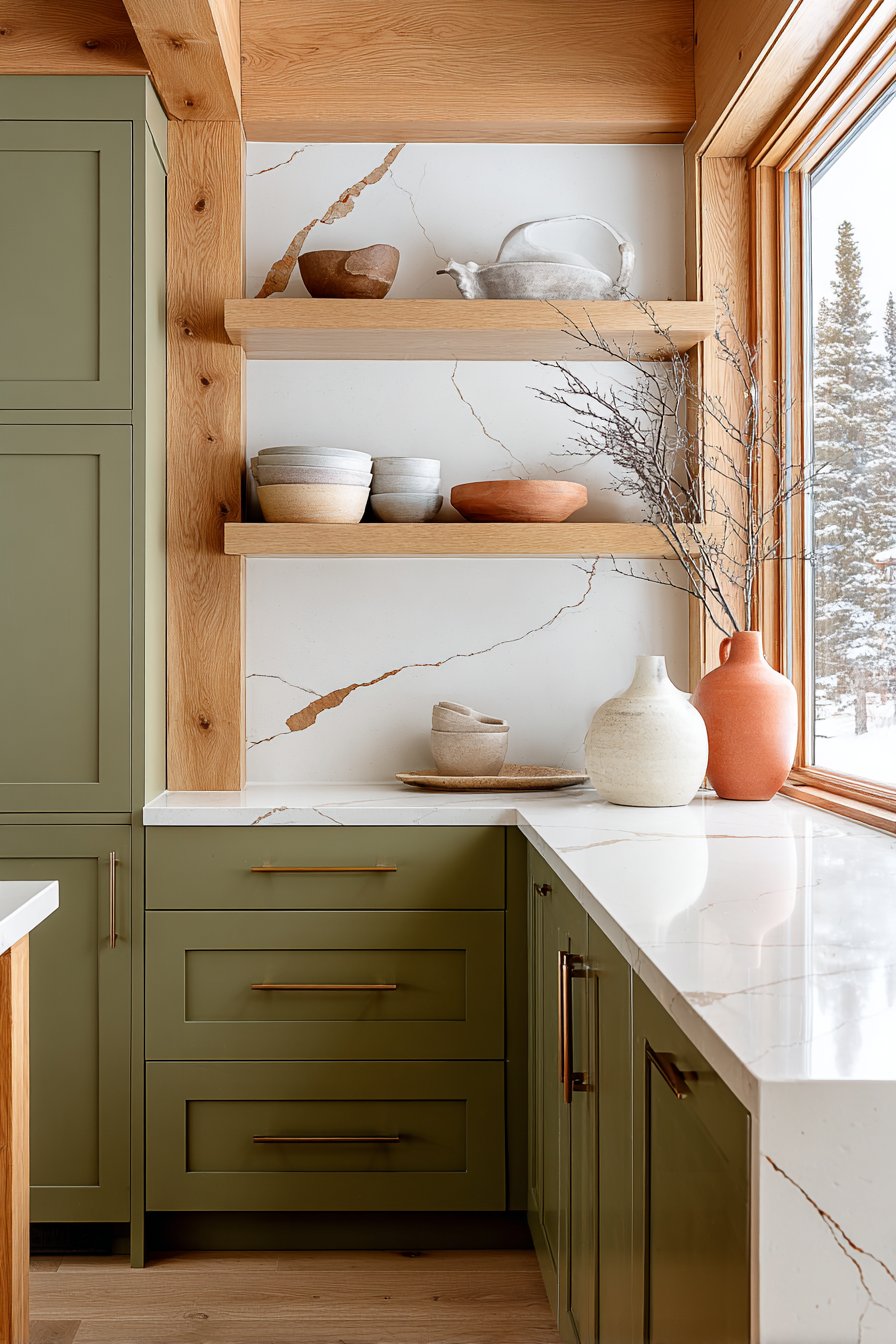
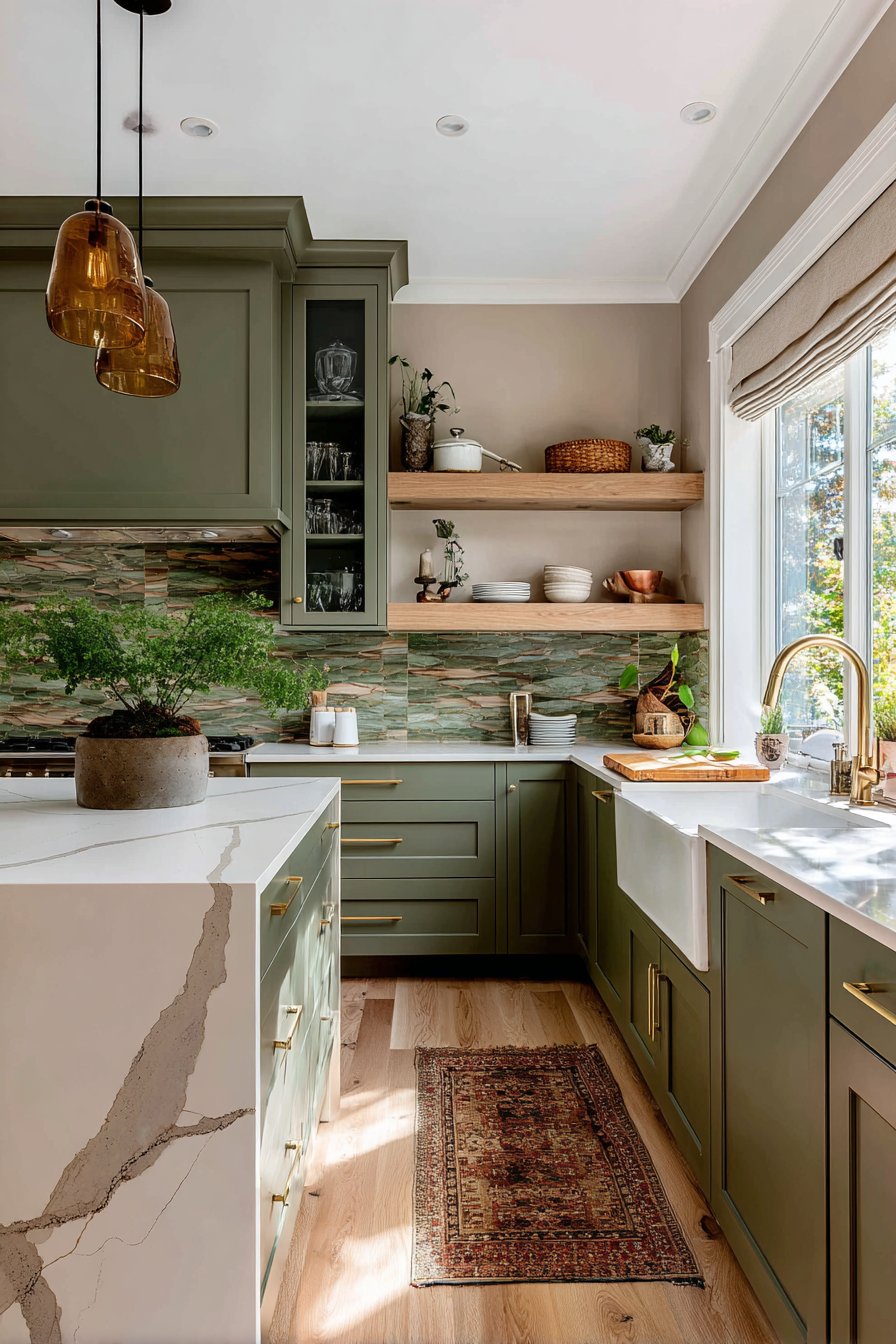
Custom shaker-style cabinets in rich muted olive tones create an instantly sophisticated kitchen foundation. The clean lines of shaker design allow the beautiful green color to shine without competing details. Brushed brass hardware adds warmth and elegance against the earthy cabinet finish. This combination feels both traditional and refreshingly modern.
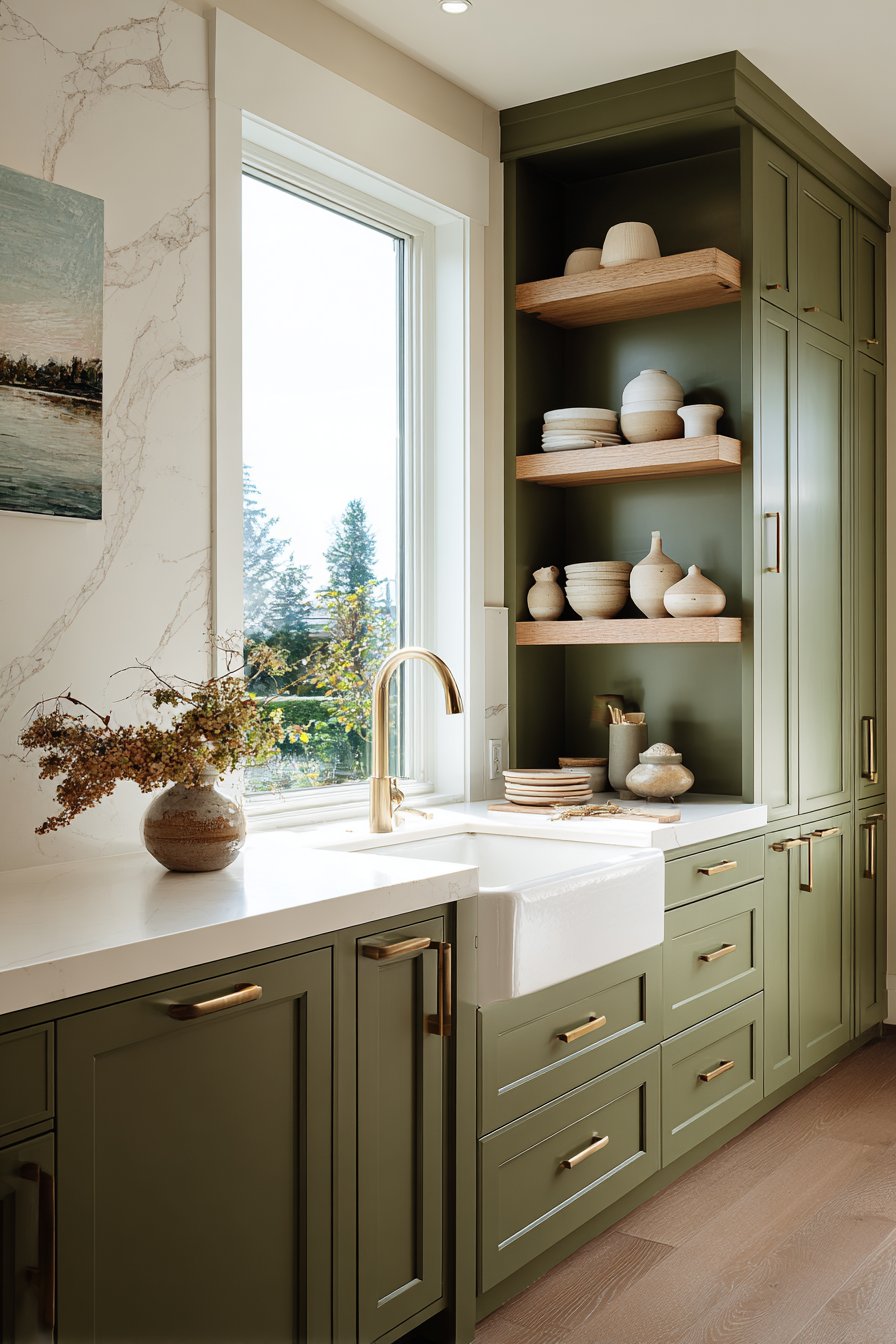
White quartz countertops with subtle grey veining provide visual contrast that prevents the space from feeling heavy. The light surface reflects natural daylight beautifully throughout the room. Natural oak open shelving breaks up the cabinetry while introducing additional wood tones. Ceramic dinnerware in cream and terracotta creates a curated display that complements the olive palette.
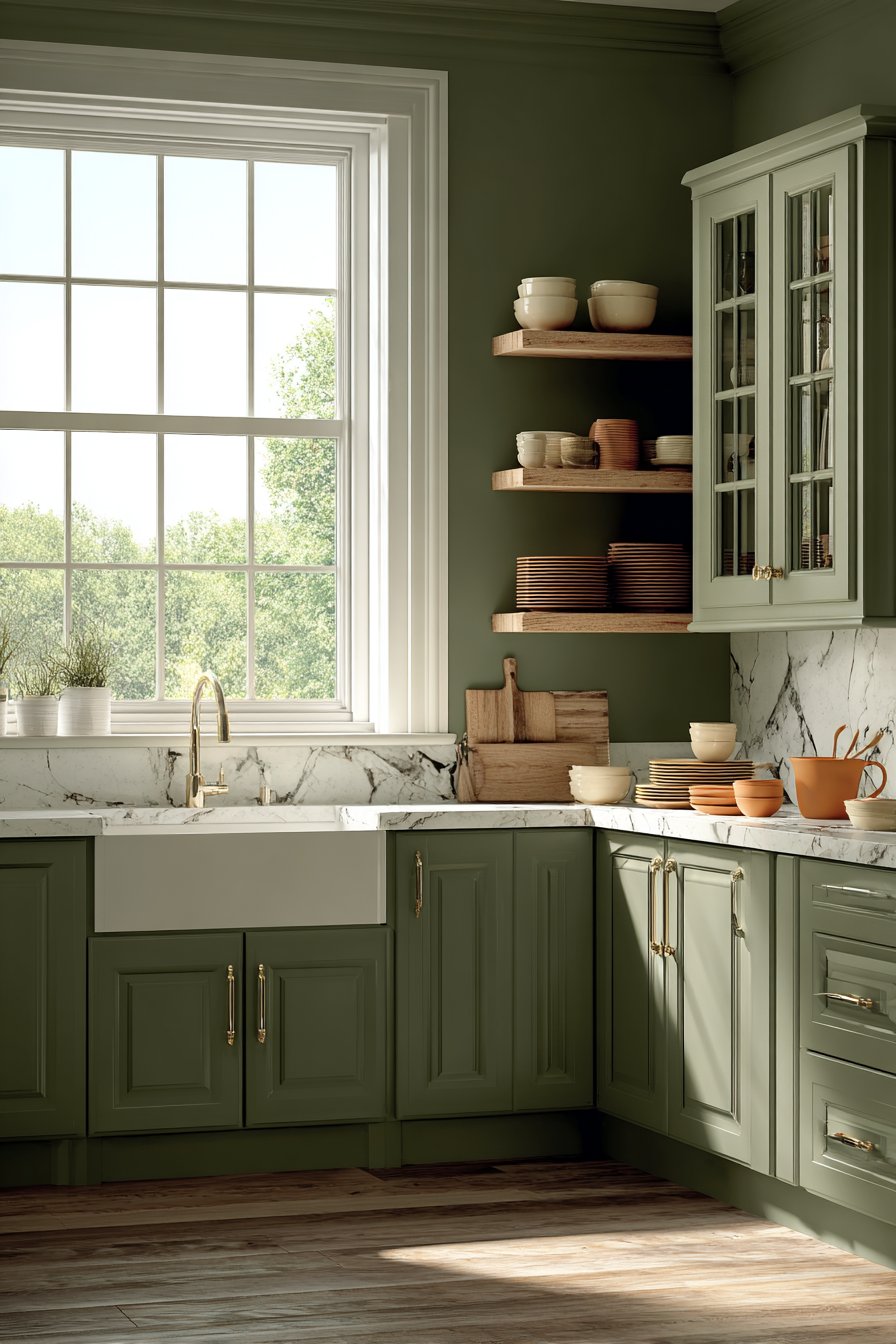
The farmhouse sink positioned beneath a large window becomes a focal point in this design. Natural daylight floods the workspace, highlighting the depth and complexity of the olive green finish. The interplay between natural light and the muted green surfaces creates dimension throughout the day. Morning light reveals cooler undertones while afternoon sun brings out warmer notes.
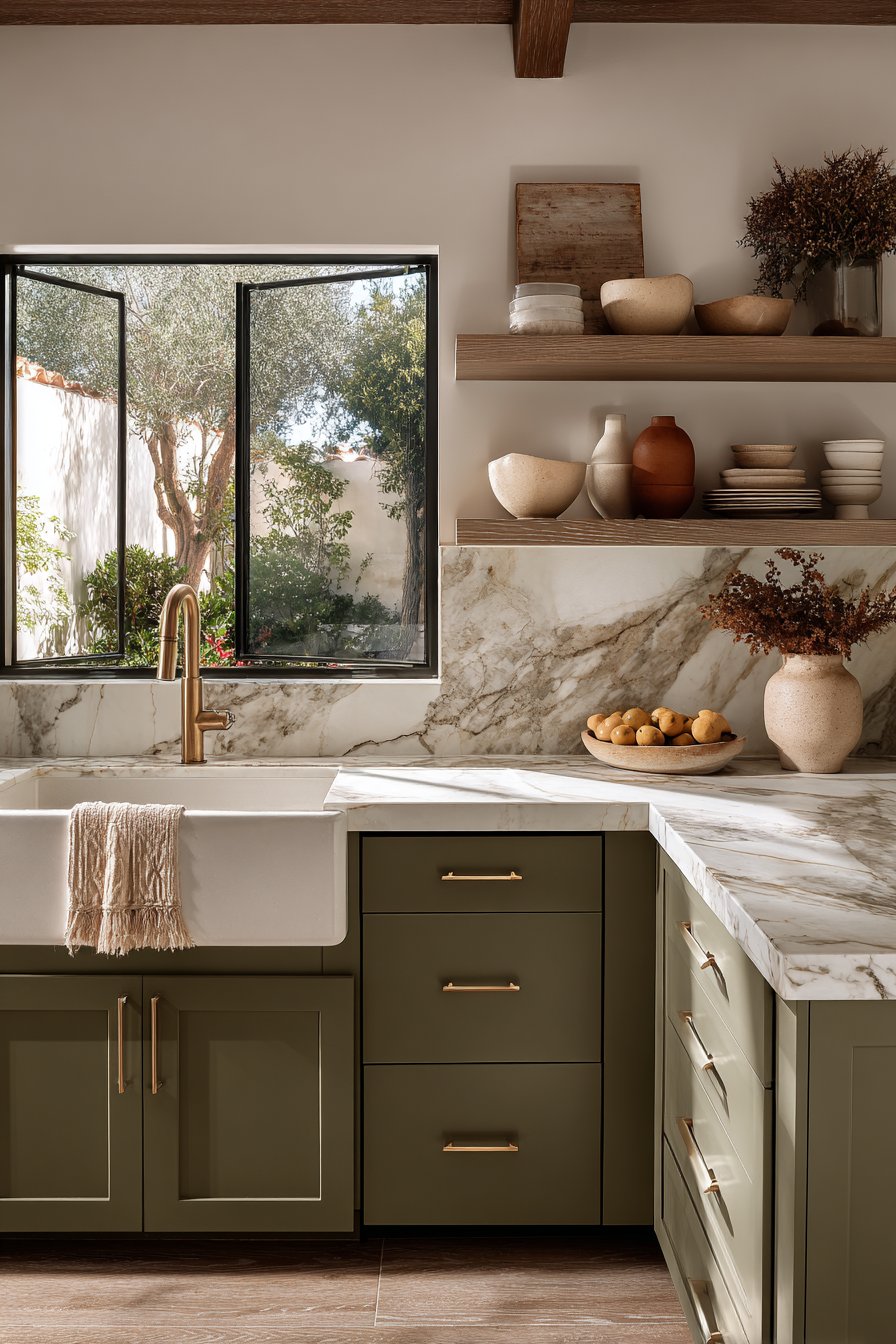
This kitchen demonstrates how olive green cabinets can anchor an entire design scheme. The color provides enough visual interest to eliminate the need for bold patterns or busy details. Instead, the focus remains on quality materials and thoughtful proportions. The result feels collected over time rather than designed all at once.
Key Design Tips:
- Select shaker-style cabinets for timeless appeal that works with various design styles
- Choose brushed brass hardware to add warmth without overwhelming the green tones
- Incorporate white or light countertops to balance the richness of olive cabinetry
- Position your sink near a window to maximize natural light in the workspace
- Display complementary colored dishware on open shelves to create visual continuity
2. Modern Flat-Panel Olive Green Kitchen
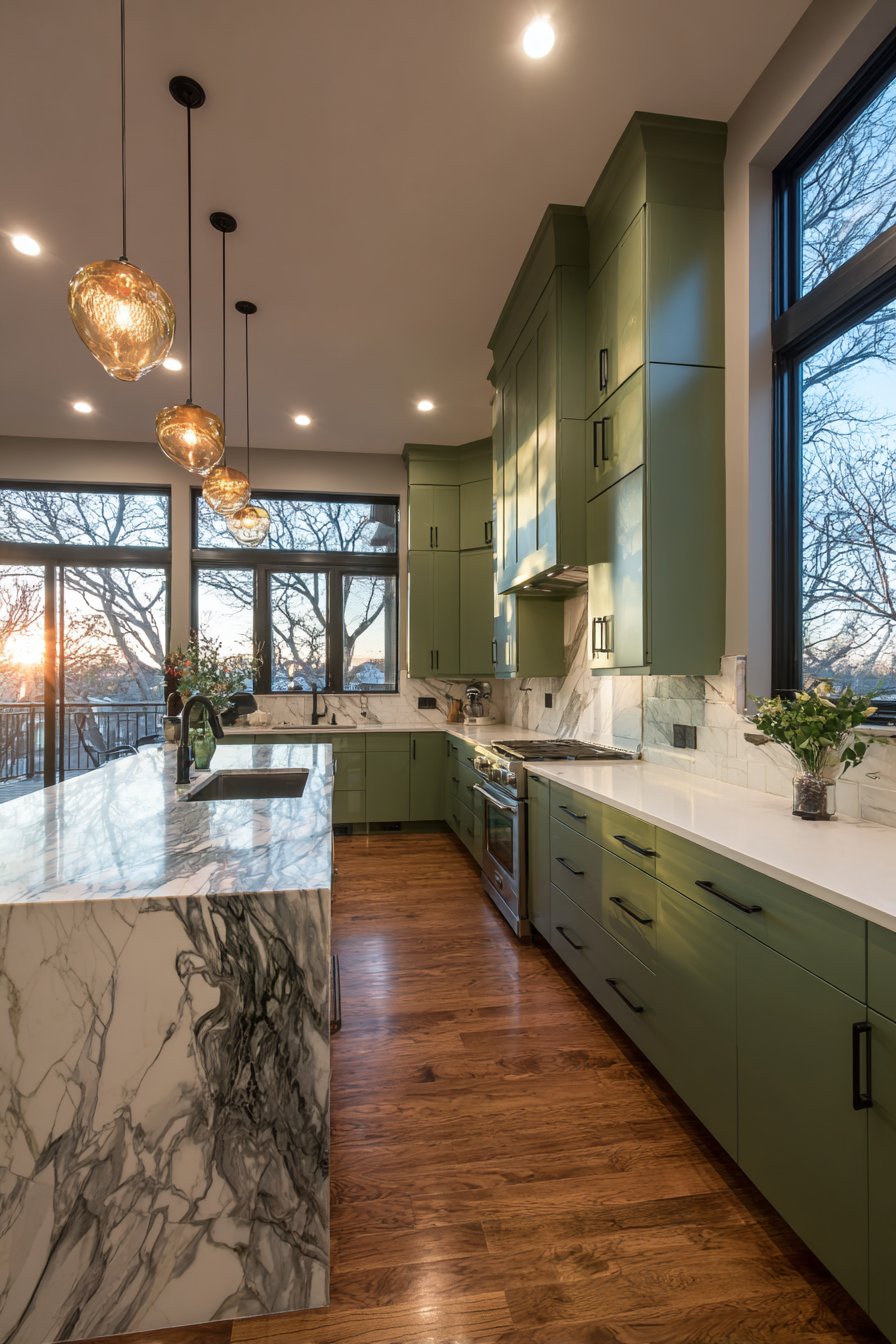
Sleek flat-panel cabinets in sage-influenced olive create a contemporary kitchen with clean architectural lines. The smooth cabinet faces eliminate visual clutter and emphasize the beautiful color itself. Matte black fixtures and hardware provide striking contrast that feels decidedly modern. This pairing creates drama without sacrificing sophistication.
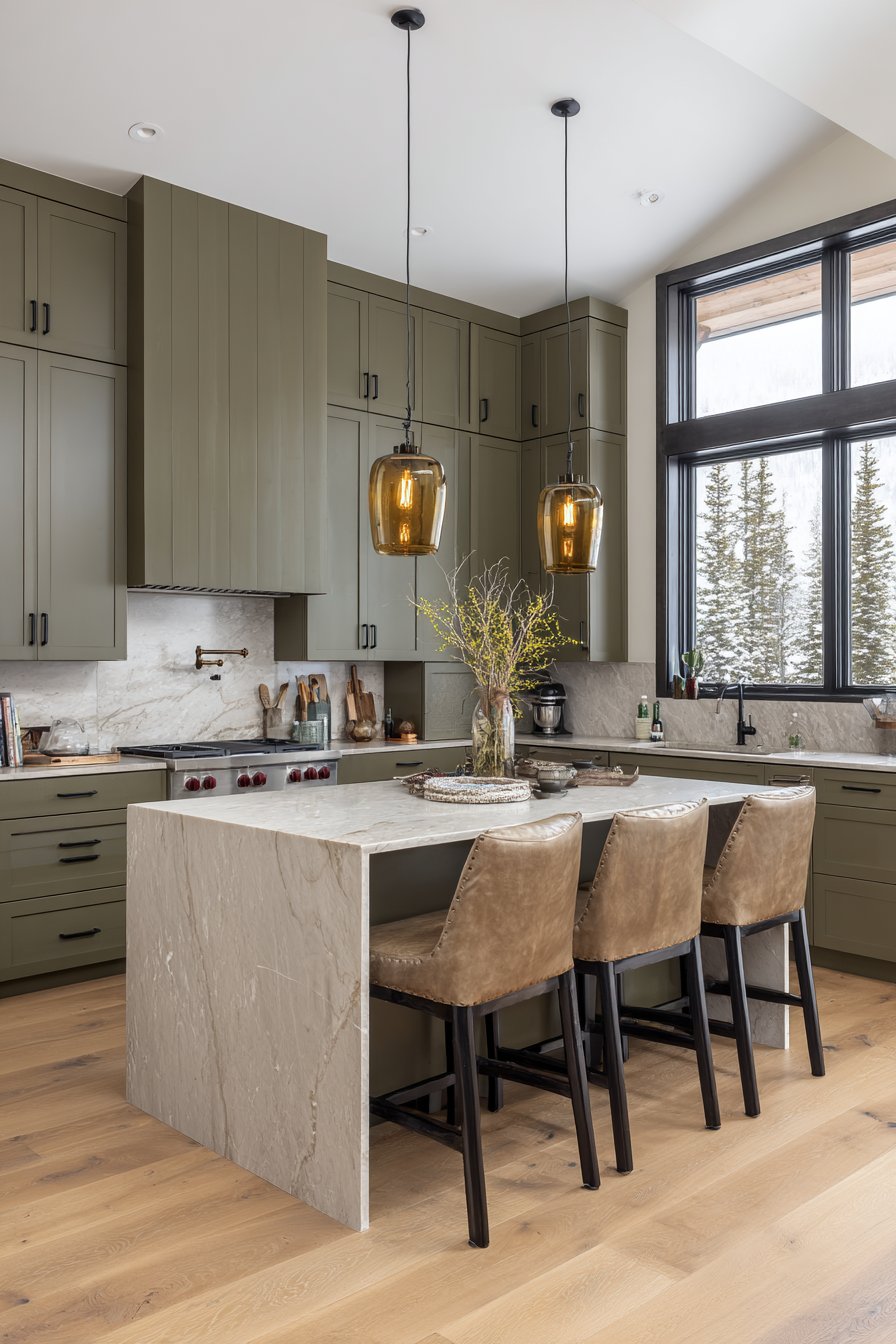
Carrara marble backsplash extends from counter to ceiling, creating impressive vertical visual interest. The natural stone veining introduces organic patterns that soften the geometric cabinet design. White and grey marble tones complement the olive green perfectly. The floor-to-ceiling application makes the space feel more expansive and luxurious.
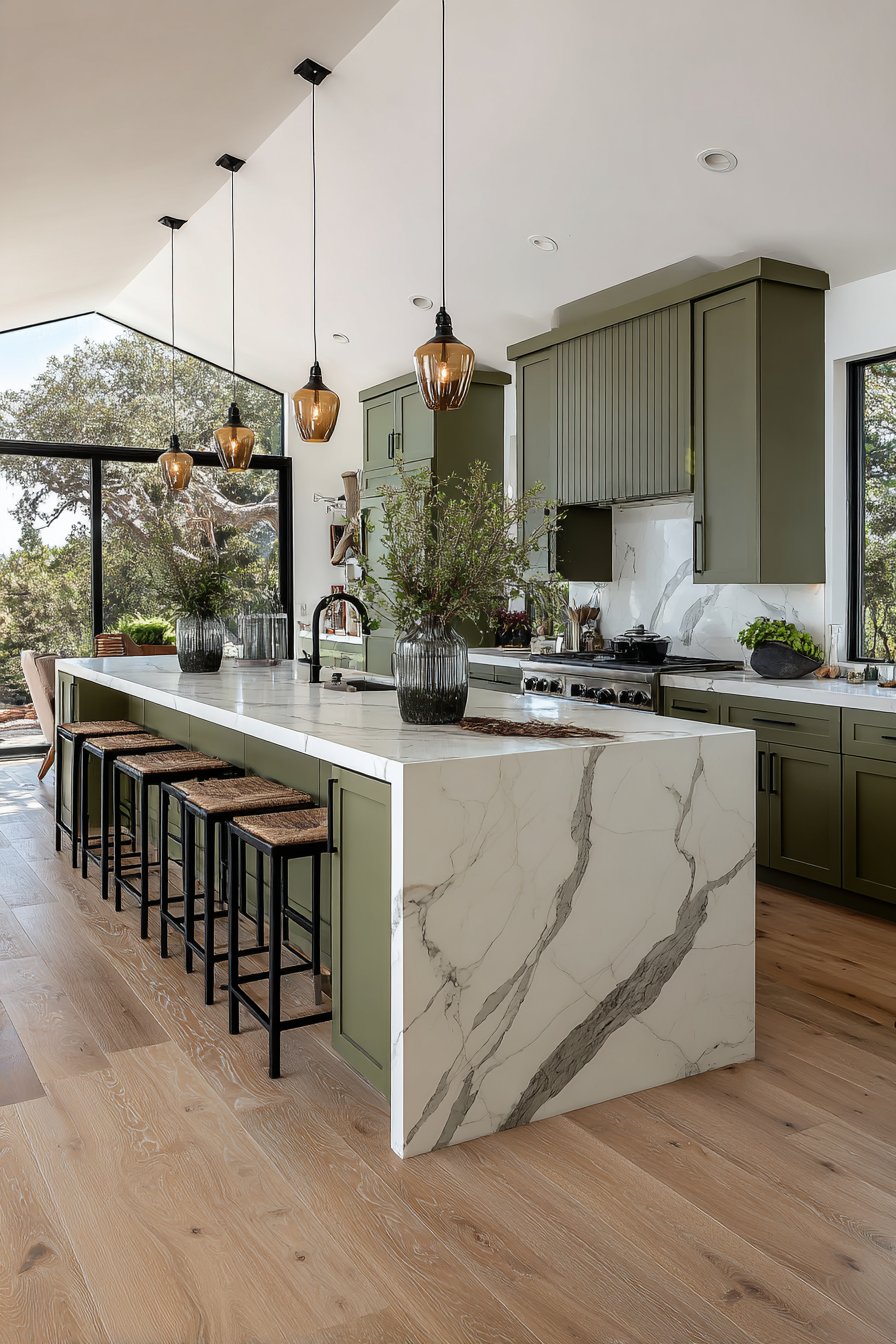
A waterfall-edge island serves as the kitchen’s centerpiece with integrated seating for casual dining. The continuous surface flowing down the sides creates sculptural appeal. Pendant lights with amber glass shades hang above, introducing warmth through both color and light quality. The amber glow enhances the olive tones during evening hours.
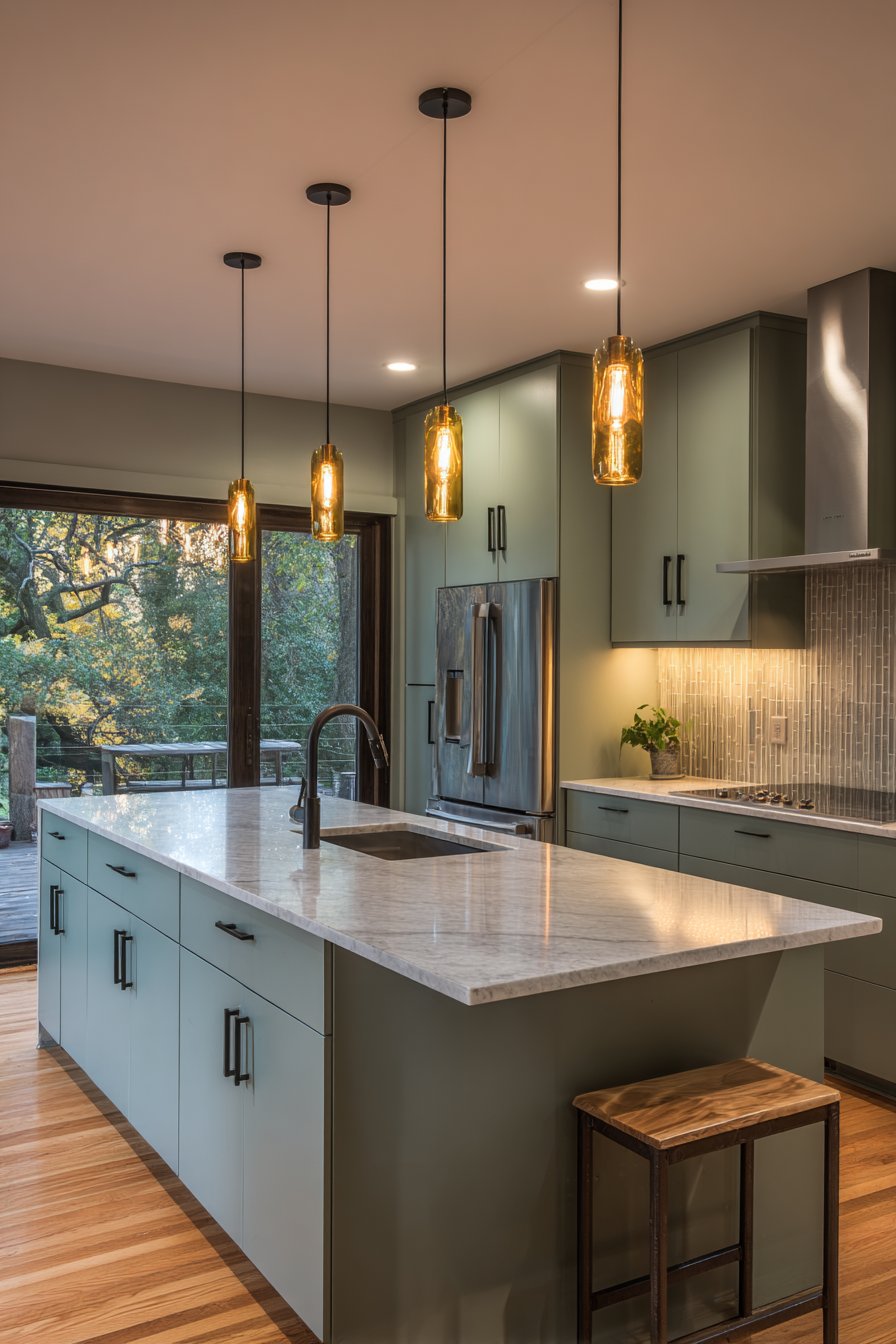
Golden hour lighting transforms this kitchen into something truly special. Large windows allow late afternoon sun to stream across surfaces. The light emphasizes subtle color variations in the cabinet finish. This natural illumination creates the perfect balance between the cool marble and warm olive tones.
Key Design Tips:
- Choose flat-panel cabinets for a streamlined contemporary aesthetic
- Use matte black hardware to create sophisticated contrast against olive green
- Extend marble backsplash to ceiling height for dramatic architectural impact
- Install amber-toned lighting fixtures to warm the space during evening hours
- Position windows to capture golden hour light that enhances olive green tones
3. Statement Olive Green Kitchen Island
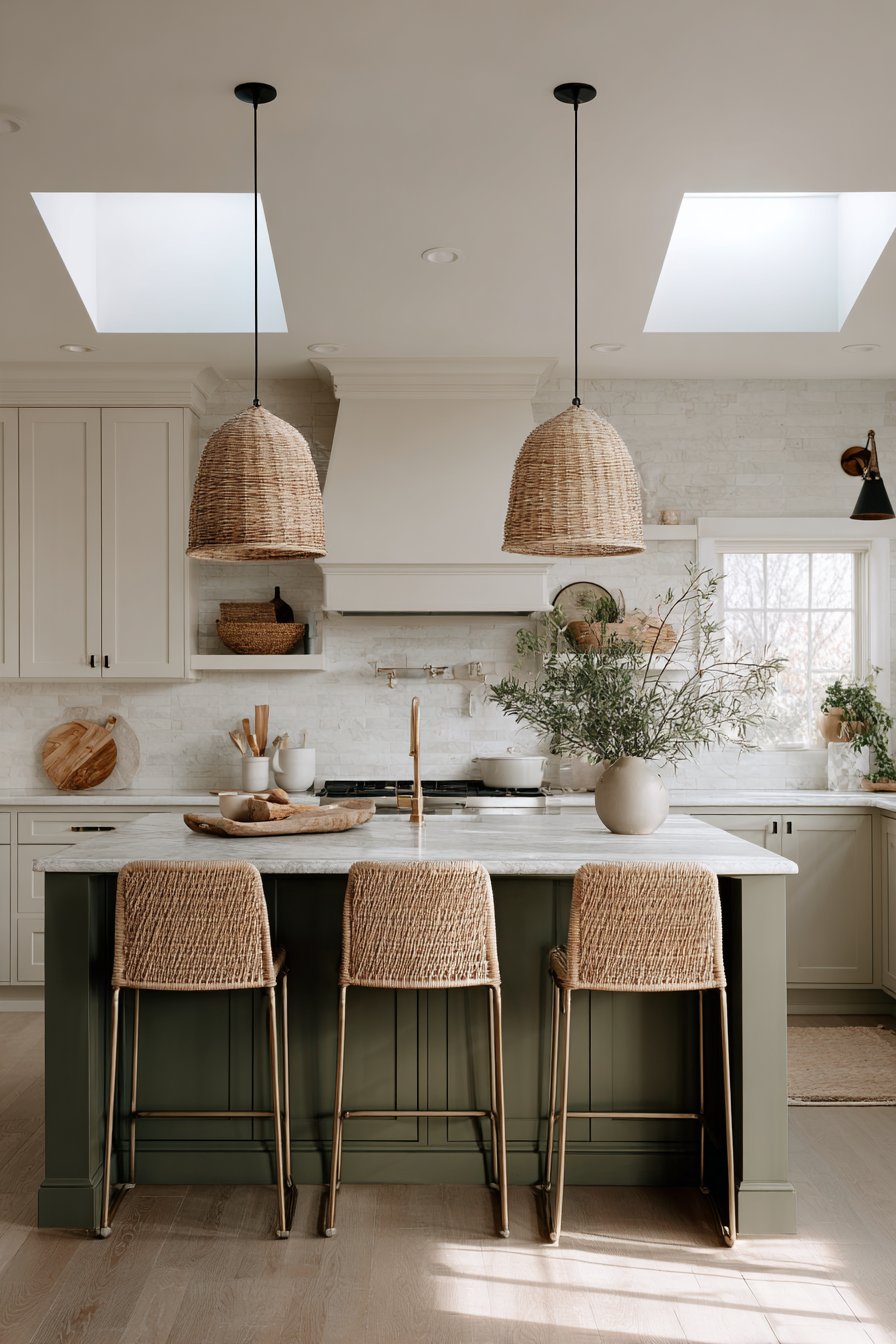
An olive green island transforms a neutral kitchen into something remarkable without overwhelming the space. The deep hunter-olive base creates a strong focal point that grounds the entire room. Butcher block countertop displays natural wood grain and authentic wear marks that tell a story. This combination of painted base and wood top feels both practical and beautiful.
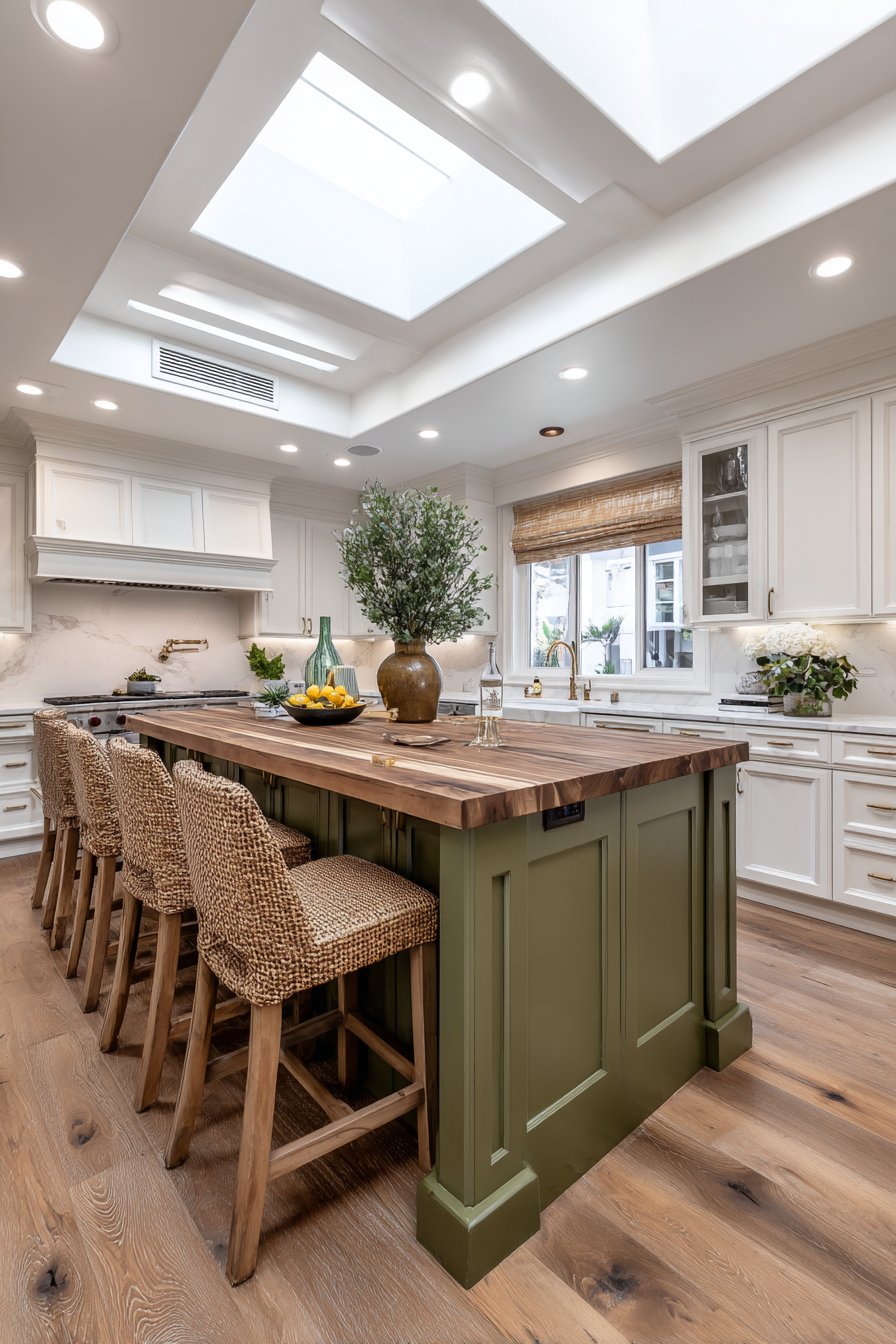
Warm white perimeter cabinets provide necessary contrast that allows the island to command attention. The lighter surrounding cabinetry prevents the space from feeling dark or closed in. Brass bar stools with woven rattan seats introduce texture and metallic warmth. The seating creates an inviting spot for casual meals and conversation.
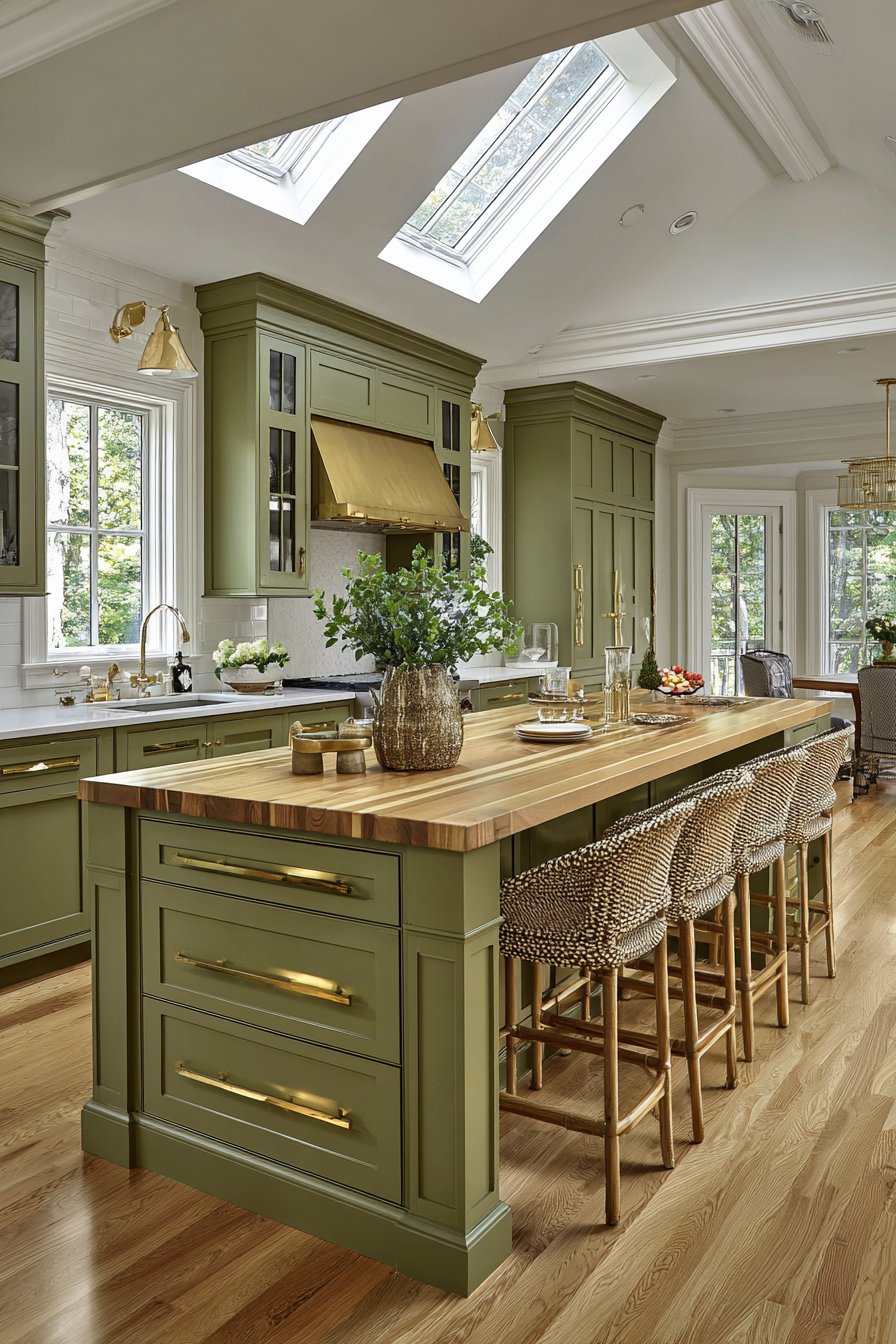
Skylights positioned above the island create soft natural shadows that enhance dimensional quality. The overhead lighting reveals the richness of the olive paint throughout the day. Morning light creates crisp shadows while afternoon sun produces softer effects. This changing natural illumination keeps the space feeling dynamic and alive.
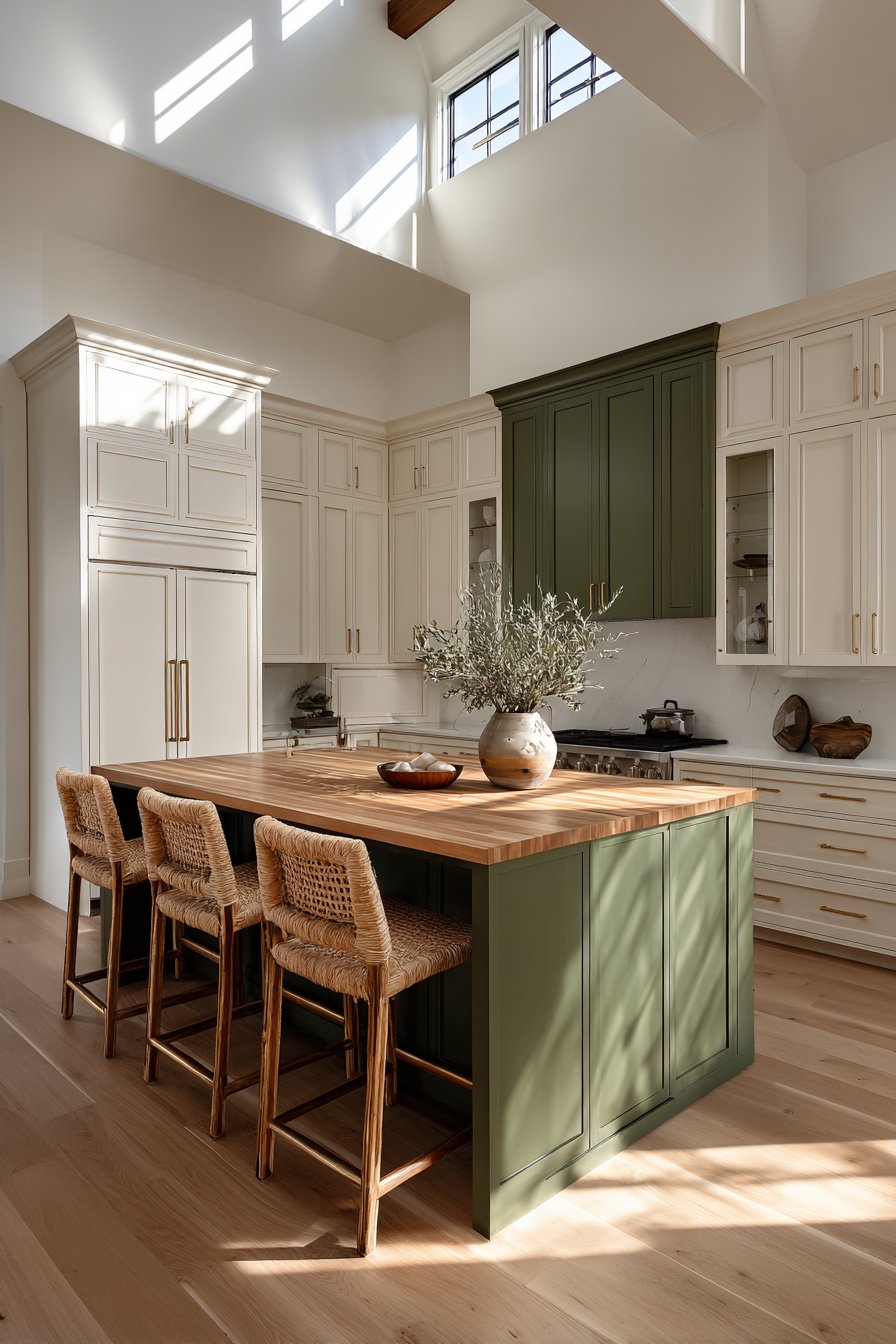
The island serves as both functional workspace and visual anchor in this design approach. Its size and color make it impossible to overlook yet comfortable to live with. The butcher block surface develops more character with use over time. This kitchen demonstrates how one bold element can define an entire space.
Key Design Tips:
- Paint only the island in olive green to create a focal point without commitment
- Choose butcher block countertop for warmth and practical food preparation surface
- Install skylights above the island to create beautiful natural lighting effects
- Select brass and rattan bar stools to introduce warmth and natural texture
- Keep perimeter cabinets light to prevent the space from feeling dark
4. Compact Olive Green Kitchen with Vertical Storage
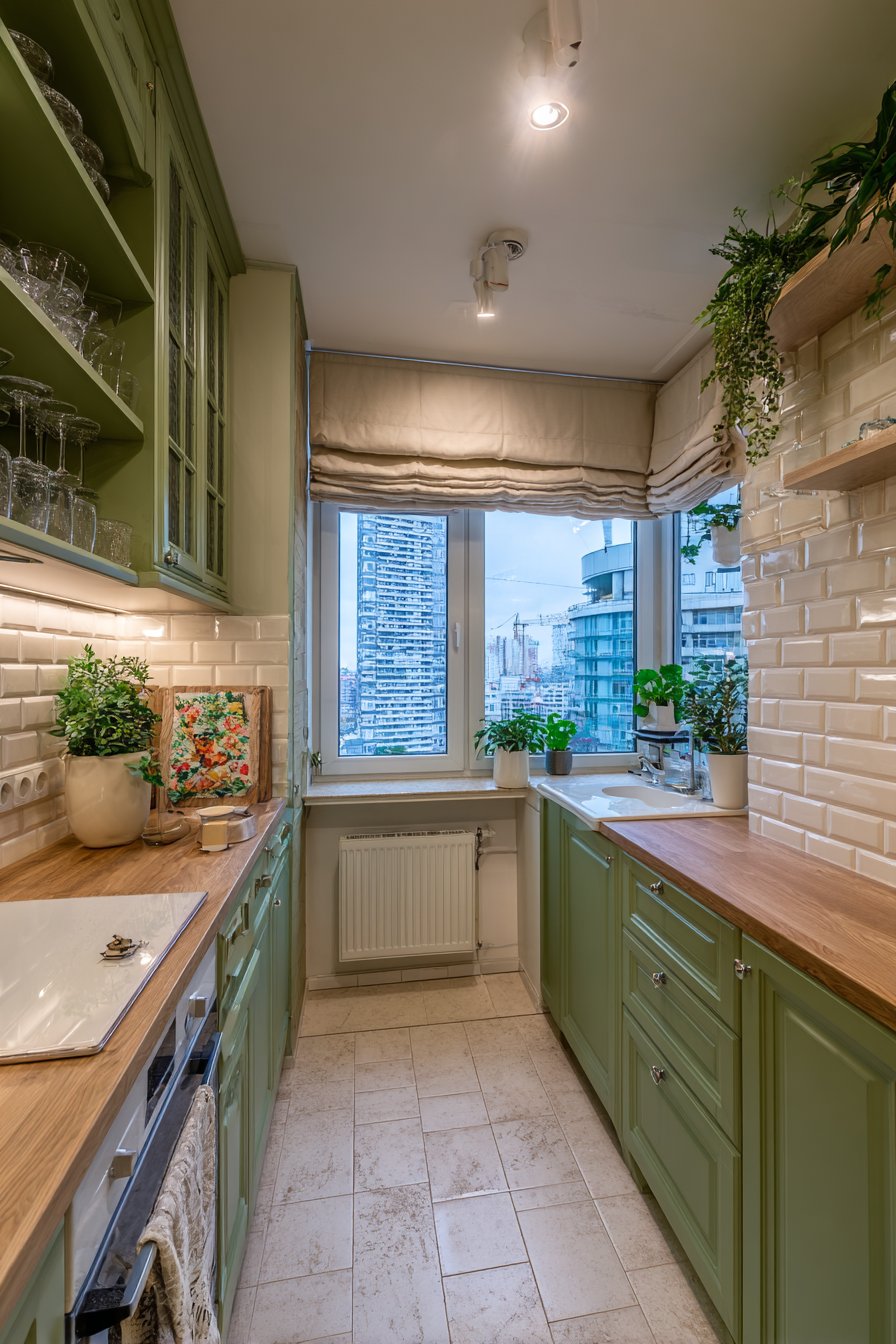
Floor-to-ceiling cabinets in muted olive maximize storage in a small kitchen without sacrificing style. The vertical emphasis draws the eye upward, making the compact space feel more expansive. Subtle grey undertones in the olive paint prevent the color from overwhelming the limited square footage. This thoughtful color selection creates depth rather than closing in the space.
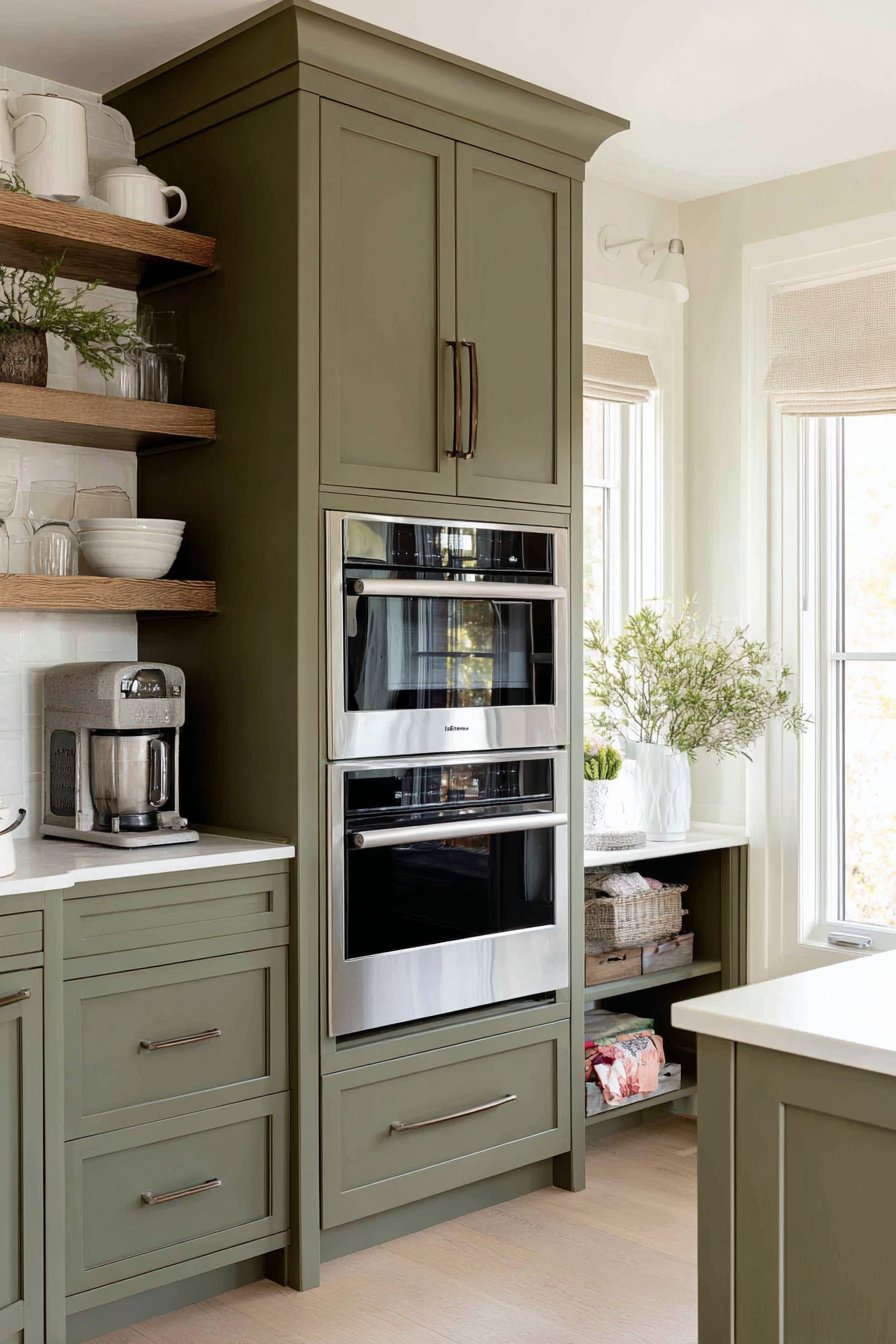
Open shelving sections strategically break up the solid cabinetry while providing display opportunities. Glass and ceramic pieces create visual lightness among the storage. Potted herbs add living greenery that complements the olive tones naturally. These open sections prevent the wall of cabinets from feeling too heavy or imposing.
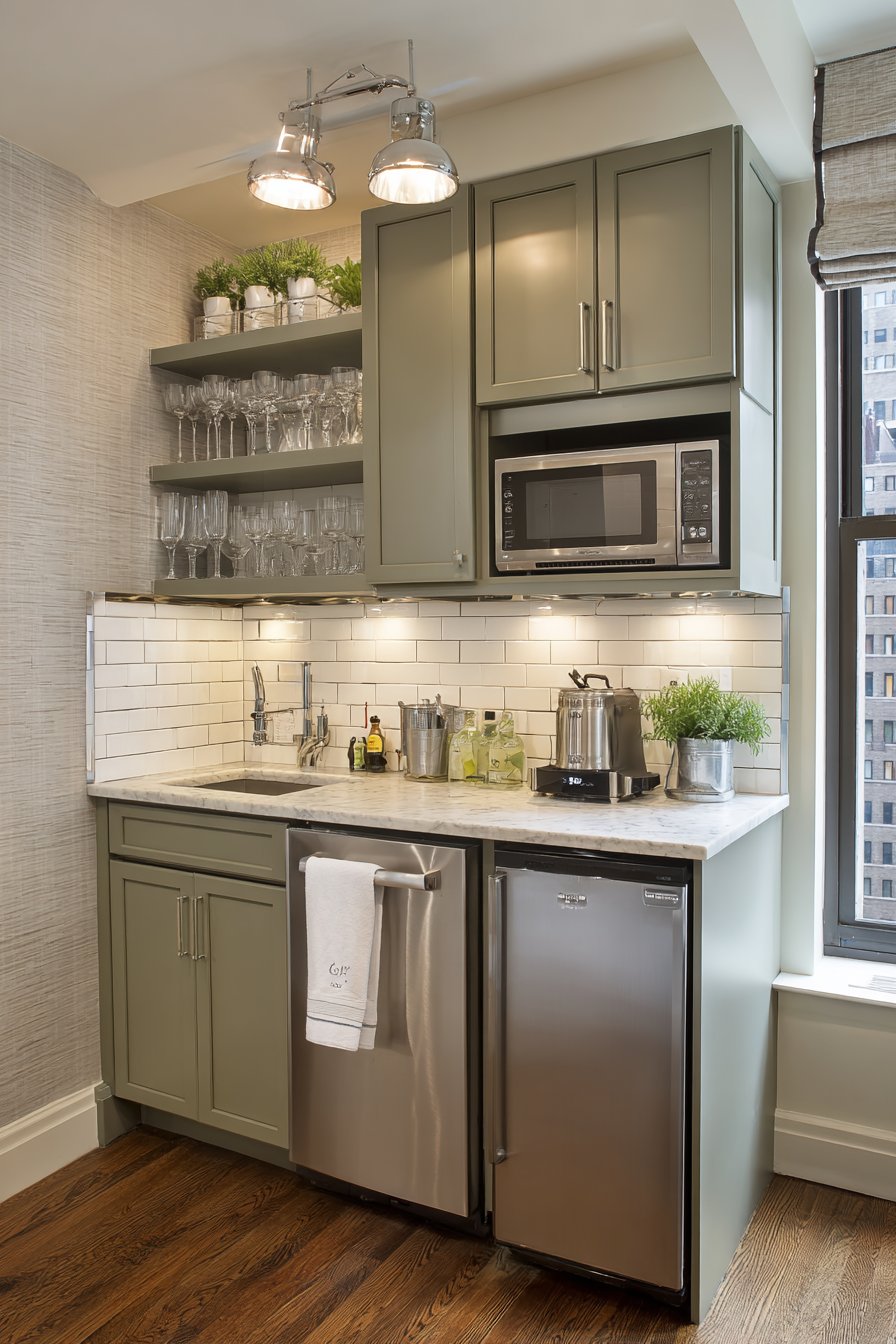
Under-cabinet lighting illuminates white subway tile backsplash and creates functional task lighting. The bright white tiles reflect light throughout the small space effectively. Compact stainless steel appliances integrate seamlessly into the efficient layout. Everything has its place in this thoughtfully planned compact kitchen.
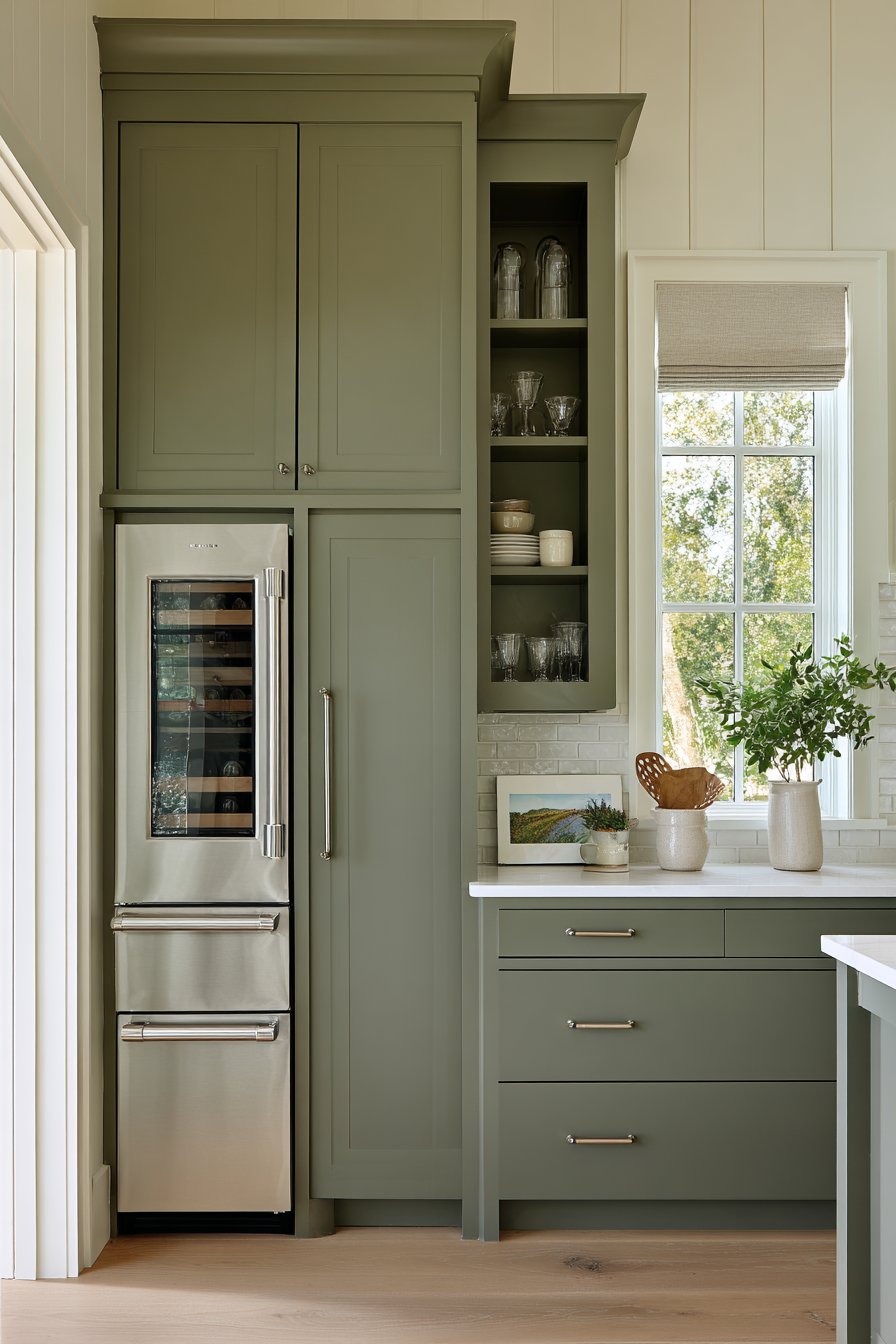
A narrow window with simple linen shade provides natural light without sacrificing precious wall space. The natural illumination highlights how olive green can work beautifully in smaller kitchens. The color creates coziness rather than claustrophobia when applied thoughtfully. This design proves that limited square footage doesn’t mean limited style.
Key Design Tips:
- Use floor-to-ceiling cabinets to maximize storage in compact kitchens
- Choose olive green with grey undertones to add depth without overwhelming small spaces
- Incorporate open shelving to break up solid cabinetry and add visual lightness
- Install under-cabinet lighting to brighten work surfaces and enhance the backsplash
- Select compact appliances that integrate seamlessly into the efficient layout
5. Dramatic Olive Green Shiplap Accent Wall
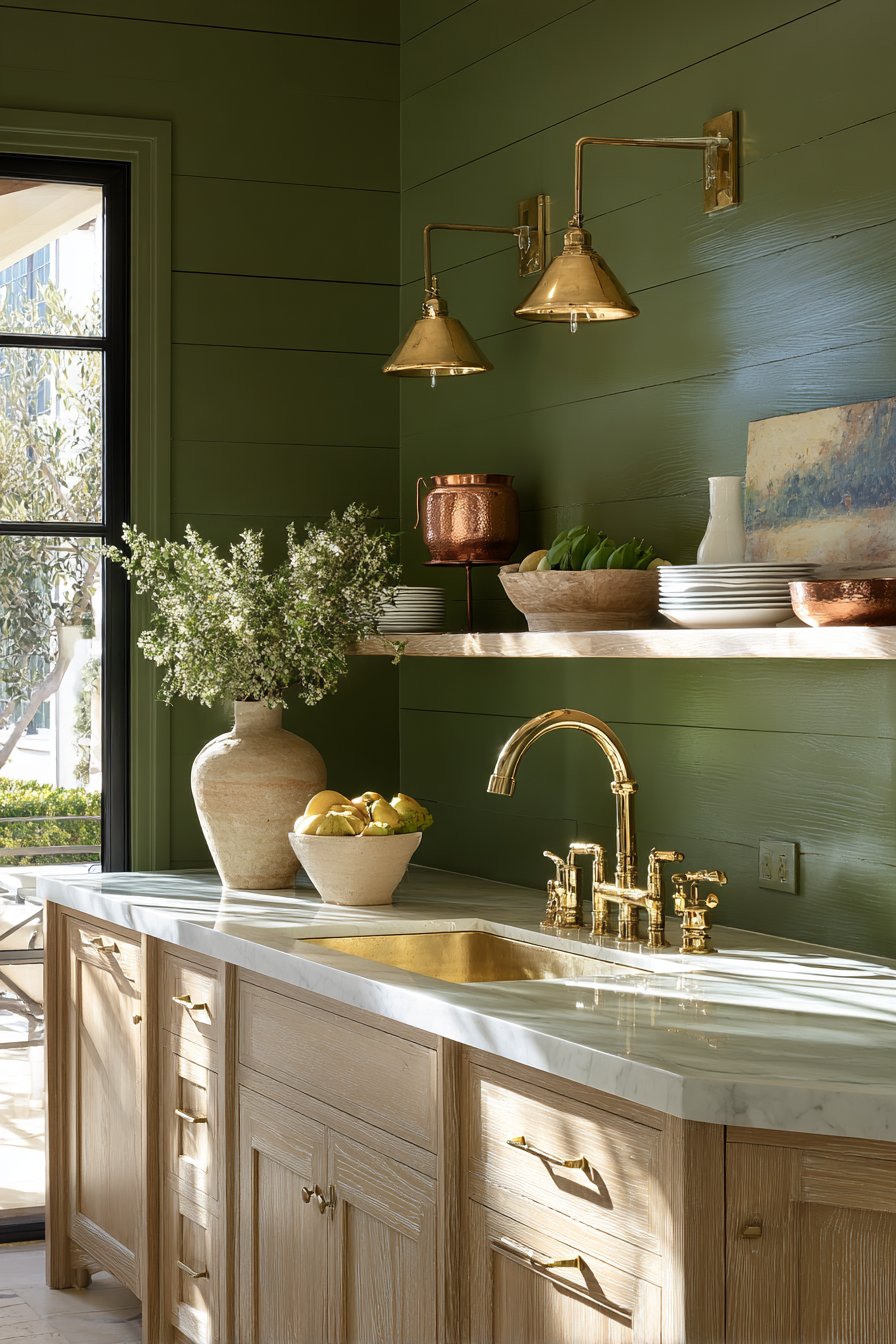
A deep olive green shiplap accent wall creates immediate drama while surrounding oak cabinets remain natural. This bold statement wall approach concentrates color in one area for maximum impact. The horizontal shiplap lines add texture and visual interest beyond paint alone. Natural wood grain showing through the oak cabinetry provides warm contrast.
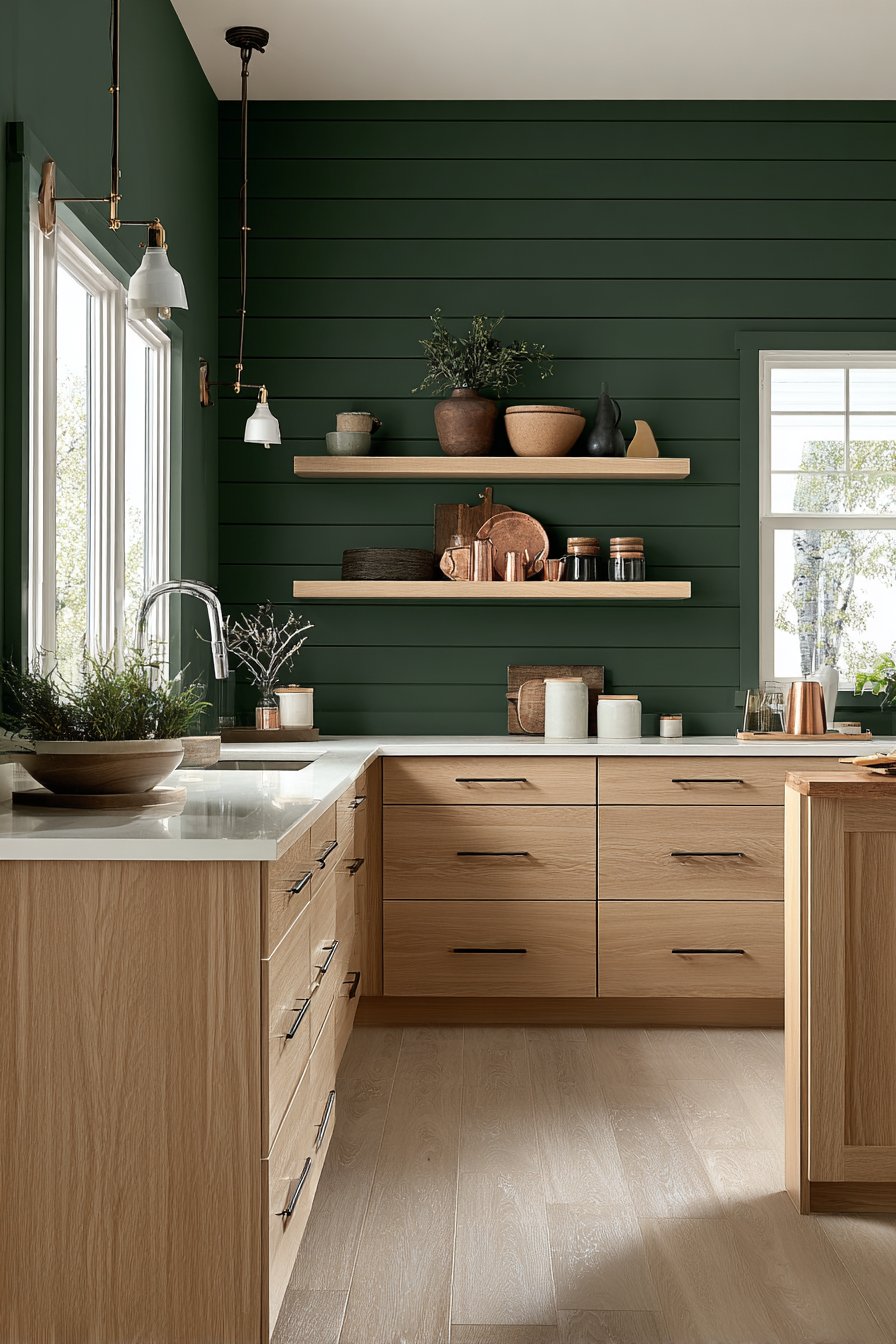
Brass and copper accents throughout the space create warm metallic notes against the rich green wall. The pot rack, light fixtures, and cabinet hardware all feature these warm metal tones. Open shelving displays vintage copper cookware that becomes part of the decorative scheme. Earthenware pottery adds additional texture and natural color variation.
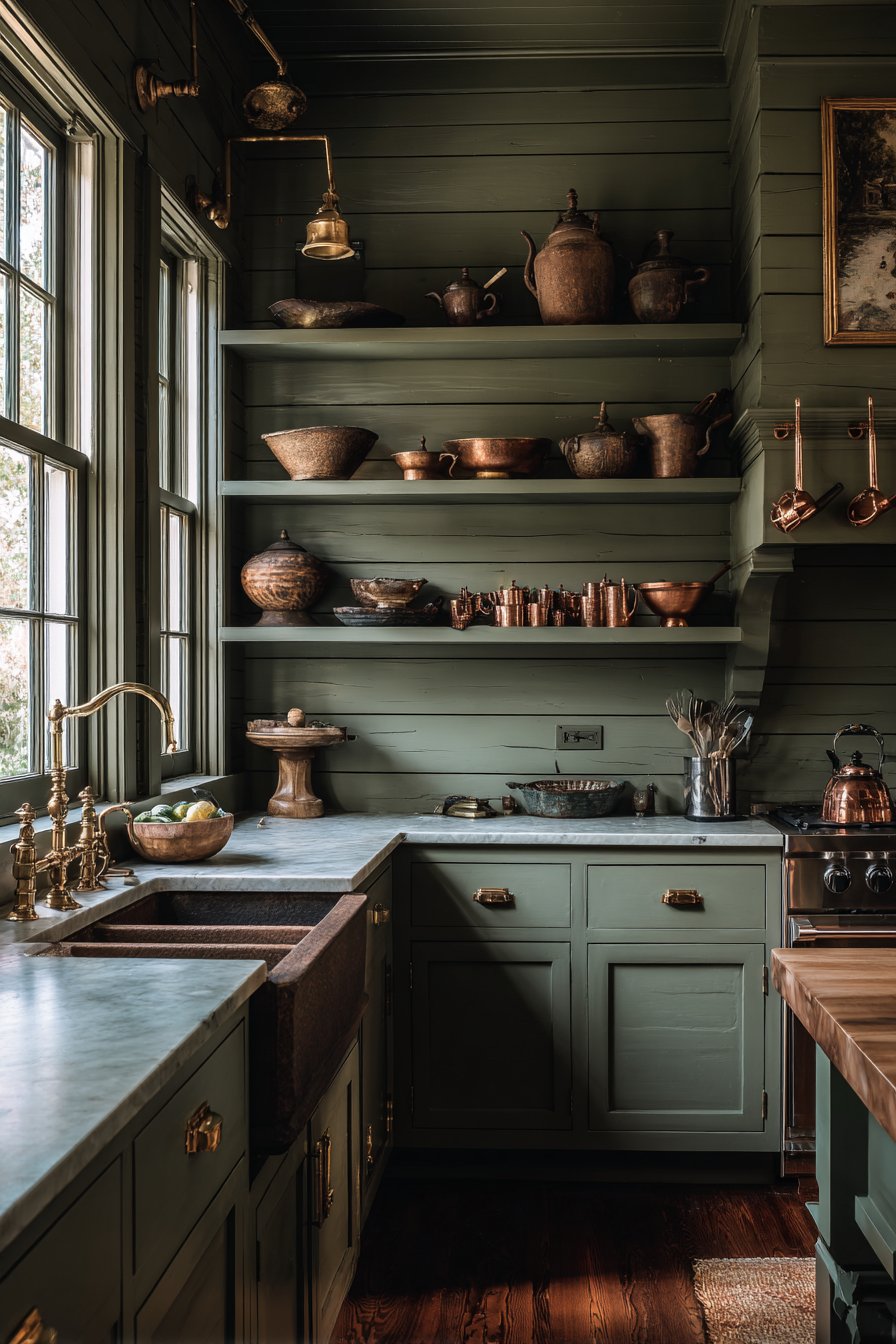
Morning light entering through east-facing windows casts gentle shadows across the textured shiplap surface. The horizontal lines create interesting shadow patterns that change throughout the day. This natural illumination reveals the depth and richness of the deep olive color. The texture becomes most dramatic during the golden hours of morning and evening.
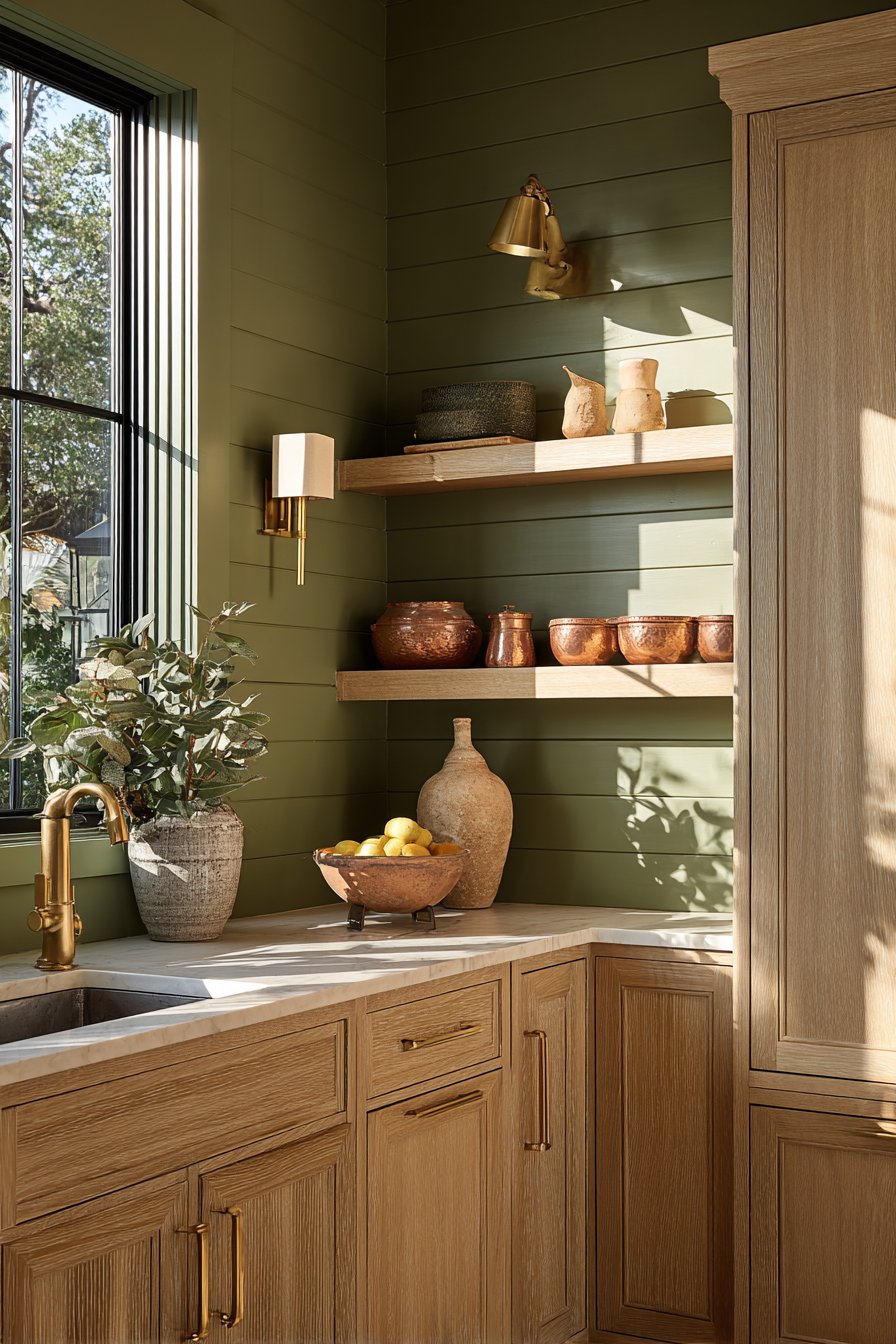
This design demonstrates how olive green can function as a powerful accent rather than a dominant element. The statement wall provides personality without requiring green cabinetry throughout the entire kitchen. The natural oak cabinets balance the bold wall color with organic warmth. The combination feels both daring and comfortable.
Key Design Tips:
- Create a shiplap accent wall in deep olive green for dramatic impact
- Balance bold green walls with natural wood cabinetry in oak or similar warm woods
- Incorporate brass and copper accents to add warmth and metallic shine
- Display copper cookware and earthenware pottery as functional decor
- Position the accent wall to receive morning or evening light for maximum shadow play
6. Two-Toned Olive and Cream Kitchen
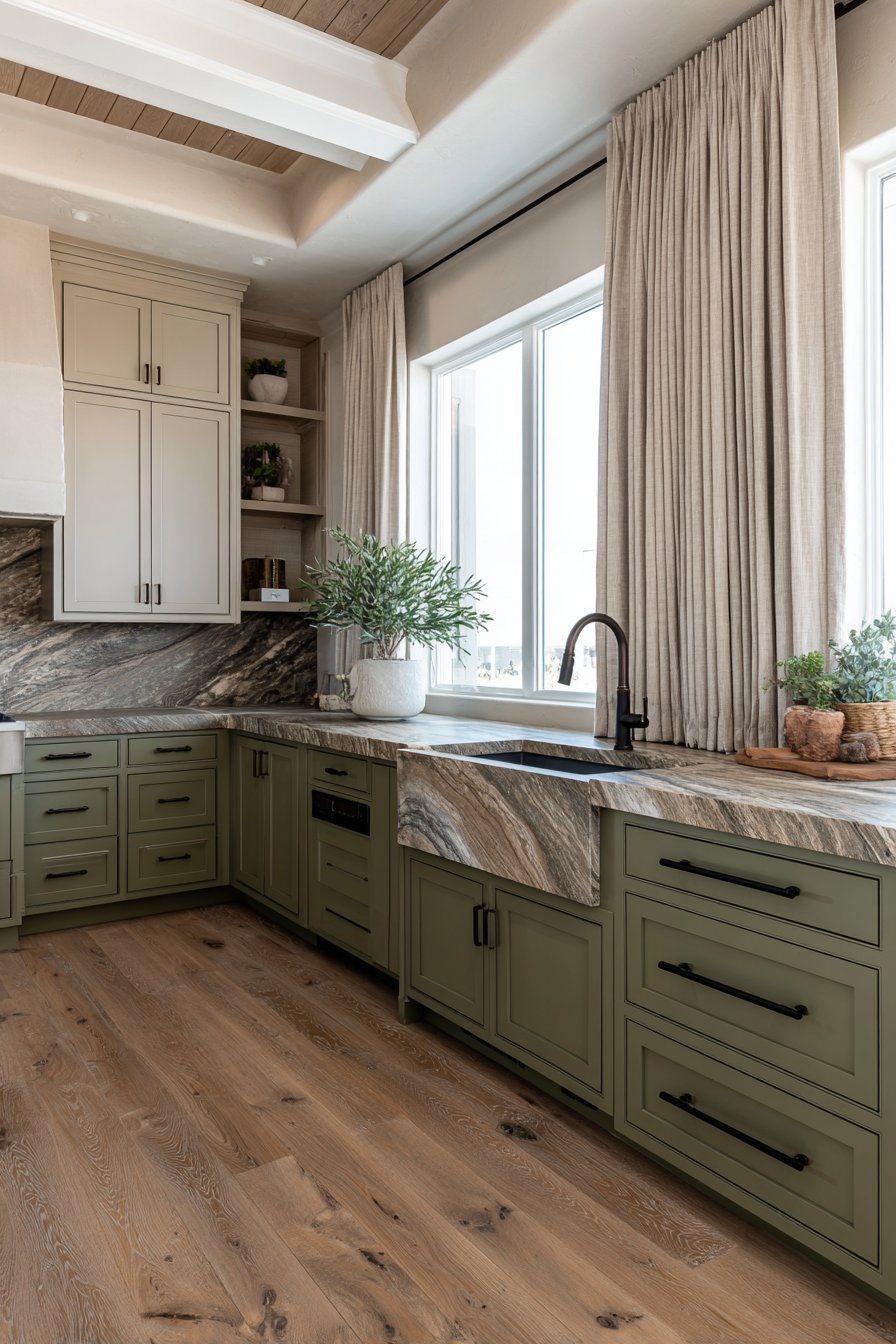
Lower cabinets in olive green paired with cream upper cabinets create perfect visual balance. This two-toned approach grounds the space with darker lowers while keeping upper sections light. The color blocking prevents the kitchen from feeling top-heavy or cave-like. Natural sight lines remain open and airy despite the rich lower cabinet color.
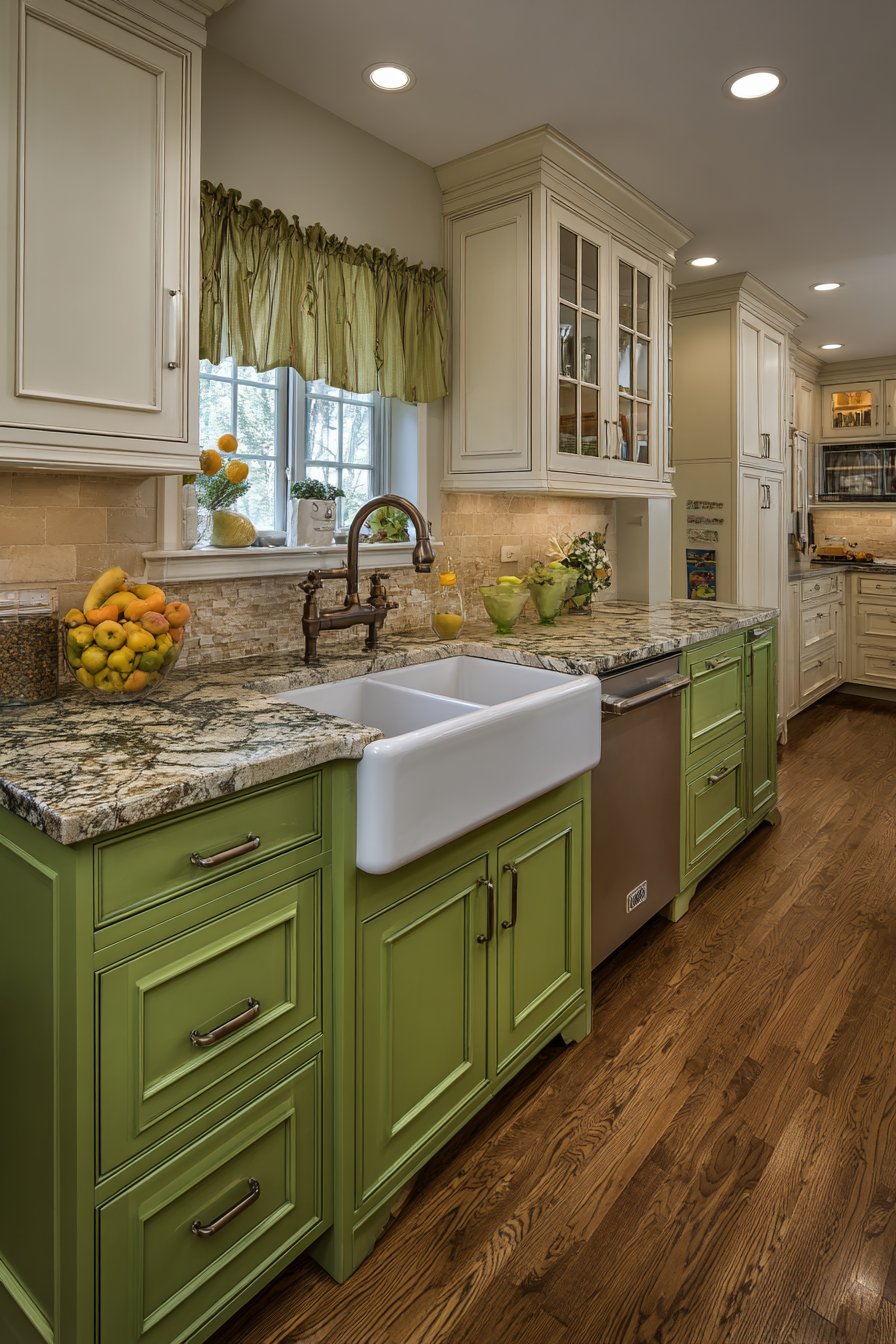
Soapstone countertops with natural veining complement the earthy green tones beautifully. The dark grey stone creates sophisticated contrast against both olive and cream cabinetry. A farmhouse sink with bridge faucet in oil-rubbed bronze adds vintage character. The bronze finish introduces another layer of warmth to the material palette.
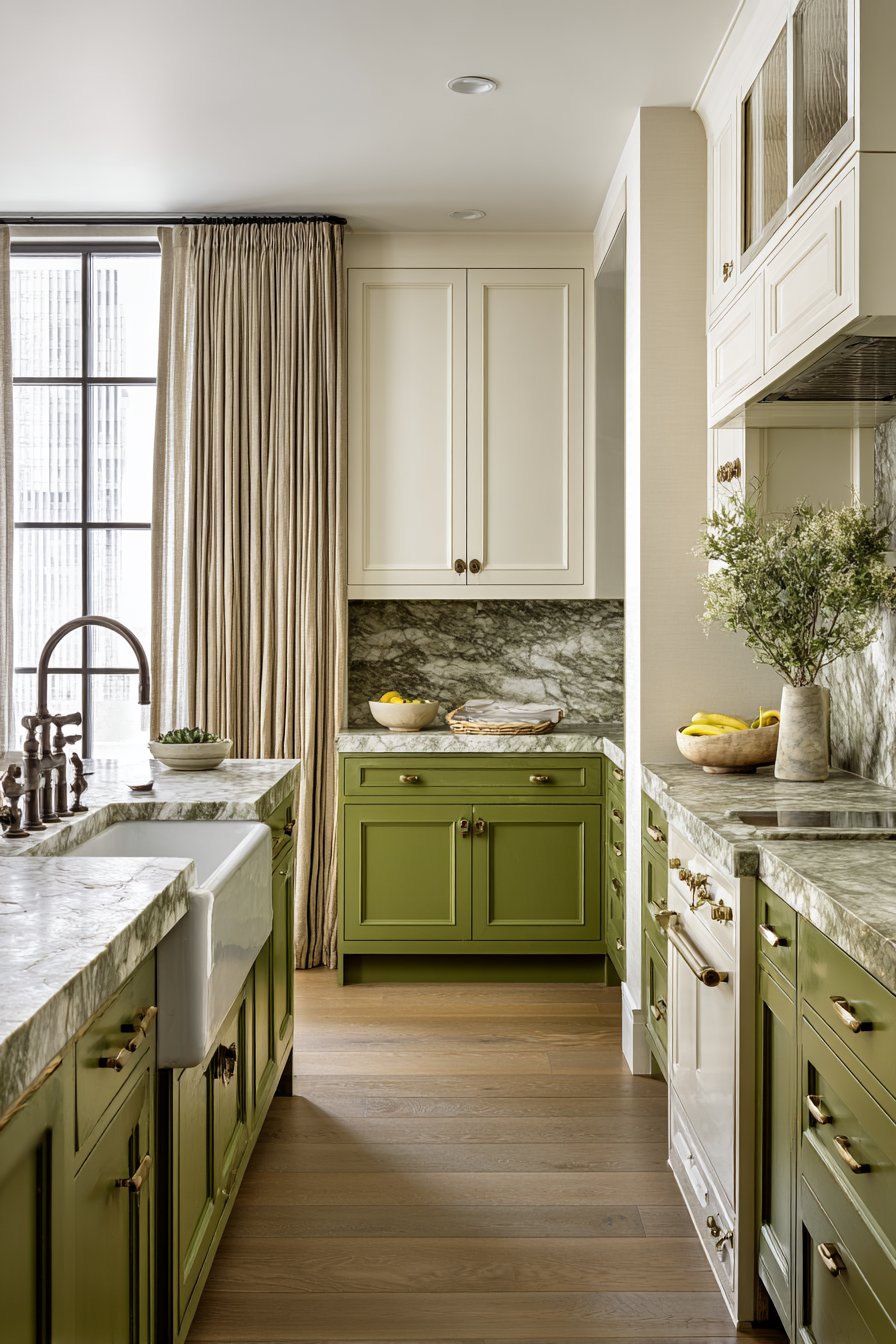
Wide plank hardwood flooring in honey oak adds warmth underfoot and throughout the space. The natural wood grain brings organic pattern without competing with the cabinetry. Natural light filtered through café curtains creates soft, diffused illumination throughout the day. The gentle window treatments maintain privacy while allowing ample natural light.
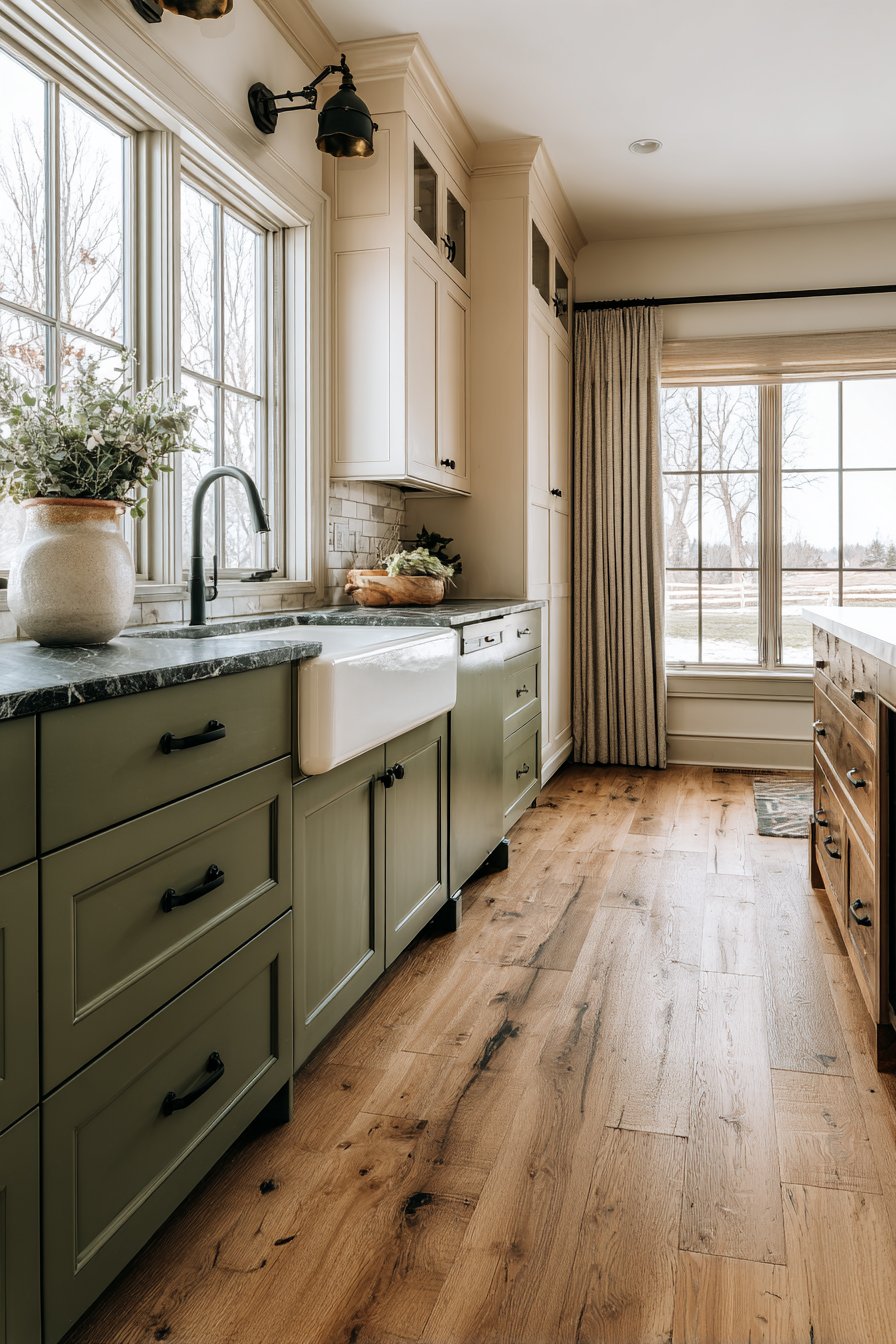
This harmonious color blocking demonstrates professional design sensibility. The darker olive grounds the lighter upper elements naturally. Each material contributes to the overall warmth and approachability of the space. The vintage-inspired elements feel authentic rather than contrived.
Key Design Tips:
- Use olive green on lower cabinets to ground the space and cream on uppers for lightness
- Select soapstone countertops to complement both olive and cream cabinet colors
- Install a farmhouse sink with oil-rubbed bronze faucet for vintage appeal
- Choose wide plank hardwood flooring to add warmth and natural texture
- Hang café curtains to filter light softly while maintaining kitchen privacy
7. Handmade Olive Green Tile Backsplash
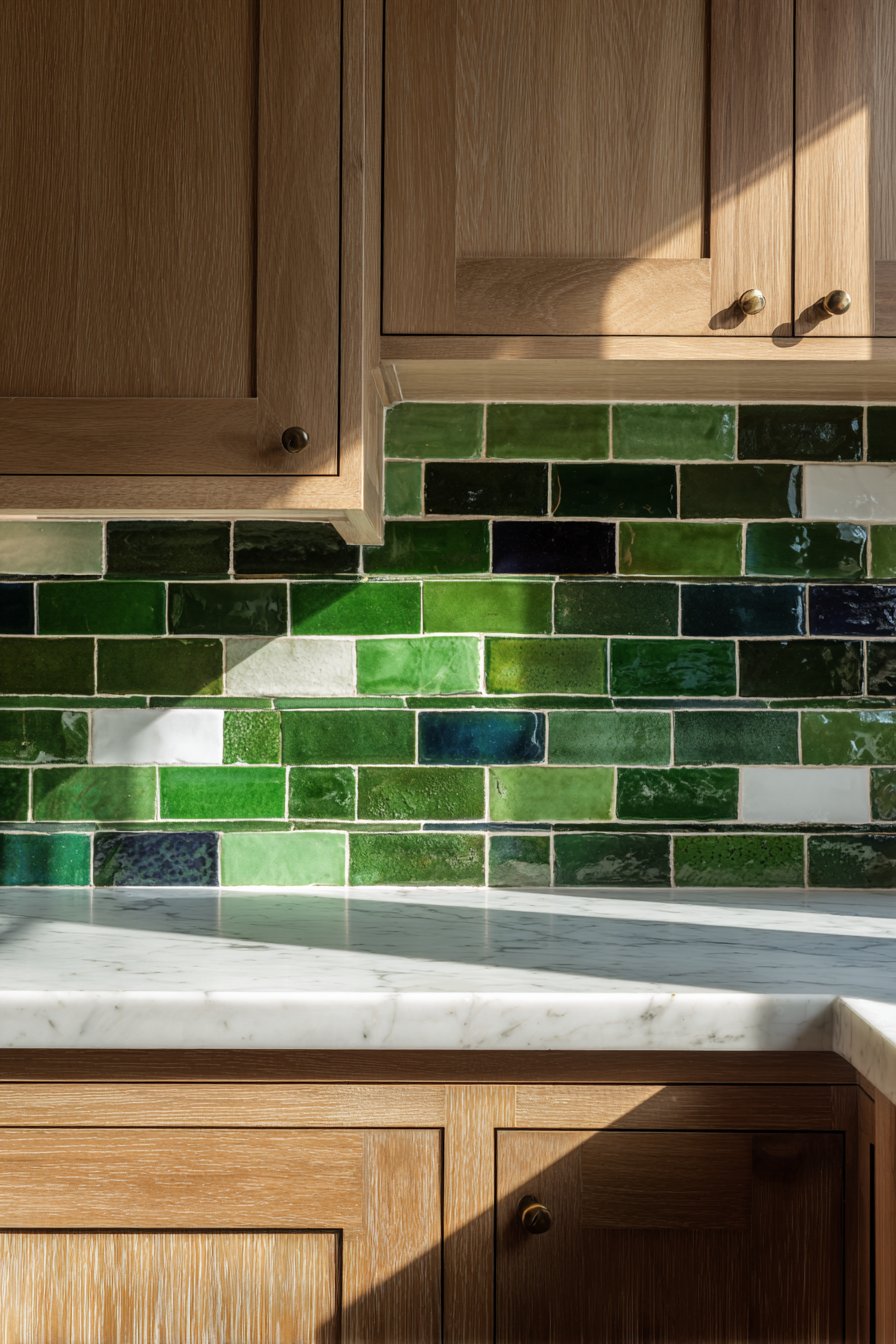
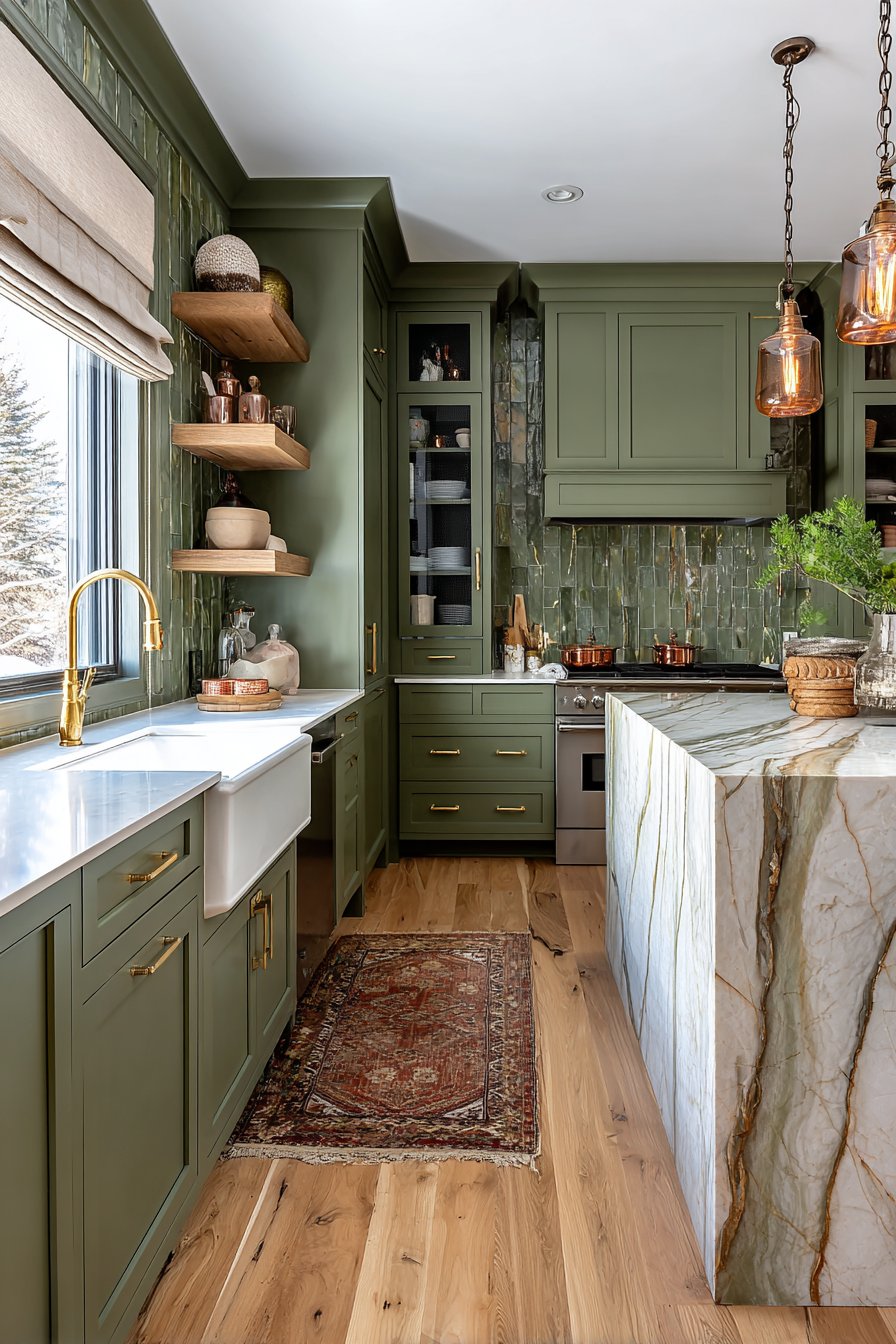
Handmade ceramic tiles in varying shades of olive, sage, and forest green create an artisanal backsplash. The color variations give each tile individual character and depth. Classic subway pattern with dark grout lines emphasizes the handcrafted quality. The slight irregularities in size and glaze make the backsplash feel special and unique.
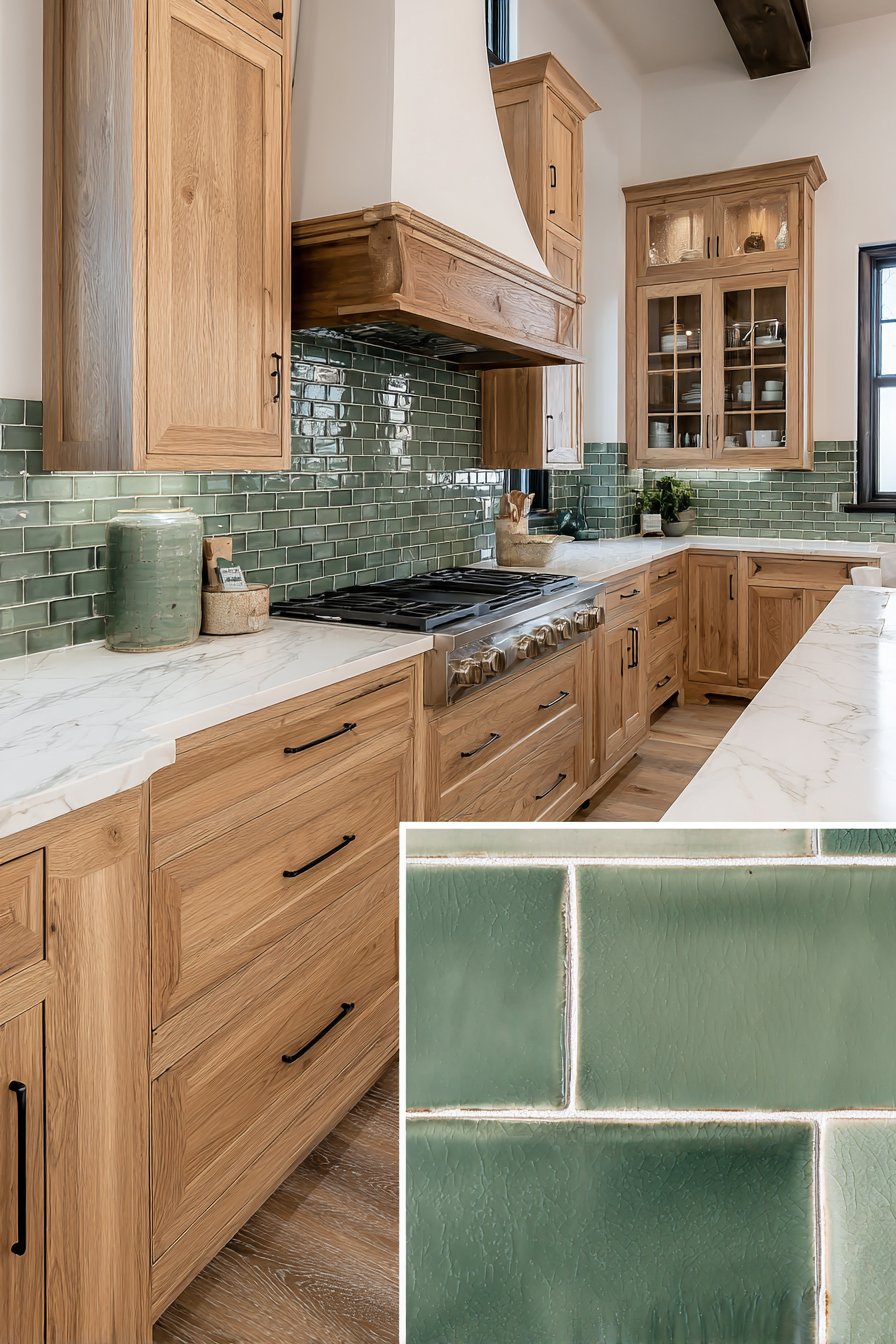
Natural wood cabinets in light oak frame the colorful backsplash without competing for attention. The simple cabinet style allows the artistic tile work to become the focal point. White marble countertops provide clean transition between wood cabinets and green tile. The neutral materials let the backsplash colors shine.
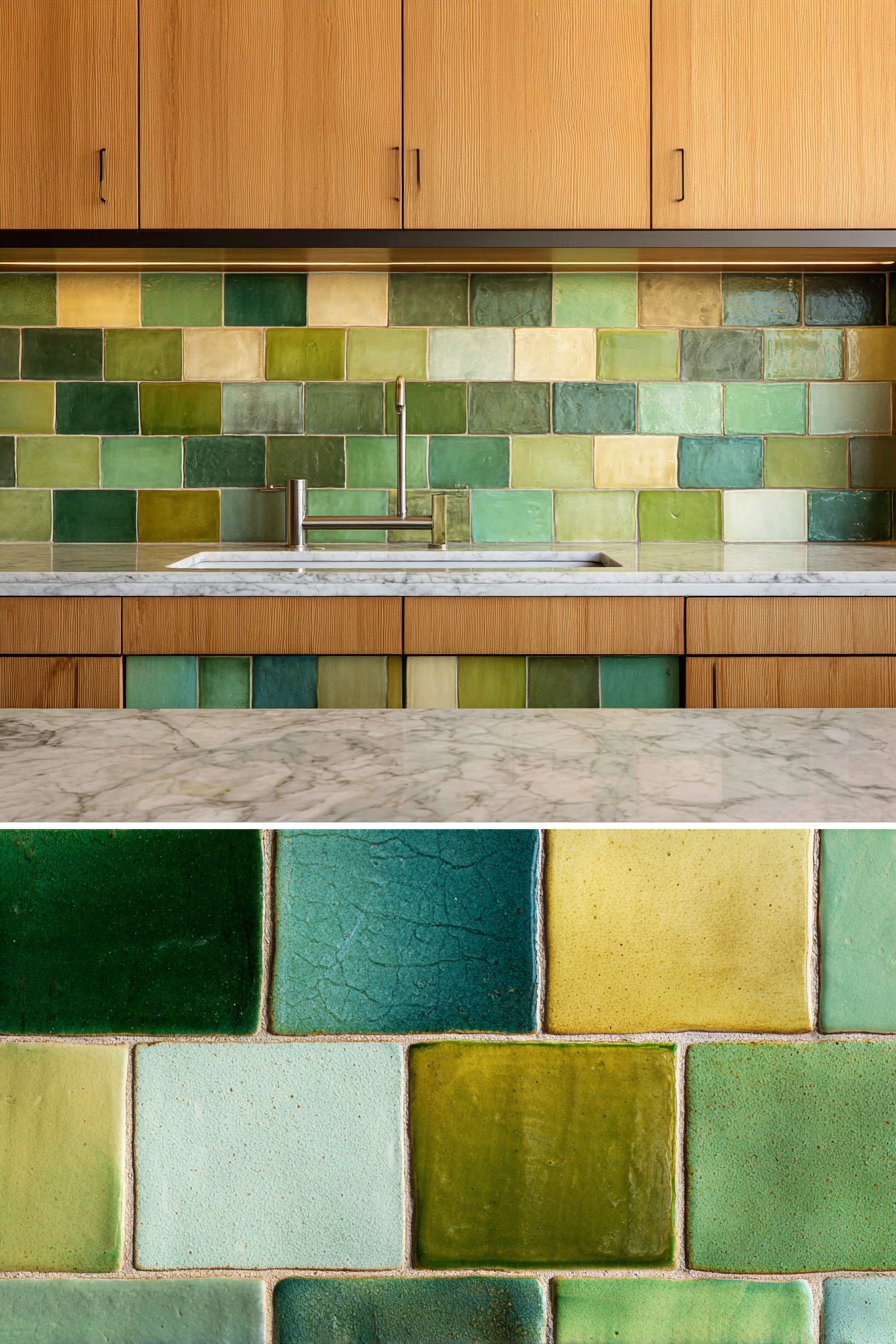
Task lighting installed under upper cabinets highlights the dimensional quality of the handmade tiles. The focused illumination reveals glaze variations and surface texture beautifully. Natural light from windows enhances the depth of the olive green glazes throughout the day. Different lighting conditions reveal new aspects of the tile colors and finishes.
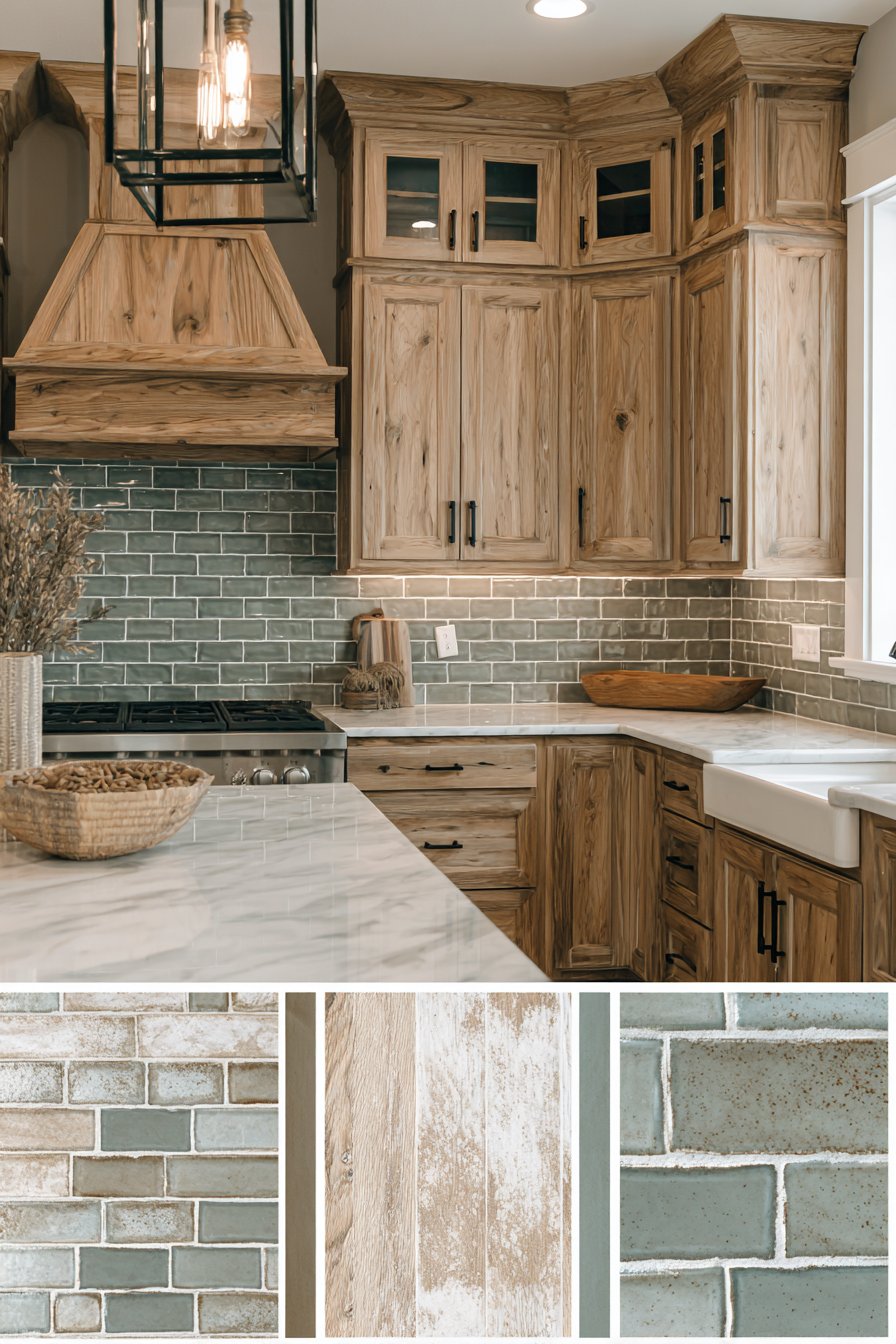
This design celebrates craftsmanship and artisanal quality in kitchen materials. The handmade tiles become a permanent artwork in the space. The investment in quality artisanal materials creates a kitchen that feels personal and curated. The varying green tones prevent monotony while maintaining color cohesion.
Key Design Tips:
- Invest in handmade ceramic tiles for unique character and artisanal quality
- Choose tiles in varying olive green shades for depth and visual interest
- Use dark grout lines to emphasize each tile and create definition
- Install under-cabinet task lighting to highlight tile texture and glaze variations
- Keep cabinets and countertops simple to let the backsplash be the focal point
8. Industrial Olive Green Painted Brick
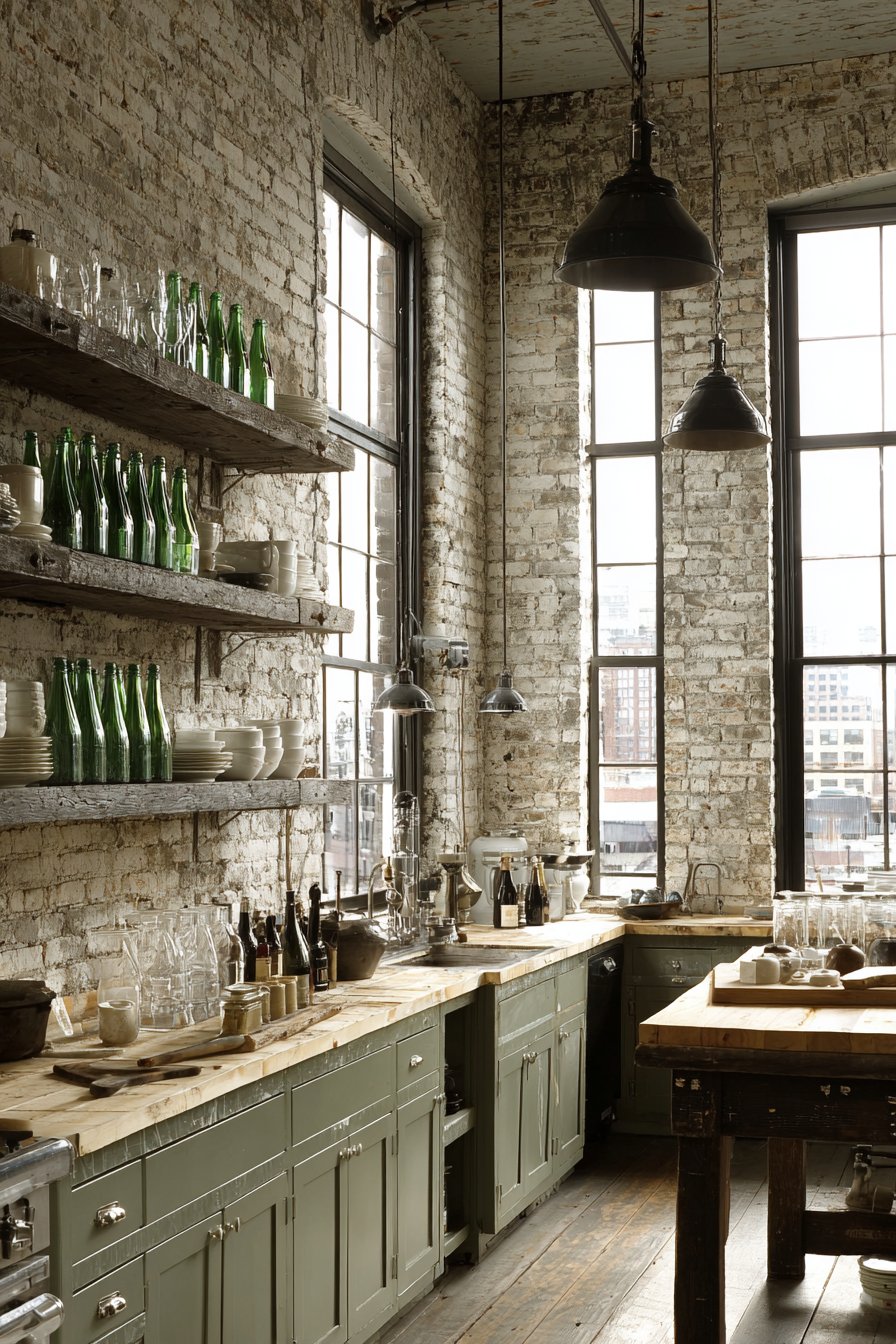
Painted brick walls in soft olive wash maintain the brick texture while adding color. The wash technique allows the brick structure to remain visible and tactile. This creates depth and history that flat painted walls cannot achieve. The industrial material softened by color creates an unexpected and appealing combination.
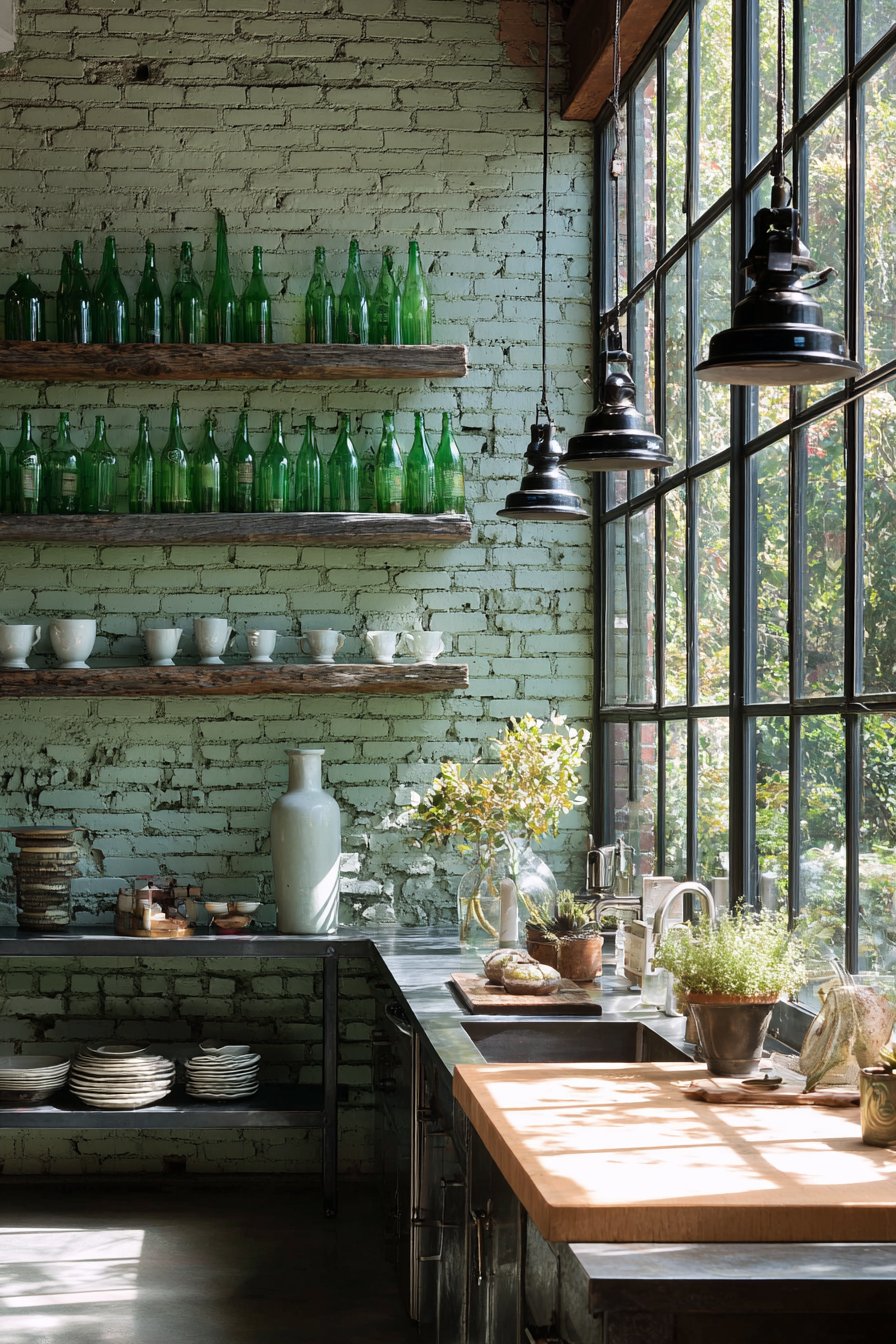
Floating shelves in reclaimed wood display curated collections of green glass bottles and white ceramics. The rustic wood adds warmth against the industrial brick surface. Industrial-style pendant lights with black metal shades provide task lighting and reinforce the aesthetic. The fixtures hang above a butcher block prep table that serves as a work island.
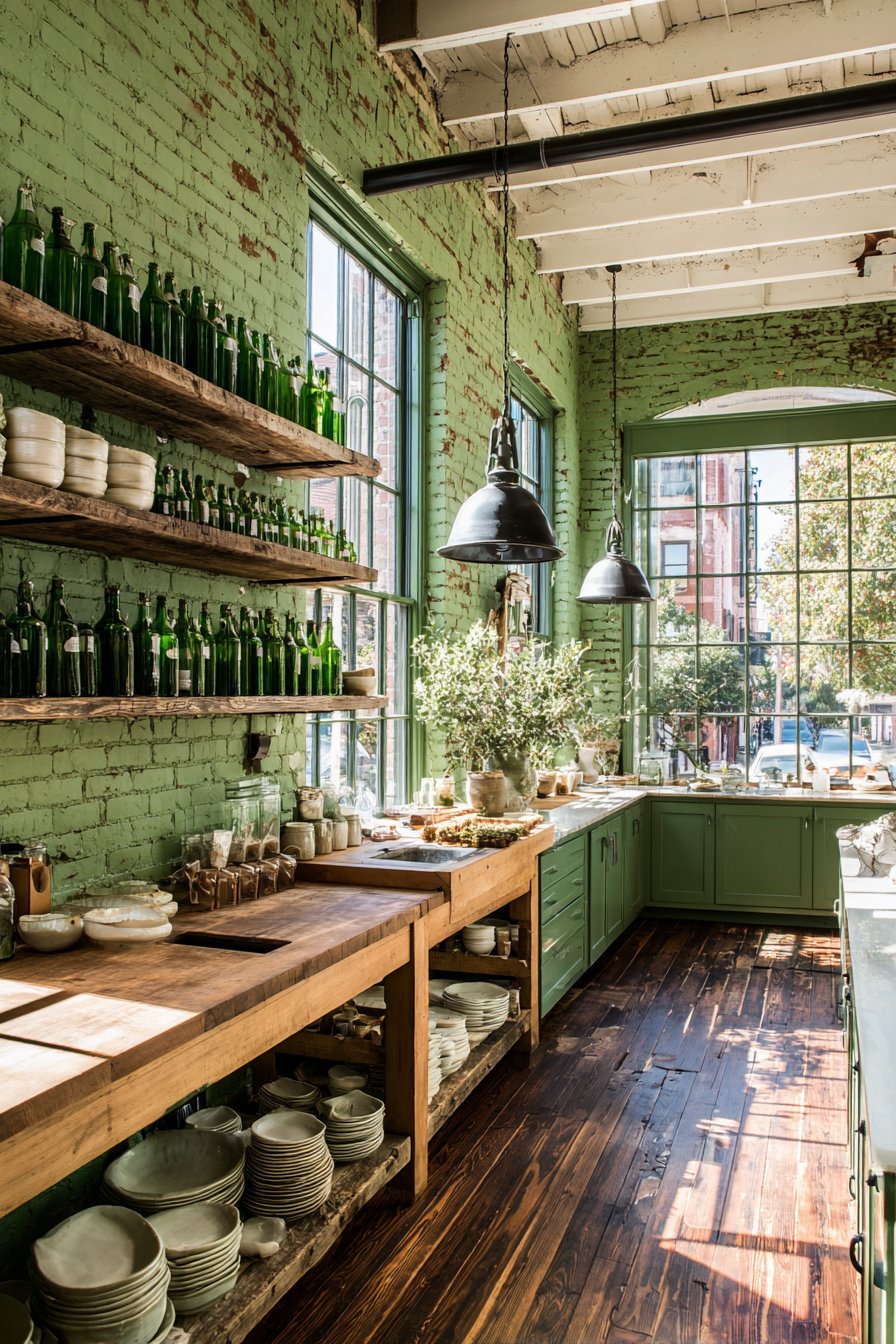
Large factory-style windows flood the space with abundant natural light throughout the day. The natural illumination emphasizes the textured brick wall surface and creates dramatic shadows. Sunlight reveals the depth of the olive wash and the dimensional quality of the brick. The industrial windows become architectural features in their own right.
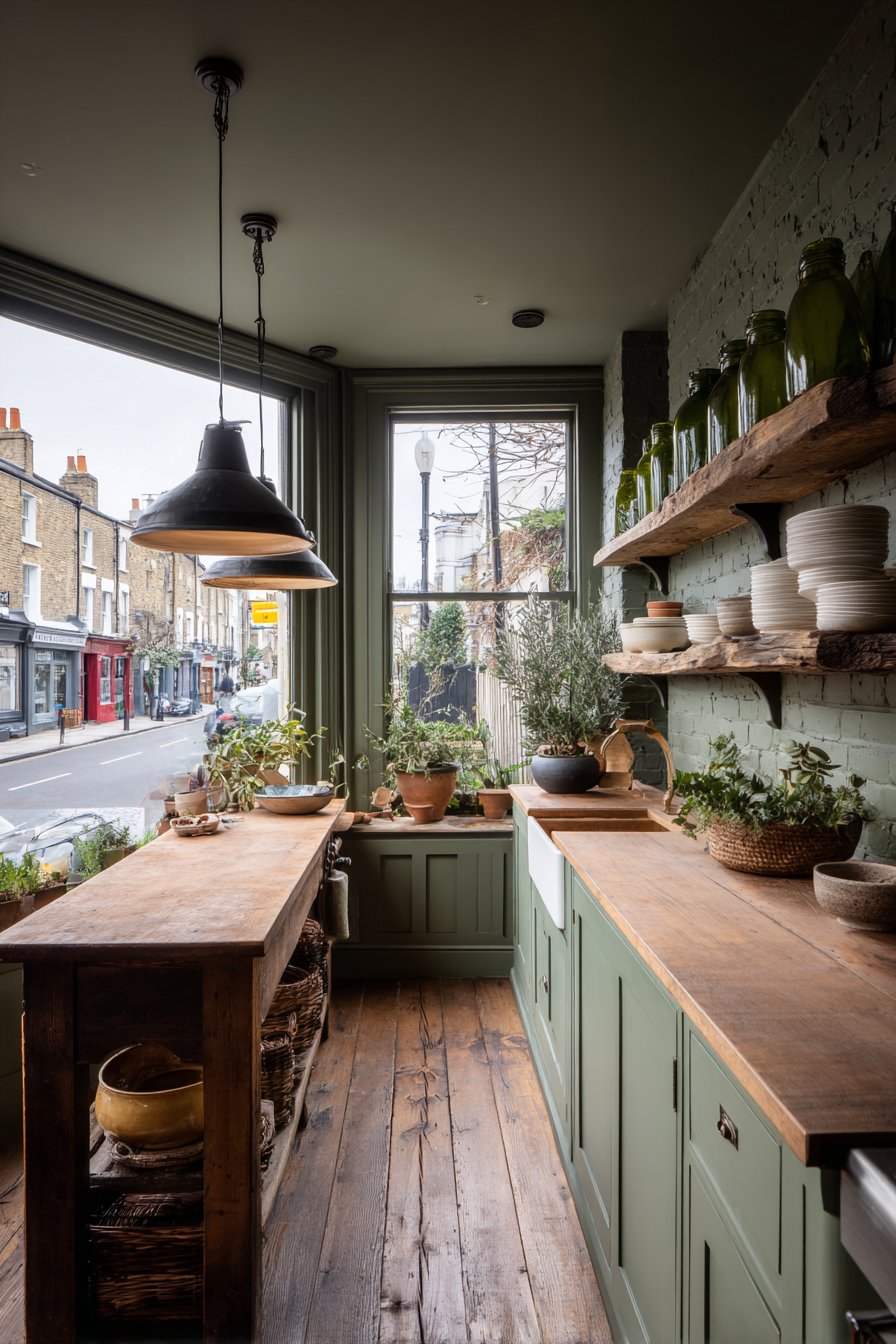
This kitchen demonstrates how industrial elements can feel warm and inviting with thoughtful color application. The olive green softens the hard edges of brick and metal. The combination of rustic reclaimed wood and industrial materials creates layered interest. The space feels collected and authentic rather than designed to a theme.
Key Design Tips:
- Apply olive green paint as a wash over brick to maintain texture while adding color
- Install floating shelves in reclaimed wood for rustic warmth and display space
- Choose industrial pendant lights with black metal to reinforce the aesthetic
- Incorporate a butcher block prep table for functional workspace with natural warmth
- Maximize natural light through large windows to highlight brick texture and shadows
9. Olive Green Pantry Door Focal Point
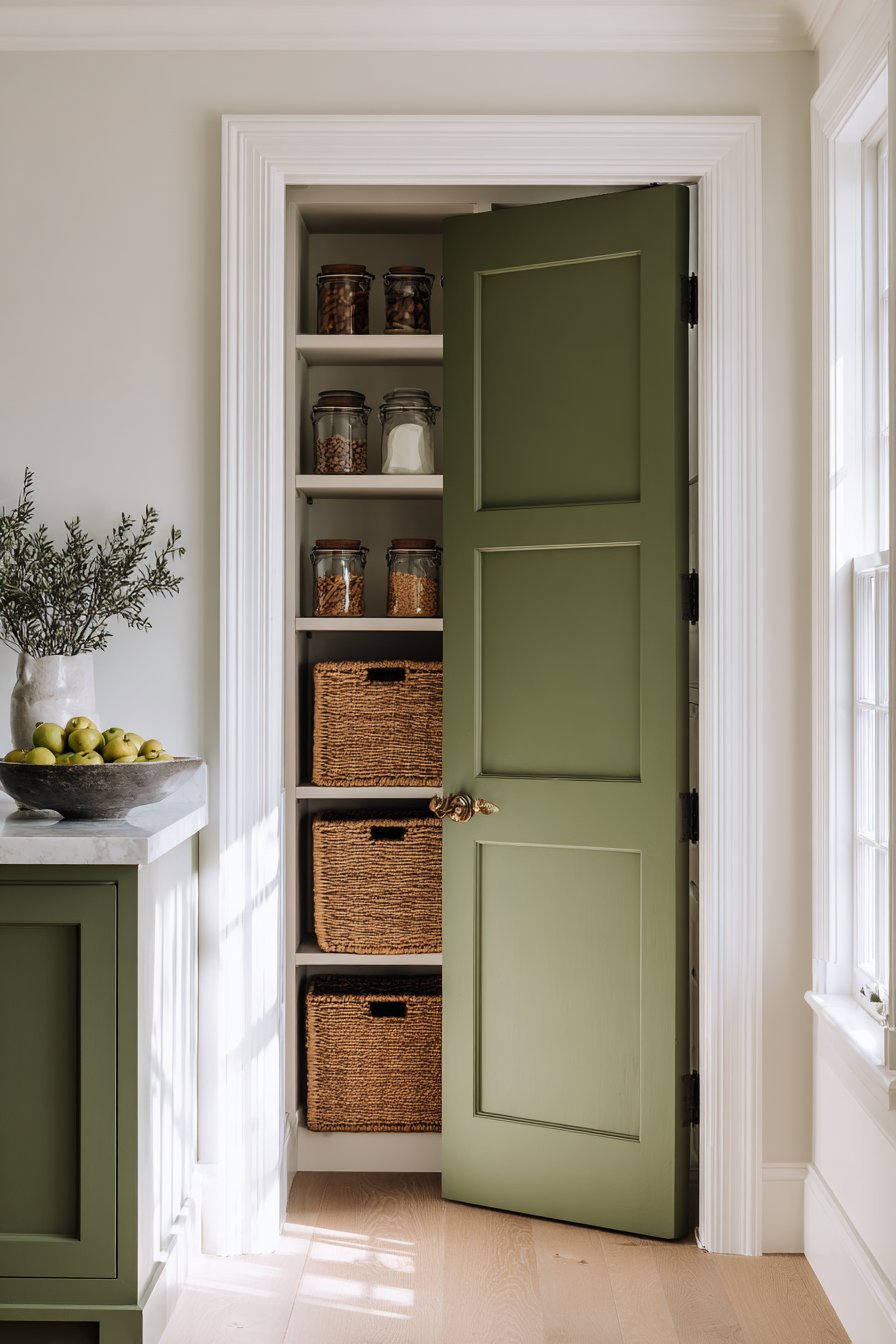
A solid olive green painted five-panel door creates a striking focal point in a neutral kitchen. The door’s rich color draws attention and adds personality without overwhelming the space. Antique brass hardware provides elegant detail against the green surface. The traditional door style gains contemporary appeal through the sophisticated color choice.
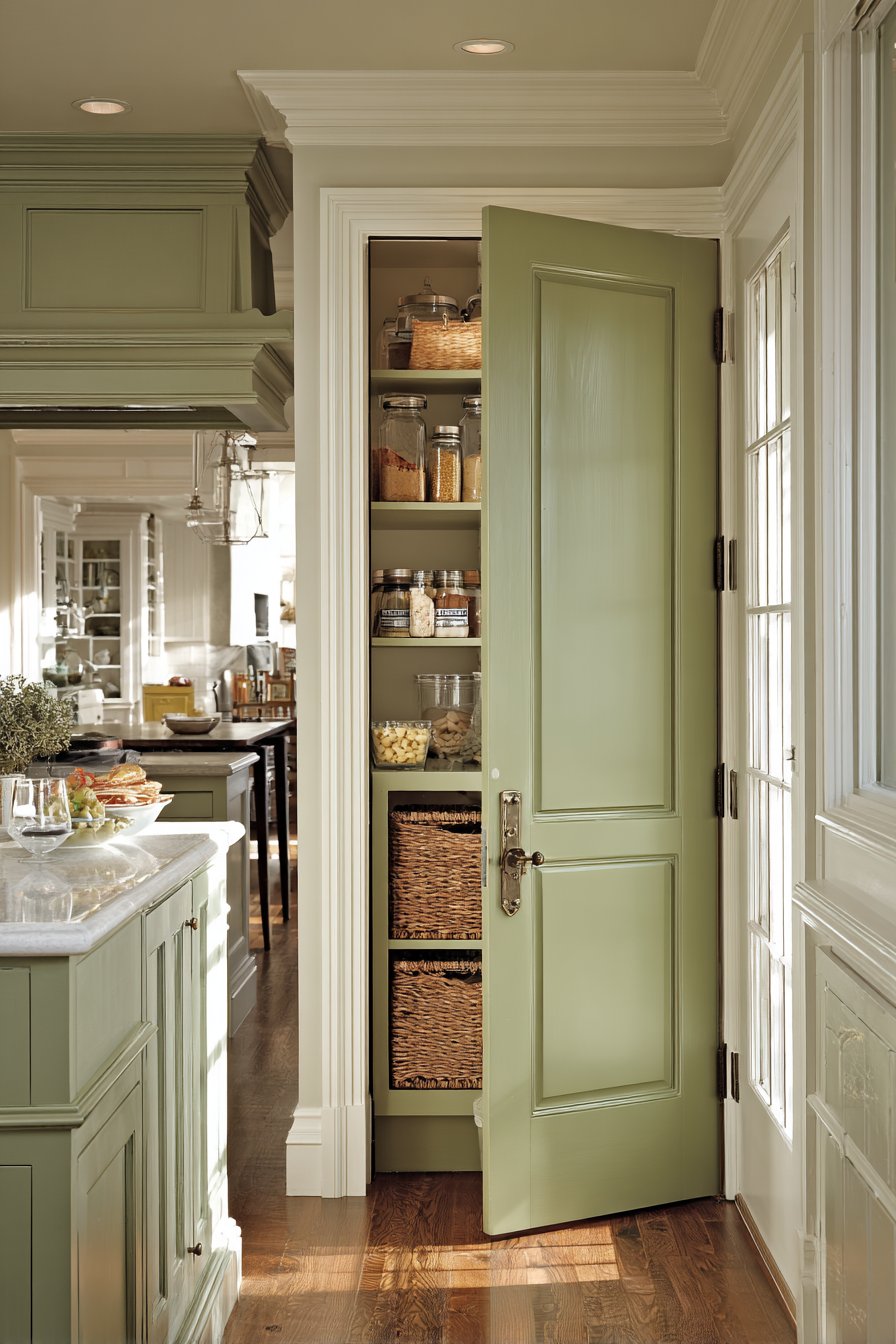
Warm white surrounding walls create necessary contrast that makes the door pop visually. The neutral backdrop allows the olive door to shine as an intentional design choice. When opened, organized shelving reveals woven baskets and glass storage containers. The pantry interior continues the thoughtful design approach visible in the kitchen.
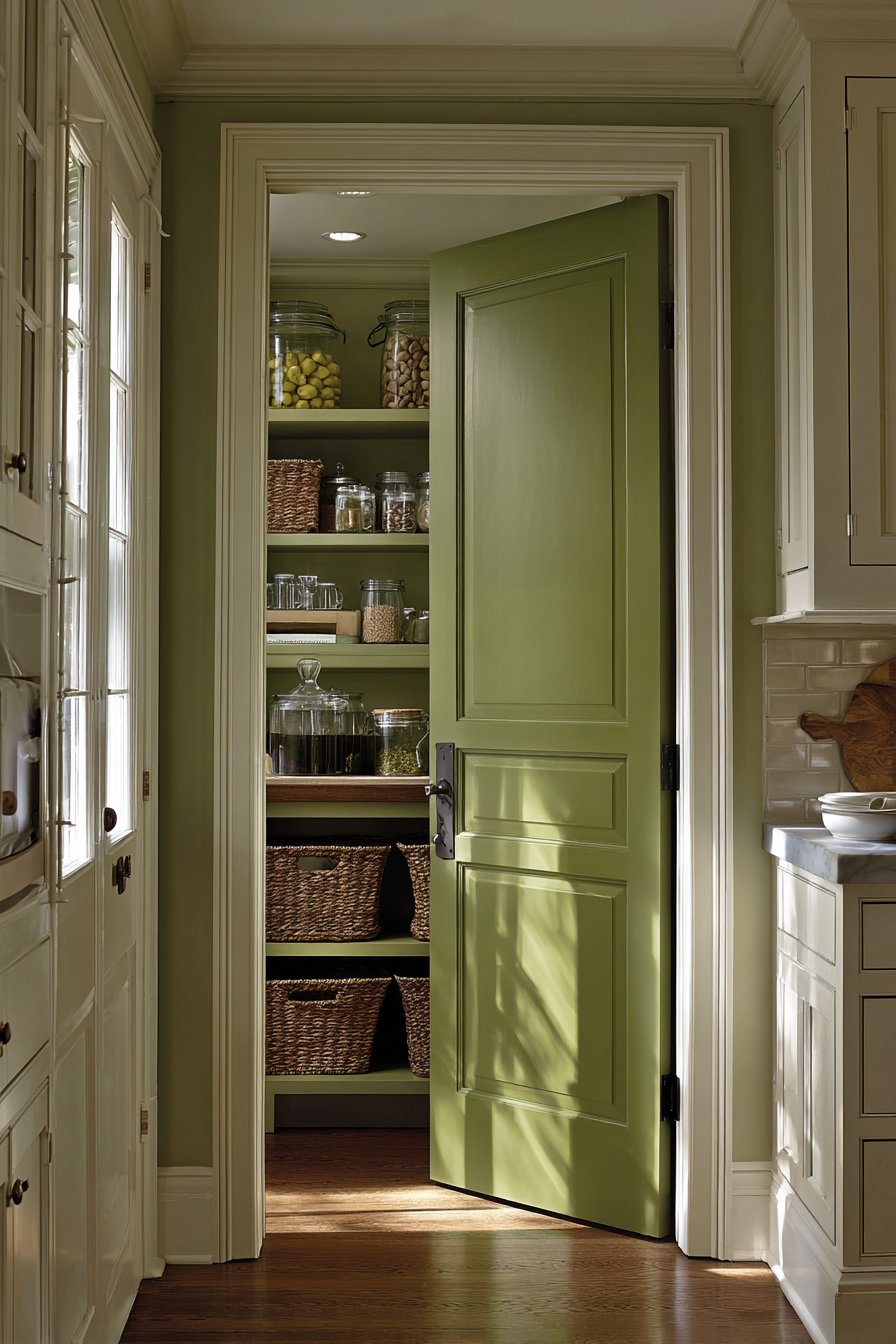
Natural light from the kitchen illuminates the door and reveals the richness of the olive paint. The light shows subtle brush stroke texture in the paint finish. This attention to finish quality demonstrates the difference between amateur and professional results. The door becomes a jewel-like element in the otherwise neutral space.
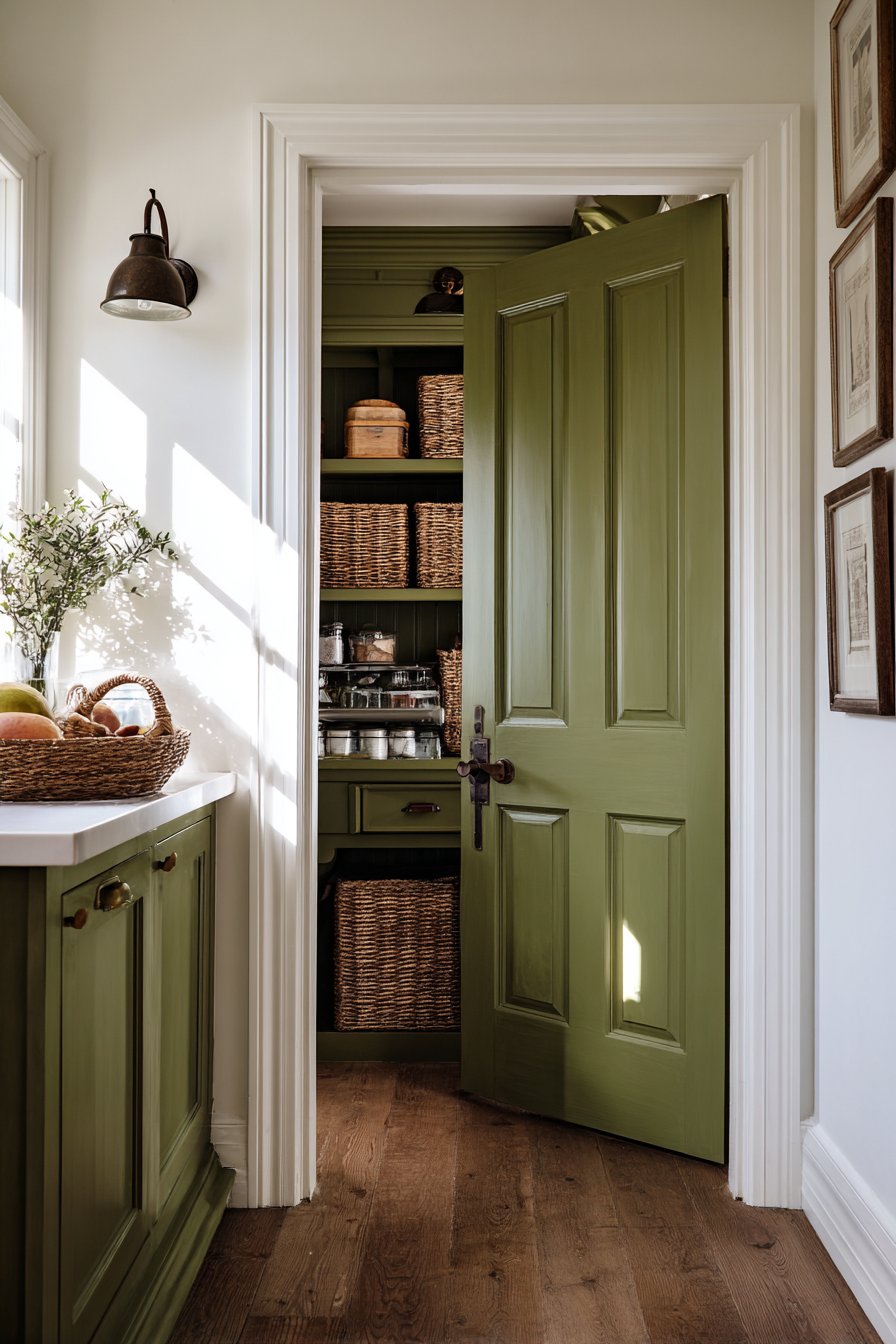
This approach offers the perfect solution for those wanting olive green without full cabinetry commitment. A single painted door provides color impact with minimal investment and effort. The pantry door can be repainted easily if tastes change over time. This demonstrates how small elements can make significant design statements.
Key Design Tips:
- Paint a pantry door in olive green to add color without overwhelming the kitchen
- Choose antique brass hardware to add elegant detail and warmth
- Keep surrounding walls neutral to create contrast and let the door stand out
- Maintain quality paint finish showing minimal brush strokes for professional results
- Organize pantry interior thoughtfully so open door views remain attractive
10. Vintage-Inspired Olive Green Cottage Kitchen
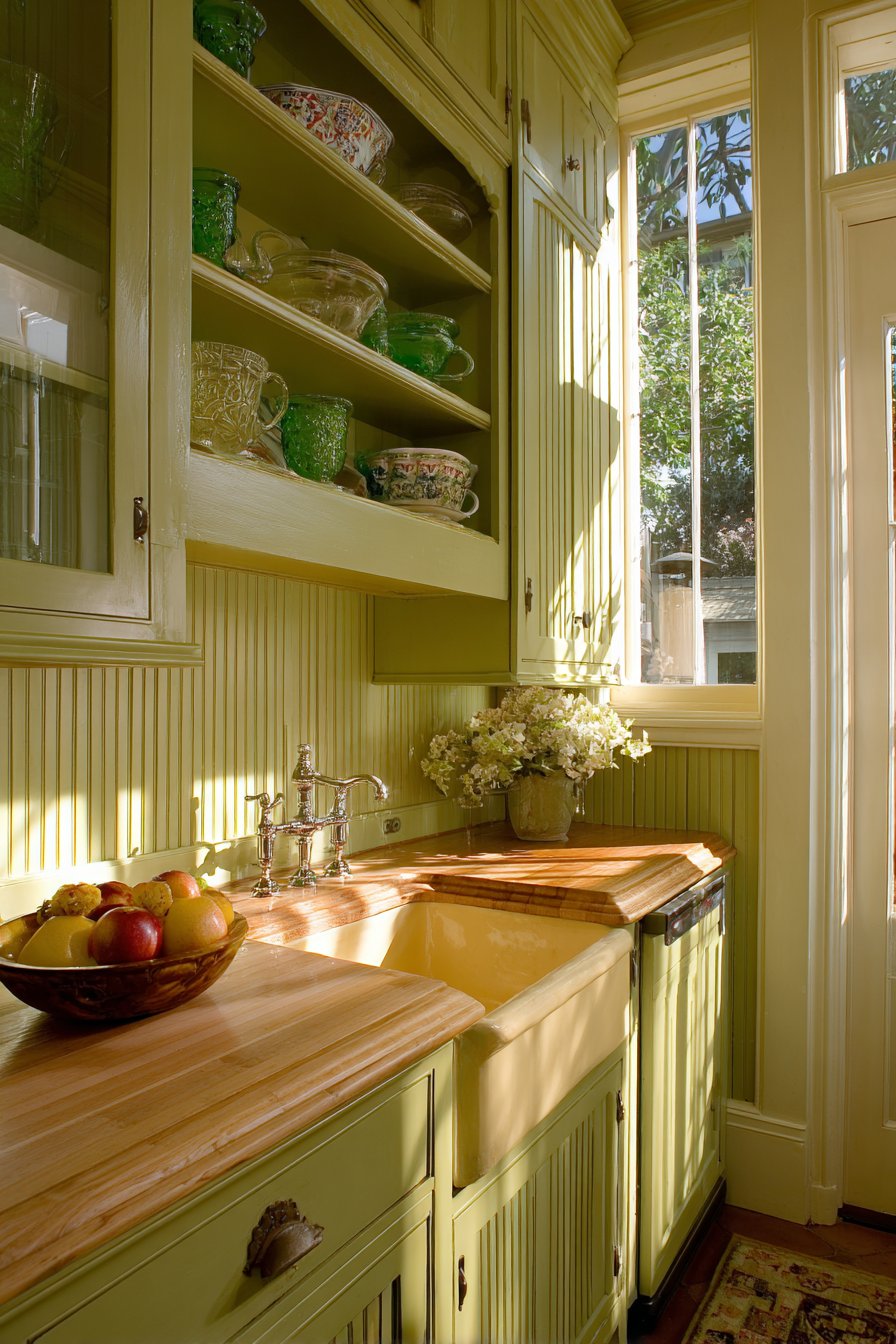
Vintage-inspired cabinets featuring beaded board panel inserts evoke cottage charm and nostalgia. Cup pull hardware in antique brass reinforces the vintage aesthetic while remaining functional. The olive green paint color feels both historically appropriate and refreshingly current. This combination creates a kitchen that honors the past while serving modern needs.
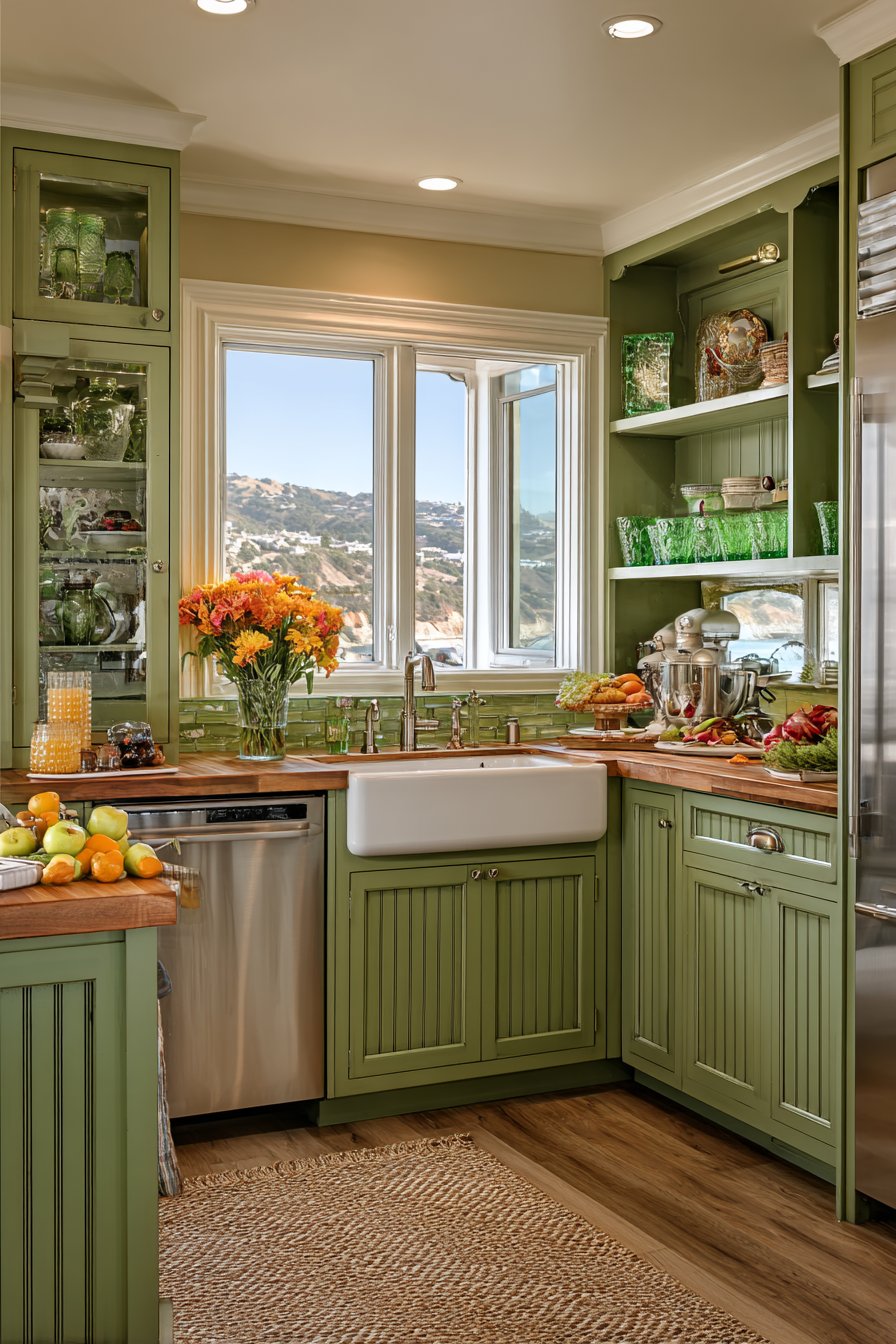
Butcher block countertops show natural wear and knife marks that add authentic character. The visible use marks tell stories and create warmth that pristine surfaces cannot match. These working surfaces develop more beauty with time and use. The practical material choice supports actual cooking rather than just appearance.
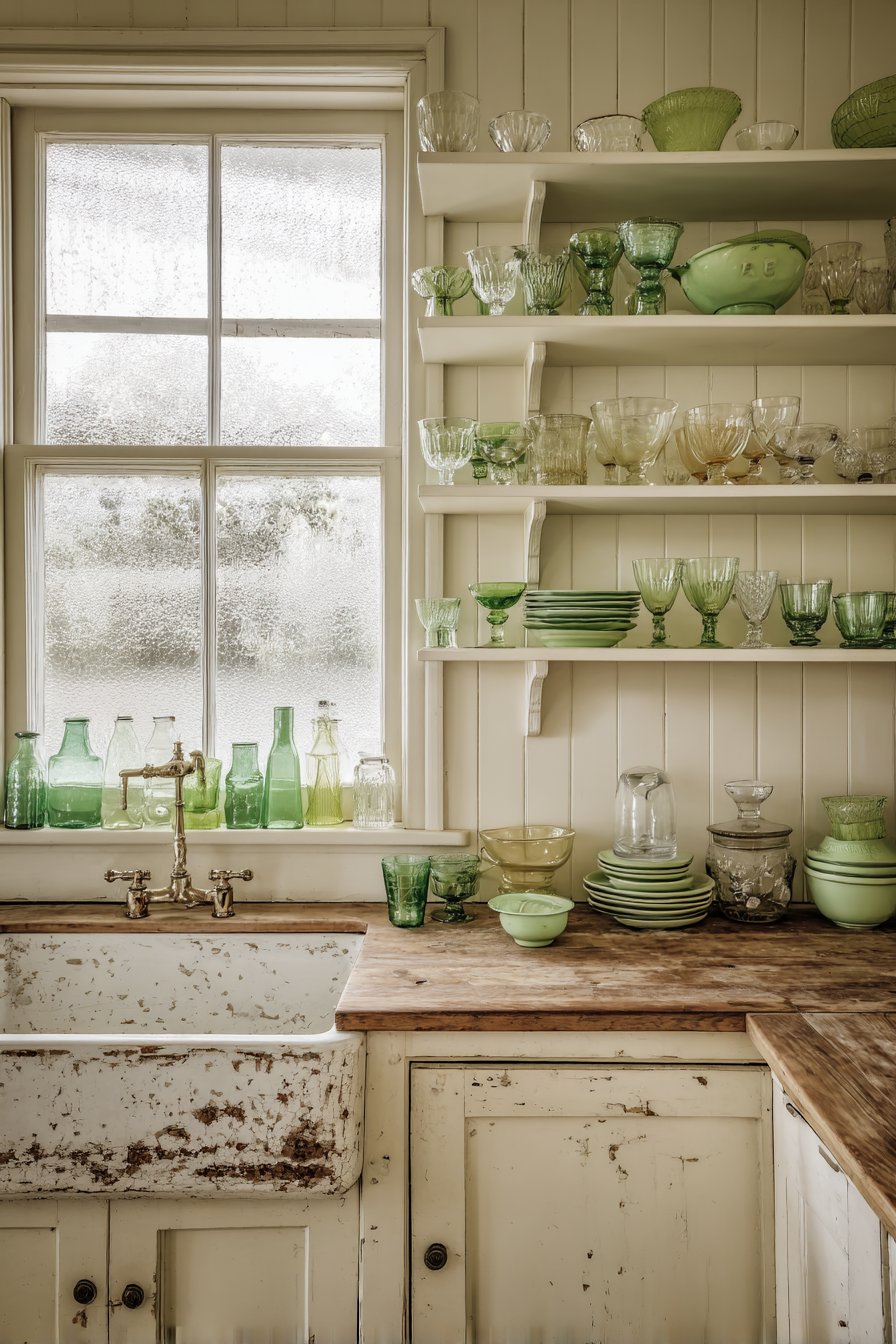
Depression glass displayed on open shelving picks up the cabinet color in translucent form. The vintage glassware collection becomes both storage and decoration. Natural light from the sink window illuminates the glass and creates beautiful color effects. The afternoon light reveals the depth and quality of the vintage glass pieces.
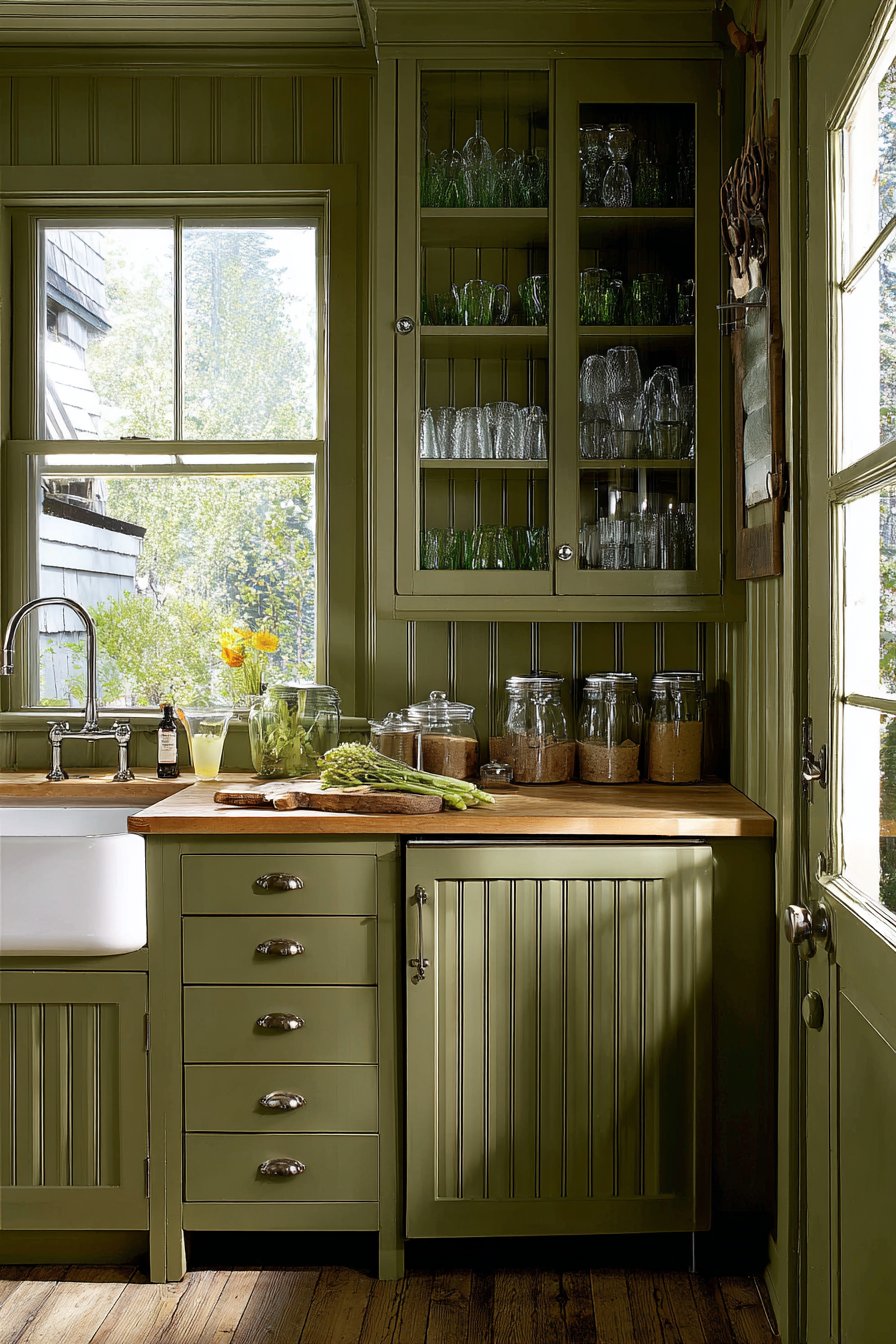
This kitchen captures a lived-in quality that makes spaces feel like home immediately. The vintage elements feel authentic rather than artificially aged. The olive green color bridges vintage inspiration with contemporary sensibility. The space feels comfortable and welcoming rather than precious or untouchable.
Key Design Tips:
- Choose cabinets with beaded board inserts and cup pulls for authentic vintage character
- Select butcher block countertops that develop character with use over time
- Display Depression glass collections that complement the olive green cabinet color
- Embrace natural wear and imperfections as adding character rather than detracting from design
- Position windows to illuminate vintage glass displays with natural light
11. Olive Green Ceiling Statement
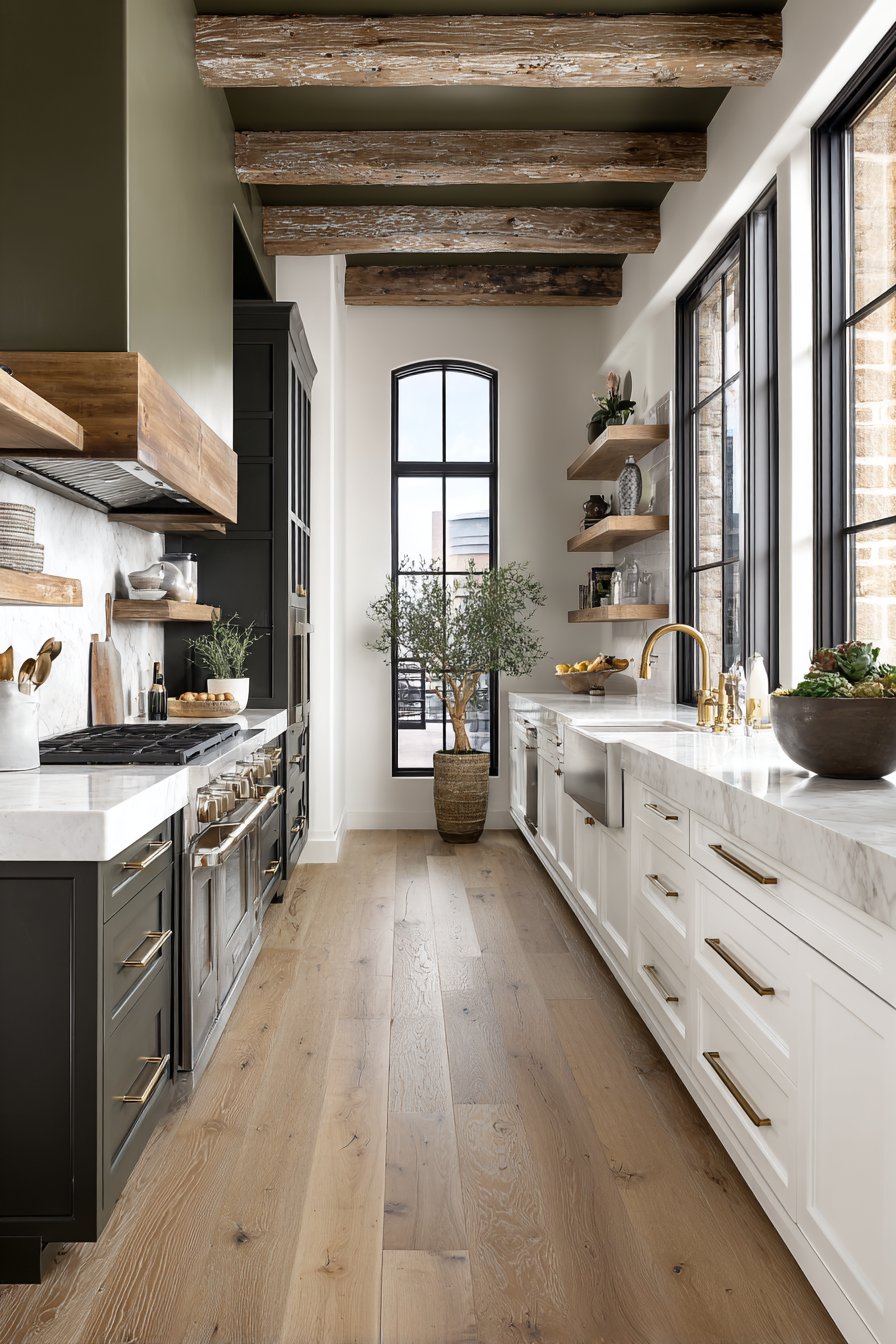
A bold painted ceiling in muted olive creates an unexpected and dramatic design statement. The color overhead creates an enveloping atmosphere while walls and cabinets remain crisp white. Natural wood ceiling beams in weathered oak add architectural interest against the green backdrop. The contrast between white surfaces and dark ceiling feels sophisticated and intentional.
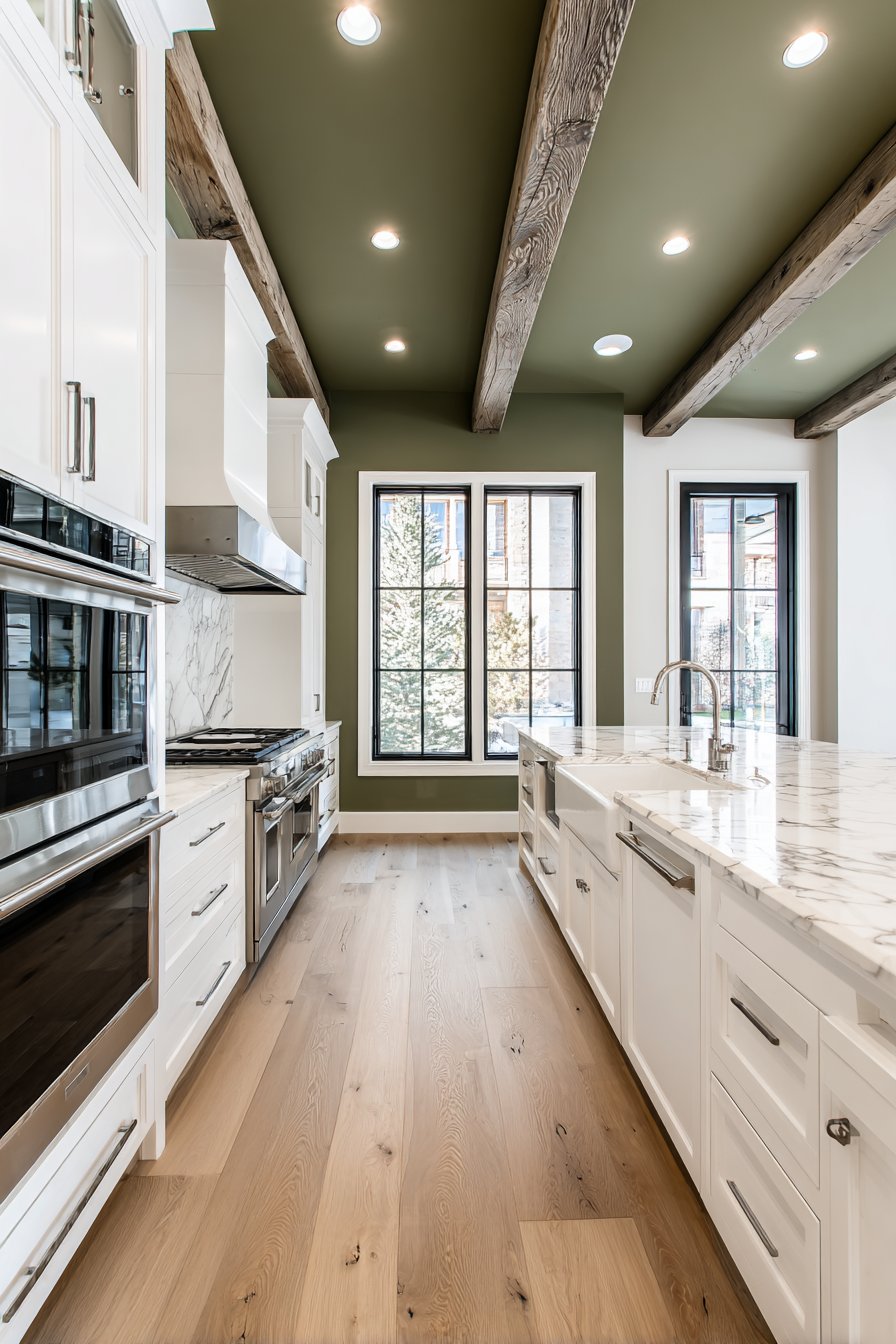
White marble countertops and simple Shaker cabinets allow the ceiling to command all attention. The minimal lower elements prevent visual competition with the dramatic overhead treatment. Large windows provide ample natural light that reflects off white surfaces throughout the space. The light bounces around the room while the olive ceiling absorbs it and creates intimacy.
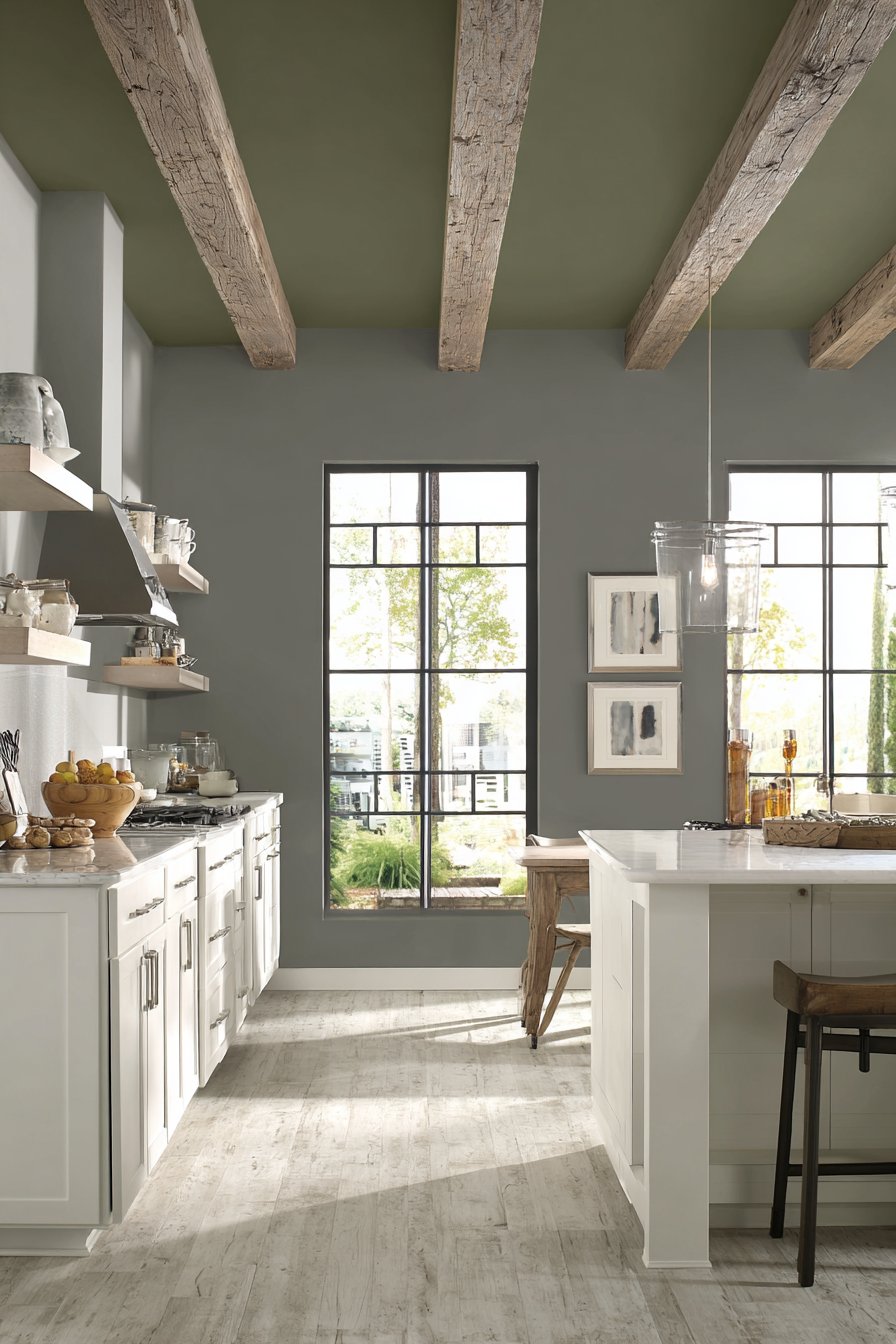
This design approach requires confidence but delivers remarkable results. The dark ceiling could feel oppressive if not balanced with abundant light and white surfaces. The careful balance creates a room that feels cozy rather than small. The olive overhead draws the eye upward and makes the space feel more interesting architecturally.
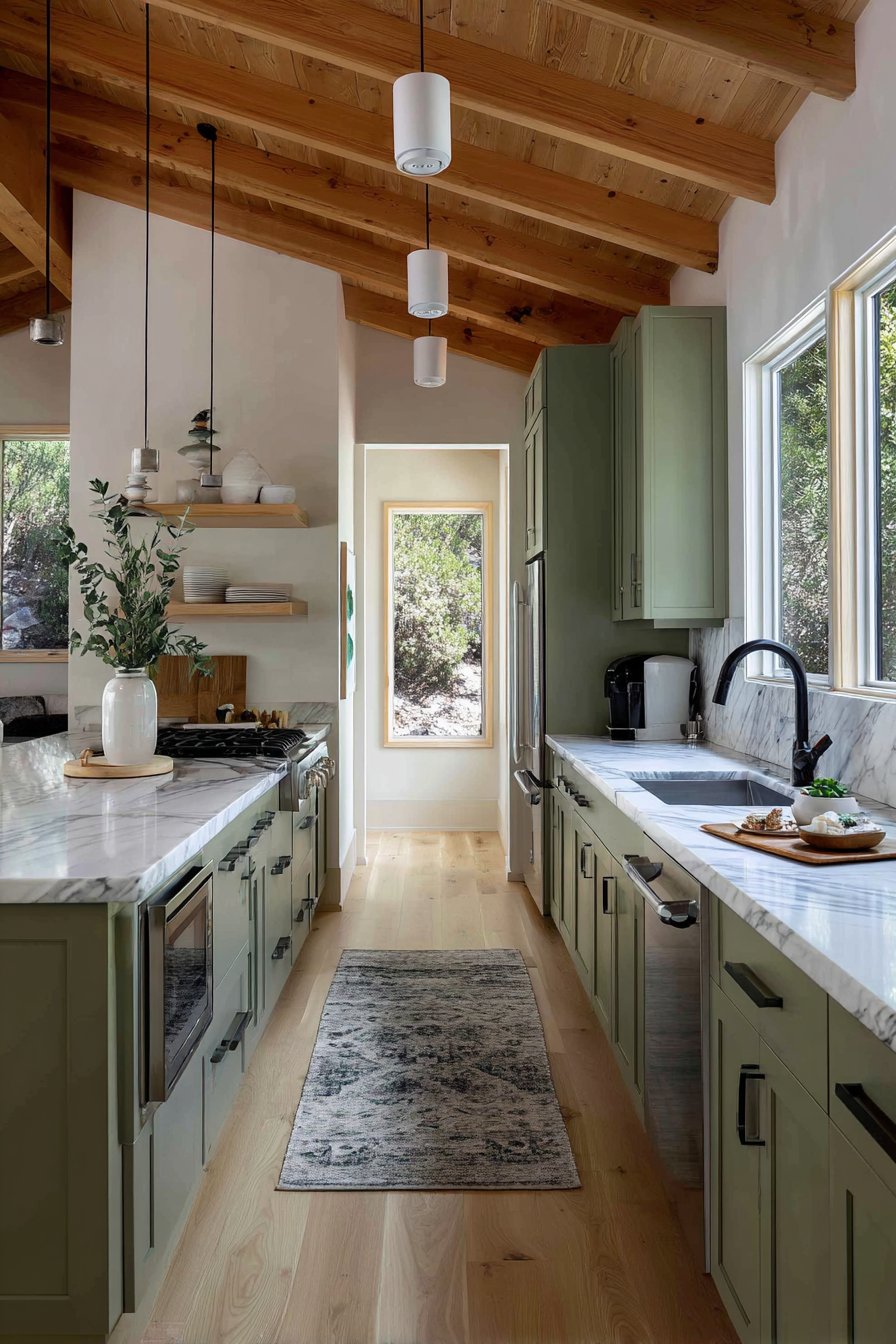
Natural wood beams break up the solid olive ceiling and add organic warmth. The weathered oak introduces texture and prevents the ceiling from feeling flat. The combination of painted surface and natural wood creates visual interest overhead. This ceiling treatment transforms an ordinary kitchen into something memorable.
Key Design Tips:
- Paint the ceiling in muted olive green to create dramatic overhead interest
- Keep walls and cabinets white to balance the dark ceiling and maintain brightness
- Add natural wood beams to break up solid ceiling color and add texture
- Maximize natural light through large windows to prevent the space from feeling dark
- Use white marble and light surfaces to reflect light throughout the room
12. Custom Olive Green Metal Range Hood
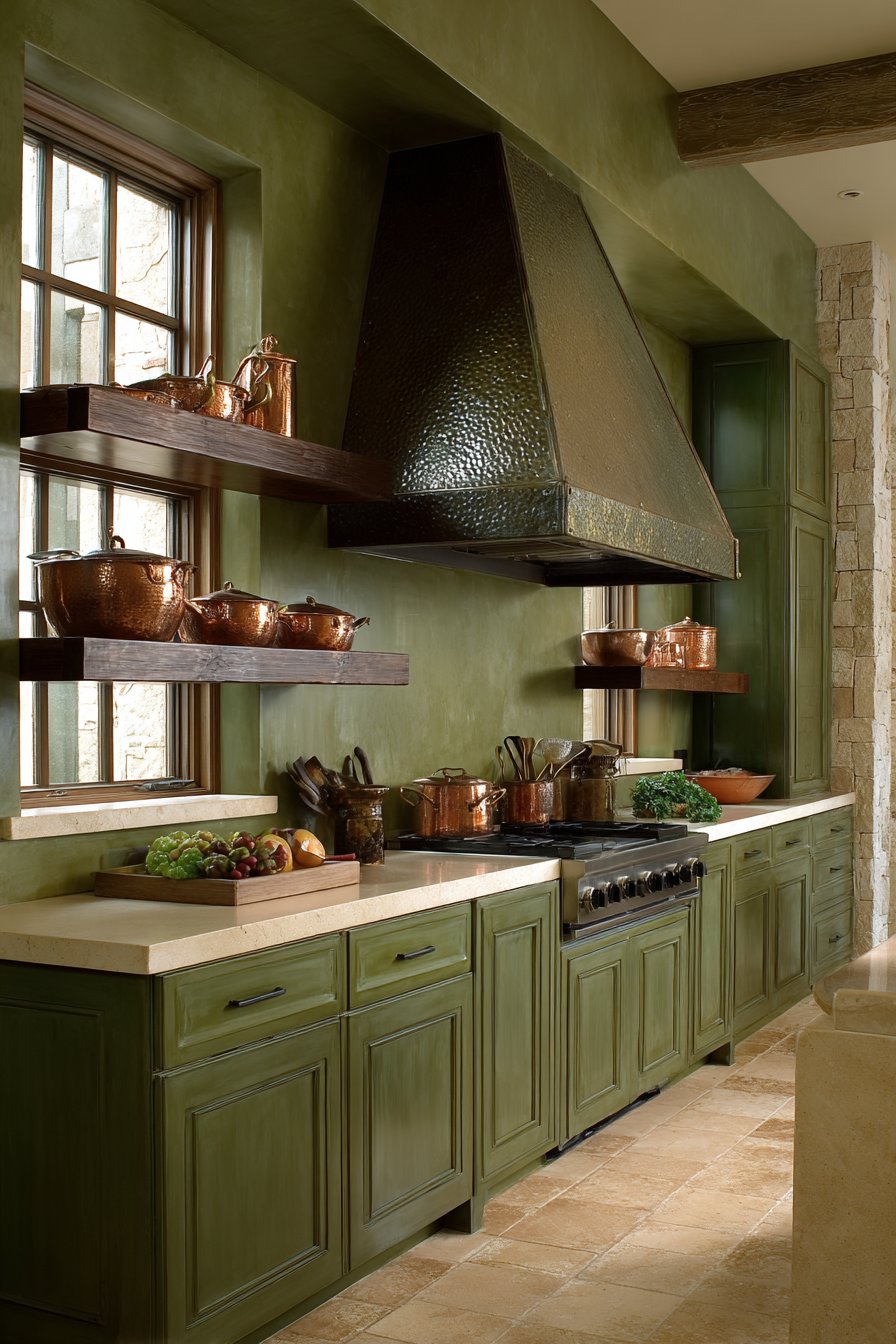
A custom range hood in hammered olive-toned metal with rustic patina becomes the kitchen’s centerpiece. The artisanal metalwork demonstrates craftsmanship and attention to detail. Natural wood floating shelves flanking the hood display copper cookware that complements the metal finish. The hood serves as functional ventilation and sculptural art simultaneously.
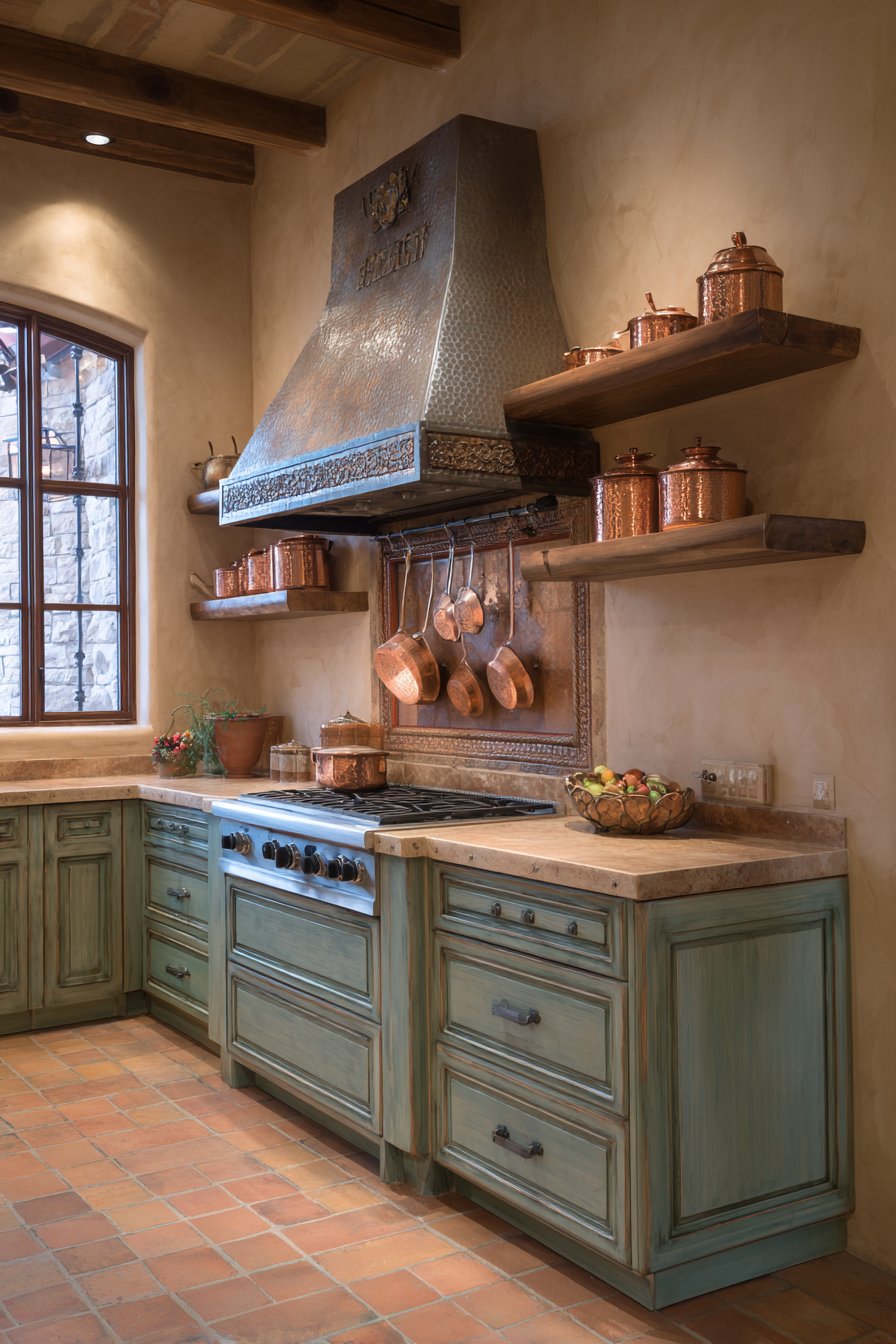
Surrounding cabinets in warm cream allow the statement hood to dominate the visual hierarchy. The neutral cabinets recede and let the metalwork shine. Terra cotta tile flooring adds Mediterranean warmth and connects to the earthy color palette. The flooring introduces pattern and texture at ground level.
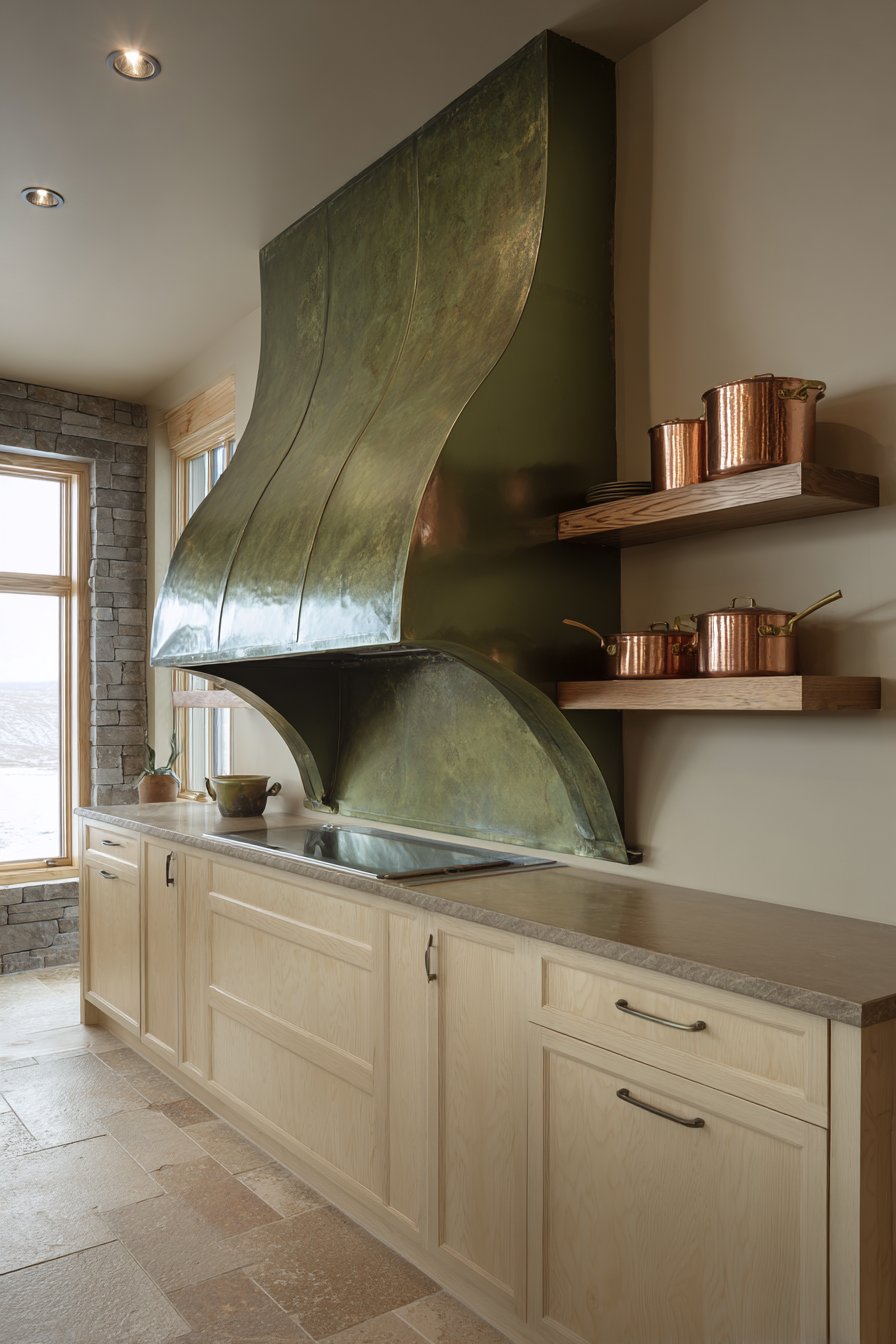
Natural light from side windows creates highlights on the hammered metal surface throughout the day. The changing light reveals different aspects of the metalwork and patina finish. Morning light creates crisp highlights while afternoon sun produces softer glows. The metal surface becomes dynamic rather than static as light conditions change.
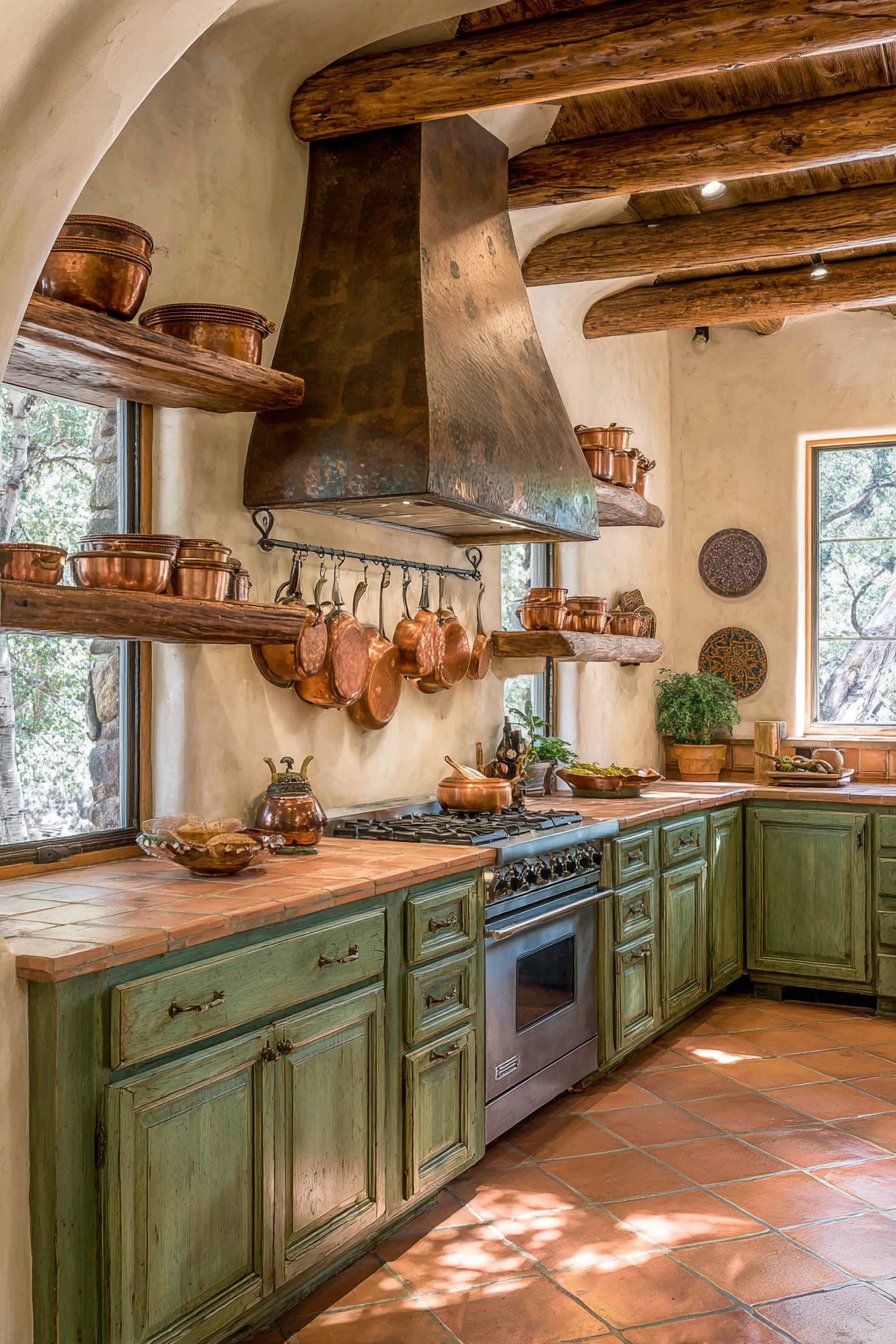
This kitchen demonstrates how a single custom element can define an entire space. The investment in quality metalwork creates a truly unique kitchen. The hammered texture adds dimension that smooth metal cannot provide. The patina finish gives the piece character and prevents it from looking too new or perfect.
Key Design Tips:
- Invest in a custom metal range hood with hammered texture for unique character
- Choose olive-toned metal with patina finish for warmth and age appeal
- Display copper cookware on flanking shelves to complement the metal hood
- Keep surrounding cabinets neutral to let the hood be the undisputed focal point
- Position windows to create highlights on the hammered metal surface throughout the day
13. Olive Green Cabinet Interior Accent
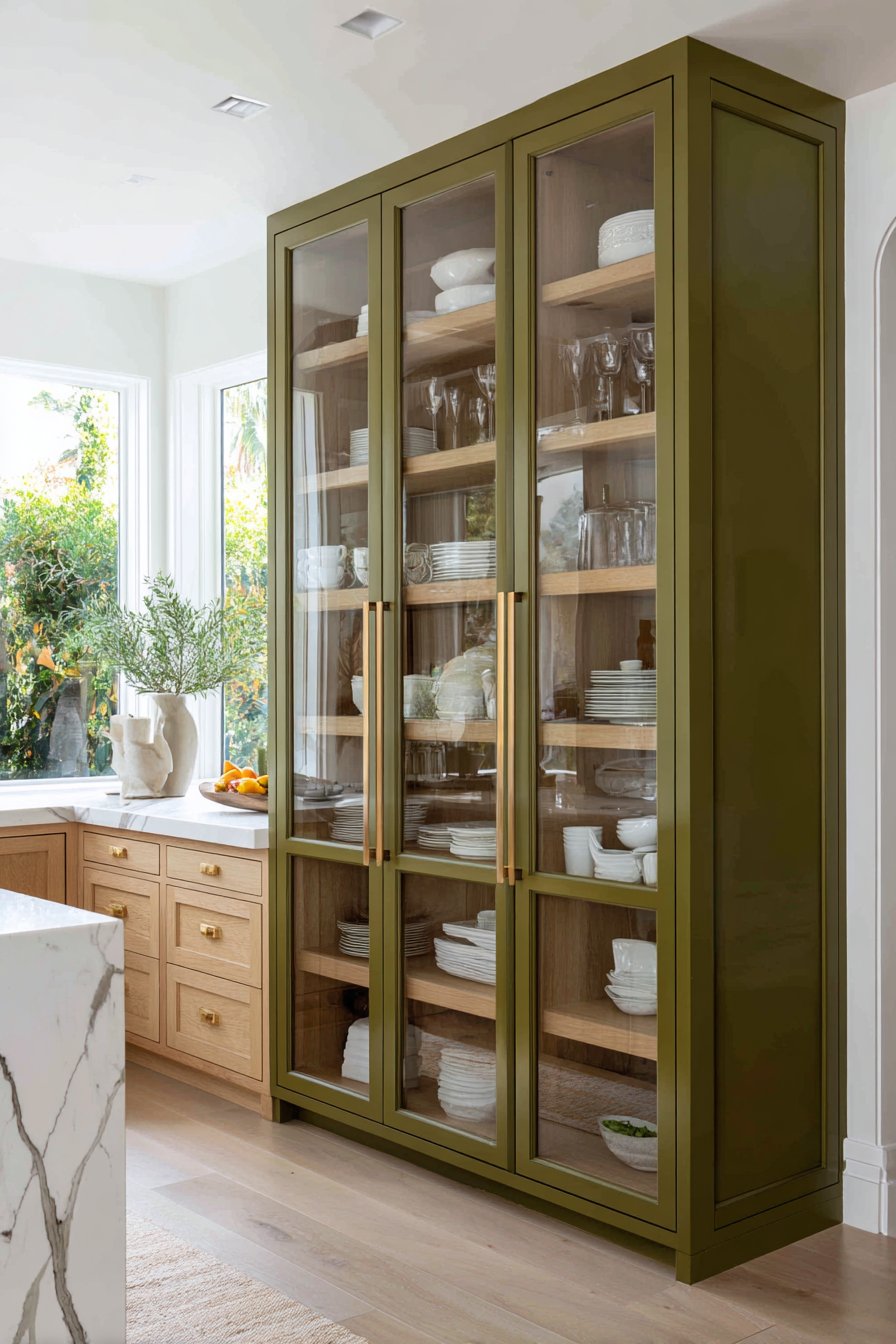
Glass-front upper cabinets with olive green painted interior backs create subtle color impact. The cabinet frames remain in natural oak while only the back panels receive color. White dishware and clear glassware displayed inside contrast beautifully against the green backing. This approach introduces color while maintaining the warmth of natural wood.
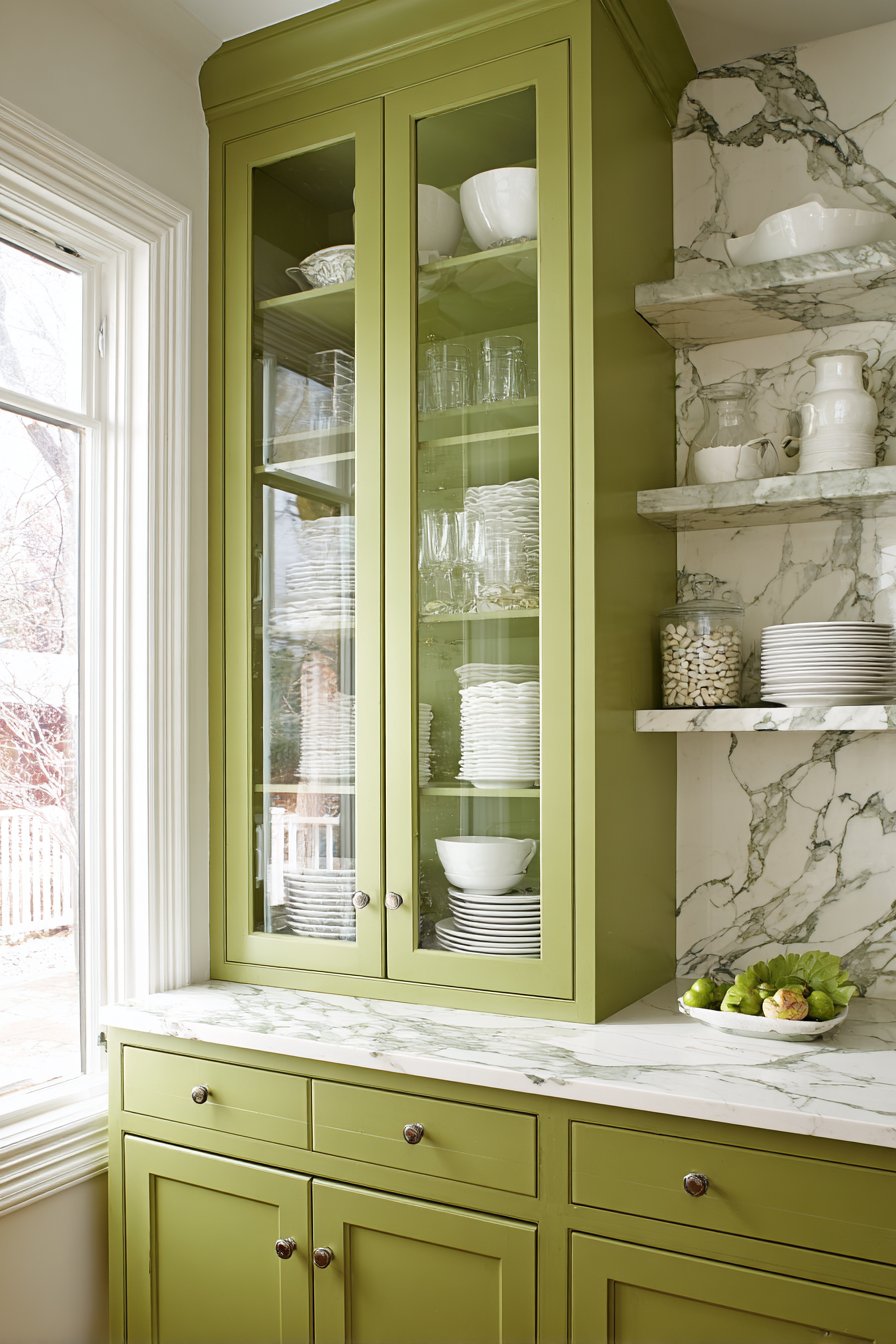
Lower cabinets in matching oak with simple knobs maintain the natural wood theme throughout. The consistent wood tone creates cohesion while the green interior provides interest. Marble countertops with grey veining tie the entire palette together harmoniously. The natural stone connects the wood tones and green accents perfectly.
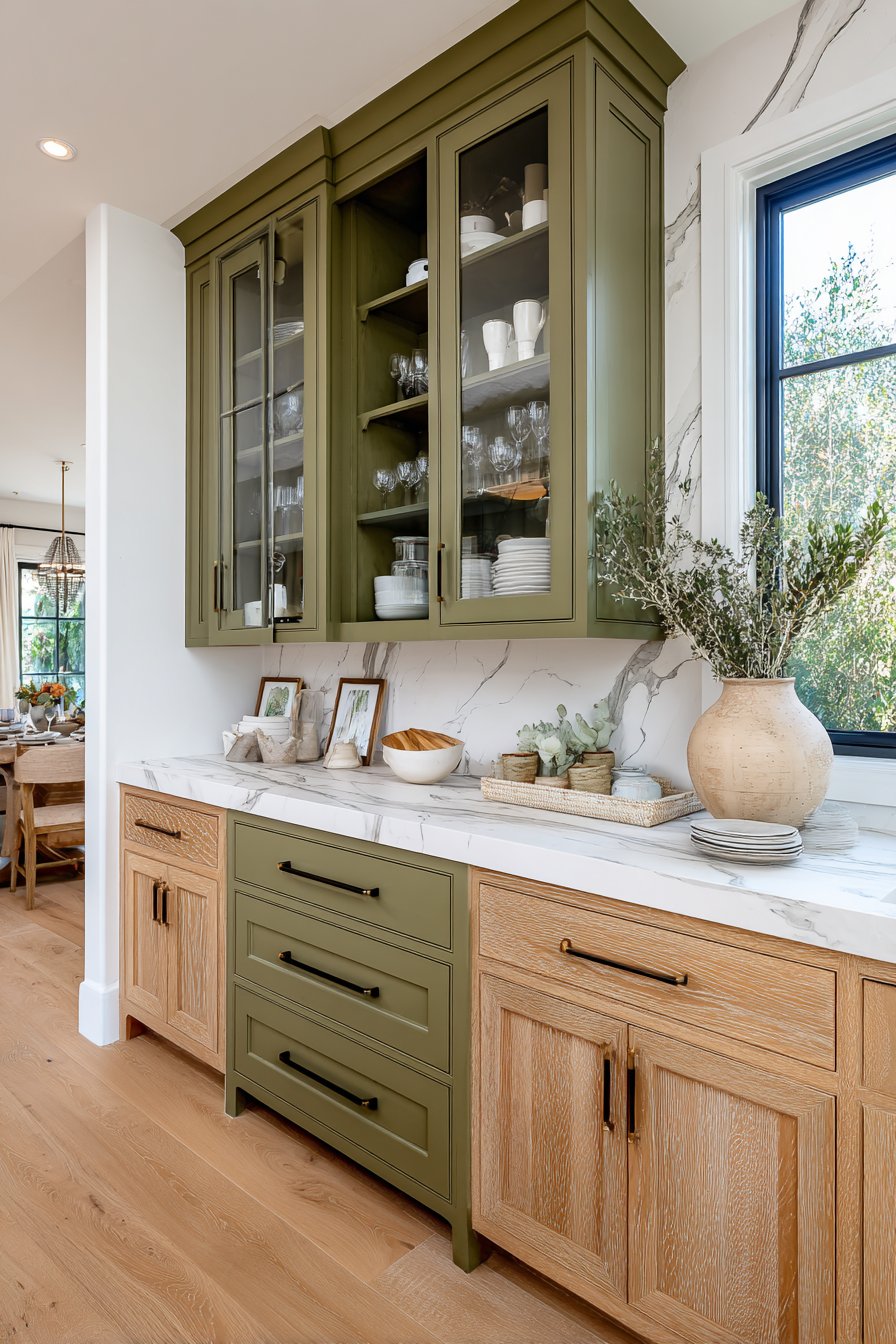
Soft natural daylight from windows illuminates the glass cabinet contents and reveals the green backing. The light creates depth within the cabinetry and highlights displayed items. This lighting effect transforms simple glass-front cabinets into display cases. The green backing makes white dishes and clear glass appear more vibrant.
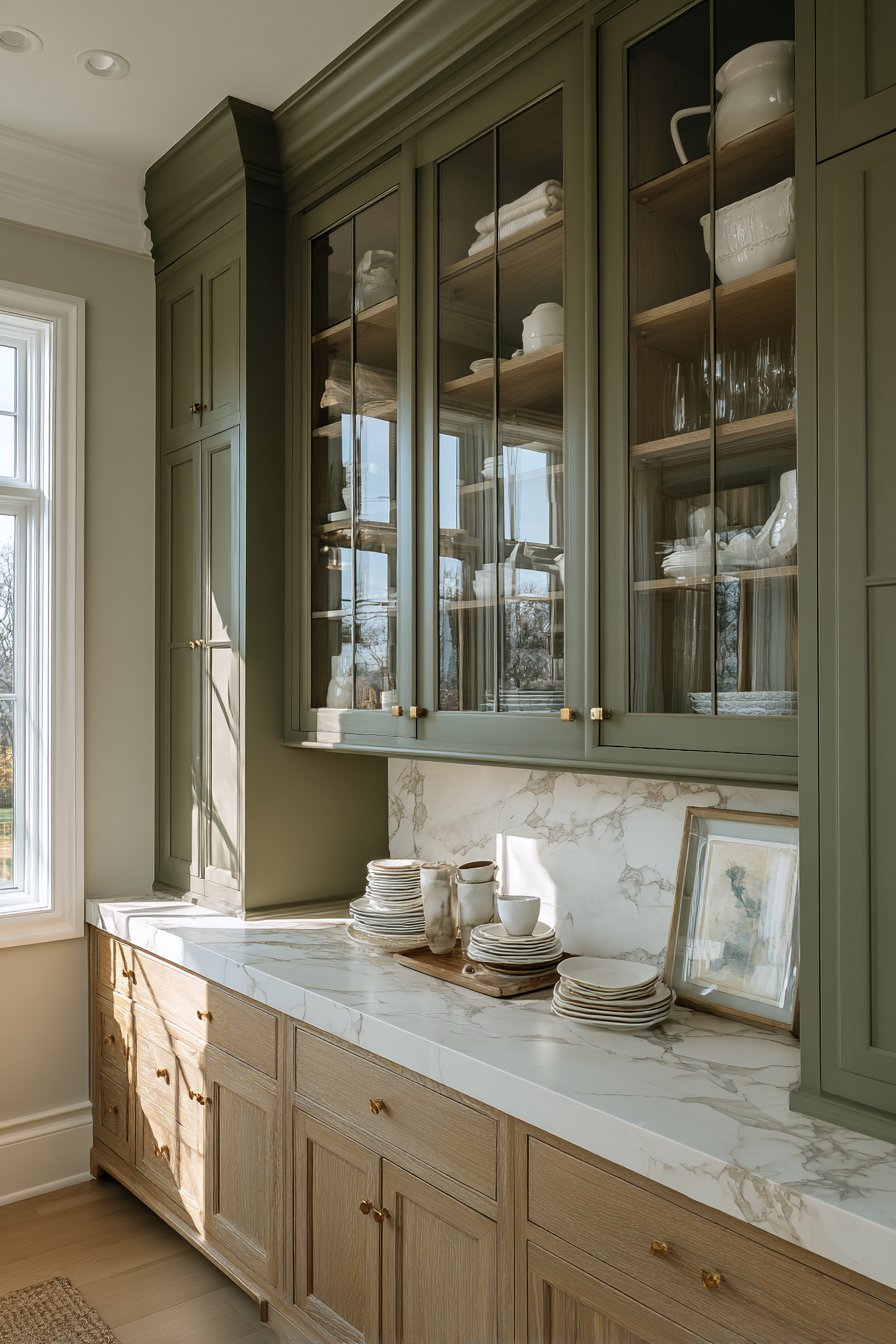
This design demonstrates how olive green can be incorporated subtly rather than boldly. The color creates depth and interest without dominating the visual field. The approach works perfectly for those who want color but prefer natural wood cabinets. The painted interior provides flexibility to change color easily if desired.
Key Design Tips:
- Paint only the interior backs of glass-front cabinets in olive green for subtle color
- Keep cabinet frames in natural oak to maintain warmth and wood texture
- Display white dishware and clear glassware to create contrast against green backing
- Use marble countertops with grey veining to tie wood and green tones together
- Position cabinets to receive natural daylight that illuminates the interior color
14. Olive Green Linen Window Treatment
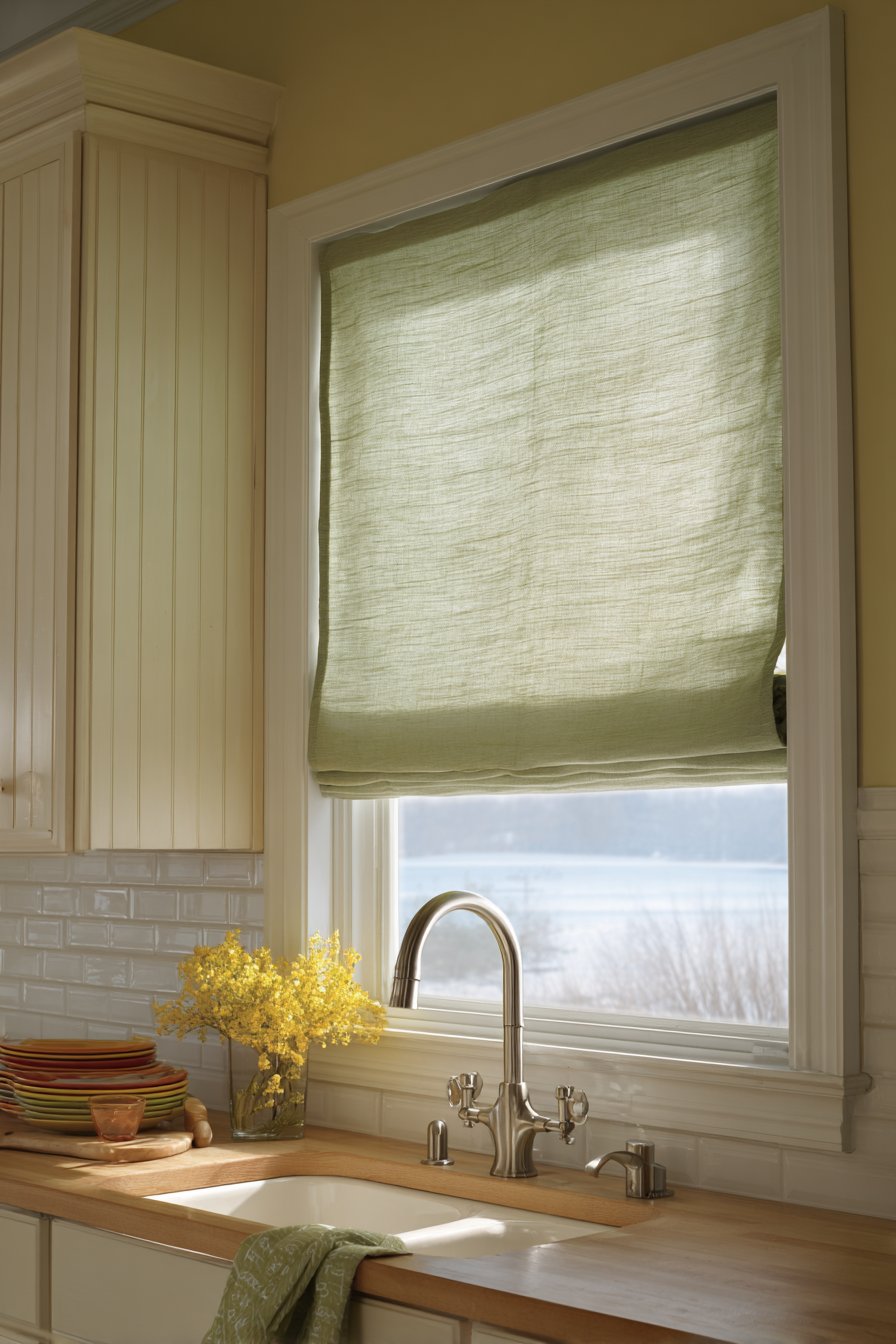
Natural linen Roman shades in soft olive green filter light beautifully while adding subtle color. The natural texture visible in the linen weave creates organic interest. The window treatment frames a farmhouse sink with gooseneck faucet in brushed nickel. White beadboard backsplash surrounds the window and provides bright contrast against the green fabric.
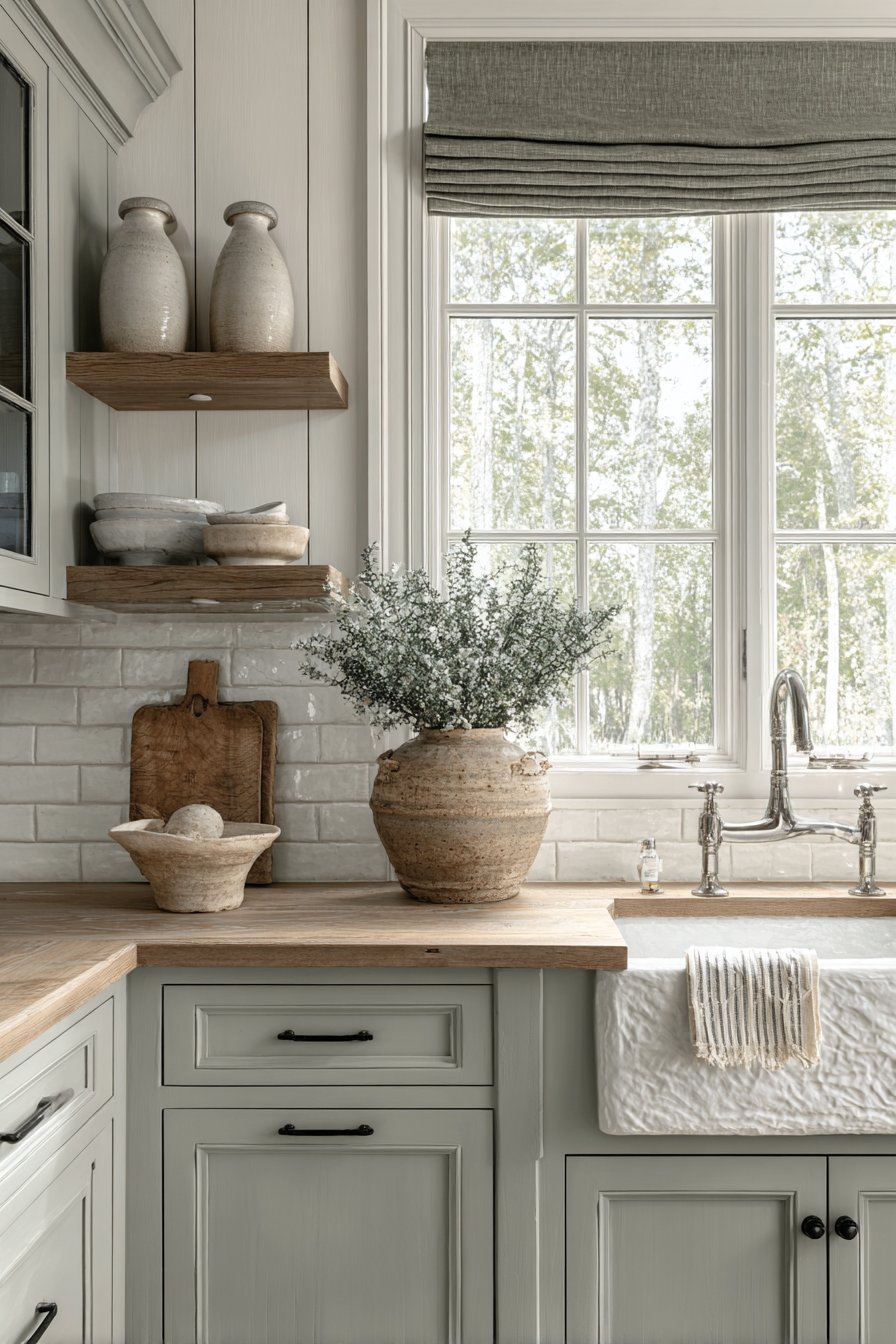
Natural wood countertops add warmth and connect to the organic quality of the linen. Cream-colored cabinets create a neutral foundation that allows the window treatment to shine. Morning light filtering through the linen fabric creates a soft green glow throughout the space. The translucent quality of linen makes light transmission beautiful rather than blocking.
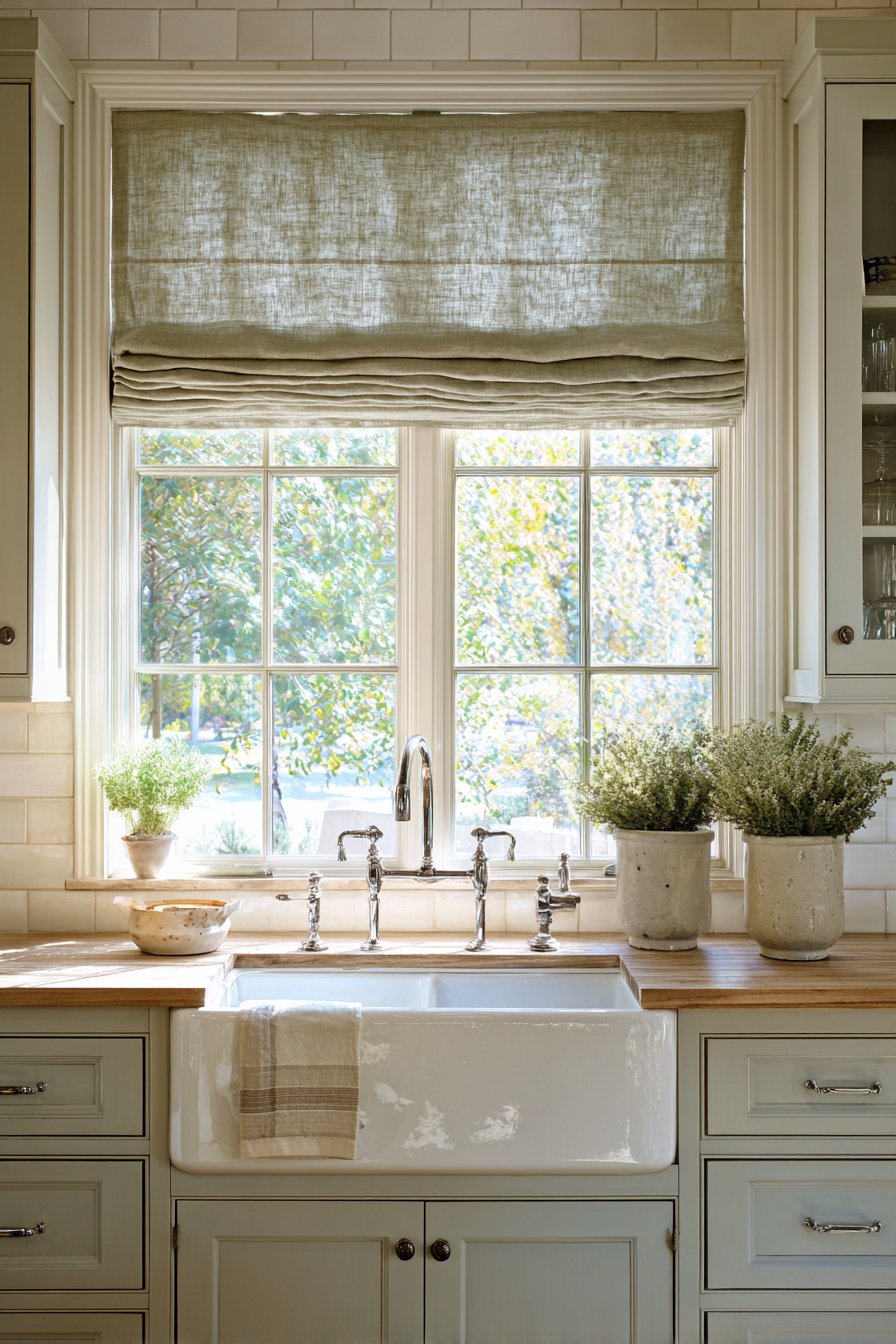
The fabric texture becomes particularly visible when backlit by natural daylight. The irregular weave pattern typical of natural linen adds handcrafted appeal. This detail elevates the window treatment beyond simple colored fabric. The natural fiber irregularities prevent the shade from looking mass-produced or generic.
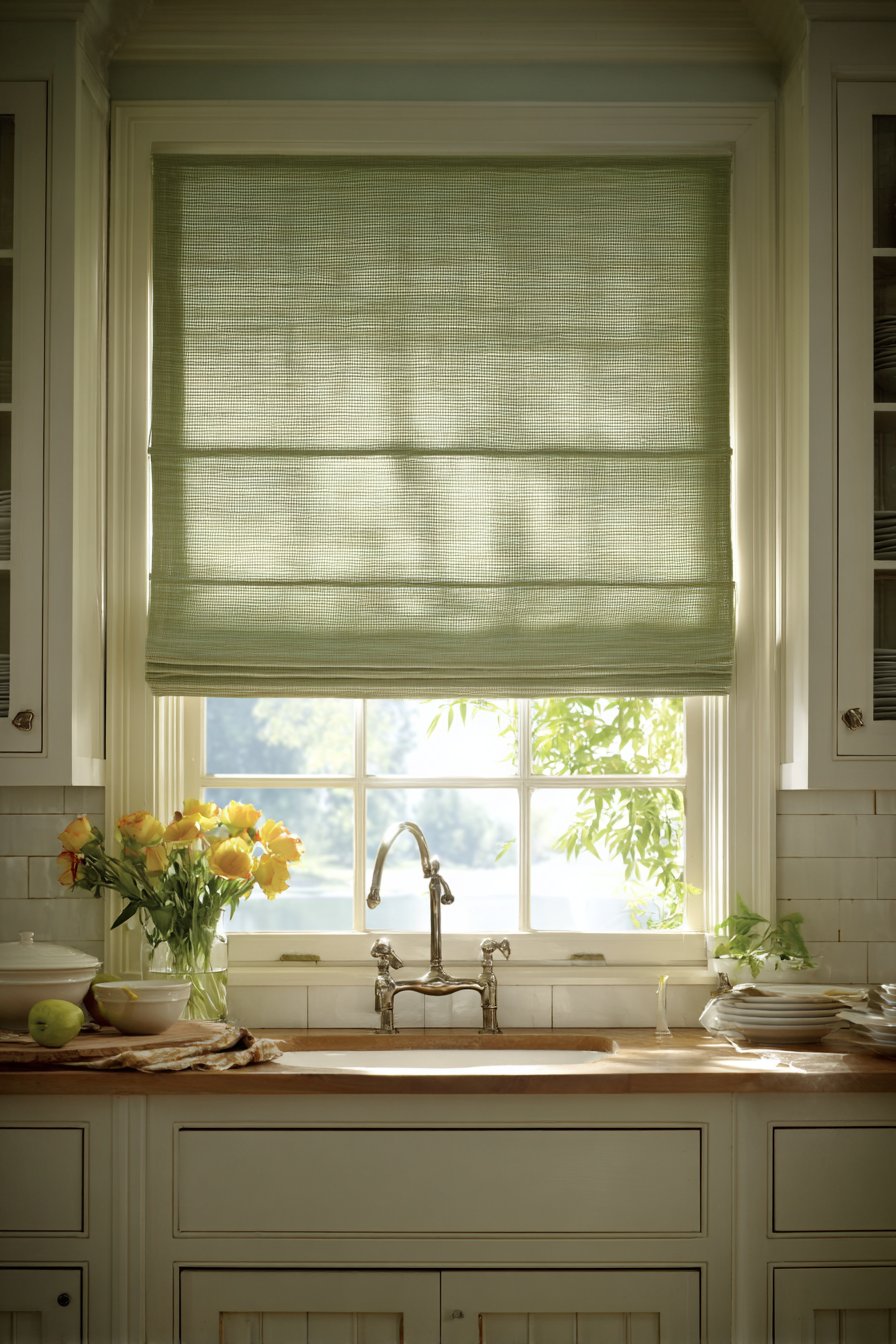
This approach demonstrates how textiles can introduce olive green in functional and beautiful ways. The window treatment serves practical purposes while contributing to the overall design. The linen material adds softness to a room full of hard surfaces. The green glow created by filtered sunlight enhances the entire space with gentle color.
Key Design Tips:
- Choose natural linen Roman shades in soft olive green for subtle color and texture
- Position shades at sink windows where backlighting will highlight the fabric weave
- Use white beadboard backsplash to create bright contrast around the window
- Select brushed nickel faucet to coordinate with the soft green and neutral palette
- Appreciate how morning light filtering through linen creates atmospheric green glow
15. Olive-Grey Stained Hardwood Floors
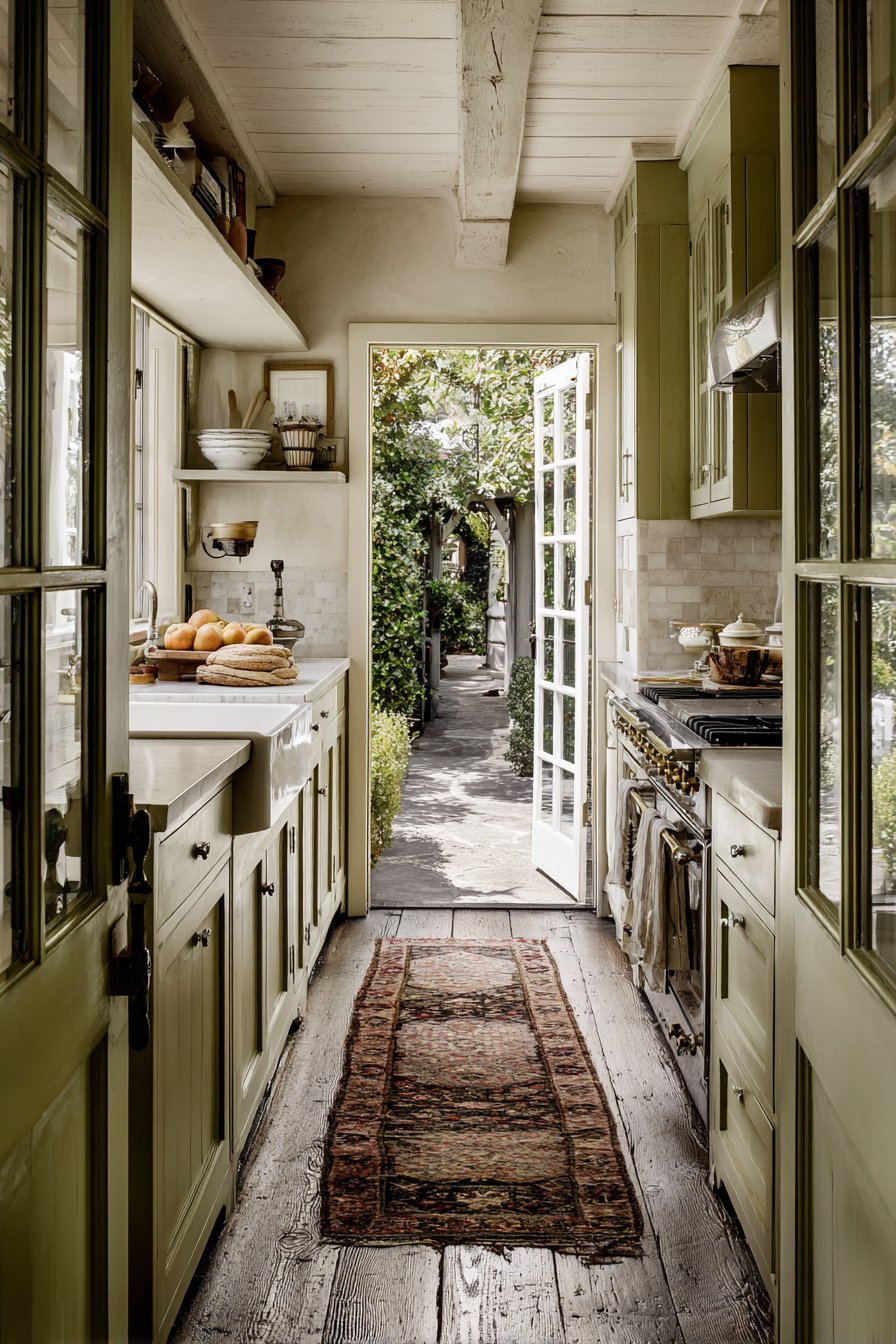
Painted hardwood floors in weathered olive-grey stain create an unexpected foundation for the kitchen. The semi-transparent finish allows natural wood grain to show through beautifully. This floor treatment provides grounding color while maintaining wood texture and authenticity. The unique approach sets this kitchen apart from typical neutral flooring choices.
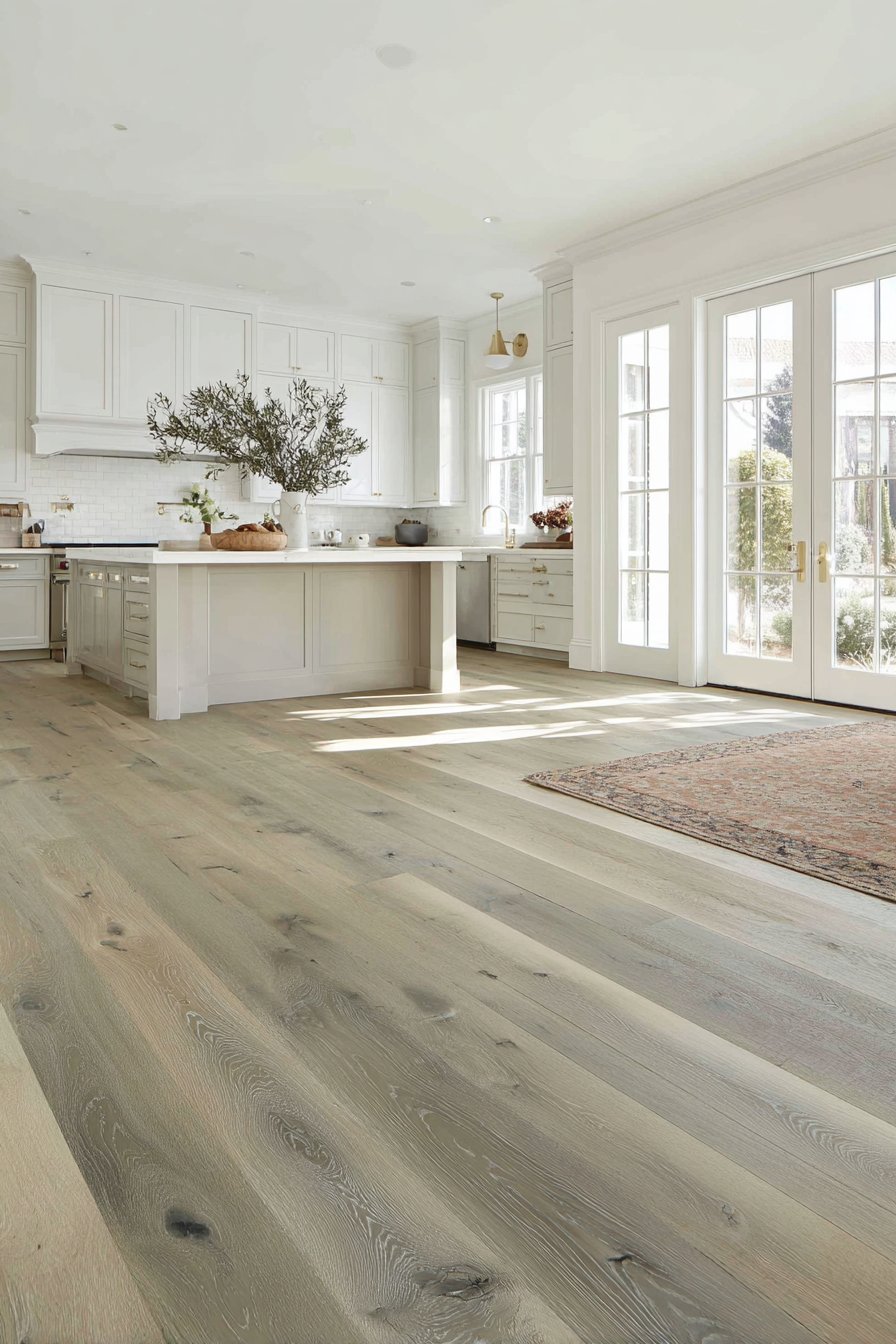
Cream-colored Shaker cabinets and white subway tile backsplash keep upper elements light and bright. The light cabinetry prevents the green floor from making the space feel dark. A vintage Persian rug in rust and olive tones defines the prep area and adds softness. The rug colors connect perfectly with the floor stain.
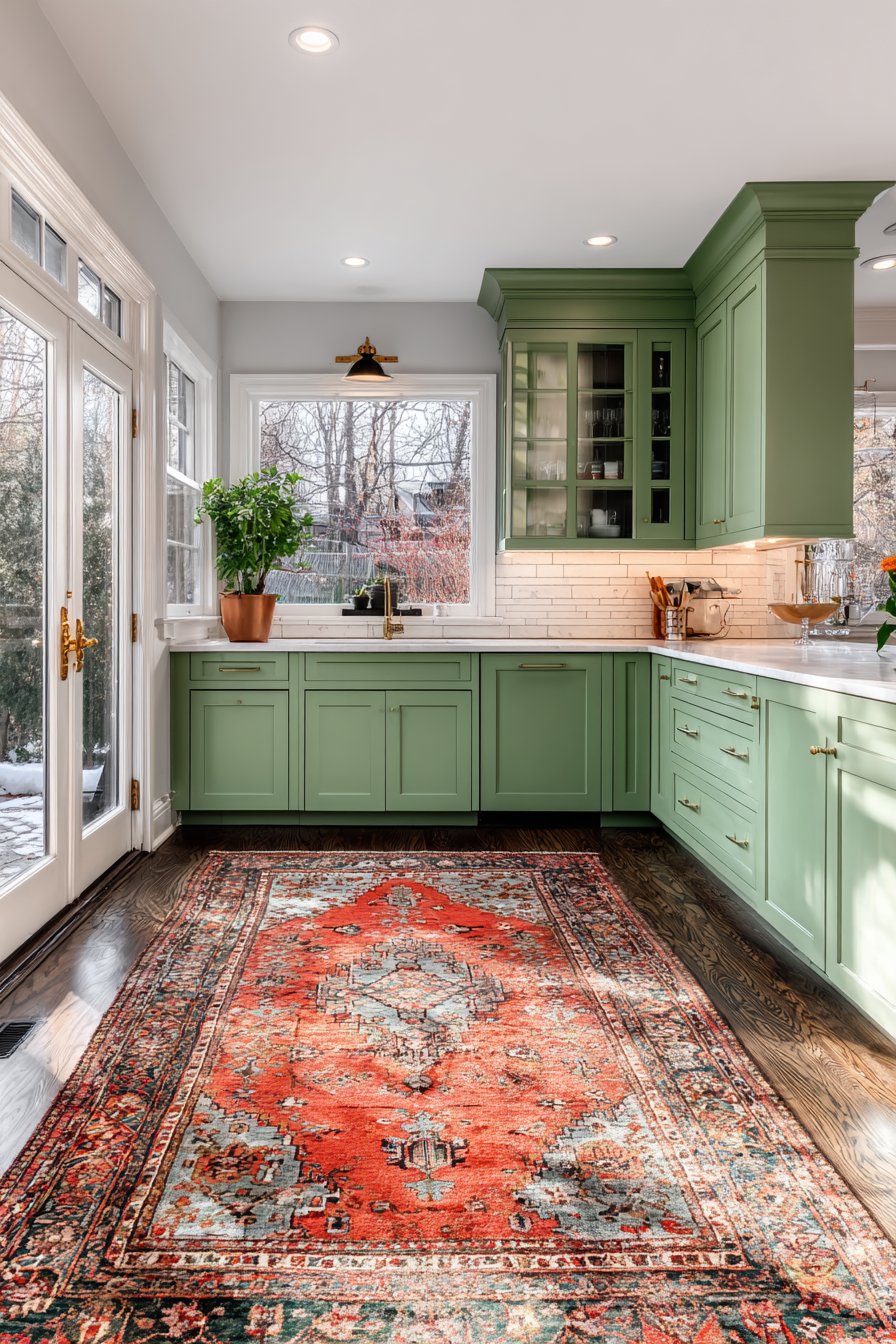
Natural light from French doors leading to a garden highlights the floor’s dimension and wear patterns. The illumination reveals the wood grain visible beneath the colored stain. Authentic wear patterns add character that new finishes cannot replicate. The connection to an outdoor garden space extends the natural, organic feeling.
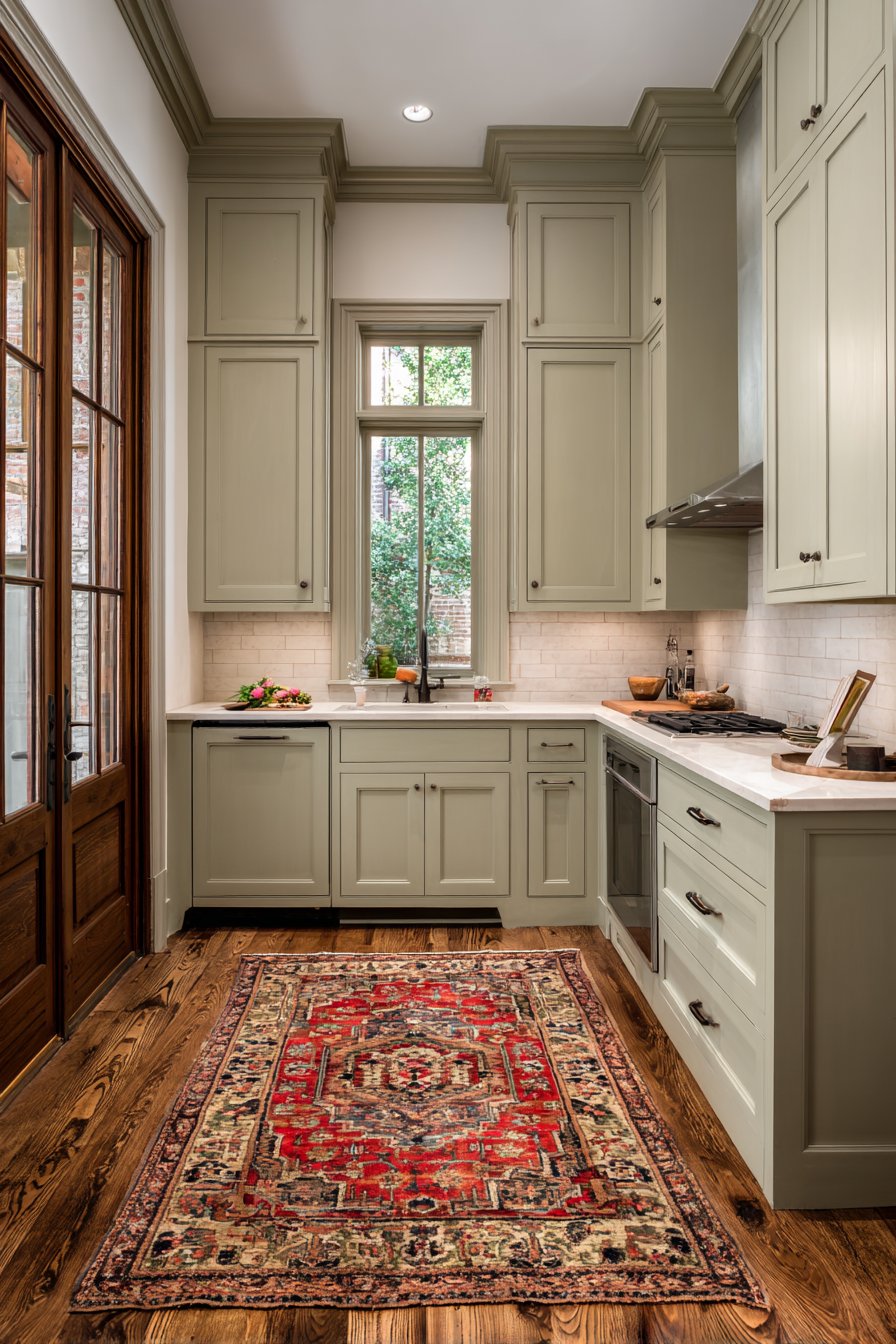
This bold floor treatment demonstrates confidence in unique design choices. The olive-grey stain creates a one-of-a-kind kitchen that cannot be replicated with standard materials. The floor becomes the foundation for the entire color scheme. This approach works best for those who embrace distinctive design over safe choices.
Key Design Tips:
- Stain hardwood floors in olive-grey for unique color while maintaining wood grain visibility
- Keep cabinets and upper elements light to prevent the green floor from darkening the space
- Layer a vintage Persian rug in complementary colors to define specific work zones
- Maximize natural light through French doors or large windows to highlight floor detail
- Embrace natural wear patterns in the floor finish as adding character and authenticity
16. Professional Olive Green Enamel Range
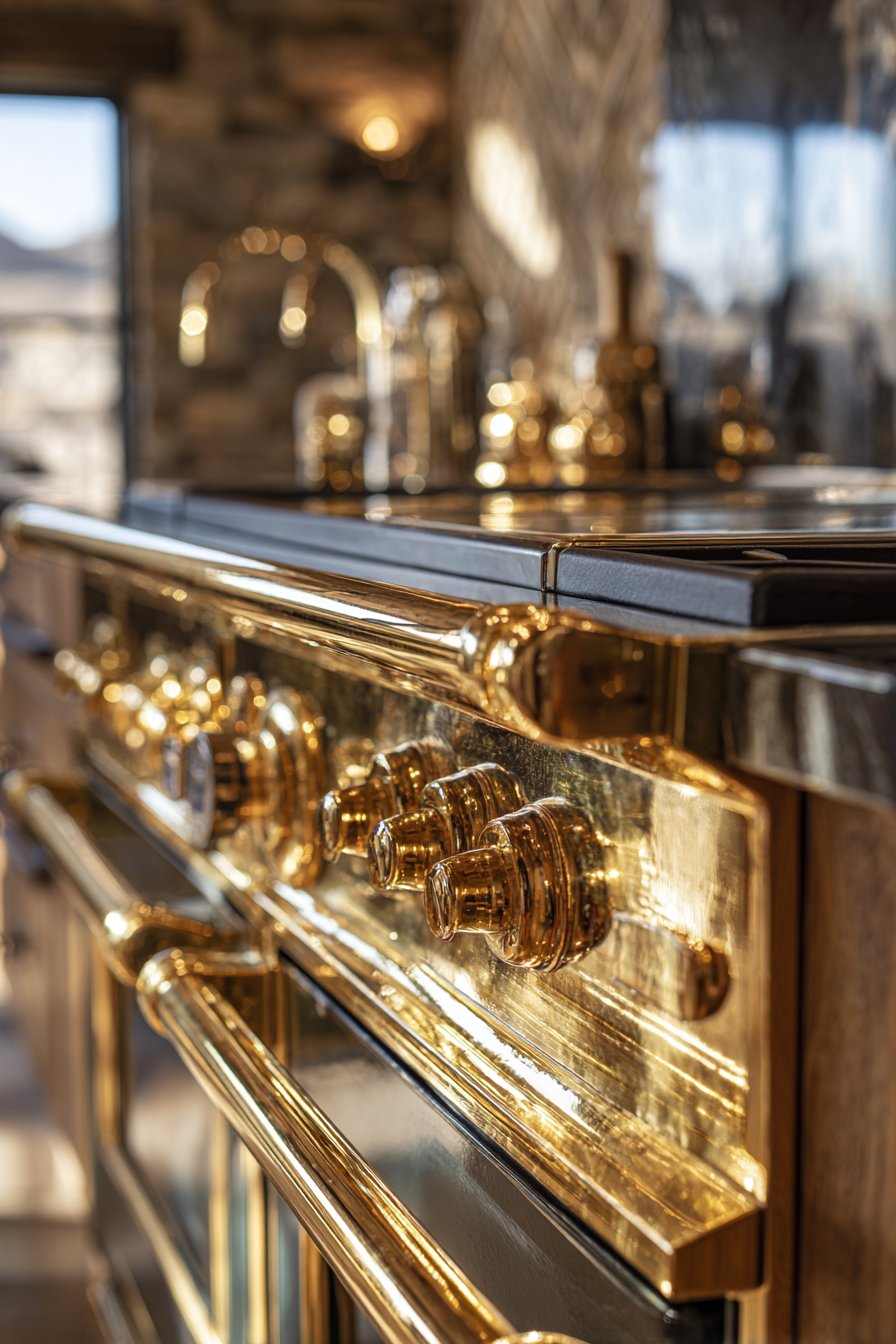
A professional-style range with olive green enamel finish becomes the kitchen’s crown jewel. The glossy enamel surface creates visual impact and timeless appeal. Brass accents on the range add luxury and warmth against the green enamel. The appliance functions as both cooking equipment and statement piece.
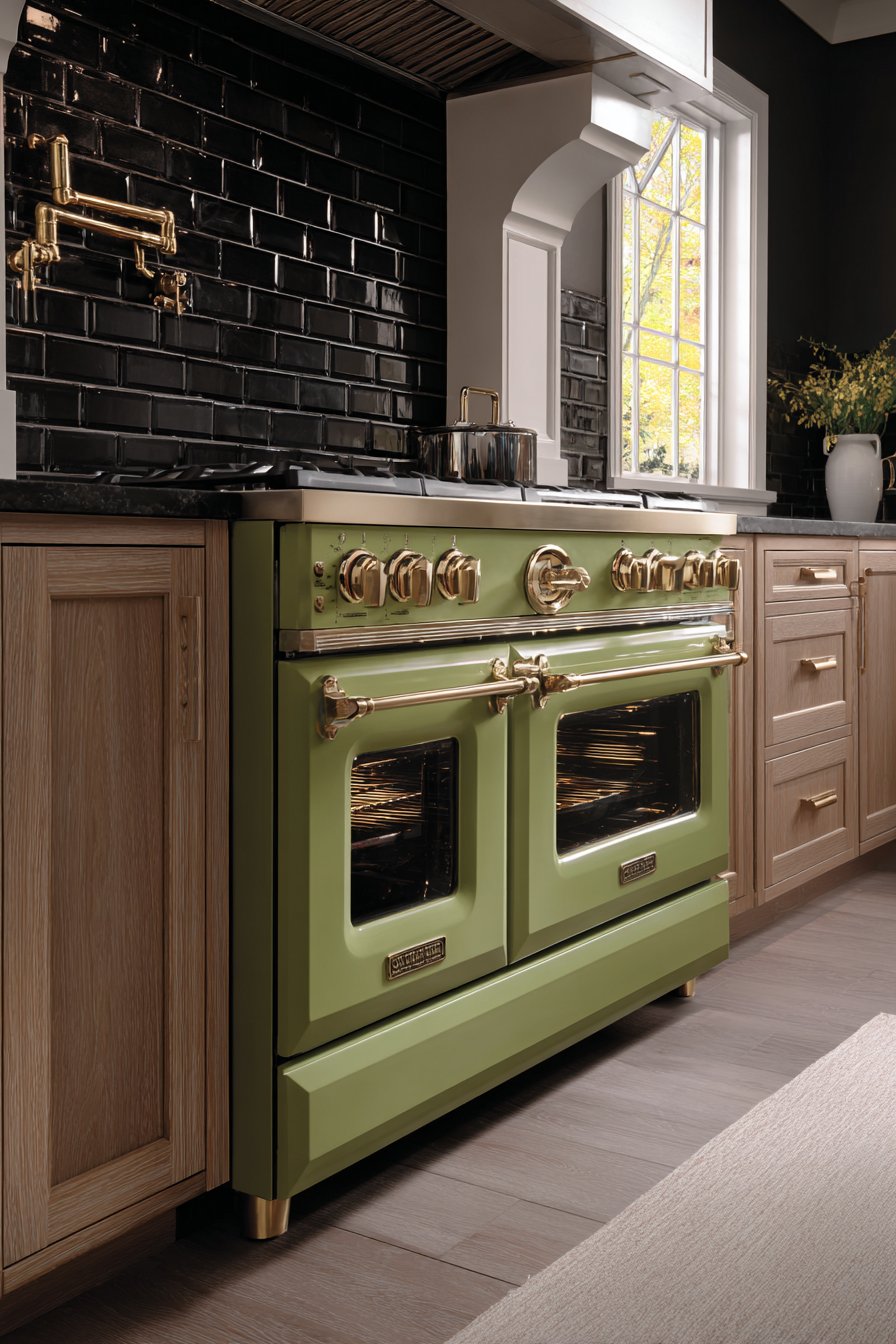
Natural walnut cabinets surrounding the range provide rich, warm contrast to the green enamel. The dark wood tones create sophistication and depth throughout the space. Honed black granite countertops add another layer of refined darkness. The combination of deep wood and dark stone creates drama balanced by the green range.
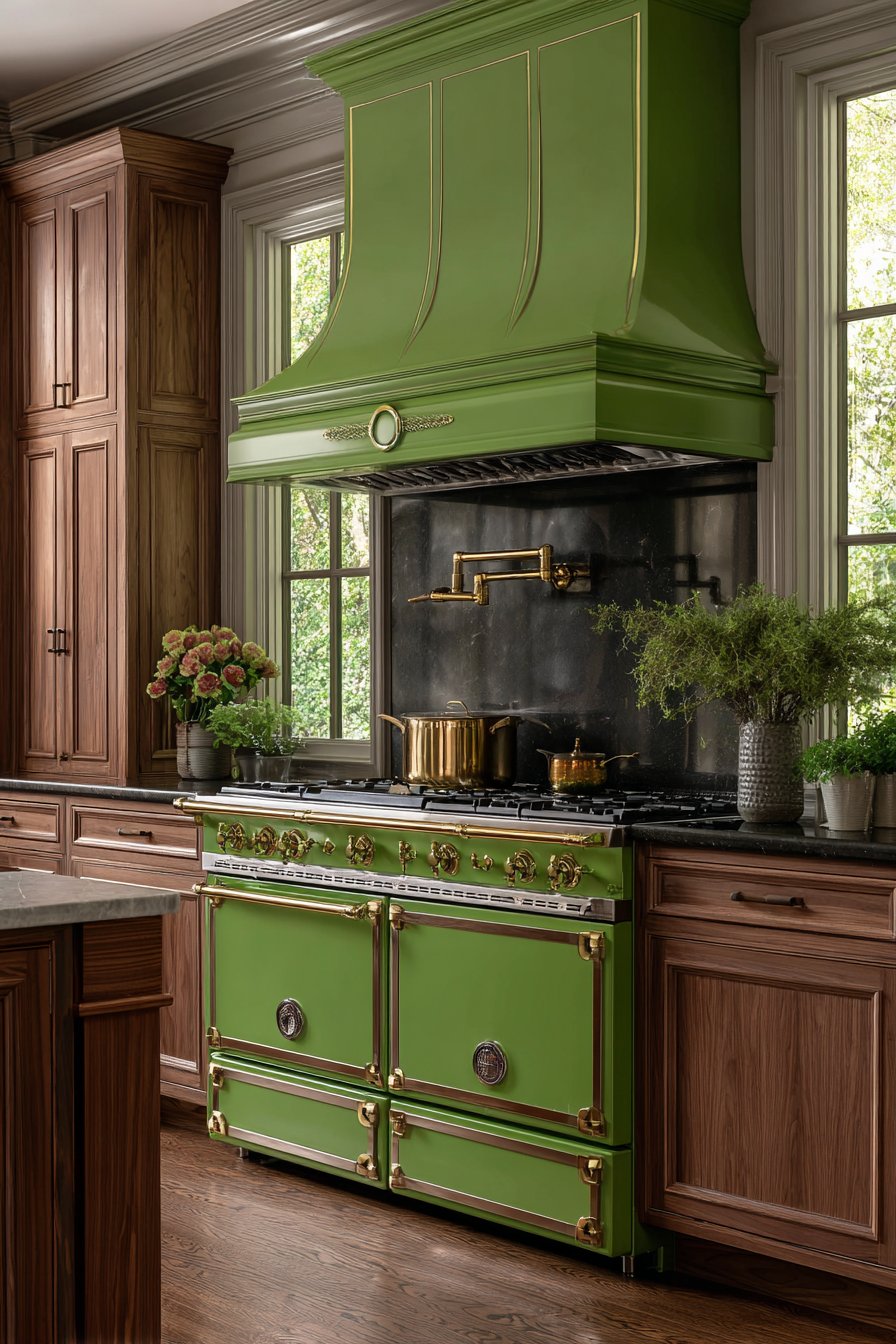
An unlacquered brass pot filler faucet develops natural patina over time above the range. The living finish changes and ages beautifully with use and exposure. Task lighting and natural window light combine to highlight the glossy enamel range surface. The light creates beautiful highlights on the curved surfaces of the professional appliance.
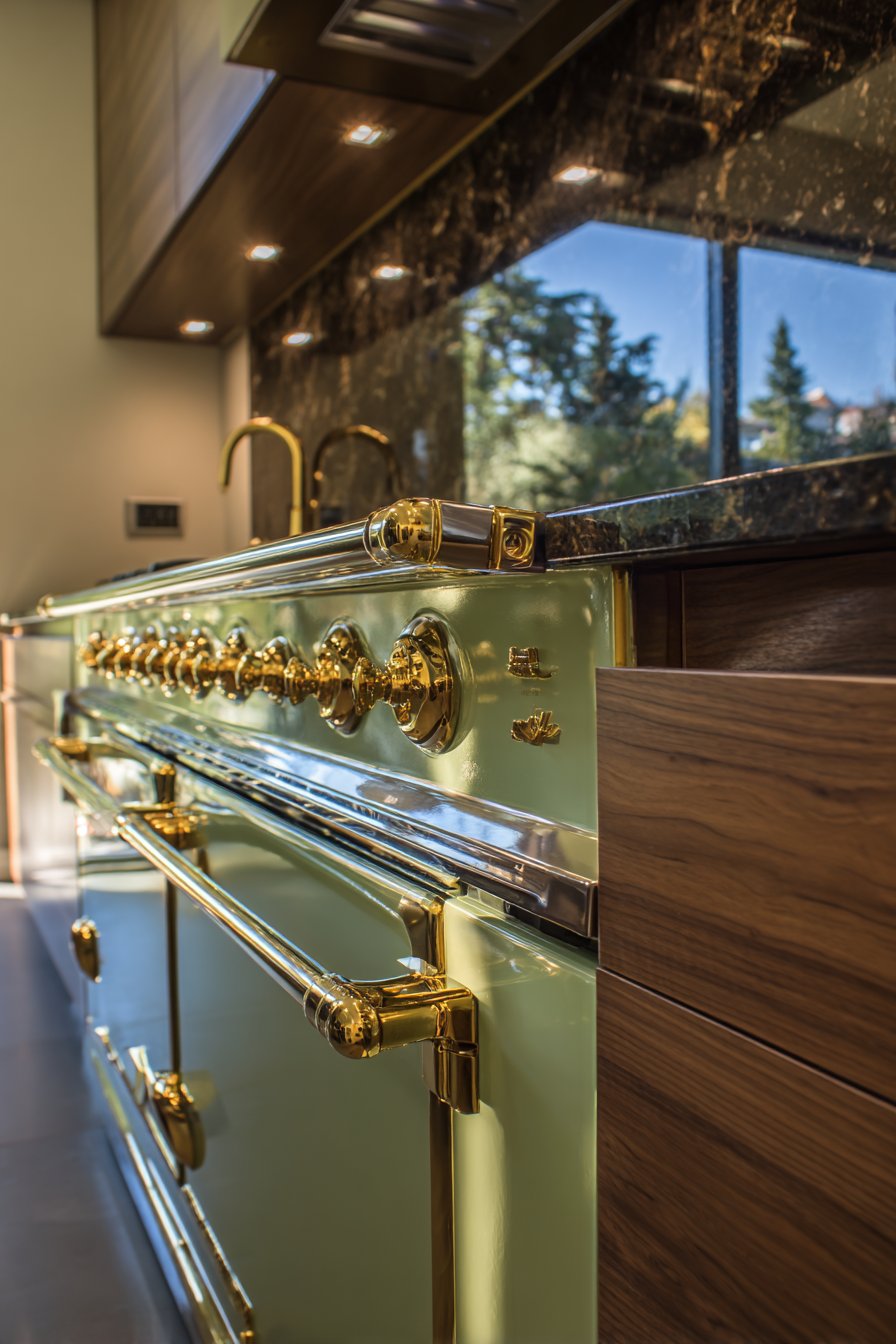
This kitchen demonstrates how a single colorful appliance can anchor an entire luxury design. The investment in a professional range with custom enamel finish creates lasting value. The green color elevates the appliance beyond mere function into art. The surrounding dark finishes allow the range to shine as the focal point.
Key Design Tips:
- Invest in a professional range with olive green enamel finish as the kitchen centerpiece
- Choose natural walnut cabinets for rich contrast against the green appliance
- Use honed black granite countertops to add sophisticated depth and drama
- Install unlacquered brass pot filler that develops authentic patina over time
- Combine task lighting and natural light to create highlights on glossy enamel surfaces
17. Lime-Washed Olive Exposed Brick
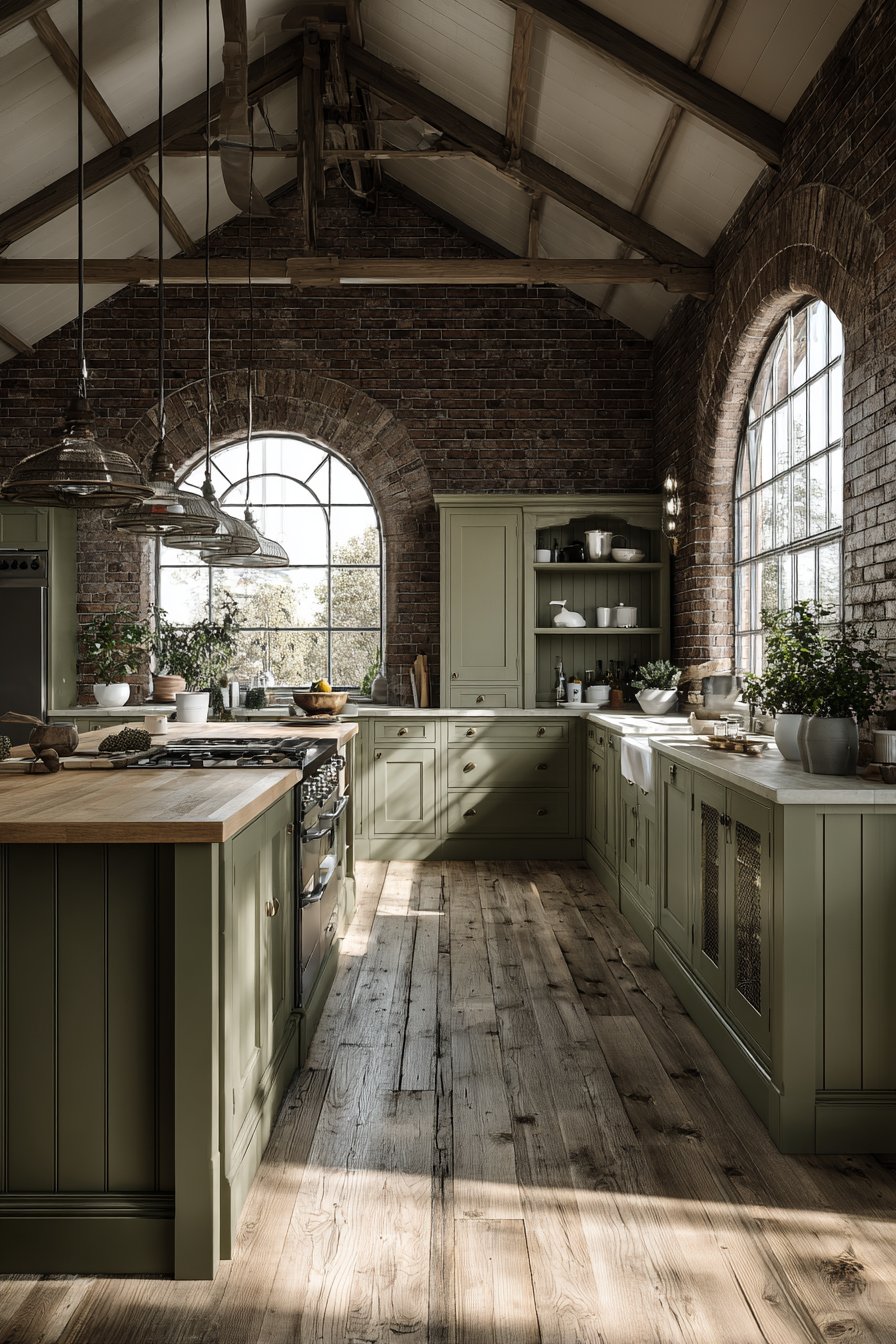
Exposed brick painted with lime-washed olive finish allows the brick texture to remain prominent. The wash technique creates translucent color that enhances rather than hides the brick. The textured surface adds architectural character and historical appeal. The olive color softens the industrial quality of exposed brick naturally.
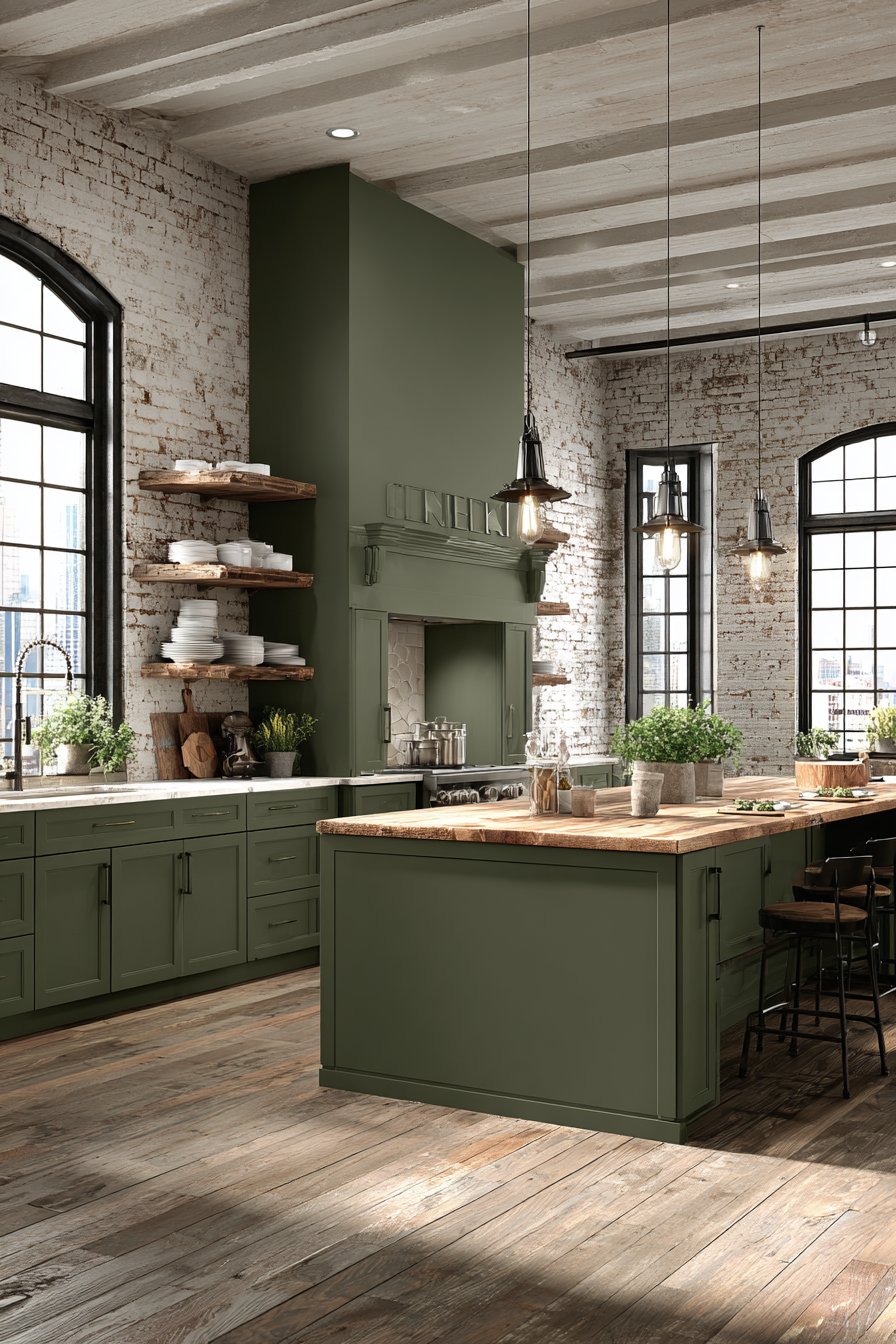
Open wooden shelving in reclaimed barn wood displays white ceramics and fresh potted herbs. The weathered wood adds warmth and rustic character against the painted brick. A large farmhouse table in natural pine serves as both kitchen island and dining surface. Industrial pendant lights with Edison bulbs provide ambient lighting with vintage appeal.
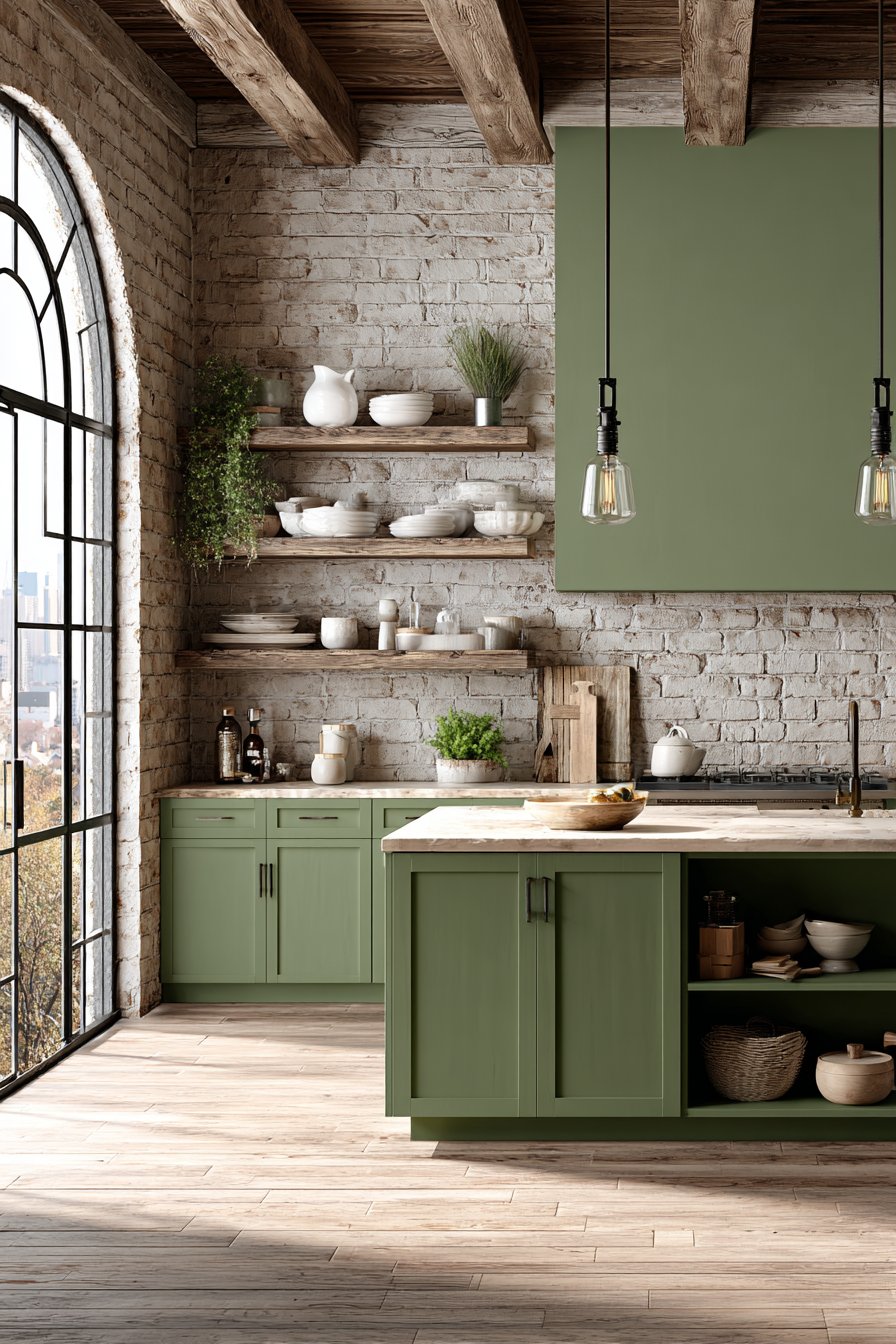
Large arched windows flood the space with natural daylight throughout the day. The abundant light emphasizes the textural quality of the lime-washed brick surface. The light reveals mortar lines and brick variations beneath the olive wash. This creates depth and dimension that flat walls cannot achieve.
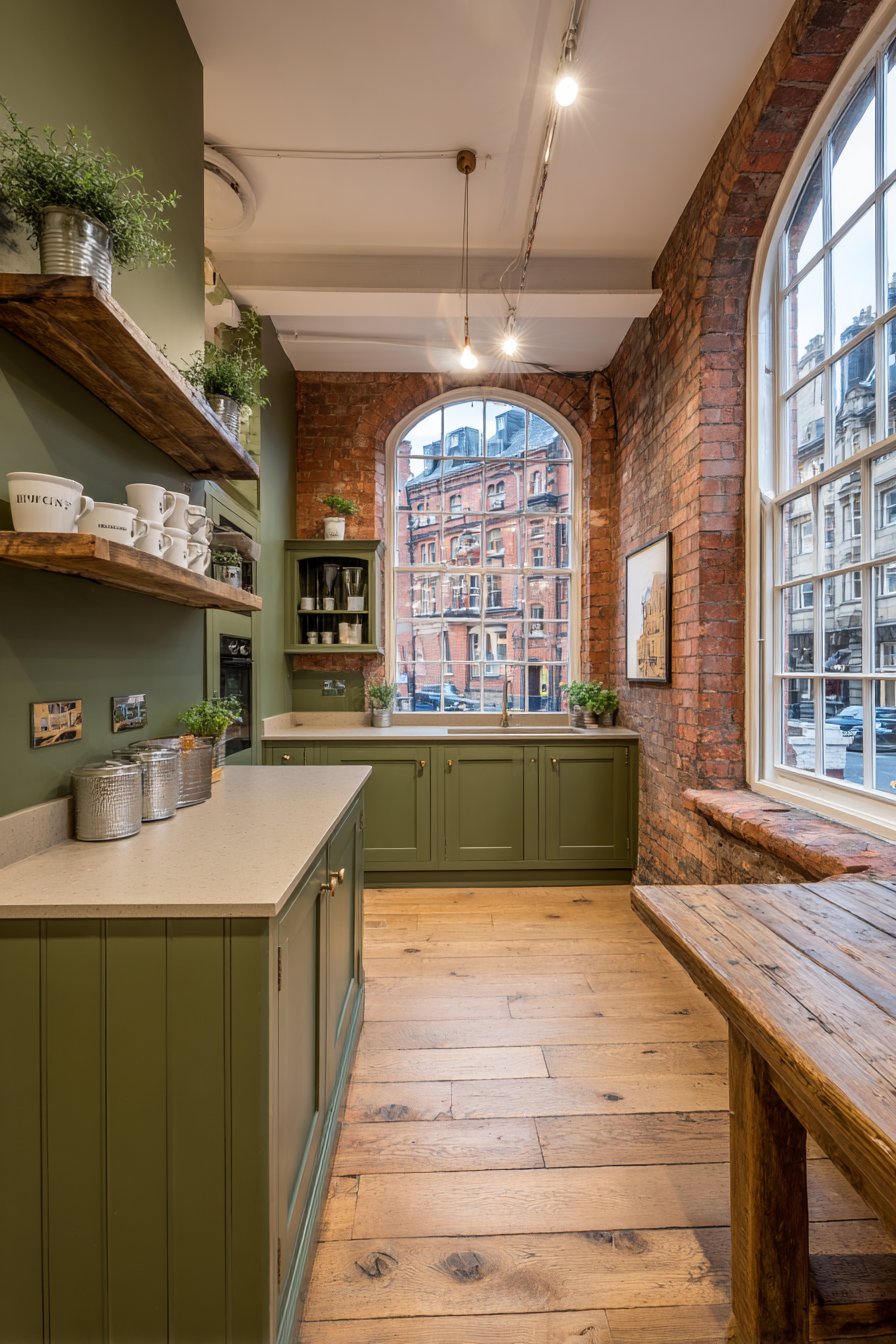
This kitchen captures rustic European aesthetic while feeling completely current. The lime wash technique honors traditional materials and methods. The olive color choice updates the look for contemporary tastes. The space feels authentic and collected rather than designed to a predetermined style.
Key Design Tips:
- Apply lime wash in olive green over exposed brick to add color while maintaining texture
- Install open shelving in reclaimed barn wood for rustic warmth and display space
- Use a large farmhouse table as a combination island and dining surface
- Choose industrial pendant lights with Edison bulbs for ambient lighting and character
- Maximize natural light through large arched windows to highlight brick texture and shadows
18. Hand-Painted Moroccan Tile Backsplash
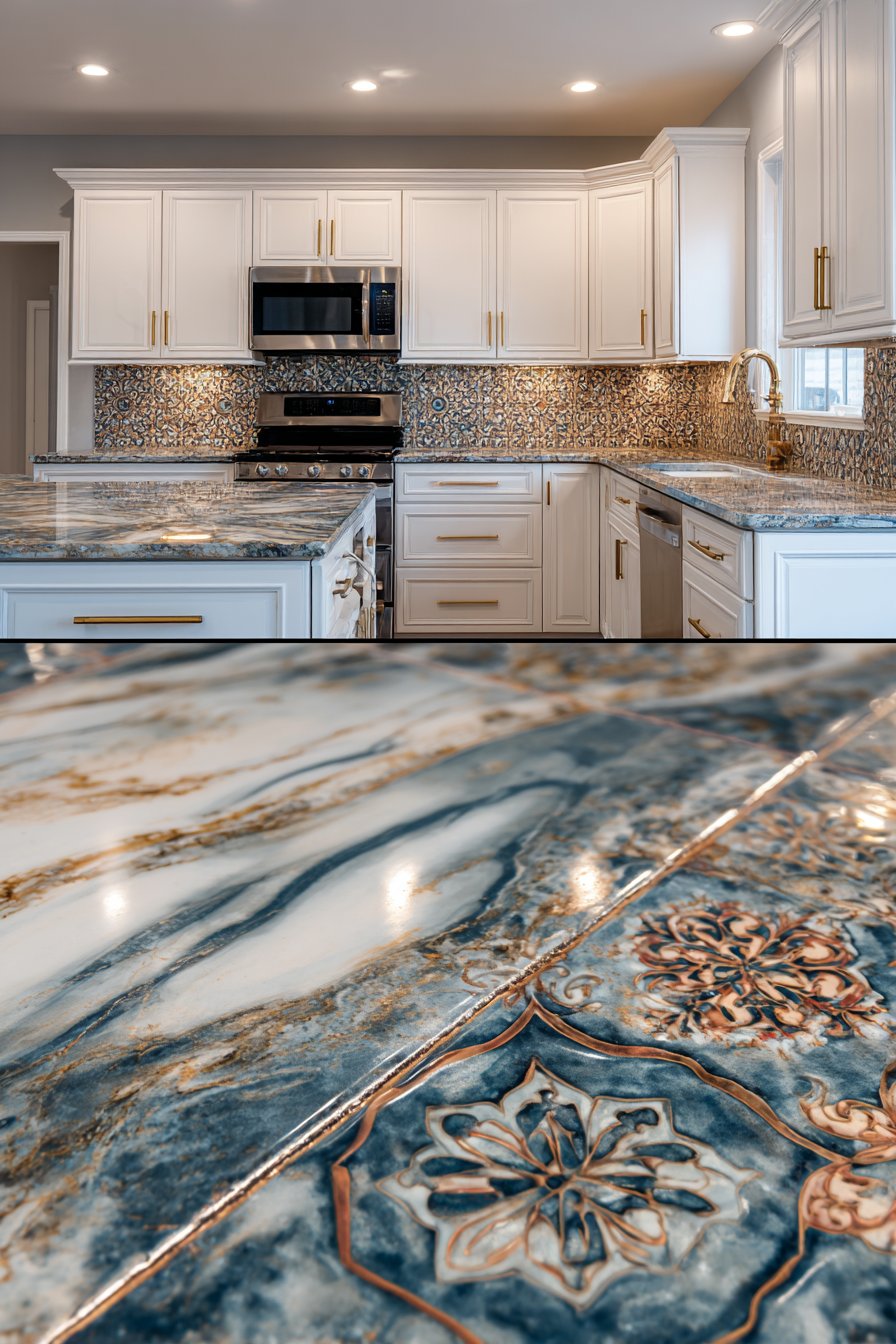
Custom tile backsplash with hand-painted Moroccan-inspired patterns incorporates olive green, cream, and gold tones. The intricate patterns create focal point interest and artisanal beauty. Each tile features slight variations from the hand-painting process. This creates a unique backsplash that cannot be exactly replicated.
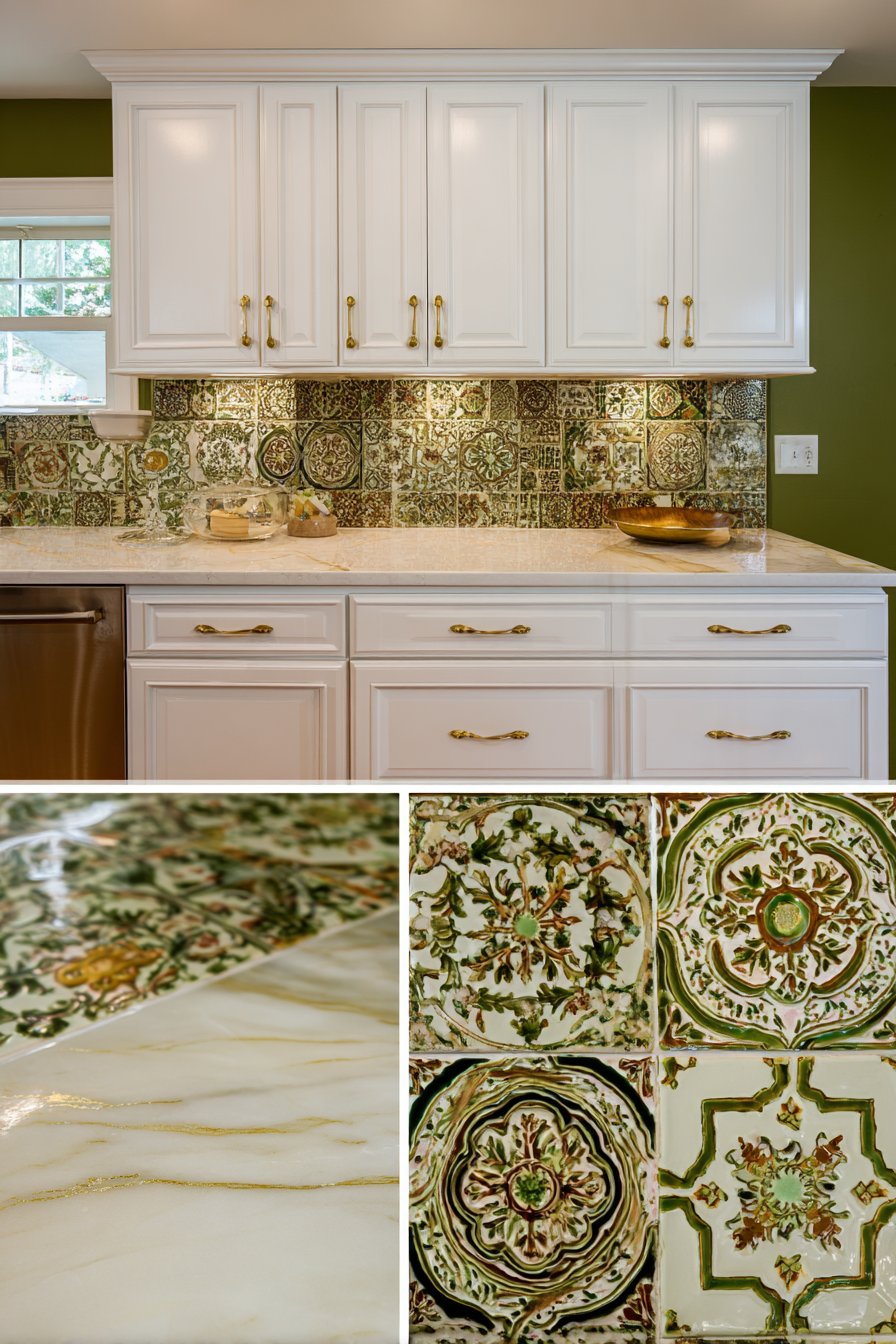
Simple white Shaker cabinets allow the ornate backsplash to command all visual attention. The minimal cabinet style provides necessary simplicity against the complex tile patterns. Brass hardware on the cabinets echoes the gold tones in the decorative tiles. Marble countertops with gold veining continue the luxurious material palette throughout.
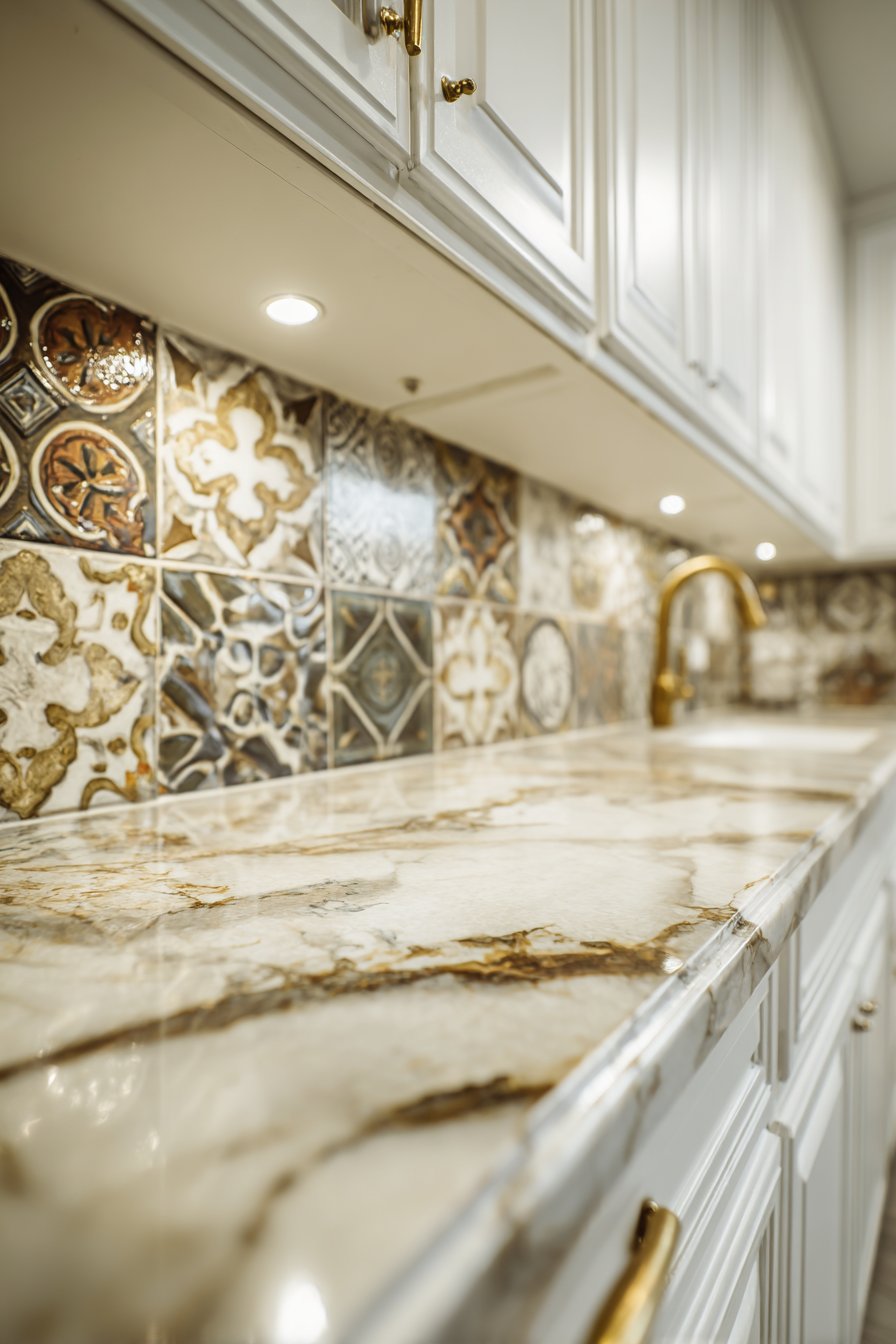
Under-cabinet lighting illuminates the intricate tile patterns and reveals the glazed surface quality. The focused illumination shows the dimensional relief in the tile design. The glossy glaze reflects light beautifully and creates shimmer across the backsplash. Different lighting conditions reveal new aspects of the hand-painted details.
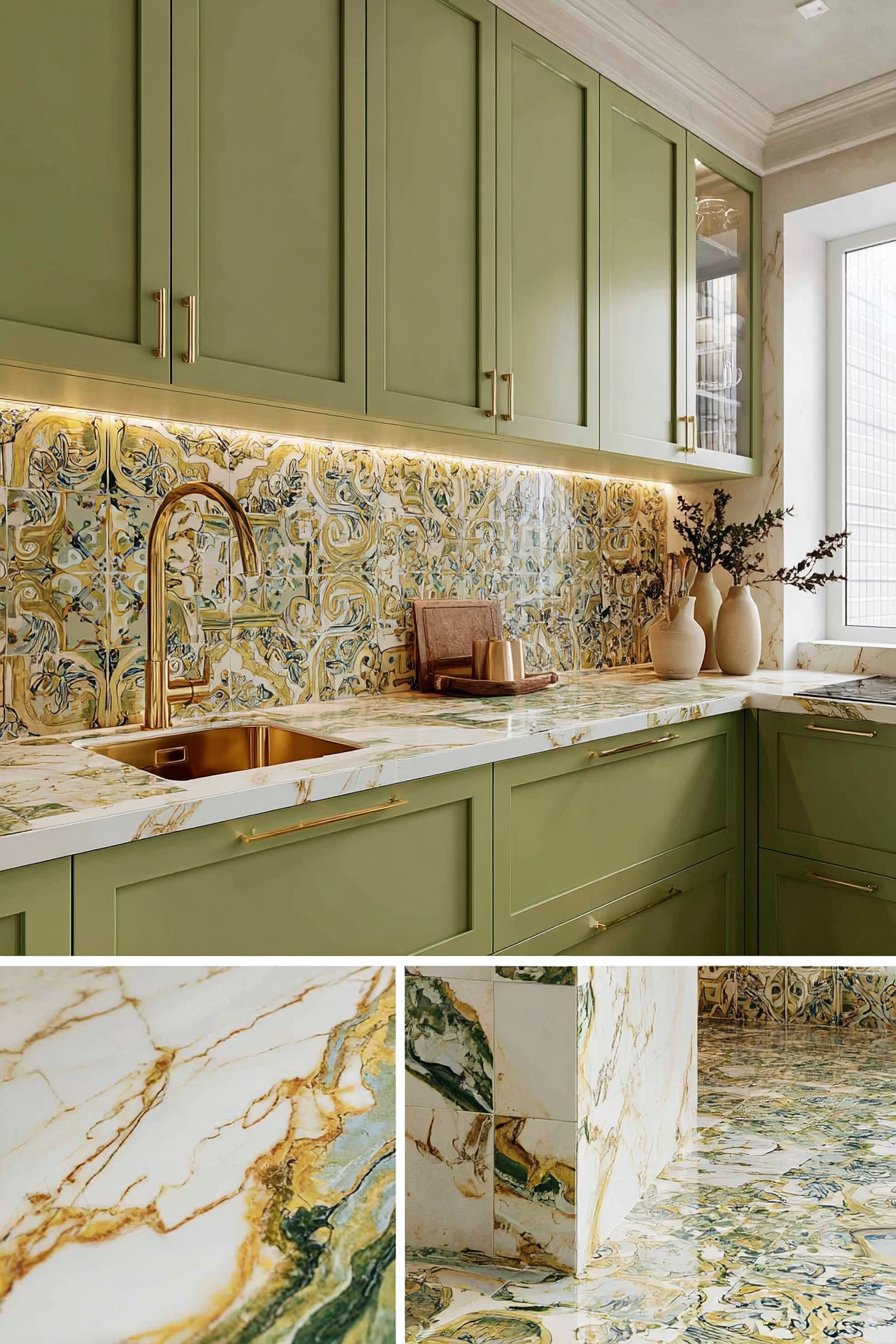
This kitchen demonstrates how Moroccan design influence can feel fresh and contemporary. The hand-painted tiles provide luxury through craftsmanship rather than expensive materials alone. The olive green integrated into the pattern creates cohesion while adding earthiness. The backsplash becomes permanent artwork in the kitchen.
Key Design Tips:
- Invest in hand-painted Moroccan tiles incorporating olive green, cream, and gold
- Keep cabinets simple and white to let ornate tile patterns be the focal point
- Choose brass hardware that echoes the gold tones in the decorative tilework
- Install under-cabinet lighting to illuminate tile patterns and create shimmer on glazed surfaces
- Select marble with gold veining to continue the luxurious material story
19. Transitional Olive and Oak Kitchen
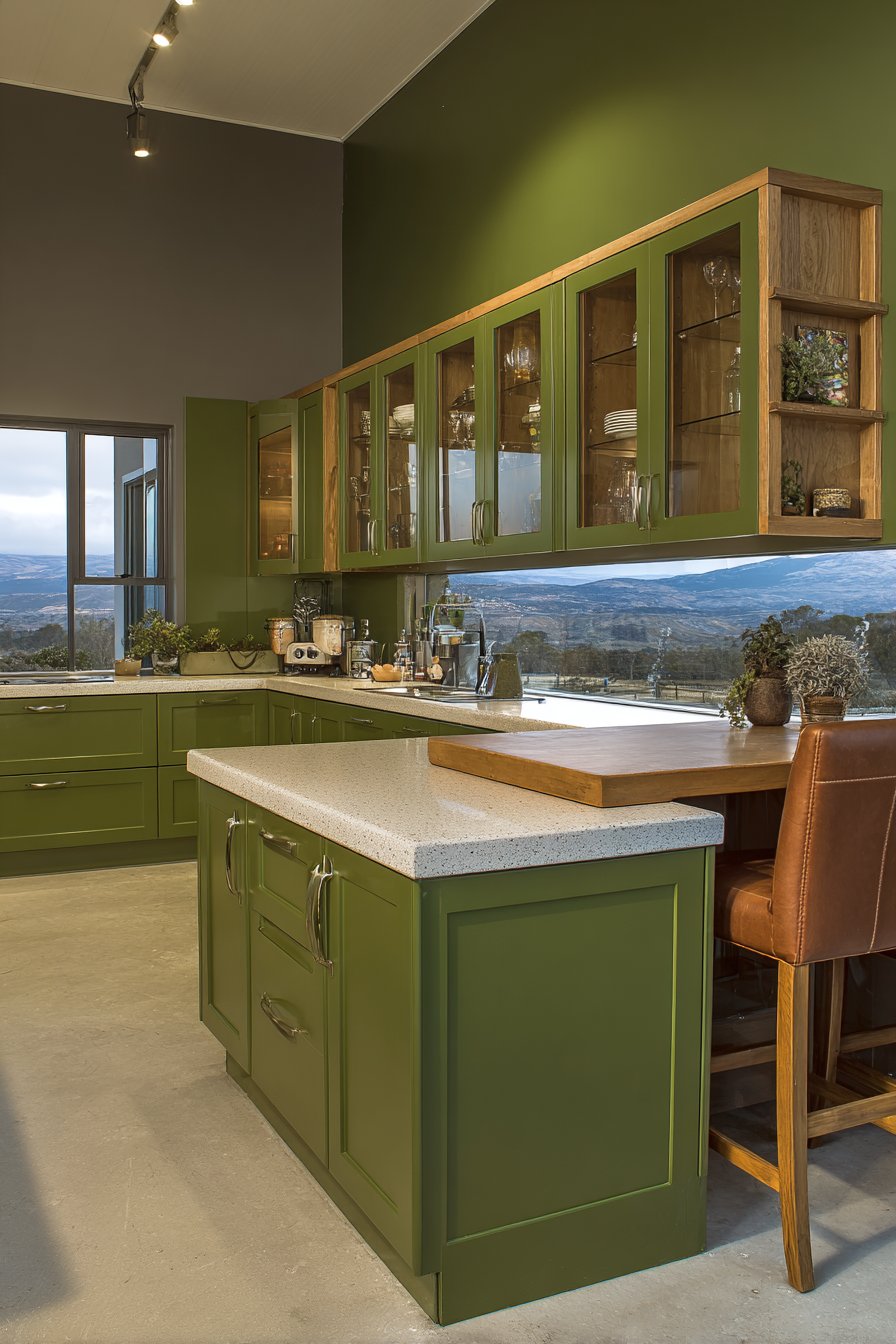
Deep forest-olive painted lower cabinets create bold foundation while upper cabinets feature glass fronts with natural oak frames. This transitional style combines traditional cabinet design with industrial-inspired materials. The mix of painted and natural wood creates visual interest and balance. Glass upper doors maintain openness while providing storage.
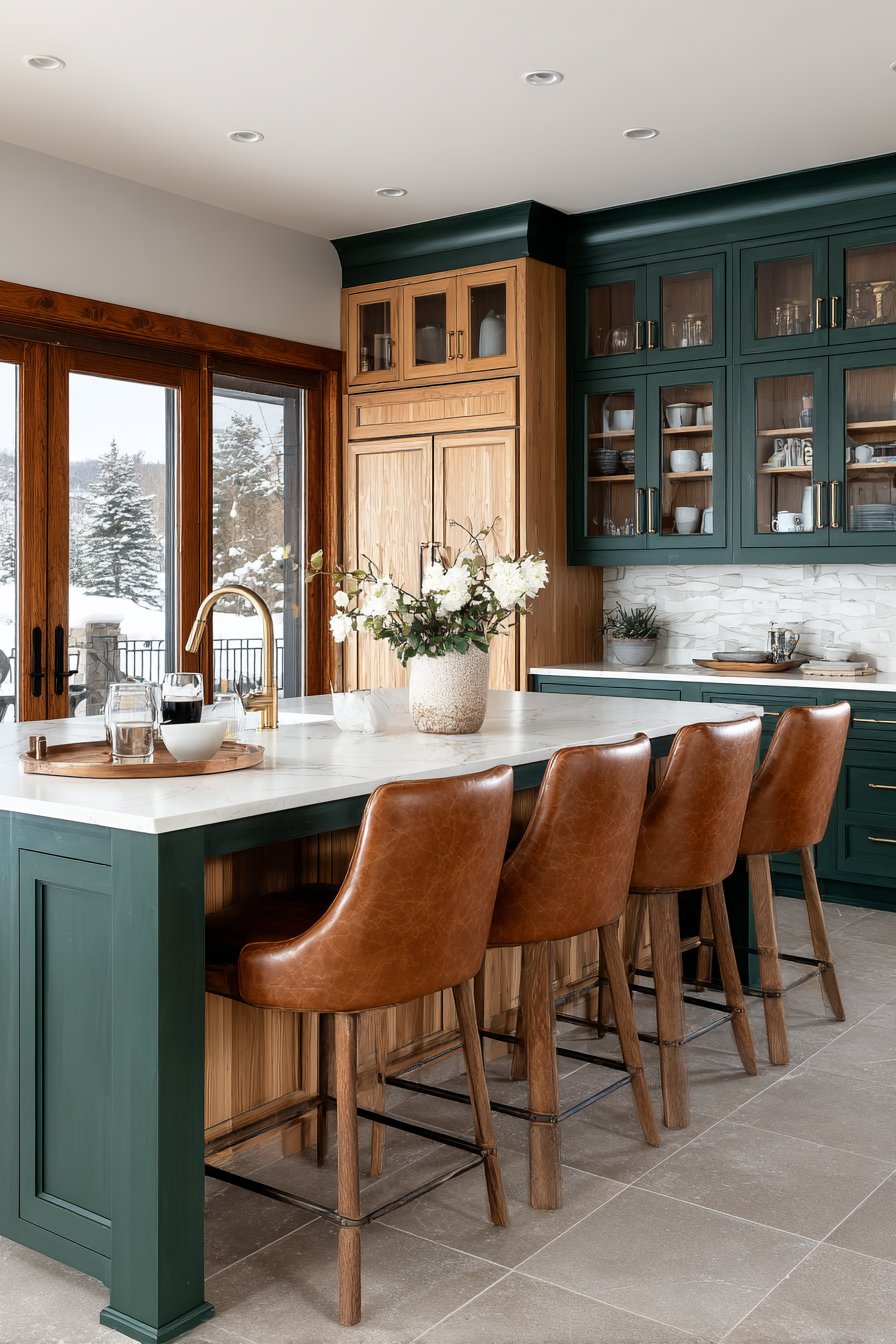
Concrete countertops with visible aggregate detail provide industrial contrast to traditional cabinet styling. The textured surface adds contemporary edge and practical durability. Leather bar stools in cognac brown at the breakfast bar introduce warmth and luxury. The rich brown leather complements both the olive green and natural oak beautifully.
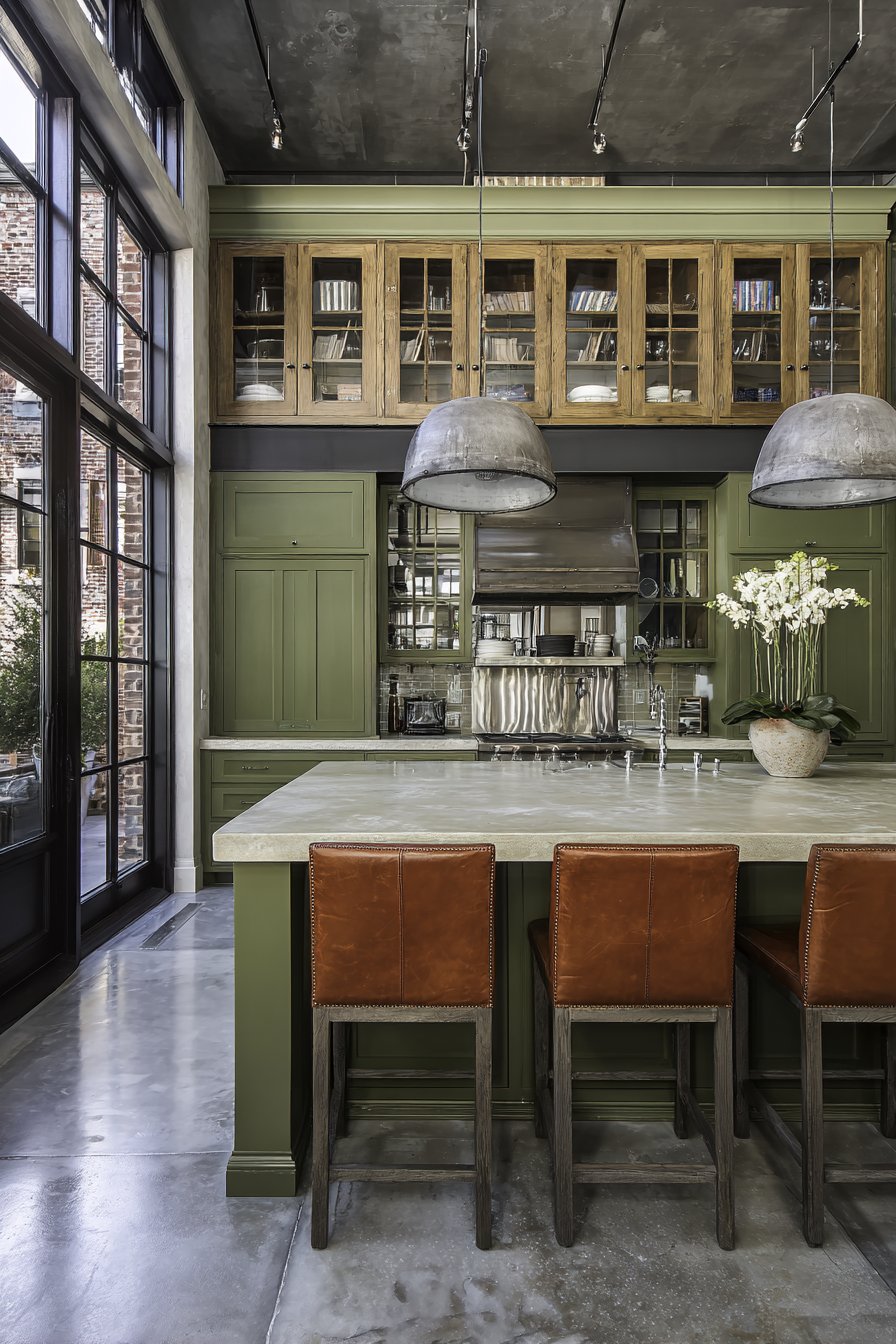
Large industrial windows provide abundant natural light that emphasizes the rich cabinet color depth. The windows become architectural features that define the space. Natural illumination reveals the matte paint finish on lower cabinets throughout the day. The light also highlights the textured concrete surface and creates interesting shadows.
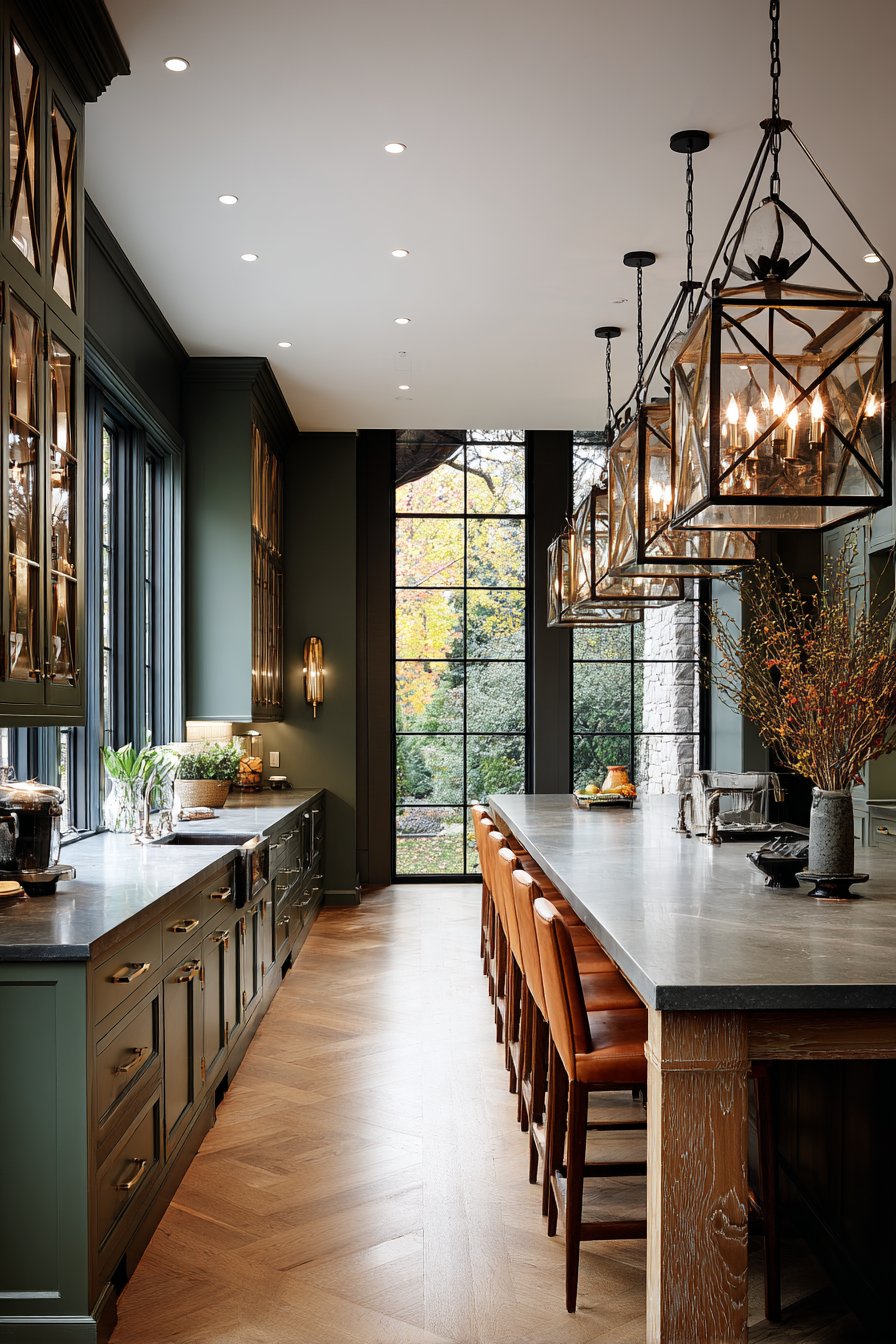
This kitchen successfully bridges traditional and industrial design aesthetics. The deep olive grounds the space while glass and concrete add contemporary elements. The combination feels collected and intentional rather than confused. The space demonstrates how mixing styles creates unique and personal kitchens.
Key Design Tips:
- Paint lower cabinets in deep forest-olive while keeping upper cabinets glass and oak
- Use concrete countertops with aggregate detail for industrial contrast and durability
- Choose leather bar stools in cognac brown to add warmth and luxury
- Install large industrial-style windows to flood the space with natural light
- Balance traditional cabinet styles with contemporary materials for transitional appeal
20. Monochromatic Olive Green Kitchen
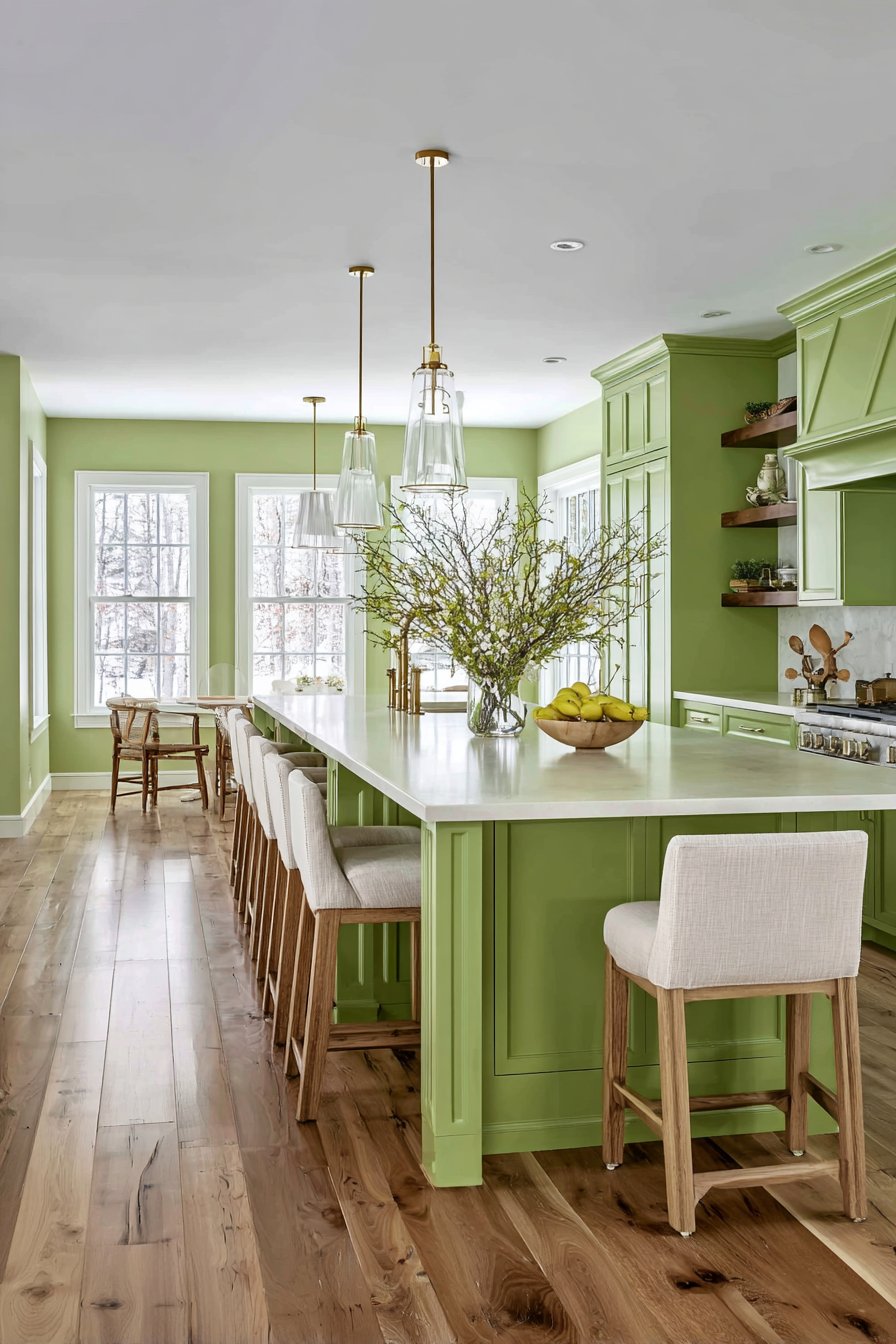
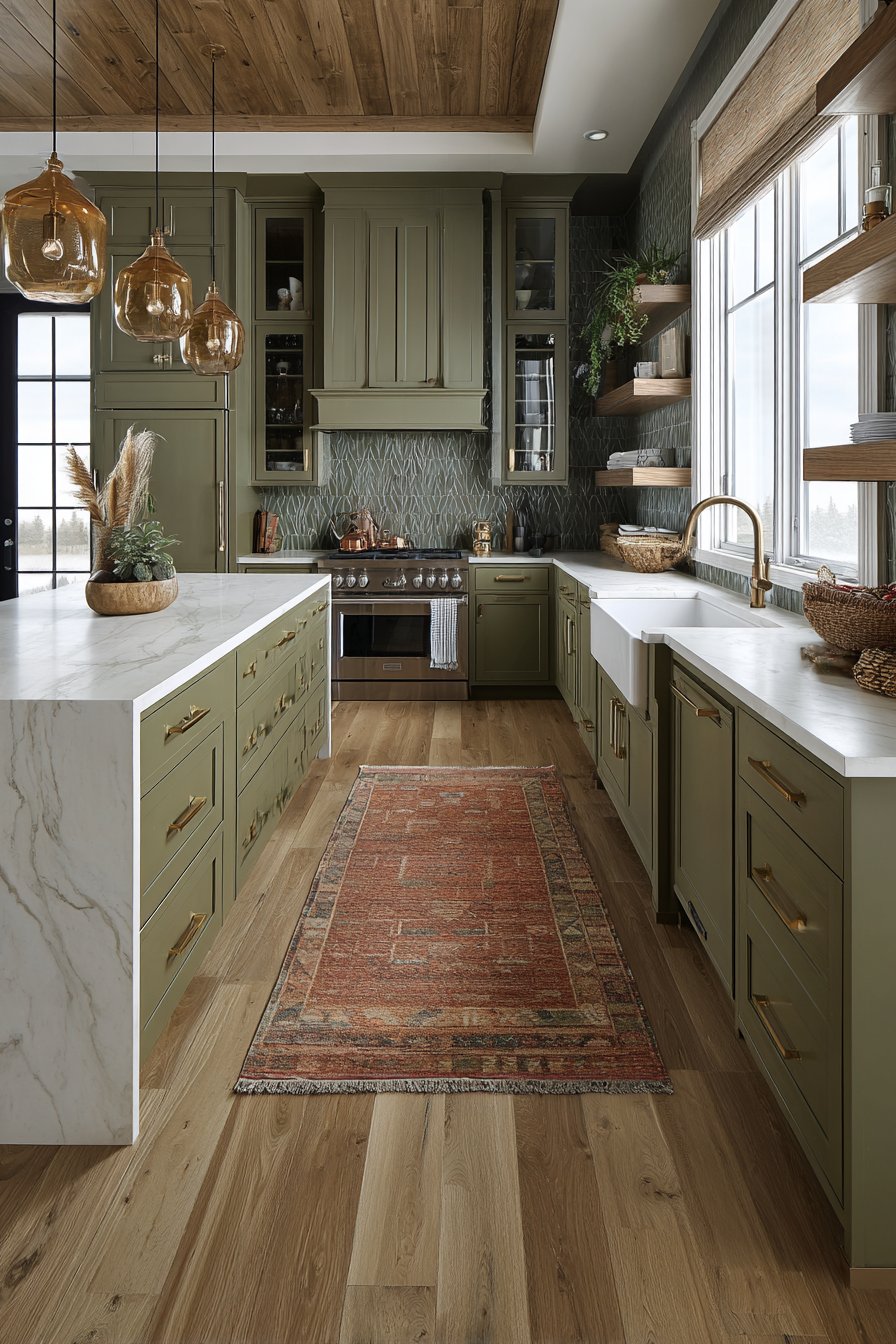
A cohesive monochromatic approach features olive green throughout in varying intensities and materials. Soft sage-olive walls create the lightest layer of color. Slightly deeper olive cabinets add dimension while remaining harmonious. Olive-tinted concrete countertops with natural variations complete the green palette at varying depths.
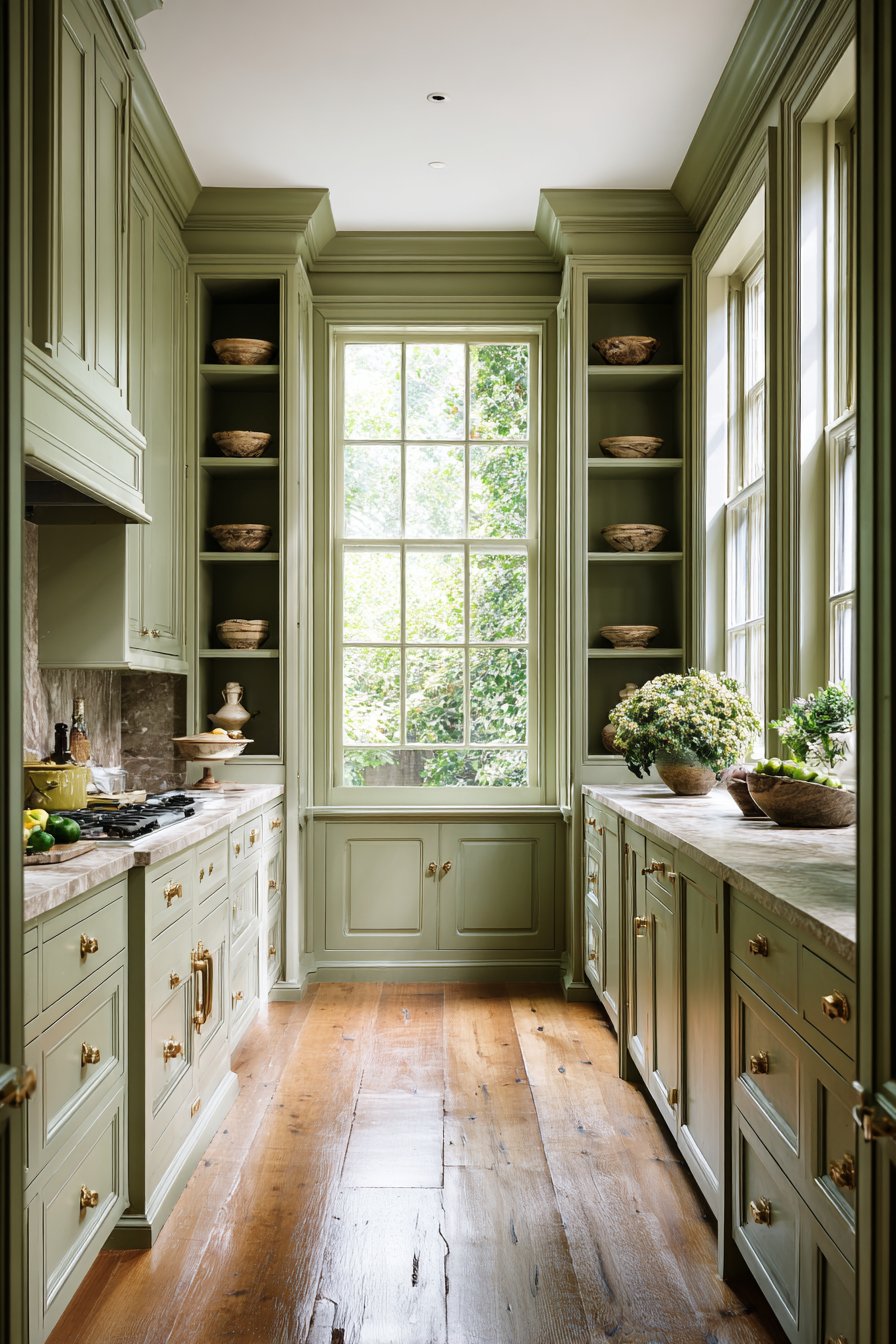
Natural wood floating shelves and honey-toned hardwood floors prevent the monochromatic scheme from feeling flat. The warm wood introduces necessary contrast and organic warmth. Brass fixtures and hardware add warm metallic accents throughout the space. The metal catches and reflects light while complementing the green tones perfectly.
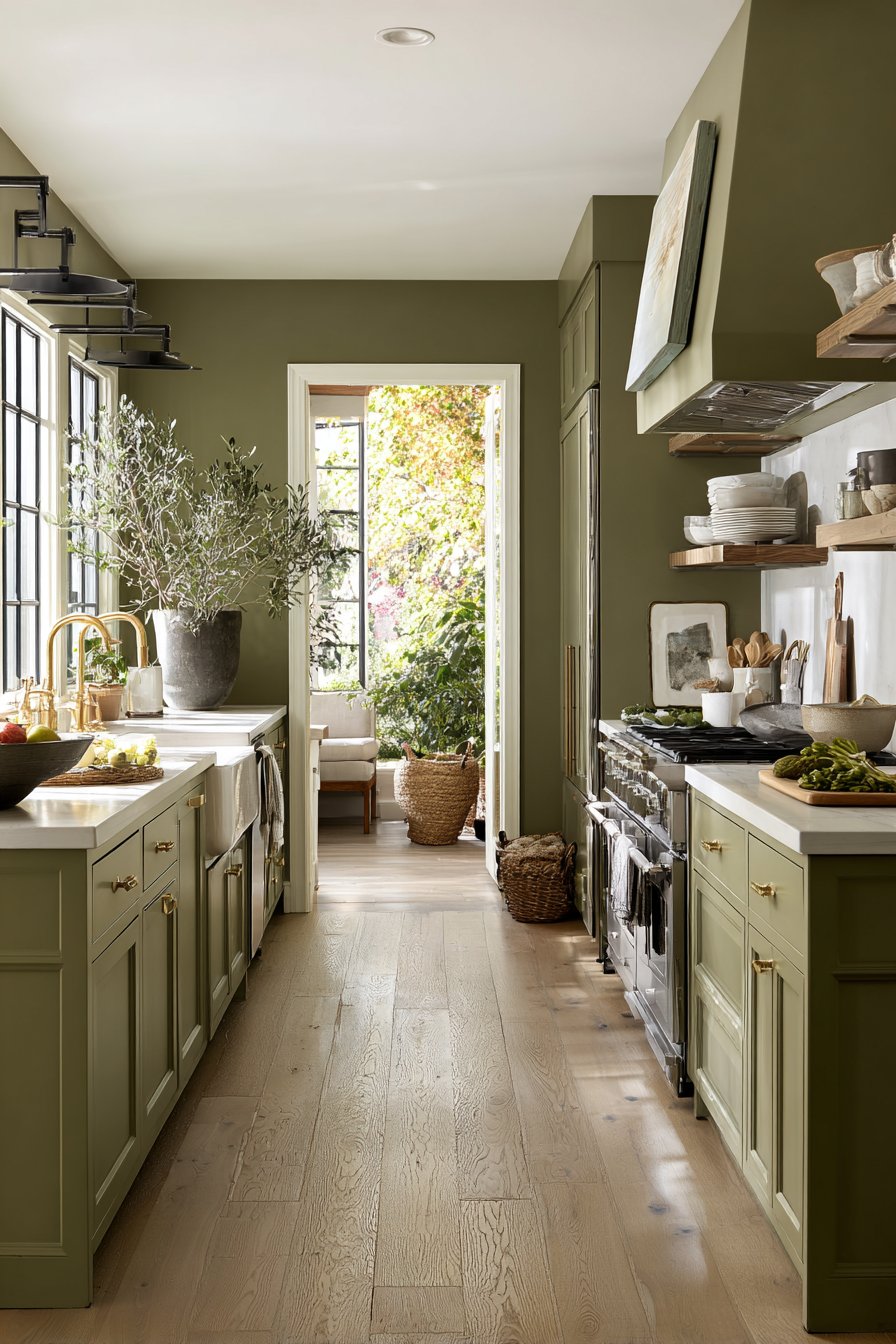
Large windows with simple white trim provide contrast and flood the space with natural light. The white frames create definition between olive surfaces and the outside world. Natural illumination reveals the subtle variations in the olive tones throughout the room. Different materials absorb and reflect the green palette in unique ways.
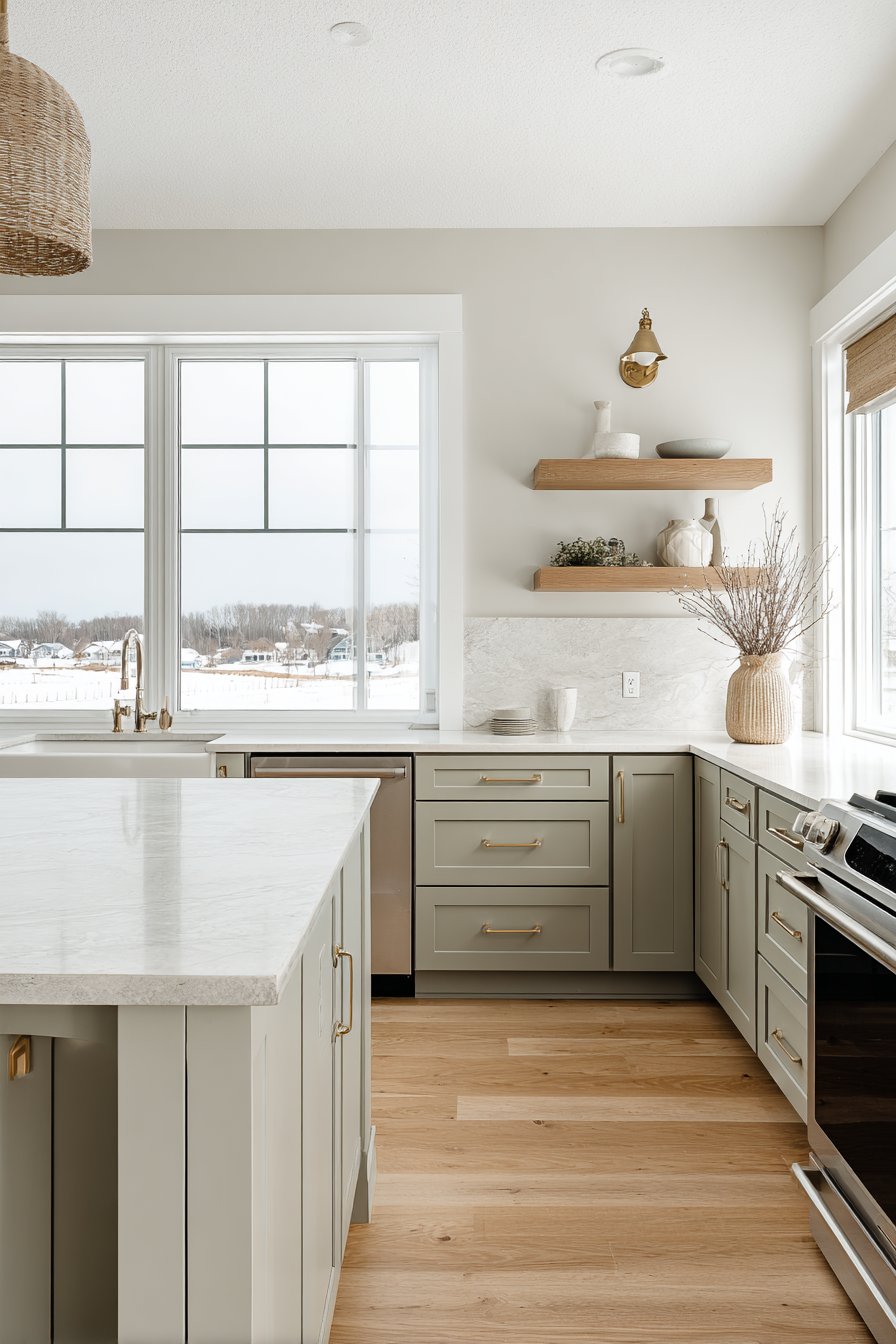
This sophisticated design demonstrates mastery of color and material relationships. The monochromatic approach could easily feel monotonous, but material variety prevents this. Each surface contributes a different texture and light quality. The space feels cohesive and intentional while remaining interesting and layered.
Key Design Tips:
- Use varying intensities of olive green across walls, cabinets, and countertops for depth
- Incorporate natural wood elements to prevent monochromatic schemes from feeling flat
- Add brass fixtures and hardware as warm metallic accents throughout the space
- Install large windows with white trim to provide contrast and maximize natural light
- Select materials that absorb and reflect olive green tones differently for visual interest
Why These Olive Green Kitchen Designs Are the Best
These olive green kitchen designs represent the finest approaches to incorporating this versatile color into culinary spaces. Each concept demonstrates thoughtful consideration of color theory, material selection, and spatial design principles. The designs showcase remarkable versatility, from bold full-cabinetry installations to subtle accent applications.
The classic shaker-style olive green cabinets provide timeless appeal that transcends passing trends. This approach combines traditional craftsmanship with contemporary color sensibility. The brushed brass hardware and white quartz countertops create perfect material harmony. Natural light interaction with the muted olive tones produces ever-changing visual interest throughout the day.
Modern flat-panel designs demonstrate how olive green works beautifully in contemporary settings. The sage-influenced olive paired with matte black fixtures creates sophisticated contrast. Carrara marble extending to ceiling height provides luxury and architectural drama. These designs prove olive green belongs in sleek, modern kitchens as much as traditional spaces.
Statement island approaches offer perfect solutions for those wanting olive green without full commitment. The hunter-olive base with butcher block top creates focal point interest while maintaining flexibility. This design strategy allows the color to anchor the space without overwhelming it. The surrounding neutral cabinetry provides necessary balance and versatility.
Compact kitchen designs show how olive green maximizes visual impact in small spaces. The vertical emphasis and strategic use of grey-undertoned olive create depth rather than closure. Under-cabinet lighting and white subway tile backsplash reflect light effectively in limited square footage. These designs demonstrate that small kitchens can embrace bold color successfully.
Dramatic accent wall applications prove olive green creates statement impact beyond cabinetry. The deep olive shiplap wall provides texture and color concentration in one strategic location. Natural oak cabinets balance the bold wall with organic warmth. This approach delivers personality without requiring extensive renovation or material investment.
Two-toned cabinetry designs display professional color blocking principles in action. Olive lower cabinets ground the space while cream uppers maintain airiness and light. Soapstone countertops and oil-rubbed bronze fixtures add layers of complementary earthiness. These kitchens feel balanced and thoughtfully composed from every angle.
Artisanal tile applications celebrate handcrafted materials and color variation within the olive spectrum. The handmade ceramic tiles in varying green shades create permanent artwork in the kitchen. Dark grout emphasizes each individual tile and highlights the artisanal quality. These designs honor craftsmanship and create truly unique spaces.
Industrial painted brick treatments demonstrate how olive green softens hard materials beautifully. The lime wash technique maintains brick texture while adding sophisticated color. Reclaimed wood shelving and butcher block surfaces introduce necessary warmth. Large industrial windows flood the space with light that reveals textural depth.
Focal point applications through pantry doors or window treatments provide low-commitment color impact. These strategic uses of olive green create interest without overwhelming neutral kitchens. The approaches offer flexibility and easy updating if design preferences change. Small elements can make significant visual statements when executed thoughtfully.
Vintage-inspired cottage designs show olive green’s historical authenticity and contemporary relevance. Beaded board cabinets with cup pulls honor traditional craftsmanship while the color feels current. Butcher block countertops developing character with use add lived-in authenticity. Depression glass collections complement the cabinet color in translucent form.
Bold ceiling treatments demonstrate confidence in unexpected color placement. The muted olive overhead creates an intimate atmosphere while white surfaces maintain brightness. Natural wood beams add architectural interest and prevent flat color application. These designs transform ordinary kitchens into memorable spaces through dramatic yet balanced color use.
Custom metalwork applications in range hoods showcase artisanal craftsmanship and unique design elements. The hammered olive-toned metal with patina finish creates sculptural focal points. Flanking copper cookware displays complement the metalwork beautifully. These kitchens demonstrate how investment in custom elements creates distinctive character.
Subtle cabinet interior accents offer sophisticated color application for wood cabinet lovers. Glass-front cabinets with olive-painted backs introduce color while maintaining natural wood warmth. White dishware creates beautiful contrast against the green backing. This approach provides color flexibility without sacrificing wood’s natural appeal.
Natural linen window treatments demonstrate how textiles introduce olive green functionally and beautifully. The fabric texture becomes particularly beautiful when backlit by natural daylight. Morning light filtering through creates an atmospheric green glow throughout the space. Soft goods add necessary warmth to rooms dominated by hard surfaces.
Unique floor treatments in olive-grey stain create foundation color that sets entire spaces apart. The semi-transparent finish maintains wood grain visibility while adding distinctive color. Vintage rugs in complementary tones define specific work zones with additional pattern. These bold choices demonstrate design confidence and commitment to unique aesthetics.
Professional appliances with olive green enamel finishes combine function with artistic statement. The glossy surface creates visual impact while delivering cooking performance. Natural walnut cabinets and honed black granite provide a sophisticated contrast. These designs show how single investment pieces can anchor luxury kitchen designs.
Lime-washed exposed brick applications honor traditional European techniques with contemporary color. The translucent olive wash enhances rather than hides architectural texture. Large arched windows and reclaimed wood create rustic authenticity. These kitchens feel collected over time rather than designed to specification.
Moroccan-inspired tile patterns demonstrate how olive green integrates into ornate decorative schemes. Hand-painted details create unique artisanal appeal and permanent artwork. Simple white cabinets and brass hardware allow complex patterns to shine. Under-cabinet lighting reveals glazed surface quality and dimensional relief.
Transitional designs successfully bridge traditional cabinet styles with industrial materials and aesthetics. Deep forest-olive lower cabinets provide bold foundation while glass upper cabinets maintain openness. Concrete countertops add a contemporary edge balanced by warm leather seating. These kitchens demonstrate successful style mixing creating personal spaces.
Monochromatic approaches showcase mastery of color relationships and material variety. Varying olive intensities across walls, cabinets, and countertops create sophisticated depth. Natural wood and brass accents prevent the single-color scheme from feeling monotonous. These designs prove that color commitment creates cohesive, intentional spaces.
The environmental benefits of olive green deserve recognition in sustainable kitchen design. This nature-inspired color creates calming spaces that reduce stress and promote wellbeing. The connection to natural elements encourages organic material selection and mindful design. Olive green kitchens often incorporate sustainable materials like reclaimed wood and natural stone.
The versatility of olive green across different design styles makes it exceptionally practical. The color works in farmhouse, modern, industrial, cottage, and transitional aesthetics equally well. This adaptability provides longevity that trend-driven colors cannot match. Homeowners can update surrounding elements while the olive green remains relevant.
The psychological impact of olive green in kitchens creates positive cooking and gathering environments. The earthy tone promotes groundedness and connection to nature within the home. The color stimulates appetite while remaining sophisticated enough for entertaining spaces. These designs create kitchens where people naturally want to spend time.
The practical considerations of olive green include its ability to hide minor imperfections and wear. The mid-tone color camouflages fingerprints and smudges better than stark white or black. Natural variations in lighting conditions prevent the color from feeling static or boring. These functional benefits complement the aesthetic appeal.
Conclusion
These twenty olive green kitchen designs demonstrate the remarkable versatility and enduring appeal of this sophisticated color. From bold full-cabinetry installations to subtle accent applications, olive green adapts to various design styles and personal preferences. The color brings nature-inspired calm into the heart of the home while maintaining visual interest and contemporary relevance.
The key takeaways include the importance of balancing olive green with complementary materials like natural wood, white marble, and warm brass. Natural light interaction with olive surfaces creates dynamic spaces that change throughout the day. Strategic color placement—whether full cabinetry, accent walls, or small elements—allows customization to individual comfort levels with bold color.
Quality materials and authentic finishes elevate olive green applications from trendy to timeless. Handmade tiles, custom metalwork, and natural stone create permanent value beyond paint color alone. The designs prove that thoughtful material selection and craftsmanship matter as much as color choice.
Start your olive green kitchen journey by identifying which application level feels right for your space and lifestyle. Consider a statement island or accent wall for cautious color introduction. Embrace full cabinetry if you’re confident in your design vision. Remember that olive green works beautifully across various design styles, from rustic farmhouse to sleek contemporary. Your dream olive green kitchen awaits creation through thoughtful planning, quality materials, and creative expression that reflects your unique personality and cooking lifestyle.
