


Creating a beige baby nursery offers a foundation of calm sophistication. This neutral palette provides endless possibilities for personalization. The timeless appeal ensures the space grows gracefully with your child. Beige nurseries have become increasingly popular among modern parents.
They offer gender-neutral versatility that transcends fleeting trends. The warm, earthy tones create nurturing environments perfect for peaceful sleep and joyful playtime. From minimalist sanctuaries to richly layered bohemian retreats, beige serves as an elegant canvas.
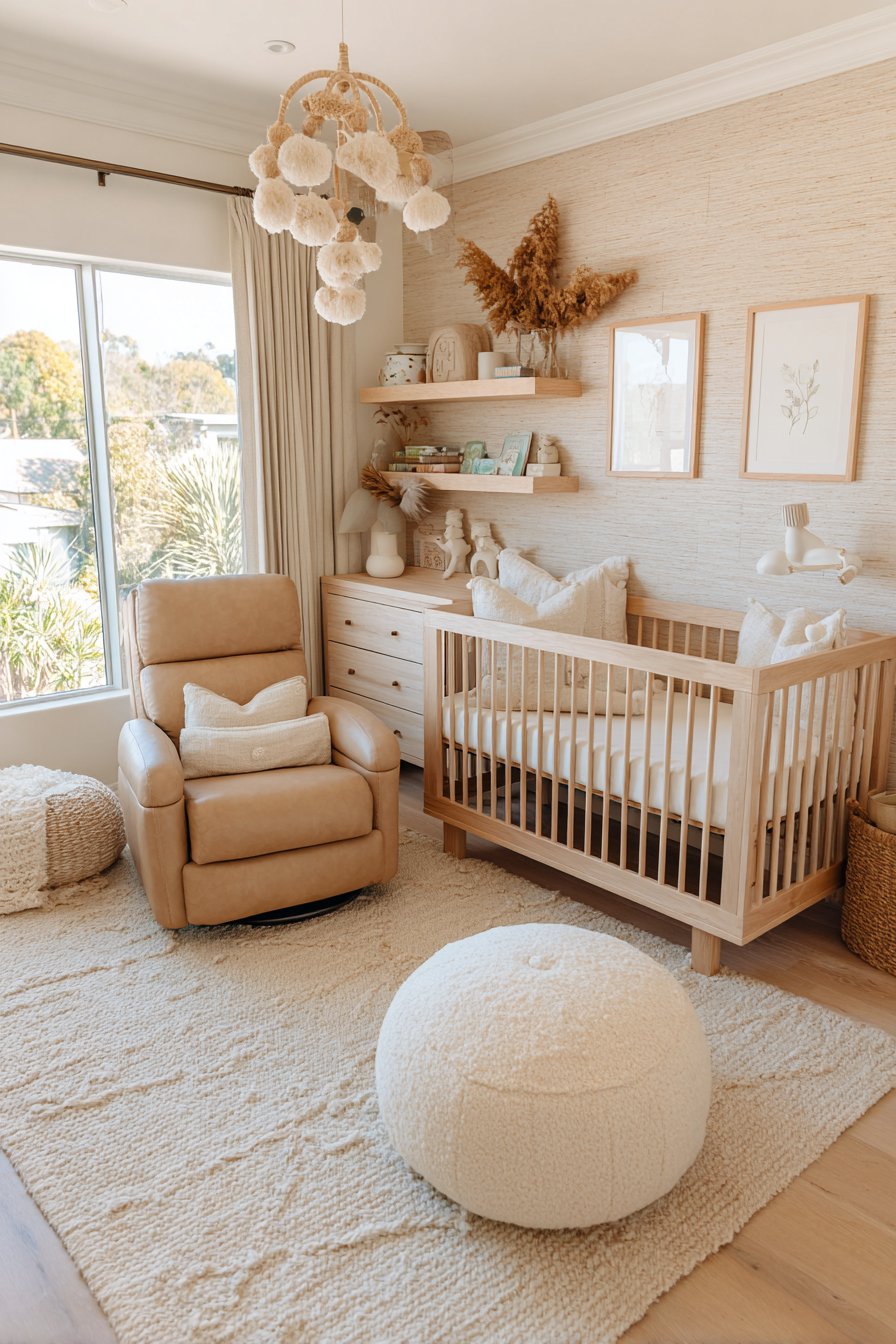
This collection explores twenty distinctive approaches to beige nursery design. Each concept demonstrates how subtle variations in shade, texture, and material transform simple neutrals into sophisticated spaces. Whether you’re drawn to traditional elegance or contemporary simplicity, these designs reveal the remarkable depth possible within a monochromatic palette.
1. Serene Natural Oak Nursery with Grasscloth Accent
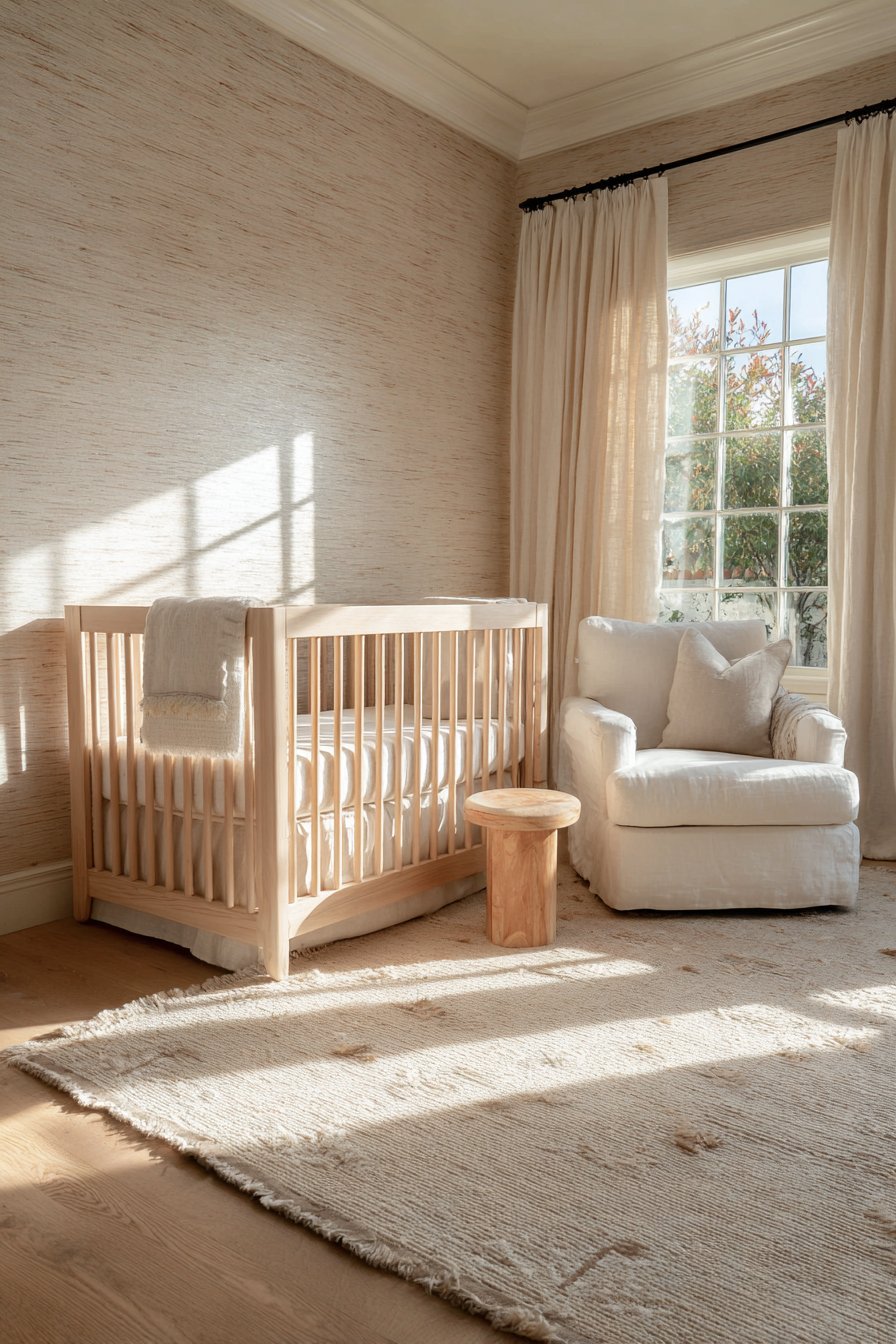
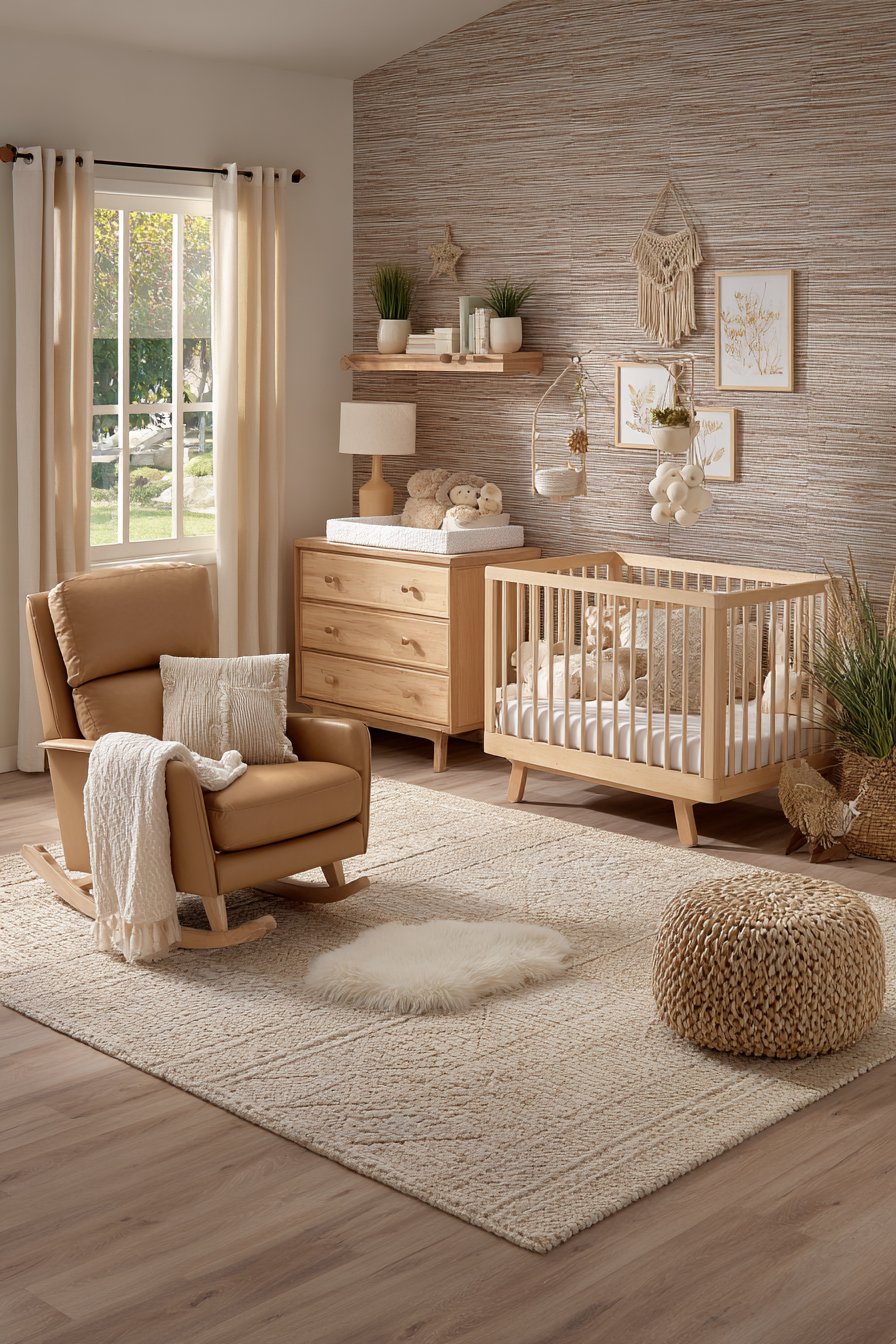
A textured grasscloth wallpaper creates an organic focal point behind the crib. The natural fibers add depth without overwhelming the senses. This tactile element introduces sophisticated dimension to otherwise smooth surfaces. The warm sand tones of the grasscloth complement the clean-lined oak crib beautifully.
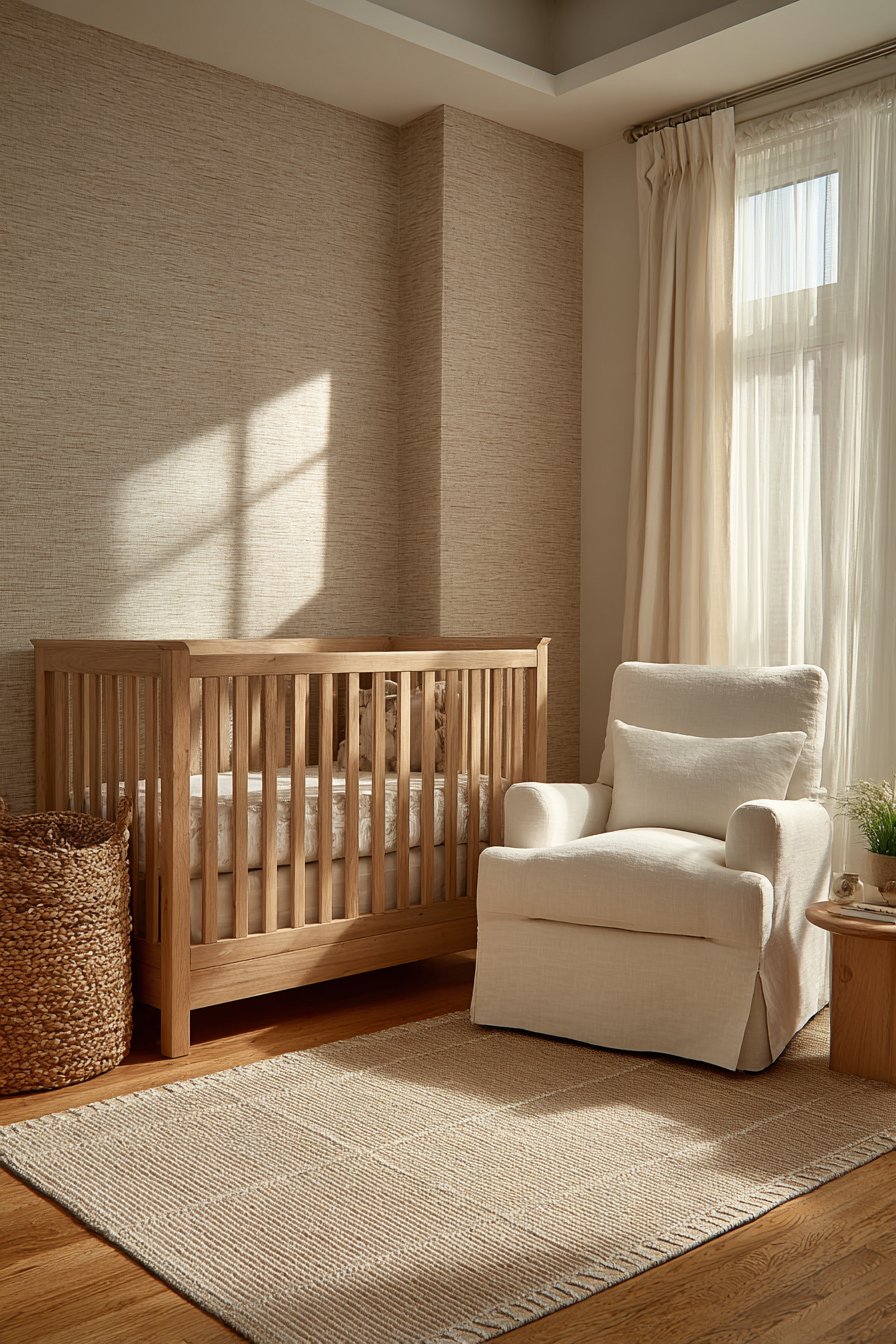
The plush cream glider chair becomes a sanctuary for late-night feedings. Its beige linen slipcover offers both comfort and practicality for inevitable spills. A small round side table in light wood holds essentials within easy reach. The pairing creates a dedicated nursing station that feels intentional rather than afterthought.
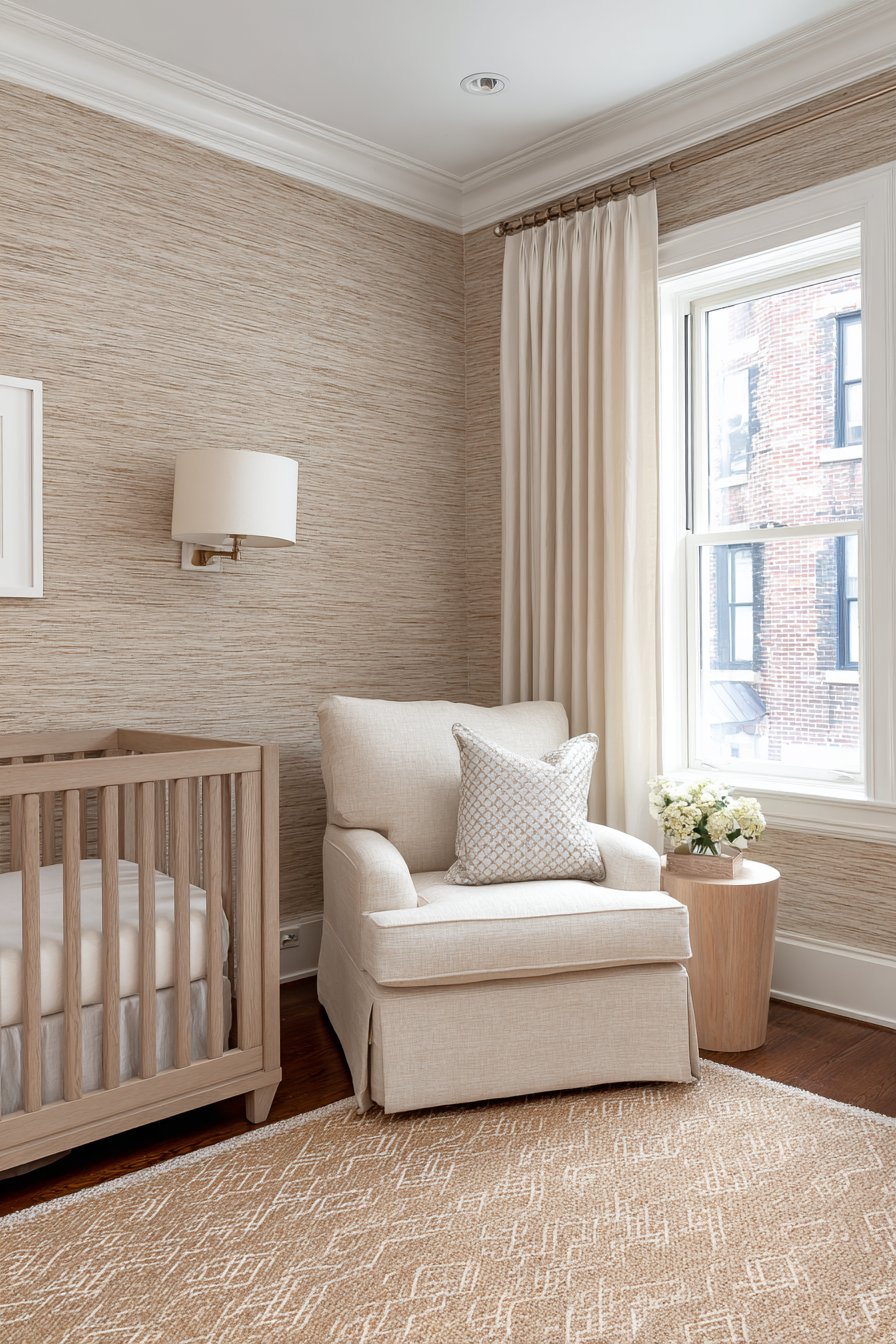
Morning light filters through sheer ivory curtains with ethereal quality. The soft illumination casts gentle shadows across warm beige walls. Hardwood floors anchor the space with rich natural grain. A natural jute rug with geometric patterns adds another layer of organic texture.
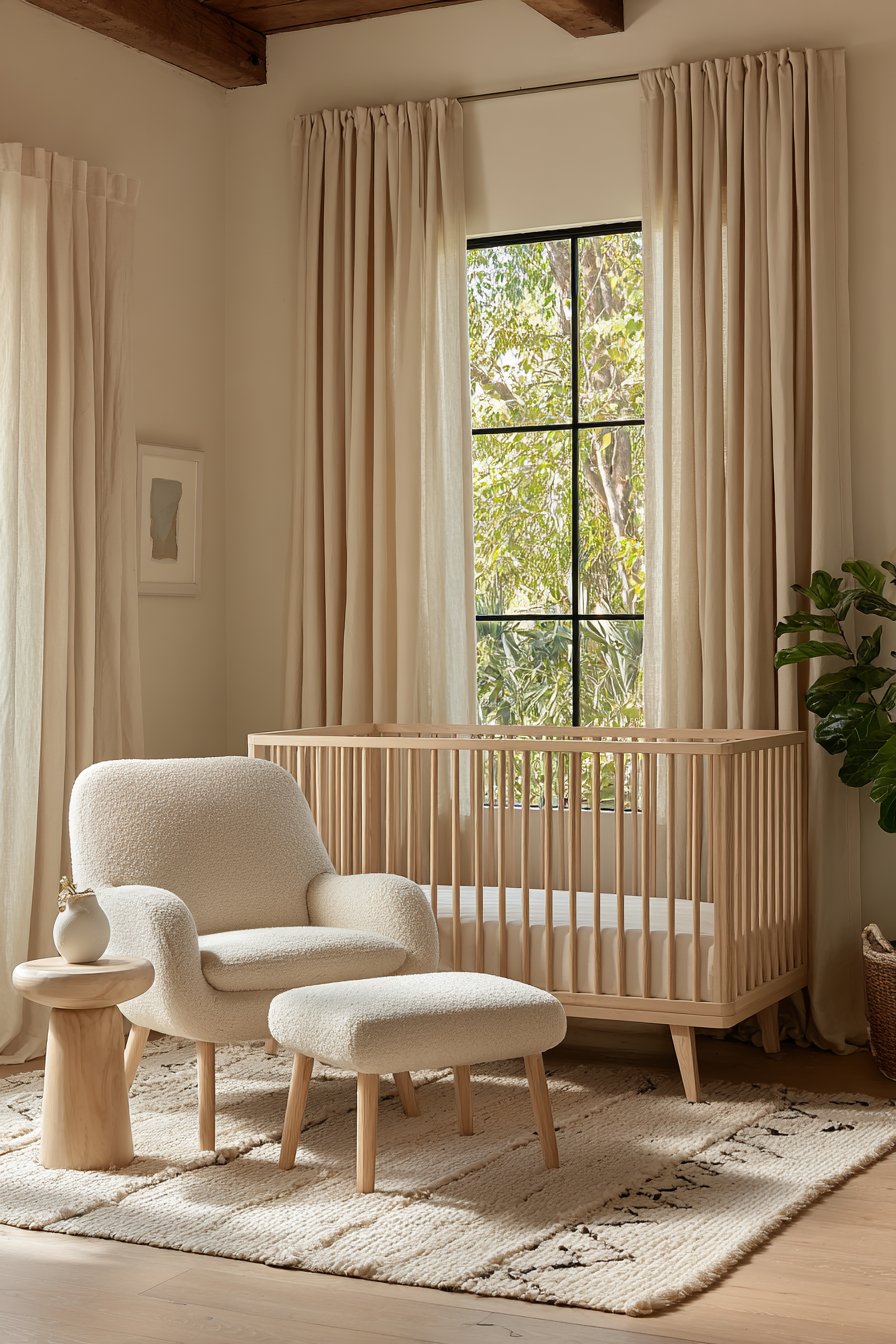
The layered neutral tones create visual interest through variation rather than contrast. Each element contributes to the peaceful atmosphere without competing for attention. The wide-angle perspective reveals how thoughtful furniture placement maximizes both function and flow.
Key Design Tips:
- Install grasscloth wallpaper as an accent rather than covering all walls to control costs
- Choose slipcover furniture for easy cleaning and future style updates
- Layer multiple textures in similar tones to create depth within monochromatic palettes
- Position the glider near windows for natural light during daytime feedings
- Select jute rugs for durability and natural aesthetic that softens hard flooring
2. Practical Built-In Storage Wall System
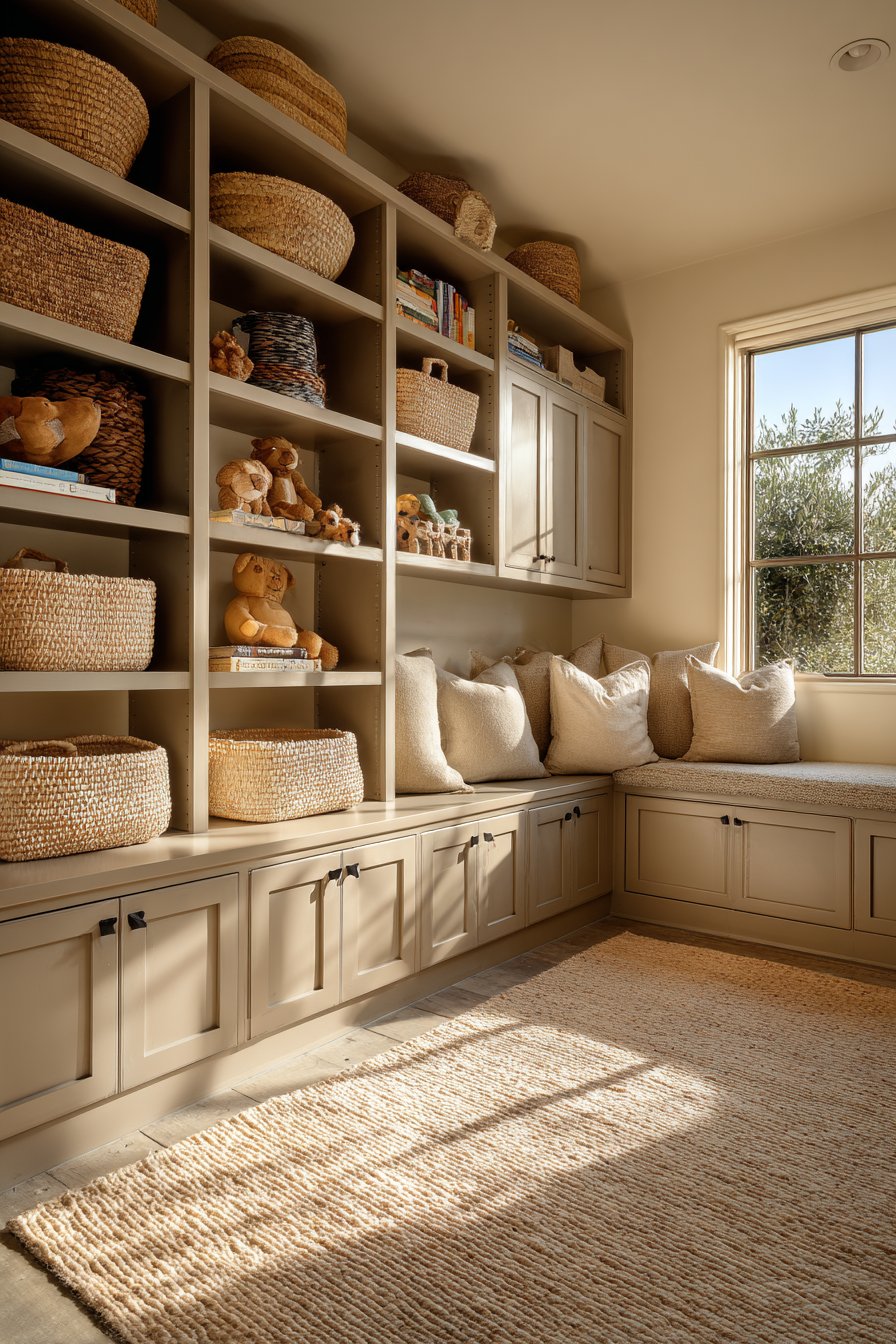
Built-in shelving units in warm sand tones provide organized storage solutions. The open shelving displays woven baskets in varying beige shades beautifully. Each basket conceals toys and clothing while maintaining visual calm. The system alternates open and closed storage for functional versatility.
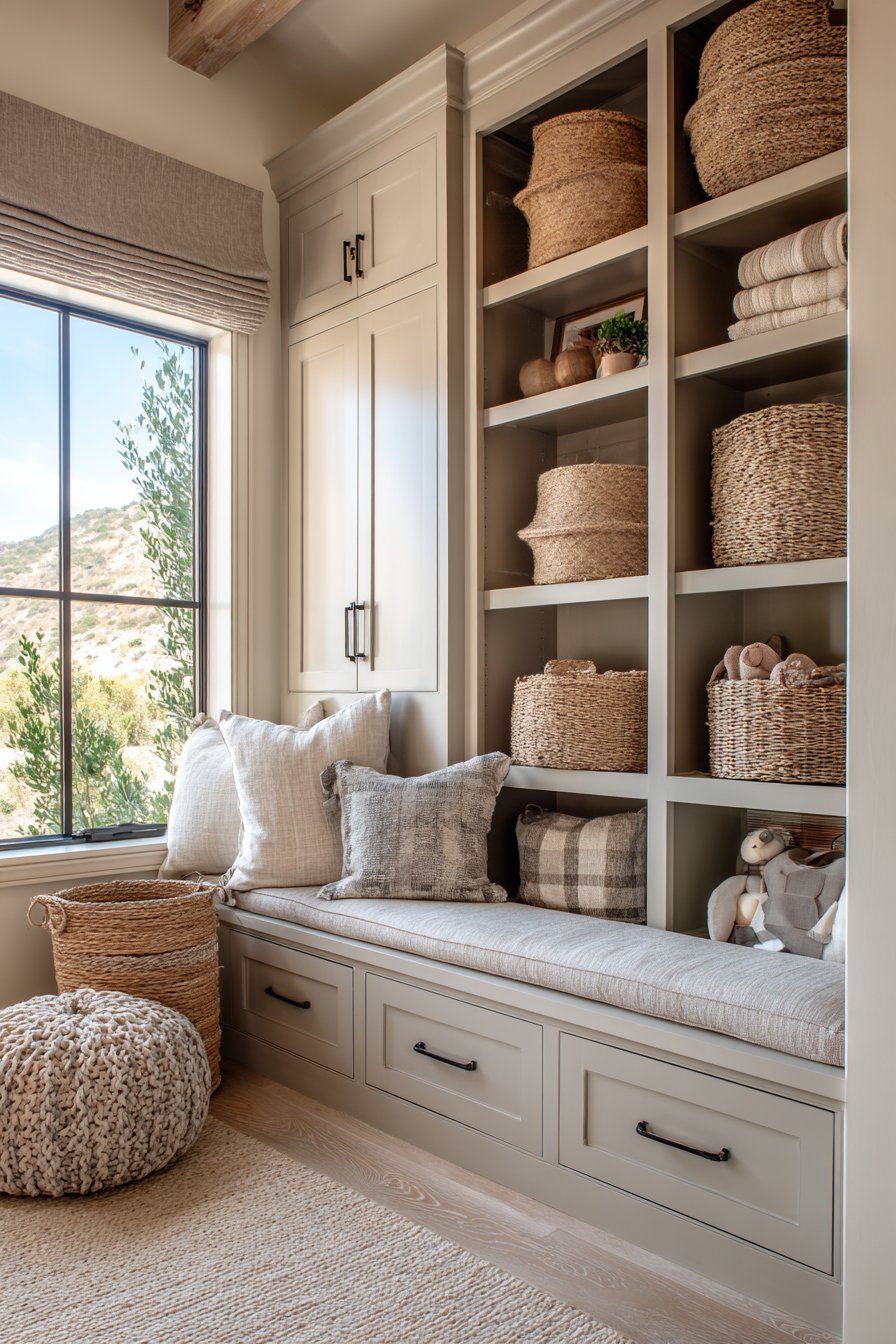
Cabinet doors in slightly darker taupe finish create subtle definition. This variation prevents the wall from appearing flat or monotonous. The coordinated tones maintain cohesion while adding architectural interest. Hardware in brushed brass provides refined metallic accents.
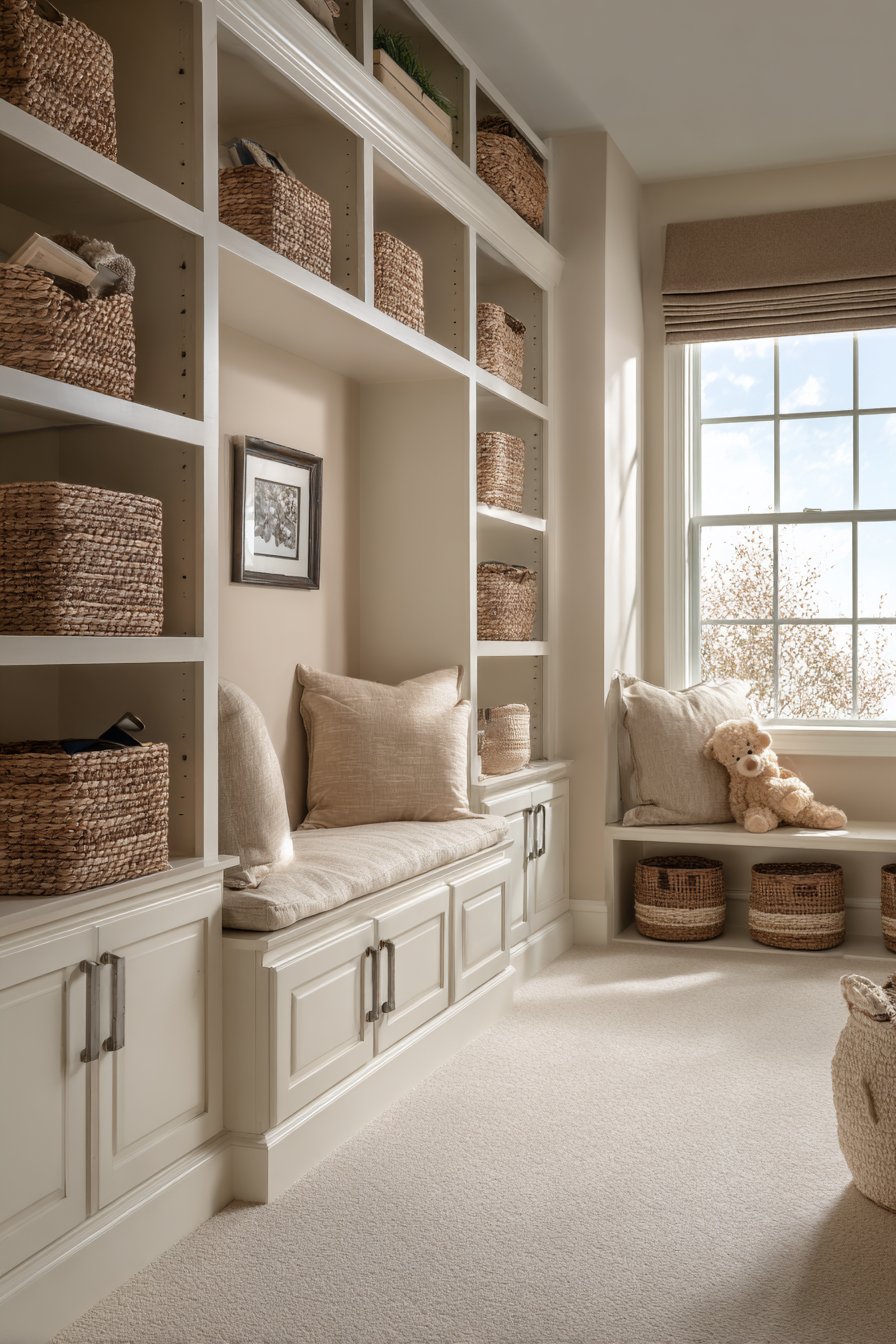
A cushioned window seat runs along the base of the storage wall. The beige upholstery matches the overall palette seamlessly. Hidden storage compartments beneath the cushion maximize every square inch. This dual-purpose feature creates a cozy reading spot that serves practical needs.
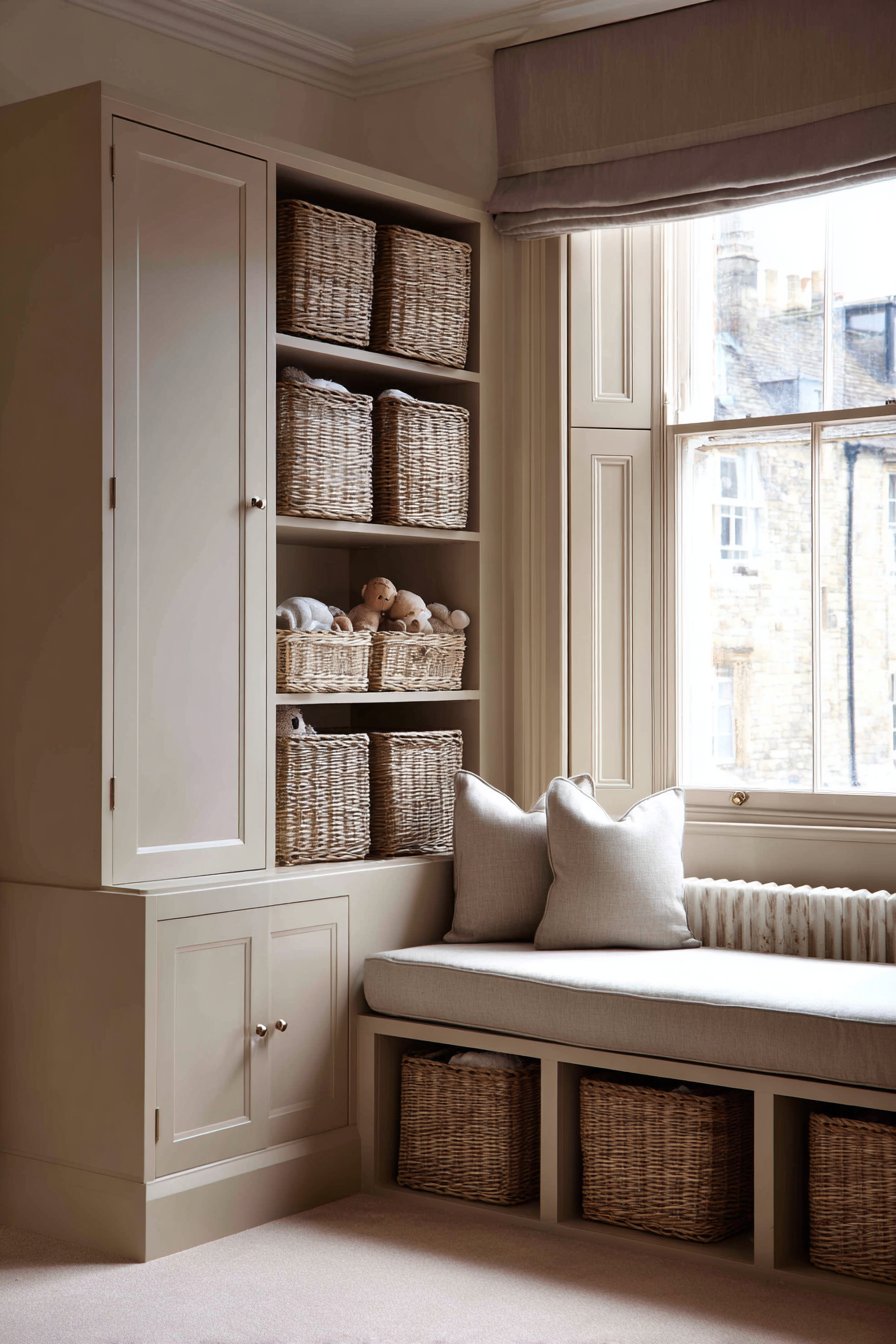
Natural daylight illuminates the organization system throughout the day. The professional integration makes storage feel intentional rather than utilitarian. The design proves that functional spaces can maintain aesthetic sophistication. Everything has its designated place, reducing visual clutter that disrupts nursery serenity.
Key Design Tips:
- Invest in built-ins for maximum storage efficiency in smaller nurseries
- Use uniform basket sizing for cohesive appearance and interchangeable storage
- Install window seats at appropriate height for future toddler use
- Choose closed cabinets for items you want hidden from view
- Plan adequate depth for standard diaper boxes and toy storage bins
3. Cozy Reading Nook with Natural Light
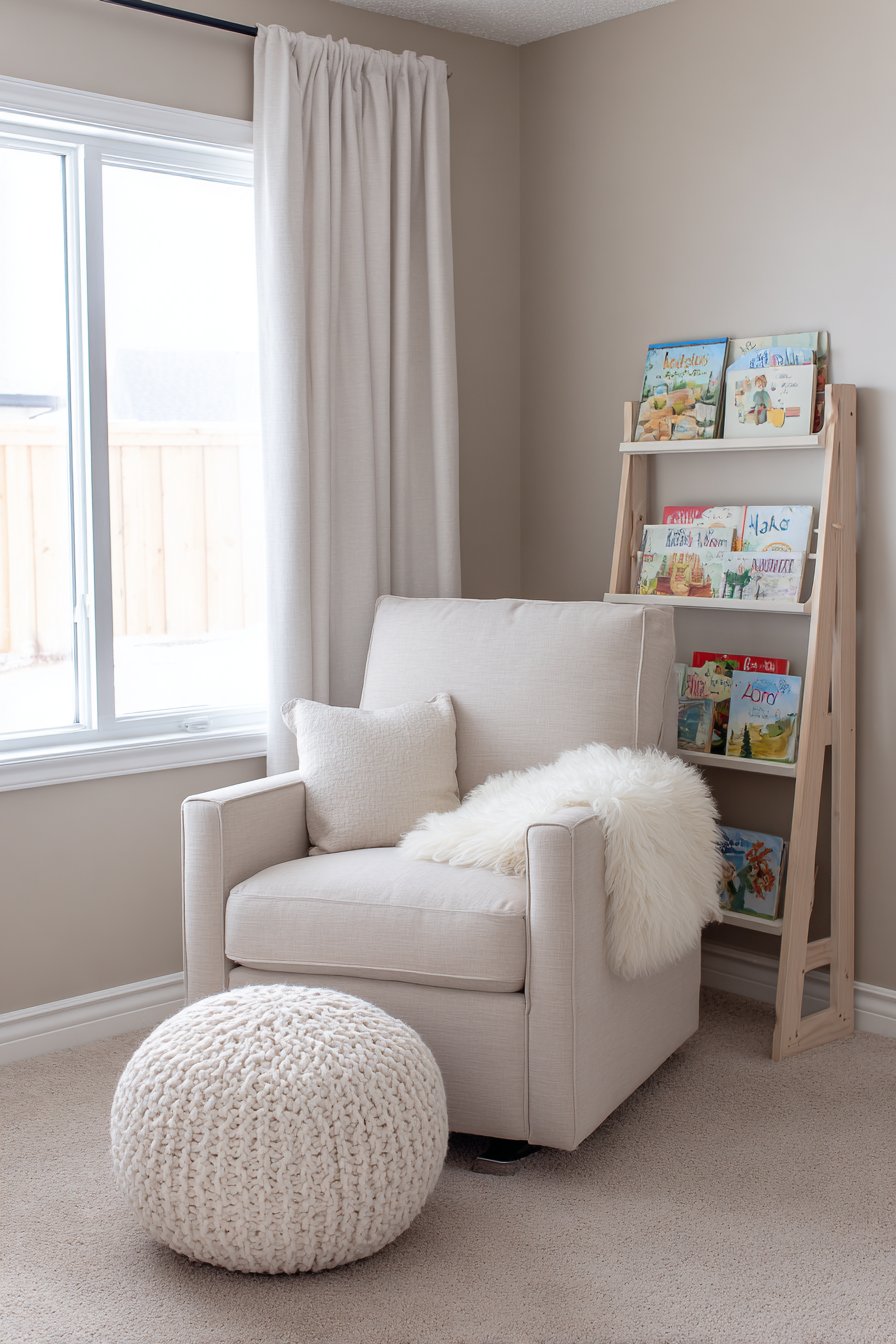
A low-profile rocking chair in oatmeal linen creates an inviting reading corner. The upholstered design provides comfort during extended story sessions. Its position near the large window captures abundant natural light. The placement makes daytime reading a pleasure for parent and child.
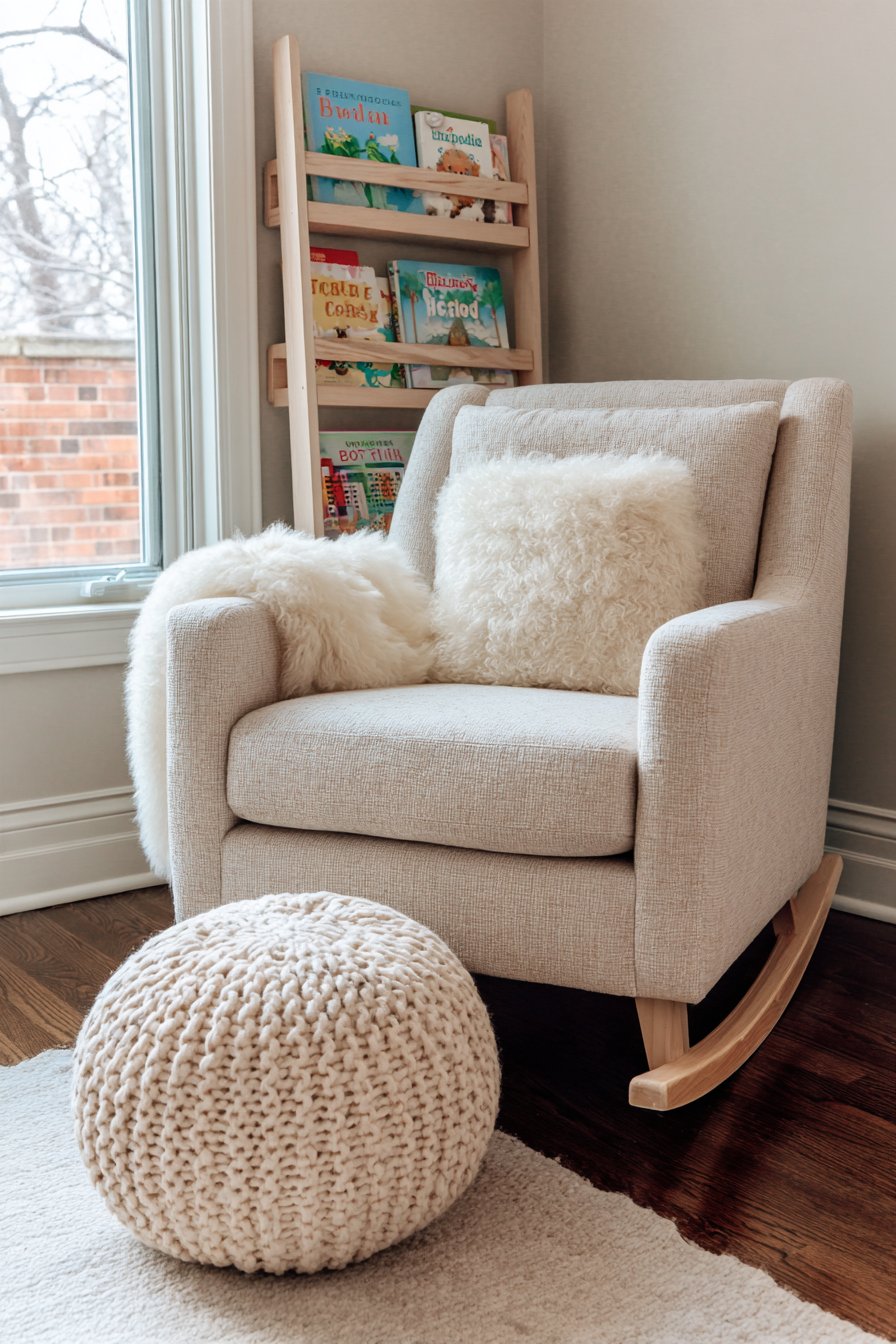
A small wooden bookshelf in natural birch displays colorful book spines. These bright covers provide subtle color pops against beige backgrounds. The contrast adds visual interest without overwhelming the neutral foundation. The accessible height encourages future independent book selection.
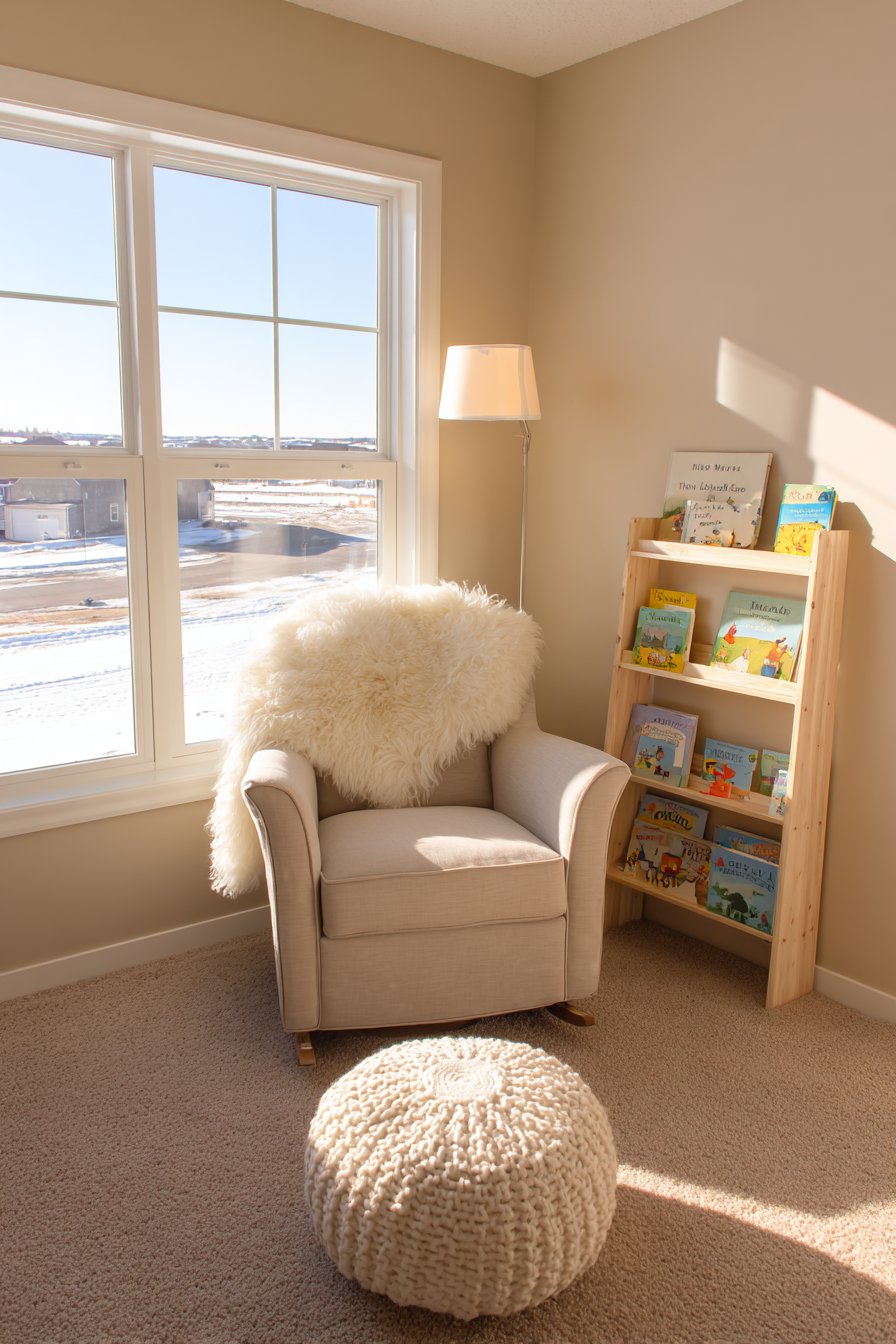
A soft sheepskin throw drapes casually over the chair arm. This luxurious texture invites touch and adds cozy warmth. A small floor pouf in cream chenille offers flexible seating or footrest options. These thoughtful additions transform a simple corner into a dedicated space.
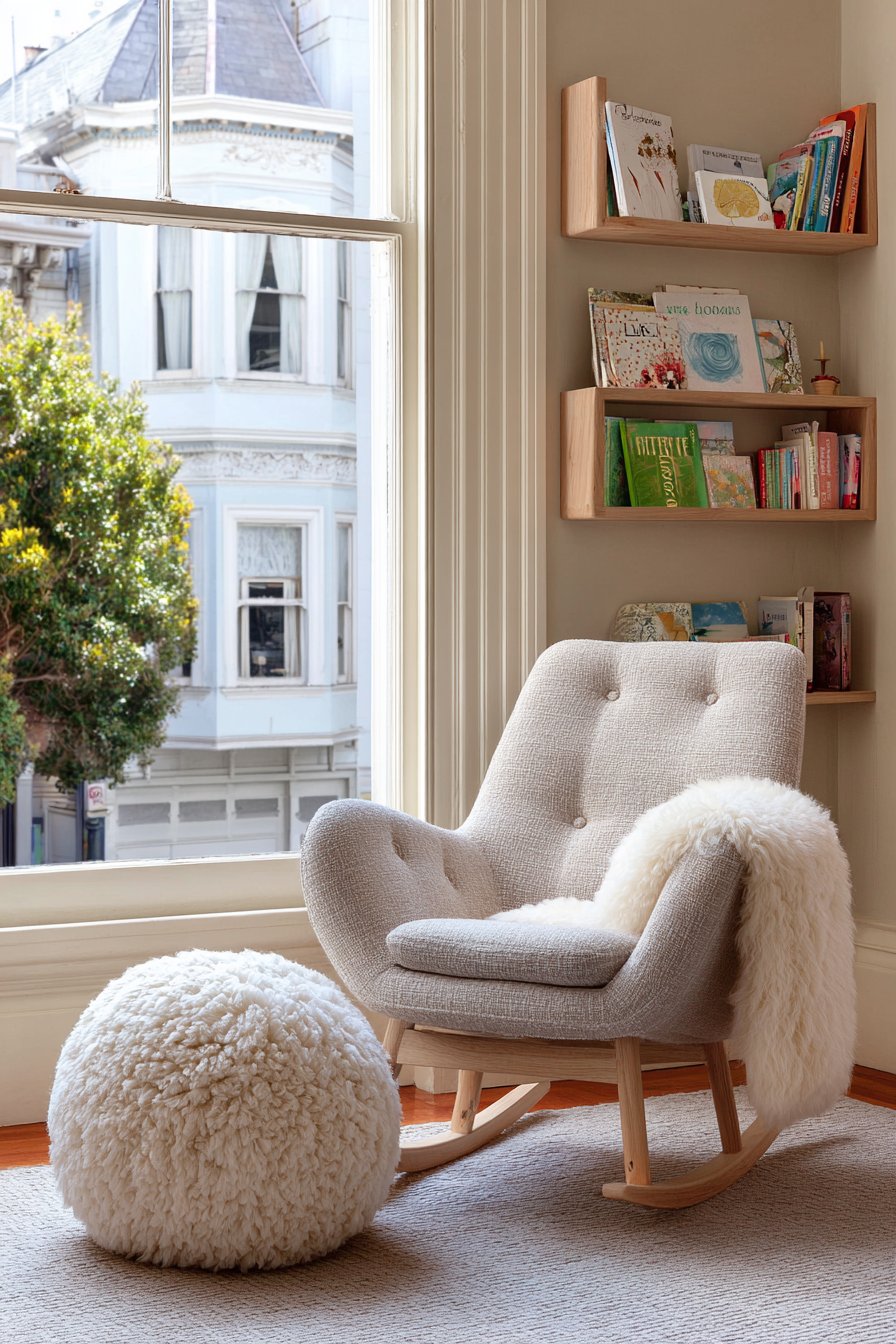
Afternoon light creates a warm glow on beige walls with eggshell finish. The subtle sheen reflects light without harsh glare. Detail-focused photography captures the inviting texture combinations throughout this intimate area. The layering of soft materials creates a tactile experience that enhances comfort.
Key Design Tips:
- Position reading chairs perpendicular to windows to avoid glare on book pages
- Choose low bookshelves that toddlers can safely access independently
- Layer multiple soft textures for sensory development and comfort
- Select eggshell or satin paint finishes to gently reflect natural light
- Add poufs for flexible seating that adapts as children grow
4. Minimalist Modern Convertible Crib Design
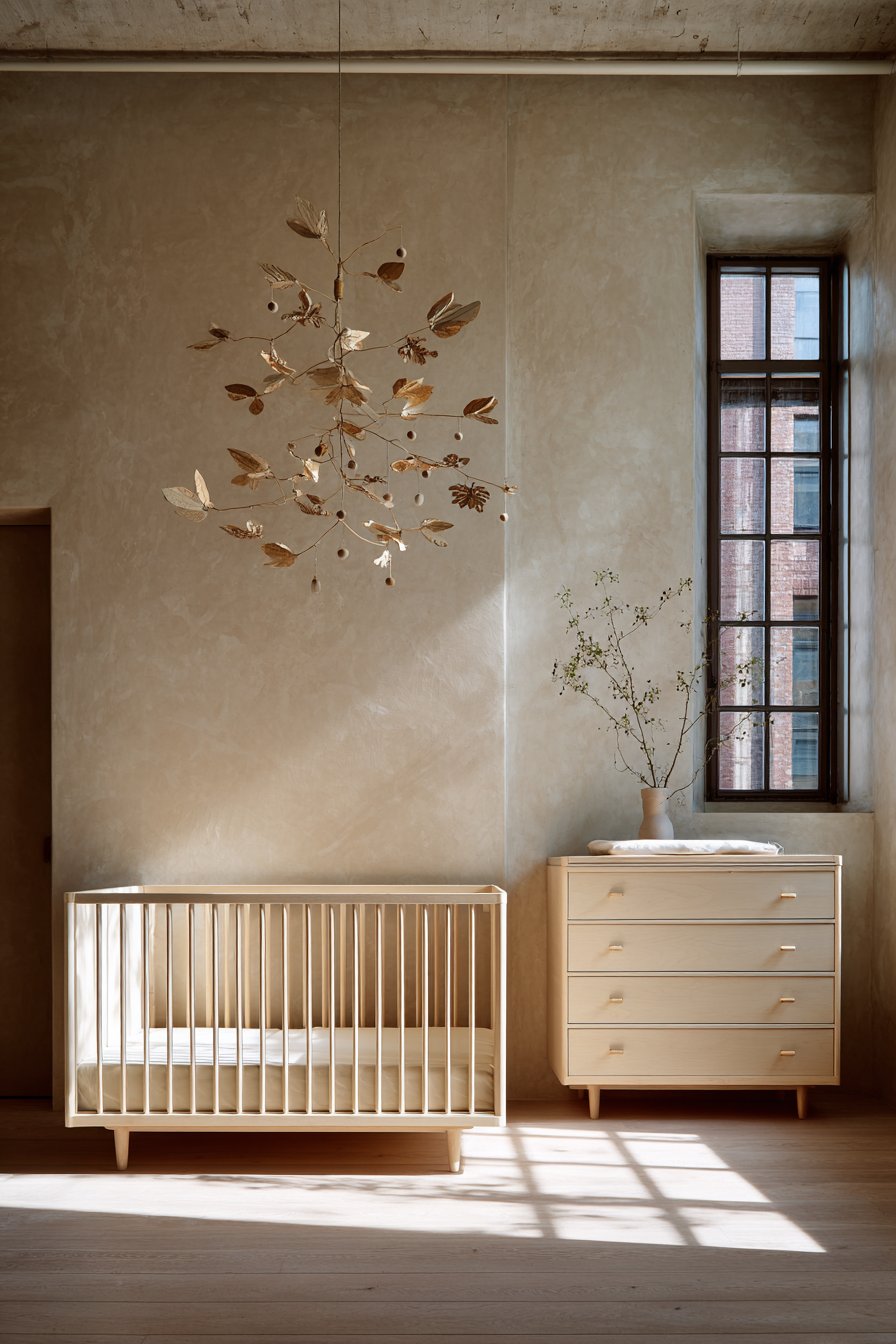
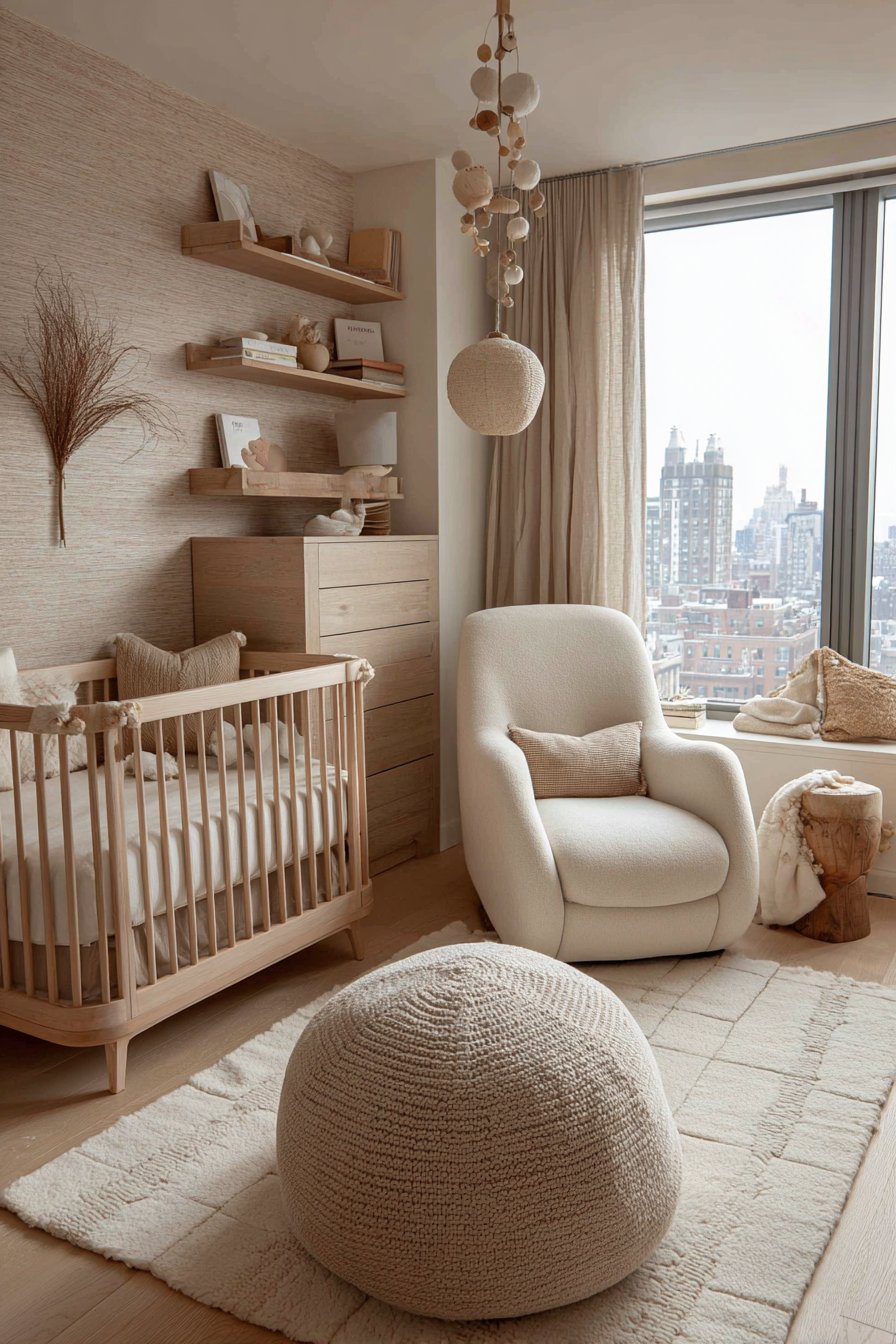
A whitewashed oak crib embodies minimalist sophistication against greige walls. The modern convertible design transitions from crib to toddler bed seamlessly. This longevity makes the investment both practical and sustainable. The clean lines create visual calm that defines minimalist aesthetics.
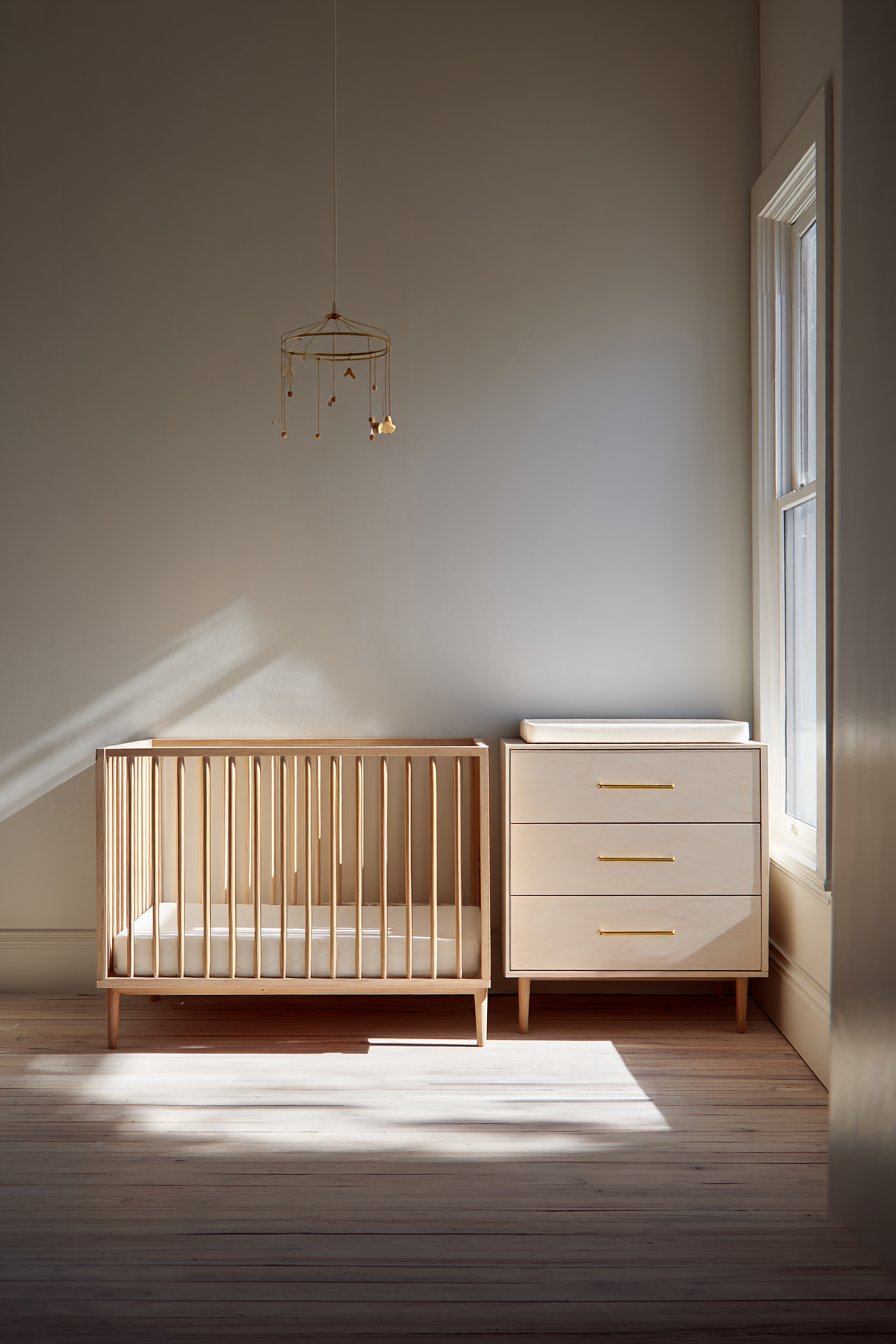
A simple mobile with natural wooden elements provides gentle stimulation. The organic shapes and neutral tones maintain the restrained palette. Delicate shadows cast by the mobile add movement and interest. This thoughtful detail engages without overstimulating developing senses.
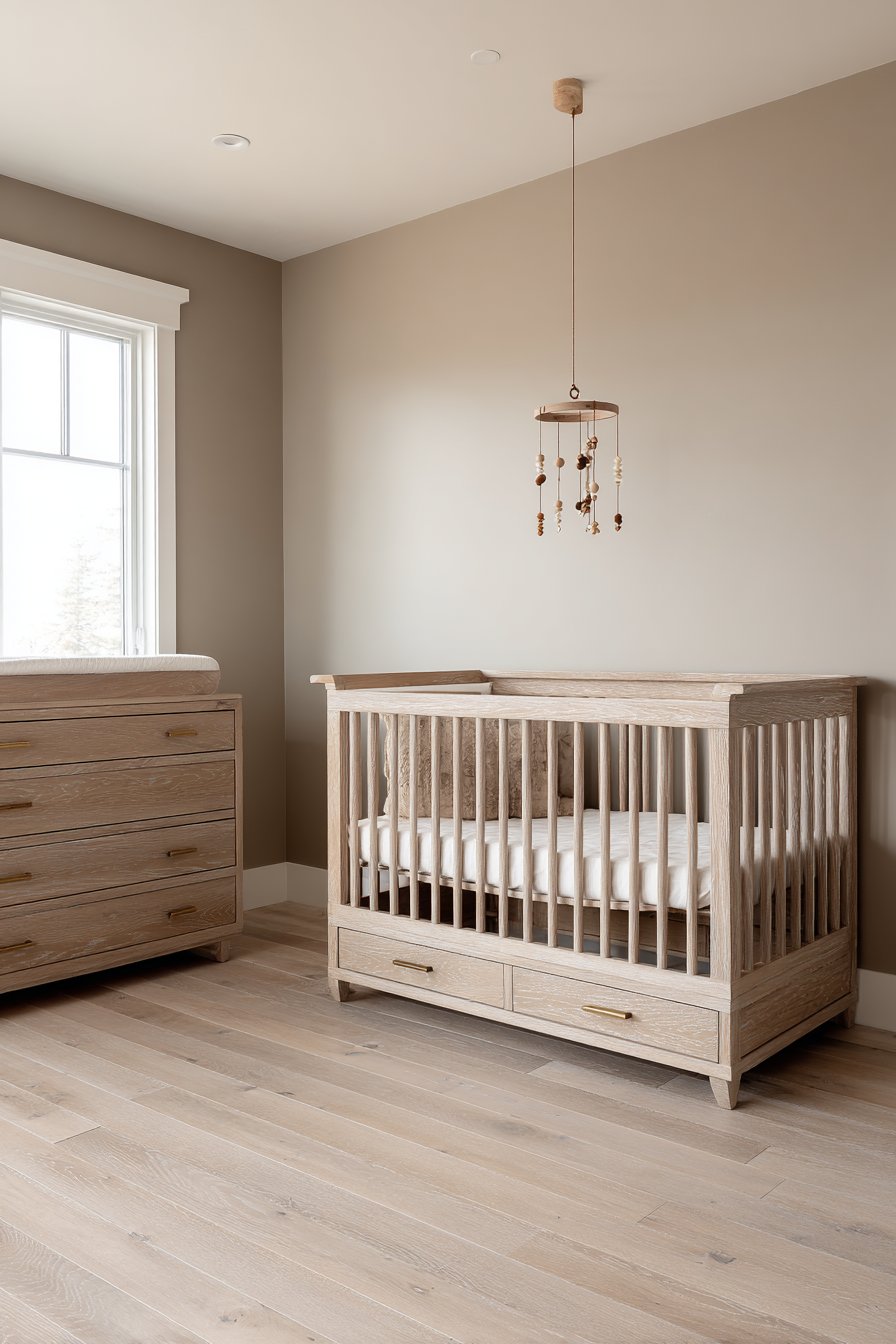
The streamlined dresser doubles efficiently as a changing table. Finished in matching whitewashed oak, it creates cohesive visual flow. Brass drawer pulls add subtle metallic warmth to the neutral scheme. The horizontal lines complement the crib’s vertical presence beautifully.
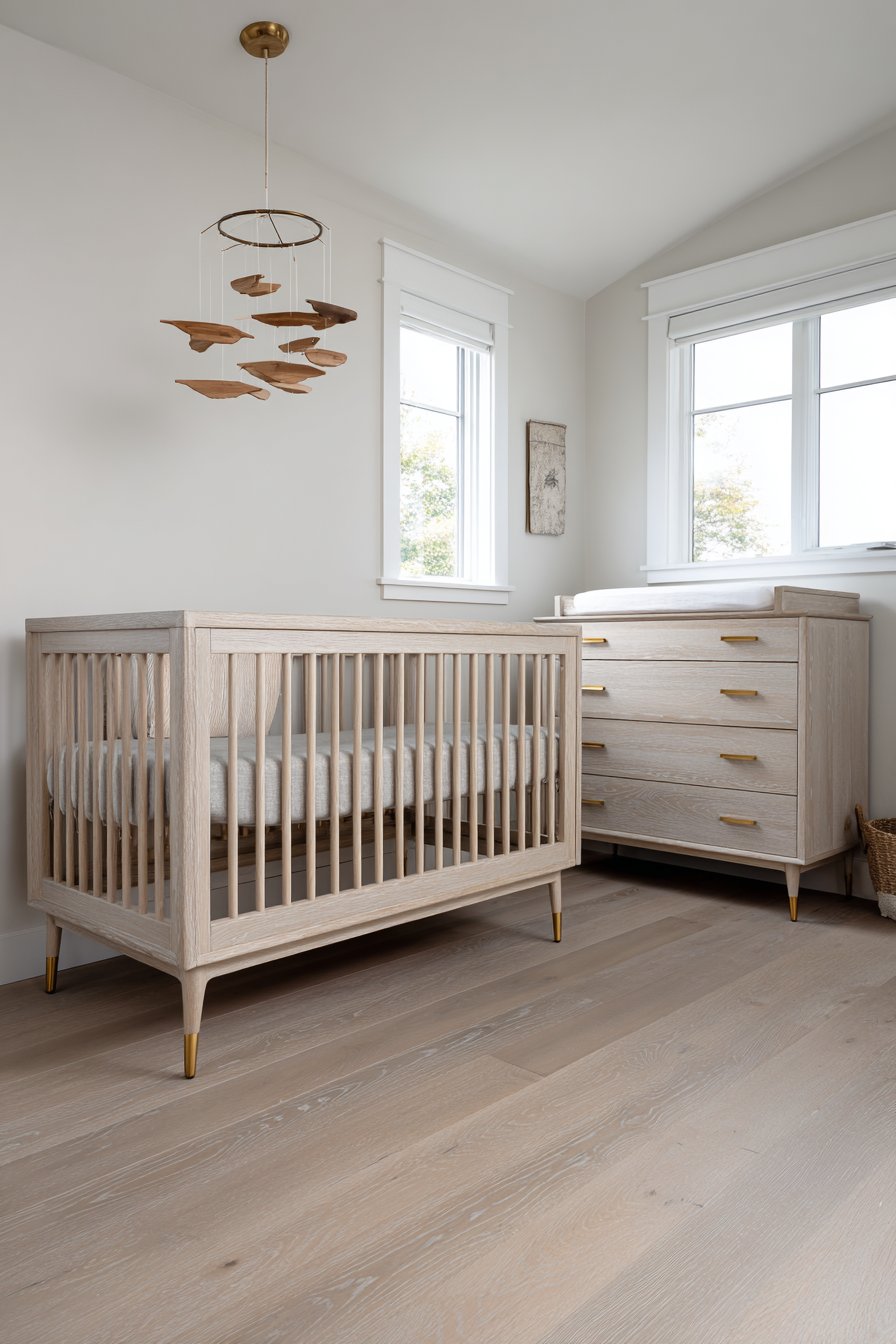
Light oak plank flooring completes the restrained aesthetic with natural beauty. The wood grain adds organic texture without disrupting minimalist principles. Wide-angle perspective reveals the uncluttered space and intentional negative space. Natural window light emphasizes material quality over quantity of possessions.
Key Design Tips:
- Invest in convertible furniture pieces for long-term value and sustainability
- Limit decorative elements to maintain true minimalist aesthetic
- Choose greige paint tones that shift between warm and cool throughout the day
- Install quality drawer pulls as affordable luxury details that elevate basic furniture
- Embrace negative space as intentional design element rather than emptiness
5. Curated Gallery Wall Above Toy Storage
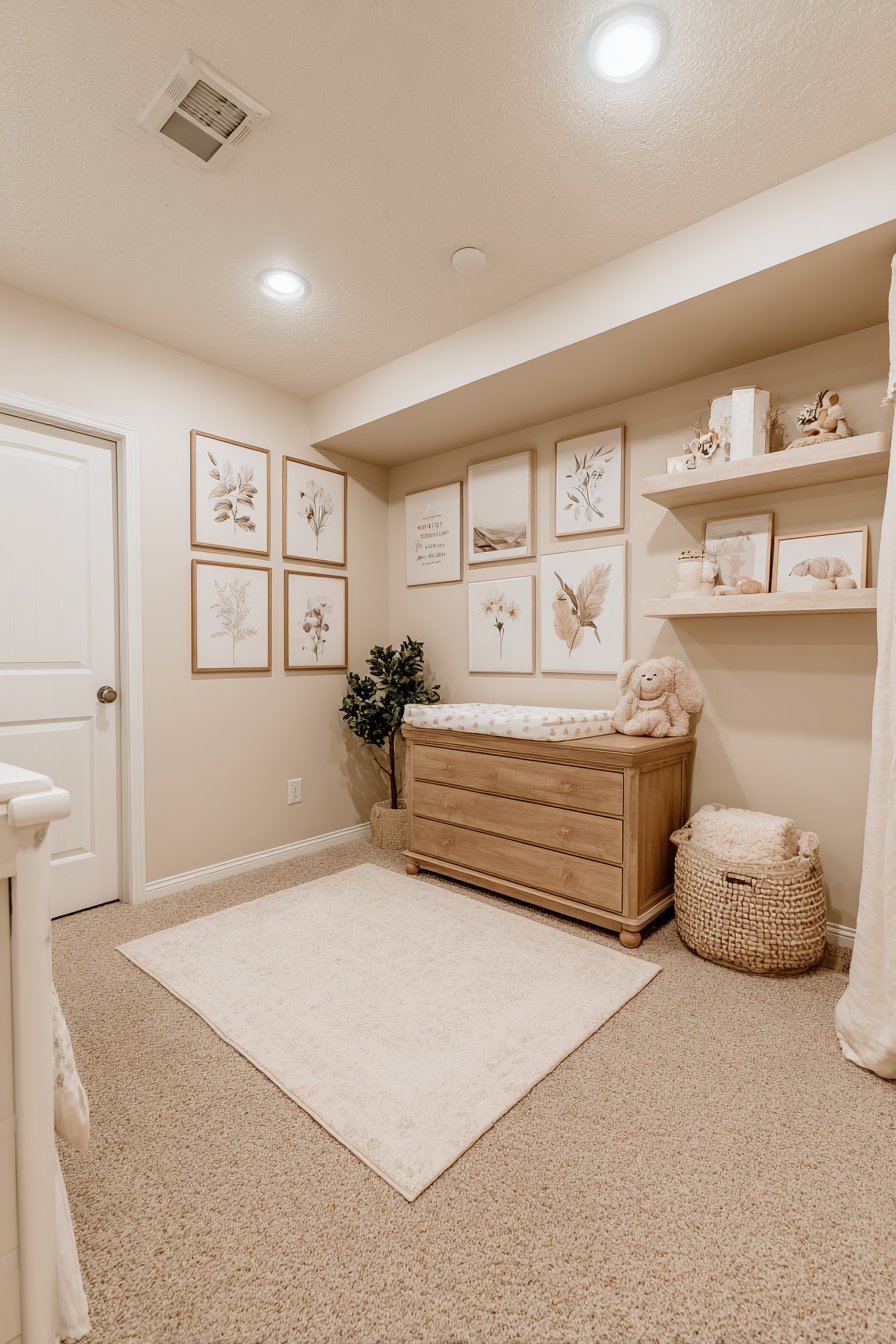
Framed botanical prints create an educational gallery wall above low storage. The coordinating neutral tones maintain visual cohesion with the beige foundation. Subtle abstract art pieces add contemporary sophistication to traditional botanical subjects. The collection creates a focal point without bright color distractions.
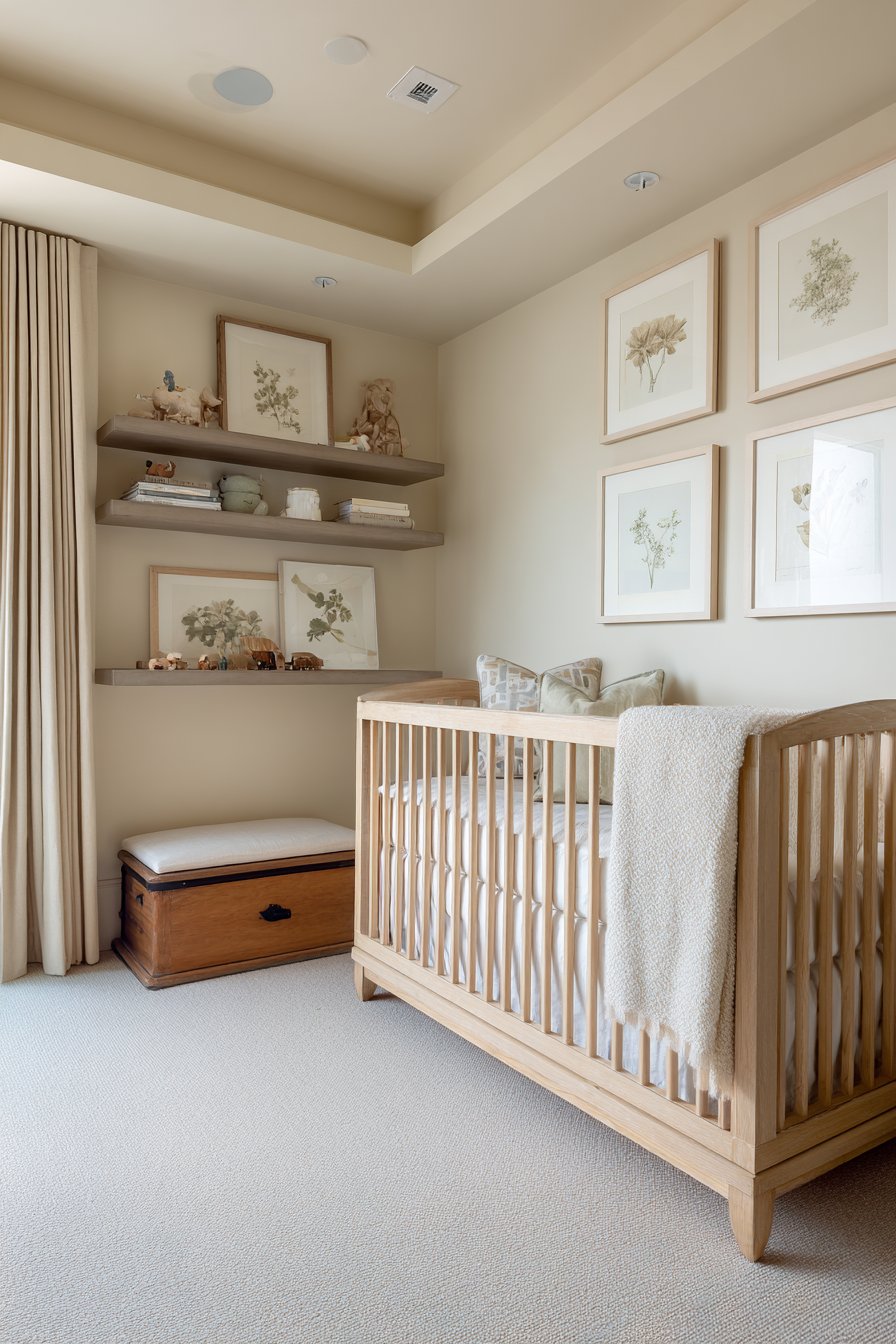
The low wooden toy chest in natural pine provides accessible storage. Its height allows toddlers to retrieve toys independently when ready. The natural wood grain adds organic warmth to the composition. This practical piece serves dual purpose as display surface and storage solution.
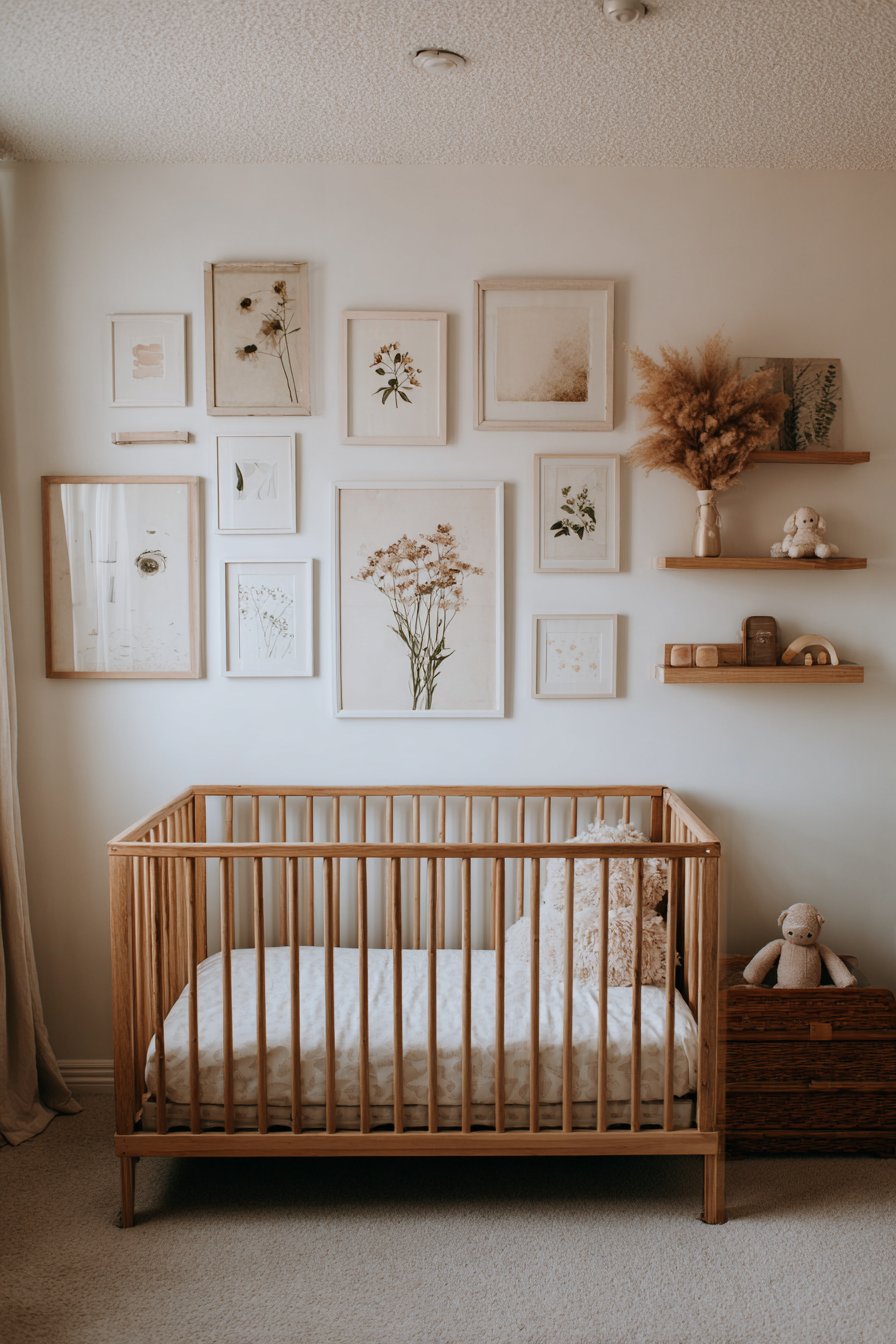
Small floating shelves in matching beige hold minimal decorative elements. Baby essentials remain within reach yet beautifully displayed. The edited selection prevents visual clutter that disrupts calm atmospheres. Each item earns its place through both function and aesthetic contribution.
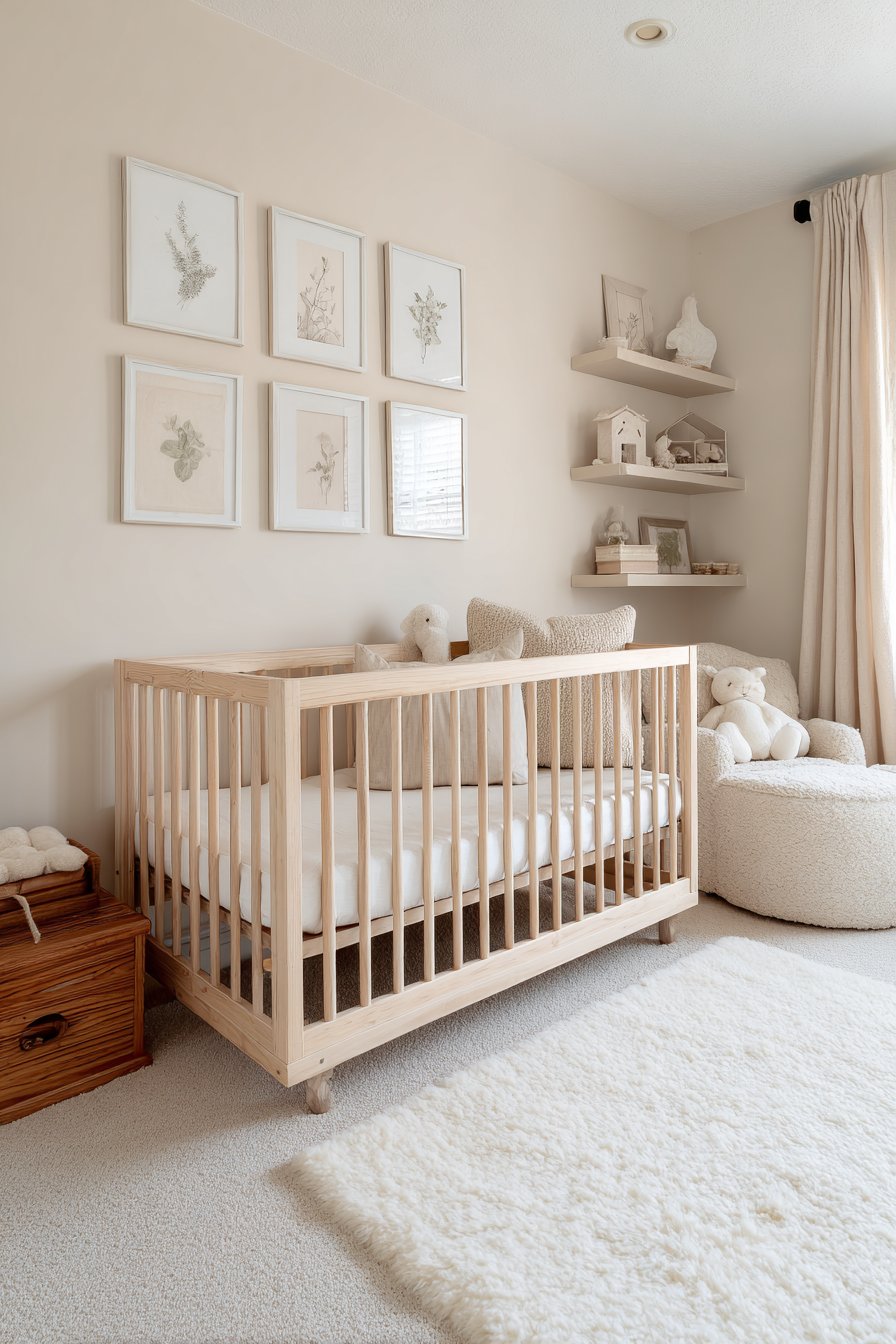
Recessed lighting provides even illumination without visible fixtures. This architectural detail maintains clean lines while ensuring adequate light. The curated aesthetic demonstrates how thoughtful selection creates impact. Subtle variations in beige shades and textures generate depth and visual interest.
Key Design Tips:
- Frame artwork in simple wood or thin metal frames for cohesive gallery walls
- Hang galleries at adult eye level now, knowing they’ll grow with the child
- Choose toy chests with safety hinges to prevent finger injuries
- Use floating shelves to display items without floor space consumption
- Install dimmer switches on recessed lighting for nighttime flexibility
6. Traditional Elegance with Upholstered Crib
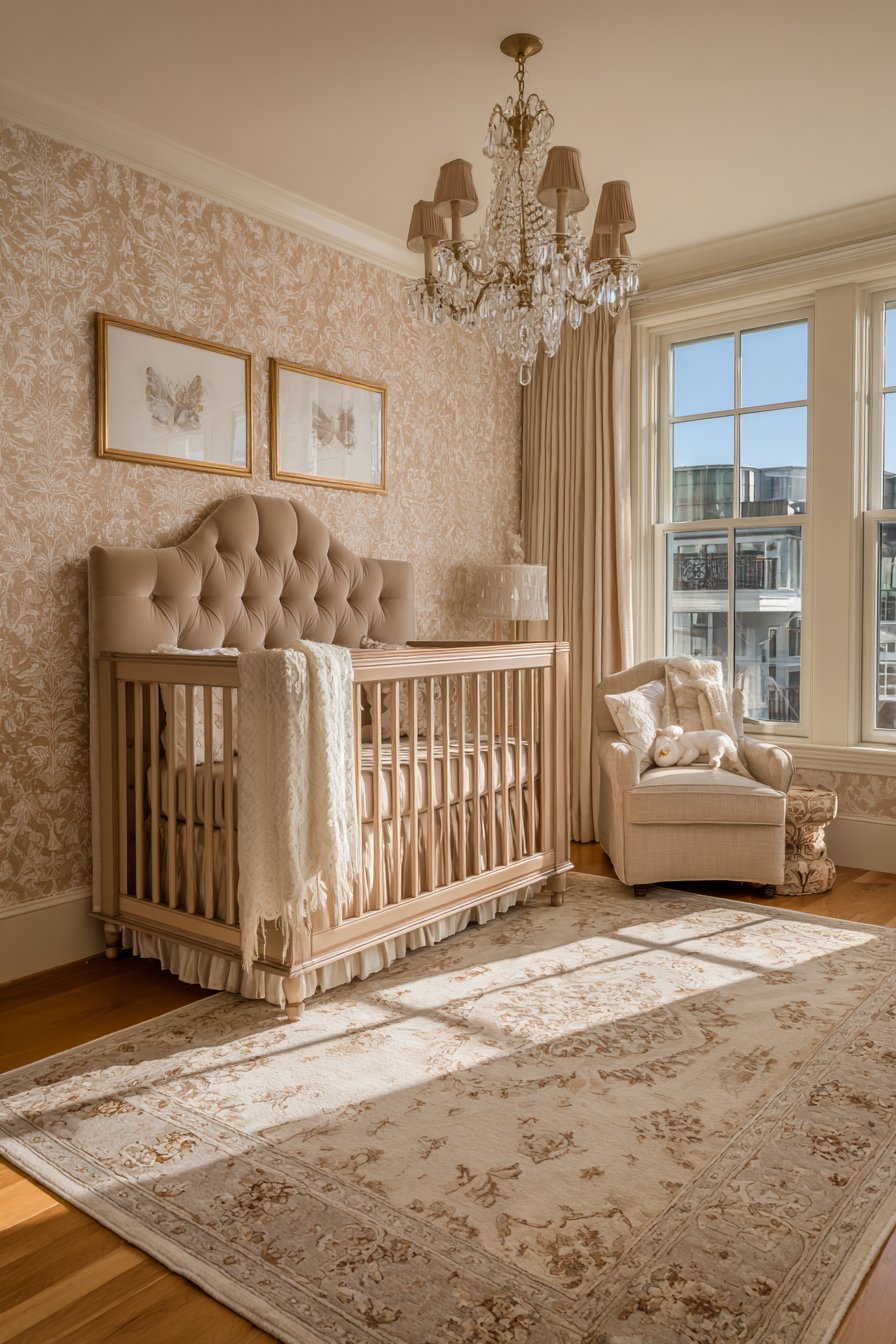
An elegant upholstered crib with tufted headboard commands attention as the centerpiece. The champagne velvet adds luxurious texture and sophisticated sheen. This traditional approach creates a nursery that feels refined and special. The button tufting adds dimensional interest to the neutral fabric.
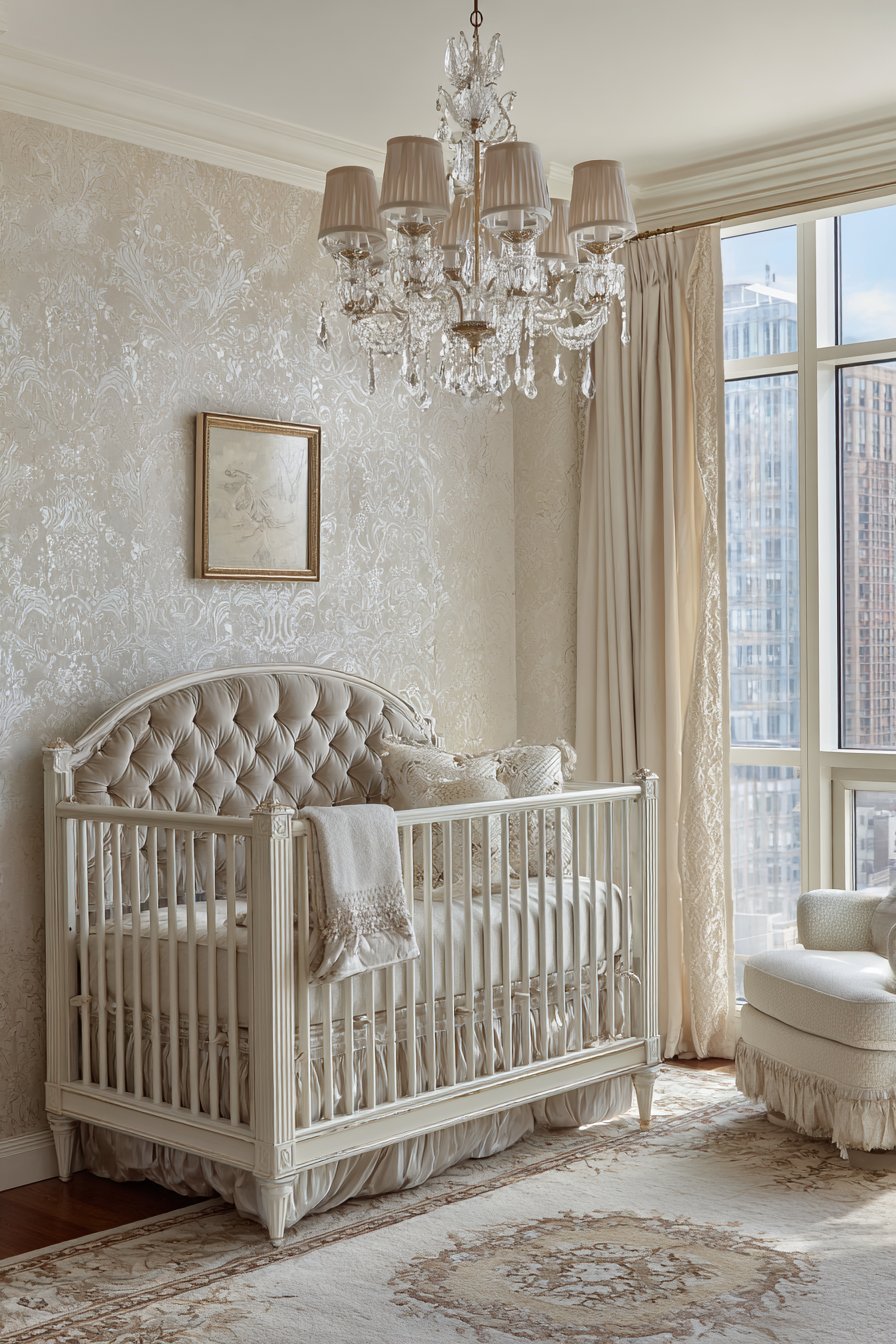
A vintage-inspired crystal chandelier provides soft ambient lighting from above. The beige fabric shades soften the sparkle for gentle illumination. This statement fixture elevates the entire room’s elegance factor. The proportions remain appropriate for the space without overwhelming it.
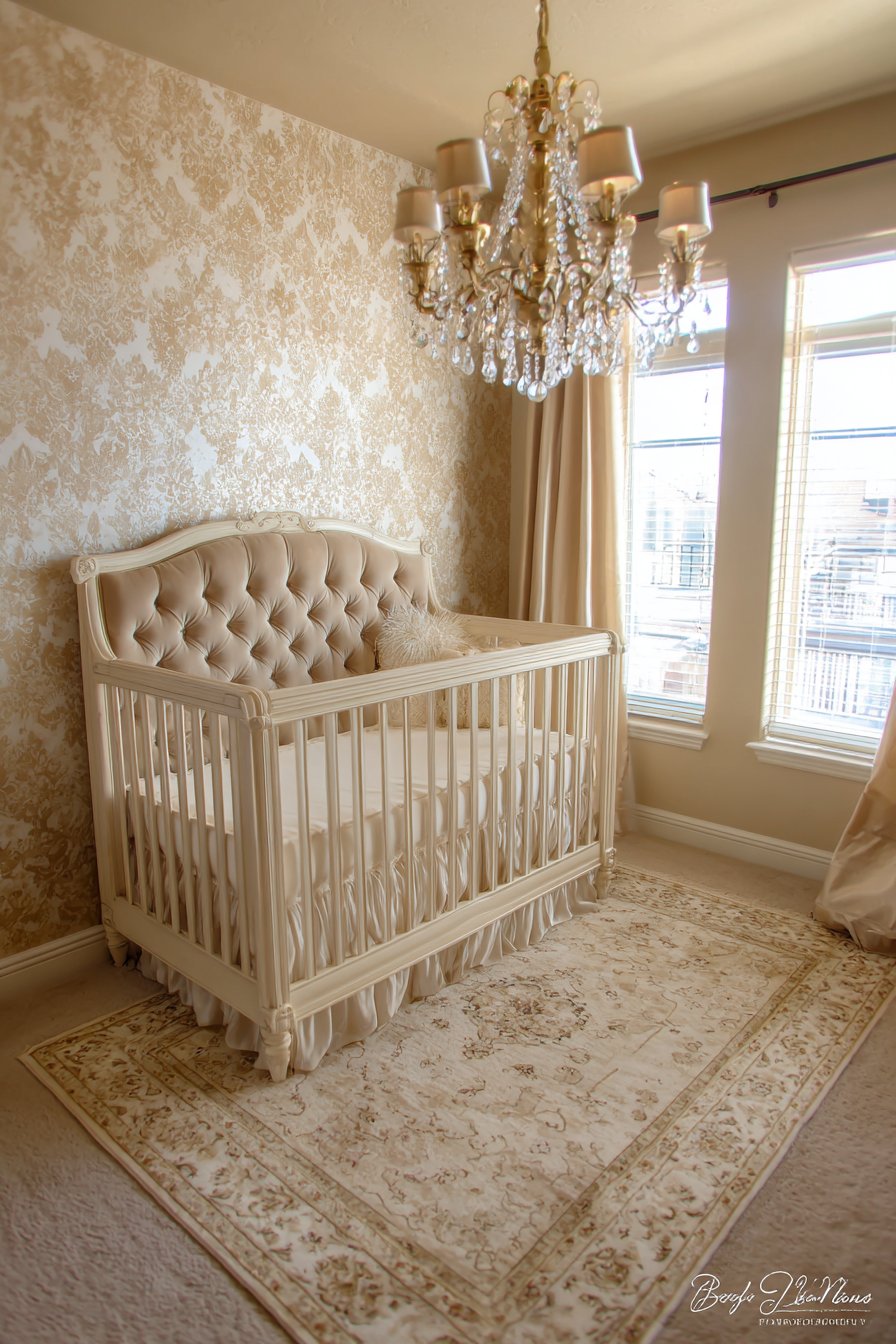
Beige damask wallpaper with subtle raised pattern covers the walls. The tone-on-tone design adds texture without strong pattern contrast. This traditional wallcovering technique creates depth through dimension rather than color. The raised pattern catches light at different angles throughout the day.
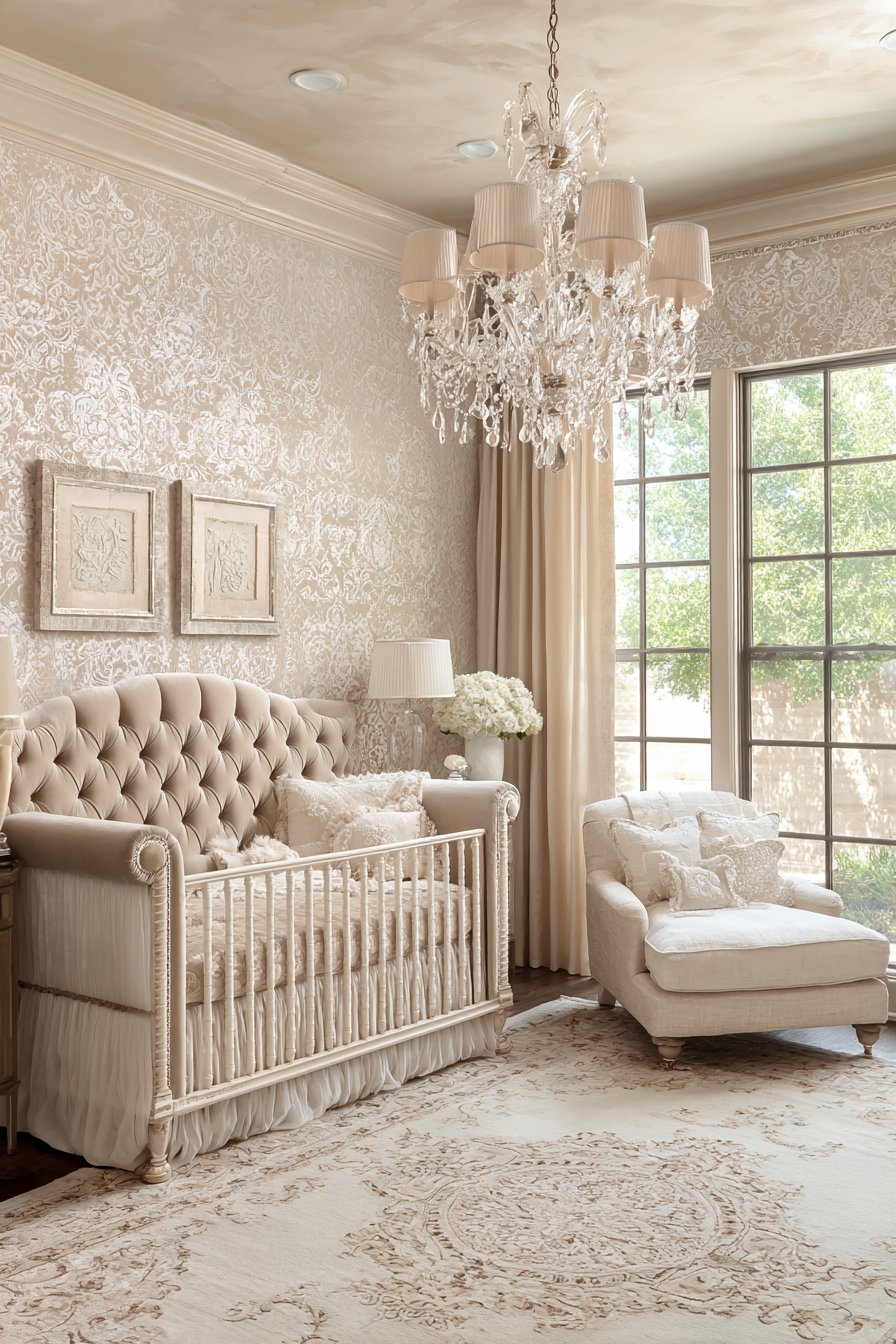
A plush area rug in layered beige tones anchors the furniture arrangement. The traditional medallion design reinforces the classic aesthetic approach. Multiple pile heights add another layer of tactile interest. Natural light from tall windows enhances the luxurious textures and sophisticated color story.
Key Design Tips:
- Protect upholstered cribs with removable bumpers or protective covers in early months
- Select crystal chandeliers with fabric shades to soften sparkle for infant eyes
- Choose damask patterns with subtle contrast for textural interest without visual overwhelm
- Layer area rugs over carpeting for added sound absorption in nurseries
- Incorporate one statement piece to establish the room’s design direction
7. Functional Changing Station with Thoughtful Details
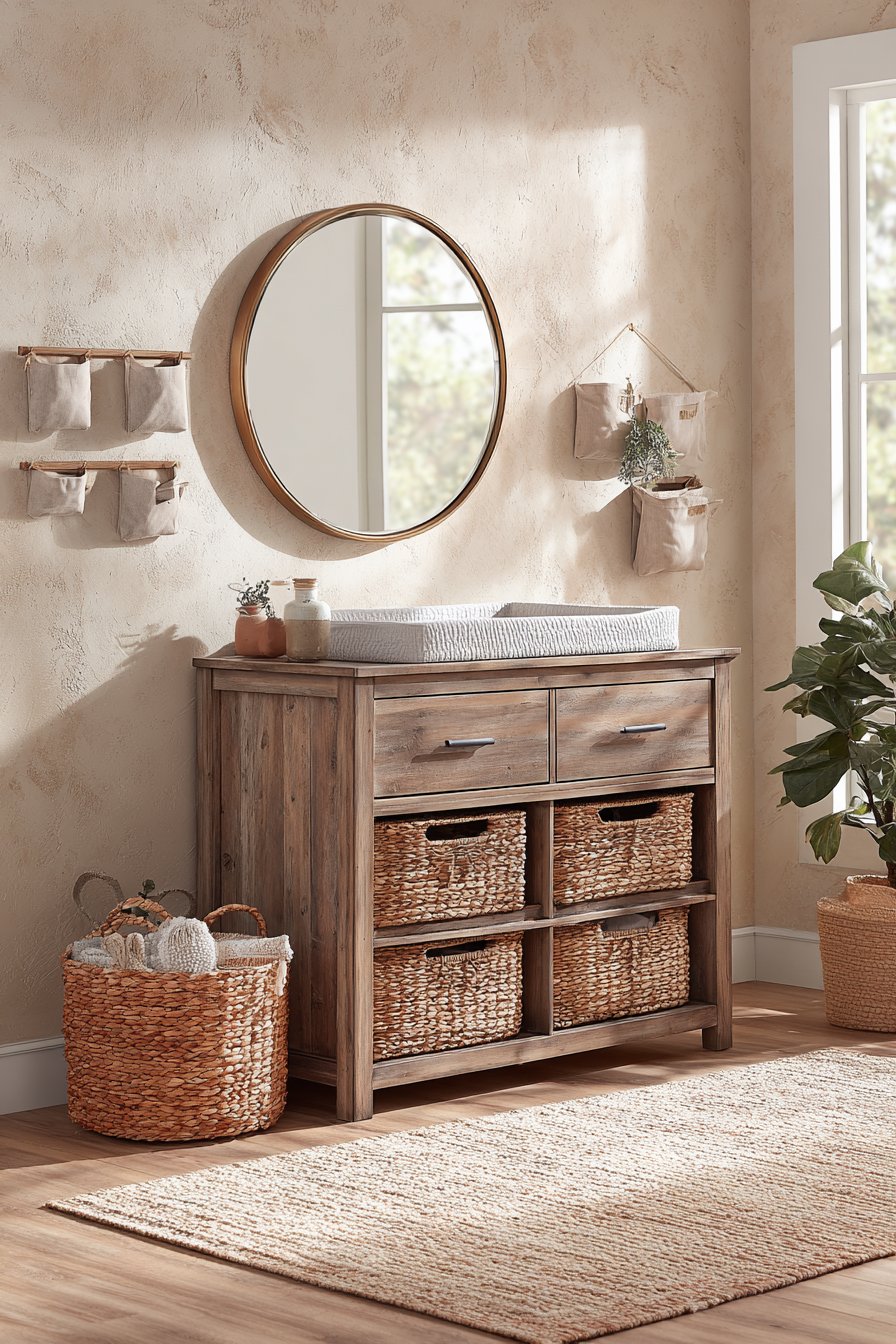
A substantial wooden dresser in weathered oak serves as changing table base. The generous surface area accommodates changing pad and essential supplies. The aged finish adds character that new furniture lacks. This piece will transition seamlessly to standard dresser use later.
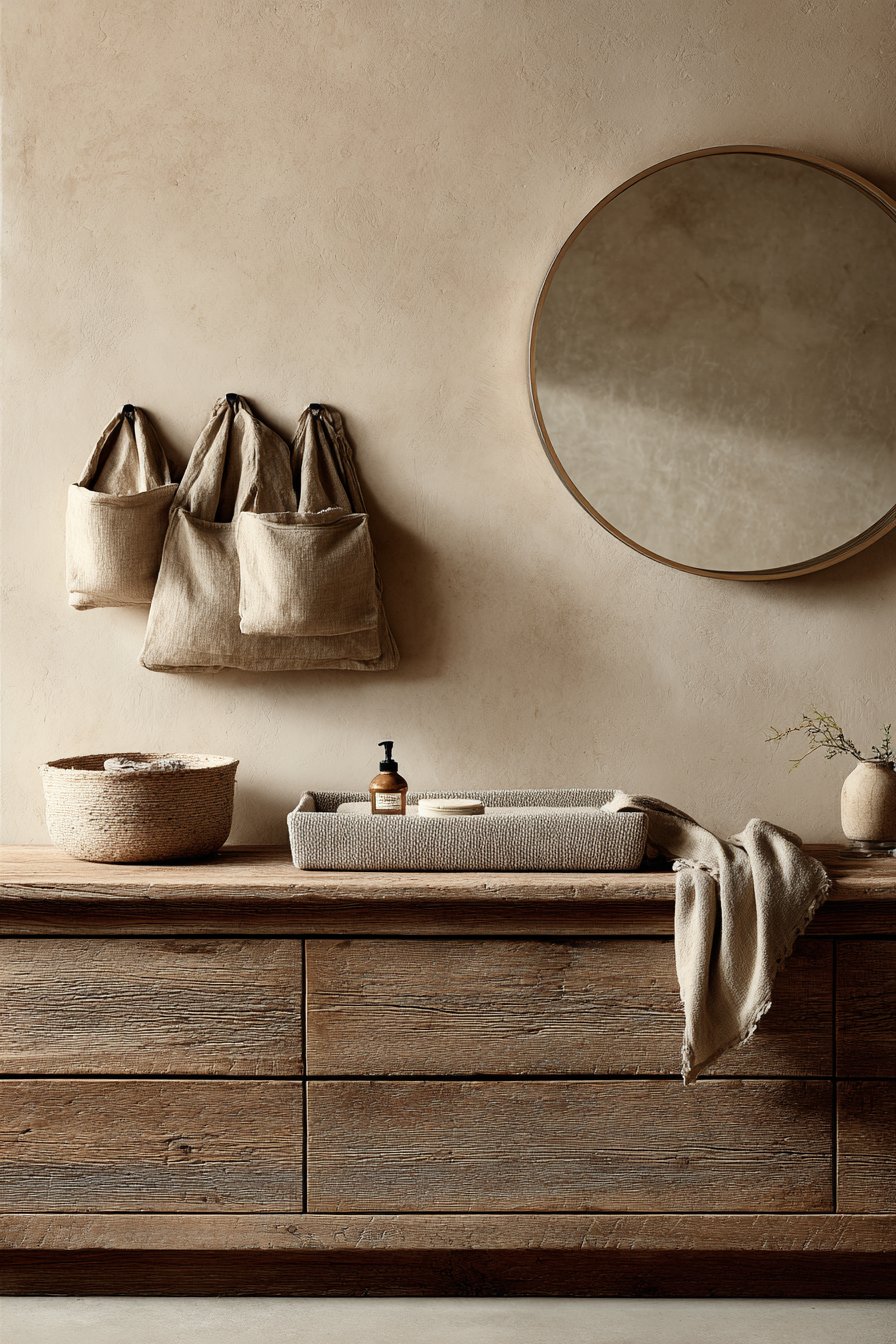
A beige terry cloth changing pad cover provides soft, absorbent comfort. The neutral tone hides minor stains better than white alternatives. Wall-mounted canvas organizers keep diapers and essentials within reach. This vertical storage frees precious surface space for the changing process.
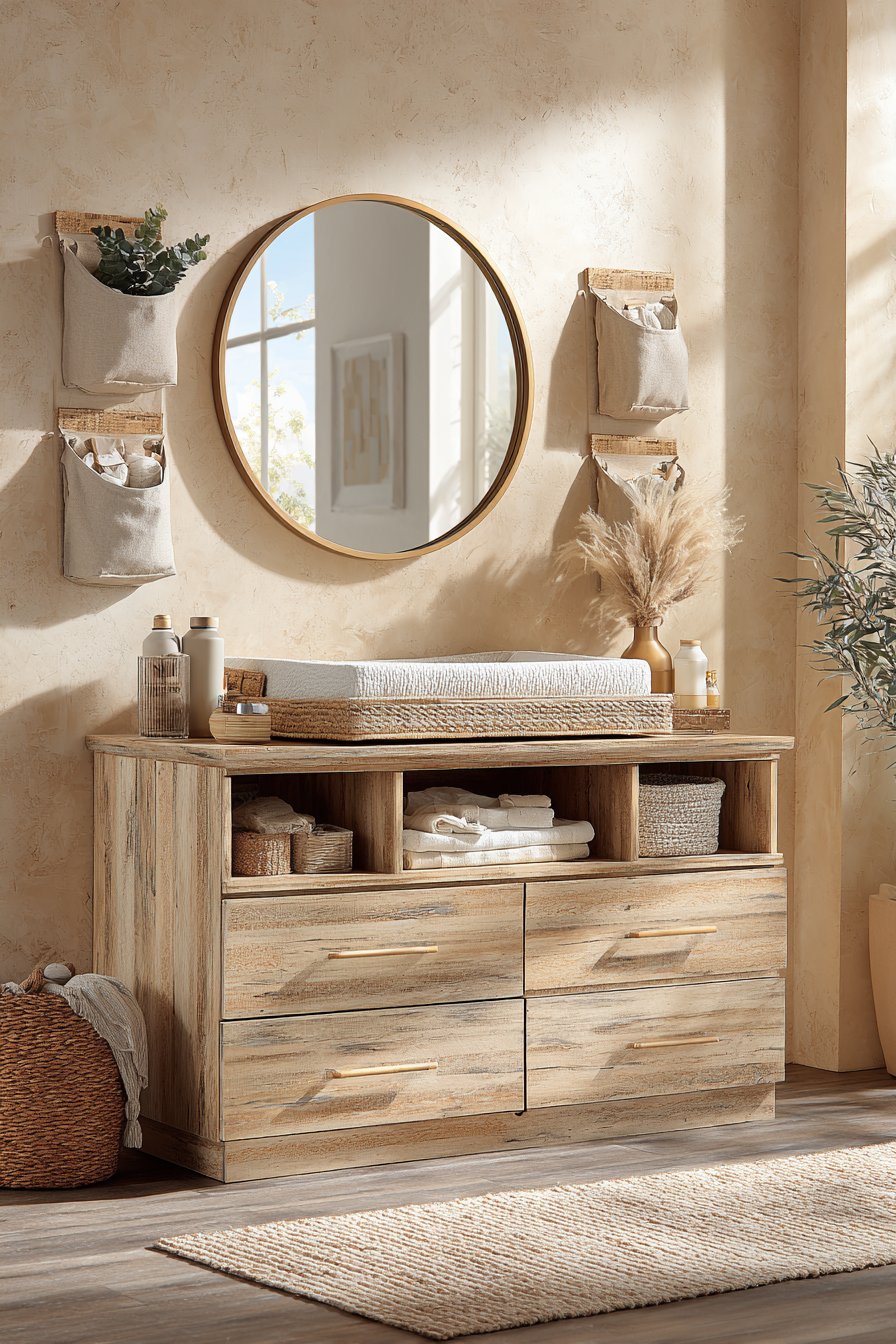
A large round mirror with thin brass frame hangs strategically above. The reflective surface bounces natural light throughout the space. The slim frame maintains visual lightness while adding metallic warmth. Mirrors also provide entertainment during diaper changes as babies discover their reflections.
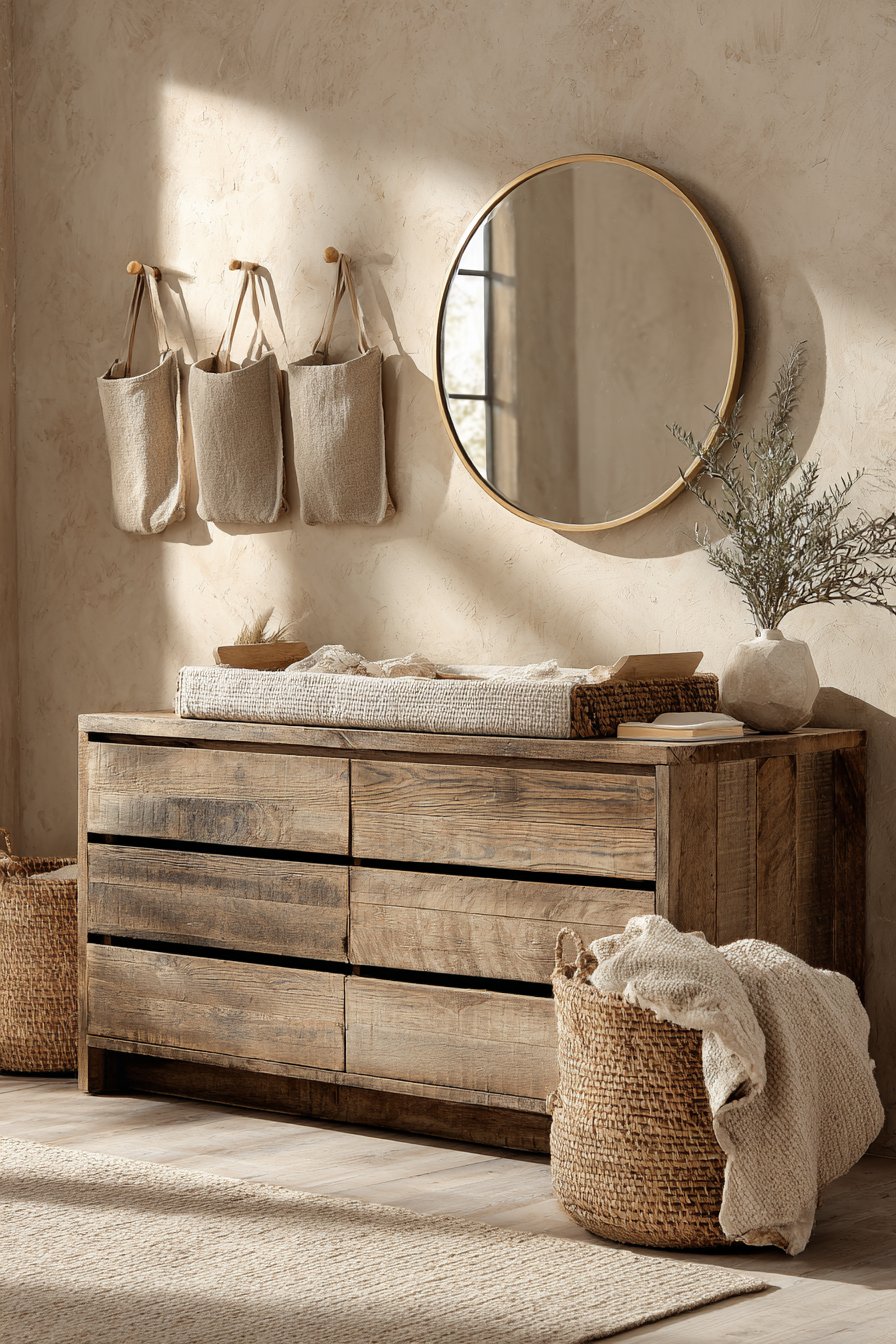
Walls finished in warm sand beige with subtle texture create a cohesive backdrop. The slight texture adds dimension without strong pattern distraction. Balanced lighting highlights the functional beauty of this essential station. The design proves practicality and aesthetics coexist beautifully when thoughtfully planned.
Key Design Tips:
- Choose dressers with depths of at least 18 inches for secure changing pad placement
- Install wall organizers at your comfortable reaching height while standing at dresser
- Position mirrors securely and check mounting regularly for safety
- Use terry cloth covers that can be easily removed and laundered
- Select weathered finishes that hide inevitable scratches and wear gracefully
8. Architectural Interest with Exposed Beams
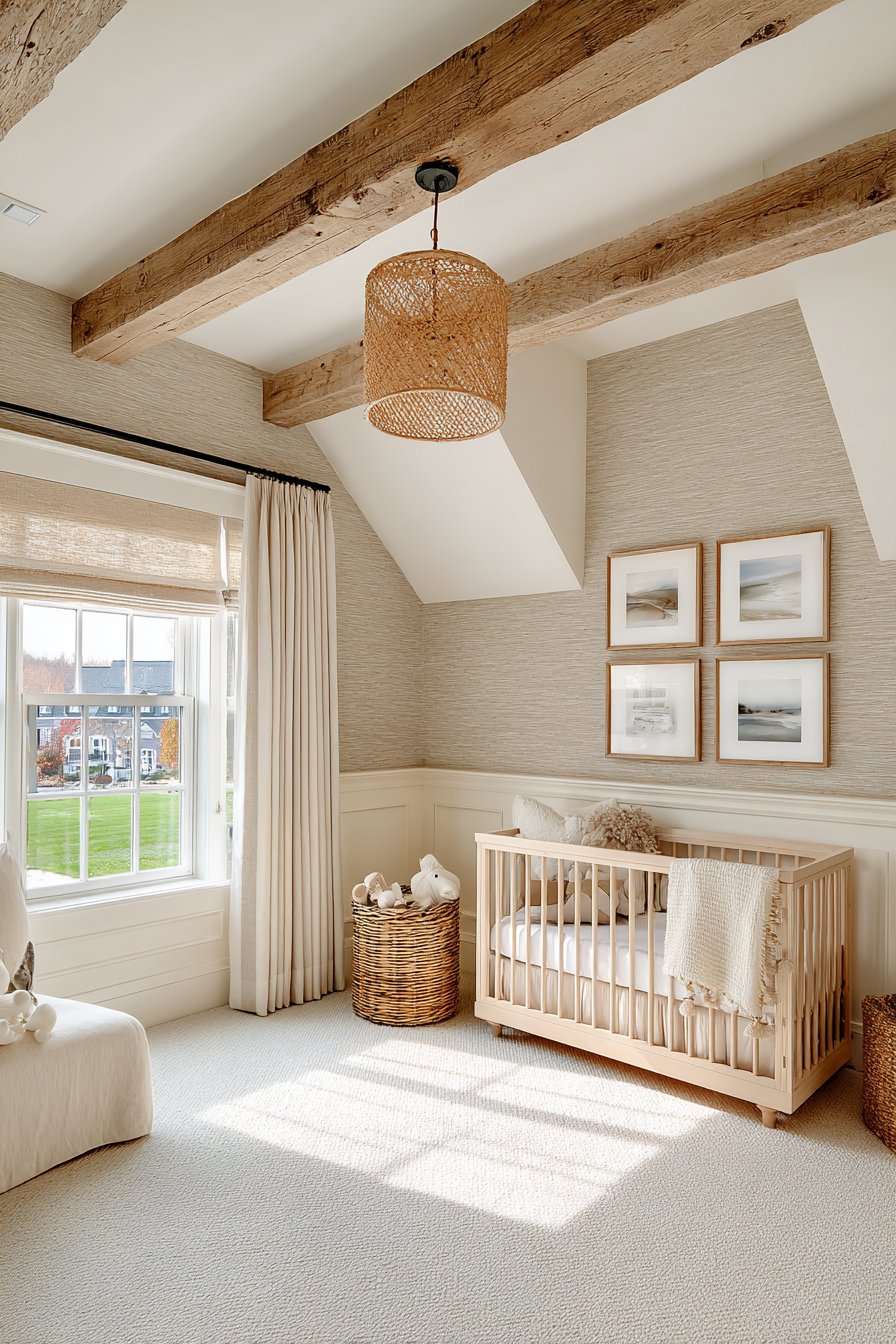
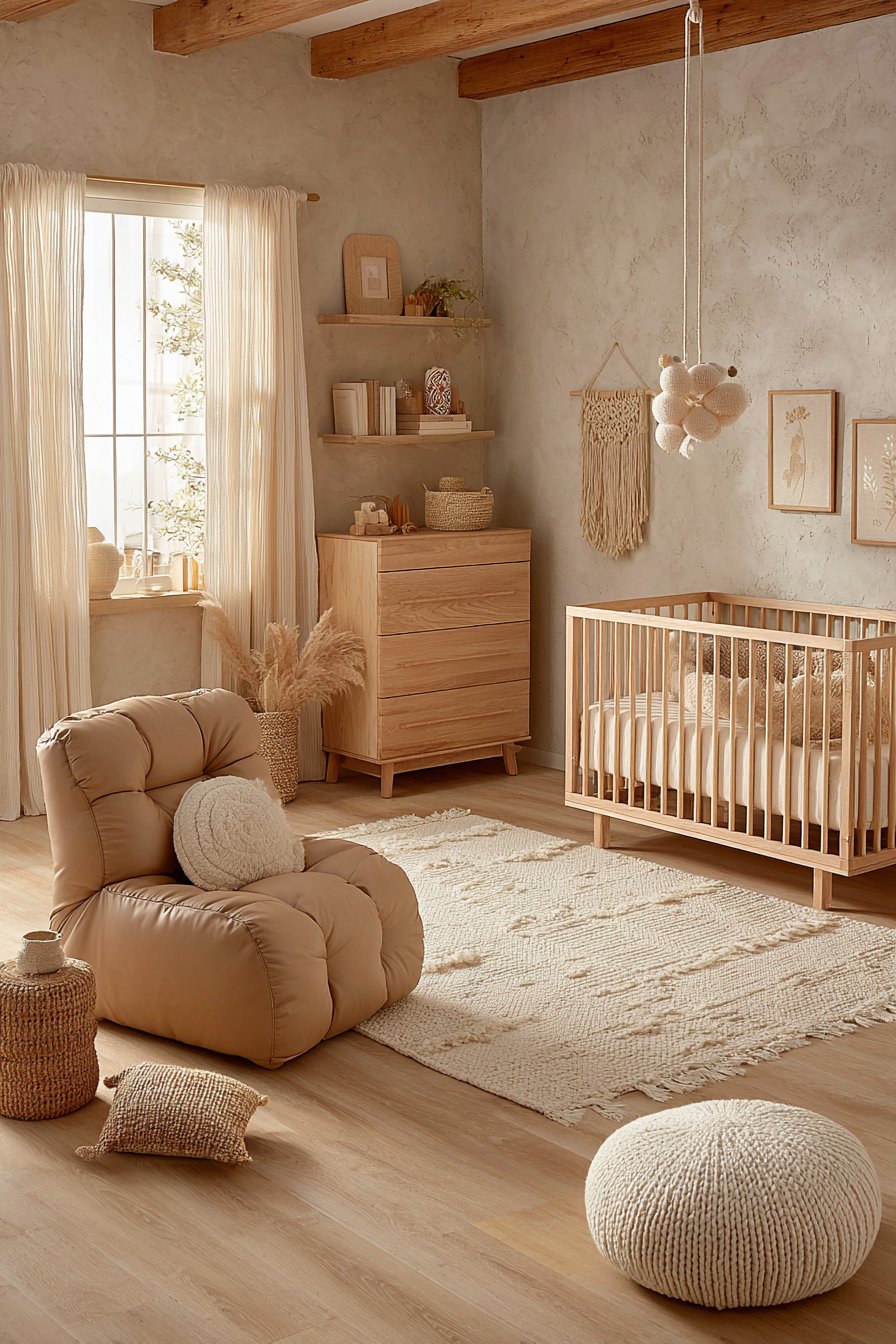
Natural wooden beams in light driftwood stain create striking overhead architecture. The ceiling treatment draws eyes upward and adds vertical drama. The beams are painted beige ceiling contrast with the natural wood beautifully. This architectural detail transforms an ordinary ceiling into a design feature.
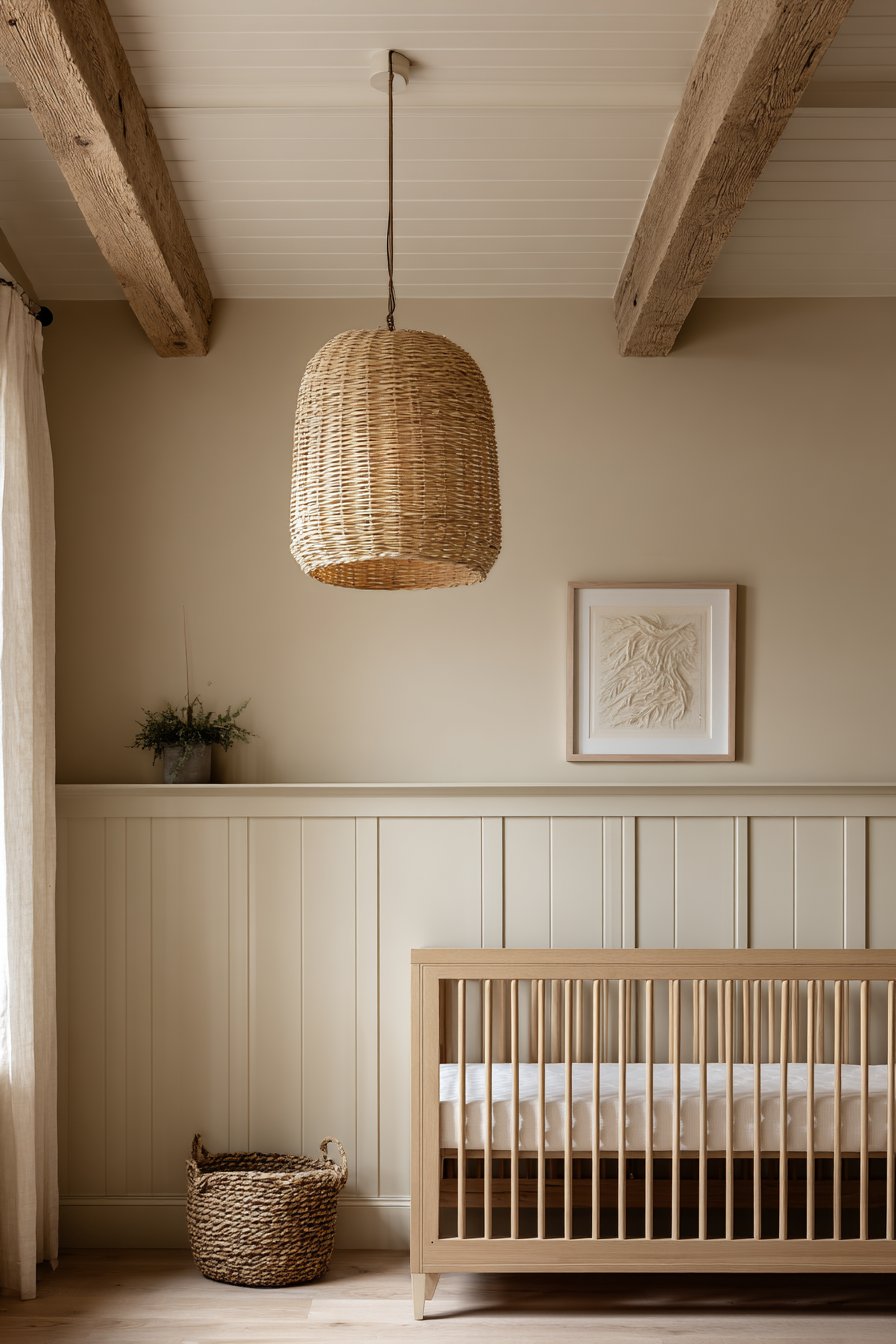
A simple pendant light with woven rattan shade provides overhead illumination. The natural tan tone coordinates with the beam finish perfectly. The woven texture adds another organic element to the material palette. The scale remains appropriate without overwhelming the room’s proportions.
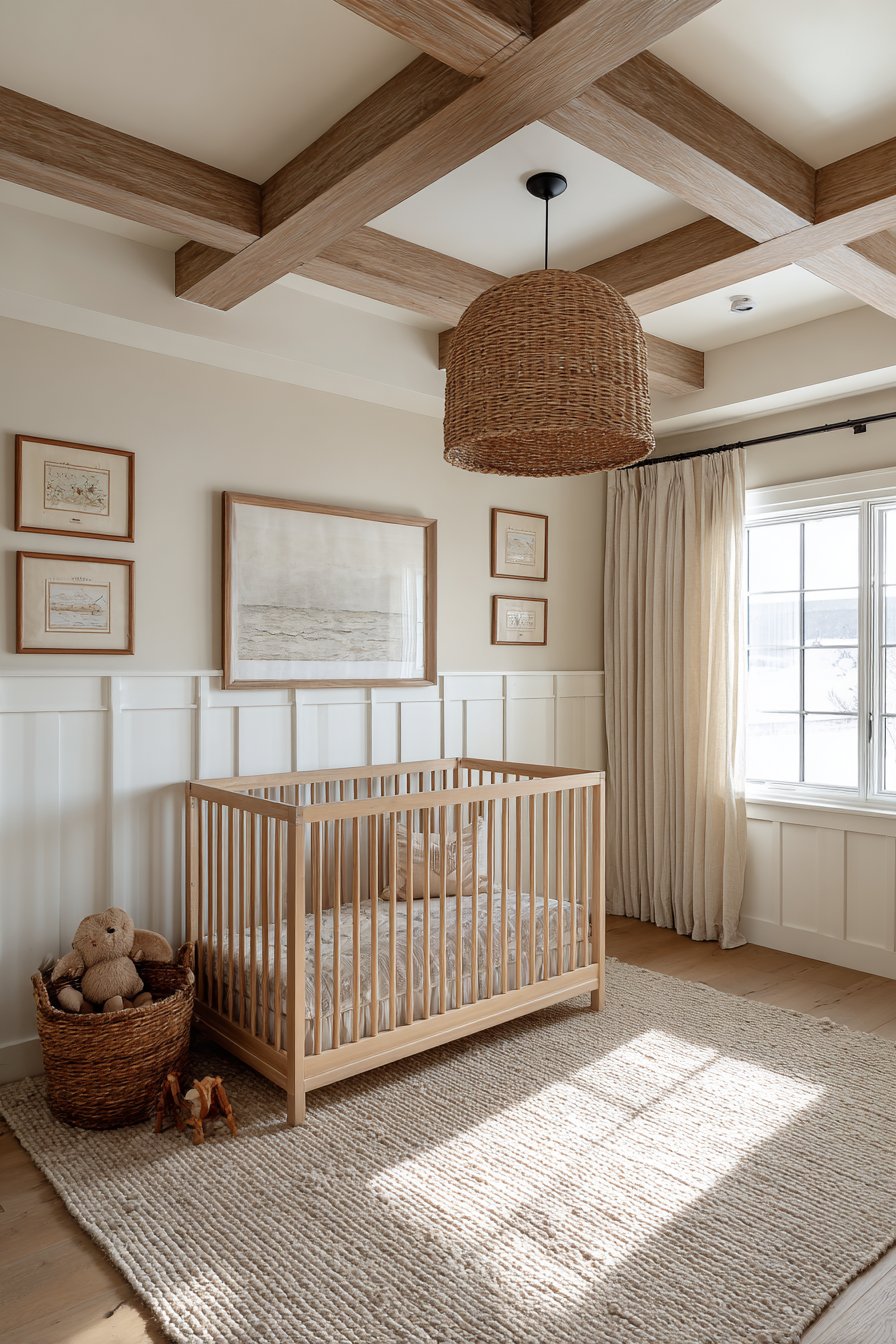
White wainscoting below chair rail height adds traditional architectural detail. The painted trim contrasts gently with warm beige walls above. This classic treatment adds visual weight to the lower portion of walls. The horizontal line creates pleasing proportions in standard-height rooms.
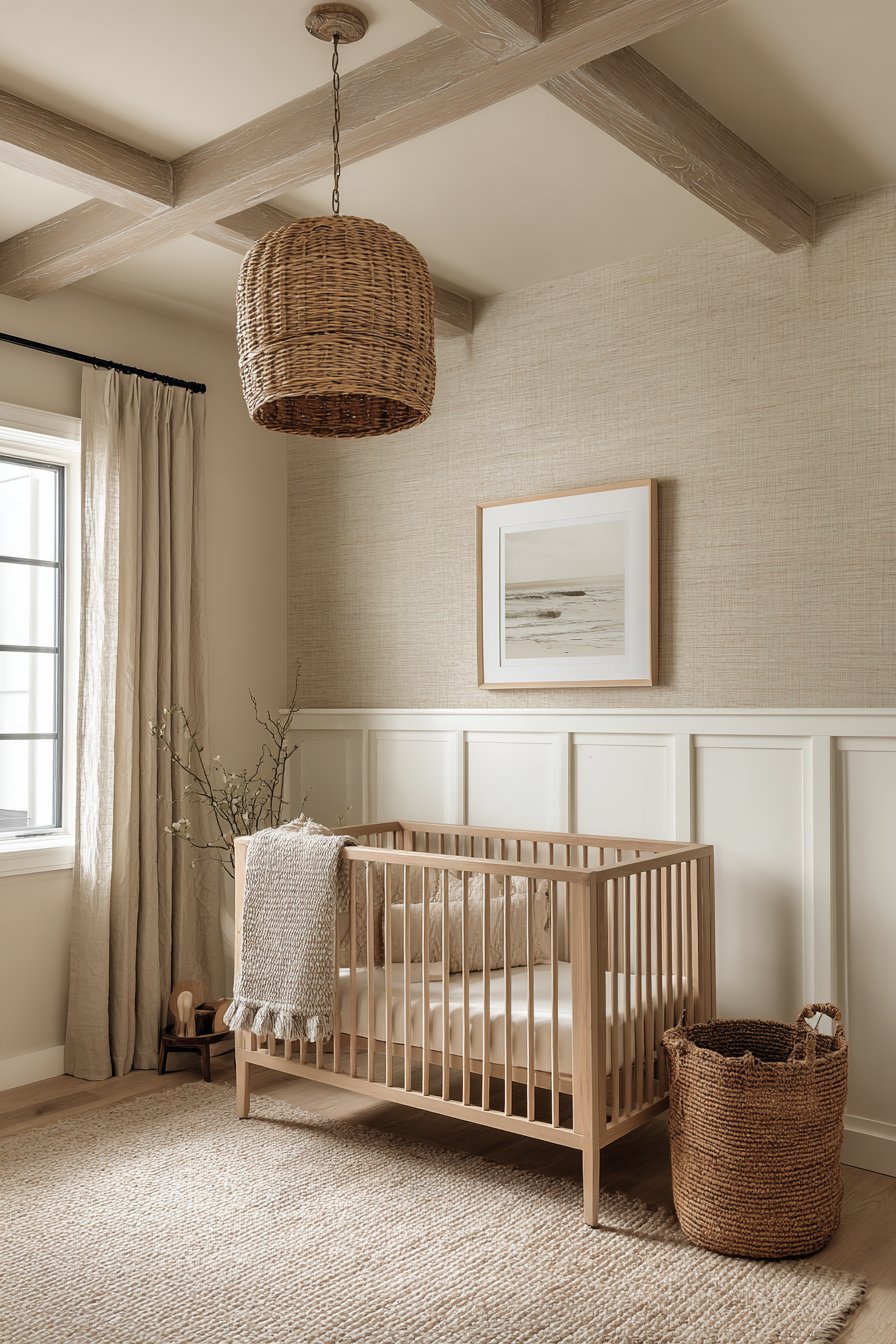
A simple wooden crib in matching light wood tone sits beneath the beams. The furniture scale balances the architectural drama overhead without competing. Afternoon light interacts dynamically with the layered beige tones throughout the room. The design demonstrates how architectural elements enhance otherwise simple spaces.
Key Design Tips:
- Install faux beams if authentic structural beams don’t exist in your home
- Paint or stain beams in lighter tones to maintain airiness in nurseries
- Use wainscoting to add durability to walls that will face future wear
- Coordinate lighting fixture finishes with architectural wood tones
- Consider ceiling height when adding beam depth to avoid oppressive feelings
9. Bohemian Montessori Floor Bed Approach
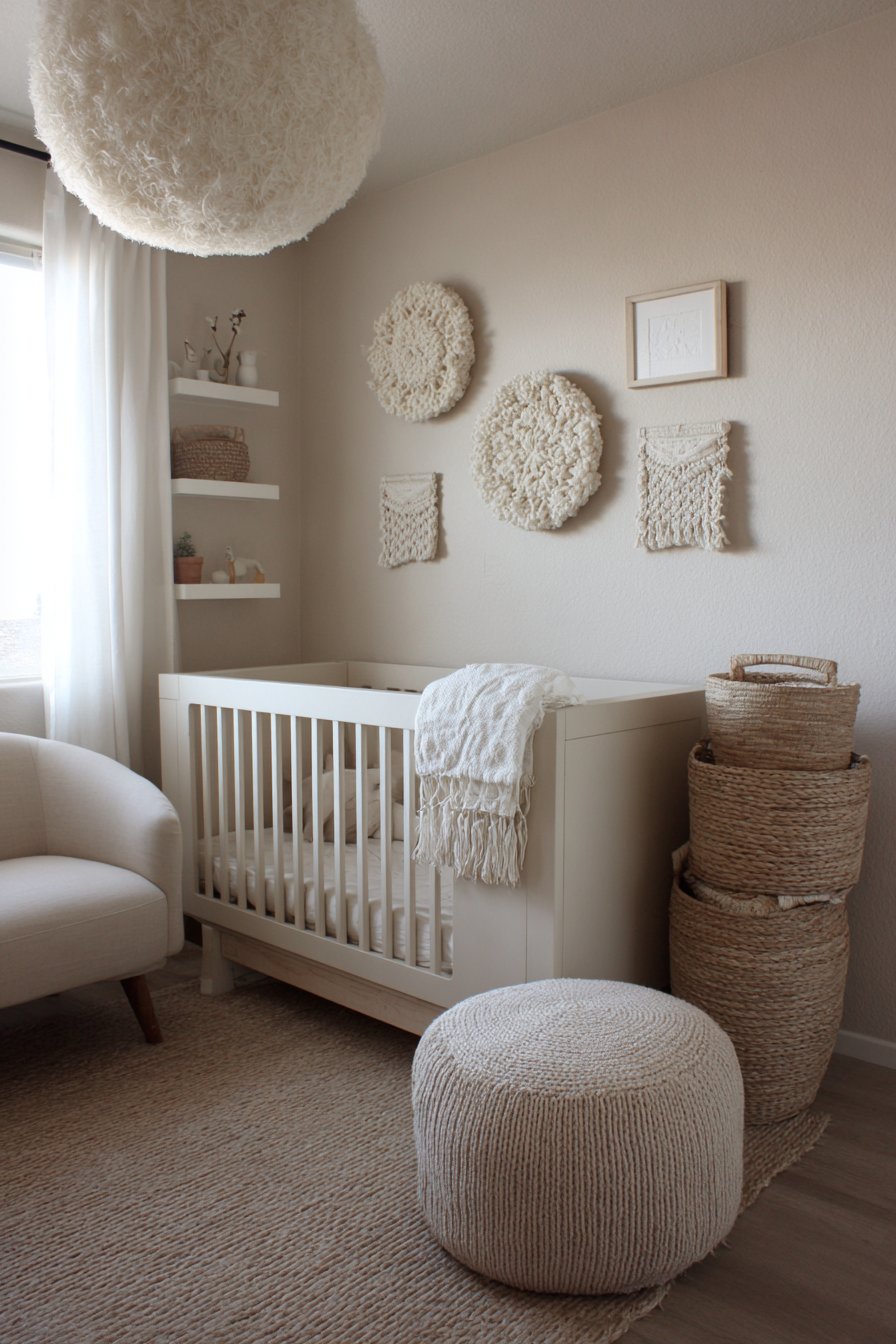
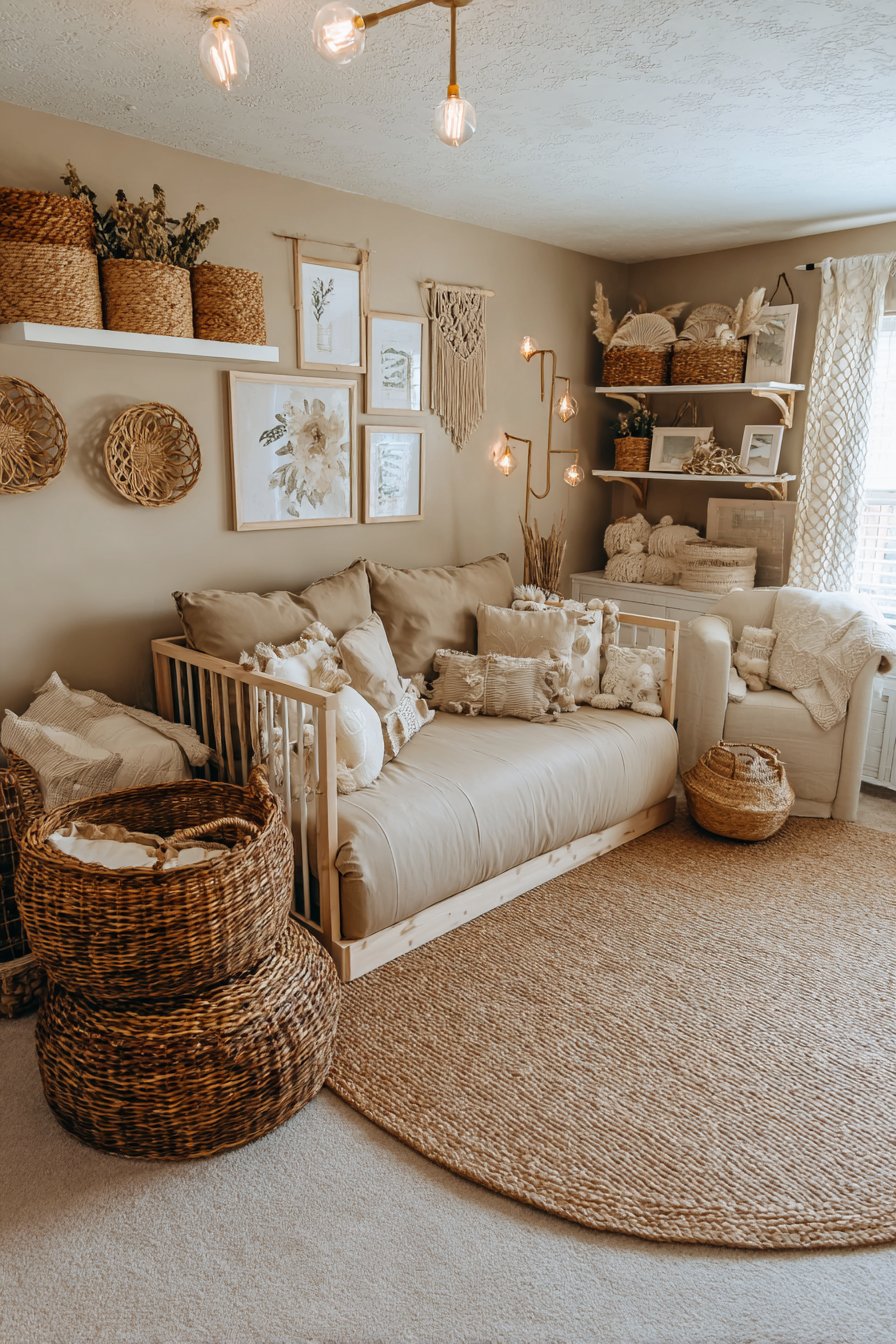
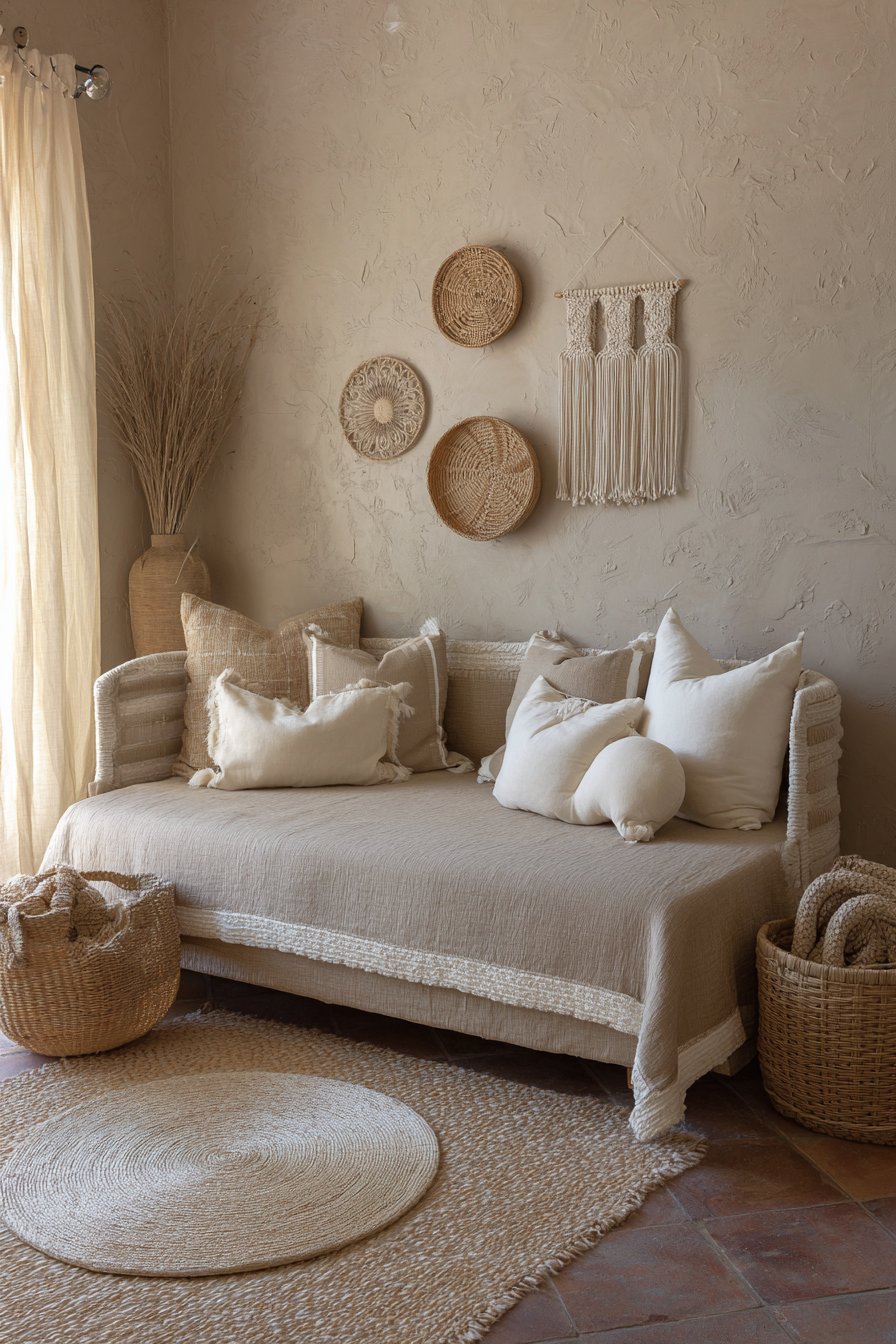
A low-profile floor bed embraces Montessori principles for infant development. The sleeping area sits directly on natural fiber rug in jute and sisal. This approach allows future mobility without dangerous falls from elevated cribs. The floor-level design creates accessibility and independence from early stages.
Macramé wall hangings in unbleached cotton create textural focal points. The handcrafted details add artisanal quality to the bohemian aesthetic. The natural fiber contrasts beautifully against mushroom beige walls. These textile artworks soften hard surfaces while adding visual interest.
Woven storage baskets in various beige and natural tones line one wall. The collection creates organized storage with cohesive aesthetic appeal. Different weaving patterns add textural variety within the neutral palette. The accessible arrangement encourages participation in cleanup routines later.
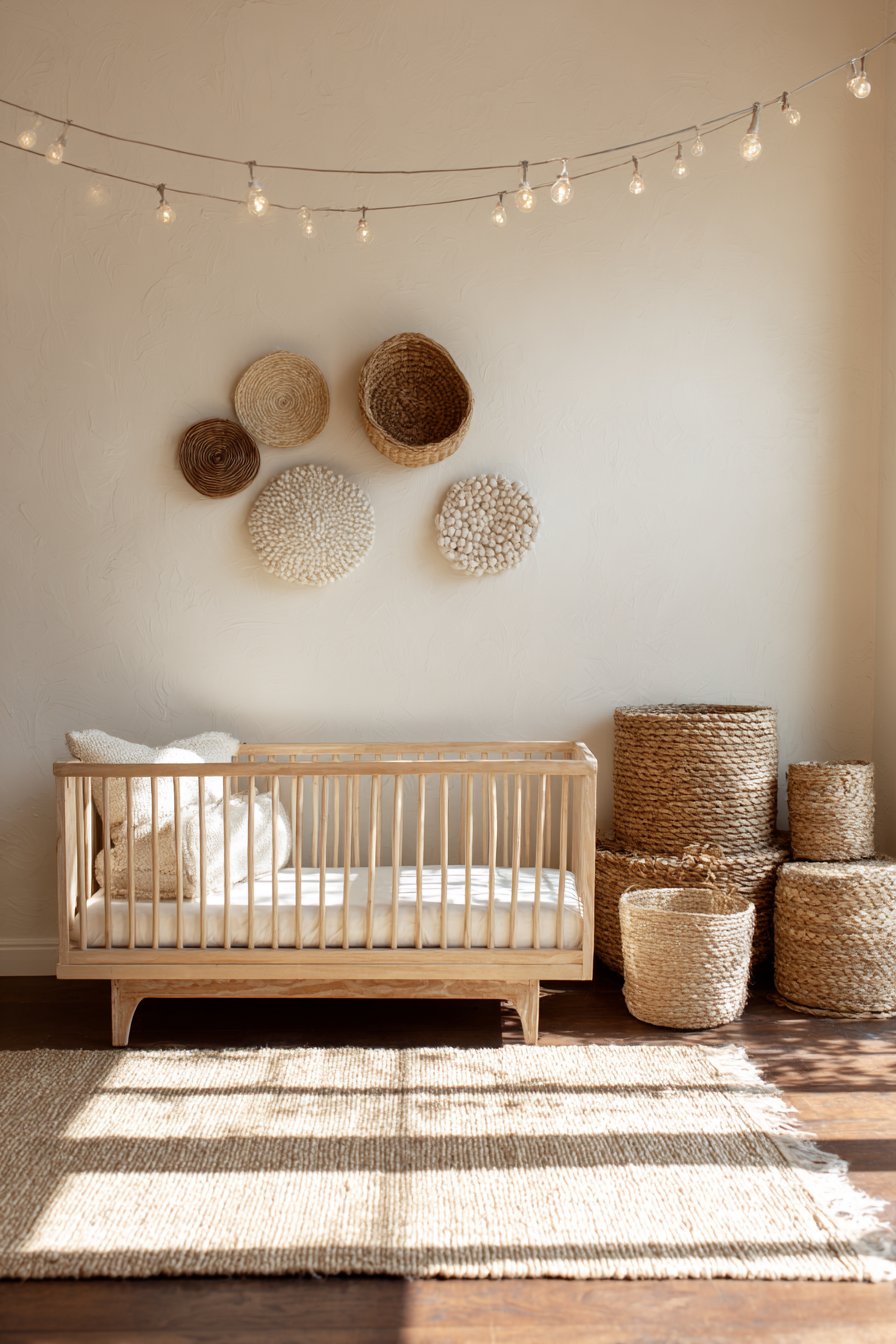
String lights with warm Edison bulbs provide gentle evening ambiance. The soft glow creates a magical atmosphere for bedtime routines. The relaxed, earthy aesthetic reflects bohemian design principles perfectly. Diffused lighting emphasizes organic textures and comfortable beige foundation throughout the space.
Key Design Tips:
- Ensure floor beds have firm mattresses appropriate for infant safety standards
- Secure all wall hangings properly to prevent falls if pulled by curious toddlers
- Choose natural fiber rugs that provide cushioning yet allow easy cleaning
- Install string lights out of reach and ensure they don’t create heat hazards
- Embrace the low furniture aesthetic consistently for true Montessori approach
10. Layered Window Treatment with Built-In Seating
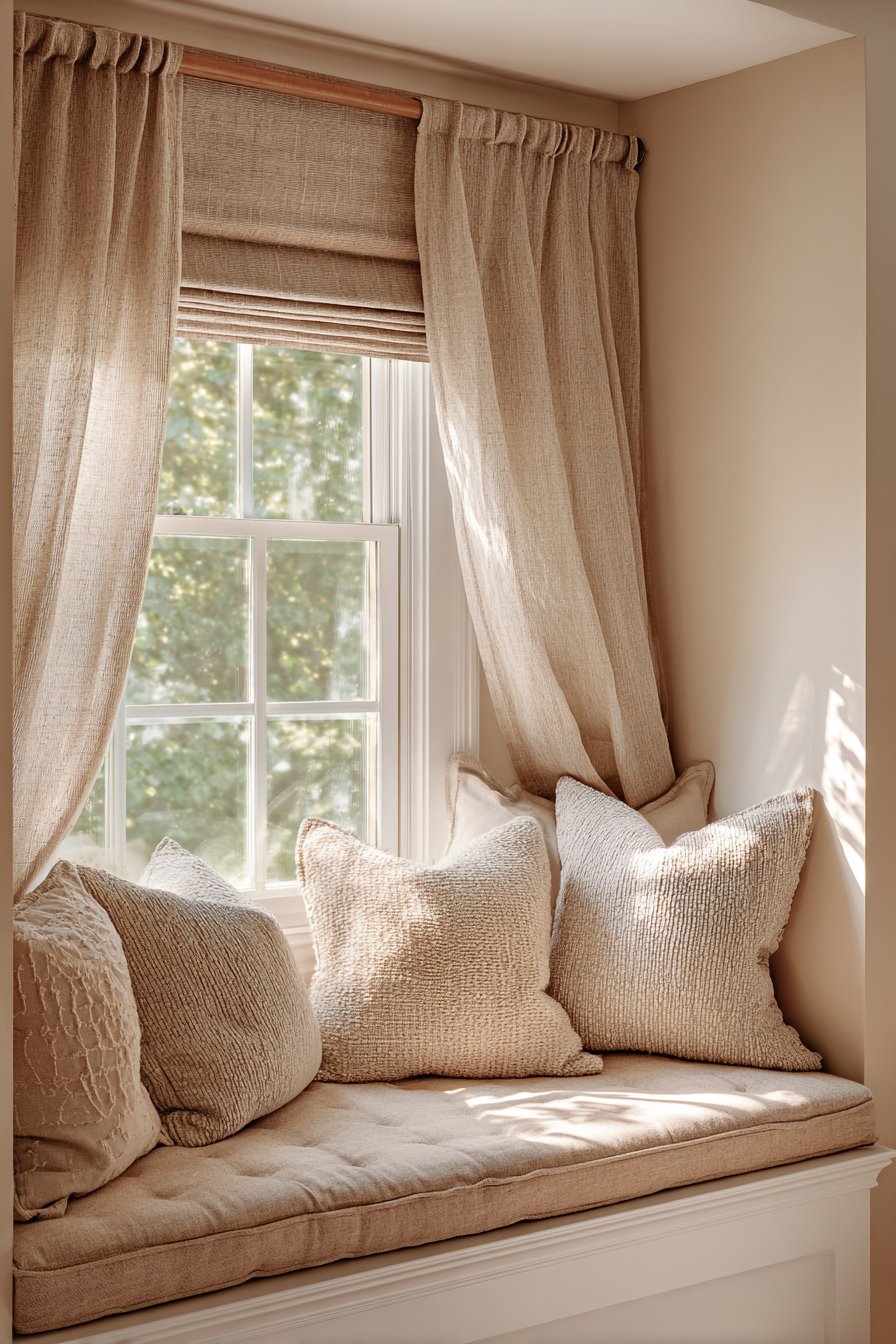
Layered Roman shades in natural linen provide light control over sheer privacy curtains. The dual treatment offers flexibility for different times of day. Simple wooden rods in light oak finish complement the natural textile choices. The hardware remains simple to keep focus on the fabrics.
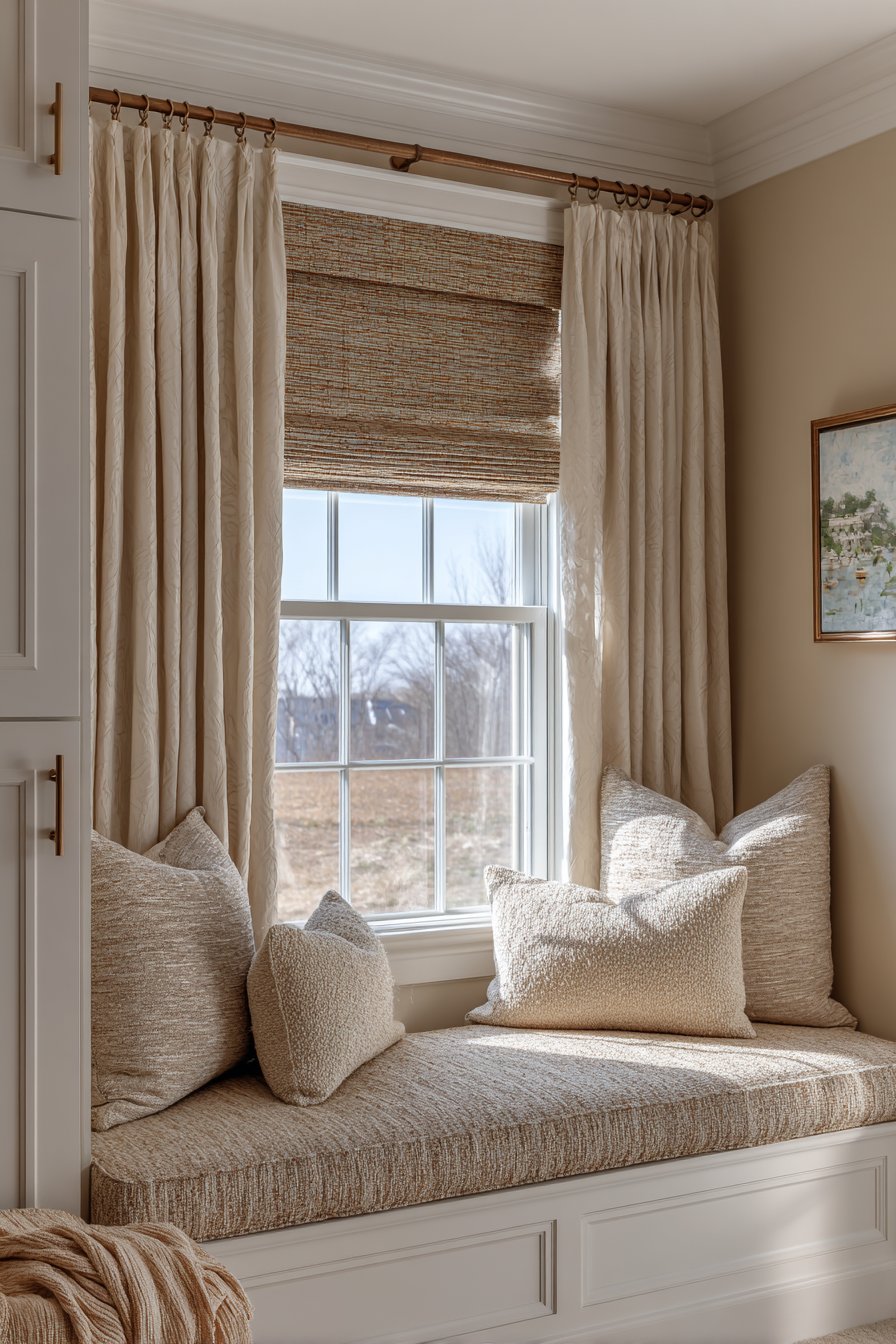
A built-in window seat features cushions upholstered in durable beige canvas. The practical fabric withstands the wear of daily use gracefully. Coordinating throw pillows in textured beige fabrics add comfort and visual interest. Hidden storage beneath the cushions maximizes functional utility.
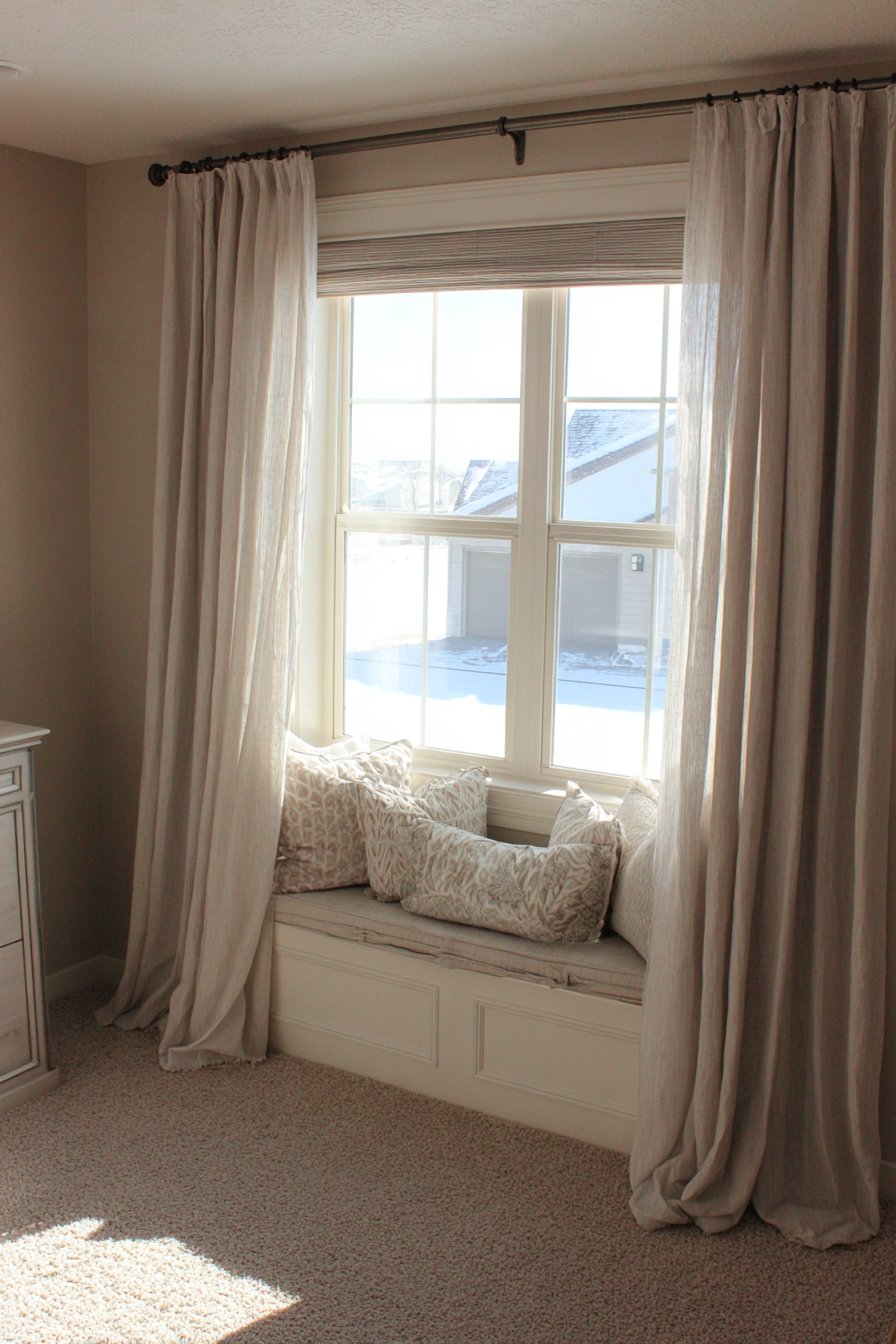
The surrounding walls are painted in pale wheat beige for continuity. This soft tone enhances the sense of light and spaciousness. Morning light filters through the layered treatments creating ethereal soft glow. The quality of light changes throughout the day as the sun moves.
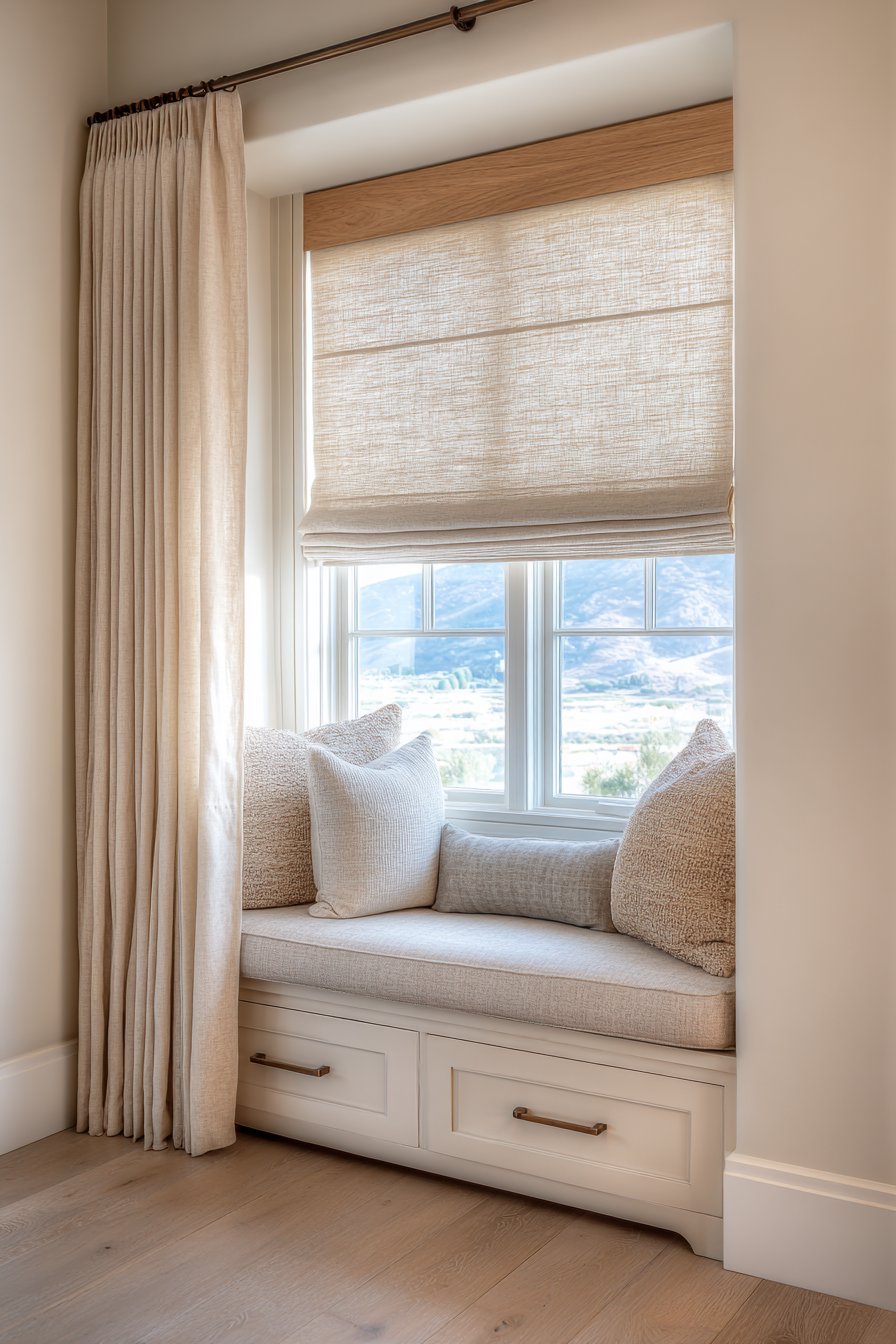
Detail-oriented photography showcases the practical elegance of this window area. The attention to fabric textures and light quality demonstrates thoughtful design. This window treatment approach balances privacy, light control, and aesthetic beauty. The built-in seating creates a permanent feature that adds architectural value.
Key Design Tips:
- Install blackout liners in Roman shades for naptime darkness when needed
- Choose cordless window treatments for child safety as they grow
- Build window seats with lift-up cushions for accessible storage compartments
- Layer sheers behind heavier treatments for privacy without total darkness
- Measure window seat depth to accommodate standard cushion sizes
11. Symmetrical Twin Nursery Layout
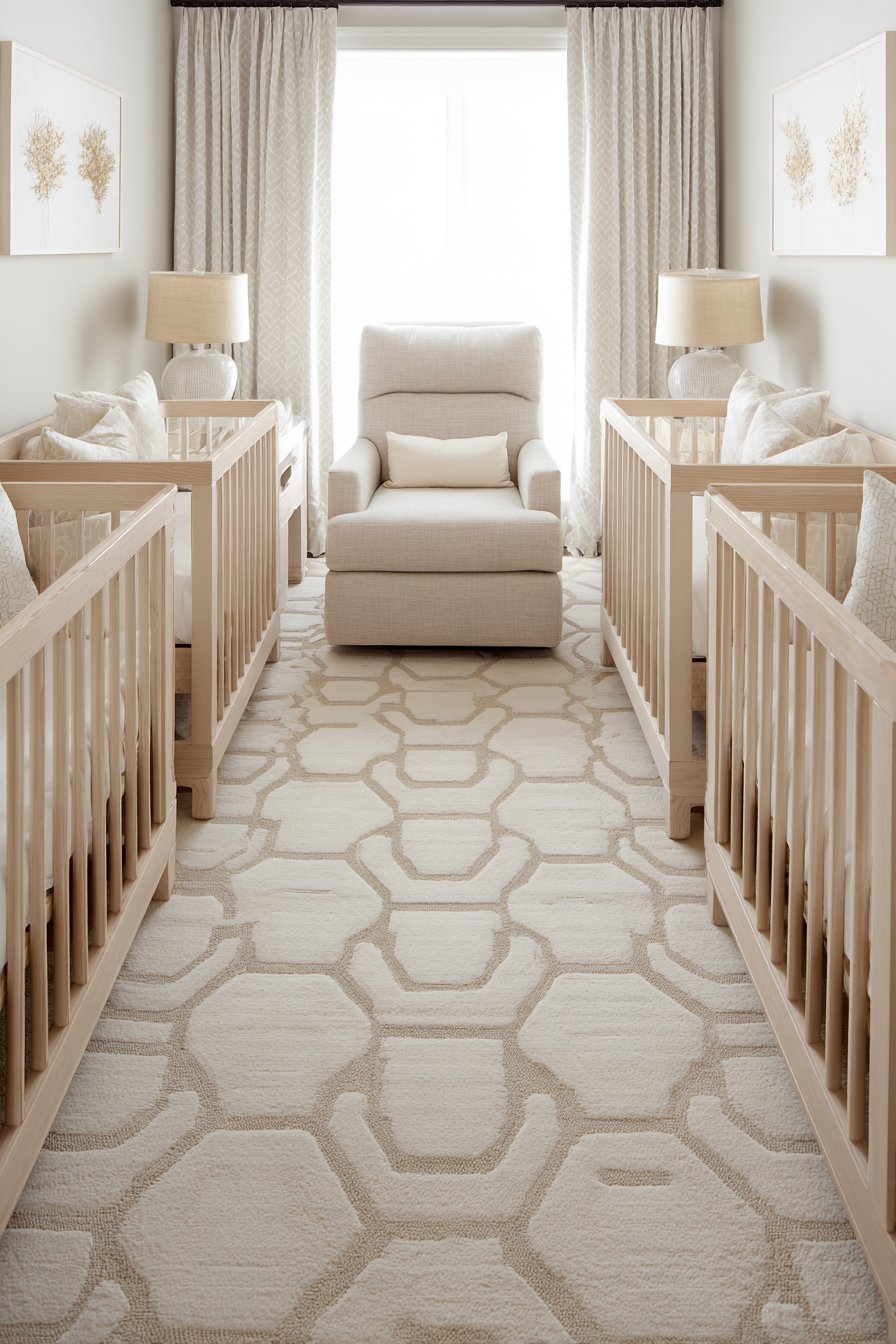
Twin cribs in coordinating natural maple wood create perfect symmetry. The matching pieces flank a central glider chair upholstered in beige microfiber. This balanced arrangement provides equal attention to each twin. The furniture placement creates a focal point on the shared seating.
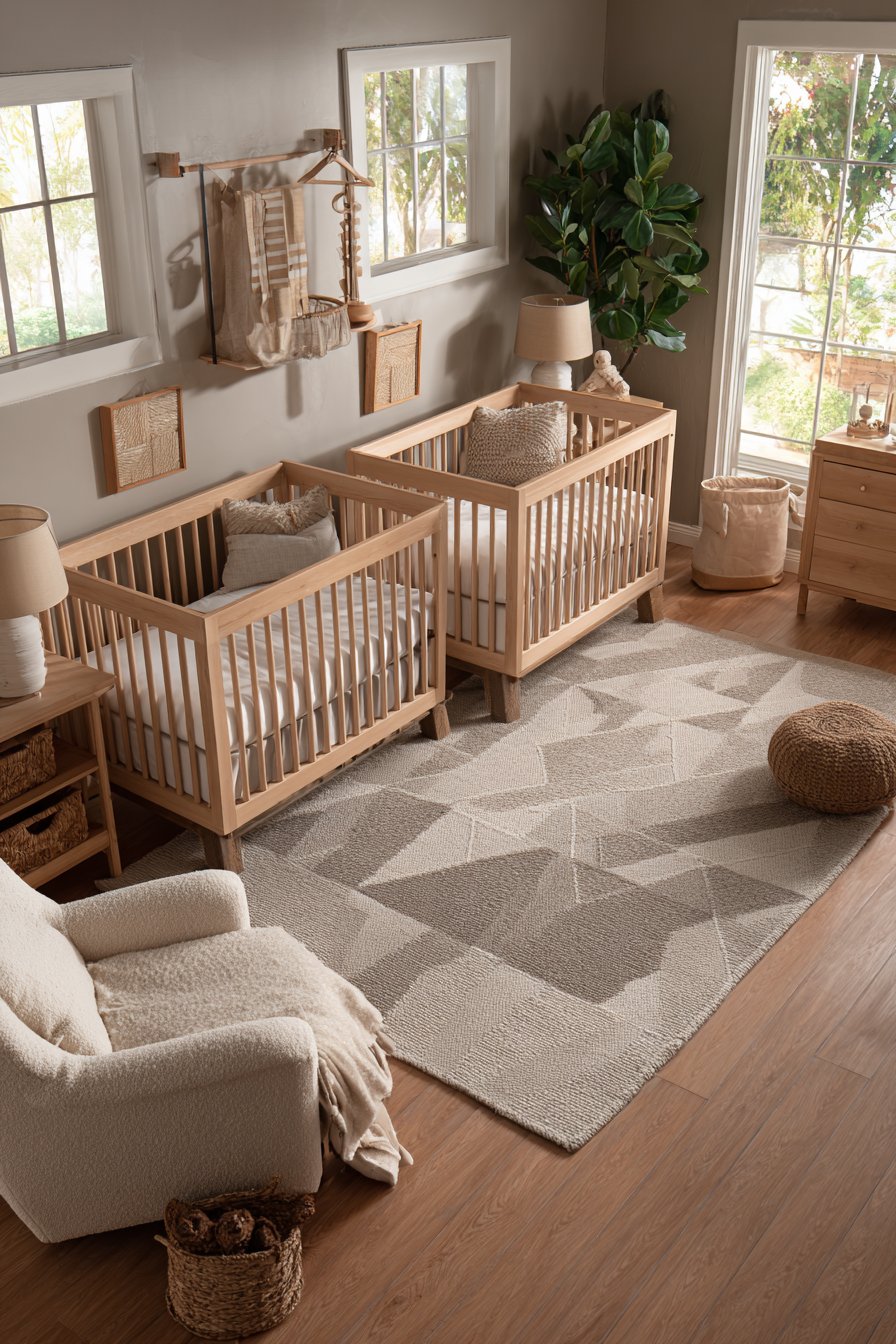
Versatile greige walls read slightly beige in morning light conditions. This chameleon quality adapts to different lighting throughout the day. The neutral backdrop works for any gender combination. Matching side tables in light wood hold identical lamps with beige shades.
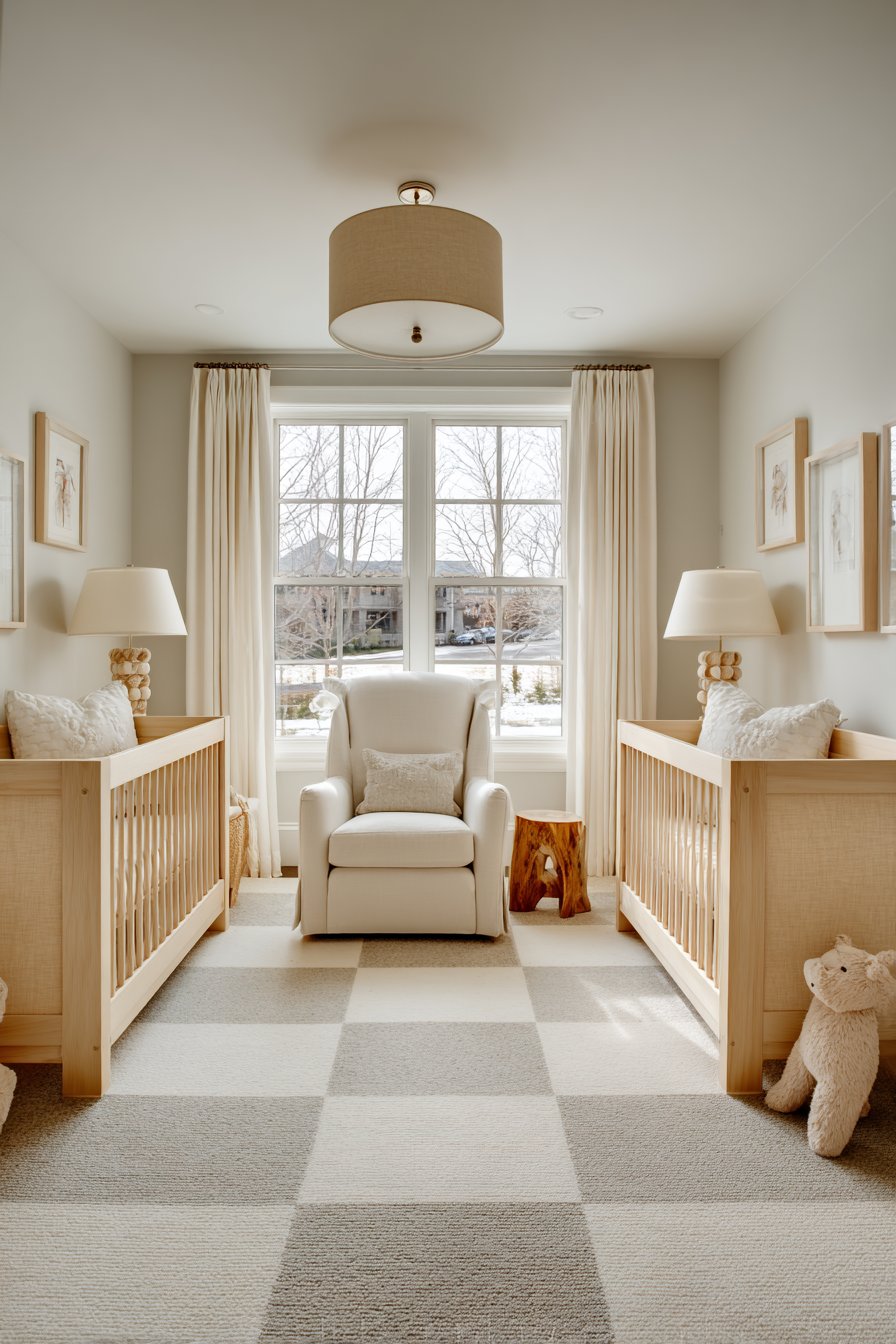
A large geometric rug in various beige tones unifies the furniture arrangement. The pattern adds visual interest without color competition. The substantial size defines the nursery zone within the larger room. The design grounds the symmetrical furniture placement effectively.
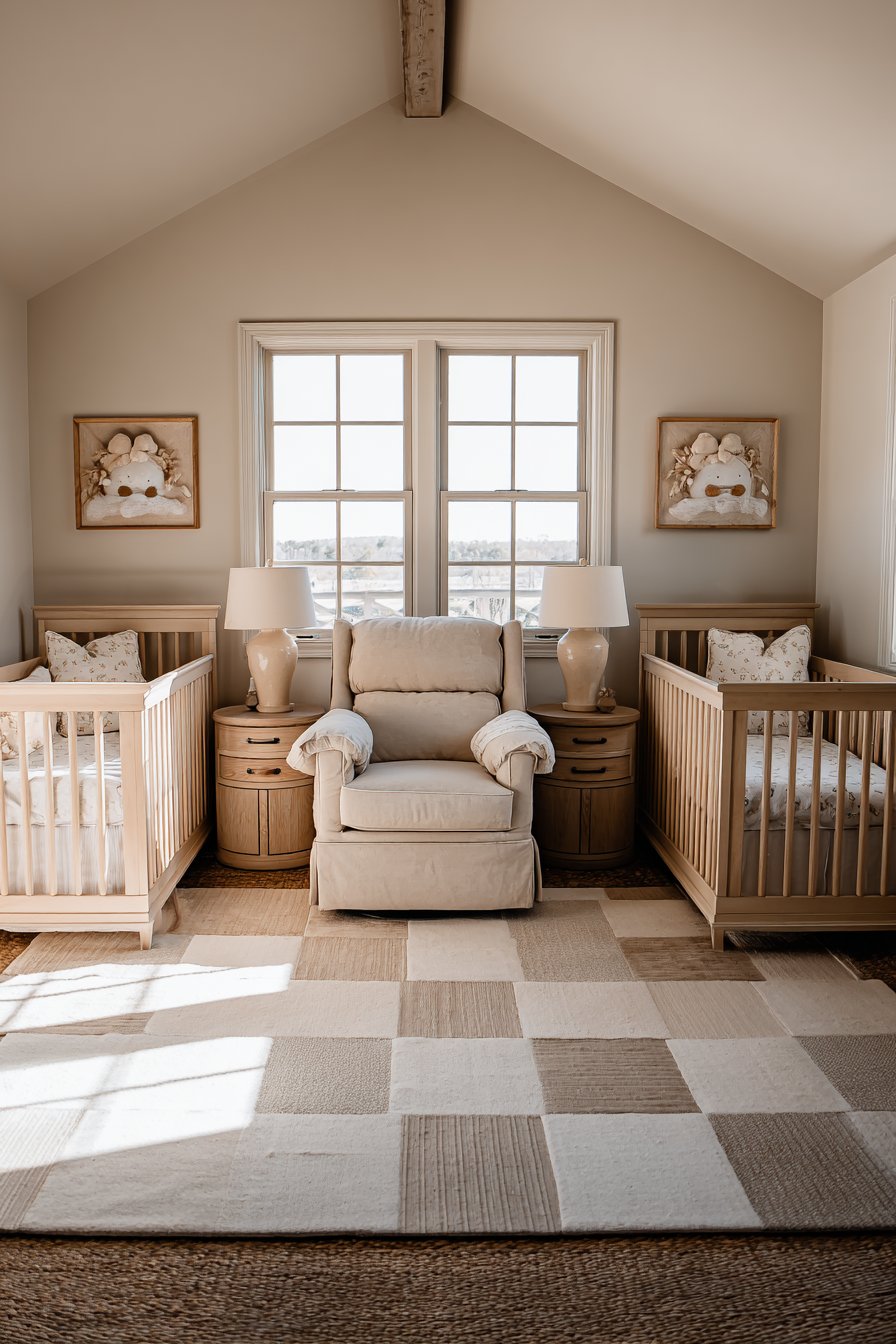
Wide-angle architectural photography captures the balanced composition and cohesive scheme. Even natural lighting throughout ensures both cribs receive equal illumination. The design demonstrates how symmetry creates calm, organized environments. The coordinated elements work together to serve practical twin parenting needs.
Key Design Tips:
- Maintain identical setups on both sides to prevent favoritism perceptions
- Choose a large central rug to unify separated crib areas visually
- Install adequate lighting on both sides for nighttime feedings and changes
- Position the glider centrally to provide equal access to both cribs
- Use coordinating rather than matching furniture to avoid showroom appearance
12. Subtle Watercolor Feature Wall Design
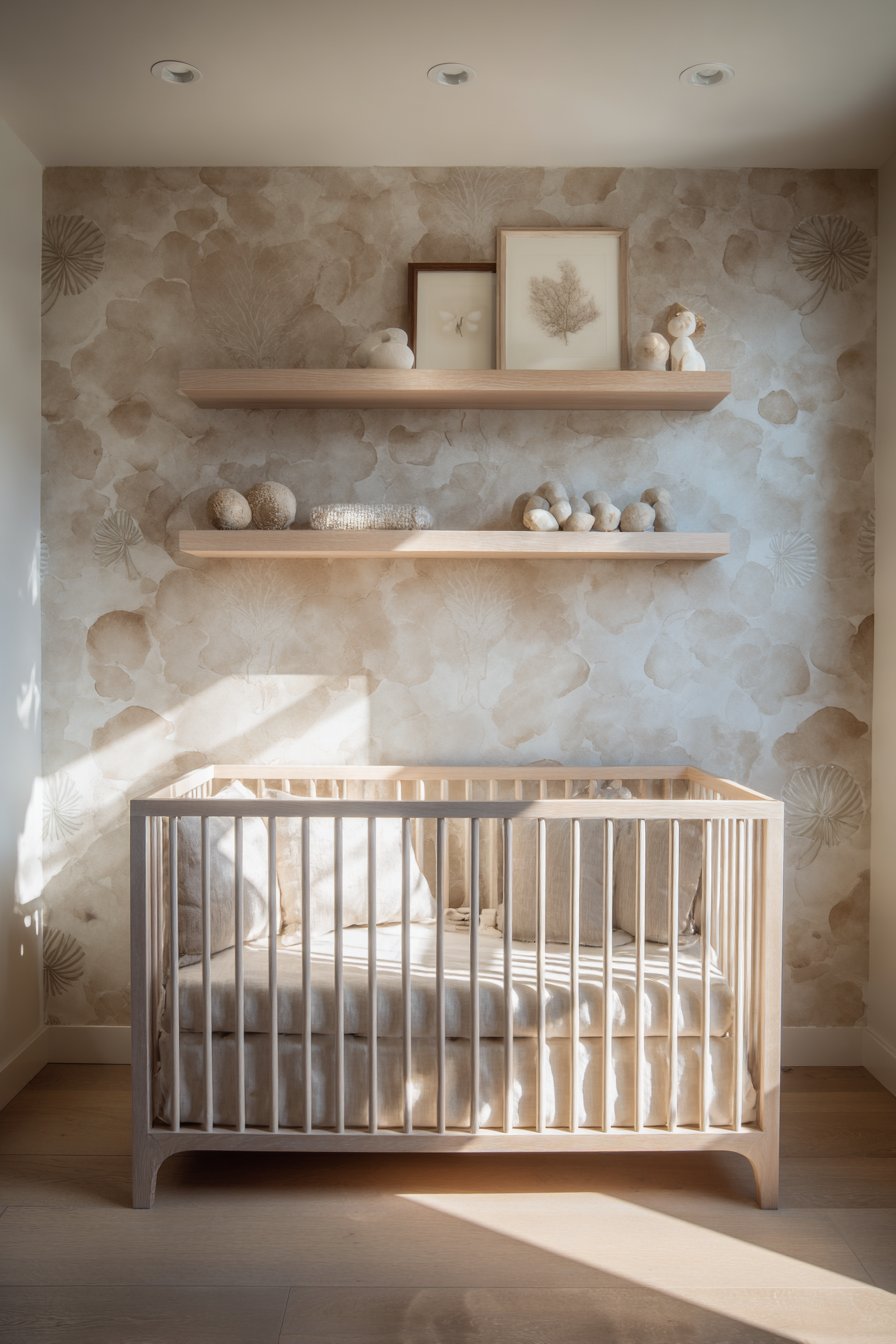
Removable wallpaper in beige watercolor pattern creates organic shapes behind the crib. The subtle design adds visual interest without overwhelming sensory development. The soft, flowing forms suggest clouds or abstract landscapes. The temporary nature allows for easy updates as tastes evolve.
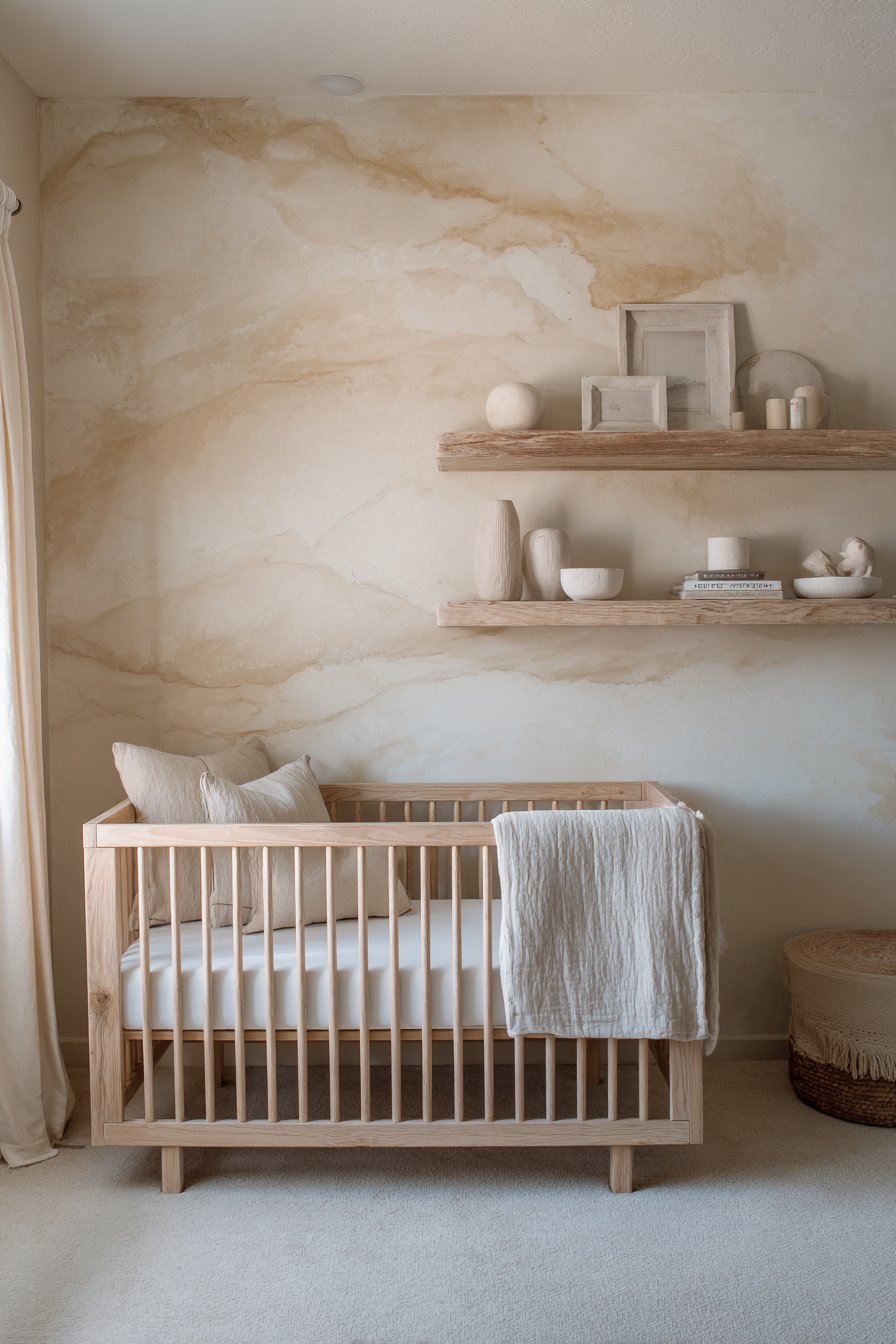
A white wooden crib with natural beige linen bedding sits centered against the feature wall. The crisp white frame contrasts gently with the watercolor background. The linen bedding adds organic texture and breathable comfort. The overall effect feels fresh yet warm and inviting.
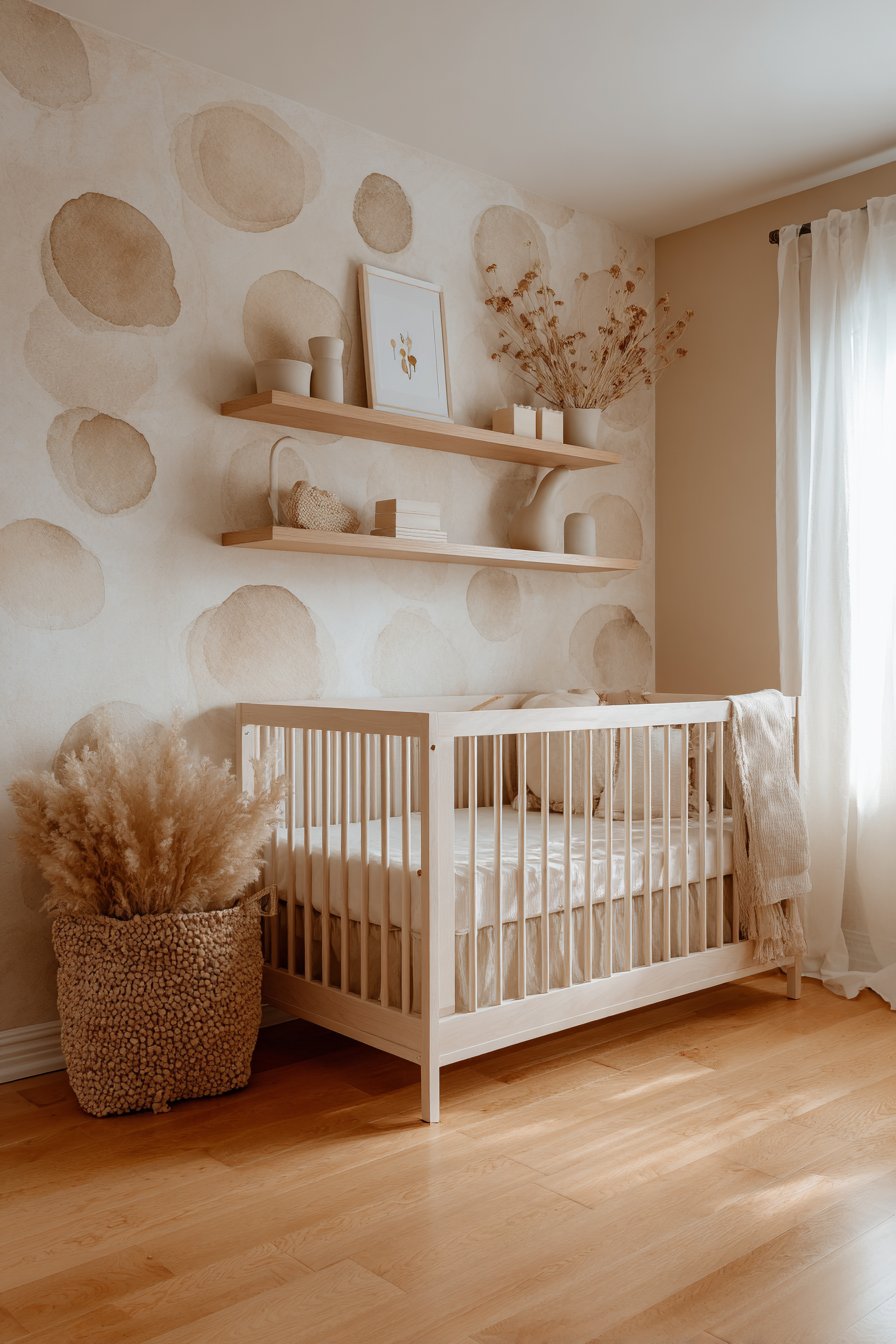
Floating shelves in light ash wood display minimalist decorative items. The edited collection maintains visual calm and intentional curation. Coordinating neutral tones ensure nothing competes with the feature wall. Each displayed item serves purpose or provides meaningful aesthetic contribution.
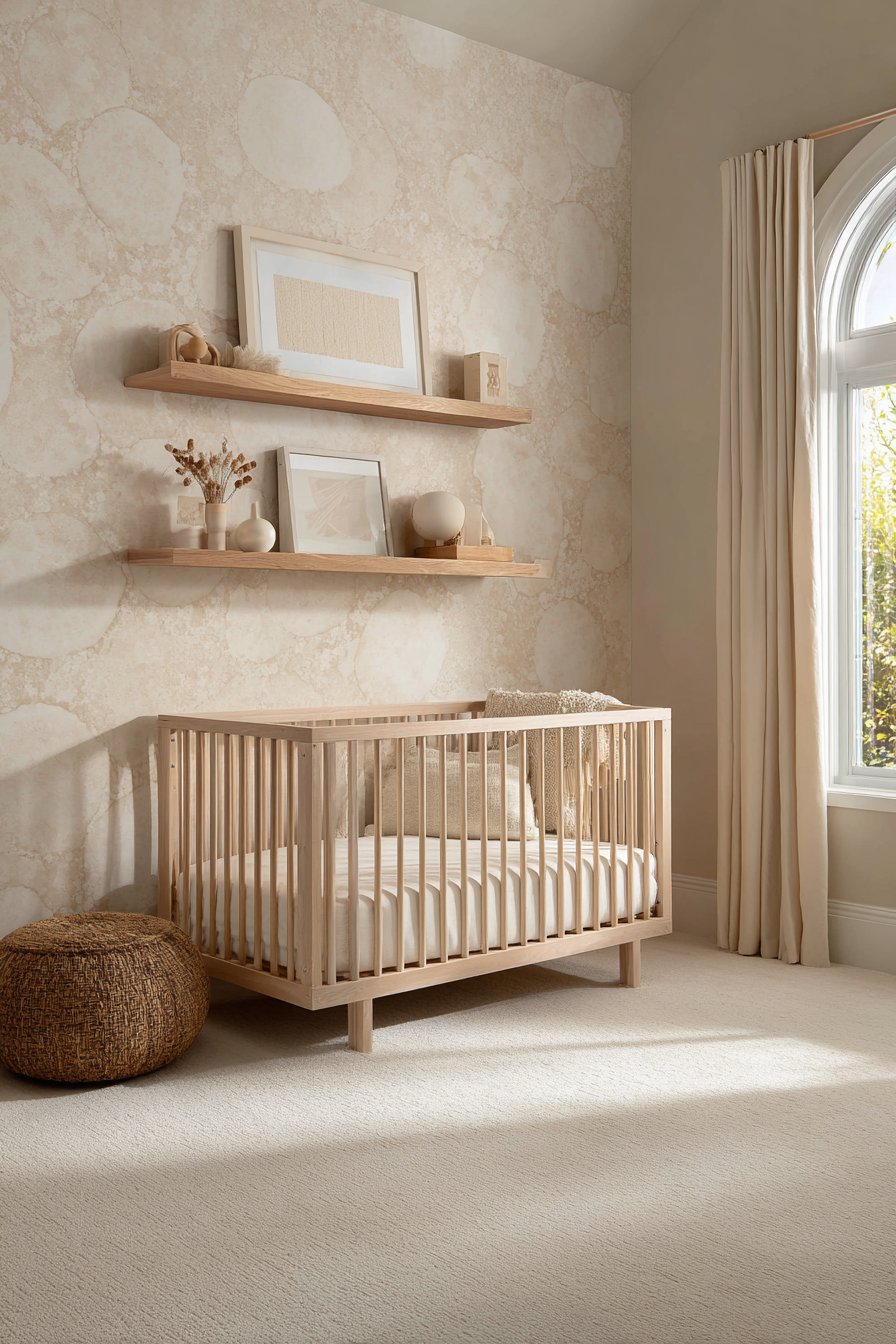
Remaining walls are painted in solid warm beige with satin finish. The subtle sheen reflects light gently without harsh glare. Natural light enhances the soothing beige palette throughout the space. The feature wall draws focus while the solid walls provide restful negative space.
Key Design Tips:
- Choose peel-and-stick wallpaper for rental-friendly installation and easy removal
- Test watercolor wallpaper samples in the room before committing to full installation
- Keep feature walls to single wall to prevent pattern overwhelm
- Select satin or eggshell finishes on remaining walls to coordinate with wallpaper sheen
- Install floating shelves away from crib to prevent climbing hazards later
13. Accessible Play Area with Montessori Principles
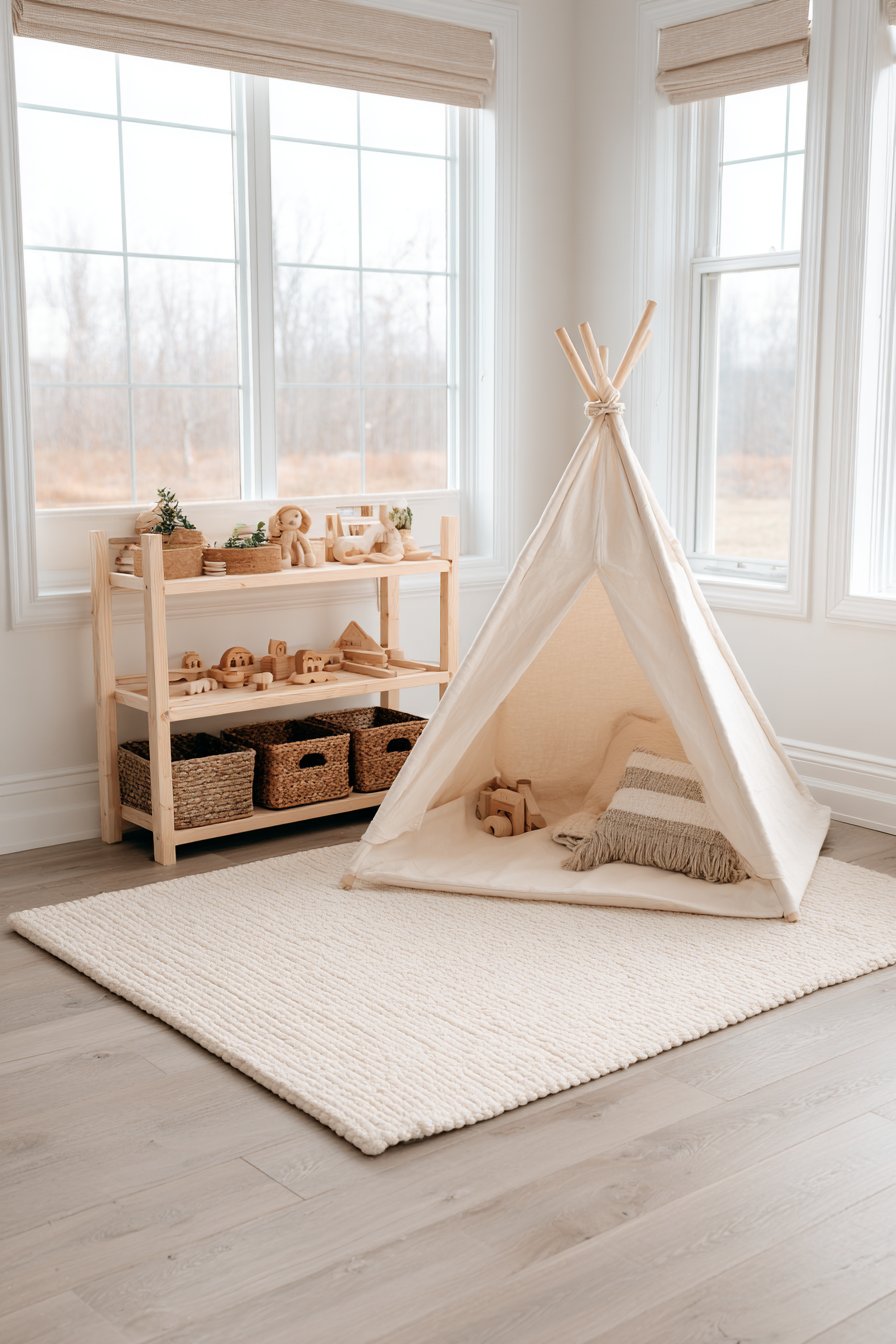
A low wooden toy shelf in natural birch provides child-height organization. The accessible design encourages independent play and cleanup participation. Wooden toys and fabric bins in beige tones maintain aesthetic cohesion. The organized system prevents visual chaos while remaining functional.
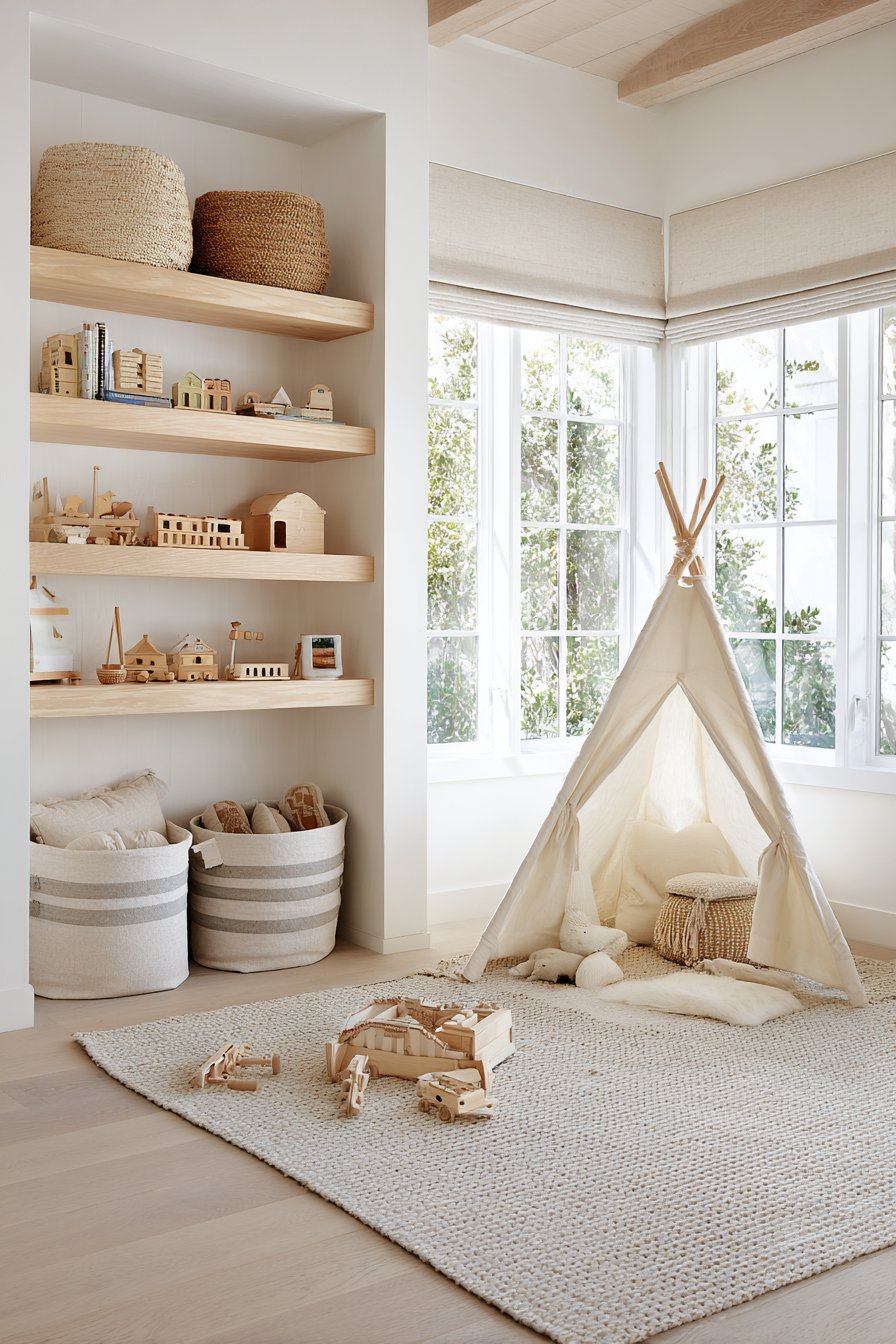
A thick beige play mat in soft cotton covers oak flooring sections. The cushioned surface provides comfort for floor play and tummy time. The neutral tone hides minor stains better than white alternatives. The mat defines the play zone within the larger nursery space.
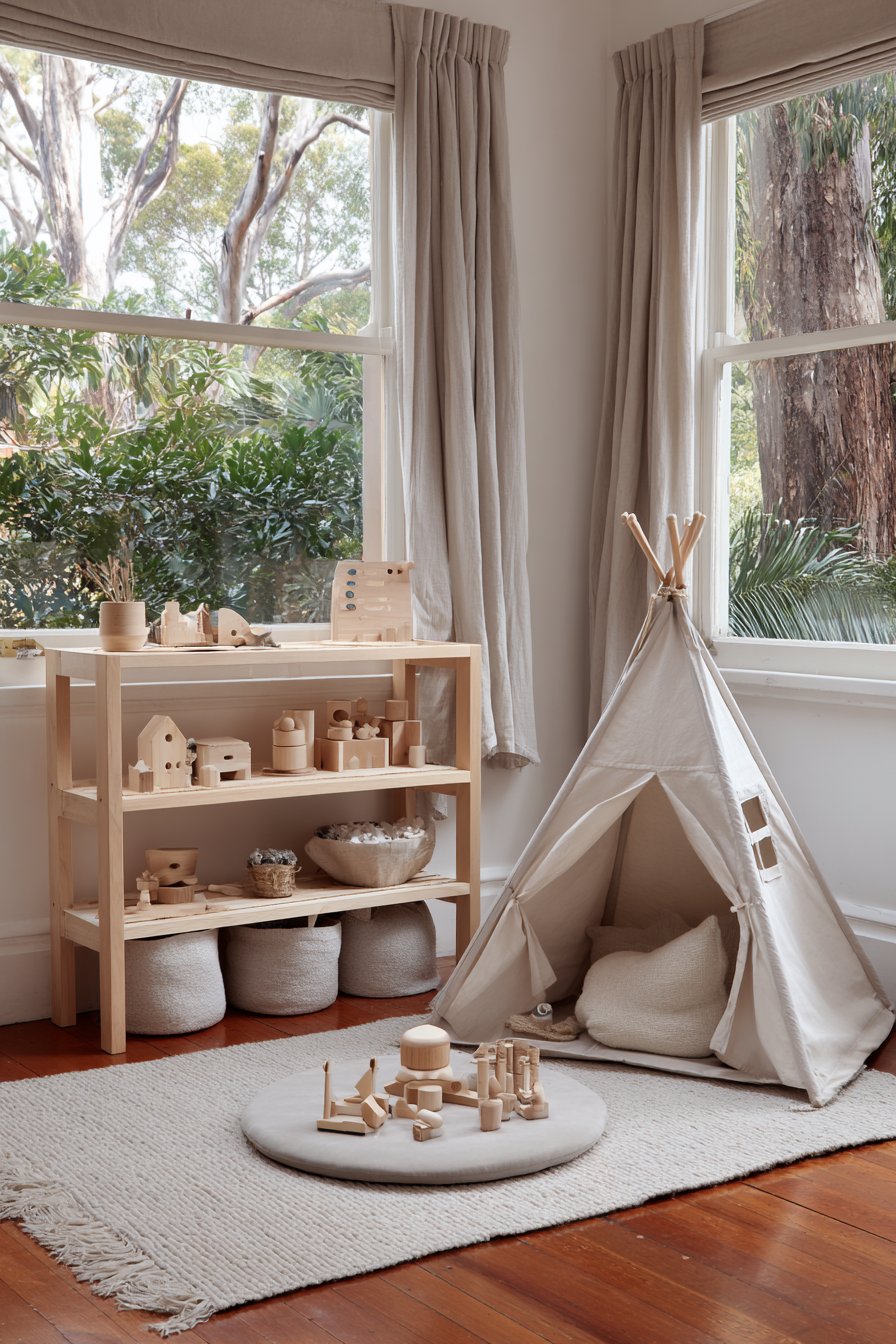
A small teepee tent in natural canvas with beige stripes creates cozy retreat. This dedicated play space encourages imaginative activities and quiet time. The neutral design coordinates with the overall aesthetic beautifully. The portable structure can be easily removed or relocated as needed.
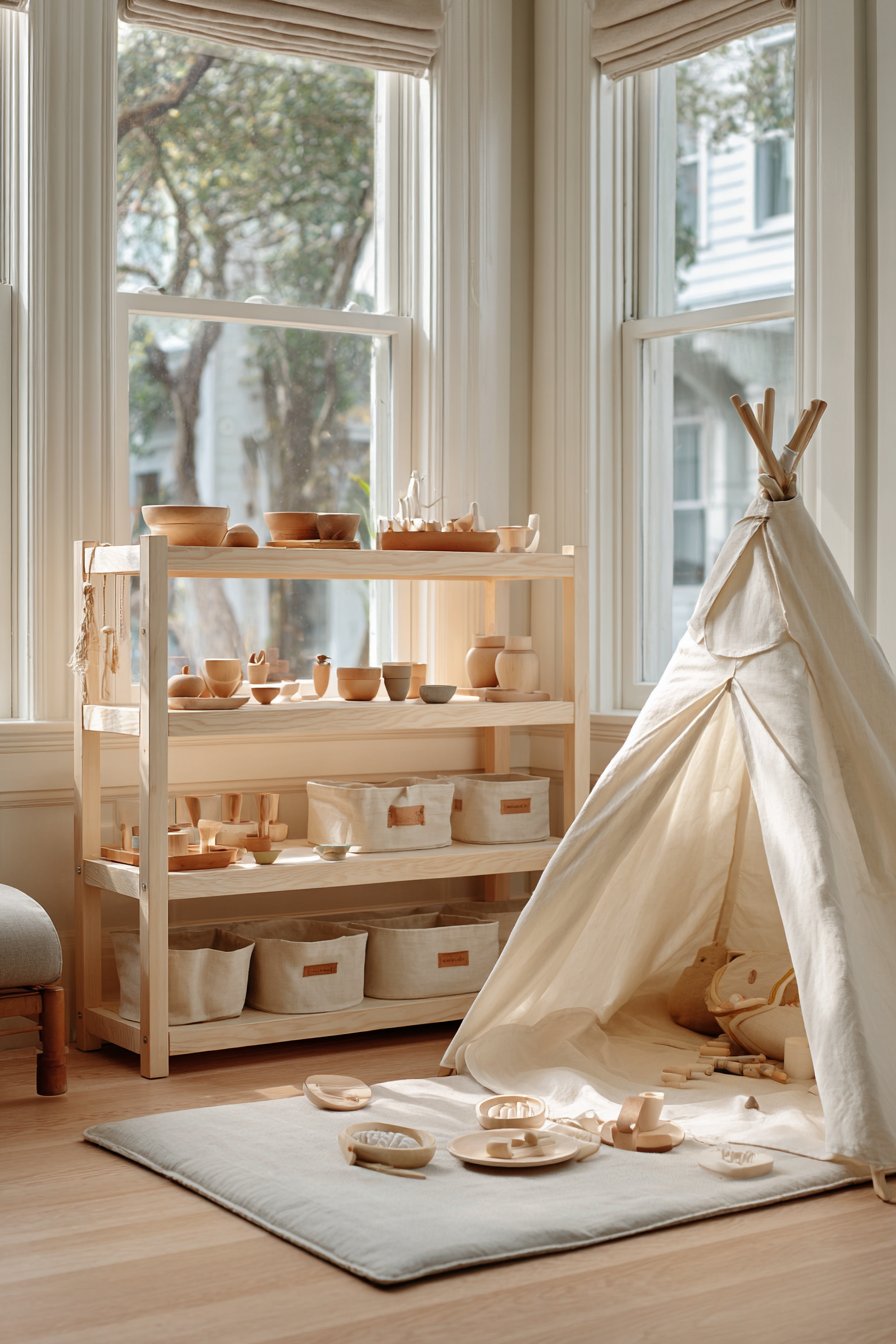
Large windows with simple beige roller shades allow abundant natural light. The streamlined window treatment maintains the clean aesthetic throughout. Child-height perspective photography shows the accessible, organized play zone clearly. The design demonstrates how function and beauty coexist in child-friendly spaces.
Key Design Tips:
- Choose toy shelves with rounded edges for safety during early walking stages
- Install shelves at heights children can reach without climbing on furniture
- Select washable play mats that can be easily cleaned after messy activities
- Ensure teepee structures have adequate ventilation and supervision access
- Use closed bins for small toys while displaying larger items openly
14. Comfortable Nursing Station with Luxury Details
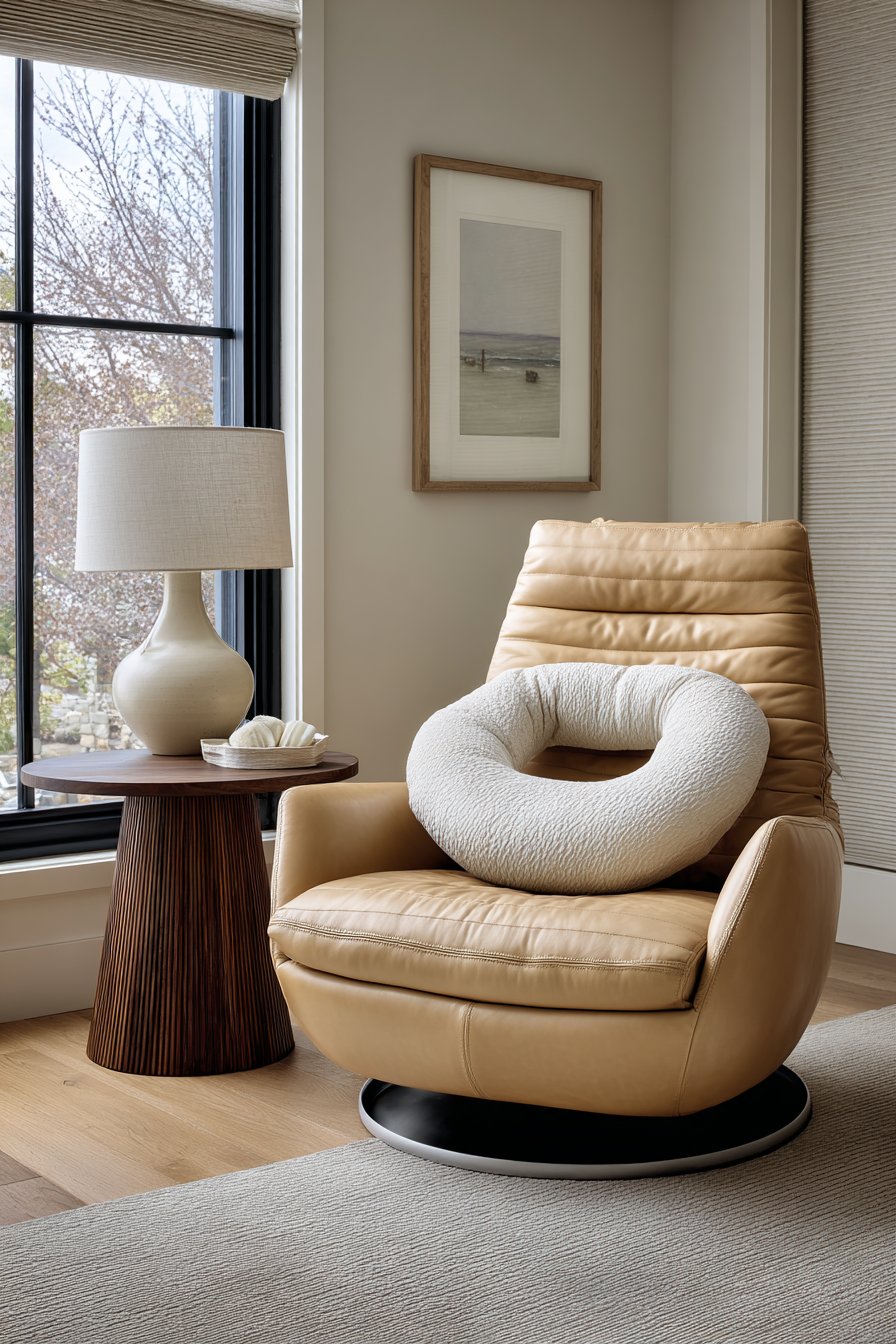
An oversized upholstered glider in camel-toned leather provides nursing comfort. The generous proportions accommodate various feeding positions comfortably. The leather ages beautifully and cleans easily with simple conditioning. The rich tone adds sophisticated warmth to the neutral palette.
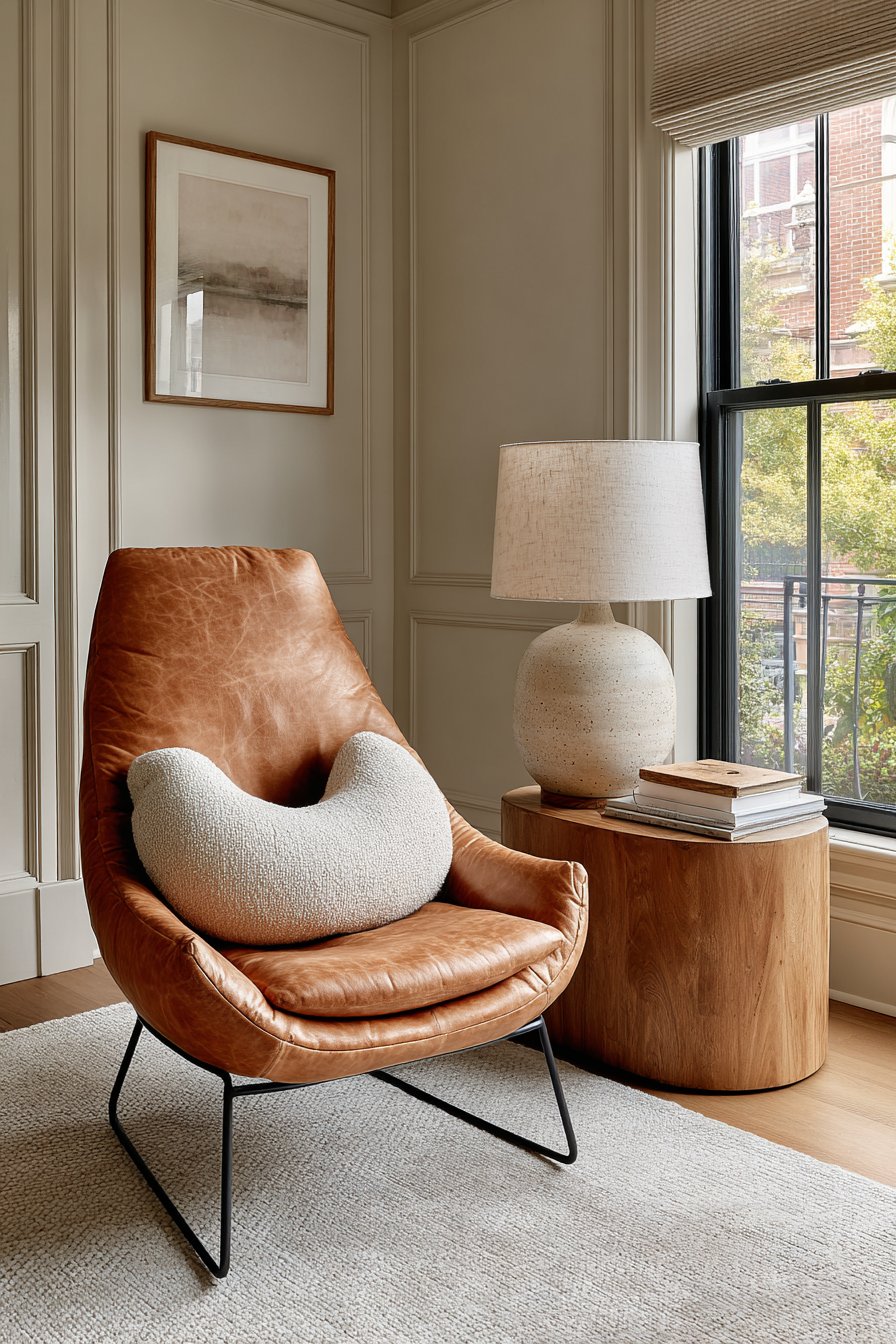
A C-shaped nursing pillow in beige organic cotton rests on the chair. The natural fiber provides breathable comfort during extended feeding sessions. The neutral cover hides minor stains while remaining aesthetically pleasing. The ergonomic shape supports proper feeding positioning for parent and baby.
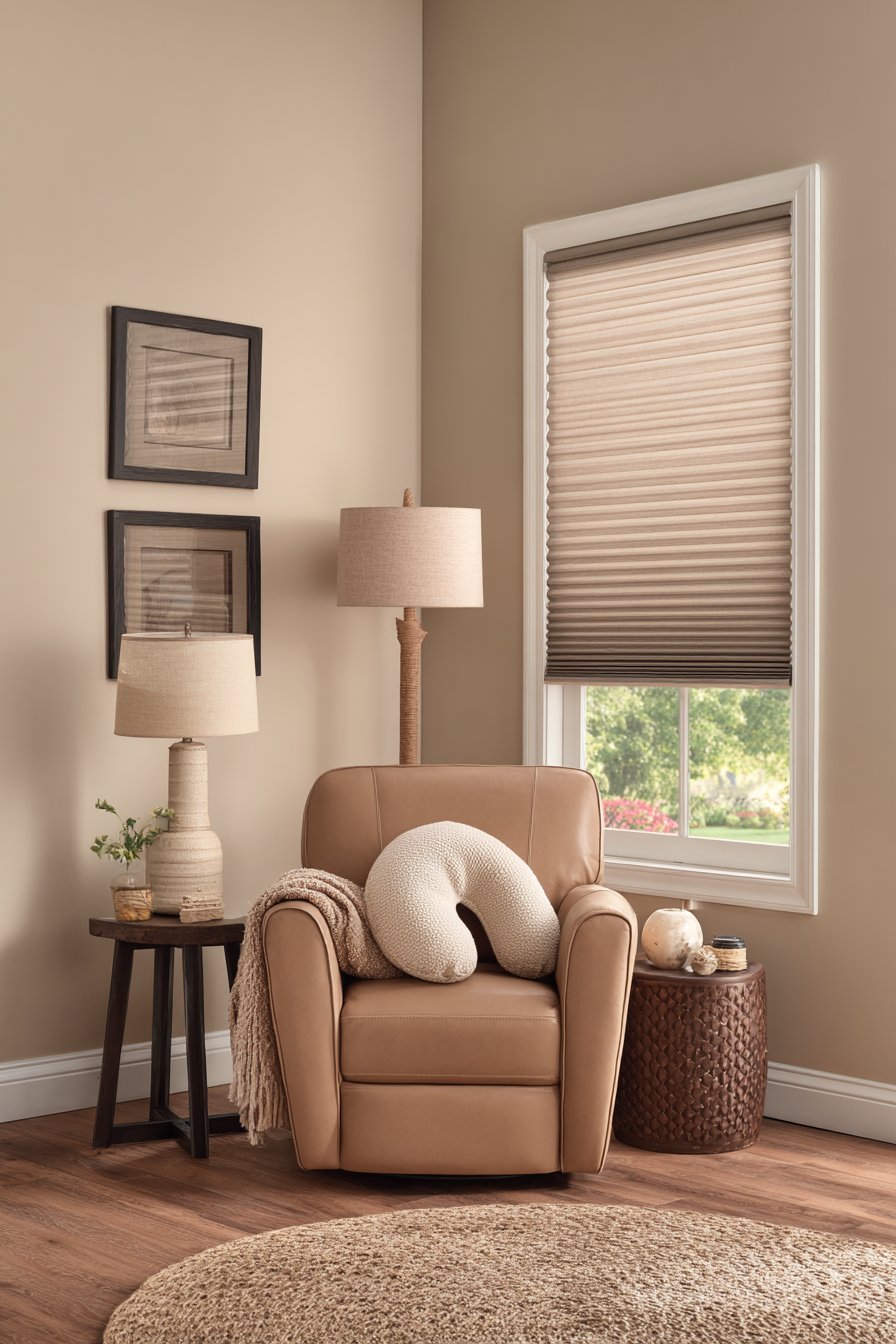
A sleek side table in walnut holds essentials within arm’s reach. The darker wood tone provides grounding contrast against lighter beige elements. A modern table lamp with beige ceramic base provides adjustable task lighting. The coordinated elements create a fully functional nursing station.
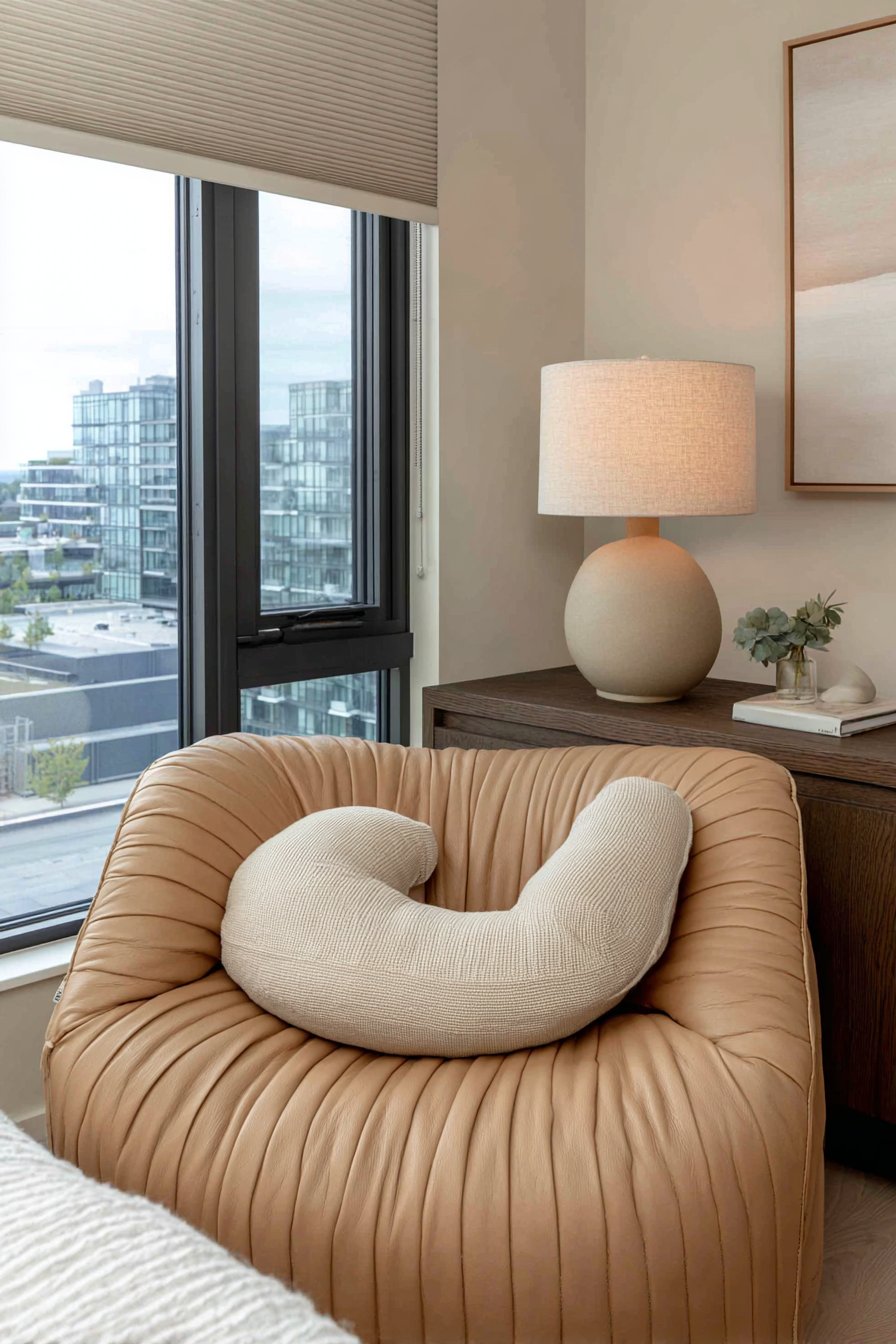
Blackout cellular shades in coordinating beige provide complete light control when needed. The honeycomb structure insulates while maintaining the color story. Soft ecru beige walls complete the comfortable, functional setup. The sophisticated combination of beige and wood tones creates an adult-appropriate aesthetic.
Key Design Tips:
- Test glider comfort before purchasing with extended sitting sessions
- Choose leather furniture that can be wiped clean easily for nursery practicality
- Position nursing stations near outlets for breast pumps and phone charging
- Install blackout shades that can be easily operated one-handed
- Select side tables with adequate surface area for water, burp cloths, and books
15. Statement Lighting as Design Anchor
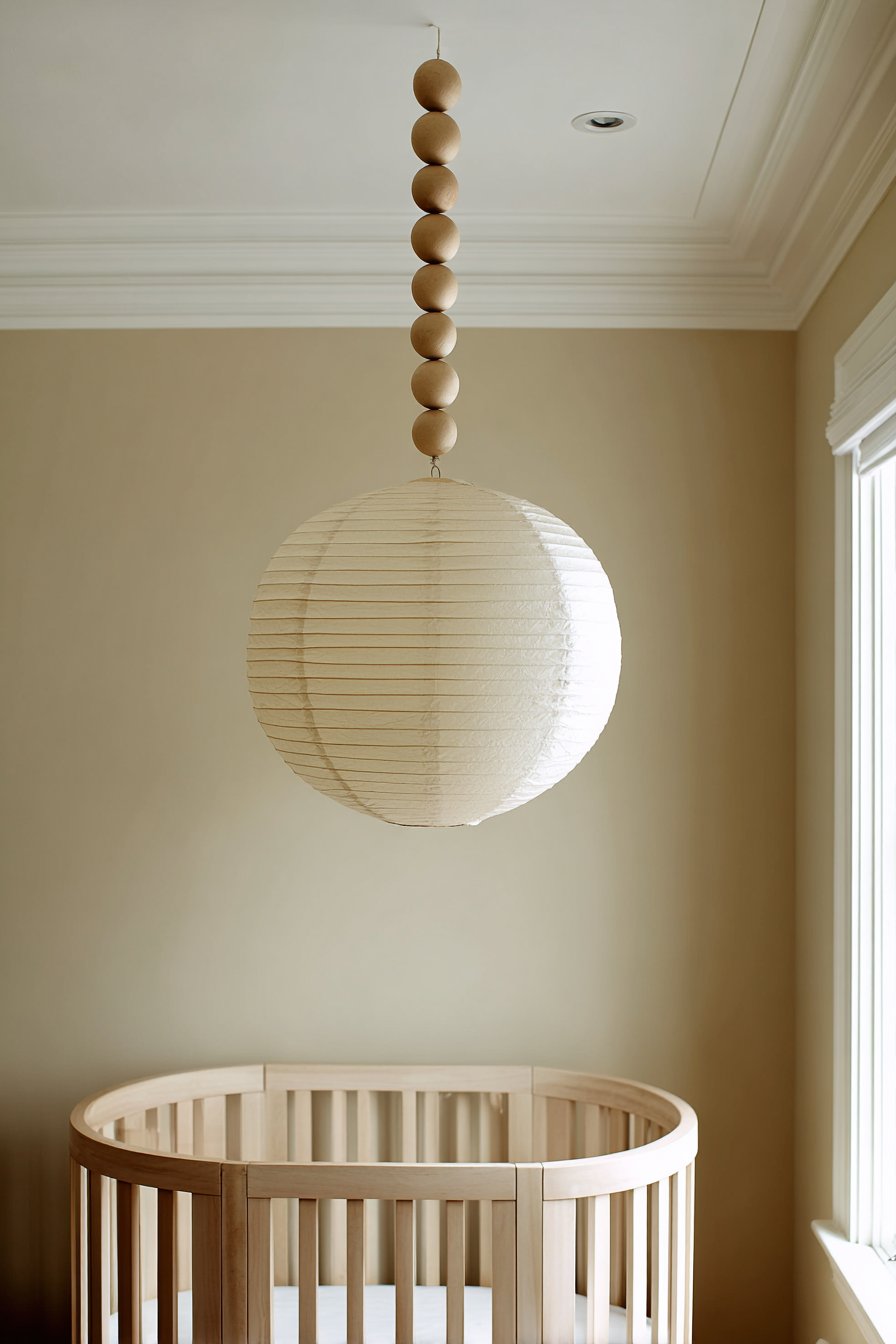
A large paper lantern shade in natural beige creates sculptural focal point overhead. The suspended fixture draws eyes upward and adds soft illumination. The organic shape contrasts with architectural straight lines throughout the room. The scale makes a bold statement while remaining lightweight and safe.
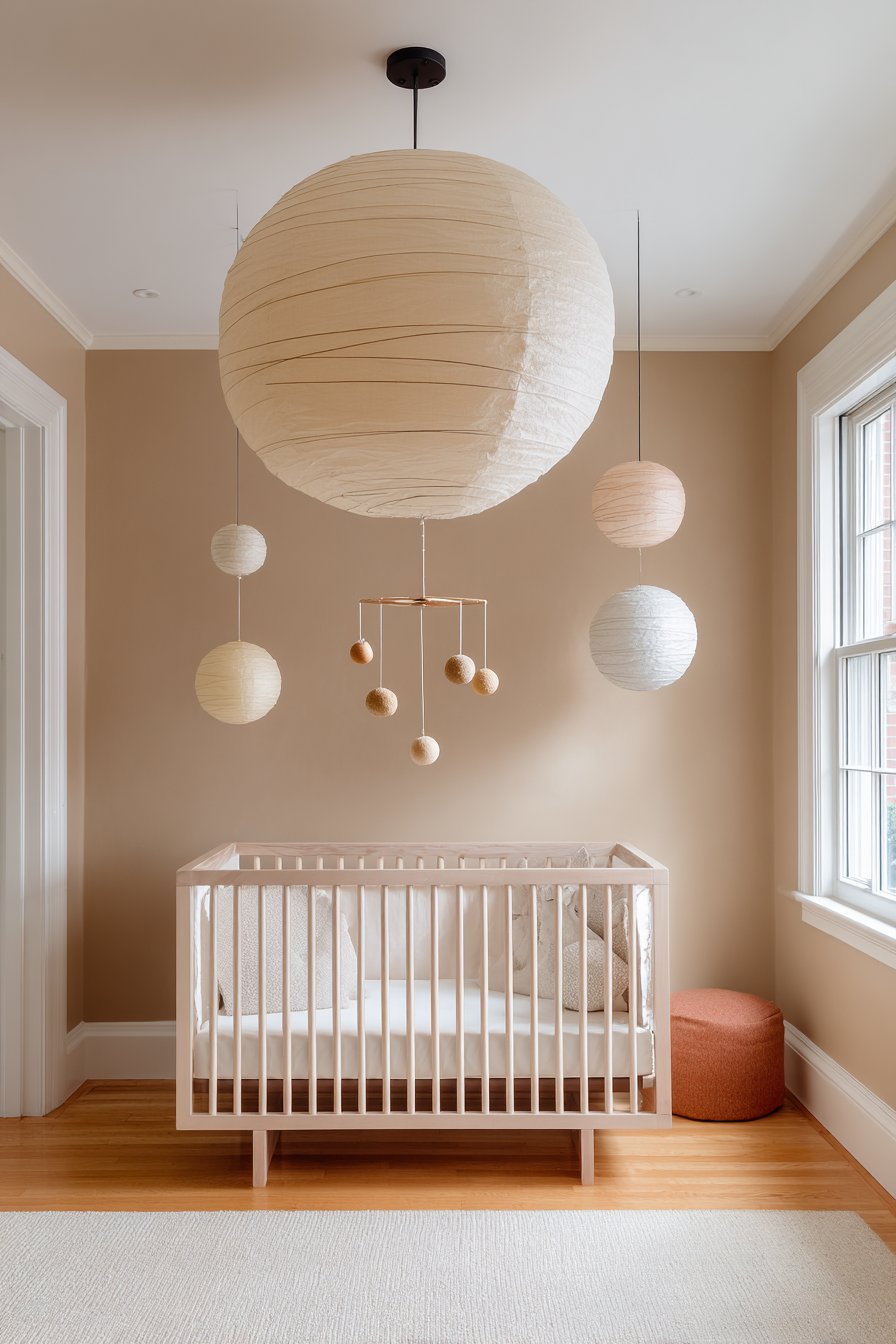
A simple round crib in light ash wood sits beneath the dramatic lighting. The circular forms echo each other creating visual harmony. The crib’s modern design maintains the contemporary aesthetic established above. The wood tone coordinates with the lantern’s natural beige color.
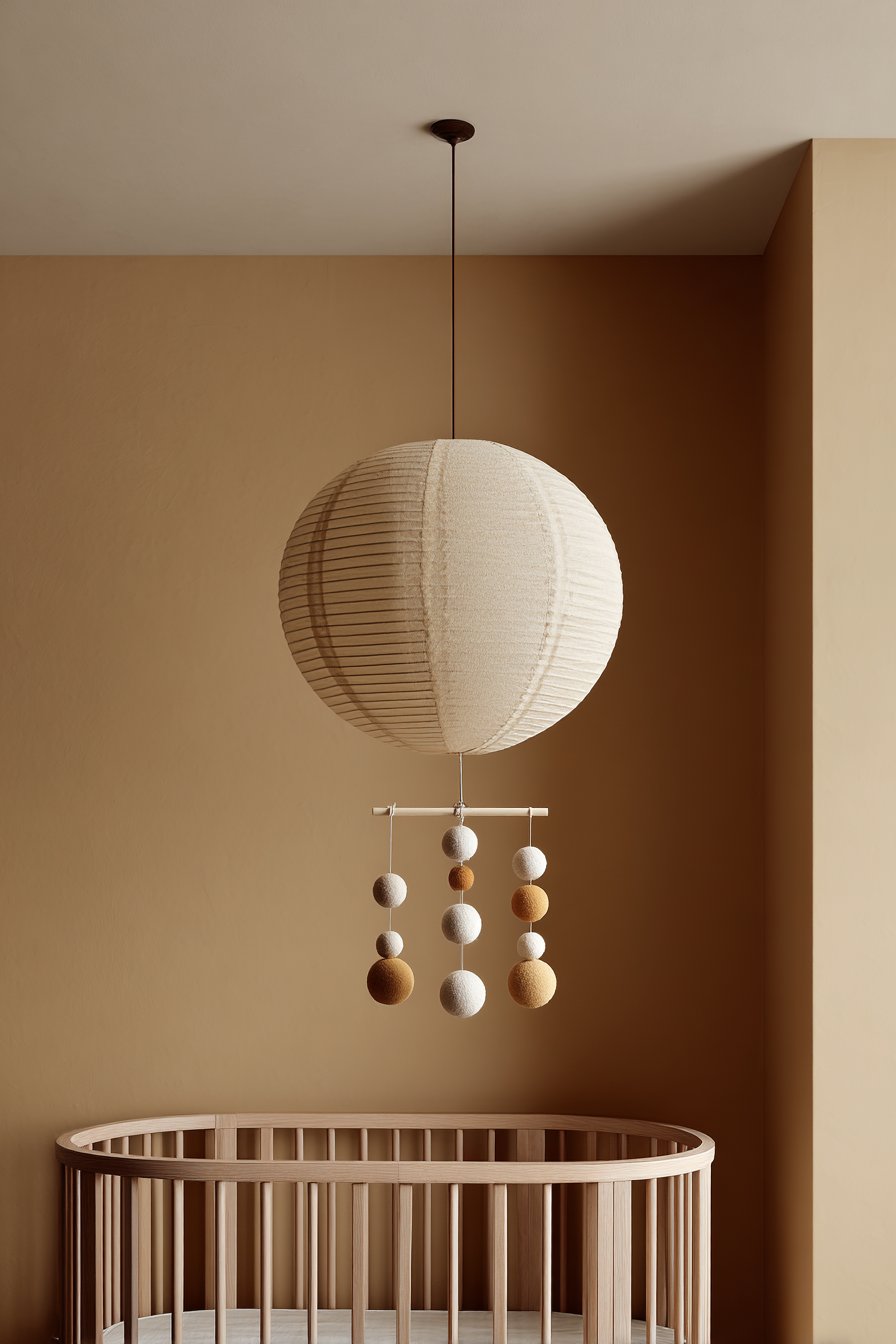
The ceiling is painted a shade lighter than warm beige walls below. This subtle gradient creates dimensional interest and visual height. A mobile crafted from natural wooden beads and beige felt balls hangs appropriately. Recessed lighting provides supplementary illumination for practical tasks.
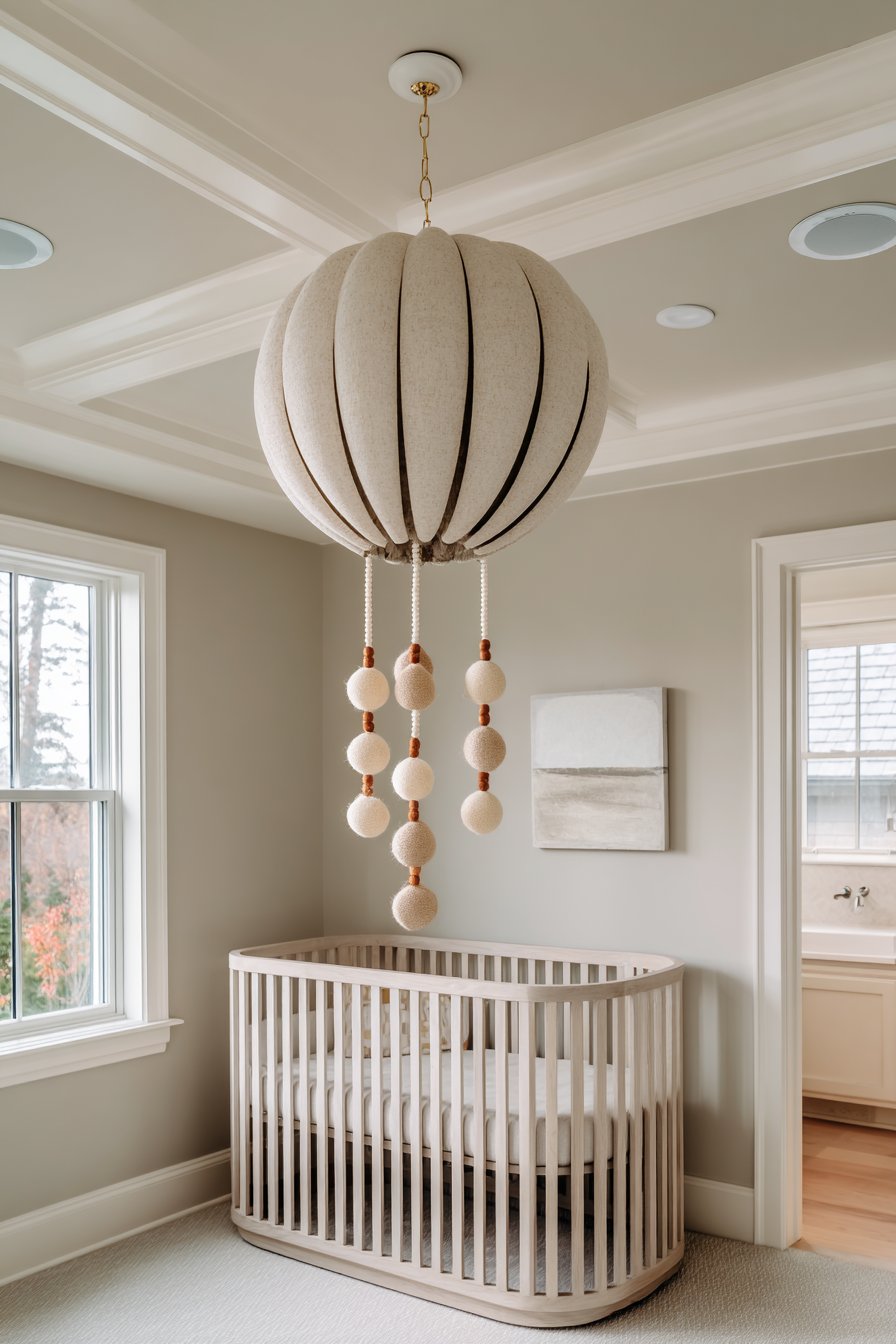
Wide-angle interior photography captures the sculptural lighting quality and vertical emphasis. The fixture anchors the entire beige color story from the ceiling downward. The design demonstrates how lighting choices influence overall aesthetic impact. The statement piece establishes the design direction for the entire space.
Key Design Tips:
- Choose lightweight pendant materials to ensure safe overhead installation
- Install statement lights on dimmer switches for flexible ambiance control
- Position large fixtures centrally to create balanced visual weight distribution
- Ensure adequate recessed lighting supplements decorative fixtures for practical needs
- Use the ceiling as a fifth wall opportunity for design expression
16. Efficient Small Space Corner Arrangement
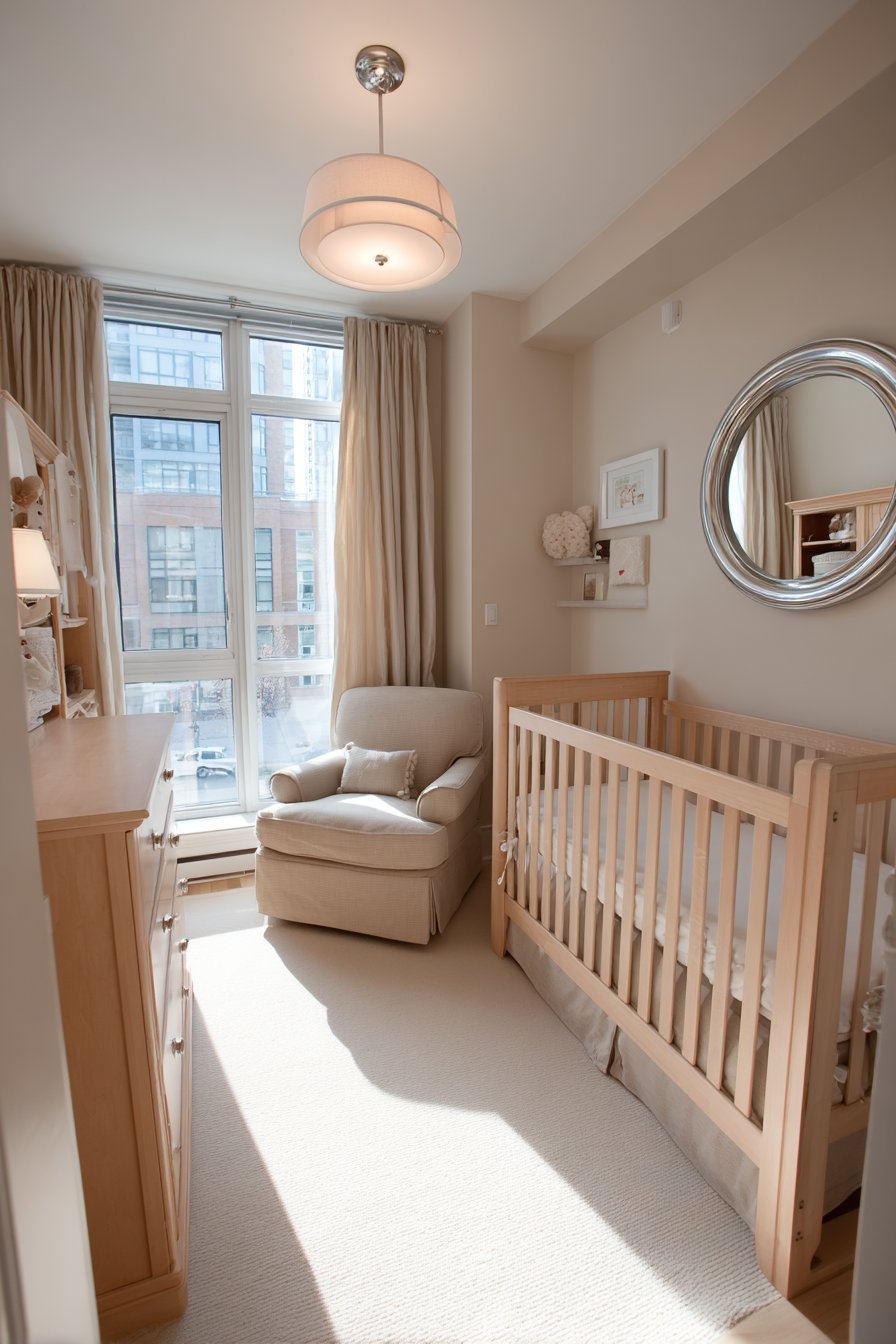
A corner crib arrangement in light maple wood maximizes limited floor space. The strategic placement leaves the room center open for movement. This efficient layout makes small nurseries feel more spacious. The corner position creates a cozy sleeping nook naturally.
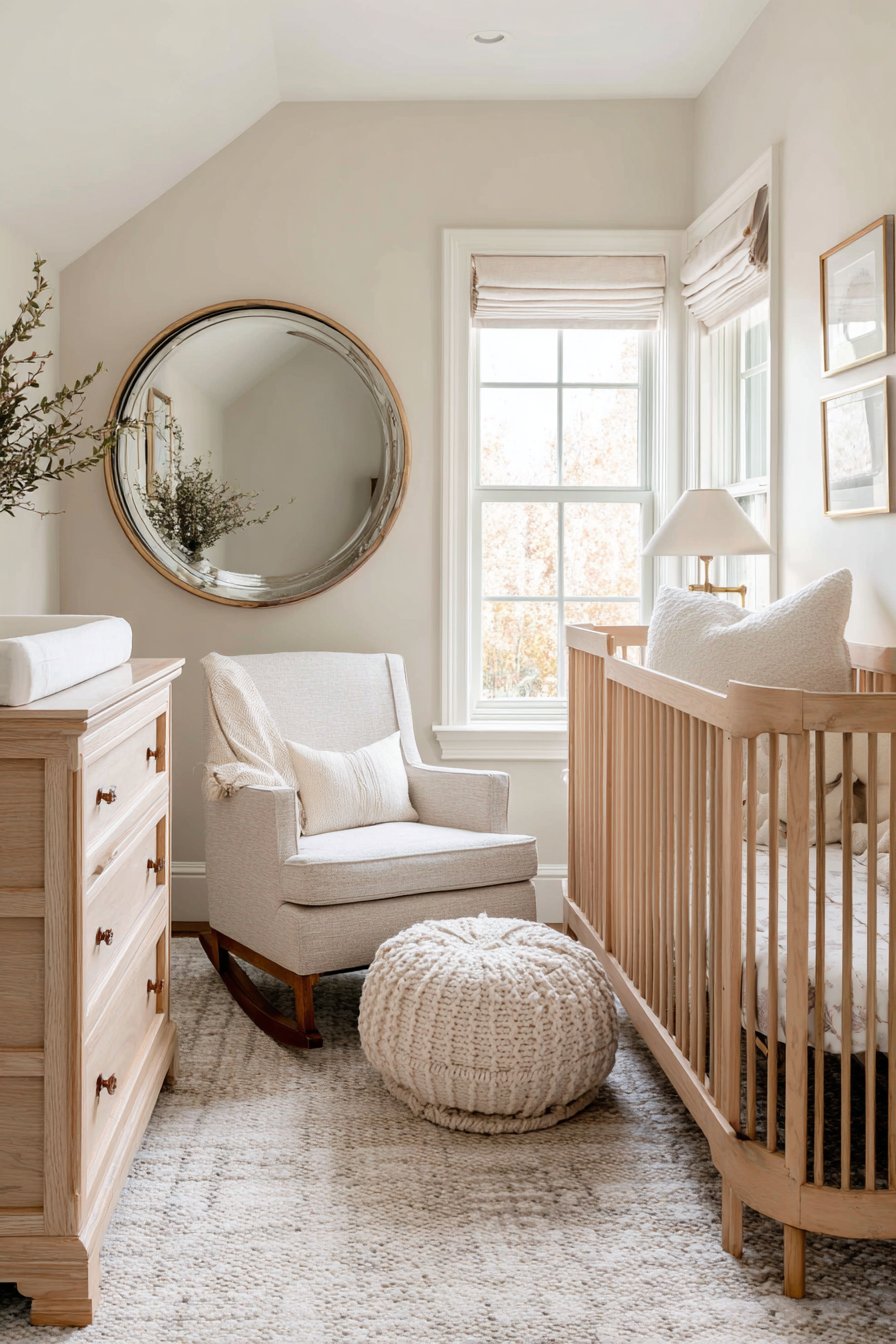
A narrow vertical dresser in matching wood finish provides ample storage vertically. The tall proportions work better in compact rooms than wide horizontal pieces. The coordinated wood finish creates visual continuity despite separate pieces. The slim profile minimizes floor space consumption while maximizing storage capacity.
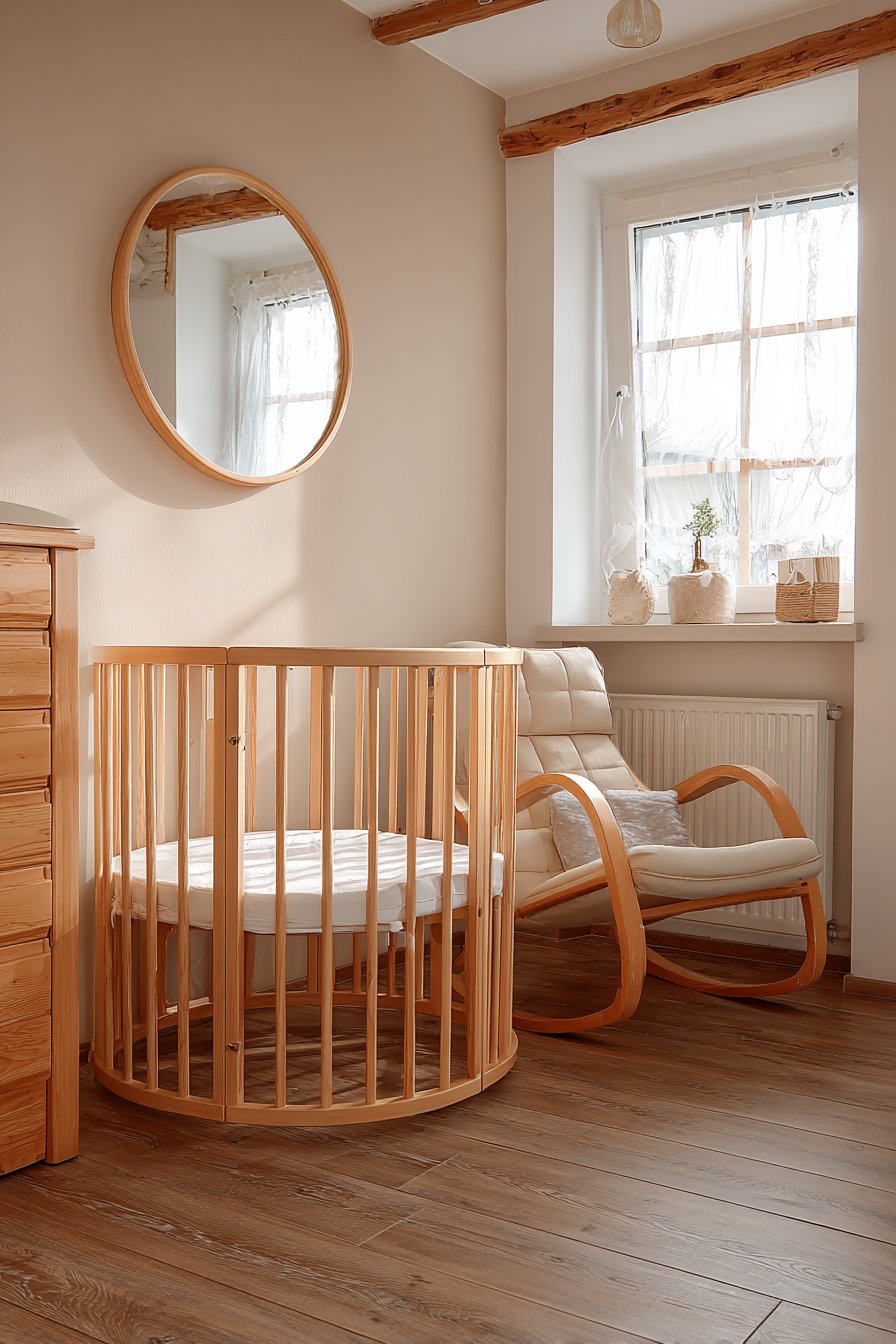
Light linen beige walls enhance the sense of spaciousness through reflective quality. The pale tone makes small rooms feel larger and more open. A small round mirror with thin frame reflects light strategically. The reflective surface visually expands the compact space while adding functional value.
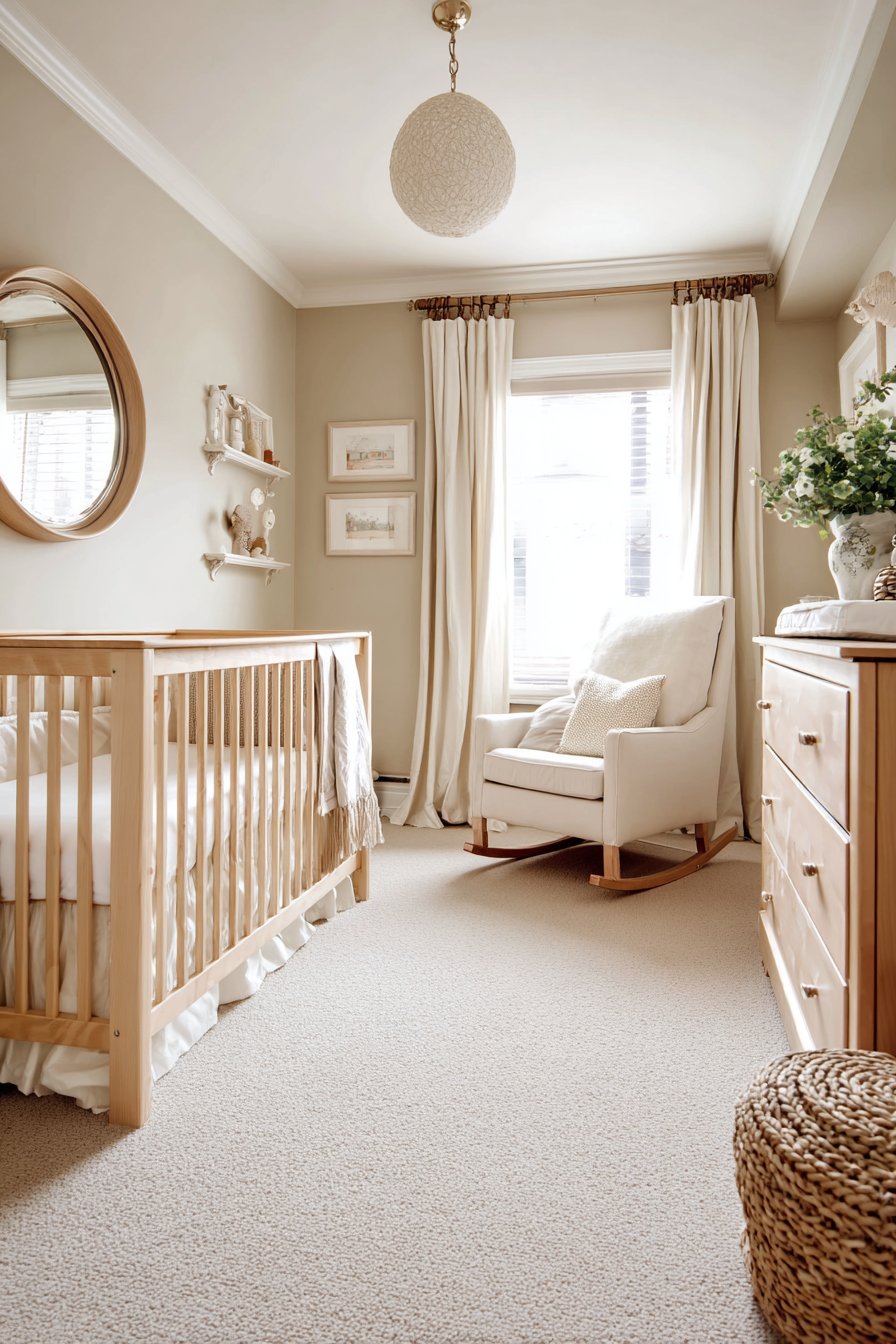
A compact rocking chair in beige linen fits snugly in the remaining corner. Every piece earns its place through careful scale selection and placement. Professional photography demonstrates efficient space planning maintaining calm beige aesthetic. Optimal natural lighting maximizes the perceived size of the compact nursery.
Key Design Tips:
- Measure furniture dimensions carefully in small spaces before purchasing pieces
- Use corner placements to maximize usable floor space in compact rooms
- Choose vertical storage solutions over horizontal ones in tight quarters
- Paint small rooms in lighter tones to enhance spaciousness perception
- Install mirrors opposite windows to reflect and amplify natural light
17. Rich Grasscloth Texture Behind the Crib
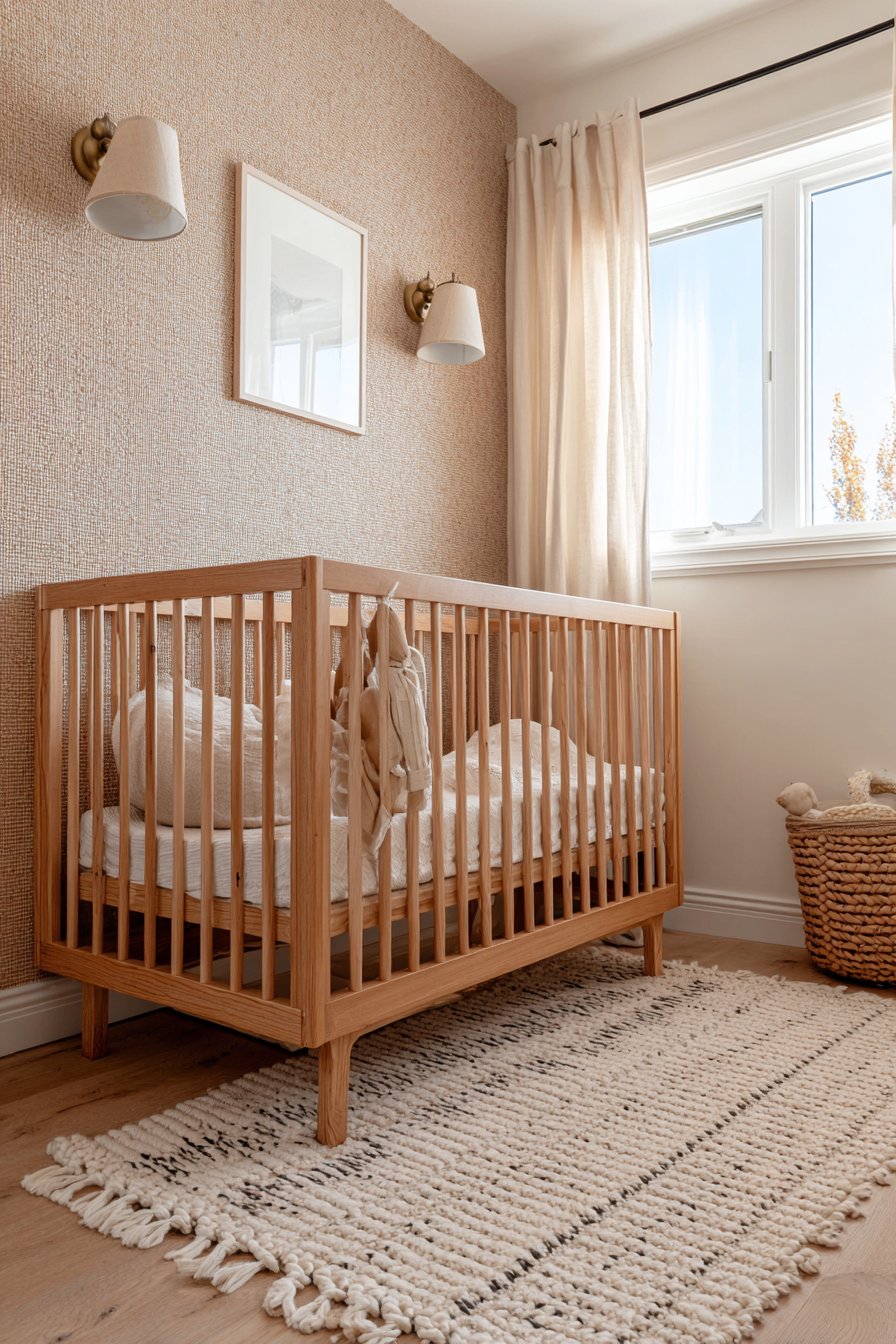
Natural grasscloth wallcovering in warm sand tones creates a tactile focal wall. The woven fibers add organic depth and sophisticated texture. This natural material brings the outdoors inside through authentic elements. The variation in the weave adds subtle pattern and visual interest.
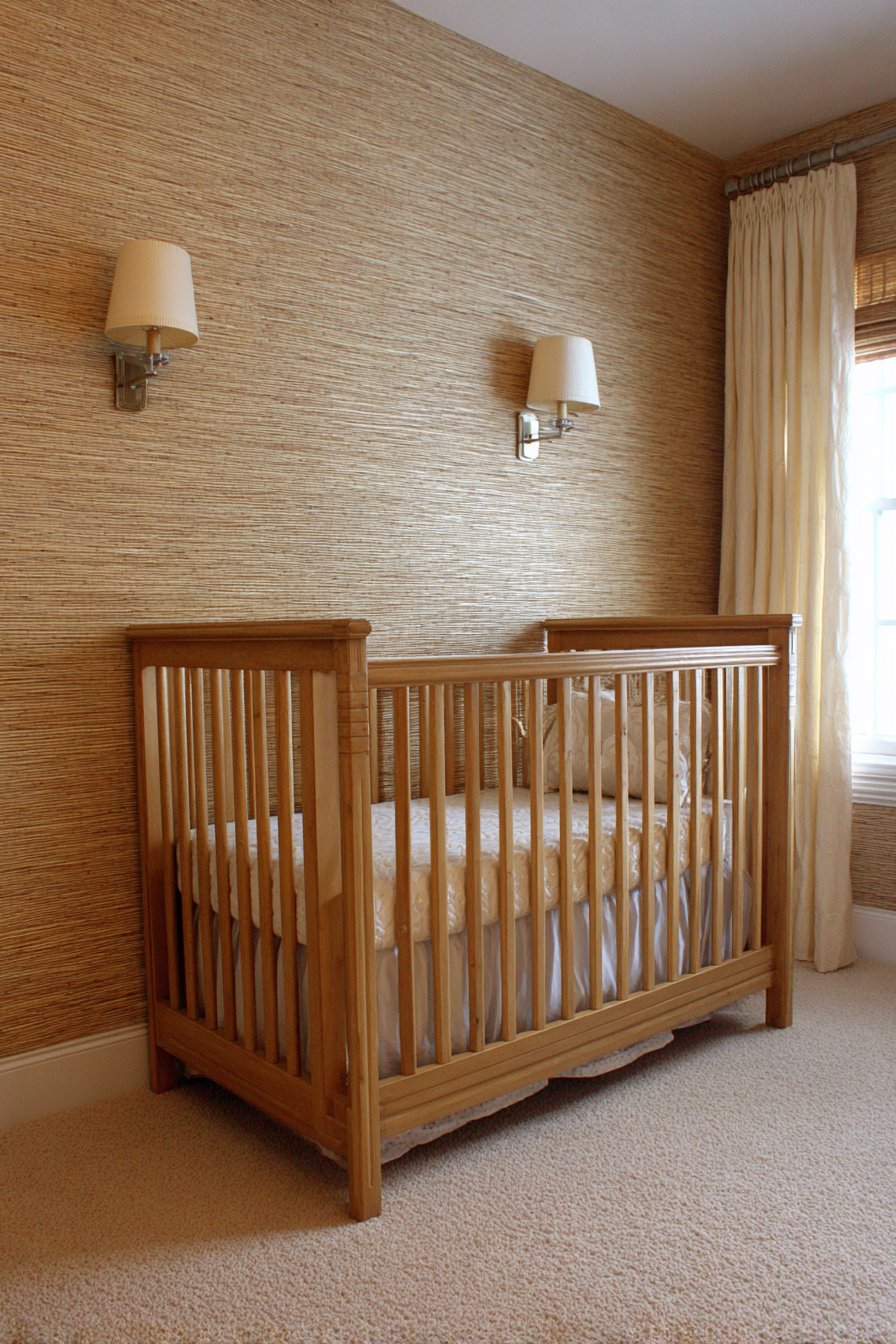
A wooden crib in honey oak finish sits against the textured backdrop. The warm wood tone complements the grasscloth’s natural color beautifully. The smooth crib contrasts effectively with the rough wallcovering texture. This juxtaposition creates dynamic visual interest through material contrast.
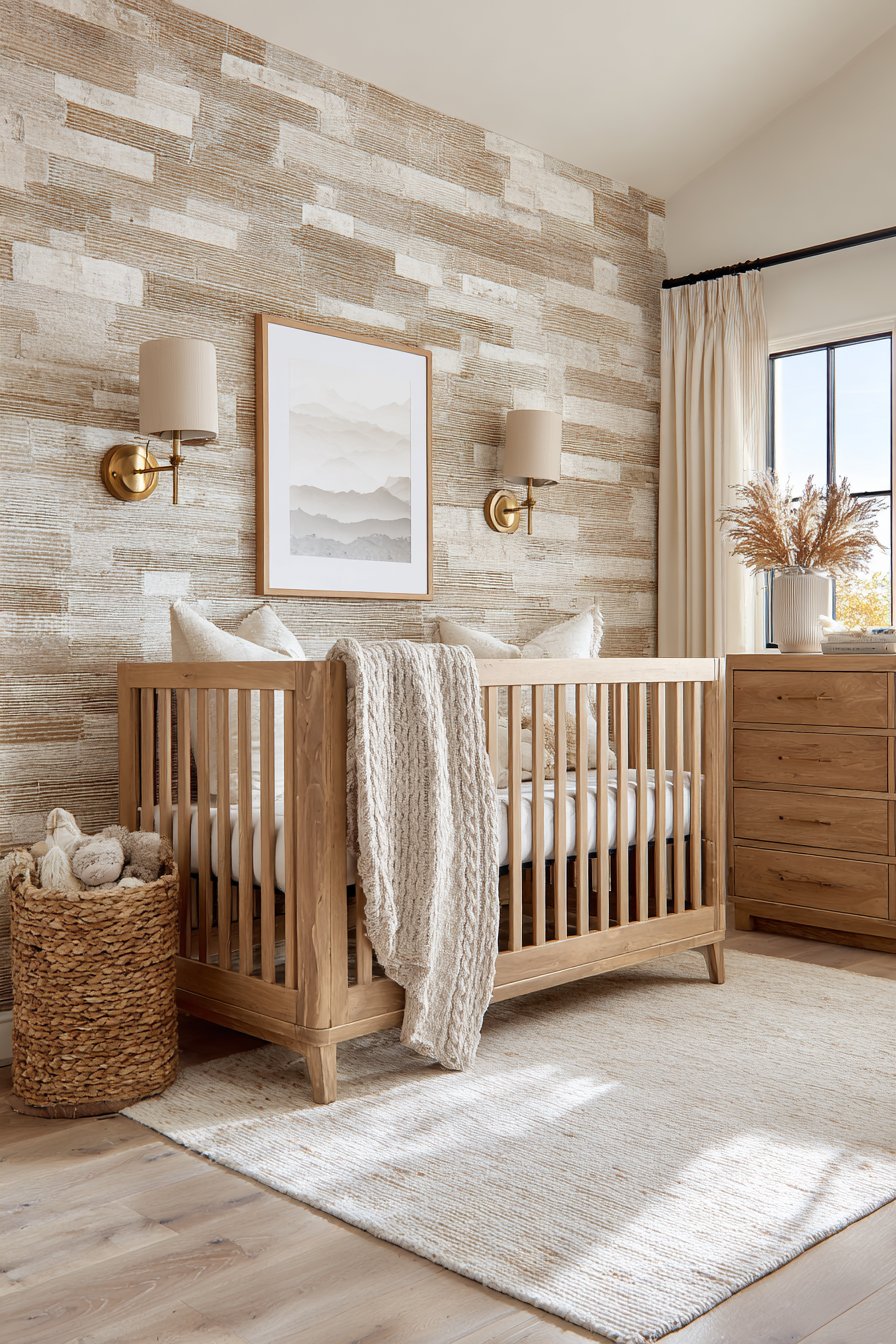
Simple wall sconces with beige fabric shades flank the crib symmetrically. The paired fixtures provide adjustable lighting for nighttime care activities. The fabric shades soften the light output for gentle illumination. The symmetrical placement creates balanced design and practical lighting coverage.
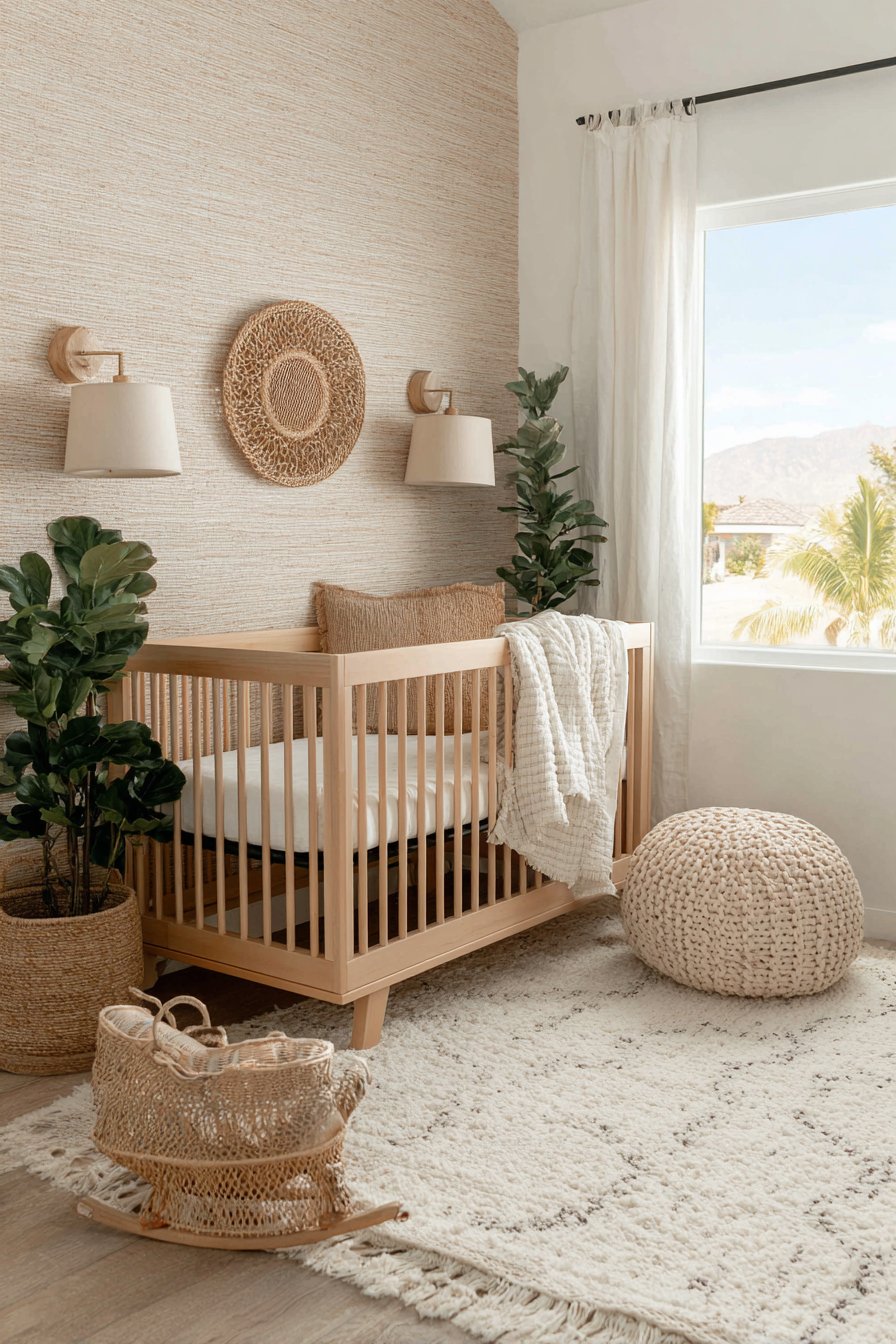
Remaining walls are painted in complementary pale beige for cohesion. The solid paint allows the textured wall to remain the star. Detail-focused photography highlights the rich grasscloth texture at different times. Various lighting conditions throughout the day reveal different aspects of the material.
Key Design Tips:
- Order grasscloth samples to assess texture and color in your lighting conditions
- Install grasscloth professionally to ensure proper seam alignment and adhesion
- Keep textured walls to single accent walls to prevent sensory overwhelm
- Position sconces at appropriate heights for adult use without stooping
- Choose natural fiber wallcoverings for authenticity over vinyl imitations
18. Transitional Design for Growing Children
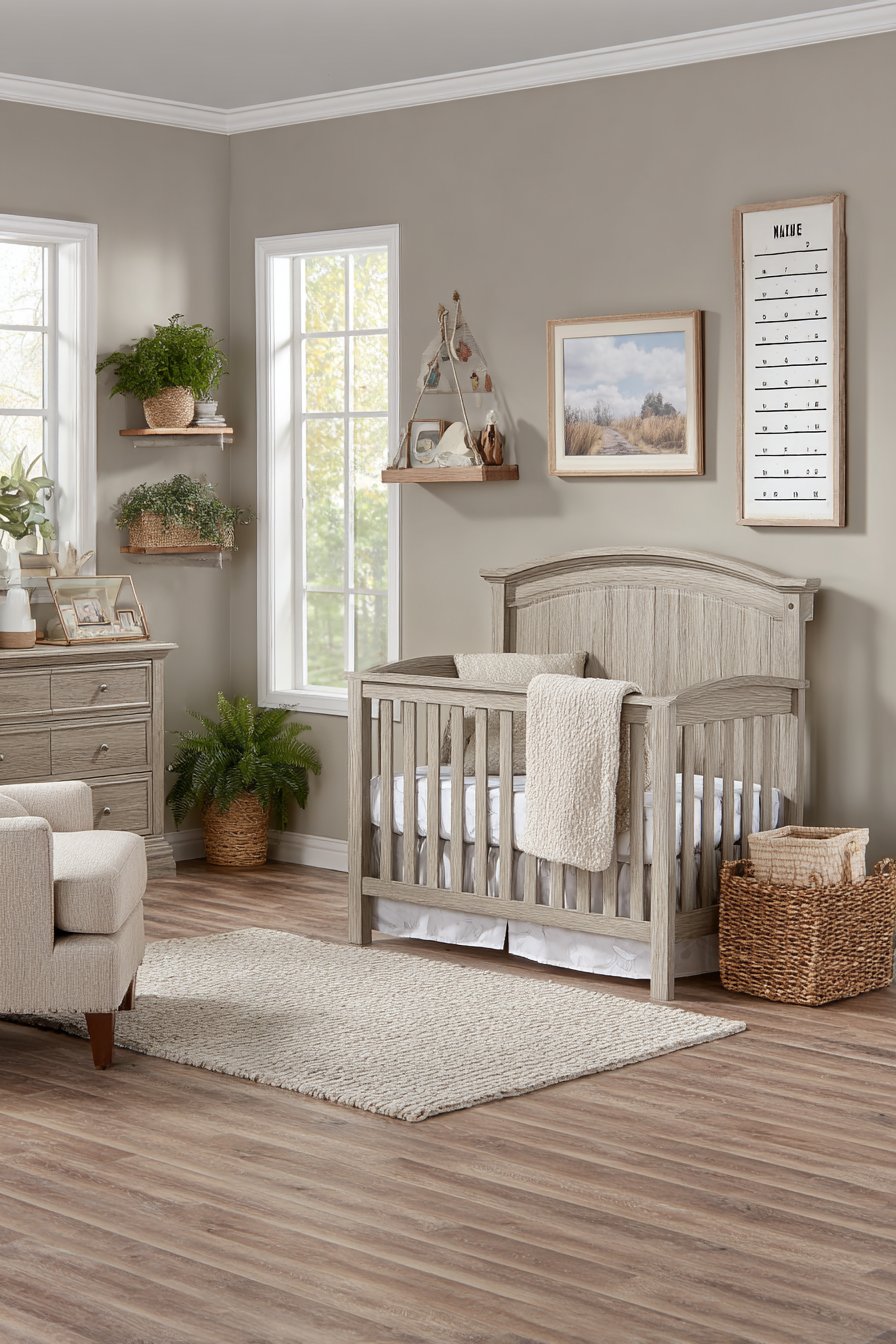
A convertible crib in versatile grey-washed oak transforms into toddler bed. This adaptable furniture grows with the child through multiple stages. The timeless finish works from infancy through elementary years. The investment pays long-term dividends through extended usability.
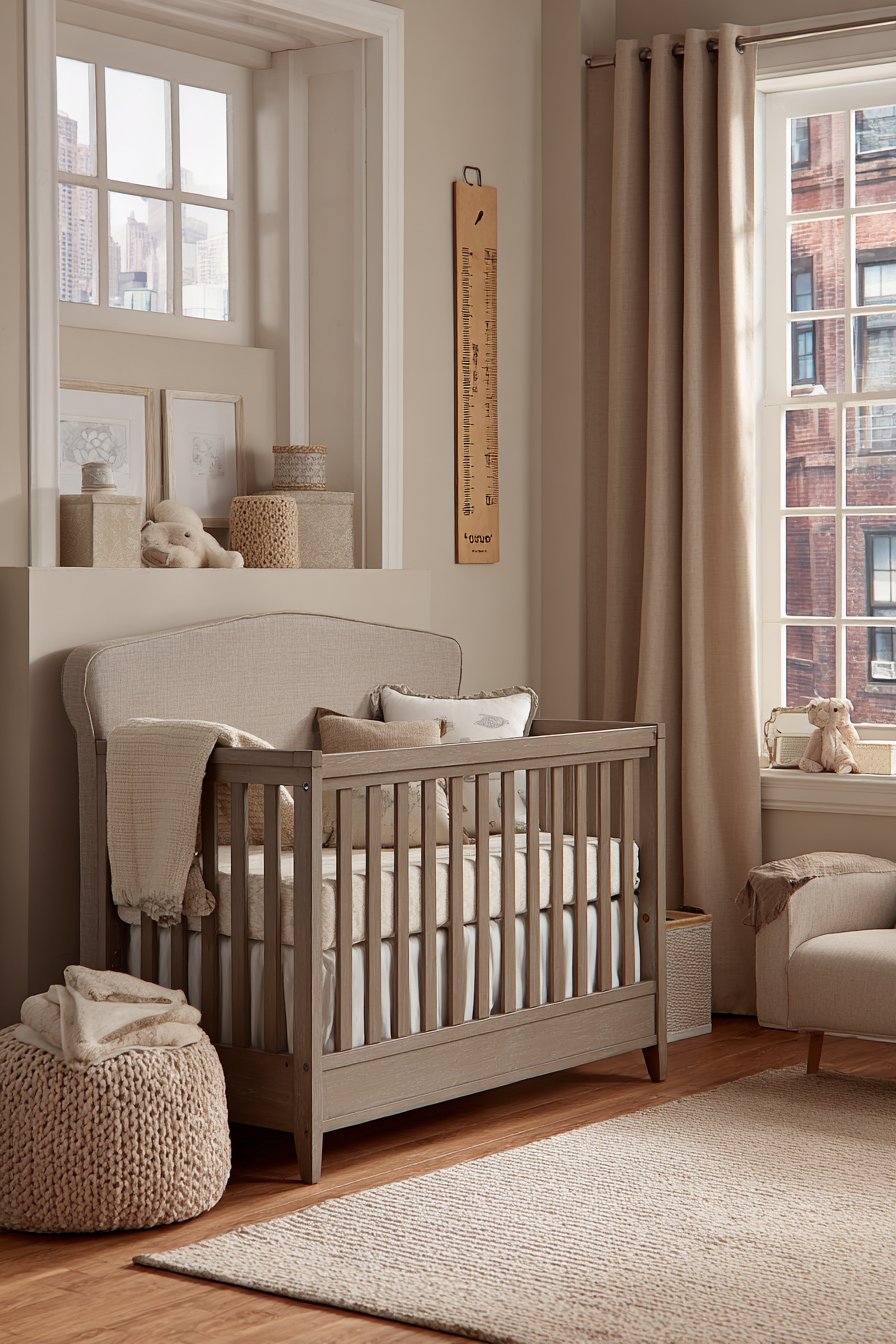
Timeless taupe-beige walls work for any age and gender. The neutral backdrop adapts to changing interests and decoration styles. The versatile color accommodates evolving tastes without requiring repainting. This practical choice serves the family through many years of use.
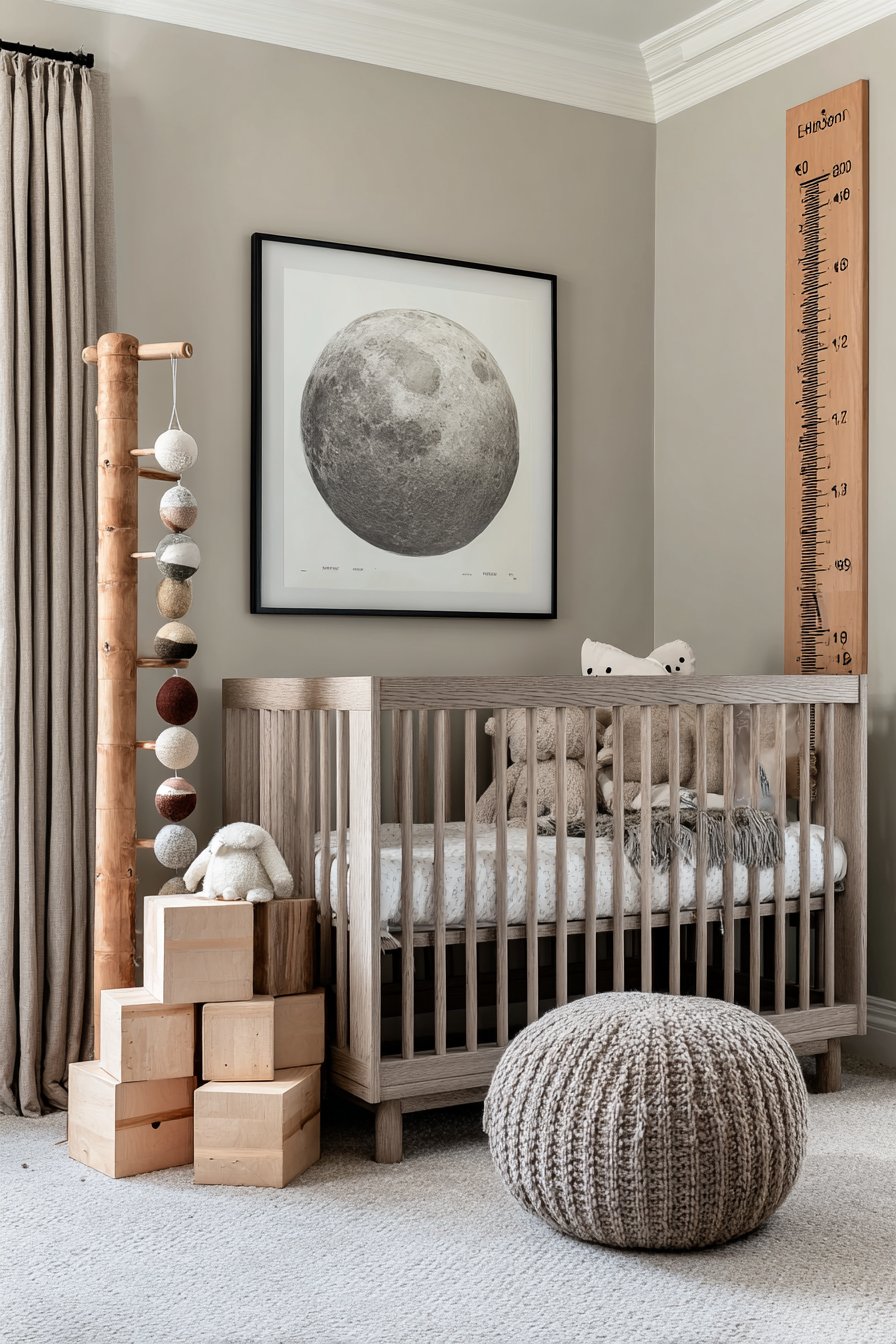
Modular storage cubes in natural wood and beige fabric bins reconfigure easily. The flexible system adapts to changing storage needs over time. From baby clothes to toys to books to school supplies. The investment adapts rather than requiring replacement as needs evolve.
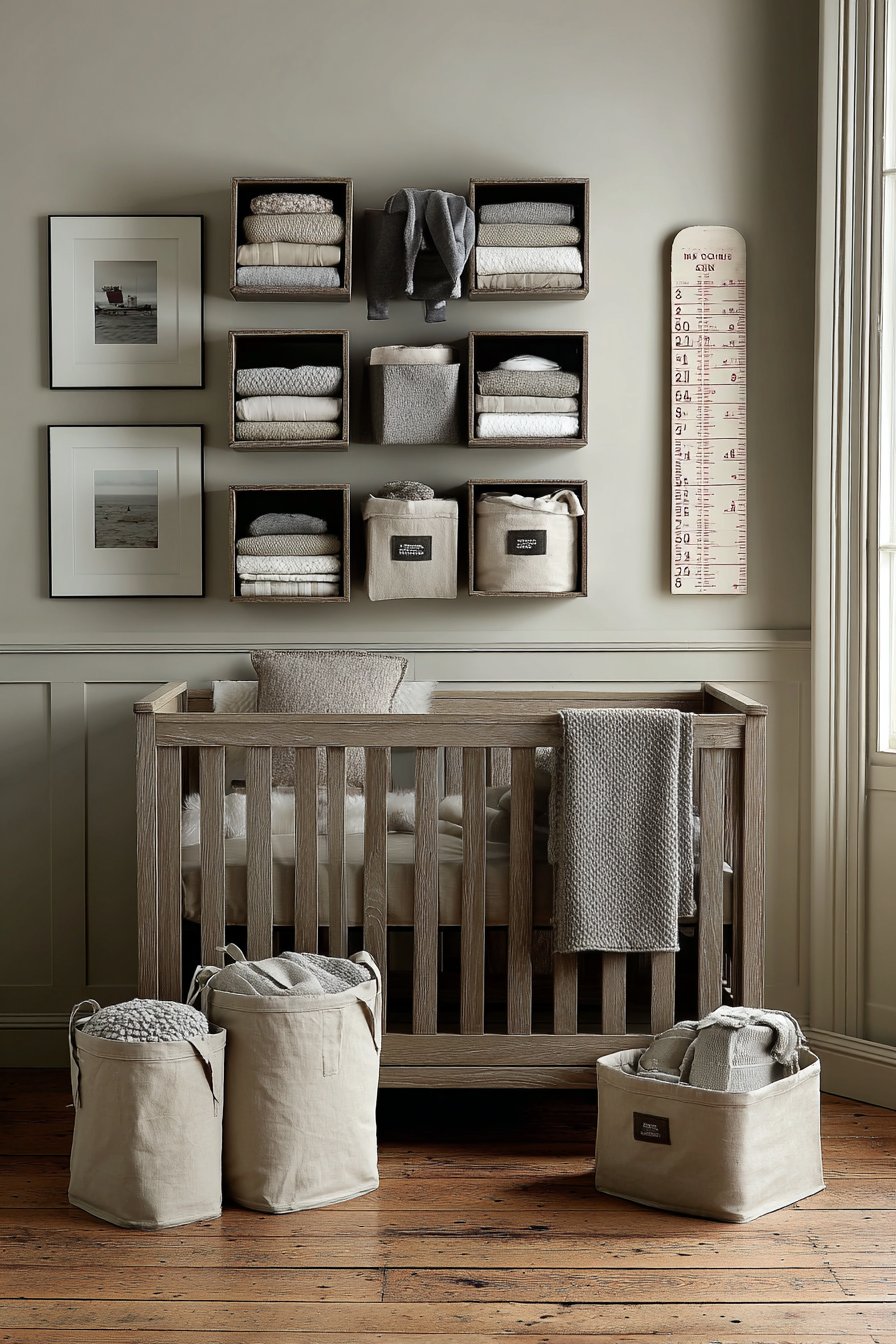
A simple wood growth chart mounts on one wall for tracking development. This traditional element adds sentimental value while remaining practical. Wide-angle photography captures the adaptable design’s practical longevity. The beige foundation and flexible furnishings create a space that truly grows.
Key Design Tips:
- Invest in quality convertible pieces that will last through multiple life stages
- Choose neutral wall colors that won’t need updating as children mature
- Select modular systems that can be rearranged rather than replaced
- Incorporate timeless design elements over trendy details for longevity
- Plan for furniture that serves infancy, toddlerhood, and beyond
19. Year-Round Comfort with Ceiling Fan
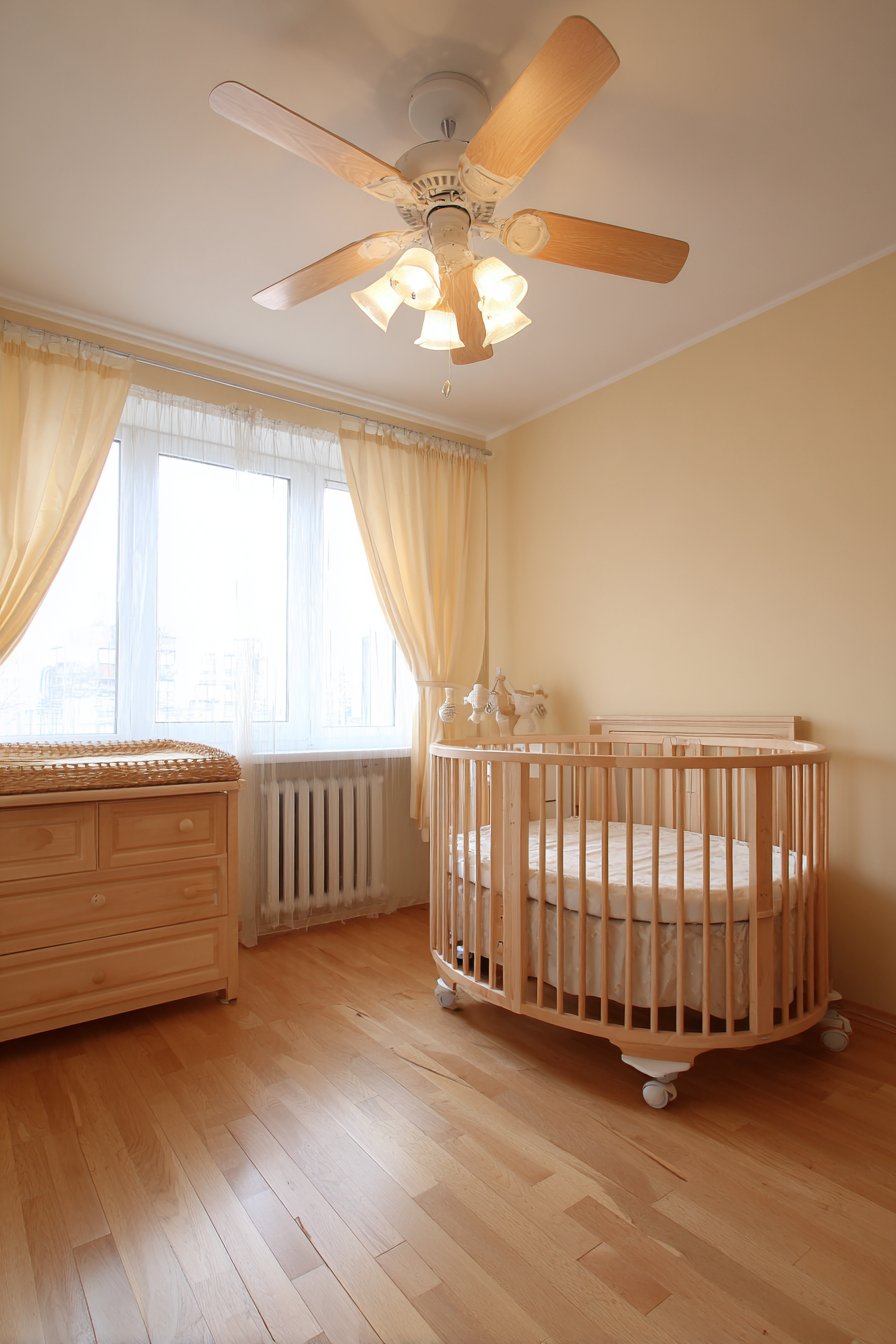
A ceiling fan with wooden blades in natural finish maintains comfortable temperature control. The integrated lighting eliminates the need for separate overhead fixtures. The central position provides even air circulation throughout the space. The natural blade finish coordinates with the wood furniture tones.
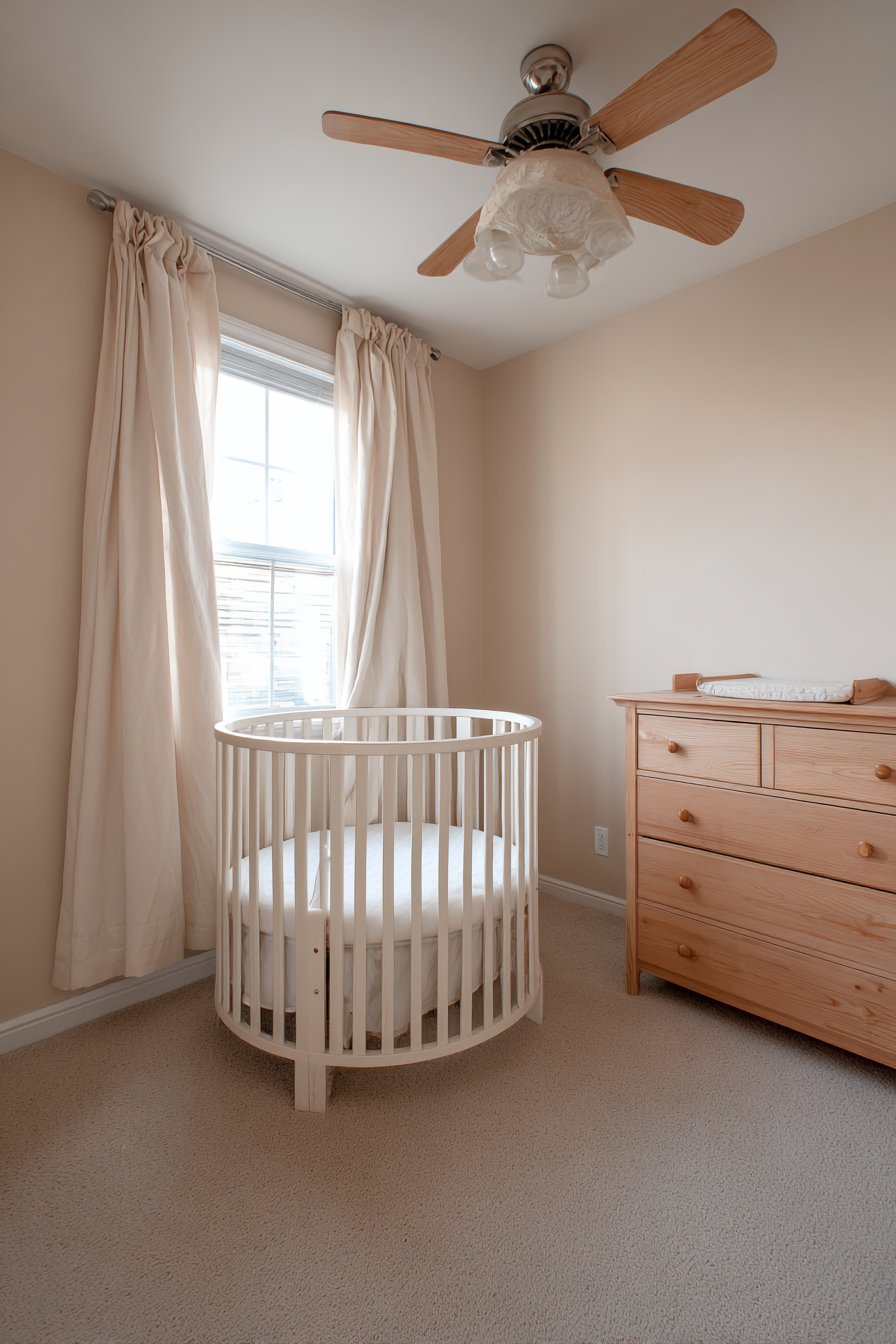
The fan is positioned centrally above a round crib in matching wood. The circular forms create visual harmony through repeated shapes. Soft buff beige walls provide subtle warmth without temperature implications. The neutral backdrop works in all seasons and lighting conditions.
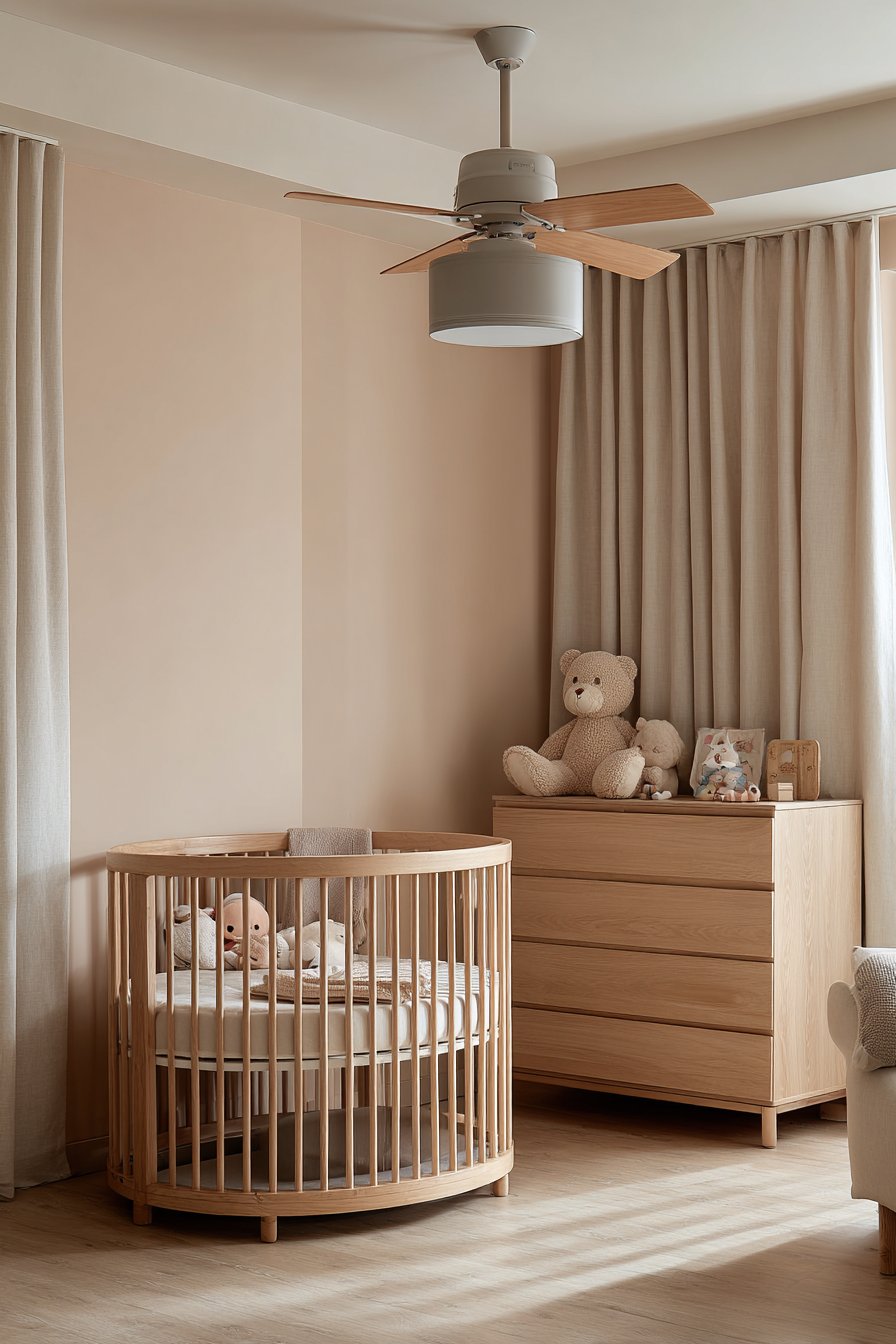
Sheer beige curtains diffuse bright sunlight while maintaining gentle illumination. The light fabric allows air circulation when windows are open. The fan complements natural ventilation strategies for comfort. A low-profile dresser in coordinating wood finish completes the functional setup.
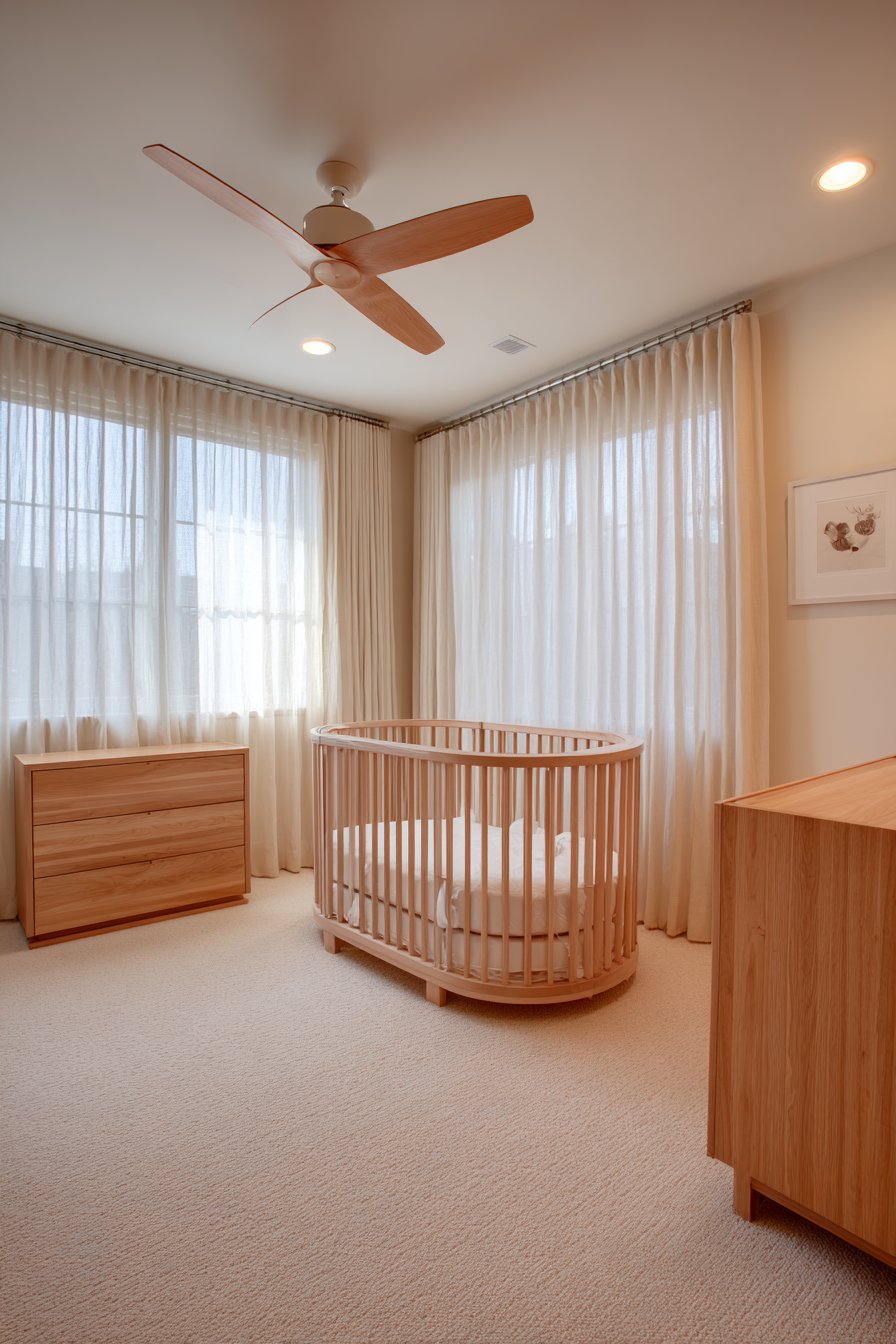
Interior photography captures practical comfort features and cohesive color palette. The design demonstrates how air circulation and lighting work together effectively. The attention to environmental comfort ensures year-round usability. The integrated approach considers both aesthetic and practical climate control needs.
Key Design Tips:
- Choose ceiling fans with reversible rotation for seasonal temperature management
- Ensure fan blade clearance meets safety requirements above crib placement
- Select fans with integrated lighting to minimize ceiling fixture clutter
- Install dimmer and speed controls for flexible comfort adjustment
- Coordinate fan finishes with other wood elements in the room
20. Statement Area Rug Anchoring the Design
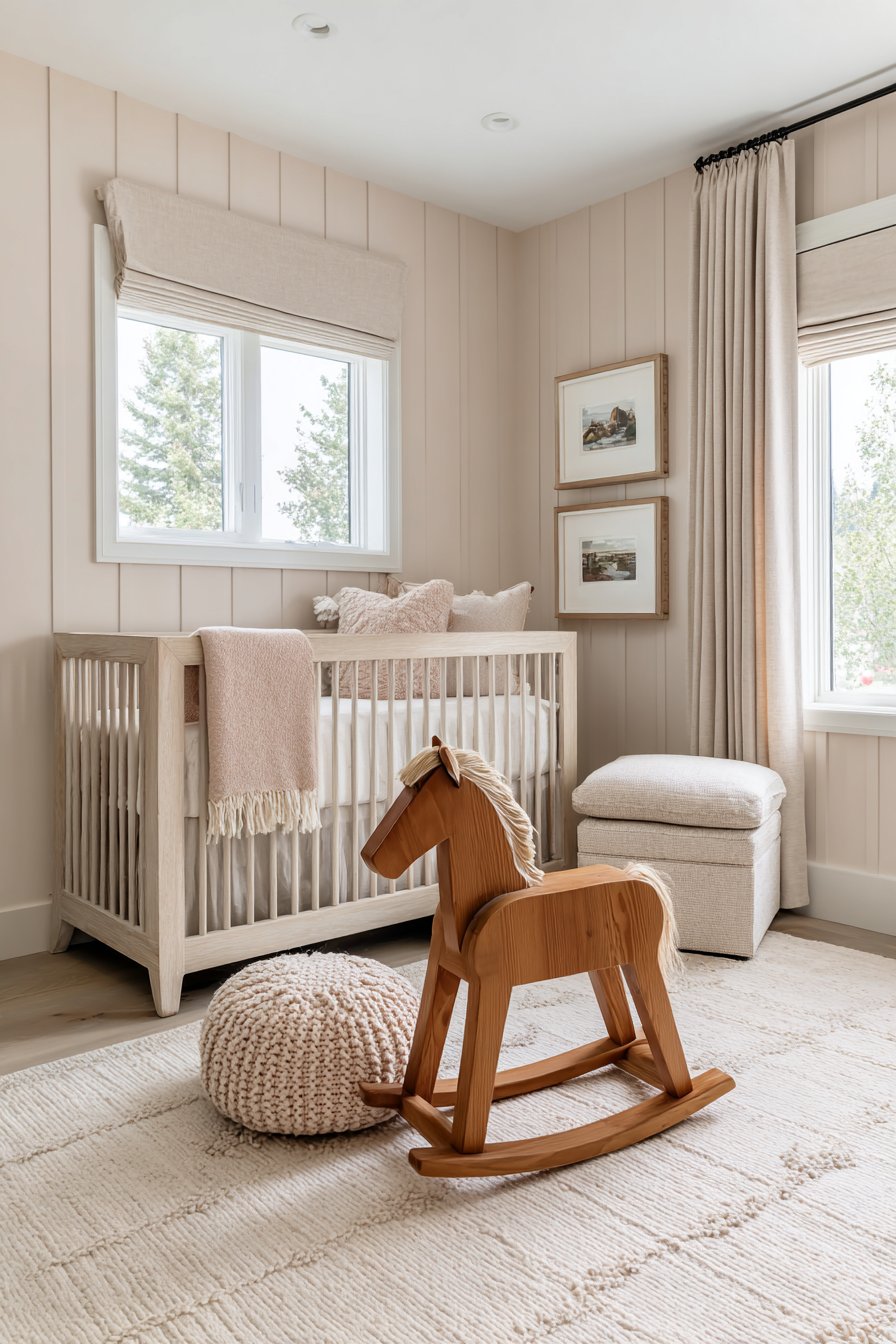
A statement area rug in layered beige tones features subtle geometric patterns. The design adds visual interest without overwhelming the peaceful space. The pattern grounds the furniture arrangement while unifying the color story. The substantial size defines the nursery zone effectively.
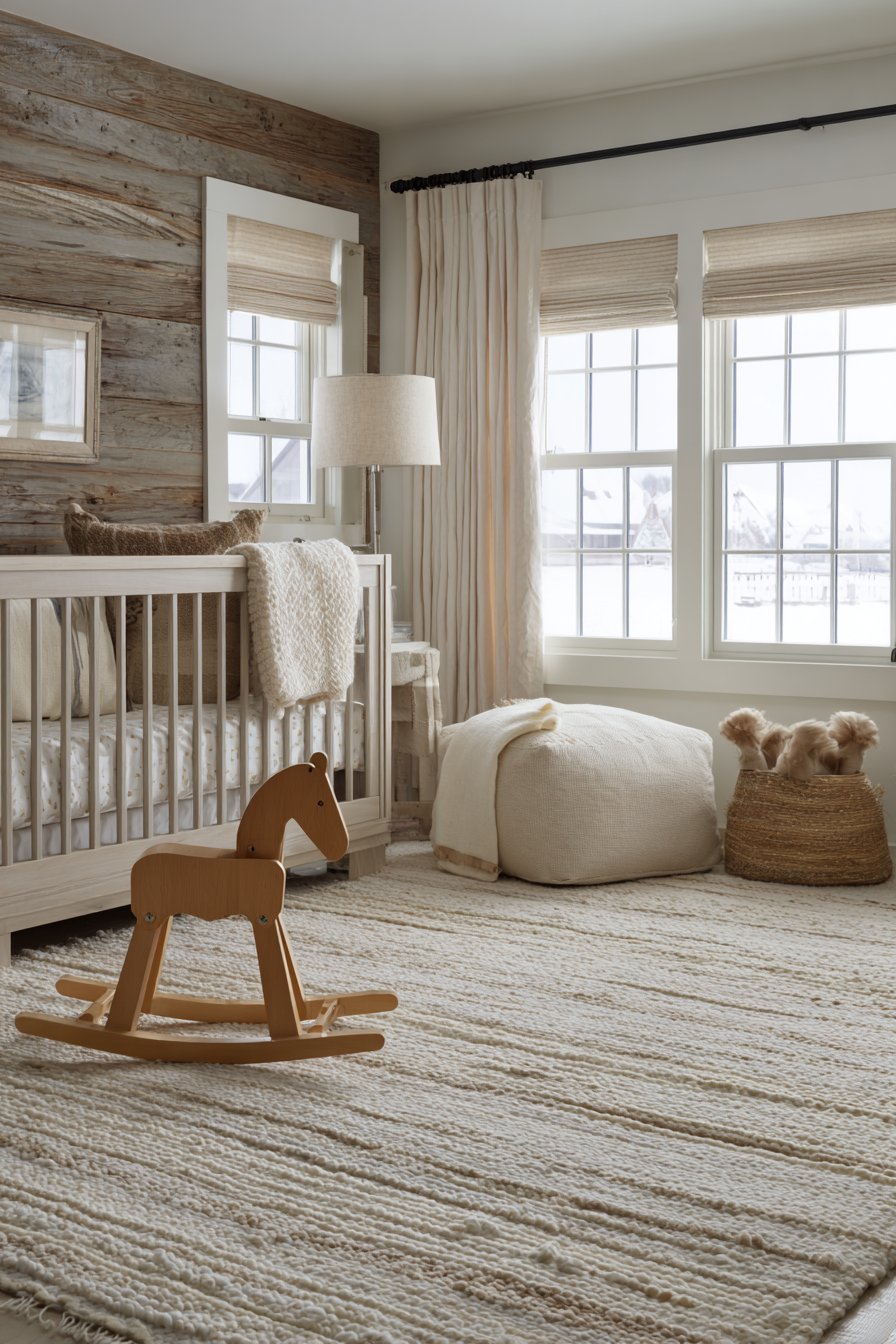
A classic wooden rocking horse in natural finish provides traditional charm. The timeless toy sits atop the rug as decorative sculpture. The natural wood coordinates with the beige palette beautifully. This nostalgic element adds personality and anticipation of play ahead.
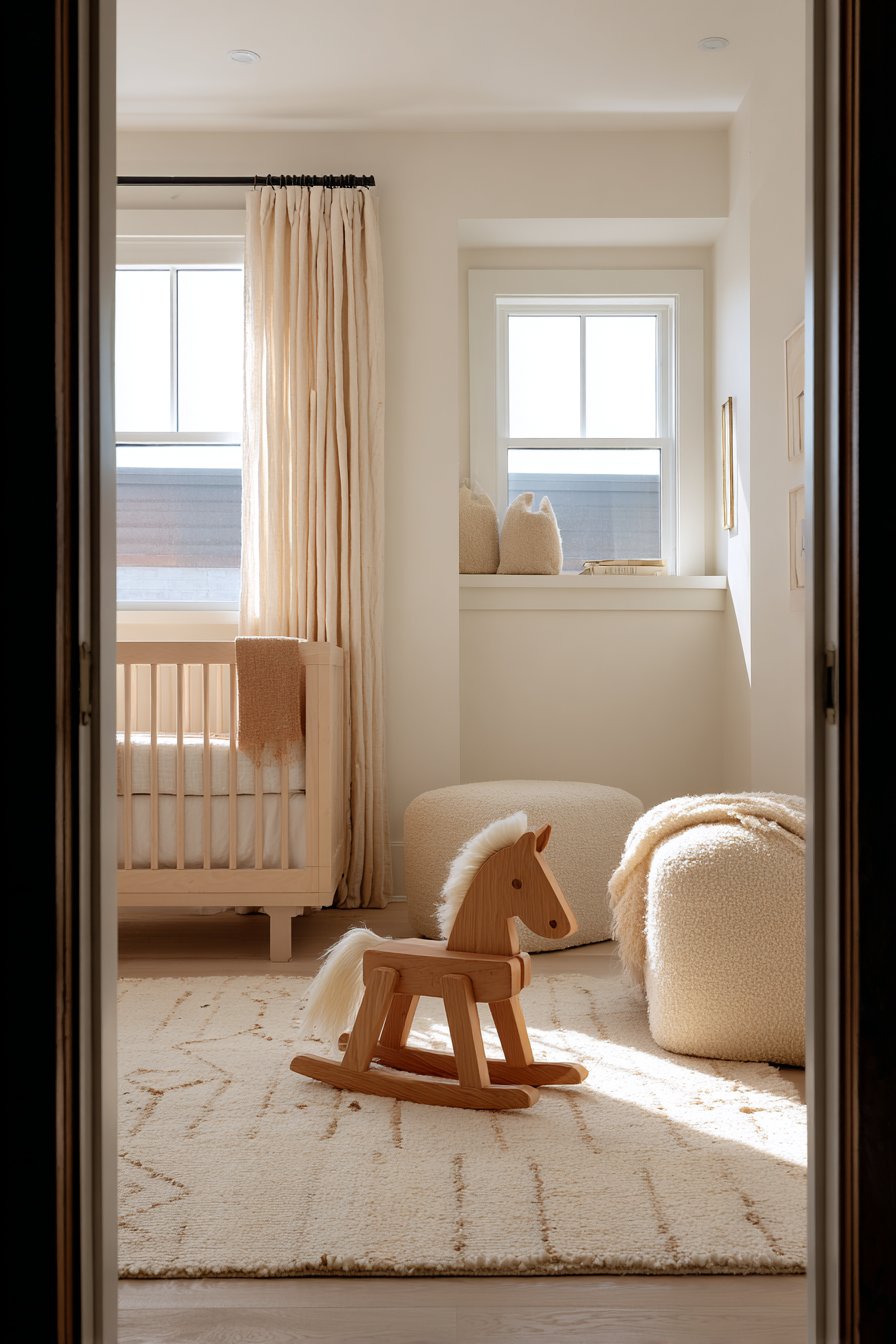
A simple crib in whitewashed pine maintains the light, airy aesthetic. The bleached wood tone keeps the space feeling fresh and clean. Beige paint with slight pink undertones creates a warm overall glow. The subtle warmth prevents the neutrals from feeling cold or sterile.
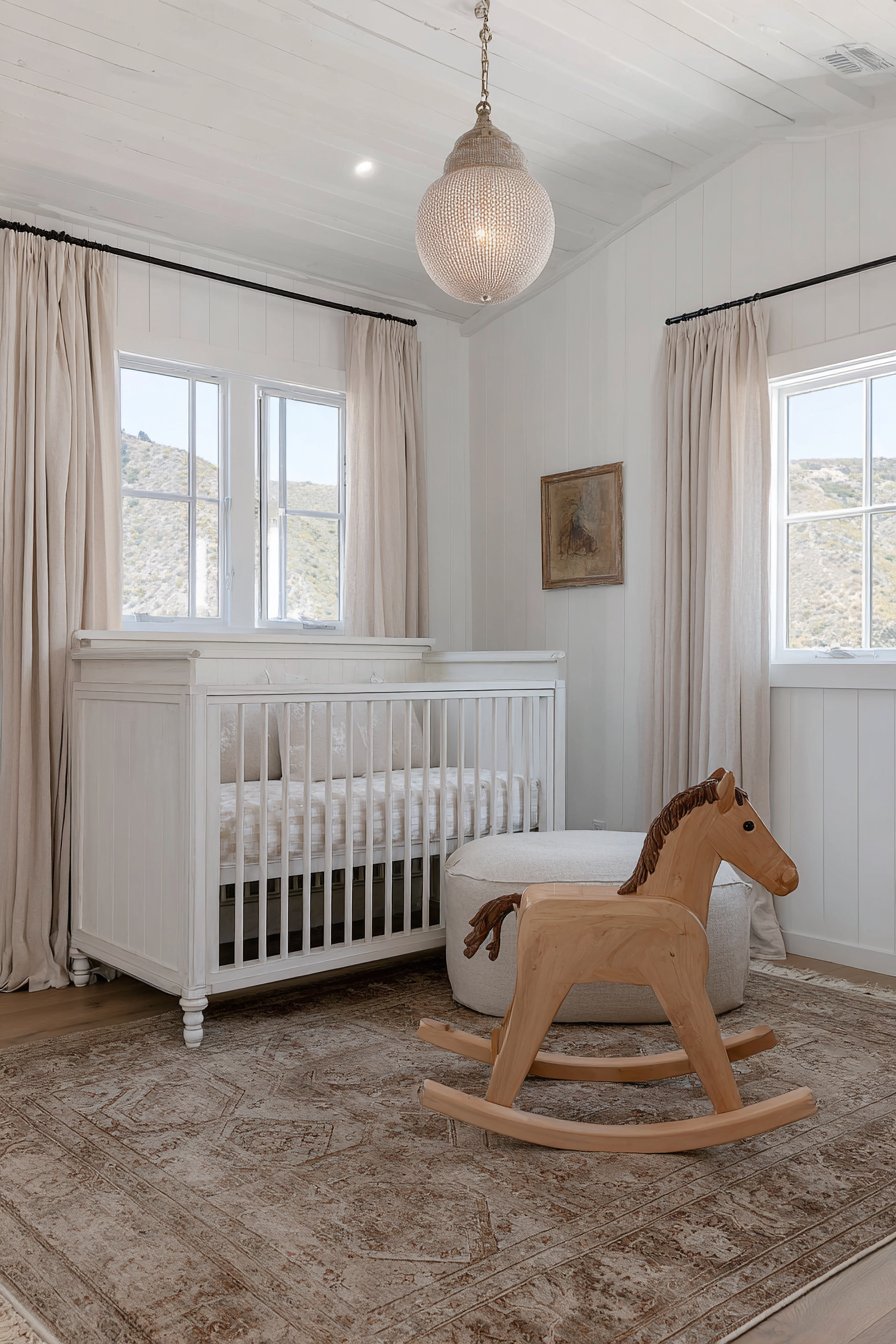
A small upholstered ottoman in beige linen provides flexible seating options. The movable piece serves as footrest, side table, or extra seating. Natural afternoon light streams through windows dressed with simple beige linen panels. Professional photography captures how the rug anchors the sophisticated beige palette throughout.
Key Design Tips:
- Choose rugs large enough to fit entirely under cribs with extra perimeter space
- Select low-pile options for easy cleaning and vacuum accessibility
- Invest in quality rug pads to prevent slipping and extend rug life
- Coordinate rug patterns with the room’s overall design complexity level
- Use rugs to define functional zones within larger multipurpose rooms
Why These Beige Baby Nursery Designs Are the Best
These beige baby nursery designs represent the finest approaches to creating serene, timeless spaces for infants. Each concept demonstrates thoughtful consideration of color theory, material selection, and spatial planning. The versatility of beige allows these designs to adapt to various architectural styles and personal preferences.
The neutral foundation provides gender-neutral appeal that grows gracefully with children. Unlike trend-driven color schemes, beige nurseries remain relevant through multiple life stages. The warm undertones create nurturing environments that support infant development and parental comfort during countless nighttime visits.
Material choices throughout these designs emphasize natural elements and authentic finishes. Real wood, natural fibers, and organic textiles provide superior quality and longevity compared to synthetic alternatives. These materials age beautifully, developing character rather than showing wear. The tactile variety stimulates sensory development while maintaining visual cohesion.
The designs address practical considerations including storage solutions, lighting flexibility, and furniture adaptability. From built-in systems to modular pieces, each approach maximizes functionality without sacrificing aesthetic appeal. The attention to ergonomic comfort in nursing stations and changing areas demonstrates understanding of real parenting needs.
Lighting strategies balance natural illumination with adjustable artificial sources for different activities and times. The layered approach provides bright task lighting when needed and gentle ambient glow for nighttime care. Window treatments offer flexibility between privacy and light control throughout the day.
Sustainability emerges as a consistent theme through convertible furniture, quality materials, and timeless design approaches. These choices reduce environmental impact while providing long-term value. The investment in durable pieces and classic aesthetics transcends fleeting trends, creating spaces that serve families for years rather than requiring frequent updates.
Conclusion
These beige baby nursery designs demonstrate that neutral palettes offer remarkable depth and sophistication. The key takeaways include the importance of texture layering, natural material selection, and thoughtful lighting strategies. Quality pieces combined with careful planning create rooms that feel both beautiful and functional.
Successful beige nursery design balances aesthetic appeal with practical needs. Start with a strong furniture foundation and build through texture rather than color. Your dream nursery awaits creation through thoughtful material choices and personal touches that make the space uniquely yours.
