


Creating a butterfly nursery brings enchantment and serenity to your baby’s first space. This timeless theme celebrates nature’s delicate beauty through thoughtful design choices. The butterfly motif offers endless creative possibilities for parents seeking magical yet practical nursery solutions.
Butterfly-themed nurseries have captured hearts for generations with their universal appeal. These designs work beautifully across gender-neutral, feminine, or nature-inspired aesthetics. The gentle symbolism of transformation and growth makes butterflies particularly meaningful for a baby’s room. From watercolor murals to three-dimensional installations, butterfly elements adapt to any design preference while maintaining sophistication and charm.
The following designs showcase diverse interpretations of the butterfly theme. Each concept demonstrates how this graceful motif enhances nursery spaces through various materials and techniques. Whether you prefer minimalist elegance or layered bohemian warmth, these ideas prove butterfly nurseries transcend simple decoration to become nurturing environments for your growing child.
1. Serene Watercolor Butterfly Sanctuary
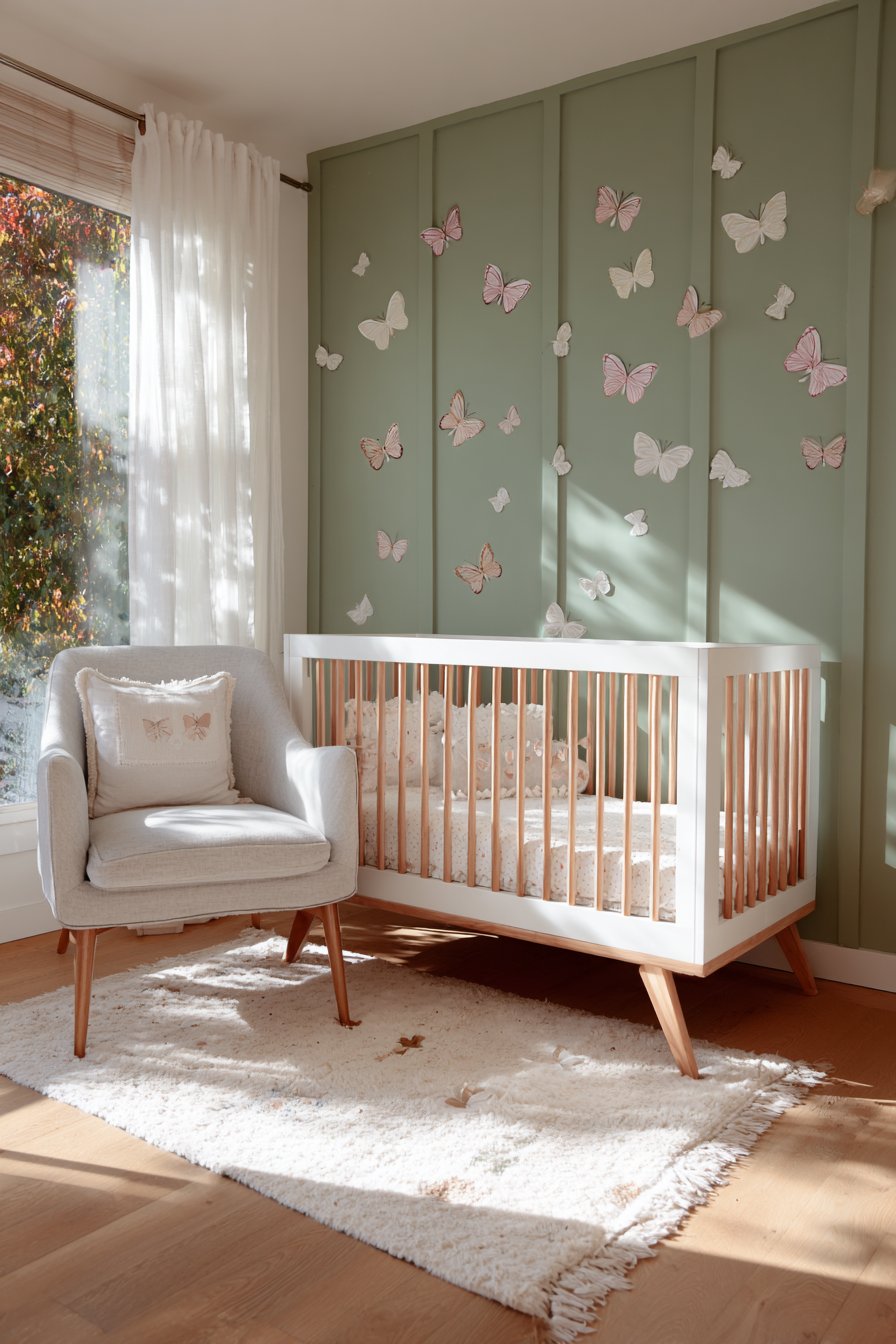
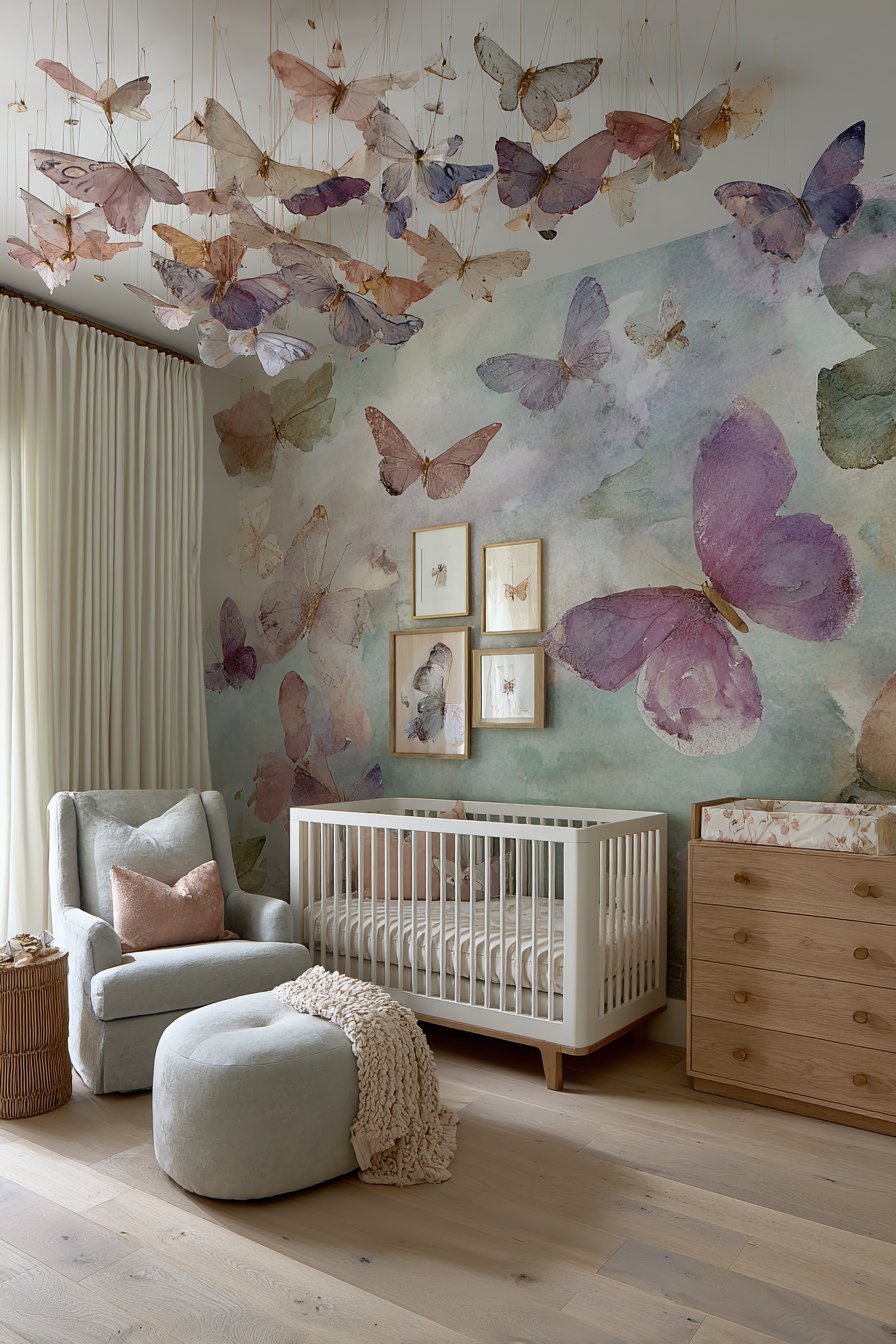
A soft sage green accent wall transforms into an artistic canvas with hand-painted watercolor butterflies. The delicate creatures flutter across the surface in gentle pastel tones. Lavender, blush pink, and butter yellow create harmonious movement. This dreamy backdrop sets a peaceful tone for the entire nursery space.
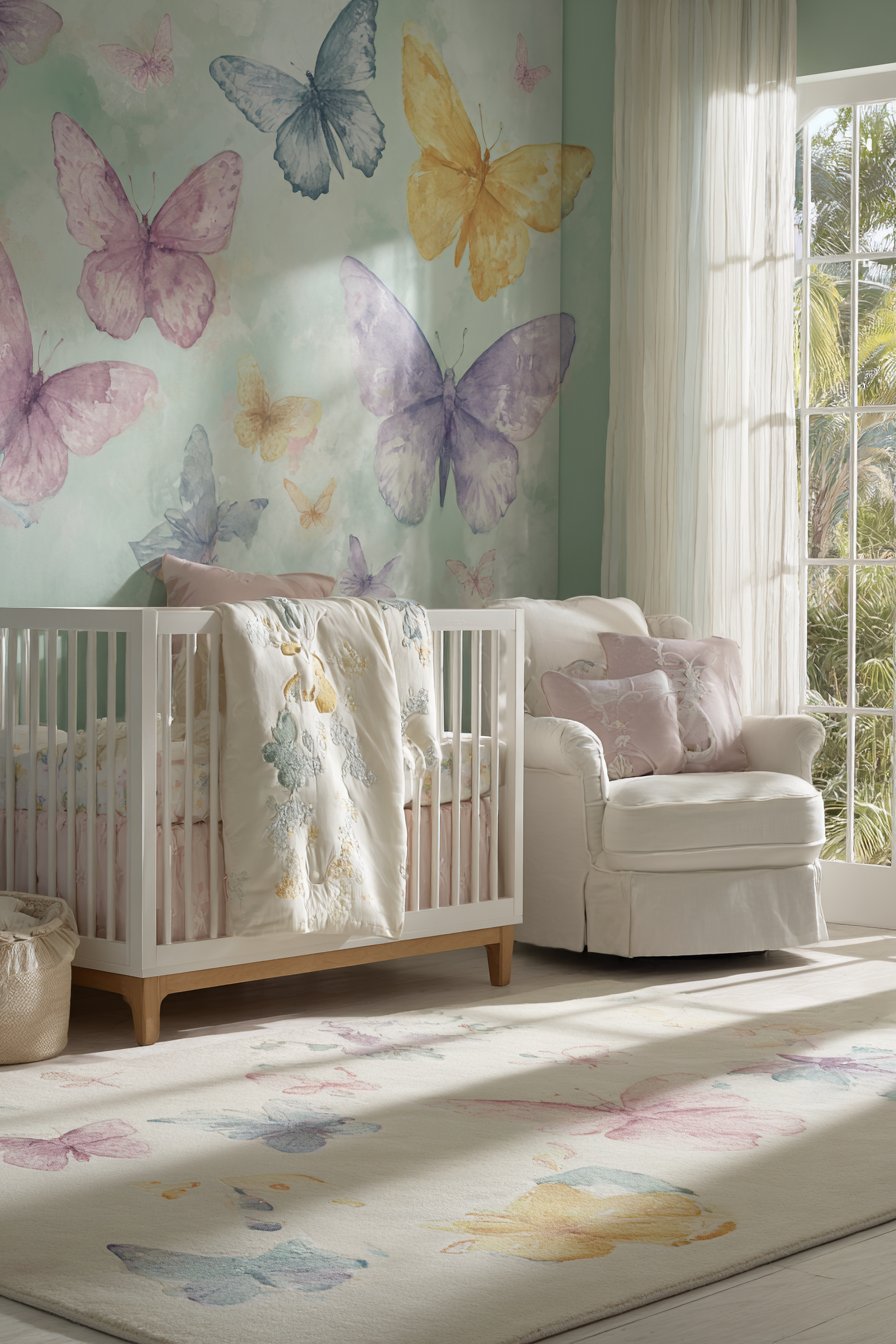
The white convertible crib anchors the room with clean lines and natural wood legs. Organic cotton bedding features subtle embroidered butterfly details that echo the wall art. A plush cream area rug with butterfly patterns cushions the floor beneath the furniture. The soft textures invite barefoot moments during middle-of-the-night feedings.
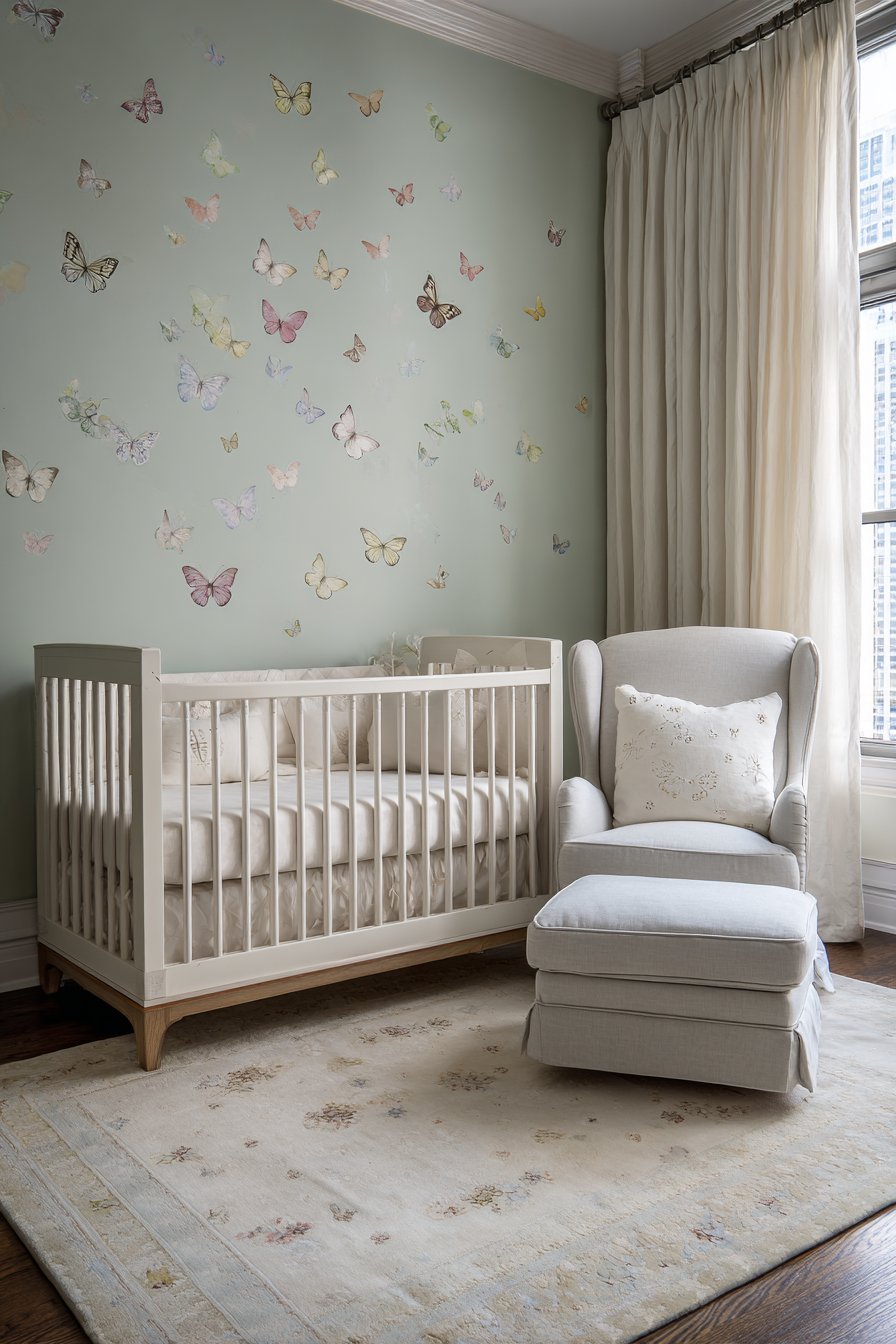
A comfortable glider chair upholstered in light grey linen occupies the corner position. Sheer white curtains adorned with scattered butterfly appliques frame the window beautifully. Morning light filters through the fabric creating dancing shadows on the walls. The interplay between natural illumination and handcrafted details elevates the space beyond ordinary nursery design.
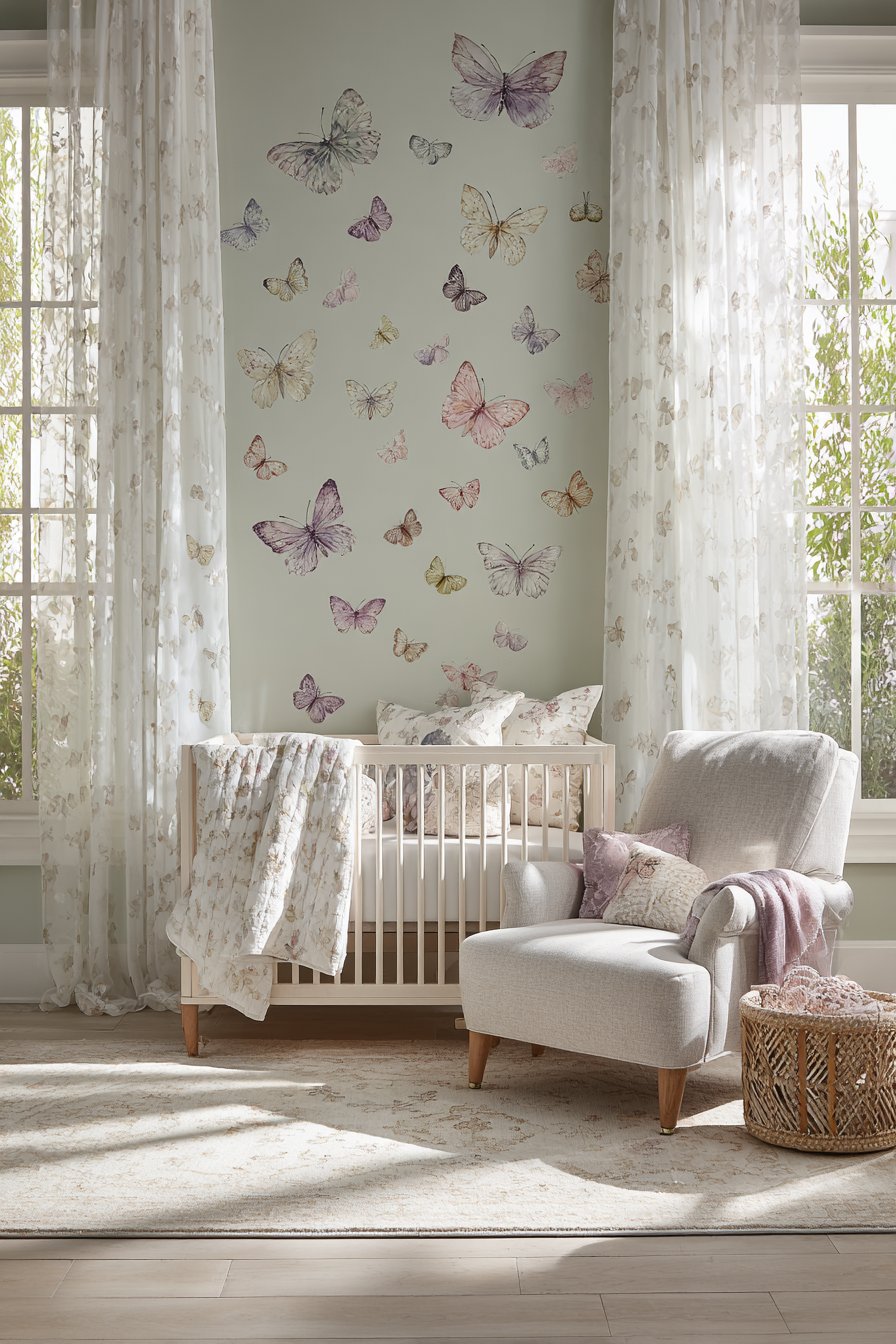
The material choices reflect a commitment to quality and sustainability. Natural fibers breathe better than synthetic alternatives for baby’s sensitive skin. The neutral color palette with pastel accents allows for easy updates as your child grows.
Key Design Tips:
- Use watercolor techniques for soft, artistic butterfly murals that feel hand-crafted
- Choose organic cotton bedding for breathability and comfort against baby’s skin
- Layer textures through rugs, curtains, and upholstery for visual depth
- Position the glider near the window for natural light during daytime feedings
- Select convertible furniture that adapts as your child transitions from infant to toddler
2. Whimsical Reading Nook with Floating Butterflies
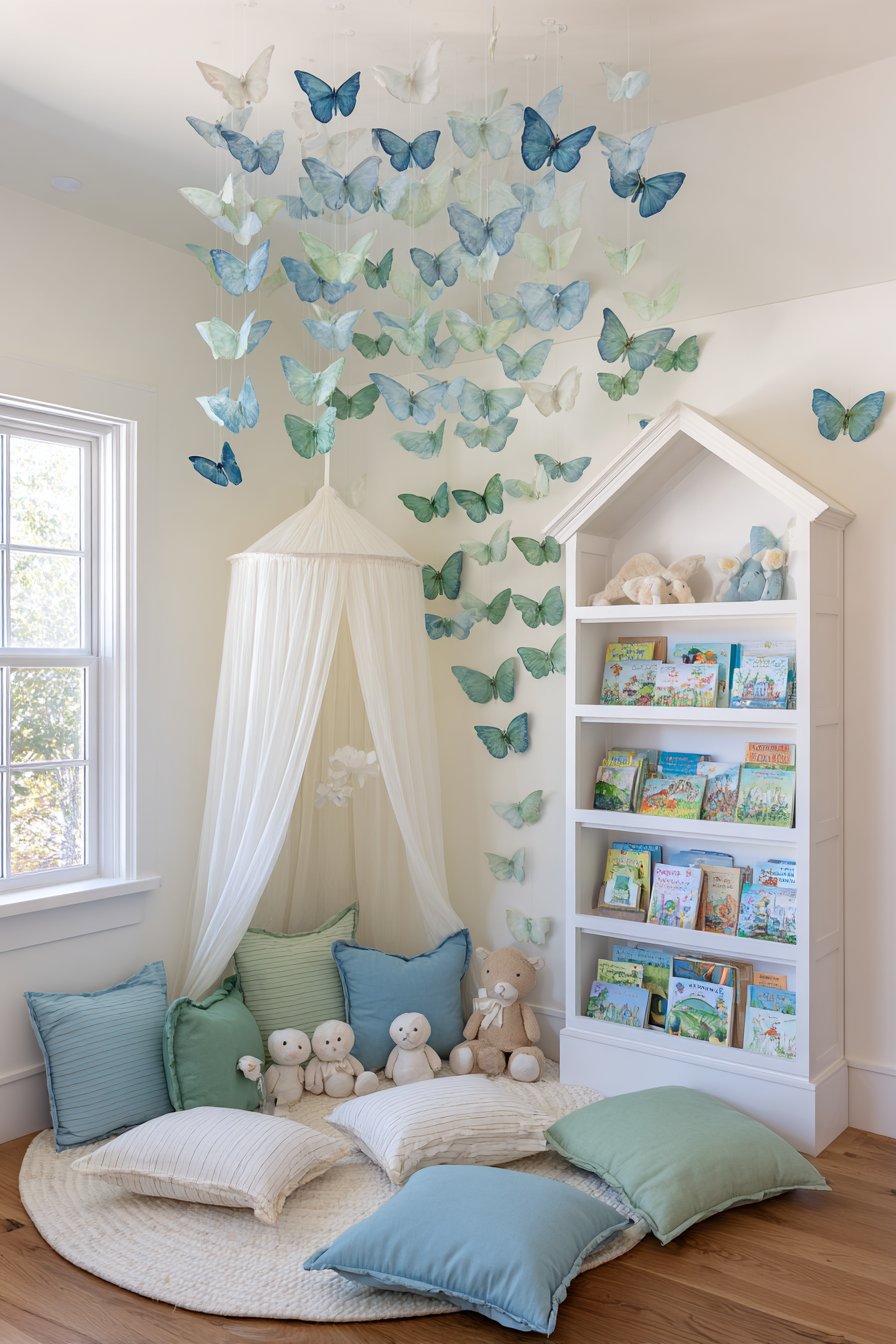
A custom-built reading corner creates dedicated space for story time and quiet bonding. Floor cushions covered in coordinating butterfly-themed fabrics provide comfortable seating options. The white wooden bookshelf styled as a butterfly house displays board books and soft toys. This functional furniture piece becomes a decorative focal point that sparks imagination.
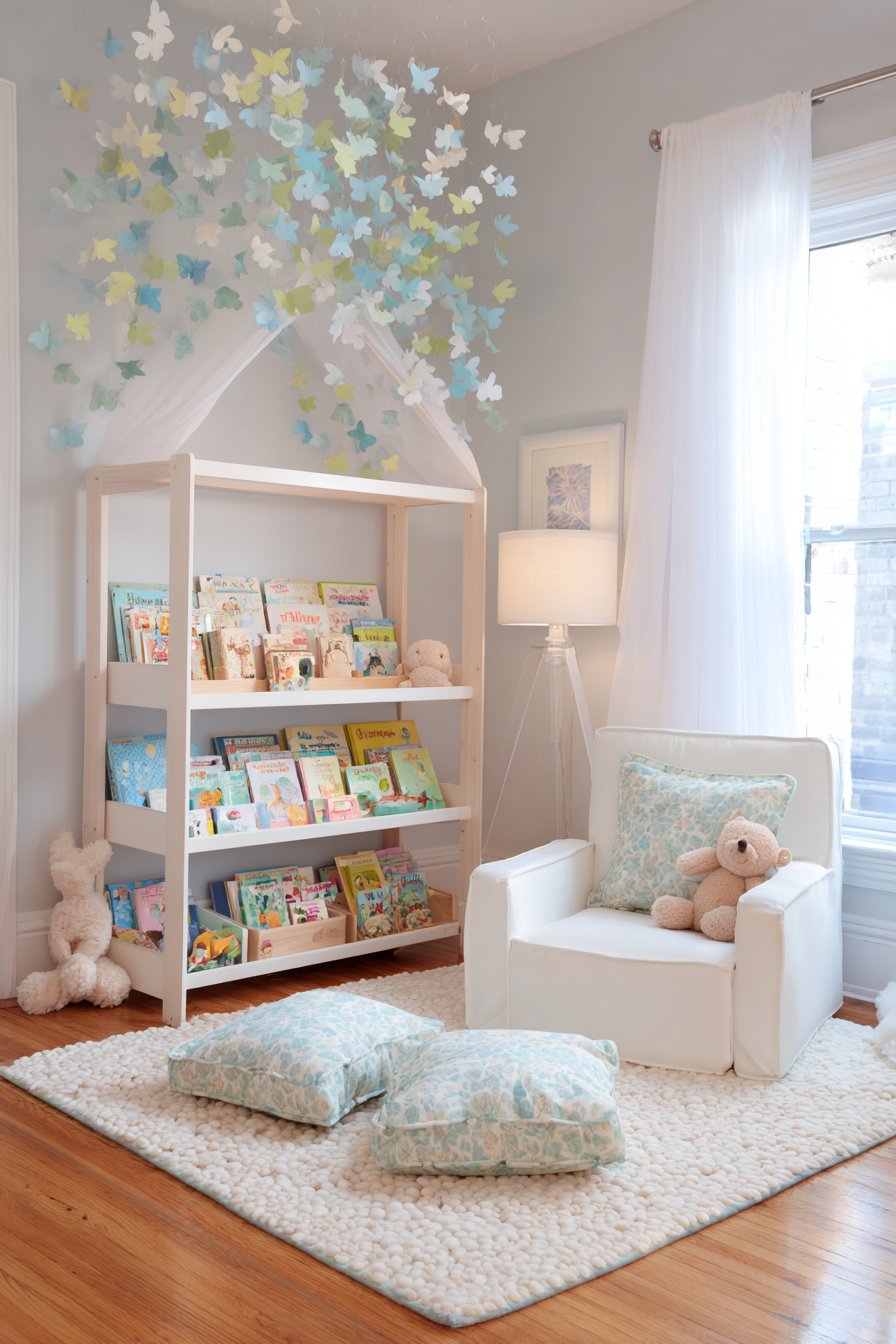
Above the reading nook, a canopy of fabric butterflies suspends from the ceiling. Nearly invisible fishing line creates the illusion of butterflies floating mid-flight. The varied sizes add dimension and visual interest to the vertical space. This overhead installation draws the eye upward and makes the room feel more expansive.
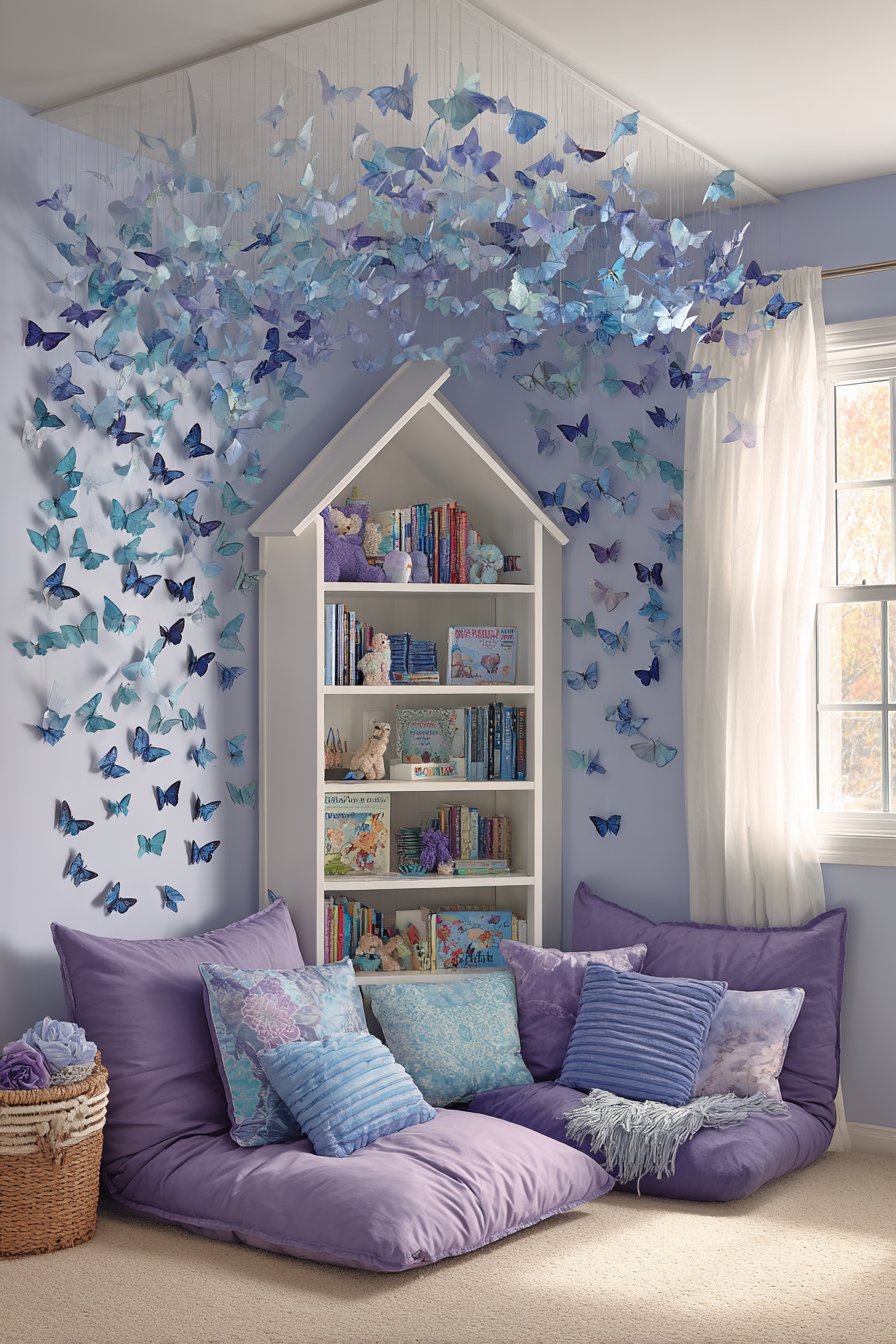
Removable wall decals in gradient blues and greens cover the wall behind the nook. The color transition creates movement suggesting butterflies taking flight toward the sky. Natural window light illuminates this cozy corner throughout the day. The flexible seating arrangement adapts easily as your child grows and develops new reading habits.
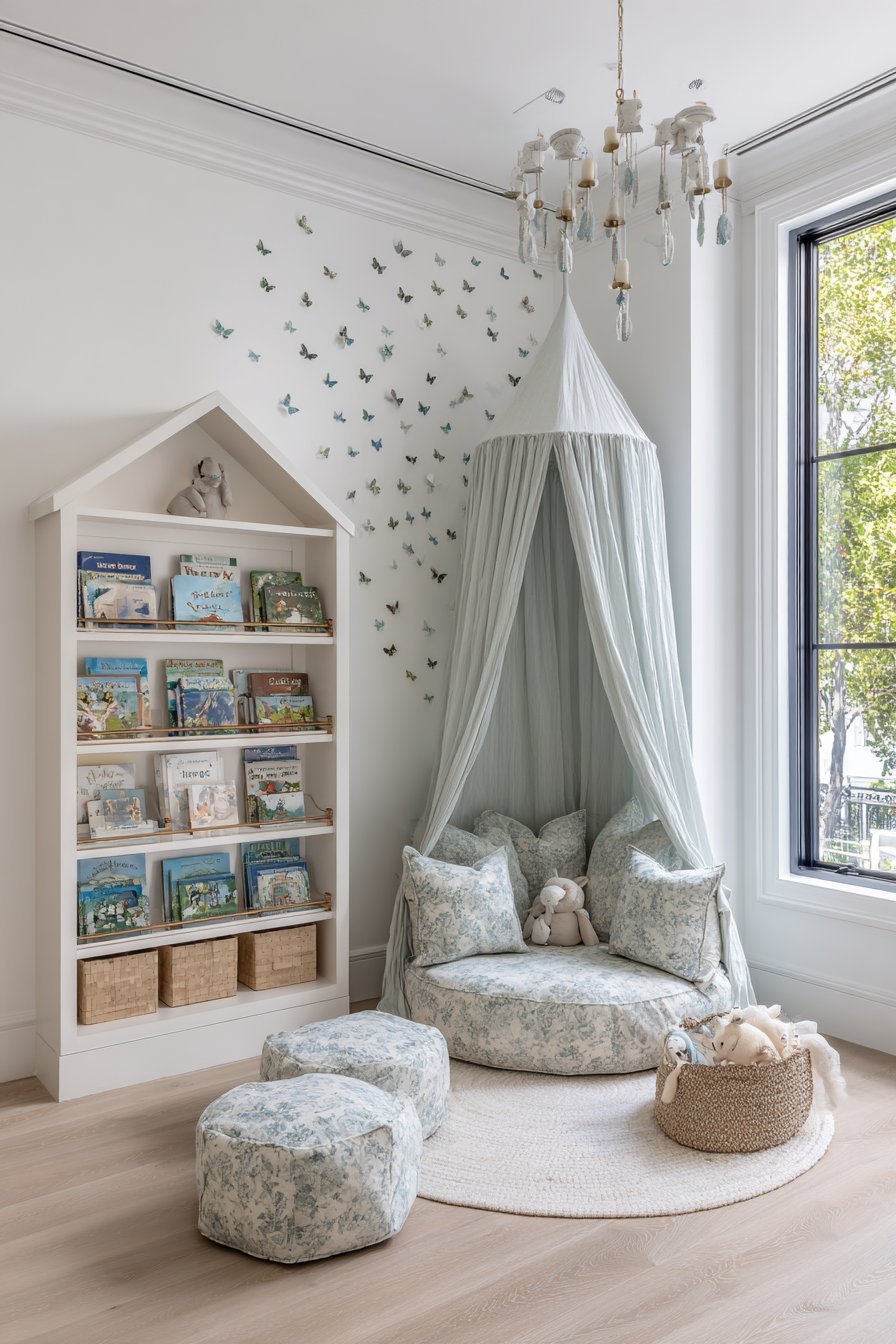
The reading nook design demonstrates thoughtful space planning within the nursery. It establishes a dedicated area for literacy and learning from the earliest days. The butterfly house bookshelf provides both storage and whimsy in equal measure.
Key Design Tips:
- Install ceiling-mounted butterflies using clear fishing line for a floating effect
- Choose removable wall decals for flexibility as design preferences evolve
- Create gradient color schemes that suggest natural movement and direction
- Position the reading nook near natural light sources for comfortable daytime use
- Select floor cushions with removable, washable covers for easy maintenance
3. Practical Changing Station with Organized Storage
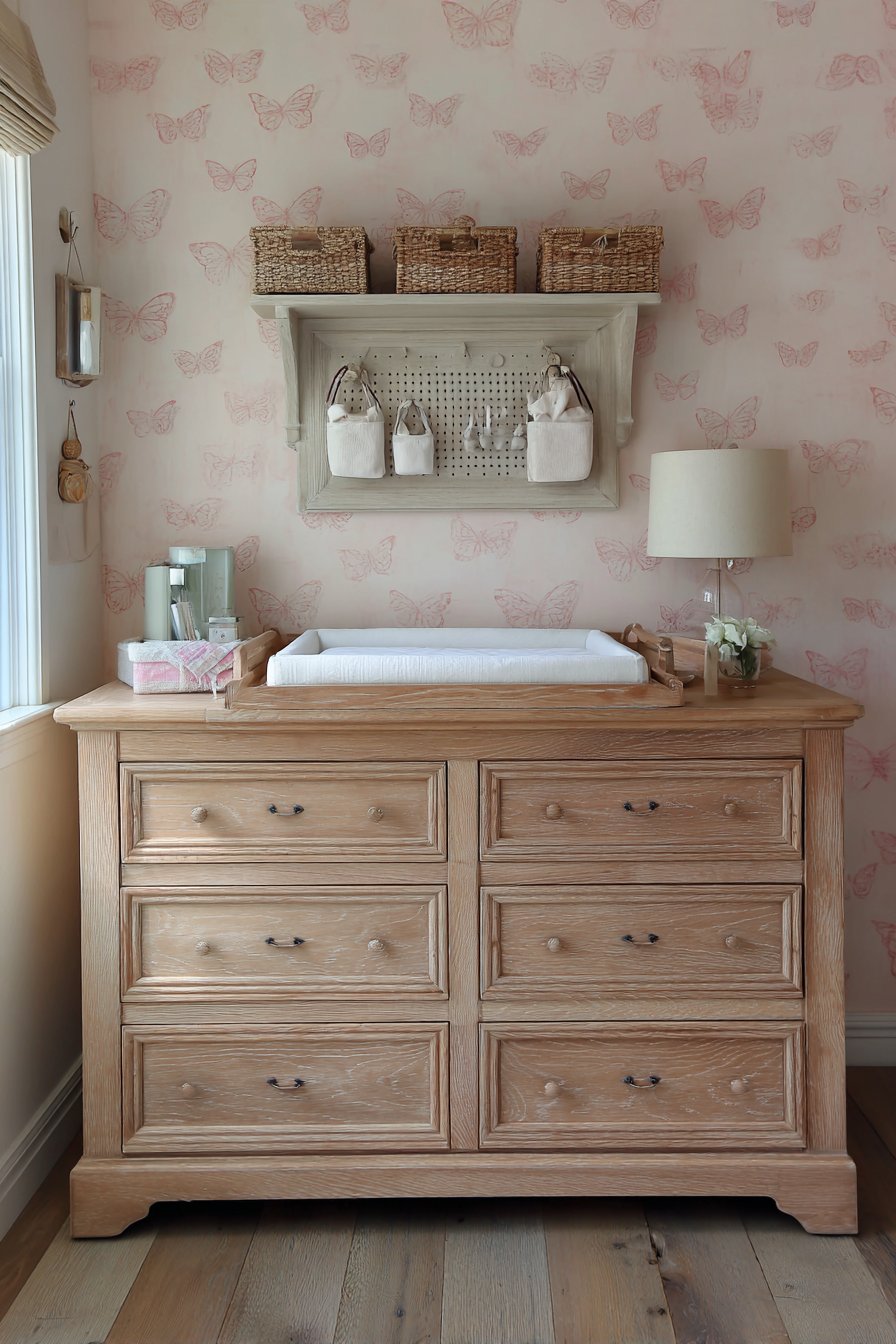
A solid oak dresser serves dual purpose as a changing station and storage solution. The contoured changing pad secures safely on top for diaper changes. Above the dresser, a custom pegboard organizer painted soft white maximizes vertical space. Butterfly-shaped hooks add whimsical function while holding diaper caddies and burp cloths.
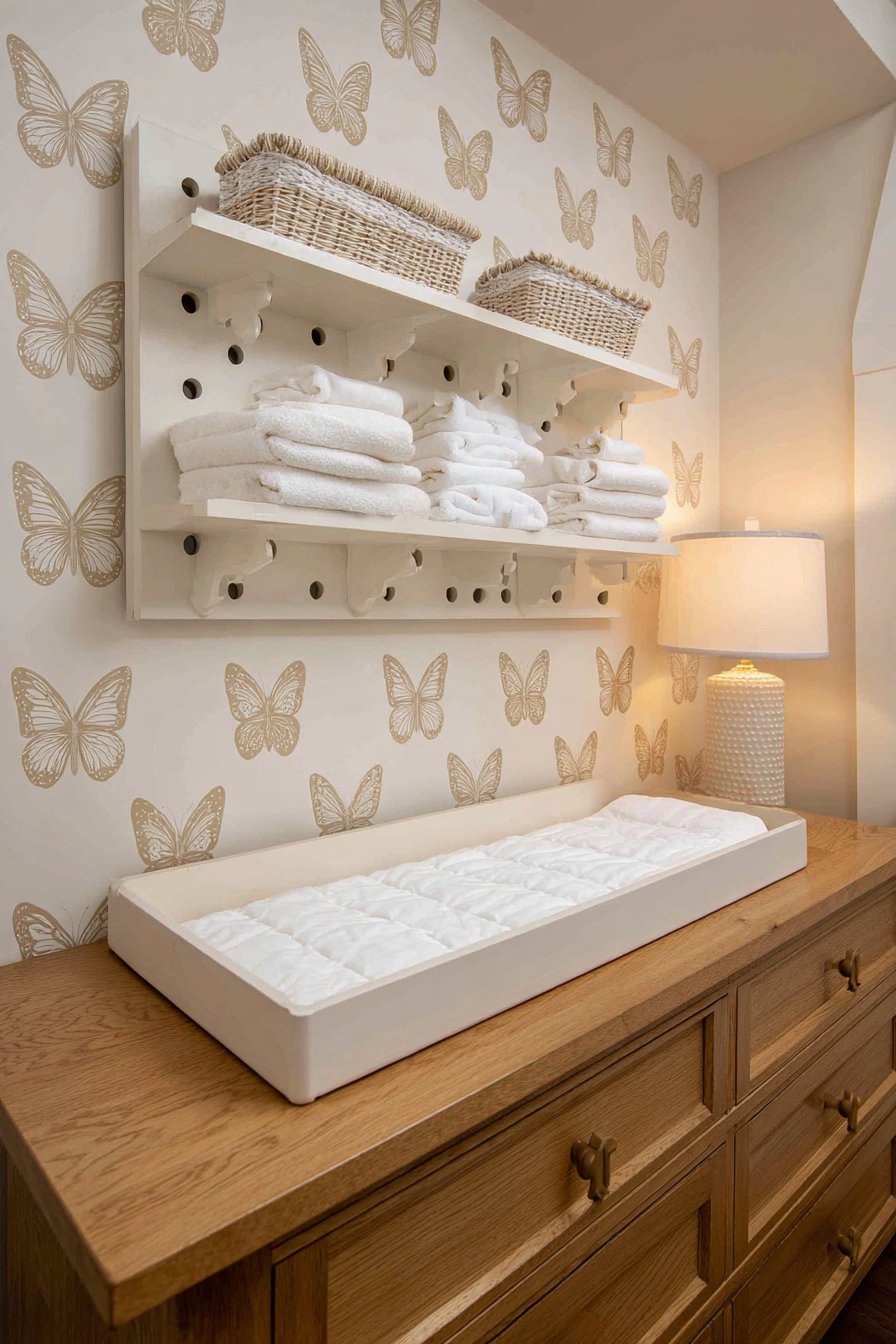
Subtle butterfly wallpaper in muted cream and pale pink covers the wall behind. The pattern provides visual interest without overwhelming the functional space. Small storage baskets hang from the pegboard hooks keeping essentials within arm’s reach. This organizational system makes nighttime changes efficient when you’re operating on minimal sleep.
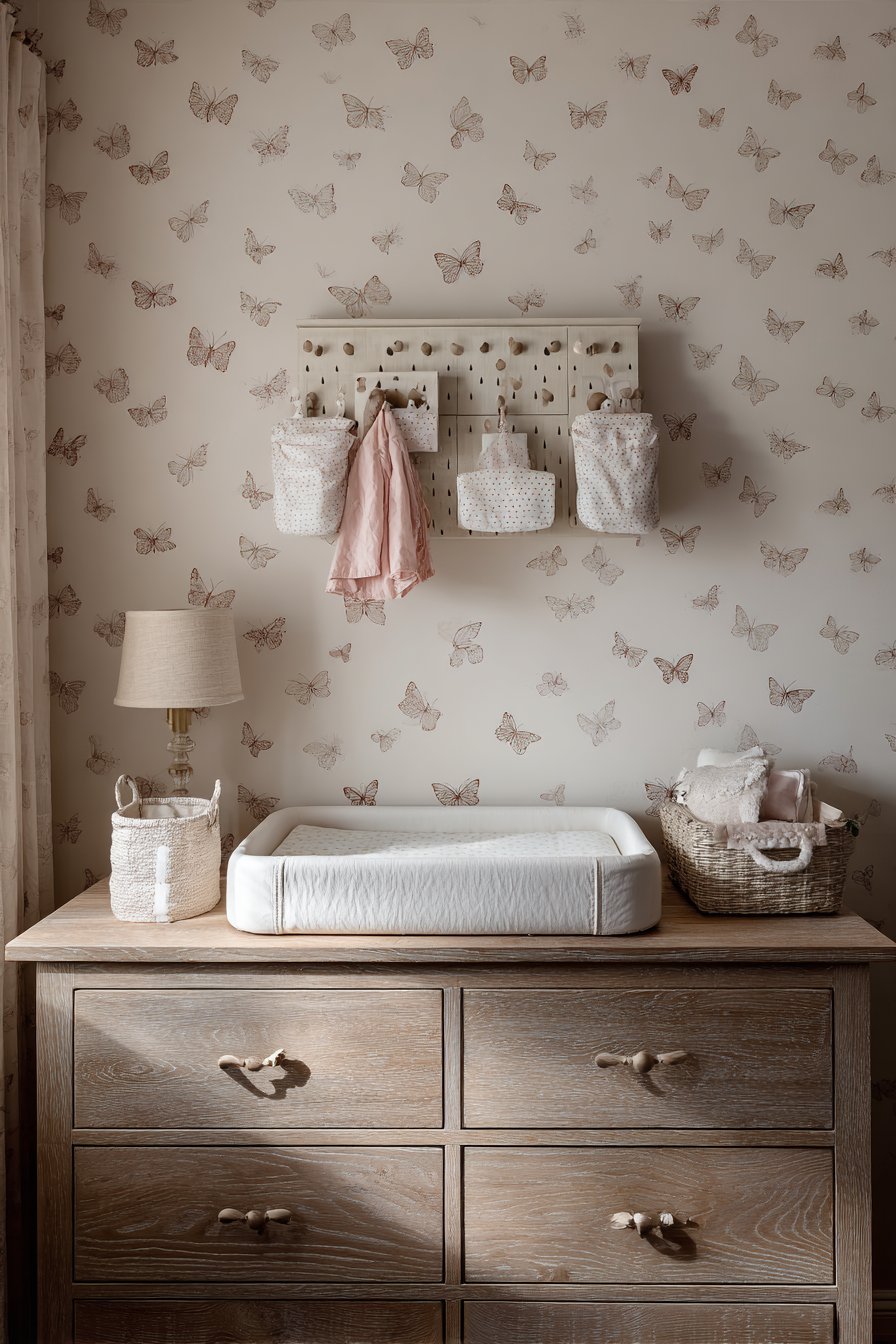
A small table lamp with linen shade provides focused task lighting. The warm glow helps preserve baby’s drowsiness during nighttime diaper changes. The dresser’s solid construction ensures stability and longevity beyond the diaper years. Quality furniture investment pays dividends as the changing station transitions to regular bedroom dresser.
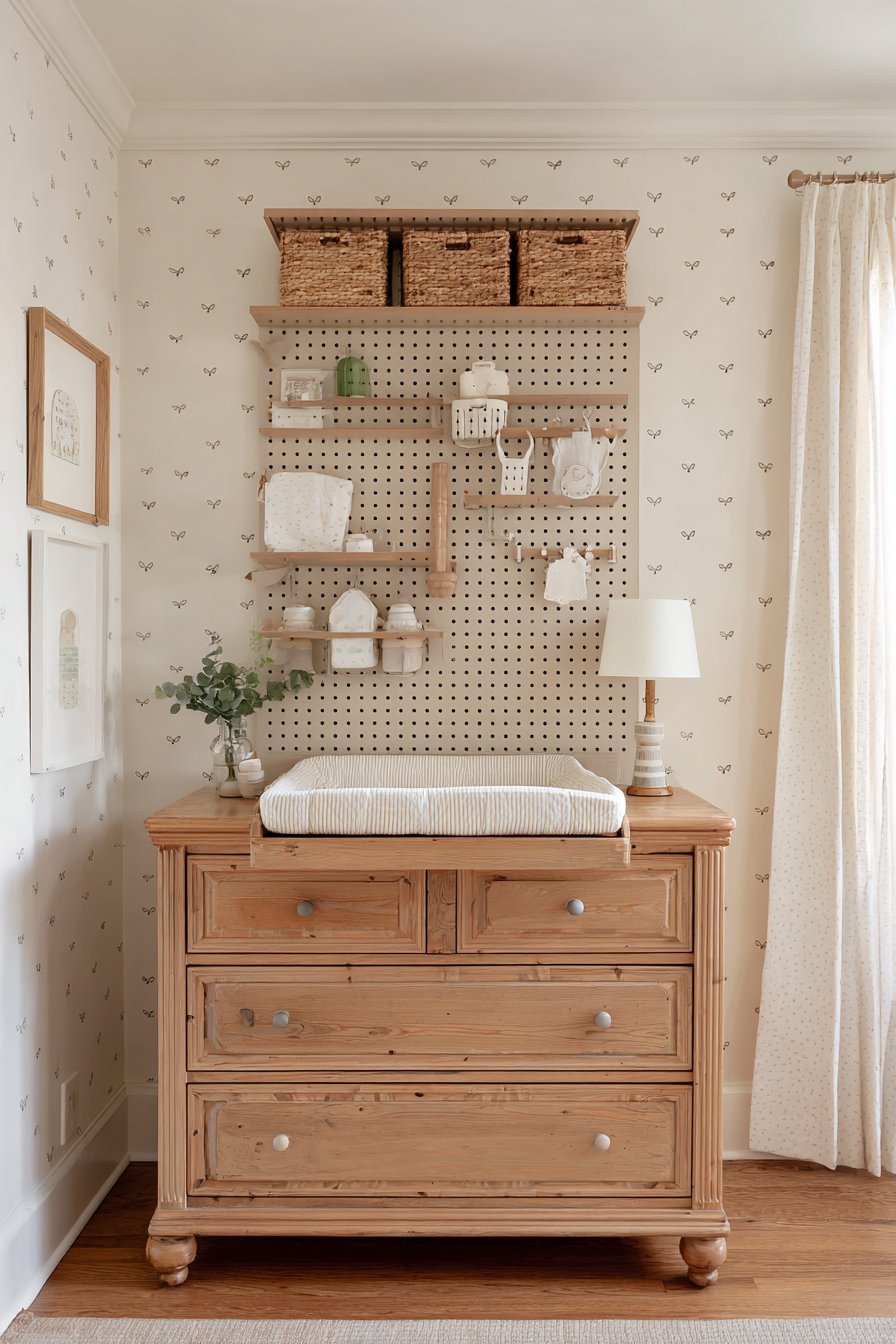
The organized approach to this essential nursery zone reduces stress during those early months. Everything has a designated place making supplies easy to locate quickly. The butterfly theme integrates naturally through wallpaper and decorative hooks rather than overwhelming the practical space.
Key Design Tips:
- Install pegboard organizers for flexible, reconfigurable storage as needs change
- Choose solid wood furniture that withstands years of use and transitions
- Use task lighting specifically designed for nighttime diaper changes
- Select subtle patterns for high-traffic functional areas to avoid visual fatigue
- Position changing supplies within easy one-handed reach for safety
4. Handcrafted Mobile as Artistic Centerpiece
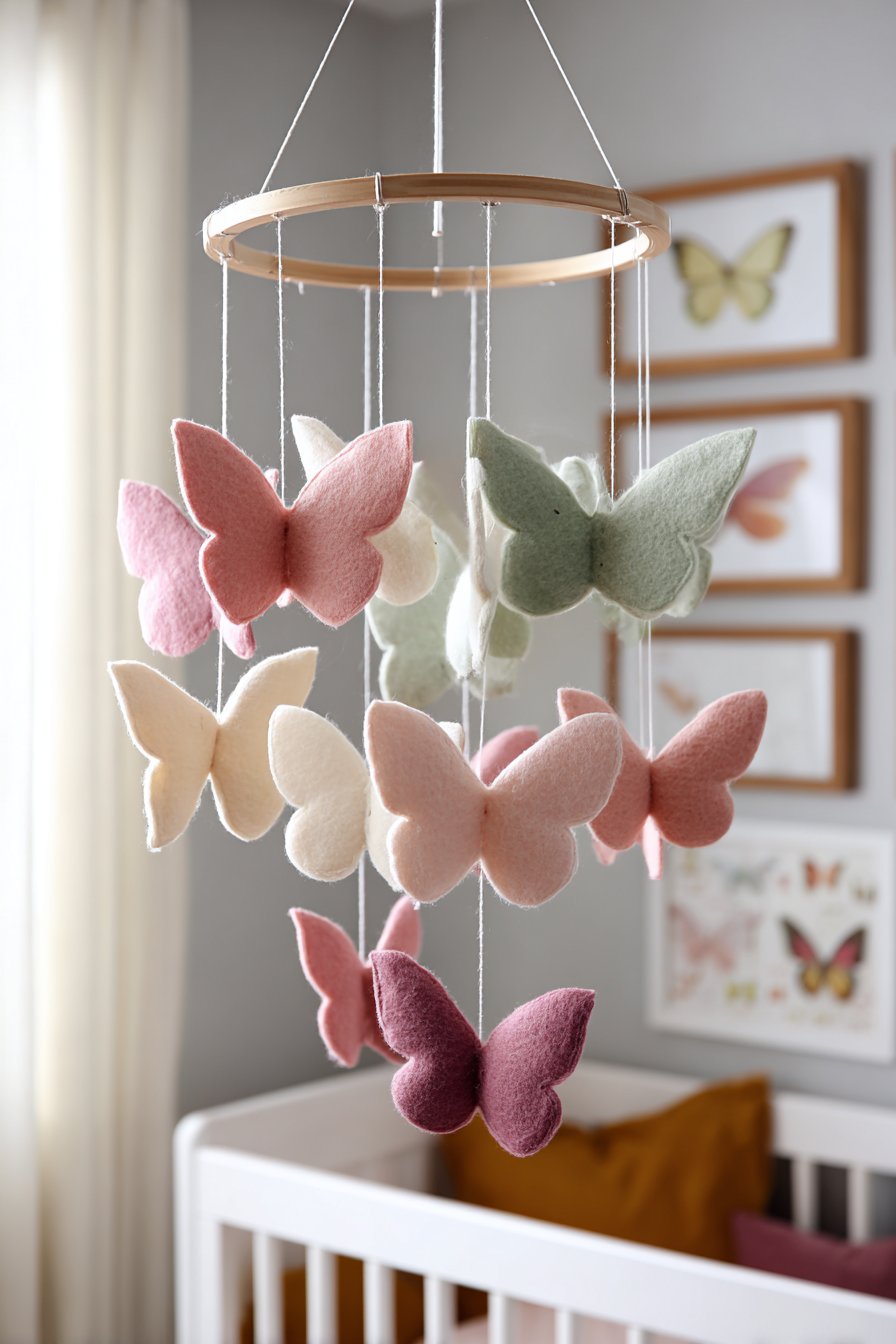
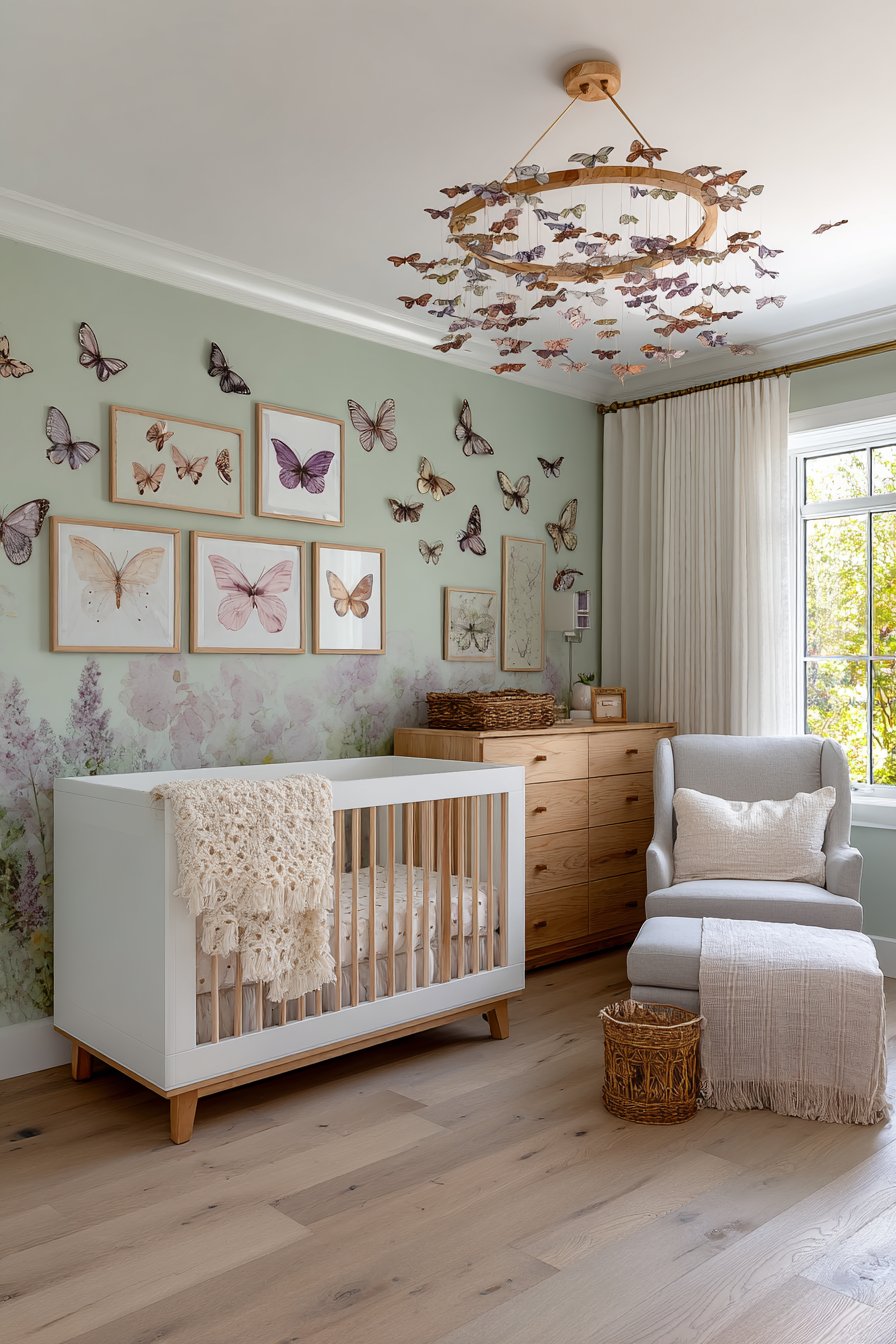
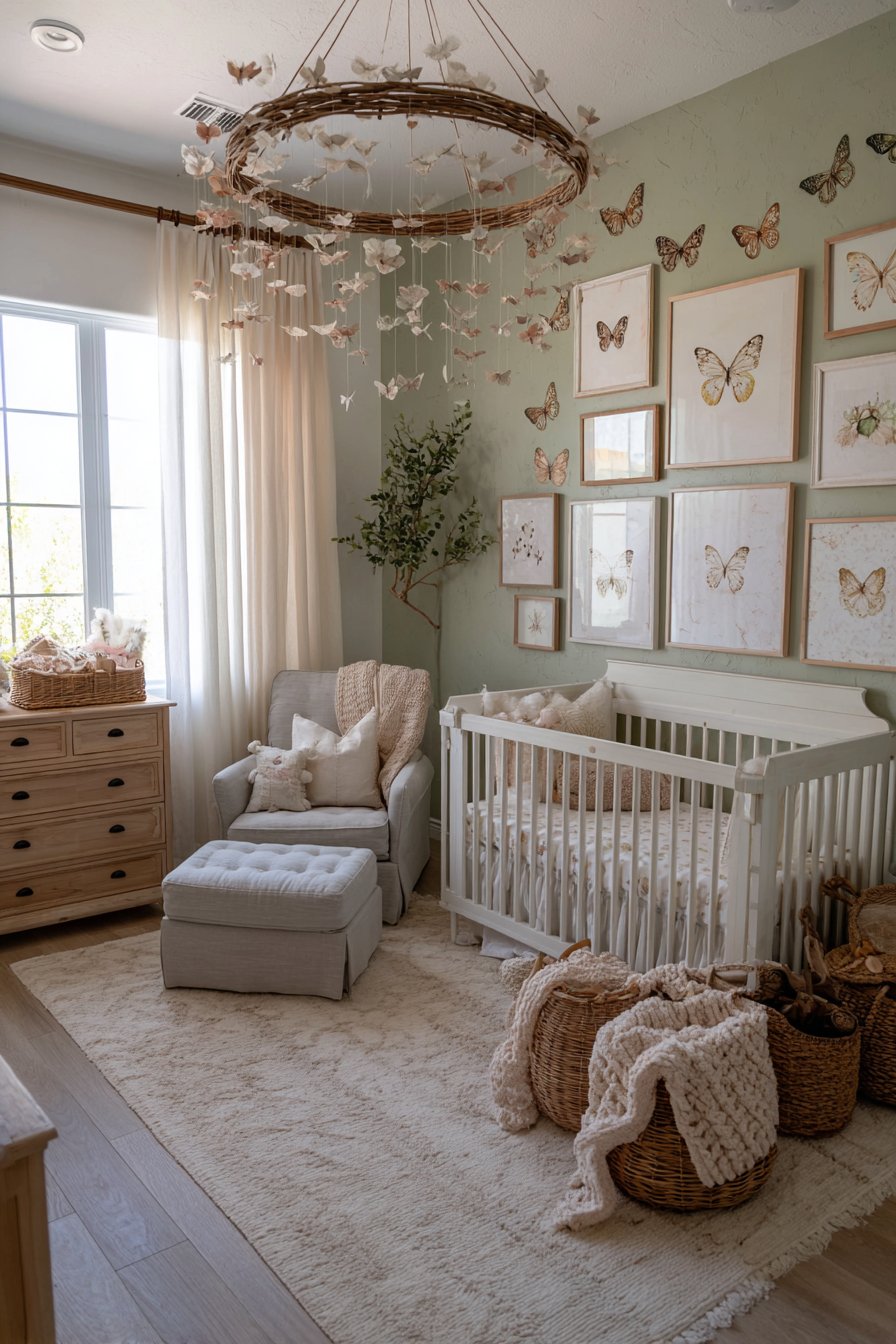
A stunning mobile captures attention above the modern white crib. Handcrafted felt butterflies in various sizes create visual movement and dimension. Dusty rose, mint green, and warm ivory butterflies suspend from natural wood circular frame. The creatures float at different heights mimicking natural flight patterns.
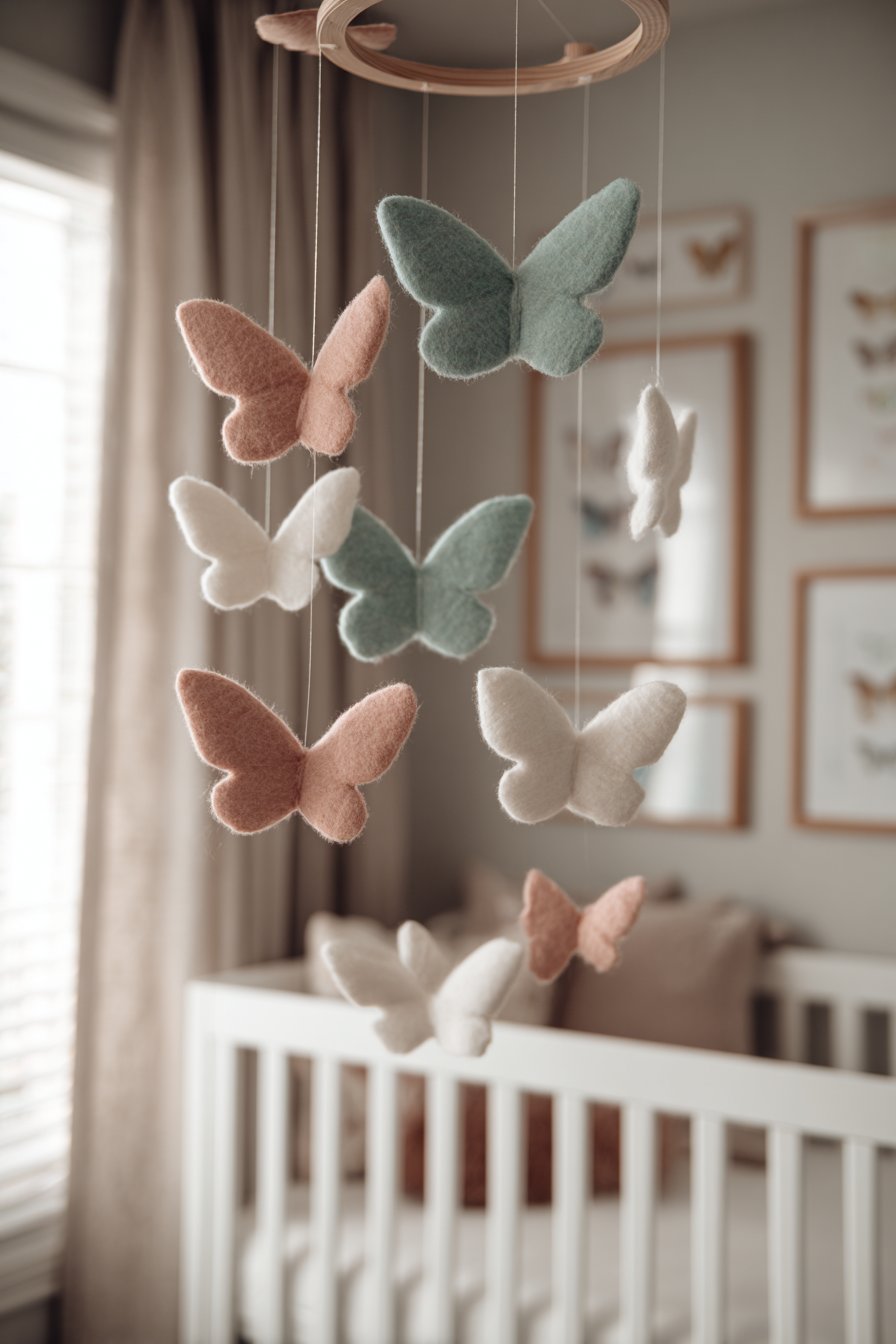
The surrounding walls feature a carefully curated gallery arrangement. Framed butterfly prints in simple white matting and light wood frames create cohesive display. The artwork ranges from vintage scientific illustrations to modern graphic interpretations. This mix brings depth and sophistication to the nursery aesthetic.
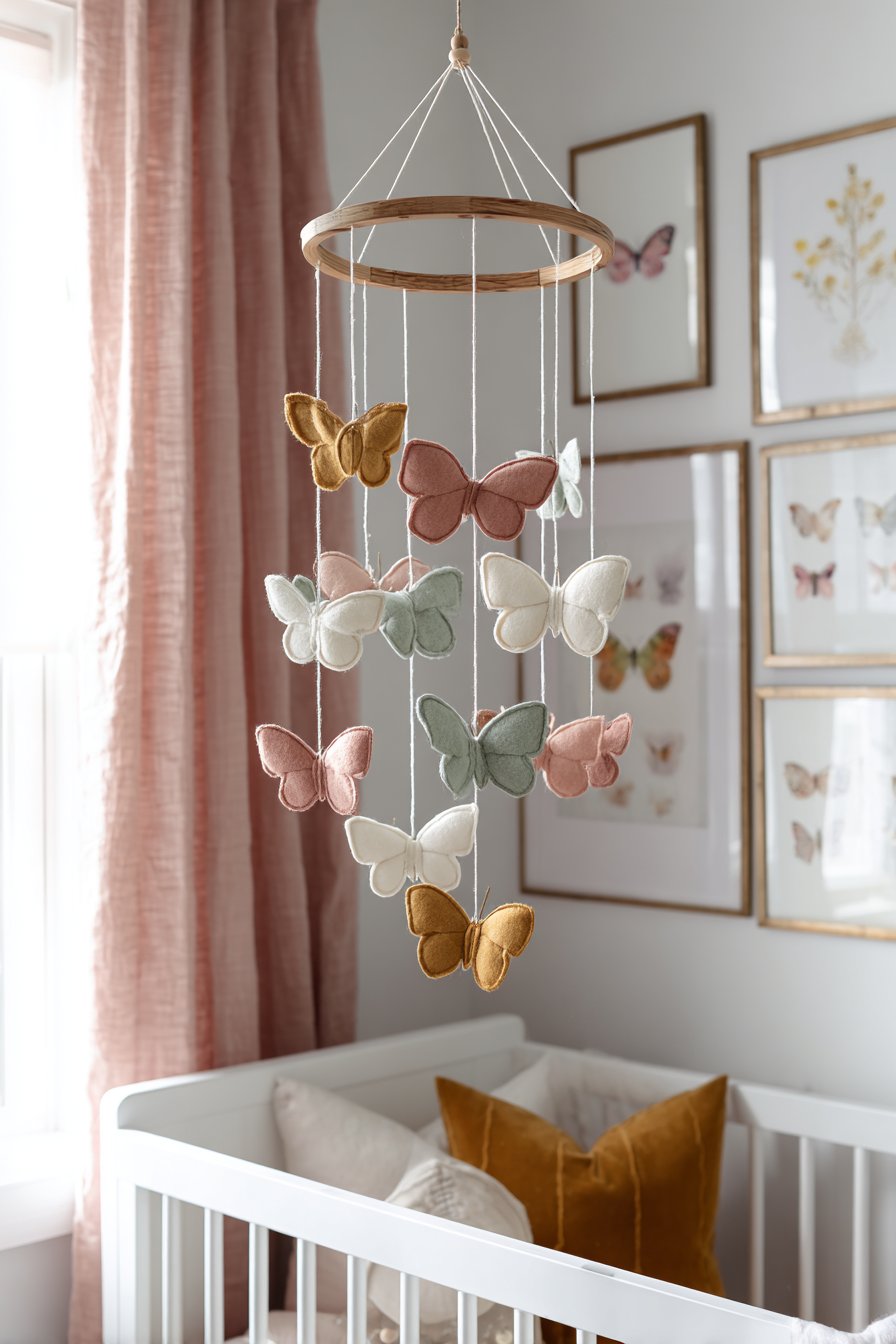
Soft afternoon light filters through semi-sheer curtains casting gentle shadows. The mobile rotates slowly in the air current creating mesmerizing movement for baby. The handcrafted quality of each felt butterfly adds warmth that mass-produced items cannot match. Parents and baby both benefit from gazing at this beautiful focal point.
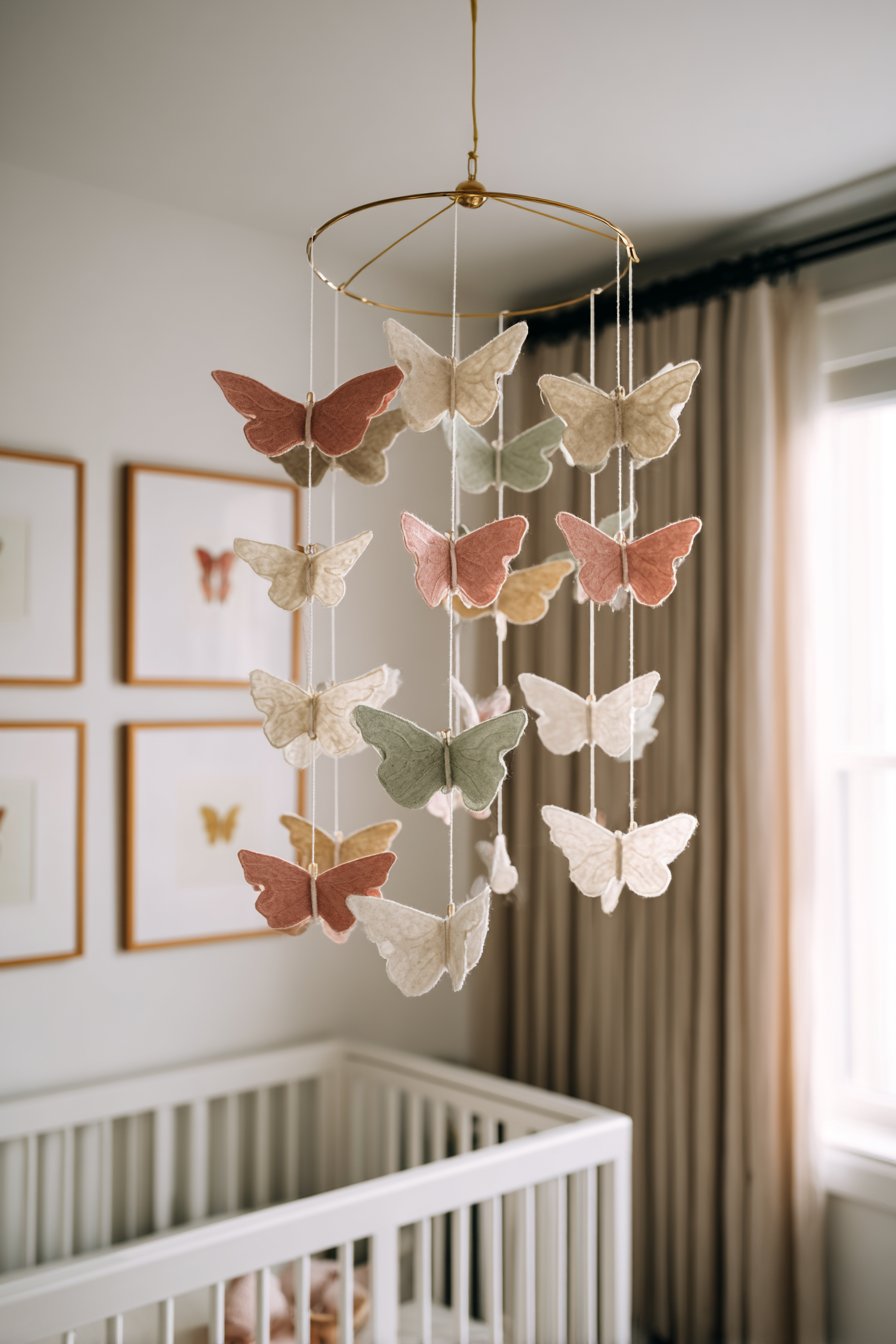
The natural materials reflect a commitment to sustainable design choices. Wood and felt age gracefully and can be preserved as keepsakes. The mobile becomes both functional entertainment and artistic installation worth admiring.
Key Design Tips:
- Create or commission handcrafted mobiles for unique, one-of-a-kind nursery art
- Vary butterfly sizes and heights for dimensional interest and natural appearance
- Choose natural materials like wood and felt over plastic alternatives
- Curate gallery walls with mixed frame styles for sophisticated visual interest
- Position mobiles securely following safety guidelines for proper clearance above crib
5. Three-Dimensional Statement Wall with Ombre Effect
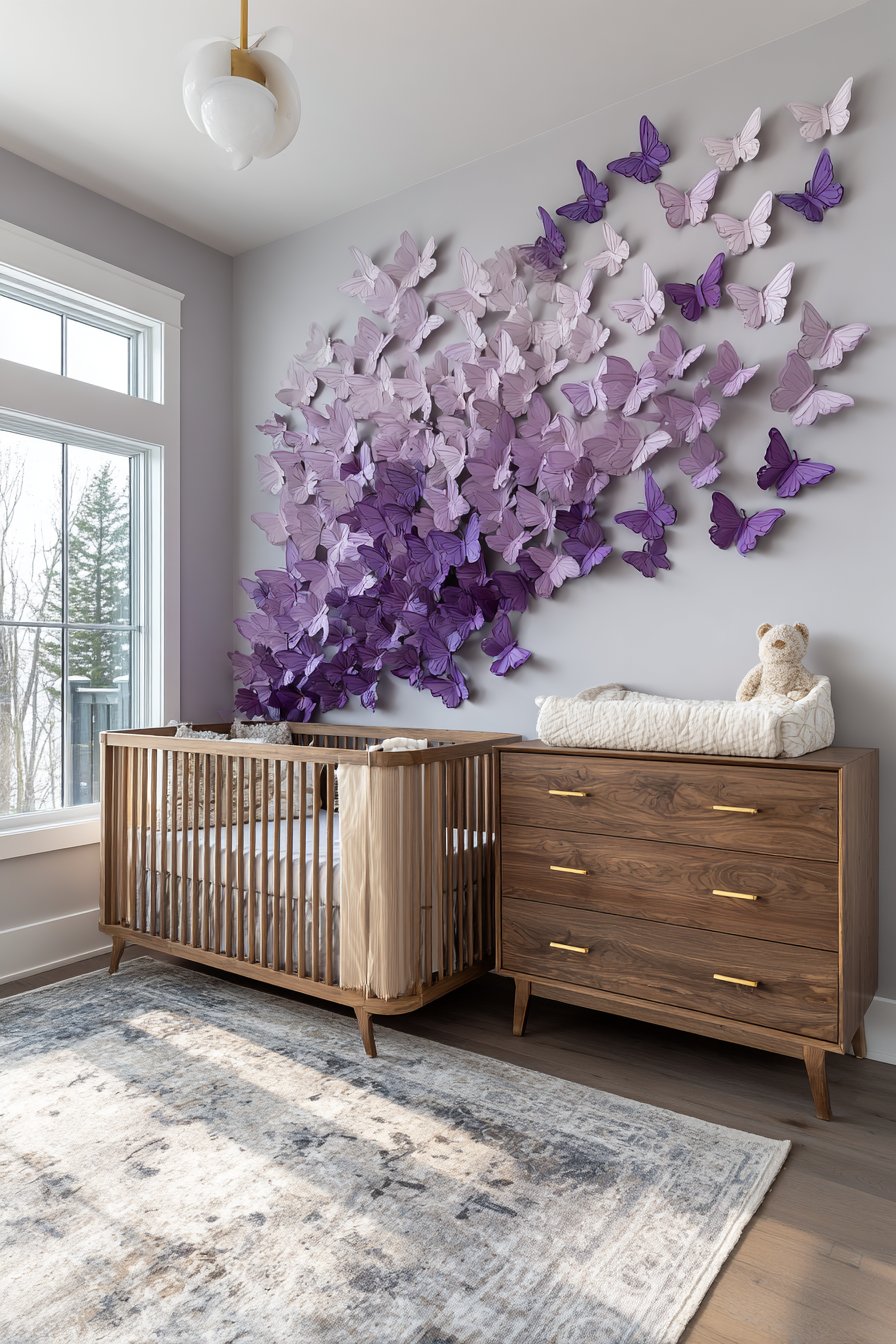
A dramatic statement wall features three-dimensional paper butterflies in ombre arrangement. The color transitions from deep purple at the bottom to pale lavender at top. The butterflies appear to emerge from the wall surface creating sculptural interest. This bold design choice transforms a flat surface into dynamic focal point.
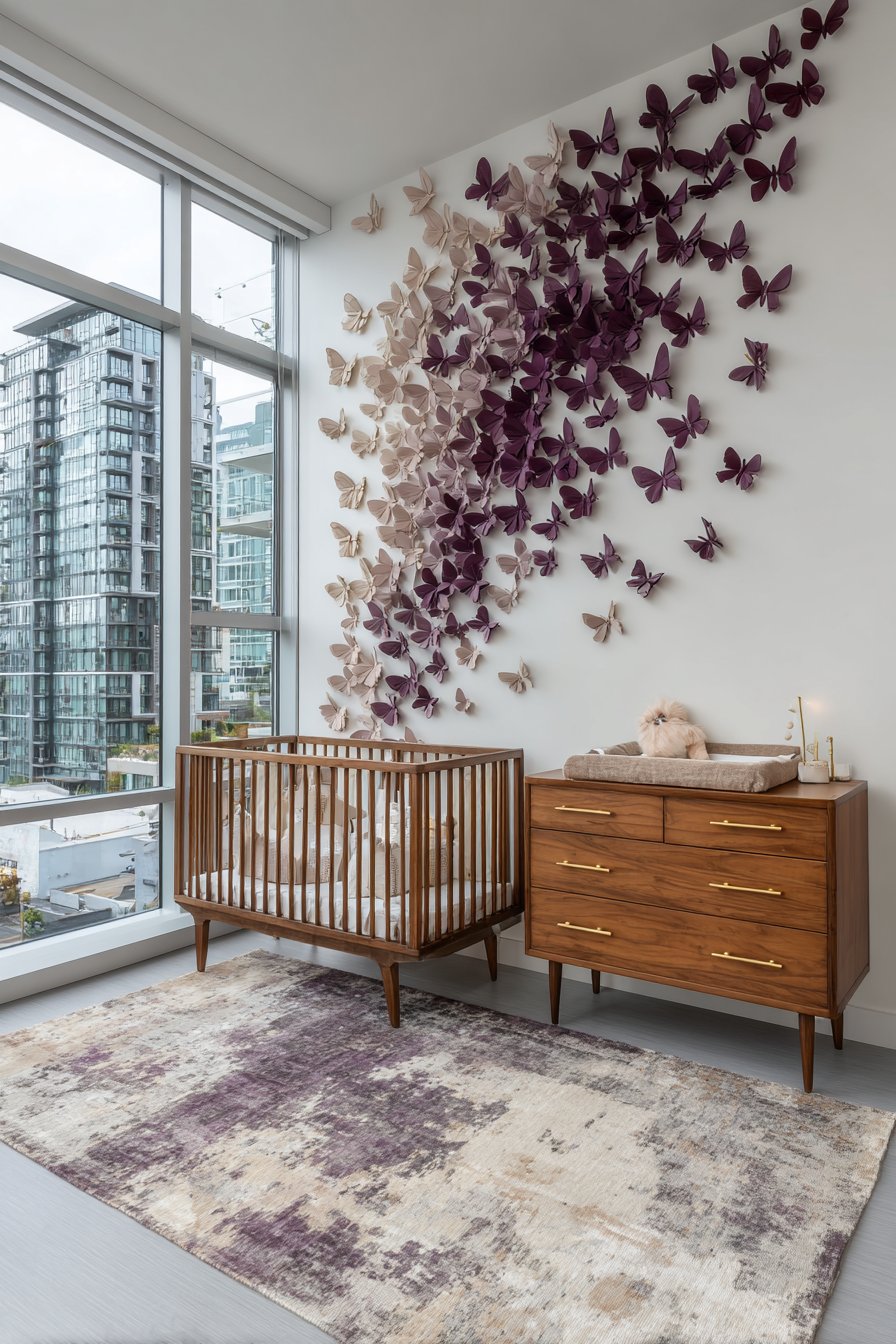
A mid-century modern style crib in natural walnut wood sits against the adjacent wall. The warm wood tone complements the purple color palette beautifully. A matching dresser with brass drawer pulls provides cohesive furniture coordination. The clean lines of mid-century design balance the organic butterfly forms.
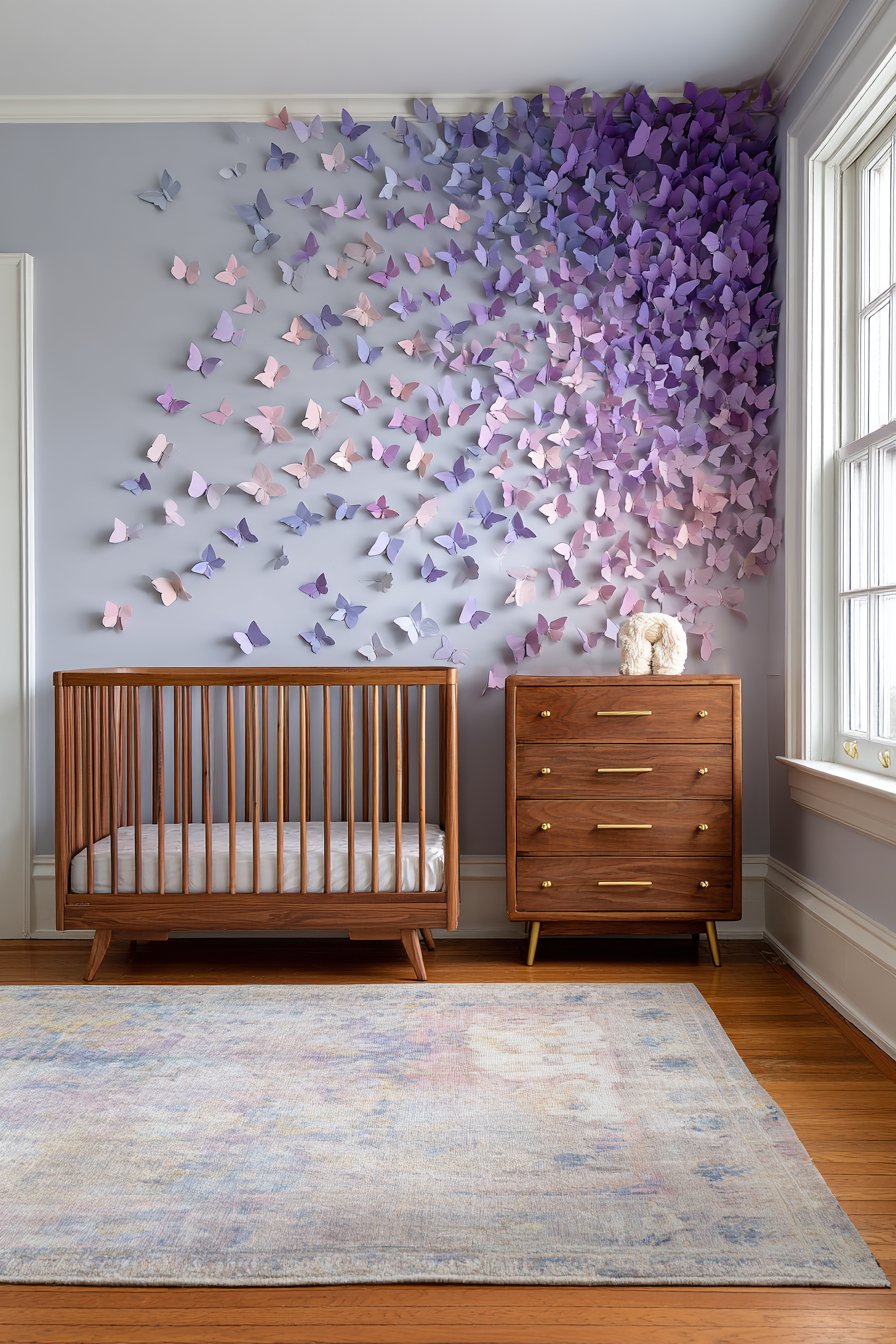
A vintage-inspired area rug with faded butterfly pattern grounds the space in soft greys and creams. The subtle pattern adds another layer without competing with the statement wall. Natural light from large window highlights the dimensional quality of paper butterflies. The shadows cast throughout the day create ever-changing visual display.
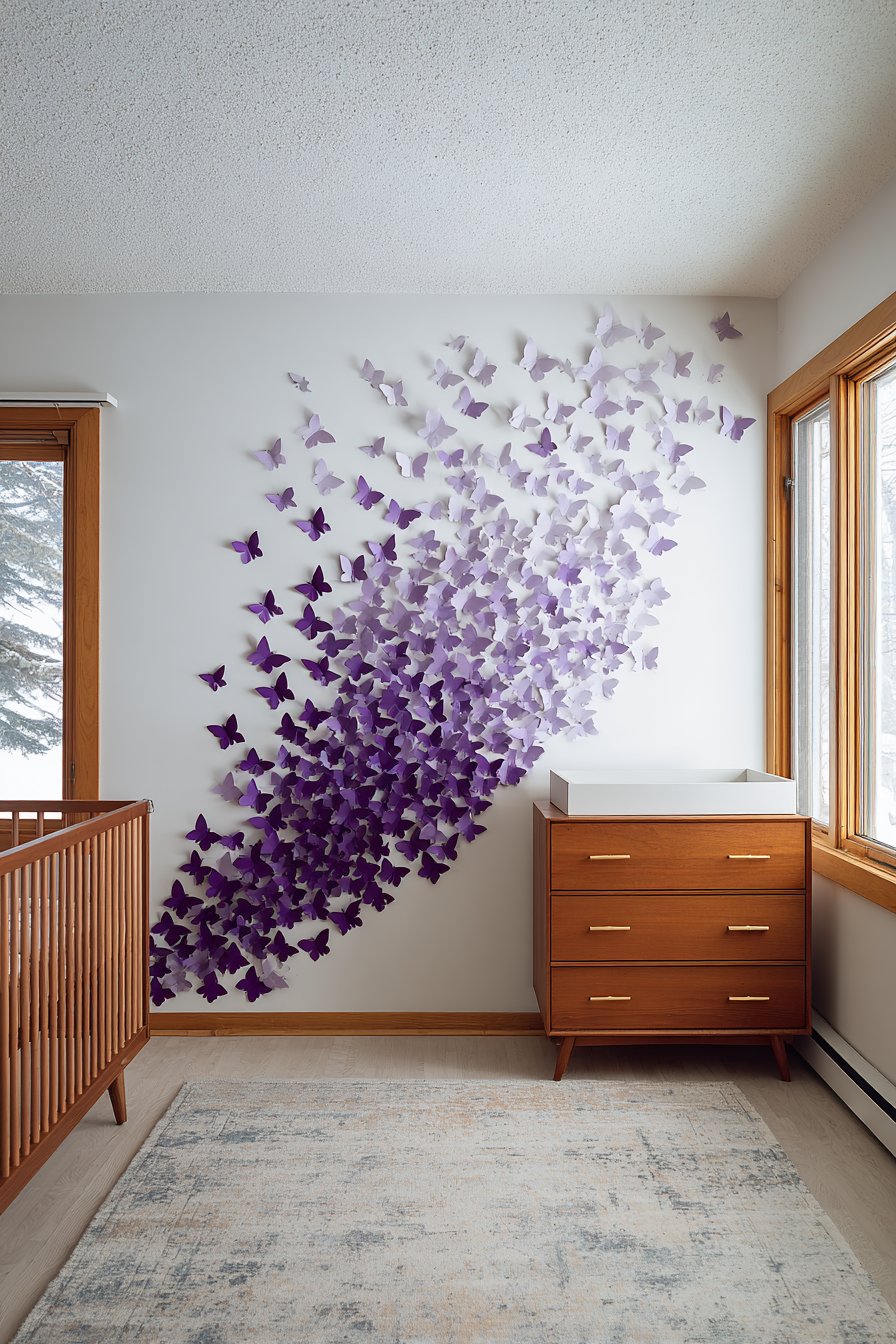
The three-dimensional approach demonstrates how simple paper crafting creates impressive results. This technique works well for DIY enthusiasts willing to invest time. The ombre effect adds sophistication that elevates the butterfly theme beyond juvenile decoration.
Key Design Tips:
- Create ombre color transitions for sophisticated, gallery-worthy butterfly installations
- Use three-dimensional elements to add texture and shadows on flat walls
- Balance bold statement walls with simpler furniture in complementary wood tones
- Choose vintage-inspired rugs to add character without overwhelming pattern competition
- Position statement walls where natural light enhances dimensional effects throughout day
6. Gender-Neutral Nature-Inspired Haven
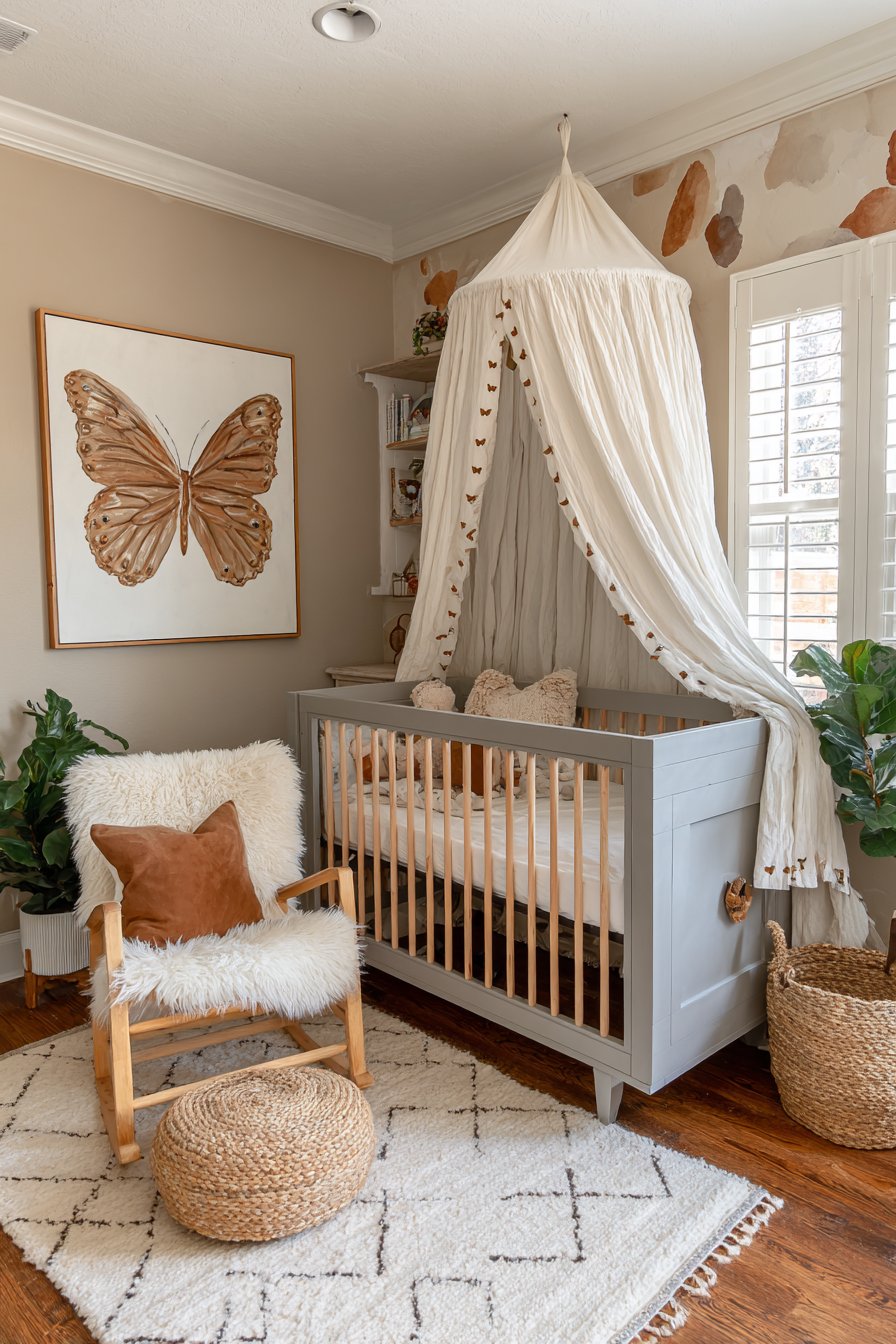
Warm greige walls create a sophisticated neutral backdrop for this gender-neutral nursery. A soft grey convertible crib features a flowing white muslin canopy. Small embroidered butterflies edge the fabric adding delicate detail. The canopy creates a cozy cocoon feeling while maintaining airflow around the sleeping area.
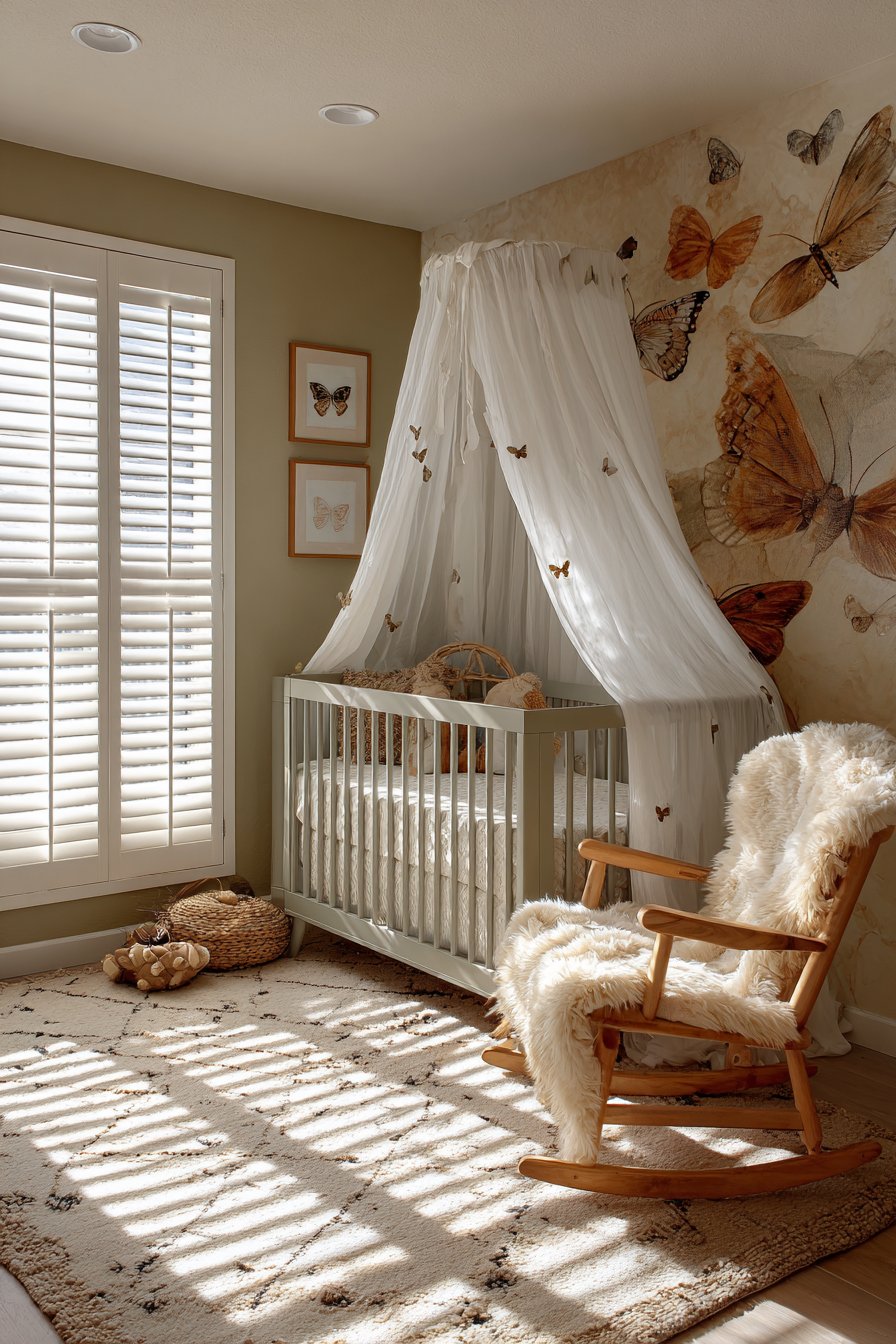
A single accent wall showcases a large-scale watercolor butterfly mural. Earthy tones of terracotta, sage, and cream create a nature-inspired color story. The oversized scale makes a bold statement while the watercolor technique keeps it soft. This approach demonstrates how butterfly themes work beautifully in gender-neutral palettes.
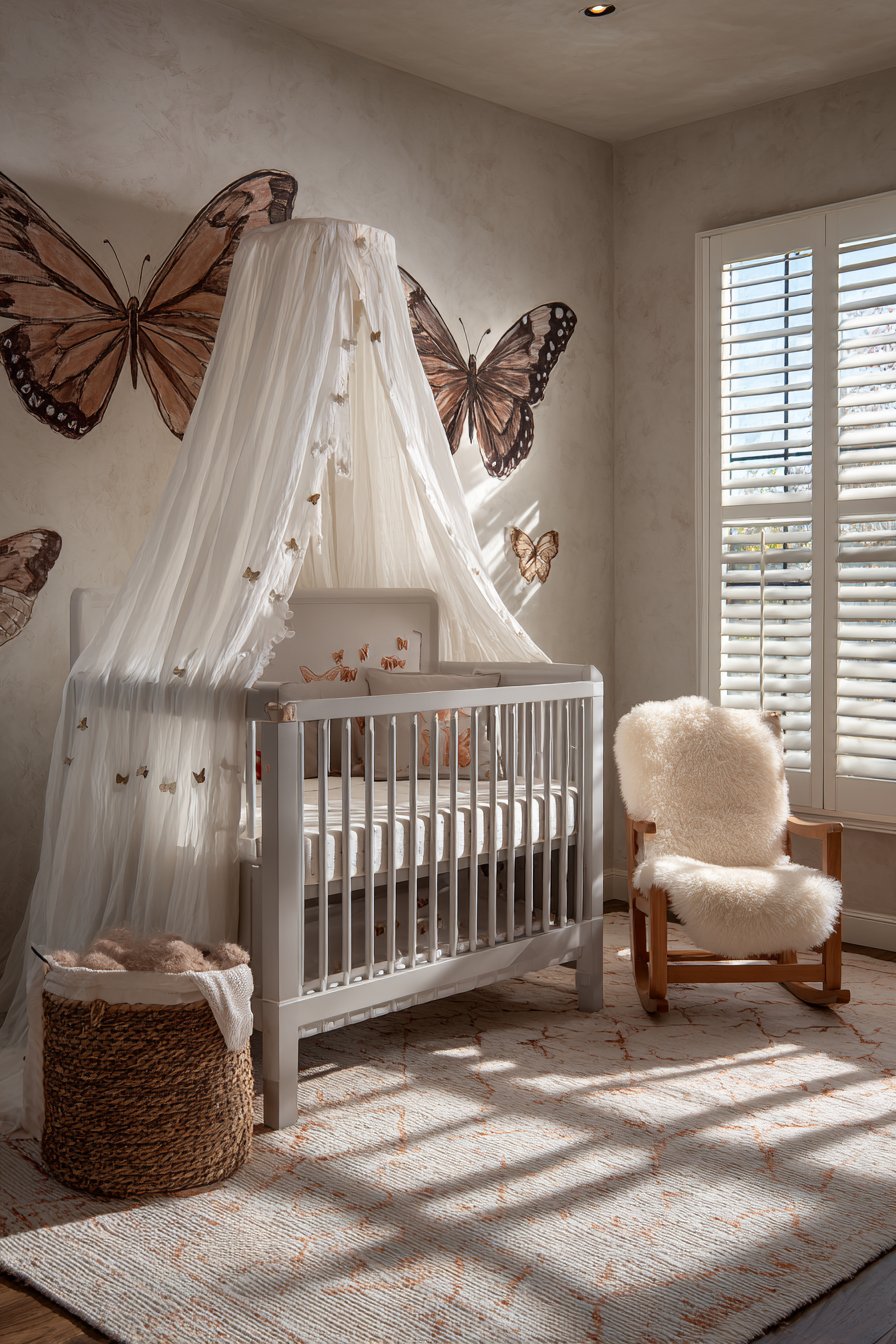
A jute area rug with subtle geometric pattern provides textural contrast underfoot. Natural wood rocking chair with sheepskin throw creates an inviting feeding corner. Morning light streams through plantation shutters creating linear shadows across surfaces. The natural materials throughout the space age gracefully and appeal across design preferences.
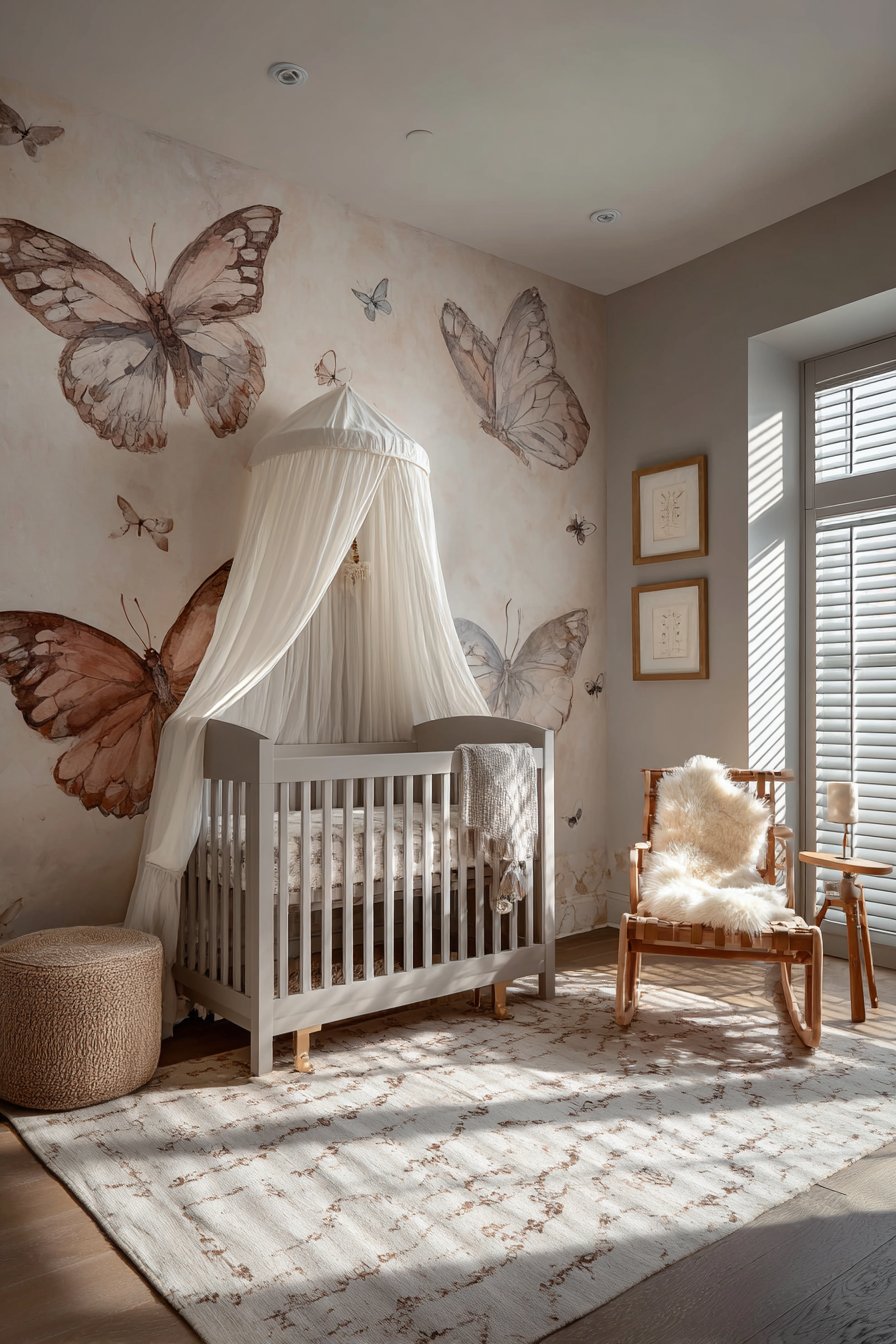
The gender-neutral approach focuses on quality natural materials and earthy tones. This design philosophy creates longevity and versatility for future siblings. The butterfly mural becomes statement art rather than stereotypically feminine decoration.
Key Design Tips:
- Choose warm greige and earthy tones for sophisticated gender-neutral color palettes
- Use natural materials like jute, wood, and sheepskin for timeless appeal
- Scale butterfly artwork large for bold impact with watercolor softness
- Install canopies with proper ventilation and safety considerations in mind
- Select plantation shutters for light control and classic architectural detail
7. Organized Closet System with Themed Details
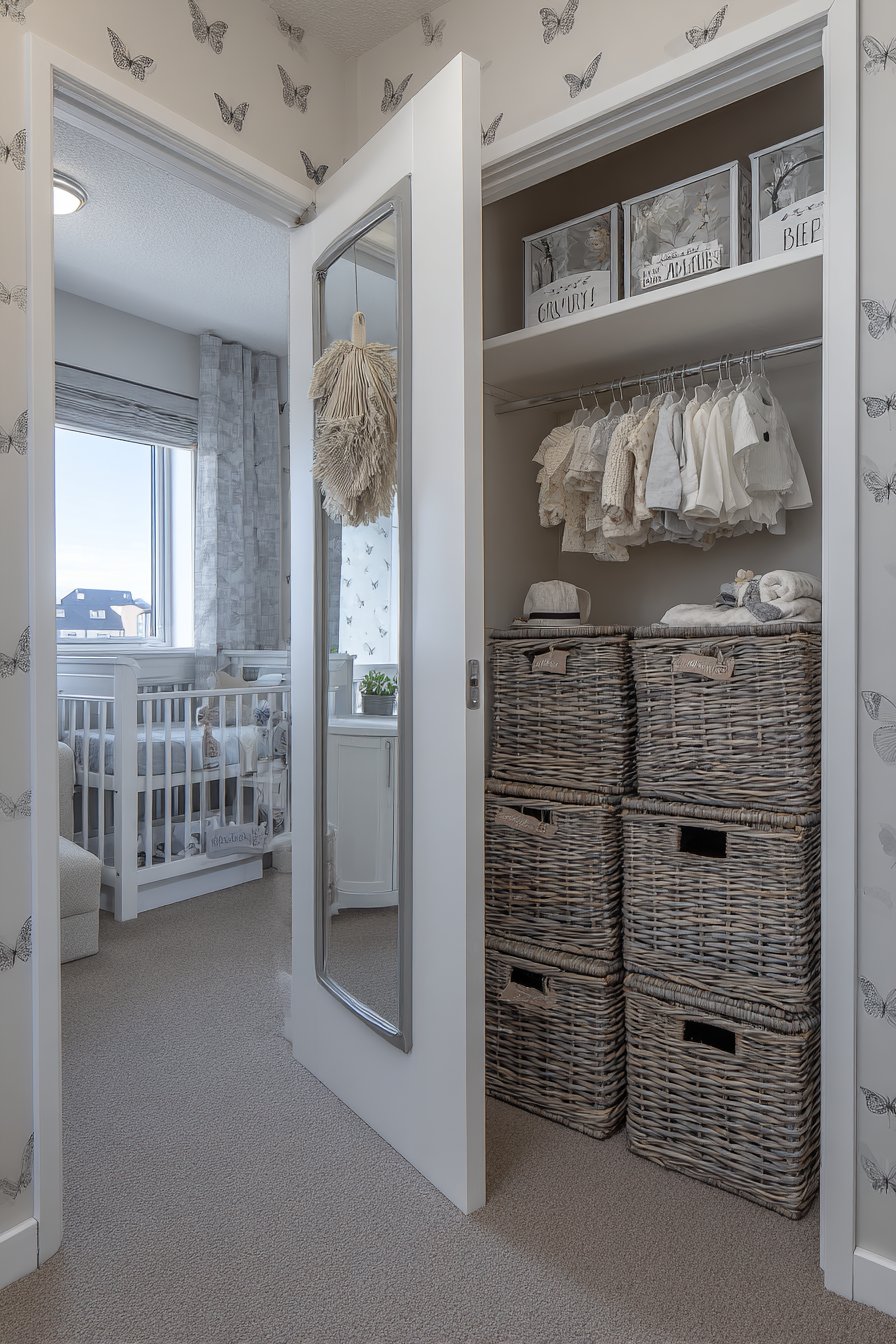
A custom closet organization system maximizes storage while maintaining design cohesion. Open cubbies display wicker baskets labeled with hand-painted butterfly tags. The organization makes finding items quick during hectic morning routines. Inside the visible closet, a hanging organizer shows neatly arranged baby clothes.
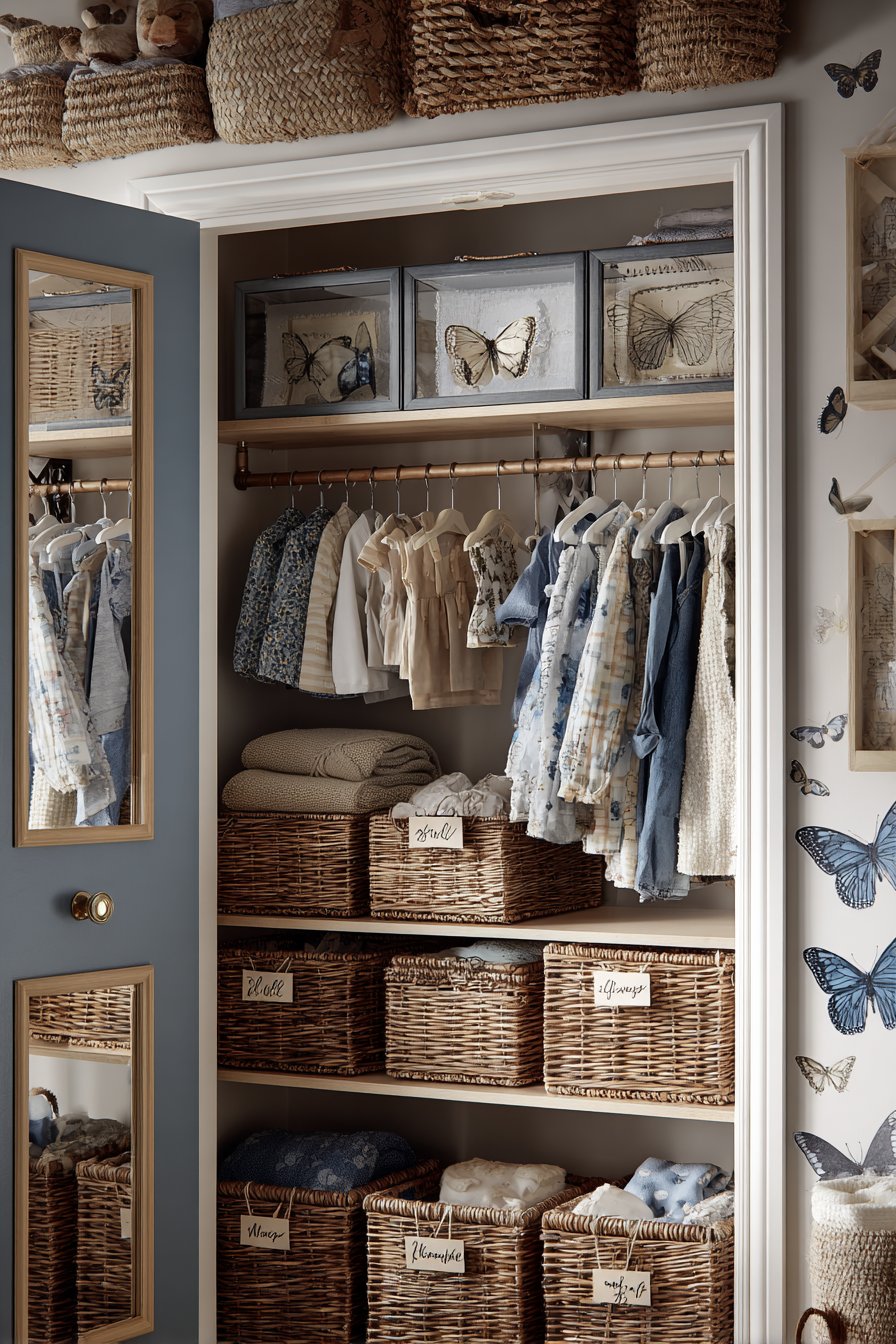
The top shelf displays decorative butterfly specimen boxes in shadow frames. These scientific-inspired pieces add sophistication to the organizational space. The closet door features a full-length mirror with butterfly decals at corners. The mirror reflects light brightening the nursery while serving practical dressing functions.
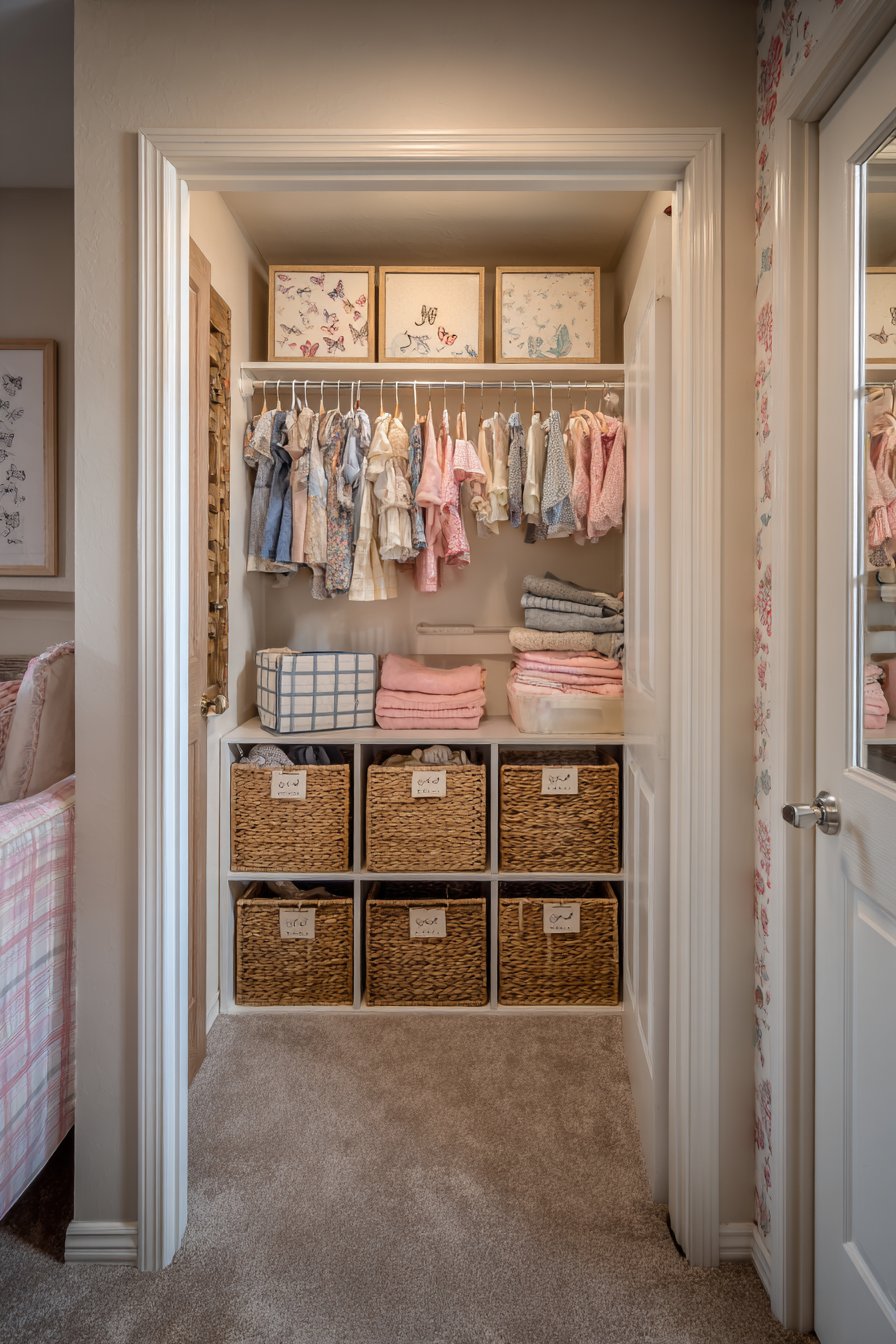
Adjacent walls show portions of a butterfly-themed growth chart tracking developmental milestones. Natural light reflects off the mirror multiplying the illumination throughout the room. The storage solution proves that functional spaces deserve thoughtful design attention. Every element contributes to the cohesive butterfly narrative while serving practical purposes.
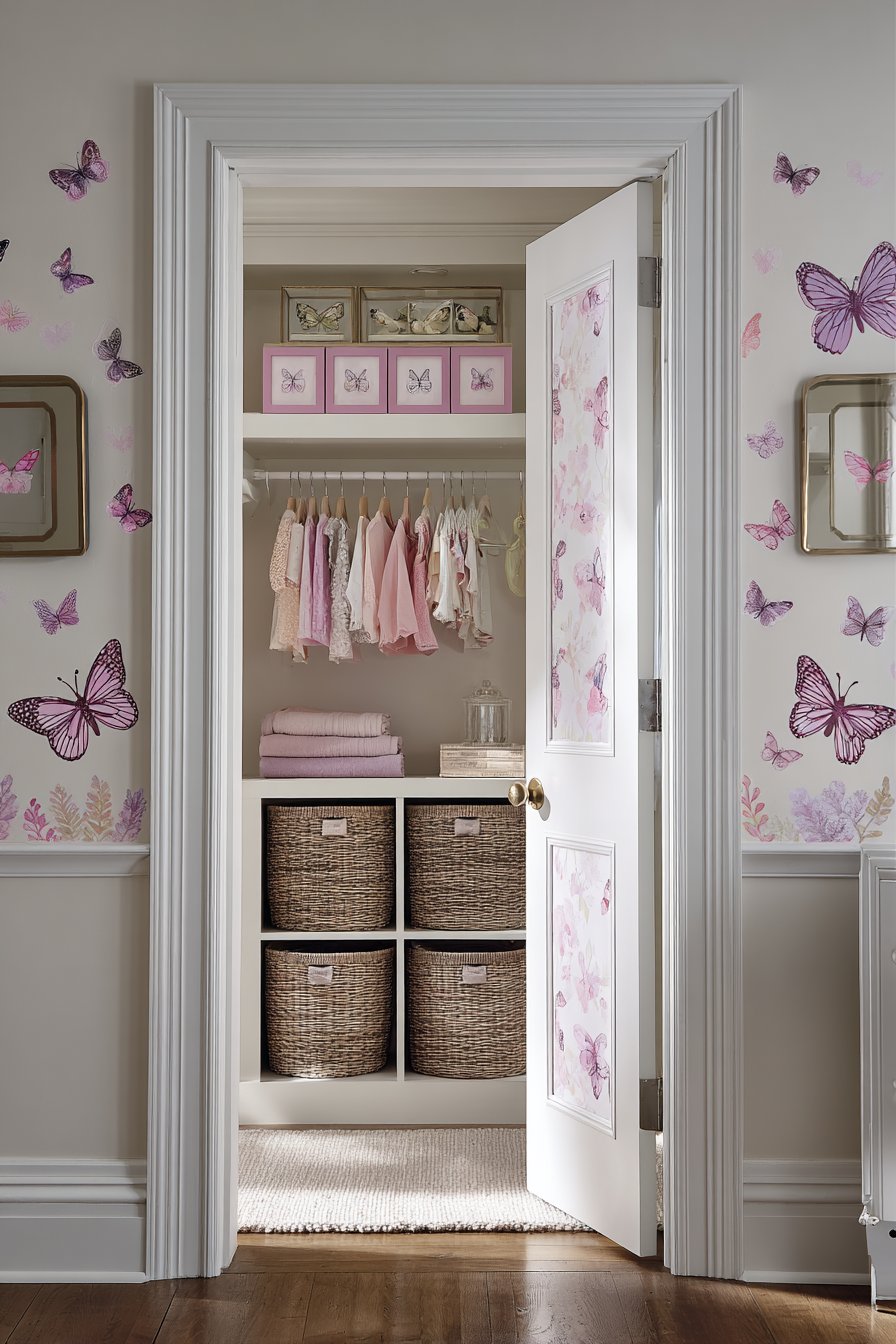
The organizational approach reduces visual clutter while keeping everything accessible. The custom system adapts as baby’s wardrobe and storage needs evolve. The butterfly details transform utilitarian closet space into extension of nursery design.
Key Design Tips:
- Install custom closet systems that maximize vertical storage in nursery spaces
- Label storage baskets for quick identification during busy caregiving moments
- Use mirrors strategically to reflect light and visually expand smaller spaces
- Display scientific butterfly specimens for sophisticated decorative elements
- Create growth chart spaces for tracking precious developmental milestones
8. Montessori-Inspired Accessible Design
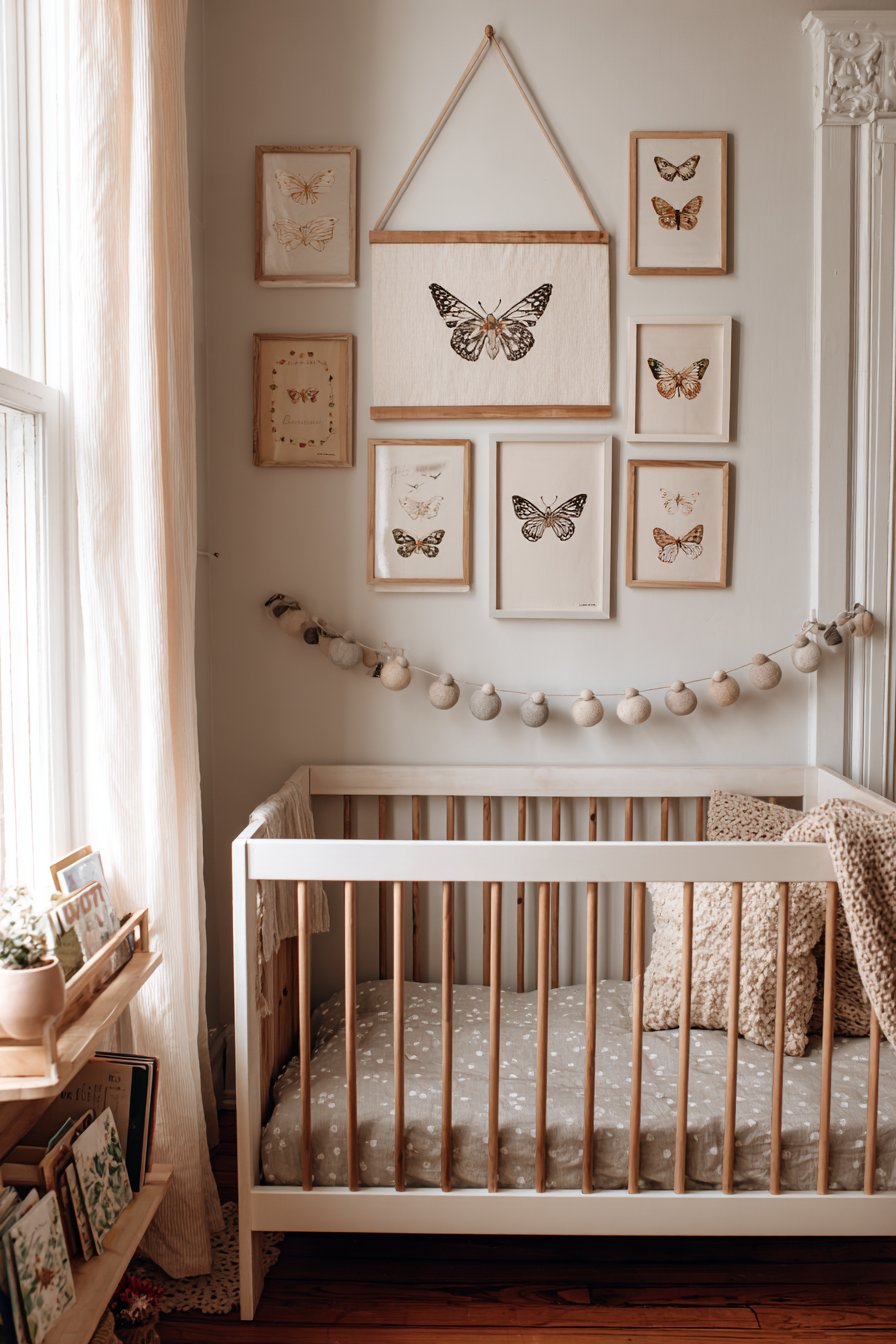
A thoughtfully arranged gallery wall combines framed vintage butterfly illustrations with modern geometric prints. A central embroidered butterfly art piece in natural wood hoop provides handcrafted focal point. The varied frame styles create visual interest while maintaining cohesive theme. Below the gallery, a low Montessori-style floor bed promotes independence and accessibility.
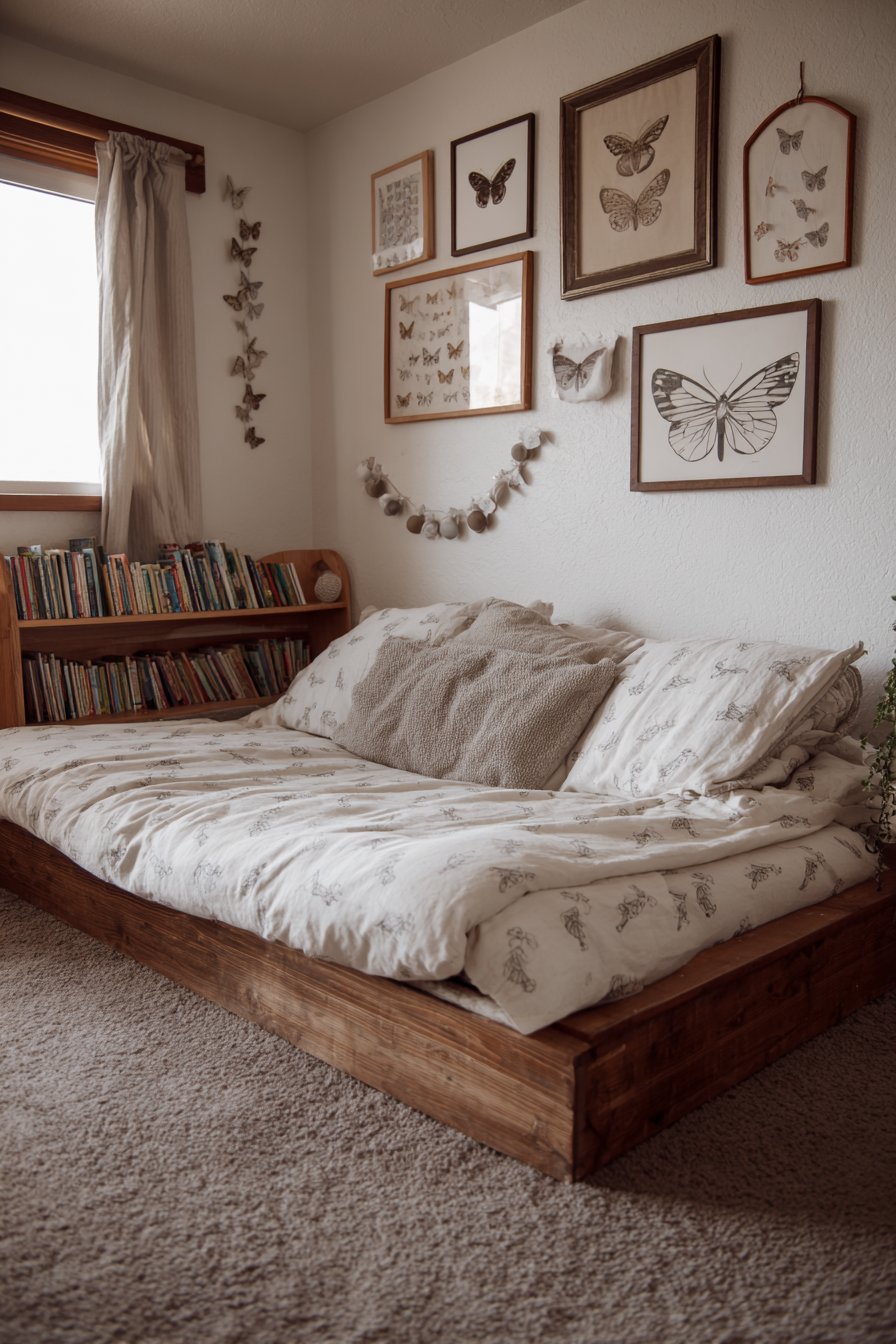
The white painted wood frame bed sits low to ground allowing easy access. Organic cotton bedding features understated butterfly print in soft greys. A low bookshelf within baby’s reach displays books with spines facing outward. This child-focused arrangement encourages early literacy and self-directed exploration.
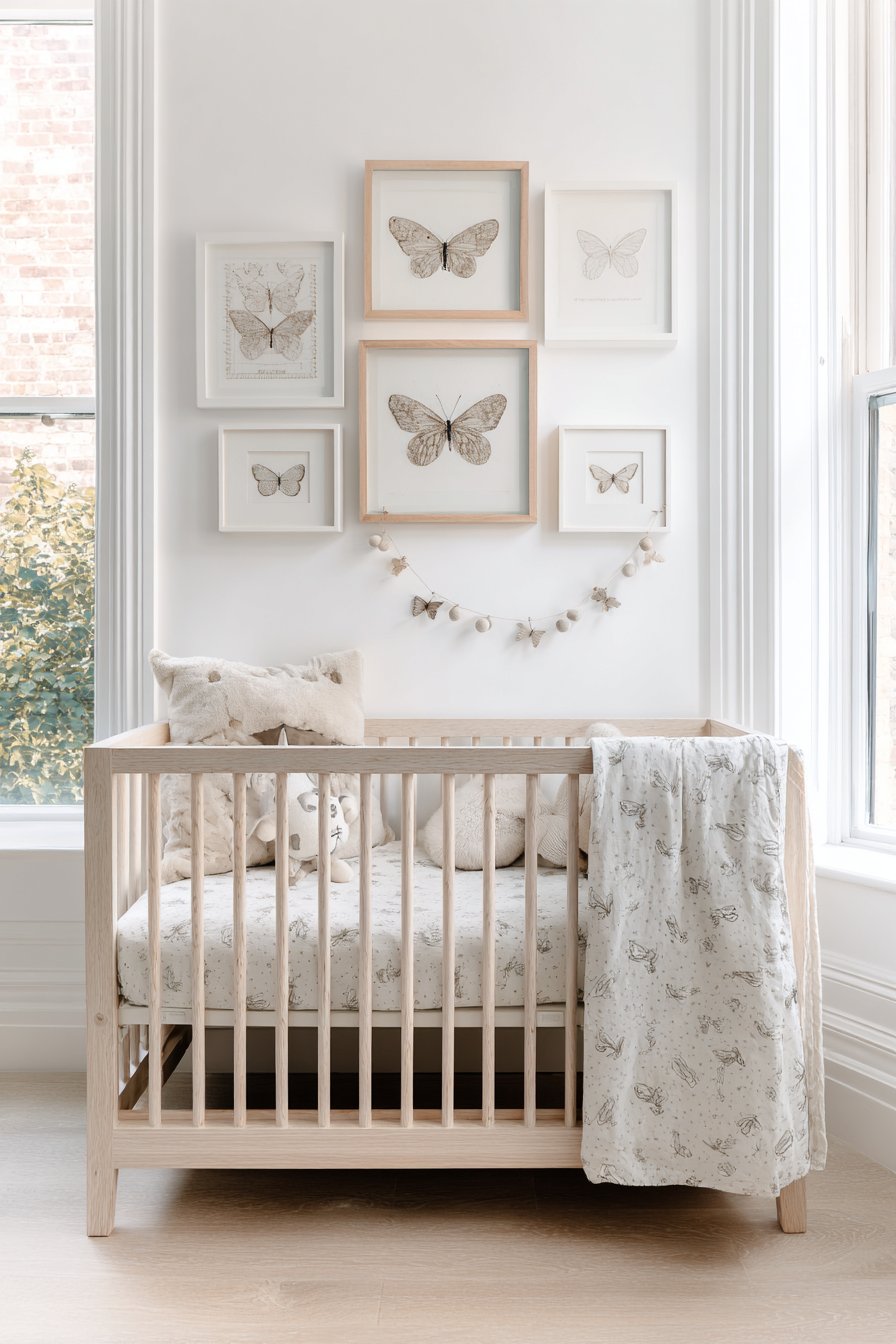
A wool felt ball garland with small felt butterflies drapes across one corner. The soft texture and subtle decoration add warmth without overwhelming the space. Soft natural lighting from side window illuminates the gallery wall beautifully. The Montessori philosophy embraces child-level design that fosters independence from earliest ages.
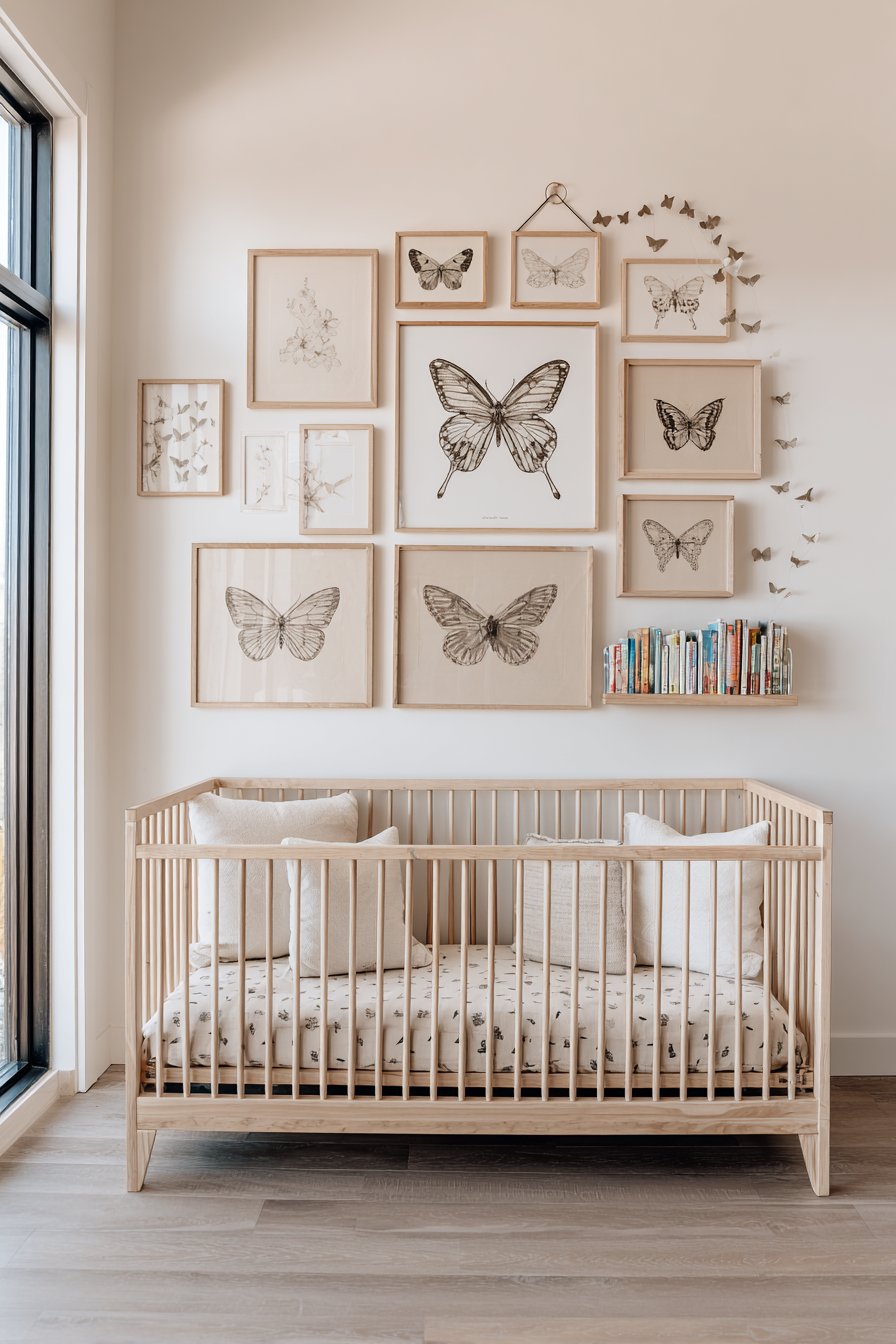
The accessible approach demonstrates respect for child’s developing autonomy and capabilities. Furniture scaled appropriately allows toddlers to navigate their space confidently. The butterfly theme integrates naturally without sacrificing the educational design principles.
Key Design Tips:
- Position furniture at child’s height following Montessori principles for independence
- Create mixed gallery walls combining vintage finds with modern prints
- Choose low floor beds that allow safe, independent entry and exit
- Display books with spines facing out for easier selection by small hands
- Add handcrafted elements like embroidered art for warmth and uniqueness
9. Luxurious Velvet and Brass Elegance
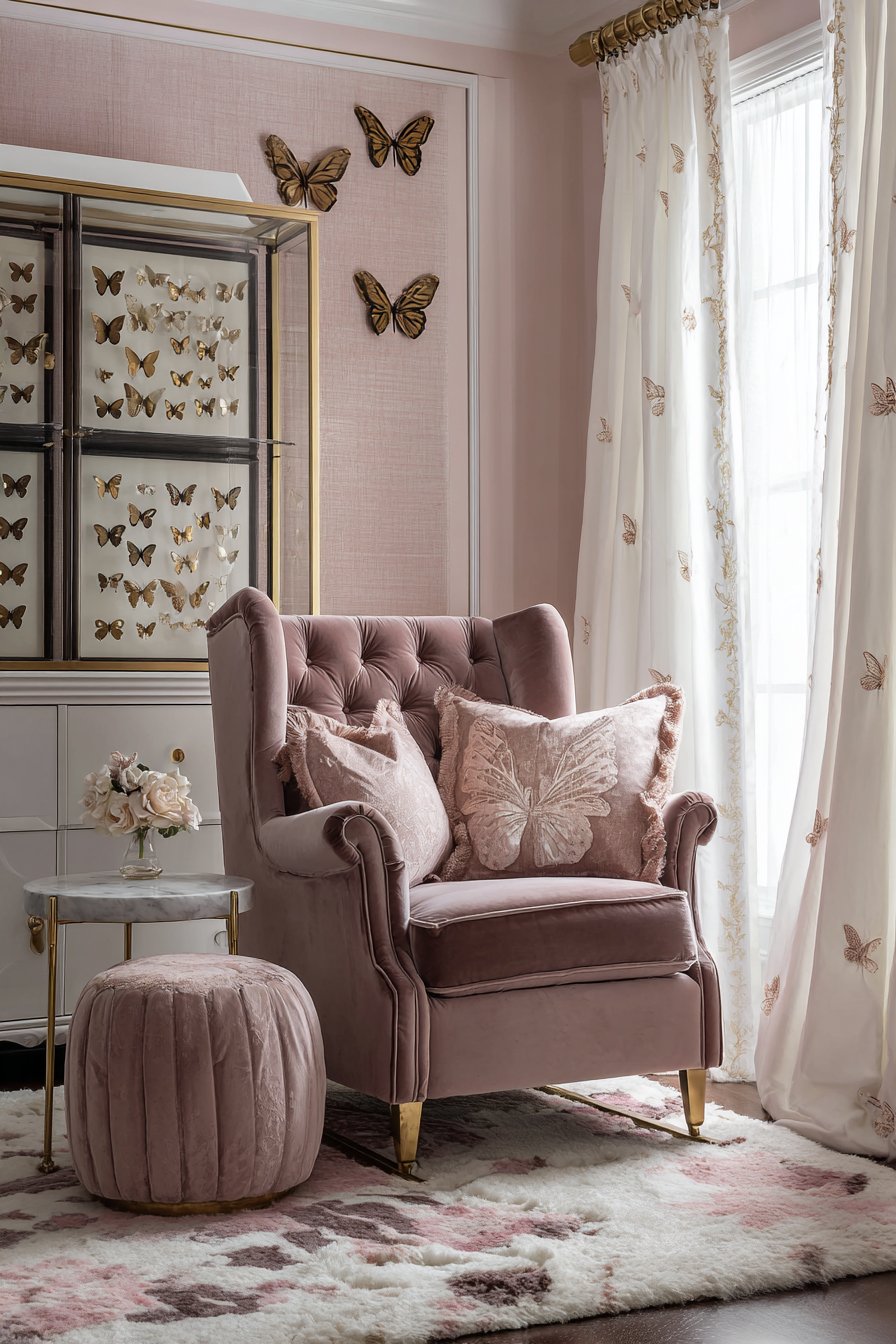
A tufted wingback glider chair upholstered in dusty mauve velvet creates luxurious seating. The sophisticated furniture piece sits beside a marble-topped side table with brass legs. This combination elevates the nursery to refined, adult-friendly space. Above the chair, pale pink grasscloth wallpaper provides subtle texture.
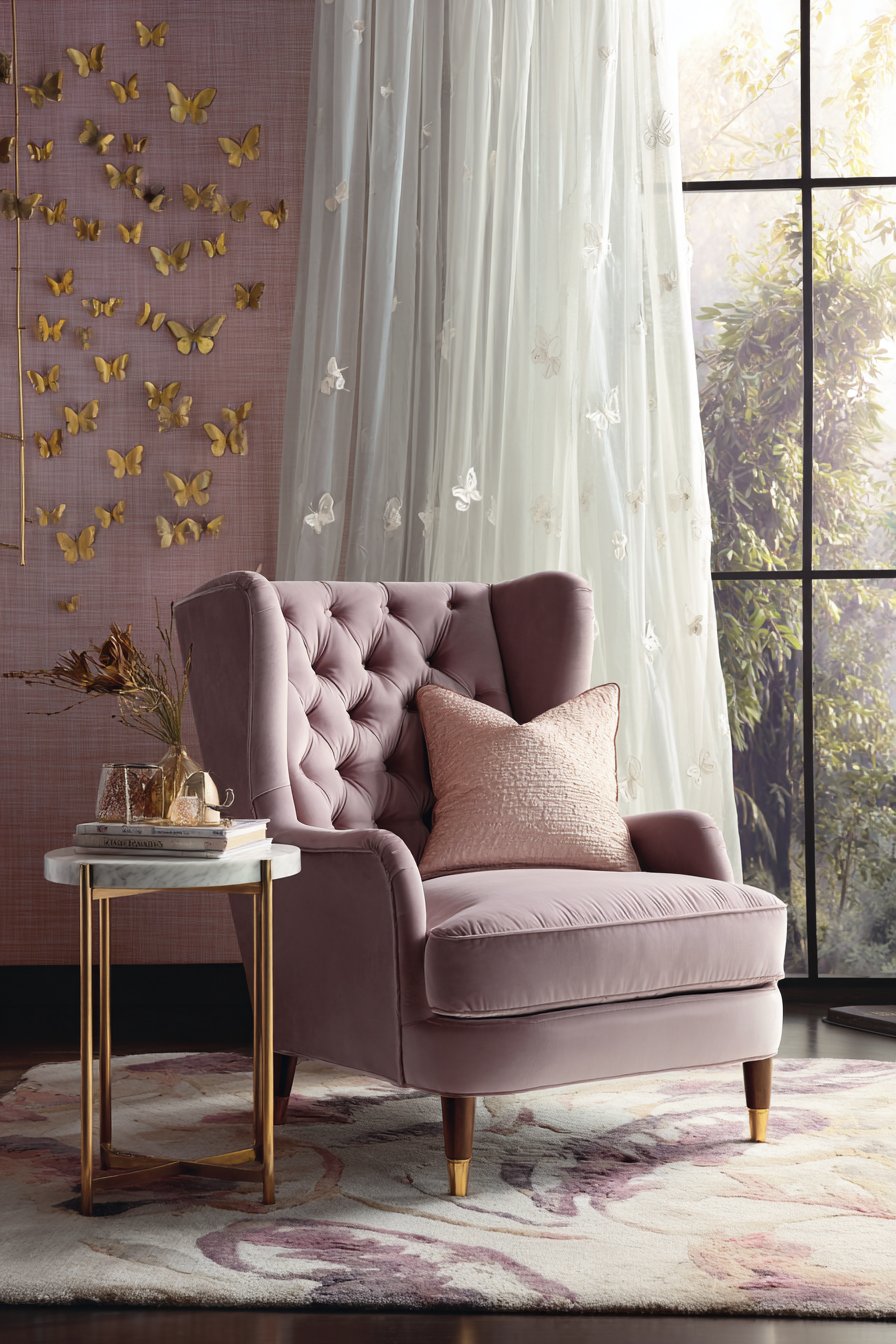
Carefully arranged gold-leafed butterfly specimens under glass hang in elegant thin black frames. The scientific presentation adds museum-quality sophistication to the nursery. A plush hand-tufted wool rug features abstract butterfly pattern in coordinating pinks and creams. The high-quality materials demonstrate investment in lasting beauty and comfort.
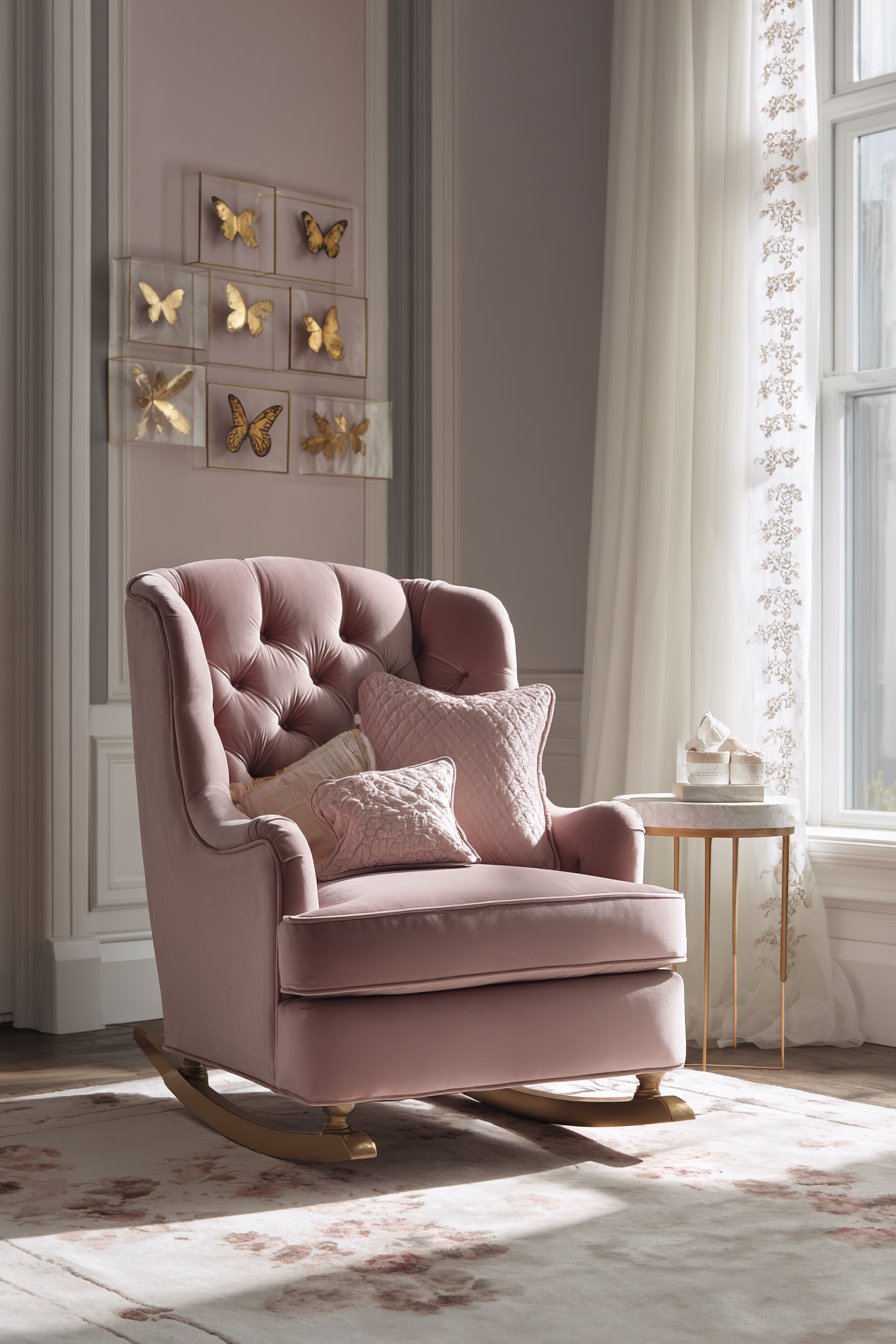
Sheer white draperies with embroidered butterfly details at hems frame the large window. Late afternoon light creates warm glow across the velvet and brass surfaces. The luxury approach proves nurseries need not sacrifice style for function. Quality materials and sophisticated color choices create spaces adults appreciate spending time within.
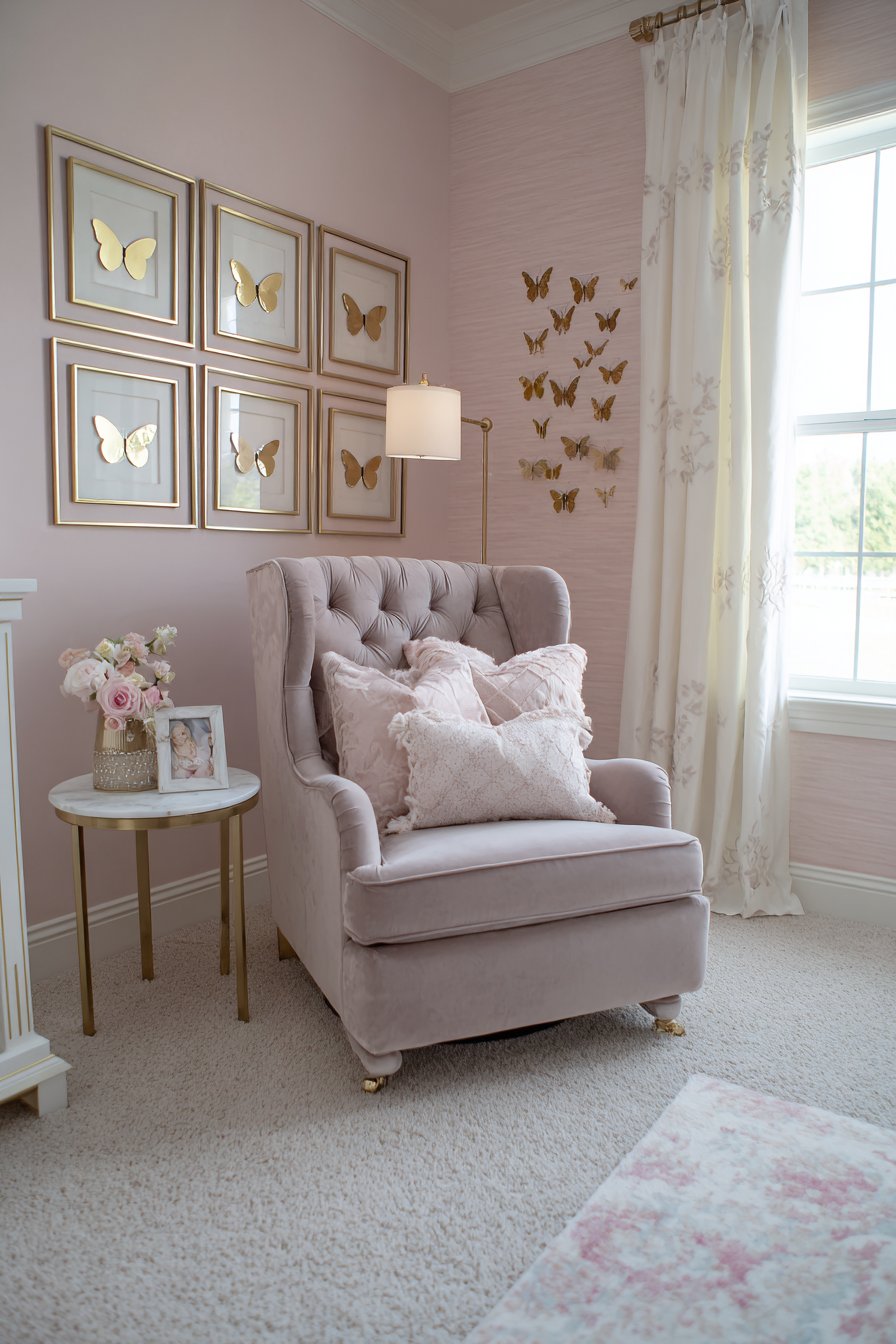
The investment in premium materials pays dividends through durability and timeless appeal. This nursery transitions easily from infant to toddler to child’s room. The butterfly theme remains sophisticated rather than juvenile through careful material selection.
Key Design Tips:
- Invest in luxury upholstery fabrics like velvet for durability and comfort
- Choose gold-leafed or framed specimens for museum-quality butterfly displays
- Layer textures through grasscloth wallpaper, hand-tufted rugs, and embroidered textiles
- Select brass hardware and furniture legs for warm metallic accents
- Position premium furniture near windows to showcase materials in natural light
10. Smart Small-Space Corner Solution
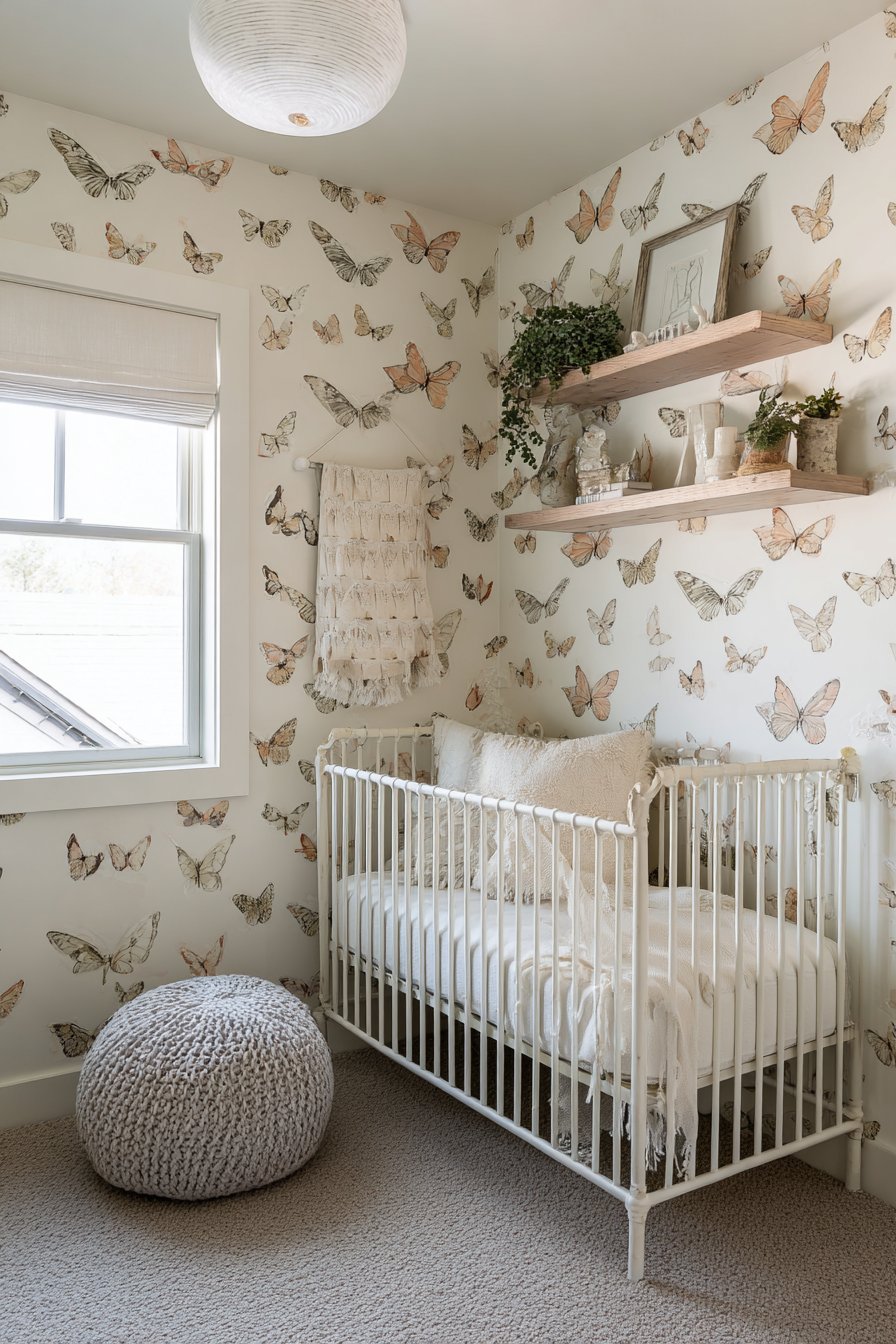
A space-efficient mini crib in white painted metal maximizes the compact nursery footprint. The modern spindle design maintains visual airiness in the limited square footage. Above the crib, floating corner shelves in natural wood display curated butterfly-themed items. Small potted succulents add living elements without requiring floor space.
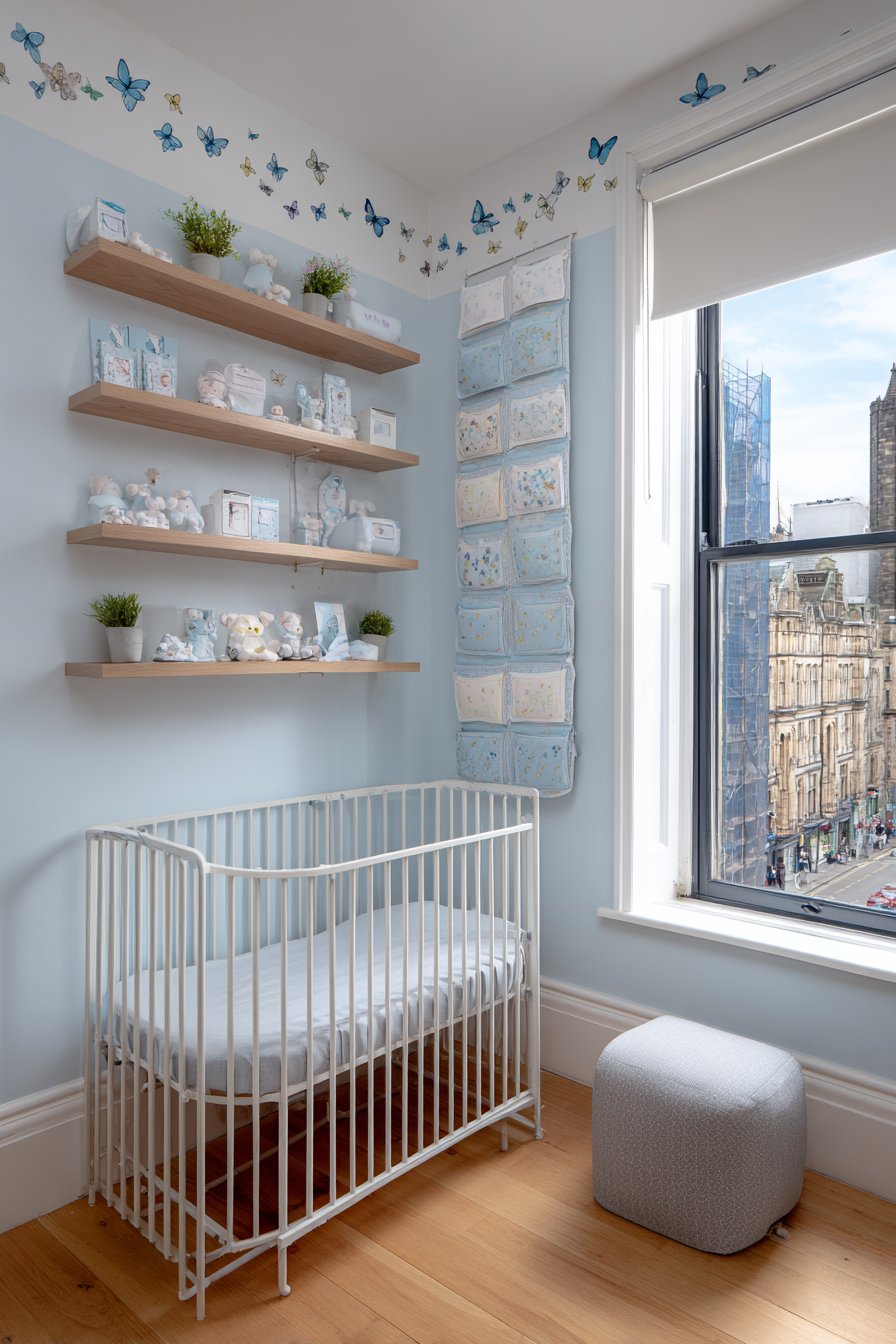
A vertical hanging fabric organizer with butterfly-printed pockets holds diapers and essentials. The wall-mounted storage keeps necessities accessible while preserving valuable floor area. Hand-painted butterfly border at picture rail height adds charm without overwhelming the small room. A compact pouf in grey linen provides flexible seating that tucks away easily.
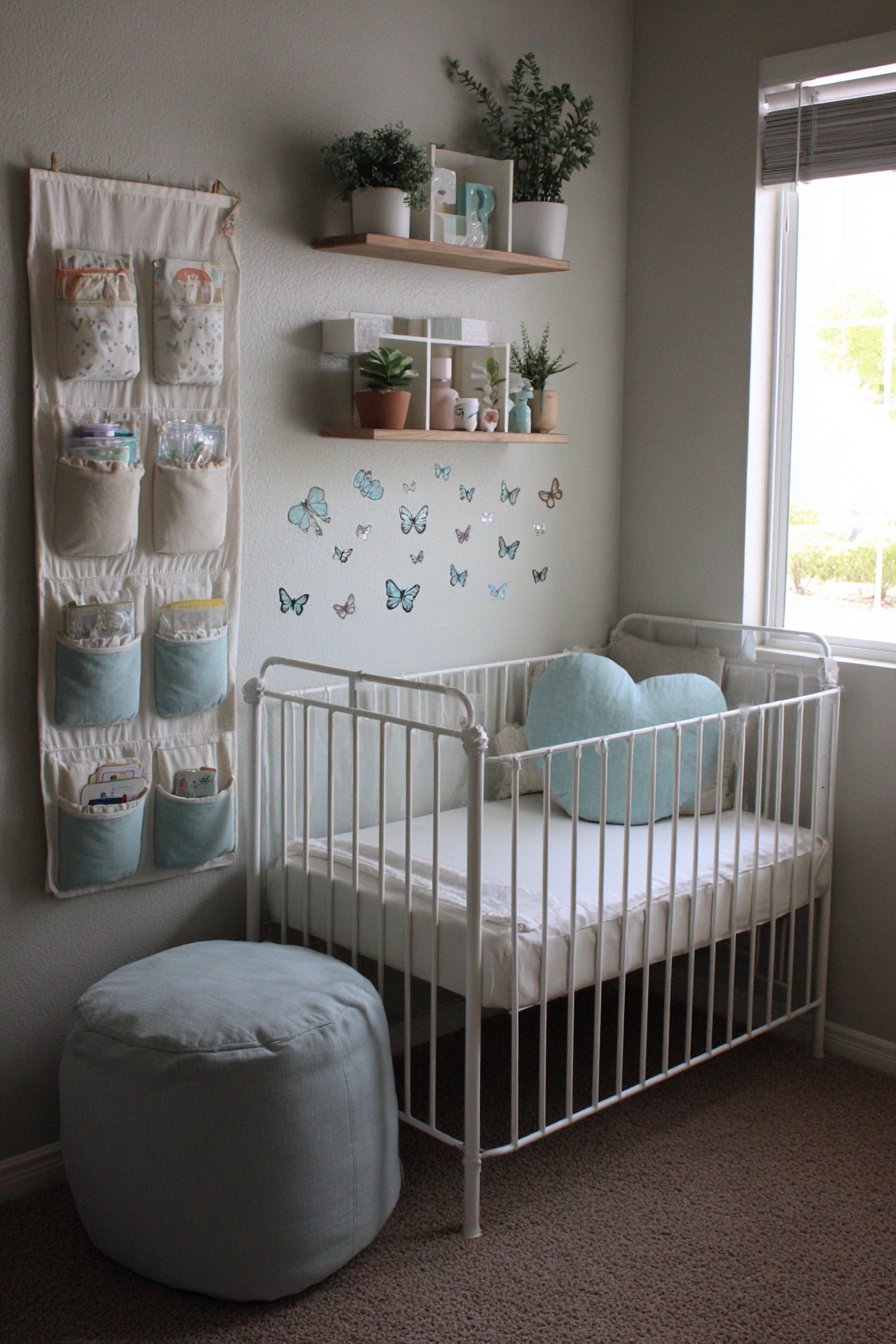
Natural light from small window maximizes through simple white roller shade. The minimal window treatment preserves precious wall space and maintains clean lines. The small-space approach demonstrates clever utilization of every square inch. Vertical storage and multi-functional furniture prove essential in compact nurseries.
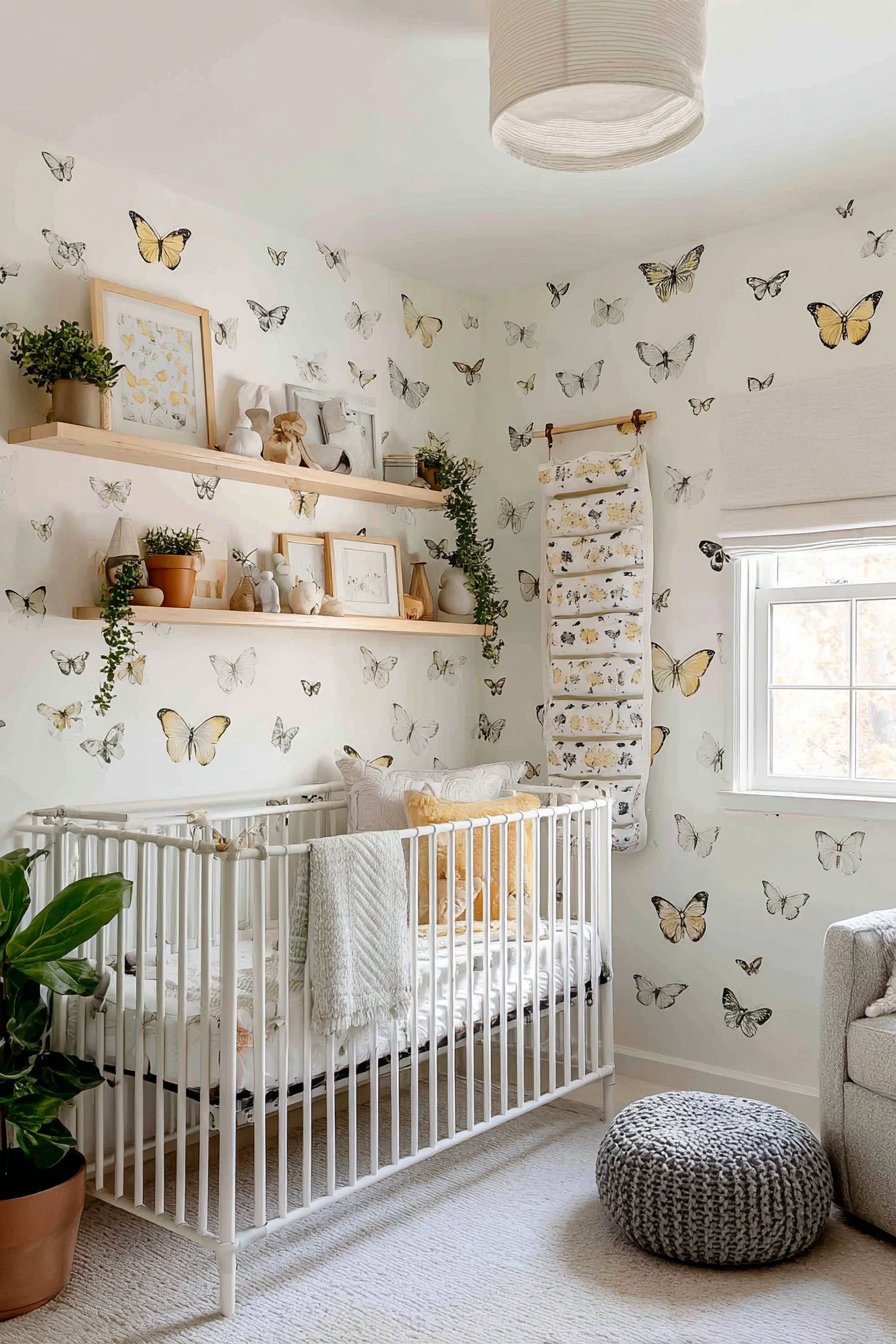
The corner-focused design makes the most of often-underutilized architectural space. The mini crib provides safe sleeping while occupying minimal footprint. The butterfly theme implements through thoughtful scaled-down applications rather than overwhelming small space.
Key Design Tips:
- Choose mini cribs and compact furniture scaled for small nursery spaces
- Maximize vertical storage with floating shelves and wall-mounted organizers
- Use picture rail borders instead of full wall treatments in tight spaces
- Select multi-functional furniture like poufs that provide seating and storage
- Keep window treatments minimal to preserve natural light in compact rooms
11. Dramatic Cascading Ceiling Installation
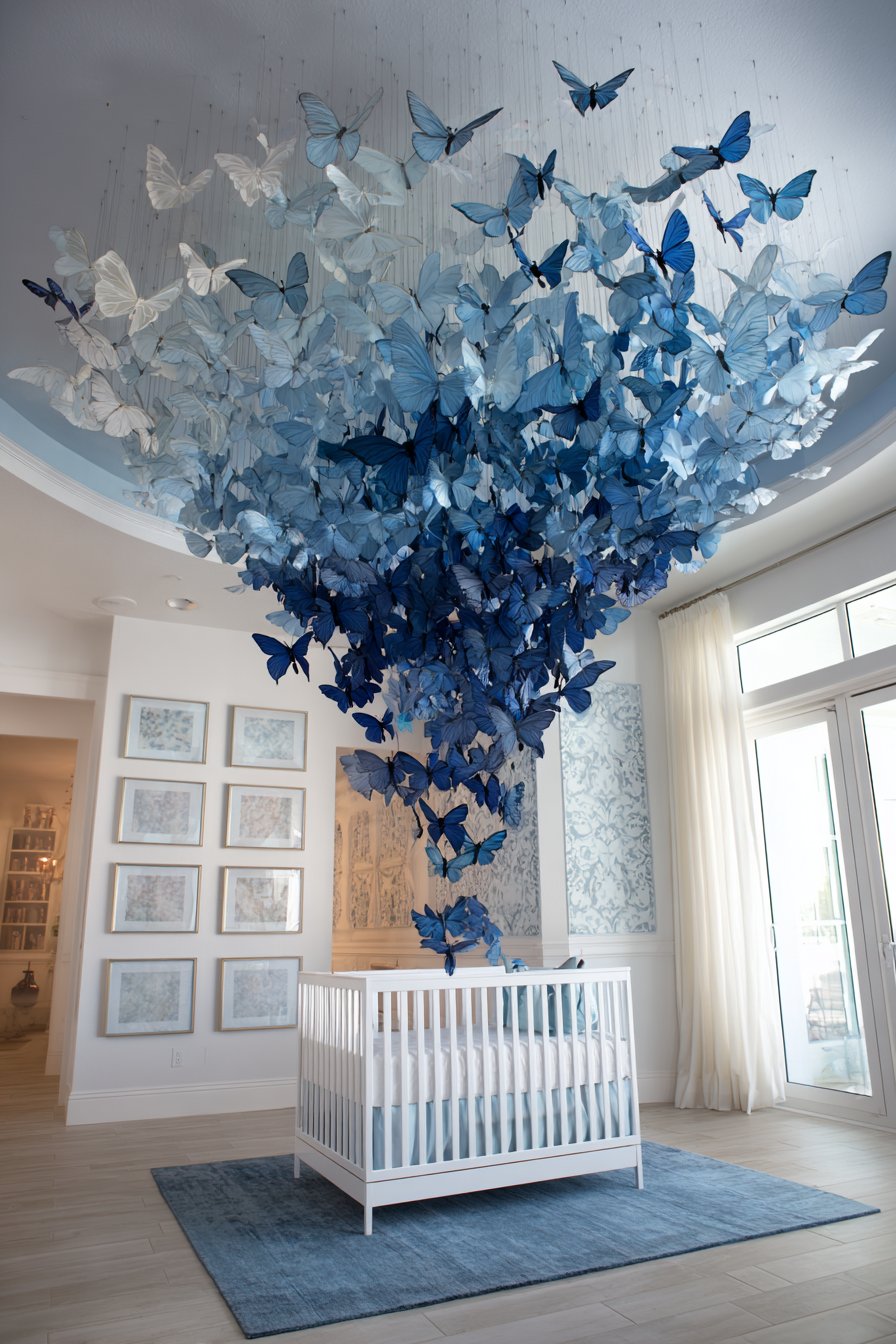
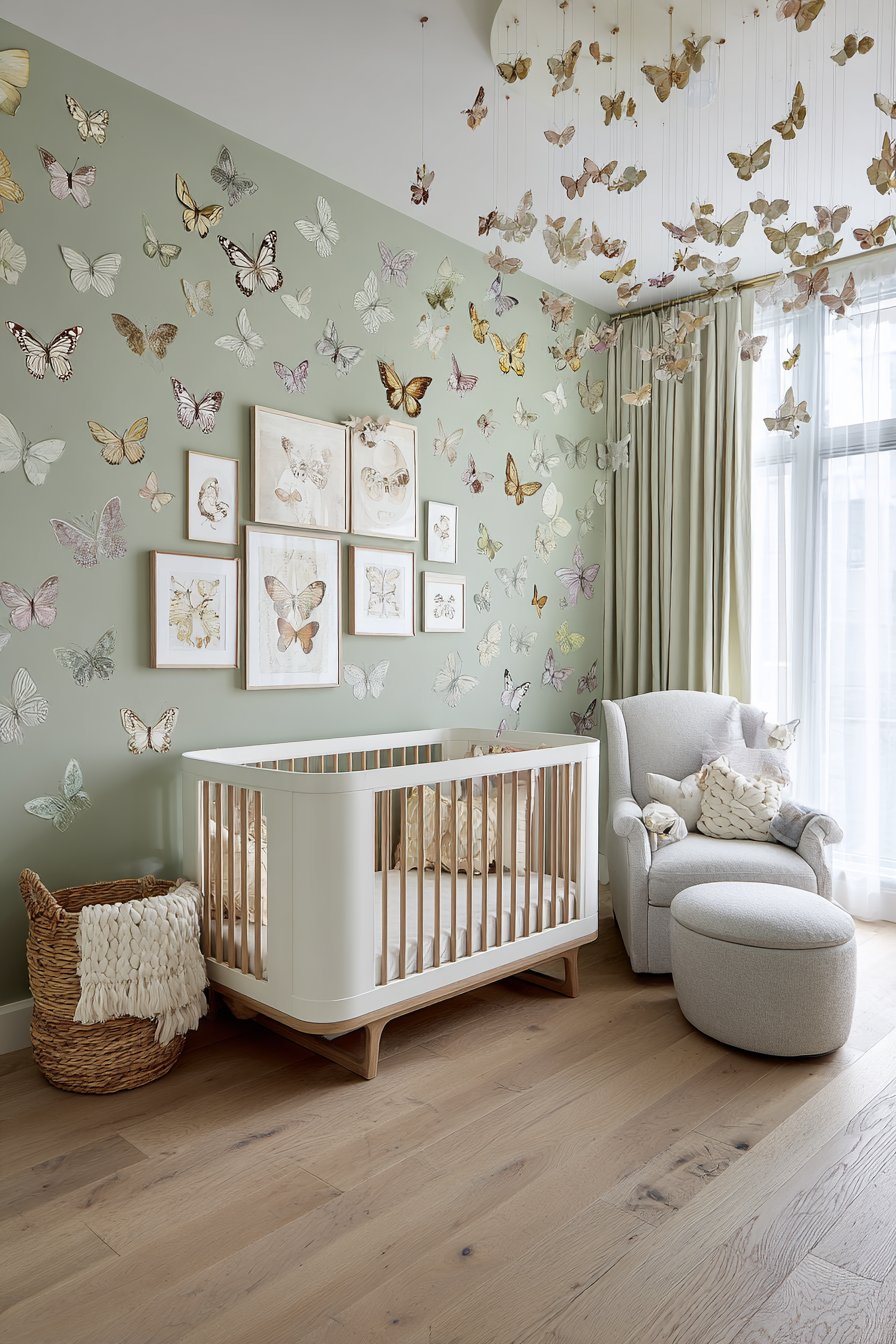
A spectacular ceiling installation creates a cloud-like formation of butterflies. The cascading mobile extends from centered ceiling medallion in graduating sizes. Fabric and paper butterflies range from navy to powder blue creating ombre effect. The dramatic vertical installation draws the eye upward making the room feel taller.
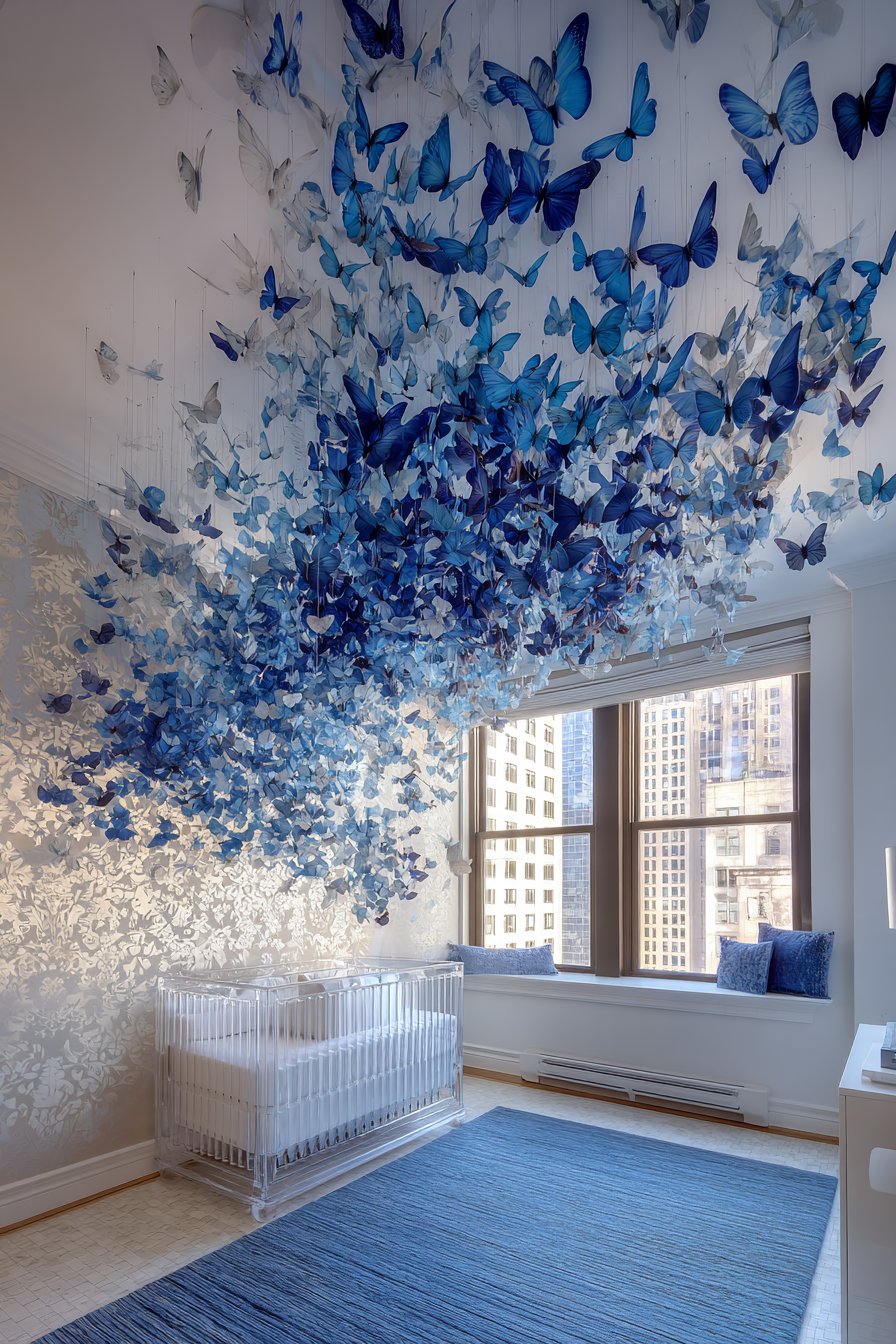
Below the installation, a contemporary acrylic crib provides modern contrast to organic butterflies. The clean lines and transparent material prevent visual heaviness beneath the statement ceiling. Soft white walls allow the blue butterflies to become undisputed focal point. One accent wall features subtle damask wallpaper with concealed butterfly motifs.
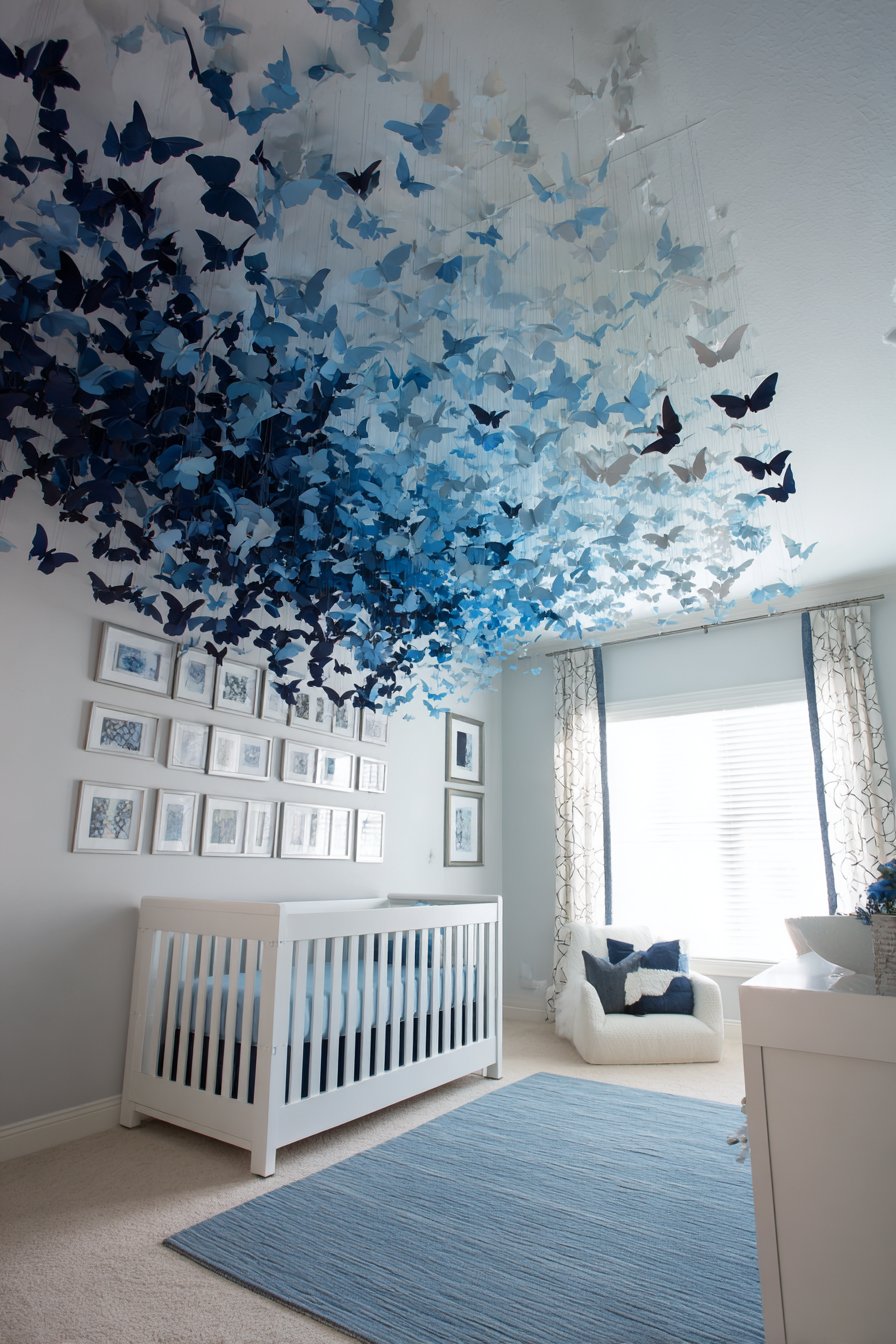
A plush area rug in coordinating blues anchors the floor space. Natural window light from the side creates depth in hanging butterflies. The shadows and movement add living quality to the sculptural installation. This bold design demonstrates confidence in committing to dramatic focal element.
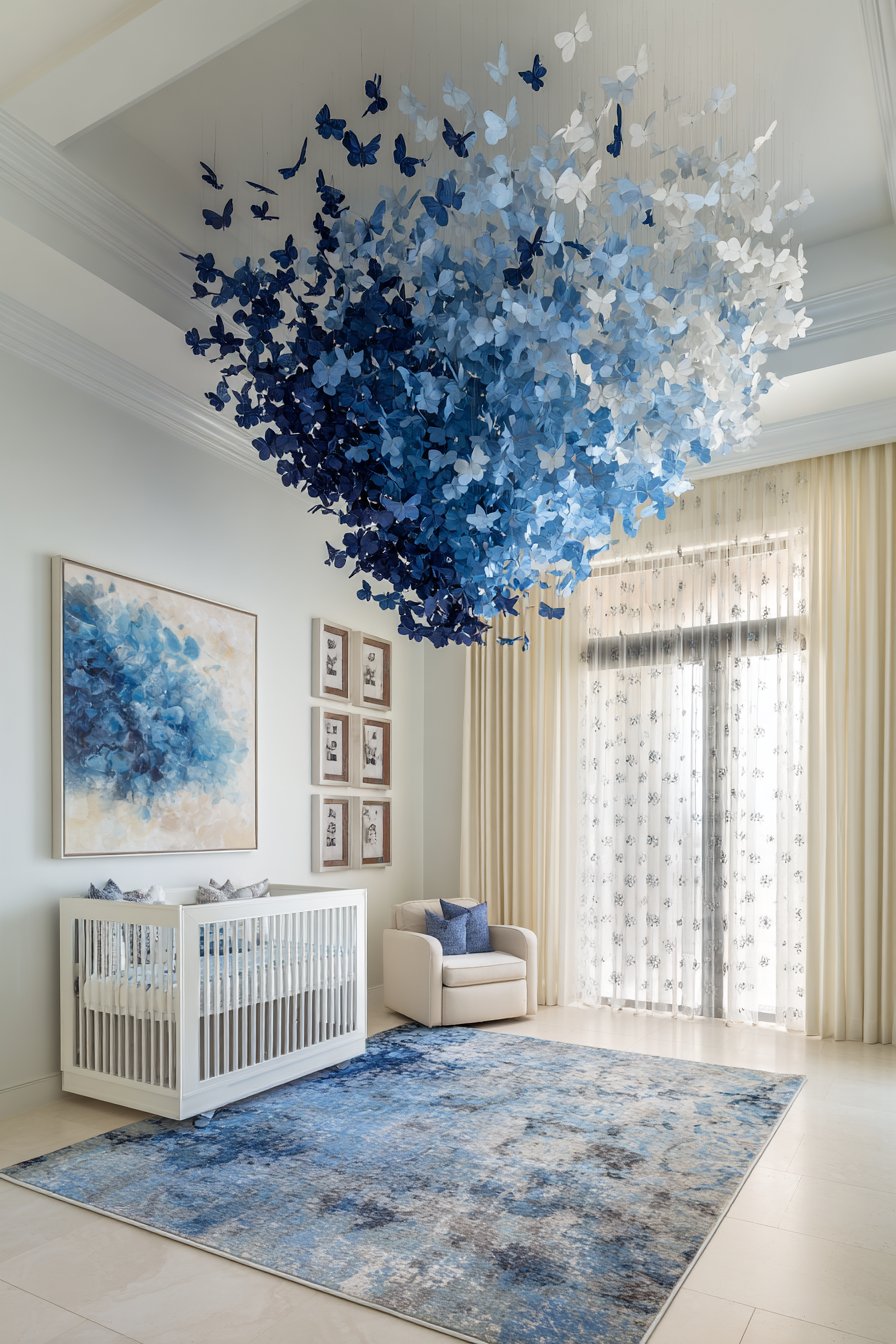
The ceiling treatment proves that vertical space often goes underutilized in nurseries. The installation creates wonder and visual interest from baby’s crib perspective. The contemporary furniture keeps the design feeling fresh rather than overly precious.
Key Design Tips:
- Create ceiling installations that utilize often-forgotten vertical space in nurseries
- Use ombre color gradations for sophisticated, gallery-worthy artistic displays
- Balance dramatic ceiling elements with simpler furniture and wall treatments
- Choose contemporary cribs with clean lines to ground sculptural installations
- Position side lighting to create depth and shadows in hanging elements
12. Custom Botanical Window Treatment
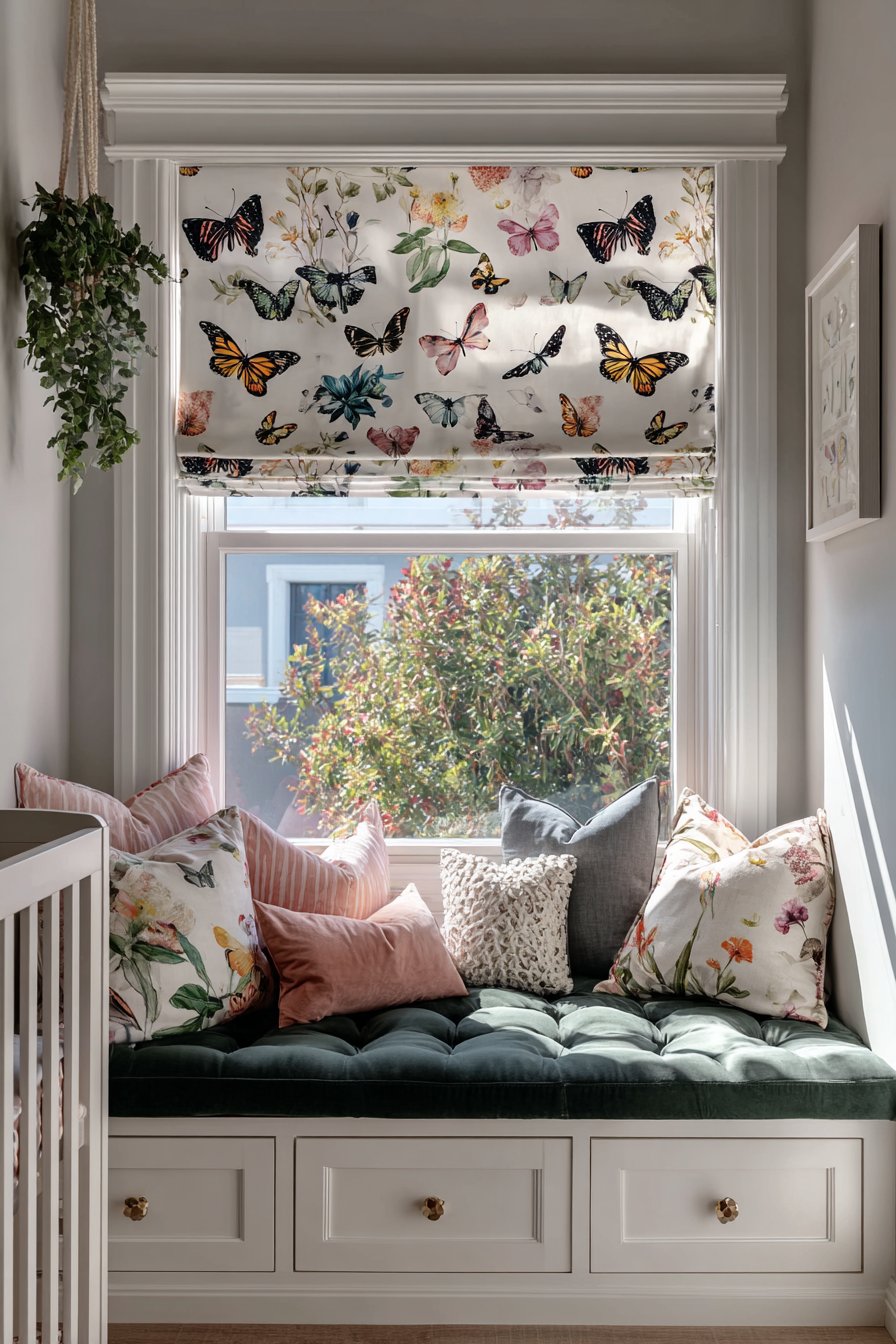
Custom roman shades feature botanical print with realistic butterfly illustrations among flowers. The naturalistic colors and detailed rendering create sophisticated window treatment. The soft fabric filters morning light creating botanical shadows across surfaces. White painted wood trim frames the window with classic architectural detail.
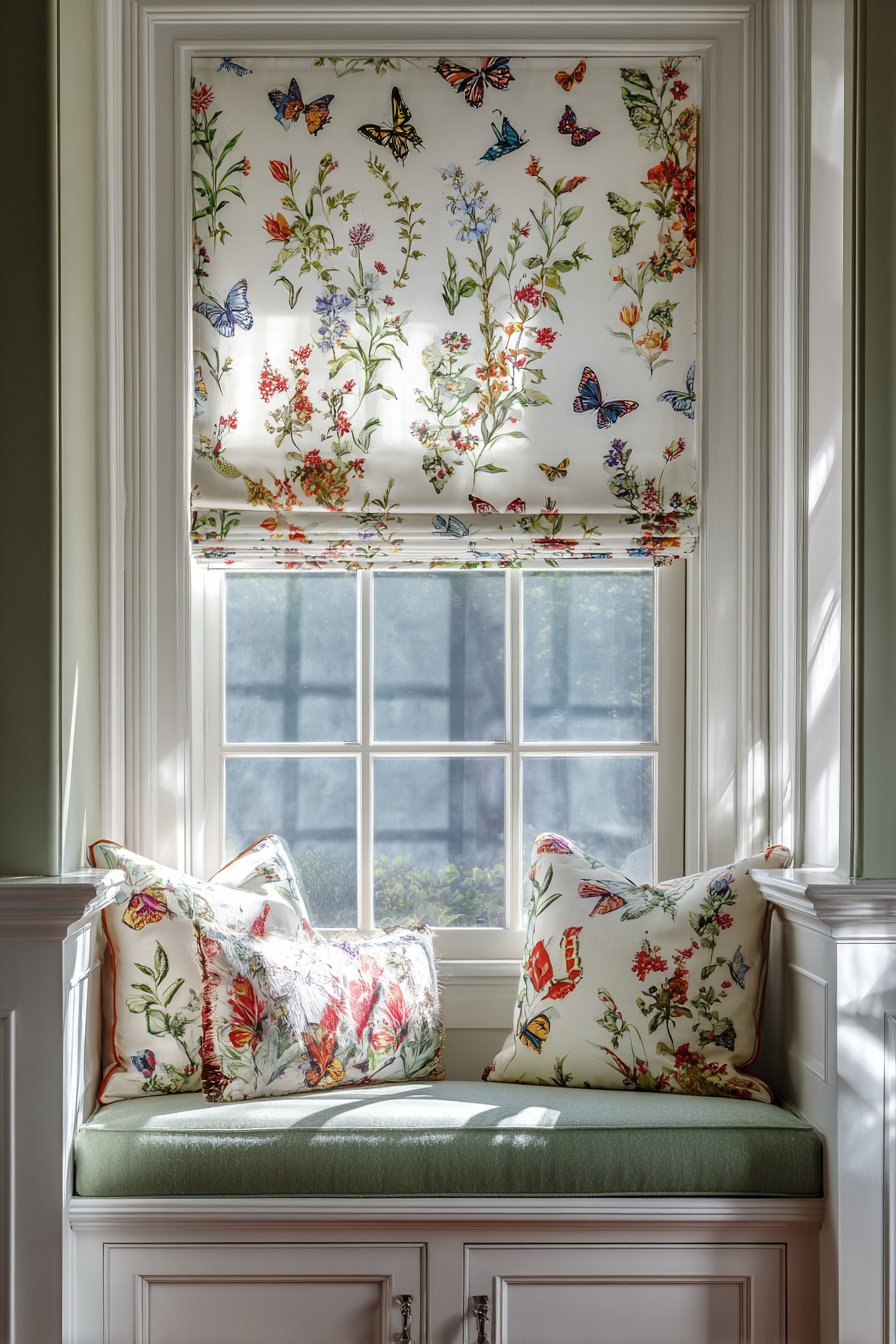
A cushioned window seat below provides comfortable reading perch upholstered in sage green. The solid color complements the botanical print without pattern competition. Storage compartments underneath lift-up panels maximize the window seat’s functionality. Decorative pillows in various butterfly prints create cozy layered seating.
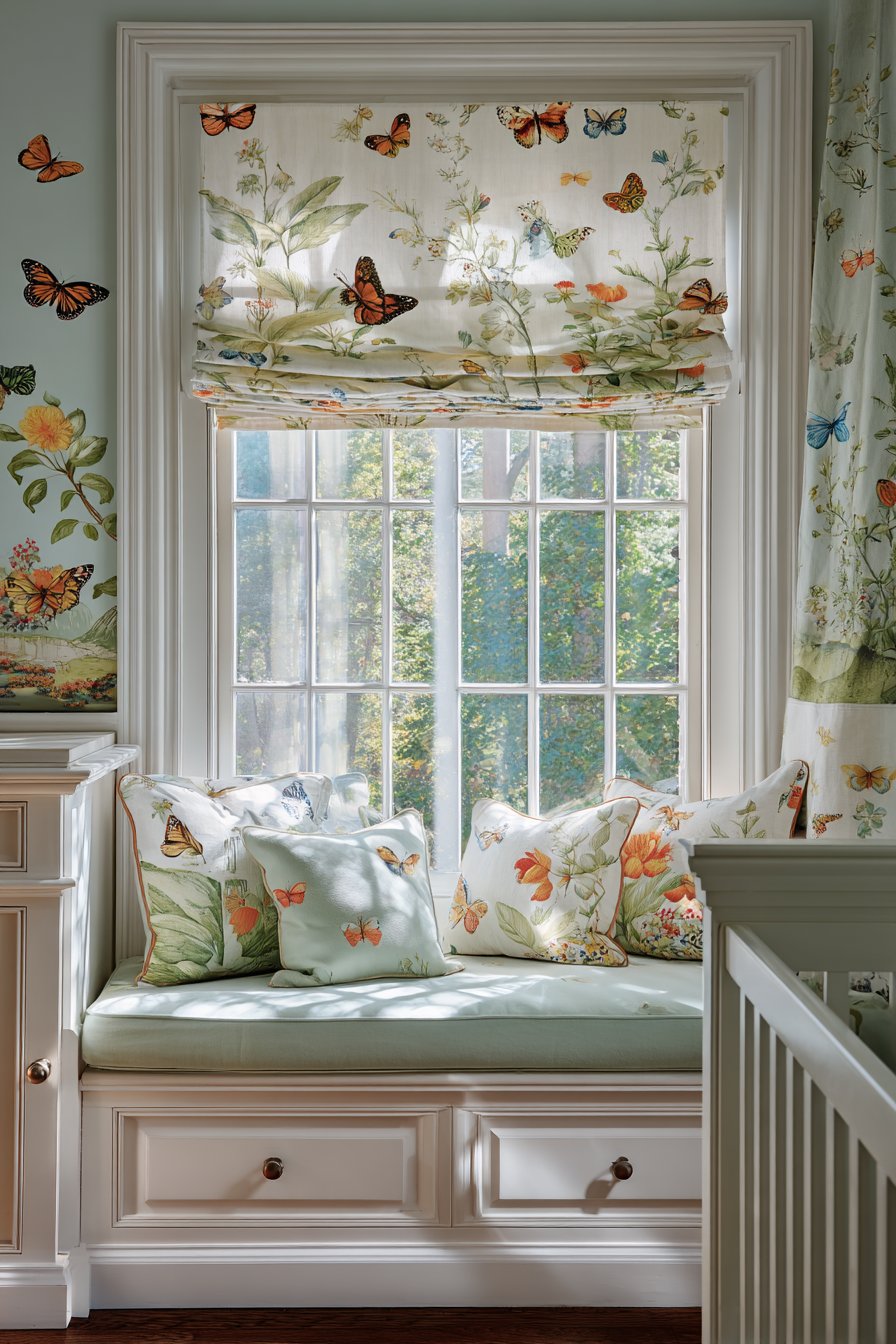
Adjacent walls show portions of coordinating white dresser and crib. The window treatment becomes focal point while maintaining cohesion with surrounding furniture. Morning light filtering through semi-transparent fabric creates changing light quality throughout day. The botanical approach connects the butterfly theme to wider natural world.
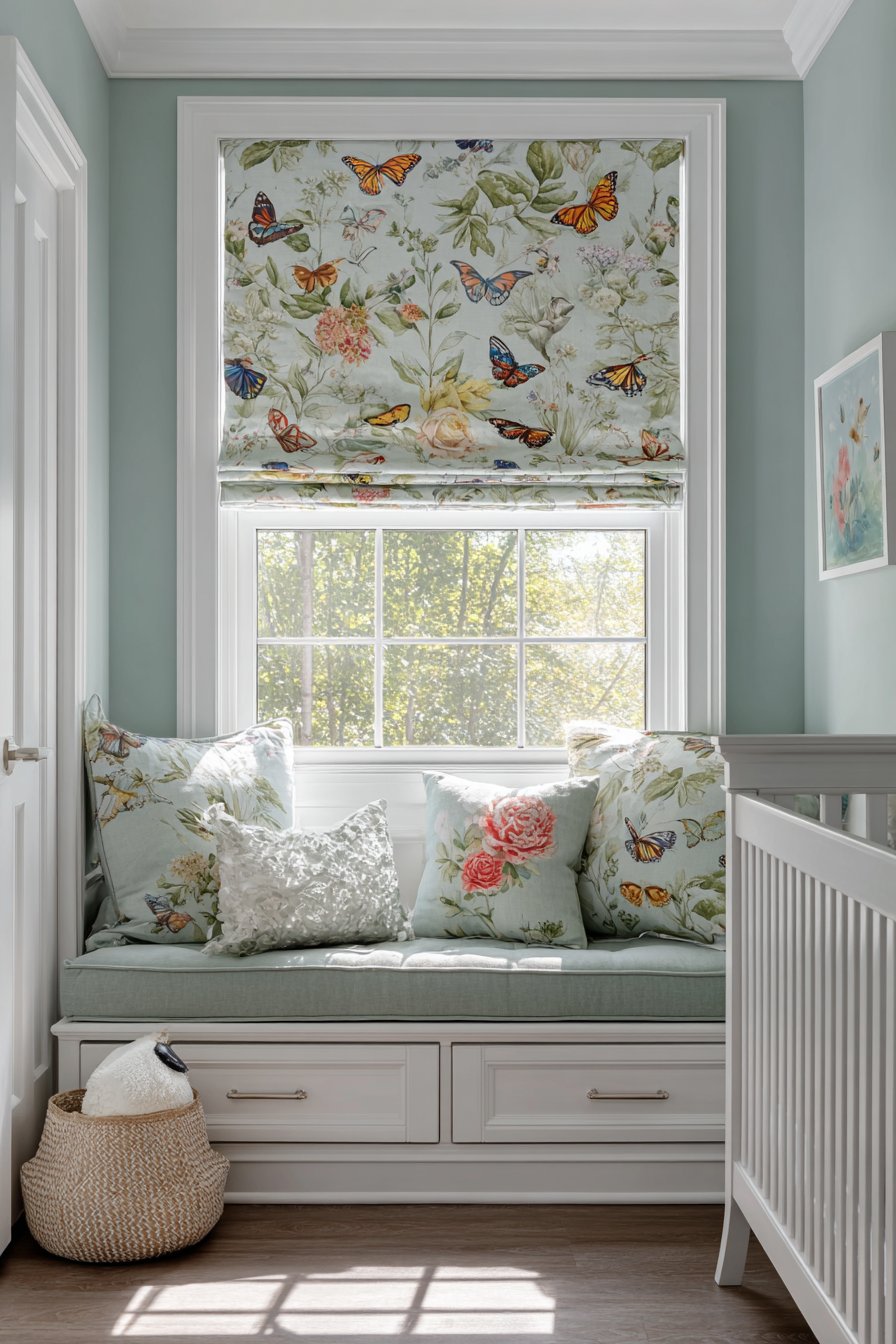
The custom window treatment demonstrates investment in quality, fitted solutions. The roman shade mechanism provides excellent light control for naptime darkness. The window seat transforms architectural feature into functional, beautiful element.
Key Design Tips:
- Commission custom window treatments for proper fit and unique fabric choices
- Choose botanical prints that place butterflies in naturalistic floral contexts
- Install window seats with hidden storage to maximize functionality
- Layer solid and patterned fabrics to prevent visual overwhelm
- Position reading nooks near windows for optimal natural light
13. Bohemian Natural Fiber Textures
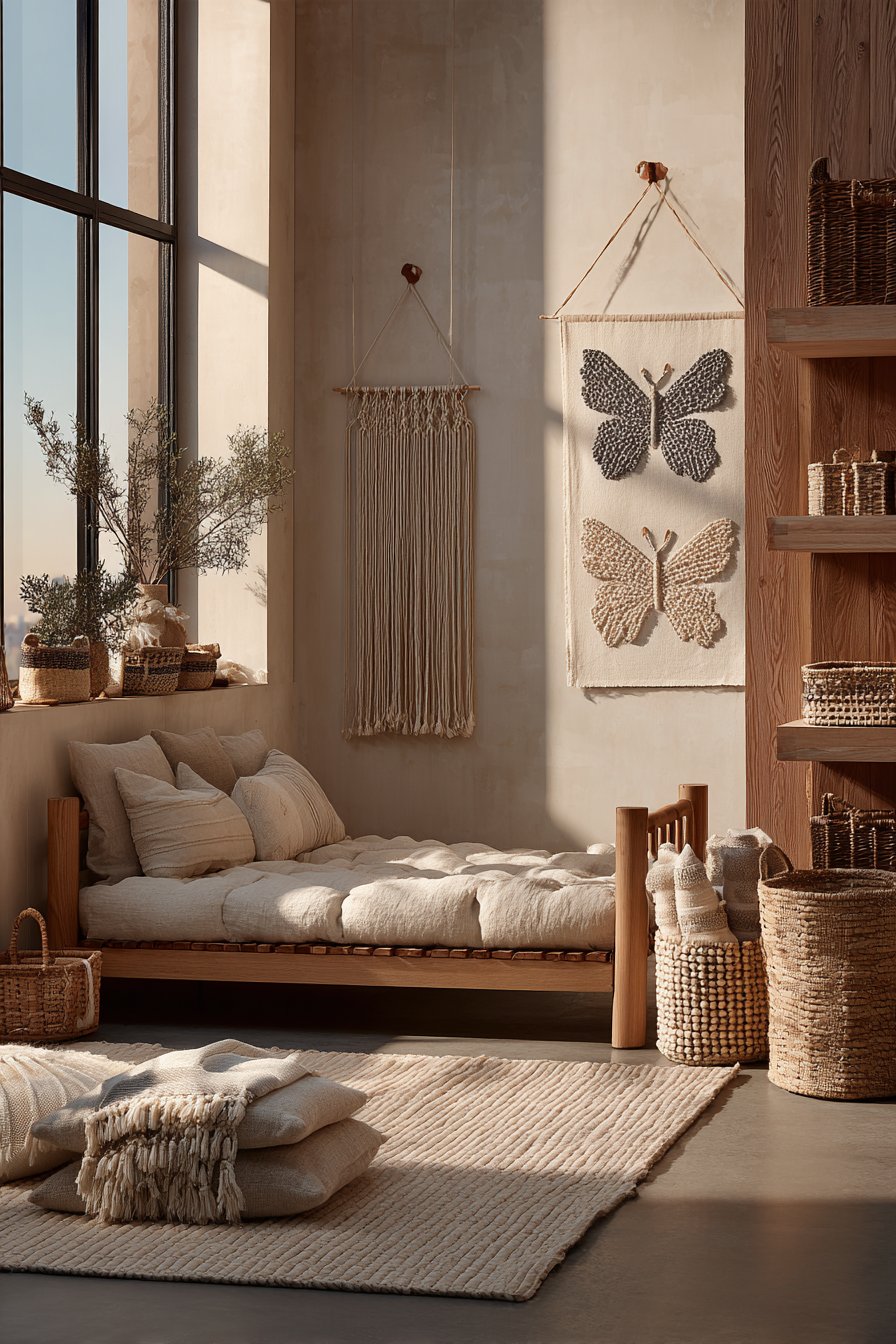
A macramé wall hanging features integrated butterfly shapes woven into the design. The handcrafted textile art brings organic texture and artisanal quality. Below the macramé, a low-profile floor bed with wooden frame promotes accessible sleeping. Linen bedding in natural oat color maintains the earthy, relaxed aesthetic.
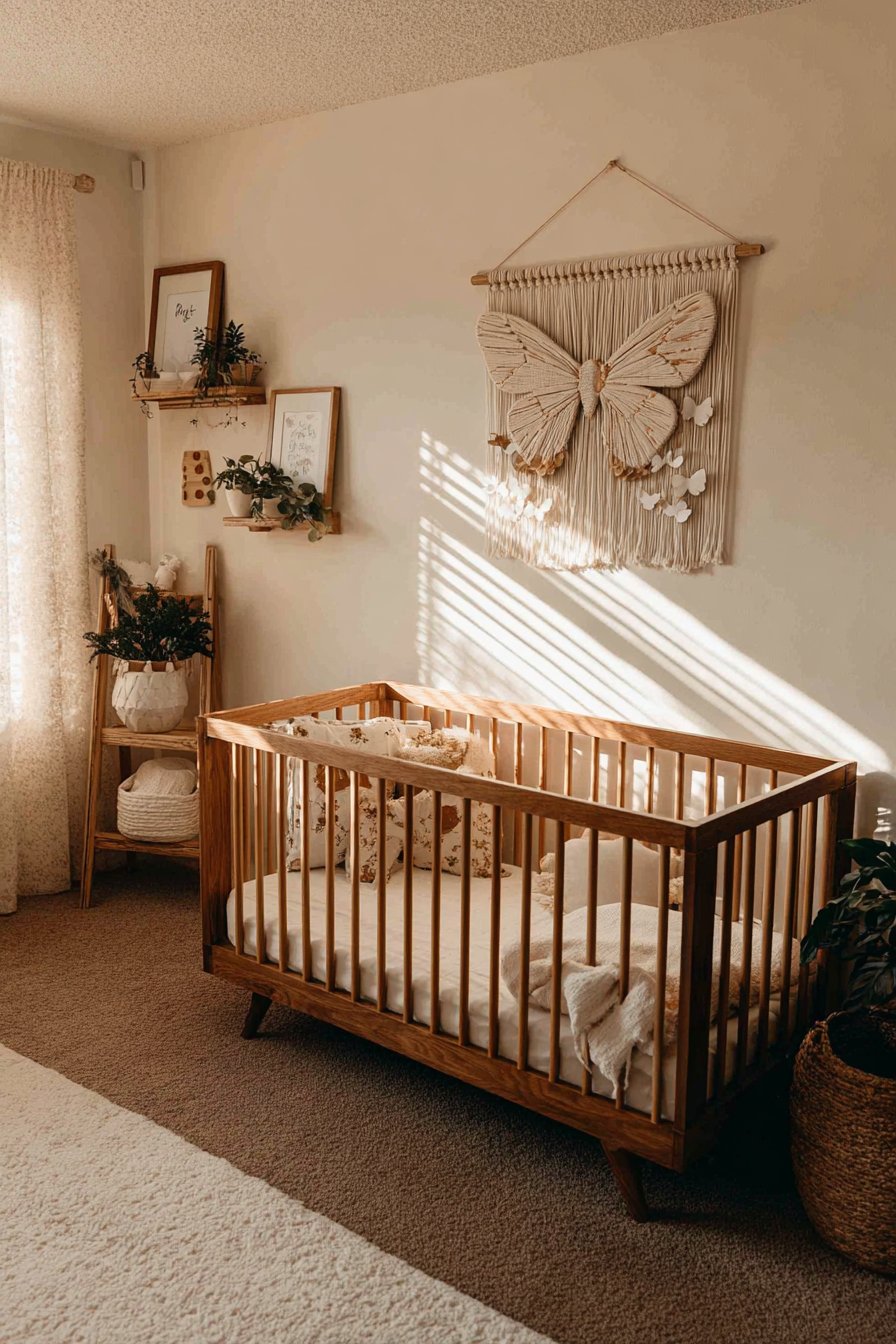
Woven baskets in various sizes provide storage along one wall. Each basket sports a small wooden butterfly ornament connecting storage to theme. A vintage ladder serves decorative purpose draped with lightweight butterfly-printed muslin blankets. The layered bohemian approach creates collected-over-time feeling rather than matchy-matchy design.
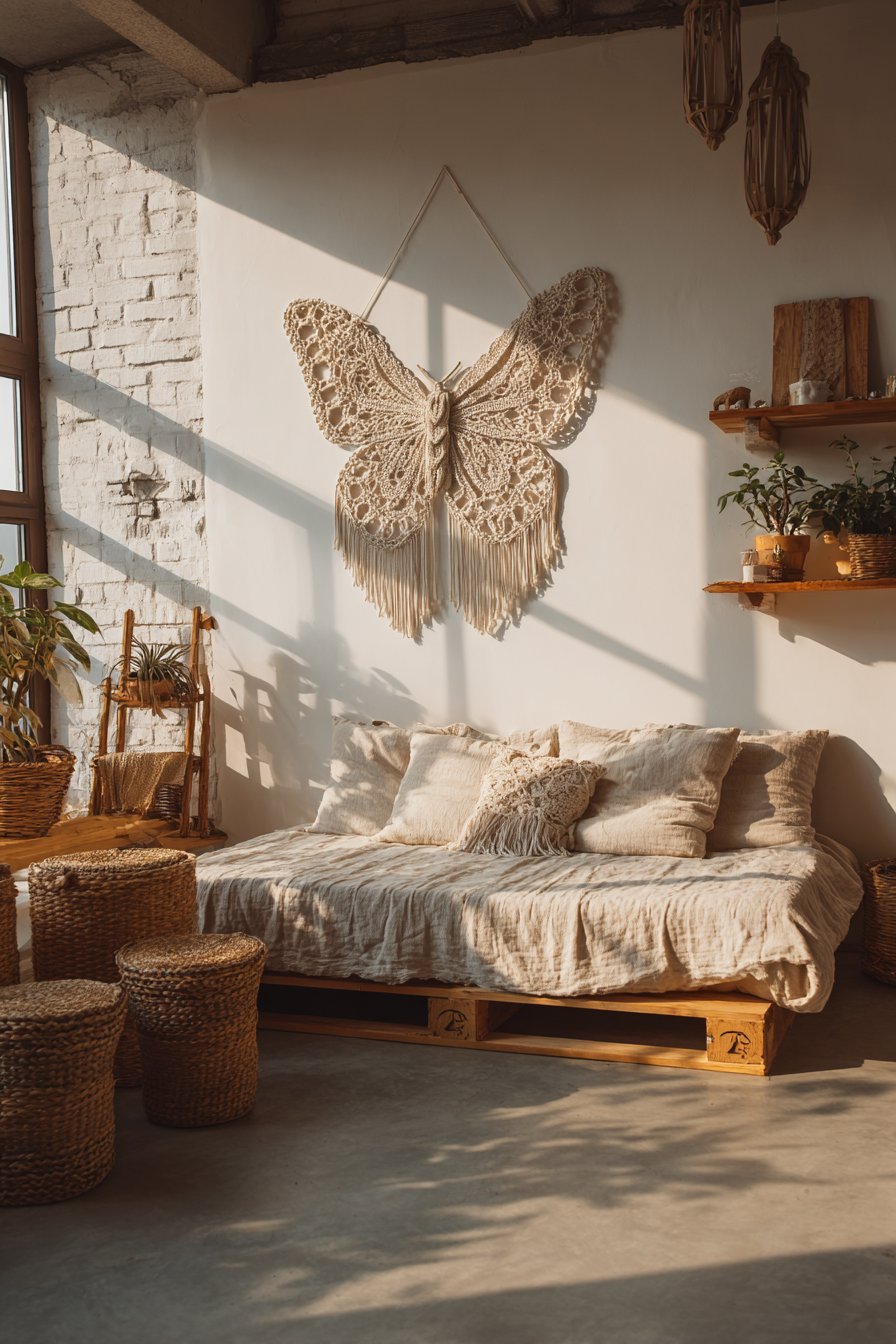
Potted plants on simple wooden shelves add life and air-purifying benefits. Warm natural light from window creates soft shadows emphasizing textural elements. The bohemian interpretation proves butterfly themes adapt beautifully to relaxed, natural aesthetics. The woven textures and natural materials create calming, grounded environment.
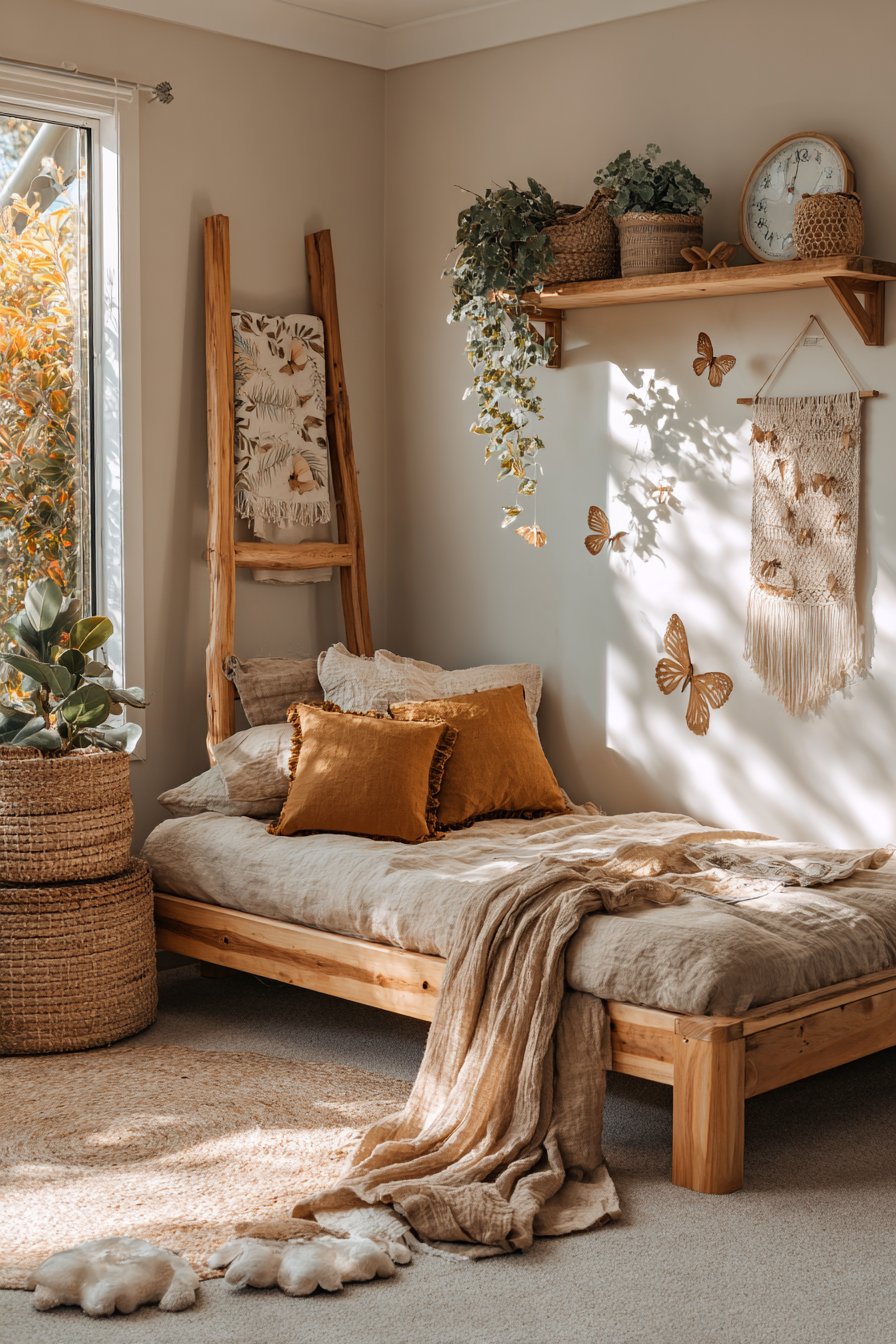
The bohemian approach embraces imperfection and handcrafted elements over mass-produced perfection. The natural fiber emphasis provides tactile interest and sustainable material choices. The floor bed and low furniture follow child-centered design philosophy.
Key Design Tips:
- Incorporate macramé wall hangings for textural interest and artisanal quality
- Choose natural fiber materials like linen, jute, and cotton for bohemian aesthetic
- Display plants on shelves for living elements and air quality improvement
- Use vintage furniture pieces for character and sustainable consumption
- Layer multiple woven baskets for flexible, attractive storage solutions
14. Statement Lighting with Butterfly Fixtures
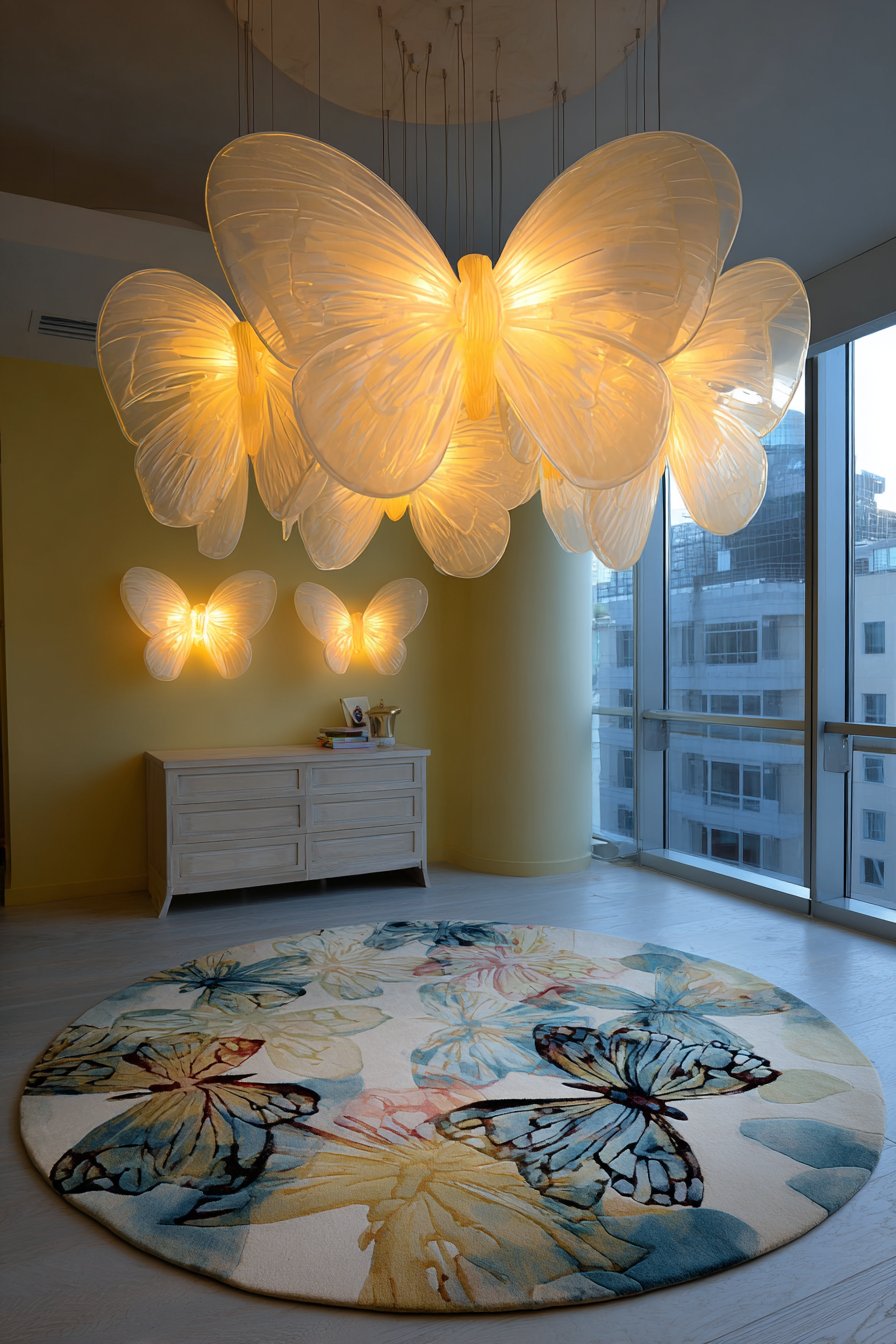
A statement chandelier with frosted glass shades shaped like butterfly wings suspends overhead. The fixture provides soft, diffused light creating warm glow throughout the space. Below the chandelier, a round area rug with watercolor butterfly pattern defines central play area. The lighting becomes sculptural element even when not illuminated.
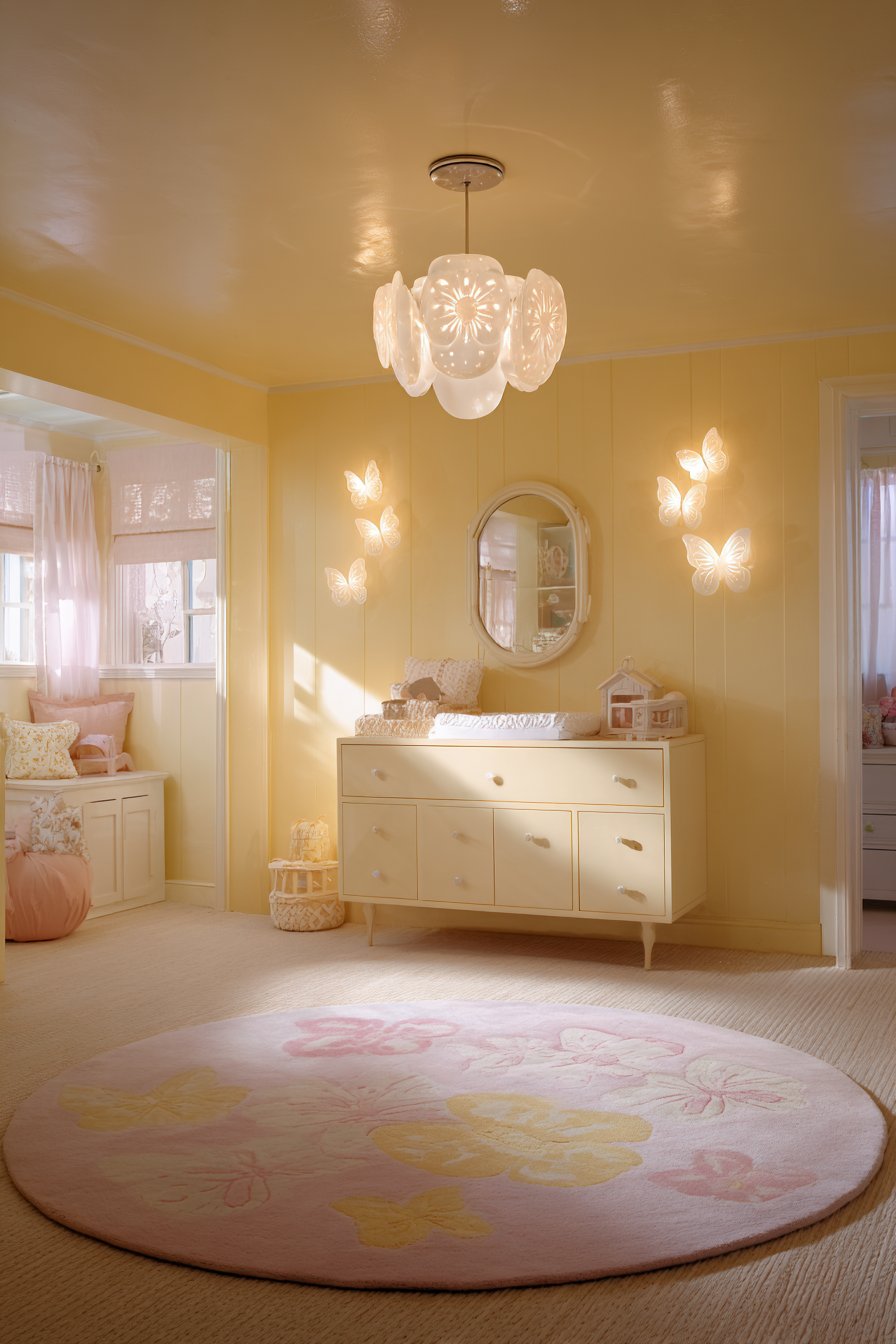
Wall sconces with butterfly-shaped backplates flank the dresser against one wall. The paired lighting provides task illumination for changing and dressing activities. Soft butter yellow walls reflect the light beautifully throughout the day. The color choice creates inherently cheerful, sunny atmosphere regardless of weather outside.
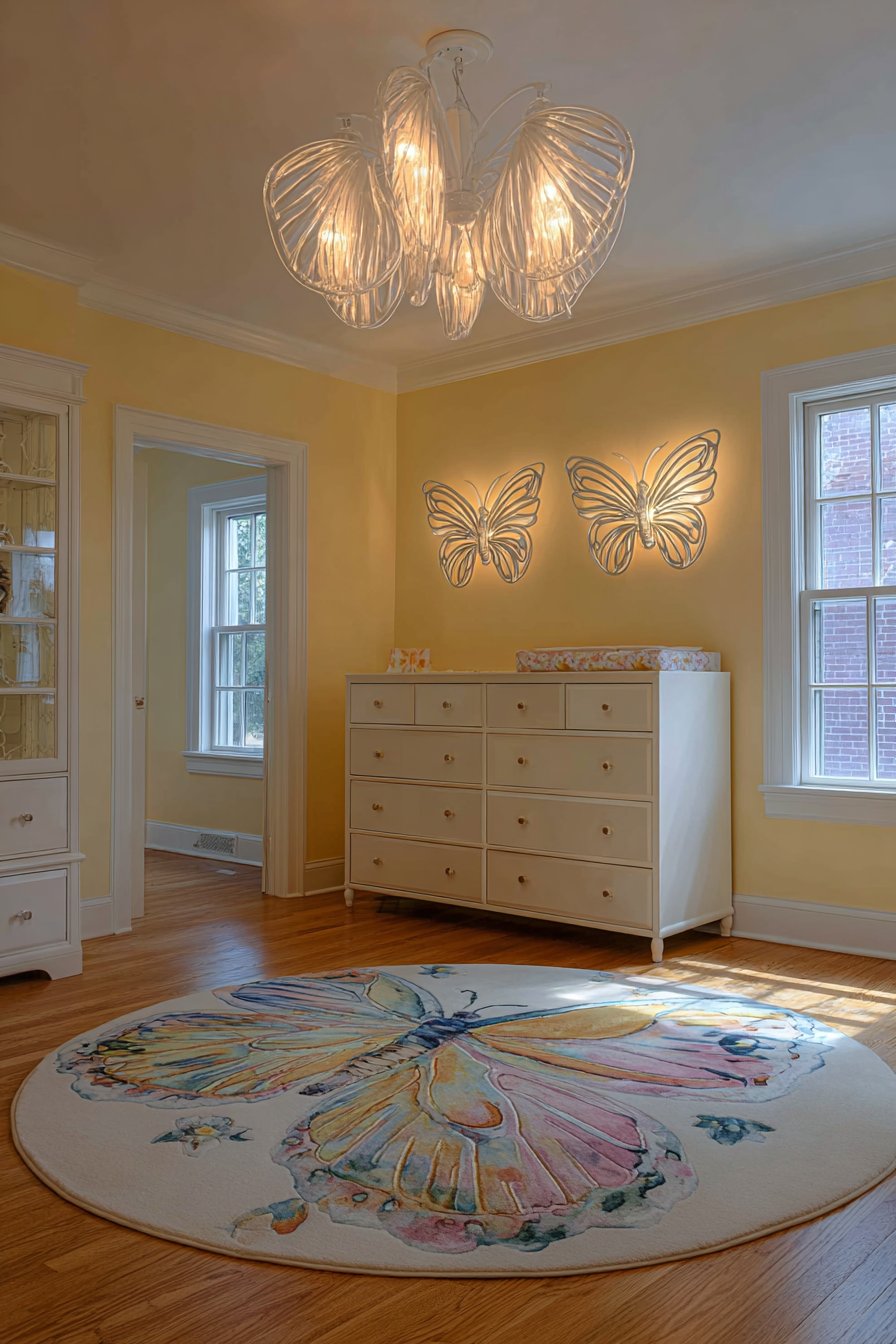
Evening photography captures the room with lighting fixtures illuminated showing their functional beauty. The butterfly-shaped fixtures integrate theme while serving essential practical purposes. The layered lighting approach provides ambient, task, and accent illumination appropriately. The fixture quality elevates the butterfly motif to sophisticated design element.
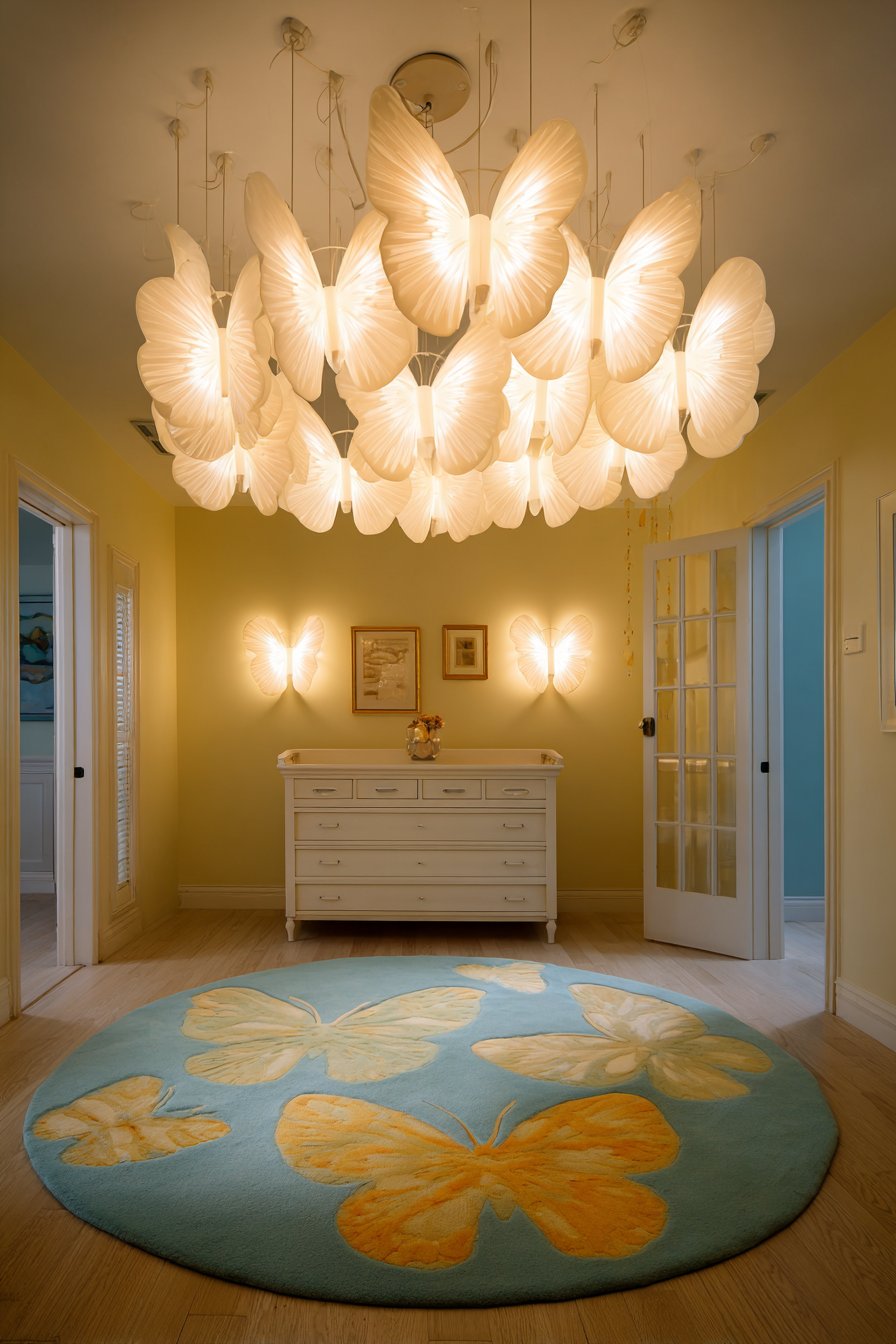
The lighting design demonstrates how functional elements become decorative opportunities. The butterfly-shaped shades and backplates maintain theme without juvenile appearance. The butter yellow walls enhance the lighting effects through reflective properties.
Key Design Tips:
- Choose statement light fixtures that serve both functional and decorative purposes
- Install wall sconces for task lighting at changing stations and dressers
- Paint walls in light-reflective colors to maximize natural and artificial illumination
- Layer multiple light sources for flexibility during day and nighttime routines
- Select butterfly-shaped elements in glass and metal for sophisticated theme integration
15. Organized Dresser Top Changing Vignette
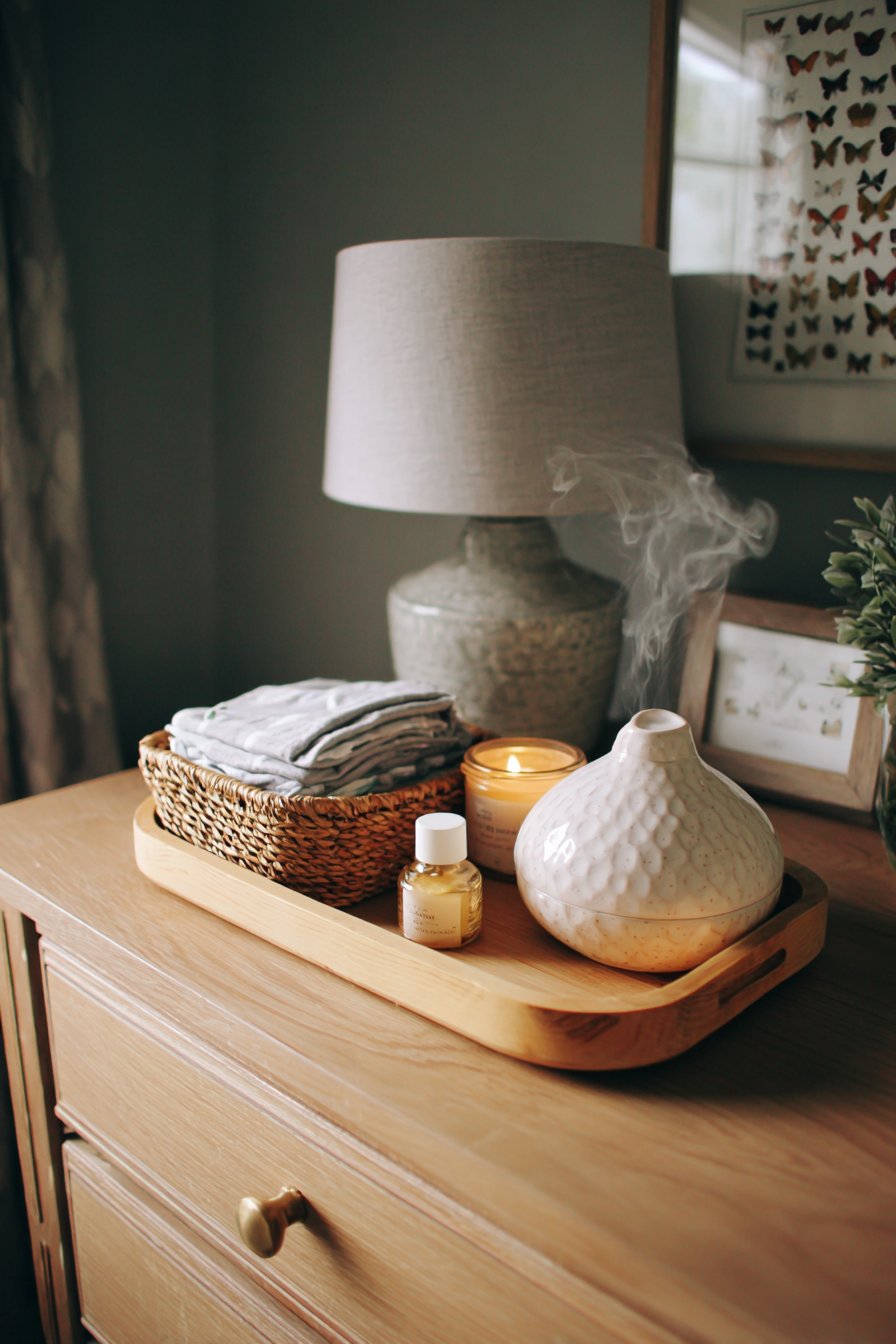
A wooden changing tray with raised edges contains neatly folded cloth diapers. A wicker basket holds creams and lotions within easy reach. A small diffuser releases gentle mist adding humidity and subtle scent. Behind the changing area, a framed shadow box displays real preserved butterfly specimens. The scientific arrangement adds educational element to functional space.
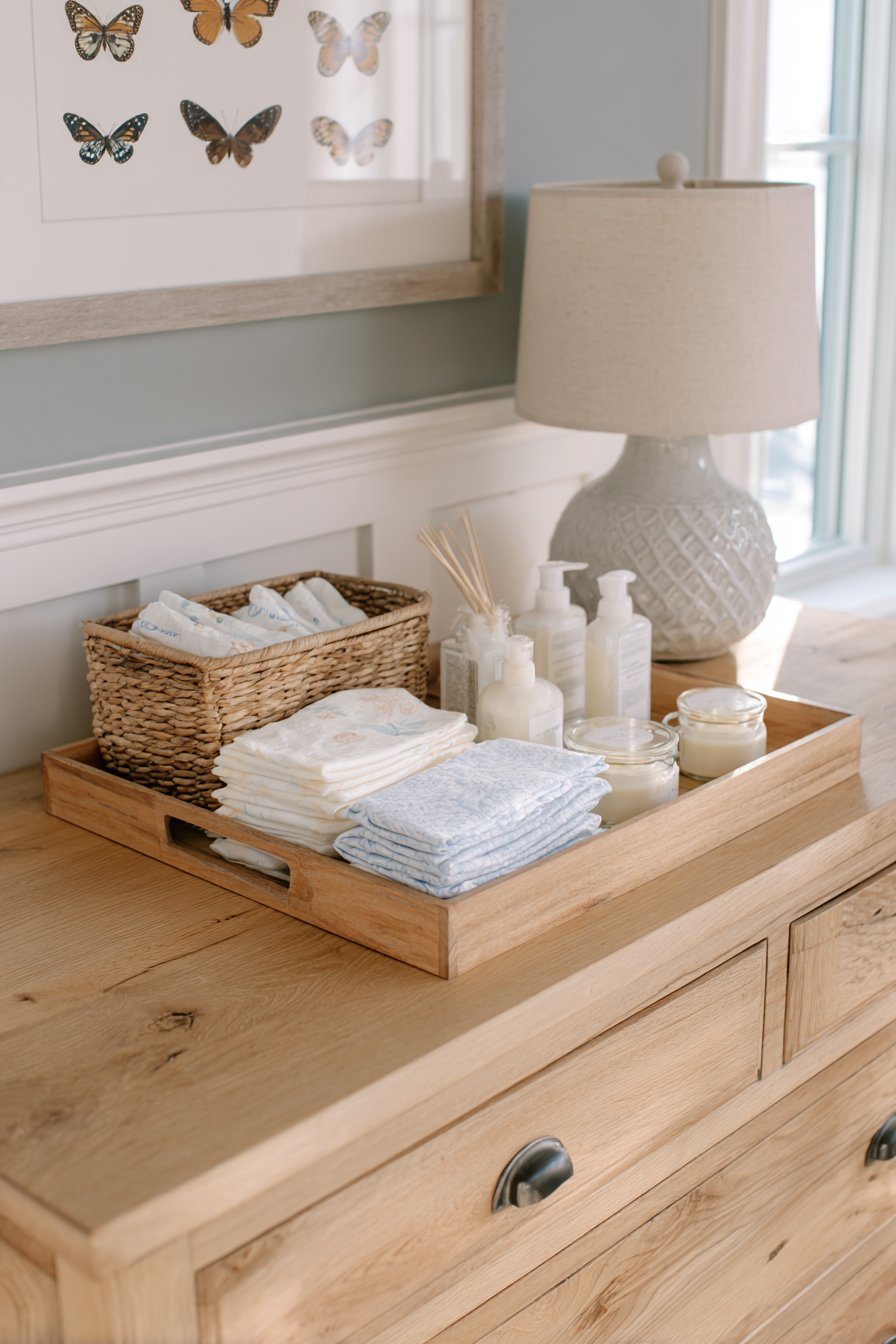
A small table lamp with ceramic base features raised butterfly pattern. The focused light assists with nighttime diaper changes and clothing selection. The dresser surface showcases beautiful natural oak with visible grain patterns. Soft grey walls with white trim provide clean backdrop for the organized vignette.
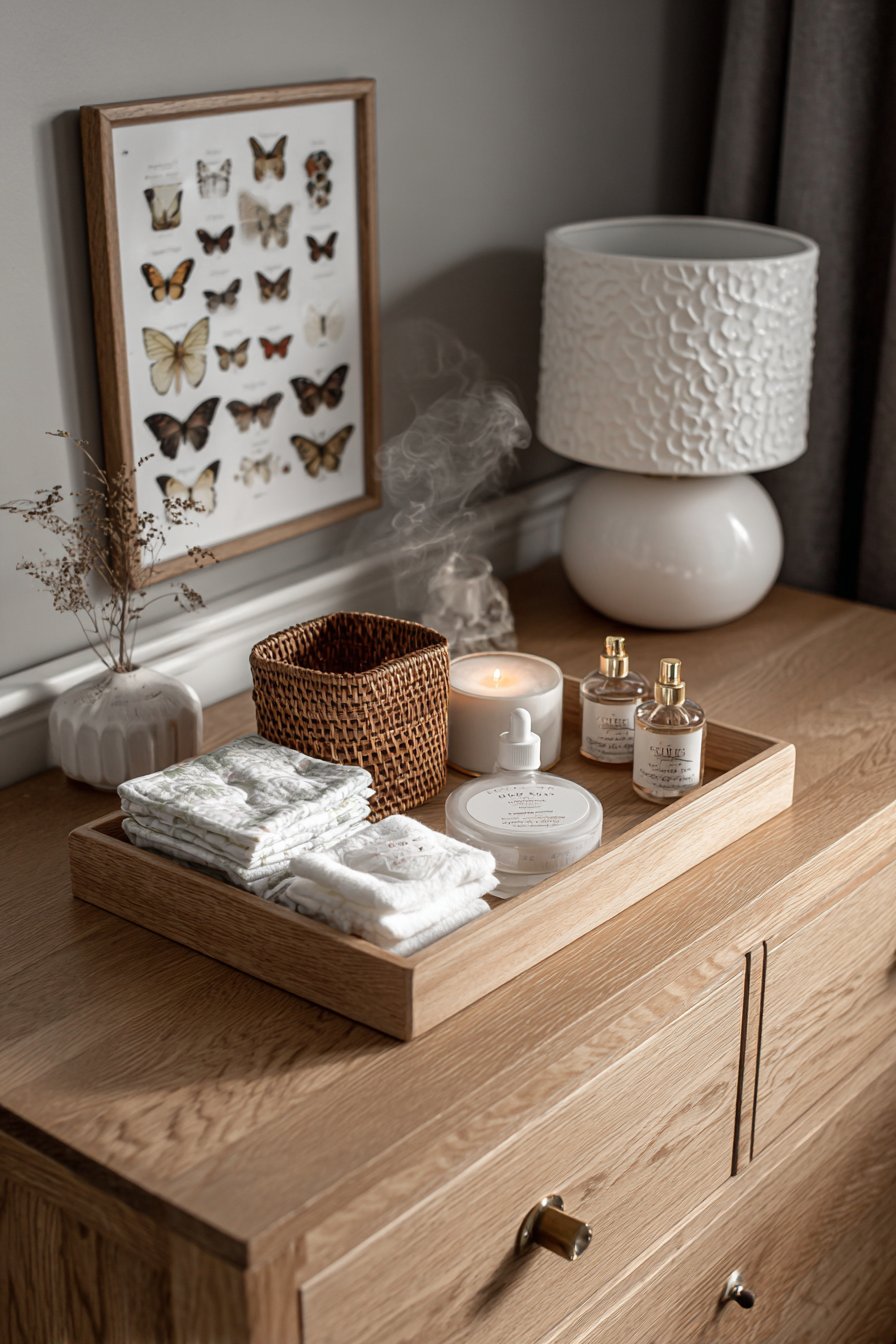
The close-up perspective emphasizes the practical organization and functional beauty. Every element serves purpose while contributing to overall aesthetic. The preserved specimens connect the theme to natural science and discovery. The organization system makes caregiving tasks smoother during stressful moments.
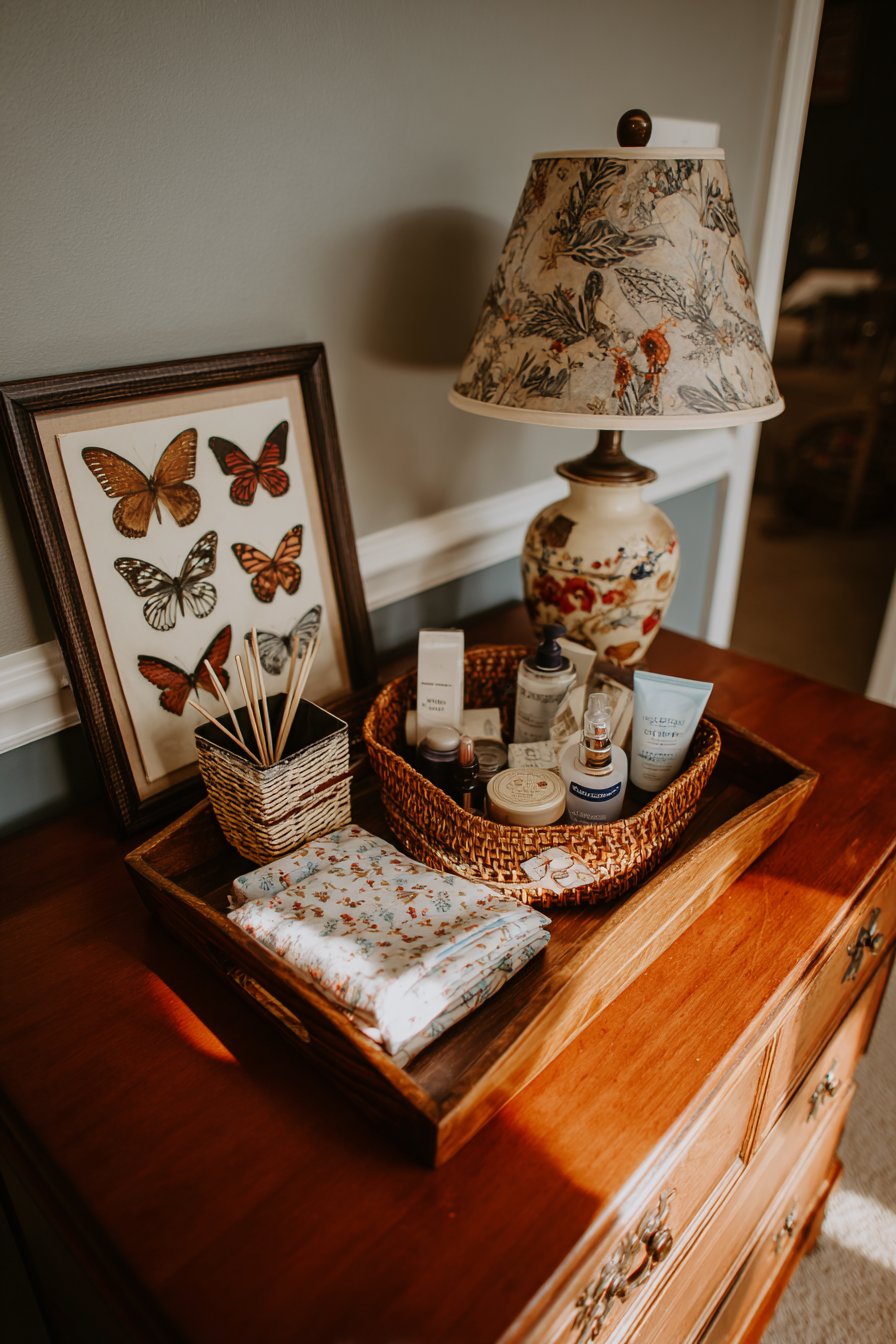
The dresser top demonstrates that even utilitarian spaces deserve design consideration. The combination of function and beauty creates pleasant environment for necessary tasks. The natural materials and thoughtful organization reduce visual clutter and mental stress.
Key Design Tips:
- Use raised-edge trays to contain changing supplies and prevent rolling items
- Display preserved butterfly specimens in shadow boxes for scientific sophistication
- Choose ceramic lamps with textured patterns for subtle theme reinforcement
- Organize supplies in attractive baskets that remain accessible during changes
- Select natural wood furniture with visible grain for warmth and character
16. Custom Built-In with Pattern-Backed Shelving
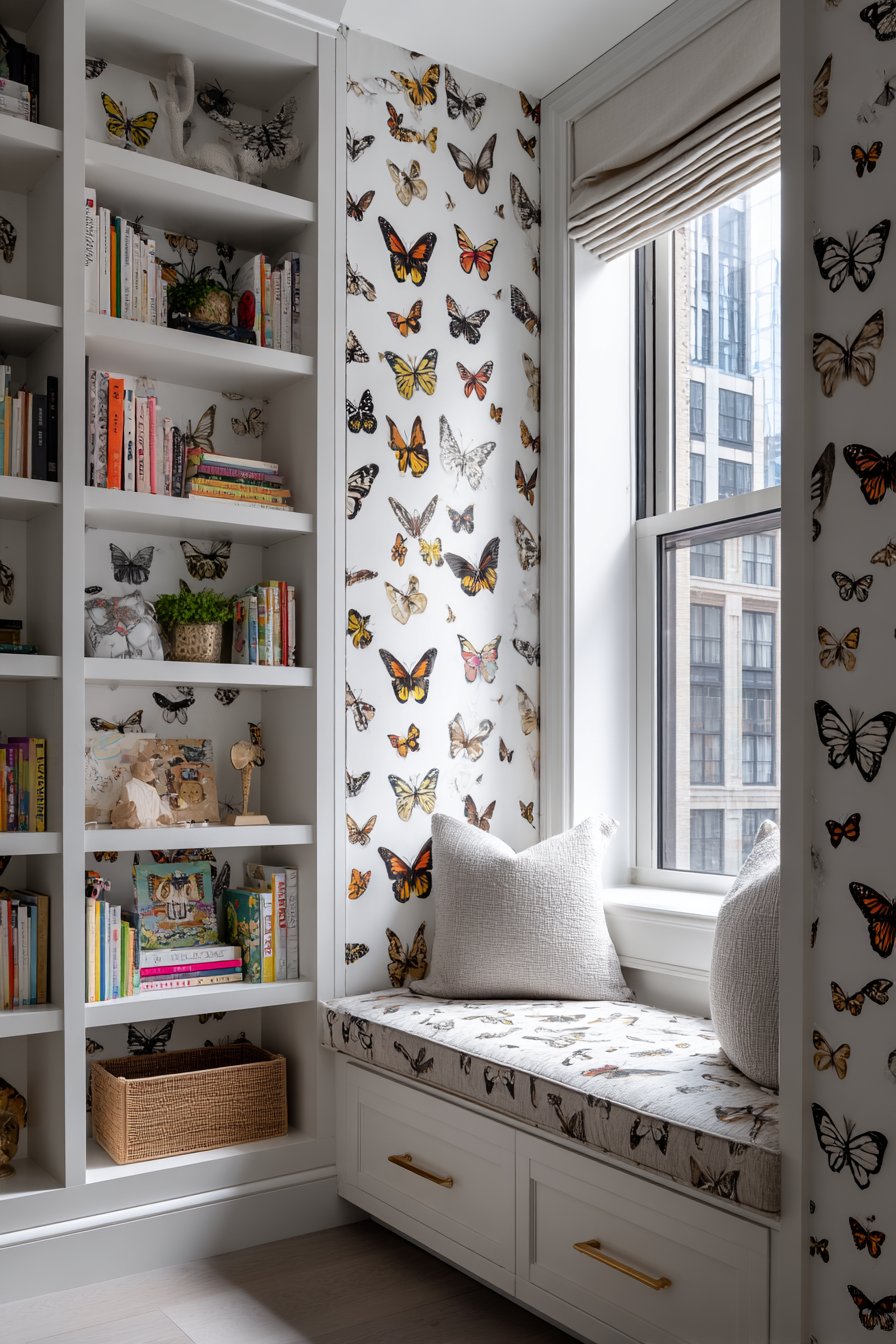
A custom-built bookshelf unit painted soft white features varied wallpaper backing each shelf section. The different coordinating butterfly patterns create visual interest within uniform structure. The shelves display children’s books, decorative butterfly objects, and small plants. Woven baskets provide toy storage maintaining organized appearance.
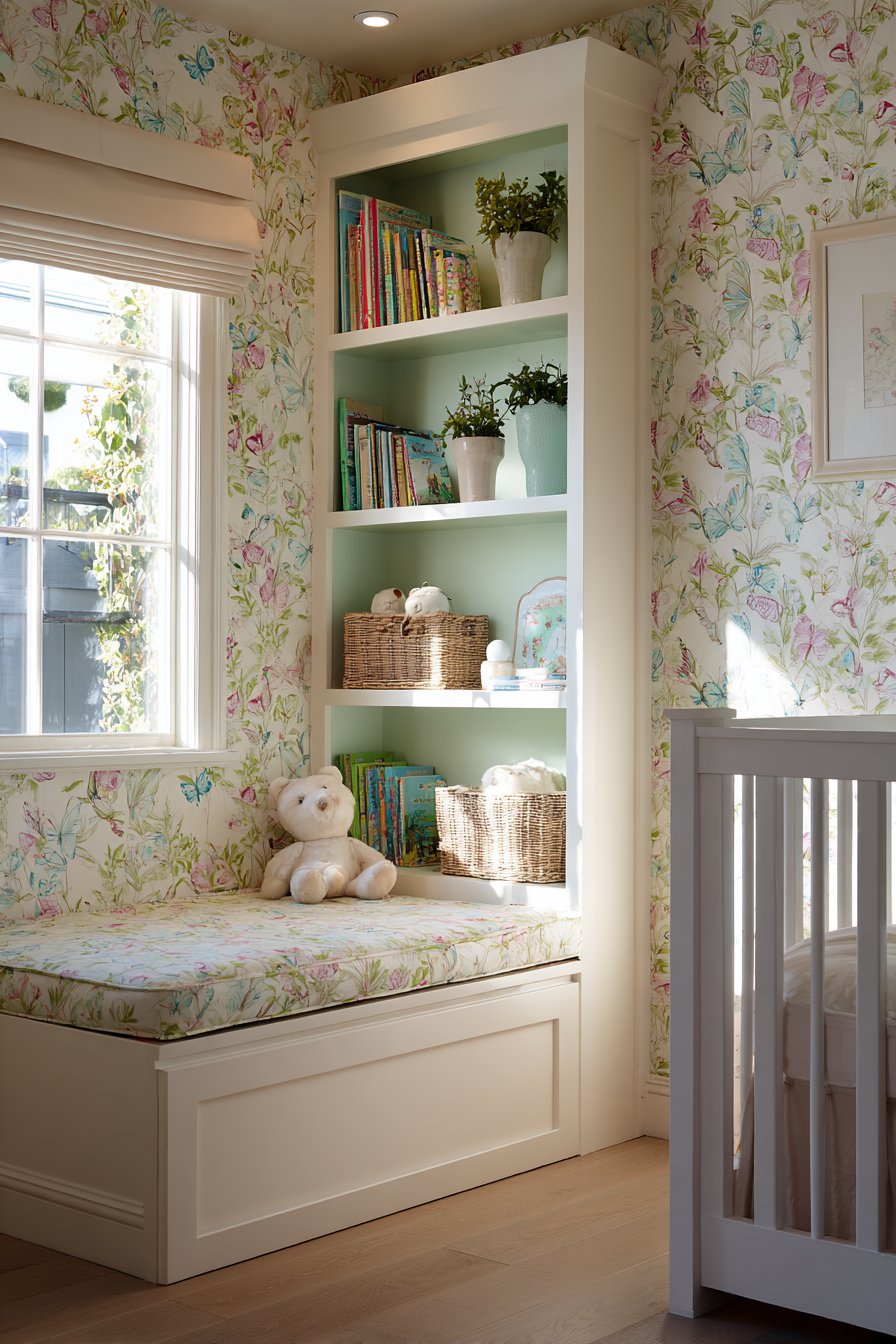
A cushioned bench seat with lift-up storage integrates at the bottom. The upholstered surface features durable fabric with abstract butterfly wing pattern. The built-in provides extensive storage while becoming architectural feature of the room. Adjacent walls show portions of coordinating crib and simple window treatments.
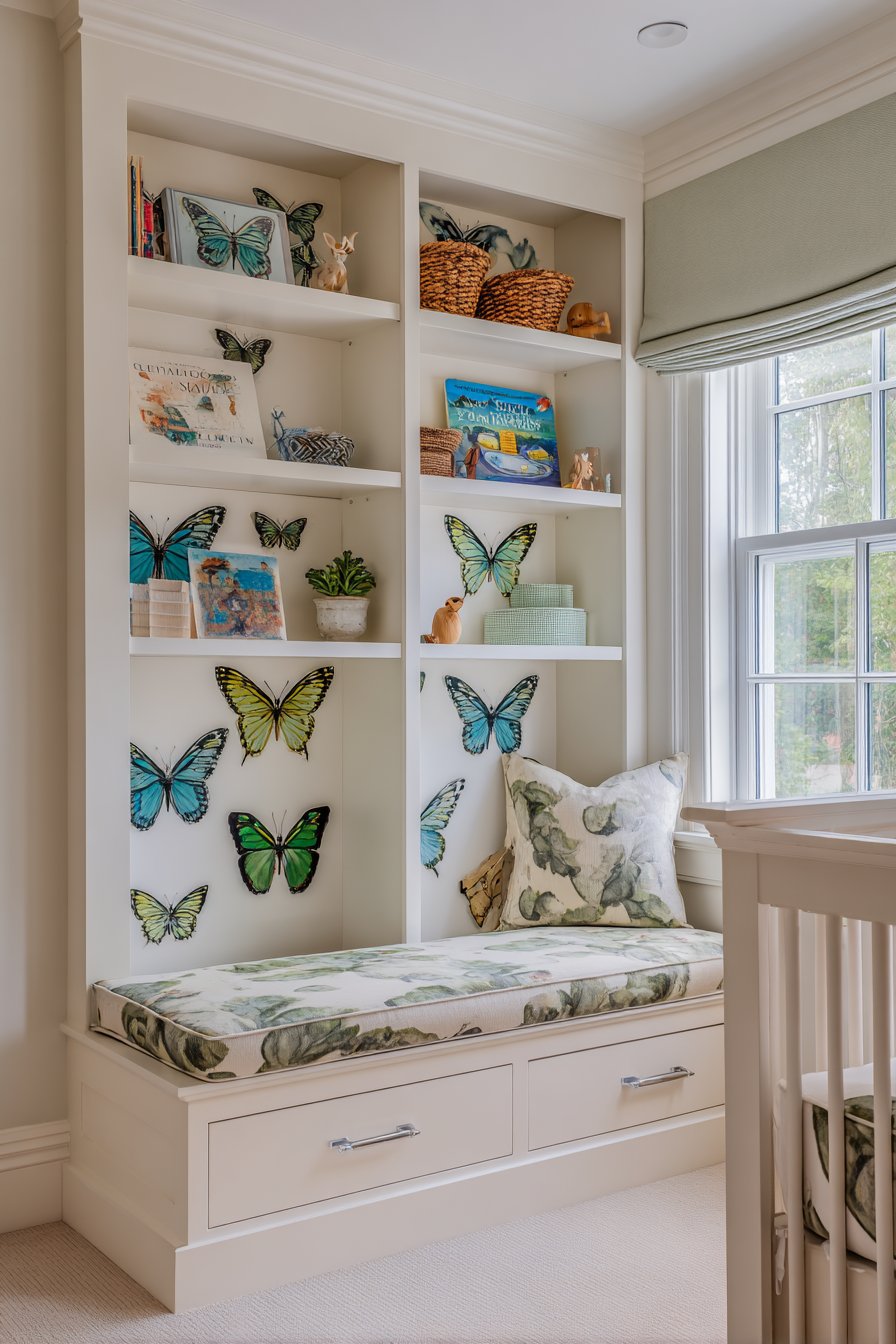
Natural afternoon light illuminates the built-in highlighting the varied wallpaper patterns. The custom carpentry demonstrates investment in permanent, quality solutions for nursery storage. The pattern-backed shelves add depth and dimension to otherwise flat built-in surface. The bench provides comfortable reading spot that doubles as storage chest.
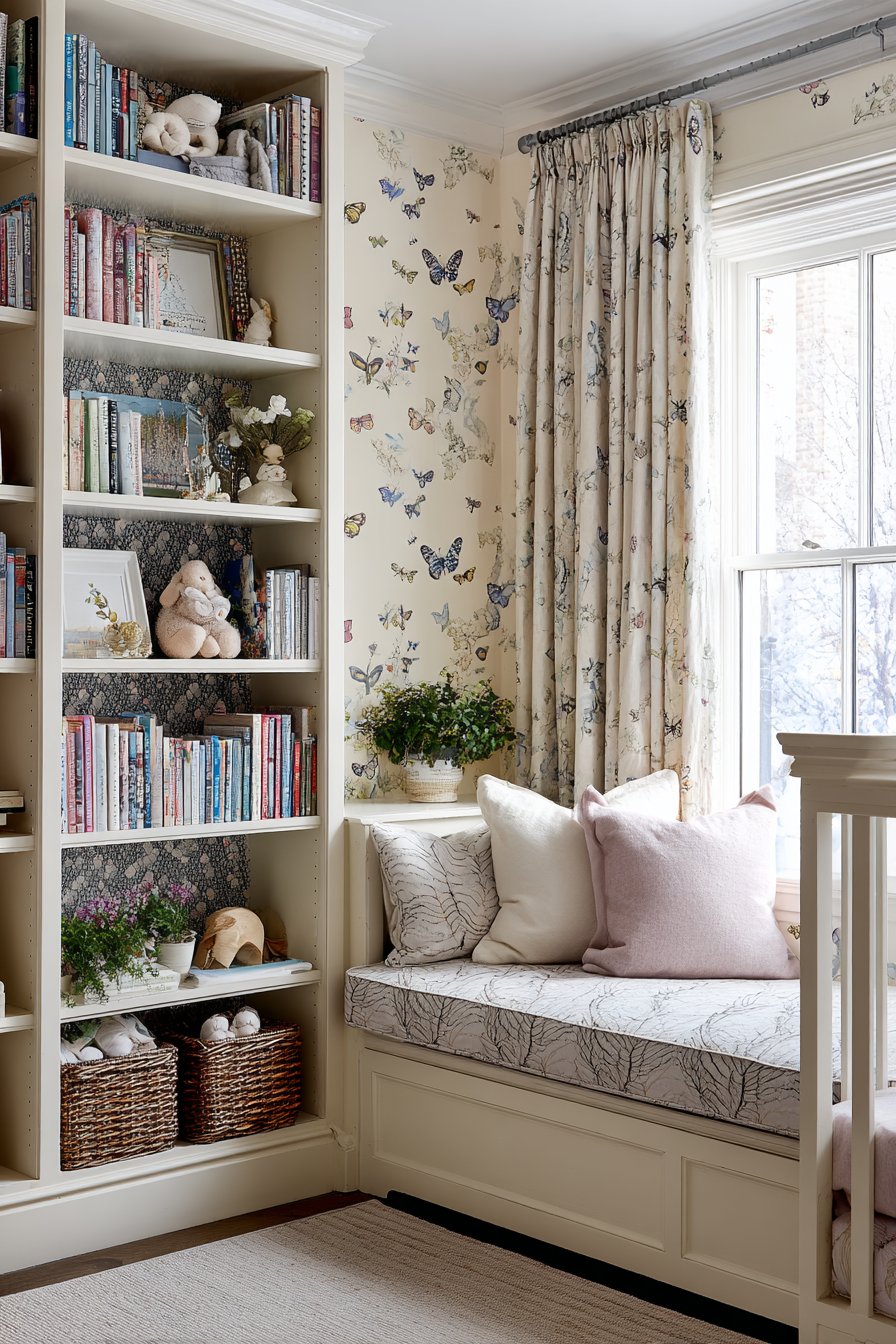
The built-in approach maximizes storage while minimizing furniture footprint. The custom solution fits the specific room dimensions perfectly. The butterfly wallpaper backing cleverly integrates theme into functional storage piece.
Key Design Tips:
- Install custom built-ins for permanent, space-efficient storage solutions
- Back shelves with coordinating wallpaper patterns for visual depth and interest
- Include cushioned bench seating with hidden storage underneath
- Display mix of books, plants, and decorative objects for curated appearance
- Choose abstract butterfly patterns for sophisticated, non-juvenile theme interpretation
17. Montessori Play Corner with Accessible Storage
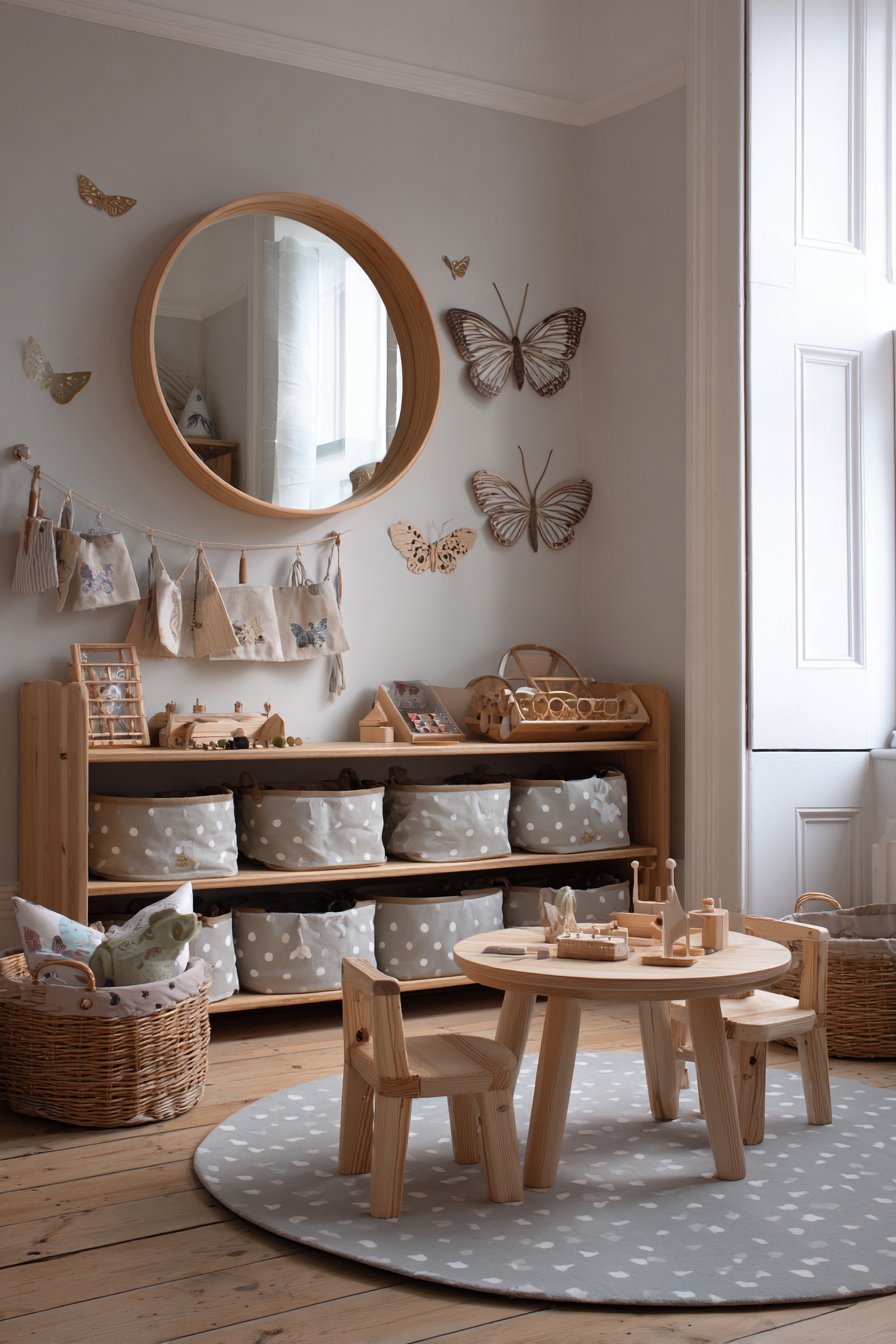
A low Montessori-style activity table in natural wood sits with two small chairs. The child-sized furniture positions on washable play mat with subtle butterfly pattern. A pegboard mounted at child height displays butterfly-shaped hooks holding play silks. Small bags of toys and sensory items hang within toddler’s reach.
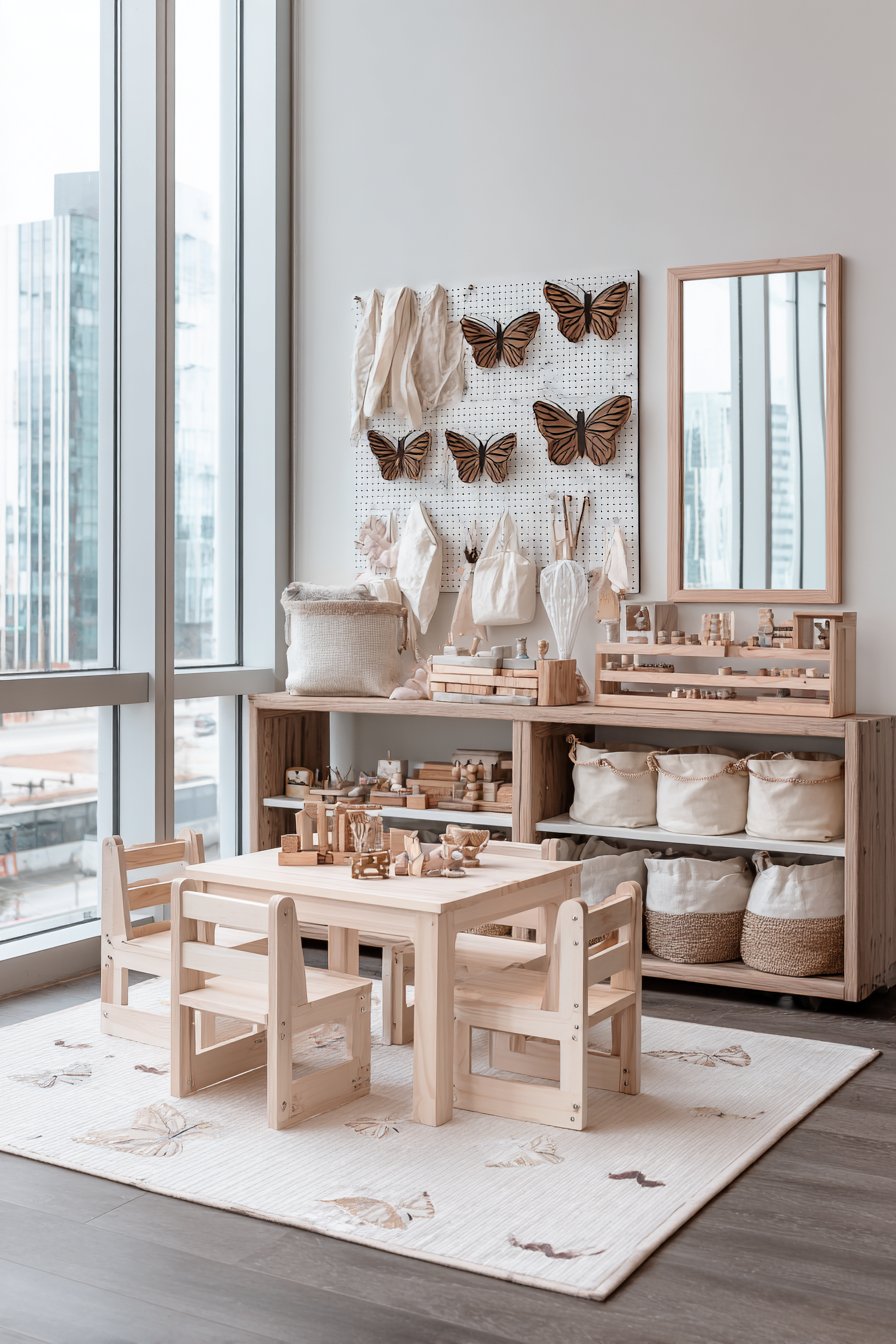
A low mirror with safety backing reflects the play area visually expanding the space. Open wooden shelving displays toys in organized baskets with butterfly fabric liners. The child-focused design encourages independent play and exploration. Natural light from nearby window creates bright, inviting atmosphere for activity.
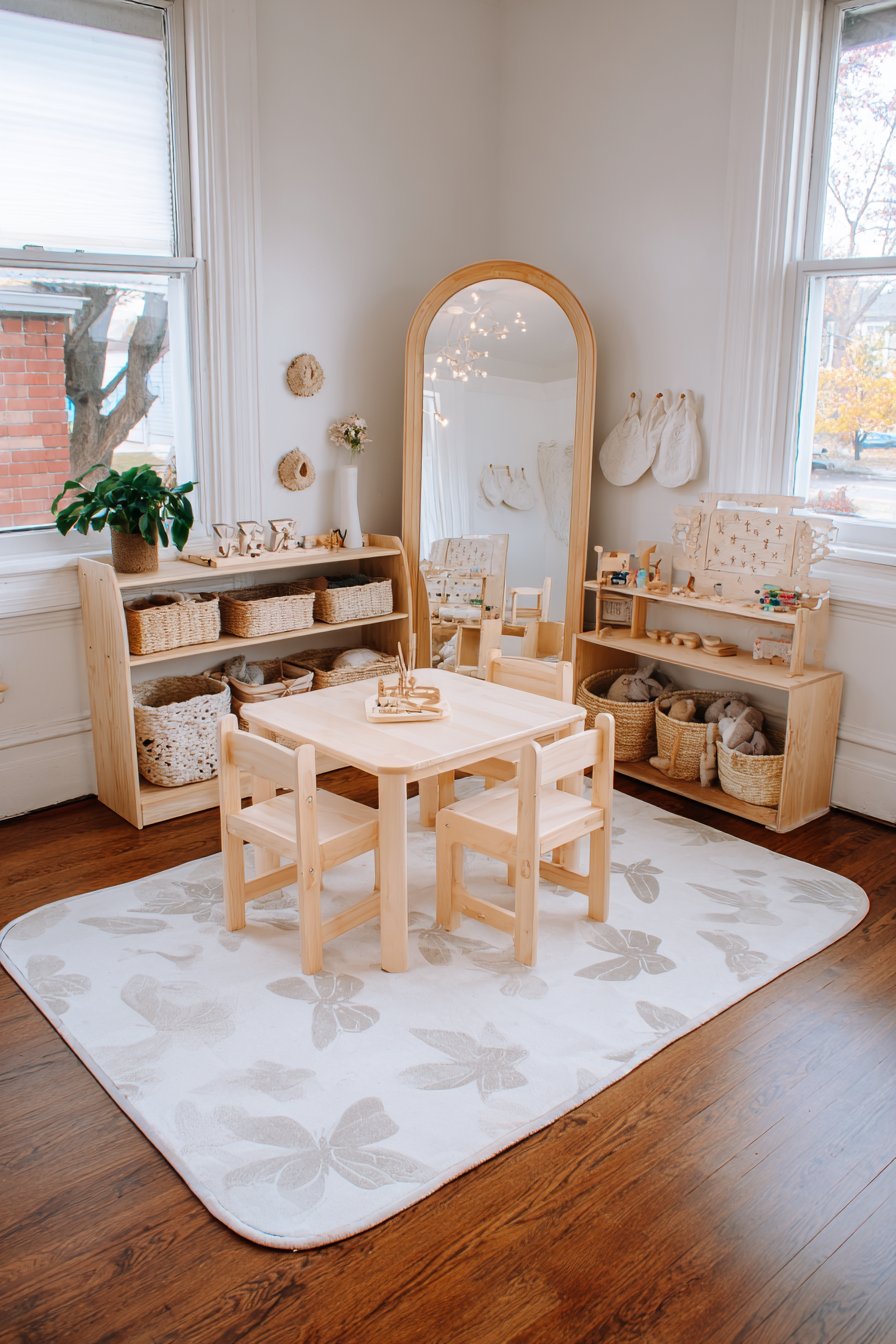
The play corner demonstrates commitment to child-led learning and development. Everything positions at appropriate height for small hands to access independently. The butterfly theme integrates through hooks, mat pattern, and fabric liners. The organization system teaches responsibility while maintaining attractive appearance.
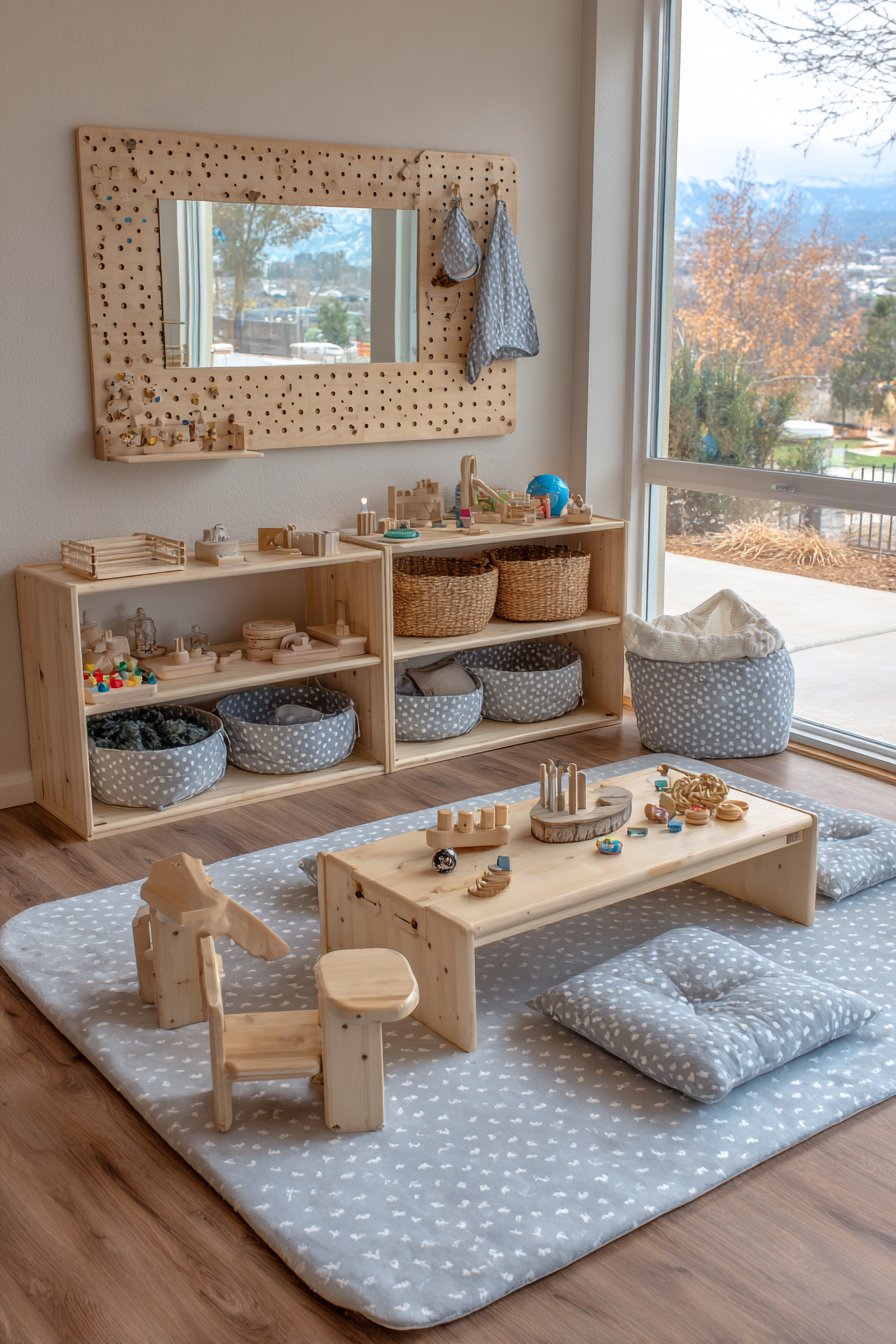
The Montessori approach respects child’s capabilities and natural curiosity. The accessible storage empowers toddlers to select and return toys independently. The play corner becomes dedicated space for creativity and skill development.
Key Design Tips:
- Position all play furniture and storage at child’s height for independent access
- Install safety-backed mirrors to expand space and encourage self-recognition
- Use washable play mats under activity areas for easy cleaning
- Mount pegboards at child level for flexible, evolving storage needs
- Choose fabric basket liners in theme patterns for cohesive, organized appearance
18. Ombre Painted Butterfly Flight Path
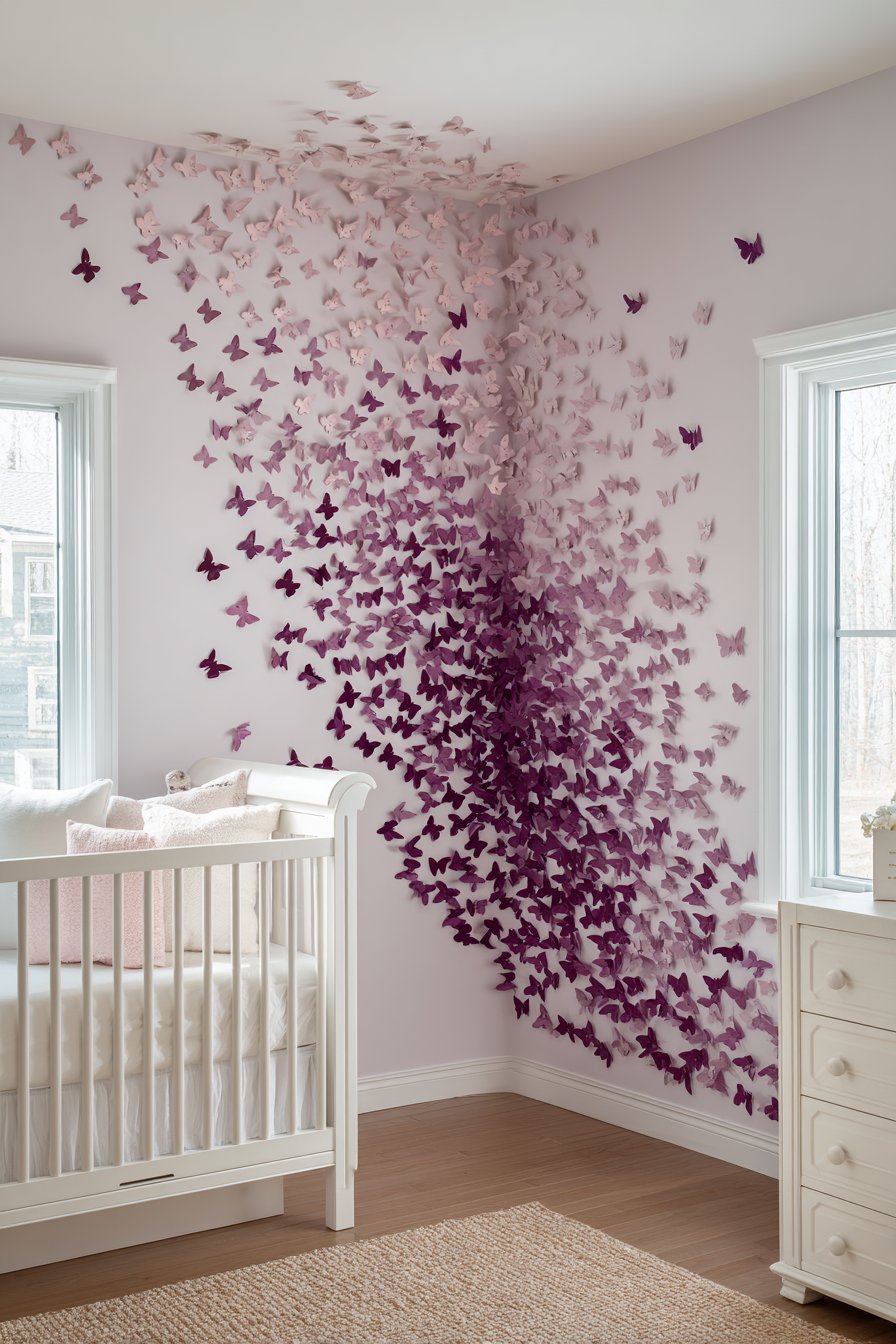
Individual butterfly silhouettes transition from deep plum to soft lavender to pale pink. The ombre painted butterflies create sense of upward movement across the accent wall. The hand-painted technique demonstrates artistic skill and personal touch. The butterflies appear to take flight from lower left to upper right corner.
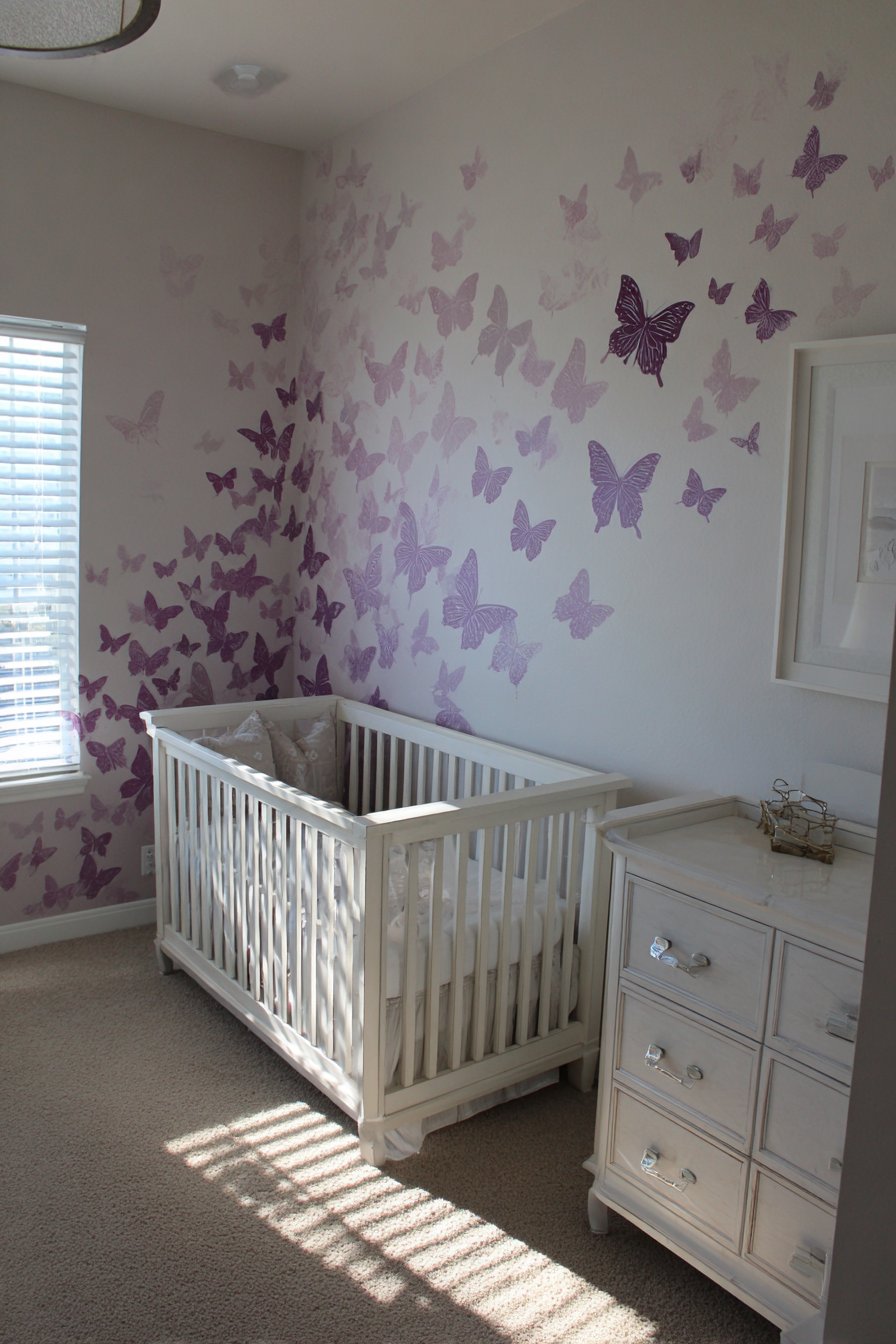
A simple white Jenny Lind style crib with spindle details sits against adjacent wall. The classic crib design allows the painted butterflies to remain undisputed focal point. A neutral jute rug grounds the space with natural texture. A simple white dresser completes the minimal furniture selection.
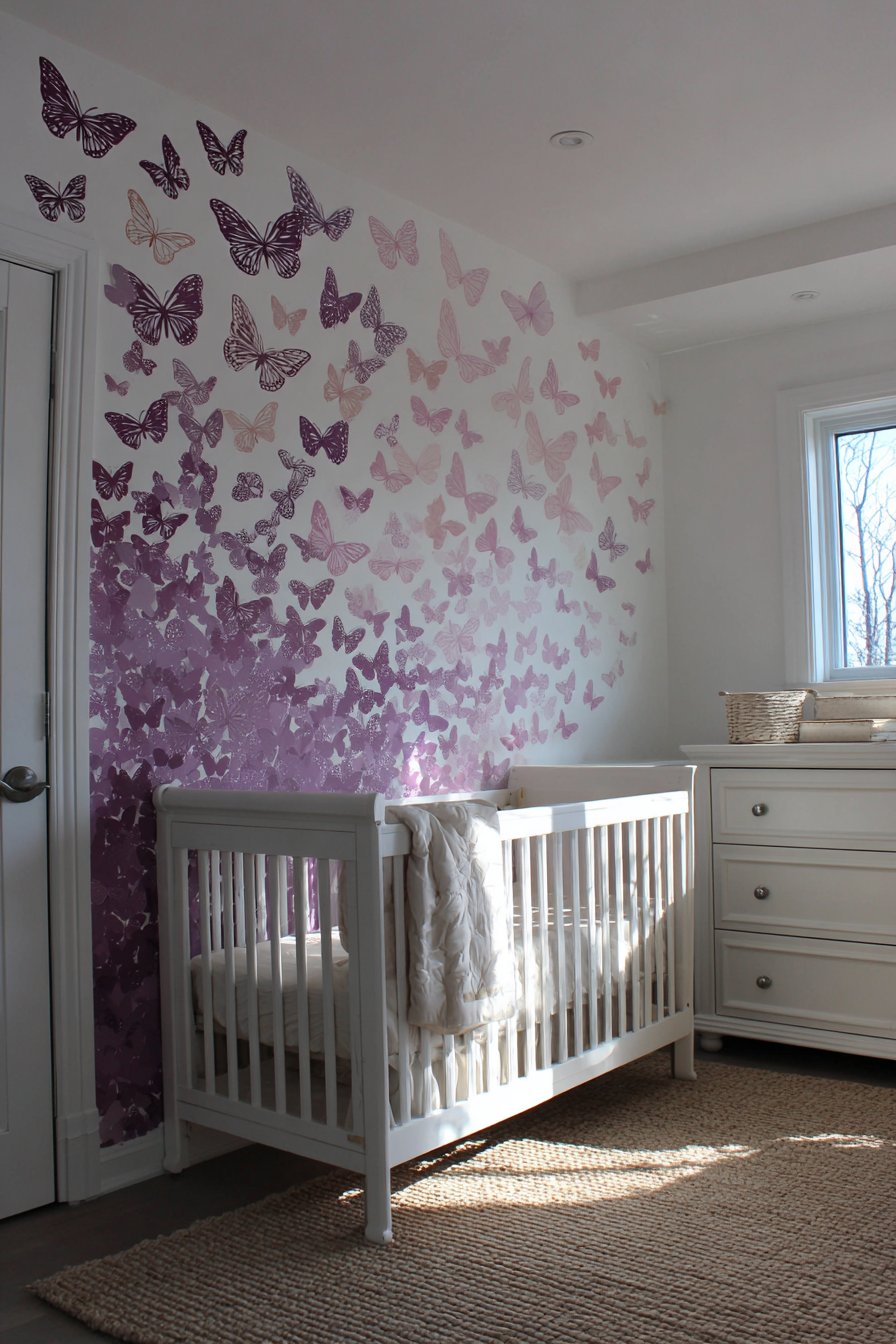
Soft morning light from window illuminates the painted wall beautifully. The subtle color gradations show clearly in natural lighting conditions. The hand-painted approach creates one-of-a-kind artwork that grows with the child. The ombre technique adds sophistication elevating butterfly theme beyond simple stencils.
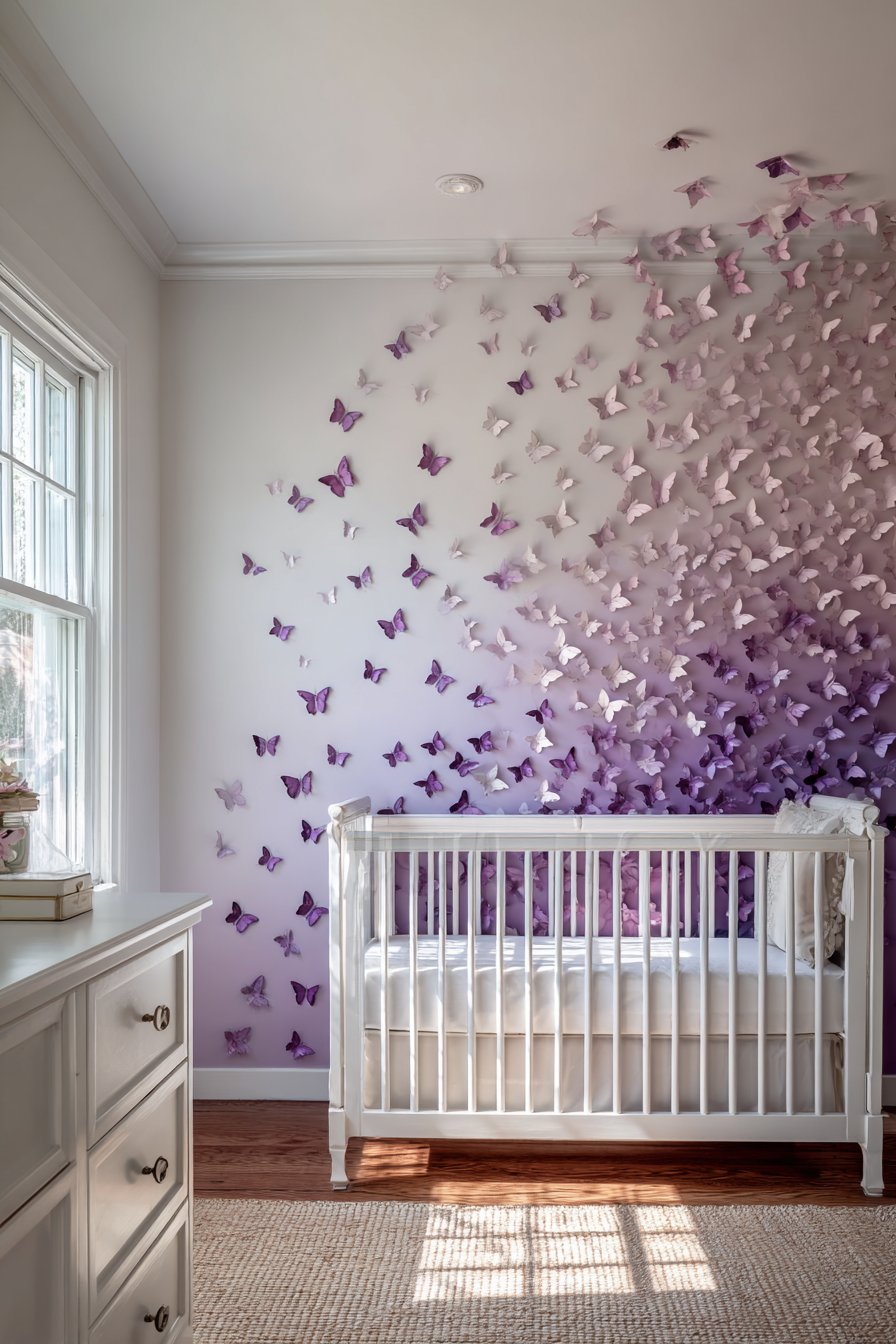
The painted wall demonstrates how artistic skill creates impressive nursery impact. The gradient color transition requires patience but achieves professional results. The minimal furniture selection keeps focus on the artistic wall treatment.
Key Design Tips:
- Create ombre color transitions that suggest natural movement and direction
- Hand-paint butterflies for unique, personalized nursery artwork
- Keep furniture simple when featuring dramatic painted wall treatments
- Position painted accent walls where morning light enhances color transitions
- Choose classic white furniture that adapts as painted walls eventually change
19. Romantic Tulle Canopy with Resting Butterflies
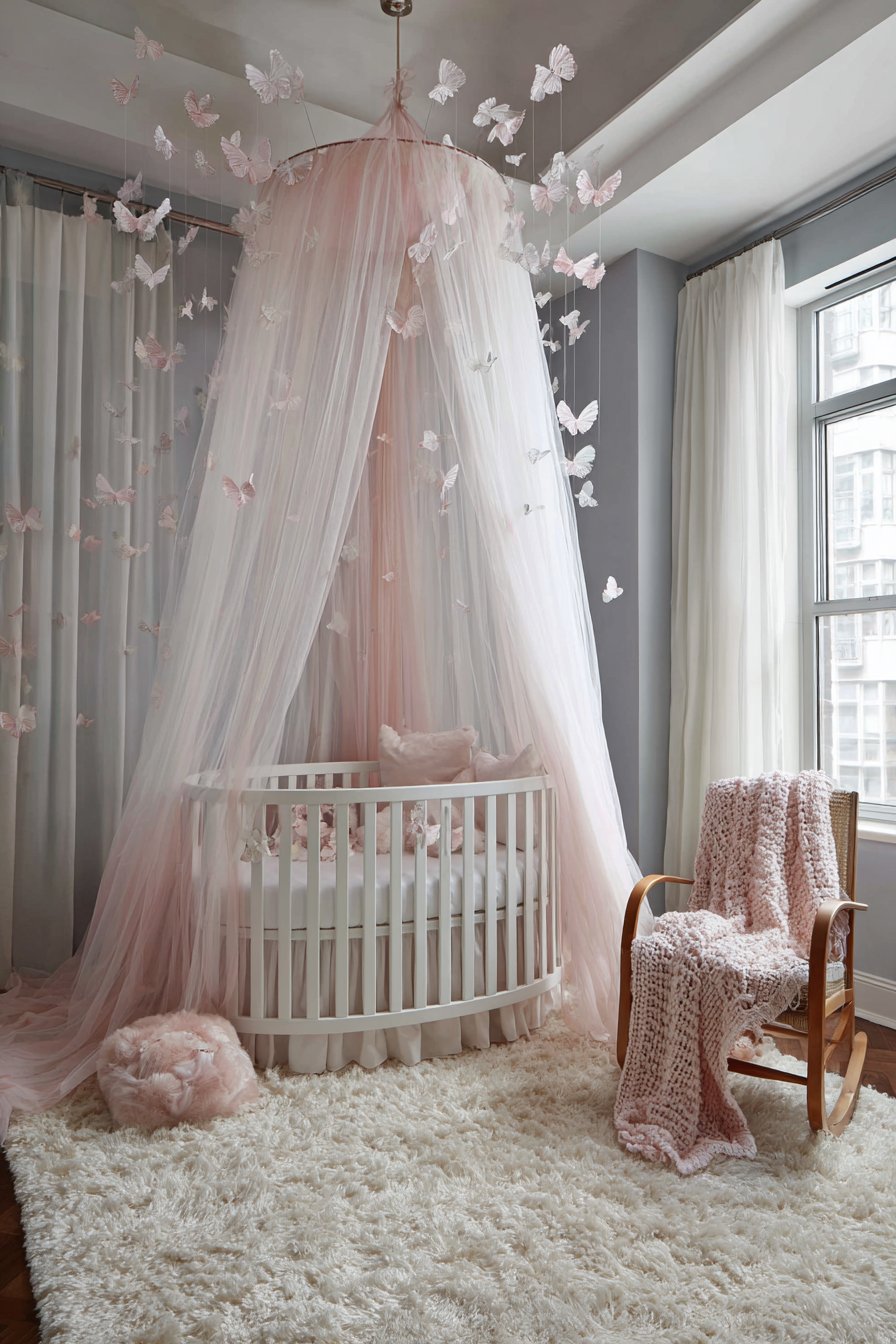
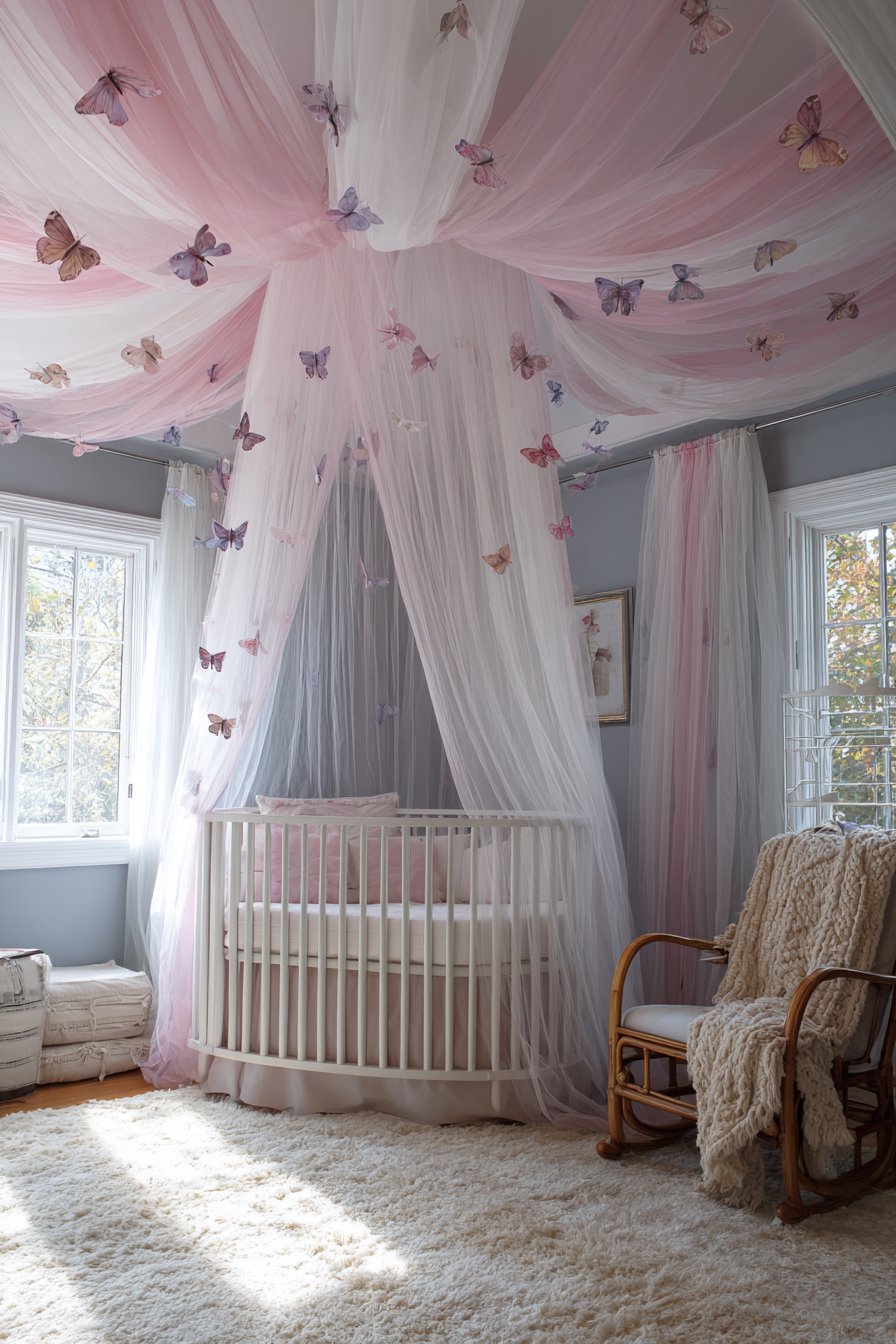
Layers of sheer tulle in soft pink and ivory gather at ceiling-mounted hook. The fabric drapes down around white oval crib creating romantic cocoon effect. Small fabric butterflies attach to tulle at various points appearing to rest. The flowing fabric creates dreamy atmosphere while maintaining proper ventilation.
The floor beneath features plush cream area rug with high pile providing soft landing. A vintage-style wooden rocking chair with curved arms sits nearby. A hand-knitted butterfly blanket drapes over the chair adding handcrafted warmth. Soft grey-blue walls provide calm backdrop for the ethereal canopy.
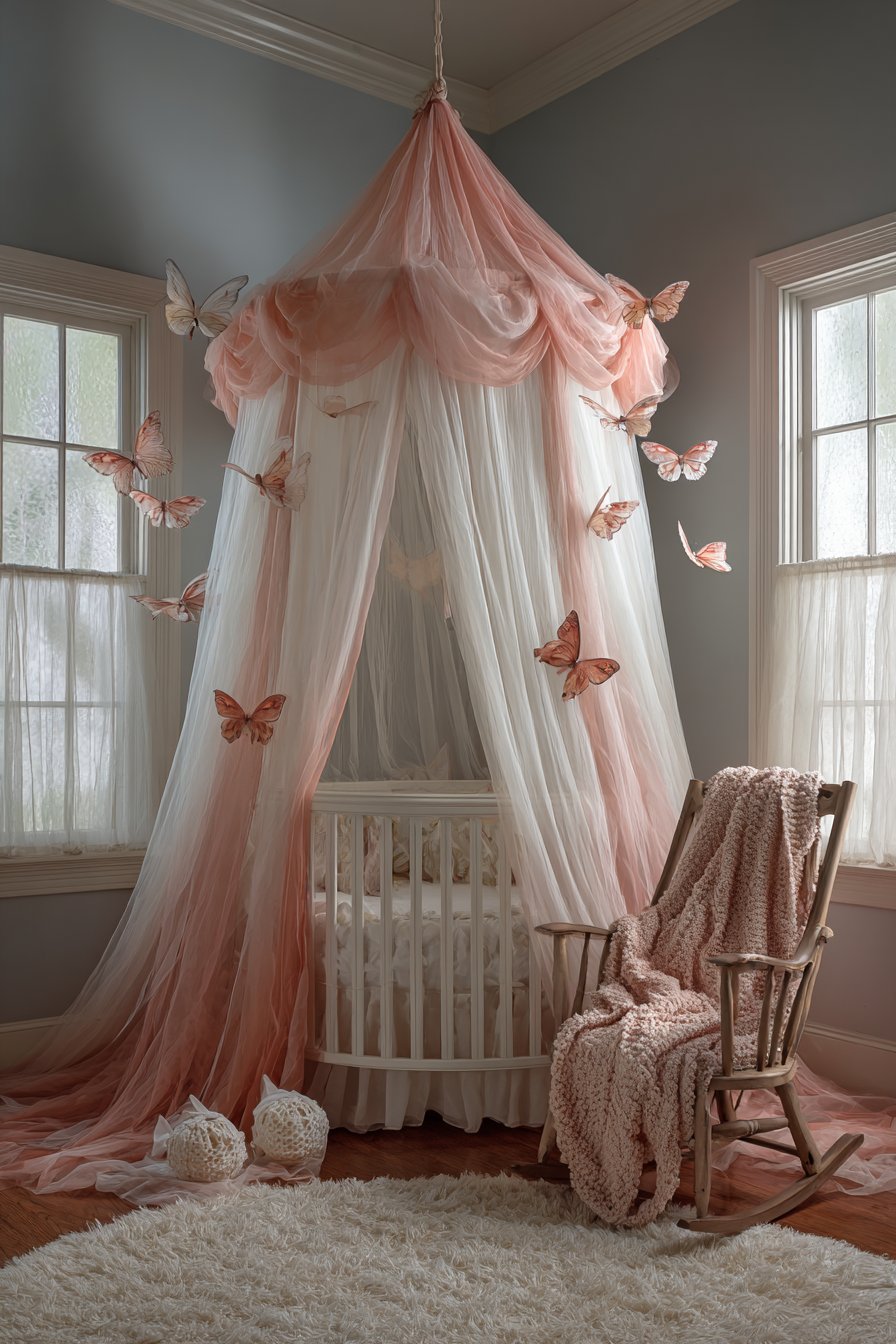
Natural window light filters through the tulle canopy creating magical lighting quality. The multiple fabric layers diffuse the light softly throughout the sleeping area. The romantic interpretation suits parents drawn to classic, feminine aesthetics. The tulle installation requires minimal tools but creates maximum visual impact.
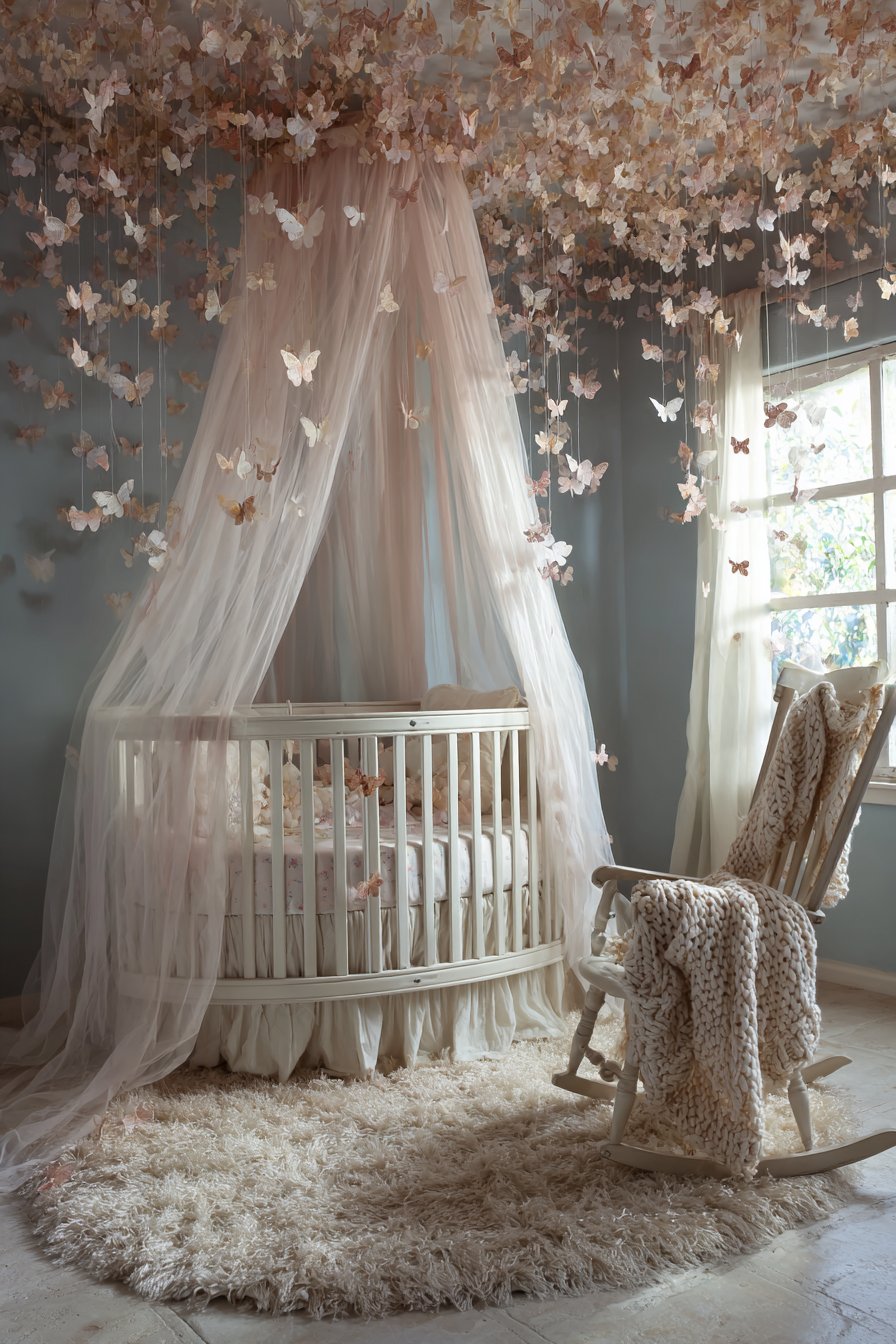
The canopy design adds vertical interest and creates defined sleeping zone. The vintage rocking chair brings nostalgic charm and practical functionality. The hand-knitted blanket represents lasting keepsake potential future generations might treasure.
Key Design Tips:
- Install ceiling canopies with proper hardware ensuring safety and stability
- Layer multiple tulle colors for dimensional, romantic fabric effects
- Attach butterflies to fabric with secure stitching or fabric adhesive
- Choose vintage furniture pieces for character and timeless appeal
- Position canopies to filter rather than block natural window light
20. Transitional Design for Growing Child
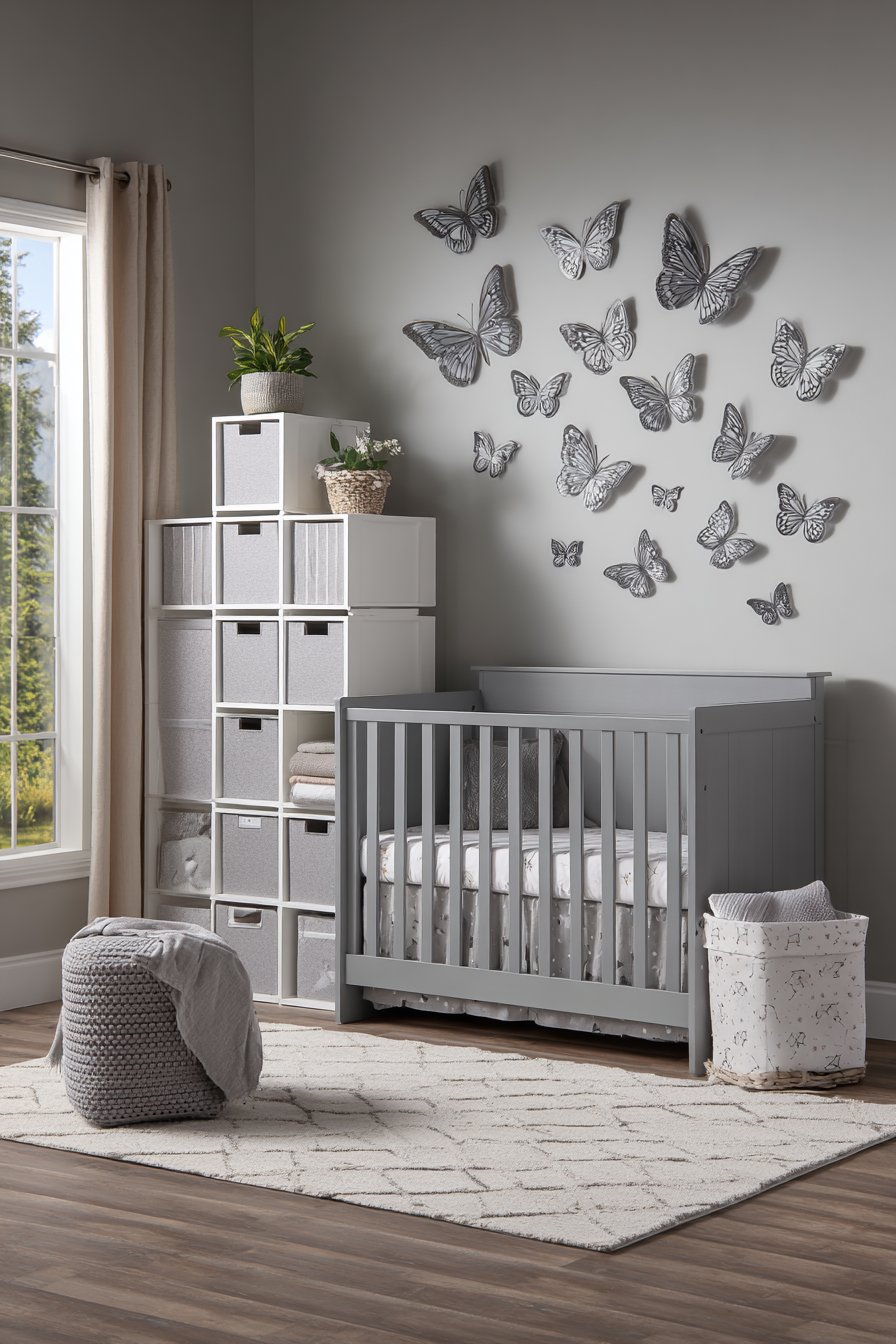
A convertible crib in modern grey finish transforms into toddler bed. The long-term furniture investment adapts as child grows and develops. Removable butterfly wall decals compose nature scene easily updated as preferences change. The flexible decor approach prevents costly redesigns during toddler years.
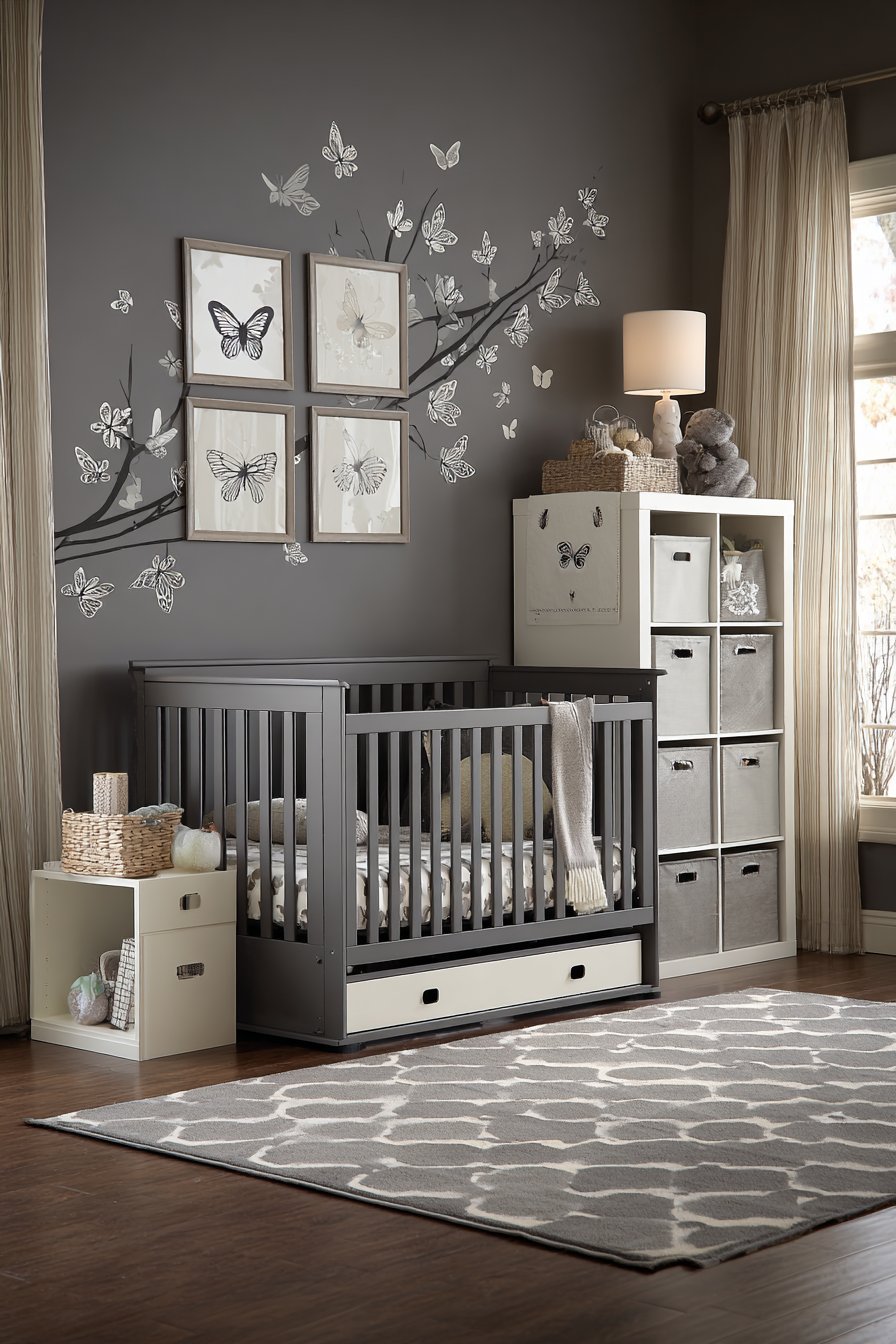
Modular storage system with cube organizers in white holds fabric bins. The bins feature coordinating butterfly prints providing color while maintaining organizational function. The reconfigurable system adapts as storage needs evolve from diapers to toys to books. An area rug in geometric pattern with subtle butterfly shapes provides sophisticated base.
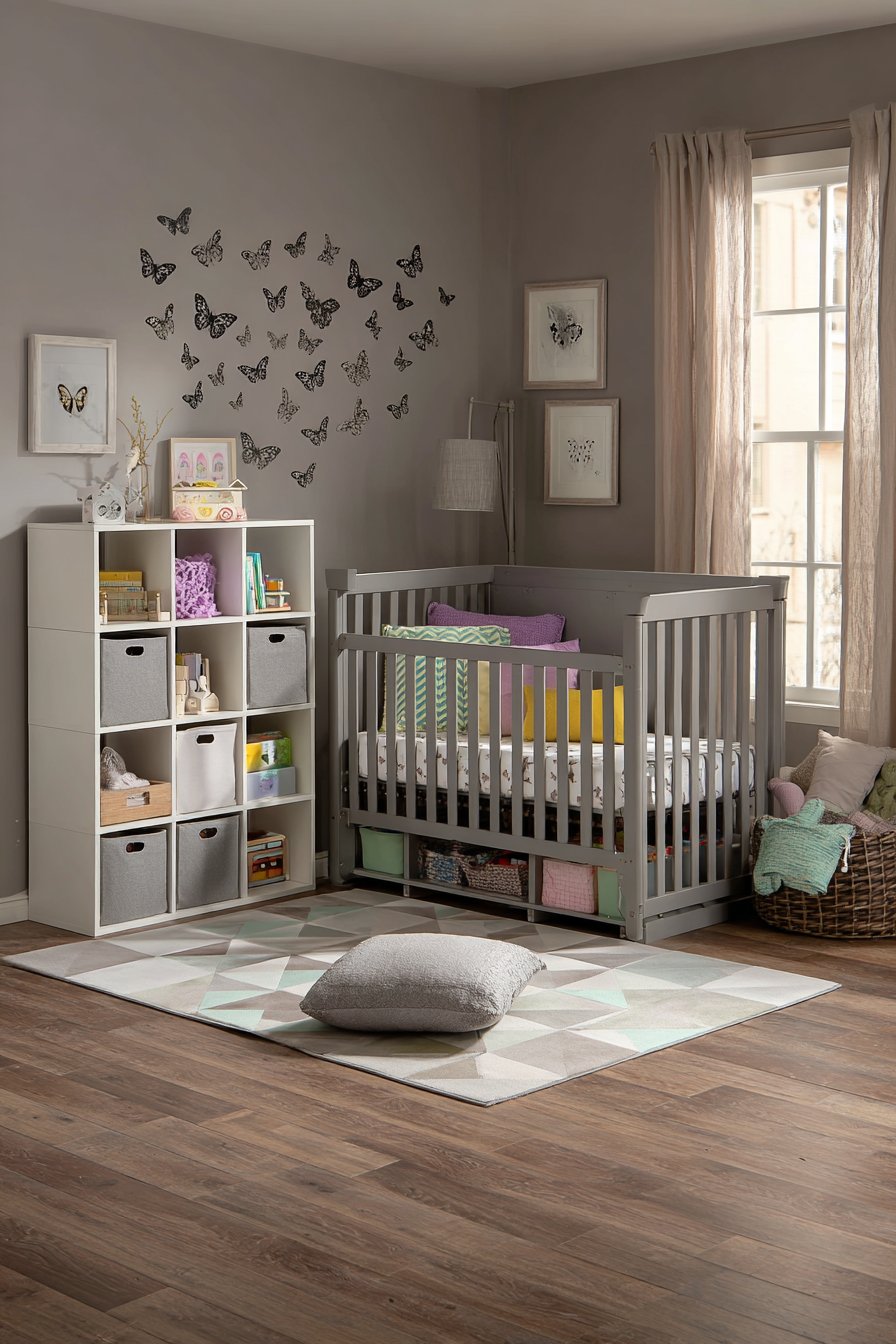
Simple window treatments in solid linen allow flexibility for future updates. The neutral foundation accommodates changing interests and developing personalities. Natural light illuminates the adaptable space throughout different life stages. The long-term design approach demonstrates thoughtful planning and financial responsibility.
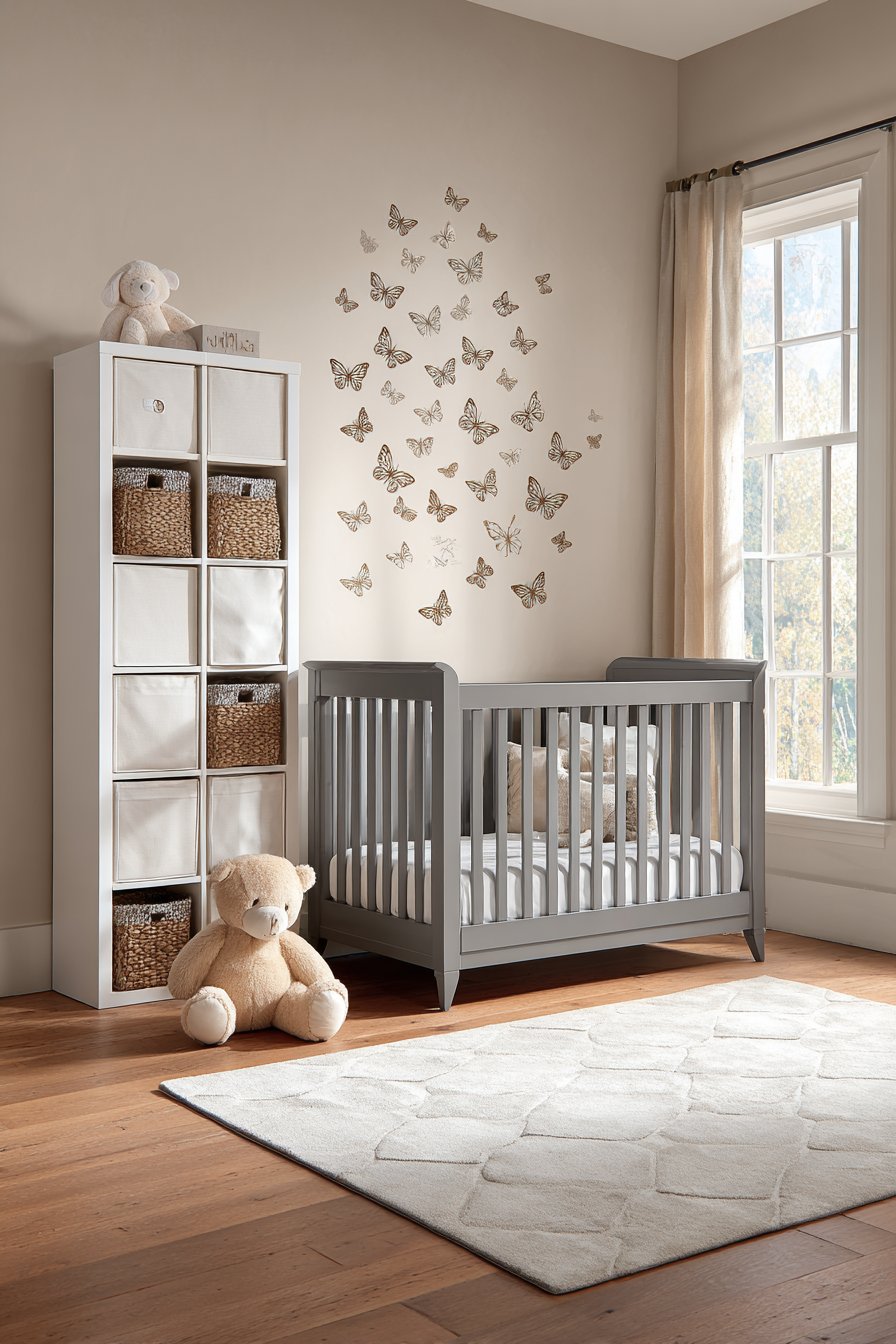
The transitional philosophy prevents the room from feeling too juvenile too quickly. The grey crib and geometric rug work equally well for infant and grade-schooler. The butterfly theme incorporates in updateable, age-appropriate ways throughout childhood.
Key Design Tips:
- Choose convertible furniture that transforms from crib to toddler bed to daybed
- Use removable wall decals instead of permanent murals for flexibility
- Select modular storage systems that reconfigure as needs change
- Incorporate butterfly elements in sophisticated ways that age gracefully
- Maintain neutral foundation that accommodates evolving interests and preferences
Why These Butterfly Nursery Designs Are the Best
These butterfly nursery designs represent thoughtful approaches combining aesthetic beauty with practical functionality. Each concept demonstrates how a single theme adapts across diverse design styles from minimalist to maximalist interpretations. The versatility proves butterfly motifs transcend trendy decoration to become timeless design foundation.
The success of these designs stems from careful material selection and color theory application. Natural materials like organic cotton, wood, and wool provide durability while supporting sustainable parenting values. The soft pastel palettes create calming environments supporting infant sleep while the varied color approaches from neutral grays to bold purples demonstrate flexibility. Quality materials age gracefully maintaining beauty through countless diaper changes and toddler adventures.
Spatial considerations receive thoughtful attention throughout these concepts. Small-space solutions maximize vertical storage while corner-focused designs utilize underused areas effectively. Open-concept approaches using room dividers and defined zones create organization without walls. The Montessori-inspired layouts position furniture at child height promoting independence from earliest ages.
Functionality remains paramount despite beautiful aesthetics. Convertible cribs transition through multiple life stages justifying initial investment. Organized storage systems reduce caregiving stress during sleep-deprived early months. Task lighting at changing stations and nursing chairs addresses practical needs while maintaining design cohesion. The successful designs prove that beauty and function coexist naturally when planning considers real-world parenting demands.
The butterfly theme itself carries meaningful symbolism representing growth, transformation, and nature’s delicate beauty. This deeper significance resonates with parents creating first spaces for their children. The designs showcase how this motif implements through various techniques including watercolor murals, three-dimensional installations, handcrafted textiles, preserved specimens, and custom lighting fixtures. The range demonstrates that butterfly themes work beautifully across traditional, contemporary, bohemian, and luxury aesthetics without becoming juvenile or clichéd.
Conclusion
These butterfly nursery designs demonstrate that thoughtful planning creates magical spaces serving both aesthetic and practical purposes. The key takeaways include investing in quality convertible furniture, choosing sustainable natural materials, and implementing butterfly themes through varied artistic techniques. The successful designs balance beauty with functionality while maintaining flexibility for changing needs.
Start your butterfly nursery journey by selecting one or two elements that resonate with your personal style. A hand-painted accent wall or handcrafted mobile provides significant impact without complete room overhaul. Layer additional butterfly elements gradually as your vision develops and budget allows. Your dream nursery awaits creation through thoughtful planning and creative expression that honors both your child’s needs and your design preferences.
