


Creating a colorful baby room opens endless possibilities for nurturing creativity and joy. Thoughtful design transforms functional spaces into magical environments where your little one will grow. The right combination of hues, textures, and elements creates rooms that stimulate development while providing comfort.
Modern parents increasingly embrace vibrant nurseries over traditional pastels. Color psychology research shows that varied hues support cognitive development in infants. Bold choices paired with practical solutions create spaces that evolve with your child. From rainbow accent walls to jewel-tone sophistication, colorful nurseries celebrate personality and imagination.
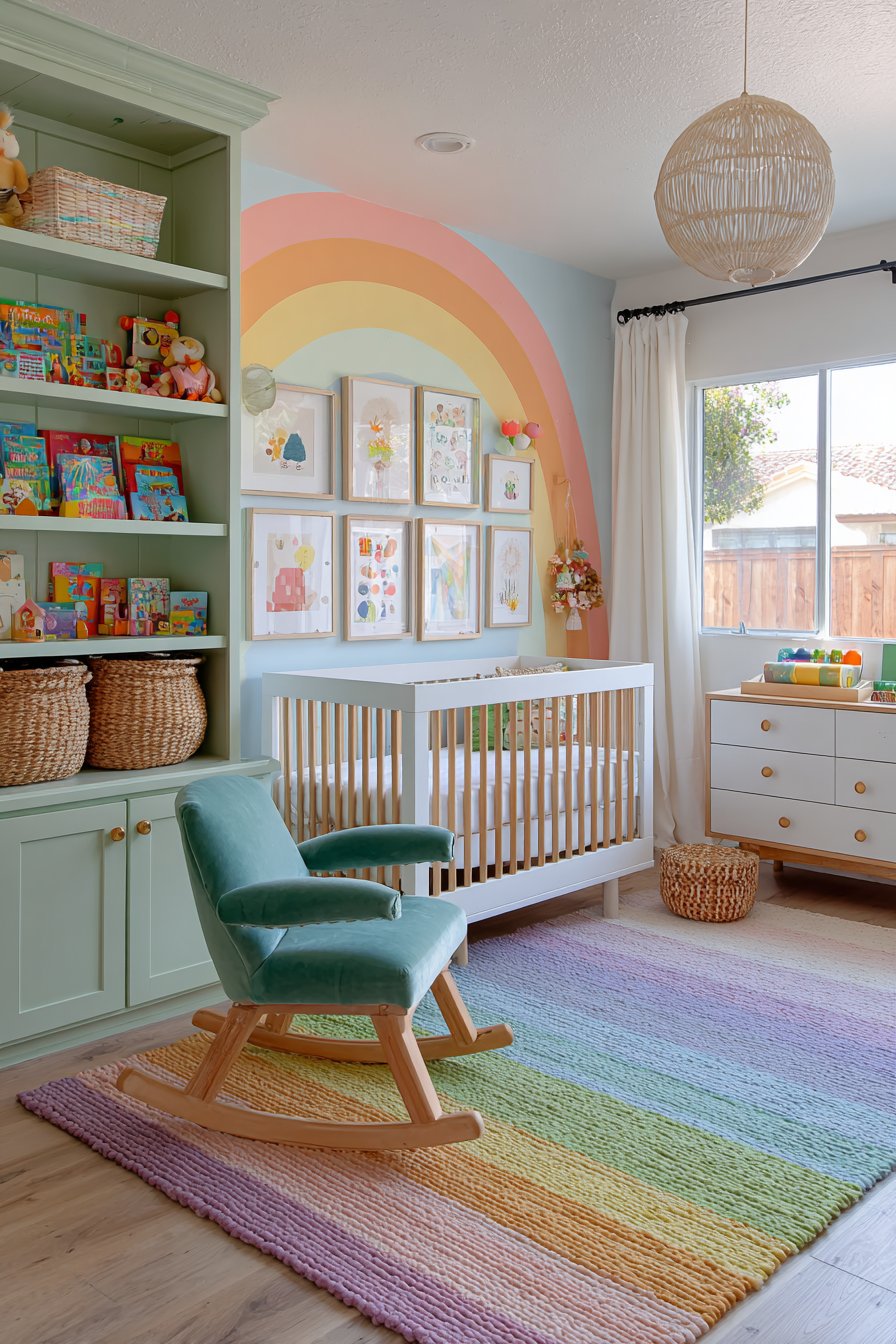
This comprehensive guide explores twenty distinctive approaches to colorful baby room design. Each concept demonstrates how strategic color application transforms ordinary nurseries into extraordinary spaces. Whether you prefer soft pastels or bold primary colors, these ideas provide actionable inspiration for creating your perfect nursery.
1. Rainbow Striped Accent Wall Nursery
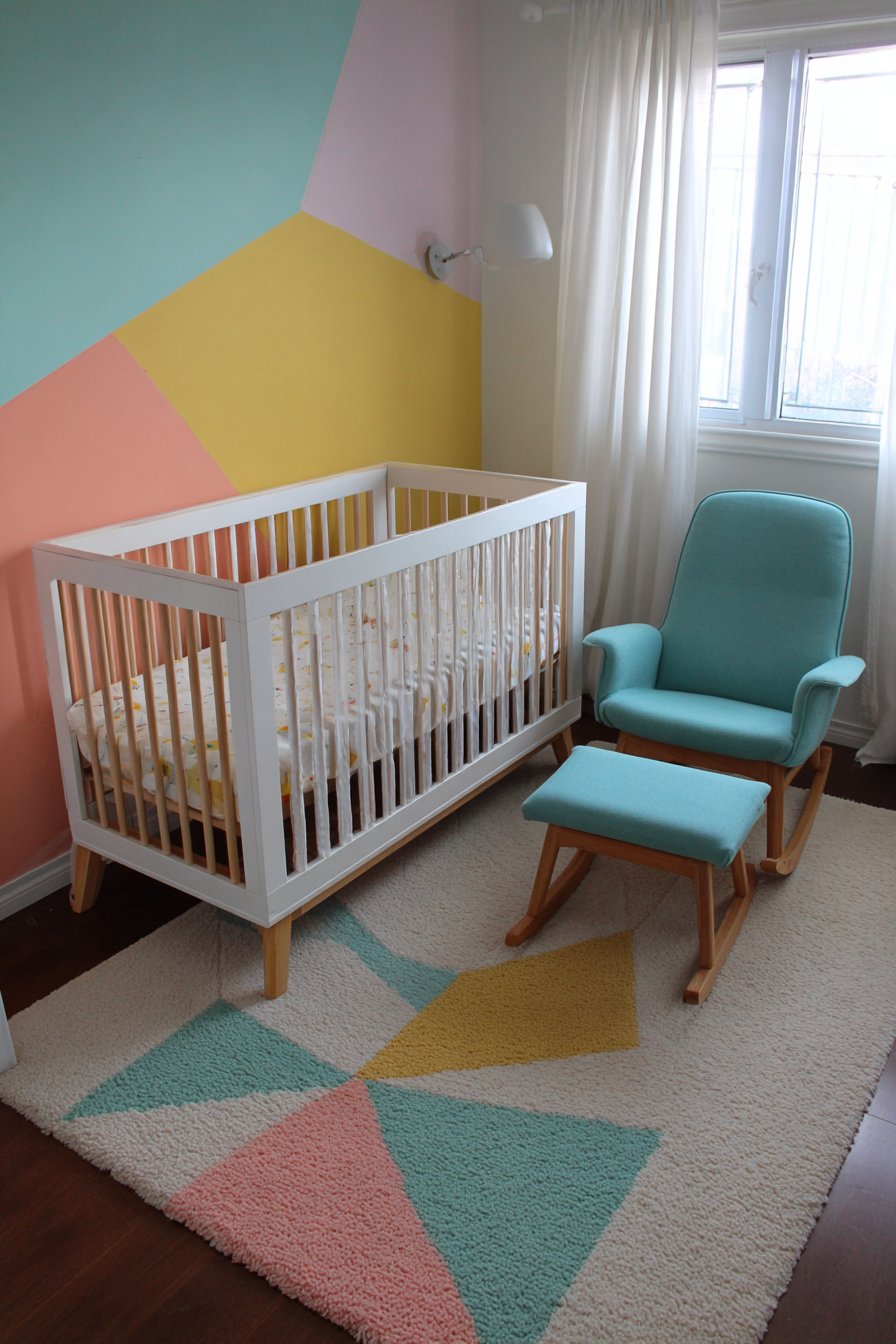
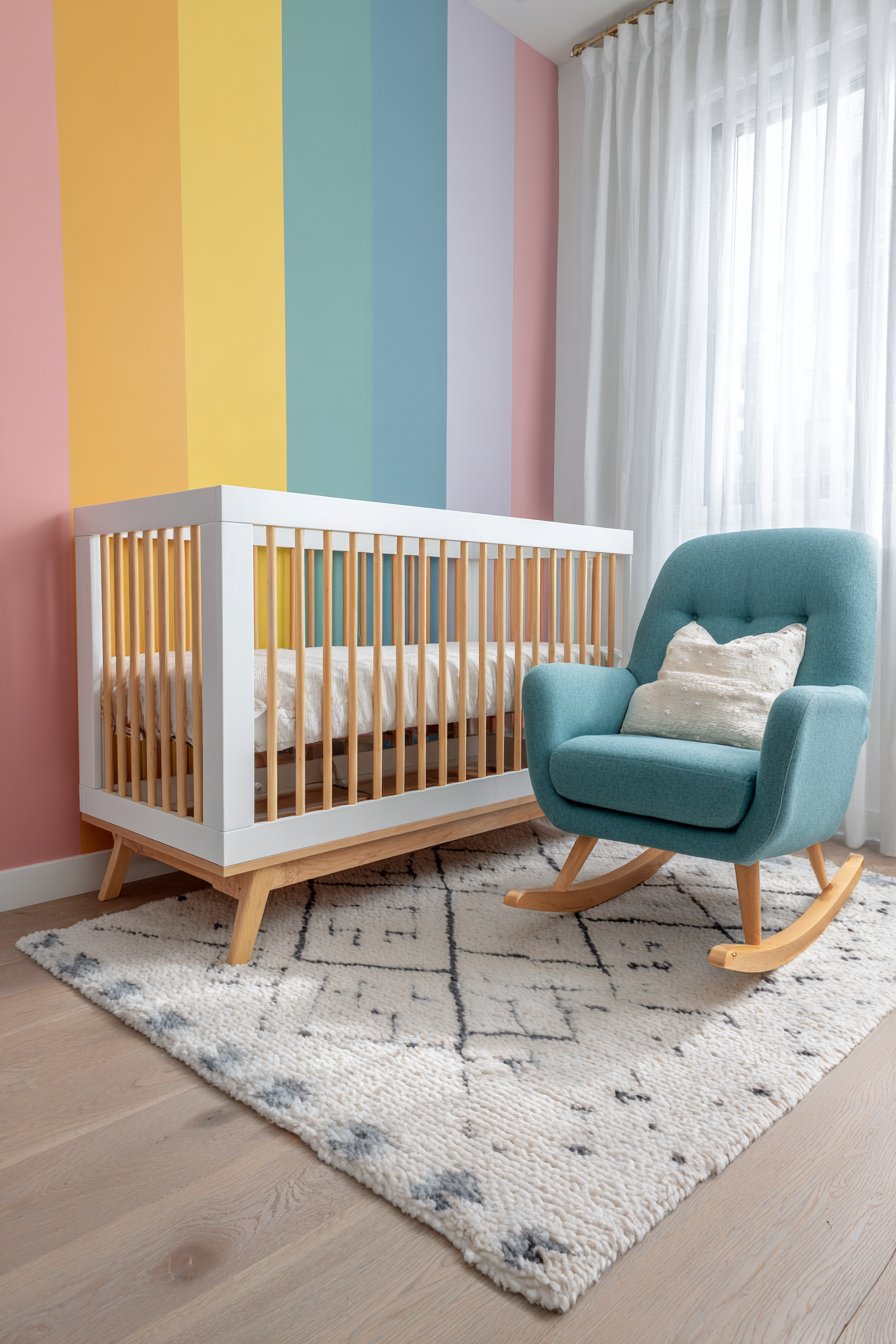
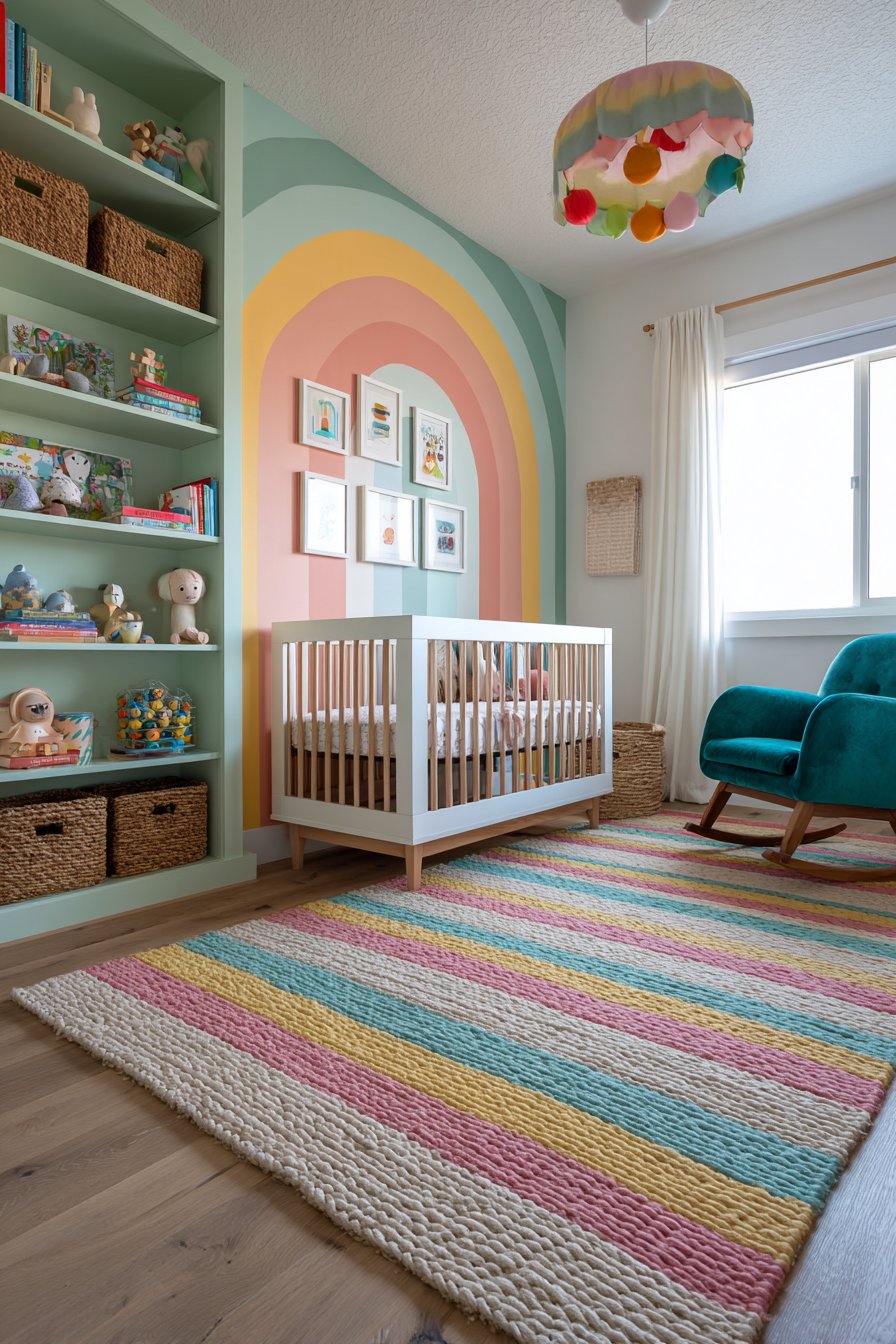
The hand-painted rainbow accent wall creates an instant focal point that radiates joy. Soft pastel stripes in coral, mint green, butter yellow, and lavender flow horizontally across the feature wall. These gentle hues provide visual interest without overwhelming the space. The colors work harmoniously to create a soothing yet stimulating environment for your baby.
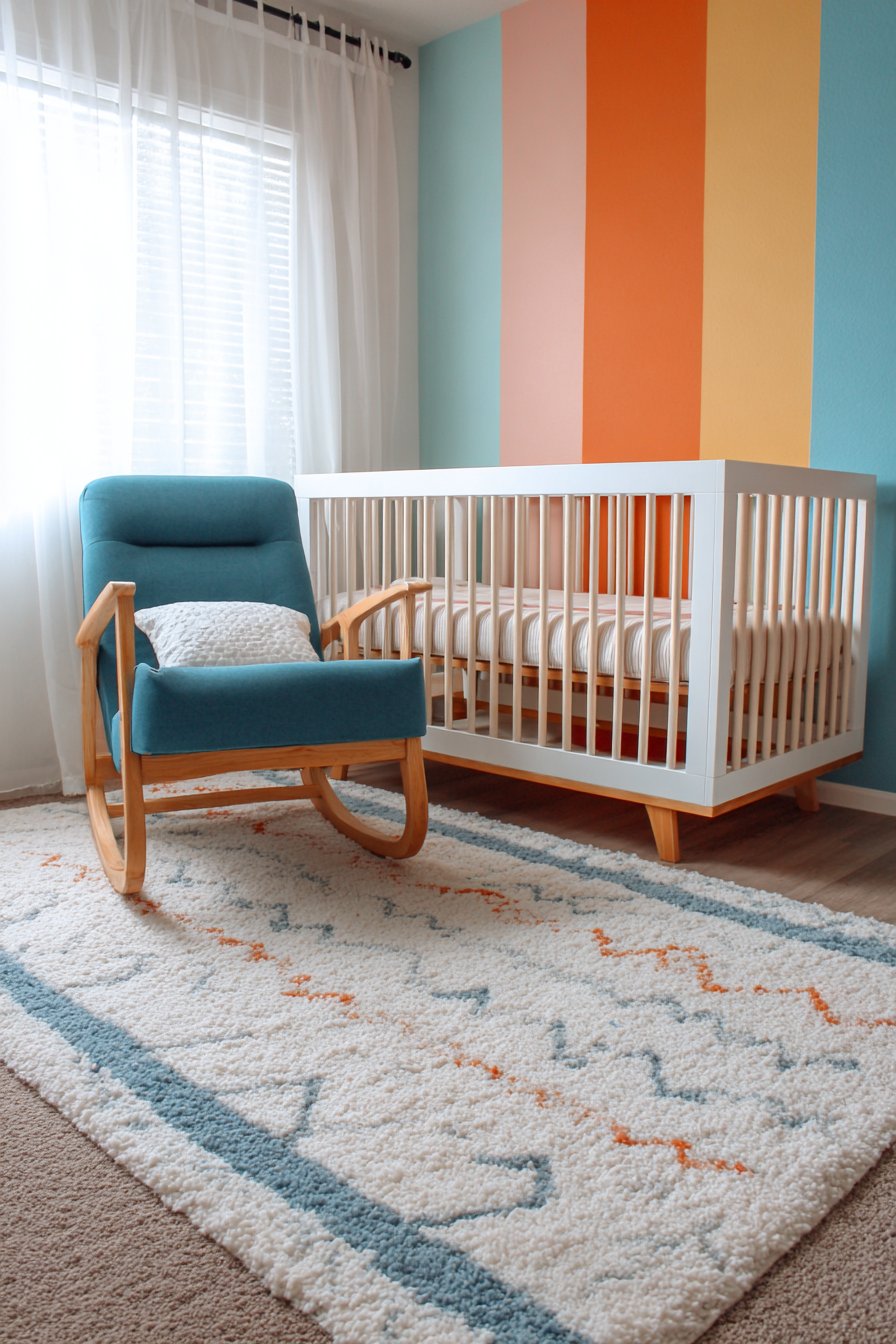
A white convertible crib with natural wood legs anchors the space against this colorful backdrop. The neutral crib allows the wall treatment to shine while providing timeless functionality. Organic cotton bedding in complementary soft hues ties the design together beautifully. The mid-century modern rocking chair upholstered in teal fabric adds both comfort and style.
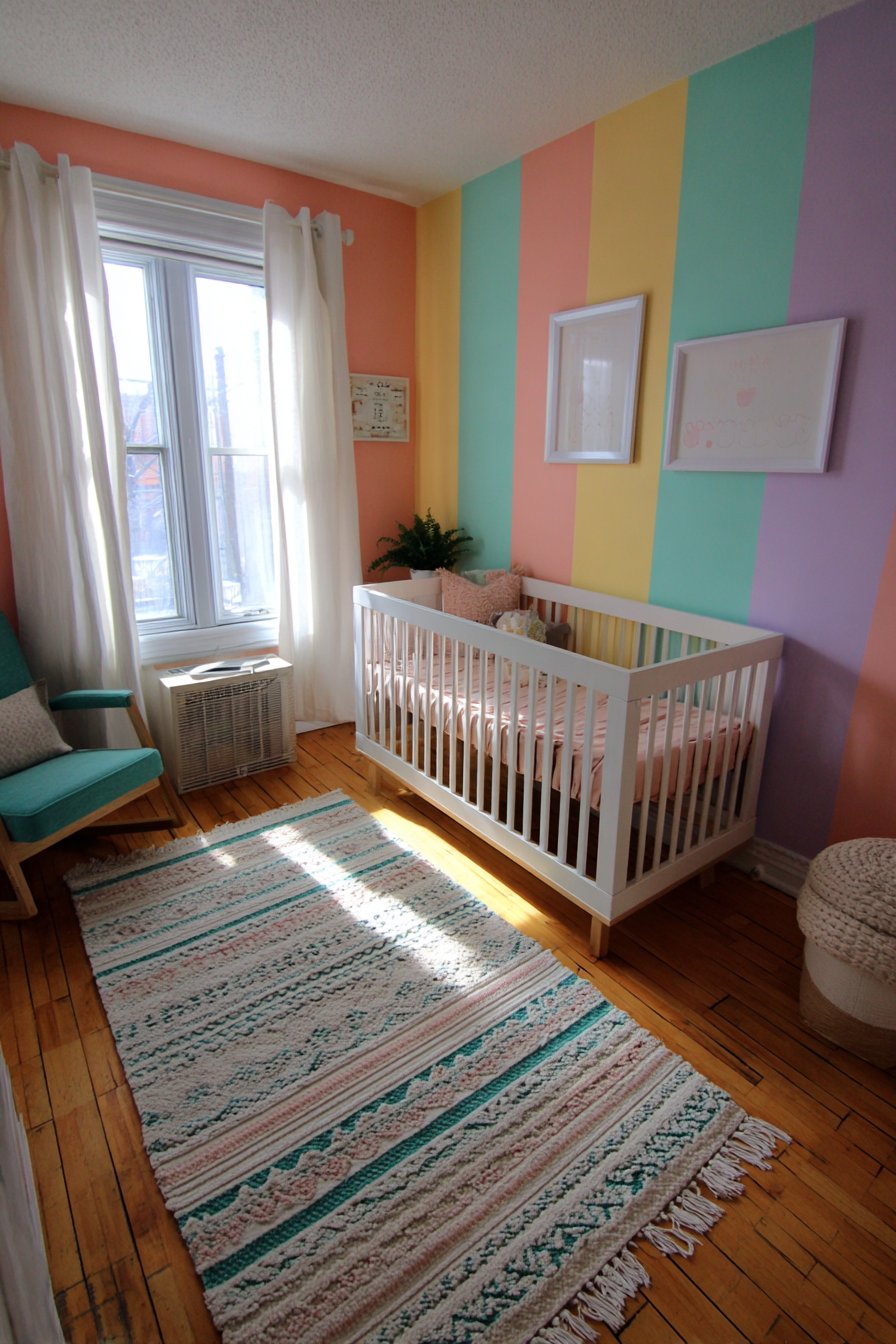
The geometric patterned area rug grounds the seating area beneath the rocking chair. Natural morning light streams through sheer white curtains, illuminating the playful palette. This lighting creates different moods throughout the day as sunlight shifts across the striped wall. The interplay between natural light and painted stripes adds depth and dimension.
Key Design Tips:
- Use painter’s tape to create crisp, professional-looking stripes on your accent wall
- Choose soft pastels rather than bright primary colors for a calming effect
- Position the crib against the colorful wall to make it the room’s centerpiece
- Select organic cotton bedding to ensure comfort and safety for your baby
- Add a plush geometric rug to define the seating area and add textural interest
- Install sheer curtains to filter natural light while maintaining brightness
2. Organized Storage Wall with Pastel Coordination
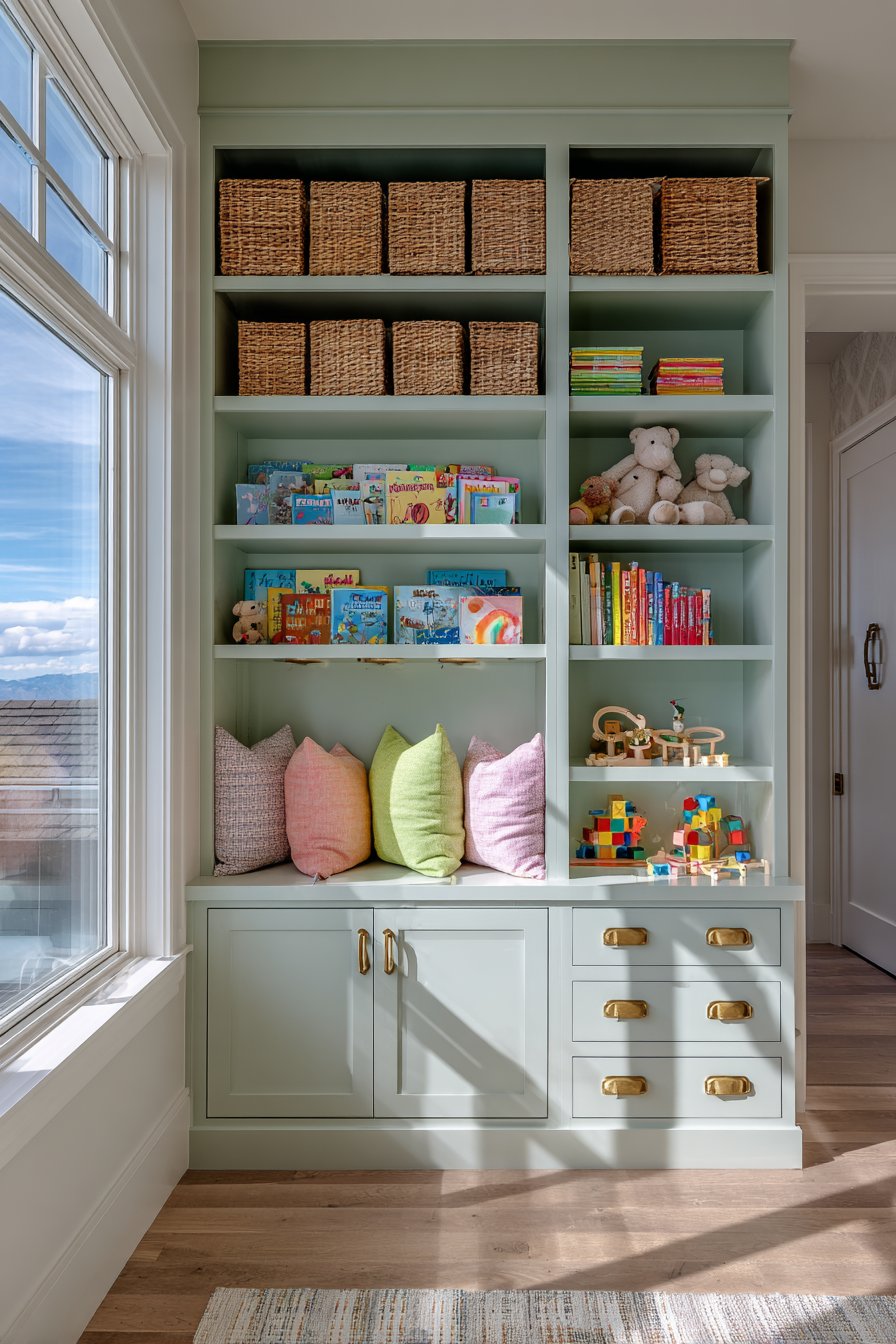
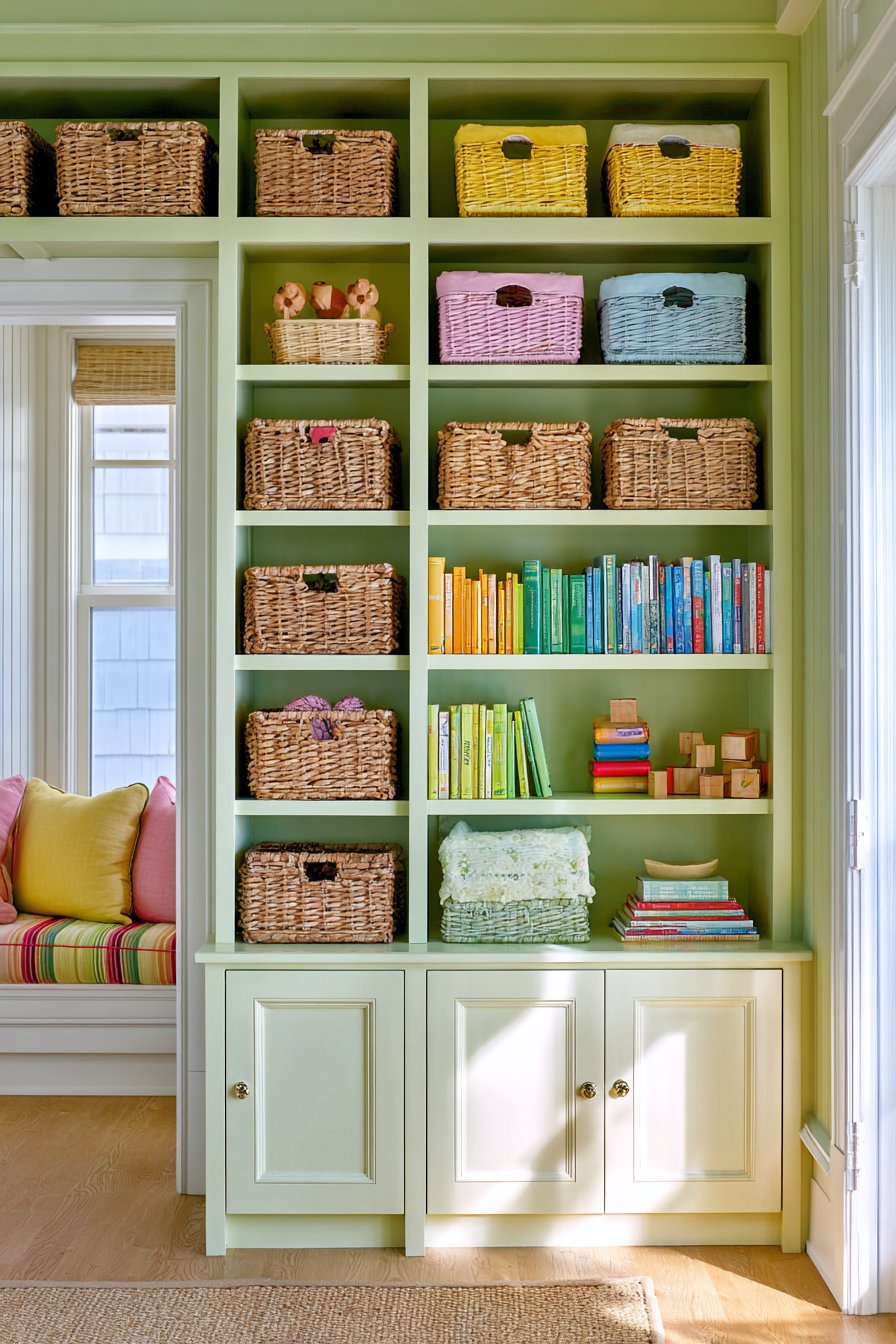
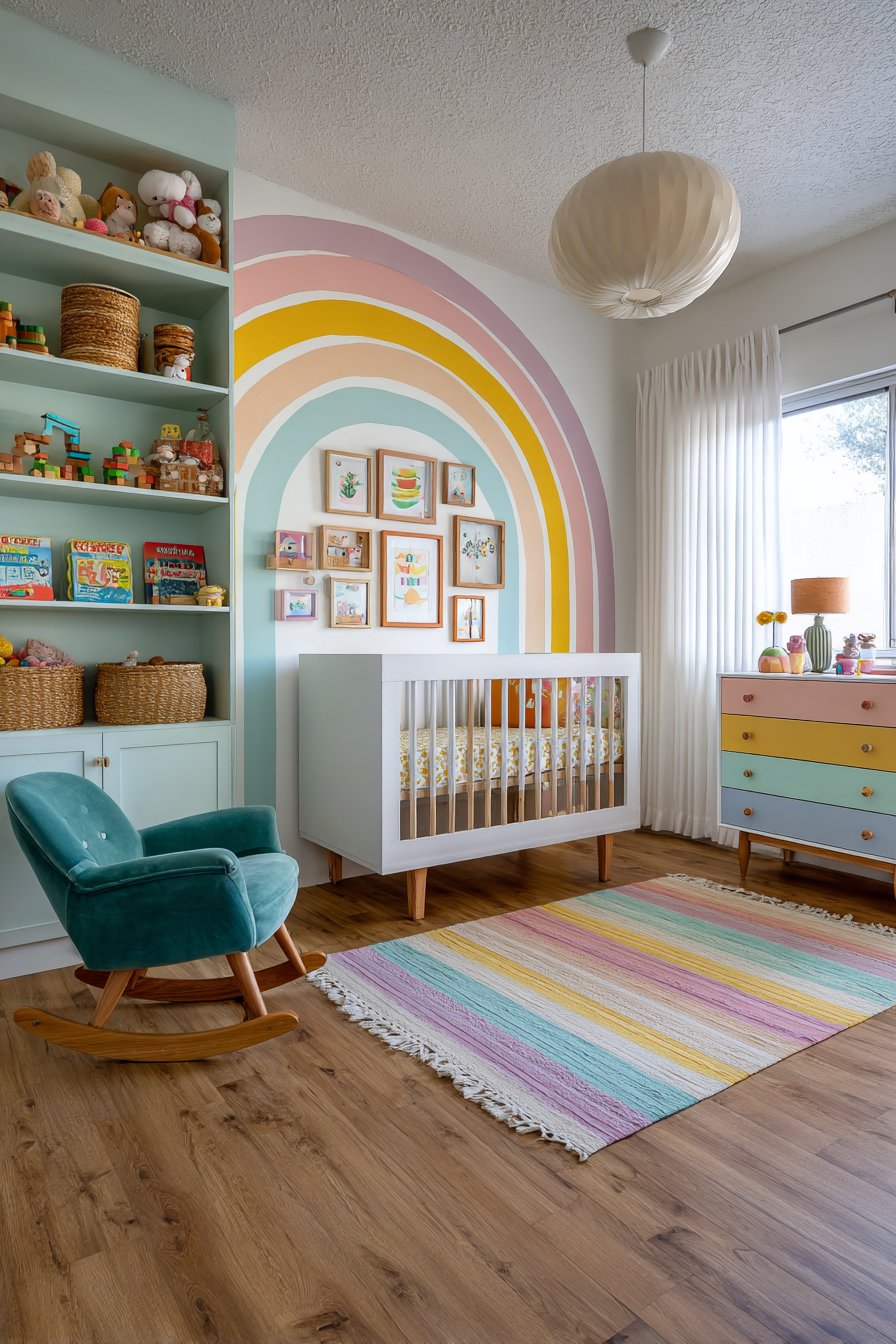
Custom built-in shelving painted in soft sage green creates functional beauty. The open shelving displays wicker baskets in various pastel shades for organized storage. Children’s books with vibrant spines line the shelves, creating pops of color. Wooden toys in primary colors add playfulness while remaining easily accessible.
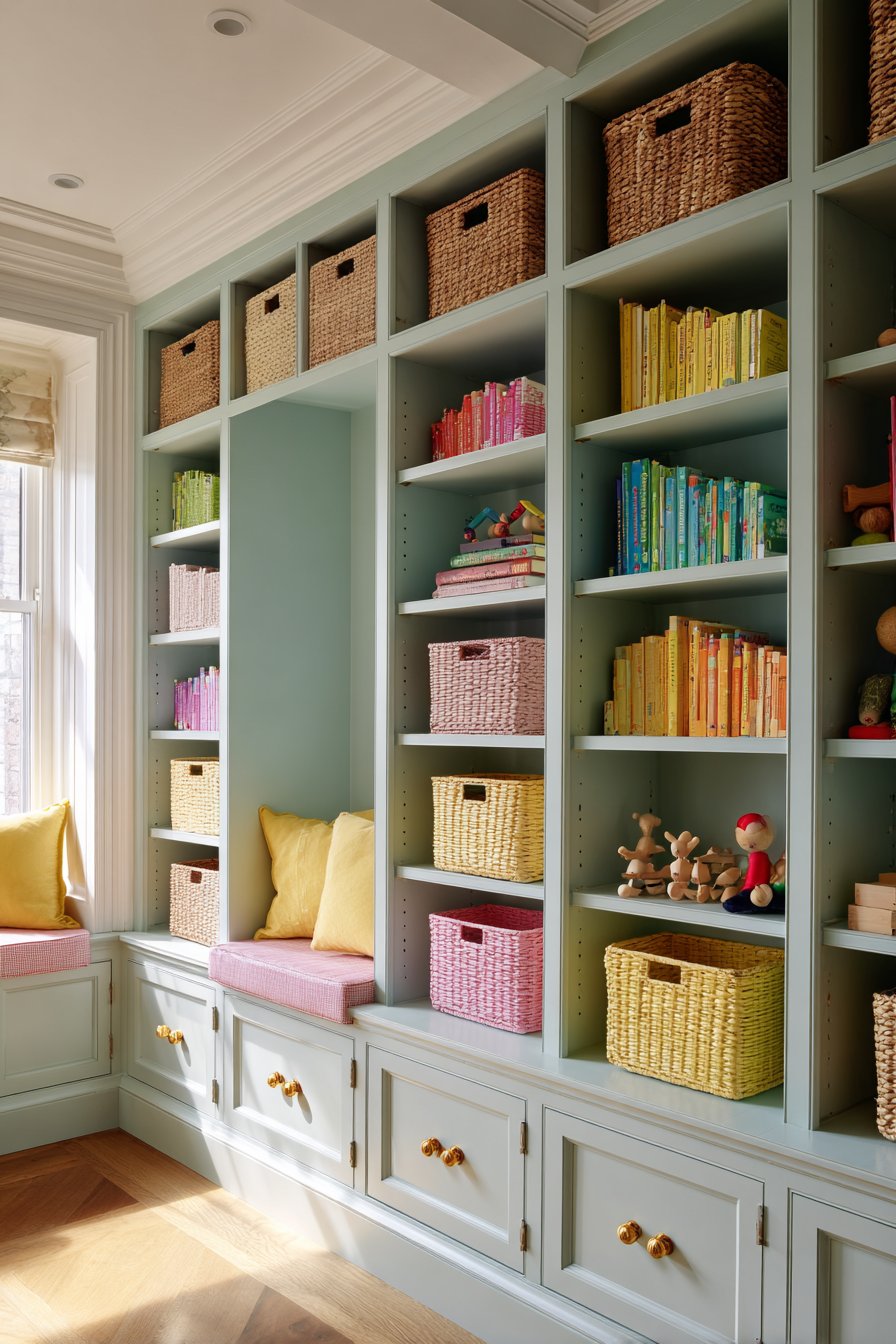
The shelving unit incorporates closed lower cabinets in white with brass knob hardware. This combination provides concealed storage for less attractive necessities. The mix of open and closed storage maintains visual interest while maximizing functionality. A small reading nook nestles within the shelving with rainbow cushions for cozy moments.
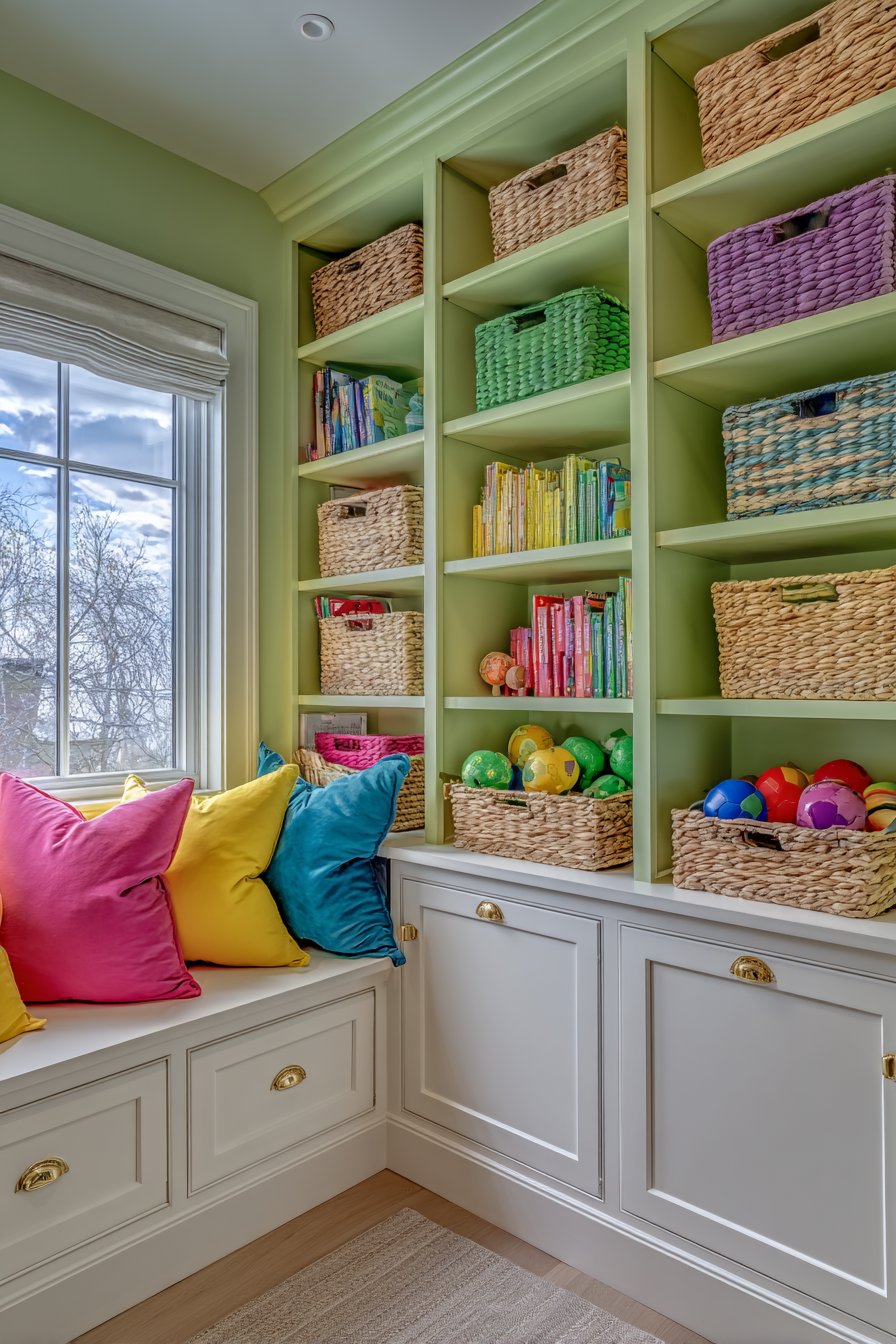
Natural daylight from an adjacent window highlights the organized functionality. The sage green shelving complements the pastel storage baskets beautifully. This color coordination creates cohesion while maintaining visual variety. The practical storage solutions ensure everything has its place, reducing nursery clutter significantly.
Key Design Tips:
- Paint built-in shelving in soft colors rather than white for added character
- Organize books by spine color to create a rainbow effect on shelves
- Choose wicker baskets in coordinating pastel shades for a cohesive look
- Install lower cabinets with doors to hide items you don’t want displayed
- Create a reading nook within the shelving using colorful floor cushions
- Position storage near natural light sources to enhance the cheerful atmosphere
3. Whimsical Mobile and Gallery Wall Corner
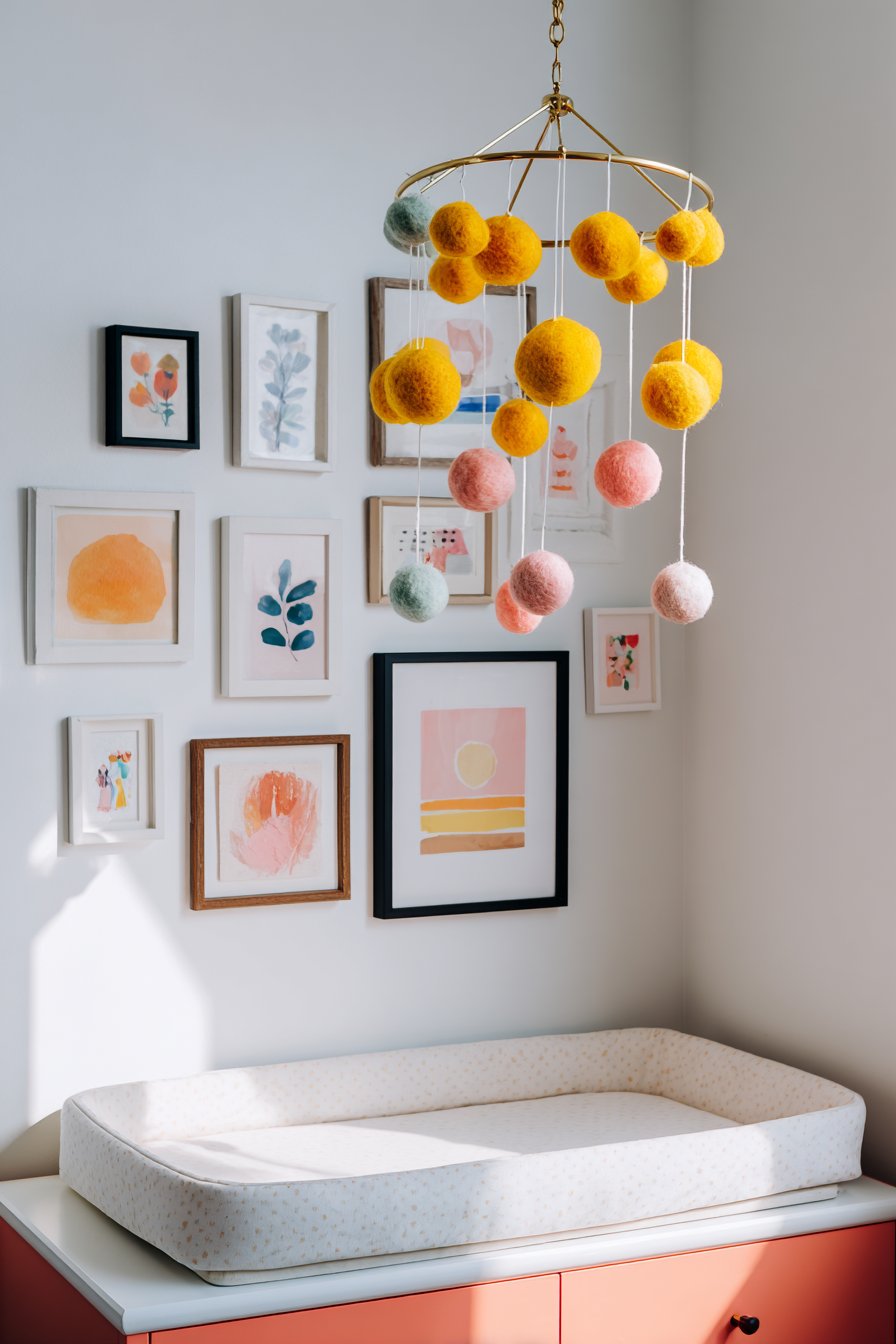
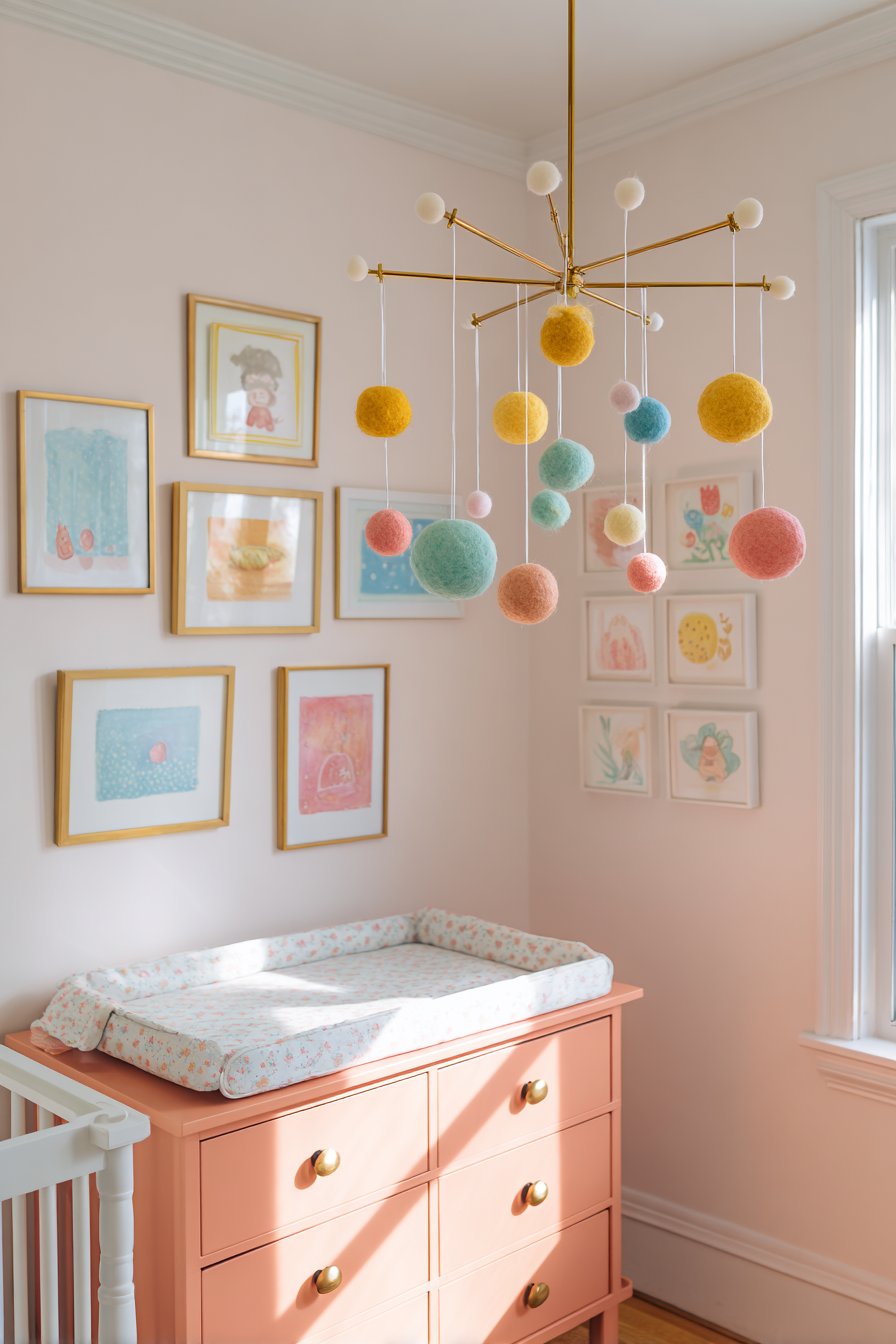
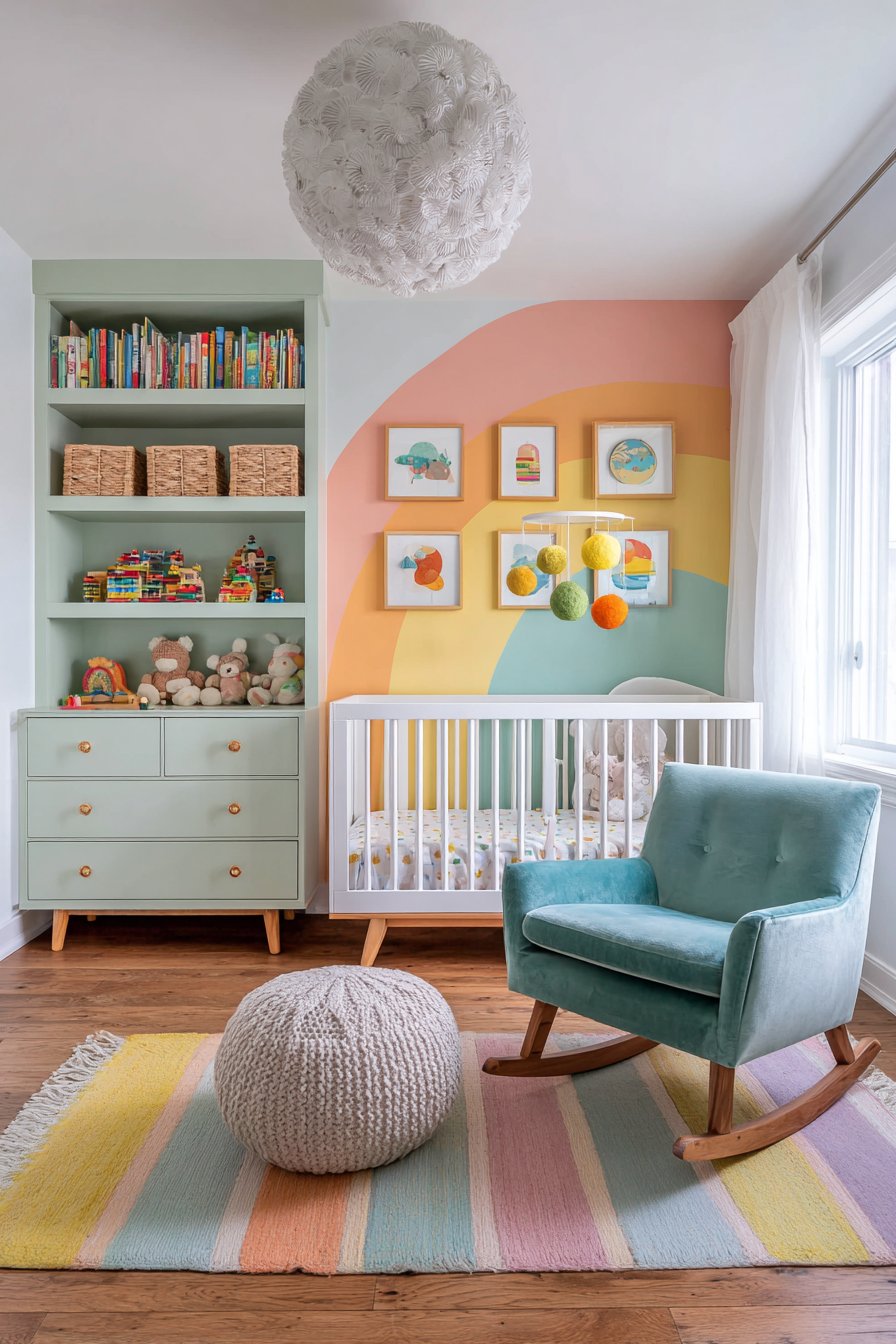
A colorful mobile hanging above the white bassinet becomes instant artwork. Handcrafted felt elements in sunshine yellow, sky blue, blush pink, and mint green create gentle movement. The mobile captures your baby’s attention while adding vertical visual interest. The soft colors promote calm while the movement stimulates developing vision.
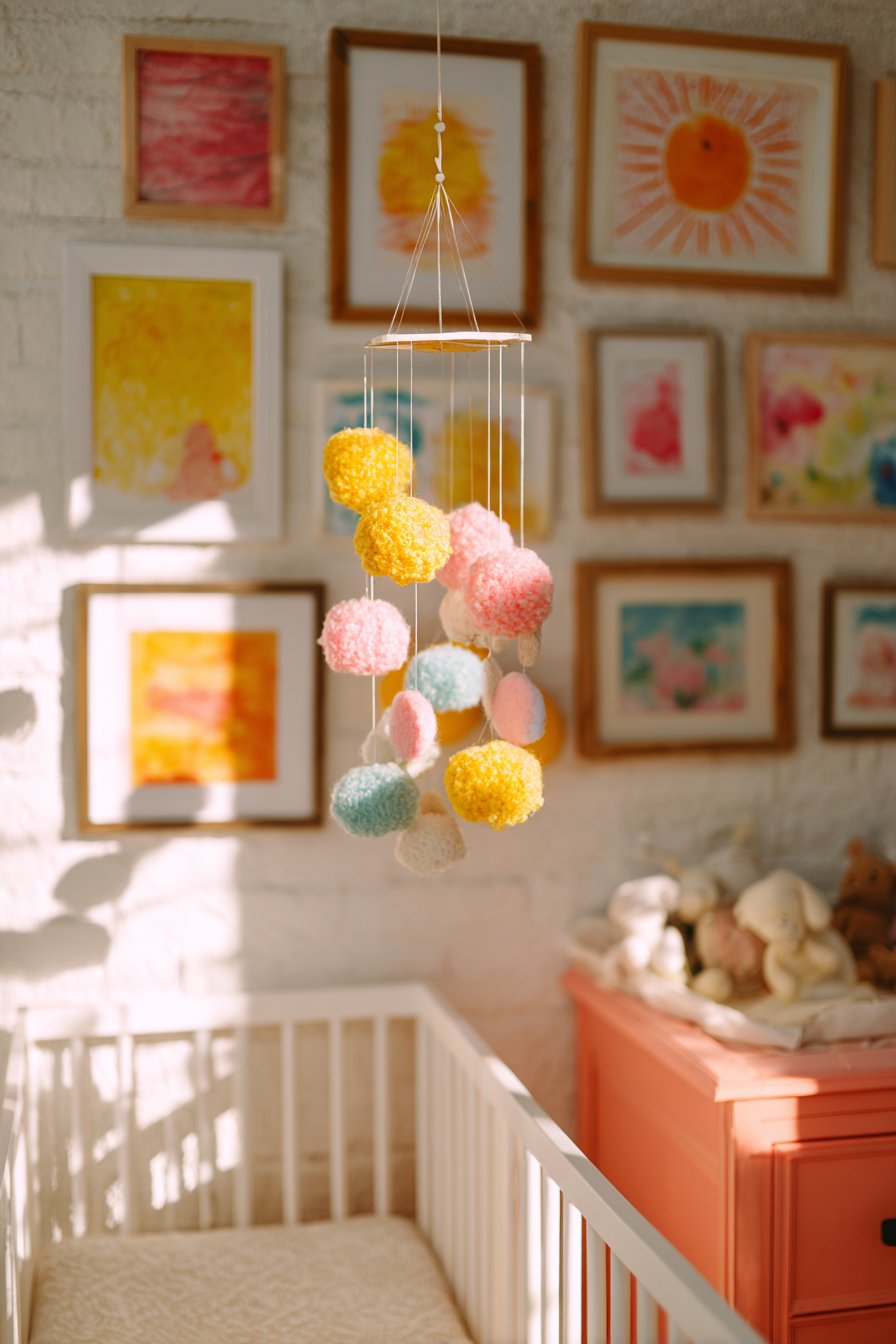
The surrounding walls showcase framed children’s artwork in mismatched colorful frames. This gallery wall approach allows personality to shine through curated selections. Each frame adds its own color contribution to the overall scheme. The eclectic mix creates visual richness without requiring expensive artwork.
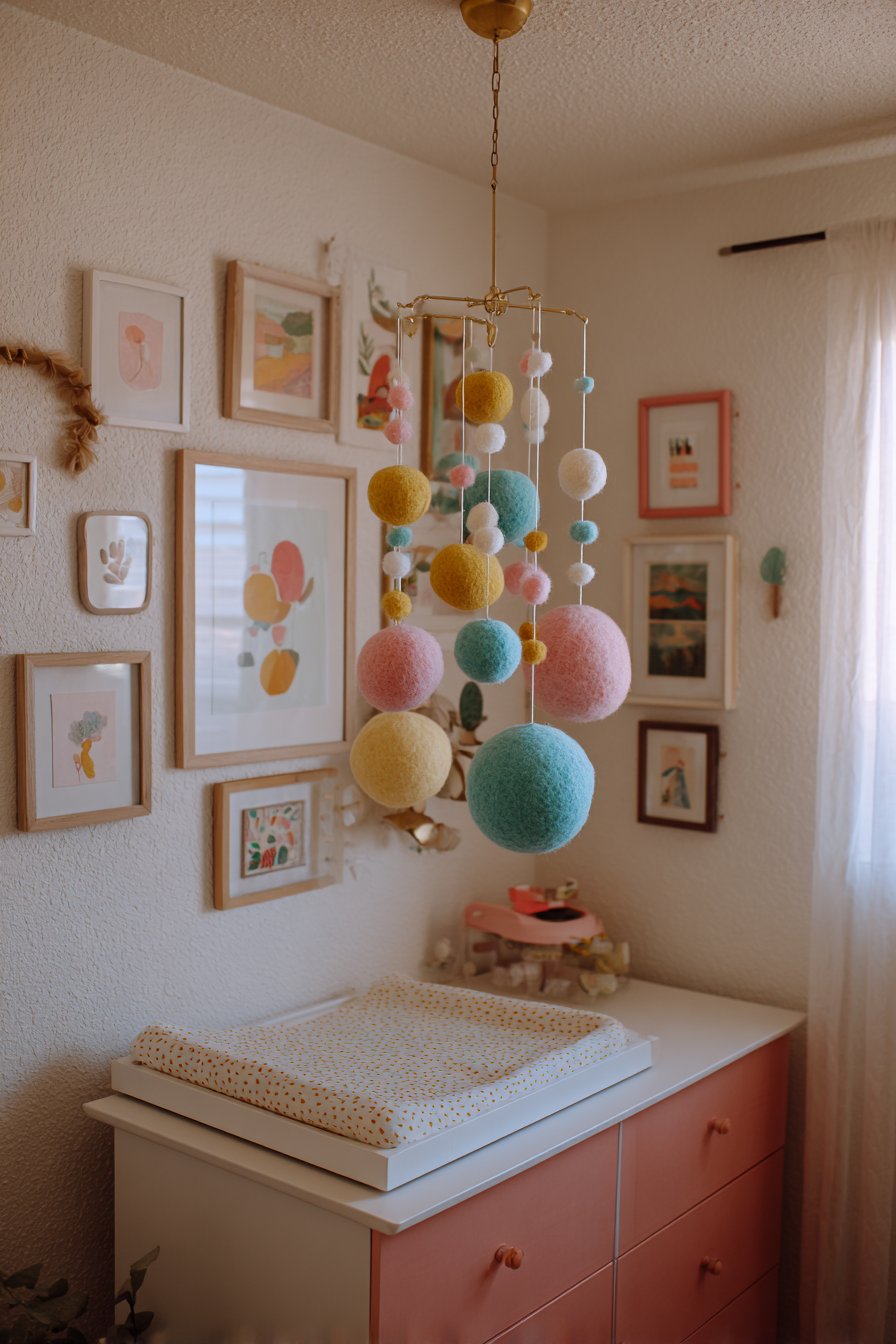
A small dresser painted in coral serves as both storage and changing station. The contoured changing pad sits securely on top for safety and comfort. Soft afternoon light creates gentle shadows that add depth to the space. The intimate scale makes this corner feel cozy and protected.
Key Design Tips:
- Hang mobiles at appropriate heights where babies can see but not reach them
- Create gallery walls using mismatched frames painted in different colors
- Include actual children’s artwork or prints designed by young artists
- Paint existing furniture in bold colors rather than buying new pieces
- Position changing stations near natural light for better visibility during diaper changes
- Choose felt mobile elements for safety and softness if they fall
4. Periwinkle Sky Ceiling Treatment
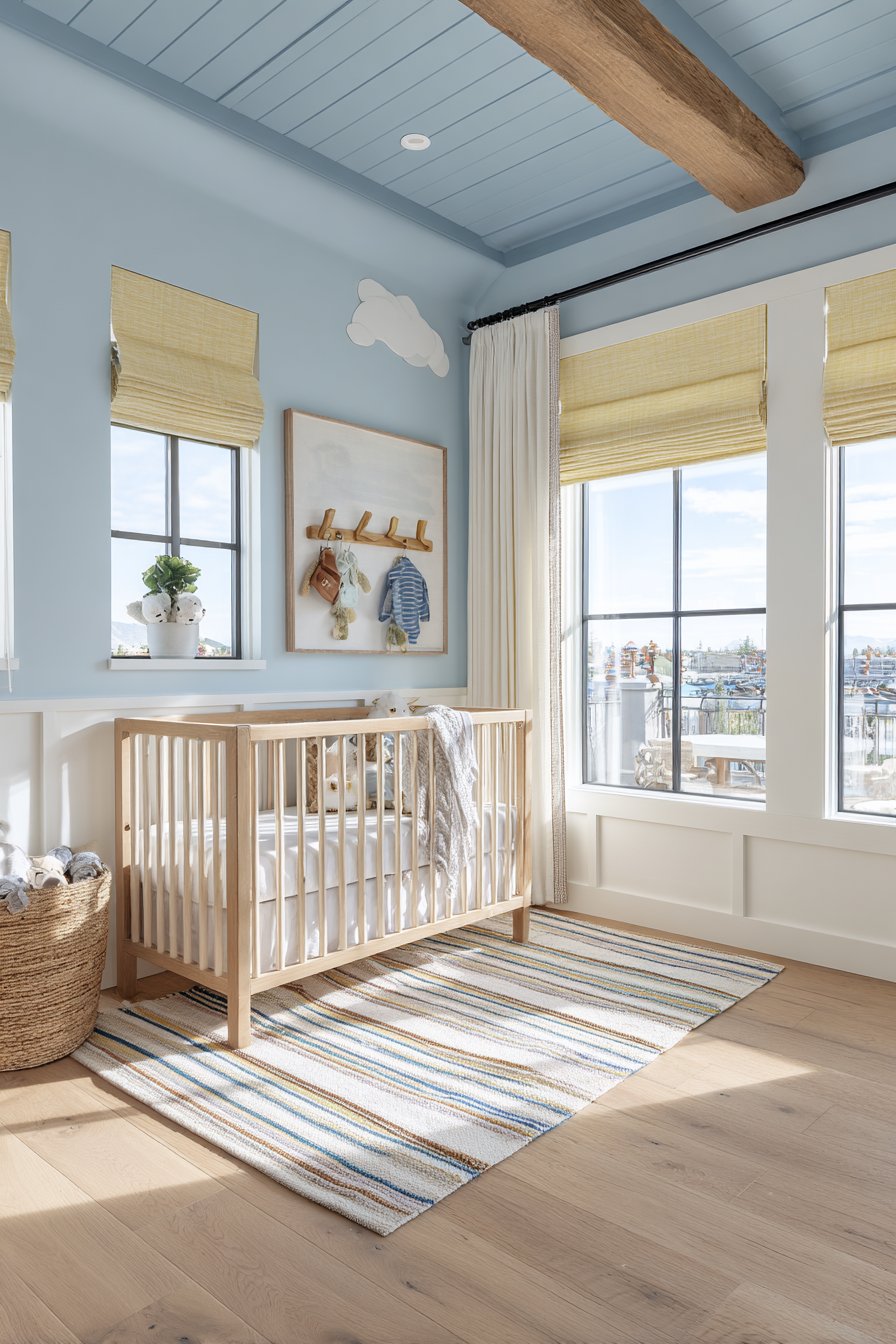
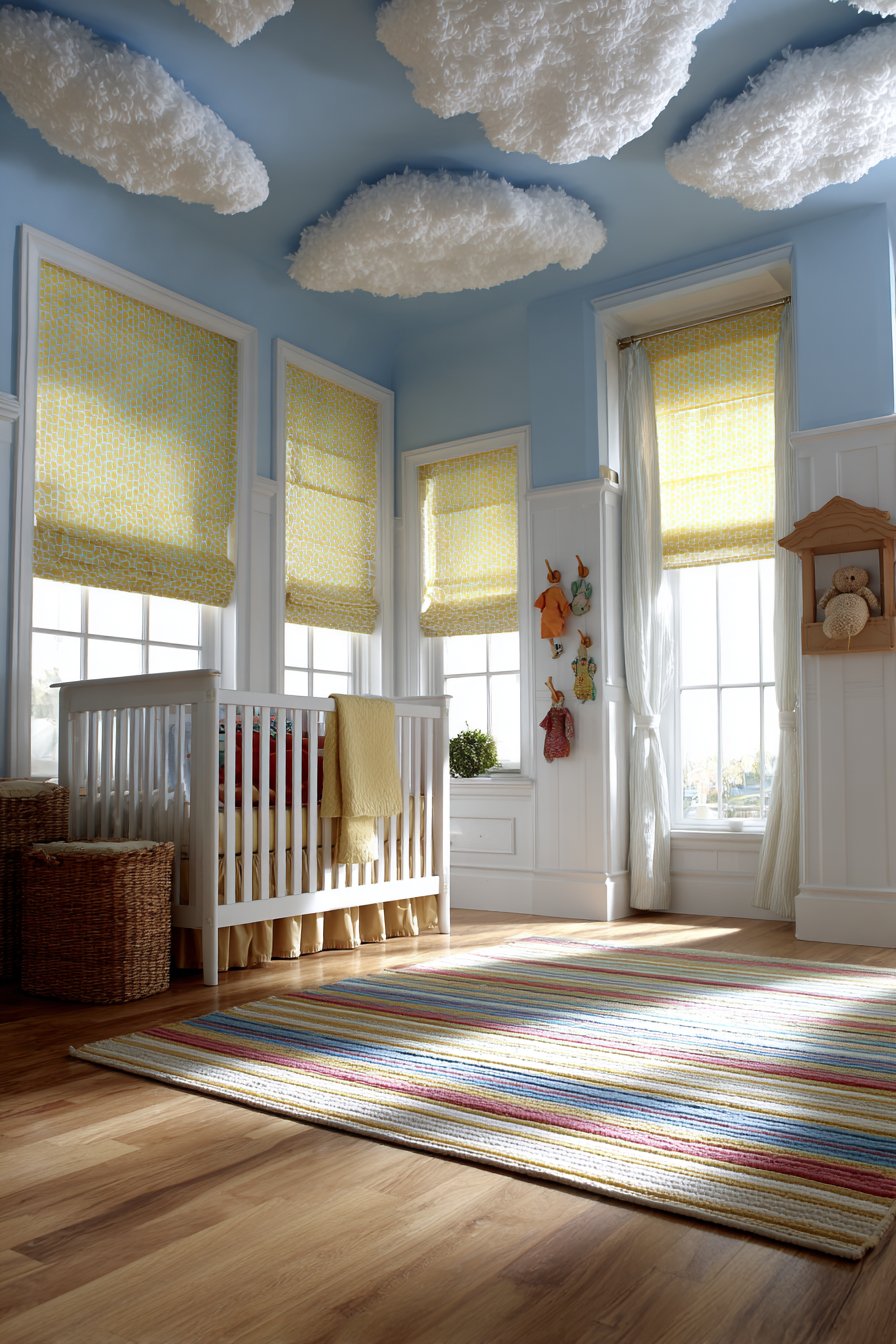
The statement ceiling painted in soft periwinkle blue with white cloud decals creates magic overhead. This unexpected color placement draws eyes upward, making rooms feel larger. The sky-like canopy provides visual interest from the crib perspective. Babies spend considerable time looking up, making ceiling treatments particularly engaging.
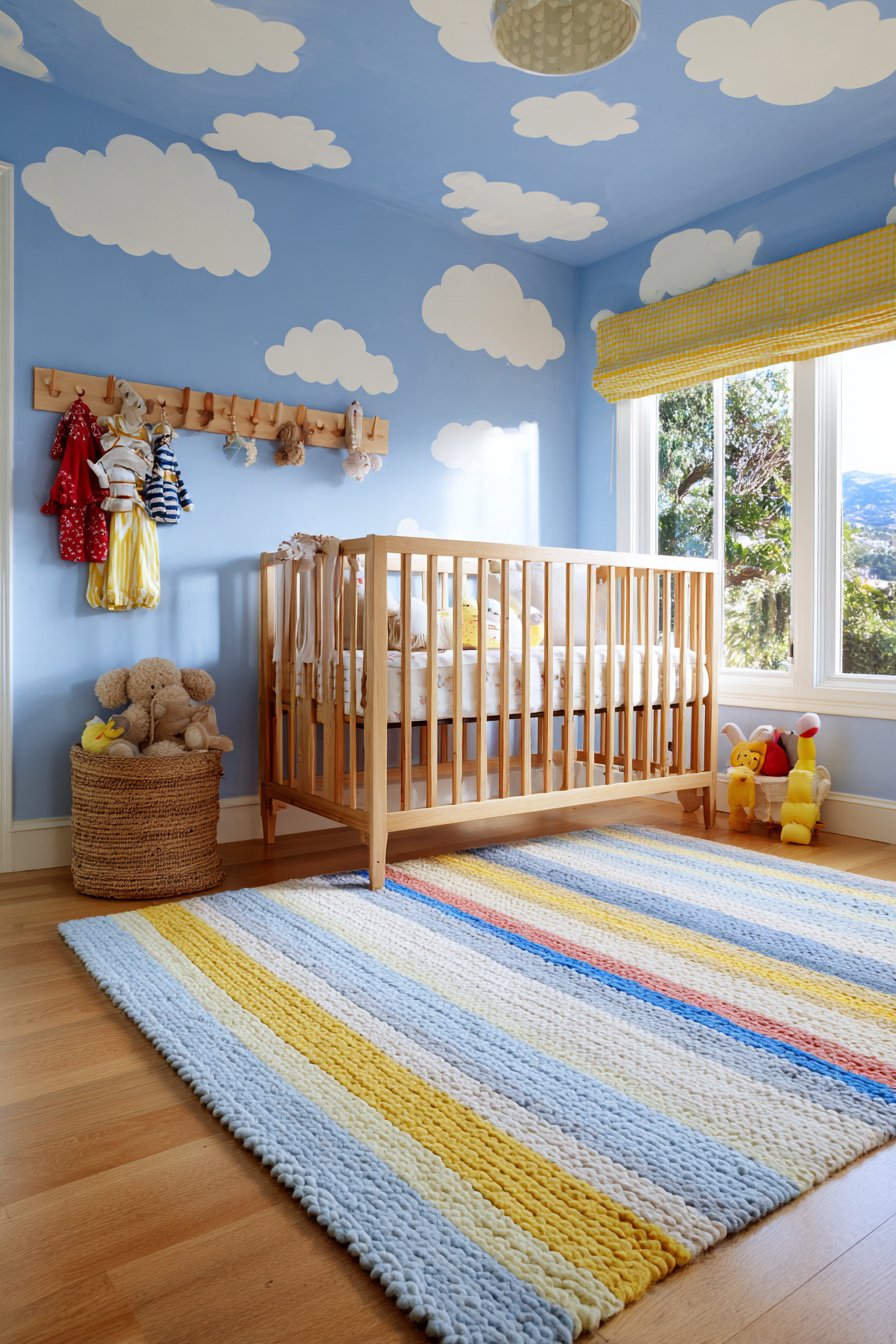
Below, a natural oak crib with white spindles sits on honey-toned hardwood flooring. A braided wool rug in multi-colored stripes adds warmth and comfort underfoot. Wall-mounted wooden pegs in primary colors provide functional decoration for tiny garments. The vertical storage solution keeps floor space clear while adding colorful accents.
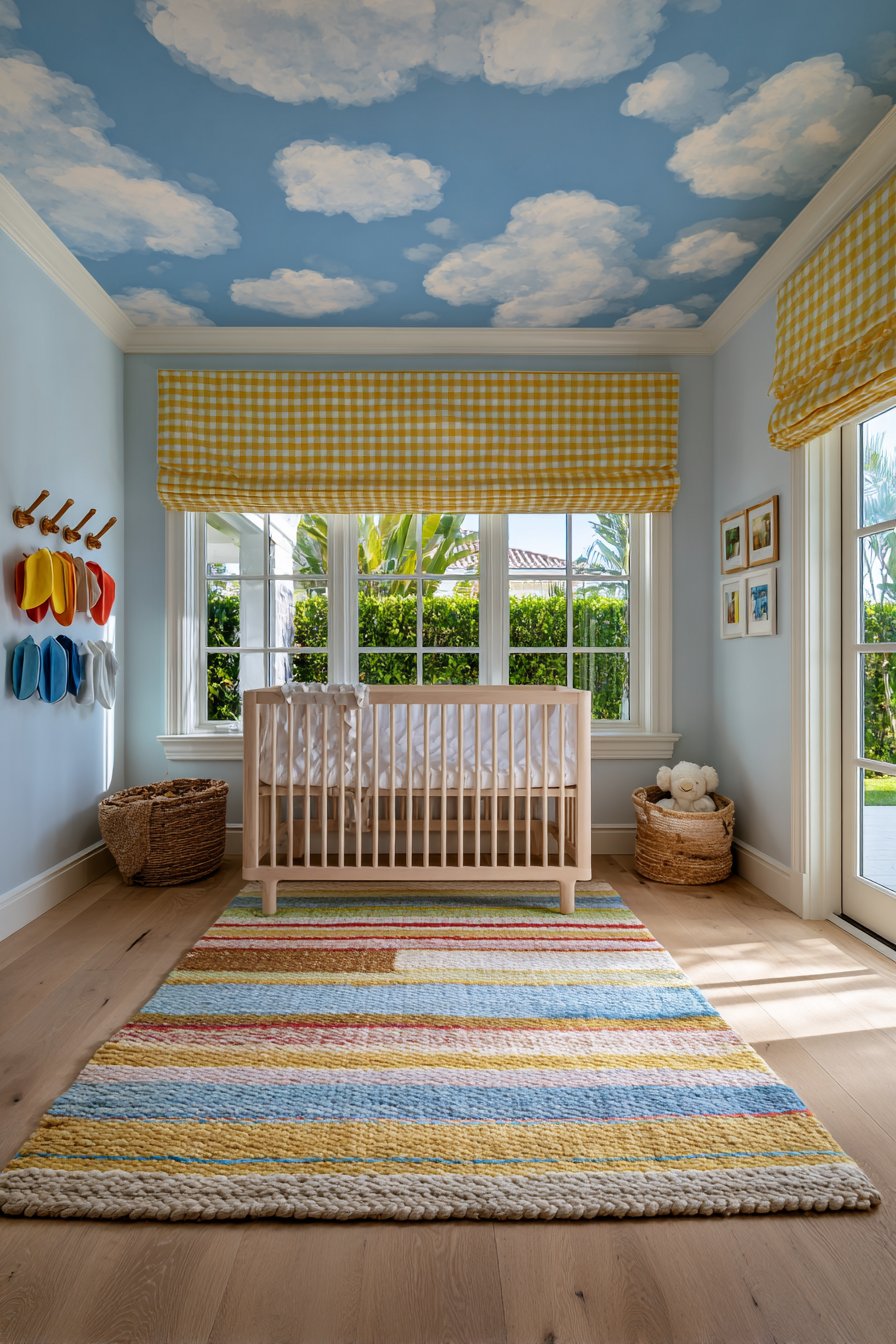
Large windows with Roman shades in yellow gingham fabric filter warm natural light. The gingham pattern introduces subtle pattern without overwhelming the space. The yellow tones complement the periwinkle ceiling beautifully. The airy atmosphere promotes peaceful sleep and happy wake times.
Key Design Tips:
- Paint ceilings in soft colors to add unexpected visual interest
- Apply removable wall decals to create patterns without permanent commitment
- Choose braided wool rugs for durability and multi-colored options
- Install wall-mounted pegs at appropriate heights for accessible storage
- Select Roman shades in cheerful patterns to control light and add character
- Use natural wood tones to balance painted colorful elements
5. Hand-Painted Forest Mural Nursery
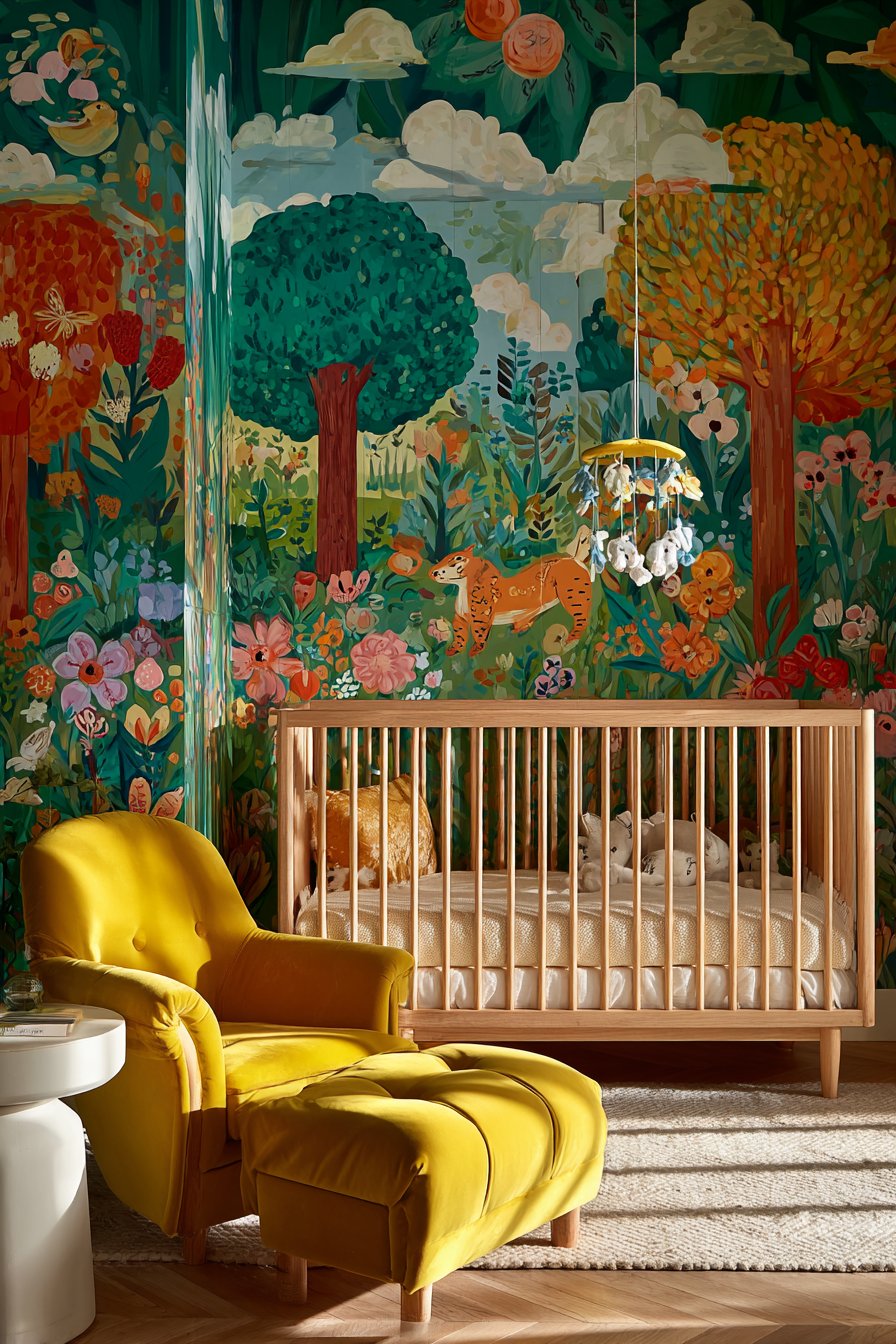
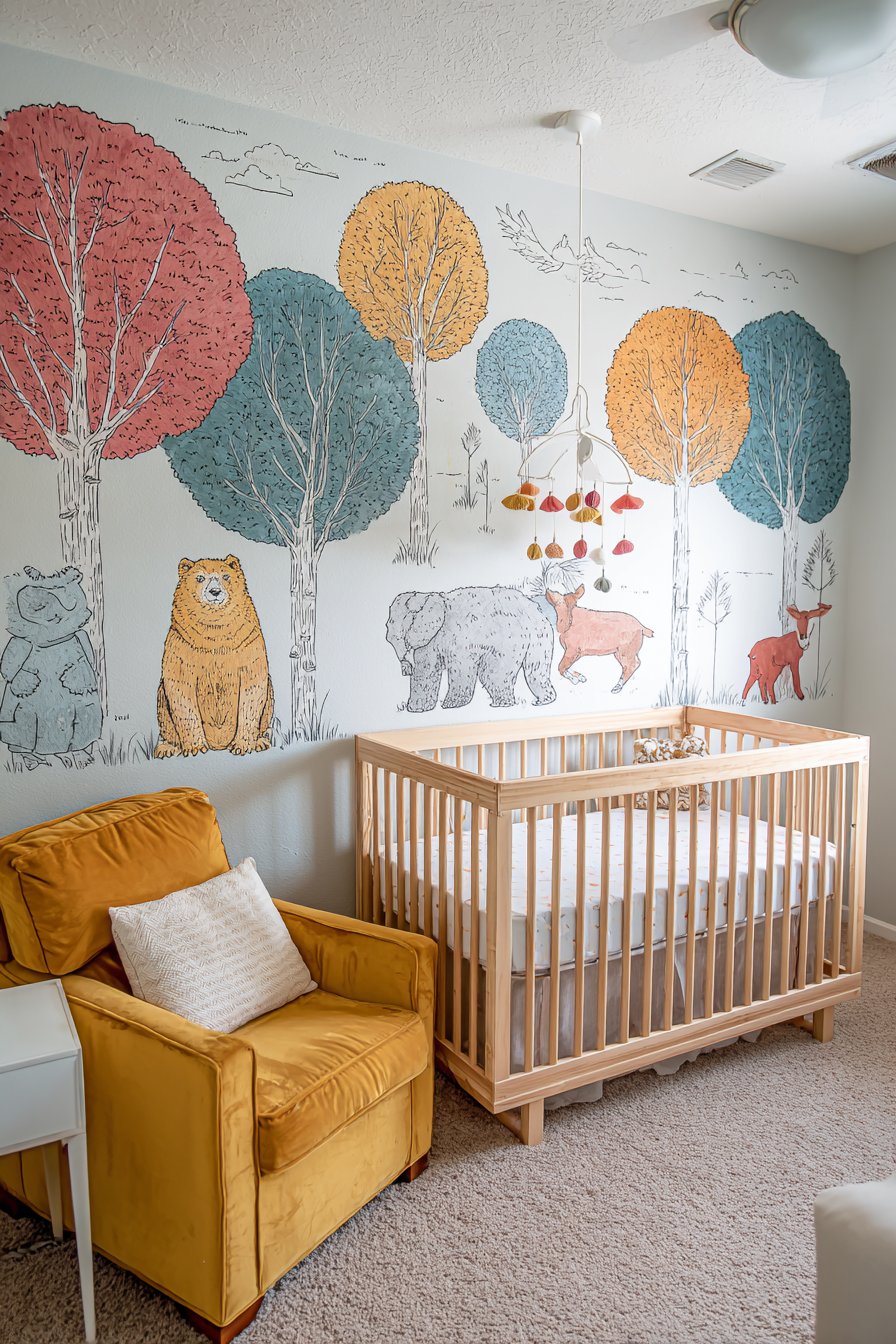
A DIY hand-painted mural depicting a whimsical forest transforms one full wall. Trees in emerald green reach toward the ceiling with flowers in fuchsia and orange. Animals in soft earth tones peek from behind foliage, creating discovery moments. This custom artwork makes the nursery truly one-of-a-kind and deeply personal.
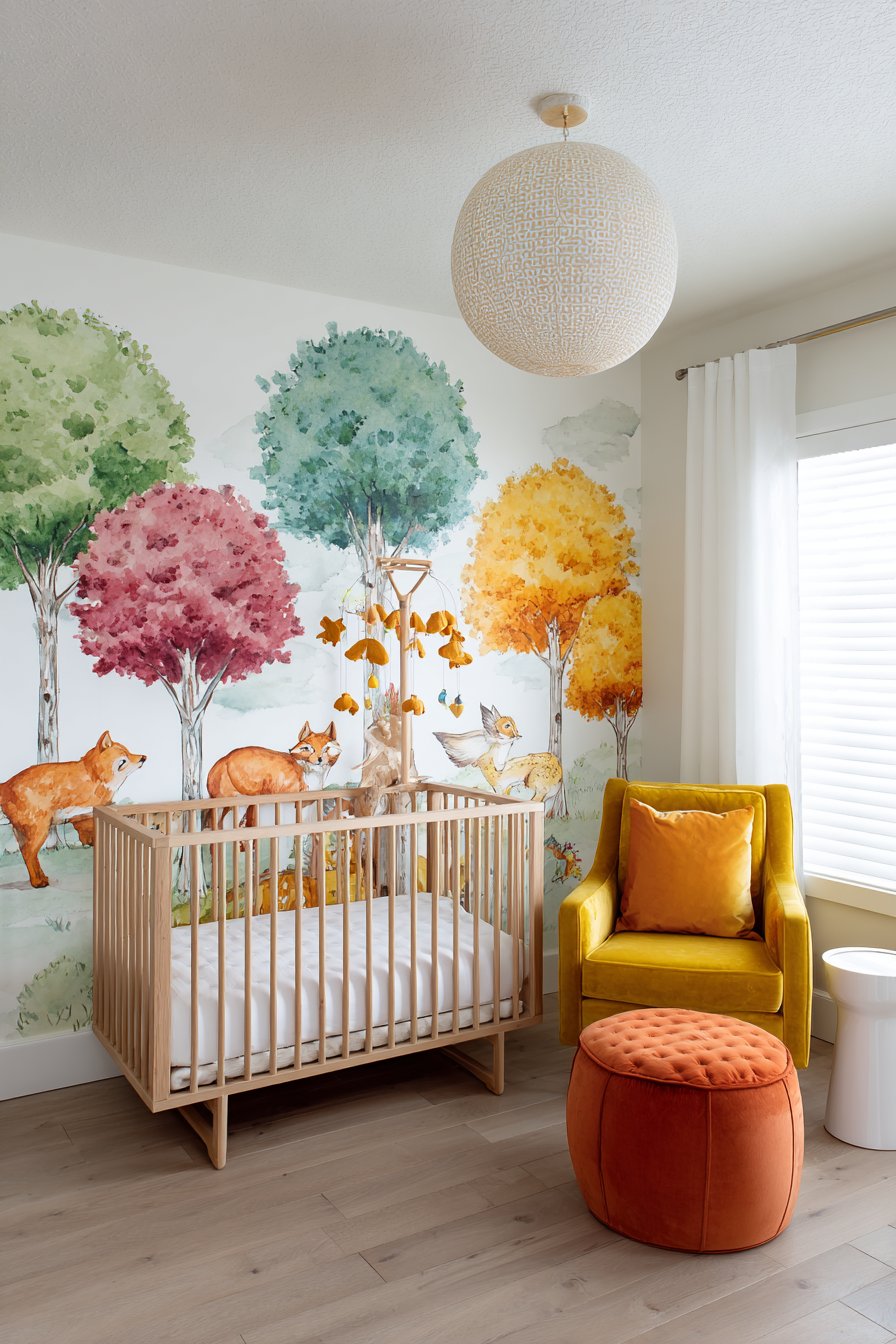
The convertible crib in natural beech wood faces the mural for optimal viewing. A coordinating mobile featuring fabric leaves in complementary colors hangs above the crib. The mobile extends the forest theme vertically, creating immersive environment. The nursing chair upholstered in mustard yellow velvet provides comfortable seating with bold color.
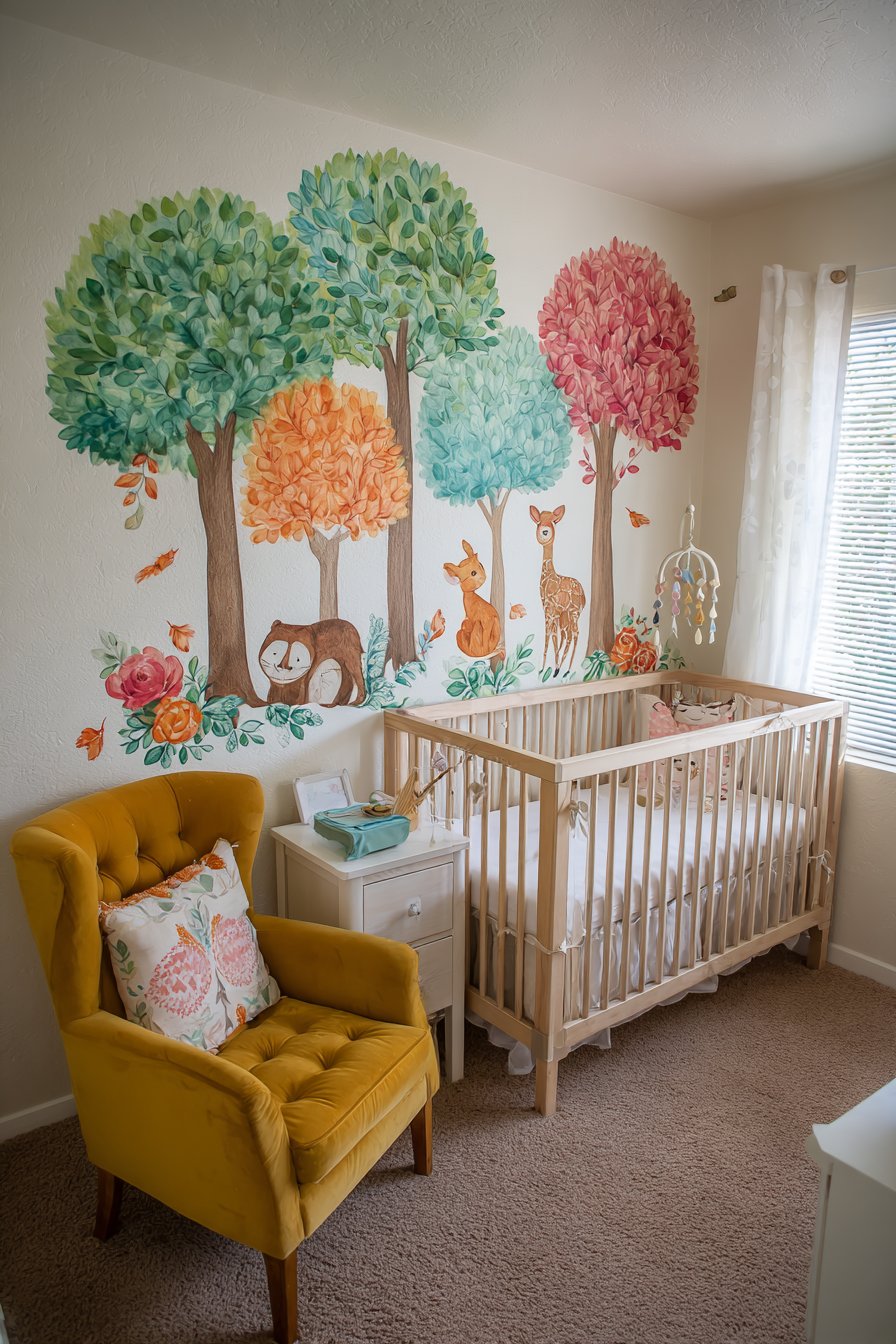
Morning light illuminates the artistic details, bringing the mural to life. The forest scene creates depth perception and visual complexity that engages developing minds. The earth-toned animals provide contrast against the vibrant flora. This balance prevents overstimulation while maintaining visual interest throughout the space.
Key Design Tips:
- Use projectors to trace mural designs if you lack artistic confidence
- Choose a cohesive color palette of five to seven colors for the mural
- Paint the mural on a primed wall for best adhesion and color vibrancy
- Create coordinating mobiles using fabric scraps from the same color family
- Position the crib facing the mural so babies can enjoy the artwork
- Add mustard yellow accents to warm up green-dominated color schemes
6. Geometric Color-Blocked Modern Design
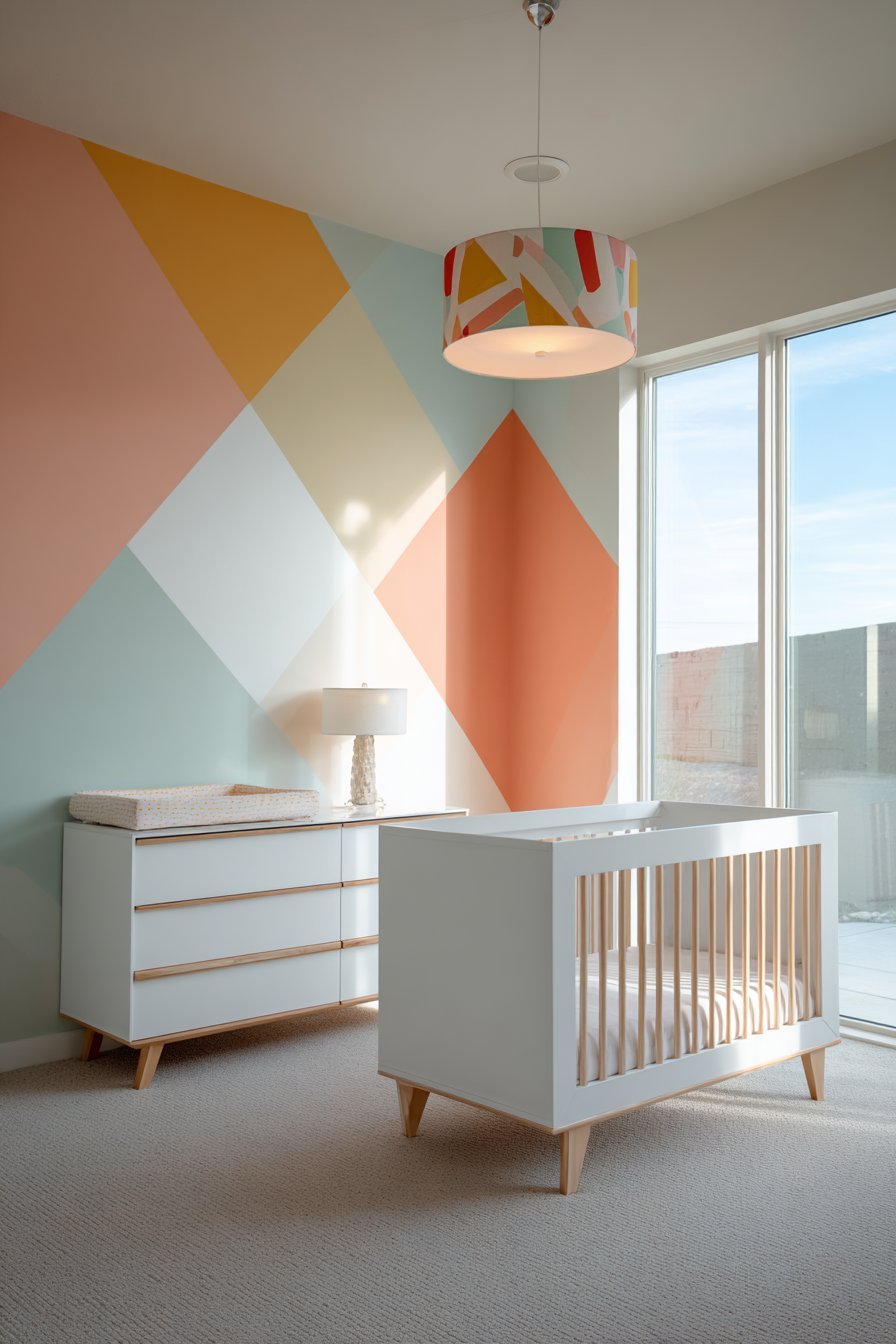
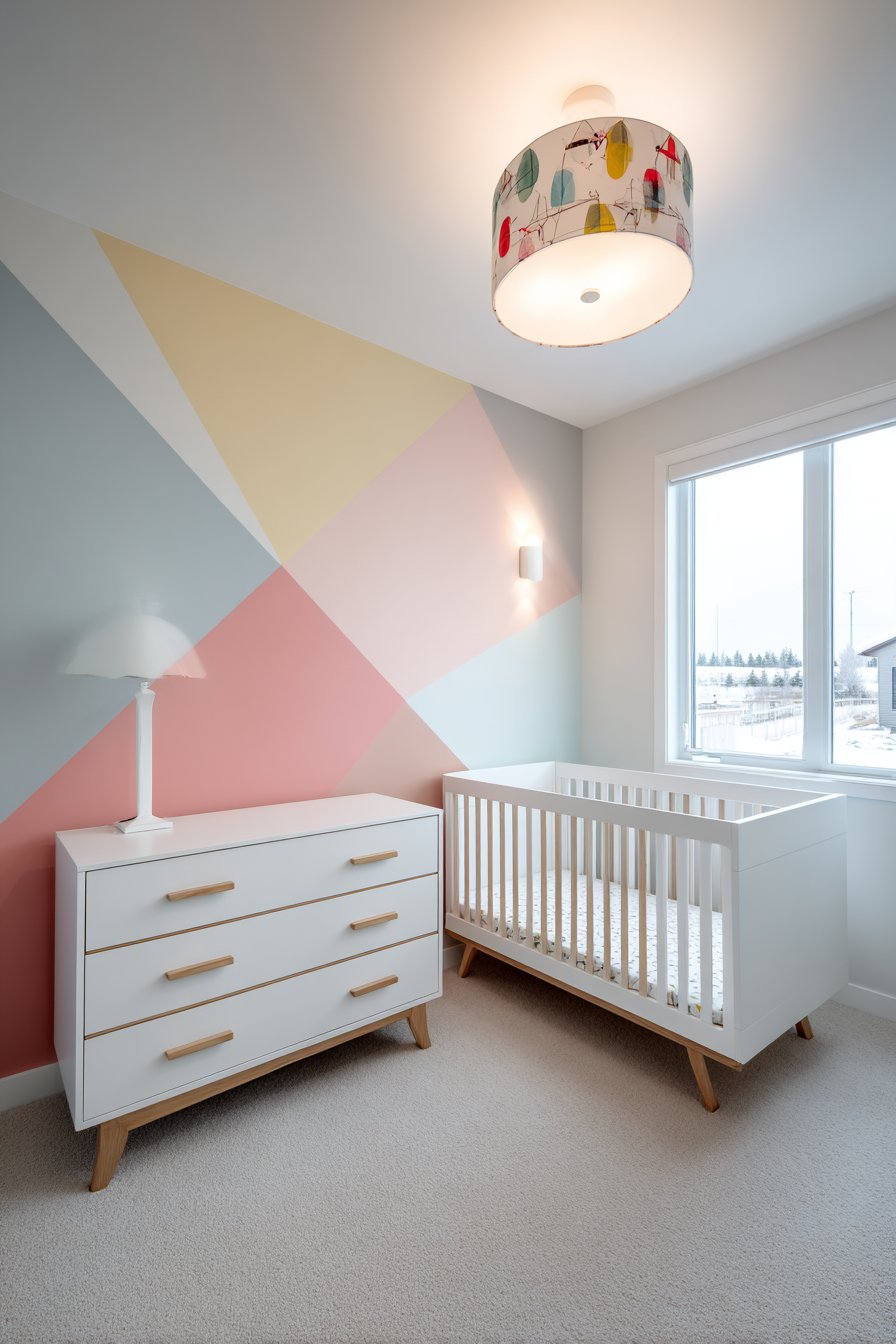
Large-scale triangular sections create contemporary color-blocked wall treatments. Soft peachy pink, mint, butter cream, and light grey form bold geometric patterns. This modern approach to color application feels fresh and sophisticated. The clean lines appeal to design-conscious parents seeking elevated nurseries.
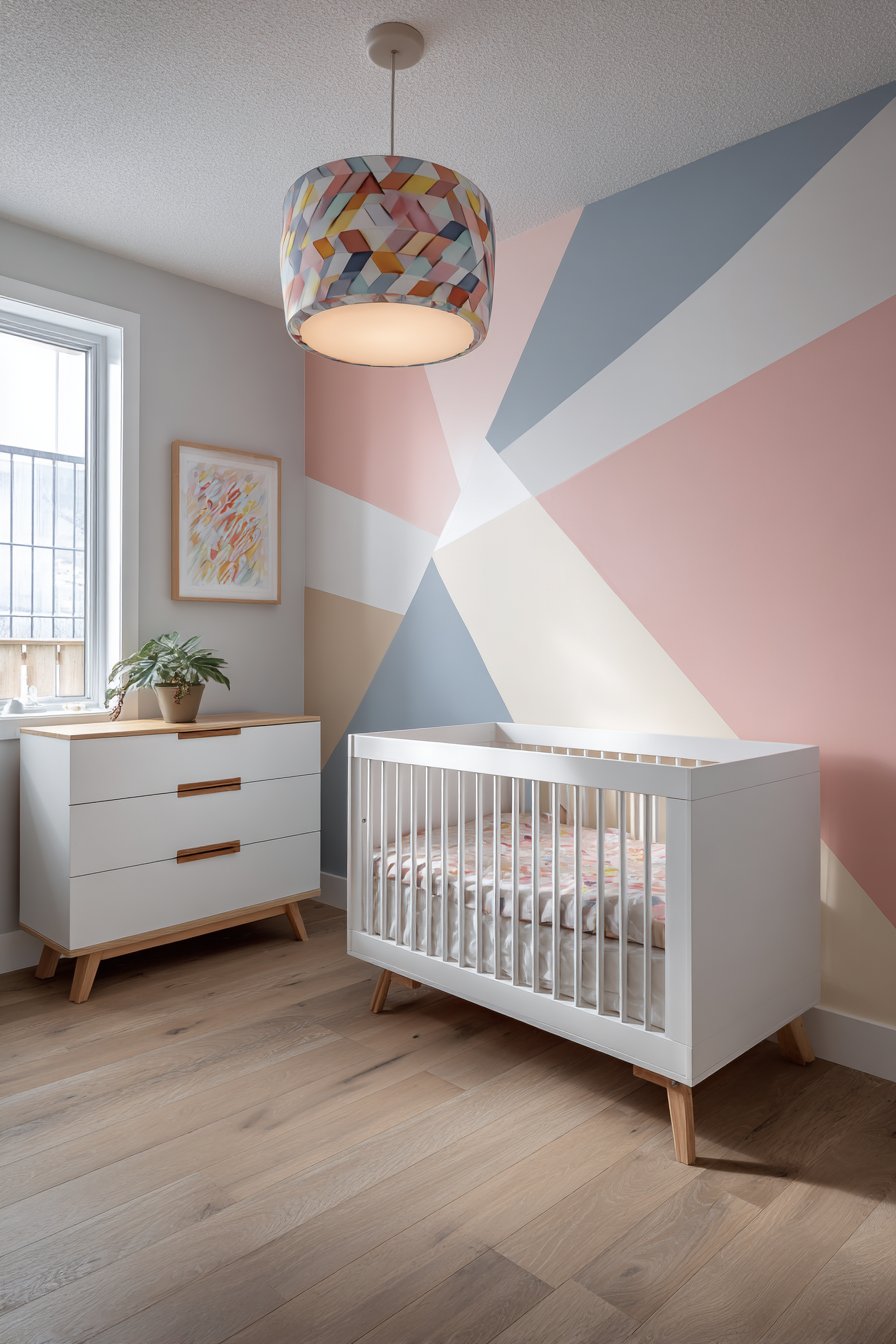
A white Scandinavian-style crib with tapered legs centers the space elegantly. The minimalist crib design allows the geometric walls to command attention. A sleek white dresser with wooden drawer pulls provides storage without visual weight. The combination of white furniture and colorful walls creates perfect balance.
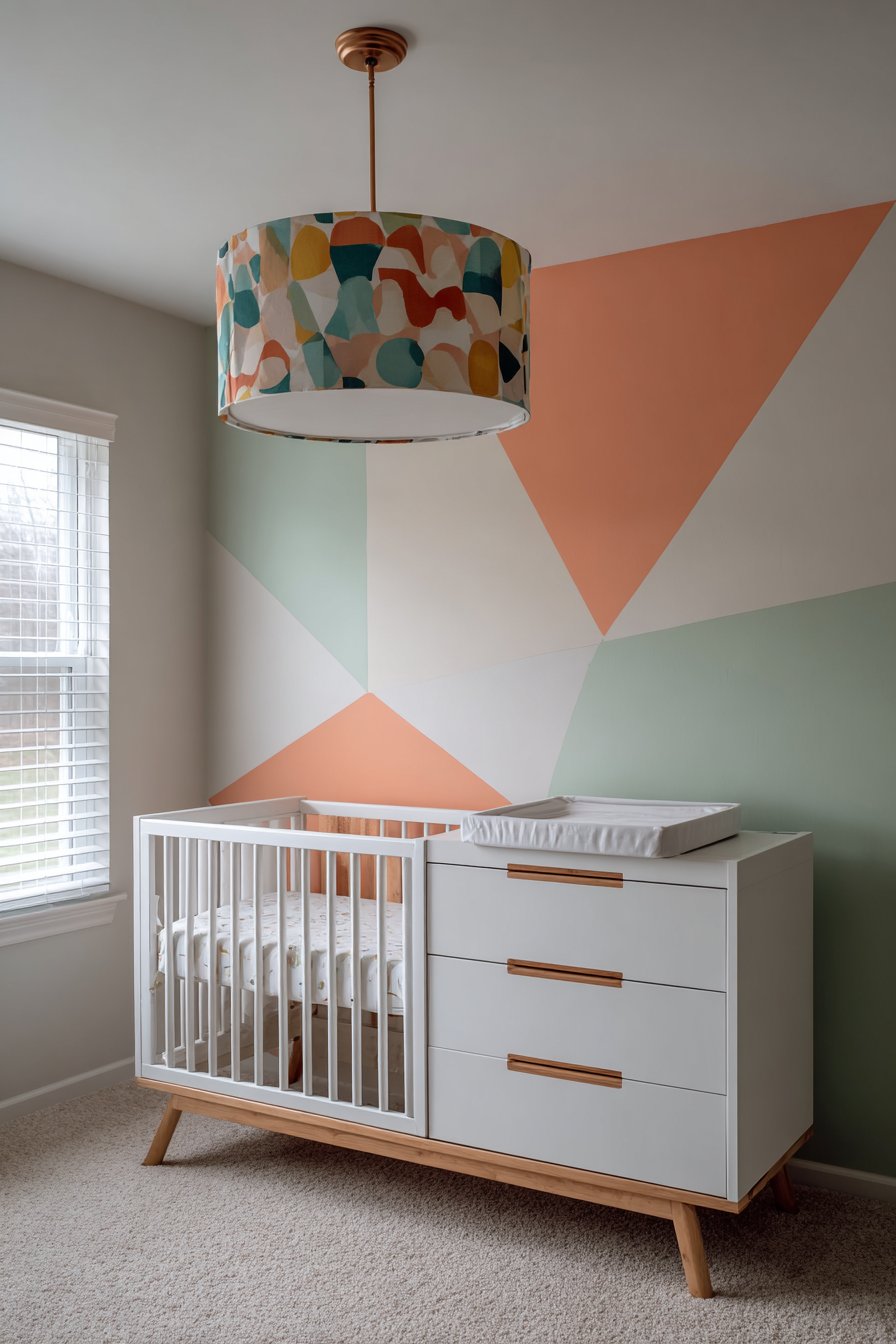
A pendant light with a colorful fabric shade in abstract patterns provides ambient lighting. The overhead fixture introduces additional color from an unexpected angle. Natural light from nearby windows enhances the bold yet soothing color scheme. The interplay between geometric wall sections and natural light creates dynamic visual experiences.
Key Design Tips:
- Use painter’s tape and a level to create precise geometric wall patterns
- Limit your color palette to four colors for cohesive geometric designs
- Choose soft, muted versions of bold colors for age-appropriate schemes
- Select white or natural wood furniture to let geometric walls shine
- Add a statement pendant light with colorful fabric shades for additional interest
- Ensure geometric patterns have clean lines by removing tape while paint is slightly wet
7. Rainbow Canopy Dream Space
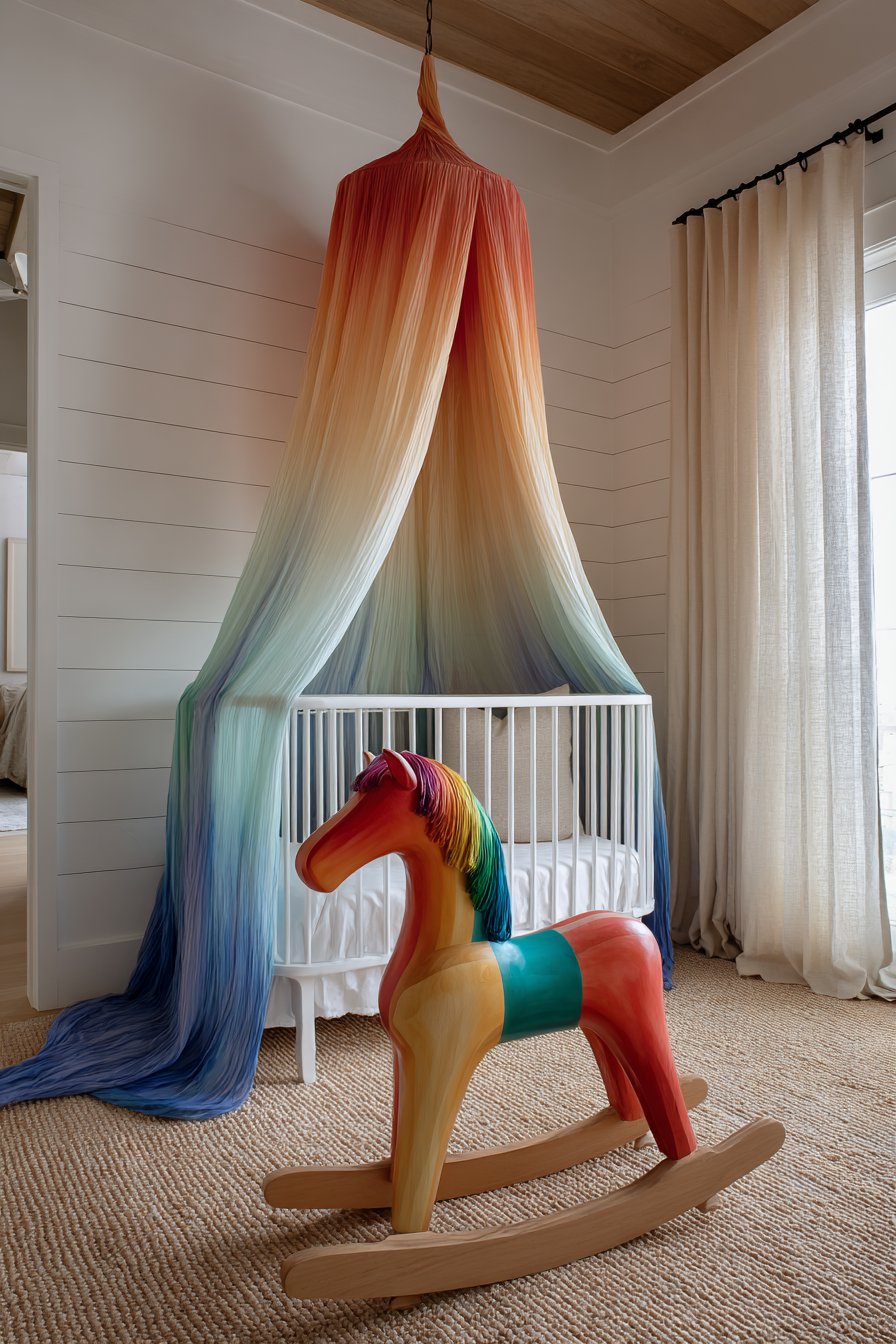
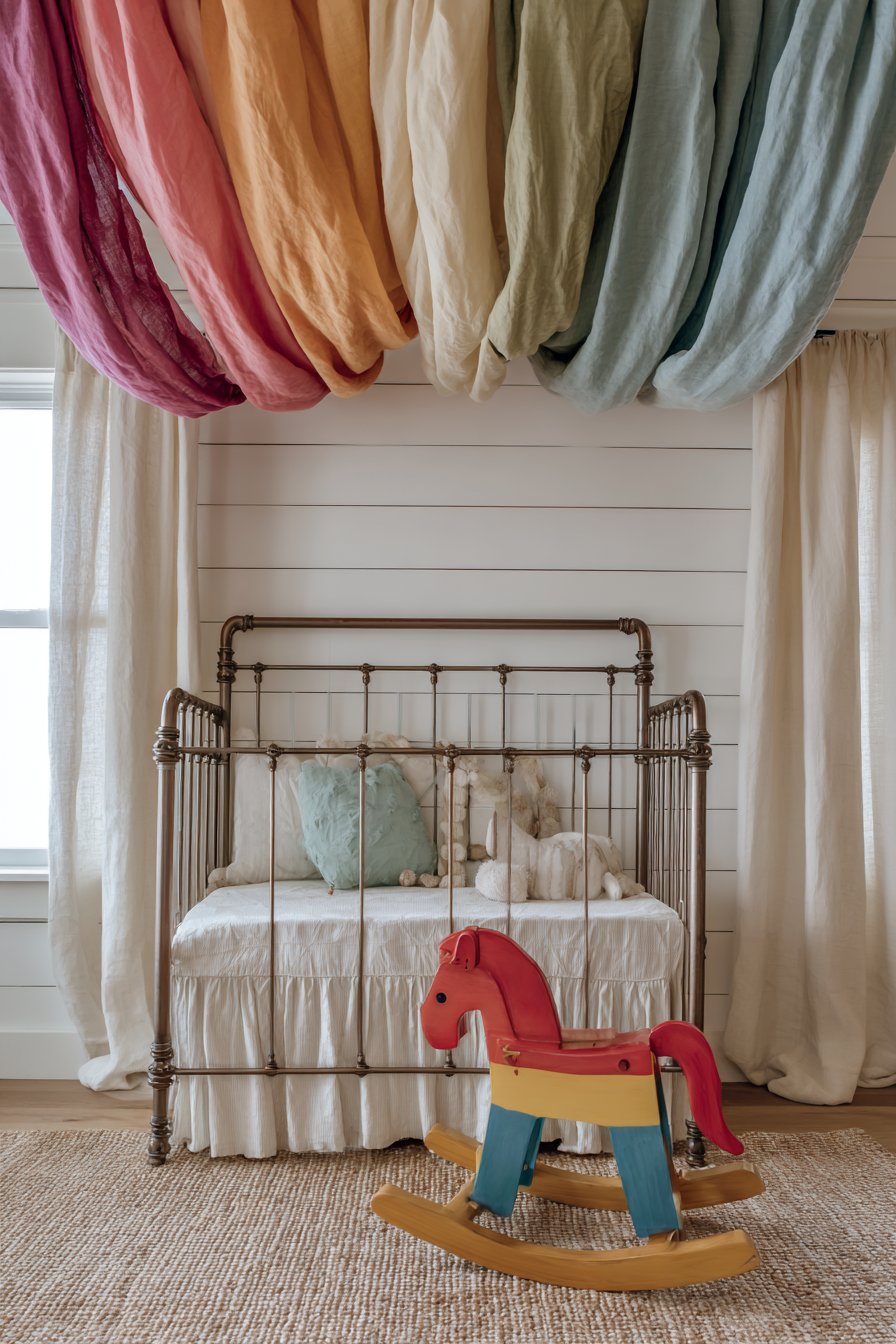
A colorful canopy draped over the white iron crib creates an enchanting focal point. Layers of sheer fabric in rainbow sequence flow from a central point above. Red, orange, yellow, green, blue, and purple cascade down in proper spectrum order. The dreamy textile treatment adds romance and whimsy to the nursery.
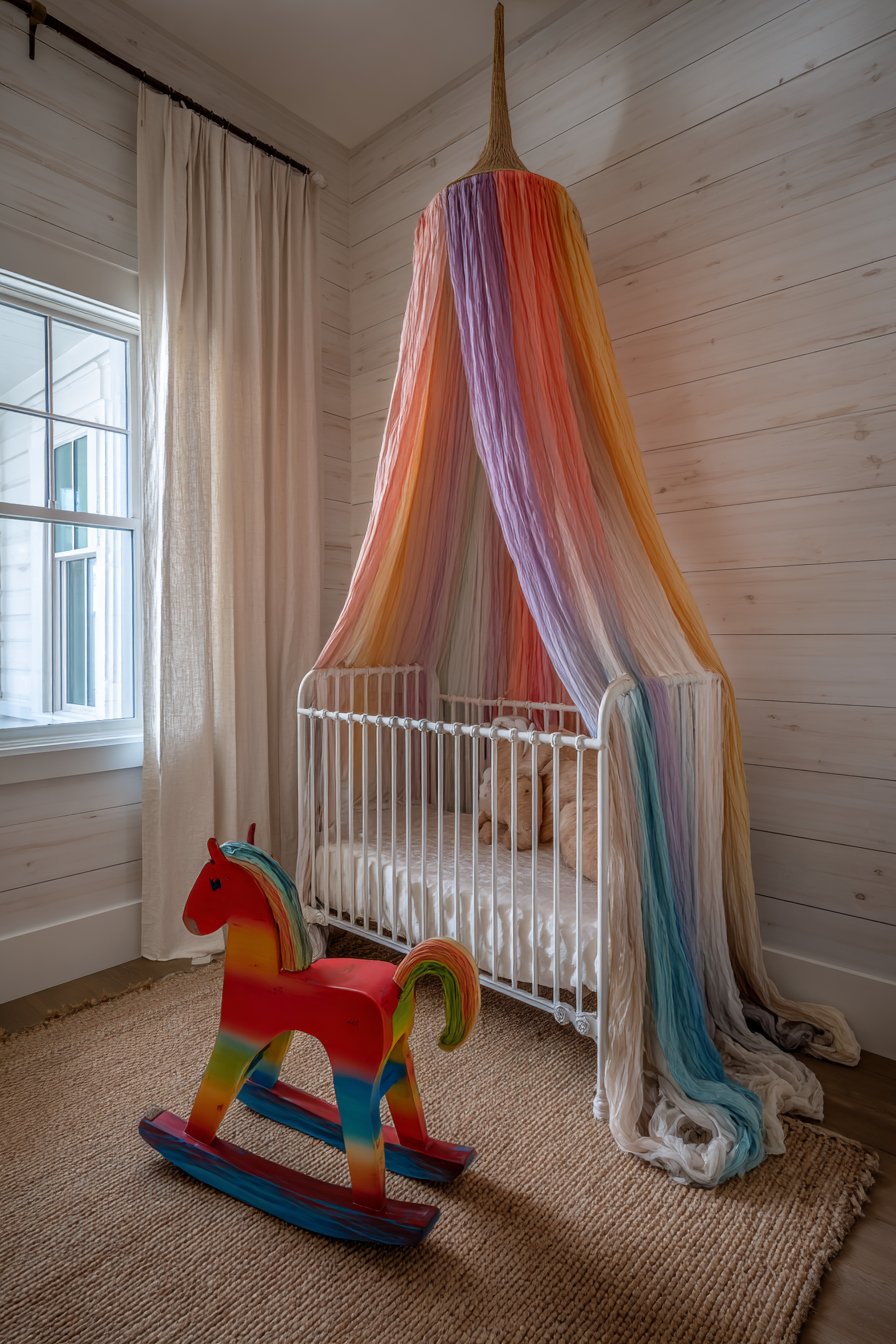
White shiplap walls provide a neutral backdrop that makes the canopy pop. The clean lines of shiplap add architectural interest without competing for attention. A vintage wooden rocking horse painted in bright primary colors sits nearby. The traditional toy adds nostalgic charm while reinforcing the colorful theme.
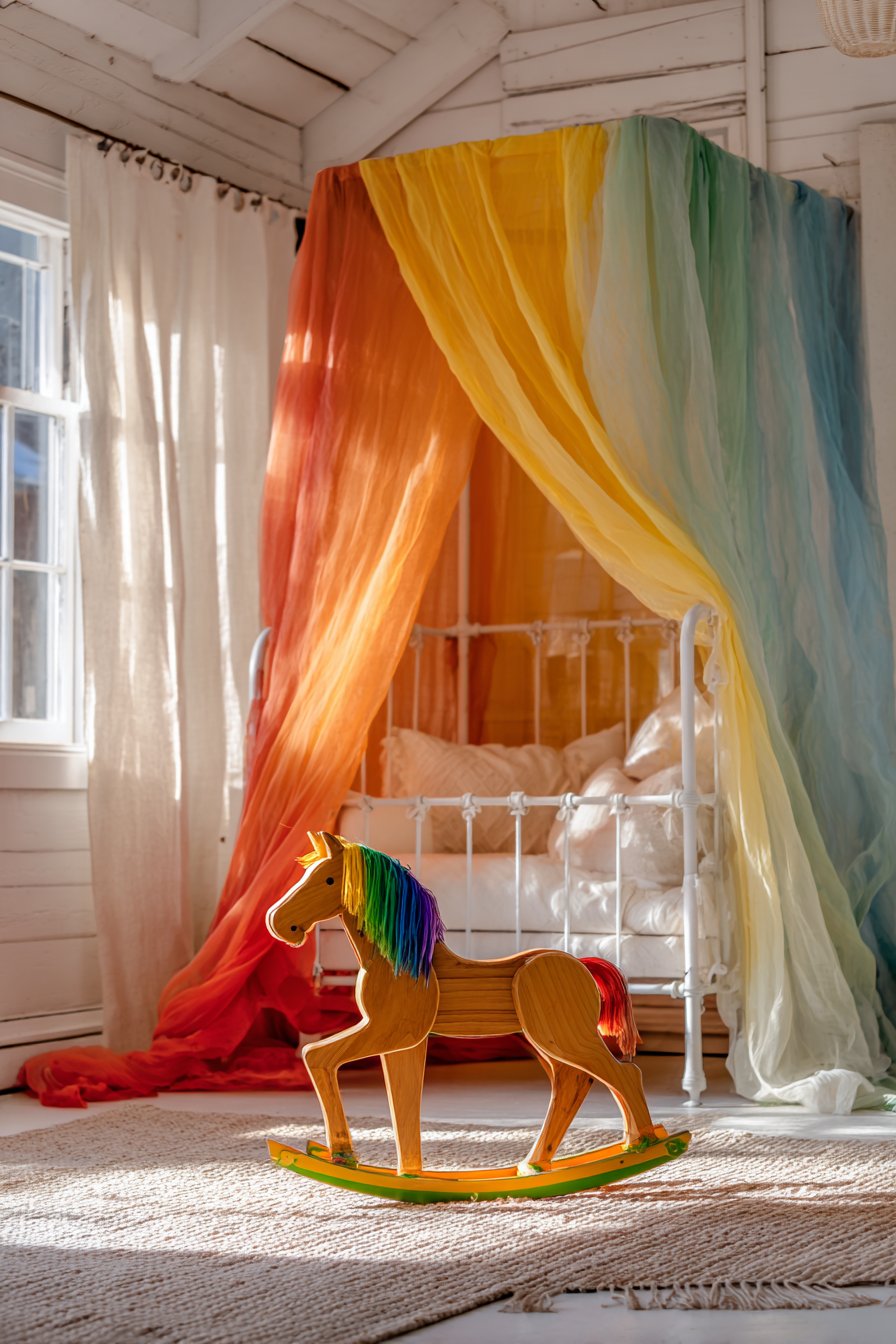
A cream-colored jute rug grounds the space with natural texture. Soft natural lighting filters through linen curtains, creating ethereal atmosphere. The sheer canopy fabric catches and diffuses light beautifully throughout the day. This creates magical lighting effects that change as the sun moves across the sky.
Key Design Tips:
- Secure canopy hardware to ceiling studs for safety and stability
- Layer sheer fabrics in rainbow order for authentic spectrum appearance
- Choose white or neutral walls to prevent color overload with rainbow canopies
- Add vintage toys painted in primary colors to complement the rainbow theme
- Use natural fiber rugs like jute to balance the abundance of colorful fabric
- Install sheer window treatments that won’t compete with the canopy’s drama
8. Practical Changing Station Organization
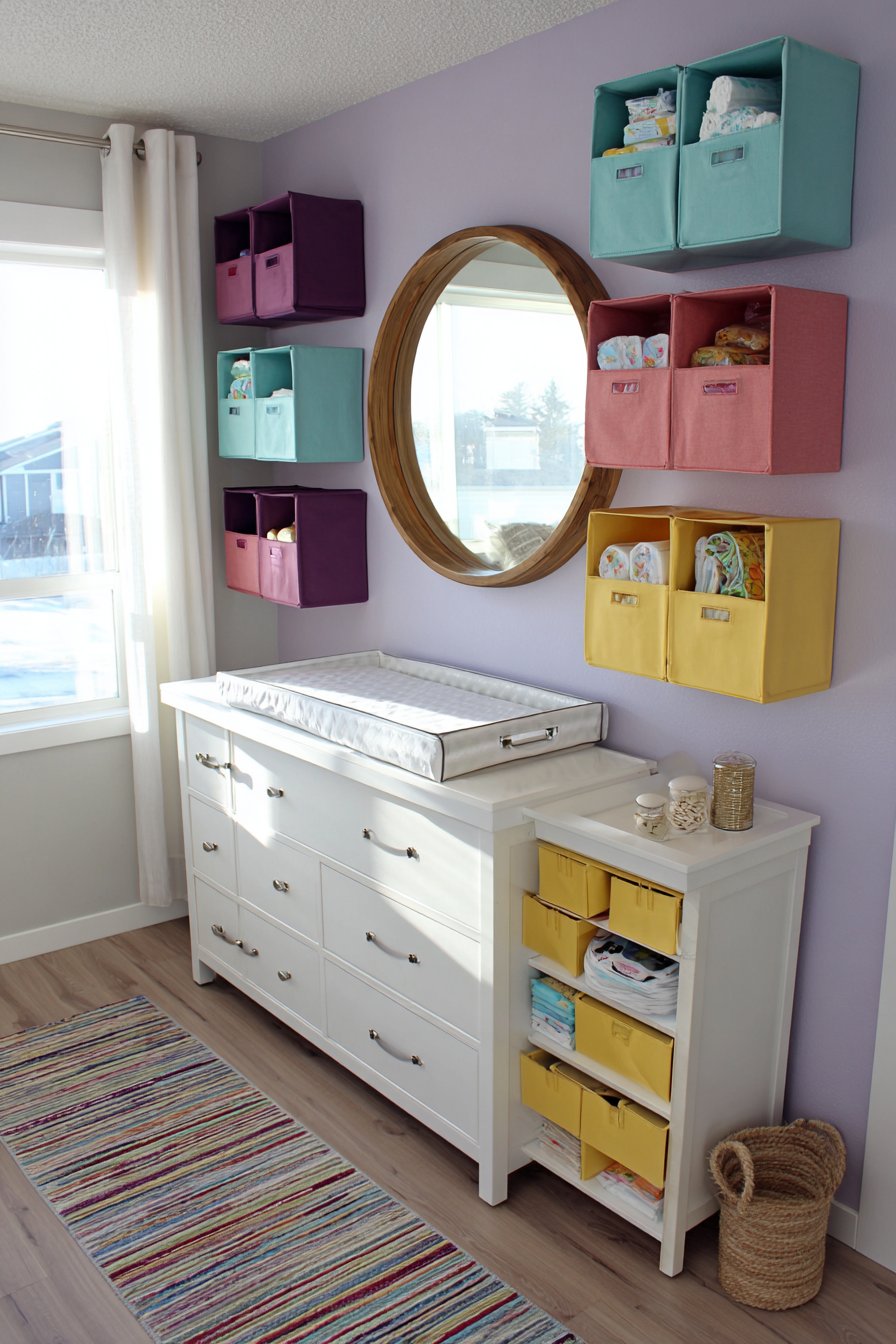
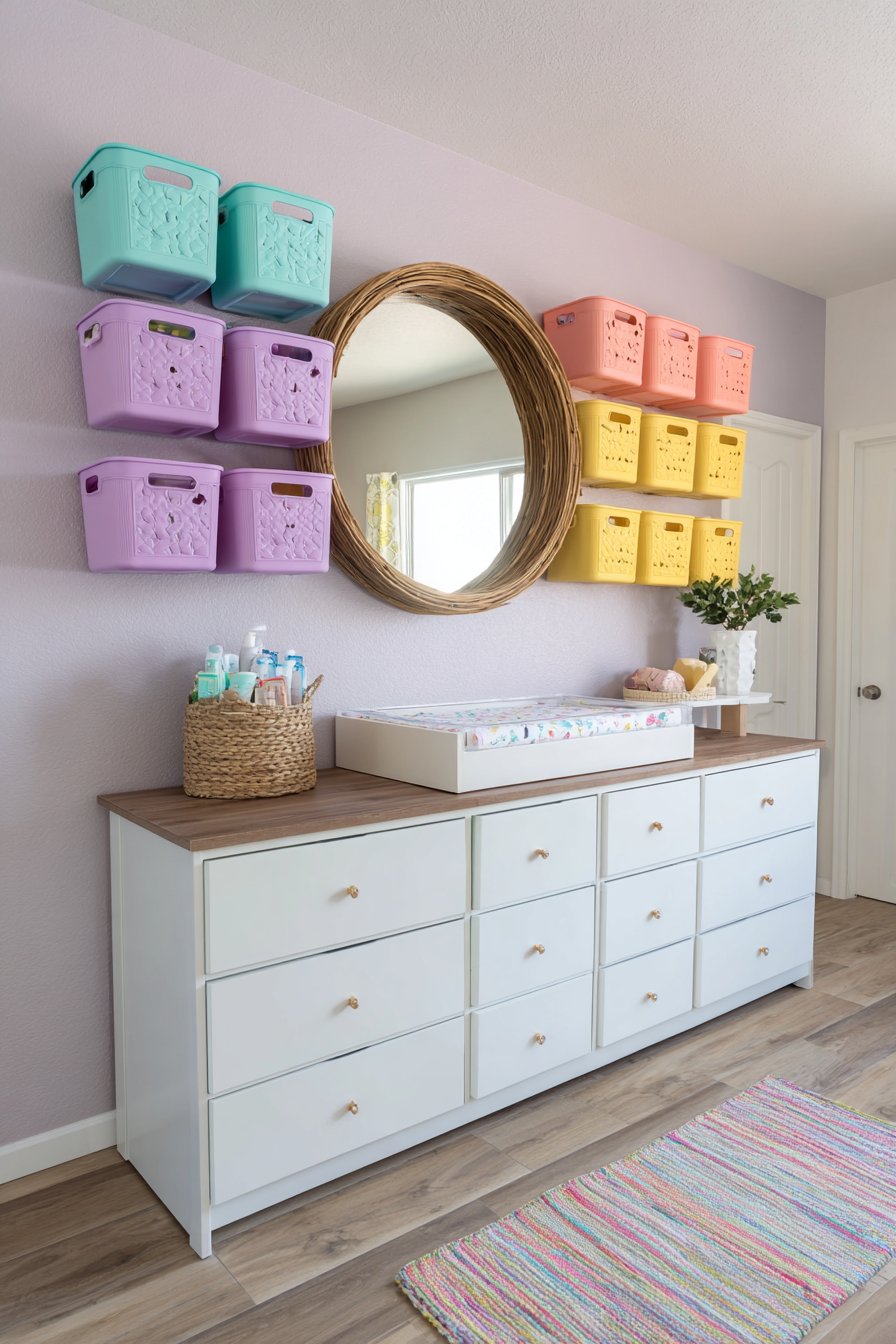
The changing station features a white dresser topped with a changing pad. Wall-mounted organizers in vibrant colors surround the changing area strategically. Turquoise bins, coral baskets, and yellow fabric pockets hold diapers, wipes, and essentials. This colorful organization system makes diaper changes efficient and visually appealing.
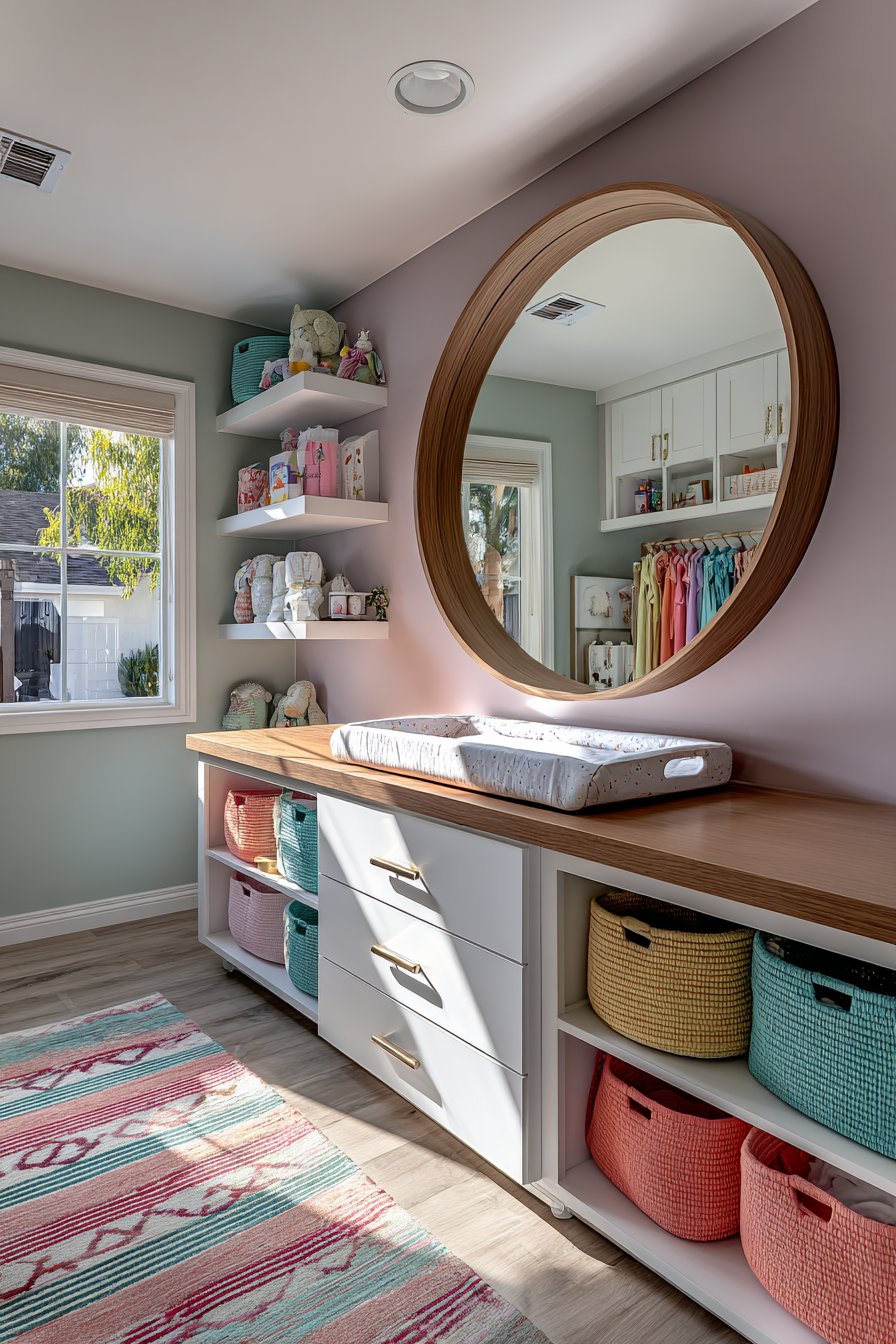
A large circular mirror with natural wood frame hangs above the dresser. The mirror reflects the opposite wall painted in soft lilac. This reflection doubles the color impact while making the space feel larger. The natural wood frame ties together various wooden elements throughout the room.
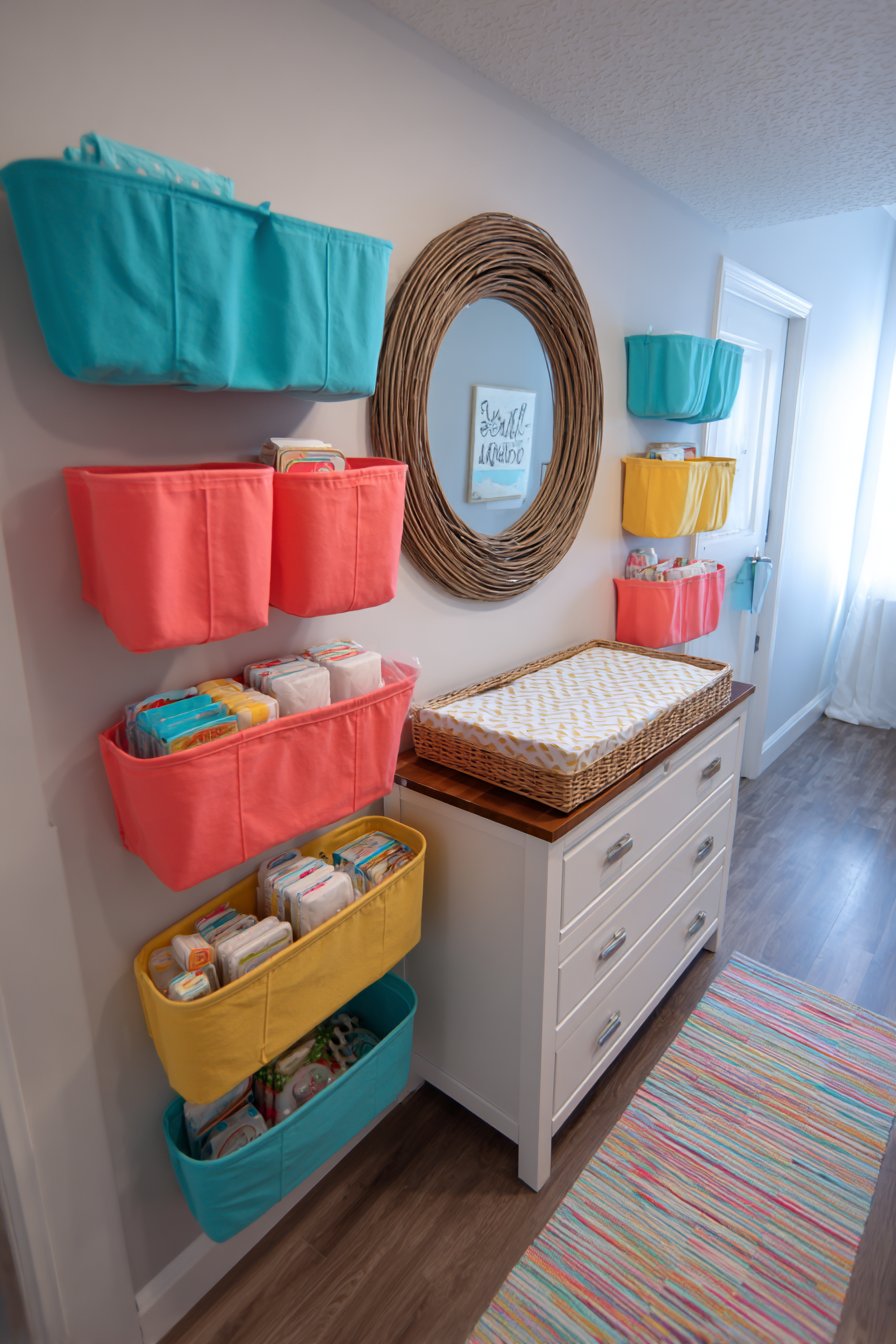
A patterned runner in multi-colored stripes protects the light oak flooring. The runner adds comfort underfoot while protecting high-traffic areas from wear. Natural daylight highlights the functional organization from a nearby window. The thoughtful color coordination proves practical spaces can be beautiful too.
Key Design Tips:
- Mount organizers at appropriate heights for easy one-handed access during changes
- Choose colorful storage bins in different shapes for varied item storage
- Hang mirrors above changing stations to entertain babies during diaper changes
- Add floor runners in high-traffic areas to protect flooring from wear
- Organize supplies by frequency of use, keeping essentials within arm’s reach
- Use wall-mounted storage to keep the dresser top clear for changing needs
9. Cozy Reading Corner with Color-Organized Books
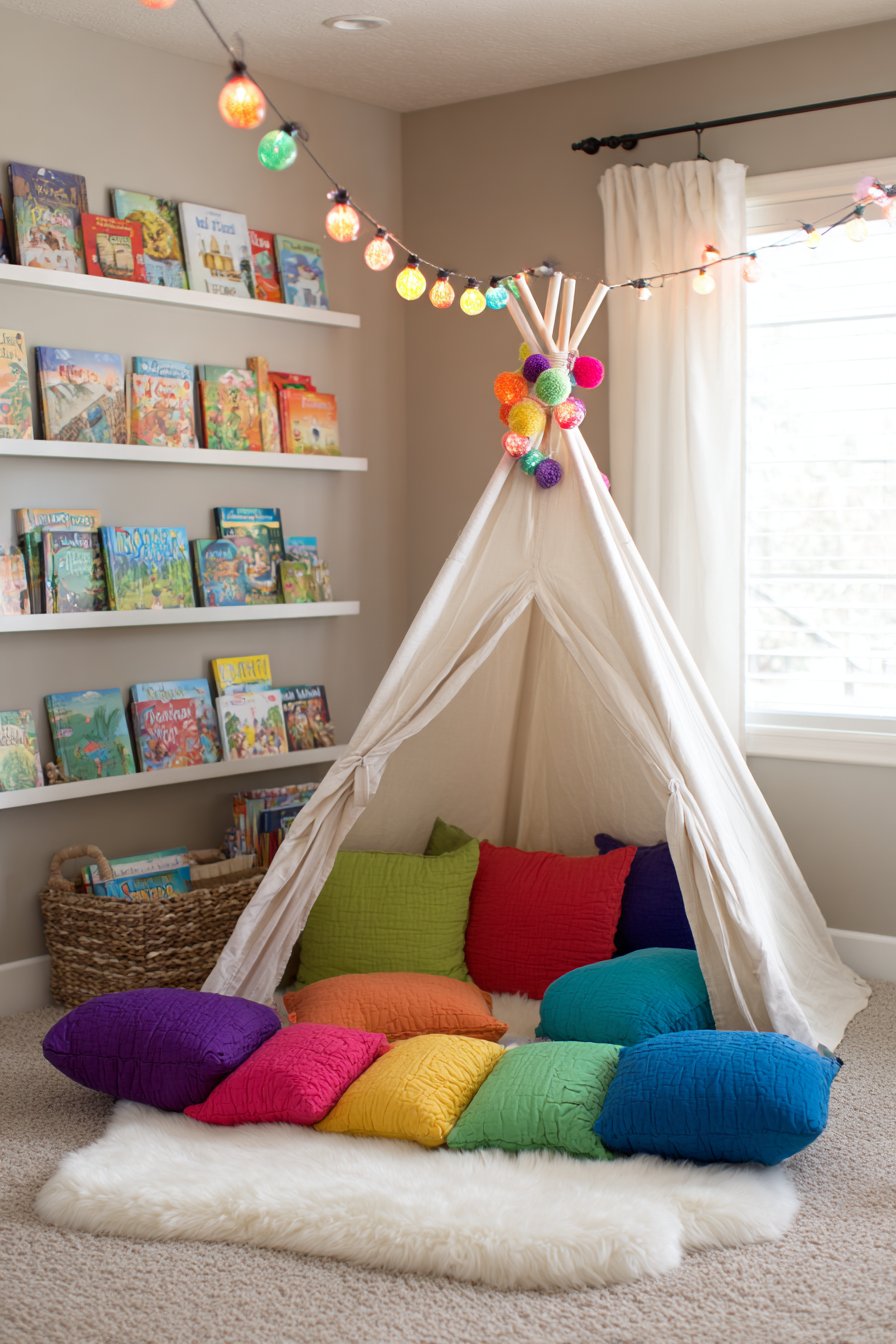
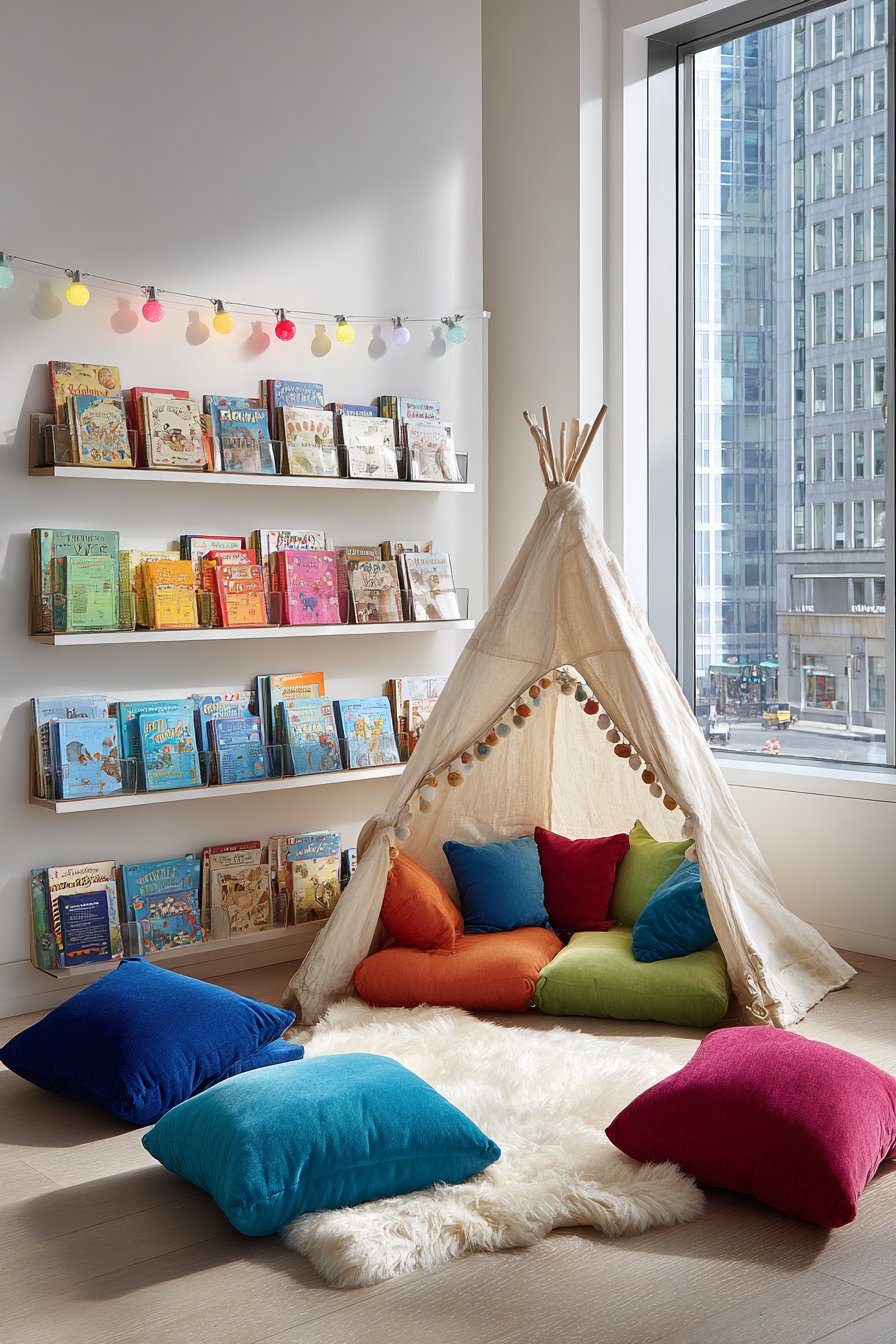
A low-profile bookshelf in white displays board books with vibrant covers. The books organize by color, creating a rainbow effect across the shelves. This organization method is both functional and decorative. The colorful spines become artwork that changes as the library grows.
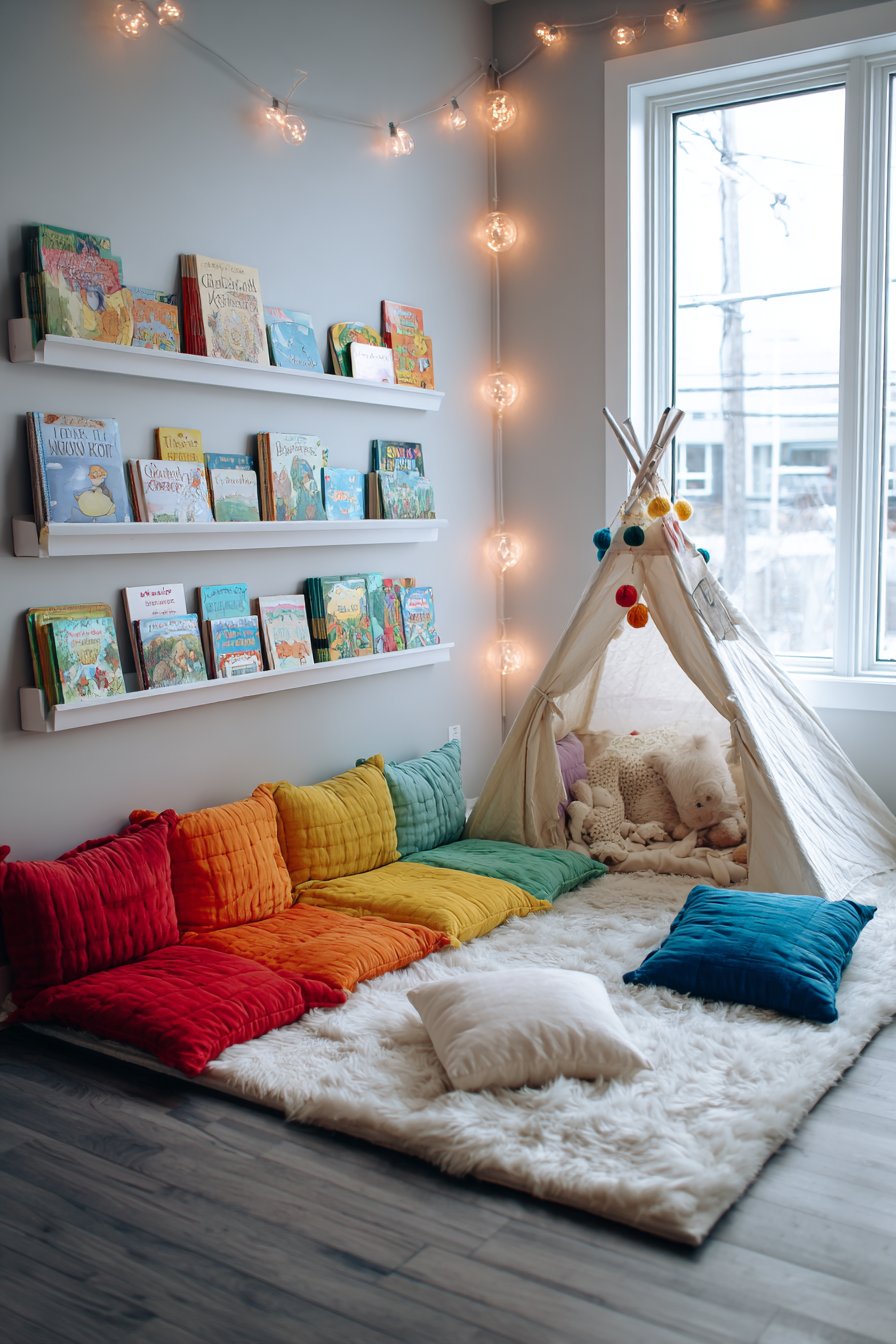
A small teepee tent in natural canvas with colorful pom-pom trim provides a cozy nook. Floor cushions in jewel tones fill the teepee: sapphire blue, ruby red, and emerald green. The rich colors create an inviting space for storytime and quiet play. String lights with colored bulbs add warm ambient lighting for evening reading sessions.
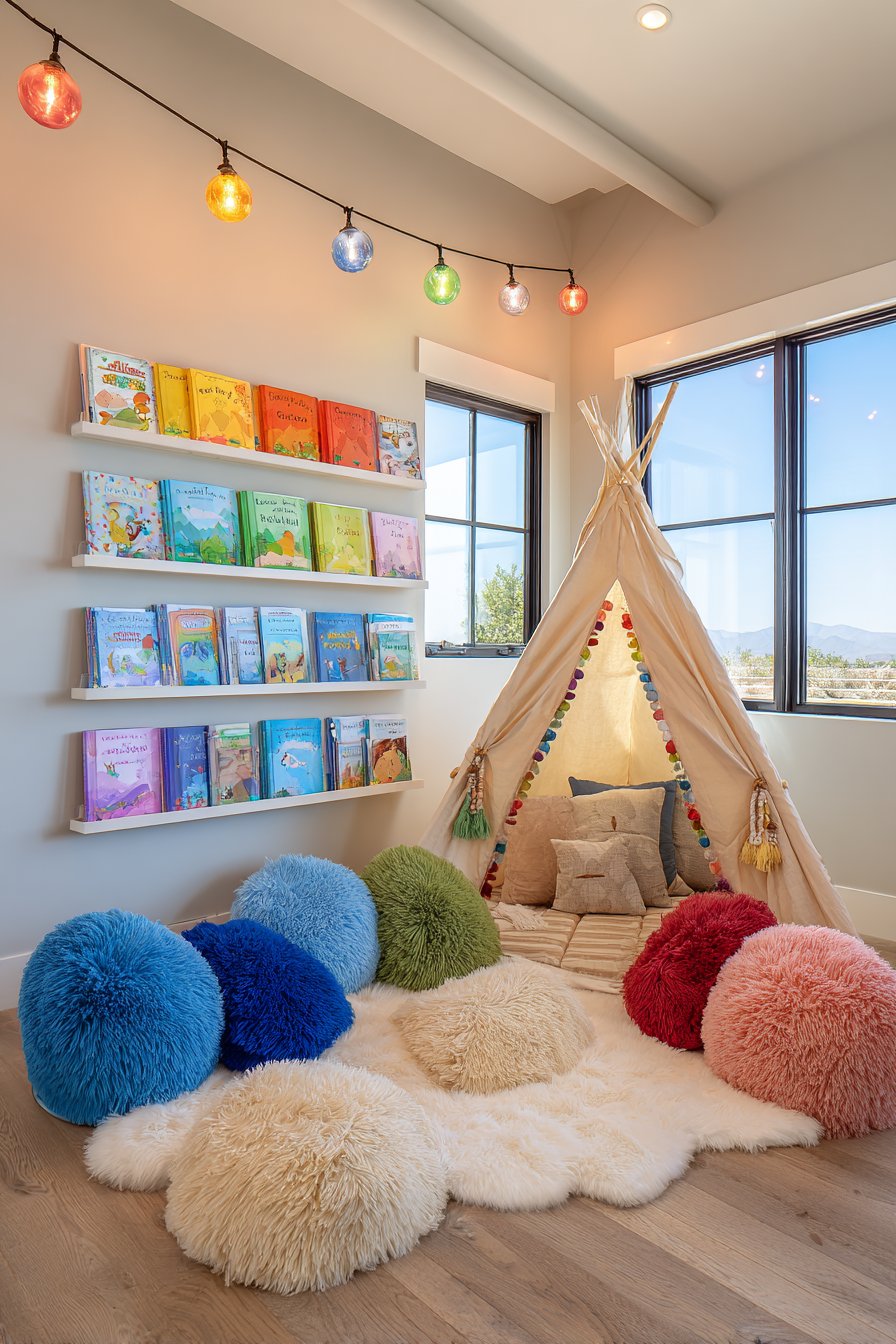
A sheepskin rug in cream adds softness underfoot in the reading area. The natural texture balances the abundance of colorful elements throughout the space. Wide-angle views reveal how this dedicated reading zone encourages early literacy. The child-friendly scale makes the space accessible and inviting for little readers.
Key Design Tips:
- Organize children’s books by cover color rather than alphabetically for visual impact
- Choose low-profile shelving that allows toddlers to reach books independently
- Add teepees or reading nooks to create special spaces dedicated to books
- Use jewel-tone cushions for richness without requiring bright primary colors
- Install string lights with colored bulbs for adjustable ambient lighting
- Layer natural textures like sheepskin to balance colorful synthetic materials
10. Gender-Neutral Woodland Theme
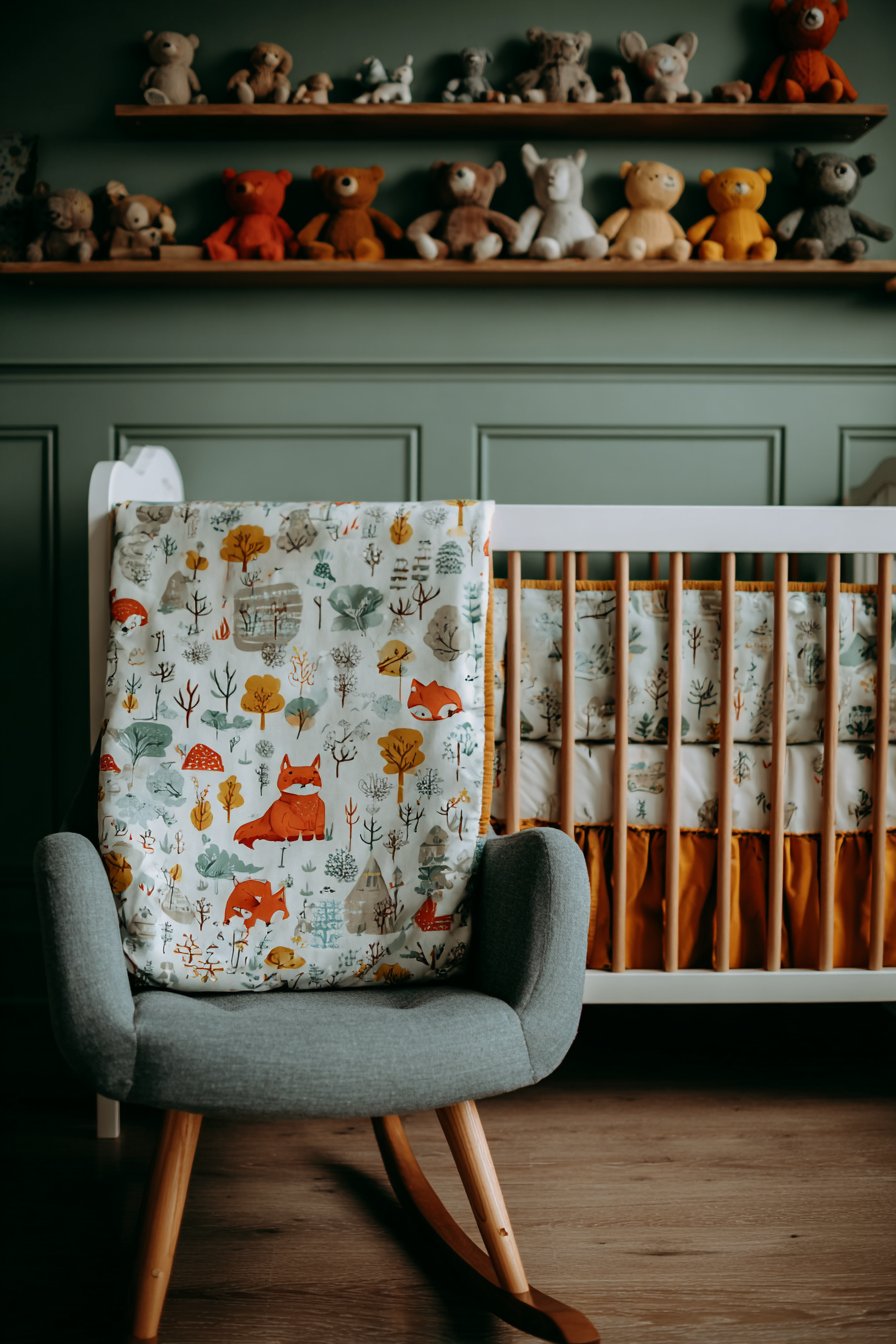
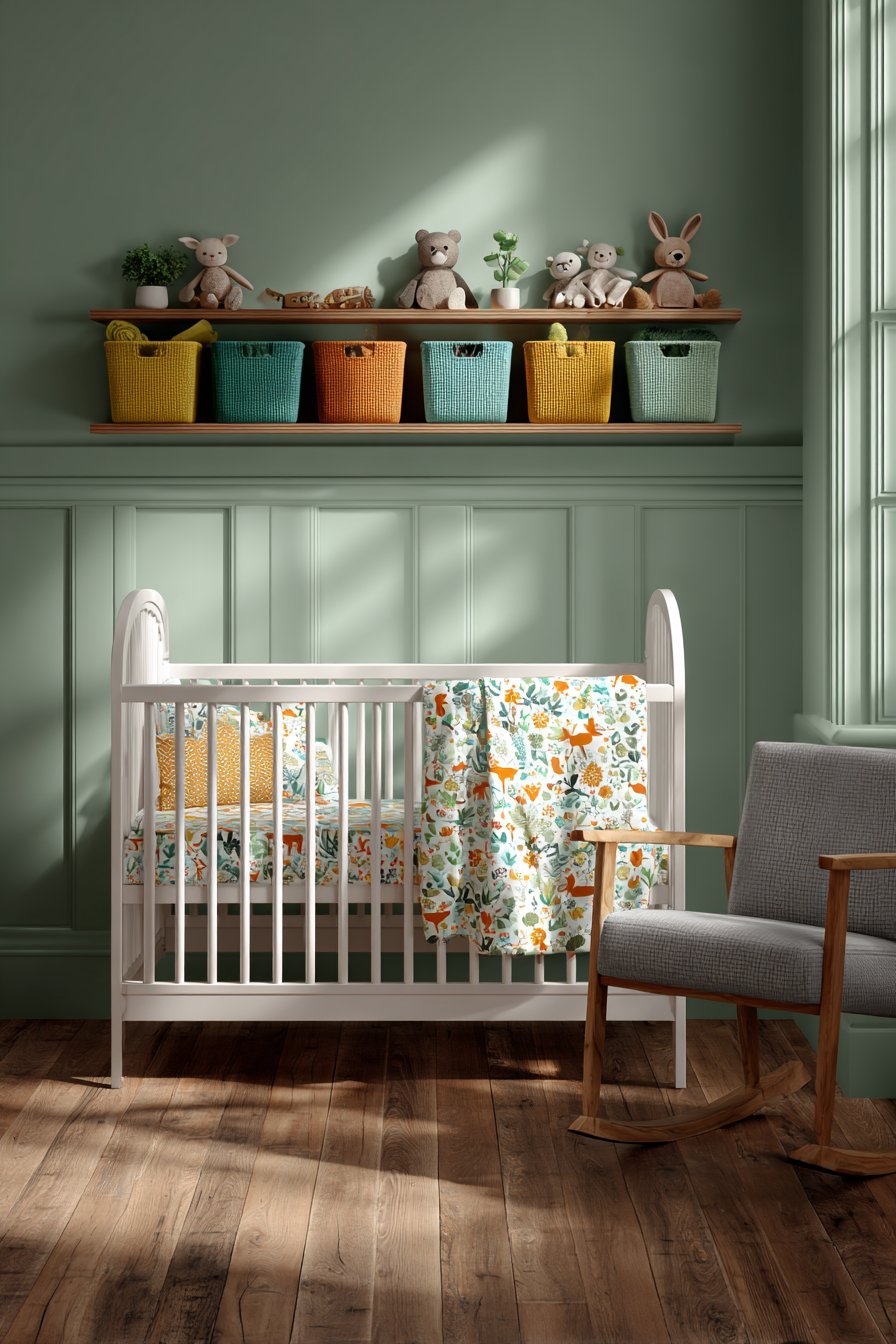
Walls painted in soothing sage green with white wainscoting create classic foundation. The chair rail divides the wall, adding architectural interest and sophistication. A white crib with an arched headboard displays colorful woodland bedding. Foxes, bears, and birds in orange, teal, brown, and yellow populate the fabric.
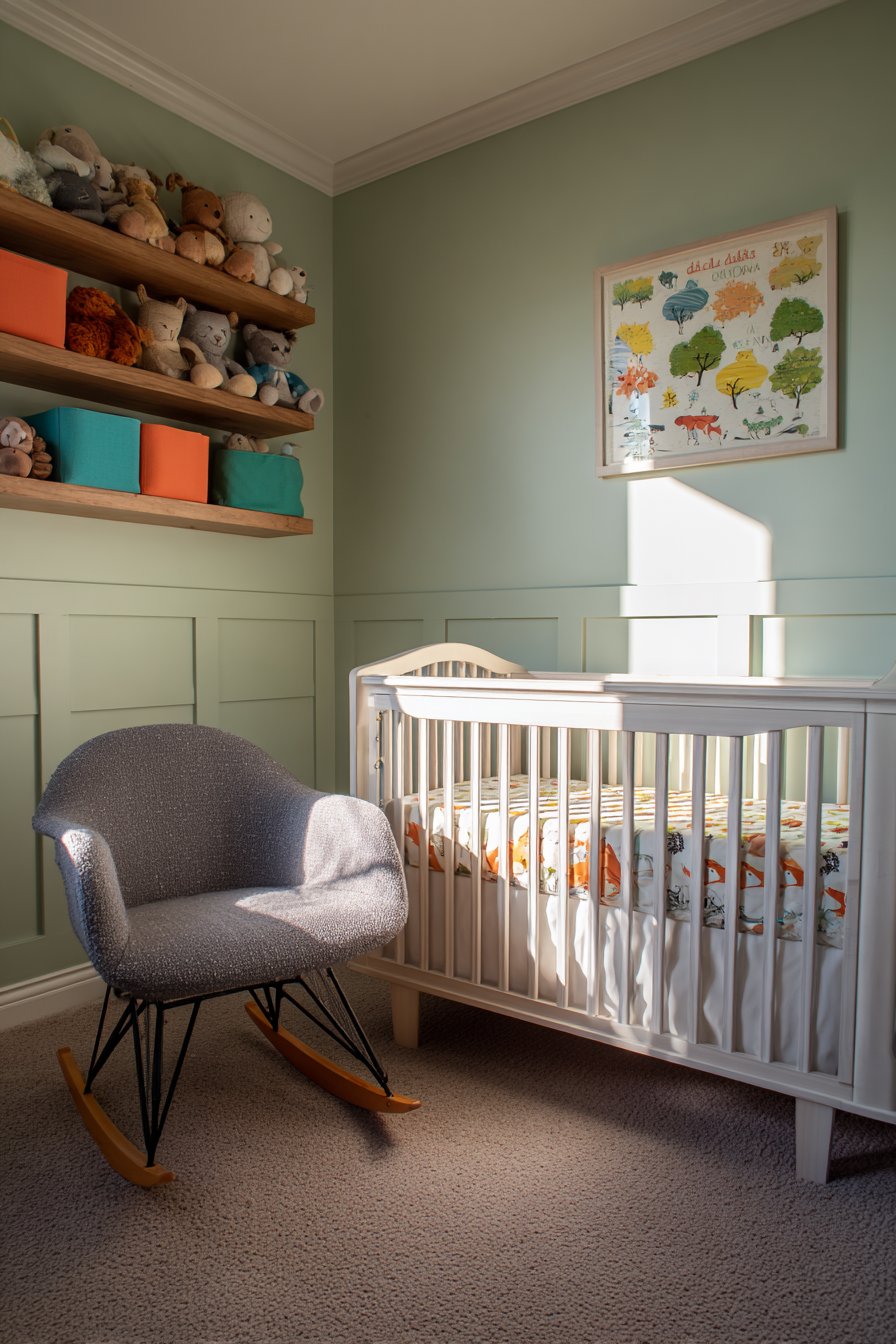
Open shelving in natural wood holds colorful felt storage bins organized by category. A collection of stuffed animals in woodland creature forms reinforces the theme. The natural wood shelving complements the sage green walls beautifully. A modern glider in grey fabric with wooden rockers provides comfortable seating.
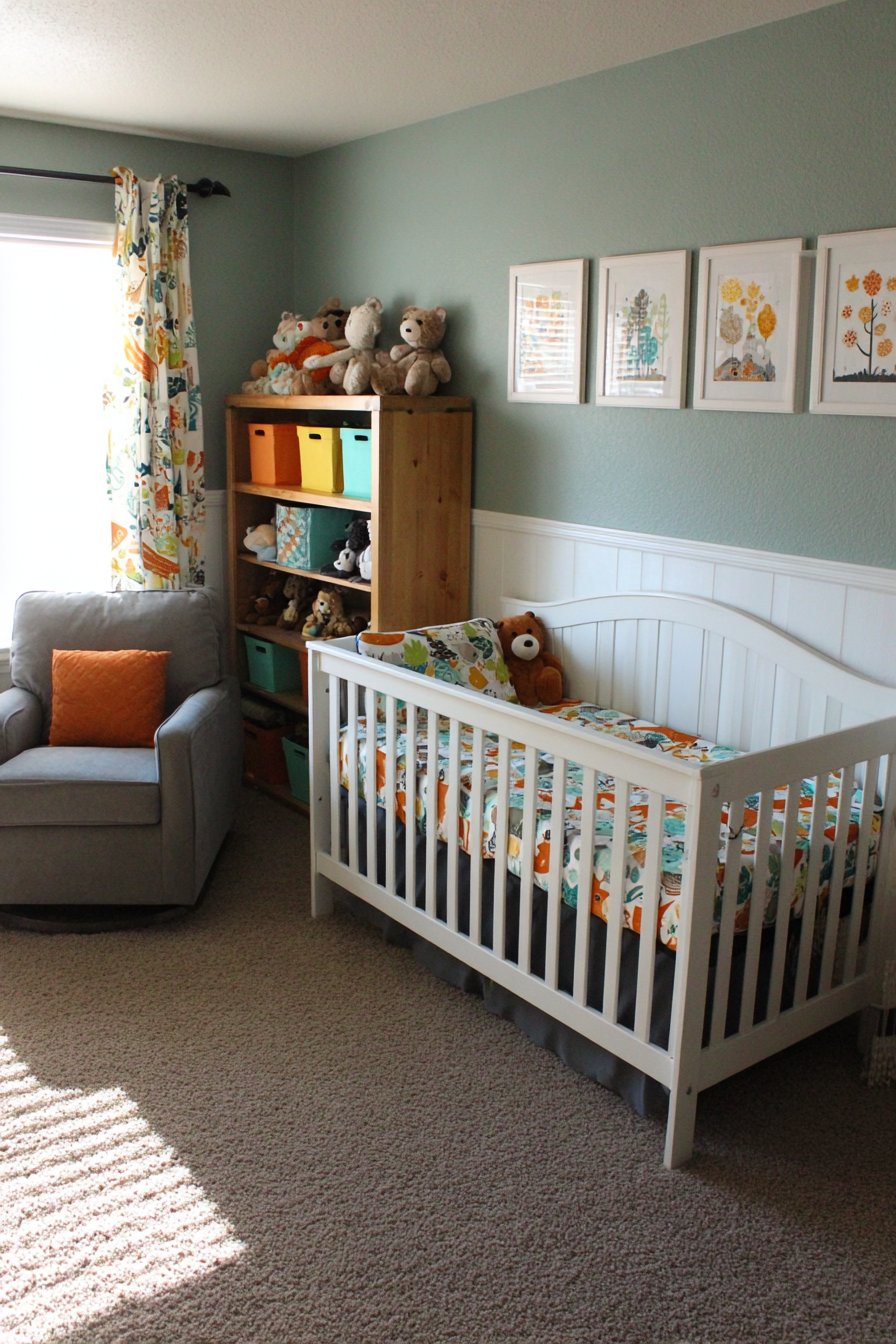
Morning light creates soft shadows across the thoughtfully composed space. The combination of neutral base colors and colorful accents achieves perfect balance. The woodland theme works equally well for any gender. This versatility makes the design choice practical for families planning multiple children.
Key Design Tips:
- Paint walls in sage green for a calming, nature-inspired neutral base
- Add white wainscoting below chair rails for classic architectural detail
- Choose themed bedding in multiple colors rather than single-color palettes
- Select felt storage bins in colors that complement your chosen theme
- Include a comfortable glider with wooden elements that tie into natural themes
- Use woodland creature motifs that span multiple colors for cohesive diversity
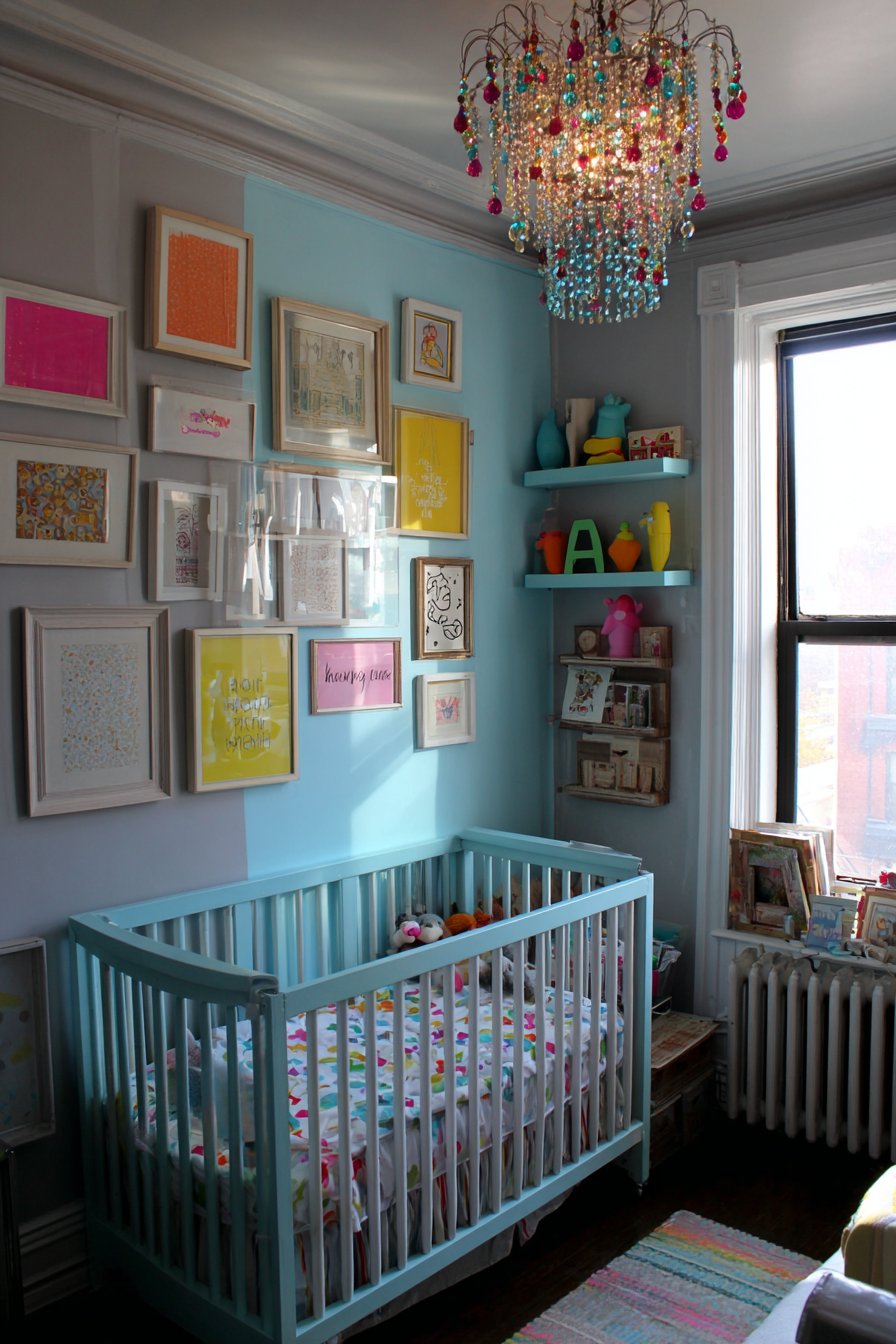
11. Gallery Wall Statement Above Crib
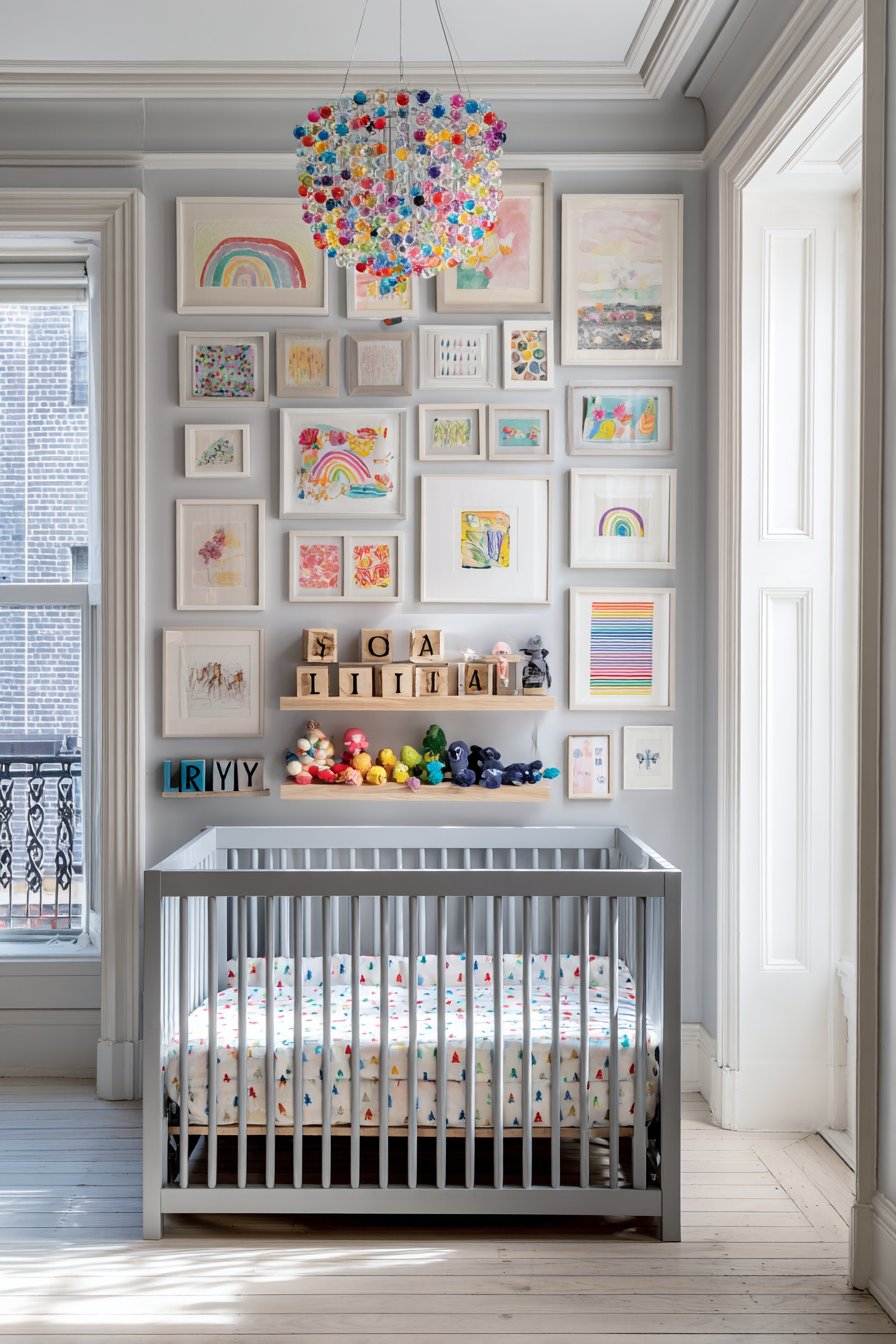
A colorful gallery wall above the crib creates personalized artistic display. Framed prints mix with wooden letters spelling the baby’s name in different bright colors. Small shelves hold colorful decorative objects between frames. The layered approach creates depth and visual complexity that evolves over time.
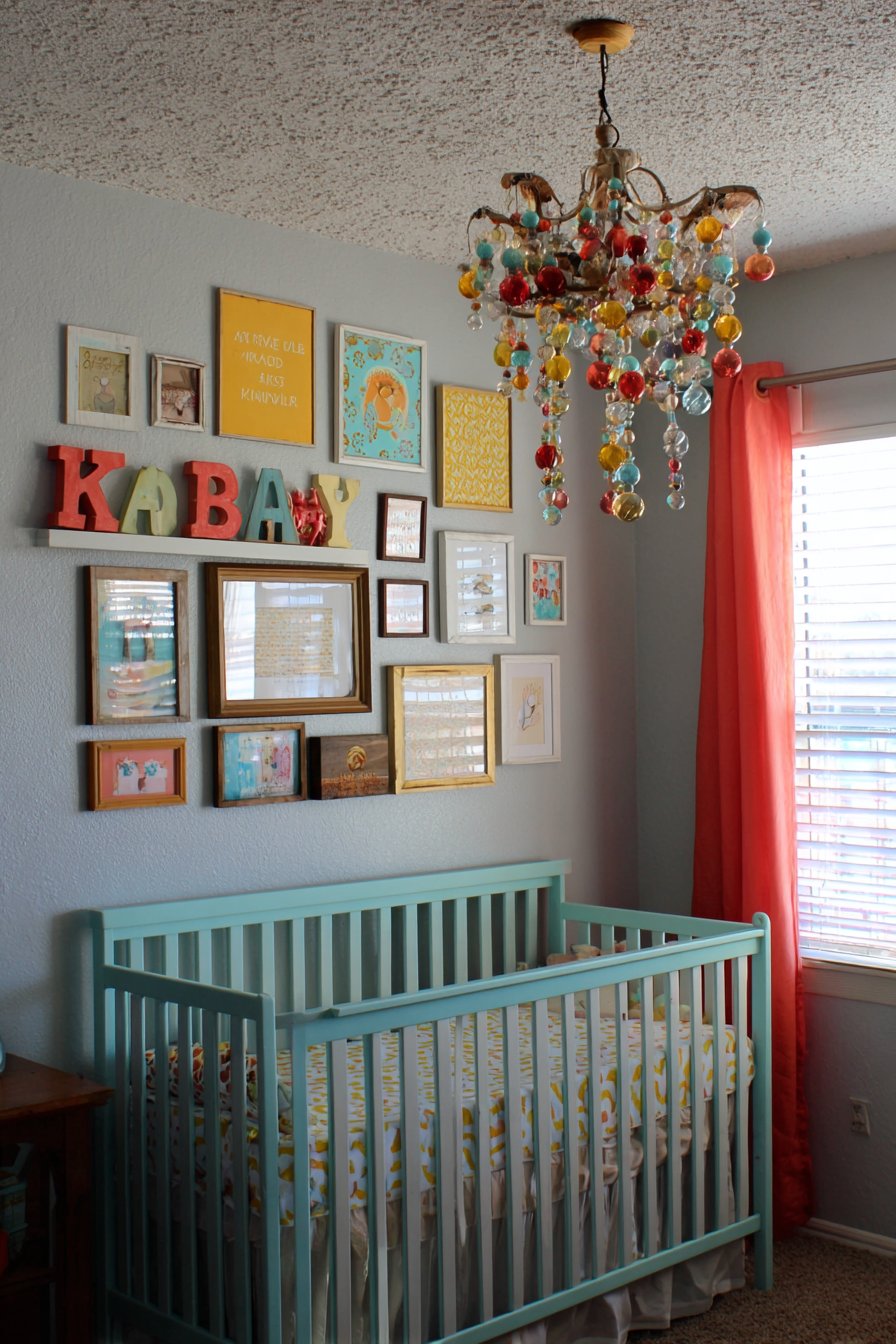
The crib itself features soft grey-blue paint with white bedding showing rainbow patterns. The painted crib becomes furniture-as-art rather than purely functional piece. A mobile chandelier with colorful glass beads hangs nearby, catching natural light. The beads create rainbow light patterns across walls as sunlight hits them.
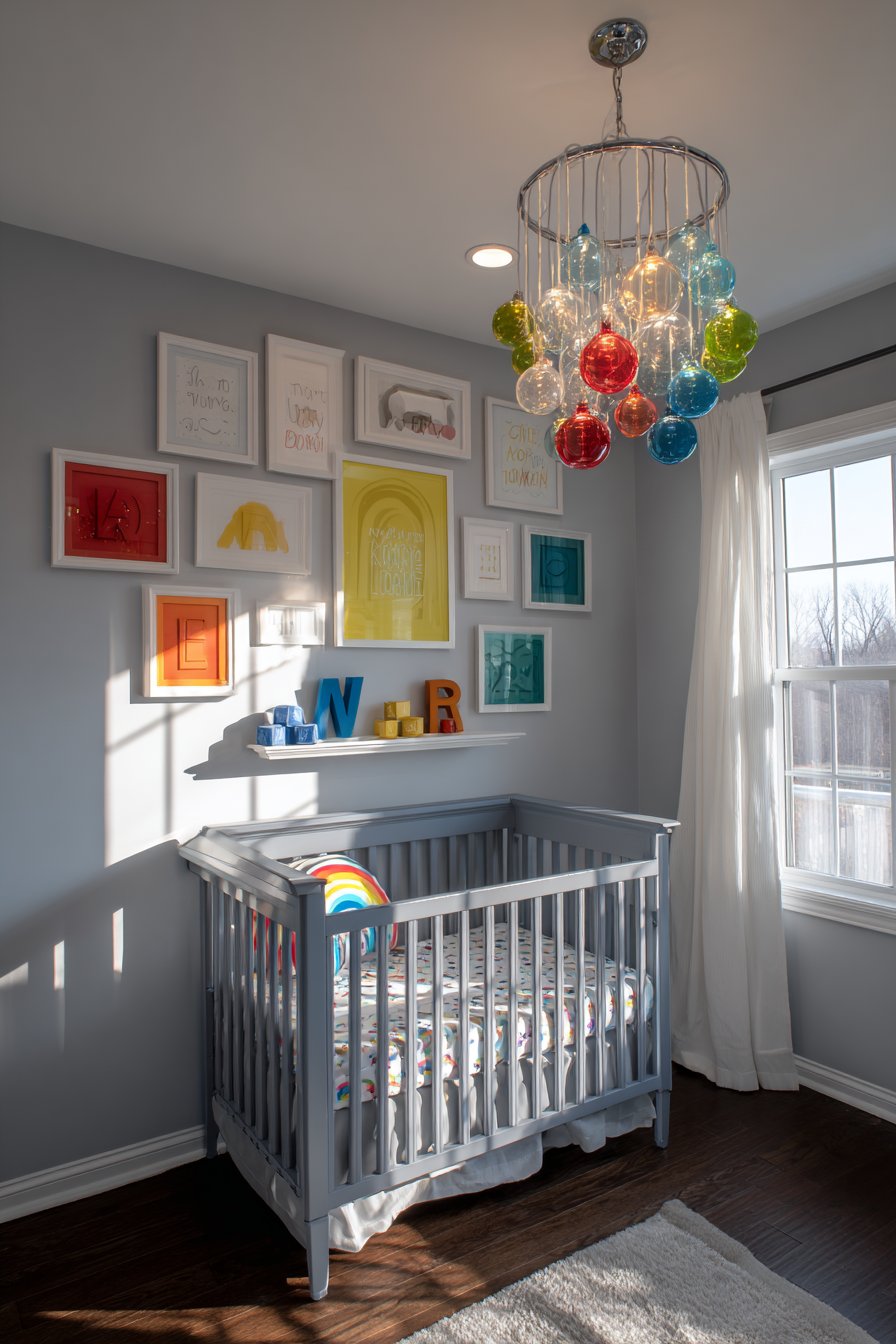
Pale grey walls allow the colorful artwork to command full attention. The neutral backdrop prevents visual competition between wall color and gallery pieces. Natural light from a nearby window illuminates the artistic composition throughout the day. The reflected light from glass beads adds dynamic element that changes constantly.
Key Design Tips:
- Create gallery walls using a mix of framed art, letters, and small shelves
- Paint wooden letters in different colors rather than keeping them uniform
- Choose a painted crib in soft colors rather than traditional white or wood
- Add mobile chandeliers with glass or crystal elements to catch and reflect light
- Use pale grey walls as neutral backdrops that make colorful art pop
- Position gallery walls where they’re visible from the crib for baby’s viewing pleasure
12. Bold Abstract Curtain Statement
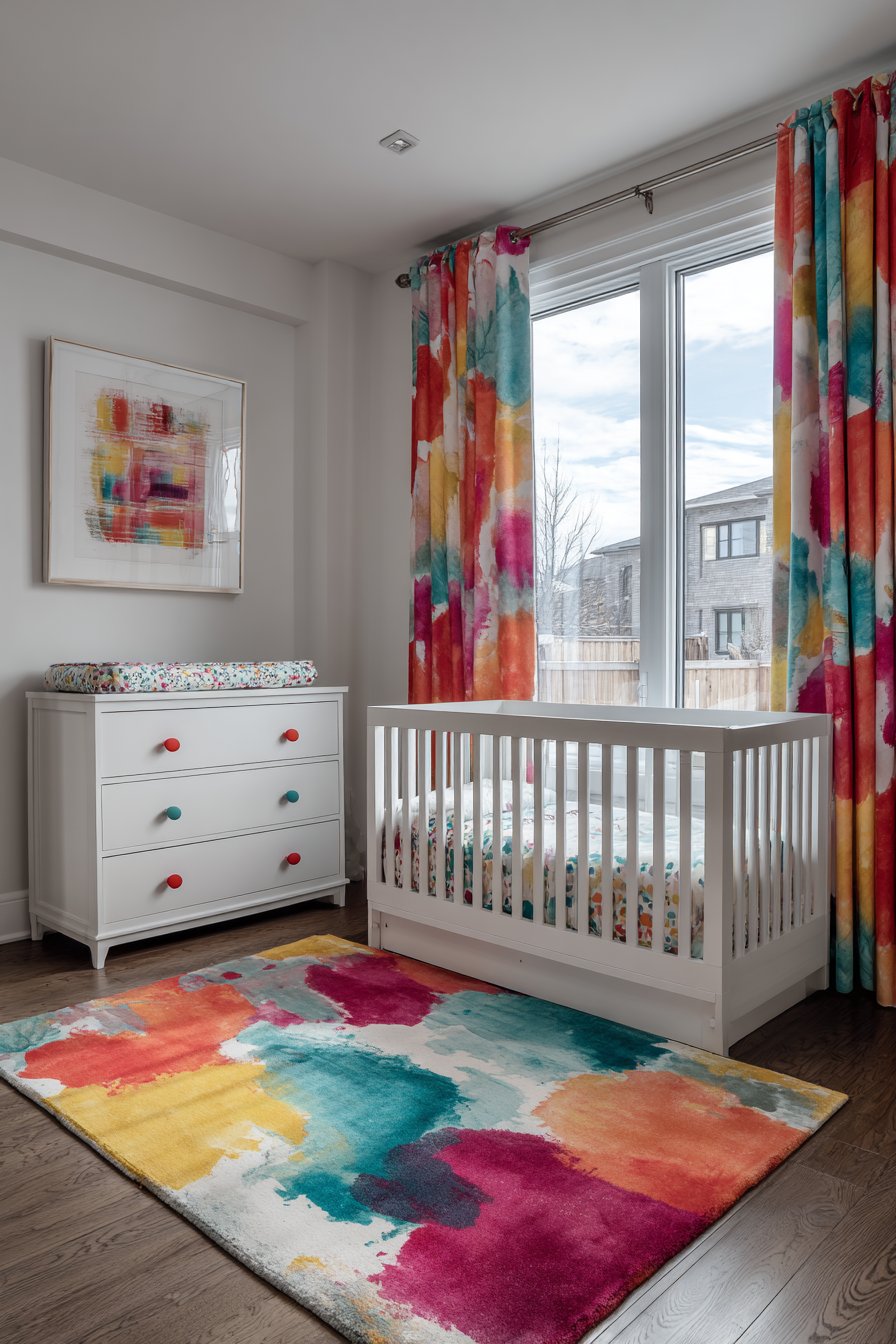
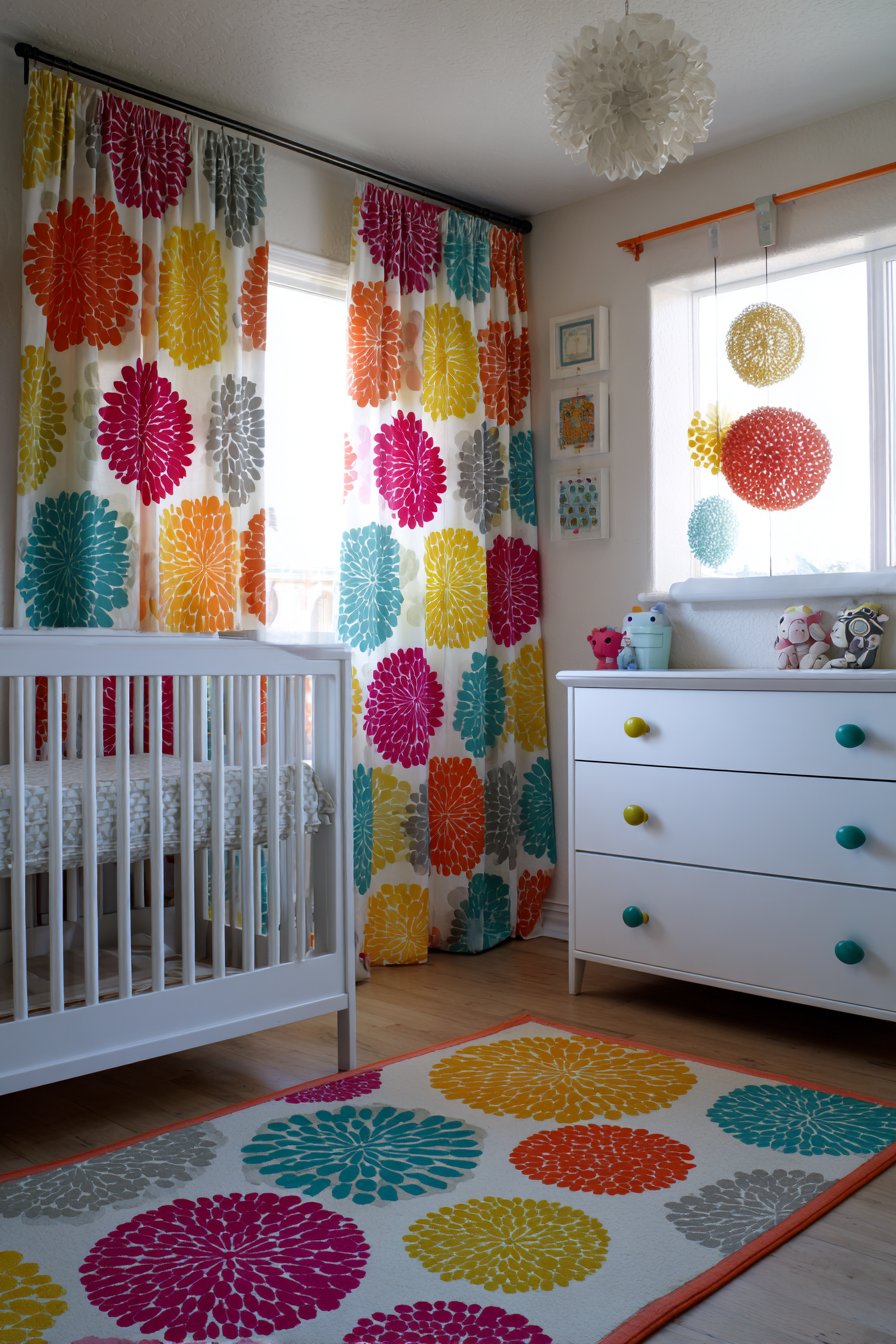
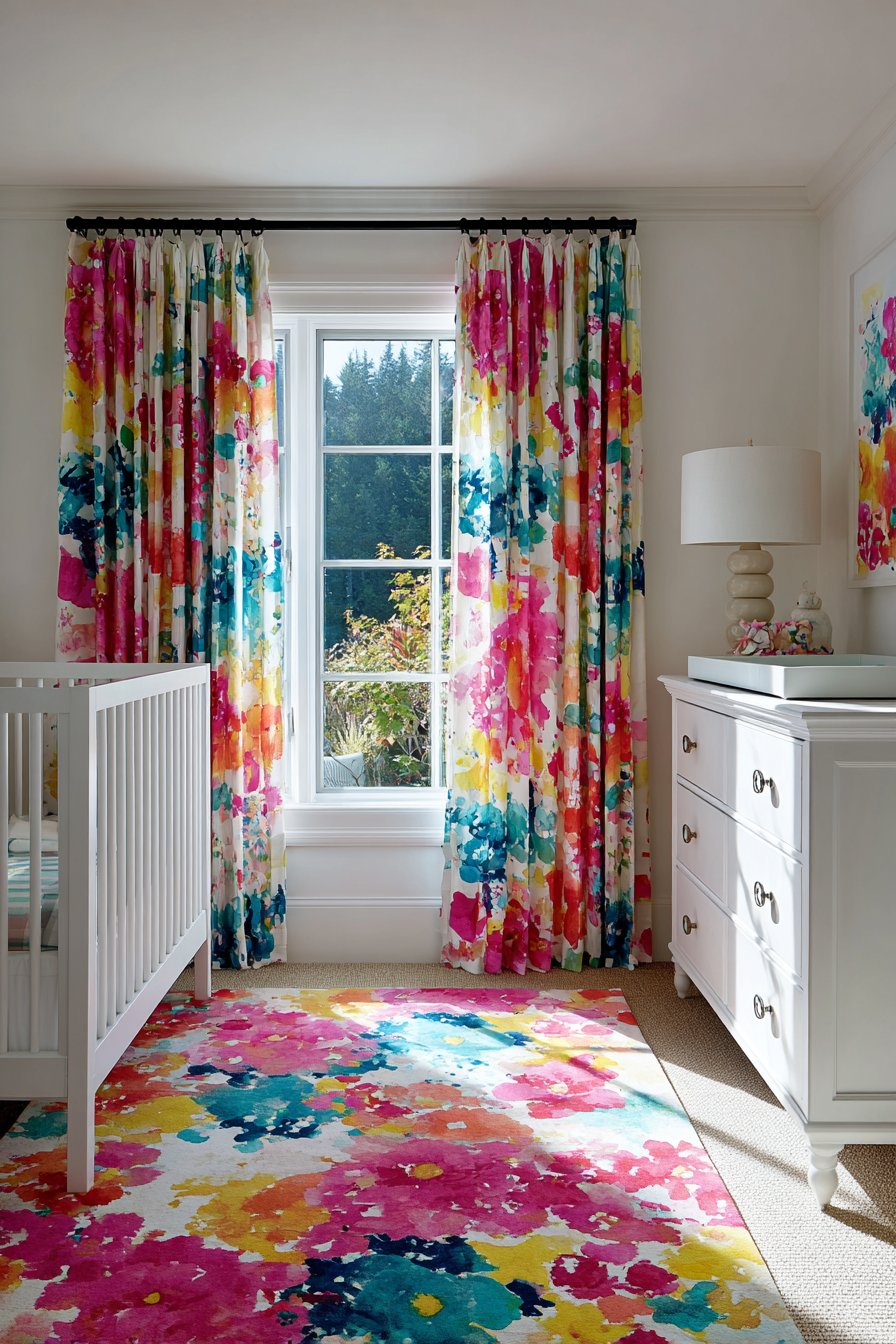
Custom curtains in bold abstract print become the room’s statement piece. Splashes of magenta, teal, sunshine yellow, and coral dance across white background. The dramatic window treatment introduces pattern and color simultaneously. The scale of the print works in large windows without overwhelming smaller spaces.
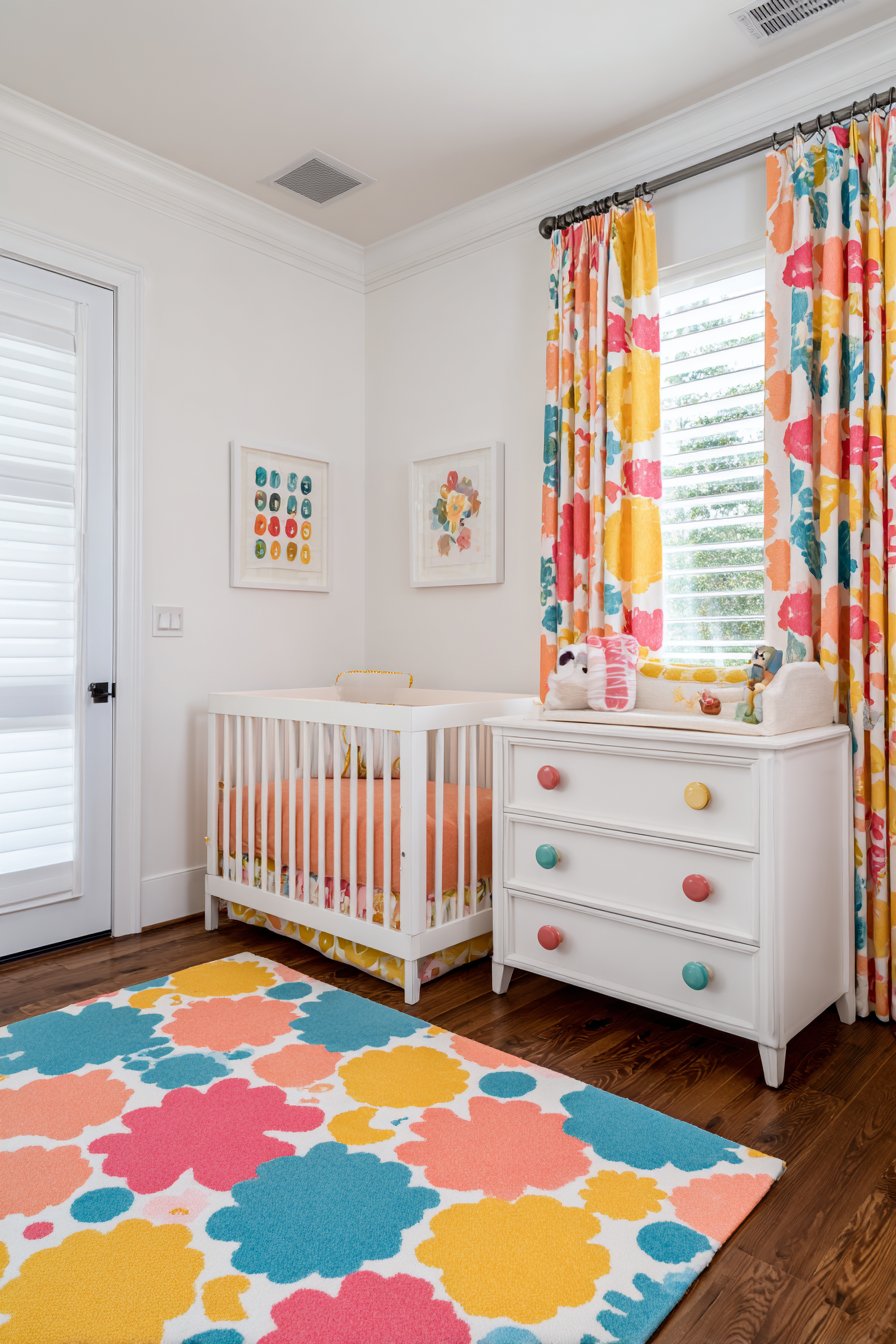
A simple white crib allows the dramatic curtains to take center stage. The minimalist furniture choice prevents competing focal points in the design. A coordinating area rug pulls accent colors from the curtains onto the floor. A white modern dresser with colorful ceramic knobs provides storage with subtle color touches.
Natural light filters through the patterned fabric, creating colorful light play across the room. The morning sun projects abstract color patterns onto walls and floors. This natural light show changes throughout the day as the sun moves. The effect transforms the nursery into an ever-changing artistic environment.
Key Design Tips:
- Choose bold patterned curtains when other elements remain relatively simple
- Select curtain patterns that include white background to prevent darkness
- Coordinate area rugs by pulling accent colors from patterned curtains
- Add colorful knobs to plain white furniture for budget-friendly color pops
- Use sheer or semi-sheer fabrics for colorful light projection effects
- Position cribs away from direct window light while allowing pattern visibility
13. Space-Maximizing Vertical Color Storage
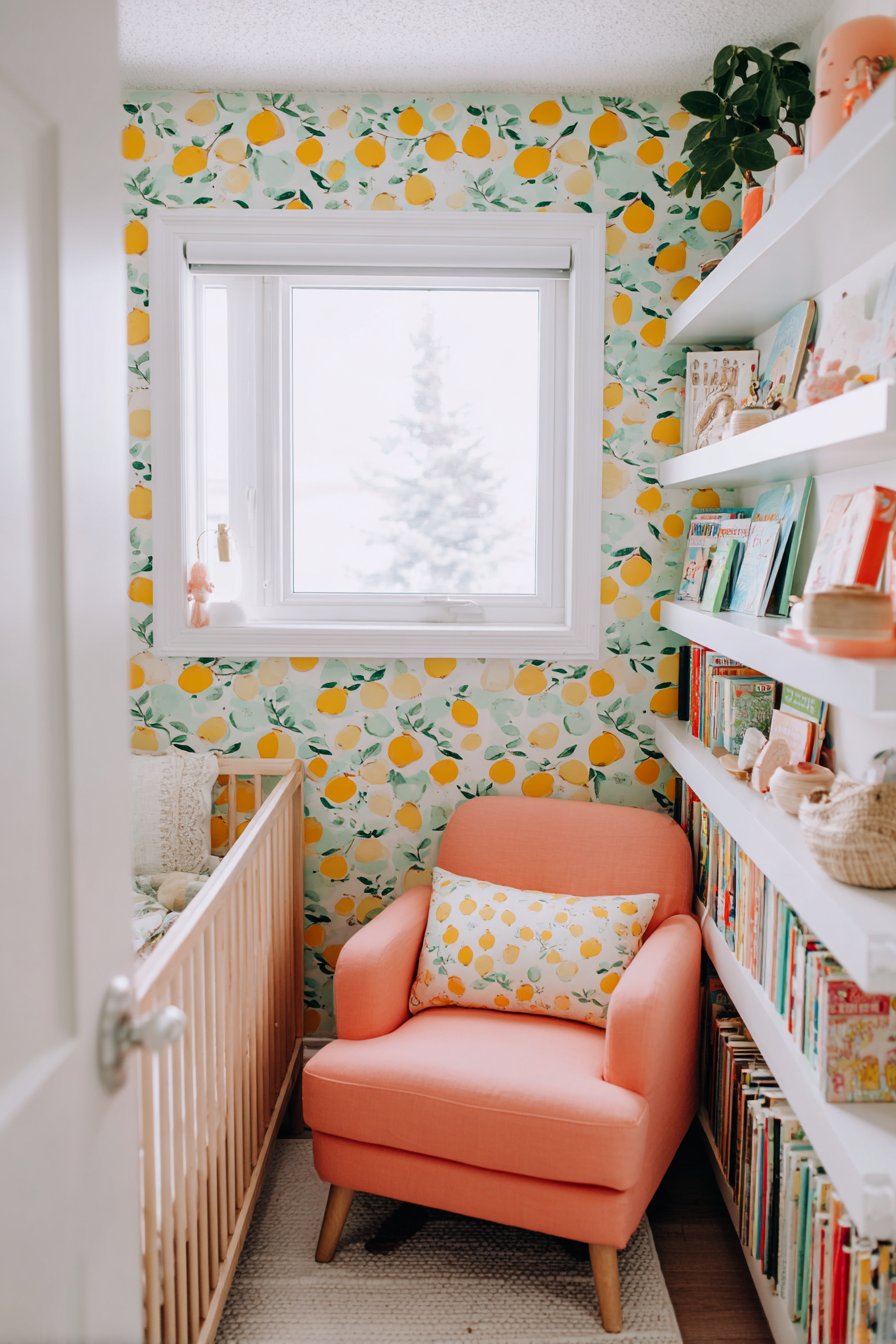
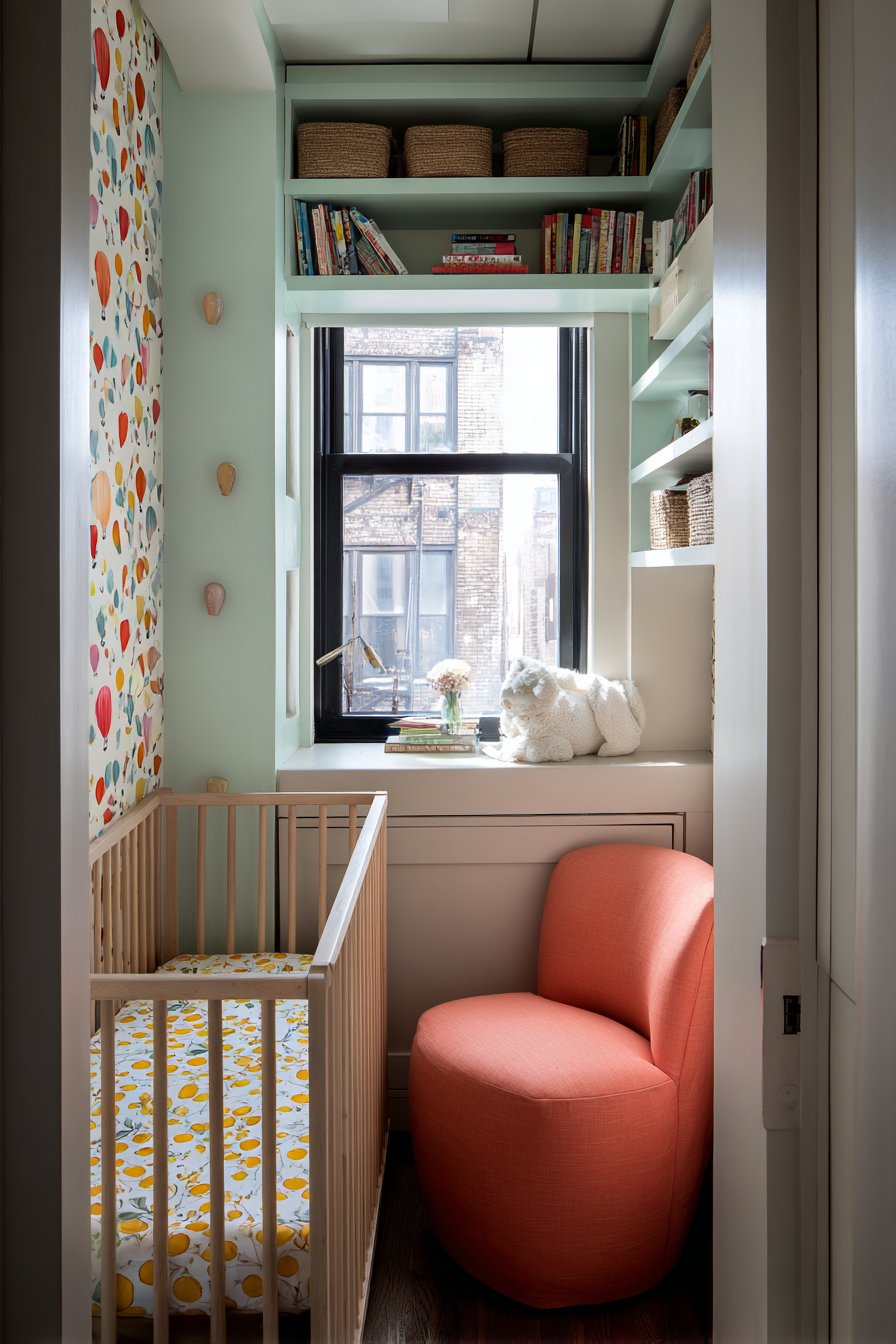
Floating shelves in alternating colors of mint, peach, and white maximize vertical space. The color alternation creates visual rhythm while providing practical storage. Minimal decor and practical storage baskets keep the shelves organized and uncluttered. This approach works particularly well in smaller nurseries where floor space is limited.
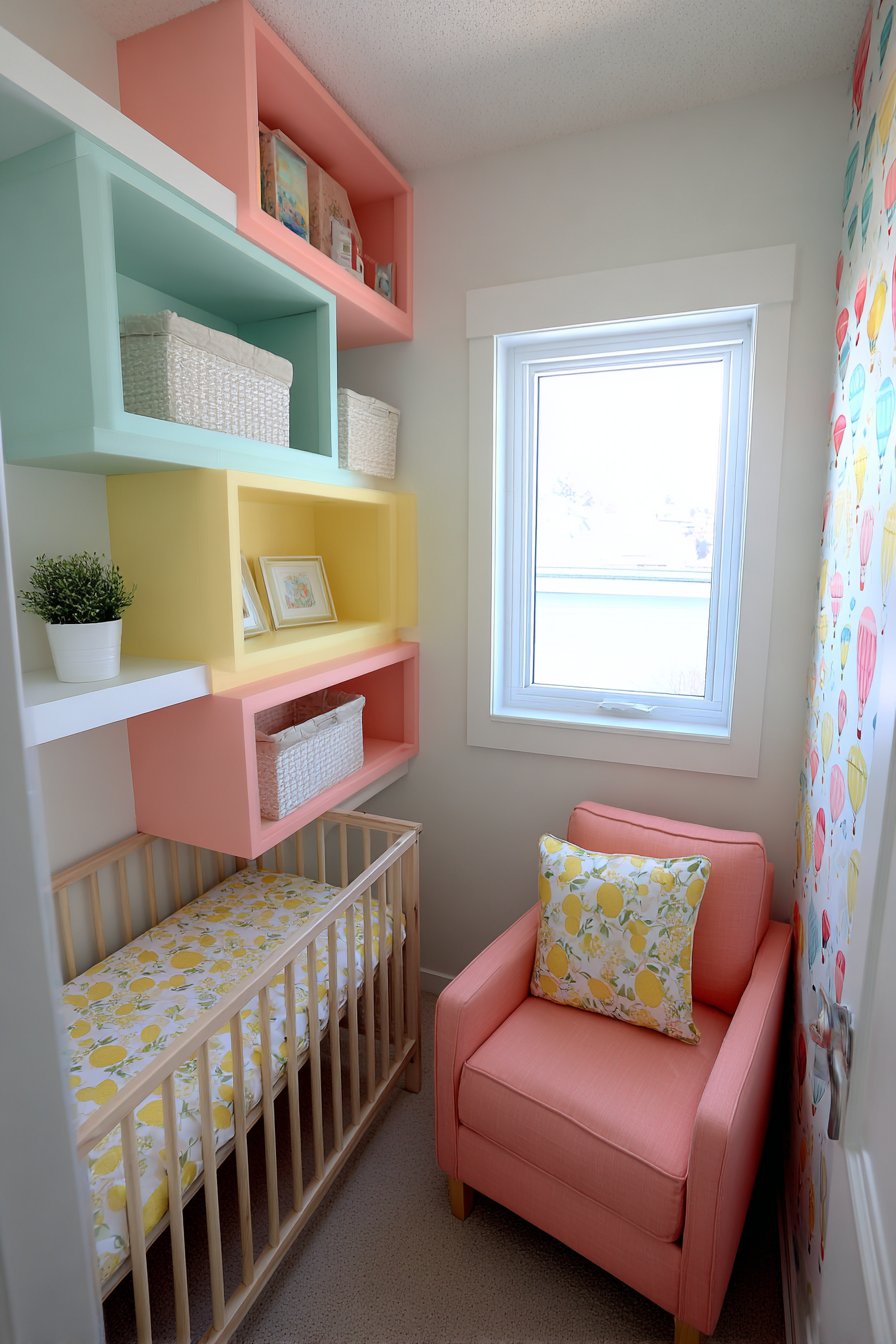
A corner crib in natural light wood makes efficient use of available space. Organic cotton sheets in cheerful lemon print add brightness without overwhelming the small room. Removable wallpaper featuring hot air balloons in primary colors adorns the adjacent wall. The temporary wallpaper allows renters to add personality without permanent changes.
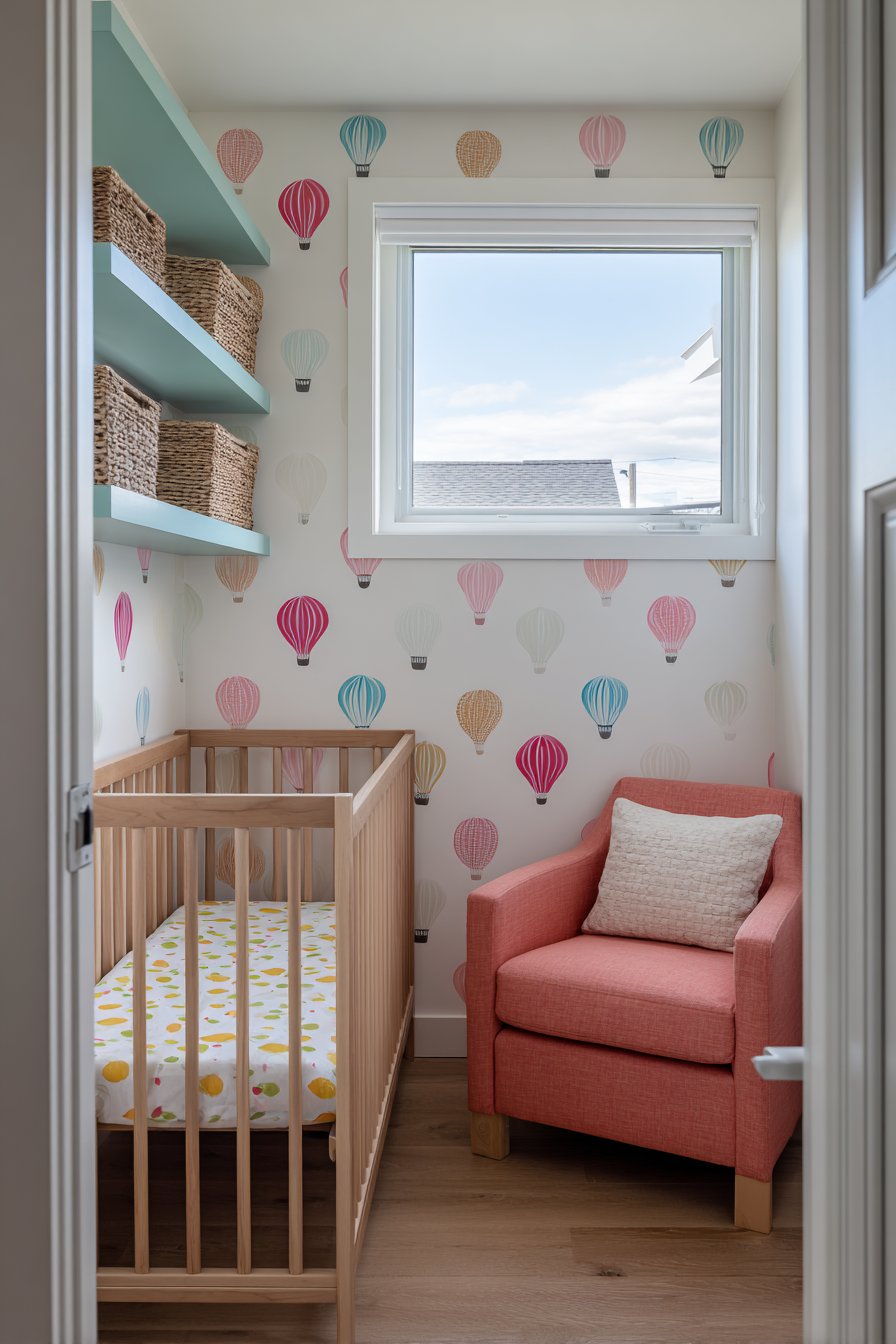
A compact nursing chair in coral fabric fits snugly in the remaining corner. Natural light from a single window illuminates the clever use of color throughout. The strategic color placement draws eyes around the entire room, making it feel larger. Small spaces gain visual interest through thoughtful color application rather than square footage.
Key Design Tips:
- Install floating shelves in alternating colors to create vertical visual interest
- Choose corner cribs to maximize usable floor space in small nurseries
- Use removable wallpaper for commitment-free color and pattern addition
- Select compact nursing chairs in bright colors that don’t feel heavy
- Maximize natural light with minimal window treatments in small spaces
- Create visual flow using color to guide eyes around the entire room
14. Textile Art Rainbow Wall Hanging
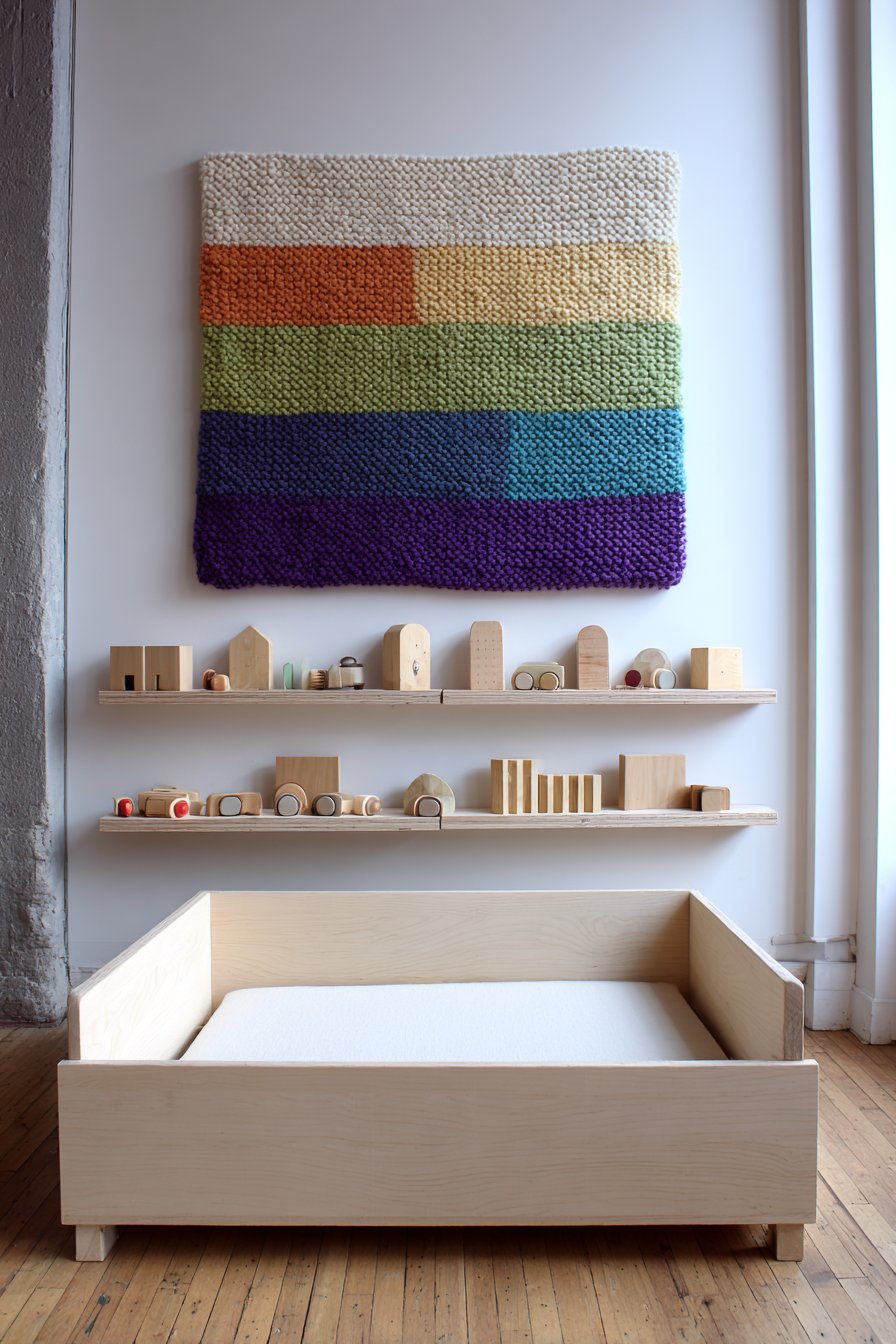
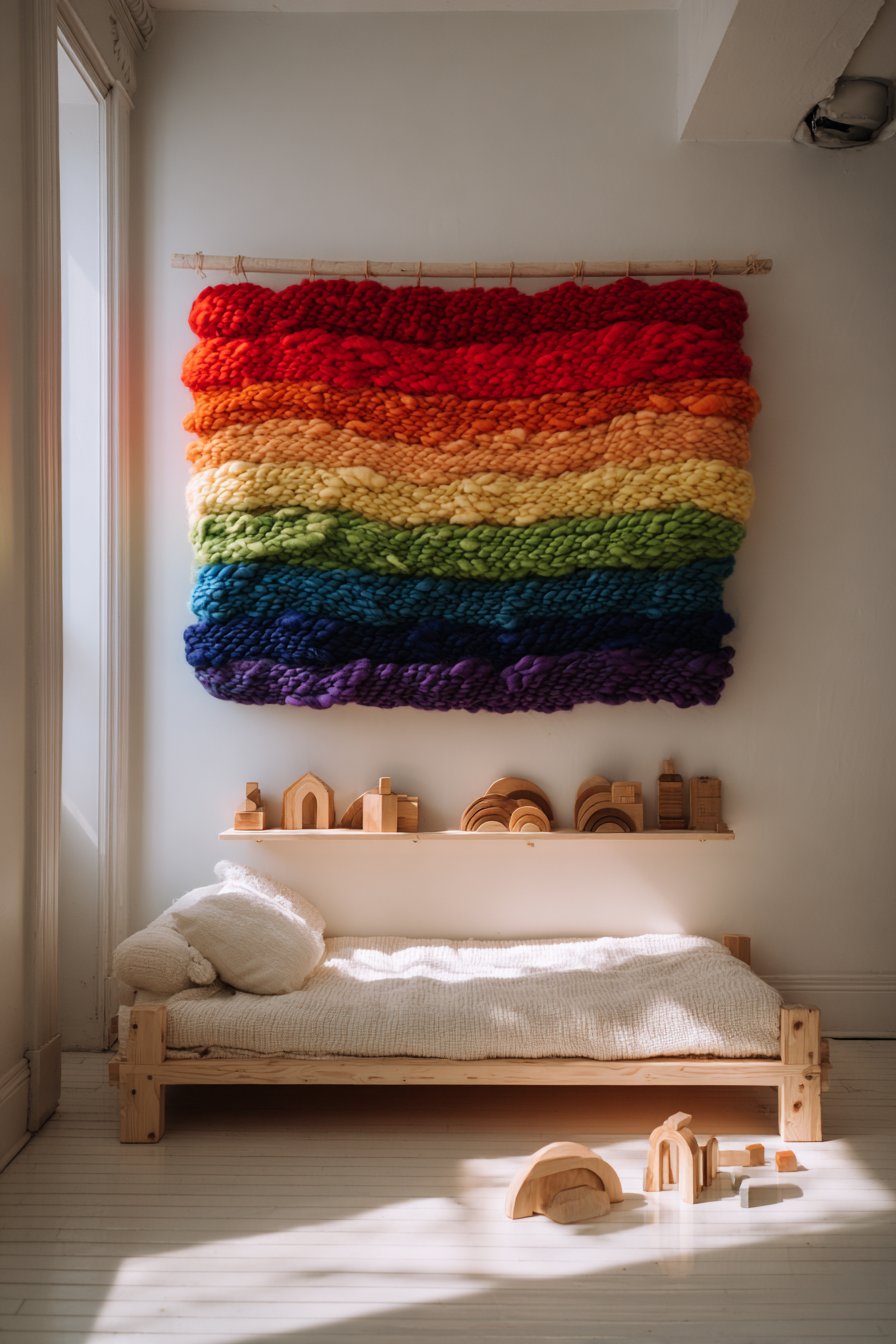
A hand-knitted or crocheted wall hanging in chunky yarn creates both art and texture. Horizontal stripes in complete rainbow spectrum span from wall to wall. Red, orange, yellow, green, blue, indigo, and violet progress in proper color order. The fiber art provides vibrant color while adding sound-dampening qualities to the nursery.
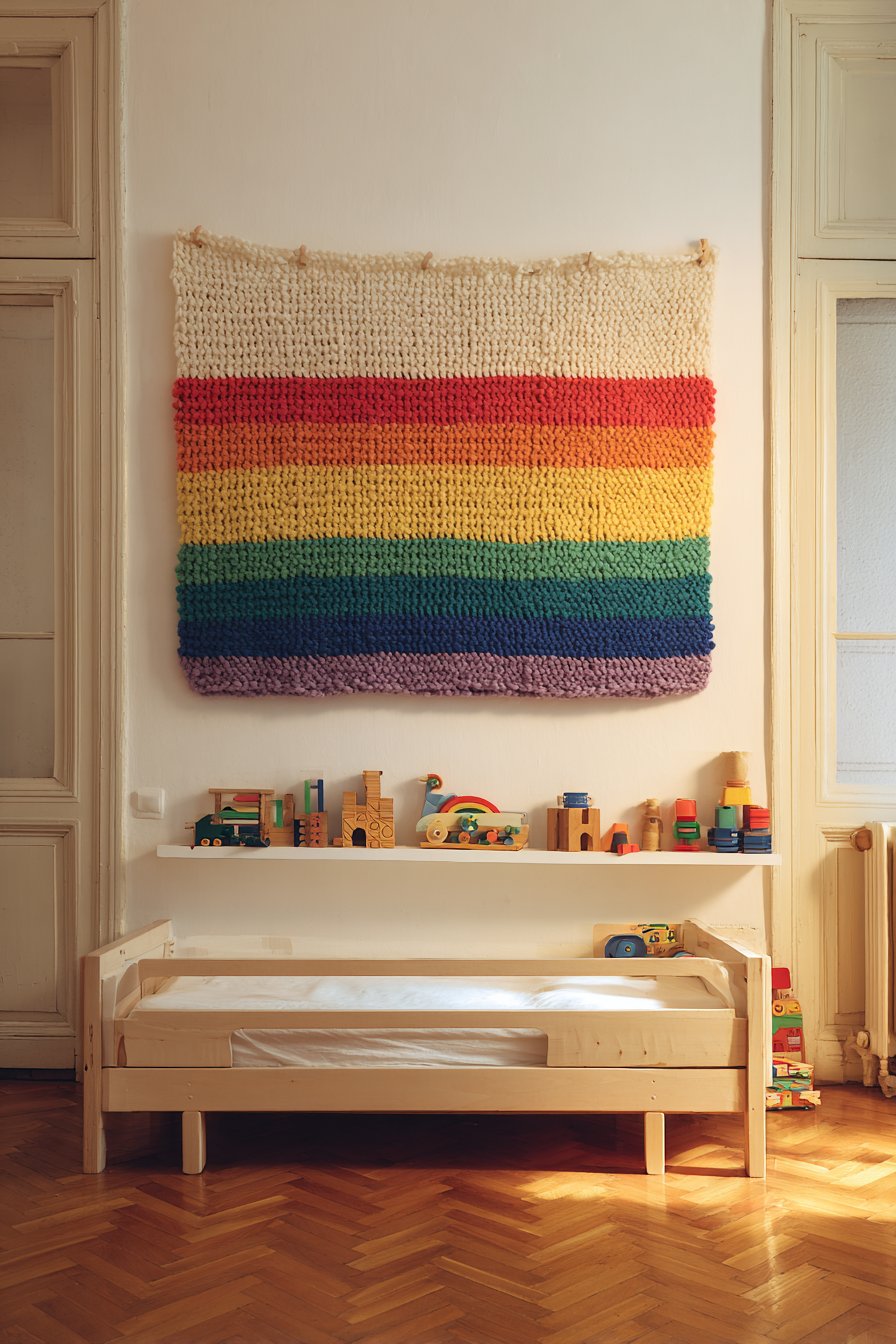
Below the textile art, a low Montessori-style floor bed with white frame allows focus on the hanging. The minimalist bed approach encourages independence as children grow. Simple wooden toys in natural and painted finishes organize on low shelves. The accessible toys support developmental play without requiring adult assistance.
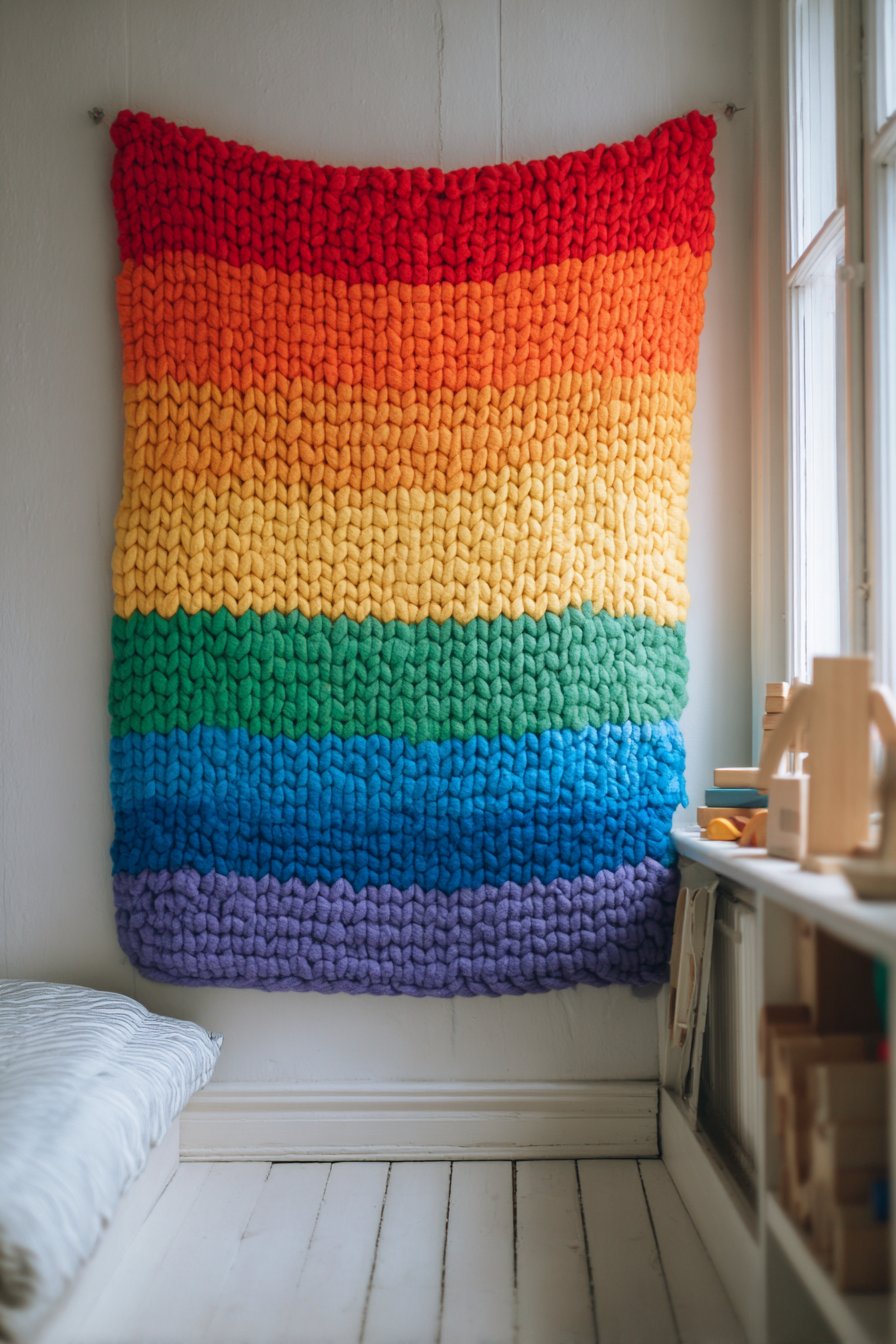
White walls and light bamboo flooring keep the space calm and uncluttered. Soft morning light enhances the texture of the yarn, creating dimensional effects. The chunky texture becomes more apparent with side lighting throughout the day. This minimalist nursery proves that one colorful element can transform an entire space.
Key Design Tips:
- Create or commission large-scale fiber art for both color and acoustic benefits
- Follow proper rainbow spectrum order for authentic color progression
- Choose Montessori-style floor beds to encourage independence and safe exploration
- Keep walls and floors neutral when featuring large colorful textile art
- Organize toys on low, accessible shelves that children can reach independently
- Use natural and painted wooden toys to balance handmade textile warmth
15. Modern Polka Dot Removable Decals
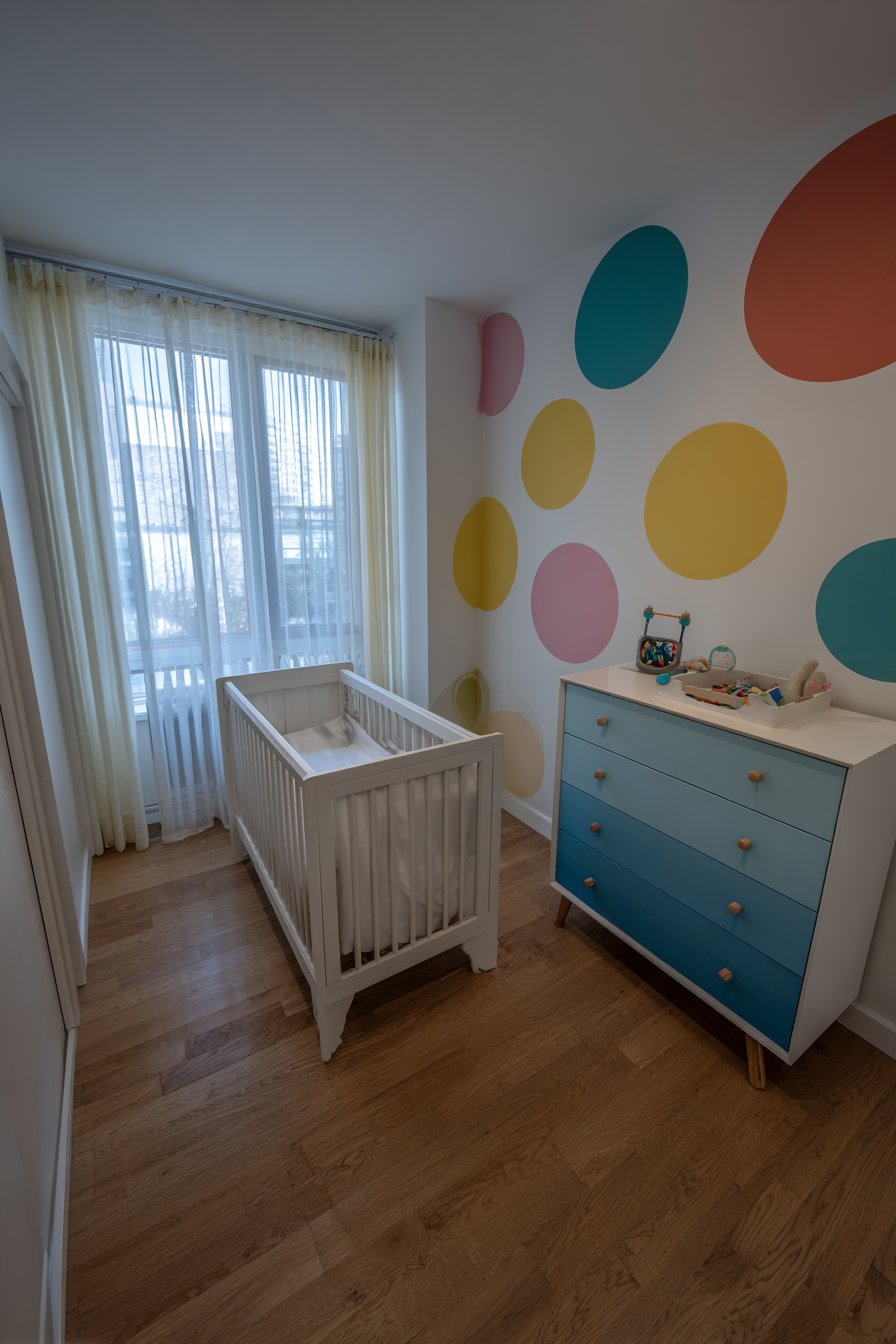
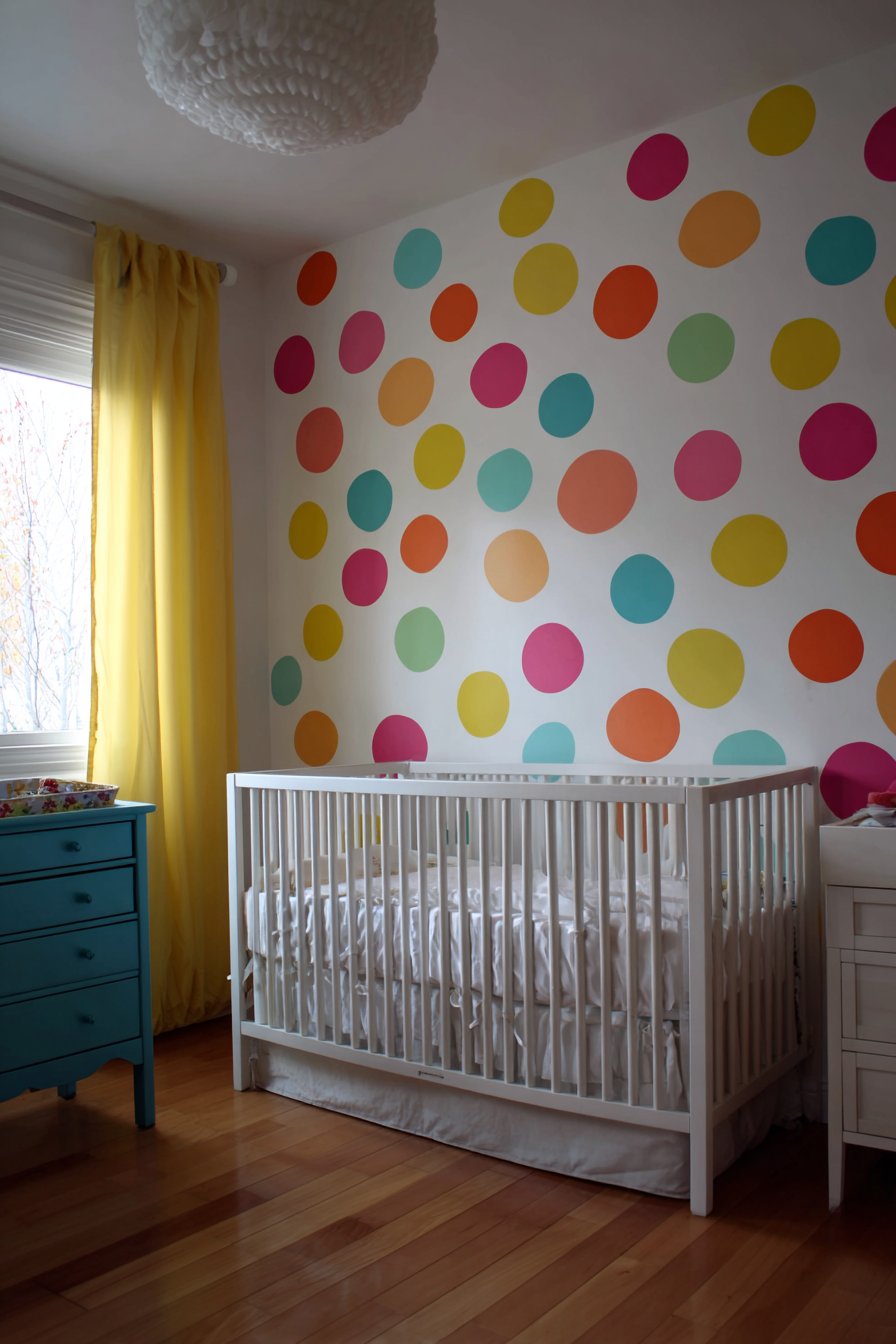
Removable wall decals in various sizes of circles create modern polka dot effect. Pink, orange, yellow, green, teal, and purple circles scatter across white walls. The removable nature allows easy updates as the child’s preferences change. The graphic wall treatment provides bold impact without paint commitment.
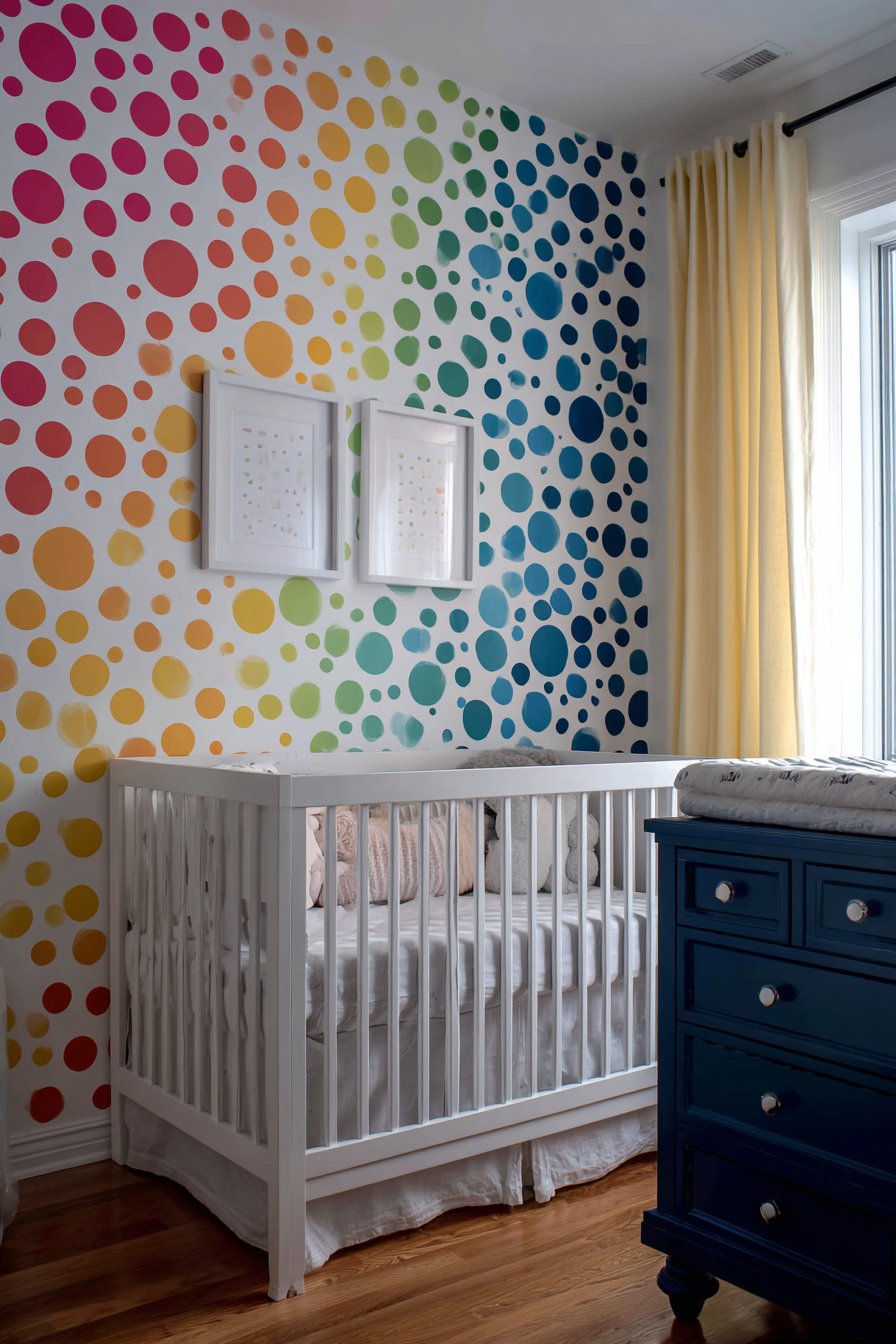
A white spindle crib centers against the polka dot wall dramatically. Simple white bedding allows the graphic wall treatment to dominate the design. The minimalist bedding approach prevents pattern competition on the focal wall. A dresser painted in gradient style transitions from light blue to deeper navy.
The gradient dresser provides unique storage that ties into the colorful theme. Natural light from sheer curtains in pale yellow creates a warm glow. The yellow-tinted light enhances the warm colors in the polka dot arrangement. Wide-angle views reveal how graphic elements create strong visual impact in simple spaces.
Key Design Tips:
- Use removable wall decals for commitment-free colorful graphic treatments
- Vary circle sizes in polka dot patterns for dynamic rather than static appearance
- Keep bedding simple and white when walls feature bold graphic patterns
- Paint furniture in gradient styles by blending colors from light to dark
- Choose sheer curtains in soft colors that cast tinted light into the room
- Position graphic wall treatments as focal points behind cribs or changing stations
16. Textured Rug Foundation Design
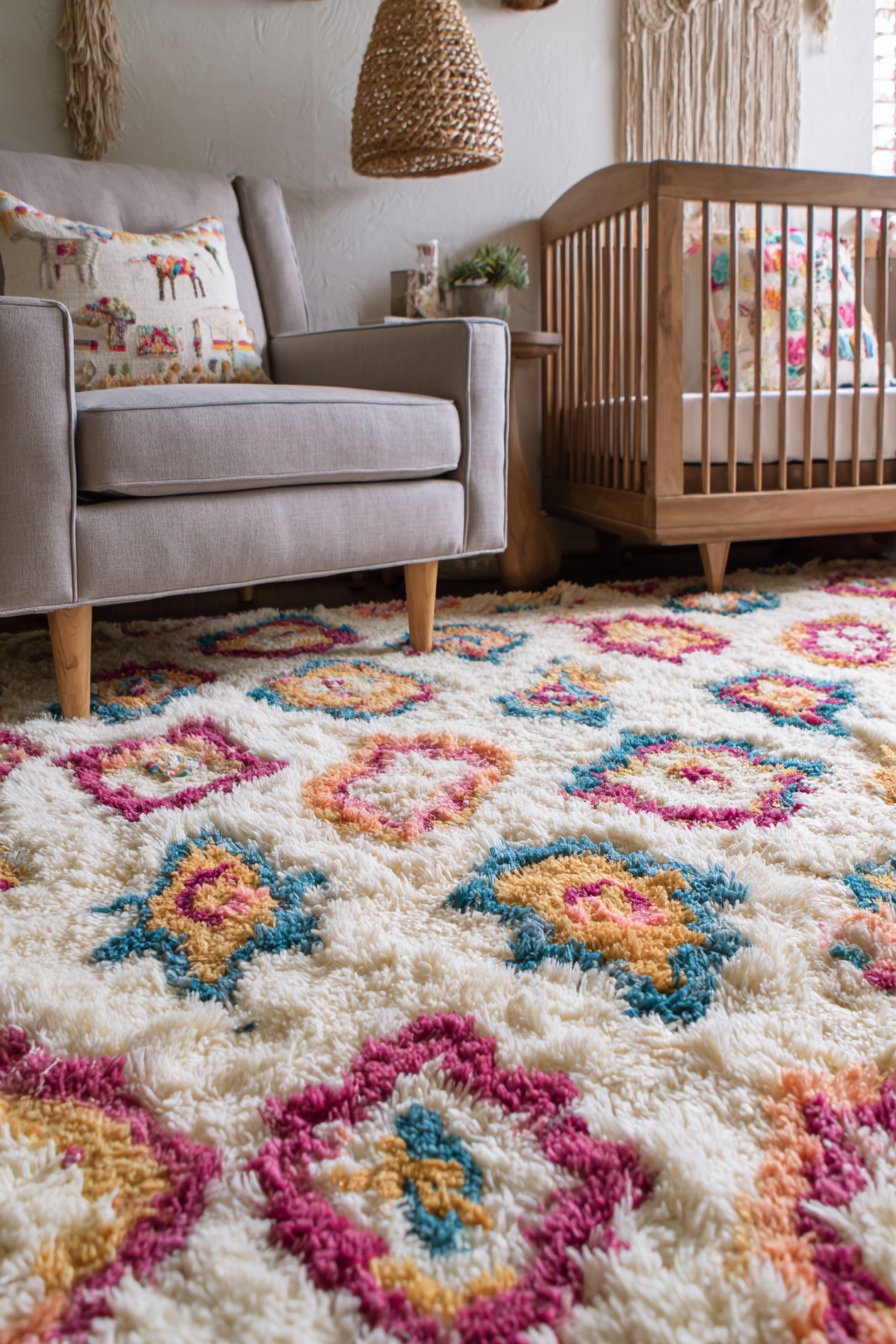
A dense pile rug in abstract pattern grounds the entire color scheme. Coral, turquoise, gold, and cream tones mix in the plush foundation piece. The rug anchors all other design decisions in the space. The substantial investment in quality textiles provides lasting comfort and durability.
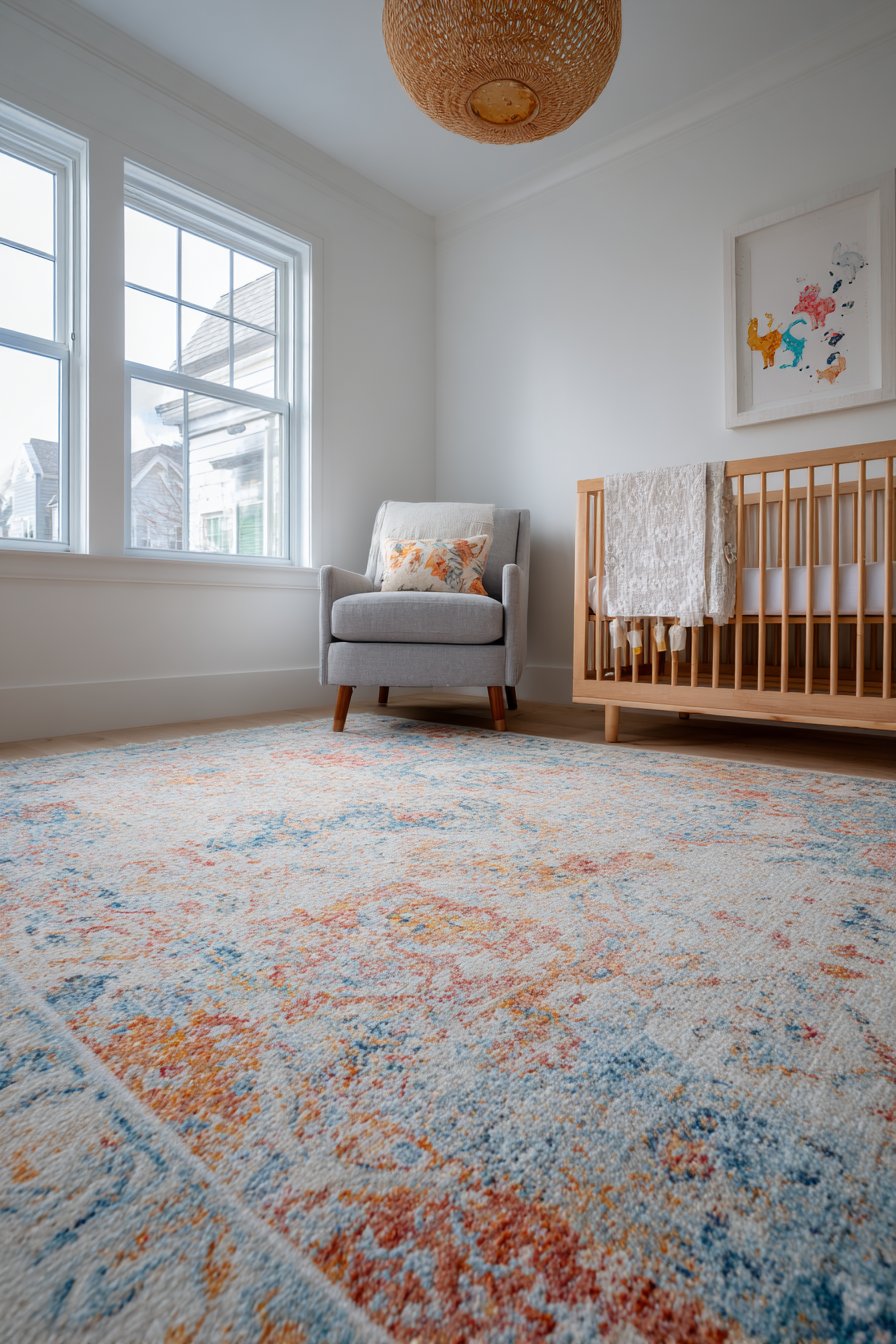
A grey upholstered glider with wooden legs sits comfortably on the rug. The neutral glider allows the colorful rug to remain the star. A natural wood crib with white bedding featuring colorful animal embroidery completes the vignette. The embroidered animals tie the rug colors into the bedding subtly.
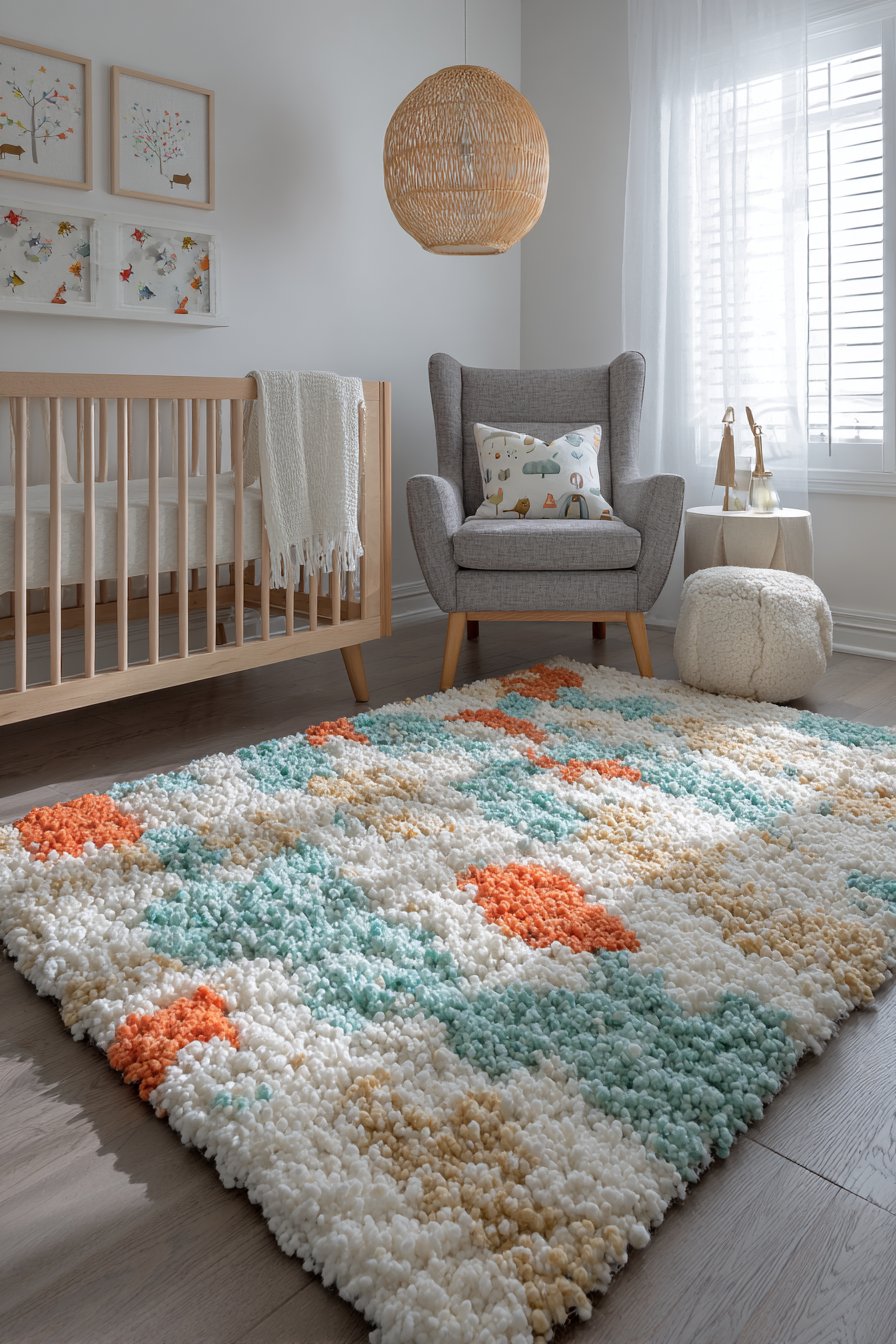
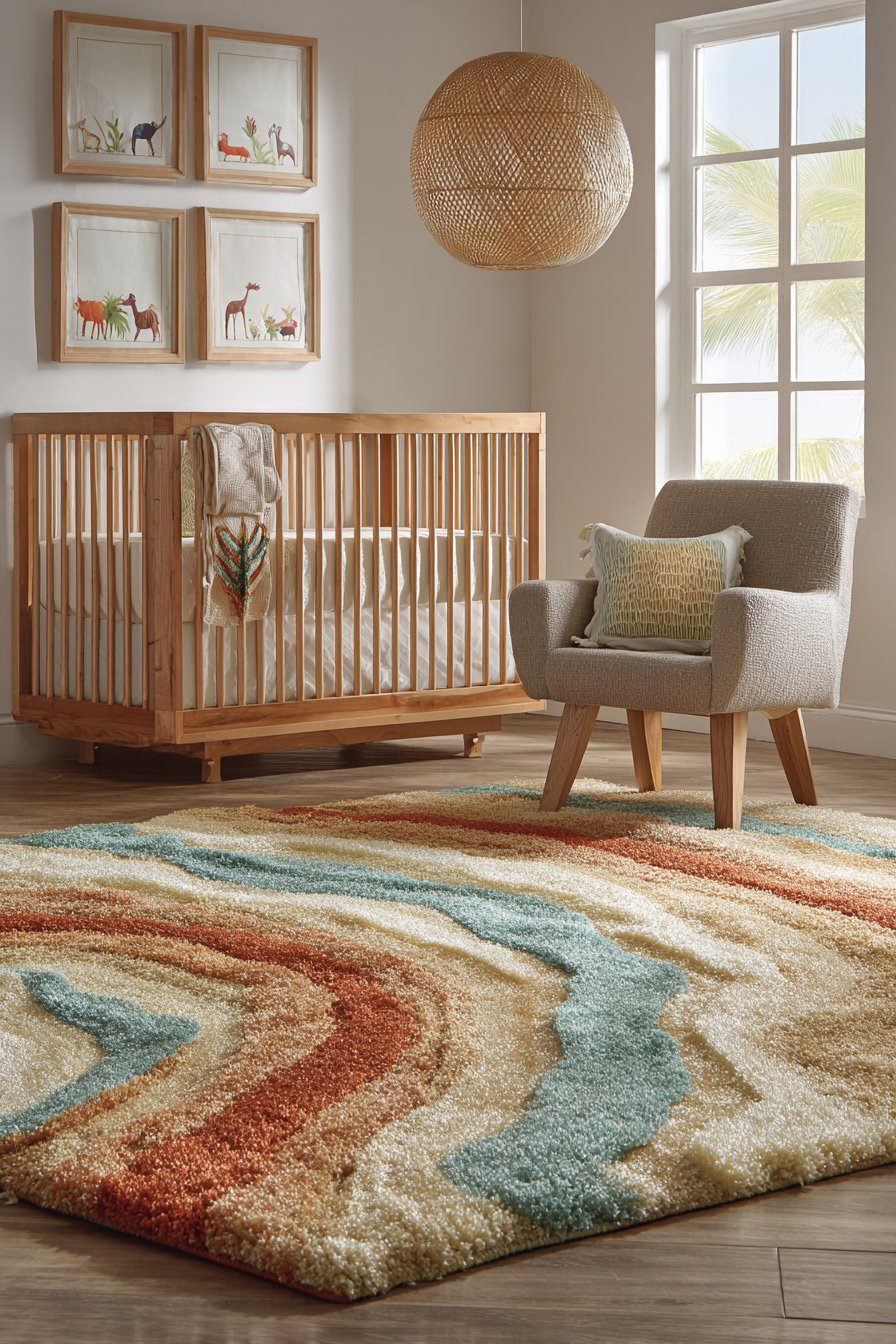
Walls in soft white allow the rug to anchor the entire color scheme. Pendant lighting with woven rattan shade adds warmth with natural materials. Natural window light highlights the plush rug texture from multiple angles. The layered textiles create sophisticated nursery that feels grounded and intentional.
Key Design Tips:
- Invest in high-quality rugs with dense pile for long-term comfort and durability
- Choose rugs with multiple colors to provide color palette for entire room
- Select neutral upholstered furniture when rugs feature bold color patterns
- Coordinate bedding embroidery colors with rug tones for subtle connections
- Use natural materials like rattan in lighting to balance colorful textiles
- Position rugs where natural light will highlight texture and pattern throughout the day
17. Jewel-Tone Sophisticated Elegance
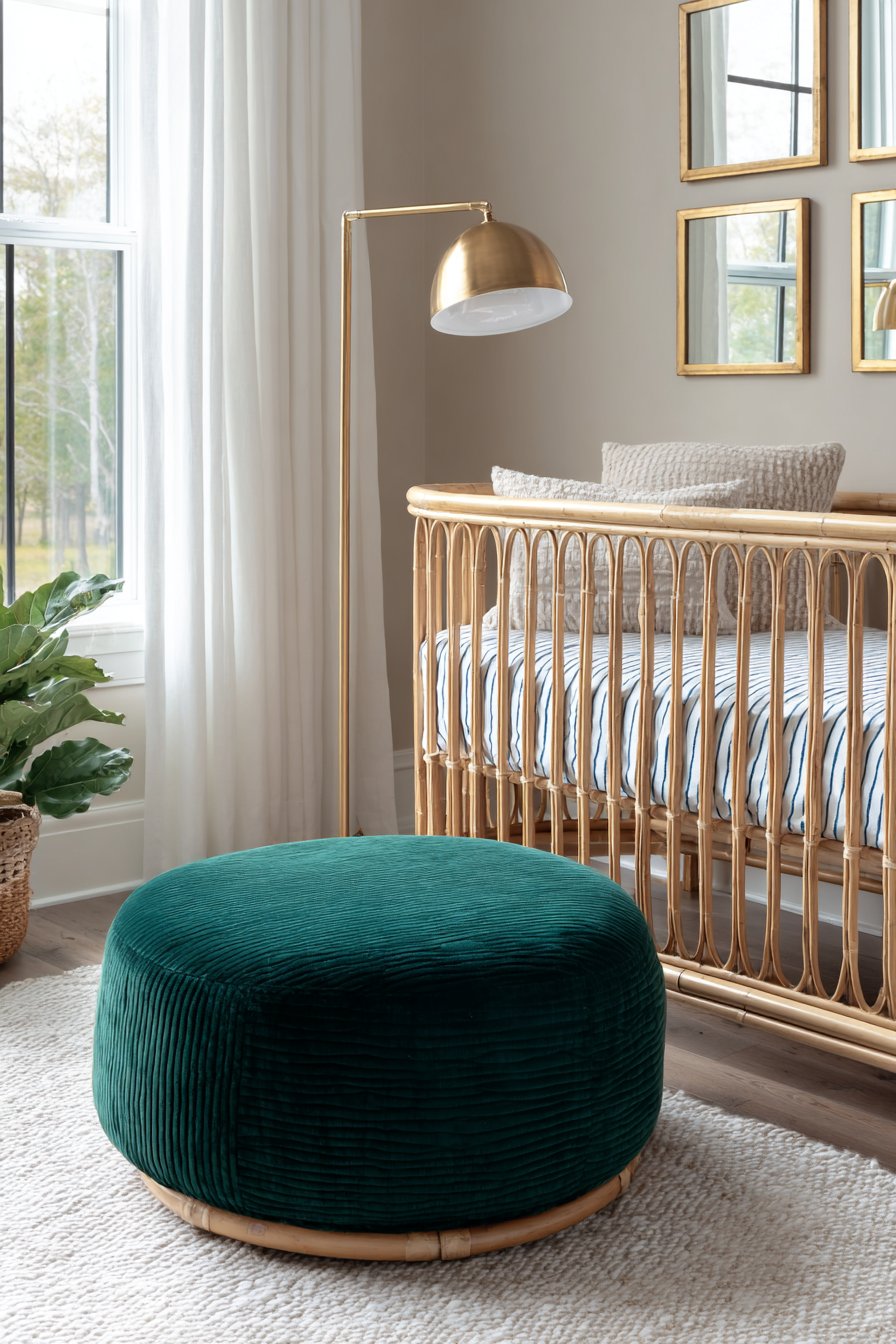
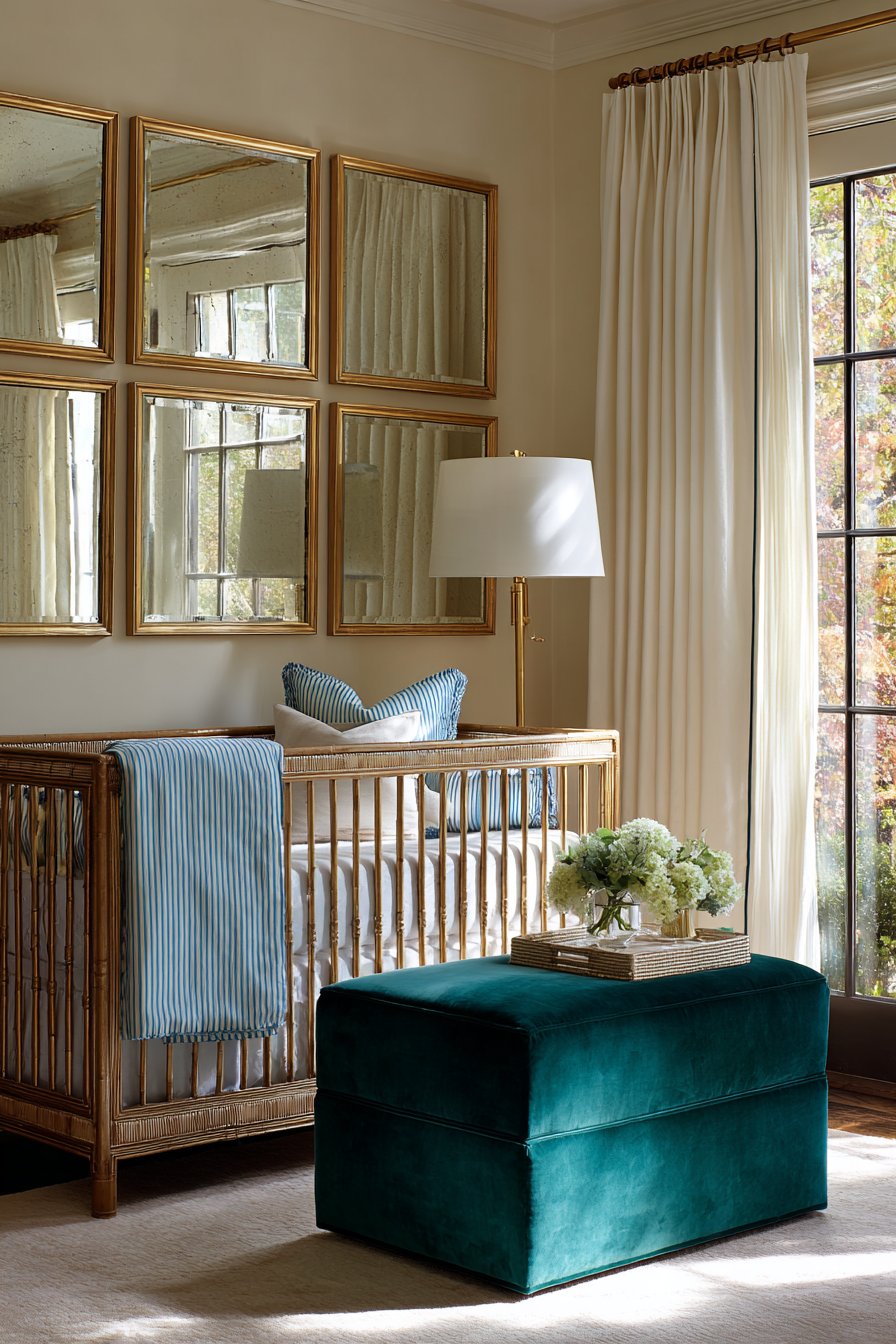
Jewel-tone accents against neutral beige walls create sophisticated atmosphere. A velvet ottoman in rich emerald green serves as statement seating. The luxurious fabric elevates the nursery beyond typical baby room aesthetics. A natural rattan crib dressed with bedding in sapphire blue and white stripes adds coastal elegance.
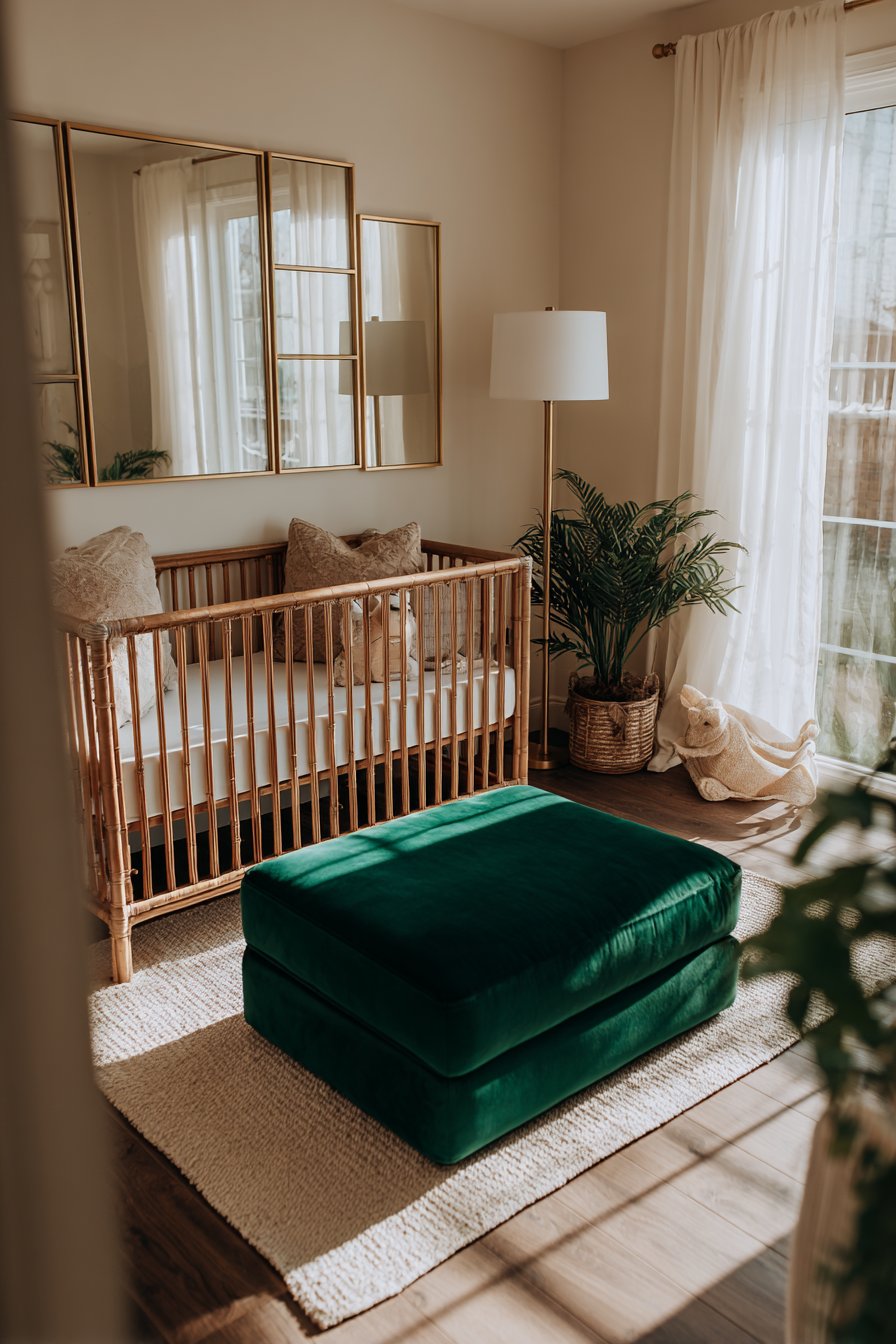
Gold-framed mirrors in various sizes create gallery wall that reflects light. The mirrors multiply the available natural light while adding glamorous touches. A brass floor lamp with white shade provides task lighting for evening routines. The warm brass finishes throughout create cohesive metallic thread in the design.
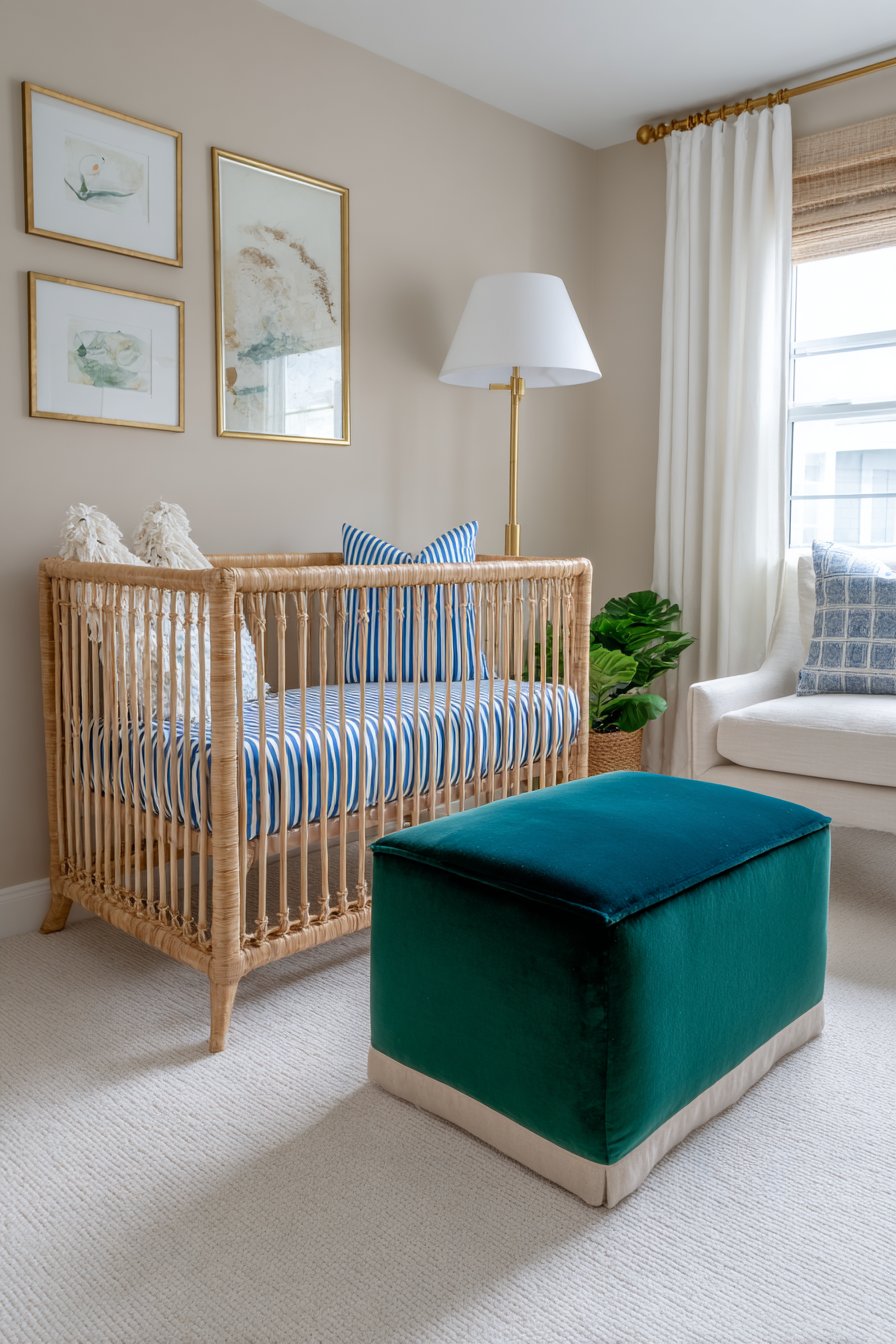
Sheer white curtains filter afternoon sunlight, creating luminous atmosphere. The filtered light enhances the richness of jewel tones without creating harsh shadows. The elevated color palette demonstrates that nurseries can be sophisticated design spaces. Quality materials and thoughtful color choices create rooms that work for years.
Key Design Tips:
- Choose jewel tones like emerald and sapphire for sophisticated baby rooms
- Use velvet upholstery for luxurious texture and rich color depth
- Create mirror gallery walls to multiply natural light in nurseries
- Select brass or gold finishes for hardware and lighting for warm elegance
- Layer white sheer curtains to filter light while maintaining brightness
- Invest in quality materials that create sophisticated rather than childish aesthetics
18. Living Plant Wall Biophilic Design
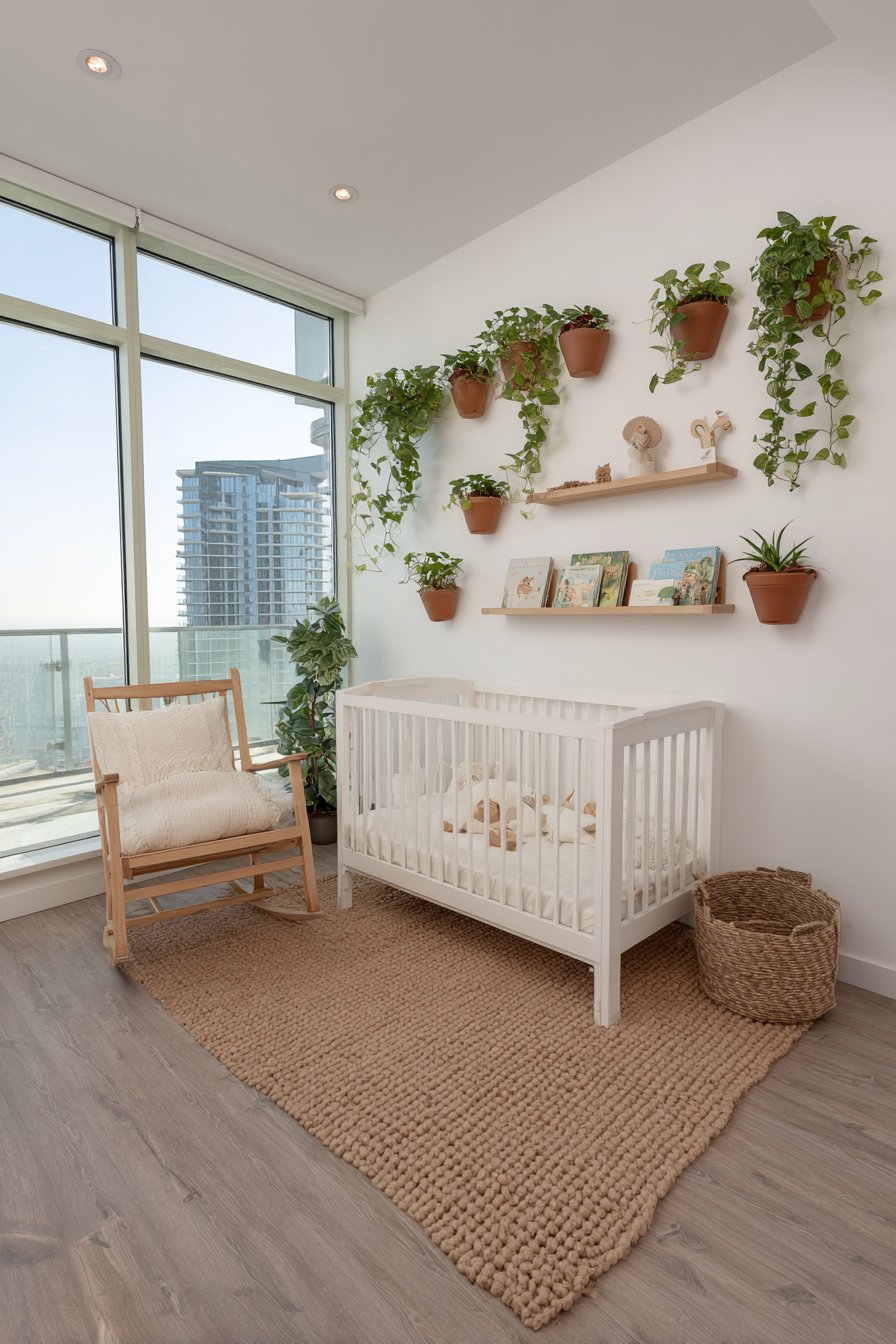
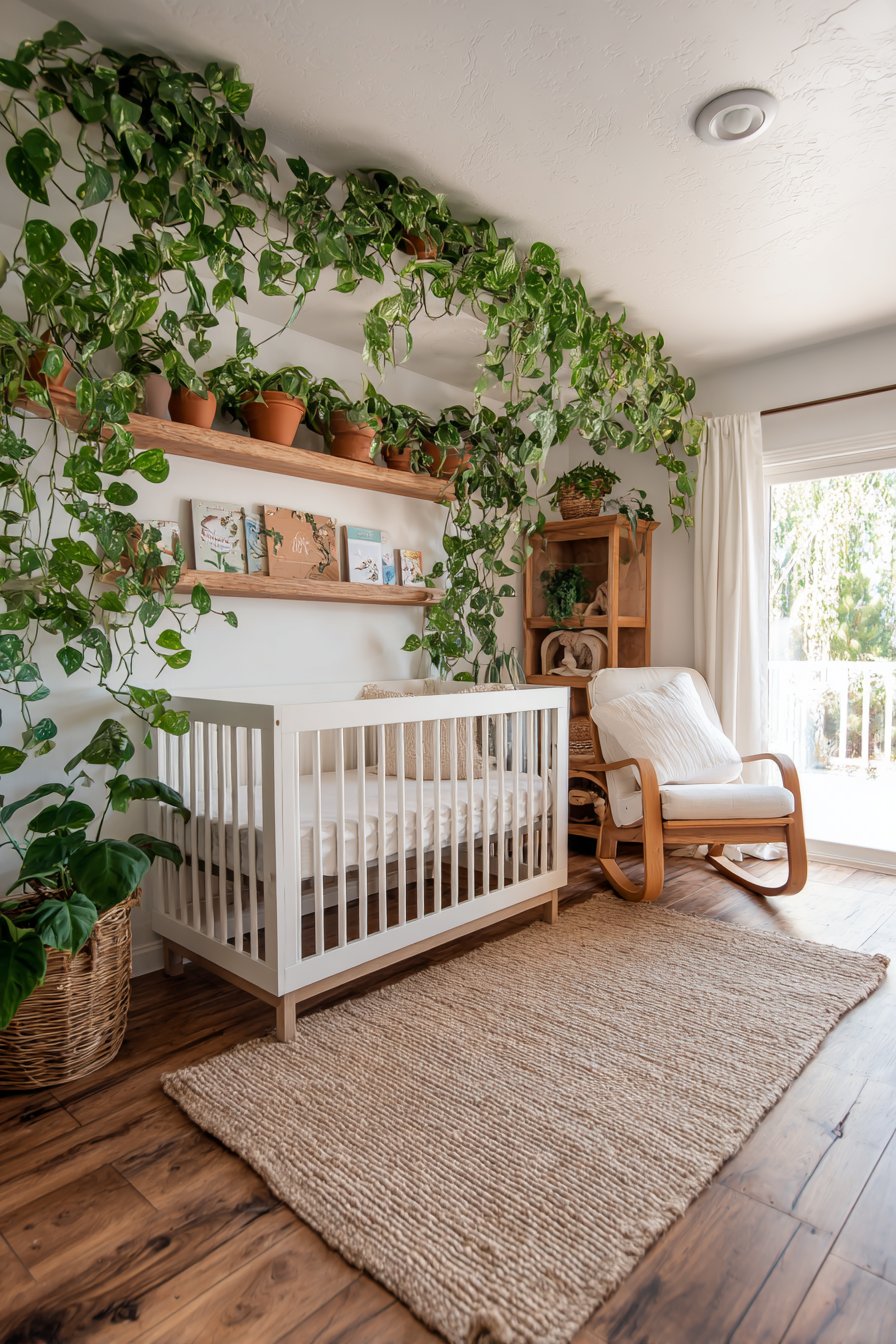
A living plant wall with trailing pothos and philodendrons adds organic green color. Terracotta pots mounted at varying heights create vertical garden effect. The plants improve air quality while introducing nature into the nursery. The biophilic design approach supports wellness and connection to natural world.
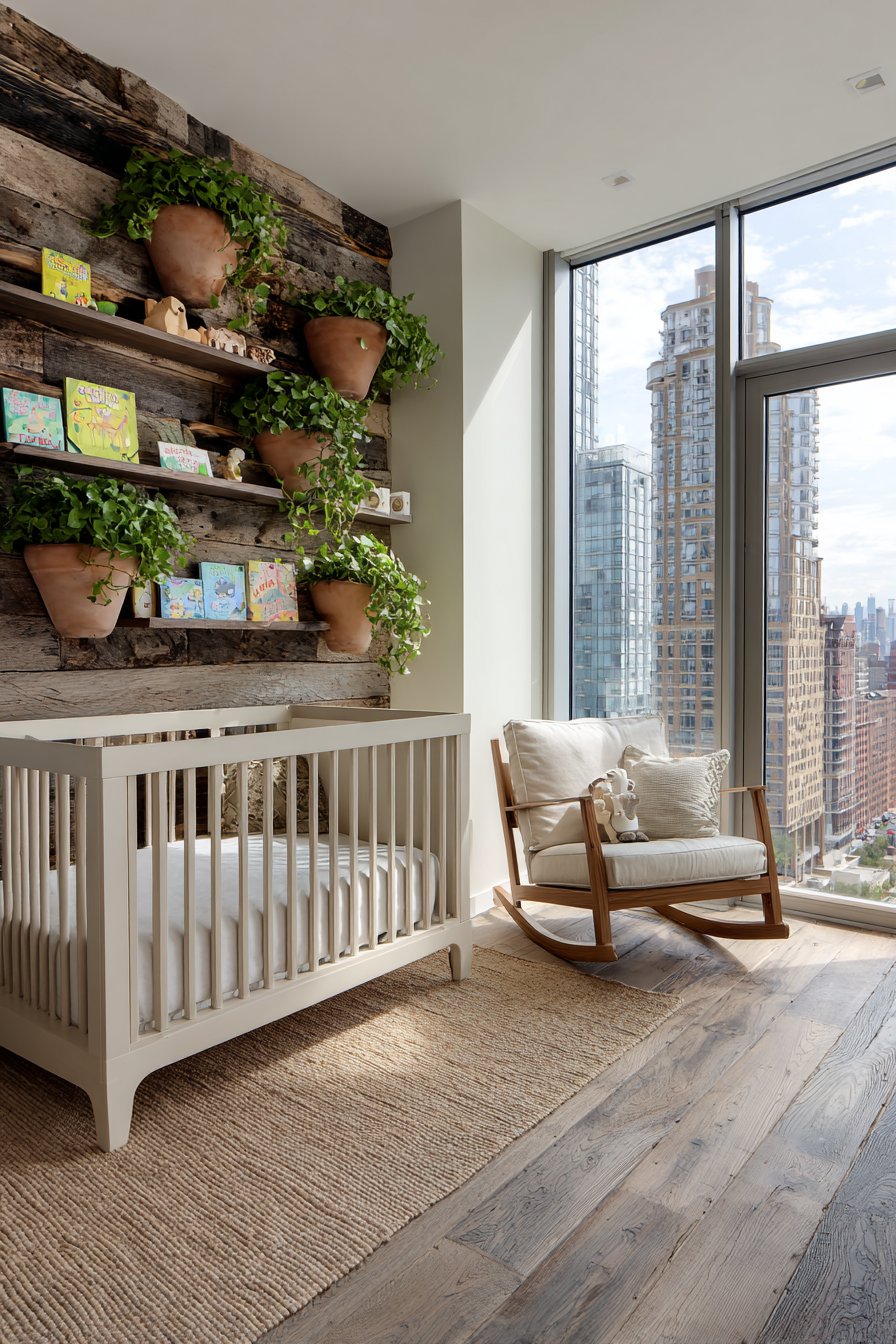
A white convertible crib sits on reclaimed wood flooring with natural jute rug. The natural materials create cohesive organic aesthetic throughout the space. Wooden wall shelves in their natural finish hold colorful children’s books and simple toys. A rocking chair in natural oak with cream cushions completes the nature-inspired corner.
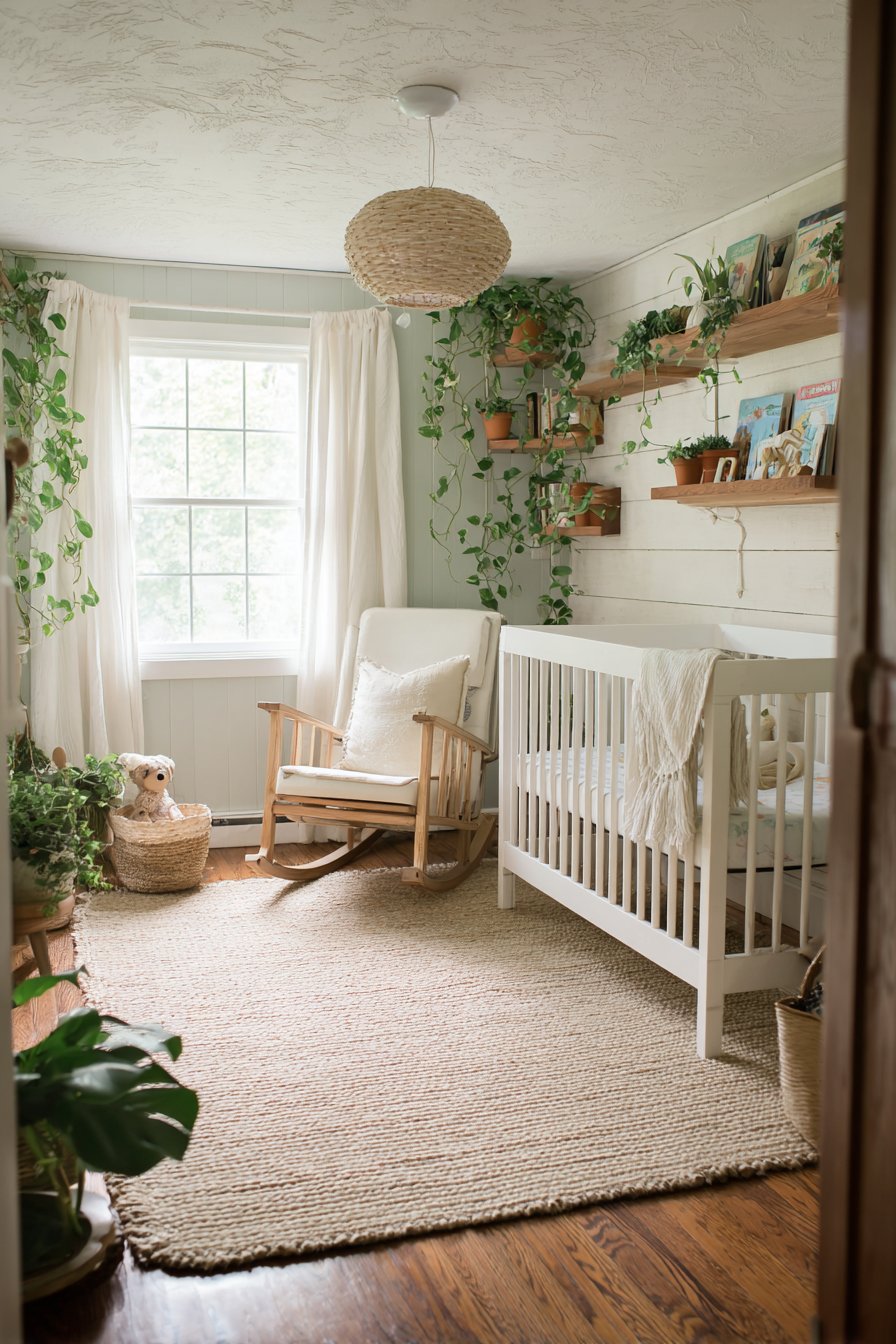
Large windows without treatments allow maximum natural light for plant health. The abundant natural light also creates bright, cheerful atmosphere for the baby. The varied green tones from different plant varieties provide surprising color diversity. Organic textures throughout create calming environment that feels connected to nature.
Key Design Tips:
- Install living plant walls with trailing varieties that tolerate indoor conditions
- Choose low-maintenance plants like pothos and philodendrons for easy care
- Use terracotta pots for natural aesthetic and better moisture regulation
- Select reclaimed wood flooring for sustainability and natural beauty
- Maximize natural light with minimal window treatments when featuring live plants
- Add natural fiber rugs like jute to reinforce biophilic design principles
19. Vintage Patchwork Quilt Charm
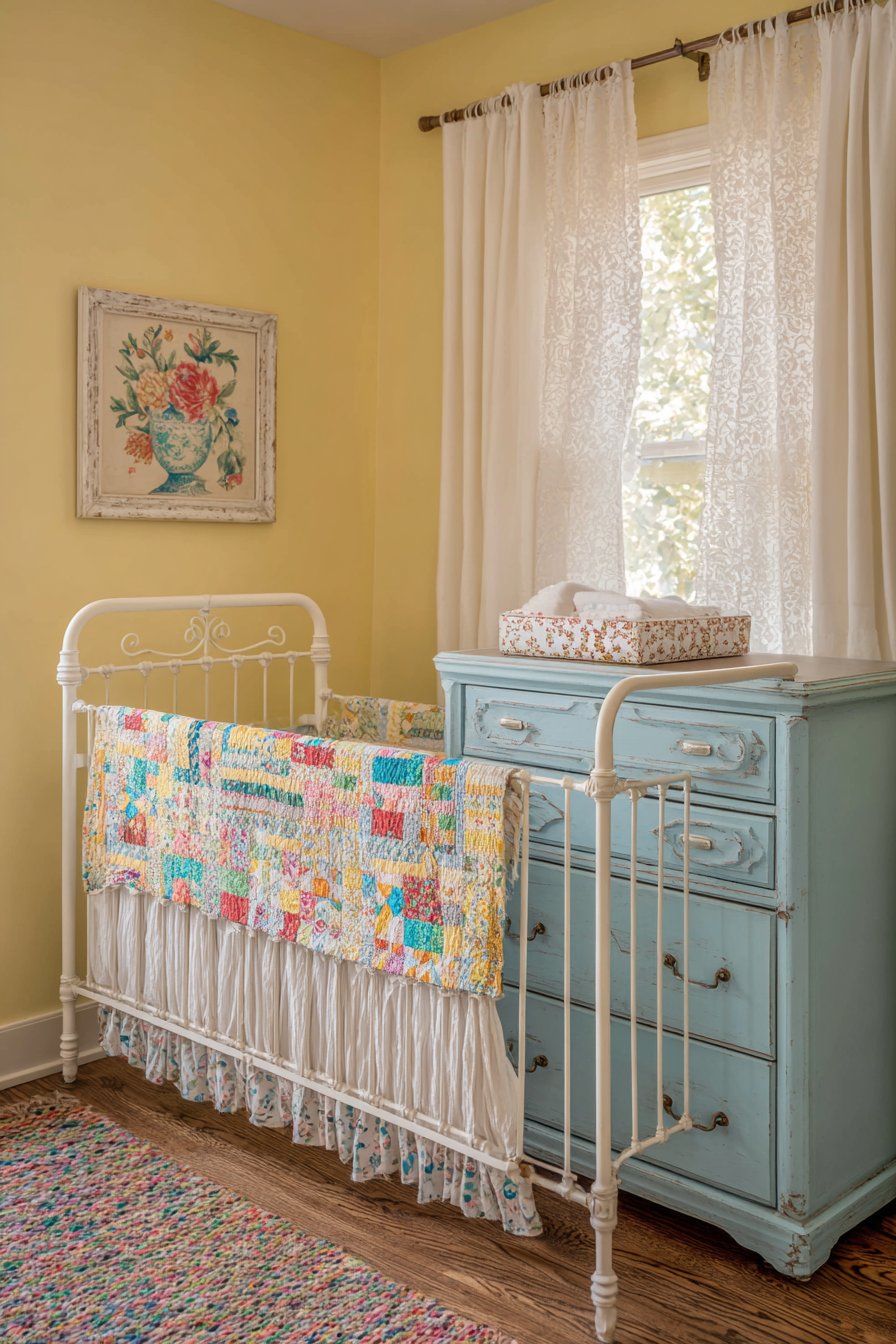
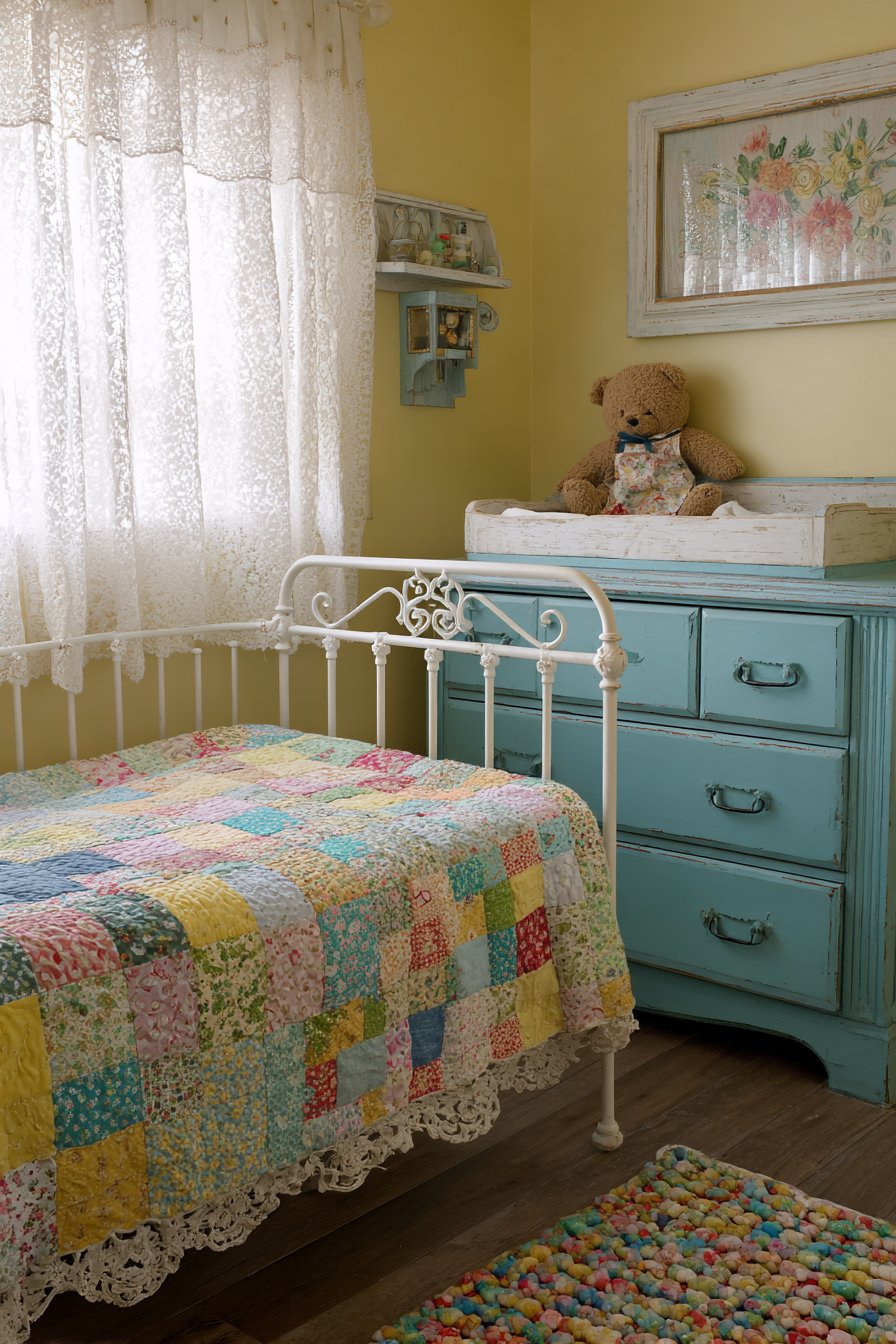
An antique white iron crib with ornate details creates vintage foundation. Colorful quilted bedding in traditional patchwork pattern uses varied fabric scraps. Florals, ginghams, and solids combine in cheerful heirloom aesthetic. The handmade quality of patchwork adds warmth and family history feeling.
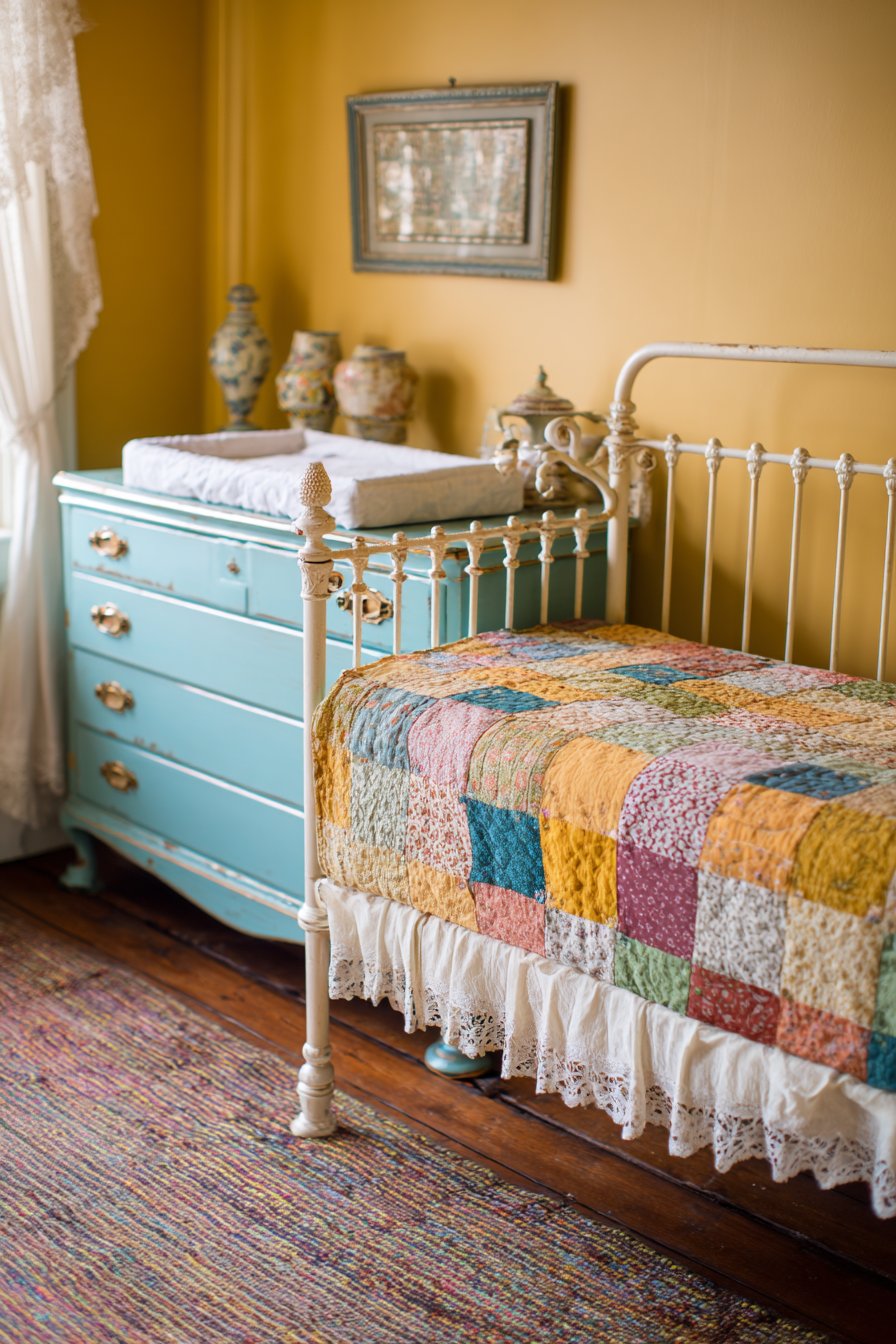
Walls painted in soft butter yellow complement the vintage charm perfectly. A restored wooden dresser painted in robin’s egg blue serves as changing station. The original brass hardware adds authentic vintage character to the piece. Lace curtains filter natural light softly, creating romantic atmospheric quality.
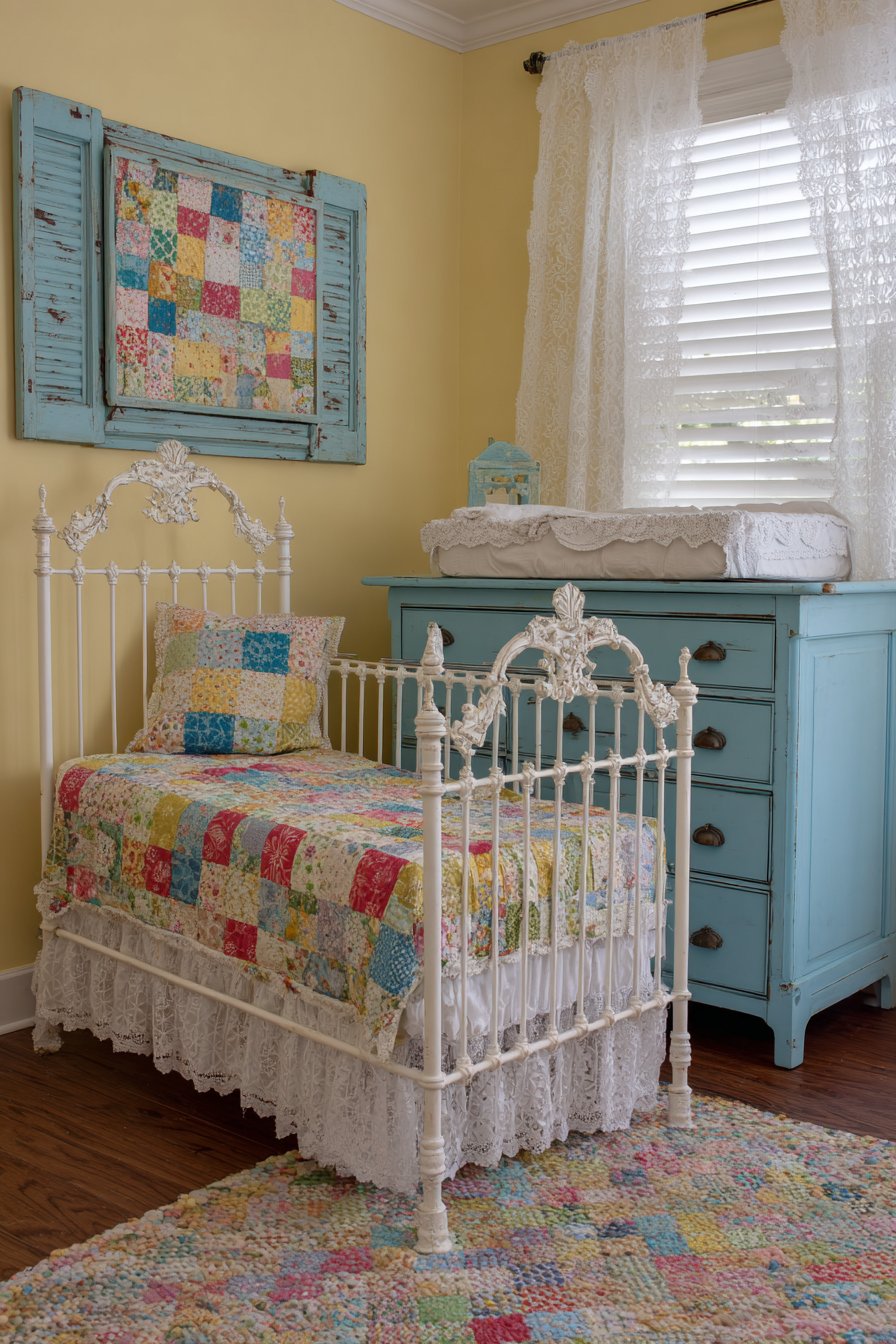
A braided rug in multi-colored wool adds traditional texture underfoot. The handmade quality of braided rugs reinforces the vintage aesthetic throughout. The nostalgic color palette creates timeless nursery that could exist in any era. The lovingly curated collection of colorful textiles tells story of care and consideration.
Key Design Tips:
- Choose antique or vintage-style iron cribs for authentic period character
- Create or source patchwork quilts using varied fabric patterns and colors
- Paint walls in soft butter yellow for warm vintage-appropriate backdrop
- Restore vintage furniture with paint while keeping original hardware
- Hang lace curtains for soft light filtering with romantic vintage appeal
- Use braided wool rugs in multiple colors for traditional handmade texture
20. Contemporary Color-Changing LED Innovation
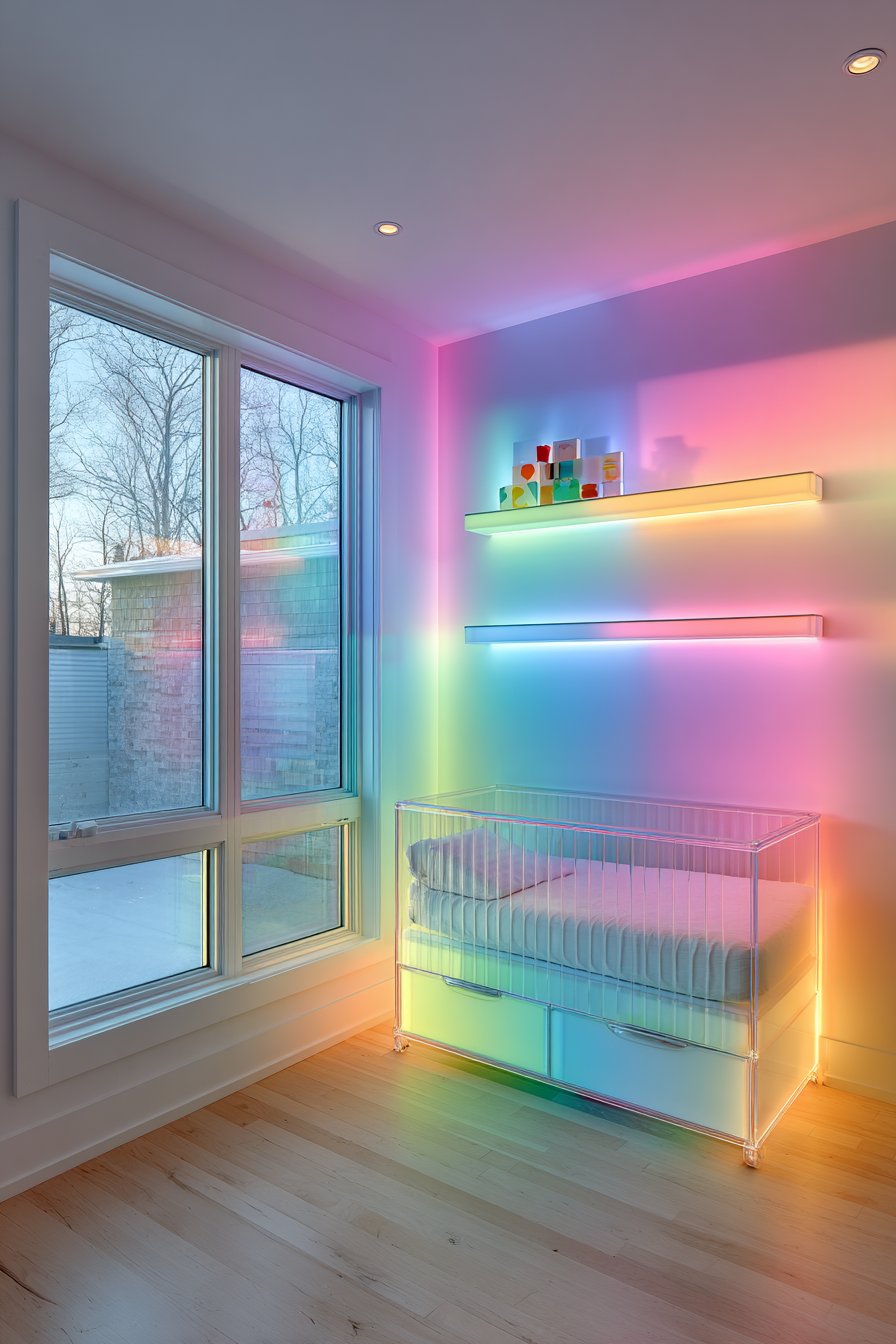
LED strip lighting behind floating shelves creates adjustable color-changing glow. The innovative lighting can be adjusted for different times of day and moods. The shelves mount above a modern acrylic crib allowing full visibility. The transparent crib demonstrates contemporary materials and safety-conscious design.
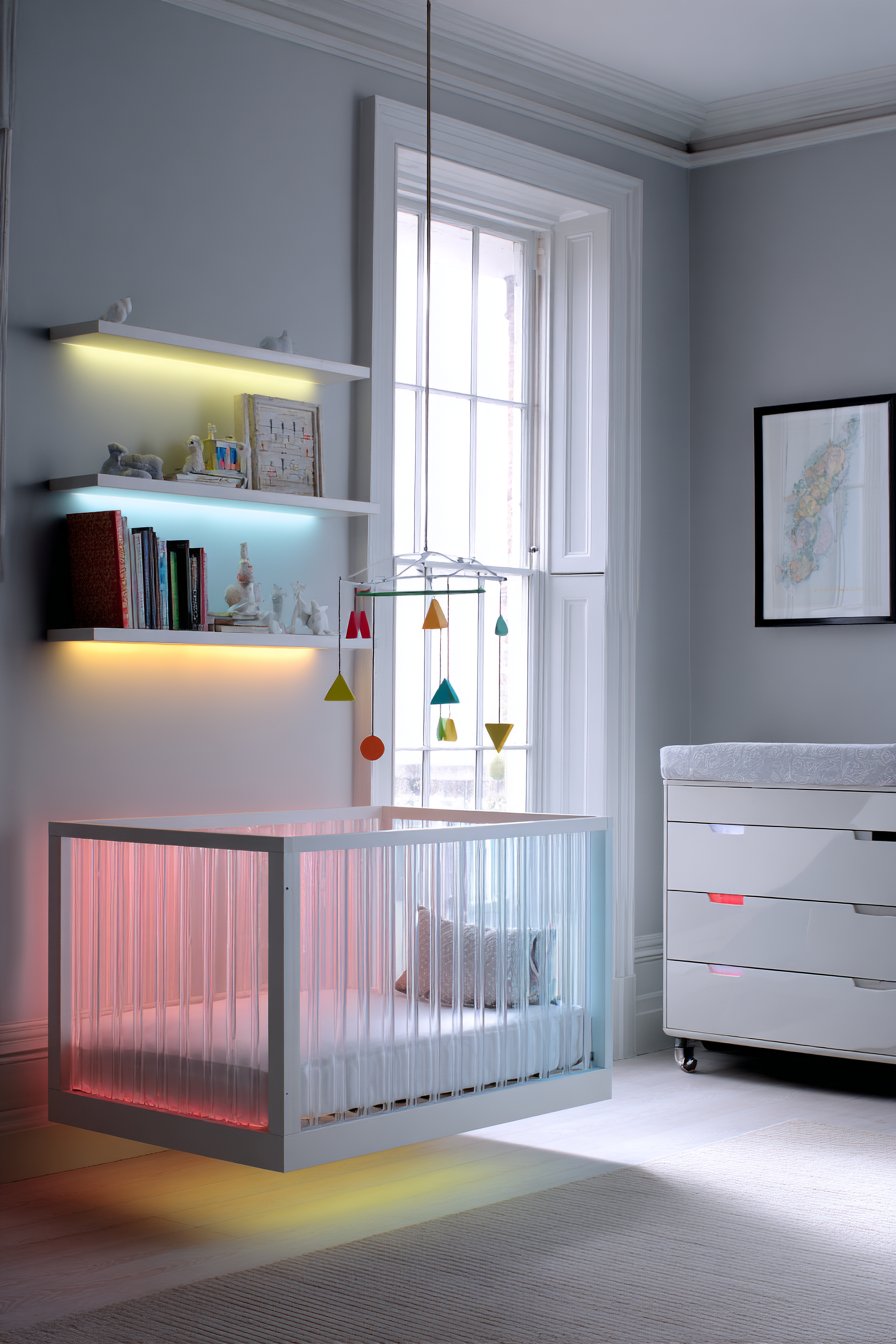
Walls painted in soft grey serve as neutral canvas for the lighting effects. A modern mobile with geometric shapes in primary colors hangs above the crib. The clean lines and bold colors create contemporary aesthetic. A sleek white dresser with colorful lucite drawer pulls provides storage with modern materials.
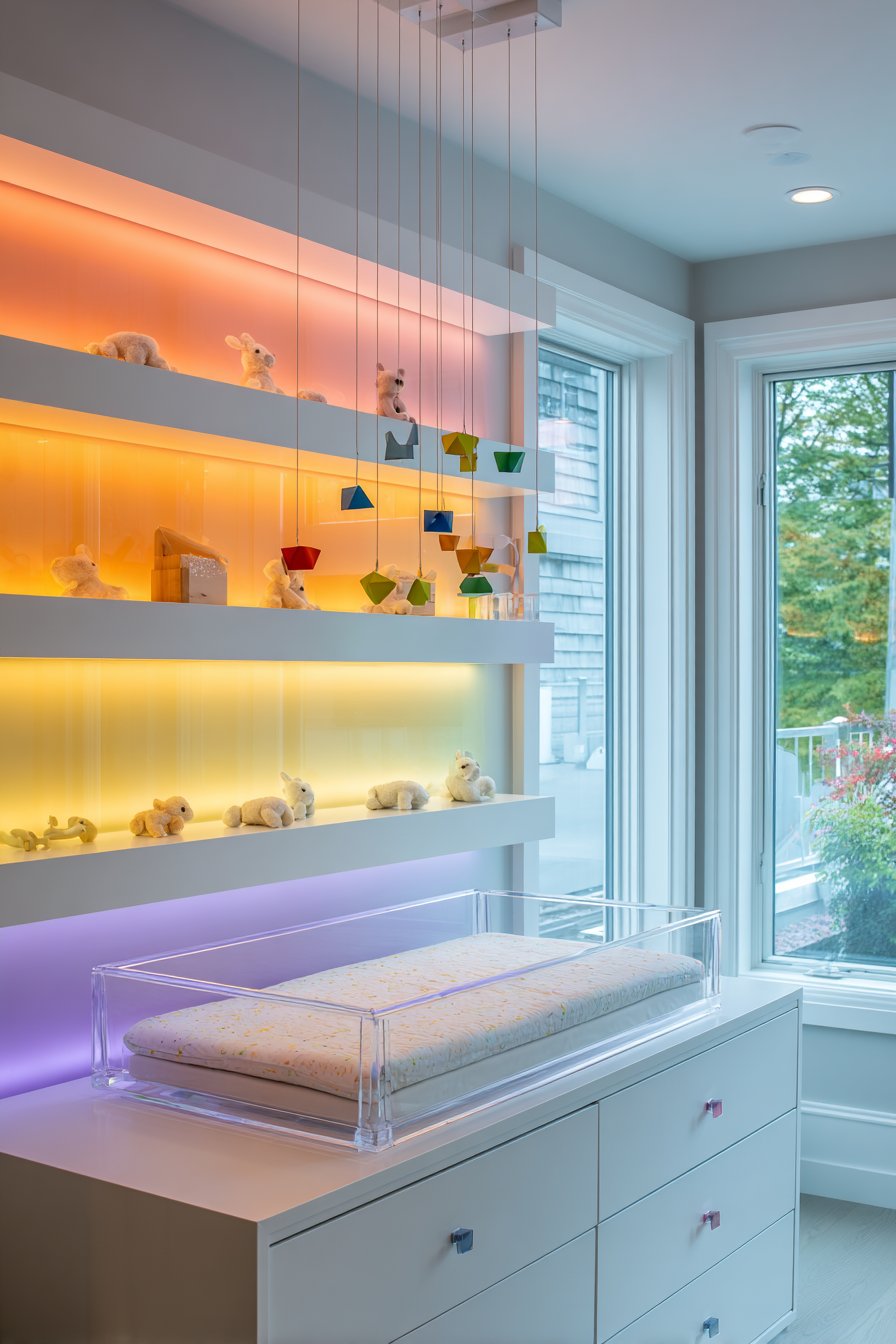
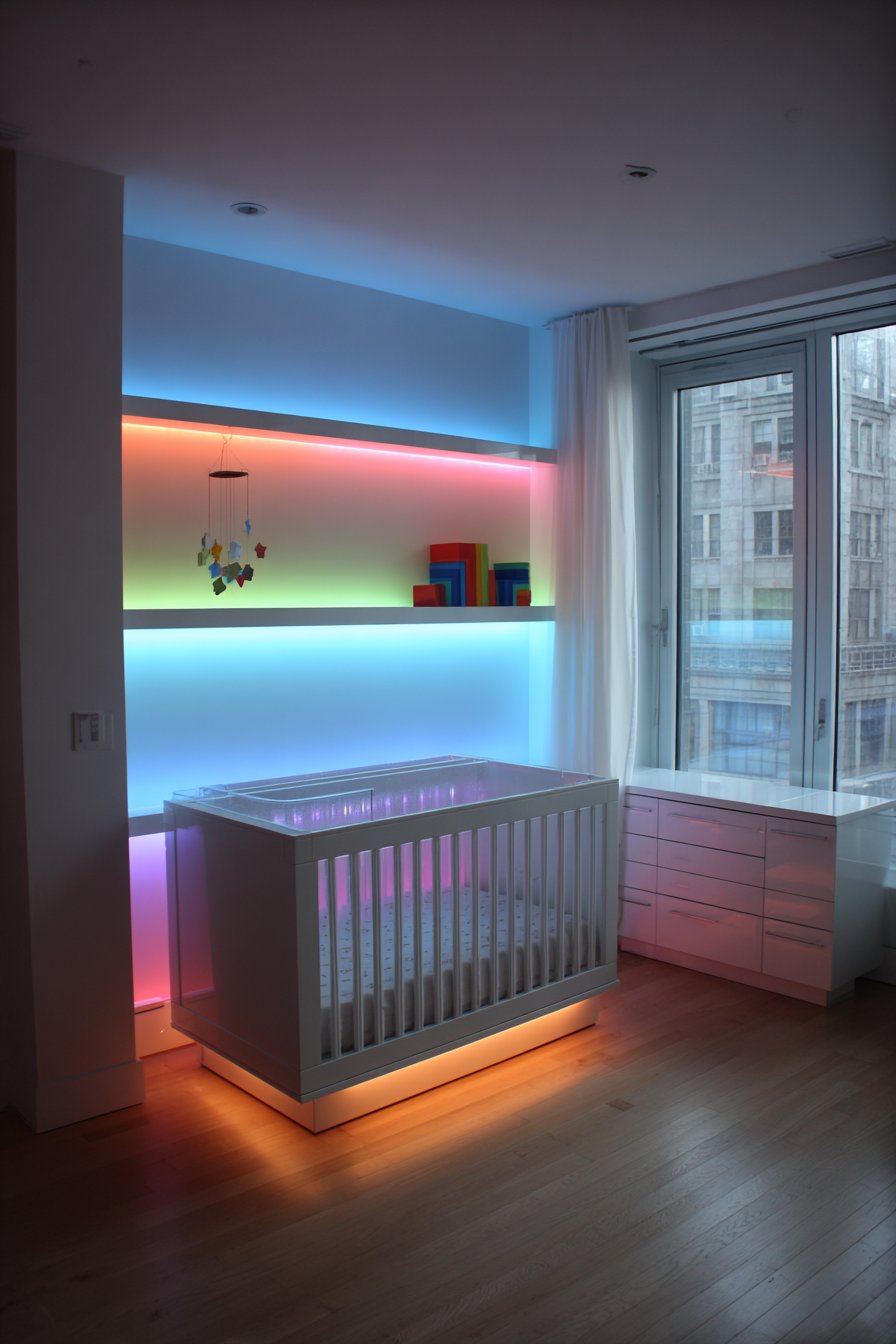
The innovative lighting creates ambient color that transforms the room’s mood instantly. Natural daylight from large windows provides primary illumination during daytime hours. The color-changing system allows customization as the child grows and preferences develop. Contemporary materials and clean design lines create nursery that feels current and innovative.
Key Design Tips:
- Install LED strip lighting with color-changing capabilities for adjustable ambiance
- Choose acrylic cribs for modern transparent aesthetic and easy cleaning
- Paint walls in neutral grey to serve as backdrop for colorful lighting effects
- Select geometric mobiles in primary colors for contemporary visual stimulation
- Use modern materials like lucite for drawer pulls and furniture accents
- Combine innovative artificial lighting with abundant natural light for balance
Why These Colorful Baby Room Designs Are the Best
These colorful baby room designs represent optimal approaches to creating stimulating yet soothing nurseries. Each concept demonstrates how strategic color application supports infant development while maintaining aesthetic appeal. The versatility across styles proves colorful nurseries work in any home and design preference.
The incorporation of diverse color palettes addresses different sensory needs and parental preferences. Soft pastels provide calming environments while bolder hues stimulate cognitive development. Research in color psychology supports varied color exposure for developing visual systems. These designs balance stimulation with the restfulness babies need for healthy development.
Practical considerations underpin each design concept beyond pure aesthetics. Durable materials like organic cotton, natural wood, and quality textiles ensure longevity. The designs accommodate growth by incorporating convertible furniture and adaptable color schemes. Storage solutions integrated throughout maintain organization essential for busy parents.
The color theory applications demonstrate professional design understanding. Complementary colors create visual excitement while analogous schemes offer harmonious calm. The strategic placement of colorful elements guides visual flow throughout spaces. Neutral foundations allow colorful accents to shine without overwhelming small rooms.
Material choices reflect both sustainability concerns and practical functionality. Natural materials like wood, cotton, and wool provide non-toxic options for infant spaces. These materials age gracefully, improving with time rather than showing wear. The combination of investment pieces and DIY elements makes designs accessible across budgets.
Spatial considerations address various nursery sizes and configurations. Vertical color applications maximize small spaces while bold wall treatments anchor larger rooms. The designs prove that thoughtful color use creates visual interest regardless of square footage. Each concept adapts to different architectural constraints and lighting conditions.
Conclusion
These twenty colorful baby room designs demonstrate that vibrant nurseries can be both beautiful and functional. The key takeaways include the importance of strategic color placement, quality materials, and adaptable design elements. Successful colorful nurseries balance visual stimulation with the calm necessary for rest and development.
The versatility across styles proves there’s a colorful approach for every family. From sophisticated jewel tones to playful rainbows, color transforms ordinary nurseries into extraordinary spaces. Consider your personal style, practical needs, and long-term adaptability when planning your colorful baby room.
Start with one bold colorful element and build your design around that anchor piece. Your dream colorful nursery awaits creation through thoughtful planning, quality materials, and joyful color choices. These designs inspire confidence that colorful baby rooms can grow beautifully with your child through the years.
