


Corner laundry rooms are one of the most creatively challenging spaces in any home. Their unique geometry and limited square footage demand a thoughtful, intentional approach to organization and storage. When done right, even the tightest corner laundry space can become a highly functional, beautifully organized area that streamlines your daily routines.
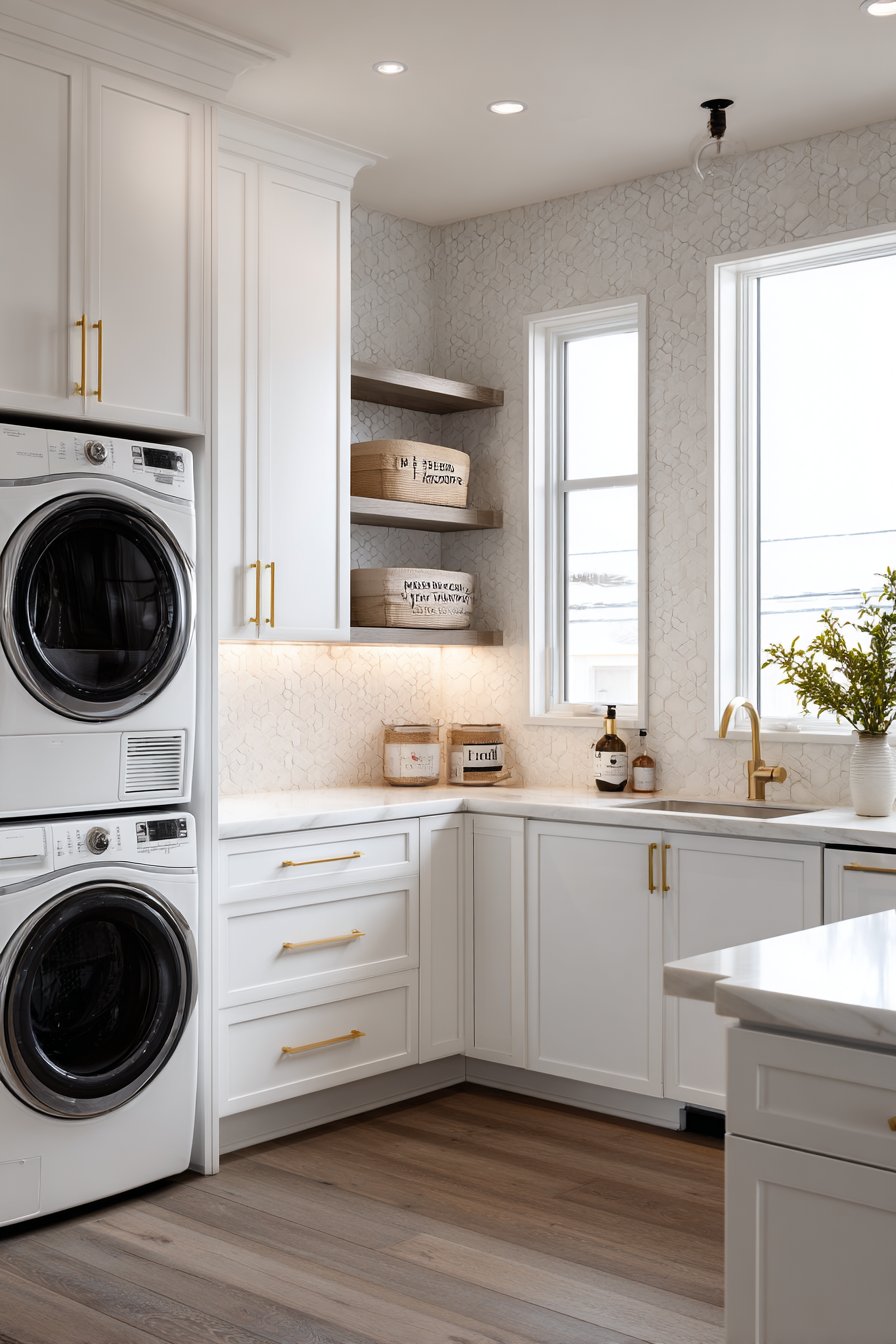
The key to success lies in understanding how vertical space, corner-specific furniture, and smart organizational systems work together. Many homeowners underutilize these small spaces because they focus only on floor area. But the walls, corners, and overhead areas hold enormous untapped potential. With the right strategy, you can store detergents, linens, ironing supplies, and more without feeling cramped.
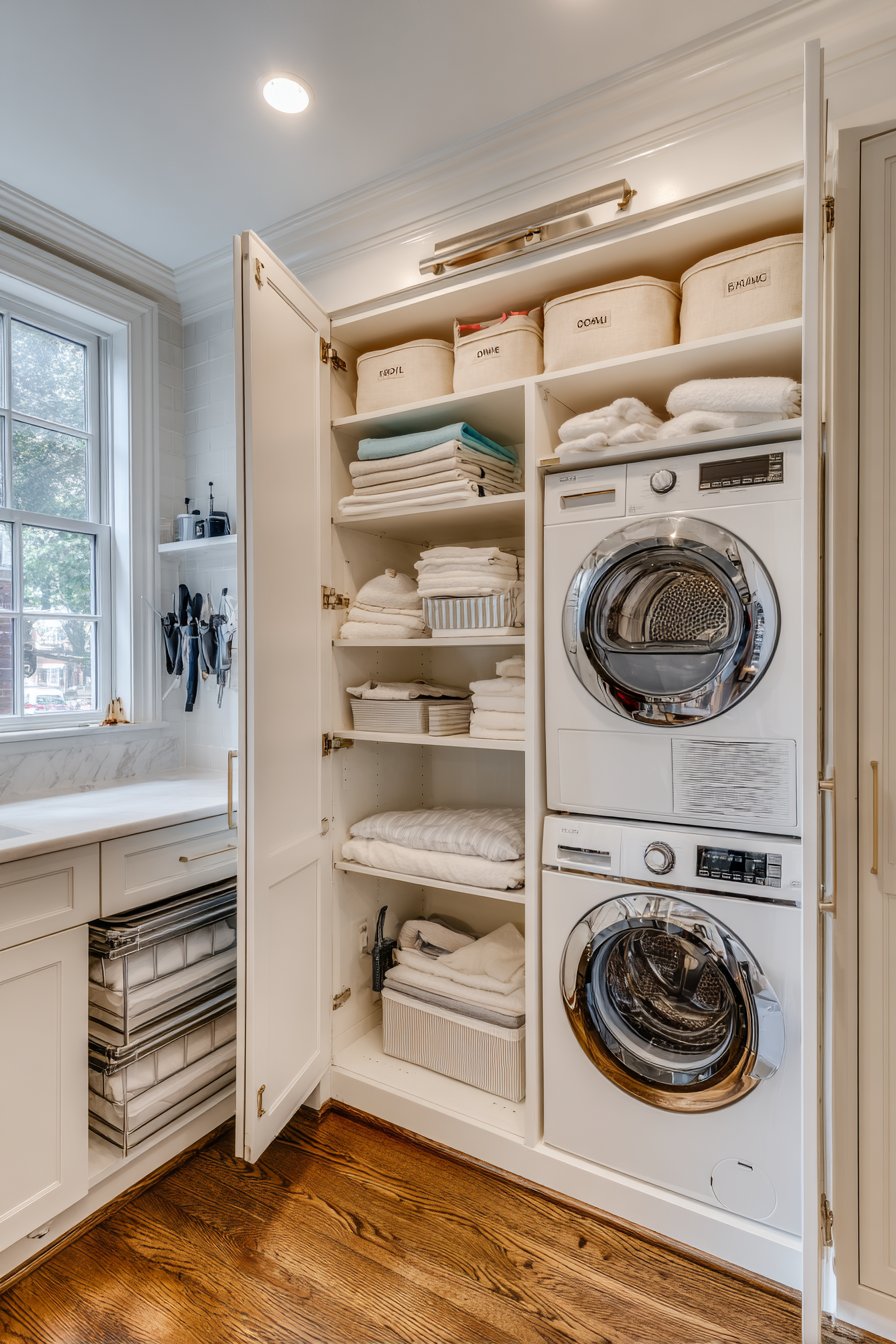
This guide covers practical, designer-approved techniques to help you transform your corner laundry room into a storage powerhouse. Whether you’re working with a closet-sized nook or a compact dedicated room, these ideas will help you make every inch count.
1. Install Floor-to-Ceiling Shelving Units
One of the most impactful things you can do in a corner laundry room is install floor-to-ceiling shelving. Tall shelving systems draw the eye upward, create the illusion of more space, and dramatically increase your total storage capacity. Many homeowners stop shelving at shoulder height, leaving valuable space unused above.
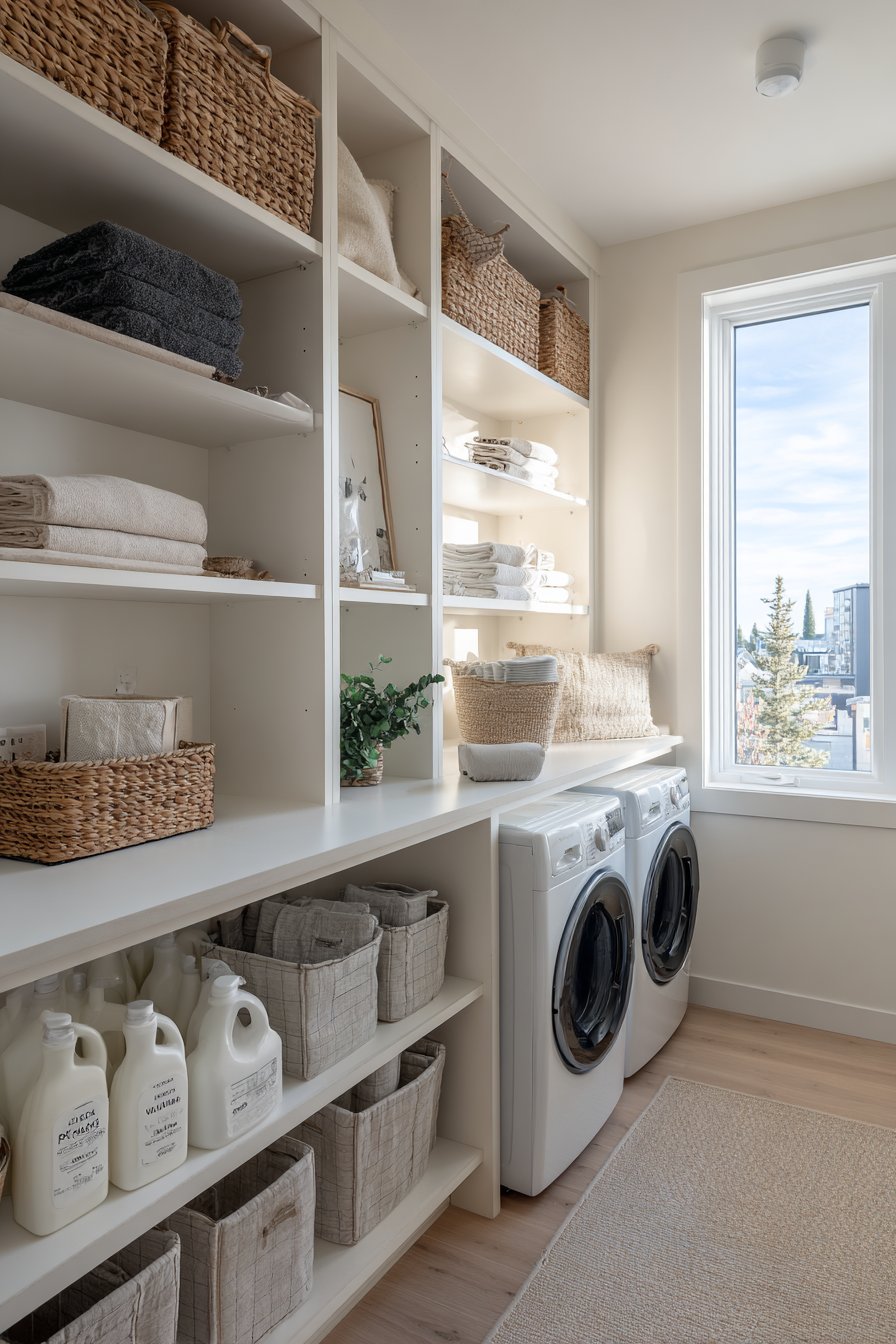
Custom-built or modular shelving units that fit snugly into your corner can be tailored to your exact dimensions. Consider adjustable shelf heights so you can accommodate items of varying sizes — from tall detergent bottles to folded towels and small baskets. Materials like powder-coated steel wire or painted MDF work exceptionally well in laundry environments due to their moisture resistance.
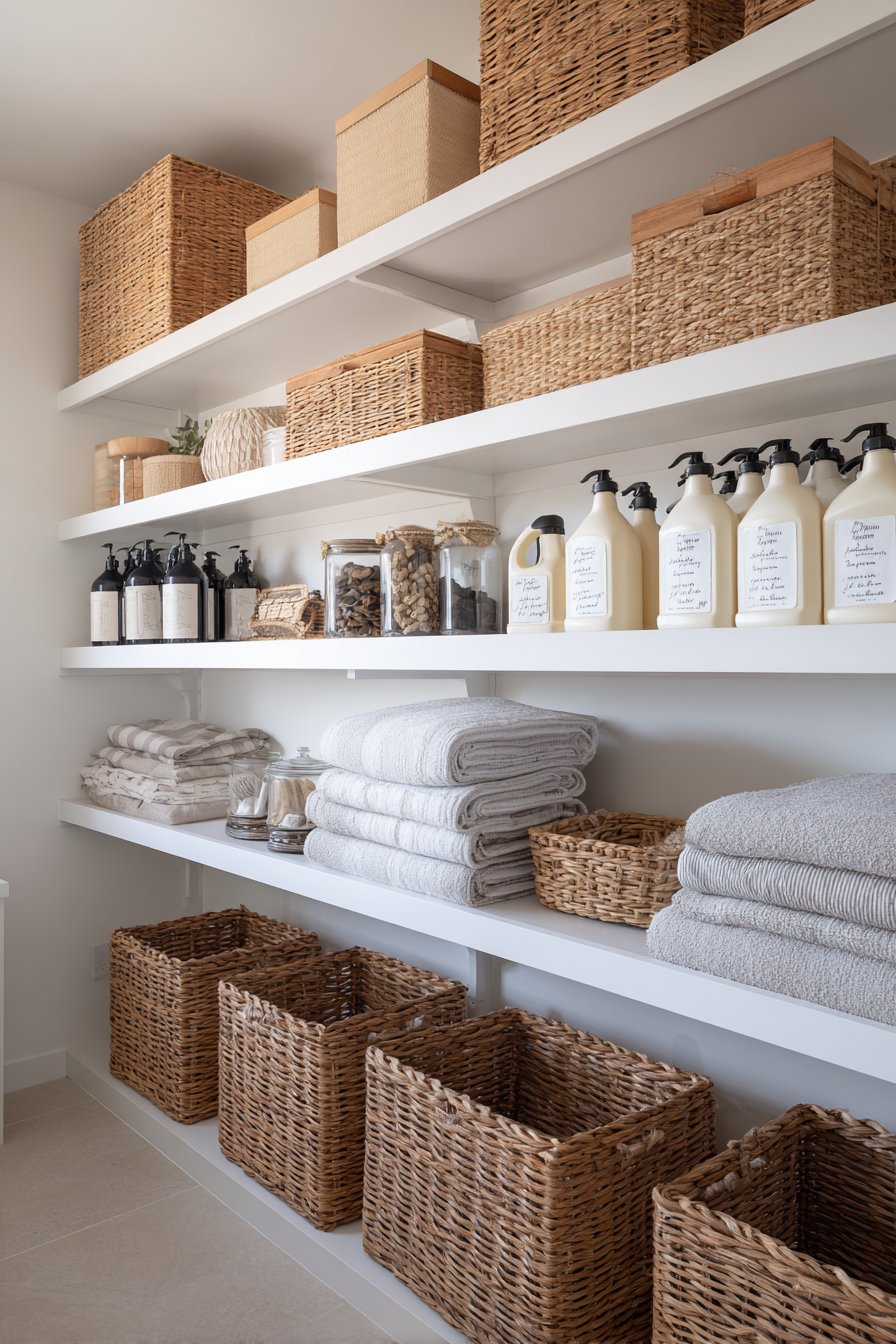
Keep frequently used items at eye level and mid-reach. Store seasonal or rarely needed supplies on the uppermost shelves. Use the lowest shelves for heavy items like fabric softener jugs or extra cleaning supplies, keeping the center of gravity low and reducing strain when lifting.
- Install shelving from floor to ceiling to maximize every vertical inch
- Use adjustable shelves to accommodate items of different heights
- Place everyday items between shoulder and waist height for easy access
- Store seasonal items on upper shelves using labeled bins
- Choose moisture-resistant materials like wire, painted MDF, or melamine
- Add a small step stool nearby for safe access to upper shelves
2. Use Corner-Specific Cabinet Solutions
Standard rectangular cabinets often leave awkward dead zones in corner laundry rooms. Corner-specific cabinetry, such as L-shaped units or pie-cut cabinets, eliminates wasted space and gives you smooth, accessible storage across the full corner. These solutions are widely available in ready-to-assemble formats or can be custom built.
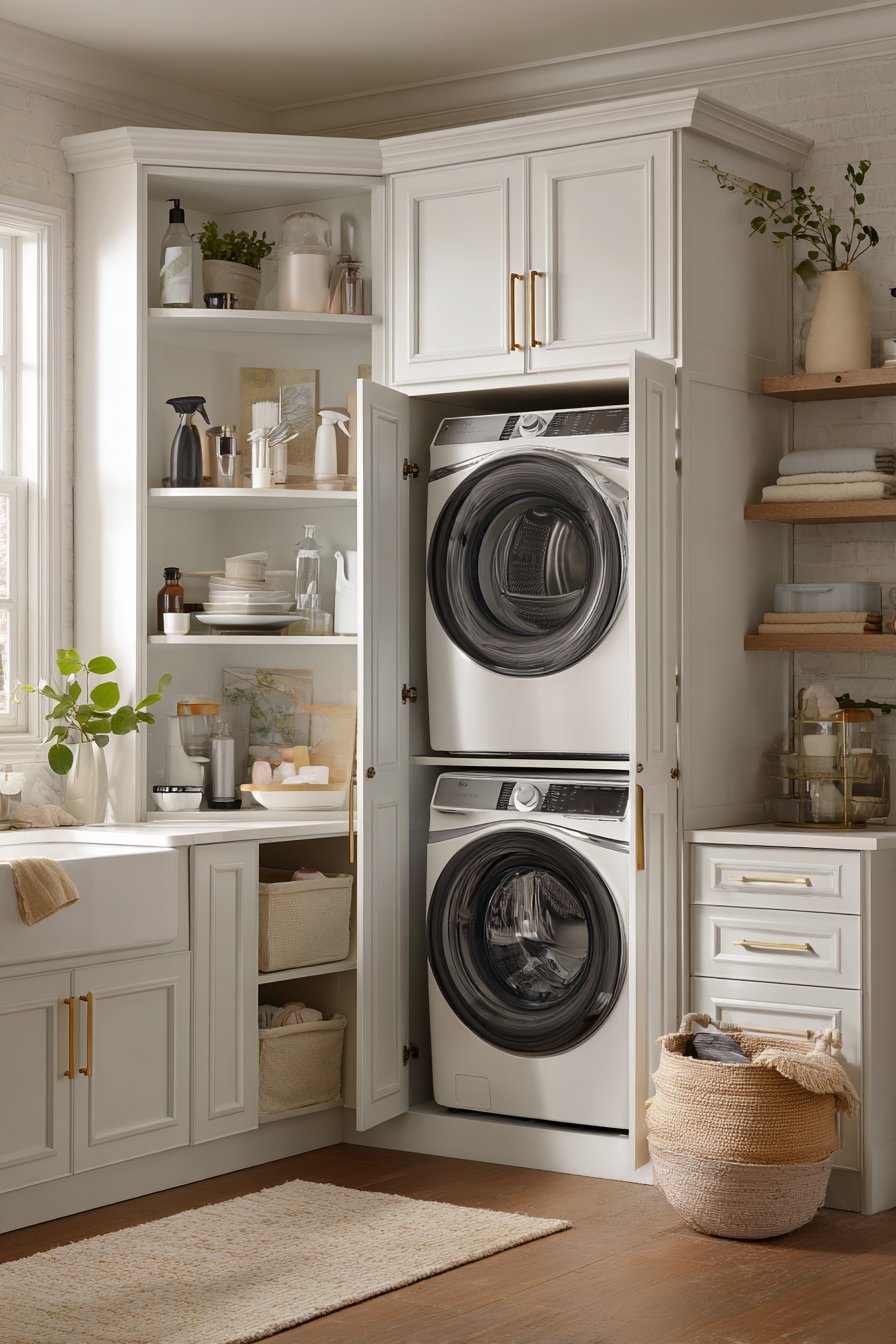
A popular option is the lazy Susan cabinet insert, which allows you to rotate stored items easily. This is particularly useful in corner base cabinets where reaching the back is otherwise inconvenient. Pull-out shelves and swing-out mechanisms are equally effective and can be retrofitted into existing cabinetry.
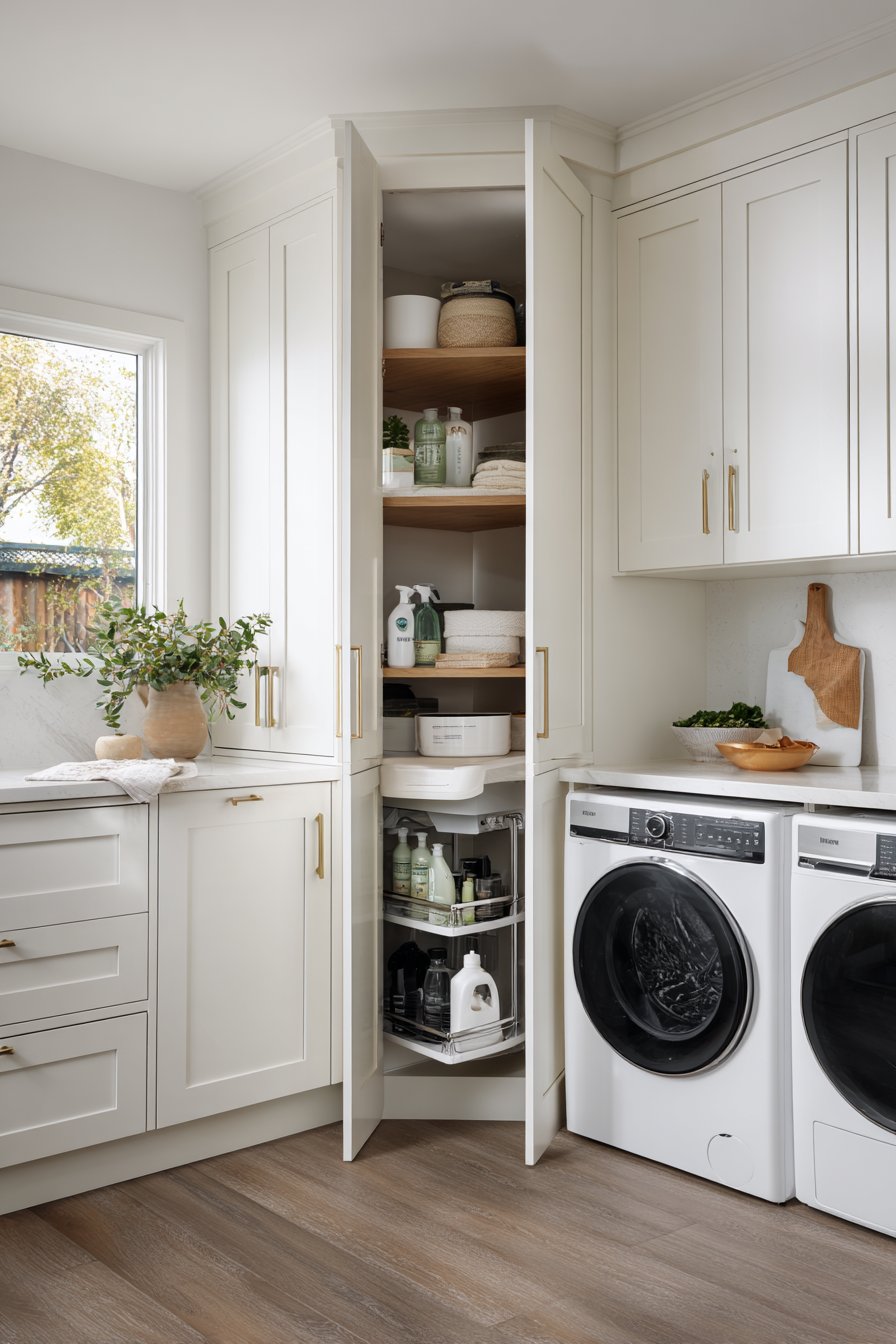
For wall-mounted corner cabinets, consider diagonal corner units that mount at 45 degrees, bridging two walls cleanly. These are ideal for storing folded linens, cleaning sprays, or small appliances. Their angled design maximizes usability while maintaining a polished, built-in look that elevates the room’s overall aesthetic.
- Choose L-shaped or diagonal corner cabinets over standard rectangular units
- Install lazy Susan inserts in base corner cabinets for easy rotation access
- Use pull-out shelves to reach deep corner areas without bending awkwardly
- Mount diagonal wall cabinets at 45-degree angles between two walls
- Consider glass-front cabinet doors to keep the space feeling open and light
- Match cabinet finishes to your appliances for a cohesive, designed look
3. Stack Your Washer and Dryer
If your machines are currently side by side, switching to a stacked washer-dryer configuration is one of the most transformative storage decisions you can make. Stacking immediately doubles the floor space available for other storage solutions, cabinetry, or a folding station.
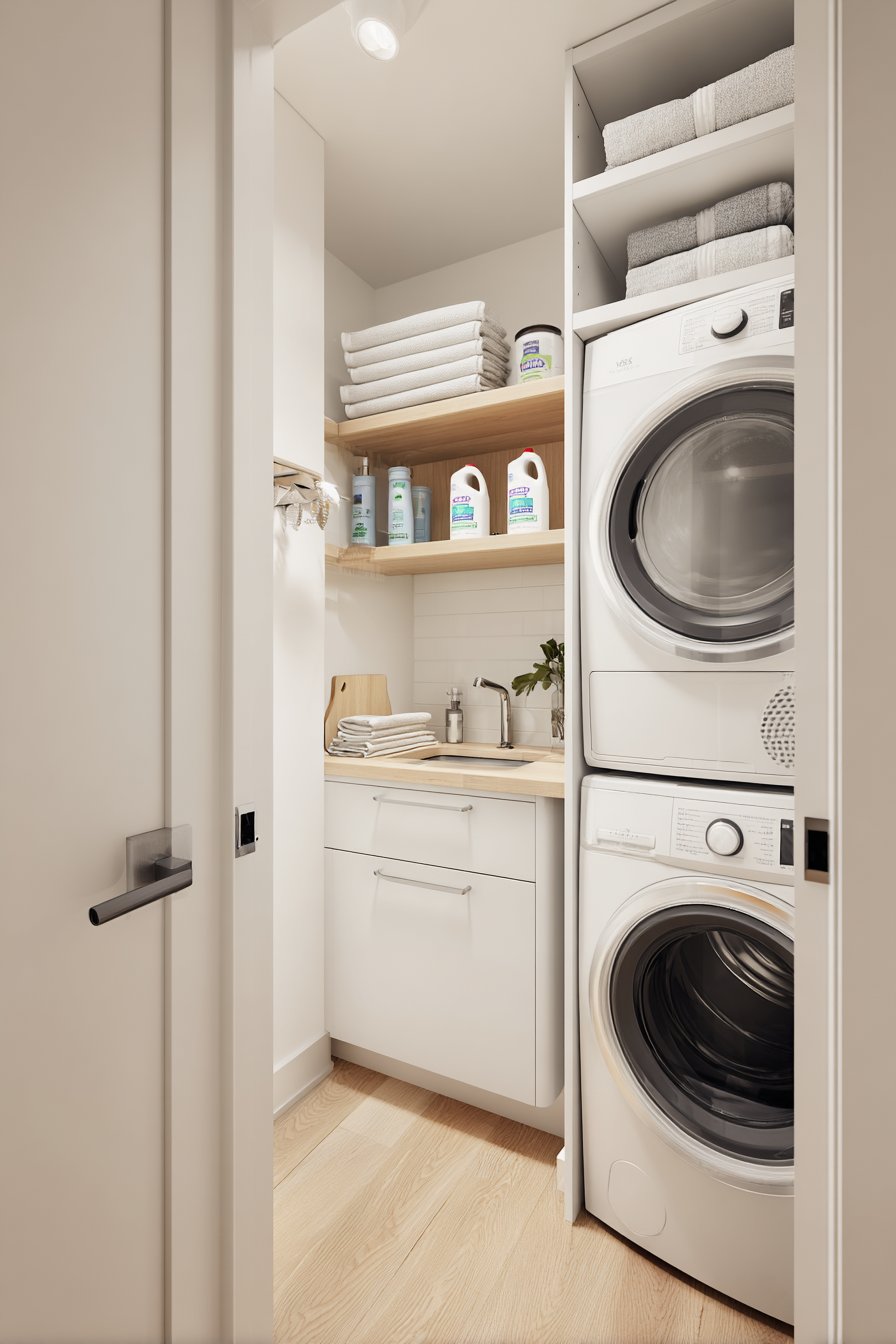
Front-loading machines are required for stacking, and most major brands offer dedicated stacking kits that ensure safety and stability. Once stacked, the space alongside and beneath the machines becomes available for tall storage towers, pull-out hamper drawers, or narrow rolling carts. This single change can completely reshape how your corner laundry room functions.
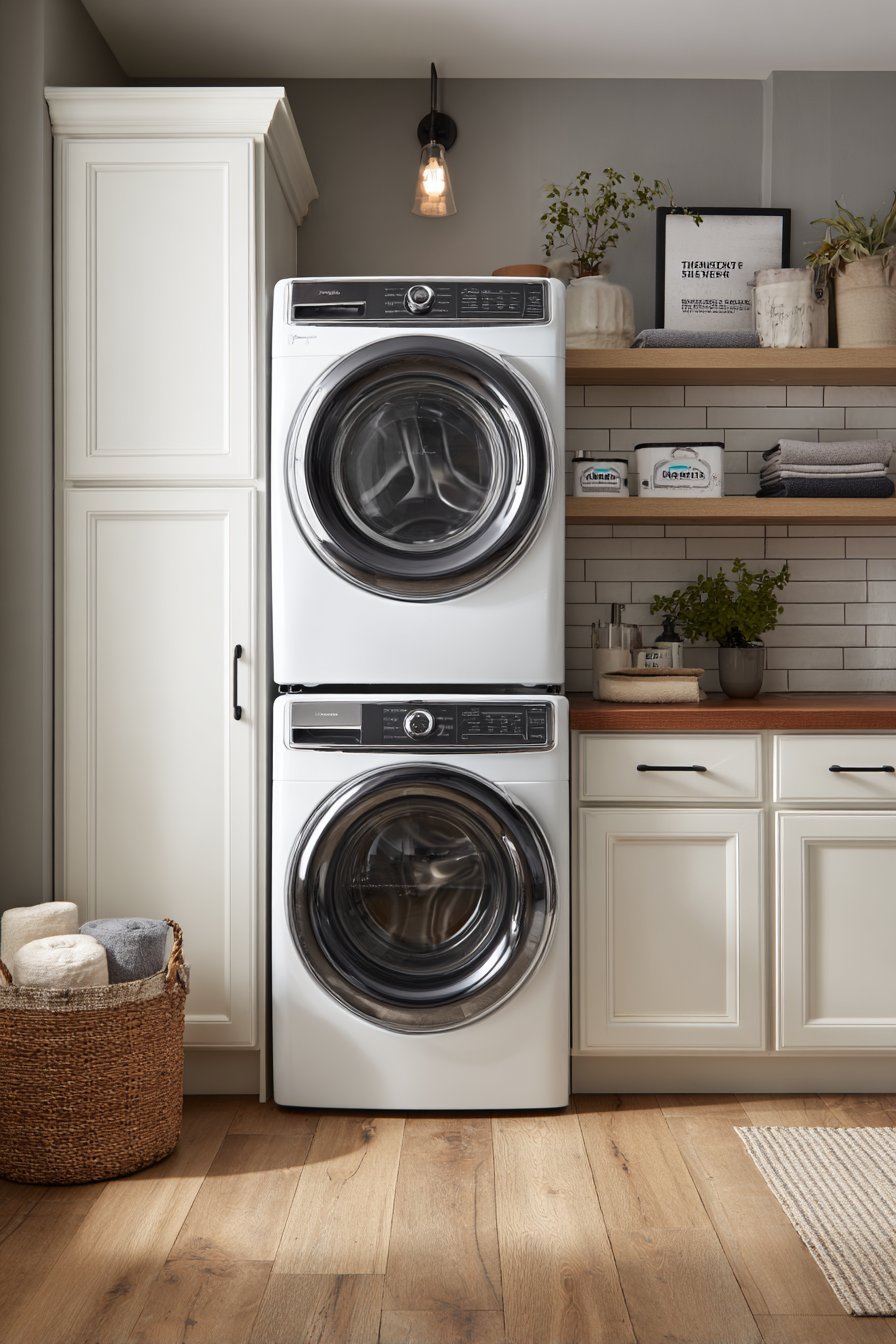
The area above a stacked unit is also prime real estate. A floating shelf or overhead cabinet installed above the dryer provides easy access to detergent, dryer sheets, and stain removers. Keeping these items directly above the machines creates a logical, efficient workflow that reduces clutter on surrounding surfaces.
- Switch to front-loading machines to enable safe stacking configurations
- Purchase the manufacturer-recommended stacking kit for your specific models
- Use freed floor space for a tall storage tower or narrow rolling cart
- Install a floating shelf directly above the dryer for detergent and supplies
- Add an overhead cabinet if ceiling height permits for extra enclosed storage
- Place a small countertop on the side of the stacked unit for folding
4. Add a Wall-Mounted Folding Table
Folding and sorting laundry often happens wherever there’s a free surface — which in small laundry rooms usually means the floor. A wall-mounted folding table solves this immediately. These fold flat against the wall when not in use, taking up virtually no space, yet open into a full working surface when needed.
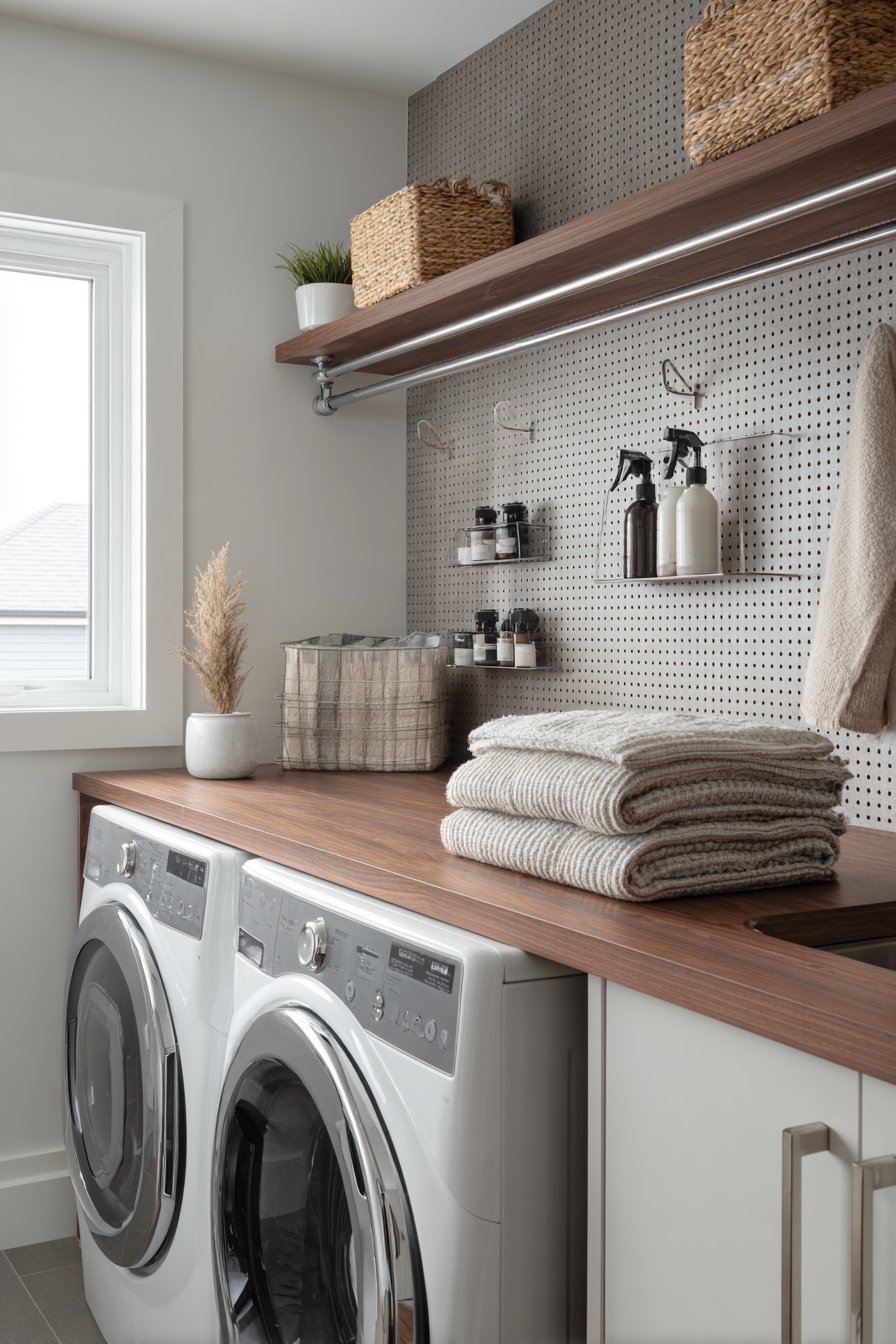
Look for tables that mount with heavy-duty brackets and can support at least 50–75 lbs when extended. Models with built-in storage pegboards or small shelves above add even more utility. The folding mechanism should operate smoothly with one hand so you can manage laundry with ease.
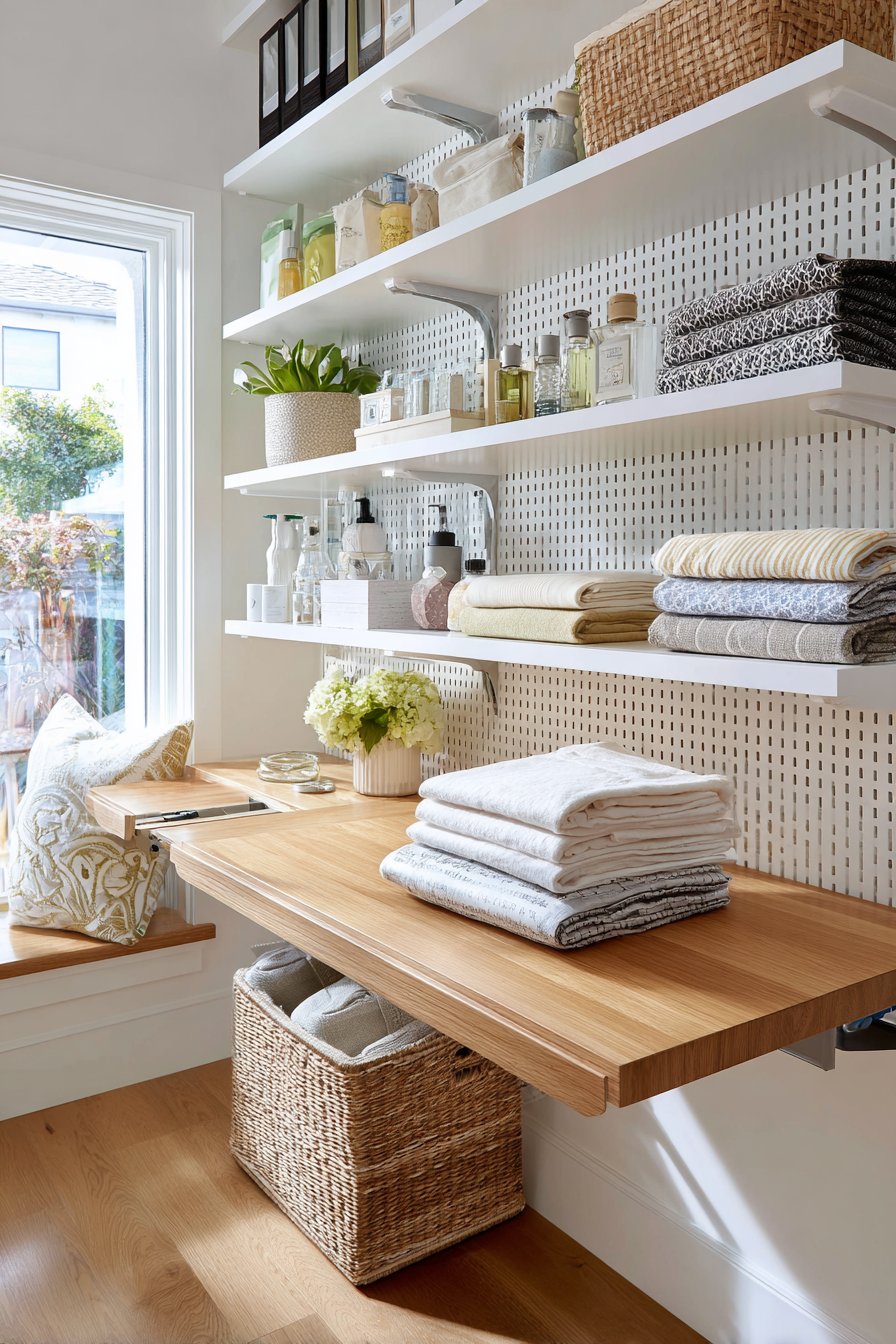
Position the table at a comfortable working height — typically 34 to 36 inches from the floor — to prevent back strain during extended folding sessions. When the table is folded up, the wall space below it becomes available for hooks, a narrow rolling hamper, or decorative storage baskets that keep the room tidy and organized.
- Choose a wall-mounted fold-down table rated for at least 50 lbs of weight
- Install at 34–36 inches height to match standard countertop ergonomics
- Look for models with integrated pegboards or shelves above the work surface
- Use the wall space beneath the folded table for hooks or slim rolling carts
- Secure mounting into wall studs, not just drywall, for maximum safety
- Keep the table surface clear when not folding to preserve visual calm
5. Maximize Overhead Space with Cabinets or Shelves
The ceiling zone — roughly the top 12 to 24 inches of your laundry room walls — is consistently the most overlooked storage area. Overhead cabinets or open shelves installed near the ceiling turn dead space into functional storage without consuming any floor area or mid-wall space.
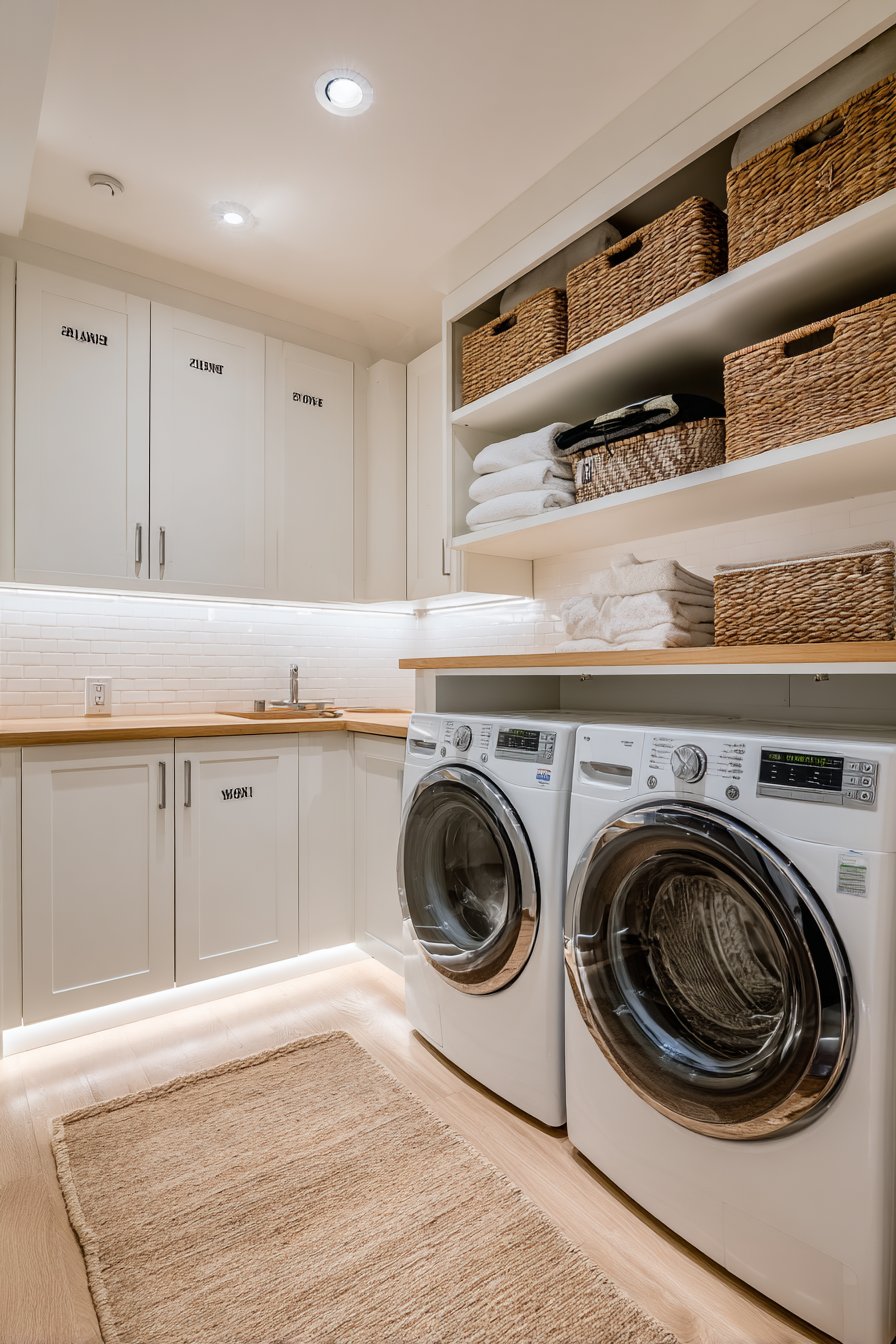
Overhead open shelving is cost-effective and easy to install. Use matching baskets or labeled bins to keep items organized and visually neat. Closed overhead cabinets are better for items you prefer to keep dust-free or hidden, such as spare linens, cleaning concentrates, or seasonal supplies. Both options work exceptionally well in corner rooms where two walls meet, allowing L-shaped overhead cabinetry to wrap the full corner.
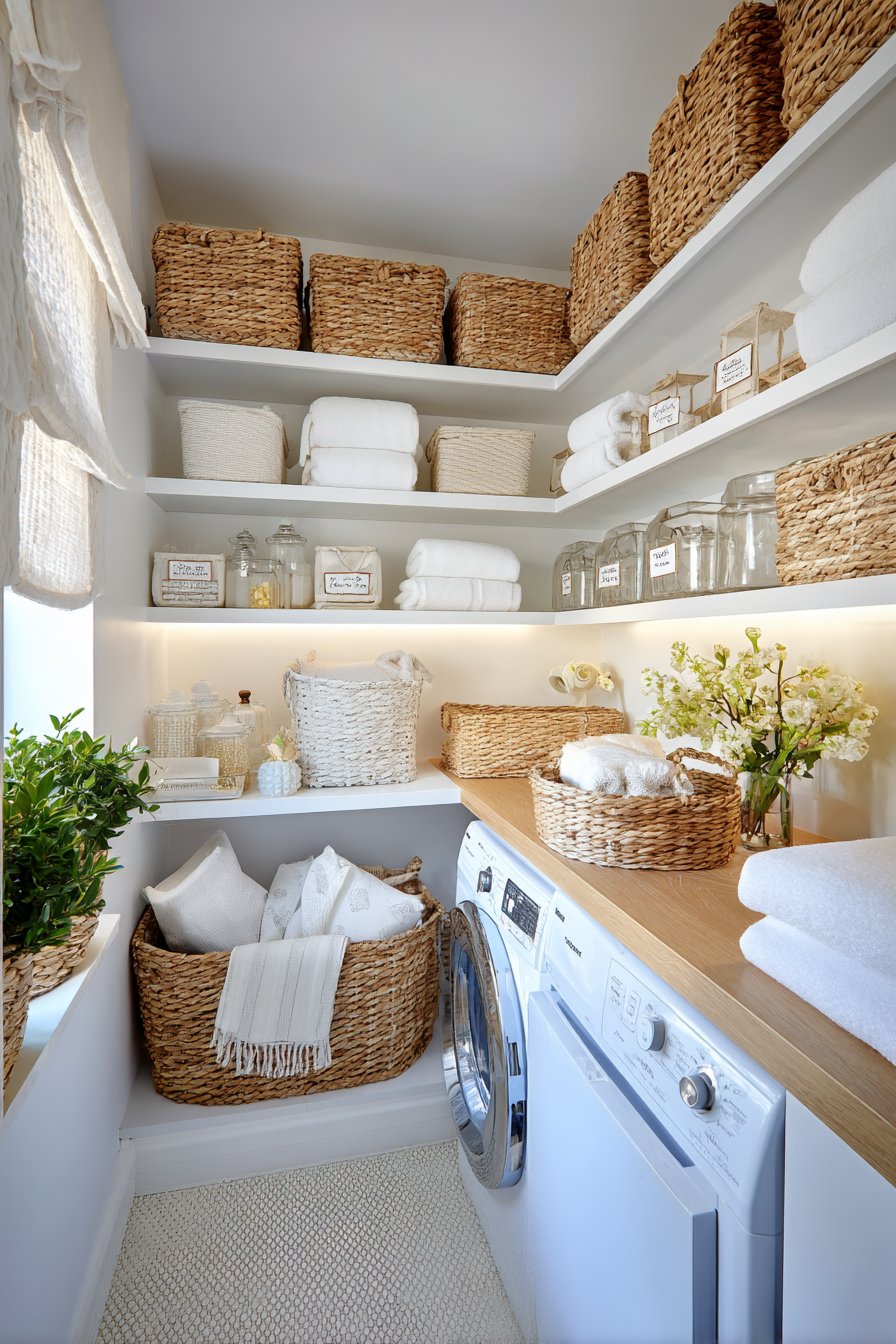
If ceiling height is low, keep overhead storage light-colored to avoid a heavy, oppressive feel. White or light wood tones reflect light and keep the upper zone from feeling too dominant. Consider adding subtle under-cabinet lighting to illuminate the mid-wall work zone below, creating both function and ambiance in a small, utilitarian space.
- Install overhead cabinets or shelves in the top 12–24 inches of wall space
- Use uniform baskets or bins on open overhead shelves for visual order
- Choose closed overhead cabinets for dust-sensitive or frequently needed items
- Opt for L-shaped overhead cabinetry to wrap and utilize the full corner
- Use light colors on upper cabinets to keep the room feeling open and bright
- Add under-cabinet lighting below upper shelves for better task visibility
6. Use the Door for Hidden Storage
The back of the laundry room door is a prime storage surface that most people completely ignore. Over-door organizers, pocket systems, and mounted racks can turn this flat surface into a highly functional zone for everything from cleaning sprays to small tools and accessories.
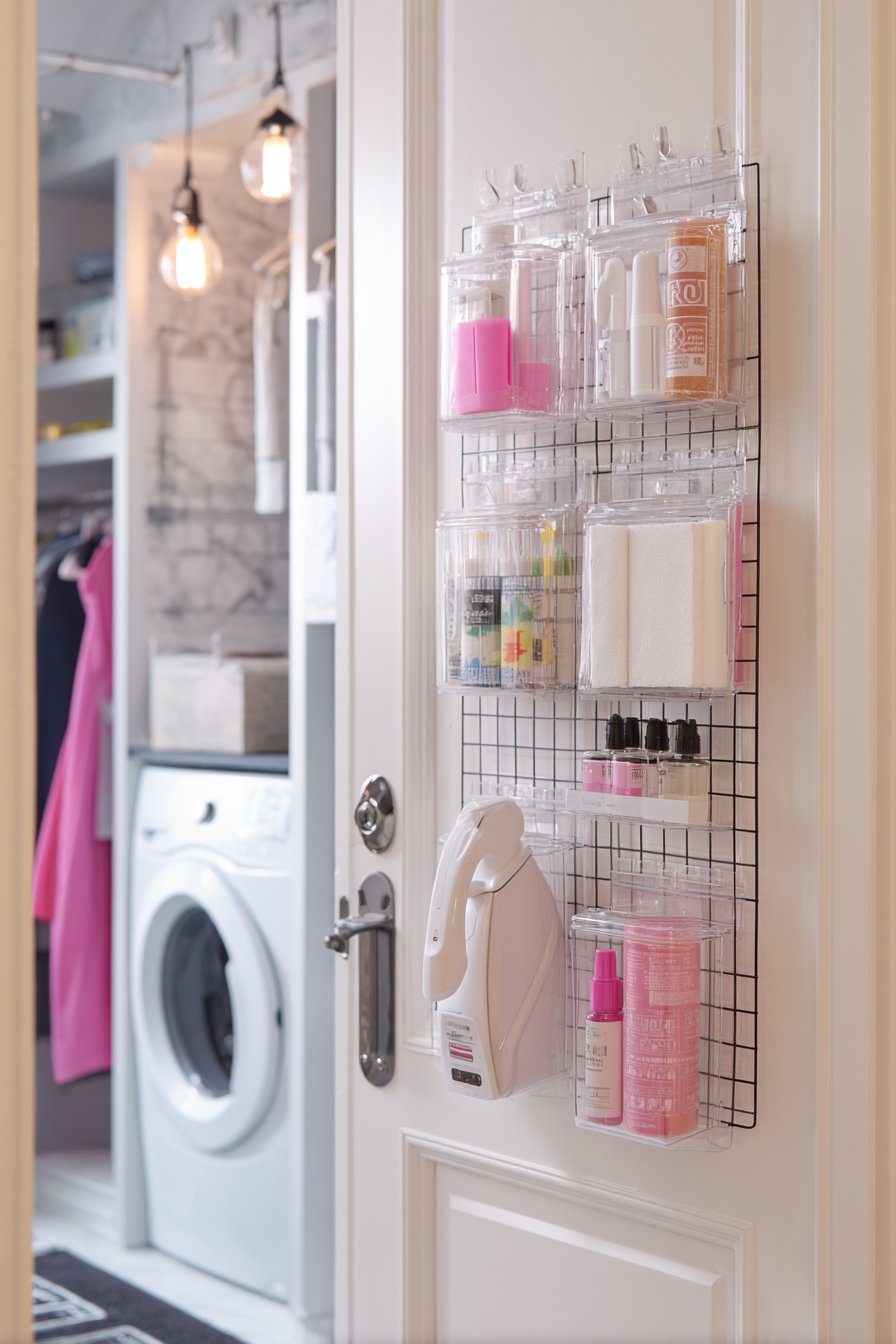
Over-door shoe organizers work brilliantly in laundry rooms. Their clear pockets are perfect for storing dryer sheets, stain pens, lint rollers, measuring cups for detergent, and small spray bottles. The clear material lets you see contents instantly without digging through drawers or shelves. Alternatively, mounted metal grid panels with removable hooks offer a more customizable and durable over-door solution.
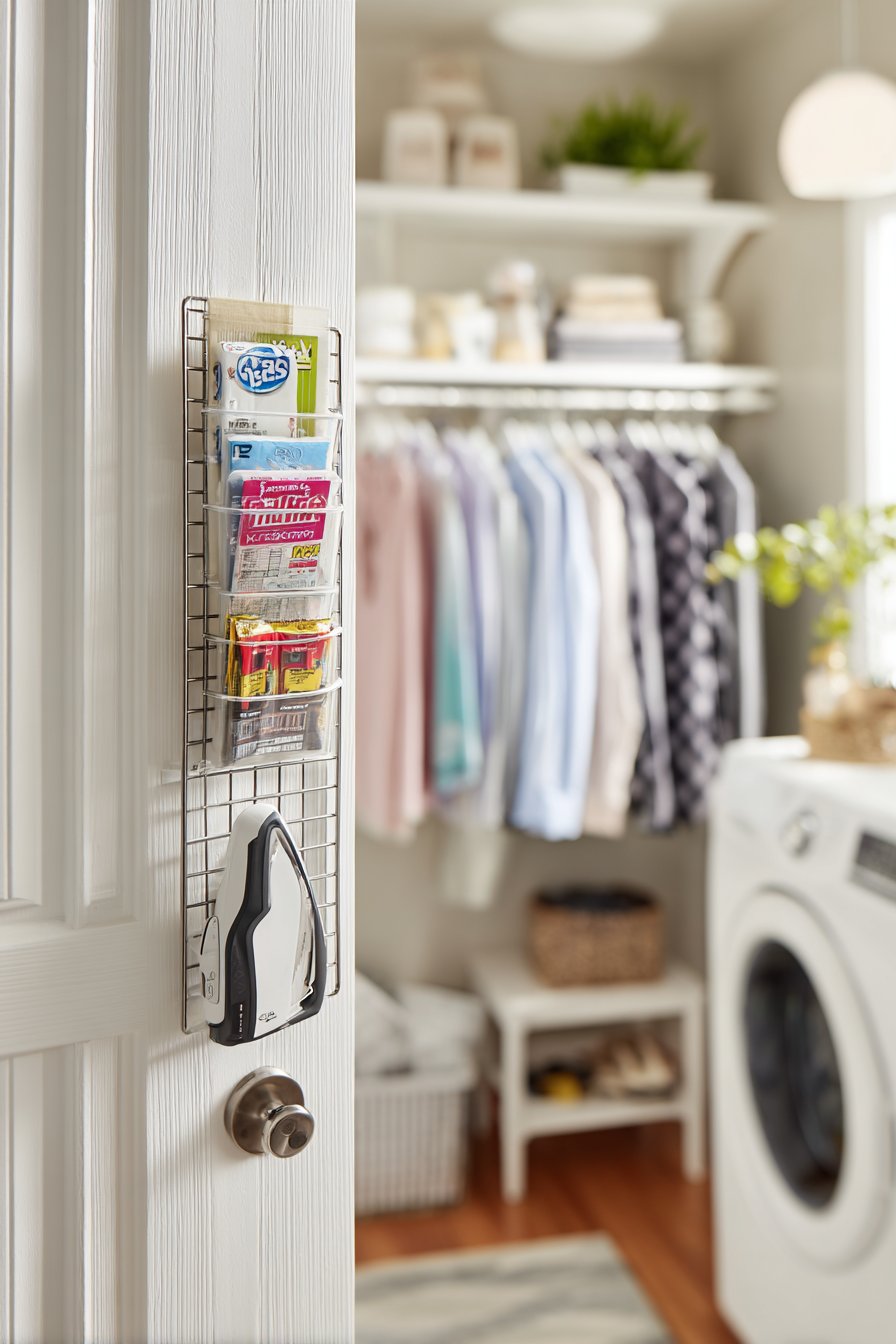
For heavier items like an iron or spray bottle, consider mounting a dedicated door rack rated for higher weight loads. These racks often include multiple hooks and a small shelf, giving you tiered storage on a single surface. The door becomes an invisible but highly efficient extension of your total storage system — completely hidden when the door is open.
- Hang a clear-pocket over-door organizer for small laundry essentials
- Use adjustable metal grid panels with hooks for flexible door organization
- Mount a heavy-duty door rack to store an iron, hangers, or spray bottles
- Keep frequently used items at eye level within the door organizer
- Ensure the door can still open and close fully without obstruction
- Use the inside of cabinet doors similarly for extra small-item storage
7. Install Pull-Out Hamper Drawers
Laundry bags and free-standing hampers take up valuable floor space and often make small rooms feel disorganized. Pull-out hamper drawers built into your cabinetry or laundry tower solve this elegantly. These drawers slide out when needed and disappear completely when not in use, keeping the floor clear and the room tidy.
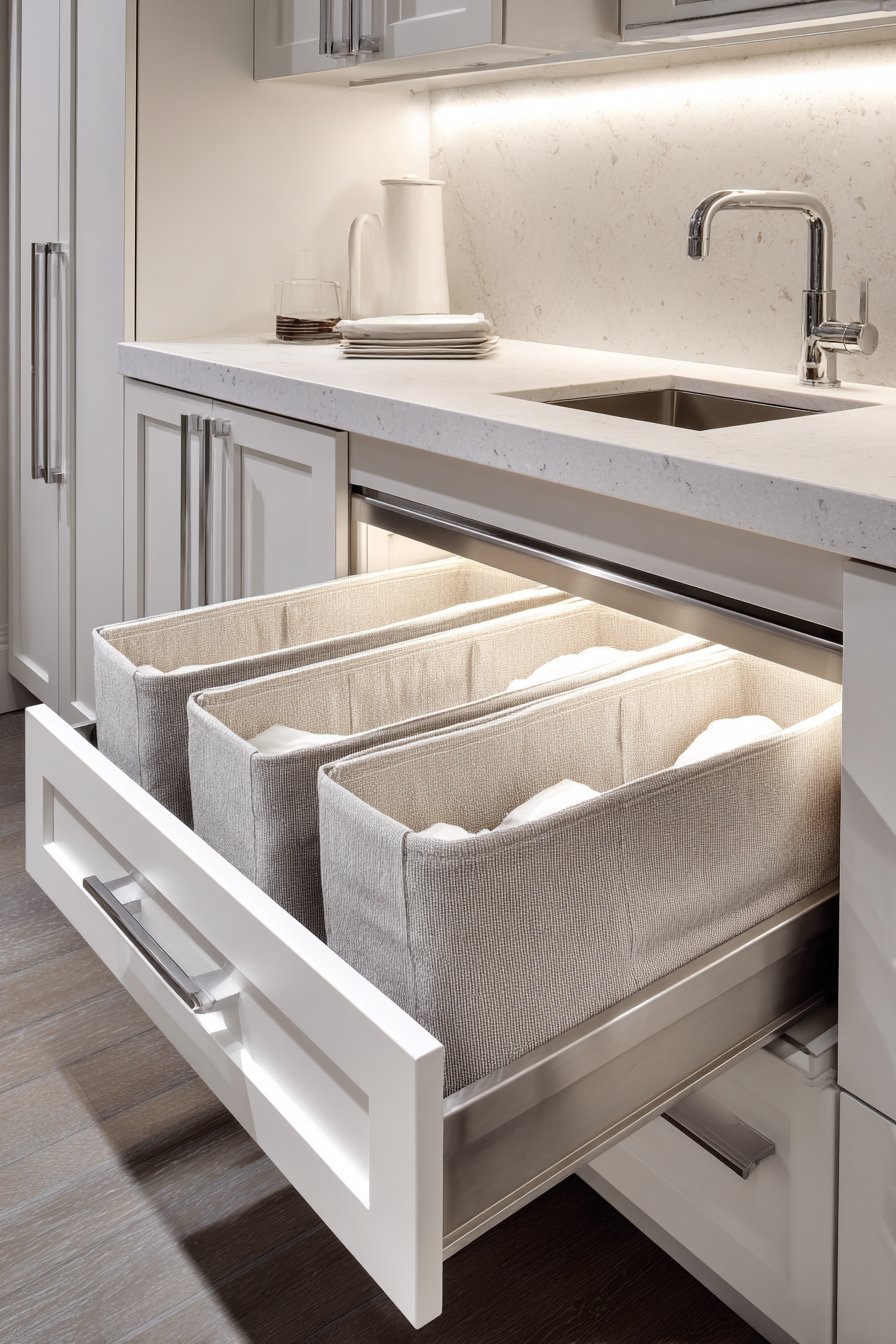
Most pull-out hamper systems include removable fabric liners that can be lifted out and carried directly to the machines — no more dragging bags across the floor. Many models accommodate two or three sorting compartments in a single drawer unit, making it easy to separate lights, darks, and delicates right at the source.
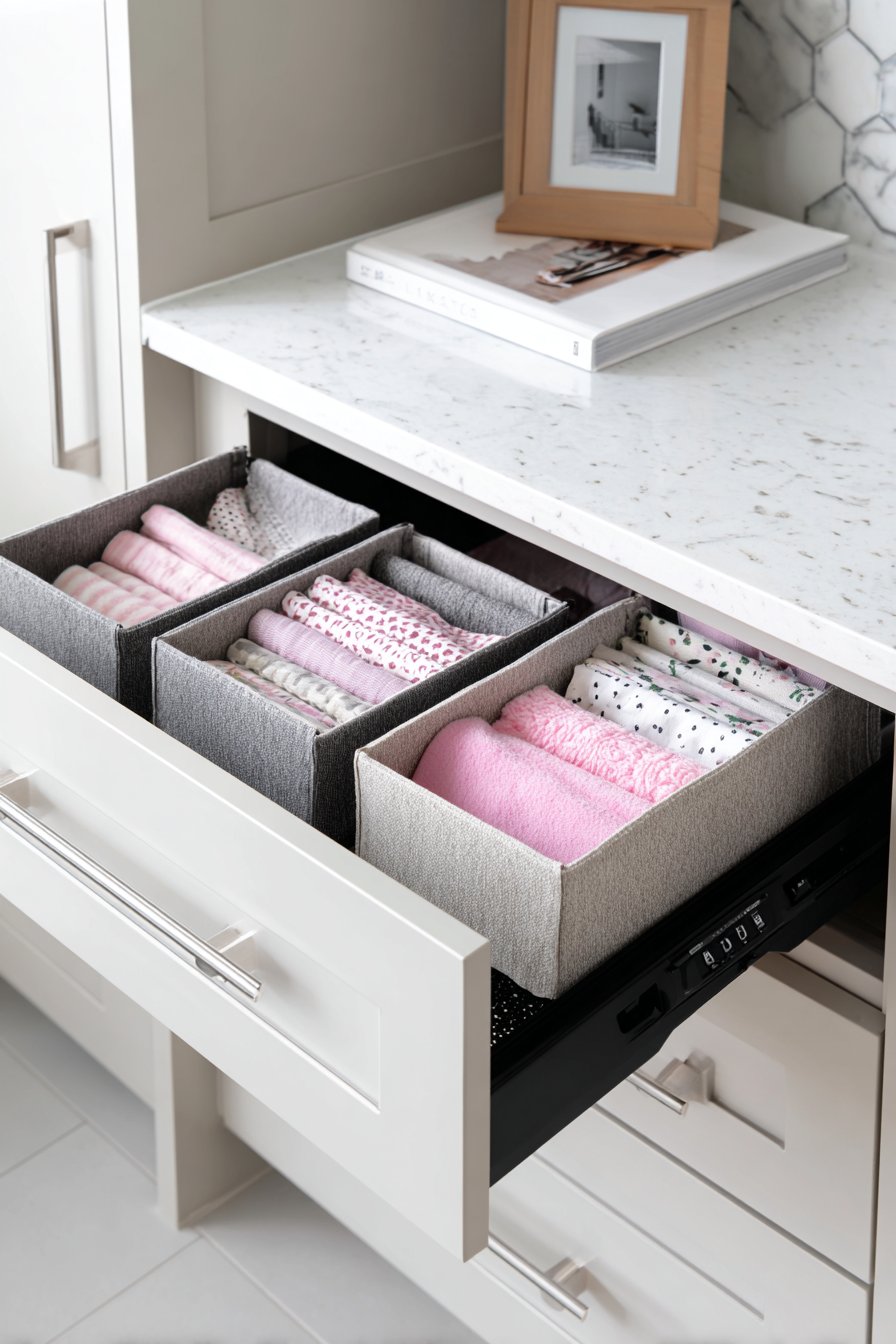
Position hamper drawers beneath a folding counter or stacked machines for a seamless, integrated look. The drawer front panel can be matched to surrounding cabinetry, making the hamper virtually invisible as part of the overall design. This built-in approach is especially valuable in corner laundry rooms where visual clutter has an outsized impact on how spacious the room feels.
- Install pull-out hamper drawers beneath countertops or stacked machines
- Choose models with removable fabric liners for easy transport to the washer
- Select a three-compartment hamper drawer for lights, darks, and delicates
- Match drawer front panels to surrounding cabinetry for a seamless look
- Ensure drawer slides are heavy-duty to support the weight of full laundry loads
- Label compartments clearly if multiple household members use the same room
8. Embrace Vertical Wall Storage with Pegboards
Pegboard wall panels are one of the most versatile and affordable storage solutions available for laundry rooms. A pegboard installed on a corner wall gives you a fully customizable surface where hooks, shelves, bins, and holders can be arranged and rearranged to suit your evolving needs.
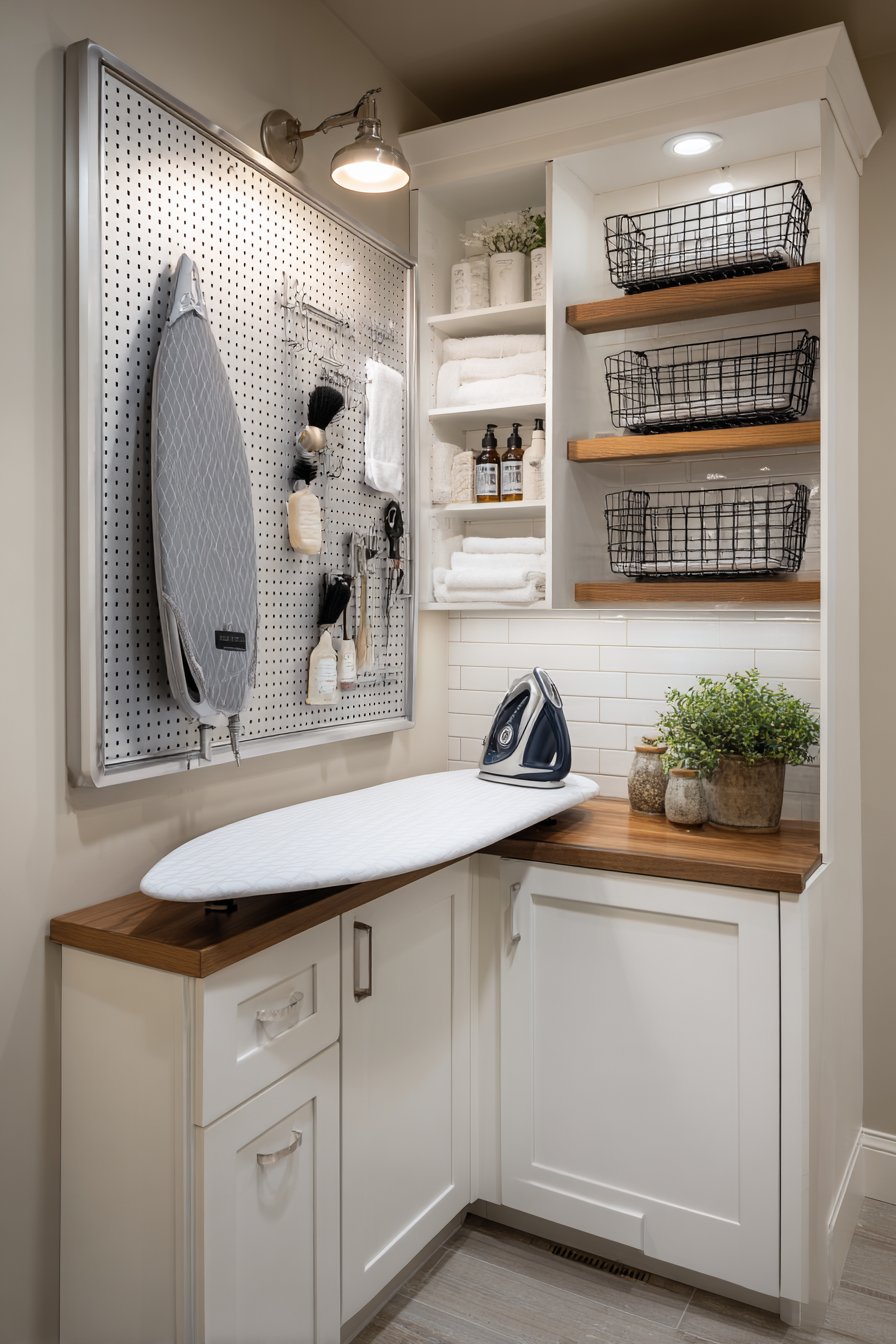
In a corner laundry room, pegboards work particularly well on the wall adjacent to the machines or beside a folding counter. You can hang your iron, cleaning brushes, spray bottles, and small baskets at exactly the height and position that makes most sense for your workflow. This keeps the countertop and floor clear while everything remains within arm’s reach.
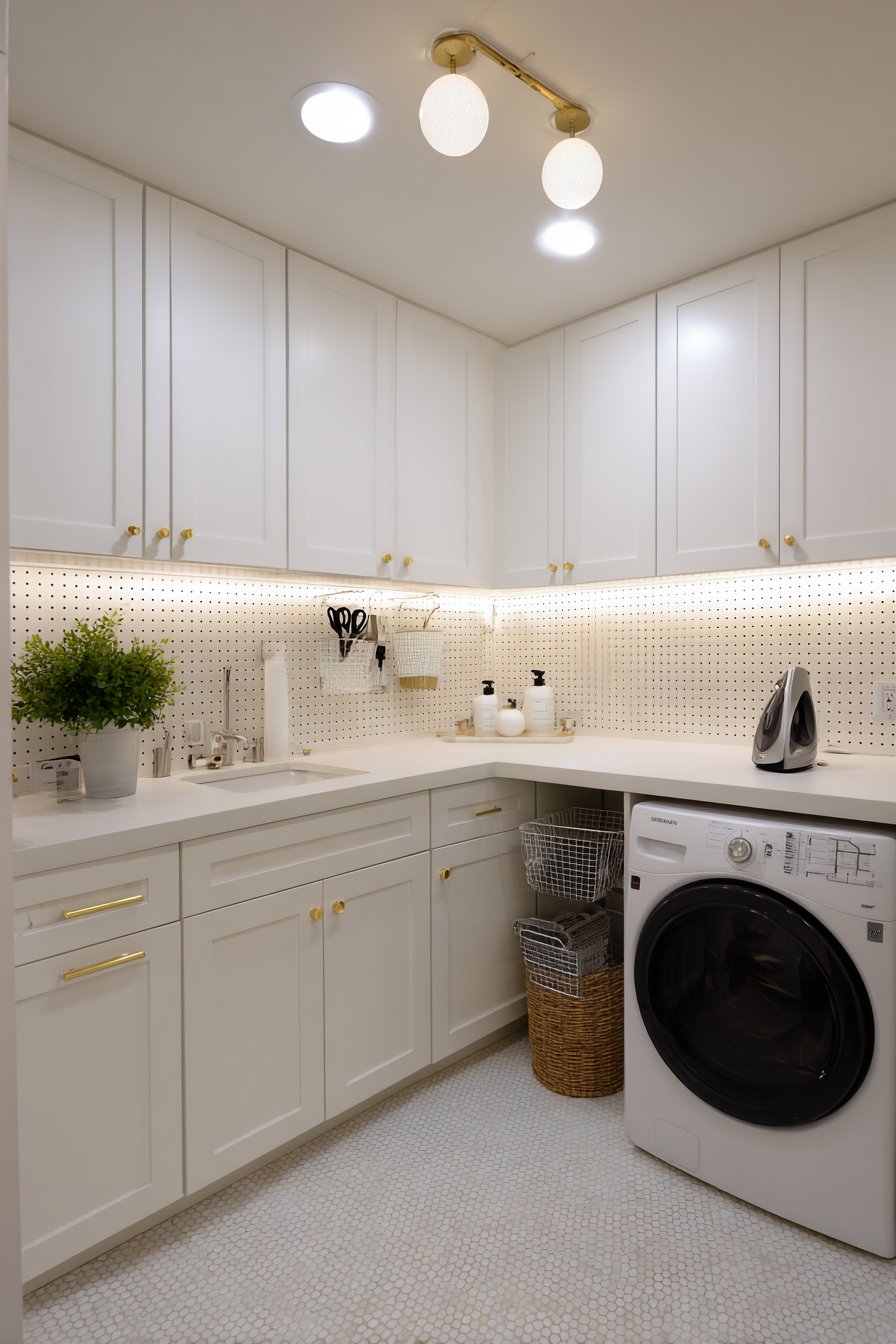
Pegboards are available in painted MDF, powder-coated steel, and natural wood finishes. Steel pegboards are most durable in humid environments, while painted MDF offers a budget-friendly option. Adding a frame around the pegboard gives it a built-in, intentional appearance rather than a utilitarian afterthought, elevating the overall design of the room.
- Install pegboard on the wall beside or behind your laundry machines
- Hang an iron, brushes, spray bottles, and small baskets on pegboard hooks
- Rearrange hooks and accessories as your storage needs change over time
- Choose powder-coated steel pegboard for best durability in humid environments
- Frame the pegboard with trim molding for a polished, built-in appearance
- Add small pegboard shelves for items too wide or heavy for standard hooks
9. Use Slim Rolling Carts for Gap Storage
The narrow gap between your washing machine and the wall — or between two appliances — is often wasted. Slim rolling storage carts, sometimes called laundry tower carts, fit into gaps as narrow as 4–6 inches and slide out smoothly on wheels when you need access to their contents.
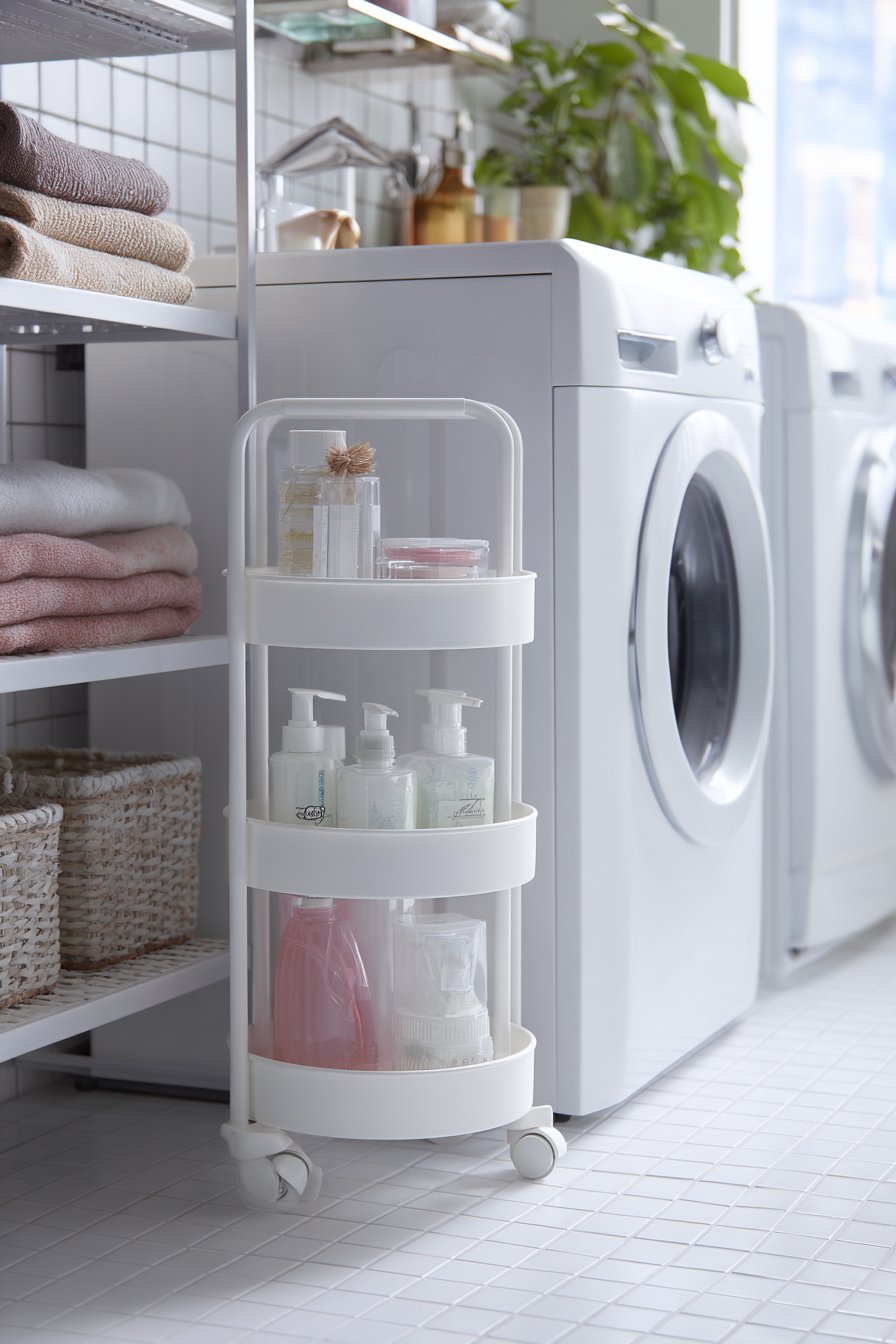
These carts typically feature multiple open shelves or baskets and can store detergent pods, fabric softener, stain removers, and small laundry accessories. Their rolling design means they can be pulled out completely for restocking and pushed back flush with the appliances, maintaining a tidy appearance. Some models include towel bars on the side for hanging small cloths or hand towels, adding an extra layer of functionality.
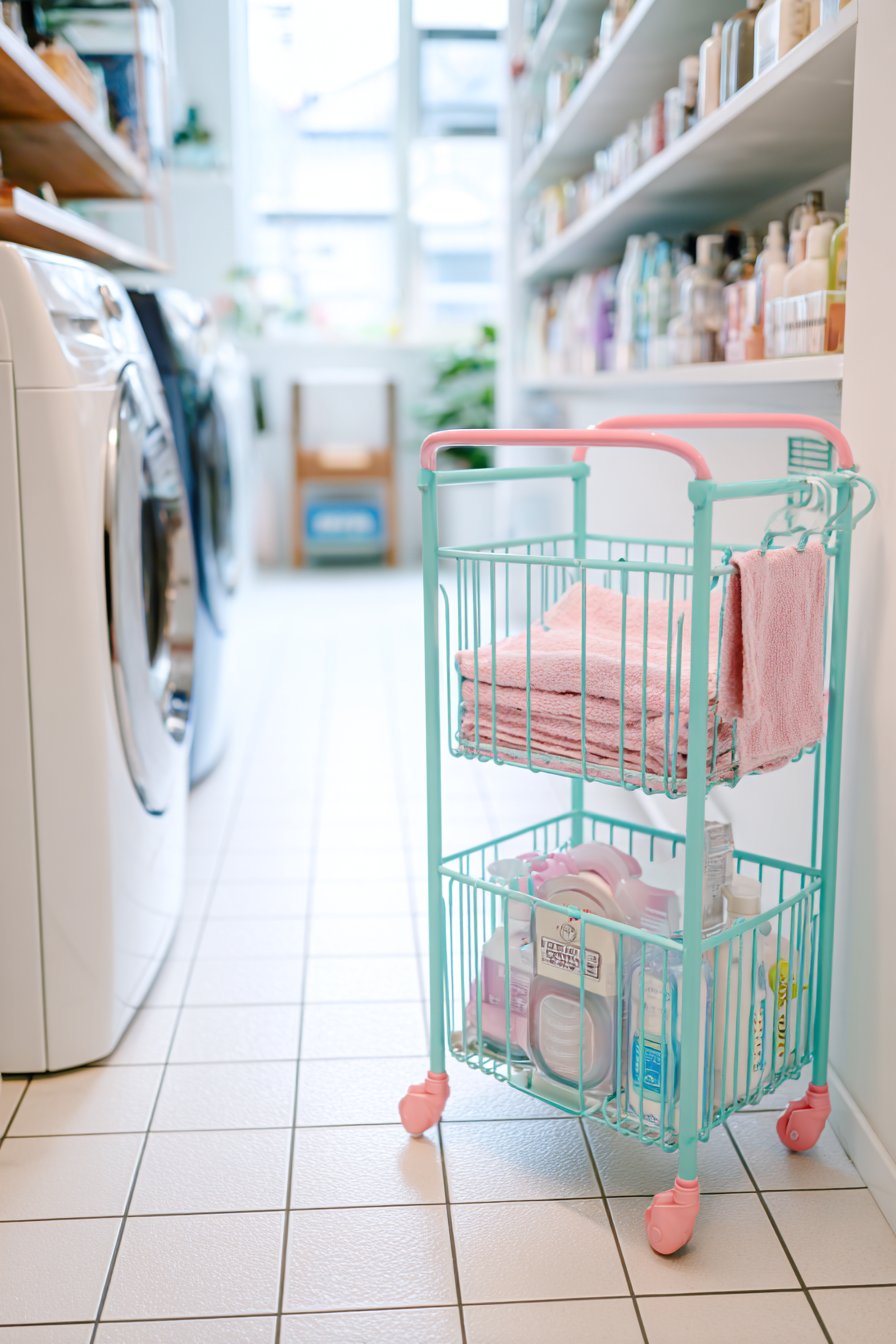
In a corner laundry room, even two or three slim carts positioned in different gaps can significantly multiply your total storage. Look for carts with rust-resistant finishes if your laundry room is prone to humidity. Stainless steel and powder-coated aluminum are the most durable options for this application.
- Measure your appliance gaps before purchasing to ensure proper fit
- Use rolling carts in 4–6 inch gaps beside machines or along corner walls
- Store detergent pods, stain removers, and small accessories on cart shelves
- Choose rust-resistant finishes like powder-coated aluminum or stainless steel
- Look for carts with side towel bars to maximize all available surfaces
- Pull carts out fully for easy restocking rather than reaching awkwardly inside
10. Label and Categorize Everything
Even the most beautifully designed storage system fails without a consistent labeling and categorization strategy. In small laundry rooms, items quickly become mixed and disorganized, leading to wasted time and visual clutter. Taking 30 minutes to label every shelf, bin, drawer, and basket transforms the room’s daily usability.
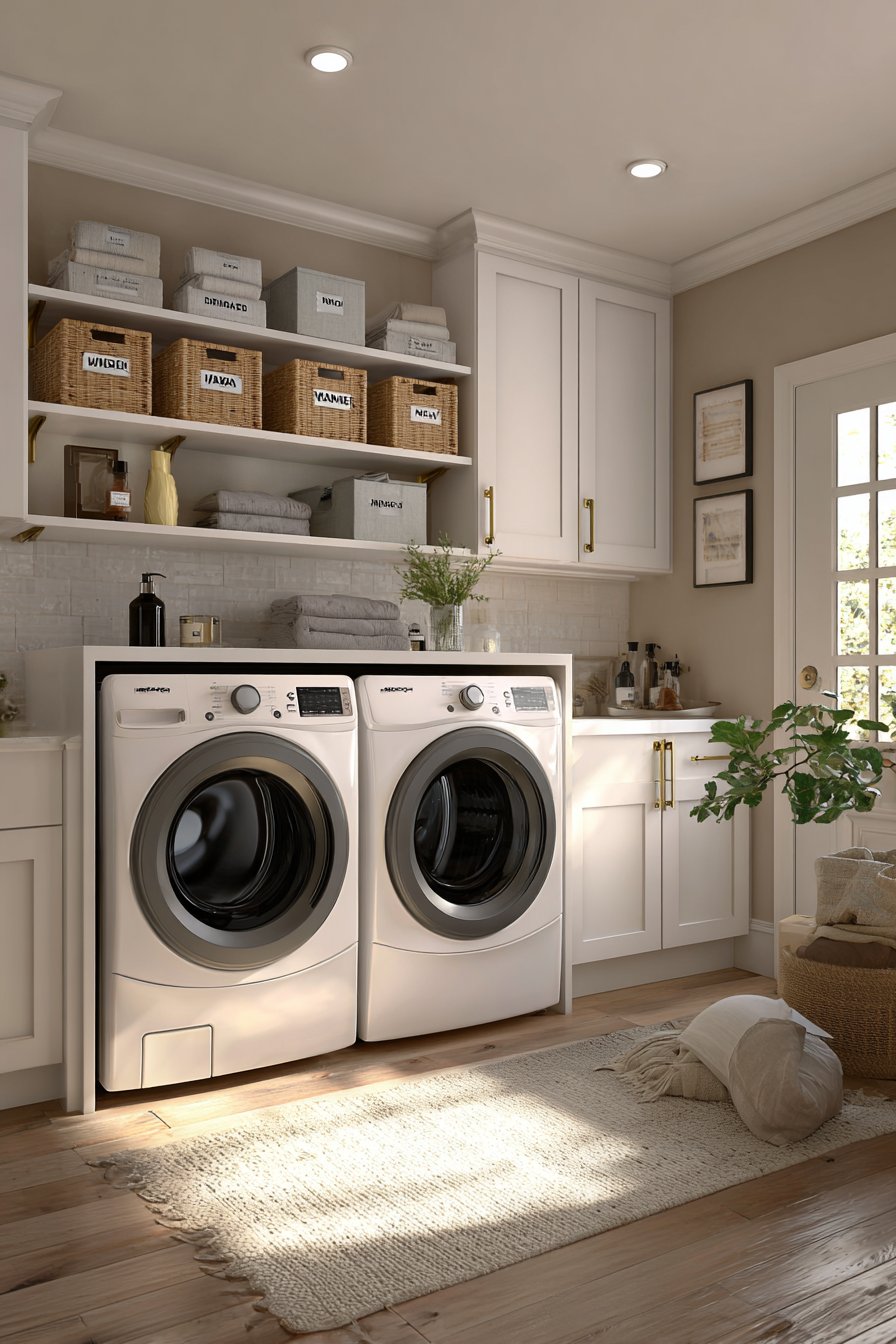
Use a label maker or printed adhesive labels for a clean, uniform appearance. Categorize items logically: washing supplies, drying supplies, ironing supplies, cleaning tools, spare linens, and so on. When every item has a designated place and a clear label, it becomes much easier to maintain order and to involve other household members in keeping the room tidy.
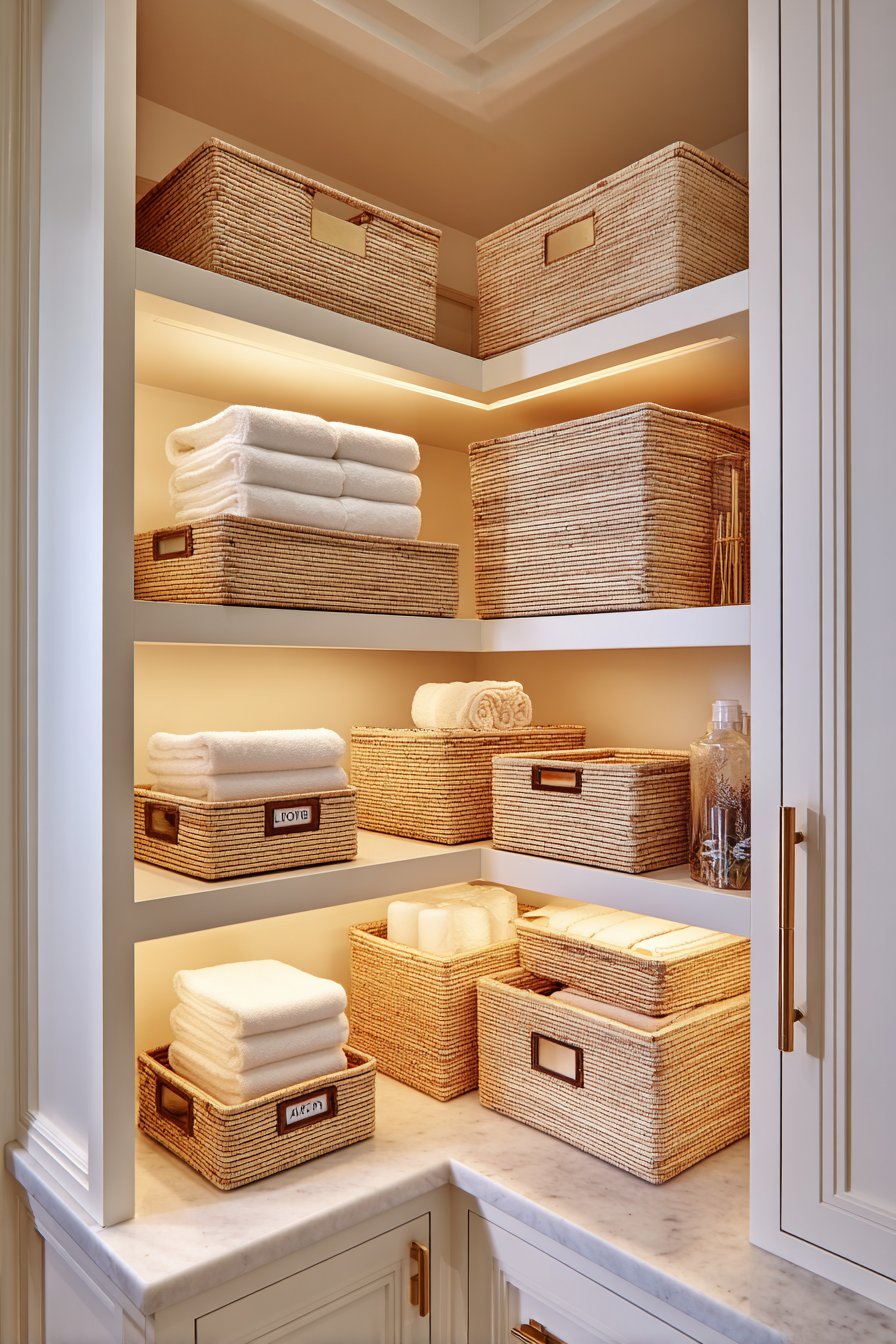
Color-coded labels or matching storage bins within each category add a visual organization layer that makes the room feel intentional and designed rather than simply functional. Choose a color palette that complements your cabinetry and appliances for a cohesive, spa-like aesthetic that makes even laundry feel like less of a chore.
- Create categories: washing, drying, ironing, cleaning tools, spare linens
- Use a label maker for clean, uniform labels on every shelf, bin, and drawer
- Apply color-coded labels to differentiate categories at a glance
- Choose matching storage bins within each category for visual consistency
- Review and reorganize the labeling system seasonally as needs change
- Involve all household members by making the system intuitive and visible
Conclusion
Maximizing storage in a corner laundry room is entirely achievable with the right combination of vertical thinking, corner-specific solutions, and organizational discipline. From floor-to-ceiling shelving and stacked appliances to pegboards and slim rolling carts, every strategy in this guide is designed to help you reclaim space that would otherwise go to waste.
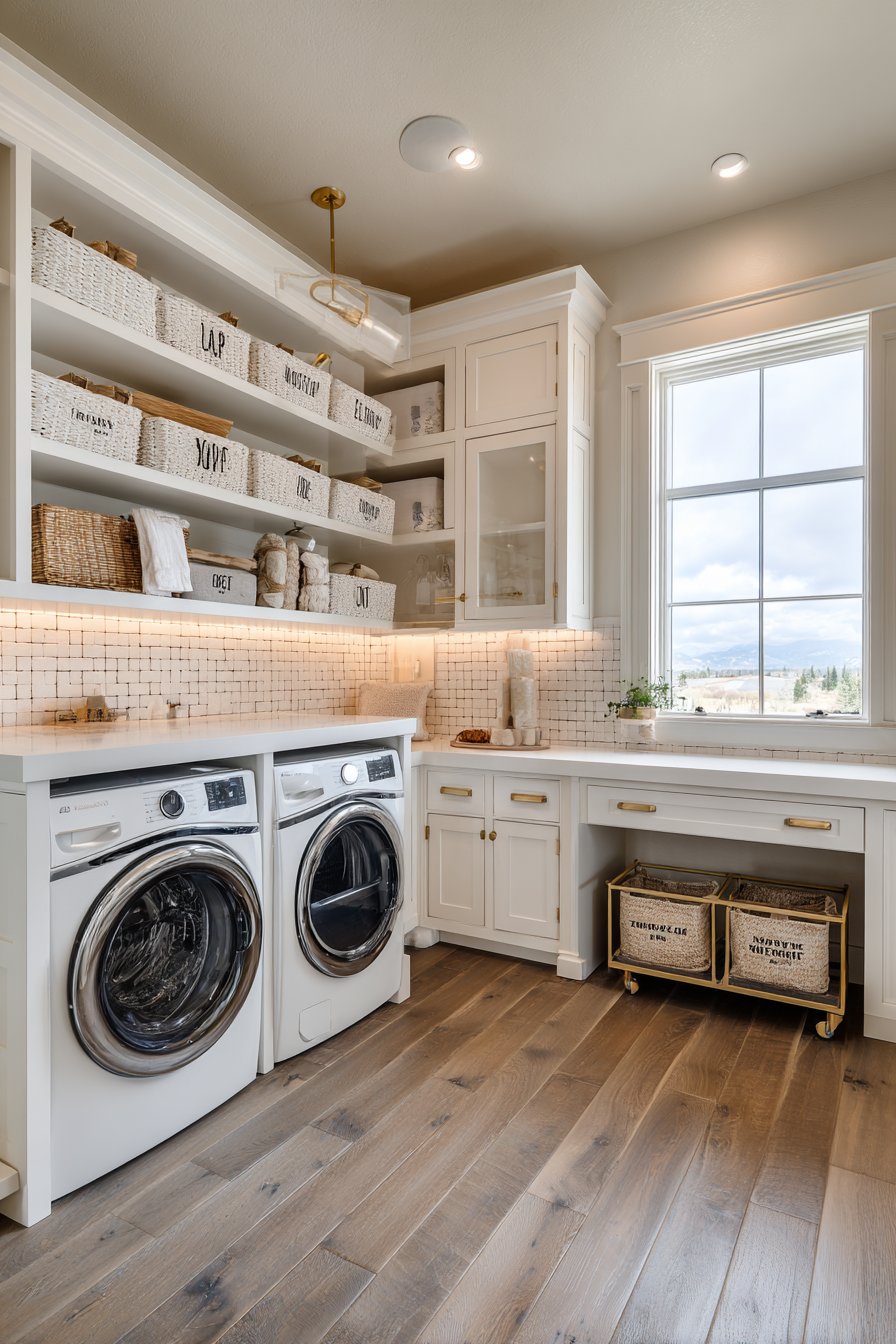
Start with one or two changes that address your biggest pain points — whether that’s countertop clutter, floor space, or inaccessible corners — and build from there. A well-organized laundry room doesn’t just look better; it genuinely makes your daily routine faster, easier, and more enjoyable. With intention and creativity, even the smallest corner can become one of the most efficient rooms in your home.
