


In our fast-paced modern world, finding peace within your personal sanctuary has become increasingly essential. The bedroom serves as more than just a sleeping space; it’s a refuge where you recharge, dream, and escape daily stressors. Thoughtful interior design transforms ordinary rooms into havens that nurture both body and mind.
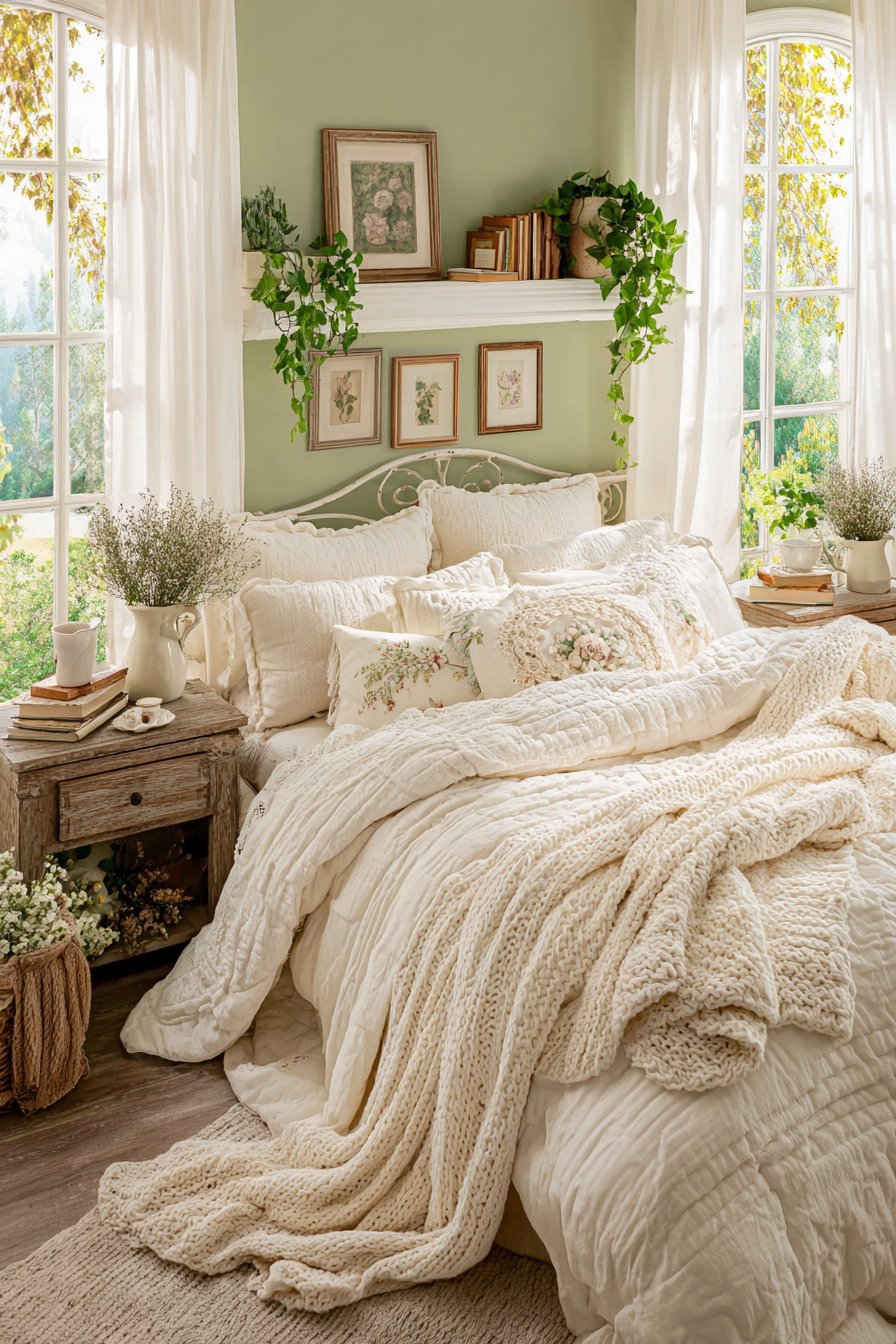
Different design styles resonate with various personalities and lifestyles, each offering unique benefits to inhabitants. Some prefer minimalist aesthetics, while others gravitate toward maximalist expressions. The cottagecore aesthetic has emerged as a beloved choice for those seeking tranquility and connection to simpler times. This romantic, nature-inspired style creates environments that feel like gentle embraces after long, demanding days.
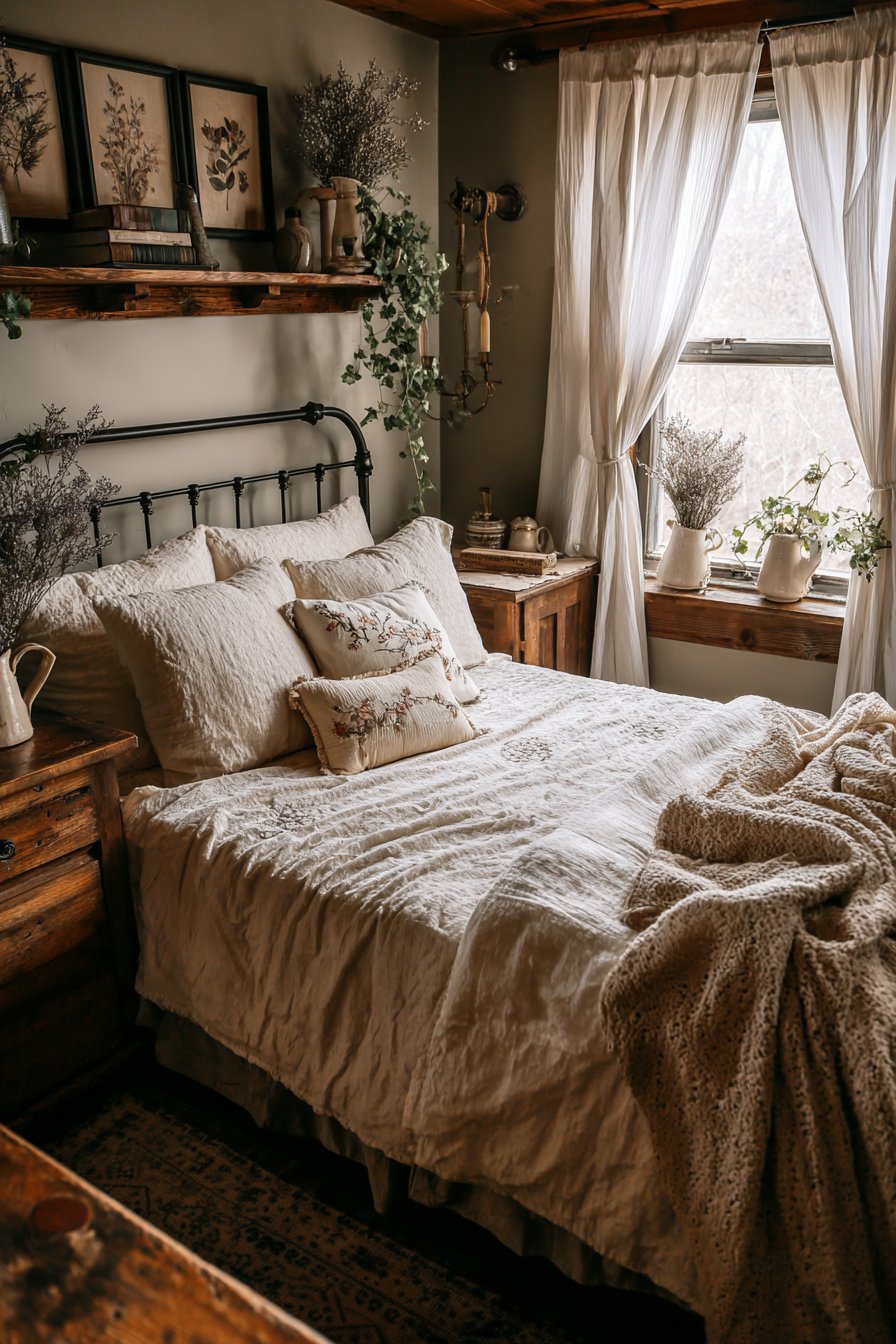
This article explores why cottagecore bedrooms excel at fostering calming atmospheres. We’ll examine specific elements that contribute to their soothing qualities, from natural materials to vintage touches. Each aspect works harmoniously to create spaces that invite relaxation and promote restful sleep, making cottagecore an ideal choice for stress relief.
1. Natural Materials Ground the Space
The foundation of any calming cottagecore bedroom lies in its embrace of natural, organic materials. Wood, linen, cotton, and stone create tactile experiences that connect inhabitants to nature. These materials possess inherent warmth that synthetic alternatives simply cannot replicate, establishing an immediate sense of comfort.
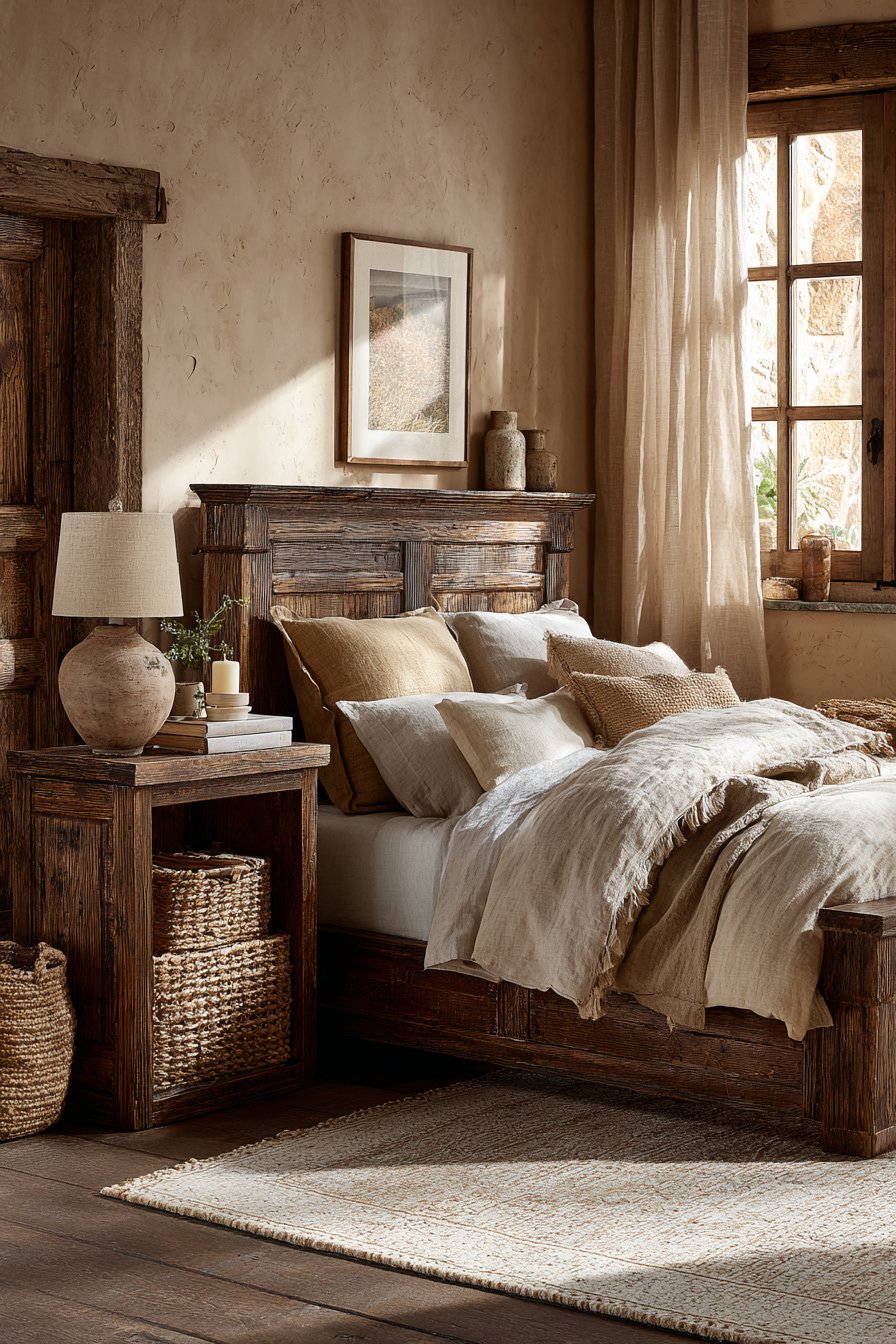
Unlike cold, industrial materials, natural elements regulate temperature naturally and age beautifully over time. Reclaimed wood furniture tells stories through weathered surfaces and unique grain patterns. Linen bedding breathes with the seasons, keeping you cool in summer and cozy in winter. These textures create sensory richness that engages multiple senses simultaneously.
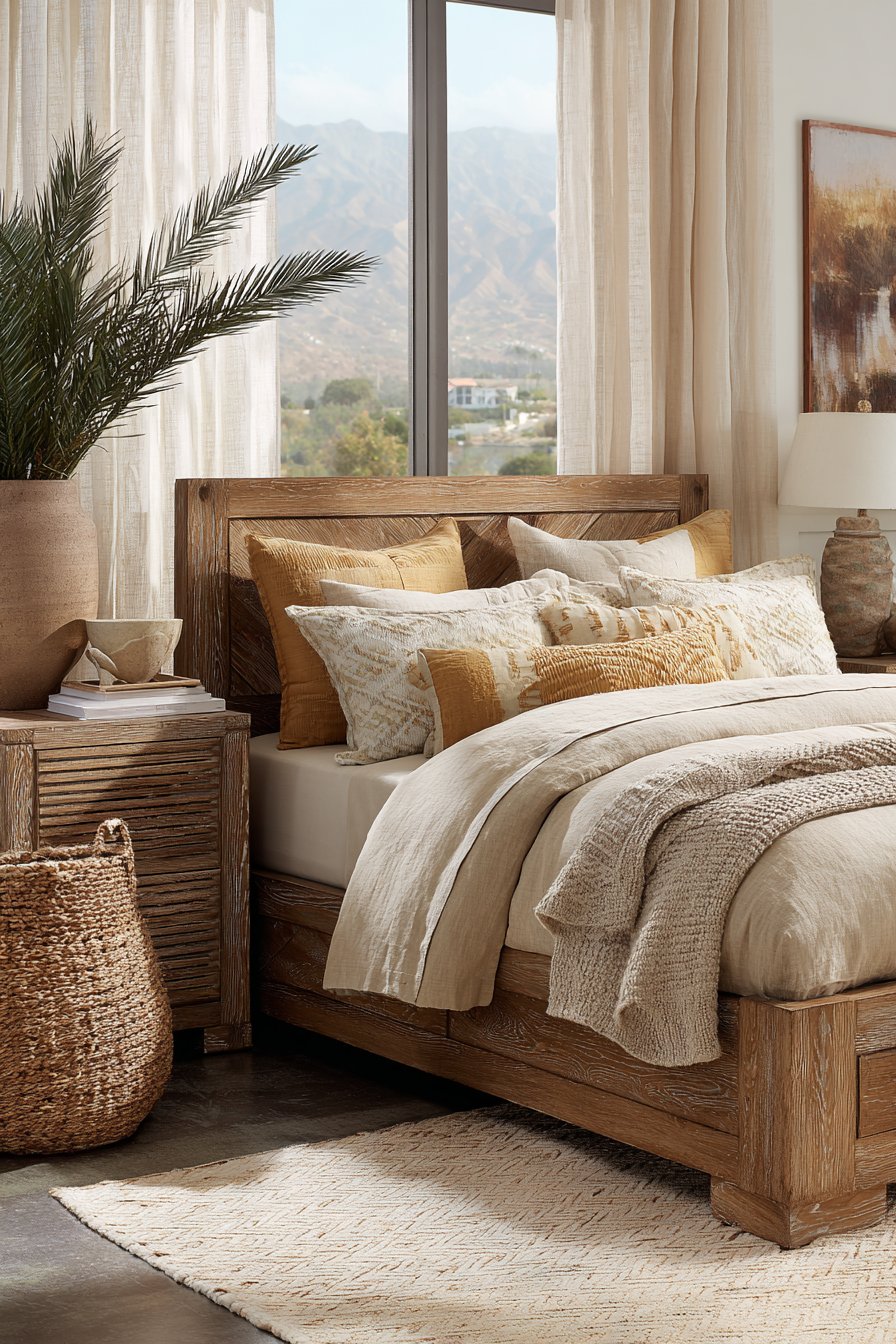
The psychological impact of natural materials extends beyond aesthetics into emotional wellbeing. Studies consistently show that natural elements reduce cortisol levels and promote relaxation. When surrounded by wood, stone, and natural fibers, your nervous system recognizes these elements as safe and familiar, triggering automatic calming responses.
- Choose solid wood furniture over particle board for durability and authenticity
- Invest in 100% linen or cotton bedding for superior breathability
- Incorporate woven baskets for storage that doubles as decorative elements
- Add wool rugs to introduce softness underfoot and improve acoustics
- Select unfinished or naturally finished woods to maintain organic appeal
- Use stone or ceramic accessories for visual weight and textural contrast
2. Soft, Muted Color Palettes Soothe the Senses
Cottagecore bedrooms rely on gentle, earthy color schemes that mirror natural landscapes rather than bold, stimulating hues. Cream, sage green, dusty rose, and warm beige dominate these spaces. These colors create visual harmony that allows the mind to rest without overstimulation.
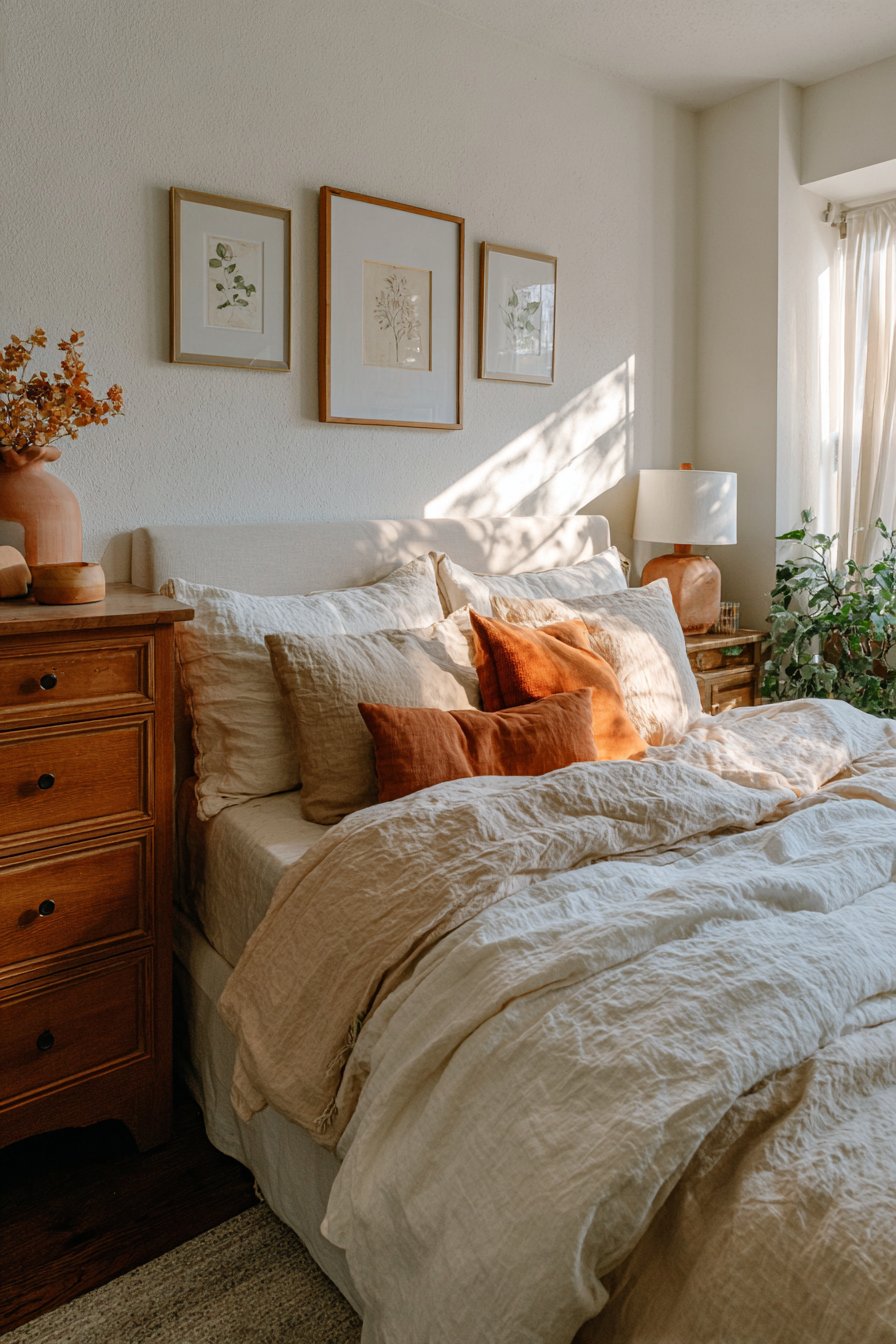
Color psychology reveals that muted tones significantly impact mood and stress levels. Soft greens evoke meadows and forests, promoting feelings of renewal and balance. Warm neutrals provide grounding stability, while dusty pinks introduce subtle romance without overwhelming energy. This palette works cohesively to lower heart rate and encourage deeper relaxation.
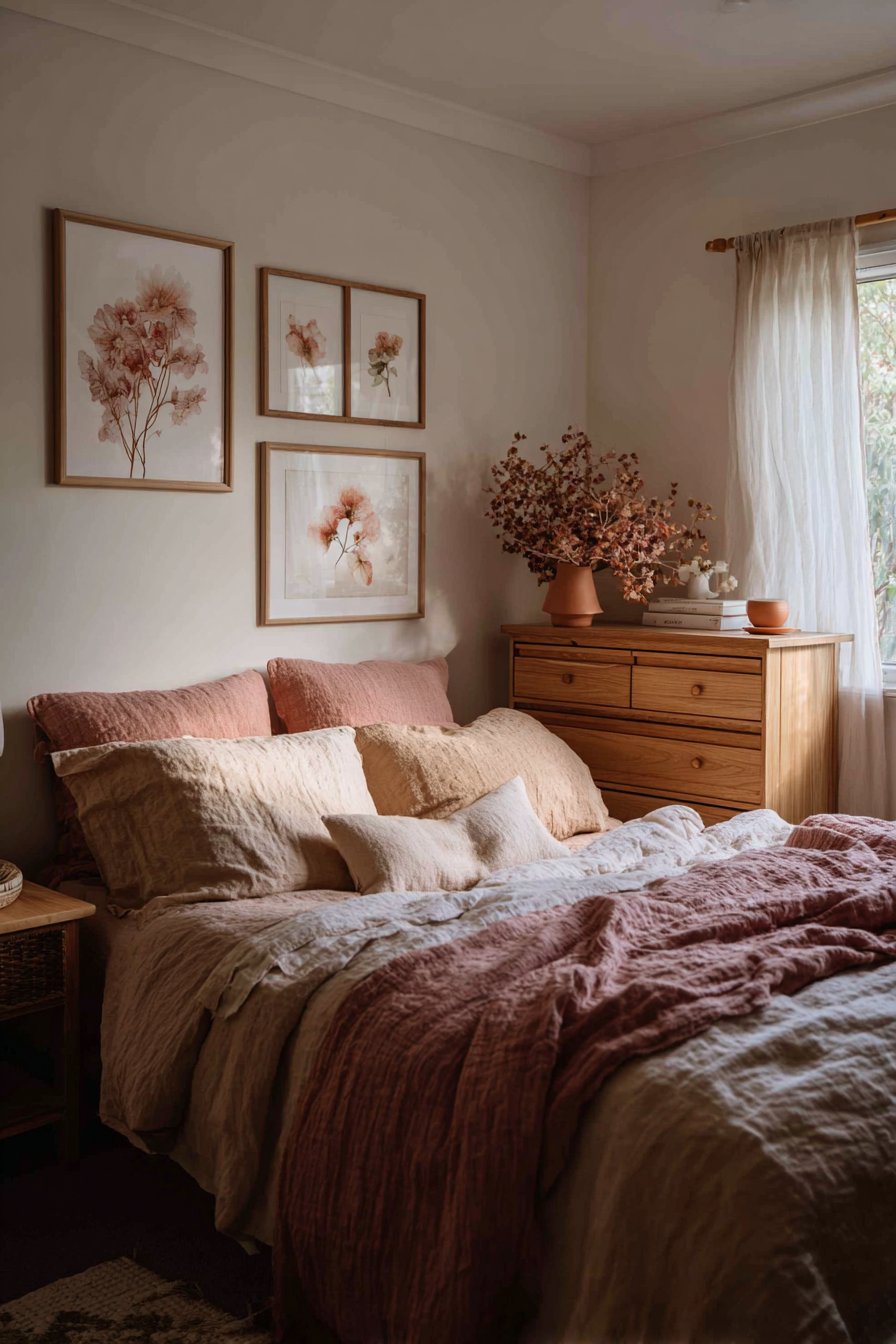
The beauty of these subdued colors lies in their timeless versatility. Unlike trendy bold colors that quickly feel dated, muted palettes remain soothing year after year. They also provide perfect backdrops for seasonal decorating changes, allowing you to refresh the space without major overhauls.
- Paint walls in warm whites, creams, or soft sage for maximum serenity
- Layer different shades of the same color family for depth without chaos
- Introduce dusty rose or terracotta through textiles and accessories
- Avoid pure white, which can feel clinical rather than calming
- Use darker earth tones sparingly as grounding accents
- Test paint samples in different lighting conditions before committing
3. Vintage and Handmade Elements Add Character
The incorporation of vintage pieces and handcrafted items distinguishes cottagecore from generic design styles. Antique dressers, embroidered pillows, and hand-thrown pottery carry histories and imperfections that make spaces feel lived-in. This authenticity creates emotional connections that mass-produced items cannot achieve.
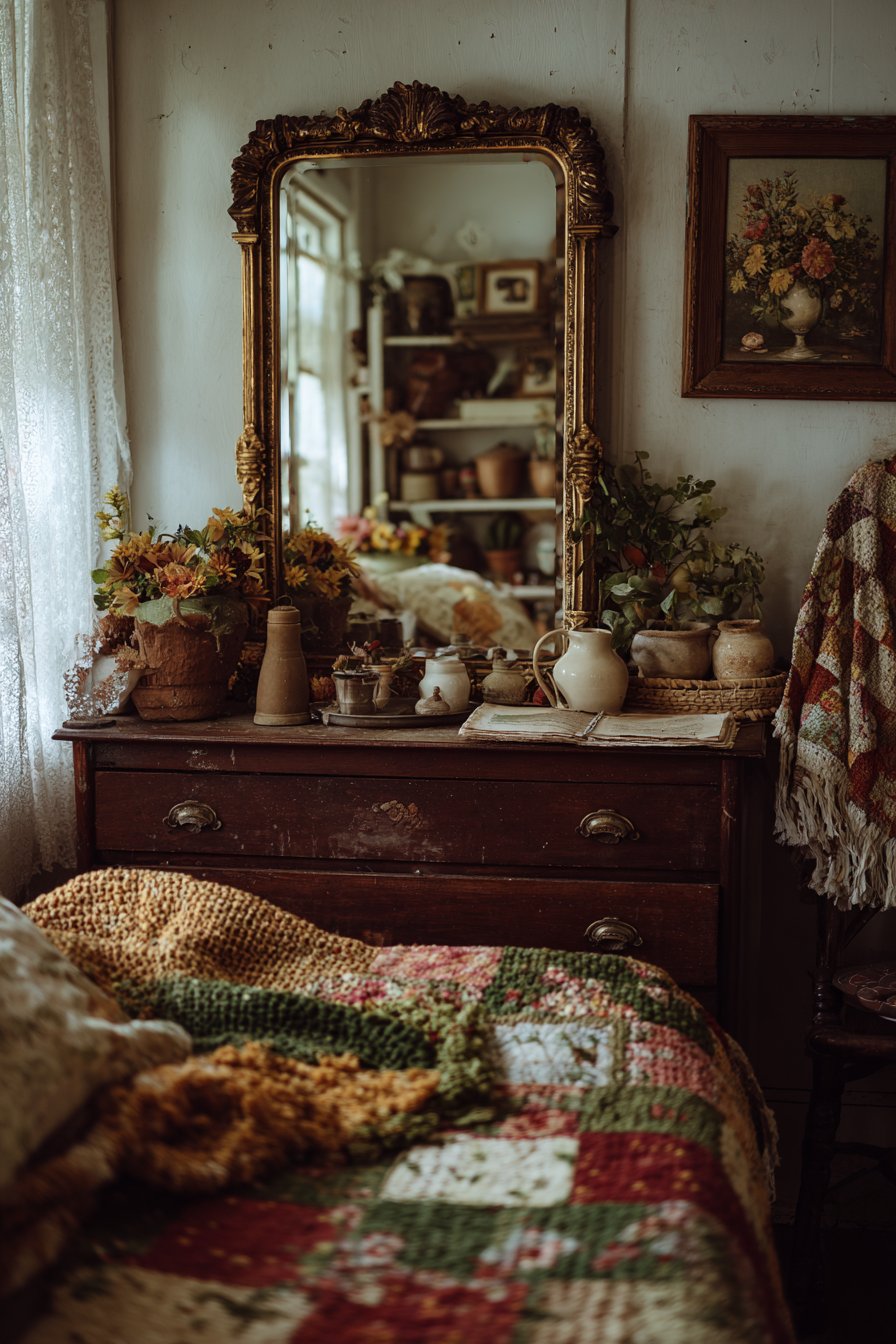
Handmade elements introduce intentional imperfection that paradoxically increases comfort levels. Machine-made perfection often feels sterile and unwelcoming, while slight irregularities in handcrafted goods signal human touch. Crocheted blankets, hand-stitched quilts, and vintage frames remind us that beauty exists in uniqueness, not uniformity.
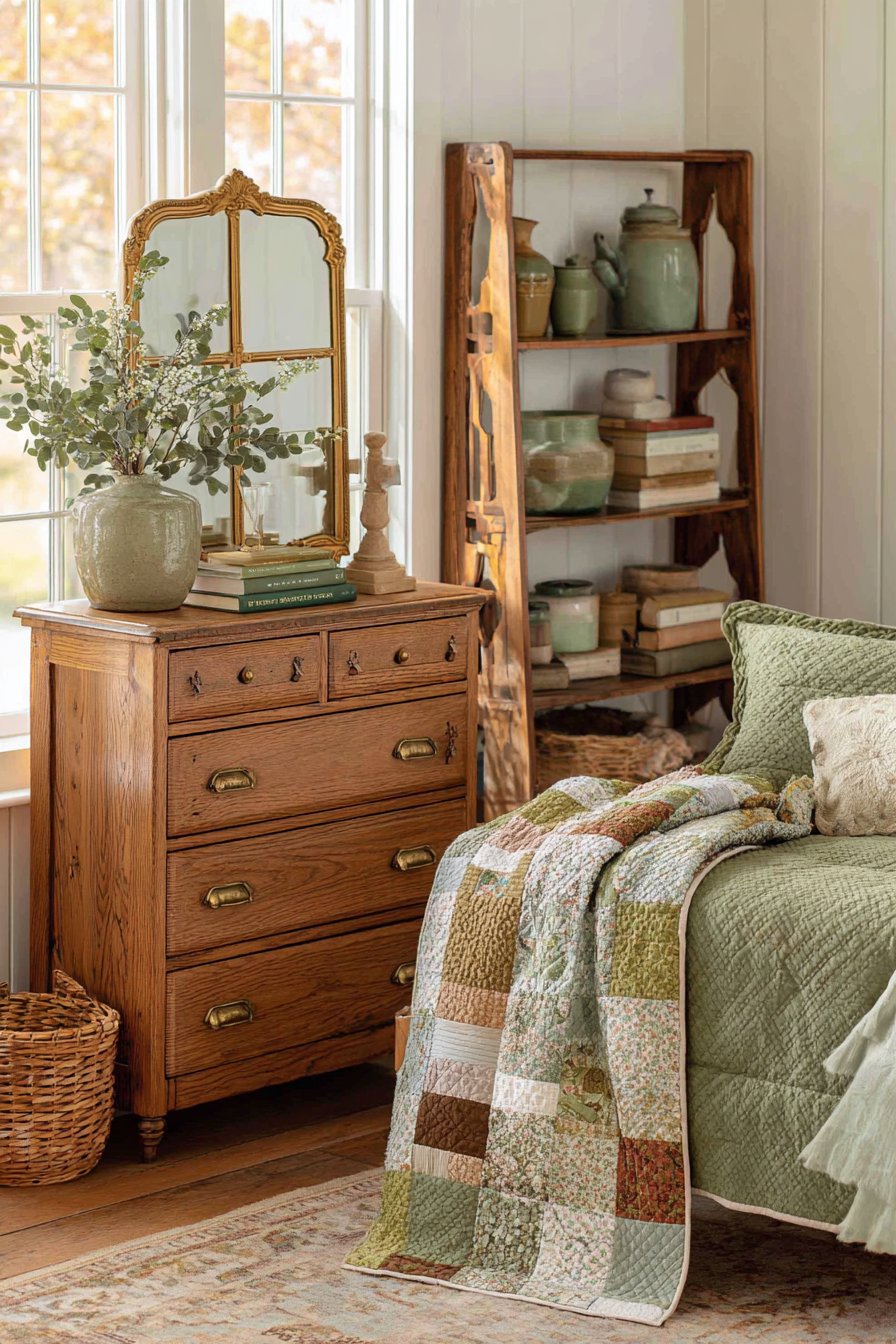
These pieces also encourage mindful consumption and sustainability. Choosing vintage furniture reduces environmental impact while supporting local antique dealers and artisans. Each item becomes a conversation piece and a connection to different eras, adding layers of meaning to your sanctuary.
- Shop estate sales and antique markets for authentic vintage furniture
- Display handmade ceramics, quilts, or artwork from local artisans
- Restore vintage pieces rather than purchasing new when possible
- Mix old and new thoughtfully to avoid museum-like stiffness
- Choose items with visible craftsmanship like dovetail joints or hand-stitching
- Create your own handmade elements through simple crafts like embroidery
4. Abundant Natural Light and Flowing Fabrics
Cottagecore bedrooms maximize natural light while maintaining privacy through strategic window treatments. Sheer curtains in natural fabrics filter sunlight gently, creating soft, diffused illumination throughout the day. This connection to natural light cycles supports healthy circadian rhythms essential for quality sleep.
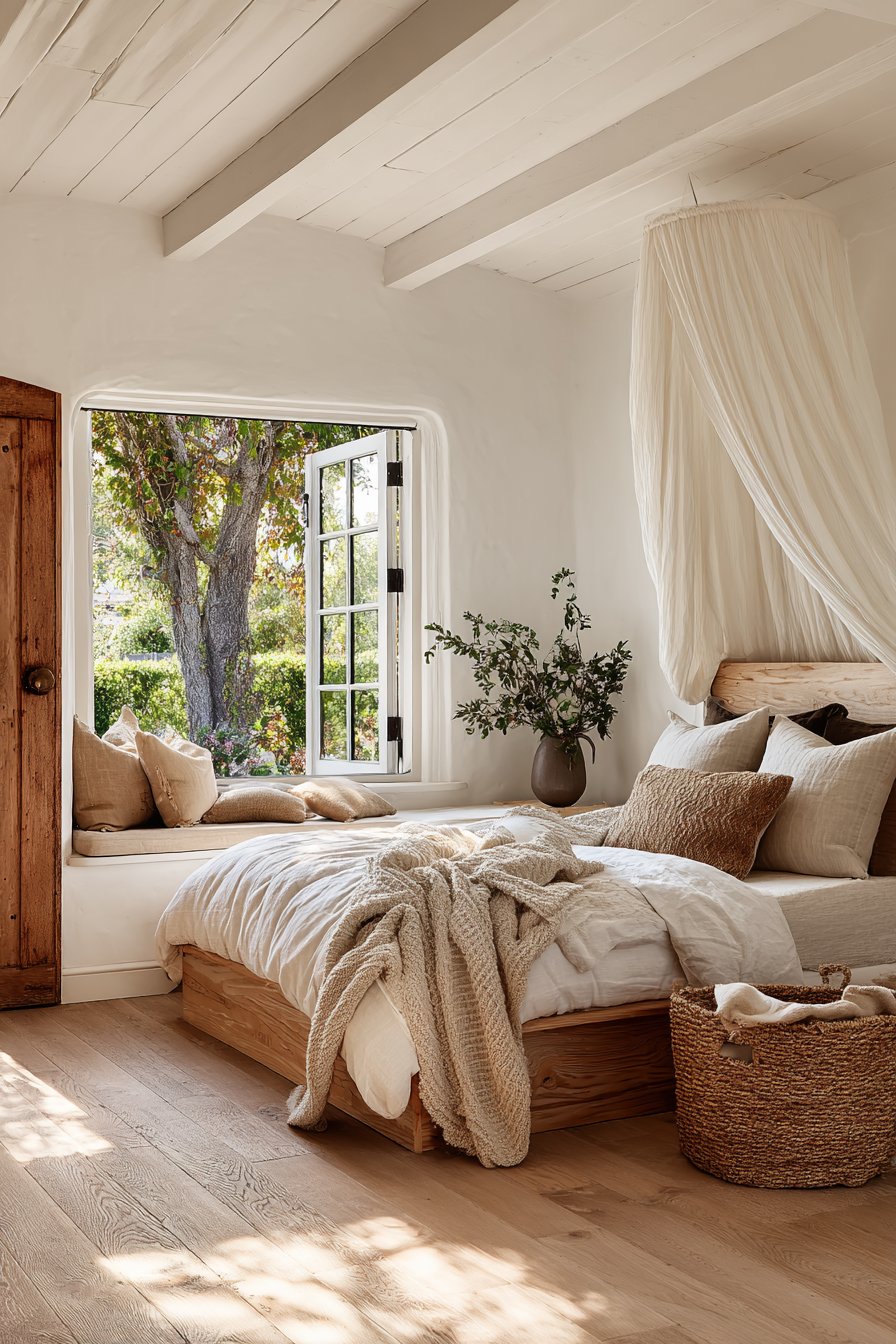
The movement of flowing fabrics introduces subtle animation that soothes rather than distracts. Long linen curtains that dance in gentle breezes, gauzy canopies over beds, and draped throws create visual softness. These elements blur hard architectural lines, making spaces feel more organic and cocoon-like.
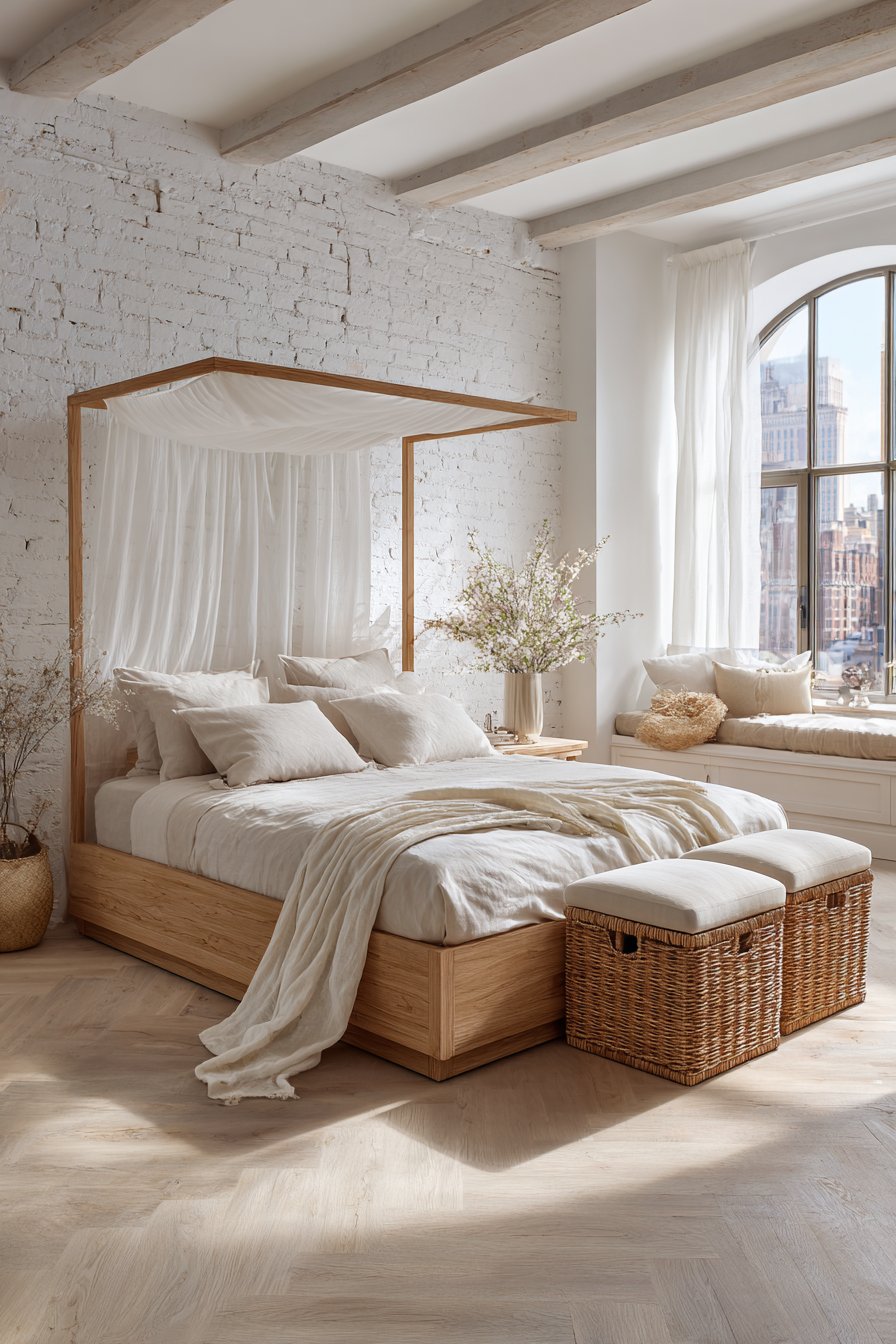
Light quality dramatically affects mood and energy levels throughout the day. Natural illumination changes from cool morning light to warm afternoon glow, helping your body recognize appropriate times for activity and rest. Artificial lighting alone cannot replicate these beneficial variations that regulate hormone production.
- Install sheer linen or cotton curtains on wooden or brass rods
- Layer curtains with heavier drapes for nighttime privacy and light blocking
- Position mirrors to reflect and amplify natural light throughout the room
- Keep windows clean and unobstructed during daylight hours
- Choose light-colored window treatments to maximize brightness
- Add a canopy or fabric draping above the bed for romantic softness
5. Botanical Elements Bring Life Indoors
Fresh flowers, dried botanicals, and potted plants are essential cottagecore elements that literally breathe life into bedrooms. These living elements improve air quality while providing visual interest that changes seasonally. The presence of plants triggers biophilic responses that reduce stress and increase feelings of wellbeing.
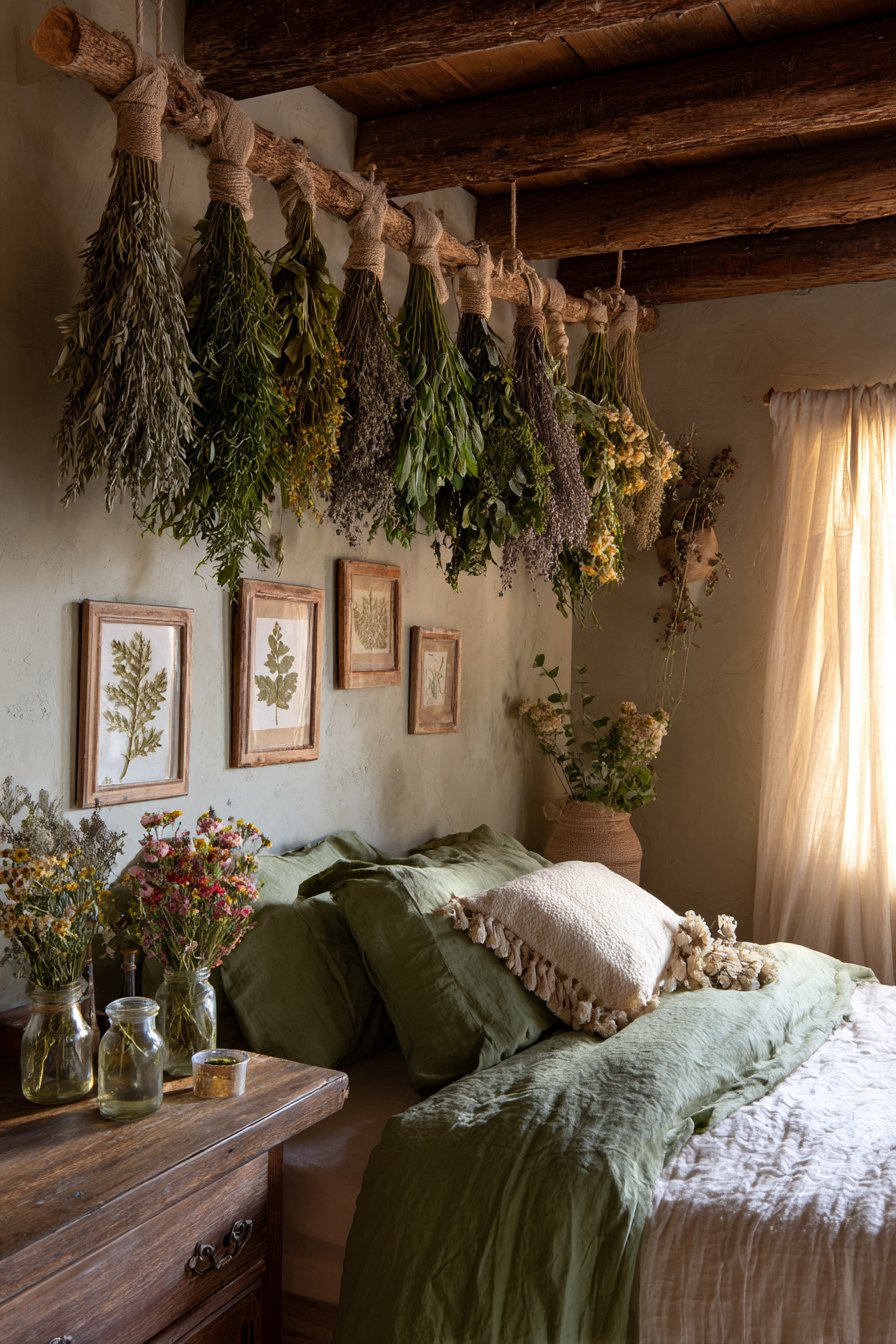
Dried flower arrangements offer particular advantages in bedrooms where maintenance might be challenging. Lavender, eucalyptus, and wheat stalks maintain beauty for months while releasing subtle fragrances. These preserved botanicals create romantic, nostalgic aesthetics without requiring watering or special care beyond occasional dusting.
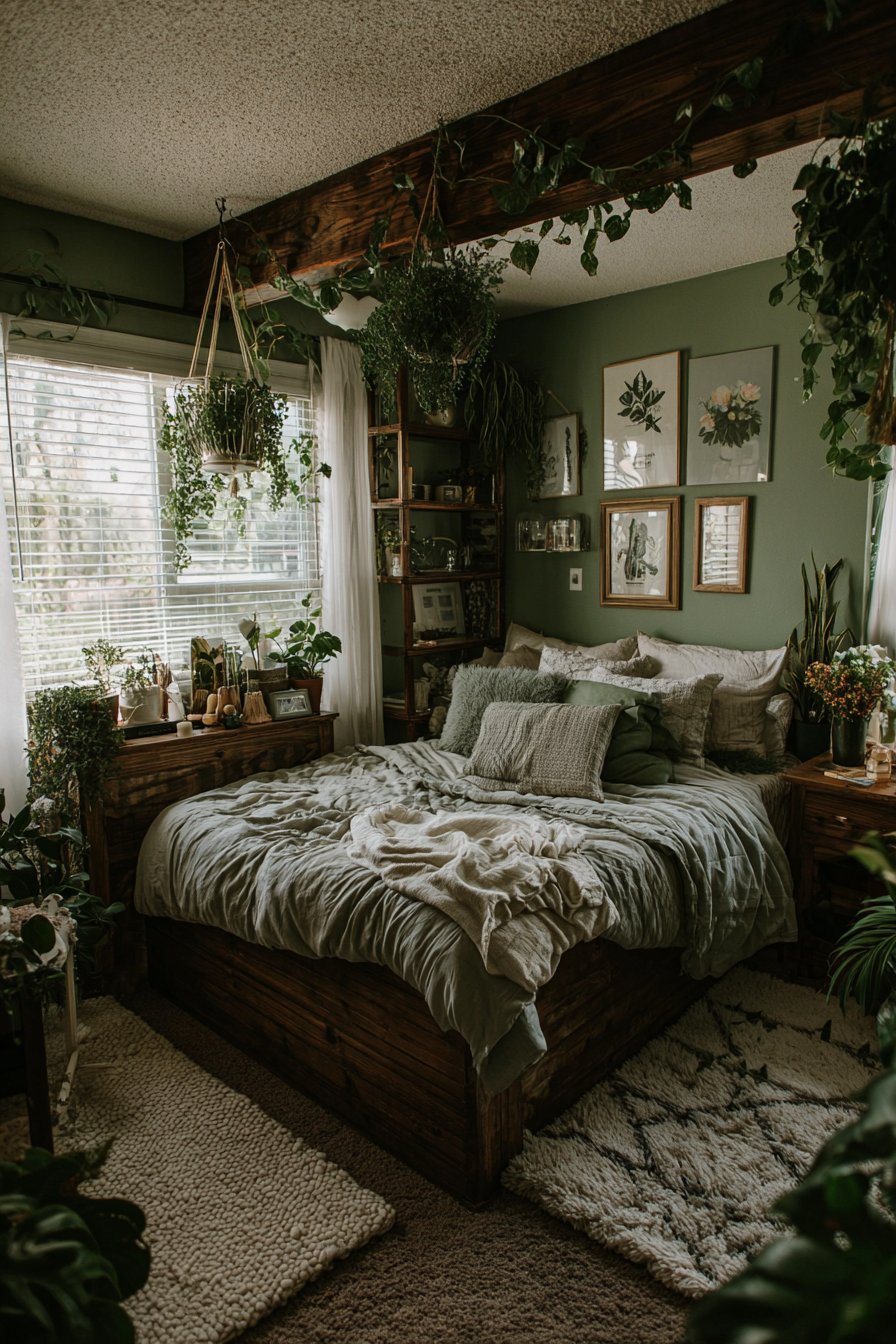
The ritual of tending plants also contributes to the calming atmosphere. Taking moments to water, prune, or simply observe your botanical companions encourages mindfulness. This gentle caregiving creates purposeful pauses in busy schedules, grounding you in the present moment within your sanctuary.
- Display fresh wildflowers in vintage bottles or ceramic pitchers
- Hang dried lavender or eucalyptus bundles for subtle natural fragrance
- Choose low-maintenance plants like pothos or snake plants for bedrooms
- Create botanical wall art by pressing and framing flowers or leaves
- Use woven or ceramic planters that complement the cottagecore aesthetic
- Rotate seasonal botanicals to maintain visual interest year-round
6. Layered Textures Create Sensory Comfort
The layering of diverse textures defines cottagecore’s signature coziness and visual richness. Chunky knit throws over smooth linen sheets, rough-hewn wood against soft rugs, and weathered metal beside plush pillows create tactile landscapes. This variety engages the sense of touch in ways that promote comfort and security.
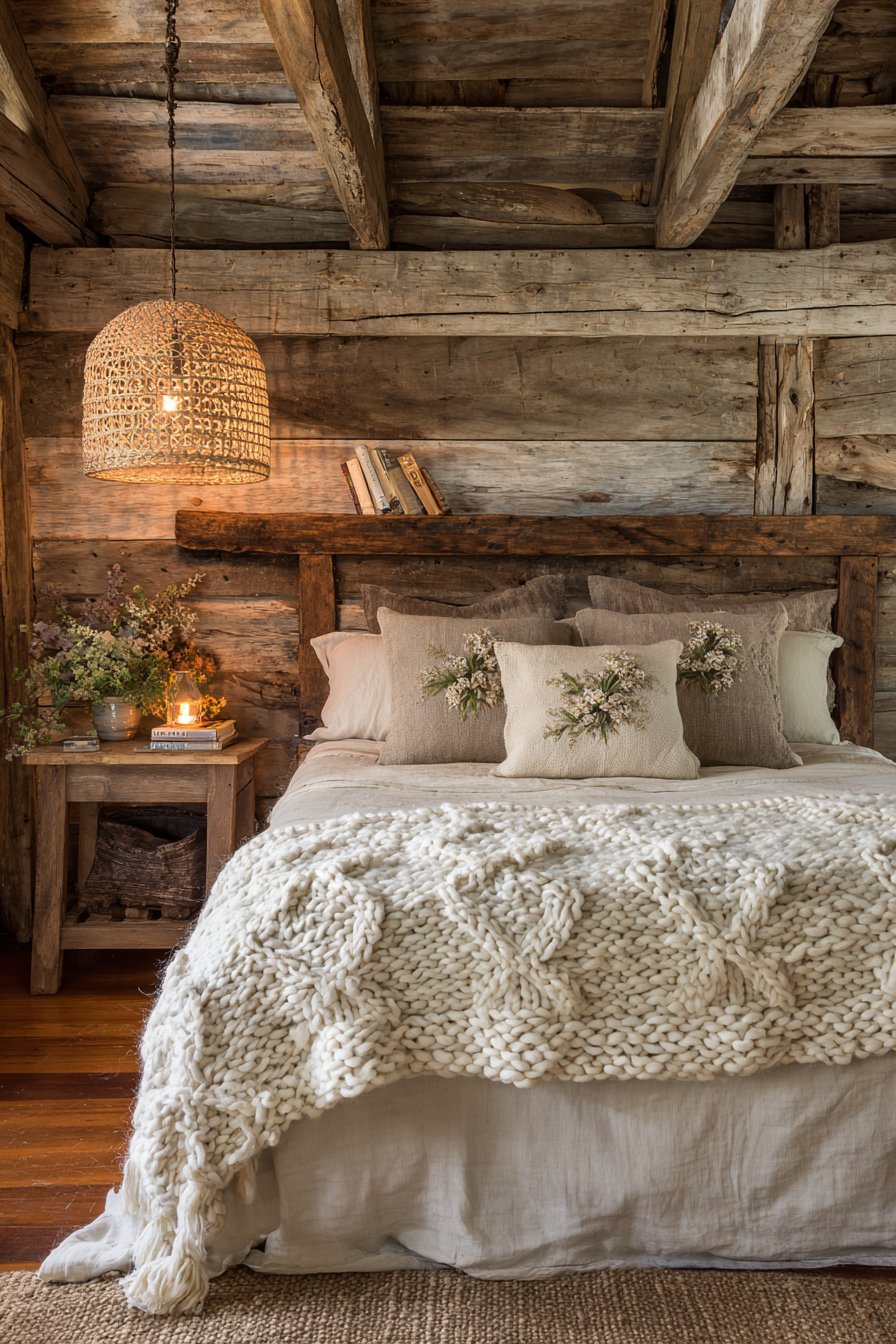
Textile layering specifically contributes to both aesthetic beauty and practical comfort. Multiple blankets, quilts, and throws allow temperature regulation throughout changing seasons. The visual weight of layered bedding creates inviting focal points that draw you toward rest and relaxation after demanding days.
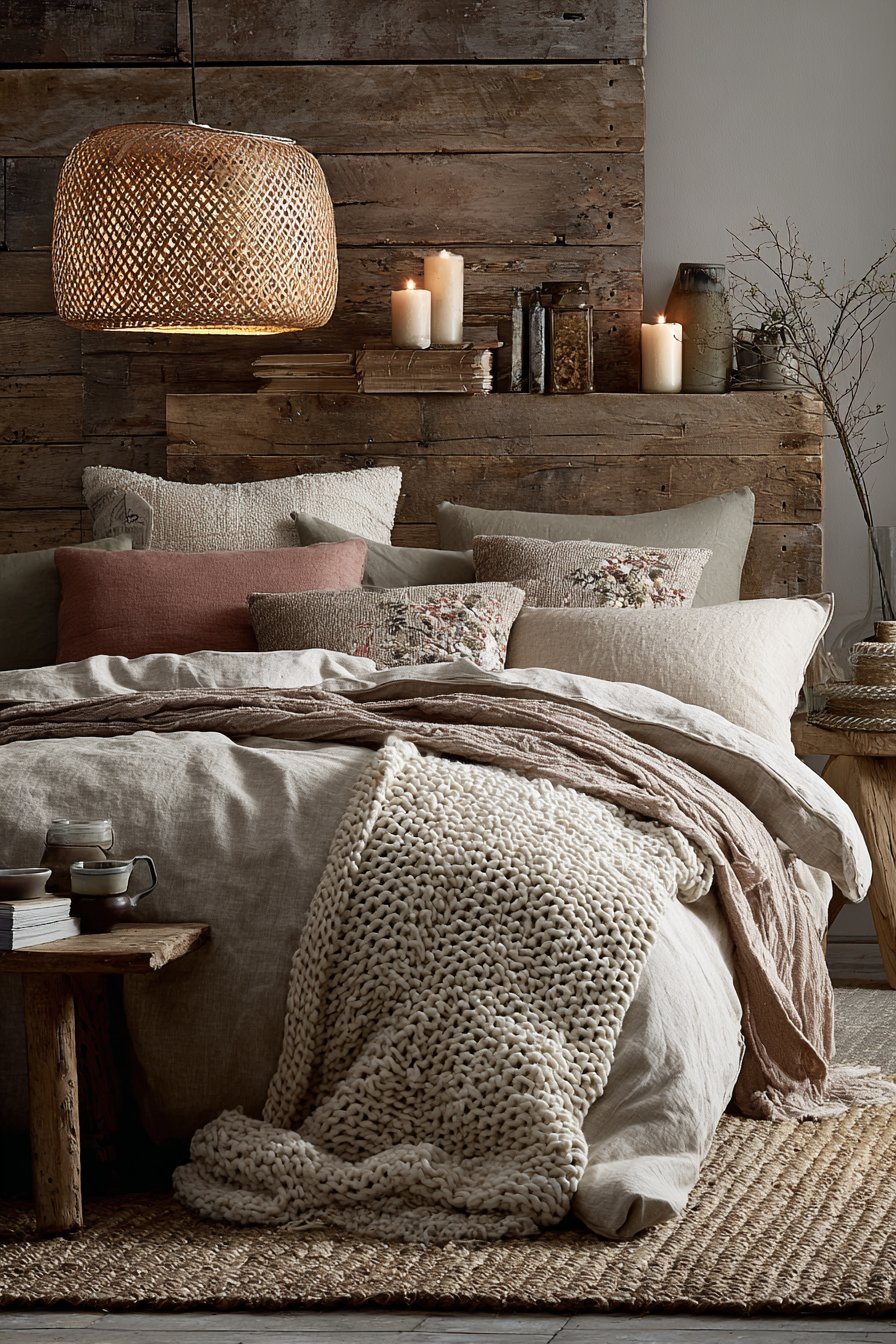
These textural contrasts also add dimensional depth that prevents visual boredom. Flat, monochromatic rooms feel one-dimensional and uninviting, while spaces with varied textures maintain interest without overwhelming. Your eye naturally travels across different surfaces, discovering new details with each glance rather than taking in everything at once.
- Layer at least three different blanket or throw textures on the bed
- Combine smooth, nubby, and chunky textiles for maximum visual interest
- Add textured pillows in varying sizes and fabric types
- Include both hard and soft surfaces throughout the room for balance
- Use natural fiber rugs to introduce warmth and sound absorption
- Mix matte and subtle sheen finishes to create gentle light play
Conclusion
Cottagecore bedrooms create calming atmospheres through intentional design choices that prioritize natural elements, gentle aesthetics, and sensory comfort. From organic materials and muted color palettes to vintage treasures and botanical accents, every element works synergistically. These spaces reject modern harshness in favor of softer, more nurturing environments.
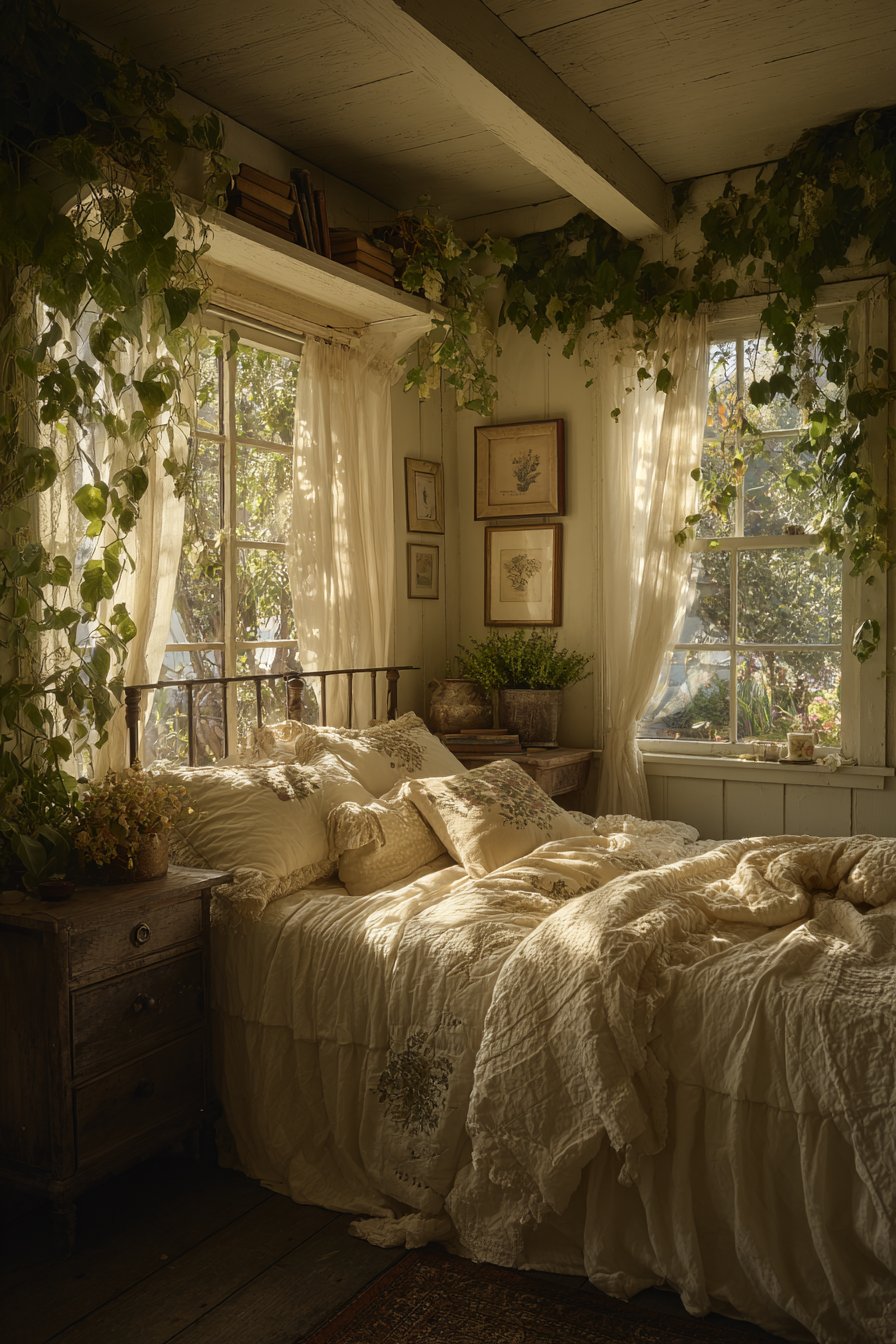
Implementing cottagecore principles doesn’t require complete room overhauls or significant budgets. Start with small changes like introducing natural textiles, displaying dried flowers, or choosing gentler lighting. Gradually layer additional elements as you discover which aspects resonate most deeply with your personal vision of tranquility. Your bedroom sanctuary awaits transformation into the peaceful retreat you deserve.
