


Creating a cowboy nursery brings rustic charm and Western heritage into your baby’s first space. This design style celebrates authentic materials and timeless frontier aesthetics. The combination creates nurturing environments perfect for your little cowpoke’s early years.
Cowboy-themed nurseries have captured parents’ hearts with their warmth and character. They offer a refreshing alternative to conventional baby room designs. The natural textures of leather, wood, and rope create memorable spaces that grow with your child. These rooms balance rugged Western elements with soft, baby-appropriate touches that ensure comfort and safety.
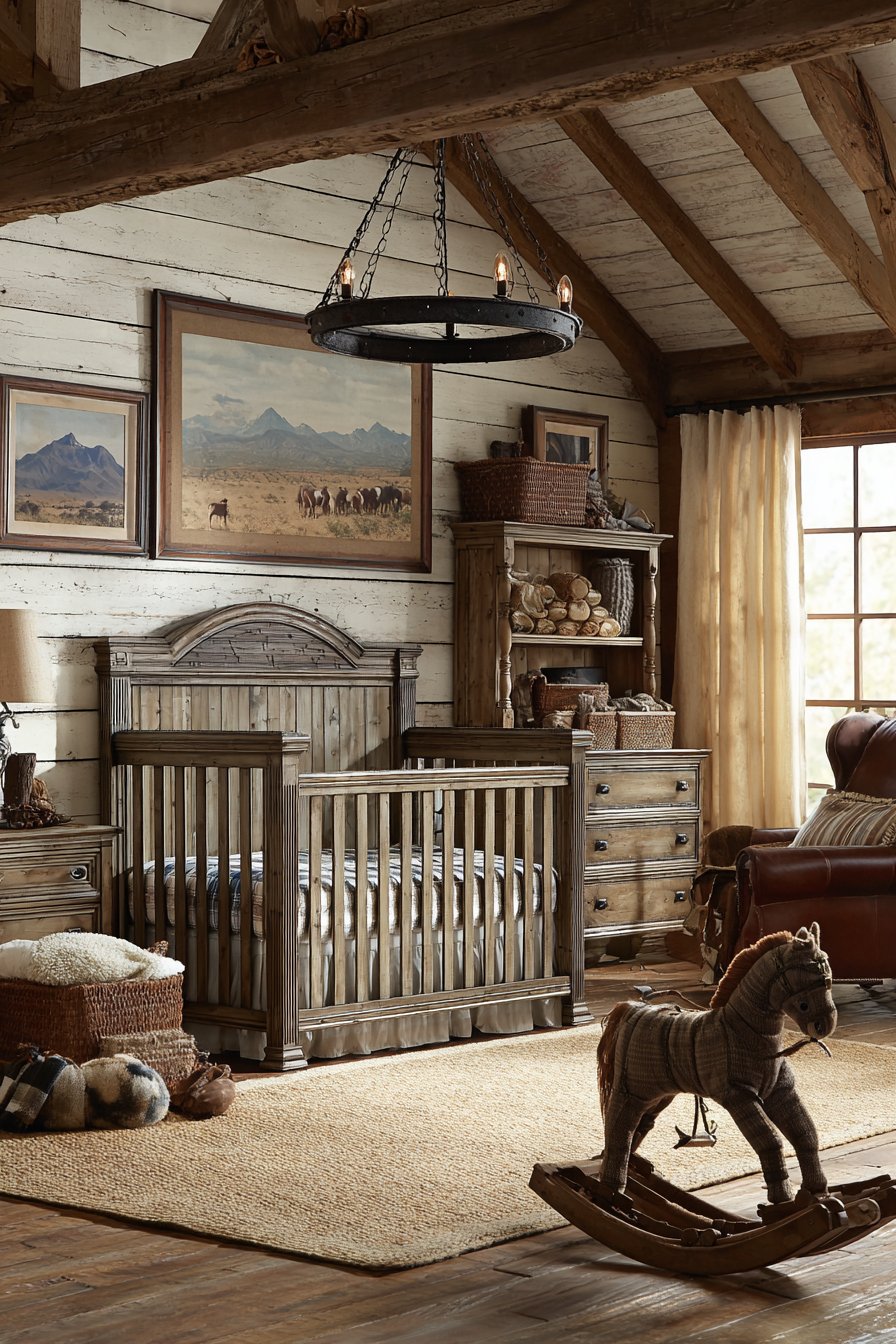
The designs featured here showcase diverse approaches to cowboy nursery styling. From rustic wooden cribs to vintage-inspired storage solutions, each concept demonstrates thoughtful planning. You’ll discover how to incorporate authentic Western materials while maintaining the gentle atmosphere essential for nurseries. These ideas prove that cowboy themes can be both bold and tender.
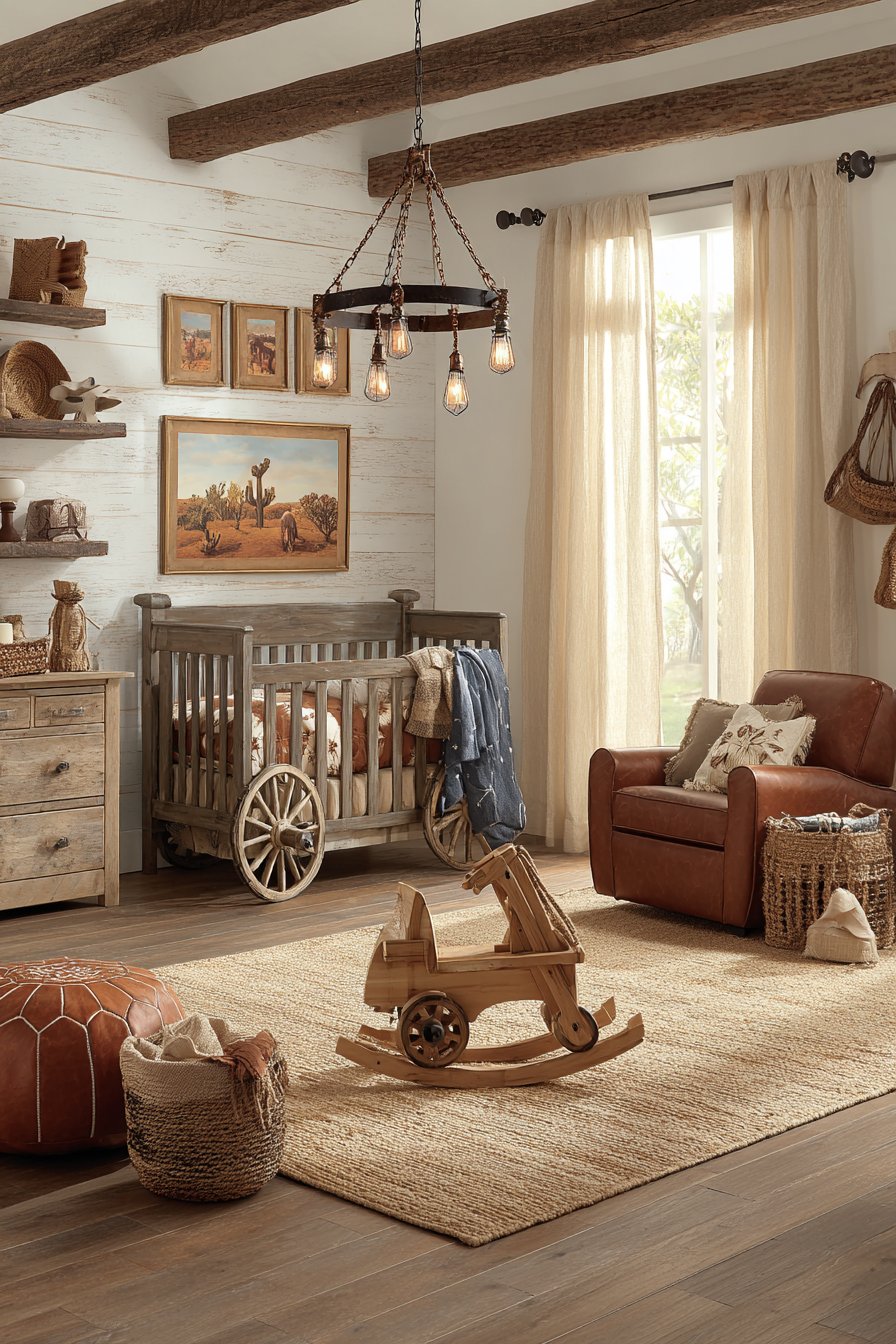
1. Rustic Wooden Crib with Wagon Wheel Details
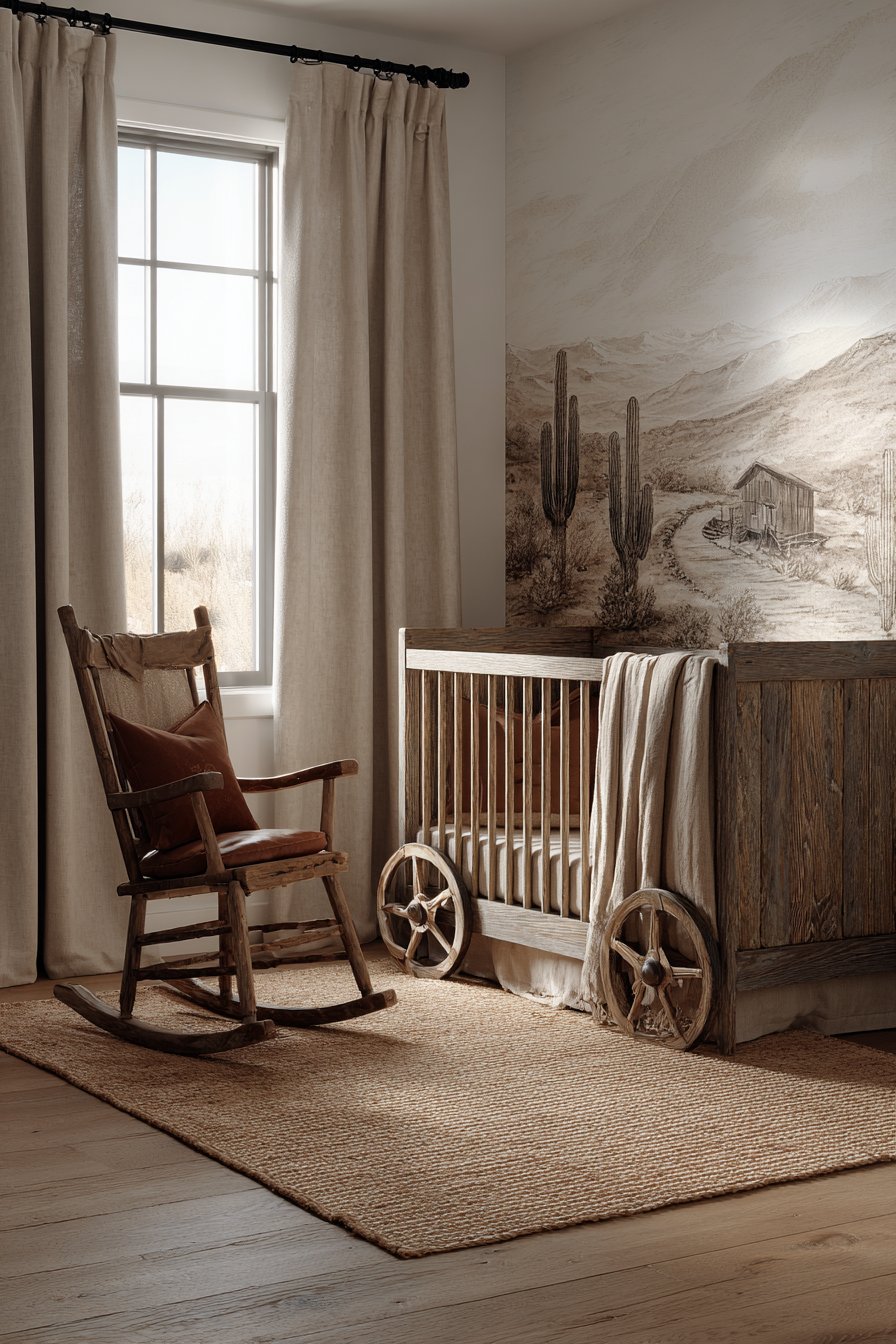
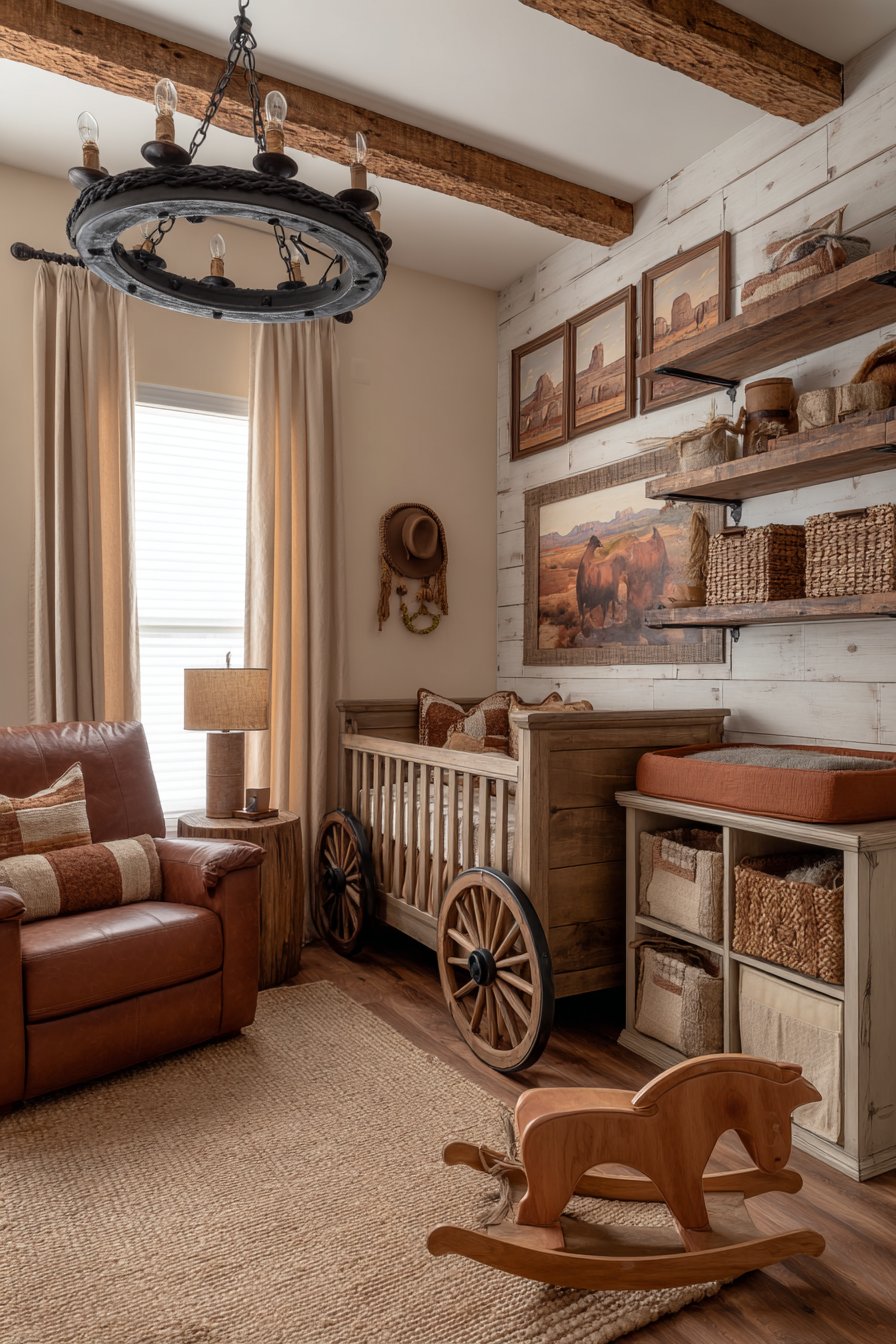
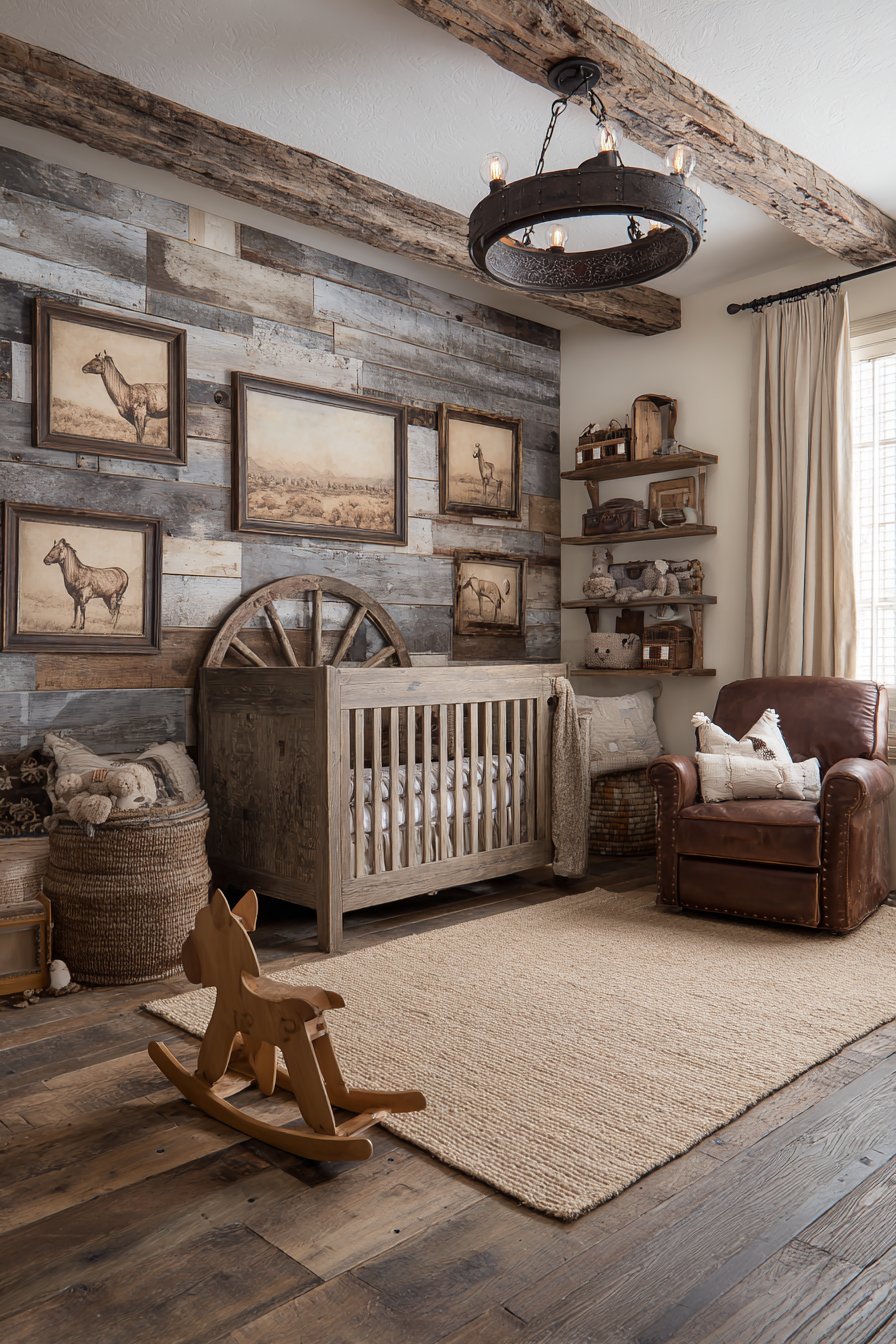
The centerpiece of this cowboy nursery commands attention with its weathered oak finish. A handcrafted wooden crib features distinctive wagon wheel details that honor Western heritage. The rustic construction showcases quality craftsmanship through visible wood grain and natural imperfections.
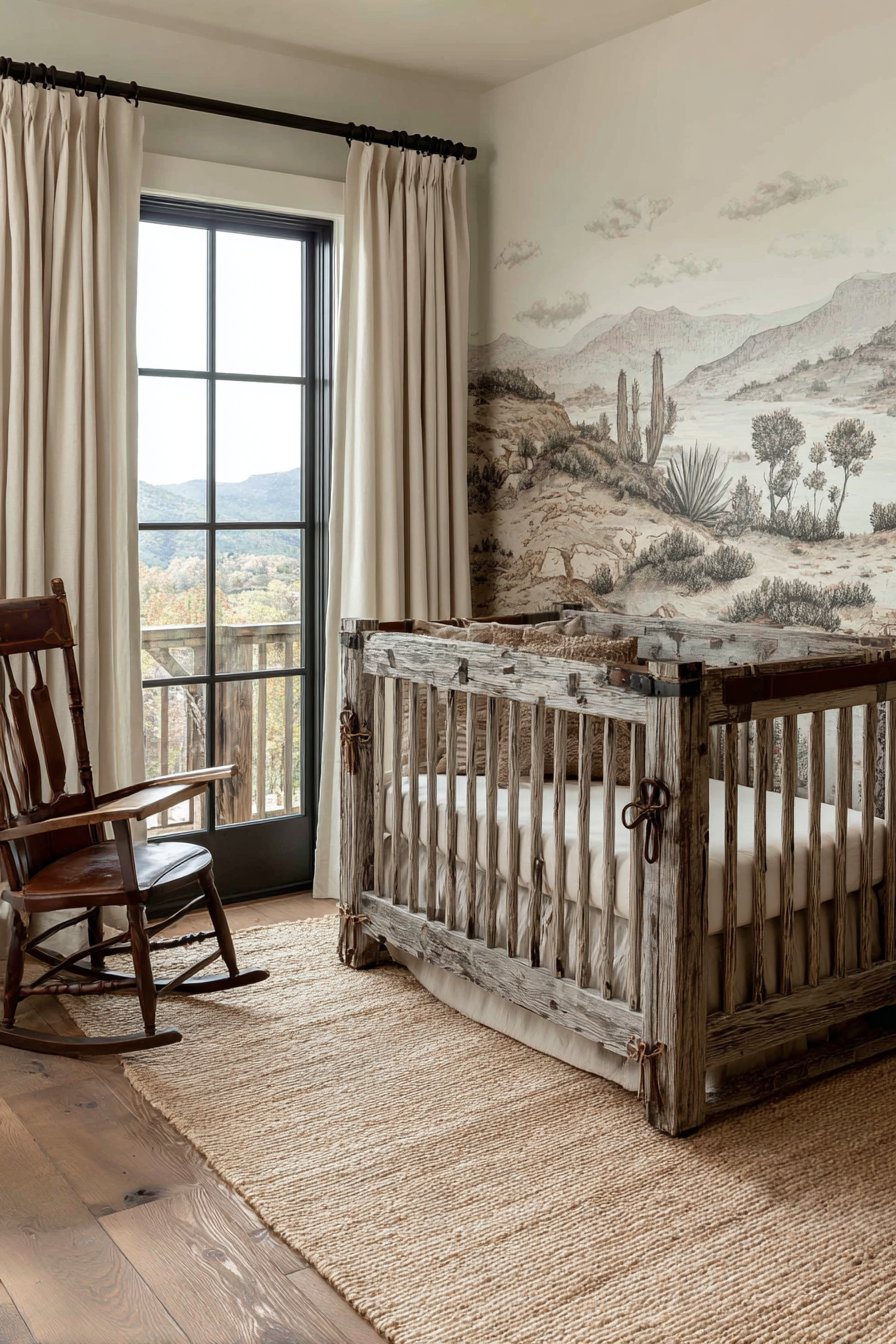
Against a feature wall, subtle Western-themed wallpaper creates visual interest without overwhelming the space. Desert sage and cacti patterns appear in muted earth tones. These gentle designs introduce the cowboy theme while maintaining nursery serenity. The wallpaper provides texture and depth that complement the substantial wooden furniture.
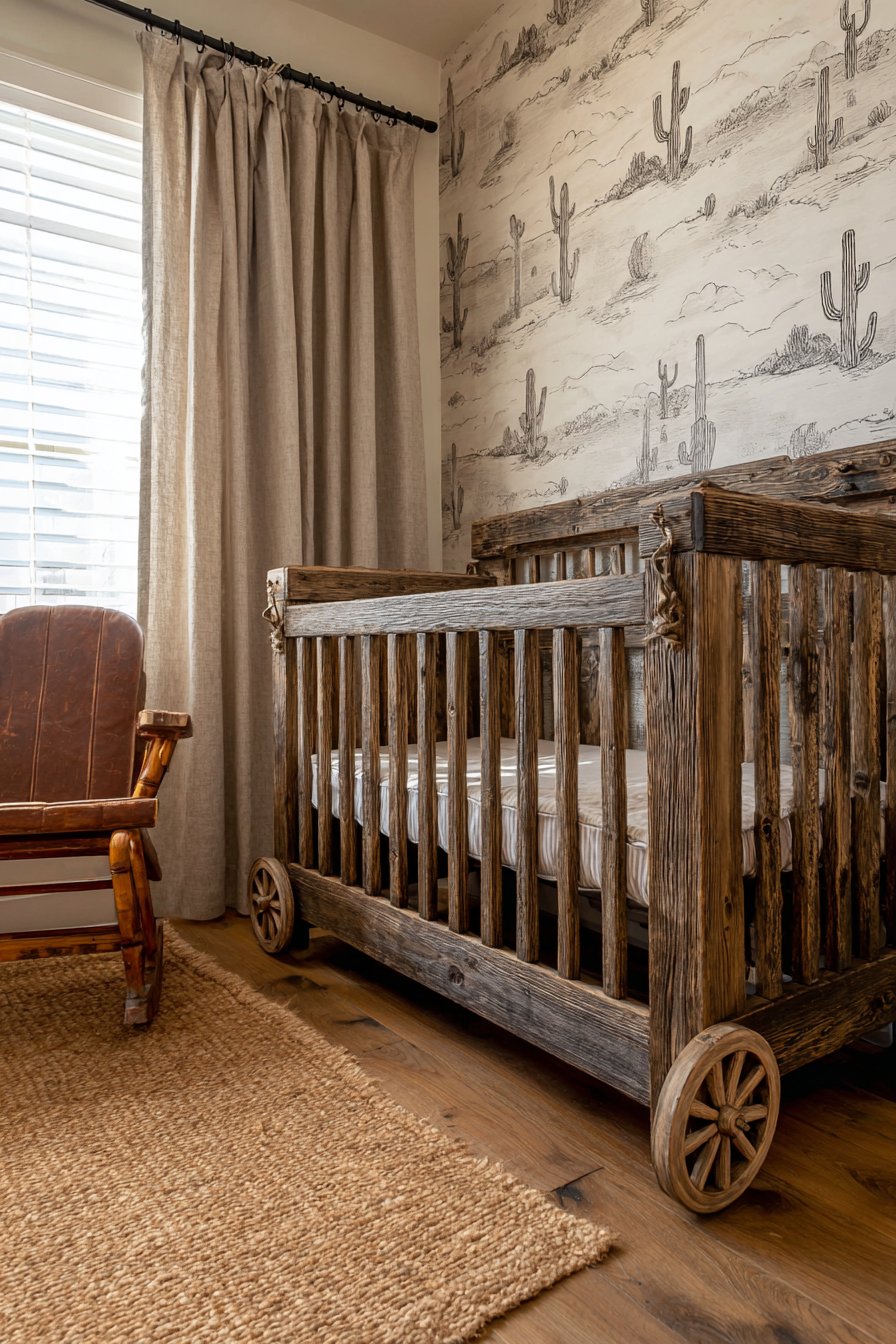
A braided jute rug in natural tan anchors the seating area. This natural fiber adds warmth underfoot and softens the hardwood flooring. Near the window, a vintage-style rocking chair invites quiet moments with your baby. The leather seat cushion develops beautiful patina over time. Morning light filters through linen curtains with leather tie-backs, creating a peaceful glow.
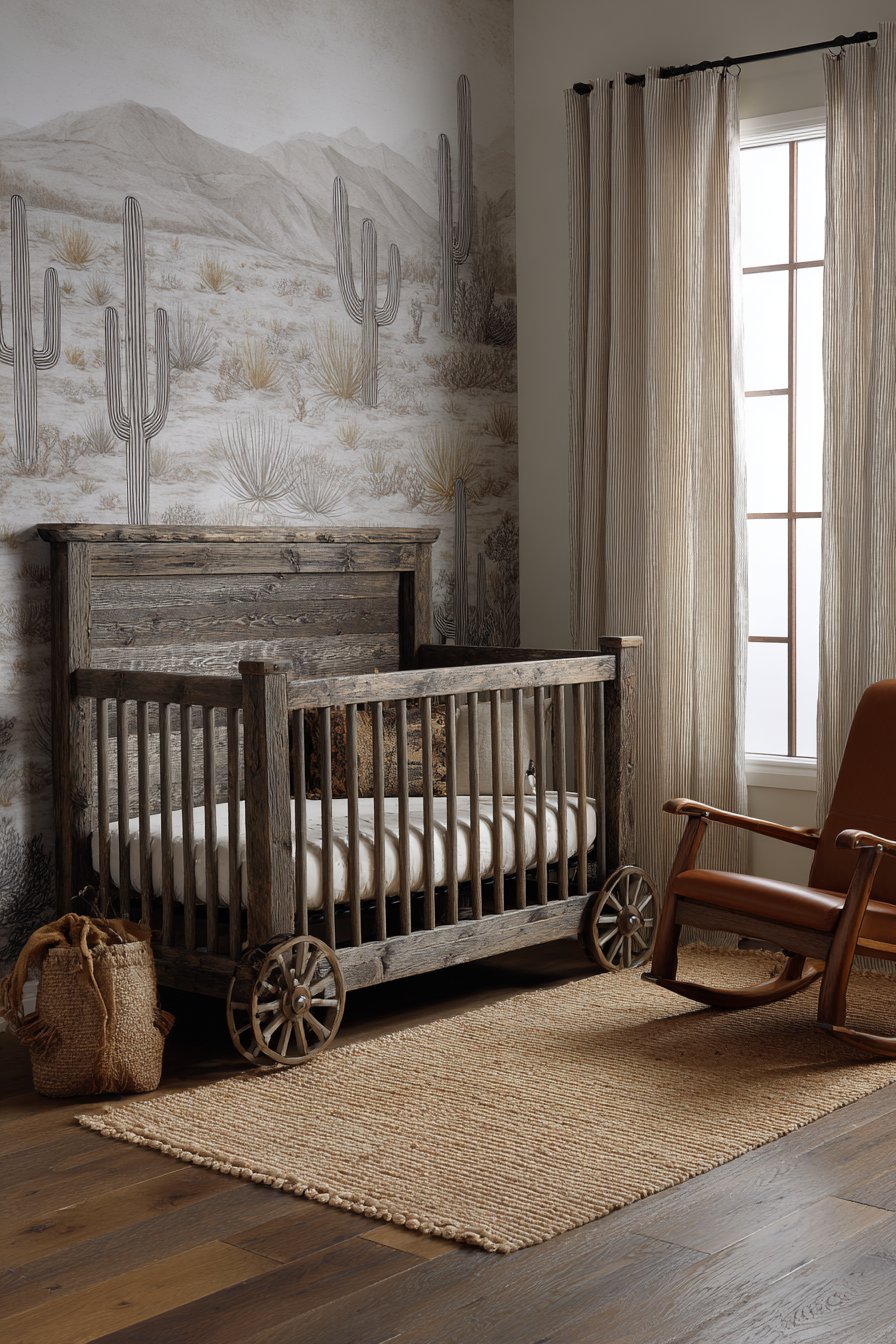
The authentic Western aesthetic shines through material choices and thoughtful details. Every element serves both function and design purpose. The weathered finishes and natural materials create a lived-in quality that feels welcoming rather than sterile.
Key Design Tips:
- Select cribs with solid wood construction for durability and safety
- Choose wallpaper with subtle patterns to avoid visual overstimulation
- Incorporate natural fiber rugs for texture and comfort
- Position rocking chairs near natural light sources for feeding and bonding
- Use genuine leather accents sparingly for an authentic Western character
2. Practical Storage with Rope Drawer Pulls
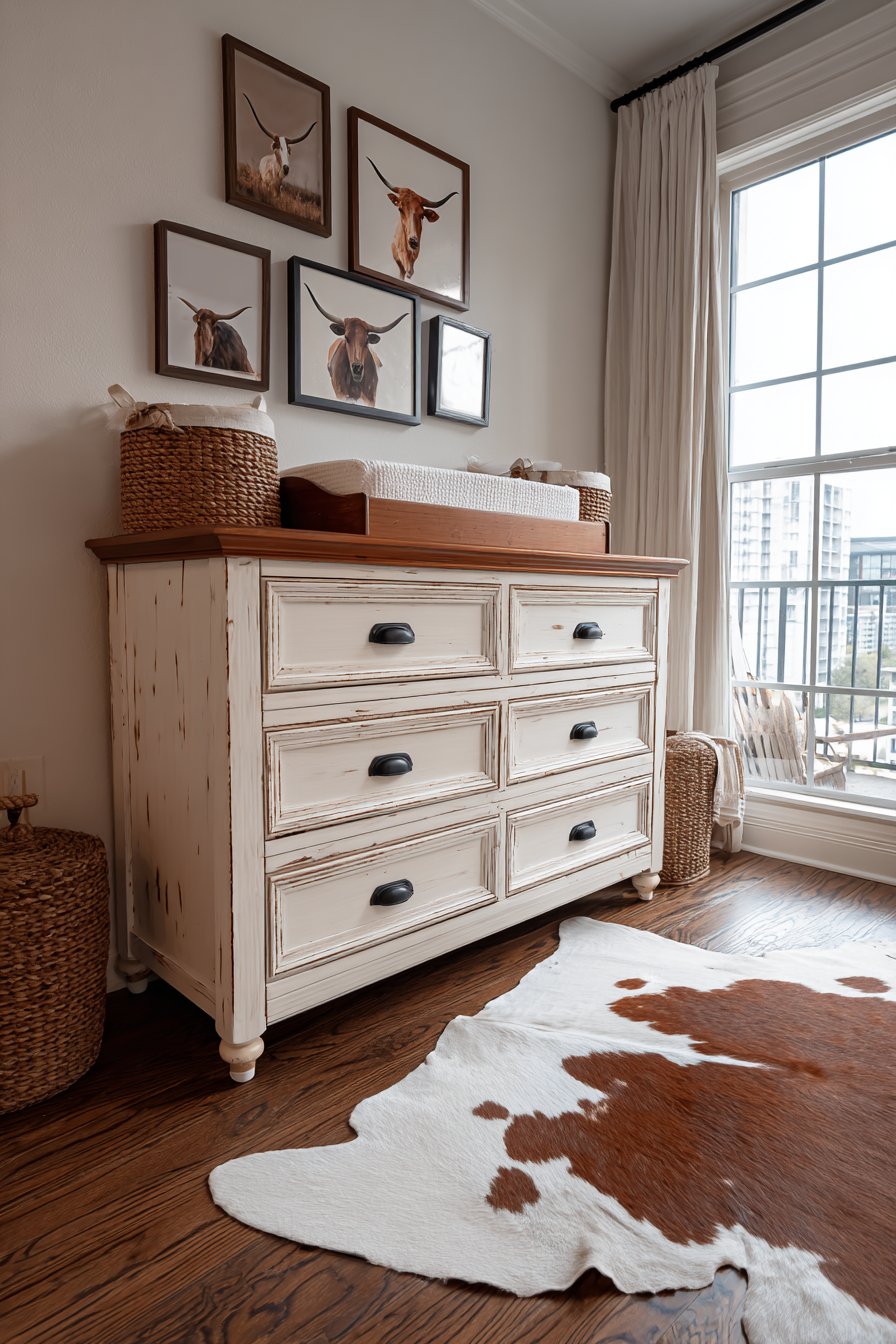
Smart storage solutions transform nursery functionality while maintaining Western charm. A wooden dresser features unique rope drawer pulls that add tactile interest. The distressed cream paint finish reveals layers of weathered character beneath. This aging technique creates visual depth that new furniture cannot replicate.
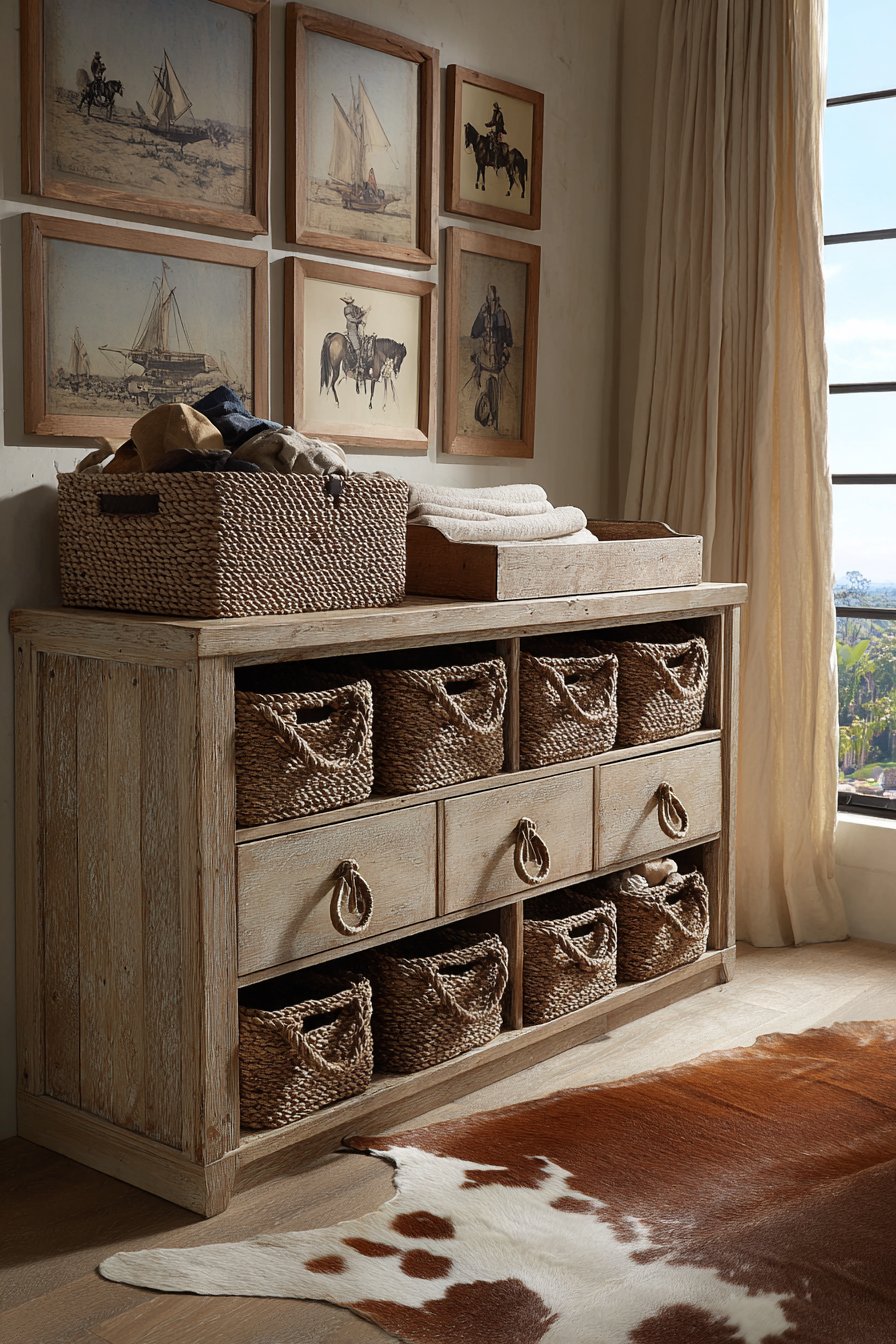
The dresser top displays wicker baskets containing organized baby essentials. These natural containers keep necessities accessible while contributing to the rustic aesthetic. Above the dresser, framed vintage cowboy prints hang in simple wooden frames. The artwork introduces Western imagery without overwhelming the peaceful nursery environment.
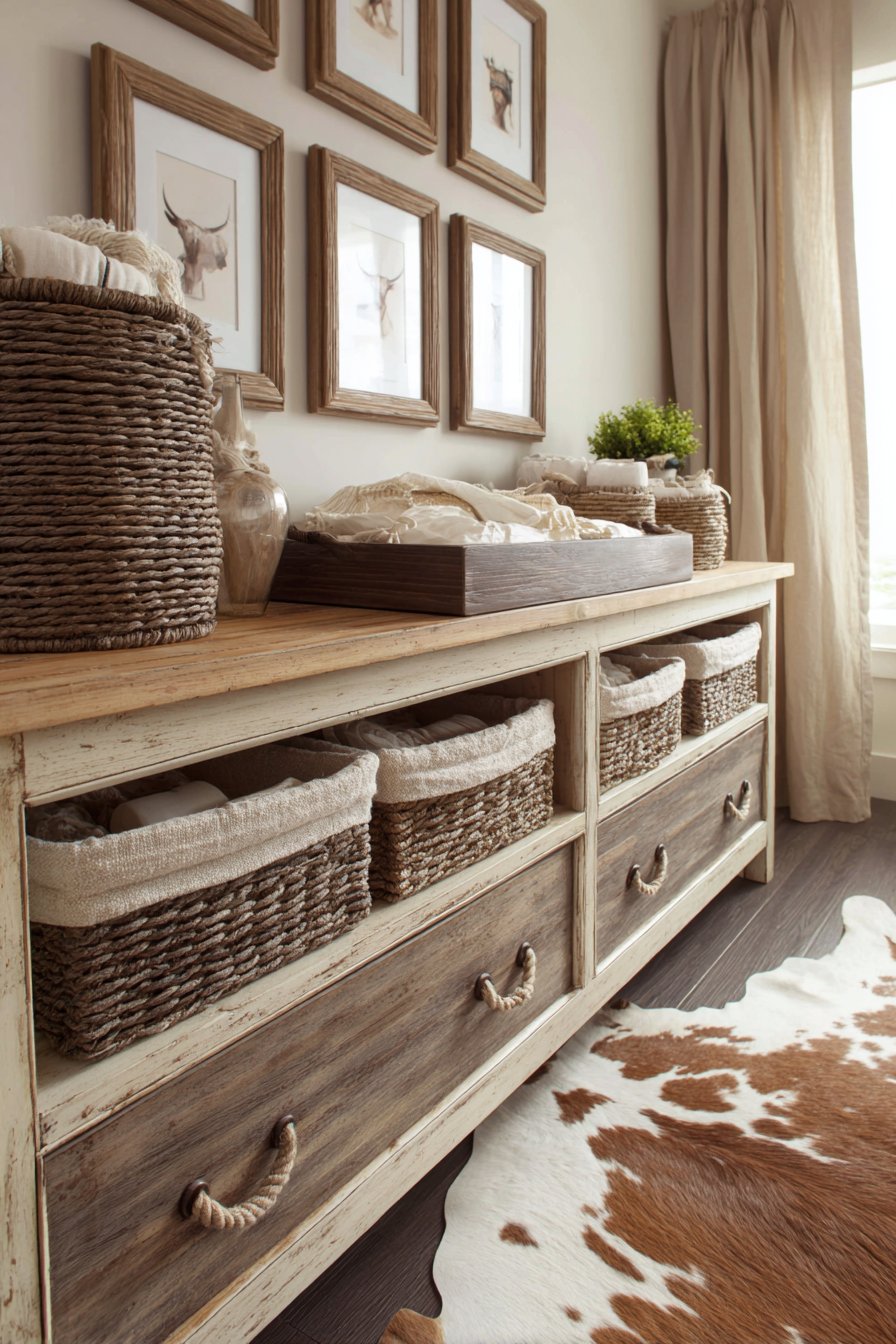
A cowhide rug in natural brown and white tones defines the changing station area. This authentic material adds luxury and durability to high-traffic zones. The organic pattern brings visual interest to the flooring. Soft diffused daylight emphasizes the functional organization throughout the space.
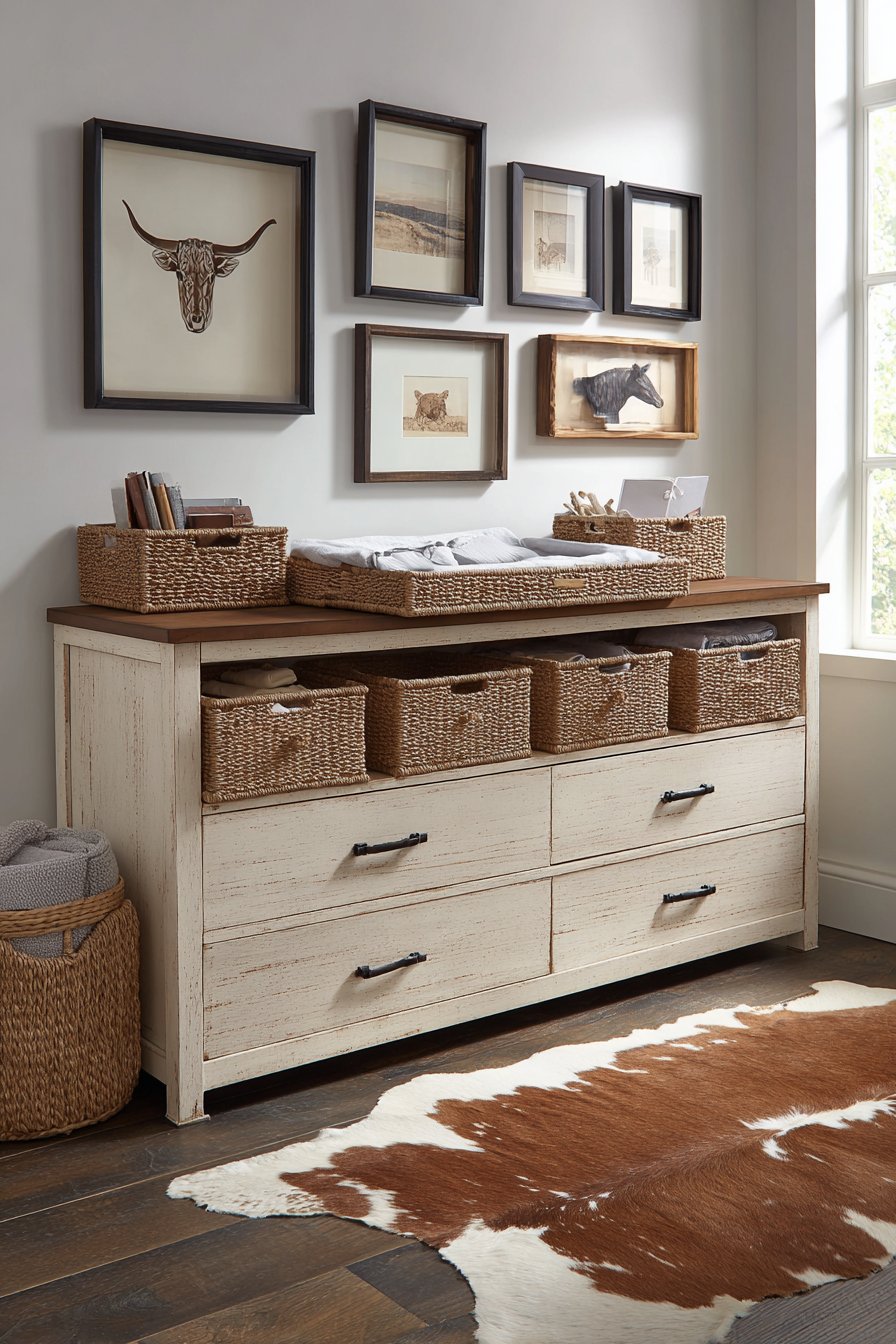
Hand-knotted rope details showcase artisanal craftsmanship worth highlighting. These touches elevate ordinary furniture into statement pieces. The natural materials coordinate beautifully with wood grain textures visible throughout the dresser construction.
Key Design Tips:
- Choose dressers with ample drawer space for growing storage needs
- Install rope drawer pulls securely to ensure safety
- Use wicker baskets to organize small items while maintaining aesthetic coherence
- Hang artwork at appropriate heights considering future room transitions
- Select cowhide rugs with non-slip backing for safety near changing areas
3. Cozy Reading Nook with Leather Glider
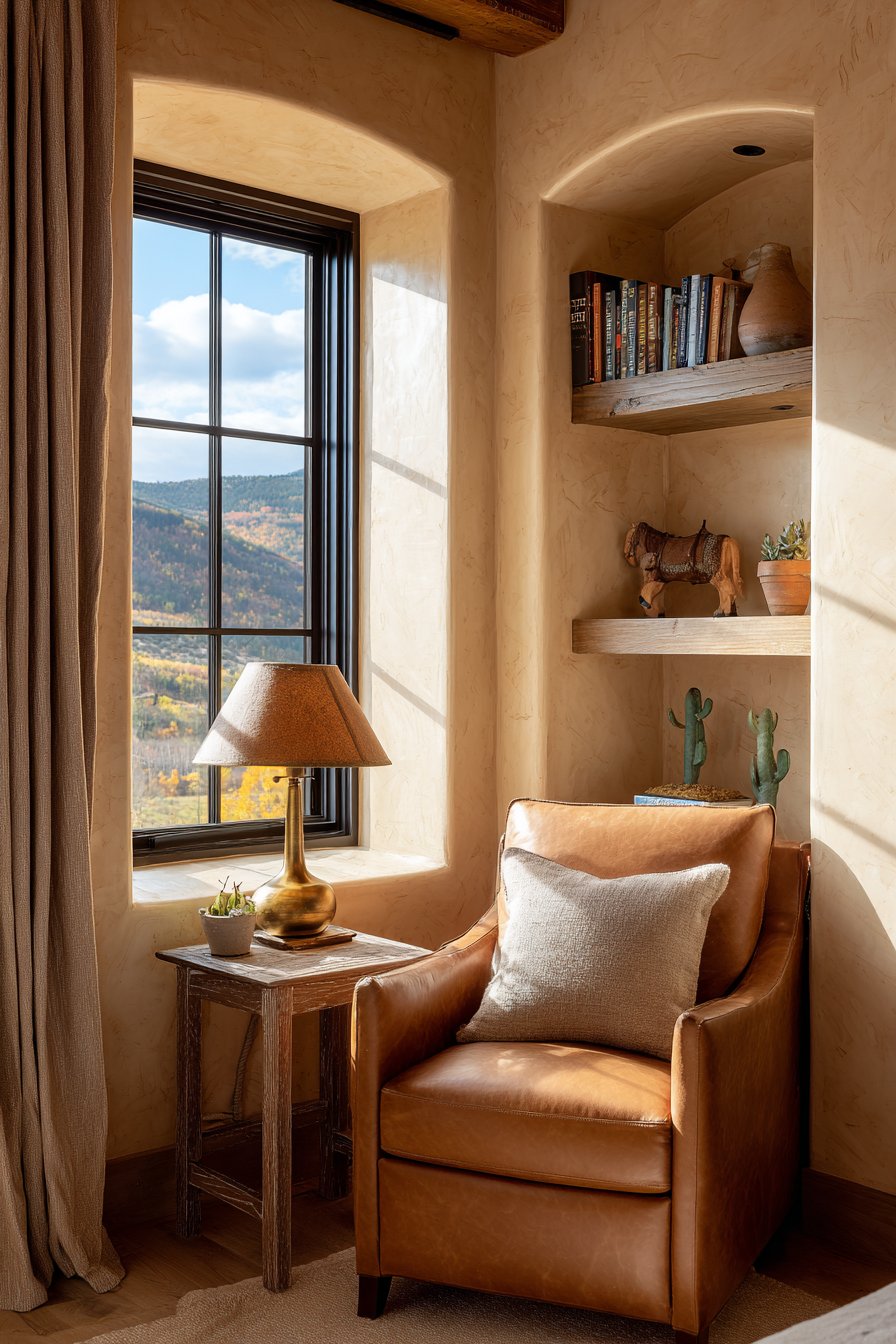
Every cowboy nursery benefits from a dedicated reading corner. A comfortable upholstered glider in saddle brown leather creates the perfect spot for storytime. The rich leather develops character with use, becoming softer and more beautiful over years.
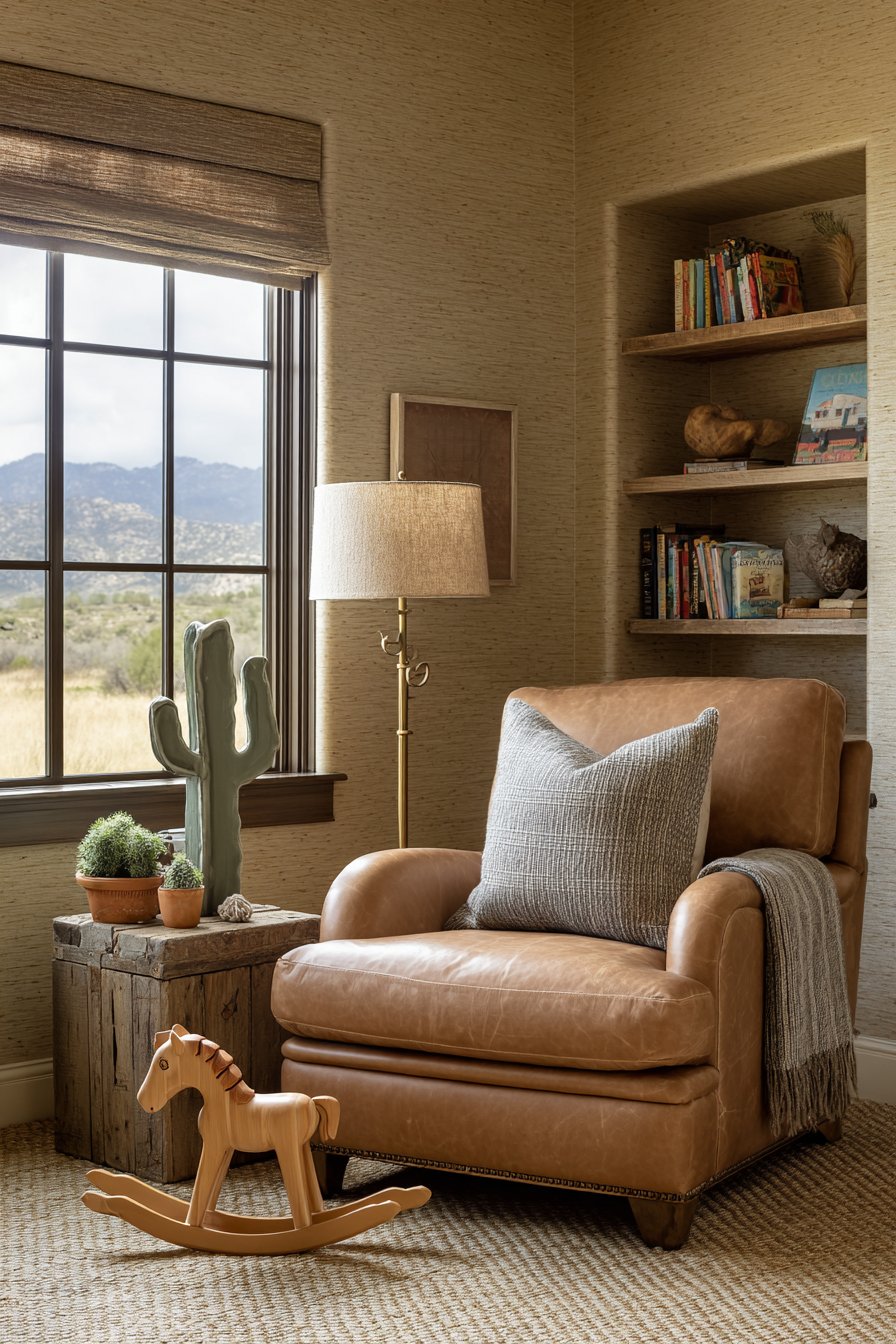
A small side table crafted from reclaimed barn wood holds essential lighting. The vintage brass lamp features a burlap shade that filters light beautifully. This combination provides adequate illumination for nighttime feedings while maintaining warm ambiance. The reclaimed wood brings authentic history into the space through visible age marks and natural weathering.
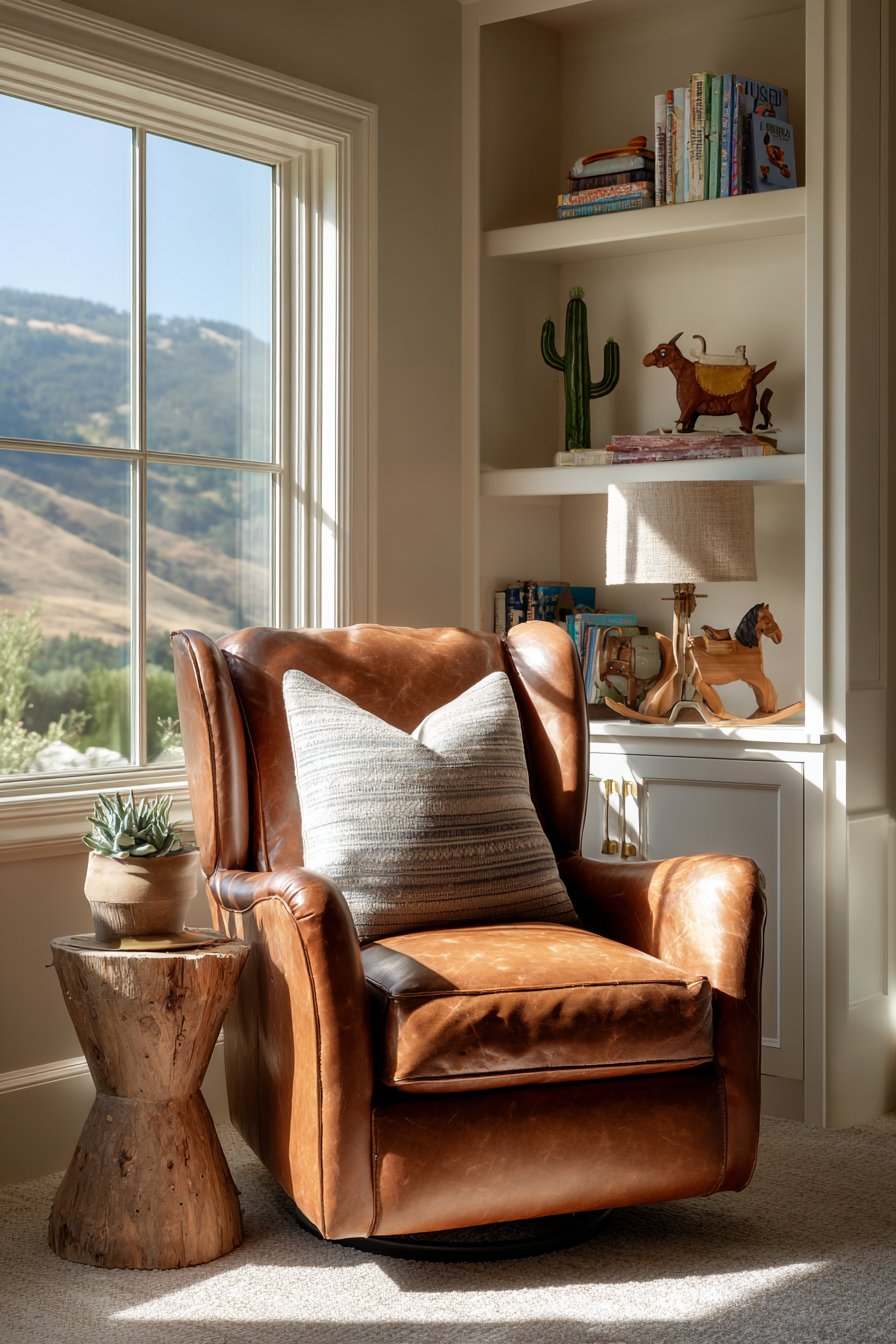
Built-in floating shelves display children’s Western-themed books with visible leather-bound spines. Small decorative elements punctuate the book collection thoughtfully. A miniature wooden rocking horse and ceramic cactus planters add whimsical touches. These personal details make the reading nook feel curated and loved.
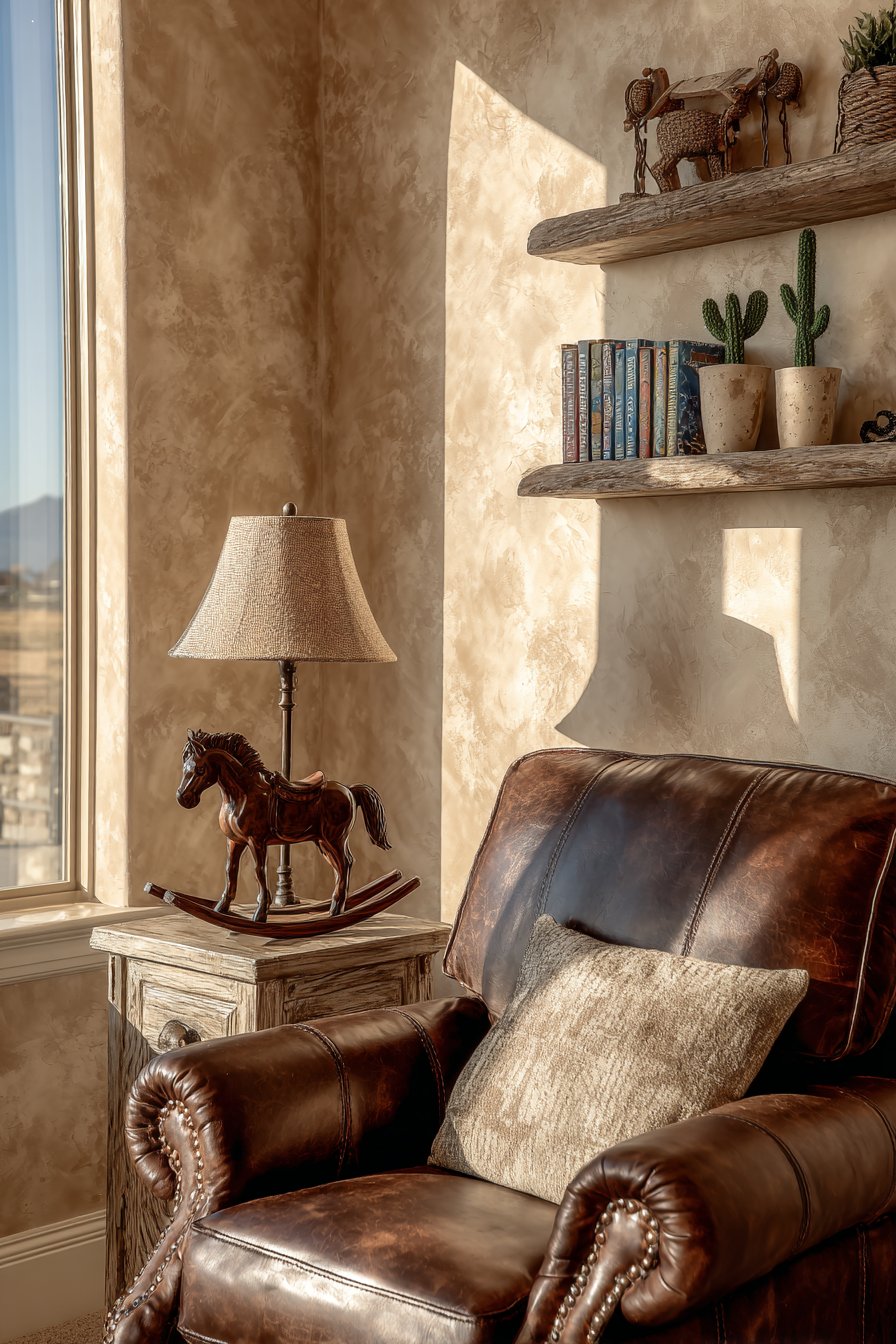
Natural afternoon light creates soft shadows on textured walls painted in warm beige. The neutral backdrop allows Western accessories to shine without competing for attention. This reading space prioritizes comfort while celebrating authentic materials and livable design.
Key Design Tips:
- Select gliders with supportive backs for extended nursing sessions
- Position reading nooks near windows for natural light benefits
- Install floating shelves at accessible heights for easy book rotation
- Choose reclaimed wood furniture for environmental sustainability
- Add small decorative elements sparingly to maintain visual calm
4. Shiplap Accent Wall with Western Art
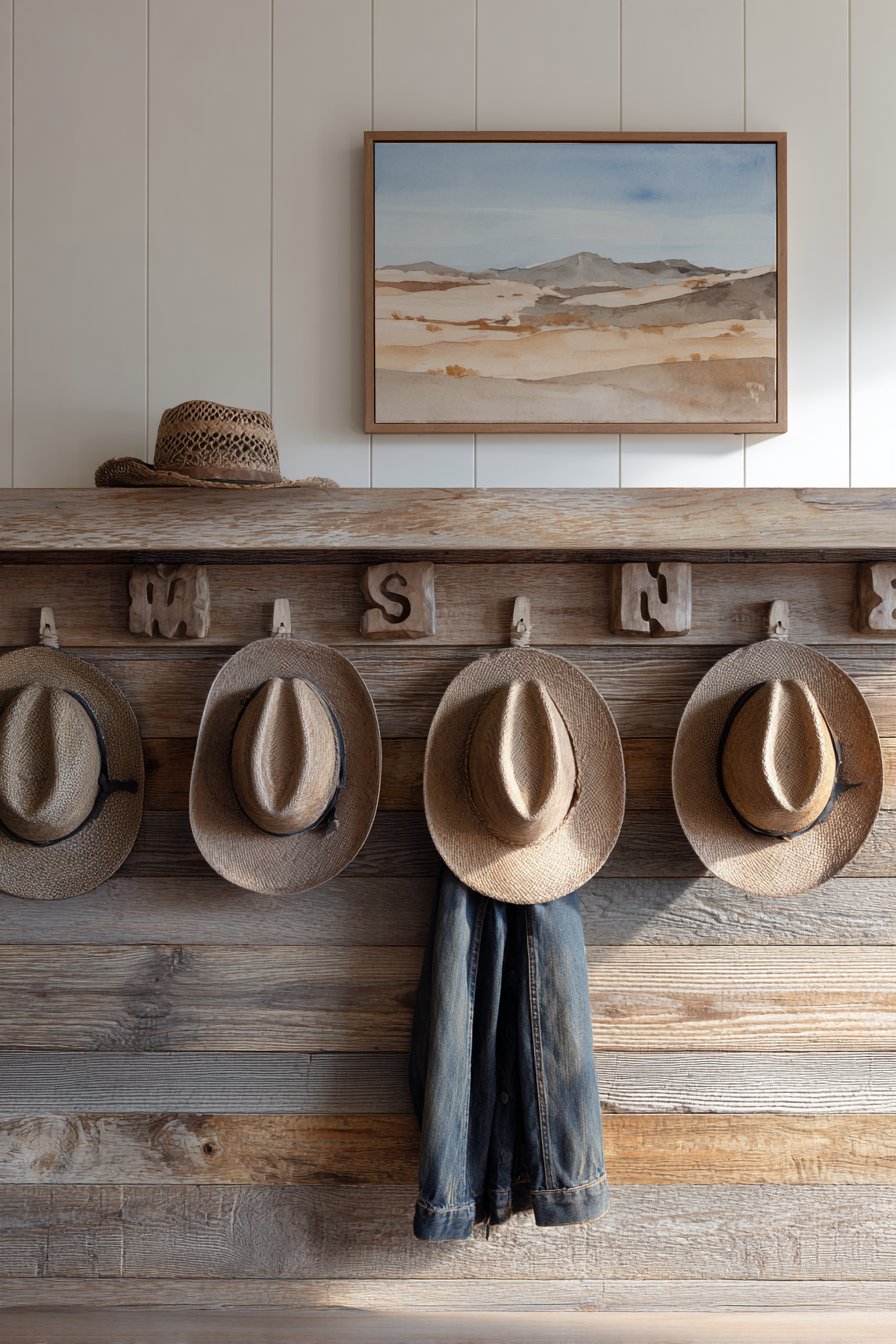
Horizontal shiplap boards in whitewashed pine create stunning architectural interest. The wood grain and knot details remain visible beneath the finish. This installation technique adds texture without overwhelming the nursery with heavy wood tones. The whitewashed treatment keeps the space feeling bright and airy.
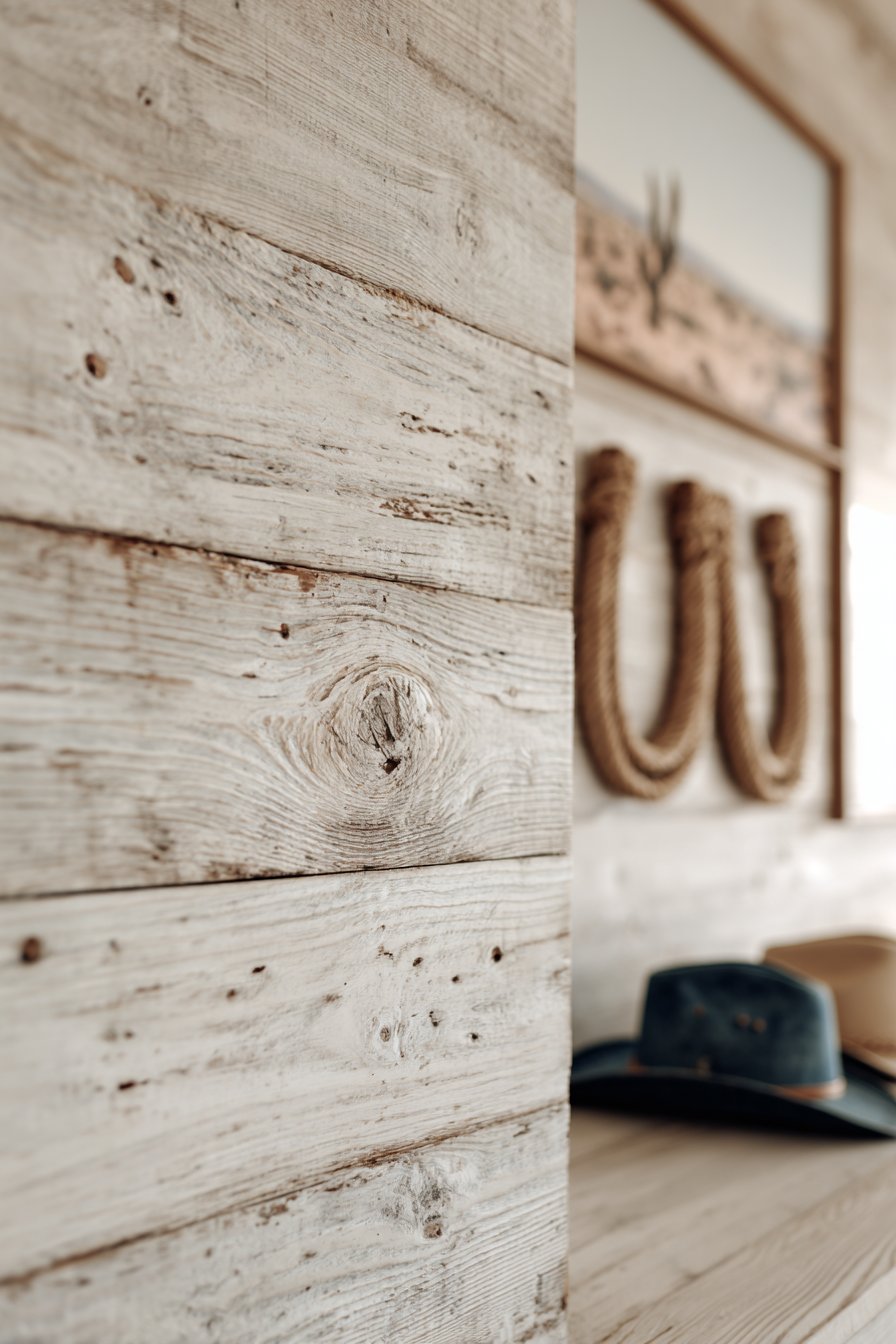
A thoughtfully curated collection of Western-themed art adorns this feature wall. A watercolor desert landscape brings soft color and peaceful imagery. A vintage horseshoe contributes authentic ranch heritage. Rope letters spelling the baby’s name use weathered hemp rope for rustic charm. These personalized touches make the nursery uniquely yours.
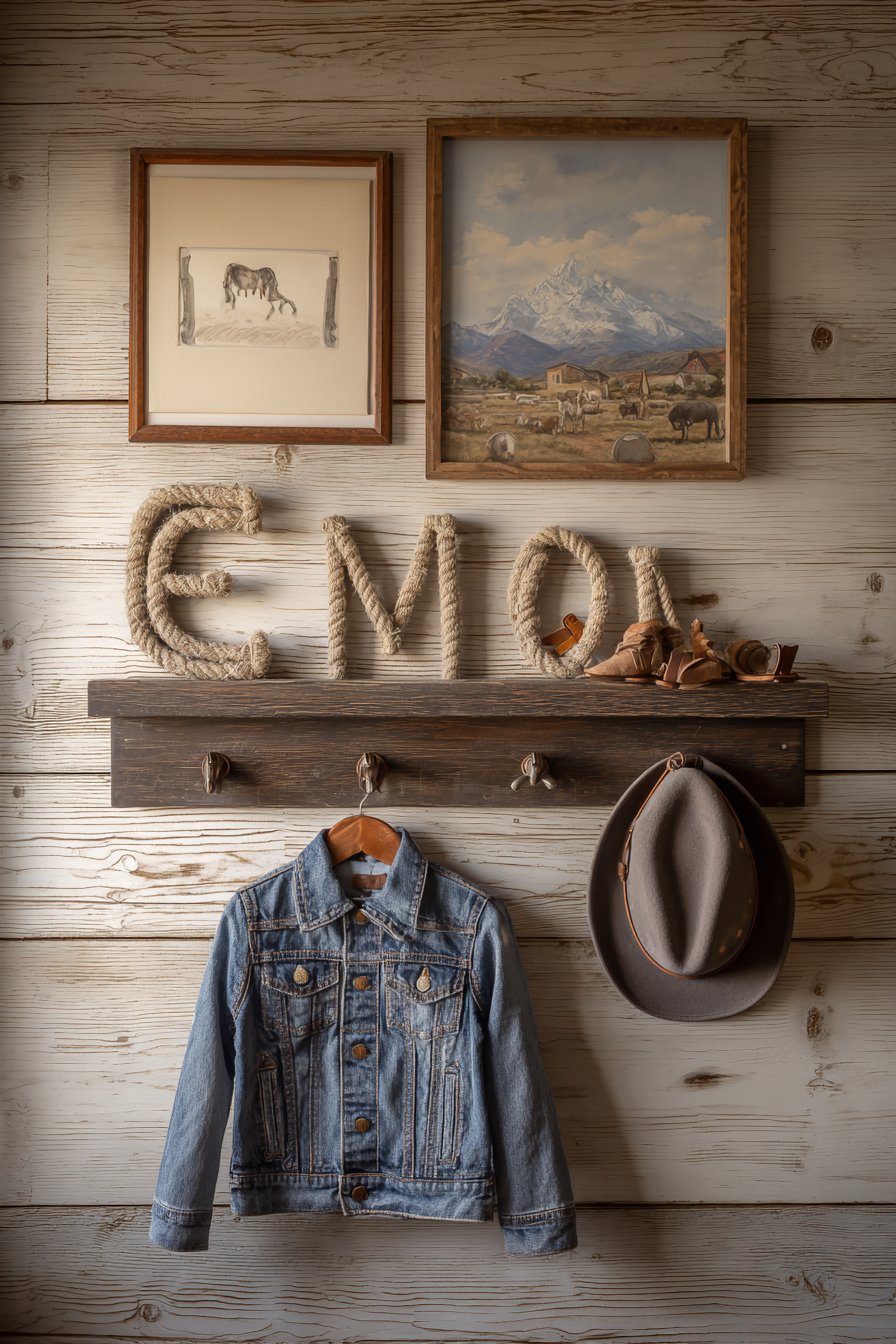
Below the artwork, a wooden peg rail serves practical purposes. Tiny leather cowboy hats and denim jackets hang from the pegs. This functional element doubles as charming decoration. The peg rail keeps frequently used items accessible while contributing to the Western aesthetic.
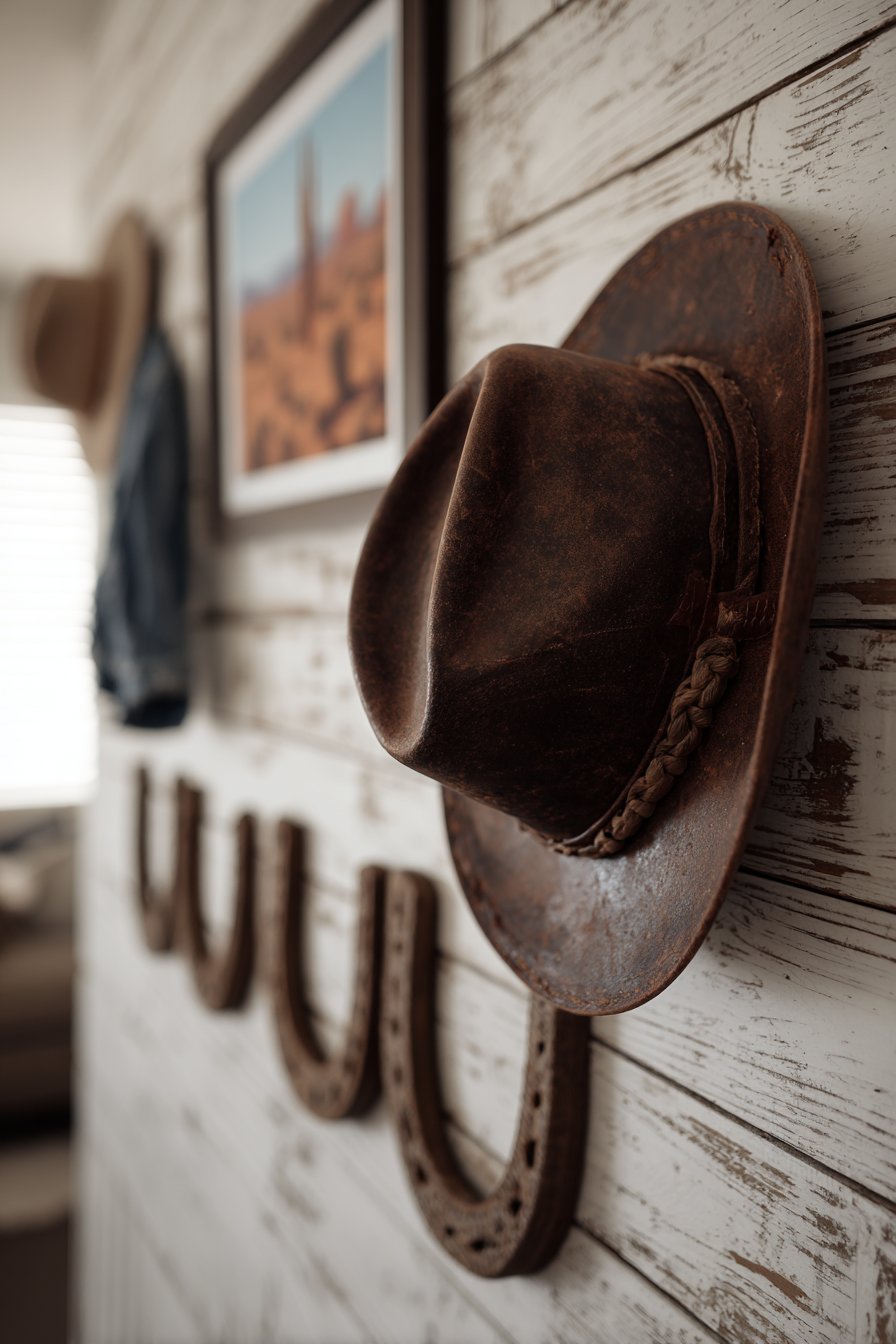
Balanced natural lighting highlights the layered textures throughout this accent wall. The dimensional elements cast subtle shadows that change throughout the day. This dynamic quality keeps the wall interesting without requiring busy patterns or bold colors.
Key Design Tips:
- Install shiplap horizontally to make rooms appear wider
- Apply whitewash techniques that preserve wood grain visibility
- Create gallery walls with varied frame sizes for visual interest
- Mount peg rails at accessible heights for practical daily use
- Choose rope letters in neutral tones that complement the overall palette
5. Organic Cotton Bedding with Bandana Print
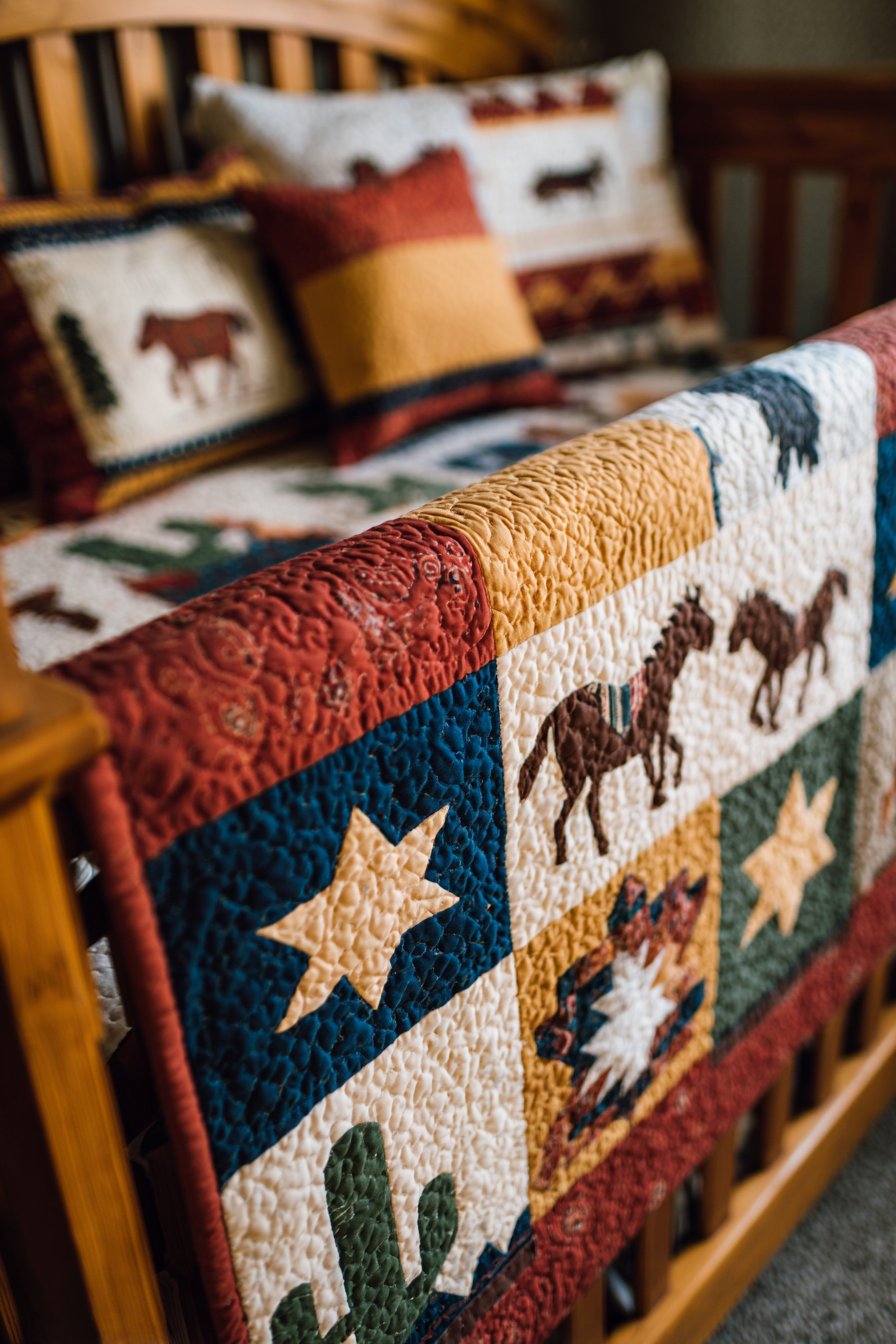
Quality bedding forms the foundation of comfortable nursery environments. Organic cotton sheets in cream provide a pure, gentle base. Subtle bandana-print trim in rust red and navy blue introduces Western patterns tastefully. These small accents honor the cowboy theme without overwhelming the crib area.
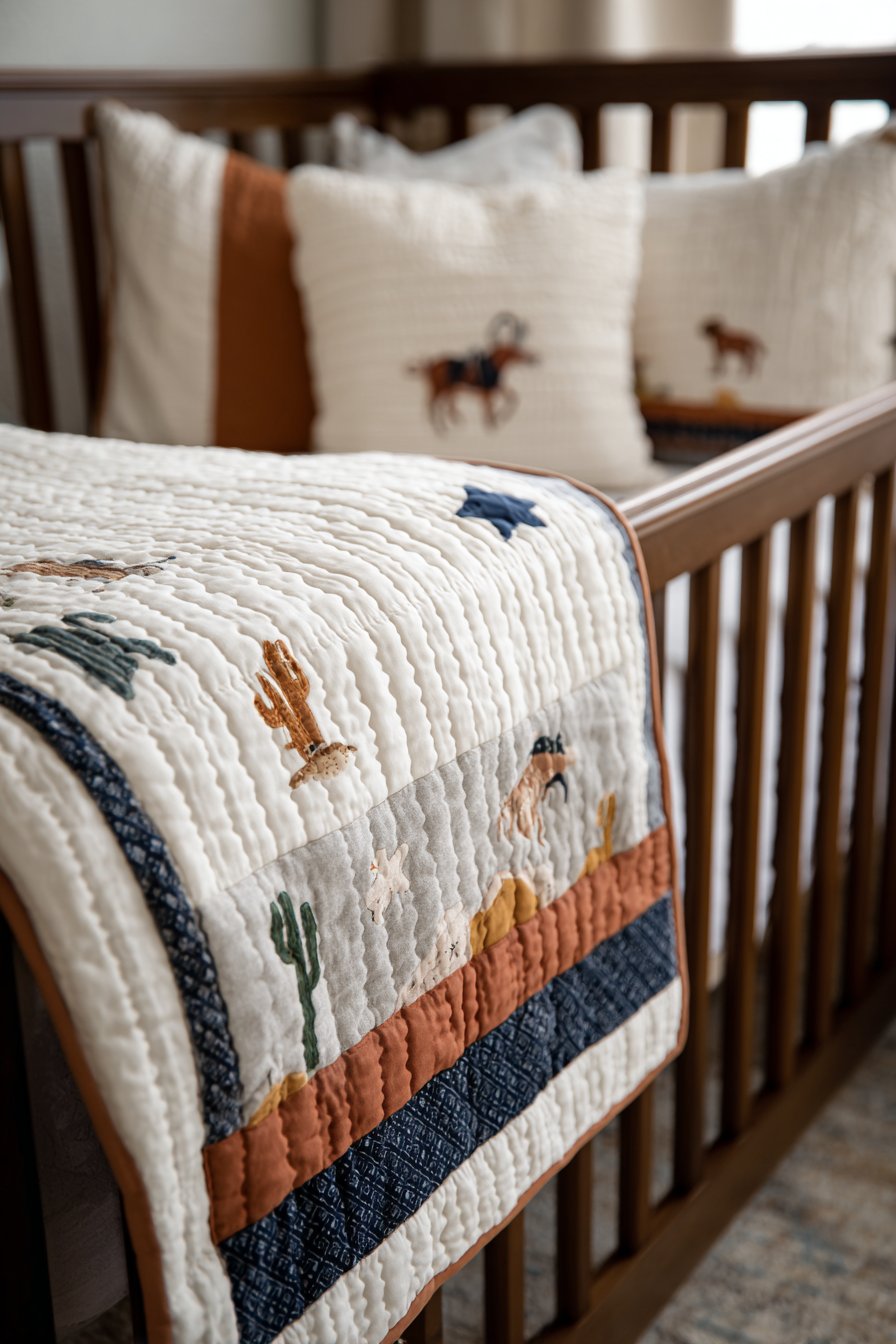
A handmade patchwork quilt drapes artfully over the side rail. Western motifs including horses, stars, and cacti appear in muted earth tones. The handcrafted quality shows in visible stitching and careful fabric selection. This quilt becomes a treasured heirloom that holds memories of childhood.
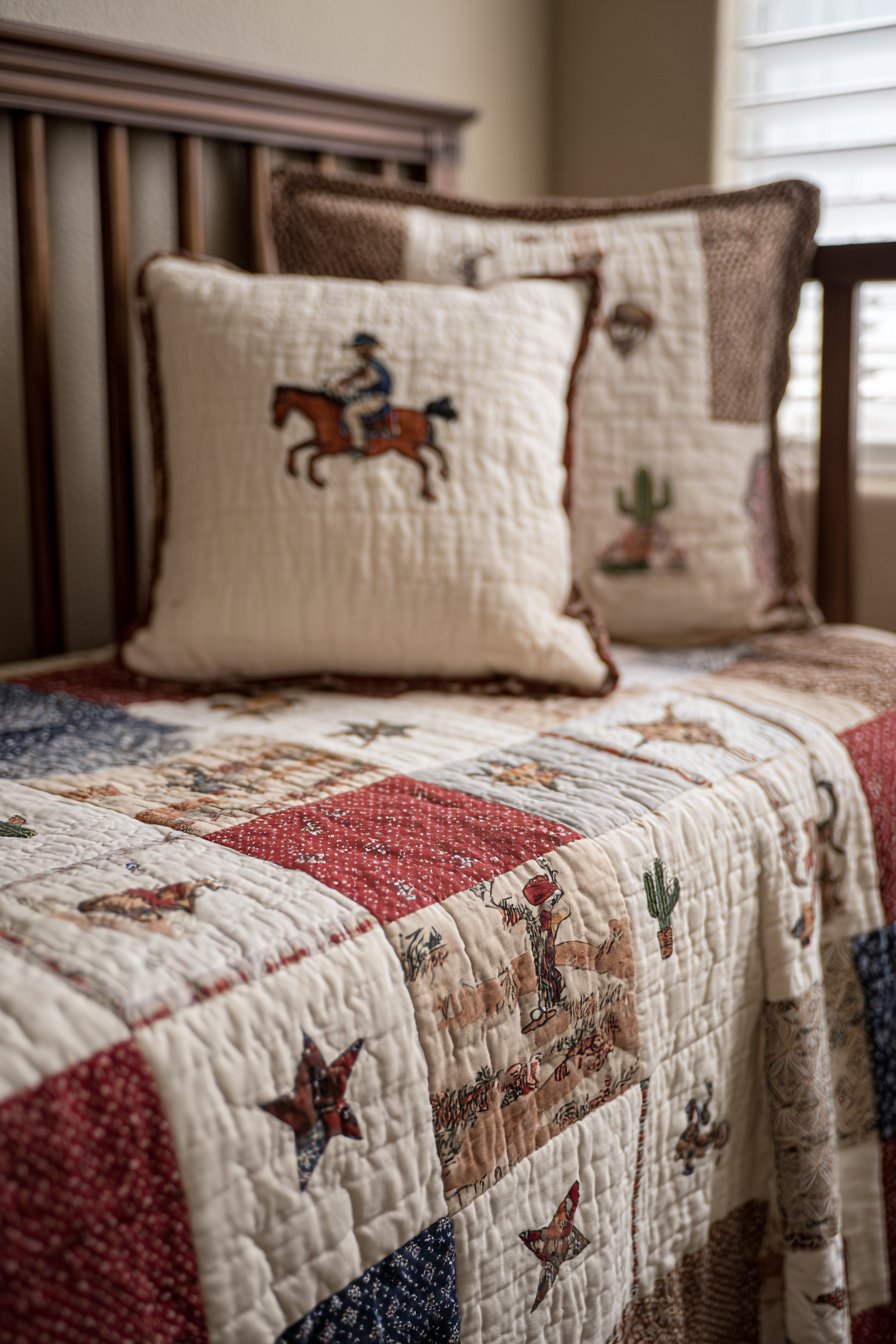
The bedding coordinates beautifully with throw pillows in the nearby glider. Durable canvas fabric with leather piping withstands daily use while maintaining style. These textiles demonstrate how Western themes work throughout coordinated spaces. The natural fabric textures feel soft against sensitive skin.
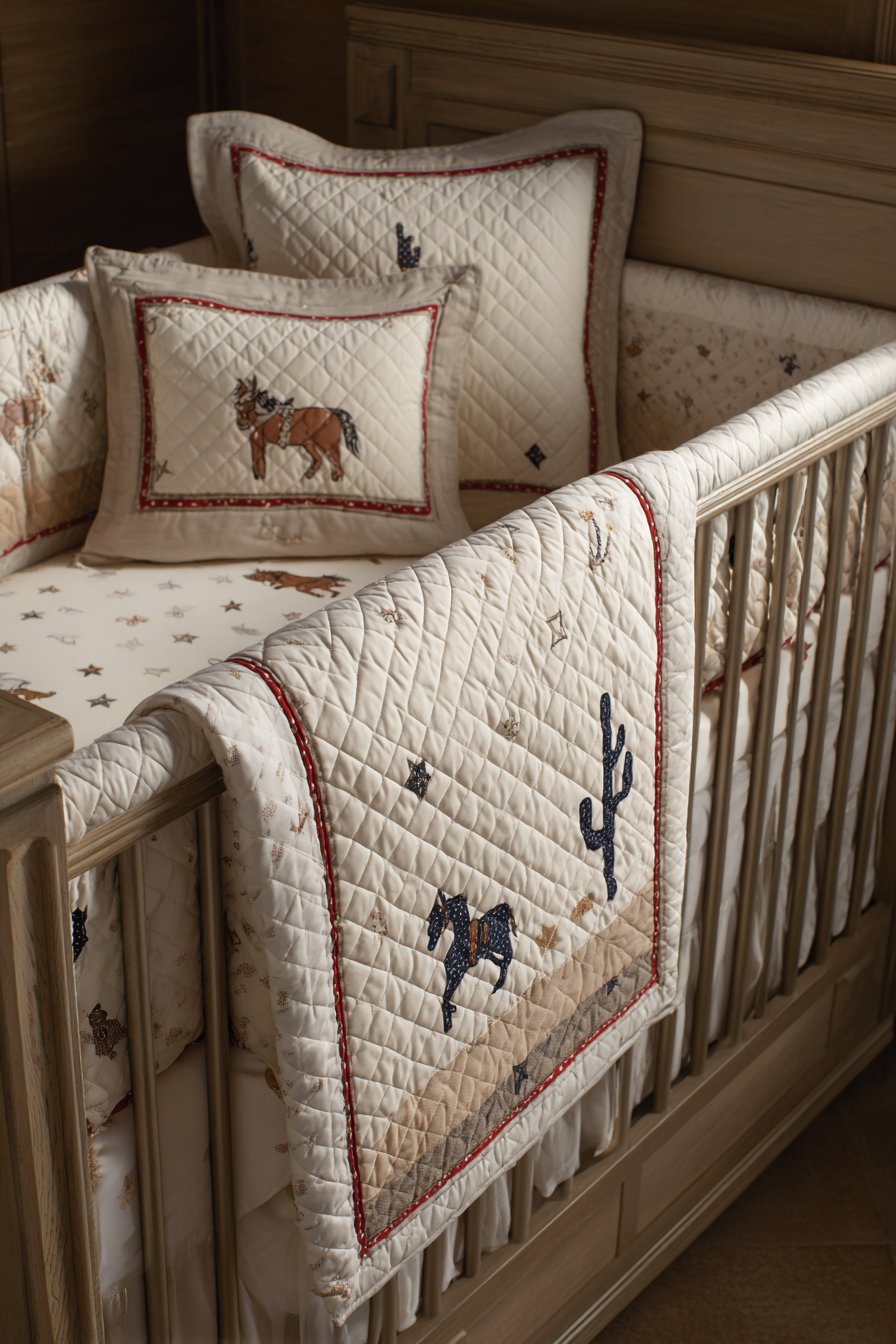
Hand-stitched quilt details deserve close appreciation for their artisanal value. Each stitch represents time and care invested in creating something special. The quality materials ensure these textiles remain beautiful through countless washings and years of use.
Key Design Tips:
- Choose organic cotton for bedding to minimize chemical exposure
- Select subtle patterns that won’t overstimulate during sleep times
- Invest in handmade quilts that become family heirlooms
- Coordinate textiles throughout the room for cohesive design
- Prioritize natural fabrics that breathe well and regulate temperature
6. Layered Lighting with Wagon Wheel Chandelier
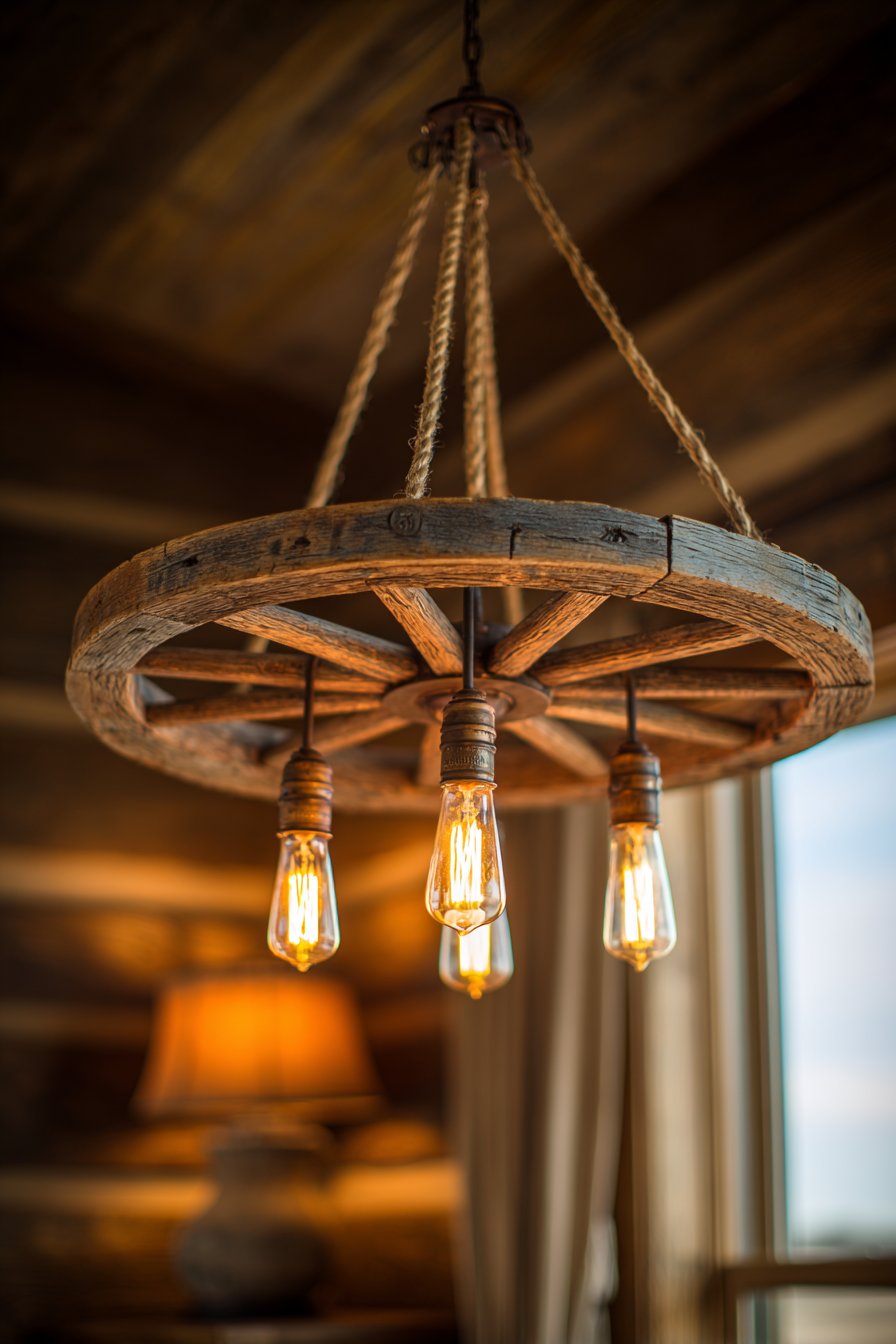
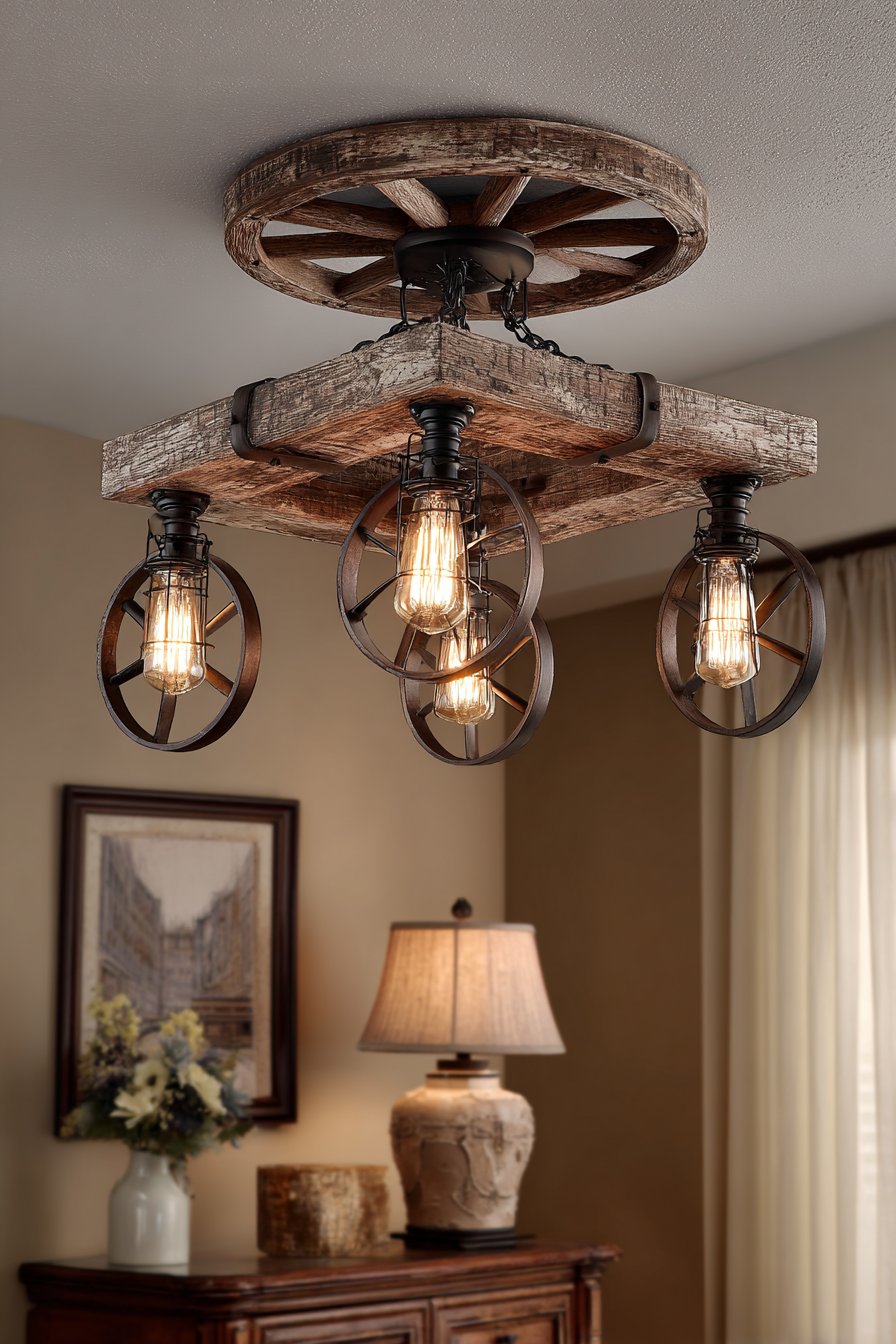
Thoughtful lighting design creates atmosphere while serving practical needs. A wagon wheel chandelier crafted from genuine aged wood provides striking focal point overhead. Edison bulb fixtures cast warm ambient light throughout the nursery. The ceiling-mounted fixture establishes Western character immediately upon entering the room.
On the dresser, a vintage-style table lamp offers task lighting for changing and organization. The ceramic base shaped like a cowboy boot adds whimsical charm. The distressed terracotta finish coordinates with other rustic elements. This lamp provides necessary illumination while contributing to the themed décor.
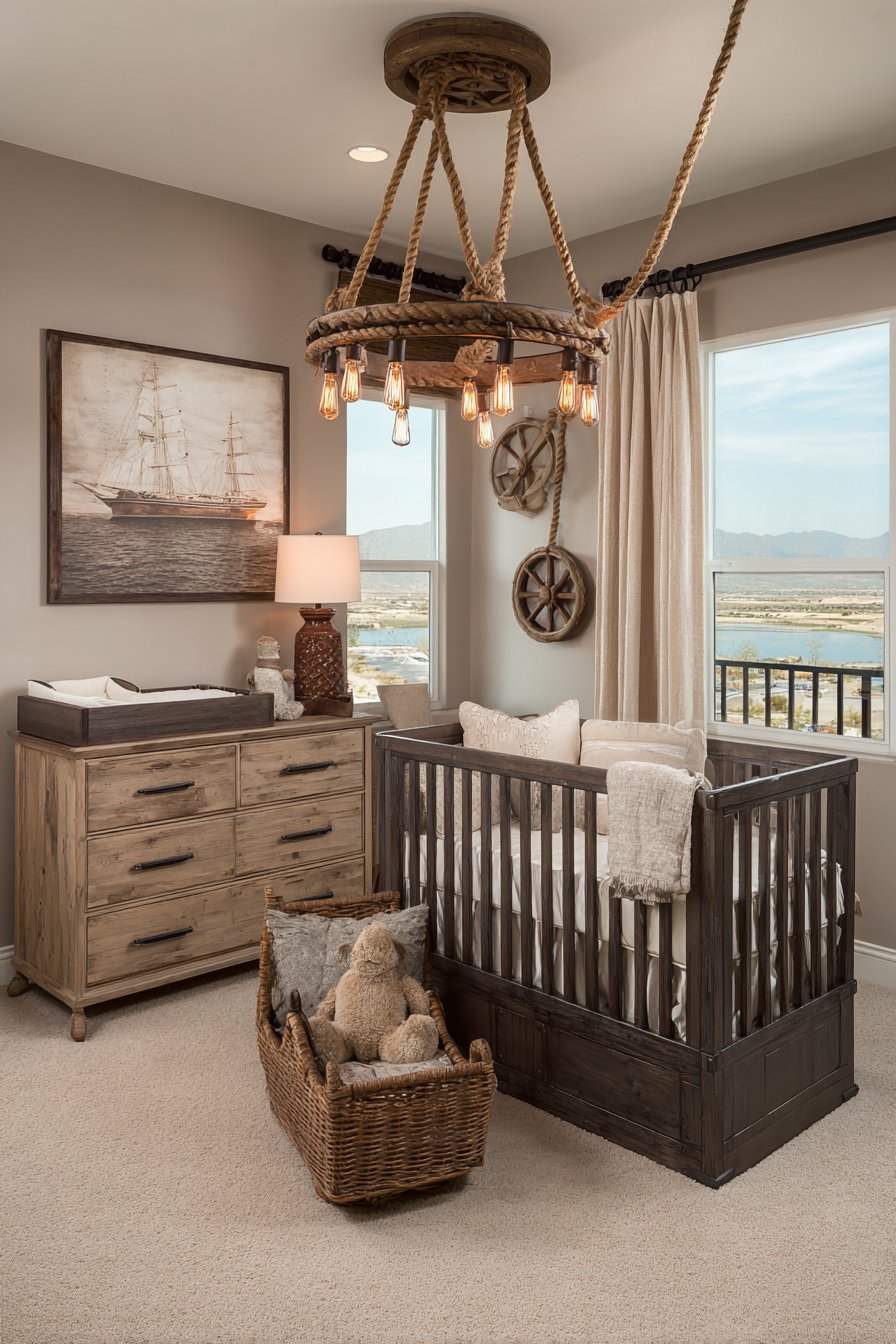
Soft rope-wrapped cord covers add authentic Western detail throughout the lighting scheme. These small touches demonstrate attention to design cohesion. The natural material wraps transform ordinary electrical cords into decorative elements. Golden hour photography reveals how layered lighting creates warmth and comfort.
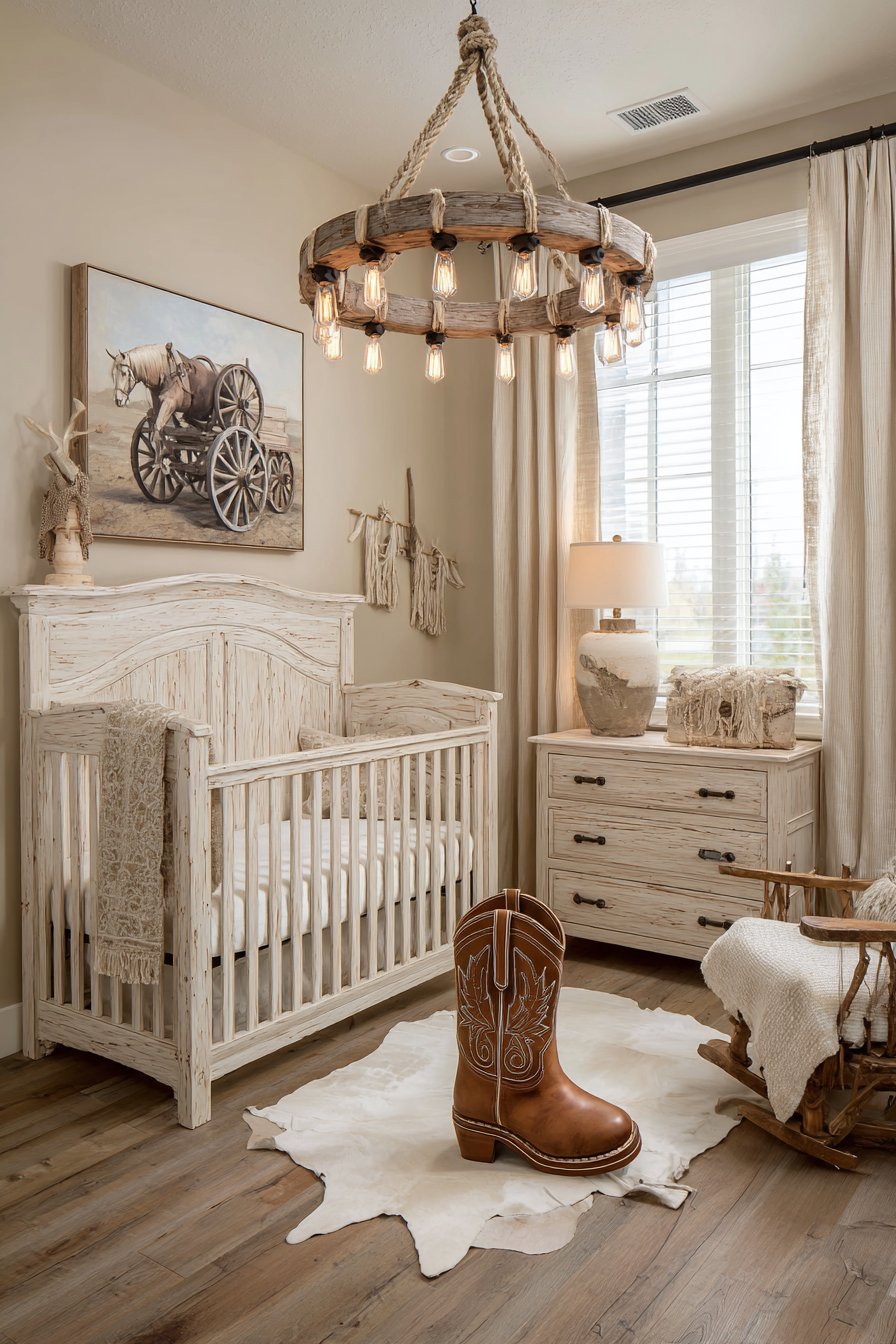
The combination of ambient and task lighting addresses different nursery activities appropriately. Overhead lighting illuminates the entire space for playtime. Table lamps provide softer, focused light for nighttime routines. This layered approach ensures flexibility throughout different daily needs.
Key Design Tips:
- Install dimmer switches for ambient lighting flexibility
- Choose Edison bulbs for warm light quality and vintage appeal
- Position task lighting near changing areas and rocking chairs
- Use rope-wrapped covers to maintain theme consistency
- Layer multiple light sources for adaptable illumination levels
7. Natural Linen Window Treatments
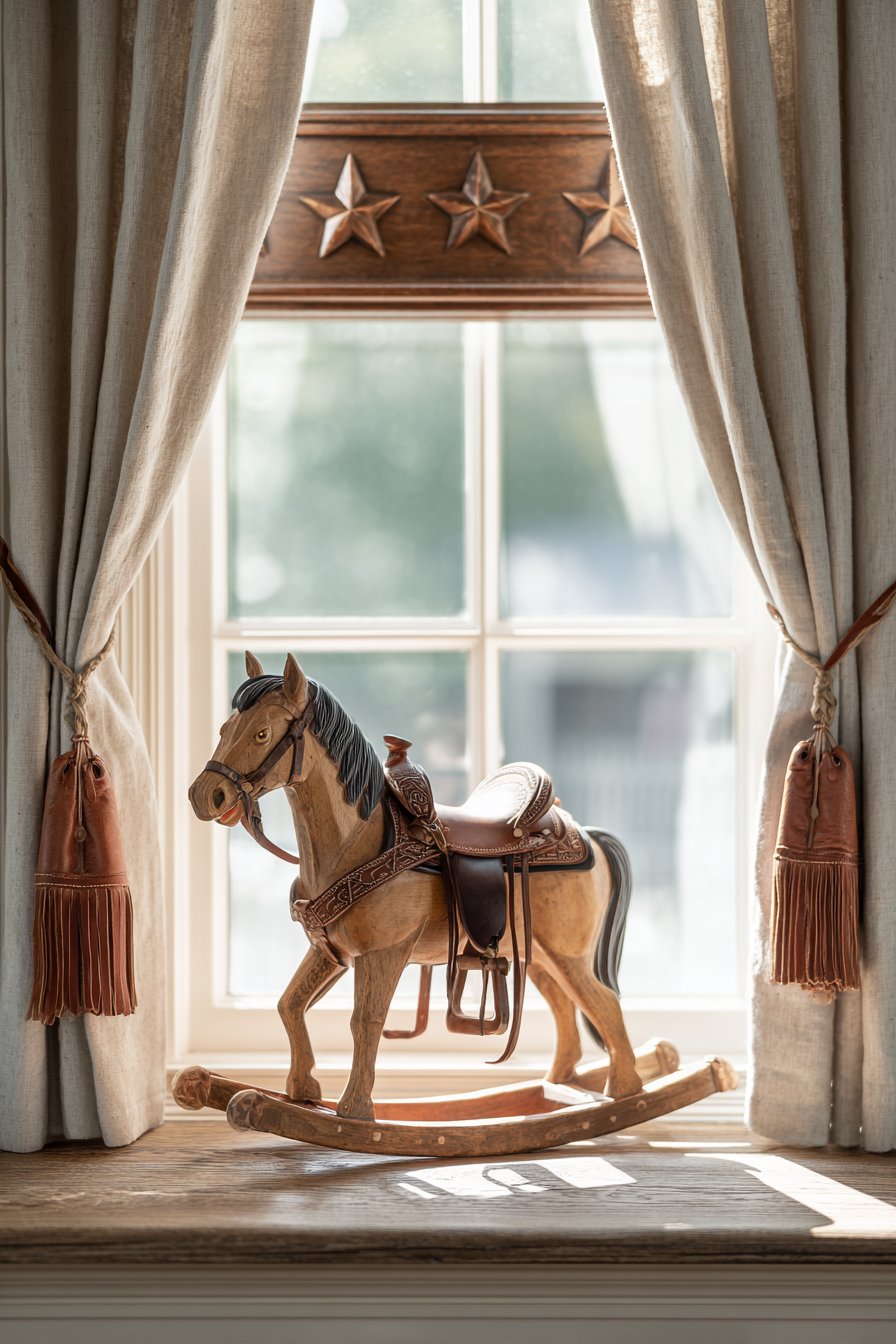
Window treatments significantly impact nursery ambiance through light control and aesthetic contribution. Natural linen curtains in oatmeal color provide soft filtration of harsh sunlight. Leather tab tops thread onto an iron rod with star-shaped finials. These hardware details honor Western themes while maintaining refined simplicity.
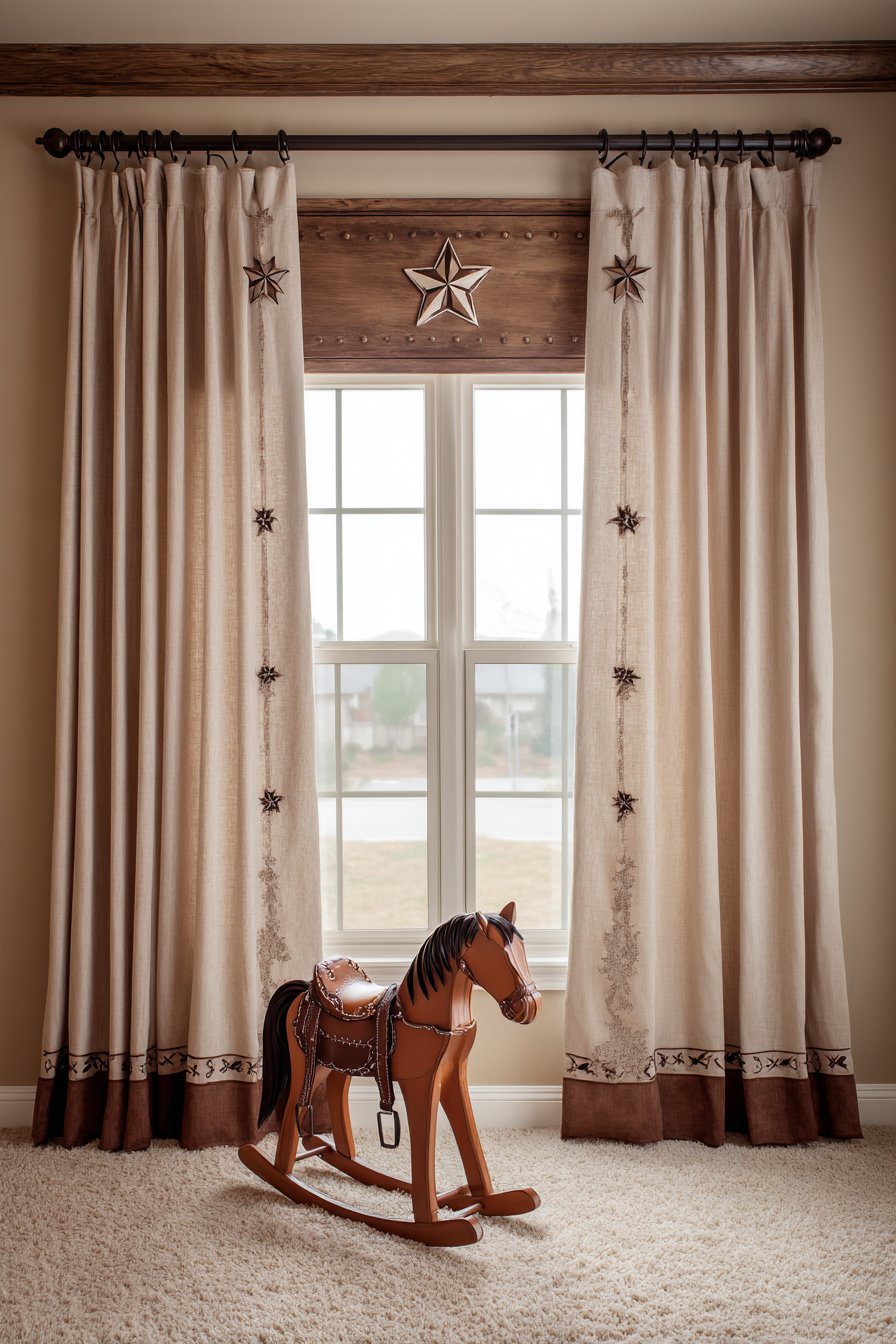
The curtains frame a charming view featuring a wooden rocking horse with genuine leather saddle. This traditional toy adds nostalgic appeal and dimensional interest. The positioning creates inviting visual composition near the window. A wooden valance with carved star details tops the treatment architecturally.
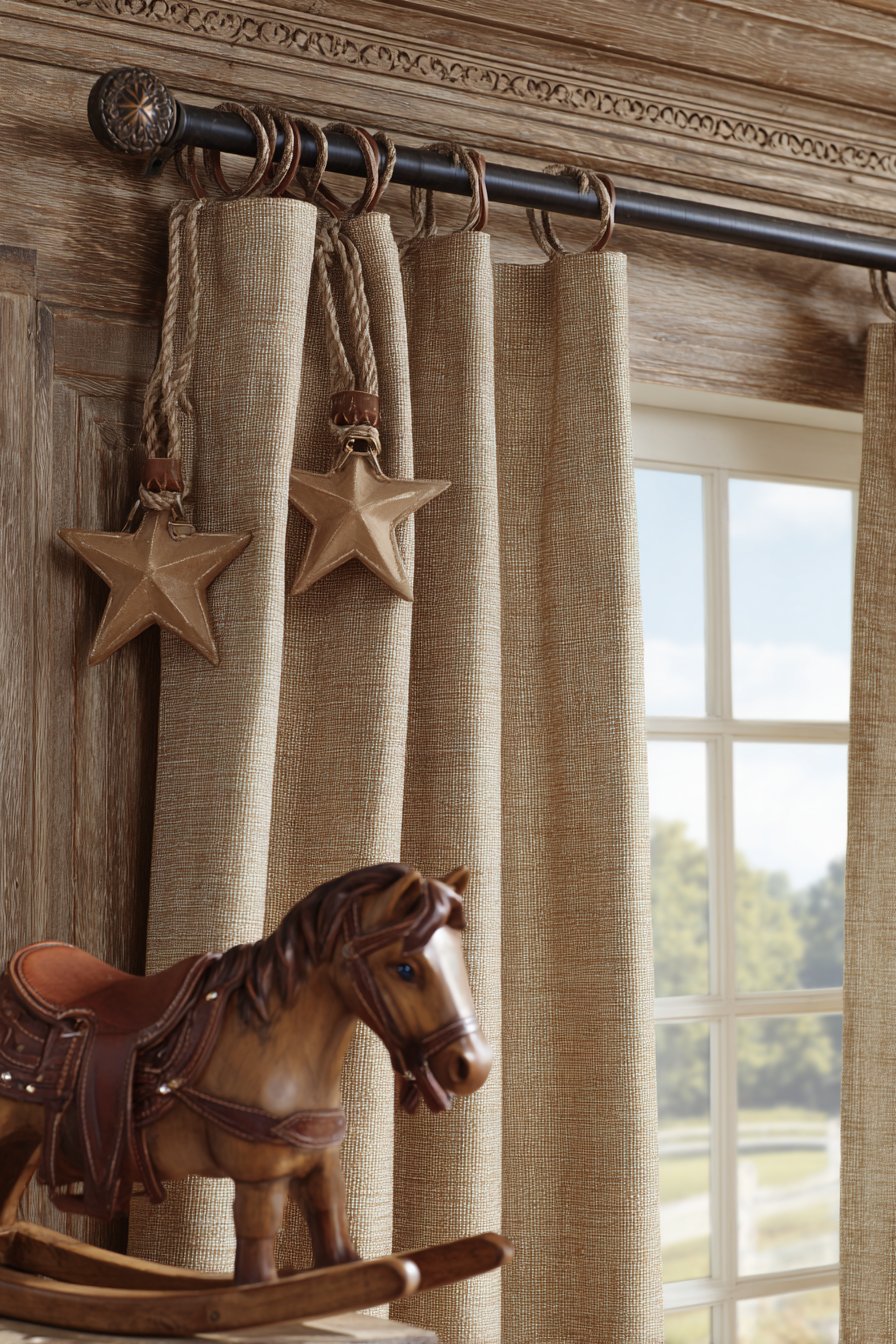
Soft filtered daylight illuminates the space with gentle quality. The natural linen diffuses bright sunshine while maintaining connection to outdoor light. This balance creates appropriate brightness for nursery activities. Gentle shadows emphasize the Western theme without creating darkness.
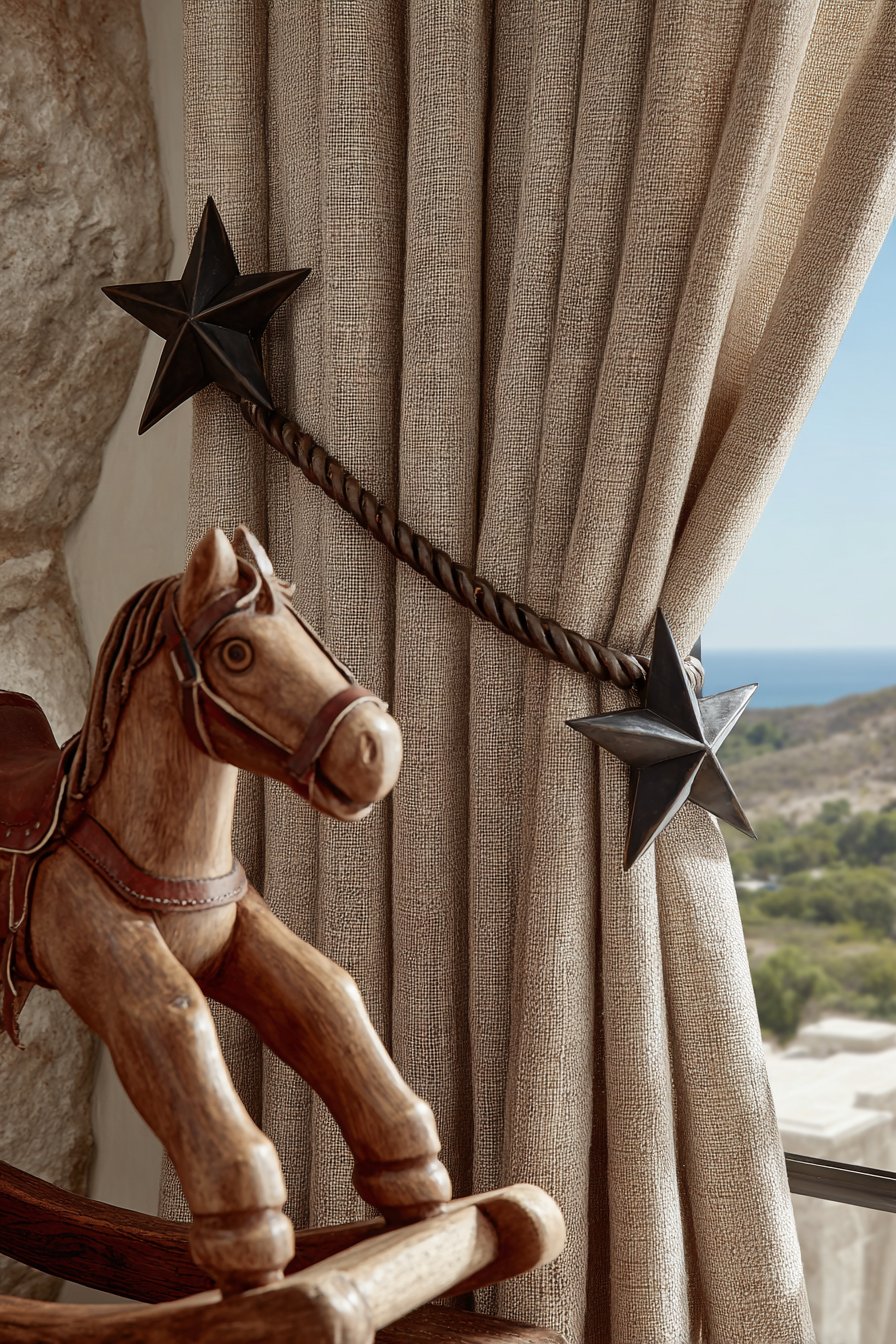
The hardware selection demonstrates how small details contribute to overall design success. Star-shaped finials reinforce the cowboy theme subtly. The iron rod provides sturdy support while introducing industrial texture. These functional elements enhance rather than detract from the window’s beauty.
Key Design Tips:
- Choose natural linen for light filtration and breathability
- Select hardware that complements the Western theme
- Install curtains high and wide to maximize natural light
- Add wooden valances for architectural interest
- Position furniture near windows to capitalize on natural lighting
8. Wide-Plank Oak Hardwood Flooring
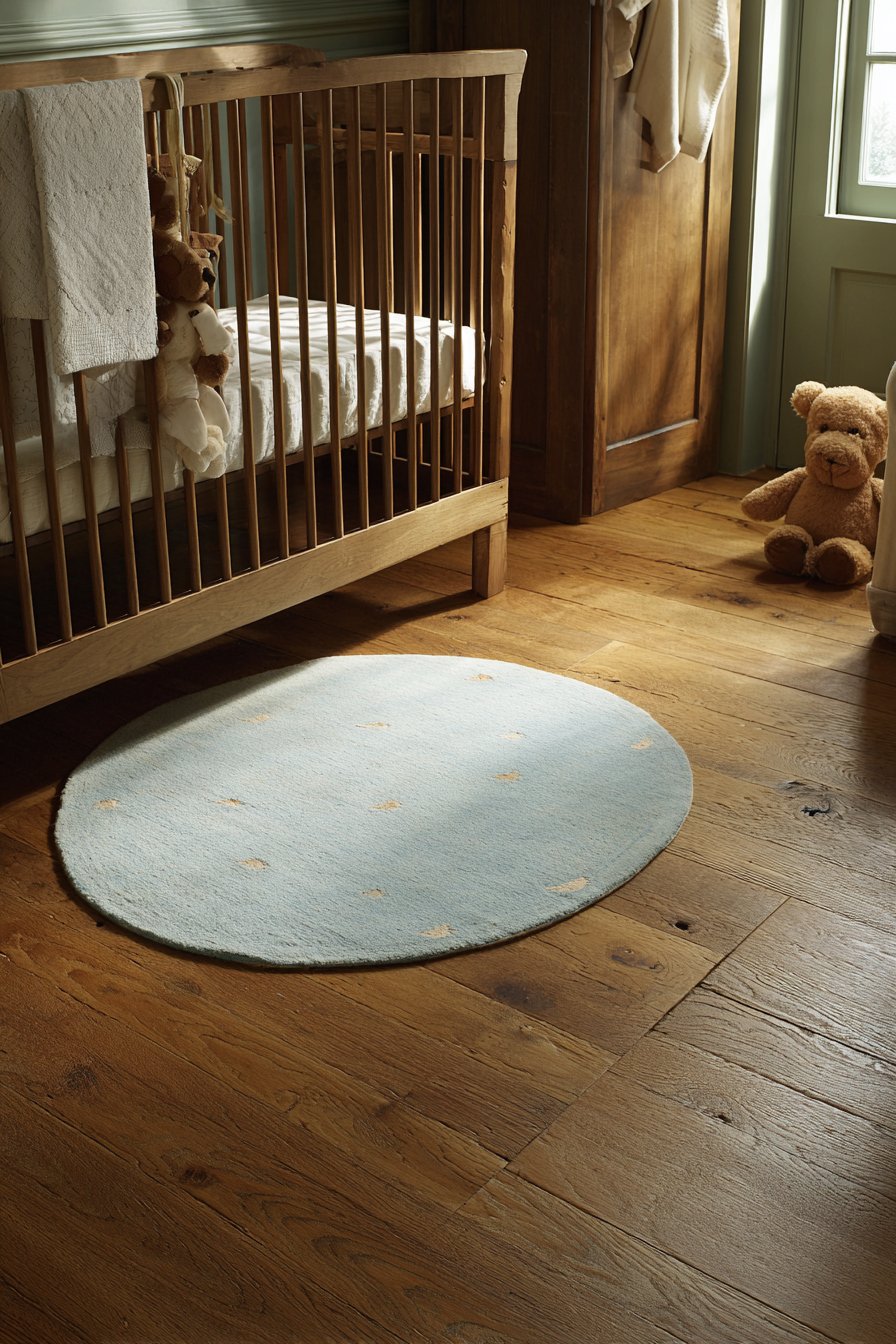
Foundational flooring choices impact every other design decision in the nursery. Wide-plank oak hardwood in medium honey tone provides timeless beauty. Visible grain patterns and subtle hand-scraped texture add organic character. The warm wood tones create inviting atmosphere from the ground up.
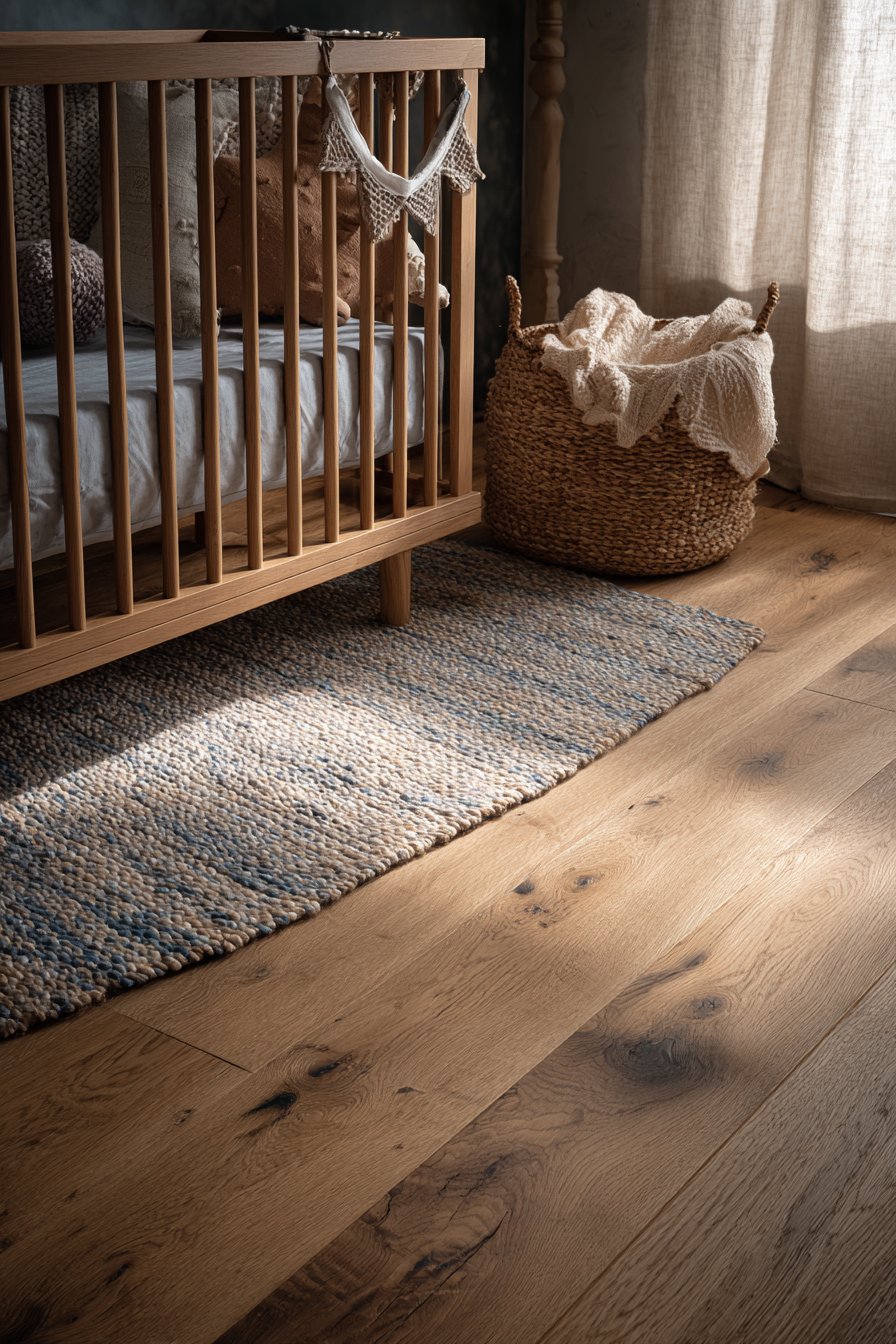
A braided wool rug in rust, cream, and denim blue tones defines the play area. The natural fibers show beautiful texture variations. This layering provides soft surface for tummy time and early crawling. The rug placement considers practical furniture arrangements around cribs and changing tables.
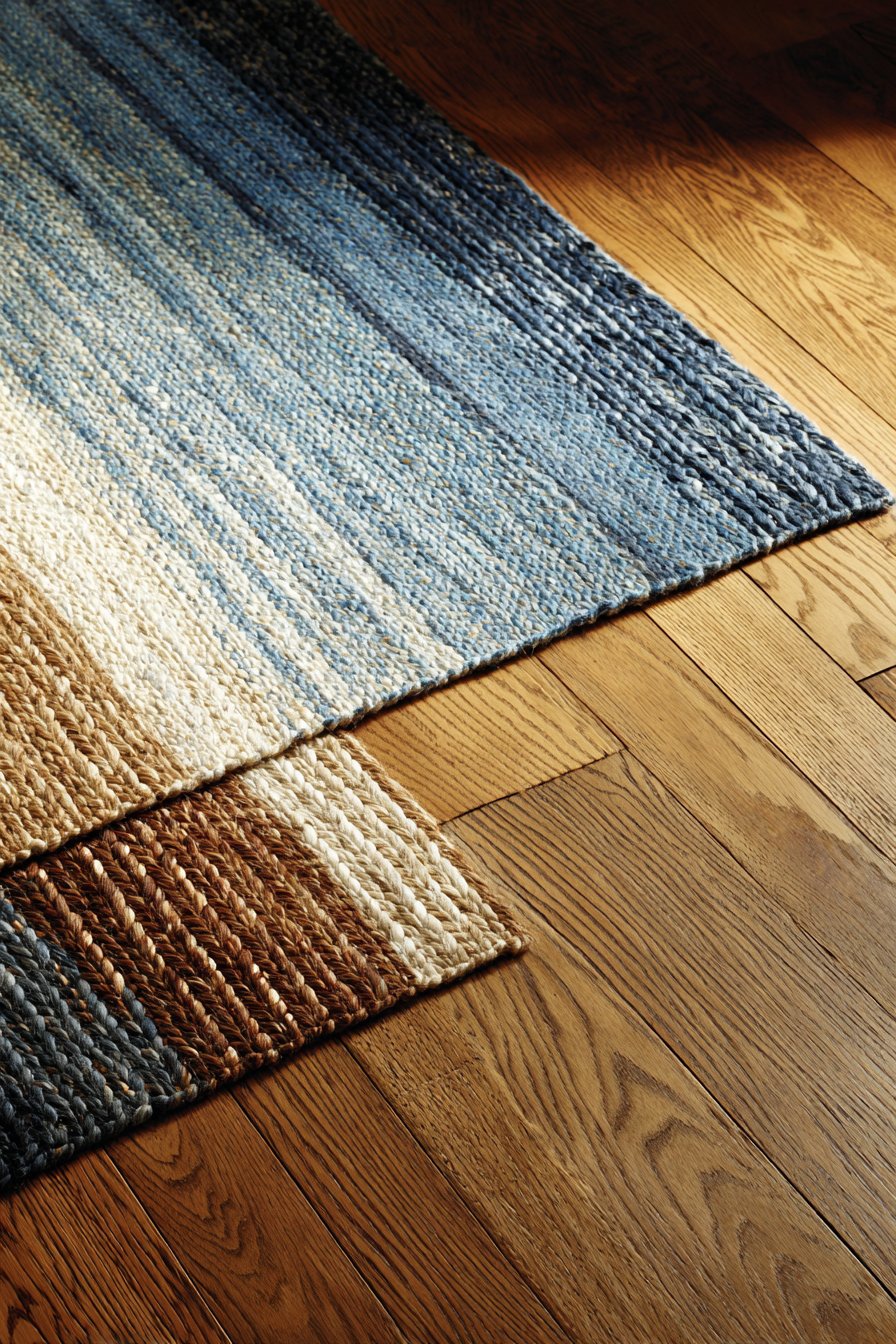
The material interplay between smooth hardwood and textured natural fiber creates visual interest. These contrasting surfaces engage multiple senses throughout the space. Soft natural lighting highlights the authentic Western color palette distributed across flooring layers. The honey-toned wood warms the entire room naturally.
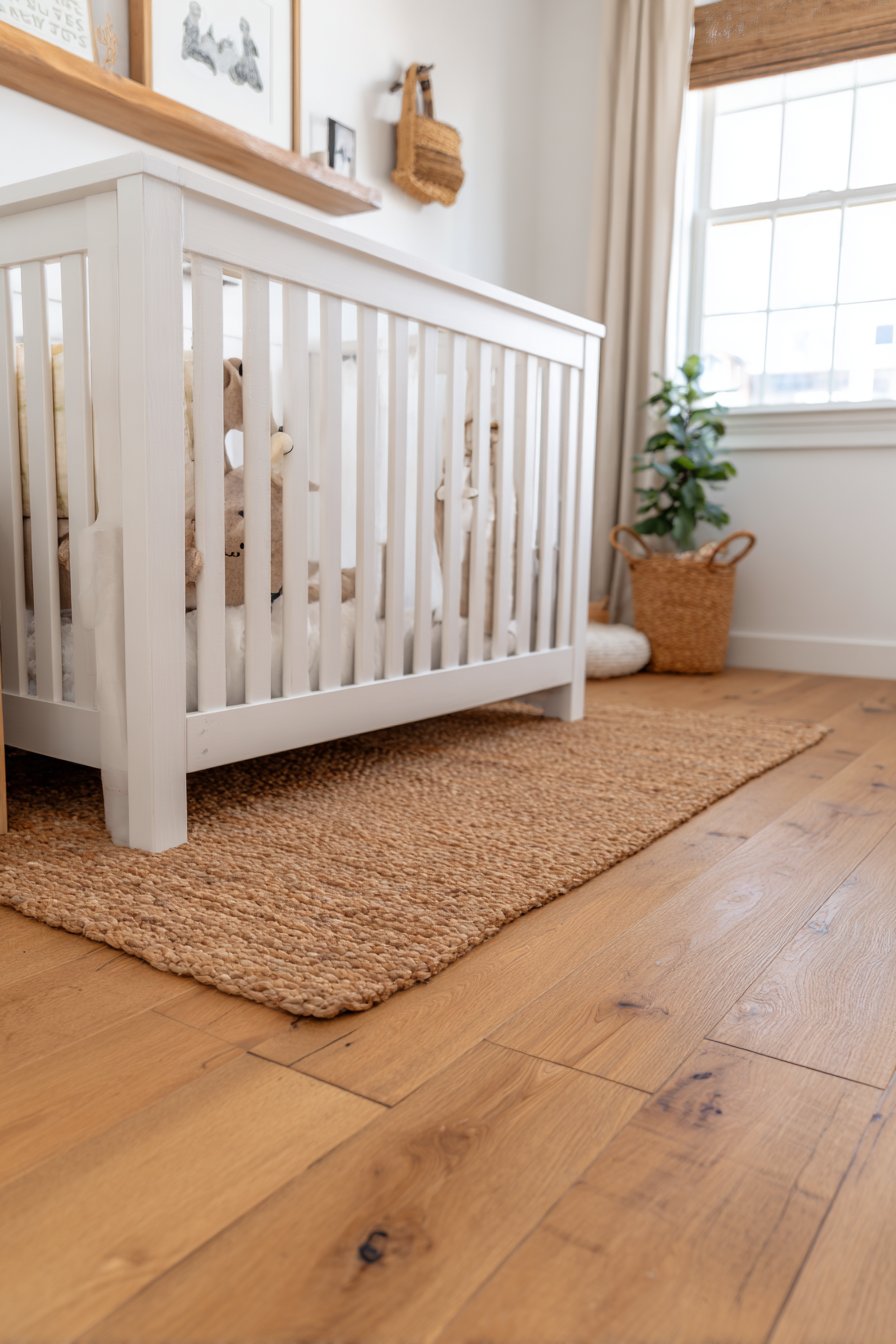
Quality hardwood flooring represents investment in long-term nursery durability. These floors withstand the wear of childhood while maintaining beauty. The natural material ages gracefully, developing richer patina over time. Proper sealing ensures easy cleaning of inevitable spills and accidents.
Key Design Tips:
- Select wide-plank flooring for contemporary rustic appeal
- Choose medium wood tones that hide minor scratches and wear
- Layer area rugs over hardwood for softness and warmth
- Ensure proper sealing for easy maintenance with babies
- Consider hand-scraped textures that embrace natural imperfections
9. Handcrafted Mobile with Felt Elements
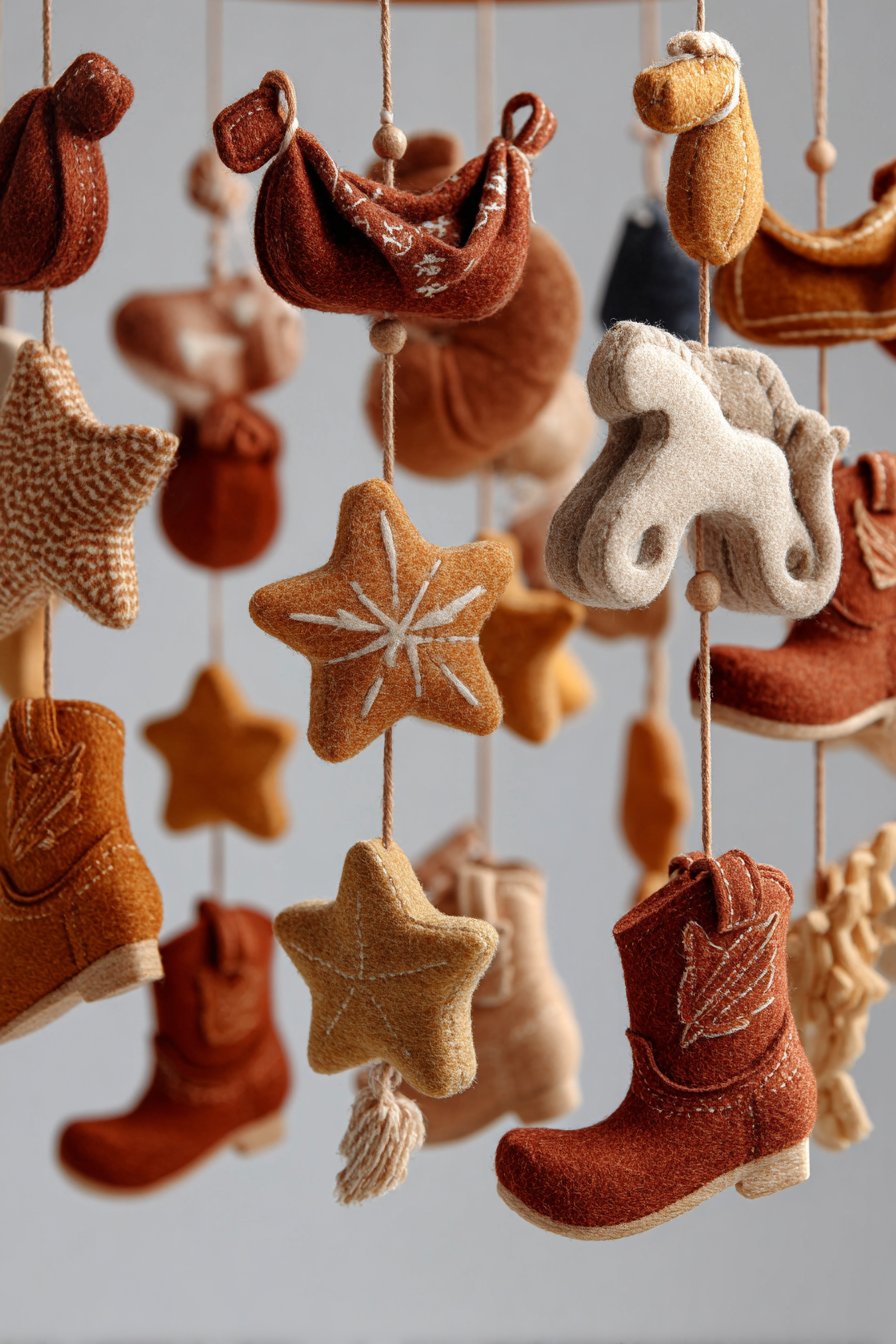
Above the crib, a custom mobile captures attention with whimsical Western charm. Hand-stitched felt elements include miniature cowboy boots, horses, stars, and bandanas. Earth tones of tan, rust, and navy coordinate with the room’s overall palette. Each element shows careful craftsmanship in its dimensional construction.
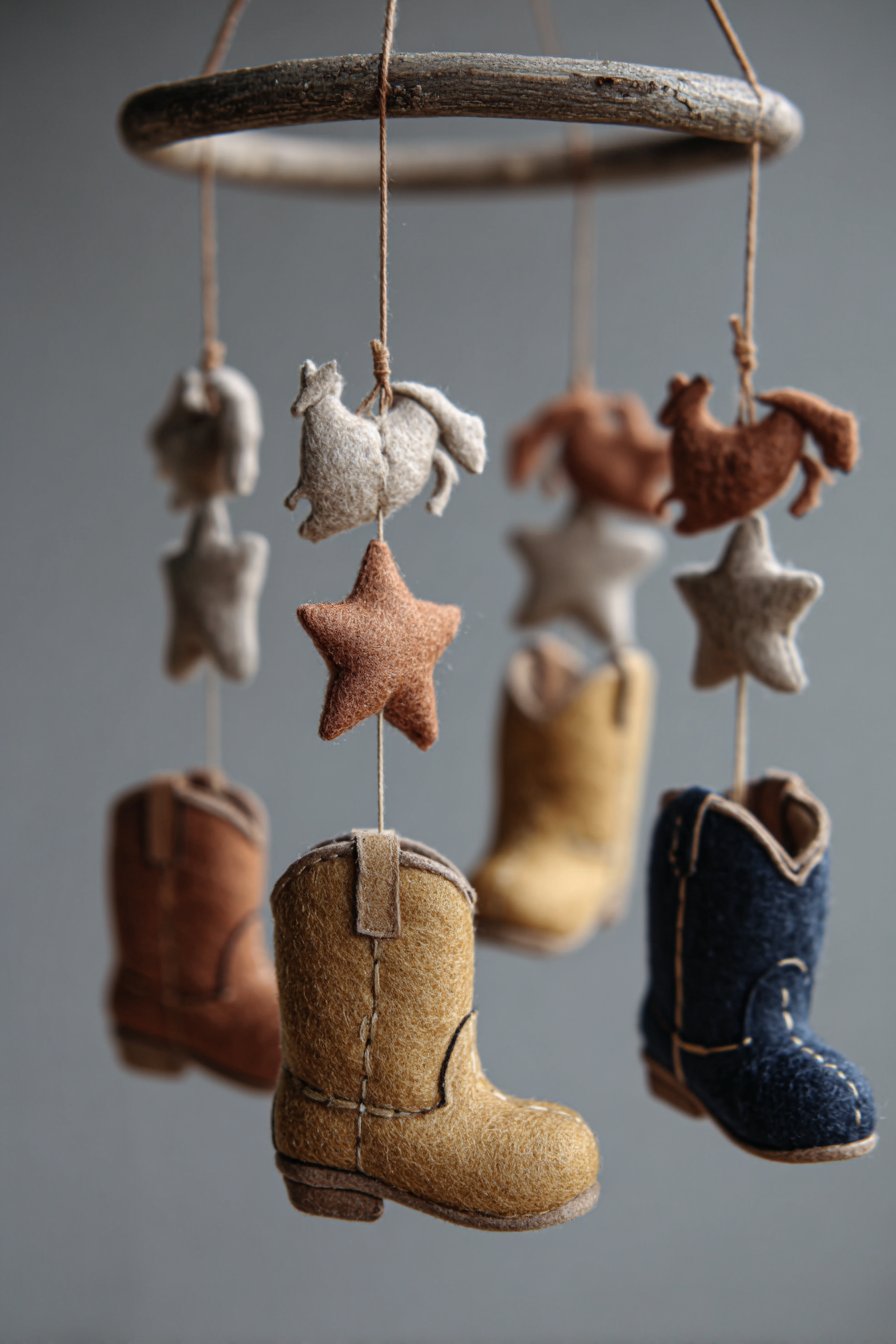
The mobile suspends from a weathered wood frame with leather cord attachments. Natural variations in the hide add organic beauty to functional hardware. The gentle movement of elements soothes babies while providing visual stimulation. This handcrafted quality distinguishes the mobile from mass-produced alternatives.
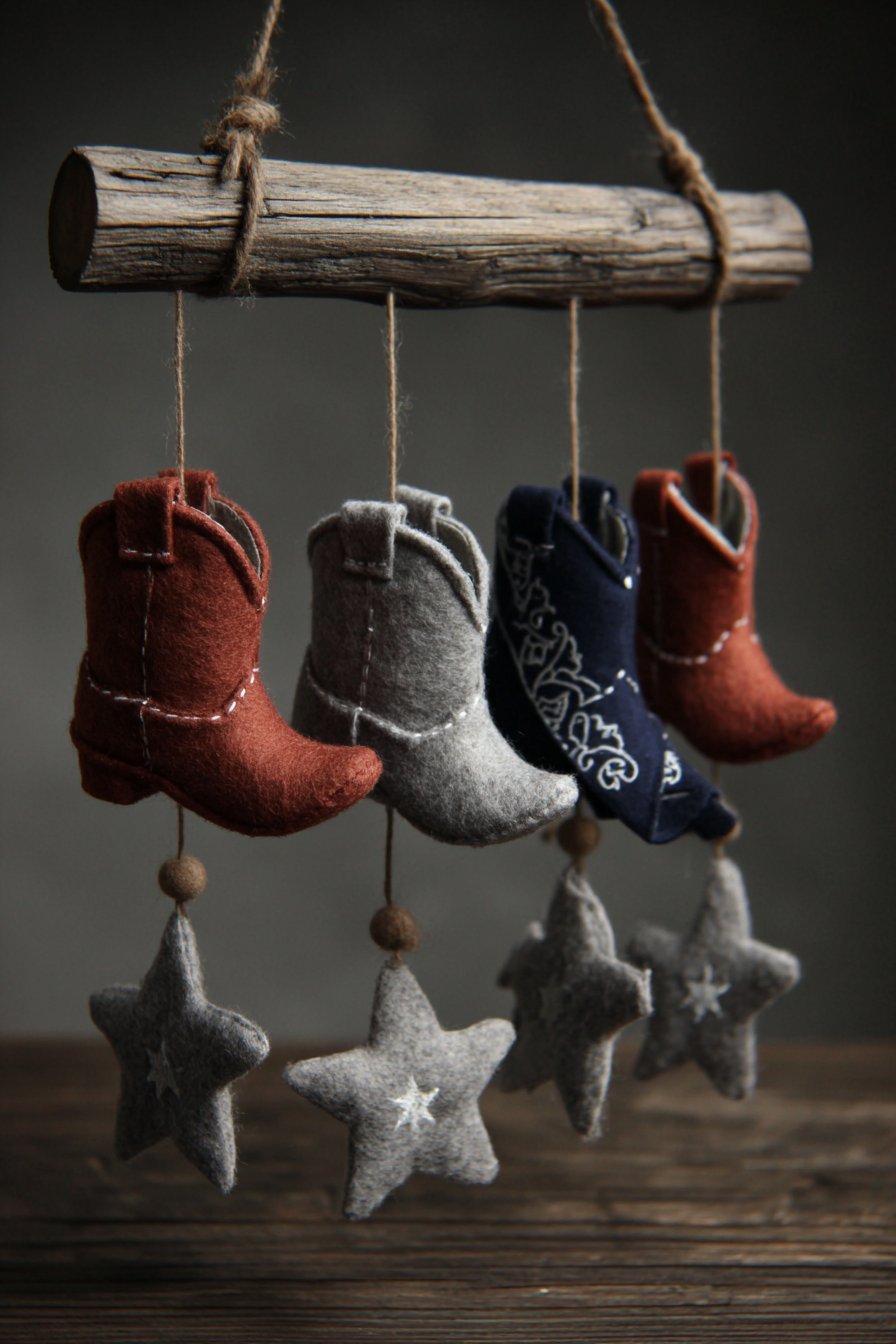
Detail-focused observation reveals artisanal construction appropriate for Western-themed nurseries. The dimensional felt textures catch light beautifully throughout the day. Soft diffused lighting emphasizes the handmade quality and careful stitching. These details matter in creating nursery environments that feel personal and loved.
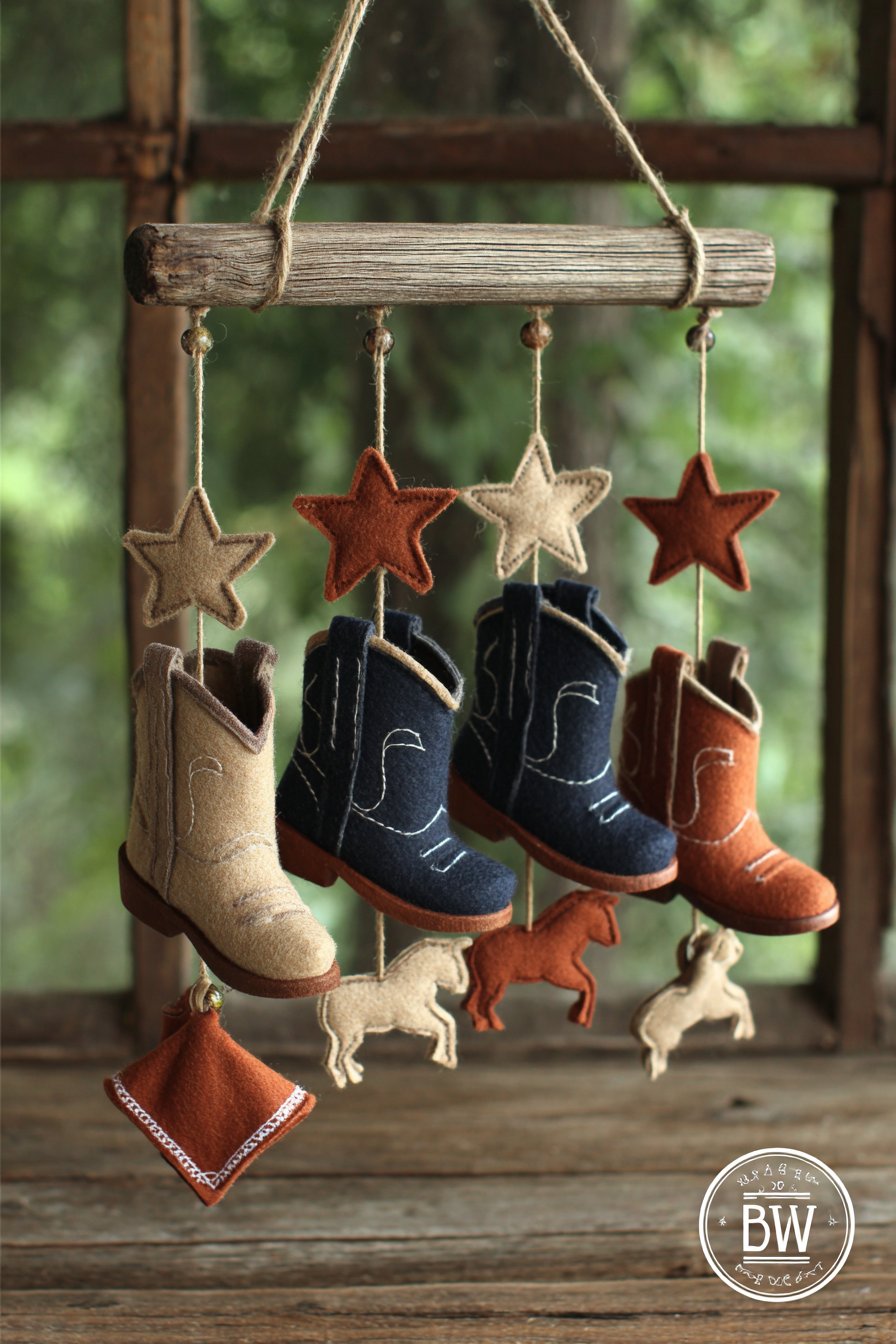
Custom mobiles offer opportunities for incorporating family heritage or personal symbolism. The Western elements tell stories about cowboy culture and frontier values. This visual storytelling begins in infancy, creating connections to family traditions and cultural identity.
Key Design Tips:
- Choose mobiles with high-contrast elements for infant visual development
- Ensure secure mounting for safety above cribs
- Select handcrafted pieces that reflect personal style
- Coordinate mobile colors with overall room palette
- Position mobiles where babies can see them comfortably while lying down
10. Vintage Wagon Toy Storage
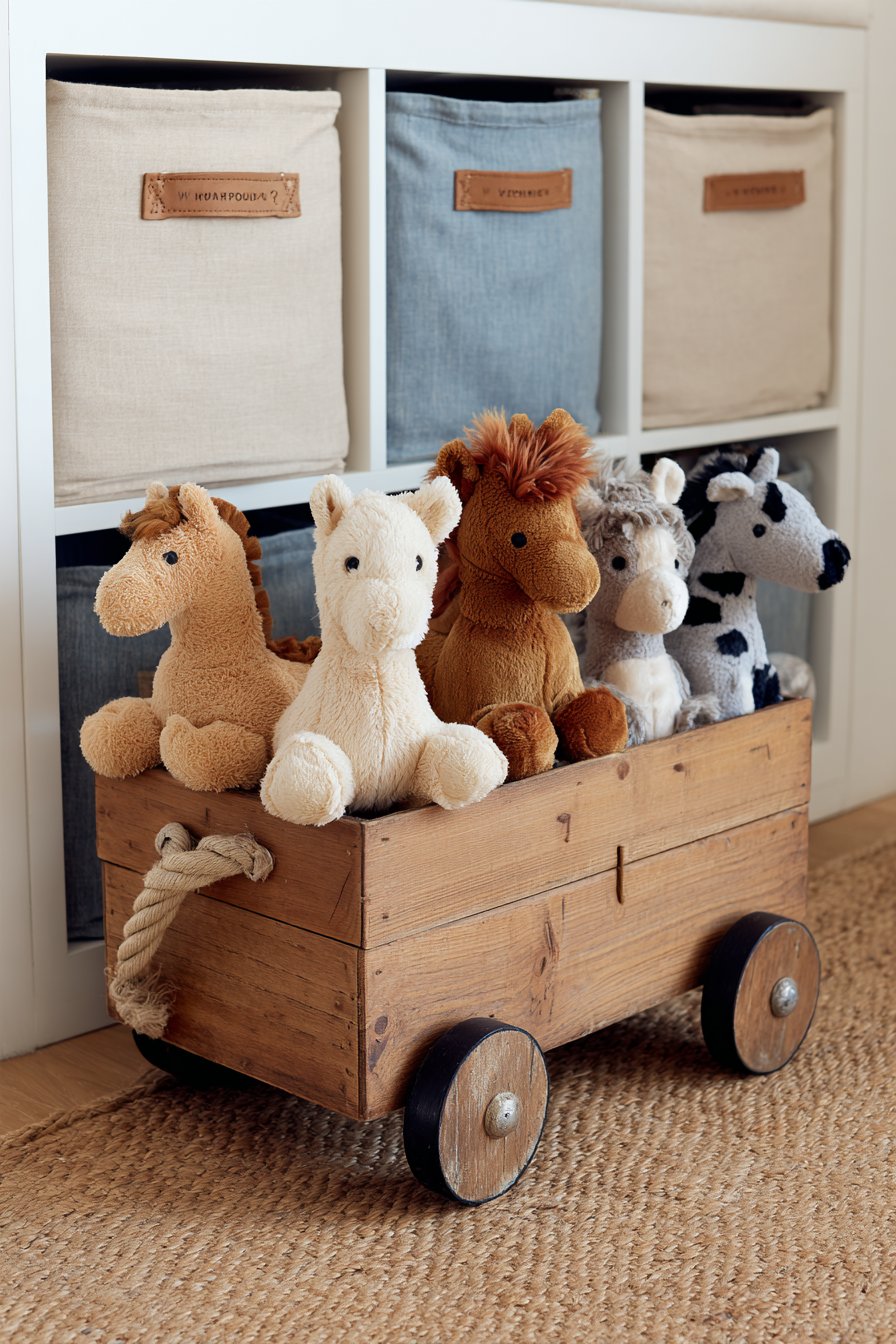
Creative storage solutions transform nursery organization into decorative features. A repurposed vintage wooden wagon with working wheels provides charming storage. The rope handle and weathered finish tell stories of authentic history. Filled with soft plush animals including horses and cattle, the wagon invites imaginative play.
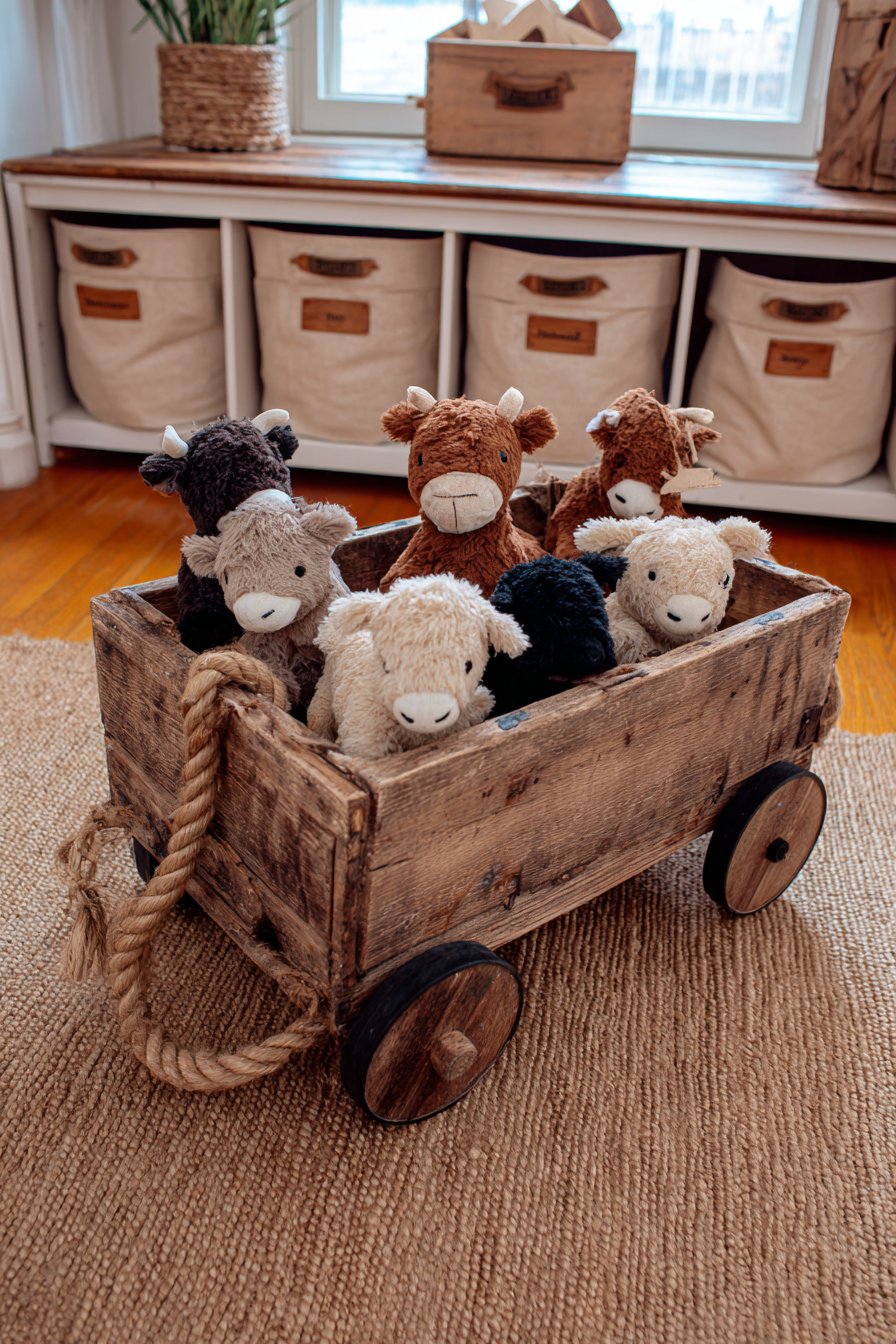
Near built-in cubbies, canvas bins in natural tan and denim blue maintain organization. Leather tags label each bin’s contents for easy identification. This system grows with your child’s changing storage needs. A wooden toy chest with rope handles offers additional capacity for larger items.
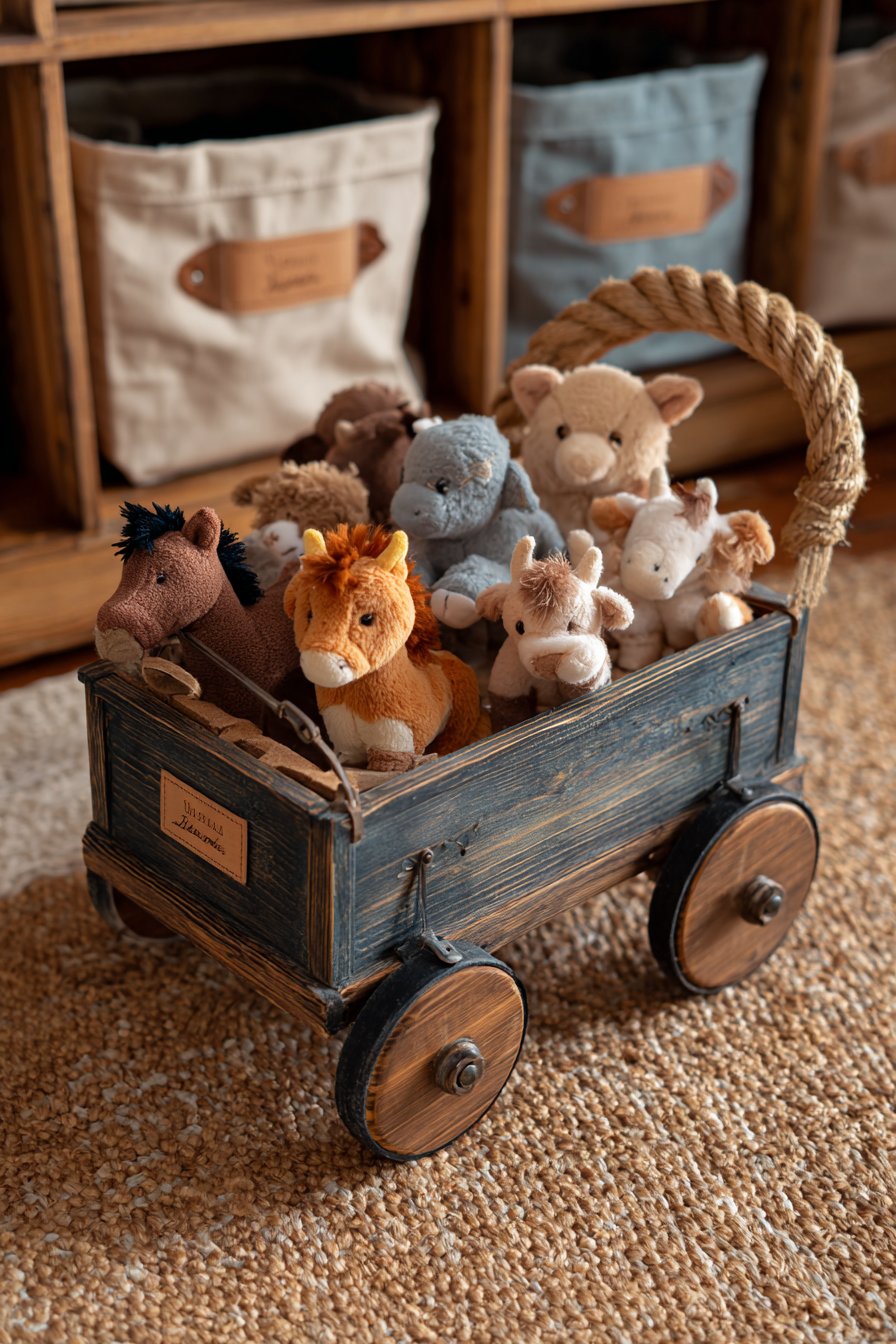
The practical organization system doesn’t sacrifice Western aesthetic appeal. Every storage piece contributes to the overall design scheme. Weathered wood finishes and natural fiber materials create cohesive visual flow. The accessible arrangement encourages independence as toddlers begin helping with cleanup.
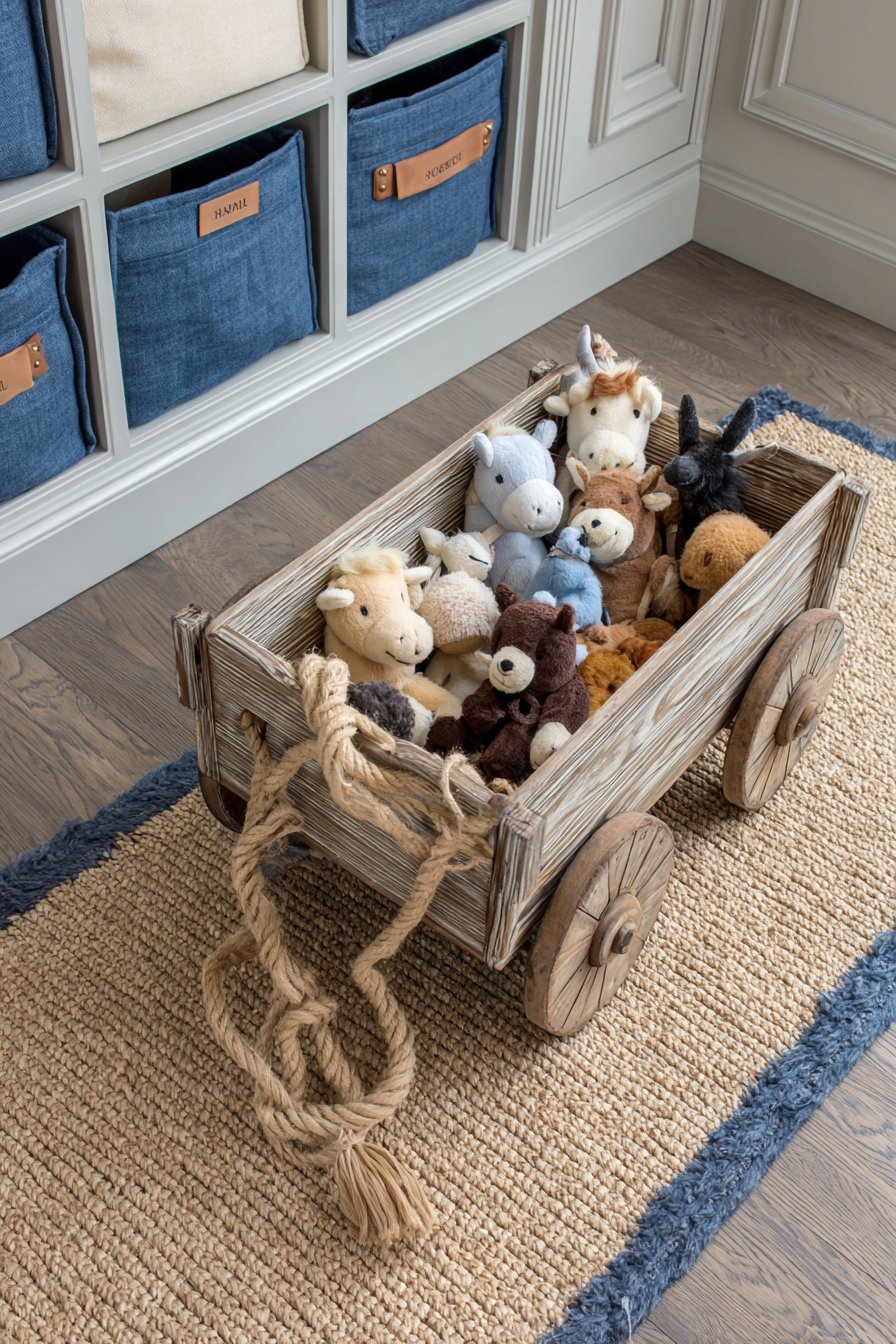
Wide-angle views show how storage integrates throughout the space rather than concentrating in one area. This distribution prevents cluttered appearance while maximizing functionality. The authentic Western materials ensure storage solutions enhance rather than detract from nursery beauty.
Key Design Tips:
- Repurpose vintage pieces for character and sustainability
- Choose storage at various heights for different items
- Label bins clearly for easy organization maintenance
- Select natural materials that coordinate with overall design
- Create accessible storage systems that encourage eventual independence
11. Curated Gallery Wall with Western Prints
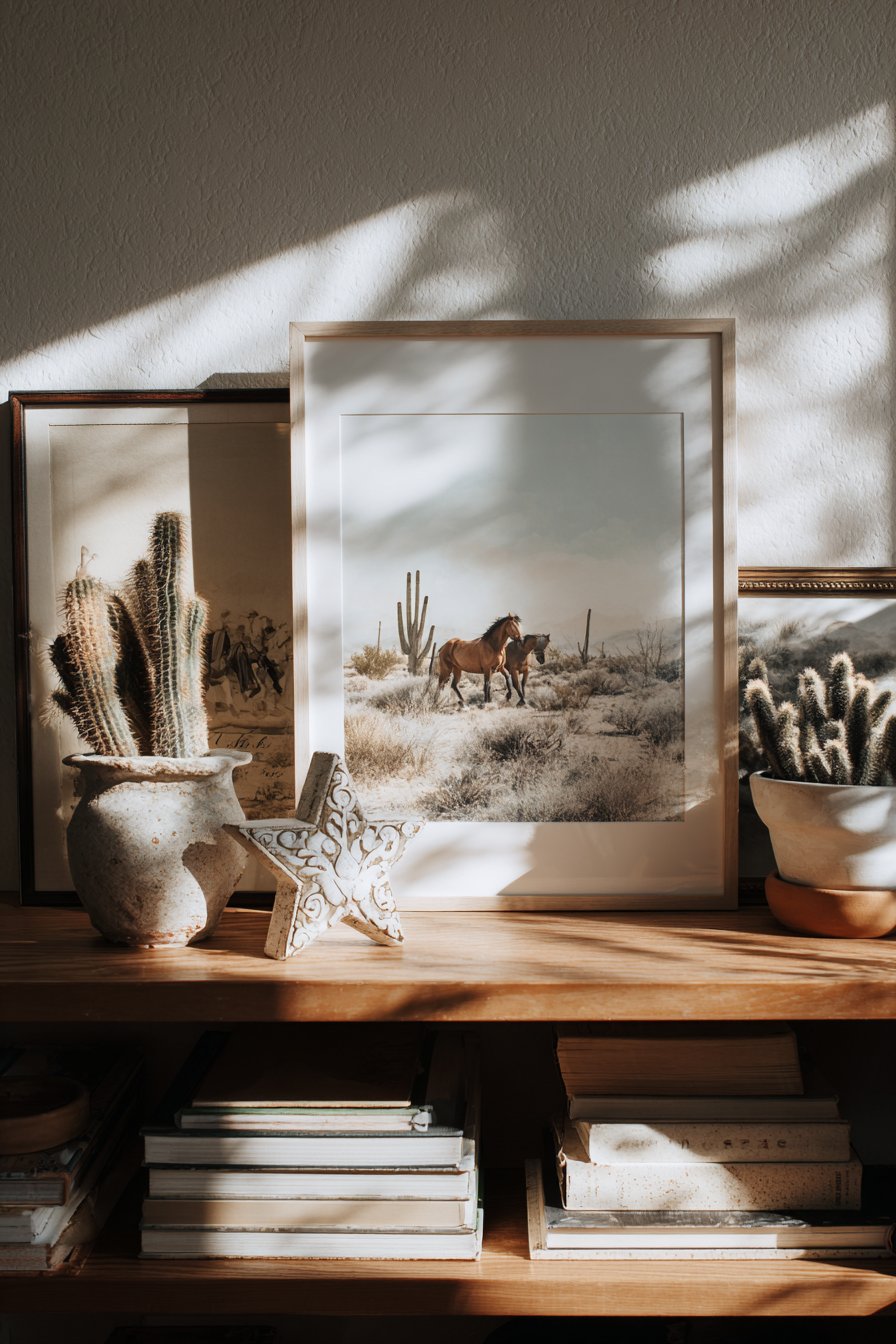
A thoughtfully arranged gallery wall showcases vintage Western prints and watercolor illustrations. Desert landscapes, horses, and cacti appear in muted natural tones. The frames vary in size creating visual interest through intentional asymmetry. Consistent weathered wood finishes in grey and natural oak unify the collection.
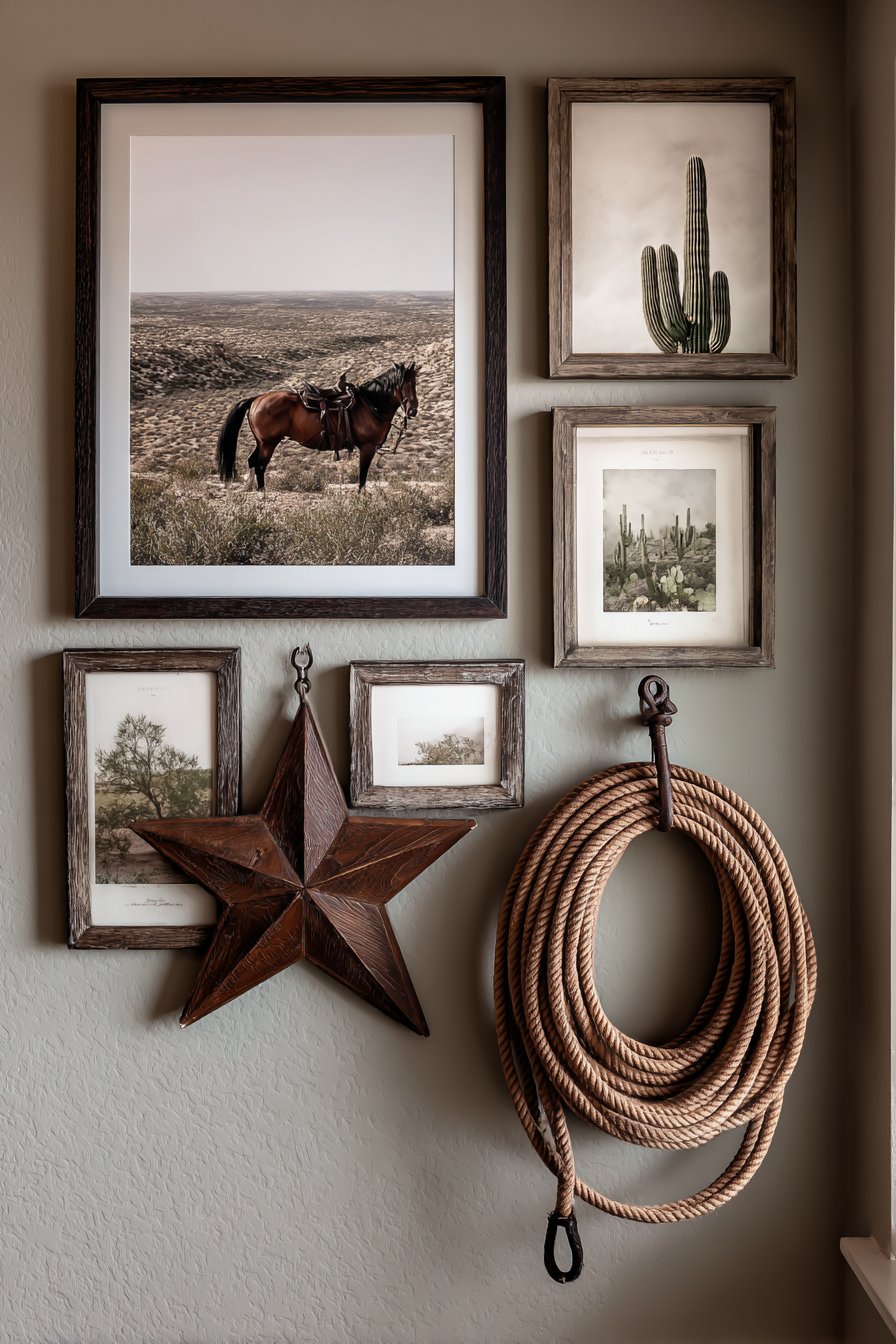
A dimensional wooden Texas star and authentic lasso provide textural variety among framed pieces. These three-dimensional elements break up flat artwork effectively. The lasso’s natural rope brings authentic ranch heritage into the display. Together, these pieces create compelling focal point on the nursery wall.
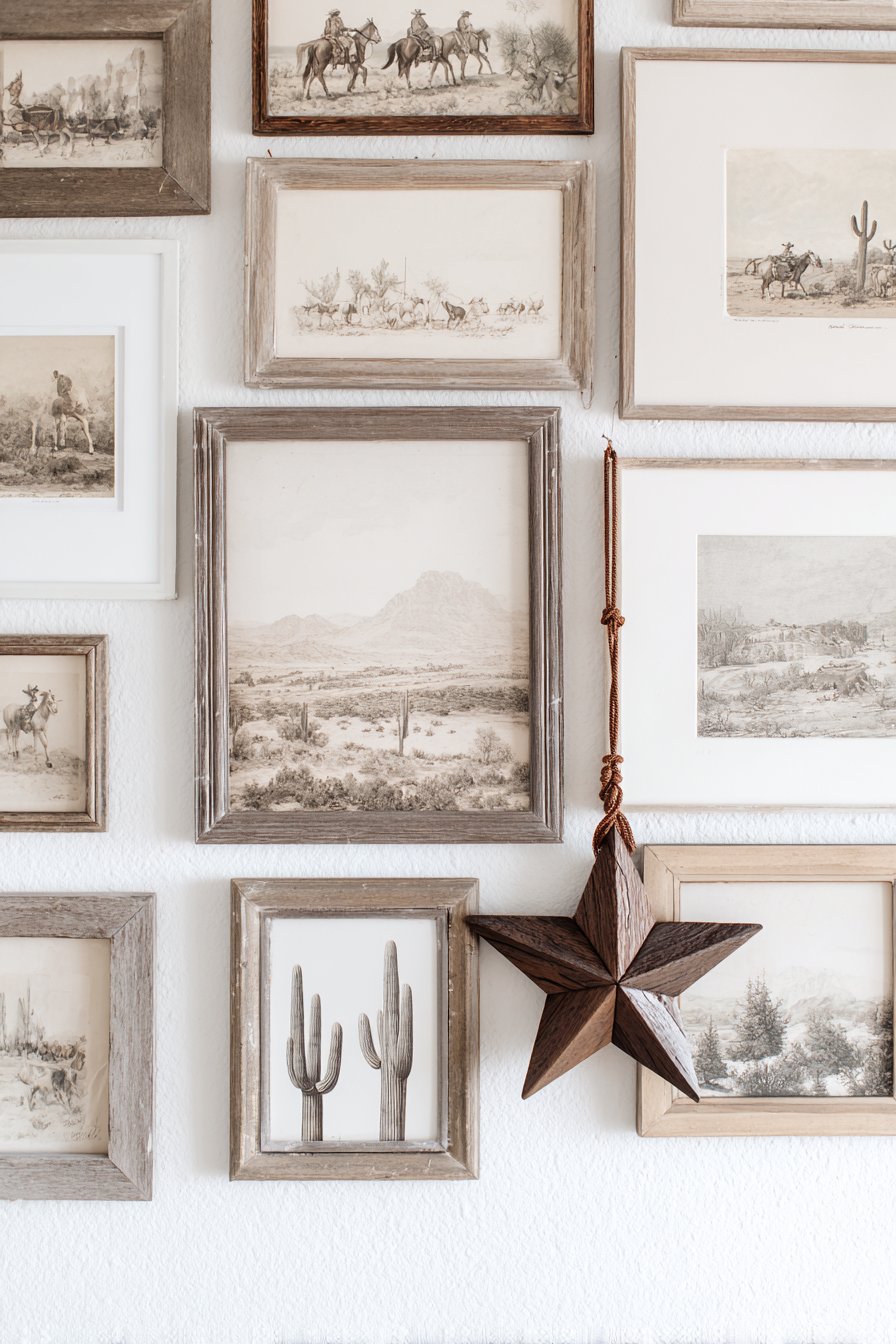
Professional curation shows in the balanced arrangement and appropriate spacing. Natural light creates subtle shadows that enhance dimensional pieces throughout the day. This changing quality keeps the gallery wall dynamic and interesting. The careful selection reflects personal taste while maintaining cohesive Western theme.
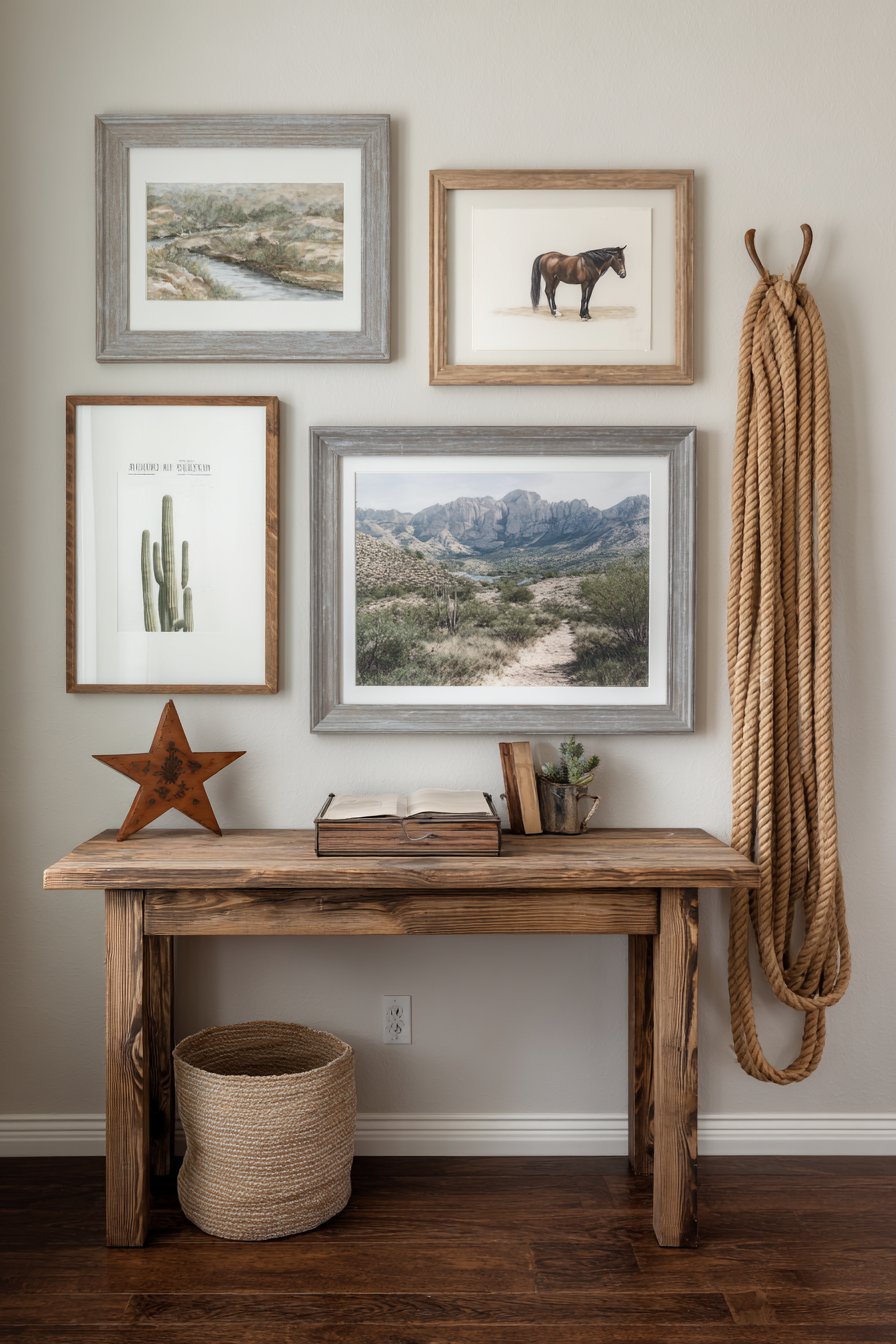
Gallery walls allow personalization through artwork selection and arrangement. Parents can incorporate family ranch heritage or collect pieces over time. This flexibility makes gallery walls adaptable as children grow and interests evolve. The foundation remains while individual pieces can rotate seasonally.
Key Design Tips:
- Plan gallery wall layouts on the floor before hanging
- Maintain consistent frame finishes for visual cohesion
- Include dimensional elements for textural interest
- Space frames appropriately to avoid crowded appearance
- Choose artwork with personal meaning beyond decorative value
12. Functional Changing Station Design
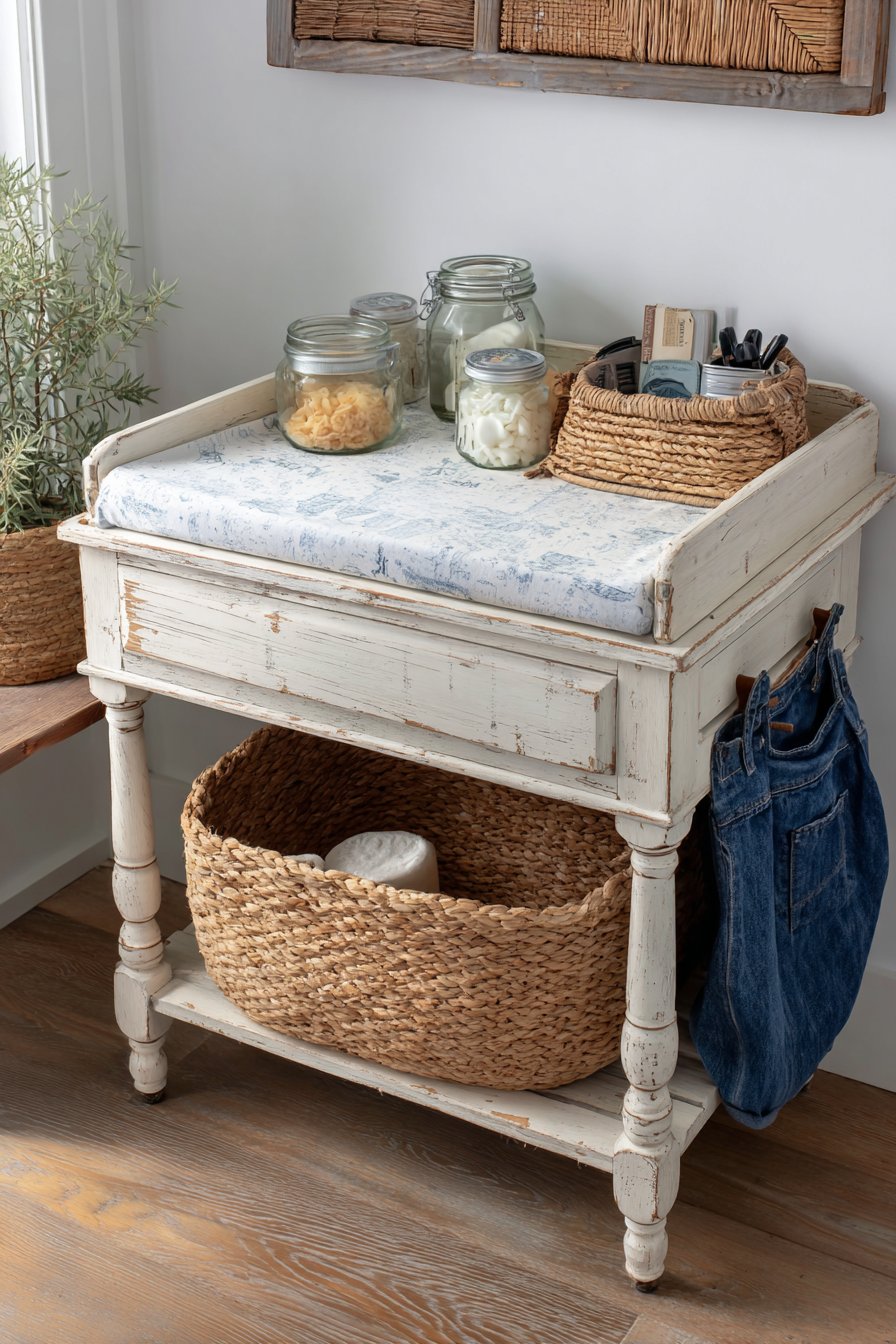
The changing station represents one of the most-used nursery areas requiring thoughtful design. A solid wood changing table with turned legs demonstrates quality construction. The distressed white finish shows natural wear patterns that add character. This furniture piece balances beauty with exceptional functionality.
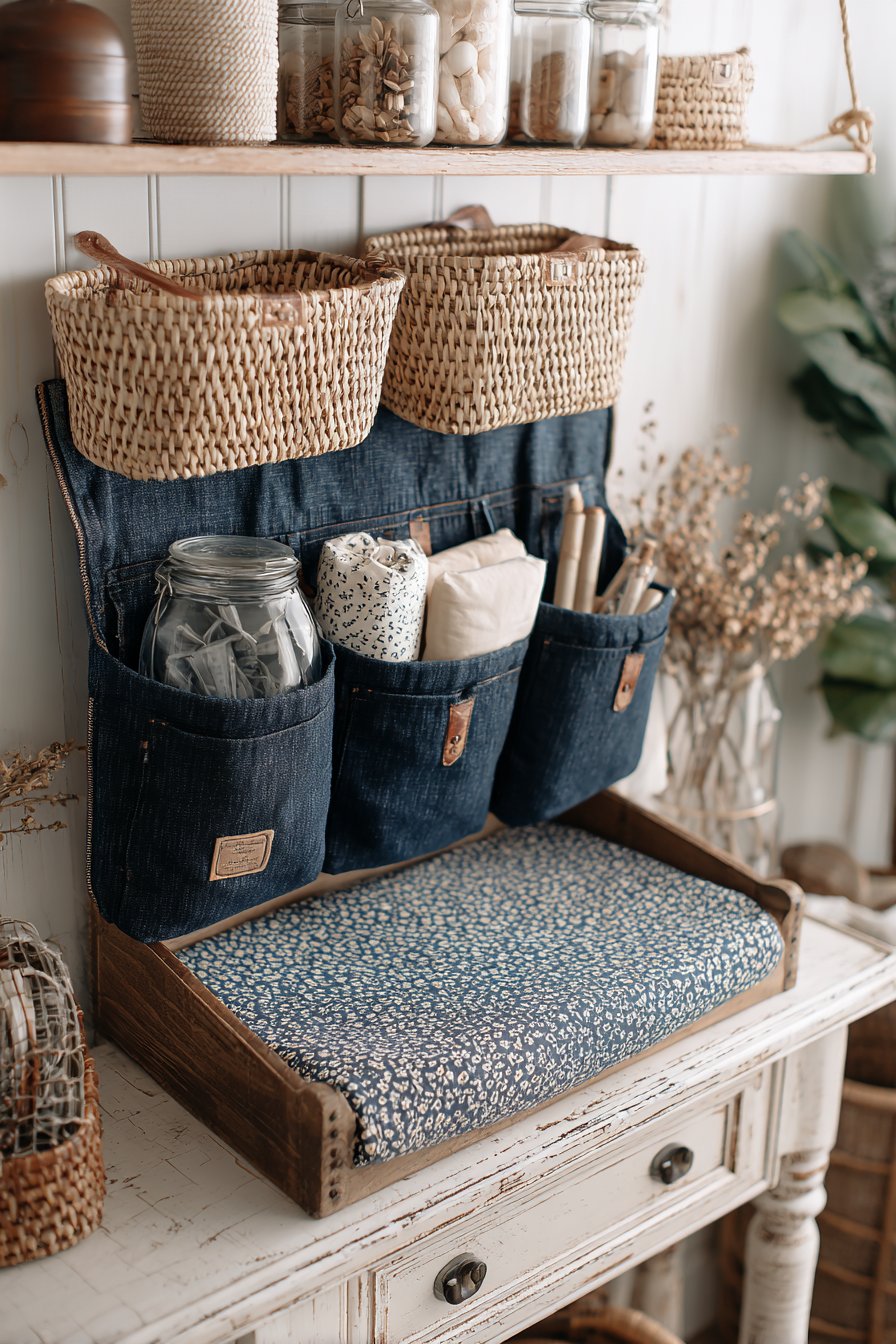
The changing pad covers with organic cotton feature subtle Western print. Surrounding woven baskets contain organized diapers and changing essentials. A fabric organizer with pockets in denim and leather hangs conveniently on the side. Vintage glass jars store cotton balls and swabs accessibly.
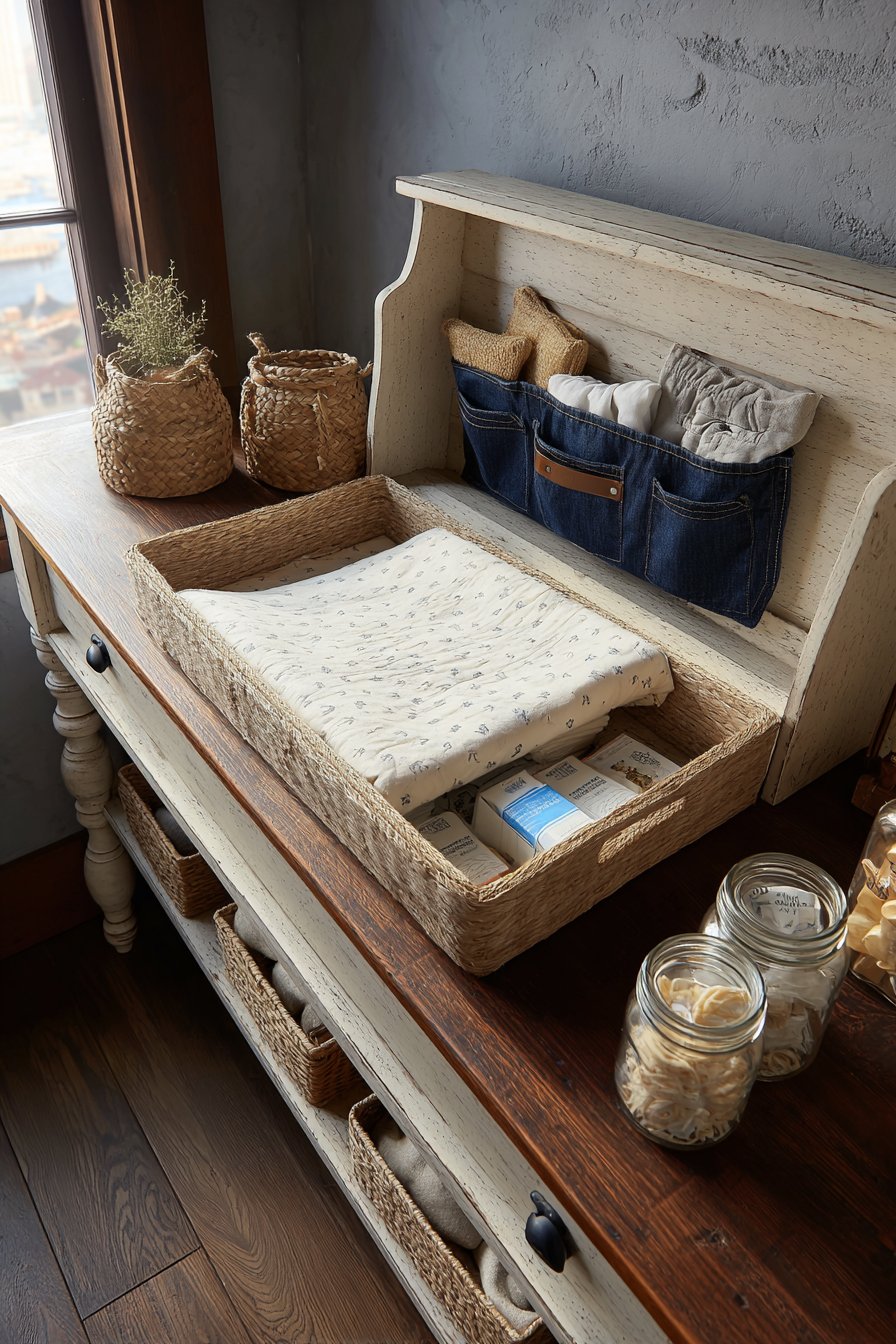
Every element serves practical purpose while contributing to the Western aesthetic. The natural wood grain shows through distressed paint creating visual texture. Woven basket fibers add organic warmth to functional storage. This attention to both form and function defines successful nursery design.
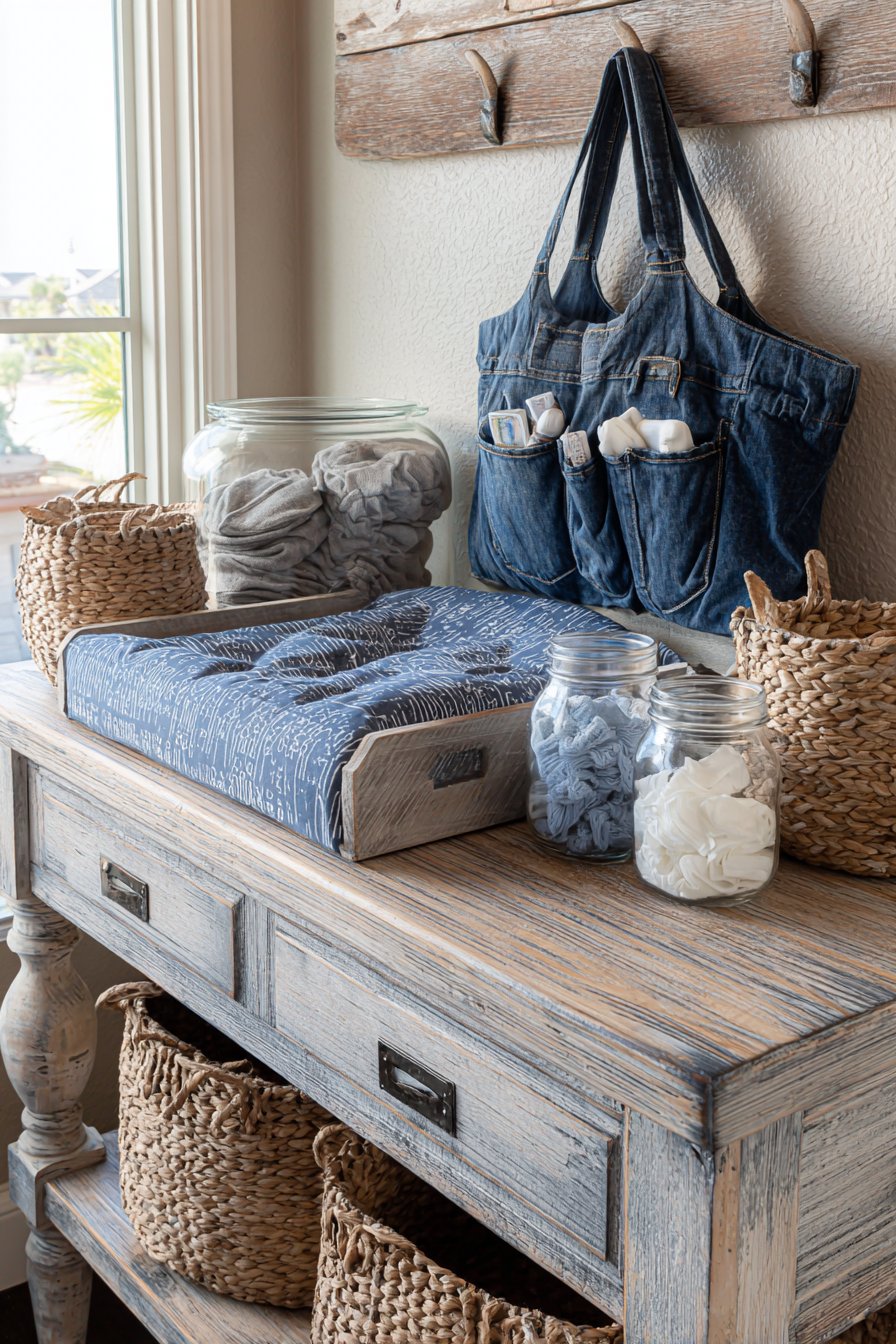
The workspace organization reduces stress during diaper changes. Everything needed sits within arm’s reach of the changing surface. This thoughtful arrangement allows parents to keep one hand on baby always. The beautiful materials make this functional area a pleasure to use daily.
Key Design Tips:
- Select changing tables with safety rails on three sides
- Organize supplies in containers for one-handed access
- Choose furniture with storage drawers beneath changing surface
- Use organic fabrics for changing pad covers
- Position changing stations away from windows for temperature stability
13. Handcrafted Growth Chart Feature

A vertical wooden ruler design creates meaningful way to track growth milestones. Hand-painted measurements include Western motifs like tiny horseshoes and stars. The growth chart crafts from reclaimed barn wood showing genuine age marks. This authentic weathering tells stories while serving practical tracking purposes.

A vintage rope with knots marks significant milestones beyond height measurements. These tactile markers commemorate first words, first steps, and other achievements. The surrounding wall displays subtle texture in warm sand color paint. This neutral backdrop allows the growth chart to shine as special feature.

Detail-oriented craftsmanship shows in hand-painted elements and careful construction. Natural lighting emphasizes the wood’s authentic patina throughout the day. The handcrafted nature makes this growth chart irreplaceable keepsake. Years later, these measurements hold precious memories of childhood development.

Growth charts serve both practical and sentimental purposes in nurseries. They encourage regular documentation of physical development. The Western theme transforms ordinary milestone tracking into decorative art. This dual purpose exemplifies smart nursery design that serves multiple functions beautifully.
Key Design Tips:
- Mount growth charts on walls that will remain unchanged
- Start measurements at appropriate height for infants
- Use non-toxic paint for all hand-painted details
- Choose locations with good natural lighting for photos
- Consider portability if future moves are likely
14. Textured Seating with Leather Ottoman
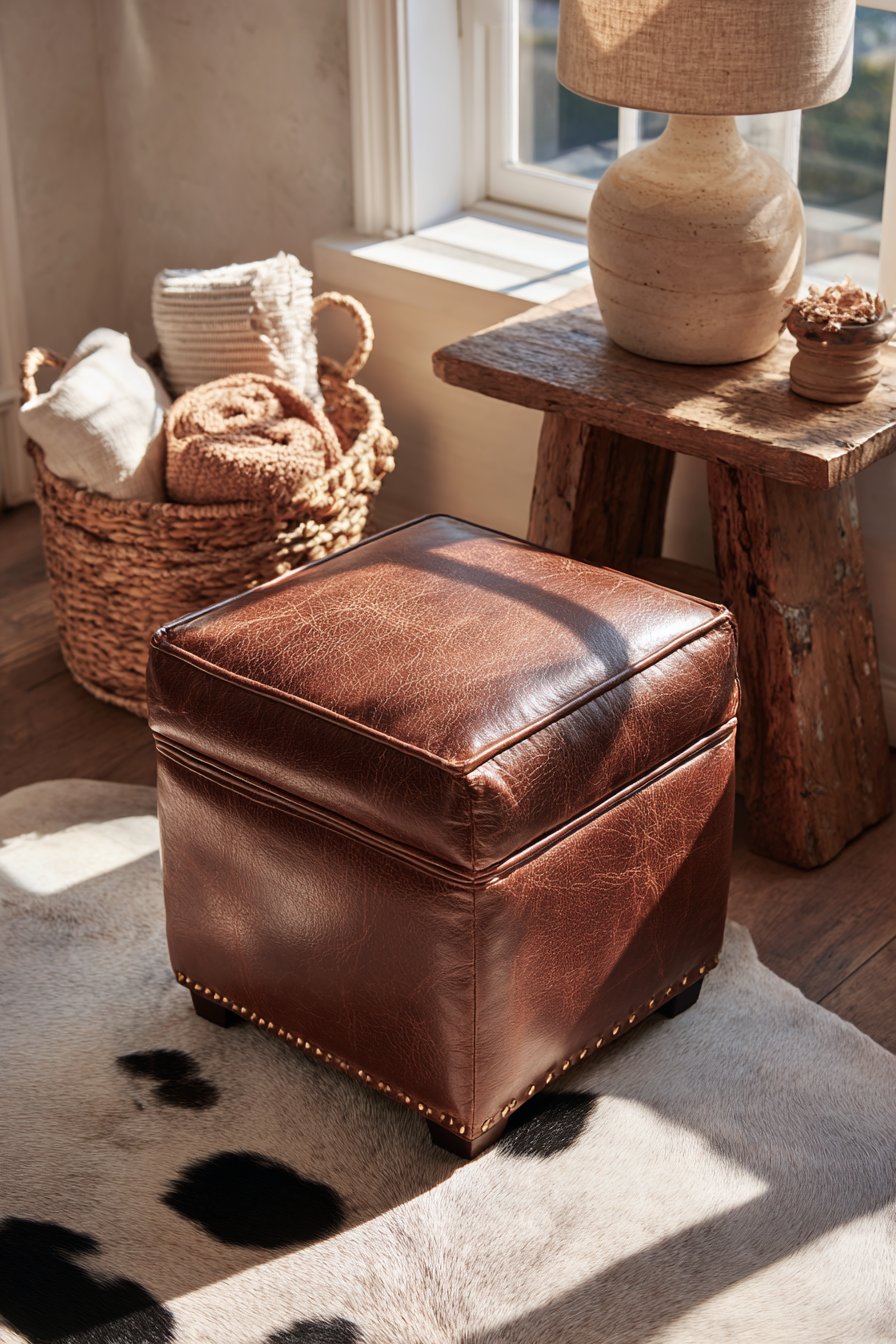
A leather ottoman in rich saddle brown provides versatile seating and footrest. Visible grain texture and brass nail head trim showcase quality construction. The genuine leather develops beautiful patina with use and time. This investment piece serves nursery needs while transitioning to other rooms later.
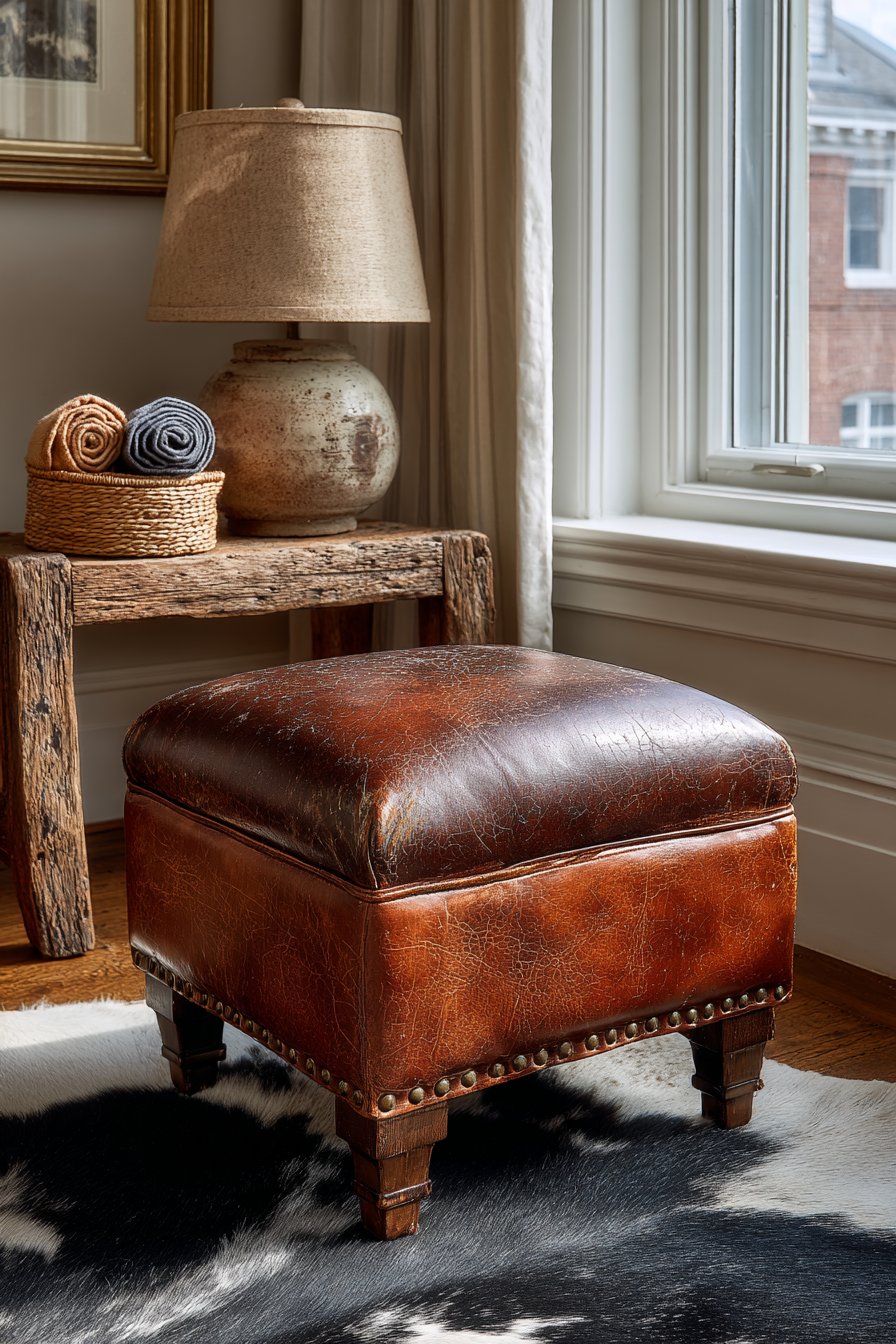
Positioned atop a cowhide rug in natural black and white pattern, the seating area invites relaxation. A wooden side table with rough-hewn edges holds necessary items within reach. The ceramic table lamp with burlap shade provides adjustable lighting. A woven basket contains rolled baby blankets in coordinated earth tones.
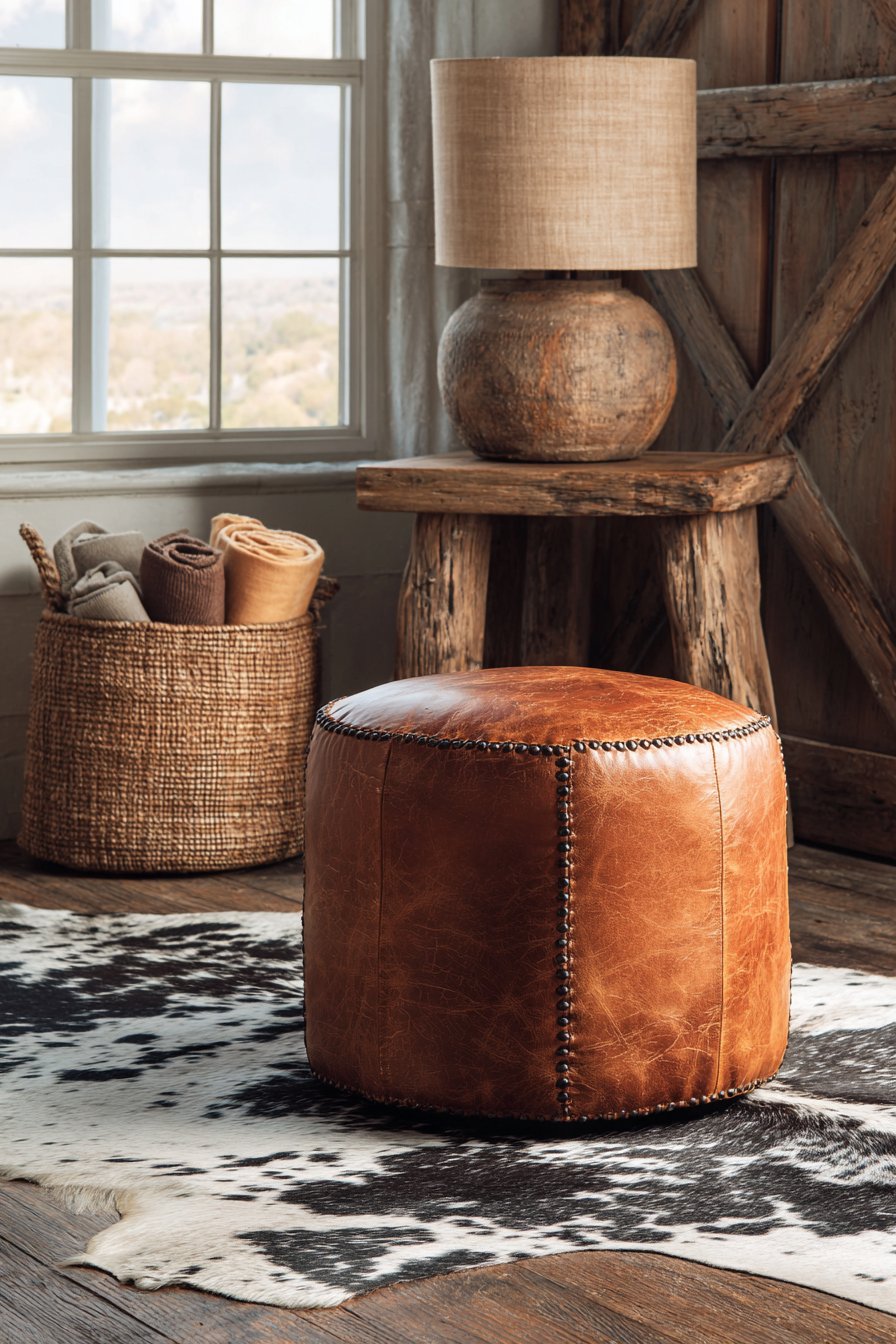
The textural variety creates visually engaging corner without overwhelming the space. Genuine leather, natural hide, and weathered wood each contribute distinct character. Soft window light creates authentic shadows and highlights across varied surfaces. This layering demonstrates sophisticated understanding of material interplay.
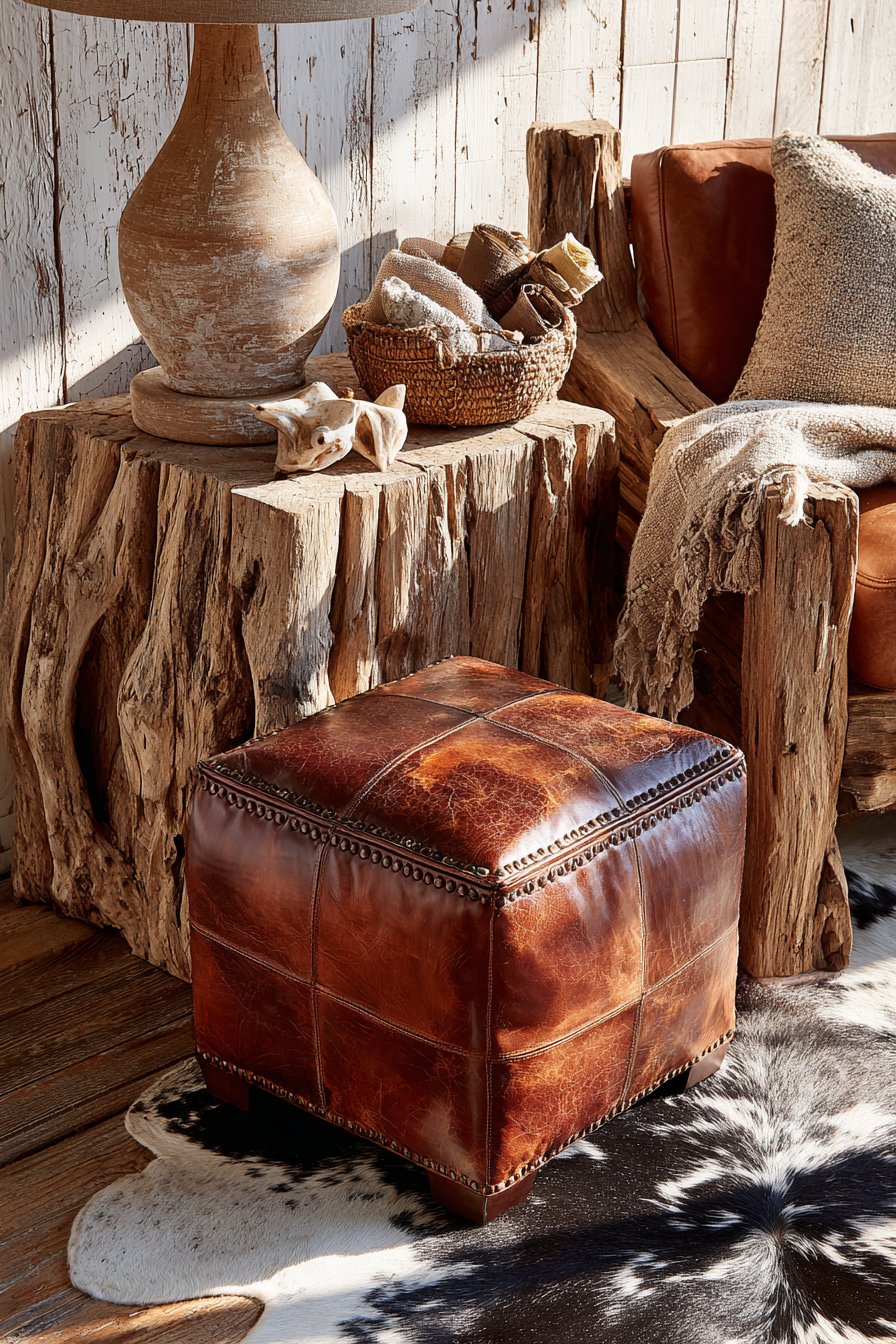
Comfortable seating beyond the primary glider offers flexibility for multiple caregivers. Grandparents or partners appreciate additional seating during visits. The ottoman’s mobility allows repositioning for different activities. This practical versatility extends the furniture’s value throughout years of use.
Key Design Tips:
- Choose ottomans with hidden storage for maximum functionality
- Select genuine leather that improves with age
- Layer rugs for added texture and defined zones
- Position additional seating near natural light sources
- Keep side tables within arm’s reach for convenience
15. Open Closet Organization System

Thoughtful closet design maximizes storage while maintaining accessibility. Open wooden shelving with iron pipe brackets provides industrial Western flair. The matte black finish contrasts beautifully with natural wood tones. Western-themed onesies, tiny denim jeans, and plaid shirts organize by color on shelves.
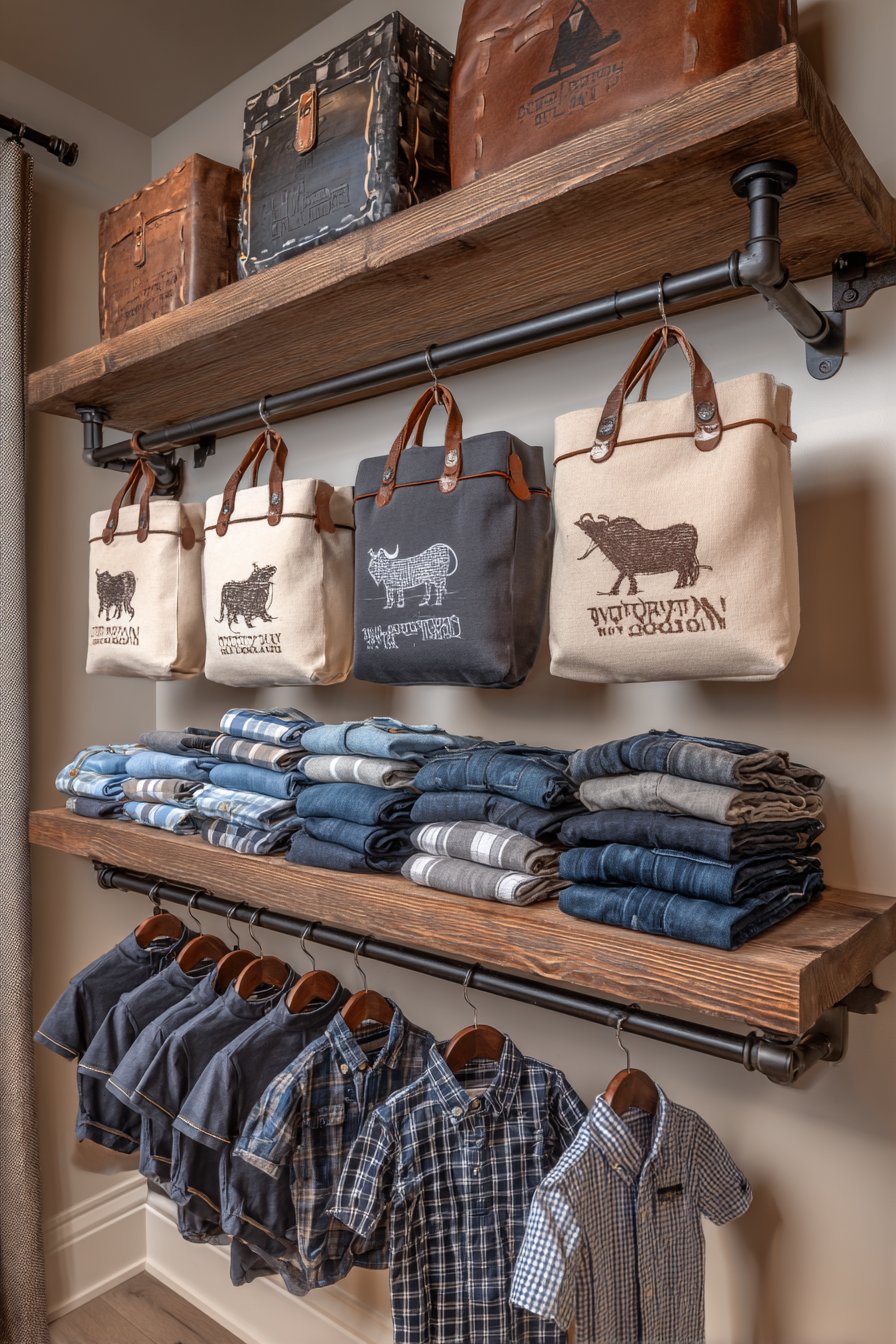
Canvas hanging organizers with leather trim store smaller accessories efficiently. These fabric solutions prevent clutter while complementing the natural material palette. A lower rod at accessible height holds miniature cowboy shirts on wooden hangers. This practical positioning allows easy outfit selection during busy mornings.

The organized yet approachable system grows with your child’s expanding wardrobe. Natural lighting emphasizes various fabric textures and wood grain throughout the closet. The open design prevents forgotten items hiding in dark corners. Everything remains visible and accessible encouraging outfit coordination participation later.
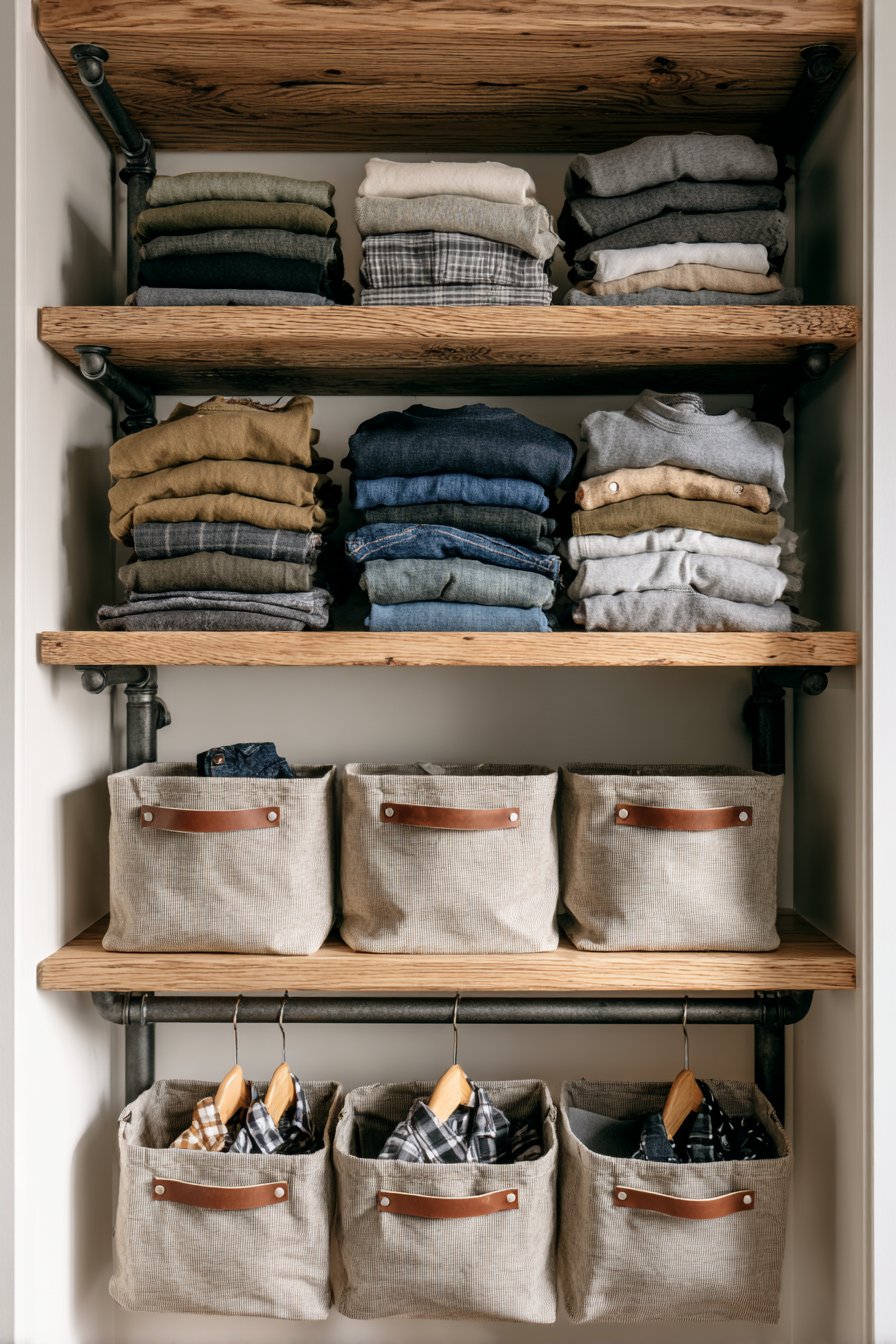
Quality organizational systems represent investment in daily ease. The time saved through thoughtful arrangement pays dividends during rushed moments. Beautiful organization also makes maintaining order more motivating. These systems prove that practical solutions can enhance rather than compromise aesthetic goals.
Key Design Tips:
- Install adjustable shelving for changing storage needs
- Use wooden hangers to prevent clothes slipping
- Organize by color for visual appeal and easy selection
- Include lower storage for encouraging future independence
- Choose open systems that maintain visibility of all items
16. Layered Corner Vignette
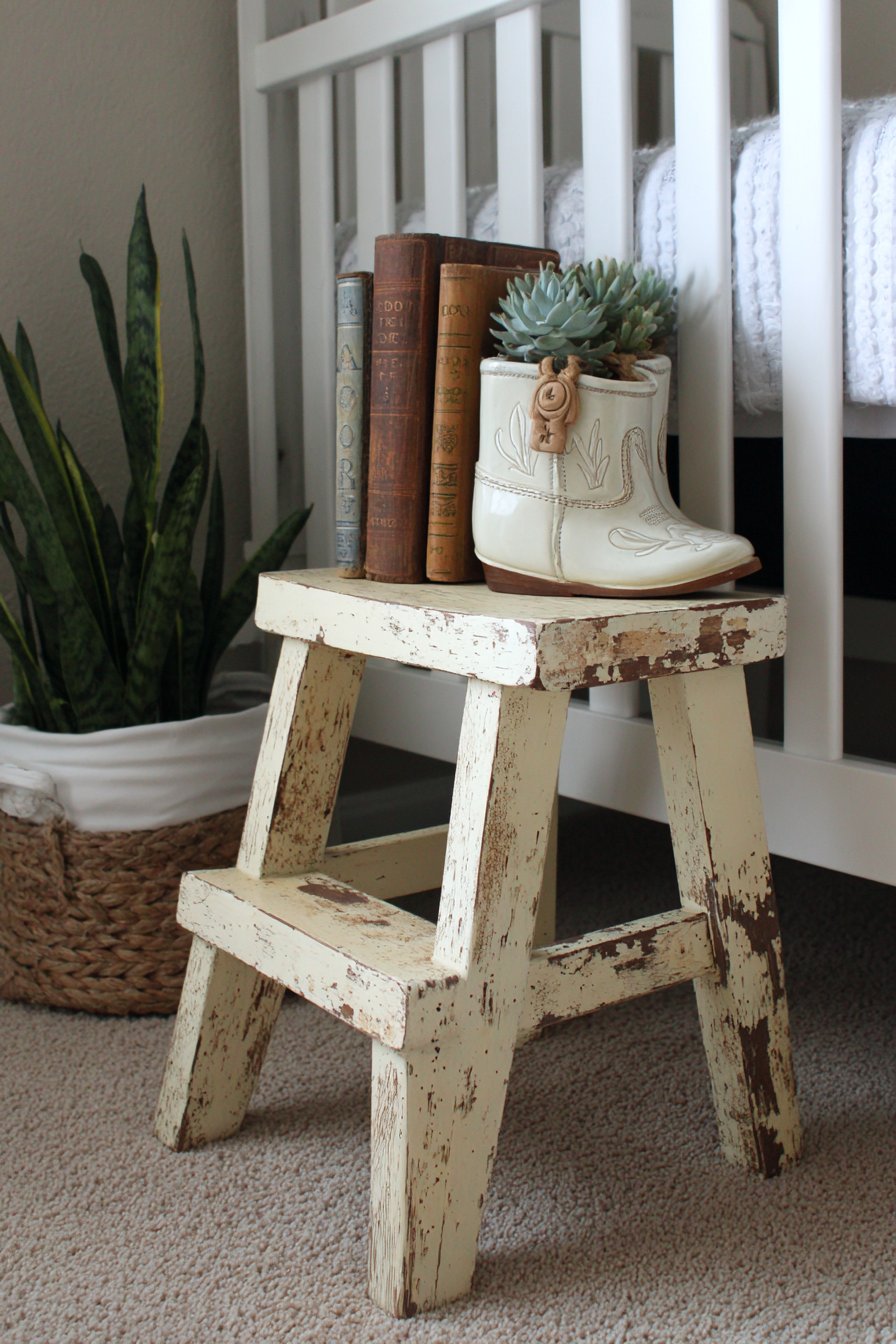
Small vignettes create visual interest in otherwise overlooked spaces. A vintage wooden step stool with rope handle positions near the crib. The weathered paint in cream and rust shows authentic character through use. This functional piece aids in reaching higher shelves while adding decorative charm.
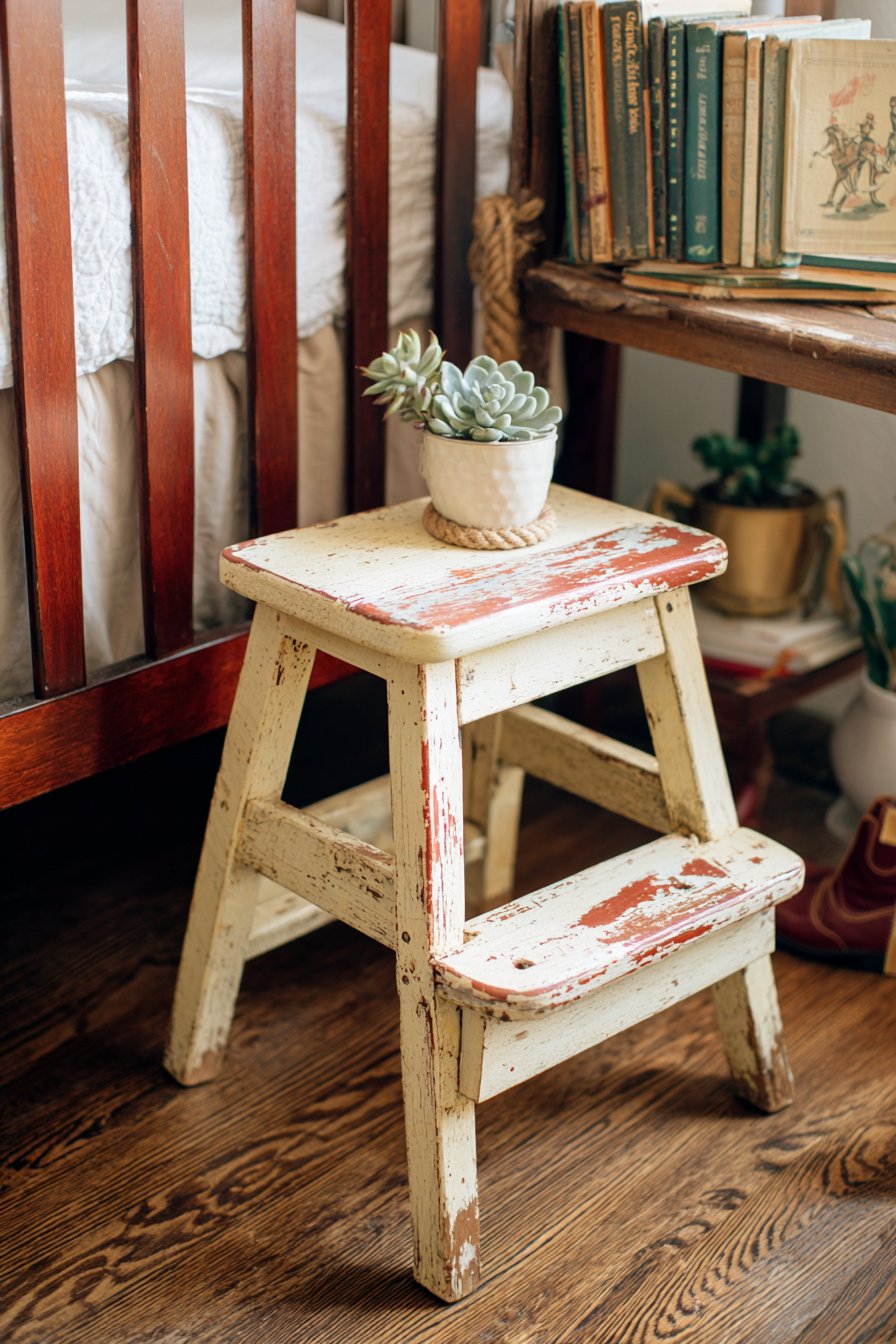
Above the step stool, a simple wooden shelf displays vintage children’s Western books. Cloth and leather bindings showcase different eras and styles. These tactile books become treasured items for bedtime reading routines. A small potted succulent in ceramic cowboy boot planter introduces living greenery naturally.
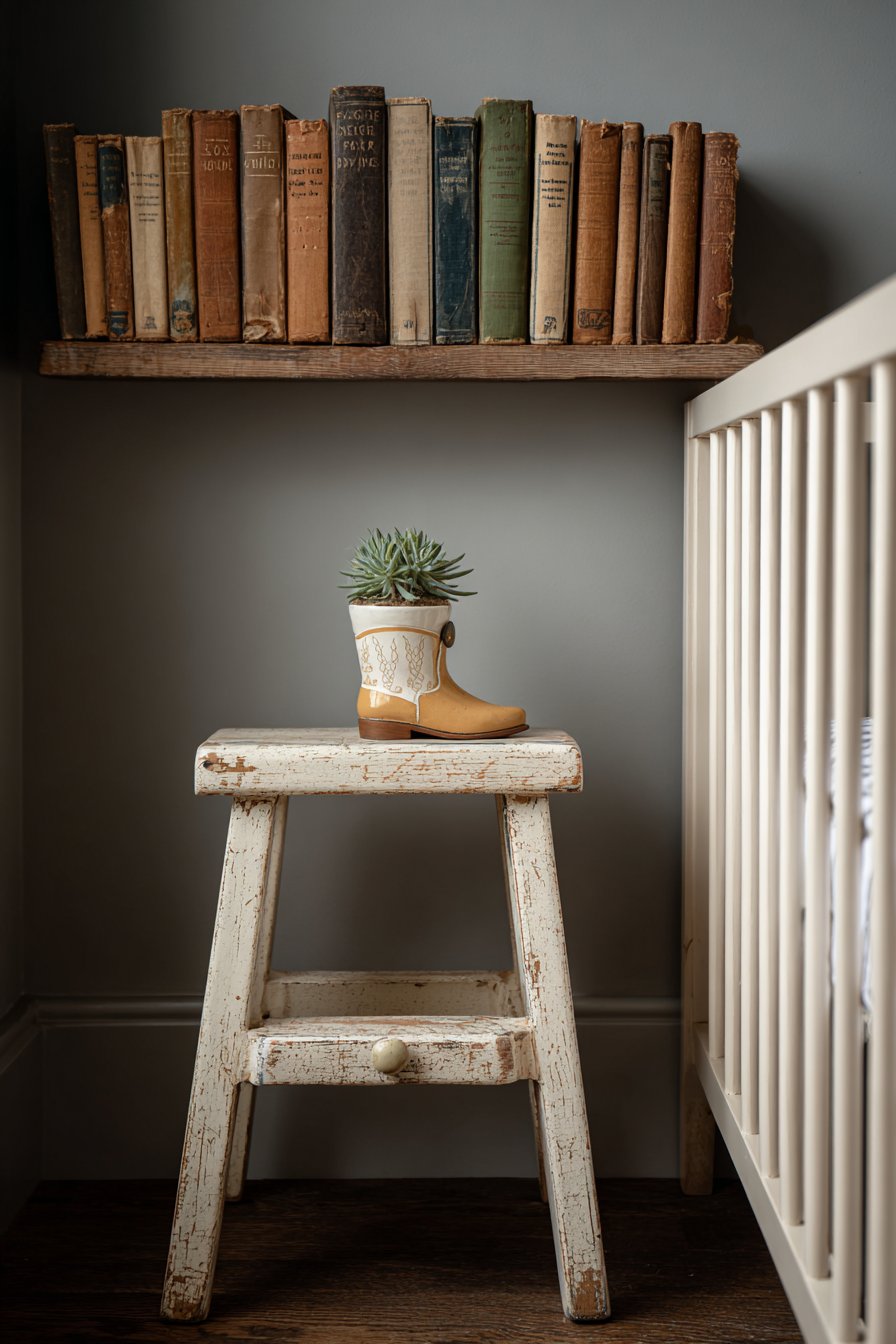
The layered textures of aged wood, worn paint, and vintage book covers create rich composition. Natural plant material adds organic life to inanimate objects. Soft diffused lighting enhances each element’s unique texture throughout the day. These carefully curated details make spaces feel collected rather than decorated.
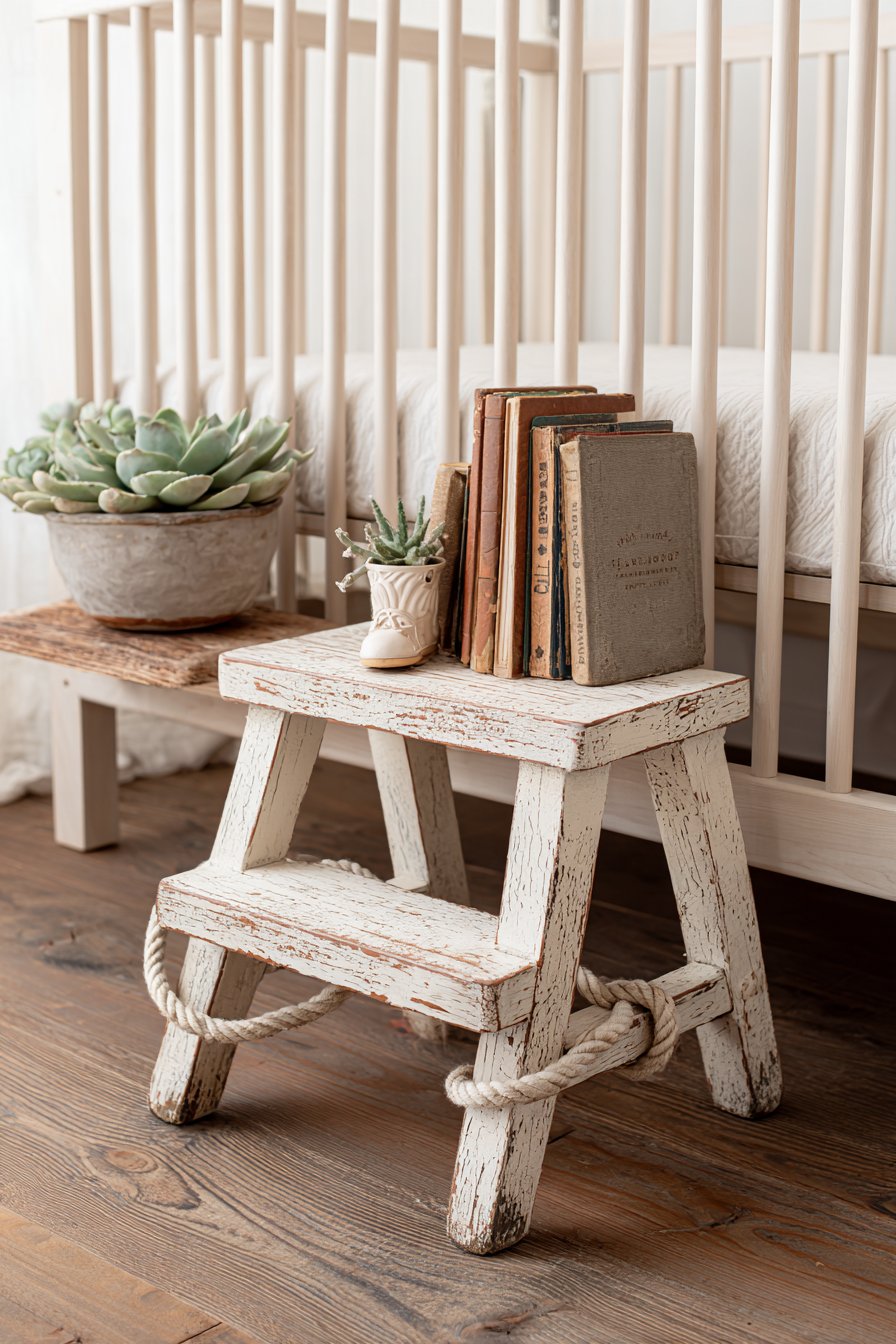
Corner vignettes demonstrate how small areas contribute to overall nursery atmosphere. These moments of interest reward closer inspection. The personal touches reflect family values and interests. This layering technique works throughout homes creating cohesive design narrative.
Key Design Tips:
- Use vertical space in corners for display and storage
- Layer items at different heights for visual interest
- Incorporate living plants for air quality and beauty
- Choose authentic vintage pieces over reproductions
- Create vignettes that tell personal stories through objects
17. Exposed Ceiling Beam Architecture
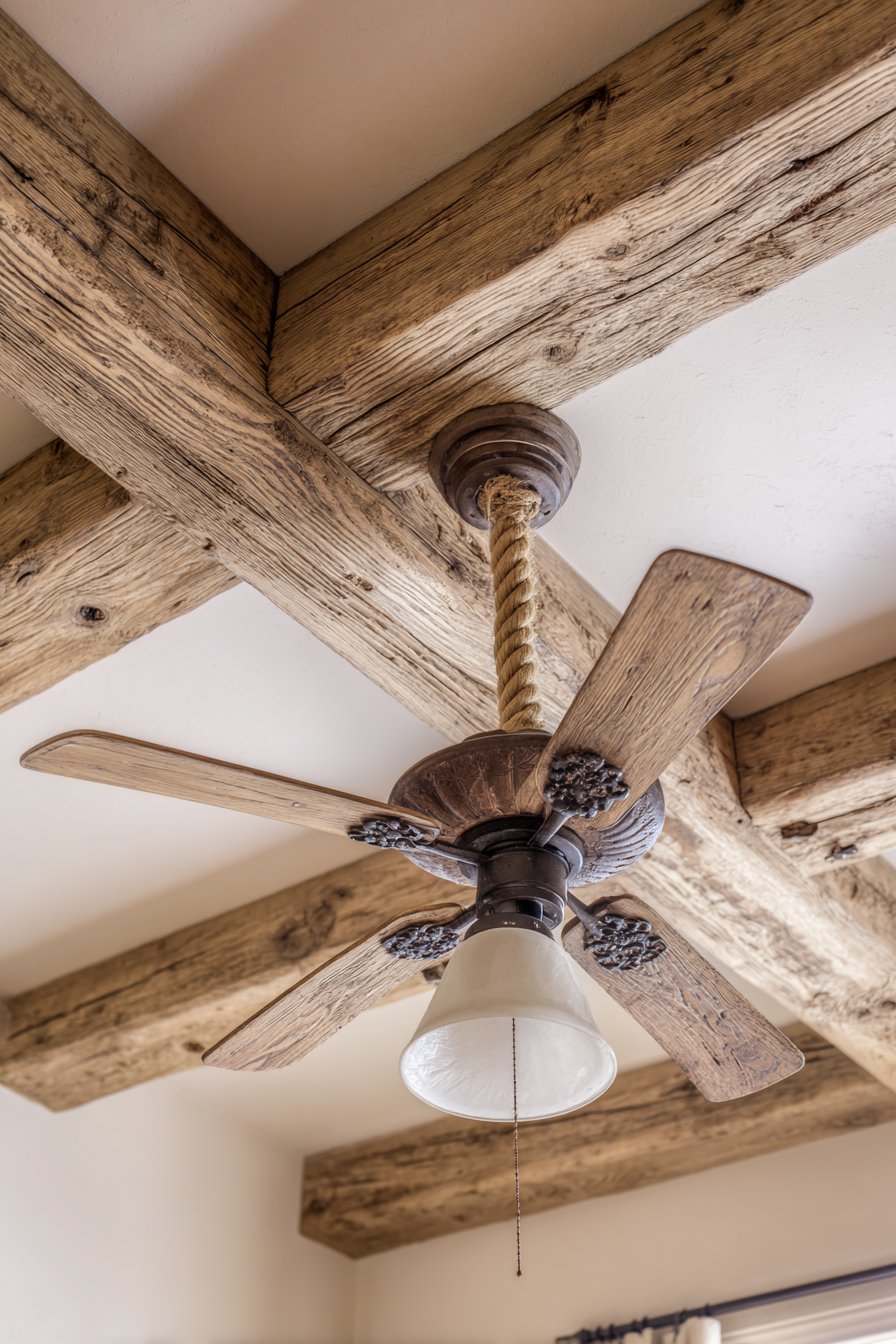
Architectural elements dramatically impact nursery character and atmosphere. Exposed wooden beams in natural cedar finish span the ceiling. Visible wood grain and knot patterns add organic texture overhead. These beams create interest while maintaining appropriate ceiling height for safety standards.
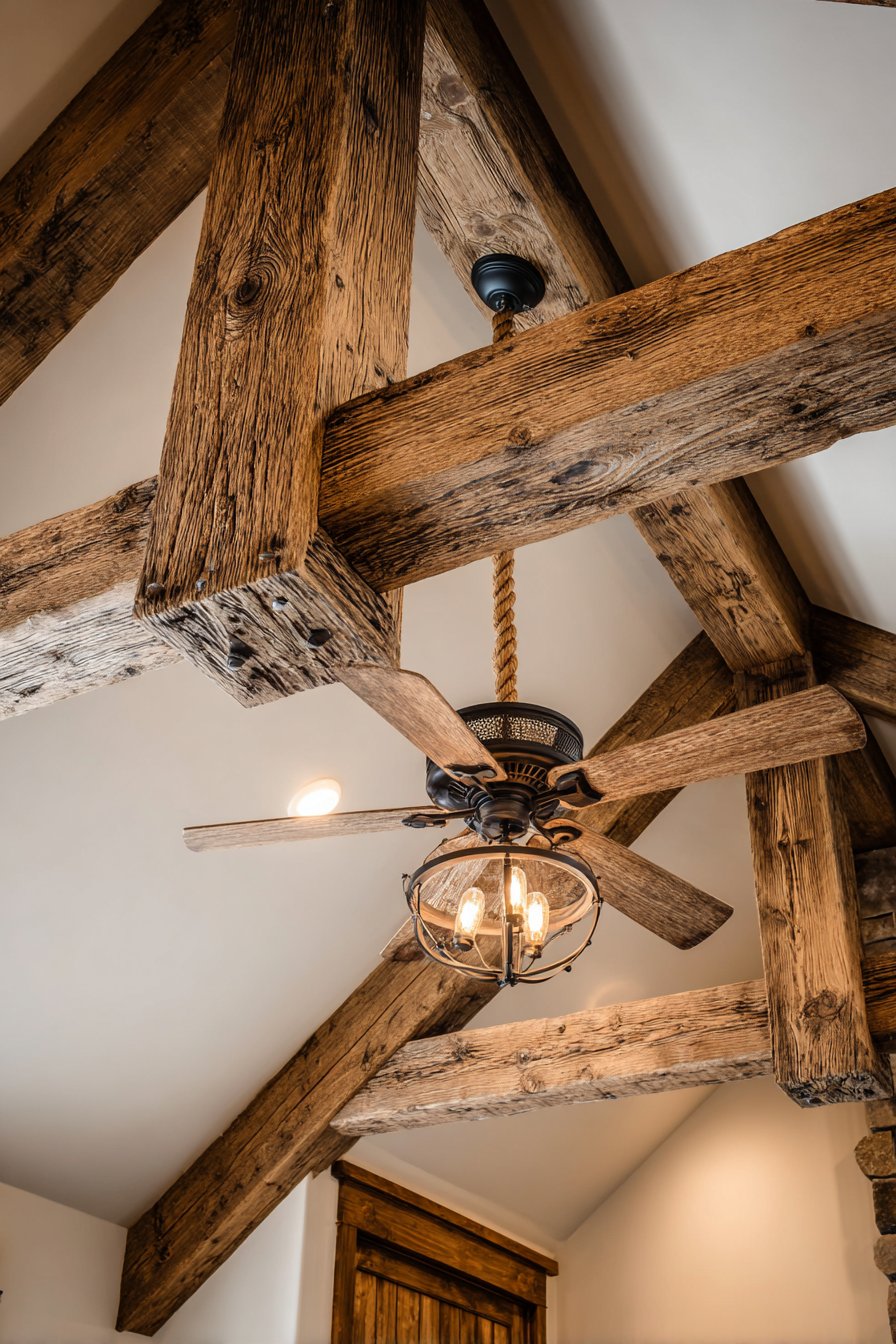
A ceiling fan with wooden blade covers in distressed finish provides air circulation. The iron hardware coordinates with other metal accents throughout the room. Soft rope-wrapped chains hold a simple pendant light fixture. These overhead elements work together creating cohesive architectural statement.
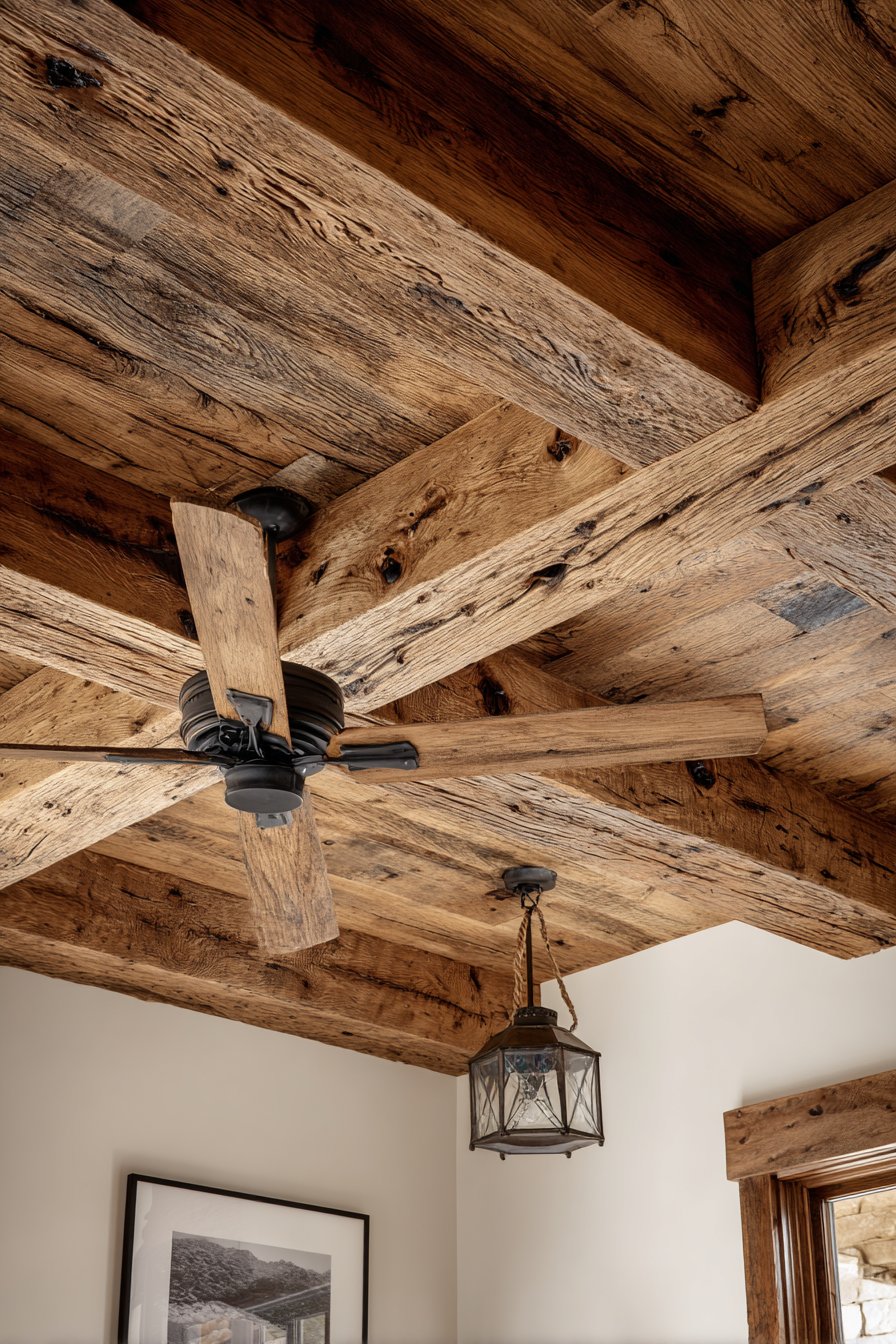
The rustic overhead elements coordinate beautifully with the room’s overall Western aesthetic. Natural cedar tones warm the space from above. The beams’ horizontal lines make rooms feel wider and more spacious. This architectural feature transforms ordinary ceilings into design opportunities.
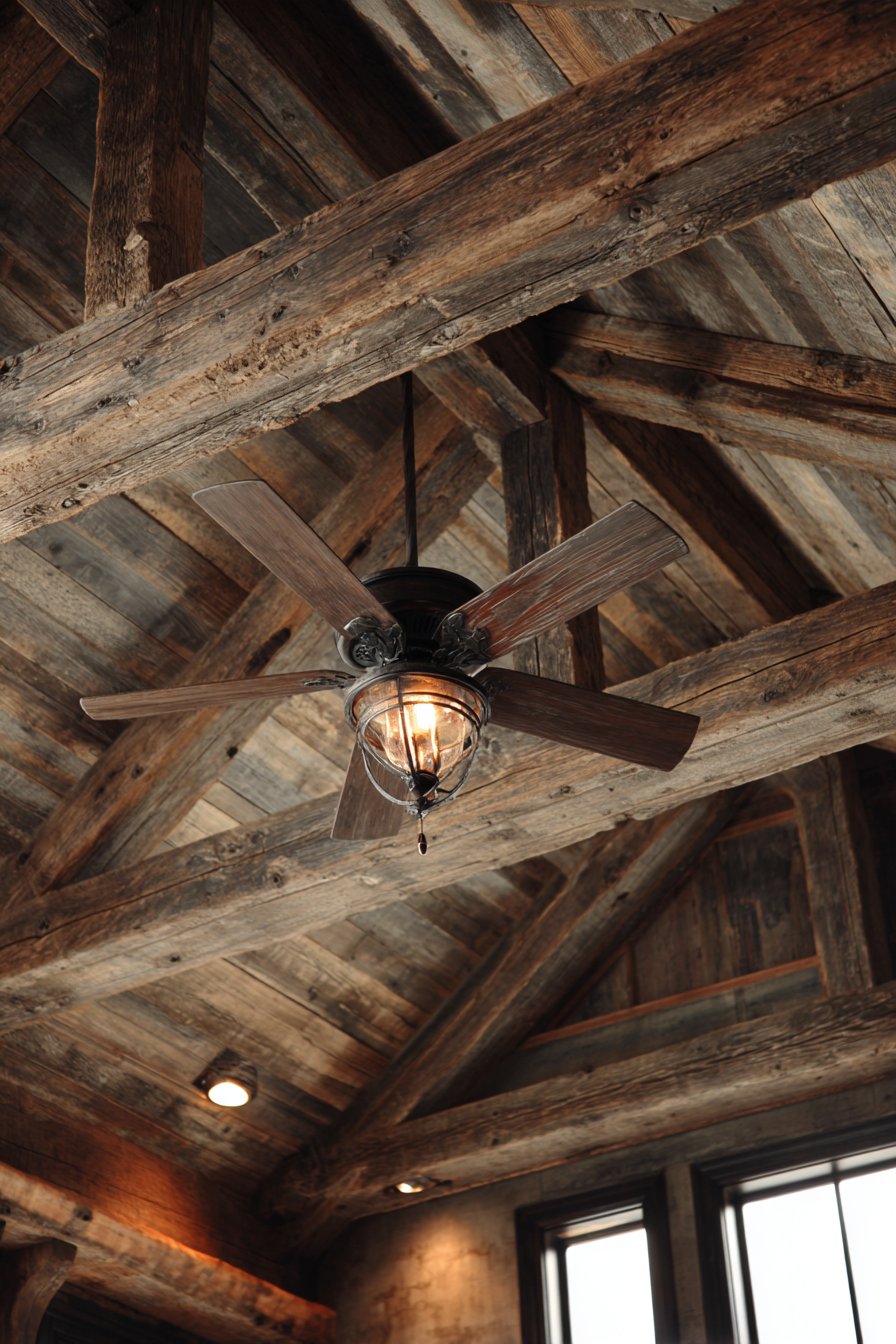
Upward-angled perspectives reveal how ceiling treatments complete room design. These often-overlooked surfaces deserve attention in comprehensive design plans. The coordination between ceiling elements and furnishings creates intentional, polished appearance. This attention to every surface defines truly exceptional nursery environments.
Key Design Tips:
- Ensure ceiling fans are properly balanced for safety
- Choose beams that complement rather than overwhelm room scale
- Coordinate ceiling fixture finishes with other hardware
- Install dimmers for flexible lighting from overhead sources
- Consider acoustic properties when adding ceiling elements
18. Personalized Name Sign Focal Point
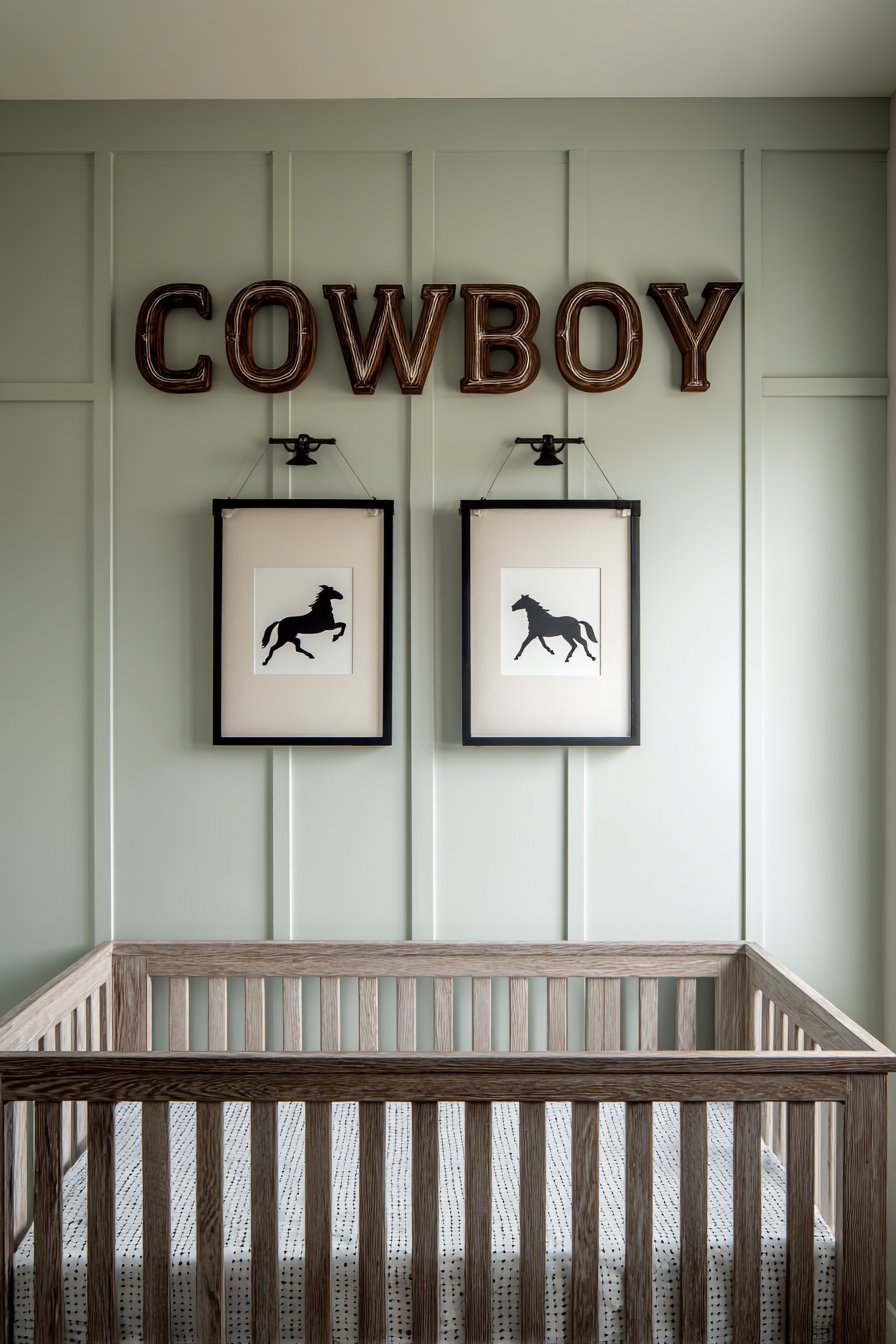
Above the crib, hand-carved wooden letters spell your baby’s name. The playful Western font brings personality without sacrificing readability. Individual letters mount on the wall with small iron brackets. Natural wood finish shows subtle grain pattern variations making each letter unique.
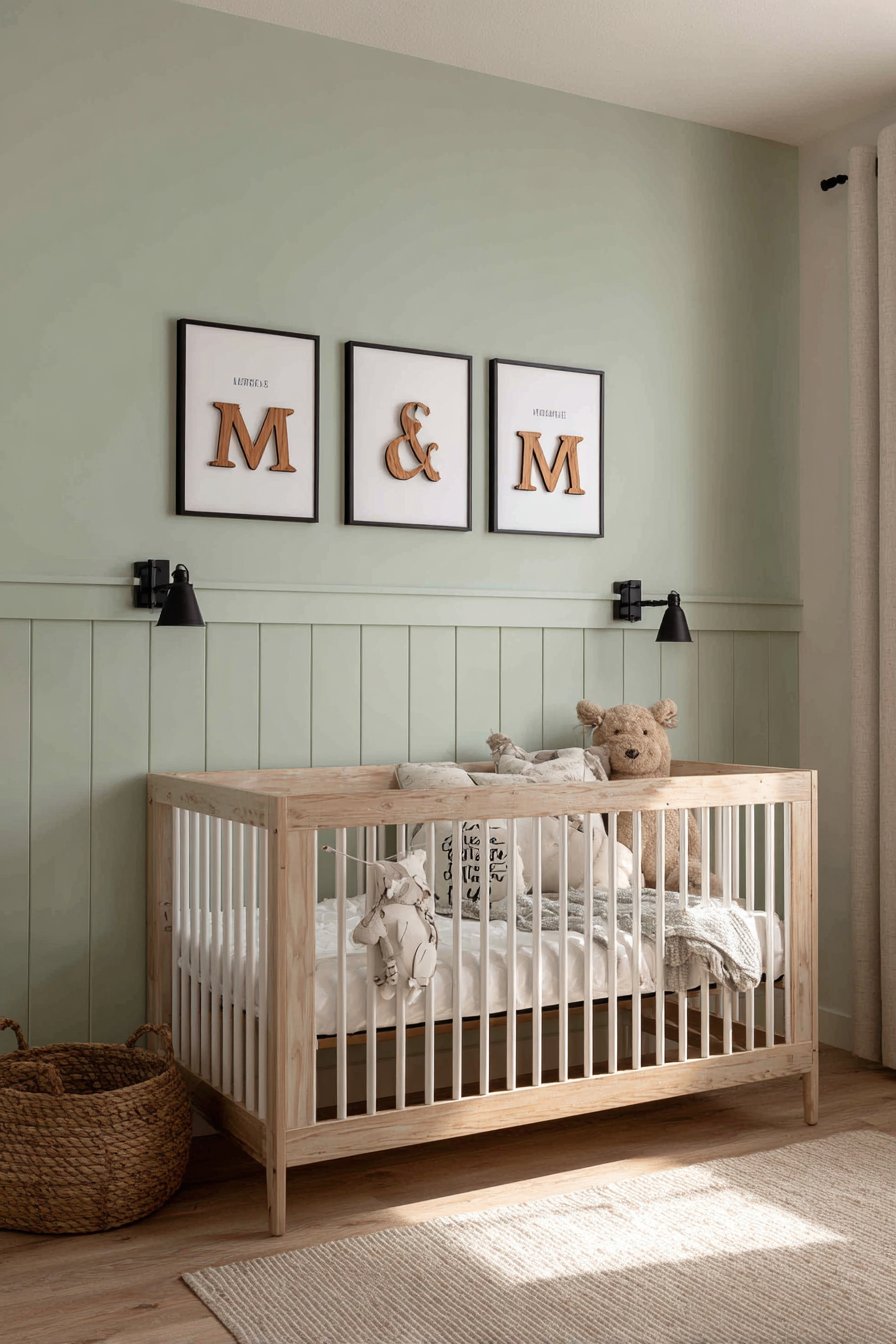
Flanking the name, two framed silhouettes of running horses add dynamic movement. The matte black frames contrast beautifully with surrounding elements. The background wall features tongue-and-groove paneling painted in soft sage green. This subtle color choice provides calming backdrop without competing with focal elements.
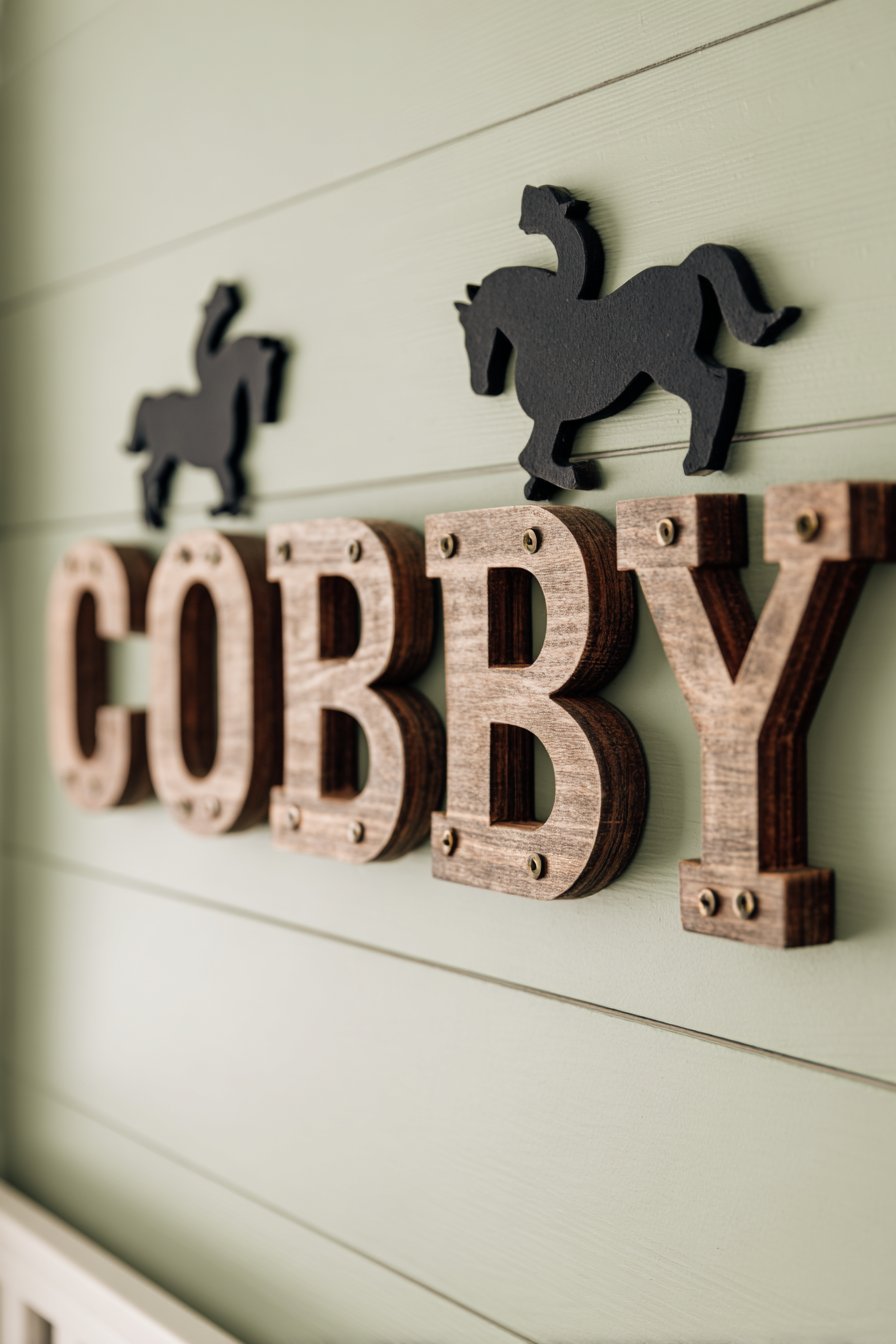
The name sign serves as central focal point drawing eyes immediately. Dimensional letter details cast interesting shadows throughout the day. The appropriate scale ensures prominence without overwhelming the crib area. This personalization makes the nursery unmistakably your child’s special space.
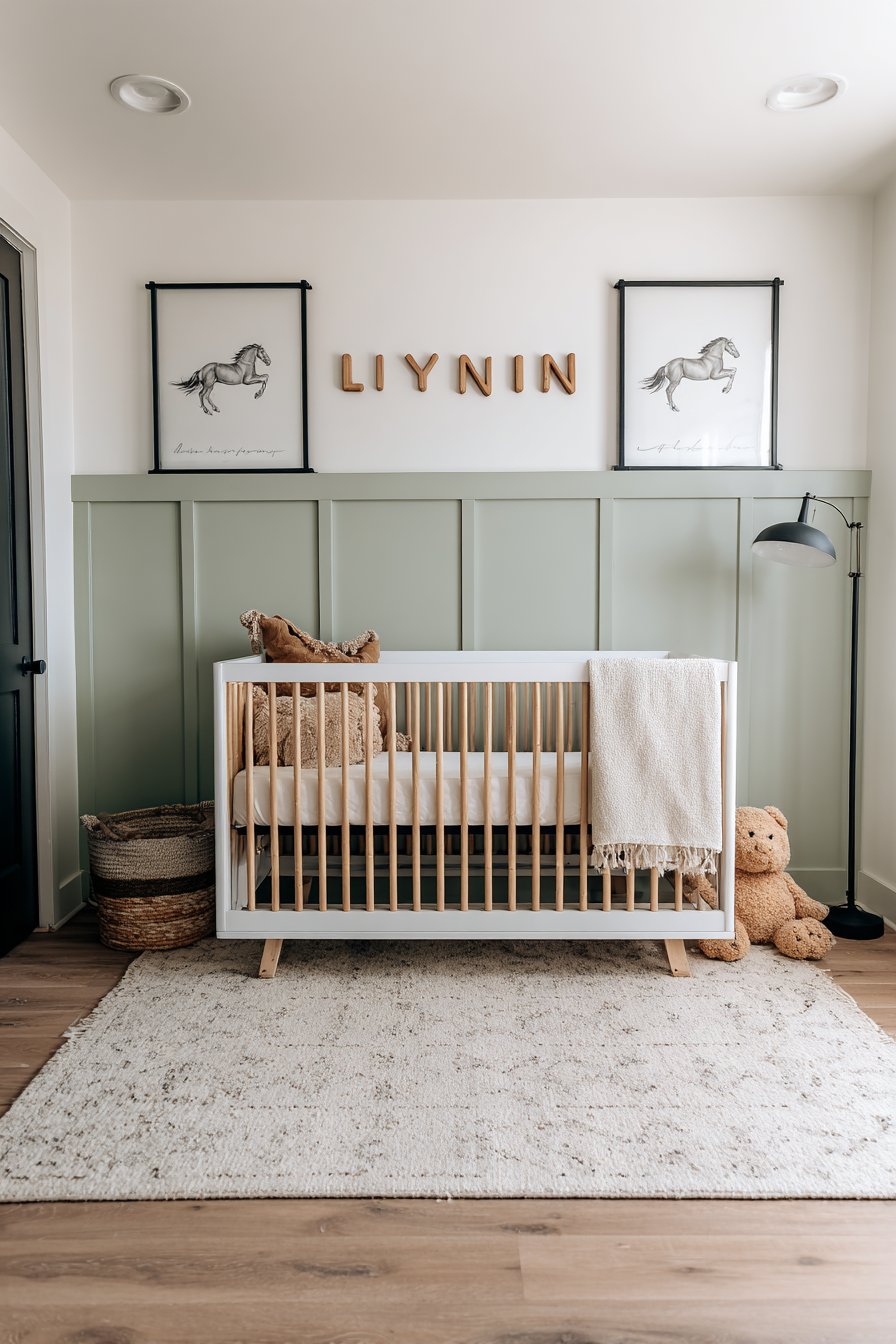
Personalized elements transform generic nurseries into meaningful environments. The name becomes part of daily visual experience and identity formation. The Western font and coordinating artwork reinforce theme cohesively. These custom touches demonstrate the thoughtfulness invested in creating this space.
Key Design Tips:
- Mount name signs securely away from crib reach
- Choose fonts that remain readable as children grow
- Balance personalized elements with surrounding décor
- Select letter finishes that coordinate with room palette
- Consider name sign placement in overall wall composition
19. Quilted Play Mat Area
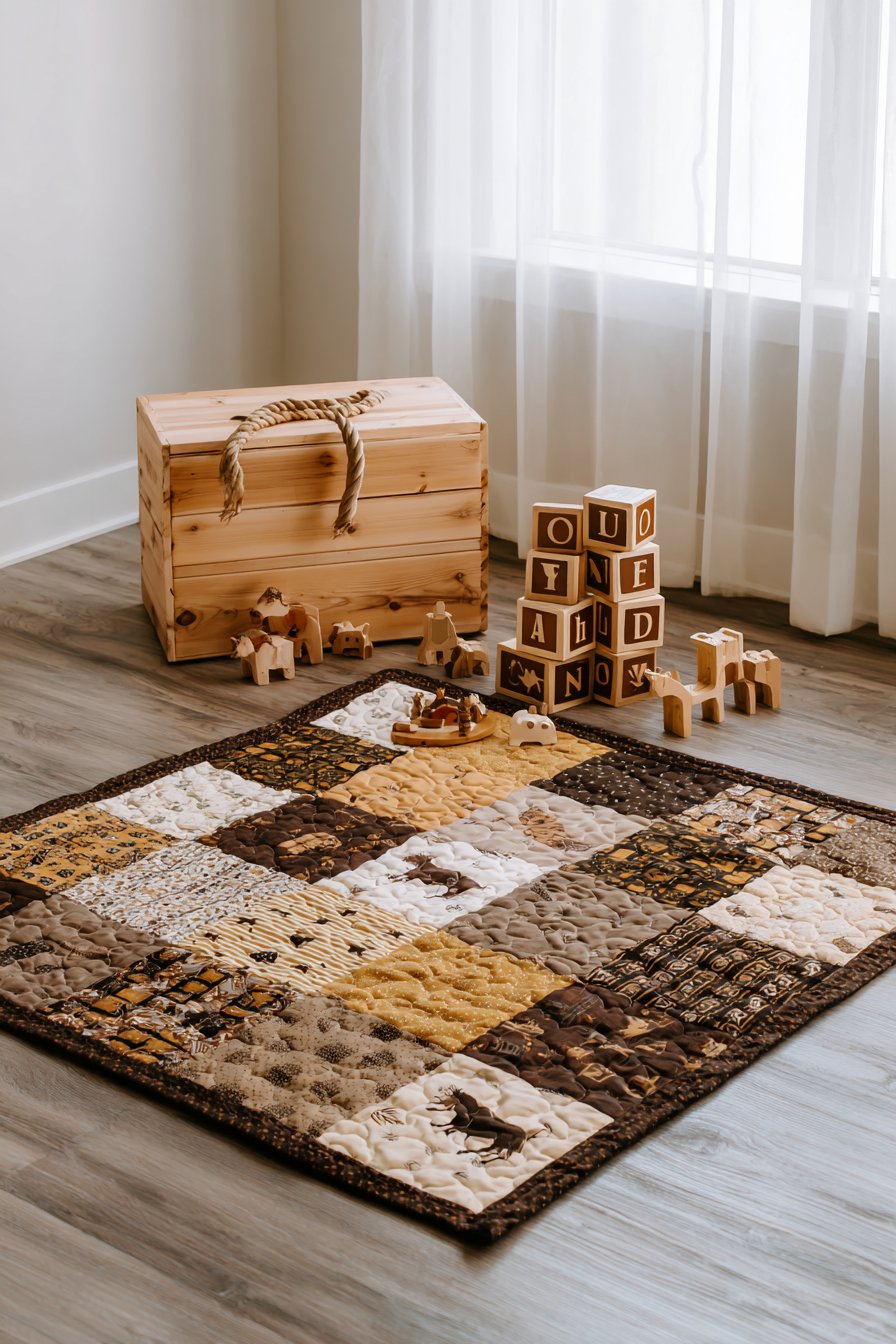
Floor play areas require both safety and comfort considerations. A large quilted floor mat features patchwork design with Western-themed fabric squares. Horses, bandanas, and geometric patterns appear in coordinated earth tones. The quilted texture provides cushioning while visible top-stitching shows quality construction.
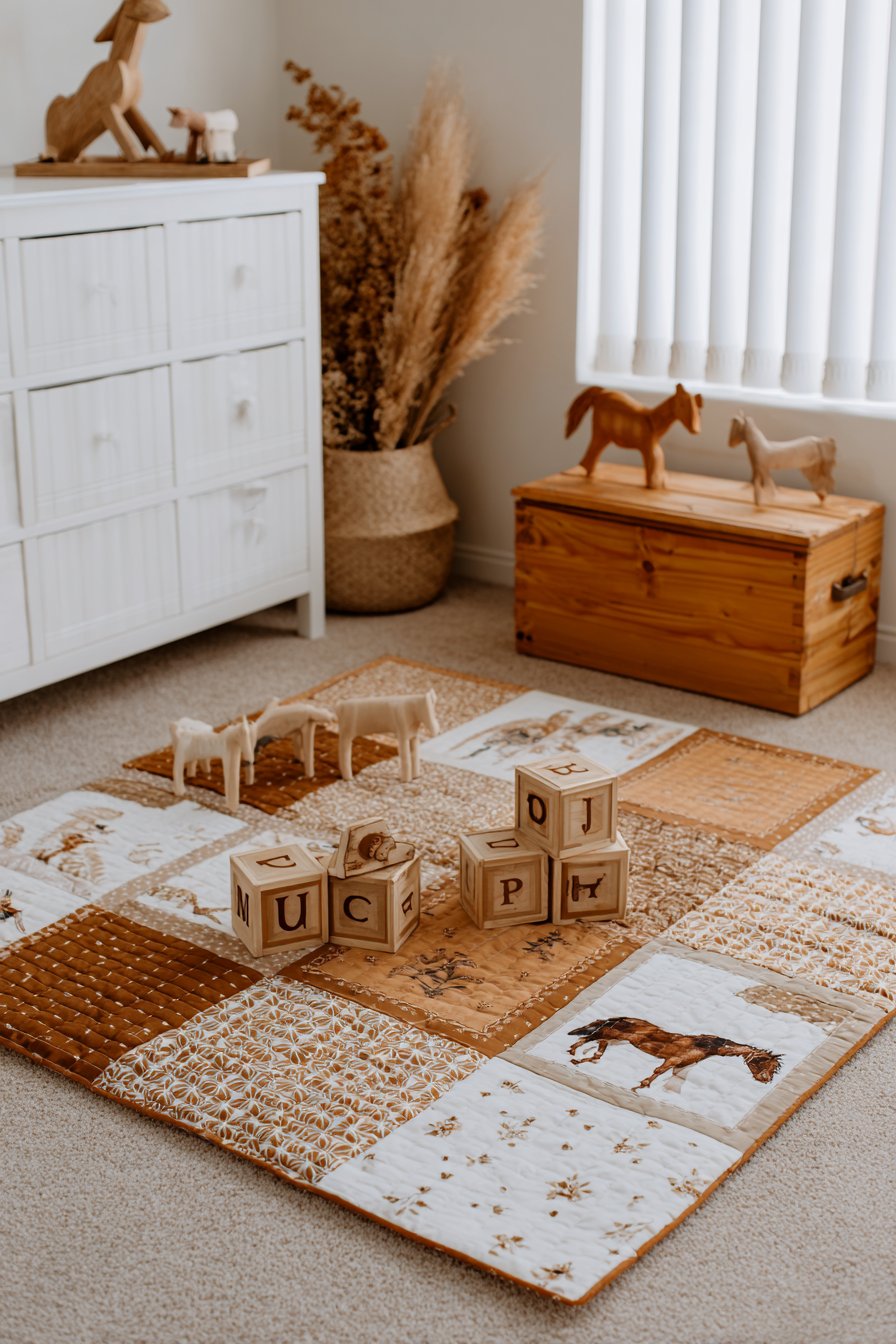
Wooden alphabet blocks with branded letter designs sit nearby encouraging early learning. Small wooden toy animals arrange accessibly for exploration. A low wooden toy box with rope handles stores items within future toddler reach. This thoughtful arrangement encourages independent play as development progresses.
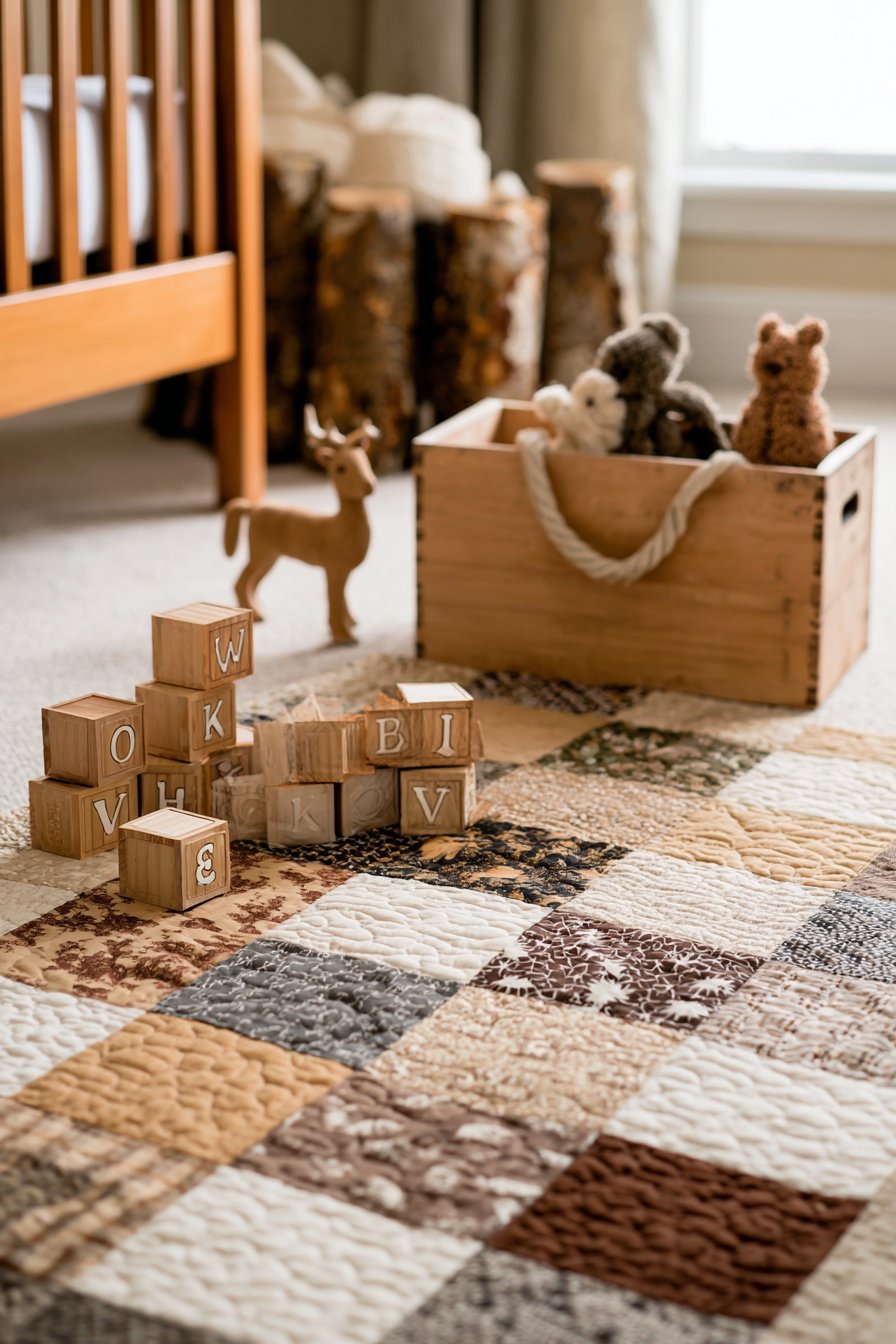
The practical play space demonstrates how functionality and aesthetics coexist successfully. Soft natural lighting emphasizes handcrafted quilt texture and natural toy materials. The patchwork design introduces pattern without overwhelming the sensory environment. These carefully selected play items support development while maintaining Western theme.
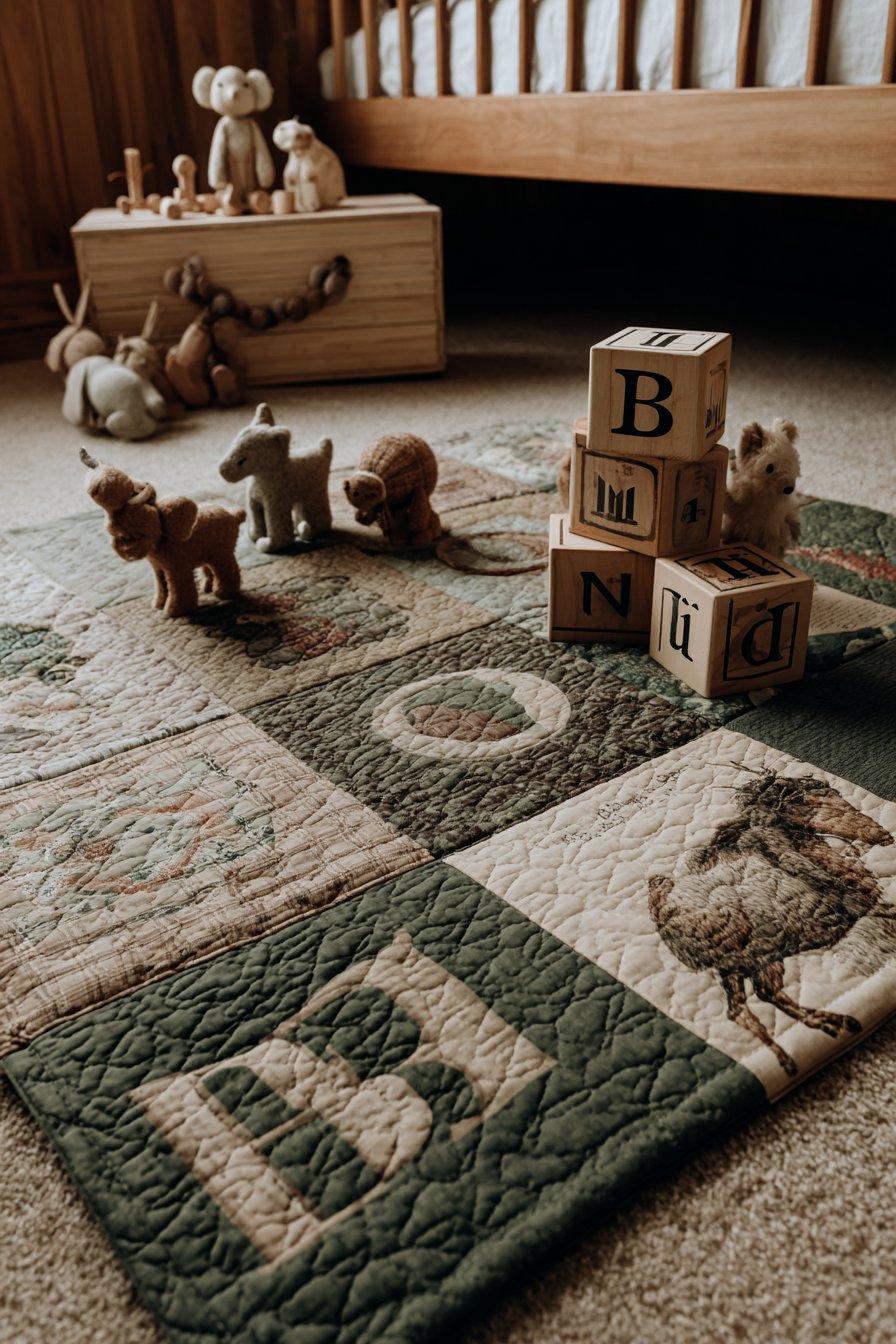
Dedicated play areas establish boundaries between activity zones. This organization helps children understand different space purposes. The soft quilted surface protects during inevitable tumbles. Investment in quality play mats and natural toys pays dividends through years of use.
Key Design Tips:
- Choose washable play mats for easy cleaning
- Select toys made from natural materials when possible
- Create defined play areas separate from sleep zones
- Provide storage accessible for encouraging cleanup participation
- Layer cushioning over hard floors for safety during play
20. Dresser Top Styling and Organization
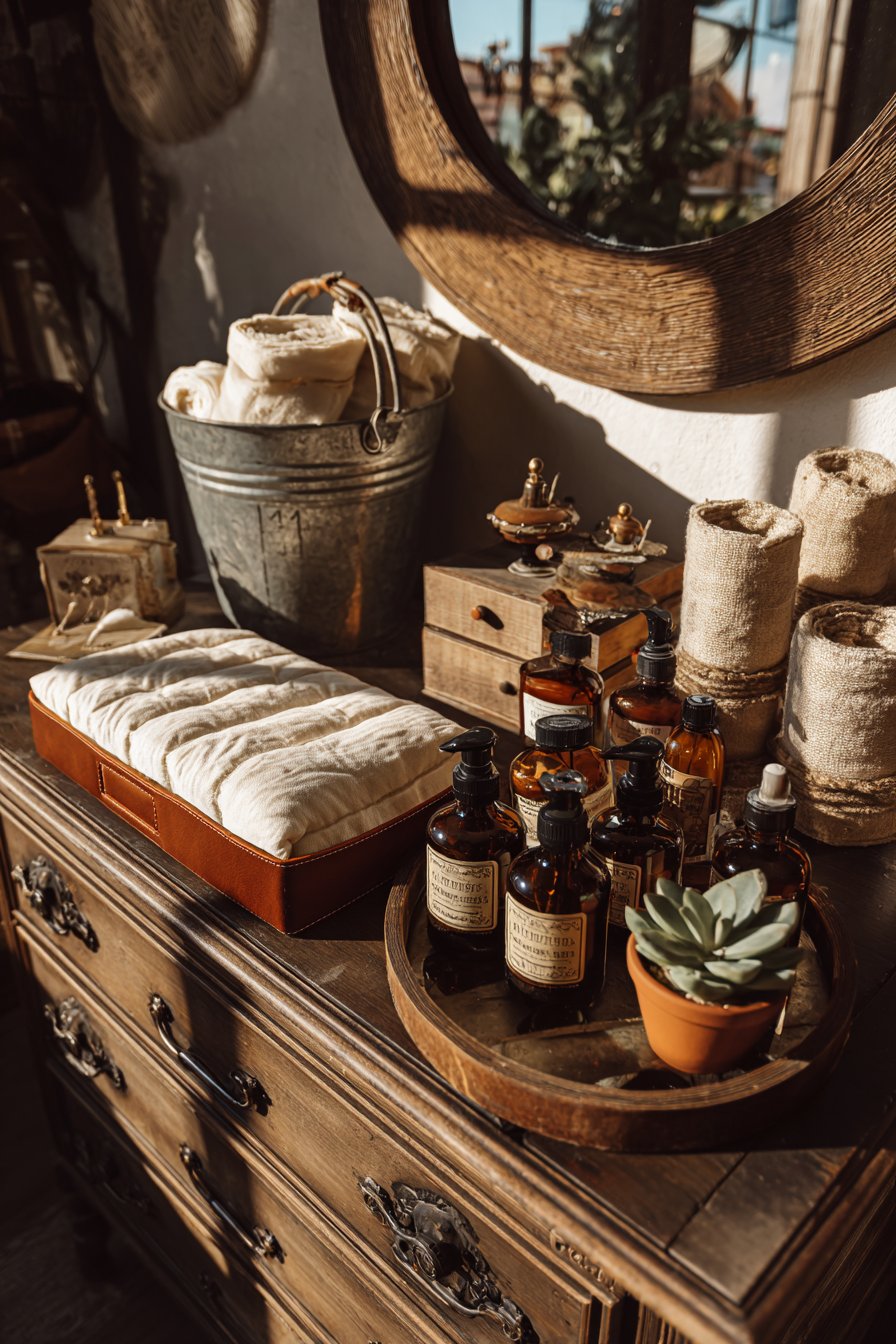
The dresser top demonstrates how functional areas can showcase beautiful design. A changing pad in organic cotton features leather corner guards. Practical essentials organize in Western-coordinated containers throughout the surface. A galvanized metal bucket holds rolled washcloths within easy reach.
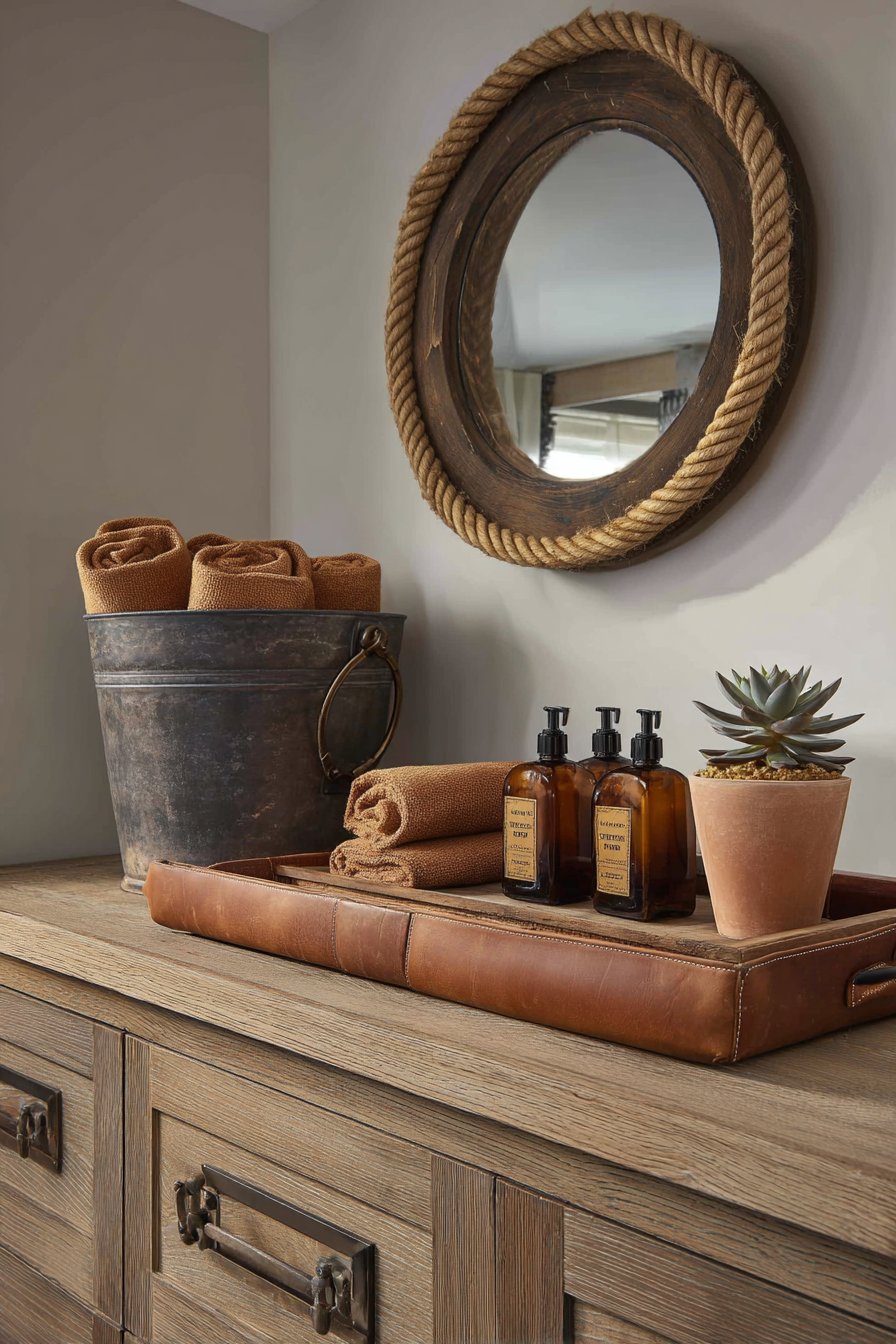
A wooden tray with rope handles contains lotions in amber glass bottles. These attractive containers elevate everyday items into decorative elements. A vintage brass scale serves dual purpose as decoration and possible future use. A small succulent in terracotta pot adds living element to the arrangement.
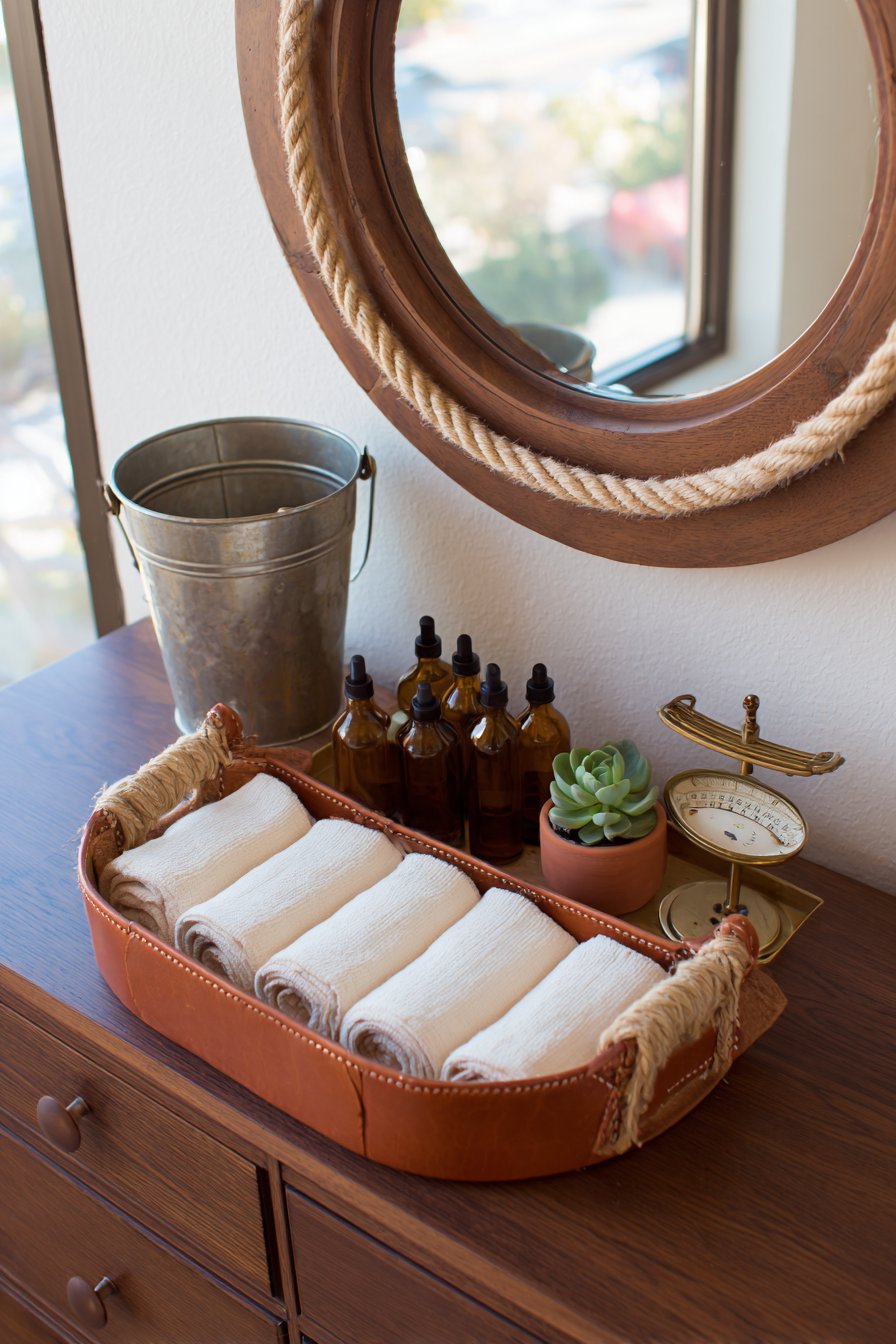
Above the dresser, a round wooden-framed mirror with rope detail reflects light throughout the space. The mirror expands visual space while serving practical purposes. The interplay of metal, wood, leather, and natural fibers creates rich textural composition. Soft daylight enhances each material’s unique qualities.
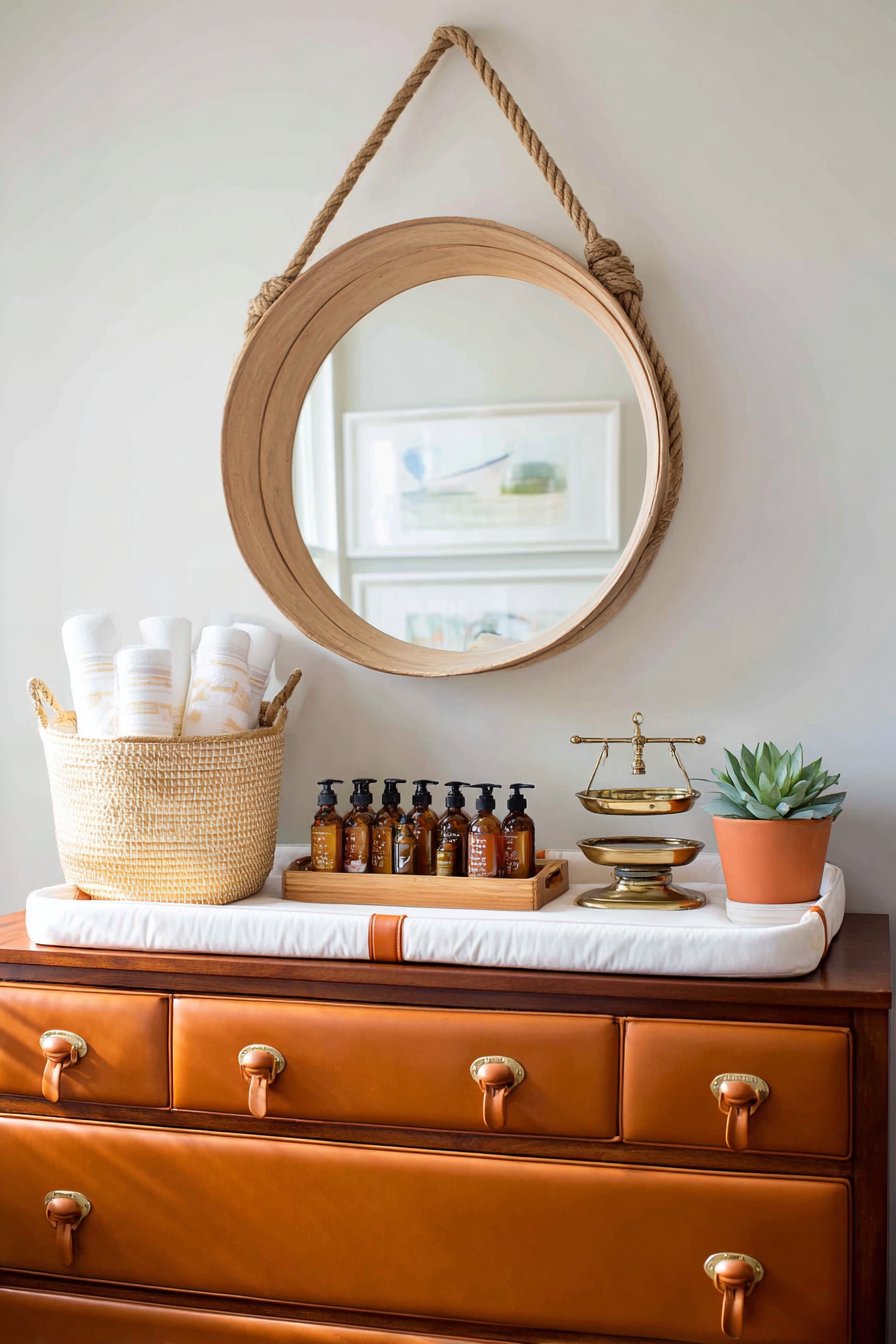
Thoughtful dresser top styling proves that organization and beauty complement each other. The functional arrangement reduces stress during busy changing times. Every item serves purpose while contributing to overall aesthetic. This balance defines successful nursery design across all surfaces and spaces.
Key Design Tips:
- Organize dresser tops with one-handed accessibility in mind
- Choose attractive containers that enhance daily routines
- Include mirrors to reflect and amplify natural light
- Add small living plants for air quality improvement
- Maintain clear workspace on changing surfaces for safety
Why These Cowboy Nursery Designs Are the Best
These cowboy nursery designs represent exceptional approaches to creating spaces that honor Western heritage while meeting modern parenting needs. Each concept demonstrates thoughtful material selection prioritizing authenticity and durability. Natural wood, genuine leather, and quality textiles ensure these nurseries age beautifully rather than showing wear.
The versatility across these designs accommodates various home styles and budget levels. Traditional ranch homes naturally embrace these Western elements, while contemporary spaces benefit from the warmth and texture cowboy themes provide. The adaptable nature allows selective incorporation—parents can implement comprehensive Western transformation or subtle nod through carefully chosen accents.
Successful cowboy nursery design balances rugged Western aesthetics with nursery safety requirements. Weathered finishes and natural materials create lived-in warmth without sharp edges or hazardous elements. The color palettes spanning earth tones provide visual interest while supporting infant development through appropriate stimulation levels. Muted rusts, creams, and denim blues offer gender-neutral foundation appealing to diverse preferences.
Material choices demonstrate sustainability commitment through reclaimed wood and natural fiber emphasis. These authentic materials outlast synthetic alternatives while developing character through use. The investment in quality pieces transitions beyond nursery years into children’s rooms and family spaces. This longevity makes cowboy design financially prudent beyond aesthetic appeal.
Spatial considerations receive careful attention across all concepts presented. Storage solutions maximize functionality without sacrificing floor space for play and movement. The layered lighting approaches accommodate different activities from energetic play to quiet bedtime routines. Furniture placement considerations ensure safety while creating inviting flow patterns.
Conclusion
These twenty cowboy nursery designs demonstrate how Western heritage translates into nurturing spaces for modern families. The key takeaways emphasize authentic material selection, thoughtful functionality, and personal expression through themed décor. Quality craftsmanship in furniture and textiles ensures lasting value throughout childhood stages.
Successful cowboy nurseries balance aesthetic boldness with appropriate softness for infant environments. The natural materials, warm color palettes, and handcrafted elements create spaces that feel both adventurous and comforting. Start your cowboy nursery journey by selecting one signature piece—perhaps a rustic crib or vintage-inspired dresser—then build surrounding elements gradually.
Your little cowpoke’s nursery awaits transformation through thoughtful planning and authentic Western touches. These designs prove that themed nurseries can achieve sophistication while celebrating cultural heritage. Embrace the frontier spirit while creating safe, beautiful space where precious early memories will form.
