


The kitchen has evolved from a purely functional space into the heart of the home, where families gather, memories are made, and culinary creativity flourishes. Creating a cozy atmosphere in this essential room transforms daily cooking routines into enjoyable experiences. A well-designed kitchen balances aesthetics with functionality, offering both comfort and efficiency.
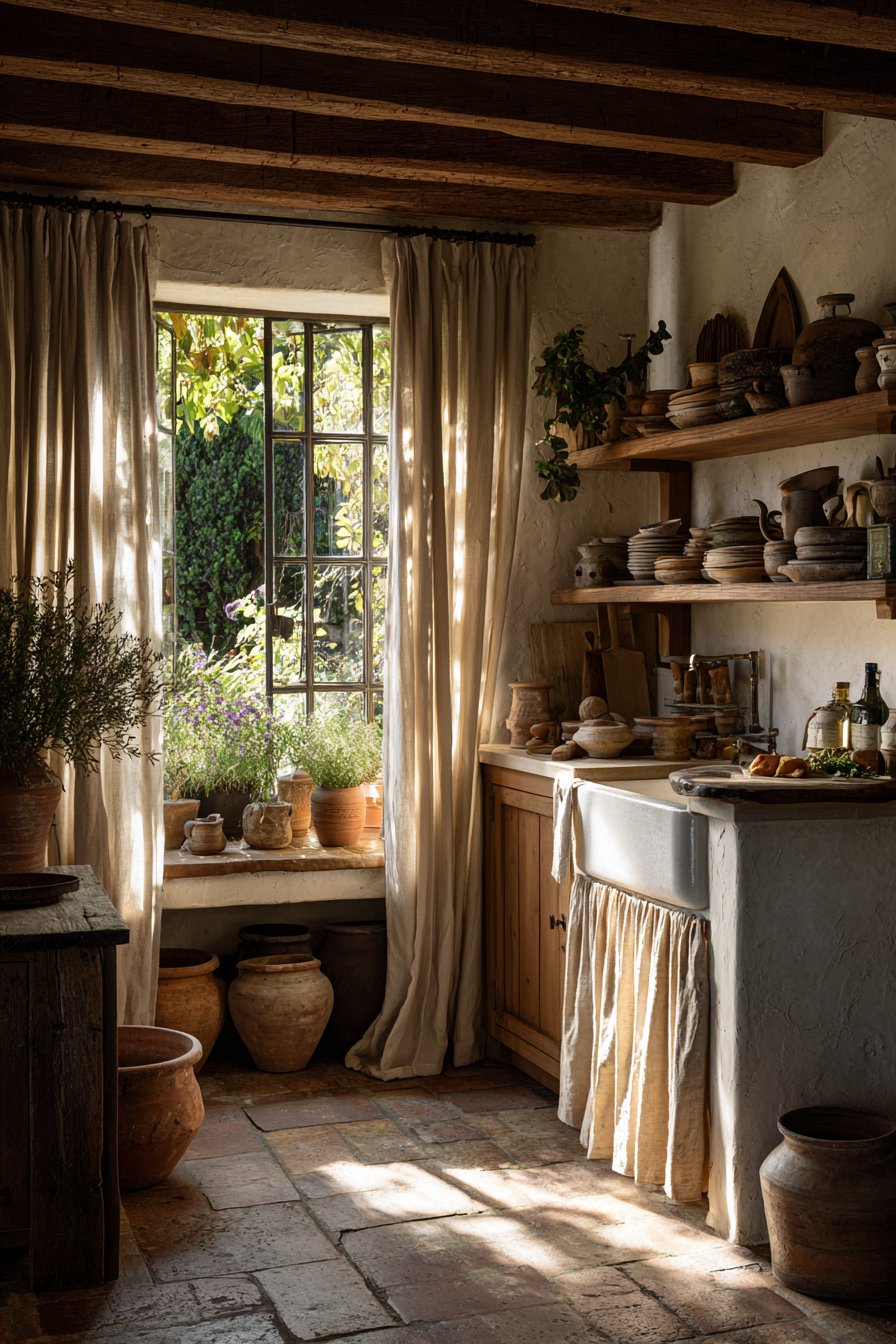
Modern homeowners increasingly prioritize warmth and welcoming ambiance in their kitchen design. The shift toward cozy kitchen environments reflects our desire for spaces that nurture connection and relaxation. Whether you’re renovating an existing kitchen or simply refreshing its atmosphere, thoughtful design choices make all the difference.
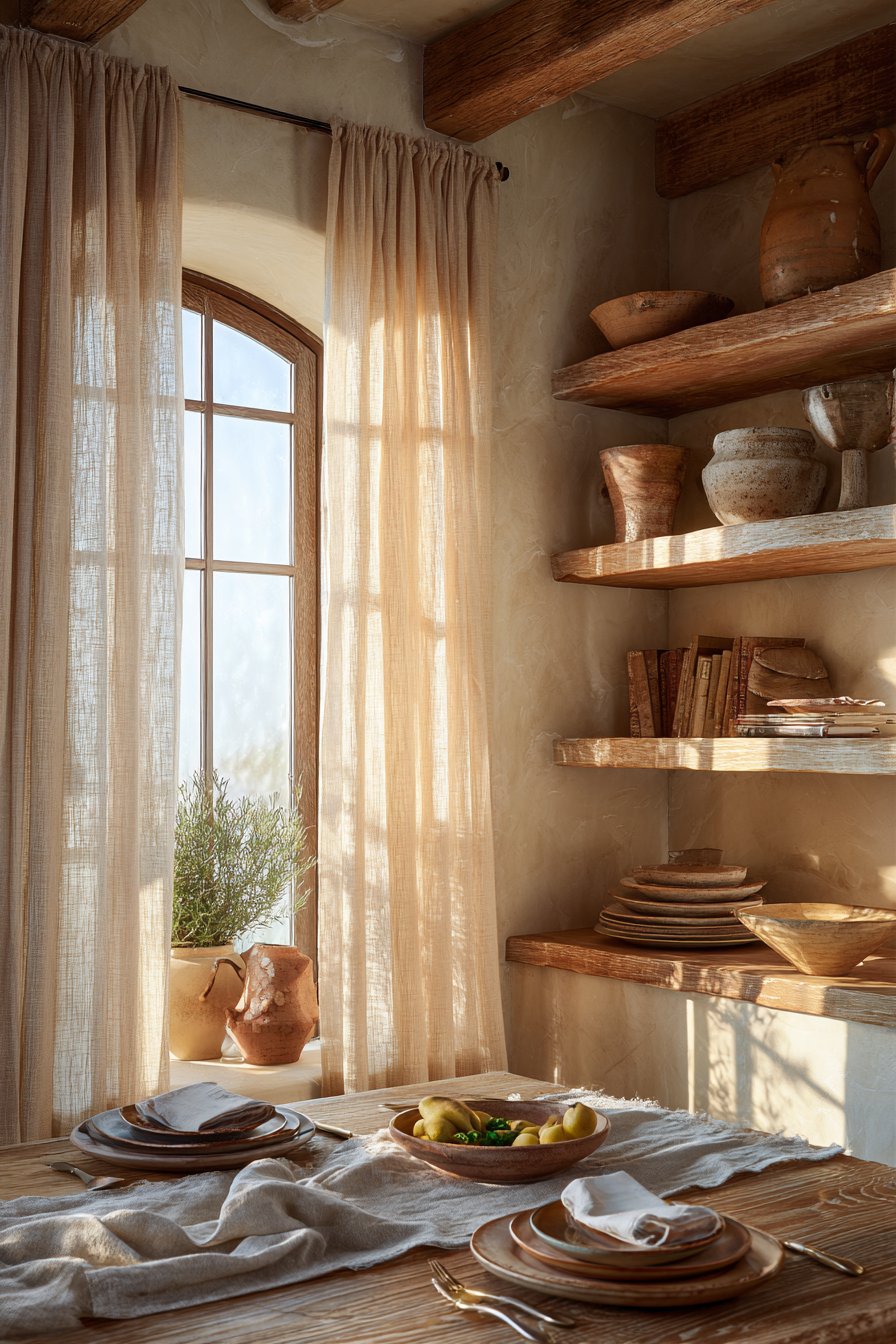
This article explores six proven strategies for cultivating a kitchen atmosphere that invites lingering conversations and comfortable meal preparation. From lighting techniques to textile selections, these tips cater to various design preferences and budgets. Each recommendation emphasizes creating inviting warmth while maintaining the kitchen’s practical purpose.
1. Layer Your Lighting for Warmth and Function
Lighting serves as the foundation for any cozy kitchen atmosphere, directly influencing mood and usability. Layered lighting schemes combine ambient, task, and accent lighting to create depth and warmth. This approach eliminates harsh shadows while providing adequate illumination for food preparation.
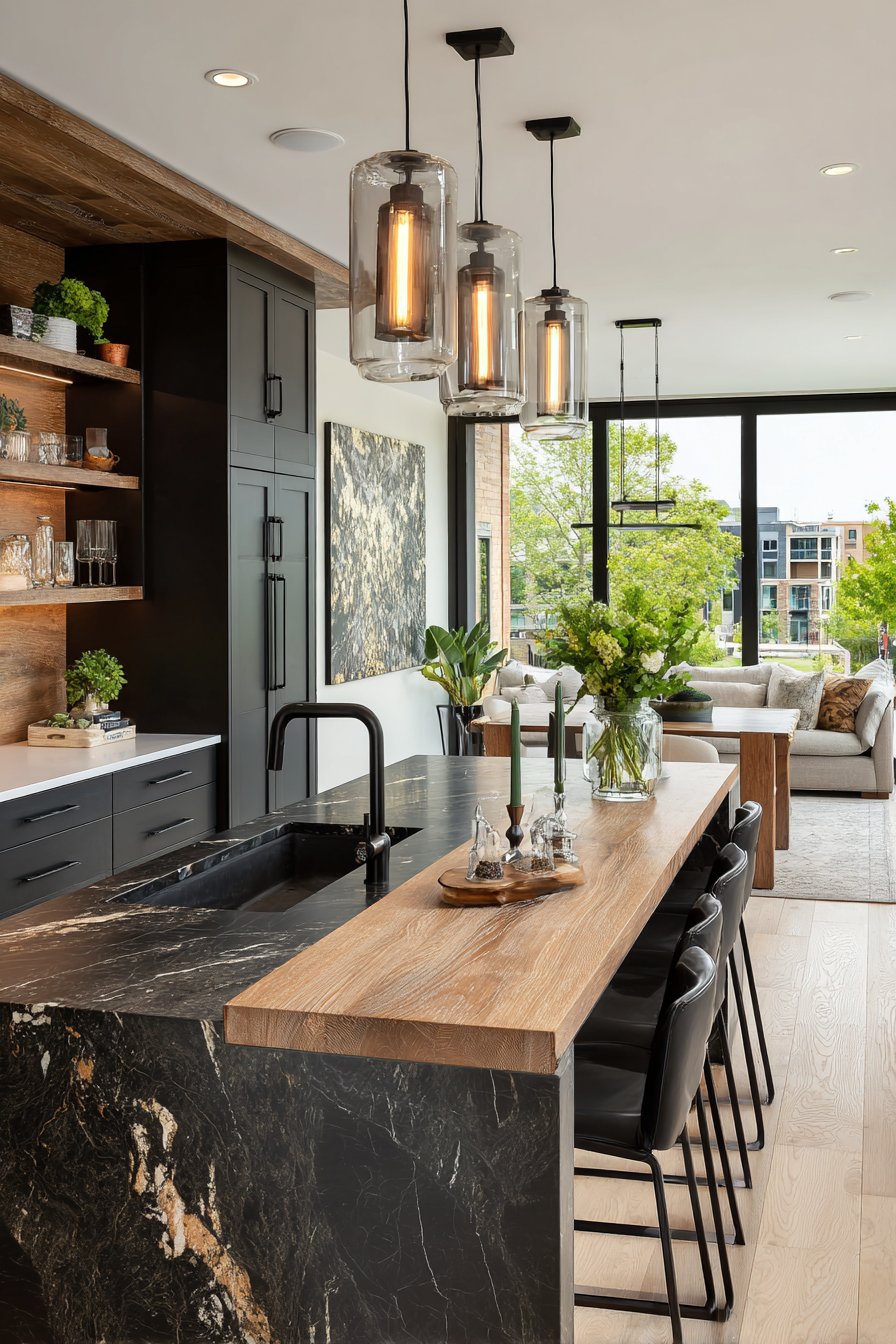
Warm-toned bulbs between 2700K and 3000K replicate the gentle glow of natural sunlight during golden hour. Installing dimmer switches gives you control over brightness levels throughout the day. Evening meals benefit from softer lighting that encourages relaxation and intimate conversation.
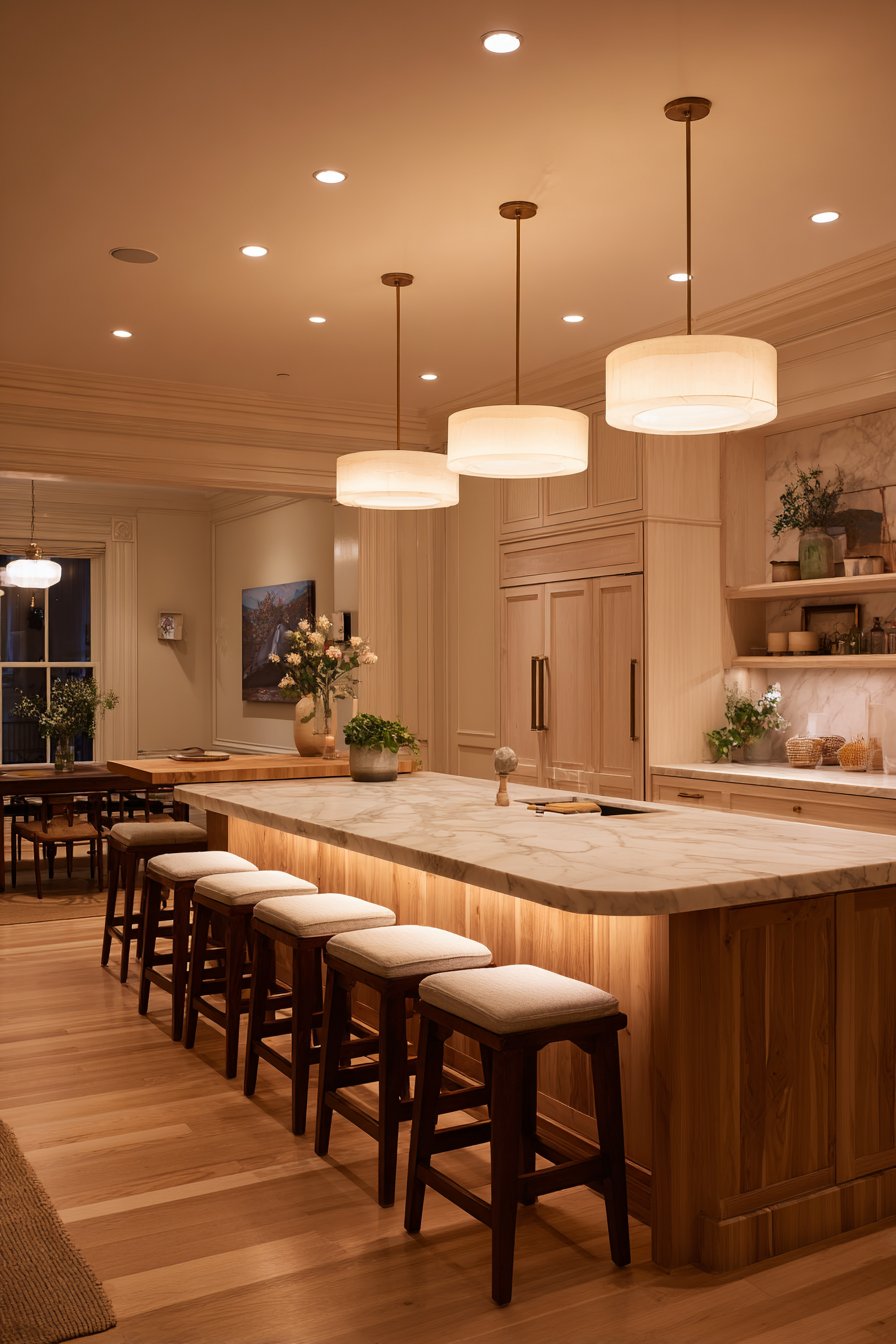
Pendant lights over islands or dining areas add visual interest while serving functional purposes. Under-cabinet lighting illuminates work surfaces without creating glare. Consider incorporating LED strip lights for energy efficiency combined with customizable ambiance.
- Install dimmer switches on all overhead fixtures for flexible brightness control
- Choose pendant lights with fabric or frosted glass shades for diffused illumination
- Add under-cabinet LED strips to enhance task lighting without harsh overhead glare
- Incorporate a statement chandelier or fixture as a decorative focal point
- Use warm white bulbs (2700K-3000K) throughout for consistent cozy atmosphere
- Consider battery-operated candles or string lights for additional ambient warmth
2. Introduce Natural Textures and Materials
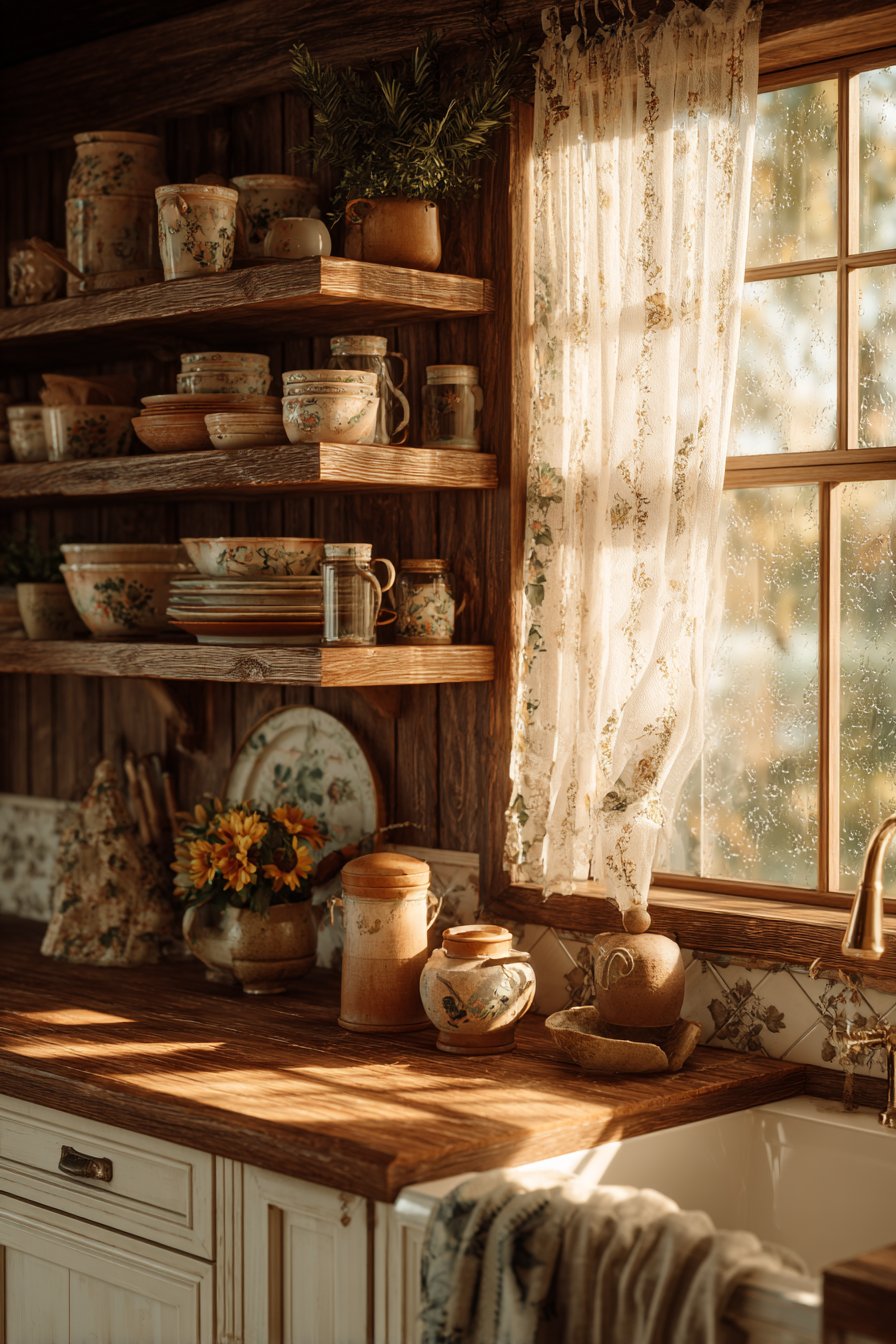
Natural materials bring organic warmth that synthetic alternatives cannot replicate, creating tactile richness throughout your kitchen. Wood elements, whether in cutting boards, open shelving, or butcher block countertops, introduce earthy tones. These materials age beautifully, developing character that enhances the cozy aesthetic over time.
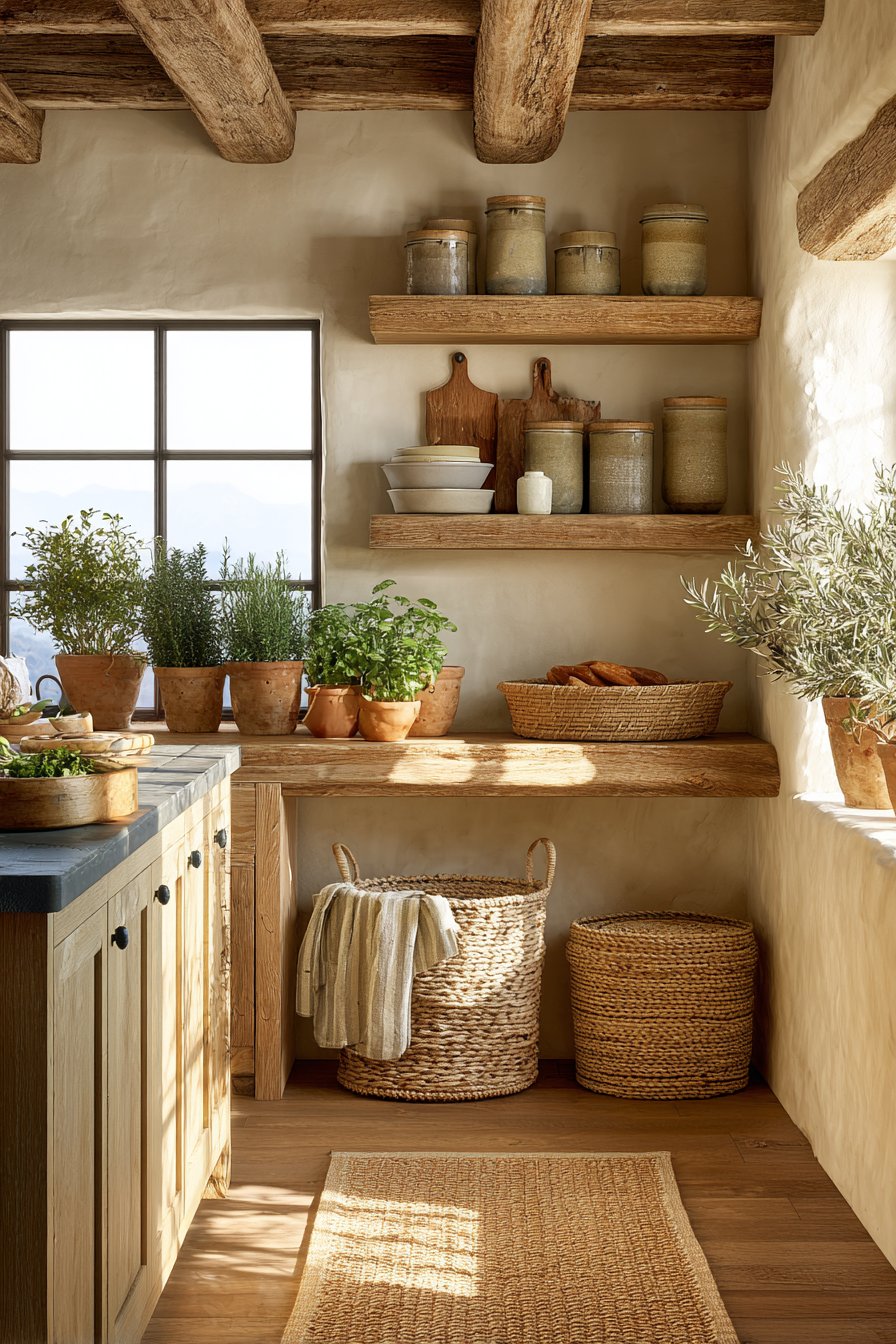
Woven baskets provide functional storage while adding textural variety to shelves and countertops. Natural fiber rugs cushion feet during long cooking sessions and define specific zones. Stone or ceramic elements contribute weight and permanence that ground the space visually.
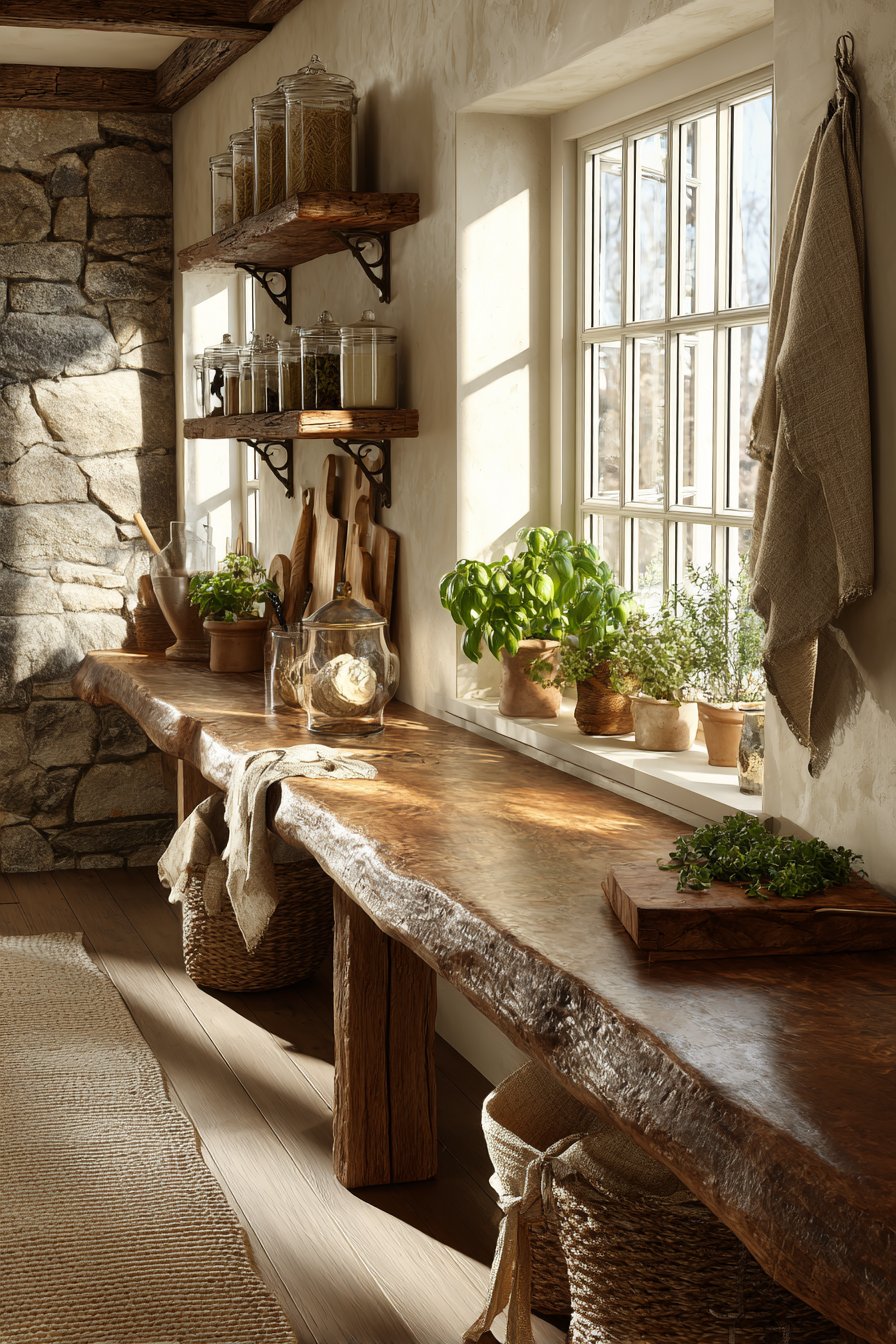
Live plants or fresh herbs in terracotta pots inject life and natural fragrance into your kitchen environment. Wooden utensil holders, linen tea towels, and rattan placemats layer additional natural textures. These elements work together to create a sensory experience that feels inherently welcoming.
- Display wooden cutting boards and utensils as decorative functional items
- Incorporate woven storage baskets for pantry items and produce
- Add natural fiber runners or washable cotton rugs in high-traffic areas
- Place potted herbs like basil or rosemary on windowsills for greenery
- Choose stone or ceramic canisters instead of plastic containers
- Install floating wooden shelves to showcase natural dinnerware and glassware
3. Create a Warm Color Palette
Color psychology profoundly impacts how we experience spaces, making palette selection crucial for cozy atmospheres. Warm neutrals like cream, beige, and soft taupe create enveloping comfort without overwhelming the senses. These shades serve as versatile backdrops that accommodate changing seasonal decor.
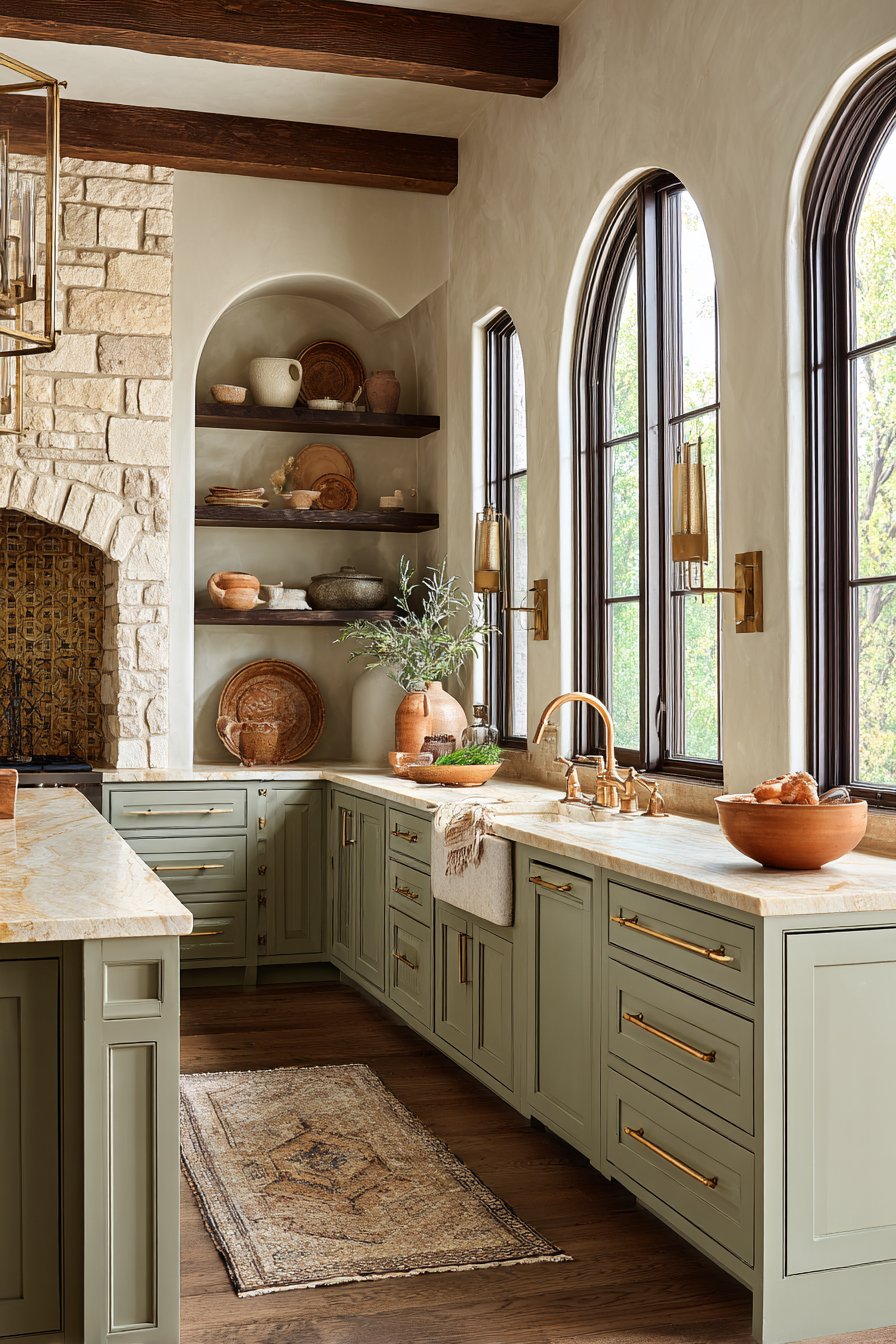
Earthy accent colors such as terracotta, sage green, or warm mustard add personality while maintaining coziness. Deep navy or charcoal gray cabinets provide sophisticated warmth when paired with brass or copper hardware. Avoid stark white entirely, opting instead for warmer whites with yellow or pink undertones.
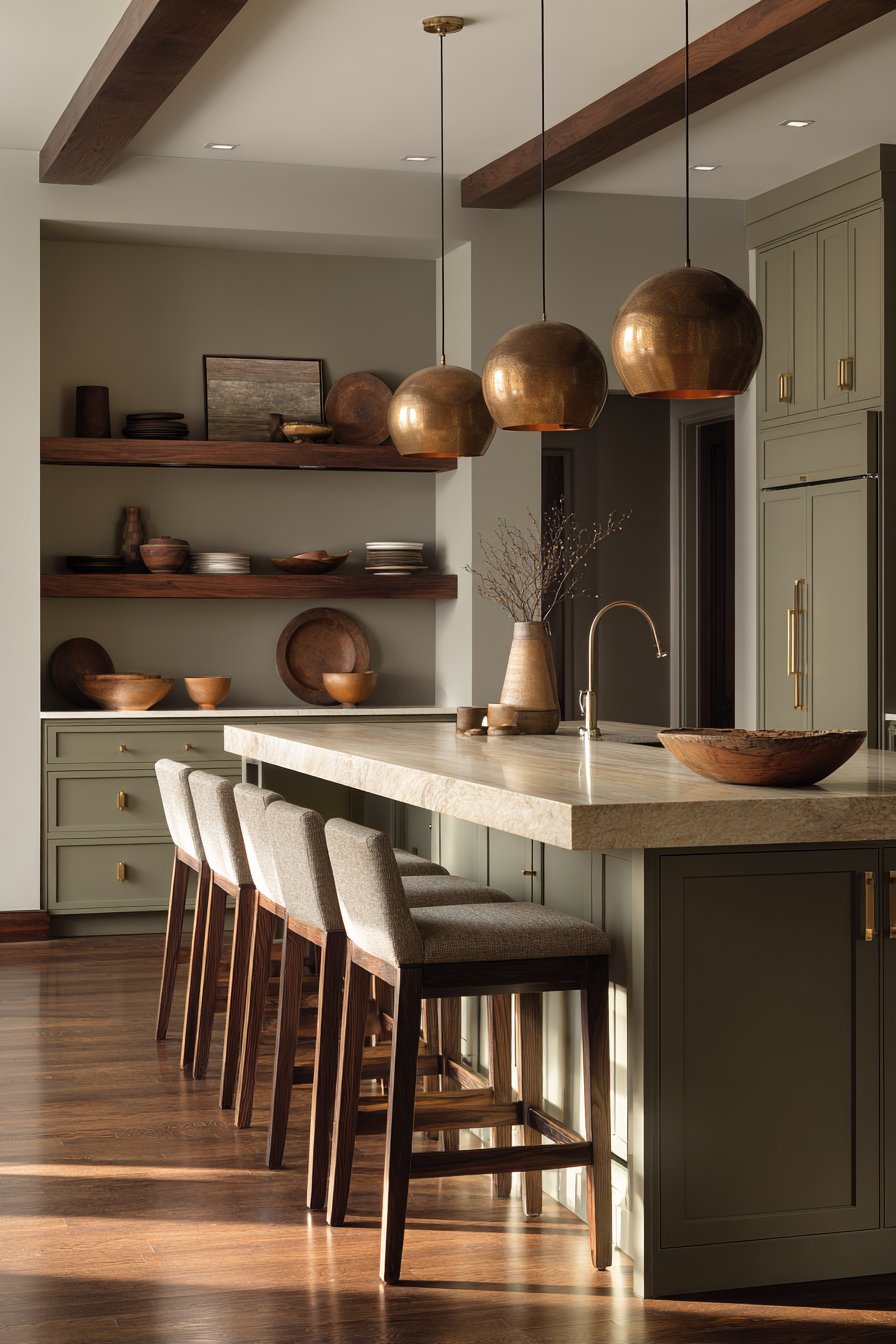
Introducing color through easily changeable elements allows flexibility as your preferences evolve. Kitchen textiles, artwork, and decorative accessories offer low-commitment opportunities for seasonal color shifts. This approach maintains the cozy foundation while keeping the space feeling fresh.
- Paint walls in warm neutrals like greige, warm beige, or soft cream
- Choose cabinet colors in warm wood tones or muted earth colors
- Add pops of terracotta, burnt orange, or sage through accessories
- Select warm-toned countertops in butcher block or cream-colored stone
- Incorporate copper, brass, or bronze hardware and fixtures for warmth
- Use kitchen textiles in rust, mustard, or deep green for accent color
4. Incorporate Soft Textiles and Fabrics
Textiles soften hard kitchen surfaces, introducing comfort and warmth through tactile elements. Quality kitchen linens in natural fibers like linen or cotton add visual softness to countertops. Fabric cafe curtains or roman shades filter natural light while maintaining privacy and warmth.
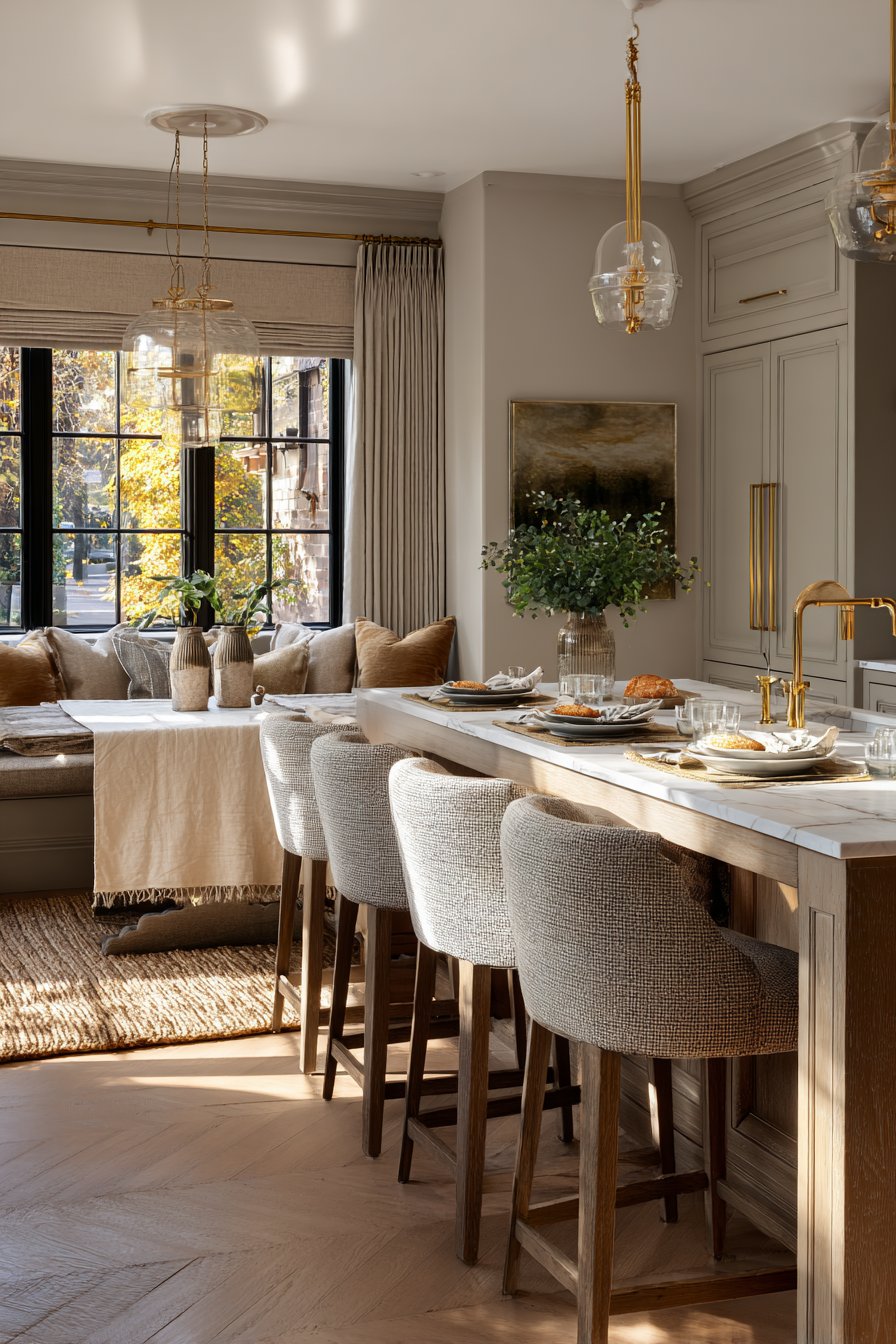
Cushioned seating transforms kitchen dining areas into inviting gathering spots where people naturally linger. Upholstered bench seats or padded bar stools encourage extended conversations over coffee or meals. Choose durable, washable fabrics that withstand kitchen environments while maintaining their welcoming appearance.
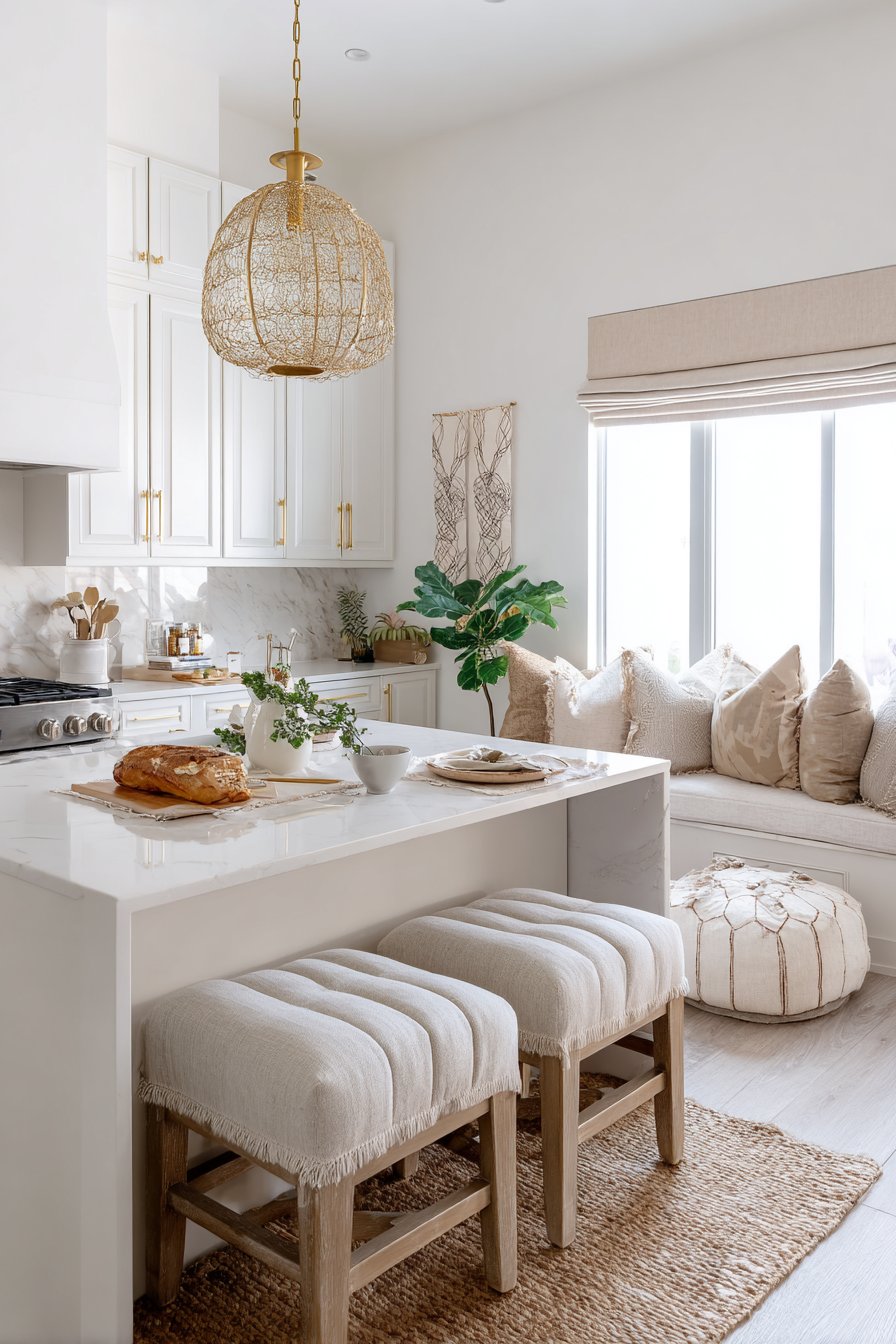
Layering multiple textile elements creates dimensional coziness throughout the space. Table runners, placemats, and cloth napkins dress up dining areas for everyday use. Tea towels displayed on hooks serve both decorative and functional purposes, adding color and pattern.
- Invest in high-quality linen or cotton tea towels in coordinating colors
- Add cushions to dining chairs or window seats for extra comfort
- Hang cafe curtains or roman shades in natural fabrics like linen
- Use a washable cotton or jute rug to define the dining or cooking area
- Display decorative dish towels on open hooks or bars as accent pieces
- Choose upholstered or cushioned seating for kitchen islands and dining spaces
5. Personalize with Meaningful Displays
Personal touches transform generic kitchens into uniquely cozy spaces that reflect your personality and history. Open shelving provides opportunities to display cherished dishware, vintage finds, or family heirlooms. These items tell your story while serving practical purposes in daily kitchen activities.
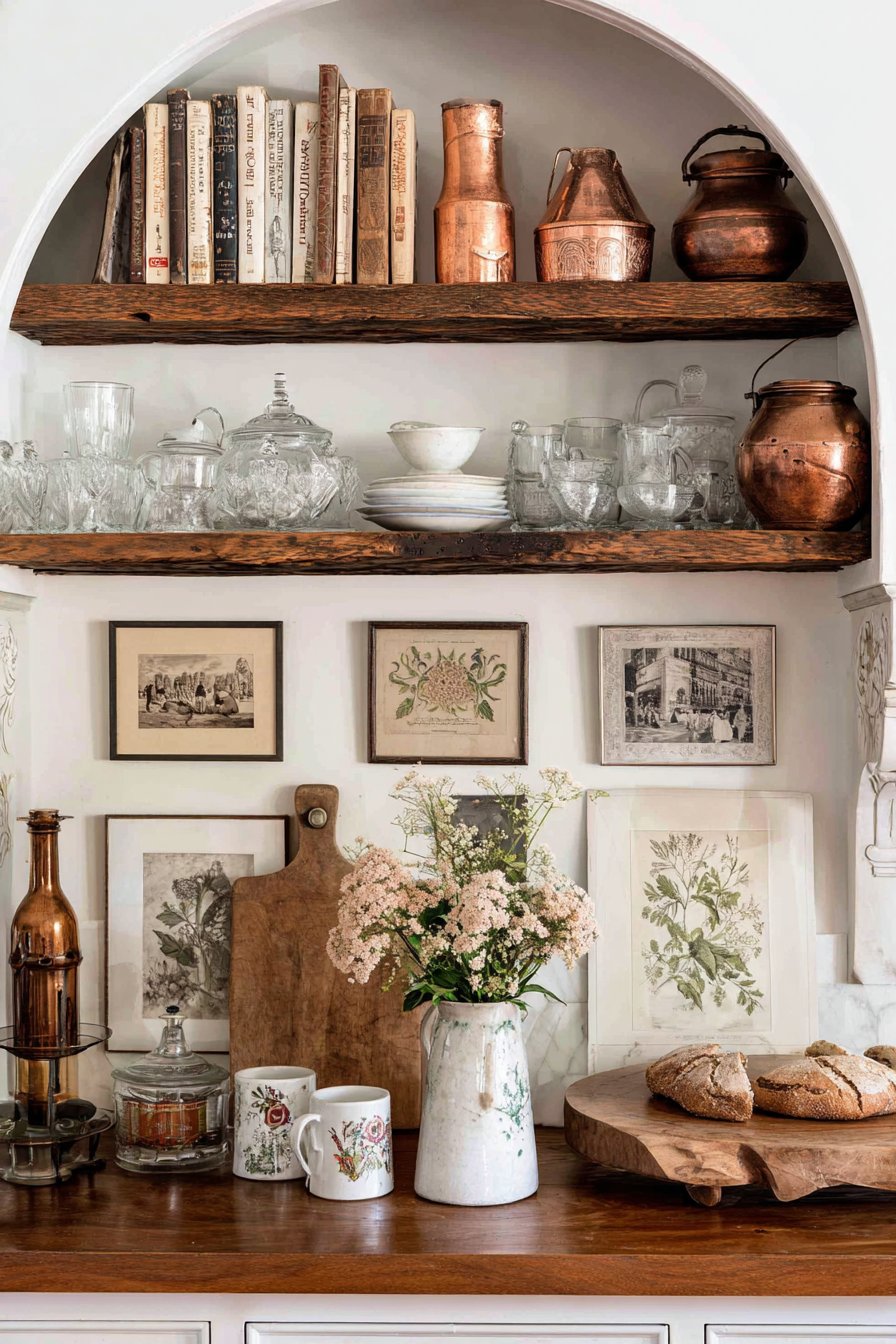
Curated collections of cookbooks, pottery, or glassware add visual interest without creating clutter. Grouping similar items by color or style creates cohesive displays that feel intentional. Rotating seasonal items keeps displays fresh while maintaining the overall cozy aesthetic.
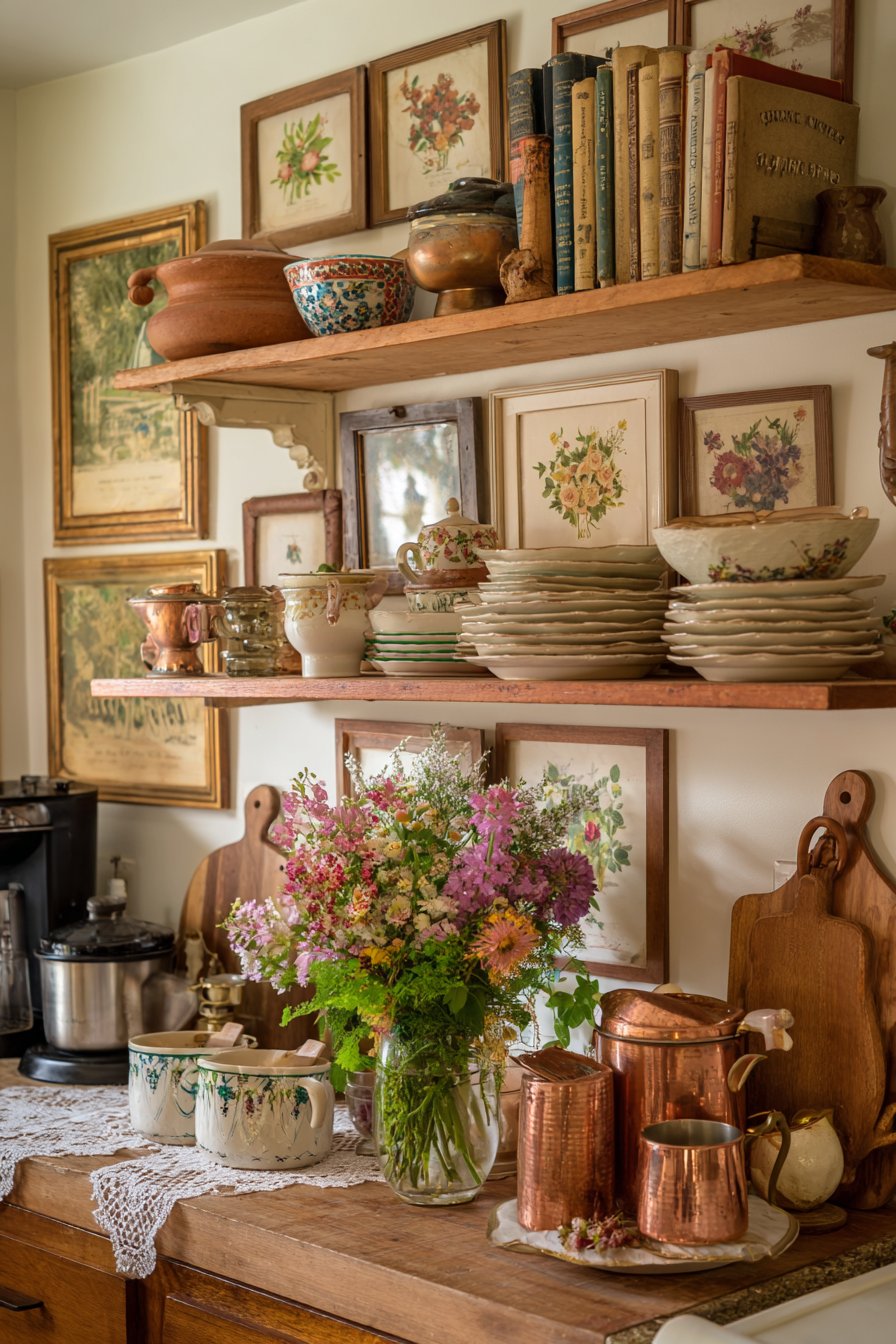
Artwork or family photographs in the kitchen humanize the space and spark conversations with guests. Choose frames and pieces that complement your color palette and design style. These personal elements make the kitchen feel lived-in and loved rather than showroom-perfect.
- Display favorite cookbooks on open shelves or countertop stands
- Showcase a collection of vintage dishes, mugs, or pottery pieces
- Hang meaningful artwork or family photos in coordinating frames
- Arrange fresh flowers or seasonal branches in vintage vessels
- Create a coffee or tea station with attractive canisters and mugs
- Display handmade items like pottery or cutting boards from local artisans
6. Design Intimate Gathering Zones
Dedicated gathering areas within the kitchen encourage social connection and extended time in the space. A small breakfast nook with a round table creates intimacy that larger dining setups cannot achieve. Window seats with cushions provide cozy spots for morning coffee or casual conversations.
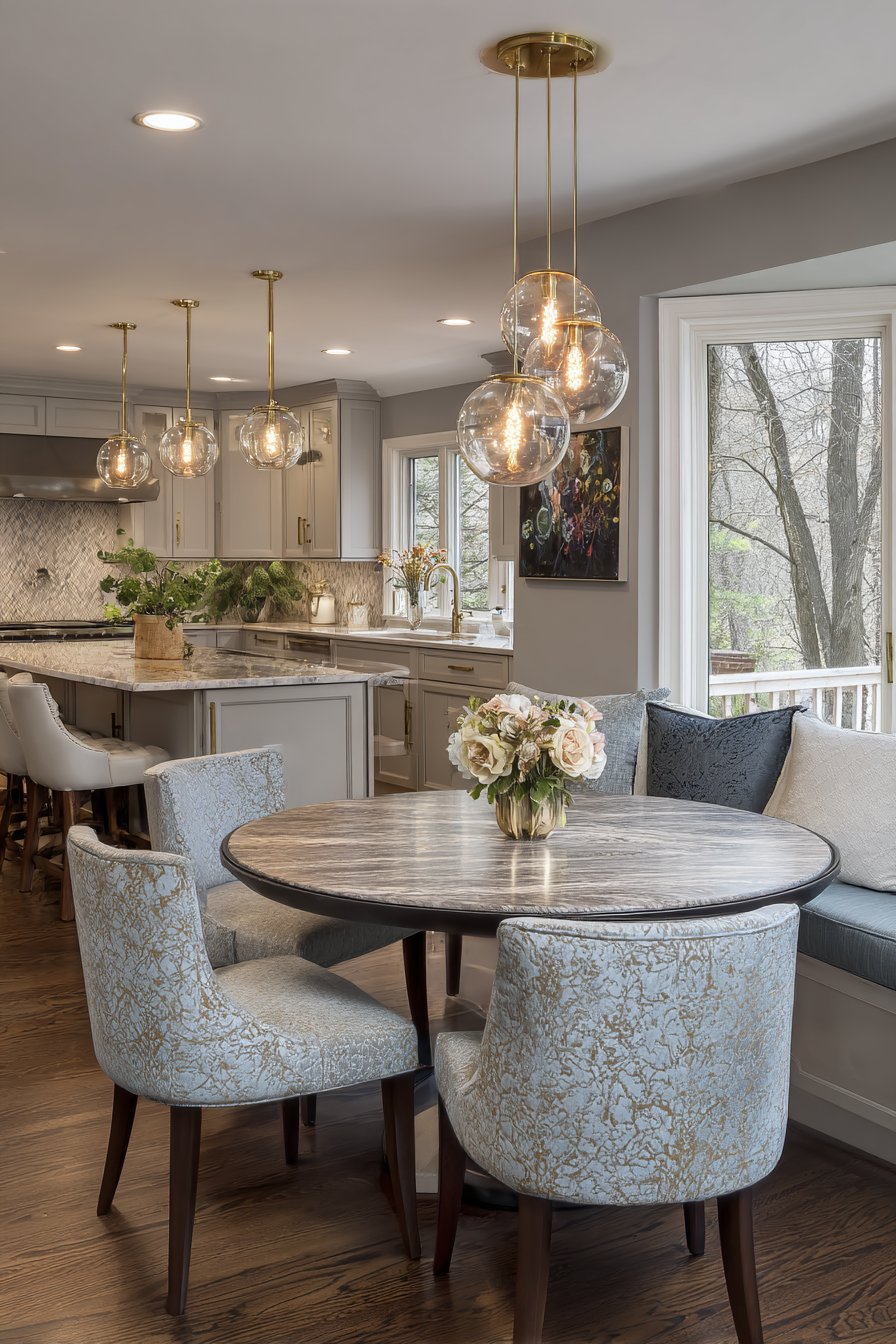
Kitchen islands with seating serve dual purposes, facilitating food preparation while keeping cooks connected to family. Counter-height seating allows children to help with cooking or complete homework nearby. These multi-functional zones maximize the kitchen’s role as a gathering hub.
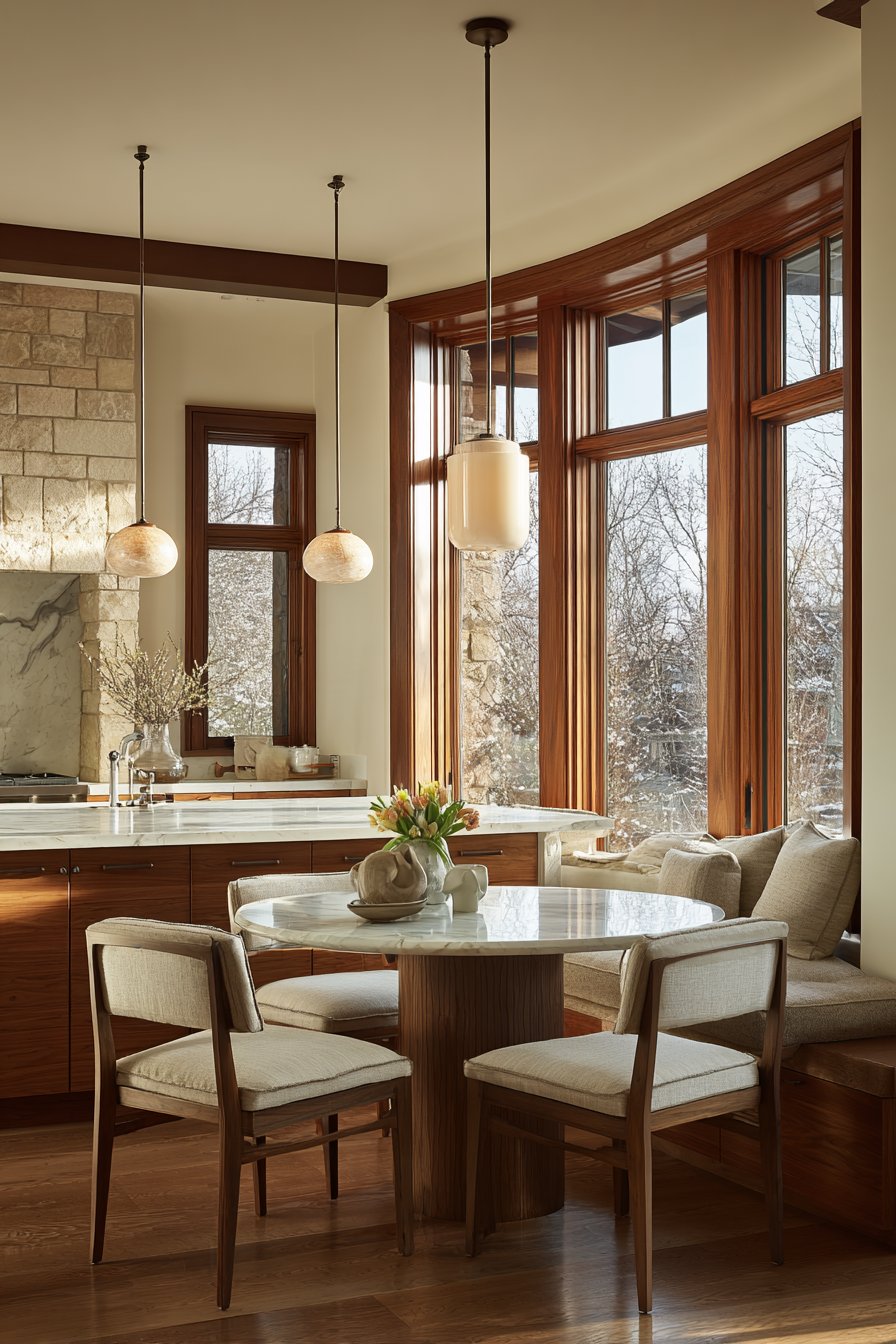
Proper space planning ensures gathering areas feel intentional rather than cramped or afterthought. Allow adequate clearance around seating areas for comfortable movement. Consider sight lines so people seated in gathering zones can engage with cooks and each other naturally.
- Create a breakfast nook with a small round table and comfortable chairs
- Add bar stools or counter seating to kitchen islands for casual dining
- Install a window seat with storage and soft cushions for reading or relaxing
- Position seating to face cooking areas for easy conversation flow
- Include a small coffee station or beverage area for self-service refreshments
- Ensure adequate lighting above all seating areas for functionality and ambiance
Conclusion
Creating a cozy kitchen atmosphere requires thoughtful attention to lighting, materials, color, and personal touches that work harmoniously together. These six strategies provide a comprehensive framework for transforming your kitchen into a warm, inviting space. Remember that coziness develops gradually through layered choices rather than single dramatic changes.
Start with one or two tips that resonate most strongly with your vision and budget. Experiment with different textures, lighting options, and personal displays until you achieve the welcoming atmosphere you desire. Your kitchen should reflect your unique style while serving as a comfortable gathering place for years to come.
