


Open kitchens have transformed modern living spaces, creating seamless transitions between cooking, dining, and entertaining areas. This design approach removes traditional barriers, fostering connection and conversation while maximizing natural light and spatial perception. The concept goes beyond simply knocking down walls—it requires thoughtful planning to ensure functionality meets aesthetics.
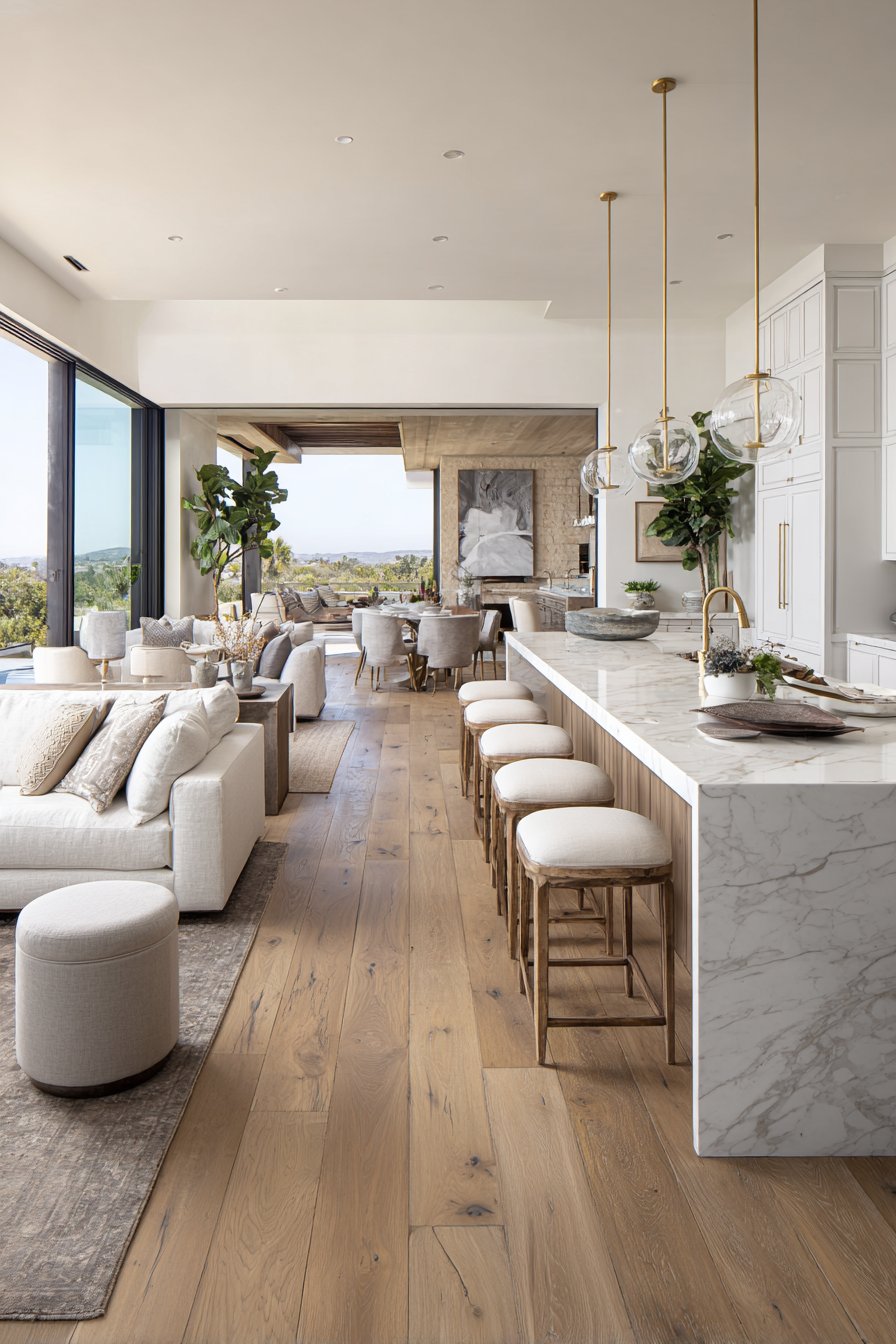
Creating an open kitchen that truly flows with your home demands careful consideration of layout, materials, and visual continuity. Whether you’re renovating an existing space or building from scratch, the goal is to craft a cohesive environment where the kitchen becomes an integrated part of your home’s narrative. This article explores six essential strategies to help you design an open kitchen that feels intentional, inviting, and perfectly suited to your lifestyle.
1. Establish Visual Continuity Through Flooring
Flooring serves as the foundational element that unifies your open kitchen with adjacent spaces. When the same flooring material extends from the kitchen through dining and living areas, it creates an uninterrupted visual plane that makes spaces feel larger and more cohesive. This continuity eliminates jarring transitions that can fragment the flow of your home.
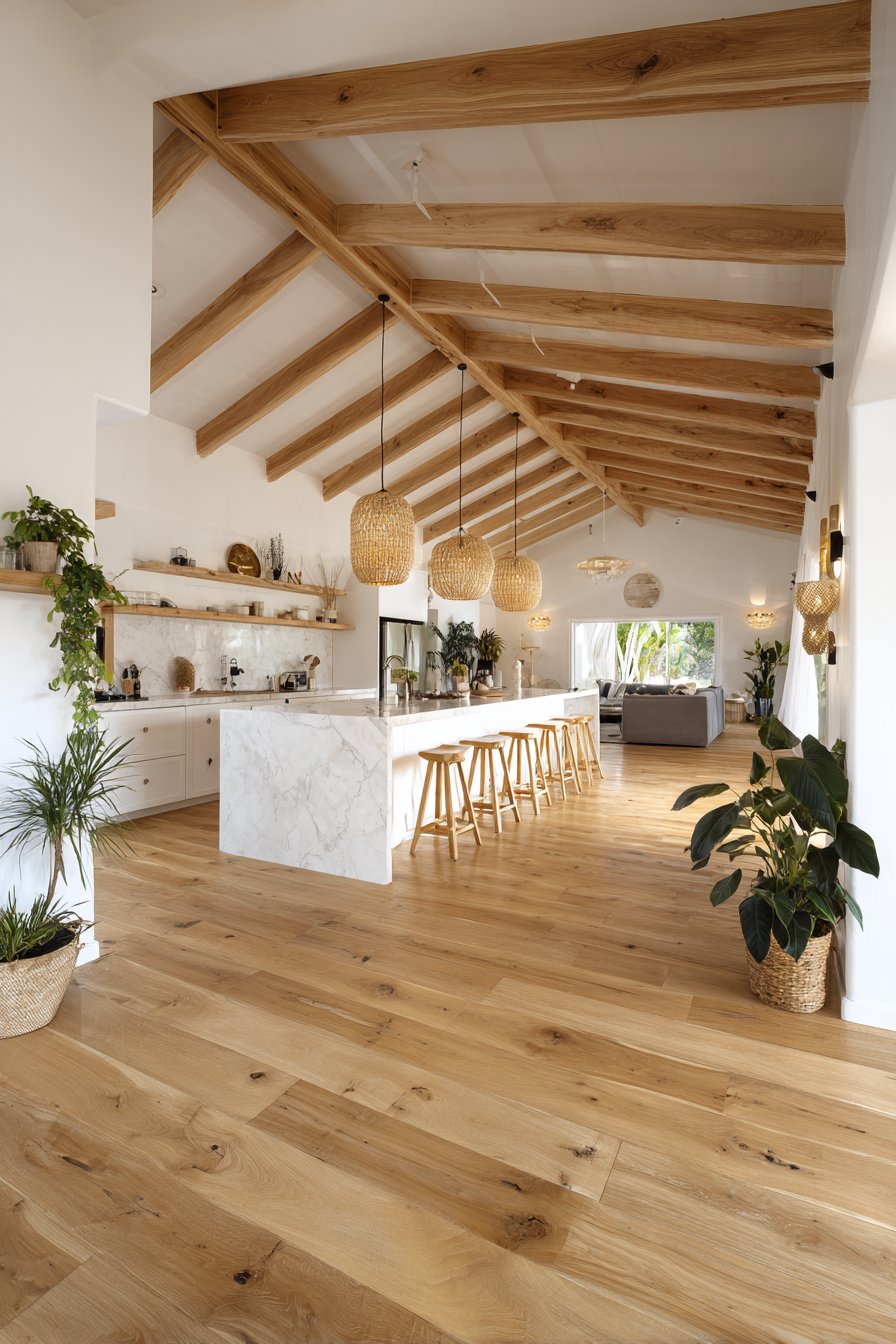
Consider materials that offer both durability and aesthetic appeal across multiple functional zones. Hardwood flooring remains a timeless choice, providing warmth and elegance while withstanding kitchen traffic. Alternatively, large-format tiles or luxury vinyl planks offer practical benefits with contemporary style. The key is selecting materials that can handle kitchen demands while complementing your home’s overall design language.
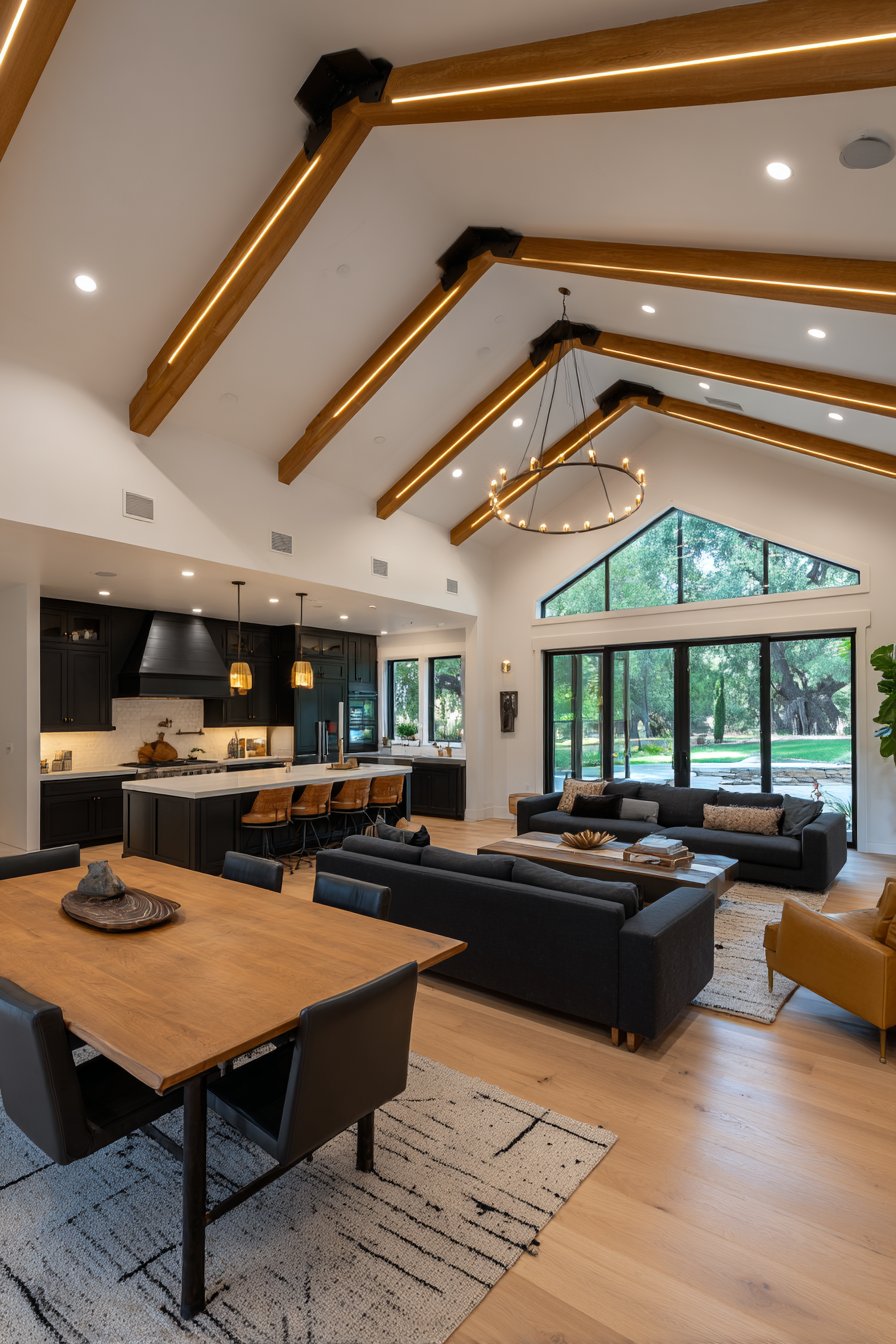
Pay attention to how flooring direction influences spatial perception. Running planks or tiles in a consistent direction throughout connected spaces elongates sightlines and reinforces the sense of flow. This subtle detail significantly impacts how seamlessly your kitchen integrates with surrounding areas.
- Choose flooring materials with similar durability ratings for all connected spaces
- Match wood tones or tile colors within the same color family
- Avoid mixing more than two flooring types in open-plan areas
- Use transition strips sparingly and only where absolutely necessary
- Consider radiant heating beneath flooring for added comfort
- Select finishes that hide wear patterns in high-traffic zones
2. Create Cohesion With a Unified Color Palette
A harmonious color scheme is essential for making your open kitchen feel like an intentional extension of your home rather than a separate room. Select a palette of three to five colors that appear throughout your connected spaces, varying only in proportion and application. This approach creates rhythm and repetition that guides the eye naturally through the space.
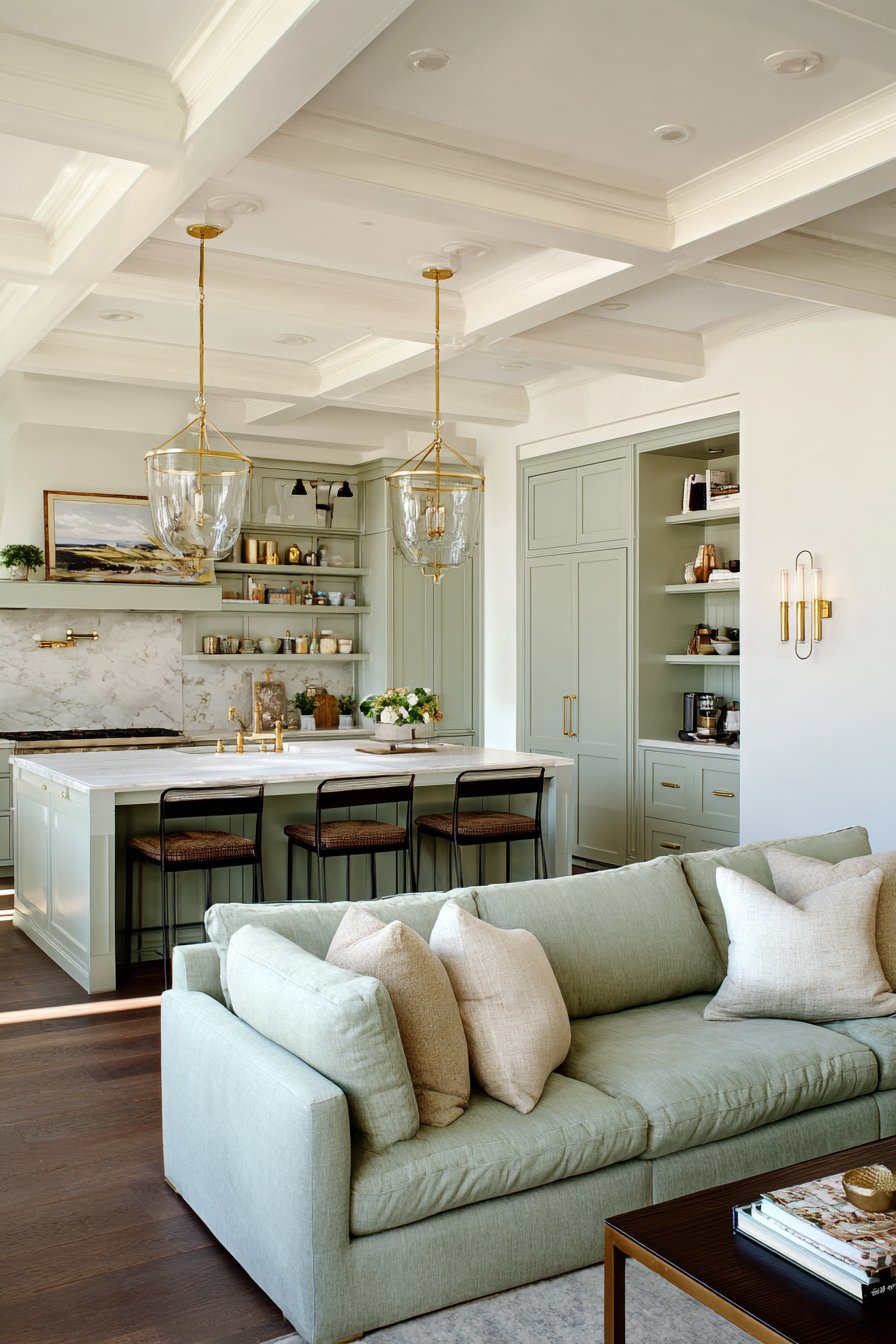
Your kitchen cabinetry color should relate to furniture and architectural elements in adjacent areas. If your living room features warm wood tones, consider incorporating similar warmth into kitchen islands or open shelving. Conversely, if your home embraces cool grays and whites, continue this palette into kitchen surfaces and backsplashes for seamless integration.
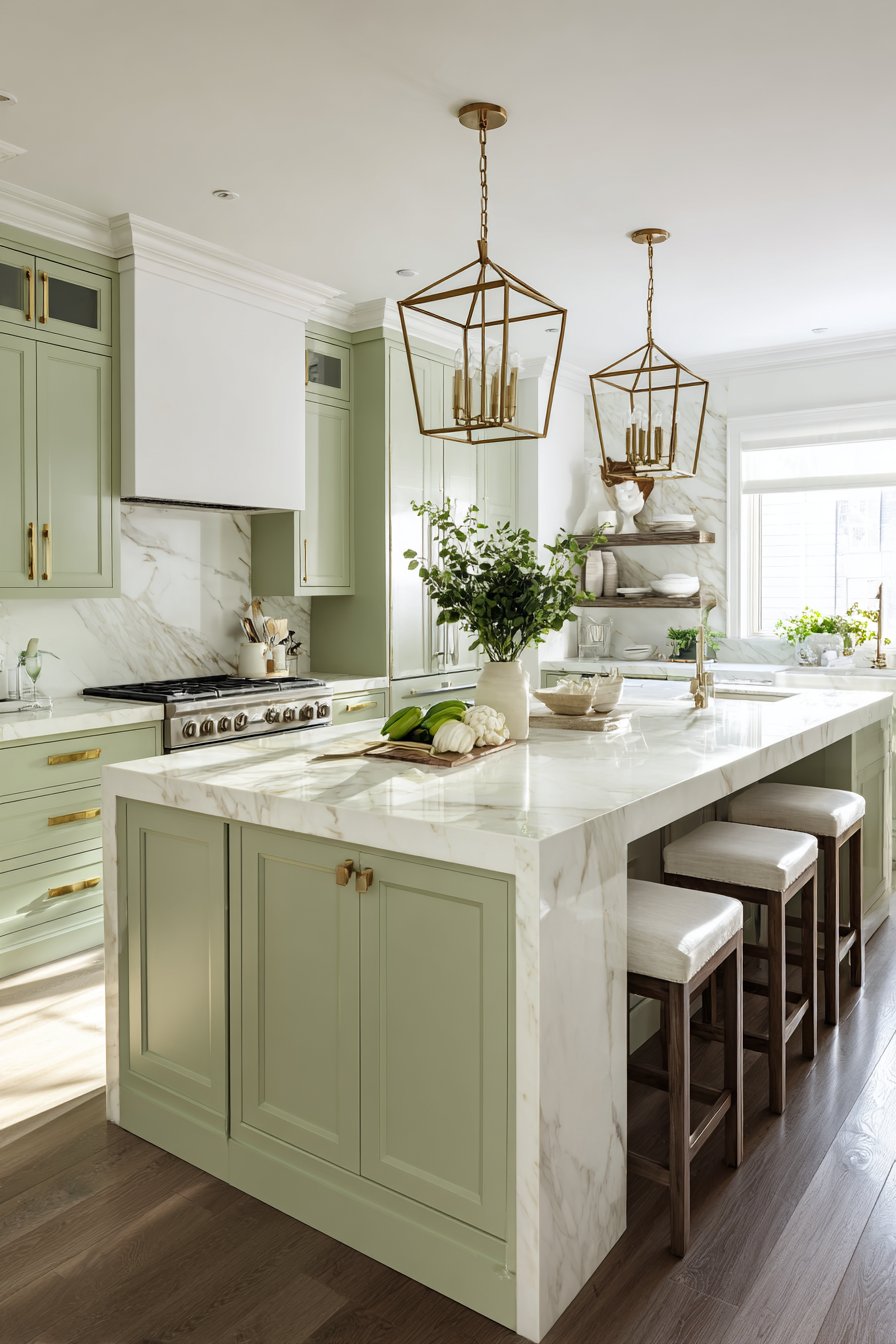
Don’t forget the power of accent colors to create interest while maintaining cohesion. A color used in living room pillows can reappear in kitchen bar stools or small appliances, creating visual connections that strengthen the sense of flow. These intentional repetitions make the entire space feel curated and thoughtful.
- Use paint samples in both natural and artificial light before committing
- Repeat your primary wall color in at least two connected spaces
- Limit bold accent colors to 10-15% of your total color distribution
- Consider how cabinet colors will age and remain relevant
- Use metallic finishes consistently across hardware and fixtures
- Test color combinations with fabric and material samples side by side
3. Design With Sightlines and Scale in Mind
Understanding sightlines from various vantage points determines how successfully your open kitchen integrates visually. Stand in your living room and consider what kitchen elements will be visible—these areas deserve extra design attention. Upper cabinets, range hoods, and islands become focal points that should enhance rather than detract from your home’s aesthetic.
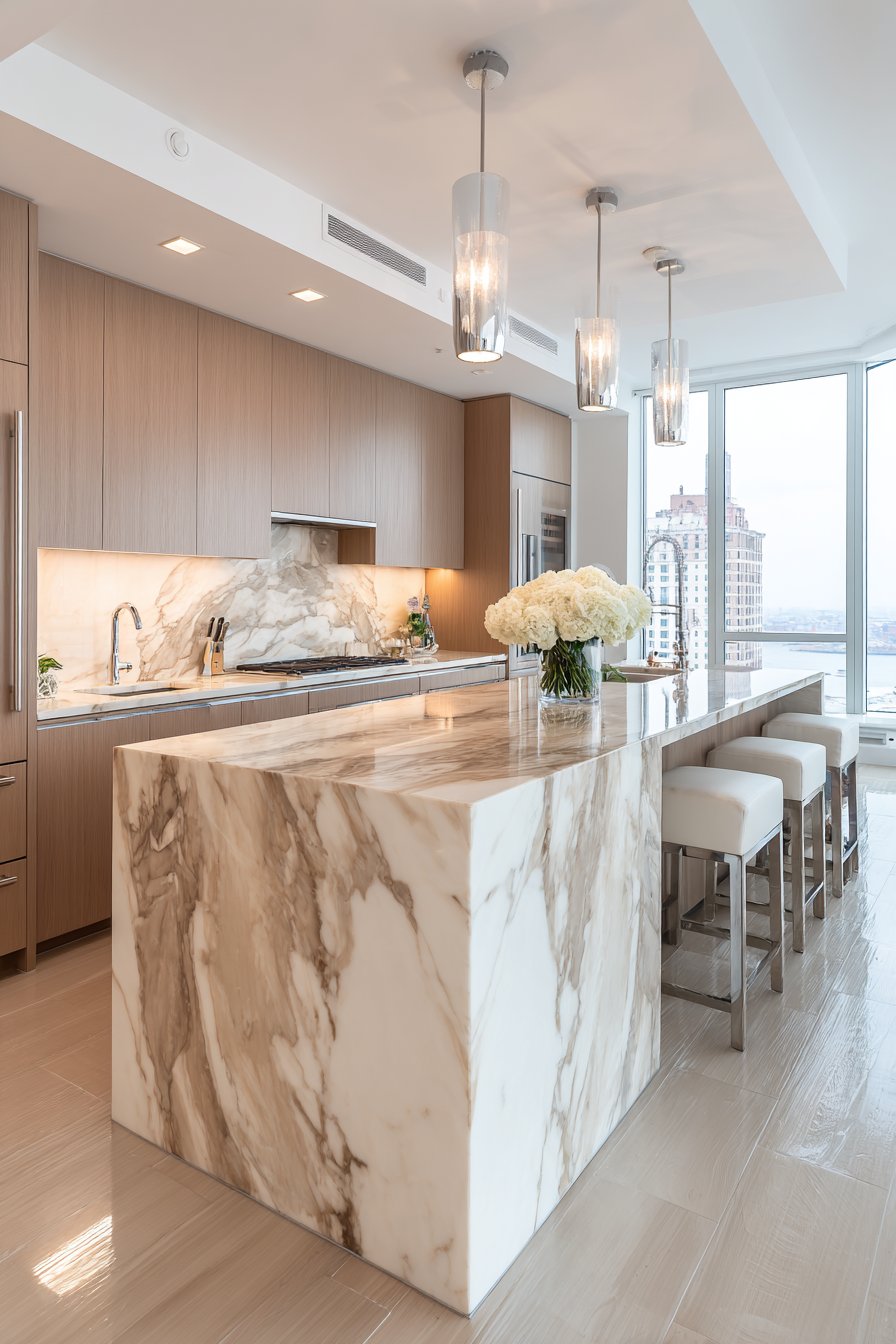
Proportional scaling prevents your kitchen from overwhelming or underwhelming adjacent spaces. An oversized island might provide ample workspace but can dominate sightlines and disrupt flow. Conversely, undersized elements may look disconnected and inadequate. Measure carefully and use painter’s tape to mock up dimensions before installation.
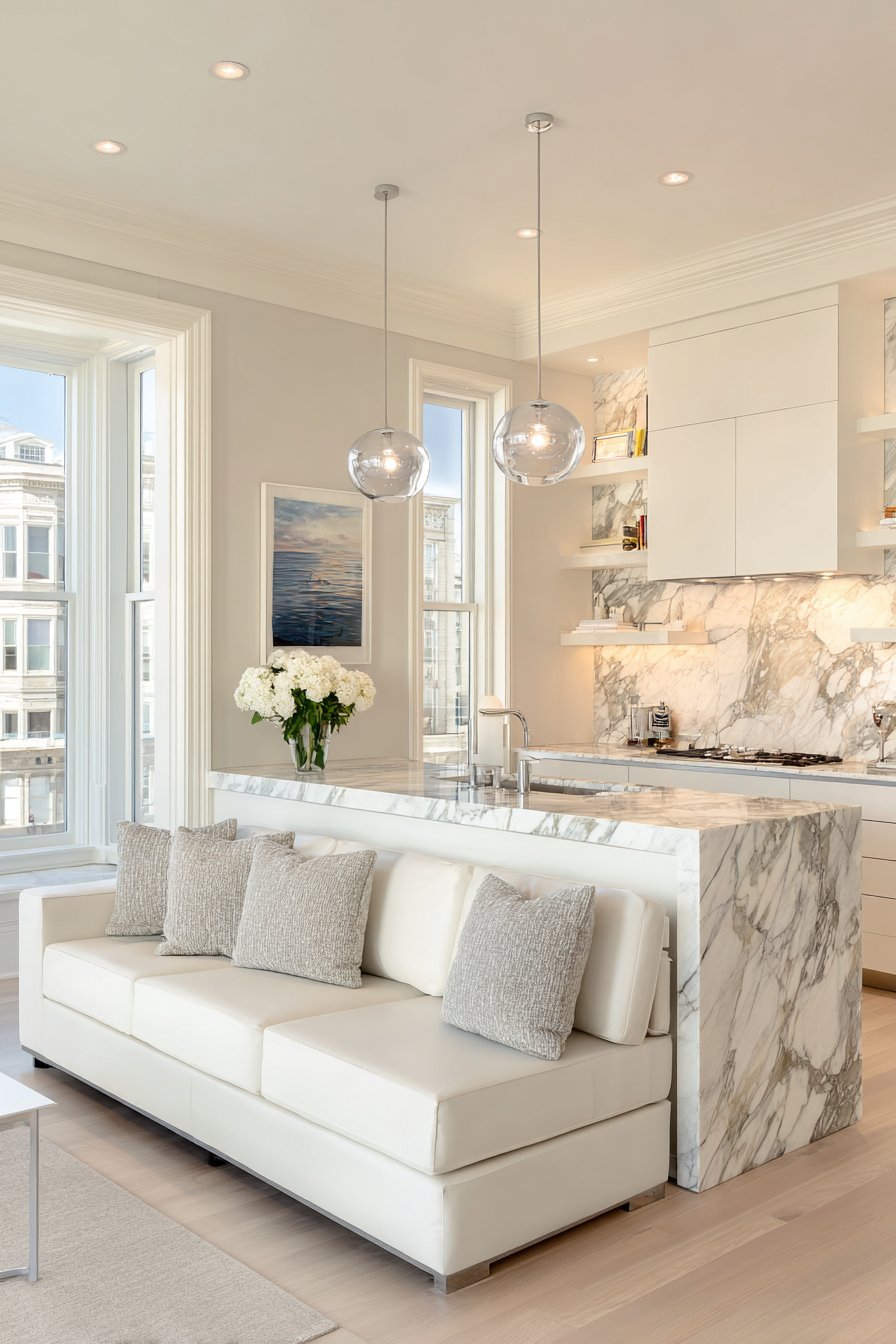
Consider the height of kitchen elements in relation to furniture in nearby spaces. If your living room features low-profile furniture, towering upper cabinets may create visual imbalance. Opting for open shelving or eliminating uppers on certain walls can maintain better proportions and preserve the open feeling you’re trying to achieve.
- Mark sightlines with tape to identify what needs styling attention
- Keep island countertops at standard 36-inch height for comfortable workflow
- Limit upper cabinet height to 42 inches or less in highly visible areas
- Ensure pendant lights hang 30-36 inches above island surfaces
- Position the sink or cooktop where you can interact with others
- Create balance by distributing visual weight evenly across the space
4. Use Consistent Materials and Finishes Throughout
Material consistency creates tactile and visual harmony that reinforces spatial flow between your kitchen and other areas. When countertop materials echo coffee table surfaces or kitchen metals match living room lighting fixtures, these connections register subconsciously, making spaces feel unified. This doesn’t mean everything must match exactly—variation within a cohesive material family adds interest.
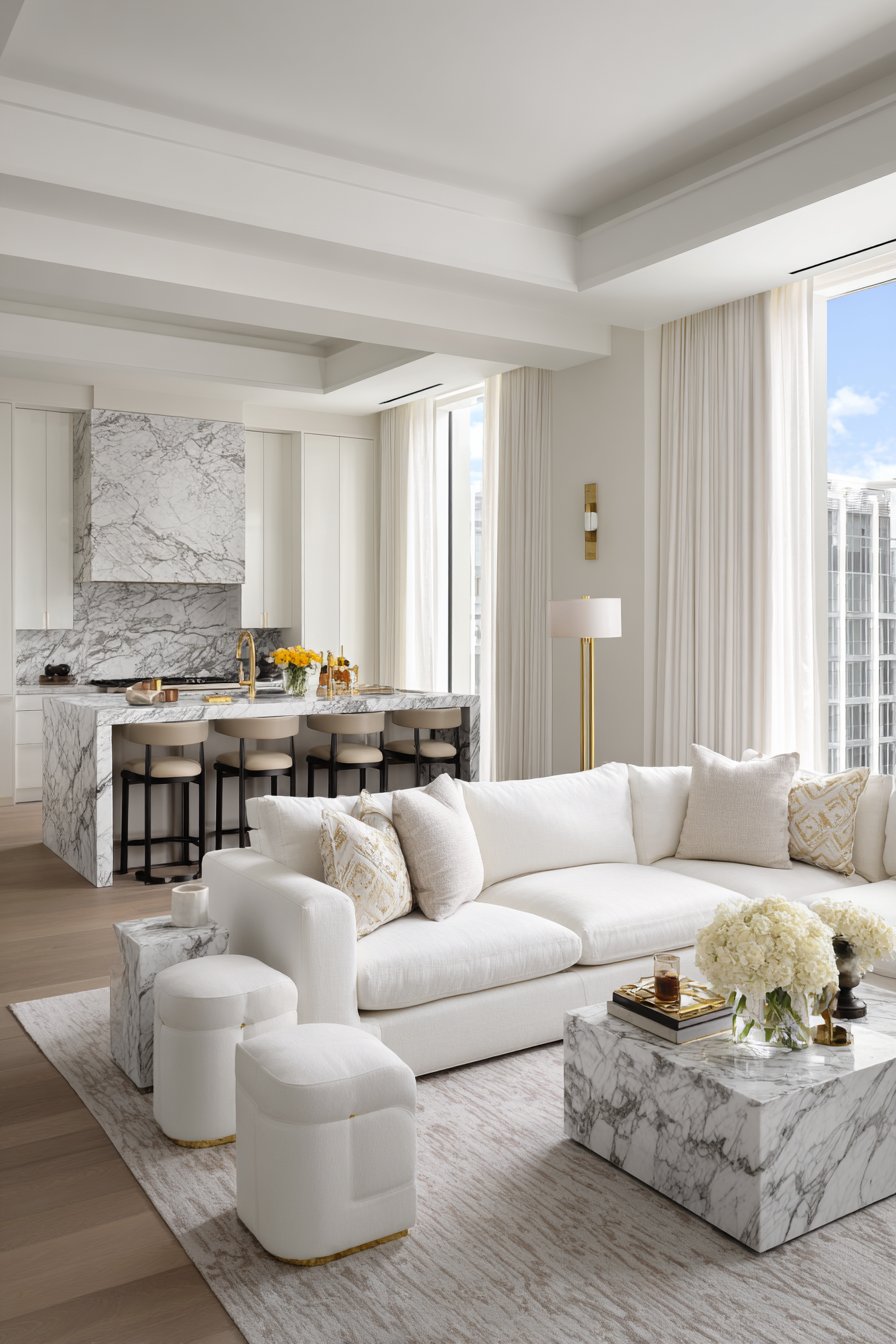
Select three primary materials that appear in multiple locations throughout your open plan. For example, natural wood, white marble, and brushed brass might feature in kitchen cabinetry, dining furniture, and living room accents. This strategic repetition creates a sophisticated layering effect that feels intentional rather than accidental.
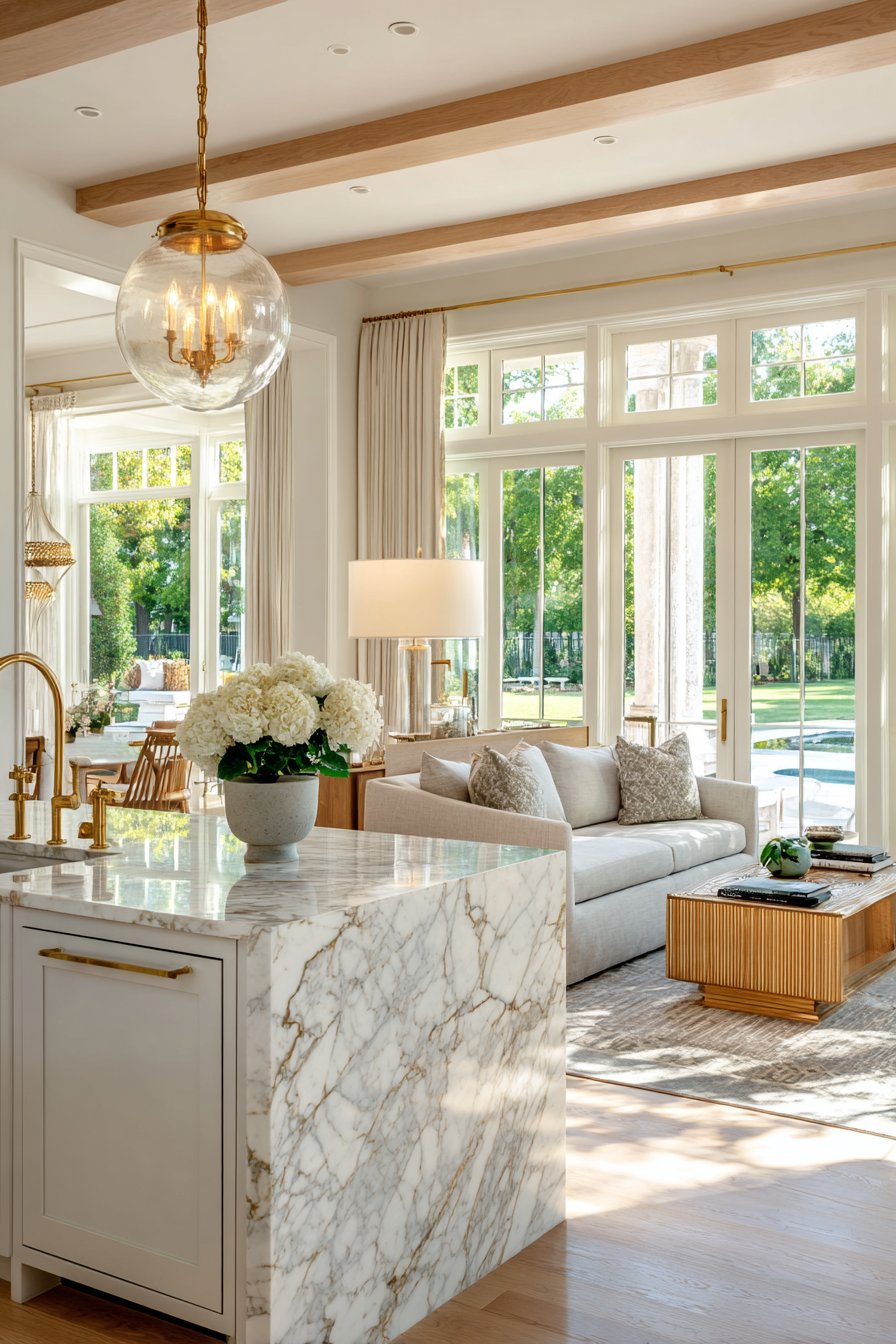
Pay special attention to metal finishes, as mixed metals can either enhance or disrupt visual flow. Choose one primary finish for your kitchen faucet, cabinet hardware, and lighting, then repeat this finish throughout adjacent spaces. A secondary accent metal can add interest but should be used sparingly to maintain cohesion.
- Photograph existing finishes in adjacent rooms before selecting kitchen materials
- Source cabinet hardware and plumbing fixtures from the same finish family
- Limit metal finishes to two types maximum across connected spaces
- Choose countertop materials that complement rather than compete with furniture
- Consider how natural light affects material appearance throughout the day
- Create a material board with samples from all connected areas
5. Incorporate Strategic Lighting Layers
Lighting design can make or break the seamless integration of your open kitchen. Layered lighting—combining ambient, task, and accent sources—creates flexibility while maintaining visual continuity. The lighting style in your kitchen should complement fixtures in adjacent spaces, using similar shapes, finishes, or design languages.
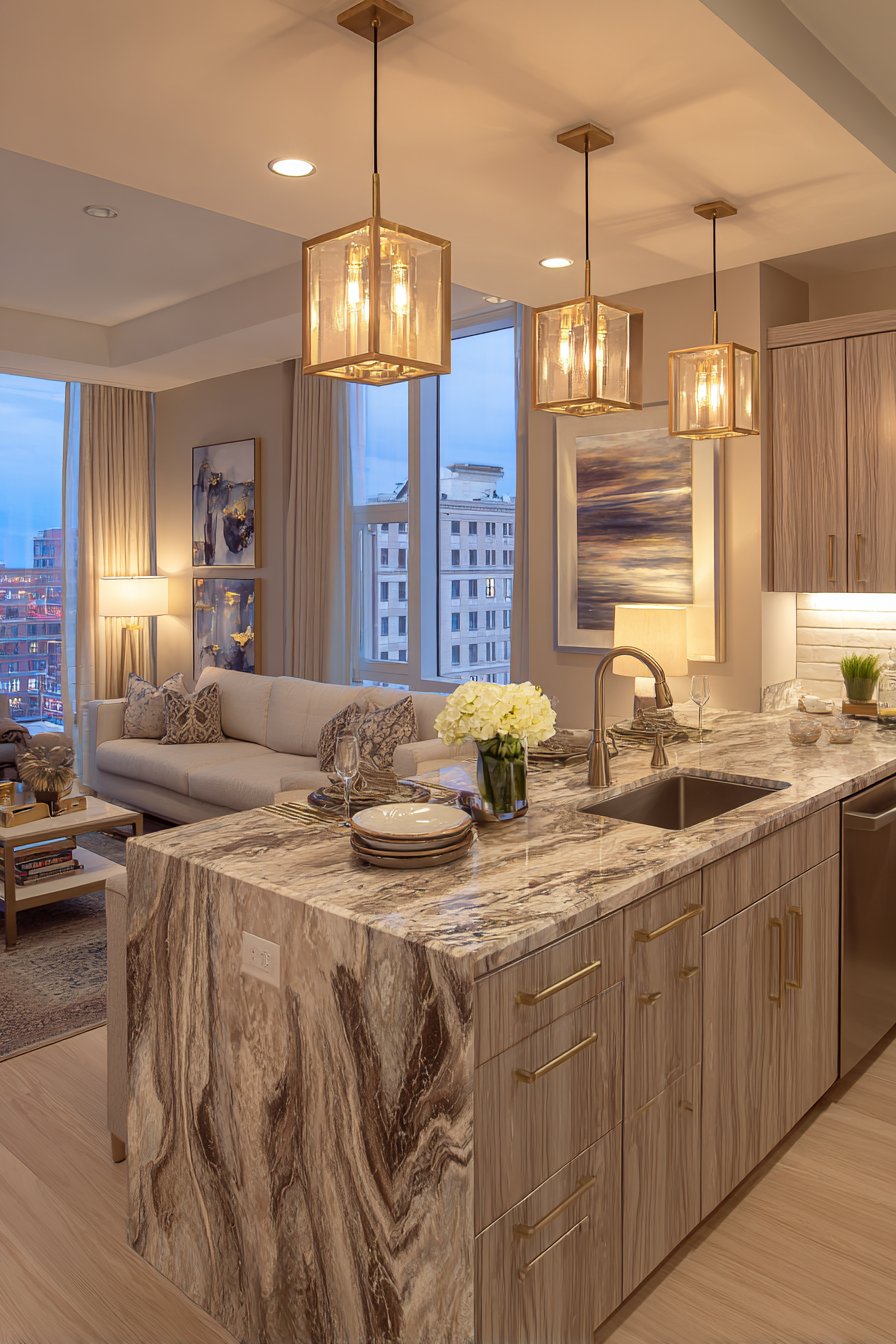
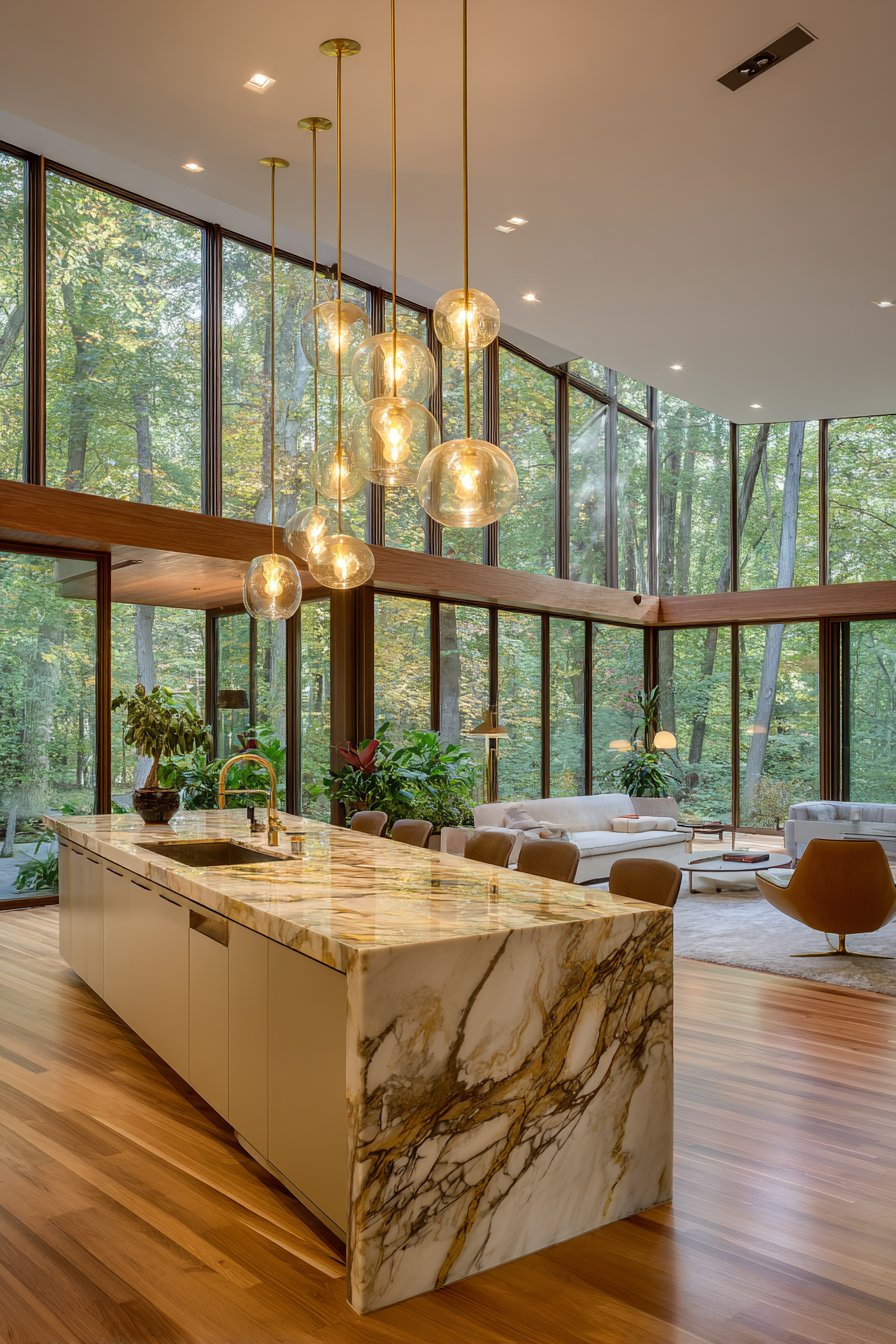
Pendant lights above an island offer prime opportunities to reinforce your home’s aesthetic while providing essential task lighting. Select fixtures whose style echoes nearby table lamps or chandeliers. Under-cabinet lighting illuminates work surfaces without visible fixtures, maintaining clean lines that preserve the open feeling. Dimmers on all circuits allow you to adjust lighting levels to match different activities and times of day.
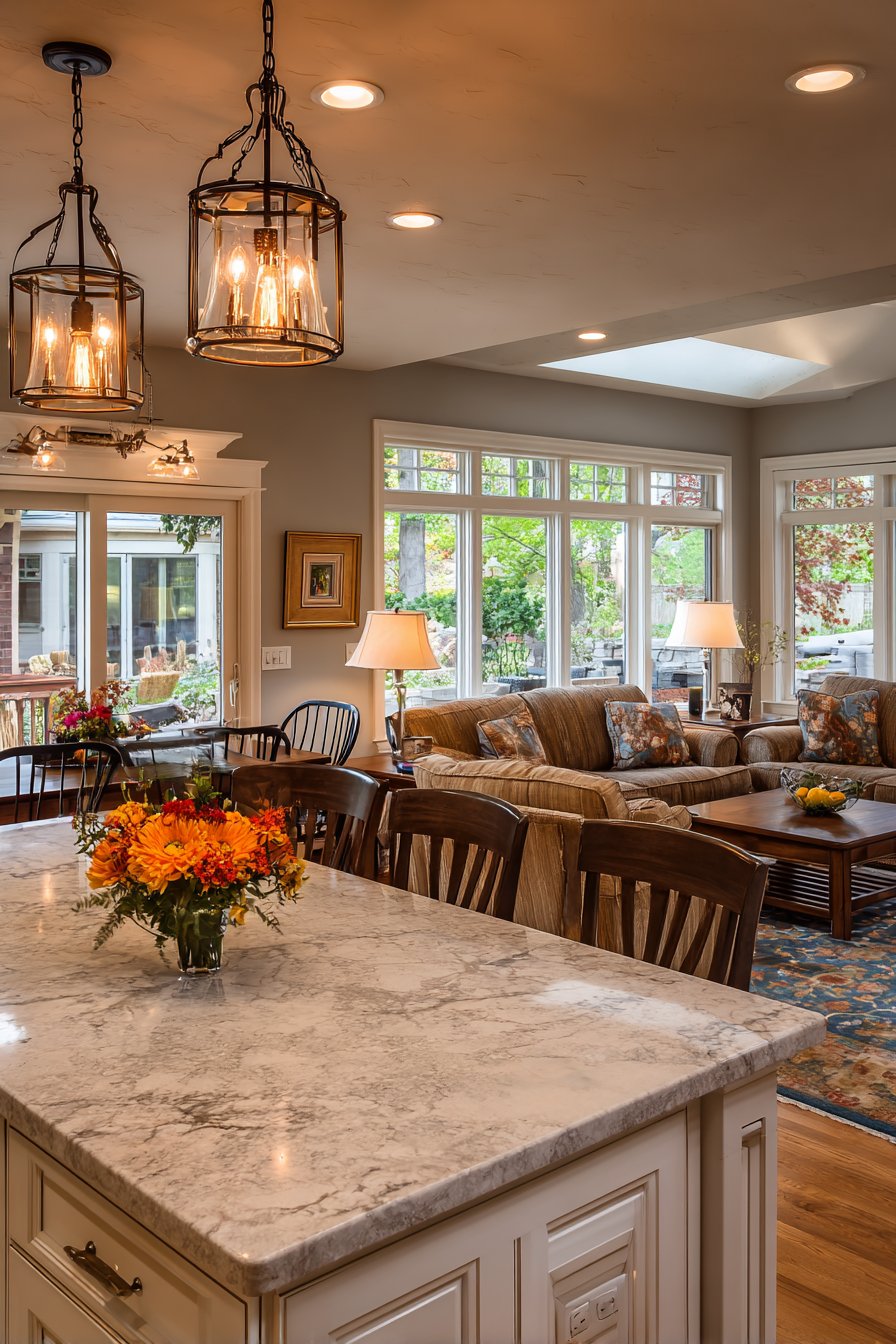
Consider how lighting transitions between zones within your open plan. Rather than abrupt changes, create gradual shifts in light temperature and intensity that guide movement through the space. Consistent color temperature across all bulbs—typically 2700K to 3000K for warm, inviting ambiance—ensures that all connected areas feel cohesive.
- Install dimmers on every lighting circuit for maximum flexibility
- Match pendant finish to living room lighting fixtures
- Use LED strips under cabinets for shadow-free task lighting
- Position recessed lights 24-30 inches apart for even illumination
- Choose fixtures with similar design aesthetics across connected spaces
- Consider how lighting affects material colors before making final selections
6. Define Zones Without Creating Barriers
Successful open kitchens maintain functional definition while preserving visual flow. Strategic zoning helps organize activities without resorting to walls or dividers that would defeat the open concept’s purpose. An island serves as the most effective zone definer, providing workspace and seating while gently separating cooking from living areas.
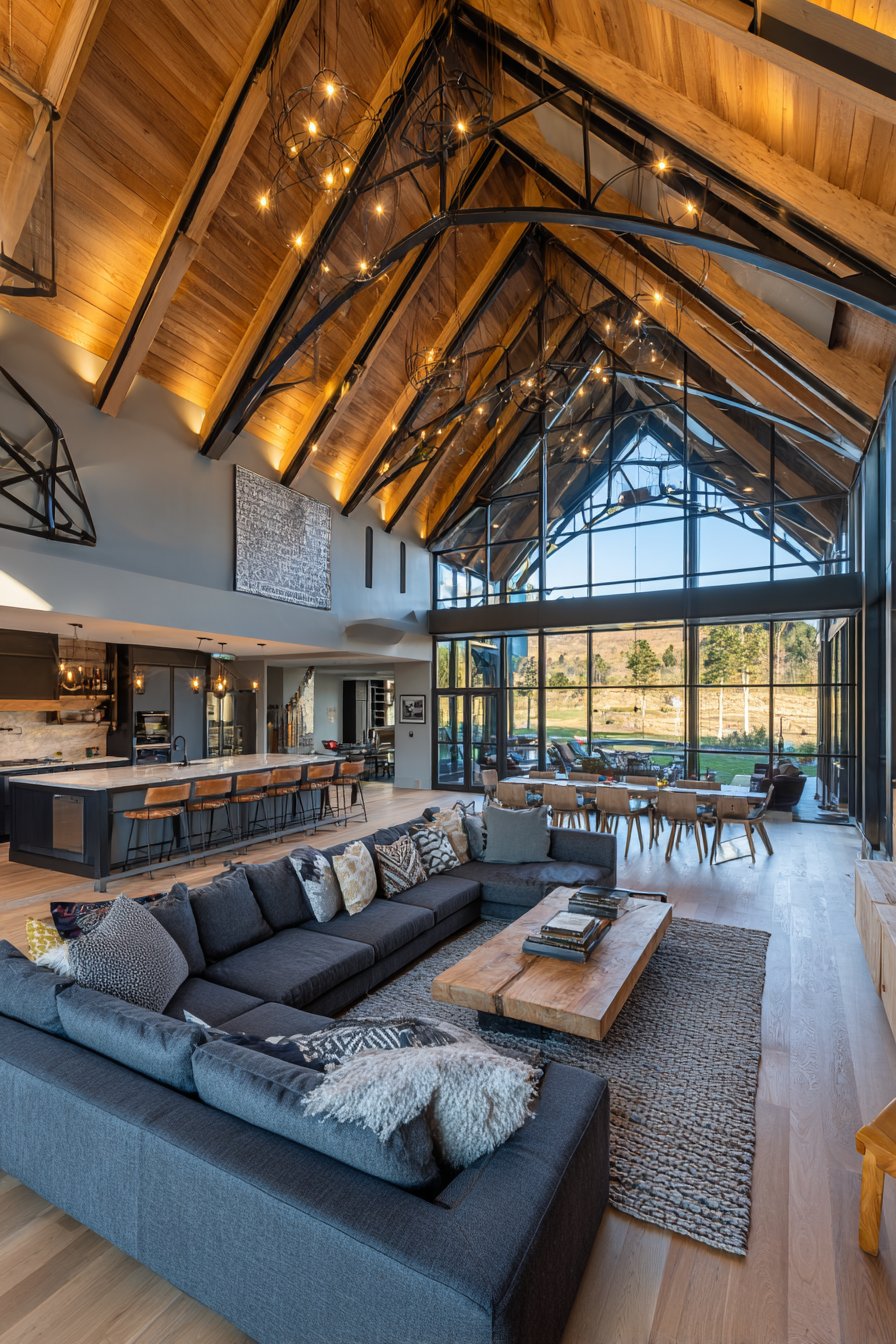
Furniture placement in adjacent spaces can reinforce kitchen boundaries without physical barriers. Position a sofa with its back toward the kitchen to create psychological separation while maintaining openness. Area rugs define living or dining zones without interrupting the flow established by continuous flooring. These subtle delineations organize your space while keeping it feeling connected.
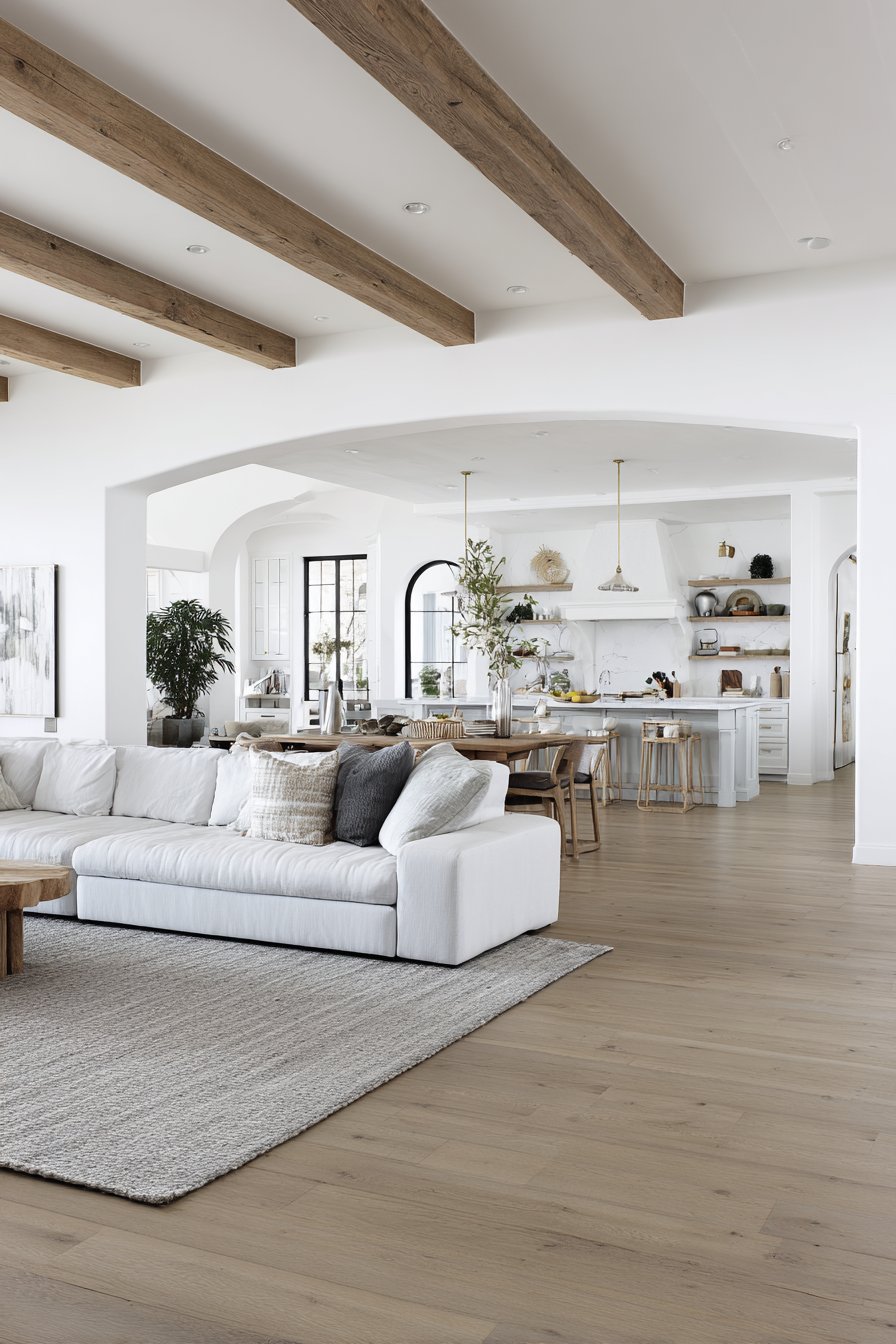
Varying ceiling heights or using architectural elements like exposed beams can also define zones overhead. A subtle change in ceiling plane signals transition without obstructing sightlines or light flow. These architectural gestures add visual interest while supporting your open kitchen’s integration with the rest of your home.
- Use an island to create natural separation without blocking views
- Position dining tables perpendicular to the kitchen for clear zoning
- Hang pendant lights at different heights to define specific areas
- Change paint colors on accent walls to signal zone transitions
- Incorporate furniture pieces that face both toward and away from the kitchen
- Use open shelving as a room divider that maintains visual connection
Conclusion
Designing an open kitchen that flows seamlessly with your home requires attention to visual continuity, material consistency, and spatial balance. By thoughtfully considering flooring, color palettes, sightlines, materials, lighting, and zoning strategies, you create a cohesive environment where the kitchen becomes an integrated part of your living space rather than a separate room.
Remember that successful open kitchen design balances functionality with aesthetics. Don’t sacrifice practical considerations for visual appeal, and conversely, ensure beautiful elements serve purposeful roles. Start with one or two strategies that resonate most with your space, then gradually implement others as your design evolves. The result will be an open kitchen that not only looks beautiful but genuinely enhances how you live, cook, and connect in your home.
