


Double volume living rooms represent the pinnacle of architectural drama in residential design. These soaring spaces transform ordinary living areas into extraordinary sanctuaries of light and space. The vertical expanse creates opportunities for stunning design features that simply aren’t possible in standard-height rooms.
High-ceiling living rooms have become increasingly sought after by homeowners and designers alike. They offer unparalleled flexibility for creative expression and functional innovation. The generous vertical space allows for dramatic lighting installations, impressive artwork, and architectural features that make powerful statements. Whether your style leans toward contemporary minimalism or traditional grandeur, double volume spaces provide the perfect canvas.
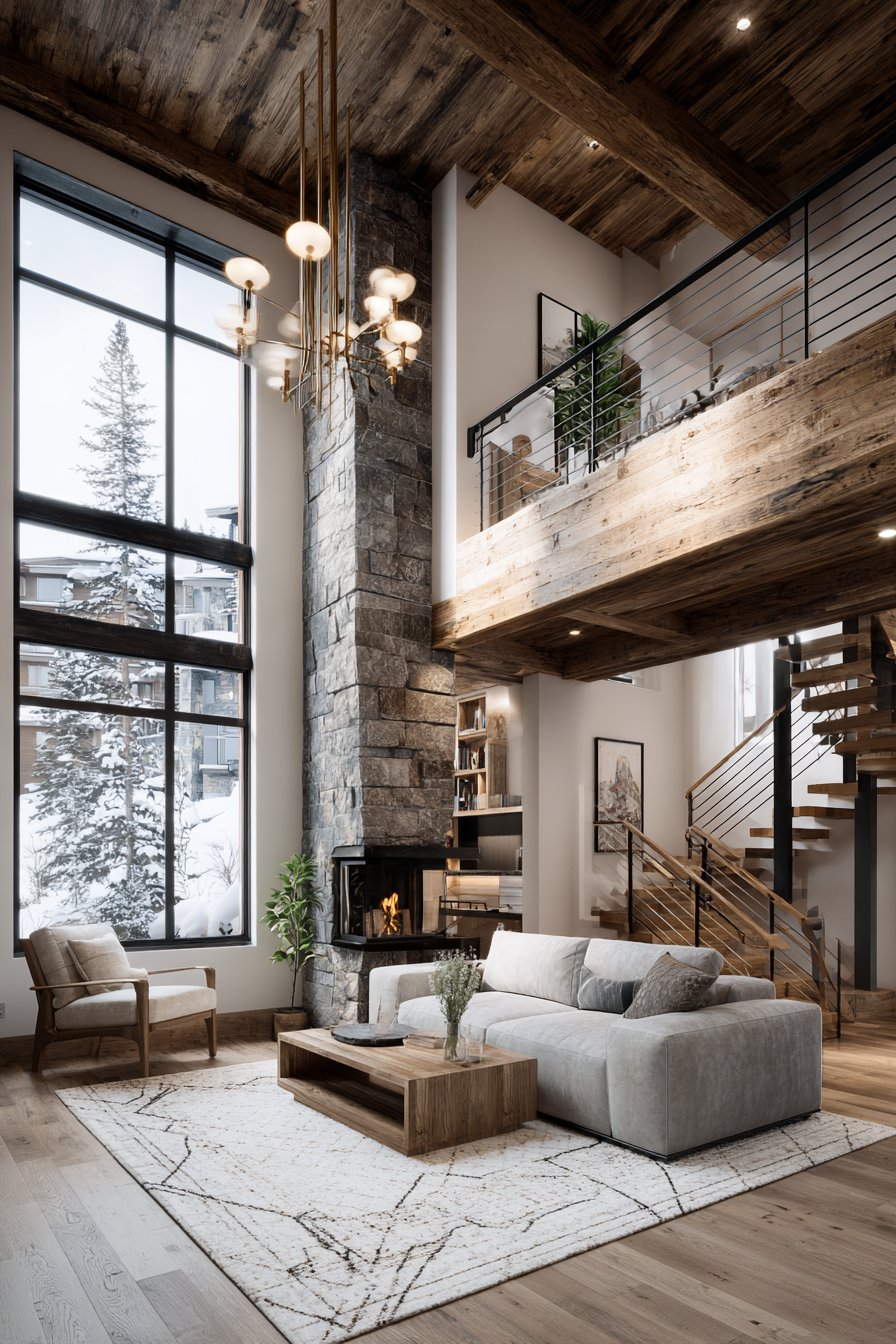
This article explores twenty distinct approaches to designing spectacular double volume living rooms. Each concept demonstrates unique solutions for maximizing vertical space while maintaining warmth and livability. From industrial-inspired lofts to serene Scandinavian retreats, these designs prove that high ceilings can enhance any aesthetic direction.
1. Floor-to-Ceiling Windows with Contemporary Seating
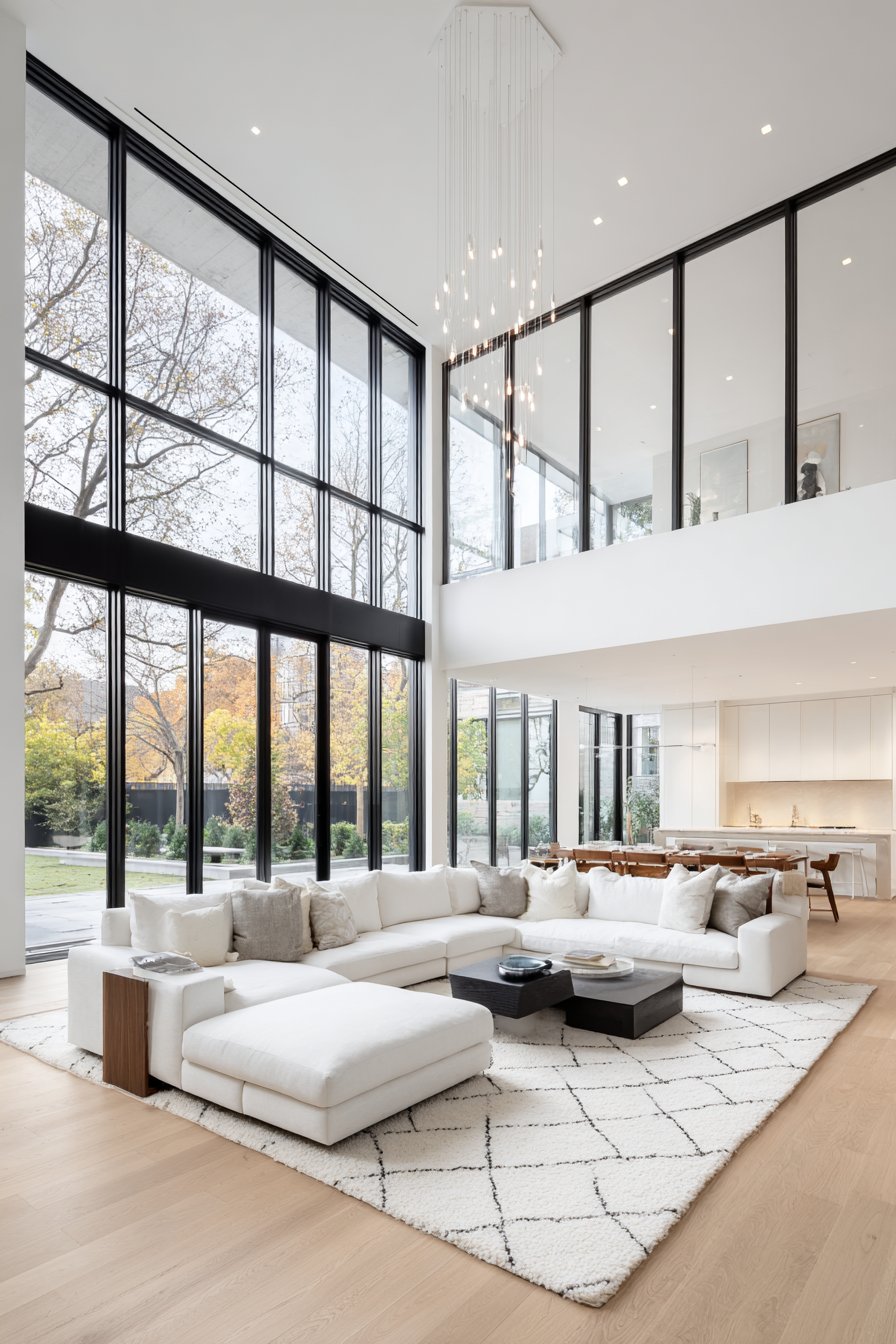
Natural light becomes the defining feature in this stunning double volume space. Floor-to-ceiling windows span both levels, flooding every corner with daylight. The contemporary neutral-toned sectional anchors the ground floor beautifully. A large wool area rug with geometric patterns defines the intimate seating zone.
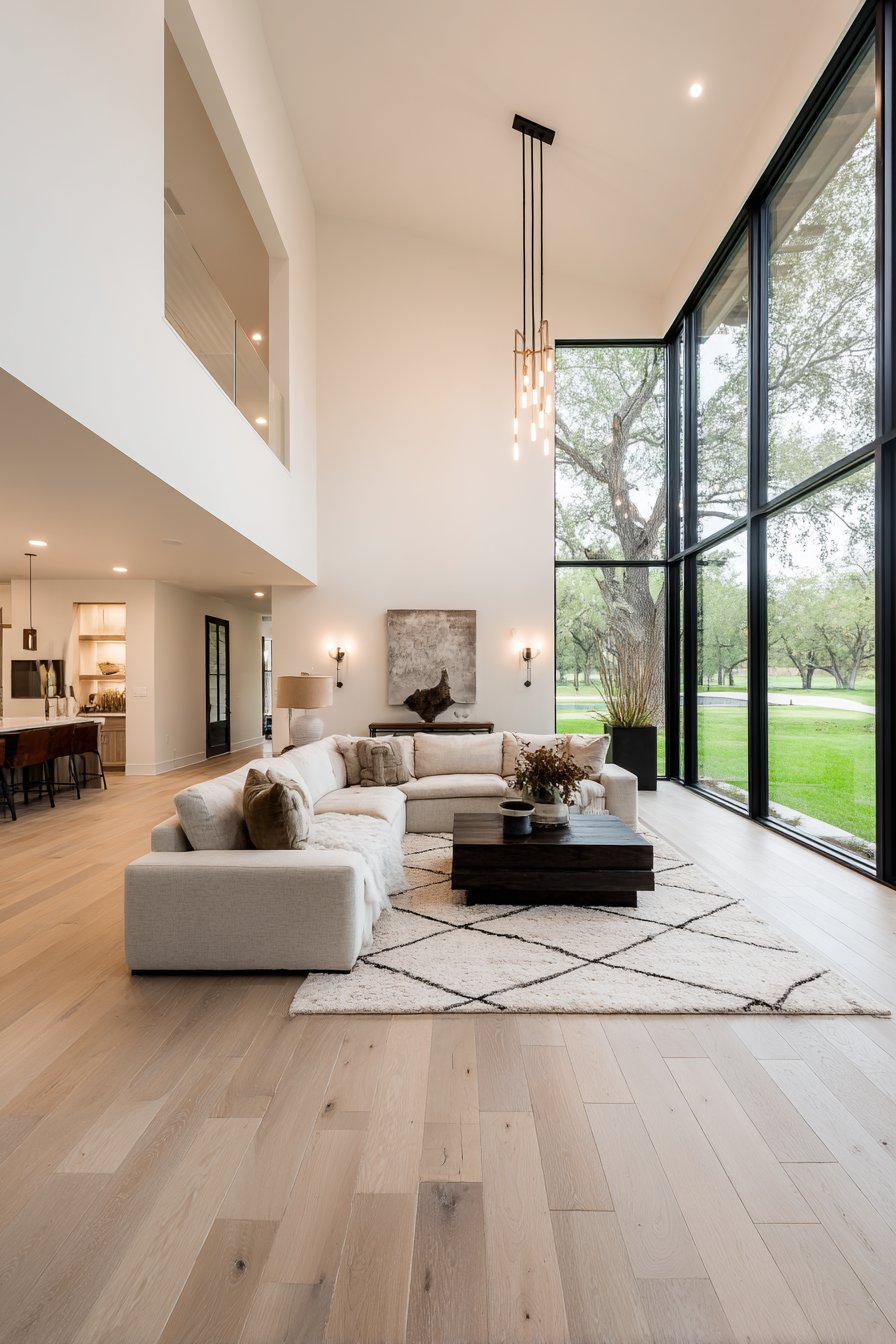
The soaring ceiling height creates incredible spatial drama. A dramatic linear chandelier suspends from the upper level, drawing eyes upward. Light oak hardwood flooring extends throughout the space seamlessly. White painted walls enhance the sense of vertical openness and brightness.
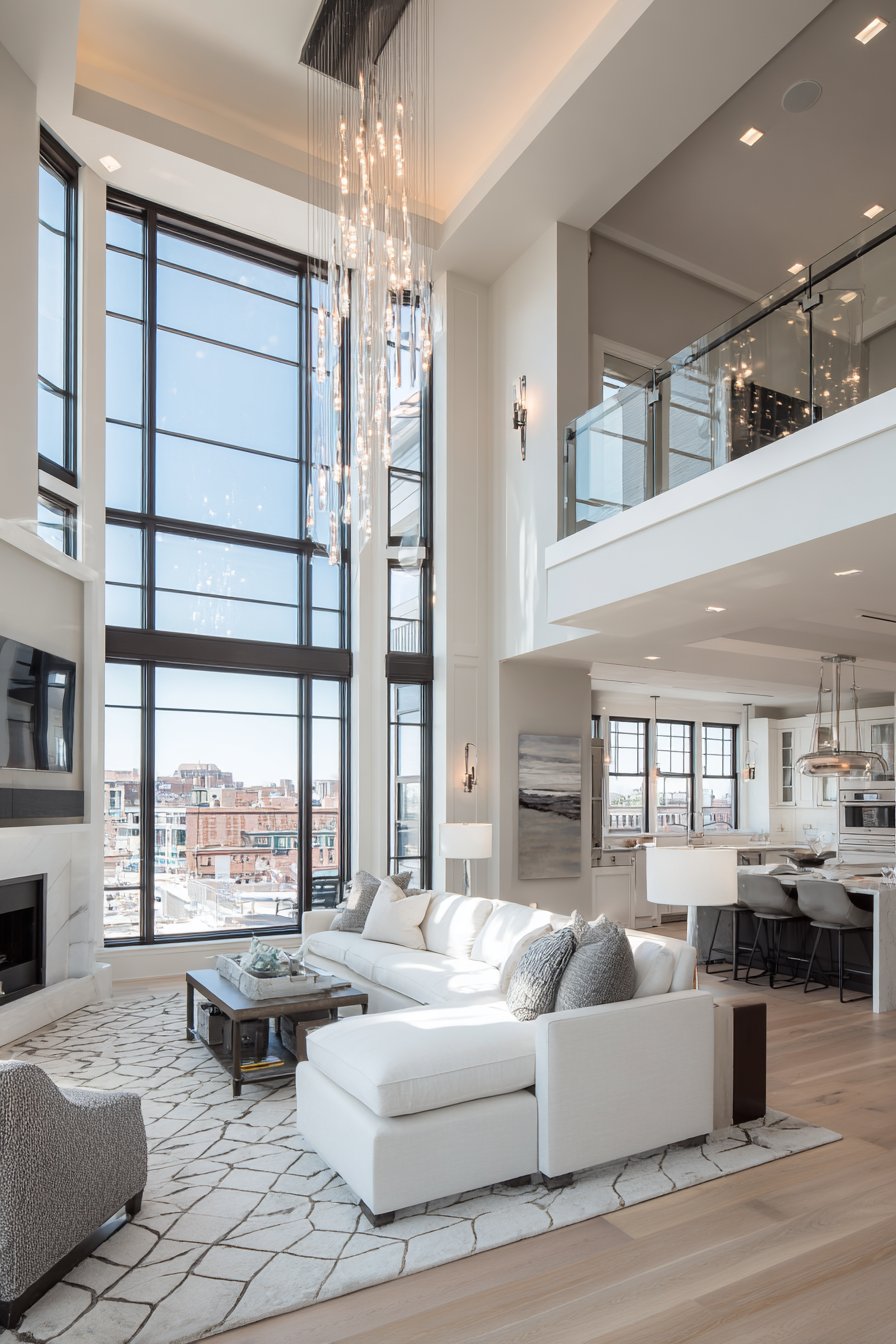
This design masterfully balances architectural grandeur with residential comfort. The expansive windows become living artwork that changes throughout the day. Morning light creates gentle illumination while afternoon sun adds warmth. The intimate seating arrangement below prevents the space from feeling cavernous.
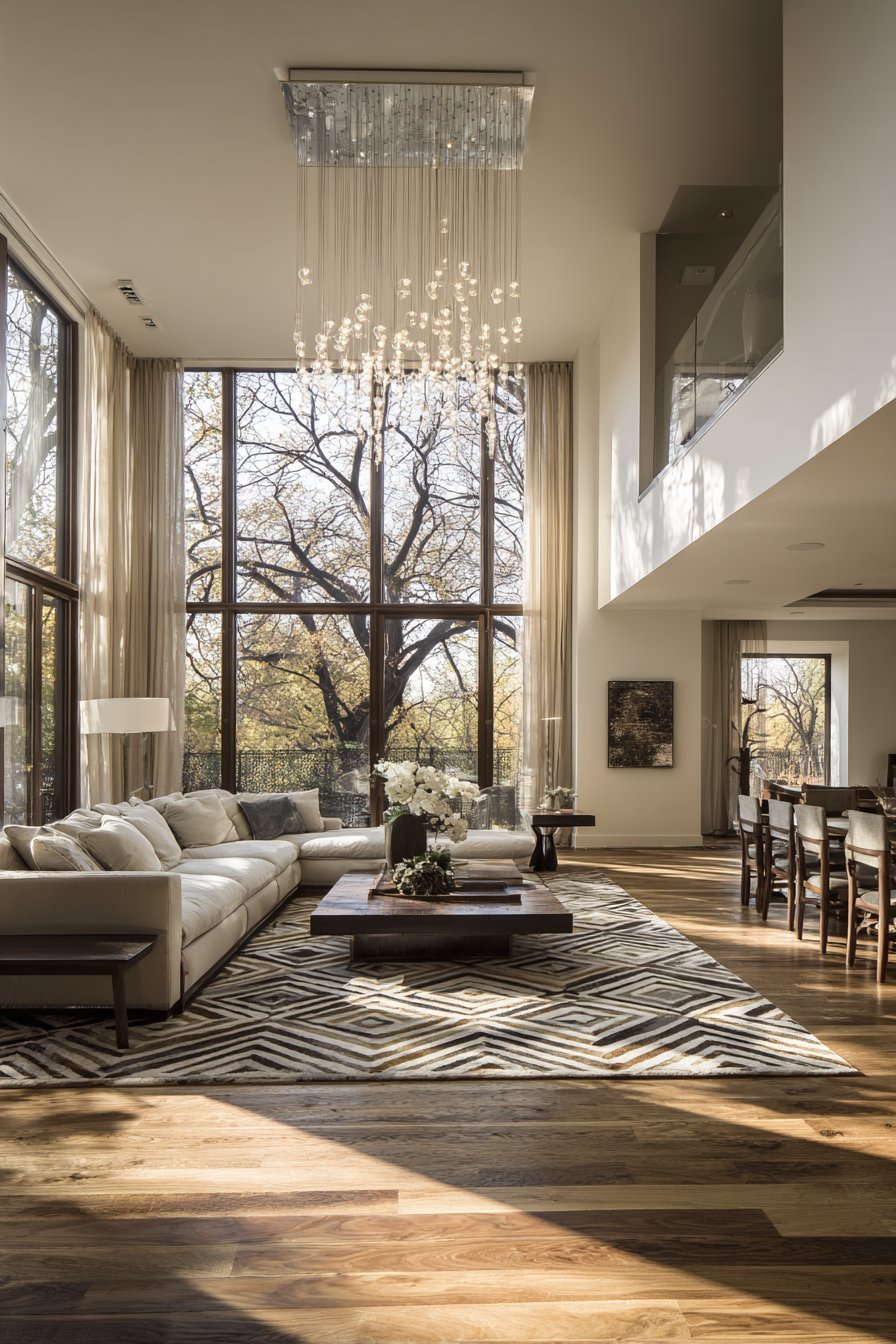
The interplay between vertical space and grounded furniture creates perfect harmony. Large-scale windows require minimal window treatments to maintain the view. The neutral color palette allows natural light to become the room’s primary decorative element.
Key Design Tips:
- Position seating to maximize views while creating intimate conversation areas
- Choose linear lighting fixtures that emphasize ceiling height without overwhelming
- Use geometric rugs to define zones within the expansive floor plan
- Keep wall colors light to amplify natural light reflection throughout both levels
- Select low-profile furniture that doesn’t compete with architectural features
2. Two-Story Stone Fireplace Drama
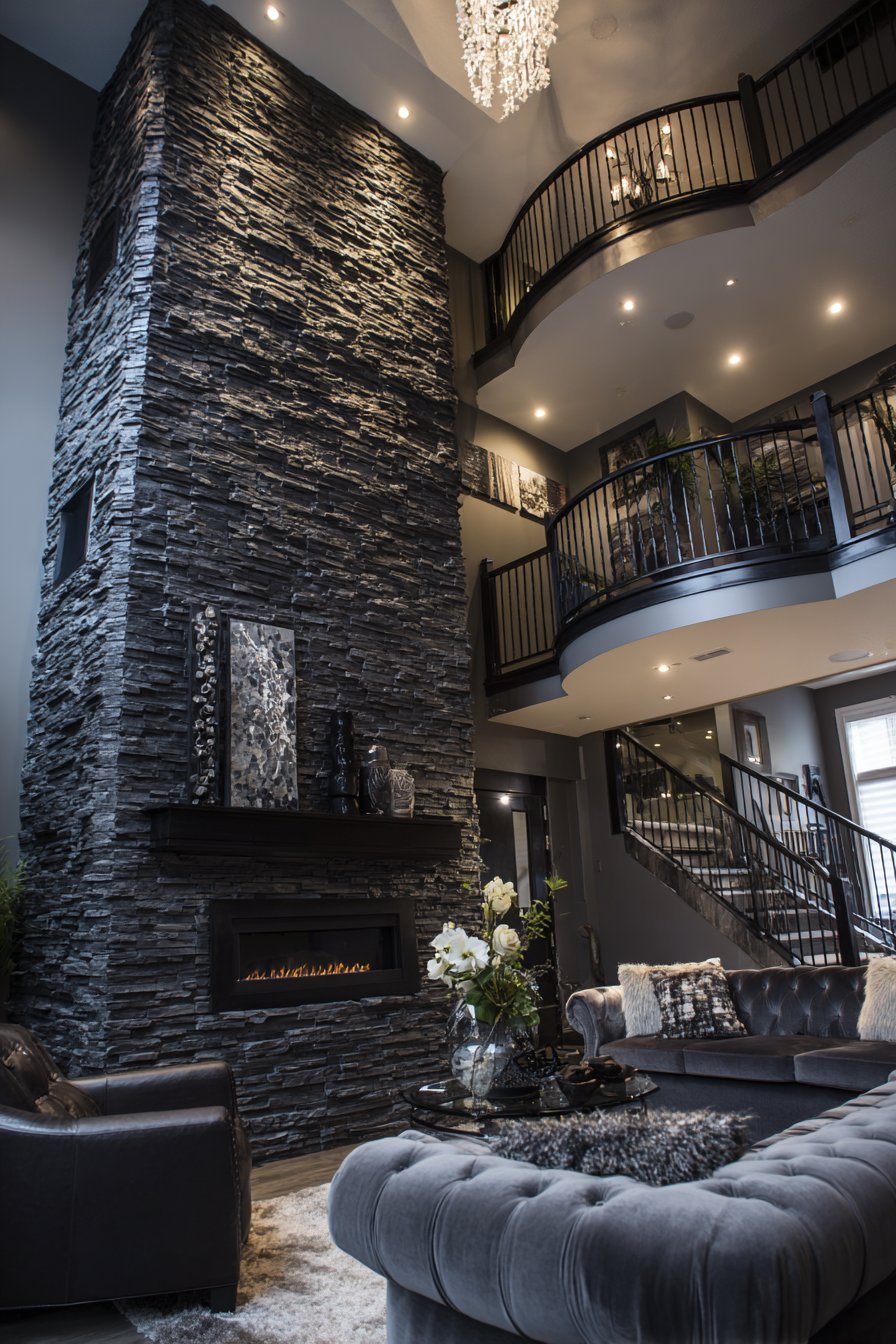
A striking two-story fireplace commands attention as the architectural centerpiece. Natural stacked slate extends from floor to ceiling with beautiful texture variations. The stone surface creates powerful visual continuity between both levels. This dramatic vertical element grounds the entire living space.
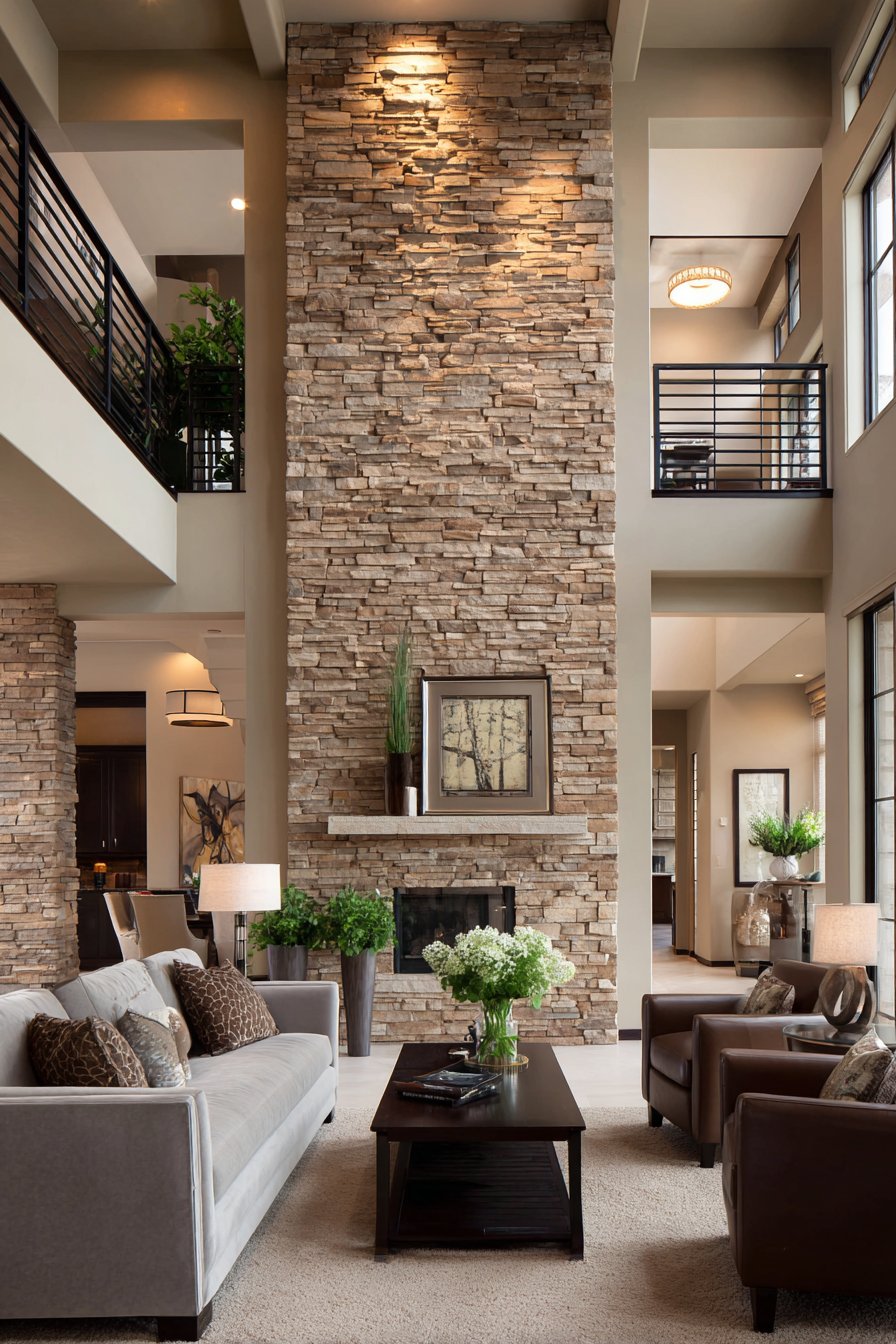
Plush grey velvet sofas face the magnificent hearth invitingly. Leather accent chairs complement the primary seating arrangement perfectly. Upper level railings feature black metal with glass panels for unobstructed sightlines. The transparent barriers maintain the open feeling while ensuring safety.
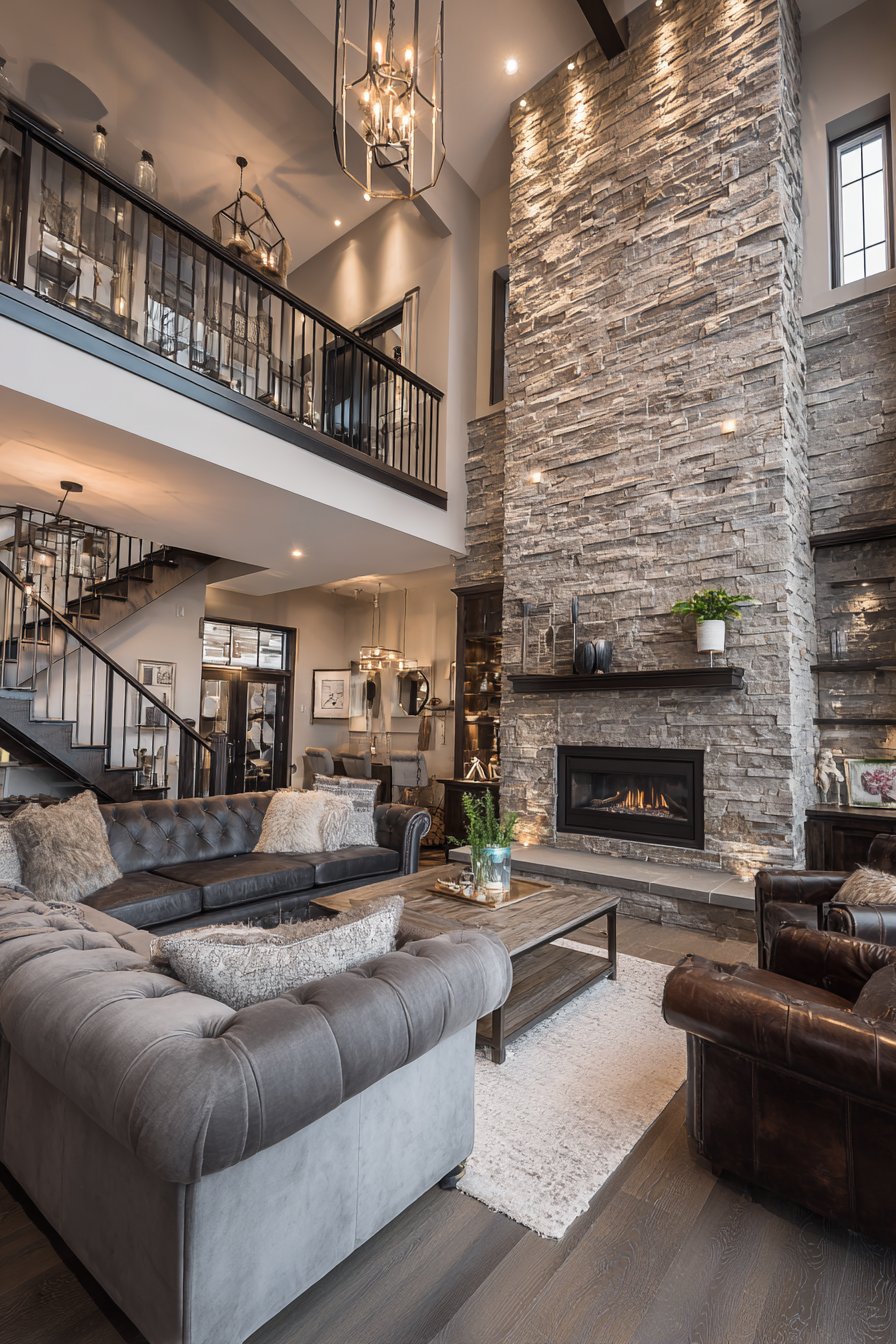
Natural light from clerestory windows illuminates the stone beautifully. Dramatic shadows play across the textured surface throughout the day. The fireplace becomes a dynamic sculptural element that changes with lighting conditions. This natural stone installation adds warmth despite its impressive scale.
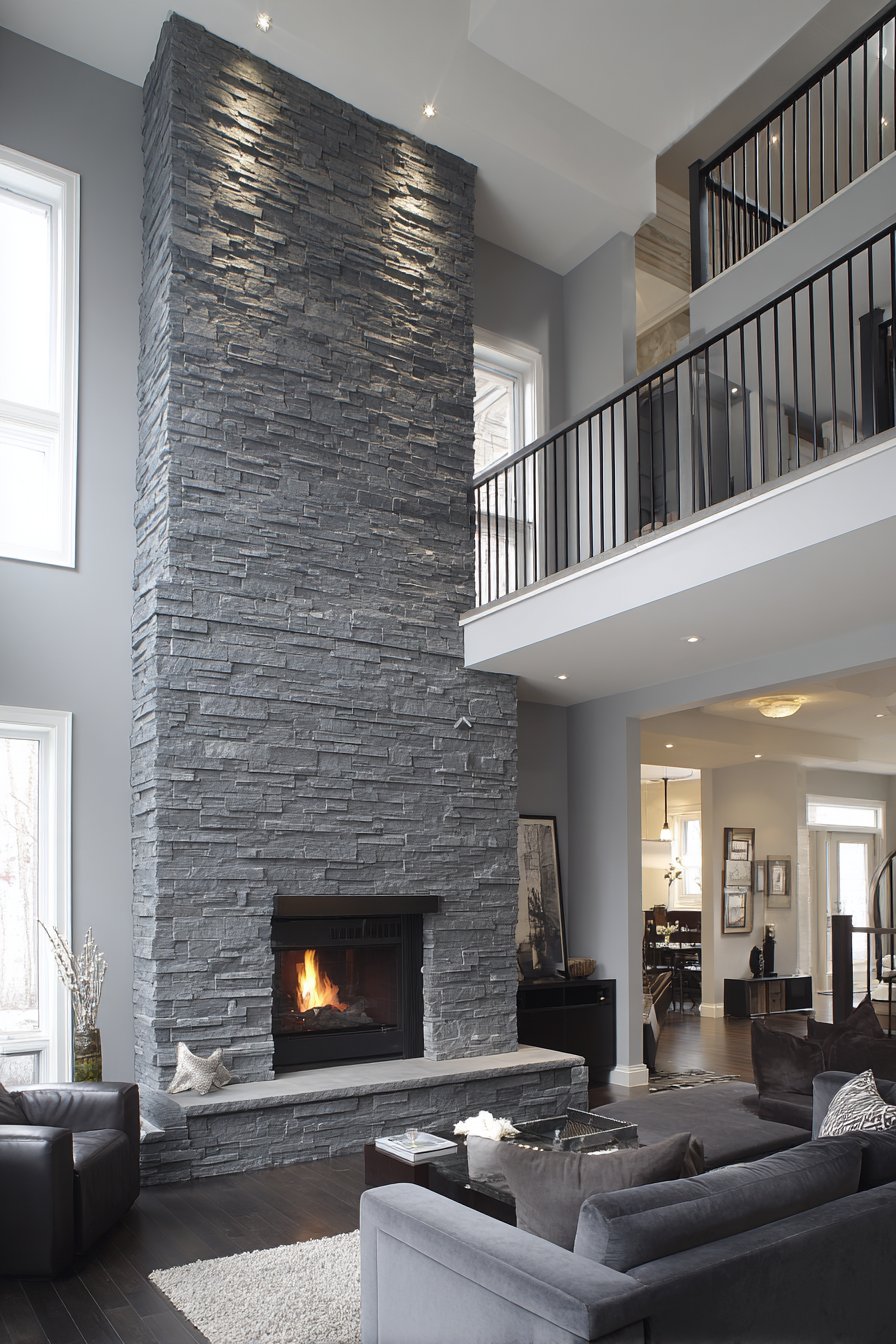
The combination of natural materials creates a sophisticated yet comfortable atmosphere. Stone provides textural interest while velvet and leather add softness. The monochromatic color scheme allows materials to take center stage.
Key Design Tips:
- Select natural stone with visible texture for maximum visual impact
- Position clerestory windows to create dramatic shadows on feature walls
- Use glass railings on upper levels to preserve views of architectural elements
- Complement stone’s hardness with plush upholstered furniture below
- Choose metal finishes that coordinate with stone undertones for cohesion
3. Floating Staircase with Open Design
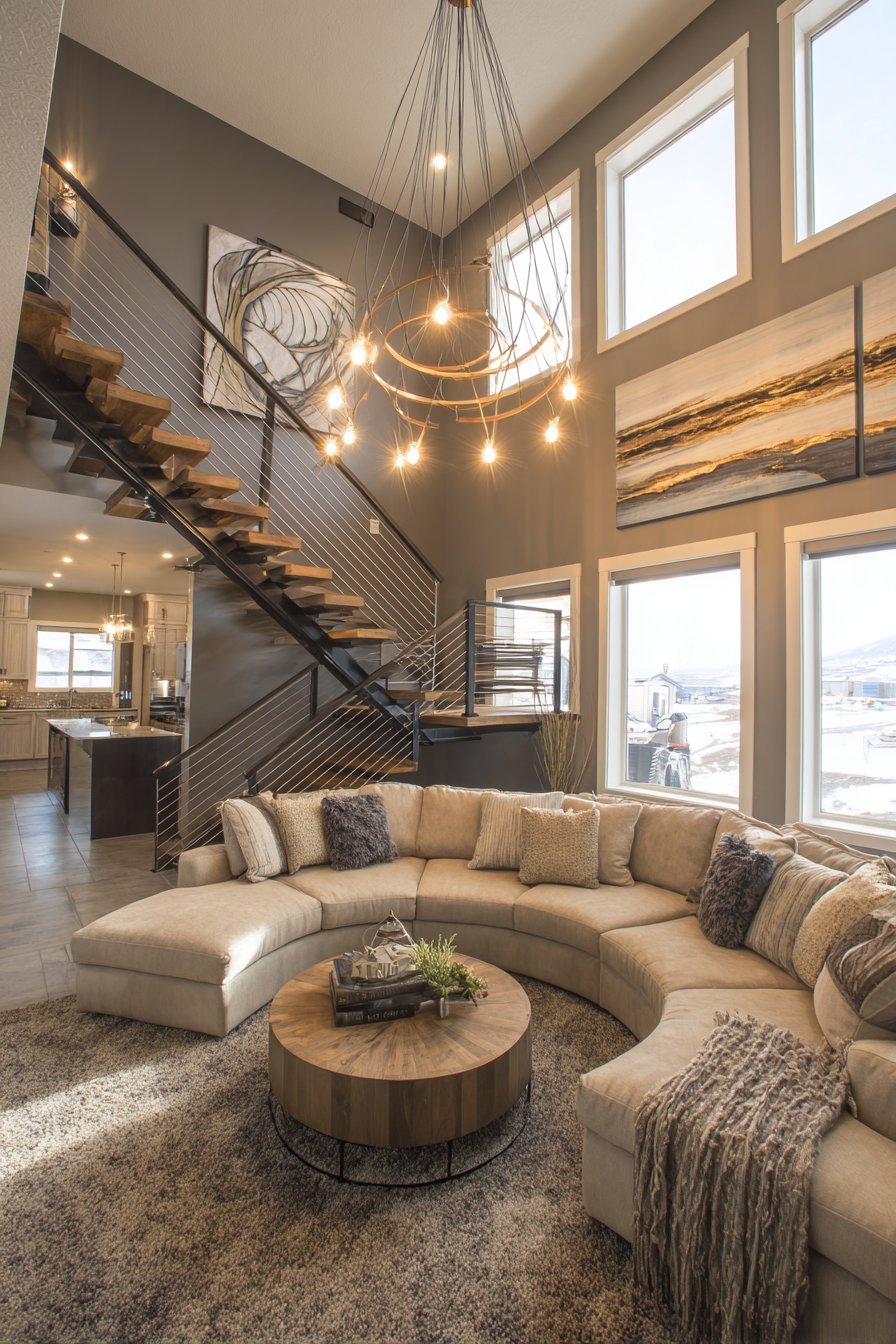
A floating staircase becomes sculptural art in this open living space. Open wooden treads and minimalist steel cable railings preserve spatial transparency. The ground floor features a circular sectional in warm beige upholstery. This curved seating arrangement encourages conversation and connection.
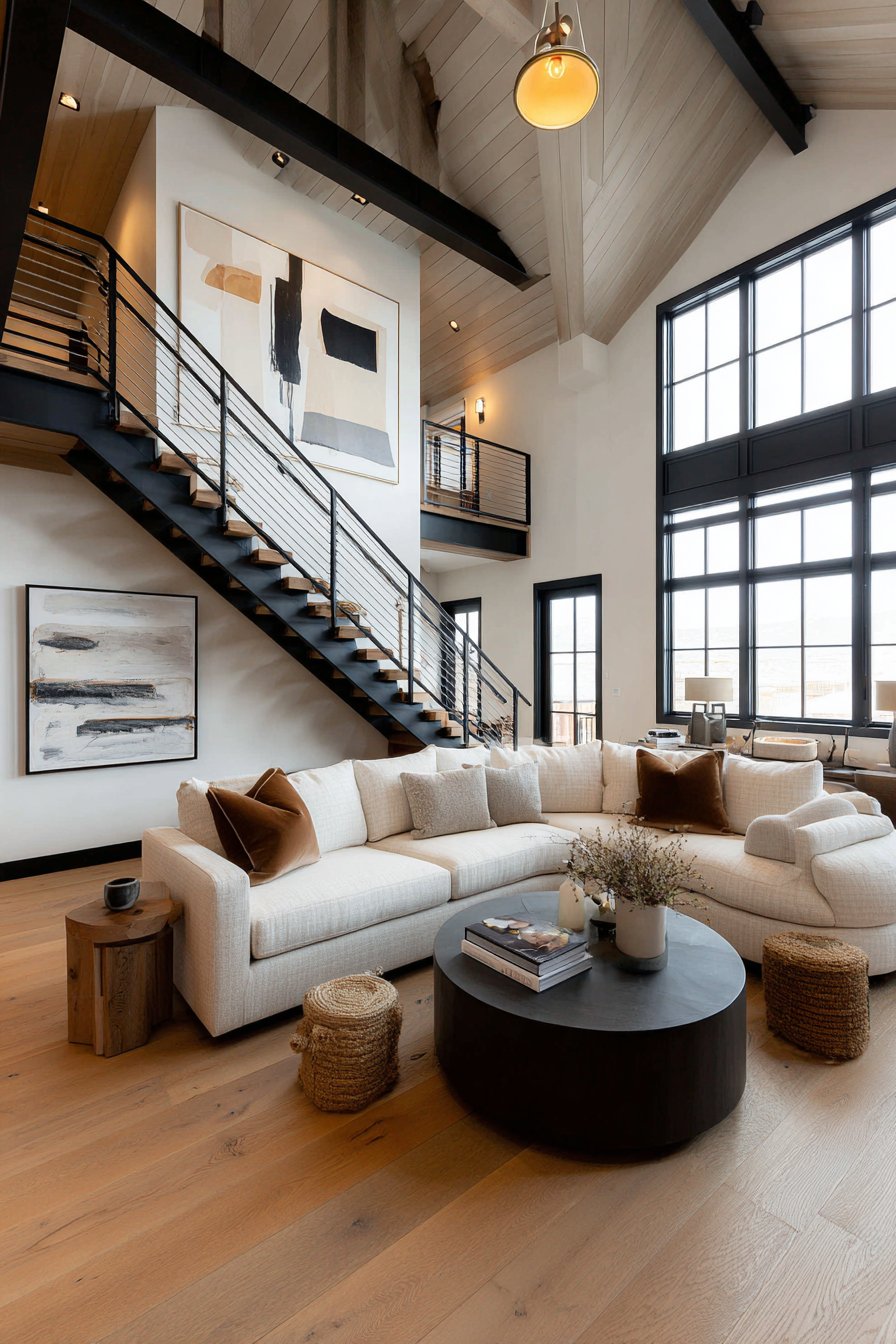
A statement pendant light in brushed brass descends from the high ceiling. The fixture positions centrally to illuminate both levels effectively. Large abstract artwork mounted on the double-height wall adds appropriate scale. The colorful canvas draws attention without overwhelming the architecture.
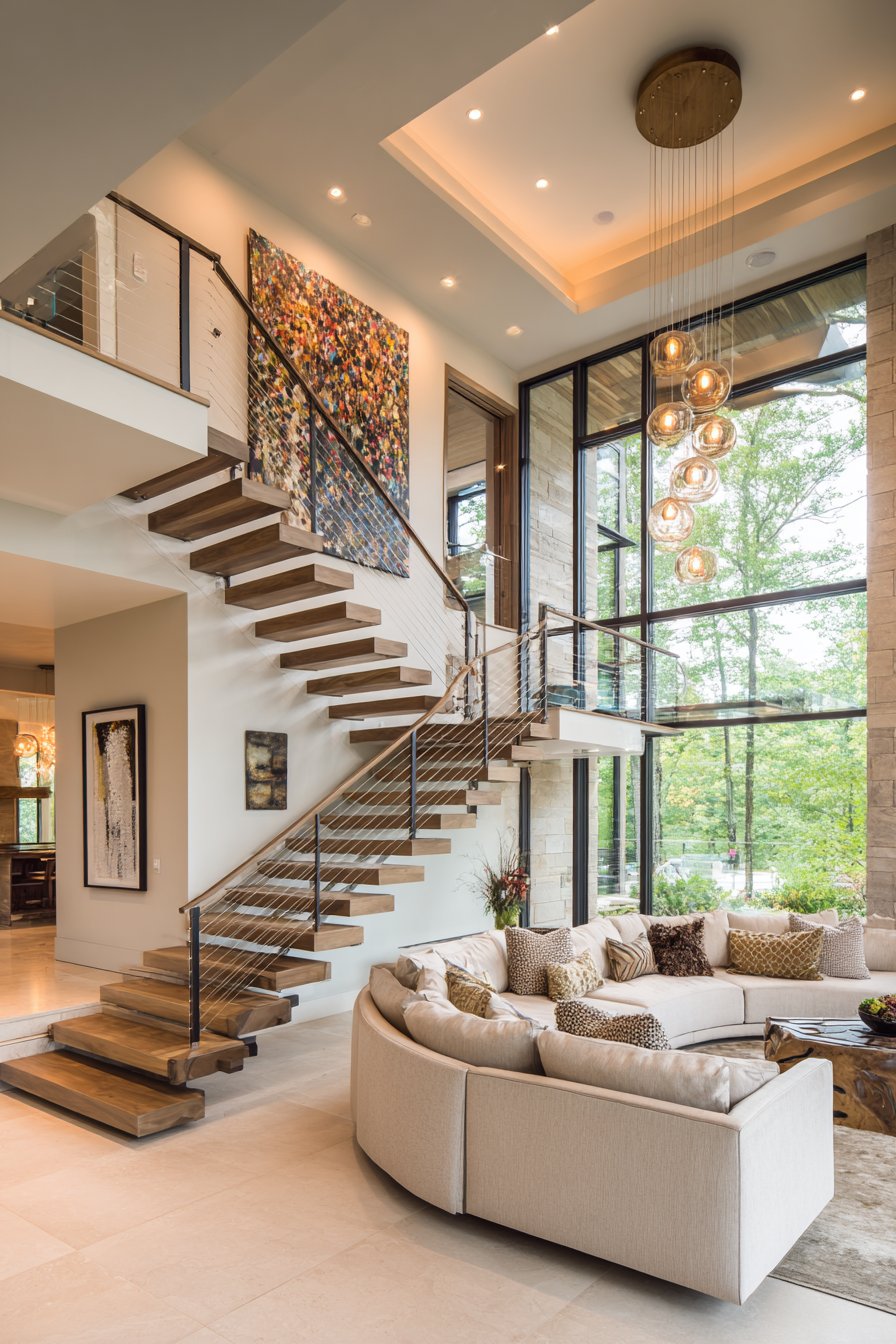
Soft afternoon light filters through tall windows creating natural highlights. The staircase treads catch light beautifully, emphasizing their floating quality. This design demonstrates how functional elements become decorative when thoughtfully executed. The open stair design maintains visual connection between levels.
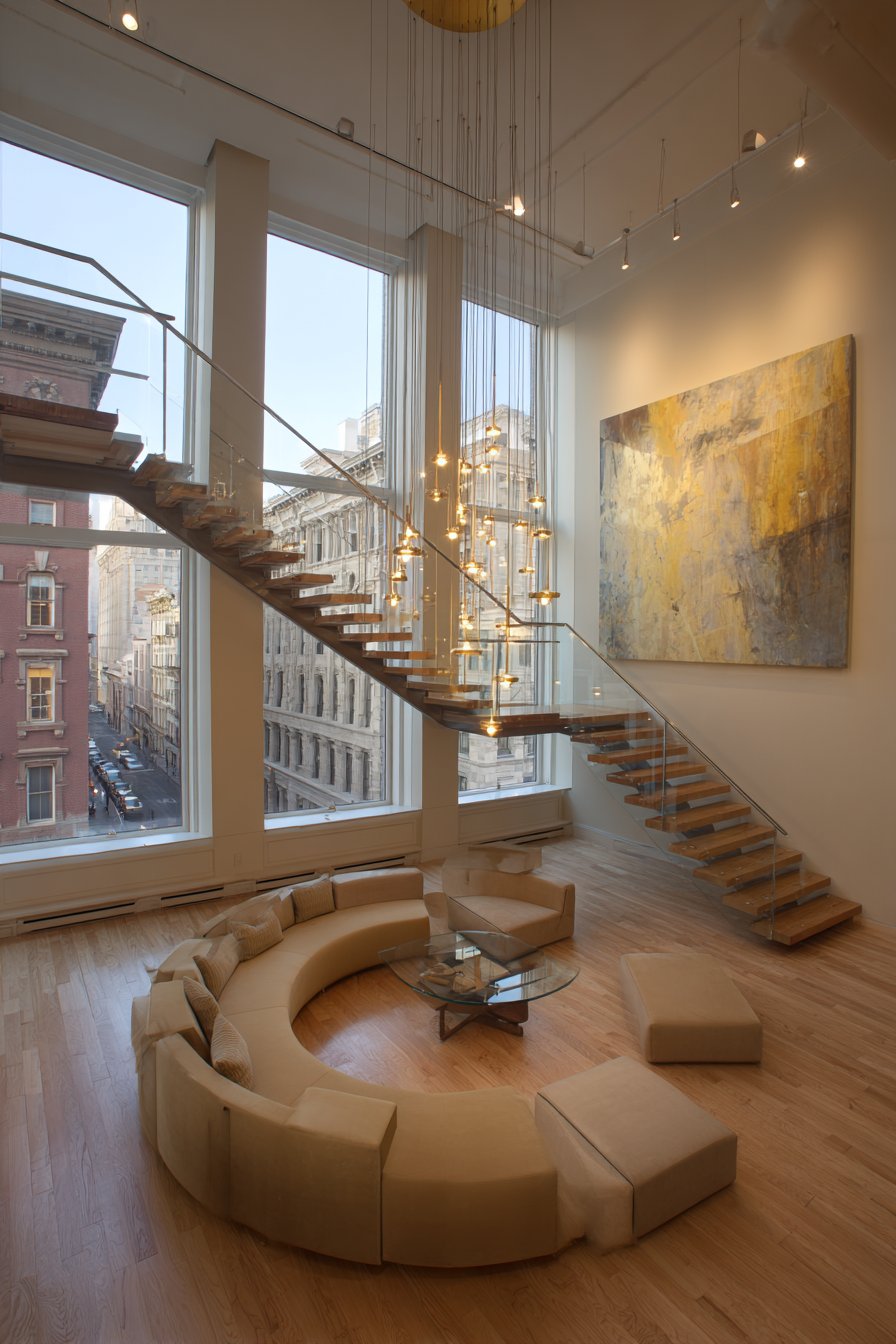
Natural materials and warm metals create an inviting atmosphere. The brass lighting fixture adds subtle luxury without excessive ornamentation. Abstract art introduces personality while respecting the architectural features.
Key Design Tips:
- Choose open stair treads to maintain sightlines through the space
- Use cable railings instead of solid panels to preserve openness
- Select pendant lighting scaled appropriately for the ceiling height
- Hang oversized artwork that relates properly to wall proportions
- Position curved seating to create intimate zones within open floor plans
4. Contemporary Mezzanine with Built-In Bookshelves
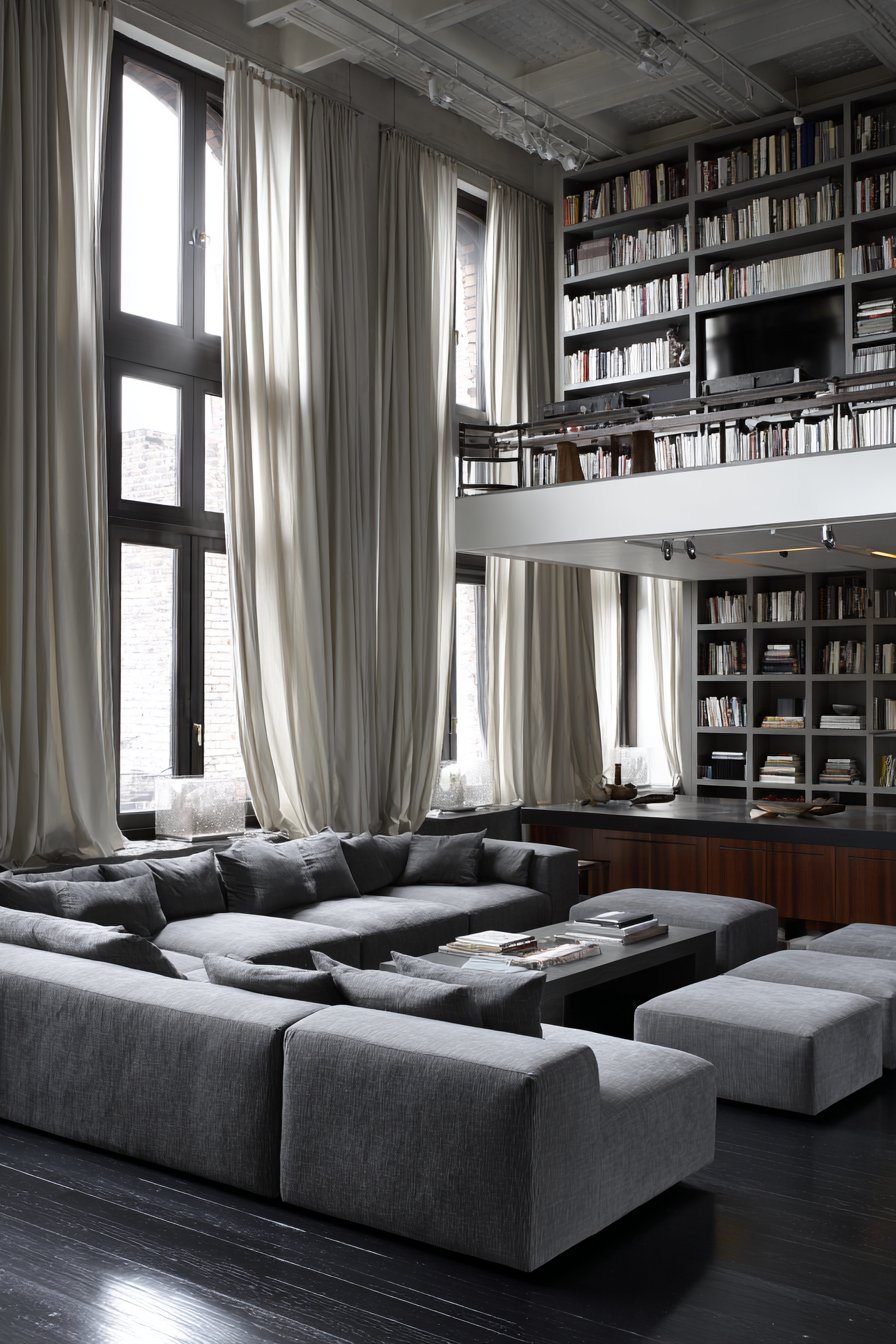
Built-in bookshelves spanning the full height create impressive visual impact. The contemporary mezzanine reading nook perches above the main living area. Floor-to-ceiling shelving demonstrates exceptional functional use of vertical space. Books and decorative objects fill the custom millwork beautifully.
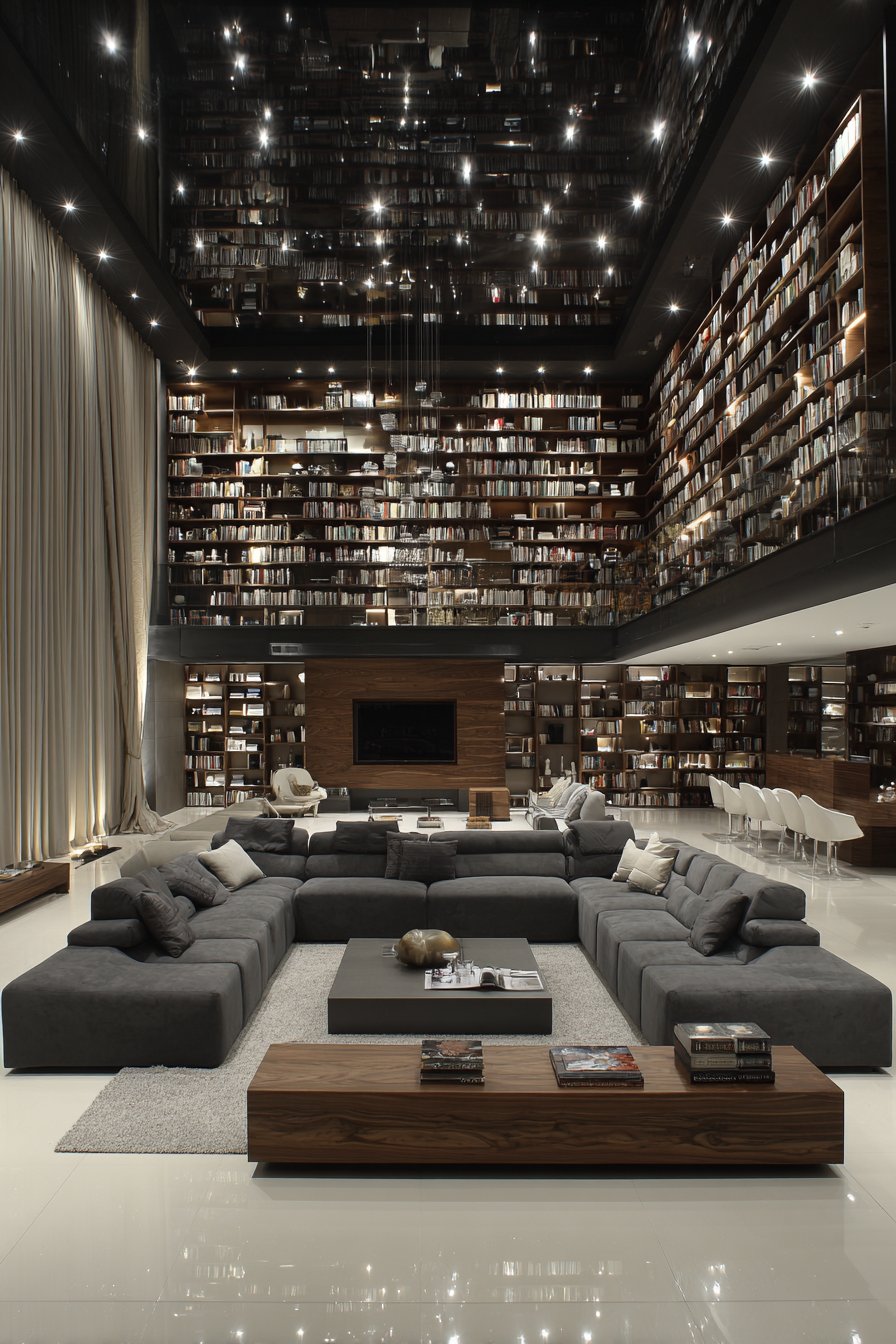
The lower level contains a sleek modular sofa in charcoal grey. A media console in natural walnut provides both storage and display space. Recessed lighting integrated into the ceiling offers adjustable illumination options. This layered lighting approach accommodates different activities and moods.
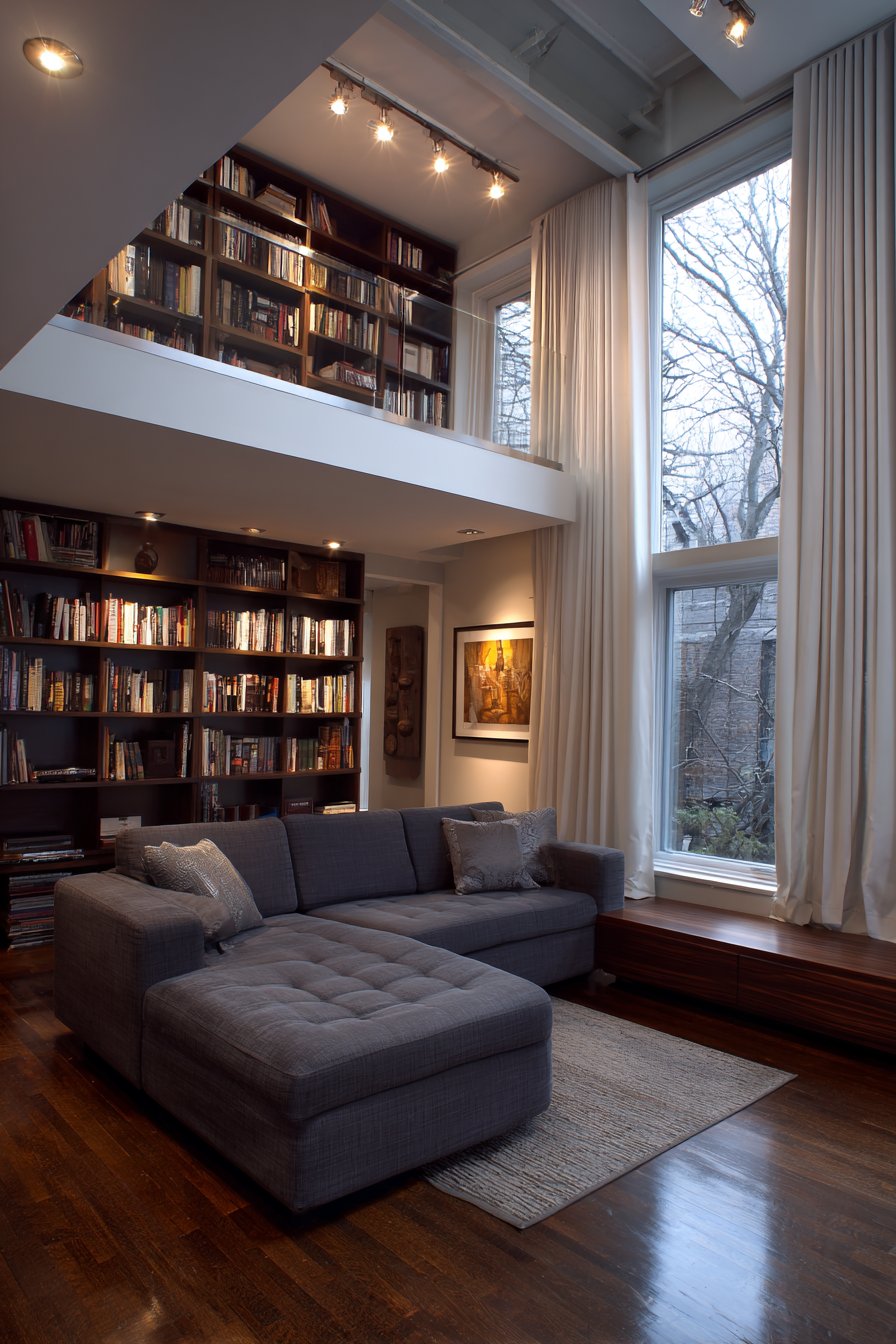
Floor-to-ceiling curtains in natural linen frame the tall windows elegantly. Their impressive length emphasizes the room’s extraordinary height. The neutral fabric filters light softly while maintaining privacy when needed. The curtains add softness to balance the built-in millwork’s structure.
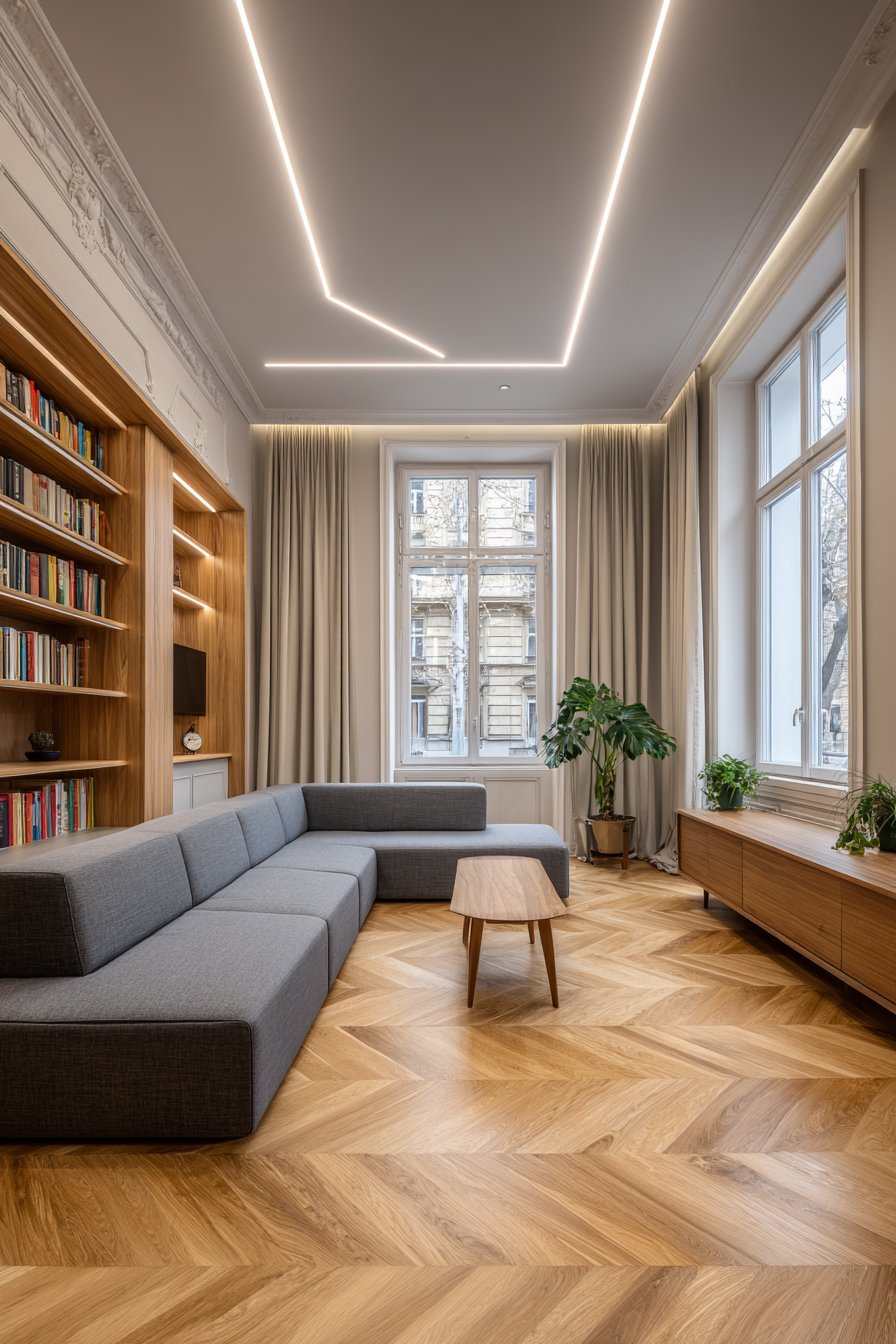
This design creates distinct functional zones within one cohesive space. The reading nook provides quiet retreat while remaining connected to the living area. Natural walnut and charcoal grey create sophisticated yet comfortable ambiance.
Key Design Tips:
- Install floor-to-ceiling shelving to maximize vertical storage potential
- Create mezzanine reading nooks to utilize upper level space functionally
- Use recessed lighting for clean lines and adjustable illumination
- Hang curtains at ceiling height to emphasize room proportions
- Choose modular furniture for flexibility in open floor plans
5. Indoor Tree with Glass Balcony Overlook
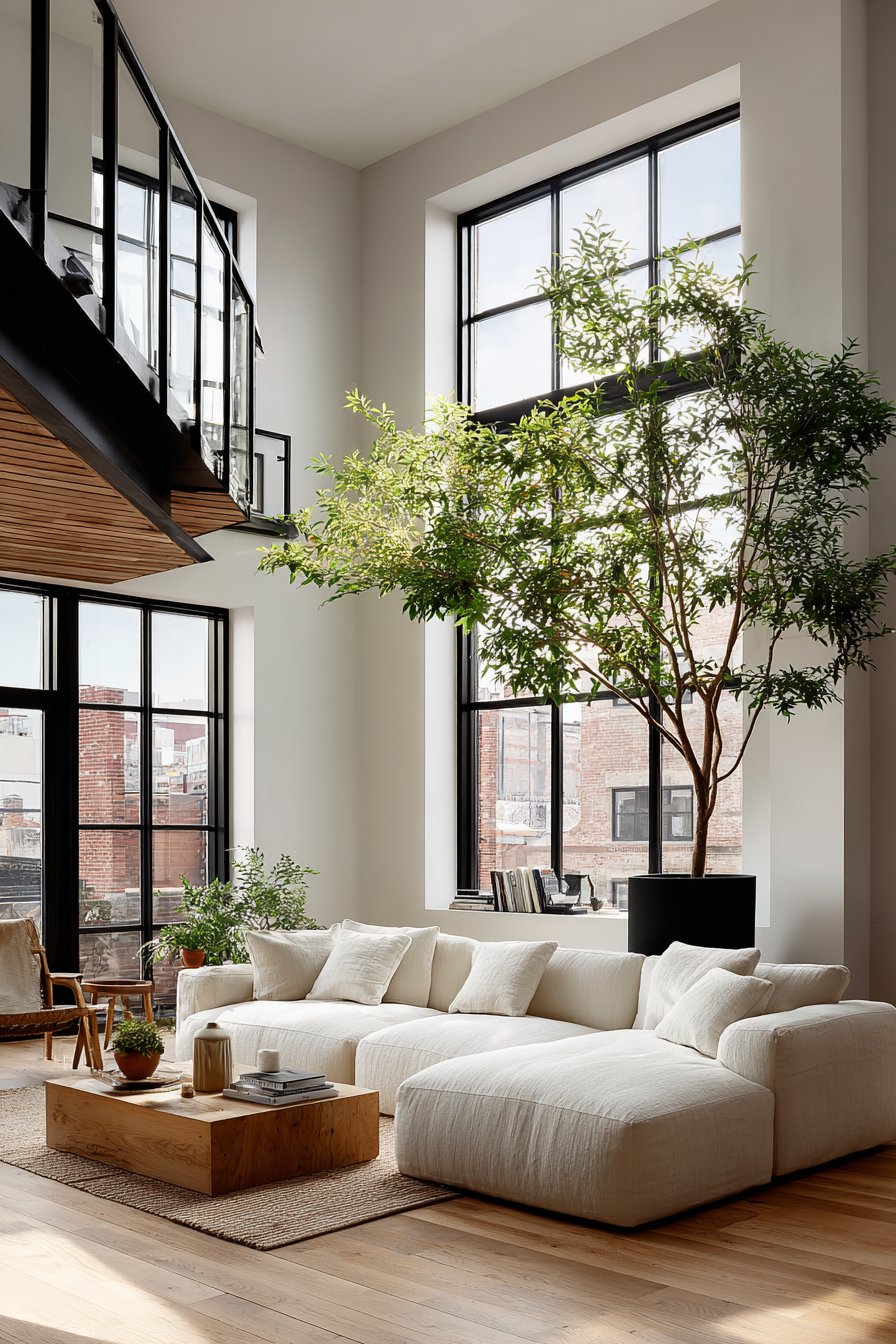
An indoor tree brings unexpected nature into the dramatic vertical space. The custom planter box roots the tree while its canopy reaches upward. This living element softens the architectural drama with organic forms. The tree creates dynamic visual interest that changes with seasons.
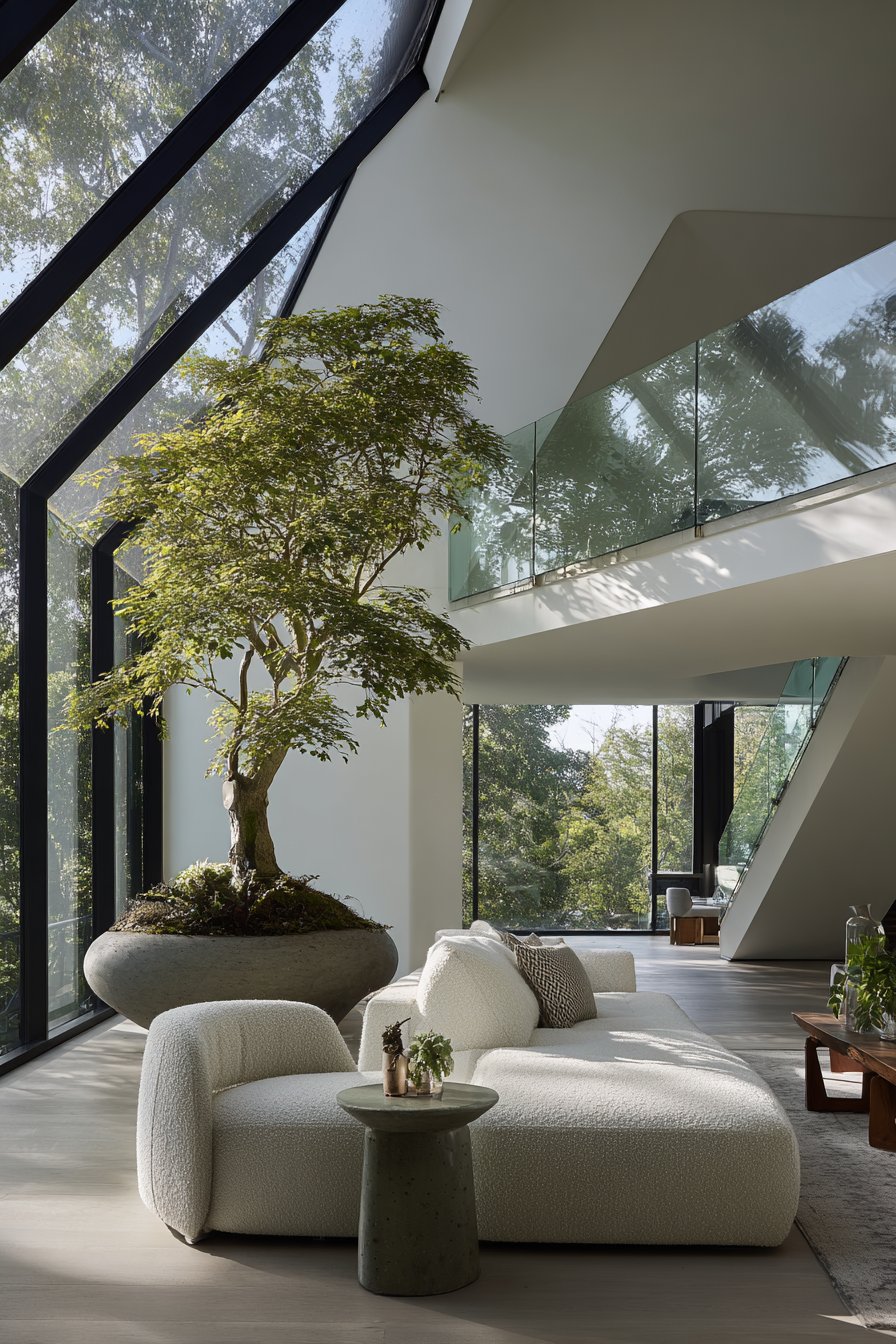
A low-profile sectional in cream bouclé fabric creates intimate seating below. The textured upholstery adds tactile warmth to the contemporary space. The upper level features a glass-paneled balcony with modern black metal framing. Transparent railings preserve views while ensuring safety.
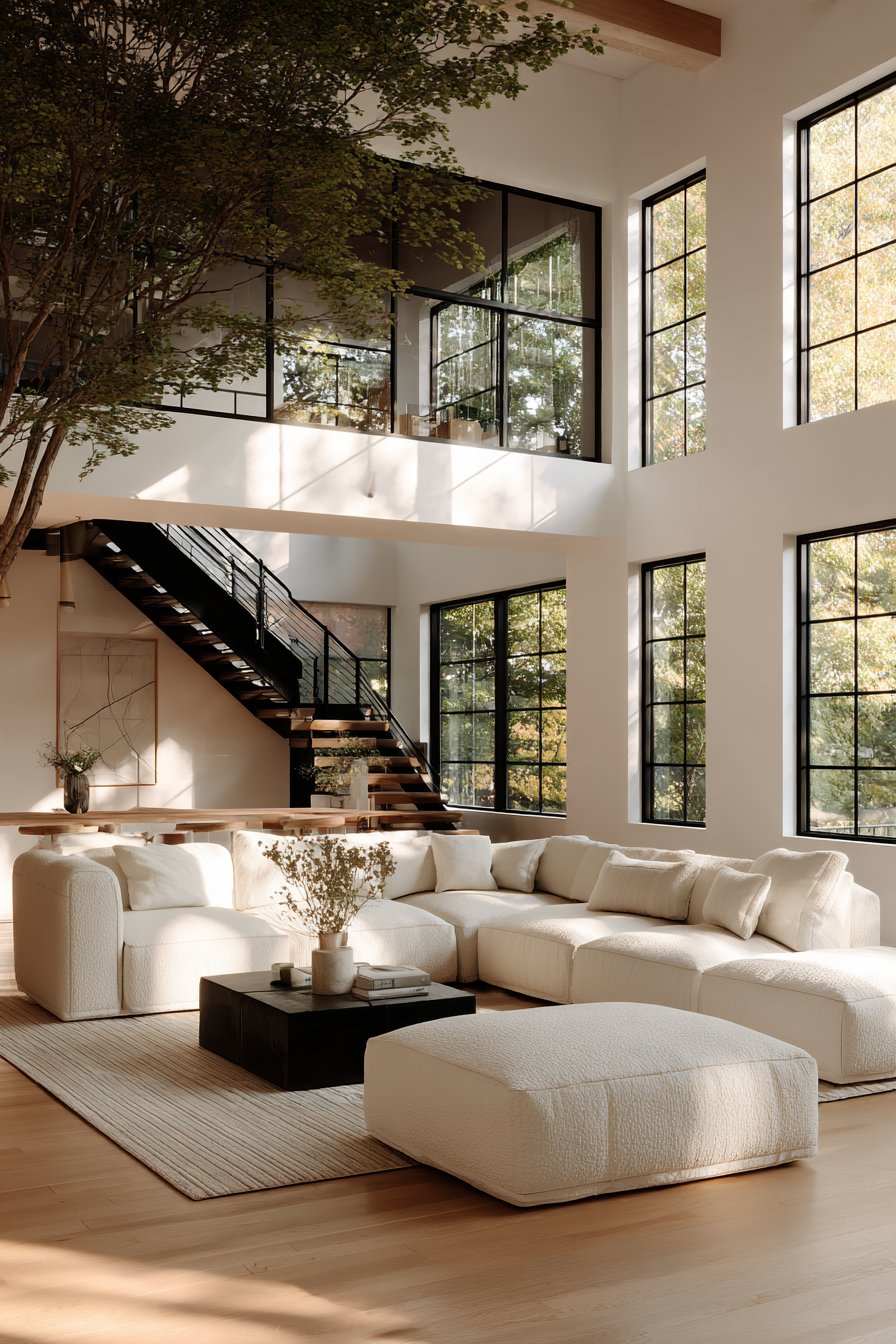
Natural oak flooring with matte finish grounds the entire space. White walls maximize light reflection throughout both levels beautifully. Morning light streams through floor-to-ceiling windows creating dappled shadows. The tree’s foliage filters light naturally, creating ever-changing patterns.
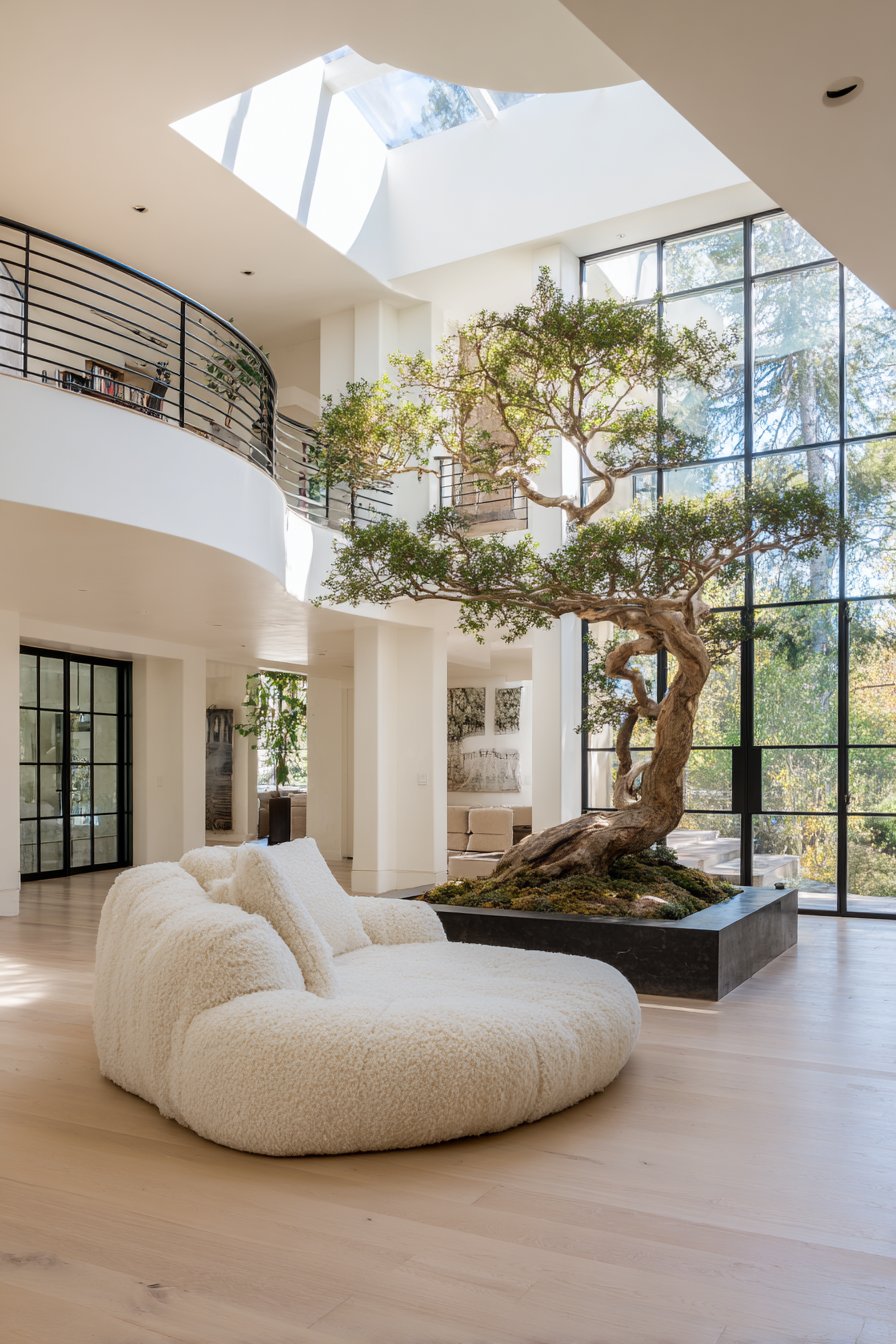
This design demonstrates how natural elements enhance contemporary architecture. The indoor tree provides air purification alongside aesthetic value. Glass balcony panels maintain openness while defining the upper level.
Key Design Tips:
- Select trees with appropriate mature height for your ceiling clearance
- Use custom planters with proper drainage and soil depth
- Install glass balcony panels to preserve light flow between levels
- Choose low-profile furniture to emphasize vertical space and tree height
- Position trees near windows to ensure adequate natural light
6. Vertical Wood Slat Paneling Feature
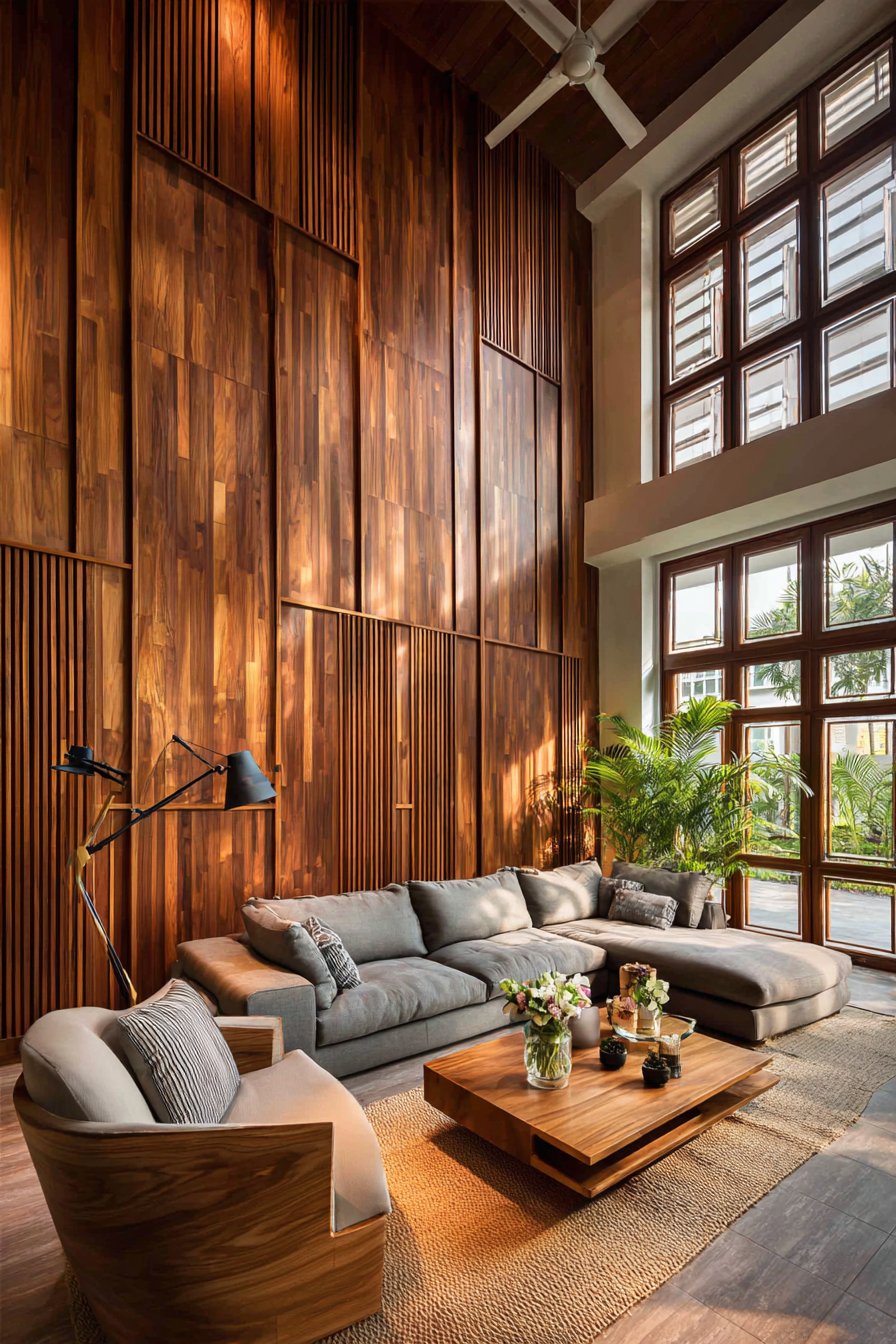
Dramatic vertical wood slat paneling extends from floor to ceiling magnificently. The rhythmic pattern creates visual interest through repetition and shadow. Natural wood texture adds warmth to the contemporary space. This accent wall becomes the room’s defining architectural feature.
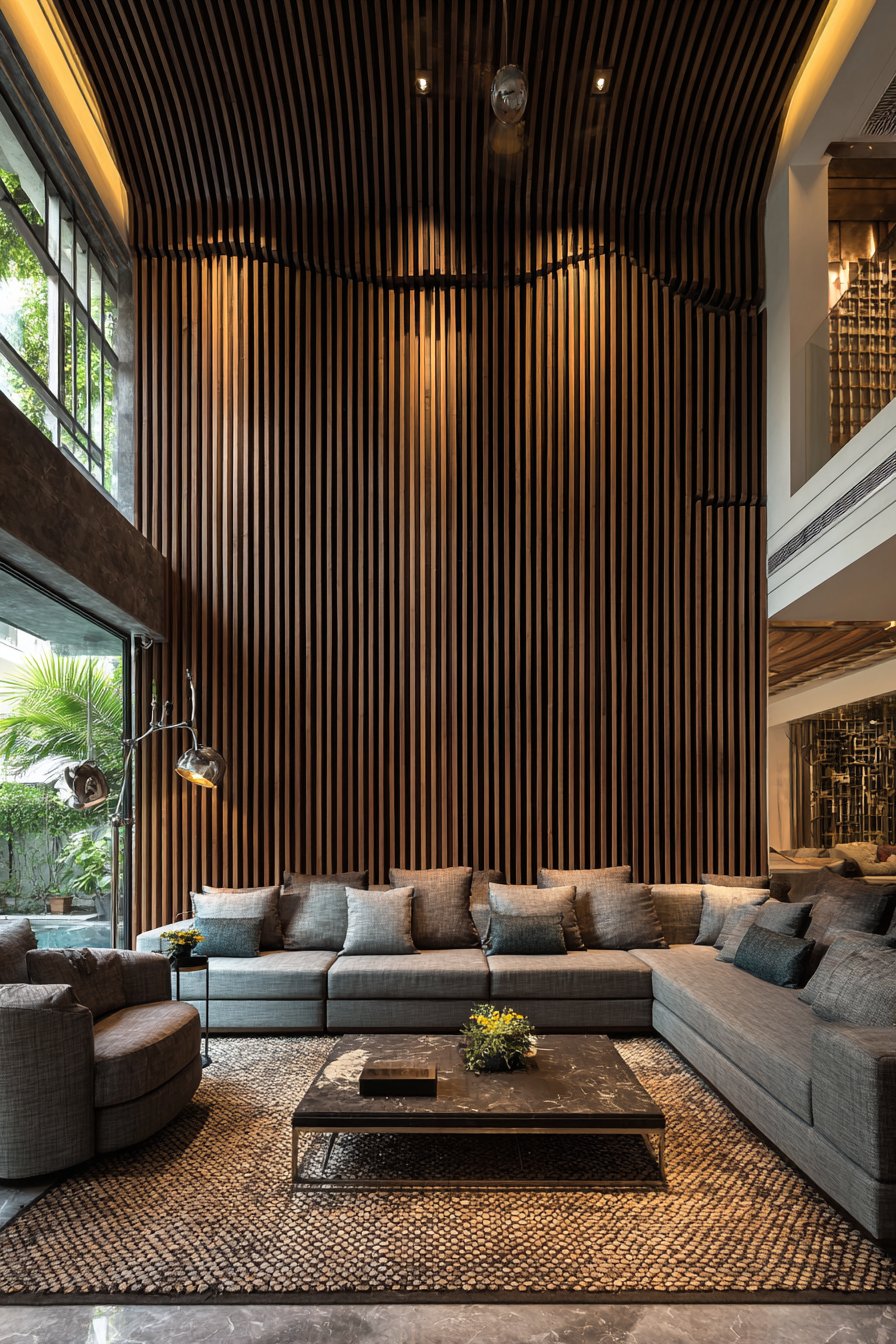
A contemporary grey linen sofa faces this impressive feature wall. The seating arrangement rests on a hand-woven jute rug adding natural texture. A sculptural floor lamp with adjustable arms provides targeted task lighting. A modern ceiling fan with integrated LED lights addresses practical climate control needs.
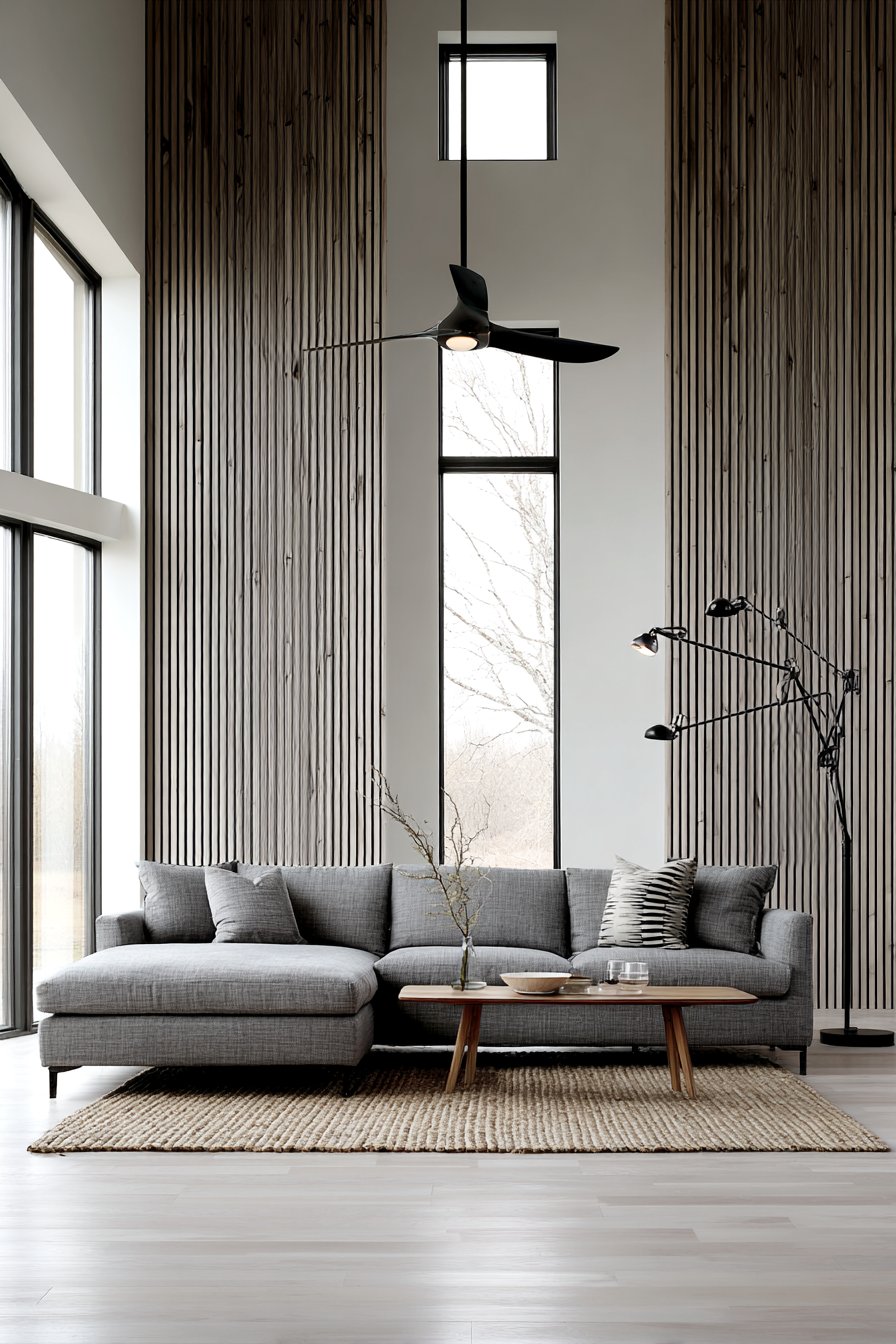
Upper windows positioned near the ceiling bring natural light without compromising privacy. The high window placement illuminates the space while maintaining security. Natural light interacts beautifully with the slatted surface throughout the day. Shadow patterns shift across the wood creating dynamic visual interest.
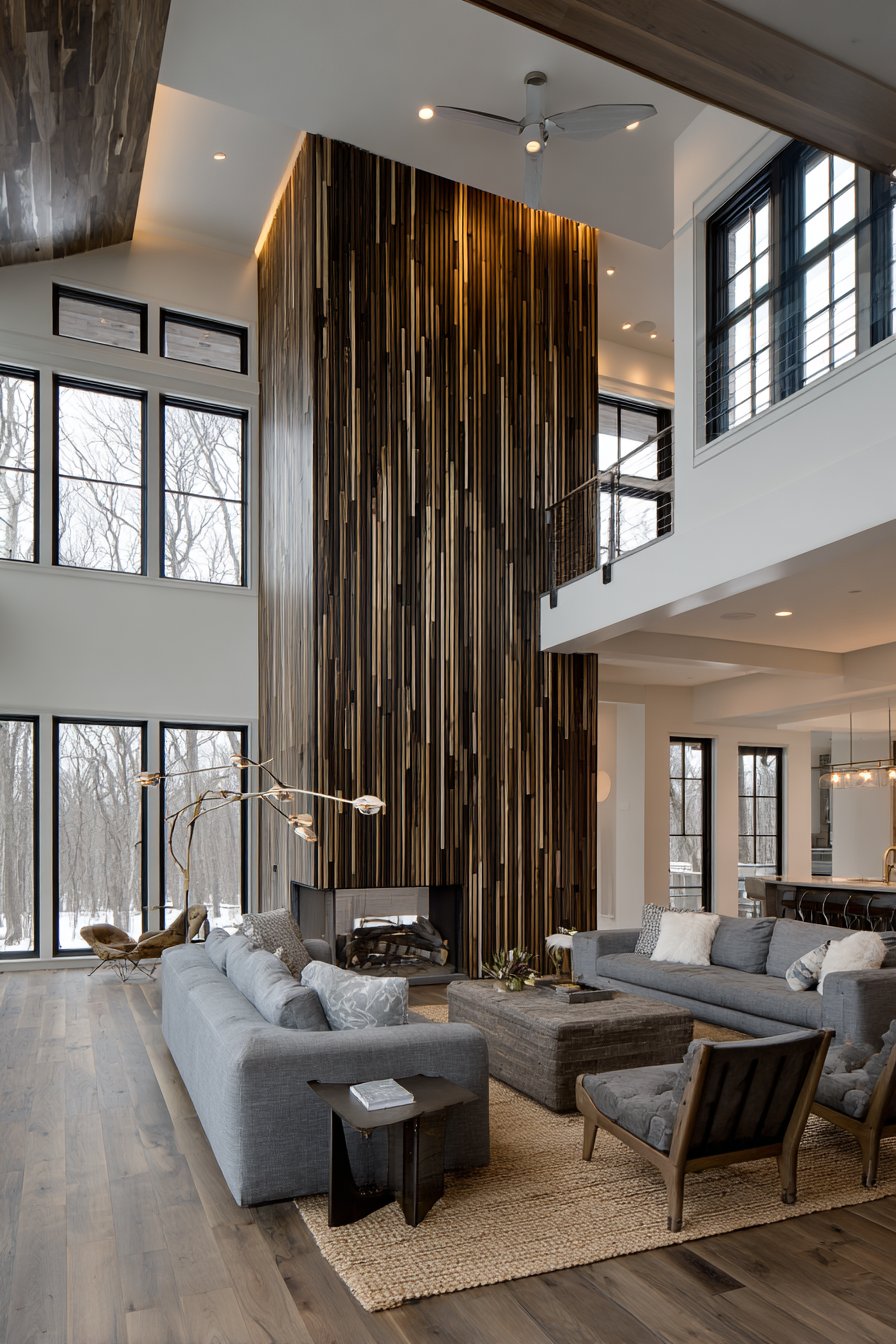
This design balances aesthetic impact with practical functionality. The ceiling fan becomes necessary in tall spaces where heat rises. Wood slats add significant warmth without overwhelming the neutral color palette.
Key Design Tips:
- Install vertical slats to emphasize ceiling height visually
- Position upper windows to maximize light while maintaining privacy
- Add ceiling fans with integrated lighting for climate control in tall spaces
- Use natural fiber rugs to complement wood’s organic texture
- Choose sculptural lighting that serves as functional art
7. Gallery Wall Spanning Both Levels
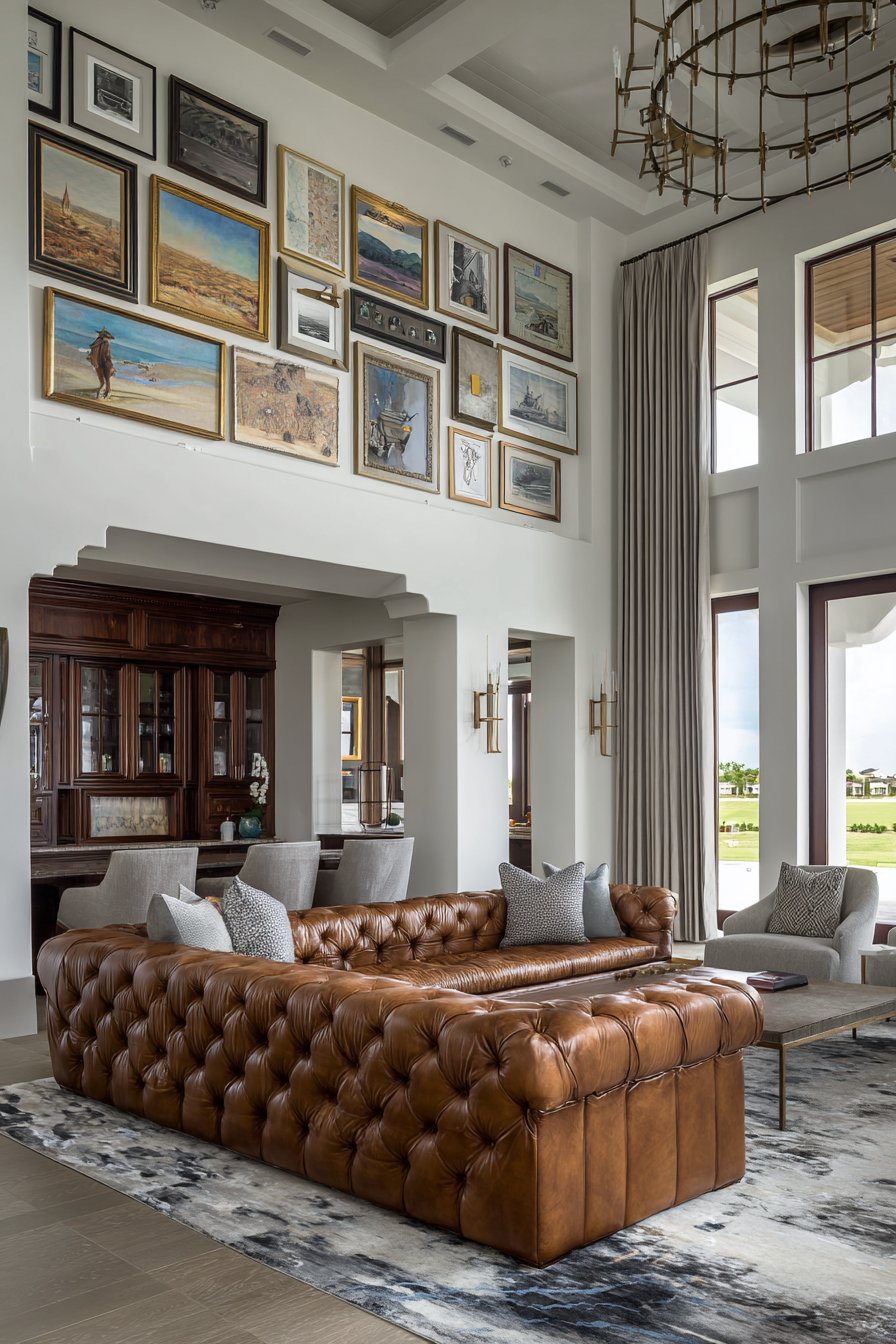
A gallery wall arrangement spans both levels creating impressive visual continuity. Curated artwork and photography display in mixed frame styles and sizes. The collection tells a personal story while activating the vertical space. This art installation becomes the room’s focal point and conversation starter.
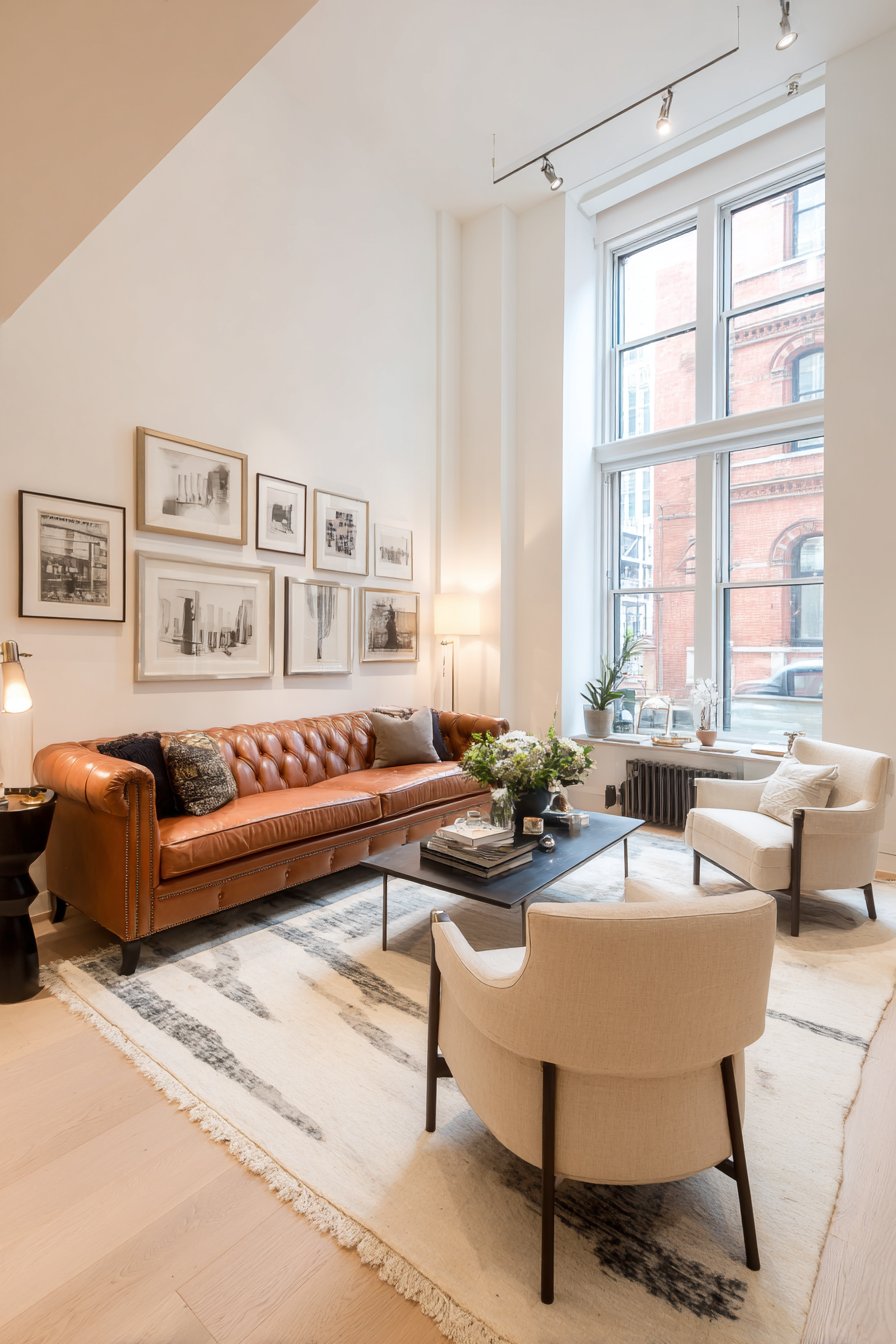
The furniture below includes a tufted leather sofa in cognac brown. Modern accent chairs in complementary neutral tones complete the seating arrangement. A contemporary area rug with abstract patterns defines the conversation zone. The furnishings provide comfortable foundation for appreciating the art above.
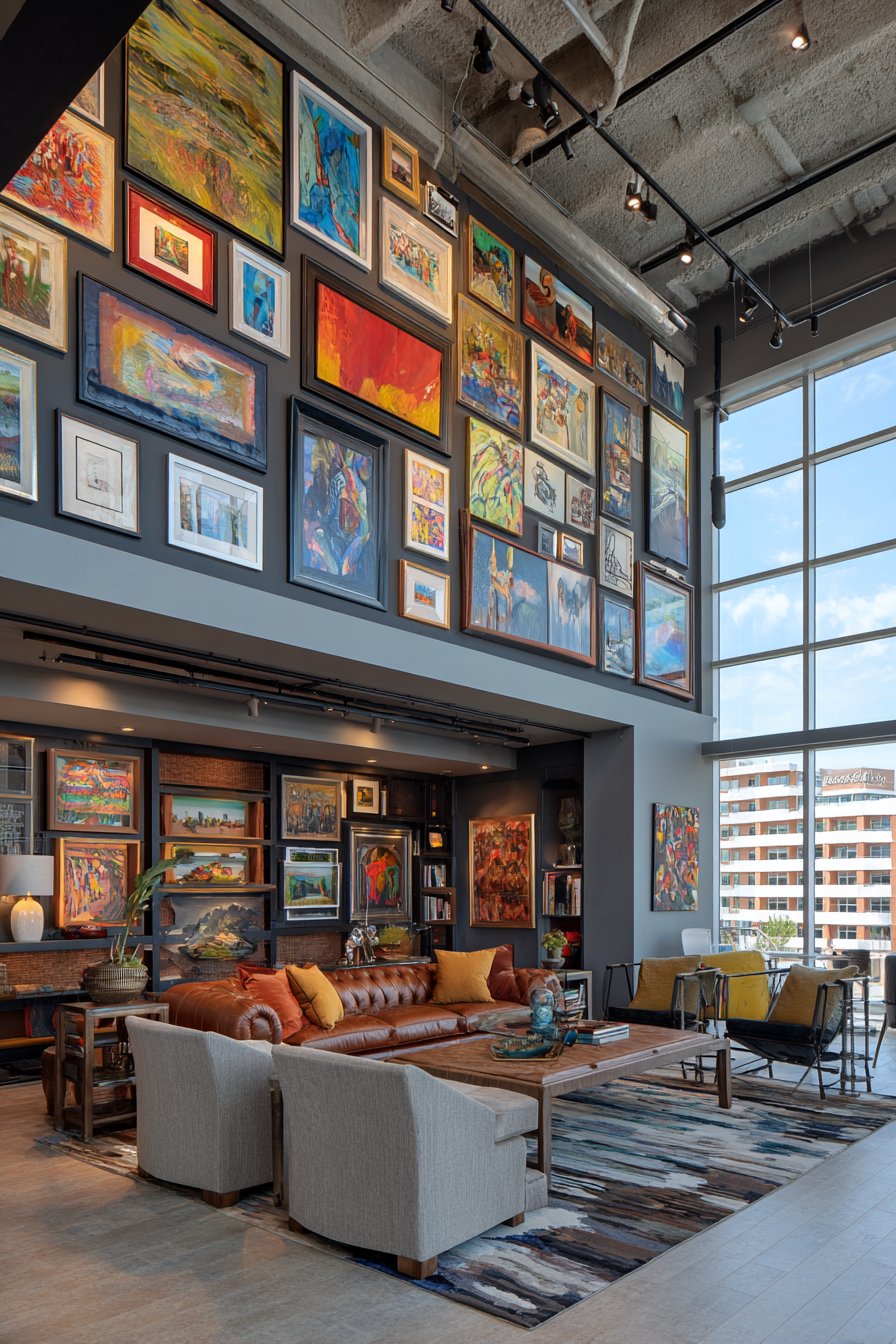
Track lighting mounted on the upper level illuminates artwork with adjustable spotlights. Museum-quality lighting highlights each piece without creating glare. Natural light from a large window balances the artificial illumination beautifully. This layered lighting approach adapts to different times of day.
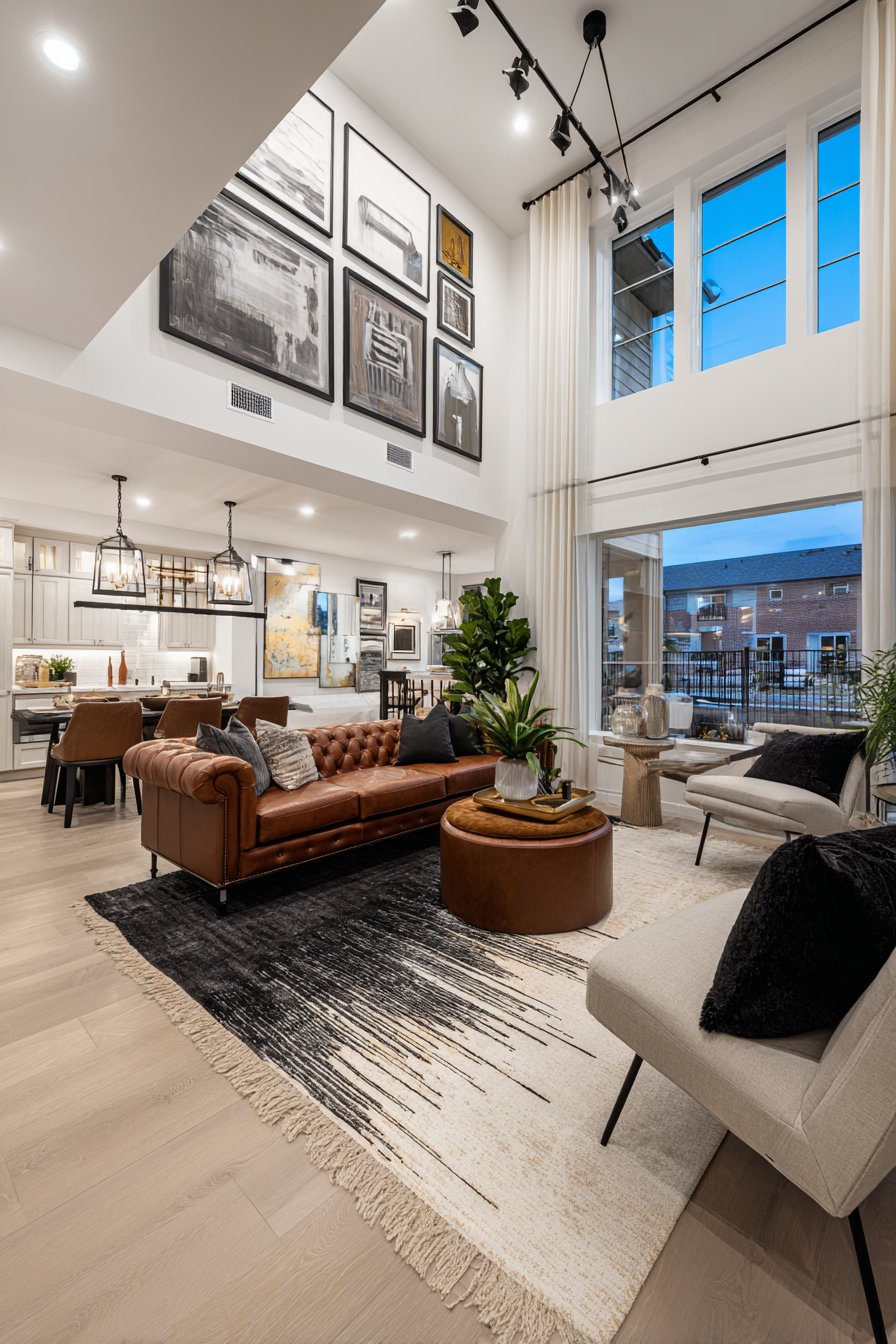
The gallery wall demonstrates how personal collections gain impact through thoughtful display. Mixed frame styles create visual interest while maintaining cohesion. The arrangement transforms the living room into a personal museum.
Key Design Tips:
- Plan gallery wall layouts on the floor before mounting
- Use track lighting with adjustable heads for flexible artwork illumination
- Mix frame styles and sizes for dynamic visual interest
- Balance artificial and natural light to prevent artwork fading
- Install art at varying heights to activate the entire vertical space
8. Industrial Exposed Ductwork Design
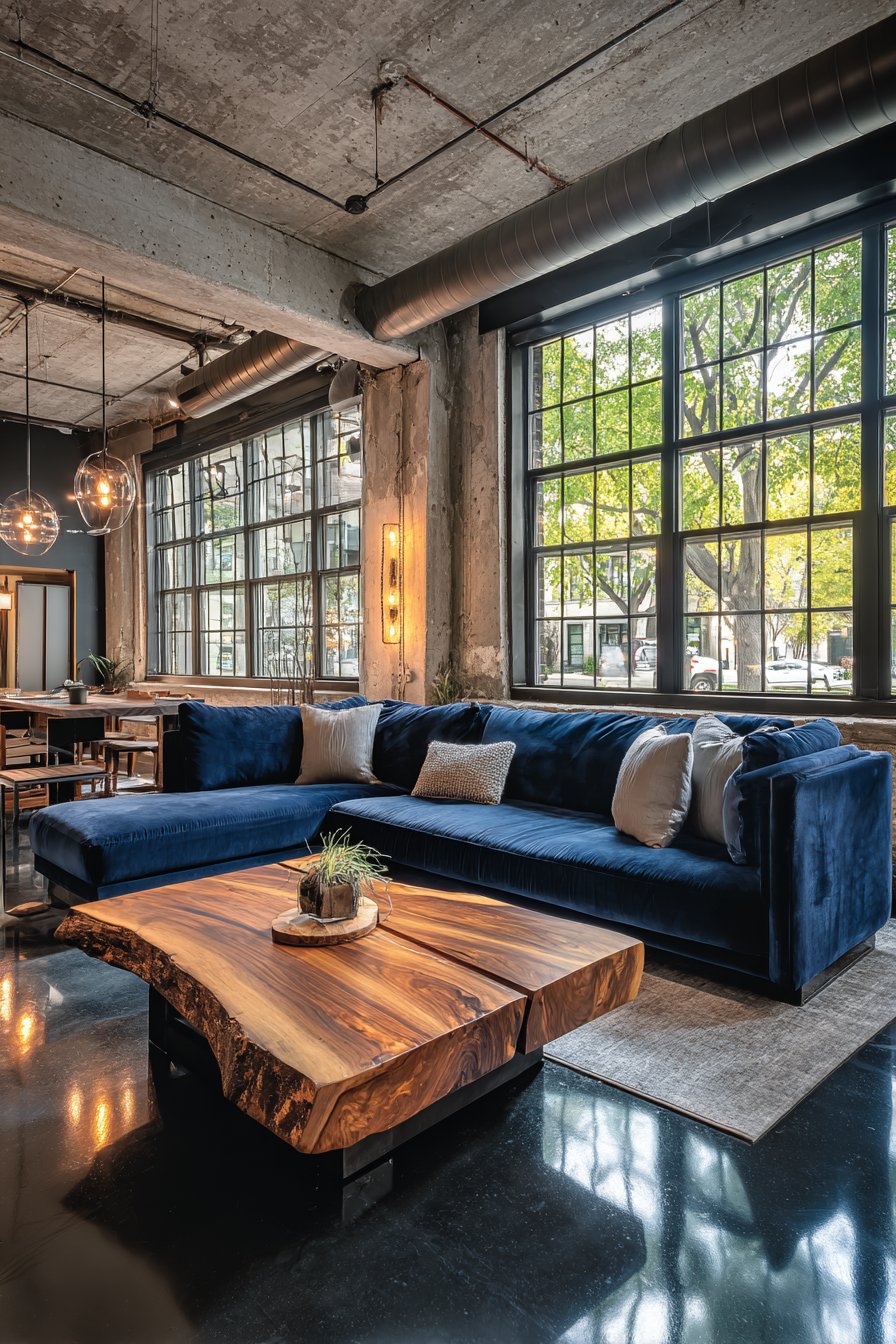
Exposed ductwork and concrete ceiling create authentic industrial character. The raw architectural elements contrast beautifully with warm residential furnishings. A plush velvet sofa in deep blue anchors the living space. This jewel-toned upholstery adds richness against industrial materials.
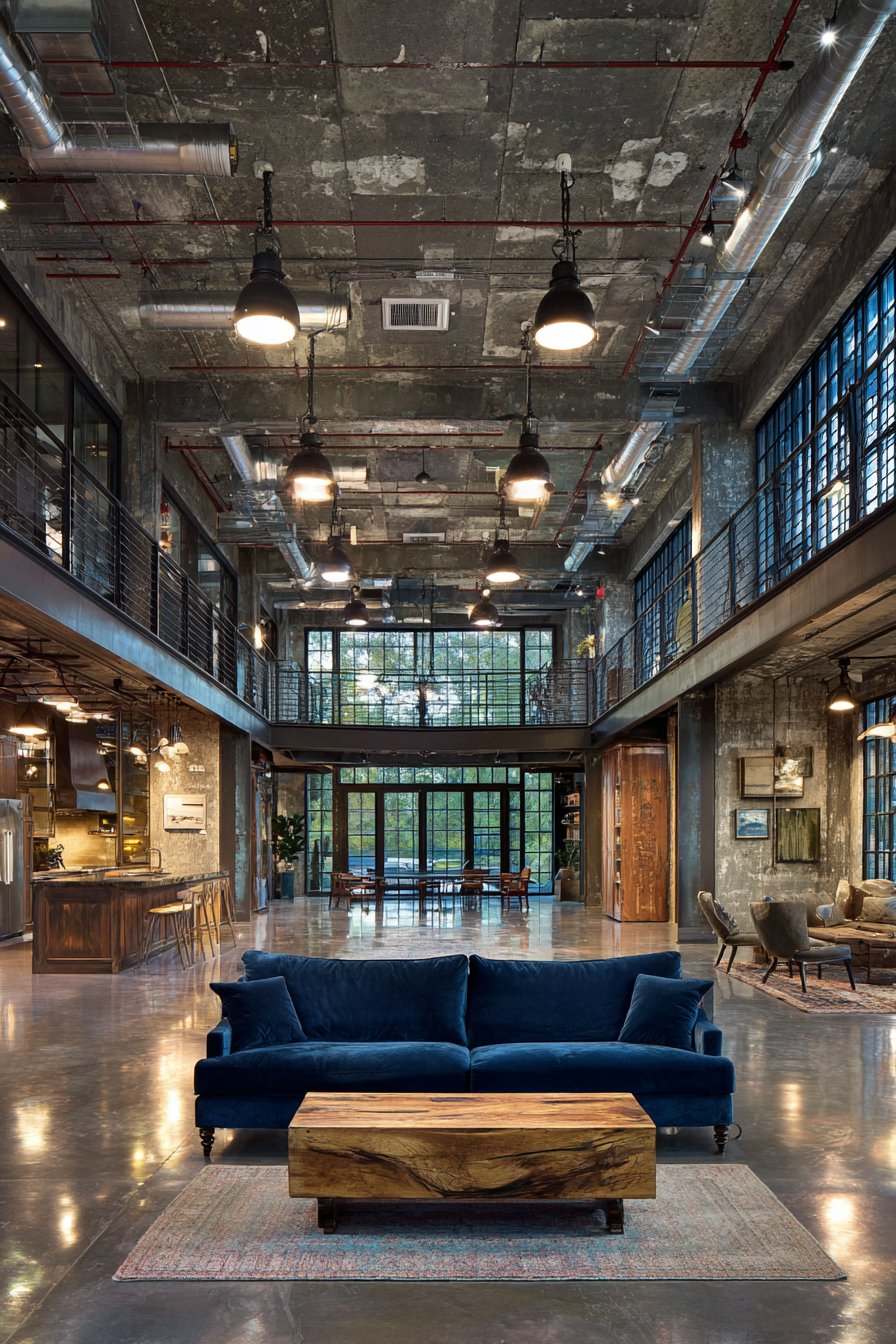
A live-edge wood coffee table showcases natural grain patterns and organic edges. The raw wood element connects the industrial architecture with natural materials. Metal and glass pendant lights in black finish hang at varying heights. The multiple pendants create visual interest within the vertical space.
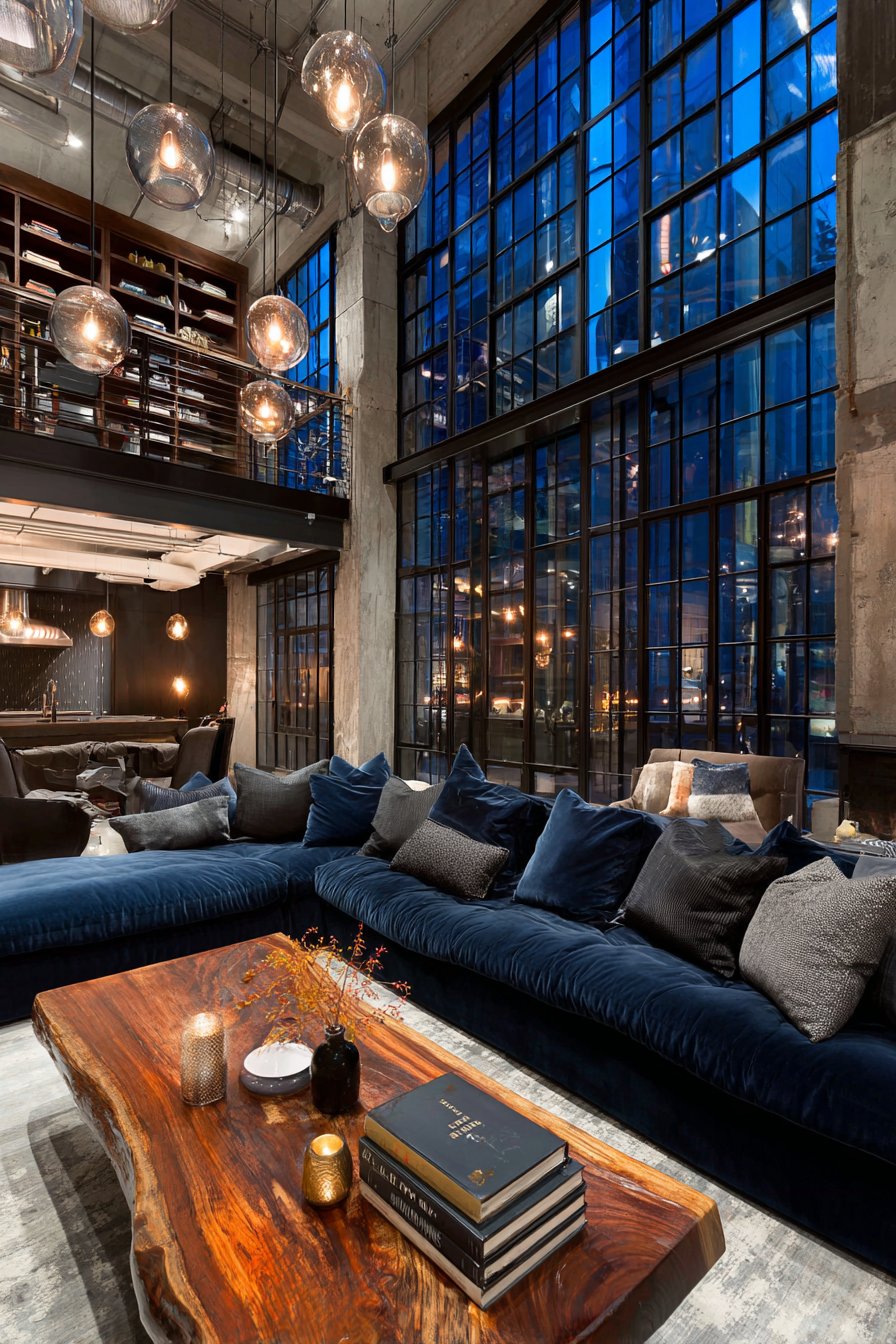
Polished concrete flooring reflects ambient light while maintaining industrial authenticity. Area rugs add essential softness underfoot and acoustic dampening. Large factory-style windows with black frames span both levels dramatically. The black window frames emphasize the industrial aesthetic while framing views.
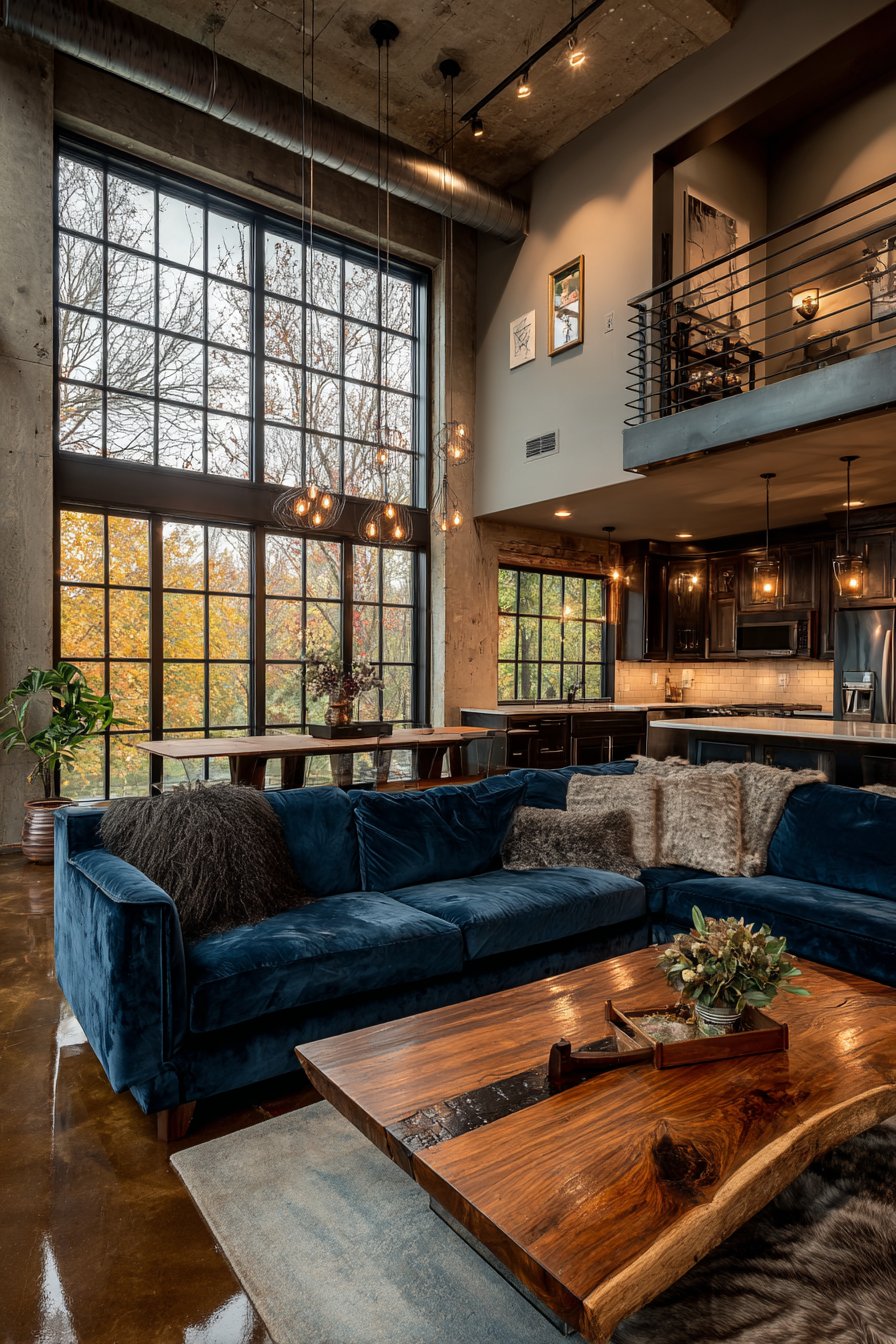
This design proves industrial spaces can feel warm and inviting. The combination of hard and soft materials creates perfect balance. Deep blue velvet provides unexpected luxury within the utilitarian architecture.
Key Design Tips:
- Embrace exposed ductwork and concrete as design features not flaws
- Add plush upholstery to soften industrial materials and improve acoustics
- Use live-edge wood to introduce organic warmth to industrial spaces
- Hang pendant lights at varying heights to fill vertical space
- Layer area rugs over concrete for comfort and sound absorption
9. Curved Sofa with Exposed Wooden Beams
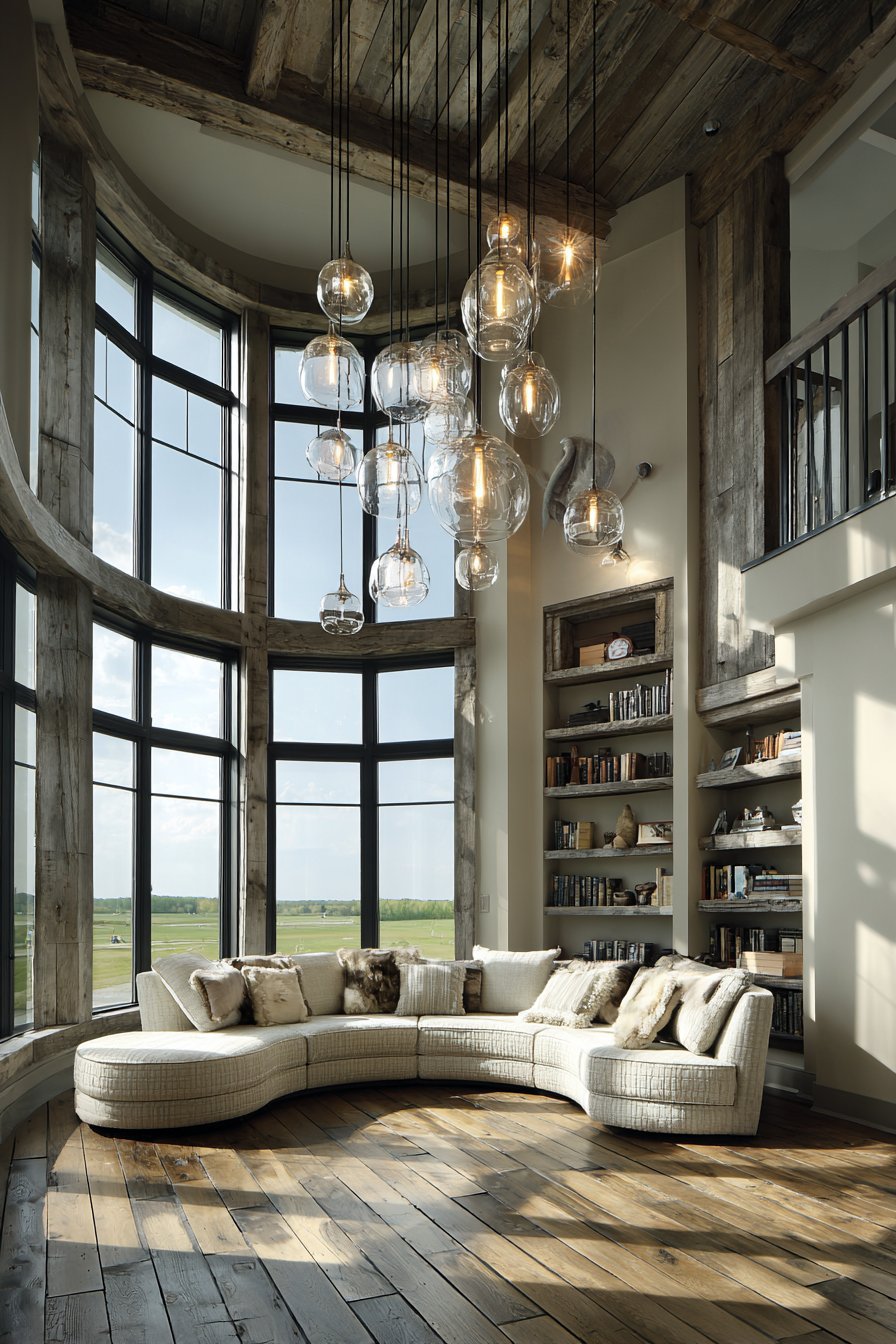
A dramatic curved sofa follows the arc of a bay window beautifully. Textured cream fabric upholstery creates soft, inviting seating. The curved form encourages conversation while maximizing window views. This custom seating solution makes the most of architectural features.
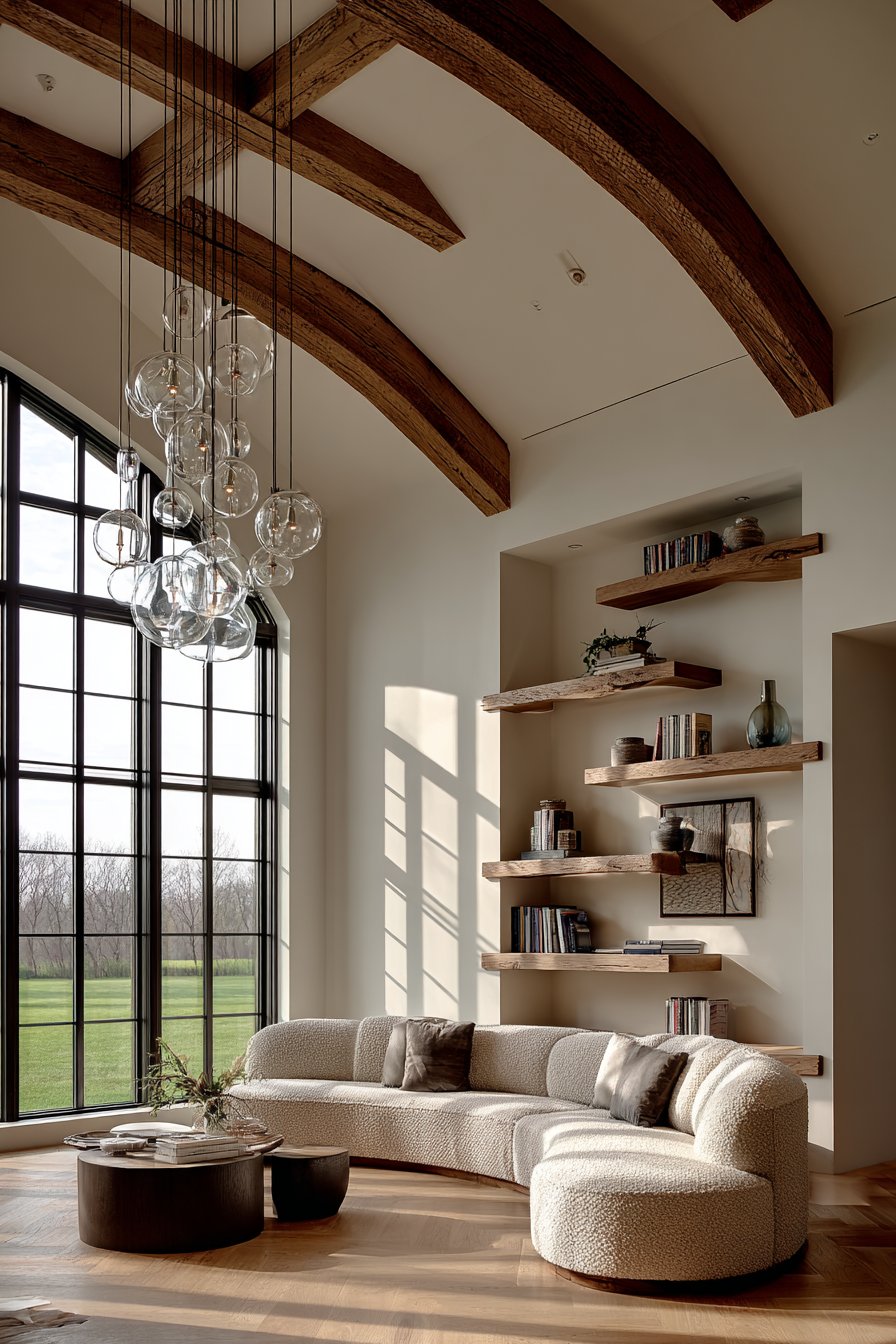
Exposed wooden beams in reclaimed oak span the high ceiling overhead. The rustic beams add character to the contemporary space below. A modern chandelier with multiple glass globe pendants hangs at varying heights. The lighting fixture fills vertical space while providing layered illumination.
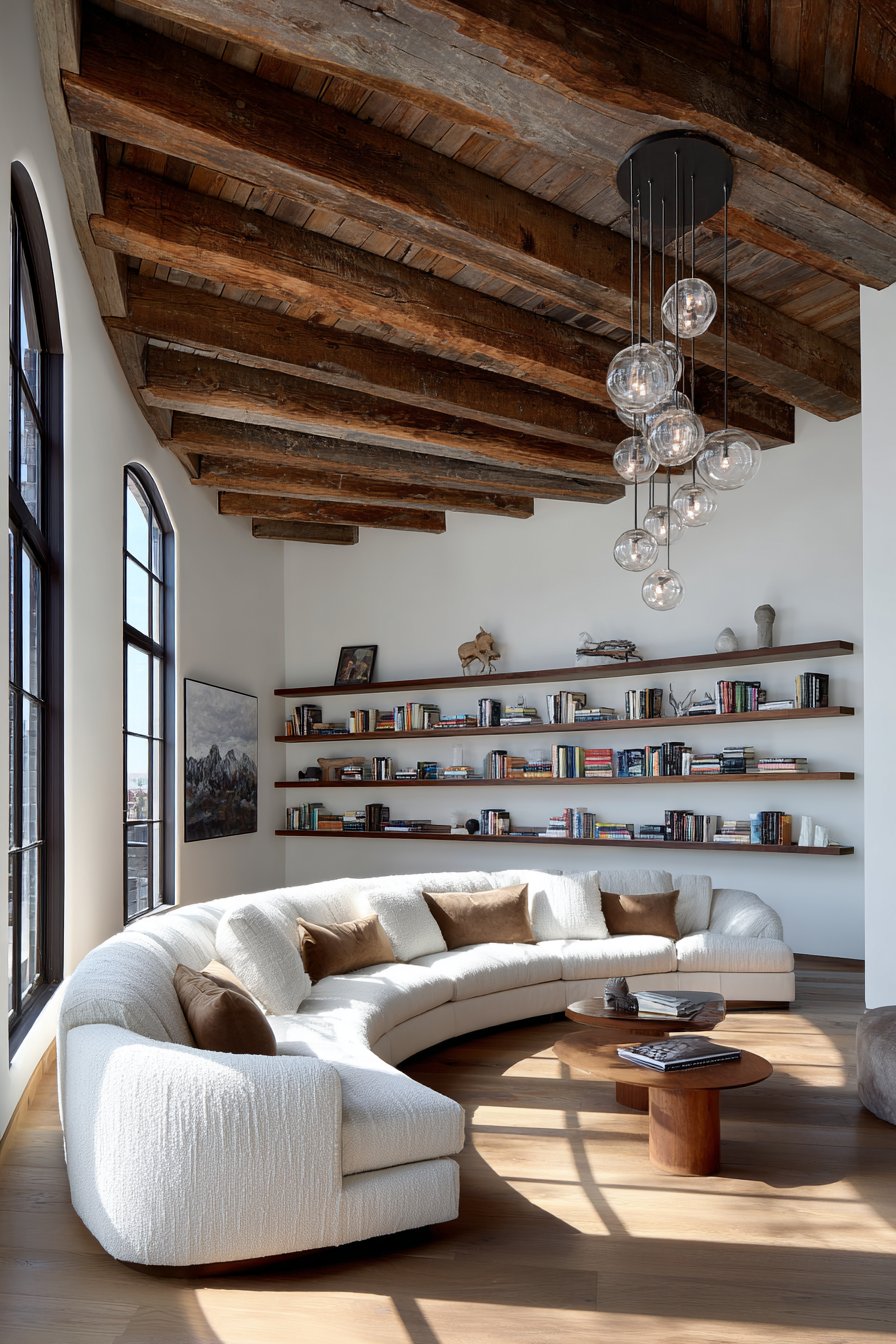
Built-in shelving on the double-height wall displays books and decorative objects. The organized arrangement maintains aesthetic appeal while providing storage. Hardwood flooring in honey-toned oak complements the ceiling beams perfectly. Natural afternoon light through tall bay windows creates soft shadows.
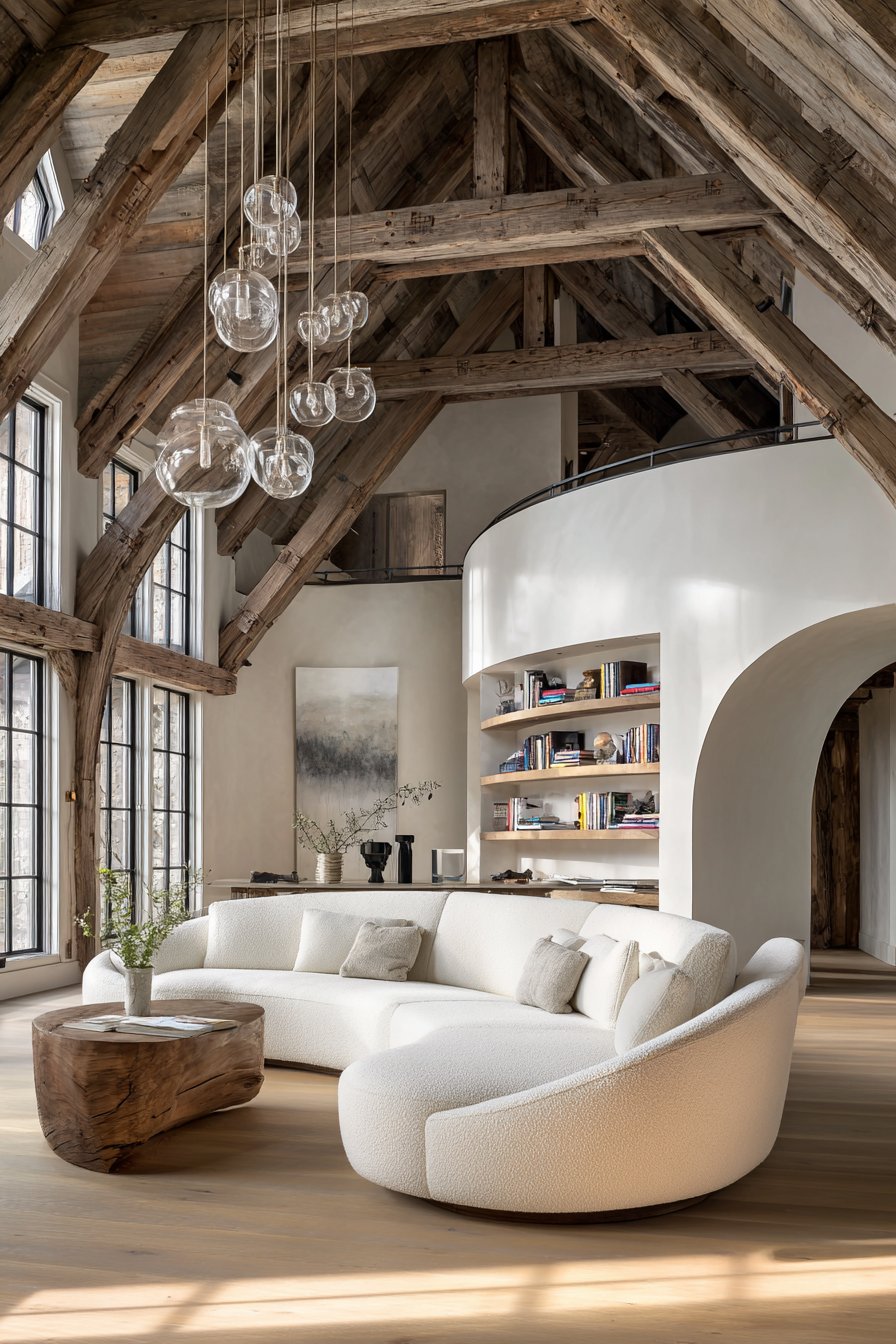
This design combines rustic and contemporary elements harmoniously. Reclaimed beams bring history while curved modern furniture feels fresh. The combination creates timeless appeal that won’t feel dated.
Key Design Tips:
- Use curved furniture to soften angular architecture and improve flow
- Source reclaimed beams for authentic character and sustainability
- Install built-in shelving to maximize vertical storage opportunities
- Choose multi-globe chandeliers to fill vertical space without overwhelming
- Match flooring tones to ceiling beams for visual cohesion
10. Minimalist Scandinavian Aesthetic
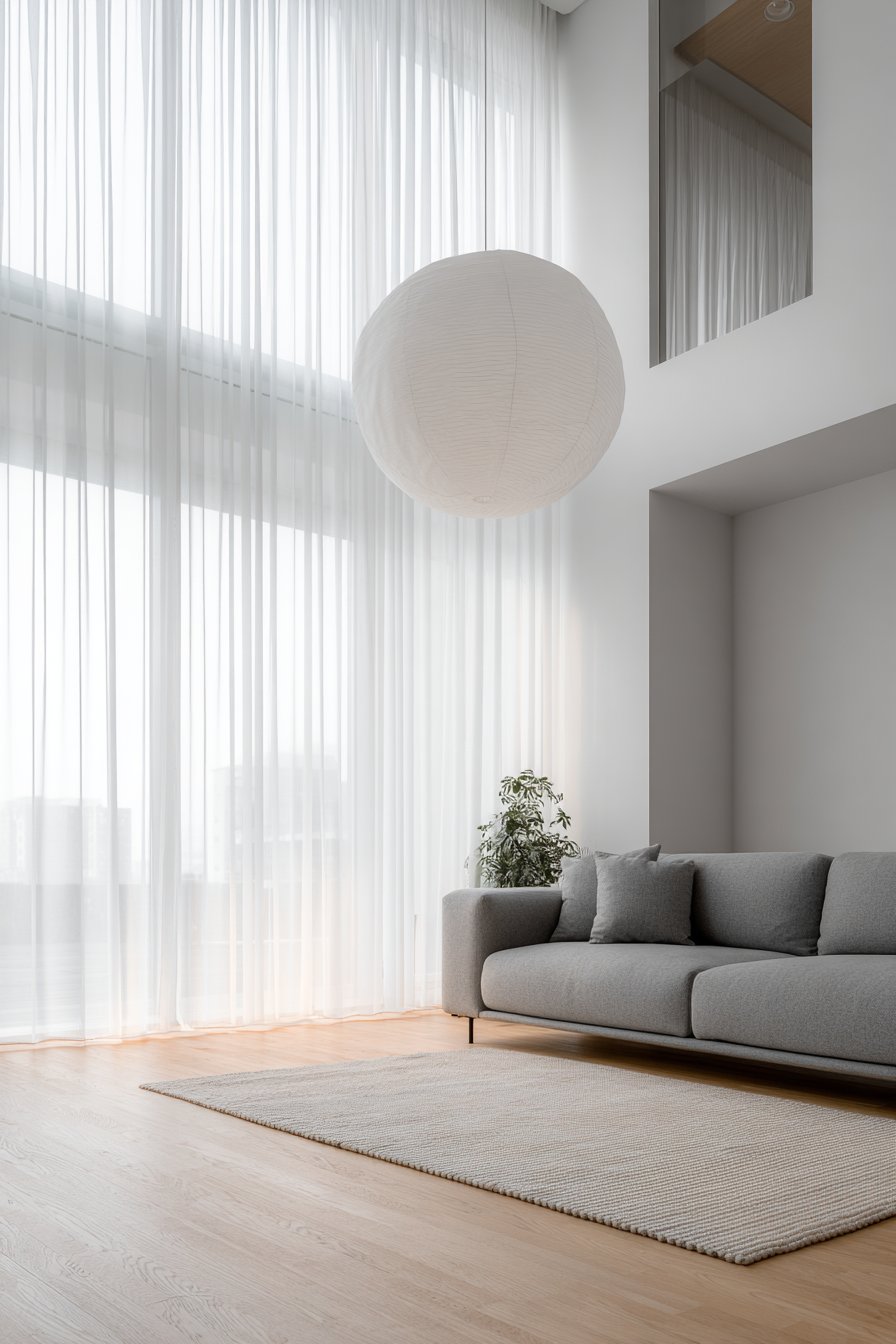
White painted walls amplify the sense of height and light beautifully. The minimalist Scandinavian aesthetic embraces simplicity and functionality. A low-profile grey sofa with clean lines sits on natural wool rug. The restrained palette creates serene, calming atmosphere.
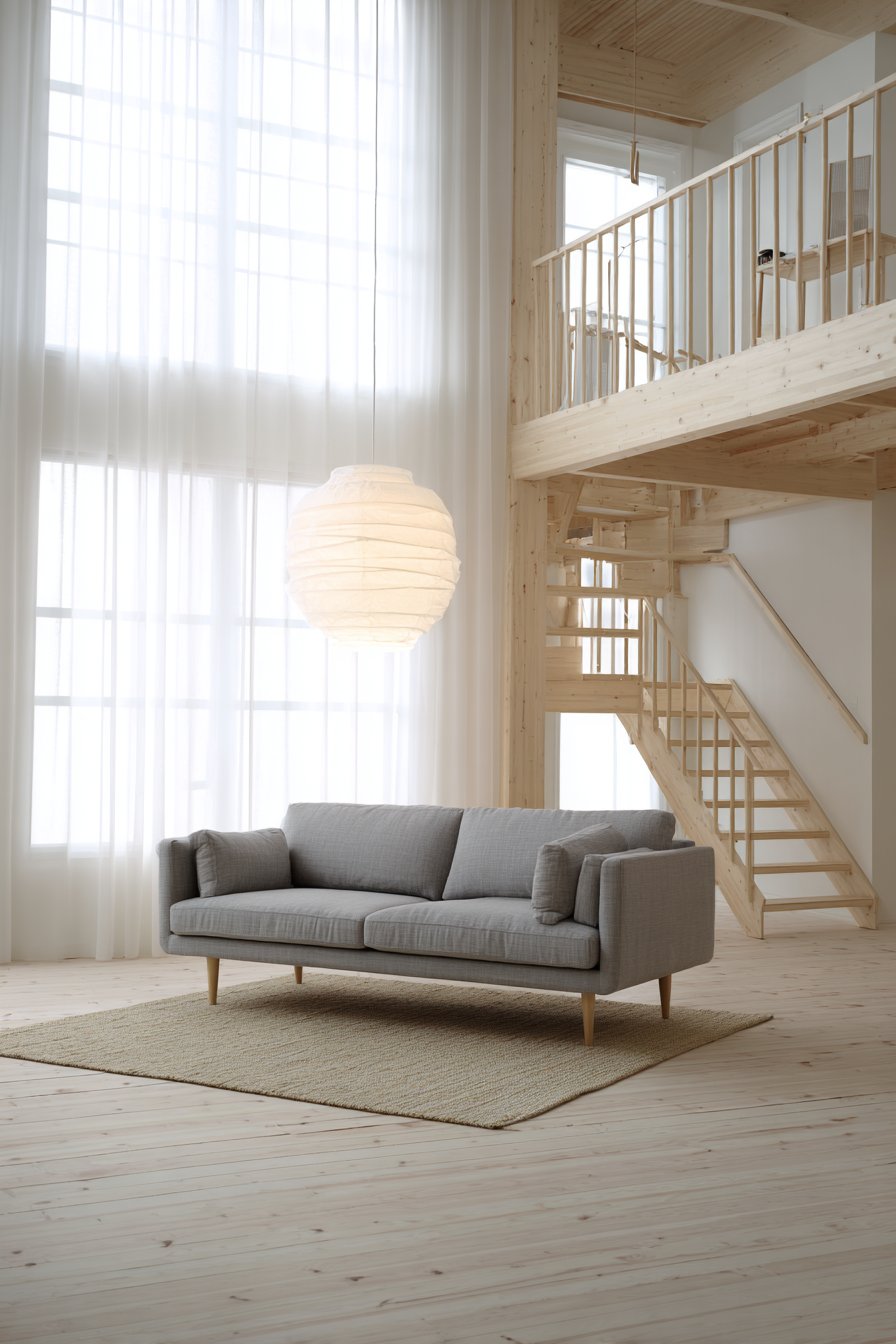
The upper level features simple wooden railing in light ash. The barely-visible railing maintains the airy, uncluttered quality. A single large-scale pendant light in white fabric provides soft ambient illumination. The singular light fixture demonstrates the “less is more” philosophy.
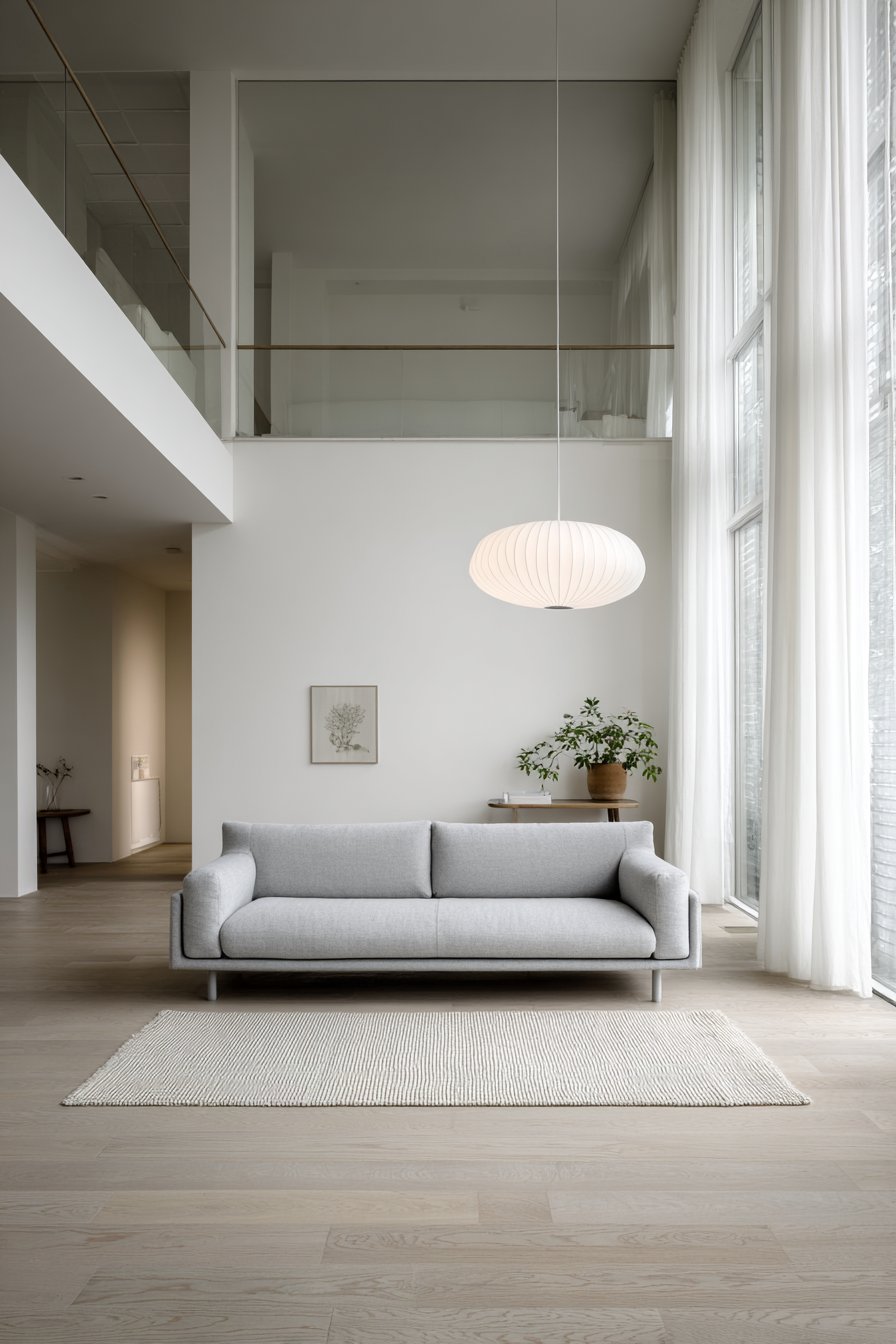
Floor-to-ceiling windows dressed with sheer white curtains allow diffused natural light. The translucent fabric filters harsh sunlight while maintaining brightness. Light pine flooring adds subtle warmth without overwhelming the minimal palette. Every element serves a purpose without excess decoration.
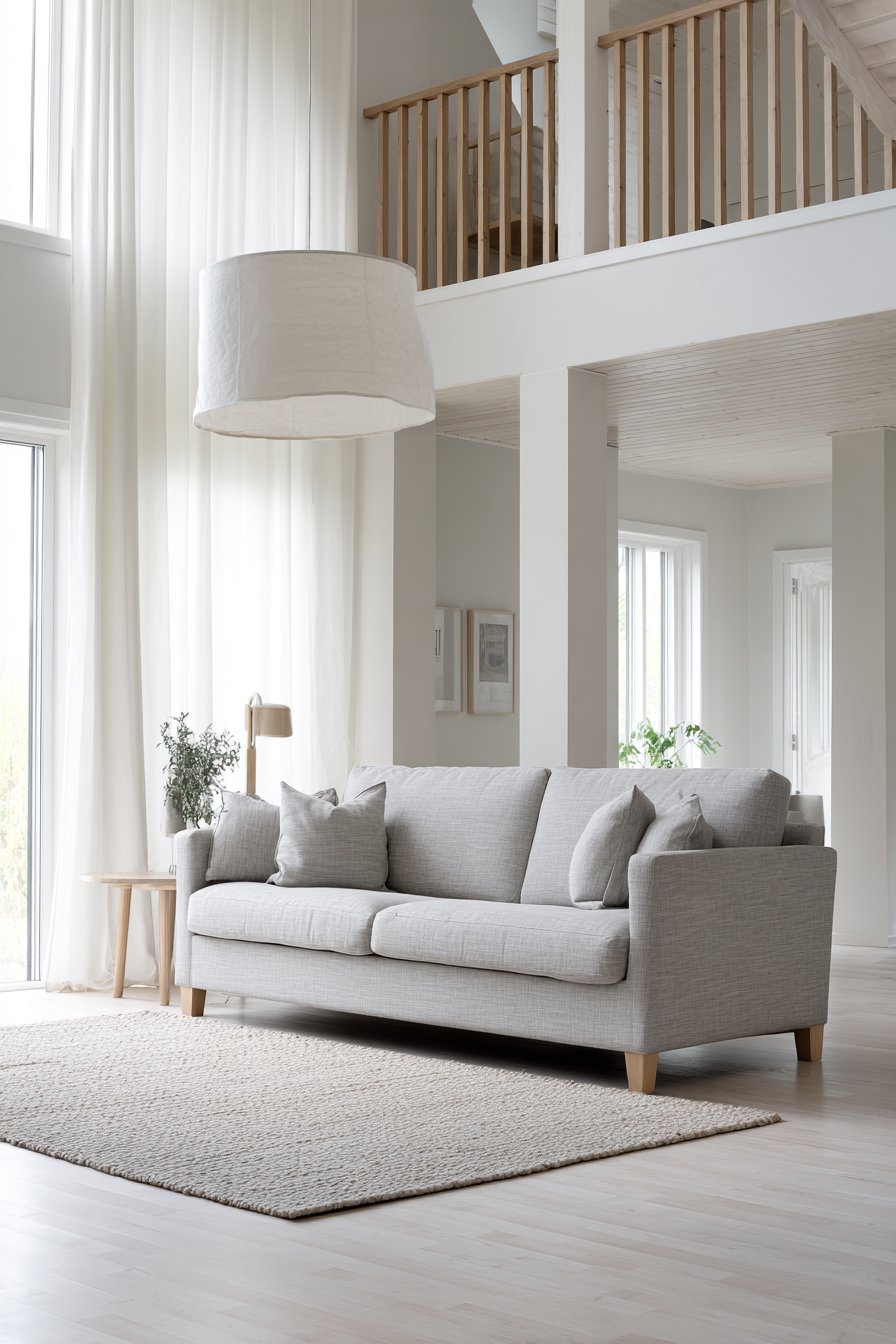
This design proves that simplicity can be profoundly beautiful. The emphasis on natural light and clean lines creates peaceful retreat. Minimal furnishings prevent the large space from feeling cluttered or chaotic.
Key Design Tips:
- Keep color palettes light and neutral to maximize brightness
- Choose single statement lighting pieces over multiple fixtures
- Use sheer curtains to diffuse light while maintaining privacy
- Select low-profile furniture to emphasize vertical space
- Limit decorative objects to maintain uncluttered Scandinavian aesthetic
11. Double-Height Limestone Accent Wall
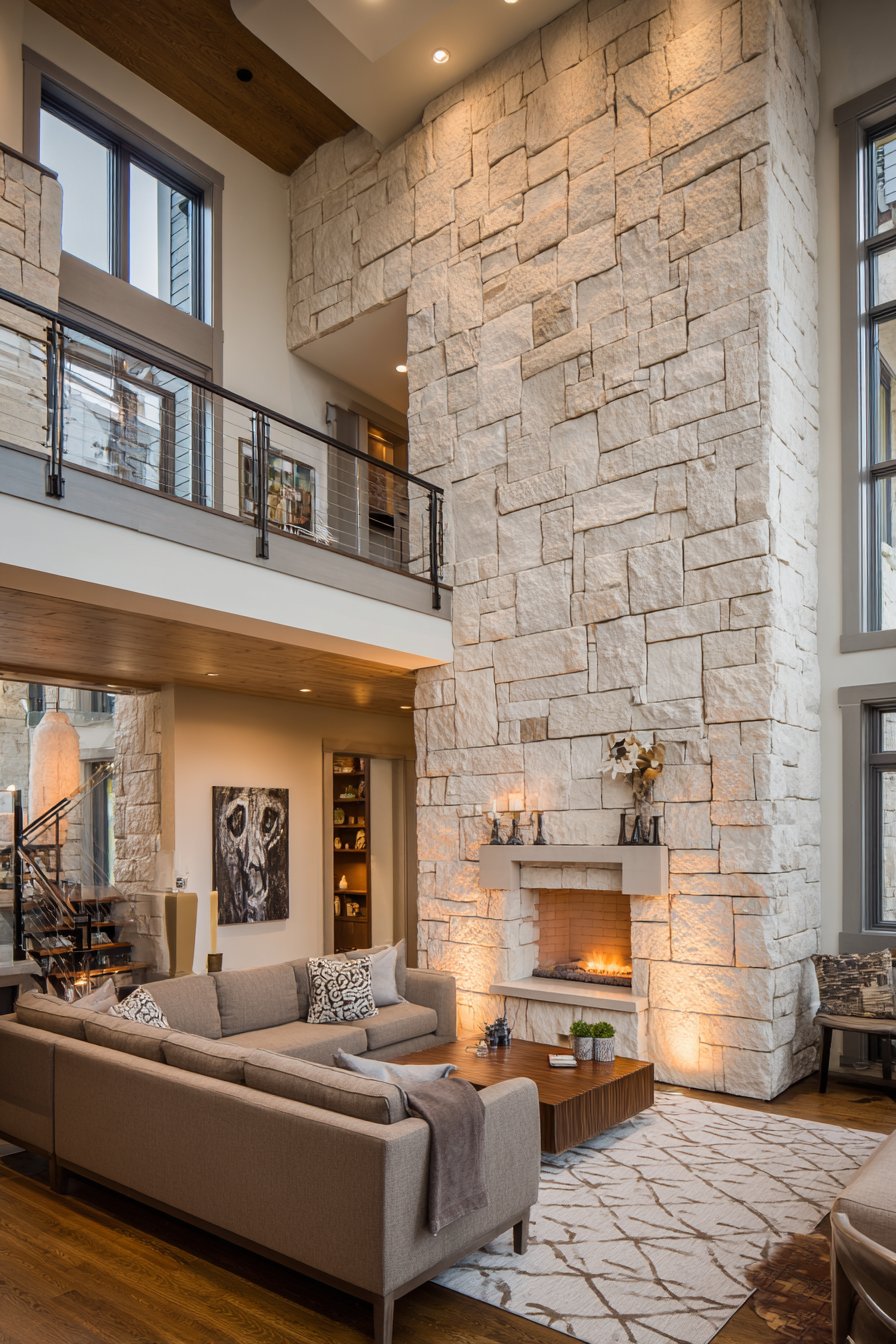
A double-height stone accent wall in natural limestone commands attention. Subtle color variations and fossil inclusions create organic interest. The impressive vertical surface becomes the room’s defining architectural feature. Natural stone adds timeless elegance and textural richness.
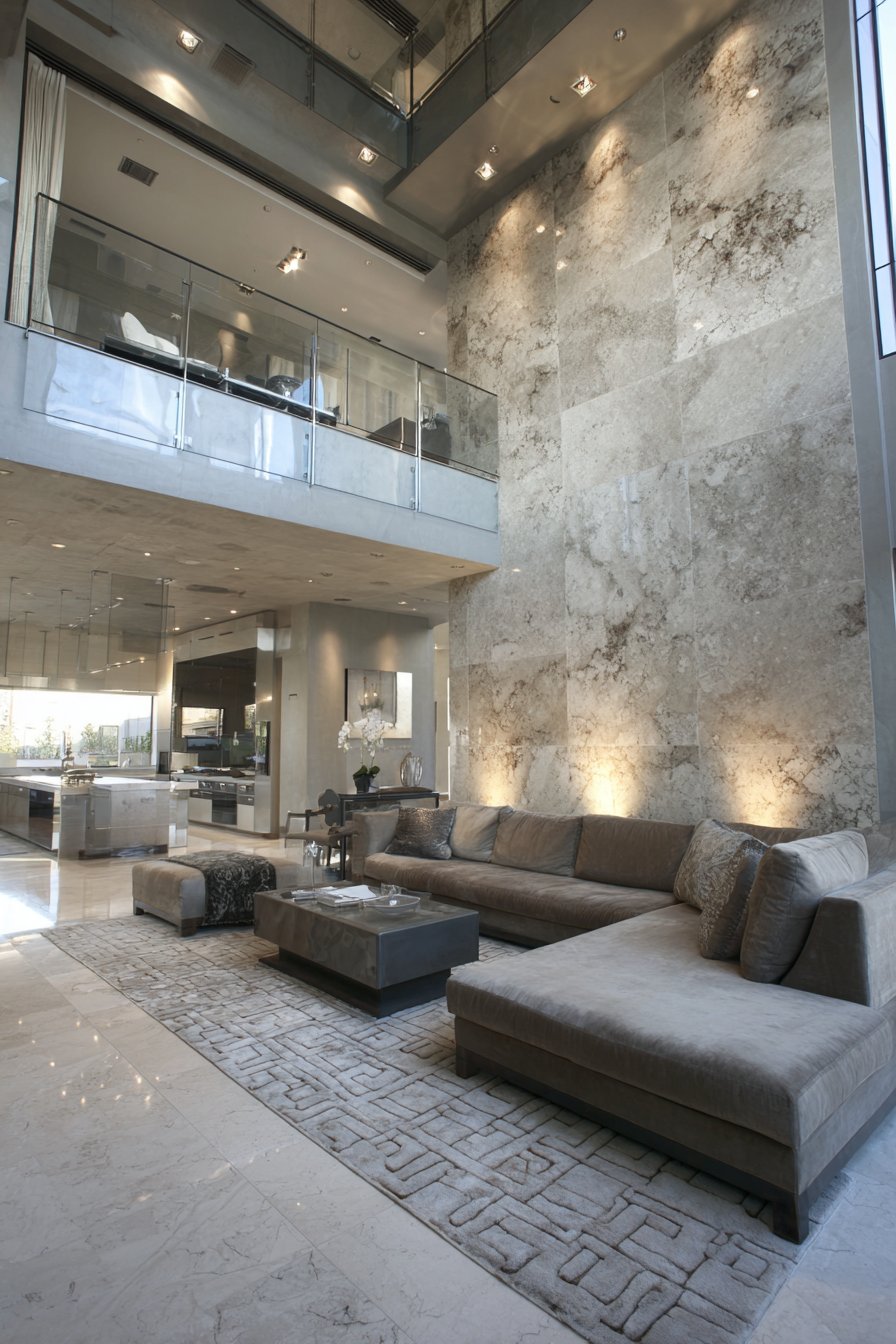
A contemporary sectional sofa in warm taupe faces this dramatic backdrop. The seating rests on a plush area rug with geometric patterns. The upper level includes a narrow balcony with glass railings. Transparent barriers don’t obstruct views of the stunning stone wall.
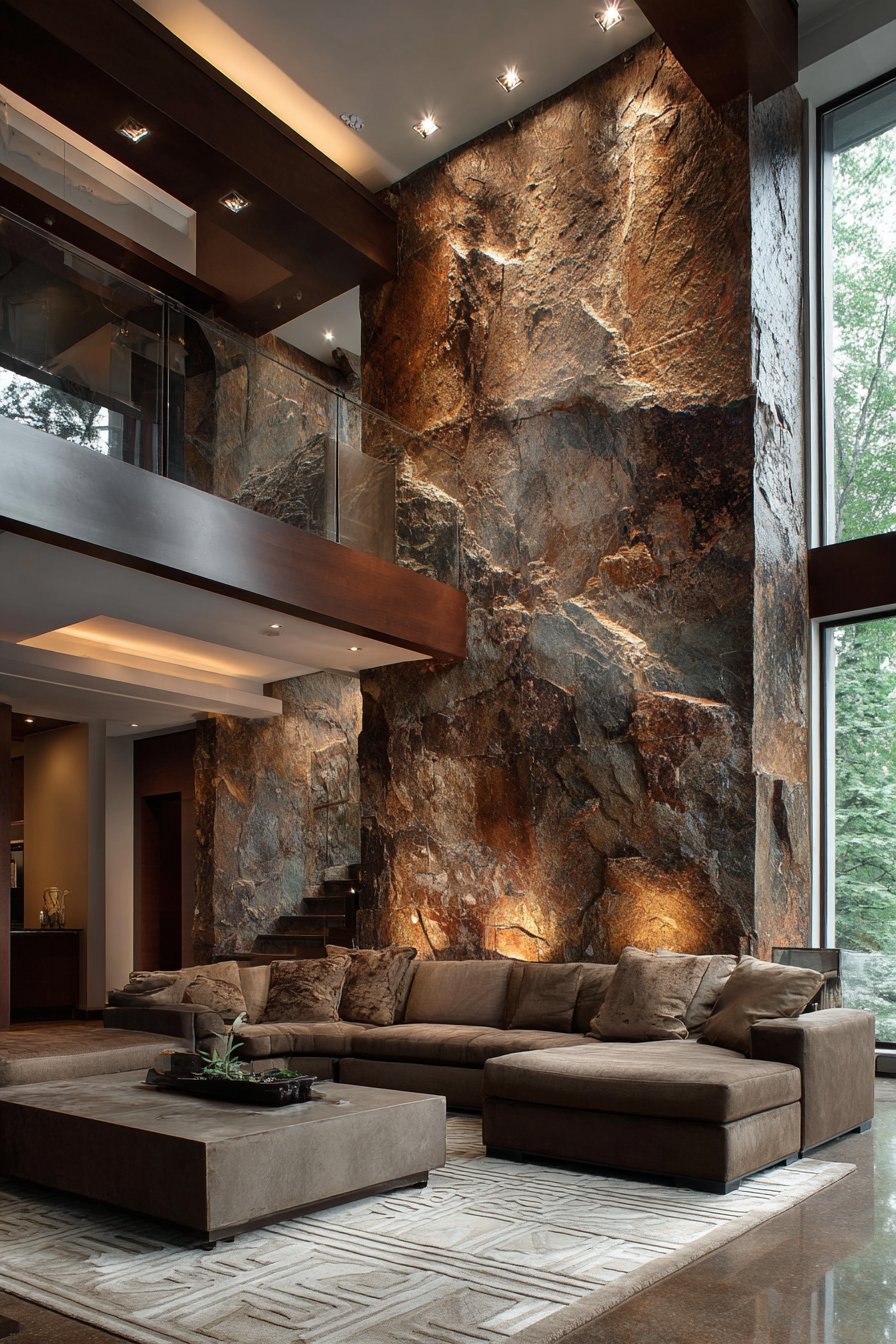
Strategically placed uplighting at the base creates dramatic shadows. The lighting emphasizes texture and height throughout evening hours. Natural light from side windows provides balanced daytime illumination. The limestone surface changes appearance dramatically with different lighting conditions.
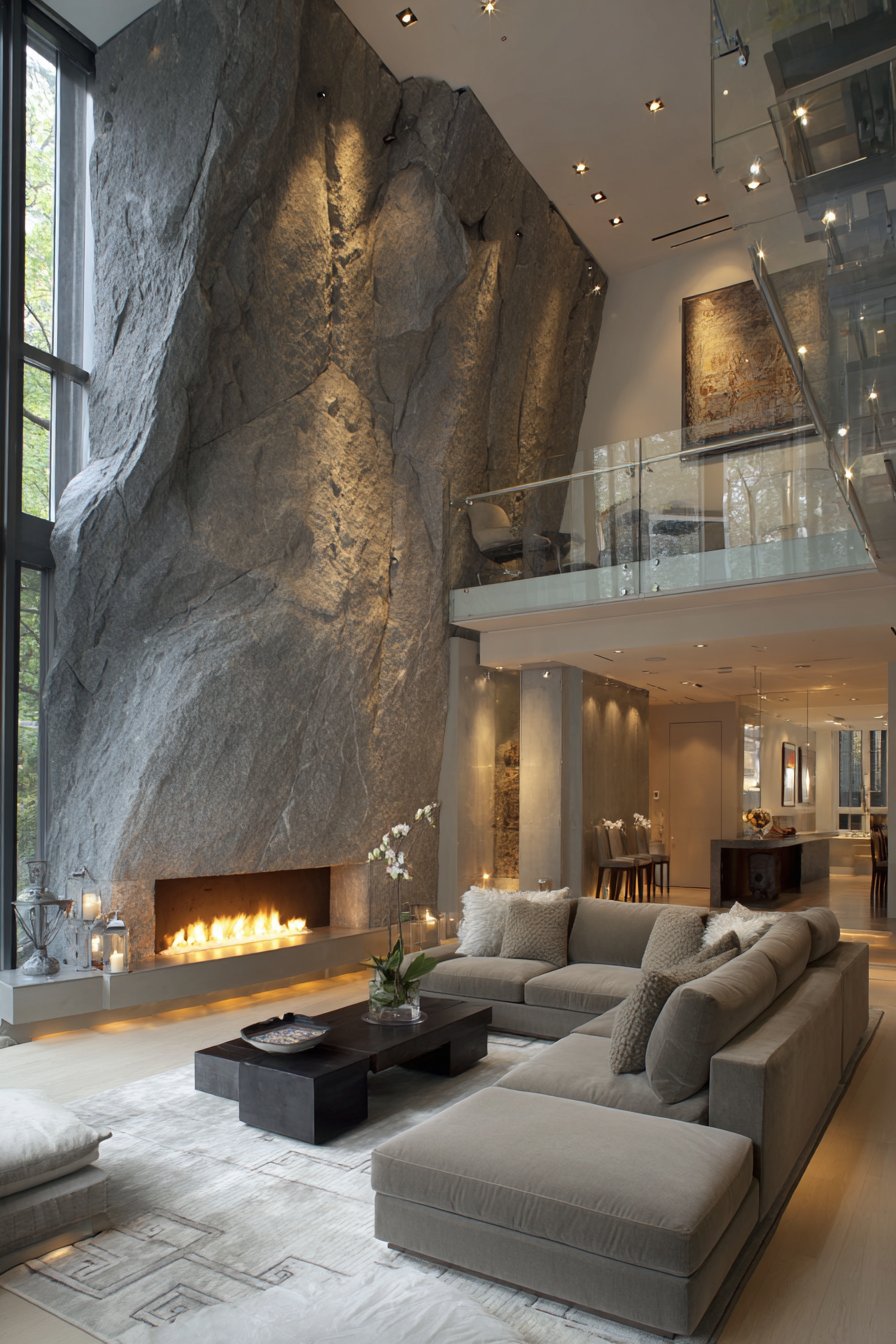
This design demonstrates how natural materials create lasting impact. Limestone’s neutral tones work with various furniture styles and colors. The stone wall provides texture without requiring additional decoration.
Key Design Tips:
- Install uplighting at the base of stone walls for dramatic nighttime effect
- Choose natural stone with visible variations for authentic character
- Use glass railings to preserve views of architectural features
- Position side windows to highlight stone texture without direct glare
- Select furniture colors that complement stone’s natural undertones
12. Sophisticated Monochromatic Grey Palette
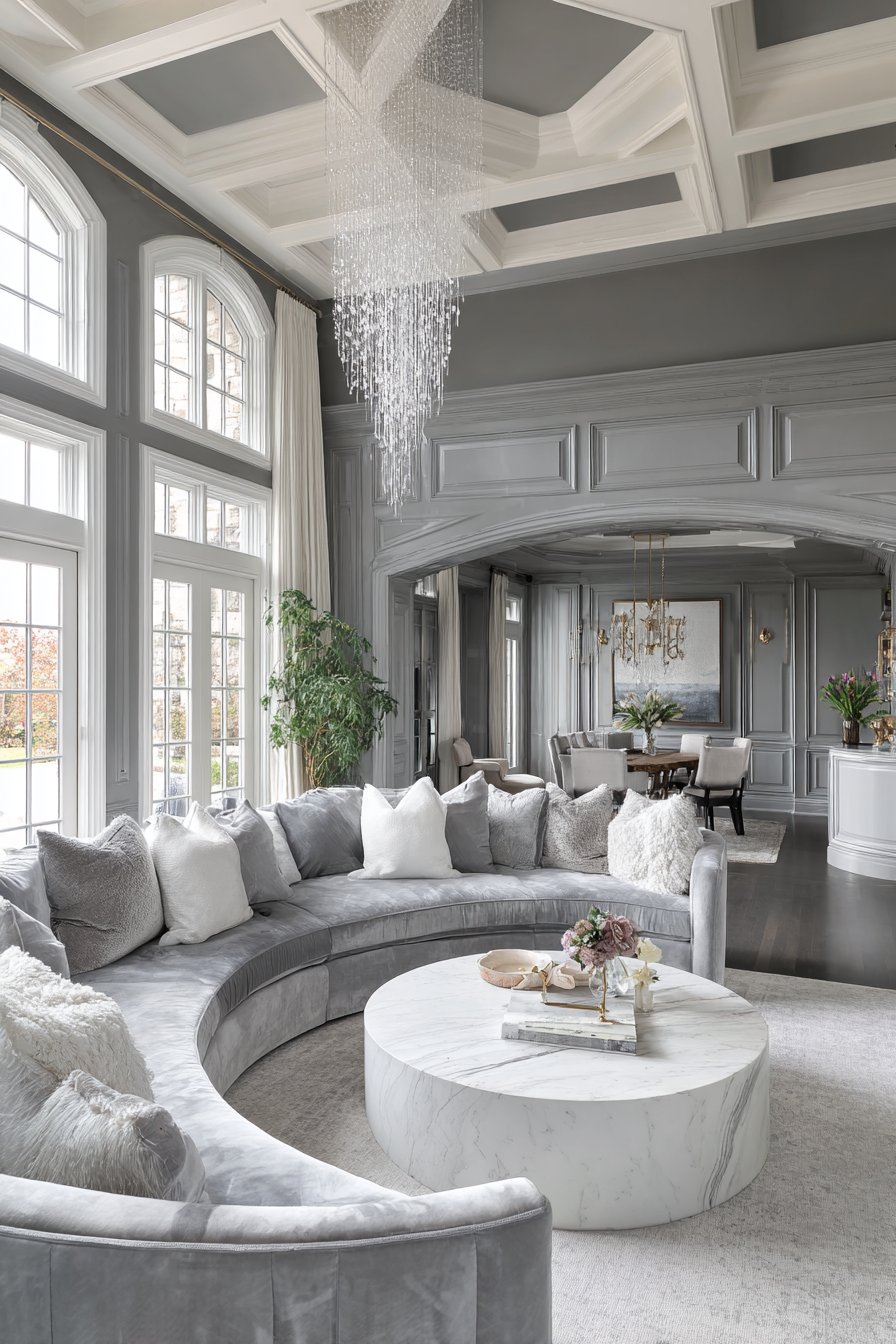
Various shades of grey and white create sophisticated monochromatic harmony. A curved sectional sofa in light grey velvet forms the conversation area. The curved seating surrounds a round marble coffee table with natural veining. The circular forms create soft, welcoming atmosphere.
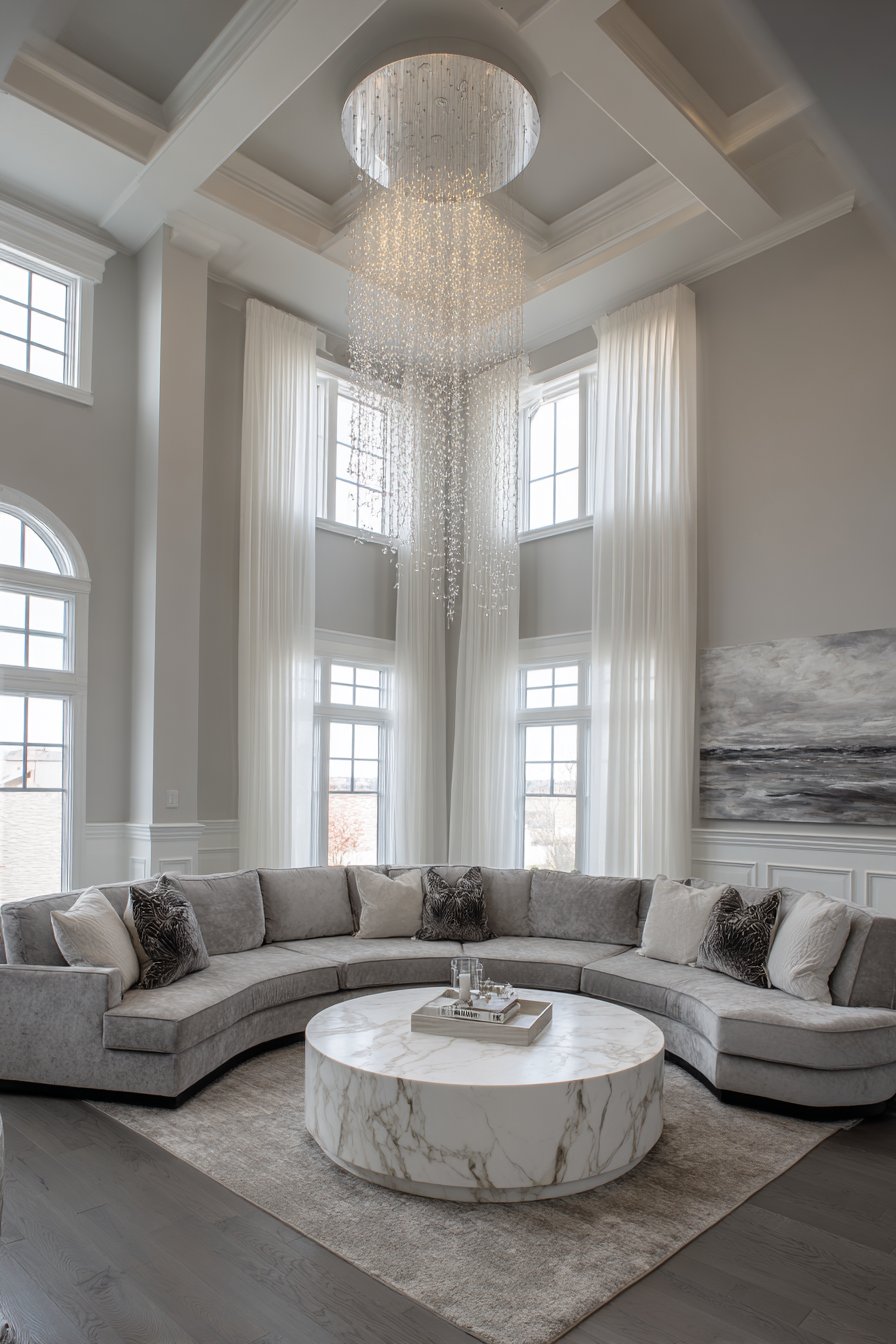
The soaring ceiling features geometric coffered detail painted white. This architectural treatment adds interest to the vertical expanse. A statement chandelier with cascading crystal elements descends through the center. The sparkling fixture creates movement and catches light beautifully.
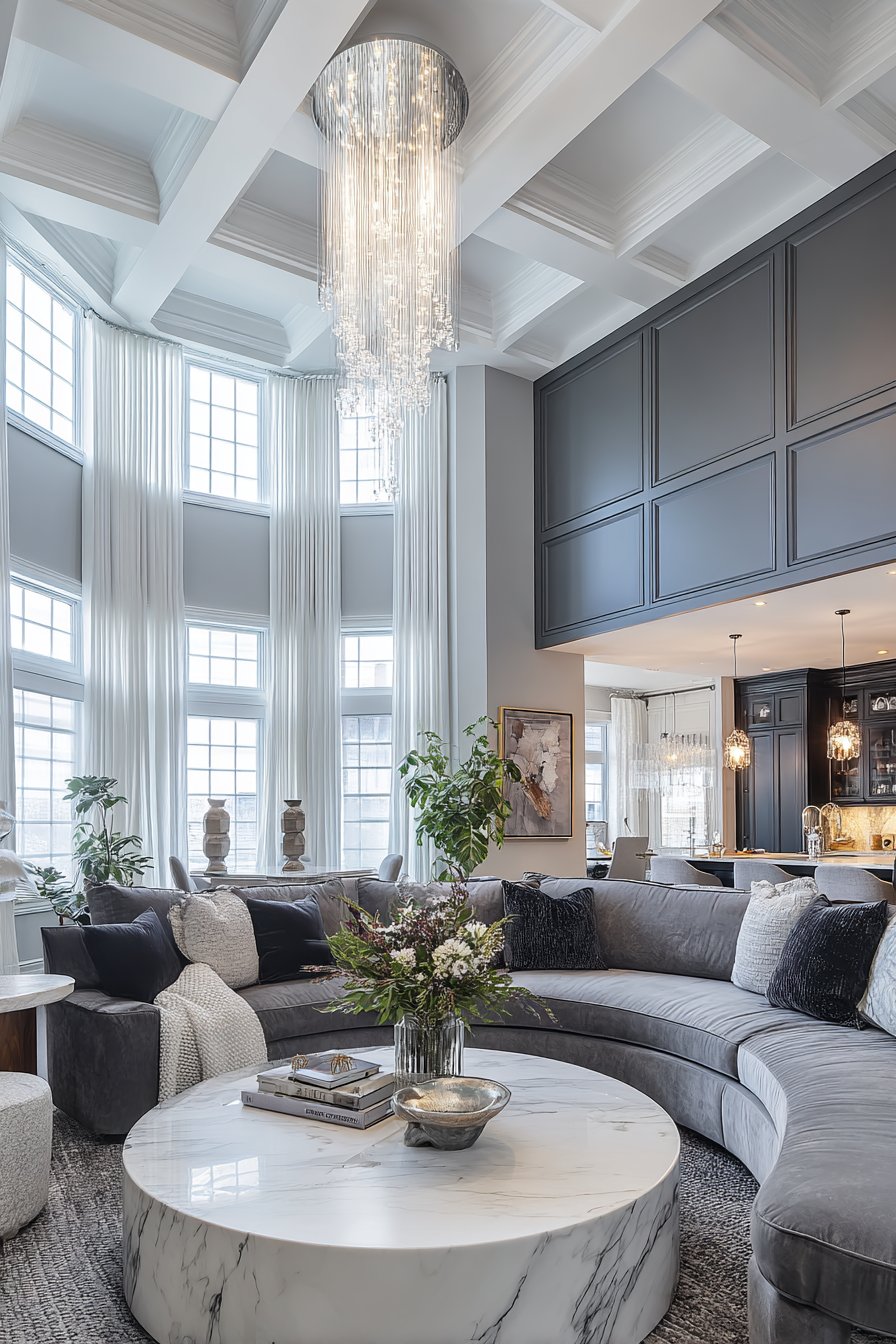
Sheer curtains on tall windows soften incoming natural light perfectly. The lower walls feature wainscoting painted in soft grey tones. This layered grey palette creates depth within the monochromatic scheme. Different textures and finishes prevent the single-color approach from feeling flat.
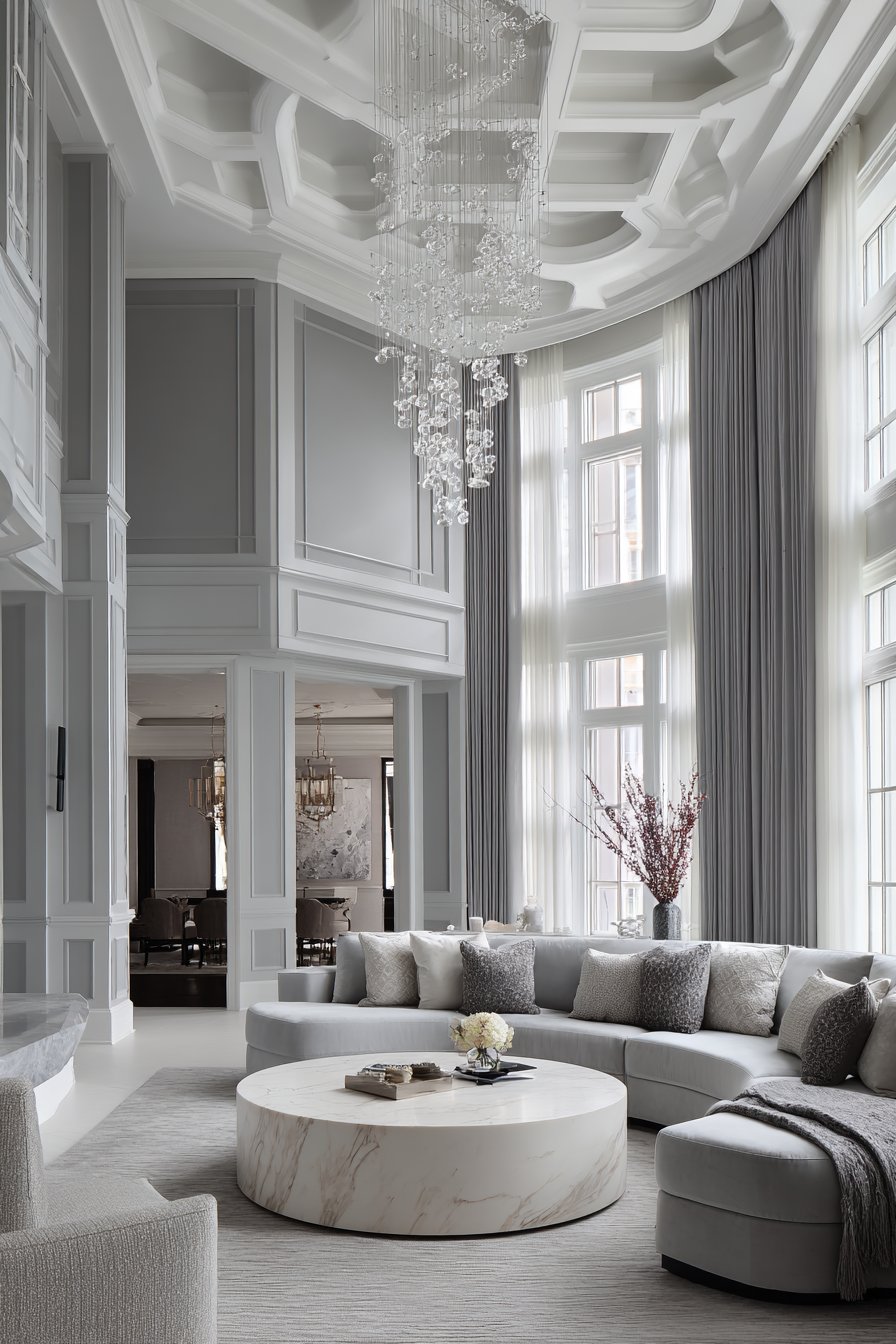
The monochromatic design proves that color restriction can create sophistication. Multiple grey tones provide subtle variation and visual interest. Crystal chandelier adds sparkle without introducing competing colors.
Key Design Tips:
- Layer multiple shades within one color family for depth
- Add coffered ceiling details to create architectural interest overhead
- Use crystal chandeliers to introduce sparkle and light refraction
- Incorporate various textures to prevent monochromatic schemes from feeling flat
- Choose curved furniture to soften angular architecture
13. Eclectic Mix with Vintage Rug Art
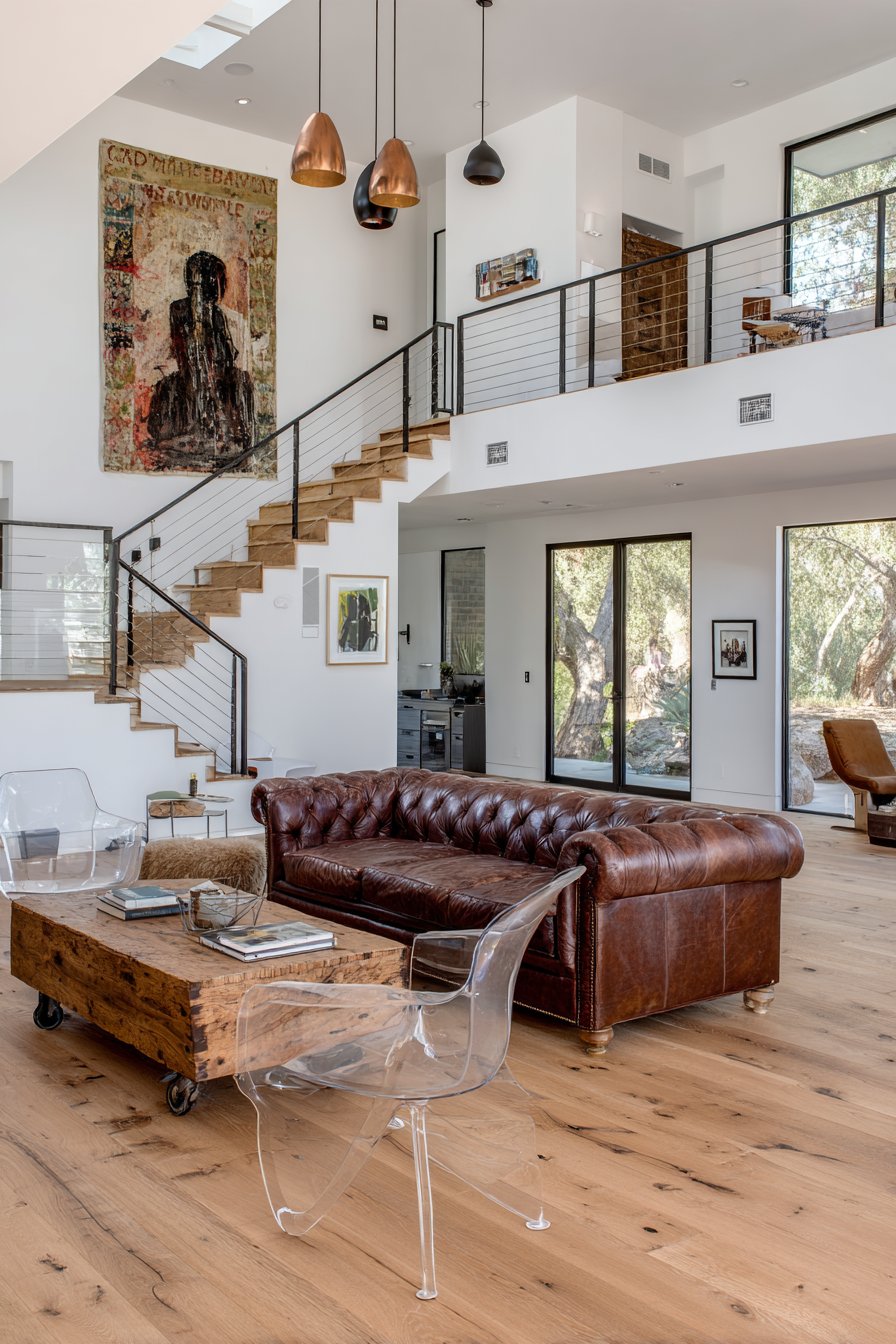
An eclectic mix of furnishings creates curated, collected-over-time aesthetic. A vintage leather Chesterfield sofa pairs with modern acrylic accent chairs. The unexpected combination demonstrates confident design choices. A reclaimed wood coffee table bridges traditional and contemporary styles.
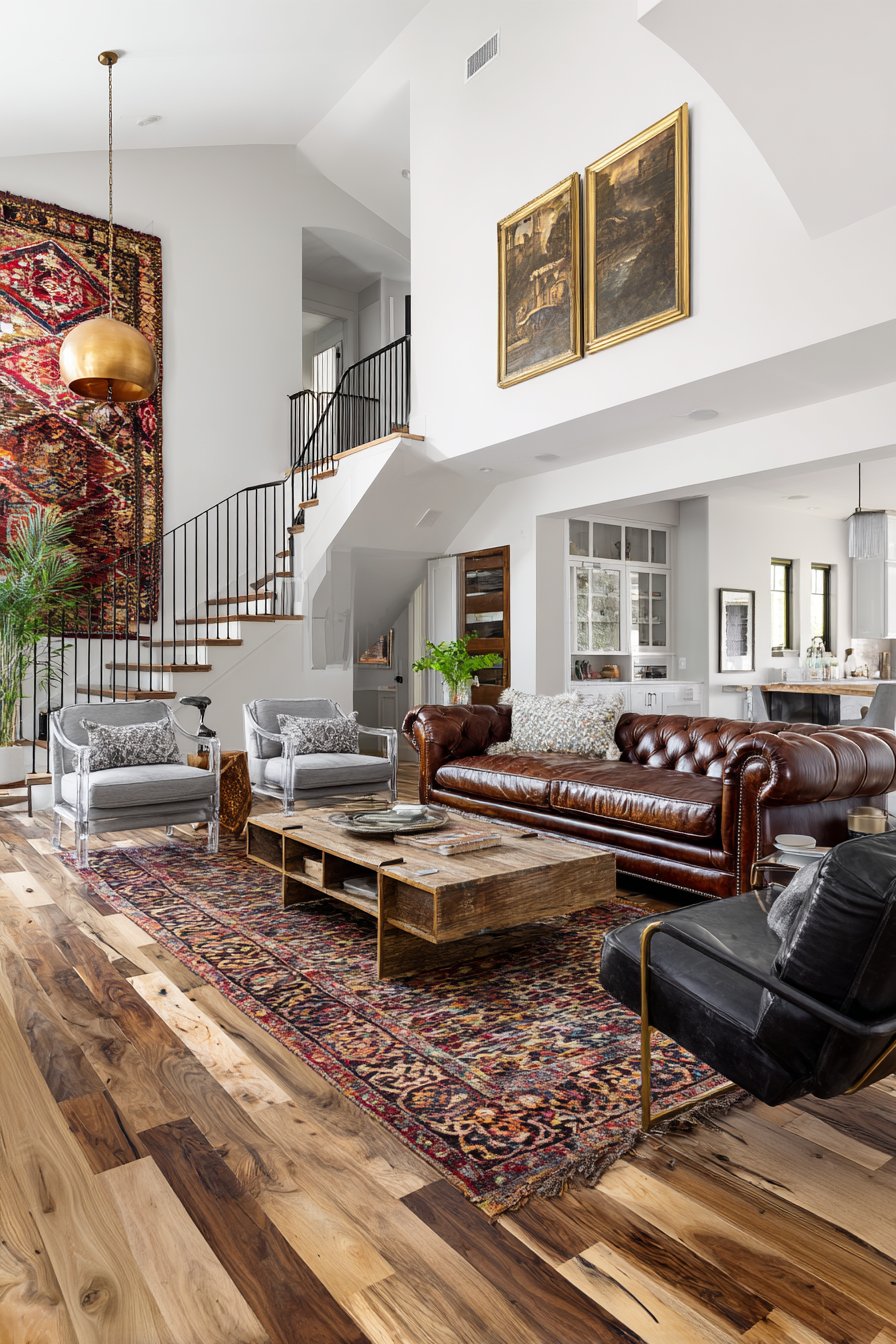
The double-height wall displays an oversized vintage rug as textile art. This unconventional wall hanging adds color and pattern to vertical space. Upper level features a reading nook with mid-century modern chair. The visible upper furniture adds another layer to the eclectic mix.
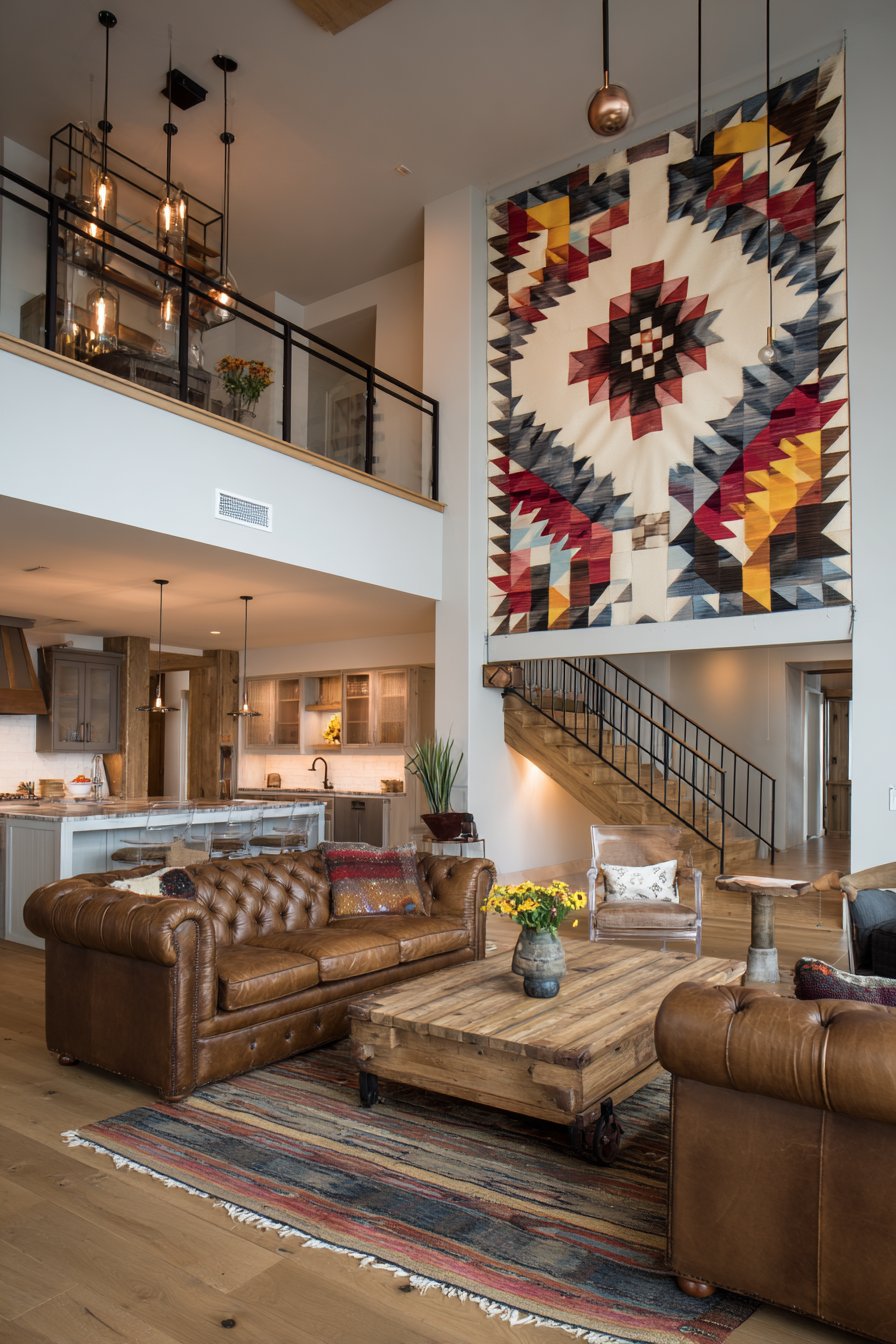
Mixed metal finishes in lighting fixtures hang at various heights. Brass, copper, and black iron create visual interest through contrast. Natural oak flooring with visible knots and grain patterns grounds the eclectic collection. The varied elements feel intentional rather than random.
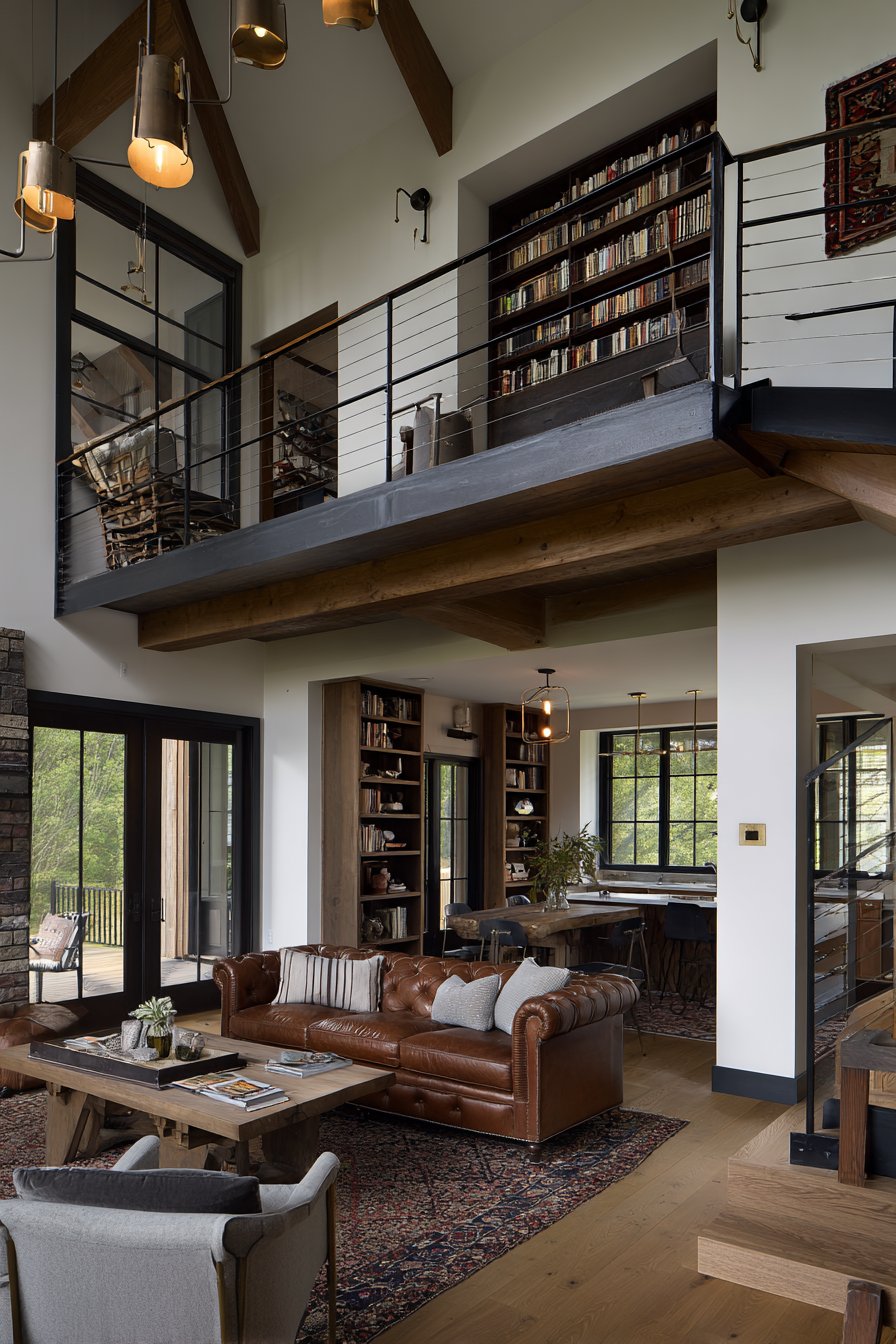
This design celebrates personal style and collected treasures. The eclectic approach allows for evolution and addition over time. Mixed metals and styles create dynamic, personality-filled space.
Key Design Tips:
- Mix furniture eras confidently for eclectic yet cohesive look
- Hang vintage rugs as wall art to add pattern and texture
- Combine multiple metal finishes for visual interest and depth
- Choose natural wood with visible character for authentic appeal
- Create reading nooks on upper levels to maximize space utilization
14. Contemporary Coastal with Sliding Glass Doors
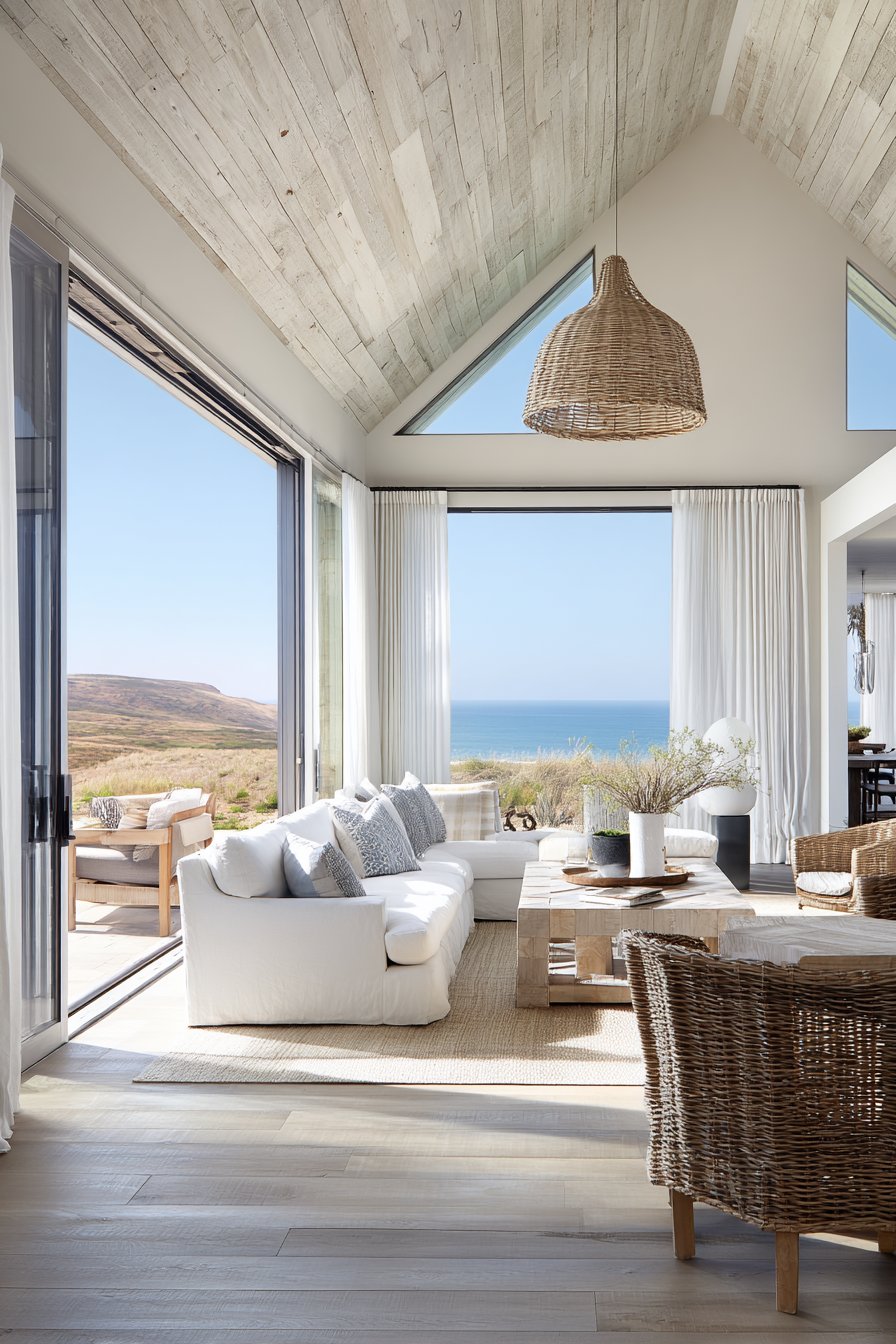
Floor-to-ceiling sliding glass doors blur interior and exterior boundaries beautifully. The contemporary coastal aesthetic embraces light and natural connection. A white slipcovered sectional sofa faces the expansive view. Natural wicker accent chairs add organic texture and casual elegance.
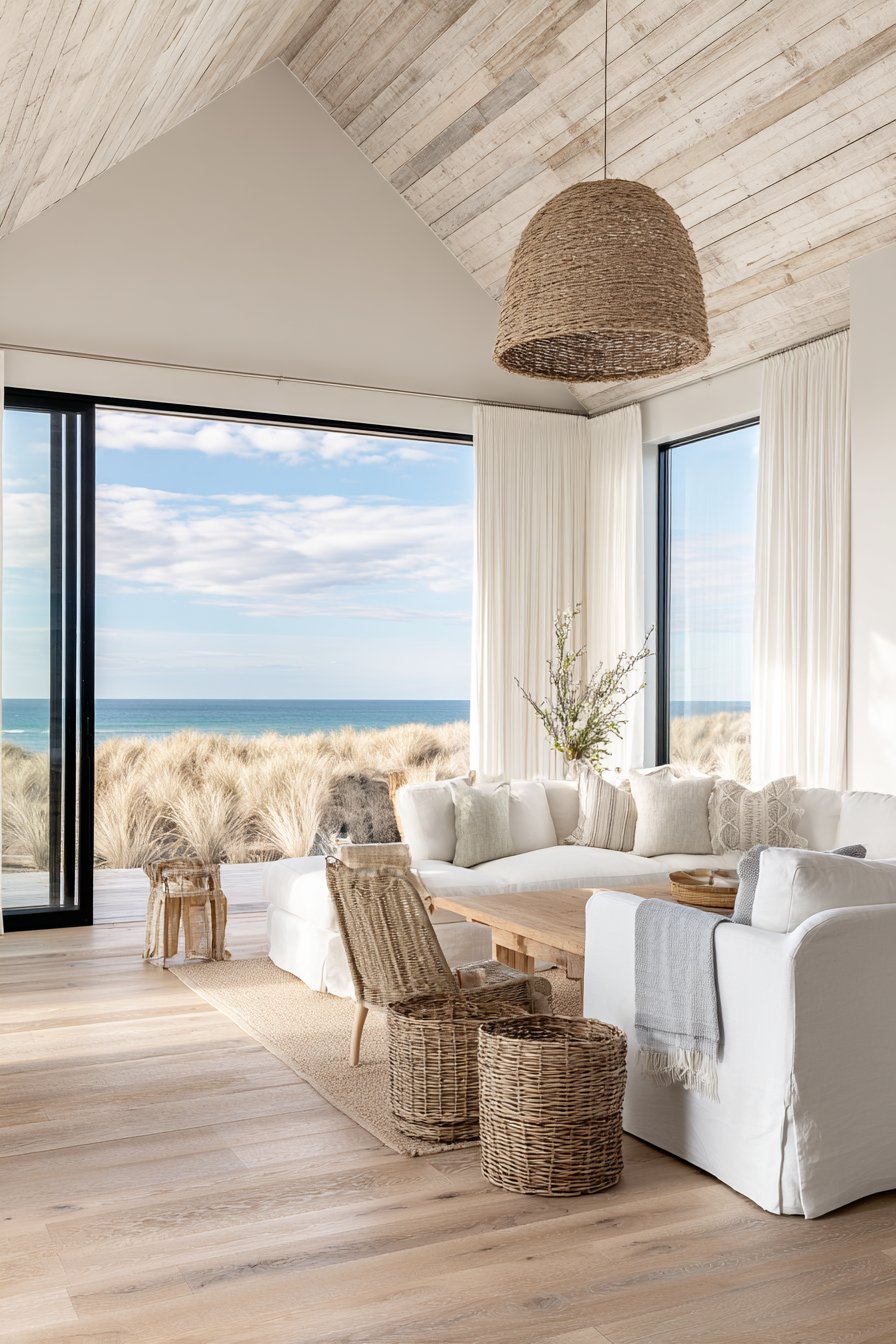
The high ceiling features white-washed wood planks adding subtle texture. The pale finish maintains brightness while introducing natural material. A large woven pendant light in natural seagrass hangs centrally. The organic fixture scales appropriately for the impressive volume.
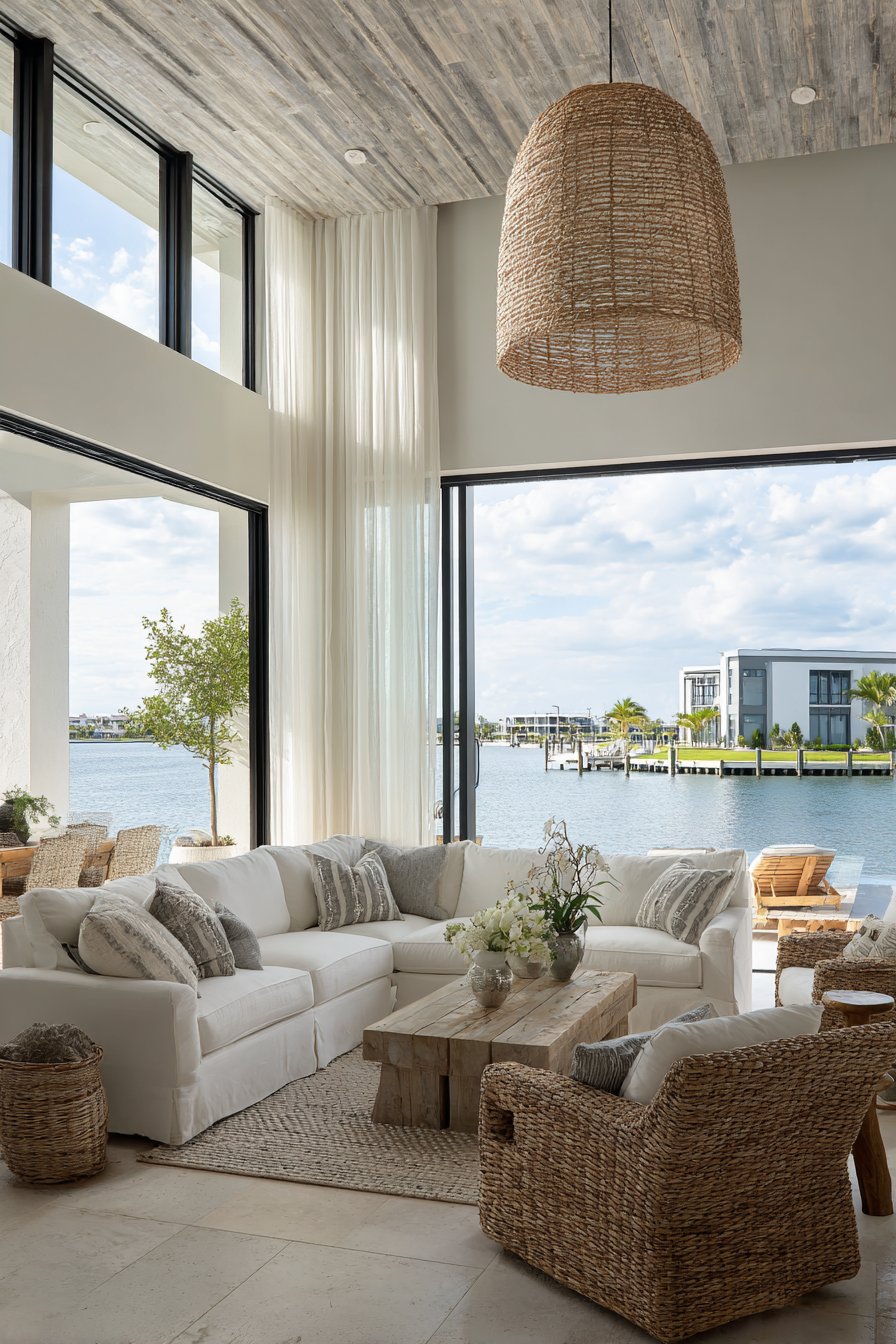
Pale oak flooring with weathered finish suggests beachside living authenticity. Sheer white curtains frame the tall glass doors elegantly. The breezy coastal atmosphere feels relaxed yet refined. Natural materials and white palette create serene retreat.
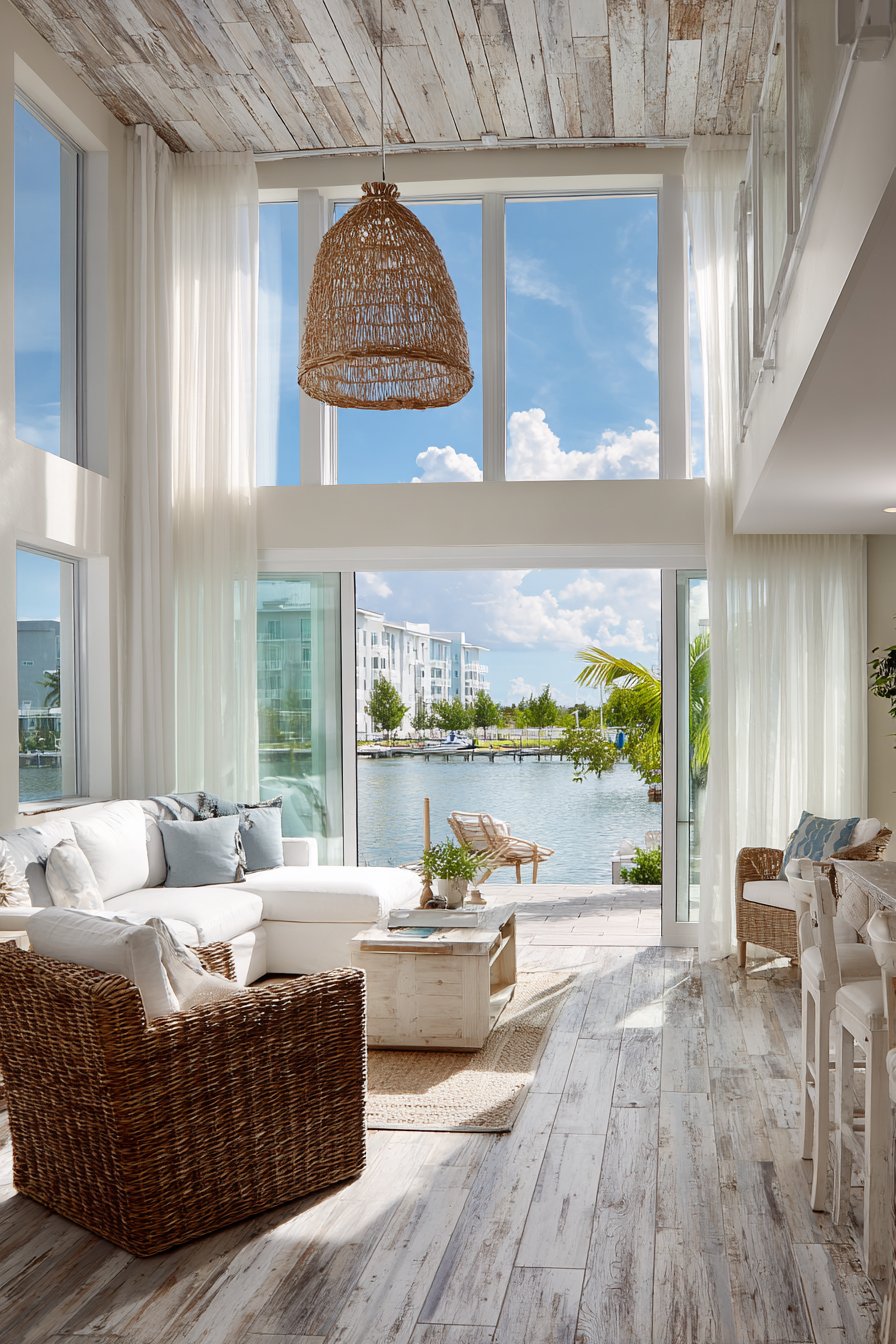
This design captures coastal living’s essence without cliché nautical elements. The emphasis on natural materials and light creates authentic beach house feel. Sliding doors maximize indoor-outdoor connection for temperate climates.
Key Design Tips:
- Install floor-to-ceiling sliding doors to maximize natural light and views
- Use white-washed wood on ceilings to add texture while maintaining brightness
- Choose natural fiber pendant lights scaled for high ceilings
- Select weathered wood flooring for authentic coastal character
- Keep color palettes light and airy for breezy atmosphere
15. Library Wall with Rolling Ladder
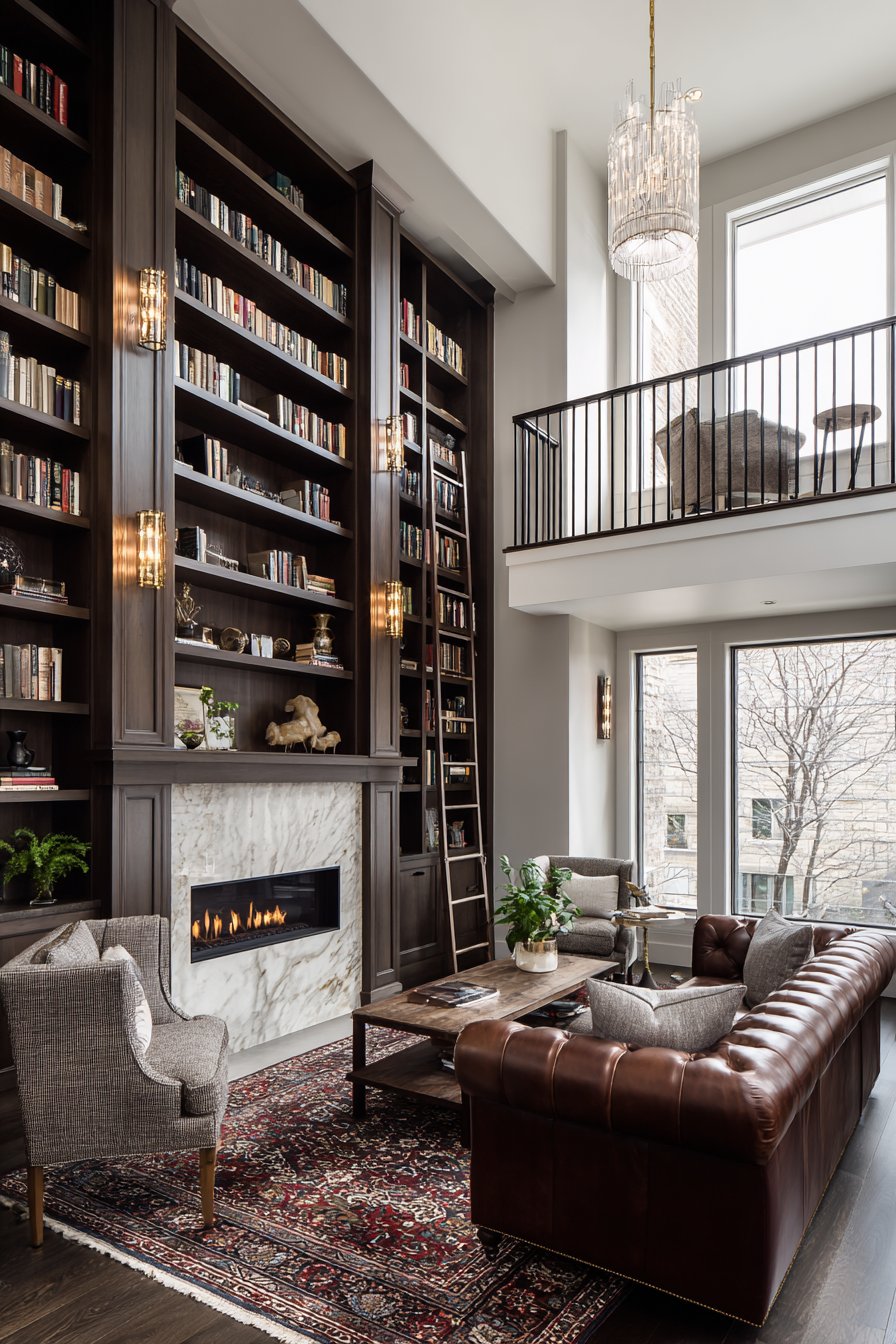
Floor-to-ceiling custom built-in bookshelves in dark walnut create impressive backdrop. The library wall spans both levels showcasing books and treasured objects. A rolling library ladder provides access while adding classic architectural element. This functional feature becomes charming design detail.
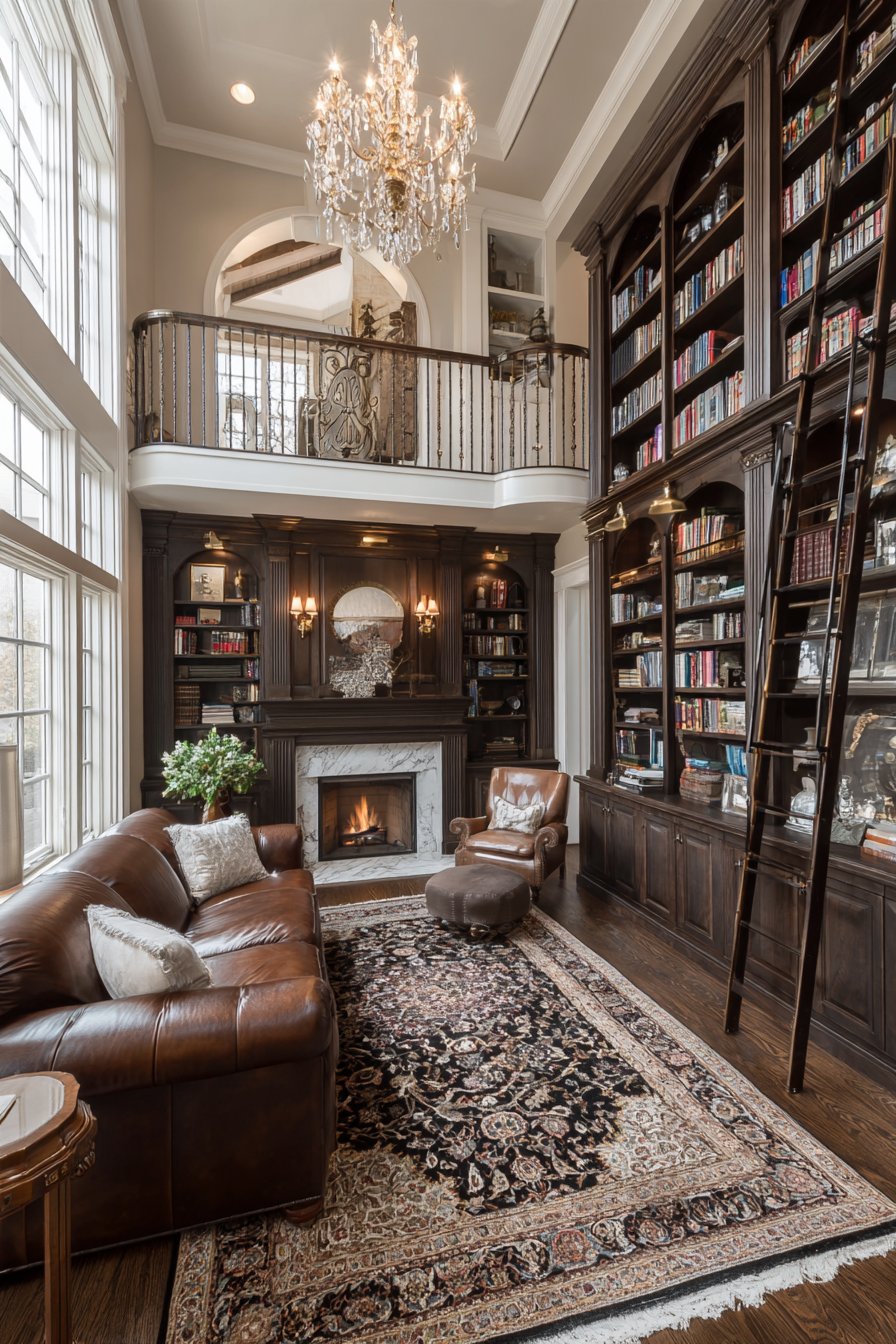
A classic leather sofa in rich brown faces a marble fireplace surround. An ornate area rug with traditional patterns anchors the seating arrangement. Upper level features a small reading balcony with comfortable armchair. The dedicated reading space encourages quiet contemplation.
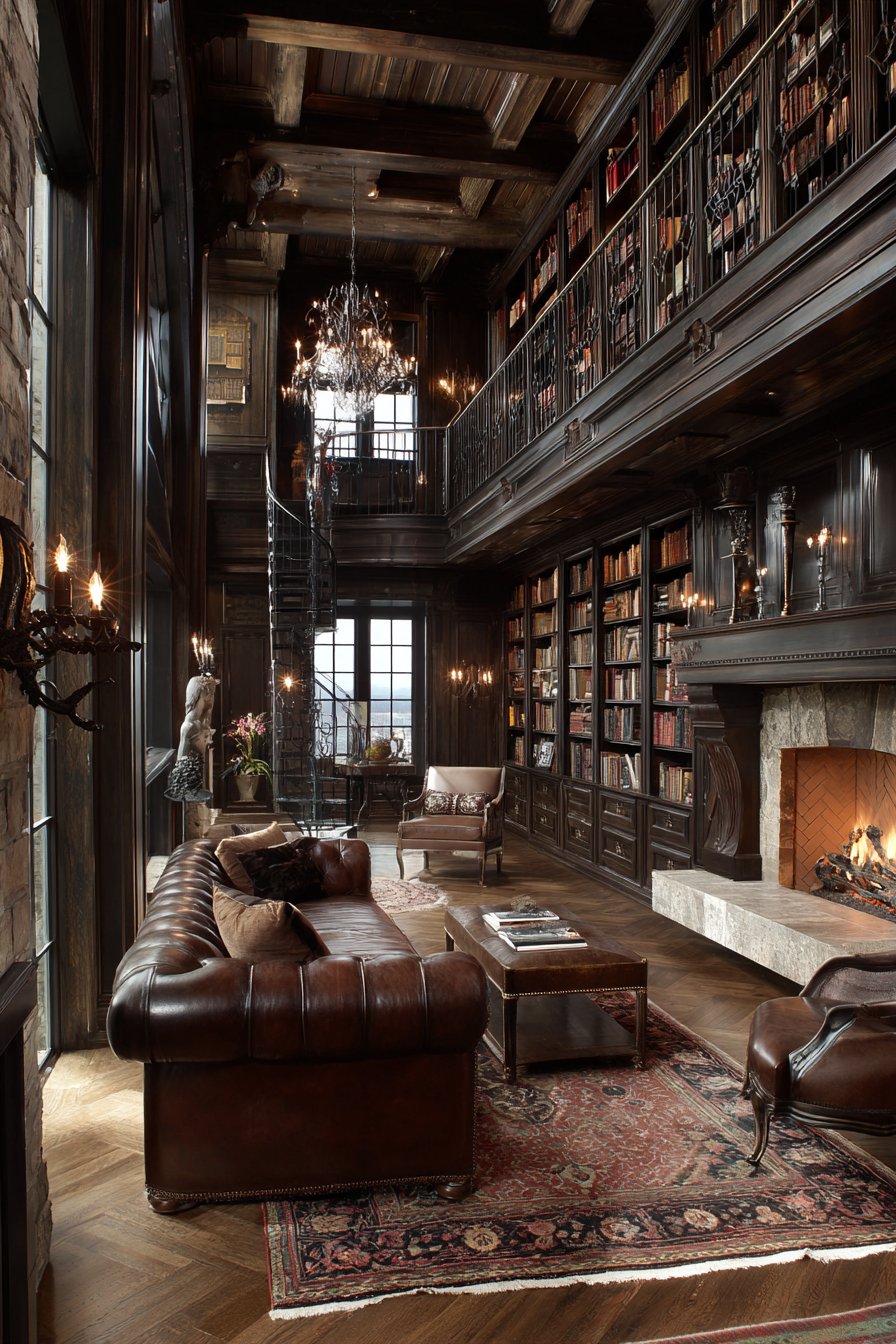
Warm brass sconces mounted on bookshelves provide ambient lighting. A crystal chandelier hangs centrally adding traditional elegance. Natural light from tall windows balances artificial illumination throughout the day. The layered lighting creates warm, scholarly atmosphere.
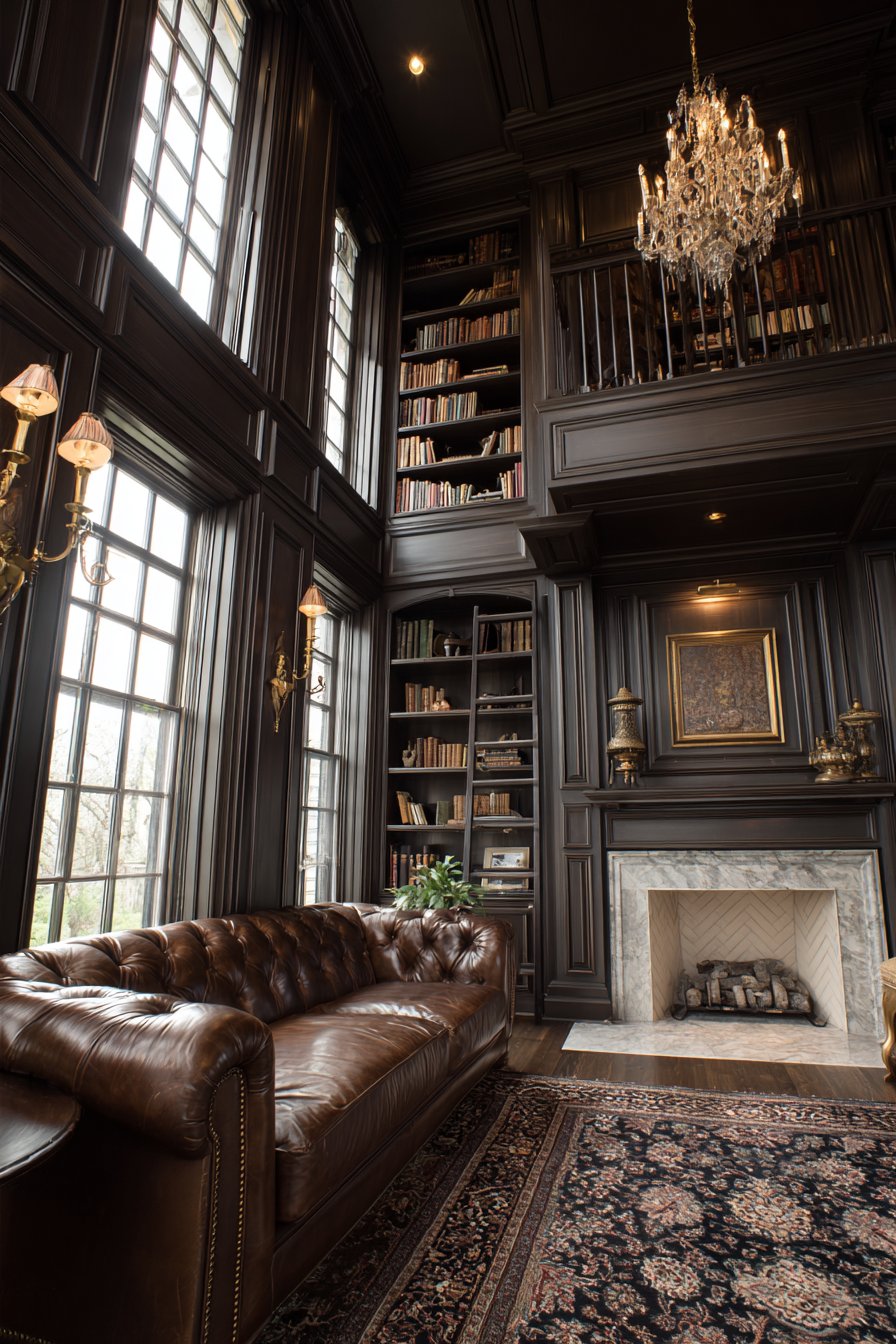
This design celebrates knowledge and collected wisdom through thoughtful library display. Dark walnut millwork provides rich contrast against lighter walls. The reading balcony transforms the upper level into functional retreat.
Key Design Tips:
- Install rolling library ladders for both function and classic charm
- Use warm brass sconces to illuminate bookshelves without harsh overhead lighting
- Create reading balconies on upper levels for dedicated quiet spaces
- Choose dark wood built-ins for dramatic contrast and traditional appeal
- Layer artificial and natural lighting for comfortable reading conditions
16. Modern Art Gallery Aesthetic
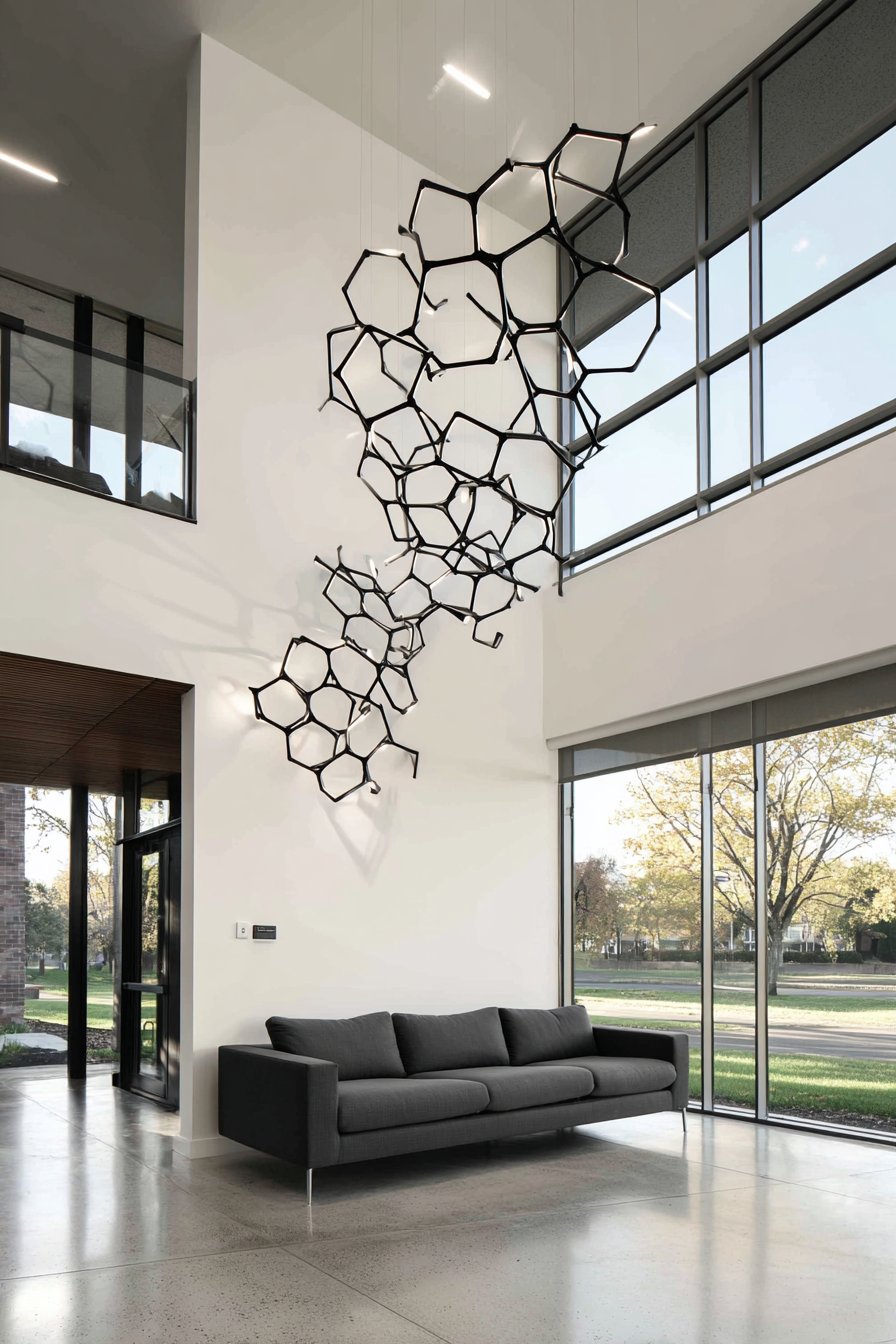
Pristine white walls serve as neutral backdrop for contemporary art installations. The modern art gallery aesthetic creates museum-like atmosphere at home. A minimalist sofa in charcoal grey sits on polished concrete flooring. The gallery-like foundation allows artwork to take center stage.
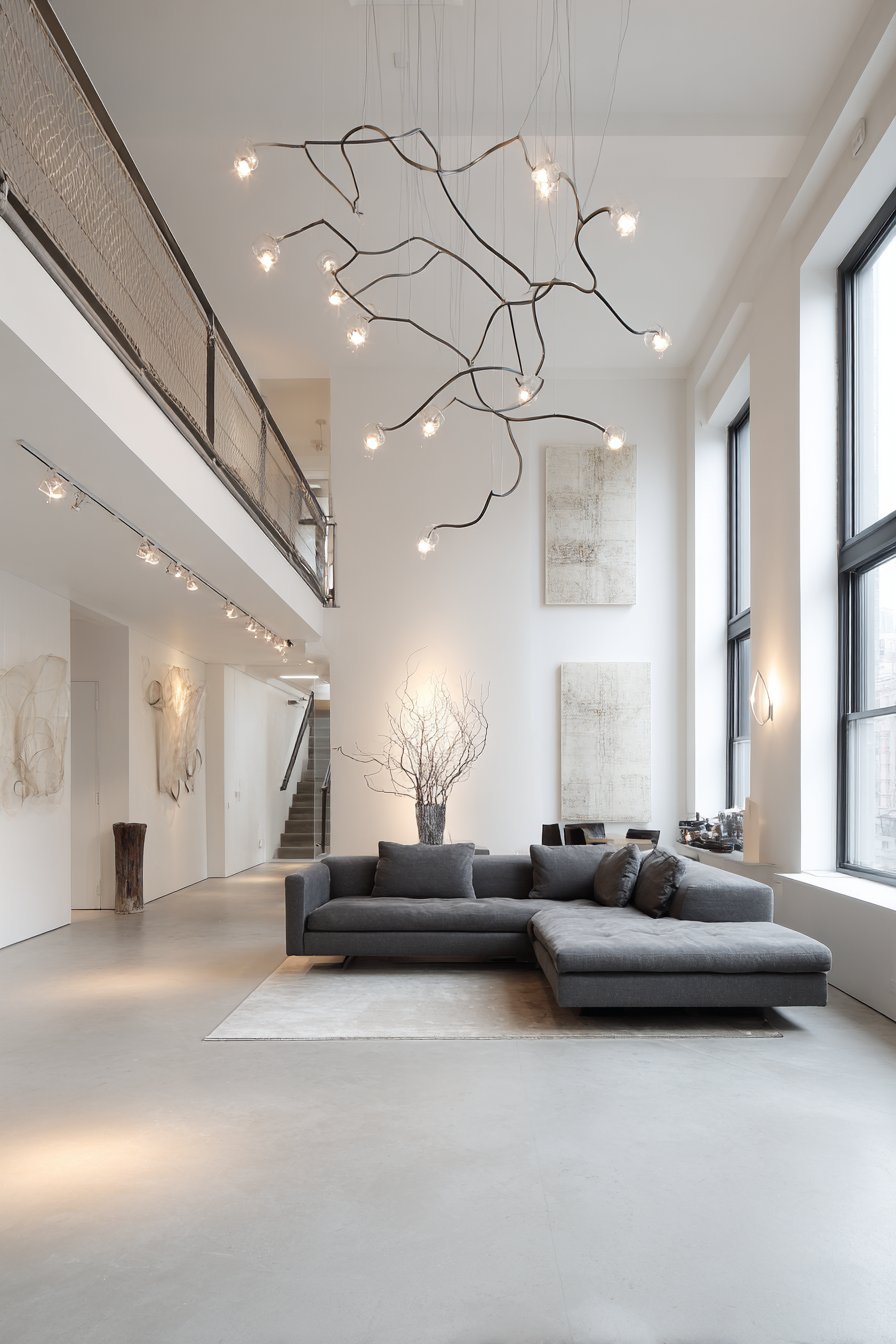
A large-scale art installation spans both levels through connected metal sculptures. The vertical artwork activates the impressive height dramatically. Track lighting on both levels provides museum-quality illumination with adjustable spotlights. Precise lighting highlights each piece without creating unwanted glare.
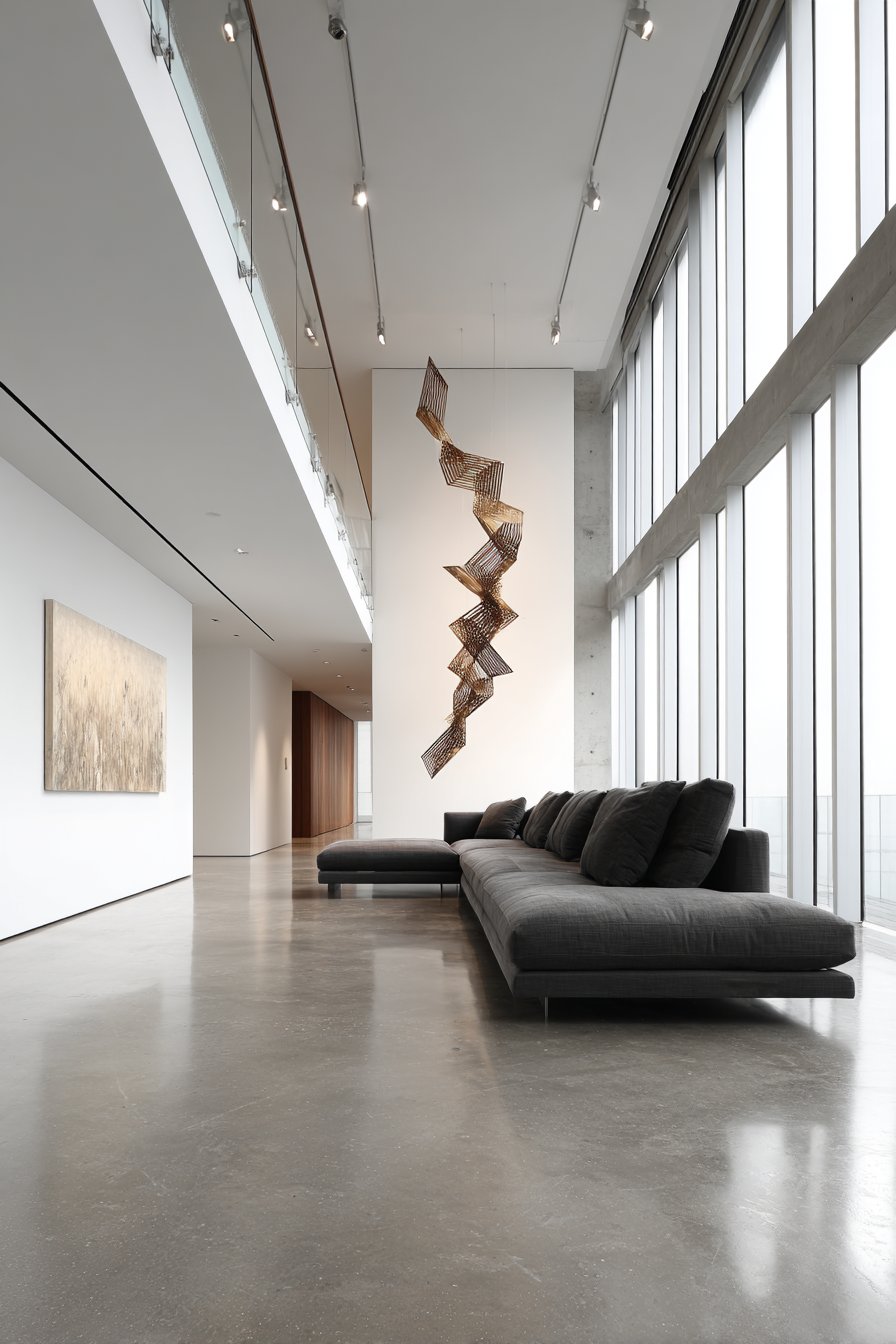
Upper level features simple steel and glass railing maintaining clean sightlines. Floor-to-ceiling windows include automated shades for light control. The ability to adjust natural light protects artwork while offering flexibility. This design requires careful consideration of art preservation needs.
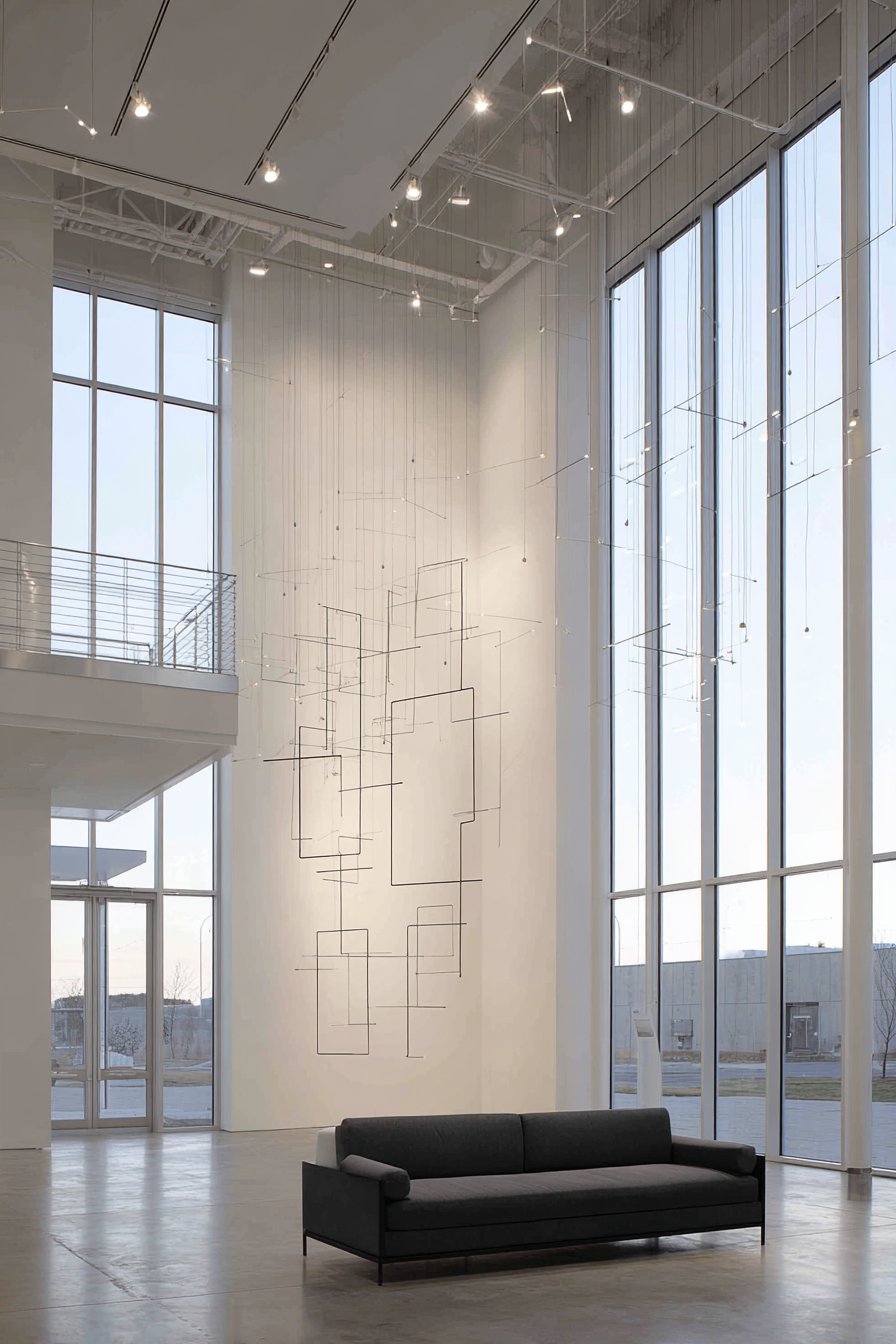
The gallery aesthetic proves homes can showcase serious art collections. Neutral backgrounds allow rotating exhibitions without redesigning the space. Museum-quality lighting ensures proper artwork presentation and protection.
Key Design Tips:
- Keep walls white and minimal for true gallery aesthetic
- Install track lighting systems for adjustable, museum-quality illumination
- Use polished concrete flooring for industrial gallery feel
- Add automated window shades to protect artwork from UV damage
- Choose minimal furniture that doesn’t compete with art for attention
17. Warm Traditional with Cherry Wood Cabinetry
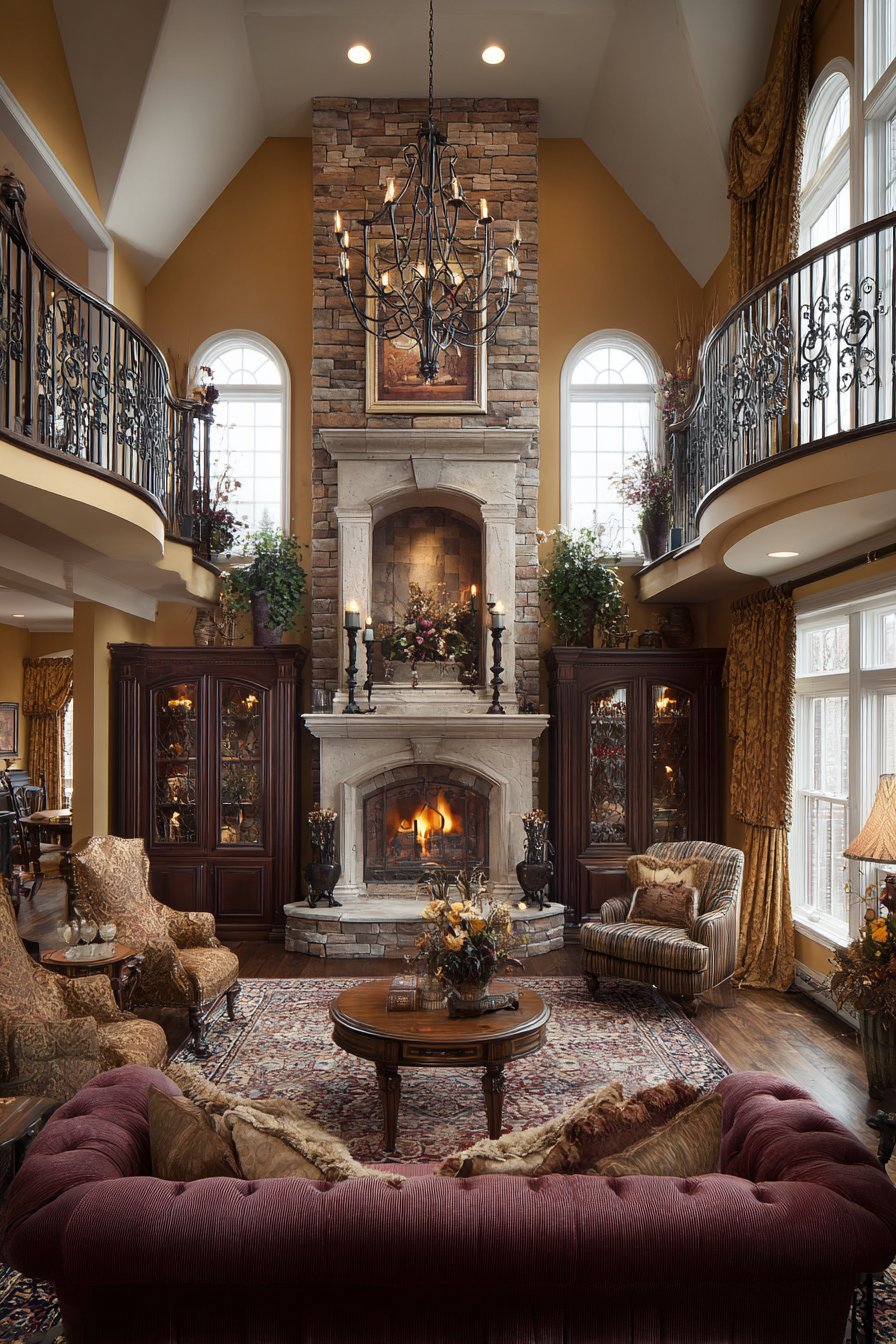
A grand stone fireplace reaches to the upper level creating traditional focal point. Built-in cabinetry in cherry wood flanks the fireplace with glass-front display sections. The warm wood tones add richness and traditional character. Custom millwork demonstrates exceptional craftsmanship and attention to detail.
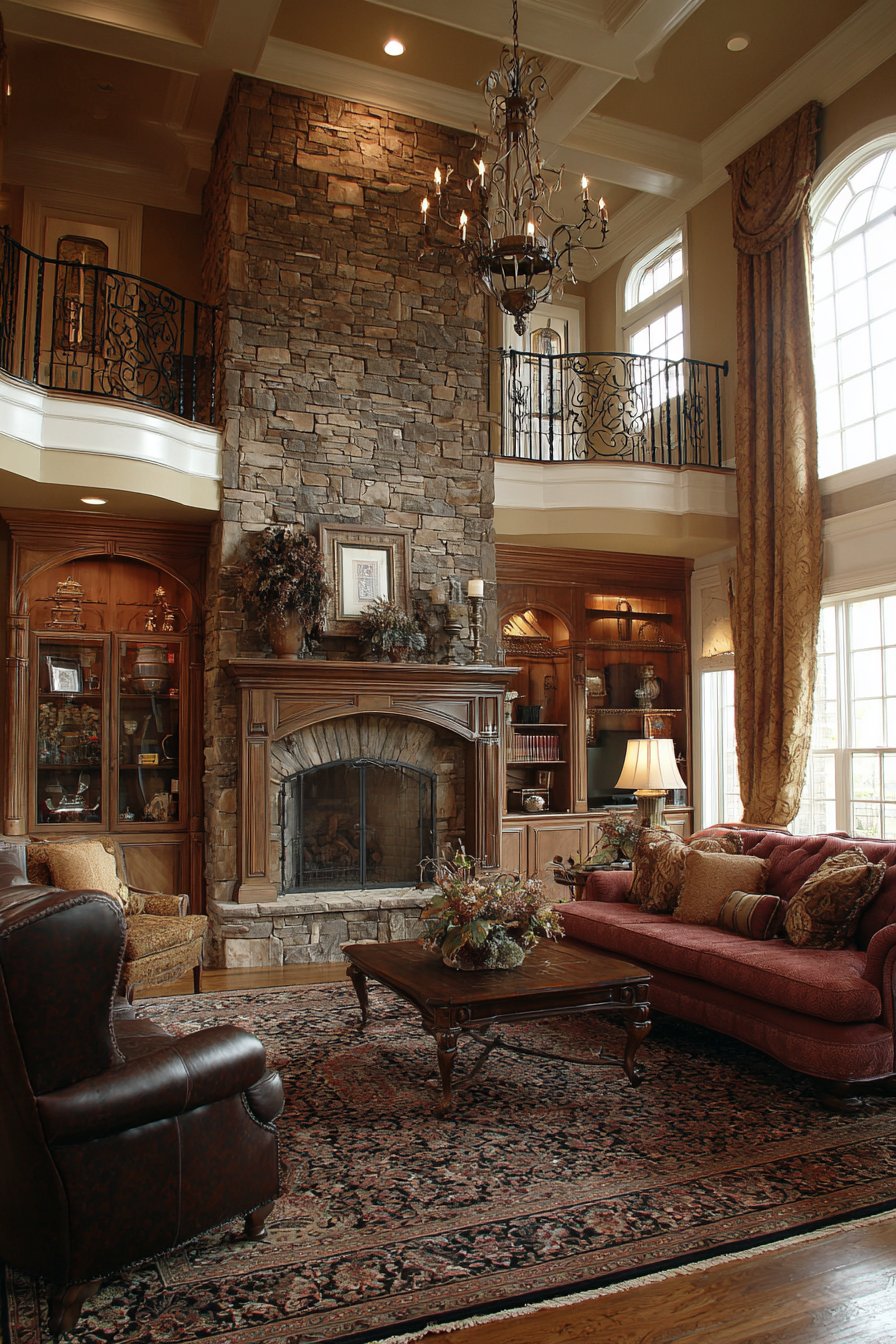
A tufted sofa in rich burgundy velvet faces the impressive fireplace. The jewel-toned upholstery adds luxury and traditional elegance. An ornate Persian rug with intricate patterns grounds the seating arrangement. Decorative iron railings with scrollwork details adorn the upper level.
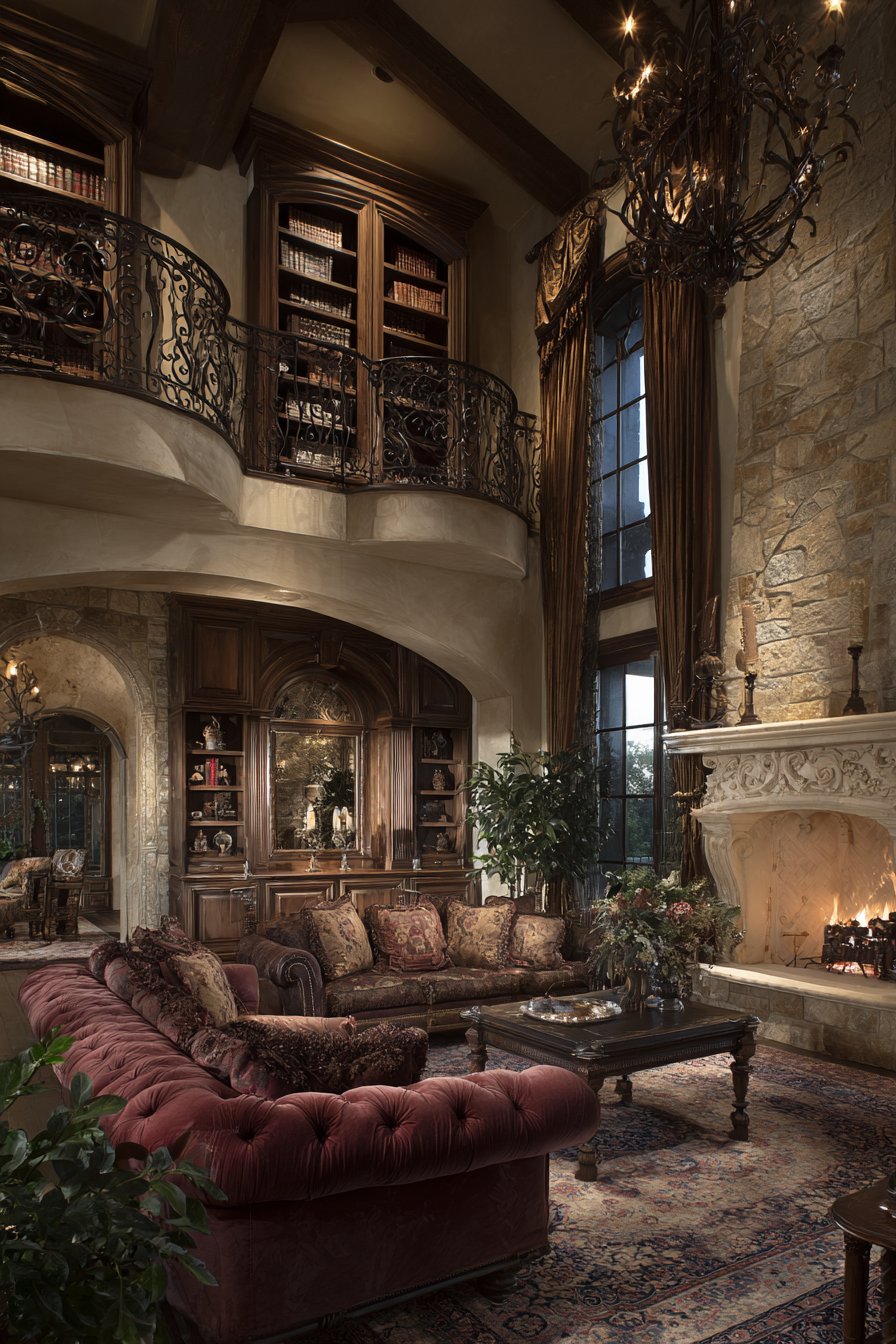
A wrought iron chandelier with candelabra-style lights hangs centrally overhead. The fixture scales appropriately for the double-height ceiling. Tall windows feature heavy draperies in golden damask framing natural light. Crown molding details at both levels add architectural refinement.
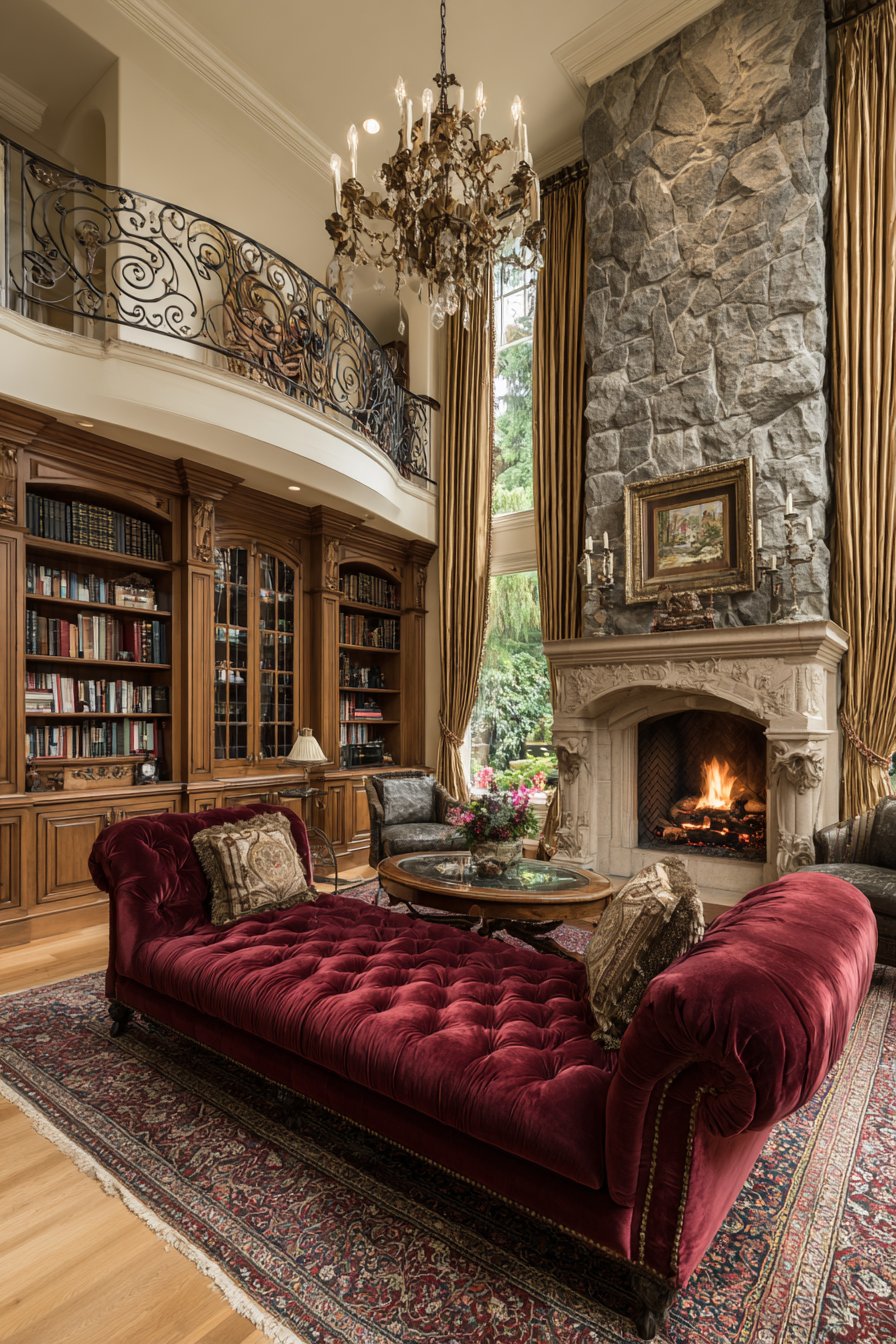
This traditional design proves formal elegance works beautifully in tall spaces. Cherry wood cabinetry provides warmth and storage simultaneously. The layered traditional details create cohesive, timeless atmosphere.
Key Design Tips:
- Choose cherry wood for built-ins to add traditional warmth
- Use ornate Persian rugs to anchor seating and add pattern
- Install wrought iron chandeliers scaled for ceiling height
- Add crown molding at both levels for architectural continuity
- Select heavy draperies in luxurious fabrics for traditional window treatments
18. Japanese-Inspired Minimalist Tranquility
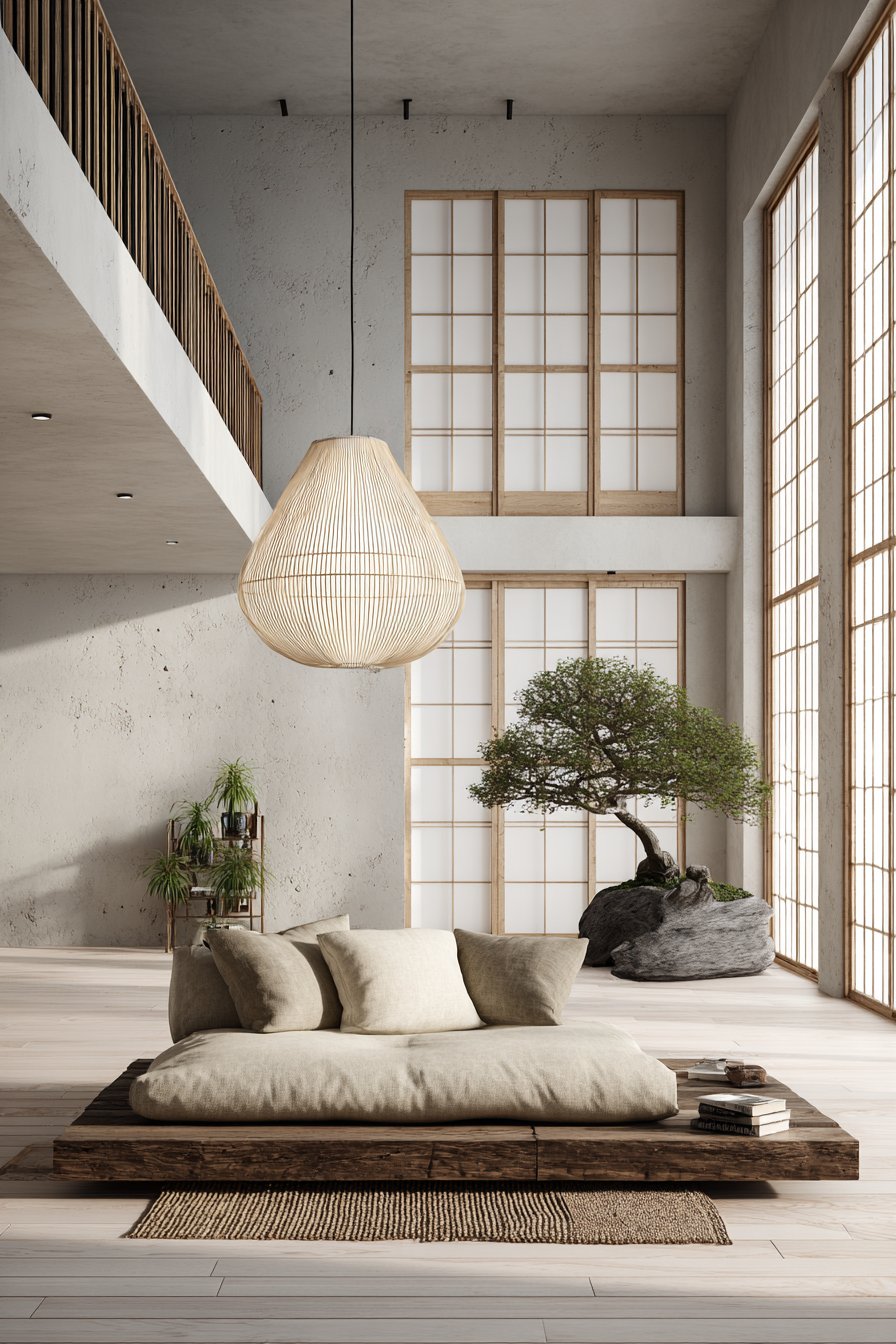
A double-height shoji screen wall in natural wood frames creates serene focal point. Translucent rice paper panels diffuse incoming light beautifully and gently. The Japanese-inspired design emphasizes simplicity and negative space. Natural materials and clean lines create meditative atmosphere.
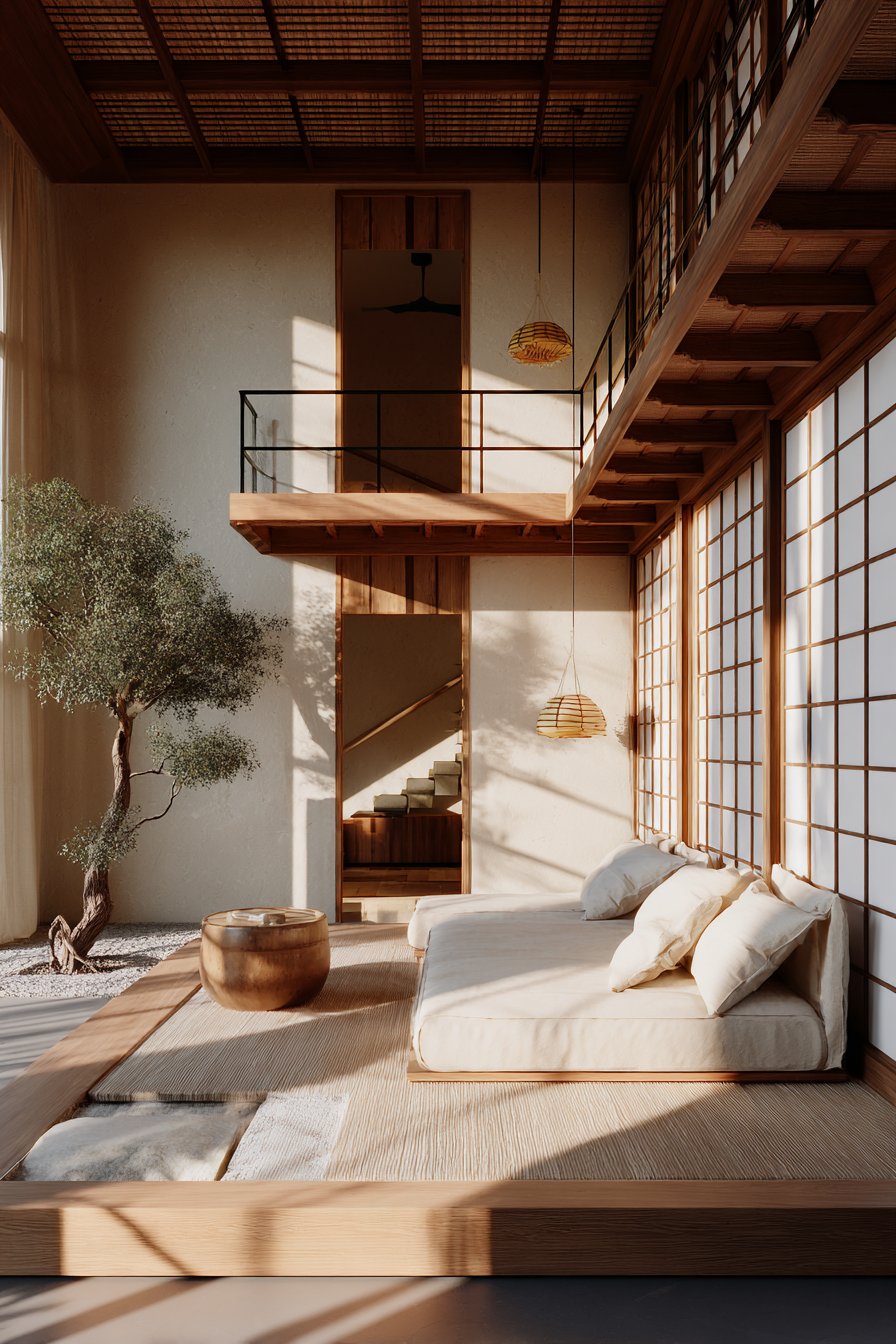
A low-profile platform sofa in natural linen sits on tatami mat-inspired flooring. The minimal furnishings allow the architecture to breathe. The vertical space remains intentionally empty emphasizing tranquility and openness. A single sculptural pendant light in handmade washi paper hangs asymmetrically.
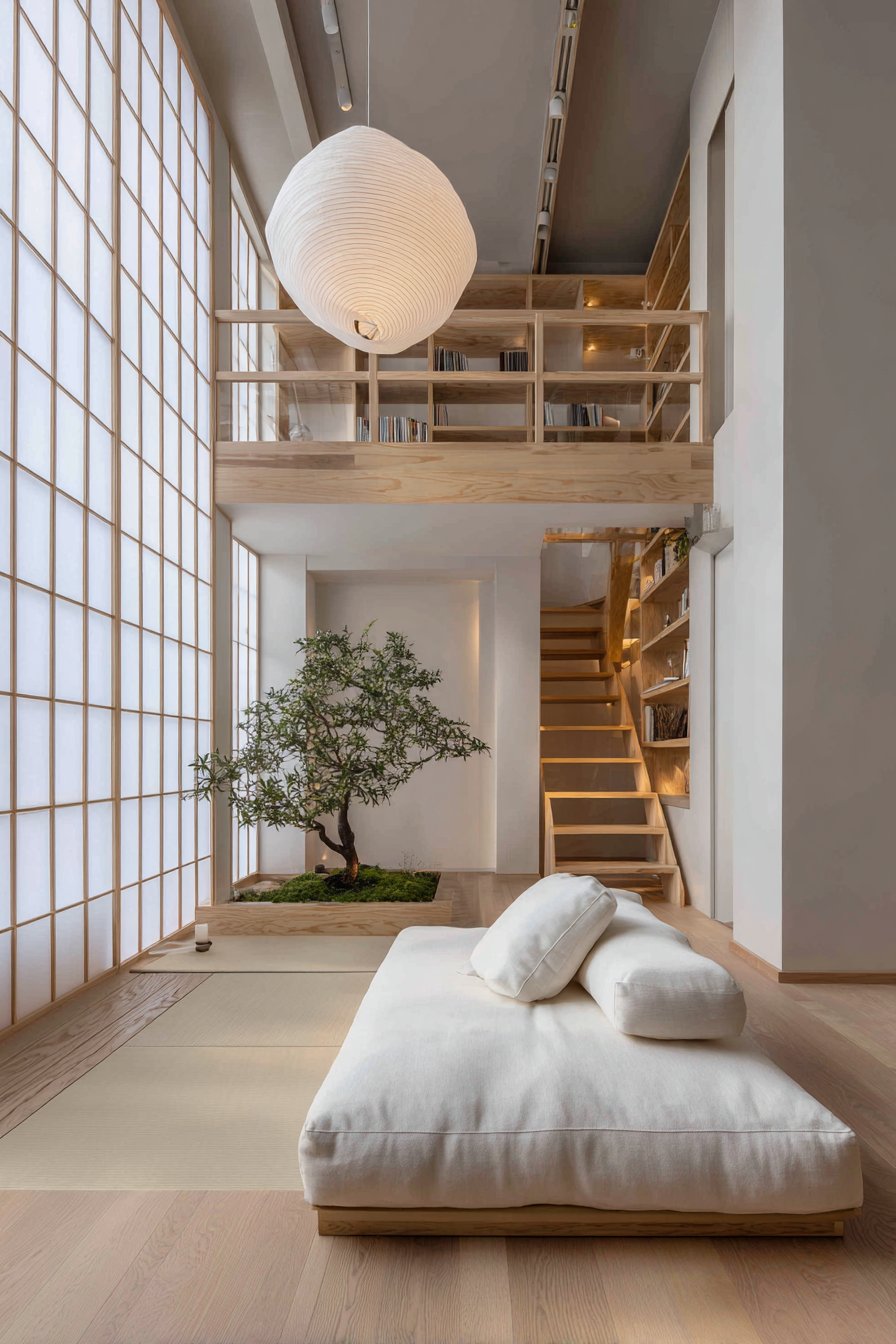
Upper level features simple wooden railings with clean horizontal lines. Natural bamboo flooring adds organic warmth throughout the space. Strategic placement of a single bonsai tree provides living decoration. Every element follows wabi-sabi principles of imperfect beauty.
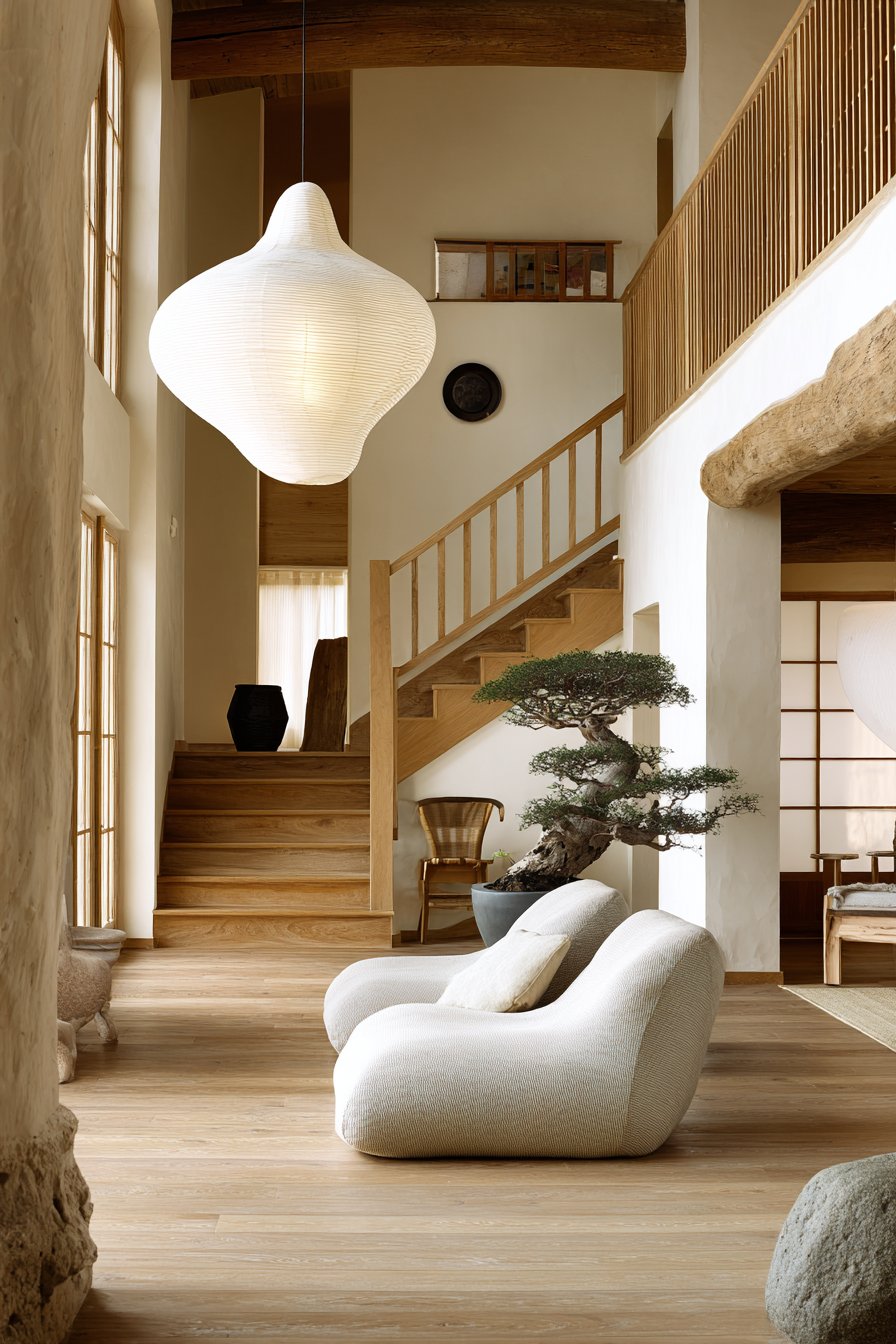
This design demonstrates how Japanese minimalism creates peaceful retreat. The emphasis on natural materials and negative space reduces visual clutter. Diffused light through shoji screens creates soft, calming ambiance.
Key Design Tips:
- Install shoji screen walls to diffuse light while maintaining privacy
- Use low-profile platform furniture following Japanese design principles
- Leave vertical space intentionally empty to emphasize tranquility
- Choose handmade washi paper lighting for soft, diffused illumination
- Add single statement plants like bonsai for living decoration
19. Bold Emerald Green Color-Blocked Wall
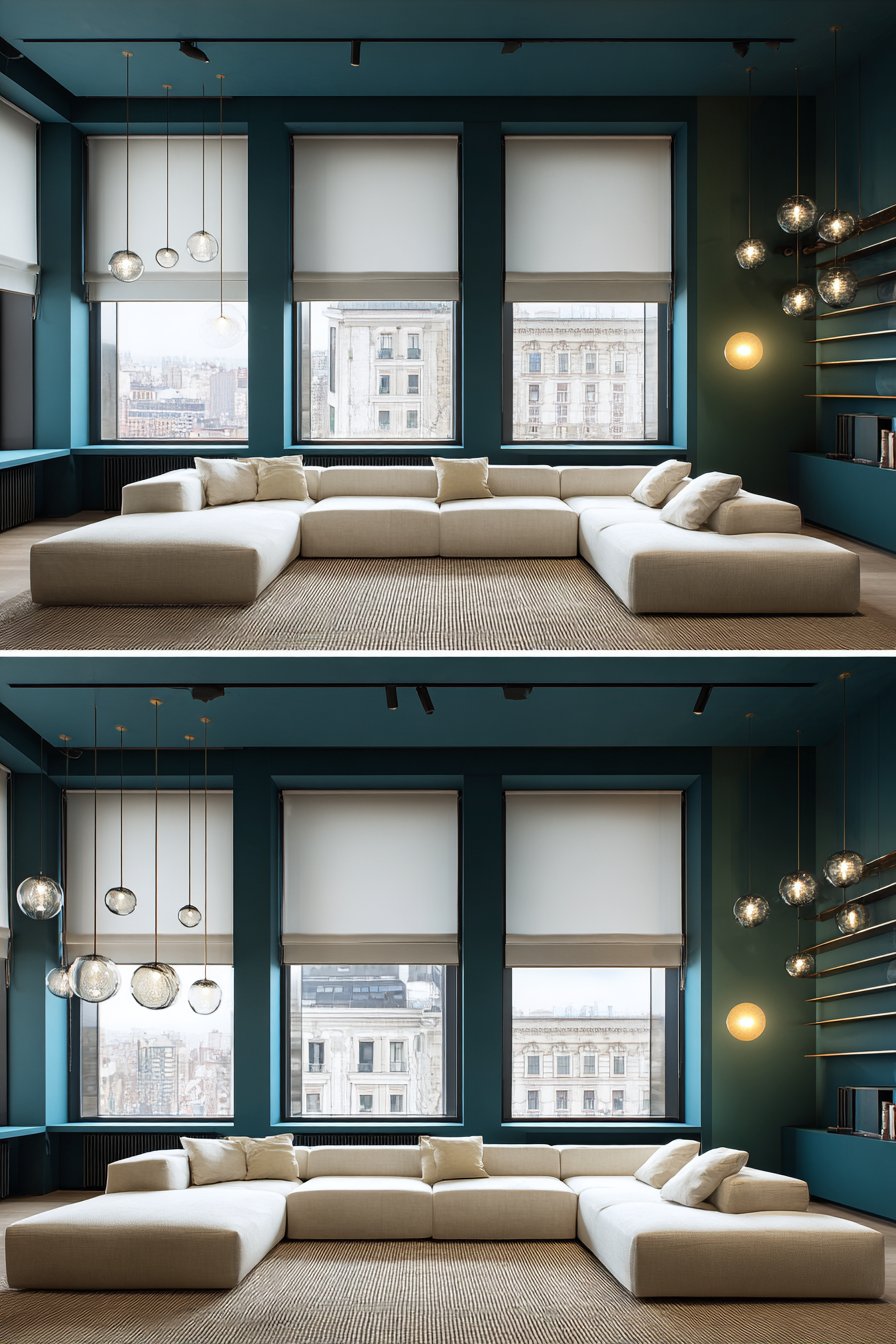
A dramatic color-blocked accent wall extends through both levels in deep emerald green. The bold wall color contrasts beautifully with surrounding white walls. A contemporary sectional sofa in cream bouclé faces this striking backdrop. The neutral furniture allows the wall color to dominate.
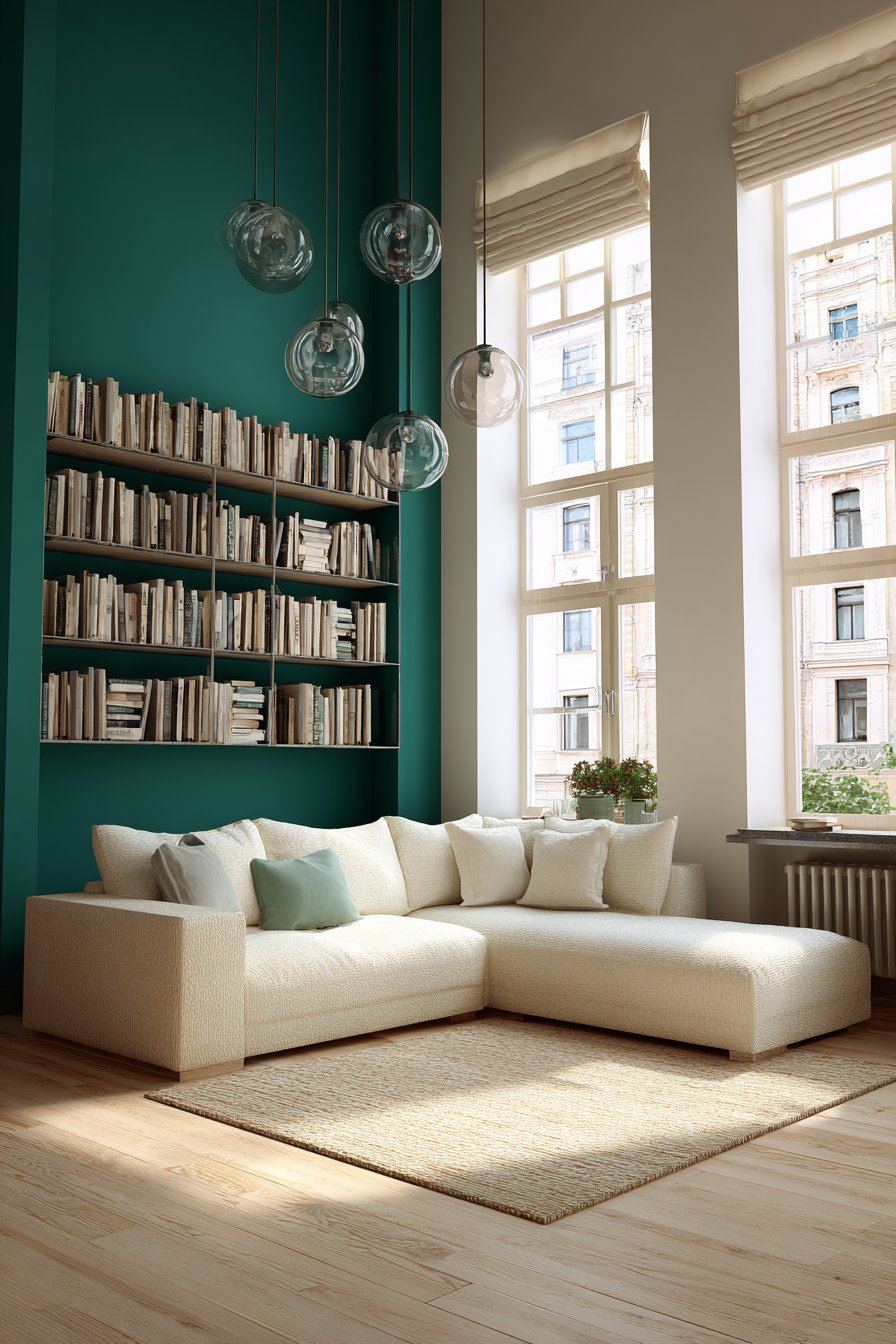
The upper level features floating bookshelf installation in brass and glass. The shelving appears to hover against the rich green background. Modern globe pendant lights in smoked glass hang at varying heights. Large windows with simple white roller shades allow natural light.
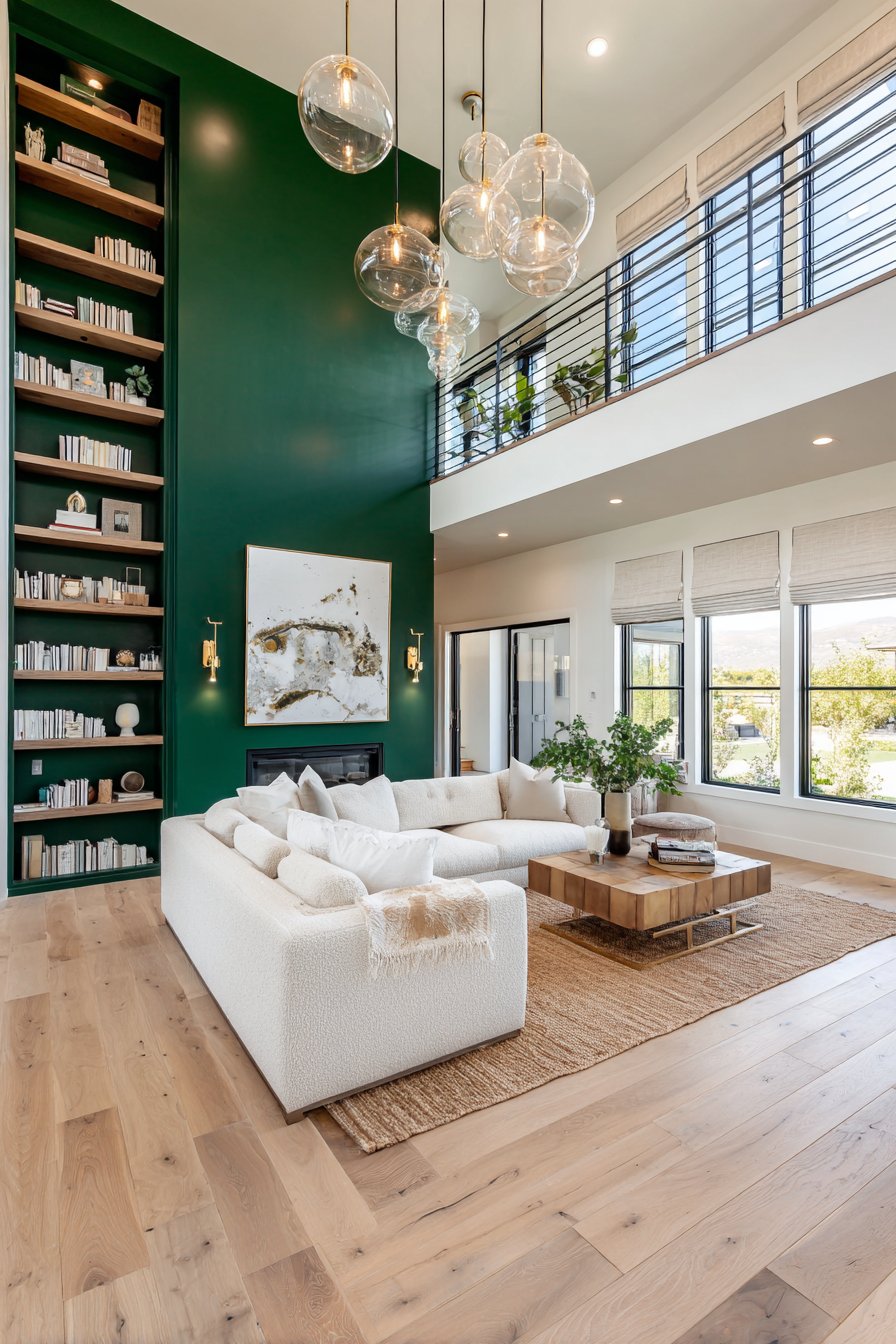
Light oak flooring provides neutral foundation for the bold color statement. The emerald green appears different at various times of day. Morning light makes it appear fresh while evening light deepens the richness. This dynamic quality keeps the space interesting throughout the day.
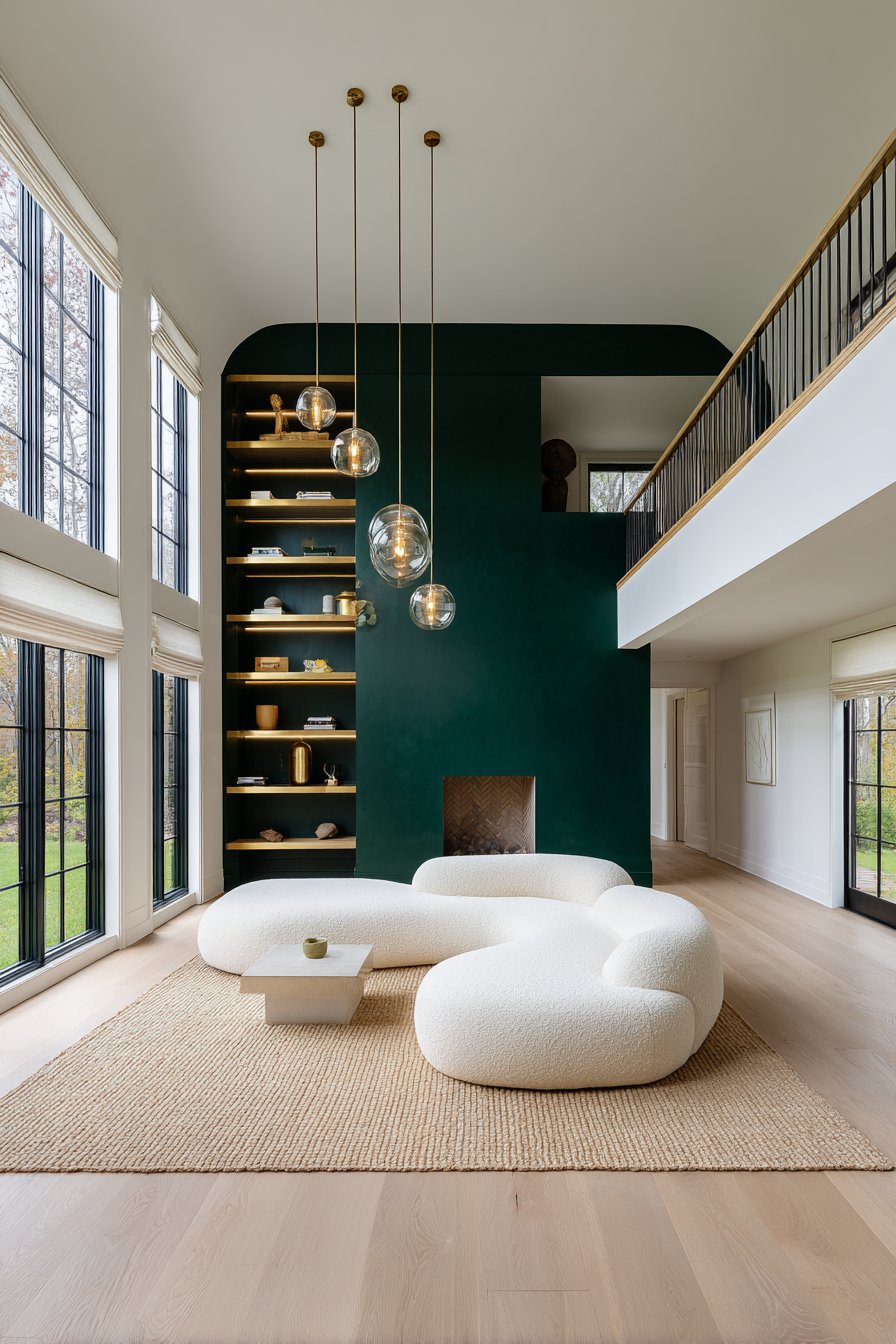
The bold color choice demonstrates confidence and personality. Emerald green adds sophistication without feeling overly trendy. The color-blocked approach creates impact without overwhelming the entire space.
Key Design Tips:
- Choose deep jewel tones for color-blocked accent walls
- Use floating shelves to create visual interest against bold colors
- Select neutral furniture to balance dramatic wall colors
- Install simple roller shades that don’t compete with bold walls
- Consider how natural light affects paint colors throughout the day
20. Rustic Modern Farmhouse with Reclaimed Beams
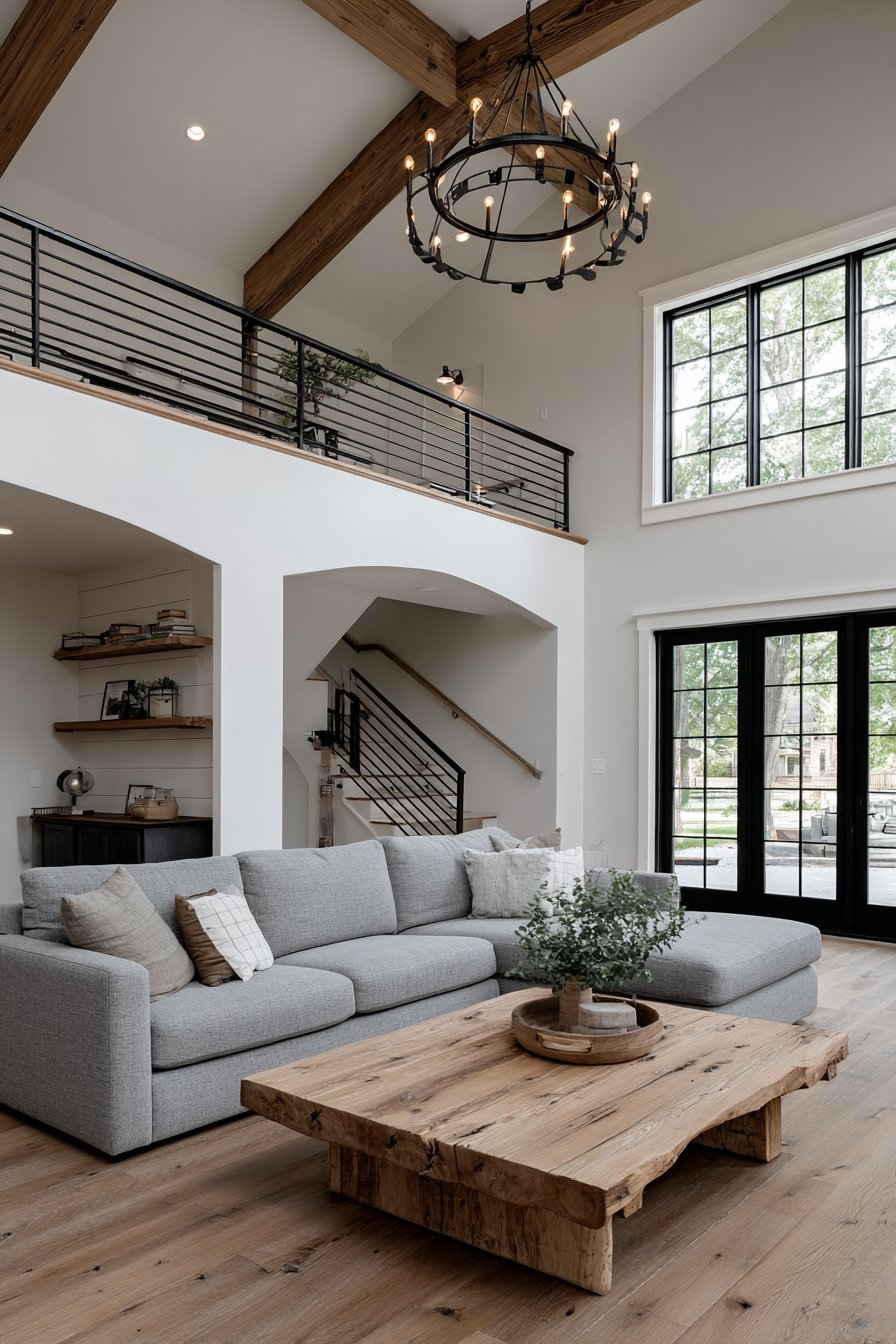
Exposed structural beams in reclaimed wood span the high ceiling authentically. A shiplap accent wall extends through both levels painted soft white. The rustic modern farmhouse aesthetic balances vintage and contemporary elements. Natural materials create warm, inviting atmosphere.
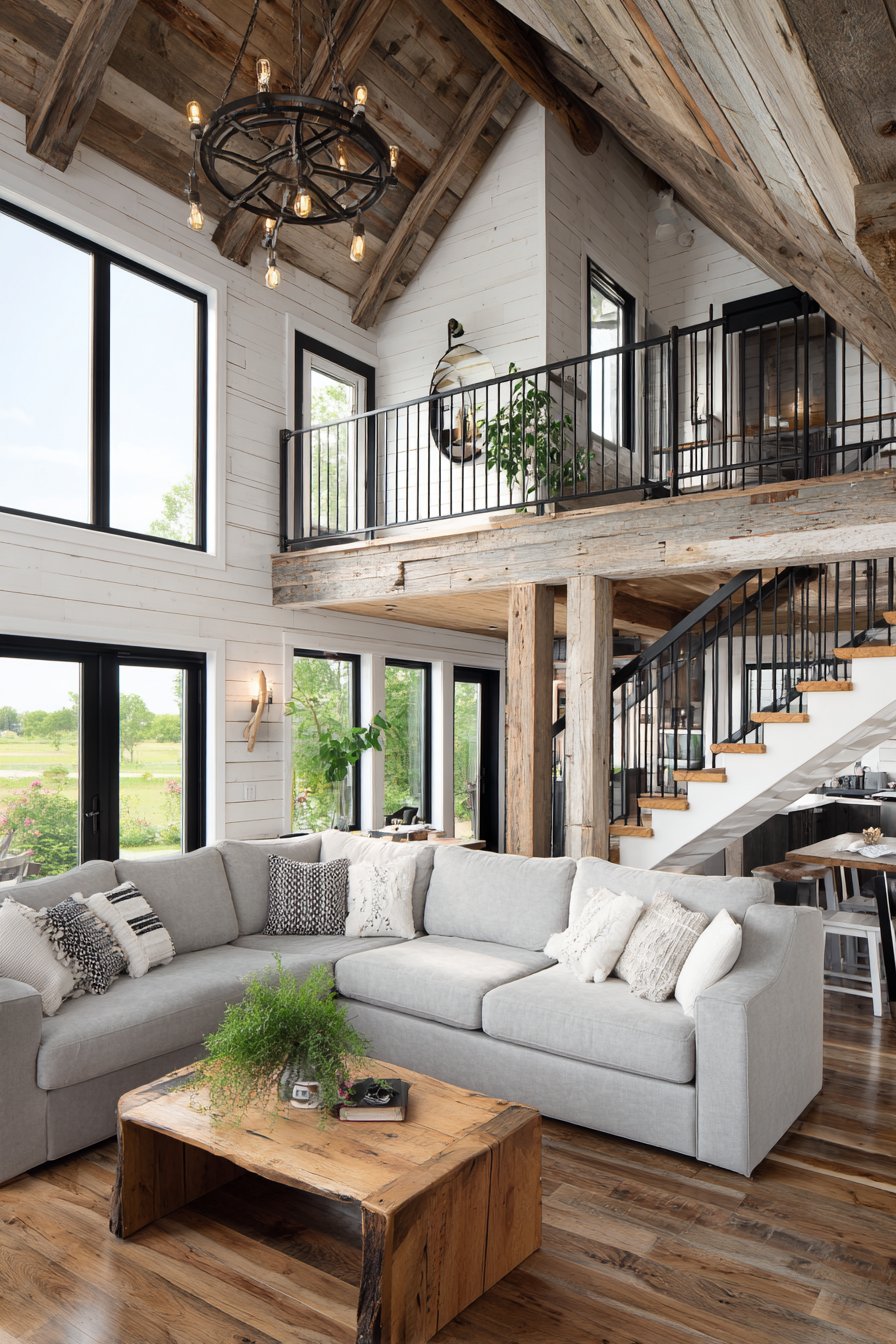
A large sectional sofa in grey linen creates comfortable seating area. A chunky wooden coffee table with visible saw marks adds rustic character. The natural edge detail celebrates wood’s organic beauty. Upper level features simple black metal railing with horizontal bars.
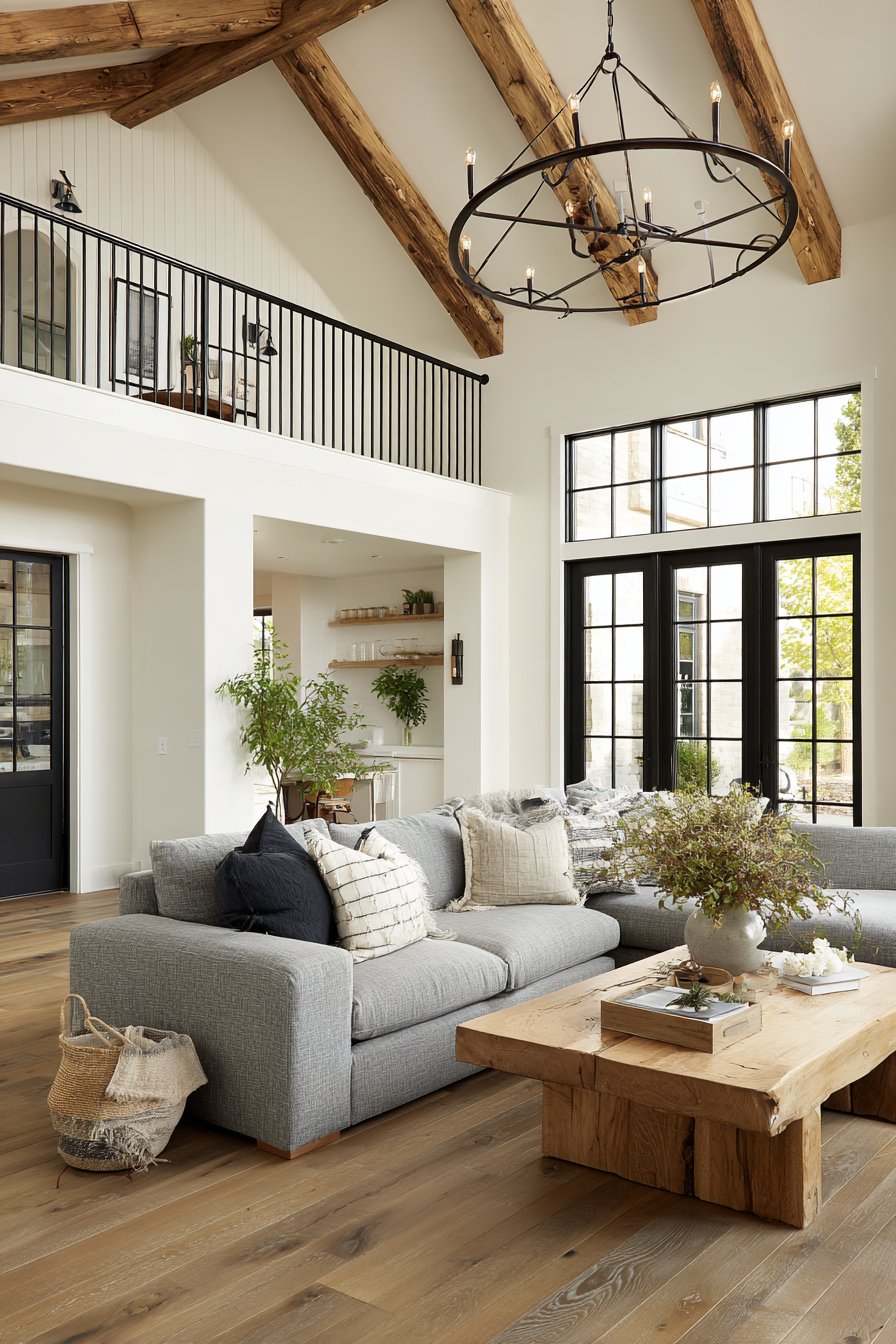
An oversized wagon wheel chandelier updated with Edison bulbs provides ambient lighting. The fixture scales appropriately for the room’s impressive height. Wide-plank hardwood flooring in weathered oak shows natural character marks. Floor-to-ceiling windows with simple black frames bring abundant natural light.
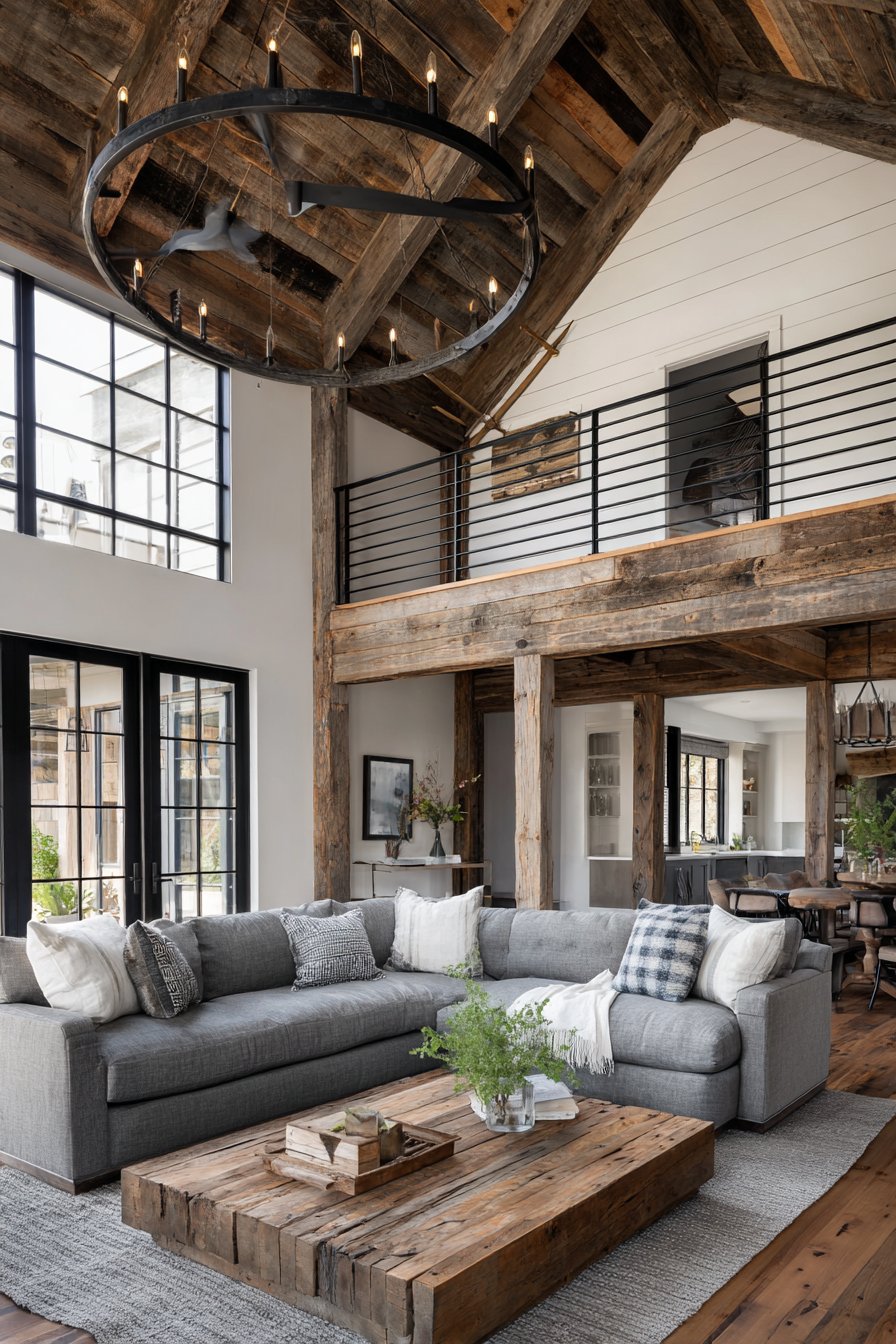
This farmhouse design feels authentic rather than trendy. Reclaimed materials add history and sustainability simultaneously. The balance between rustic elements and modern comfort creates livable luxury.
Key Design Tips:
- Use reclaimed wood beams for authentic farmhouse character
- Paint shiplap walls white to keep farmhouse aesthetic bright
- Choose chunky wood furniture with visible natural details
- Update traditional fixtures like wagon wheel chandeliers with modern bulbs
- Select wide-plank flooring with natural character marks for authenticity
Why These Double Volume Living Room Designs Are the Best
These double volume living room designs represent the finest approaches to maximizing vertical space while maintaining warmth and livability. Each concept demonstrates thoughtful consideration of how architecture, materials, and furnishings interact within tall spaces. The designs showcase remarkable versatility across multiple aesthetic directions from minimalist contemporary to traditional grandeur.
The incorporation of natural materials appears consistently throughout successful double volume designs. Wood, stone, and natural fibers add essential warmth that prevents tall spaces from feeling cold or institutional. These authentic materials provide textural richness that synthetic alternatives cannot replicate. The designs demonstrate how sustainable choices like reclaimed beams and natural stone offer both environmental benefits and timeless aesthetic appeal.
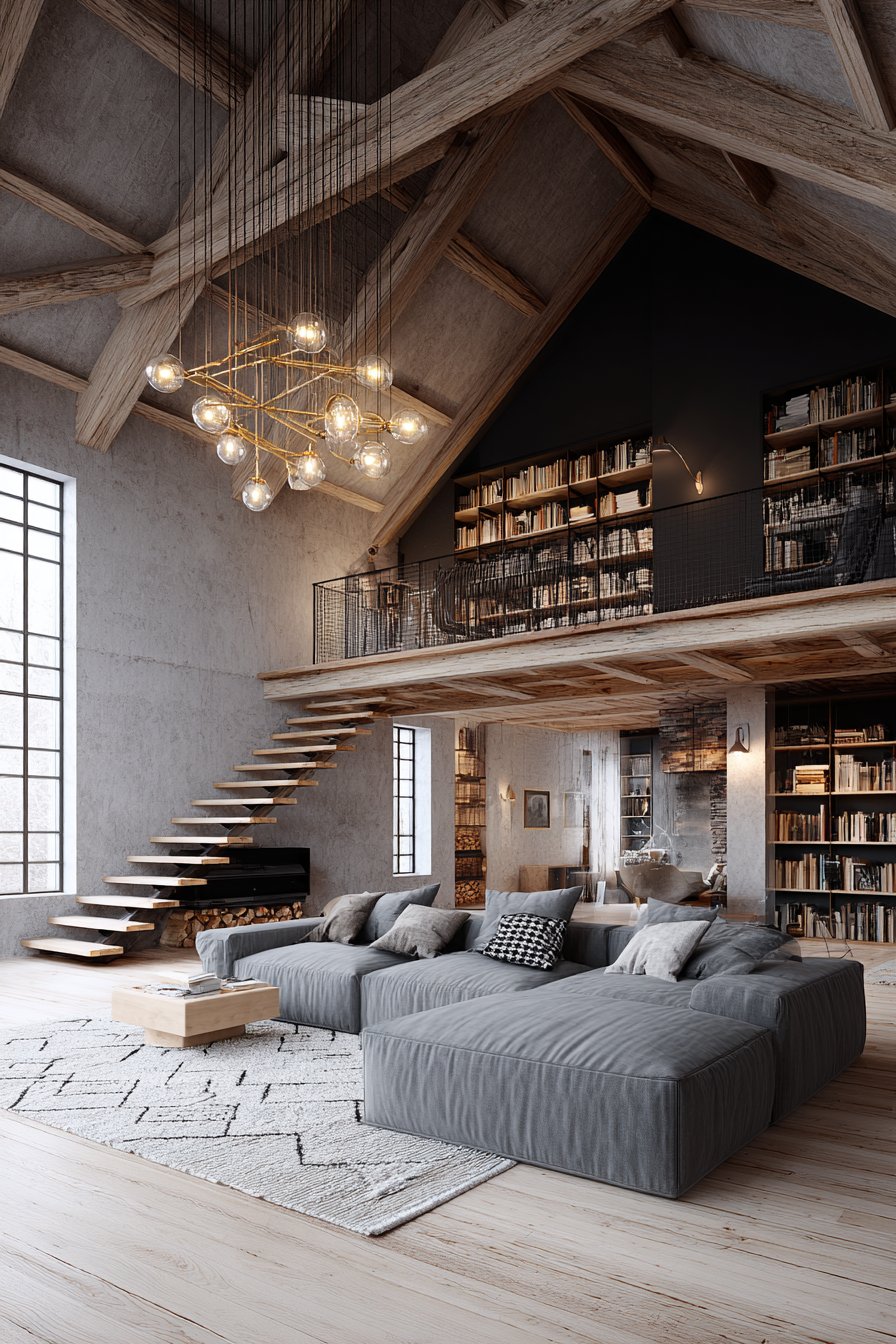
Strategic lighting emerges as a critical element in activating vertical space effectively. Layered lighting approaches combining natural light, ambient illumination, and task lighting create functional flexibility. Statement chandeliers and pendant lights scaled appropriately for ceiling height fill vertical space without overwhelming. Upper level windows and clerestory placement maximize natural light while addressing privacy concerns.
Color theory plays an important role in successful double volume design. Light neutral palettes maximize brightness and emphasize spatial qualities. Bold accent walls in jewel tones like emerald green create dramatic focal points without overwhelming. Monochromatic schemes demonstrate how subtle tonal variations create sophisticated depth within single-color approaches.
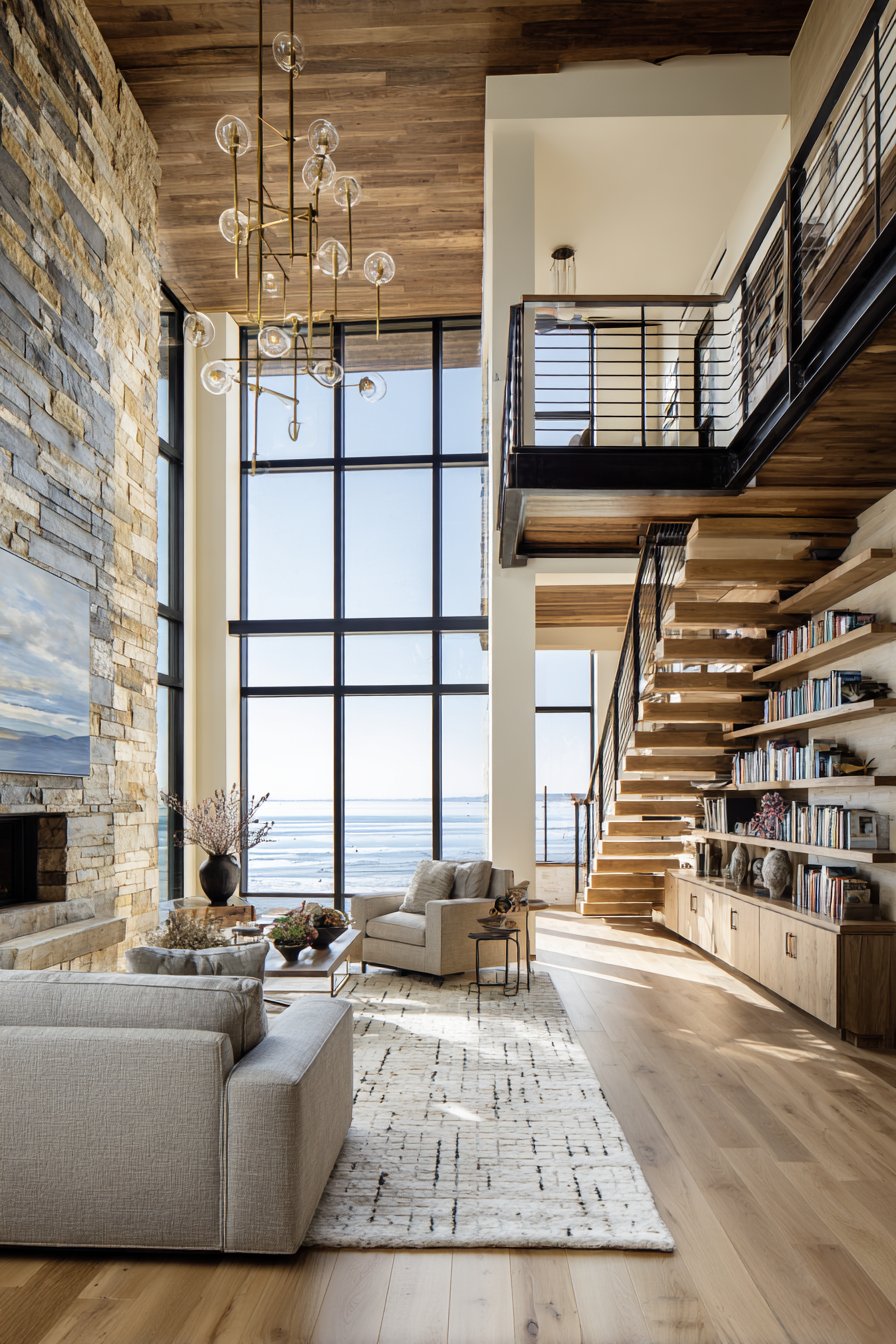
Spatial considerations require thoughtful furniture placement in double volume rooms. Low-profile seating prevents furniture from competing with architectural features. Creating distinct functional zones within open floor plans maintains intimacy despite generous square footage. Upper level mezzanines and reading nooks maximize vertical space utilization while adding visual interest.
These designs prove that double volume spaces accommodate diverse lifestyles and preferences. Whether prioritizing art display, book collections, or architectural features, vertical space offers opportunities unavailable in standard rooms. The functional adaptability combined with aesthetic flexibility makes these approaches universally applicable regardless of specific design direction.
Conclusion
These twenty double volume living room designs demonstrate the extraordinary possibilities that high ceilings offer for creative expression and functional innovation. The key takeaways include the importance of scaling furniture and lighting appropriately, incorporating natural materials for warmth, and creating distinct zones within expansive spaces. Strategic use of vertical walls through art displays, bookshelves, or architectural features activates the full height beautifully.
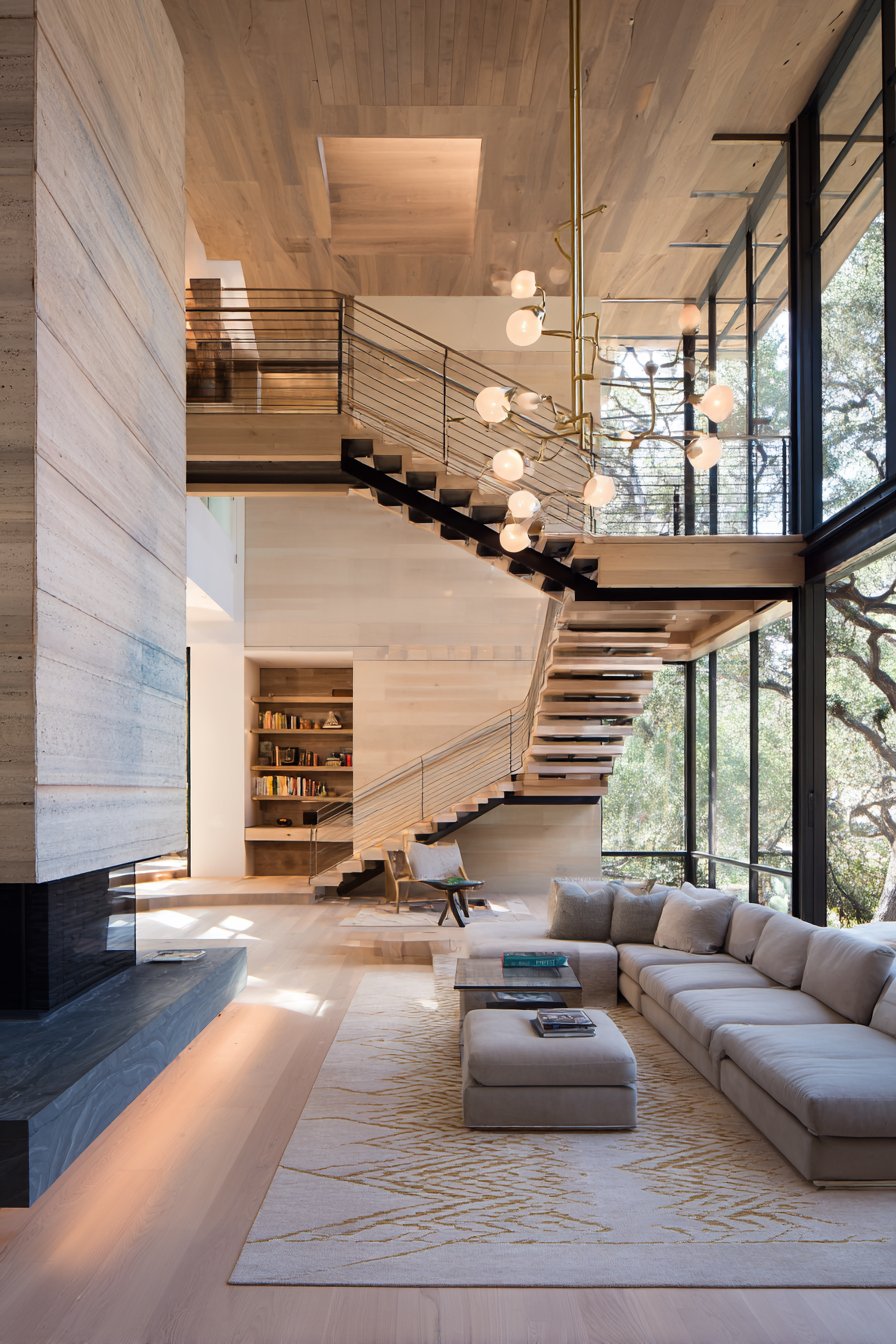
Successful double volume design balances architectural drama with residential comfort and livability. The designs prove that tall spaces need not feel cold or cavernous when thoughtfully appointed with warm materials and properly scaled furnishings. Start by identifying your primary architectural feature, whether windows, fireplace, or staircase, and build your design around that focal point. Your dream double volume living room awaits creation through careful planning and confident design choices.
