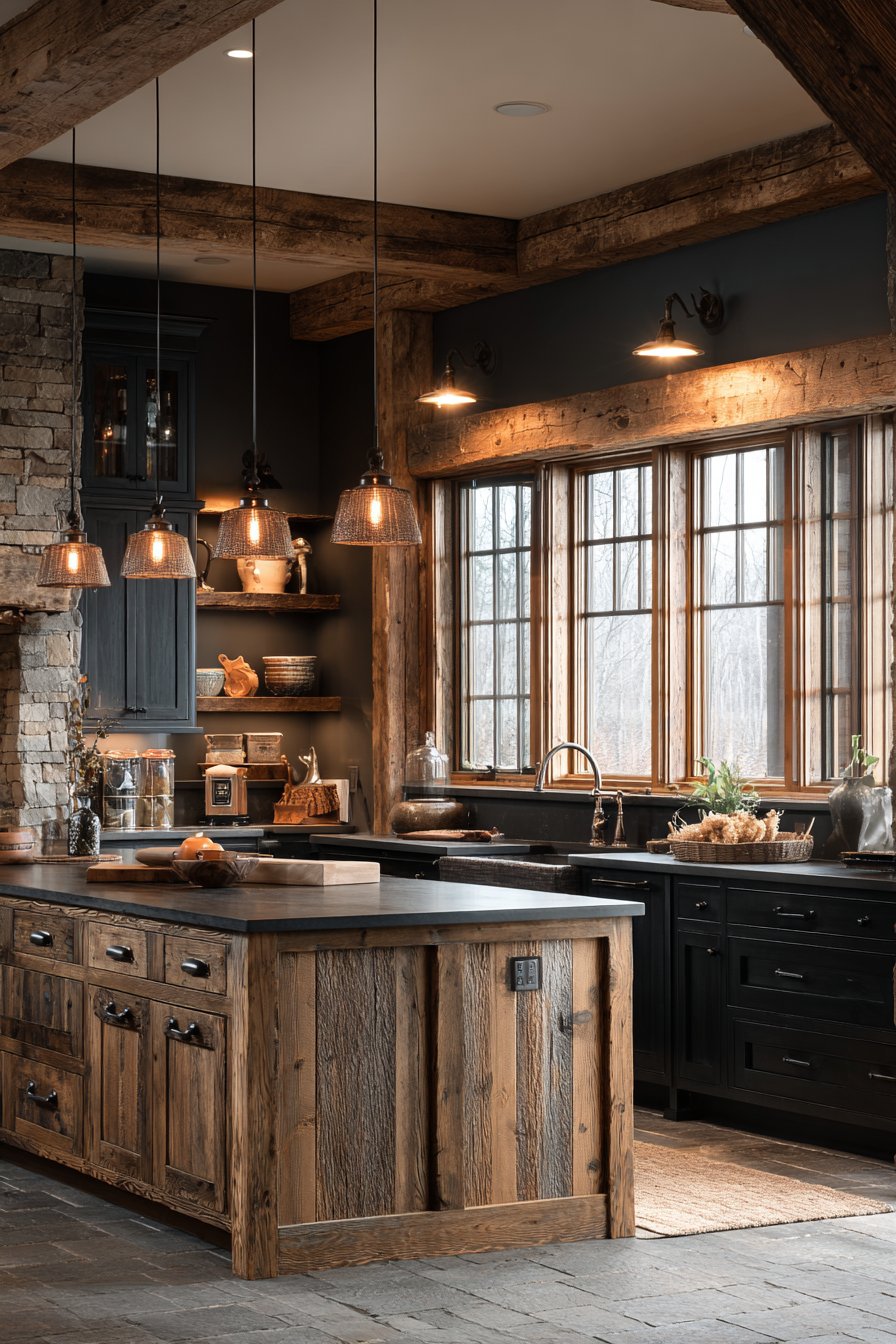


Creating an earthy kitchen brings the warmth and tranquility of nature into your home’s heart. This design philosophy celebrates organic materials, natural textures, and warm earth tones. The combination creates spaces that feel grounded, authentic, and deeply connected to the natural world.
Earthy kitchens have become increasingly popular as homeowners seek refuge from modern minimalism’s cold sterility. These spaces honor craftsmanship, sustainability, and the inherent beauty of raw materials. From reclaimed wood and handcrafted ceramics to natural stone and woven textiles, earthy kitchen design embraces imperfection and celebrates authenticity. Each element contributes to creating environments that nourish both body and soul.
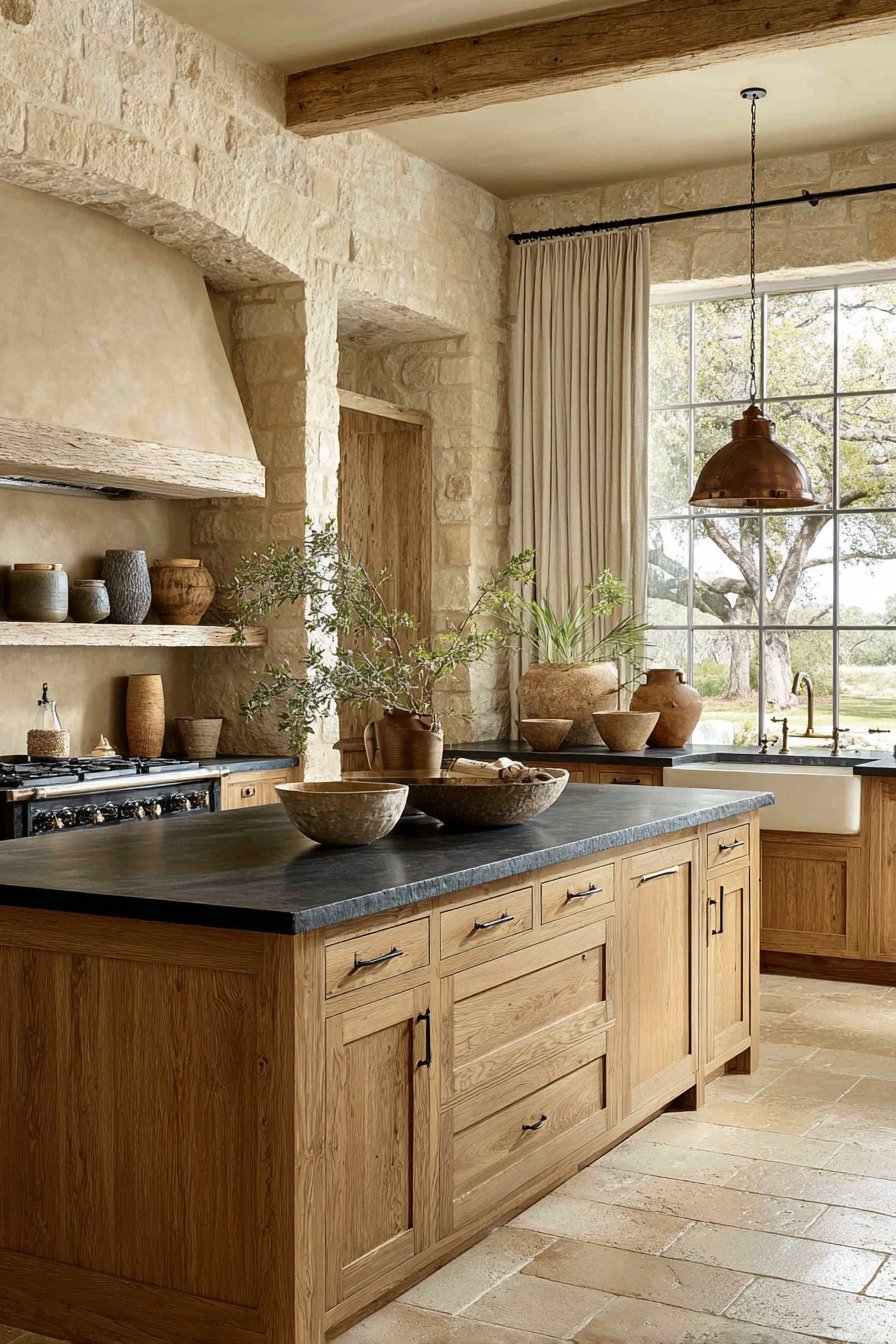
This article explores twenty distinct approaches to earthy kitchen design. Each concept demonstrates how natural materials can transform functional cooking spaces into warm, inviting sanctuaries. Whether you prefer rustic authenticity or refined craftsmanship, these designs offer inspiration for creating your perfect earthy kitchen retreat.
1. Reclaimed Wood Island Paradise
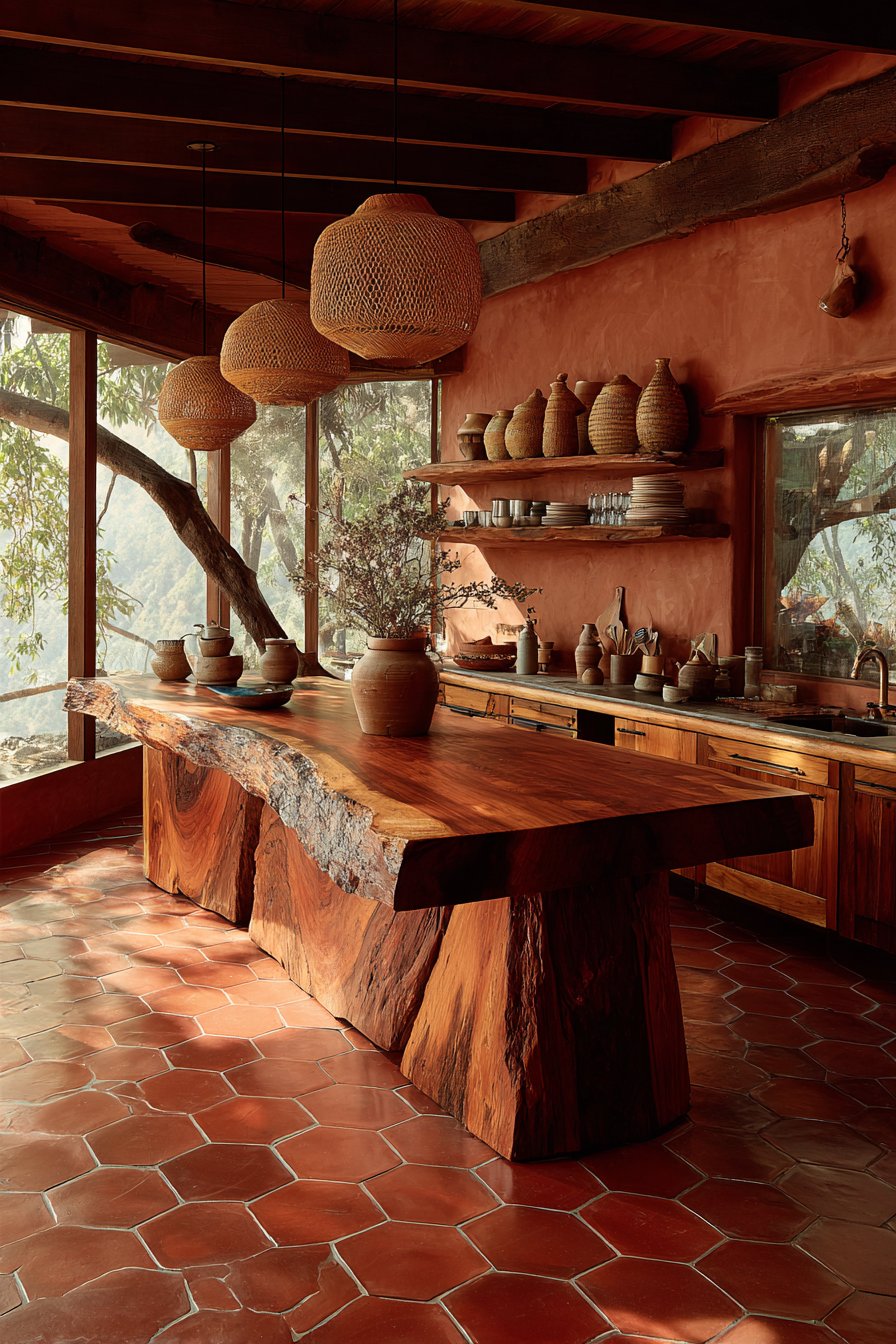
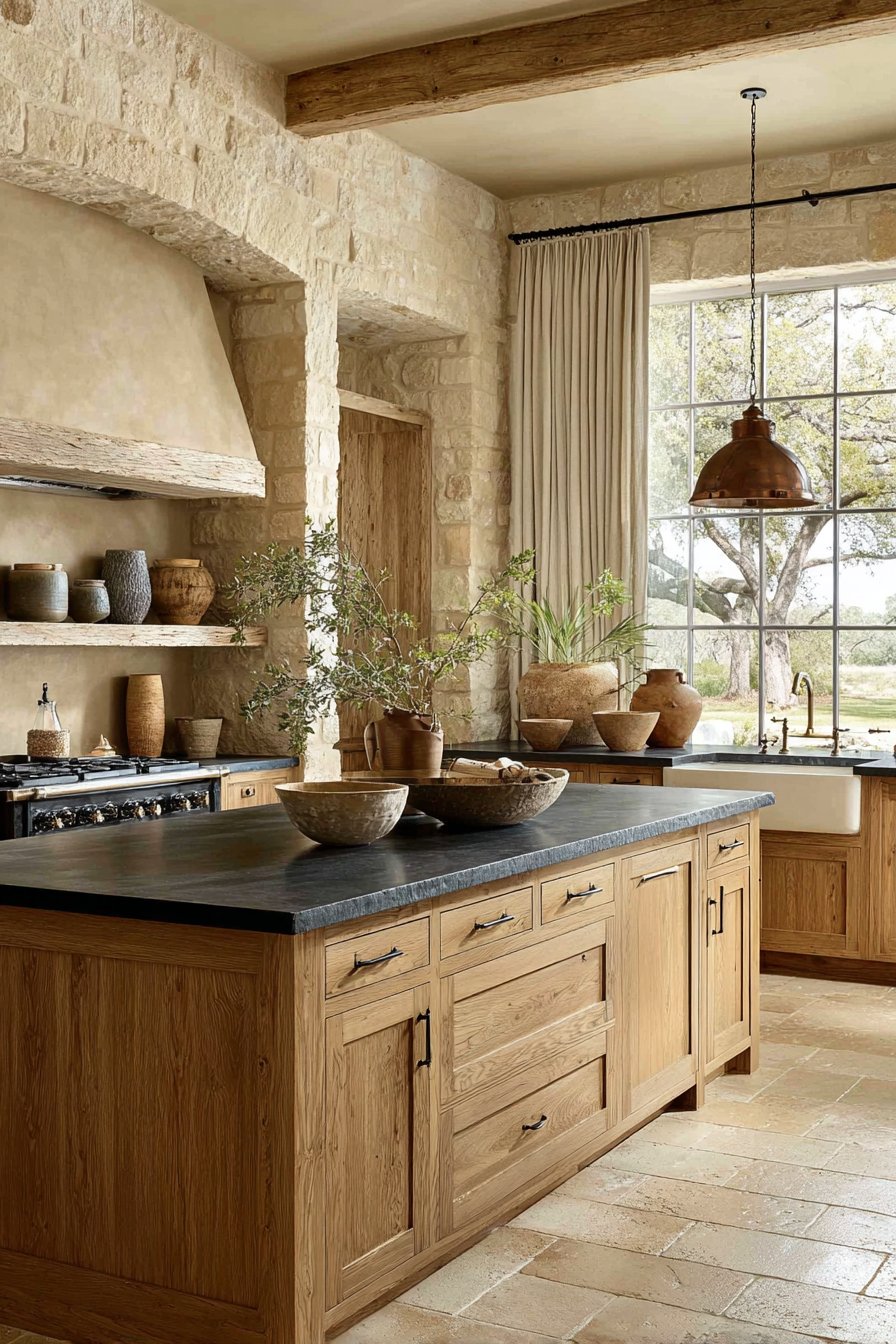
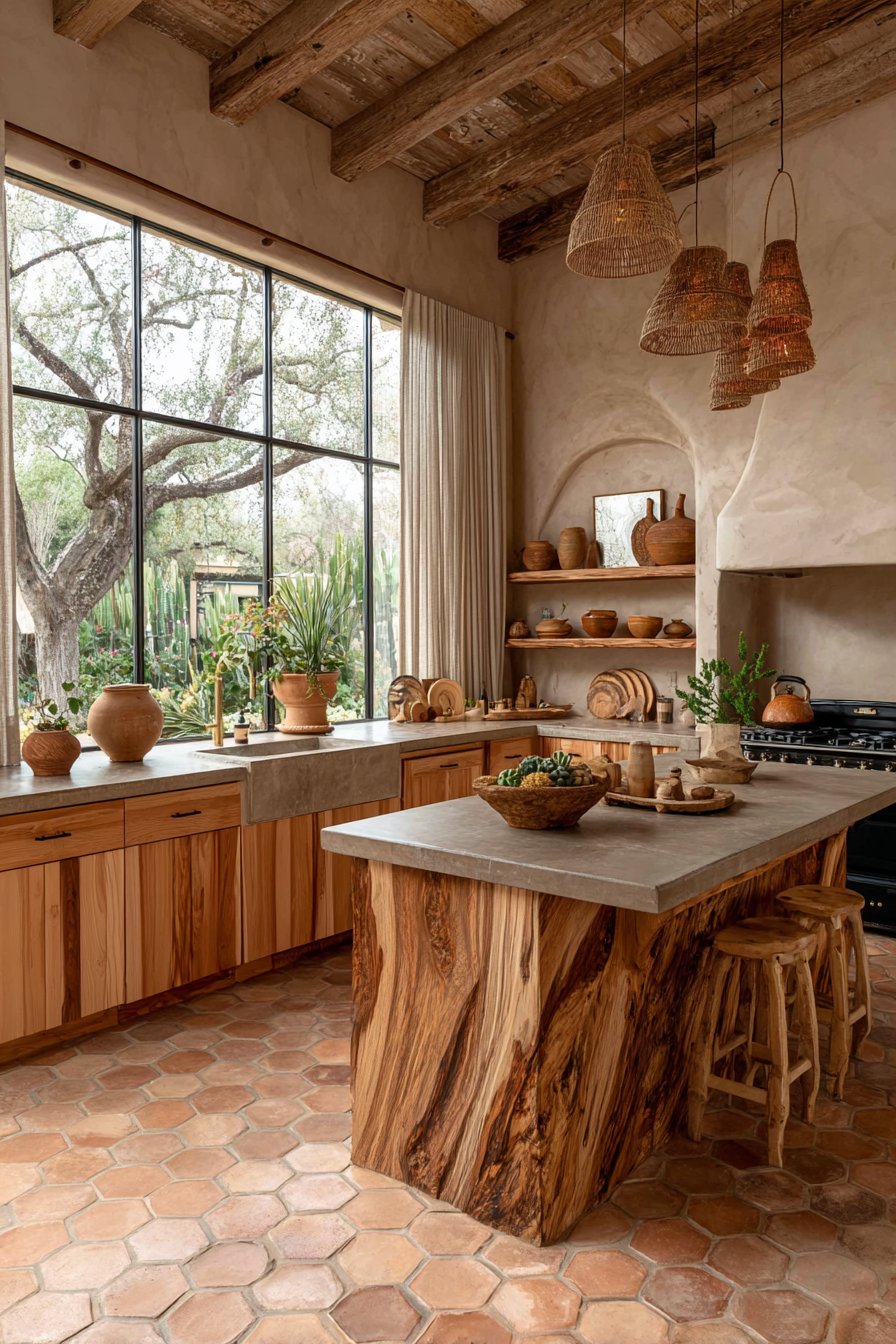
A magnificent reclaimed wood island anchors this earthy kitchen design with commanding presence. Live edge details showcase nature’s artistry through organic contours and grain variations. The wood’s history remains visible in its character marks and weathered patina. Terracotta hexagonal floor tiles provide geometric contrast while maintaining the natural material palette.
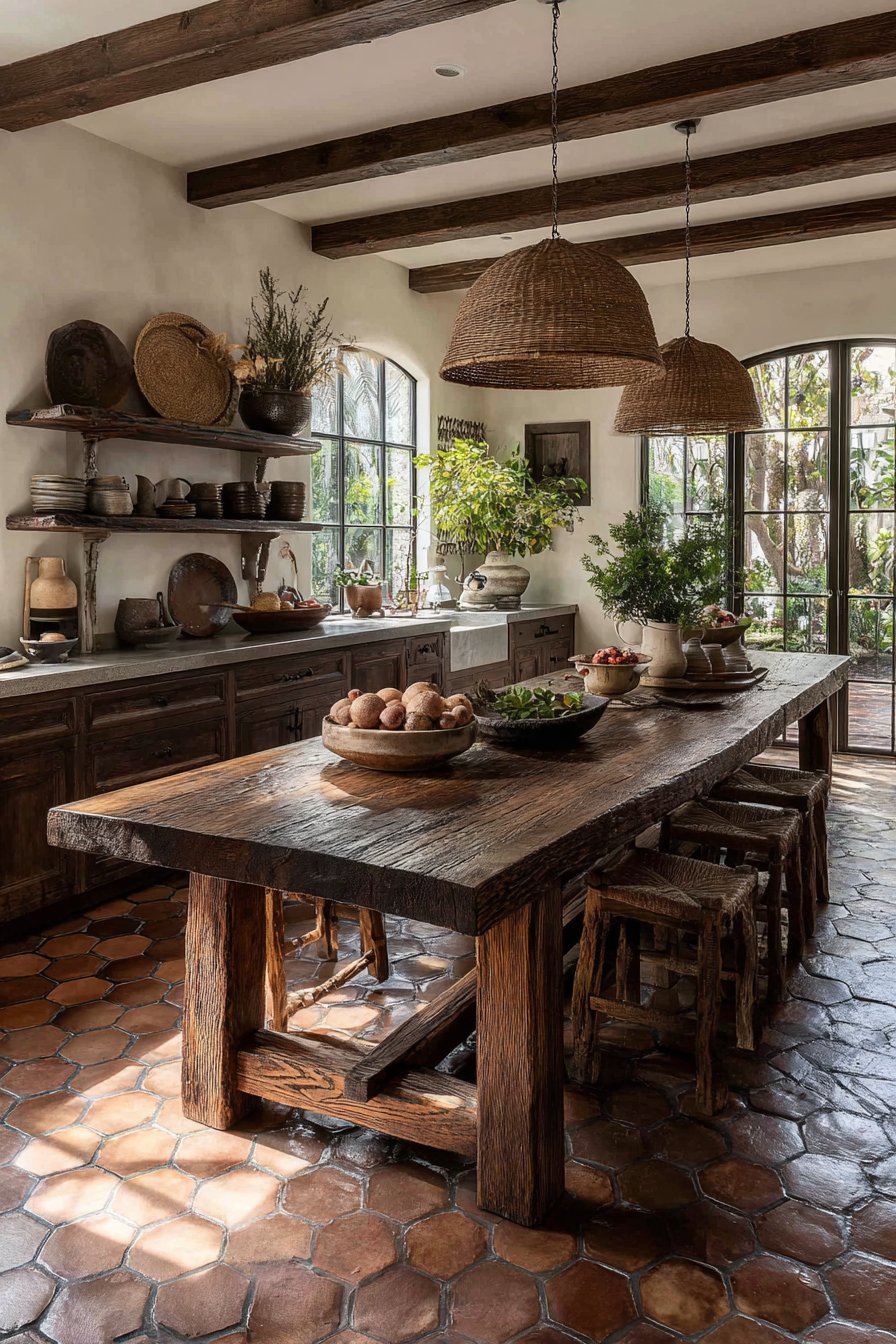
Open shelving constructed from rough-hewn timber displays functional beauty. Artisan ceramic bowls nest alongside woven baskets in natural fibers. The arrangement feels curated yet effortless. Warm clay plaster covers the walls with organic texture variations. Each trowel mark adds depth and visual interest to vertical surfaces.
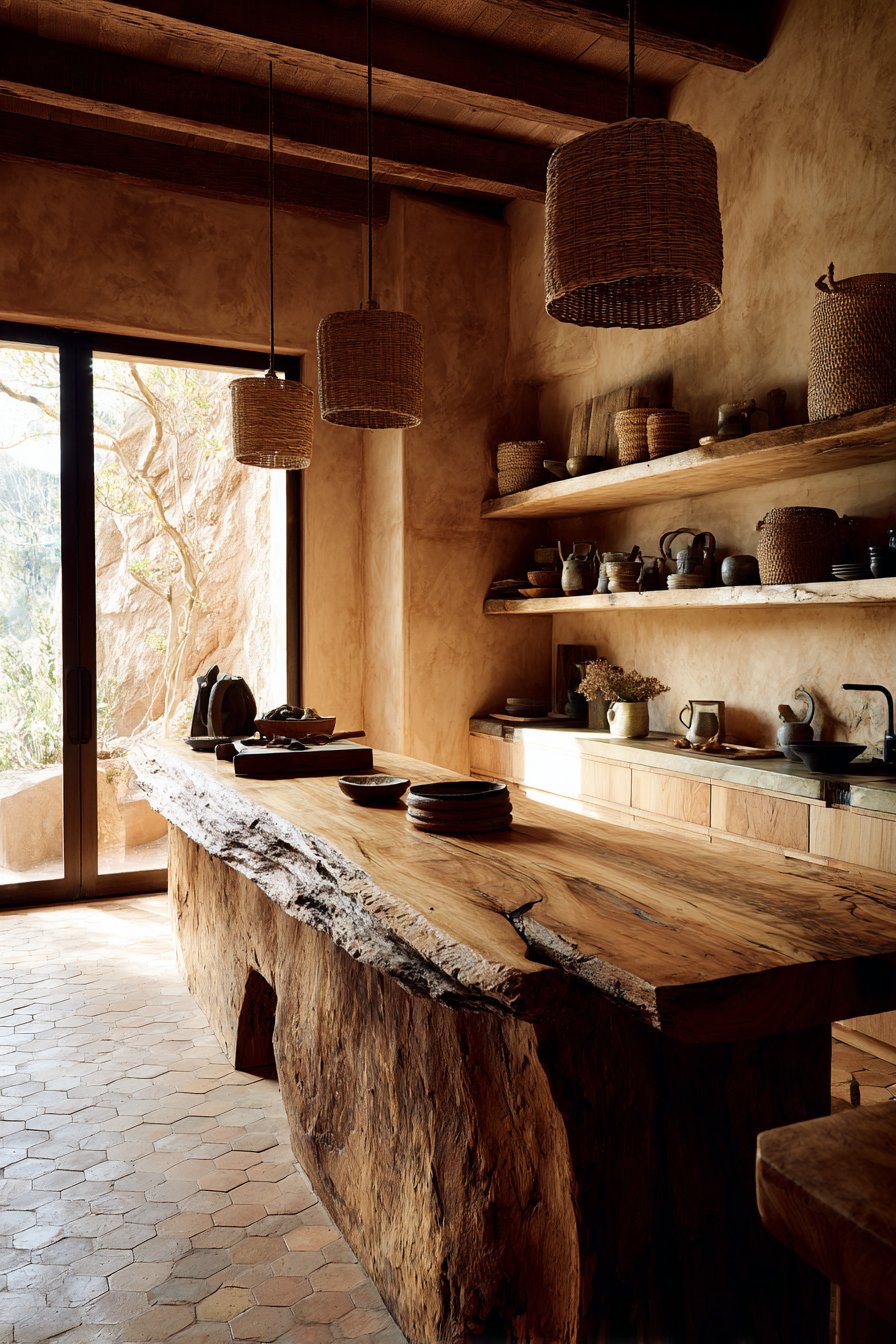
Pendant lights with rattan shades hang above the island at varied heights. They cast soft, ambient light that enhances the space’s warmth. Morning light streams through windows, illuminating authentic textures throughout. The interplay of natural and artificial light creates dynamic shadow patterns. These shadows emphasize the dimensional quality of materials used throughout.
The natural material palette creates cohesive harmony. Every element speaks to earth-conscious design without sacrificing sophistication. This kitchen proves that sustainable choices enhance rather than limit aesthetic possibilities.
Key Design Tips:
- Select reclaimed wood with visible character marks for authentic appeal
- Incorporate terracotta tiles to add warmth and geometric interest
- Use open shelving to display artisan ceramics and natural fiber storage
- Choose rattan pendant lights for texture and soft light diffusion
- Apply clay plaster to walls for organic texture and earth-toned color
- Position the island to maximize natural light exposure throughout the day
2. Handcrafted Terracotta Backsplash Beauty
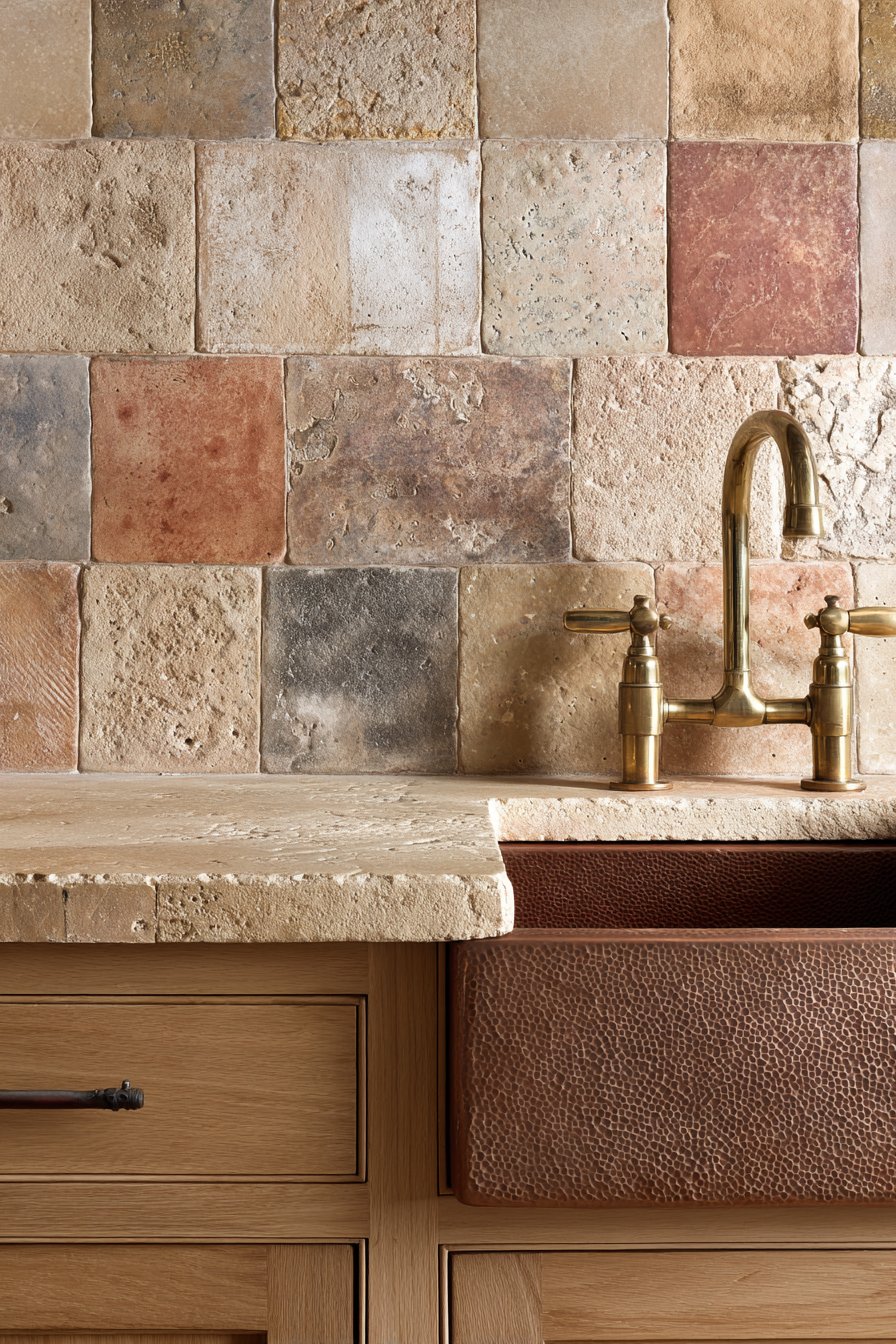
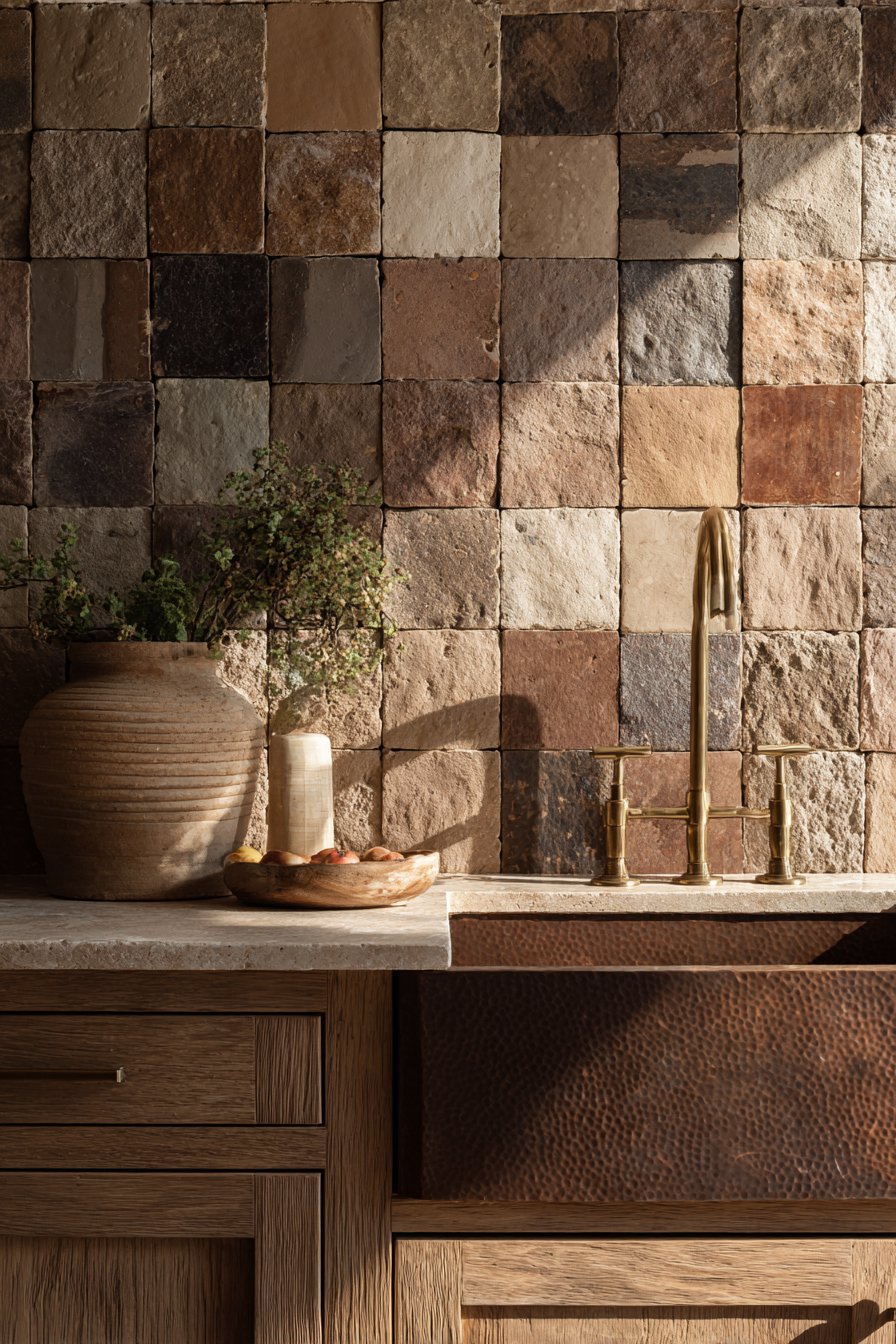
Handmade terracotta zellige tiles create stunning visual impact in this earthy kitchen backsplash. Natural tones range from rust to soft beige with characteristic irregularities. Surface variations showcase the artisan’s hand in every tile. Glaze inconsistencies add depth rather than detract from beauty. These imperfections become the design’s defining feature.
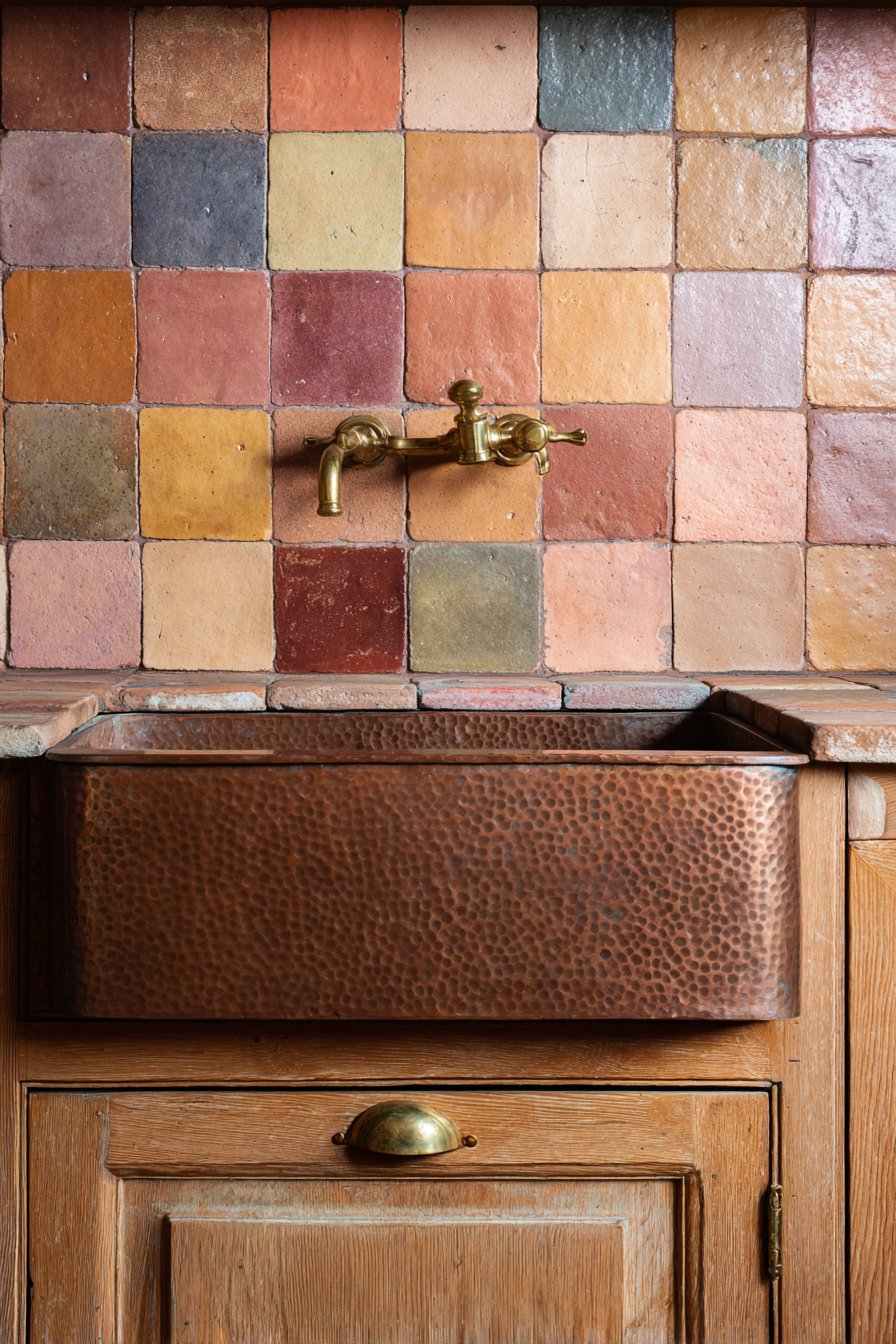
Natural oak cabinets provide warm wood tones that complement the terracotta palette. Brass hardware adds refined metallic accents without overwhelming the organic aesthetic. An aged copper farmhouse sink sits below the backsplash. Natural patina development creates unique surface coloring. The copper’s evolution becomes part of the design story.
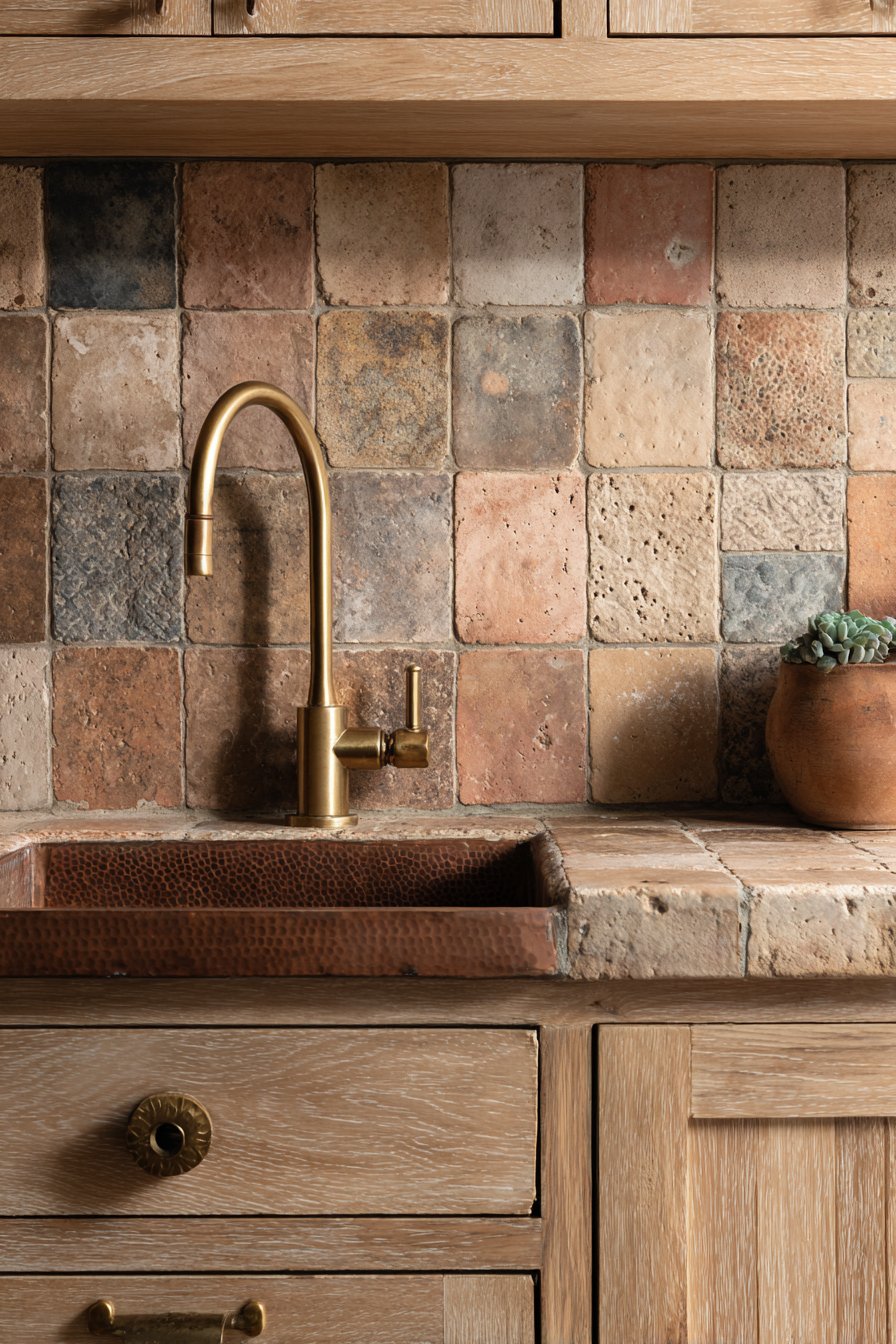
Professional interior lighting emphasizes artisanal quality throughout this space. Balanced exposure captures textural depth in the zellige tiles. Soft natural lighting creates gentle shadows across dimensional surfaces. These shadows enhance the three-dimensional quality of handmade tiles. The lighting strategy celebrates rather than hides surface irregularities.
Material authenticity shines in this design approach. Every element demonstrates commitment to craftsmanship and natural aging processes. The space honors traditional techniques while serving contemporary needs perfectly.
Key Design Tips:
- Choose handmade zellige tiles for authentic surface variation and character
- Pair terracotta with natural oak for cohesive, warm wood tones
- Install brass hardware to add refined metallic accents
- Select an aged copper sink for developing patina interest
- Use balanced lighting to emphasize textural depth
- Embrace surface irregularities as design features rather than flaws
3. Natural Oak Pantry Organization
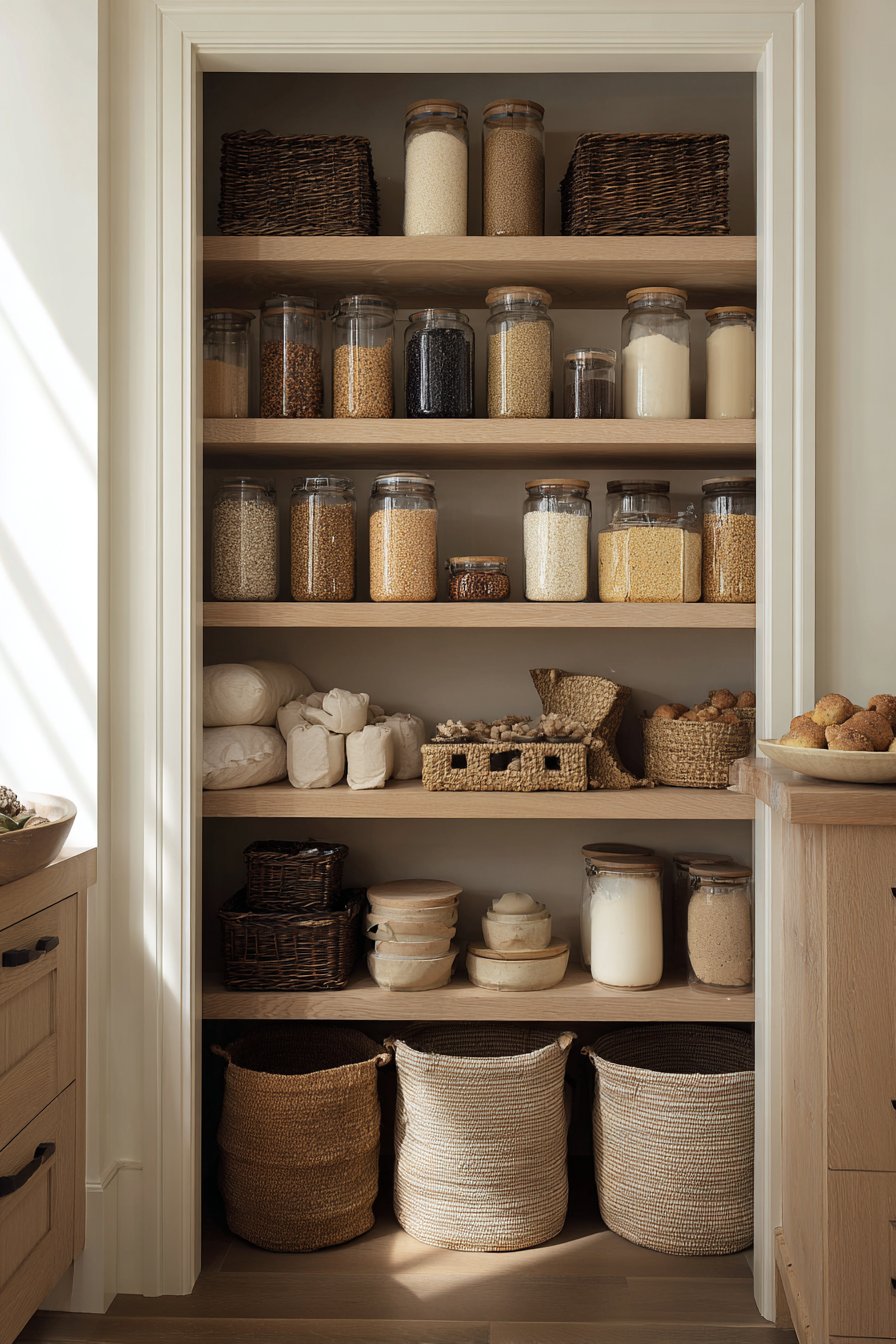
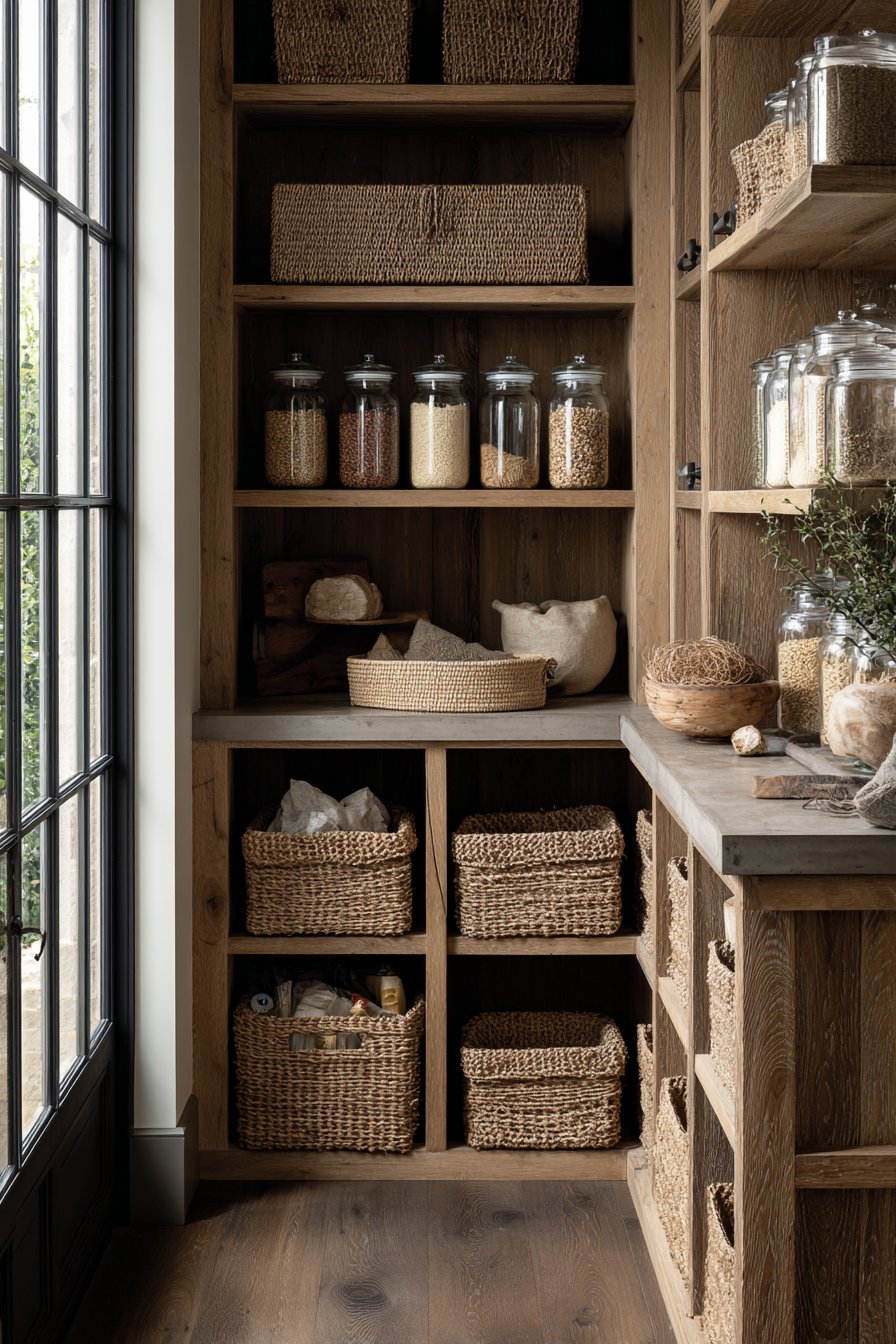
Floor-to-ceiling custom cabinetry in unstained white oak transforms pantry storage into design feature. Natural wood grain and knot patterns remain visible and celebrated. The organic variations become visual interest rather than defects. Interior shelves display practical organization with aesthetic appeal.
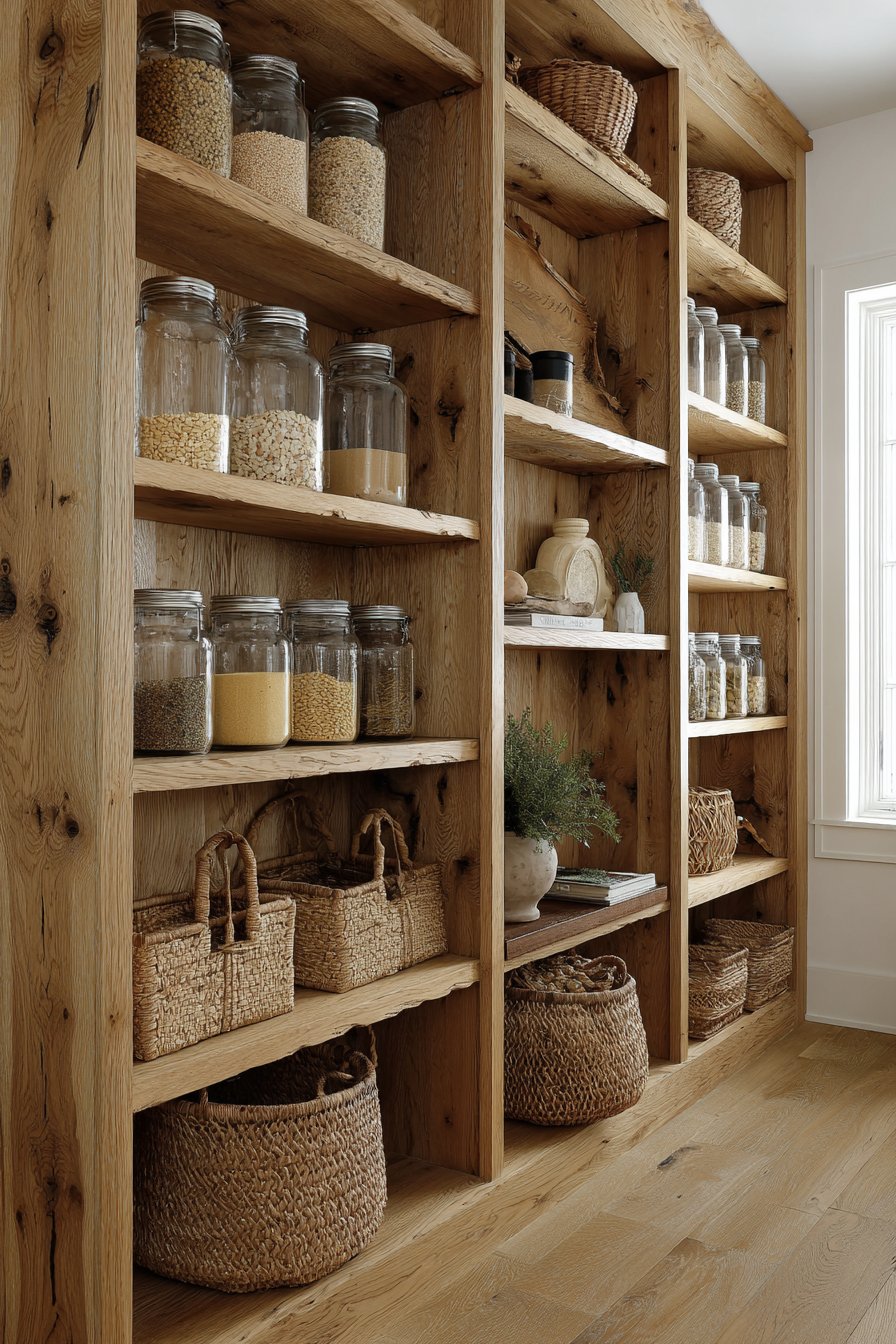
Glass storage jars containing grains and legumes create colorful displays. Woven basket organizers provide texture contrast against smooth oak surfaces. Ceramic containers in earth tones complement the natural wood palette. Jute storage baskets on lower shelves add additional textural layers. Each organizational element serves dual purpose of function and beauty.
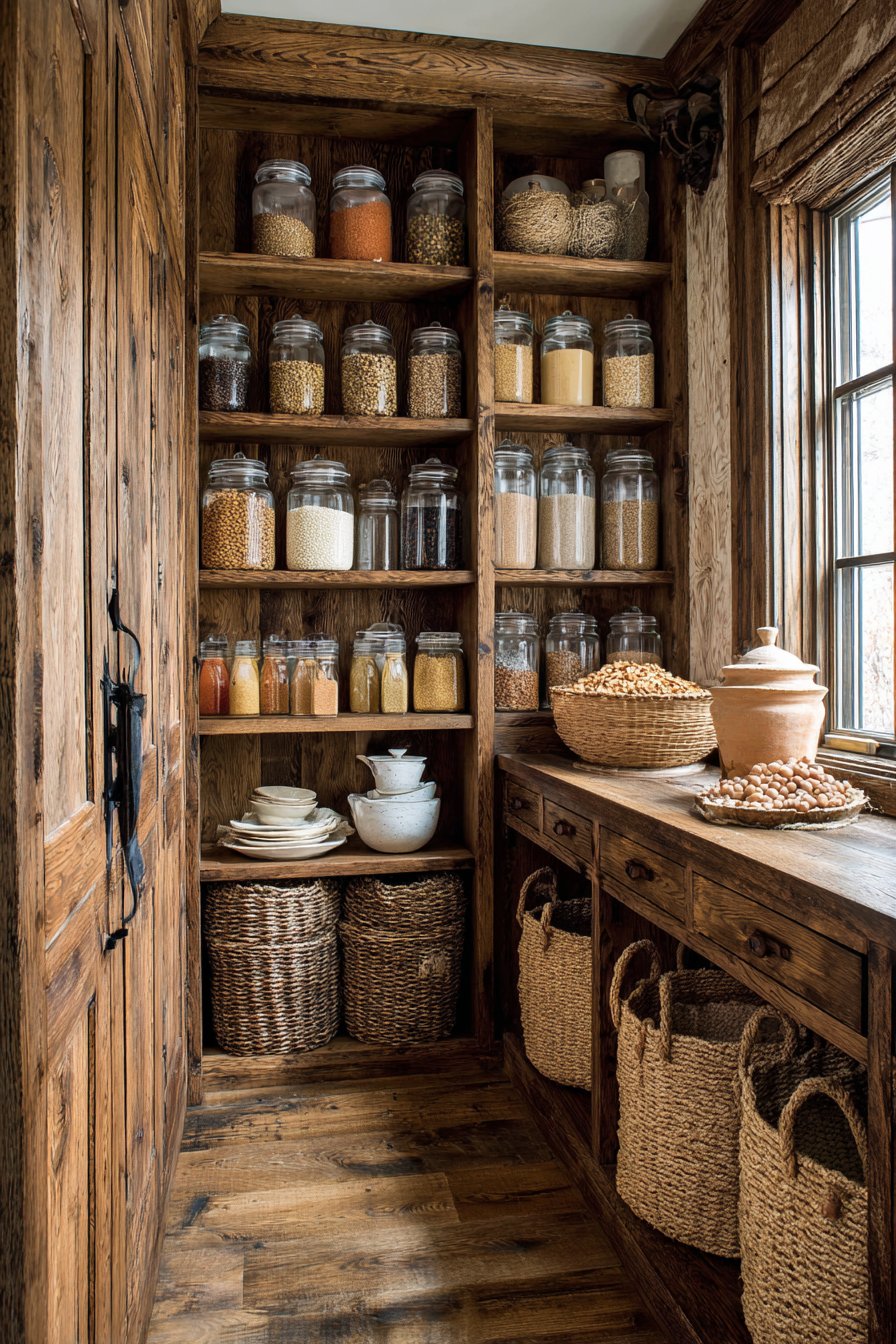
Natural light from nearby windows illuminates the organized space beautifully. The lighting reveals wood grain depth and golden undertones. Shadow play across varied textures creates dimensional interest. The interplay between light and natural materials feels almost meditative.
This pantry design demonstrates that storage spaces deserve equal design consideration. Practical organization enhances rather than conflicts with aesthetic goals. The space proves functionality and beauty coexist harmoniously in earthy kitchen design.
Key Design Tips:
- Use unstained white oak to showcase natural wood character
- Display stored items in glass jars for visual interest
- Incorporate woven baskets for textural contrast and organization
- Add ceramic containers in earth tones for color coordination
- Maximize natural light to illuminate wood grain beauty
- Celebrate knots and grain variations as design features
4. Live Edge Dining Nook Intimacy
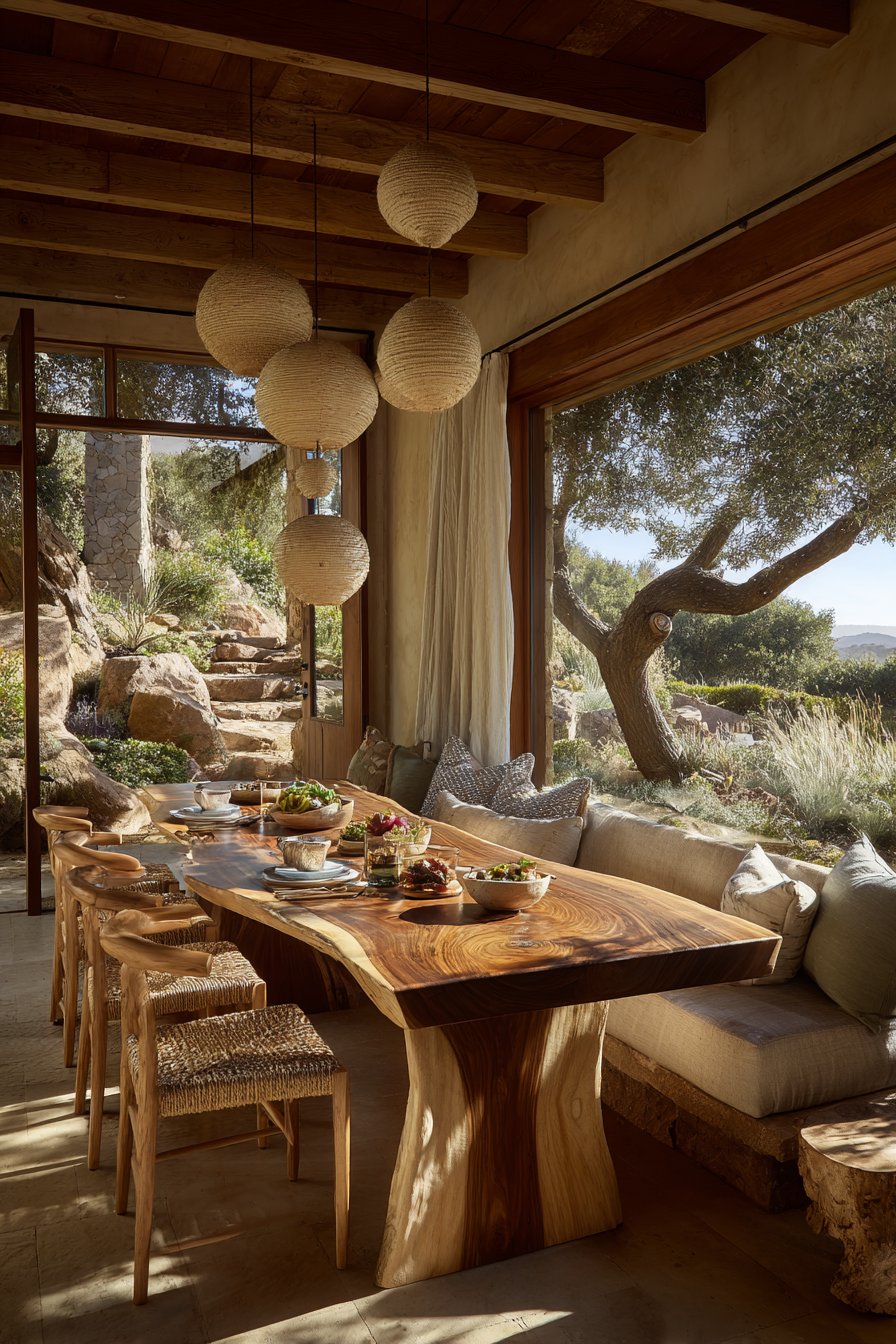
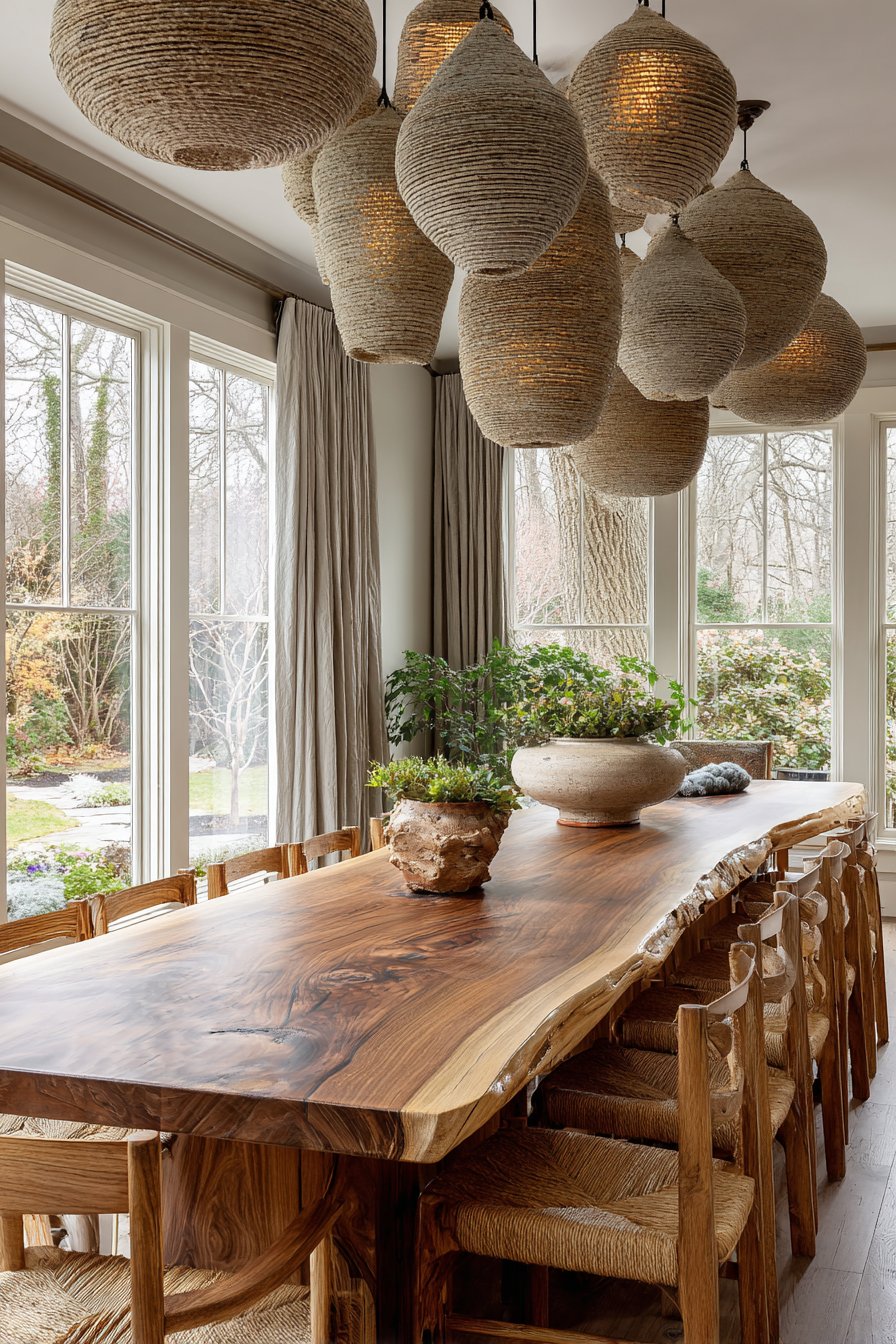
A live edge walnut table creates intimate dining experiences in this earthy kitchen nook. Visible wood grain and natural edge contours celebrate the tree’s original form. The organic shape adds sculptural quality to functional furniture. Ladder-back chairs in weathered oak surround the table with rustic charm. Woven rush seats provide textural softness and traditional craftsmanship.
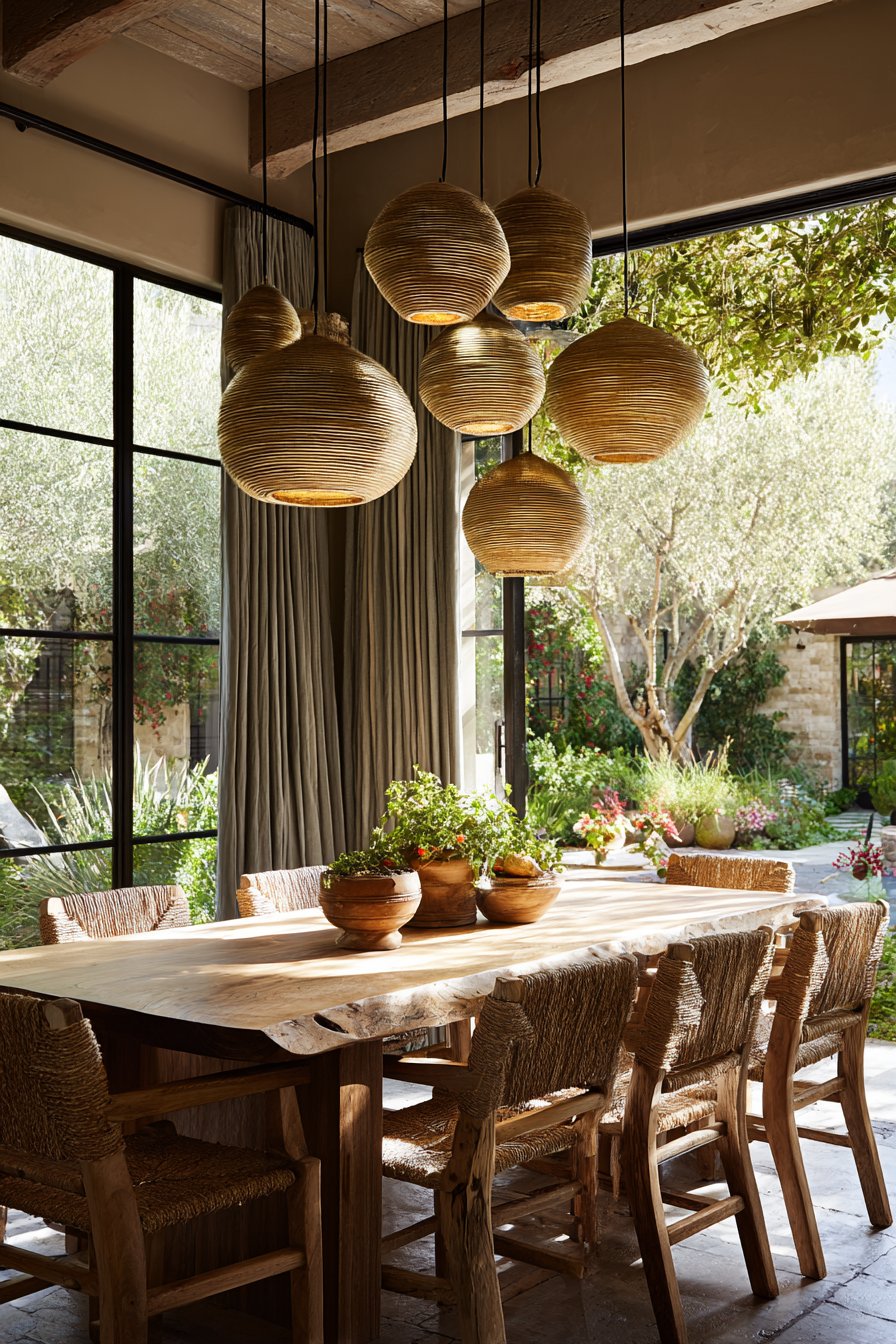
Handcrafted ceramic pendant lights in sandy beige tones hang at varying heights above. The clustered arrangement creates focal interest while providing practical illumination. Large windows frame garden views with natural linen curtains. The oatmeal-toned fabric filters light while maintaining connection to outdoors.
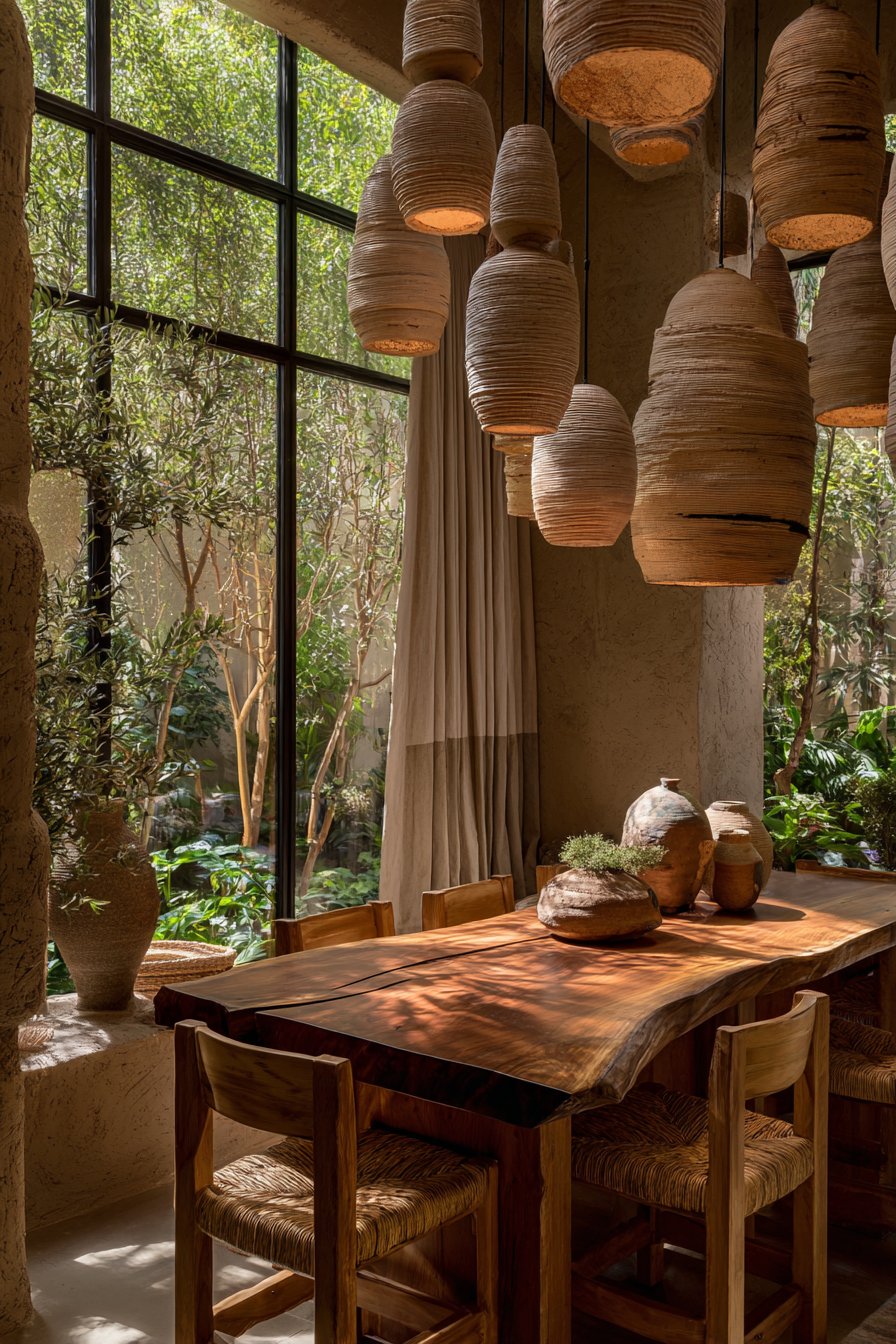
Golden hour lighting transforms this space into magical dining environment. Warm light emphasizes rich wood tones and organic textures throughout. The interplay between natural daylight and artificial lighting creates ambiance. Shadows dance across surfaces, enhancing dimensional quality of materials.
This dining nook demonstrates how earthy kitchen design extends beyond cooking areas. The space invites lingering over meals and meaningful conversations. Natural materials create warmth that makes every gathering feel special.
Key Design Tips:
- Choose live edge tables to celebrate natural wood forms
- Select weathered oak chairs for rustic authenticity
- Hang ceramic pendants at varied heights for visual interest
- Use natural linen curtains for soft light filtration
- Position seating to maximize garden views
- Design lighting to enhance golden hour effects
5. Butcher Block Workspace Warmth
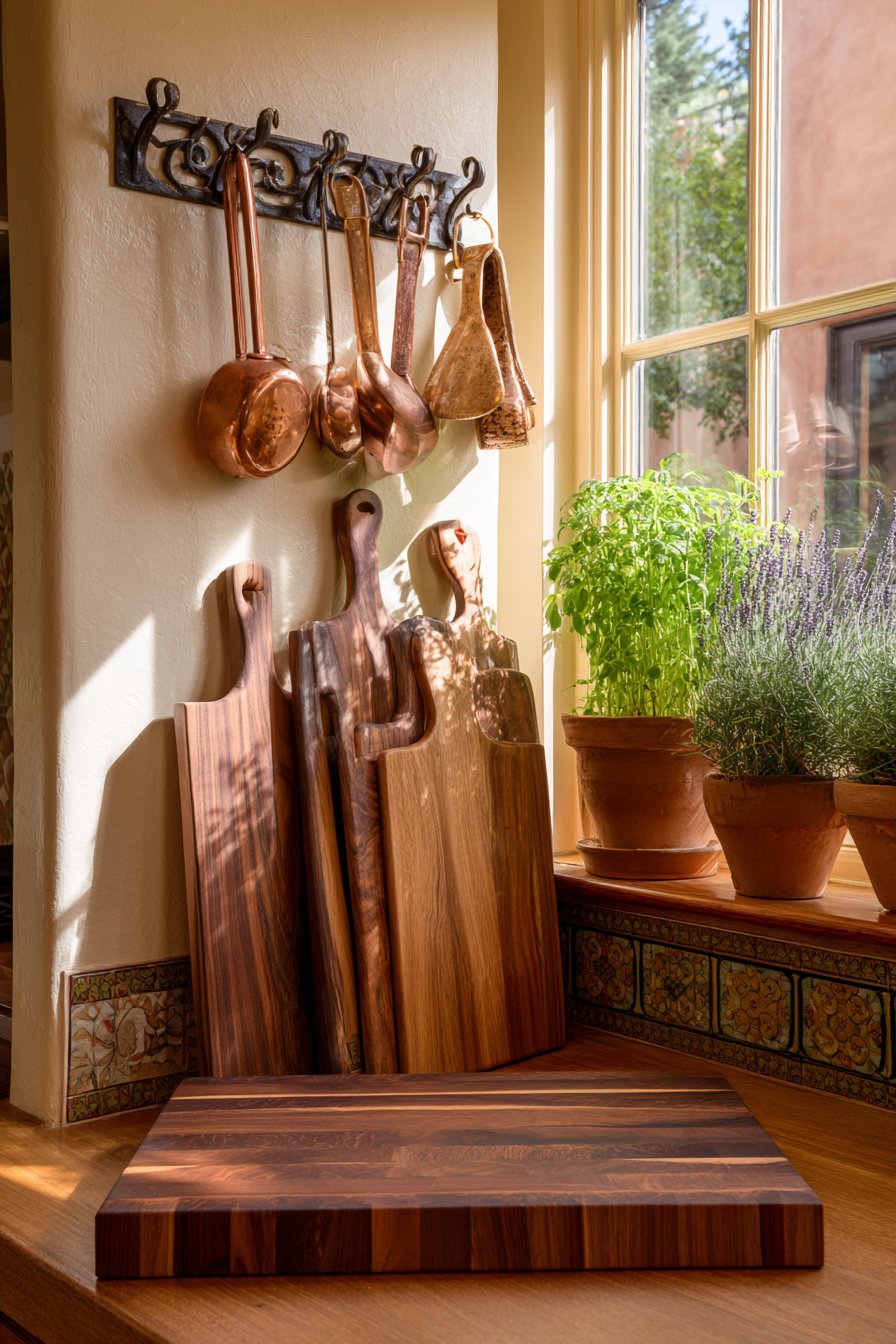
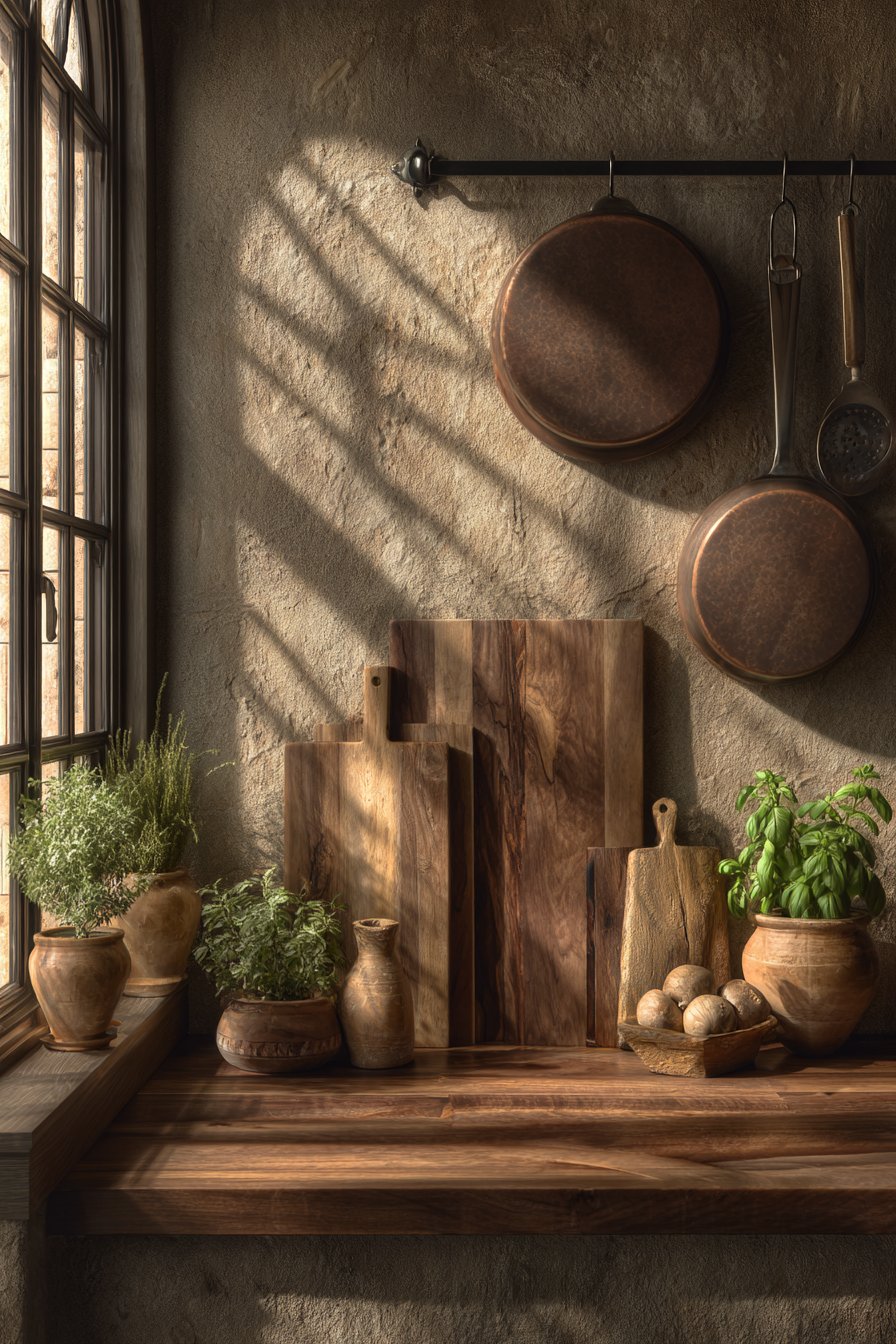
Thick butcher block countertops in warm walnut create ideal workspace surfaces. Natural color variations and sealed grain texture provide both beauty and durability. The substantial thickness communicates quality and permanence. Wooden cutting boards in various sizes lean against textured clay-colored walls. The collection becomes functional art display.
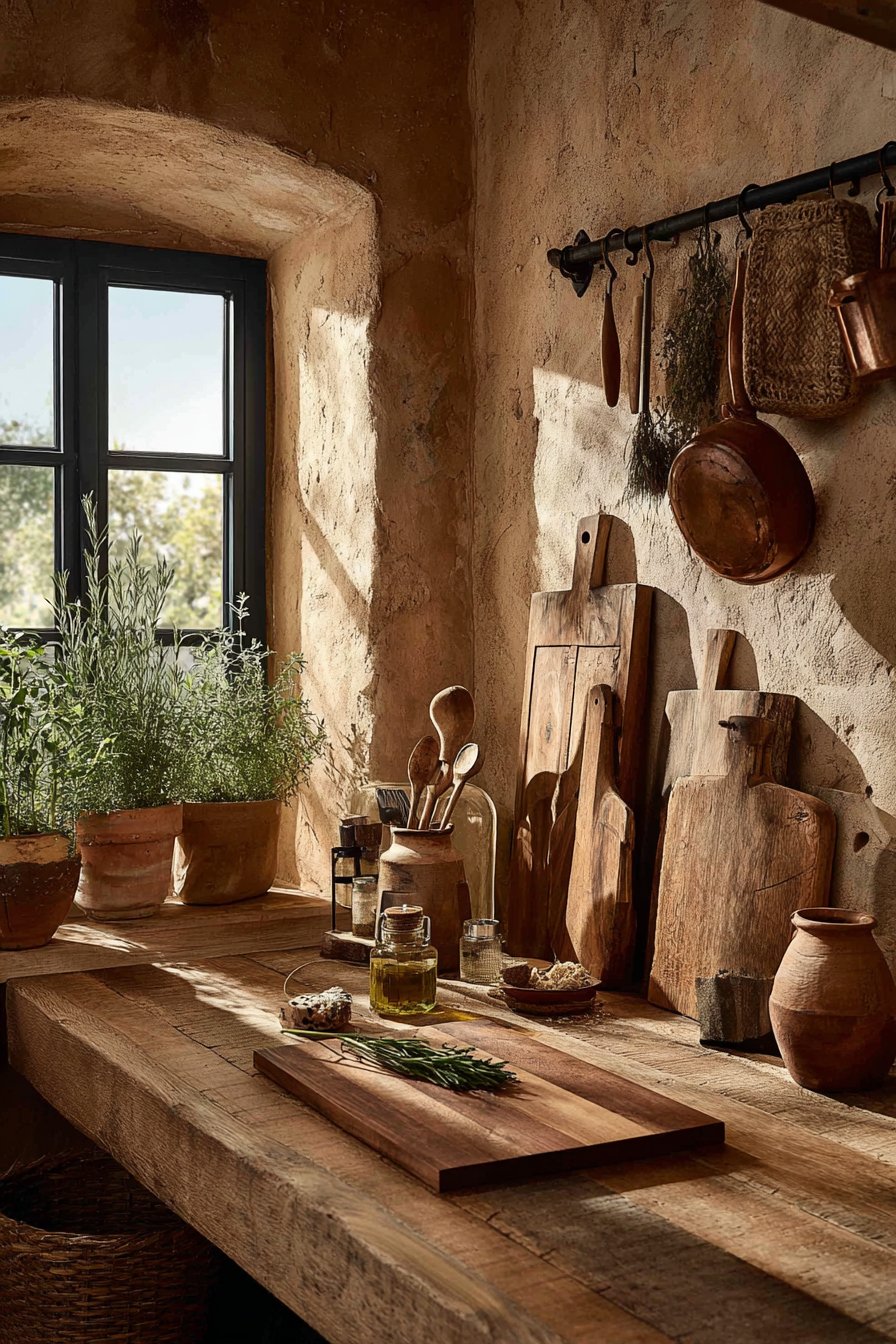
Copper kitchen tools hang from wrought iron rails above the workspace. The metallic warmth complements natural wood tones beautifully. Fresh herbs in terracotta pots line the window sill cheerfully. Living plants add vitality and practical function to the design. The herbs contribute both visual softness and culinary utility.
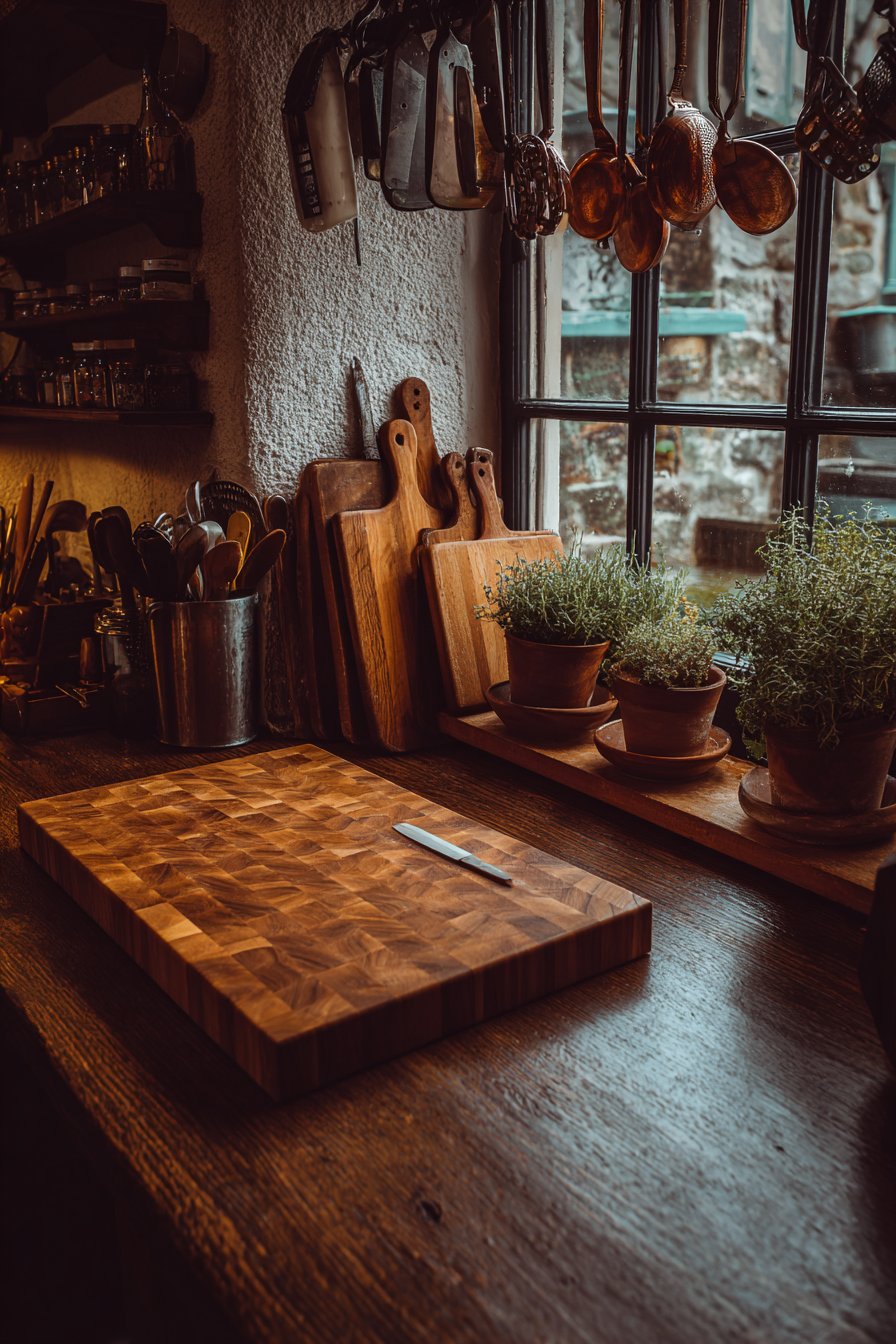
Soft diffused natural light highlights tactile material qualities throughout this space. The lighting reveals grain patterns and surface textures with clarity. Shadows enhance the dimensional aspects of various materials. The illumination strategy celebrates the workspace’s functional beauty.
This counter area demonstrates earthy kitchen design’s practical side. The space combines beautiful materials with serious culinary functionality. Every element serves purpose while contributing to overall aesthetic harmony.
Key Design Tips:
- Install thick butcher block for durable and beautiful work surfaces
- Display wooden cutting boards as functional art
- Hang copper tools for warm metallic accents
- Grow fresh herbs in terracotta pots for a living texture
- Use diffused natural light to highlight material qualities
- Choose warm walnut for rich color depth
6. Textured Range Hood Statement
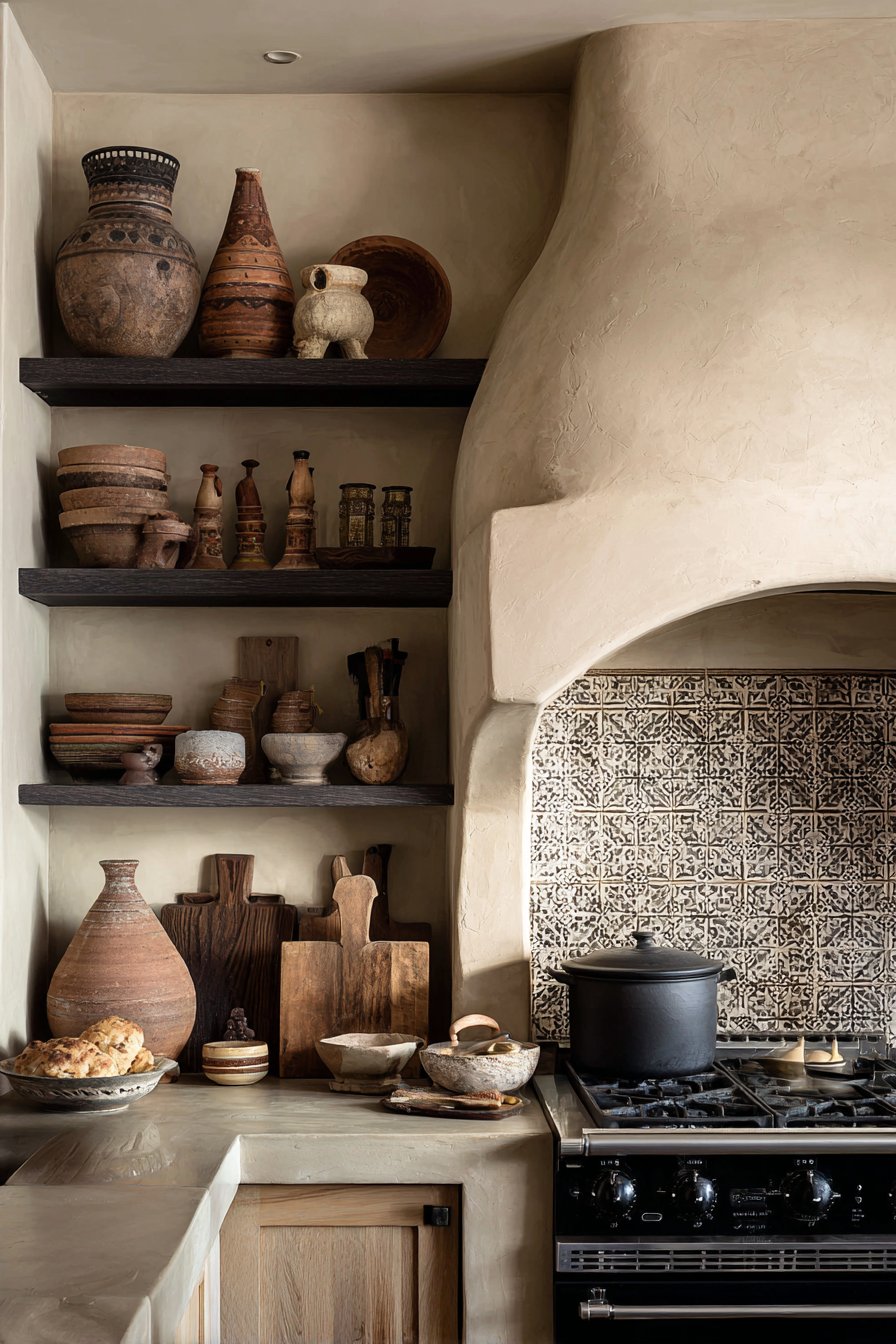
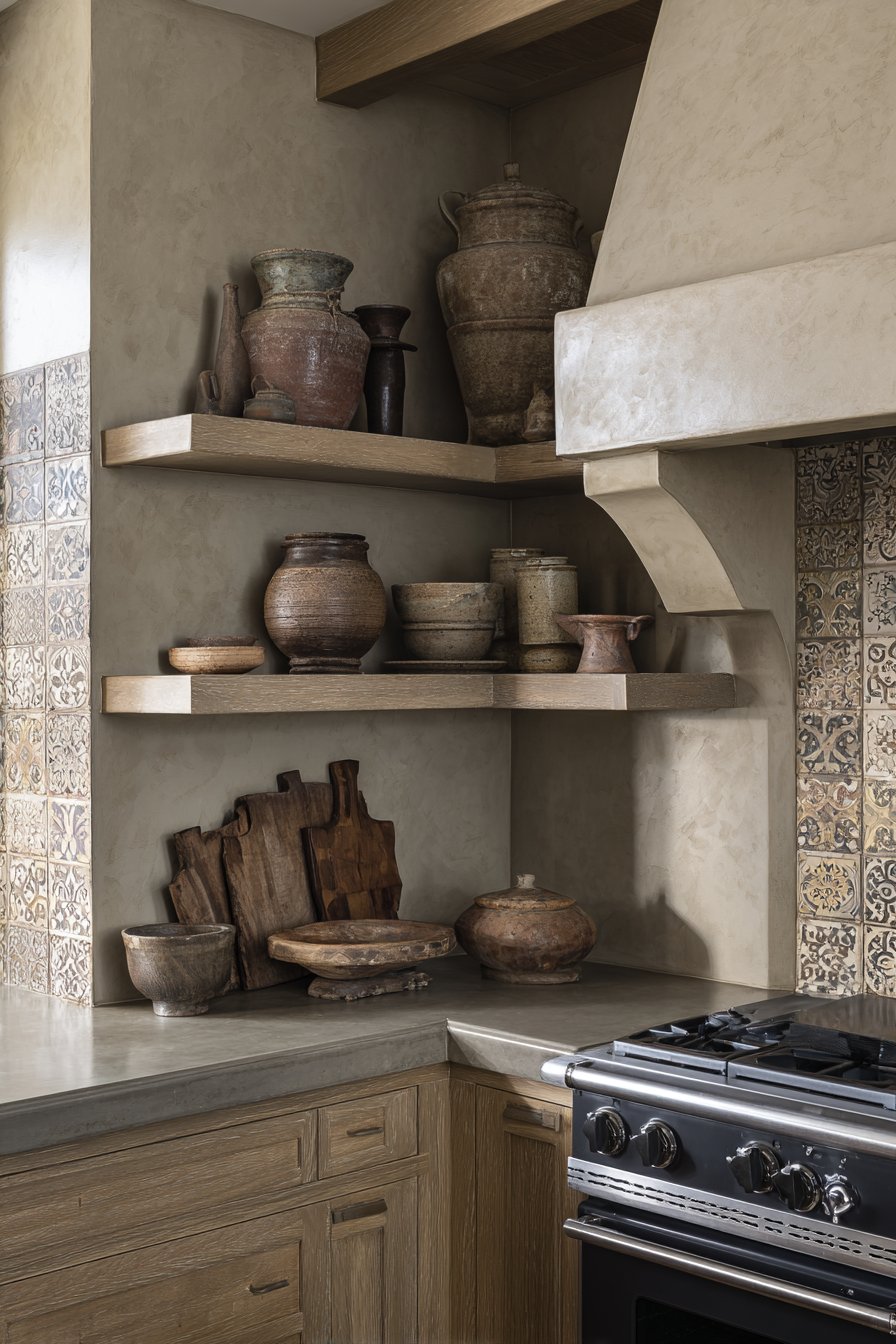
A plastered range hood in warm taupe creates architectural focal point. Subtle trowel texture marks add handcrafted character to the surface. Open shelving flanks the hood displaying earthenware pottery and wooden serving pieces. The vintage-inspired range in matte black provides dramatic contrast. Natural hickory cabinetry frames the cooking area with warm wood tones.
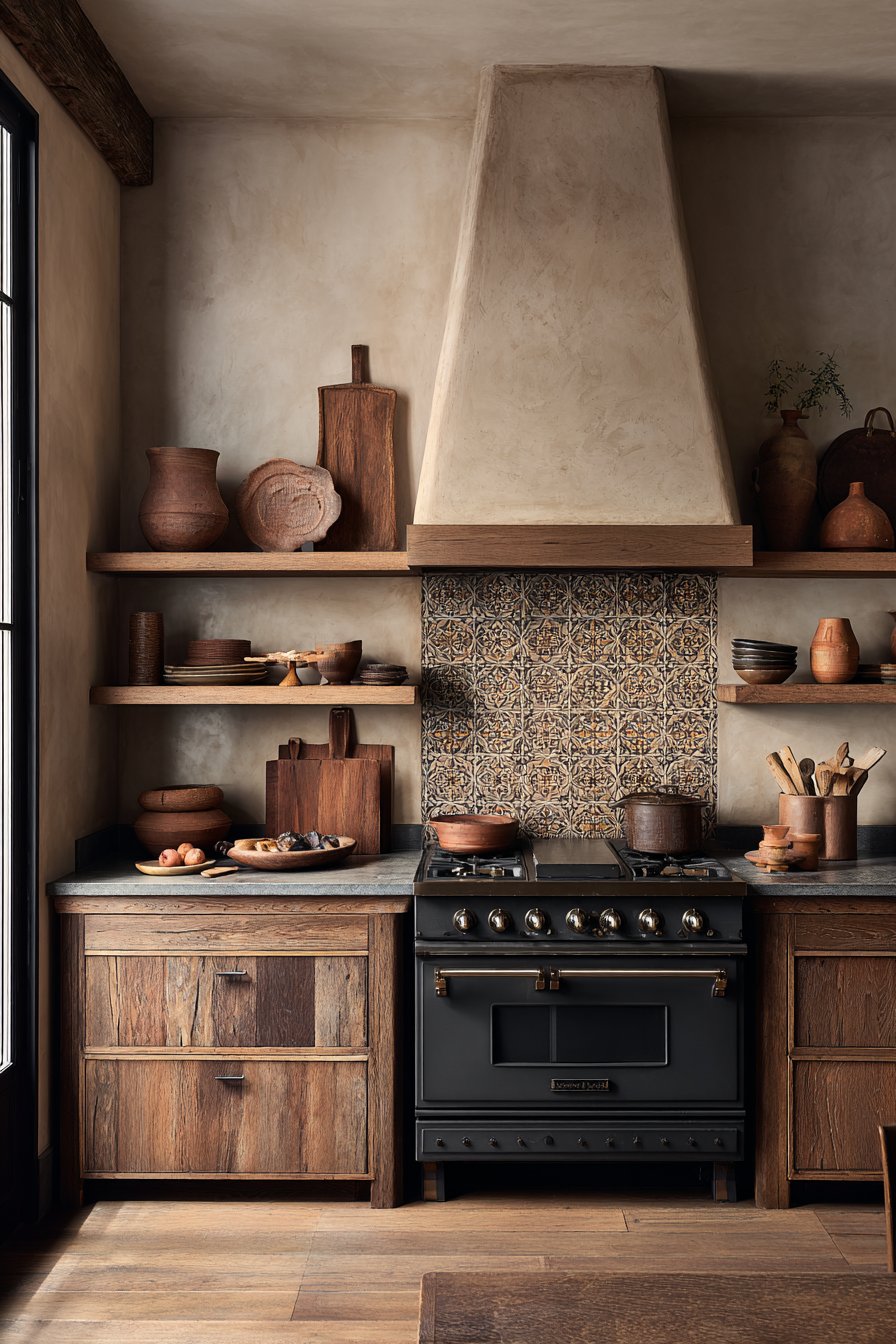
Moroccan cement tiles in earthy geometric patterns form striking backsplash. The patterns add visual complexity without overwhelming the space. Color variations within tiles enhance handmade quality perception. The geometric designs bridge traditional and contemporary aesthetics successfully.
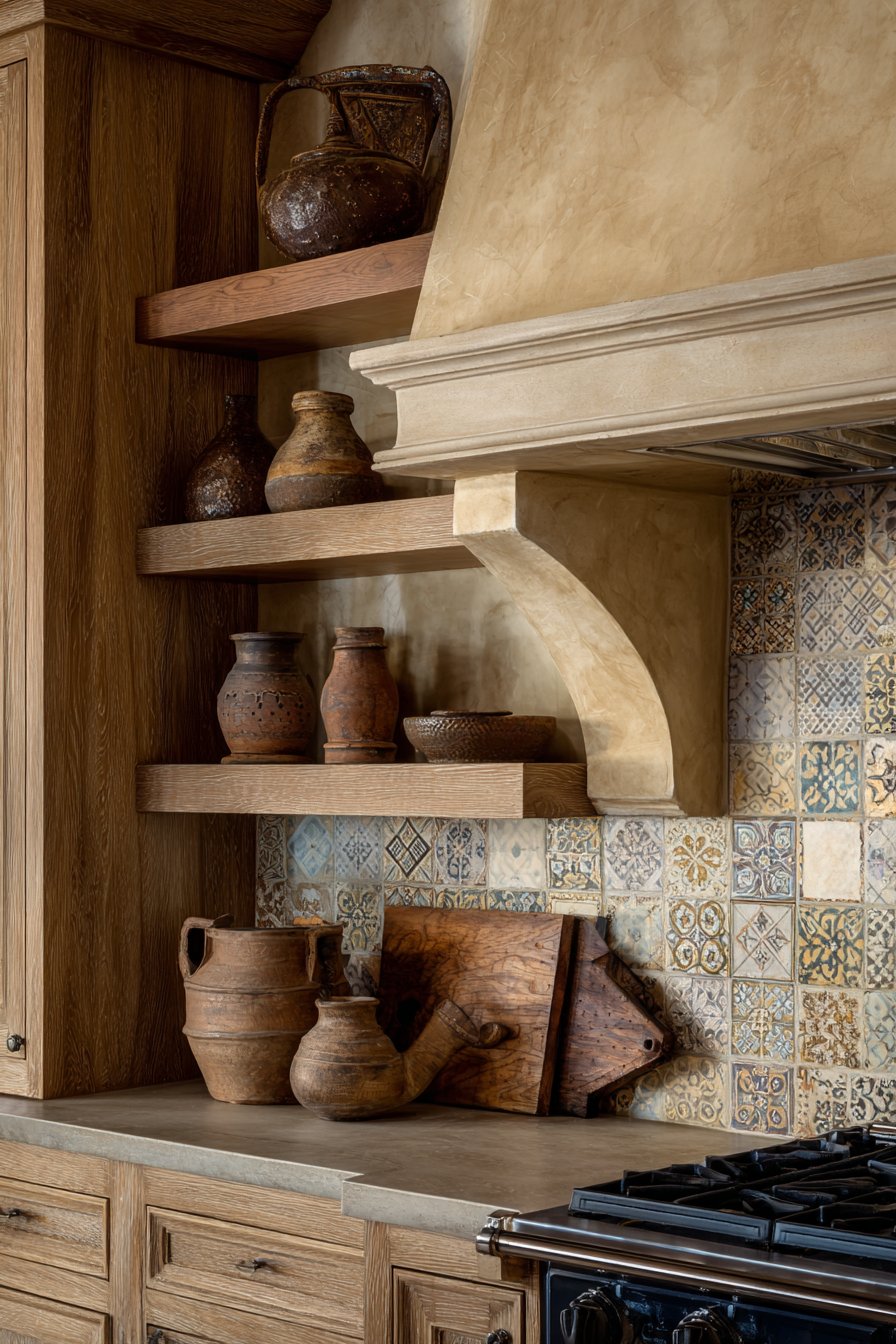
Layered textures define this range area’s distinctive character. Smooth matte black contrasts with rough plaster and dimensional tiles. Natural wood grain adds organic warmth throughout. The combination creates rich visual interest that rewards closer inspection.
Balanced lighting showcases both artisanal details and functional cooking requirements. The illumination reveals texture depth while providing practical task lighting. This design proves cooking areas can be both beautiful and highly functional.
Key Design Tips:
- Apply textured plaster to range hoods for architectural interest
- Choose matte black appliances for modern contrast
- Install Moroccan cement tiles for geometric pattern interest
- Use open shelving to display pottery and wooden pieces
- Frame cooking areas with natural hickory cabinetry
- Balance task lighting with aesthetic illumination needs
7. Layered Natural Textile Windows
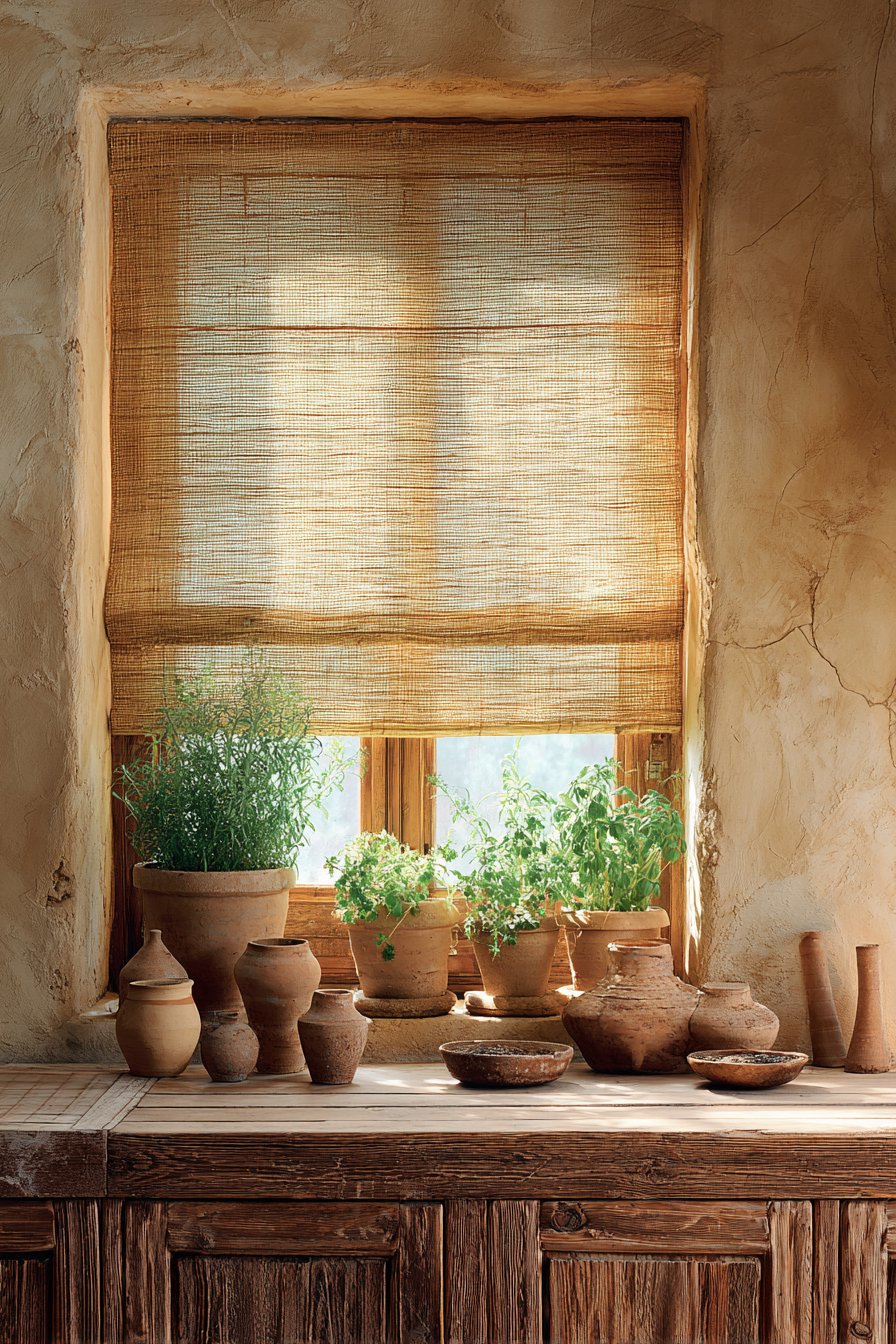
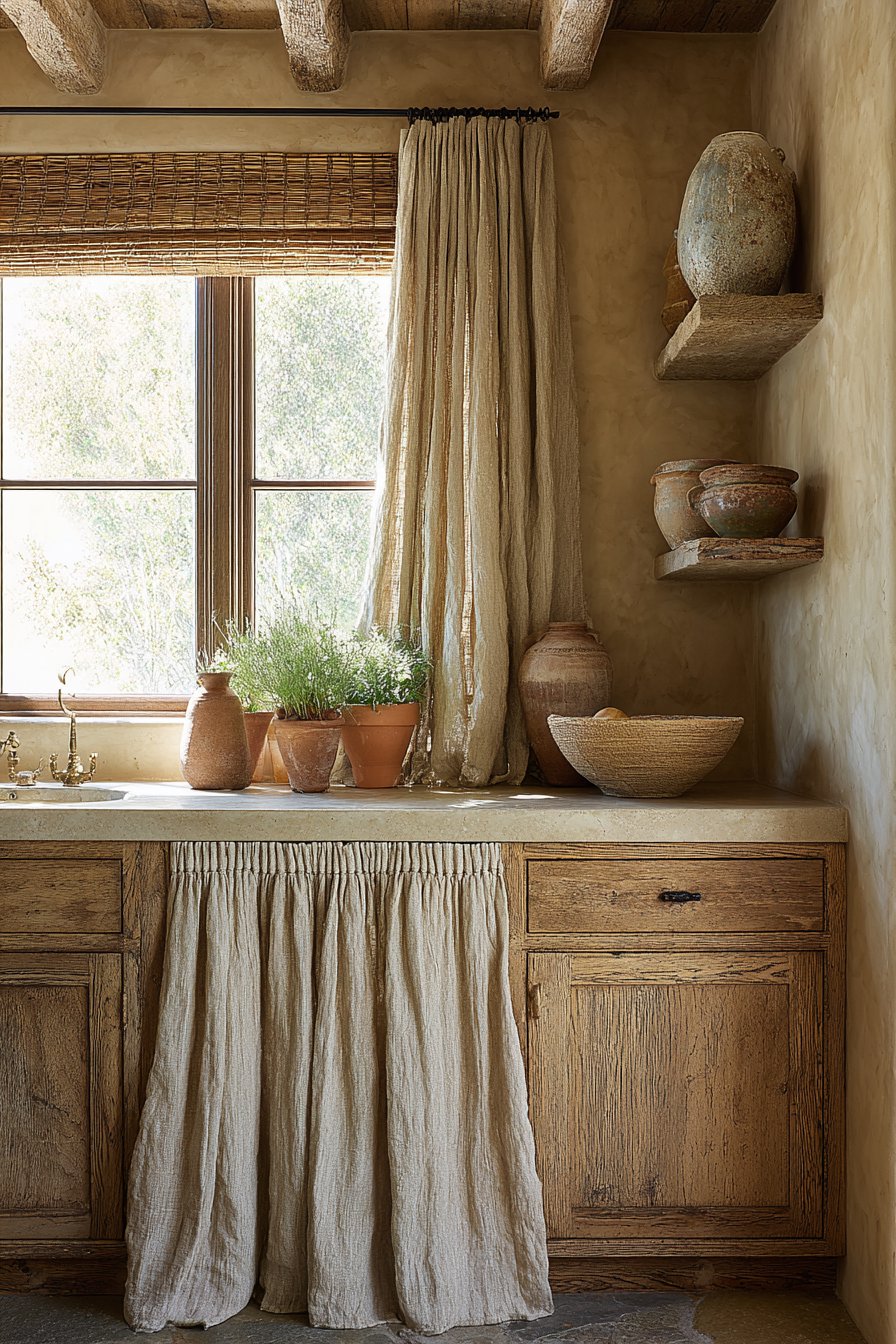
Natural linen curtains in oatmeal tones provide primary window coverage. Visible weave texture adds tactile interest to fabric selection. Woven bamboo shades layer underneath for flexible light filtering. The combination offers practical light control with textural depth. Multiple layers create dimensional window treatments.
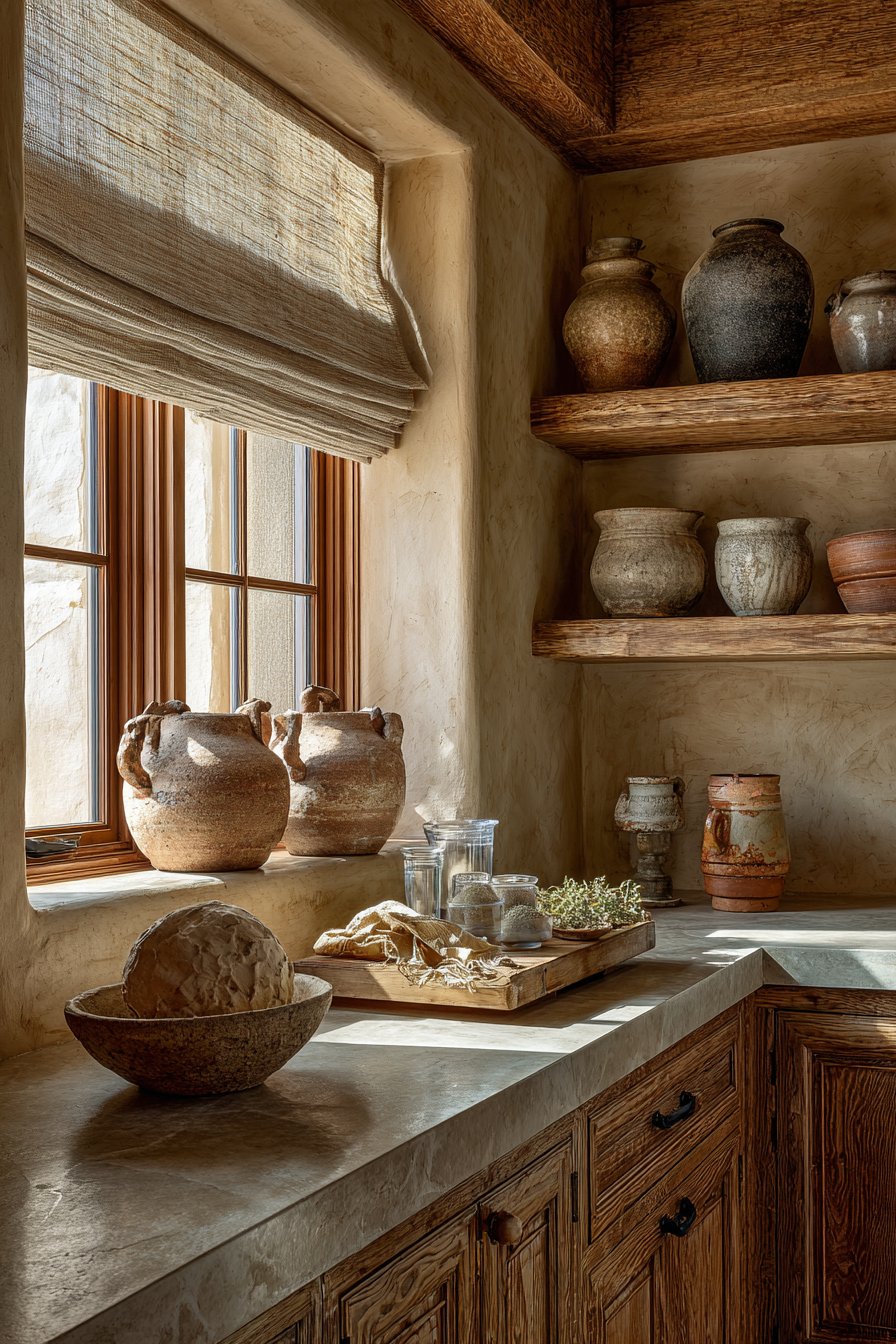
The window sill displays terracotta herb planters and vintage ceramic vessels. The collection adds color and living elements to the space. Walls in warm sandstone plaster provide textured backdrop. Reclaimed wood cabinetry below features original weathering marks and patina. These authentic aging details add character and history.
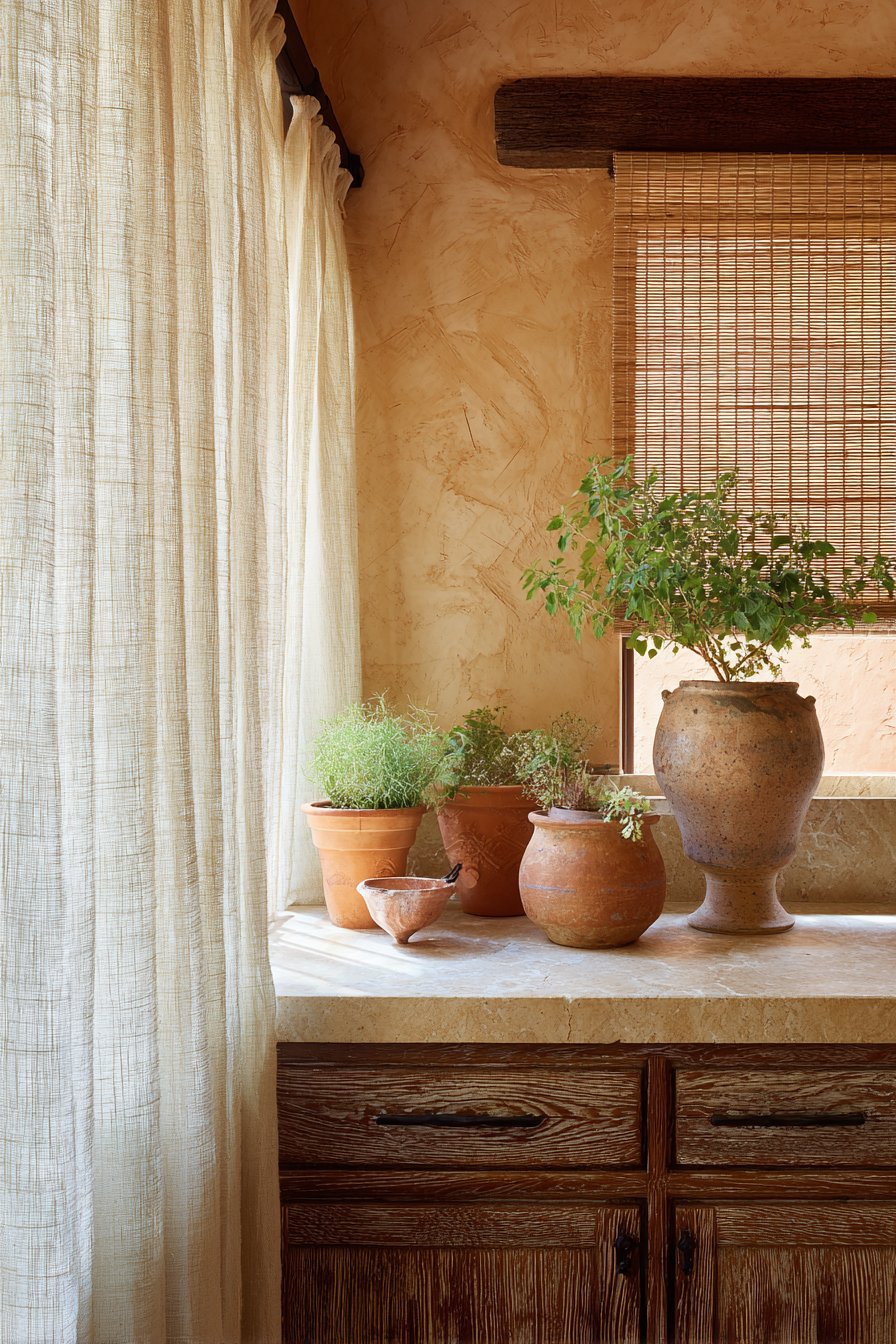
Morning light filtering through layered textiles creates soft ambient glow. The diffused illumination enhances the space’s warmth and comfort. Shadow patterns from bamboo shades add visual interest throughout the day. The interplay between natural materials and natural light feels harmonious.
This window treatment approach demonstrates layering’s importance in earthy kitchen design. Multiple textures and materials create depth and interest. The functional and aesthetic considerations merge seamlessly.
Key Design Tips:
- Layer linen curtains with bamboo shades for depth
- Choose oatmeal tones for neutral warmth
- Display terracotta planters on window sills
- Use sandstone plaster for textured wall surfaces
- Incorporate reclaimed wood with original weathering
- Design for flexible light control throughout the day
8. Dedicated Coffee Station Niche
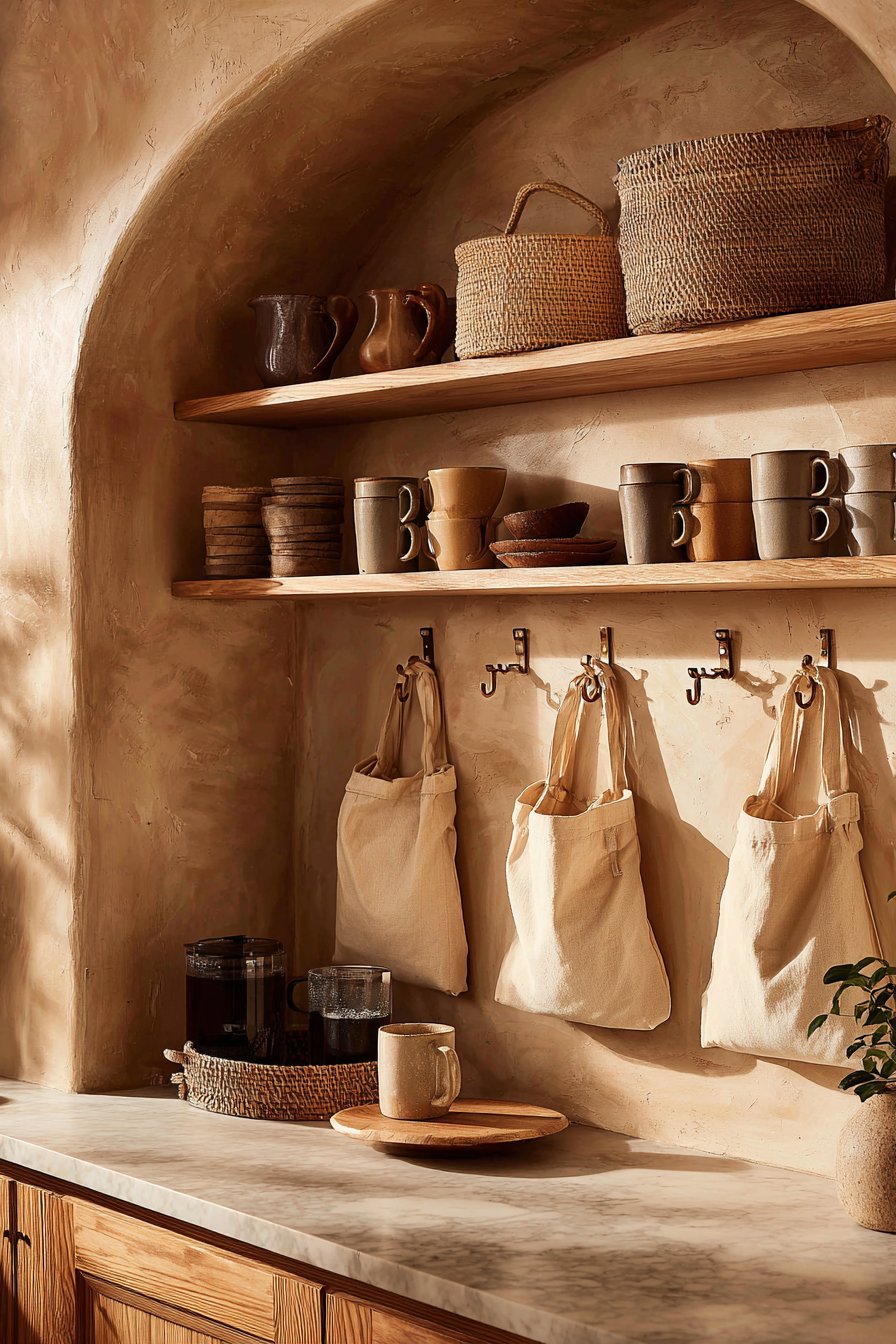
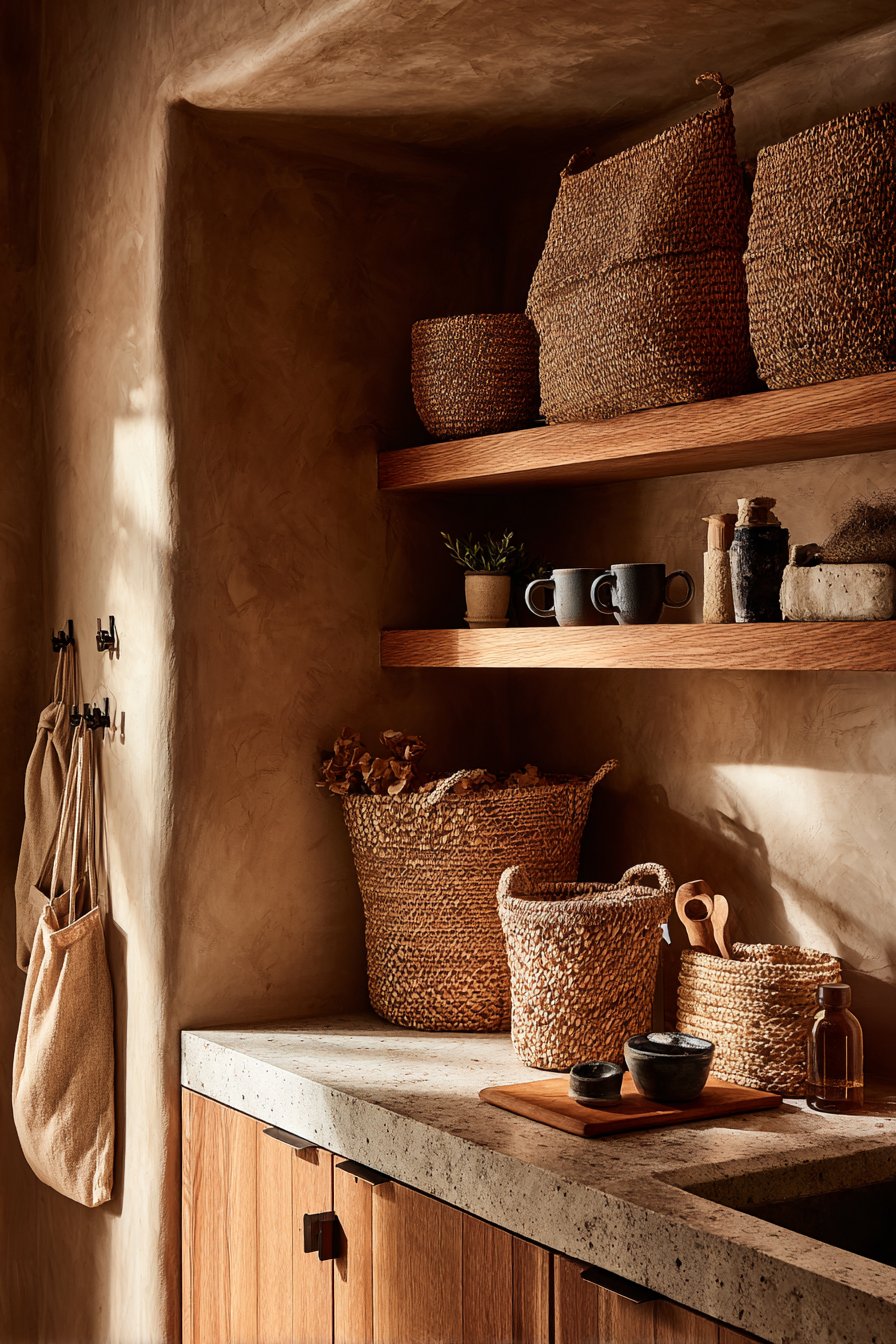
Custom shelving in natural ash wood creates dedicated coffee station alcove. Artisan mugs and pour-over equipment display with organized beauty. Woven storage baskets add textural elements to open shelving. The arrangement feels intentional yet accessible. Every item serves purpose while contributing to aesthetic.
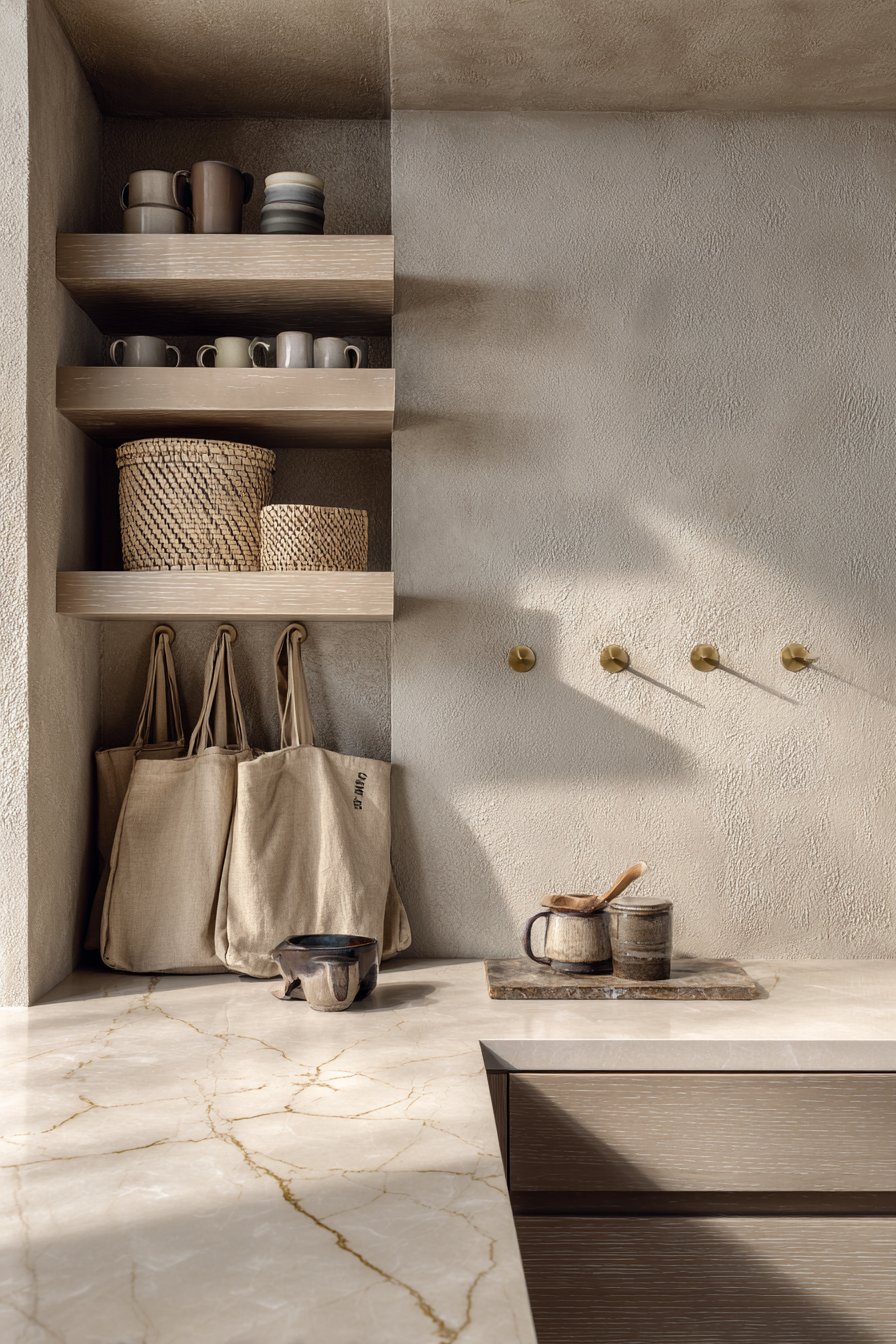
A small preparation counter in honed marble provides practical workspace. Warm veining in the stone adds subtle color variation. Walls finished in textured lime wash create depth in mushroom tones. Brass hooks hold canvas storage bags for coffee supplies. The metallic accents add refined touches without overwhelming natural palette.
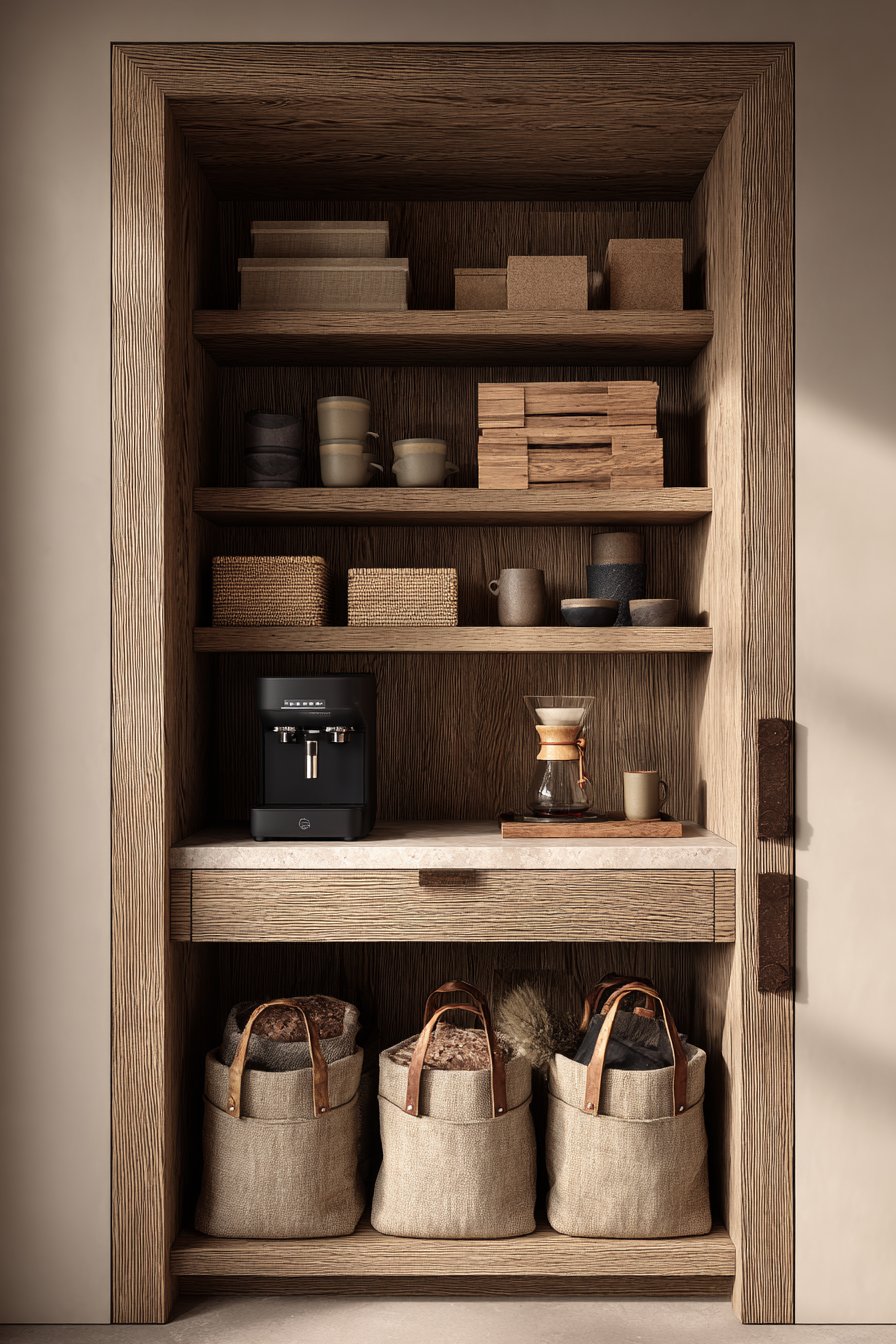
Ambient lighting creates warmth while casting shadows that enhance texture. The illumination strategy makes this small alcove feel special and inviting. Thoughtful lighting elevates the coffee ritual beyond mere functionality. The space becomes destination rather than afterthought.
This dedicated station demonstrates specialized zones’ value in earthy kitchen design. Small alcoves become meaningful spaces through thoughtful material selection. The coffee station honors daily rituals with beauty and practicality.
Key Design Tips:
- Create dedicated alcoves for specific kitchen functions
- Use natural ash wood for warm shelving tones
- Install honed marble for practical workspace surfaces
- Apply textured lime wash for depth in wall finishes
- Add brass hooks for both function and metallic accent
- Design ambient lighting to enhance small space warmth
9. Handcrafted Soapstone Sink Feature
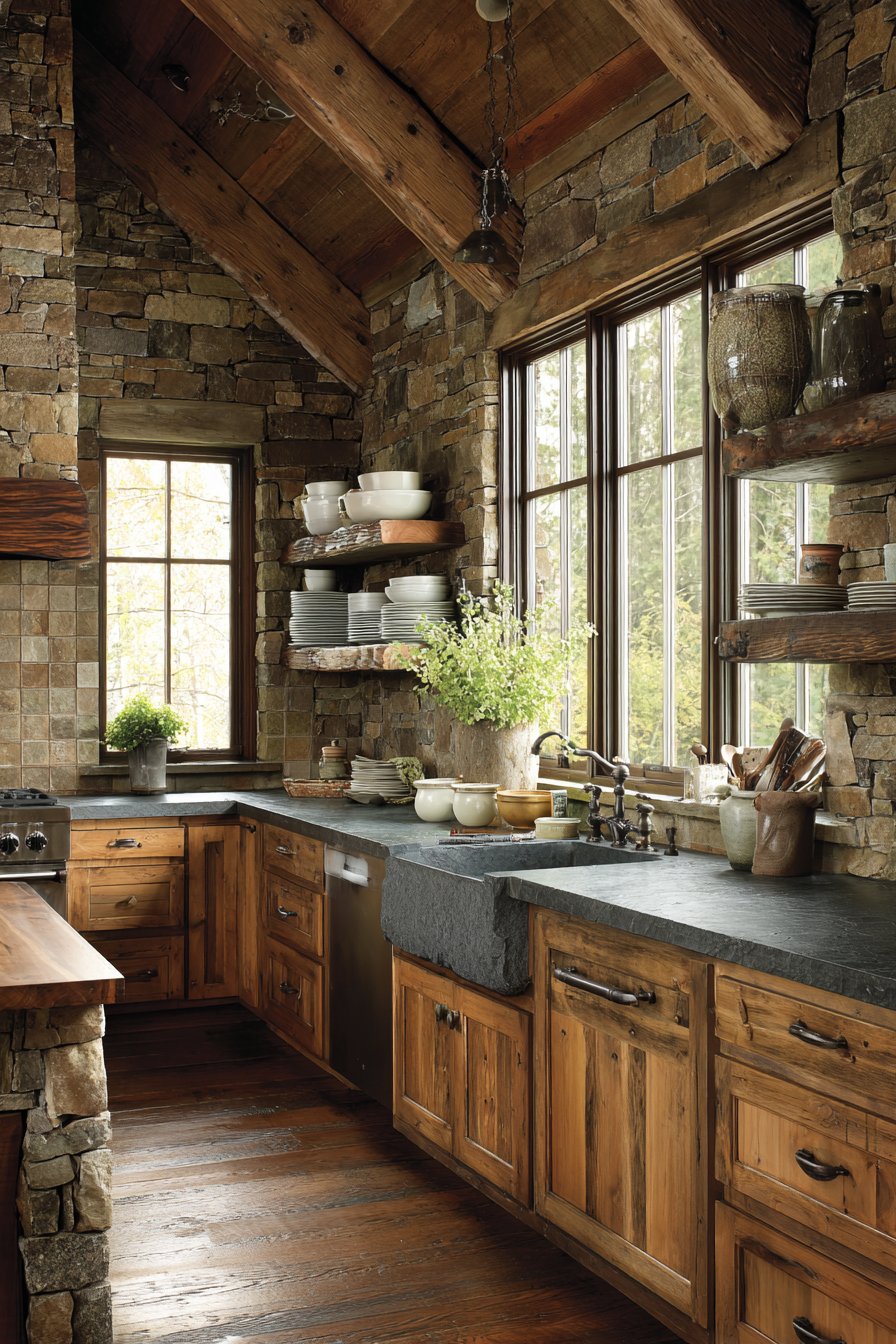
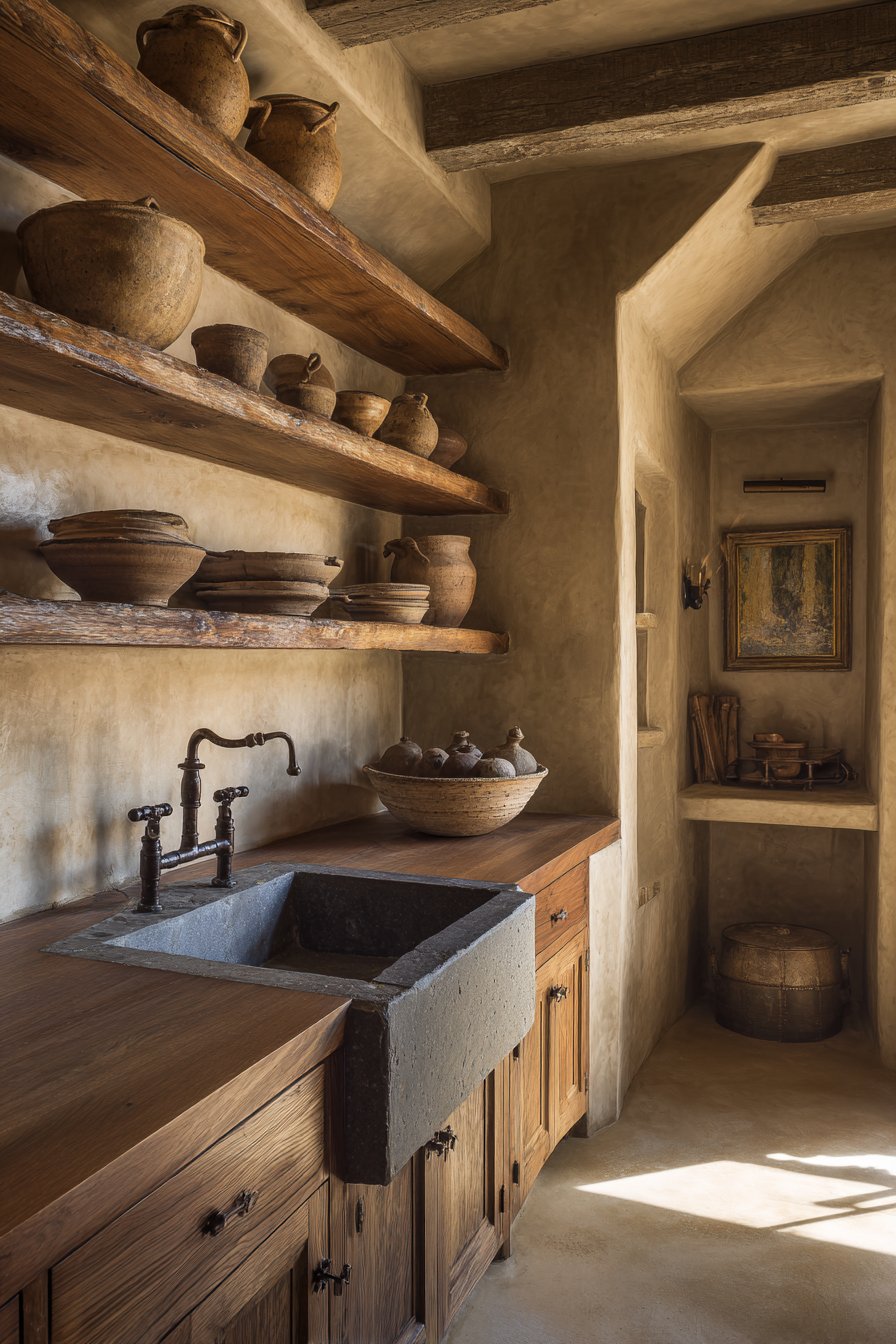
A handcrafted soapstone farmhouse sink becomes sculptural centerpiece. Natural surface patina and subtle color variations showcase material authenticity. Book-matched walnut countertops surround the sink with prominent grain patterns. The wood’s figure creates organic art throughout the horizontal surface. Natural clay tiles clad walls in varied earth tones.
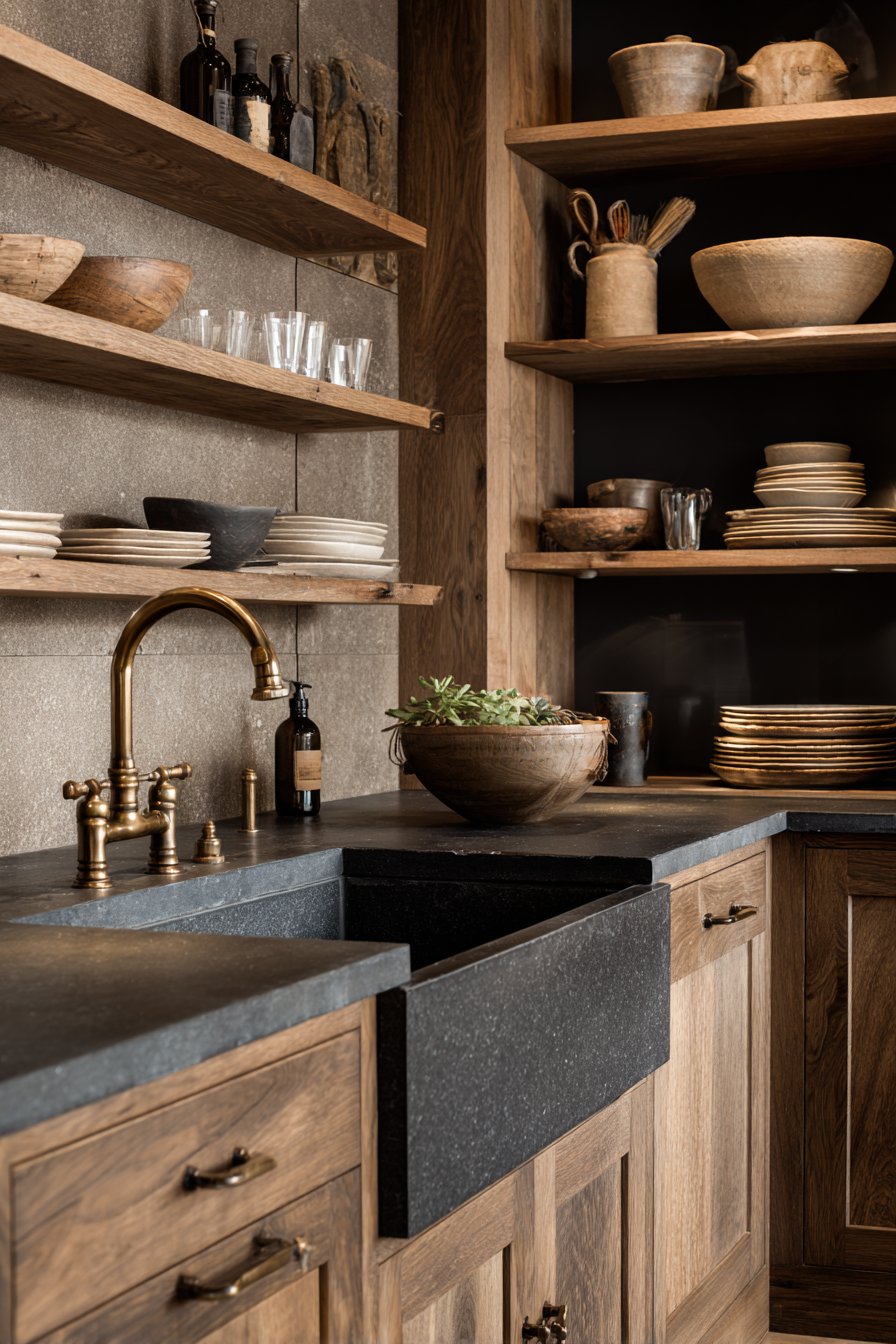
Oil-rubbed bronze fixtures complement the warm material palette perfectly. The aged metallic finish harmonizes with natural stone and wood. Open shelving above displays stoneware dishes and wooden utensil crocks. The practical storage doubles as attractive display space.
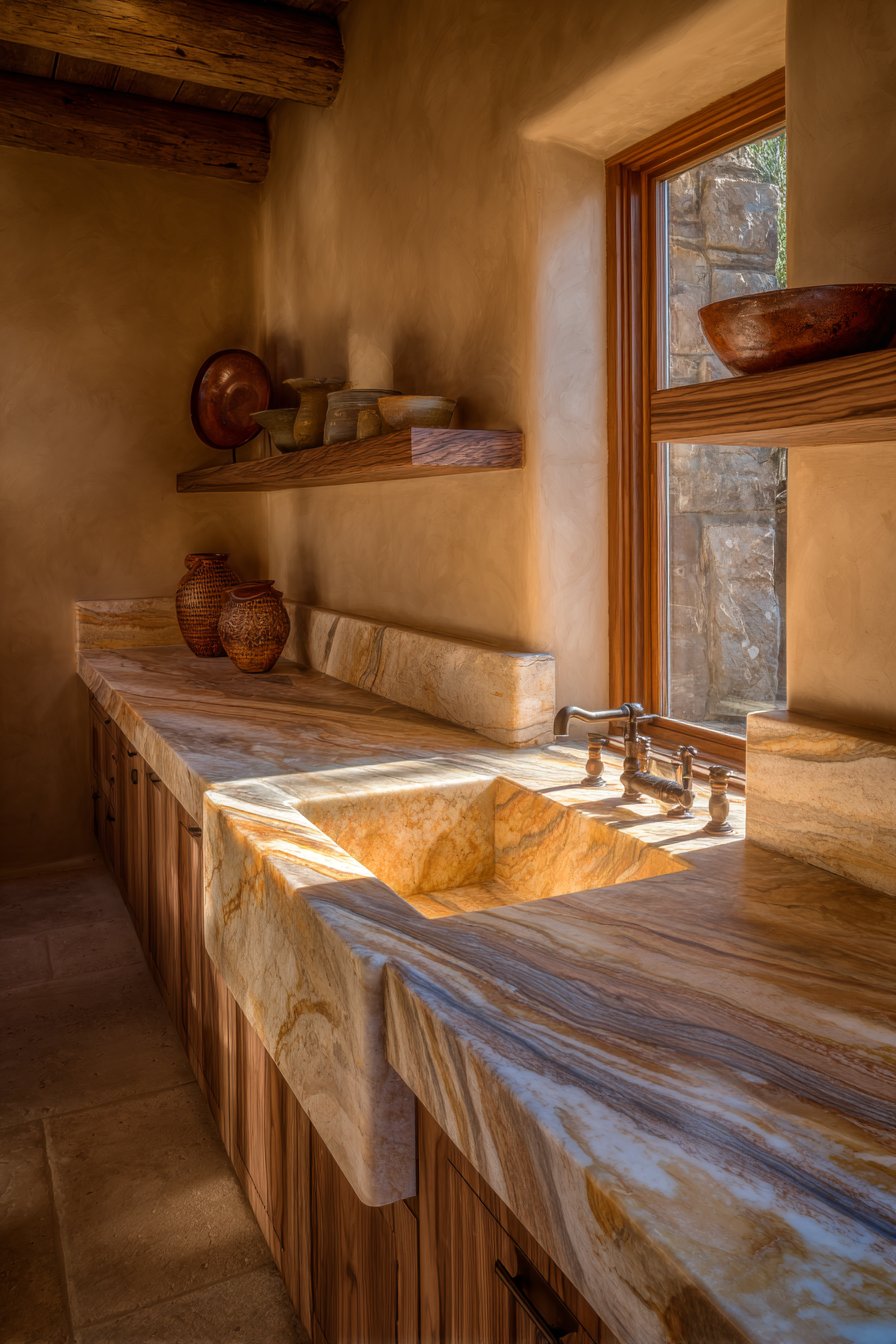
Soft natural lighting emphasizes authentic, touchable material qualities throughout. The illumination reveals surface textures and natural variations with clarity. Every material’s inherent character becomes visible and celebrated. The lighting strategy honors rather than hides natural imperfections.
This sink area demonstrates how utilitarian fixtures become design features. Material selection transforms necessary elements into beautiful focal points. The space proves functionality enhances rather than limits beauty.
Key Design Tips:
- Choose handcrafted soapstone for unique surface character
- Use book-matched walnut for dramatic grain patterns
- Install natural clay tiles for organic wall texture
- Select oil-rubbed bronze fixtures for aged patina look
- Display stoneware on open shelving above sink
- Maximize soft natural light to reveal material beauty
10. Waterfall Edge Island Drama
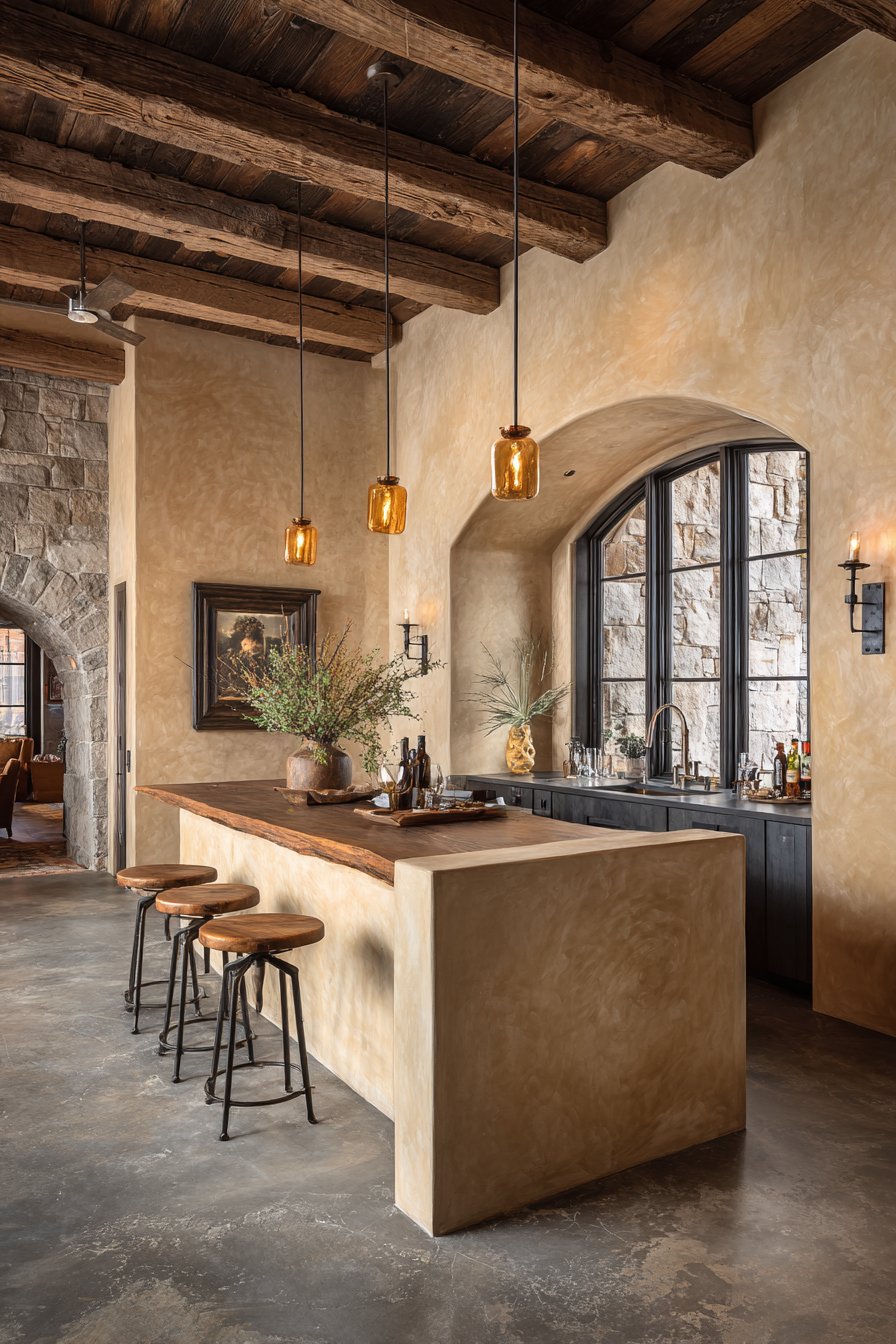
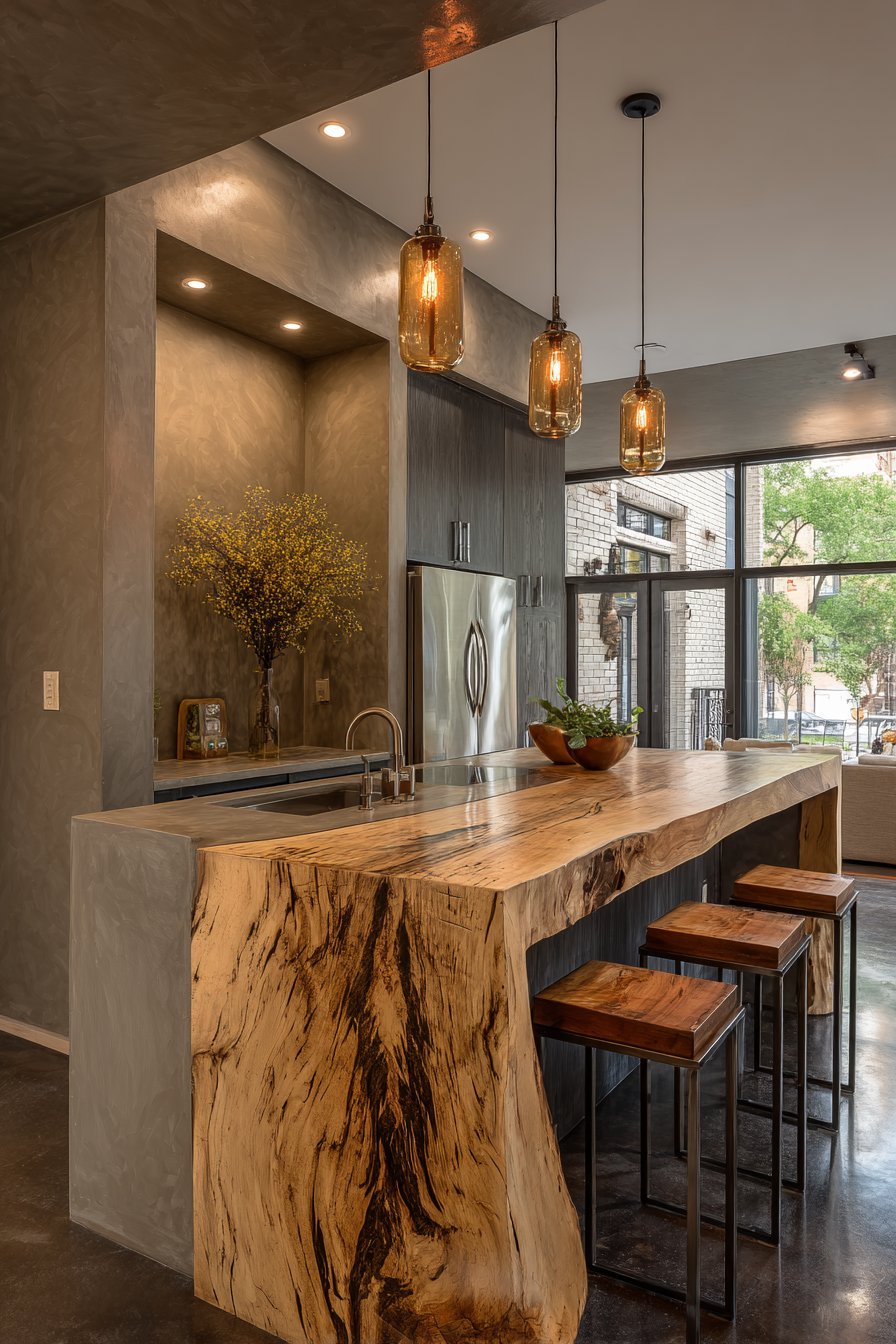
Industrial metal stools with reclaimed oak seats provide island seating. The combination of materials bridges industrial and organic aesthetics. A waterfall edge island in book-matched spalted maple showcases dramatic wood figure. Character marks and natural spalting patterns create living art. The island base features textured plaster in warm clay tones.
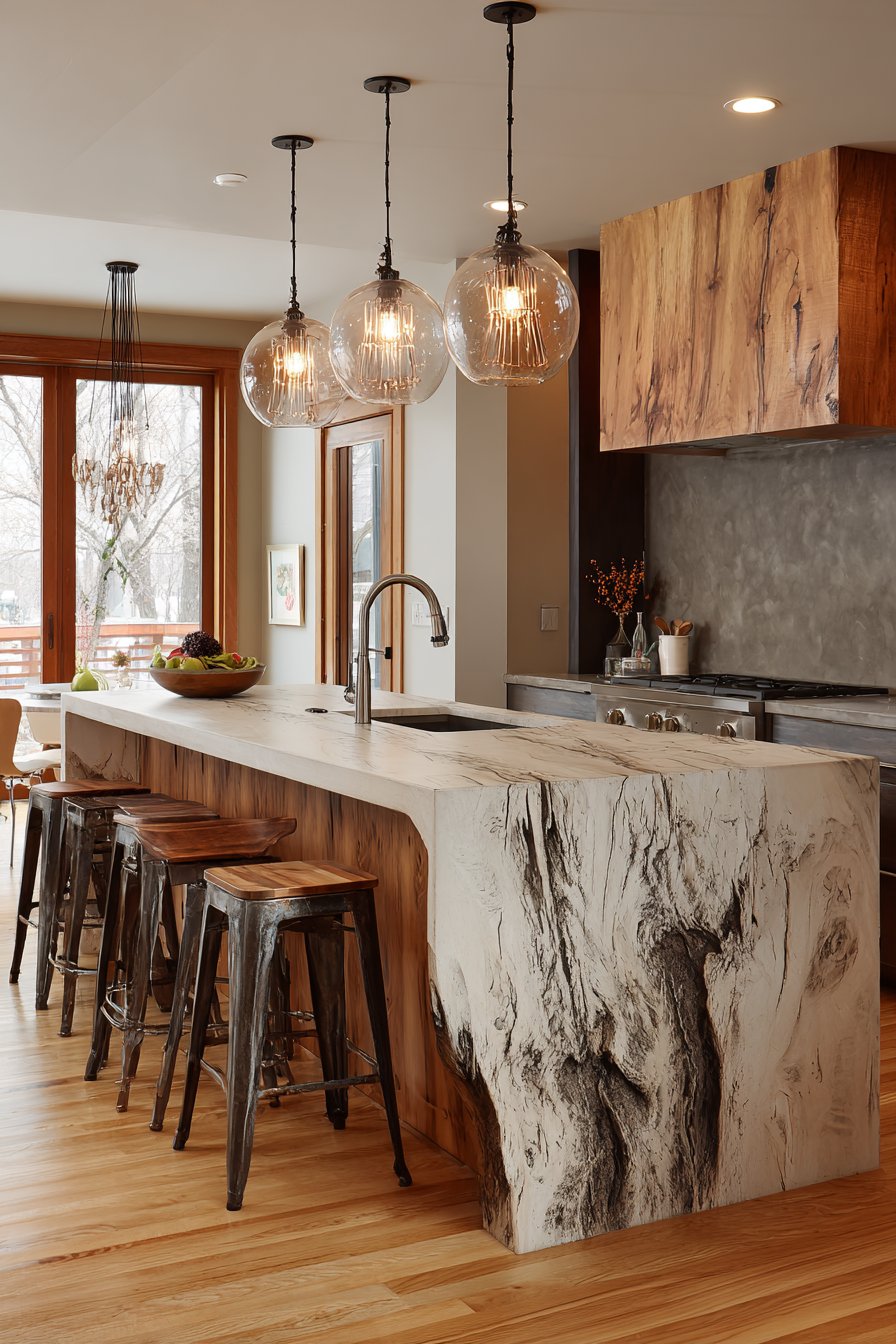
Hand-forged iron pendant lights with amber glass hang above the seating area. The fixtures provide warm ambient illumination and artistic interest. Metalwork details demonstrate traditional blacksmithing craftsmanship. Amber glass adds golden glow to the space’s lighting scheme.
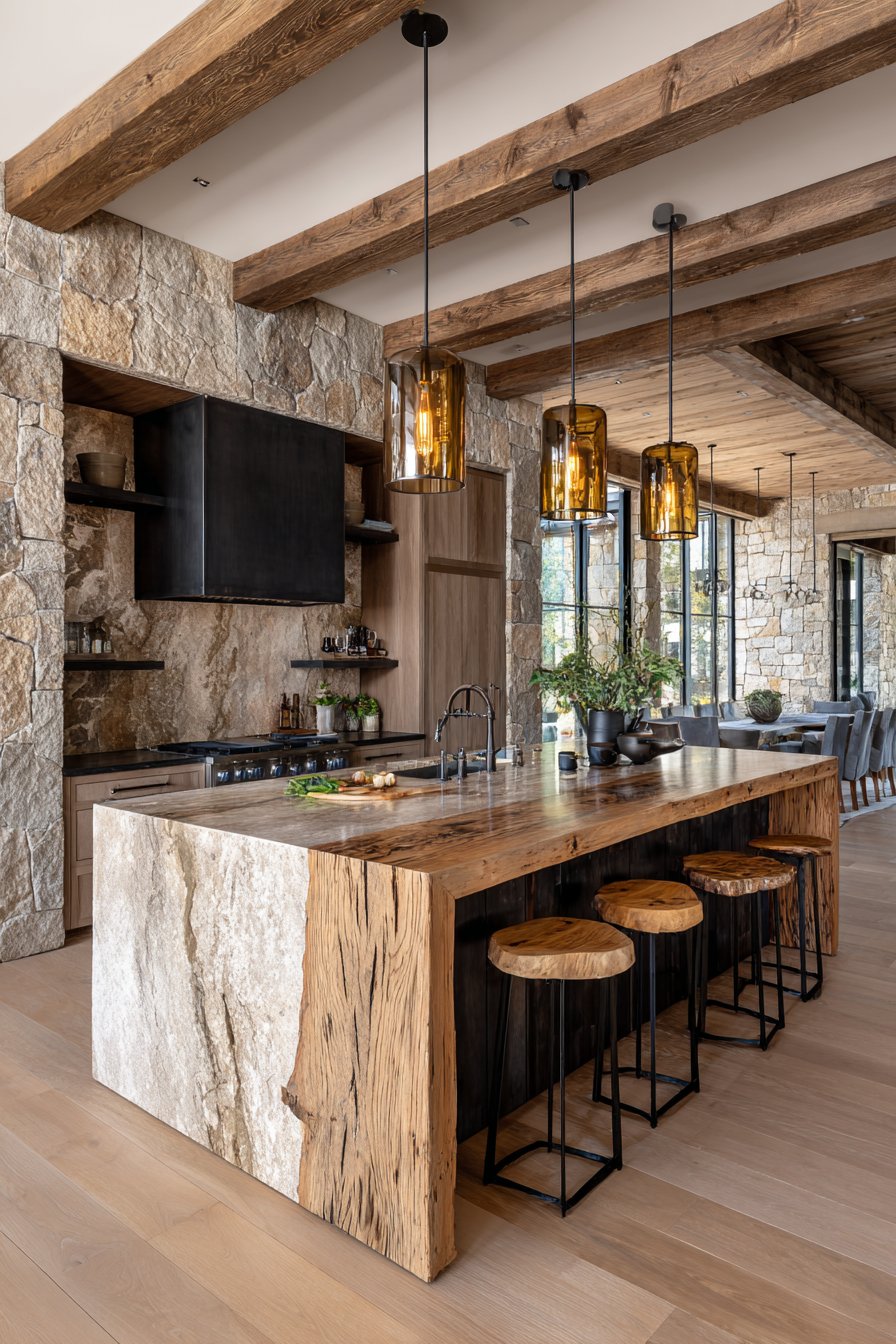
Golden hour lighting streaming through nearby windows transforms this island area. Warm light emphasizes natural wood variations and plaster textures. The interplay between architectural elements and natural lighting creates magic. Shadow patterns shift throughout the day, maintaining visual interest.
This island design balances raw industrial elements with refined natural materials. The combination creates sophisticated earthy aesthetic that feels current. The space demonstrates how contrasting materials create harmonious design.
Key Design Tips:
- Combine industrial metal with reclaimed wood for material contrast
- Choose book-matched spalted maple for dramatic figure display
- Apply textured plaster to island bases for warmth
- Install hand-forged pendants for artisan metalwork details
- Use amber glass for warm light quality
- Position islands to maximize golden hour exposure
11. Exposed Beam Ceiling Character
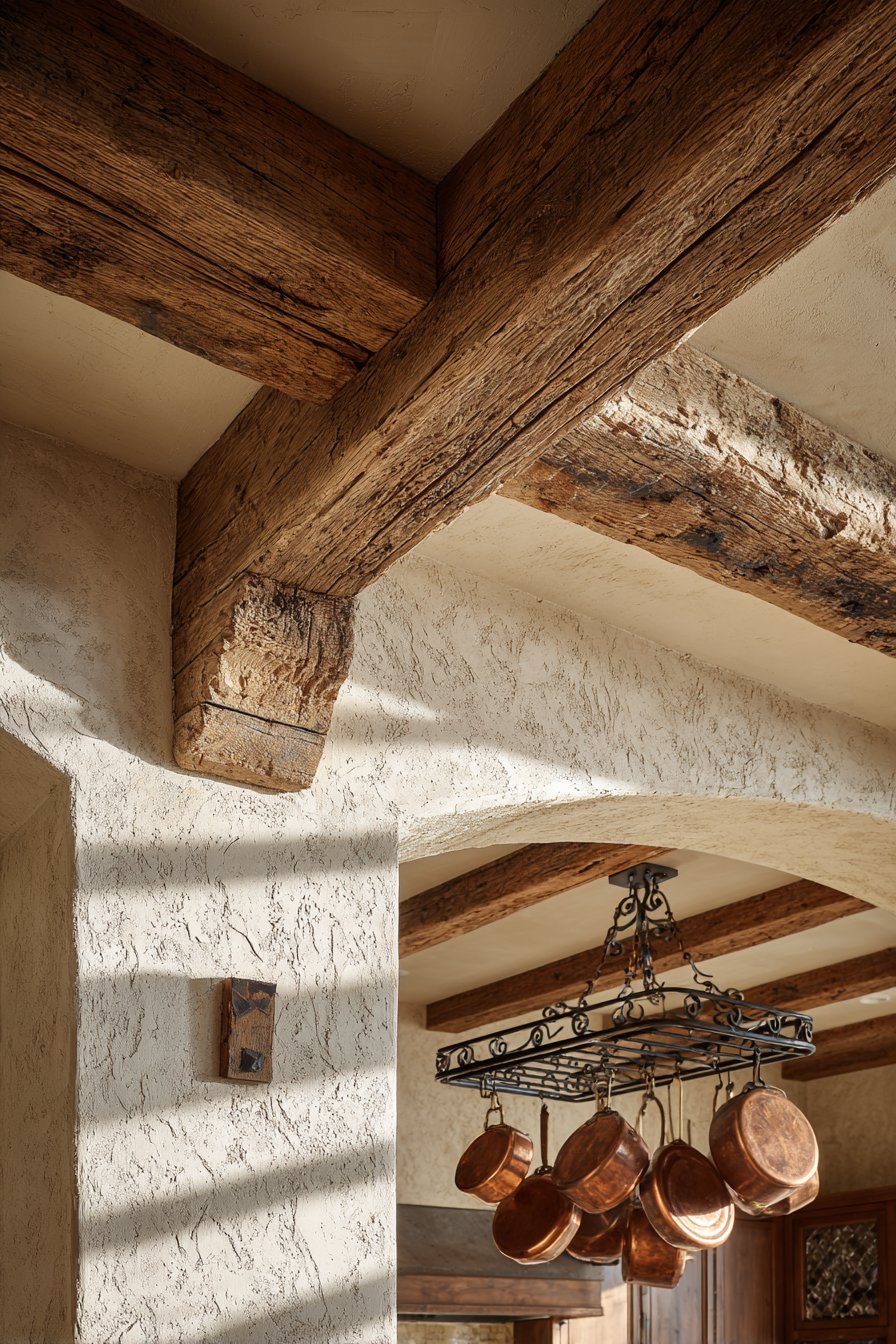
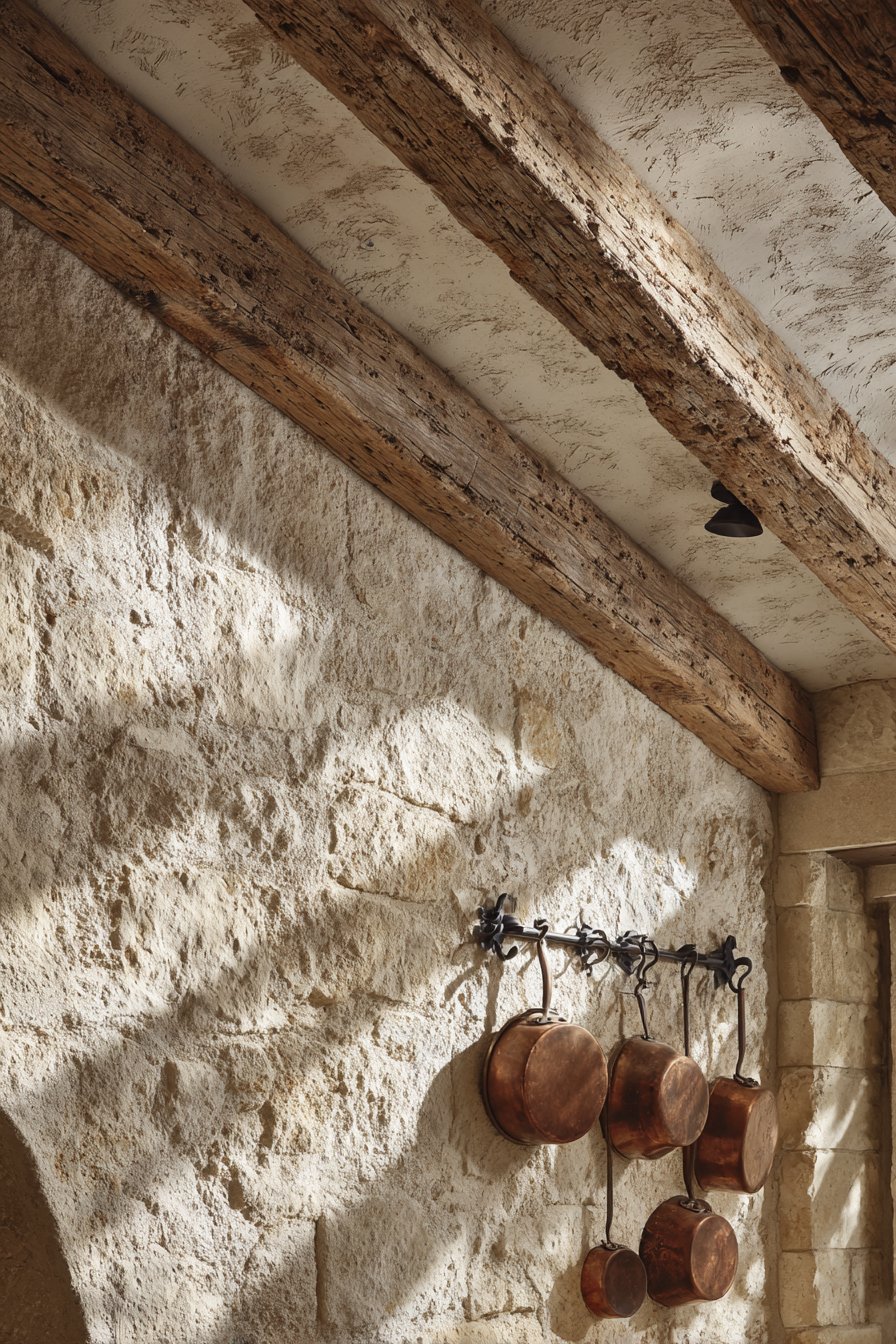
Weathered oak beams cross the ceiling with visible saw marks and natural aging. The structural elements become prominent design features. Textured plaster ceiling in warm white shows subtle trowel patterns. The handcrafted surface quality adds organic interest overhead. Wrought iron pot rack hangs from beams displaying copper cookware. The functional storage becomes sculptural installation.
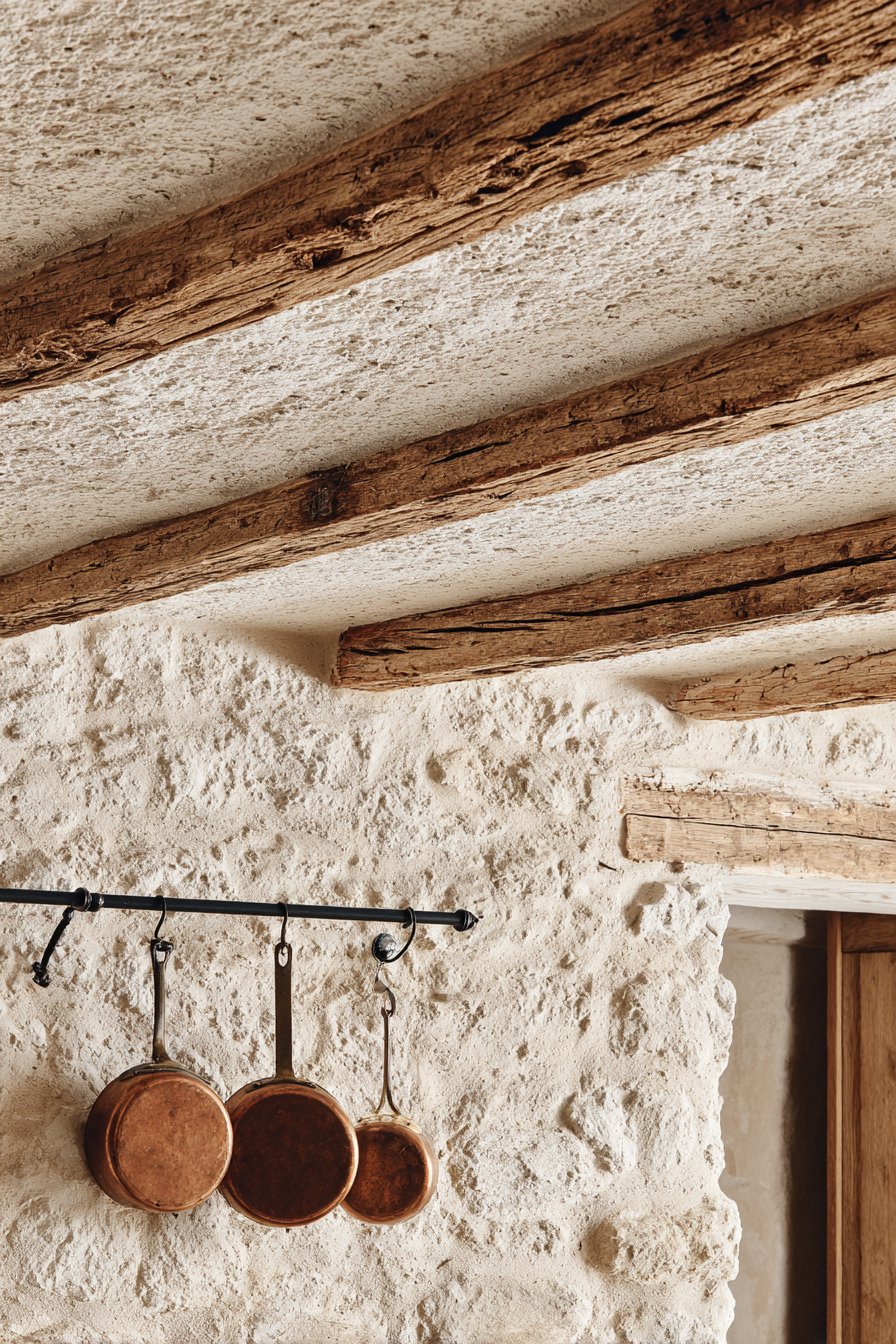
Natural stone veneer adds rugged texture to wall surfaces. The irregular stone creates dimensional interest and earthiness. Looking upward, the architectural character becomes immediately apparent. The ceiling treatment demonstrates how overhead spaces deserve design attention.
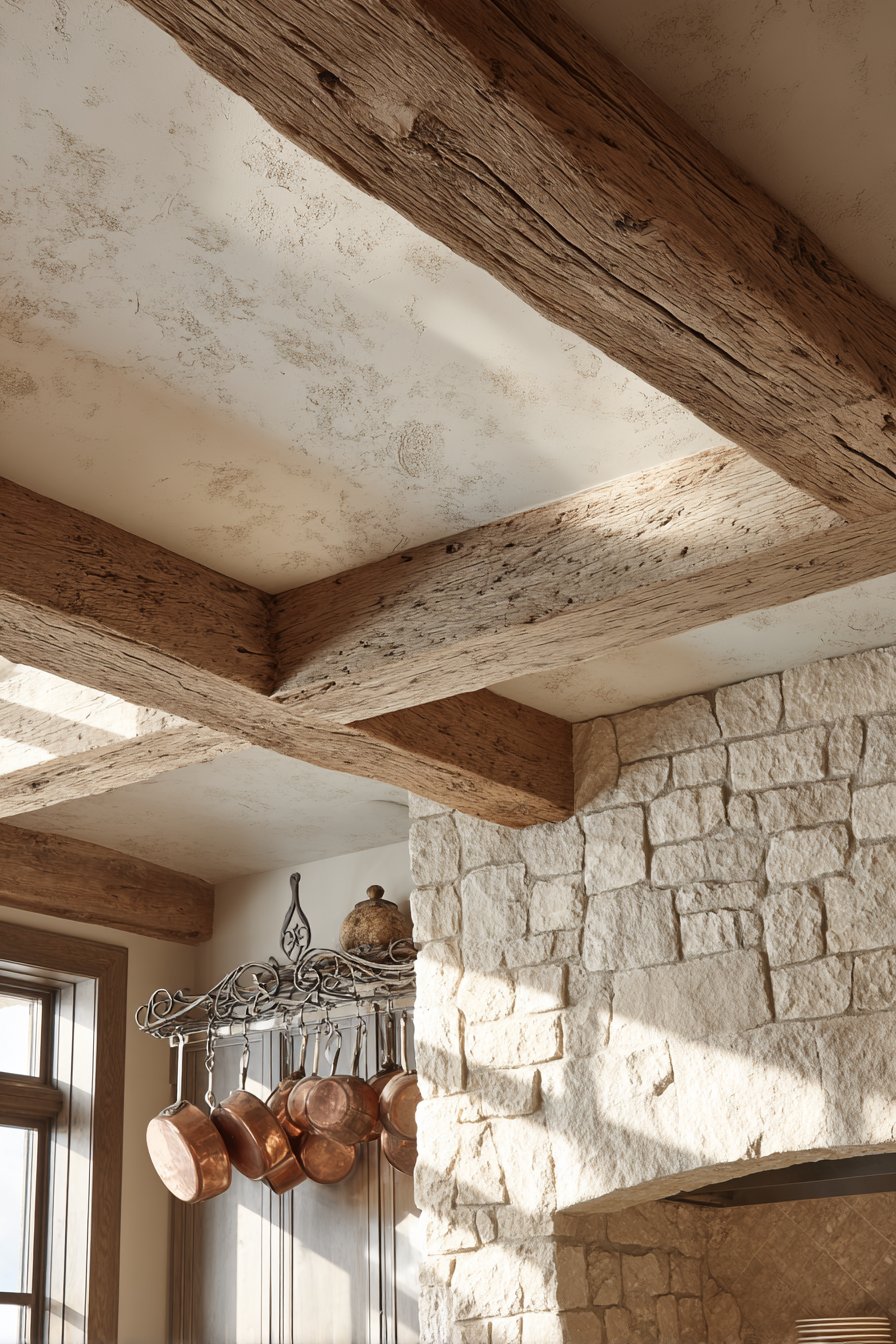
Soft natural lighting creates dimensional shadows across textured surfaces. The illumination reveals depth in plastered ceiling and stone walls. Shadow play changes throughout the day, maintaining visual interest. The lighting strategy enhances architectural features naturally.
This ceiling design proves that often-ignored surfaces offer design opportunities. Overhead spaces significantly impact overall room character. The approach adds authenticity and architectural interest throughout.
Key Design Tips:
- Leave structural beams exposed for architectural character
- Choose weathered oak for authentic aging appearance
- Apply textured plaster to ceilings for overhead interest
- Hang pot racks from beams for functional sculpture
- Use natural stone veneer for rugged wall texture
- Design lighting to create dimensional shadows on ceilings
12. Craftsman Storage Solutions
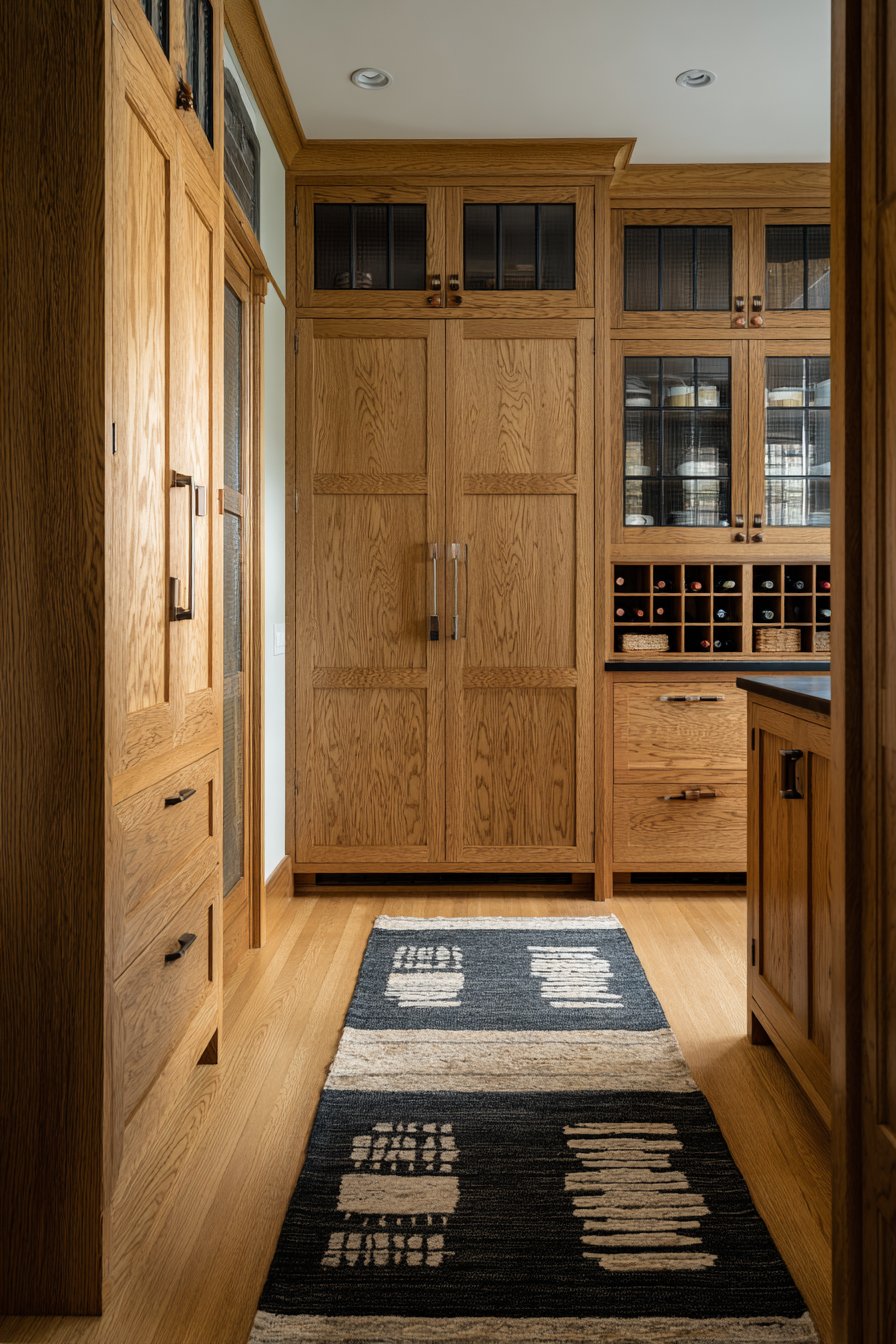
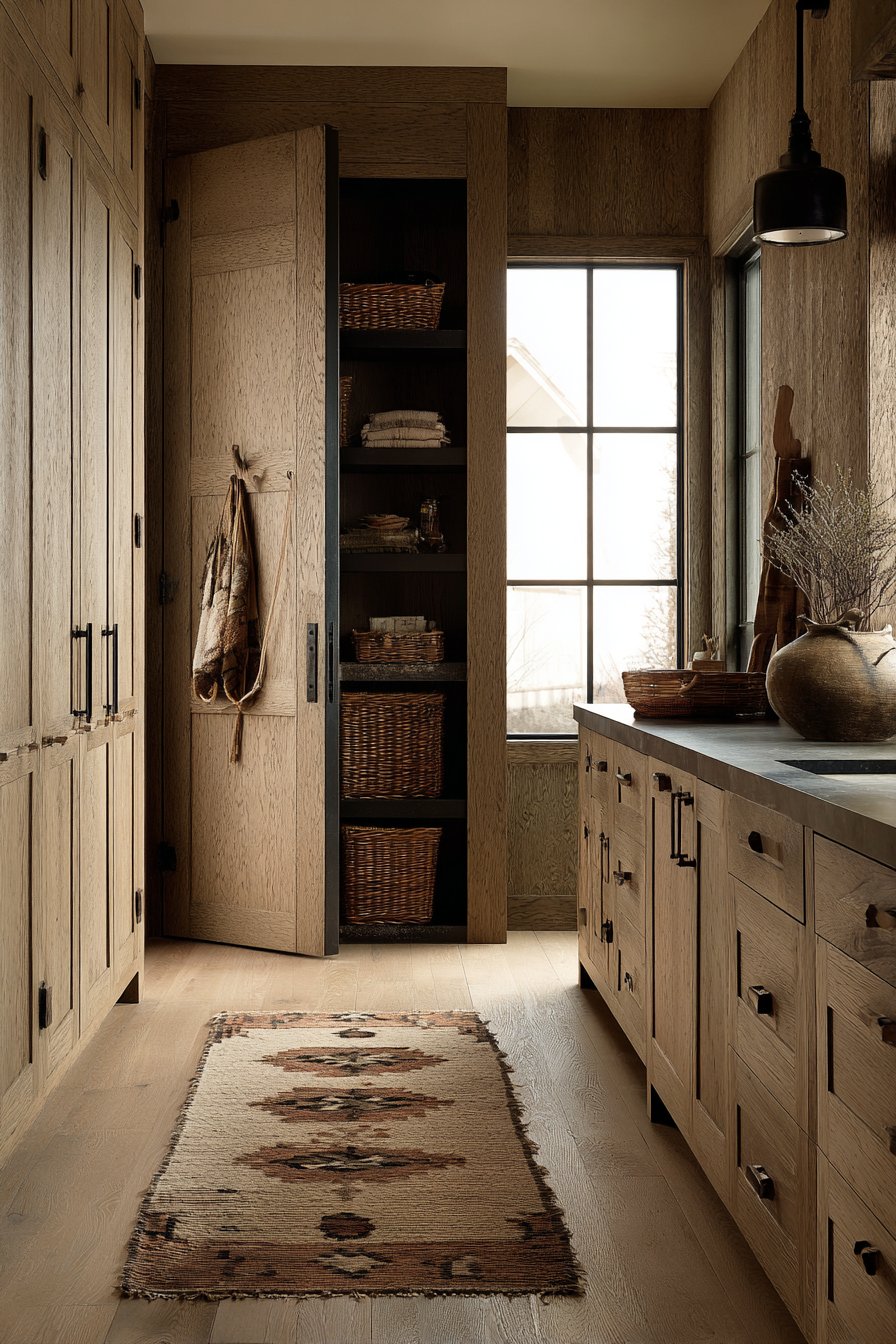
Floor-to-ceiling cabinetry in quarter-sawn white oak features Craftsman-style detailing. Hand-forged iron hardware adds artisanal metalwork touches throughout. Lower cabinets include built-in wine rack in natural wood. Woven basket storage provides flexible organization options. Honed soapstone countertops show natural surface variations and organic beauty.
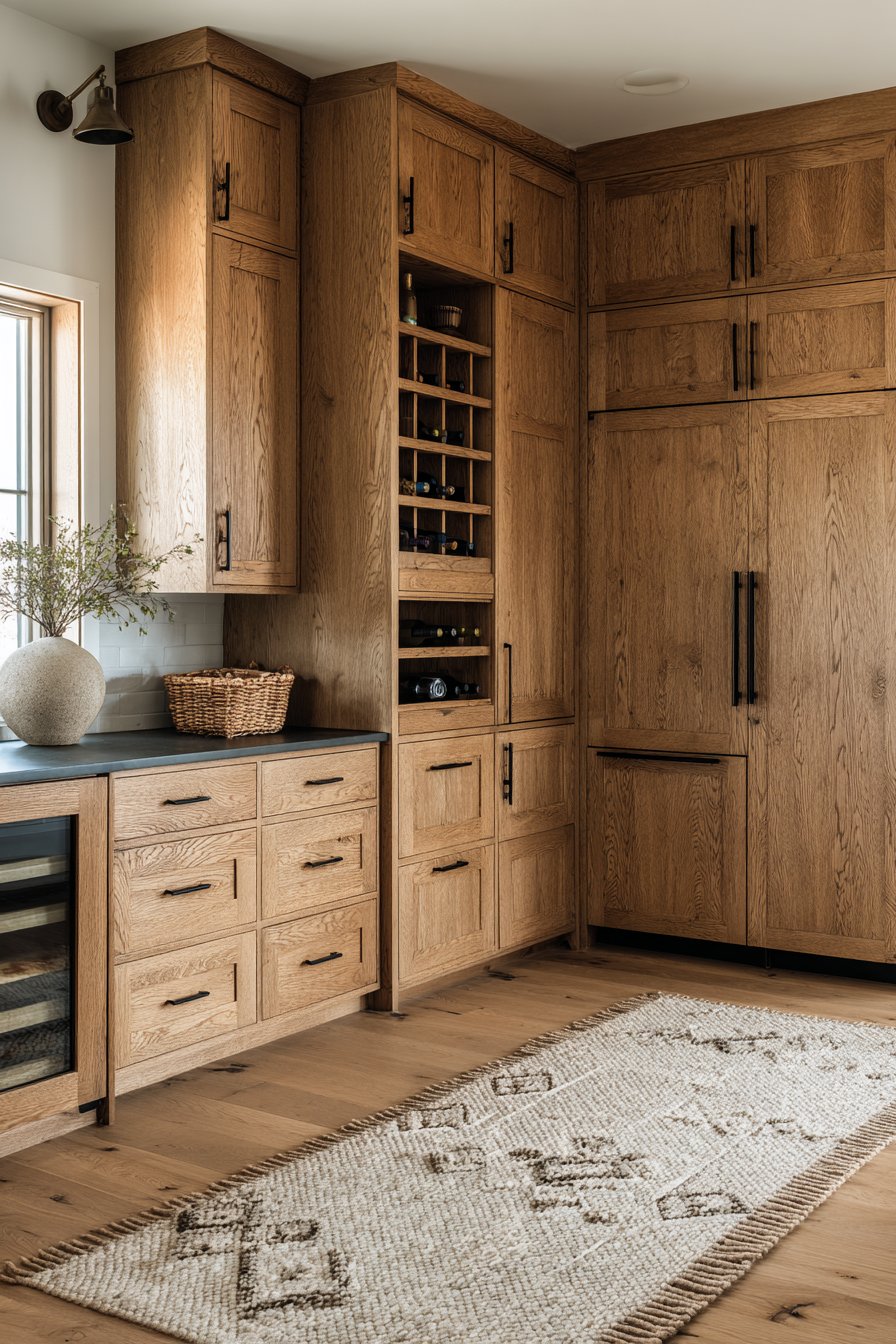
A textured runner rug in earth-toned geometric patterns grounds the space. The rug adds warmth underfoot while defining circulation paths. Pattern and texture contribute visual interest at floor level. The geometric design bridges traditional and contemporary aesthetics.
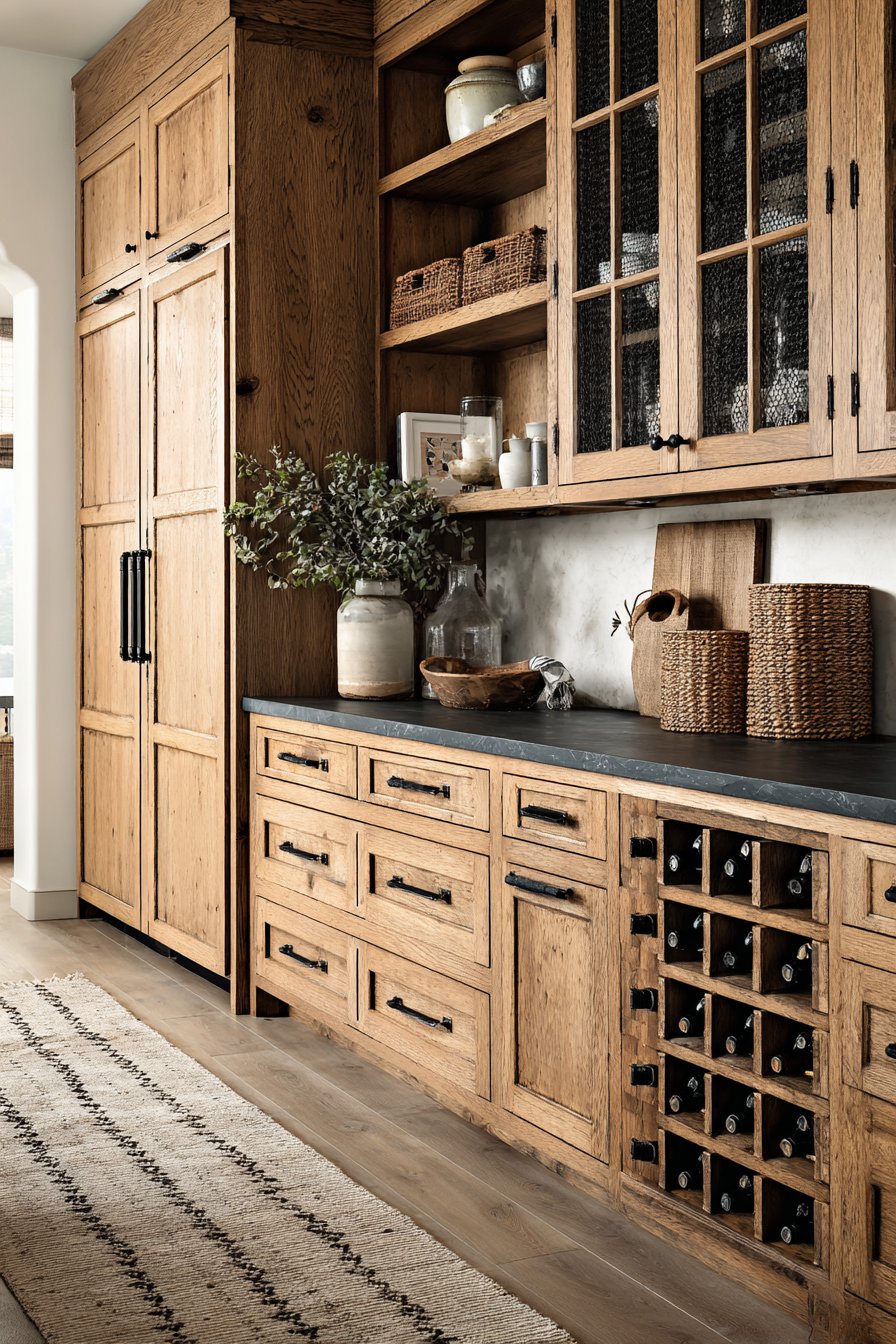
Balanced exposure captures natural wood warmth throughout this storage solution. The lighting reveals Craftsman detailing and wood grain depth. Practical functionality combines with aesthetic appeal seamlessly. Every cabinet serves purpose while contributing to design harmony.
This storage approach demonstrates Craftsman principles’ continued relevance. Quality construction and honest materials create timeless kitchen design. The space proves that traditional craftsmanship serves contemporary needs beautifully.
Key Design Tips:
- Choose quarter-sawn white oak for distinctive grain patterns
- Add Craftsman-style detailing for architectural interest
- Install hand-forged iron hardware for artisan touches
- Include built-in wine racks for specialized storage
- Use honed soapstone for natural countertop variations
- Add geometric runner rugs for floor-level warmth
13. Cantilevered Breakfast Bar Grace
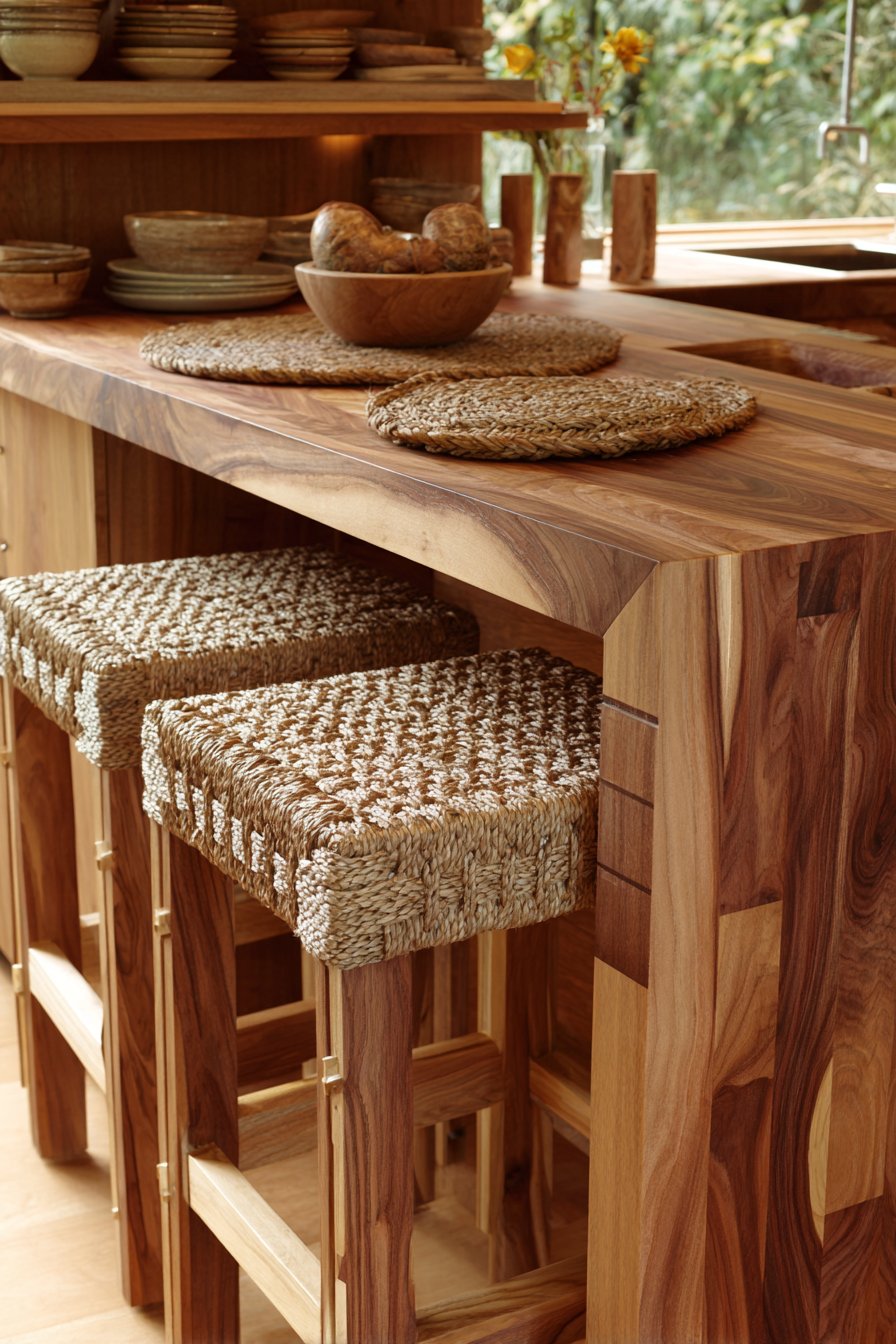
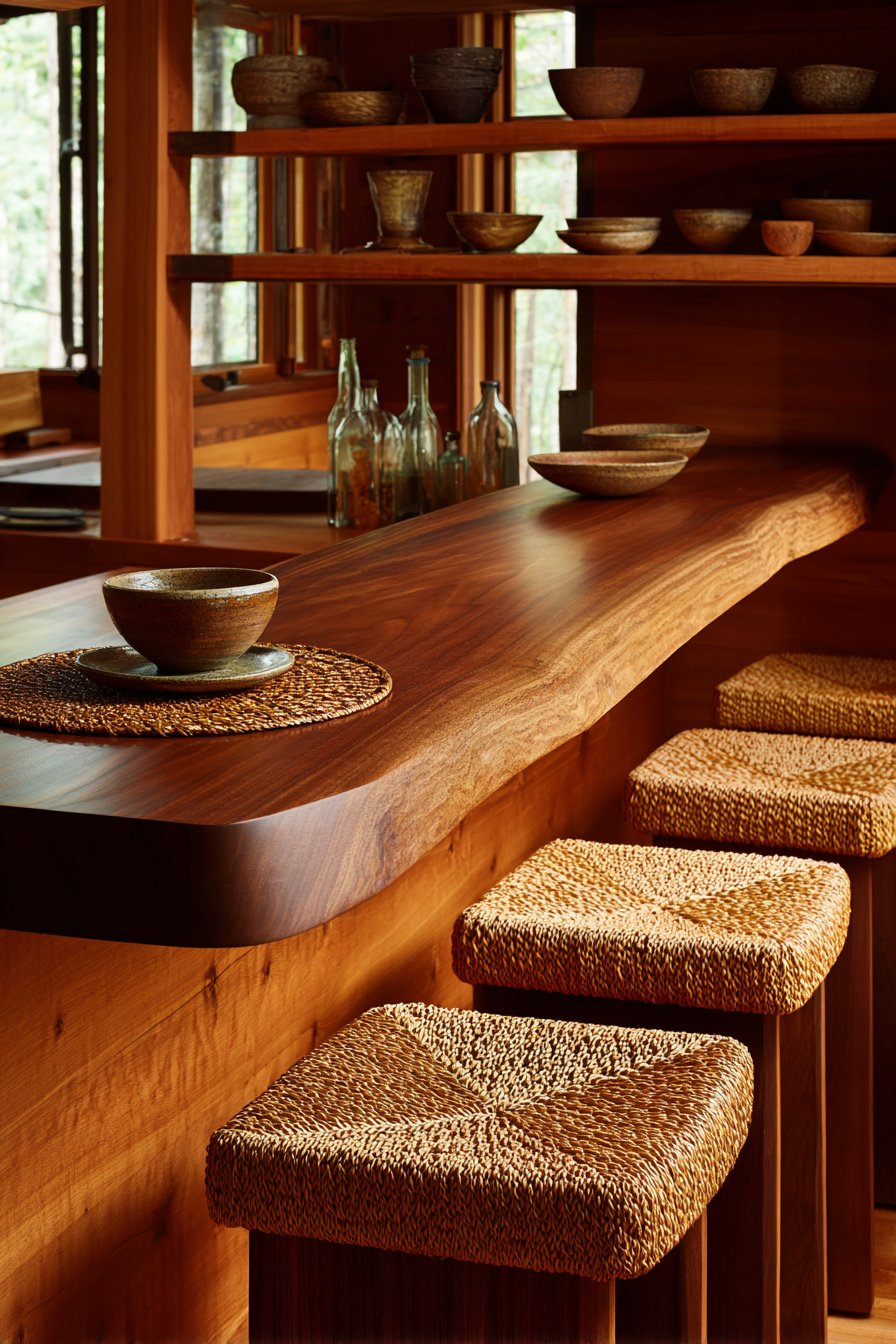
A cantilevered countertop extension in thick edge-grain walnut creates breakfast bar. Visible joinery details demonstrate woodworking craftsmanship and structural honesty. Natural iron brackets provide support with industrial aesthetic. Handwoven seagrass counter stools offer comfortable seating with natural texture.
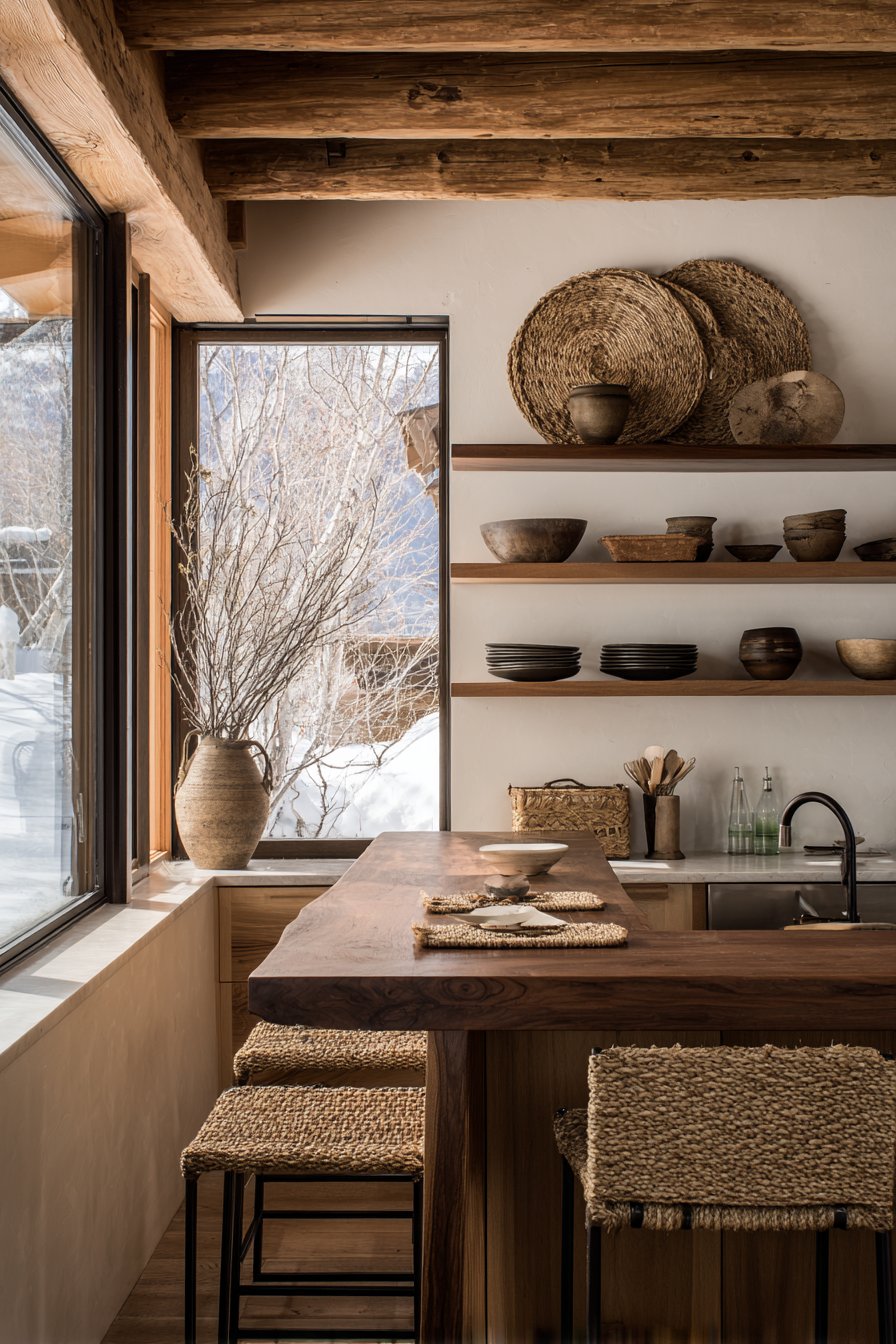
The bar backs onto open shelving displaying wooden bowls and stoneware. Woven placemats add additional textural layers to the display. Morning light through adjacent windows highlights rich wood grain. The natural illumination enhances the breakfast area’s warmth and welcome.
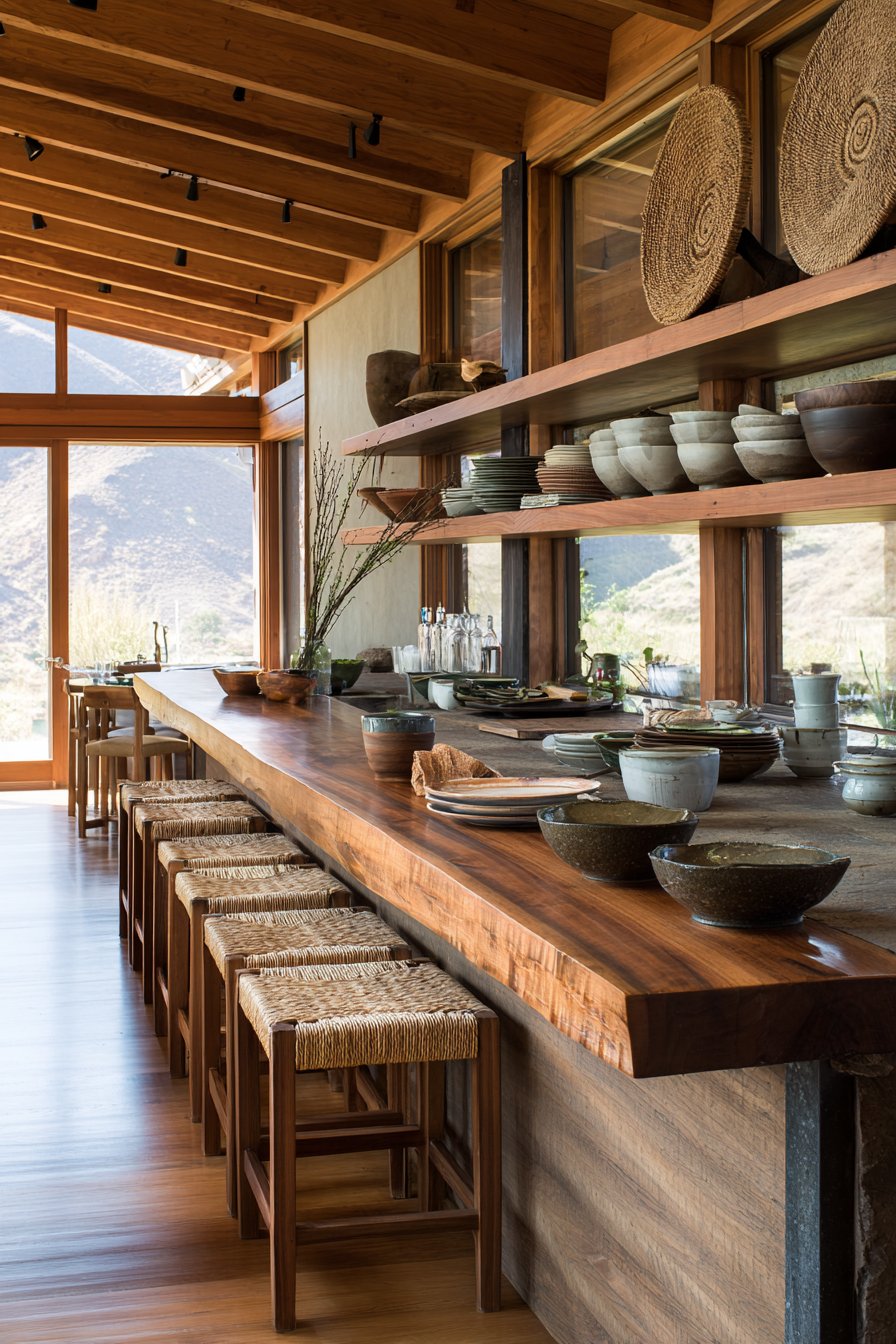
Detail-focused composition emphasizes craftsmanship and natural material palette. Every joint and connection becomes visible design element. The transparency of construction adds authenticity to the design. Material honesty creates trustworthy, grounded aesthetic.
This breakfast bar demonstrates how practical elements become beautiful features. Thoughtful construction details reward close inspection. The space proves that quality craftsmanship elevates everyday functionality.
Key Design Tips:
- Use thick edge-grain walnut for substantial bar surfaces
- Show visible joinery for craftsmanship display
- Add natural iron brackets for industrial support detail
- Choose handwoven seagrass stools for textural seating
- Back bars with open shelving for display opportunities
- Position near windows to maximize morning light
14. Reclaimed Brick Statement Wall
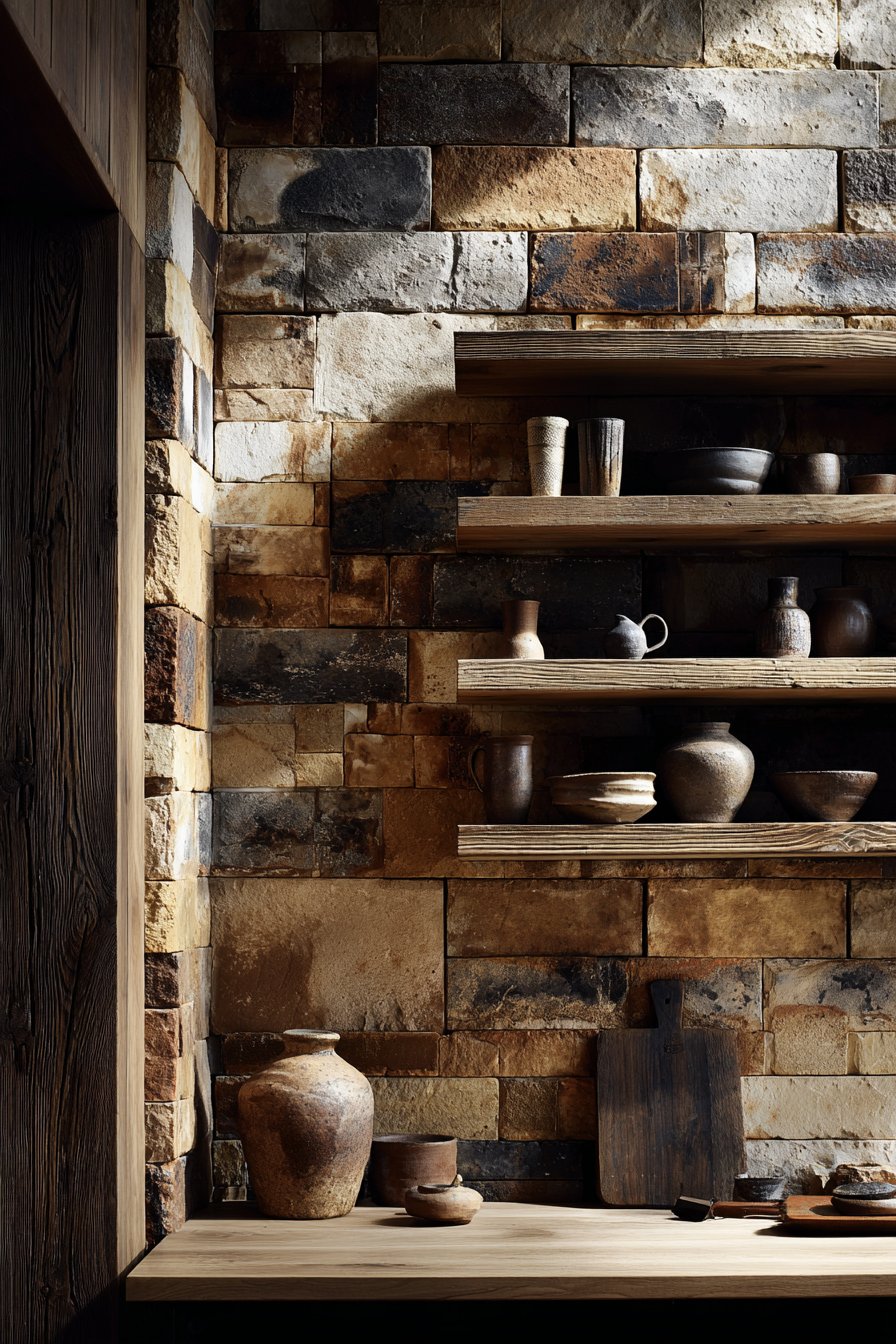
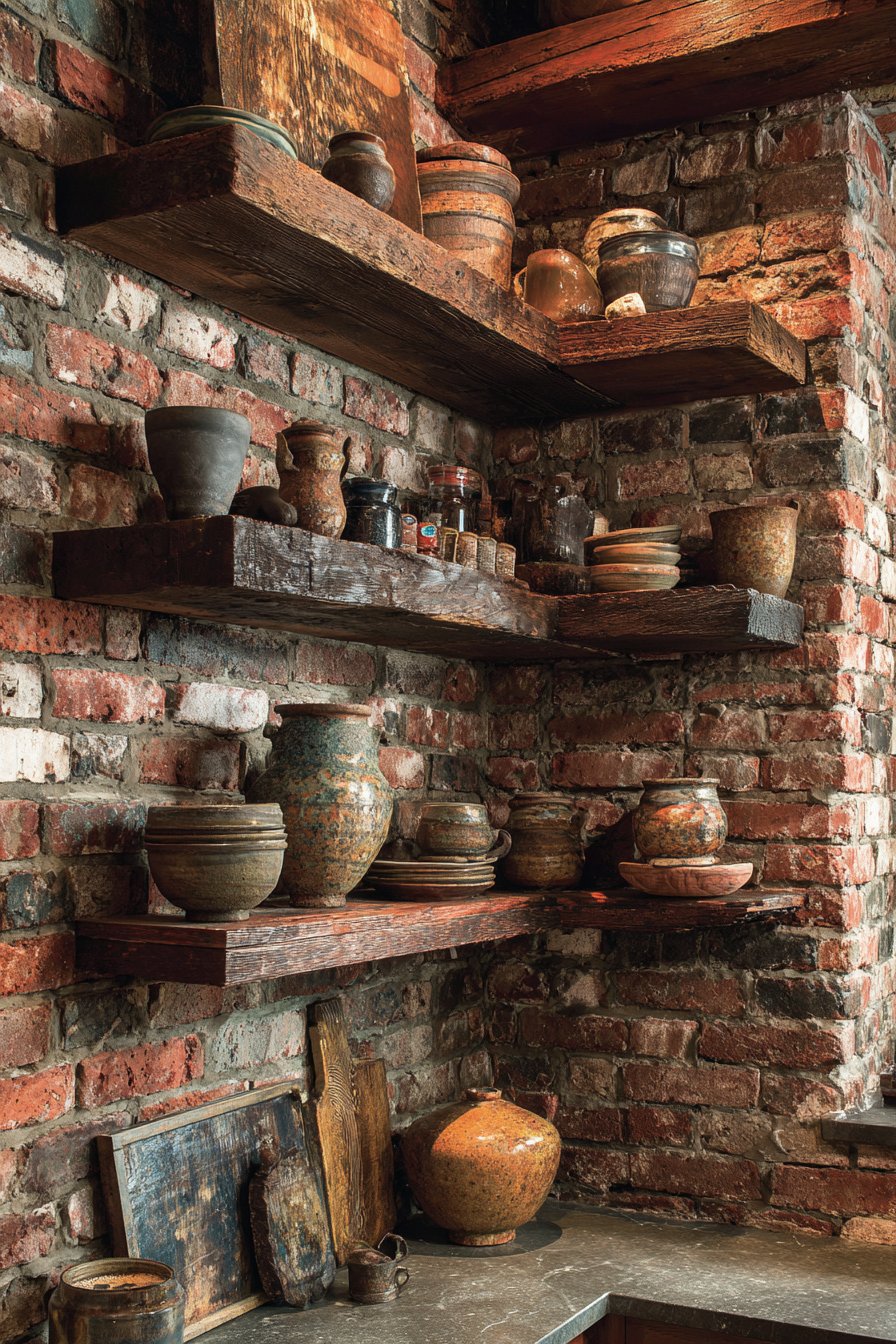
Reclaimed brick in varied warm tones creates dramatic statement wall. Colors range from rust to burnt sienna with authentic weathering. Mortar texture adds dimensional interest across the vertical surface. The wall’s history remains visible in every brick. Floating shelves in rough-hewn oak display pottery and vintage tools.
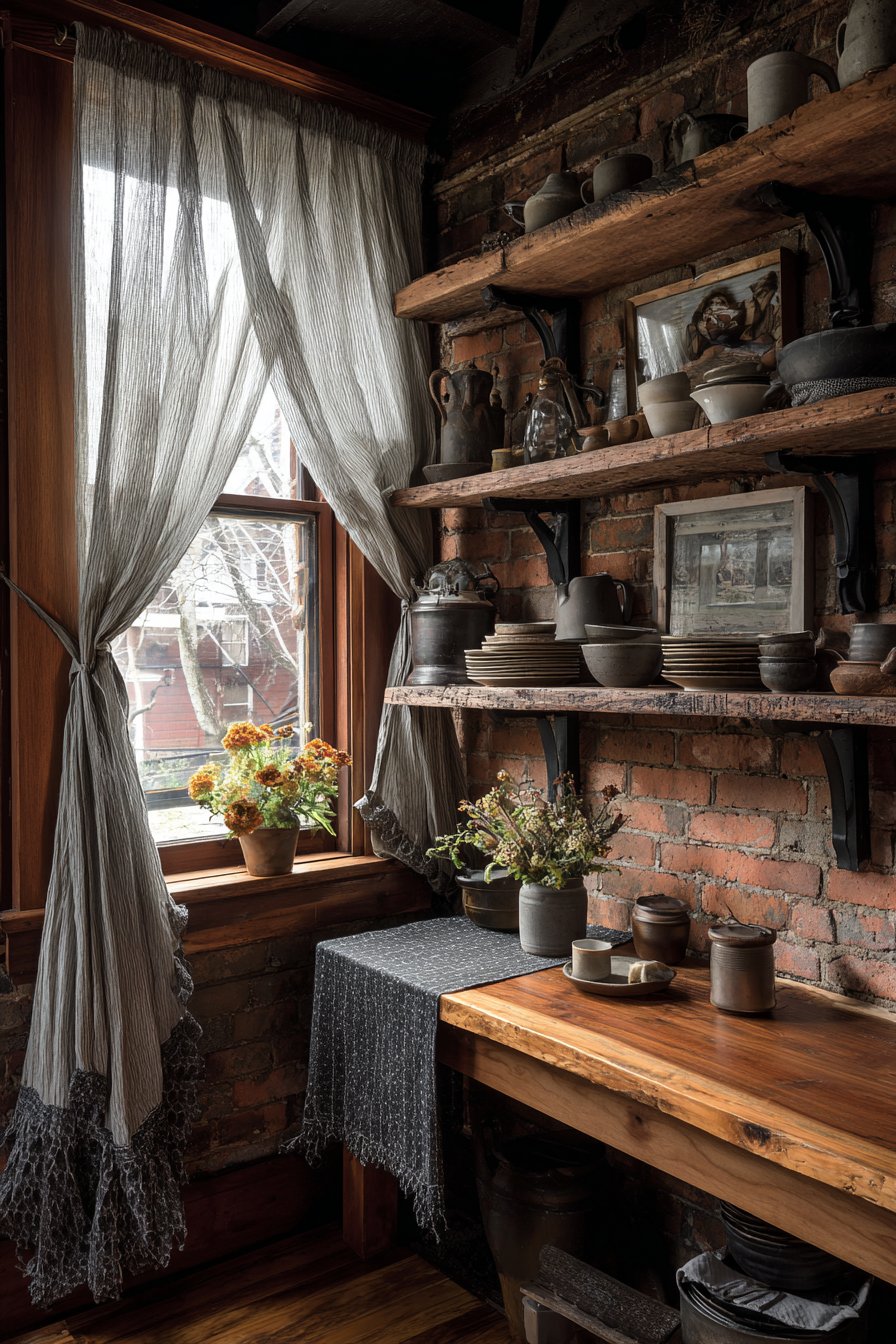
Natural linen cafe curtains soften raw brick texture nearby. The fabric provides gentle contrast to hard masonry surfaces. Material contrast between rough brick and soft linen creates balance. The combination demonstrates layering’s importance in earthy design.
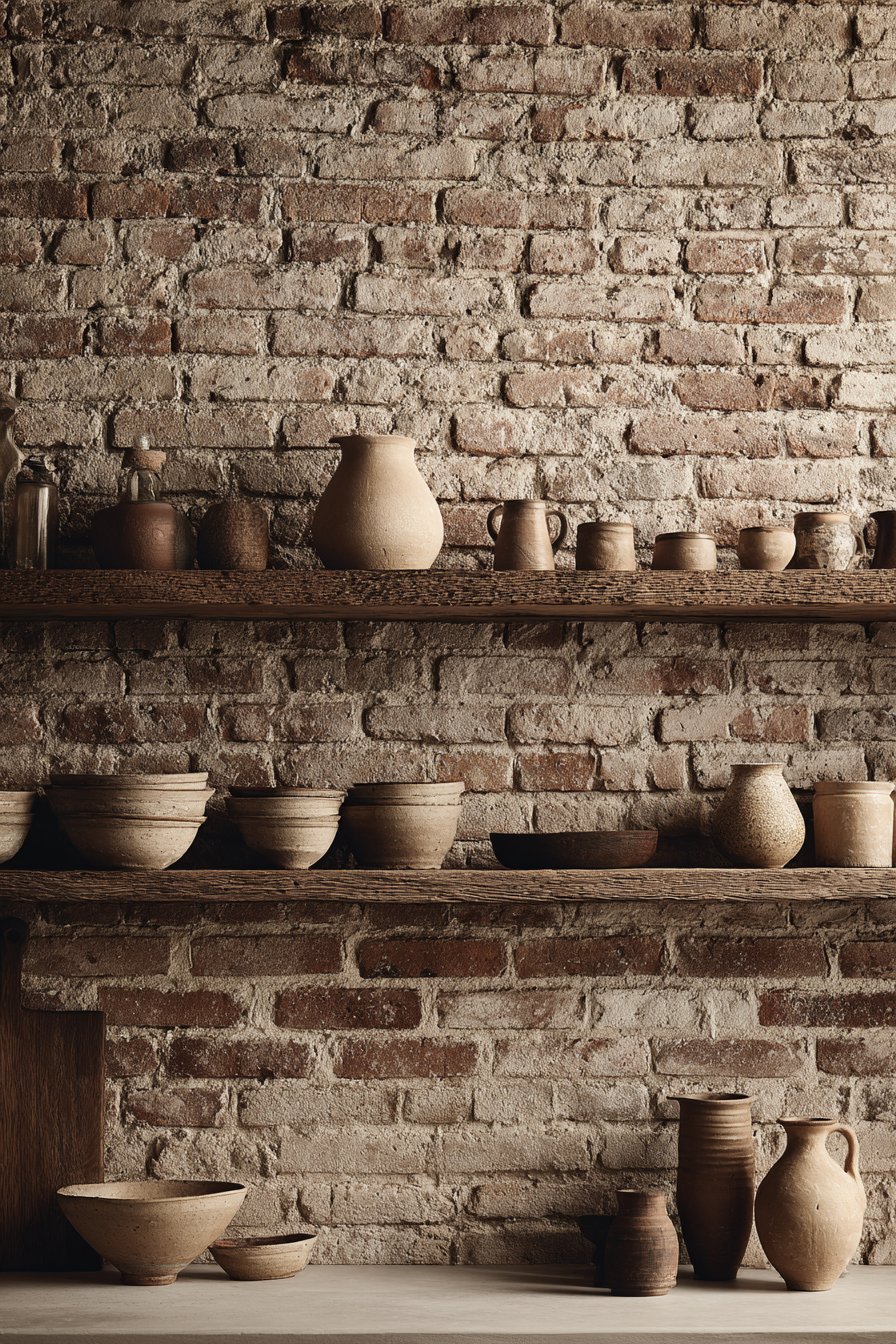
Professional side lighting enhances dimensional brick surface dramatically. Shadows emphasize mortar joints and surface irregularities. The lighting strategy celebrates rather than hides material authenticity. Texture becomes primary design element through strategic illumination.
This statement wall proves accent surfaces transform entire room character. Single bold material choices create immediate visual impact. The approach demonstrates confidence in natural material beauty.
Key Design Tips:
- Choose reclaimed brick for authentic weathering and color variation
- Install floating shelves in rough-hewn oak for contrast
- Display pottery and vintage tools as functional art
- Add linen cafe curtains to soften hard surfaces
- Use side lighting to emphasize dimensional brick texture
- Embrace varied brick tones as design feature
15. Refined Butler’s Pantry Function
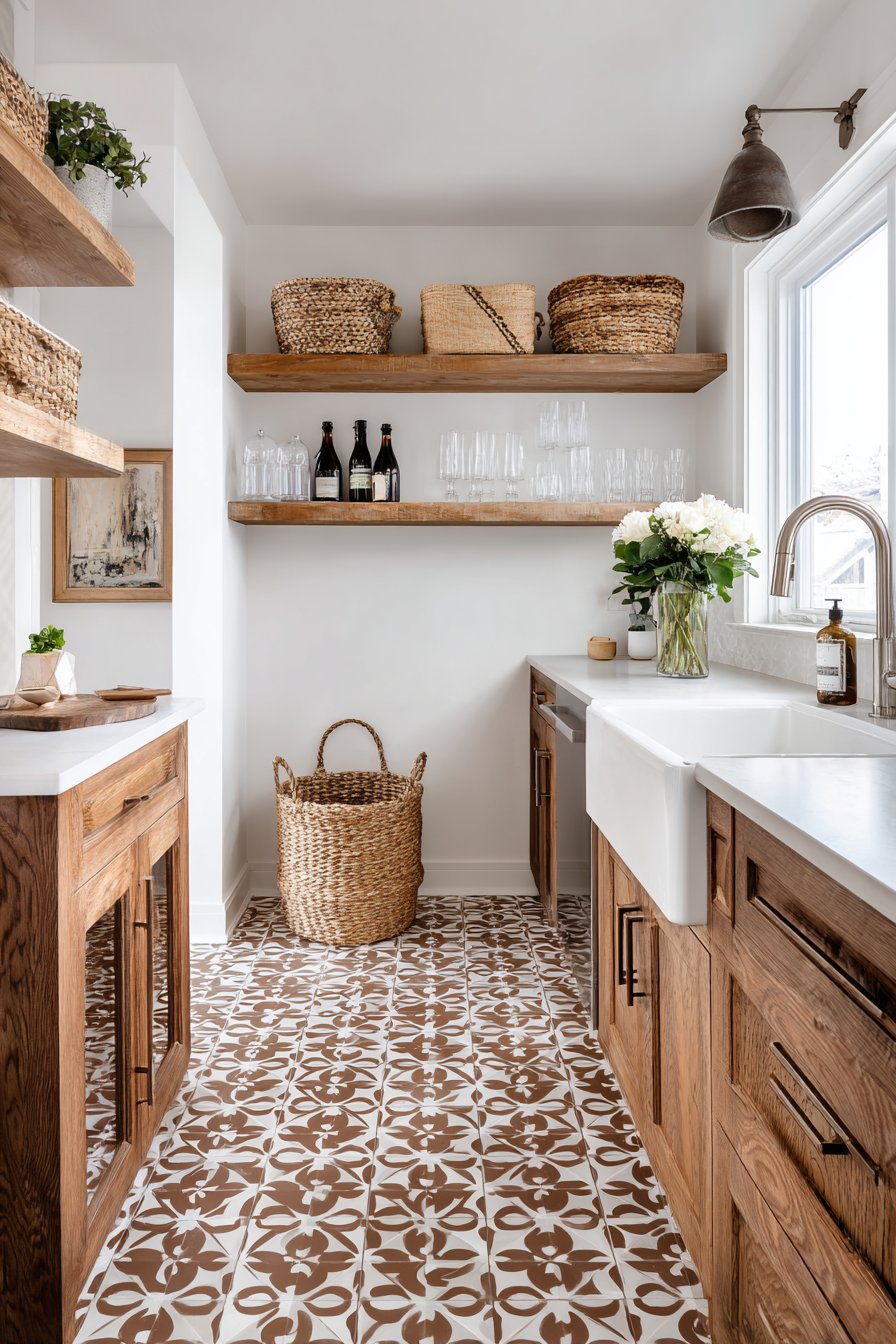
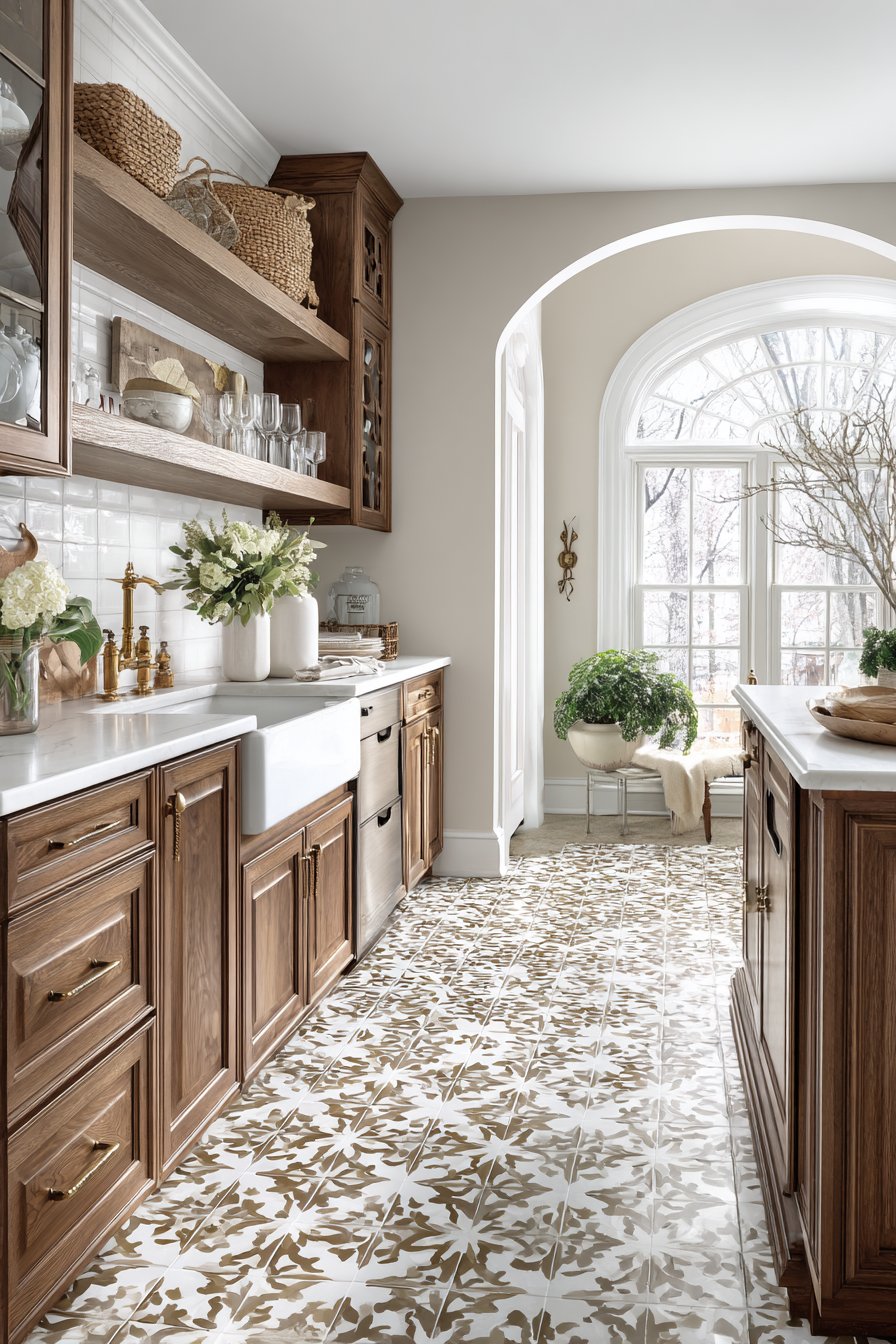
Natural cherry wood cabinetry shows prominent grain patterns throughout this butler’s pantry. Soapstone countertops with natural veining provide durable work surfaces. The stone’s organic patterns add visual interest to horizontal planes. A farmhouse-style sink in fireclay offers traditional utility with contemporary appeal.
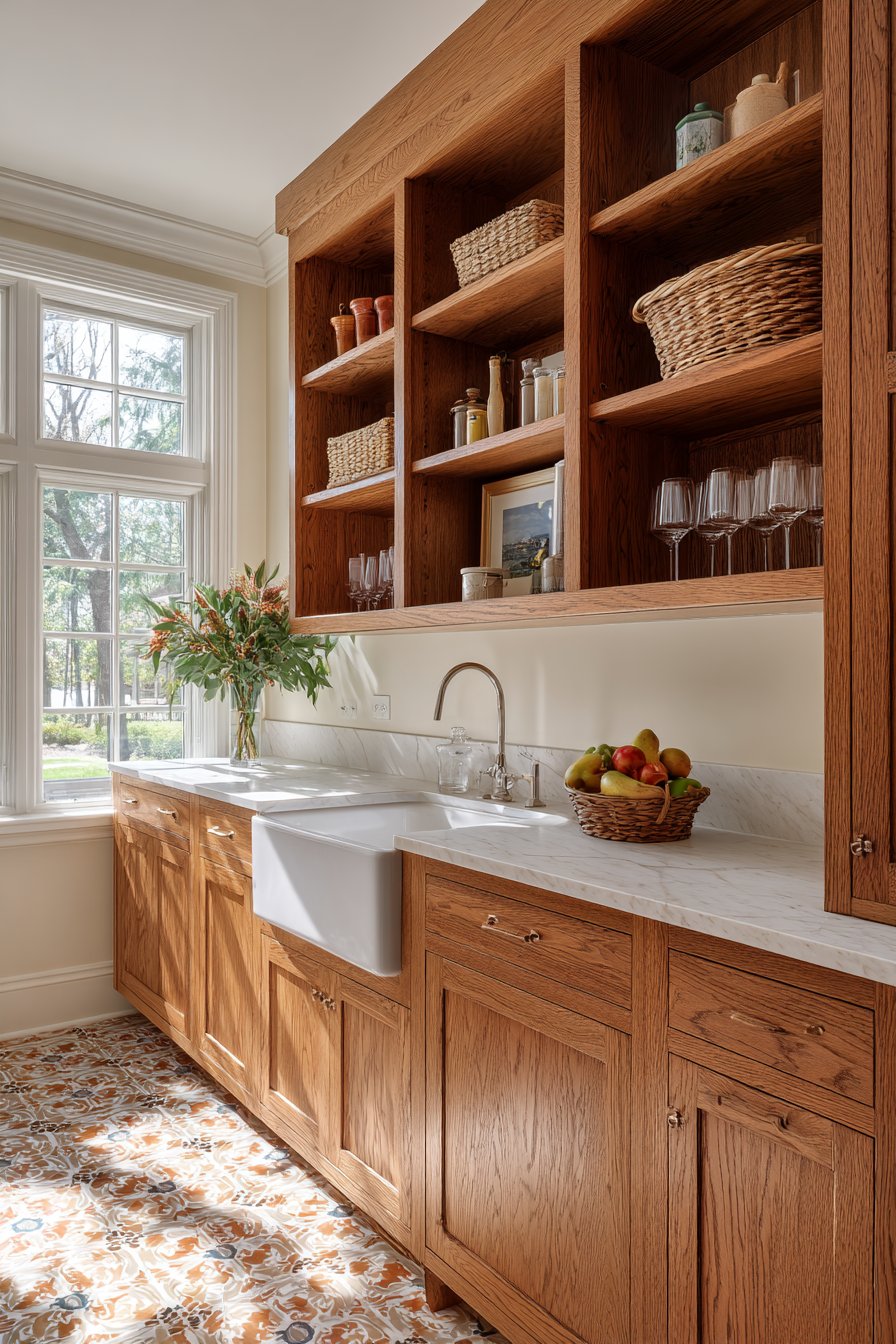
Open shelving displays vintage glassware creating visual lightness. Woven basket storage on upper shelves adds textural variety. Patterned cement tile flooring in earthy geometric designs provides visual interest underfoot. The floor pattern adds complexity without overwhelming the space.
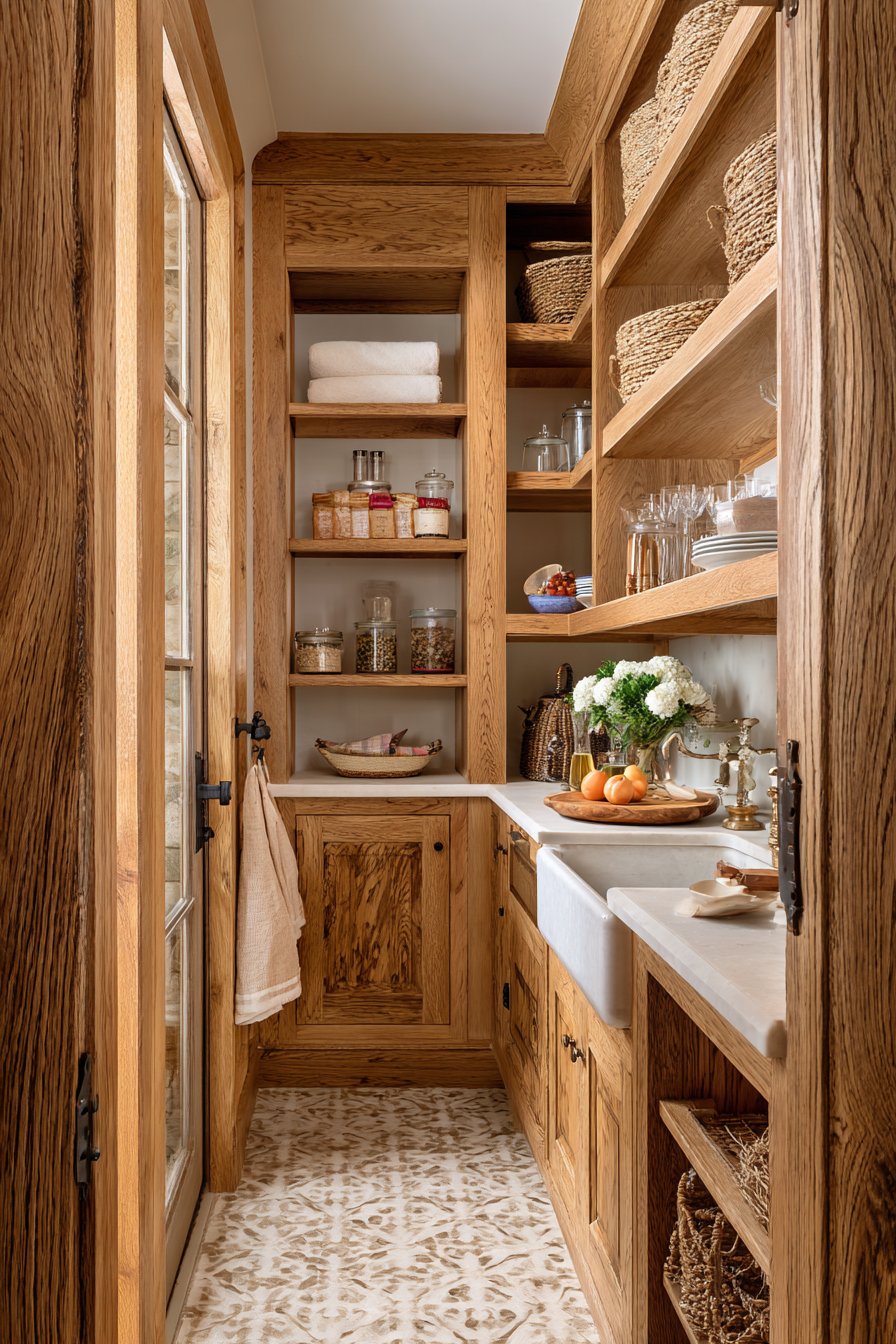
Soft natural light captures refined functionality and warm material selections. The illumination reveals cherry wood’s rich tones and depth. Material quality becomes apparent through proper lighting. The space demonstrates how secondary rooms deserve equal design consideration.
This butler’s pantry bridges formal and casual kitchen functions beautifully. The refined material selections elevate practical storage spaces. Thoughtful design makes every square foot valuable and attractive.
Key Design Tips:
- Use natural cherry wood for rich grain and warm tones
- Install soapstone counters for natural veining interest
- Choose fireclay sinks for traditional farmhouse appeal
- Display vintage glassware on open shelving
- Add woven baskets for upper shelf storage
- Use patterned cement tile for floor-level visual interest
16. Eclectic Mixed Lighting Layers
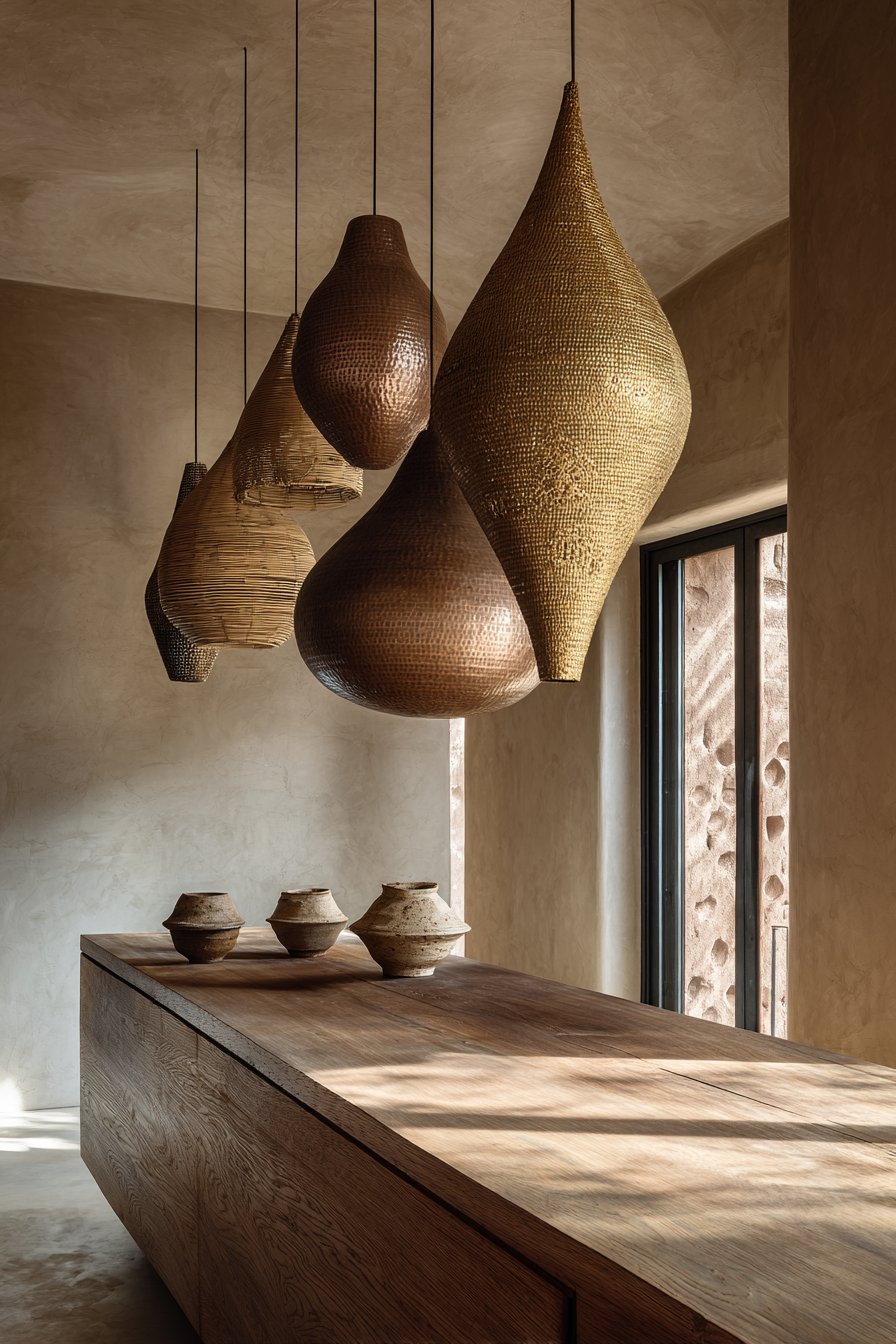
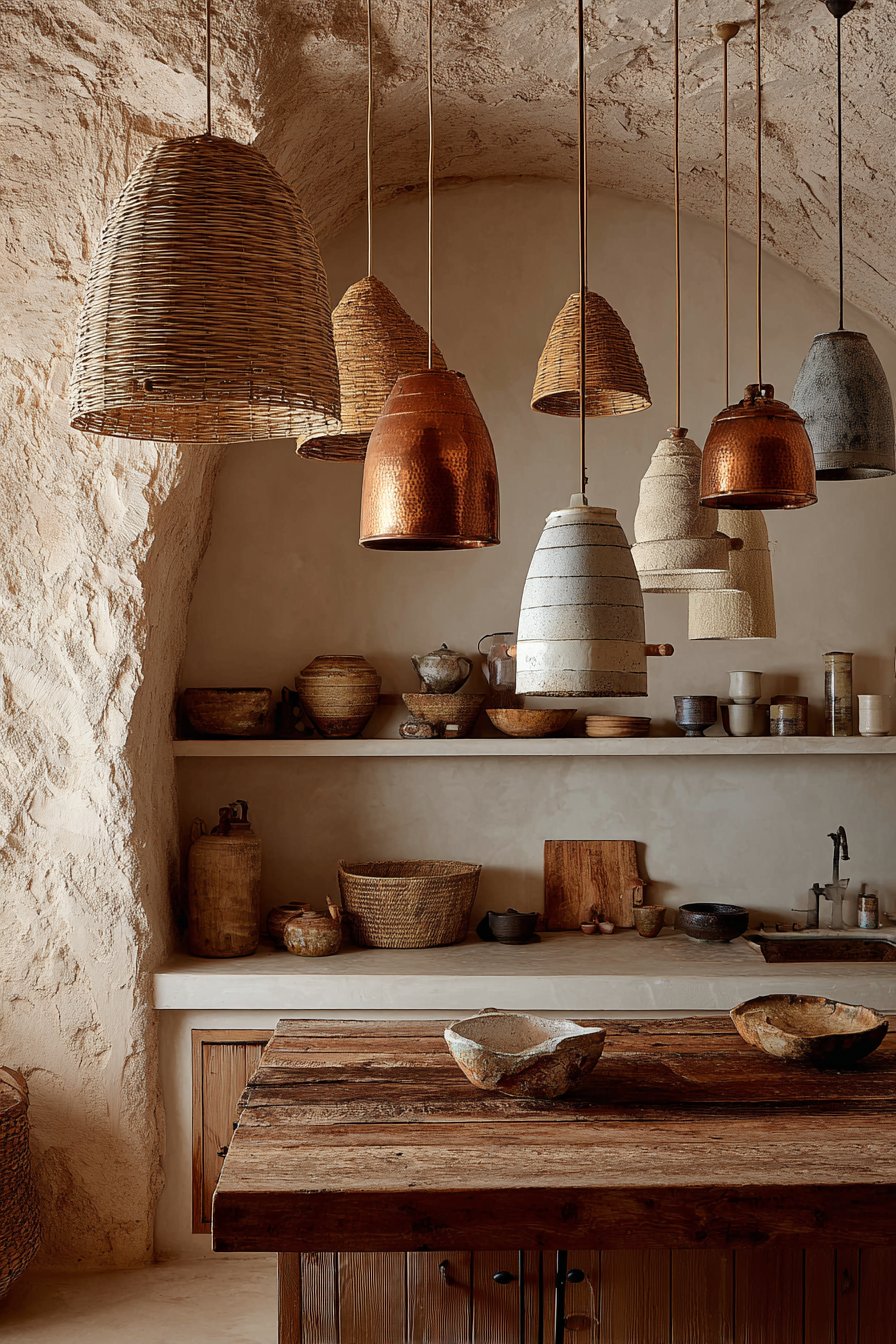
A collection of mixed pendant lights creates visual interest above the island. Hammered copper, woven rattan, and glazed ceramic in earth tones hang at varied heights. The eclectic combination maintains cohesive earthy aesthetic through material and color unity. Textured plaster walls in warm sand tones provide neutral backdrop. The wall finish allows lighting fixtures to become focal features.
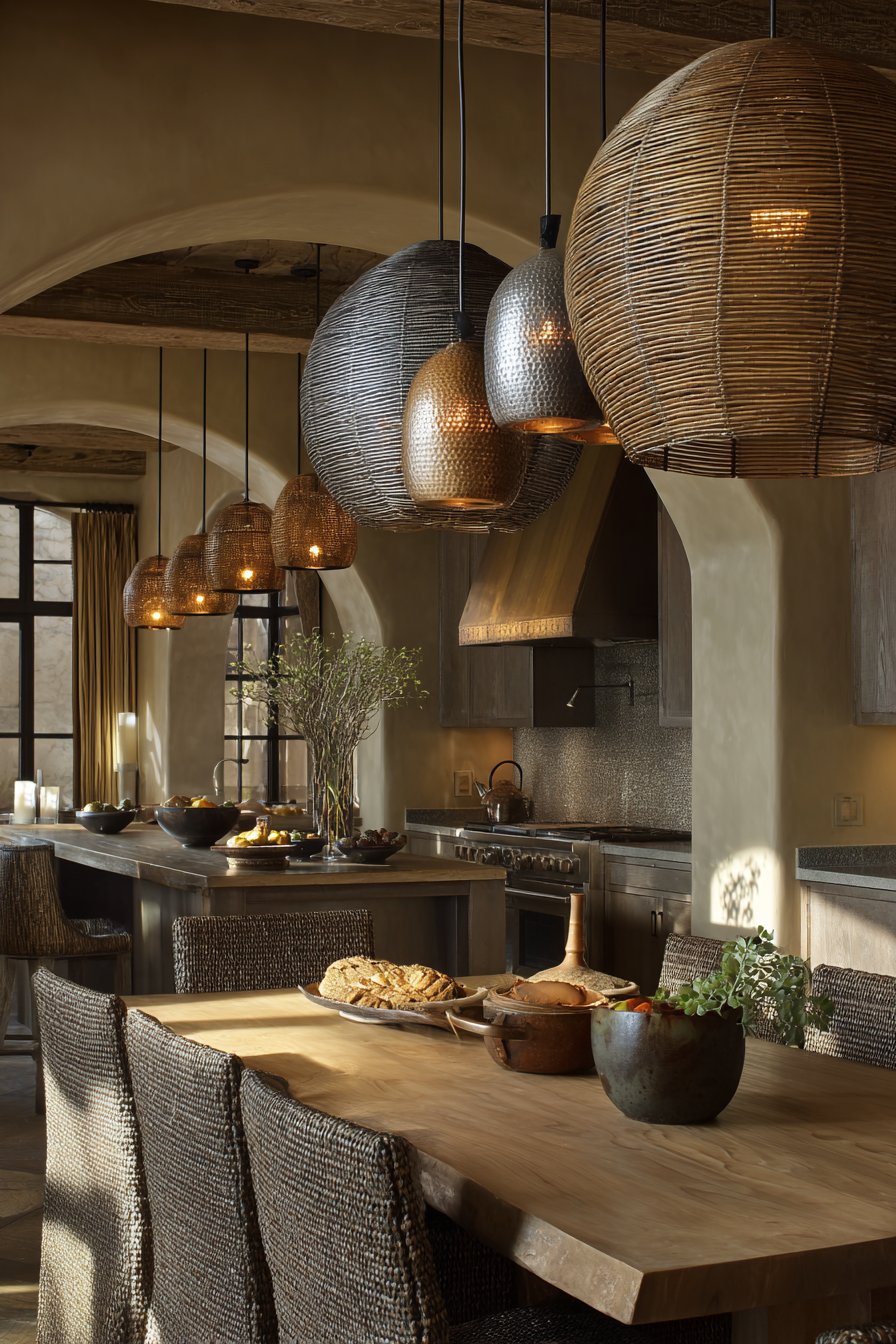
Natural daylight interacts with varied pendant lights throughout the space. The combination creates dynamic lighting conditions that change hourly. Different light sources highlight varied surfaces and textures. The layered approach ensures proper illumination for all activities.
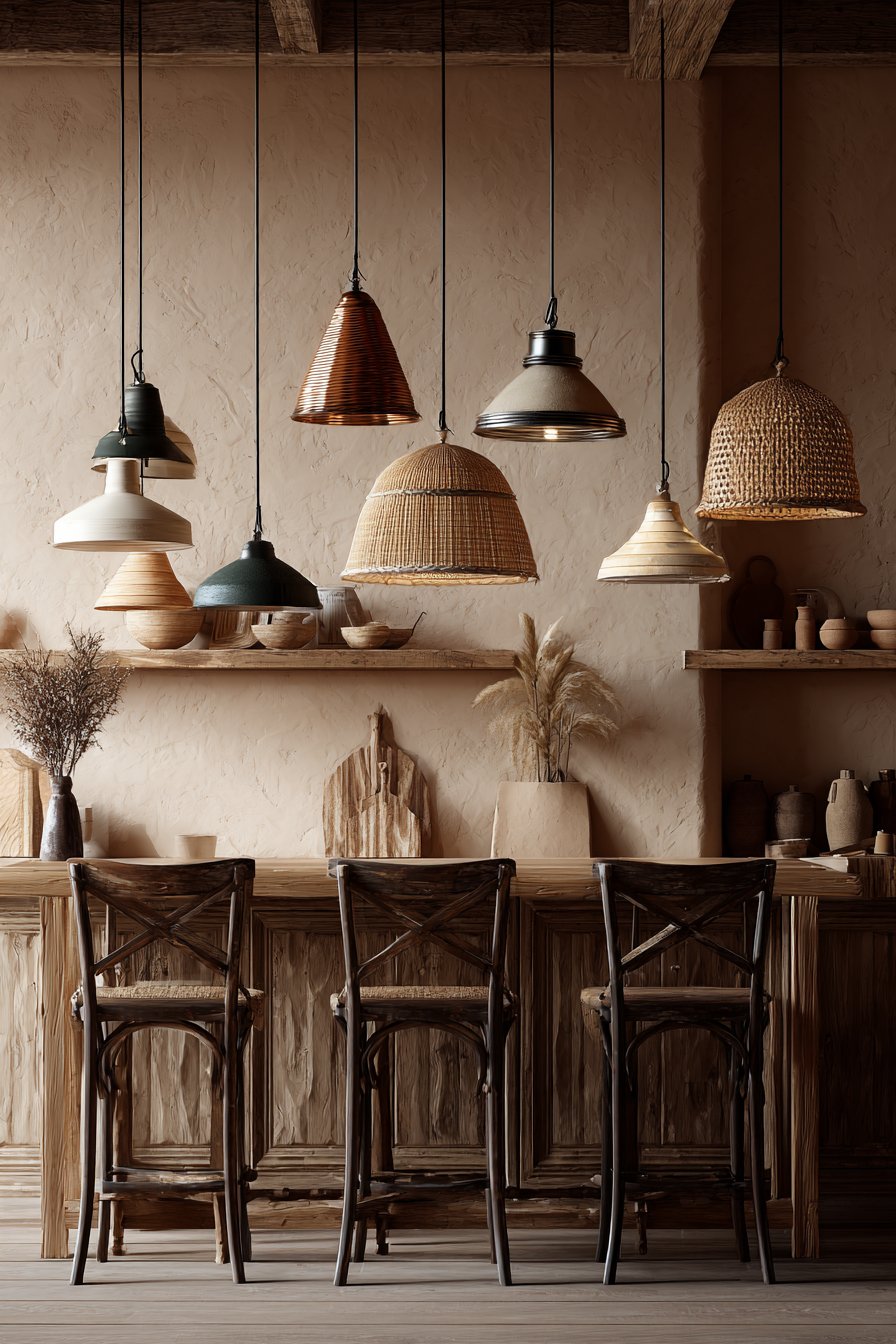
This lighting scheme demonstrates how fixture variety enhances rather than confuses design. Mixed materials and forms create richness and depth. The approach proves that eclectic selections work when unified by palette.
Strategic lighting design transforms functional necessity into artistic installation. Multiple light sources at varied heights create dimensional interest. The space proves lighting deserves equal consideration with other design elements.
Key Design Tips:
- Mix pendant materials for textural variety
- Hang lights at varied heights for dimensional interest
- Unify eclectic fixtures through earth-toned palette
- Use textured plaster walls as neutral backdrop
- Layer natural and artificial light sources
- Ensure lighting serves both function and aesthetics
17. Organized Spice Display Beauty
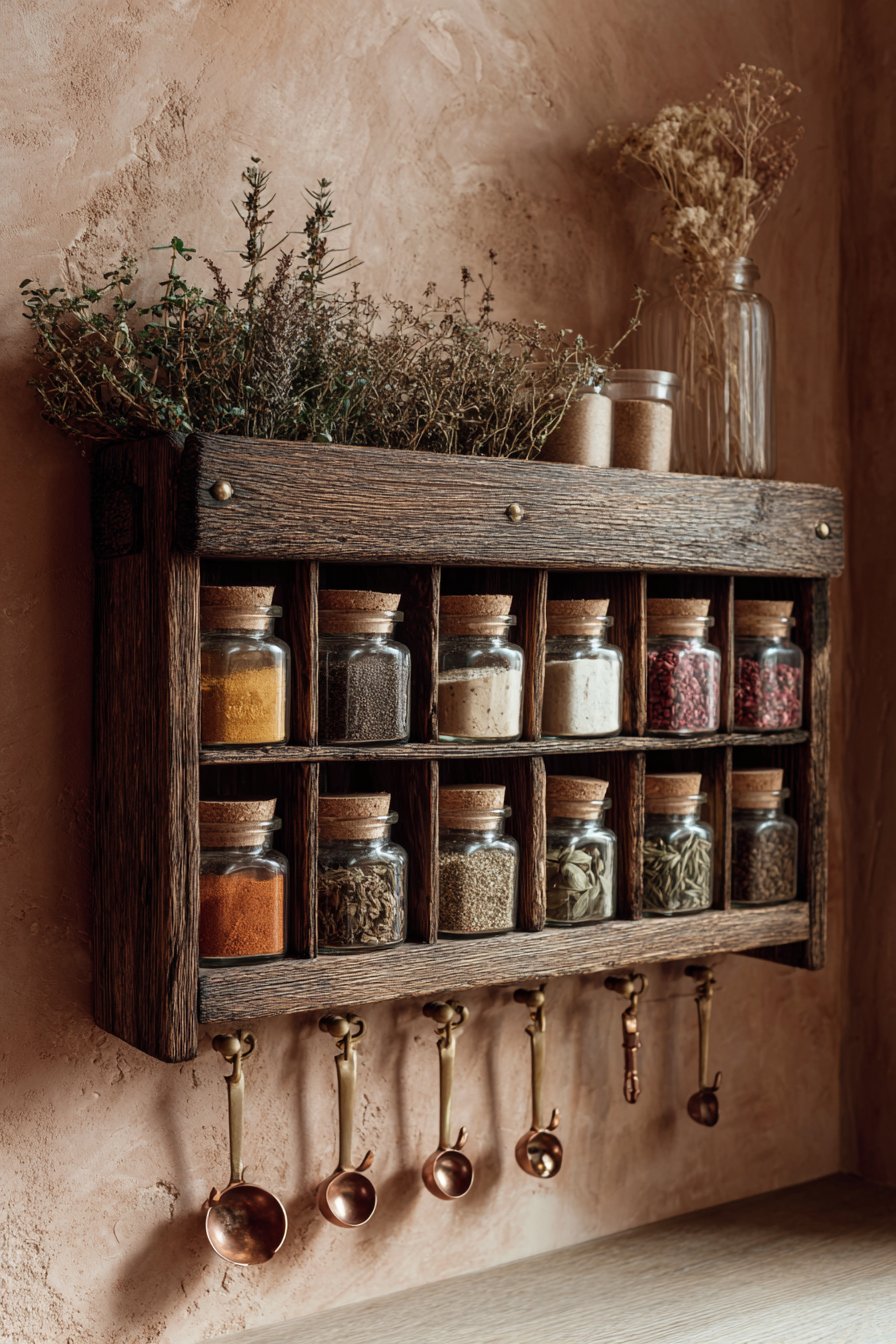
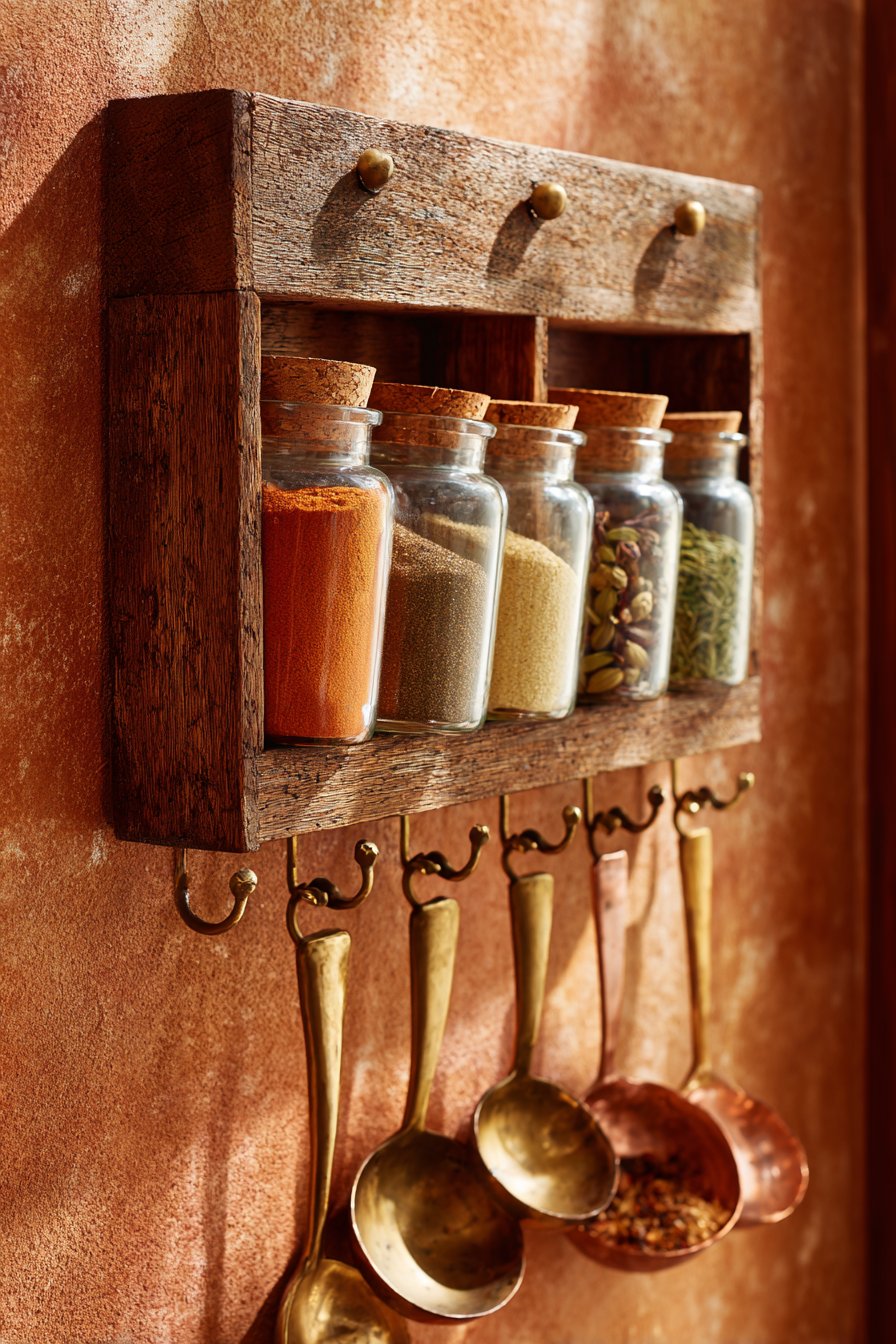
A wall-mounted wooden rack in distressed oak organizes spice storage beautifully. Individual compartments display glass apothecary jars with cork stoppers. Colorful spices and dried herbs become visual art through organization. The rack mounts on textured clay plaster wall in warm terracotta. Copper measuring spoons hang from brass hooks nearby.
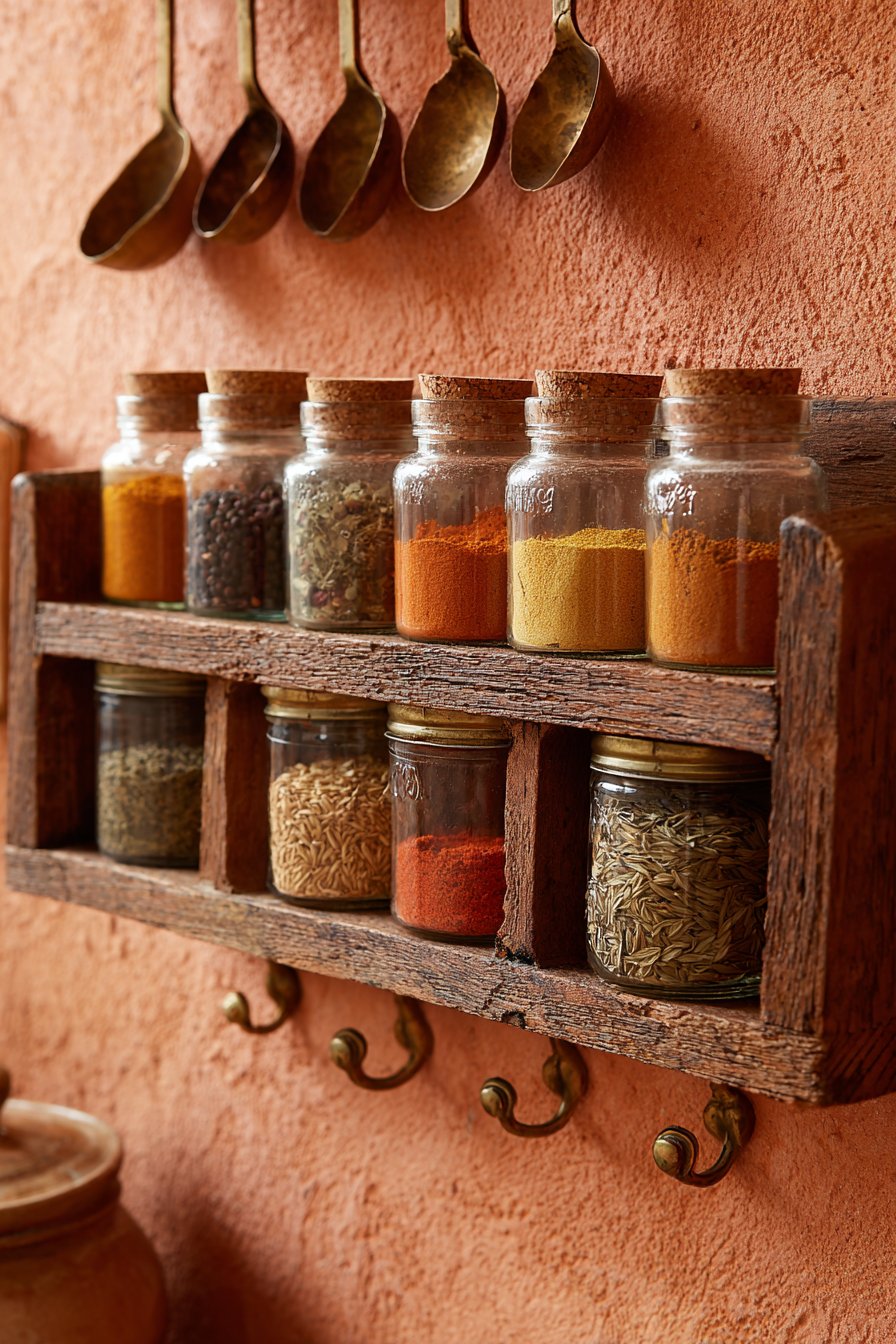
This organizational solution demonstrates how practical needs inspire beautiful design. Functional storage becomes decorative element through thoughtful presentation. Glass jars reveal colorful contents creating living color palette. The display changes as spices are used and refilled.
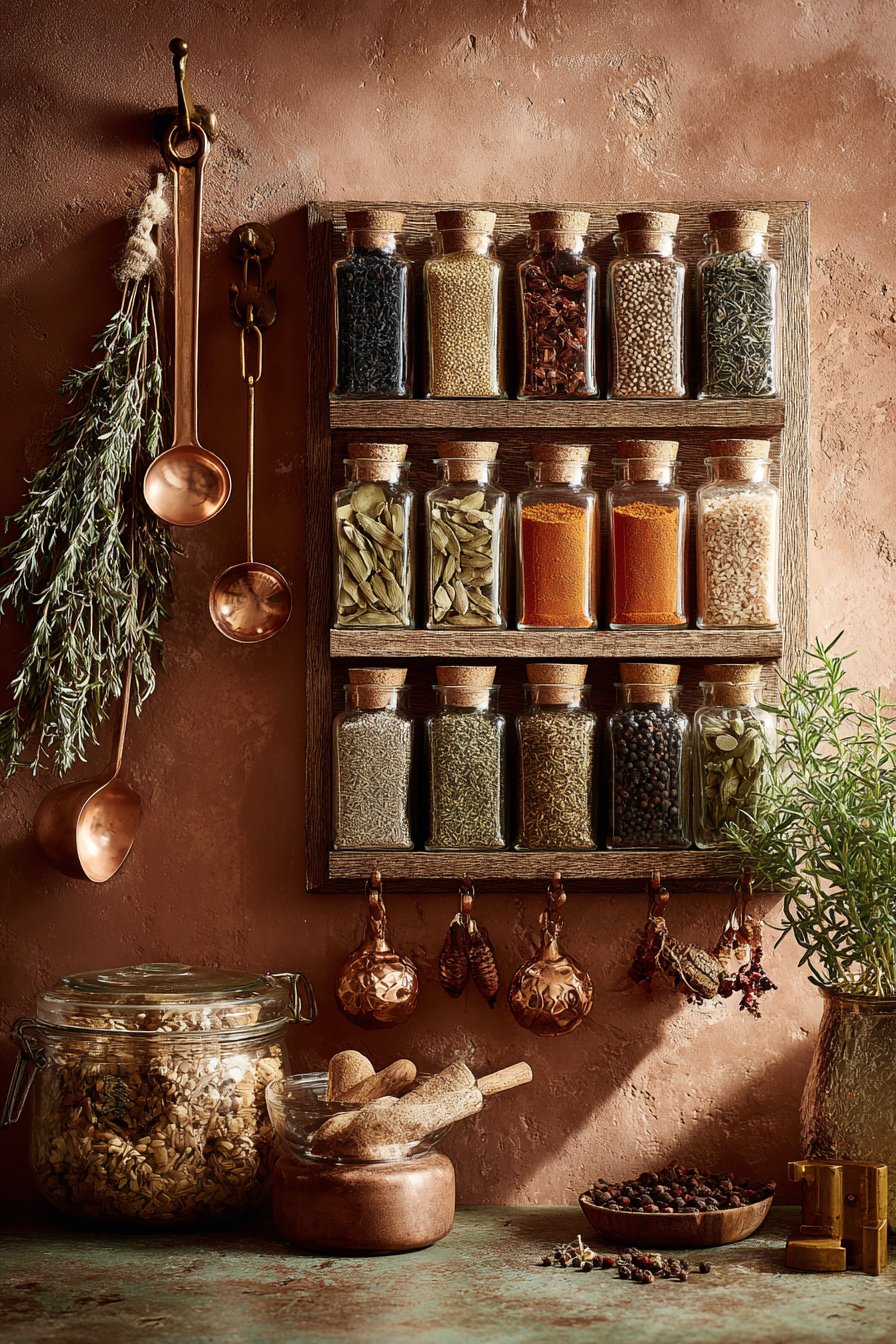
Soft side lighting creates warmth and depth throughout this vignette. The illumination highlights wood distressing and plaster texture. Shadows enhance dimensional quality of the wall-mounted rack. Strategic lighting elevates simple organization into design feature.
This spice storage proves small details contribute significantly to overall aesthetic. Thoughtful organization enhances both function and beauty. The approach demonstrates how every element deserves design consideration.
Key Design Tips:
- Choose distressed oak for aged wood character
- Use glass apothecary jars for content visibility
- Mount racks on textured clay plaster for warmth
- Add copper measuring spoons for metallic accents
- Install brass hooks for small tool storage
- Use side lighting to create depth and warmth
18. Walk-In Larder Abundance
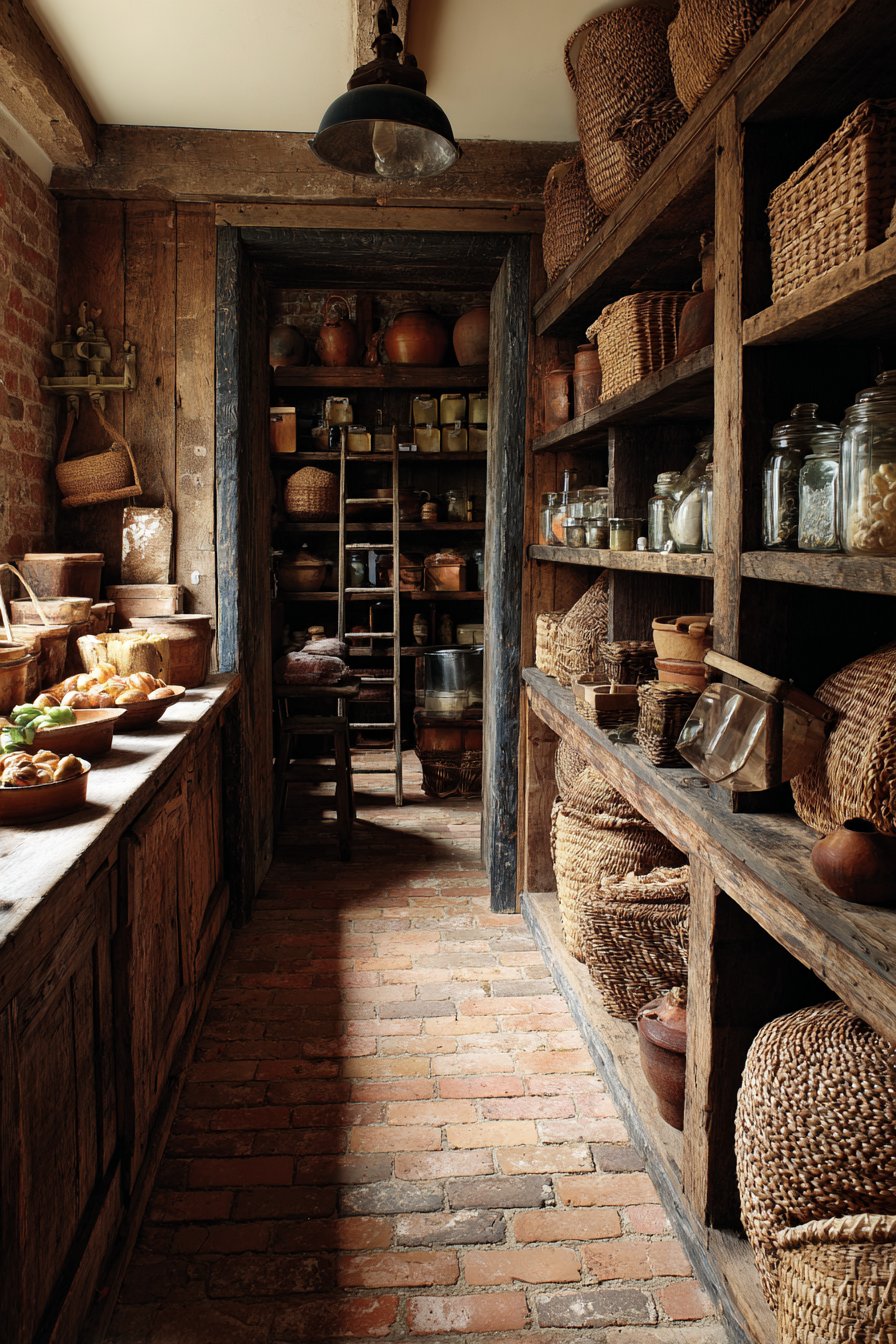
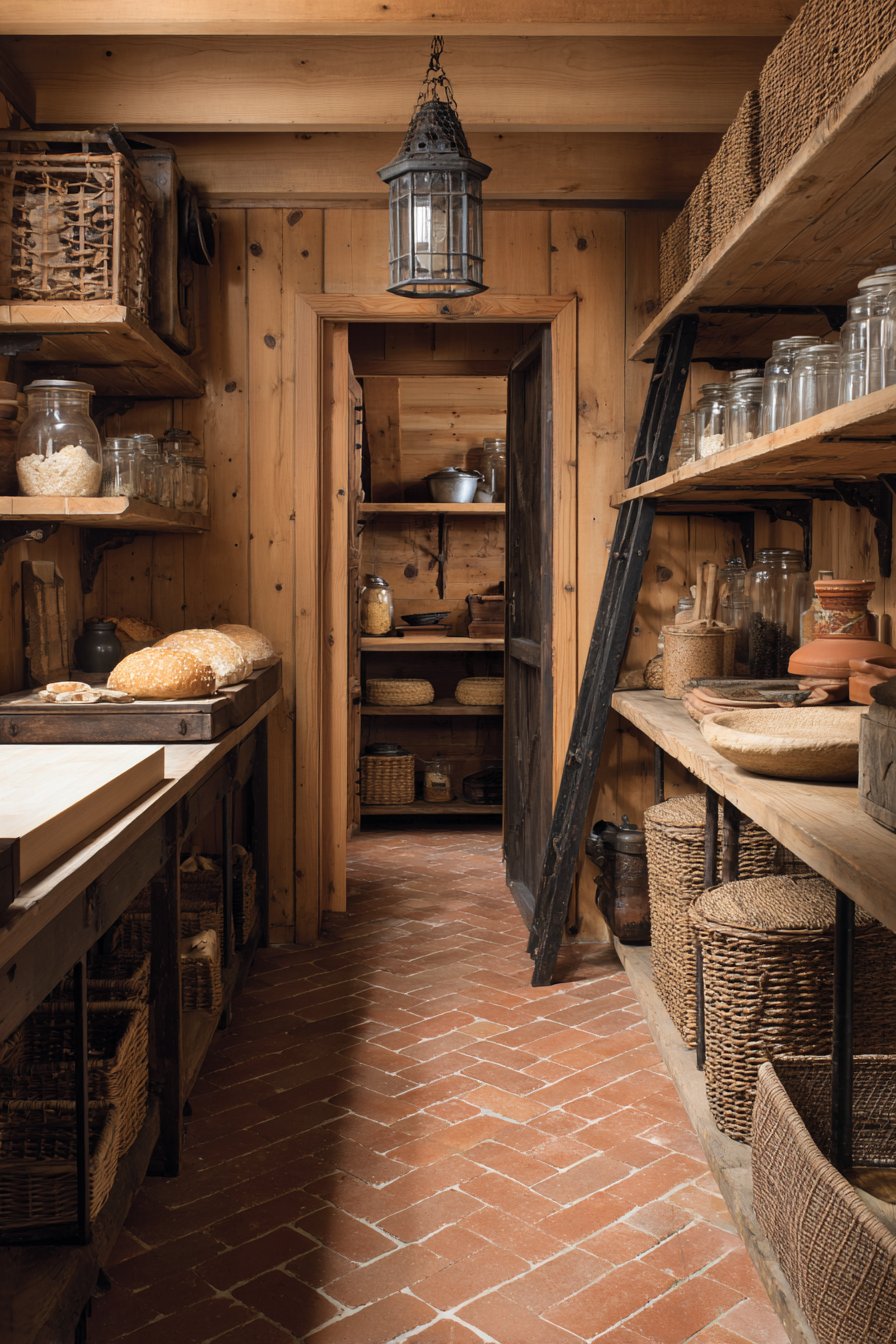
Floor-to-ceiling built-in cabinetry in unstained pine fills this walk-in larder. Natural knots and grain variations remain visible throughout. Open shelving sections display woven baskets and glass containers. Ceramic crocks provide traditional storage with earthy aesthetic. A rolling ladder in wrought iron provides upper shelf access. The ladder becomes both functional tool and design element.
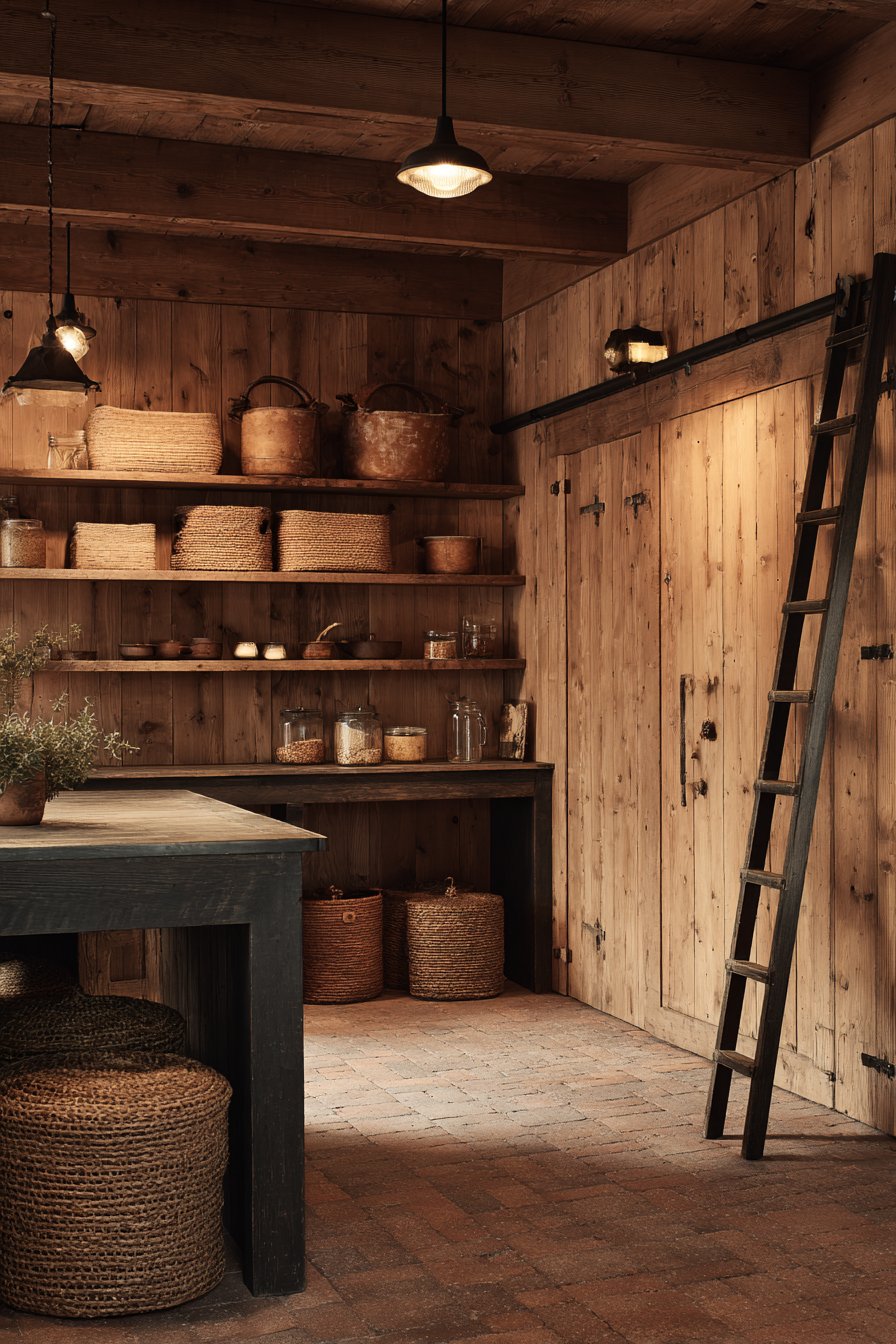
Terracotta tile flooring with natural surface texture grounds the space physically. The tiles add warmth and traditional character underfoot. A single pendant in aged brass provides ambient lighting. The fixture casts warm glow throughout the storage room.
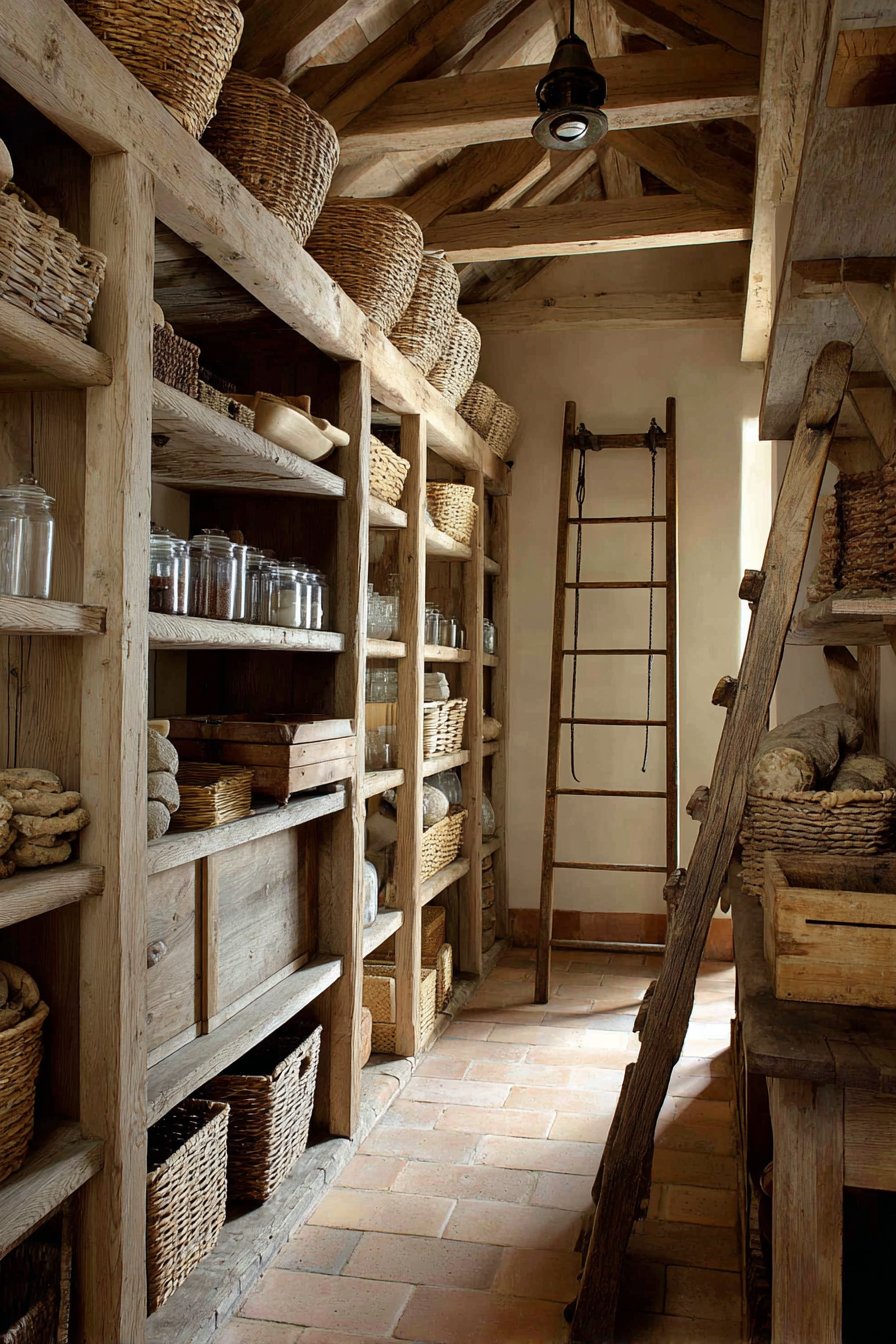
Wide-angle perspective captures impressive storage capacity and material commitment. The space demonstrates how utilitarian rooms deserve beautiful design. Natural materials transform practical storage into attractive environment. The larder proves that every room contributes to home’s overall character.
This walk-in storage demonstrates generous pantry space’s value. Abundant organization allows kitchen efficiency and reduced visual clutter. The space combines practical capacity with aesthetic beauty seamlessly.
Key Design Tips:
- Use unstained pine to showcase natural wood variations
- Include rolling ladders for both access and design interest
- Install terracotta flooring for warmth and texture
- Display items in woven baskets and glass containers
- Add ceramic crocks for traditional storage character
- Use single aged brass pendant for warm ambient light
19. Vintage Tool Display Details
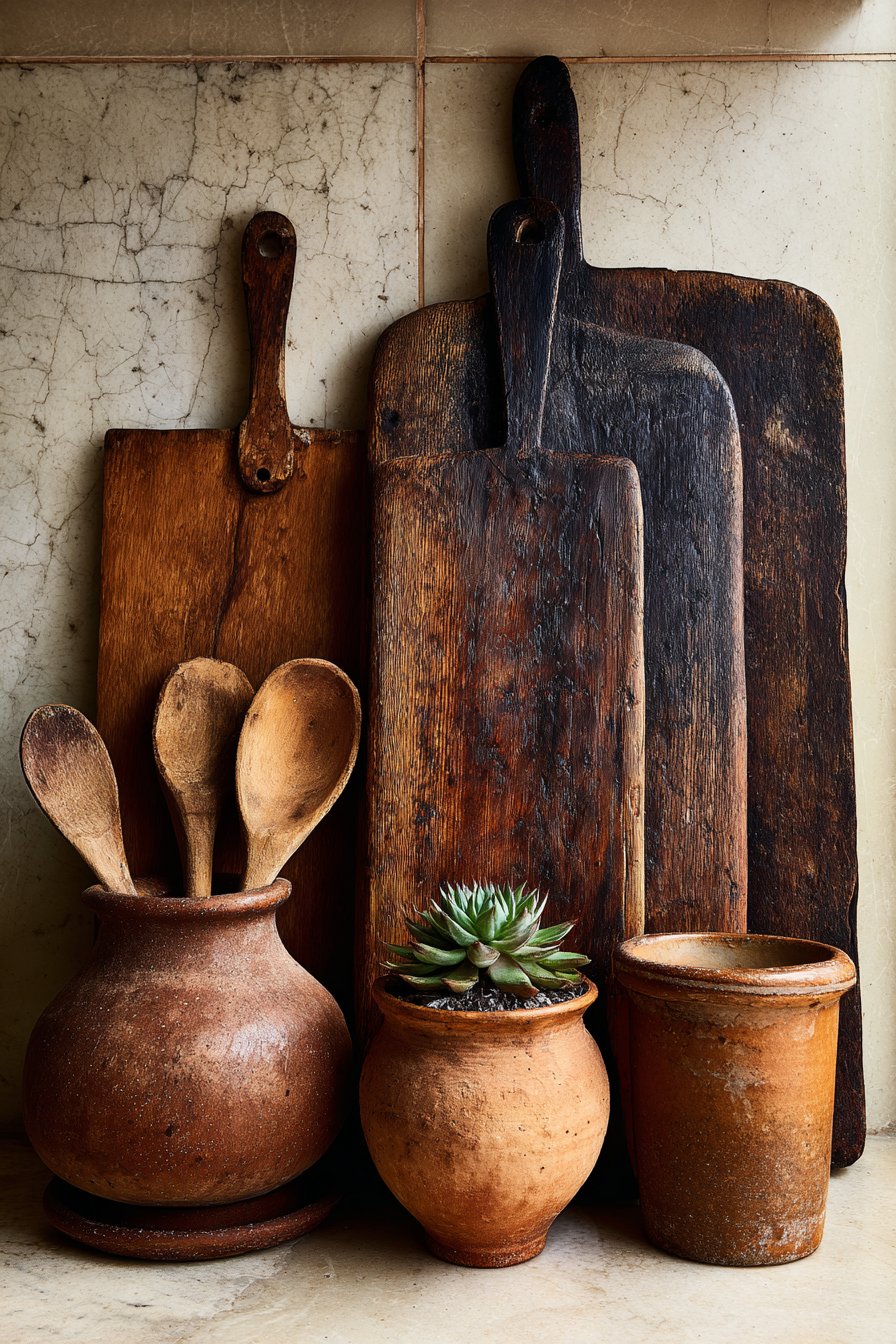
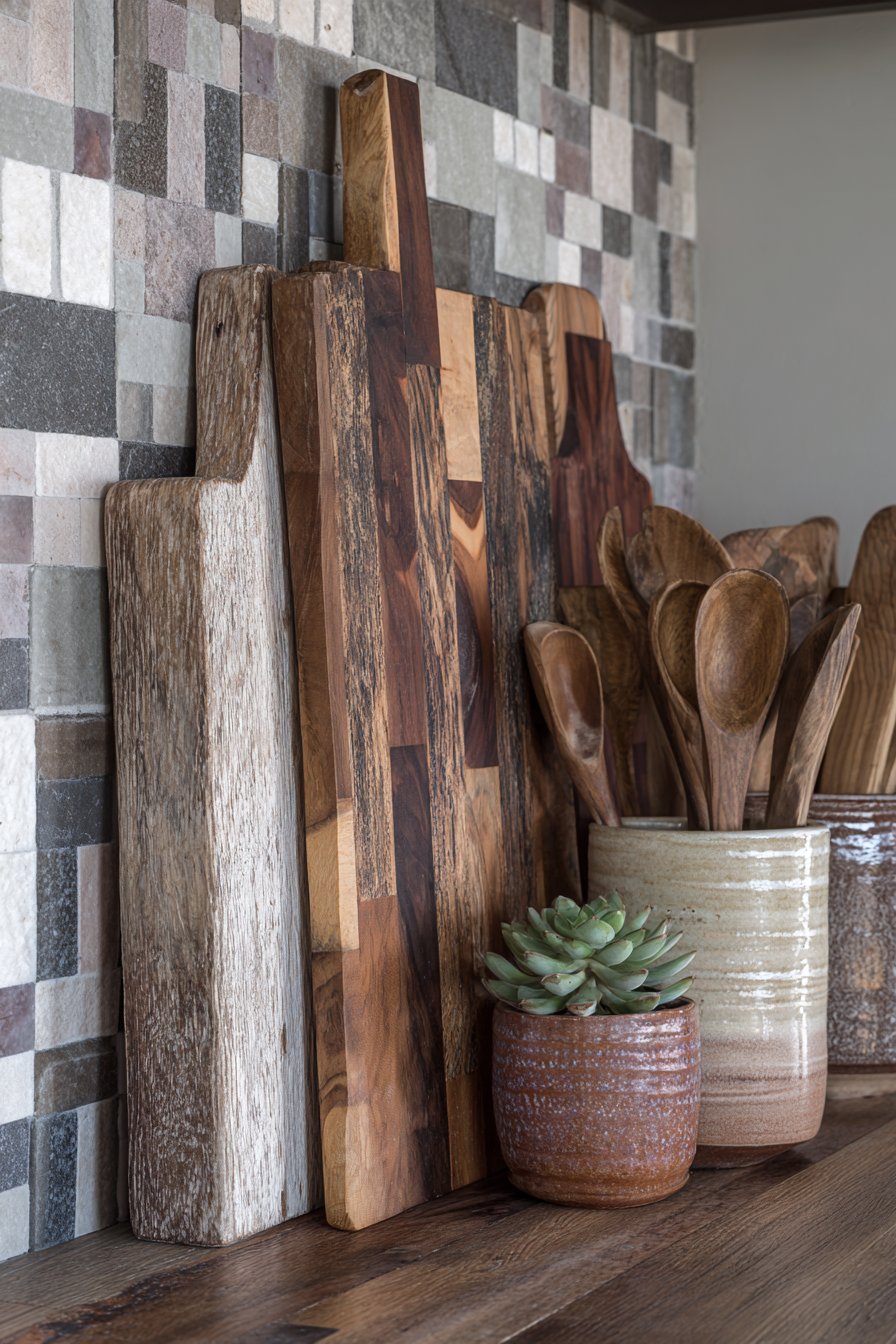
A collection of vintage wooden cutting boards creates beautiful display. Various wood types from maple to walnut show distinctive grain patterns. The boards lean against textured stone backsplash in warm grey tones. Handthrown ceramic utensil holders contain wooden spoons and cooking tools. A small potted succulent in terracotta pot adds living texture. The plant provides organic contrast to hard materials.
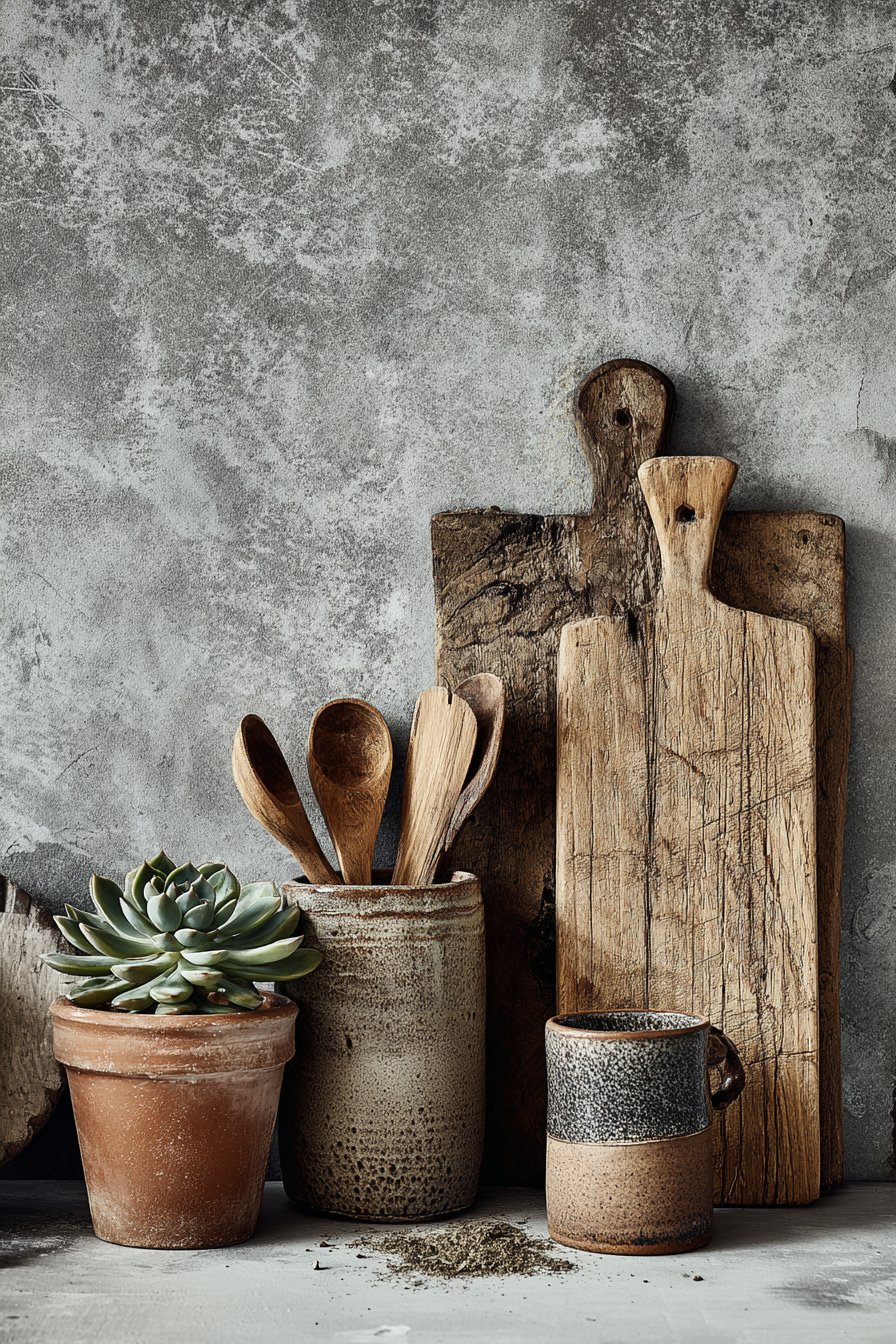
This vignette demonstrates how everyday tools become decorative elements. Functional items displayed attractively serve dual purposes. The arrangement celebrates tools’ inherent beauty and craftsmanship. Material variety creates rich textural interest in small space.
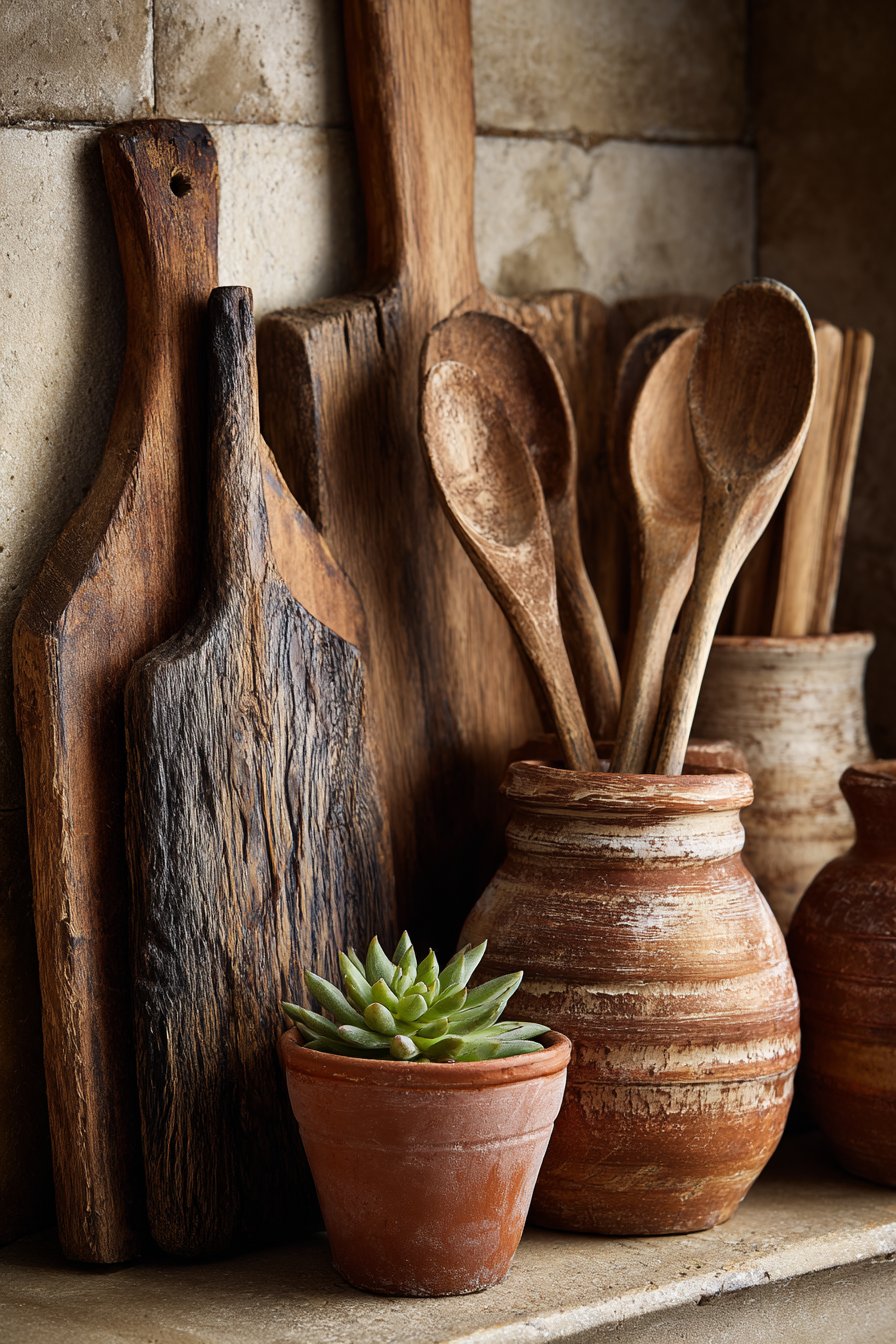
Macro focus emphasizes grain patterns and surface patinas. The close perspective reveals authentic wear that contributes character. Aging and use marks tell stories of kitchen history. The photography style celebrates imperfection and authenticity.
This detail shot proves small moments deserve equal design attention. Carefully curated collections create visual interest throughout kitchen. The approach demonstrates how personalization enhances earthy aesthetic.
Key Design Tips:
- Display vintage cutting boards as functional art
- Choose varied wood types for grain pattern interest
- Use handthrown ceramics for utensil storage
- Add small succulents for living texture
- Lean boards against textured stone for contrast
- Celebrate authentic wear and patina development
20. Professional Range Integration Excellence
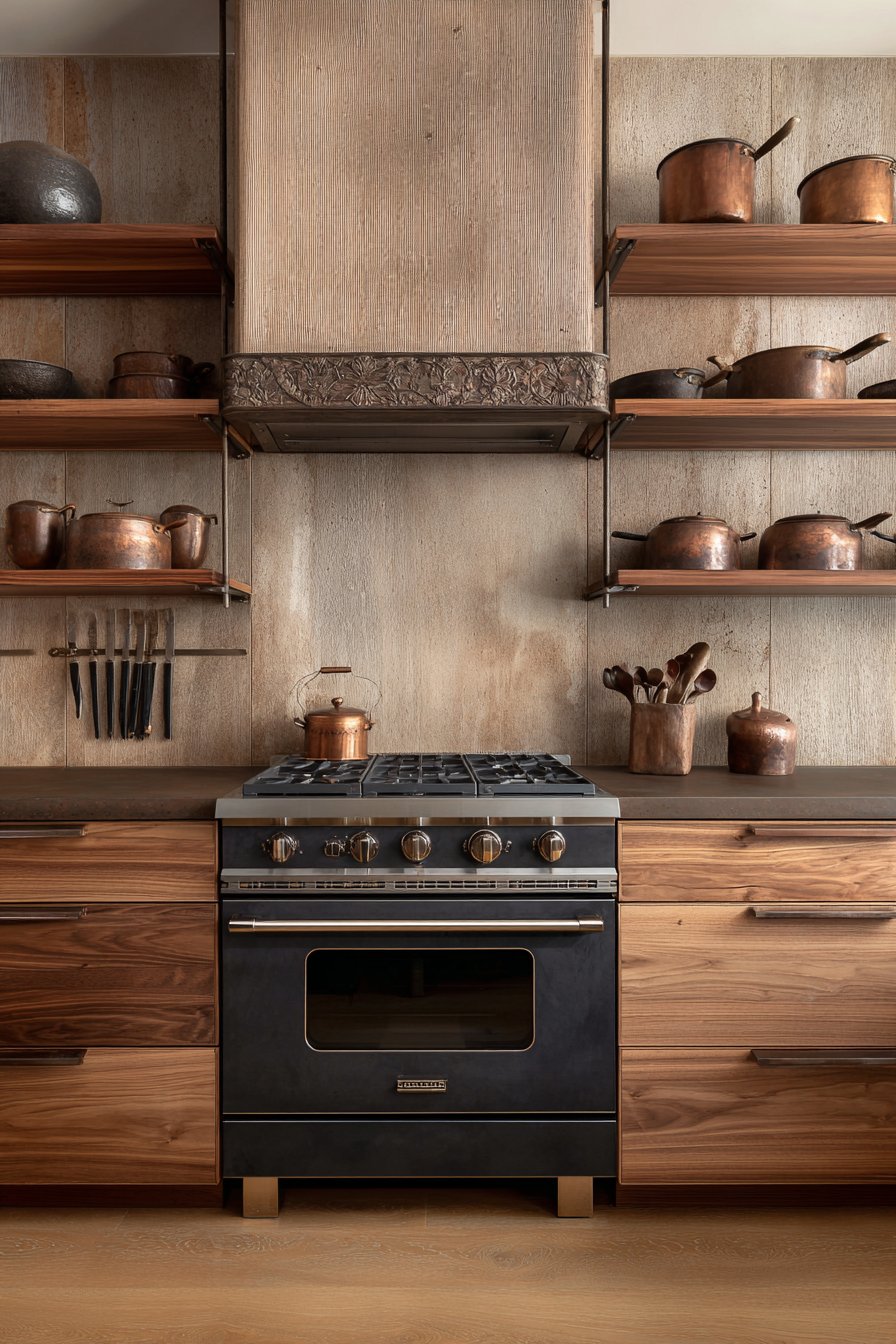
A professional range in matte black finish anchors this appliance wall. Handmade terracotta tiles with surface irregularities create dramatic backdrop. Color variations within tiles enhance handmade quality perception. Custom cabinets in book-matched walnut with oil finish flank the range. The wood’s figure creates organic art on cabinet faces.
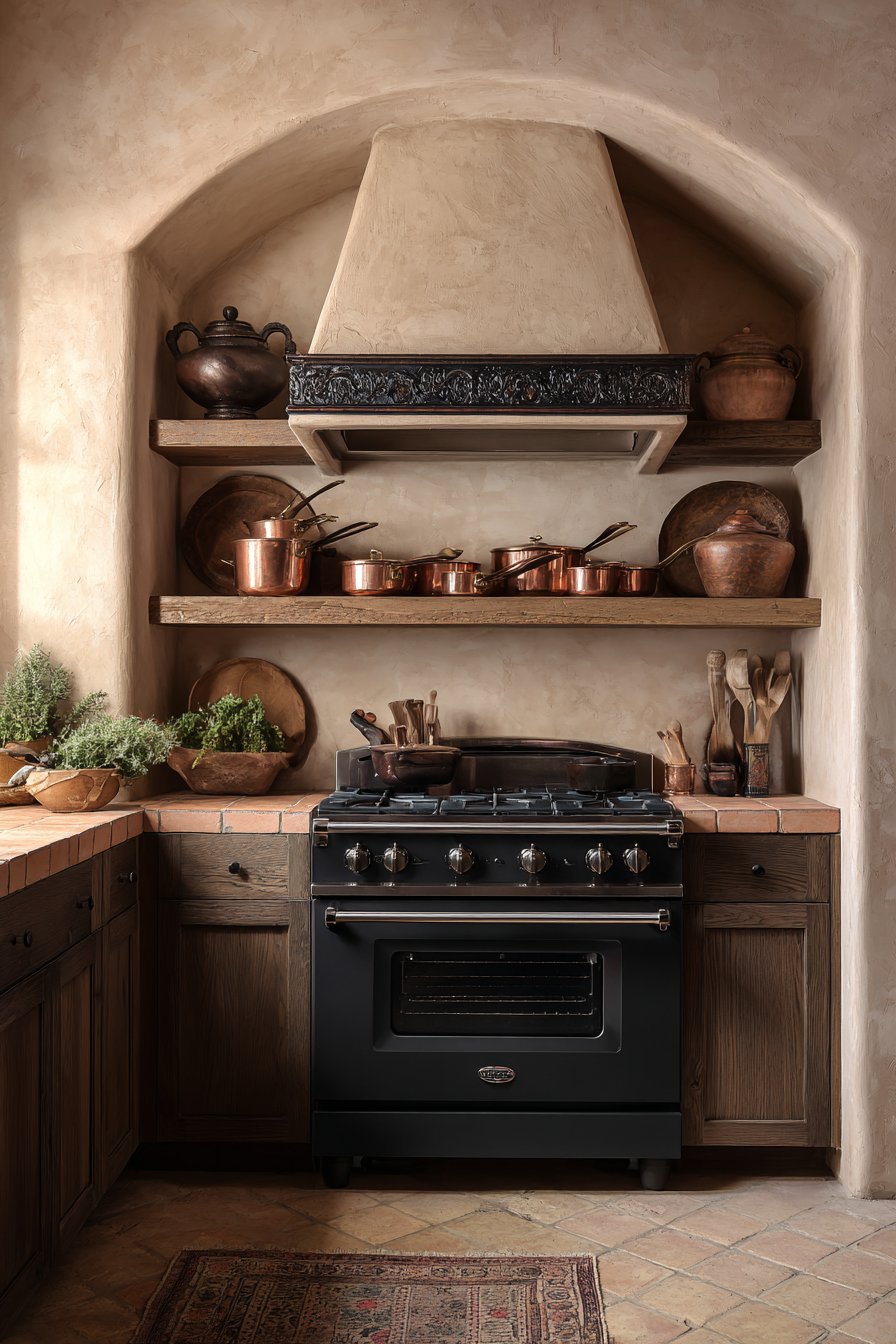
A custom range hood clad in textured lime plaster features wrought iron detailing. The mushroom-toned plaster adds warmth and handcrafted character. Open shelving displays copper pots and cast iron cookware. The metallic and iron pieces add weight and traditional character.
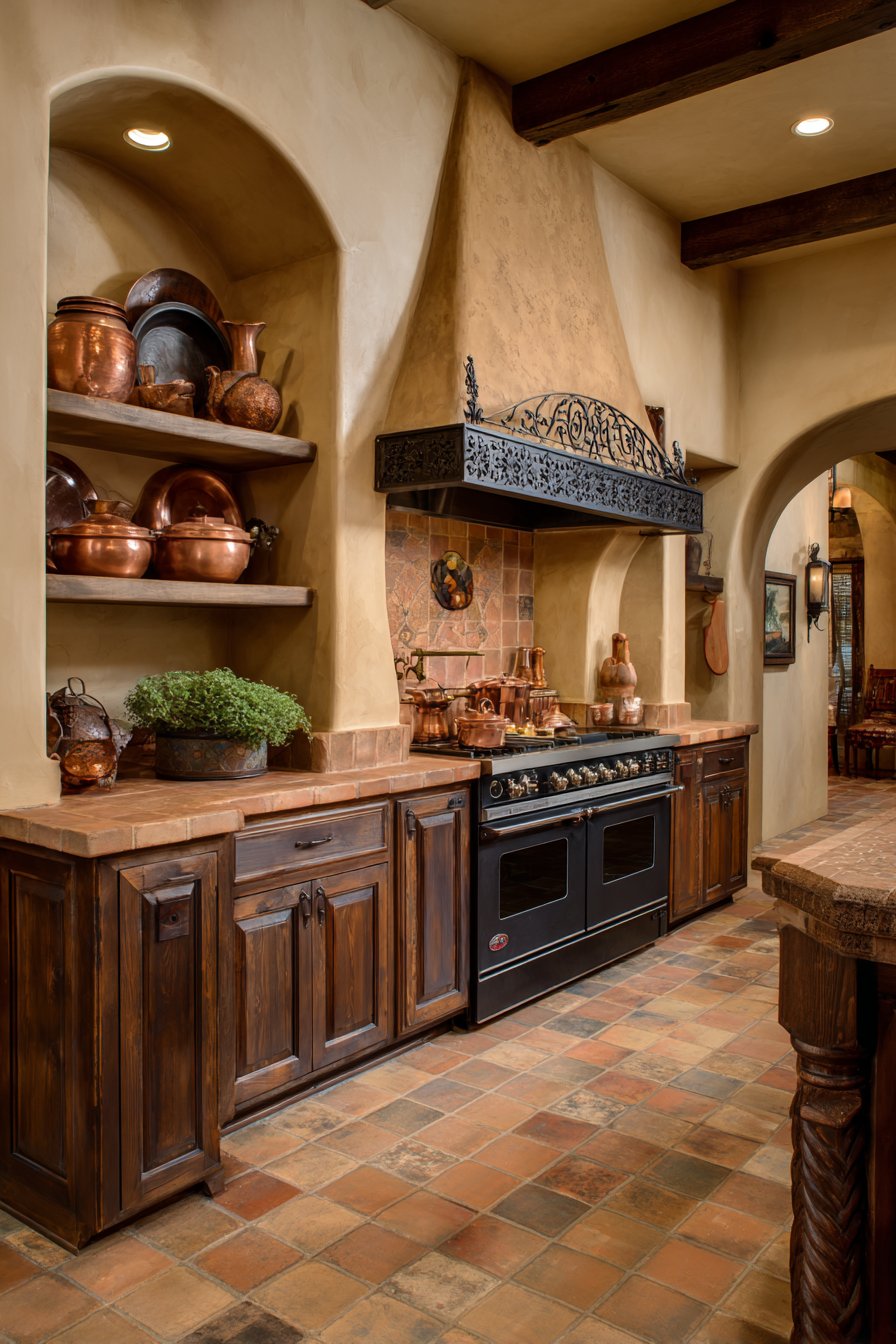
Balanced exposure captures modern function integration with organic materials. The lighting reveals how contemporary appliances work within earthy aesthetic. Artisanal finishes throughout create cohesive design language. The space proves modern convenience and natural beauty coexist harmoniously.
This appliance wall demonstrates how functional requirements inspire beautiful solutions. Necessary modern equipment integrates seamlessly through material choices. The approach proves that earthy design accommodates contemporary needs perfectly.
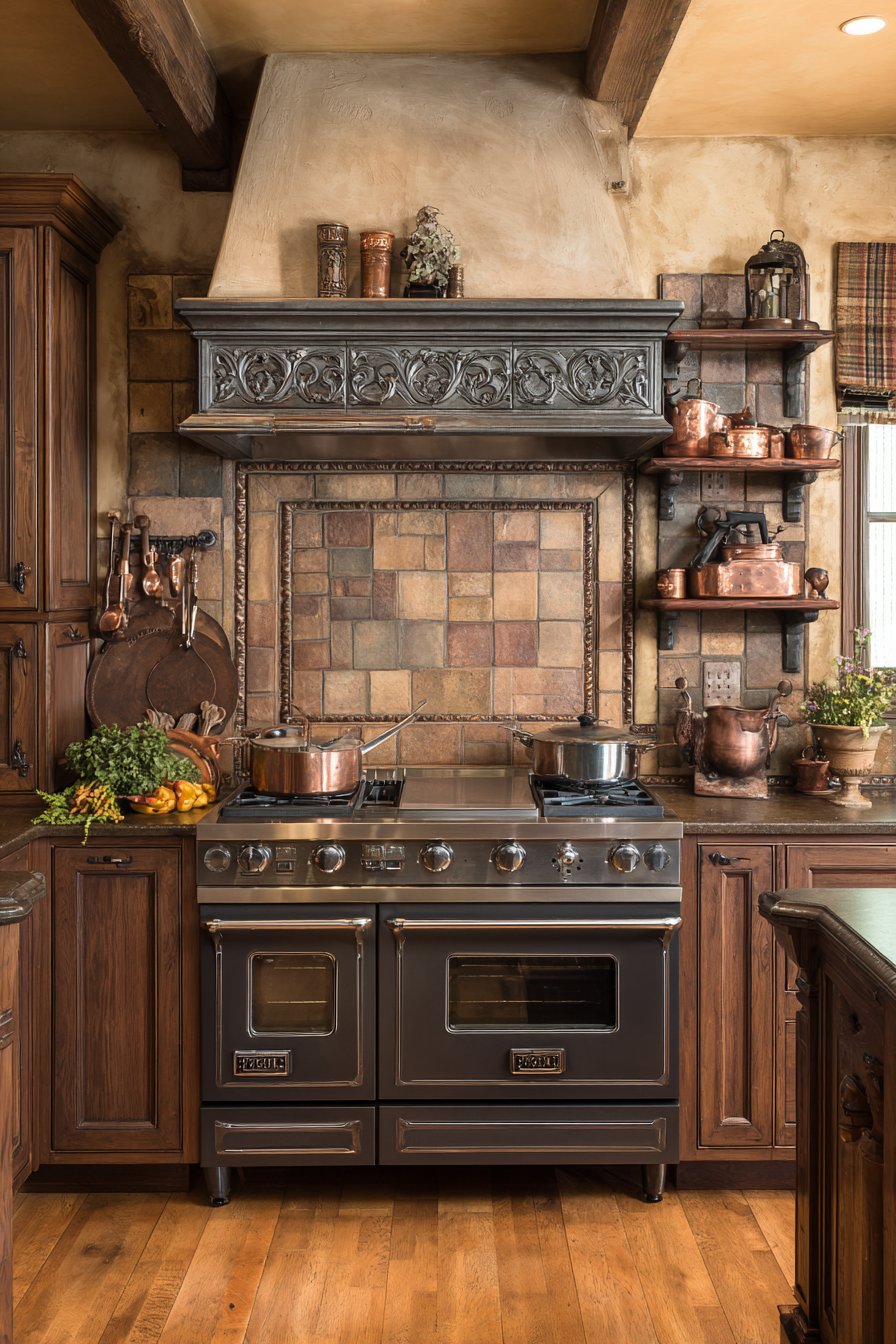
Key Design Tips:
- Choose matte black appliances for modern contrast
- Use handmade terracotta tiles for an artisan backdrop
- Frame ranges with book-matched walnut cabinetry
- Clad range hoods in textured lime plaster
- Display copper and cast iron on open shelving
- Add wrought iron detailing for traditional metalwork character
Why These Earthy Kitchen Designs Are the Best
These earthy kitchen designs represent the finest approaches to natural material integration and organic aesthetic development. Each concept demonstrates thoughtful consideration of sustainable materials, artisanal craftsmanship, and timeless design principles. The spaces showcase remarkable versatility that accommodates different home styles, personal preferences, and functional requirements while maintaining cohesive earthy aesthetic throughout.
The incorporation of reclaimed wood throughout these designs adds environmental responsibility to beautiful design choices. These materials bring irreplaceable history and character that newly manufactured items cannot replicate. Salvaged timber, weathered beams, and vintage wood elements create sustainable luxury. The natural aging processes visible in reclaimed materials add authenticity that resonates with contemporary values. Using existing materials reduces environmental impact while creating spaces with genuine soul and story.
Natural stone selections including soapstone, marble, and stone veneer provide durable beauty that improves with age. These materials develop patinas and character over time rather than deteriorating. The organic variations within natural stone ensure each installation remains unique. Stone’s thermal properties benefit cooking environments practically while adding visual weight and permanence. The material’s longevity makes it an economically and environmentally sensible choice for kitchen applications.
Handcrafted ceramic elements including terracotta tiles, artisan pottery, and glazed vessels showcase traditional craftsmanship. These pieces support artisan communities while bringing unique character to spaces. The surface irregularities and color variations inherent in handmade items add warmth that machine-made products lack. Displaying artisan ceramics elevates functional items to art status. The imperfections become design features celebrating human touch in increasingly automated world.
Natural textile integration through linen curtains, woven baskets, and seagrass elements adds essential softness. These materials balance harder surfaces like stone and wood beautifully. Textiles introduce flexibility and seasonal change opportunities into permanent kitchen design. Natural fibers age gracefully while remaining environmentally responsible choices. The textural variety creates visual interest and tactile appeal throughout spaces.
Metallic elements including copper, brass, bronze, and iron add warmth and traditional character. These metals develop living patinas that deepen over time. The aging process creates unique finishes that cannot be replicated artificially. Hand-forged iron details demonstrate blacksmithing traditions’ continued relevance. Copper cookware and fixtures bring both functional benefits and aesthetic warmth. The mixed metal approach allows personality expression while maintaining cohesive palette.
Organic plaster finishes including clay plaster, lime wash, and textured applications create architectural interest. These traditional materials improve indoor air quality while adding handcrafted character. The application process leaves visible trowel marks celebrating human craftsmanship. Plaster’s depth and texture cannot be achieved with standard paint finishes. The material ages beautifully while remaining durable and repairable over time.
Natural lighting strategies throughout these designs maximize connection to outdoor environments. Large windows frame garden views while flooding spaces with beneficial daylight. The interplay between natural light and organic materials creates dynamic conditions changing throughout day. Golden hour illumination particularly enhances warm wood tones and earth-colored surfaces. Strategic window placement reduces artificial lighting needs while improving occupant wellbeing.
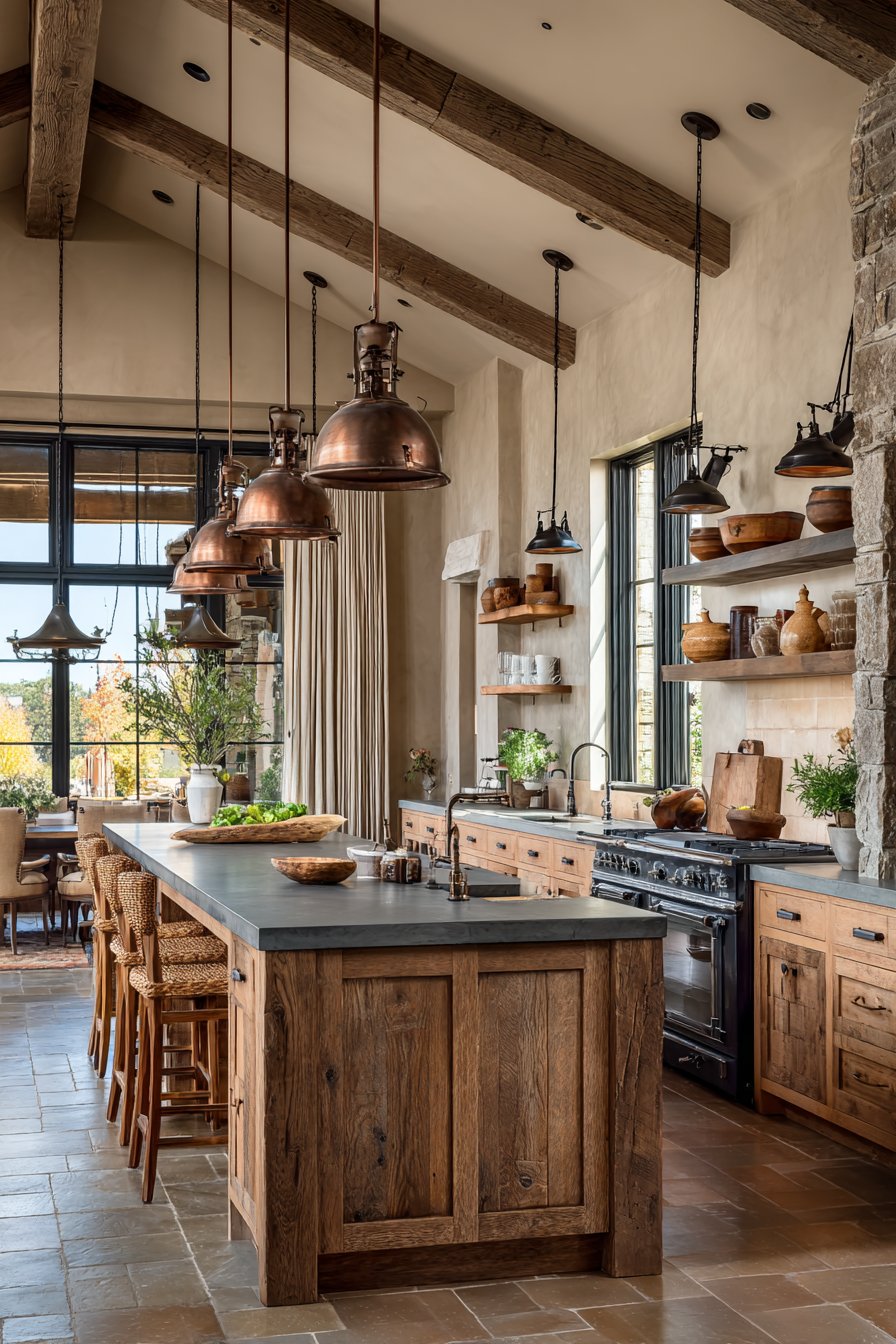
Layered artificial lighting approaches ensure functionality while creating ambiance and atmosphere. Mixed pendant styles add personality while serving practical purposes. Task lighting illuminates work surfaces without compromising overall aesthetic. Ambient lighting creates warmth and welcome during evening hours. The combination ensures kitchens remain beautiful and functional throughout all conditions.
Open shelving displays throughout these kitchens serve multiple important purposes simultaneously. The approach reduces visual weight compared to solid cabinetry while encouraging organization. Displayed items become decorative elements contributing to overall aesthetic. Open storage makes frequently used items easily accessible. The transparency creates honest functionality celebrating kitchen tools and ingredients. Collections of wooden bowls, ceramic vessels, and woven baskets become curated displays.
Functional organization solutions demonstrate that practical needs inspire beautiful design. Built-in wine racks, spice displays, and basket storage prove organization enhances aesthetics. Dedicated zones for coffee preparation, baking, or food storage create efficiency. Thoughtful planning ensures everything has designated home while remaining accessible. The organizational beauty encourages maintenance and reduces clutter naturally.
Color palette consistency across these designs creates cohesive earthy aesthetic. Warm tones ranging from rust and terracotta through sand and mushroom establish grounding foundation. Natural wood tones add golden warmth and organic variation. Stone greys and blacks provide necessary contrast and visual anchoring. The earth-toned palette creates calming environments promoting relaxation and connection. Color choices reference natural landscapes bringing outdoor tranquility inside.
Textural variety throughout these spaces creates essential visual interest and tactile appeal. Rough reclaimed wood contrasts with smooth soapstone counters beautifully. Dimensional tile surfaces play against flat plaster walls. Woven textiles add softness balancing harder architectural elements. The textural layering rewards both visual observation and physical touch. Multiple surface qualities prevent monotony while maintaining aesthetic cohesion.
Authentic material aging visible throughout these designs adds irreplaceable character and charm. Copper patina development, wood weathering, and stone surface variations tell time stories. The visible history creates depth that new materials cannot provide. Honest aging celebrates use and life rather than pursuing impossible perfection. The authentic wear contributes to spaces feeling established and comfortable immediately.
These earthy kitchen designs accommodate modern appliances and contemporary functionality seamlessly. Professional ranges, efficient ventilation, and adequate task lighting meet serious cooking needs. Technology integration happens thoughtfully without compromising aesthetic integrity. The spaces prove that traditional materials and modern convenience coexist beautifully. Functionality enhances rather than detracts from natural beauty throughout.
Sustainability principles underpin these design approaches through material choices and longevity focus. Durable natural materials reduce replacement needs and associated environmental impacts. Timeless aesthetics prevent style-driven remodeling cycles. Local artisan support reduces transportation impacts while preserving traditional skills. The designs demonstrate how environmental responsibility enhances rather than limits beauty.
Personalization opportunities abound throughout these earthy kitchen concepts. Display areas accommodate treasured collections and meaningful objects. Material choices reflect individual preferences and priorities. Color variations allow personality expression within cohesive palette. The flexibility ensures each kitchen becomes unique while maintaining earthy design principles. Personal touches make spaces feel genuinely lived-in and loved.
These designs create nourishing environments supporting both physical and emotional wellbeing. Natural materials improve air quality and create healthier indoor environments. Warm aesthetics reduce stress and promote relaxation. The beauty inspires creative cooking and meaningful gathering. These kitchens become true homes’ hearts where families naturally congregate. The spaces nourish souls while serving practical cooking needs beautifully.
Conclusion
These earthy kitchen designs demonstrate that warmth, authenticity, and beauty emerge from thoughtful natural material choices. Key takeaways include embracing imperfection in handcrafted elements, layering diverse textures for depth, and celebrating honest aging processes. Quality natural materials combined with artisanal craftsmanship create timeless spaces that improve rather than deteriorate over time.
Successful earthy kitchen design balances aesthetic appeal with serious functional requirements. Start your transformation by introducing one signature element like reclaimed wood island or handcrafted tile backsplash. Build gradually by adding complementary natural materials, organic textiles, and artisan accessories. Your dream earthy kitchen awaits creation through patient planning and commitment to authentic materials. The investment in natural beauty creates lasting value and daily joy for years to come.