


Green and orange create one of nature’s most vibrant color combinations. This pairing brings energy and warmth to bedroom spaces. The contrast between cool green tones and warm orange hues creates visual interest that feels both bold and balanced.
Interior designers increasingly embrace this complementary color scheme for bedrooms. The combination works across multiple design styles from bohemian to modern. Green provides calming qualities while orange adds enthusiasm and creativity. Together, they transform ordinary bedrooms into extraordinary personal retreats.
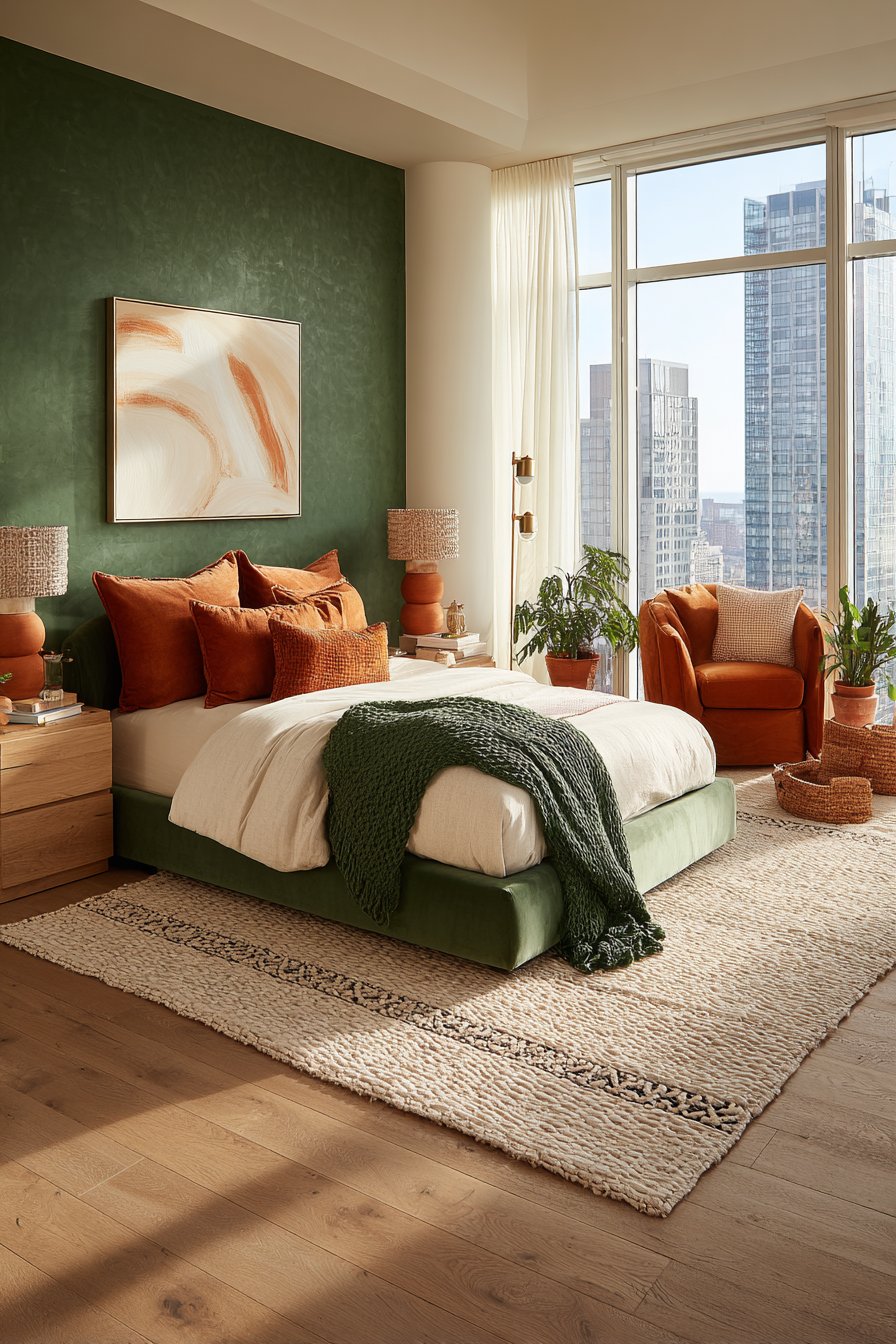
This article explores twenty distinct approaches to green and orange bedroom design. Each concept demonstrates unique ways to balance these dynamic colors. You’ll discover techniques for various aesthetics including minimalist, maximalist, rustic, and contemporary styles.
1. Vibrant Sage and Burnt Orange Sanctuary
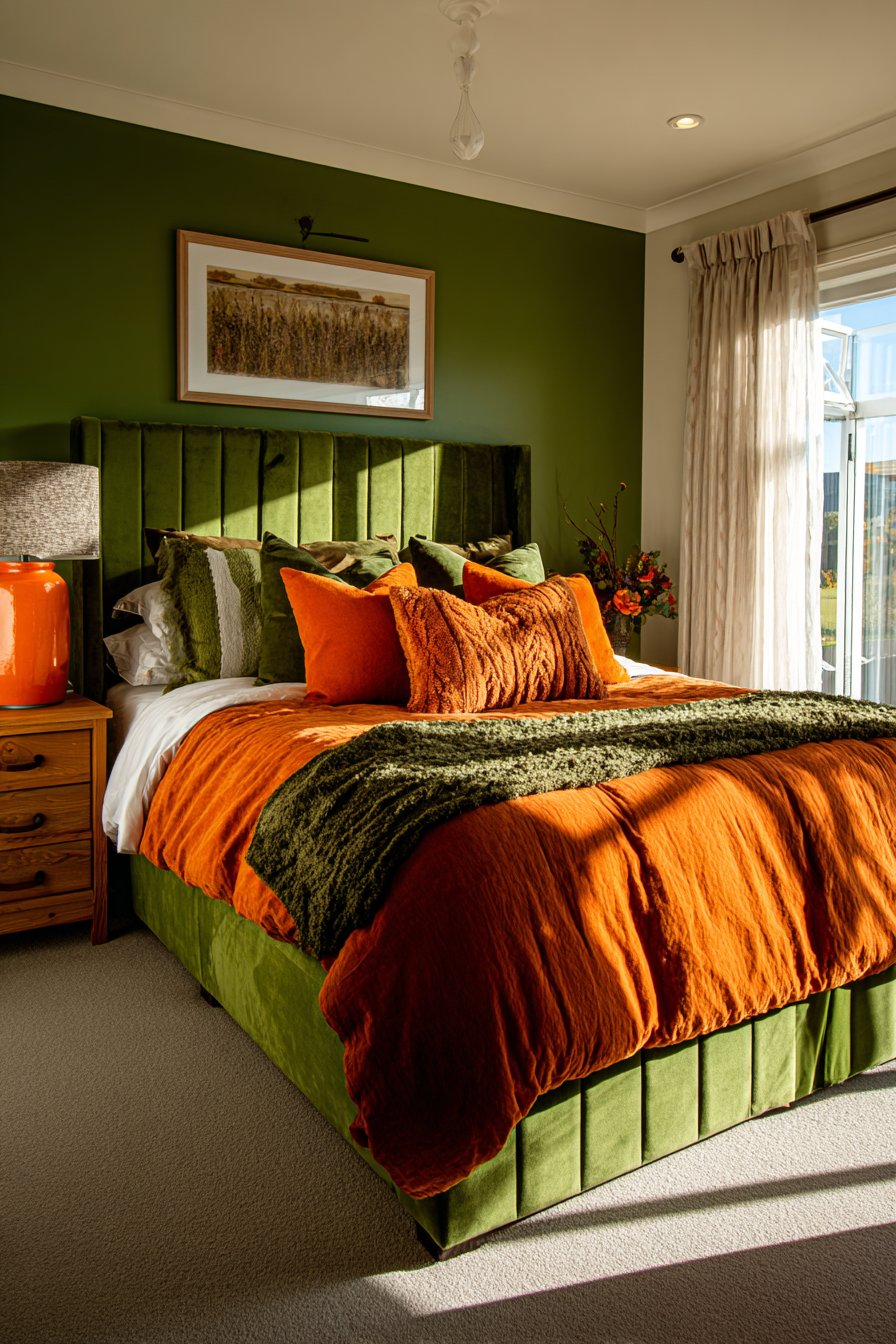
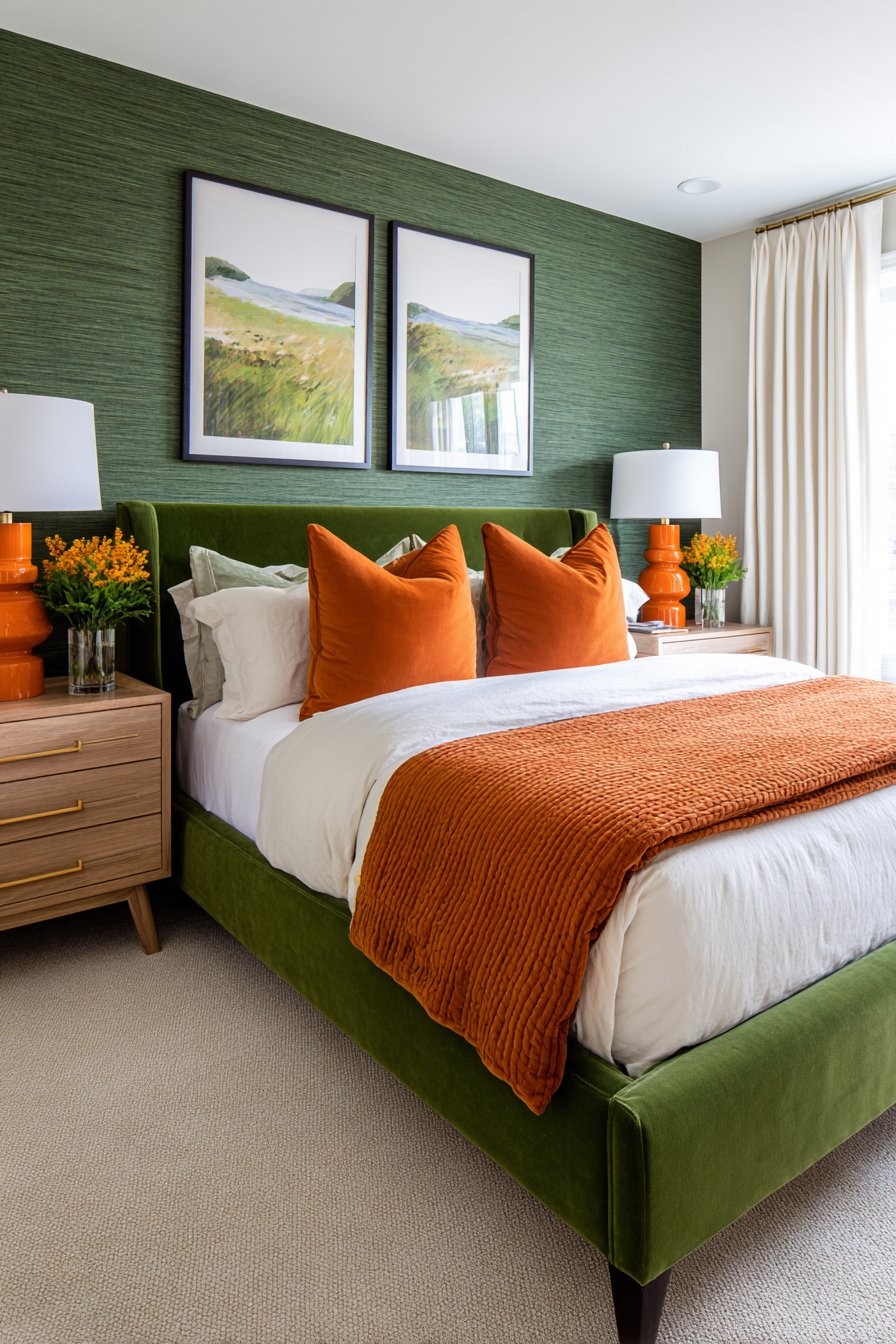
A plush sage green upholstered bed frame anchors this sophisticated bedroom design. Burnt orange velvet throw pillows add luxurious texture against the gentle green backdrop. The rust-colored linen duvet creates warmth that invites relaxation. These carefully chosen textiles demonstrate how material selection elevates color combinations.
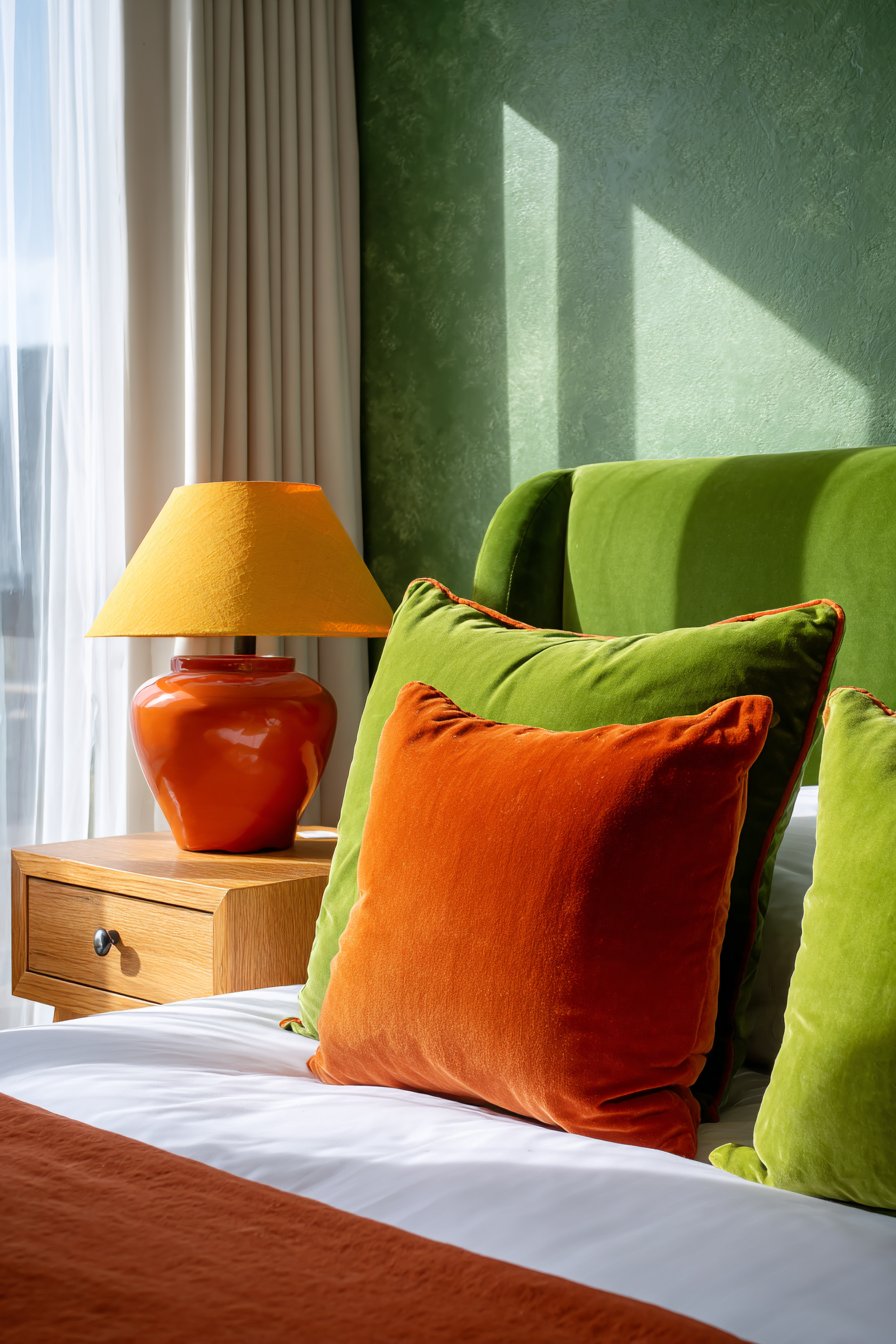
The accent wall features rich forest green with natural texture. This bold choice creates depth without overwhelming the space. Remaining walls stay soft cream to provide visual breathing room. The contrast allows the green and orange elements to shine without competing for attention.
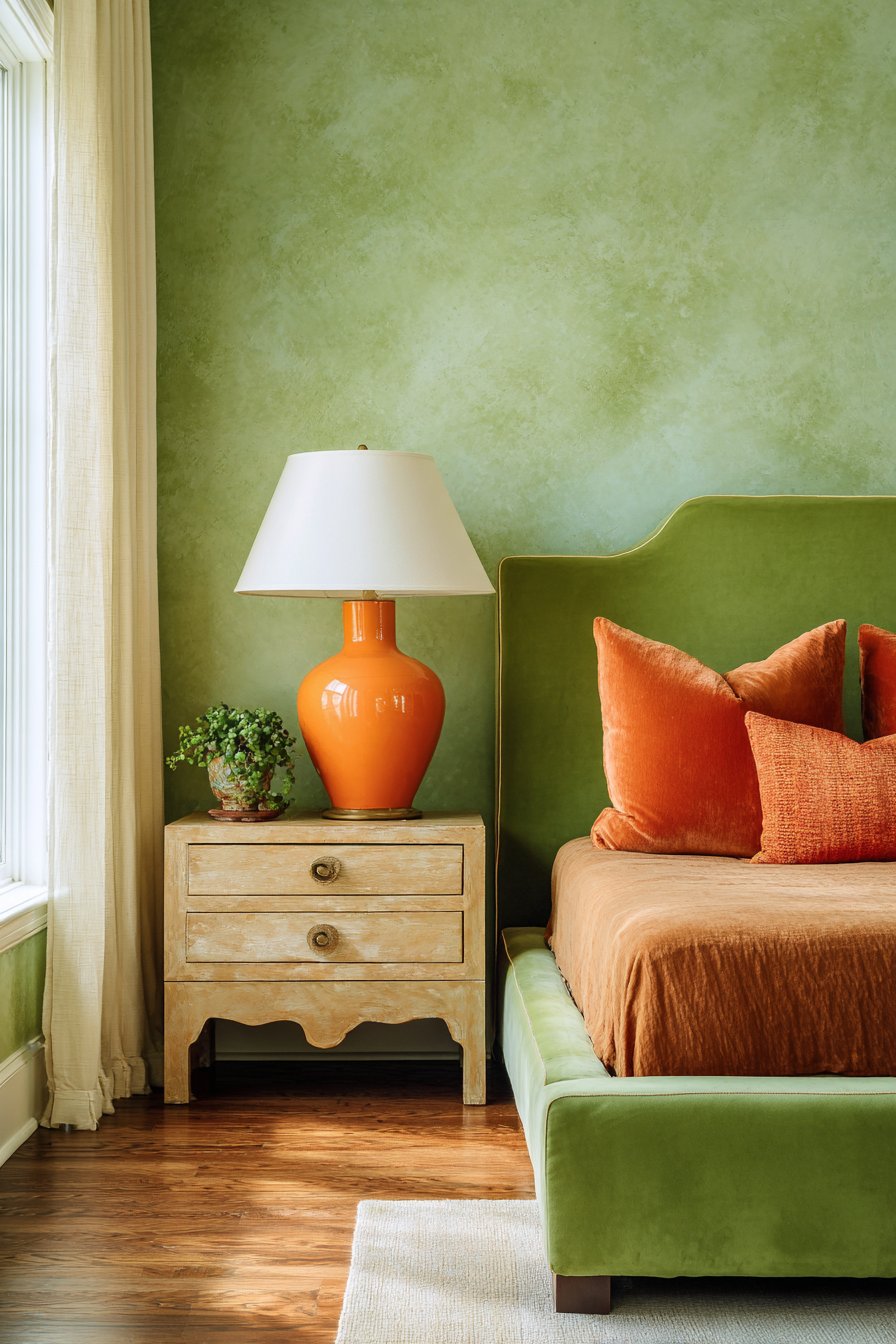
A vintage-inspired orange ceramic table lamp sits on a natural oak nightstand. Morning light streams through sheer curtains casting warm highlights throughout. The complementary color palette comes alive in natural illumination. Wide-angle views reveal how every element contributes to the harmonious design.
Key Design Tips:
- Select plush upholstered furniture in sage green for comfort and style
- Layer burnt orange velvet pillows for texture contrast
- Create one forest green accent wall while keeping others neutral
- Choose natural oak furniture to bridge green and orange tones
- Use sheer curtains to maximize natural light interaction with colors
2. Bohemian Emerald and Terracotta Haven
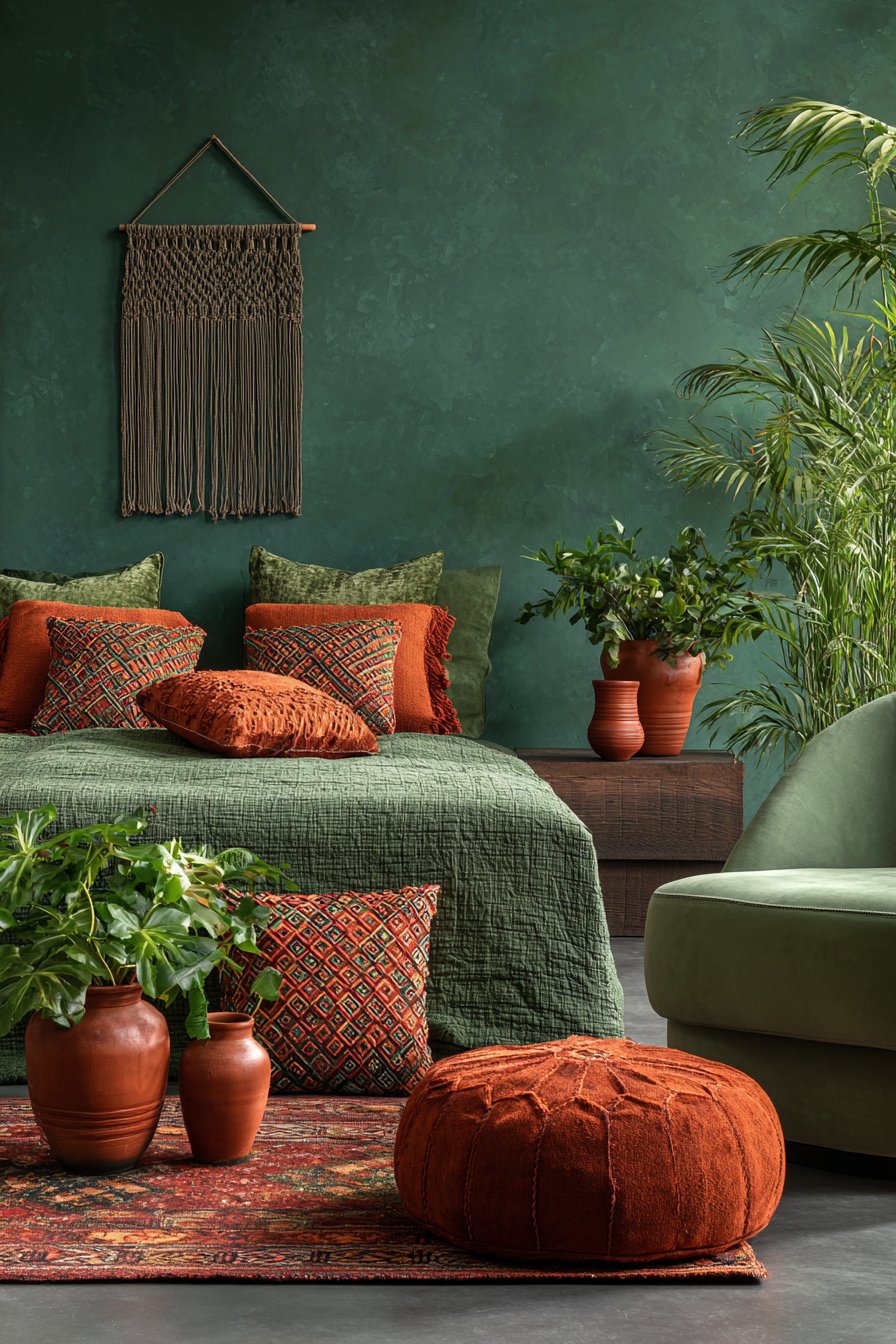
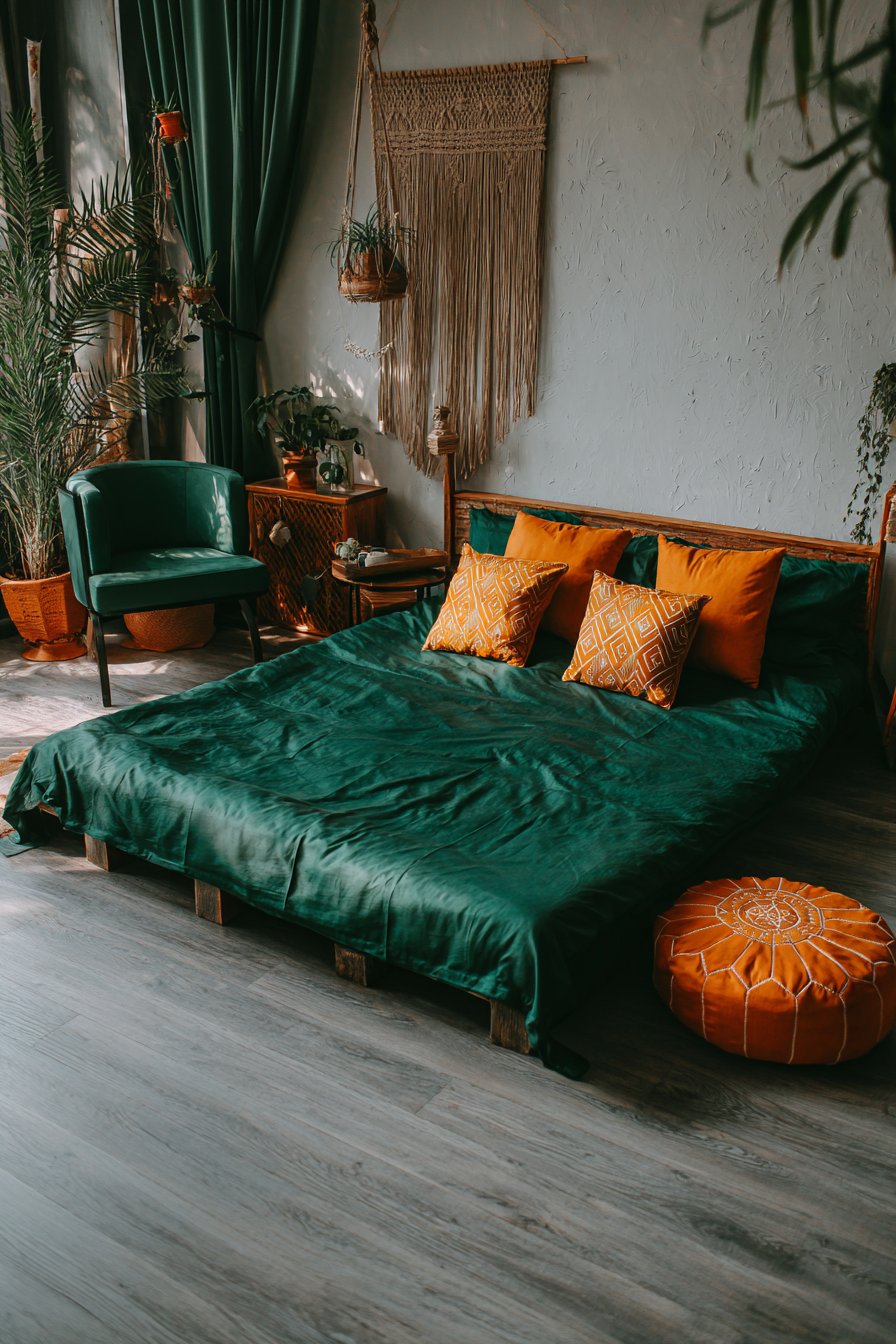
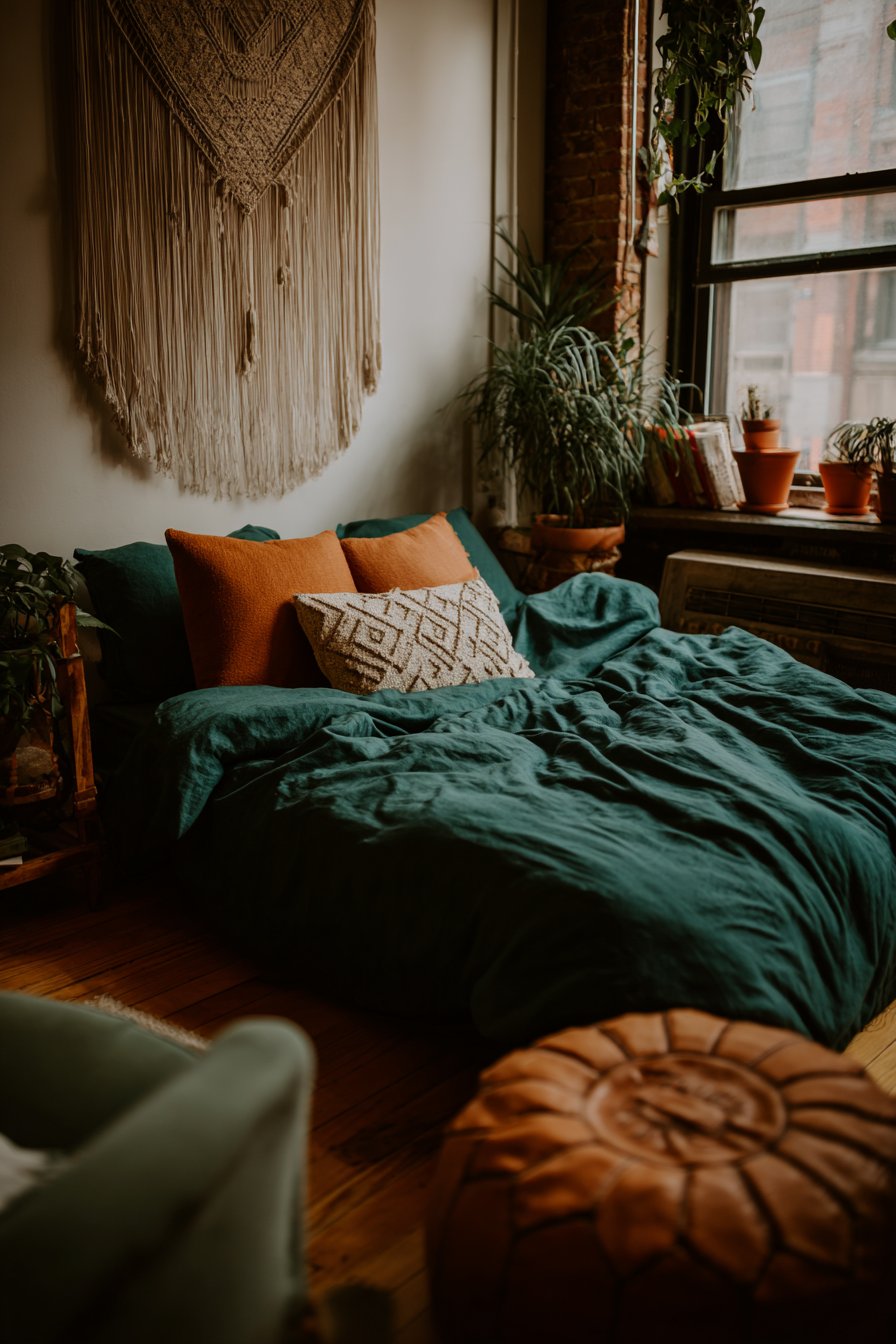
A low-profile platform bed dressed in emerald green bedding creates a grounded bohemian aesthetic. Terracotta orange decorative pillows feature geometric patterns that add visual movement. The combination of rich jewel tones with earthy orange feels both exotic and welcoming. This design proves that bold colors work beautifully in relaxed settings.
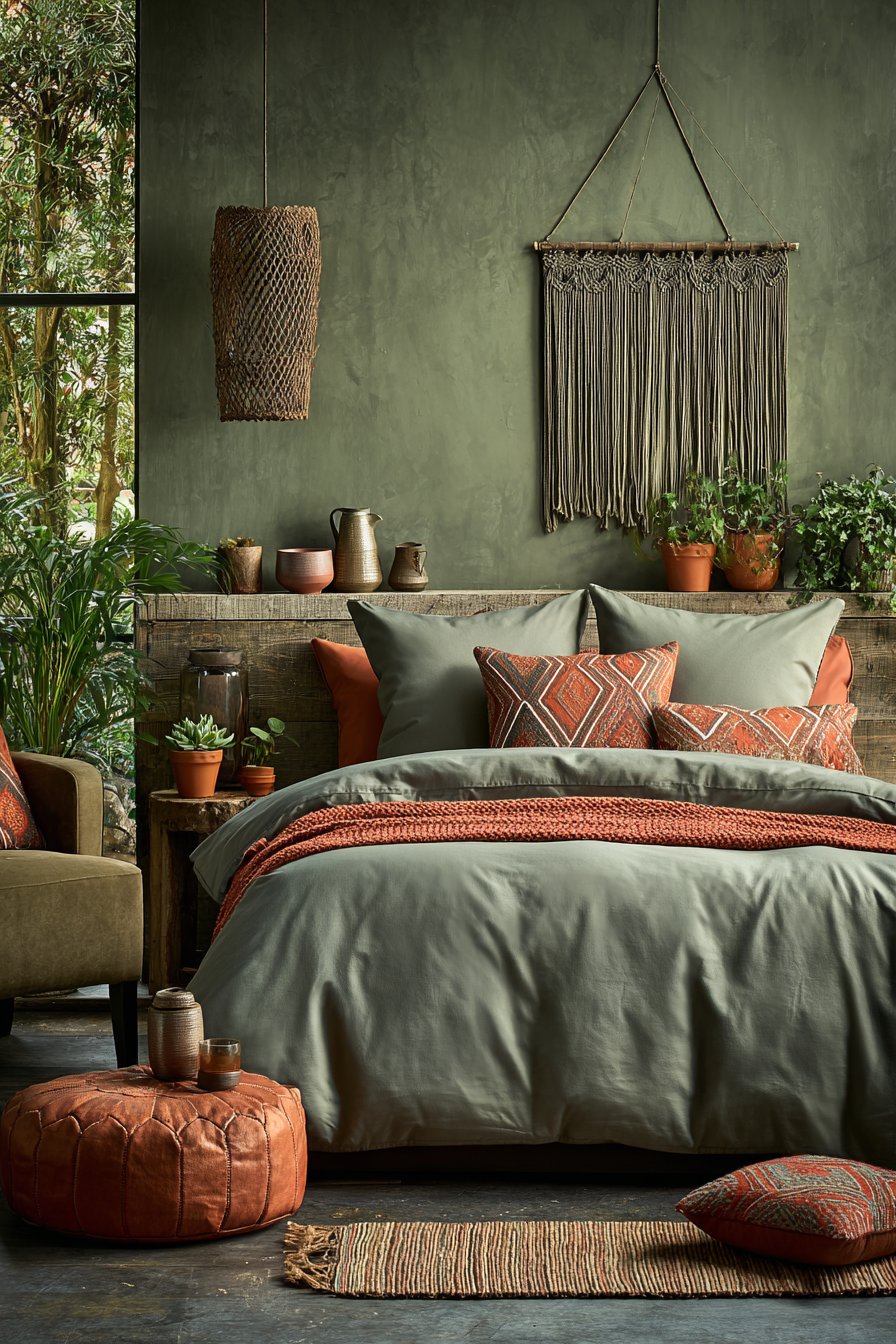
Macramé wall hanging in natural fibers provides texture above the bed. The handcrafted element introduces organic warmth without adding color competition. A burnt orange Moroccan-style pouf sits beside a sage green velvet armchair. These pieces create a cozy reading nook within the larger bedroom space.
Potted plants in terracotta containers reinforce the natural theme. The clay pots echo the orange accent color while bringing life to the room. Soft diffused daylight illuminates the space highlighting the earthy color combination. Professional attention to textile textures and natural materials makes this design cohesive.
Key Design Tips:
- Use low-profile platform beds for an authentic bohemian style
- Mix emerald green with terracotta for earthy sophistication
- Incorporate handmade elements like macramé for texture
- Add Moroccan-inspired furniture pieces for global flair
- Group plants in terracotta pots to reinforce color themes
3. Modern Olive and Orange Gallery Space
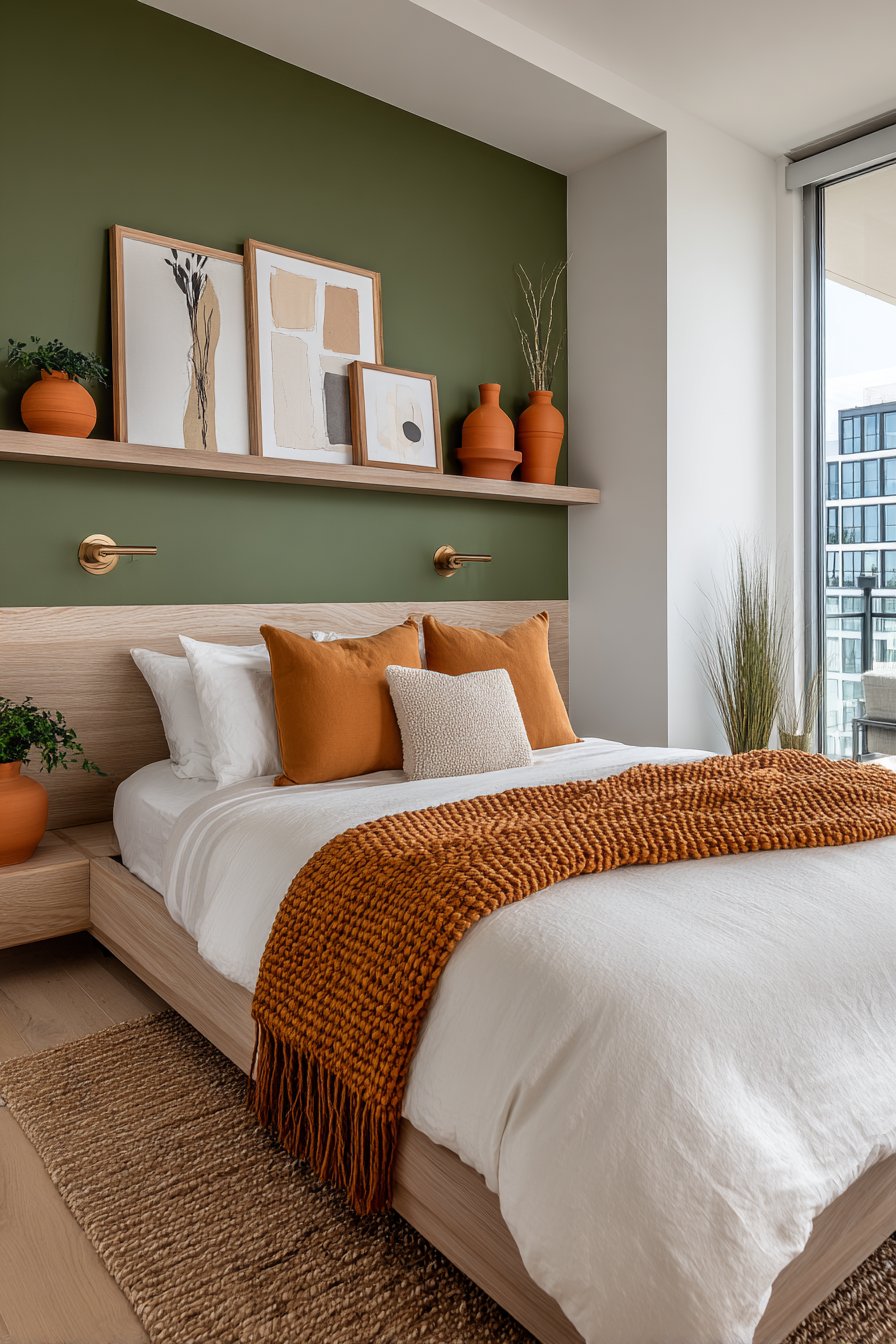
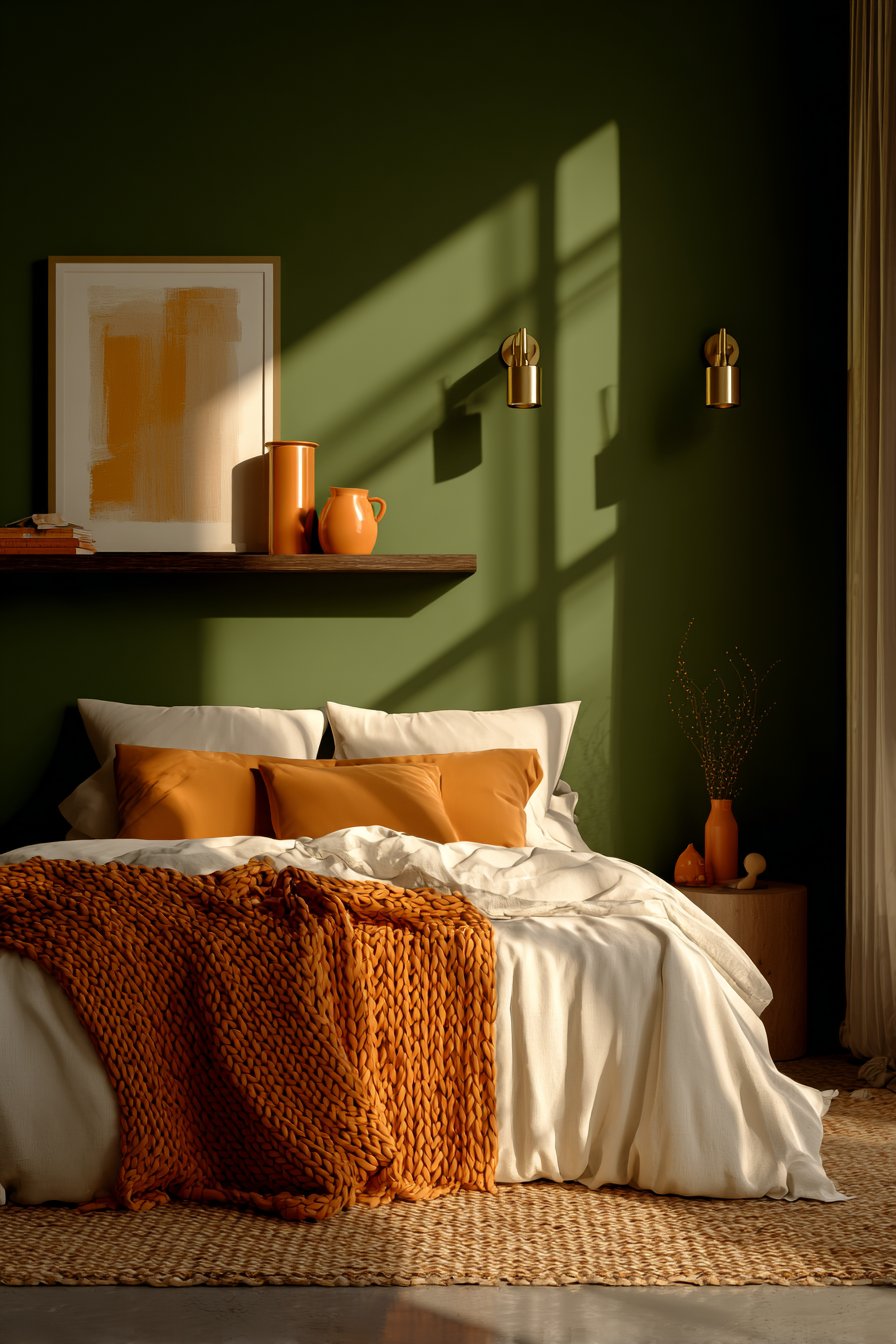
A sleek olive green accent wall serves as the perfect gallery backdrop. A floating walnut shelf displays orange ceramic vases and art pieces. The horizontal line created by the shelf adds architectural interest. This modern approach demonstrates restraint in color application while maintaining visual impact.
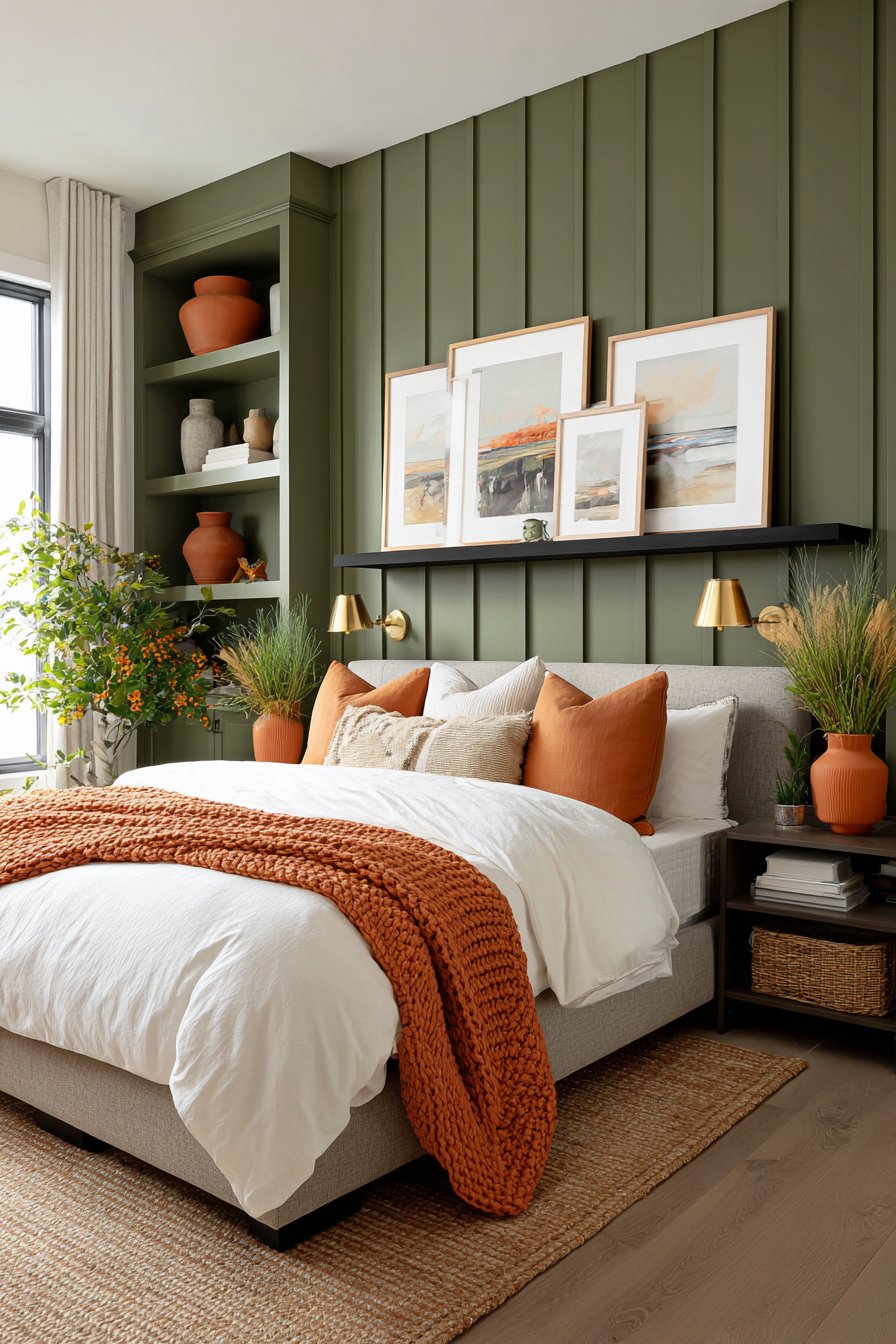
The bed features crisp white linens that provide a neutral foundation. A knitted orange throw blanket drapes casually at the foot adding warmth. The contrast between pristine white and vibrant orange creates striking visual appeal. Brushed brass wall sconces flank the bed, complementing the orange accents.
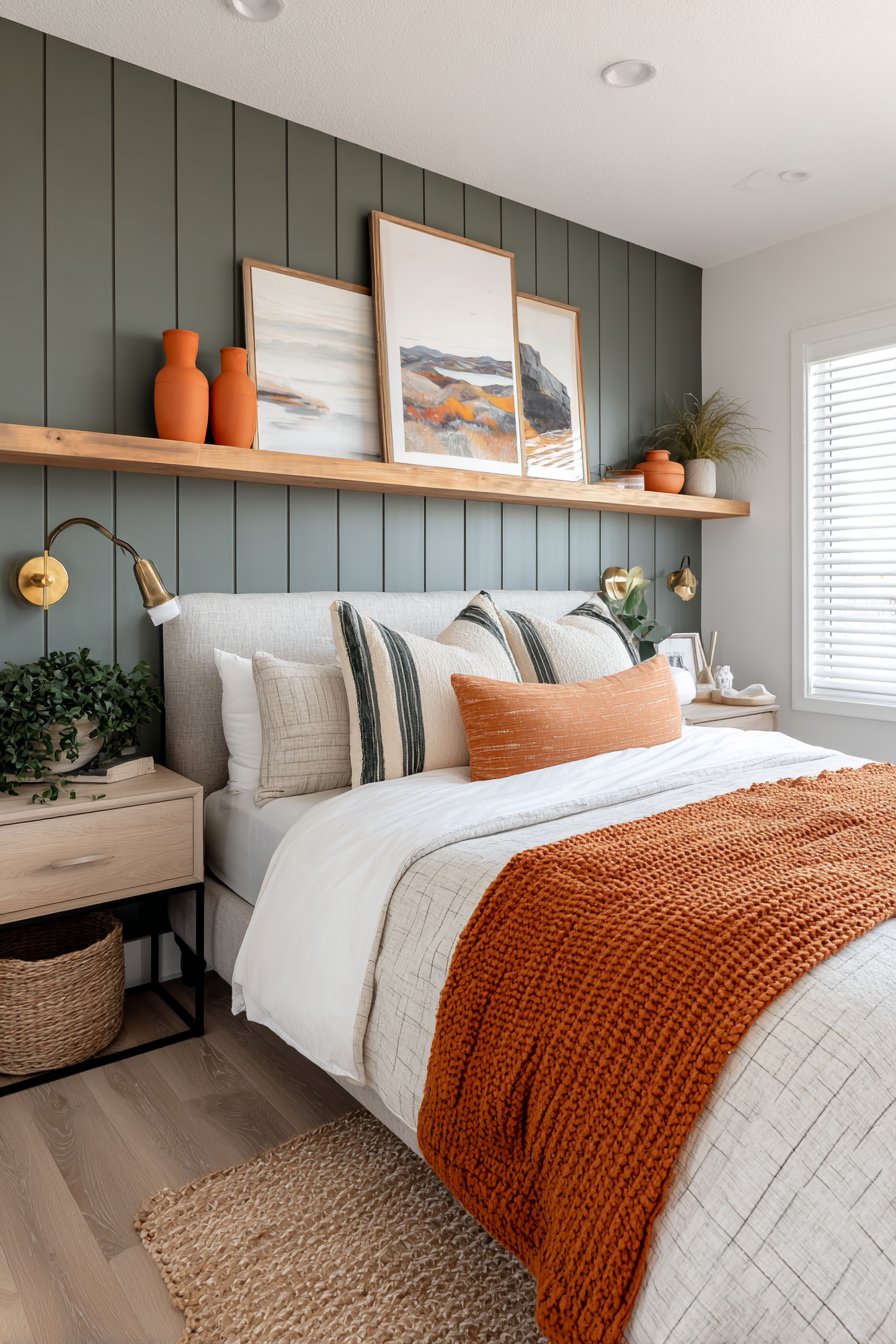
Natural jute rug grounds the space with organic texture. Golden hour lighting creates depth and warmth throughout the room. The interplay between natural and artificial light enhances material contrasts. This design shows how fewer colorful elements can make stronger statements.
Key Design Tips:
- Paint one accent wall in olive green for modern sophistication
- Install floating shelves to display coordinating decorative objects
- Keep bedding white to let accent colors shine
- Choose brushed brass fixtures to complement orange tones
- Layer natural fiber rugs for texture and visual grounding
4. Cozy Emerald Reading Retreat
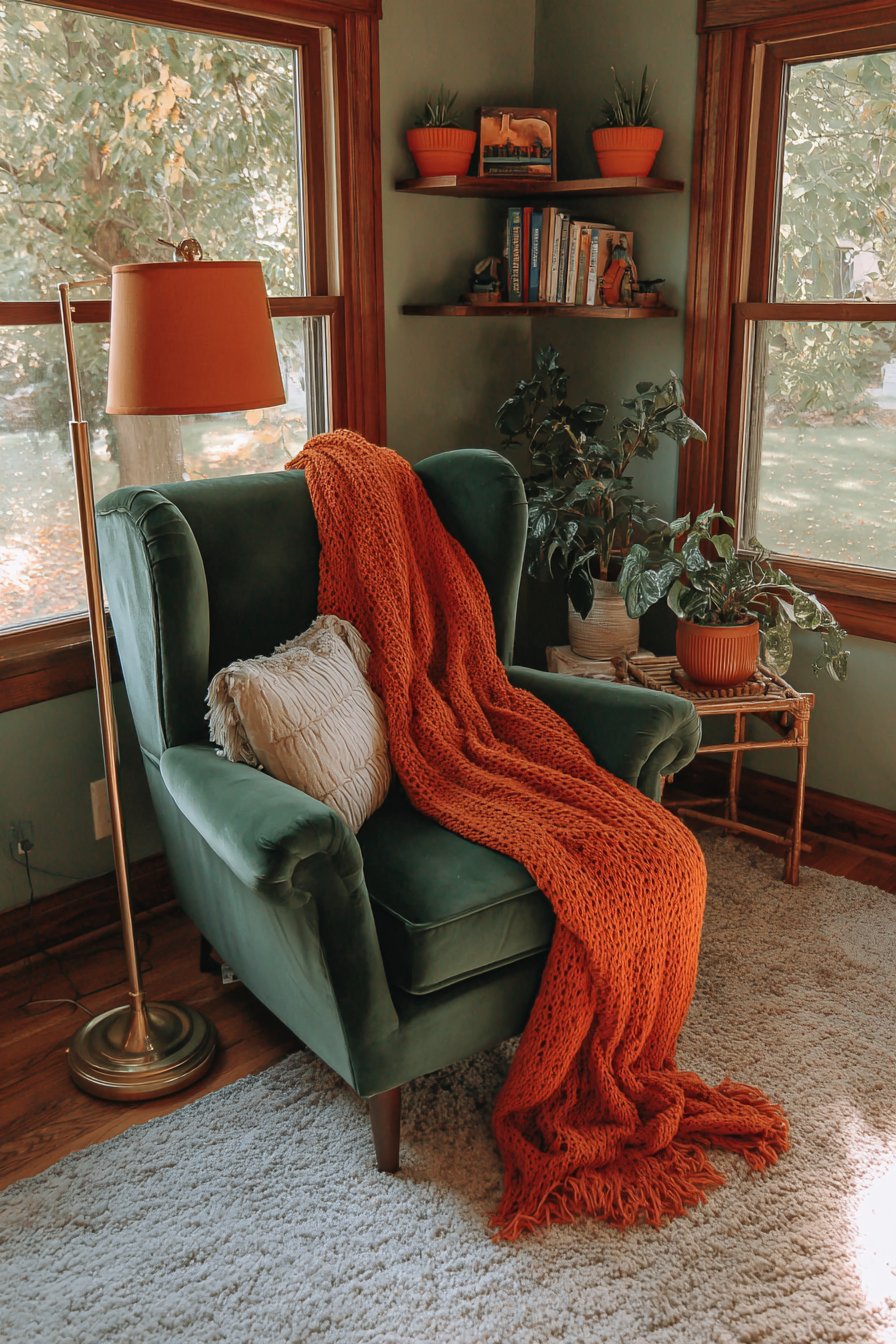
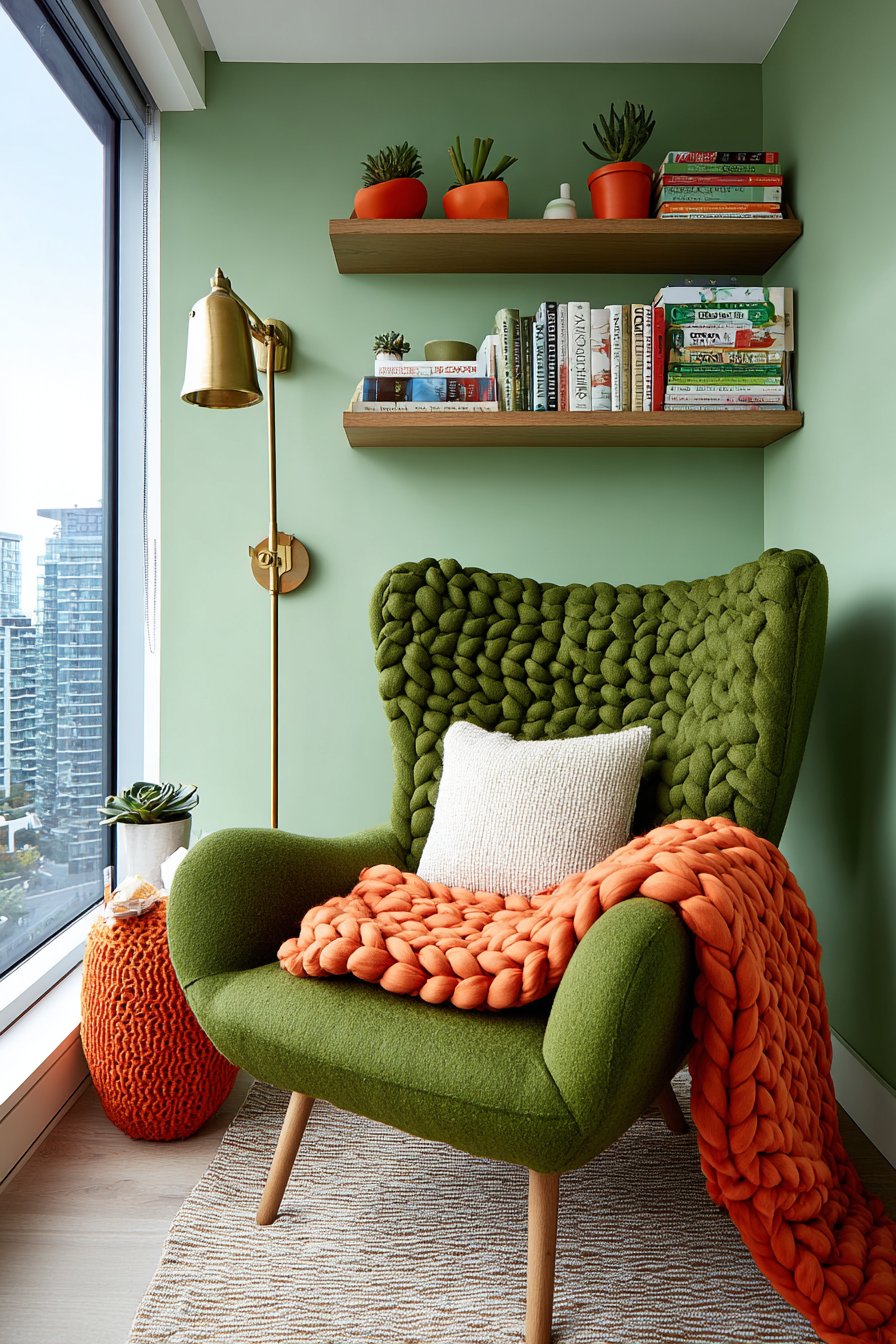
A deep emerald green wingback chair commands attention in this intimate reading nook. An oversized orange knit throw blanket adds textural warmth and comfort. The pairing of luxurious velvet with chunky knit creates appealing contrast. This space-within-a-space concept maximizes bedroom functionality.
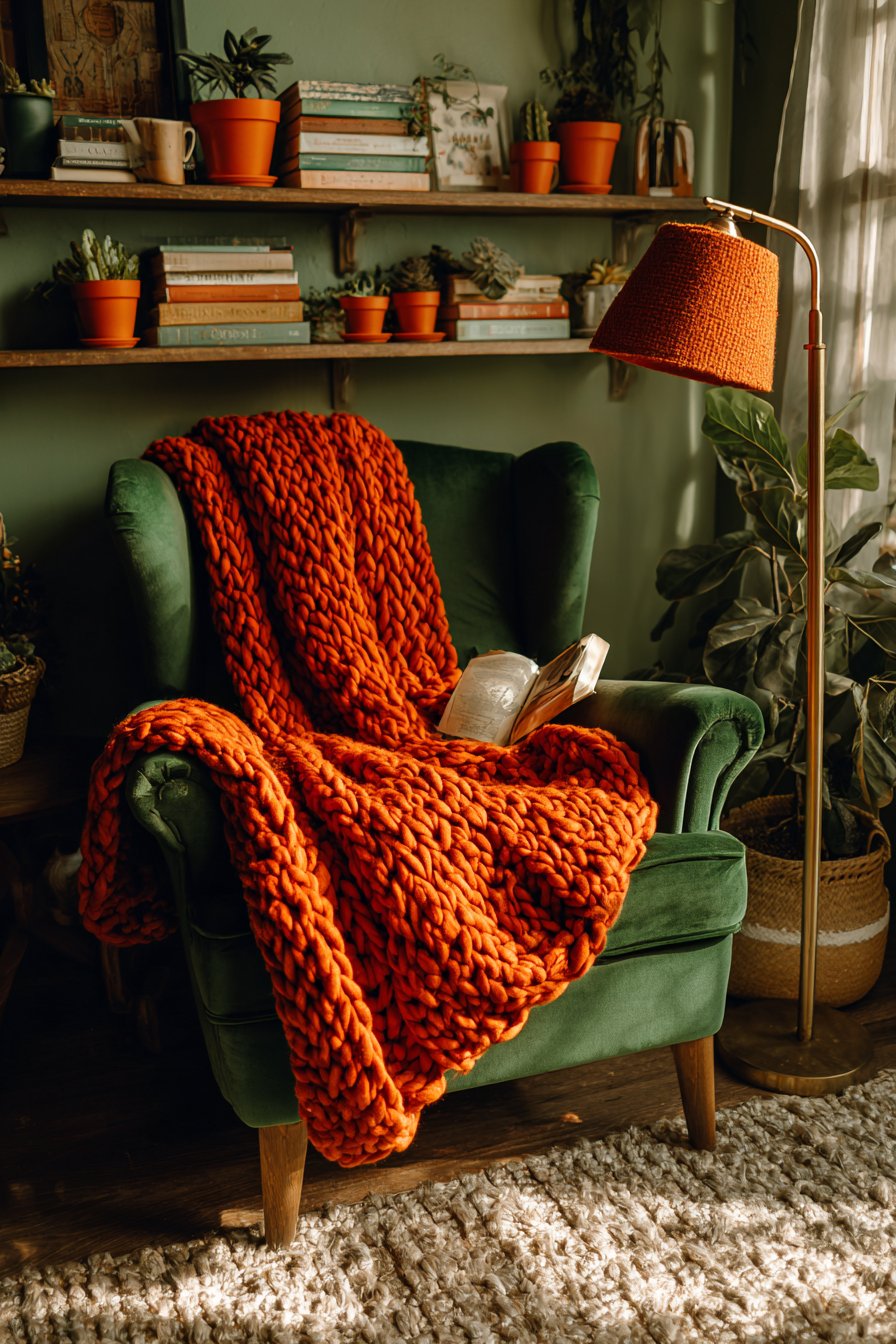
A brass floor lamp with orange fabric shade provides focused reading light. The metallic finish bridges the warm and cool color temperatures beautifully. Surrounding walls painted in soft mint green create a restful backdrop. Floating shelves in natural wood hold books and small potted succulents.
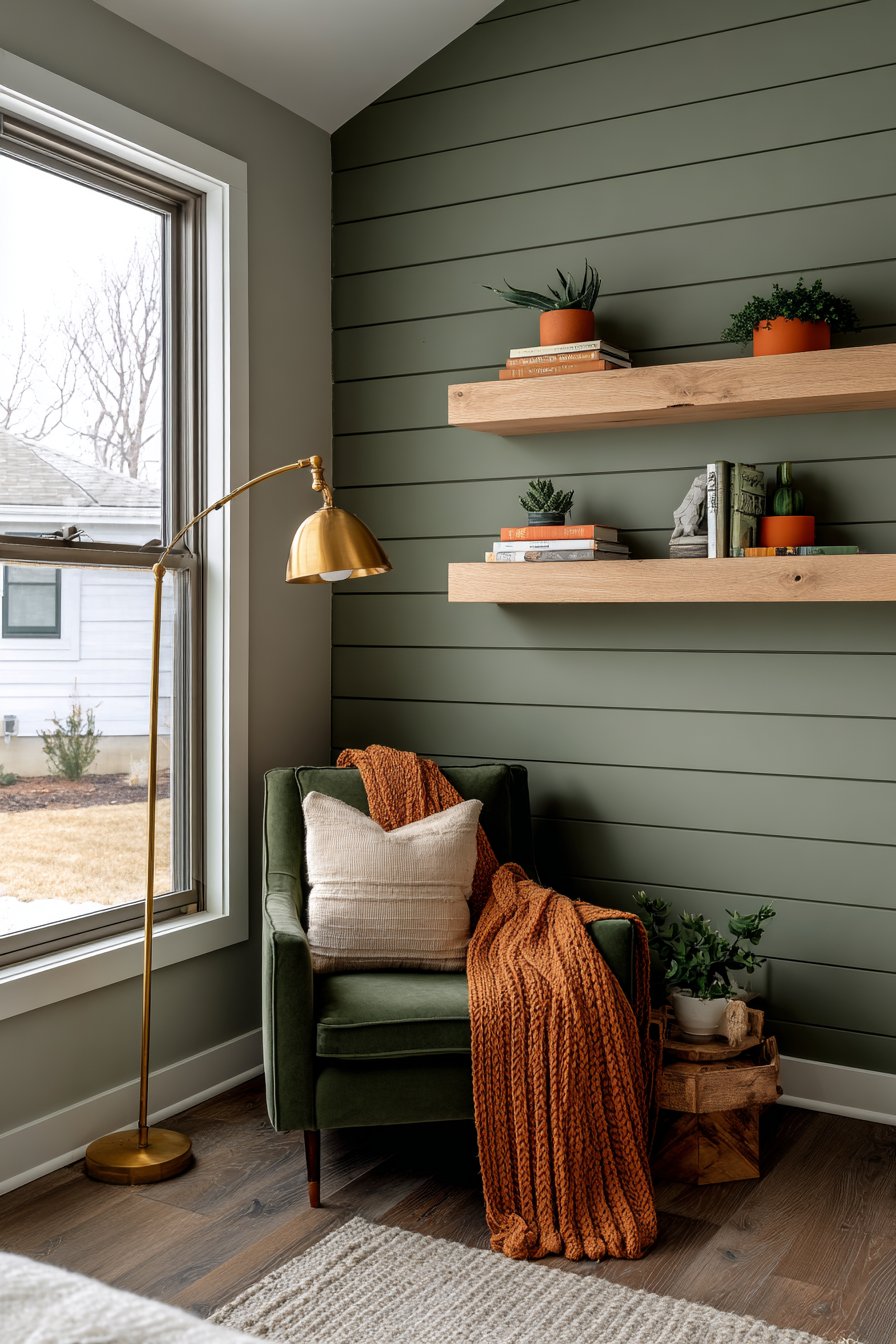
Orange planters containing succulents echo the throw blanket color. The repetition of orange in different textures creates visual rhythm. Textured wool area rug in complementary tones anchors the intimate space. Natural window light highlights the inviting arrangement perfect for quiet moments.
Key Design Tips:
- Invest in statement seating like wingback chairs for comfort
- Layer oversized throws for texture and warmth
- Use brass fixtures to add sophisticated metallic accents
- Create floating shelf displays with books and plants
- Choose wool rugs to add softness underfoot
5. Scandinavian Hunter Green Simplicity
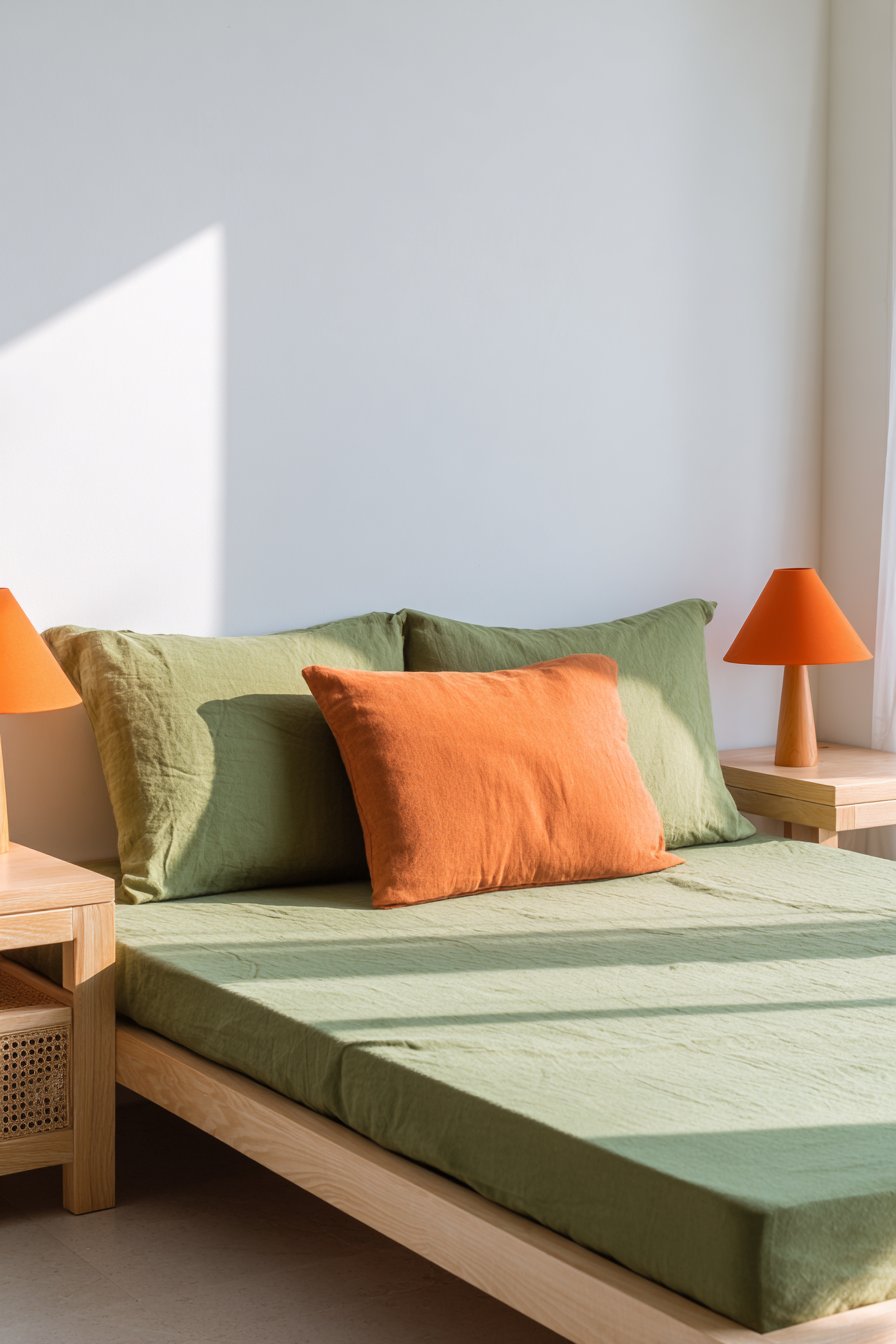
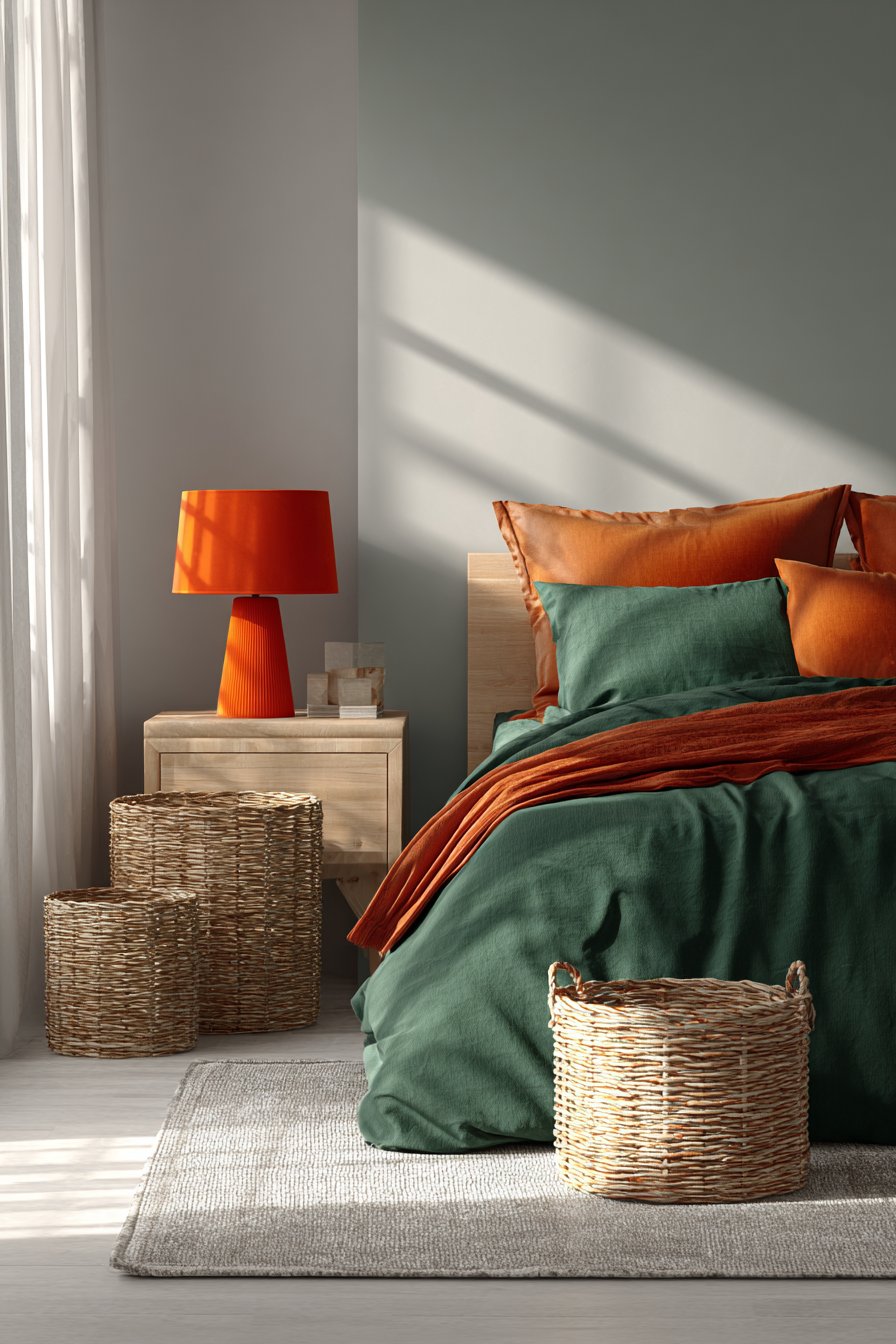
A minimalist platform bed dressed in hunter green linen exemplifies Nordic restraint. A single burnt orange lumbar pillow provides the perfect pop of contrast. Clean-lined nightstands in light oak feature orange table lamps with simple conical shades. This design proves that less truly can be more.
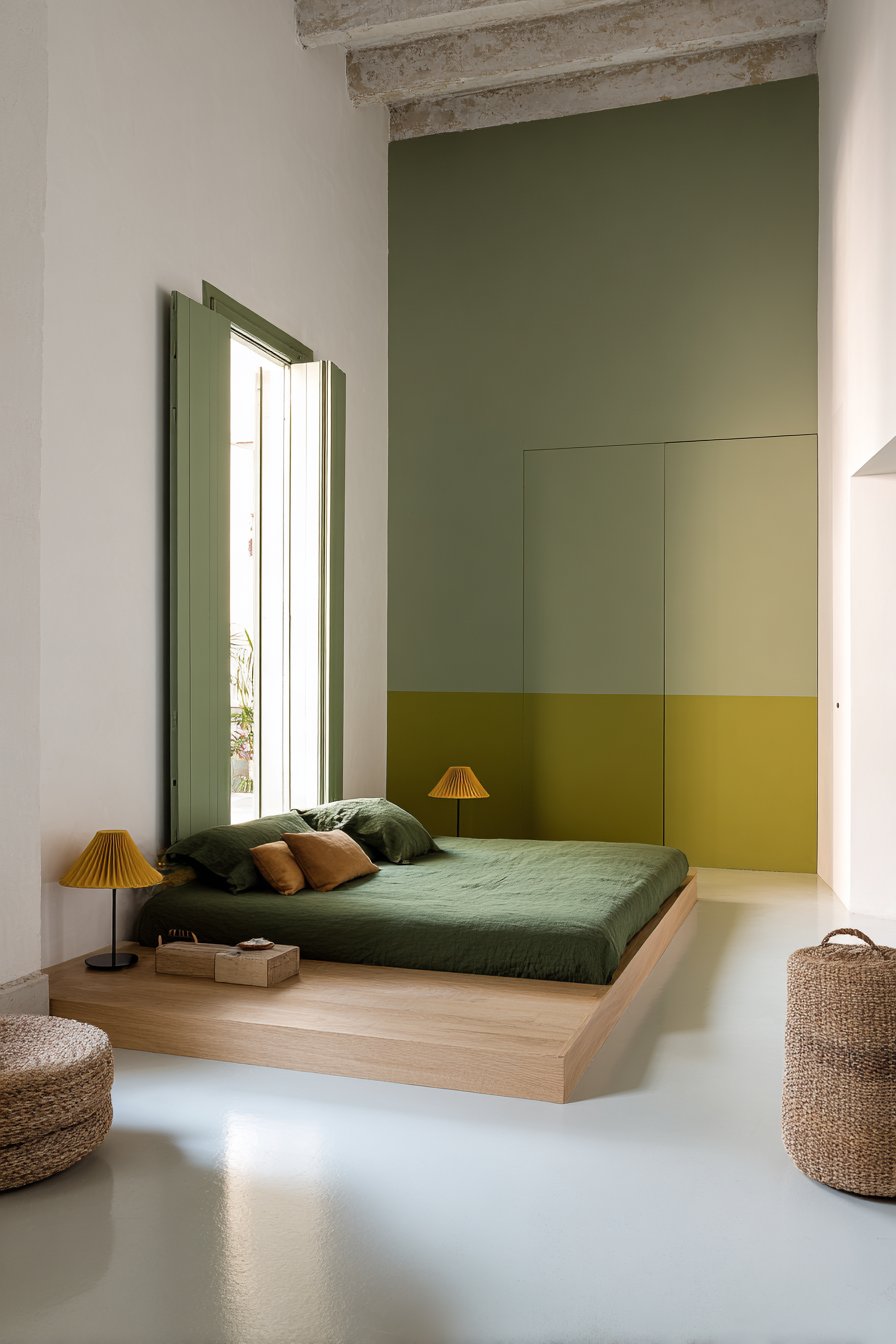
One accent wall painted in muted sage green contrasts beautifully with white walls. The limited color application creates calm rather than chaos. Woven basket storage in natural tones adds functional texture. Every element serves a purpose while maintaining aesthetic appeal.
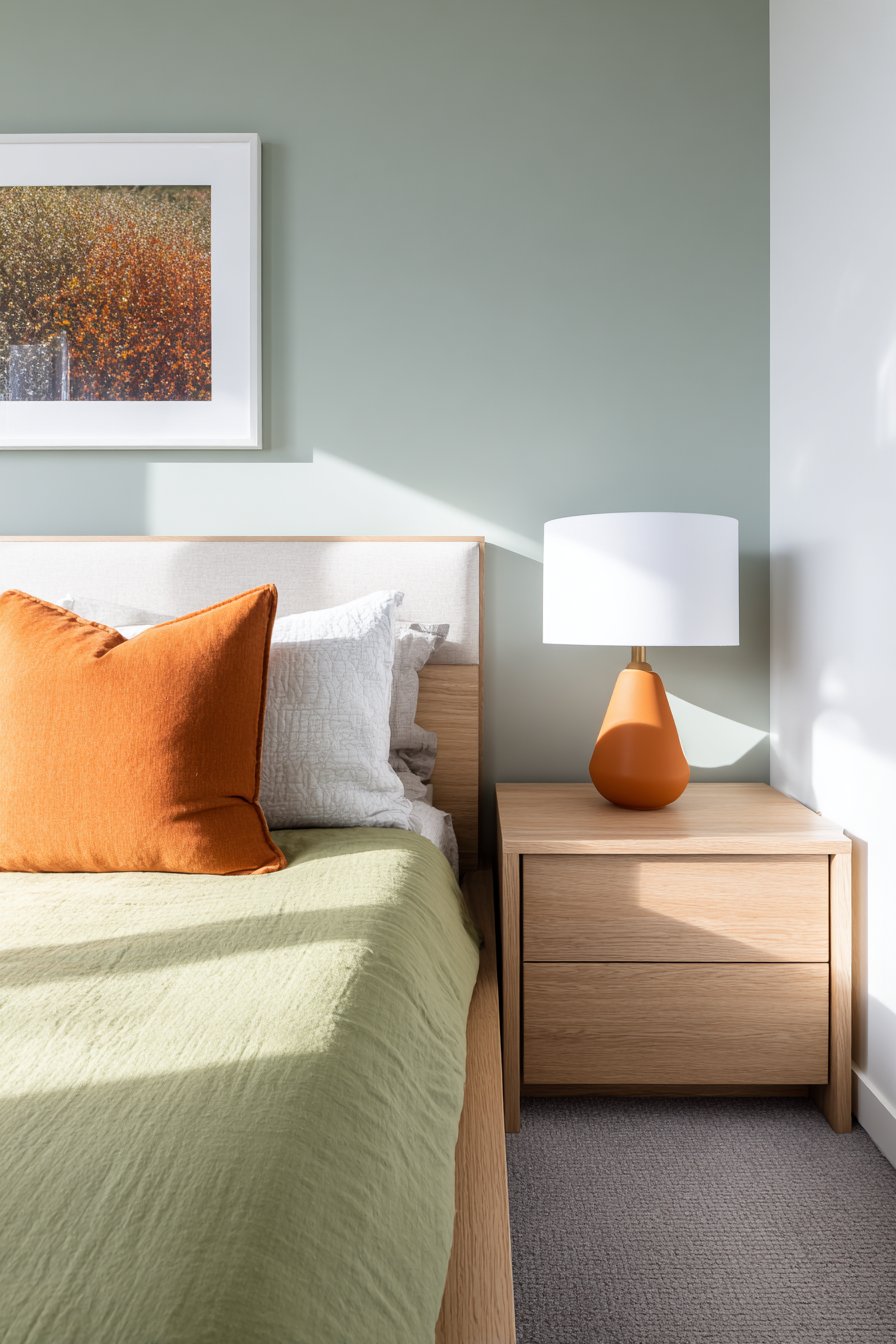
Soft morning light creates gentle shadows emphasizing clean lines. The intentional color placement demonstrates thoughtful design planning. Wide-angle architectural photography captures the essence of Scandinavian simplicity. This approach suits those who appreciate understated elegance.
Key Design Tips:
- Limit pillows to one or two for minimalist impact
- Choose light oak furniture for authentic Scandinavian style
- Paint only one accent wall to maintain simplicity
- Use woven baskets for attractive practical storage
- Embrace negative space as part of the design
6. Maximalist Kelly Green Pattern Paradise
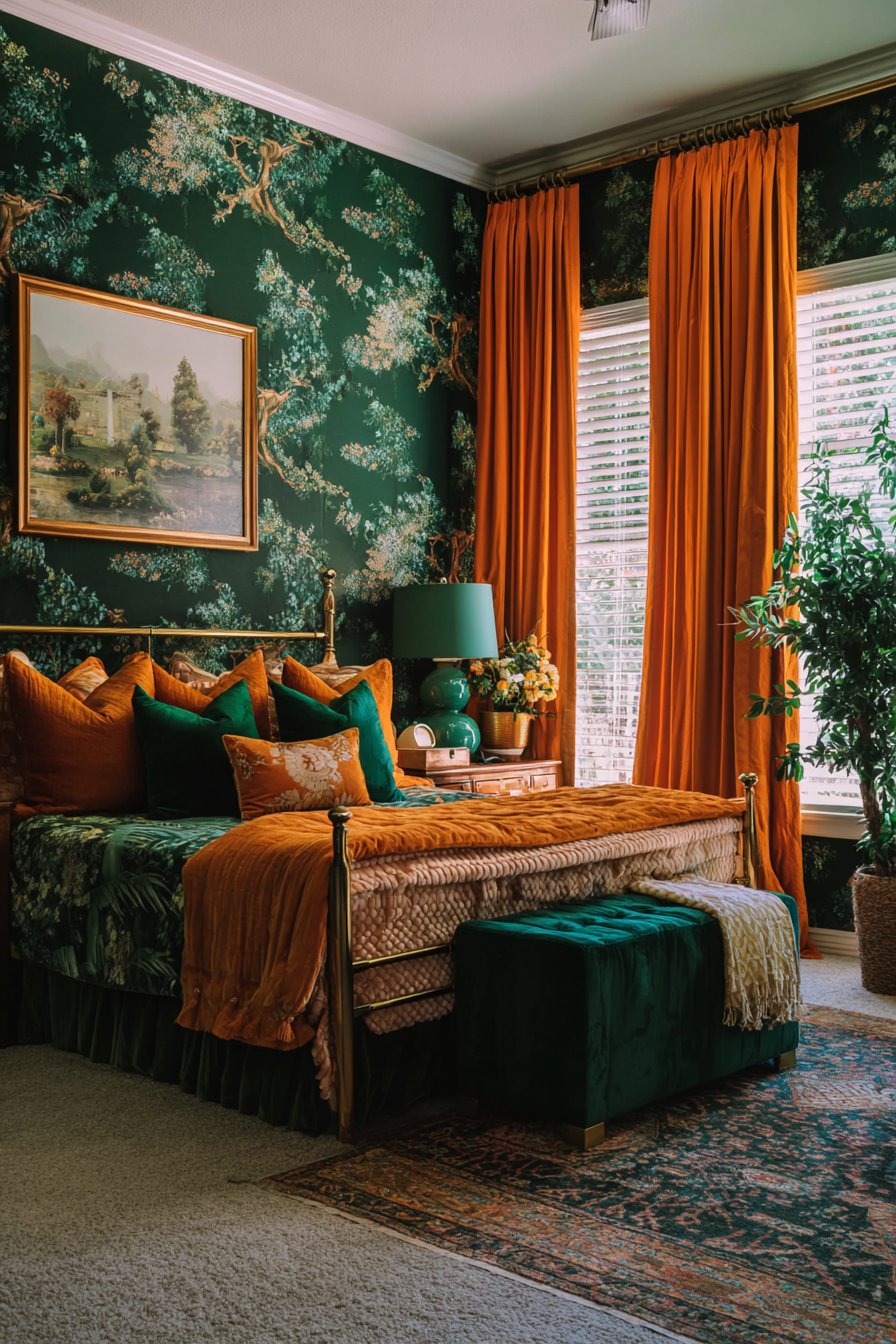
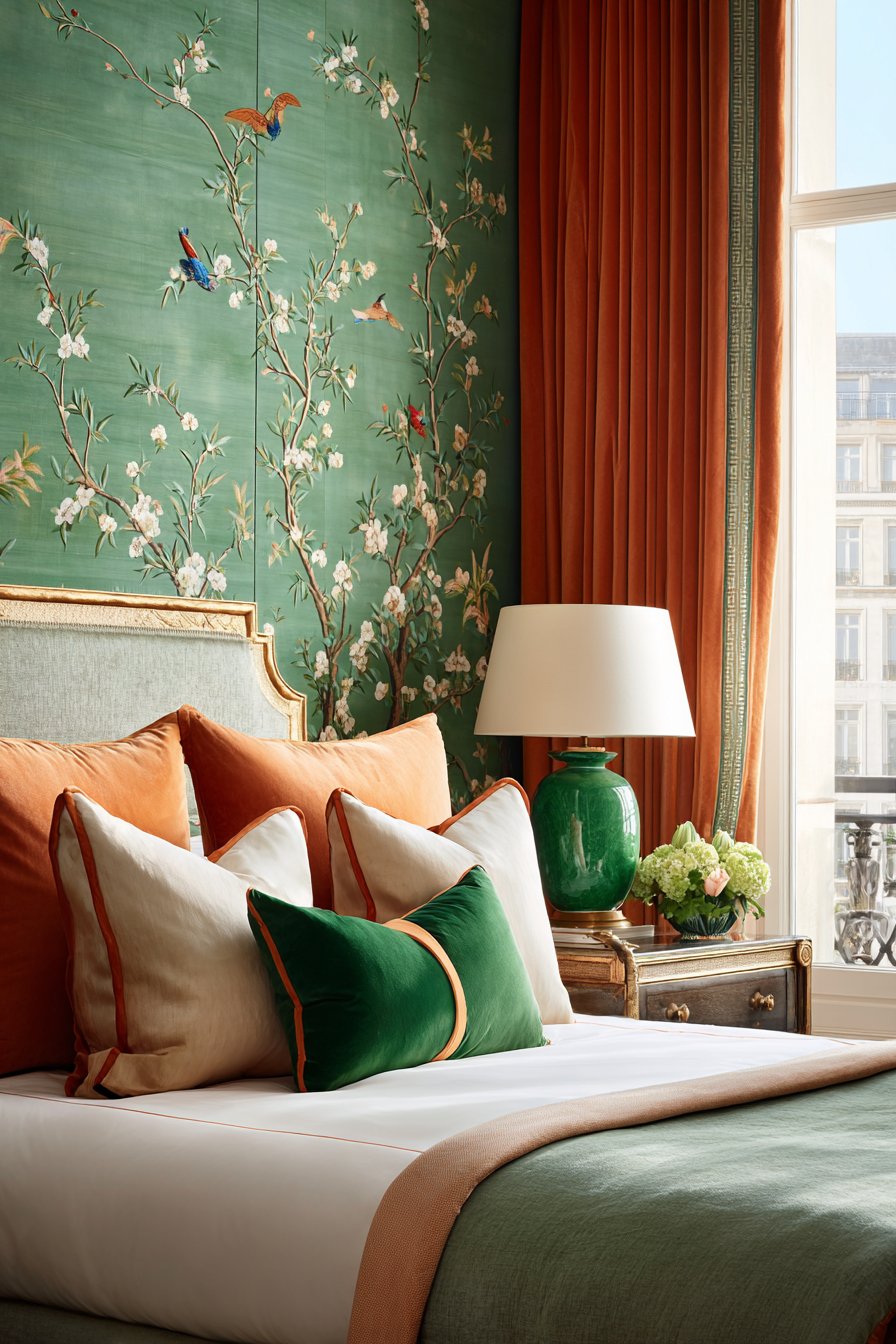
Bold kelly green wallpaper with subtle botanical motifs makes a dramatic statement. The bed layers multiple pillows in varying orange shades from peach to rust. Emerald green velvet cushions mix with the orange creating sumptuous texture. This maximalist approach celebrates abundance and visual richness.
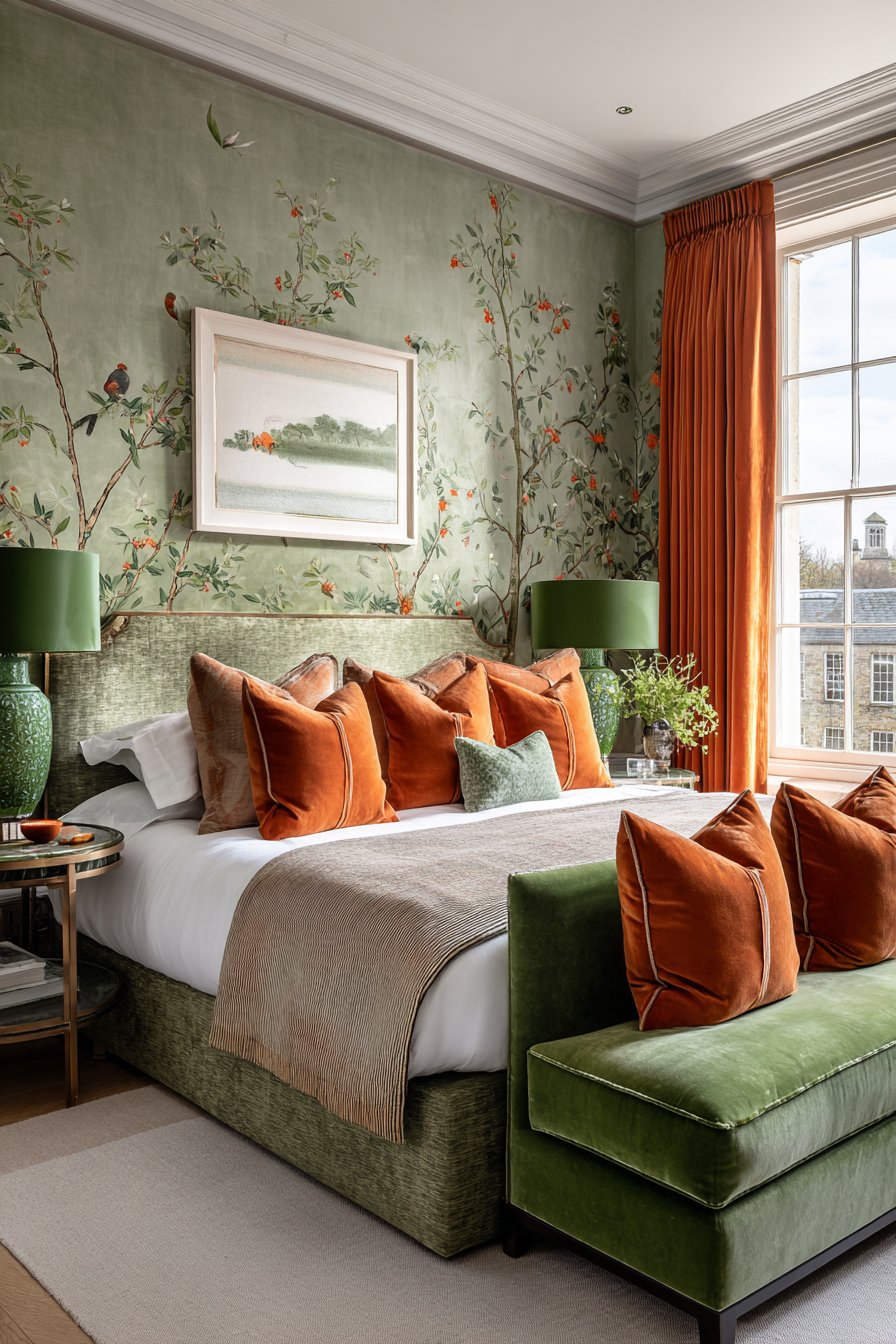
An antique brass bed frame adds vintage character and gleaming warmth. Orange velvet curtains frame the window creating cohesive color flow. Green ceramic bedside lamps provide ambient lighting with artistic flair. The layering of patterns and textures creates depth and interest.
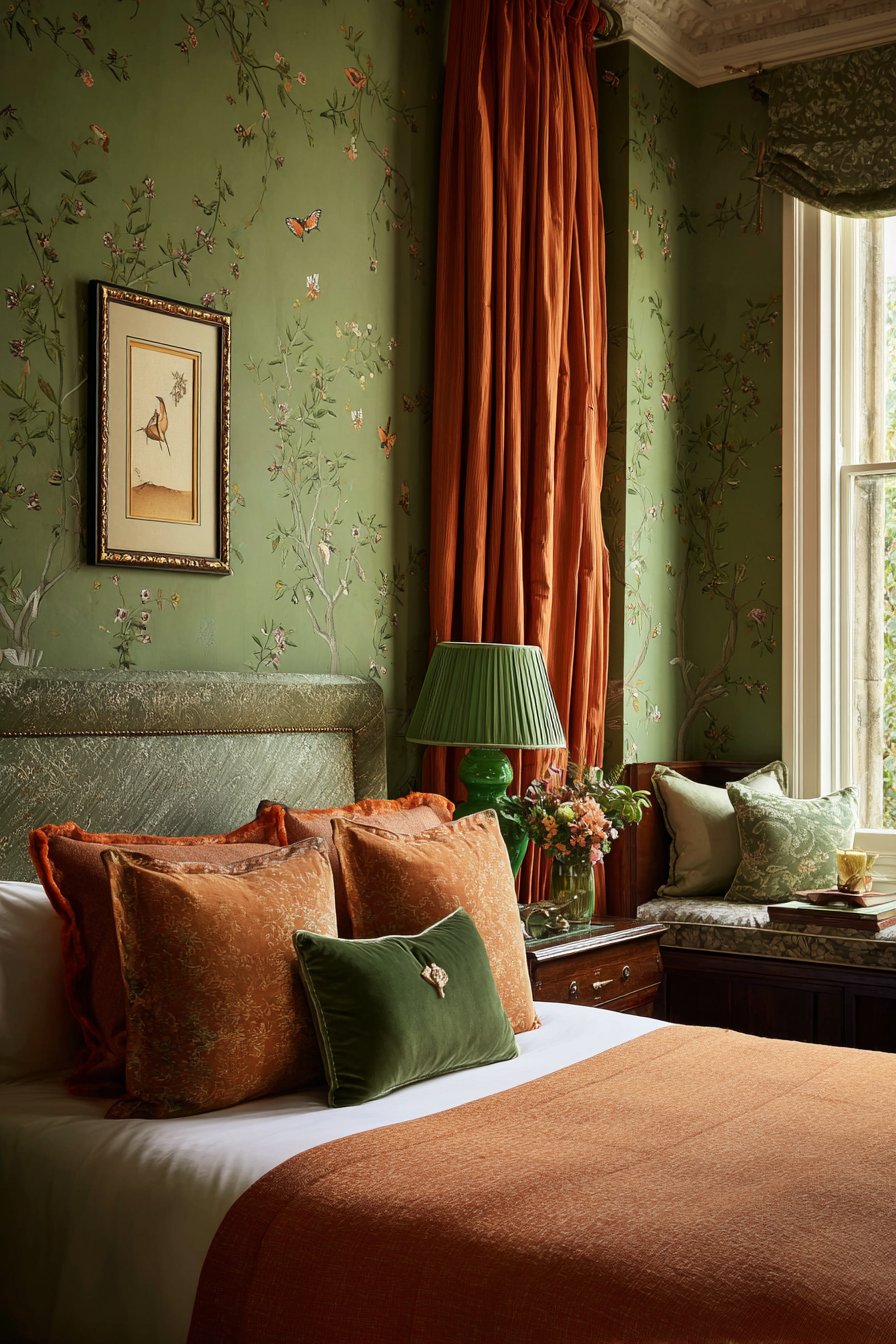
Natural daylight filters through creating rich color depth throughout. Professional interior techniques highlight successful pattern layering. This design demonstrates confidence in color and pattern mixing. Those who love bold statements will find inspiration here.
Key Design Tips:
- Choose wallpaper with subtle patterns for textured interest
- Layer pillows in gradient shades for visual depth
- Mix velvet textures in both accent colors
- Select vintage brass furniture for character
- Use matching curtain fabric to create color continuity
7. Tranquil Seafoam and Orange Oasis
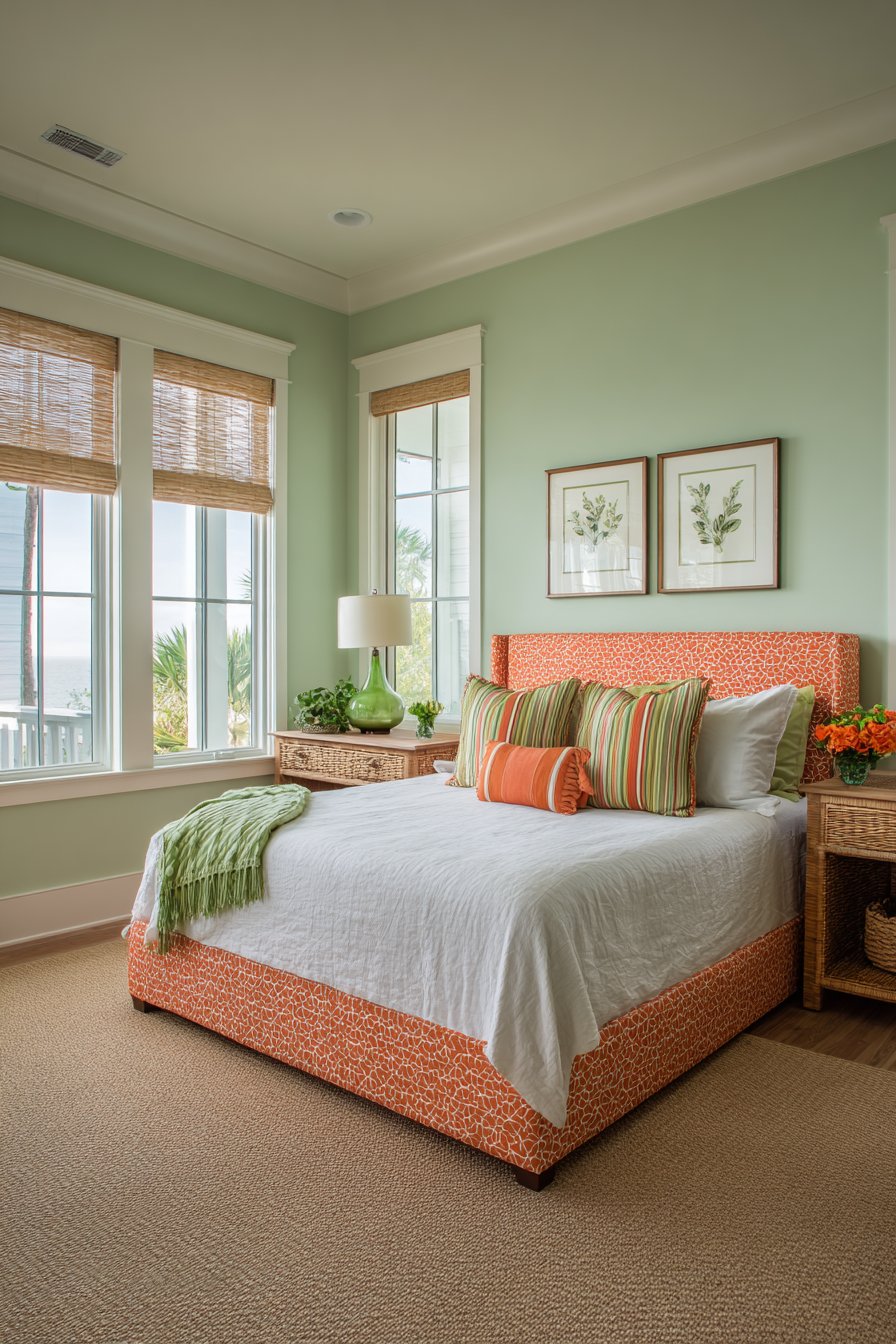
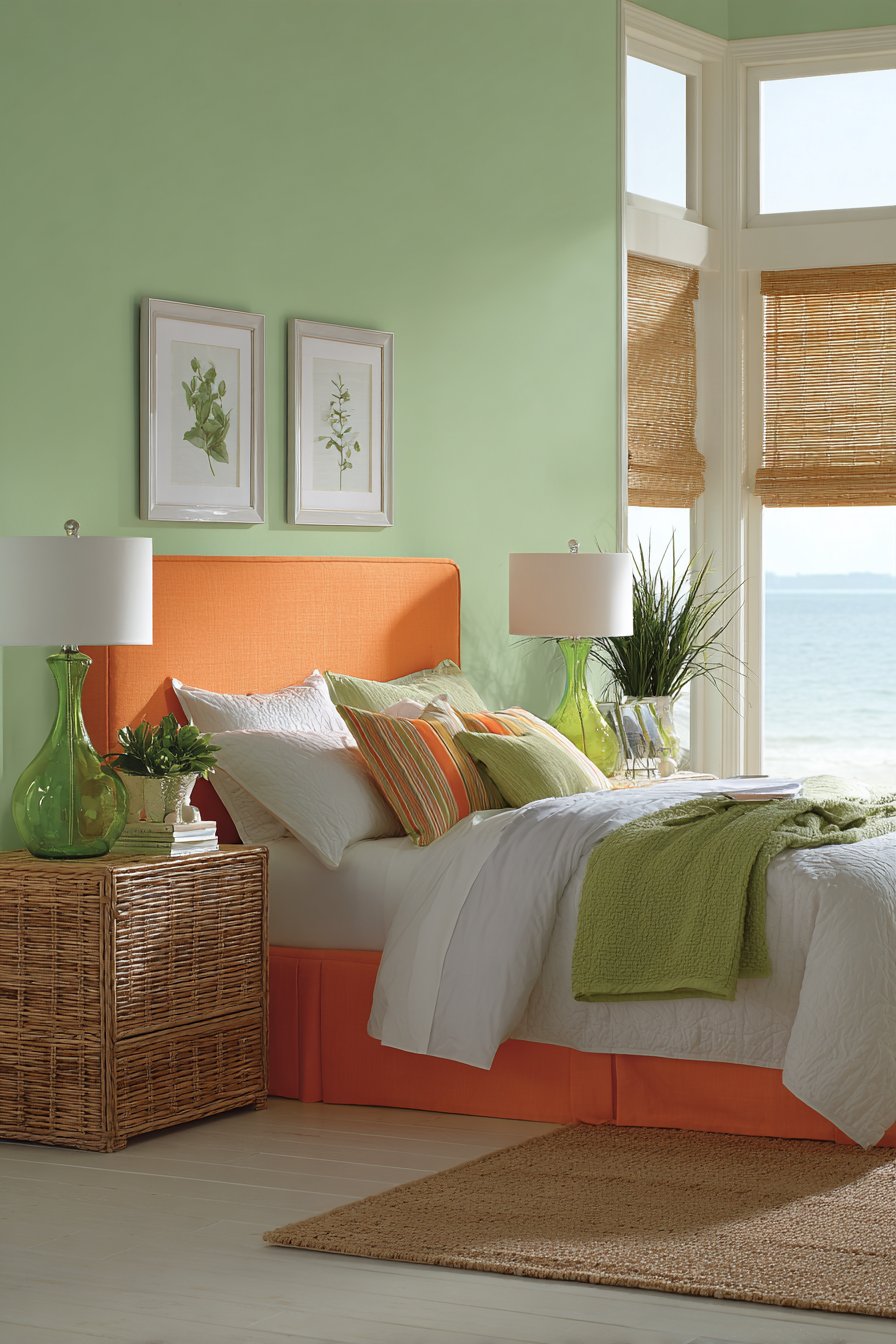
Seafoam green painted walls create a serene foundation for this peaceful retreat. A statement headboard upholstered in orange linen shows visible weave texture. The natural fiber adds organic warmth to the cool wall color. Natural rattan bedside tables support green glass lamps completing the coastal vibe.
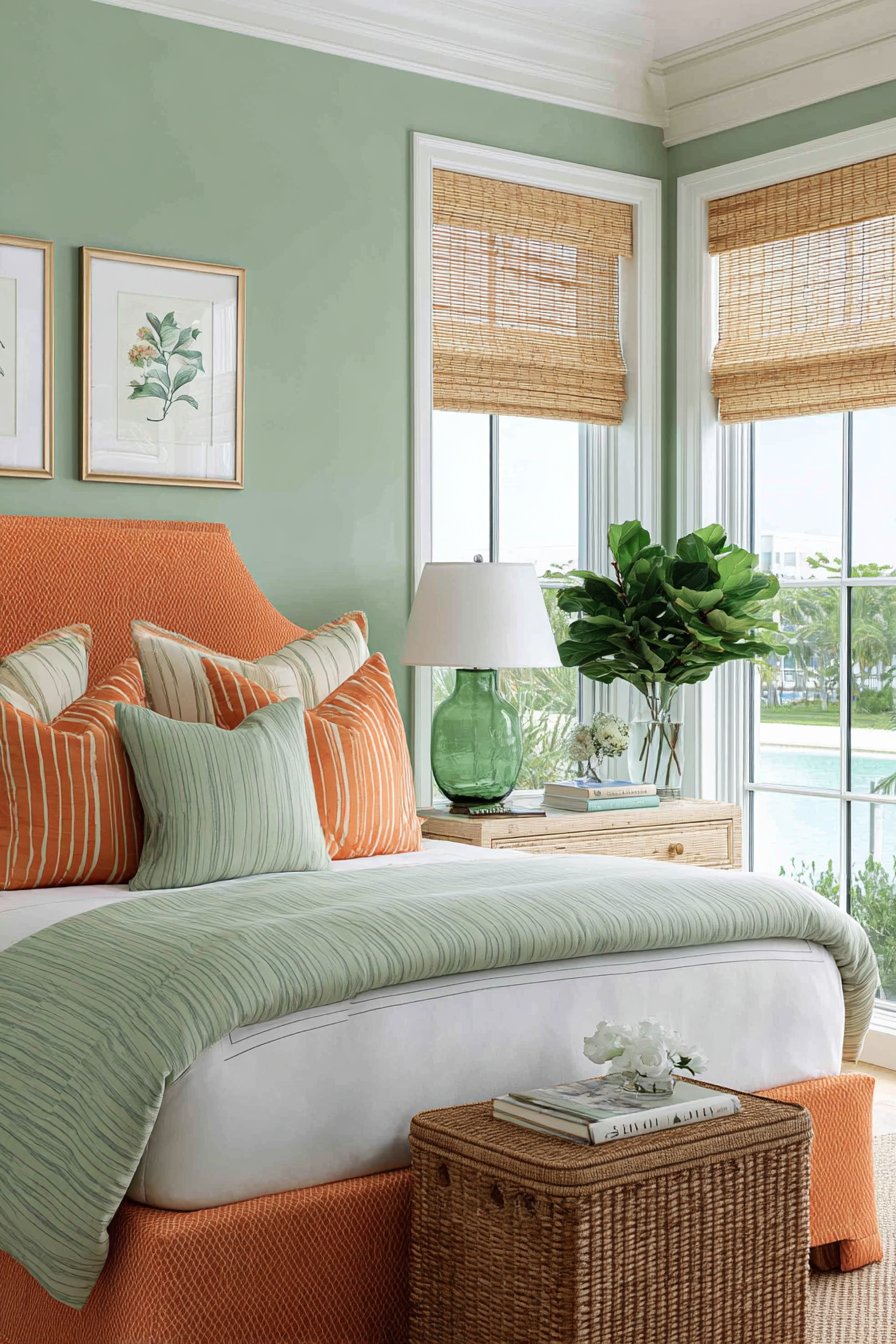
White bedding serves as a neutral foundation between the two accent colors. Orange and green striped throw pillows tie the palette together playfully. Botanical prints in simple frames dot the walls adding nature-inspired art. Large windows with bamboo blinds allow filtered light creating atmospheric depth.
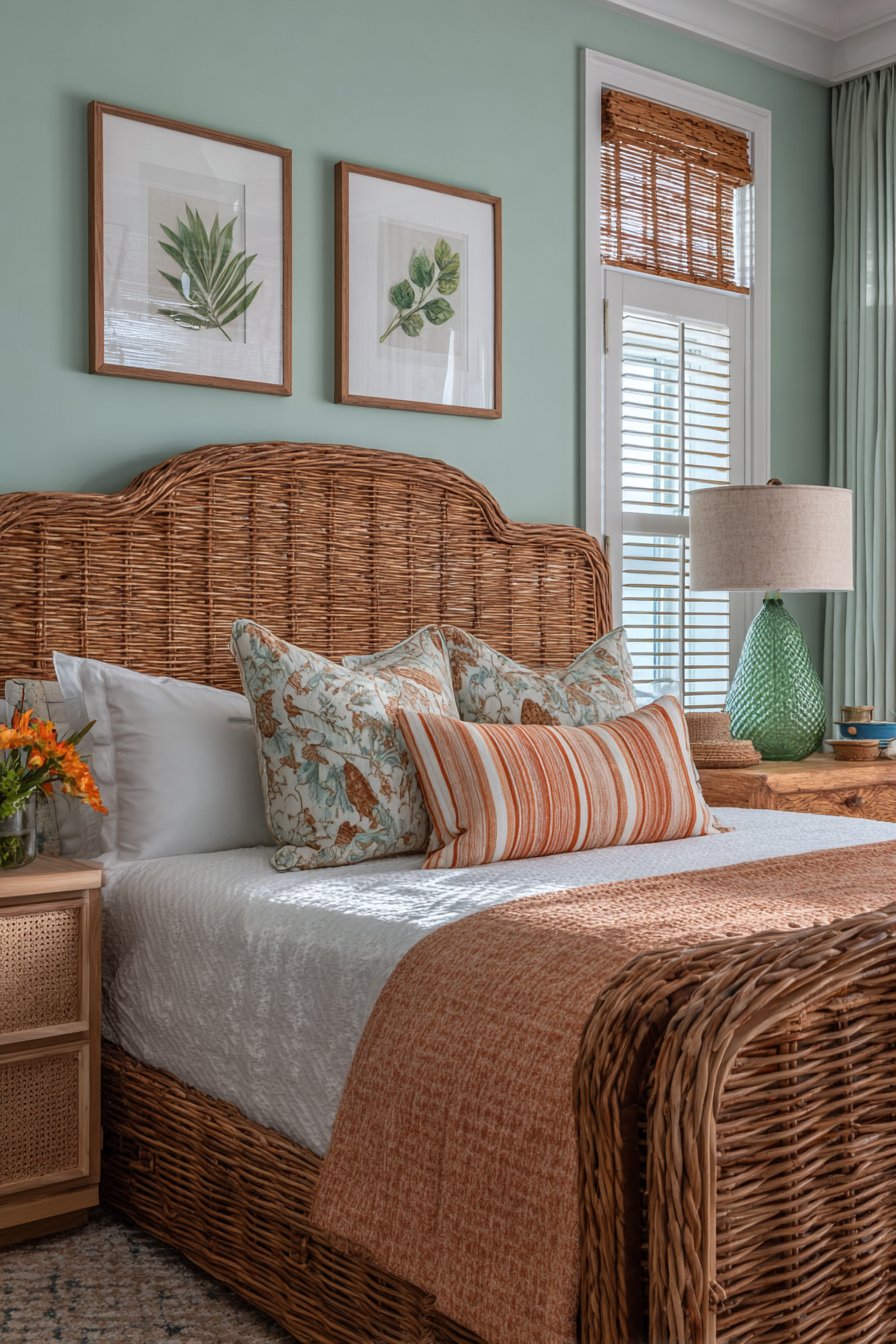
The natural materials throughout reinforce the tranquil theme. Rattan, linen, and bamboo create cohesive organic texture. Balanced exposure captures the calming color combination perfectly. This design suits those seeking relaxation and connection to nature.
Key Design Tips:
- Use seafoam green for walls to create calm atmosphere
- Choose linen upholstery to add texture and breathability
- Incorporate rattan furniture for coastal organic appeal
- Keep bedding white to balance bold wall colors
- Install bamboo blinds for natural light filtering
8. Contemporary Emerald Velvet Drama
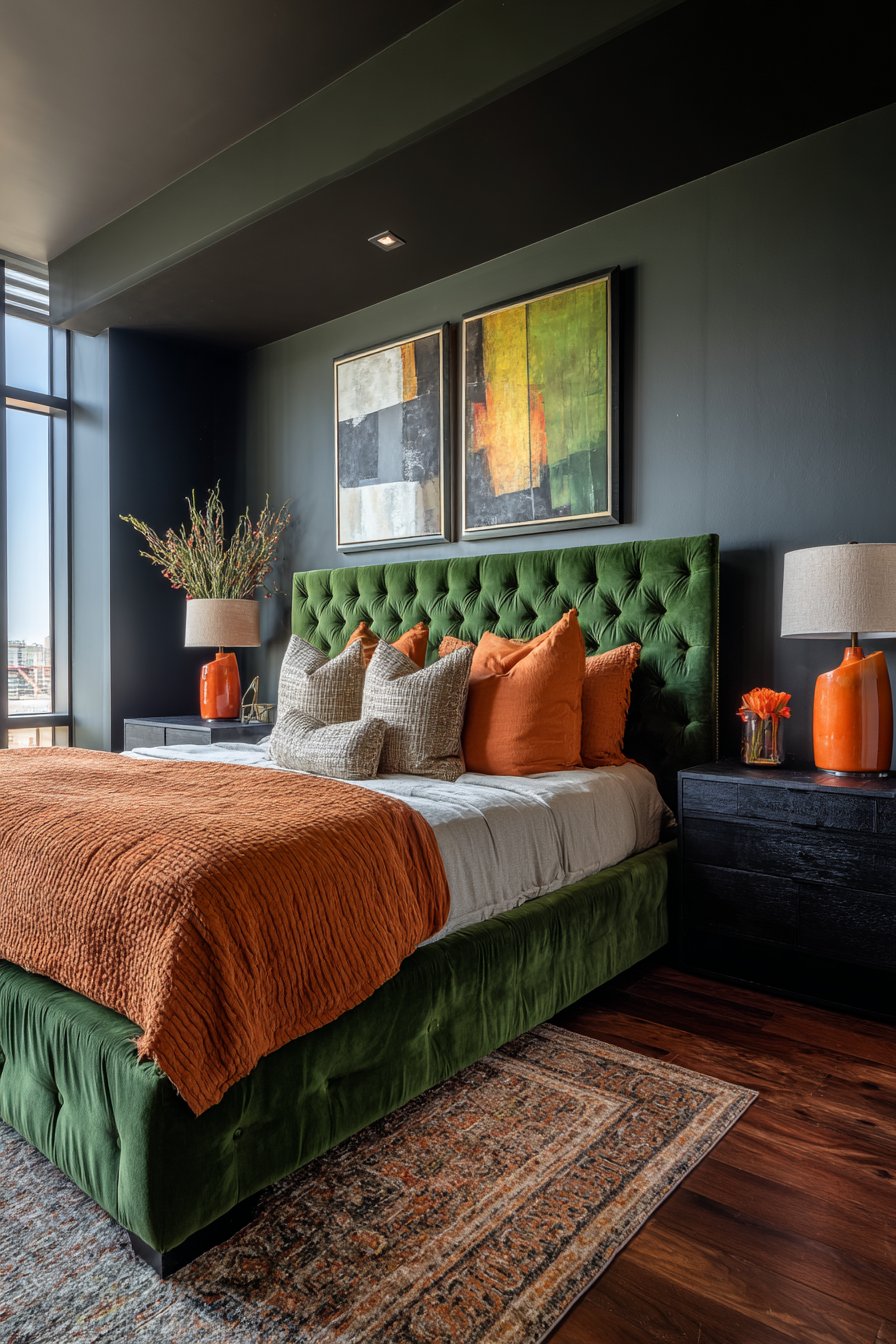
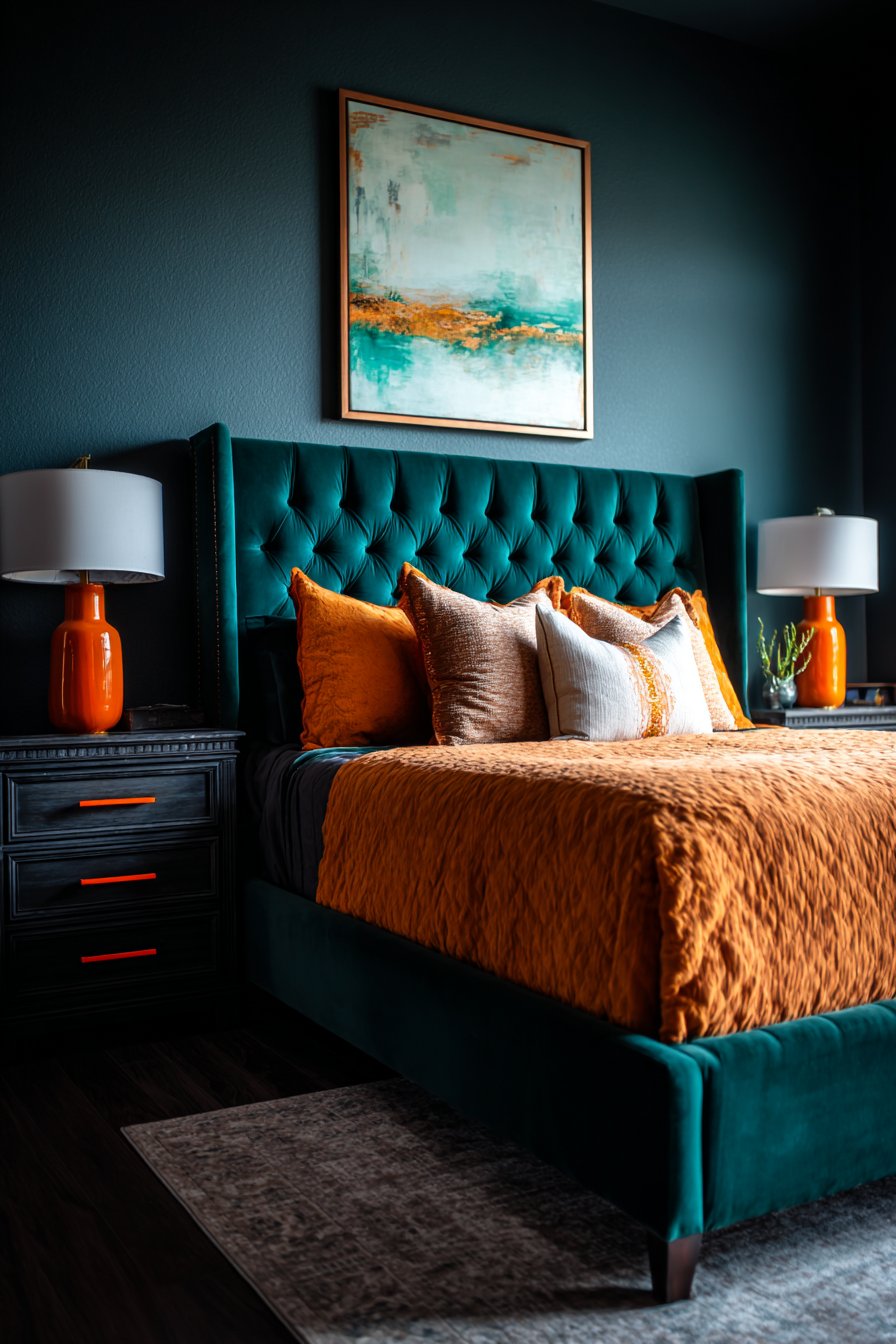
A tufted headboard in rich emerald green velvet creates luxurious focal point. Orange accent pillows in various textures including velvet, linen, and silk add interest. The texture variety prevents the bold colors from feeling flat. Modern abstract artwork above the bed incorporates both featured colors.
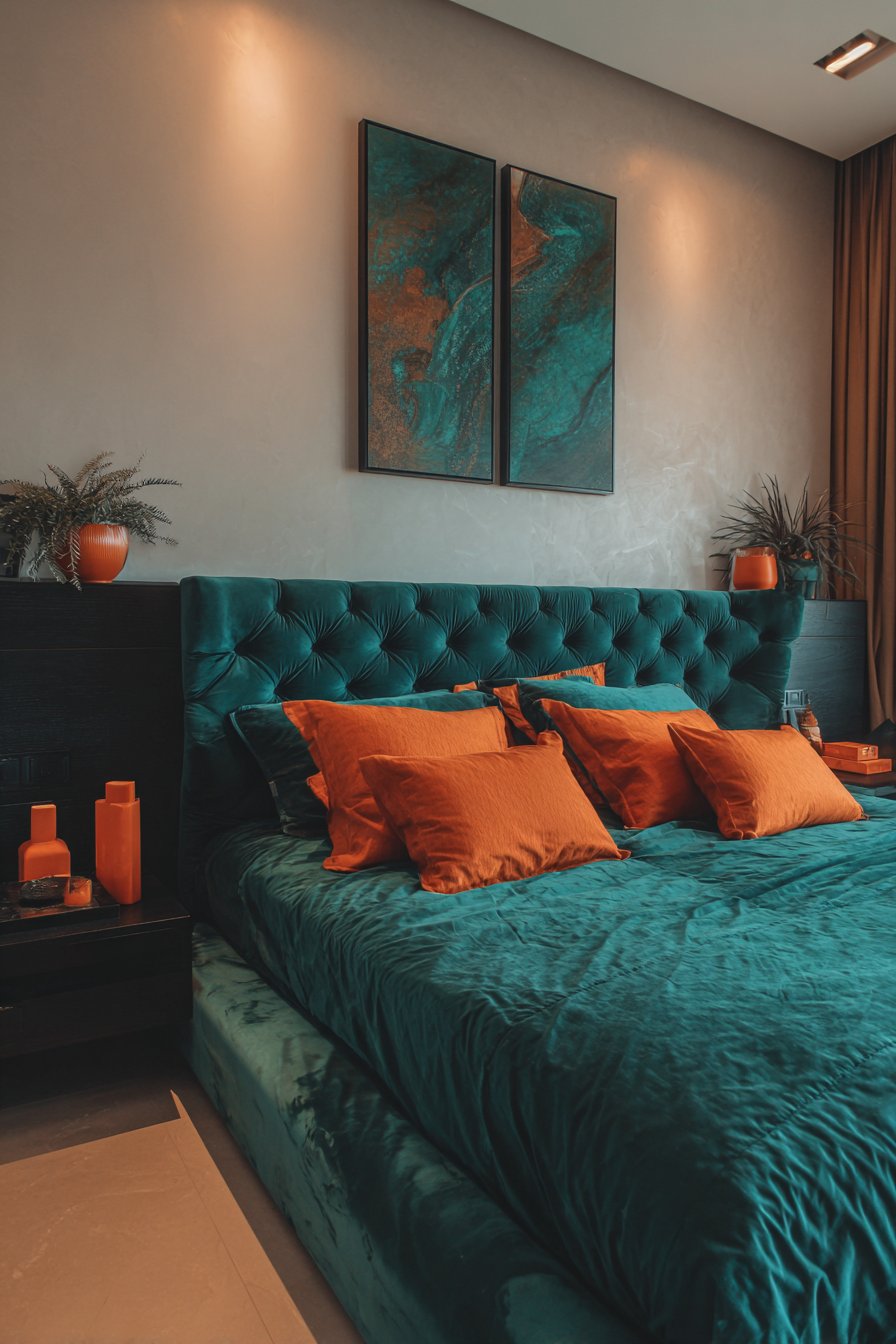
Matte black nightstands with orange ceramic handles provide sophisticated contrast. The black grounds the bright colors preventing them from feeling too playful. Recessed lighting creates subtle highlights while maintaining moody ambiance. The controlled lighting enhances the dramatic color scheme.
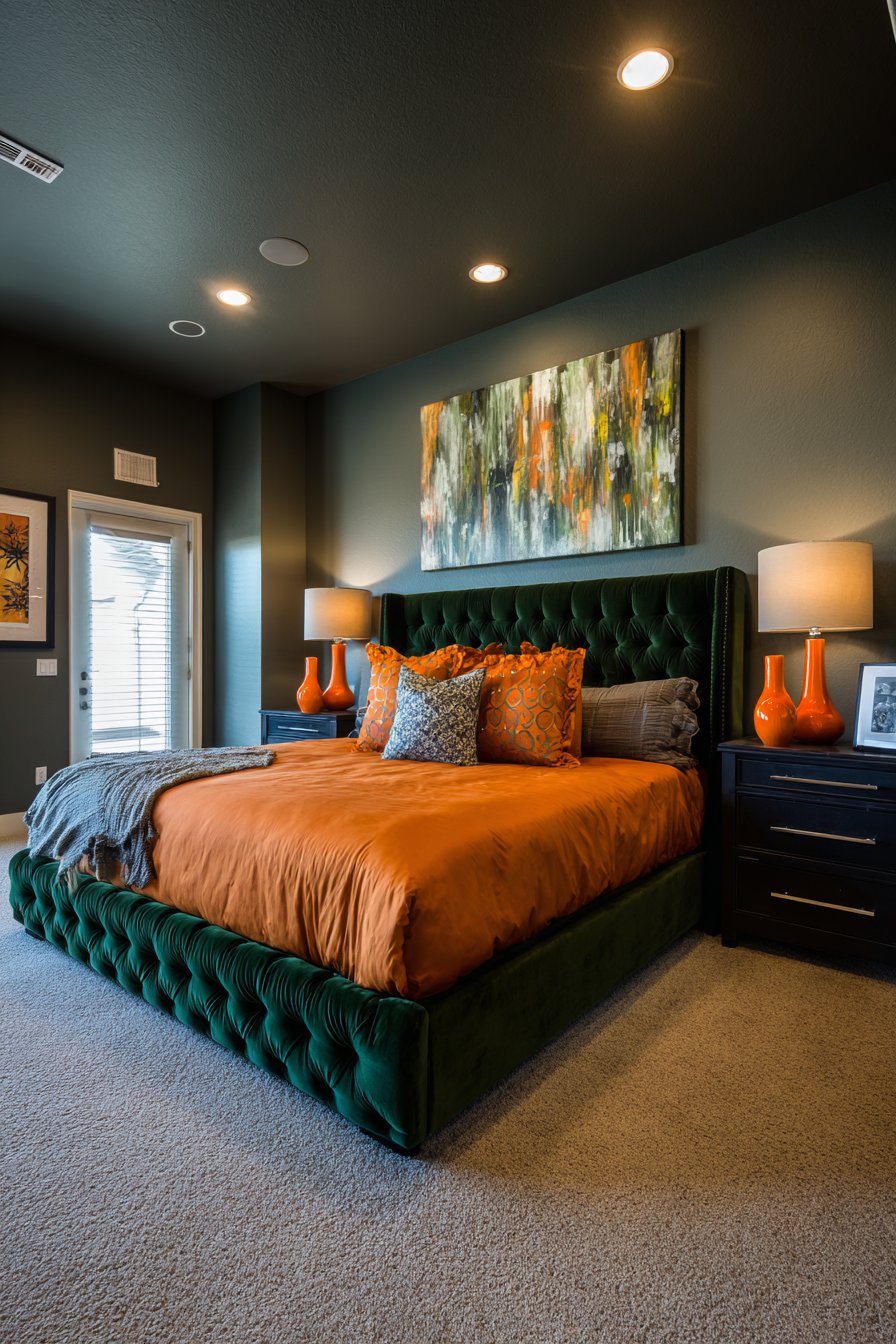
Professional photography captures lighting effects and material textures throughout. Attention to how light interacts with velvet creates depth. This contemporary approach balances drama with sophistication. The design appeals to those who appreciate modern luxury.
Key Design Tips:
- Choose tufted velvet headboards for luxurious texture
- Mix pillow textures to create visual and tactile interest
- Use matte black furniture to ground bold colors
- Select artwork that incorporates both accent colors
- Install recessed lighting for controlled ambiance
9. Rustic Olive Brick Character
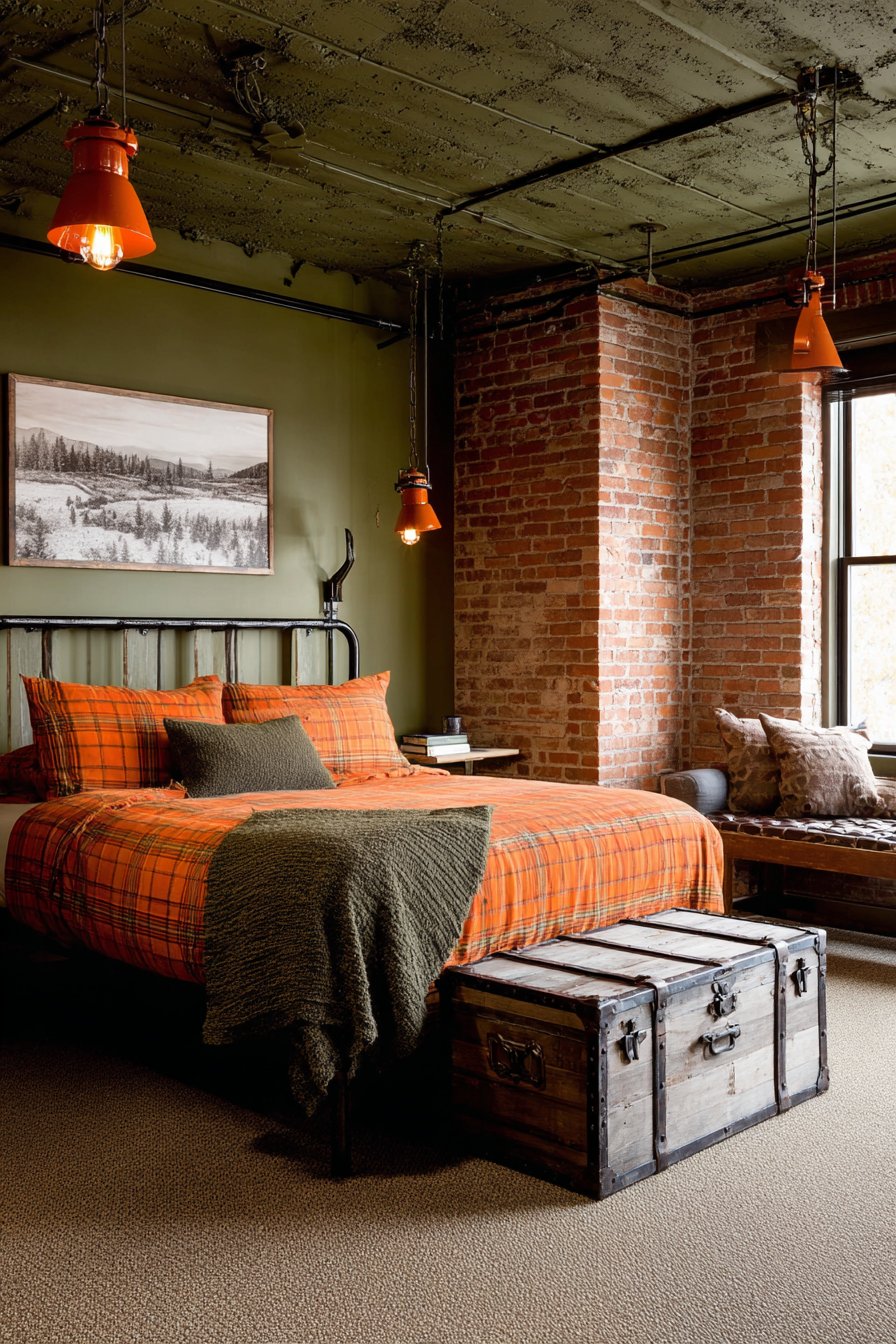
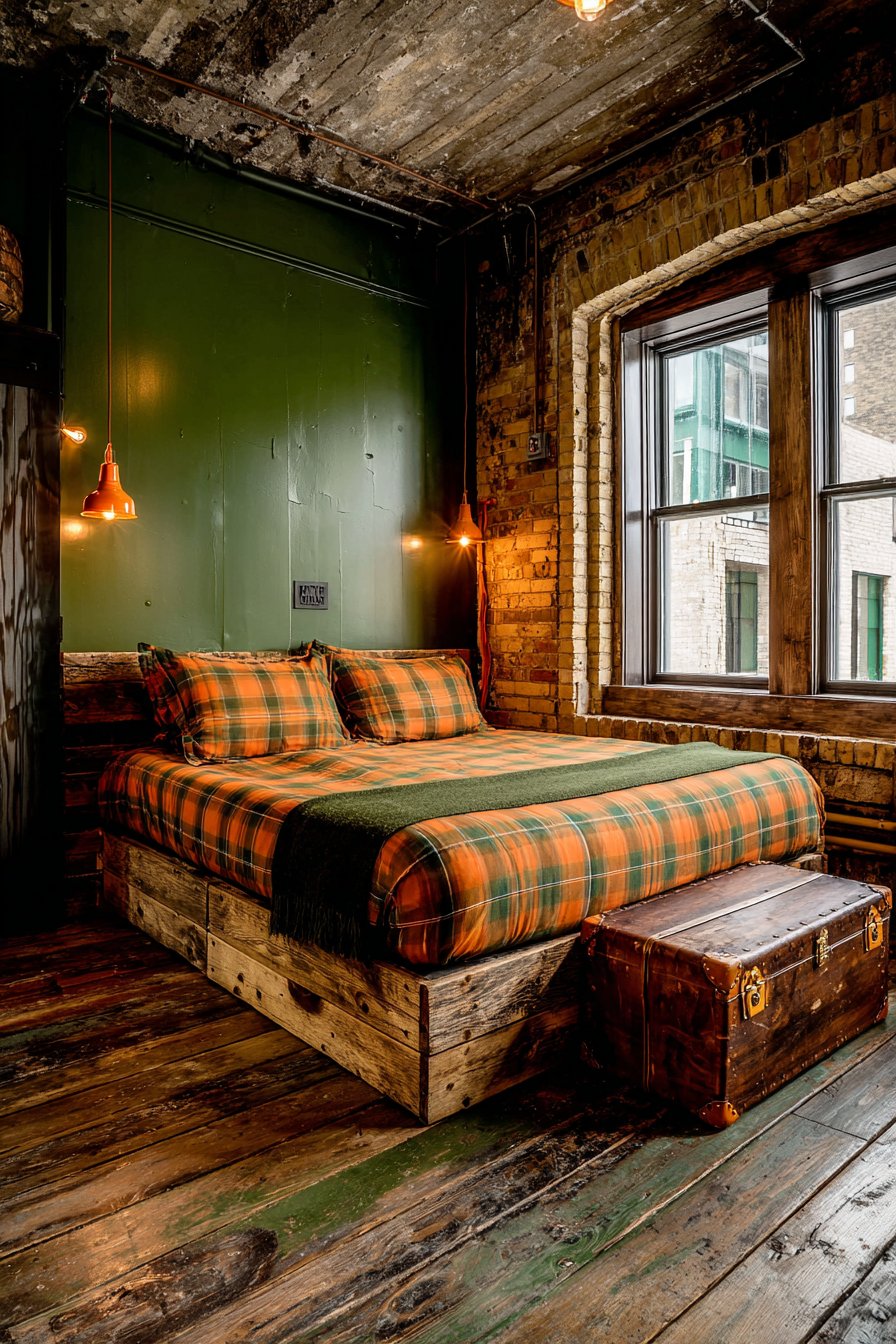
Exposed brick accent wall painted in deep olive green adds industrial warmth. Reclaimed wood bed frame pairs with orange plaid flannel bedding. A forest green wool blanket adds cozy layering perfect for rustic settings. The combination of rugged materials creates authentic character.
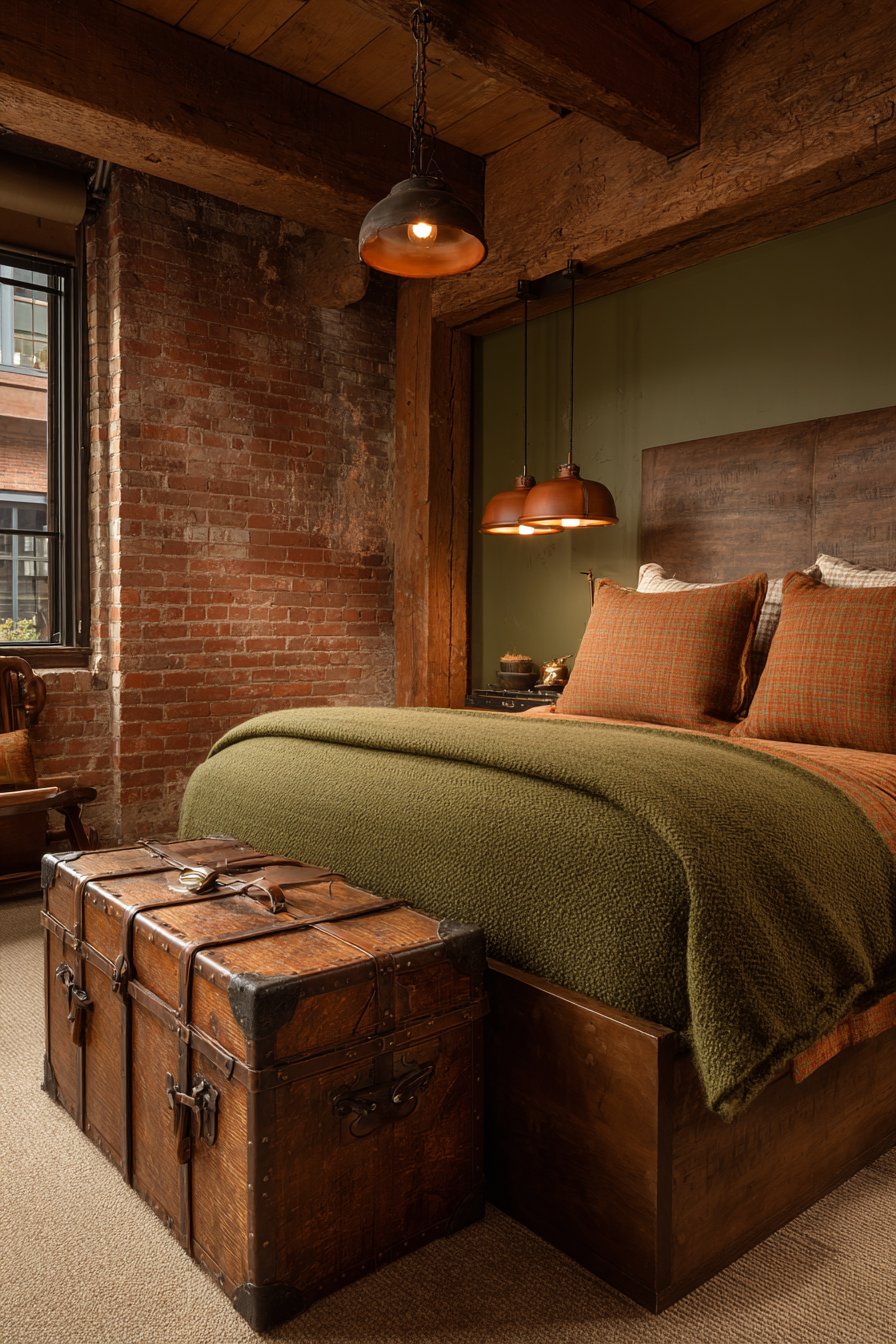
Industrial-style orange pendant lights hang from exposed beam ceiling. The vintage Edison bulbs create warm glow on textured surfaces. A vintage trunk at the foot of bed serves as practical storage. These authentic vintage elements prevent the design from feeling contrived.
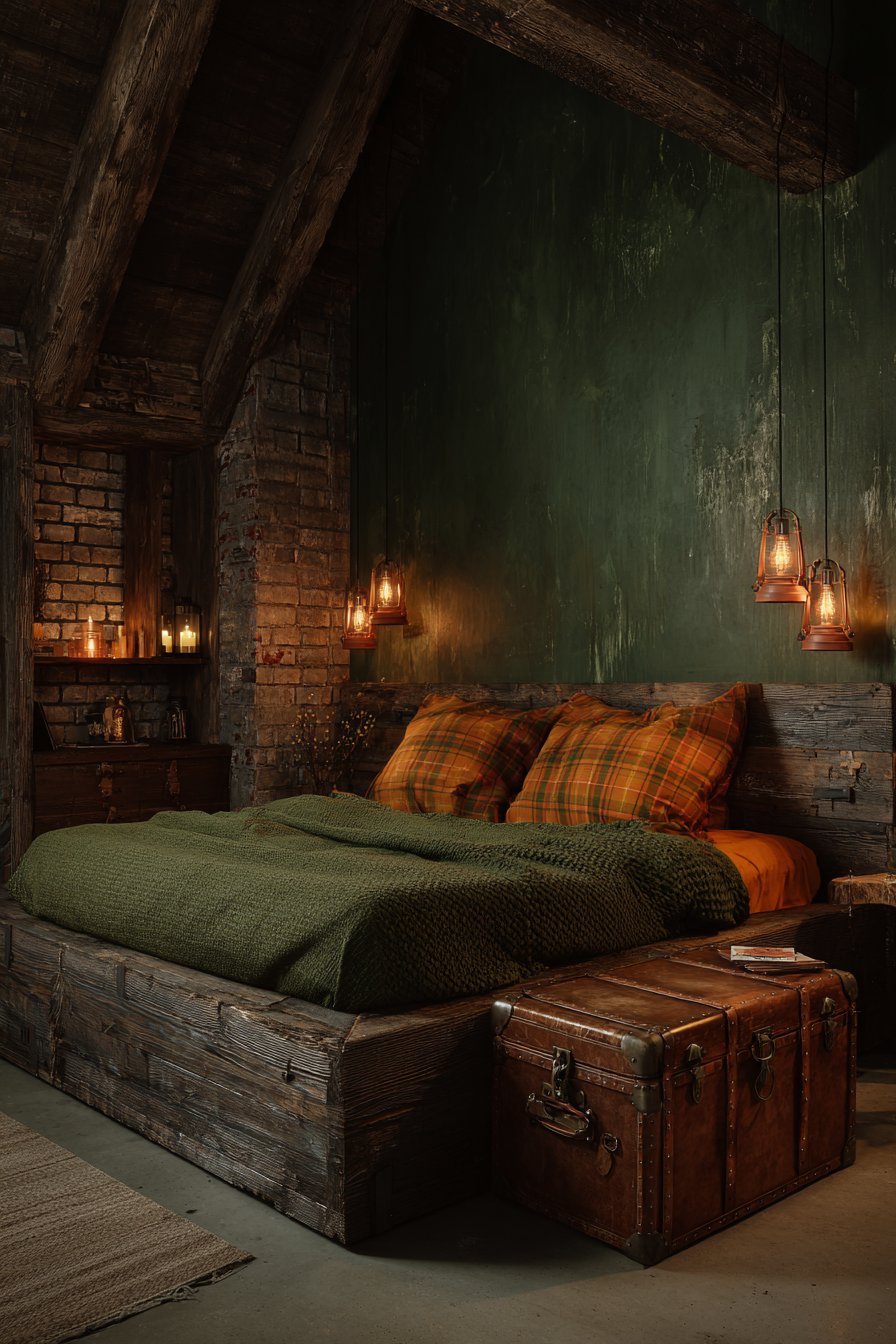
Wide-angle photography captures the authentic rustic aesthetic beautifully. Natural material emphasis and realistic wear patterns add credibility. The textures throughout play starring roles in this design. This approach suits those drawn to industrial and farmhouse styles.
Key Design Tips:
- Paint brick walls for color while maintaining texture
- Choose reclaimed wood furniture for authentic character
- Layer flannel and wool textiles for cozy warmth
- Install industrial pendant lights for vintage appeal
- Use vintage trunks for storage with style
10. Tropical Palm Paradise Escape
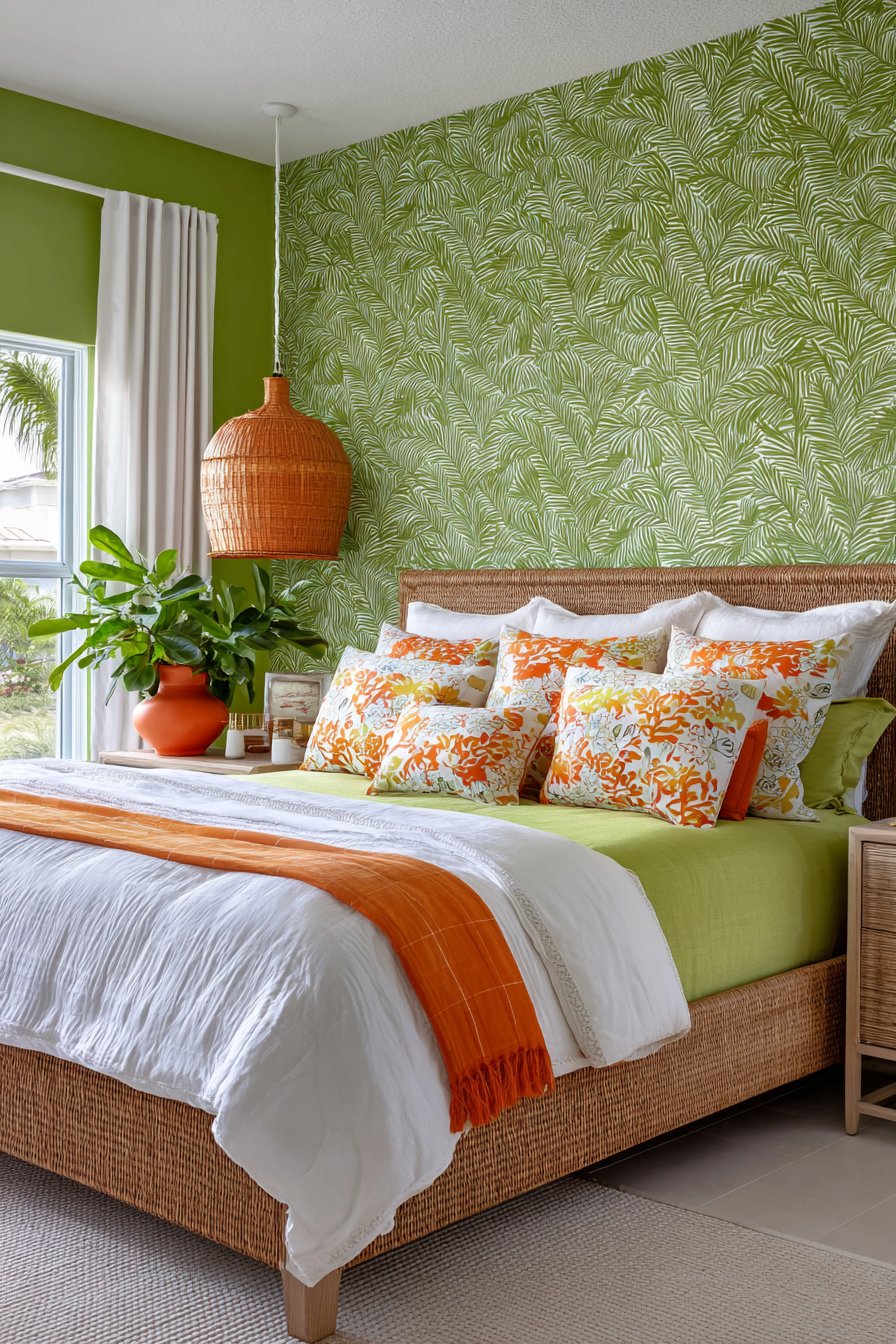
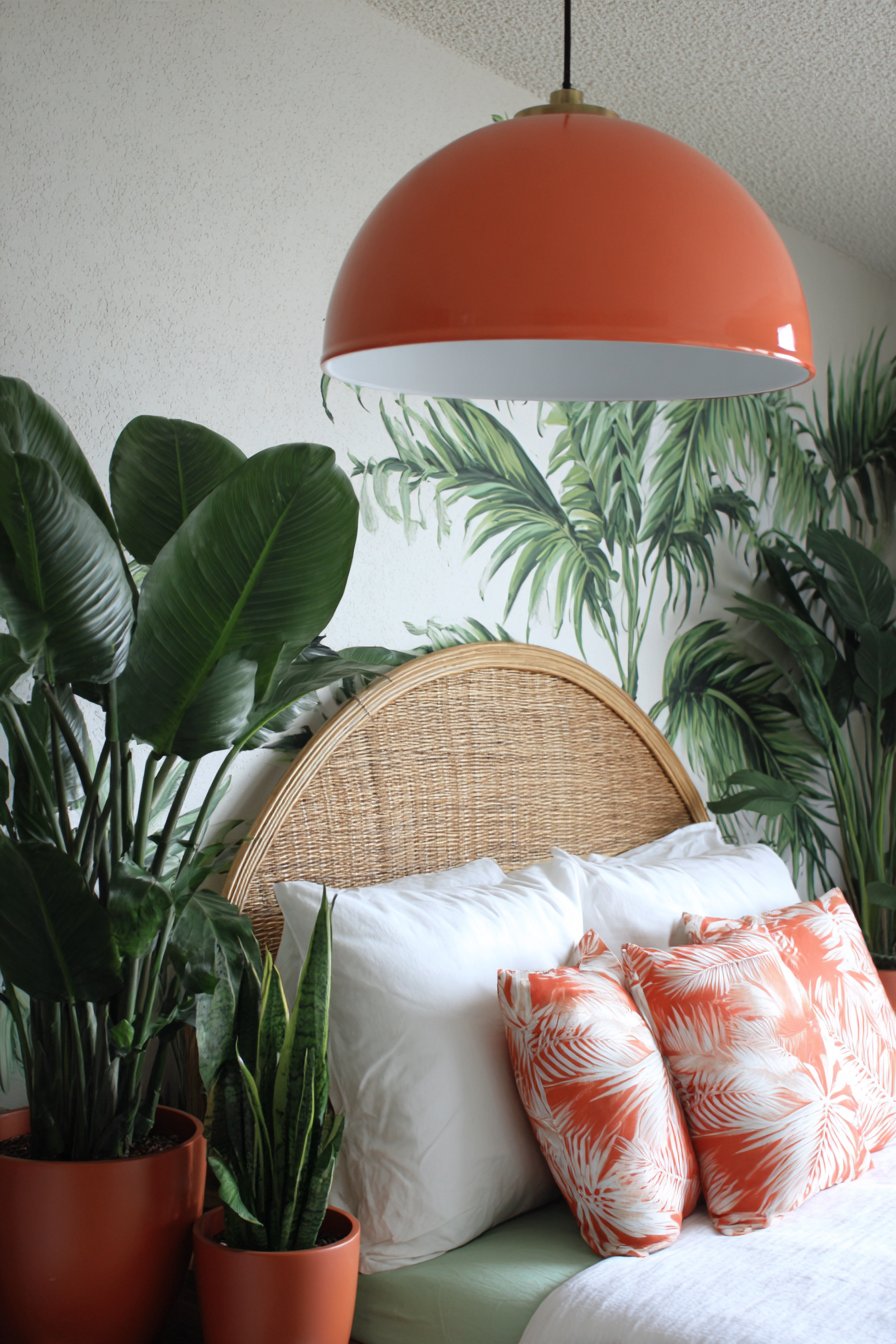
Palm leaf wallpaper in varying green tones creates instant tropical atmosphere. The bed dressed in crisp white linens provides clean contrast. Orange tropical print throw pillows and lime green sheets add vibrant layers. Natural rattan headboard contributes organic texture and coastal appeal.
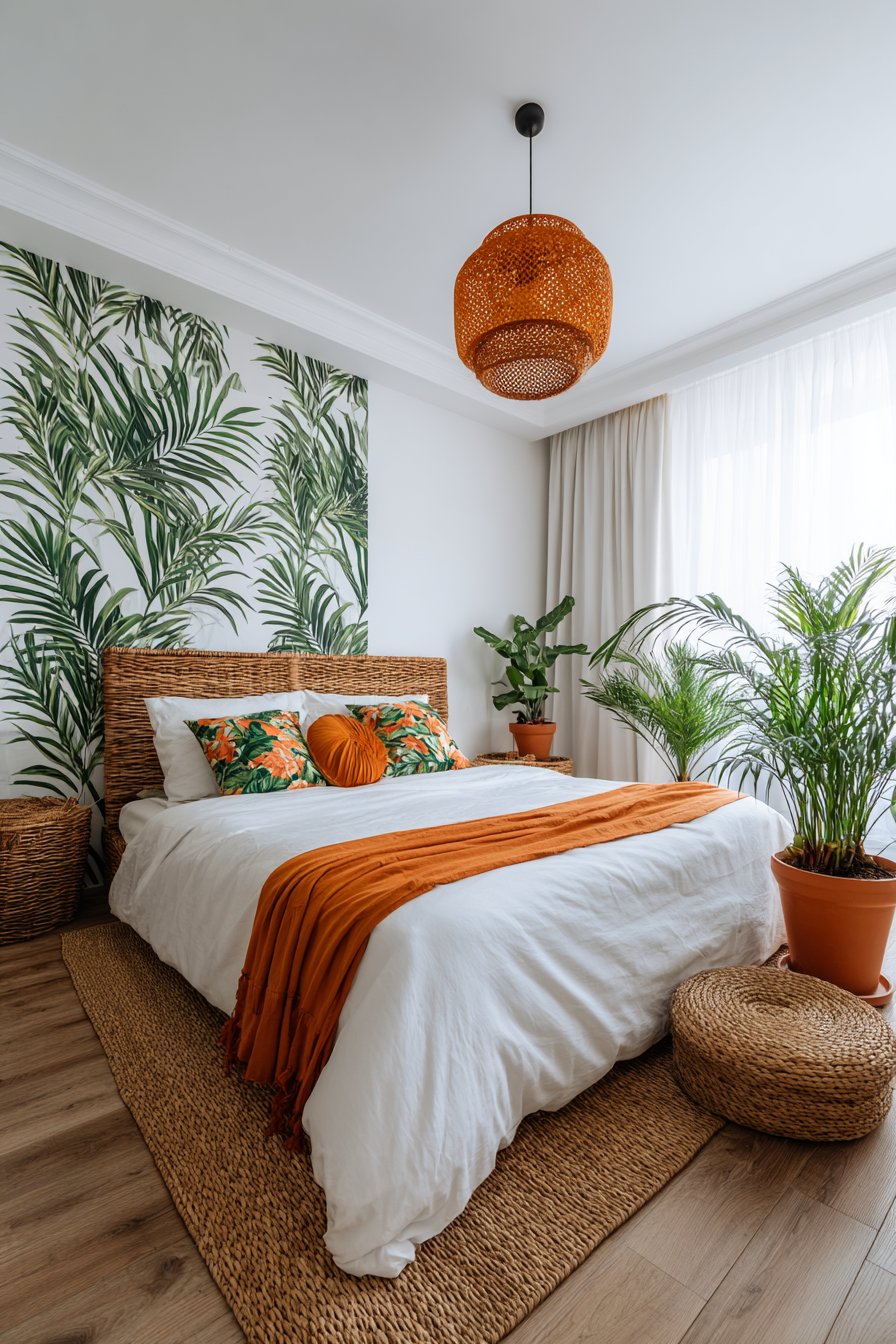
An orange ceramic pendant light hangs from ceiling as sculptural element. Potted tropical plants in terracotta containers flank the bed naturally. The plants reinforce the tropical theme while improving air quality. Bright natural daylight showcases the vibrant color palette perfectly.
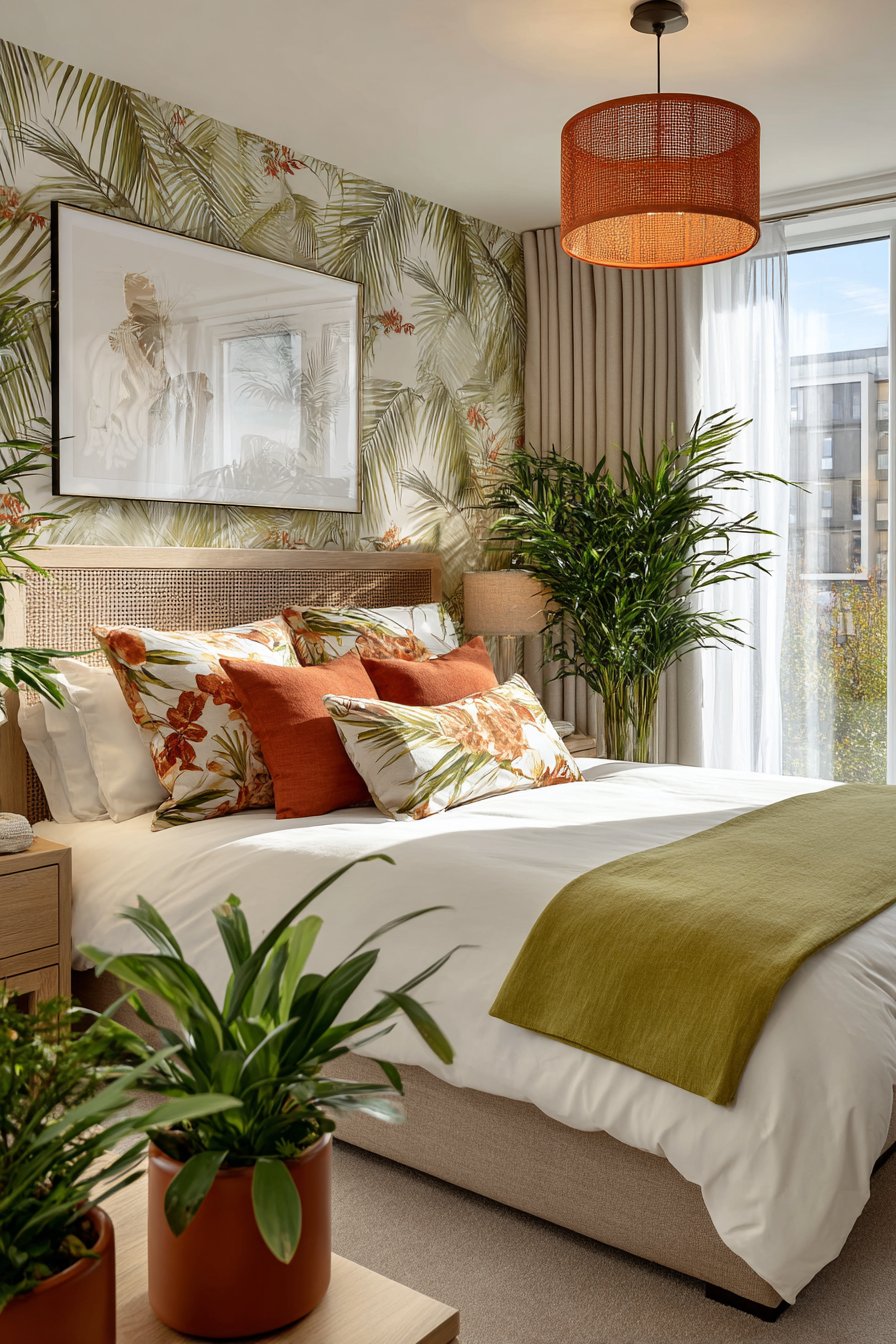
Professional photography highlights botanical elements and color harmony throughout. The design transports you to tropical destinations instantly. This approach works for those seeking vacation-inspired everyday spaces. The combination feels energizing yet relaxing.
Key Design Tips:
- Use palm leaf wallpaper for instant tropical atmosphere
- Keep base linens white for versatility and freshness
- Add orange and lime accents through pillows and sheets
- Choose rattan furniture for authentic coastal style
- Group tropical plants in terracotta for cohesive look
11. Mid-Century Modern Walnut Wonder
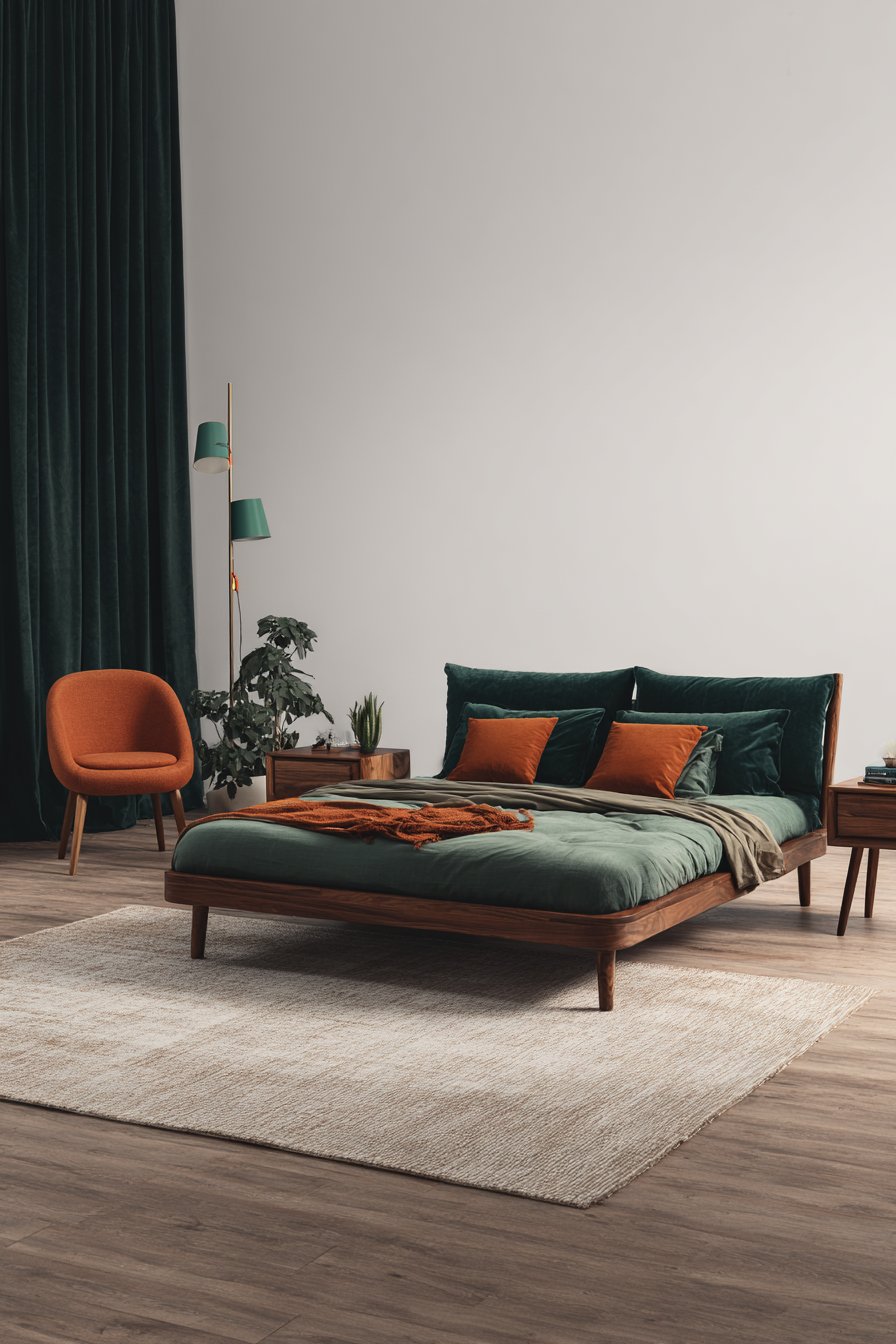
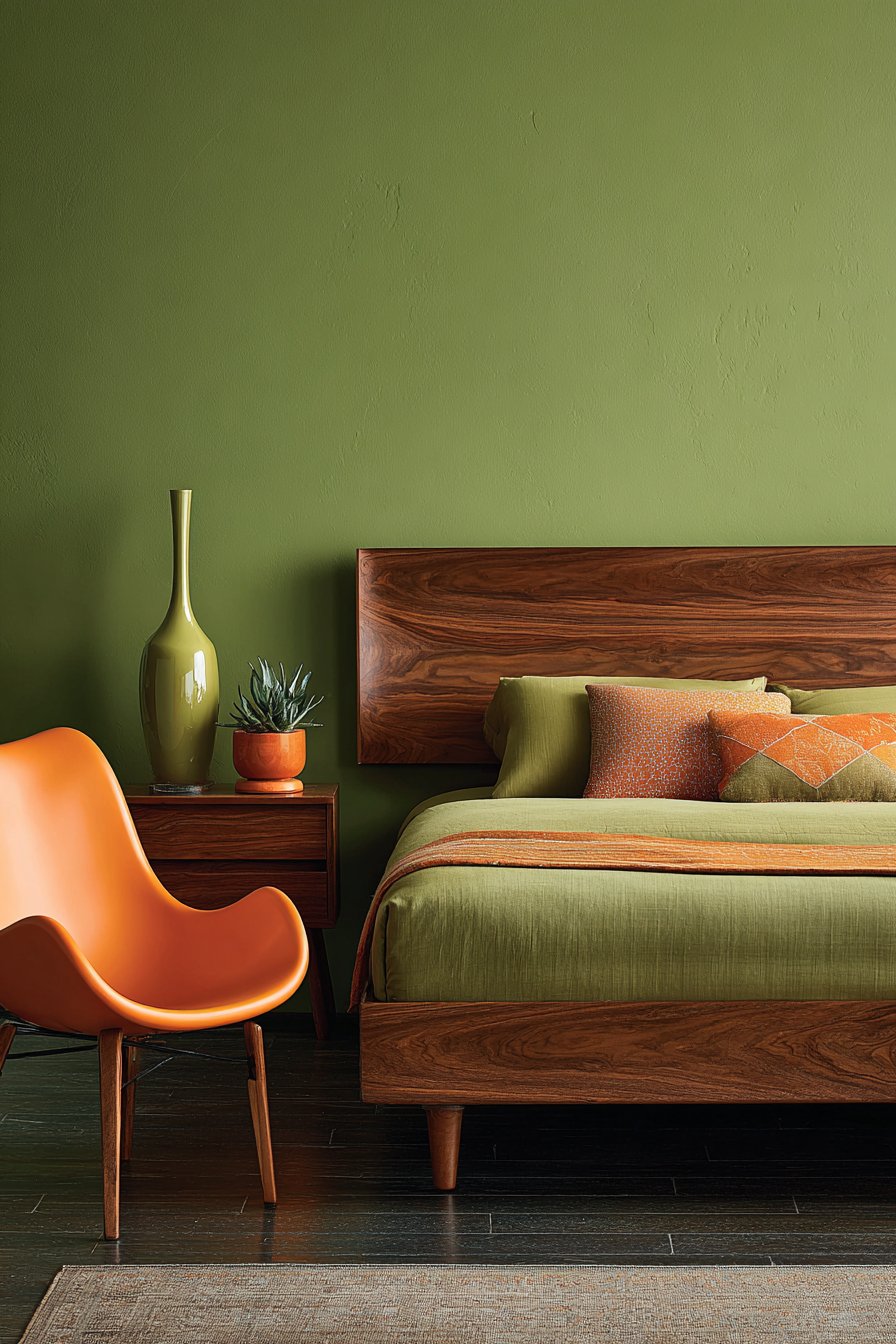
A walnut platform bed featuring tapered legs exemplifies mid-century design. Bedding in sage green with geometric orange accent pillows reflects era aesthetics. An iconic orange molded plastic chair sits beside a green ceramic floor lamp. The furniture pieces could have come straight from 1960s design catalogs.
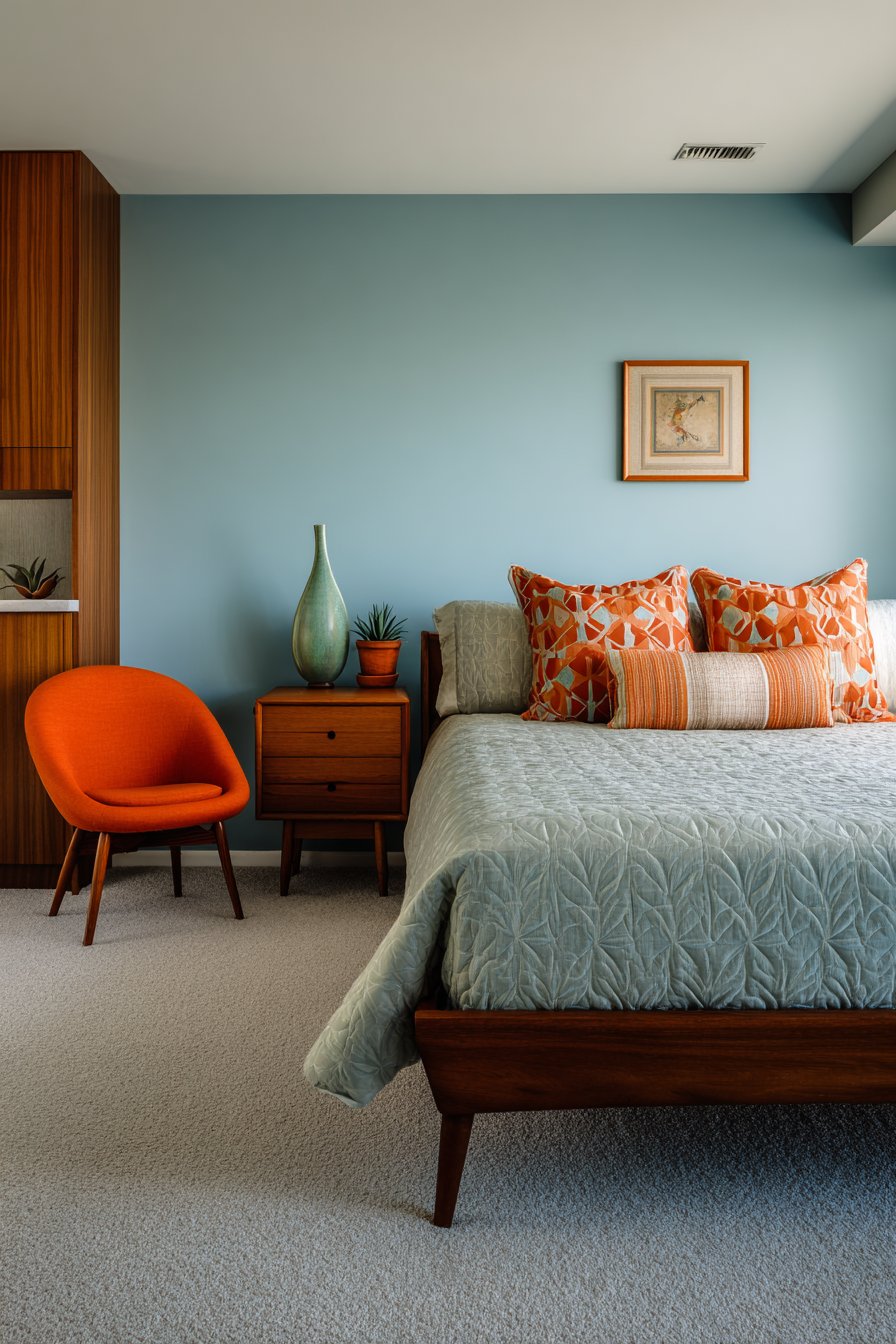
A teak nightstand displays small succulent in orange planter continuing the theme. Neutral area rug grounds the space without competing for attention. Soft diffused lighting emphasizes clean lines and period-appropriate colors. The restrained palette showcases authentic mid-century sensibilities.
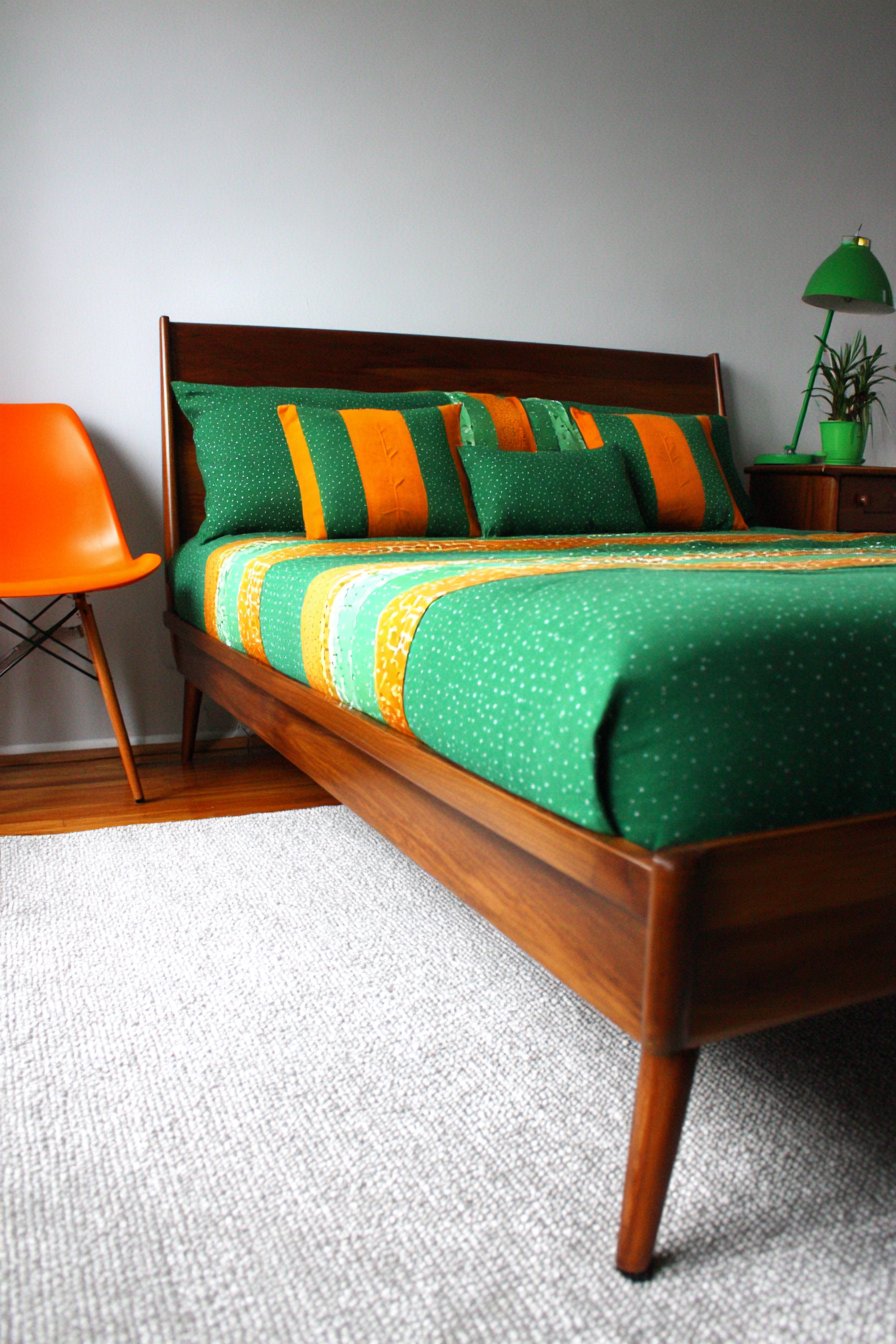
Balanced interior photography captures the era’s design essence. The tapered furniture legs and geometric patterns feel authentic. This design appeals to vintage enthusiasts and collectors. The approach demonstrates how classic design remains relevant.
Key Design Tips:
- Choose walnut furniture with tapered legs for authenticity
- Use geometric patterns in accent pillows
- Select iconic mid-century furniture pieces as accents
- Add ceramic lamps for period-appropriate lighting
- Keep rugs neutral to highlight furniture and colors
12. Cottage Mint and Poppy Romance
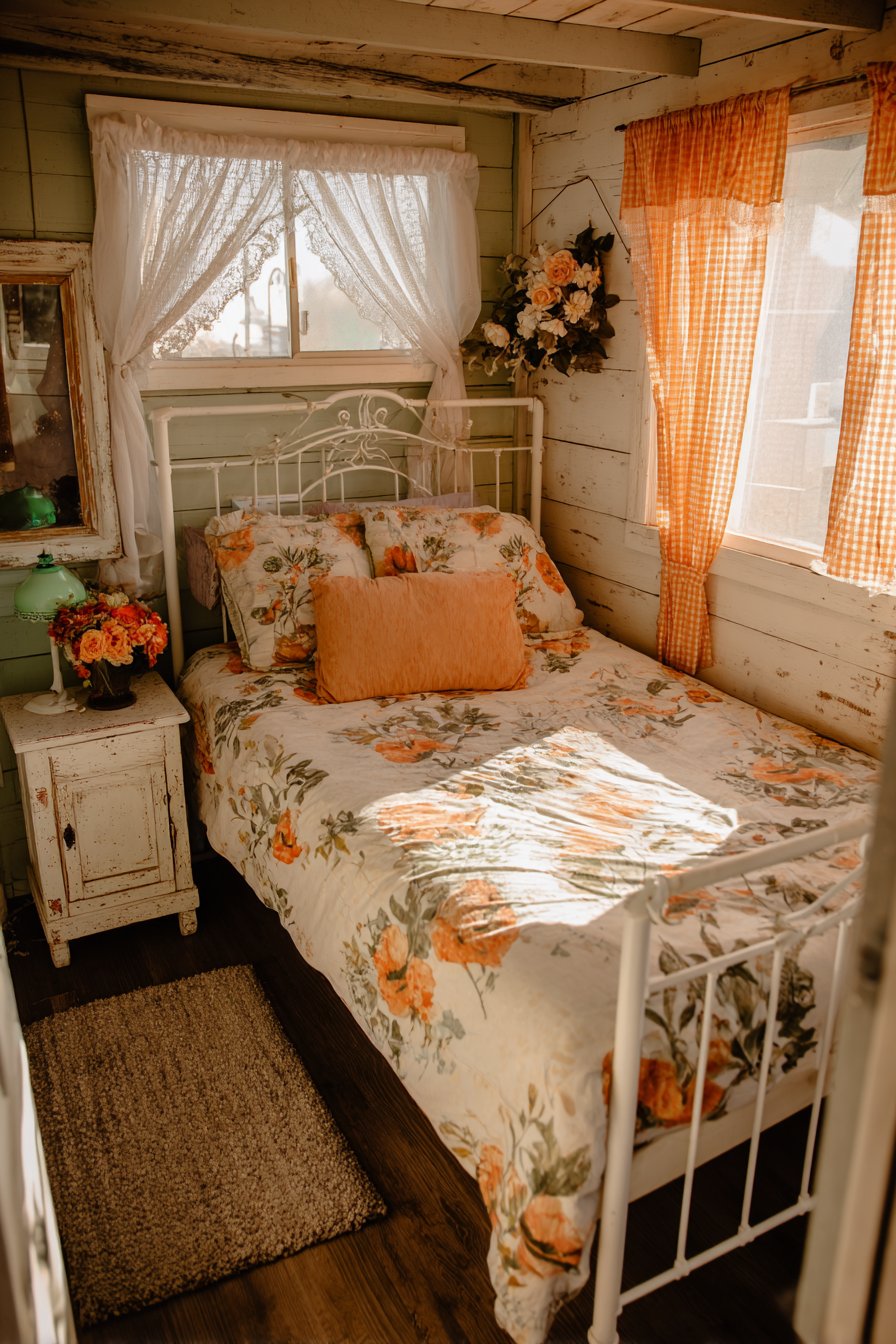
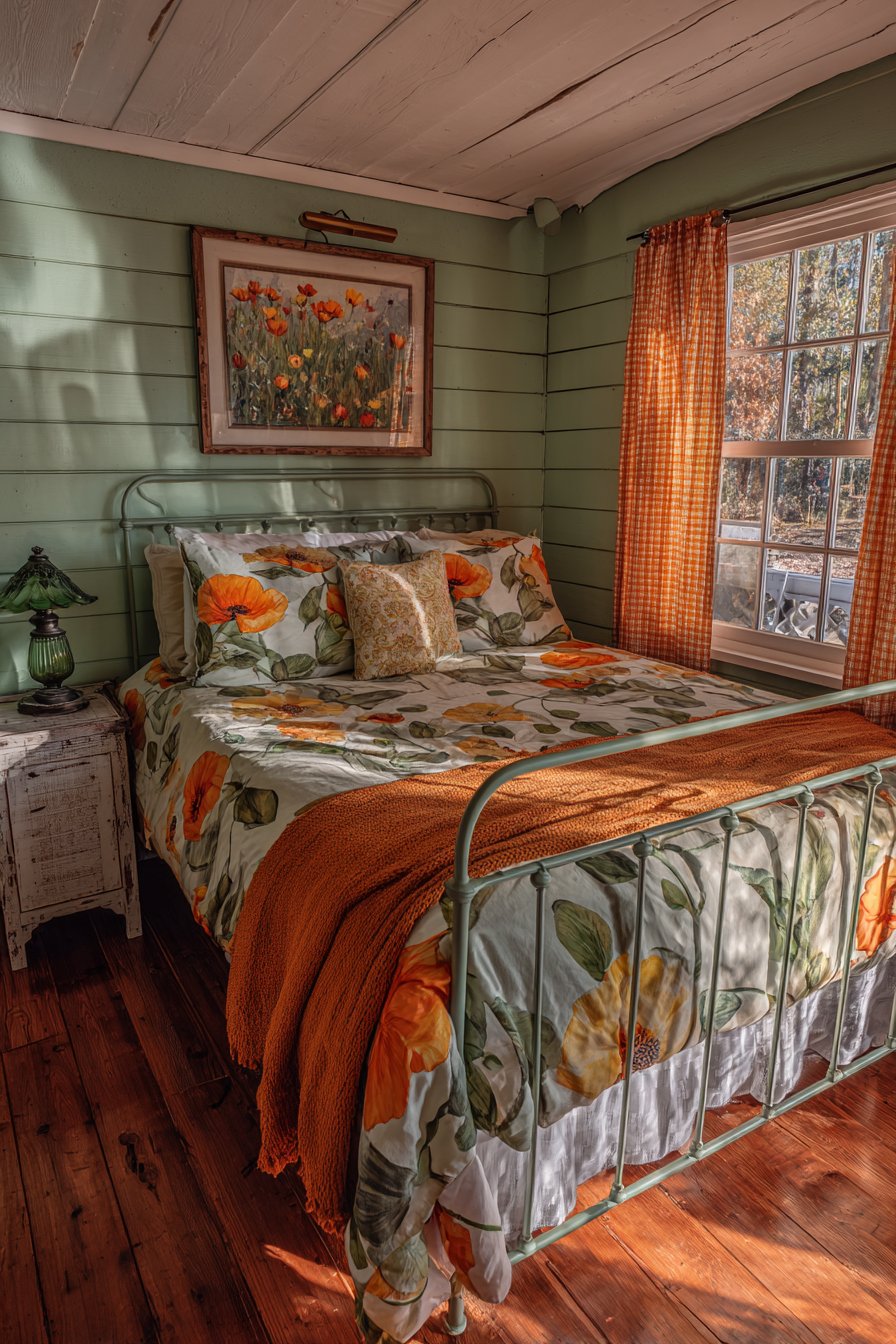
Shiplap accent wall painted in soft mint green creates cottage charm. White iron bed frame provides classic foundation for the vintage aesthetic. Vintage-inspired floral bedding features orange poppies and green foliage. Orange gingham curtains frame windows adding country sweetness.
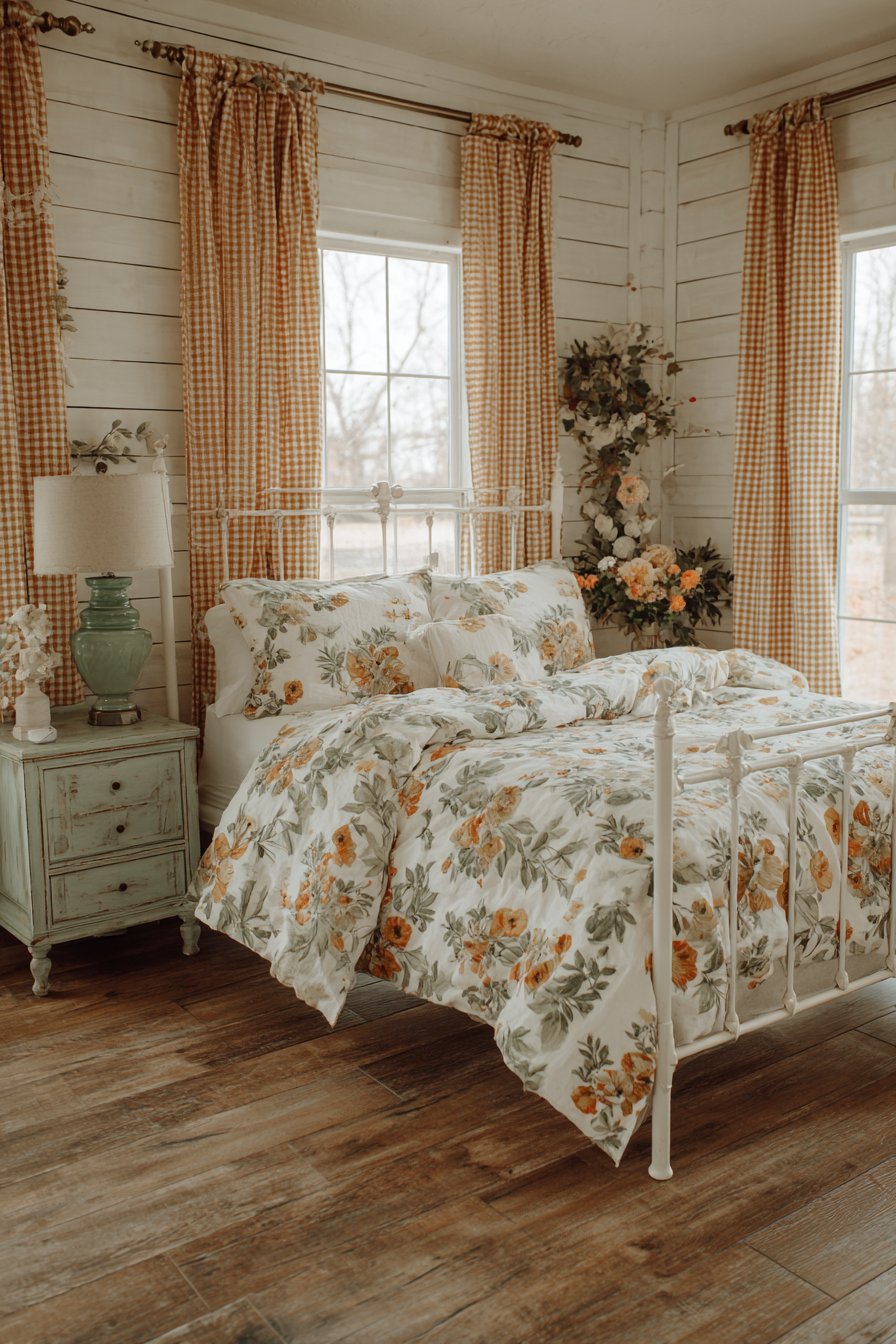
Distressed white nightstand holds green milk glass lamp completing the vintage look. Hardwood floors with natural finish add warmth underfoot. Golden hour light streams through windows creating nostalgic ambiance. Attention to vintage textile details enhances authentic cottage feel.
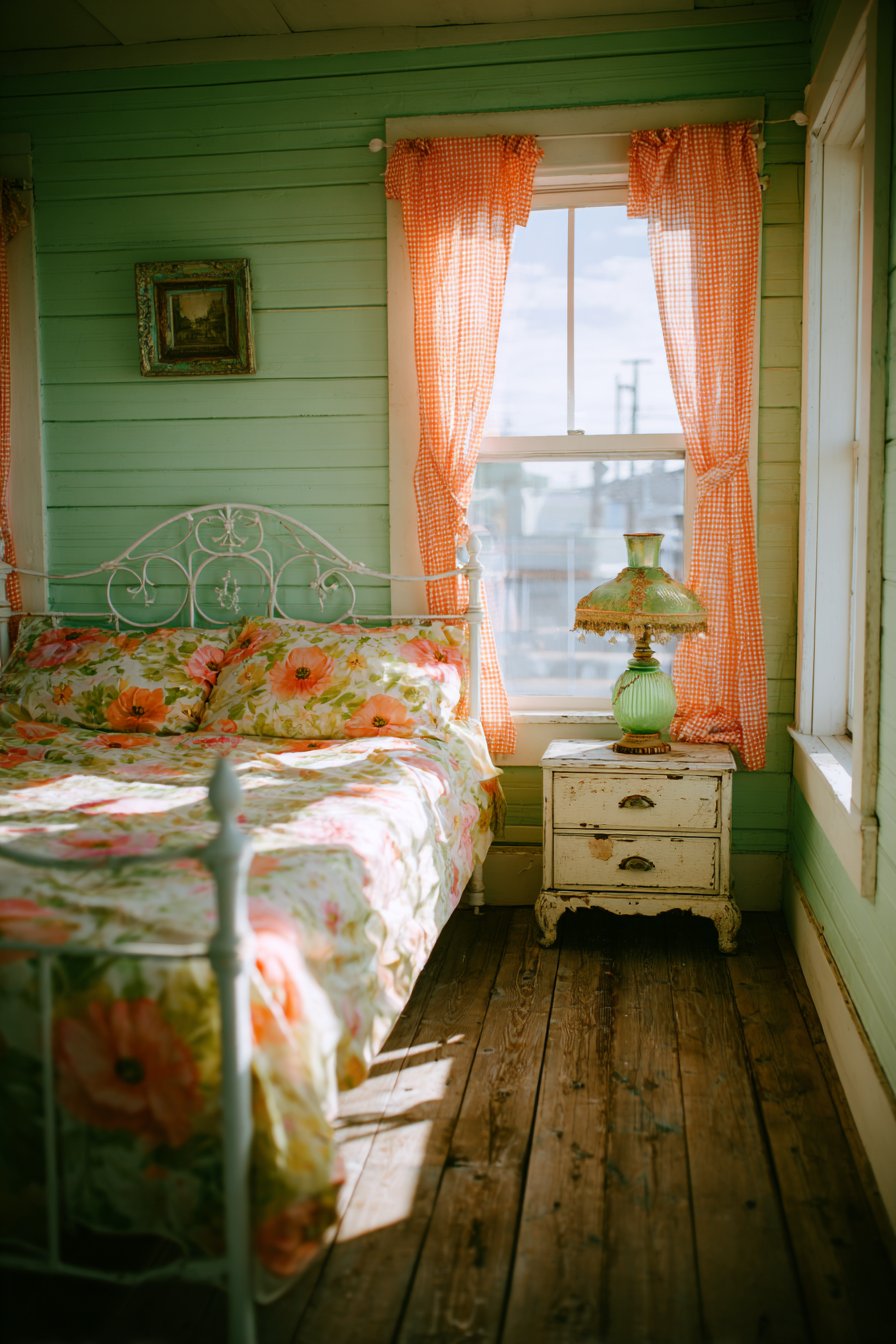
The combination of mint and orange feels fresh yet traditional. Distressed furniture prevents the look from feeling too precious. This design suits those who love farmhouse and cottage aesthetics. The romance of vintage details creates welcoming atmosphere.
Key Design Tips:
- Paint shiplap walls in soft pastels for cottage appeal
- Choose white iron bed frames for classic foundation
- Select floral bedding with large-scale prints
- Use gingham curtains for country charm
- Incorporate milk glass accessories for vintage authenticity
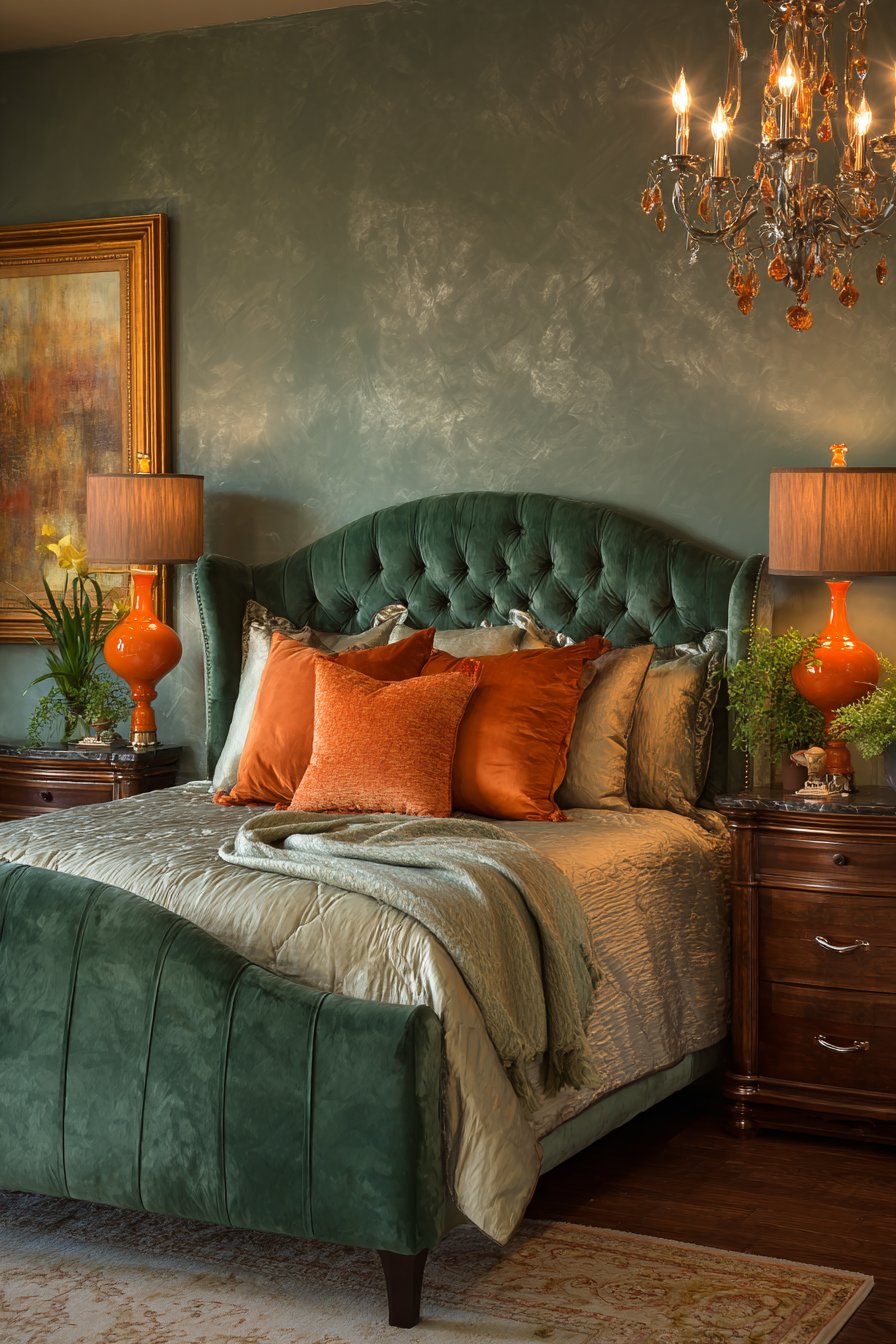
13. Luxurious Emerald Channel Tufting
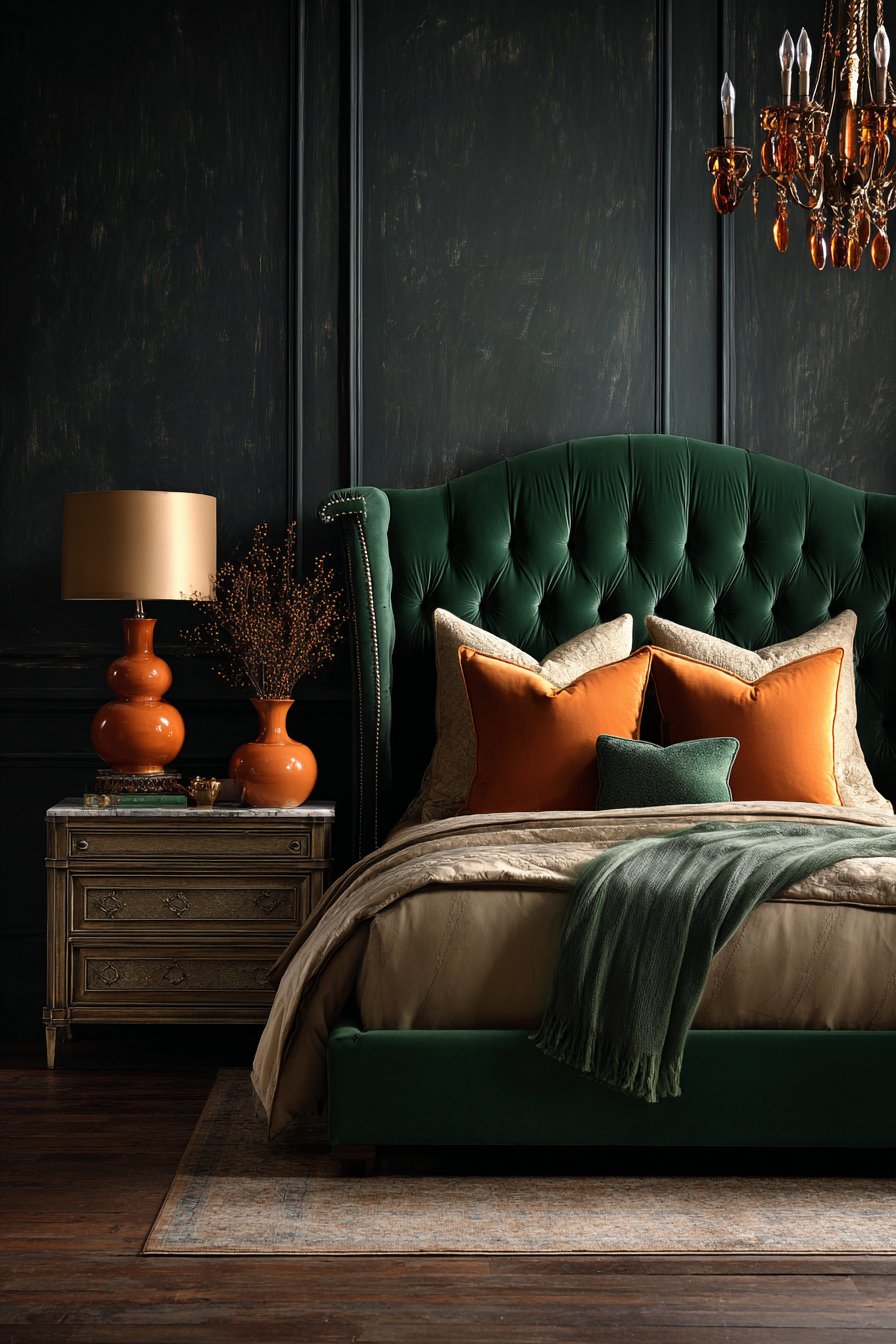
Deep emerald green velvet upholstered bed with channel tufting exudes luxury. High-end bedding in champagne tones provides sophisticated neutral base. Burnt orange silk pillows and sage green cashmere throw add opulent layers. The material quality elevates the entire design.
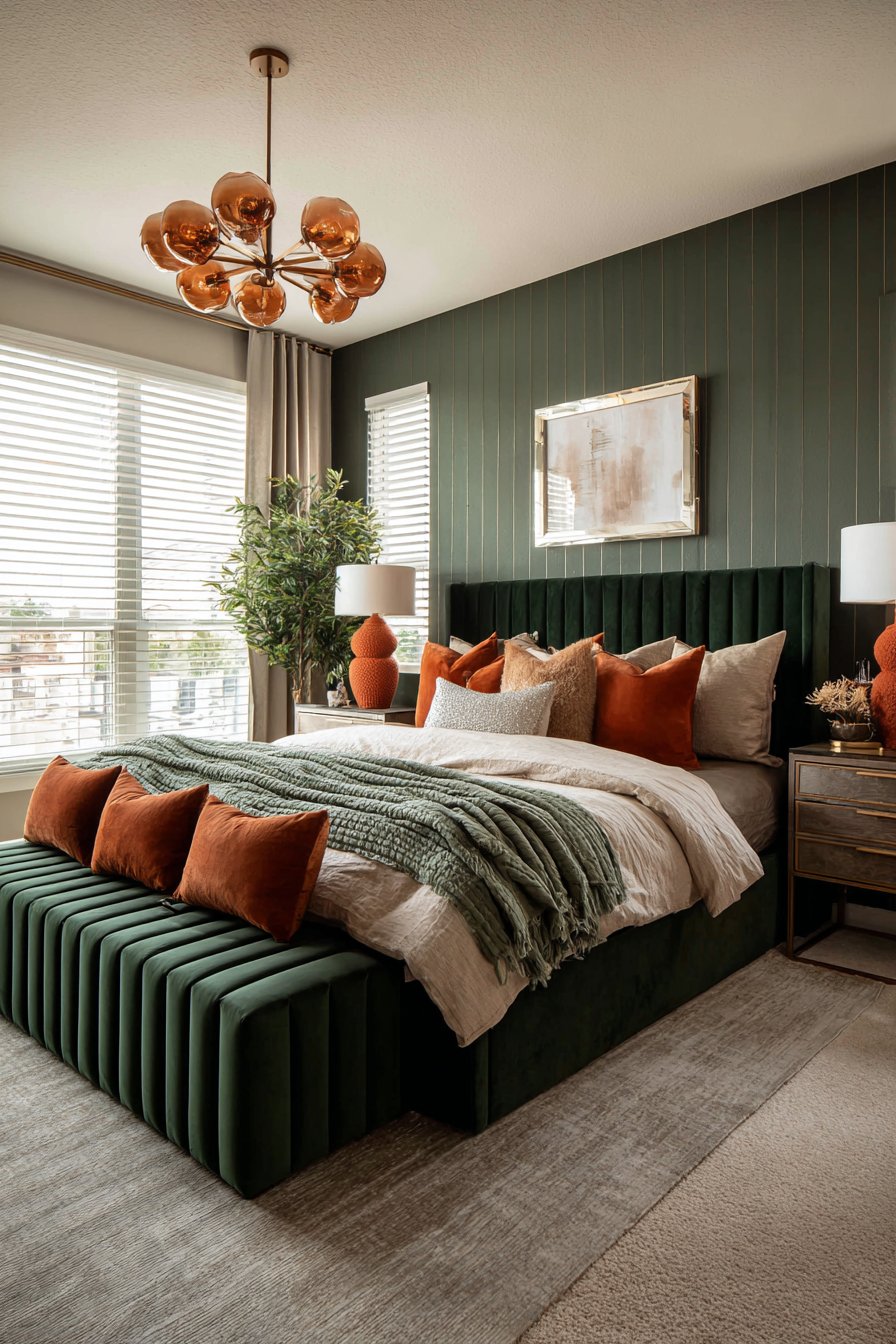
Brass nightstands with marble tops flank the bed grandly. Sculptural orange ceramic lamps serve as artistic elements. Dark green accent wall with subtle metallic finish adds depth. A chandelier with amber glass elements provides elegant illumination.
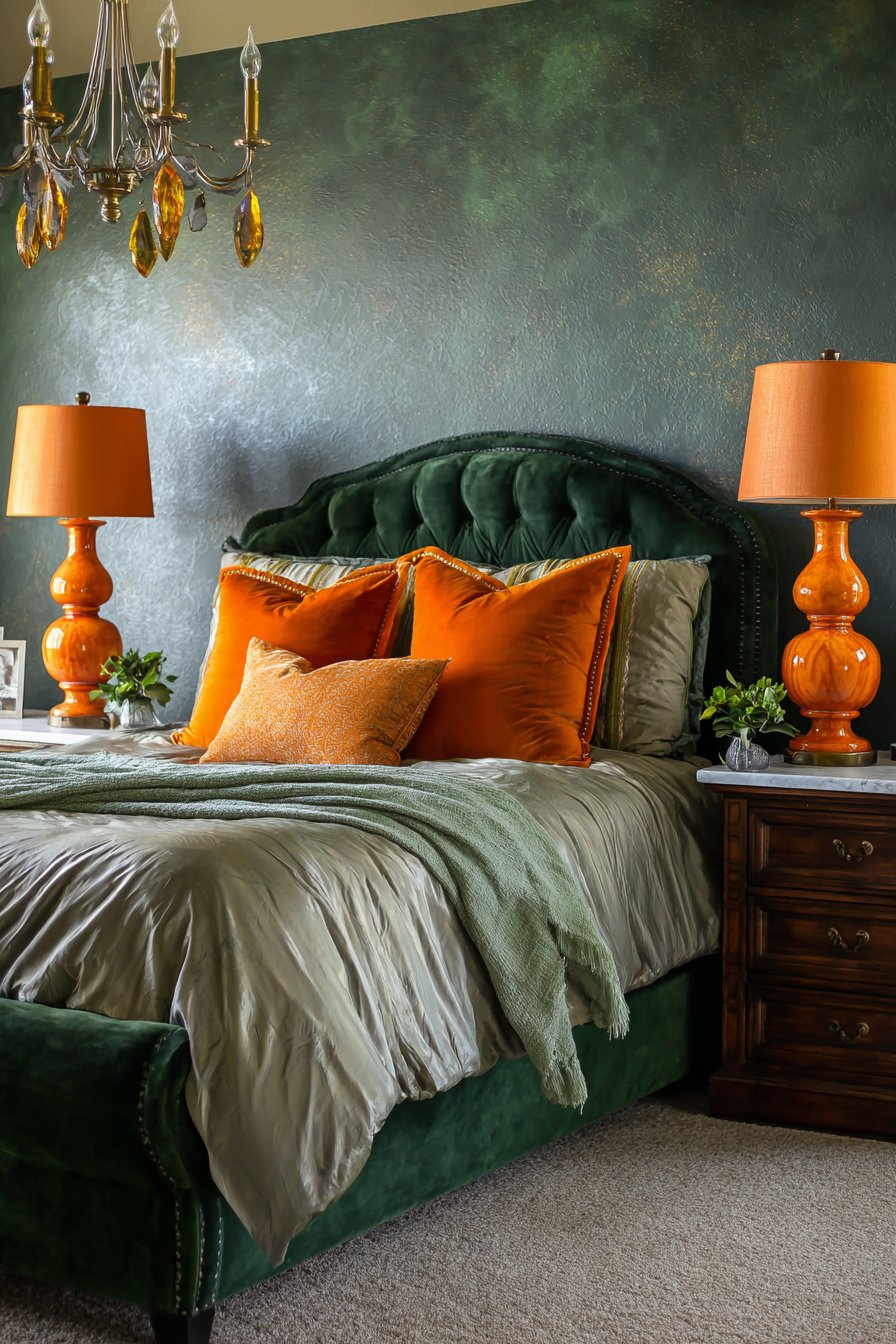
Professional photography captures rich textures and elevated color palette. Every detail speaks to quality and thoughtful curation. This design appeals to those with refined tastes. The luxury approach demonstrates investment in quality materials.
Key Design Tips:
- Invest in channel tufted velvet furniture for luxury
- Layer high-end textiles like silk and cashmere
- Choose brass and marble furniture for sophistication
- Add metallic finishes to walls for subtle glamour
- Select statement lighting like chandeliers for elegance
14. Minimalist Japanese Platform Zen
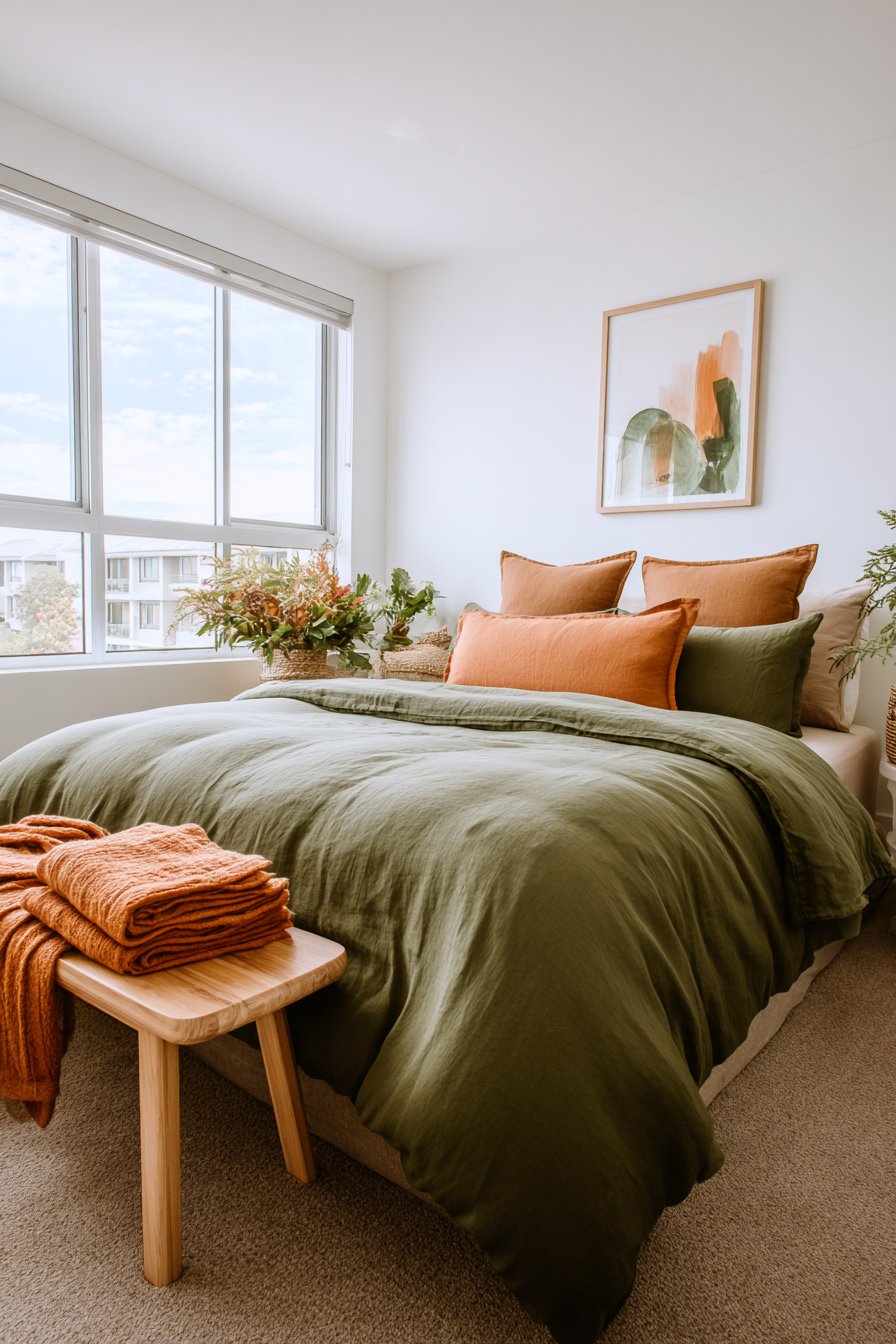
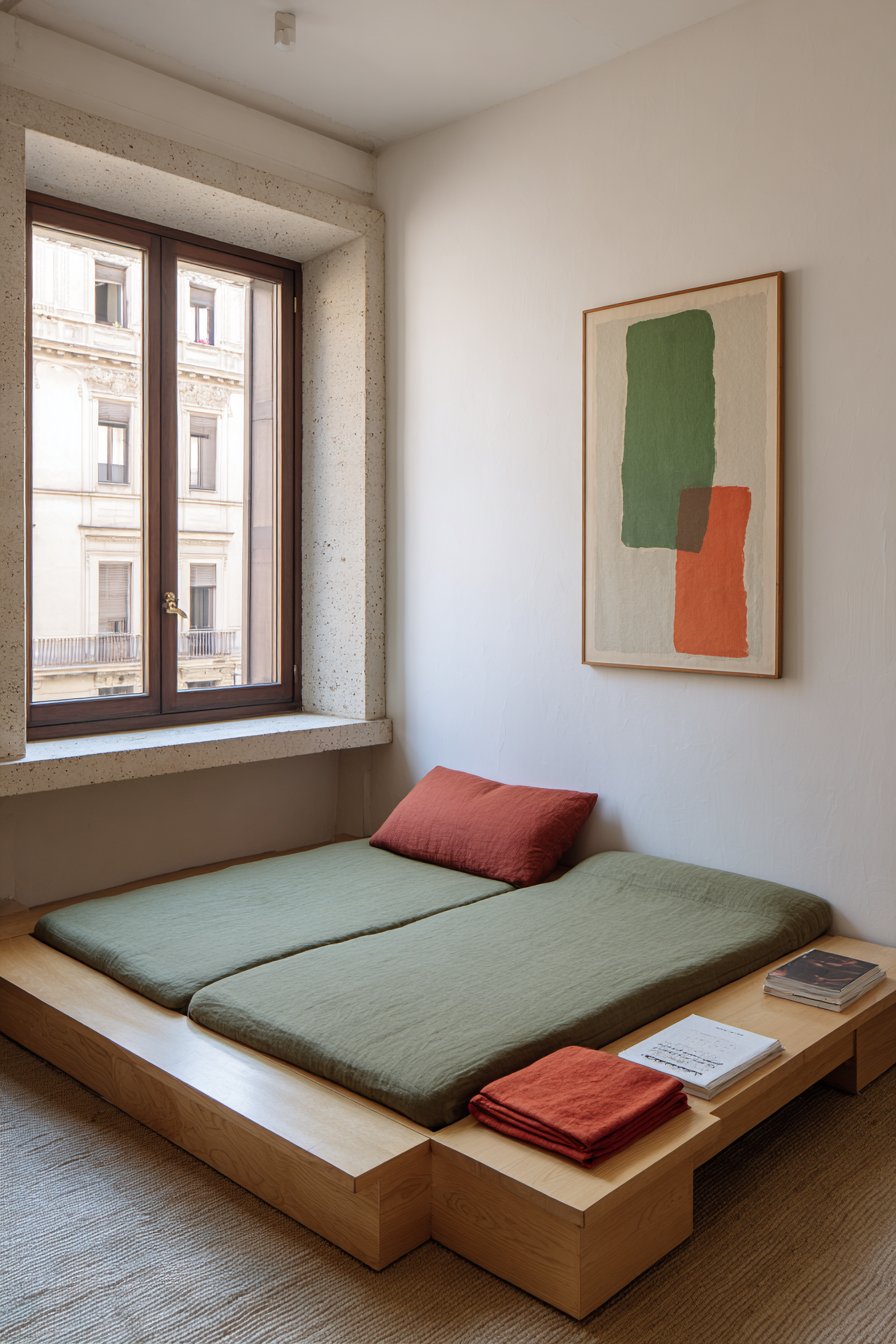
A low Japanese-style platform bed dressed in organic cotton demonstrates restraint. Bedding in olive green maintains the minimalist aesthetic. A single decorative pillow in terracotta linen provides the orange accent. Clean white walls with one abstract art piece show intentional simplicity.
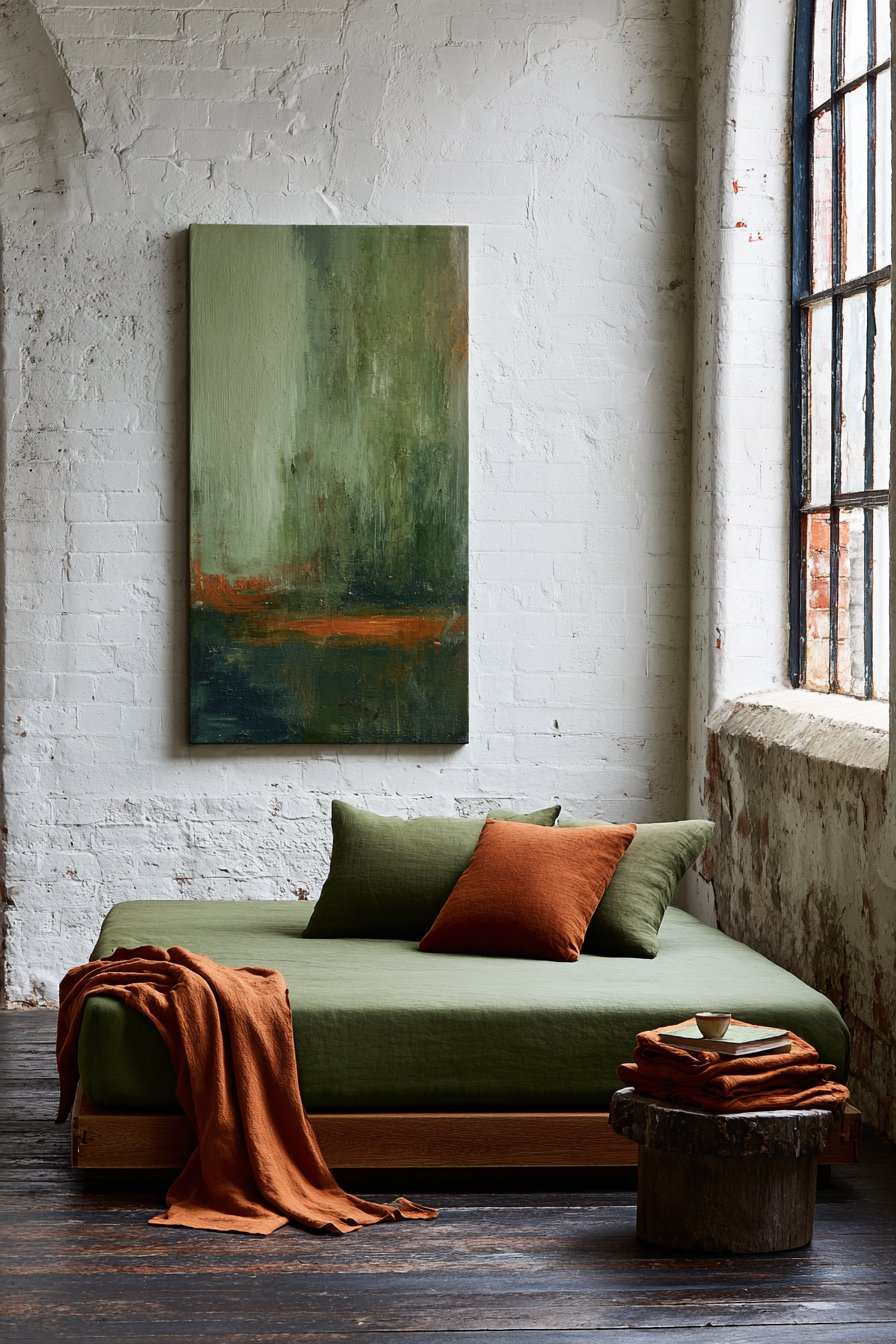
The artwork features green and orange brushstrokes connecting the color story. Simple wooden bench at foot of bed holds neatly folded orange throw. Natural light from large window creates zen-like atmosphere. Wide-angle photography emphasizes negative space and intentional design choices.
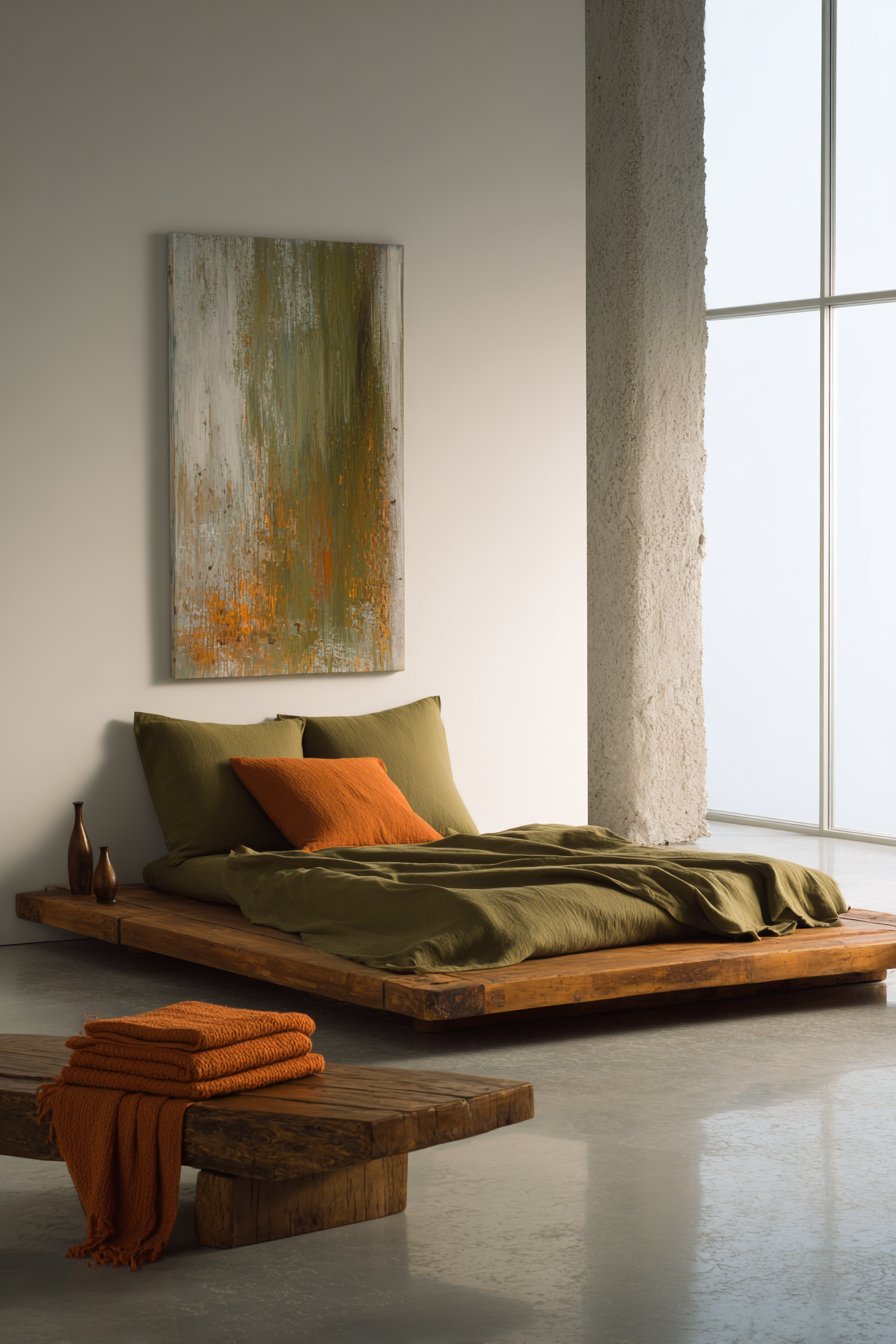
The minimal approach creates calm and order. Every element serves specific purpose without excess. This design suits those seeking peaceful simplicity. The Japanese influence brings mindful living into bedroom design.
Key Design Tips:
- Choose low platform beds for Japanese aesthetic
- Use organic cotton for natural breathable bedding
- Limit decorative pillows to one or two pieces
- Embrace white walls and negative space
- Select simple abstract art with coordinating colors
15. Eclectic Pattern Mixing Adventure
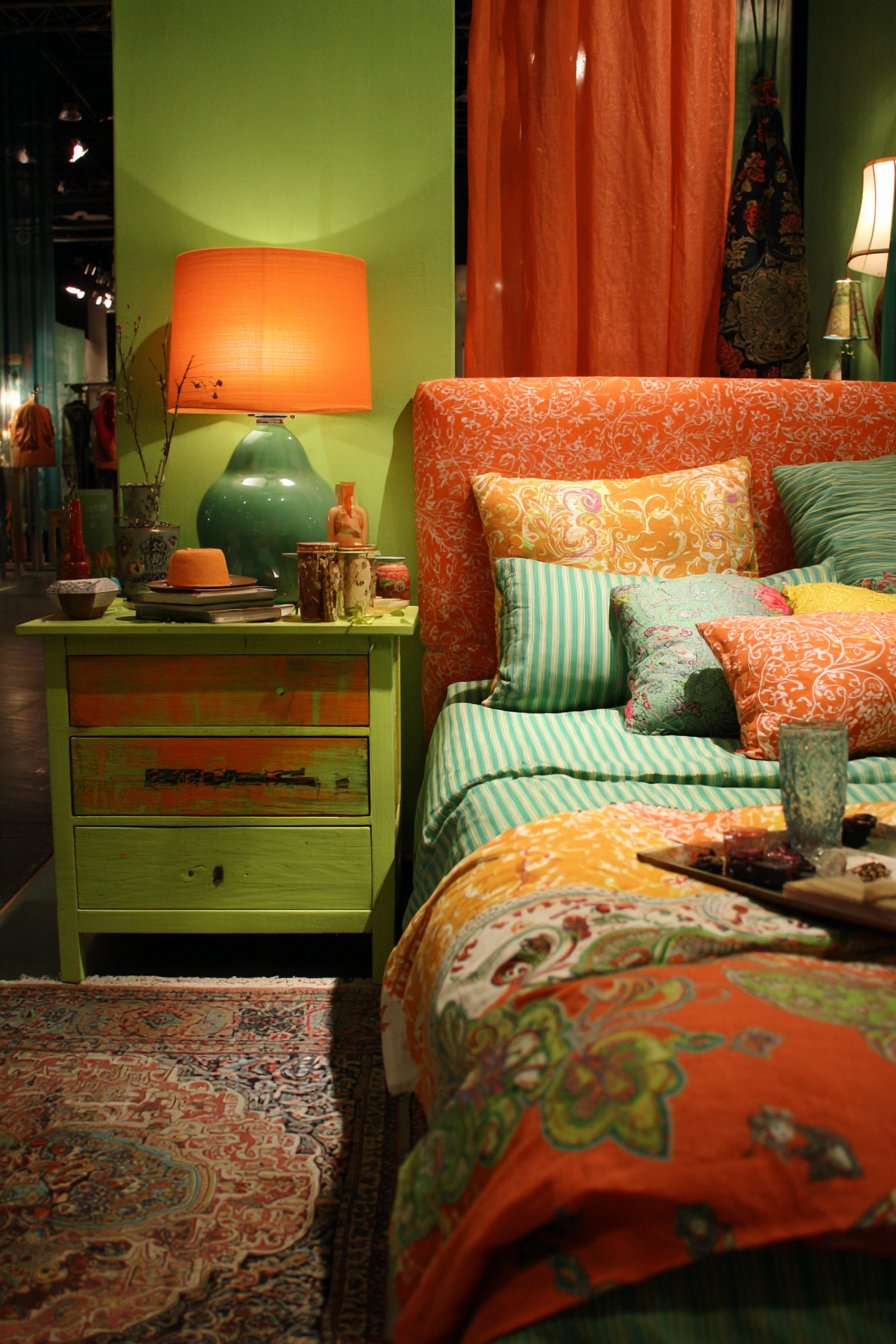
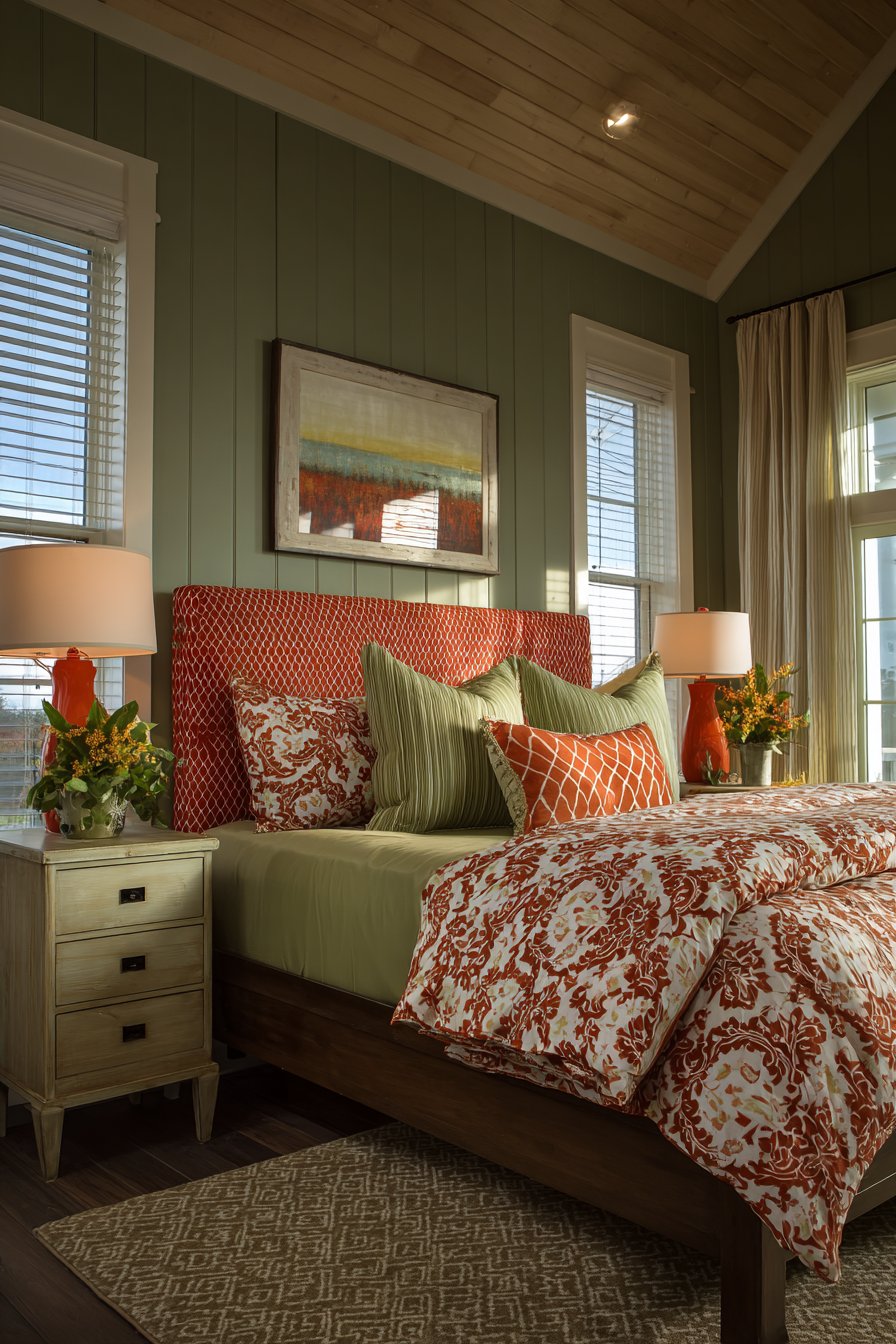
Orange ikat fabric headboard contrasts beautifully with forest green walls. Bedding combines striped green sheets with orange paisley duvet successfully. Mix-and-match pillows in both colors and various patterns create interest. The confident pattern mixing demonstrates design expertise.
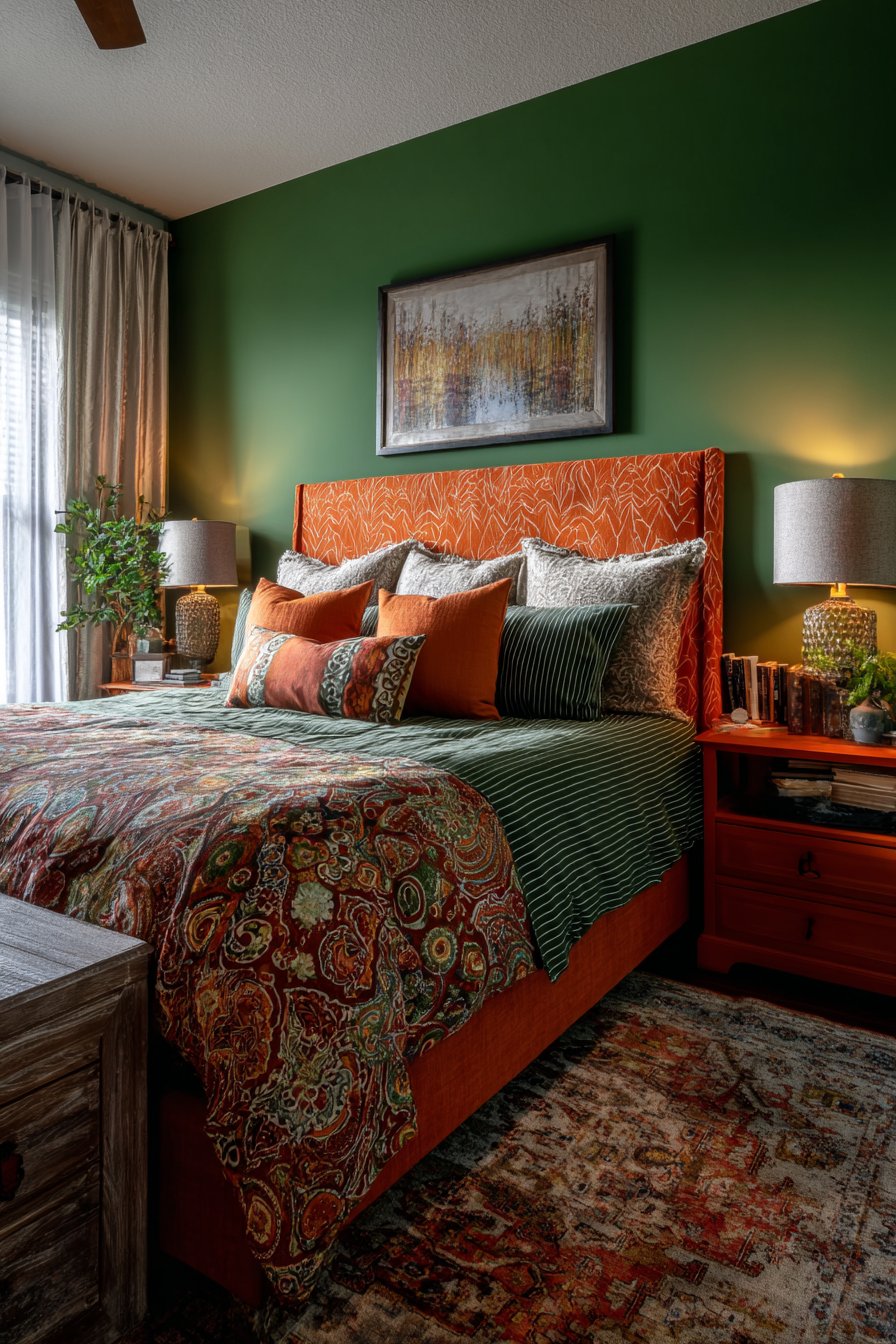
Mismatched nightstands include one painted orange and one in green-stained wood. The asymmetry adds personality and collected-over-time appeal. Vintage rug in complementary tones adds character underfoot. Multiple light sources create layered illumination throughout.
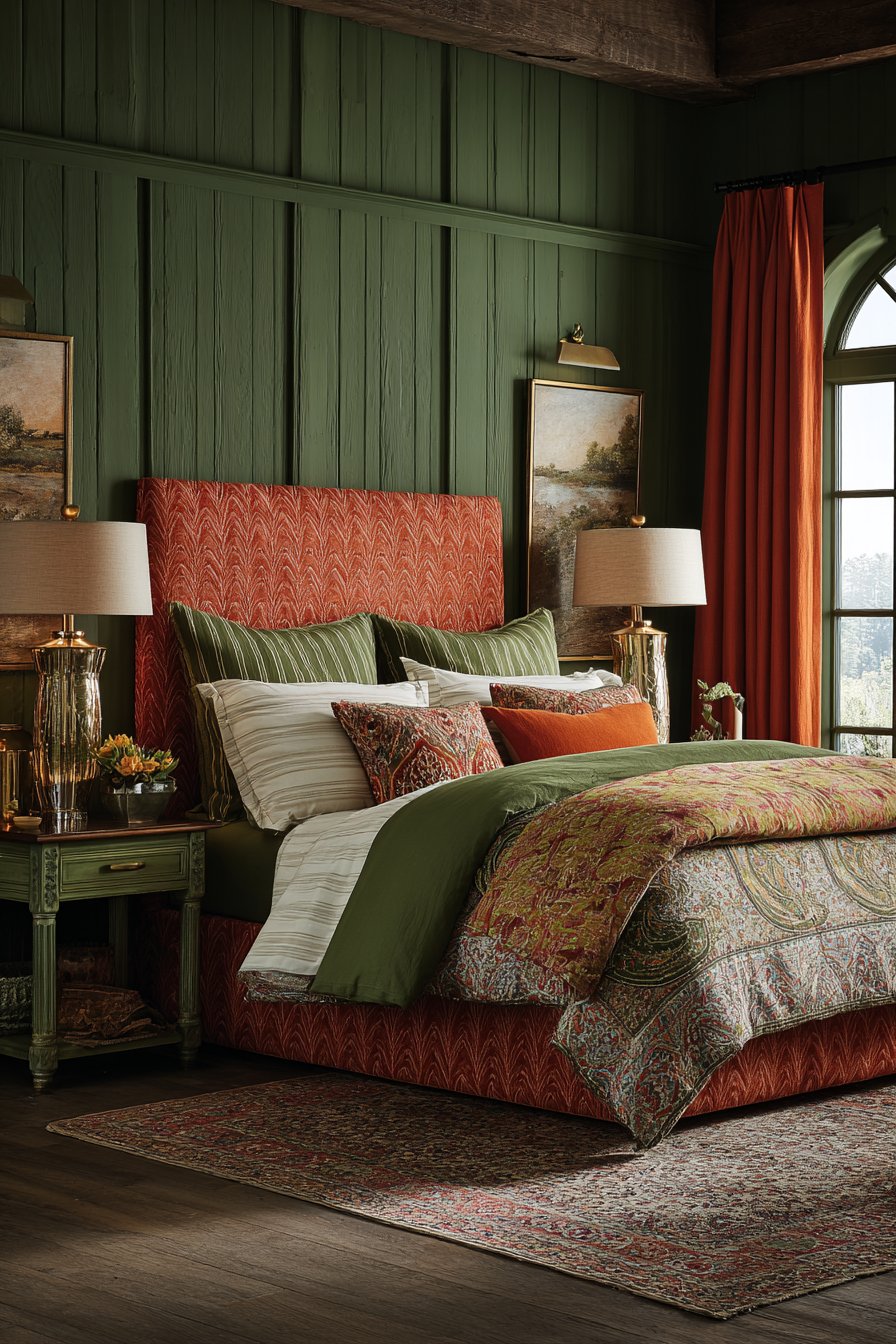
Detail-focused photography shows successful pattern mixing principles. The eclectic approach celebrates individuality and creativity. This design appeals to free spirits and collectors. The mix creates spaces that feel personal and unique.
Key Design Tips:
- Mix patterns by varying scales and types
- Use mismatched furniture for eclectic personality
- Layer multiple patterns in coordinating colors
- Choose vintage rugs for character and color
- Create layered lighting with multiple sources
16. Nature-Inspired Moss and Rust Retreat
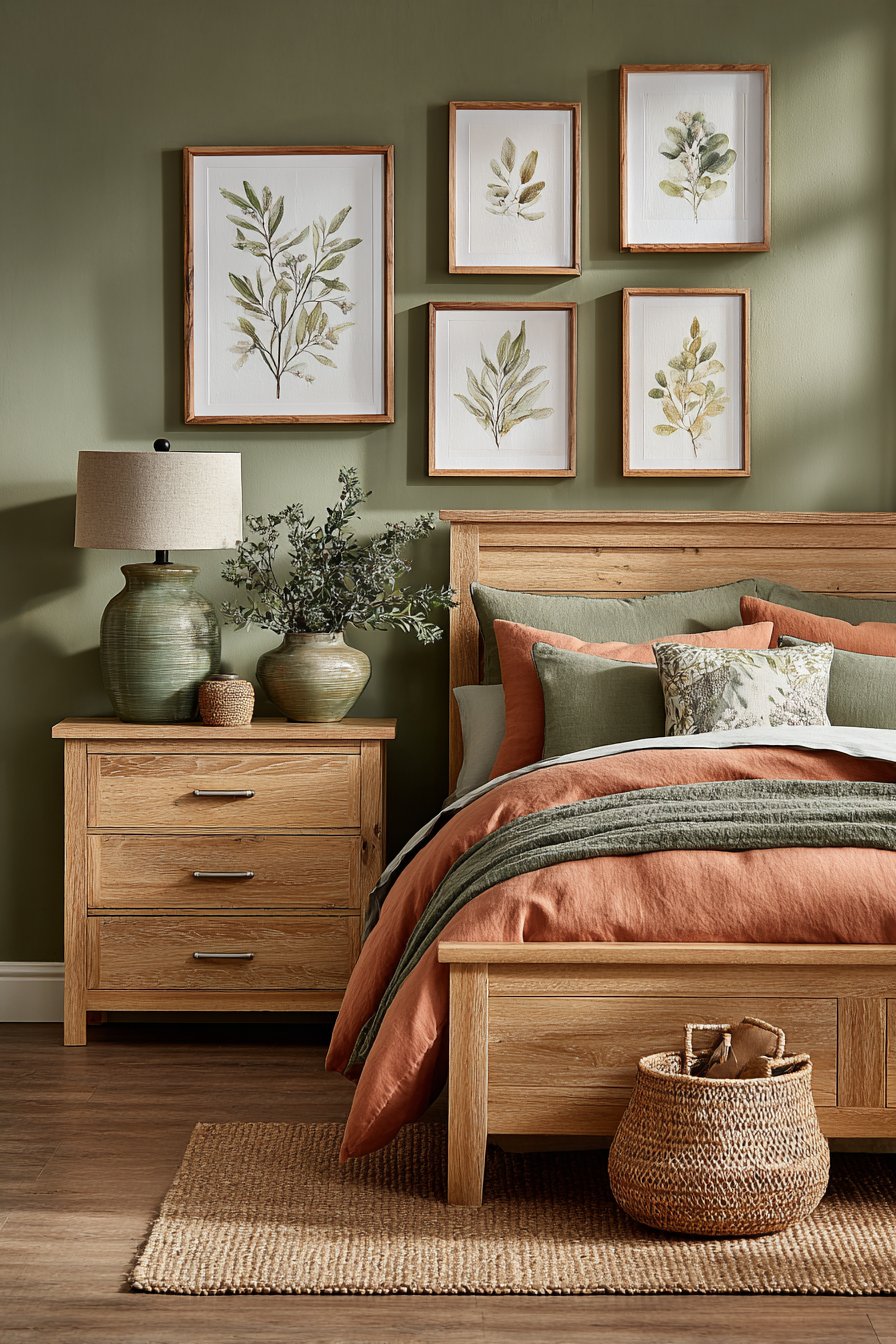
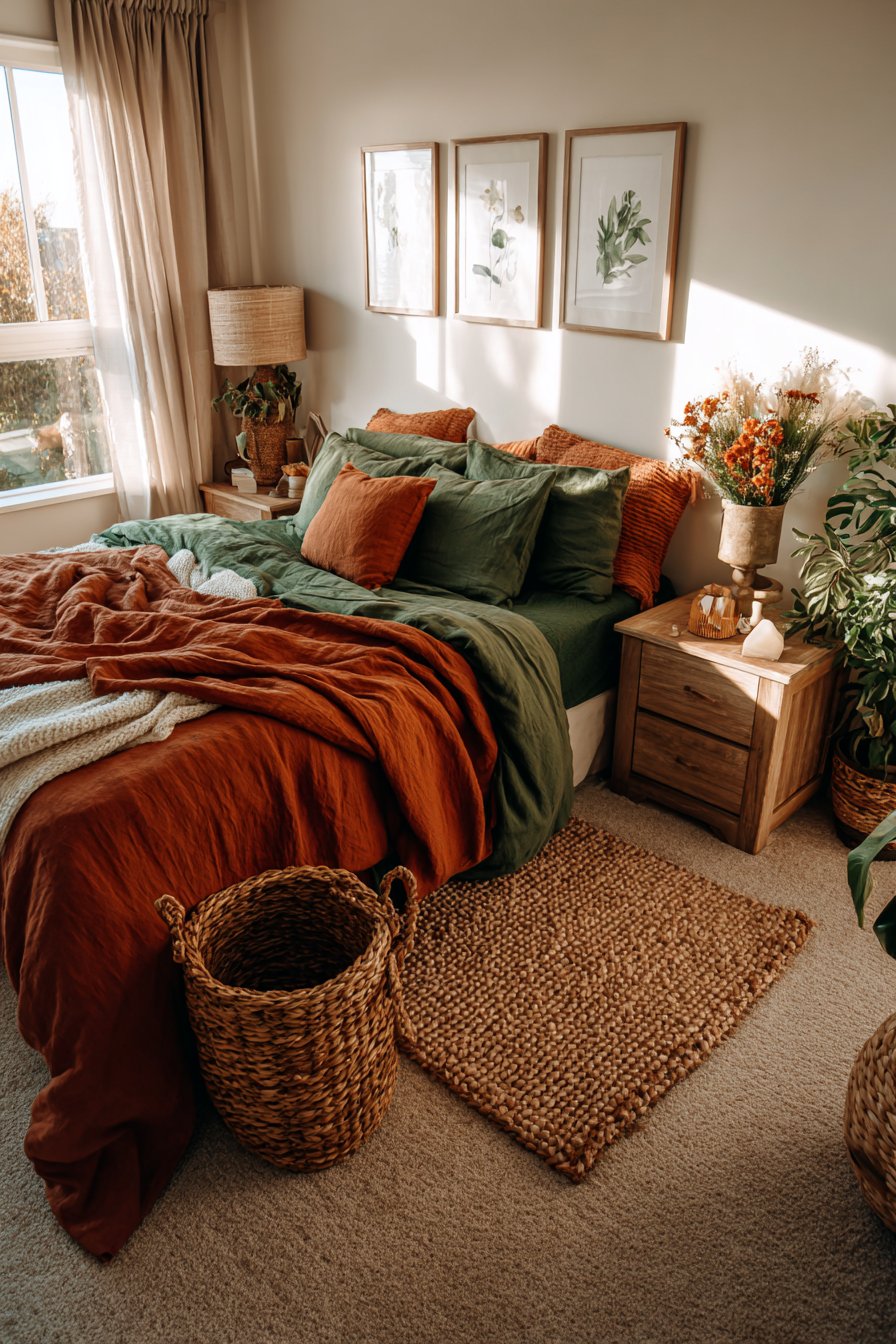
Moss green accent wall features subtle texture resembling tree bark naturally. Bed dressed in organic linen in warm rust orange feels earthy. Forest green Euro shams add layering in the complementary color. Live edge wood nightstands support green ceramic lamps perfectly.
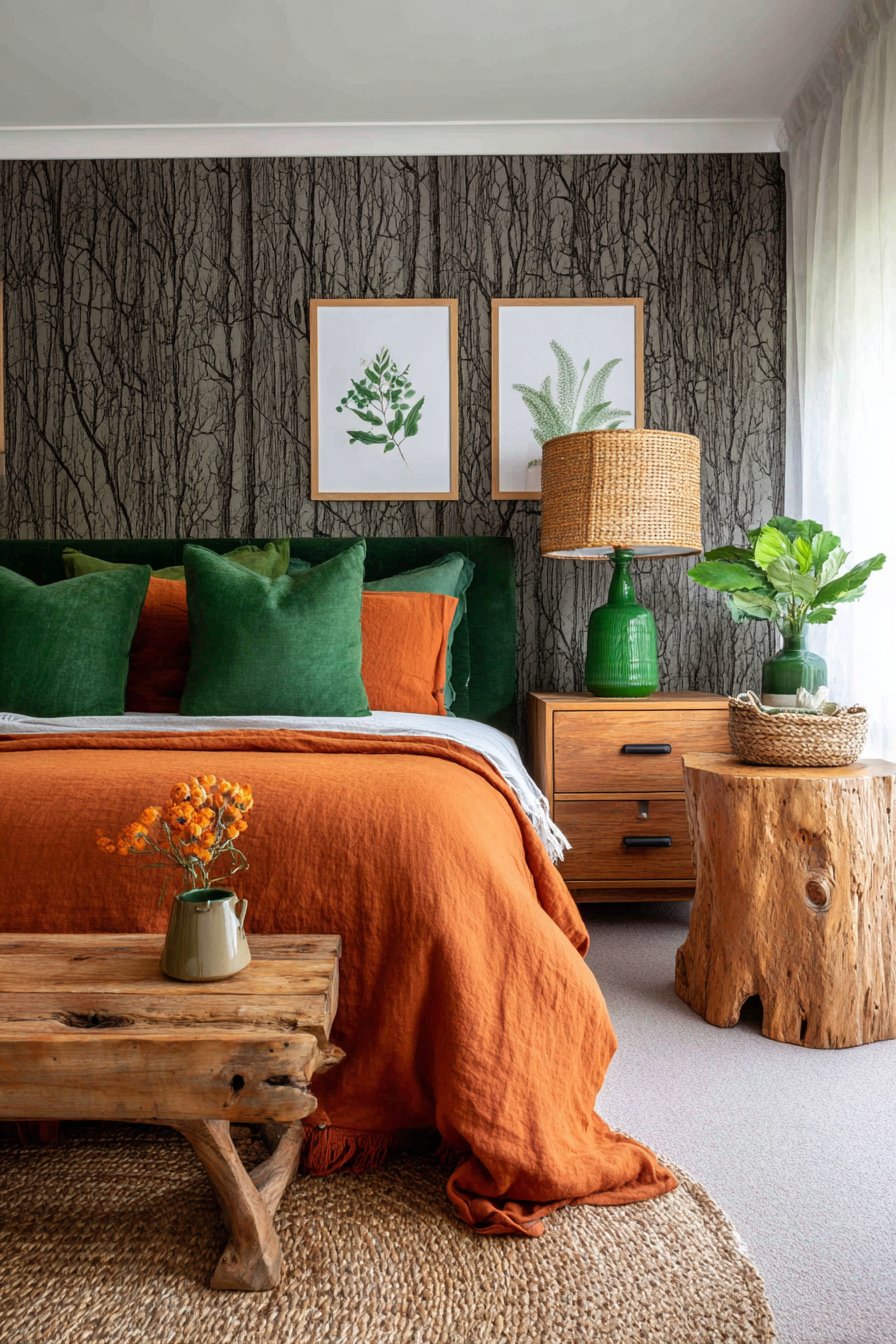
Natural fiber lamp shades diffuse light softly. Botanical watercolor prints in simple frames create gallery wall display. Jute area rug and woven basket storage add natural elements. Soft morning light highlights the earthy palette beautifully.
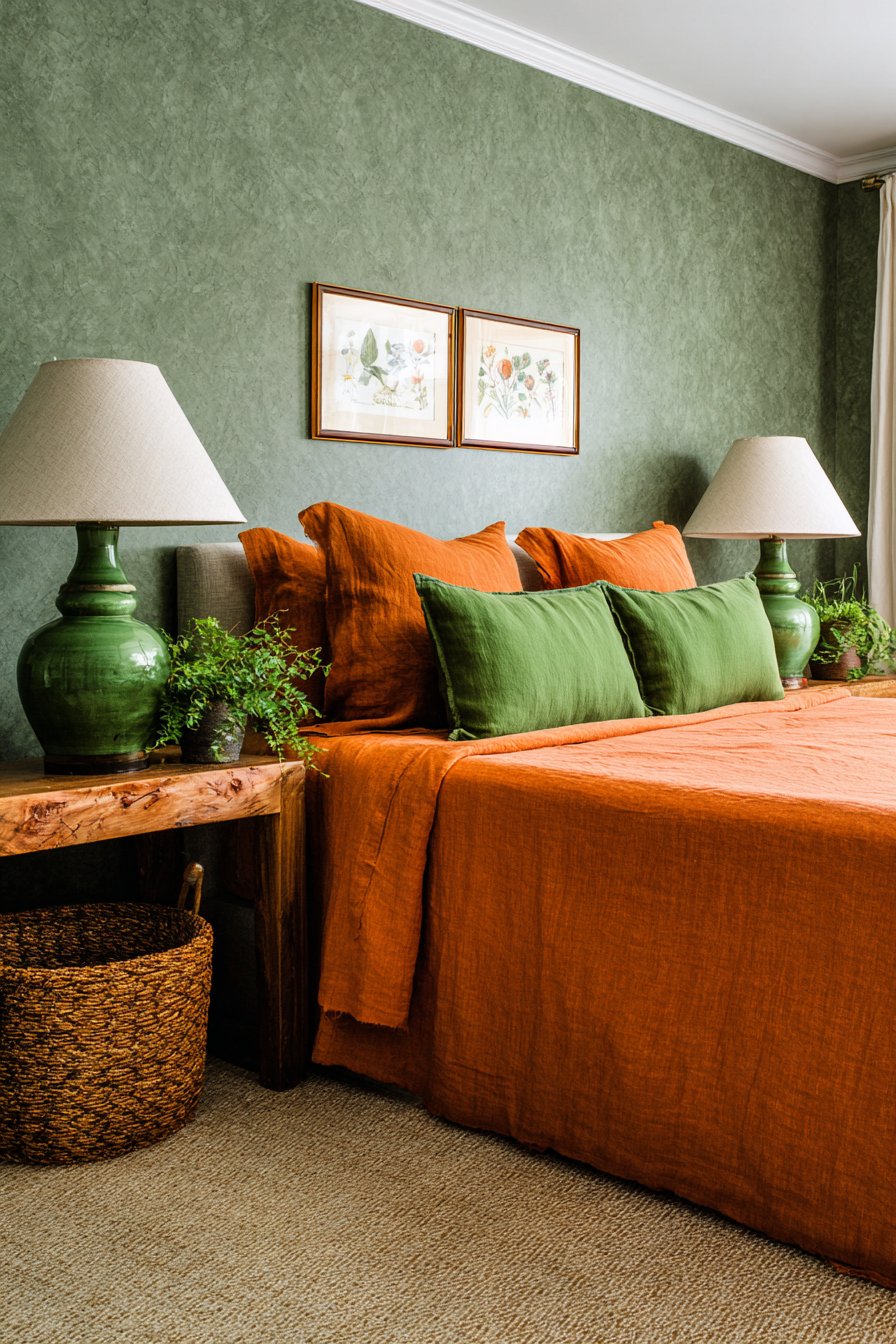
Professional photography emphasizes organic materials and biophilic design principles. The nature connection creates calming restorative environment. This design suits those seeking connection to outdoors. The organic approach brings forest feeling indoors.
Key Design Tips:
- Add textured paint for natural wall interest
- Choose organic linen bedding for breathability
- Select live edge wood furniture for organic shapes
- Create botanical gallery walls with watercolors
- Use jute and woven materials throughout
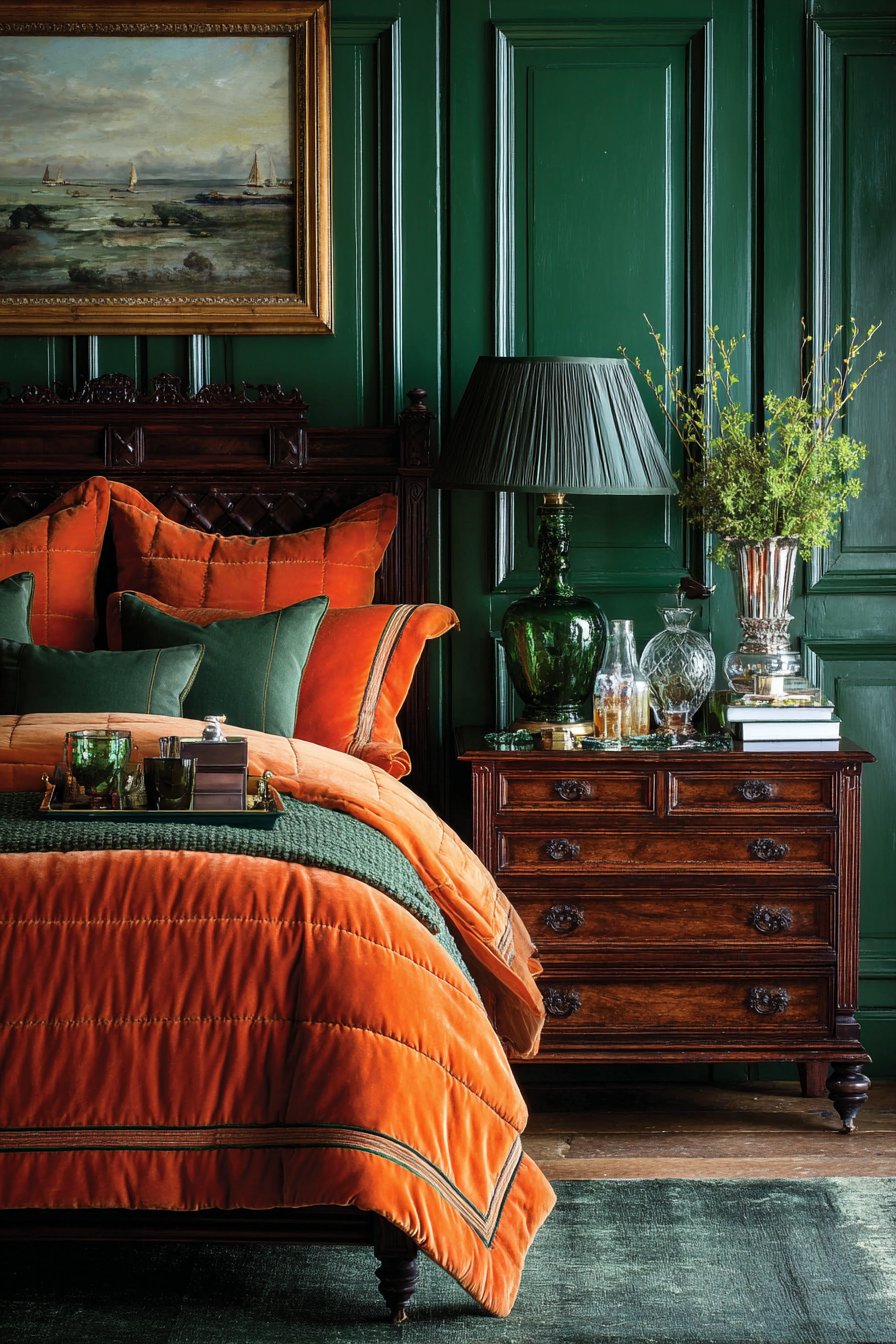
17. Sophisticated Hunter Green Wainscoting
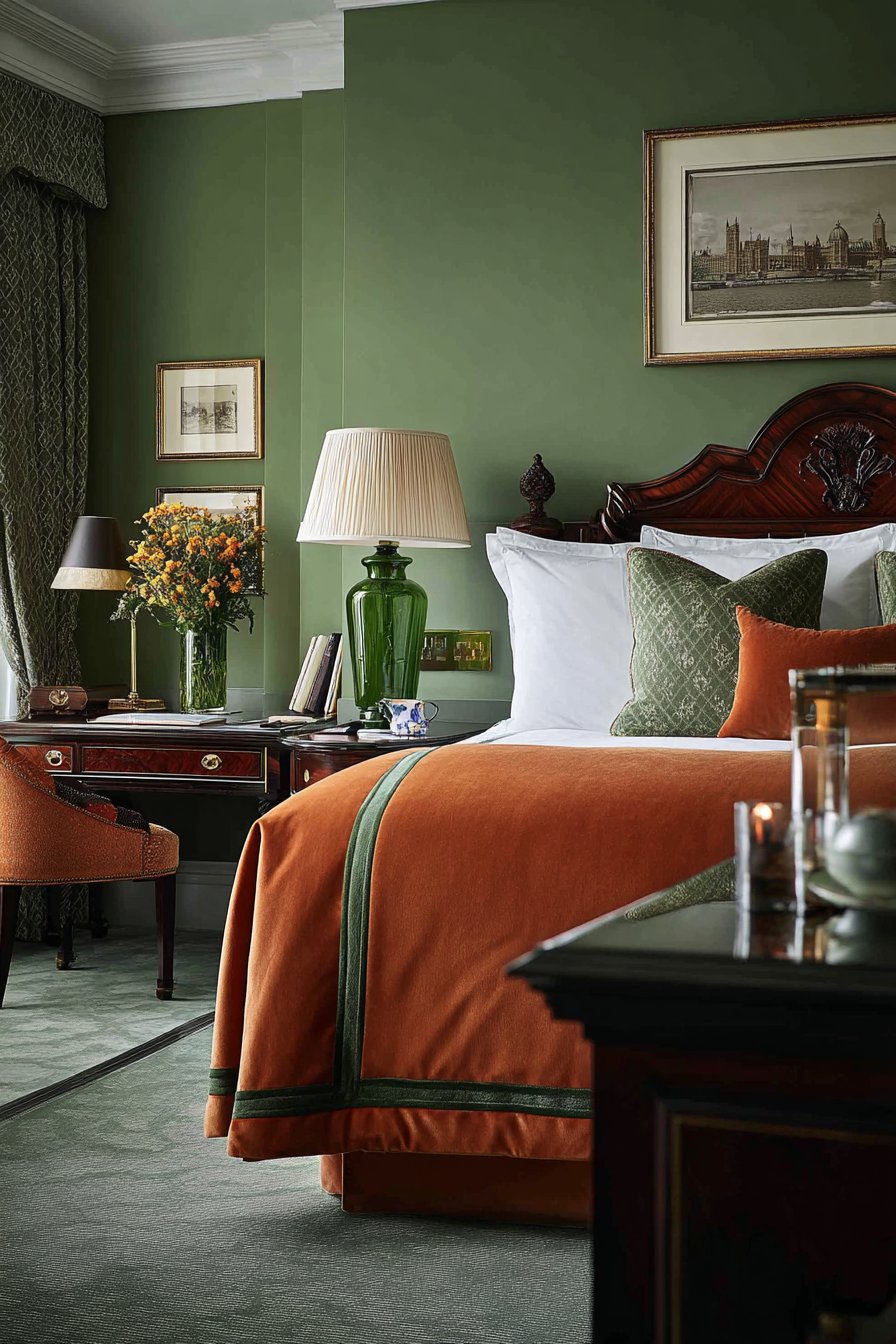
Hunter green wainscoting on lower walls contrasts with crisp white above. Carved wooden headboard dressed in luxe orange velvet duvet looks regal. Hunter green piping detail on the duvet creates cohesive elegance. Traditional nightstands in dark wood with brass hardware flank perfectly.
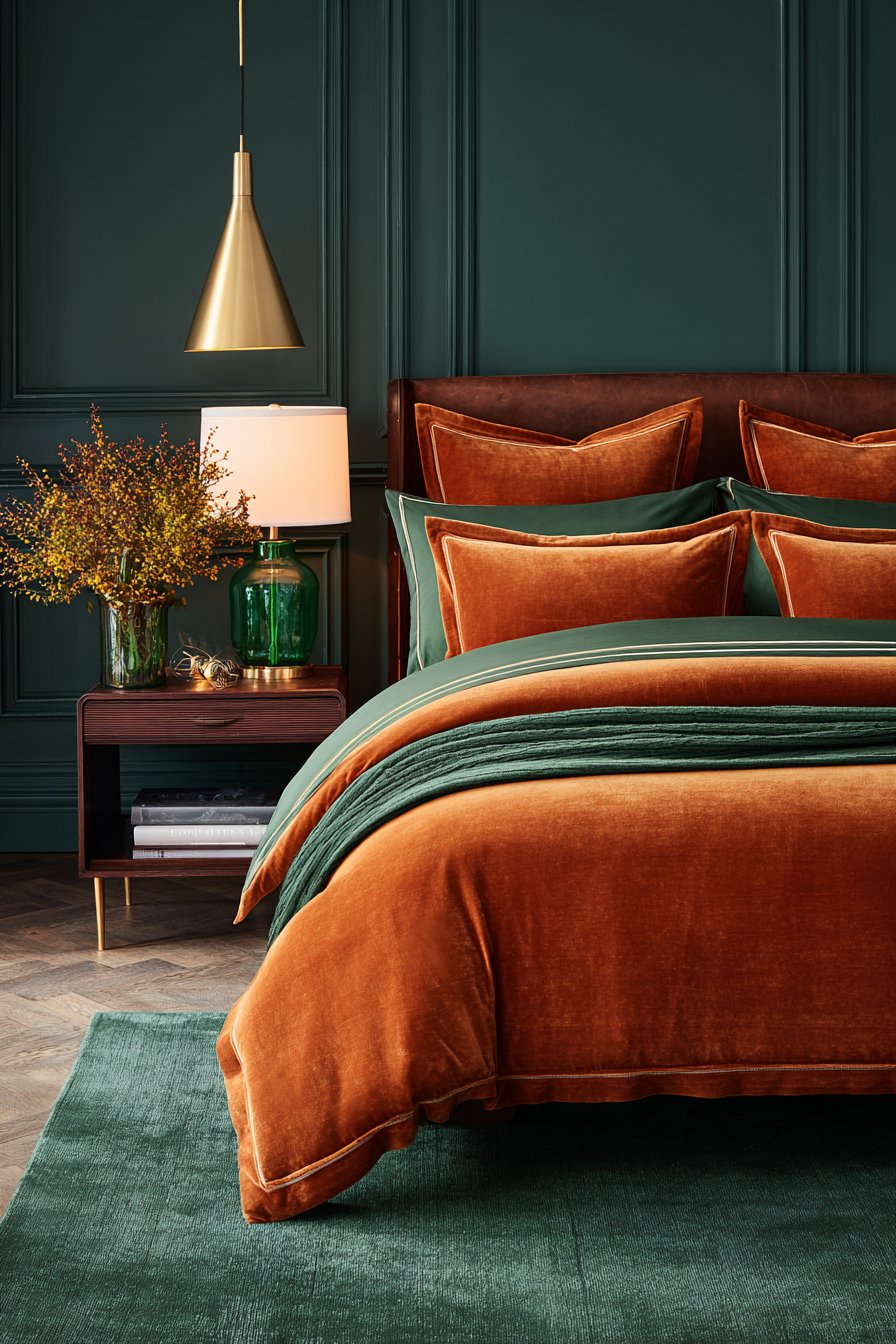
Green glass base lamps provide sophisticated lighting and color echo. Plush area rug in deep green grounds the traditional space. Table lamps create warm pools of light for reading. Balanced exposure shows refined traditional aesthetic and careful coordination.
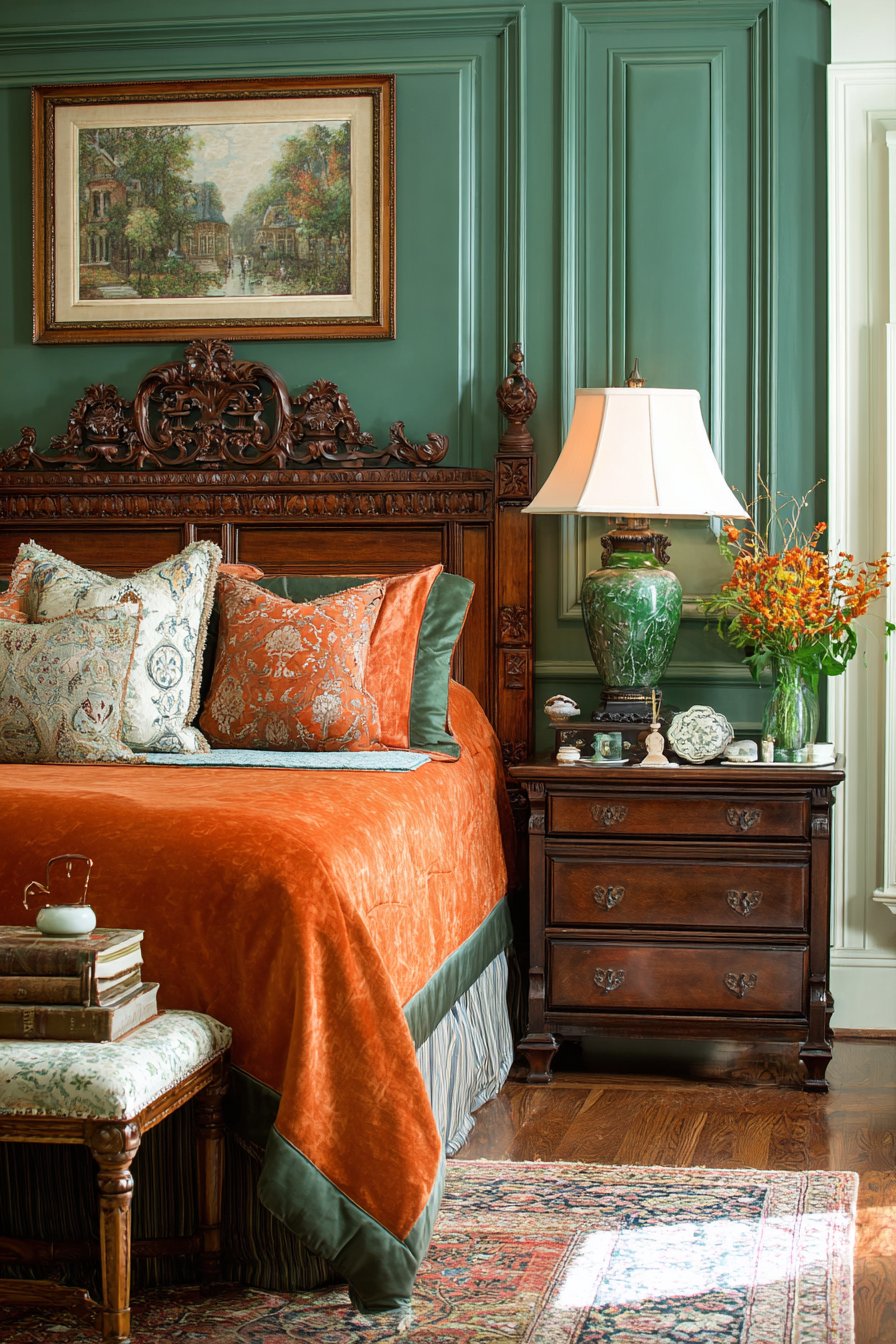
The formal approach suits traditional home styles. Quality materials and attention to detail show throughout. This design appeals to those appreciating classic elegance. The sophisticated color coordination feels intentional and polished.
Key Design Tips:
- Install wainscoting for architectural interest
- Choose carved wood furniture for traditional elegance
- Use piping details to tie colors together
- Select brass hardware for warm metallic accents
- Layer plush rugs for comfort and luxury
18. Playful Color-Blocked Energy
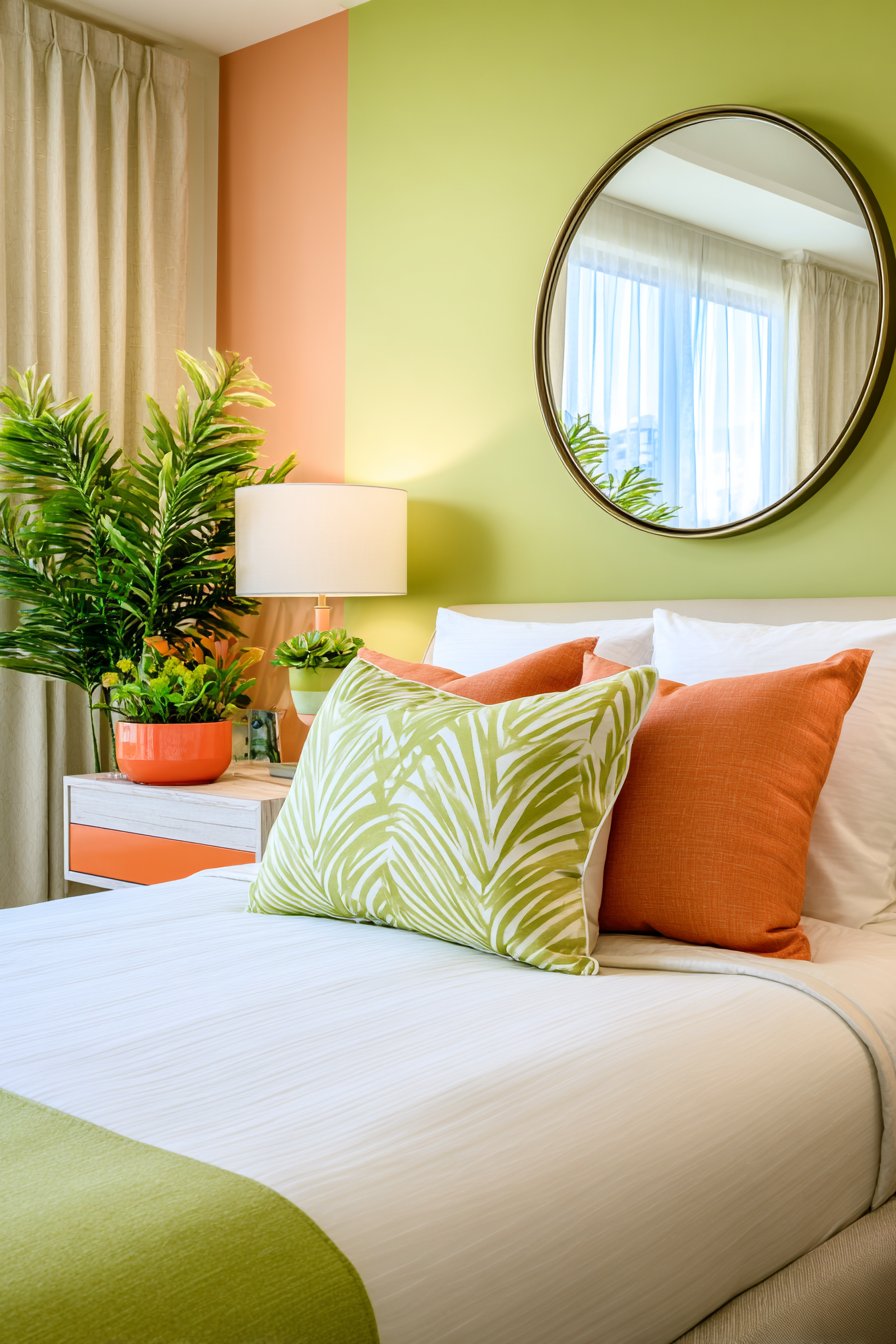
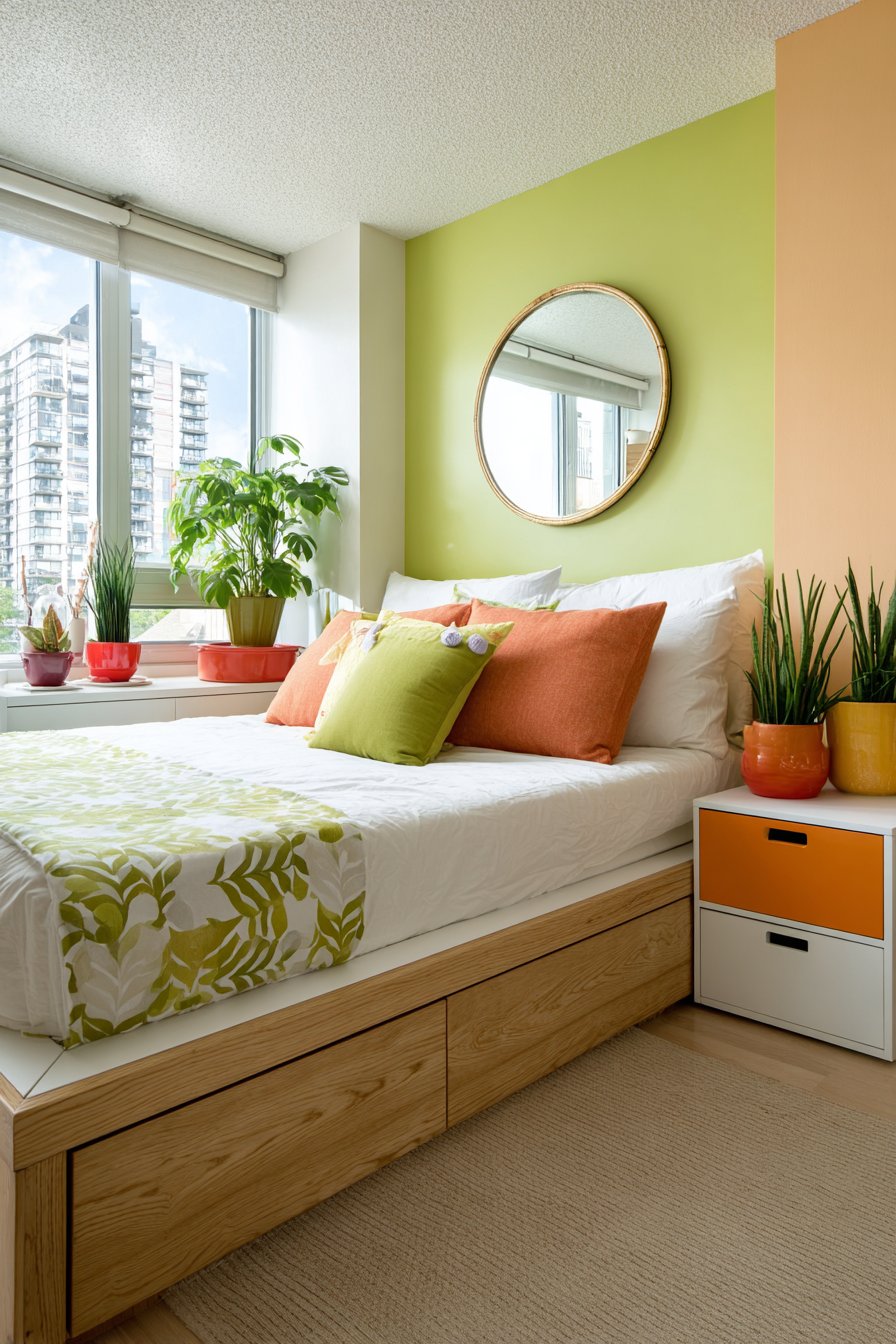
Color-blocked walls feature two walls in cheerful lime green and two in soft peach orange. Modern platform bed with simple frame keeps attention on walls. White bedding with graphic geometric throw pillows maintains contemporary feel. Floating nightstands in white with orange drawer fronts provide storage.
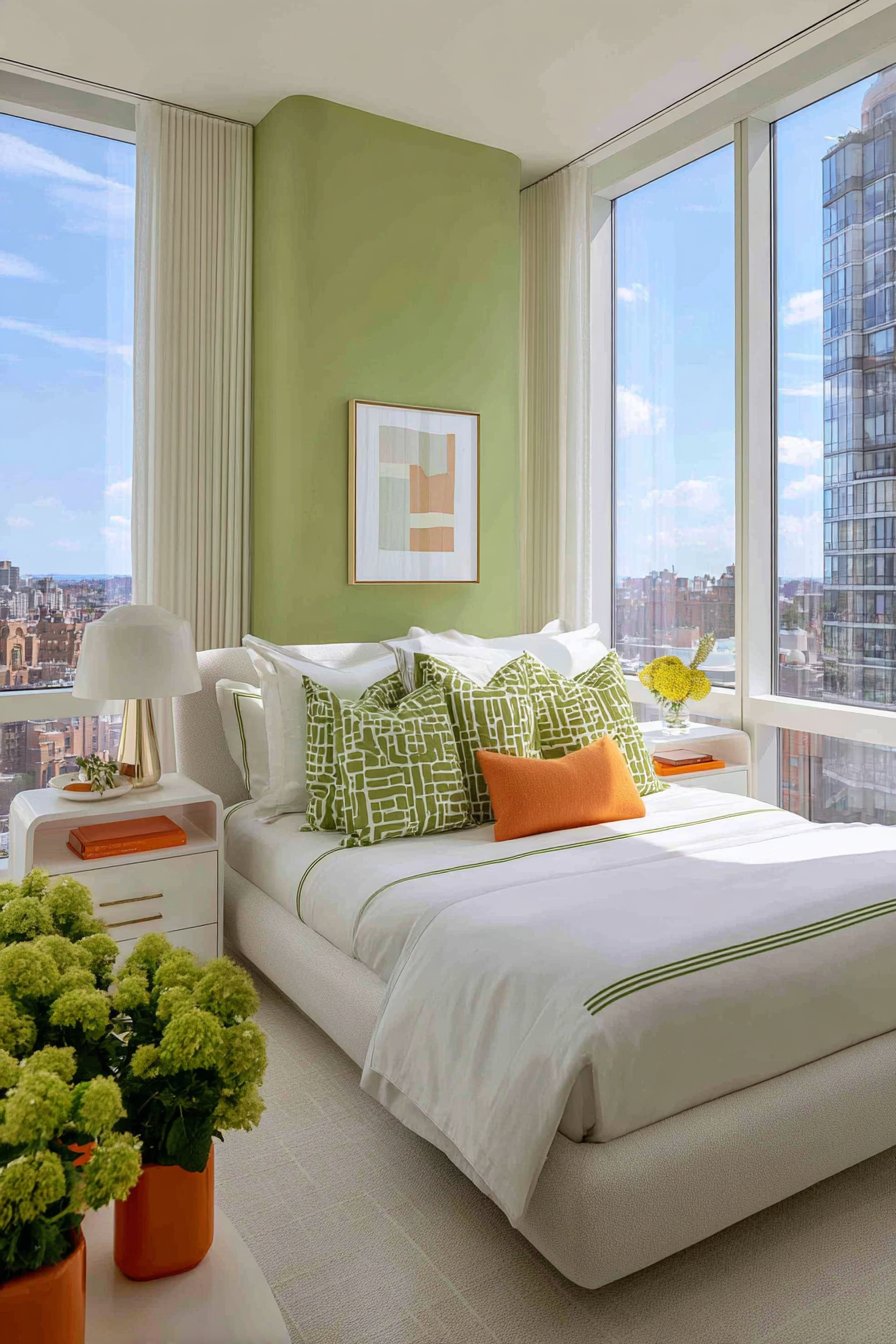
Round mirror with brass frame reflects natural light multiplying brightness. Indoor plants in colorful pots add life and personality. Bright daylight showcases the energetic color scheme perfectly. Wide-angle photography highlights bold architectural color choices.
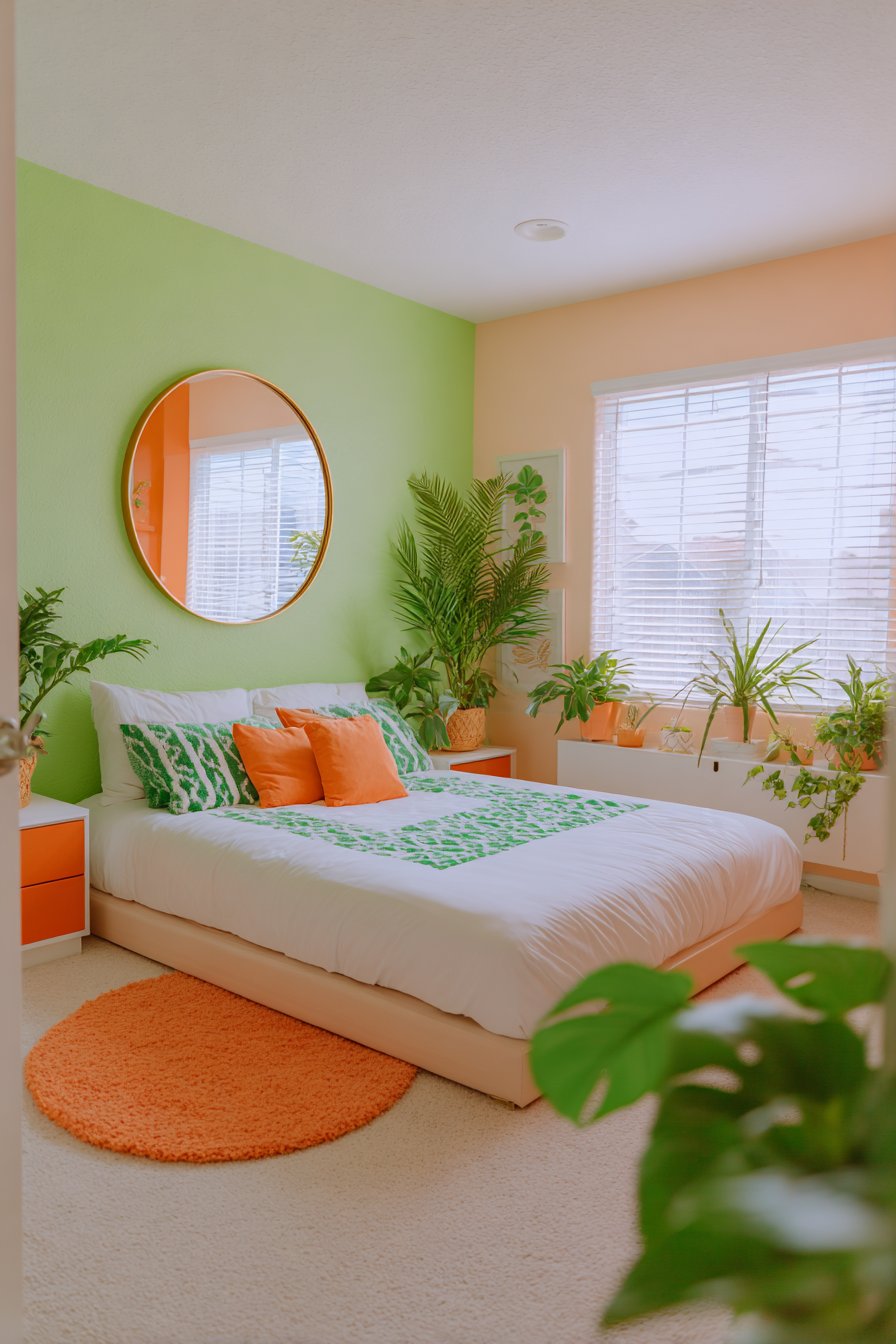
The playful approach feels youthful and energizing. Bold decisions create spaces with strong personality. This design suits those seeking cheerful vibrant environments. The color blocking technique makes dramatic impact.
Key Design Tips:
- Use color blocking technique on walls for drama
- Keep furniture simple when walls are bold
- Choose floating storage for modern functionality
- Add mirrors to multiply natural light
- Use plants in colorful containers as accents
19. Art Deco Emerald and Gold Glamour
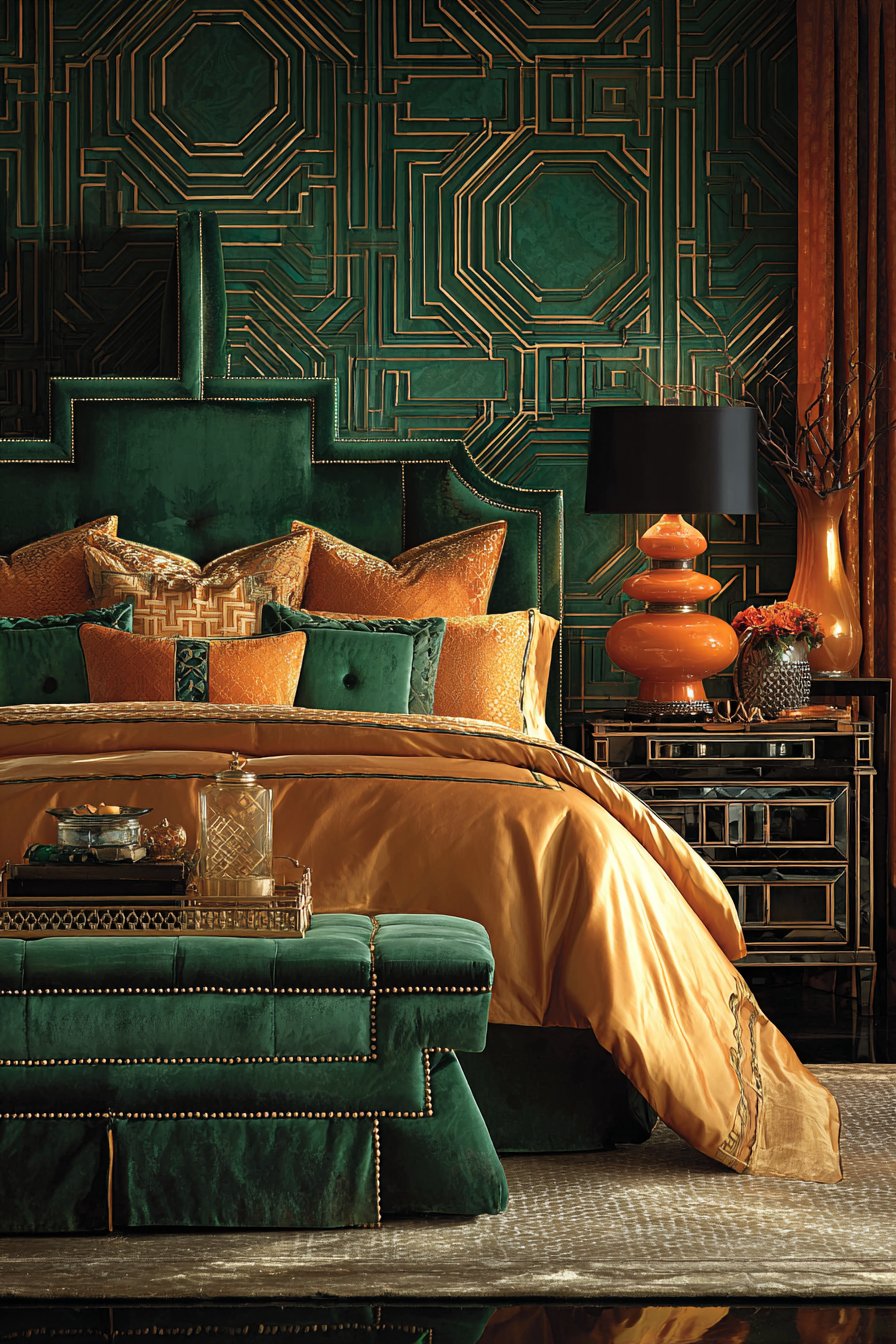
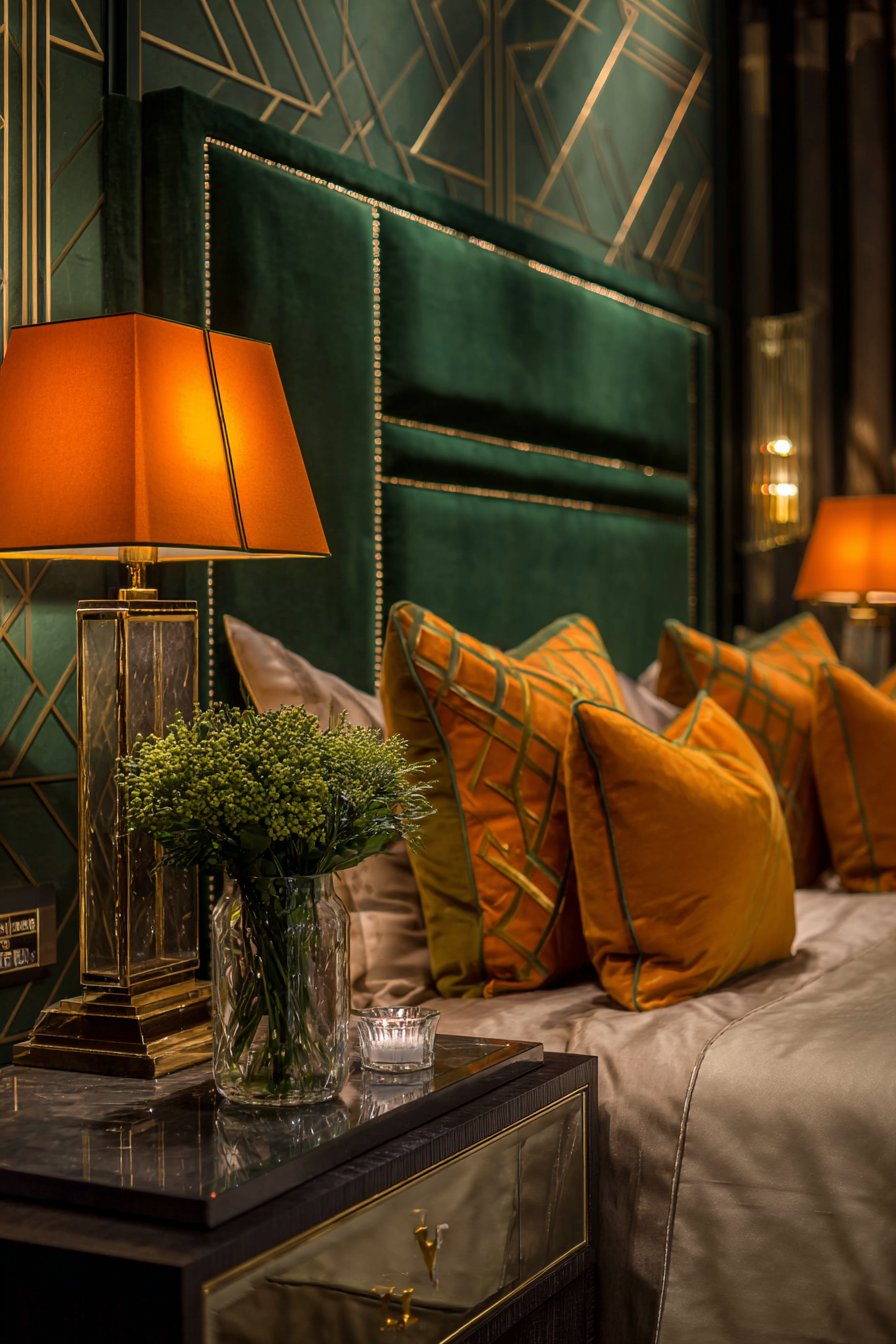
Emerald green velvet headboard with gold nail head trim feels glamorous. Bedding in champagne satin with art deco pattern pillows looks luxurious. Orange and green pillows feature geometric patterns from the era. Mirrored nightstands with geometric detailing add sparkle and dimension.
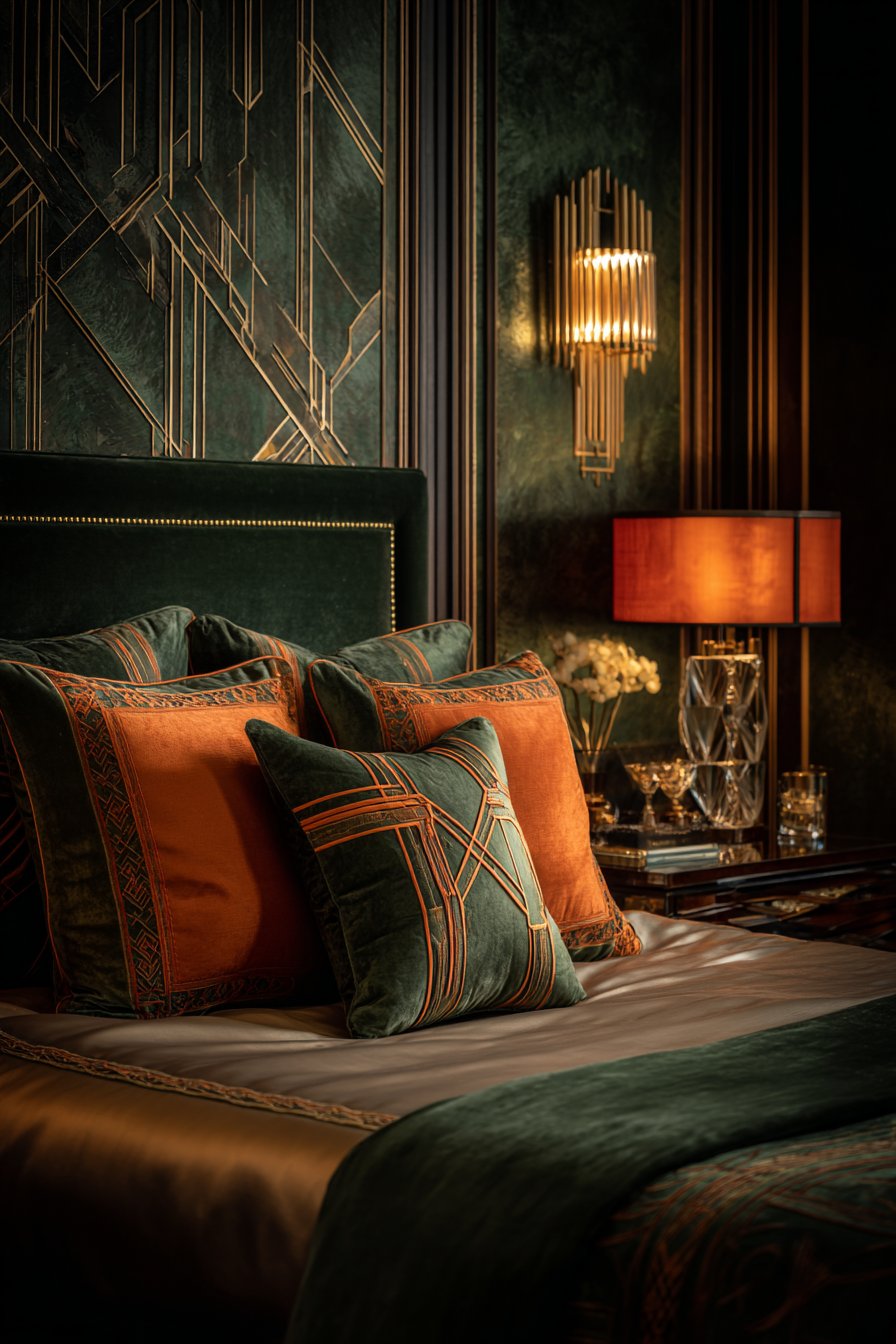
Orange and gold table lamps echo the metallic theme throughout. Accent wall features green geometric wallpaper in authentic art deco pattern. Brass accents throughout tie the luxurious look together. Ambient lighting creates glamorous atmospheric mood perfect for the style.
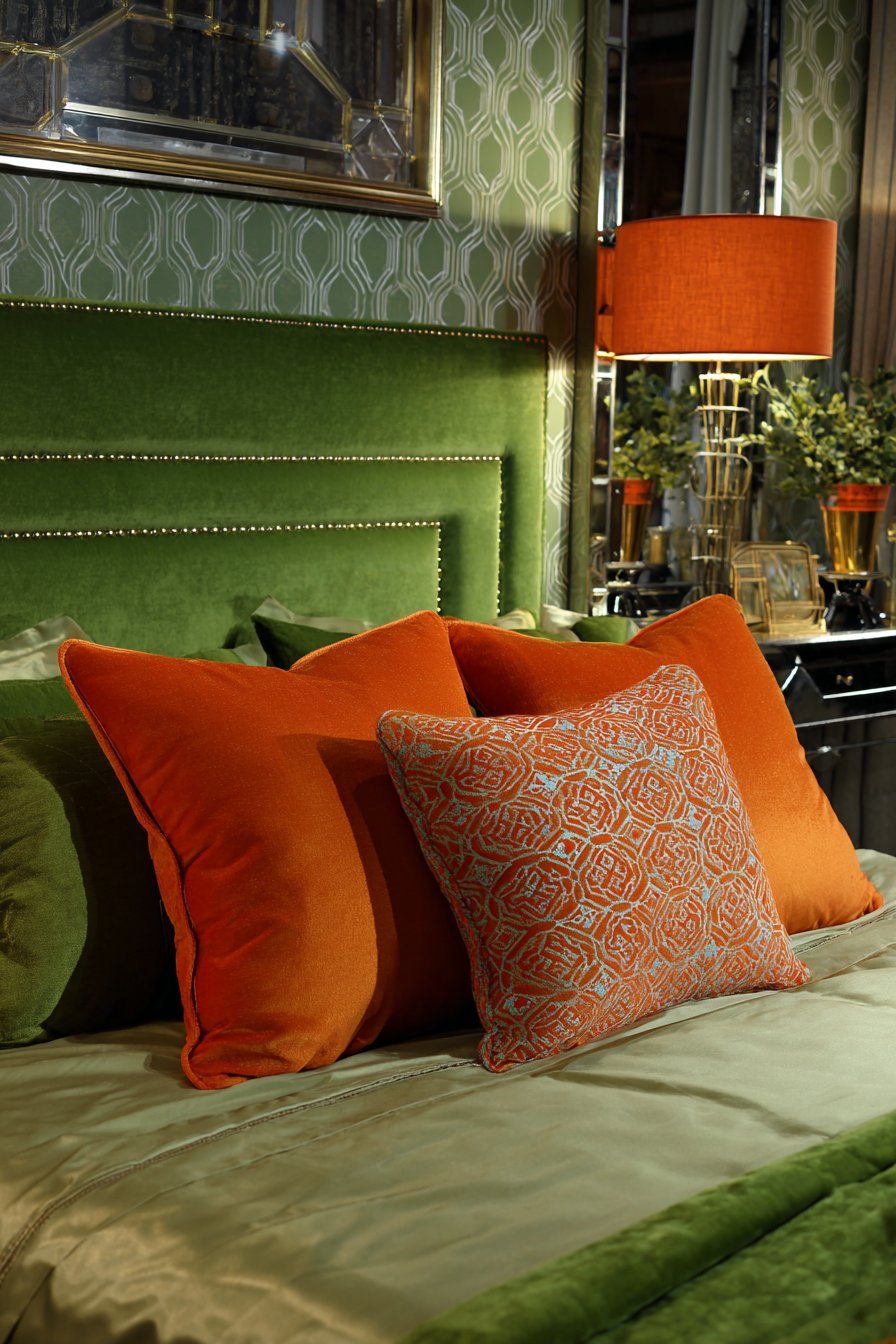
Professional photography emphasizes period details and luxurious materials. The design transports you to 1920s elegance instantly. This approach suits those loving vintage glamour. The art deco details feel authentic and sophisticated.
Key Design Tips:
- Choose velvet upholstery with nail head trim
- Use satin bedding for luxurious sheen
- Select geometric patterned wallpaper and textiles
- Incorporate mirrored furniture for glamour
- Layer brass and gold metallic accents
20. Transitional Sage Balance
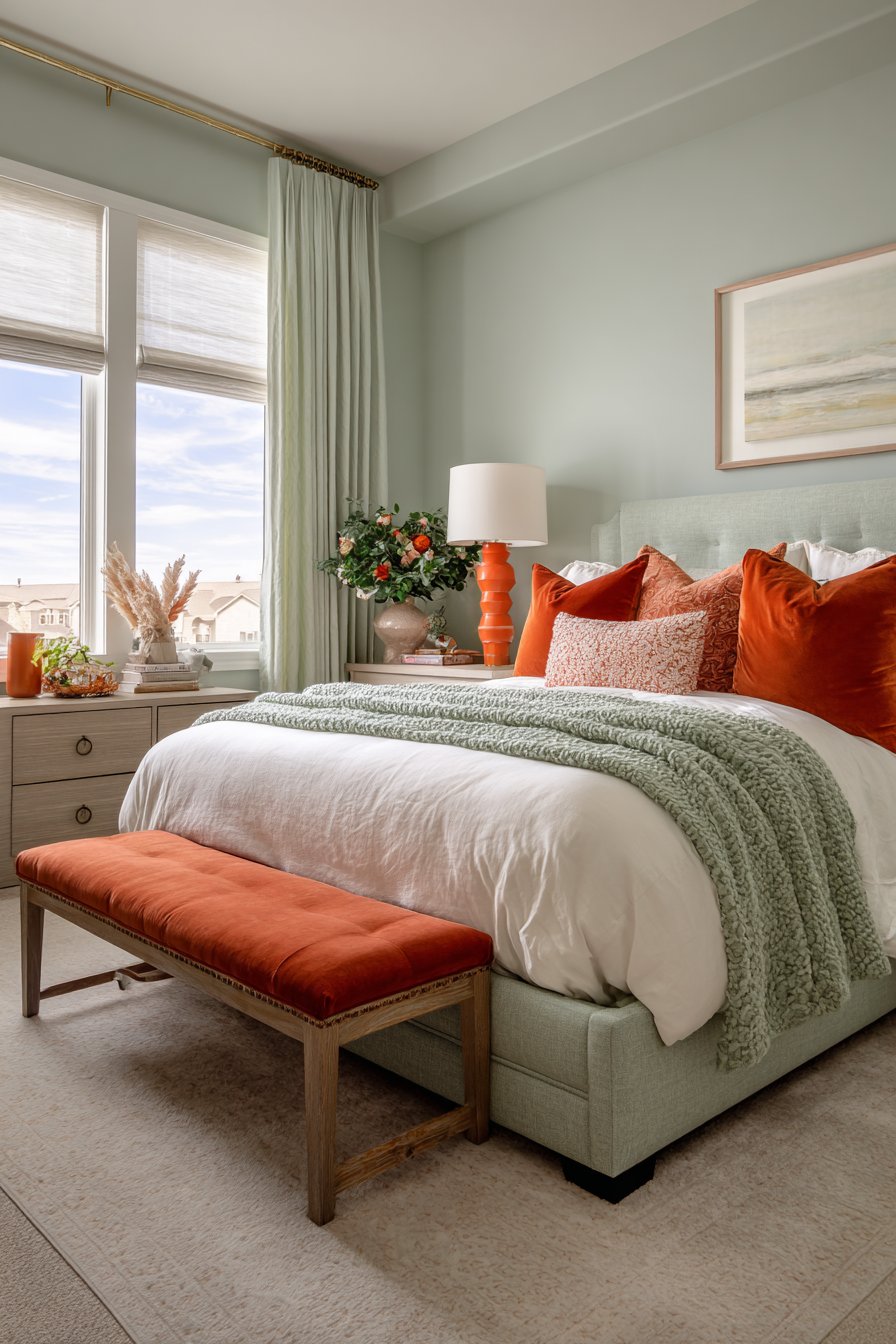
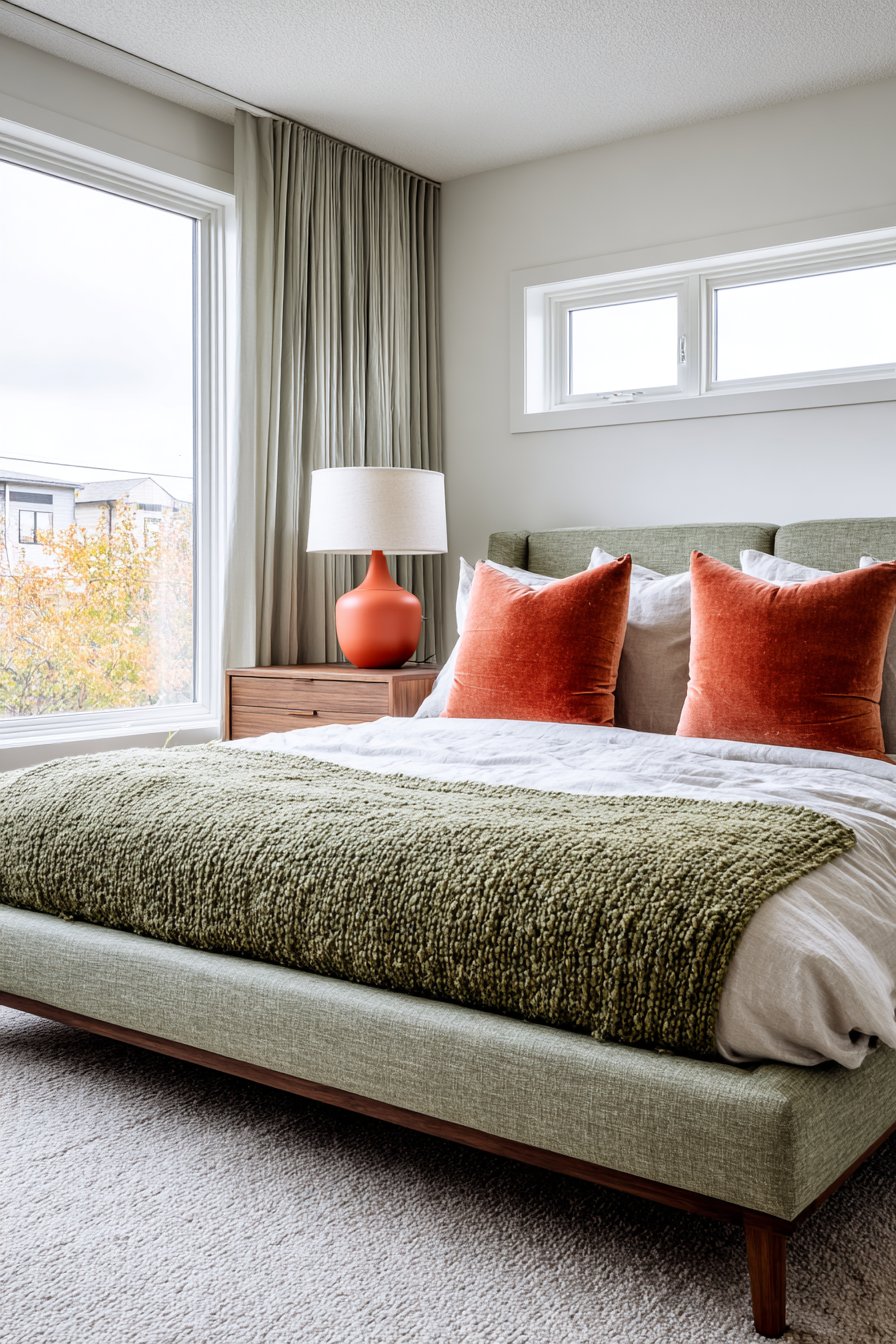
Sage green linen upholstered bed balances traditional and contemporary elements. Clean lines and subtle tufting create versatile appeal. Layered bedding includes white duvet, orange velvet lumbar pillows, and green textured throw. The mix of furniture styles creates collected sophisticated look.
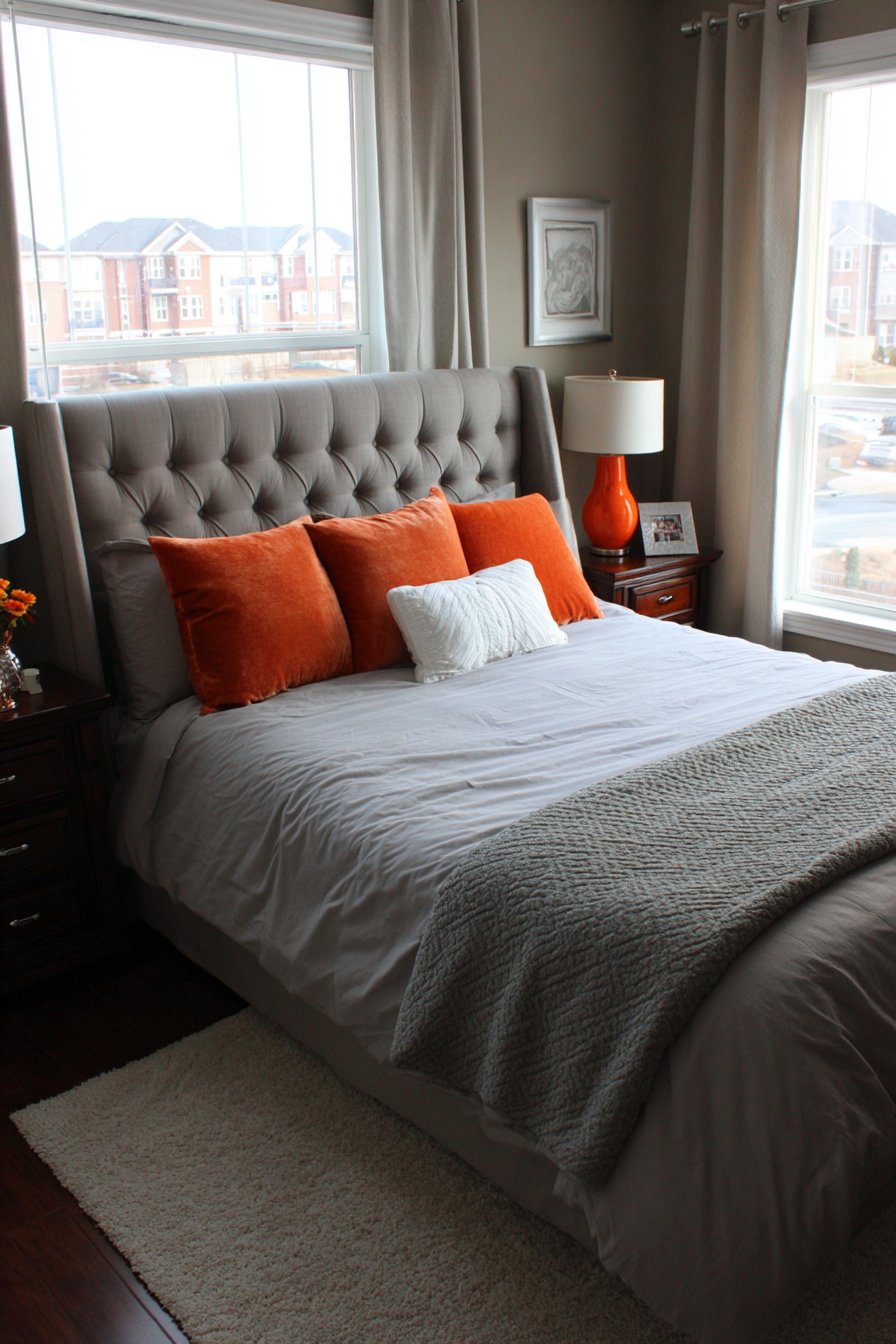
Traditional wooden nightstands pair with modern orange ceramic lamps successfully. Neutral area rug allows color accents to shine without competition. Large window with simple linen curtains in soft green provides natural light. Balanced photography captures successful style fusion.
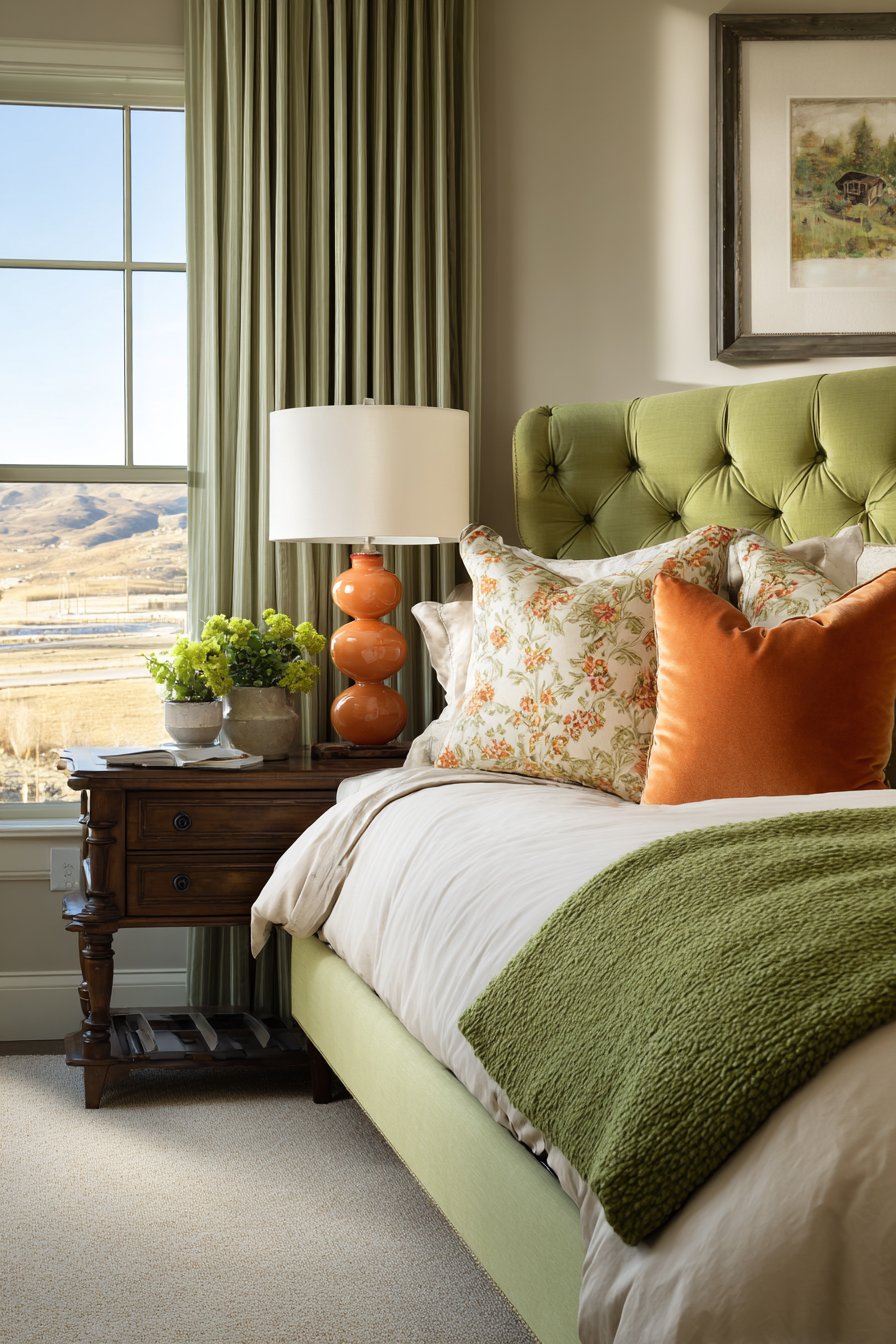
The transitional approach suits various home styles. Flexibility allows easy updates and seasonal changes. This design appeals to those seeking timeless versatility. The sophisticated color application feels both current and enduring.
Key Design Tips:
- Mix traditional and modern furniture pieces
- Use linen upholstery for versatile appeal
- Layer bedding in white with color accents
- Choose neutral rugs for flexibility
- Keep window treatments simple and natural
Why These Green and Orange Bedroom Designs Are the Best
These green and orange bedroom designs represent exceptional approaches to color combination in interior spaces. Each concept demonstrates thoughtful consideration of color theory, material selection, and spatial composition. The versatility shown across twenty designs proves this color pairing works for diverse aesthetic preferences and functional needs.
The complementary nature of green and orange creates natural visual harmony. Green brings calming qualities associated with nature and growth. Orange adds warmth, energy, and creative stimulation. Together they balance cool and warm temperatures creating comfortable environments. These designs show various intensities from soft sage and peach to bold emerald and burnt orange.
Material selection elevates these color combinations beyond simple paint choices. Velvet upholstery in deep green adds luxury and texture. Orange linen brings organic warmth and breathability. Natural materials like rattan, jute, and reclaimed wood bridge the color gap naturally. The interplay of textures prevents bold colors from overwhelming spaces.
Lighting consideration throughout these designs demonstrates professional understanding. Natural light interaction with green and orange creates dynamic environments. Morning light enhances warm orange tones. Evening light deepens green hues. Artificial lighting choices from brass fixtures to ceramic lamps complement the color scheme while providing functional illumination.
The range of design styles accommodates different personality types and home architectures. Minimalist approaches suit those seeking calm simplicity. Maximalist designs appeal to pattern and texture lovers. Traditional styles offer timeless elegance. Contemporary concepts provide modern sophistication. Bohemian and eclectic designs celebrate individual expression.
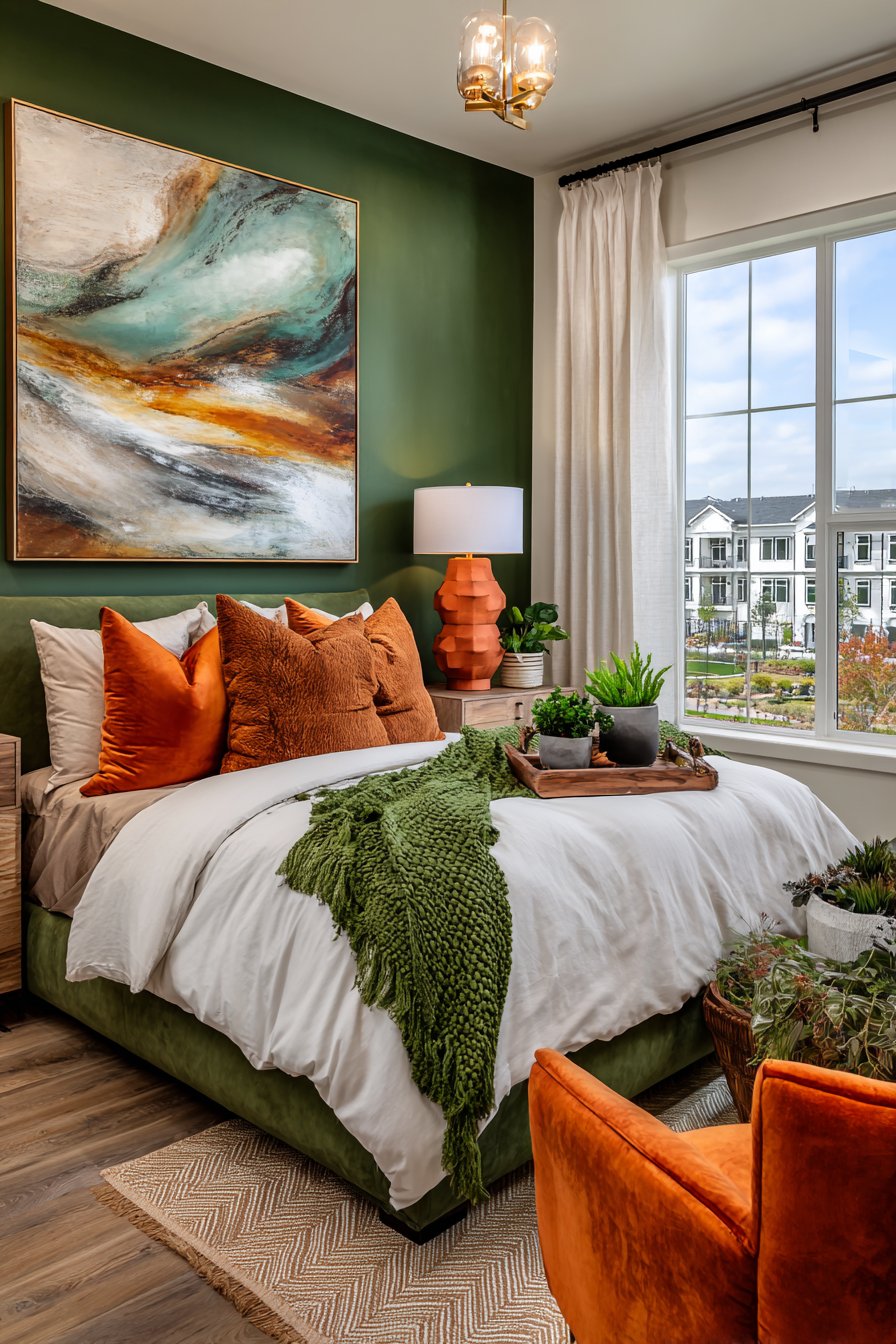
Successful green and orange bedrooms balance the two colors thoughtfully. Some designs use green as dominant color with orange accents. Others reverse this relationship. The best approaches consider wall color, furniture upholstery, bedding layers, and decorative accessories as opportunities for color integration. None rely on single elements to carry the color story.
These designs demonstrate practical functionality alongside aesthetic appeal. Storage solutions integrate seamlessly without compromising design. Lighting serves both ambient and task purposes. Furniture arrangement considers traffic flow and daily use. The beautiful spaces remain livable and comfortable for actual bedroom activities.
The incorporation of natural elements enhances these green and orange schemes. Plants in terracotta pots reinforce both colors naturally. Wood furniture in oak, walnut, or teak provides neutral bridges. Natural fiber textiles add organic texture. These biophilic design elements create healthier more restorative environments.
Color psychology supports the effectiveness of green and orange combinations. Green reduces stress and promotes relaxation essential for sleep spaces. Orange stimulates creativity and positive emotions. The balance creates bedrooms that feel both energizing and restful depending on time of day and lighting conditions.
These designs prove accessibility across budget ranges. Luxury approaches feature high-end materials like silk and marble. Budget-friendly options achieve impact through paint and textile choices. The color combination itself provides visual interest regardless of investment level. DIY possibilities exist throughout these concepts.
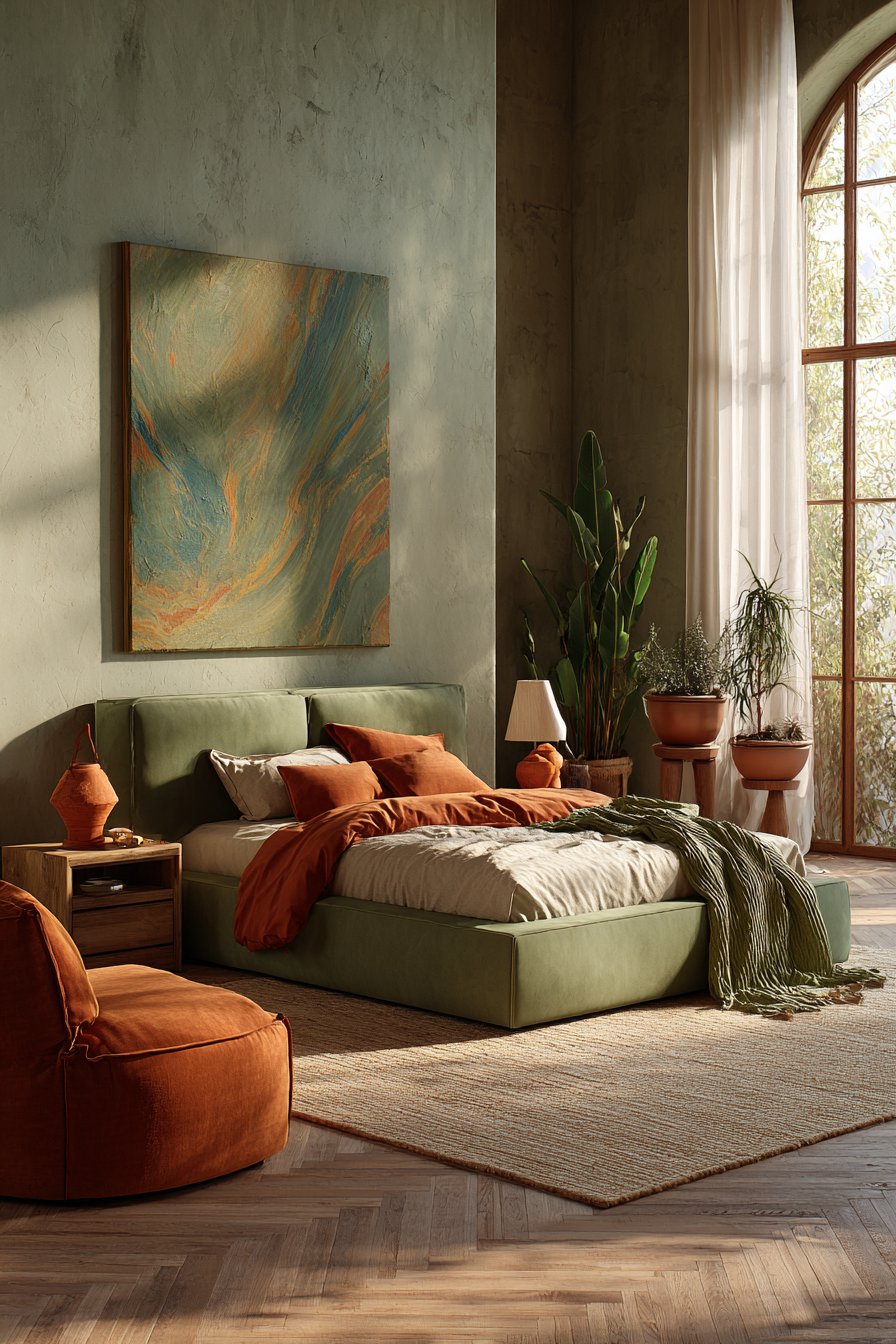
Seasonal versatility makes green and orange bedrooms practical long-term choices. The colors transition well through seasons. Autumn feels natural with these tones. Spring and summer work with lighter shades. Winter warmth comes from deeper hues. Simple textile swaps refresh the look without complete redesigns.
The designs showcase successful pattern mixing principles. Geometric patterns add modern energy. Botanical prints reinforce nature themes. Ikat and paisley bring global influences. Stripes and plaids offer classic appeal. The key involves varying pattern scales and maintaining color consistency.
Historical design references throughout these concepts add depth and authenticity. Mid-century modern walnut furniture provides retro appeal. Art deco geometric patterns add vintage glamour. Cottage florals bring nostalgic charm. These references prevent designs from feeling trendy or dated quickly.
Professional photography techniques highlighted in these descriptions ensure accurate representation. Wide-angle shots show spatial relationships. Detail-focused images capture texture and material quality. Lighting consideration demonstrates how designs function throughout the day. These presentation standards elevate the concepts.
The designs accommodate various room sizes and architectural features. Small bedroom solutions maximize limited space. Large rooms fill space without emptiness. Slanted ceiling adaptations work with architectural challenges. Window placement considerations optimize natural light. The flexibility shows thoughtful space planning.
Color proportion guidelines evident in these designs prevent overwhelming results. The 60-30-10 rule applies throughout with modifications. Neutral backgrounds allow bold colors to shine. Strategic accent placement creates visual interest without chaos. These principles ensure balanced cohesive results.
Maintenance considerations make these designs practical for real life. Washable slipcovers extend furniture life. Durable materials withstand daily use. Easy-care plants suit various skill levels. Practical storage solutions maintain organization. Beautiful spaces remain functional and sustainable.
Conclusion
Green and orange bedroom designs offer remarkable versatility for creating personalized sanctuaries. The complementary color relationship provides natural balance between calming and energizing qualities. From minimalist Scandinavian simplicity to maximalist pattern paradise, these twenty concepts demonstrate diverse applications of this dynamic pairing.
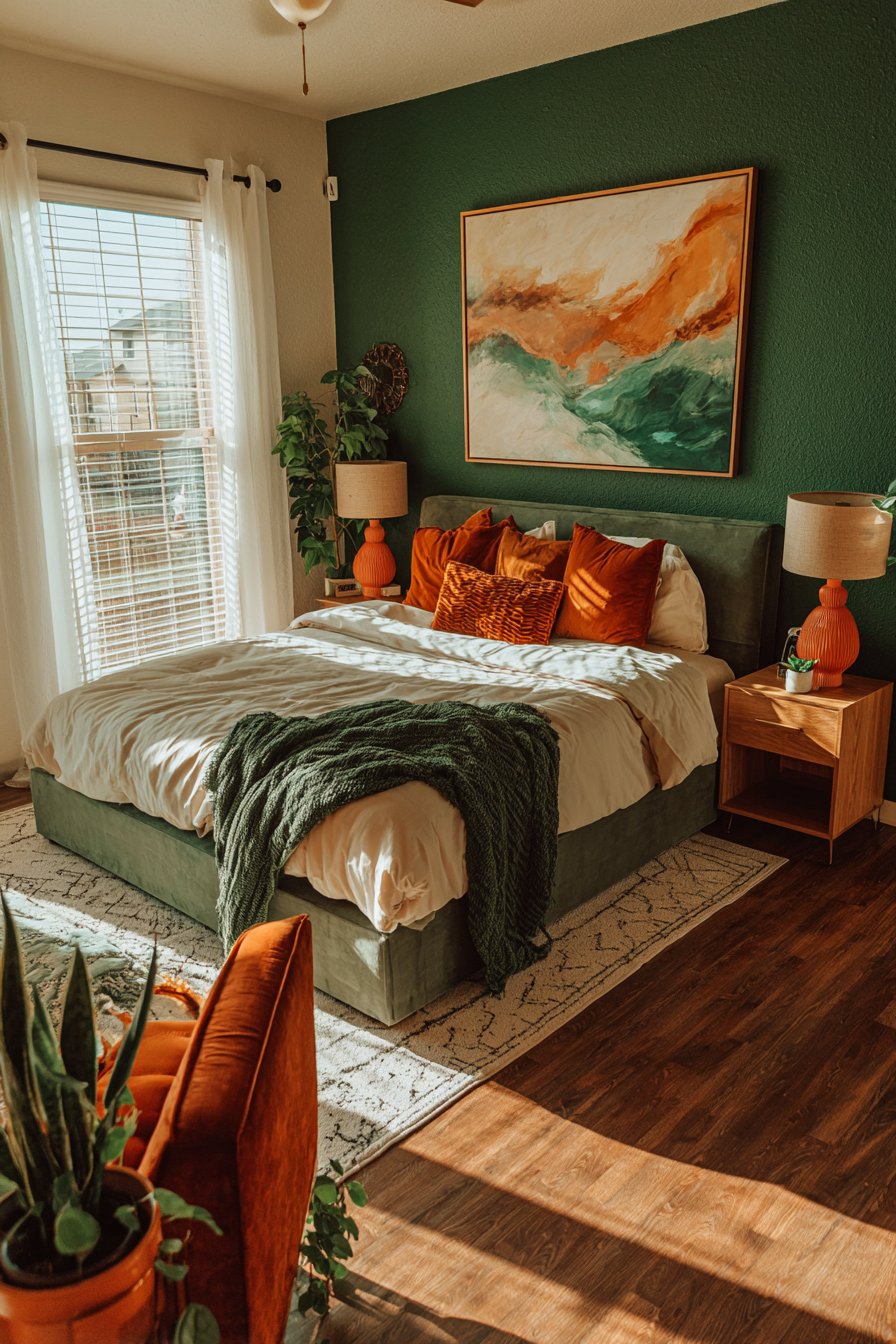
Key takeaways include the importance of material texture in color schemes. Velvet, linen, rattan, and natural fibers add dimension that flat colors cannot achieve. Lighting consideration transforms these colors throughout the day creating ever-changing environments. Balancing proportions prevents overwhelming results while maintaining visual interest.
Start your green and orange bedroom transformation by selecting your preferred shade intensity. Choose dominant and accent colors based on desired mood. Incorporate natural materials to bridge the color temperature gap. Layer lighting sources for flexibility and atmosphere. Remember that quality pieces combined with thoughtful color application create spaces that feel both beautiful and livable.
Experiment with these ideas in your own home adapting concepts to suit your personal style and existing architecture. Your dream green and orange bedroom awaits creation through thoughtful planning, creative expression, and confidence in this timeless color combination.
