


Living in a compact bedroom doesn’t mean you have to sacrifice style or comfort. Many homeowners struggle with cramped sleeping spaces that feel cluttered and confined, even when furniture is minimal. The good news is that you can transform your small bedroom into an airy, spacious retreat without hauling away your beloved pieces.
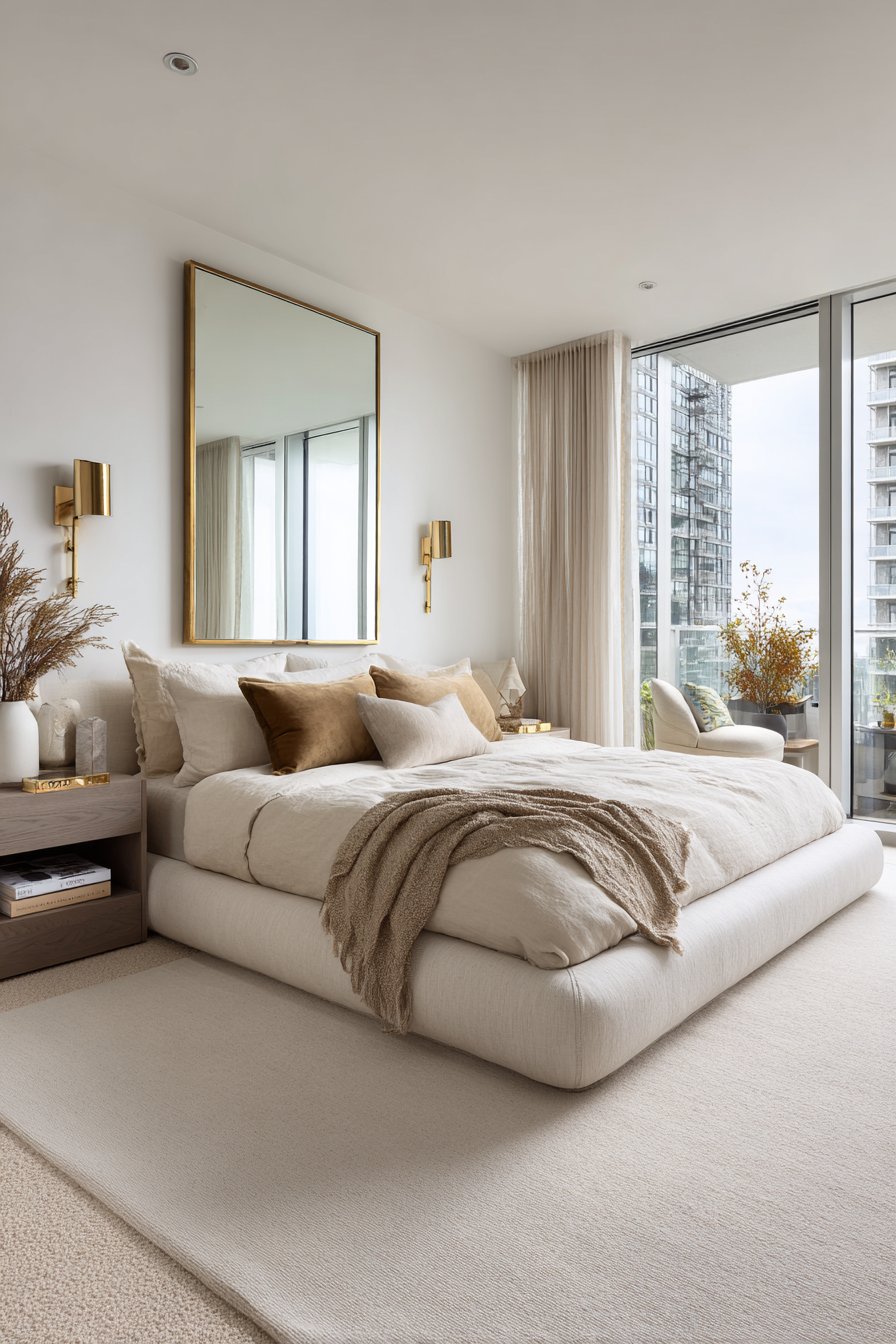
The secret lies in understanding how visual perception works in interior design. Strategic use of color, light, and clever arrangement can trick the eye into seeing more square footage than actually exists. Professional designers have mastered these techniques to create stunning spaces that defy their physical dimensions.
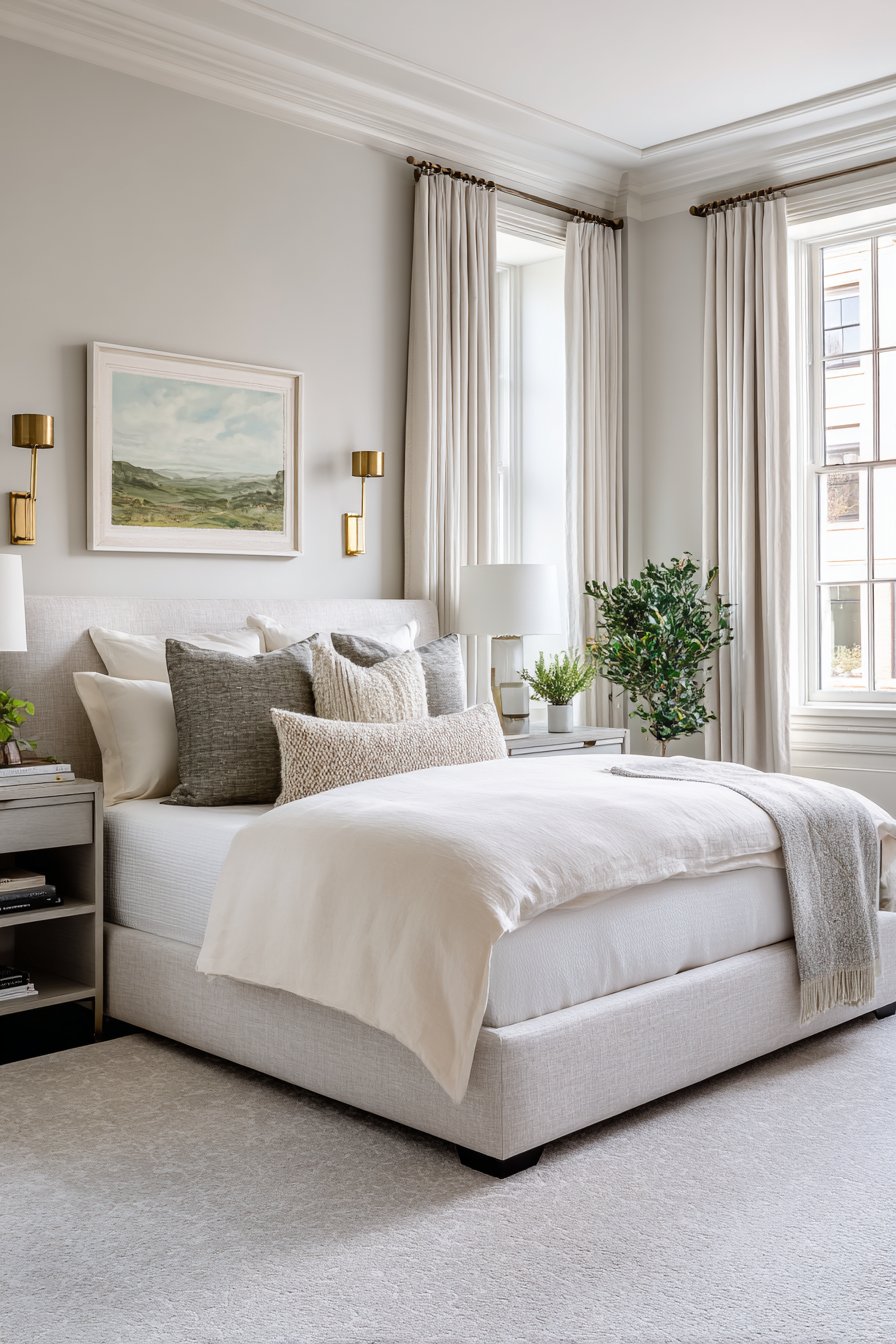
This article explores six powerful strategies that will revolutionize your small bedroom. Each technique is practical, budget-friendly, and immediately actionable. Whether you’re working with a studio apartment or a modest master bedroom, these tips will help you maximize every inch while maintaining functionality and aesthetic appeal.
1. Embrace Light Colors and Monochromatic Schemes
Light colors are your strongest ally when creating the illusion of space in a compact bedroom. White, cream, soft gray, and pale pastels reflect natural light rather than absorbing it. This reflection creates a bouncing effect that makes walls appear to recede. Monochromatic color schemes eliminate visual breaks that can make a room feel choppy and small.
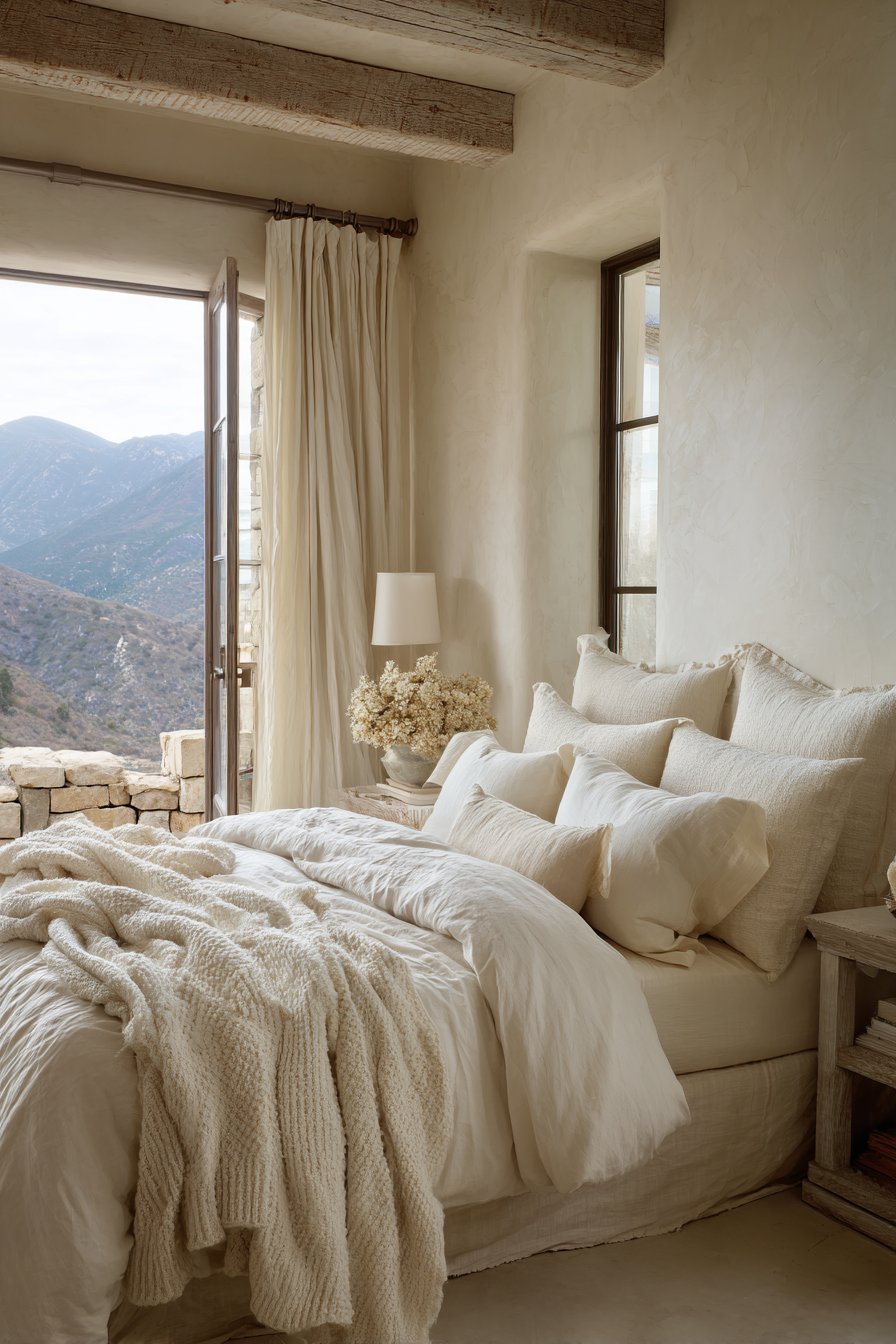
Consider painting your walls, ceiling, and trim in similar tones to create seamless transitions. This technique erases boundaries that would otherwise define the room’s limited dimensions. Soft blues and greens work particularly well because they’re naturally recessive colors that appear to push walls backward. Avoid dark, bold colors on large surfaces as they advance visually, making the room feel enclosed.
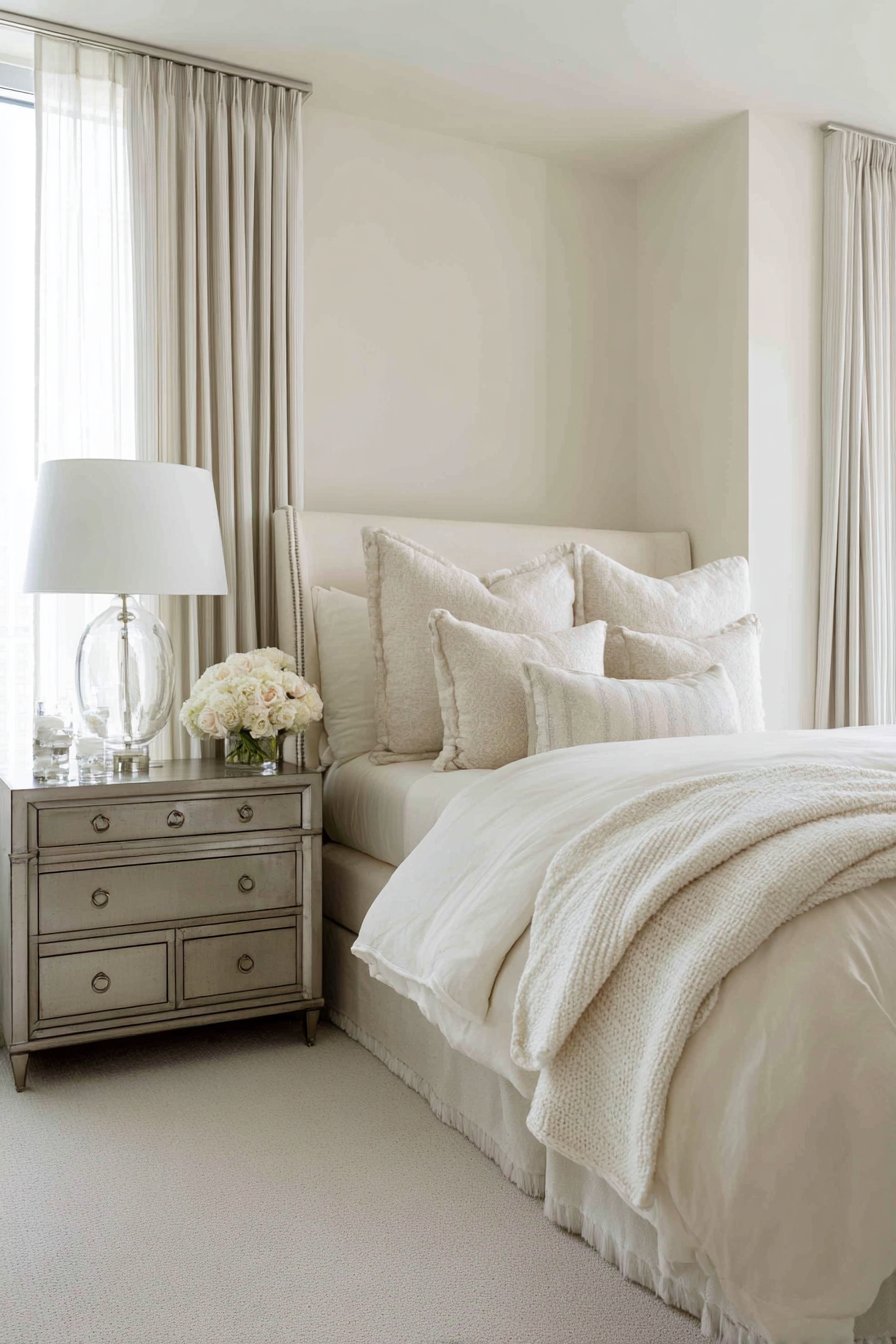
Your bedding, curtains, and accessories should follow the same color family for maximum impact. This doesn’t mean everything must be identical. Vary the shades slightly to add depth while maintaining visual continuity. Layer textures in similar hues to prevent the space from feeling flat or boring.
- Choose paint colors with Light Reflectance Value (LRV) of 70 or higher
- Use white or cream bedding as your foundation layer
- Select curtains that blend with wall colors rather than contrast
- Add texture through materials like linen, cotton, and wool in similar tones
- Consider an accent wall in a slightly darker shade of your base color
- Use metallics like brushed nickel or chrome for subtle dimension
2. Maximize Natural and Artificial Lighting
Strategic lighting can dramatically alter how spacious your bedroom feels. Natural light is the most effective tool for opening up tight quarters. Remove heavy window treatments that block sunlight and replace them with sheer curtains or light-filtering blinds. The goal is to allow maximum daylight penetration while maintaining privacy.

Artificial lighting should be layered to eliminate dark corners that make rooms feel smaller. Combine overhead fixtures with task lighting and accent lights for comprehensive coverage. Wall-sconces free up valuable nightstand space while providing essential reading light. Uplighting directs attention toward the ceiling, creating the perception of vertical expansion.
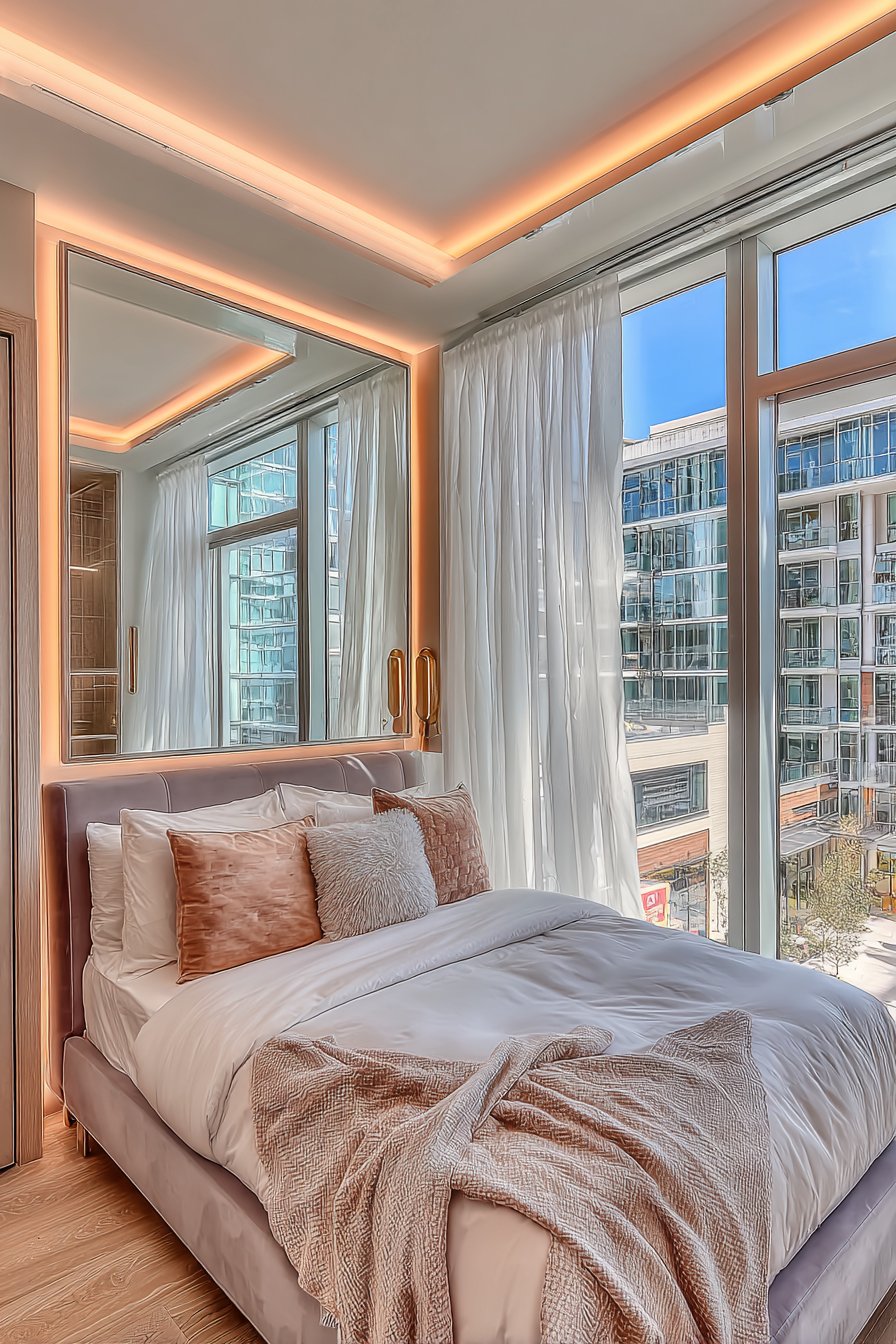
Mirrors placed opposite windows amplify natural light and create depth through reflection. A large mirror can literally double the visual space in your bedroom. Consider mirrored furniture pieces like nightstands or dressers to enhance this effect without adding obvious mirrors that might feel dated.
- Install dimmer switches to control mood and brightness levels
- Use LED bulbs with color temperatures between 2700K-3000K for warmth
- Position table lamps at varying heights to create visual interest
- Add strip lighting under floating shelves or behind headboards
- Replace solid closet doors with mirrored sliding doors
- Hang a statement mirror across from your largest window
3. Choose Multi-Functional Furniture Wisely
Multi-functional pieces are essential in small bedrooms where every item must earn its place. A bed with built-in storage drawers eliminates the need for a separate dresser while keeping floor space visible. Storage ottomans serve as seating, footrests, and hidden organization simultaneously. These smart choices reduce furniture count without sacrificing functionality.
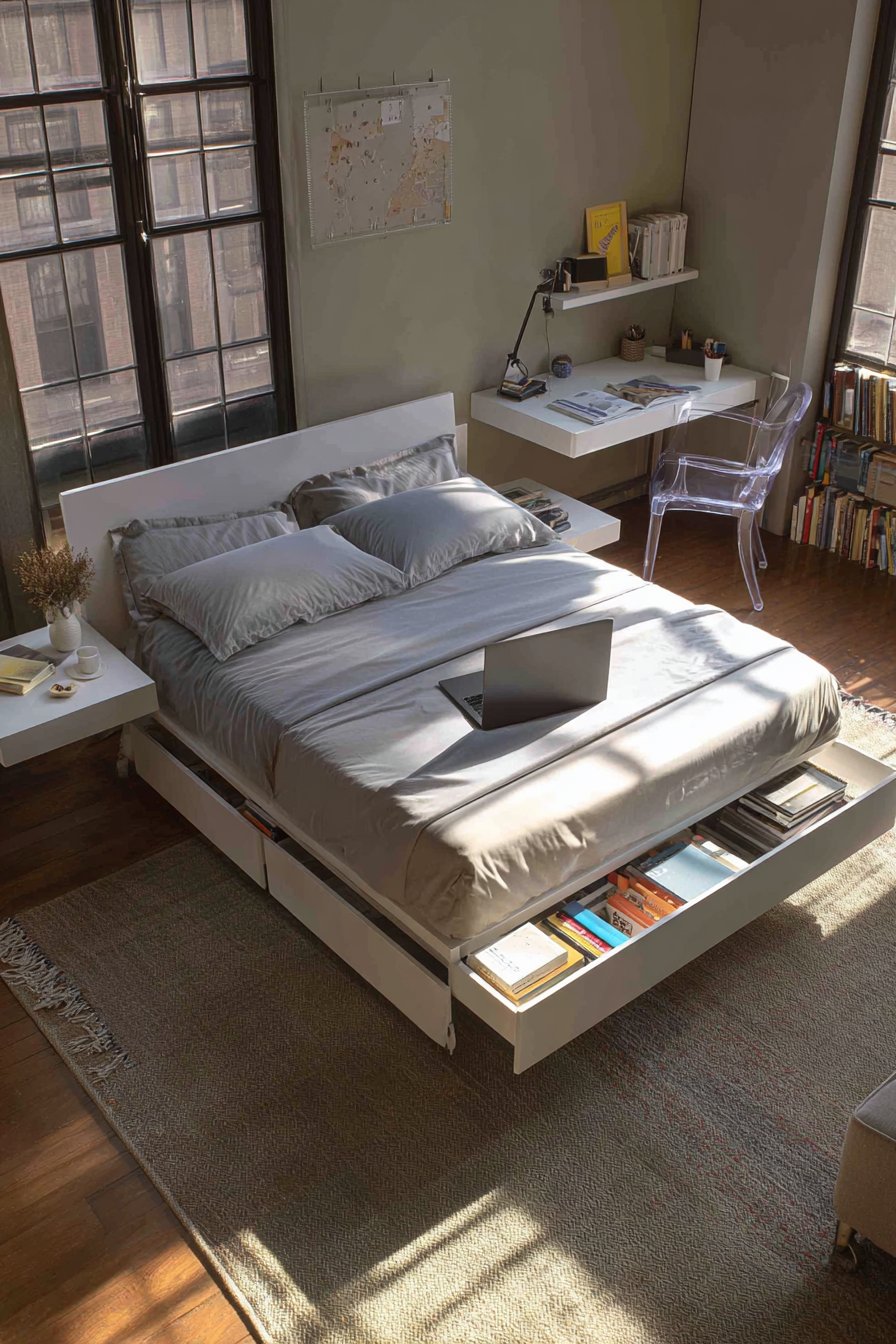
Select furniture with exposed legs rather than pieces that sit flush to the floor. Visible floor space creates an airy feeling and makes cleaning easier. Opt for streamlined designs with clean lines instead of ornate, bulky furniture that overwhelms small spaces. Glass or acrylic furniture appears to take up less visual weight than solid wood pieces.
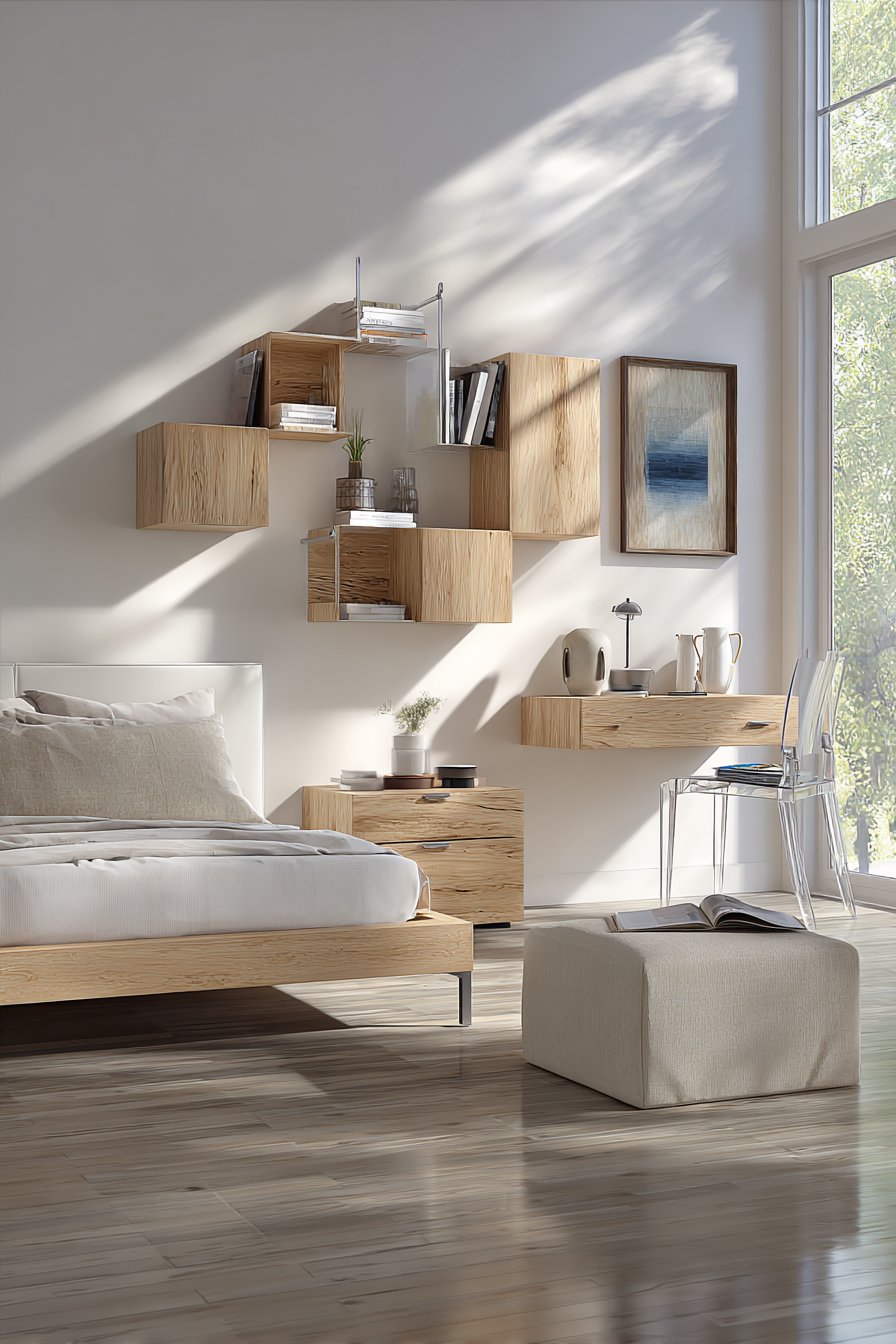
Consider wall-mounted options for nightstands and desks to keep floor space open. Floating furniture creates the illusion that your room is larger by revealing more of the floor. This technique also contributes to a modern, minimalist aesthetic that naturally feels more spacious.
- Invest in a platform bed with underneath storage compartments
- Use a fold-down desk that disappears when not in use
- Select nightstands with open shelving rather than closed cabinets
- Choose a storage bench at the foot of your bed
- Install floating shelves instead of traditional bookcases
- Consider nesting tables that tuck away when unnecessary
4. Utilize Vertical Space Effectively
Looking upward is crucial when floor space is limited. Vertical storage draws the eye up and makes ceilings appear higher than they actually are. Floor-to-ceiling shelving units maximize storage capacity without consuming additional square footage. Tall, narrow furniture pieces emphasize height rather than width.
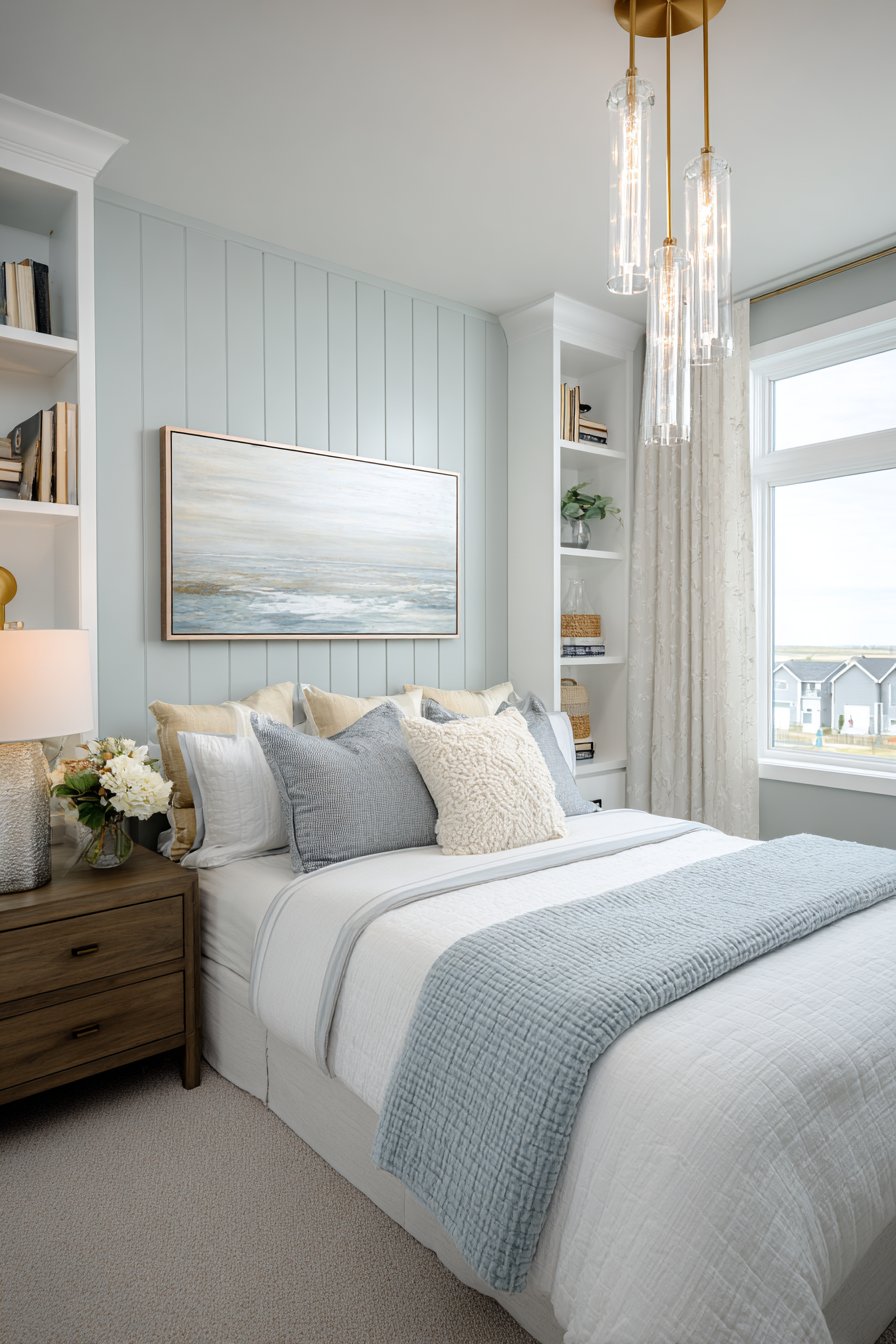
Hang curtains as close to the ceiling as possible, even if your windows start lower. This simple trick creates the illusion of taller windows and grander proportions. Use the same principle with artwork by hanging pieces slightly higher than standard eye level to encourage upward eye movement.
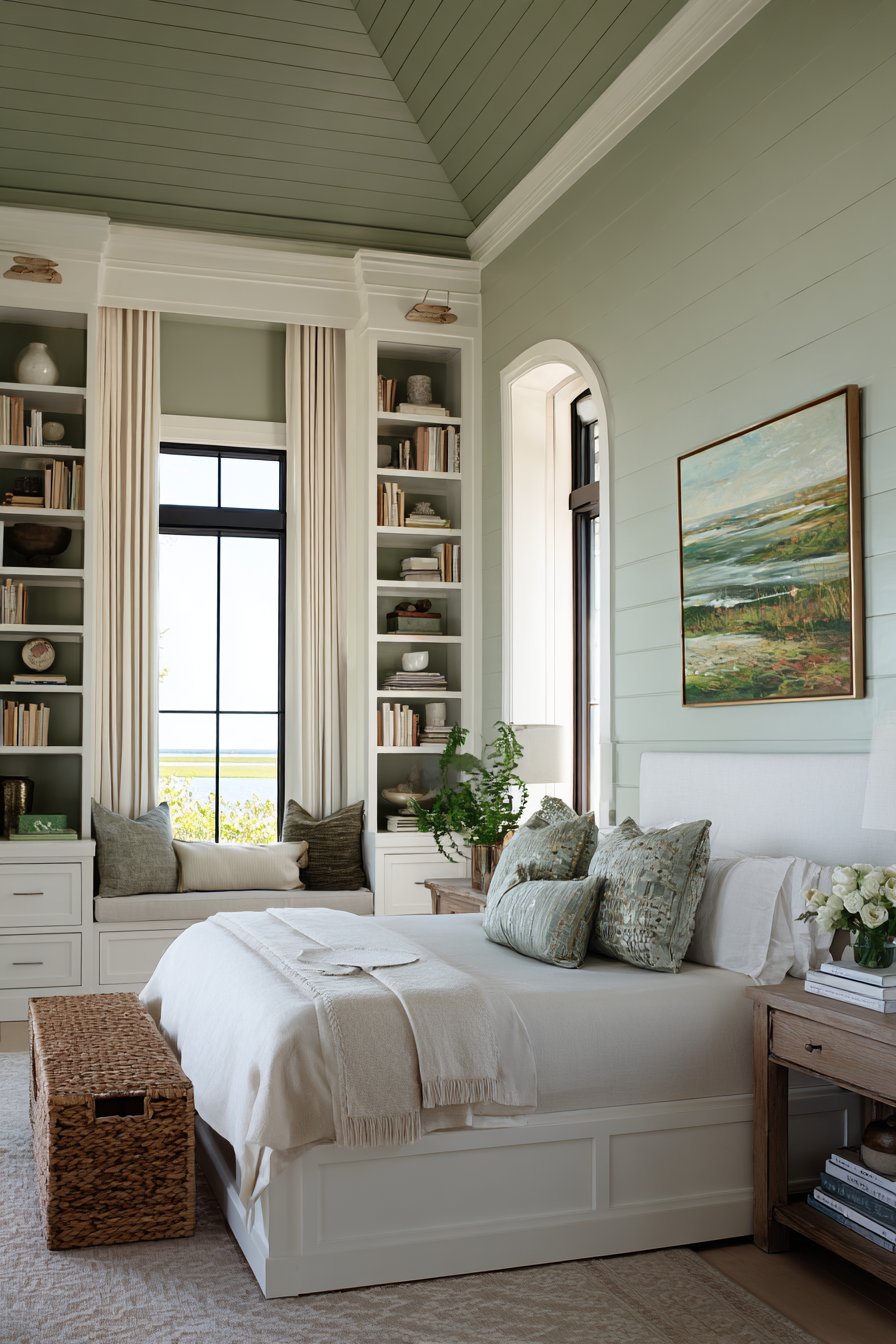
Crown molding and vertical stripes can further enhance perceived height. Paint stripes in subtle tone-on-tone variations to avoid overwhelming the space. Even vertical paneling or shiplap installed running floor to ceiling will create the illusion of expanded vertical dimensions.
- Install shelves 12-18 inches from the ceiling for rarely-used items
- Stack books and decorative objects vertically on shelves
- Use tall, slender lamps instead of short, wide ones
- Hang pendant lights to draw attention upward
- Display artwork in vertical arrangements rather than horizontal groupings
- Consider a tall headboard that emphasizes room height
5. Declutter and Organize Strategically
Visual clutter is the enemy of spacious-feeling rooms. Even with perfect color schemes and lighting, too many visible items will make your bedroom feel cramped. The key is strategic organization that keeps essentials accessible while maintaining clean surfaces. Every item should have a designated home to prevent accumulation on dressers and nightstands.
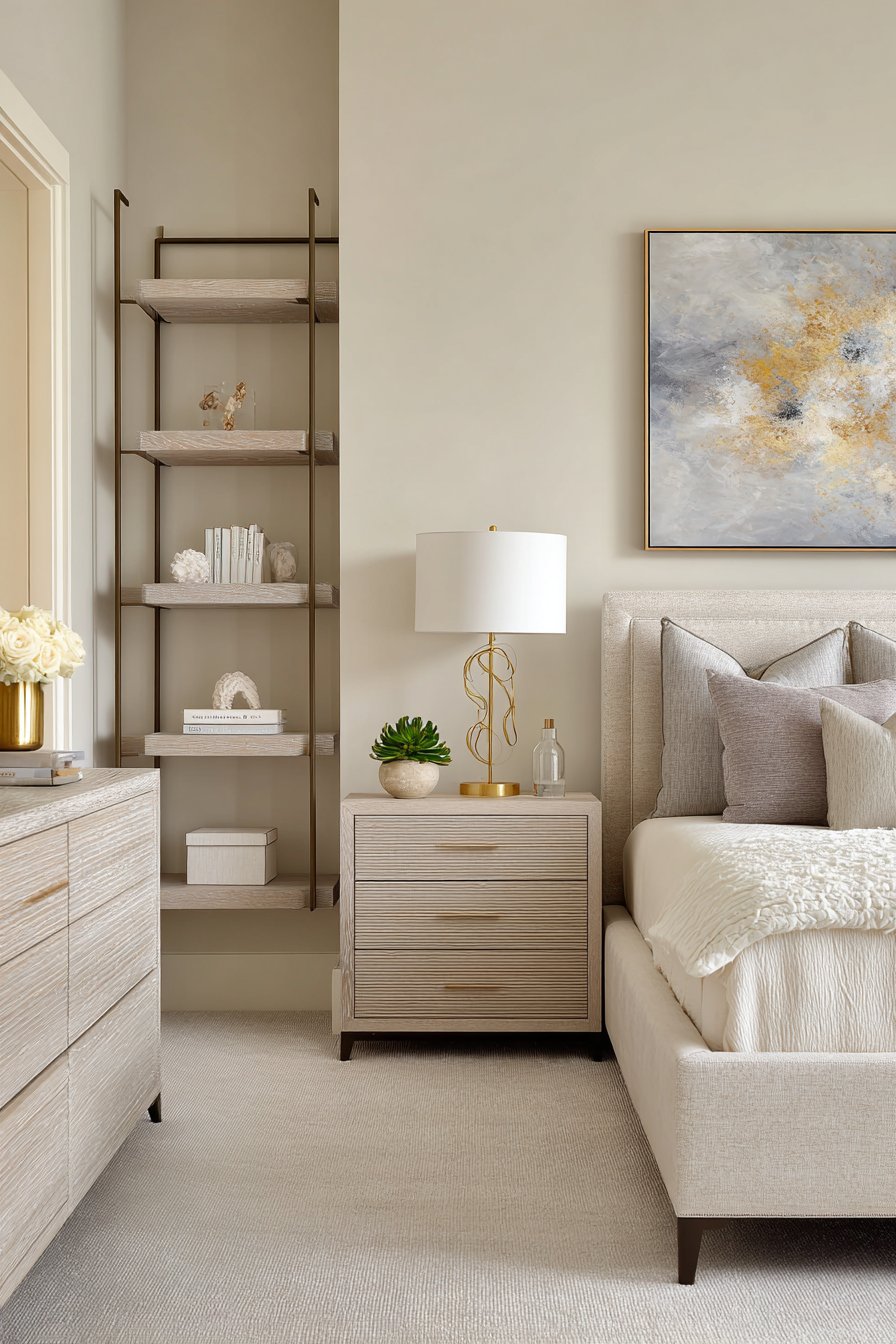
Implement the one-in-one-out rule to prevent gradual accumulation of unnecessary items. Use matching storage containers to create visual cohesion in closets and on shelves. Uniform storage solutions appear less chaotic than mismatched boxes and bins. Clear containers allow you to see contents without opening every box.
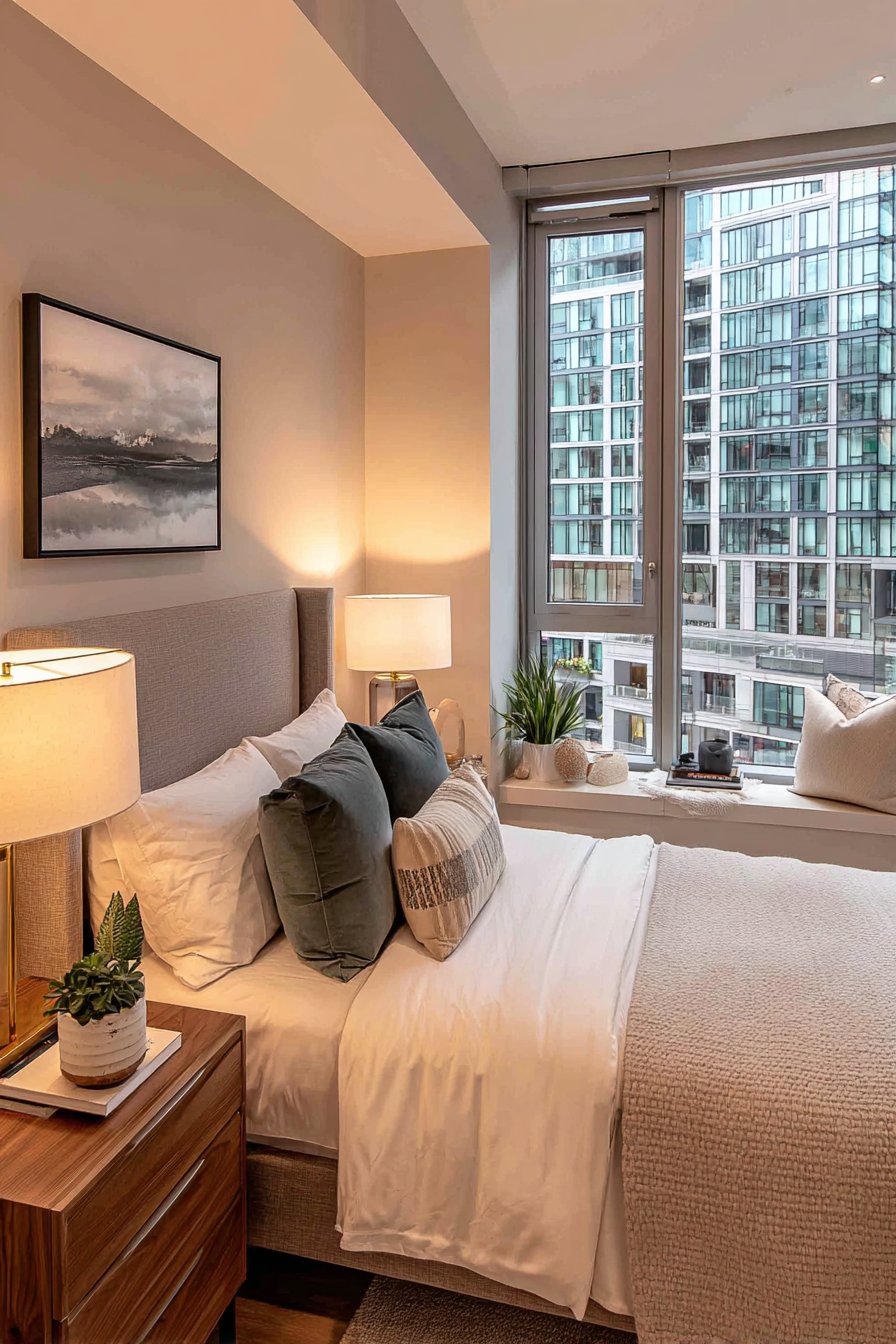
Keep bedside tables as minimal as possible with only daily essentials visible. Use drawer organizers to maximize efficiency and prevent junk drawer syndrome. Hidden storage in unexpected places, like under the bed or behind doors, keeps belongings accessible without visual noise.
- Limit nightstand items to lamp, current book, and alarm clock
- Use slim hangers to maximize closet space
- Store seasonal clothing elsewhere if possible
- Implement vertical file organizers for paperwork
- Use the back of your bedroom door for hanging storage
- Keep surfaces 80% clear to maintain an uncluttered appearance
6. Apply the Right Scale and Proportion
Furniture scale matters tremendously in small bedrooms. Oversized pieces make rooms feel disproportionate and cramped. Your bed should fit the room appropriately—consider a full or queen instead of a king if space is truly limited. Leave at least 24 inches of walking space on both sides of the bed for comfortable movement.
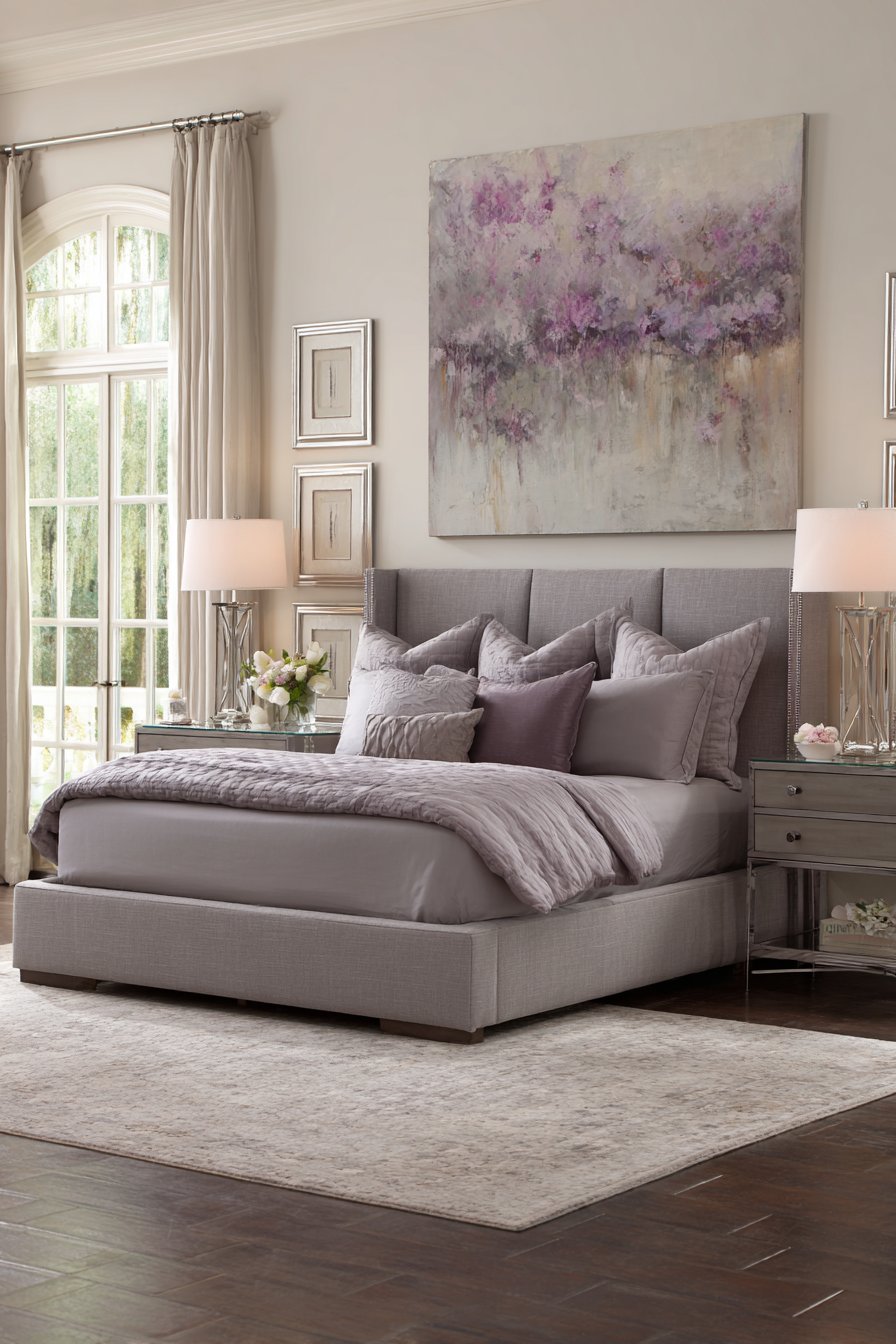
Low-profile furniture creates the impression of more vertical space between furniture tops and ceiling. A low platform bed makes your ceiling appear higher by comparison. Similarly, streamlined headboards work better than tall, ornate ones in compact spaces. The goal is to maintain proper proportions throughout the room.
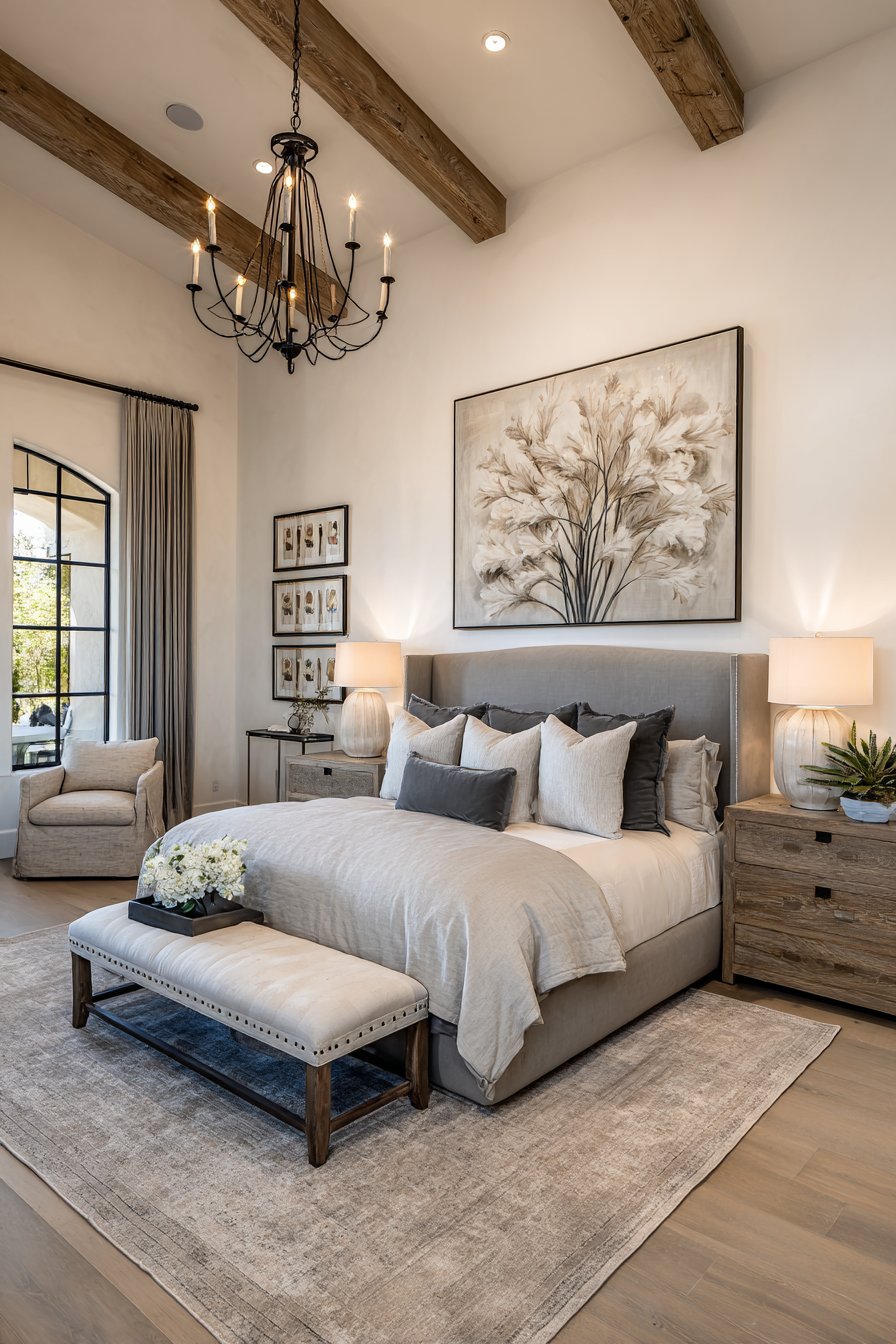
Consider the visual weight of each piece rather than just physical dimensions. A solid wood dresser feels heavier than a lighter-colored piece with similar measurements. Glass-topped tables and furniture with cutout details reduce visual bulk while maintaining functionality.
- Measure doorways before purchasing furniture to ensure delivery is possible
- Choose furniture that’s 72 inches or less in width when possible
- Maintain consistent furniture heights for visual harmony
- Use a single large piece rather than multiple small ones when choosing art
- Ensure nightstands are proportional to bed height
- Leave adequate breathing room between furniture pieces (minimum 18 inches)
Conclusion
Transforming a small bedroom into a spacious sanctuary doesn’t require removing furniture or undergoing major renovations. By implementing these six strategic approaches—embracing light colors, maximizing lighting, choosing multi-functional furniture, utilizing vertical space, decluttering intelligently, and respecting scale—you can dramatically change how your bedroom feels. Small spaces can be just as luxurious and comfortable as larger ones when designed thoughtfully.
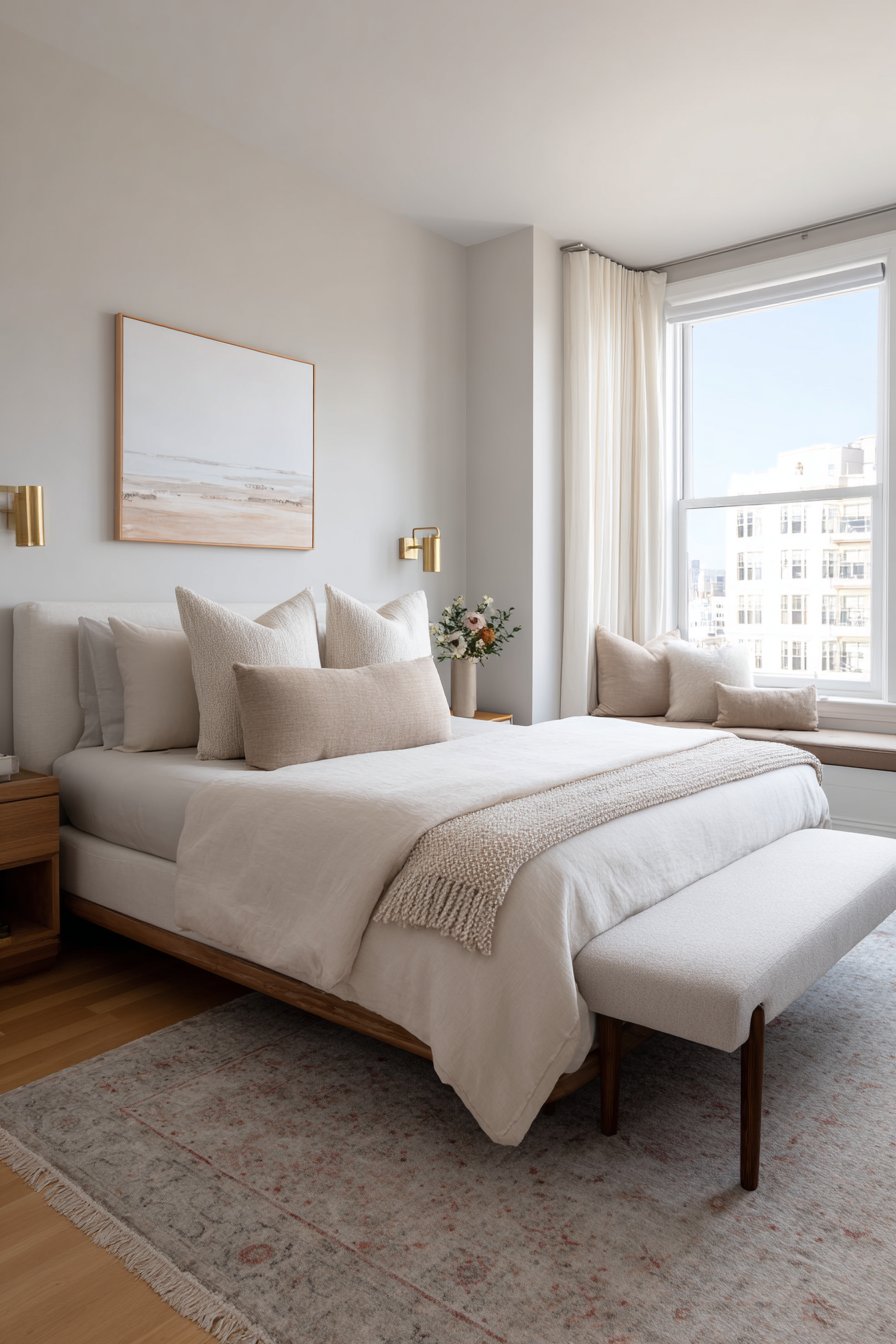
Start with one or two techniques that resonate most with your style and budget. Perhaps begin by lightening your color palette or adding strategic mirrors. As you see results, you’ll feel motivated to implement additional strategies. Remember that creating the illusion of space is about working with visual perception rather than against physical reality. Your small bedroom has enormous potential waiting to be unlocked.
