


Creating a nursery is one of the most exciting yet challenging aspects of preparing for a new arrival. This special room serves as more than just a sleeping space. It becomes a sanctuary where memories are made, bonds are strengthened, and your little one begins their journey of discovery. Thoughtful interior design transforms an ordinary room into a nurturing environment that supports both infant development and parental well-being.
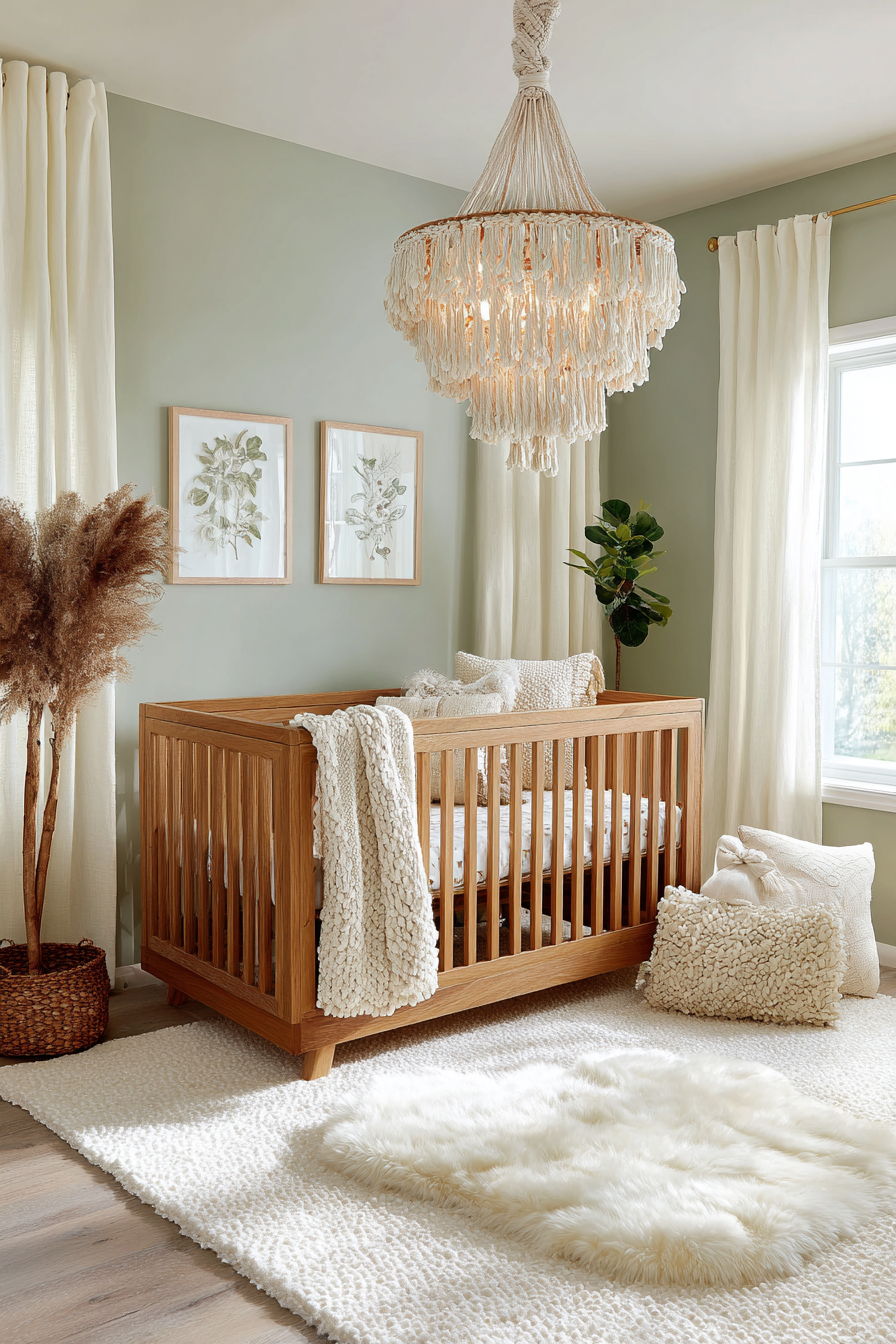
The magic of a well-designed nursery lies in balancing aesthetics with functionality. Every element, from color choices to furniture placement, contributes to the overall atmosphere. Whether you prefer minimalist Scandinavian simplicity, whimsical storybook charm, or modern bohemian elegance, the right approach creates a space that grows with your child. This article explores six essential tips for crafting a nursery that enchants, comforts, and inspires. These strategies combine practical wisdom with creative vision to help you design a room where sweet dreams and precious moments flourish.
1. Choose a Soothing Color Palette
Color psychology plays a crucial role in establishing the nursery’s emotional foundation. Soft, muted tones create a calming environment that promotes restful sleep and peaceful wakefulness. Unlike bold, stimulating colors that might overstimulate young infants, gentle hues like sage green, powder blue, blush pink, and warm cream foster tranquility. These colors also provide a versatile backdrop that accommodates changing tastes as your child grows.
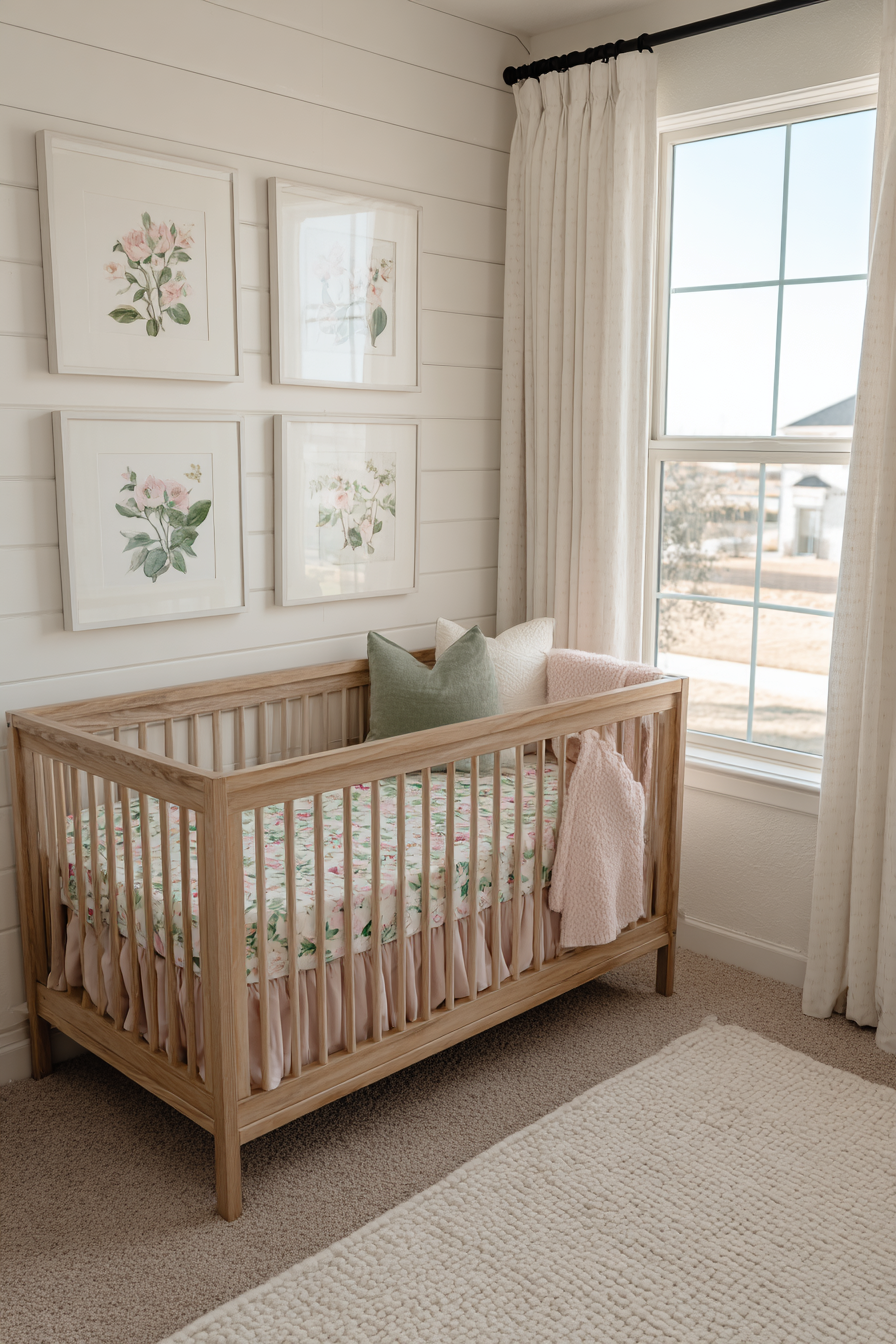
Consider the quality of natural light in the room when selecting colors. North-facing rooms benefit from warmer tones that compensate for cooler natural light. South-facing spaces can handle cooler colors without feeling cold. The 60-30-10 rule offers an excellent framework: use your main color for 60% of the room, a secondary shade for 30%, and an accent color for the remaining 10%. This creates visual harmony without overwhelming the space.
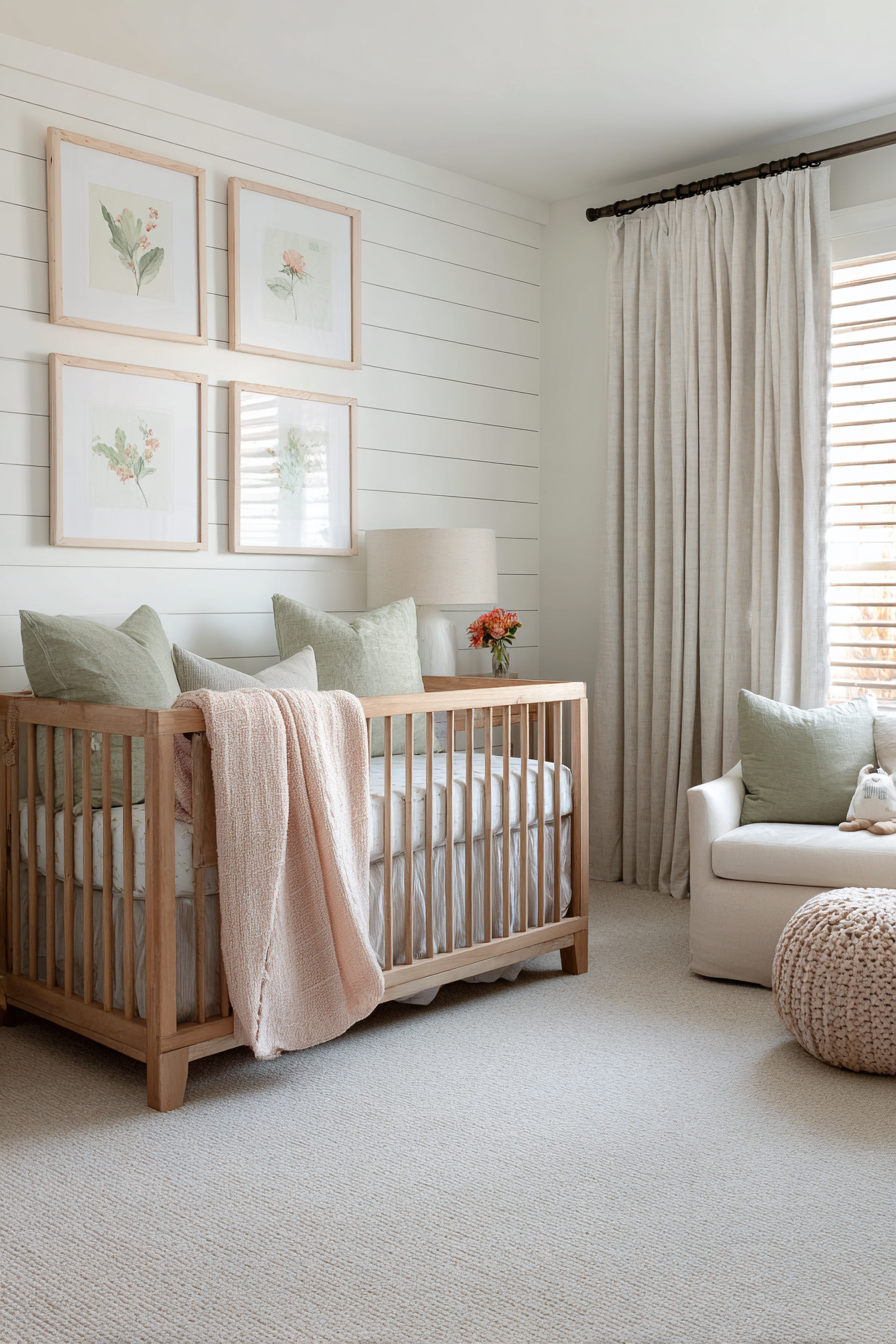
Don’t overlook the psychological impact on parents who spend countless hours in this room. Colors that promote calmness benefit everyone. Pair your primary palette with natural wood tones to add warmth and organic texture. These combinations create sophisticated yet nurturing environments that photograph beautifully while serving practical purposes.
- Select colors with low saturation for walls and large furniture pieces
- Test paint samples in different lighting conditions before committing
- Use removable wallpaper with subtle patterns for easy updates
- Incorporate white or cream as a neutral anchor throughout the space
- Add pops of color through easily changeable accessories and textiles
- Consider gender-neutral palettes that offer longevity and flexibility
2. Prioritize Functional Lighting Design
Lighting deserves careful consideration as it affects everything from diaper changes to feeding sessions. A layered lighting approach provides flexibility for different activities and times of day. Overhead lighting offers general illumination, while task lighting assists with specific activities. Ambient lighting creates that magical glow that makes nighttime routines less jarring for both parent and child.
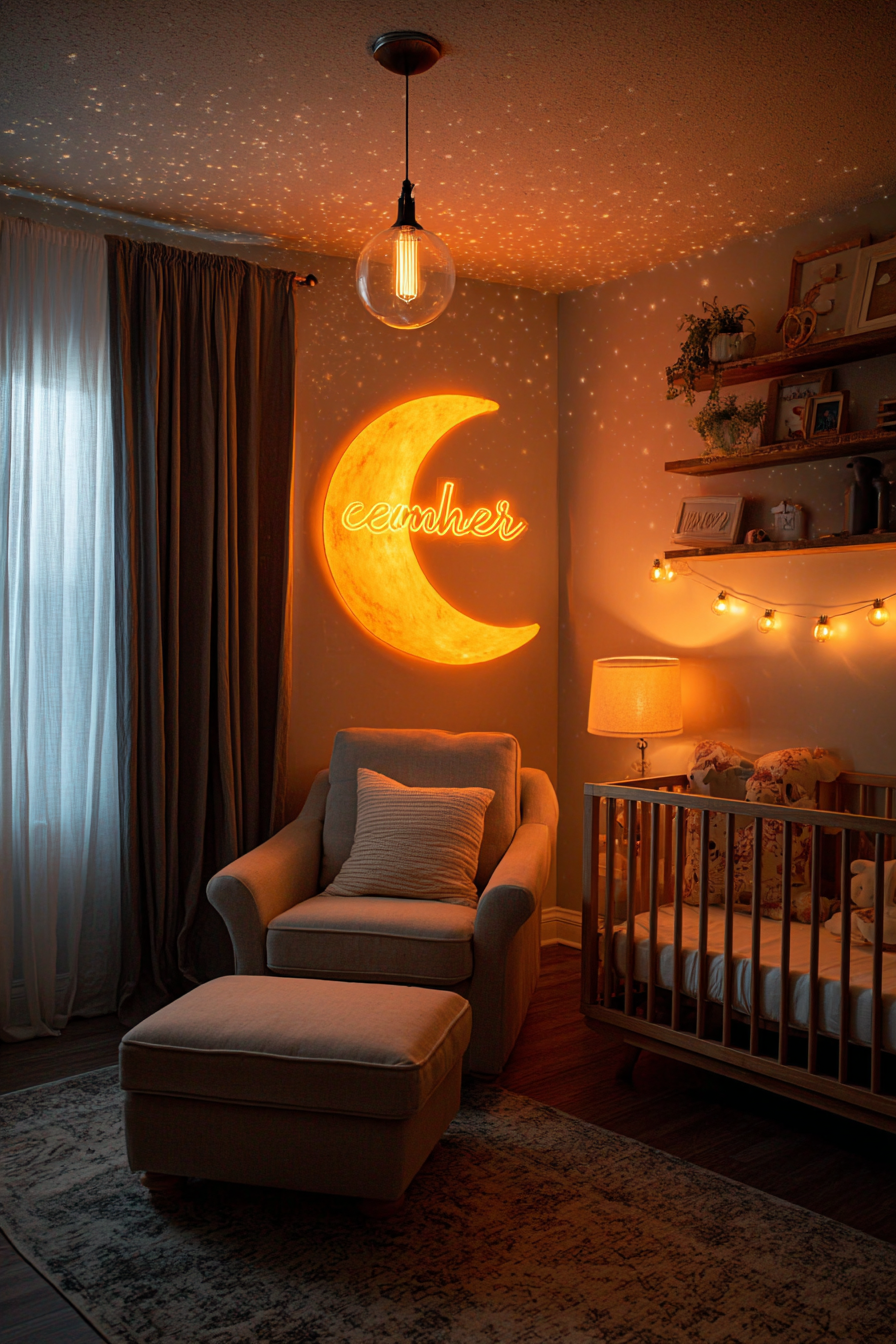
Install dimmer switches on all light sources to control intensity levels. Bright lights during midnight feedings can fully wake both you and your baby, making it harder to return to sleep. Soft, warm-toned bulbs between 2700K and 3000K create a cozy atmosphere without the harsh blue wavelengths that disrupt circadian rhythms. Position task lighting strategically near the changing table and nursing chair.
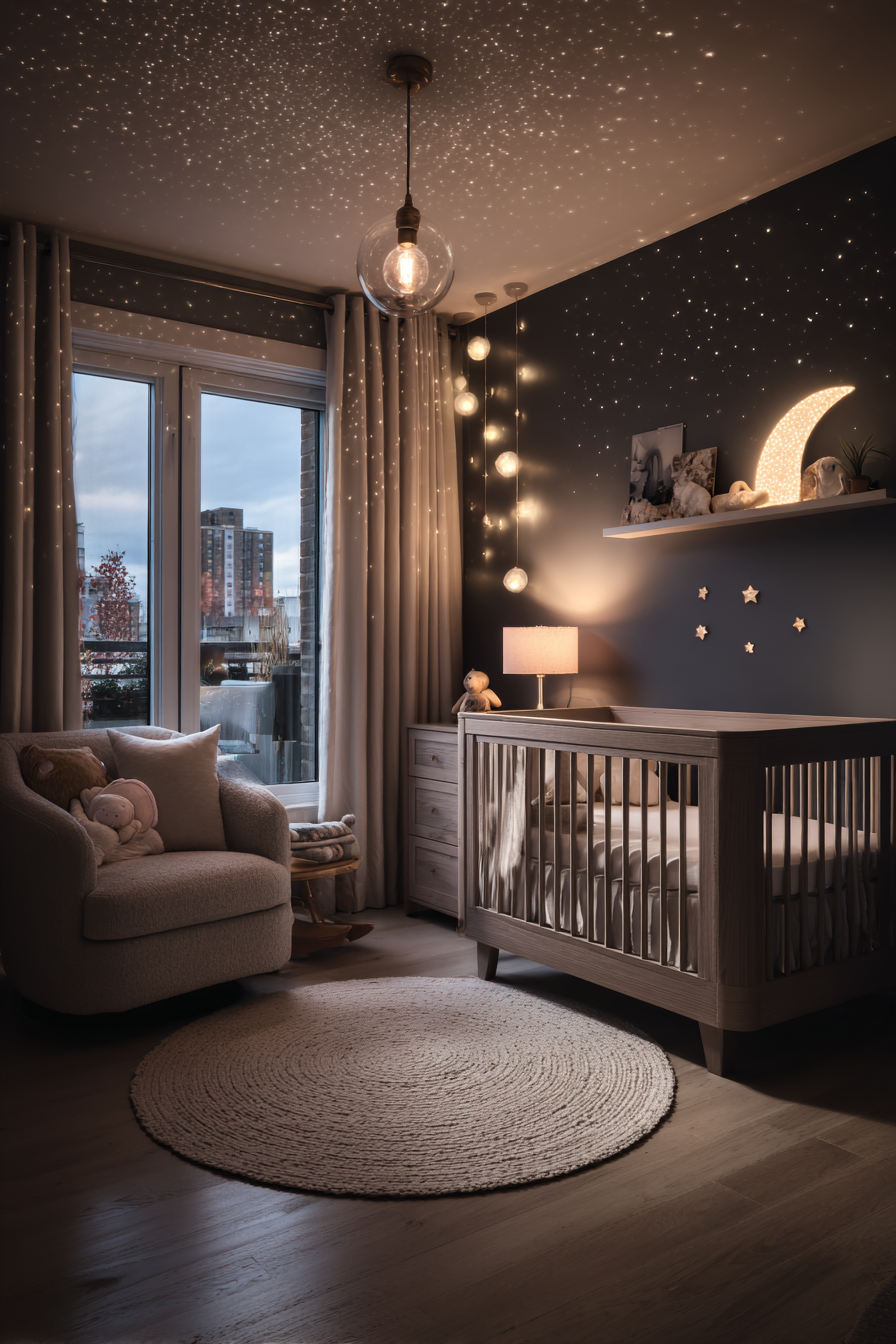
Consider battery-operated or plug-in nightlights with automatic sensors. These provide subtle illumination for safe navigation without disturbing sleep. Salt lamps, string lights, or softly glowing moon lamps add whimsical touches while serving functional purposes. Avoid placing any lighting directly above the crib where babies lie gazing upward.
- Install blackout curtains or shades to control daytime brightness
- Choose fixtures with enclosed bulbs for safety and softer light diffusion
- Position adjustable table lamps on nightstands or dressers
- Use smart bulbs that allow color temperature and brightness adjustment
- Avoid harsh fluorescent lighting that creates unflattering shadows
- Incorporate star projectors or rotating nightlights for soothing bedtime displays
3. Invest in Multi-Functional Furniture
Space optimization becomes essential in nurseries, especially in smaller homes. Multi-functional furniture maximizes utility while minimizing clutter and expense. A dresser that doubles as a changing table eliminates the need for separate pieces. Gliding chairs with built-in storage compartments keep essentials within arm’s reach during feeding sessions. These smart solutions grow with your family’s evolving needs.
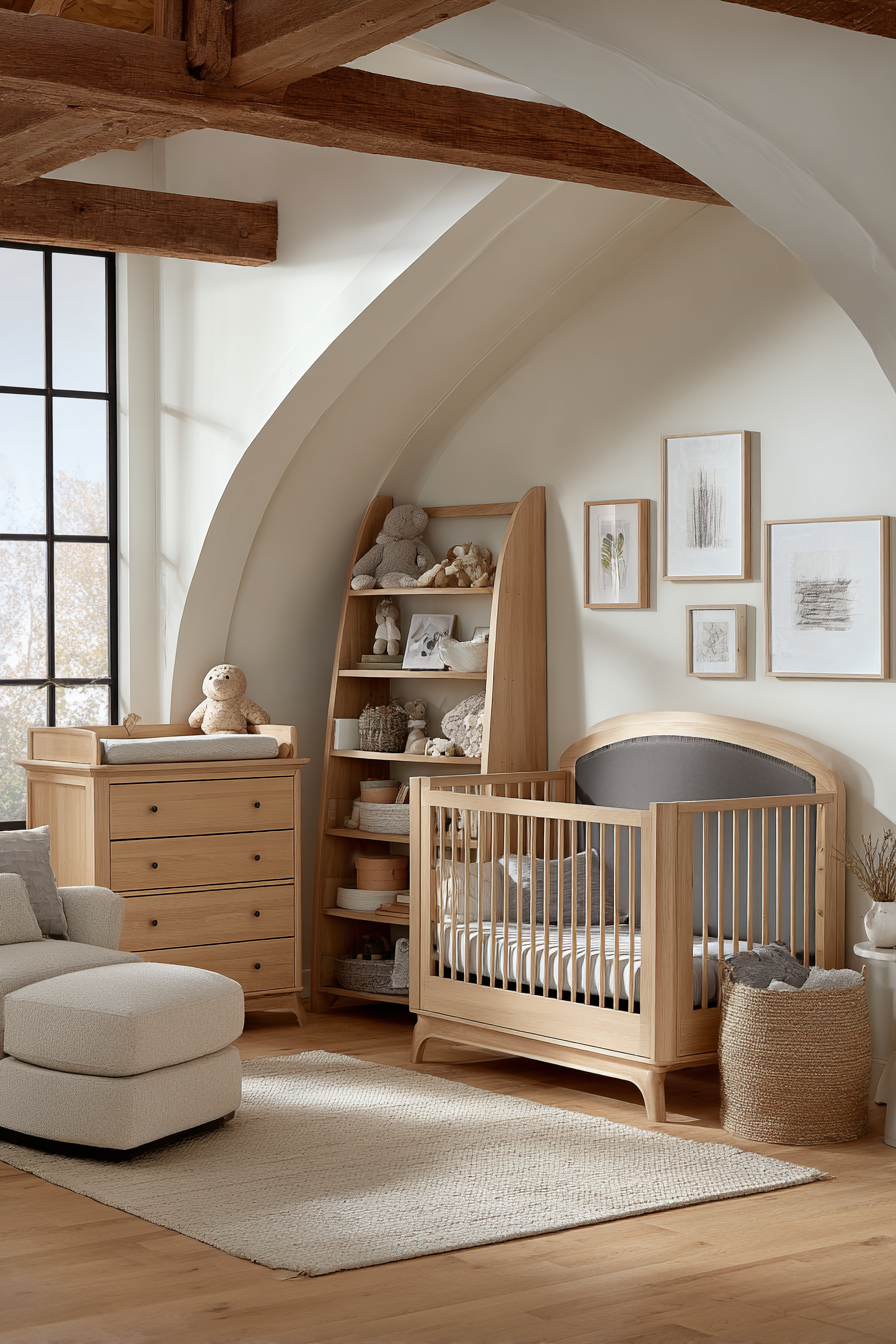
Look for convertible cribs that transform into toddler beds and eventually full-size beds. While the initial investment feels significant, the long-term value surpasses buying multiple furniture pieces over years. Storage ottomans provide seating, footrests, and hidden compartments for toys or blankets. Bookshelves with adjustable heights adapt as your child’s library expands from board books to chapter books.
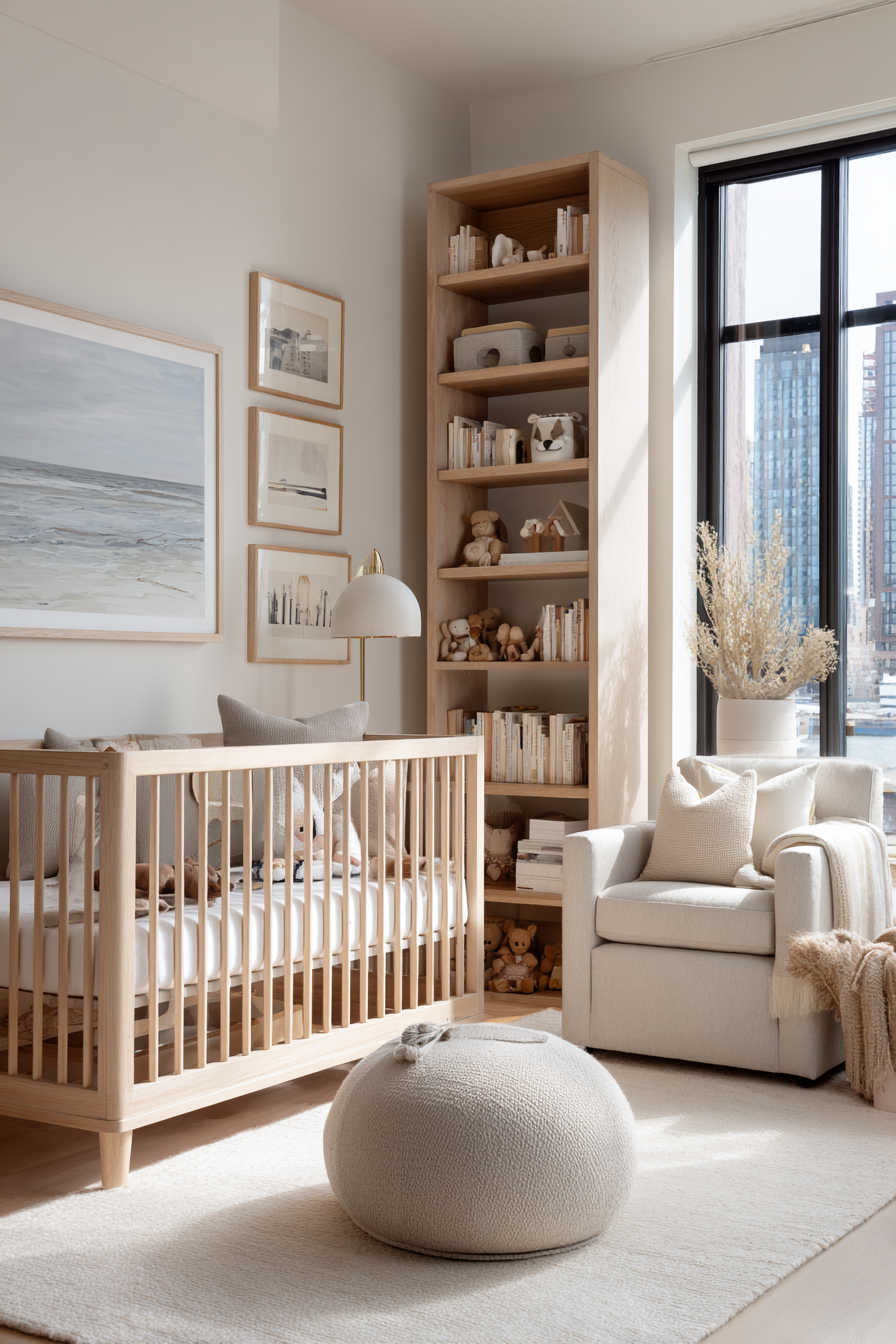
Quality matters more than quantity in nursery furnishing. Well-constructed pieces withstand years of use and potentially serve multiple children. Choose timeless designs over trendy styles that quickly feel dated. Solid wood construction offers durability and safety compared to particle board alternatives that may contain harmful adhesives or finishes.
- Select dressers with deep drawers that accommodate clothing as children grow
- Choose cribs with adjustable mattress heights for different developmental stages
- Opt for rocking chairs or gliders with removable, washable cushion covers
- Install wall-mounted changing tables in extremely tight spaces
- Consider Murphy-style cribs or fold-down changing stations for micro-nurseries
- Prioritize furniture with rounded edges and non-toxic finishes
4. Create Thoughtful Storage Solutions
Organizational systems prevent nursery chaos before it begins. Babies require surprising amounts of supplies, from diapers and wipes to clothing, toys, and feeding equipment. Strategic storage solutions keep essentials accessible while maintaining visual calm. Open shelving displays favorite books and decorative items, while closed storage conceals less attractive necessities.
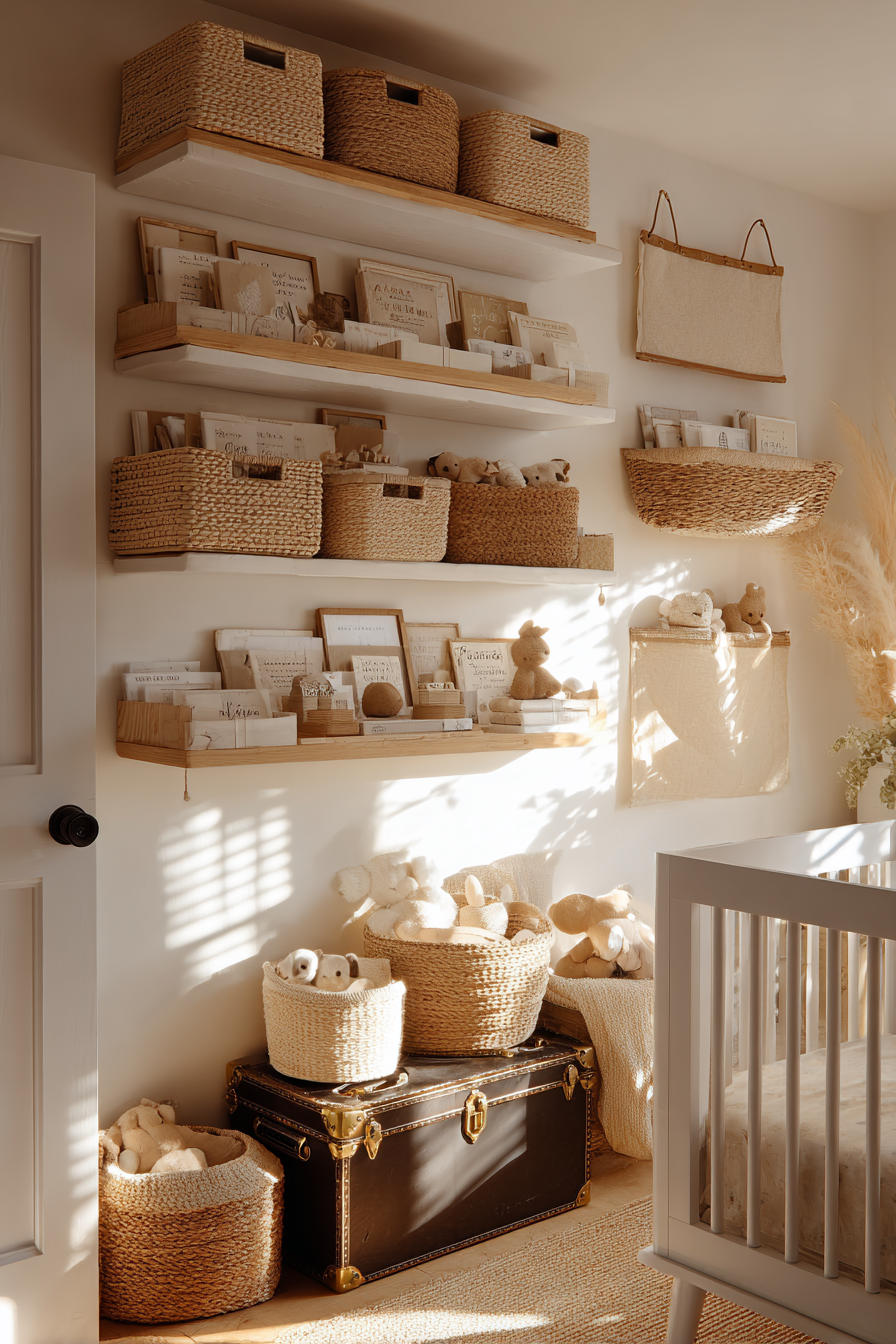
Vertical space utilization proves essential in compact nurseries. Floor-to-ceiling storage maximizes capacity without consuming precious floor area. Install floating shelves at varying heights to create visual interest while providing functional display space. Use the back of the door for hanging organizers that hold shoes, accessories, or small toys. The area beneath the crib often accommodates rolling storage bins.
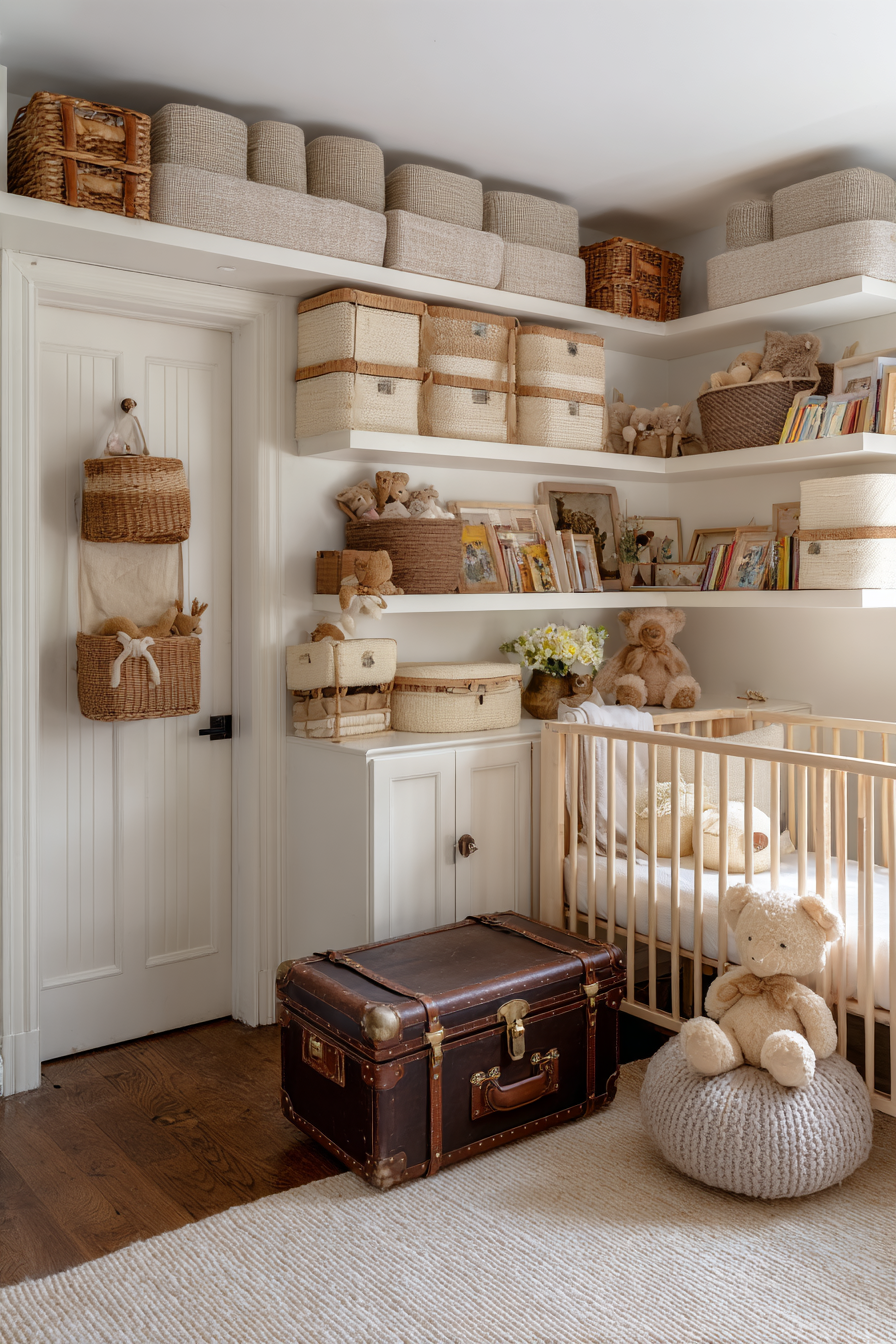
Labels transform storage from chaotic to systematic. Clear bins allow you to see contents at a glance, while labels help other caregivers locate items quickly. Designate specific zones for different categories: diapering supplies near the changing area, clothing in the dresser, and toys in accessible containers. This organizational approach reduces stress during those sleep-deprived early months.
- Use drawer dividers to organize small clothing items and accessories
- Install closet systems with adjustable rods and shelving configurations
- Choose storage baskets in coordinating colors that complement your design
- Rotate toys regularly, storing excess items to prevent overstimulation
- Designate a specific spot for laundry to contain dirty clothing
- Incorporate vintage trunks or decorative baskets that serve dual purposes
5. Layer Textures for Comfort and Visual Interest
Texture adds depth and warmth that flat surfaces cannot achieve. Layered textiles create a cozy, inviting atmosphere while providing practical comfort. Soft area rugs cushion those inevitable tumbles as babies learn mobility. Plush throws draped over chairs offer warmth during late-night feedings. Multiple texture types engage developing senses and make the space feel thoughtfully composed rather than sterile.
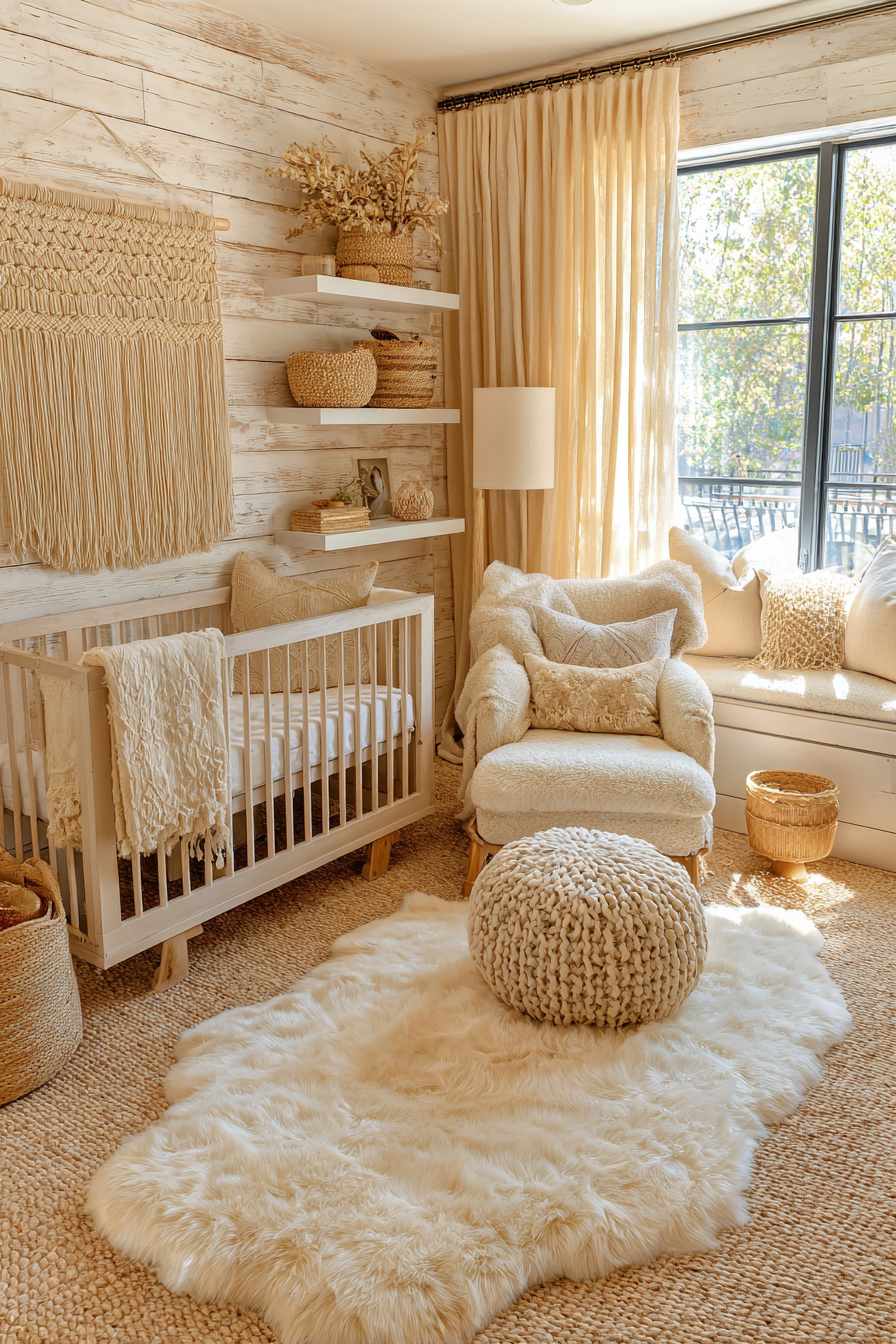
Mix natural materials like cotton, linen, wool, and wood with modern performance fabrics. Washability ranks high in importance for nursery textiles since spills and accidents occur frequently. Look for rugs with low pile heights that prevent tripping hazards while remaining easy to clean. Velvet cushions add luxurious softness, while woven baskets contribute organic texture and practical storage.
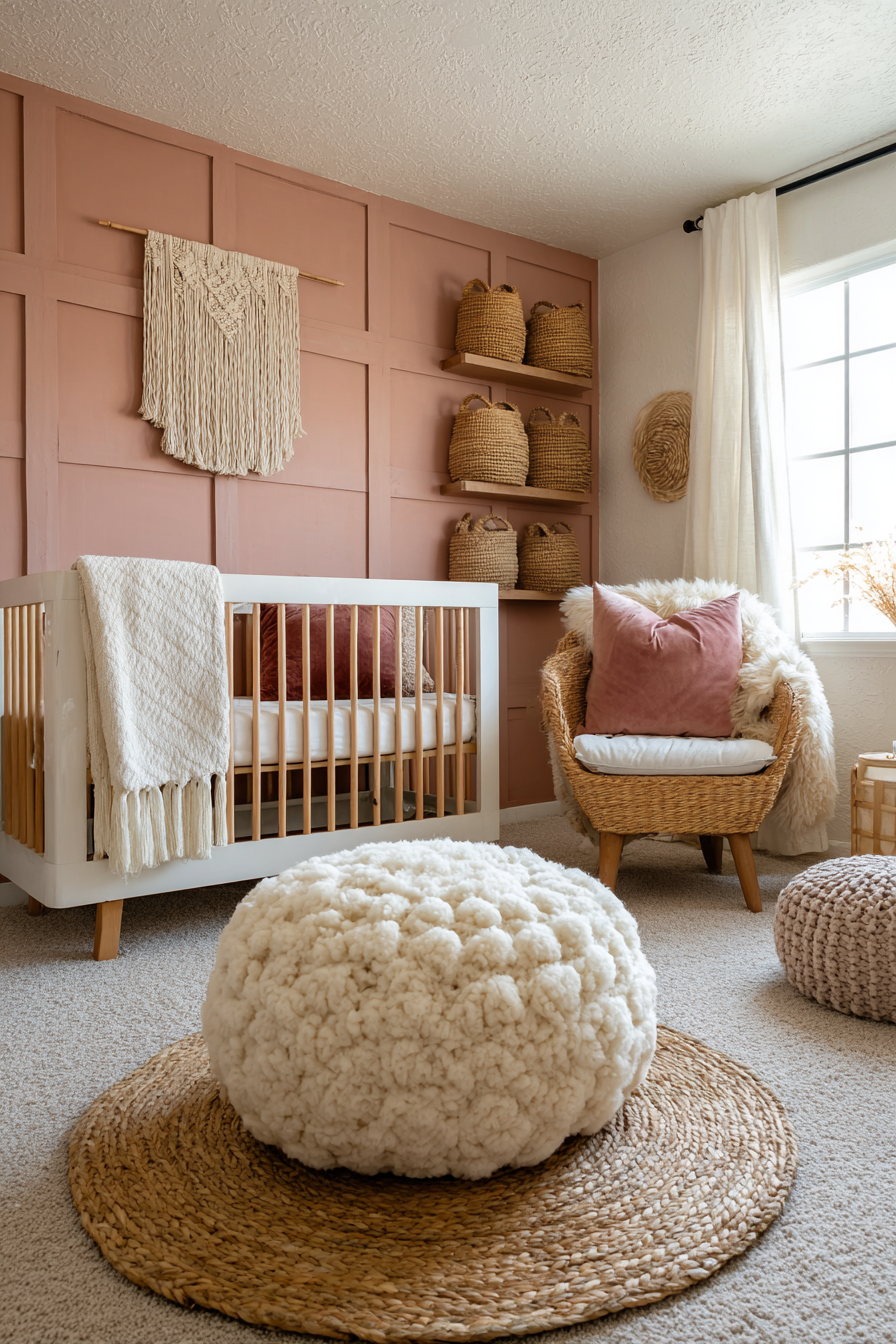
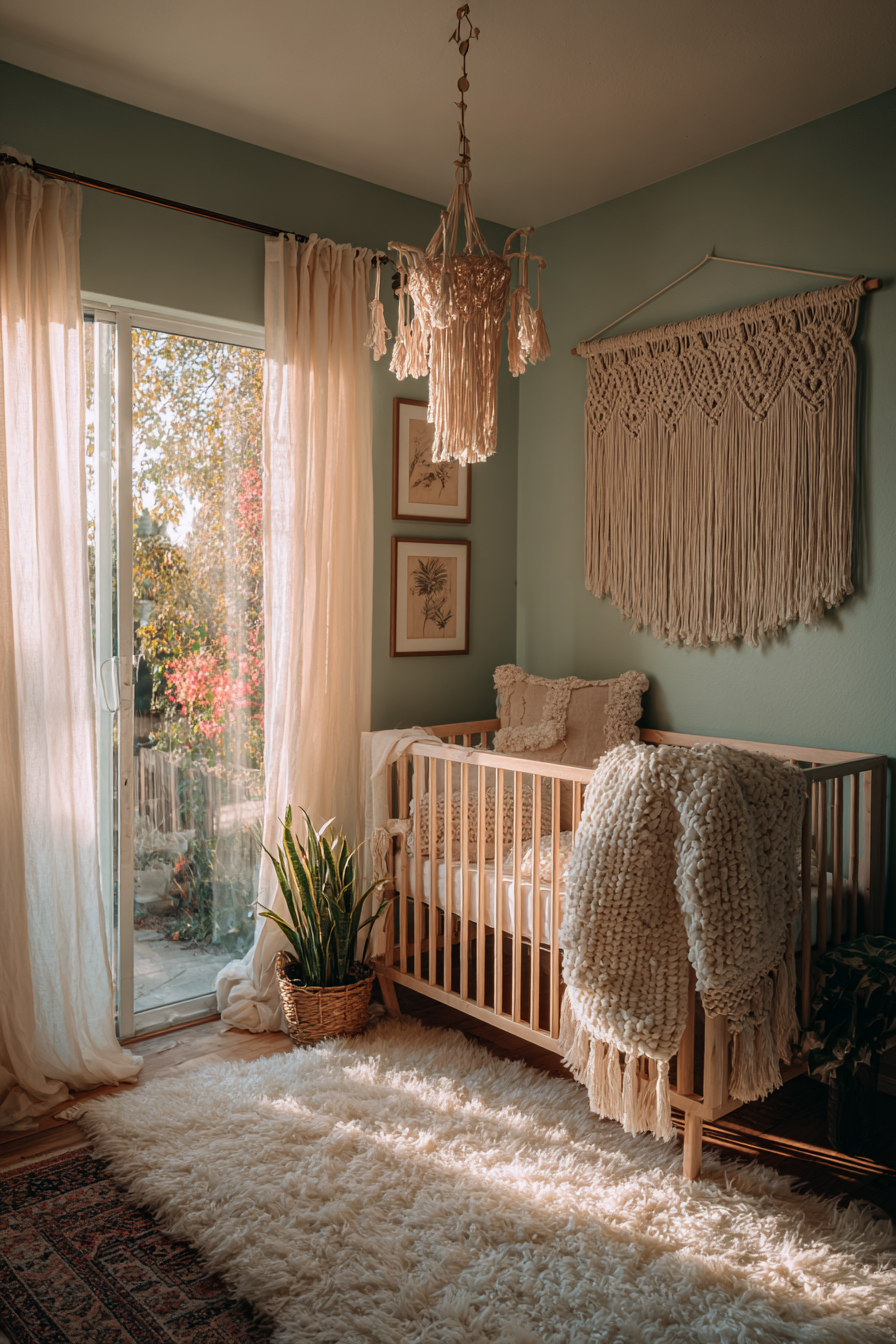
Wall treatments contribute significant textural interest. Shiplap, board-and-batten, or textured wallpaper create dimension without overwhelming small spaces. Macramé wall hangings, woven tapestries, or fabric pennant banners add handcrafted warmth. These elements make nurseries feel personal and unique rather than showroom-perfect but uninviting.
- Select machine-washable crib sheets in soft, breathable fabrics
- Add tactile elements babies can safely explore during tummy time
- Incorporate different weaves and materials in throw pillows and blankets
- Use curtains in natural fibers that filter light beautifully
- Choose furniture with varied surface treatments like painted and stained wood
- Include one statement texture piece like a sheepskin rug or chunky knit pouf
6. Personalize with Meaningful Décor
Personal touches transform a generic nursery into your family’s unique space. Meaningful décor tells your story and creates emotional connections that mass-produced items cannot match. Display family photographs in coordinating frames, showcase heirloom quilts passed down through generations, or commission custom artwork featuring your child’s name. These elements make the room feel genuinely special and create lasting memories.
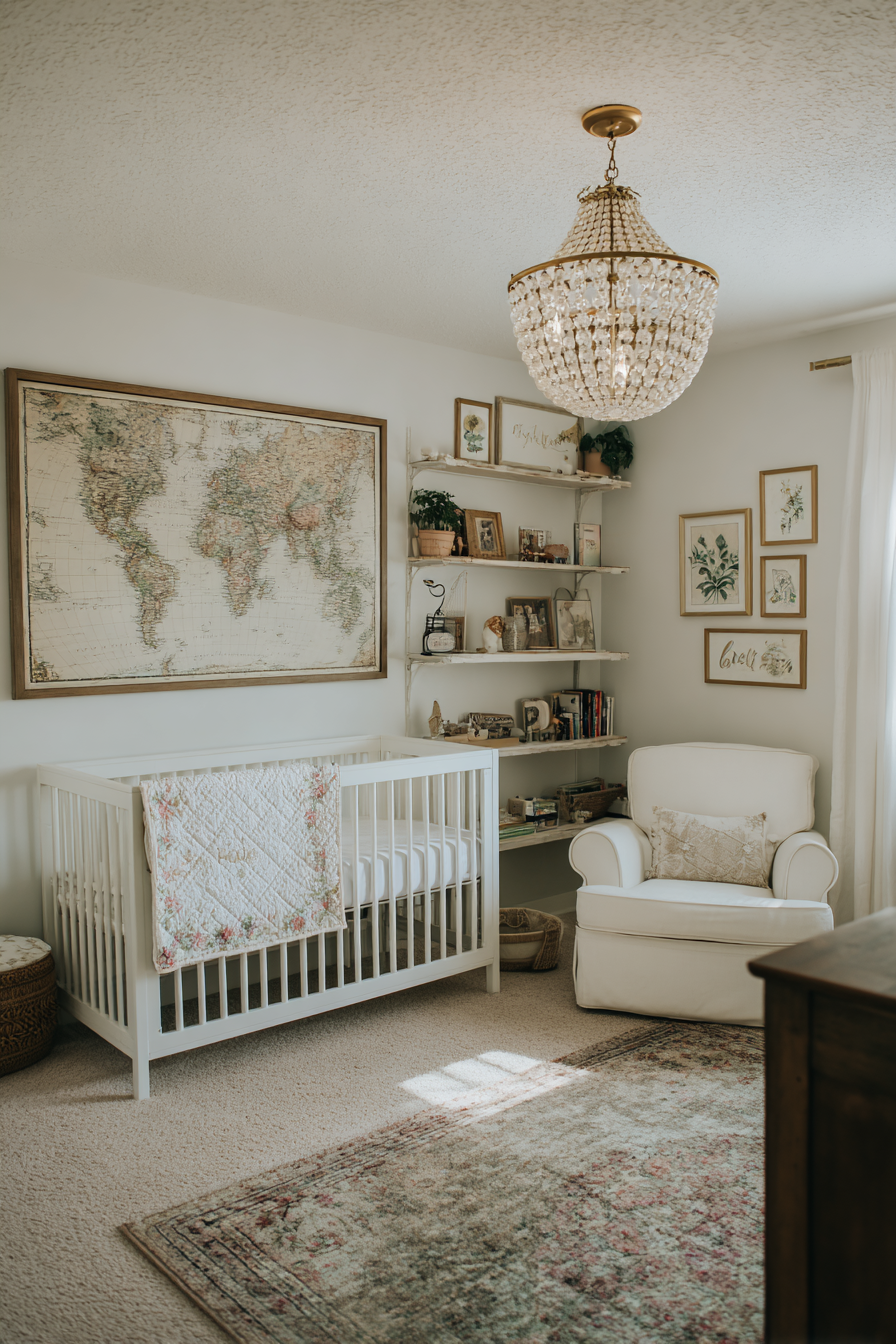
Avoid overcrowding walls and surfaces with decorations. The principle of “less is more” applies beautifully in nursery design. Select a few statement pieces rather than filling every available space. A large canvas print, vintage mirror, or sculptural mobile commands attention while maintaining visual calm. Rotate smaller décor items seasonally to keep the space feeling fresh without major overhauls.
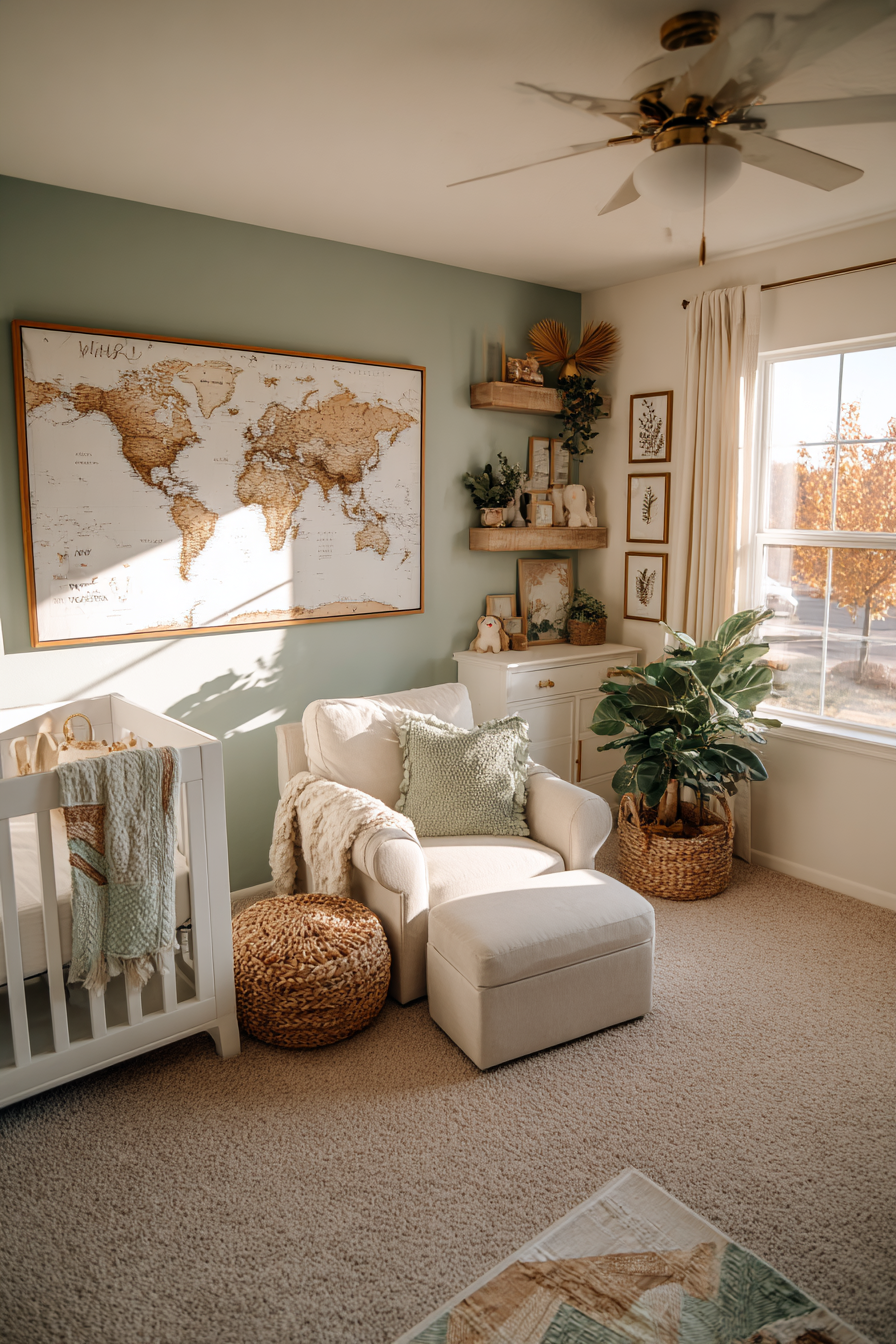
Consider incorporating elements that grow with your child. Gallery walls with adjustable arrangements accommodate changing interests from infants through elementary years. Open shelving displays evolving collections of books and treasures. Choose artwork with timeless appeal rather than baby-specific themes that quickly feel outgrown. This approach extends your nursery investment and reduces future redecoration needs.
- Frame ultrasound photos or hospital bracelets as first keepsakes
- Display handmade quilts or blankets from baby showers
- Create a growth chart that tracks height from infancy through childhood
- Hang a world map to inspire future adventures and learning
- Incorporate botanical prints or nature-themed art for calming effects
- Add a memory box or keepsake trunk for storing precious mementos
Conclusion
Creating a magical nursery atmosphere requires balancing aesthetics with functionality, dreams with practicality. These six tips provide a foundation for designing a space that nurtures your growing family. Remember that perfection matters less than creating an environment filled with love and intention. Start with essential elements and gradually add personal touches as you discover what works best for your unique situation.
The most magical nurseries evolve naturally, reflecting your family’s personality and needs. Don’t hesitate to experiment with these ideas, adapting them to your space, budget, and style preferences. Trust your instincts and enjoy the creative journey. Your thoughtful efforts create more than just a beautiful room—they establish the backdrop for countless precious moments that become your family’s most cherished memories.
