


Creating a mid century nursery combines timeless design principles with modern functionality. This aesthetic celebrates clean lines, organic forms, and quality craftsmanship. The result is a sophisticated space that grows beautifully with your child.
Mid century modern design has experienced a remarkable resurgence in recent years. Parents increasingly seek nursery designs that transcend fleeting trends. The warm wood tones and minimalist approach create calming environments perfect for both babies and parents. These spaces prioritize authentic materials over synthetic alternatives, ensuring durability and lasting appeal.
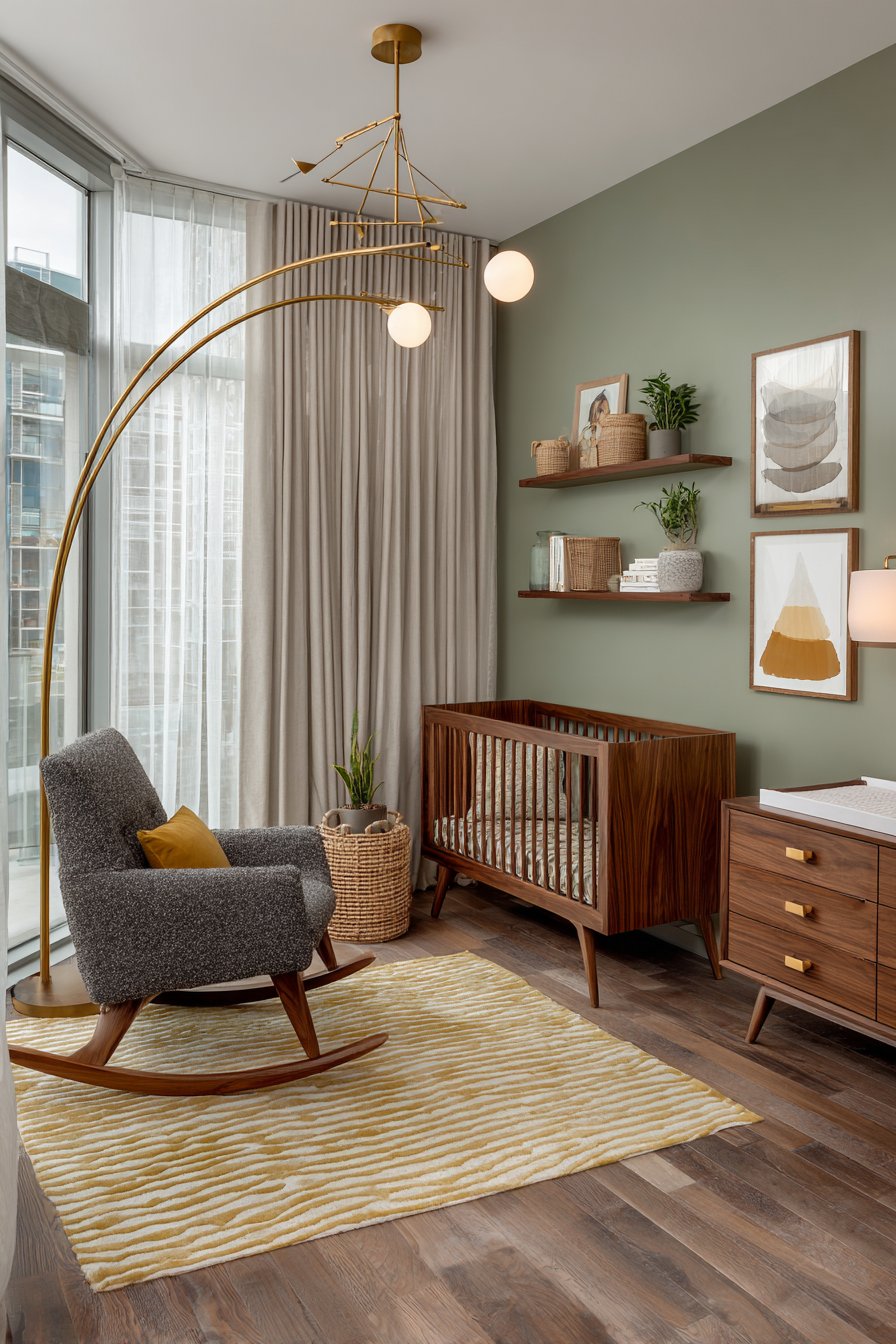
This article explores twenty distinctive mid century nursery concepts. Each design showcases different aspects of this beloved aesthetic. From bold color palettes to minimalist approaches, you’ll discover inspiration for creating your perfect nursery. The concepts balance visual appeal with practical considerations for daily childcare routines.
1. Sage Green Sanctuary with Walnut Warmth
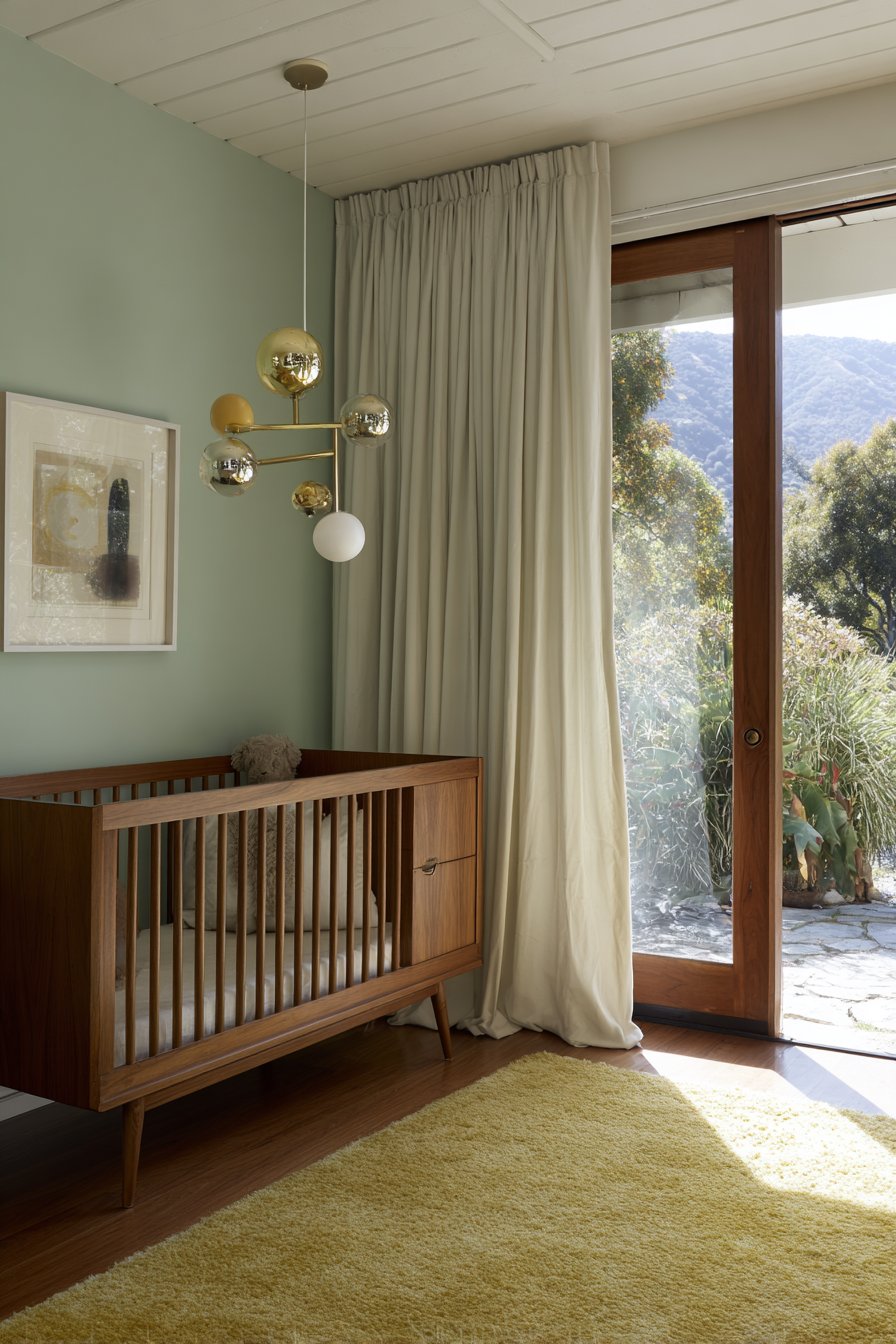
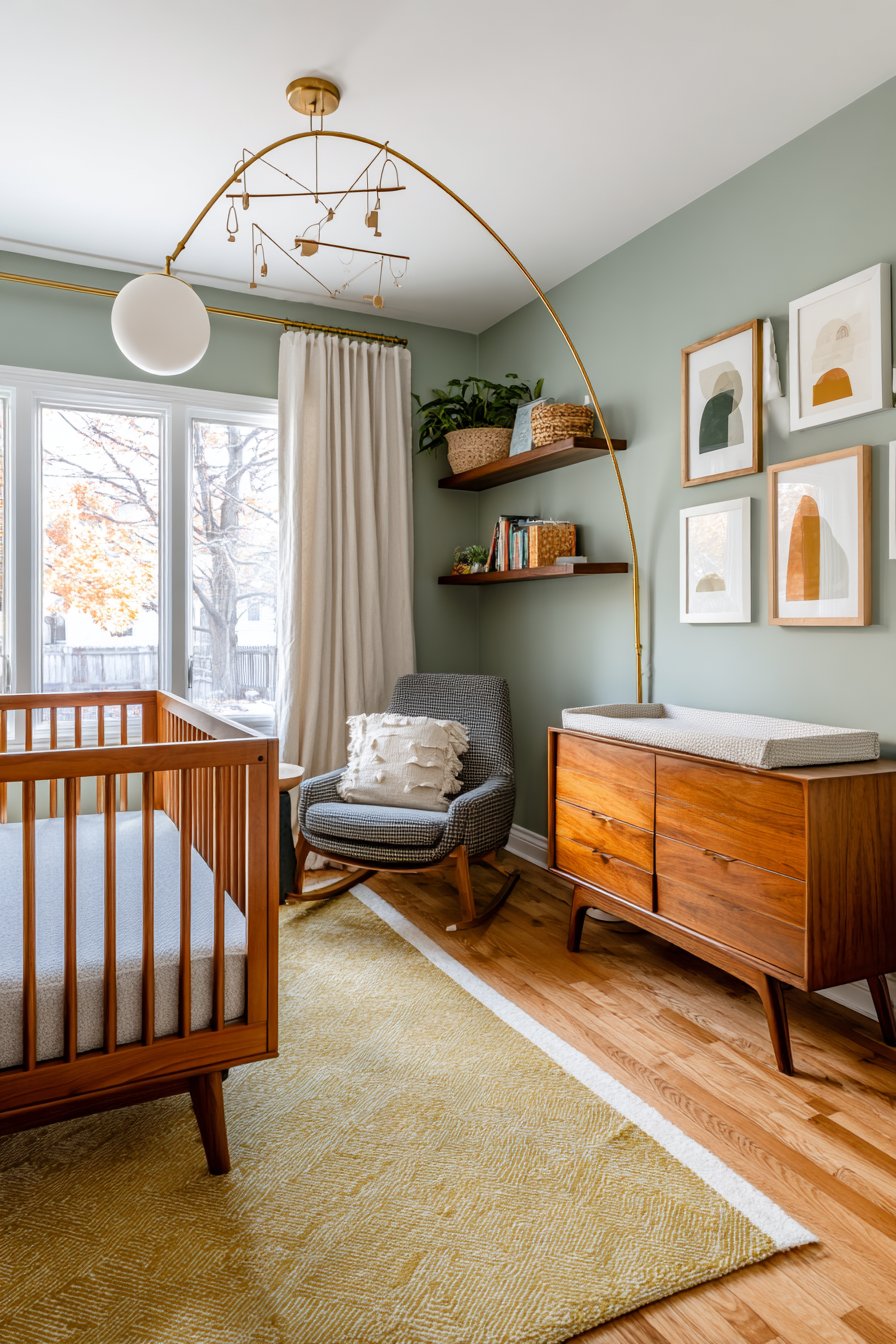
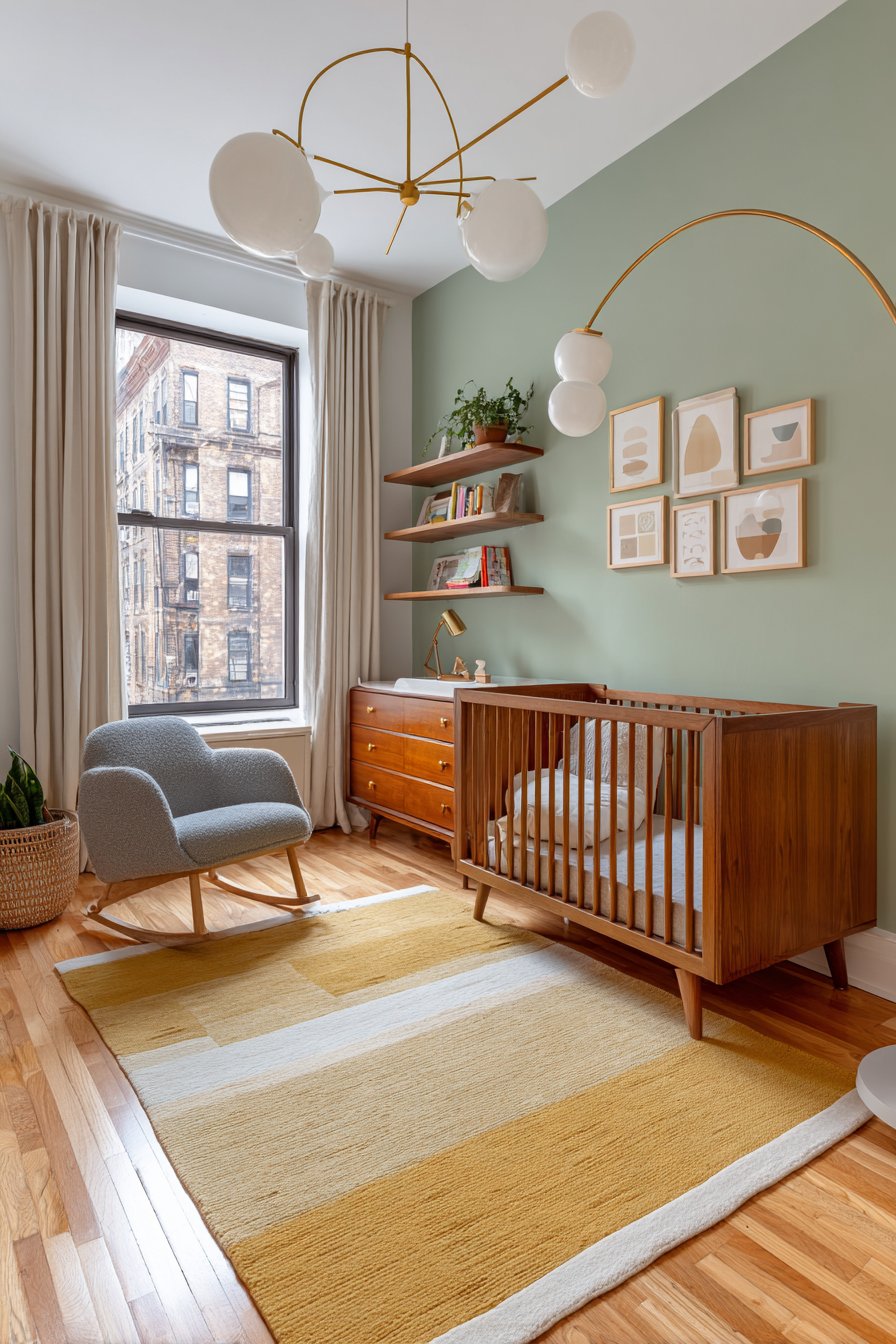
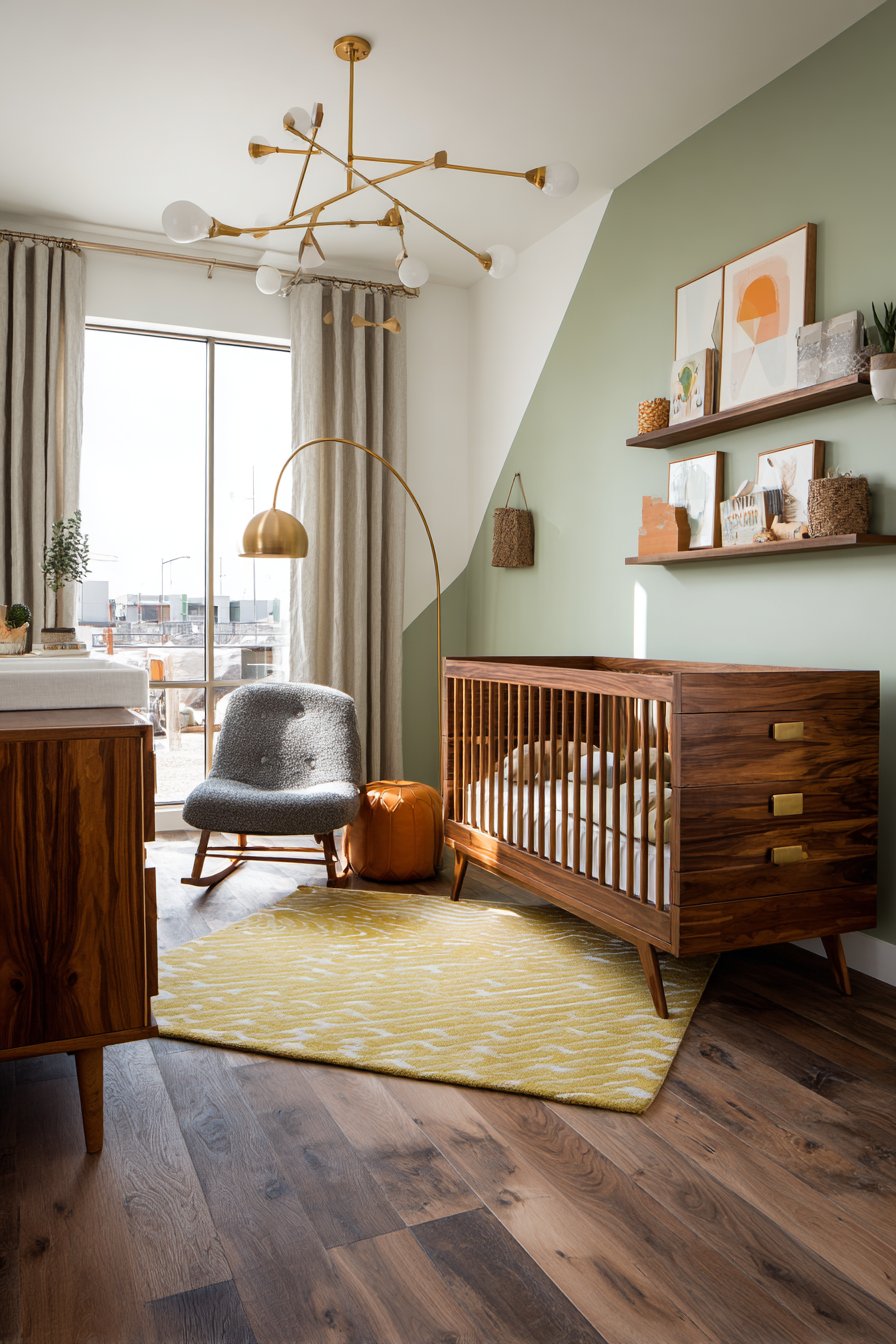
A walnut wood crib with tapered legs anchors this serene nursery design. The clean lines reflect authentic mid century craftsmanship. Positioned against a soft sage green accent wall, the crib becomes a beautiful focal point. The color choice creates a calming atmosphere ideal for rest and bonding.
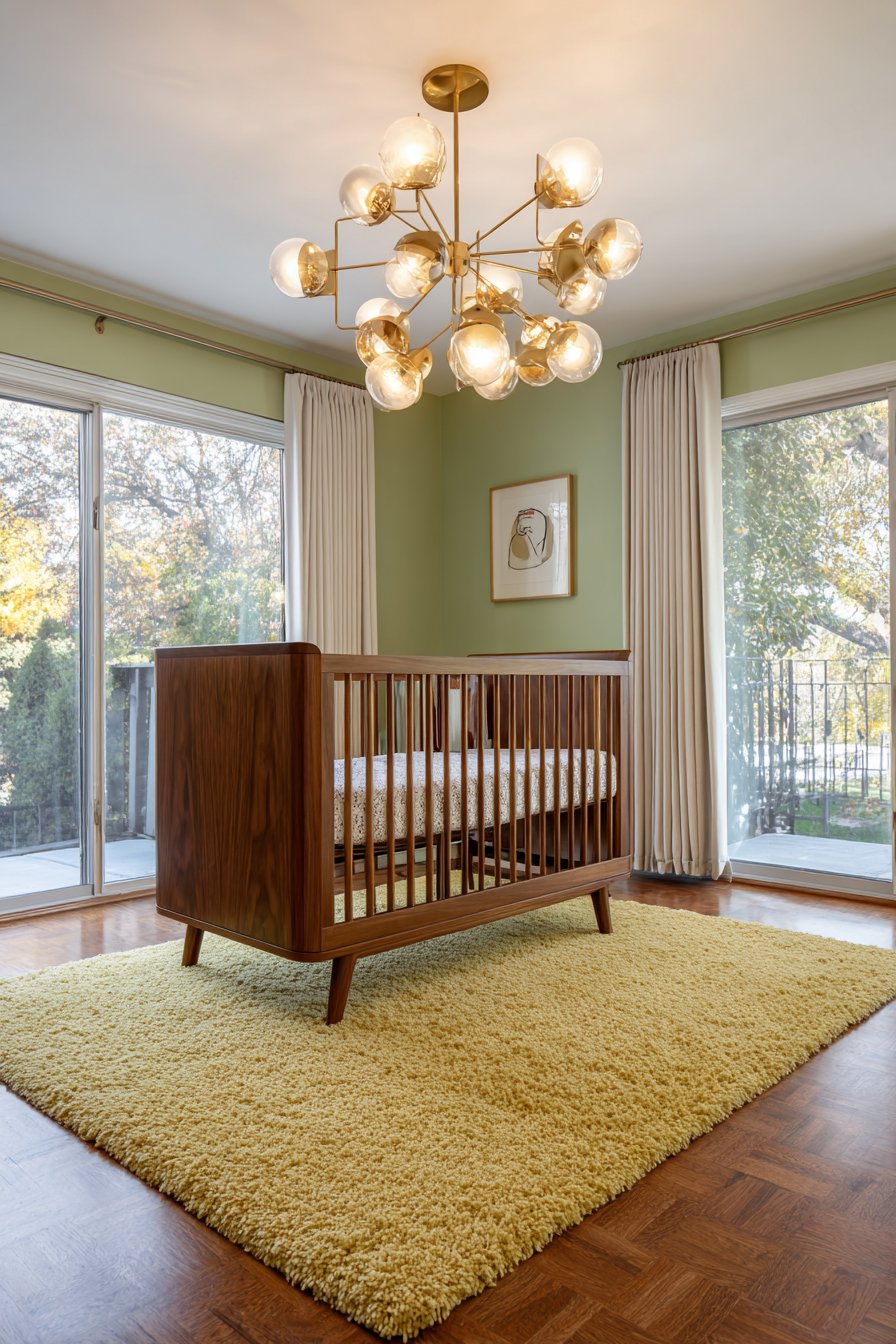
Above the crib, a sculptural mobile features geometric brass and wood elements. This kinetic art piece engages developing vision while adding visual interest. Natural oak flooring complements the warm walnut tones throughout the space. The wood grain variations create subtle texture underfoot.
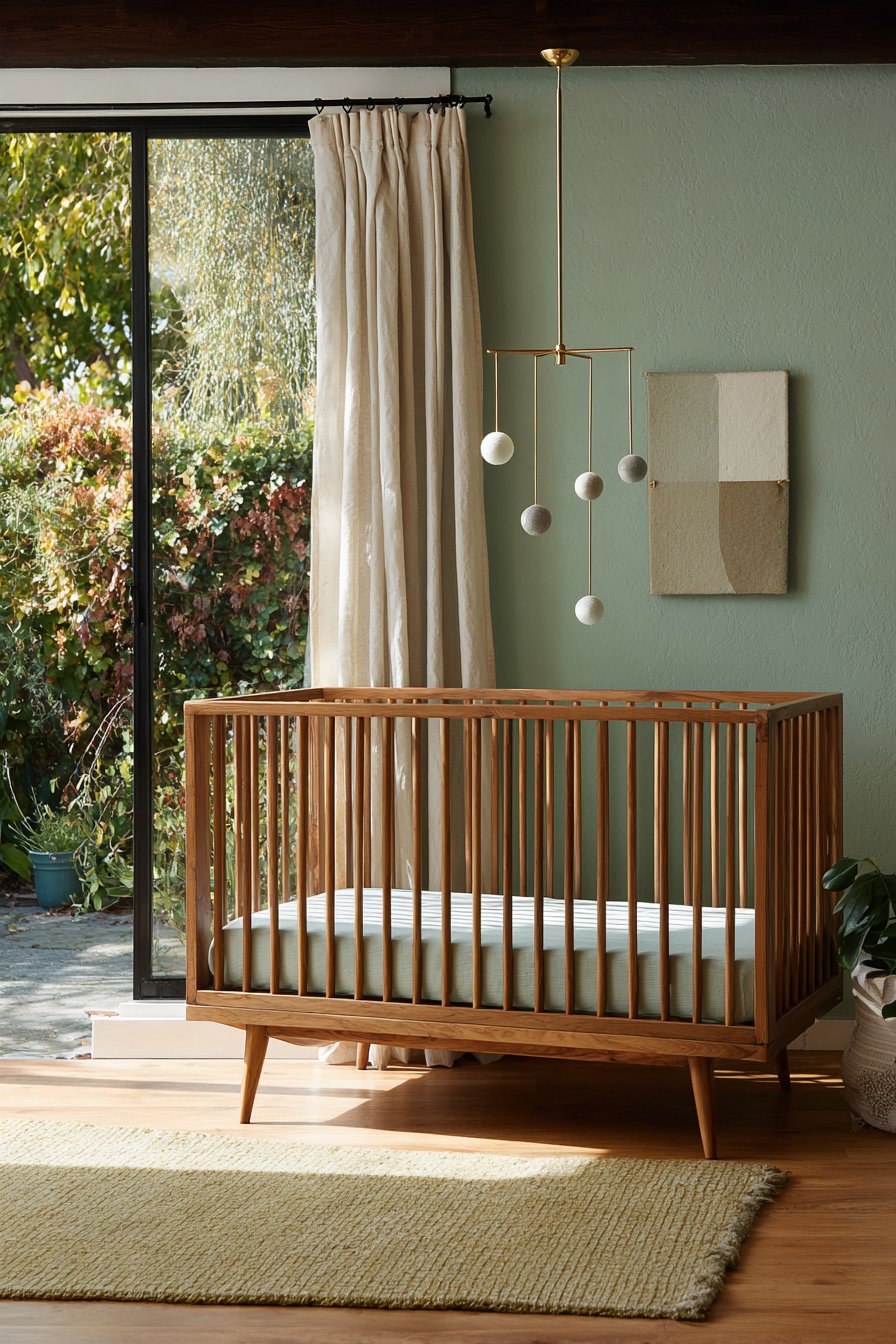
A plush wool area rug in muted mustard yellow anchors the seating area. This pop of color adds warmth without overwhelming the peaceful palette. Large windows dressed with simple linen curtains maximize natural light. Morning sun illuminates the room with soft, diffused brightness.
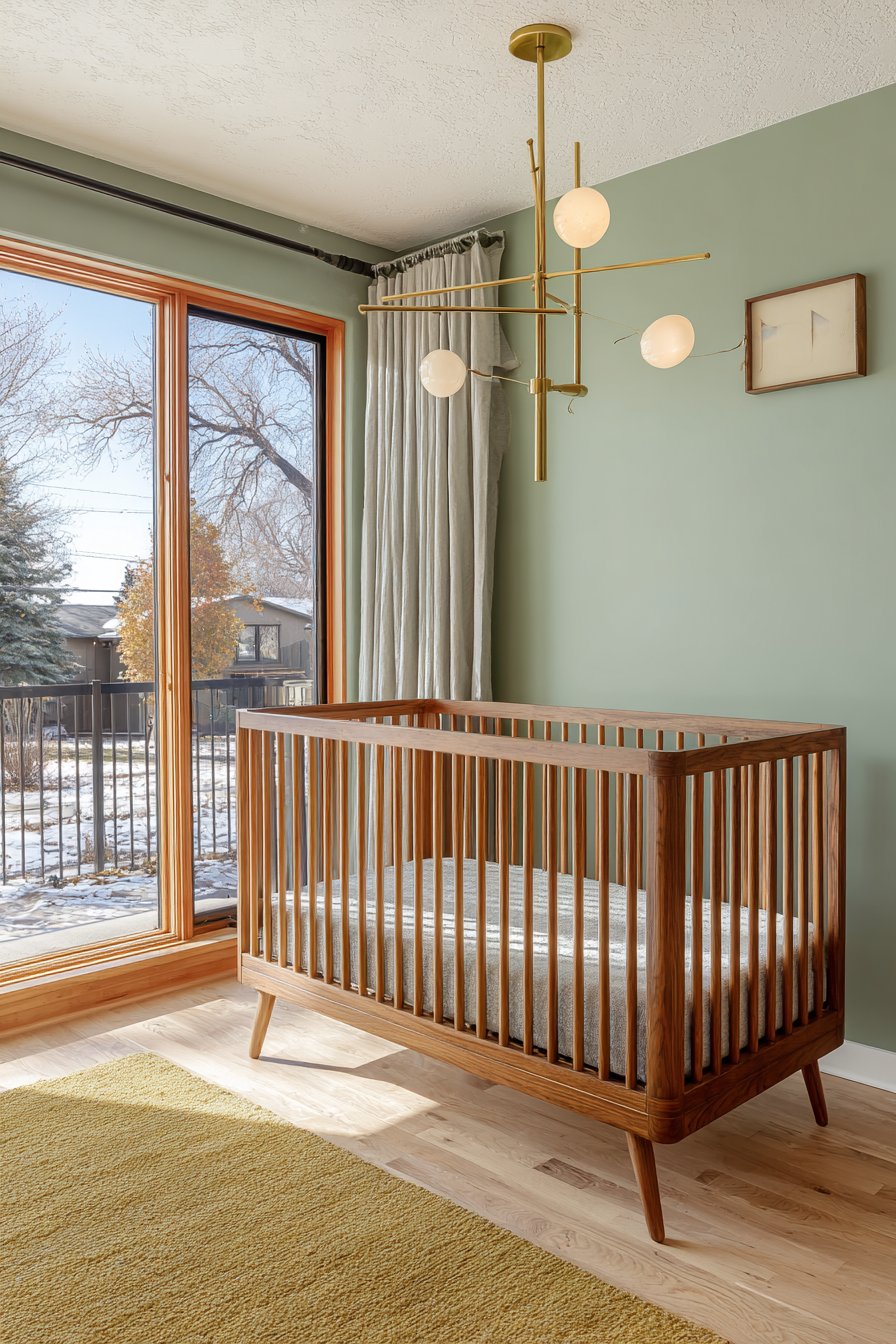
The combination of sage green walls and warm wood creates perfect balance. This color scheme feels both contemporary and timeless. The natural materials age gracefully, developing character over years of use. Quality craftsmanship ensures these pieces transition beautifully as your child grows.
Key Design Tips:
- Select solid wood cribs with visible grain for authenticity and durability
- Use one accent wall to add color without overwhelming the space
- Choose sculptural mobiles that serve as functional art pieces
- Layer natural textures through wool rugs and linen curtains
- Prioritize large windows to maximize natural light throughout the day
2. Teak Storage Solutions with Vintage Character
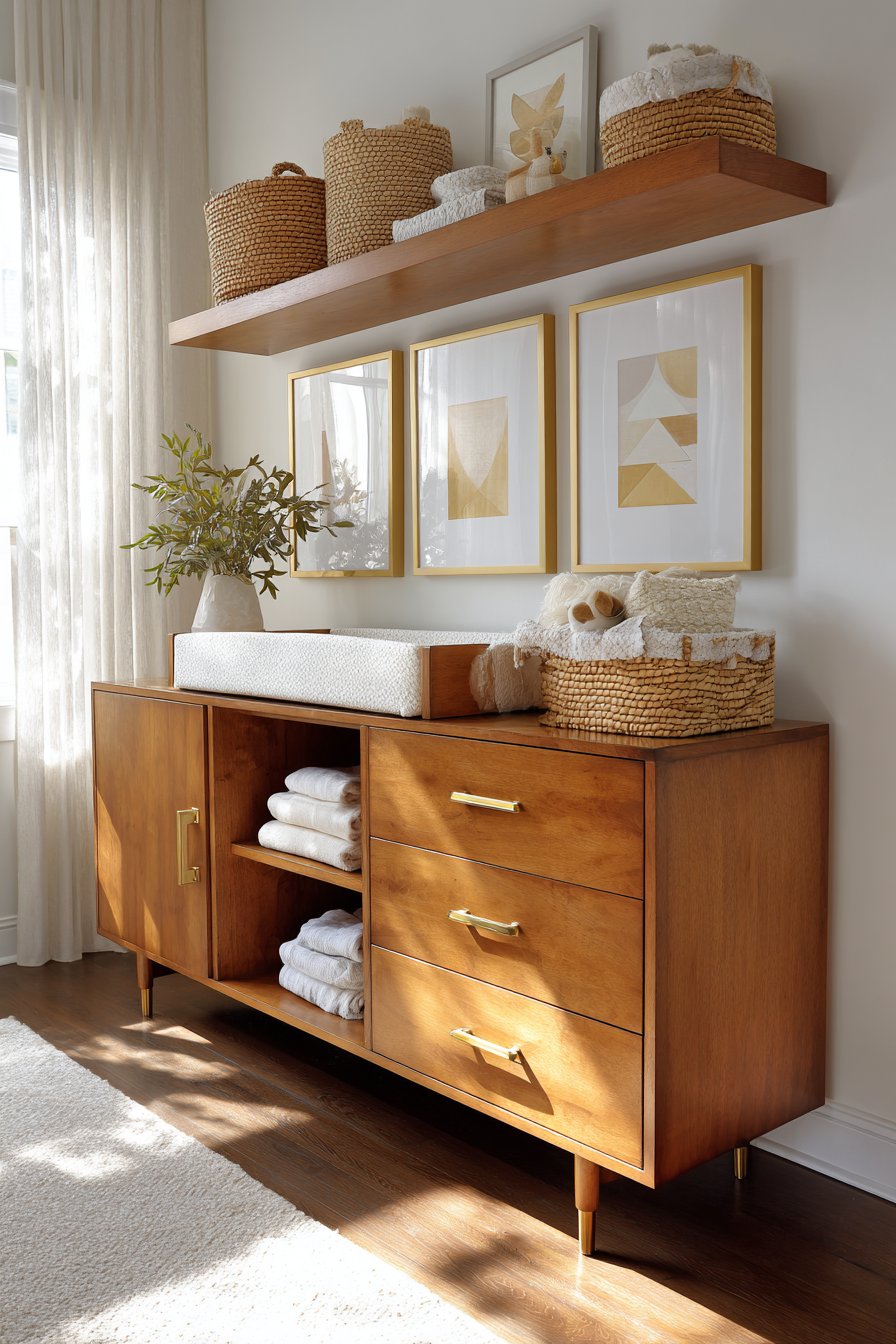
A vintage-inspired teak credenza serves double duty as a changing table. The brass drawer pulls add authentic period detail. This repurposed furniture approach embraces sustainability while delivering exceptional style. The warm honey tones of teak bring richness to the nursery environment.
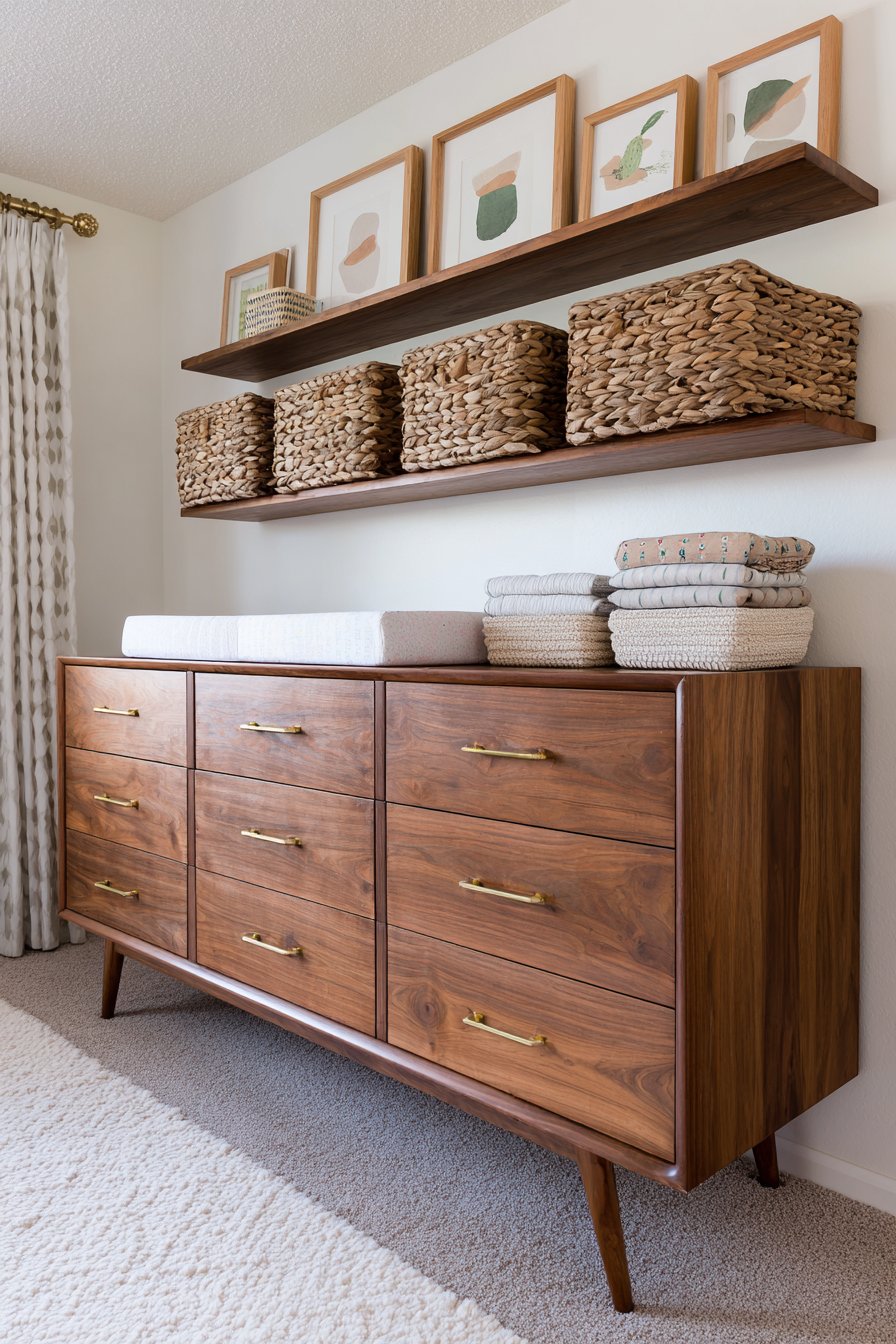
Woven baskets in natural materials organize baby essentials on open shelving. The texture of seagrass or rattan adds organic warmth. Neatly folded items create visual calm and functional efficiency. This open storage system makes grabbing necessities quick during diaper changes.
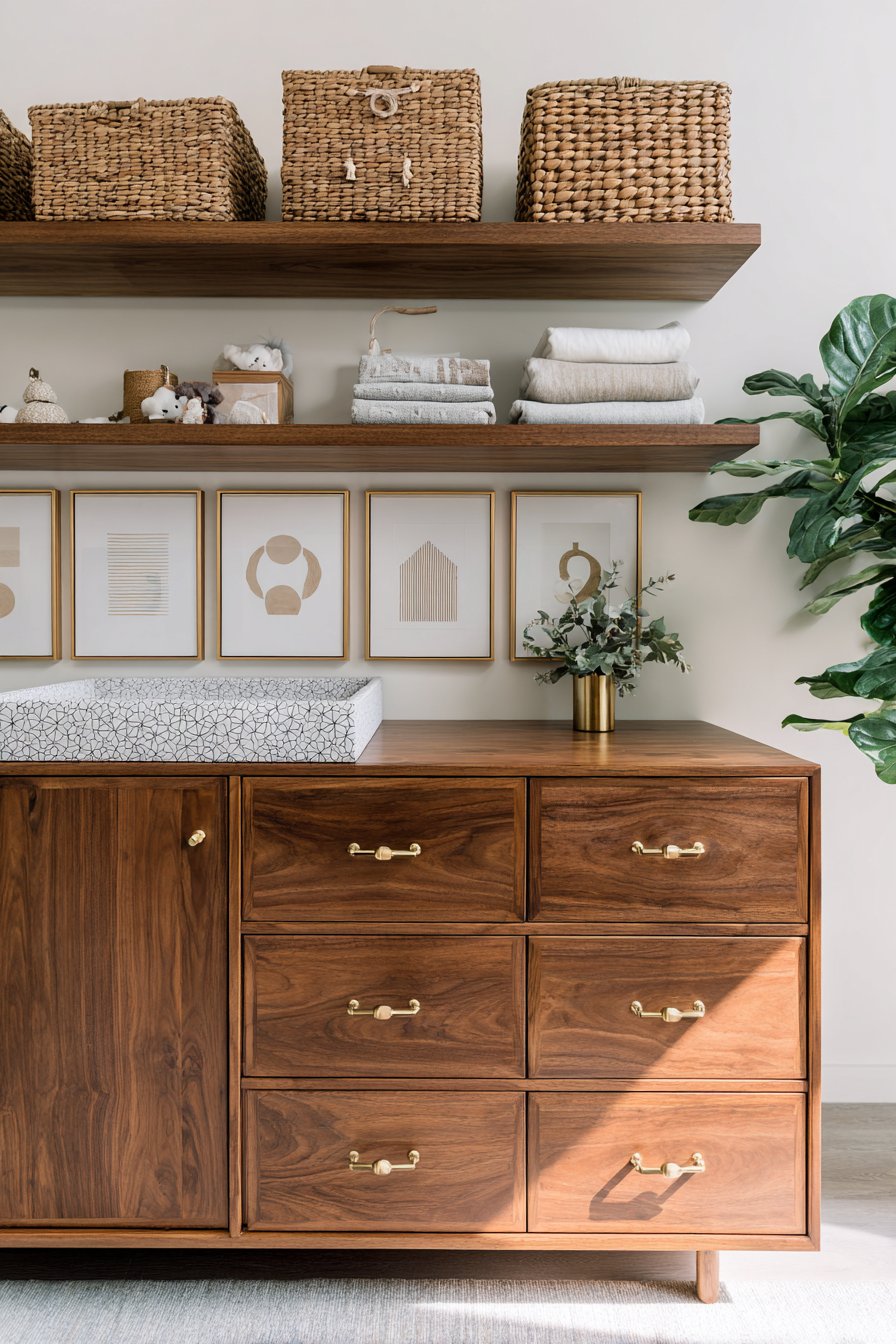
The wall behind displays a gallery of abstract geometric prints. Simple wooden frames with narrow profiles maintain the clean aesthetic. The artwork introduces pattern and visual interest at adult eye level. Soft diffused daylight highlights the wood tones throughout the space.
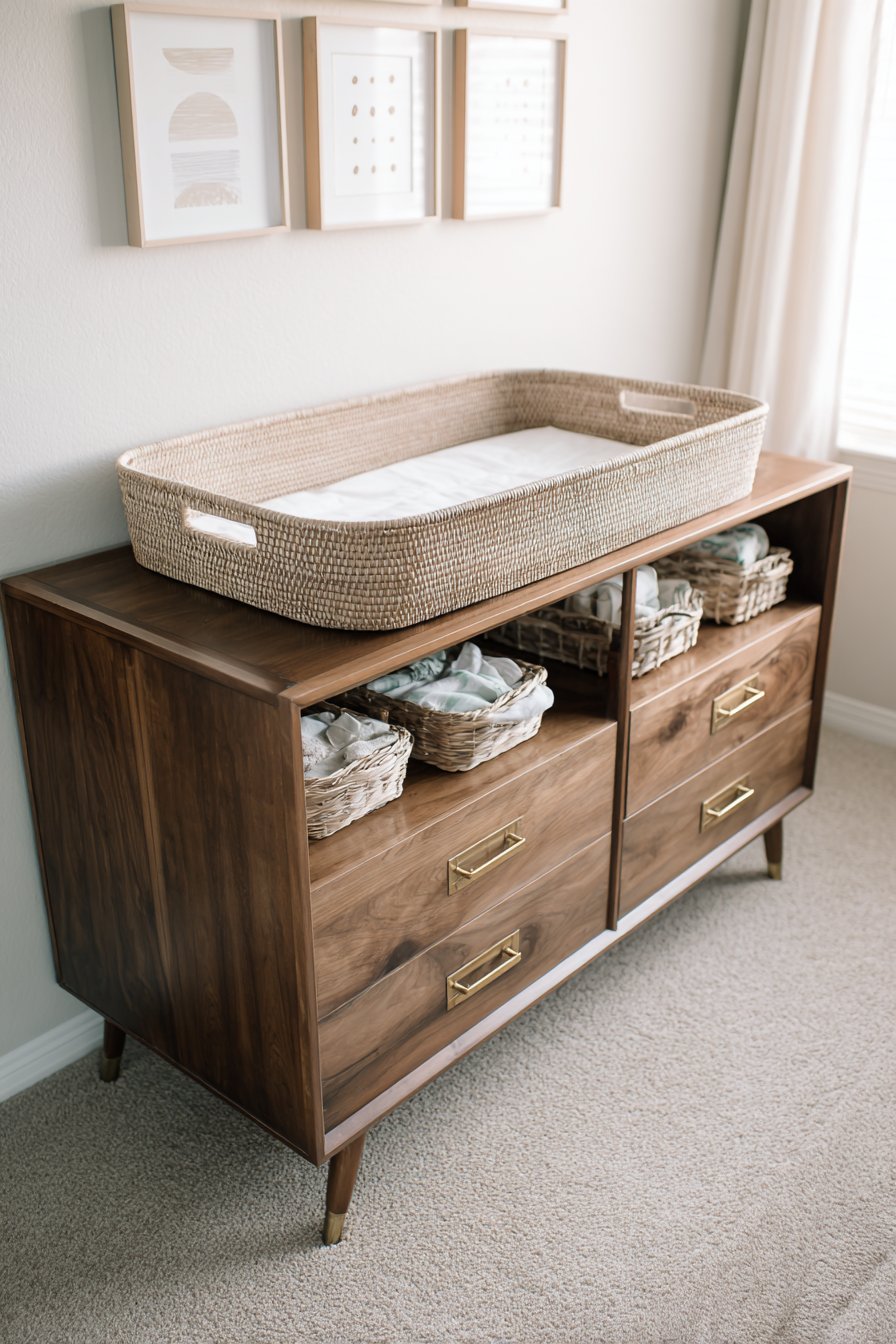
This storage-focused design proves that functionality and beauty coexist perfectly. The credenza provides ample drawer space for clothing and supplies. The combination of closed and open storage offers organizational flexibility. As your child grows, this piece easily transitions to standard bedroom furniture.
Key Design Tips:
- Repurpose quality vintage furniture for sustainable nursery solutions
- Choose brass hardware for authentic mid century period details
- Incorporate woven natural baskets for textural variety and flexibility
- Display geometric art prints to add visual interest above furniture
- Prioritize pieces that transition easily to different uses over time
3. Cozy Reading Nook with Molded Plywood Comfort
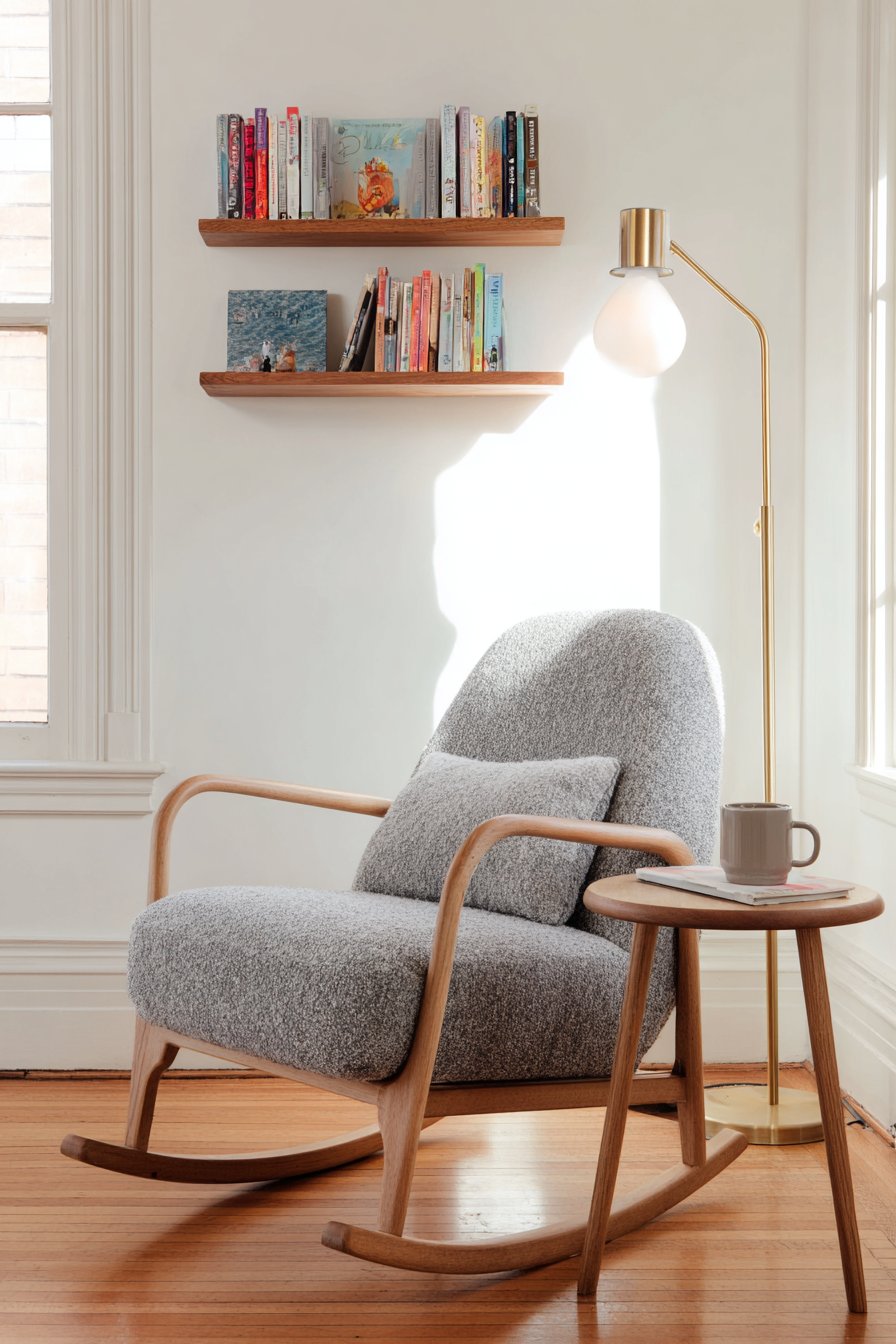
An iconic molded plywood rocking chair creates the perfect nursing spot. Upholstered in charcoal grey bouclé fabric, it offers comfort and style. The ergonomic curves support parents during long feeding sessions. This investment piece becomes a cherished family heirloom over decades.
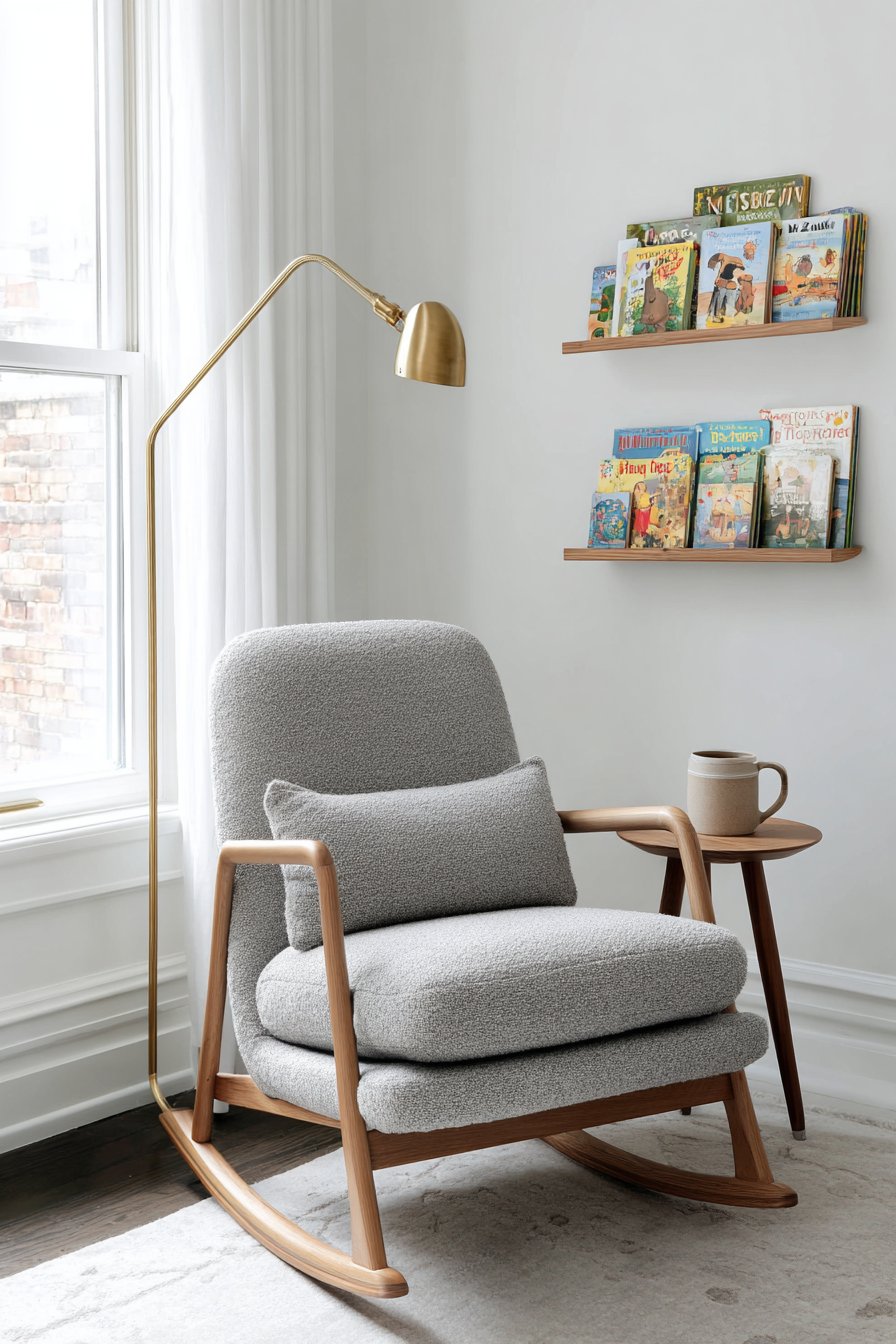
A slim floor lamp with an angled brass arm provides focused reading light. The adjustable design allows precise light positioning for nighttime stories. Floating walnut shelves display children’s books with colorful spines facing outward. This arrangement creates an evolving art installation as your library grows.
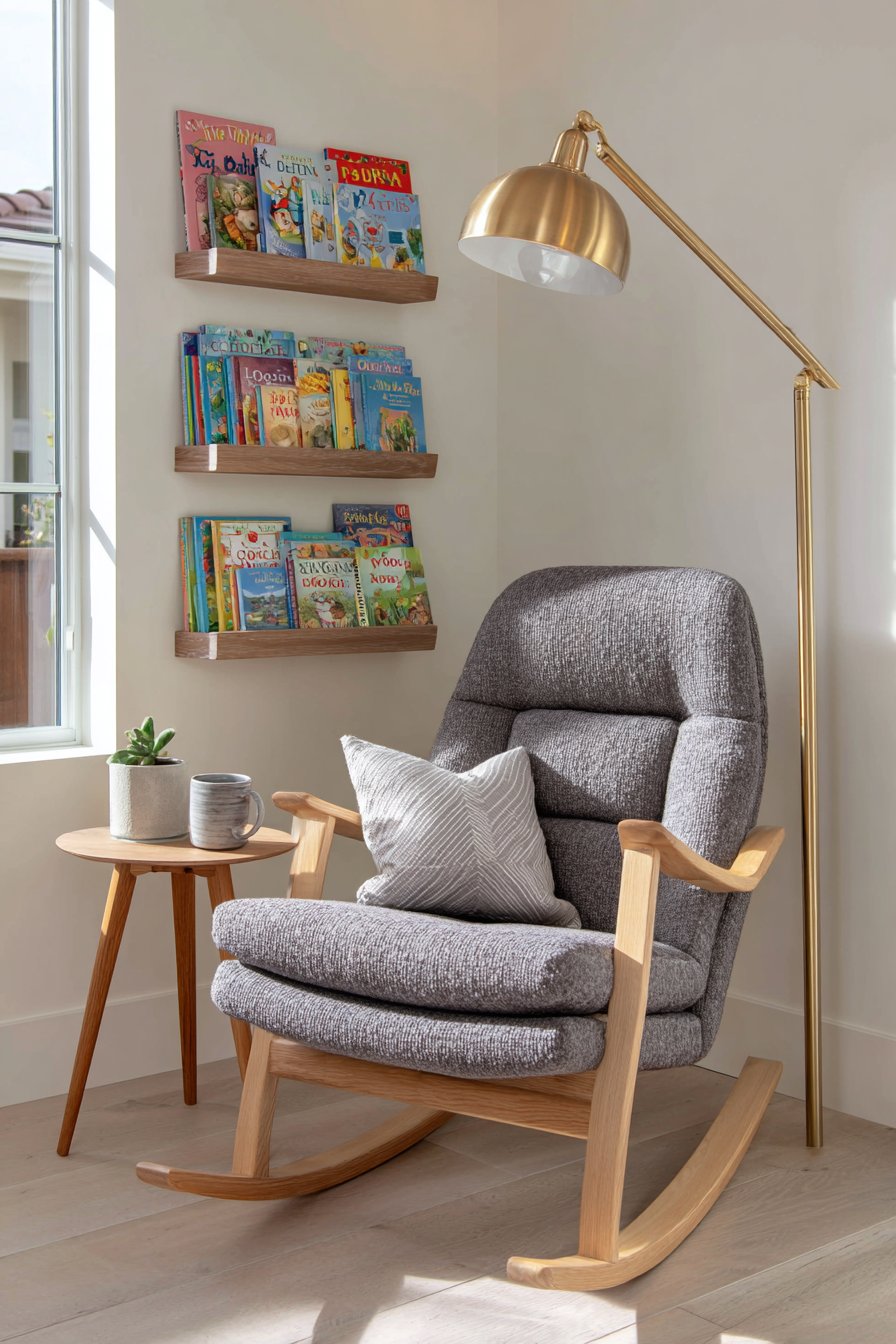
A small round side table in teak holds essentials within arm’s reach. The compact footprint suits the intimate scale of this reading corner. Natural light from a nearby window creates warm afternoon ambiance. The gentle illumination makes this space inviting throughout the day.
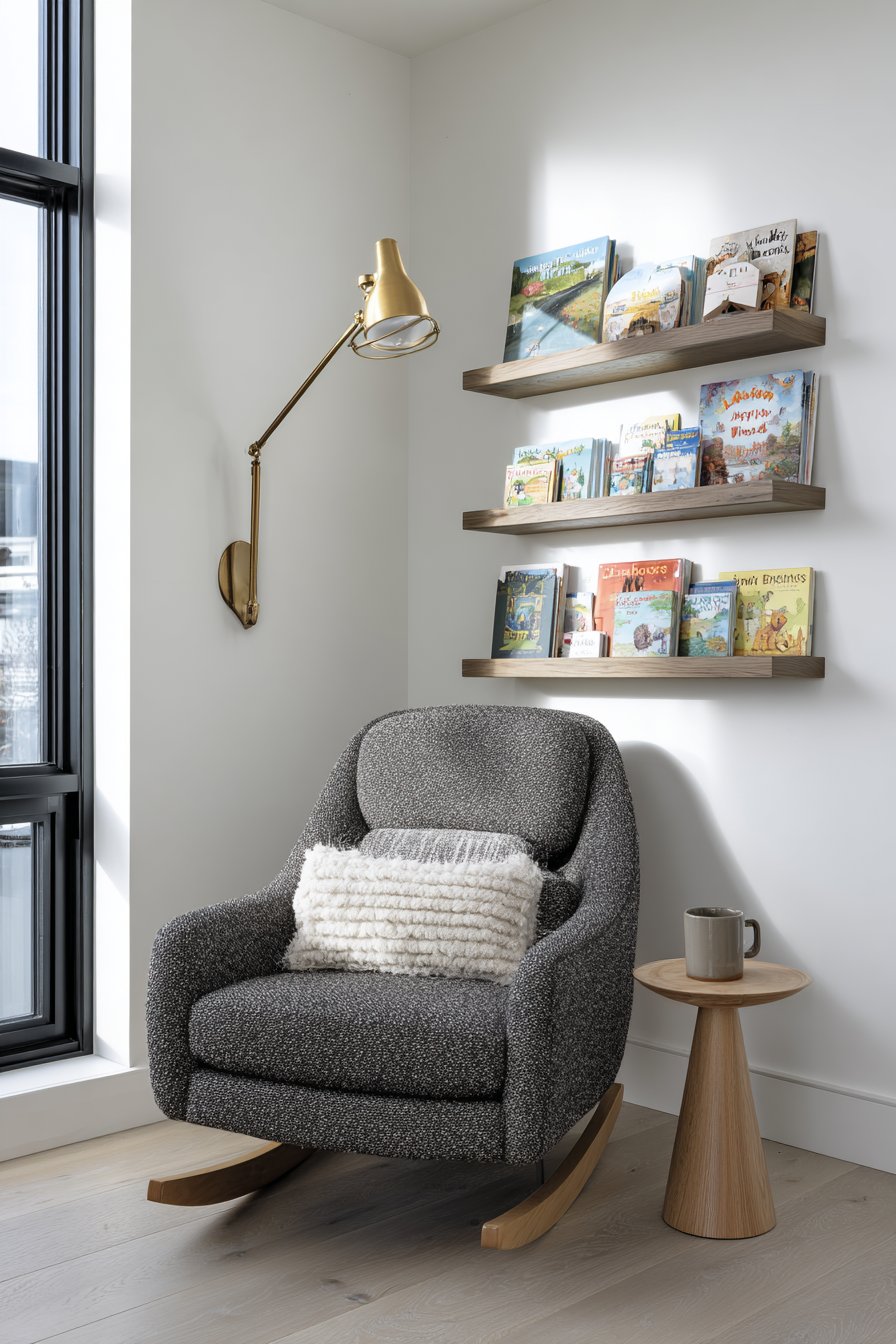
This dedicated reading nook emphasizes the importance of daily rituals. The thoughtful furniture placement encourages parent-child bonding through stories. The charcoal upholstery provides neutral sophistication that complements any color scheme. Quality materials ensure this corner remains beautiful through years of use.
Key Design Tips:
- Invest in an authentic molded plywood rocker for lasting comfort
- Add adjustable task lighting for nighttime reading and nursing
- Use floating shelves to display books as decorative elements
- Choose bouclé or textured fabrics for visual and tactile interest
- Position seating near windows to maximize natural light access
4. Atomic Pattern Charm with Low-Profile Elegance
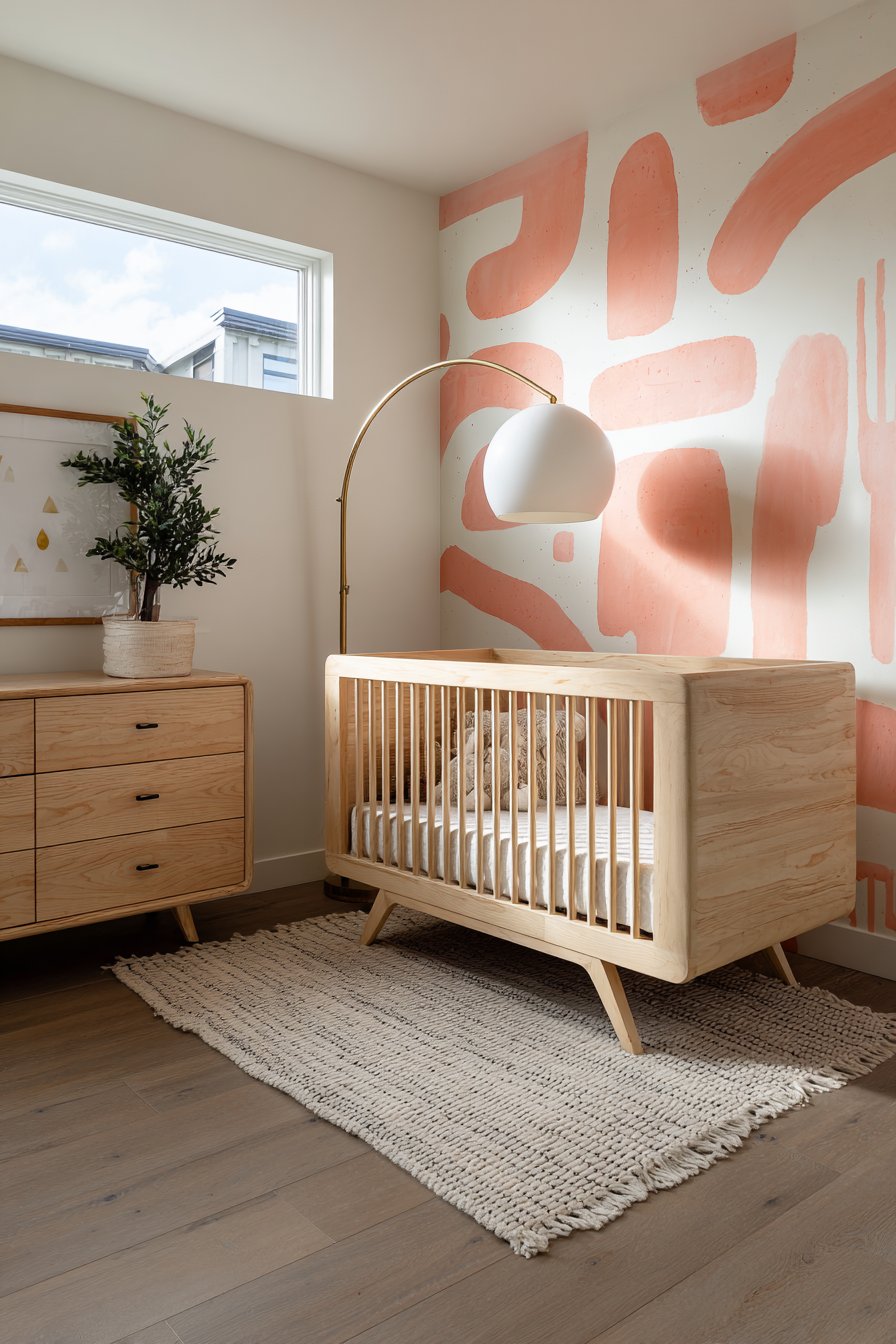
A low-profile platform-style crib in light oak showcases distinctive angled legs. These characteristic details define authentic mid century furniture design. The streamlined silhouette creates visual lightness despite solid construction. Light oak brings brightness while maintaining the warmth of natural wood.
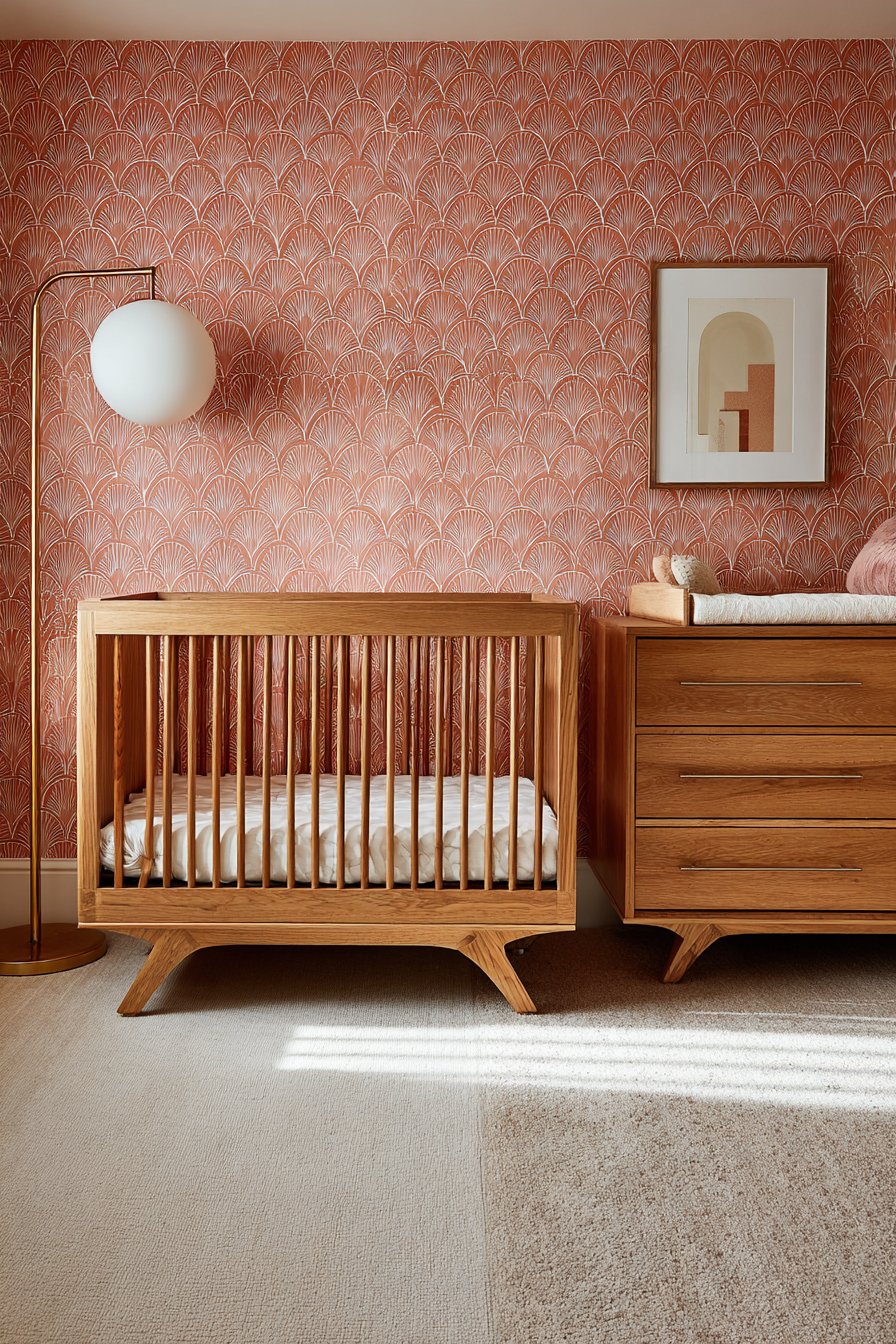
Removable wallpaper featuring subtle retro atomic patterns covers the accent wall. The soft coral and cream palette feels playful without overwhelming. This temporary application allows easy updates as tastes evolve. The geometric motifs reflect the optimistic design sensibility of the era.
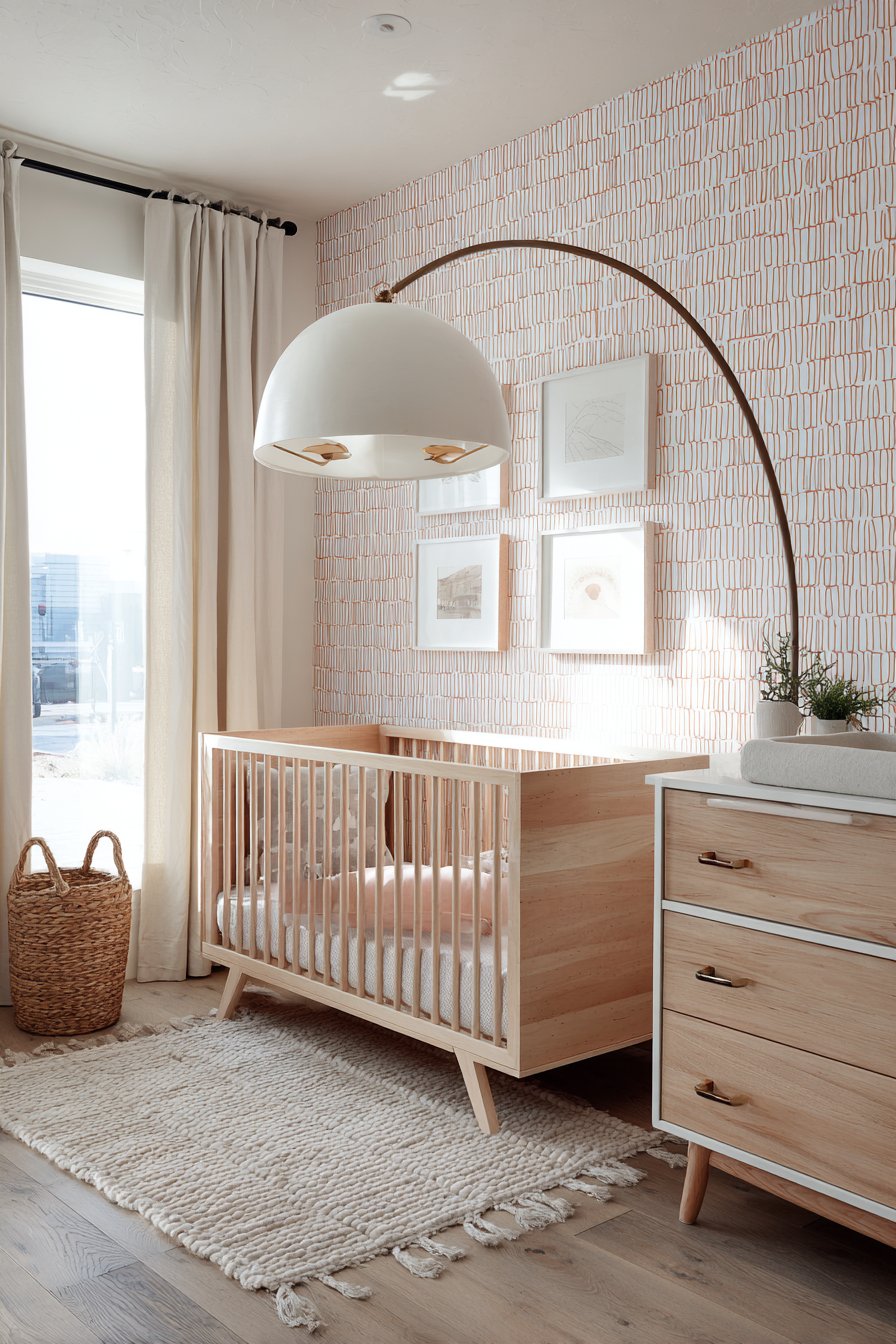
A vintage-style dresser with tapered legs provides additional storage. The brass hardware echoes the warm metallic accents throughout the room. A sculptural arc floor lamp with a white globe shade adds ambient lighting. The curved form introduces graceful movement to the angular furniture pieces.
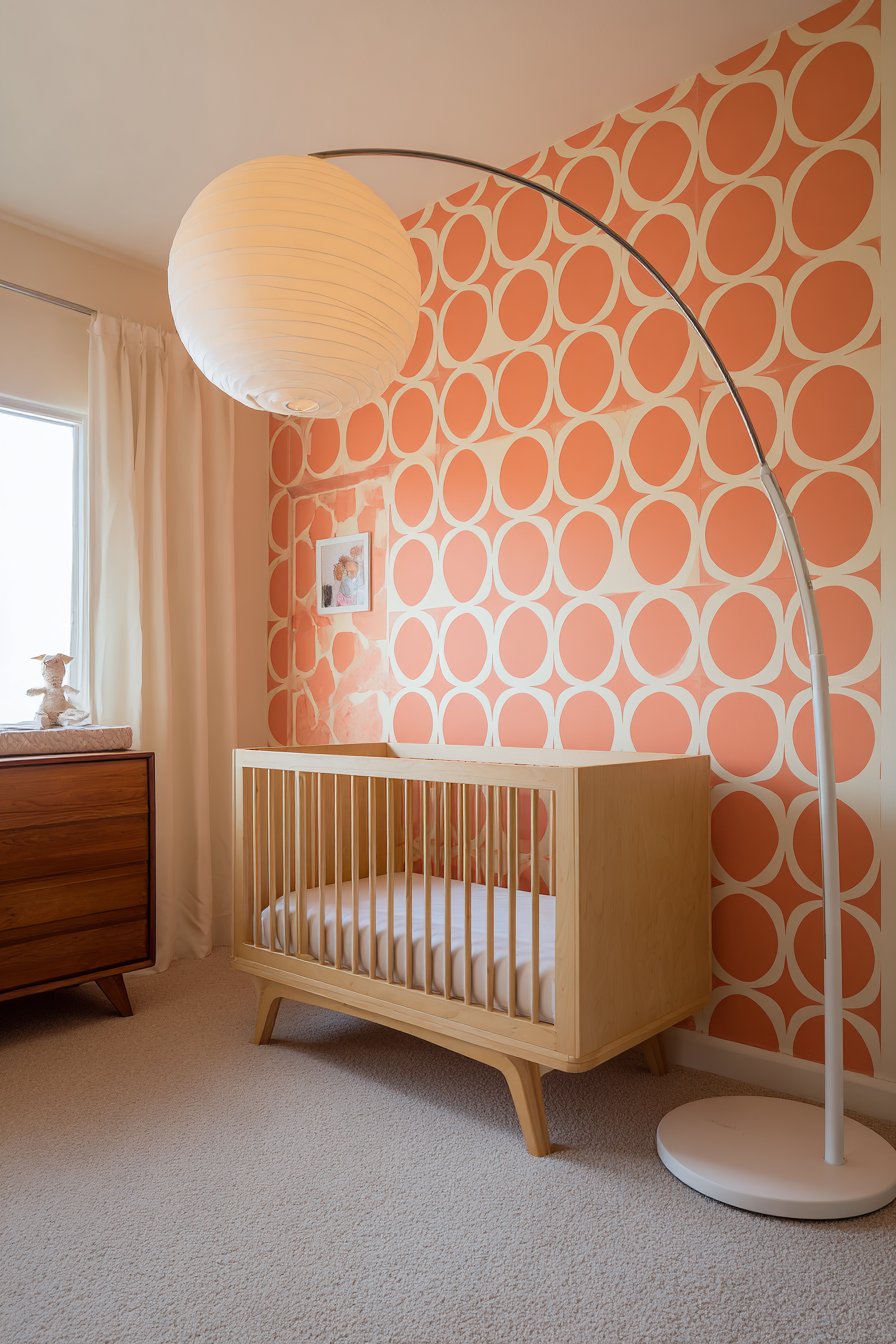
This design celebrates the optimistic spirit of mid century modern style. The atomic pattern wallpaper adds personality while remaining subtle. The combination of light wood and warm metallics creates an airy feeling. Wide-angle views reveal how each element contributes to the cohesive whole.
Key Design Tips:
- Choose light wood finishes to maximize brightness in smaller spaces
- Use removable wallpaper for commitment-free pattern introduction
- Select arc floor lamps to add sculptural interest and ambient light
- Incorporate atomic or geometric patterns in soft, muted colorways
- Ensure all furniture features characteristic tapered or angled legs
5. Gender-Neutral Symmetry with Dusty Blue Sophistication
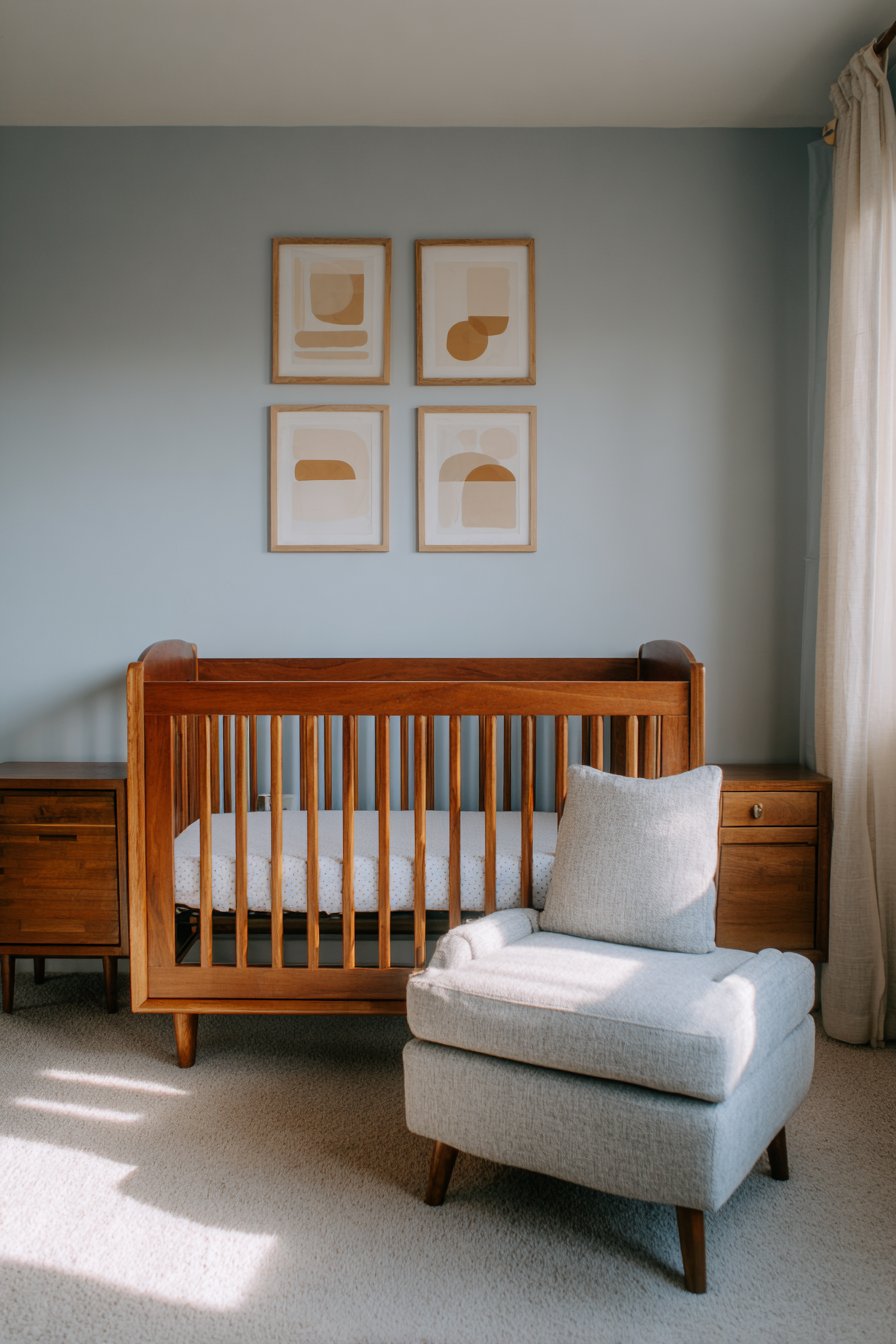
A dusty blue accent wall creates a sophisticated focal point. This versatile shade works beautifully for any child while avoiding stereotypical colors. Three remaining walls in crisp white maintain brightness and spatial openness. The contrast highlights the architectural features of the room.
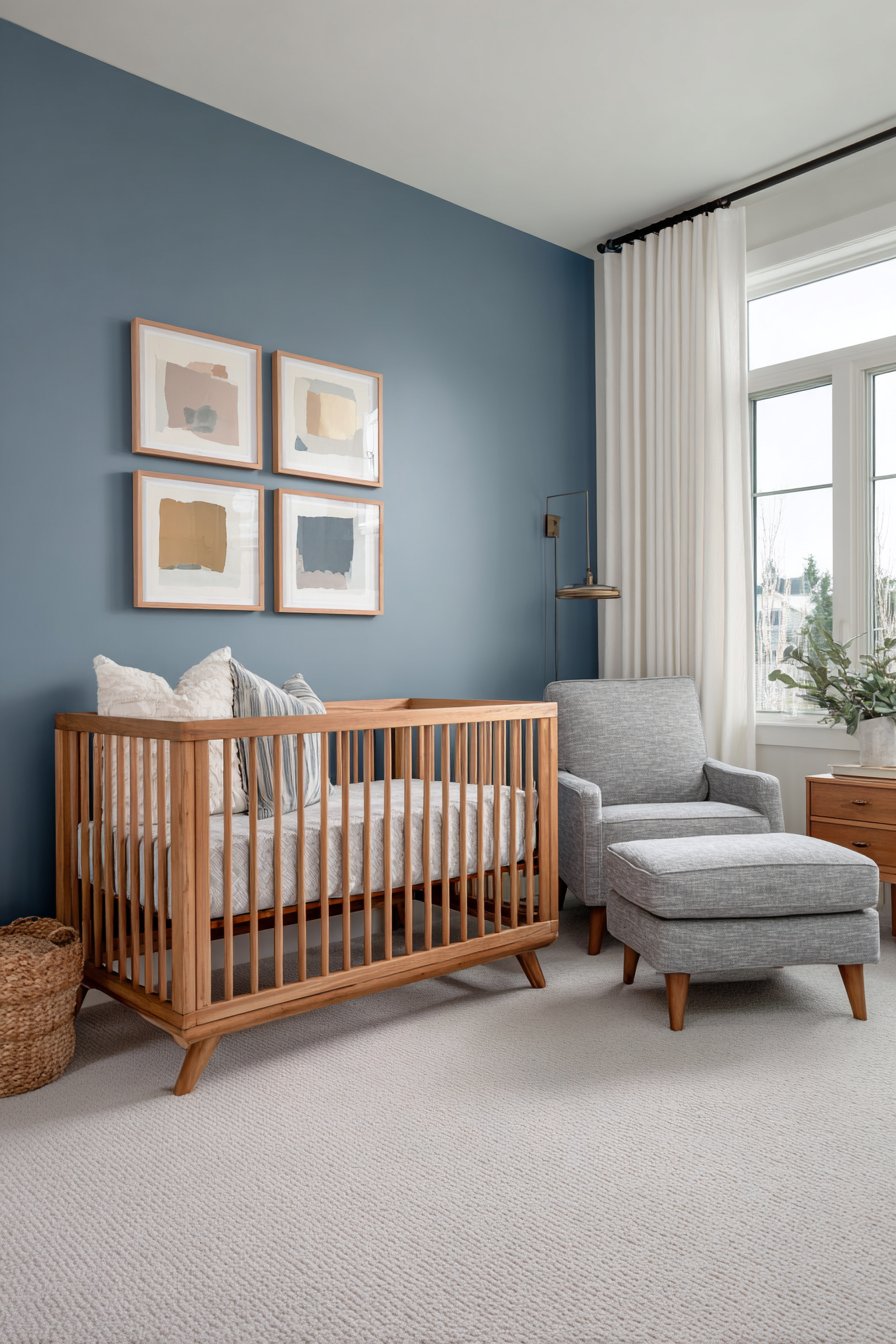
A simple wooden crib with spindle details sits centered on the accent wall. The classic slat design references traditional craftsmanship with mid century proportions. Two matching nightstands with tapered legs flank a comfortable upholstered glider. This symmetrical arrangement creates visual balance and functional efficiency.
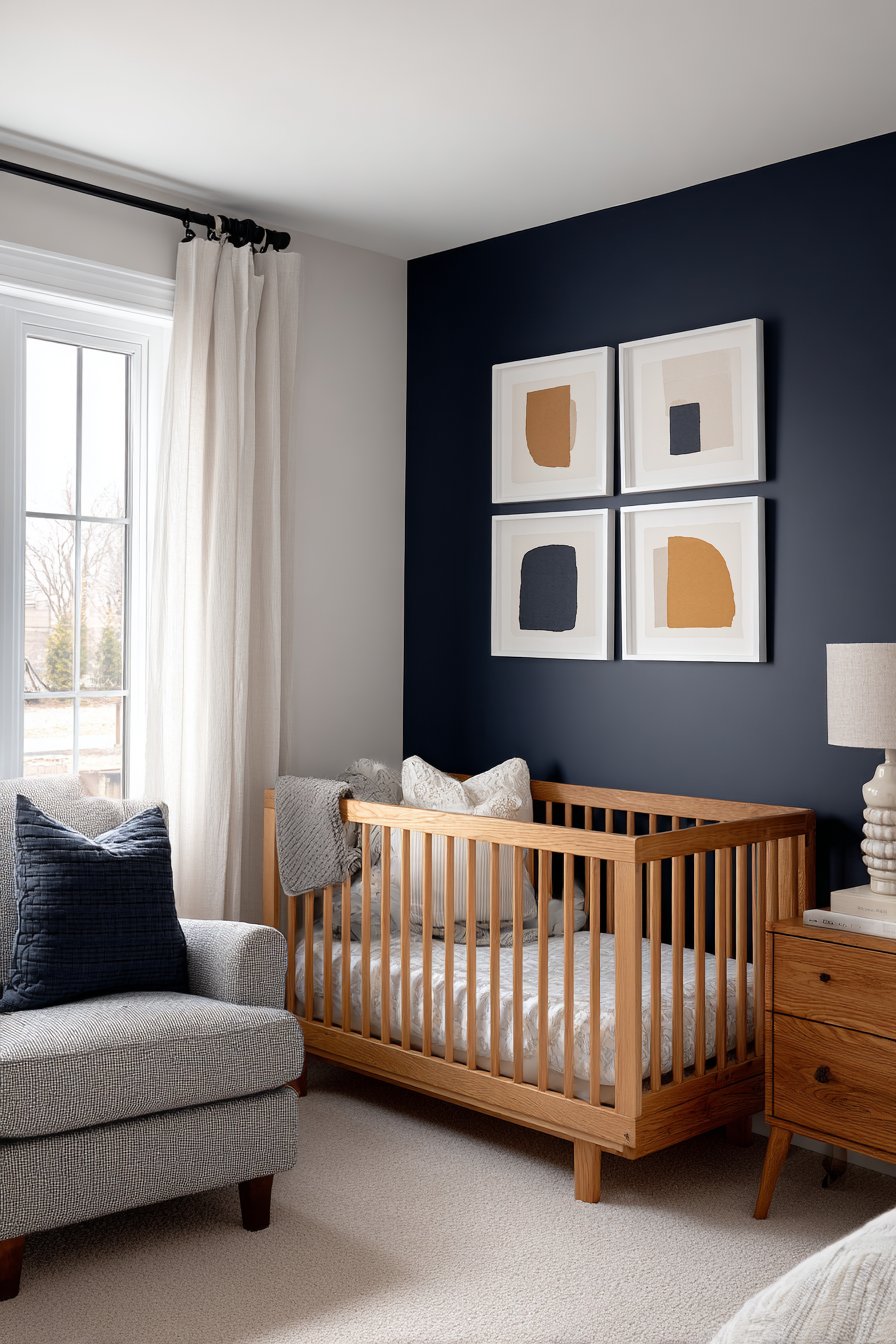
Abstract artwork in wooden frames hangs above the crib at appropriate height. The geometric shapes in muted tones complement the color scheme. A grey linen glider offers comfortable seating without visual heaviness. Soft morning light filters through sheer curtains, creating serene atmosphere throughout.
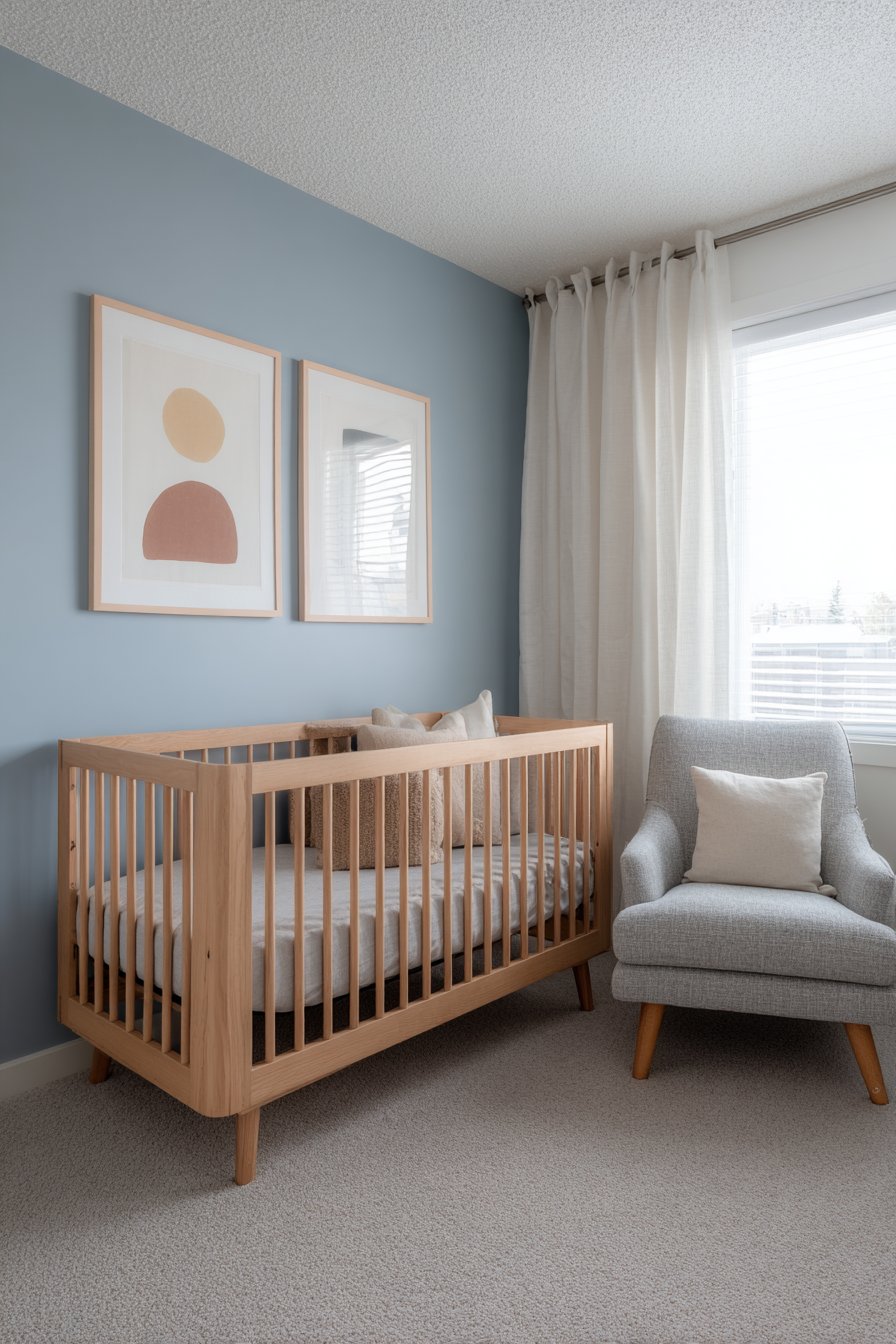
The symmetrical layout appeals to those who appreciate order and balance. This approach simplifies furniture placement decisions in rectangular rooms. The gender-neutral palette allows the space to grow with your child. Quality pieces in timeless designs ensure longevity beyond the nursery years.
Key Design Tips:
- Use symmetrical furniture placement for balanced, calming layouts
- Choose dusty blue or similar muted tones for sophisticated neutrality
- Select gliders with clean lines in neutral upholstery fabrics
- Position matching nightstands for functional balance on both sides
- Keep artwork at safe heights while maintaining visual connection to furniture
6. Curated Bookshelf Display with Vintage Teak Beauty
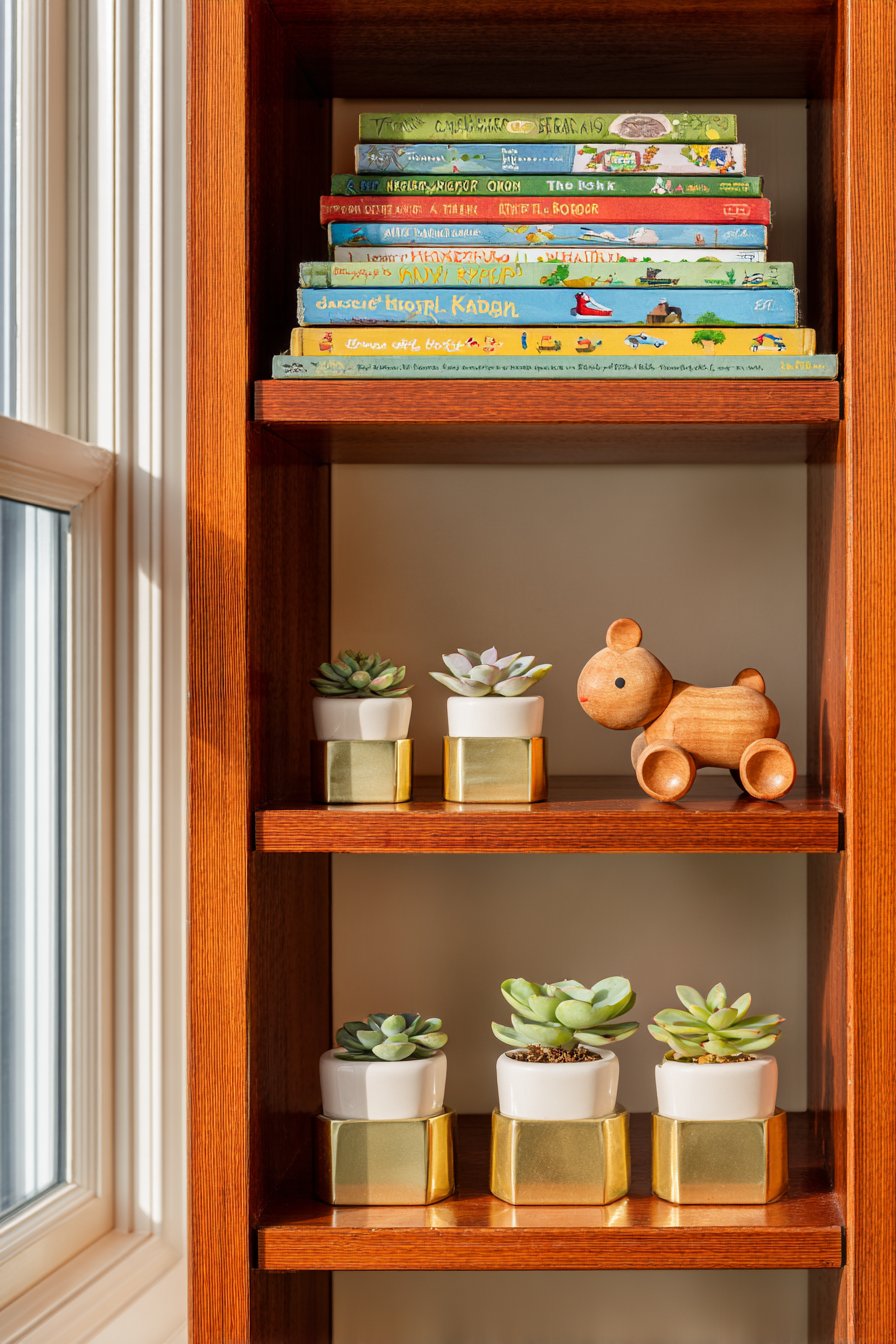
A vintage teak bookshelf with adjustable shelves becomes a functional art piece. The warm honey tones glow in natural light from adjacent windows. Adjustable shelving accommodates changing storage needs as your child grows. The quality construction ensures stability for decades of use.
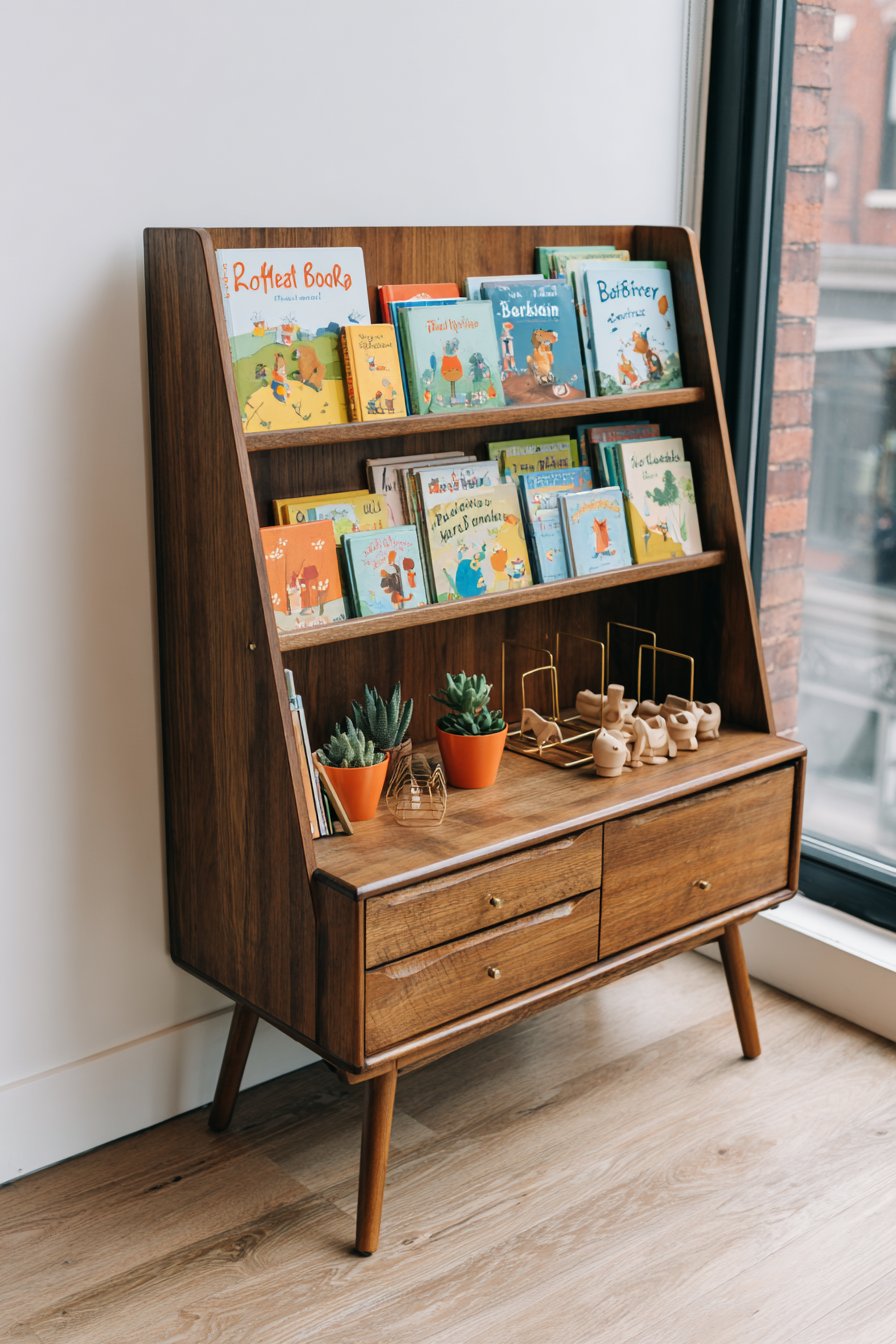
Curated displays include classic children’s books arranged by color or size. Small potted succulents in ceramic planters add living elements. Wooden toys serve as sculptural objects between books. Brass bookends shaped like simple geometric forms hold volumes upright with style.
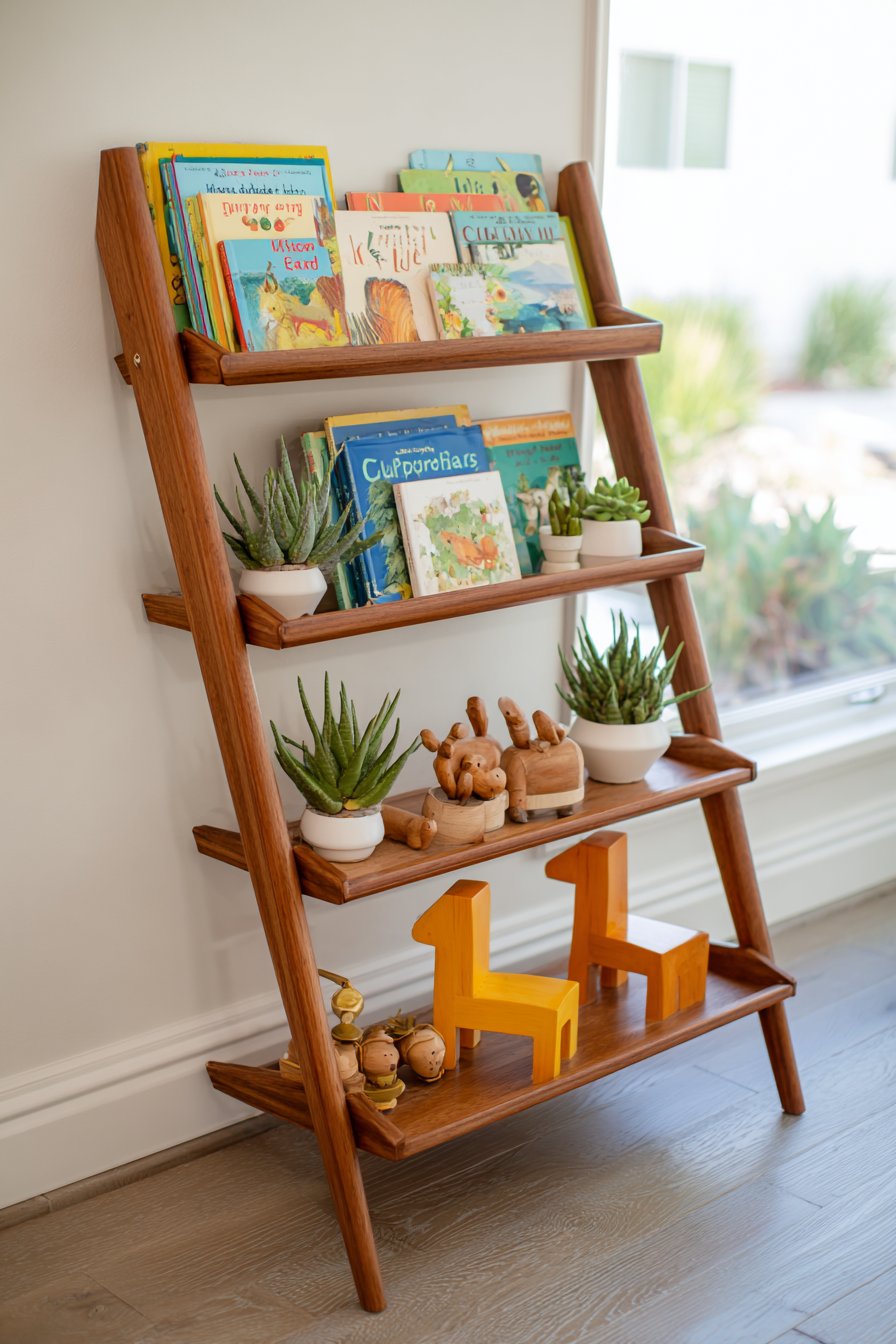
The natural wood grain patterns create visual interest without additional decoration. This detail-focused approach celebrates material authenticity. Soft natural light highlights the craftsmanship and wood characteristics. The thoughtful curation demonstrates how storage becomes decorative when done intentionally.

This vignette proves that organizational furniture deserves aesthetic consideration. The bookshelf styling evolves as your child’s interests develop. The combination of books, plants, and toys creates engaging visual texture. Quality vintage pieces often feature superior construction compared to modern alternatives.
Key Design Tips:
- Source authentic vintage teak pieces for superior grain and construction
- Style bookshelves with mix of books, plants, and decorative objects
- Choose brass or wooden geometric bookends for period-appropriate details
- Position shelving near windows to highlight wood grain and colors
- Rotate displayed items seasonally to maintain visual freshness
7. Space-Saving Solutions with Compact Efficiency
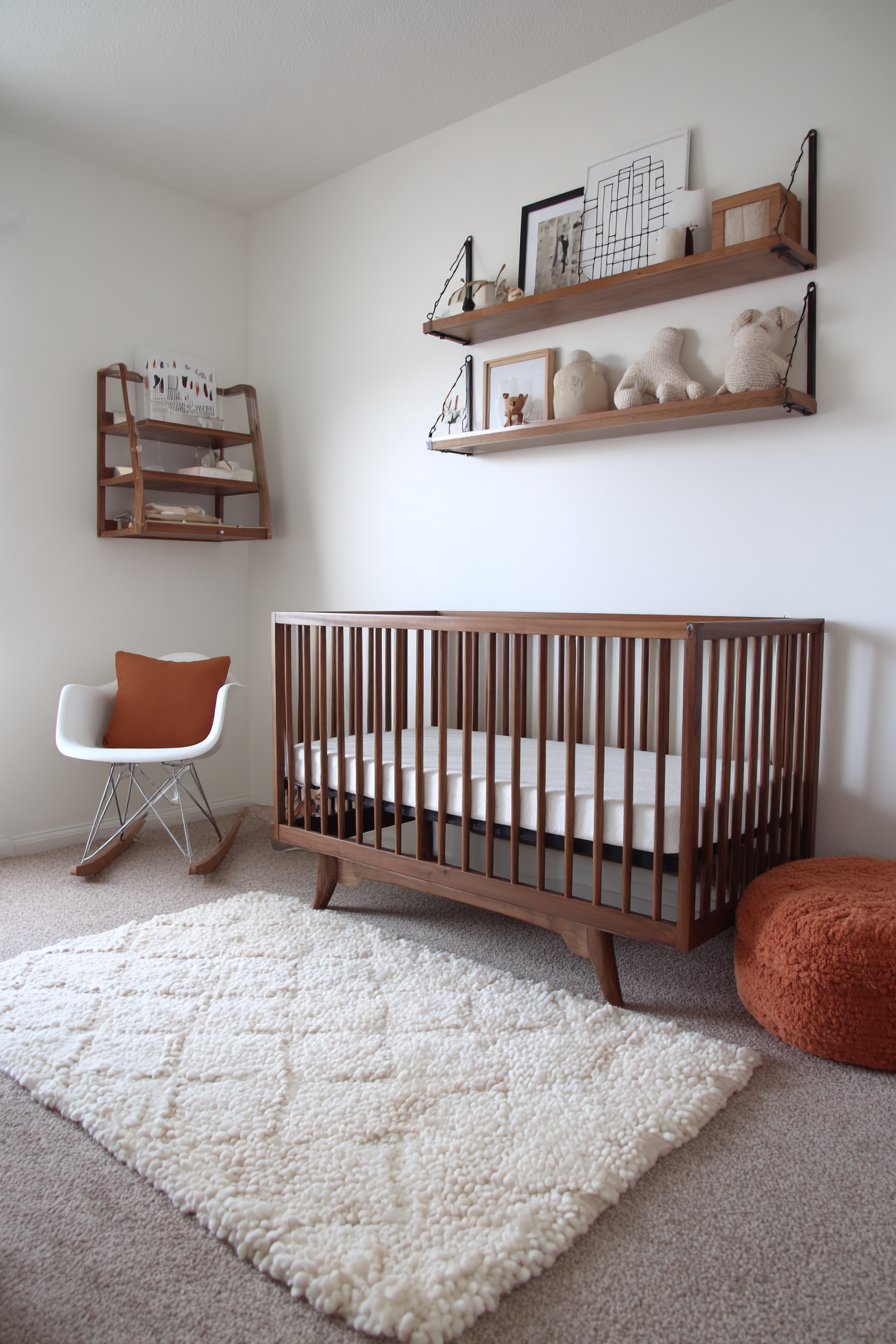
A convertible crib in walnut finish maximizes limited square footage. The clean modernist lines maintain aesthetic appeal despite compact dimensions. This space-saving approach proves small nurseries can still embrace mid century style. The dark wood grounds the space with warmth and sophistication.
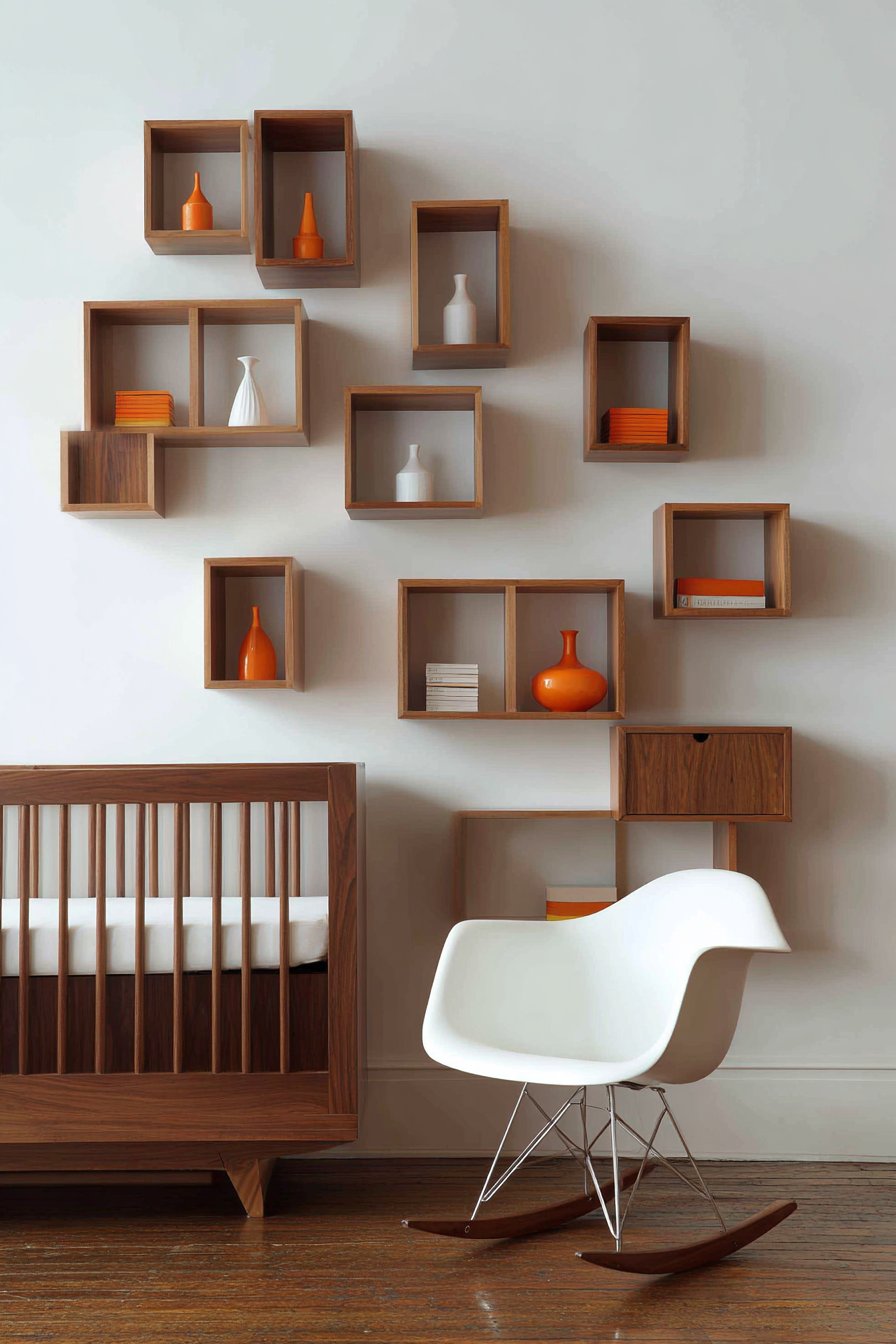
A wall-mounted changing station with integrated storage eliminates floor clutter. This vertical approach preserves precious floor space for movement. Floating shelves in matching wood display minimal décor and daily essentials. An Eames-inspired rocking chair in molded plastic fits perfectly in the corner.
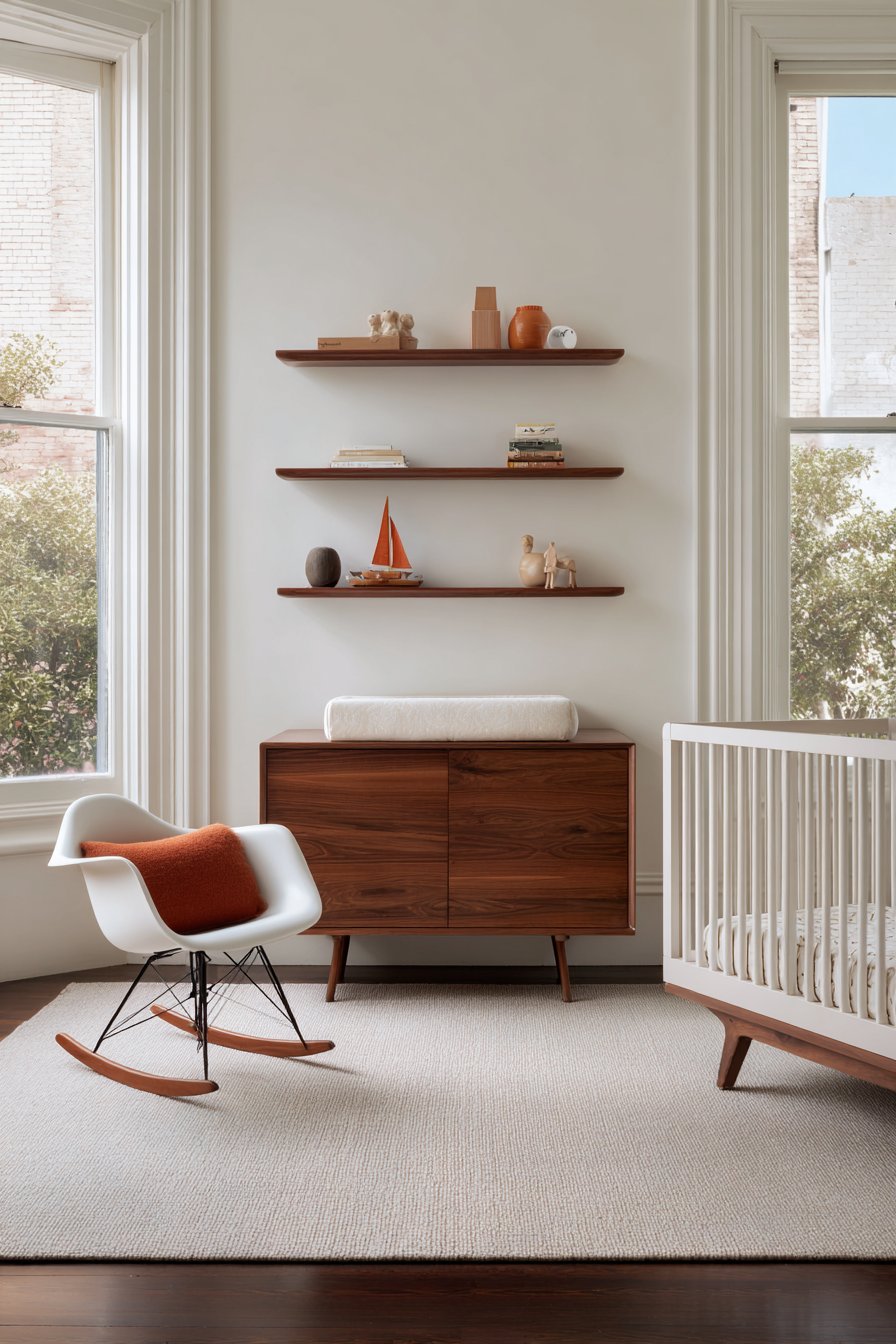
The color palette of warm whites and natural wood expands the visual space. Burnt orange accents add energizing pops of color throughout. The strategic furniture selection ensures every piece serves multiple purposes. Efficient planning creates a fully functional nursery within modest dimensions.
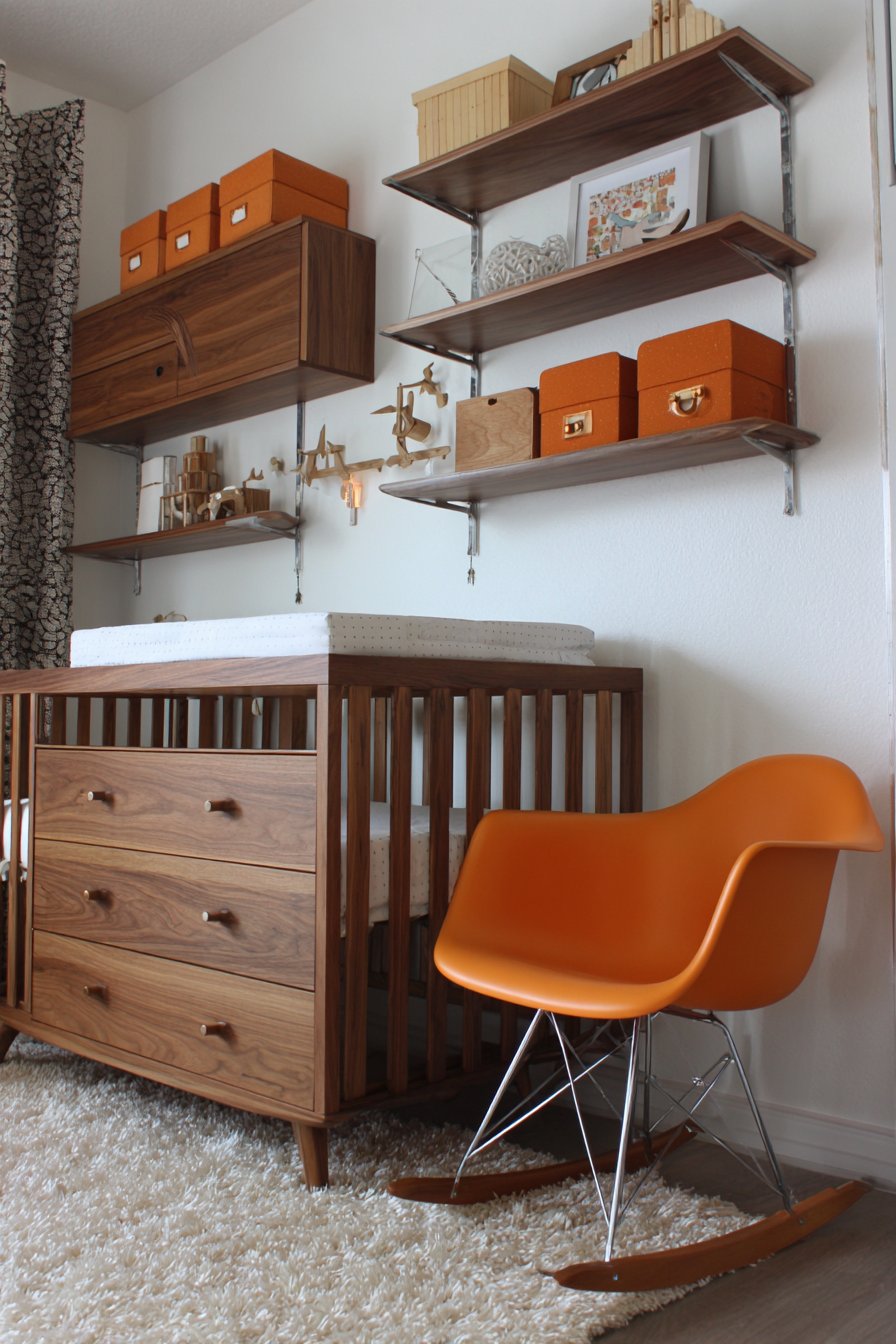
This design demonstrates that size limitations inspire creative solutions. The wall-mounted approach keeps floors clear for play as baby grows. The convertible crib extends usability through toddler years. Thoughtful space planning proves more valuable than sheer square footage.
Key Design Tips:
- Choose convertible cribs that transform for extended use and value
- Mount changing stations and shelving to walls to preserve floor space
- Select compact-scale furniture proportioned for smaller rooms
- Use light wall colors to visually expand limited square footage
- Add vibrant accent colors sparingly to energize without overwhelming
8. Kinetic Mobile Art with 1960s Inspiration
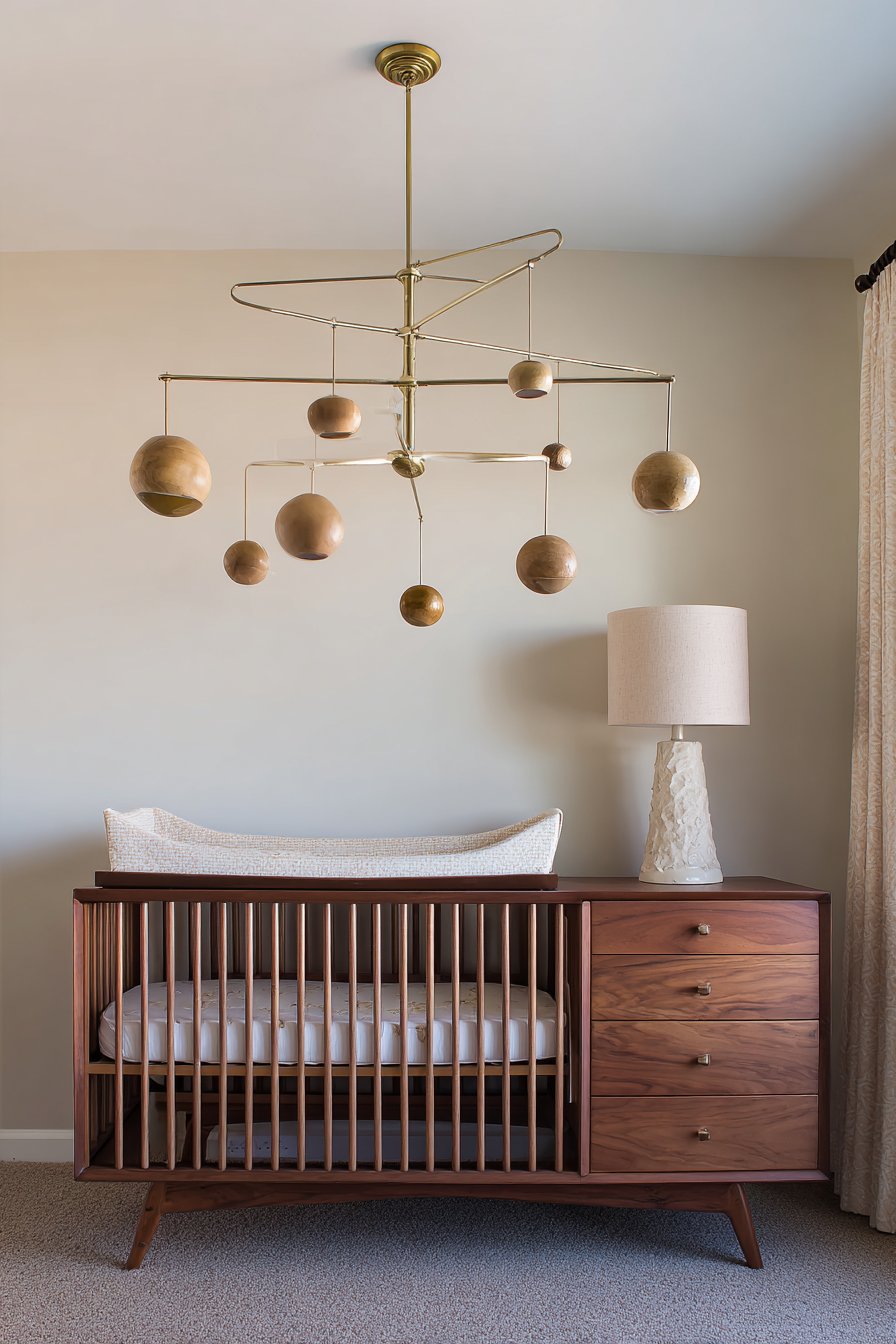
An authentic 1960s-inspired mobile creates mesmerizing movement above the crib. Wooden beads and brass elements combine in kinetic sculpture. The gentle rotation engages infant visual development while adding artistic interest. This handcrafted approach reflects the era’s appreciation for functional art.
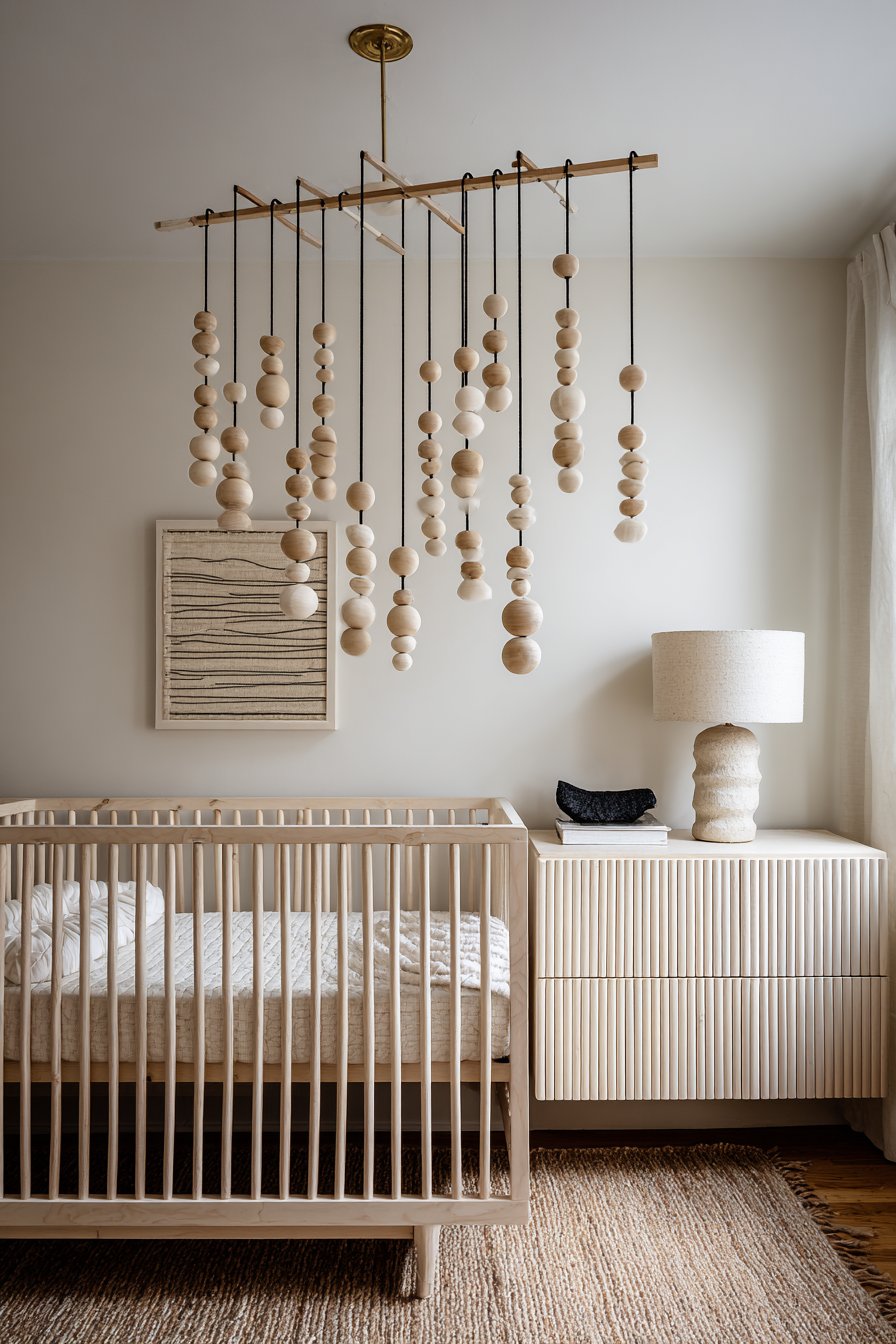
A low dresser with tambour doors provides concealed storage below. The sliding door mechanism represents characteristic mid century innovation. Topped with a contoured changing pad, it serves dual purposes efficiently. Walls painted in soft putty color create a neutral, calming backdrop.
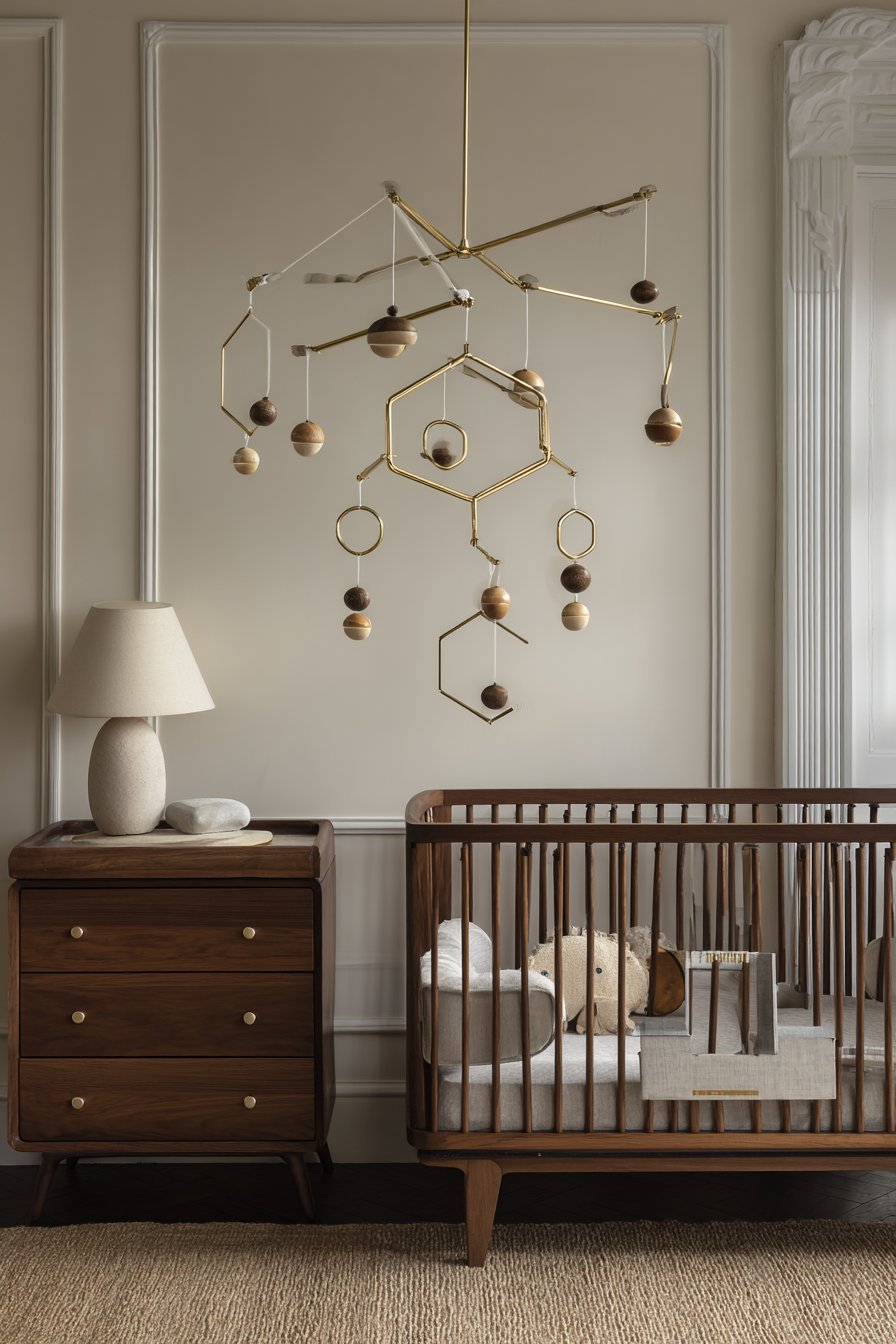
A natural jute rug adds organic texture underfoot without pattern competition. The woven material brings warmth while remaining visually quiet. A ceramic table lamp with sculptural base provides soft illumination for nighttime care. The interplay of geometric forms and natural materials defines the aesthetic.
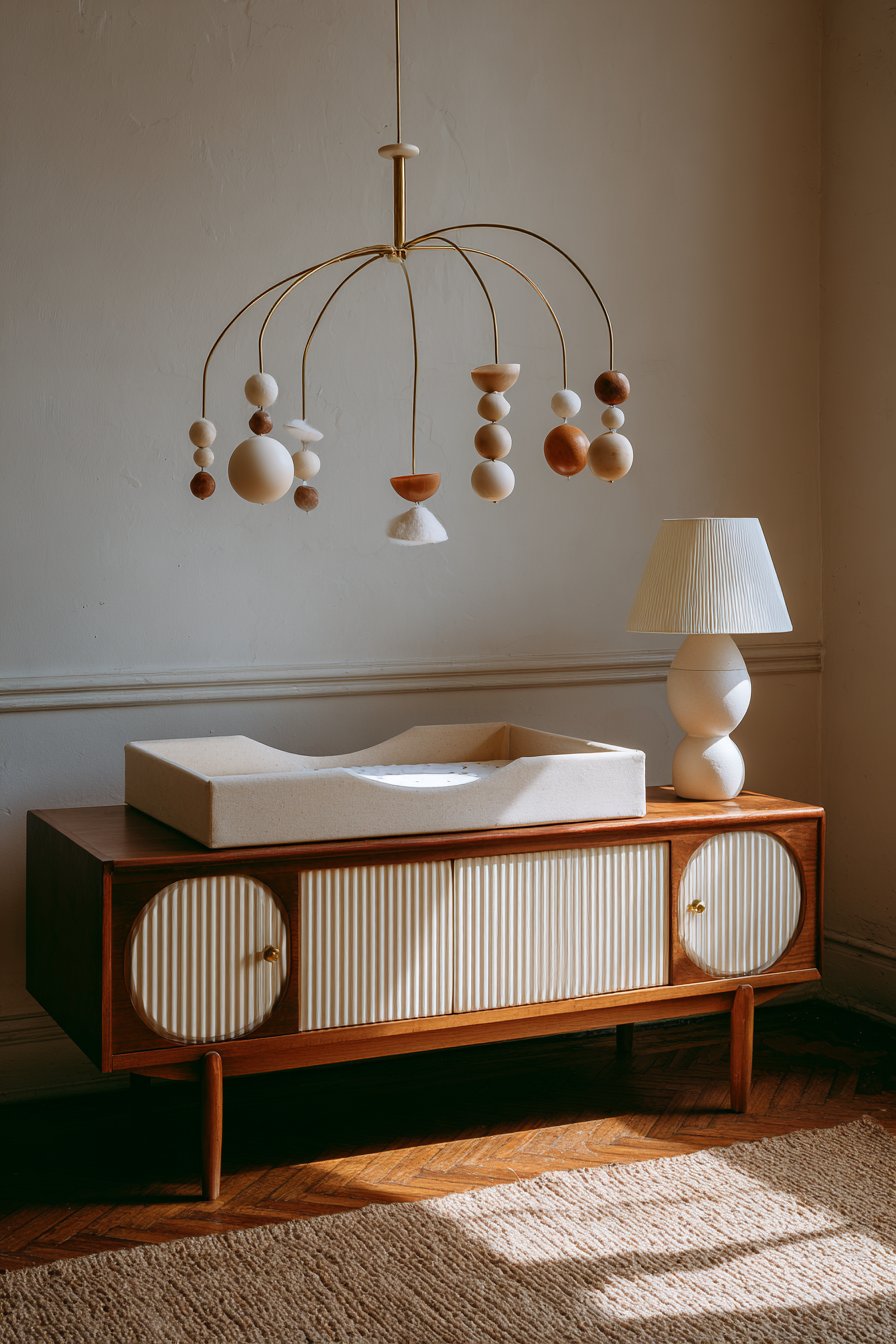
This design celebrates era-specific details that distinguish authentic mid century style. The tambour door mechanism shows the period’s fascination with clever functionality. The putty wall color allows furniture and accessories to shine. Attention to these details creates genuine rather than derivative mid century design.
Key Design Tips:
- Invest in handcrafted mobiles with natural materials for authenticity
- Choose dressers with tambour doors for characteristic period details
- Use neutral putty or greige wall colors as sophisticated alternatives to white
- Add natural fiber rugs like jute for organic texture without busy patterns
- Select ceramic lamps with sculptural bases for functional art pieces
9. Statement Lighting with Sputnik Sophistication
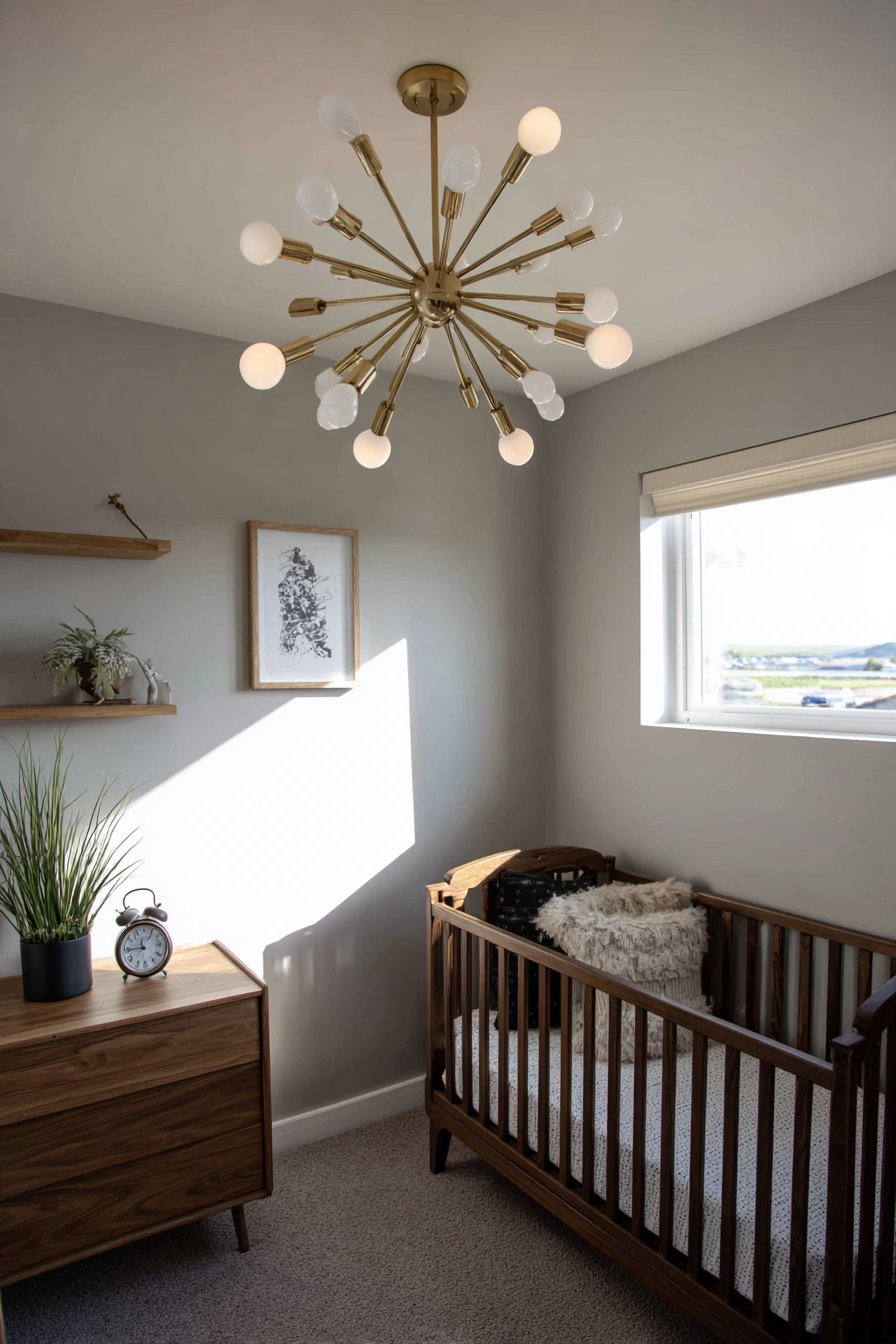
A Sputnik-style chandelier in brass commands attention as the room’s focal point. Multiple arms with white globe bulbs create dramatic sculptural presence. This bold lighting choice exemplifies mid century modern’s embrace of artistic fixtures. The brass finish adds warm metallic glamour to the space.
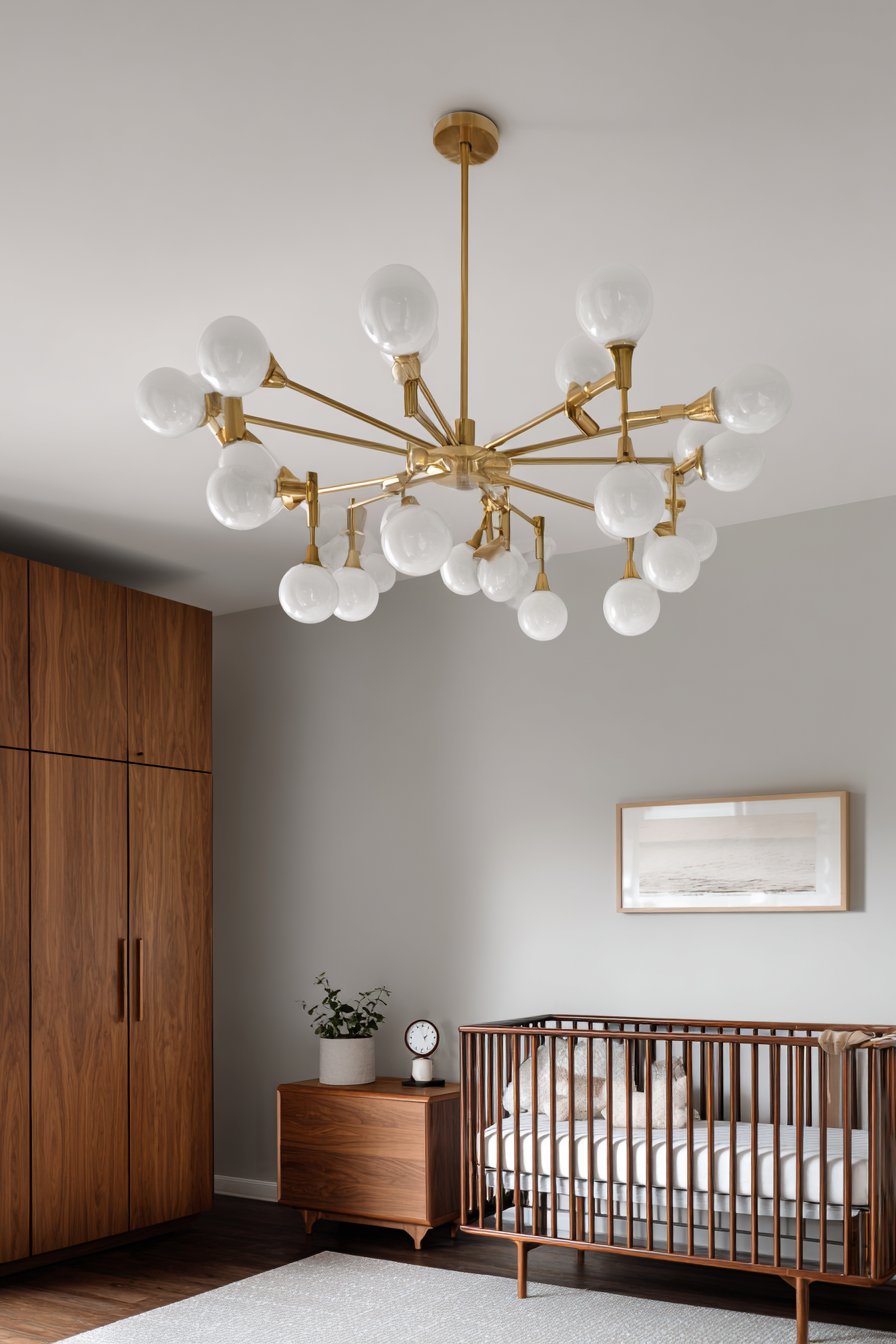
Below, a streamlined crib in dark walnut contrasts beautifully with pale grey walls. The color combination feels sophisticated and contemporary. A kidney-shaped side table in teak showcases the era’s love of organic curves. This distinctive form breaks up the angular furniture pieces with fluid lines.
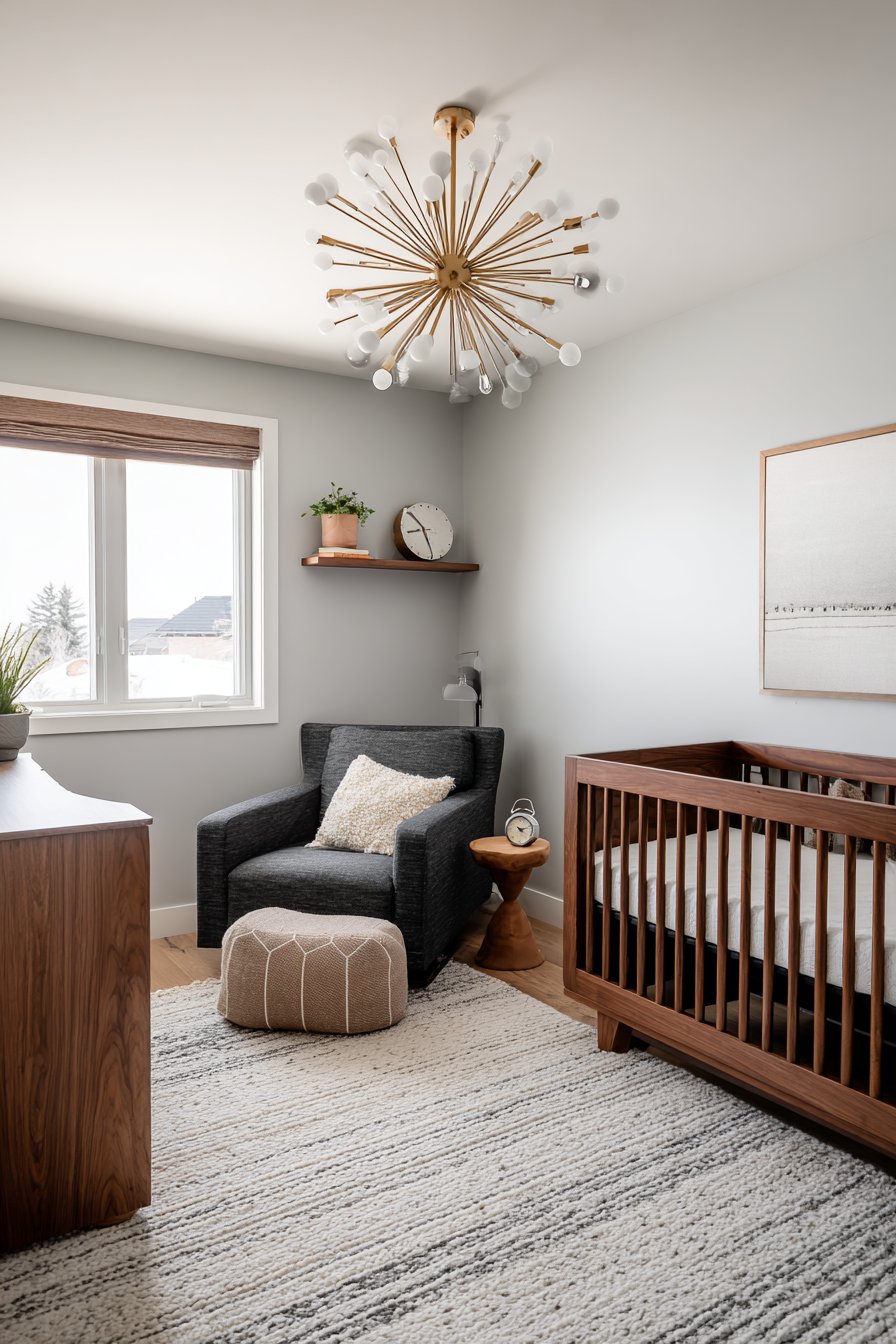
Built-in storage with sliding doors spans one wall length. This floor-to-ceiling approach maximizes storage while maintaining clean aesthetics. The uncluttered appearance allows the statement chandelier to truly shine. Natural daylight and sculptural lighting create dynamic illumination throughout the day.
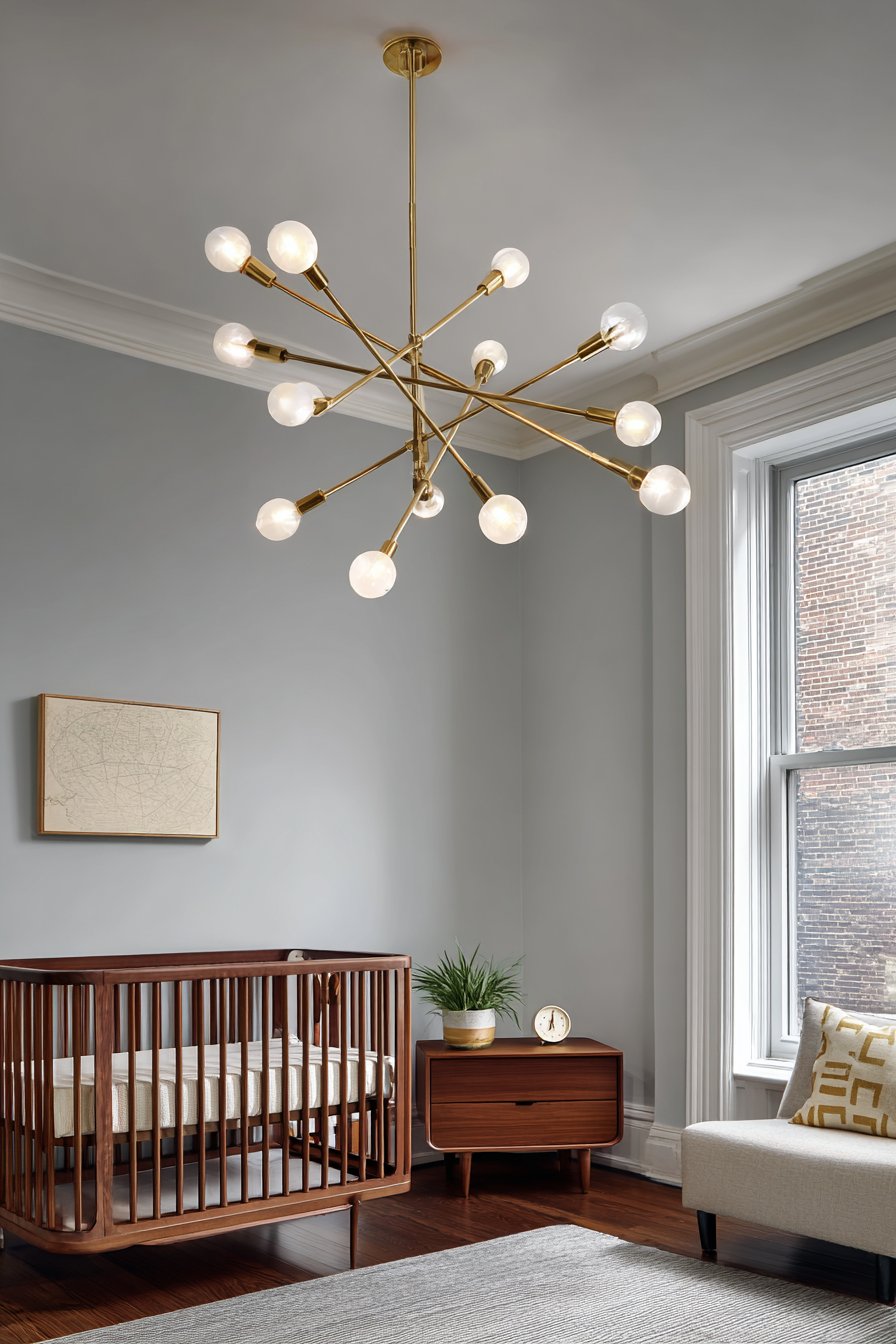
This design proves that bold choices work beautifully in nursery settings. The Sputnik chandelier becomes a conversation piece and functional necessity. The built-in storage demonstrates commitment to clean, organized spaces. Quality lighting elevates the entire room from functional to exceptional.
Key Design Tips:
- Install statement chandeliers as sculptural focal points in nurseries
- Choose kidney-shaped or organic form furniture to soften angular pieces
- Use built-in storage solutions to maintain clean, uncluttered walls
- Contrast dark wood furniture against light walls for dramatic effect
- Layer natural and artificial lighting for flexibility throughout the day
10. Textile Focus with Authentic Fabric Patterns
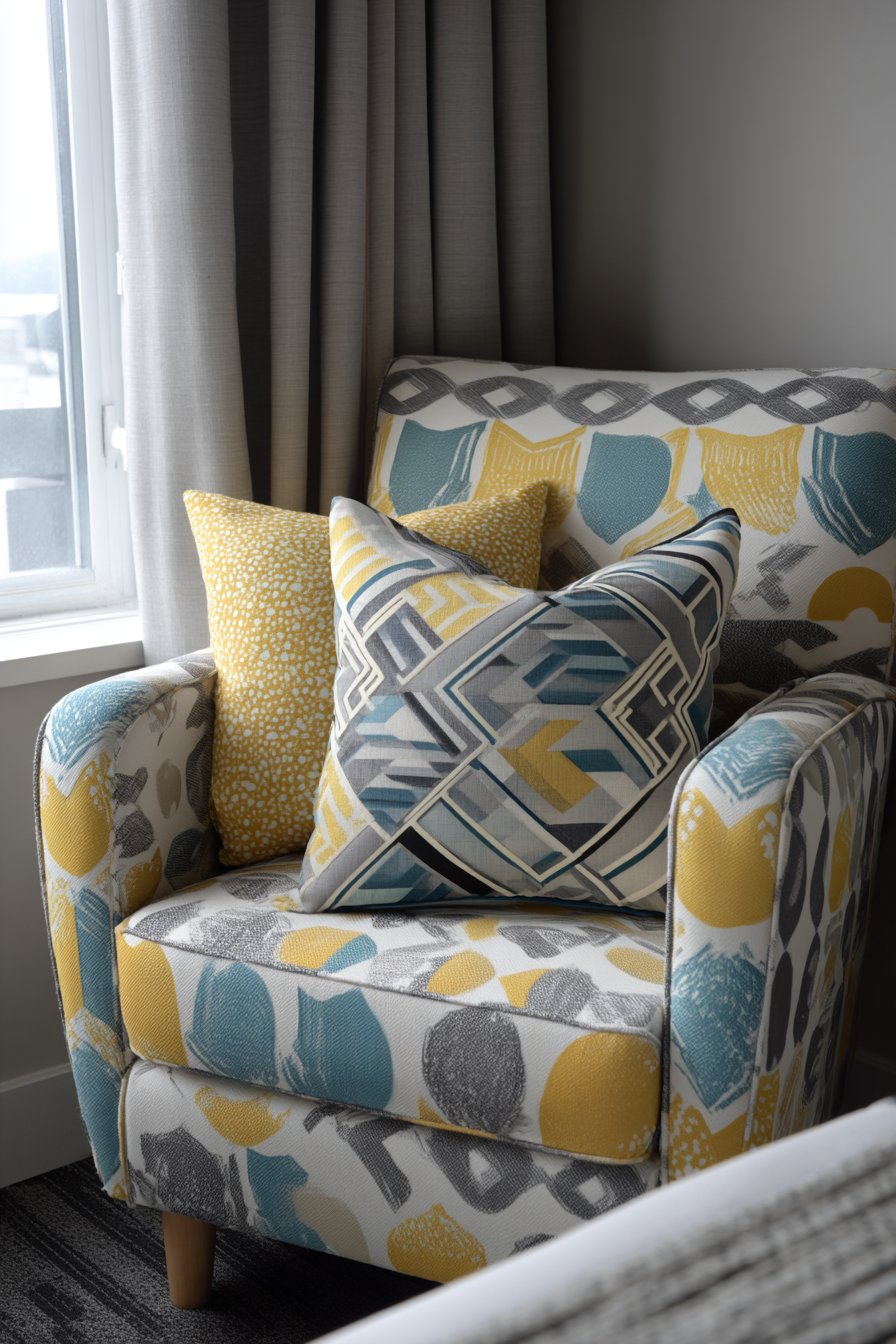
A custom cushioned rocking chair features authentic mid century fabric patterns. Abstract designs in mustard yellow, teal, and grey on cream background celebrate the era. The bold graphic sensibility reflects the optimistic design culture of the period. Comfortable cushioning supports long nursing and bonding sessions.
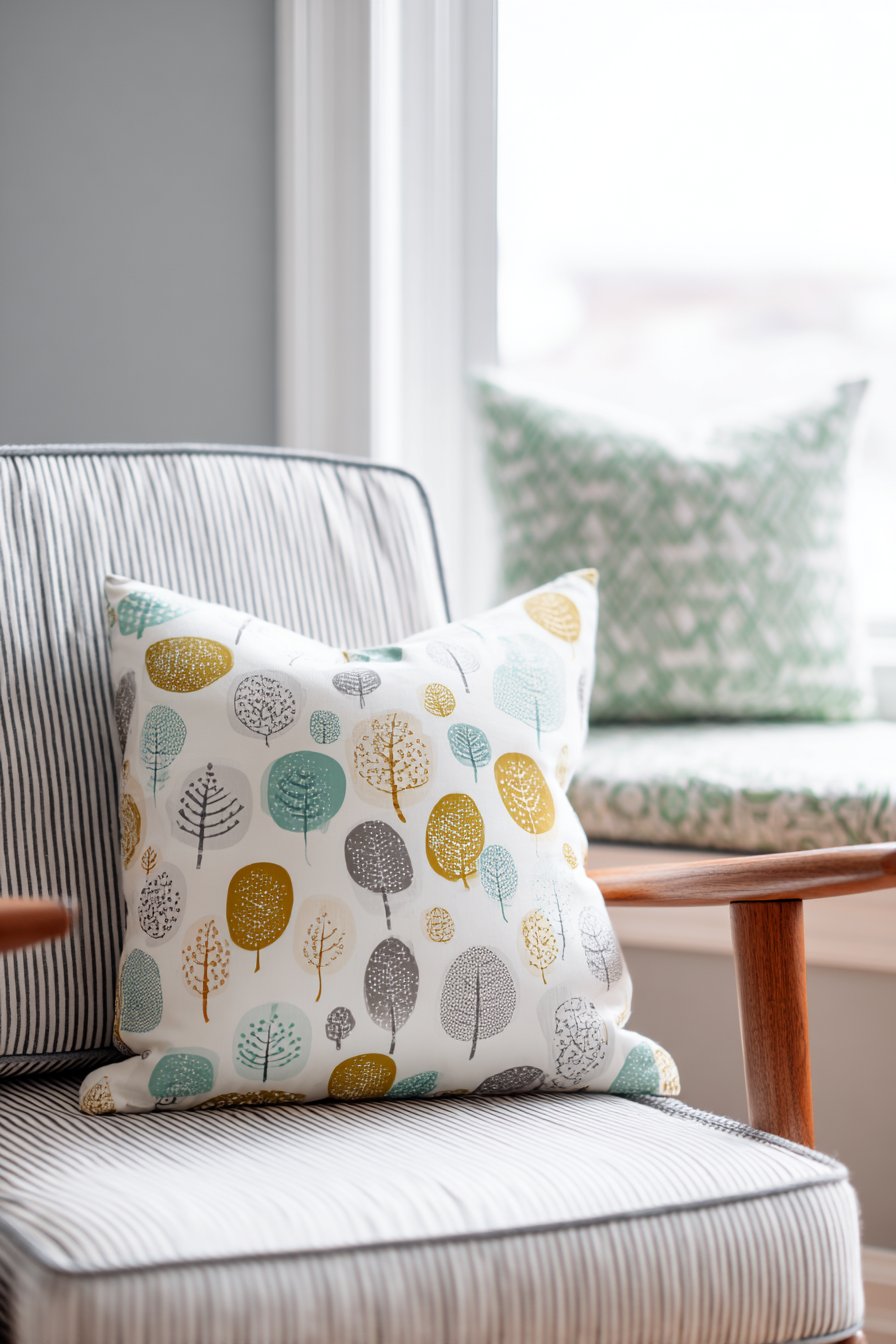
Coordinating throw pillows with geometric prints rest on a nearby daybed. The repeated patterns create visual cohesion without exact matching. This approach allows personality while maintaining design harmony. The textiles become the room’s primary source of pattern and color.
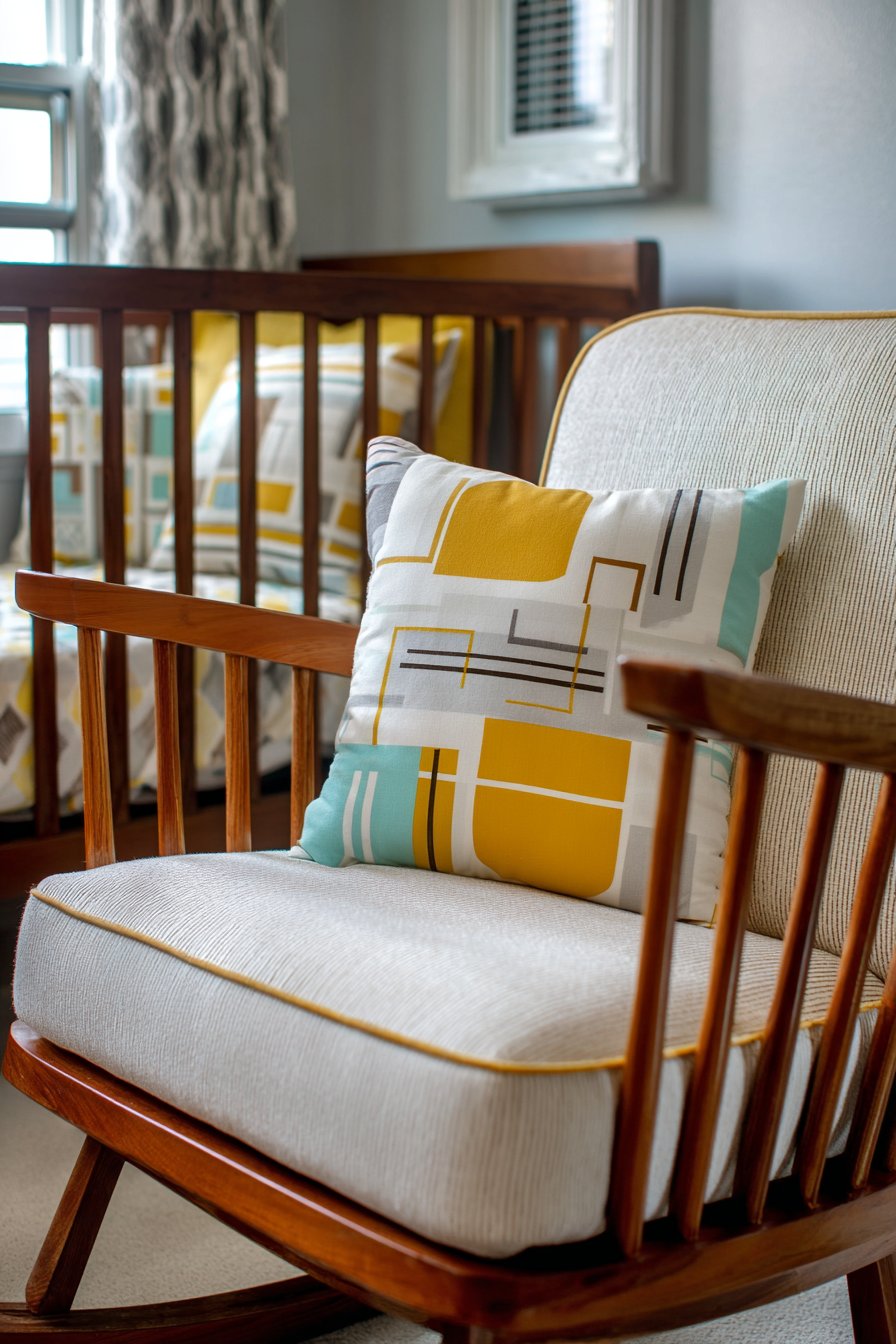
Soft window light illuminates the fabric textures and intricate patterns. The natural lighting reveals the quality and detail of the textiles. This focused approach showcases how fabric choices dramatically impact overall design. Material authenticity separates genuine mid century style from superficial interpretations.
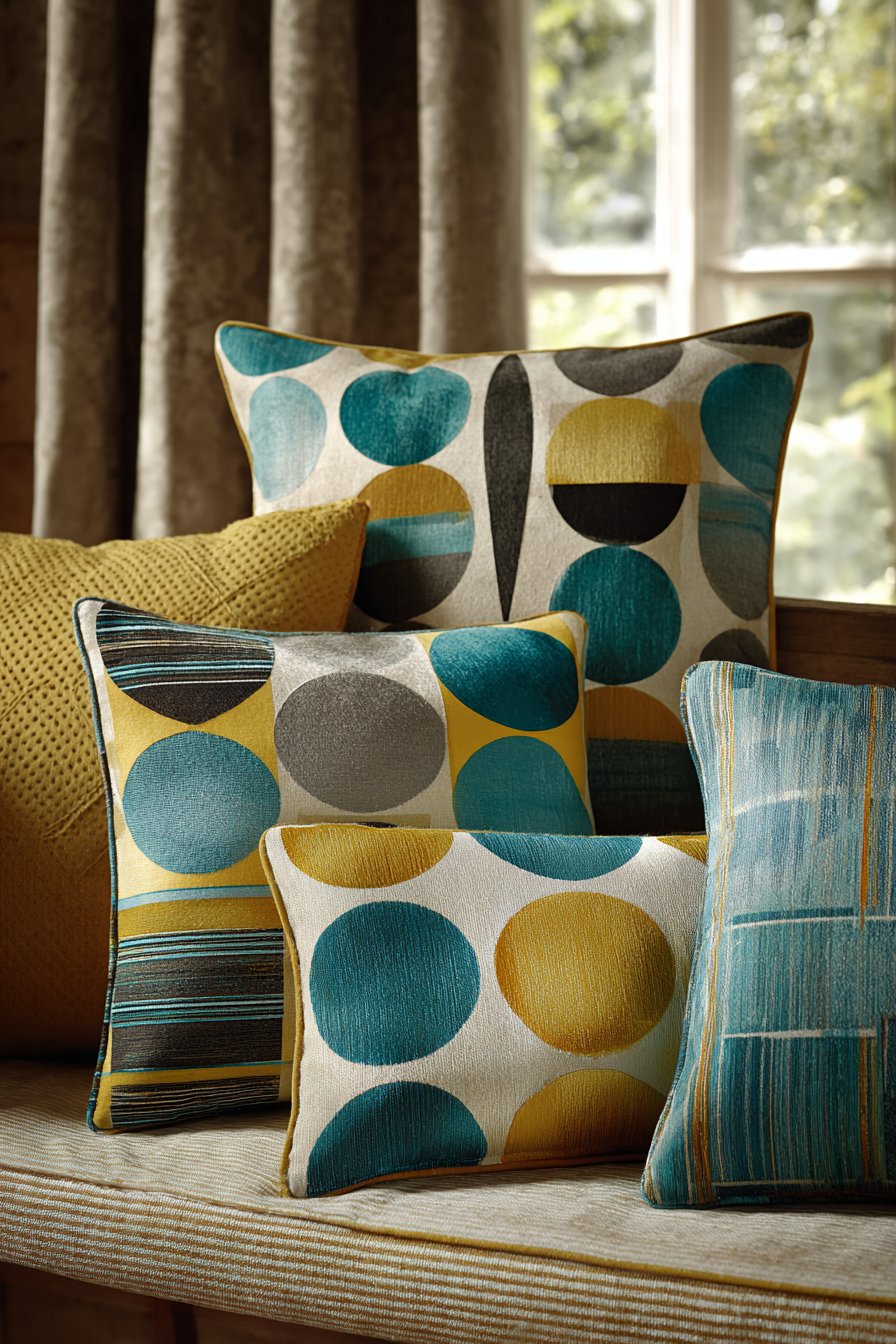
The textile-forward design celebrates an often-overlooked aspect of period interiors. Original mid century fabrics featured innovative patterns and color combinations. Investing in quality upholstered pieces with authentic fabrics creates lasting value. These textiles age beautifully, developing character rather than showing wear.
Key Design Tips:
- Seek authentic mid century fabric patterns for upholstered furniture pieces
- Coordinate patterns through shared colors rather than exact matching
- Position upholstered pieces near windows to showcase textile quality
- Layer multiple textile patterns through pillows and accessories
- Choose durable upholstery-grade fabrics that withstand frequent use
11. Minimalist Japanese Influence with Low-Profile Living
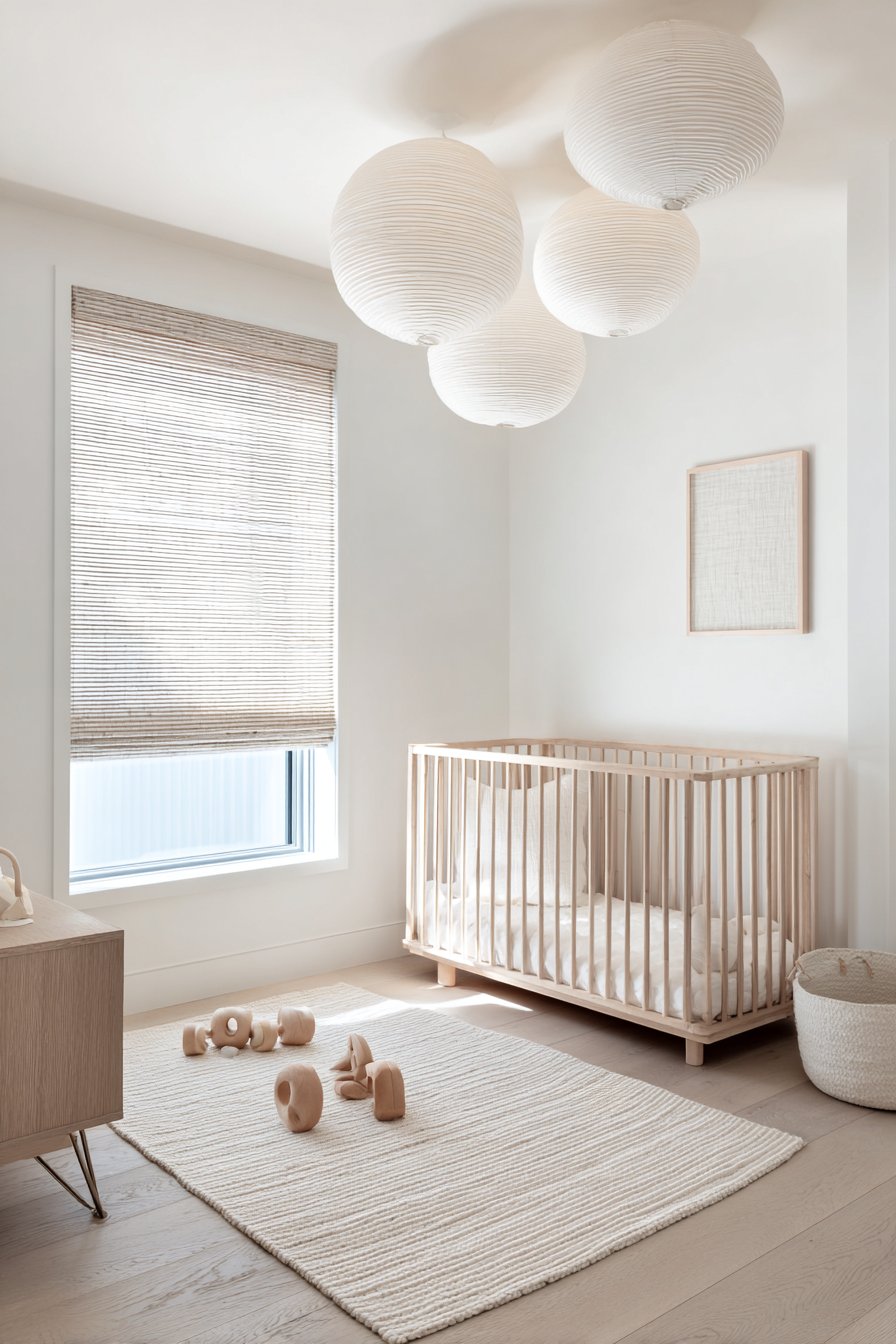
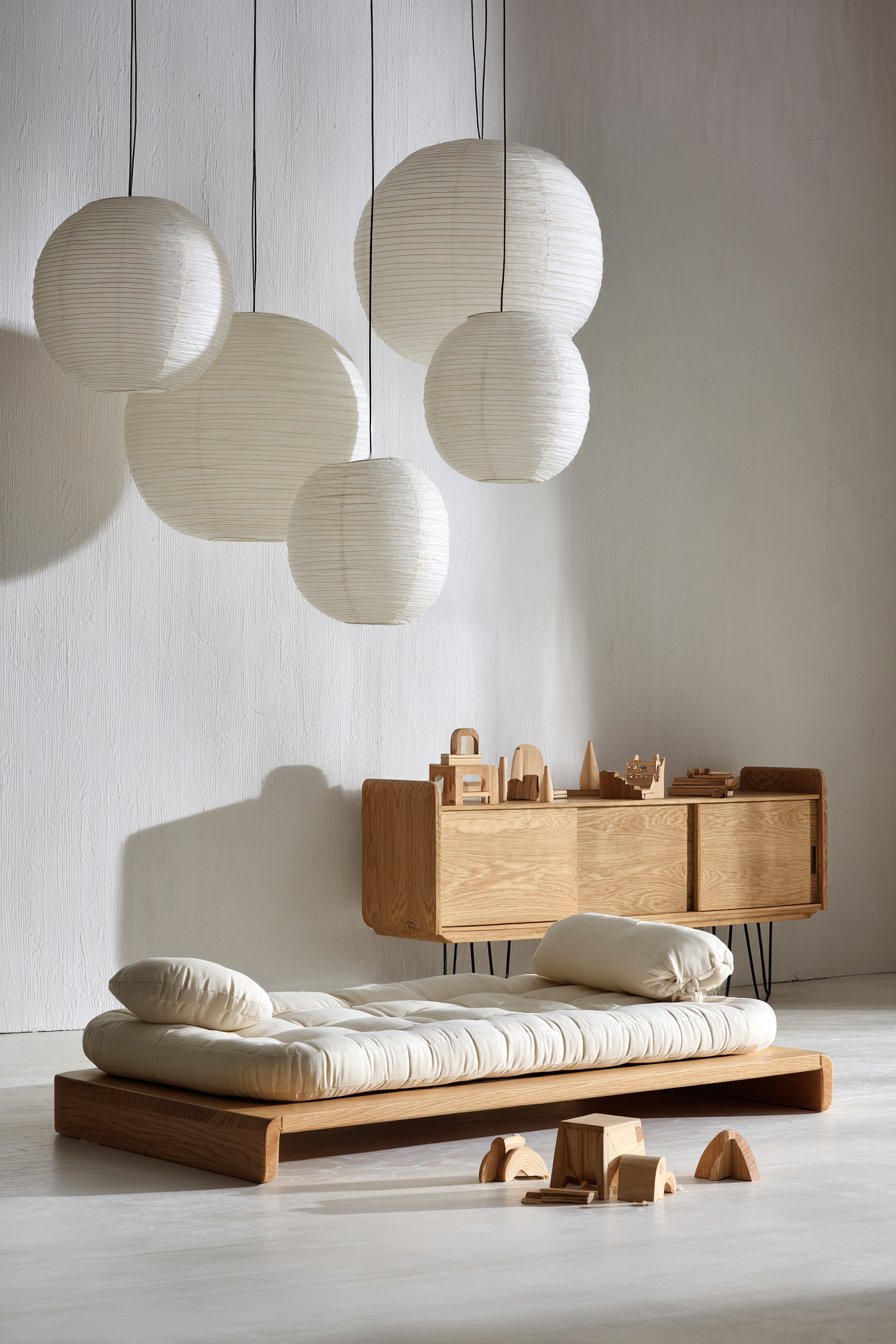
A low tatami-style floor bed provides safe space for supervised tummy time. This Japanese-influenced approach suits the minimalist mid century aesthetic beautifully. Simple wooden toys surround the mat, encouraging natural play. The low height ensures safety while promoting independence.
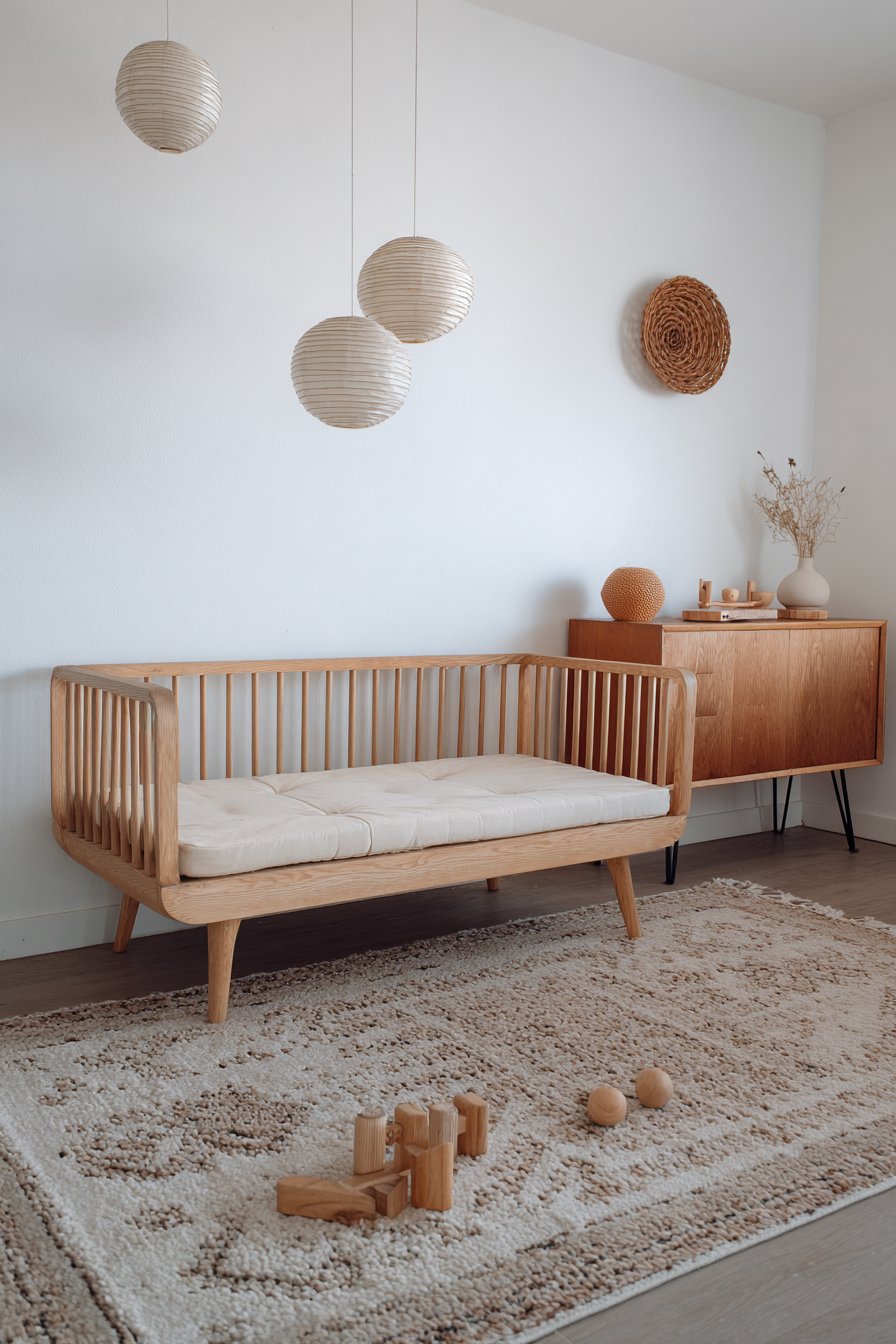
A short credenza in blonde wood with hairpin legs offers storage. The light wood finish brightens the space considerably. Paper lantern pendant lights hang at varying heights above. These spherical forms create soft, diffused illumination throughout the room.
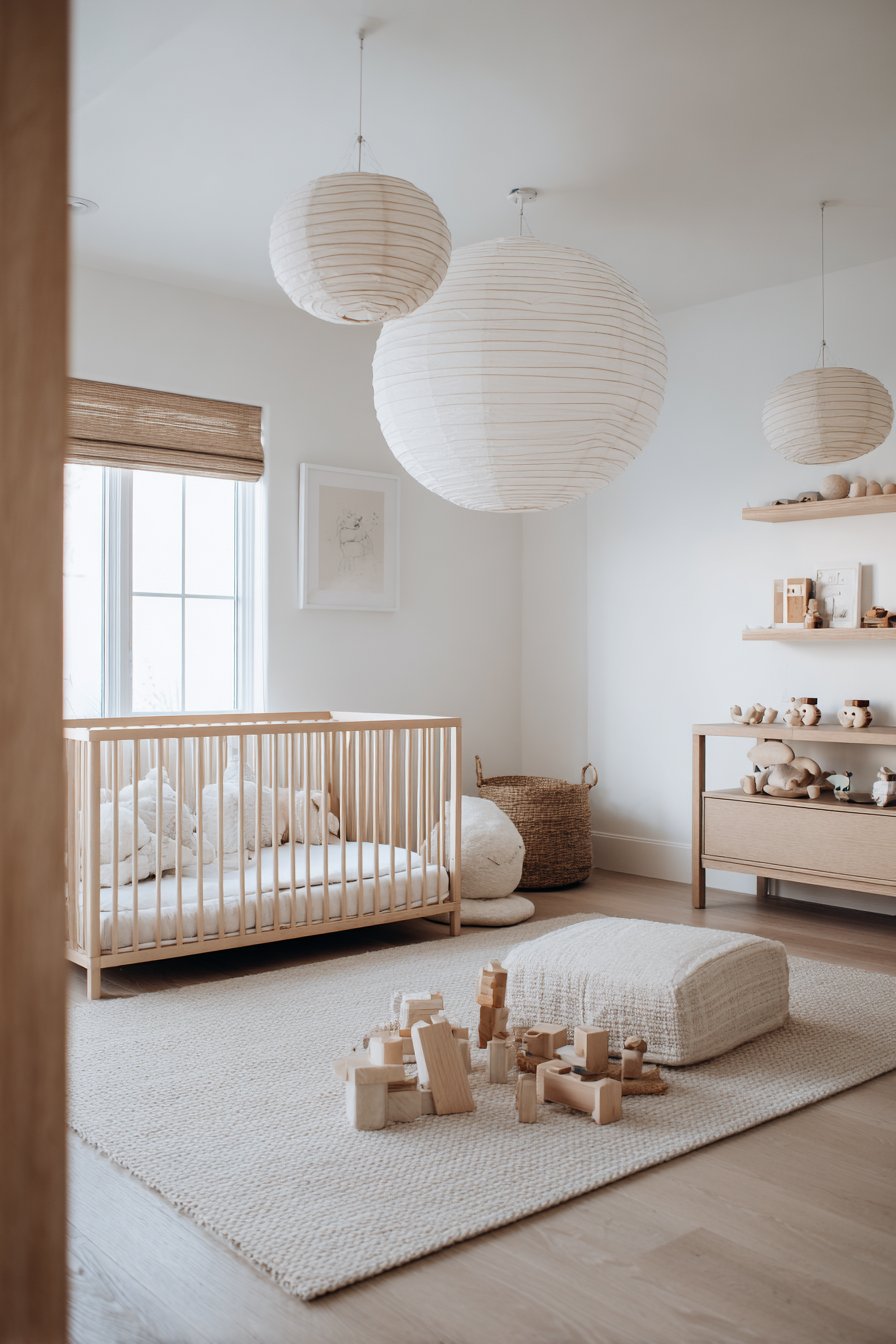
White walls emphasize the organic wood tones and clean lines throughout. Bamboo roman shades filter natural light while adding textural interest. The uncluttered space promotes calm and focus. This marriage of Scandinavian and Japanese principles defines the best mid century interiors.
This design embraces the “less is more” philosophy completely. The minimalist approach reduces visual stimulation for better rest. The blonde wood and white walls create an airy, spacious feeling. Quality over quantity guides every furniture and accessory decision.
Key Design Tips:
- Incorporate low floor beds for safe infant play areas
- Choose blonde or light wood finishes to maximize brightness
- Use paper lantern pendants for soft, even ambient lighting
- Keep walls white to emphasize furniture and maintain spatial openness
- Select bamboo window treatments for natural texture and light control
12. Window Treatment Elegance with Built-In Functionality
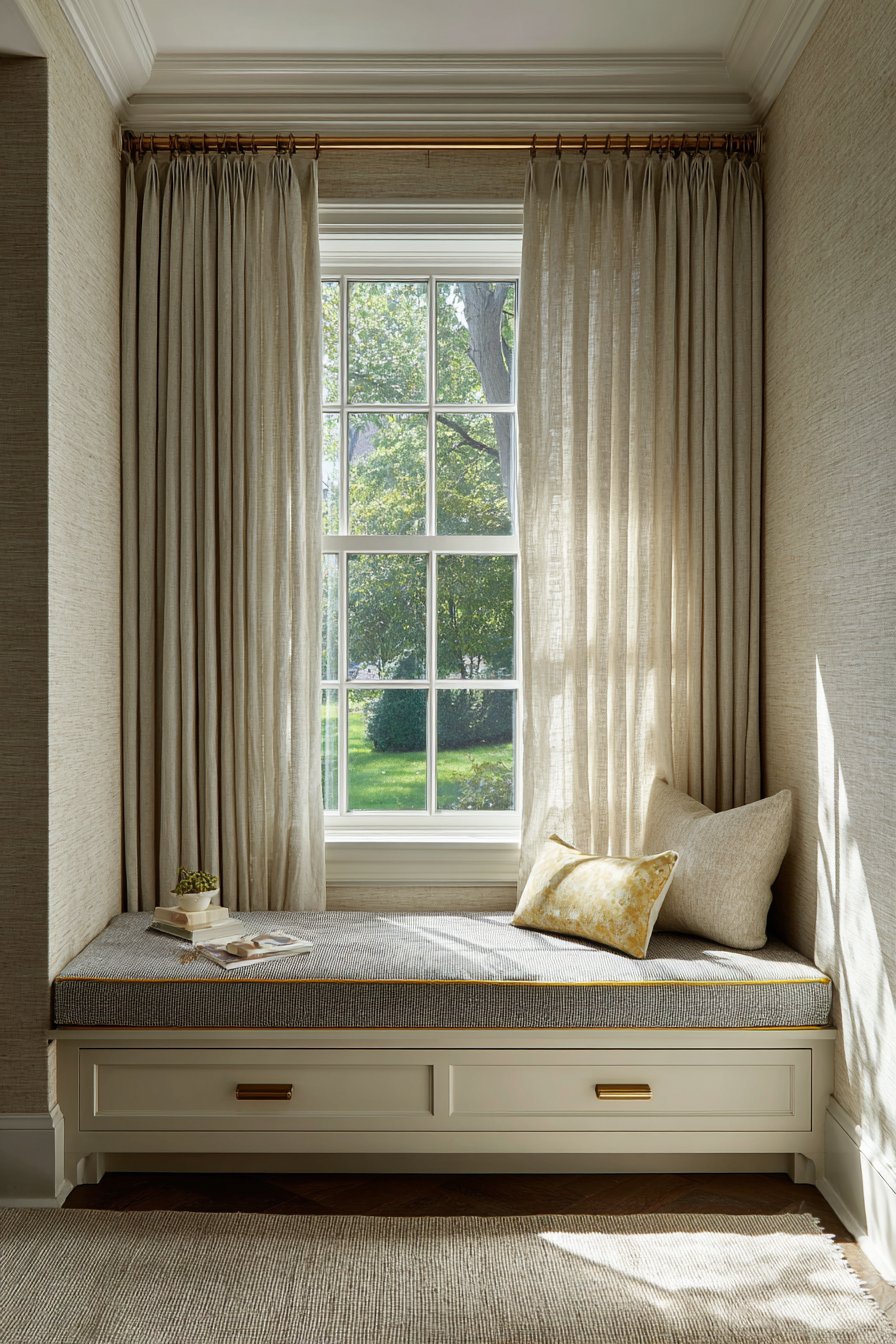
Floor-to-ceiling curtains in natural linen hang from simple brass rods. The fabric drapes beautifully, creating elegant vertical lines. This treatment frames a large window with cushioned window seat below. The seamless integration of furniture and architecture defines quality design.
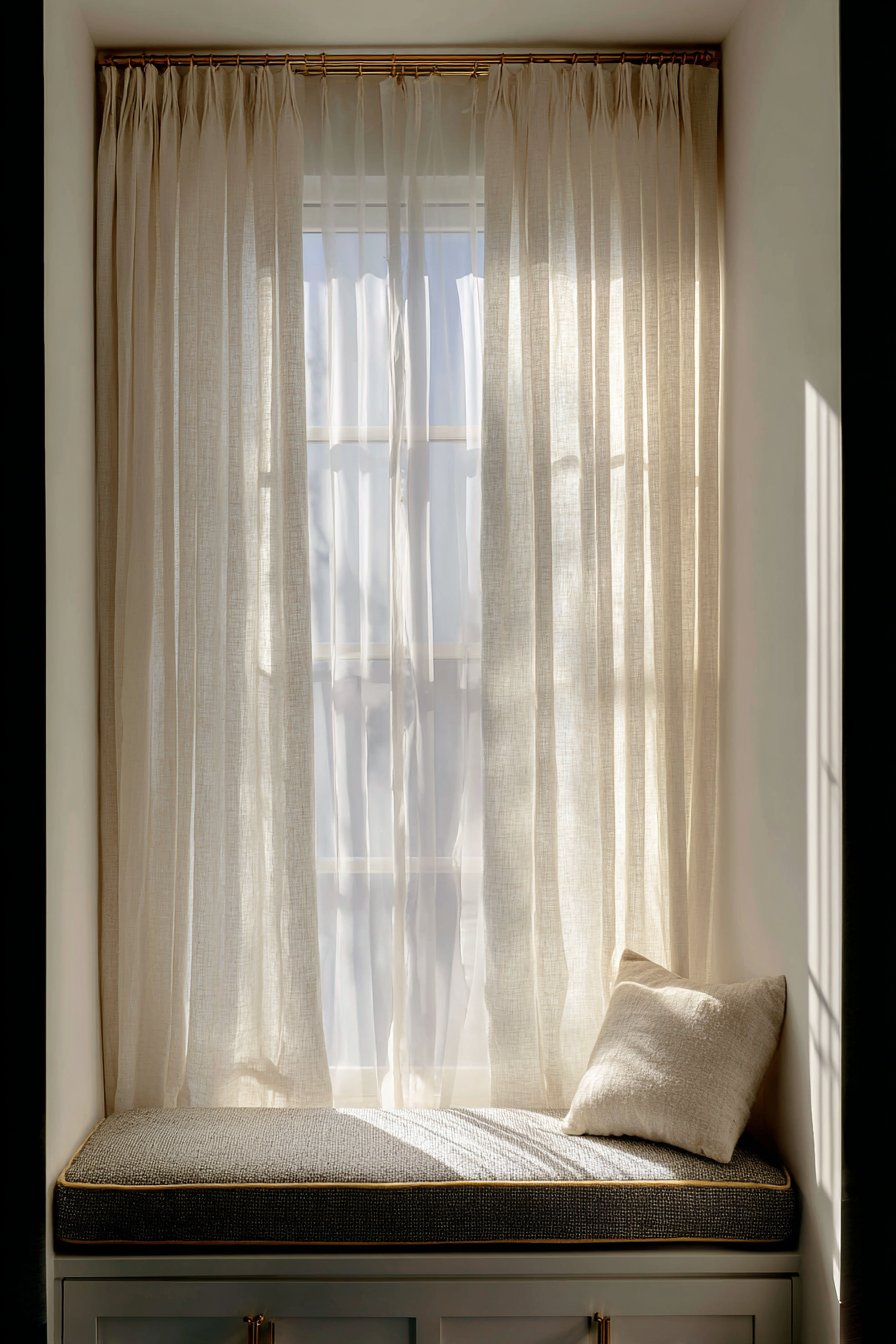
The window seat features a thin mattress covered in grey wool fabric. Yellow piping adds a subtle pop of color at the seams. Built-in storage drawers beneath maximize the functional benefits. Morning sunlight creates soft glow through the semi-sheer linen fabric.
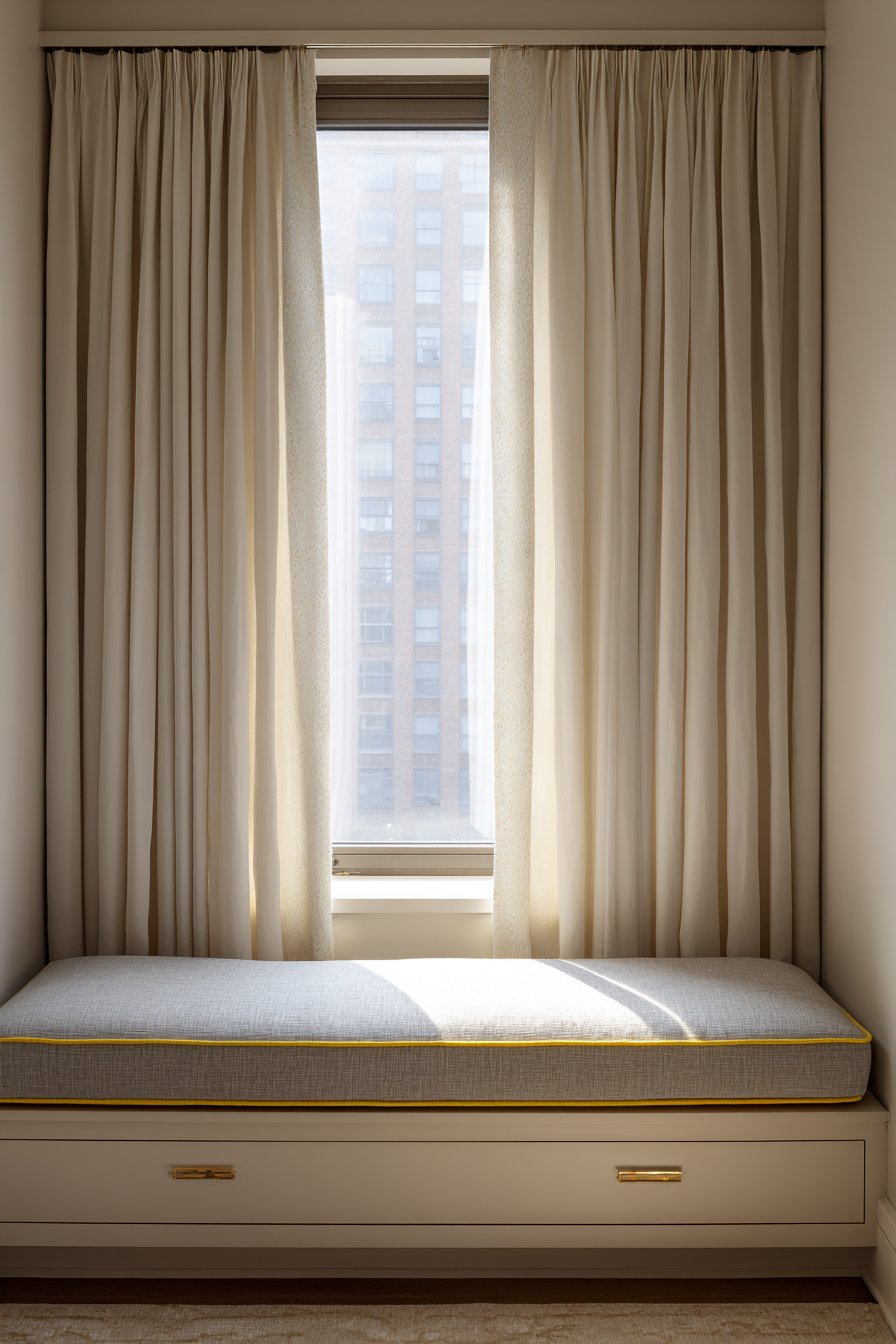
This architectural detail transforms a window into a favorite room feature. The cushioned seat provides additional space for reading and bonding. The storage below keeps seasonal items or extra bedding accessible. The natural materials create warmth and timeless appeal.
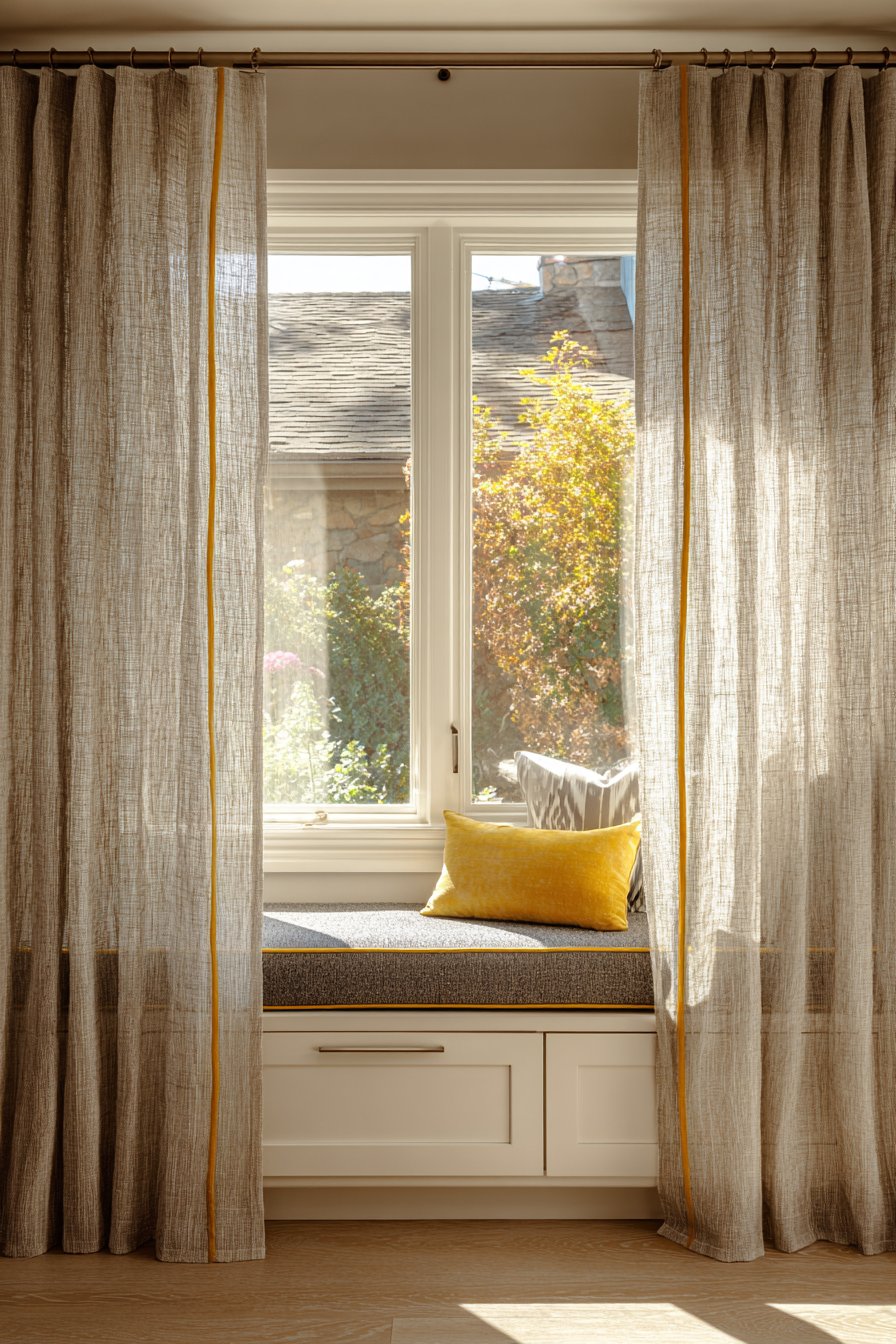
Window treatments significantly impact room atmosphere and functionality. The floor-to-ceiling approach adds architectural drama and height. The linen fabric filters harsh light while maintaining connection to outdoors. Built-in features like window seats add value beyond standalone furniture.
Key Design Tips:
- Hang curtains at ceiling height to maximize perceived room height
- Choose natural linen for window treatments that filter light beautifully
- Install window seats with built-in storage for dual functionality
- Use brass curtain rods for authentic period-appropriate hardware
- Add contrasting piping to cushions for subtle color accents
13. Bold Color Confidence with Deep Teal Drama
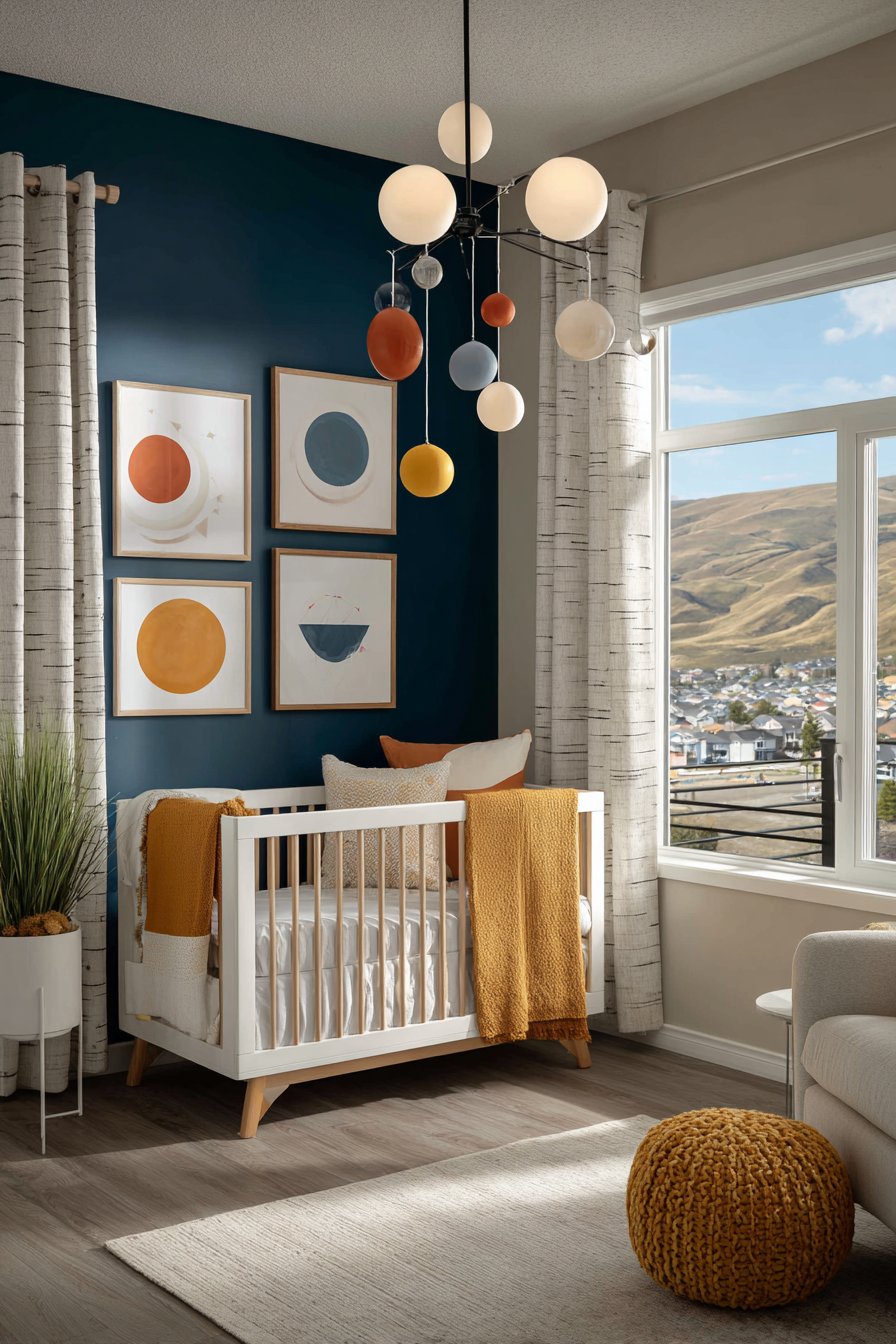
A deep teal accent wall makes a confident statement. This saturated color creates dramatic backdrop for natural oak furniture. The bold choice reflects mid century modern’s embrace of color psychology. The teal provides calming yet stimulating visual interest.
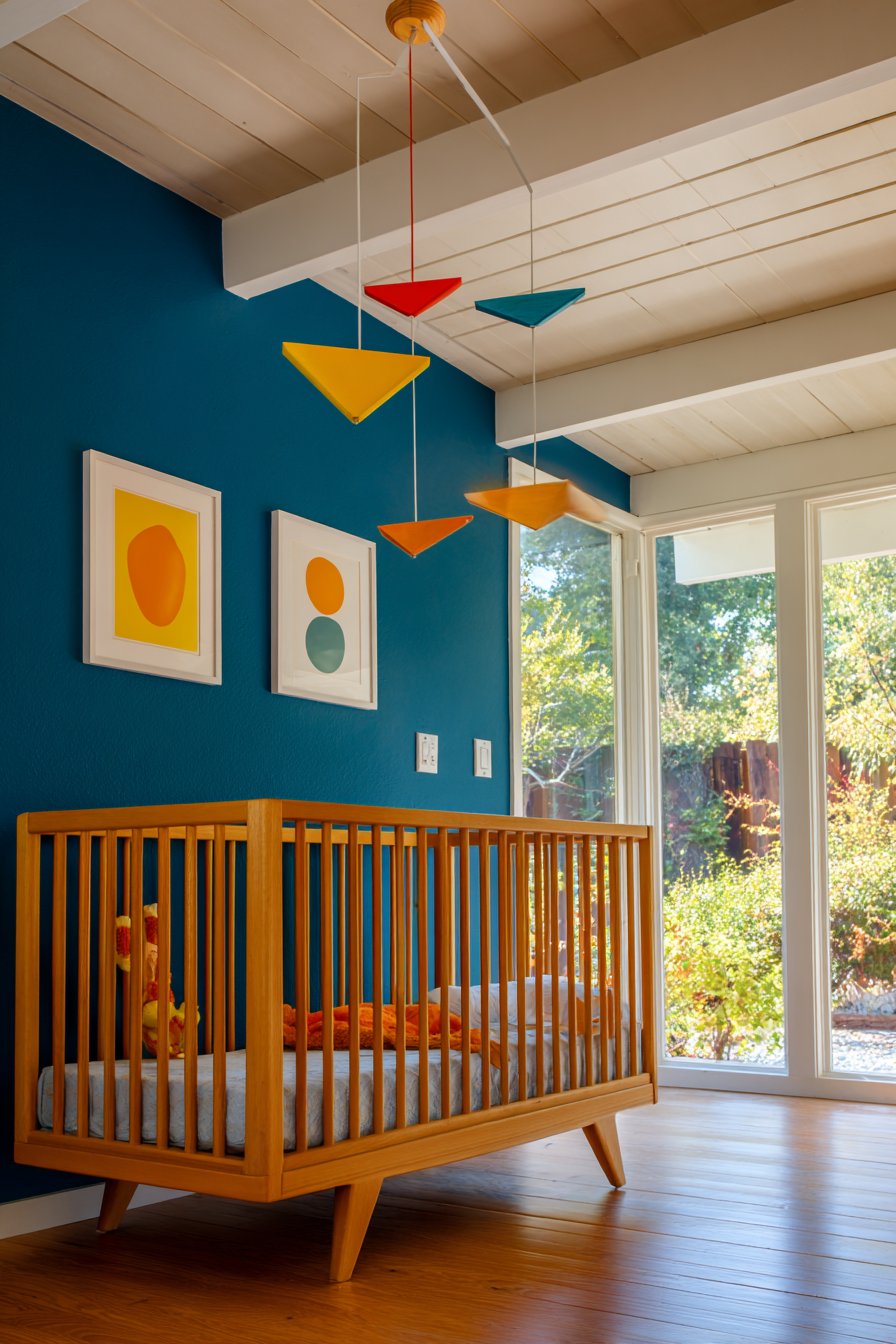
A mobile constructed of primary-colored wooden geometric shapes hangs above. The bright yellow, red, and blue elements pop against the deep wall. Abstract art prints in bold colors create a gallery wall arrangement. Orange and yellow accents appear throughout in textiles and accessories.
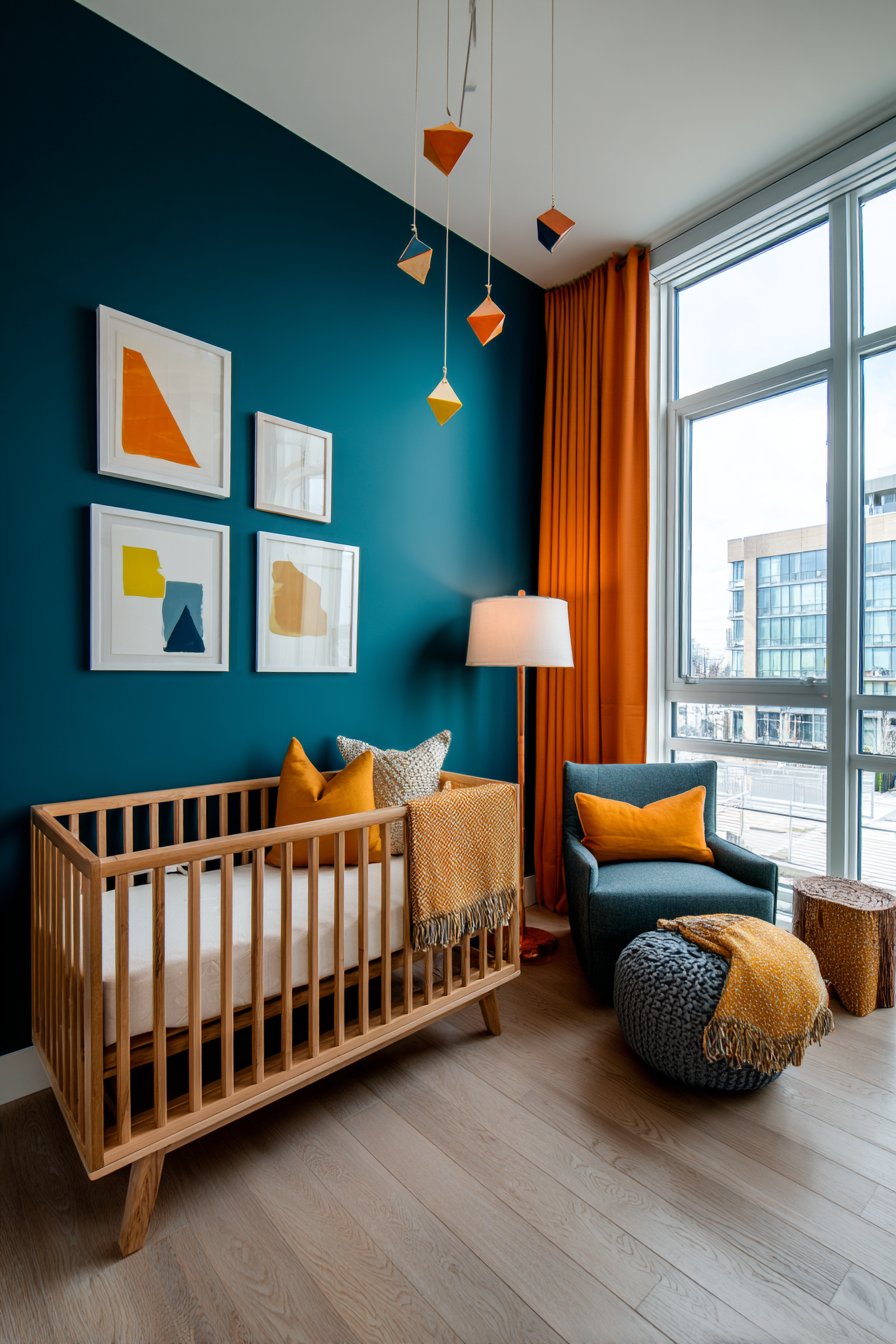
Natural light from large windows balances the saturated wall color. The brightness prevents the deep teal from feeling overwhelming. Oak furniture with characteristic tapered legs provides warm contrast. The combination of bold color and natural materials creates dynamic tension.
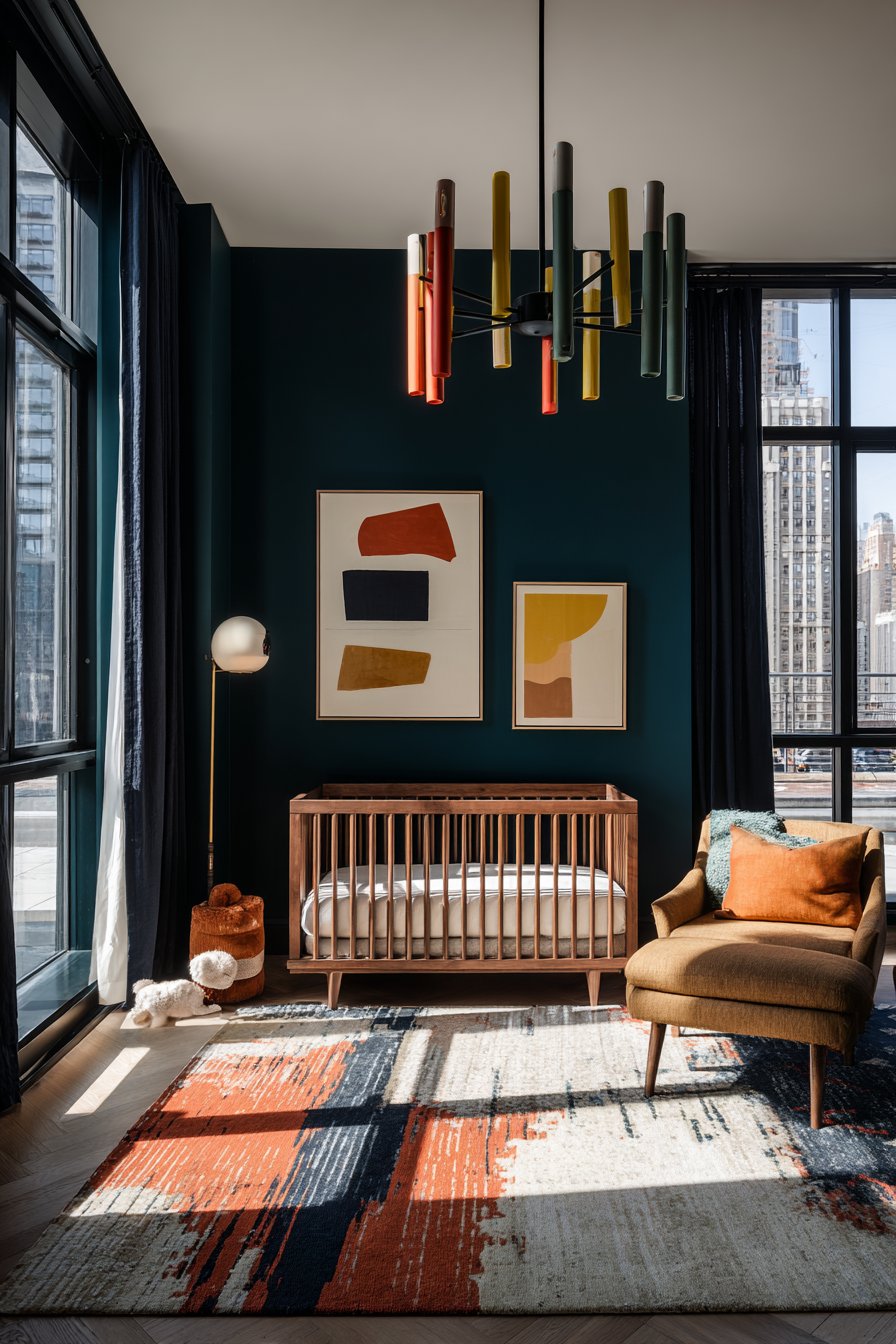
This design celebrates the era’s adventurous approach to color. The confident palette stimulates visual development and engagement. The primary colors in accessories create a cohesive rainbow effect. This approach suits parents ready to embrace bold design decisions.
Key Design Tips:
- Choose one deep saturated color for maximum impact on single wall
- Use primary colors in accessories and artwork for cohesive boldness
- Balance dark walls with ample natural light from large windows
- Select light-toned wood furniture to contrast with saturated wall colors
- Layer multiple accent colors through easily changeable textiles
14. Modular Storage Systems with Danish Modern Precision
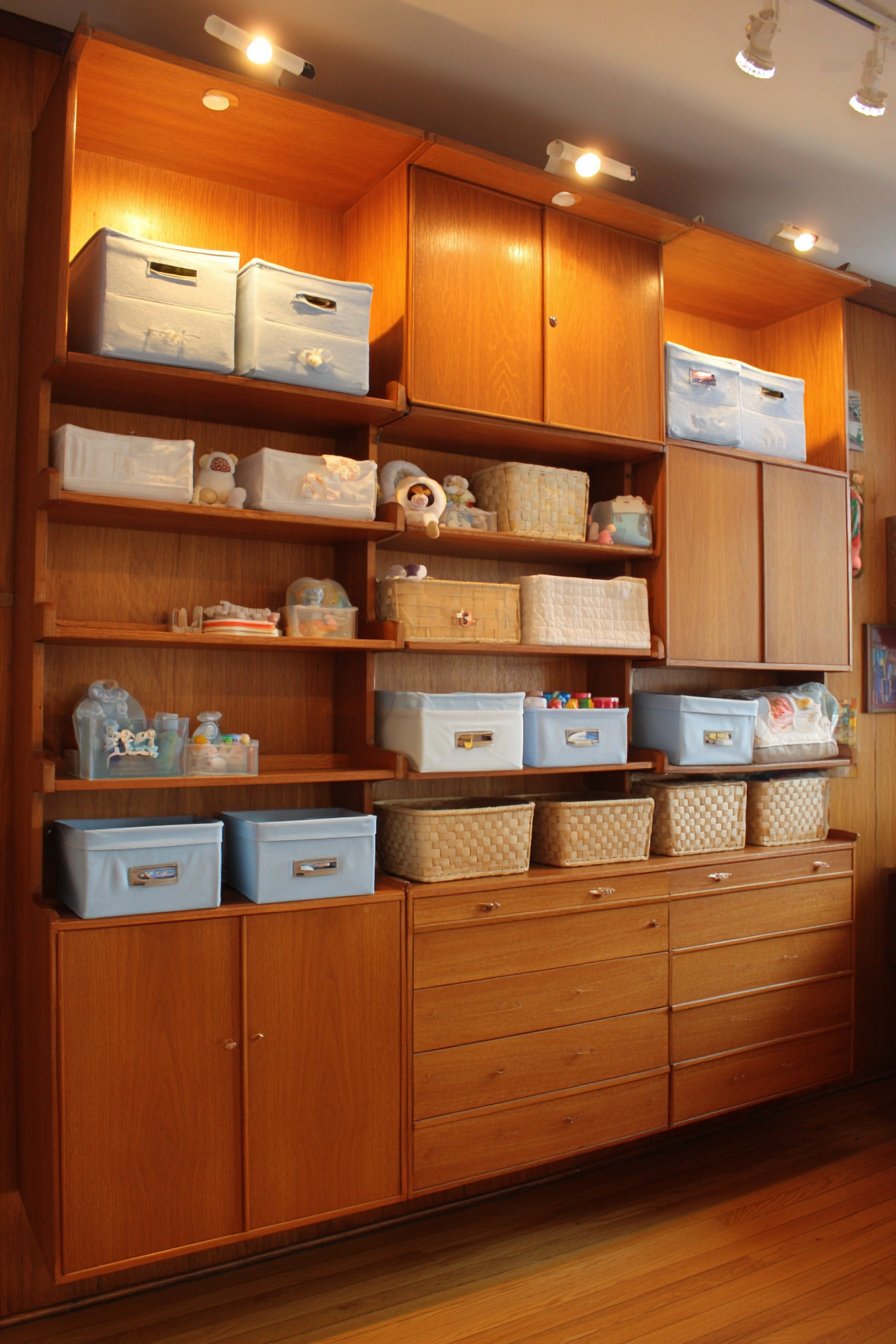
A modular wall unit in teak maximizes vertical storage potential. The combination of open cubbies and closed cabinets offers organizational flexibility. Adjustable shelving accommodates changing needs as your child grows. This floor-to-ceiling approach characterizes Danish modern design excellence.
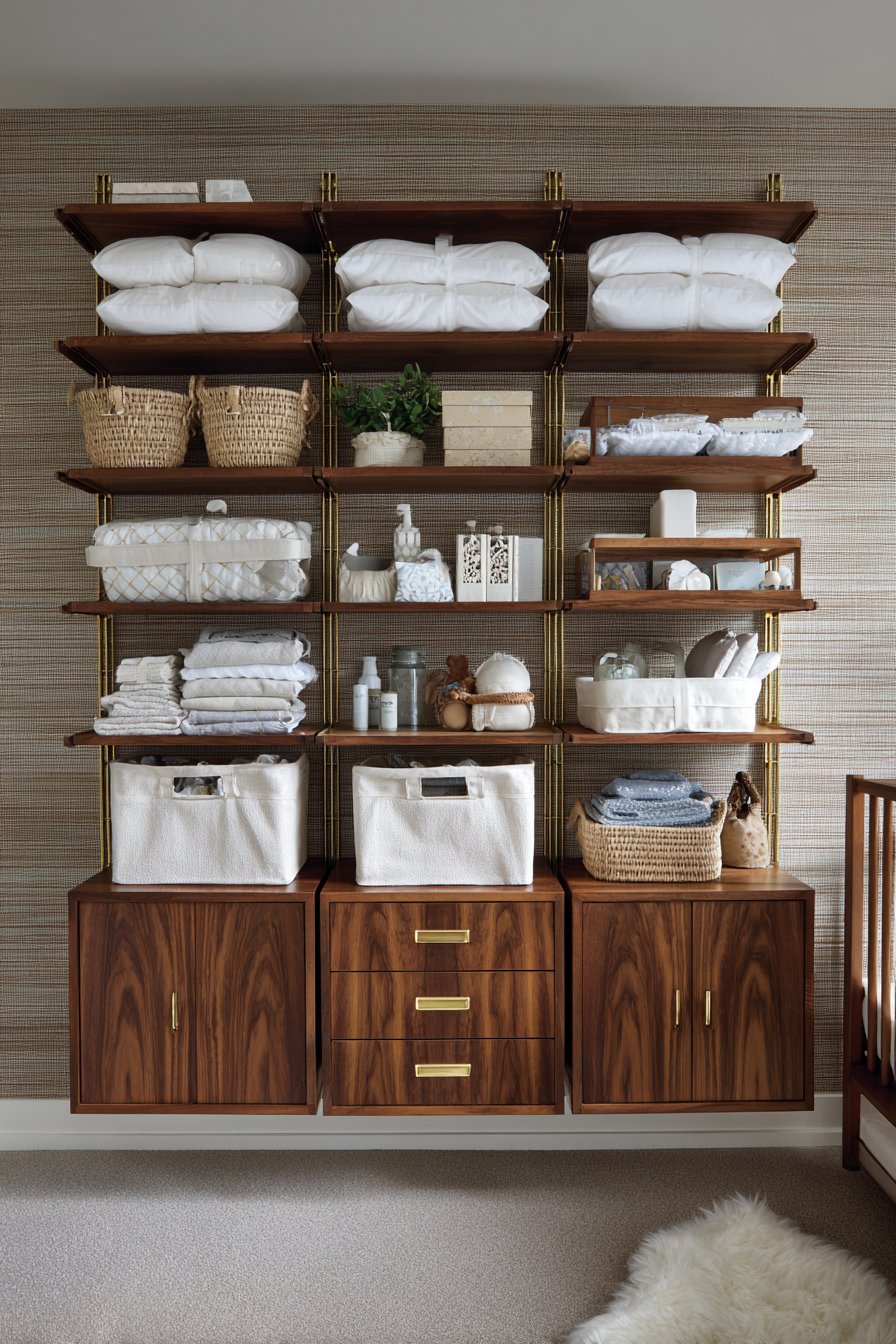
Each section contains neatly arranged nursery essentials in matching containers. The organization system makes daily routines efficient and stress-free. Integrated brass handles provide authentic period detail. Natural wood grain creates visual interest without additional decoration needed.
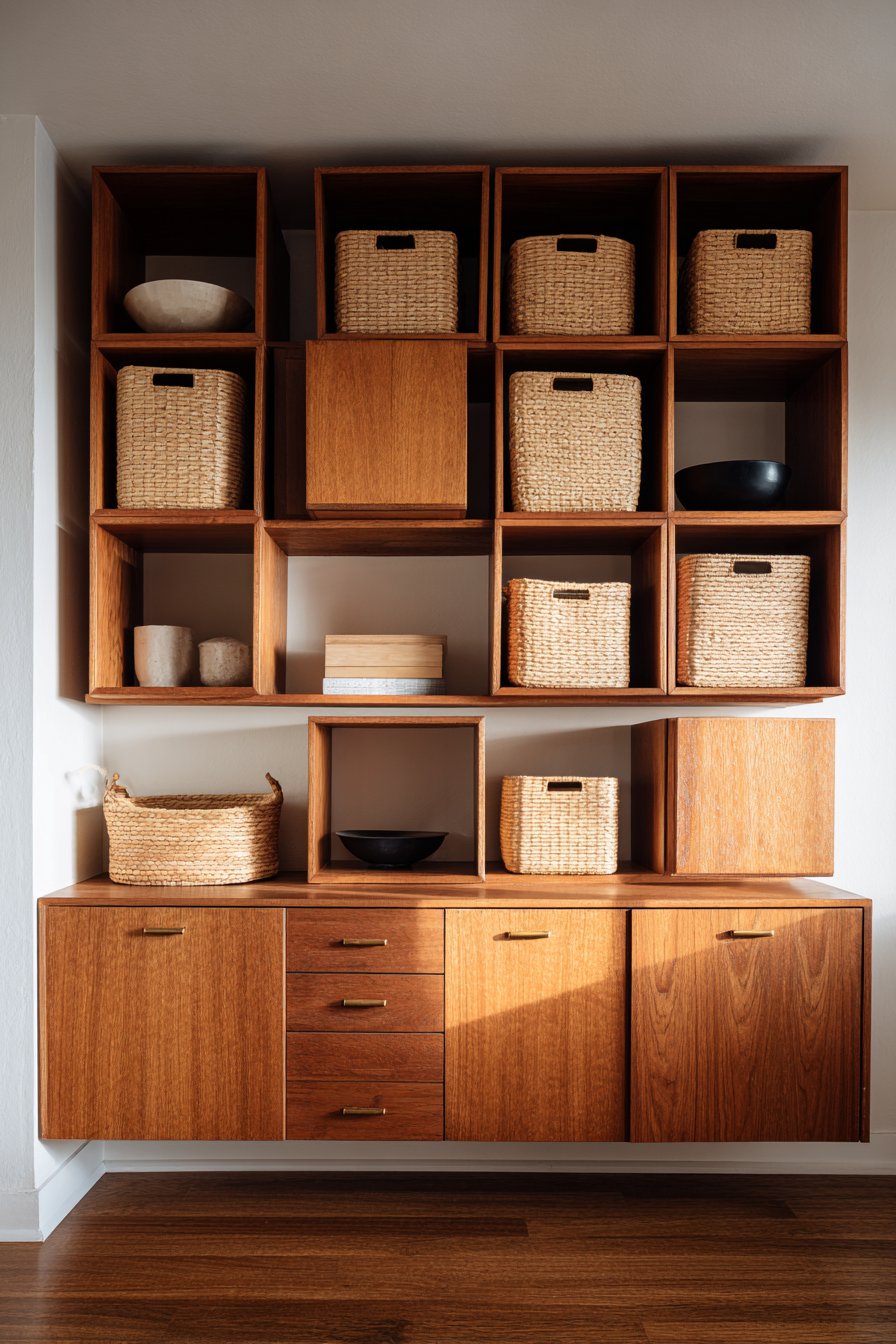
The craftsmanship quality distinguishes authentic mid century furniture from reproductions. Dovetail joints and solid wood construction ensure multi-generational durability. The modular nature allows reconfiguration for different spaces and uses. This investment piece transitions from nursery to child’s room to home office.
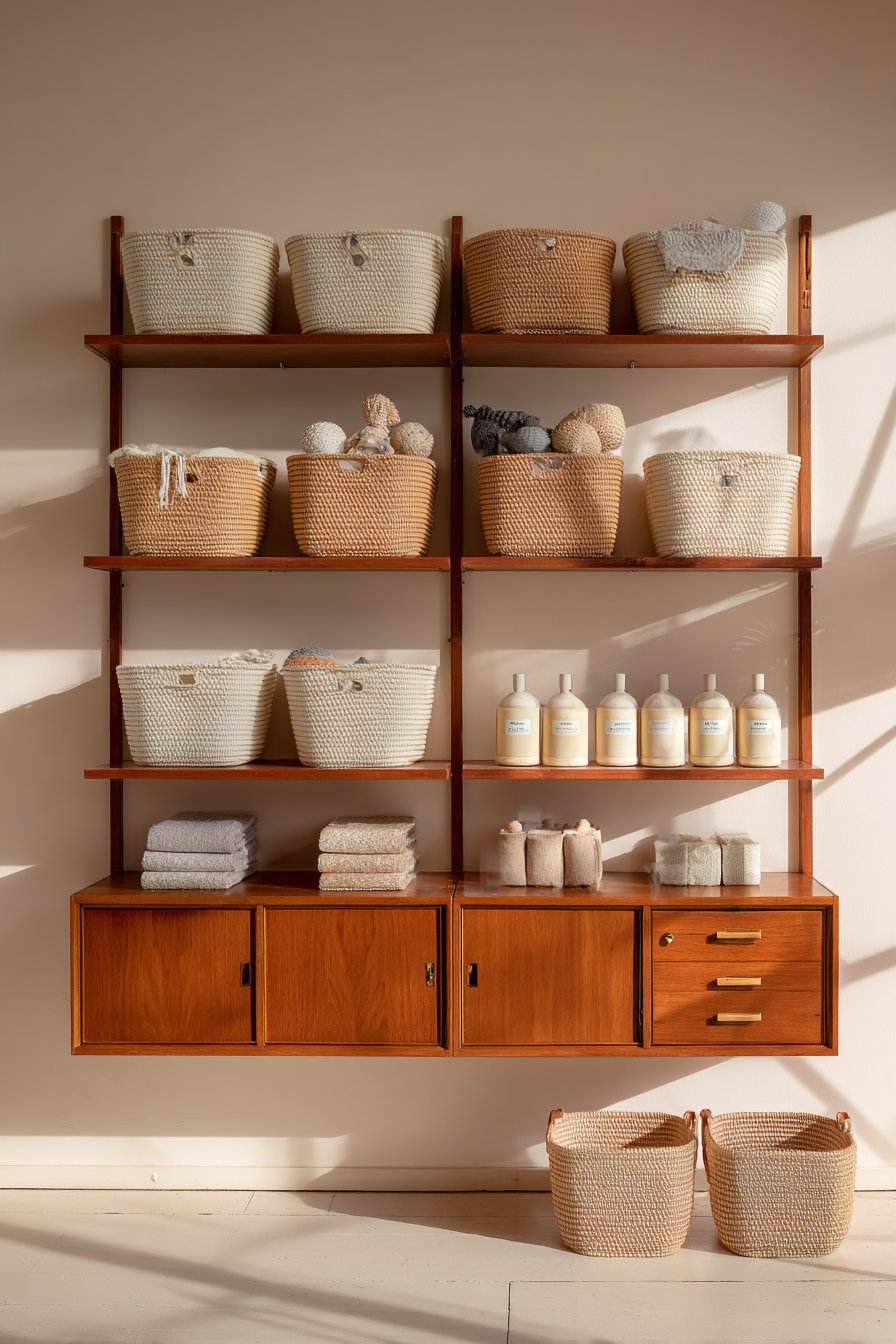
Storage systems represent one of mid century design’s most practical innovations. The Danish approach to modular furniture revolutionized home organization. The combination of beauty and function creates furniture worth the investment. Proper organization reduces visual clutter for calmer environments.
Key Design Tips:
- Invest in modular wall units that reconfigure for changing needs
- Choose floor-to-ceiling storage to maximize vertical space utilization
- Use matching baskets and containers for cohesive organizational systems
- Select authentic teak pieces with visible quality joinery and craftsmanship
- Plan for adjustable shelving to accommodate growing children’s needs
15. Flooring and Rug Layers with Natural Texture
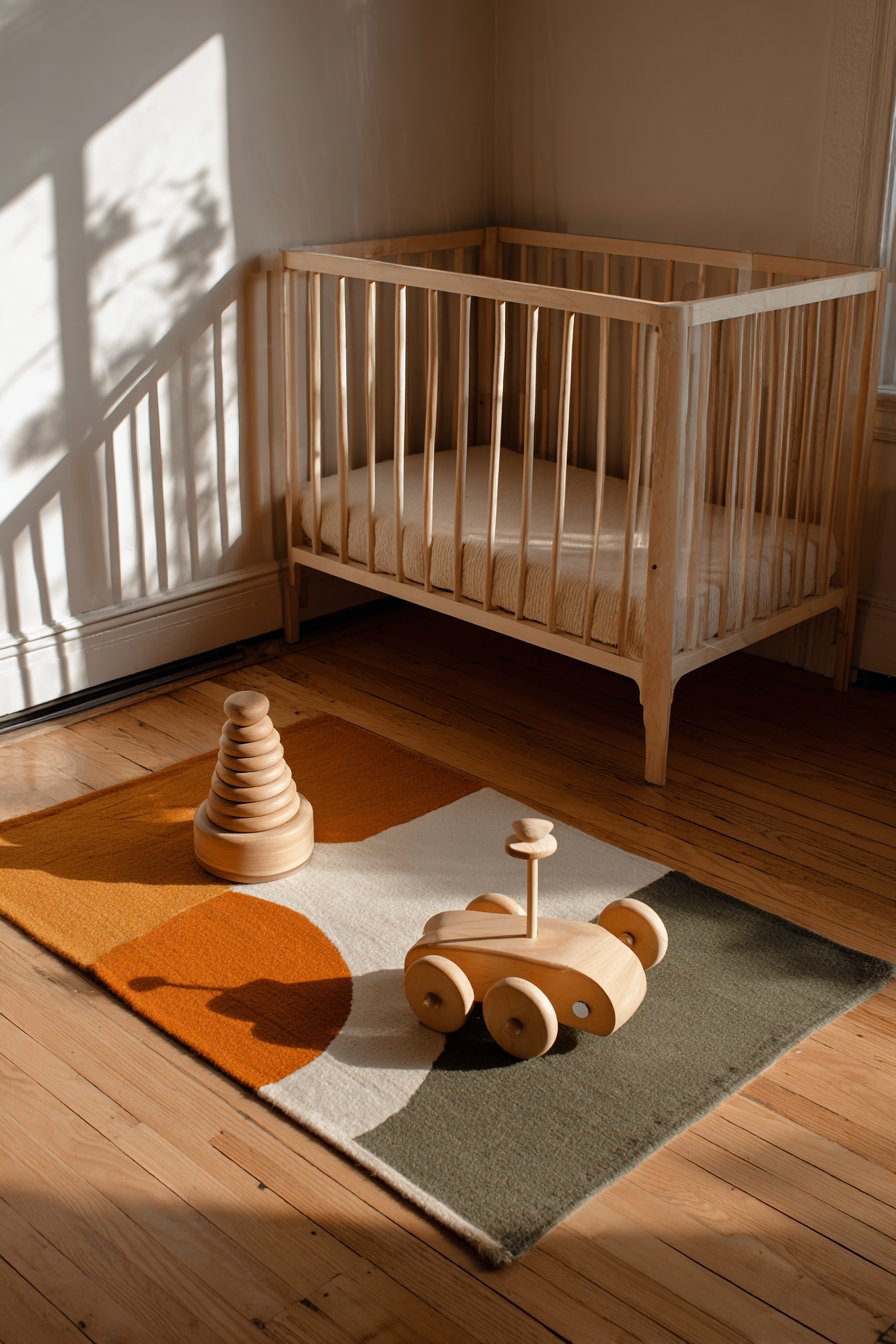
Natural oak hardwood floors showcase visible grain and subtle color variation. The authentic wood flooring provides warmth and durability underfoot. A handwoven wool area rug adds another textural layer. The abstract geometric pattern features burnt orange, olive green, and cream.
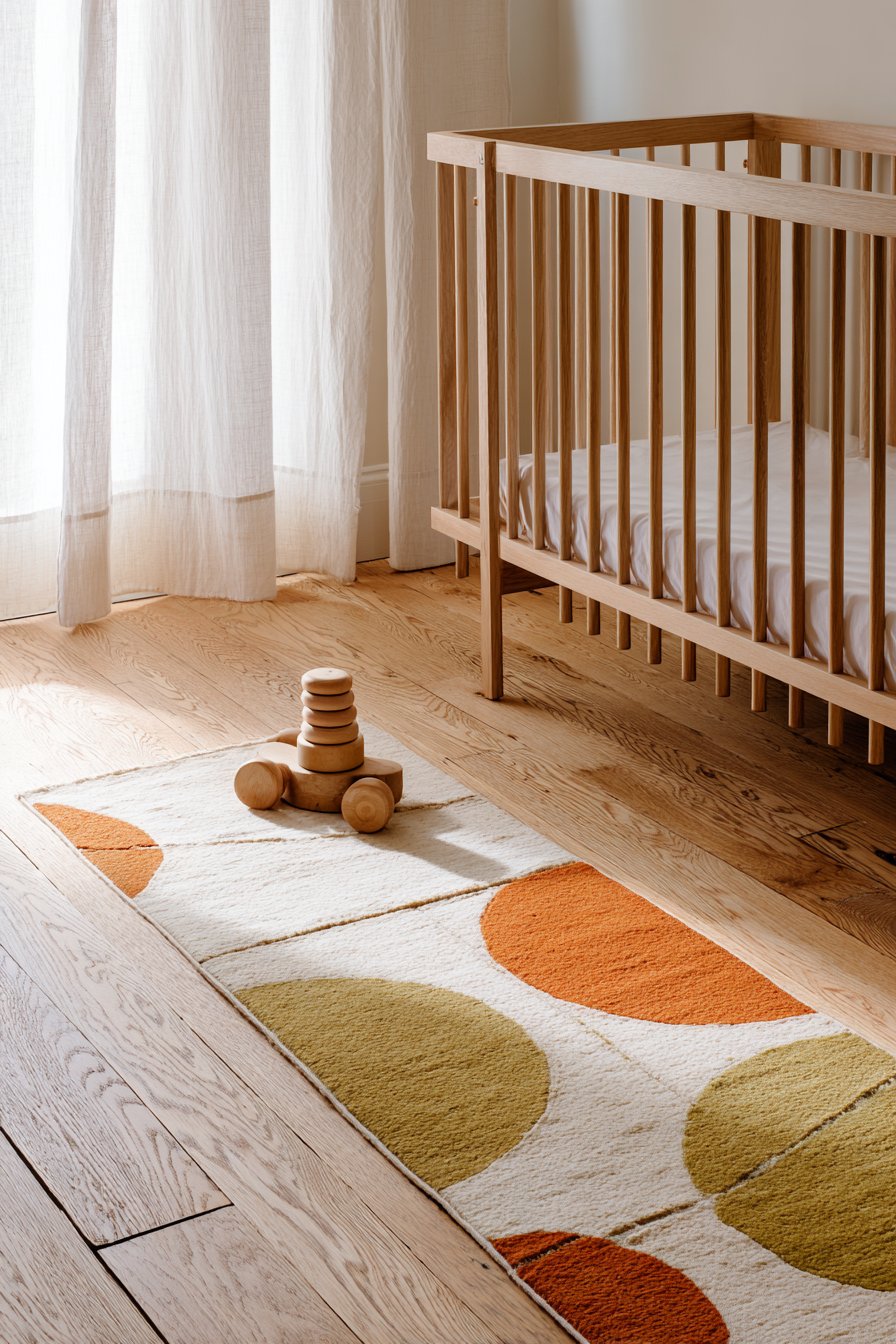
Simple wooden toys rest on the rug, showing the space in active use. A toy car and stacking rings demonstrate the room’s practical functionality. Soft natural light creates gentle shadows emphasizing texture throughout. The layering of natural materials defines successful mid century design.
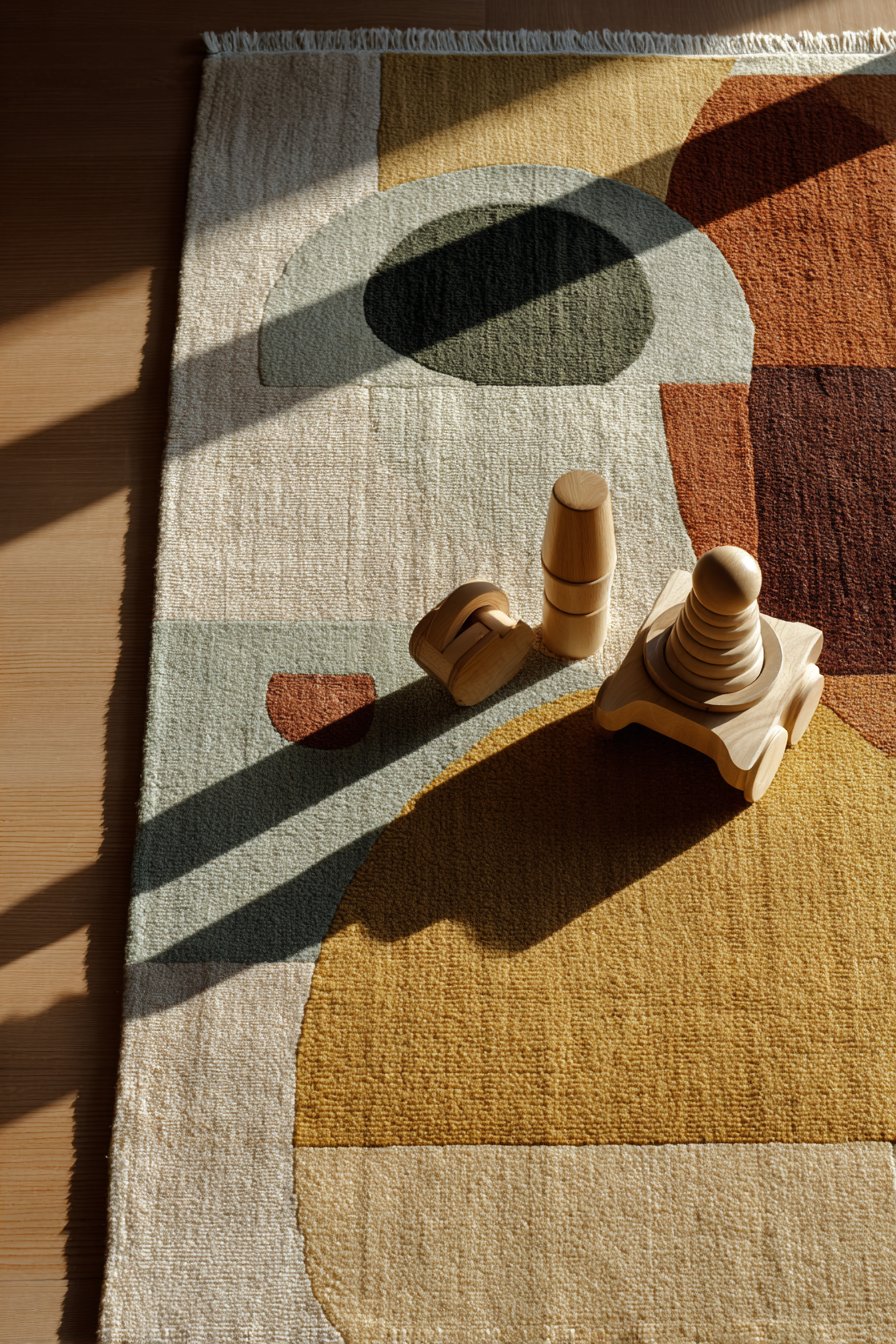
The flooring choice significantly impacts room atmosphere and longevity. Hardwood floors age beautifully, developing character over decades of use. The wool rug provides softness for floor play while adding visual warmth. Natural materials create healthier indoor environments than synthetic alternatives.
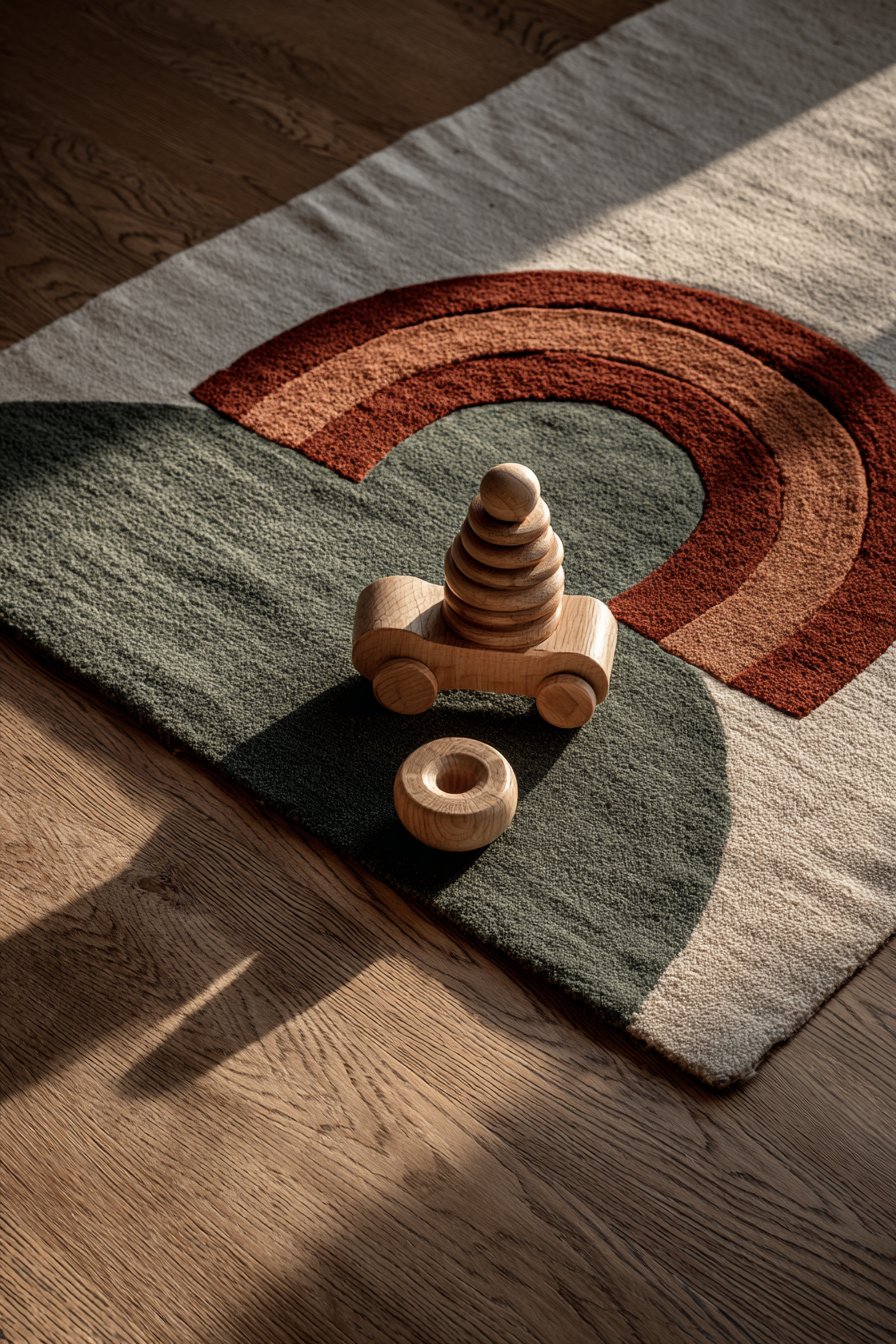
This detail-focused view highlights often-overlooked design elements. The floor and rug selection deserves as much consideration as furniture. The geometric rug pattern introduces visual interest without overwhelming. Quality natural materials justify their higher initial investment through lasting beauty.
Key Design Tips:
- Choose natural hardwood flooring in oak for authentic mid century warmth
- Layer handwoven wool rugs for softness and geometric pattern introduction
- Select rug patterns with period-appropriate abstract geometric designs
- Use natural lighting to highlight wood grain and textile textures
- Allow authentic materials to show natural wear as character development
16. Twin Nursery Symmetry with Doubled Design Elements
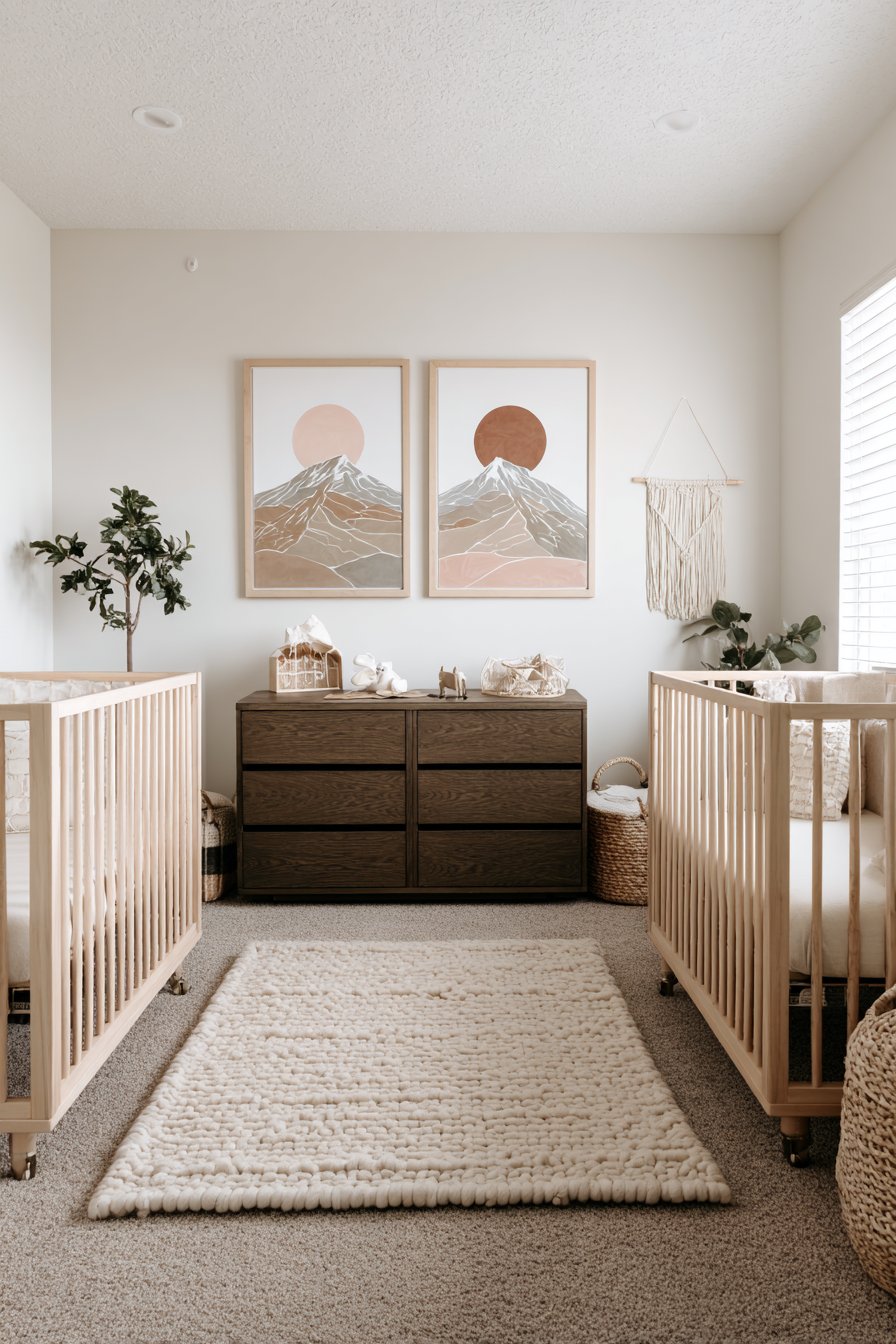
Two matching cribs in blonde wood position symmetrically along parallel walls. This mirrored arrangement creates visual balance and practical efficiency. A shared credenza-style dresser in walnut sits between the cribs. The central placement provides equal access for caring for both babies.
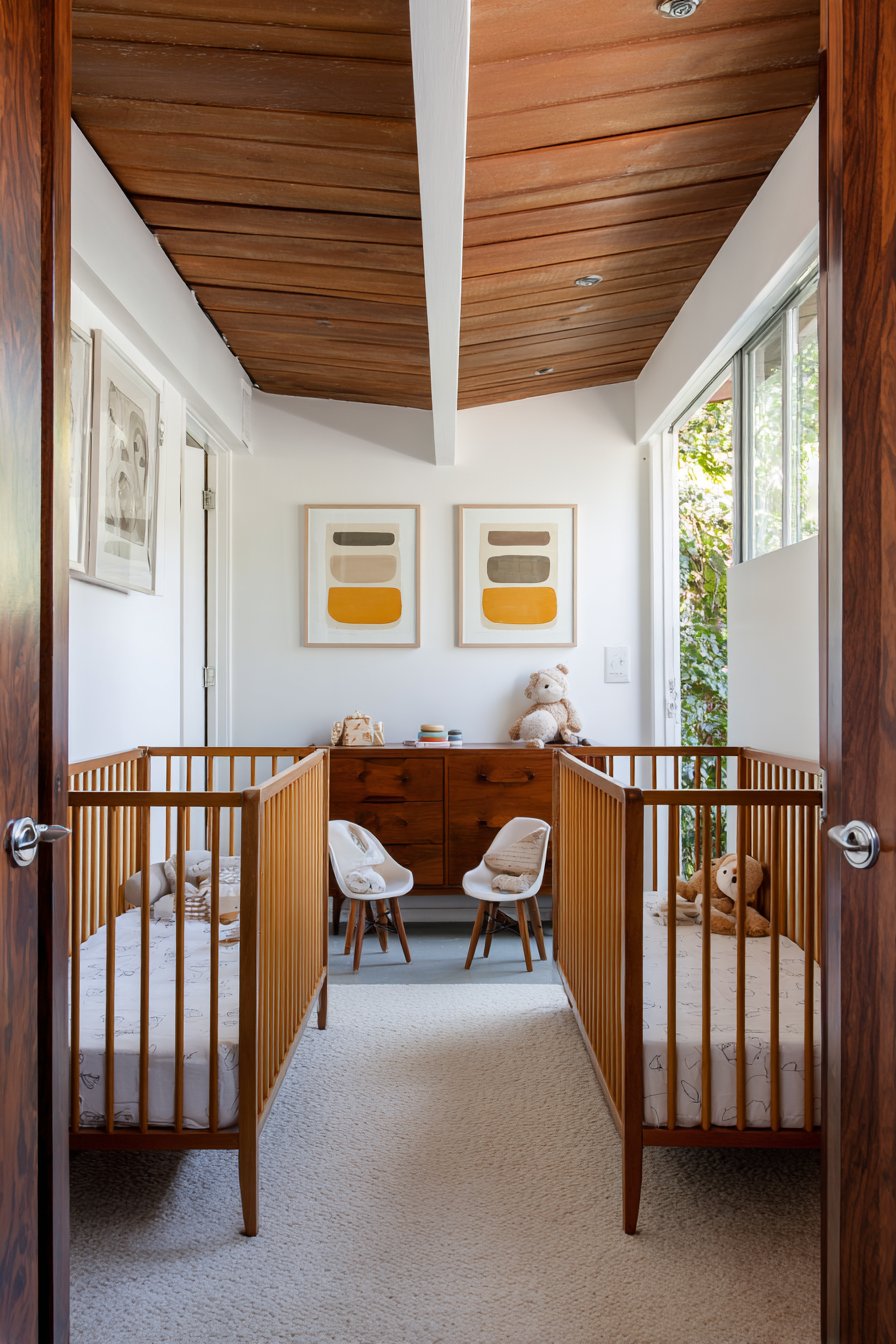
Coordinating but not identical artwork hangs above each crib. The complementary abstract prints share color schemes while maintaining individuality. Two small-scale chairs allow comfortable feeding for both infants. Natural light enters from windows on the connecting wall, illuminating both sides equally.
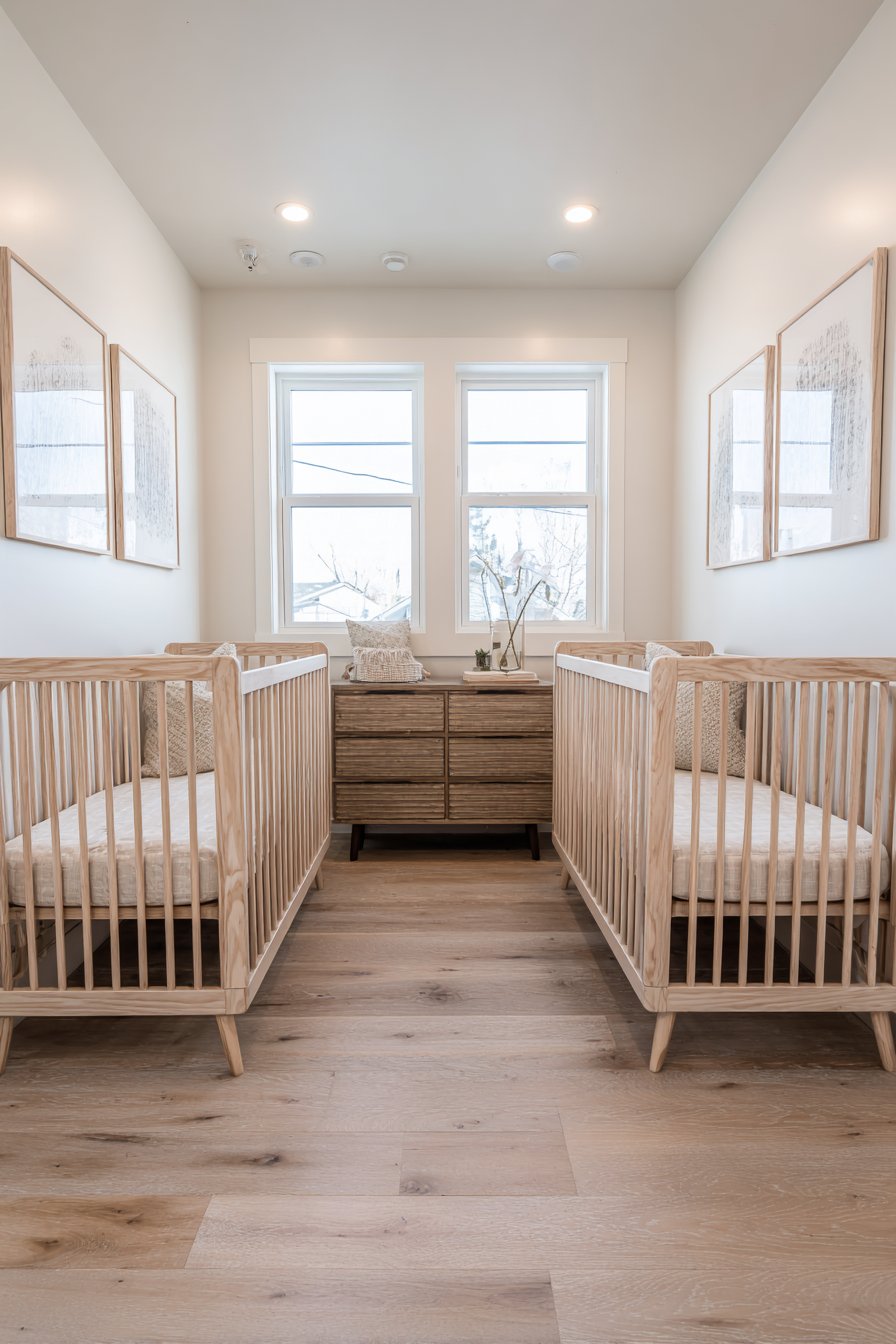
The doubled elements maintain design cohesion while acknowledging two individuals. The symmetrical layout simplifies furniture placement in twin nurseries. The walnut credenza provides ample storage for double the supplies. Quality furniture justifies investment when serving multiple children.
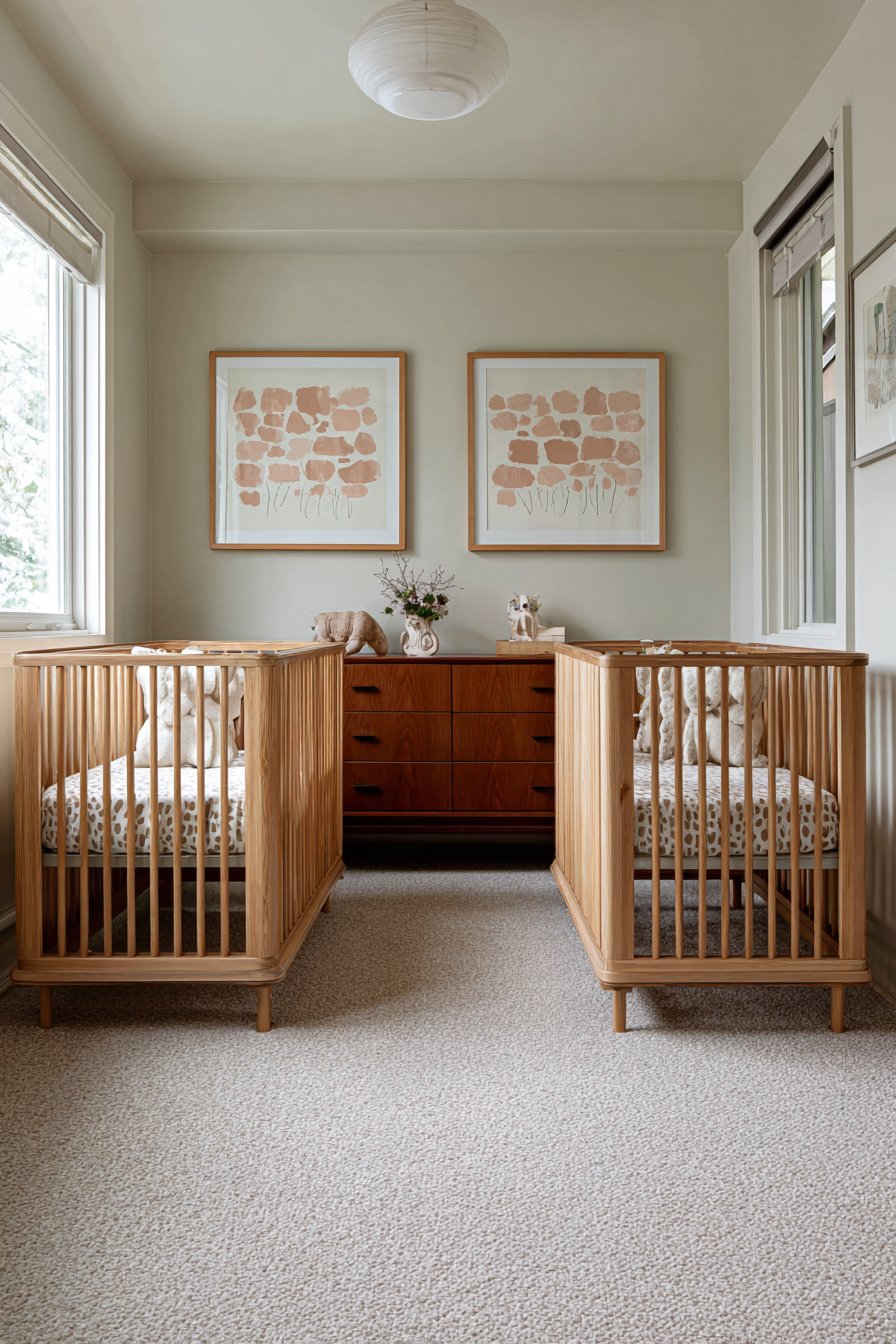
Twin nurseries present unique design challenges requiring thoughtful solutions. The symmetrical approach creates fairness and visual calm. The shared central storage piece encourages efficiency during busy times. This layout works beautifully in rectangular rooms with parallel long walls.
Key Design Tips:
- Use symmetrical crib placement for balanced twin nursery layouts
- Choose one shared storage piece between cribs for efficient access
- Select coordinating artwork that shares colors but maintains individuality
- Provide separate seating for simultaneous feeding of two babies
- Position windows to provide equal natural light to both sleeping areas
17. Art Gallery Wall with Graphic Design Excellence
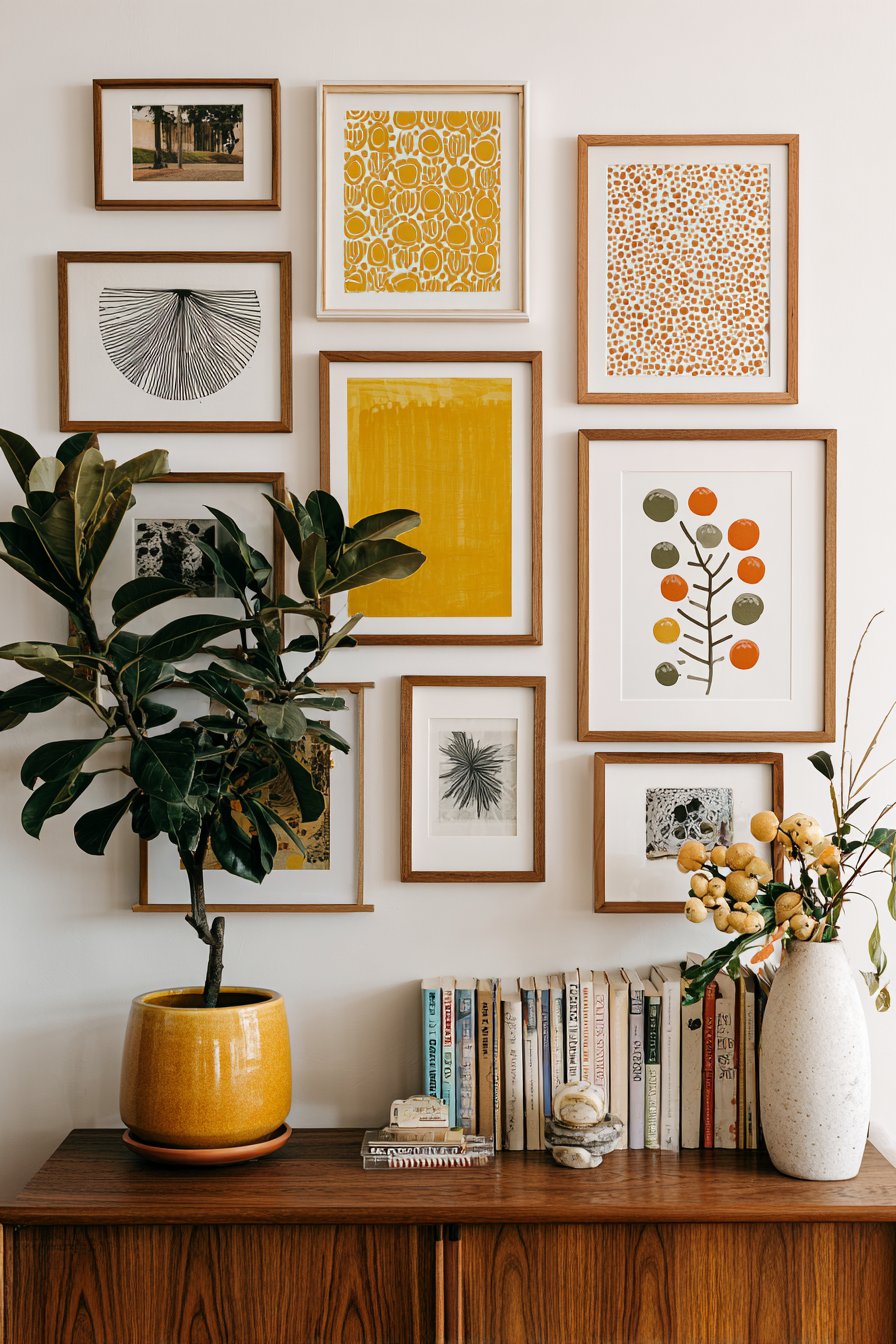
A curated gallery features vintage-inspired prints in simple wooden frames. The collection includes abstract compositions and atomic era patterns. Stylized animal illustrations and geometric designs complete the arrangement. The cohesive palette of mustard yellow, burnt orange, olive green, and grey unifies diverse pieces.
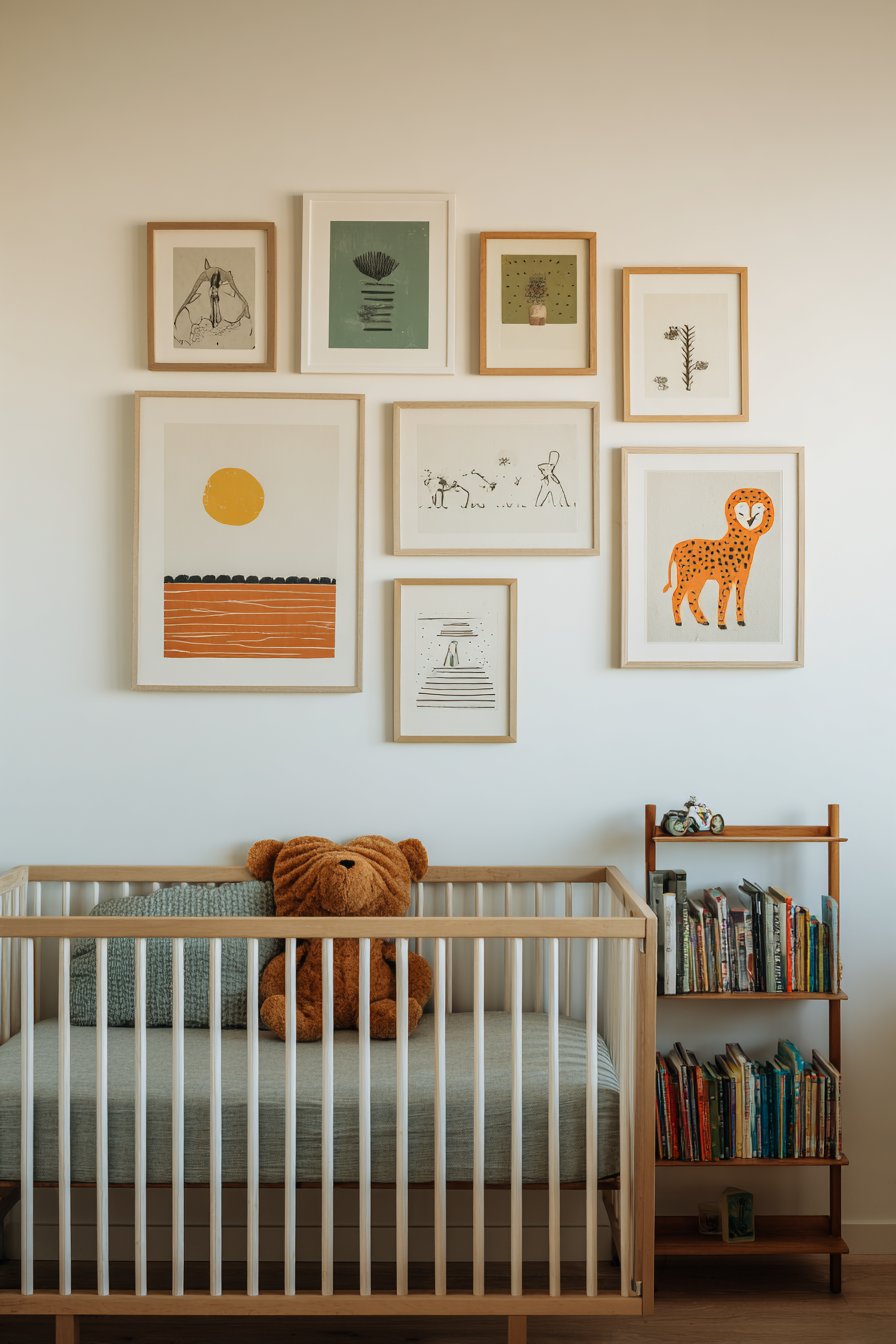
Frames hang in asymmetrical but balanced arrangement against white walls. This organic placement feels more dynamic than rigid grids. The gallery appears above a low bookshelf in teak. The combination creates visual interest at multiple heights throughout the room.
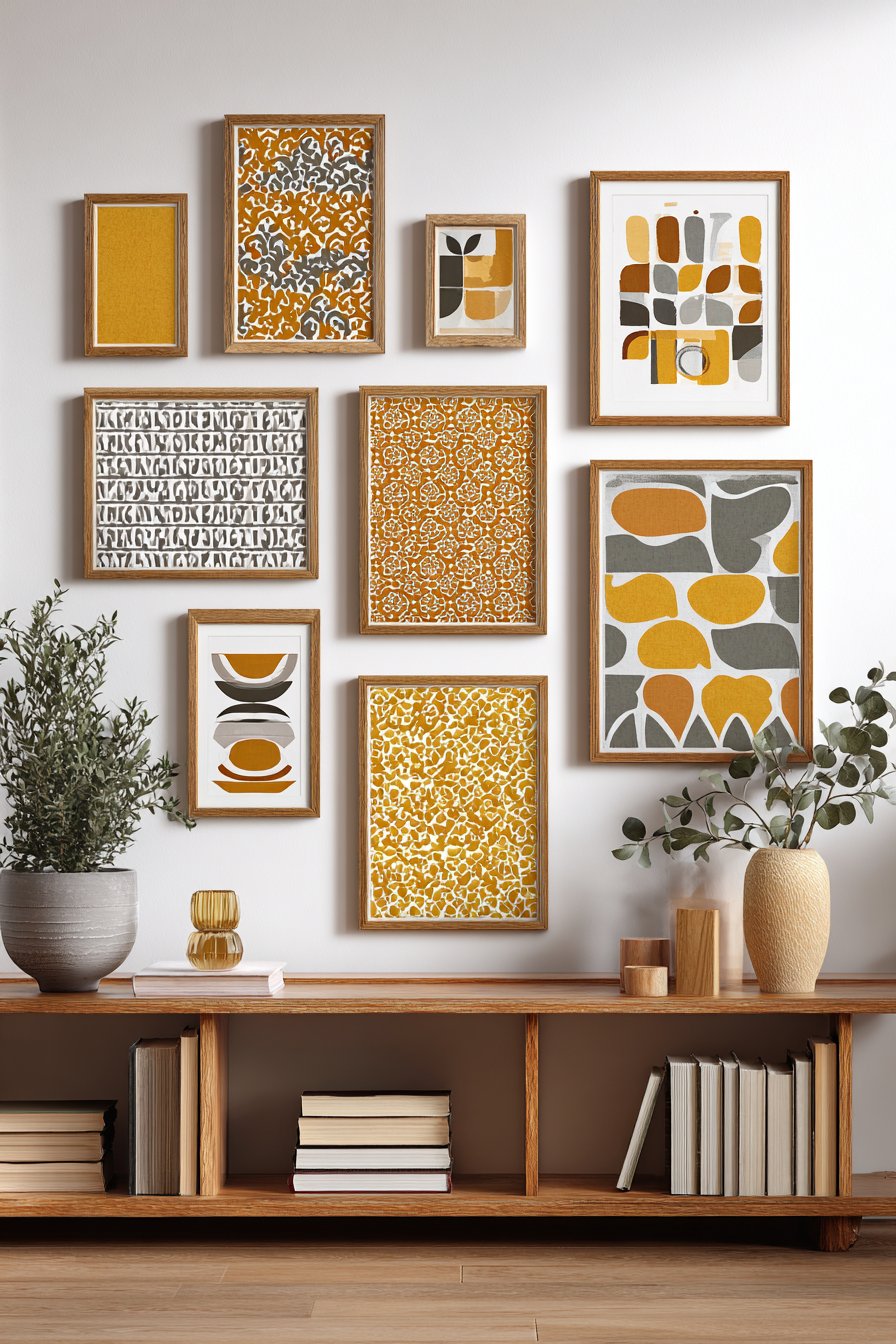
The graphic design sensibility of mid century visual culture shines through. The characteristic color theory and composition principles define the era. Quality printing and framing ensure the artwork remains beautiful for decades. The collection grows over time as you discover new pieces.
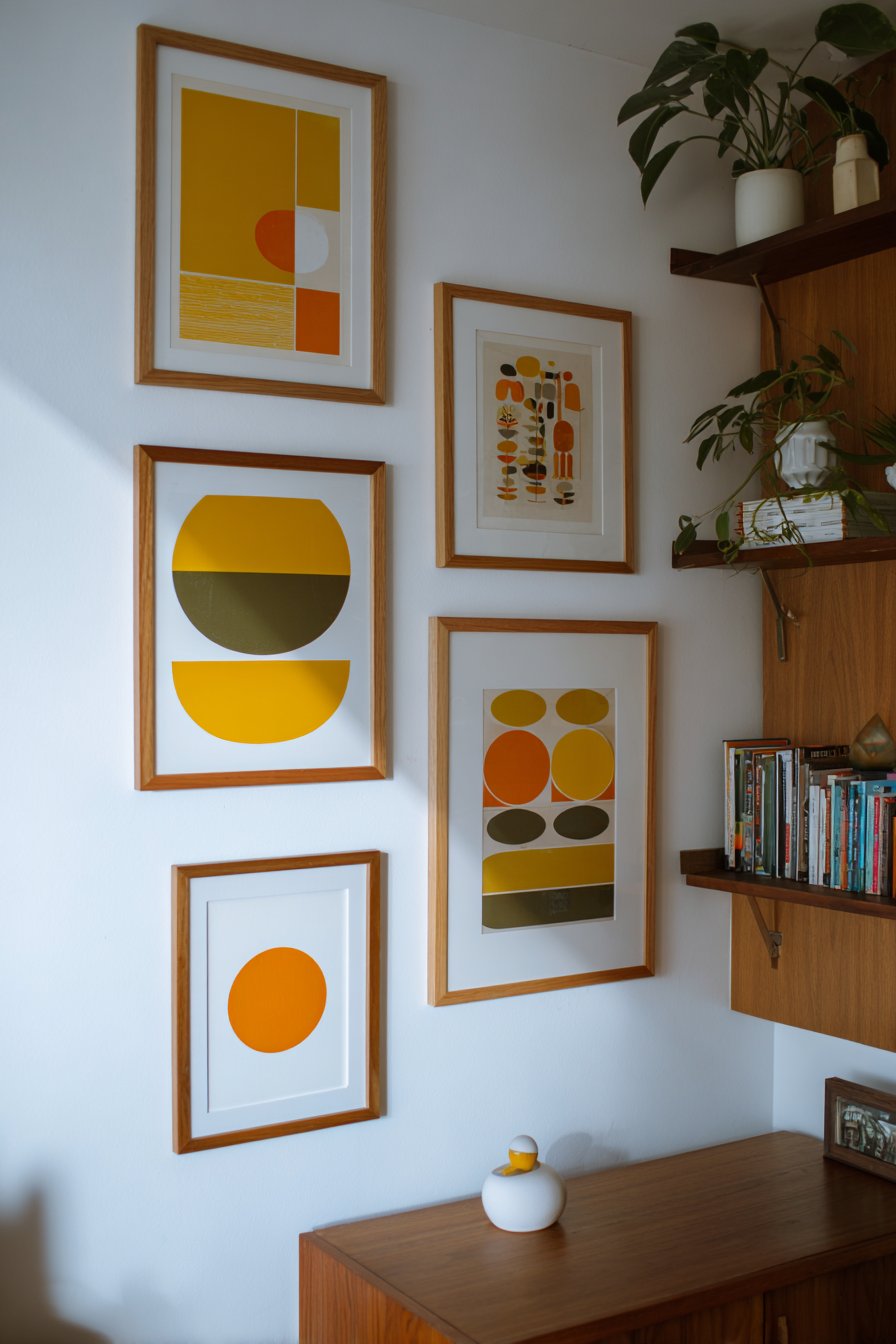
Art walls demonstrate personal taste and create focal points without architectural changes. The asymmetrical arrangement allows flexibility when adding new pieces. The consistent color palette maintains cohesion despite varied subjects. This approach works in any nursery regardless of size or layout.
Key Design Tips:
- Curate art collections with consistent color palettes for cohesion
- Use narrow wooden frames for clean, understated presentation
- Arrange pieces asymmetrically for dynamic, organic wall compositions
- Include mix of abstract, geometric, and stylized representational art
- Position gallery walls above furniture to create visual connections
18. Luxury Materials with Investment-Quality Craftsmanship
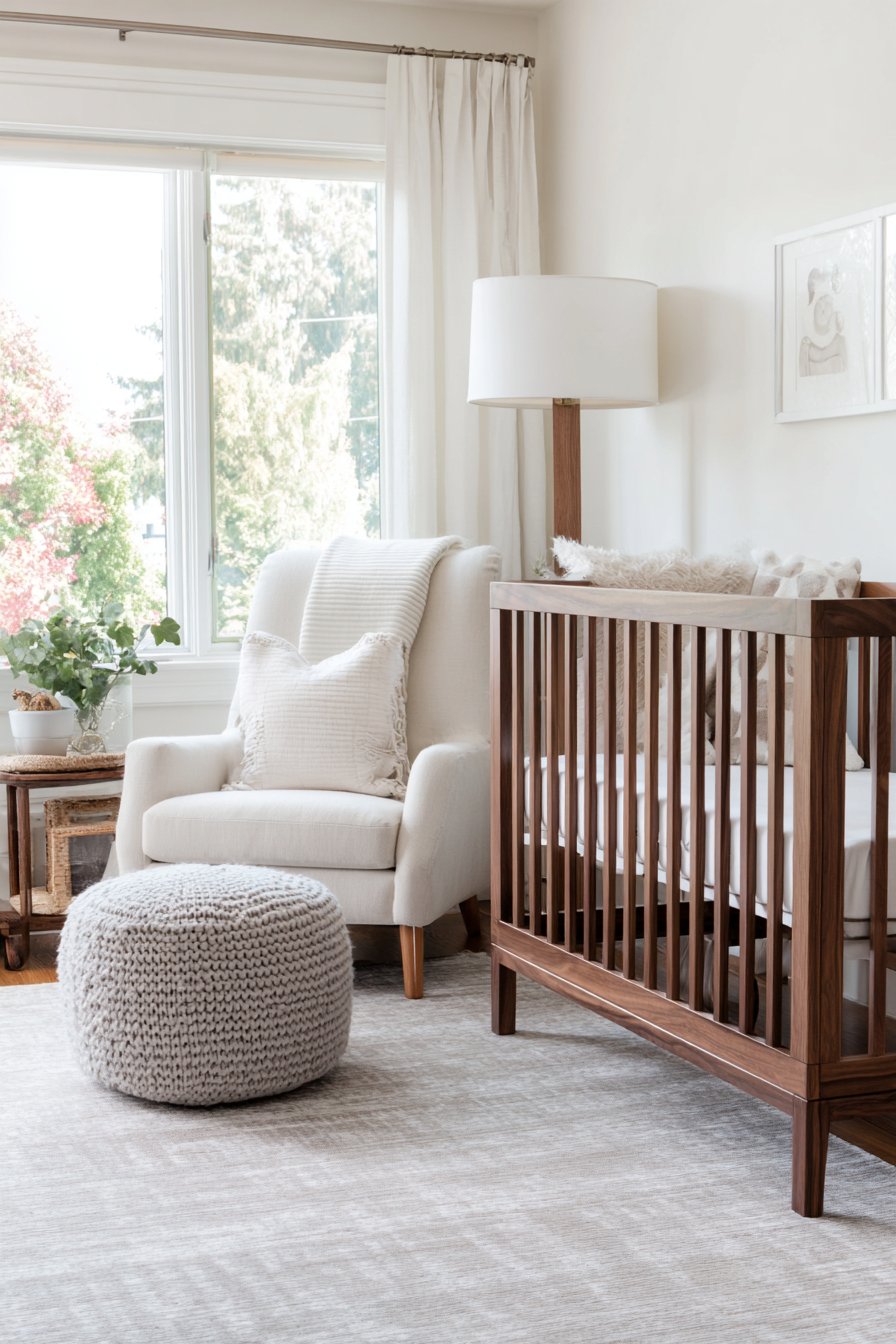
A custom crib in solid walnut features hand-rubbed oil finish. The exceptional wood grain and expert joinery represent superior craftsmanship. This investment piece showcases the pinnacle of mid century furniture making. The attention to detail ensures multi-generational use and beauty.
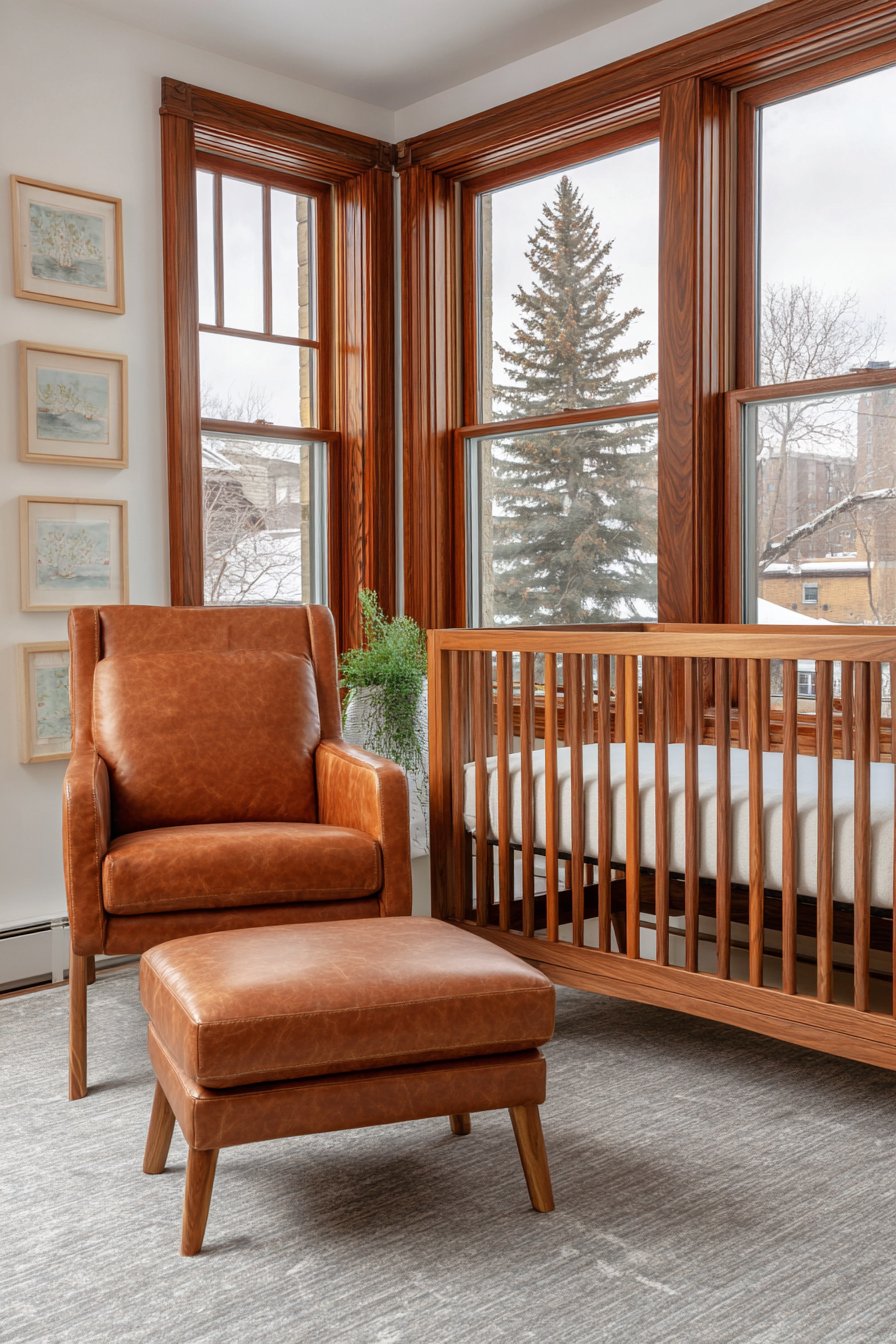
A vintage Eames lounge chair and ottoman provide nursing comfort. Reupholstered in supple leather, these iconic pieces serve new purposes. Casement windows with brass hardware allow abundant natural light. A handwoven wool rug in grey with subtle pattern grounds the entire space.
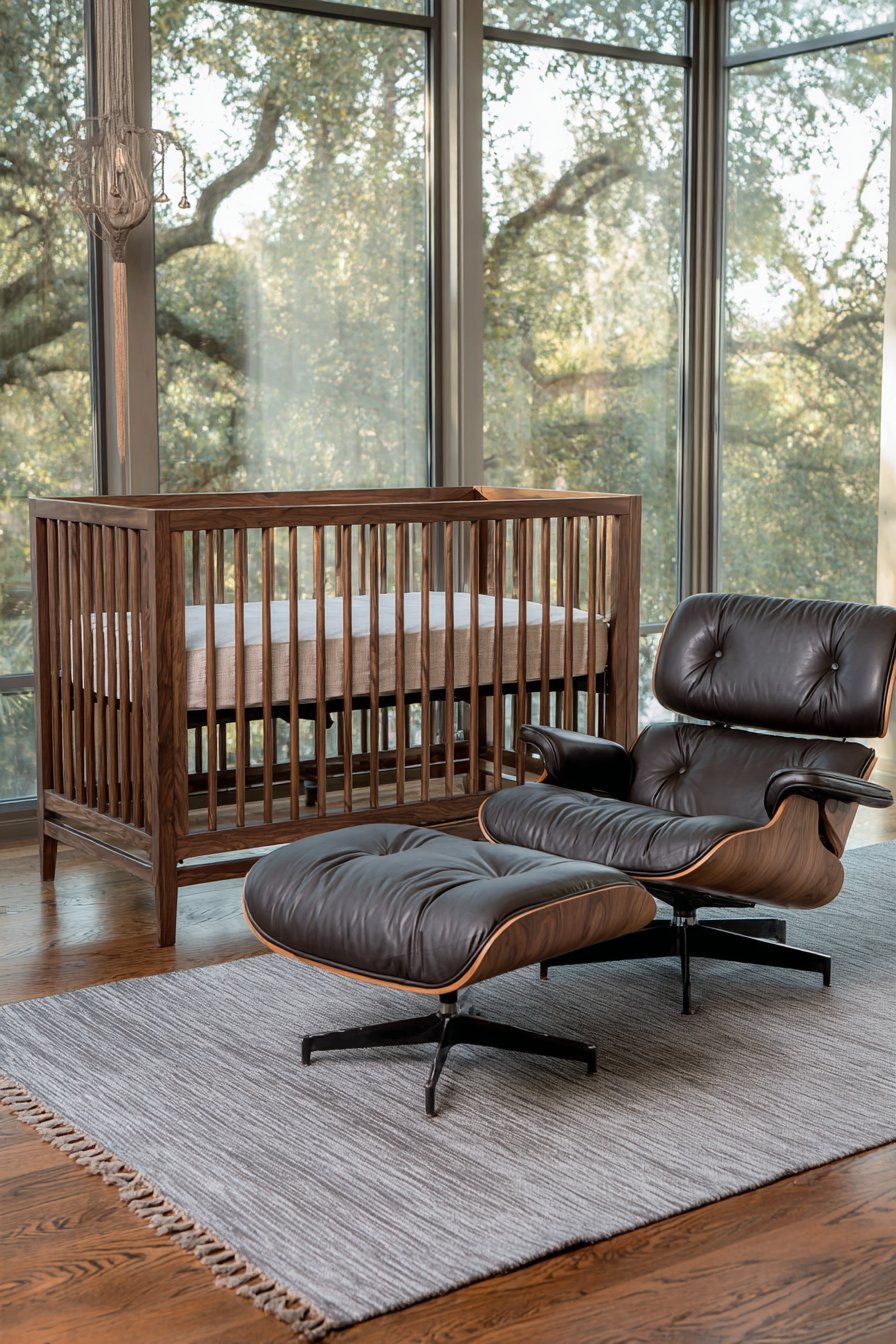
The premium materials justify their cost through lasting quality and beauty. Solid walnut darkens beautifully as it ages over decades. The leather upholstery develops rich patina with use. These pieces become family heirlooms passed to future generations.
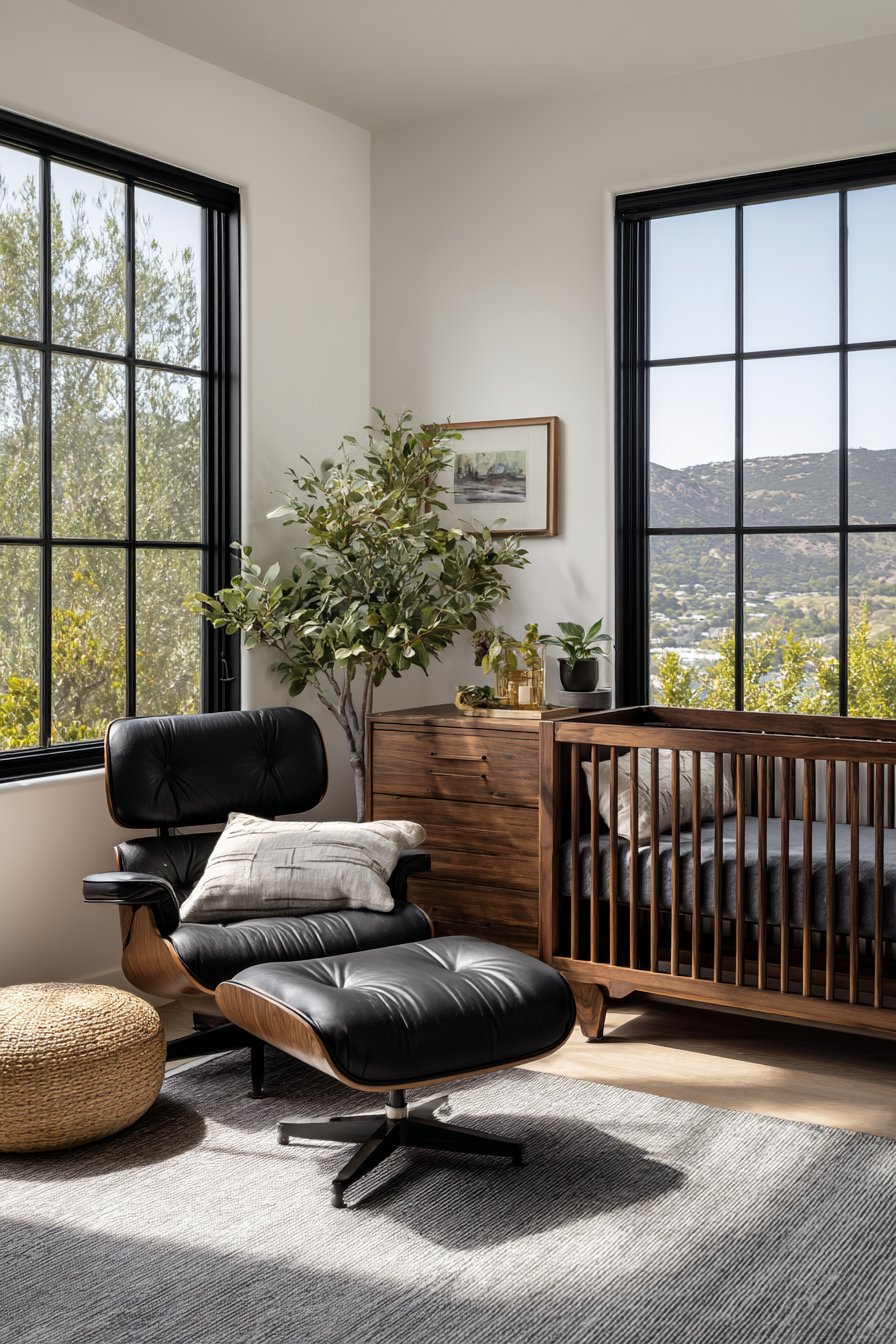
This design represents the investment approach to nursery furniture. Quality pieces serve multiple children and transition to other rooms. The timeless aesthetic never feels dated or requires replacement. Initial investment pays dividends through decades of use and enjoyment.
Key Design Tips:
- Invest in solid wood cribs with hand-rubbed finishes for heirloom quality
- Choose iconic designer pieces that maintain value over time
- Select premium materials like leather that develop beautiful patina
- Specify brass hardware and quality joinery for lasting functionality
- Consider cost-per-year of use when evaluating investment furniture pieces
19. Layered Lighting Schemes with Multiple Fixtures
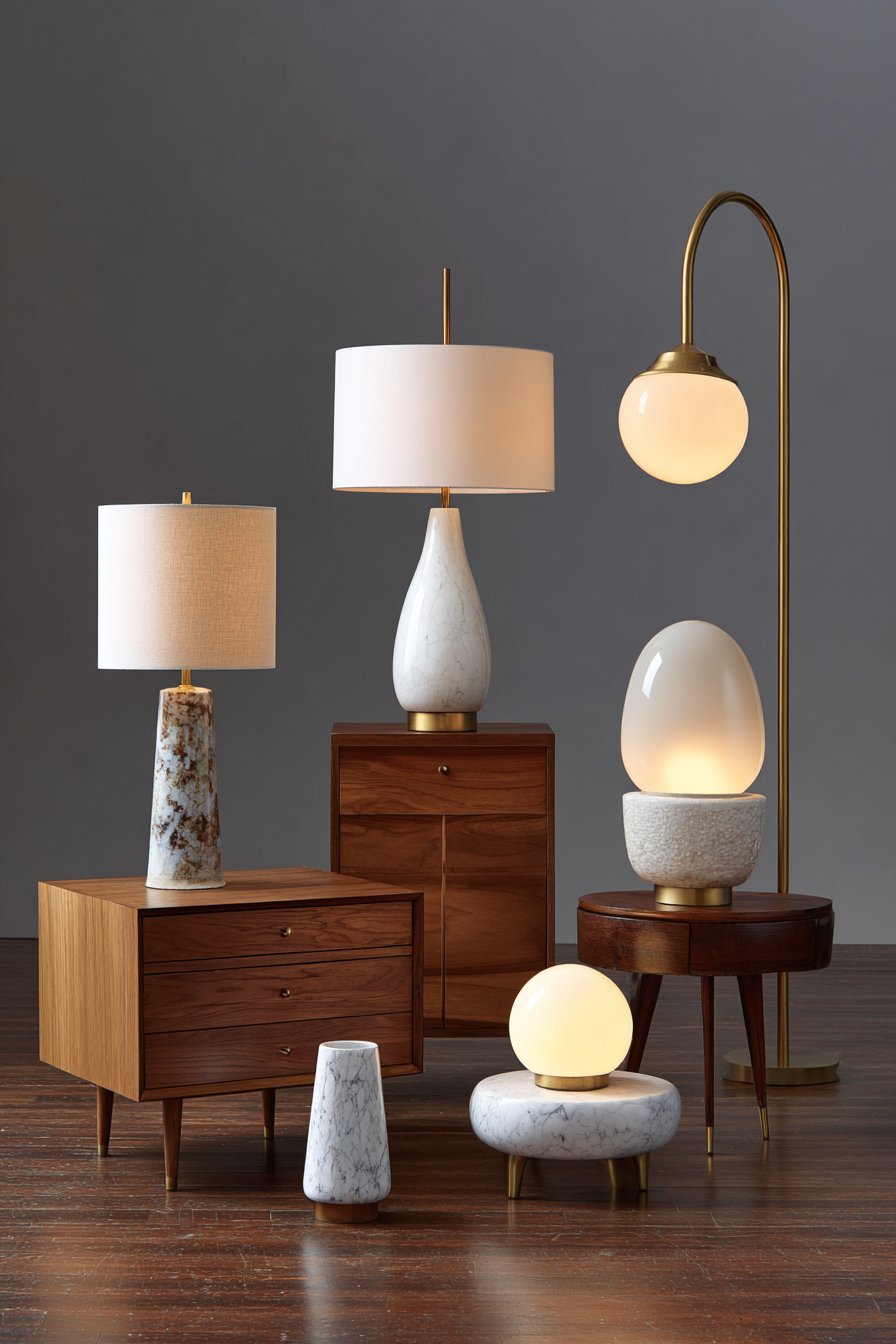
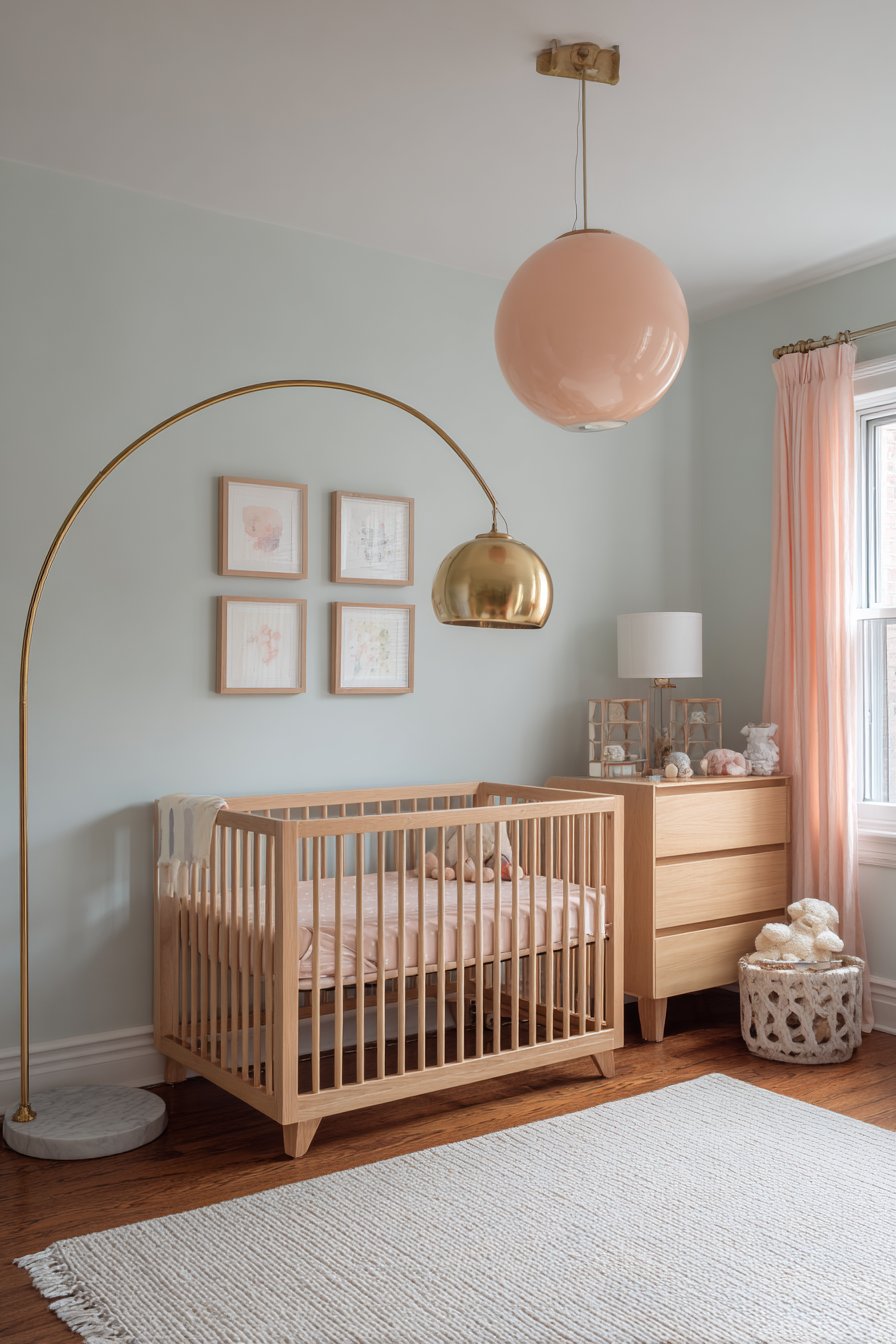
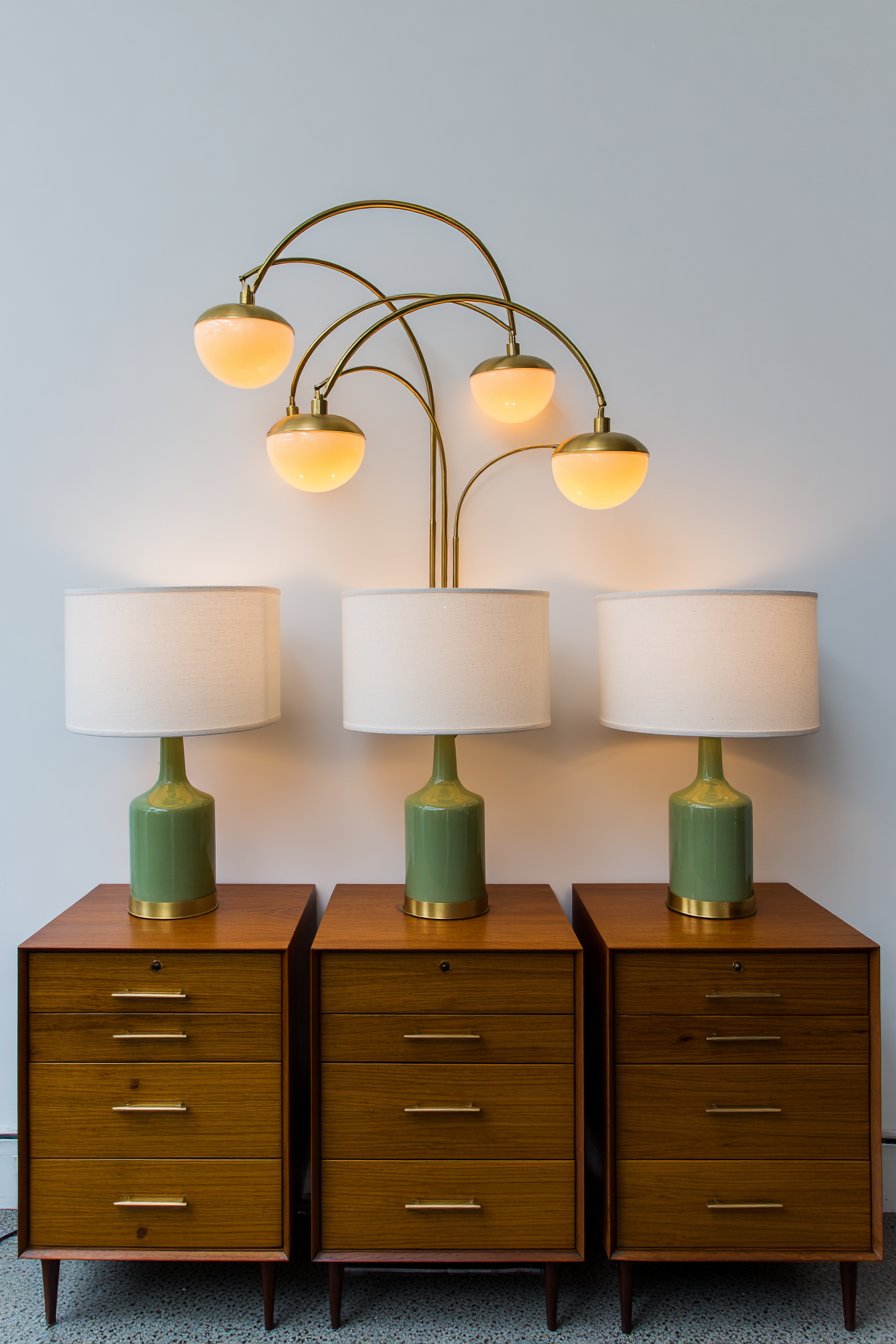
Multiple period-appropriate fixtures create comprehensive lighting schemes. A brass arc floor lamp with marble base provides adjustable task lighting. Ceramic table lamps with tapered shades sit on matching nightstands. A semi-flush ceiling fixture with opal glass globe offers ambient illumination.
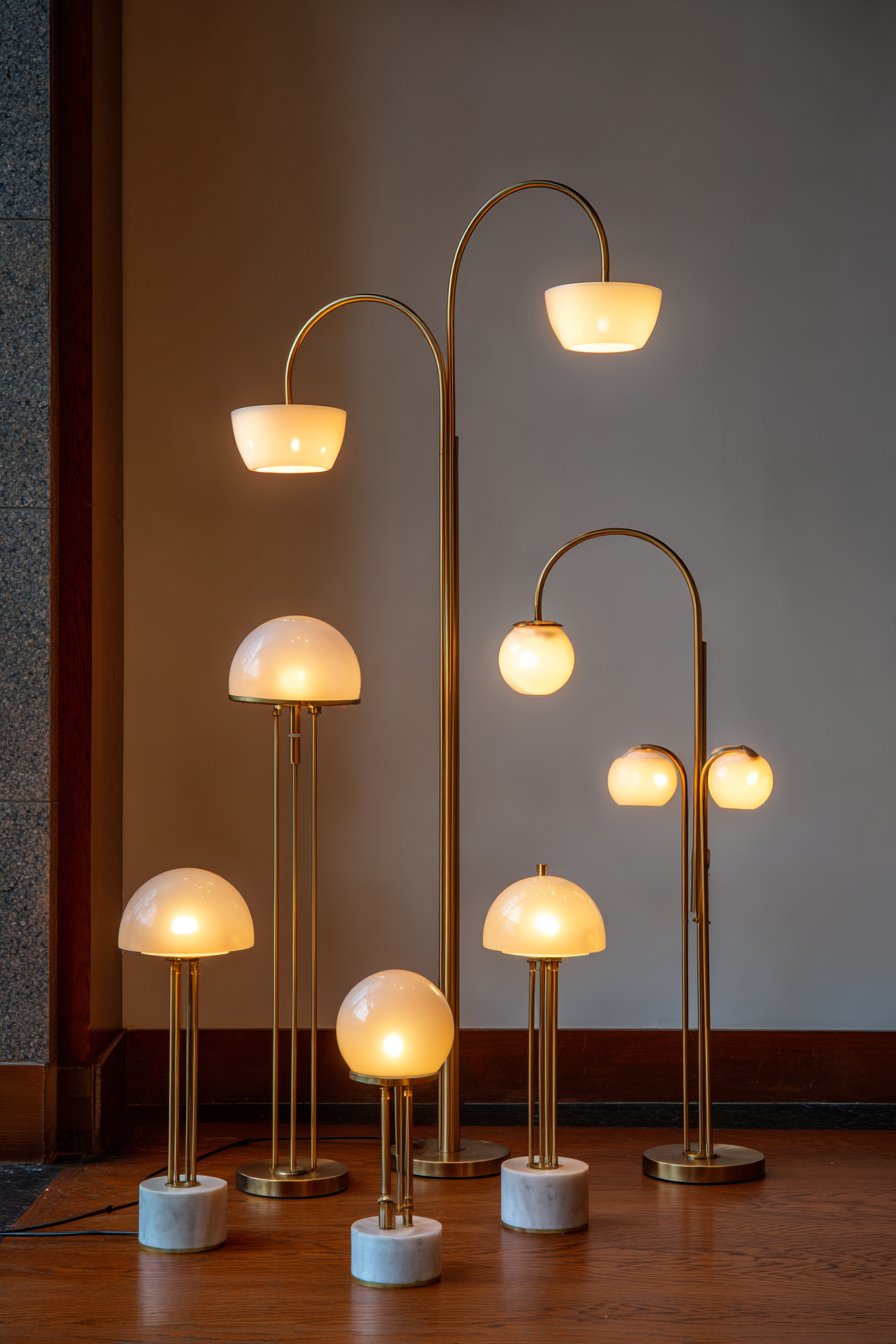
Each light source serves different purposes throughout the day and night. The layered approach provides flexibility for various activities. The warm glow complements natural wood furniture beautifully. Evening photography captures how lighting creates ambiance beyond mere functionality.
The sculptural quality of mid century lighting fixtures adds artistic value. Each piece functions as both light source and decorative object. The combination of brass, ceramic, and opal glass creates textural variety. Proper lighting transforms rooms from functional spaces to atmospheric environments.
Lighting design deserves equal consideration with furniture selection. The layered approach prevents harsh overhead-only illumination. Multiple sources at different heights create depth and dimension. Quality fixtures last decades, justifying higher initial investment costs.
Key Design Tips:
- Layer multiple light sources at different heights throughout nurseries
- Choose arc floor lamps for adjustable task lighting during nursing
- Use ceramic table lamps with sculptural bases as decorative objects
- Install dimmer switches for flexibility during nighttime care routines
- Select warm-toned bulbs to complement natural wood furniture
20. Adaptable Design for Growing Children
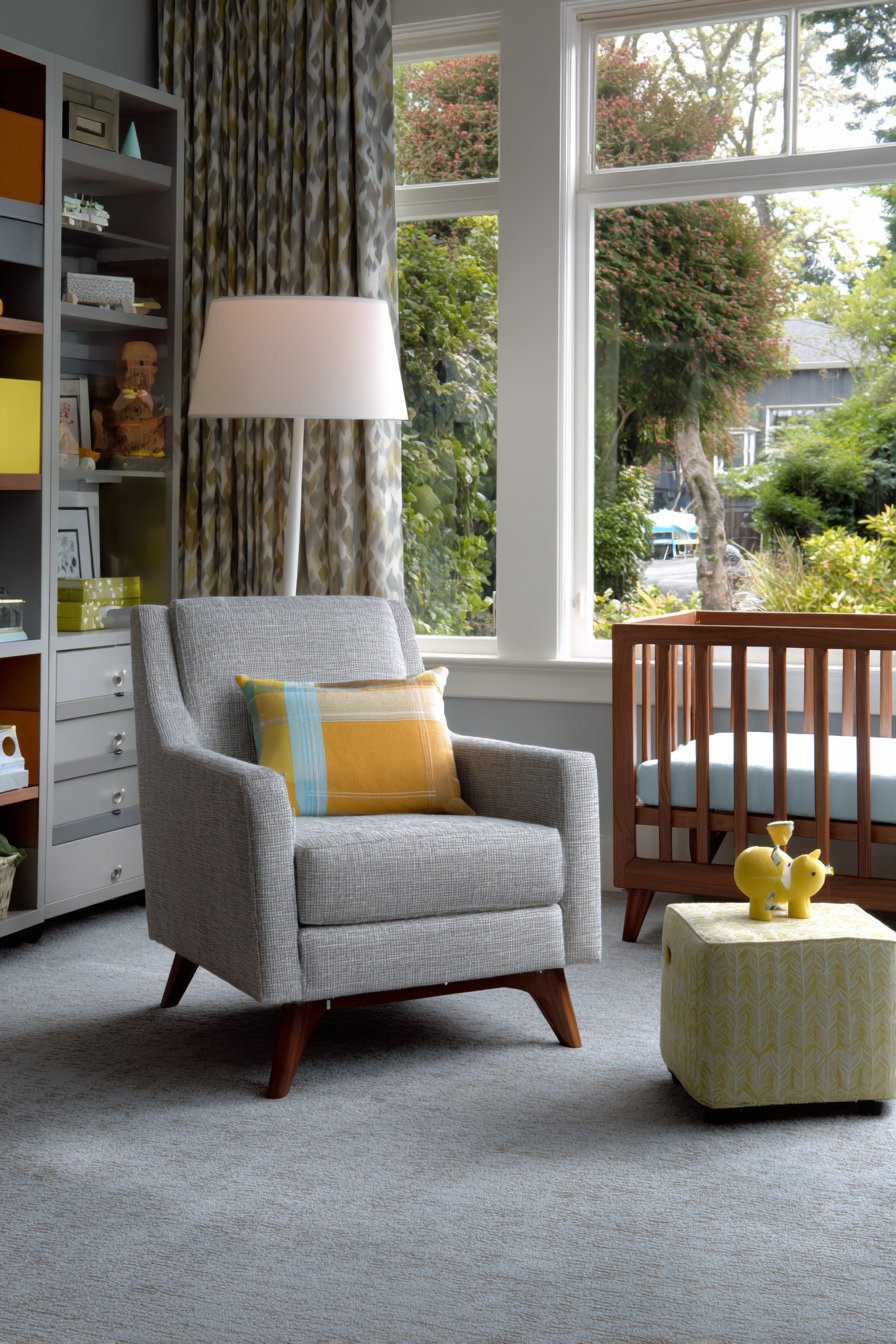
A convertible crib transforms into a toddler bed for extended use. This practical approach maximizes furniture investment over many years. Modular storage systems reconfigure as needs change with growing children. The timeless furniture pieces in quality materials transcend age-specific needs.
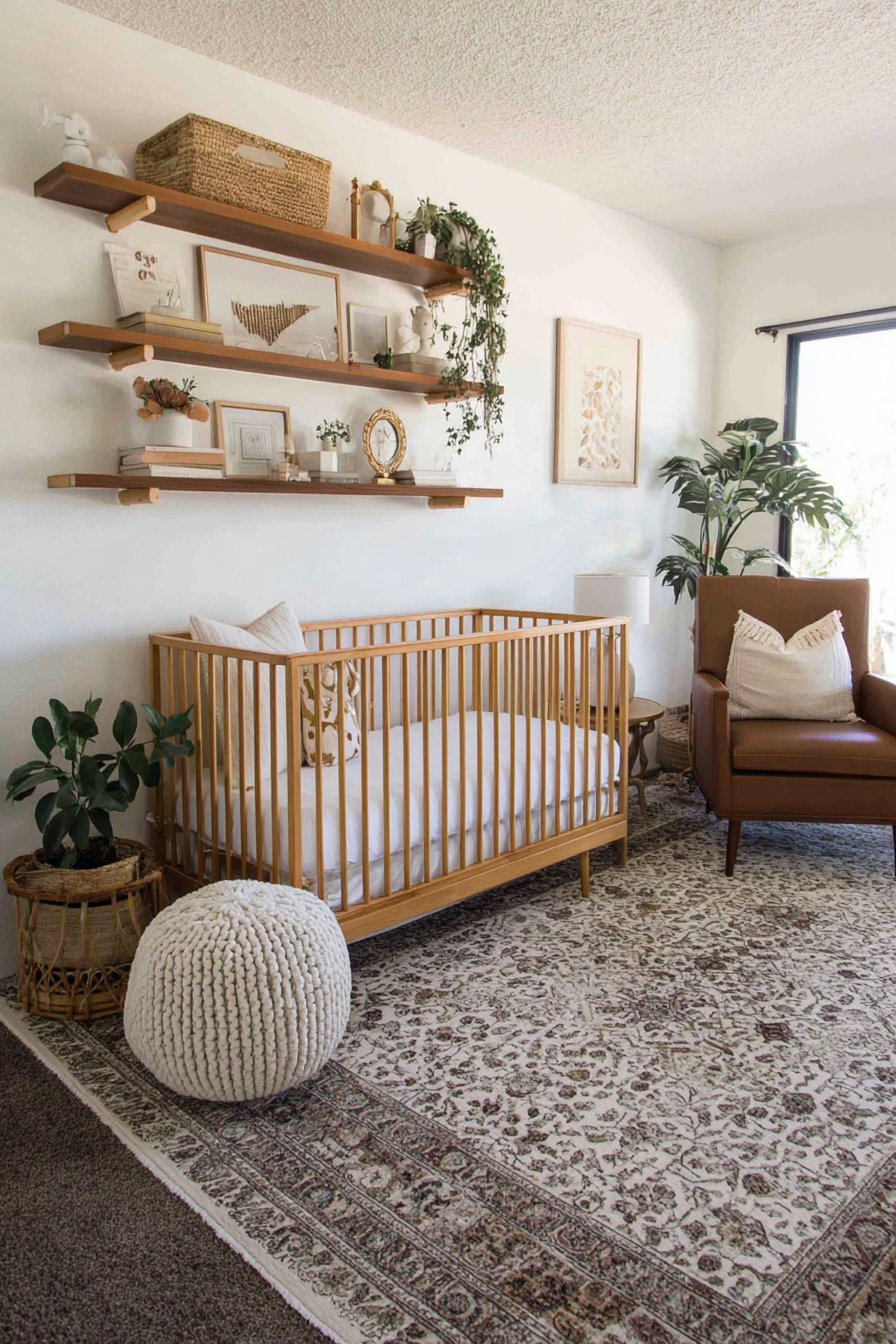
The neutral palette allows easy accent color changes through textiles. Wall colors and artwork update without replacing major furniture pieces. Adjustable shelving accommodates evolving storage requirements from diapers to books. Flexible furniture placement adapts to changing play and sleep needs.
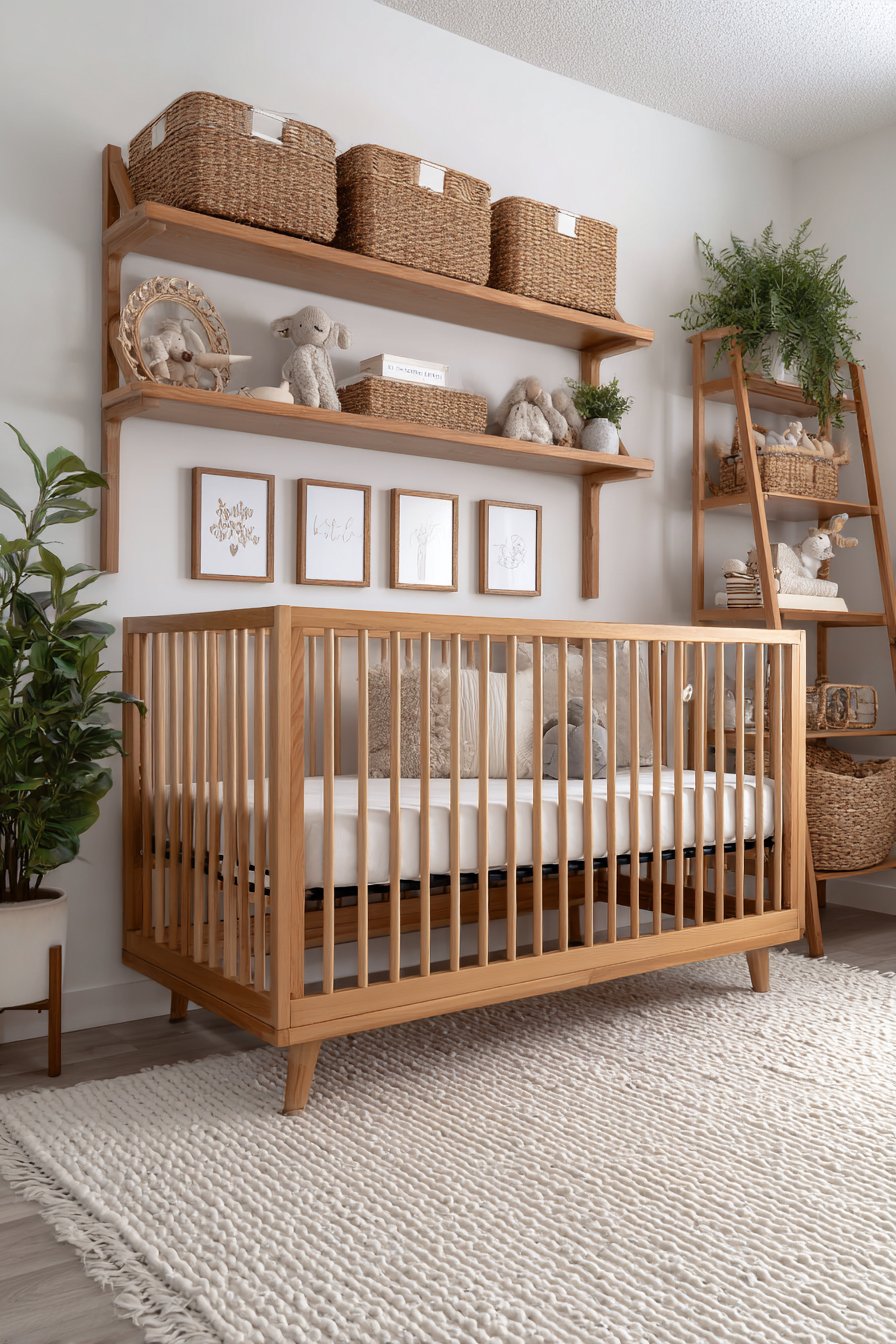
This forward-thinking design emphasizes longevity and adaptability. The quality construction ensures furniture survives active childhood years. The timeless aesthetic remains relevant as children develop preferences. Investment in adaptable pieces proves more economical than age-specific replacements.
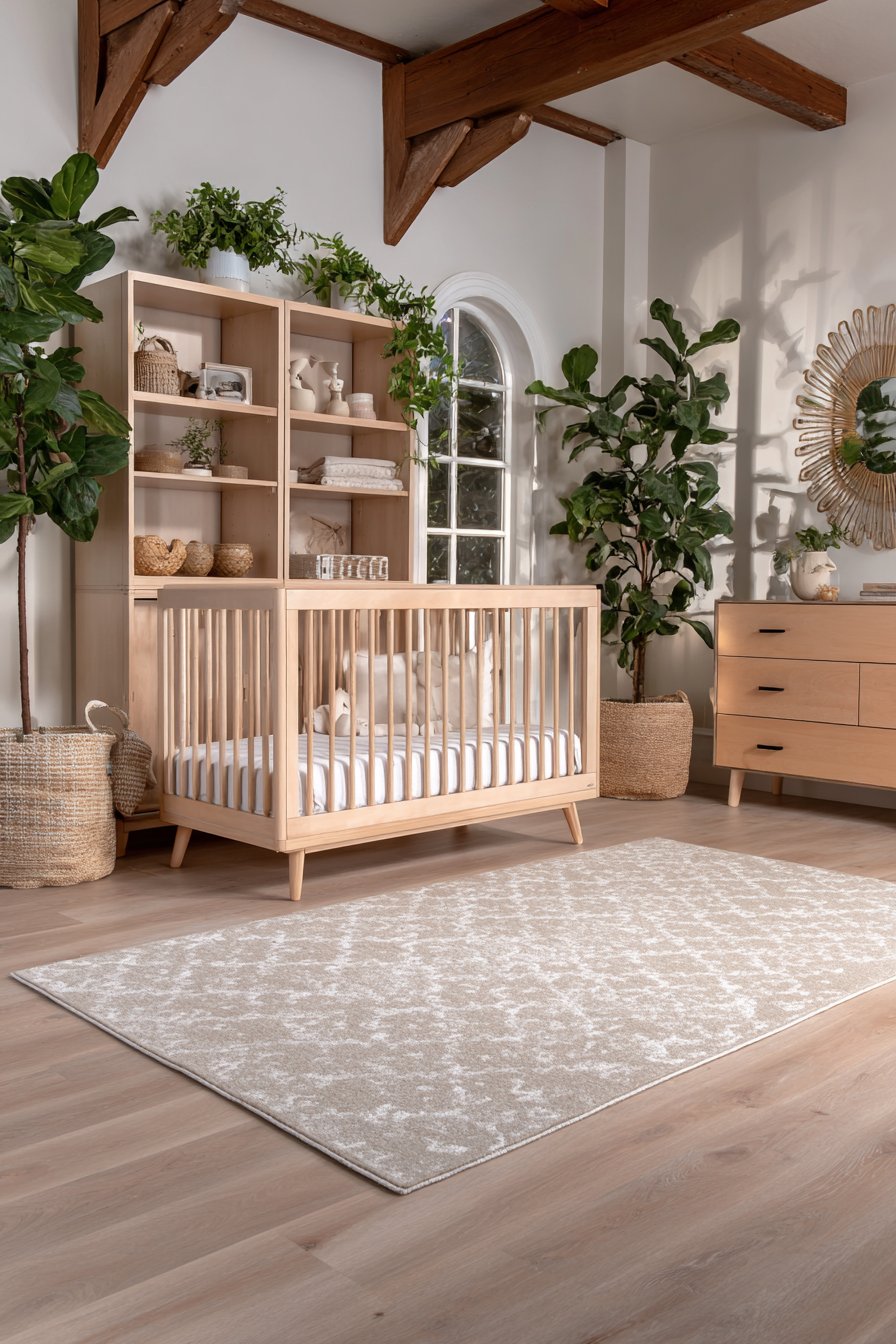
The transition from nursery to child’s room happens gradually and affordably. The mid century aesthetic works beautifully for all age groups. Quality materials age gracefully rather than showing wear negatively. This approach aligns with sustainable, mindful consumption principles.
Key Design Tips:
- Choose convertible cribs that transform for use through toddler years
- Select modular furniture systems that reconfigure for changing needs
- Use neutral base colors that accommodate changing accent preferences
- Install adjustable shelving for evolving storage requirements
- Invest in quality materials that age beautifully rather than deteriorate
Why These Mid Century Nursery Designs Are the Best
These mid century nursery designs represent superior approaches to creating timeless, functional children’s spaces. Each concept demonstrates thoughtful consideration of materials, craftsmanship, and design principles that withstand changing trends. The aesthetic celebrates clean lines and organic forms that promote visual calm essential for infant development and parental wellbeing.
The incorporation of authentic materials like solid walnut, teak, brass, and natural textiles ensures lasting durability. These substances age gracefully, developing character rather than deteriorating. The mid century emphasis on quality over quantity creates spaces that serve multiple children across decades. Convertible furniture and modular storage systems maximize investment value through adaptability.
Color theory applications in these designs range from calming neutrals to bold statements. Sage green, dusty blue, and soft putty tones provide sophisticated alternatives to stereotypical nursery colors. The palette of mustard yellow, burnt orange, olive green, and teal reflects authentic period color sensibility. These choices create gender-neutral environments that grow beautifully with children.
Spatial considerations address various room sizes and layouts effectively. Compact designs prove that small spaces accommodate mid century style through smart furniture selection. Symmetrical arrangements suit rectangular rooms while built-in solutions maximize vertical storage. The designs demonstrate that thoughtful planning matters more than square footage.
Lighting strategies layer natural and artificial sources for flexibility throughout day and night. Large windows maximize daylight while period-appropriate fixtures provide ambient and task illumination. The sculptural quality of mid century lighting adds artistic value beyond mere functionality. Proper lighting creates atmosphere essential for bonding and caregiving activities.
The sustainability inherent in mid century design principles aligns with contemporary values. Quality craftsmanship ensures multi-generational use rather than disposable consumption. Natural materials create healthier indoor environments than synthetic alternatives. The timeless aesthetic eliminates need for replacement when trends change.
Conclusion
These twenty mid century nursery designs demonstrate that timeless style and practical functionality coexist beautifully. The key takeaways include prioritizing quality materials, embracing clean lines, and investing in adaptable furniture. Natural wood tones, authentic textiles, and thoughtful lighting create environments that nurture both children and parents.
Successful mid century nurseries balance aesthetic appeal with real-world caregiving needs. Start with one investment piece like a quality crib or vintage dresser. Layer natural materials through rugs, curtains, and upholstery for textural richness. Your dream mid century nursery awaits creation through thoughtful planning and commitment to lasting quality.
