


Creating a minimalist kitchen transforms your cooking space into a sanctuary of calm and efficiency. This design philosophy embraces the principle that less is truly more. The approach prioritizes clean lines, uncluttered surfaces, and thoughtful organization. Every element serves a purpose while contributing to visual serenity.
Minimalist kitchens have revolutionized modern home design in recent years. They offer a refreshing antidote to cluttered, overwhelming spaces. The combination of sleek cabinetry, concealed storage, and neutral palettes creates environments that feel both sophisticated and welcoming. These designs prove that simplicity doesn’t mean sacrificing warmth or personality.
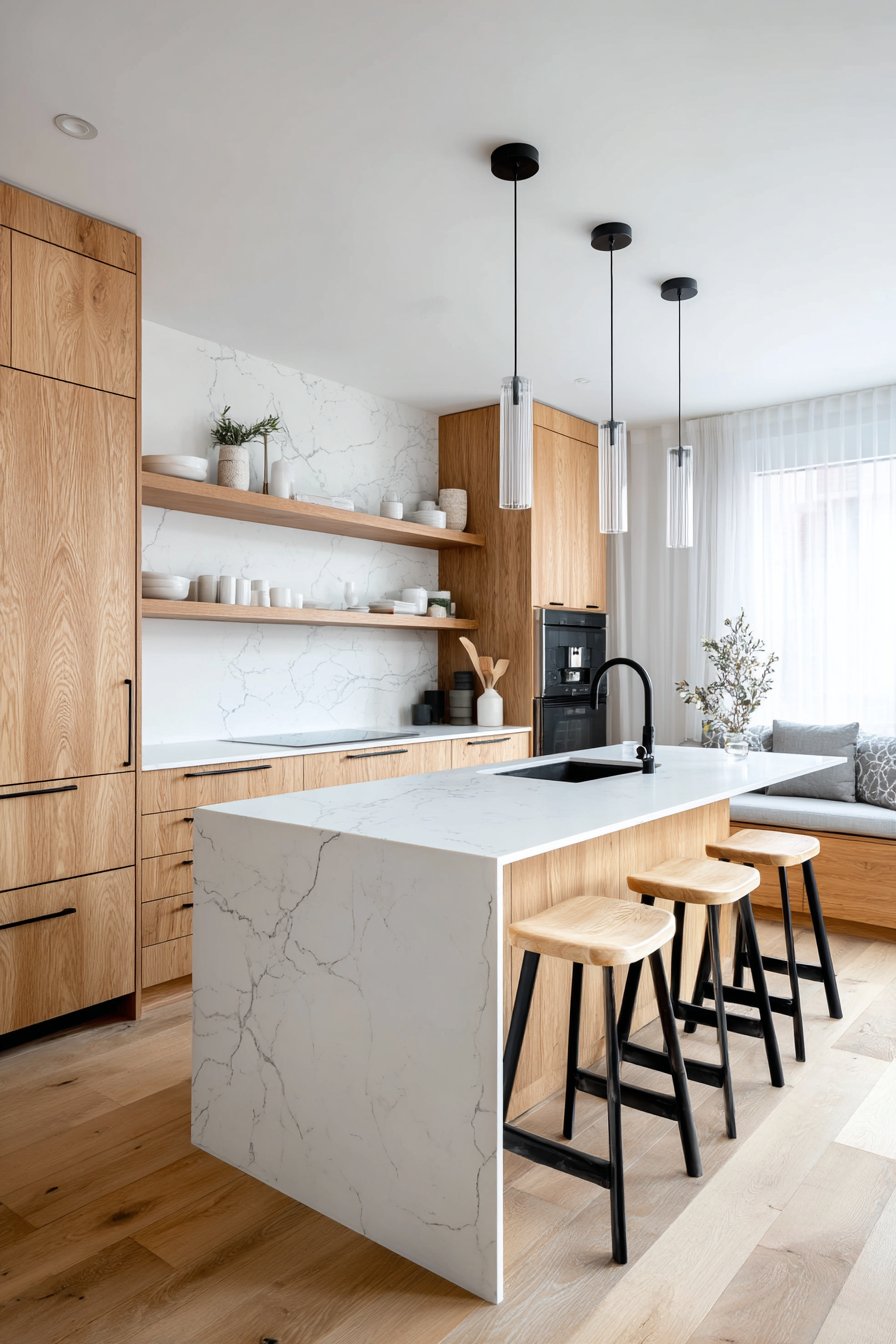
This article explores twenty distinctive minimalist kitchen concepts. Each design demonstrates unique approaches to achieving serene, functional cooking spaces. From monochromatic color schemes to innovative storage solutions, these ideas cater to diverse tastes. Whether you prefer warm wood tones or cool concrete finishes, you’ll find inspiration for your minimalist transformation.
1. Sleek Handleless White Cabinetry with Waterfall Quartz
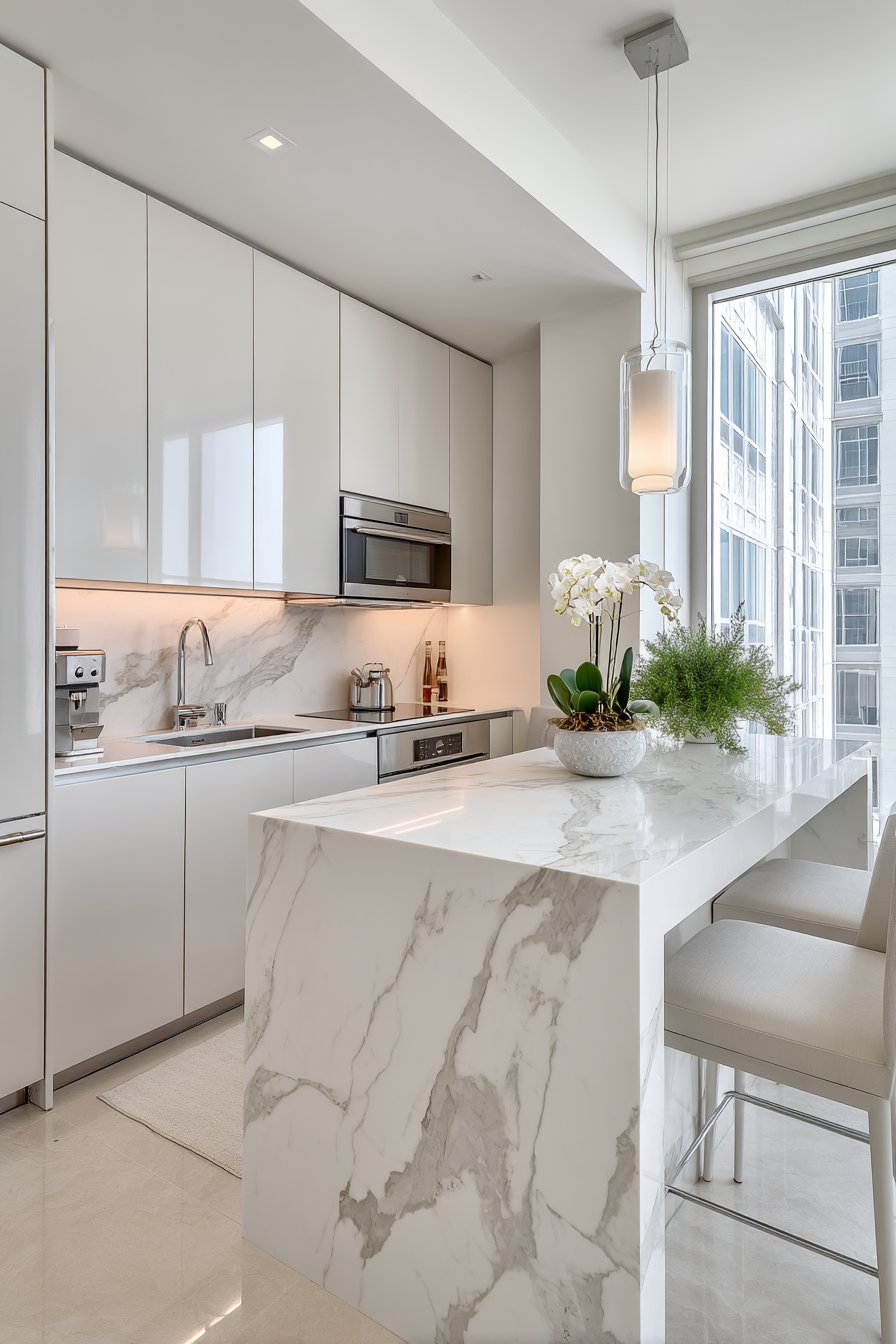
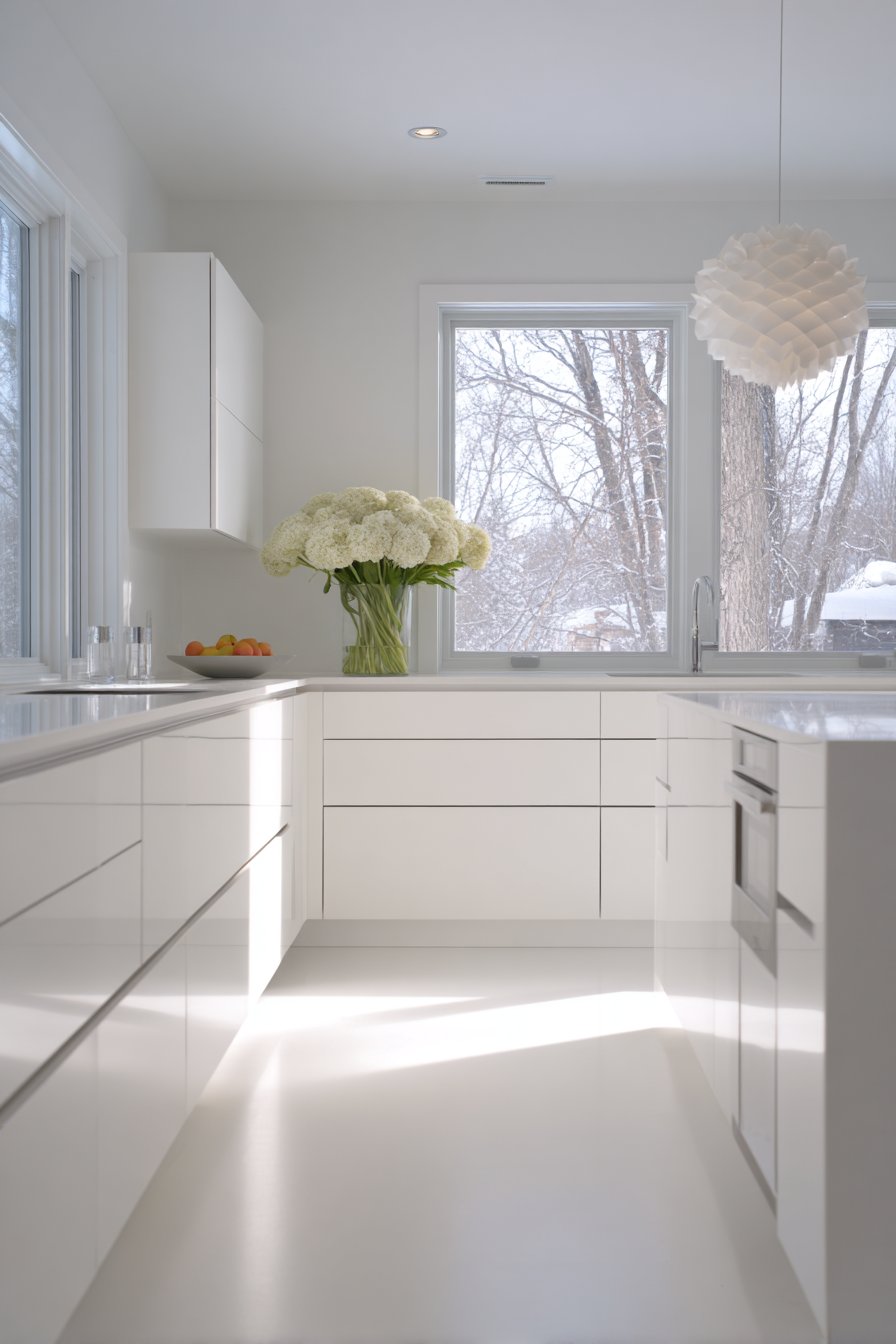
Imagine stepping into a kitchen where pristine white cabinetry stretches seamlessly across the walls. The handleless design features integrated push-to-open mechanisms that eliminate visual clutter. Each cabinet front presents a smooth, uninterrupted surface. The matte white finish absorbs light softly, creating a tranquil atmosphere throughout the space.
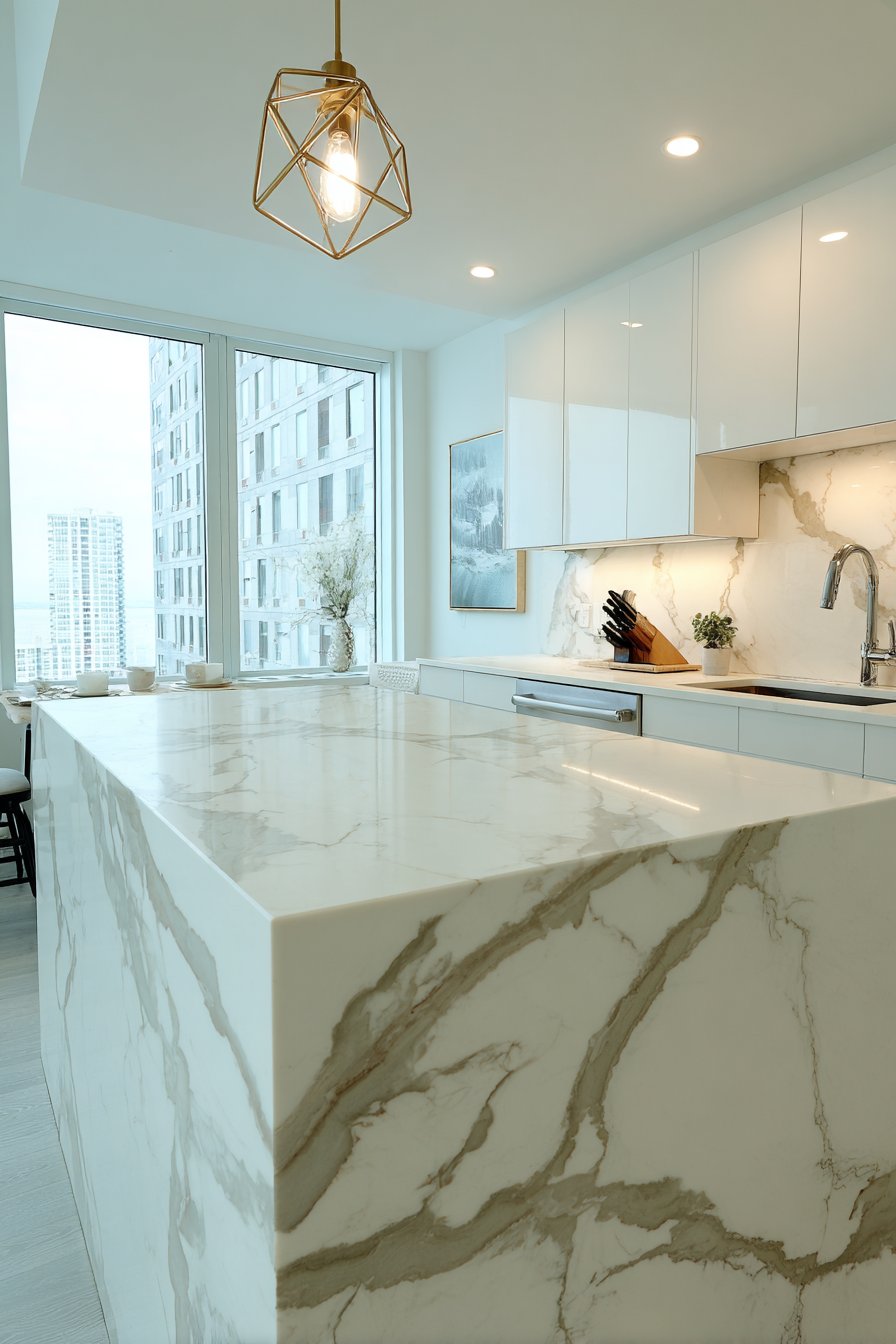
The waterfall-edge quartz countertop becomes the room’s sculptural centerpiece. Pure white stone with subtle grey veining flows continuously over the edges. This creates a striking visual effect that elevates the entire design. The material choice provides durability alongside timeless beauty. A compact breakfast bar extends from the counter, offering casual dining without compromising the clean aesthetic.
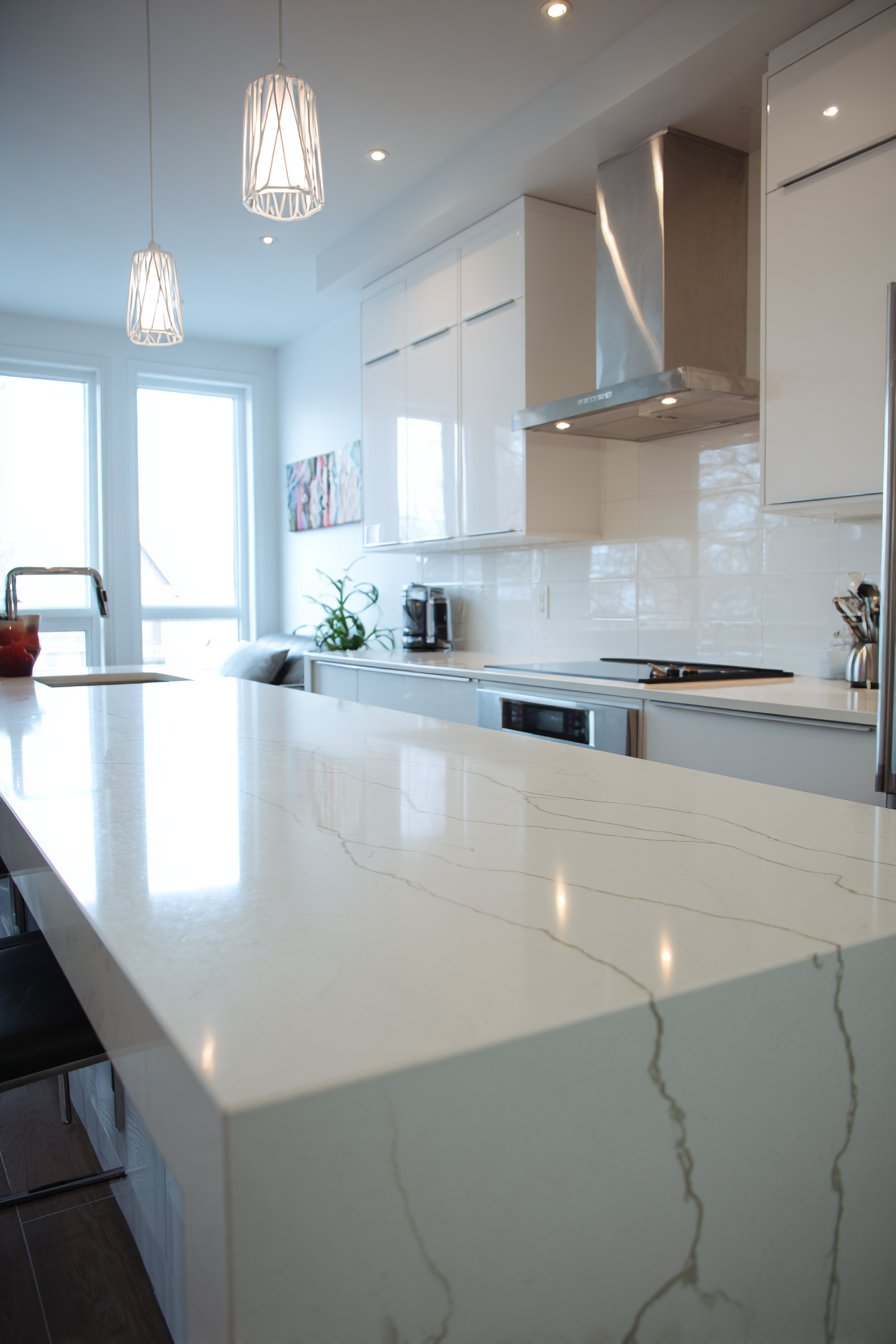
Large-format white porcelain tiles cover the backsplash with minimal grout lines. This choice reinforces the seamless quality of the design. Stainless steel appliances integrate perfectly into the cabinetry, maintaining visual continuity. A single pendant light with simple geometric form hangs above the breakfast bar. The fixture provides focused illumination while serving as understated sculptural element.
Natural daylight streams through minimalist window frames throughout the day. The light interacts beautifully with the reflective quartz surfaces. Soft shadows define the precise craftsmanship and smooth surfaces. This interplay between light and material creates subtle depth in the monochromatic scheme.
Key Design Tips:
- Select handleless cabinetry with push-to-open mechanisms to eliminate hardware clutter
- Choose waterfall-edge countertops to create striking focal points
- Use large-format tiles with minimal grout lines for seamless backsplashes
- Integrate appliances completely into cabinetry for visual continuity
- Install single statement light fixtures rather than multiple competing elements
- Maximize natural light through unobstructed windows
2. Open Wooden Shelving with Light Oak Warmth
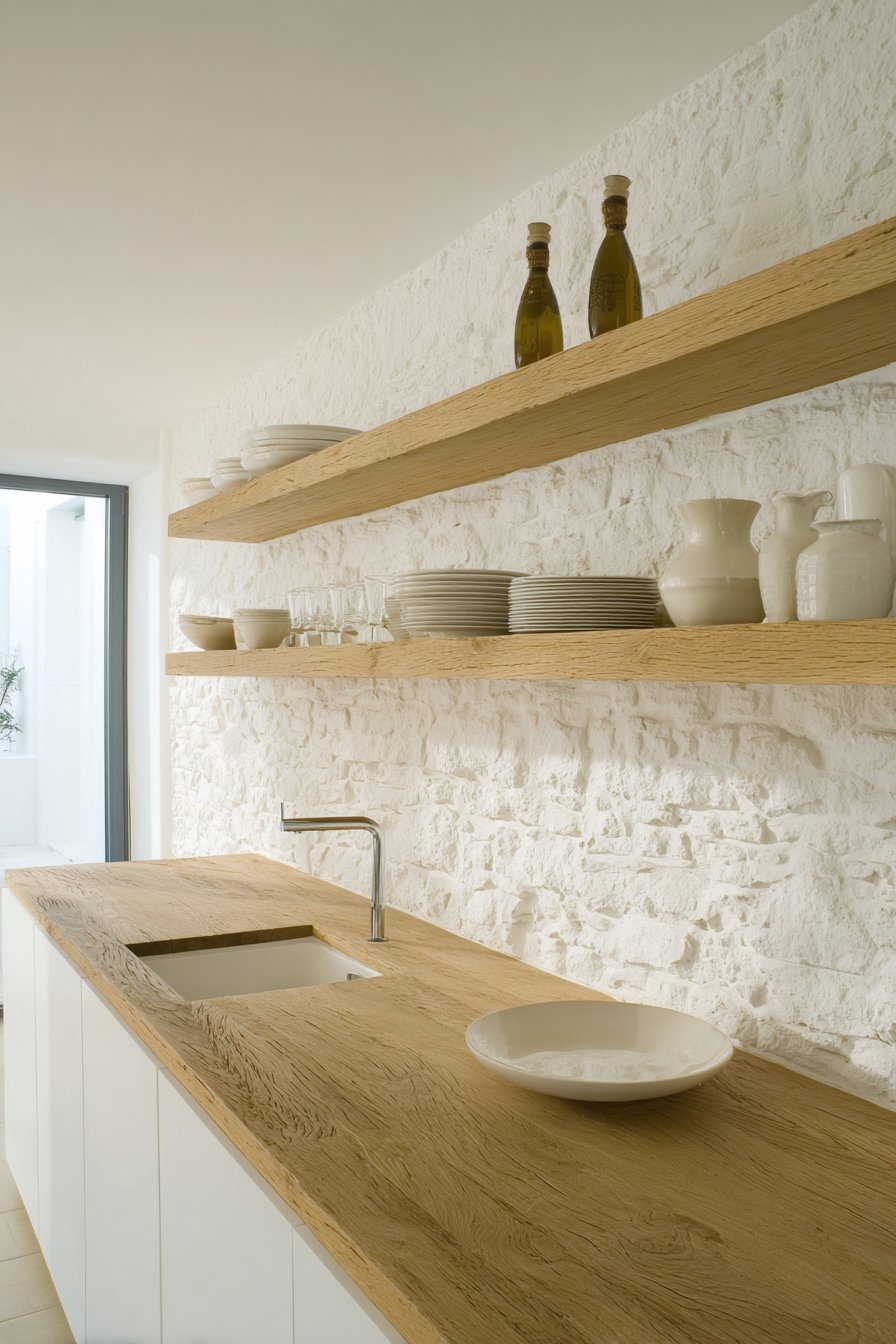
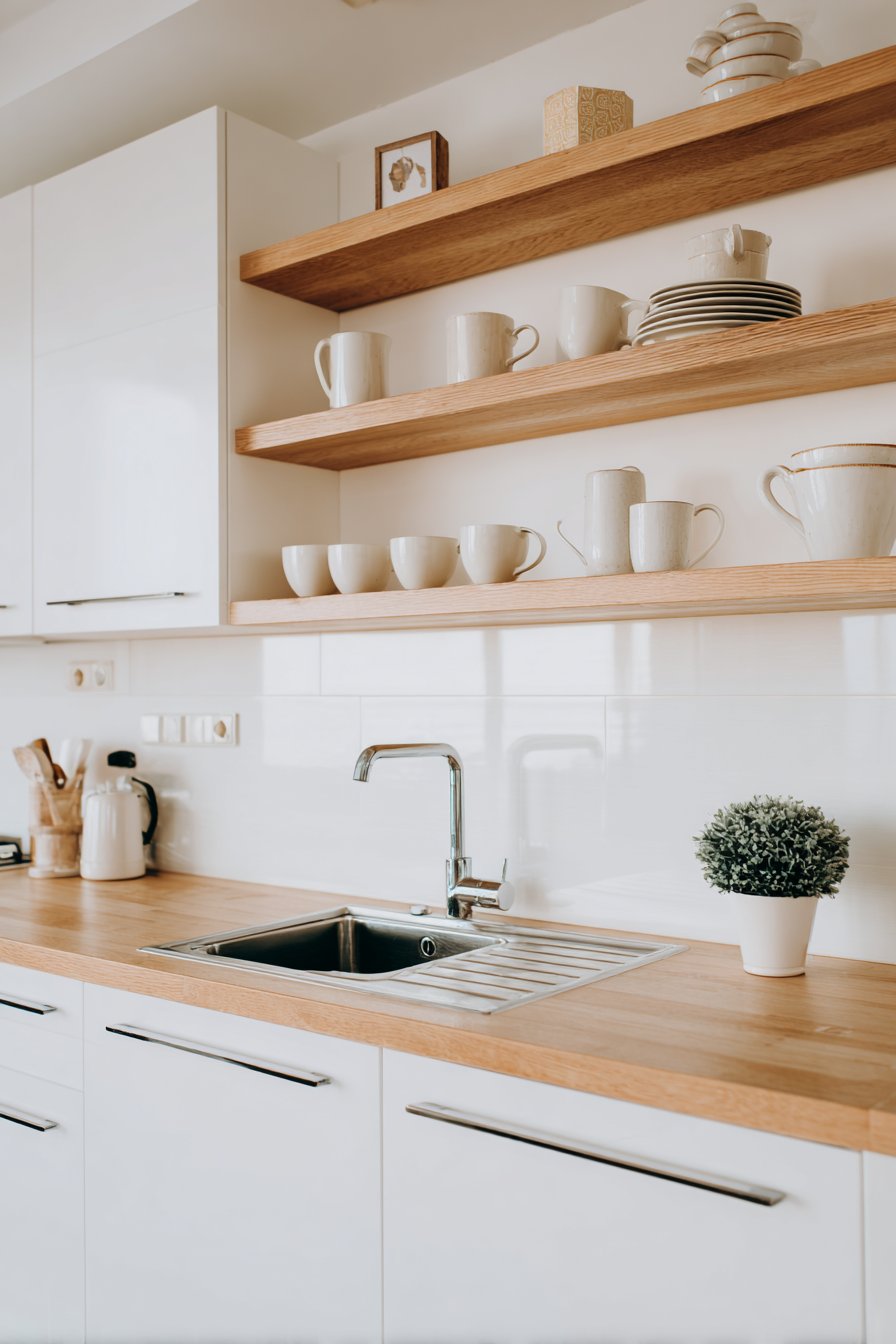
Light oak floating shelves display only essential items in this thoughtfully curated design. The open shelving contrasts beautifully against crisp white plaster walls. Neutral ceramic dishware arranged in organized rows creates intentional visual interest. The absence of upper cabinets generates an airy, expansive feeling throughout the space.
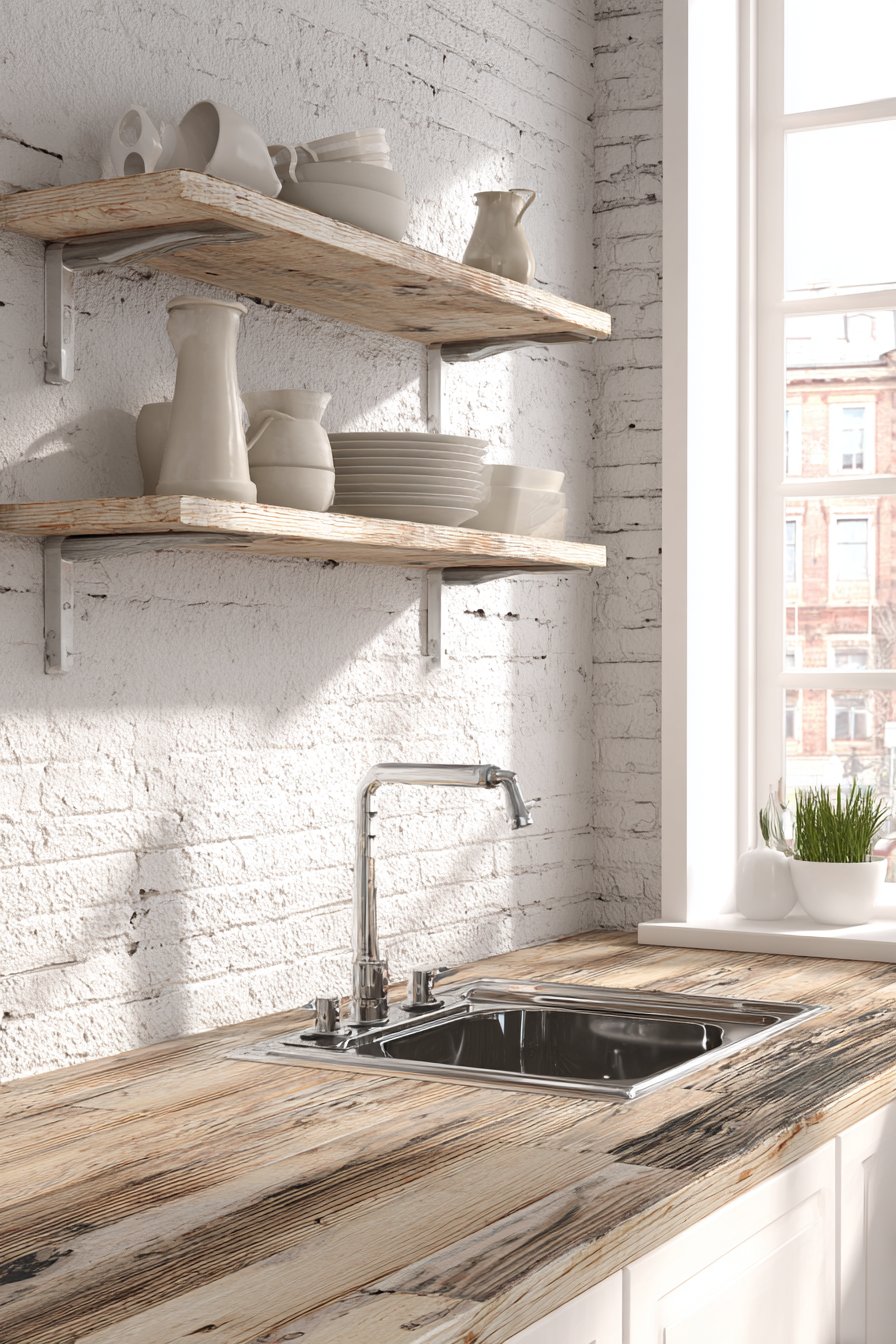
Below the shelves, a simple wooden countertop showcases visible grain texture. The natural material provides warmth that balances the minimalist approach. A single-basin undermount sink with modern chrome faucet maintains clean lines. The functional arrangement demonstrates that minimalism embraces practicality alongside aesthetics.
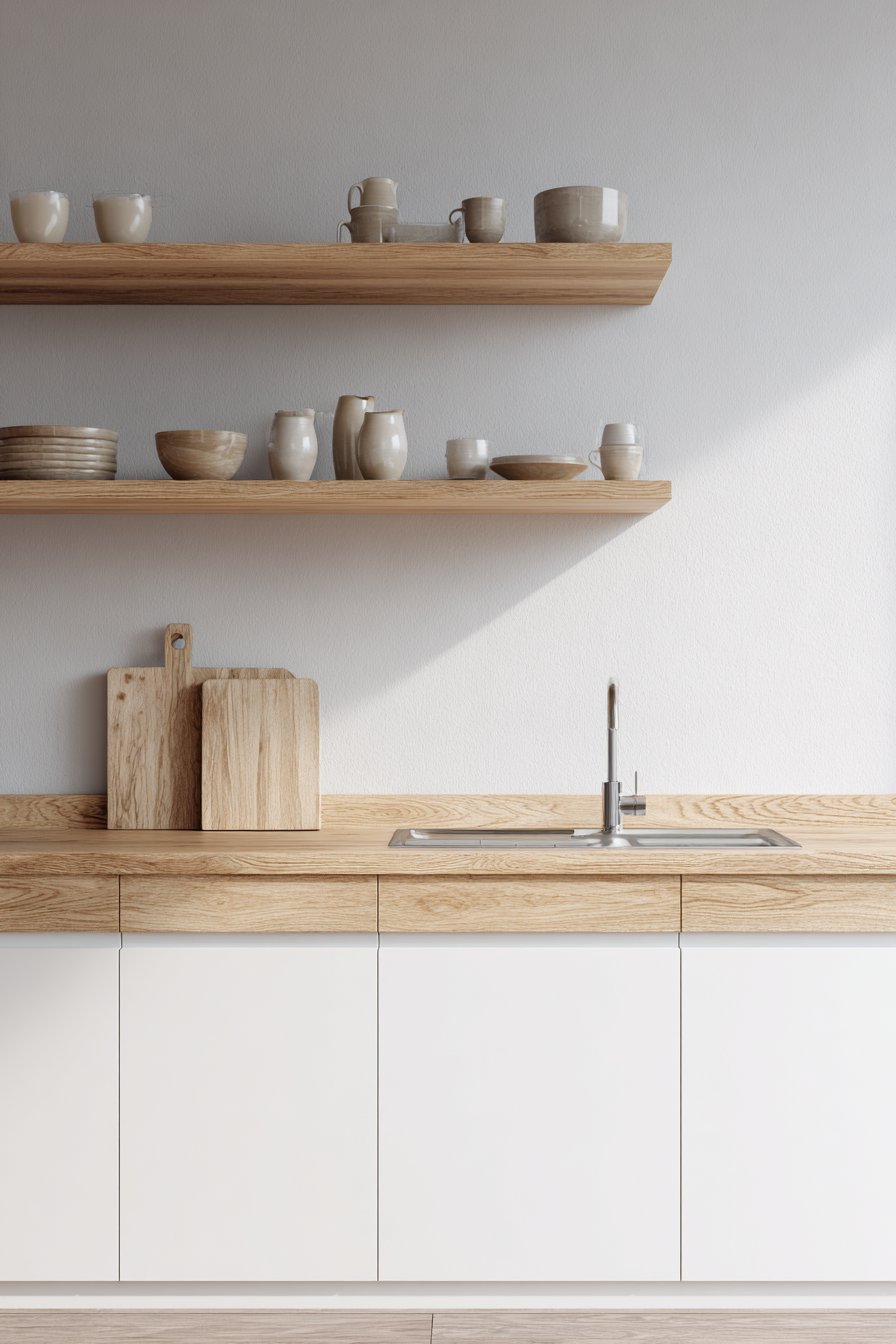
Natural light from a nearby window illuminates the floating shelves beautifully. The illumination highlights the wood grain texture and ceramic surfaces. This lighting creates gentle shadows that add dimension to the simple composition. The thoughtful organization proves that displaying items can enhance rather than detract from minimalist design.
The open shelving concept requires disciplined curation of displayed items. Every piece must earn its place through beauty or function. This intentional approach transforms everyday dishware into decorative elements. The result feels both practical and aesthetically pleasing.
Key Design Tips:
- Install floating shelves instead of upper cabinets to create openness
- Display only essential items in matching or complementary styles
- Choose light wood tones like oak to add warmth to white walls
- Select simple undermount sinks for clean, uncluttered look
- Arrange items with intentional spacing and organization
- Ensure adequate natural light to highlight textures and materials
- Maintain strict discipline about what items deserve shelf display
3. Monochromatic Grey with Concrete Textures
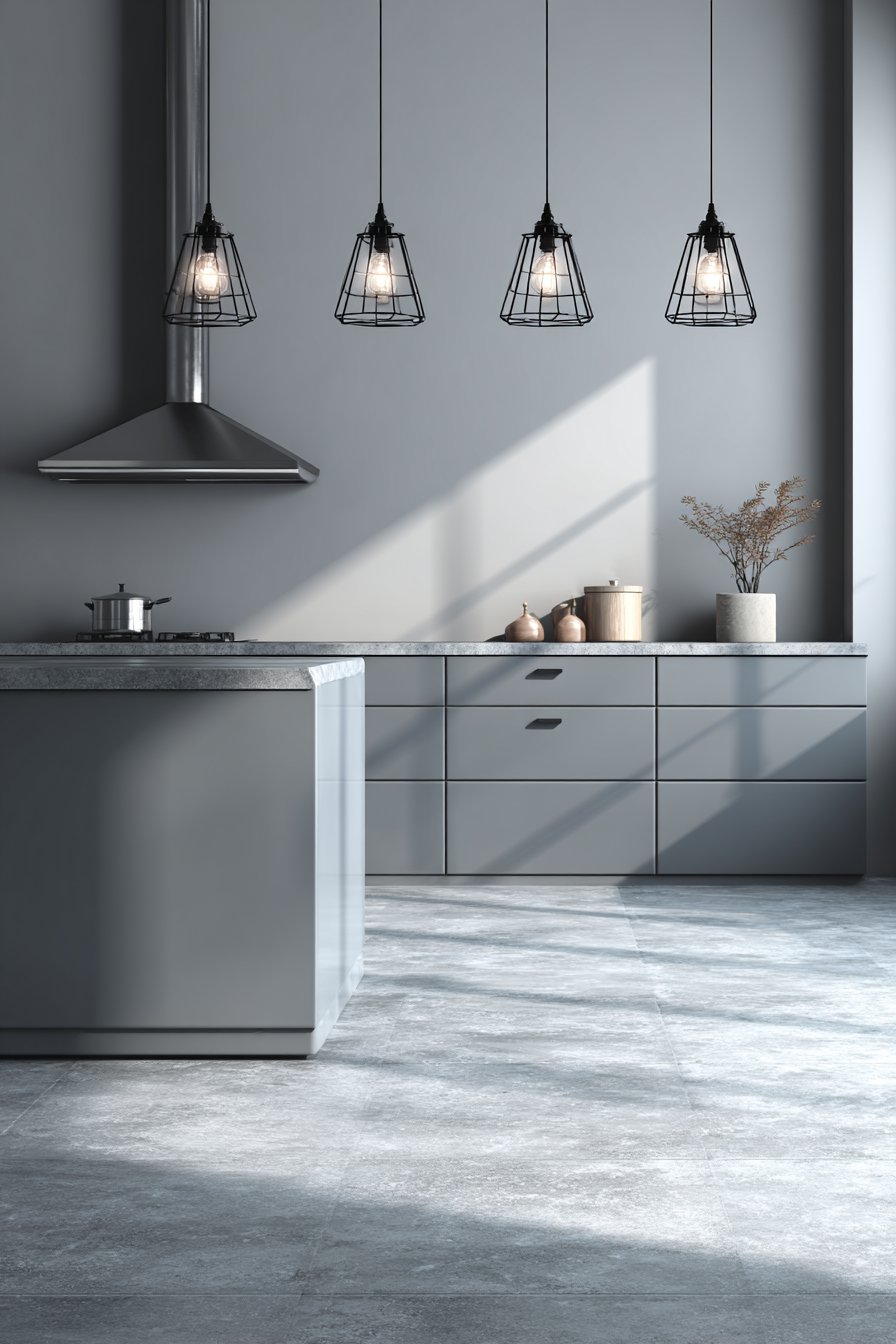
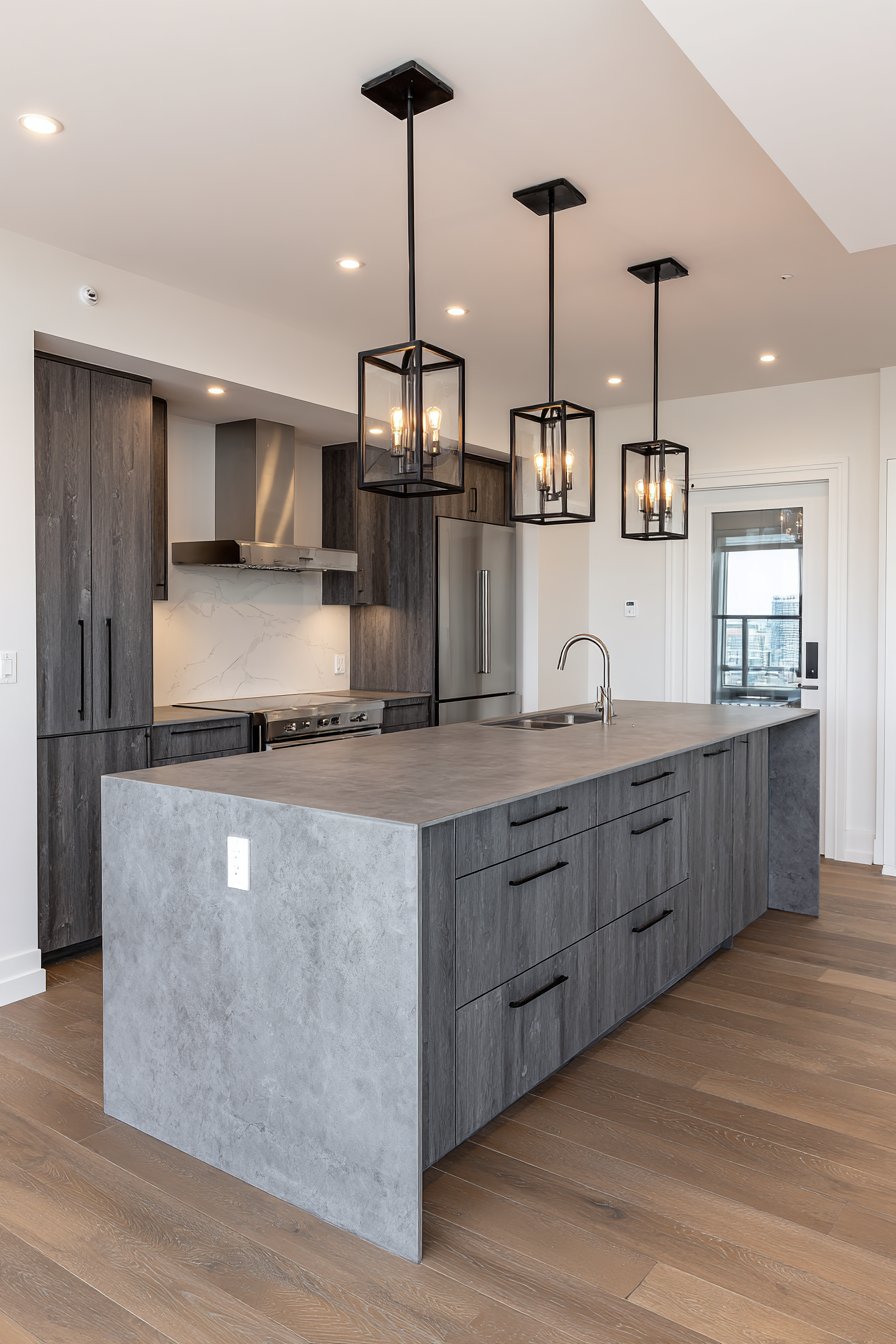
A cohesive grey palette creates sophisticated harmony in this distinctive design. Concrete-look porcelain flooring establishes the foundation with industrial elegance. Matching grey cabinetry in soft matte finish extends the monochromatic theme. The kitchen island features simple rectangular form with waterfall edges and concealed storage.
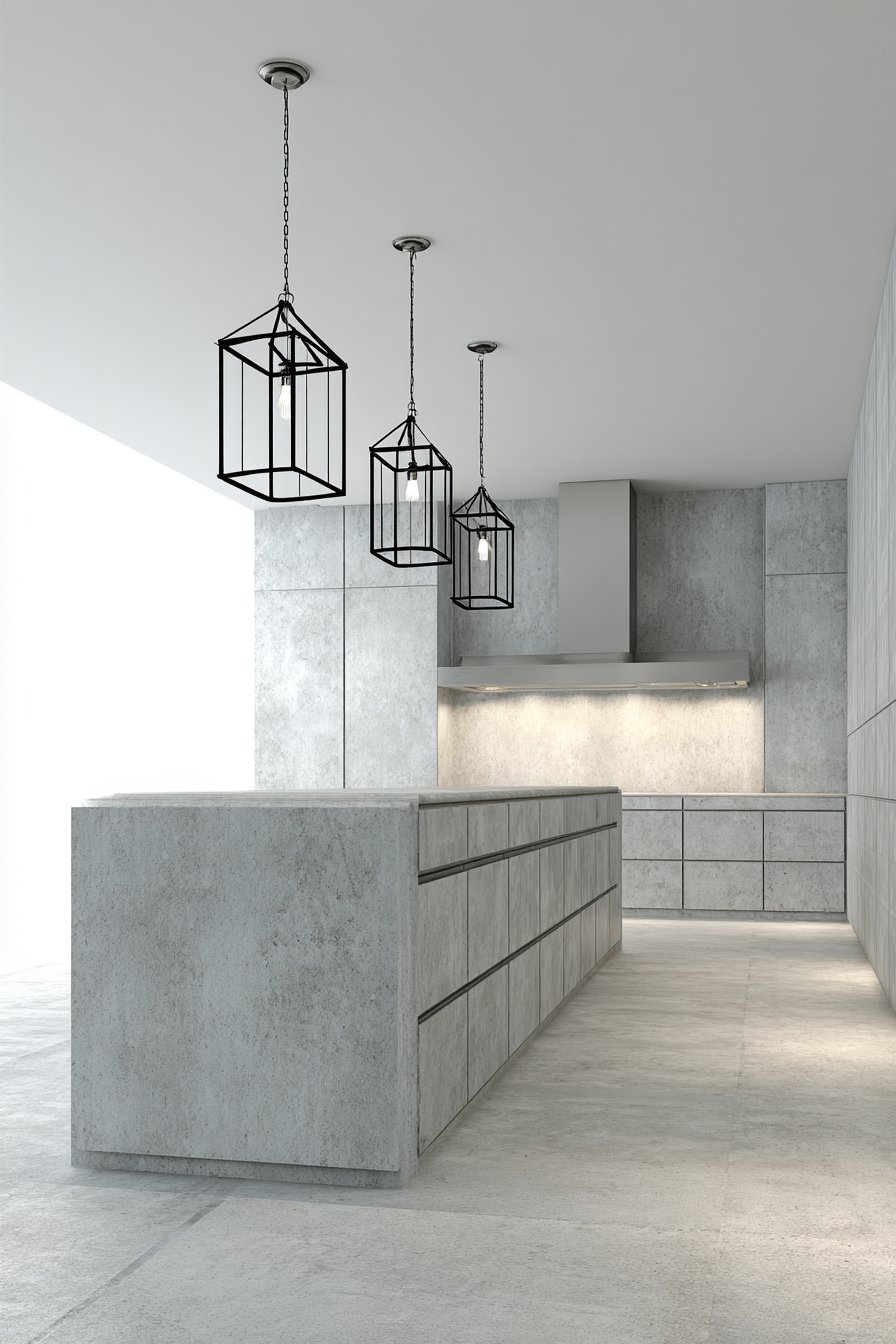
Three industrial-style pendant lights hang in perfect alignment above the island. The black metal frames provide the only contrast in the grey scheme. This measured introduction of black creates visual interest without overwhelming the palette. The fixtures offer both functional task lighting and sculptural presence.
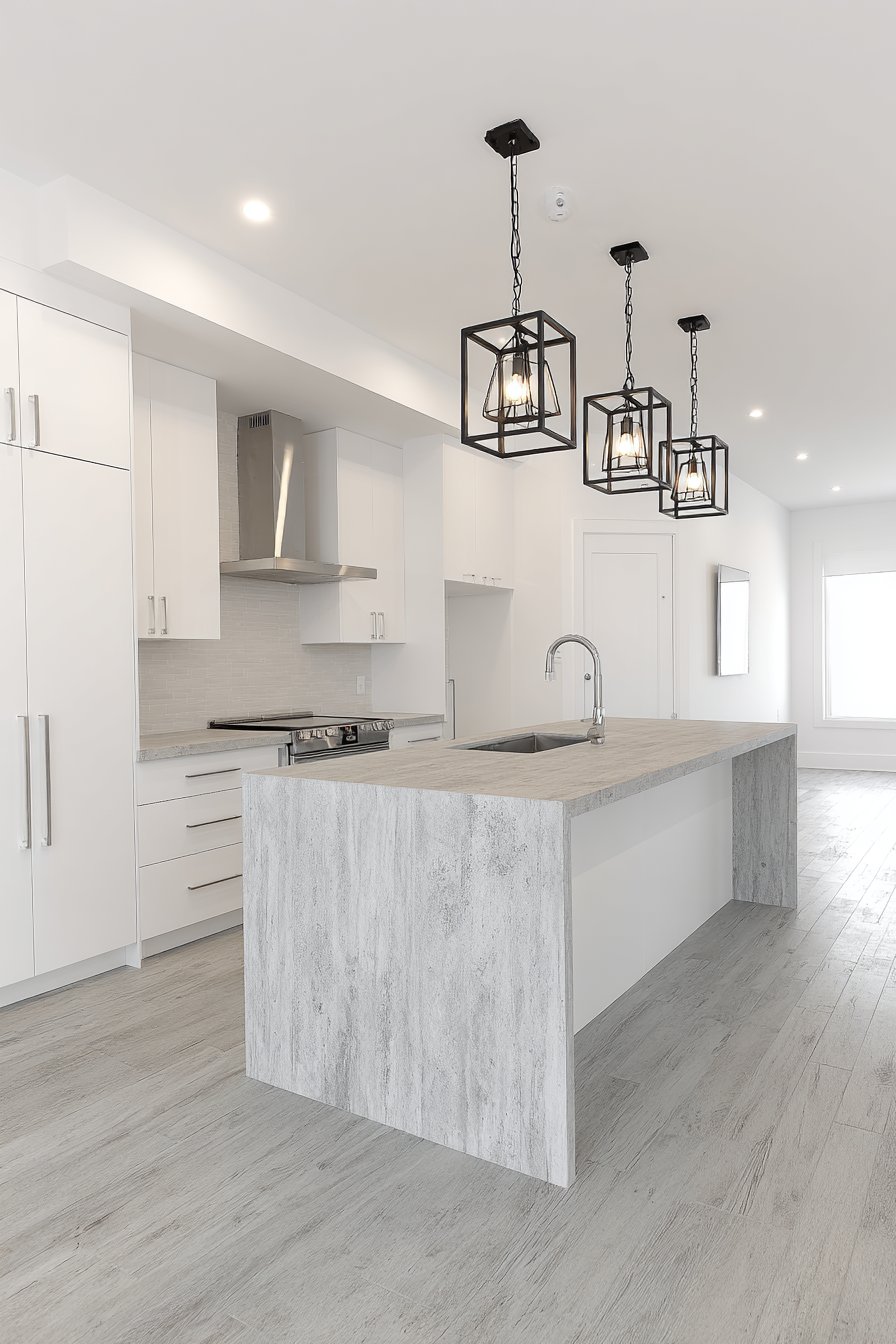
A minimalist range hood in brushed stainless steel provides subtle metallic accent. The hood integrates seamlessly into the cabinetry while maintaining necessary functionality. Handleless drawers in the island preserve the clean aesthetic. Every design decision reinforces the commitment to simplicity and cohesion.
Natural diffused lighting creates subtle shadows that define geometric forms. These shadows add depth to the monochromatic palette. The interplay of light and shadow prevents the grey scheme from feeling flat. The result demonstrates that single-color palettes can possess remarkable visual richness.
Key Design Tips:
- Use concrete-look porcelain for durability with industrial aesthetic appeal
- Maintain monochromatic color schemes for sophisticated cohesion
- Add waterfall edges to islands for contemporary sculptural effect
- Install pendant lights in aligned rows for visual order
- Choose matte finishes to soften hard surfaces and reduce glare
- Incorporate minimal metallic accents through fixtures and appliances
- Ensure adequate lighting to create dimension in monochromatic spaces
4. Floor-to-Ceiling Warm Walnut Cabinetry
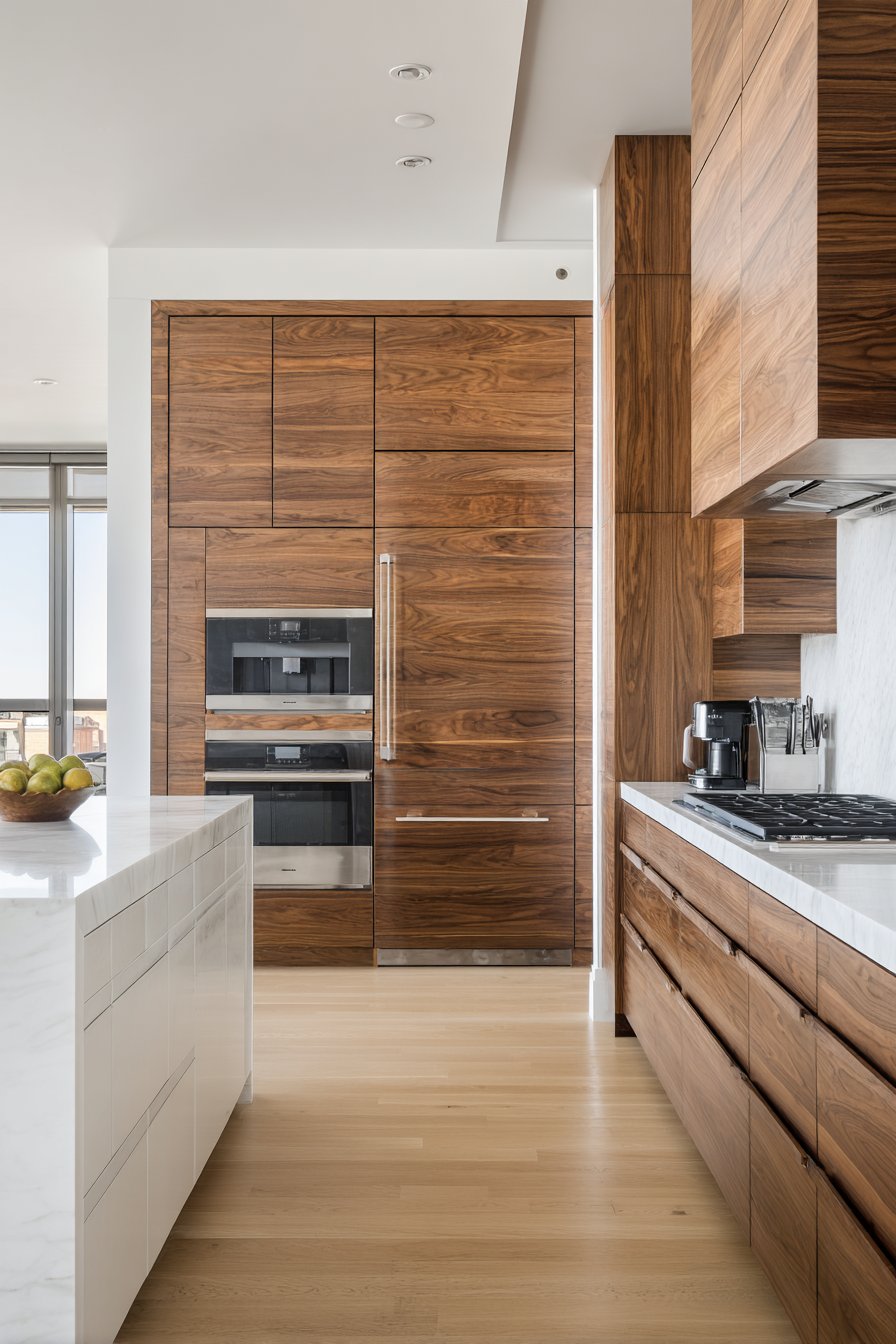
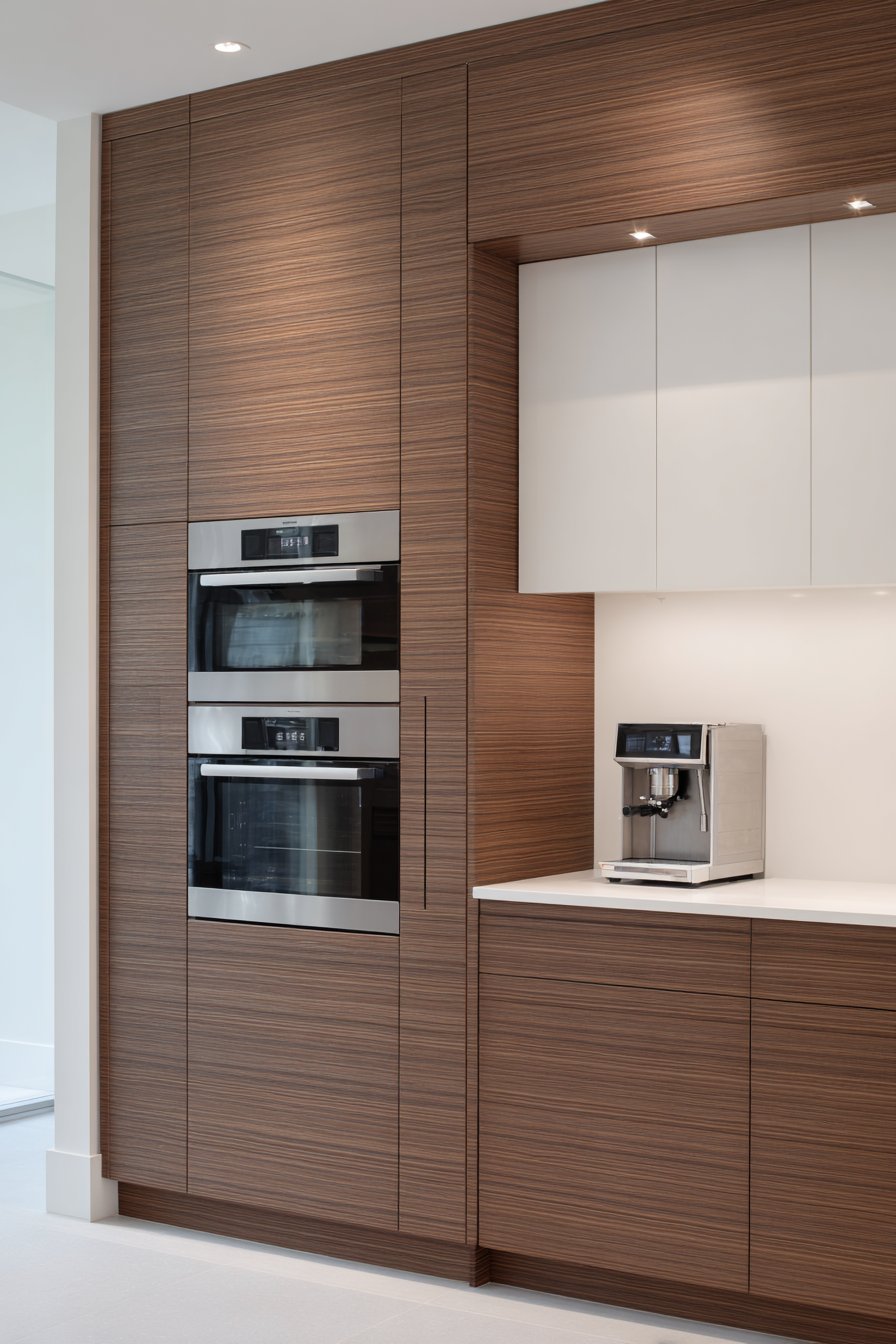
Floor-to-ceiling cabinetry in warm walnut veneer creates impressive visual impact. The horizontal grain pattern flows continuously across the surface. This expansive storage system conceals appliances and supplies behind uniform fronts. The design demonstrates that ample storage doesn’t require visual complexity.
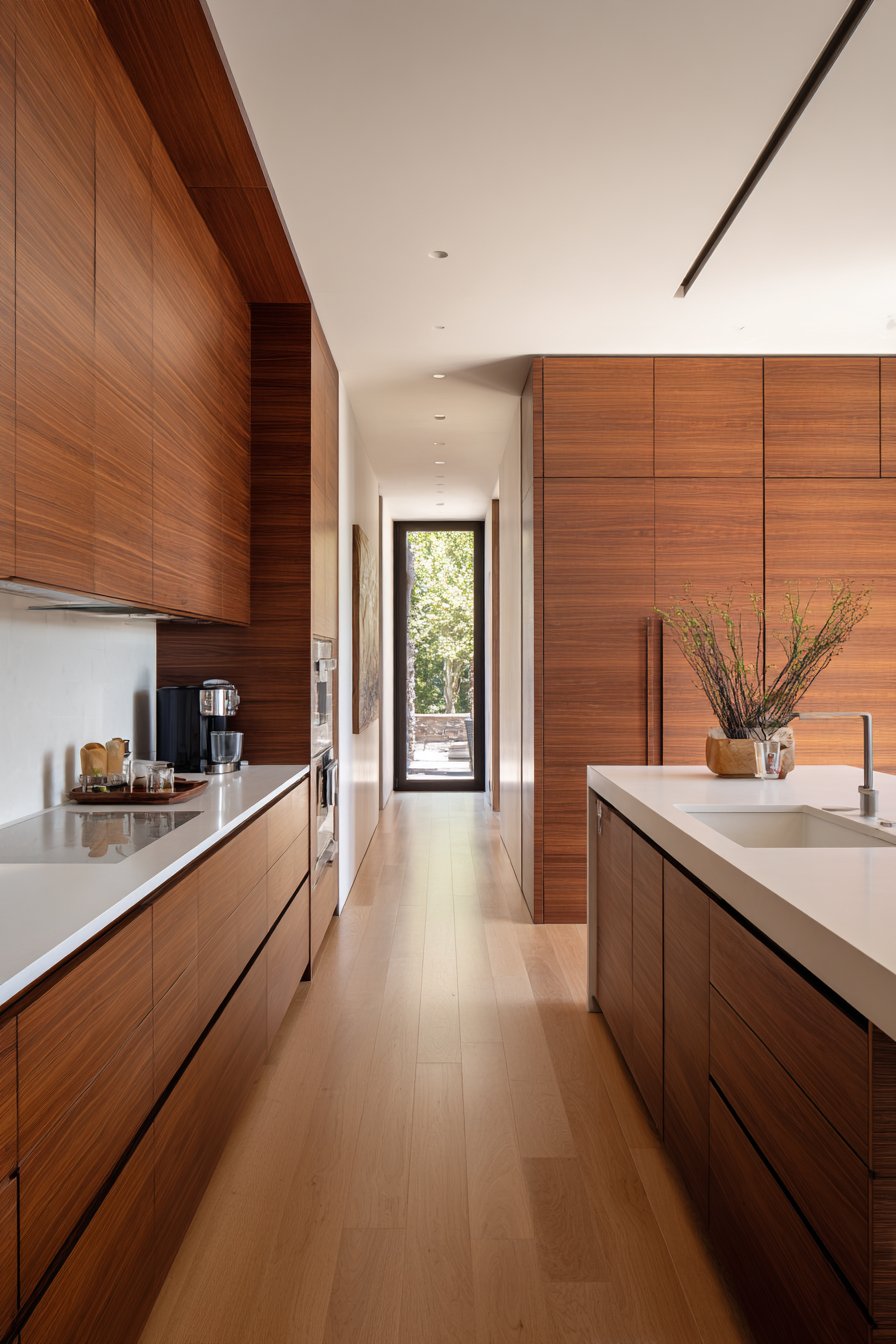
Simple white quartz countertops and backsplash contrast beautifully with rich wood tones. This material combination balances warmth with brightness. The white surfaces reflect light throughout the space. The walnut provides organic depth and natural character that prevents sterility.
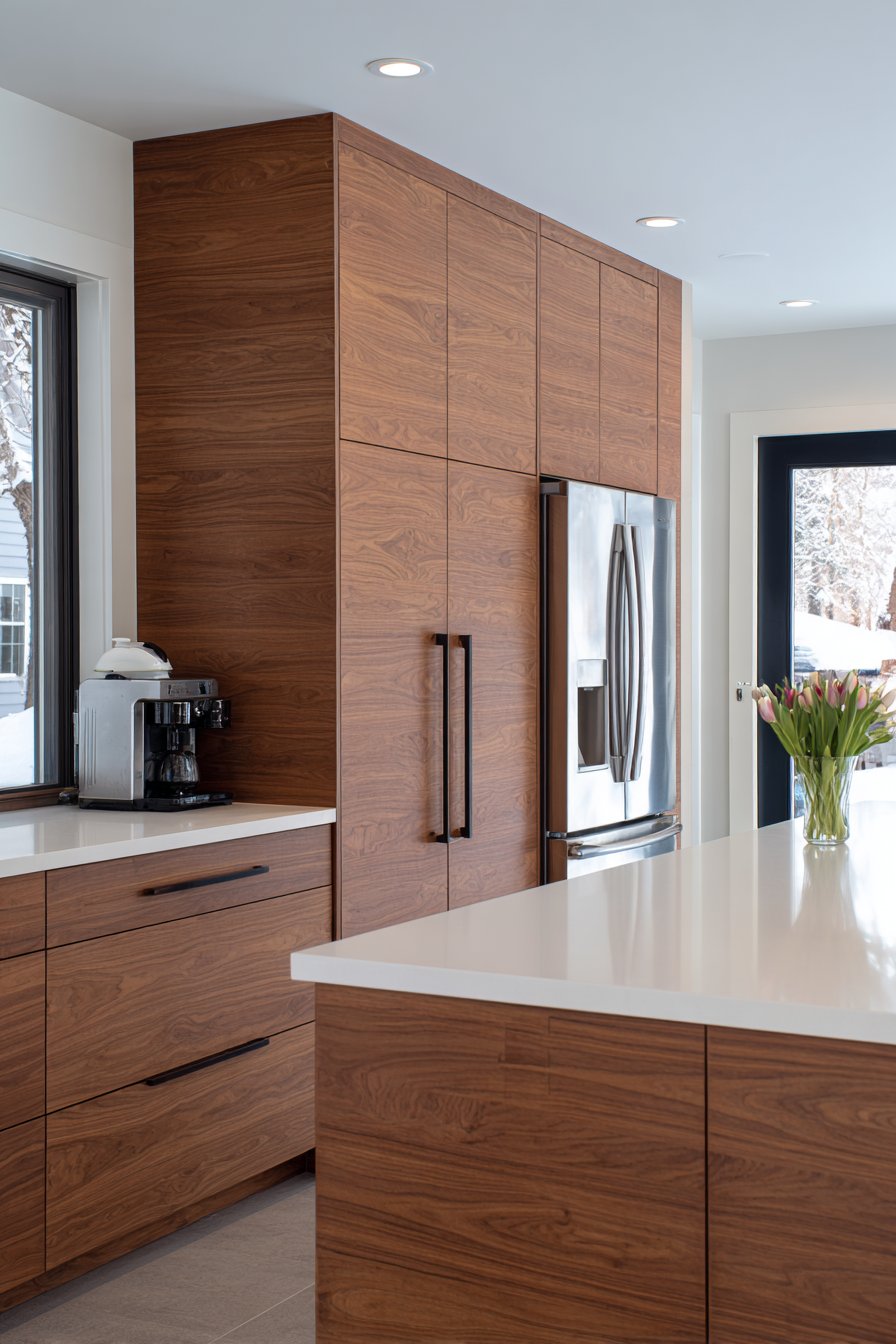
Recessed LED lighting provides even illumination without visible fixtures. The lighting design reinforces the minimalist philosophy of concealing functional elements. A built-in coffee station integrates seamlessly into the cabinetry system. Only essential items remain exposed on countertops.
The continuous cabinetry includes integrated refrigeration that disappears behind wood panels. This integration maintains the uninterrupted visual flow. The natural wood grain adds warmth while preserving simplicity. Every element serves the dual purpose of function and aesthetic harmony.
Key Design Tips:
- Choose floor-to-ceiling cabinetry to maximize storage and visual impact
- Select wood veneers with horizontal grain for contemporary feel
- Integrate appliances behind matching cabinet panels for seamless appearance
- Use white countertops to balance and brighten dark wood tones
- Install recessed lighting to eliminate visible fixtures
- Create dedicated stations for coffee or other appliances within cabinetry
- Maintain clear countertops by utilizing extensive concealed storage
5. All-White Glossy Subway Tile Design
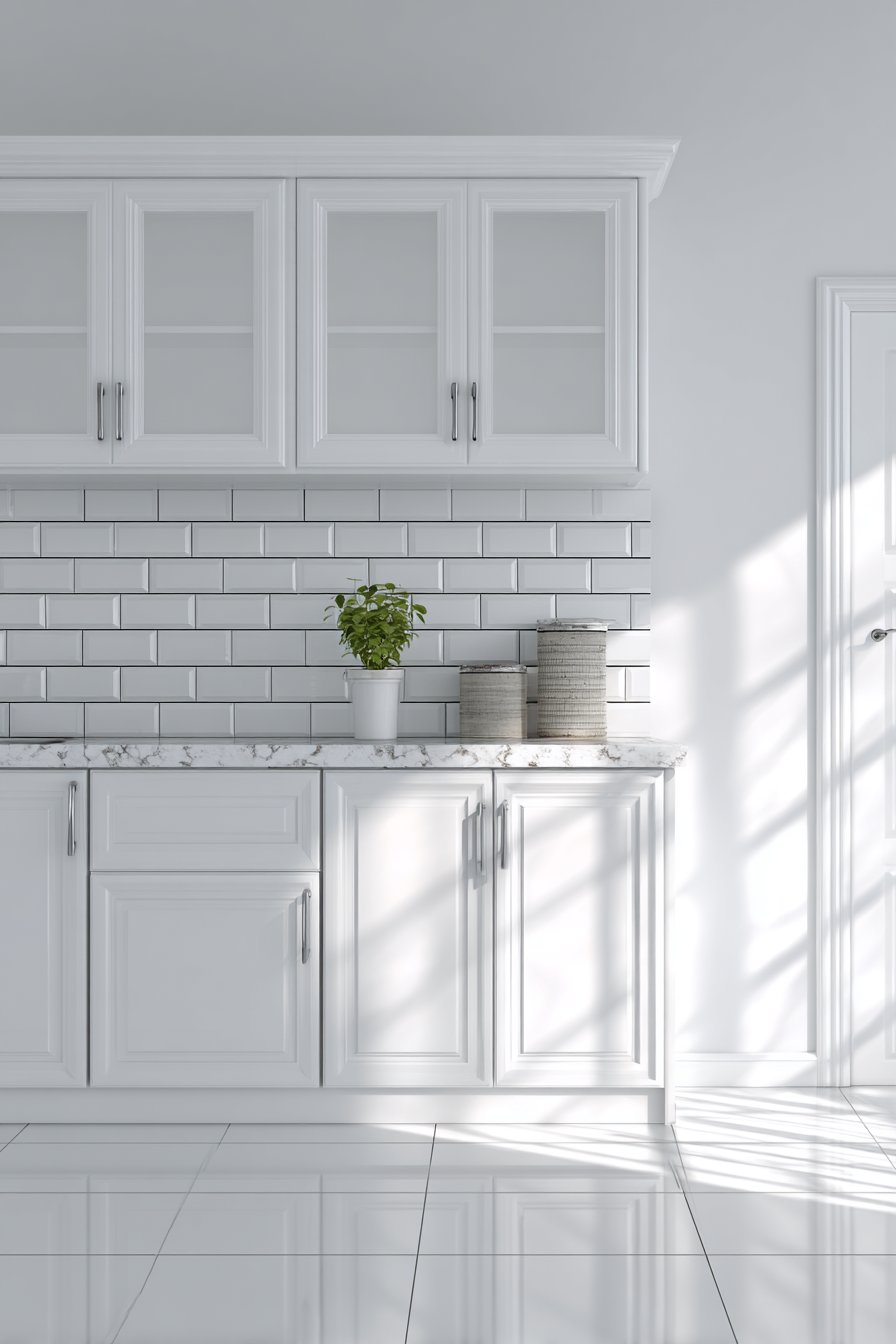
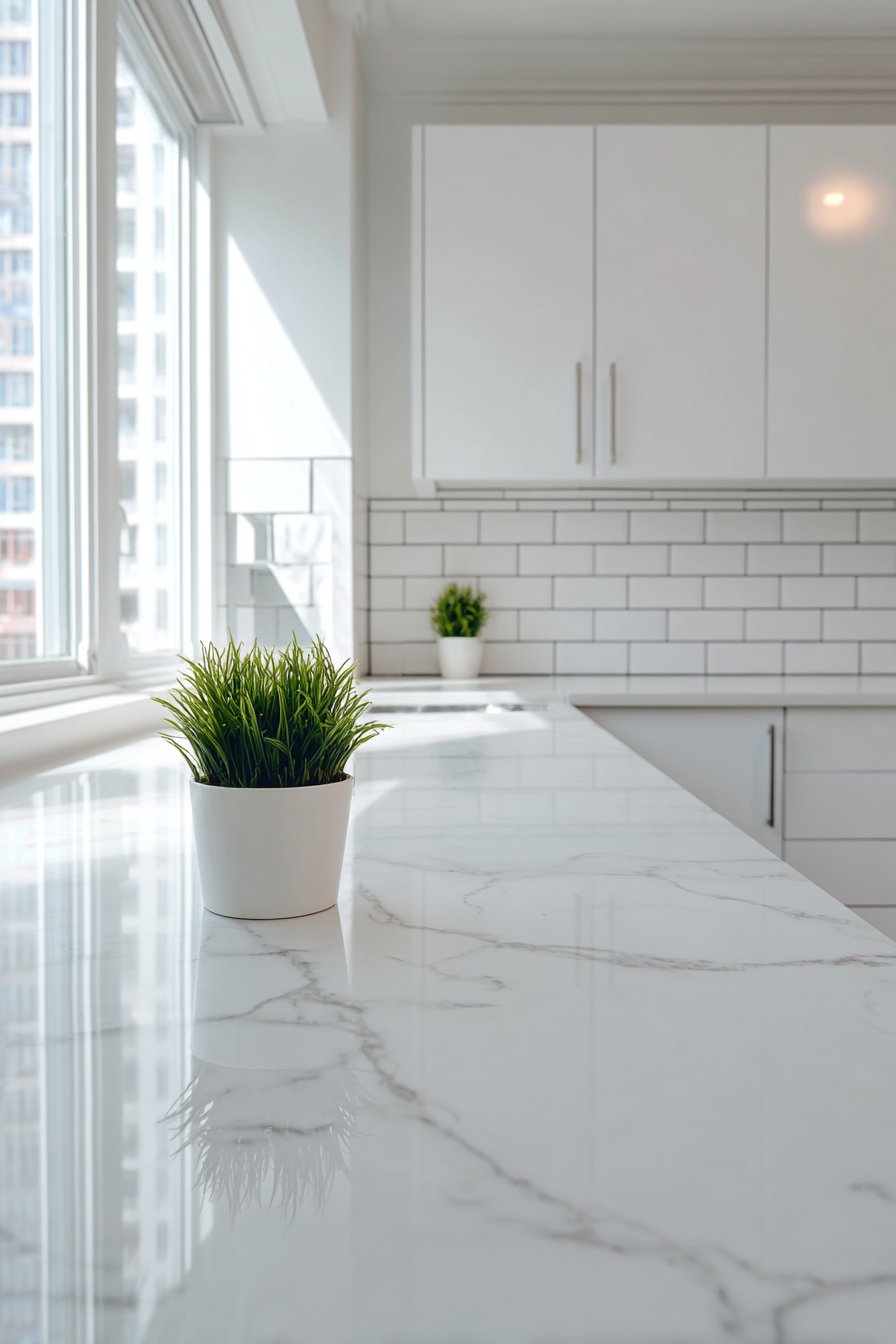
Glossy white subway tiles create luminous surfaces in this bright design. The tiles cover both walls and backsplash areas completely. White lacquered cabinets with subtle sheen amplify the light-reflective quality. Natural light bounces throughout the space, creating an airy atmosphere.
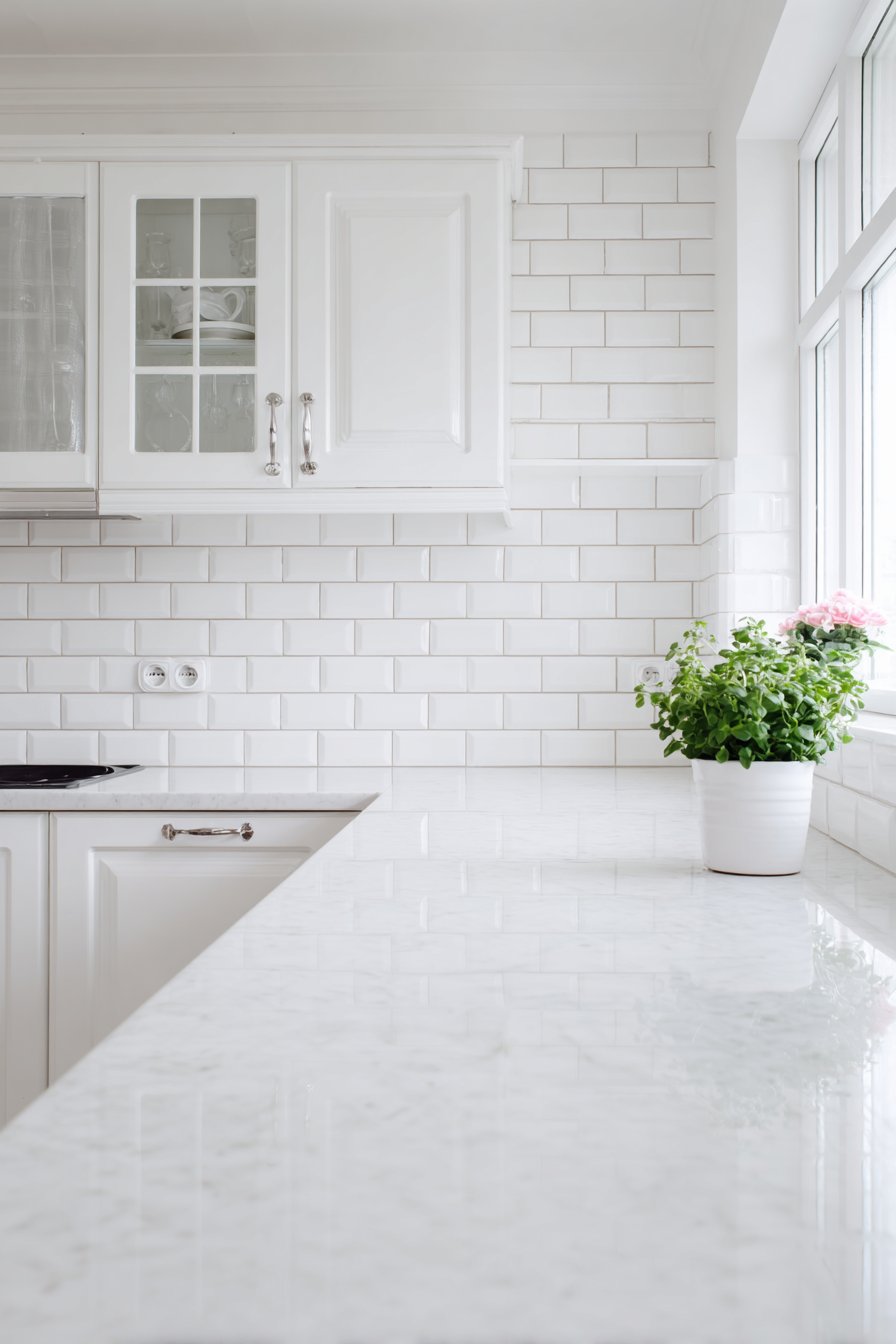
White marble countertops introduce delicate grey veining as organic variation. This subtle pattern prevents the monochrome scheme from appearing too uniform. The veining provides visual interest while maintaining the color palette. Simple chrome hardware and fixtures contribute minimal metallic accents.
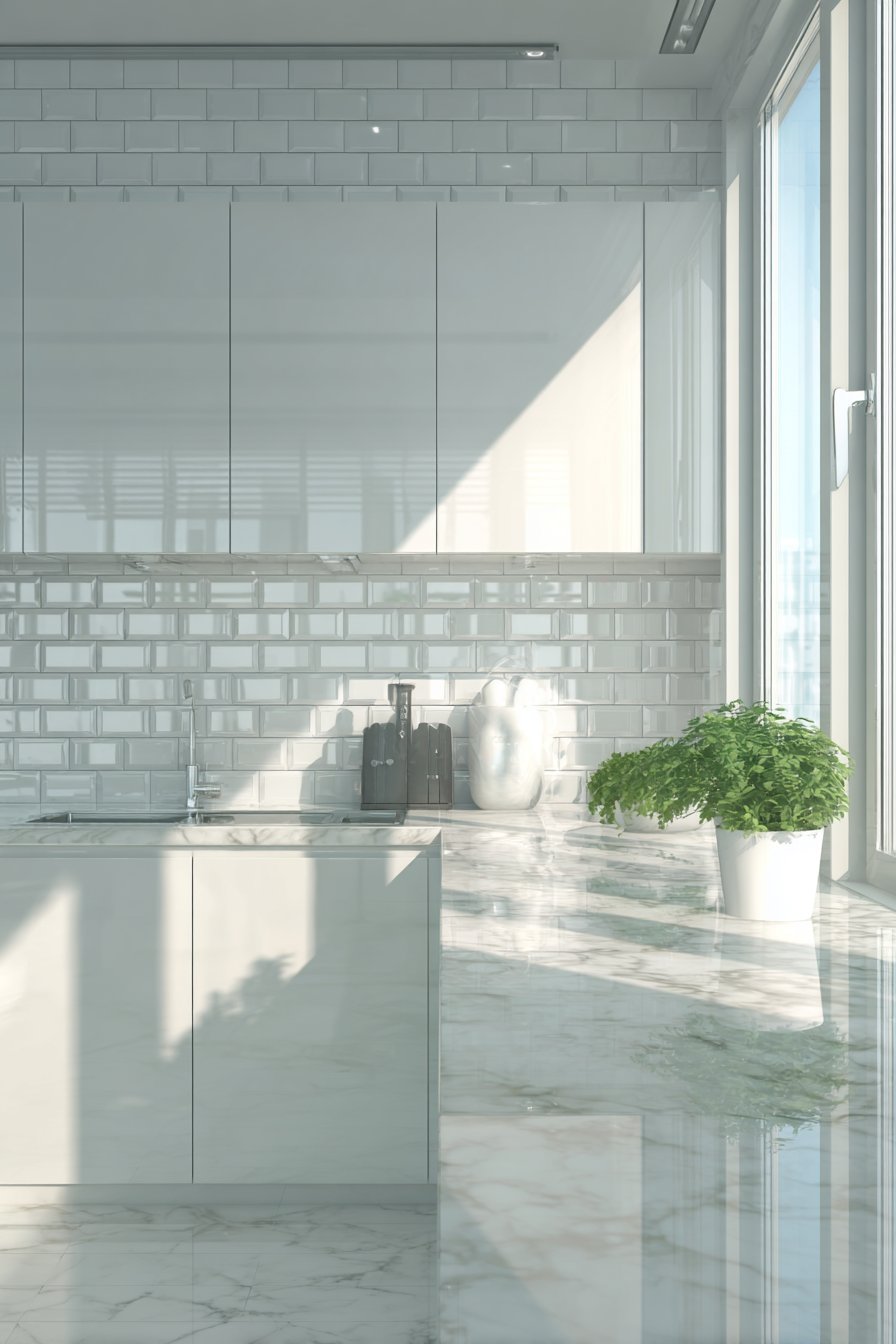
A single potted herb plant offers the only touch of living green. This restrained introduction of color demonstrates minimalist discipline. The plant serves both decorative and functional purposes. It provides fresh herbs while adding life to the pristine surfaces.
Soft morning light creates gentle highlights on reflective surfaces throughout the day. The interplay between glossy tiles and matte counters adds textural dimension. This variation in finish prevents the white-on-white scheme from appearing flat. The design proves that monochromatic palettes can possess remarkable depth.
Key Design Tips:
- Use glossy tiles to maximize light reflection in white kitchens
- Select lacquered cabinet finishes for subtle sheen and easy cleaning
- Introduce natural stone veining for organic pattern in monochrome schemes
- Keep metallic accents minimal and consistent throughout space
- Add single living plant for color and freshness
- Layer different white finishes (glossy, matte, polished) for textural interest
- Maximize natural light sources to enhance bright, airy feeling
6. Compact Galley Layout with Symmetrical Design
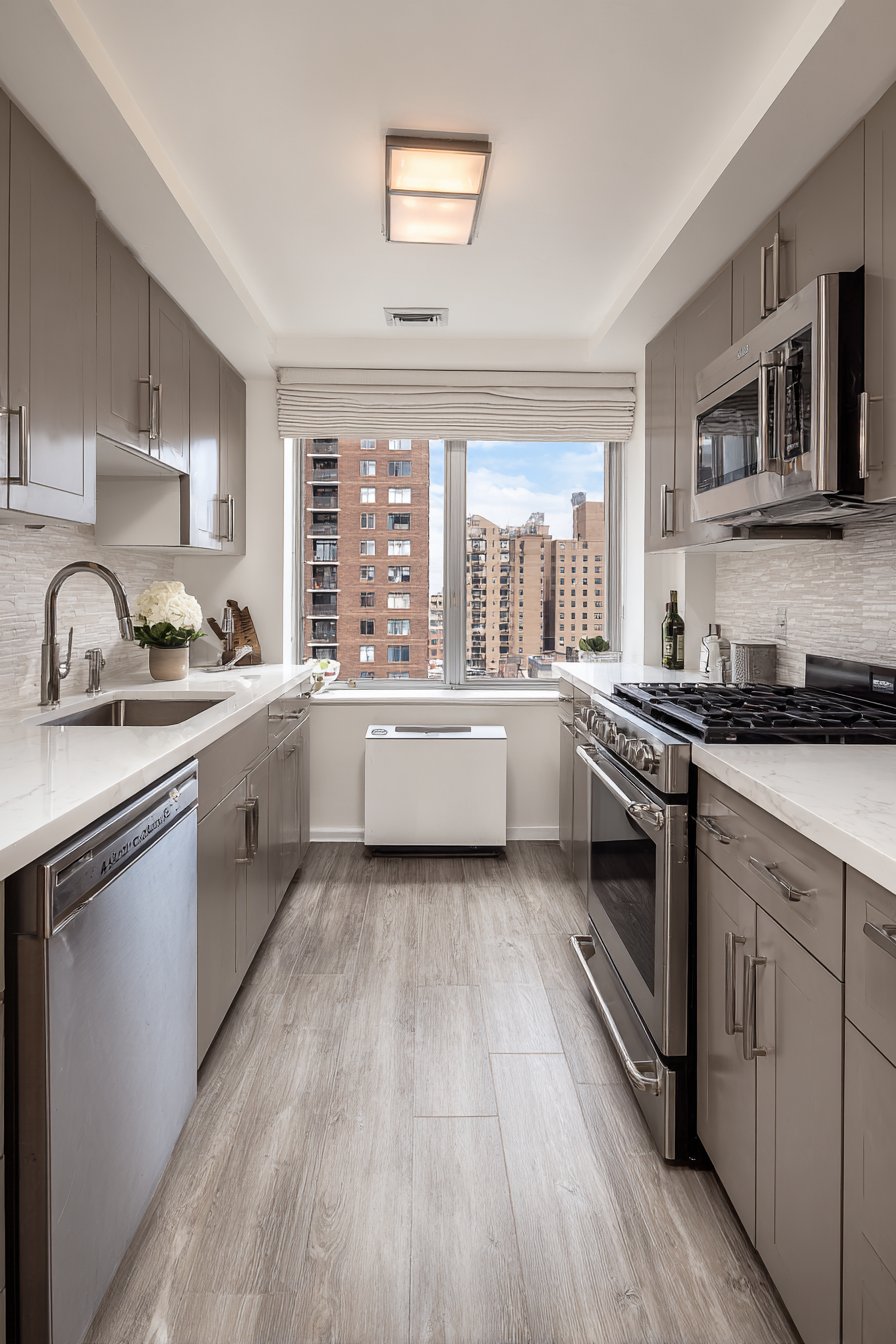
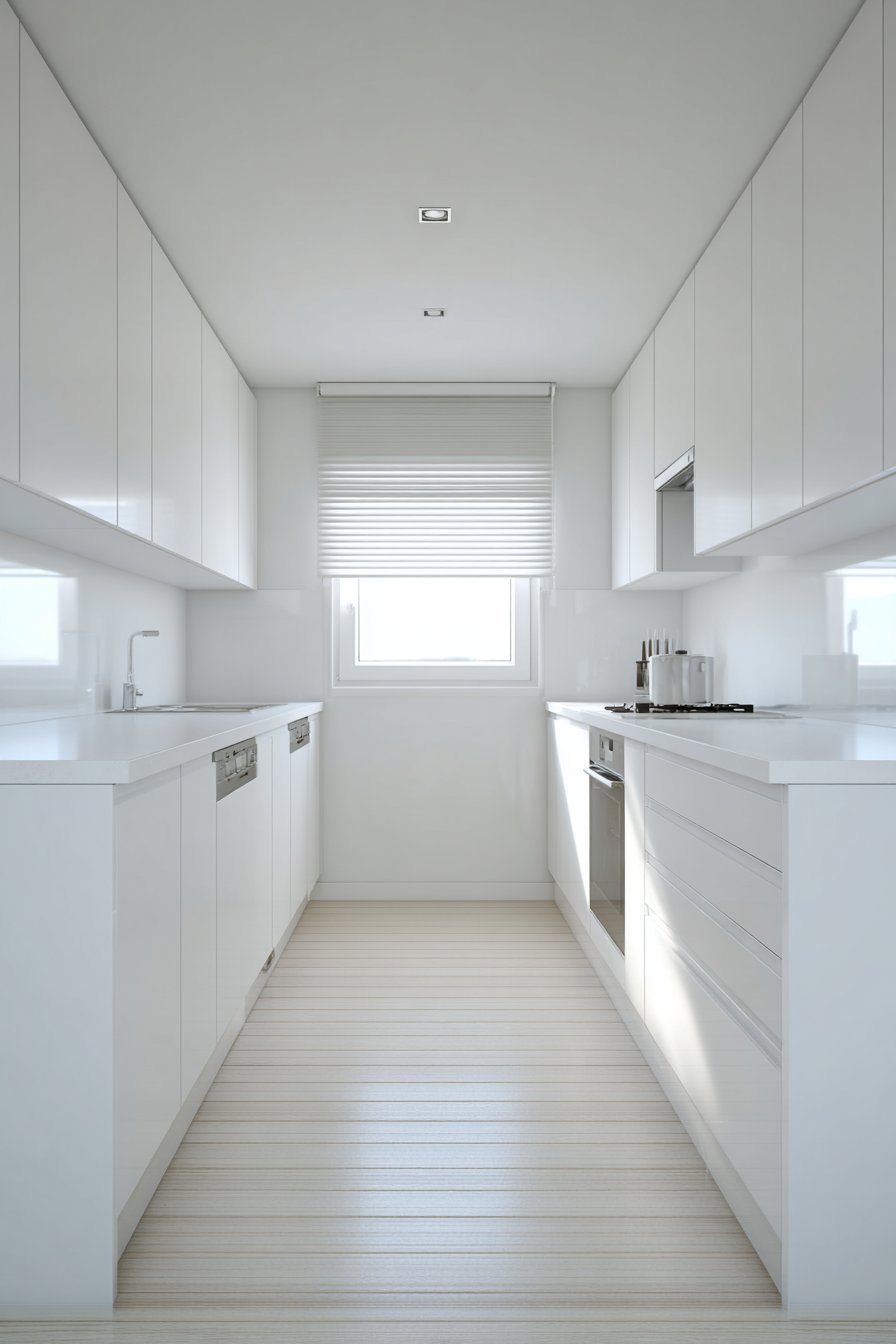
Symmetrical cabinetry lines both walls in this efficient galley layout. Light grey cabinets with flat-panel doors create clean, uniform surfaces. A single window with simple white roller shade punctuates one wall. The narrow space demonstrates that compact dimensions don’t limit minimalist possibilities.
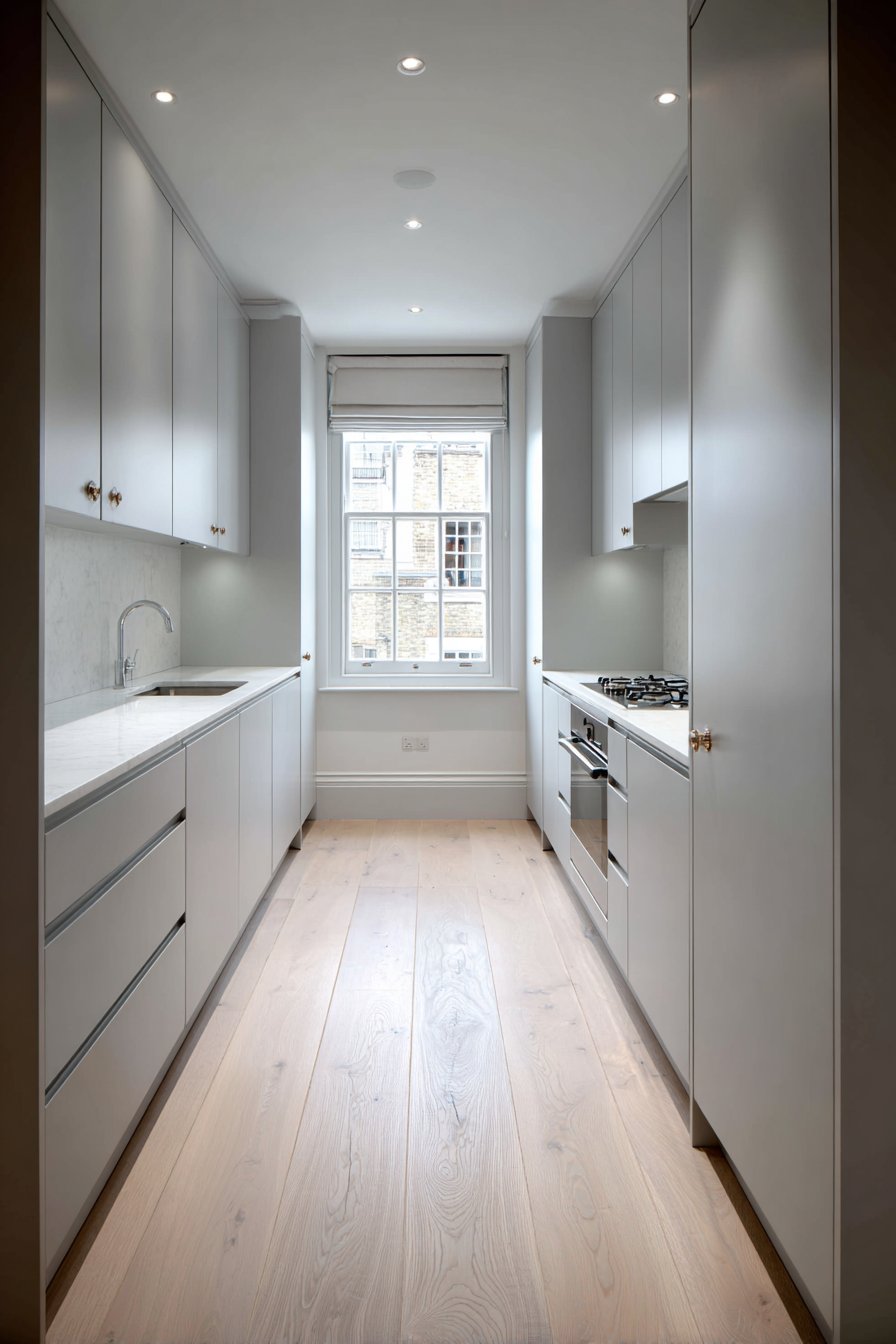
White countertops extend the full length on both sides. This continuous work surface maximizes functional space. A slimline dishwasher and compact range integrate seamlessly into cabinetry. The appliances maintain the streamlined appearance through careful selection and placement.
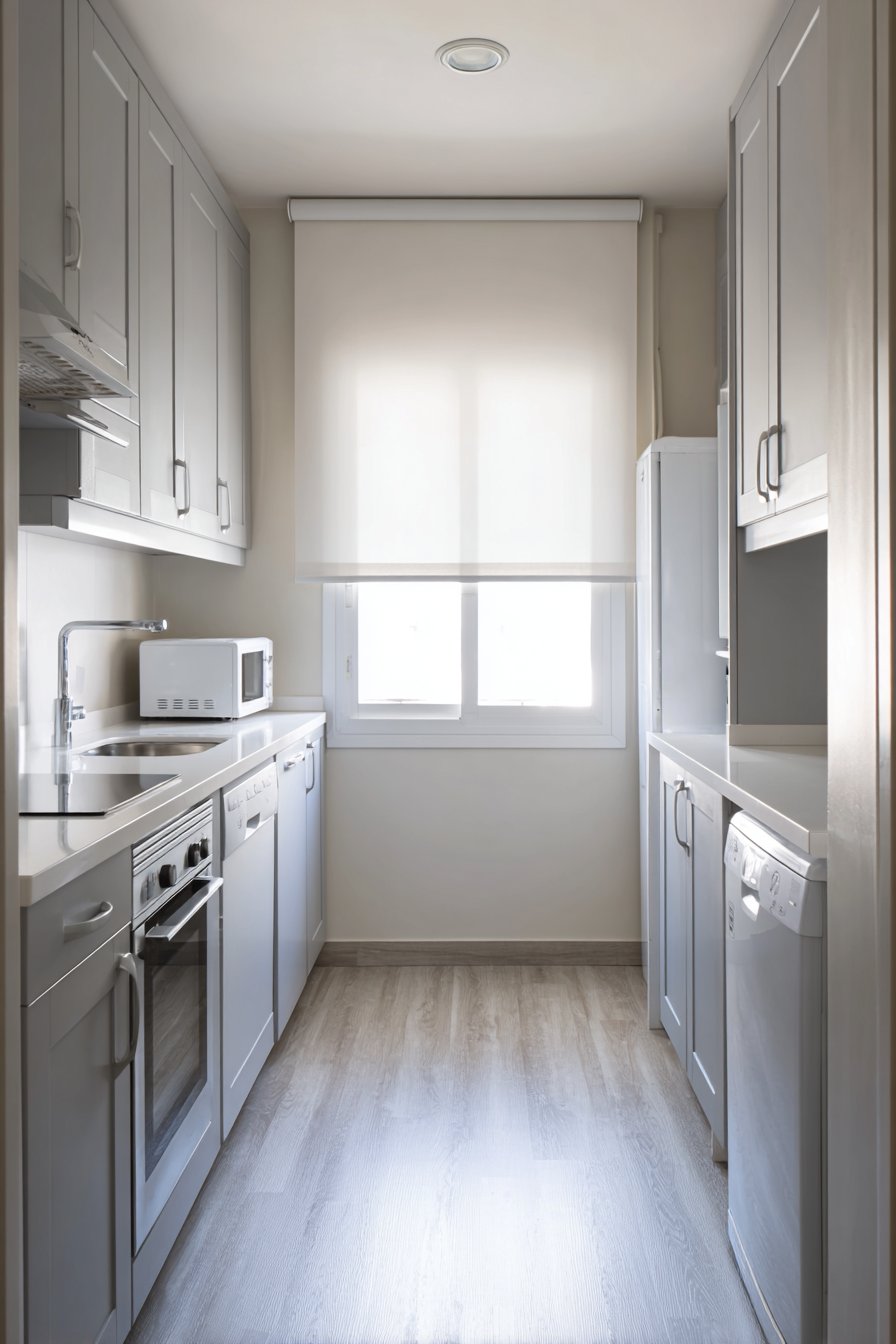
Light oak planks run lengthwise across the floor. This directional installation visually extends the space. The wood tone adds warmth to the grey and white palette. Natural side lighting emphasizes the clean, uncluttered design throughout the day.
The galley layout exemplifies efficient space planning principles. Every inch serves a purpose without creating crowding. The symmetrical arrangement creates visual calm and practical workflow. This design proves that minimalism thrives especially well in smaller spaces.
Key Design Tips:
- Use symmetrical cabinetry to create balance in galley kitchens
- Select slimline appliances designed for compact spaces
- Install flooring lengthwise to visually extend narrow rooms
- Choose light colors to maximize perception of space
- Maintain continuous countertops for maximum work surface
- Add single window treatment for privacy without bulk
- Keep upper and lower cabinets aligned for visual order
7. Bold Black and White Contrast Design
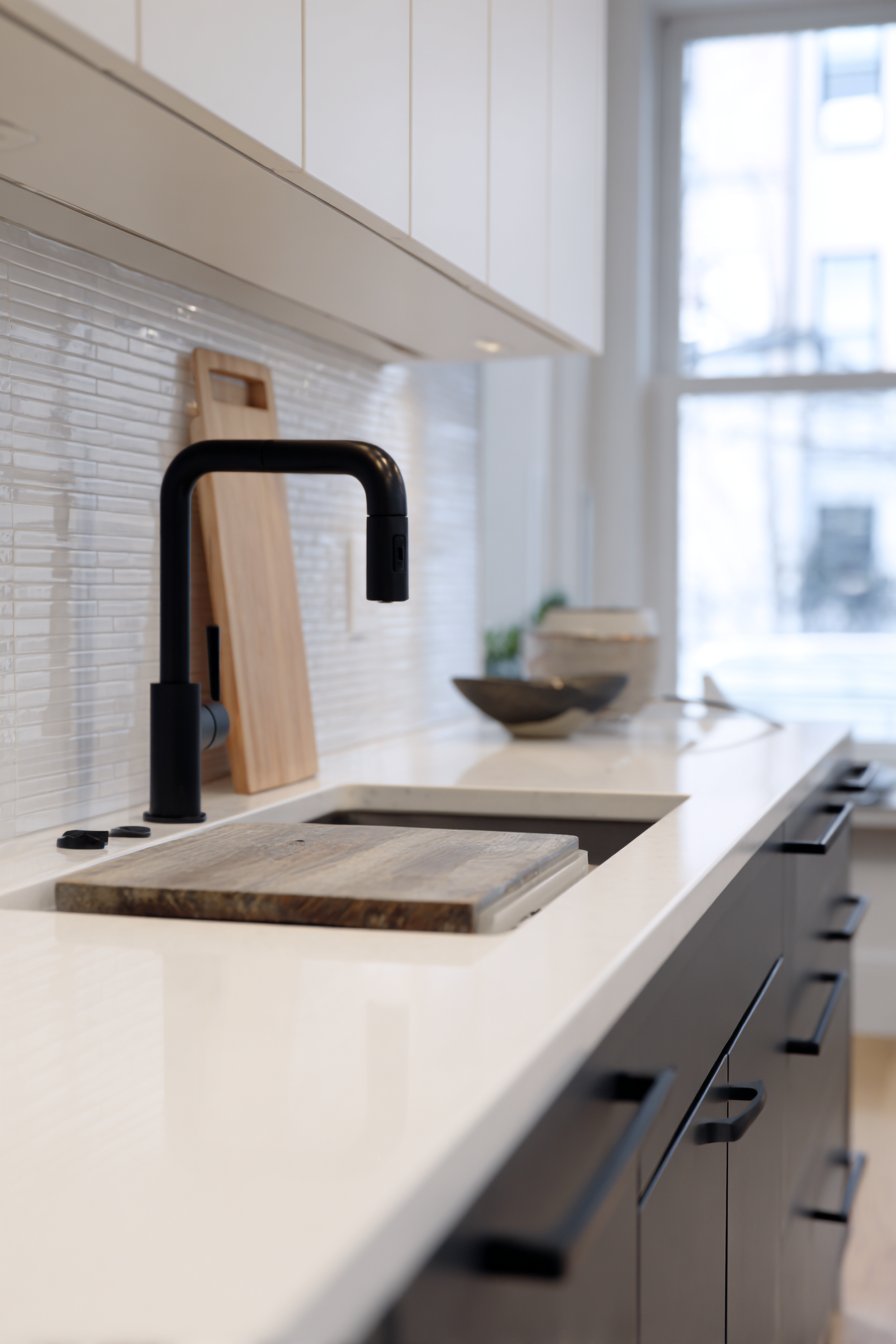
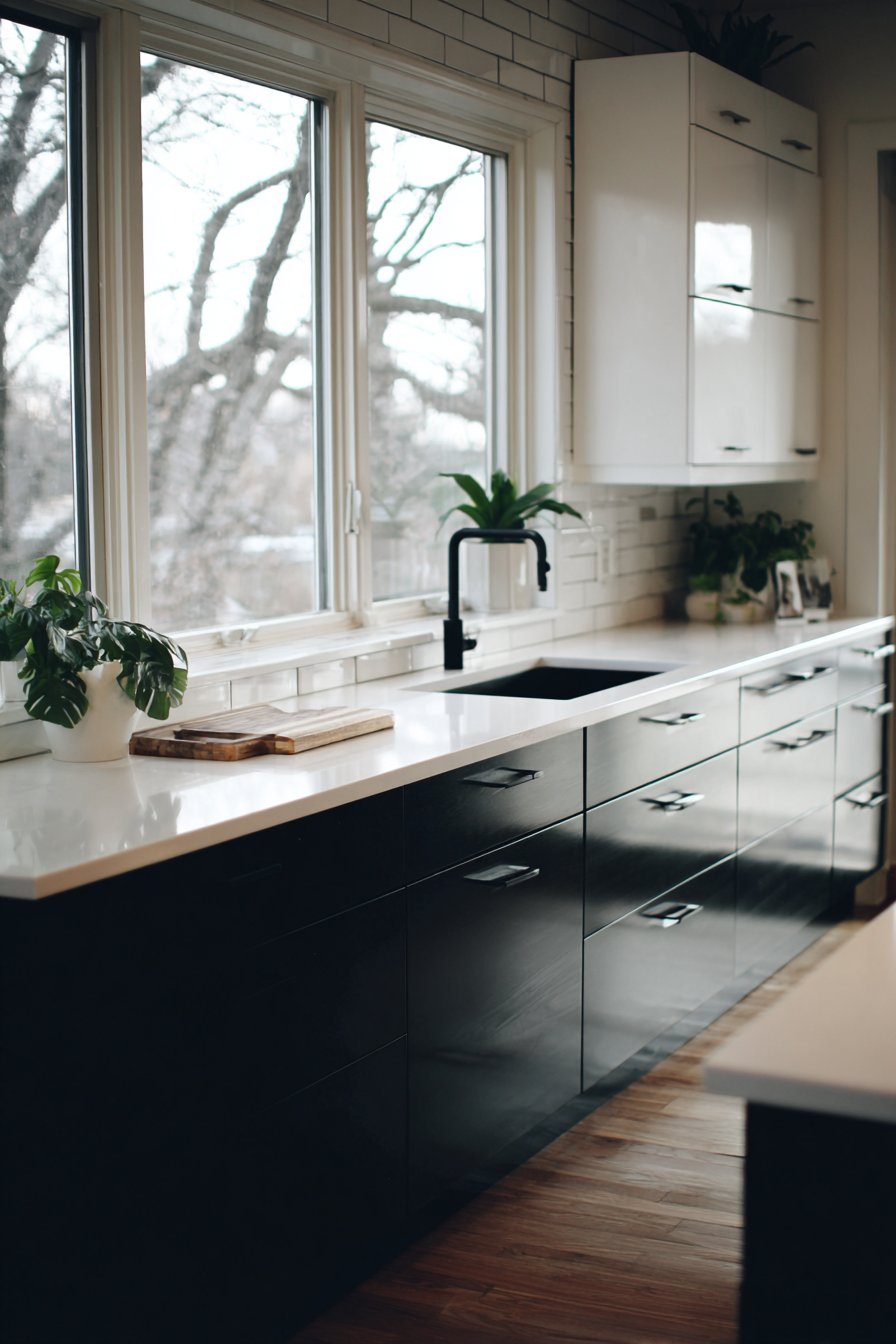
Matte black lower cabinets anchor this striking design with visual weight. White upper cabinets provide balance and brightness above. The contrasting colors create dynamic tension that energizes the space. White quartz countertops with sharp, clean edge profiles divide the two cabinet colors.
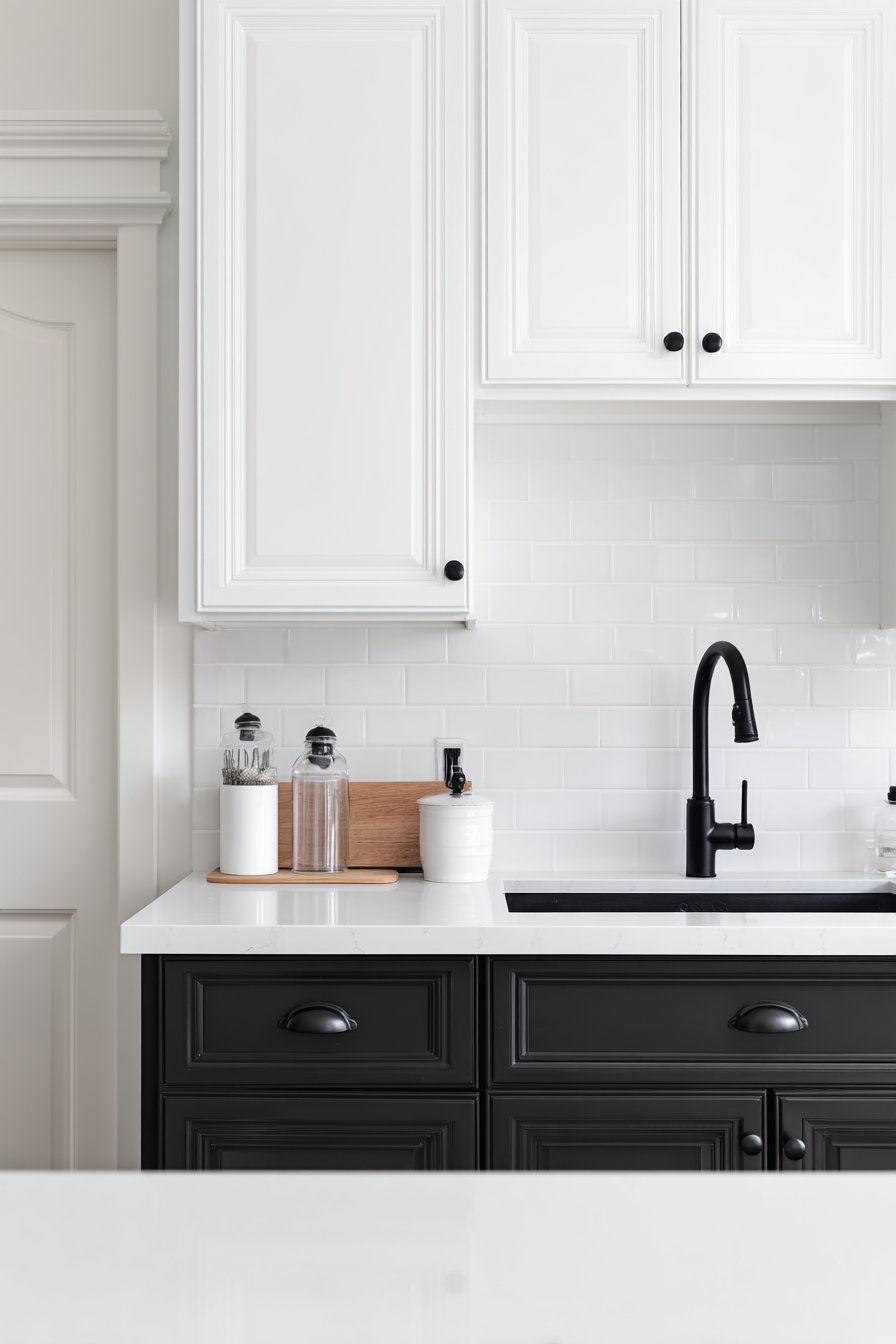
A simple black faucet provides cohesive accent that ties the design together. Black cabinet handles echo this metallic element throughout the space. The backsplash consists of white rectangular tiles in simple running bond pattern. This traditional tile layout grounds the contemporary color scheme.
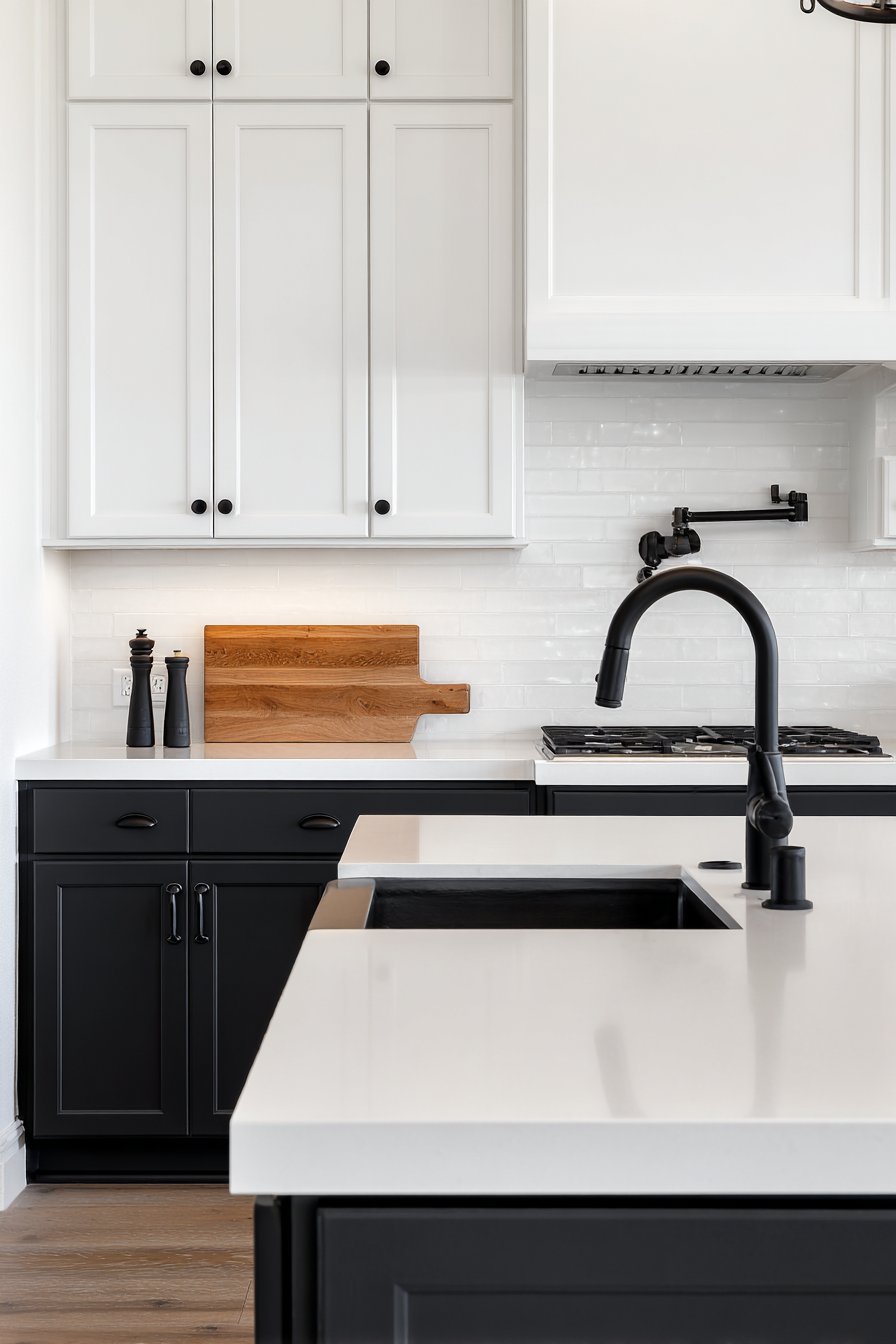
Open counter space maintains the minimalist approach throughout the design. Only a single cutting board remains visible on work surfaces. This discipline demonstrates commitment to uncluttered functionality. The restrained display allows the bold color contrast to dominate visual attention.
Balanced natural lighting prevents harsh shadows despite the strong contrast. Soft illumination ensures the black cabinets don’t create oppressive darkness. The lighting design balances the boldness with inviting warmth. This proves that dramatic color choices can coexist with minimalist principles.
Key Design Tips:
- Use contrasting cabinet colors to create visual interest and definition
- Select matte finishes to soften bold color choices
- Keep hardware and fixtures consistent in matching colors
- Maintain clear countertops to let color contrast dominate
- Choose simple tile patterns that don’t compete with bold colors
- Ensure adequate lighting to prevent dark colors from overwhelming space
- Balance dark lower cabinets with lighter upper storage
8. Central Concrete Island with Industrial Elements
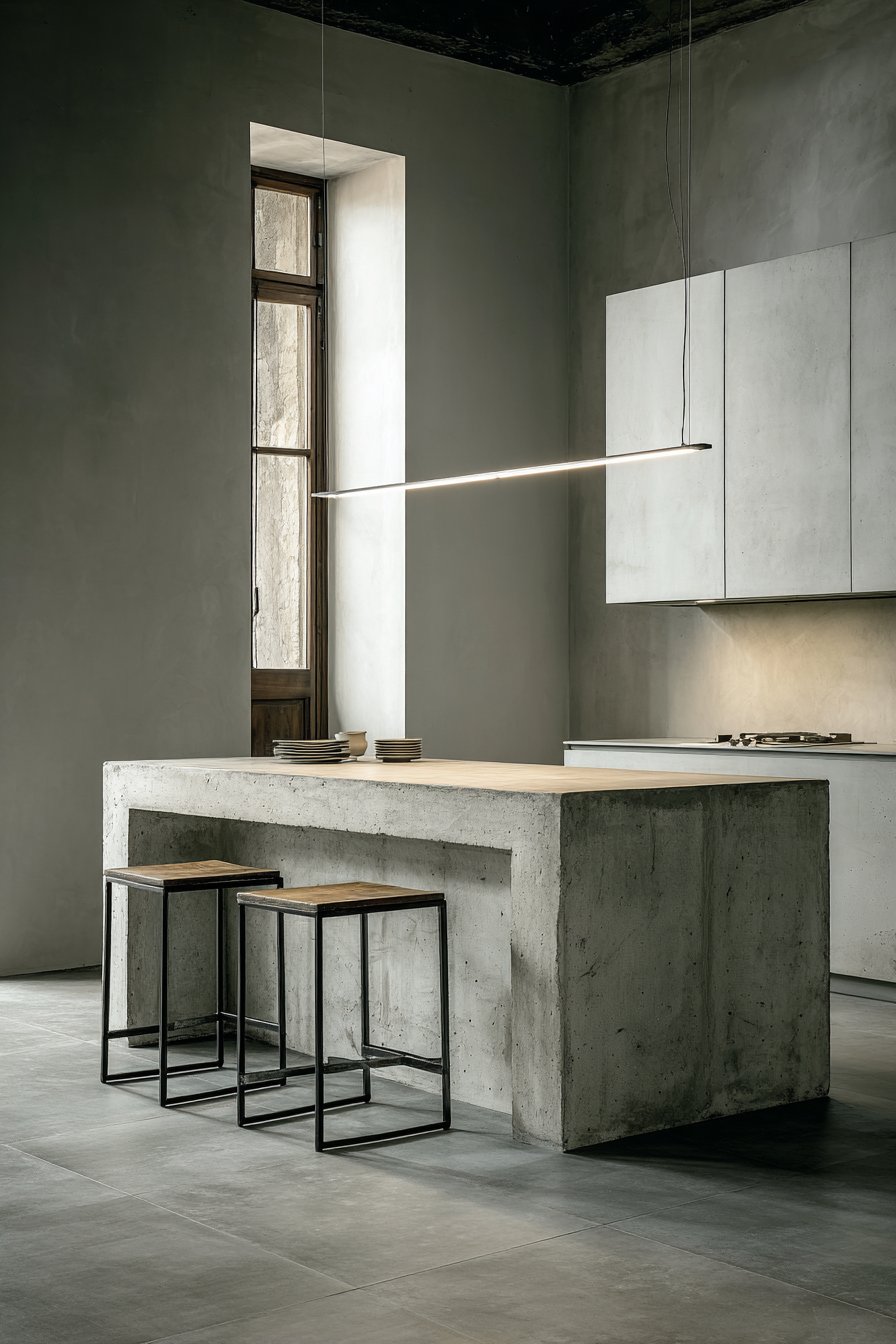
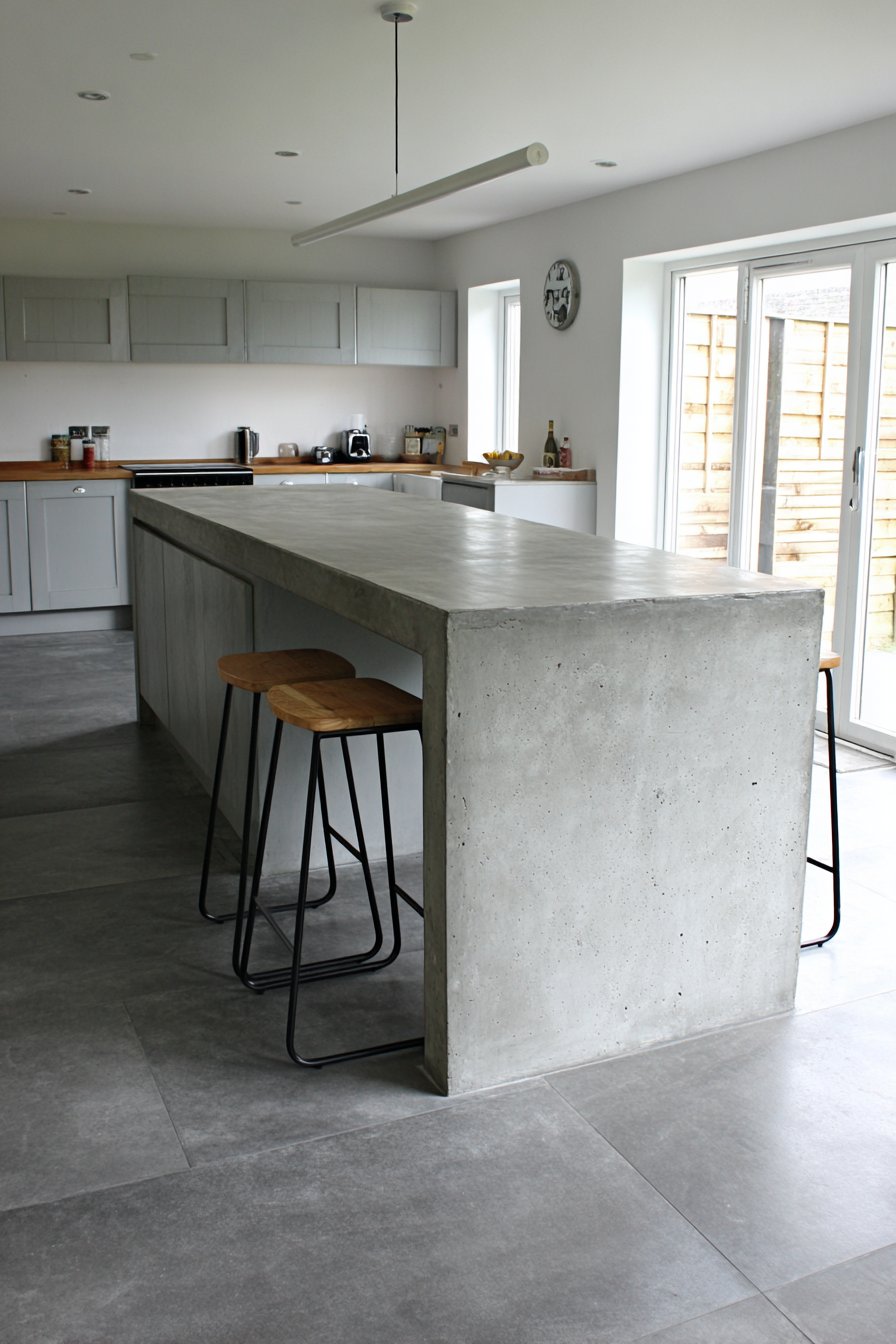
A light concrete island with smooth, sealed finish commands attention as the centerpiece. The rectangular form demonstrates minimalist geometry at its finest. Minimal overhang provides seating for two simple black metal stools. The wooden seats introduce natural warmth against industrial materials.
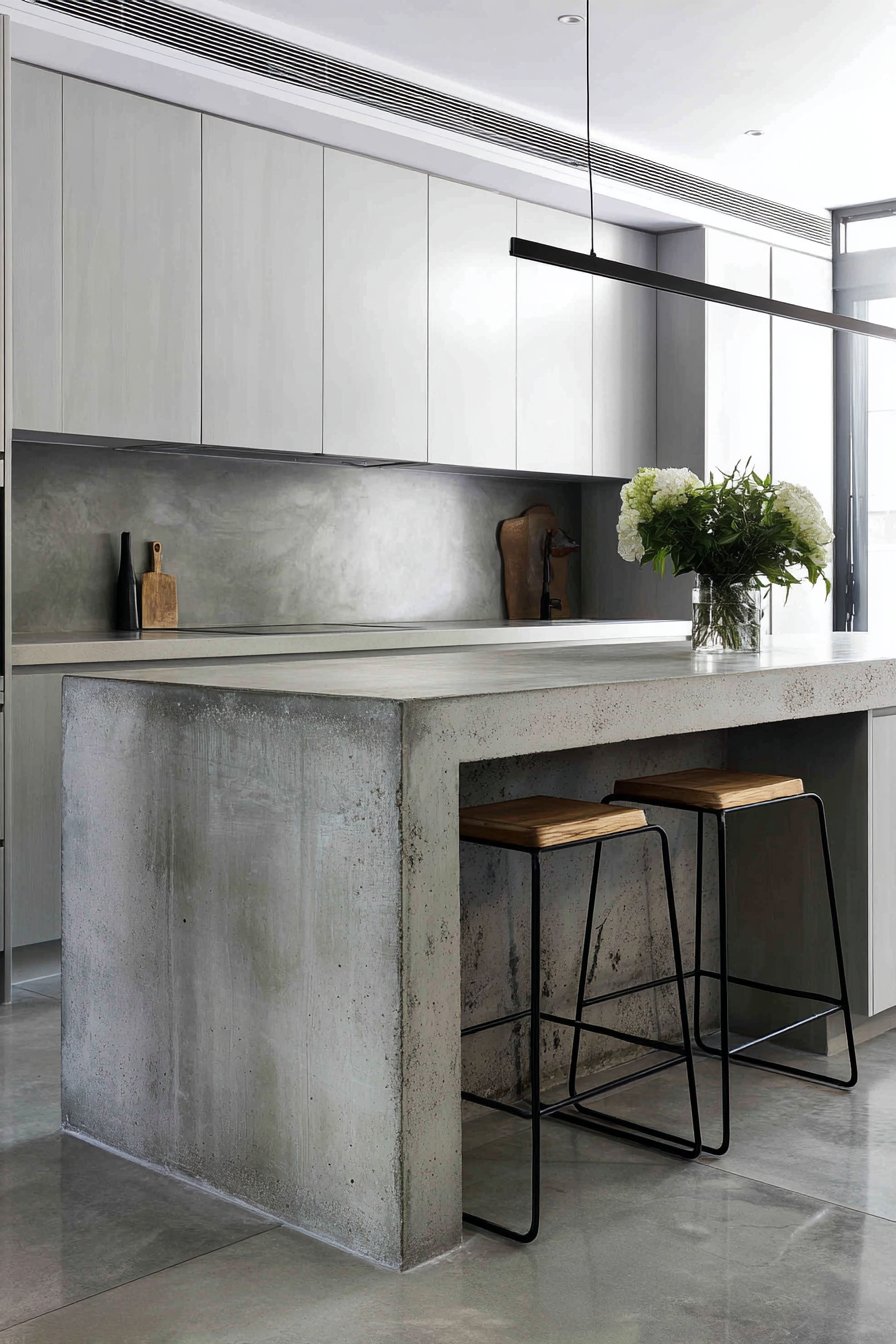
Surrounding cabinetry in pale grey allows the concrete island to shine. The subtle cabinet color recedes visually, emphasizing the central element. A single linear pendant light with minimal design hangs directly above. The fixture provides focused task lighting without competing for attention.
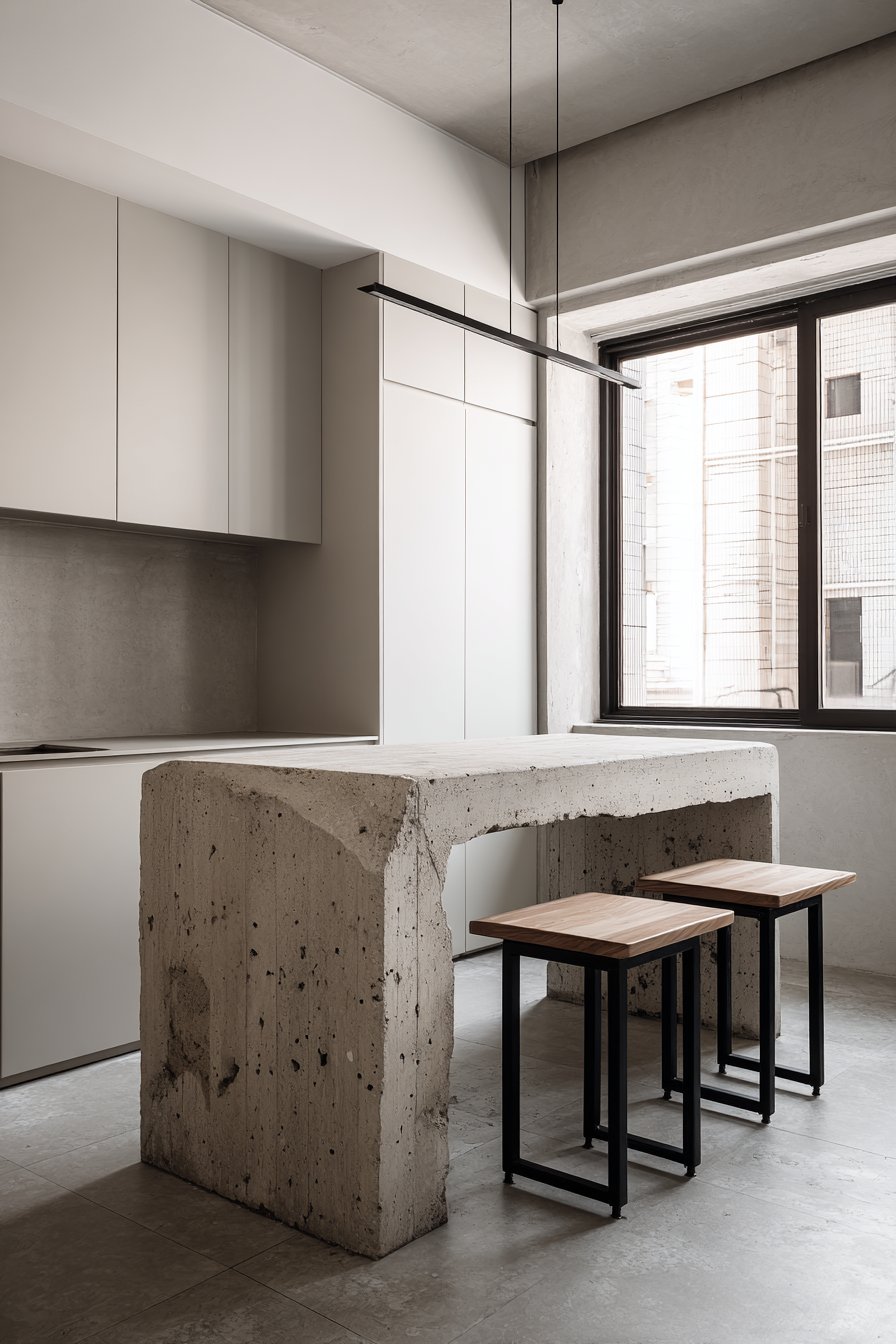
Large-format grey porcelain tiles cover the floor with almost invisible grout lines. This seamless surface reinforces the minimalist aesthetic throughout the space. The grey tone harmonizes with both the island and surrounding cabinets. Natural daylight highlights the smooth concrete surface and subtle color variations.
The concrete material choice introduces organic imperfection within the controlled design. Natural variations in the concrete add character and authenticity. This demonstrates that minimalism can embrace natural materials alongside manufactured surfaces. The combination creates depth and interest within the simplified palette.
Key Design Tips:
- Choose concrete for islands to create striking focal points
- Seal concrete surfaces properly for durability and easy maintenance
- Select simple metal stools that complement industrial materials
- Use pale surrounding cabinetry to emphasize central statement pieces
- Install single linear pendants for focused task lighting
- Choose large-format tiles with minimal grout for seamless floors
- Allow natural material variations to add organic interest
9. Seamless Integrated Appliance Concealment
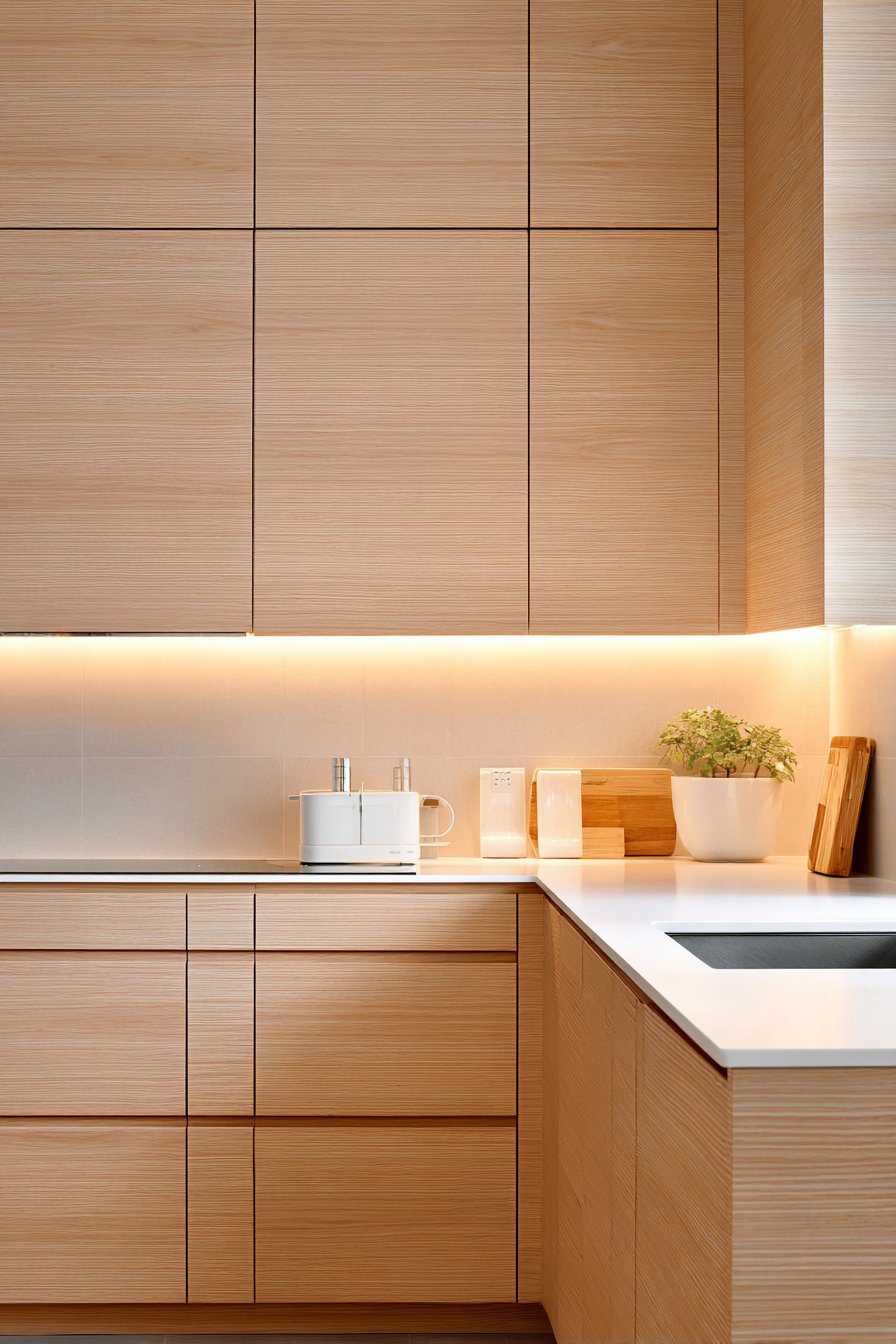
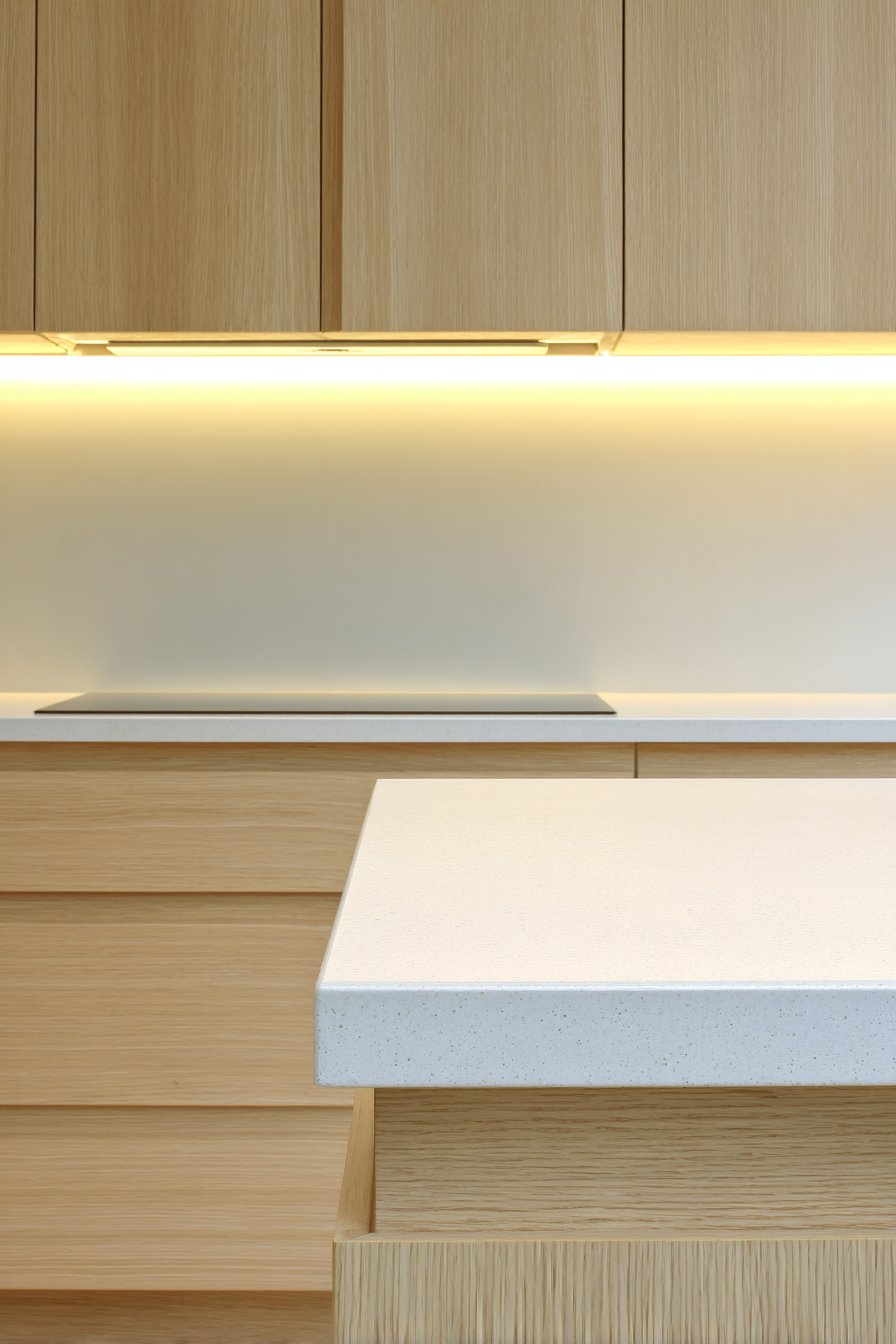
Integrated appliances disappear completely behind matching cabinet panels in light ash wood. The seamless cabinetry creates uninterrupted visual flow around the entire room. This integration demonstrates minimalism’s ultimate goal of eliminating visual clutter. Only essential elements remain visible in the refined space.
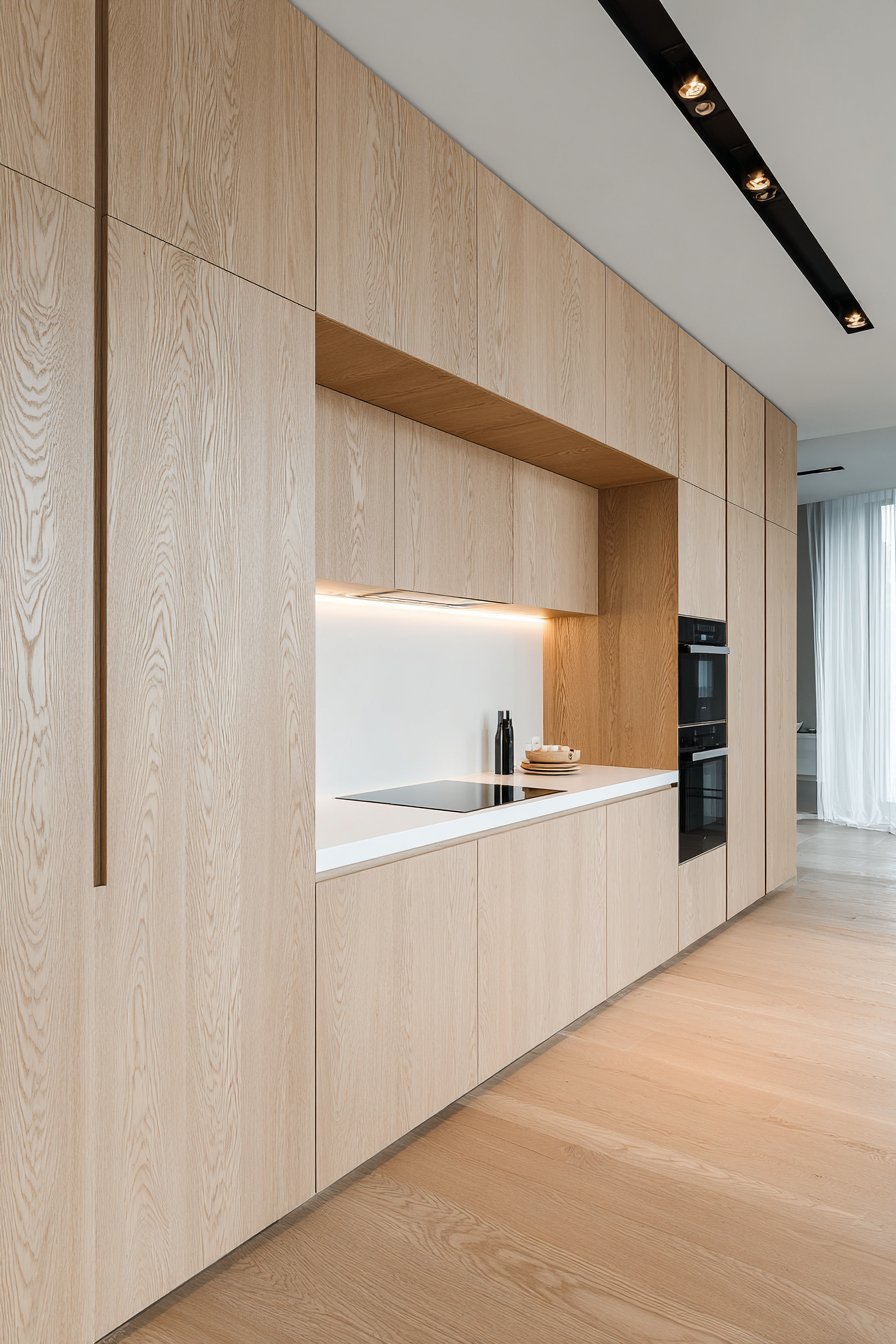
A simple white composite countertop provides clean work surface throughout. The sleek induction cooktop flush-mounts into the counter as the only visible appliance. Under-cabinet LED strip lighting provides task illumination without visible fixtures. The lighting design maintains the philosophy of concealing functional elements.
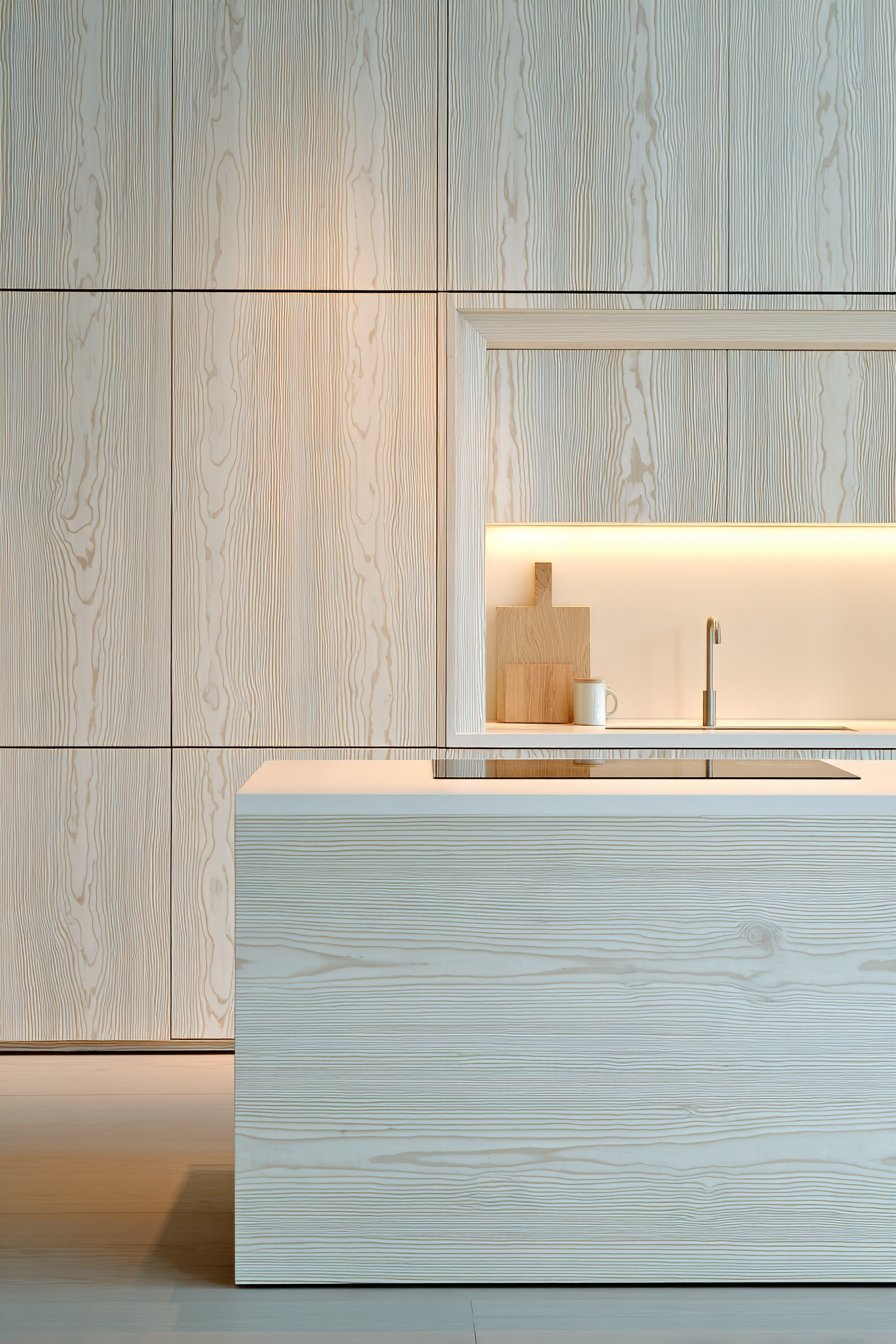
The continuous wood grain pattern flows across all cabinet fronts. This creates remarkable visual unity throughout the space. The light ash tone adds natural warmth without overwhelming the minimalist aesthetic. The grain texture provides organic interest within the controlled design vocabulary.
This design requires significant planning and investment in specialized cabinetry. The panels that conceal appliances must allow proper ventilation and access. However, the resulting visual serenity justifies the additional complexity. The room achieves the minimalist ideal of peaceful, uncluttered space.
Key Design Tips:
- Invest in integrated appliance panels for seamless cabinetry appearance
- Choose flush-mount cooktops to eliminate protruding appliances
- Install LED strip lighting for task illumination without visible fixtures
- Select wood veneers with continuous grain for visual unity
- Ensure proper ventilation systems for concealed appliances
- Use simple composite countertops that don’t compete with wood tones
- Plan carefully for access panels and maintenance requirements
10. Floating Oak Shelves with Organized Display
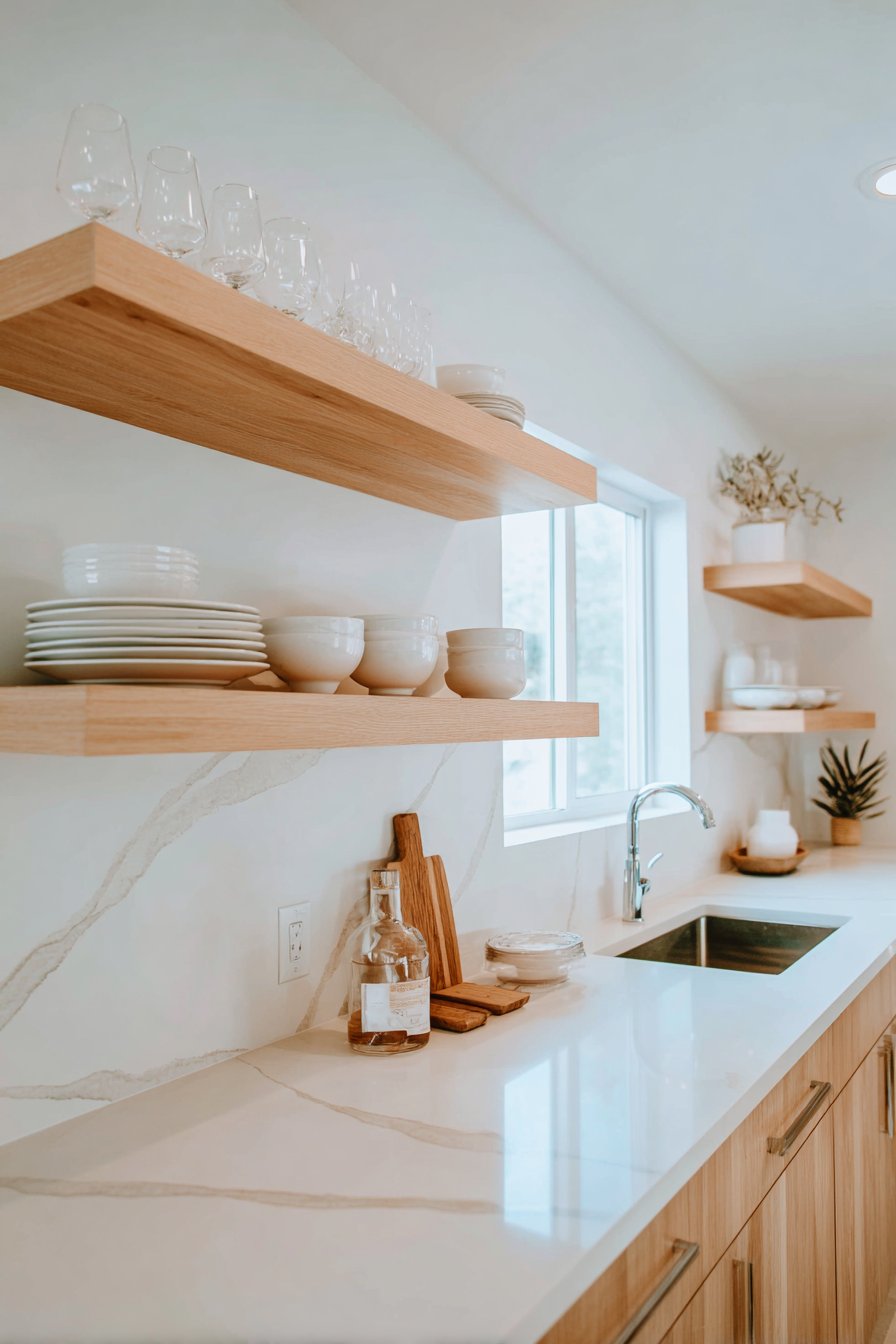
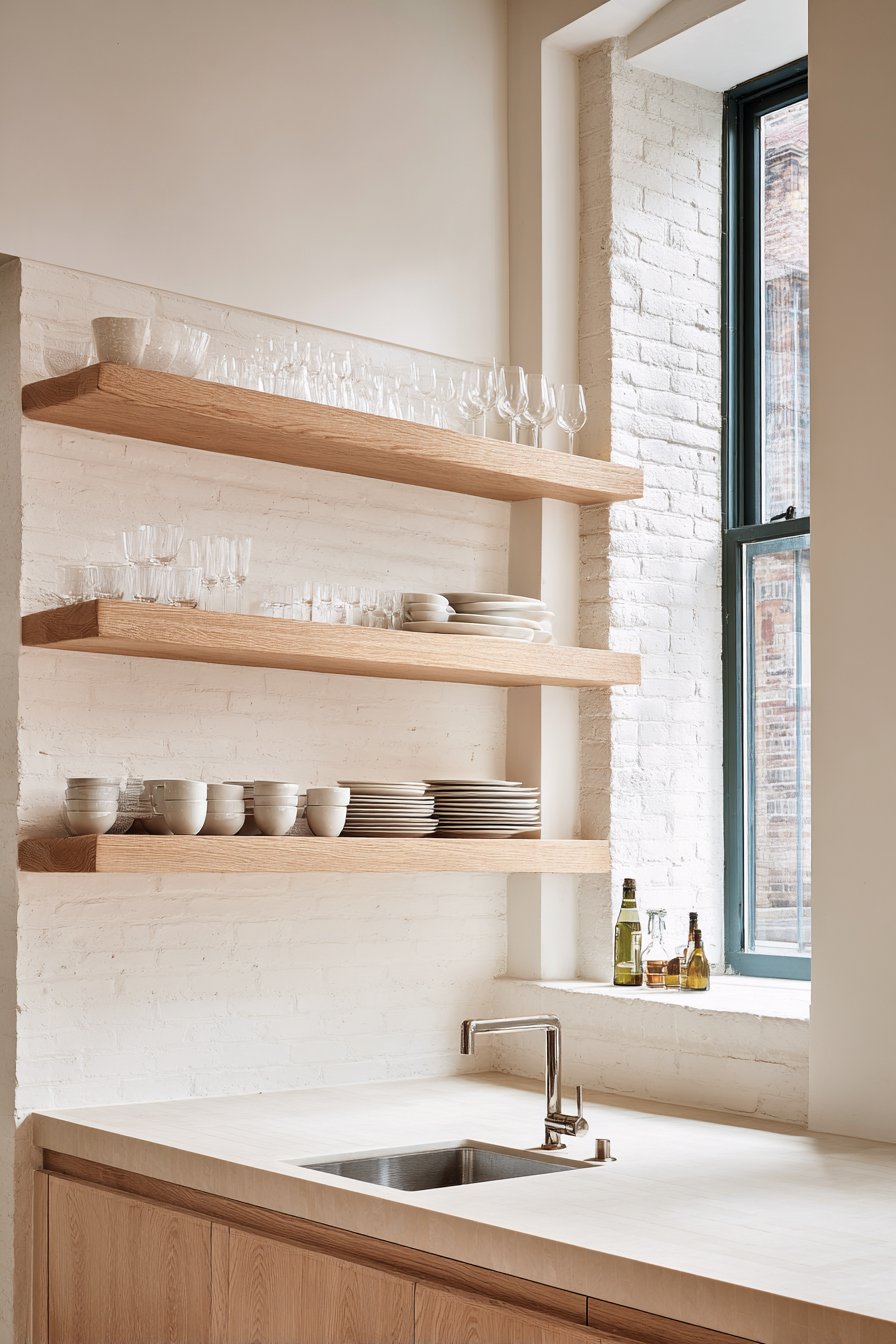
Three floating shelves in natural oak display minimal glassware and ceramics. White ceramic bowls arrange in organized rows create intentional composition. Below, white laminate countertop extends along the wall with clean edges. A single-basin stainless steel sink integrates without disrupting the minimalist flow.
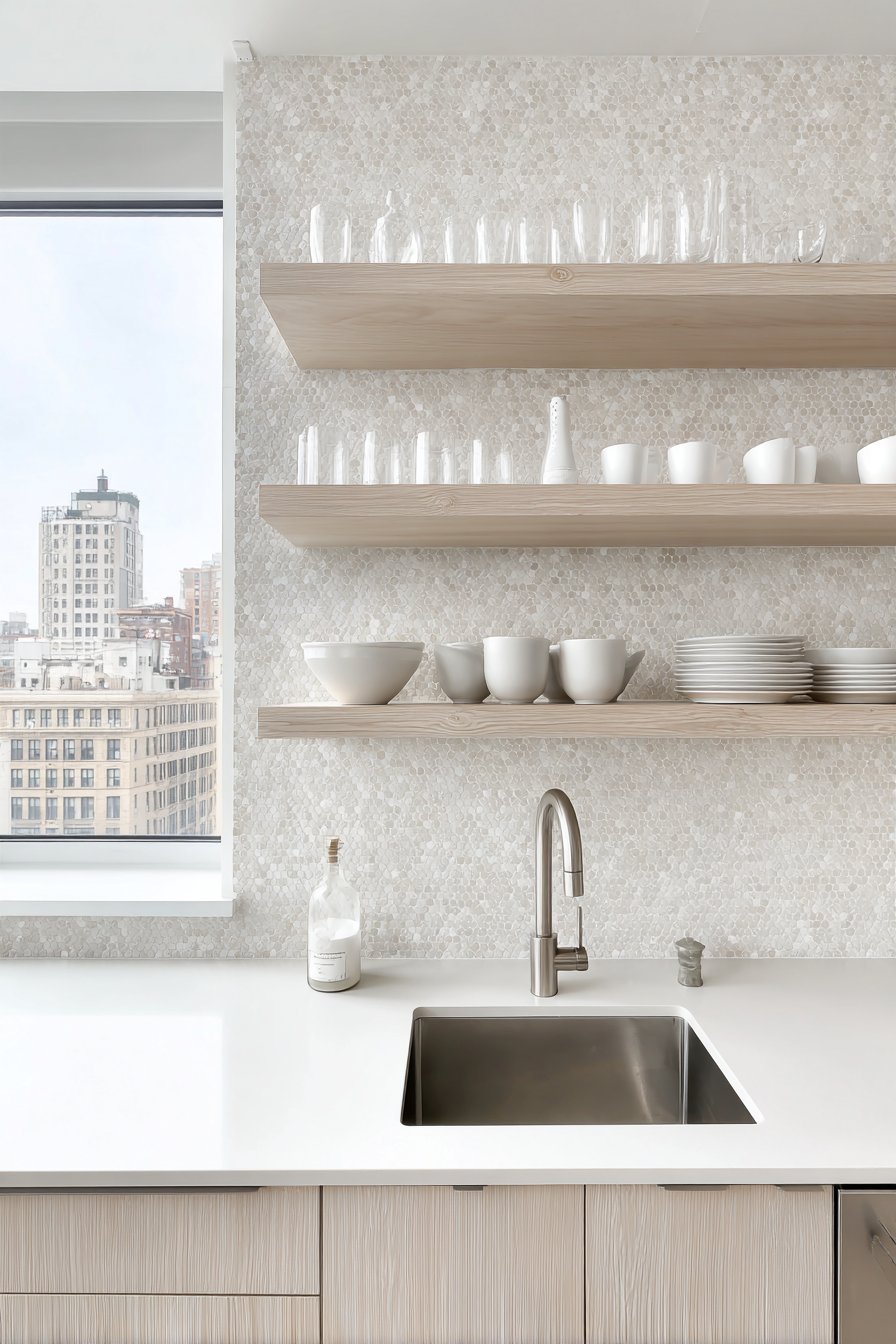
The backsplash features large white tiles with subtle linen texture. This adds tactile interest while maintaining visual simplicity. A simple window above the sink has no treatment whatsoever. This maximizes natural light while embracing the minimalist principle of reducing unnecessary elements.
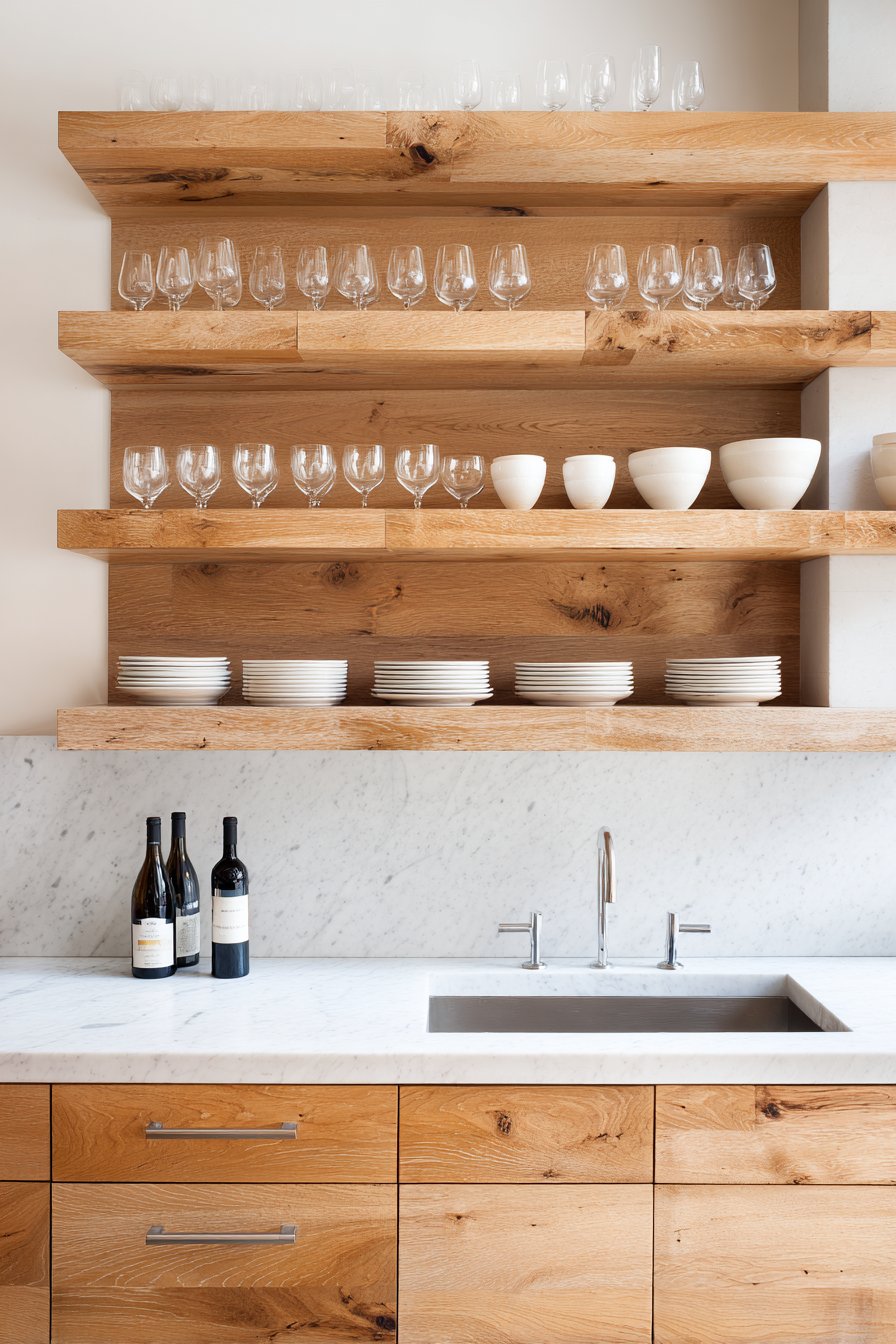
The exposed shelving creates intentional display of essential items only. This curation transforms functional storage into decorative feature. The organization demonstrates that minimalism requires thoughtful arrangement. Every item earns its place through beauty, function, or both.
Soft natural lighting emphasizes the organized arrangement throughout the day. The illumination highlights the wood grain and ceramic surfaces beautifully. Shadows add dimension to the simple composition without creating clutter. The result feels both functional and aesthetically refined.
Key Design Tips:
- Install floating shelves to create display without upper cabinet bulk
- Display only matching or complementary items for cohesive look
- Arrange items with intentional spacing and symmetry
- Choose textured tiles that add interest without pattern complexity
- Leave windows untreated when privacy allows for maximum light
- Select single-basin sinks for clean, uncluttered appearance
- Maintain strict curation of displayed items for visual calm
11. Concealed Pantry System with Touch-Latch Mechanisms
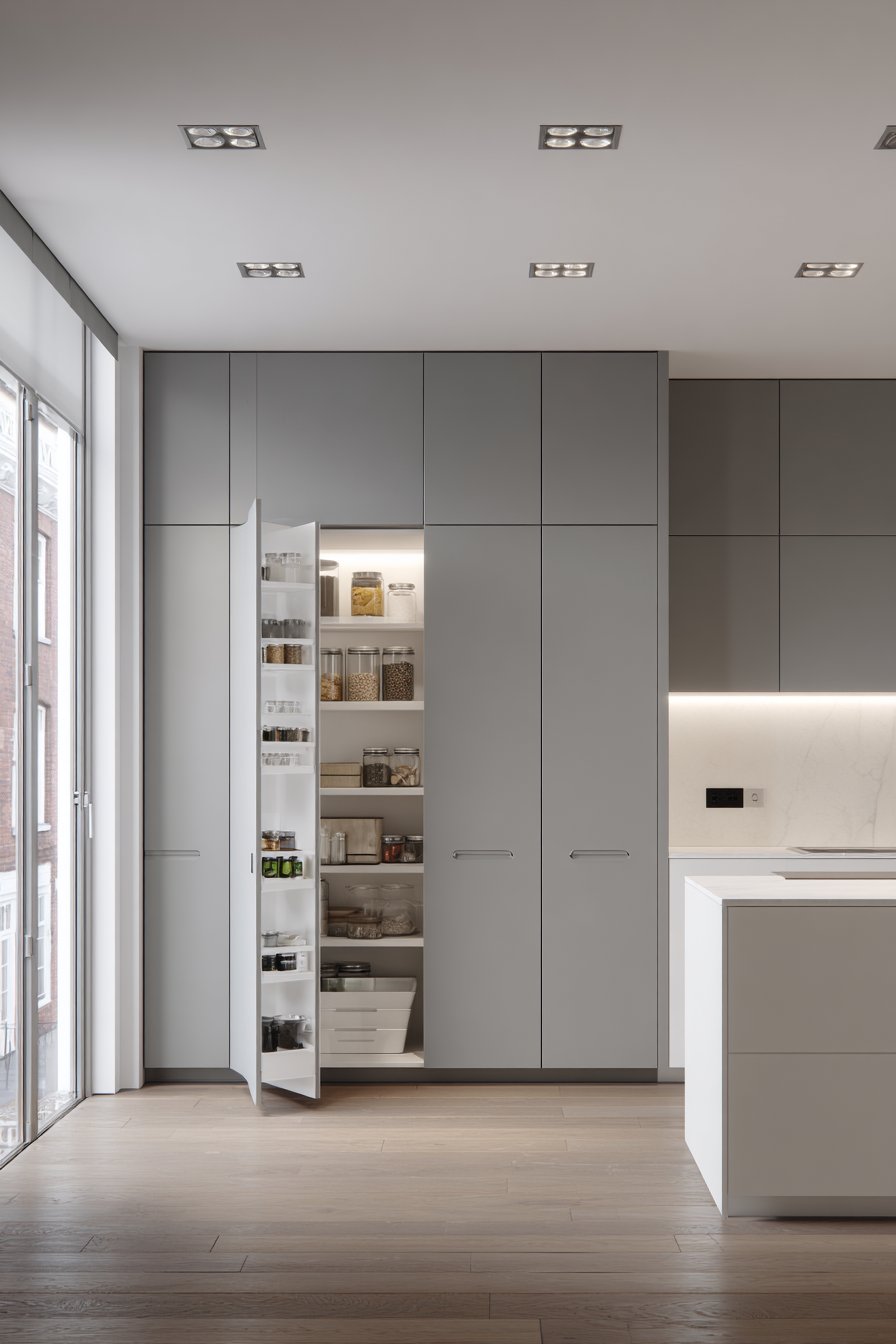
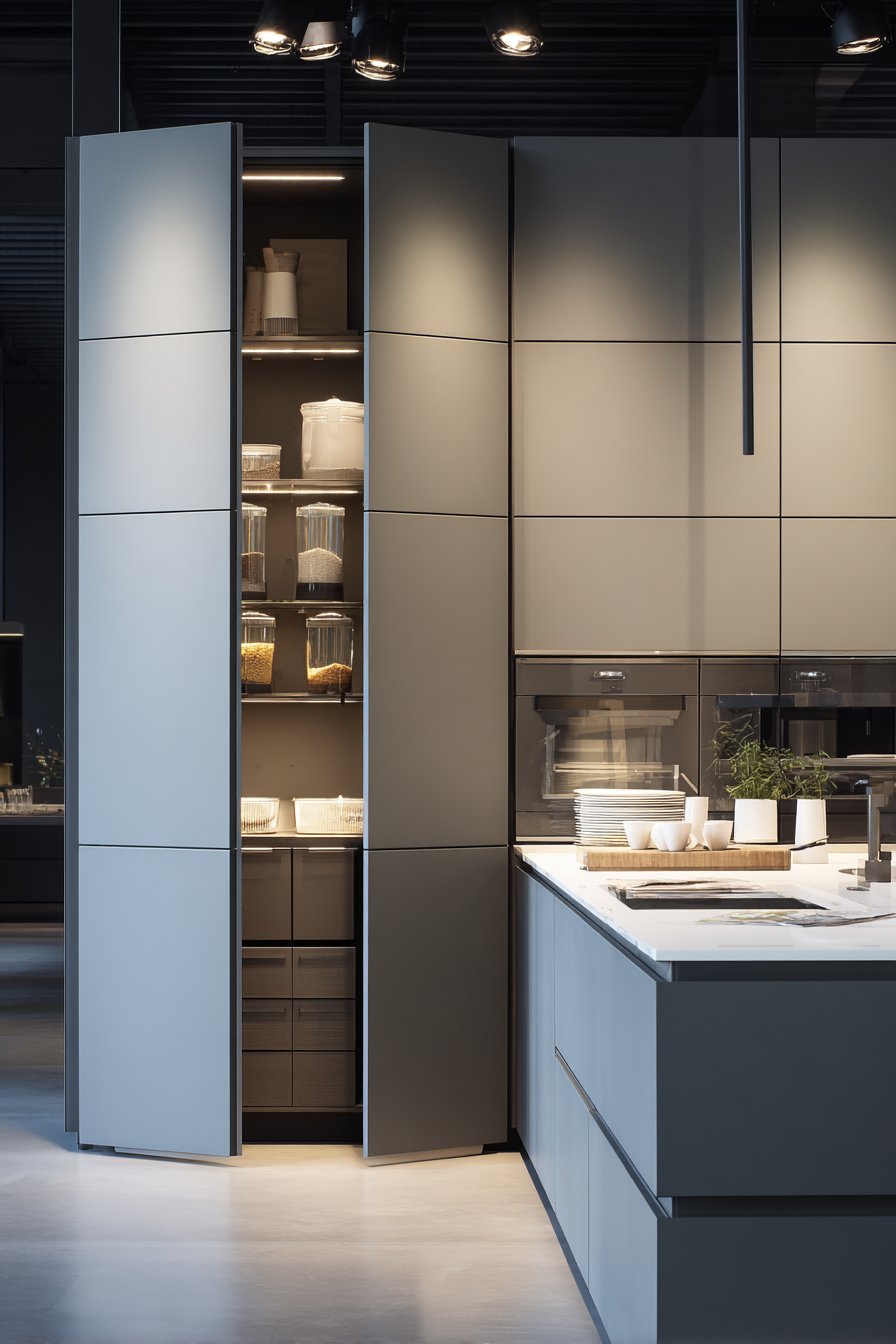
Tall floor-to-ceiling cabinets in matte grey create impressive storage capacity. The flush-mounted doors feature integrated touch-latch mechanisms that eliminate visible hardware. This system demonstrates that extensive storage can maintain minimalist aesthetics. The cabinets conceal organized pantry systems behind uniform fronts.
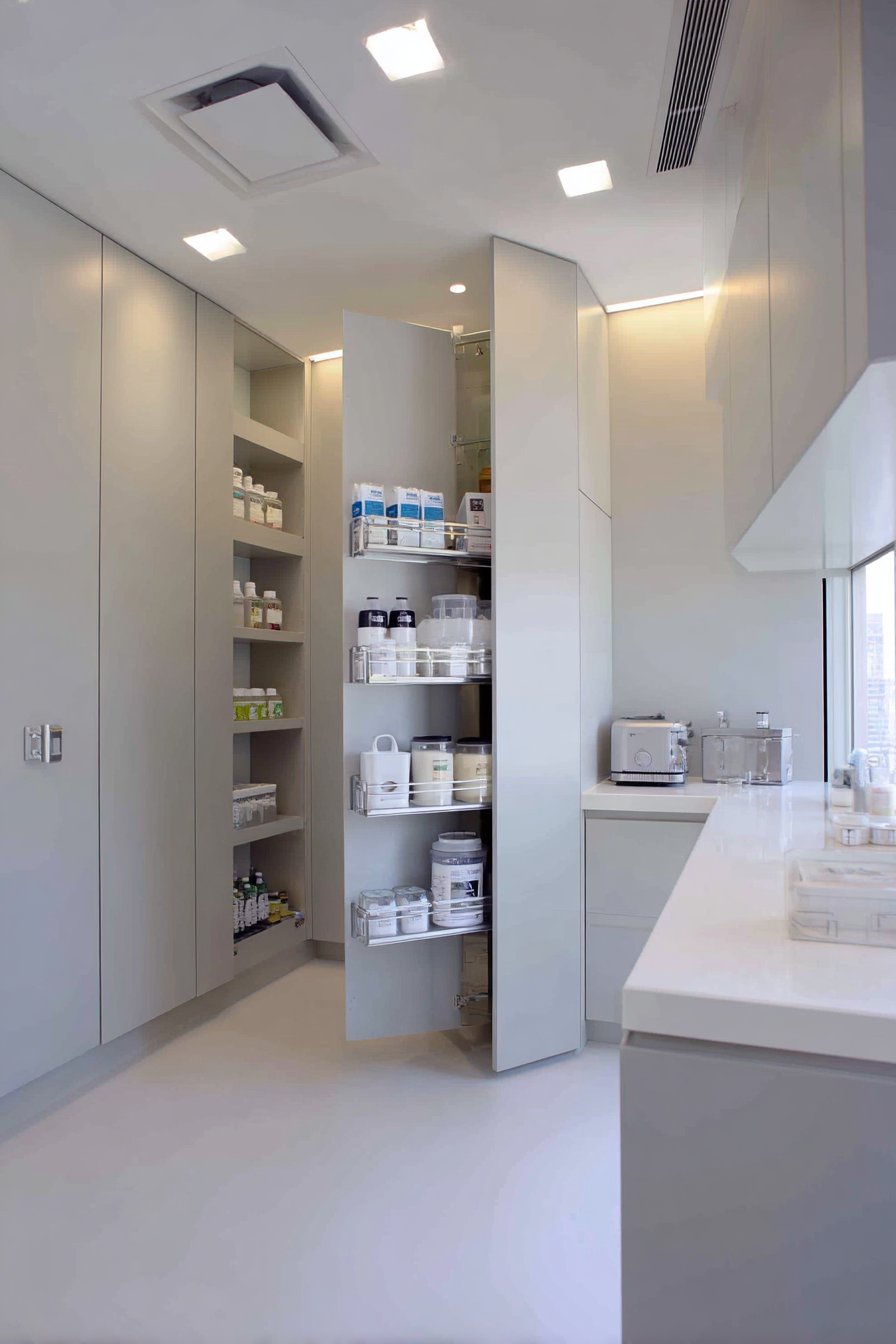
Pull-out shelving systems maximize accessibility within the tall cabinets. Clear glass storage containers organize dry goods with visual clarity. This internal organization ensures functionality matches the external simplicity. Adjacent preparation area with white countertop provides dedicated workspace.
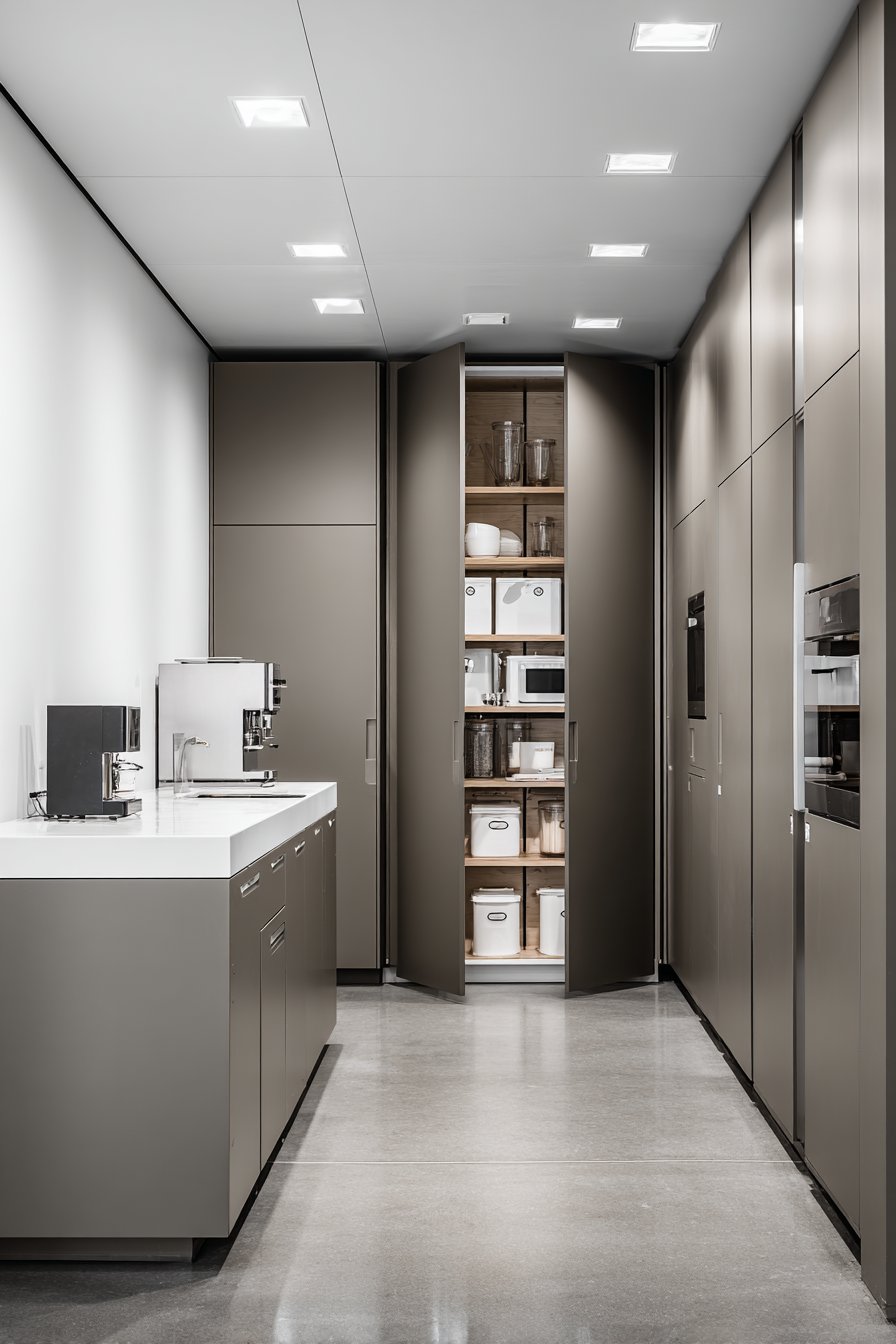
Recessed ceiling lights provide even illumination throughout the space. The lighting design avoids visible fixtures that would disrupt clean lines. Professional lighting highlights the smooth cabinet surfaces and reveals organizational systems within. The illumination proves that function and aesthetics can coexist perfectly.
The concealed pantry approach transforms necessary storage into elegant architecture. The uniform cabinet fronts create visual calm and spaciousness. Opening the cabinets reveals thoughtful organization that makes daily use effortless. This demonstrates minimalism’s core principle of hiding complexity behind simple surfaces.
Key Design Tips:
- Use floor-to-ceiling cabinets to maximize vertical storage capacity
- Install touch-latch mechanisms to eliminate hardware entirely
- Incorporate pull-out shelving for easy access to deep storage
- Choose clear containers for organized, visible pantry contents
- Create adjacent workspace for easy meal preparation
- Install recessed lighting to avoid visible fixture clutter
- Maintain matte finishes on tall surfaces to prevent overwhelming reflection
12. Single-Wall Linear Layout in Warm Beige
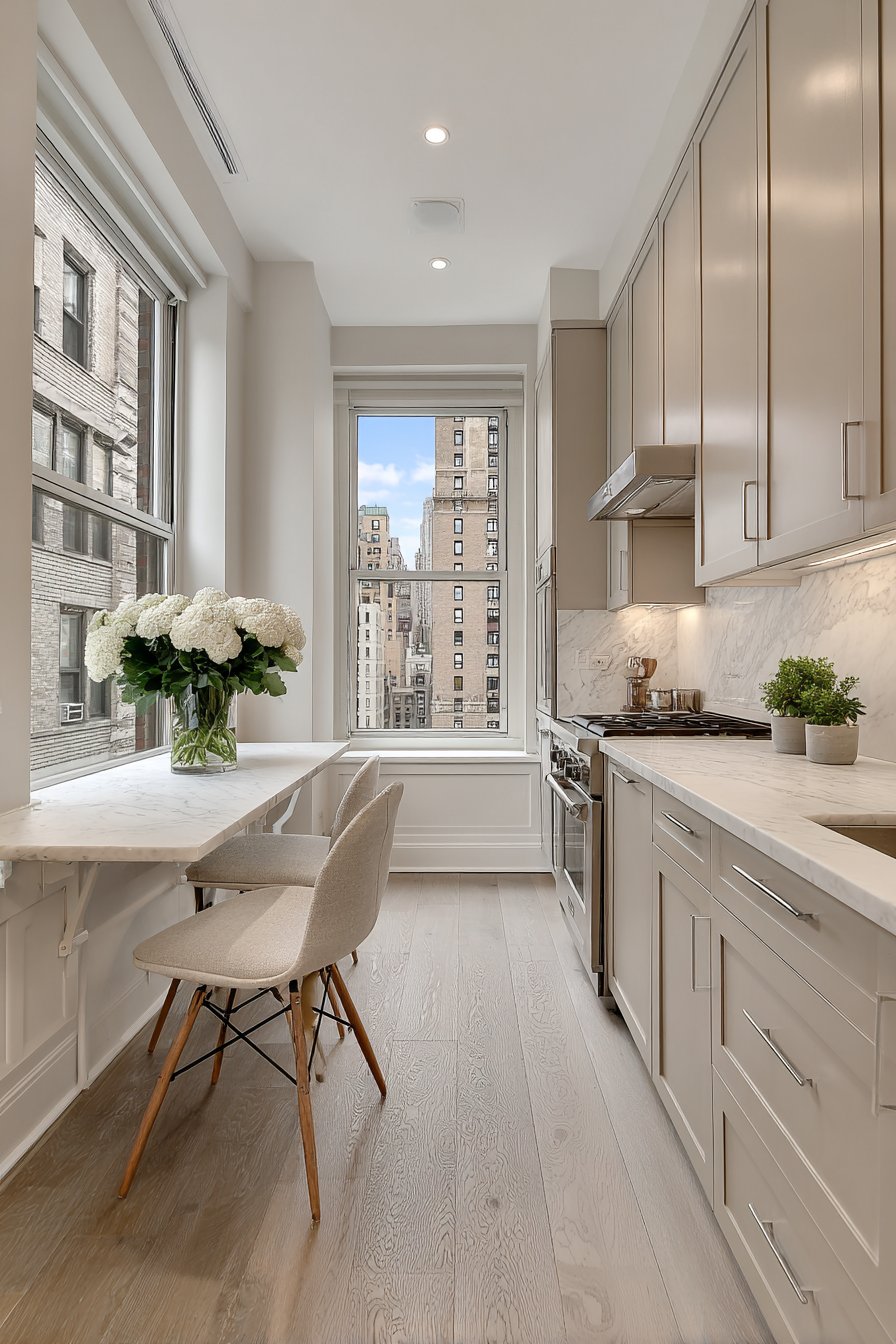
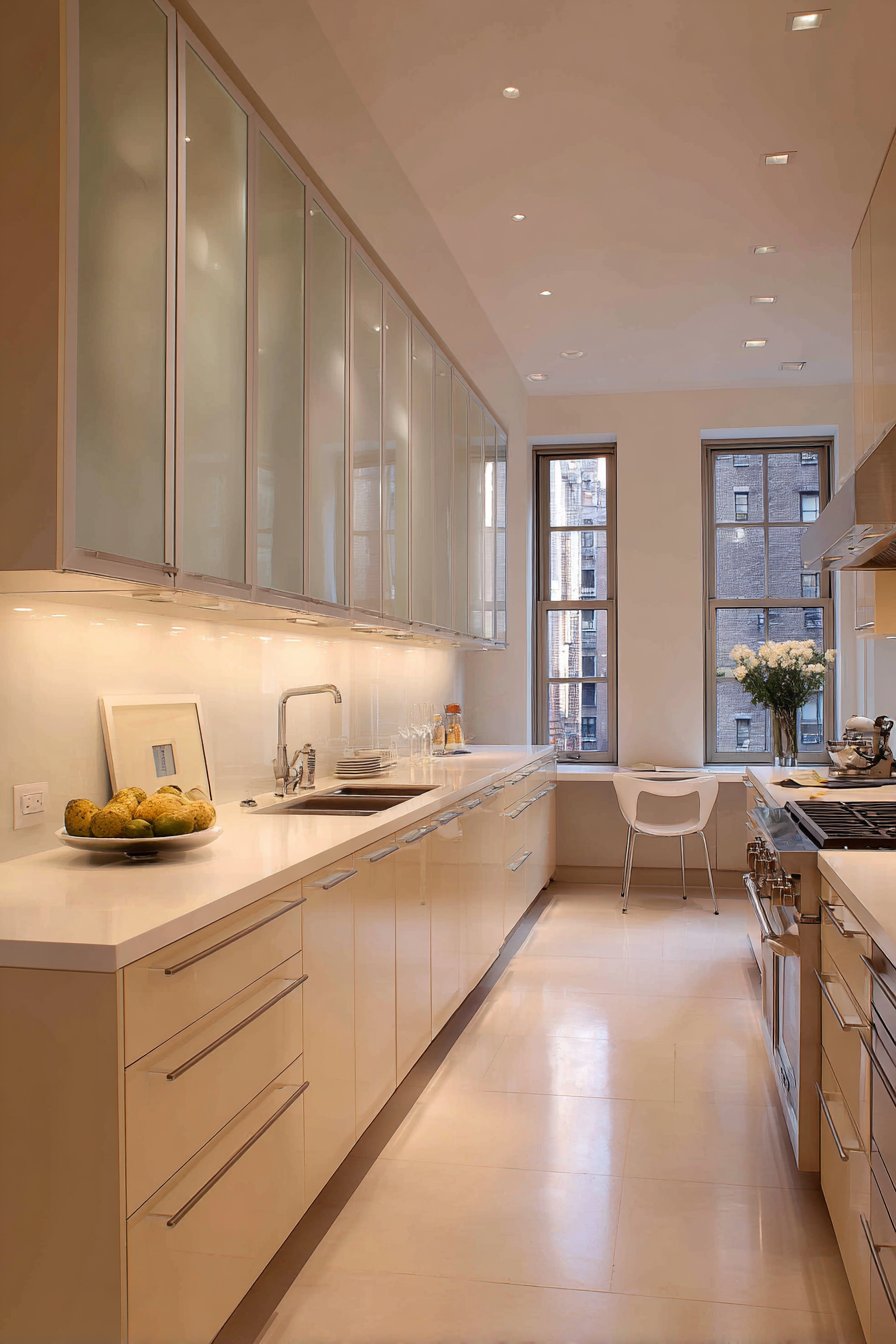
Continuous cabinetry in warm beige tones lines a single wall efficiently. Upper cabinets include frosted glass inserts that soften the look. The glass panels conceal contents while allowing subtle transparency. Simple white quartz countertop and backsplash maintain clean aesthetic throughout.
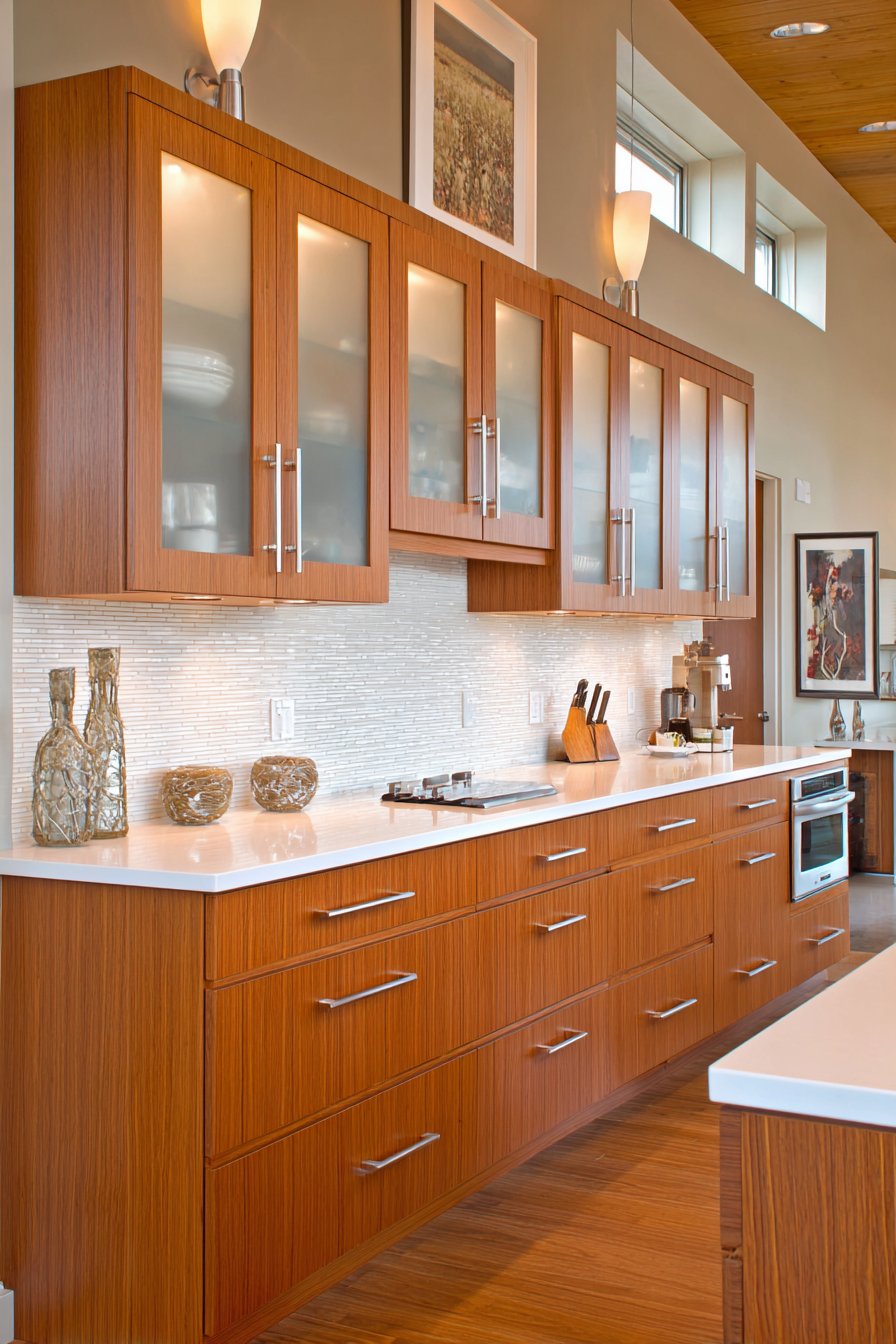
Stainless steel appliances align in a row for visual continuity. This linear arrangement creates orderly rhythm along the wall. A small breakfast bar extends from the counter with minimalist white metal brackets. The extension provides casual dining without requiring additional floor space.
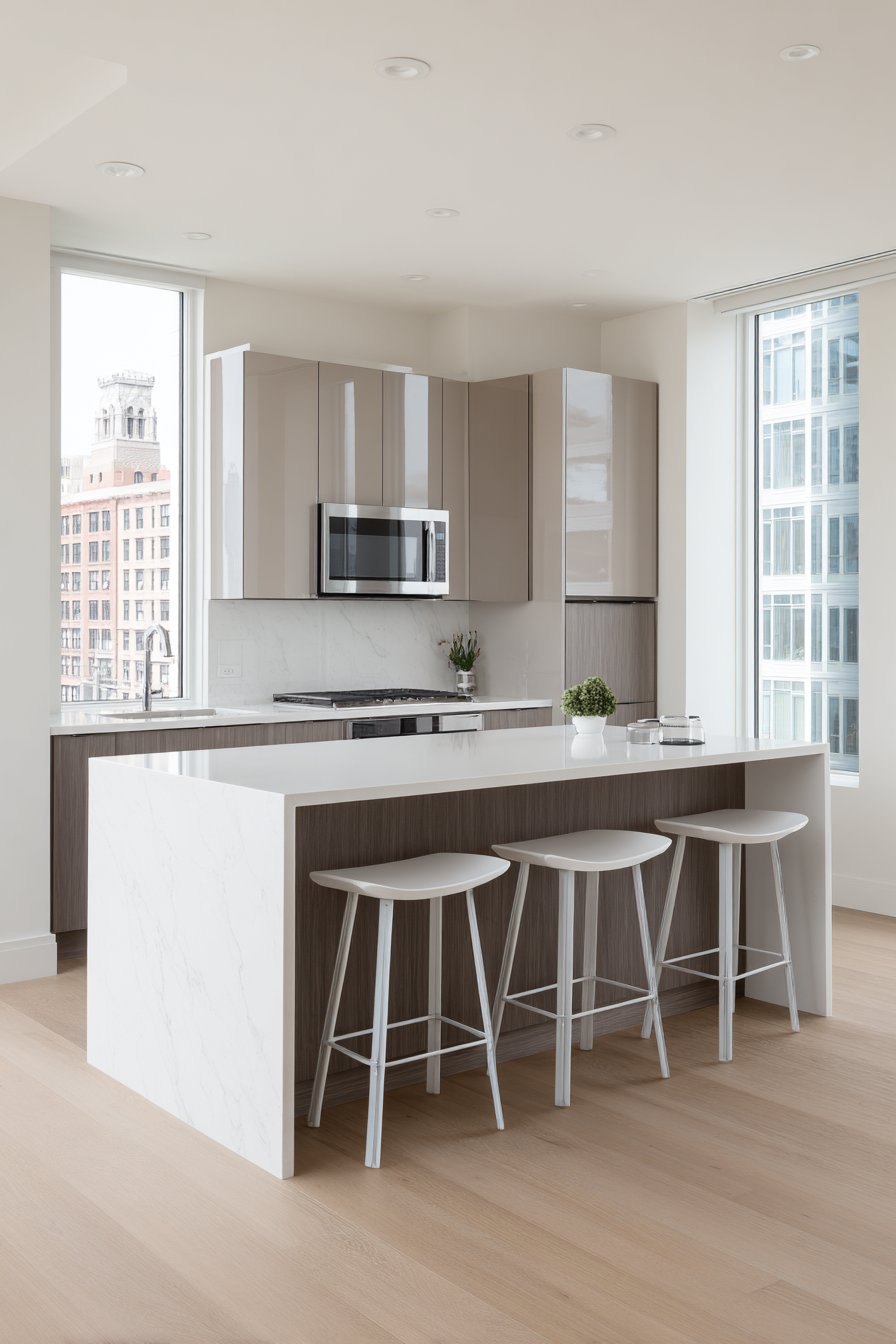
Natural light from adjacent windows illuminates the efficient layout. The warm neutral palette creates welcoming yet uncluttered environment. The beige tones add softness that prevents the minimalist space from feeling cold. This demonstrates that minimalism can embrace warmth alongside simplicity.
The single-wall layout proves ideal for compact spaces or open-plan homes. All kitchen functions concentrate along one efficient line. The design maximizes floor space while providing complete functionality. This approach exemplifies minimalism’s emphasis on efficiency and purpose.
Key Design Tips:
- Use single-wall layouts to maximize floor space in compact areas
- Choose frosted glass inserts to soften solid cabinet fronts
- Align appliances in linear arrangement for visual order
- Add breakfast bars with minimal brackets for casual dining
- Select warm neutral tones to prevent cold minimalist feeling
- Position near windows to maximize natural light benefits
- Maintain consistent heights and alignments for visual calm
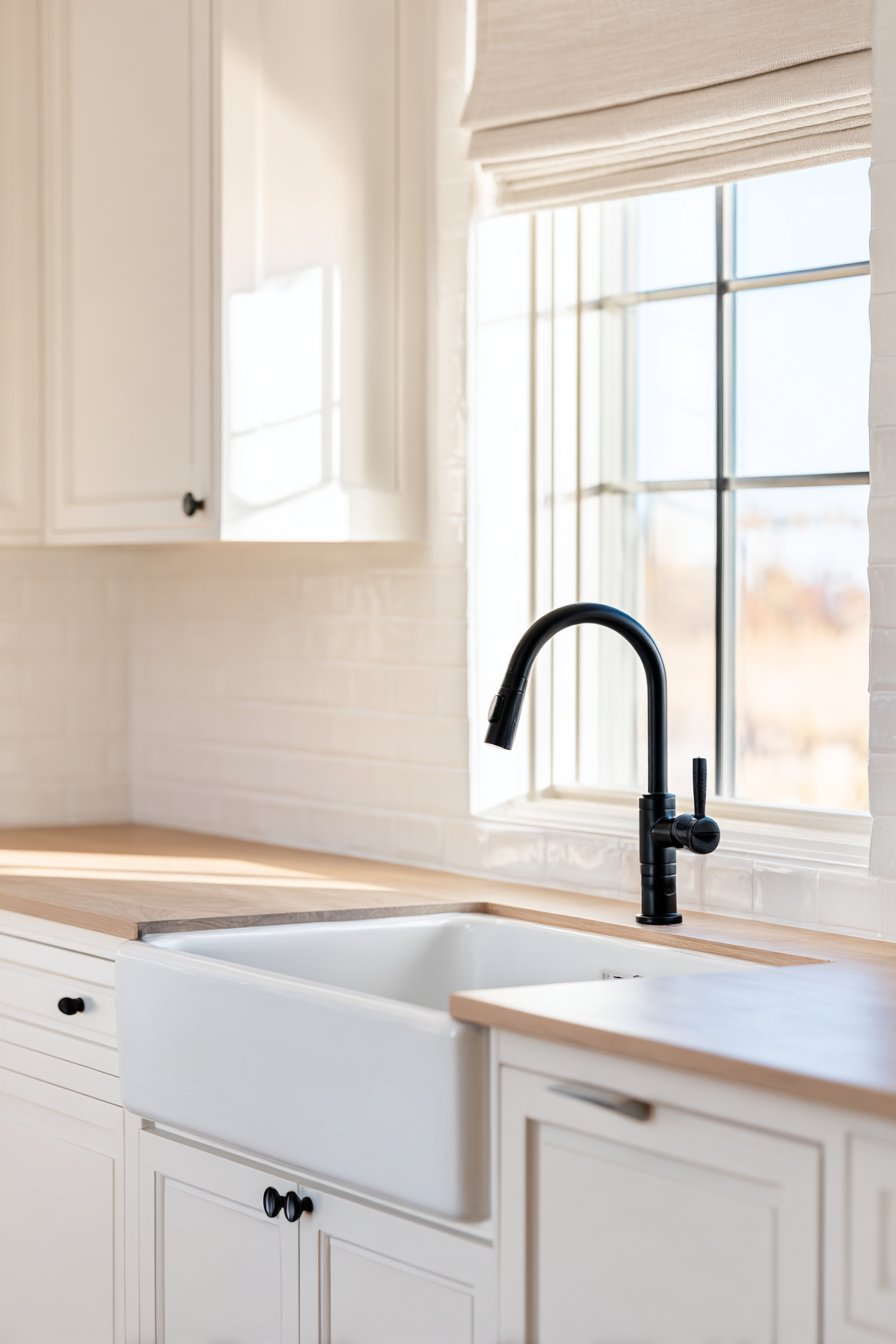
13. Striking Black Faucet Against White Backdrop
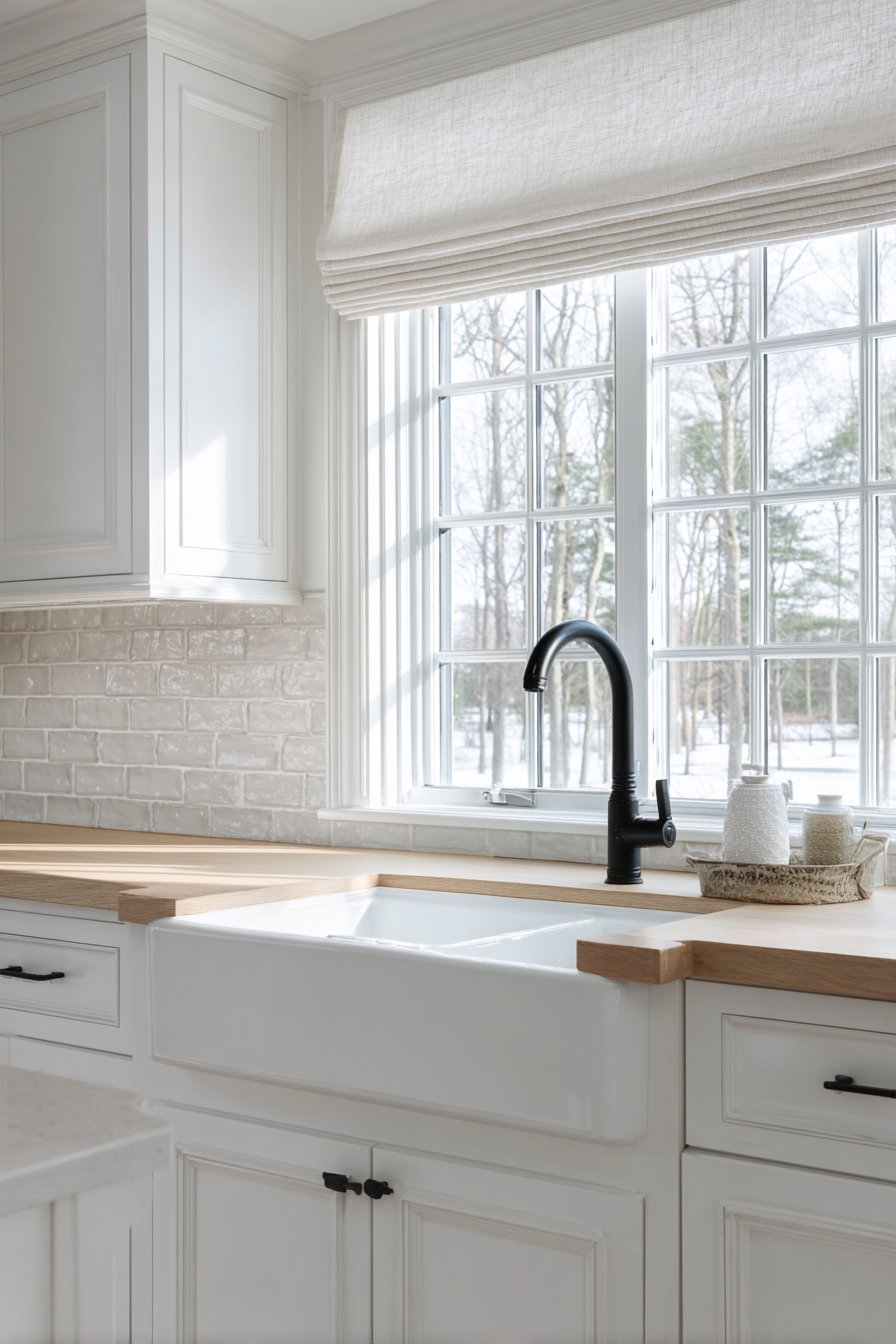
A matte black faucet creates striking focal point against pristine white surfaces. The white porcelain farmhouse sink sits beneath white cabinetry with simple shaker-style doors. Minimal chrome knobs provide subtle hardware without overwhelming the clean aesthetic. White subway tile backsplash extends to the ceiling, maximizing visual height.
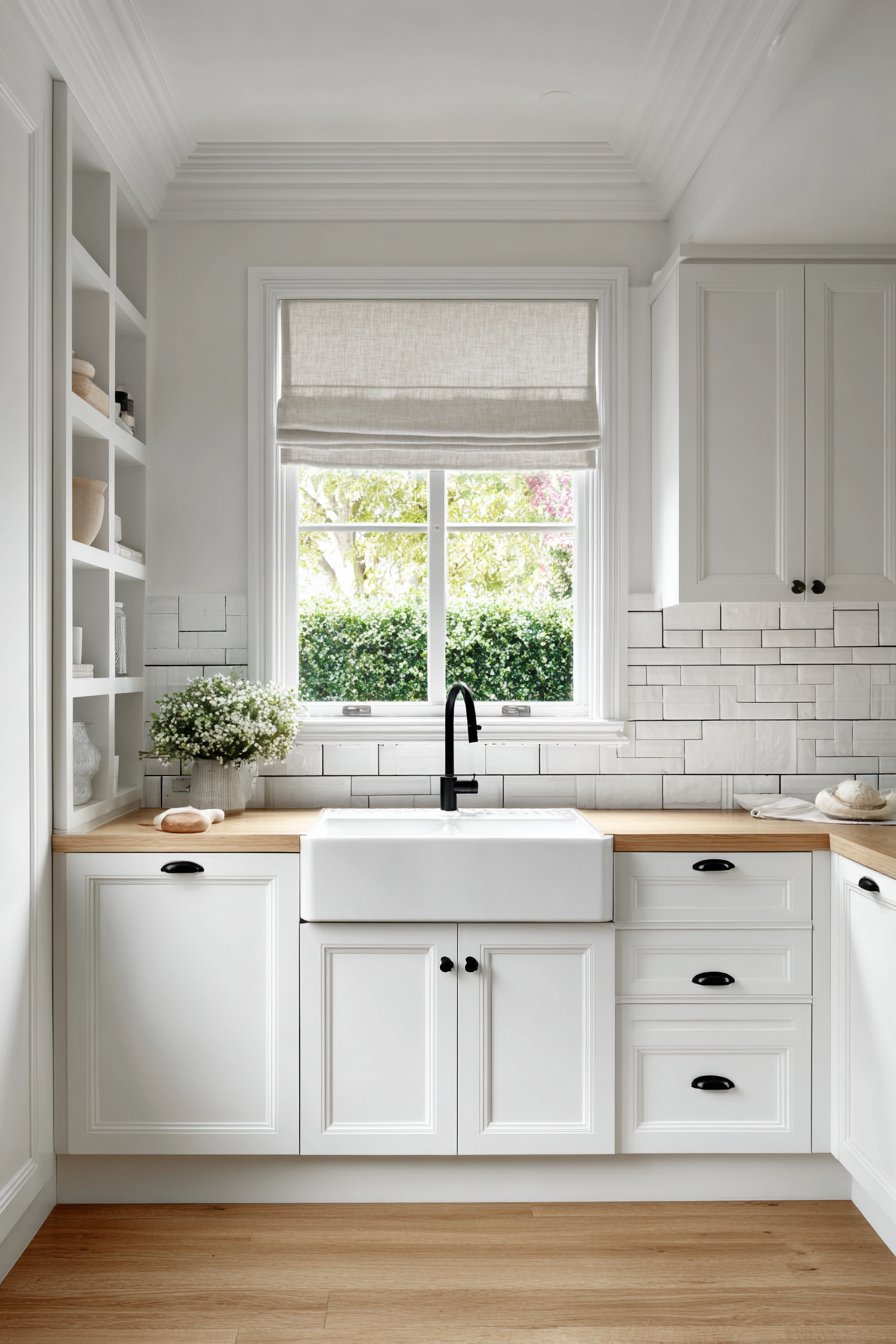
The white oak countertop adds subtle warmth and natural texture. The wood grain provides organic interest within the predominantly white scheme. A window above the sink features simple white Roman shade. This allows light control while maintaining the minimalist aesthetic.
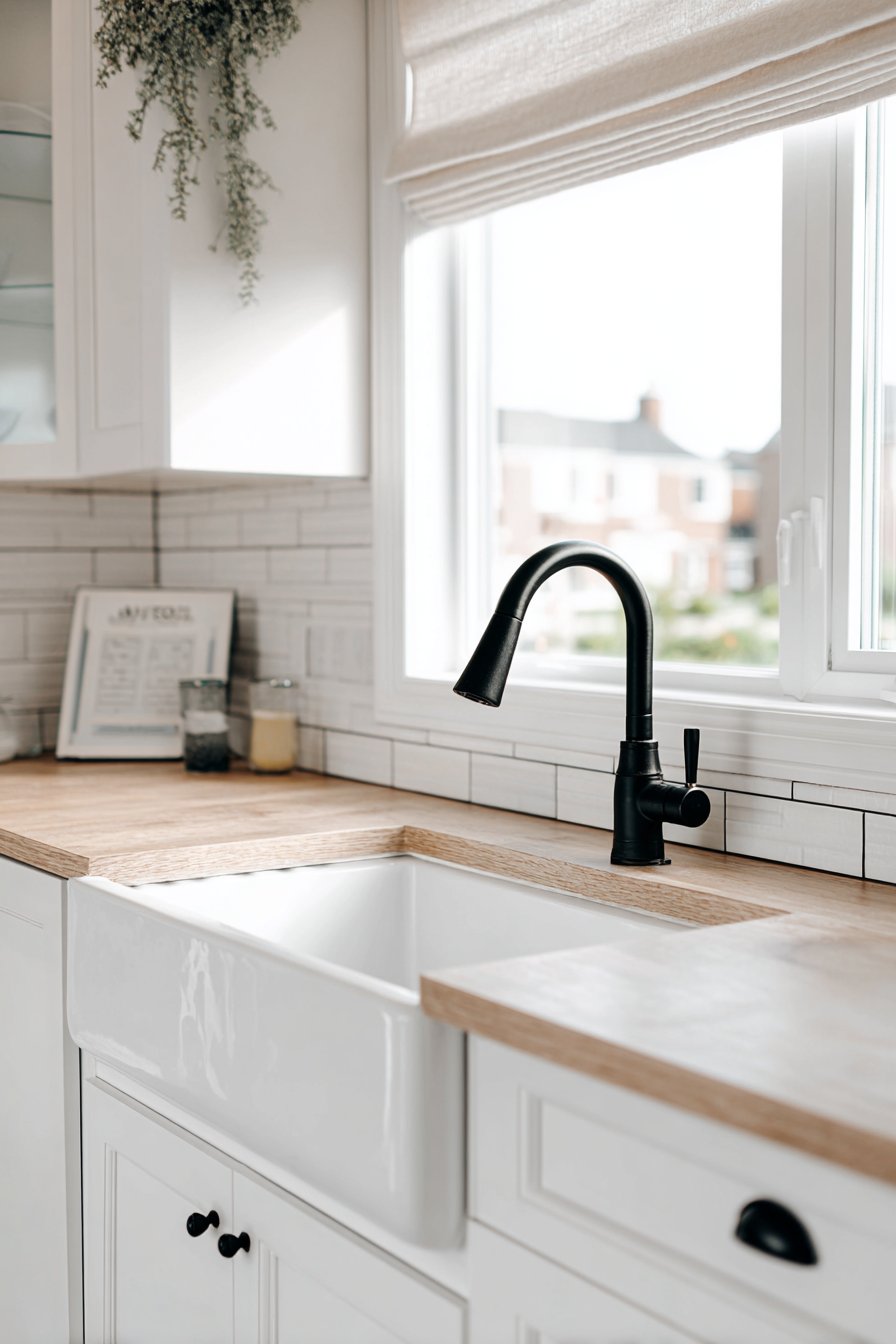
The intentional contrast of the black faucet draws the eye immediately. This single bold element prevents the white space from appearing too sterile. The strategy demonstrates that minimalism can embrace focal points strategically. One carefully chosen contrasting element creates more impact than multiple competing features.
Natural window light creates soft highlights across white surfaces throughout the day. The illumination emphasizes the clean lines and simple forms. Shadows add subtle depth to the monochromatic palette. The result feels bright, clean, and intentionally composed.
Key Design Tips:
- Use single bold element as focal point in monochromatic spaces
- Choose matte black fixtures for striking contrast against white
- Extend backsplash to ceiling to maximize perceived height
- Add wood countertops for warmth in predominantly white kitchens
- Select simple hardware that doesn’t compete with main focal point
- Install Roman shades for light control without bulk
- Maintain discipline in keeping most elements within color palette
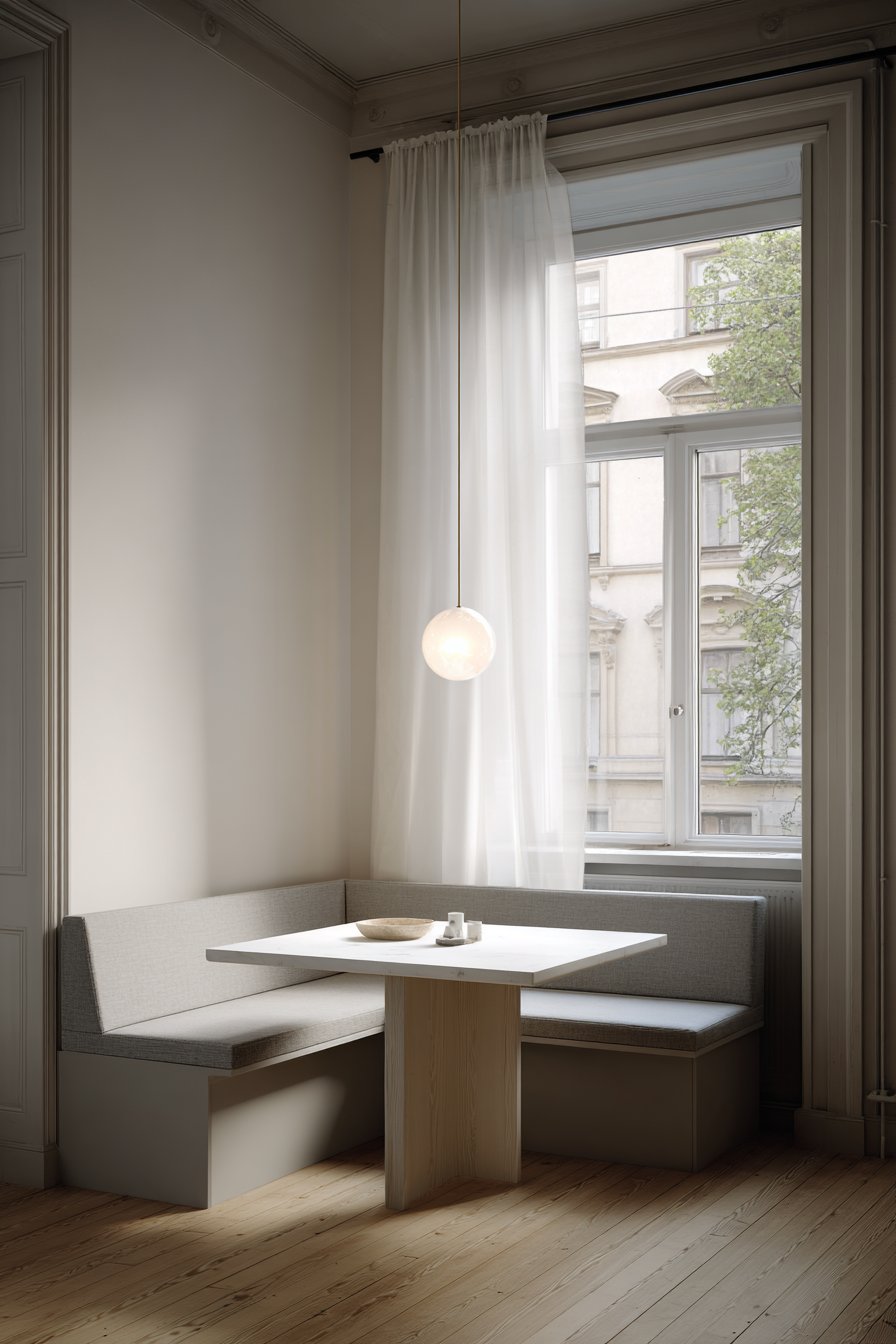
14. Integrated Breakfast Nook with Built-In Seating
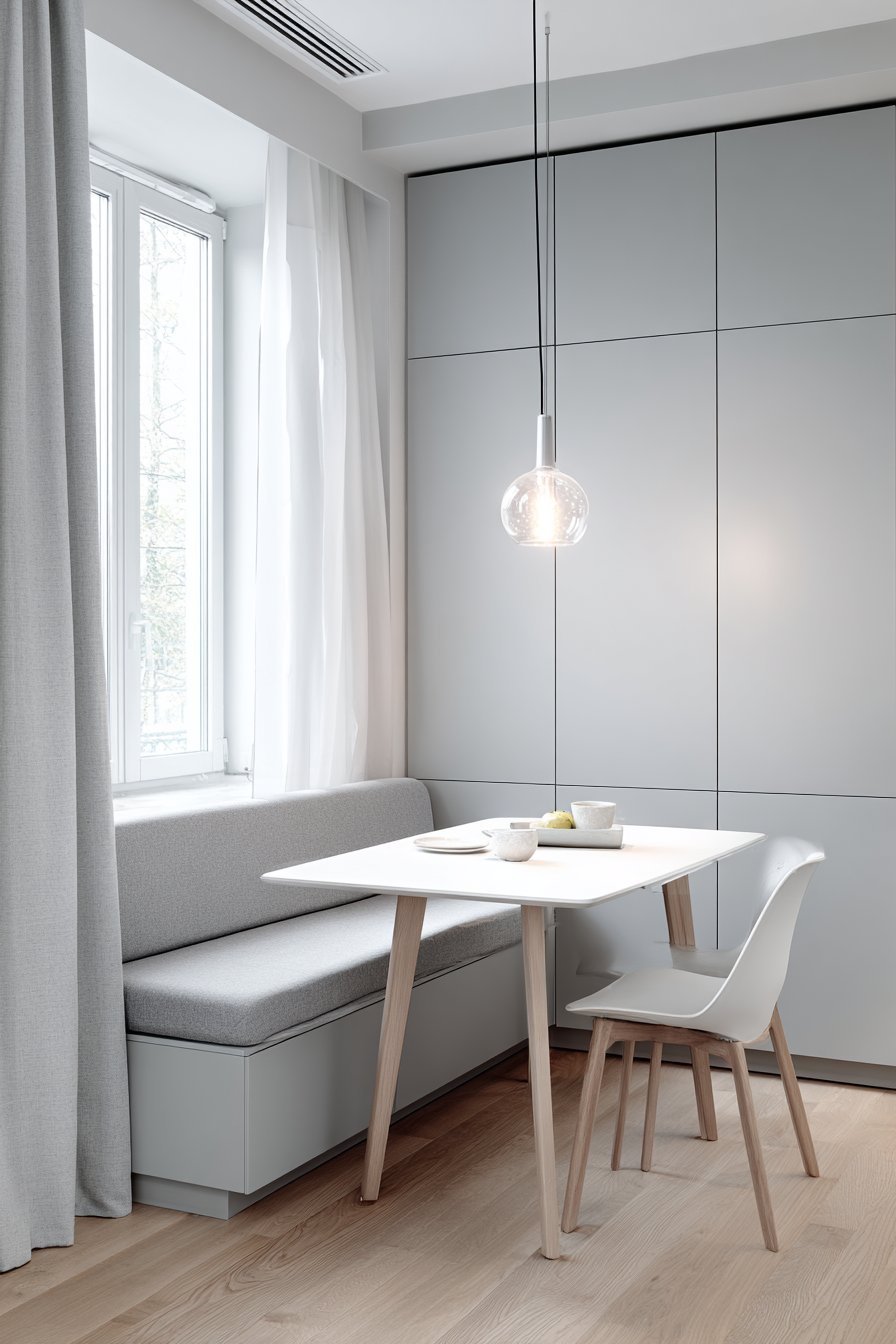
A built-in bench in light grey upholstery creates comfortable breakfast nook. The clean lines integrate seamlessly with the adjacent kitchen. A simple white rectangular table with minimalist wooden legs provides dining space. The furniture choices maintain the uncluttered aesthetic throughout.
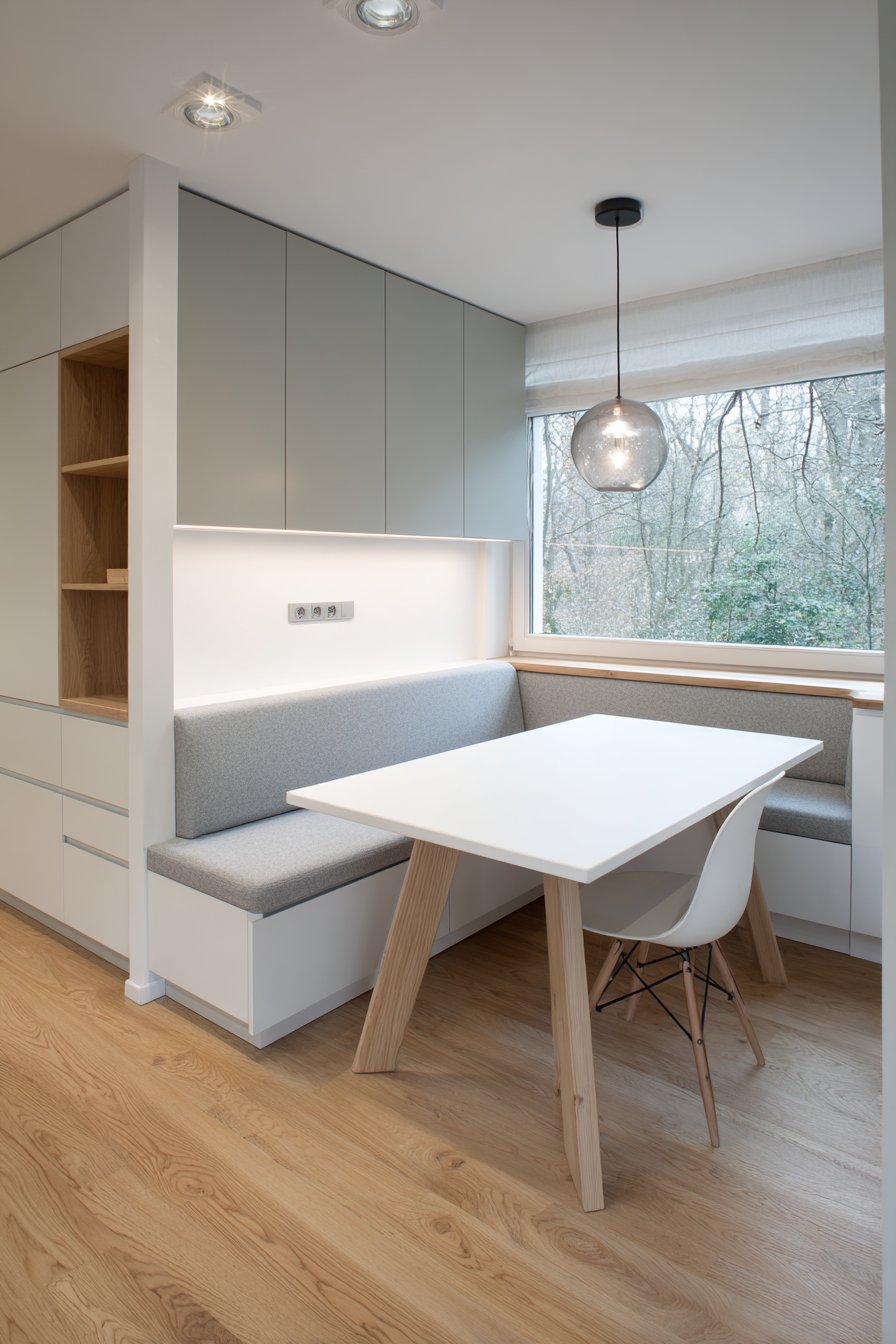
Soft white walls surround the nook with calming neutrality. A single window dressed in sheer white linen curtains filters natural light. The adjacent kitchen cabinetry in matching grey tones creates visual continuity. This consistent color palette unifies the cooking and dining areas.
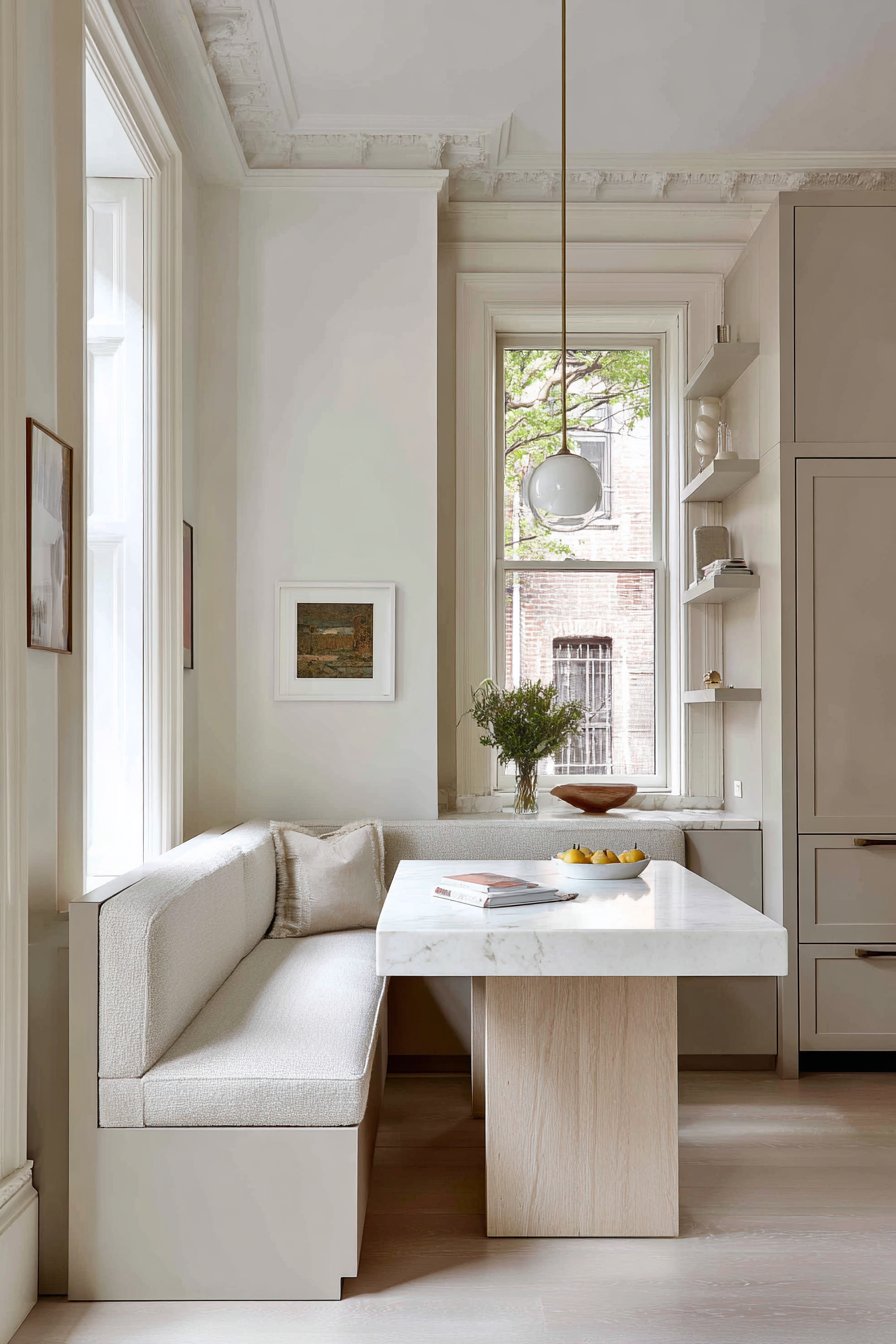
A single modern pendant light with simple glass globe illuminates the dining area. The fixture provides focused lighting without overwhelming the minimalist space. The transparent glass maintains visual lightness while delivering necessary illumination. Natural daylight supplements artificial lighting throughout the day.
The integrated nook demonstrates that minimalism accommodates comfort and functionality. The built-in seating saves space while providing ample dining capacity. The design proves that simple forms and neutral palettes create inviting spaces. The breakfast area feels both practical and aesthetically refined.
Key Design Tips:
- Build in bench seating to save floor space and create cohesion
- Choose matching upholstery colors to unify kitchen and dining areas
- Select simple tables with minimal leg designs
- Use sheer curtains to filter light without blocking it completely
- Install single pendant lights for focused dining area illumination
- Maintain consistent color palette between kitchen and eating spaces
- Choose transparent fixtures to preserve visual lightness
15. Industrial Elements with Exposed Concrete Ceiling
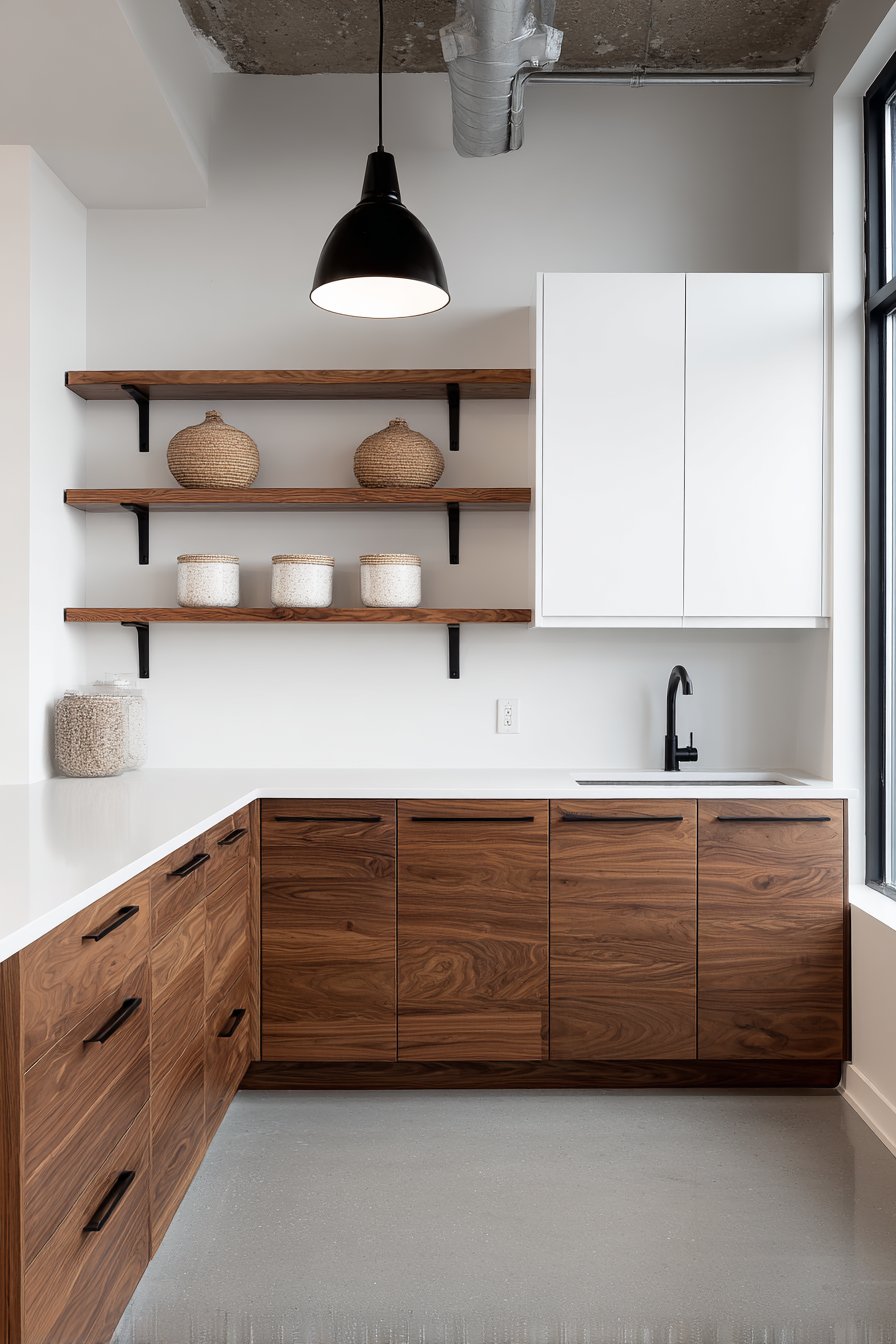
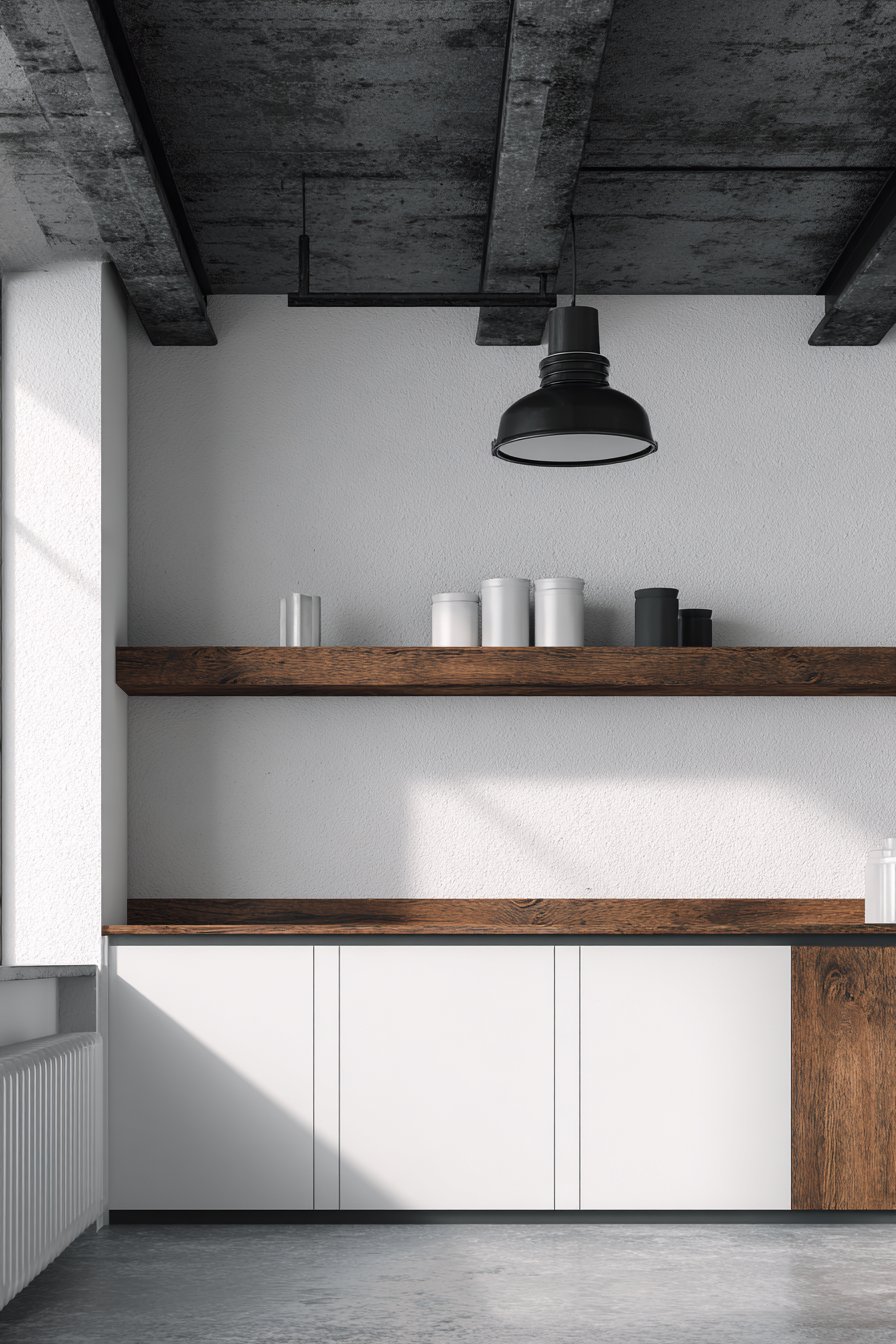
Exposed concrete ceiling adds industrial honesty to this minimalist design. Simple black metal shelving brackets support thick wooden shelves in natural walnut. The shelves display minimal essential items in matching containers. This curation maintains visual order despite the open storage approach.
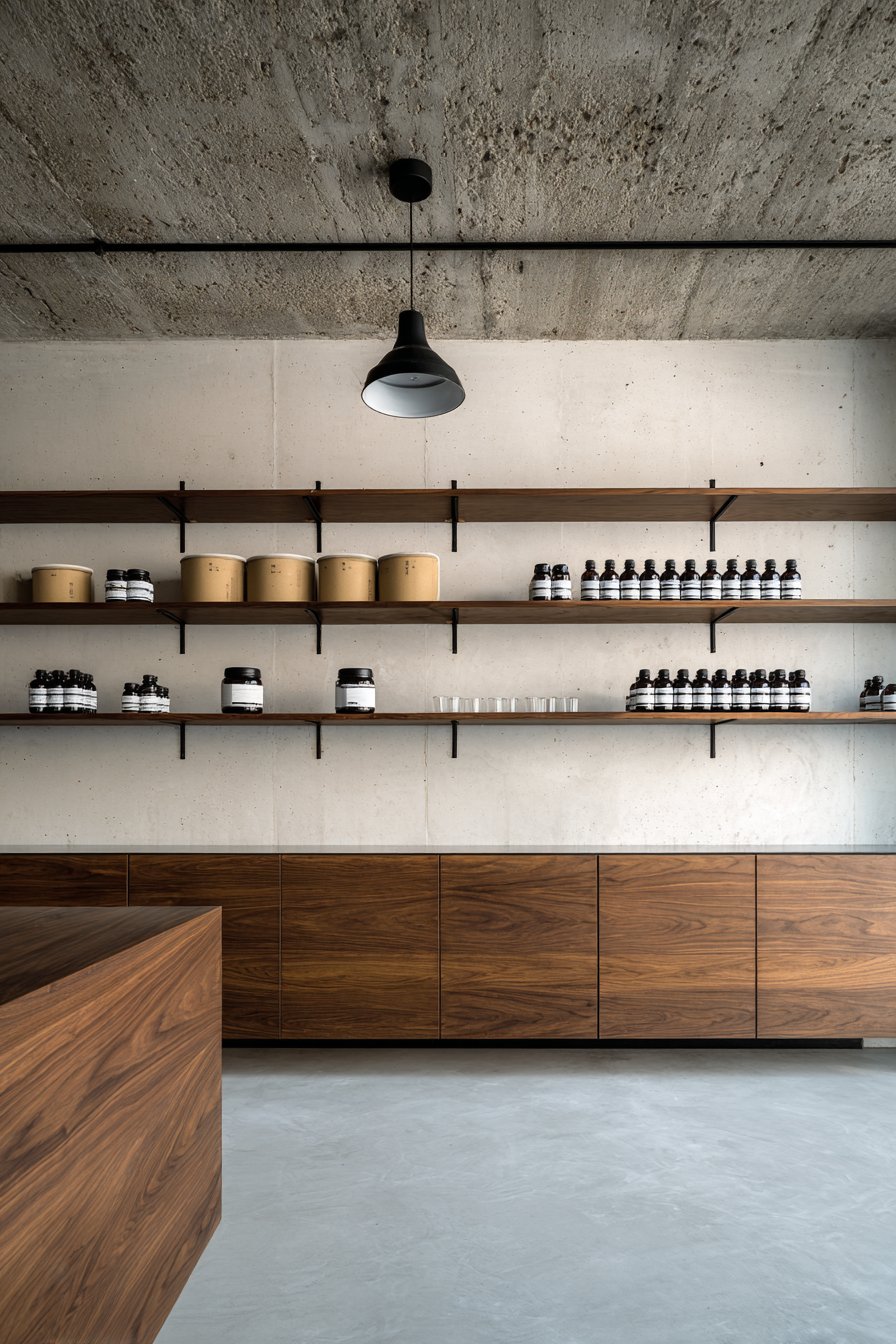
Simple white cabinets with flat-panel doors provide closed storage below. The white cabinetry balances the raw concrete overhead. White composite countertop offers clean work surface that contrasts with industrial elements. Polished concrete flooring with smooth, sealed finish extends the honest material palette.
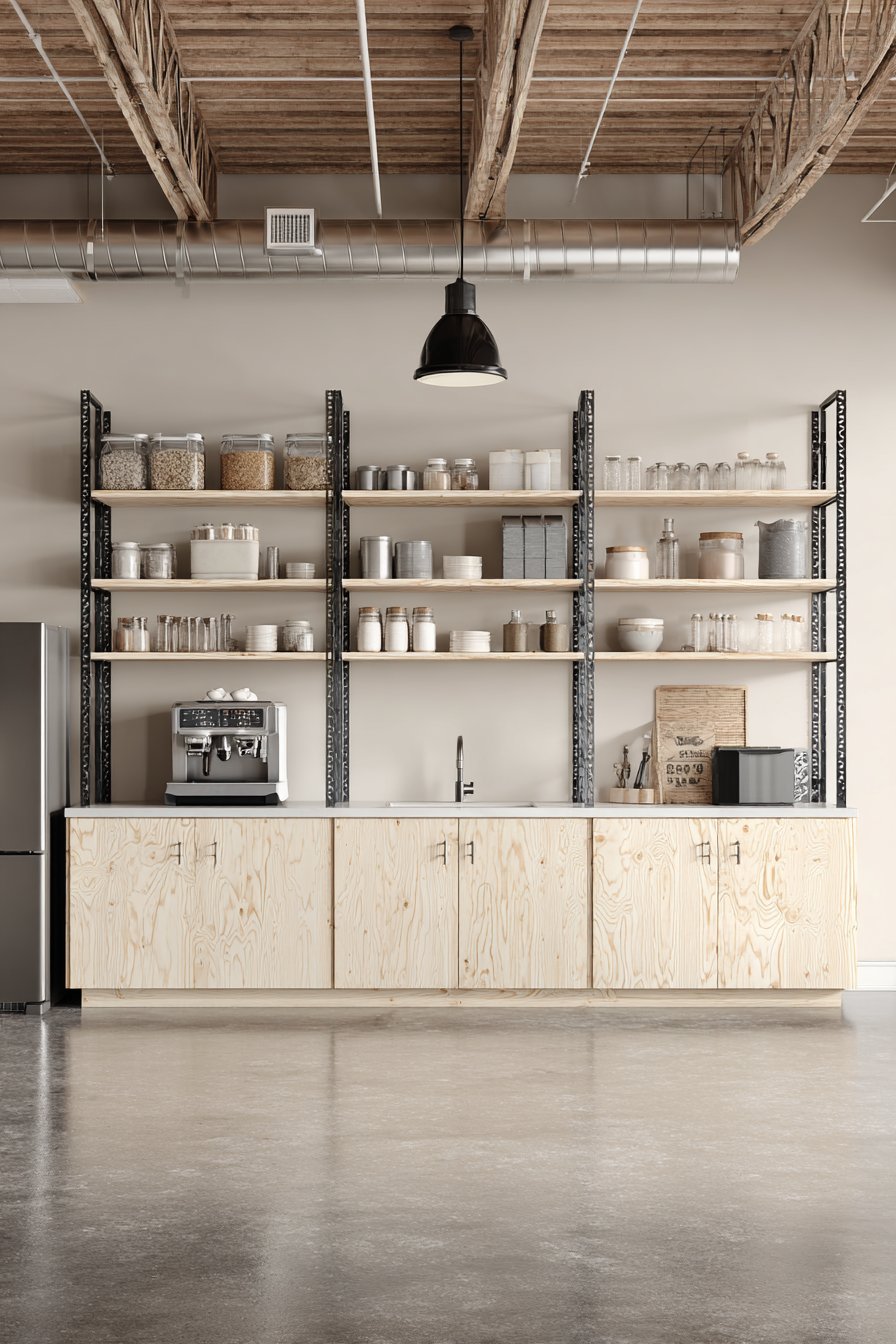
A single black industrial pendant light hangs from the exposed ceiling. The fixture echoes the black metal shelving brackets for visual cohesion. The lighting provides necessary task illumination while embracing industrial aesthetic. Natural side lighting emphasizes textures and intentional contrast throughout.
The design celebrates raw materials alongside refined surfaces. This combination demonstrates that minimalism can incorporate industrial elements successfully. The honest materials add character without creating clutter. The result feels both contemporary and timeless, simple yet richly textured.
Key Design Tips:
- Expose concrete ceilings to add industrial character and height
- Use black metal brackets and fixtures for cohesive industrial accents
- Select thick wooden shelves to balance industrial elements with warmth
- Display items in matching containers for visual organization
- Seal concrete floors properly for durability and easy maintenance
- Choose white cabinetry to balance raw overhead materials
- Embrace contrast between refined and raw elements intentionally
16. Hidden Appliance Garage for Clutter-Free Counters
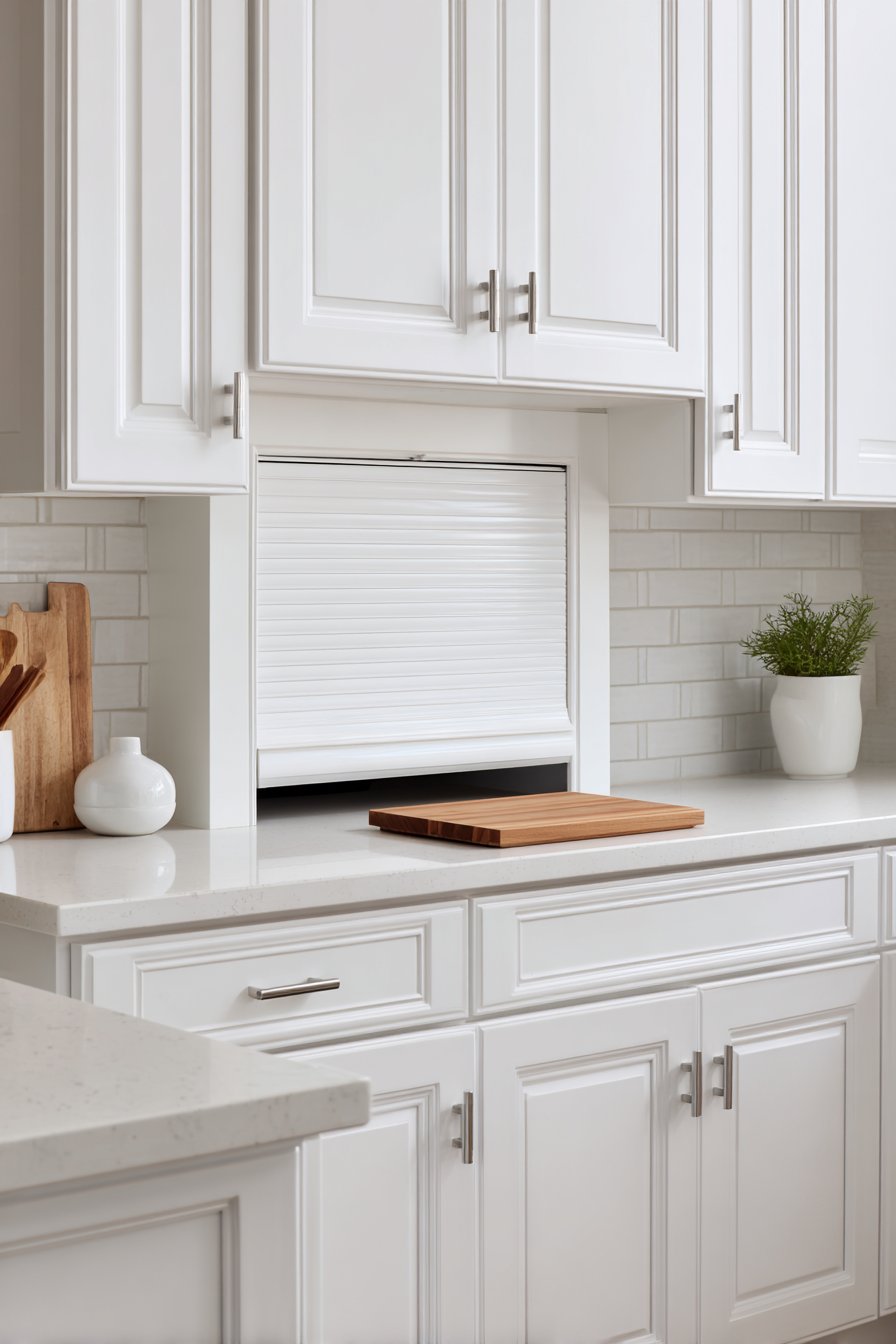
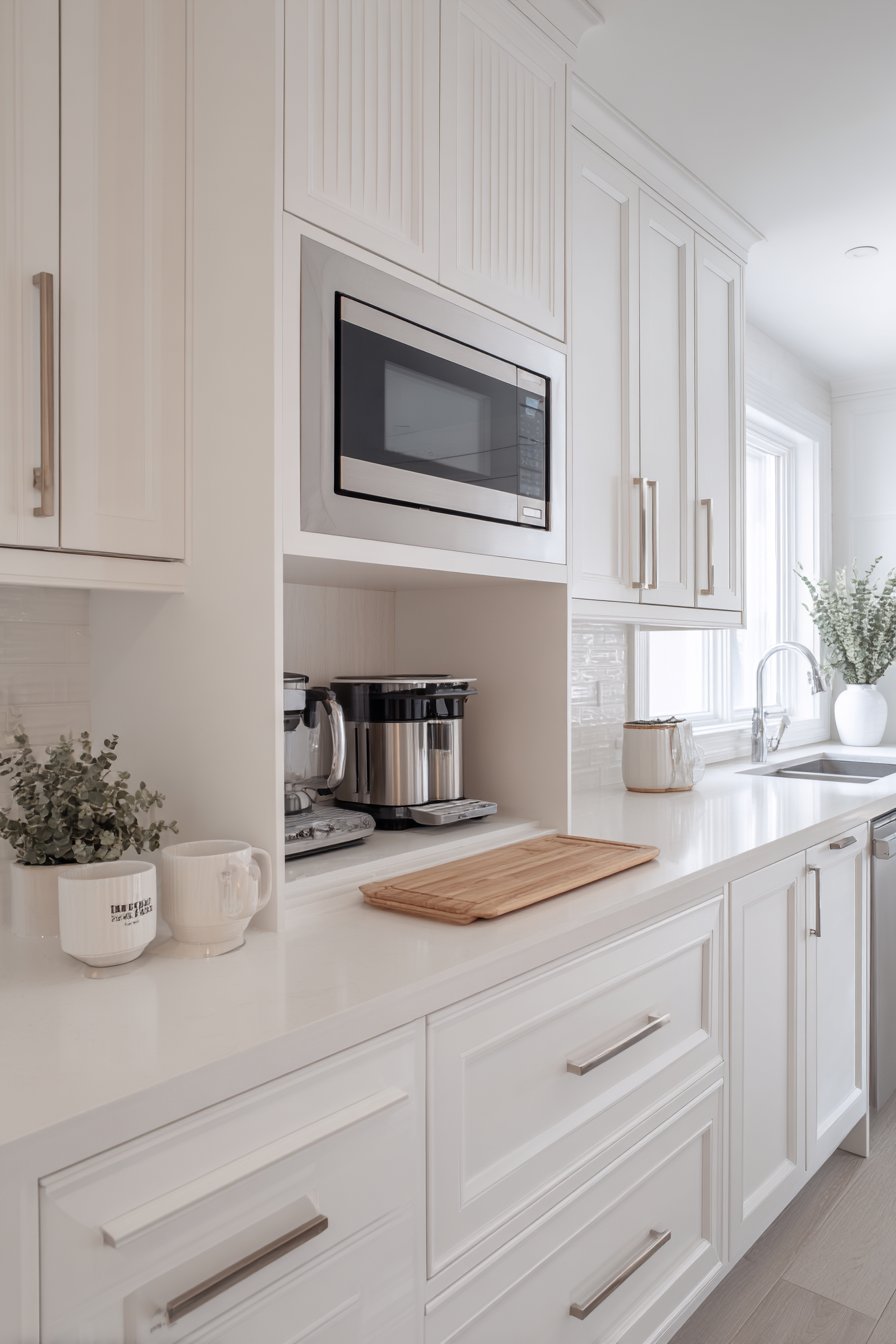
An appliance garage integrated into cabinetry keeps small appliances concealed. The tambour door in matching white finish rolls up and down smoothly. This innovation maintains clear countertops when appliances aren’t in use. The surrounding white quartz countertop remains completely clear except for simple wooden cutting board.
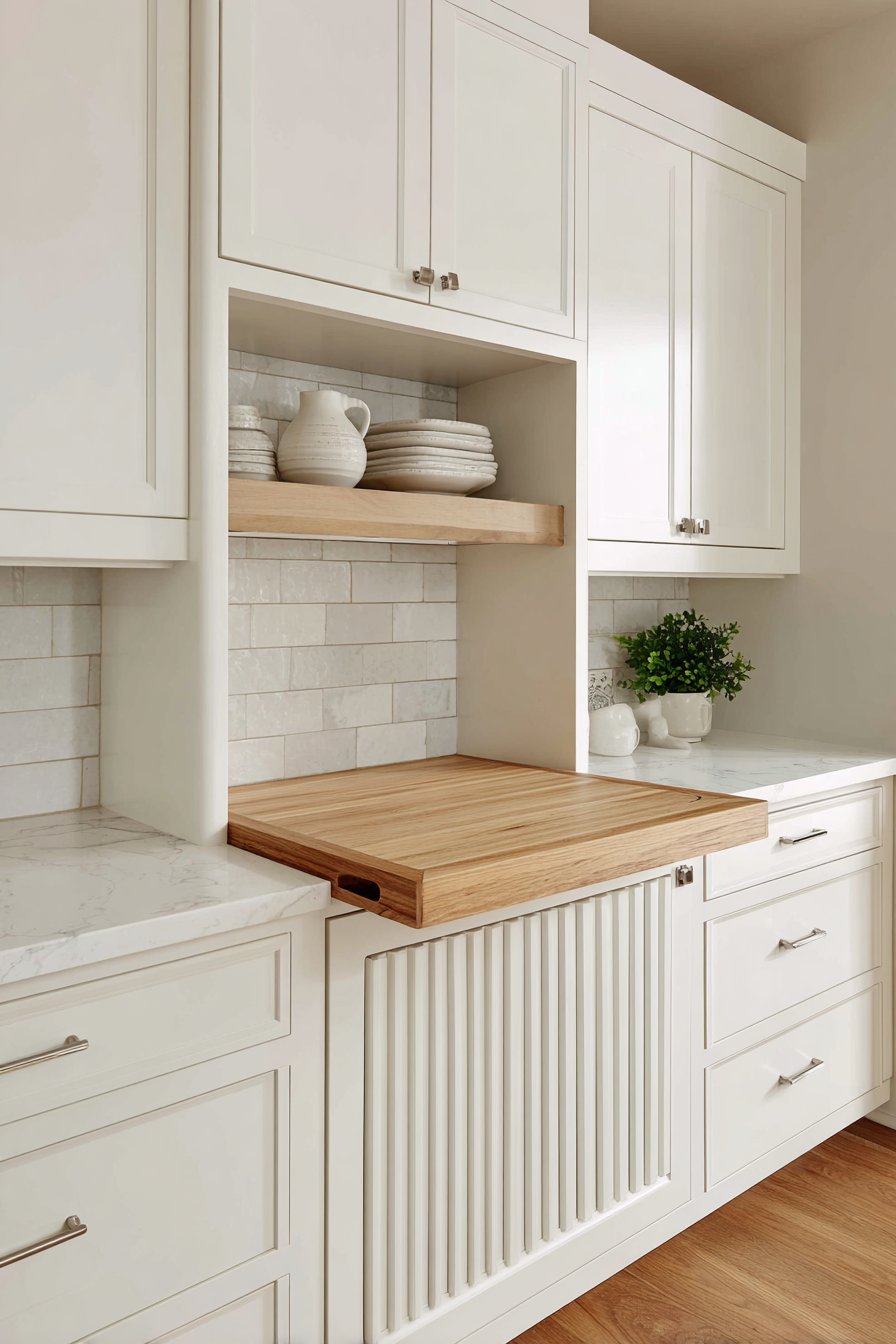
White shaker-style cabinets with minimal hardware maintain clean aesthetic throughout. The cabinet doors feature simple flat profiles with subtle detailing. White subway tile backsplash extends to the underside of upper cabinets. This creates continuous vertical surface that enhances the spacious feeling.
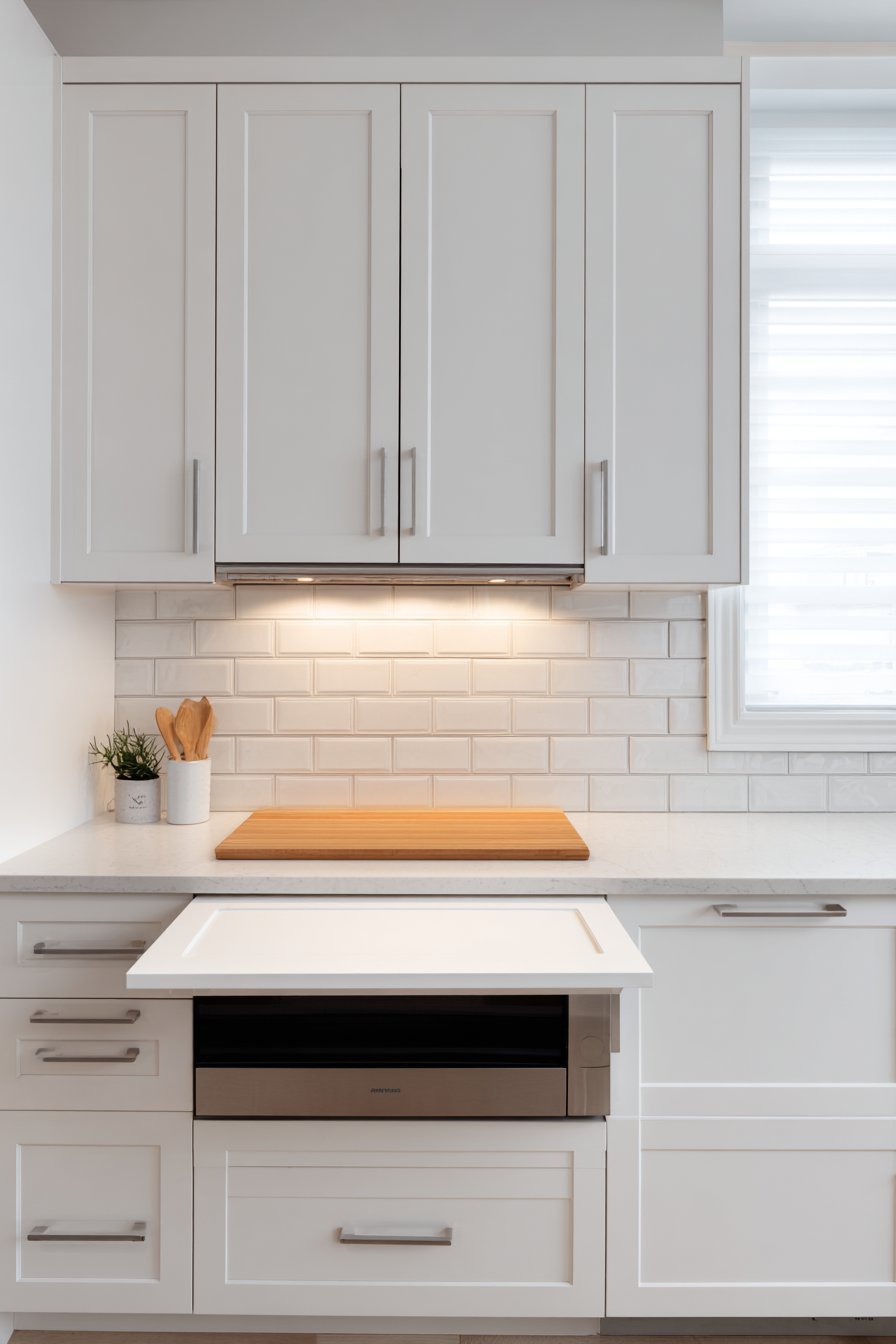
The appliance garage demonstrates functional innovation within minimalist design. The concealed storage ensures that necessary small appliances don’t create visual clutter. This solution allows homeowners to own practical tools without compromising aesthetics. The tambour door provides easy access while maintaining seamless appearance when closed.
Soft natural lighting highlights the uncluttered counter space throughout the day. The illumination emphasizes the thoughtful storage solution and pristine surfaces. The design proves that minimalism doesn’t require eliminating useful appliances. Rather, it demands smart solutions that hide complexity behind simple facades.
Key Design Tips:
- Install appliance garages to conceal small appliances when not in use
- Choose tambour doors for smooth operation and space efficiency
- Maintain clear countertops except for essential working items
- Use matching finishes on specialty cabinets for visual integration
- Select simple cutting boards as only visible counter accessories
- Extend backsplash to cabinet undersides for continuous surfaces
- Plan electrical outlets inside appliance garages for convenience
17. Vertical Storage with Pull-Out Pantry Units
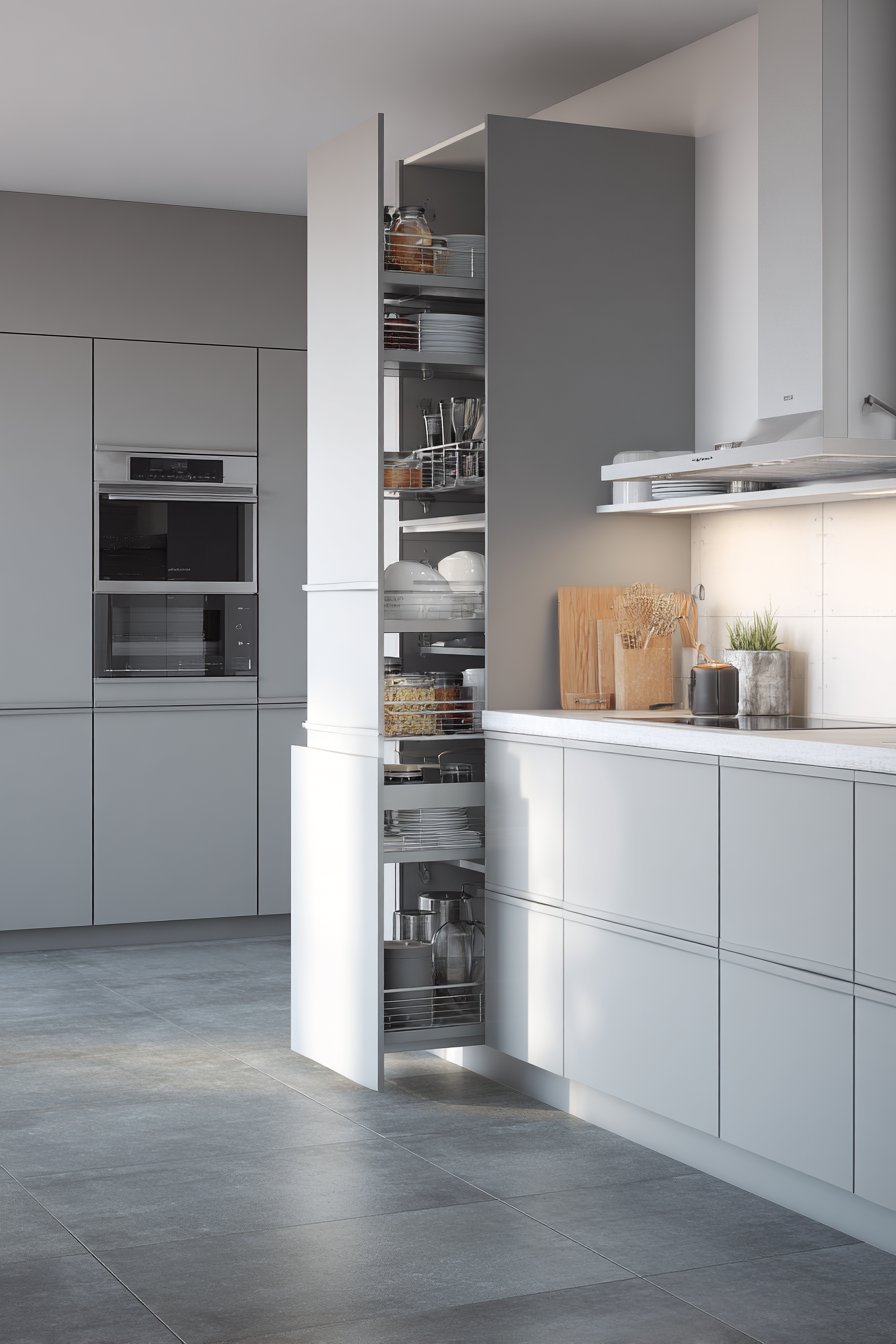
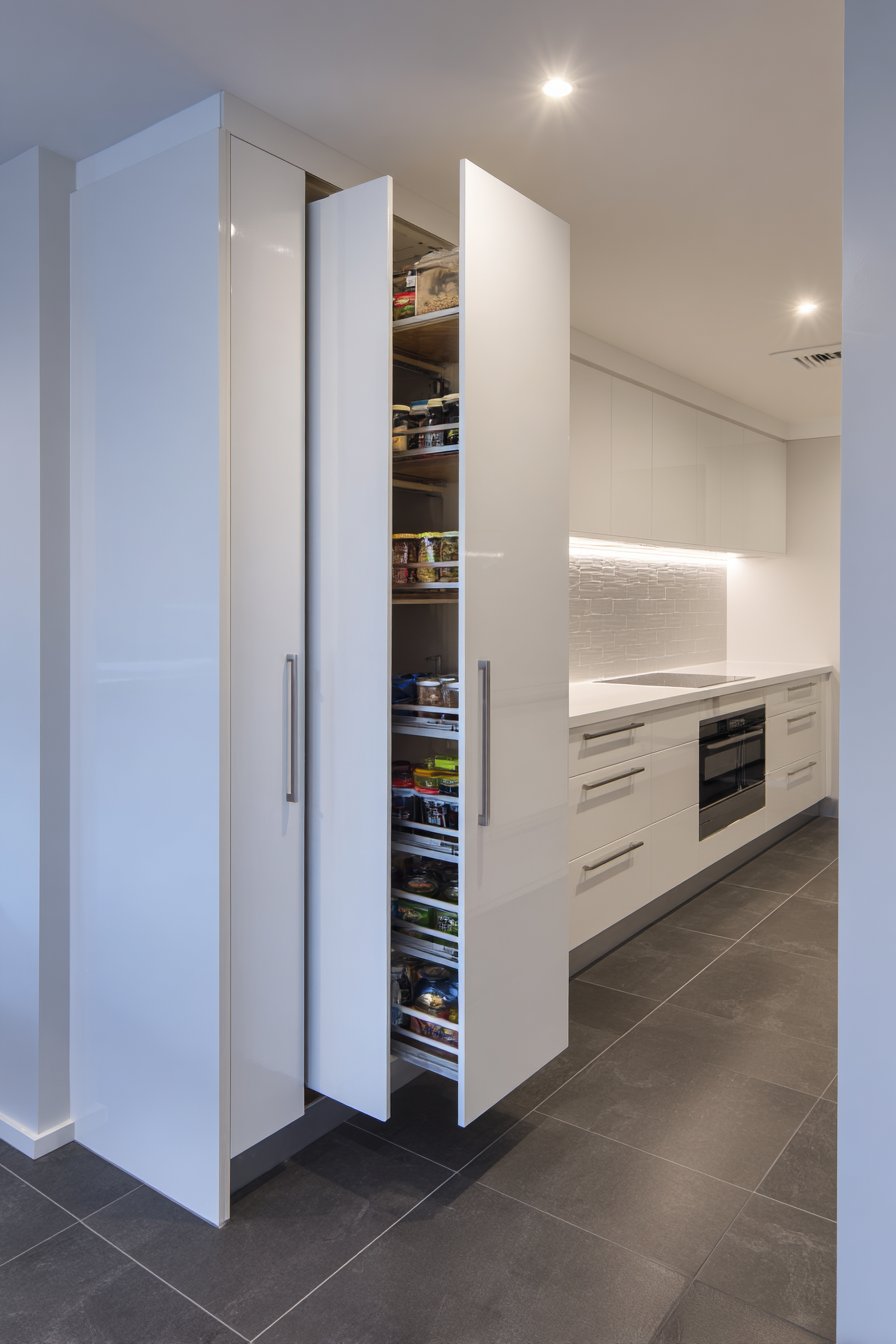
Tall pull-out pantry units in light grey maximize vertical storage space. The narrow cabinets include internal organization systems with adjustable shelving. This design maximizes storage while maintaining streamlined exterior appearance. Adjacent cabinetry in matching grey creates uniform wall of storage.
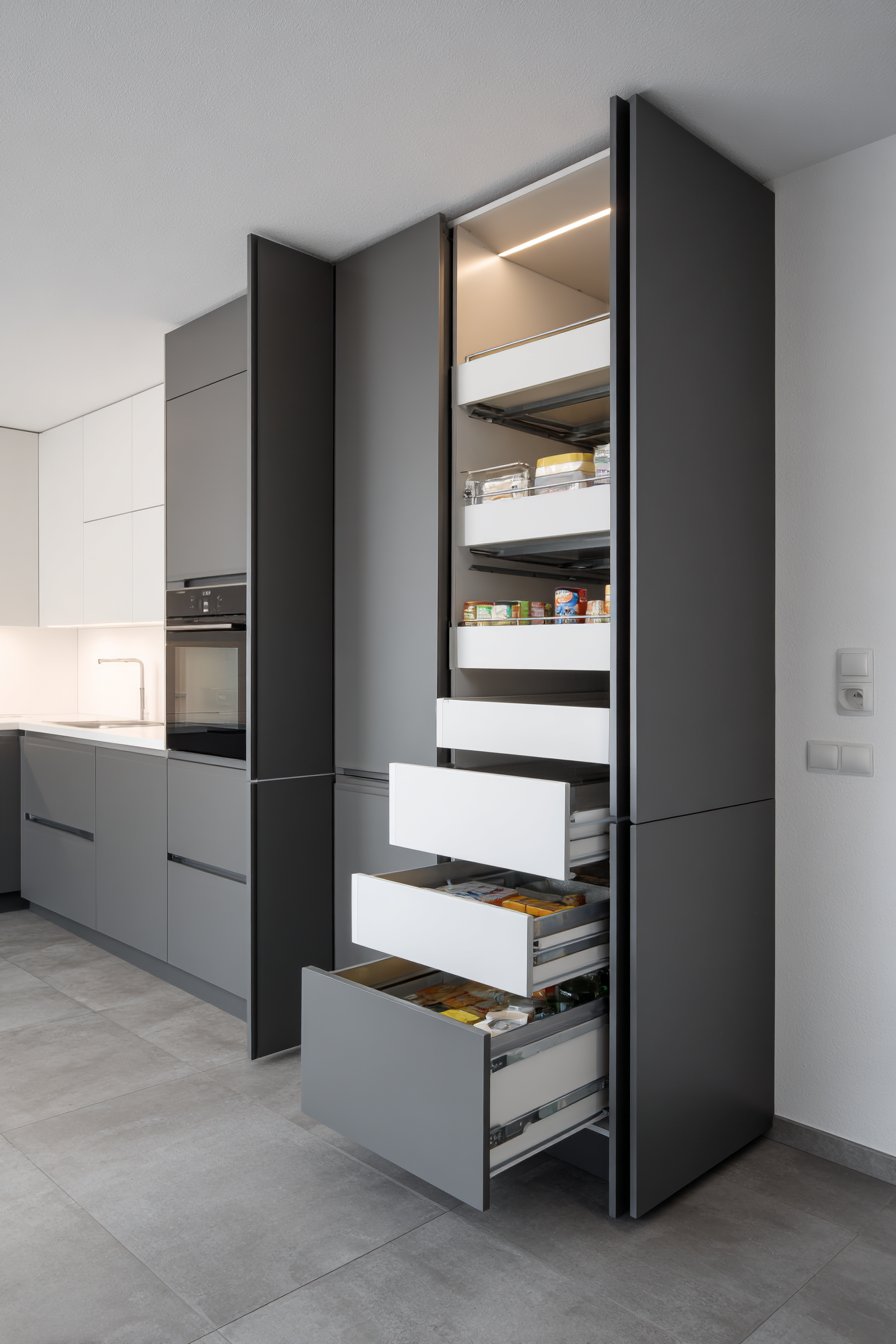
Simple white countertops contrast effectively with grey cabinets throughout. Integrated LED lighting illuminates pull-out unit interiors when opened. The floor features large grey porcelain tiles that harmonize with cabinetry. Natural light supplements the LED task lighting during daylight hours.
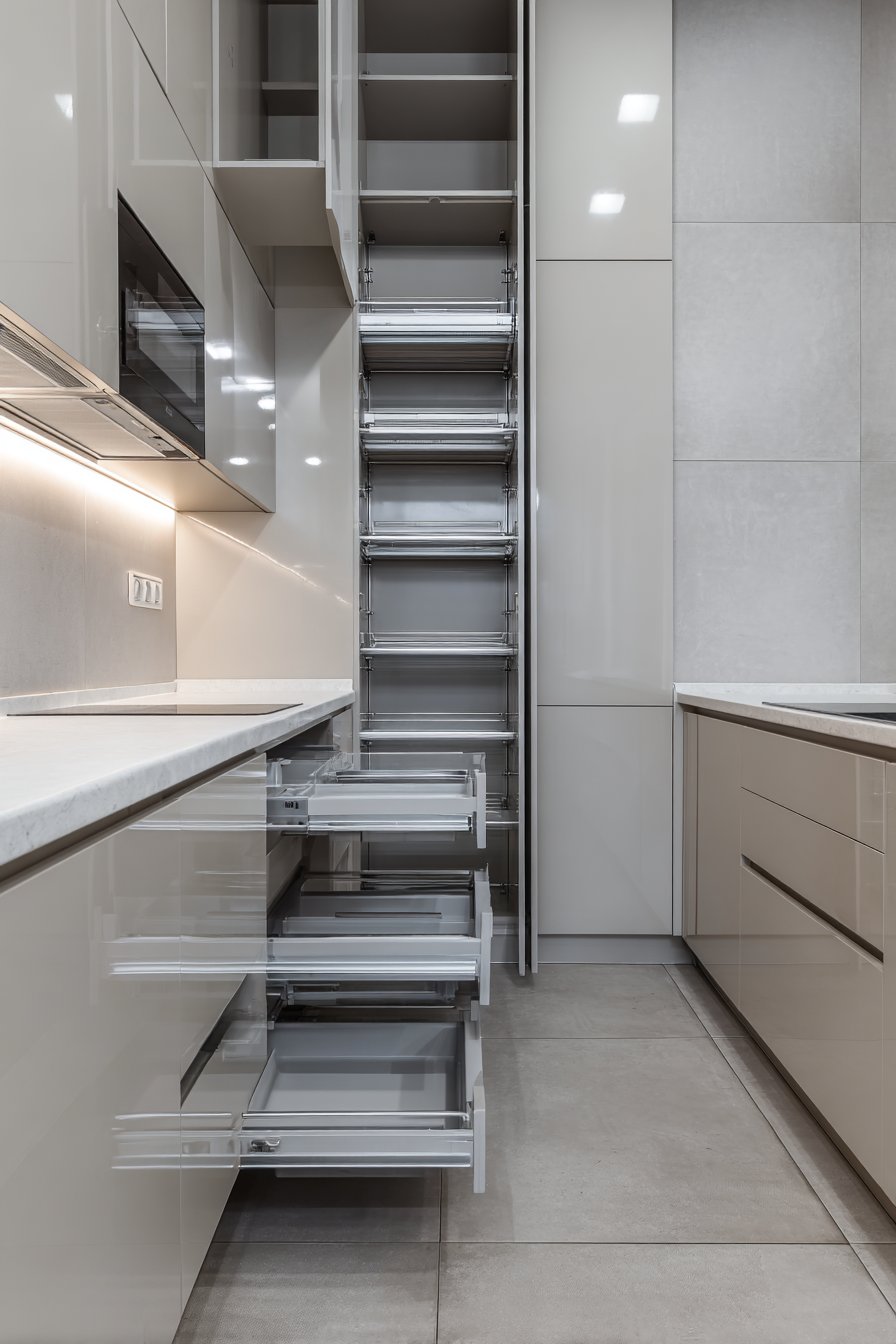
The pull-out pantry concept demonstrates efficient space utilization principles. Narrow vertical storage provides remarkable capacity without consuming floor space. The internal organization ensures accessibility despite the depth. This proves that minimalist design can incorporate extensive storage successfully.
The uniform grey wall creates visual calm through repetition and consistency. Opening the cabinets reveals thoughtful organization that makes finding items effortless. The design balances external simplicity with internal complexity perfectly. This exemplifies minimalism’s goal of hiding functional complexity behind clean surfaces.
Key Design Tips:
- Install tall pull-out pantries to maximize vertical storage capacity
- Choose internal organization systems with adjustable components
- Integrate LED lighting inside units for visibility when opened
- Use matching finishes on all storage units for uniform appearance
- Select contrasting countertops to define work surfaces clearly
- Choose large-format floor tiles that harmonize with cabinet colors
- Plan pull-out widths that allow easy access without wasted space
18. Compact L-Shaped Layout with Corner Solutions
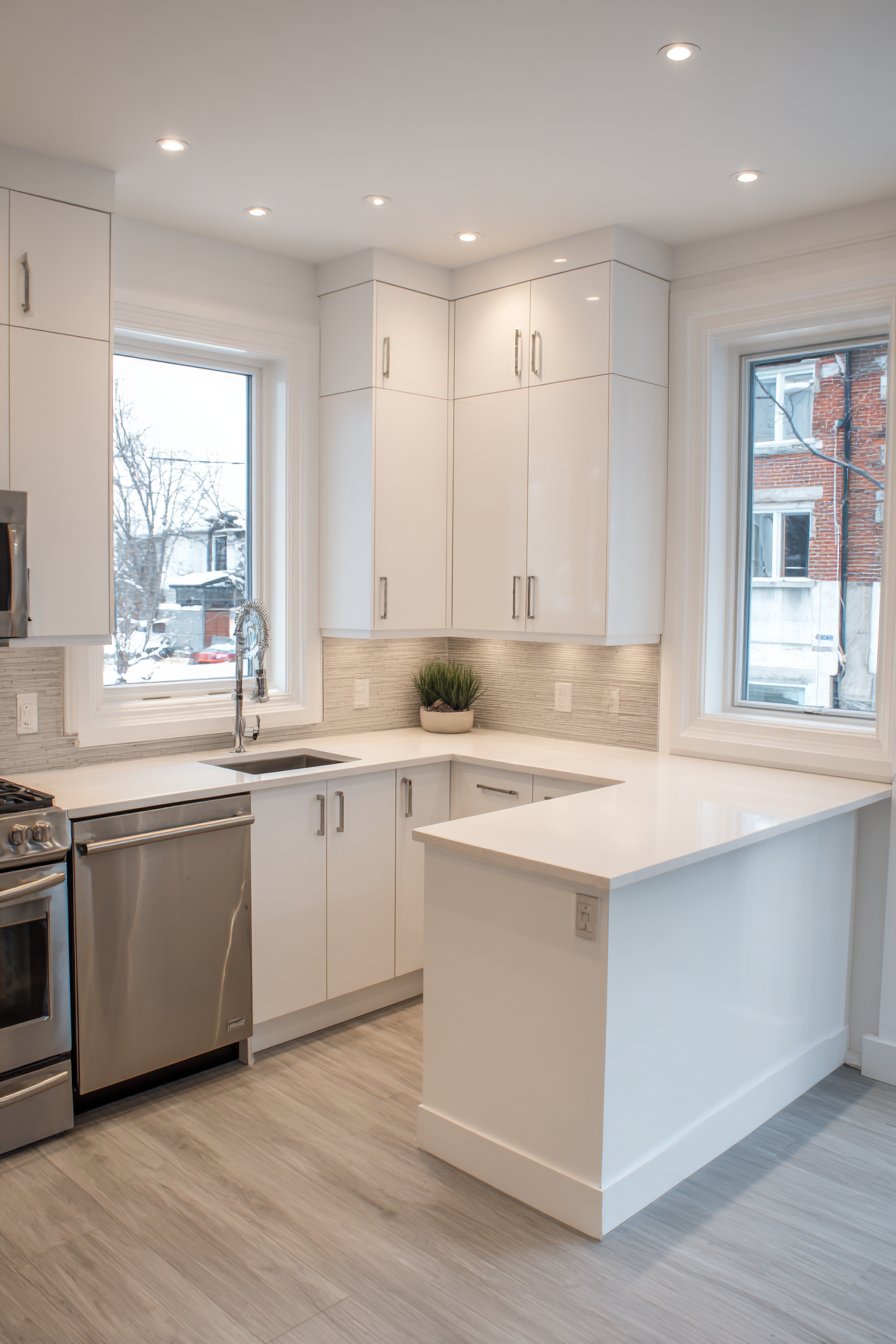
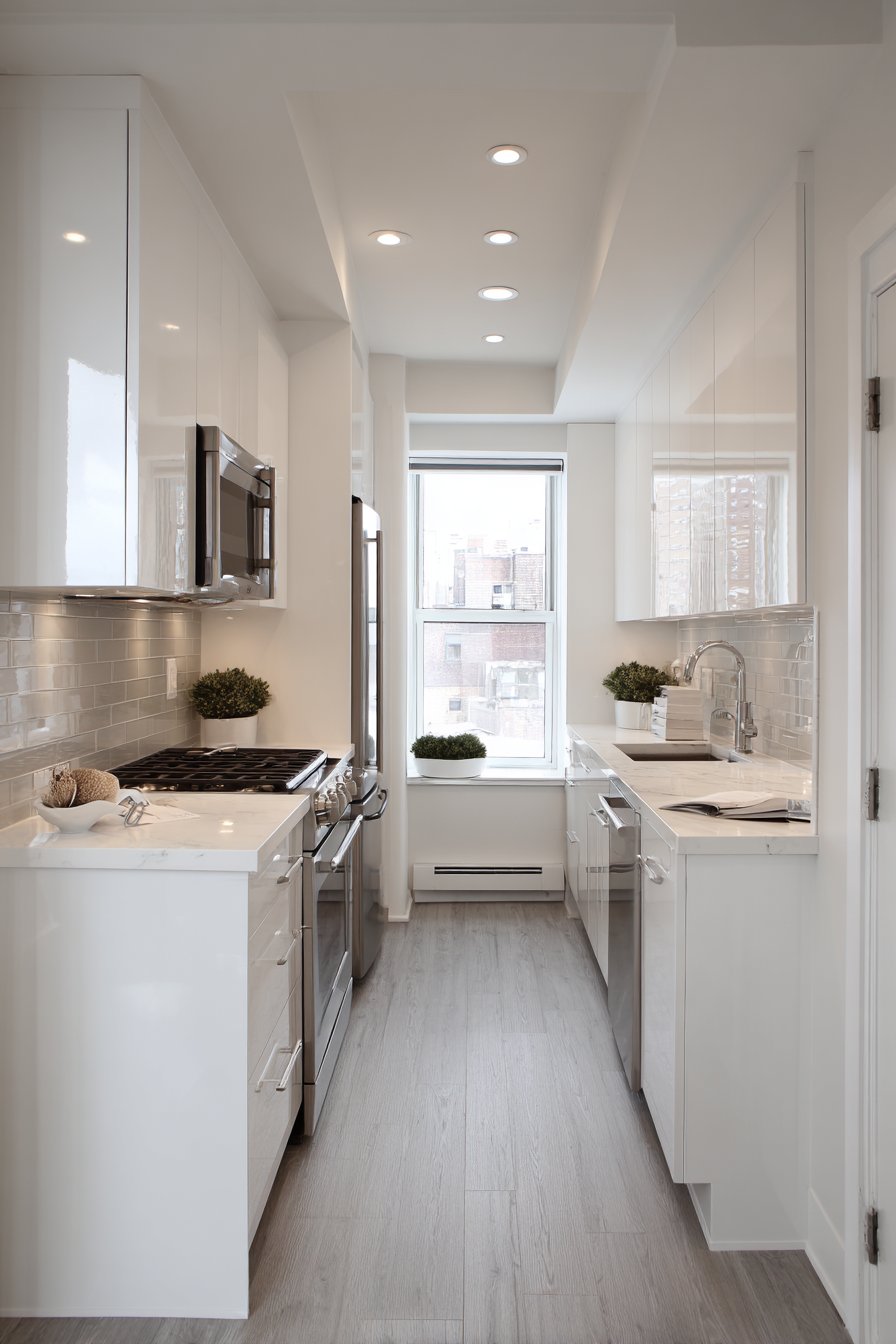
Continuous white cabinetry wraps two walls in efficient L-shaped configuration. The corner includes lazy Susan cabinet system for practical storage access. This solution eliminates the wasted space typical in corner cabinets. White countertops with simple square edge profile extend along both walls.
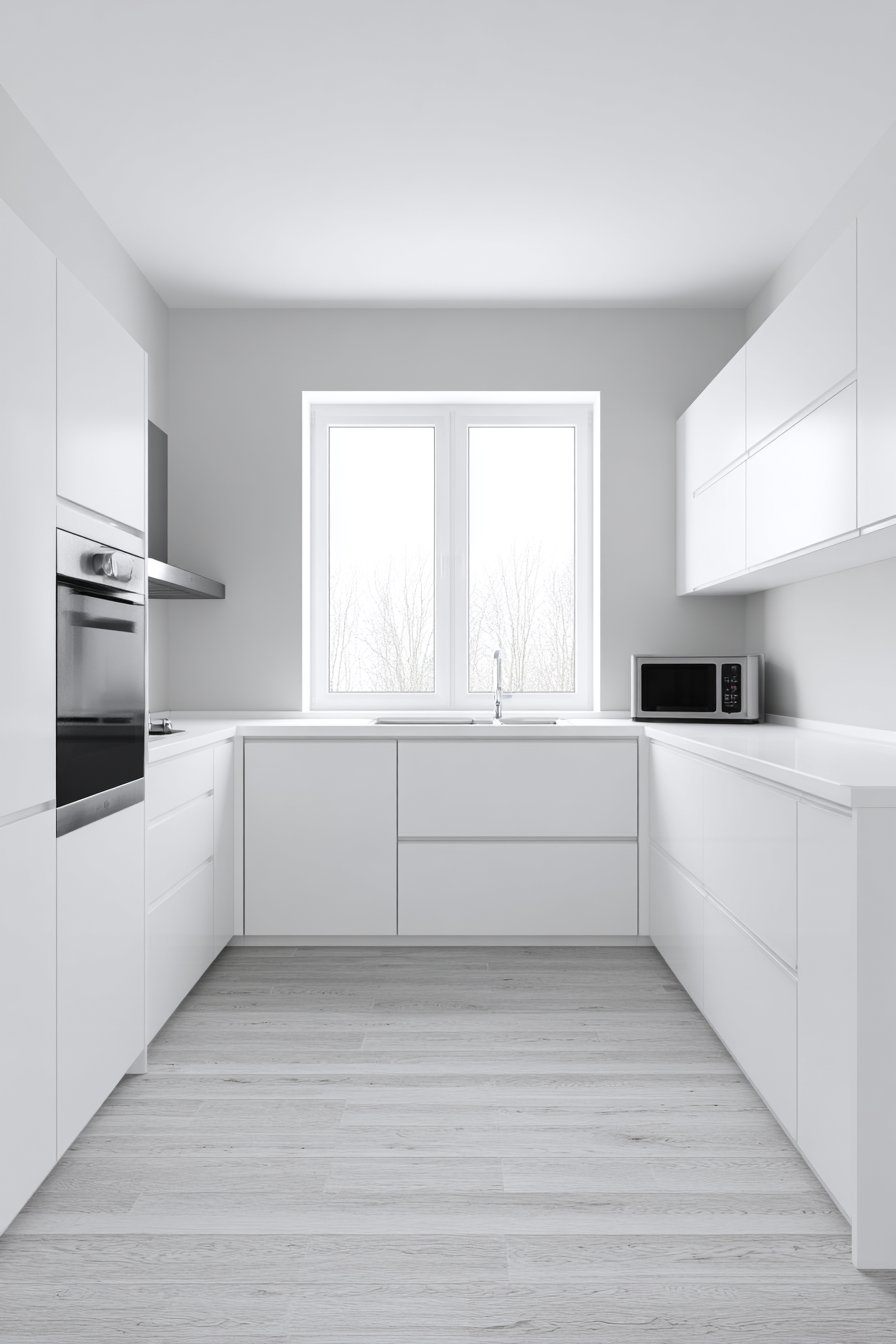
A small window with frosted glass provides privacy while allowing natural light. Stainless steel appliances integrate flush with cabinetry for seamless appearance. Light grey vinyl planks in wide format cover the floor efficiently. The flooring choice provides warmth and comfort underfoot.
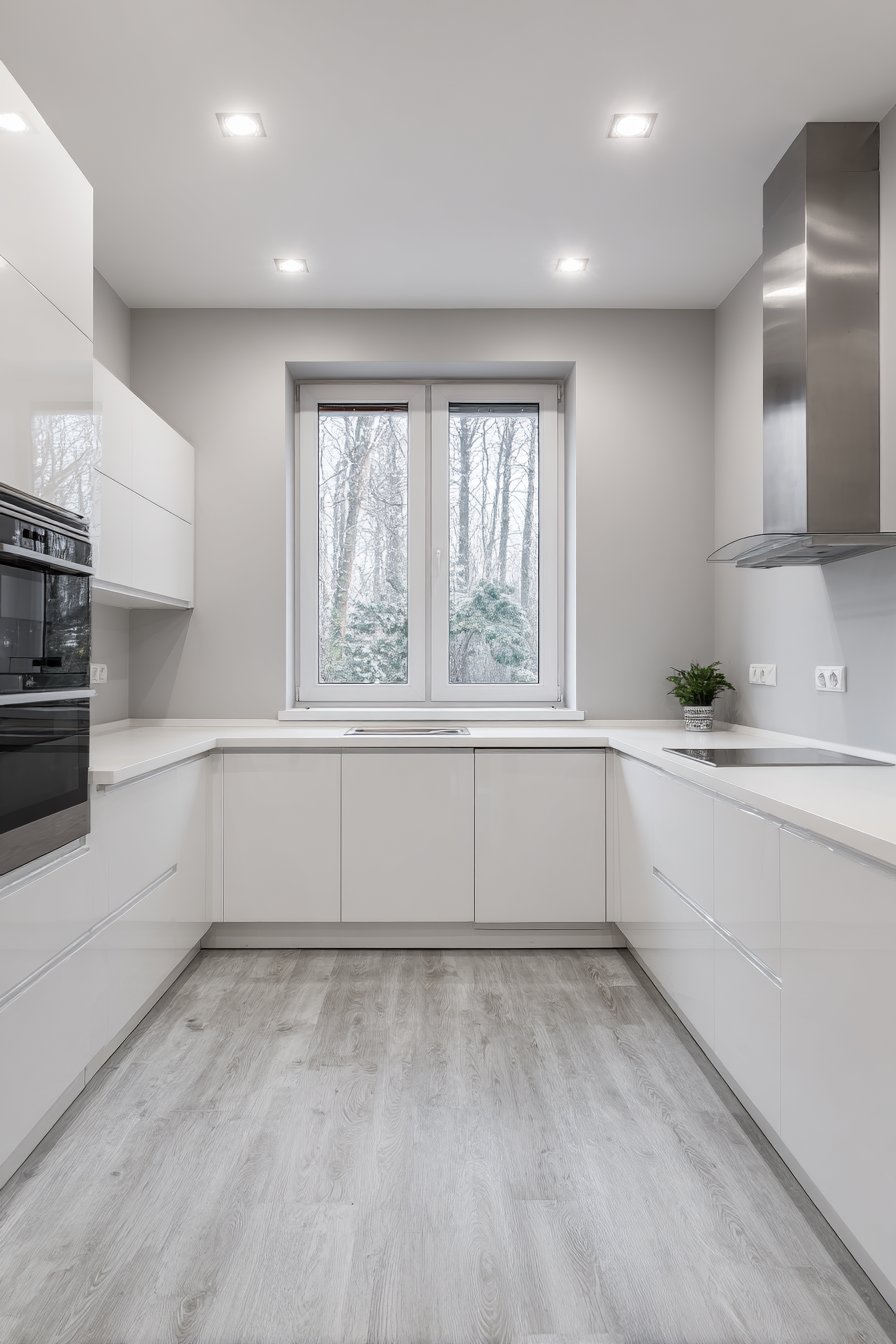
The L-shaped layout exemplifies efficient space planning for compact kitchens. The configuration provides ample counter space and storage within limited square footage. The white palette maximizes the perception of space throughout. This proves that small kitchens can embrace minimalist principles successfully.
The corner storage solution demonstrates practical problem-solving within minimalist design. The lazy Susan system makes corner space accessible and functional. Every cabinet and drawer serves necessary purpose without creating excess. The design balances aesthetic goals with practical kitchen requirements perfectly.
Key Design Tips:
- Use L-shaped layouts to maximize counter space in compact areas
- Install lazy Susan systems to utilize corner cabinet space effectively
- Choose white cabinetry to maximize perceived space in small kitchens
- Integrate appliances flush with cabinetry for seamless appearance
- Select wide-format vinyl planks for warmth and easy maintenance
- Use frosted glass windows for privacy without blocking light
- Maintain simple edge profiles on countertops for clean lines
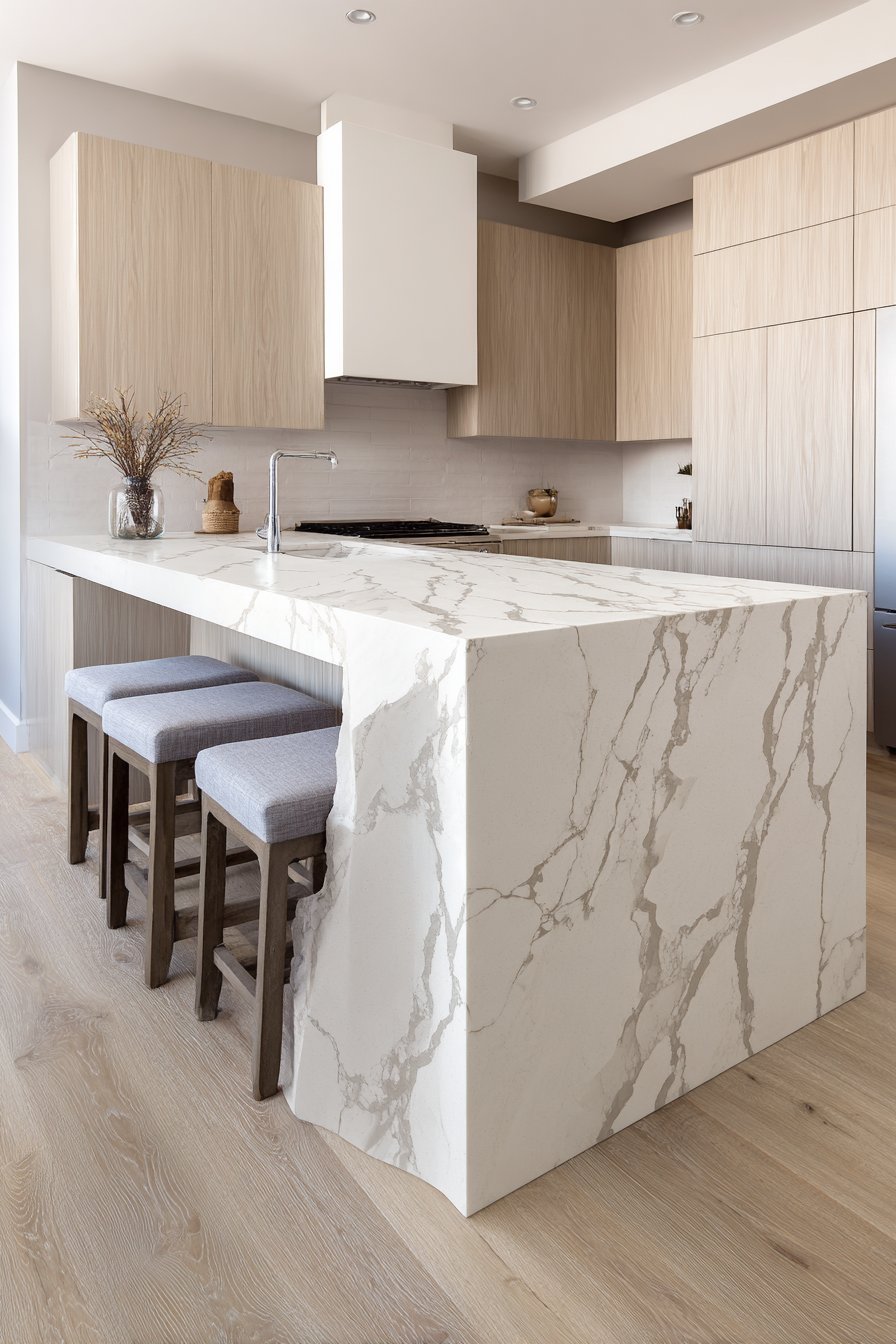
19. Waterfall Edge Island as Sculptural Centerpiece
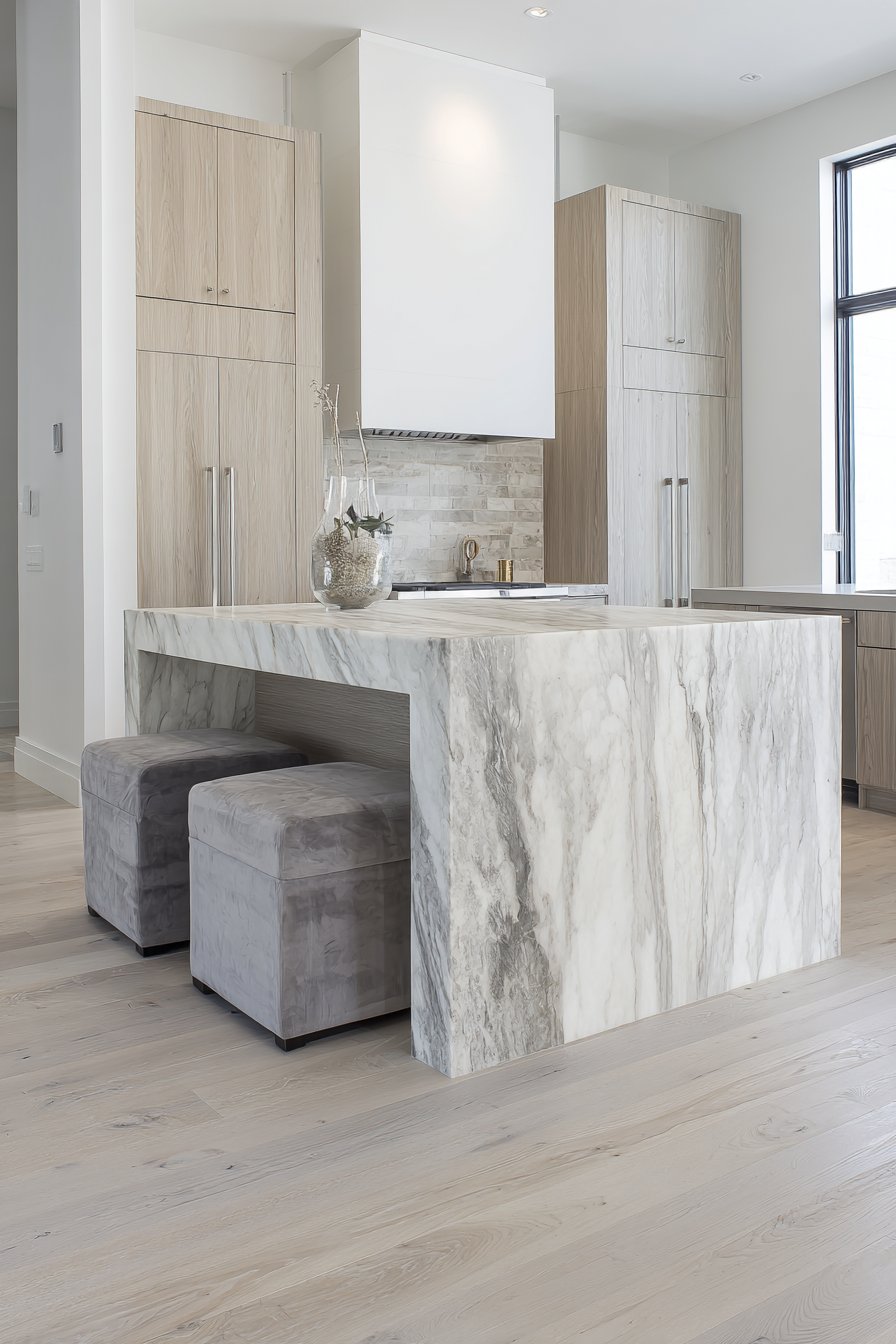
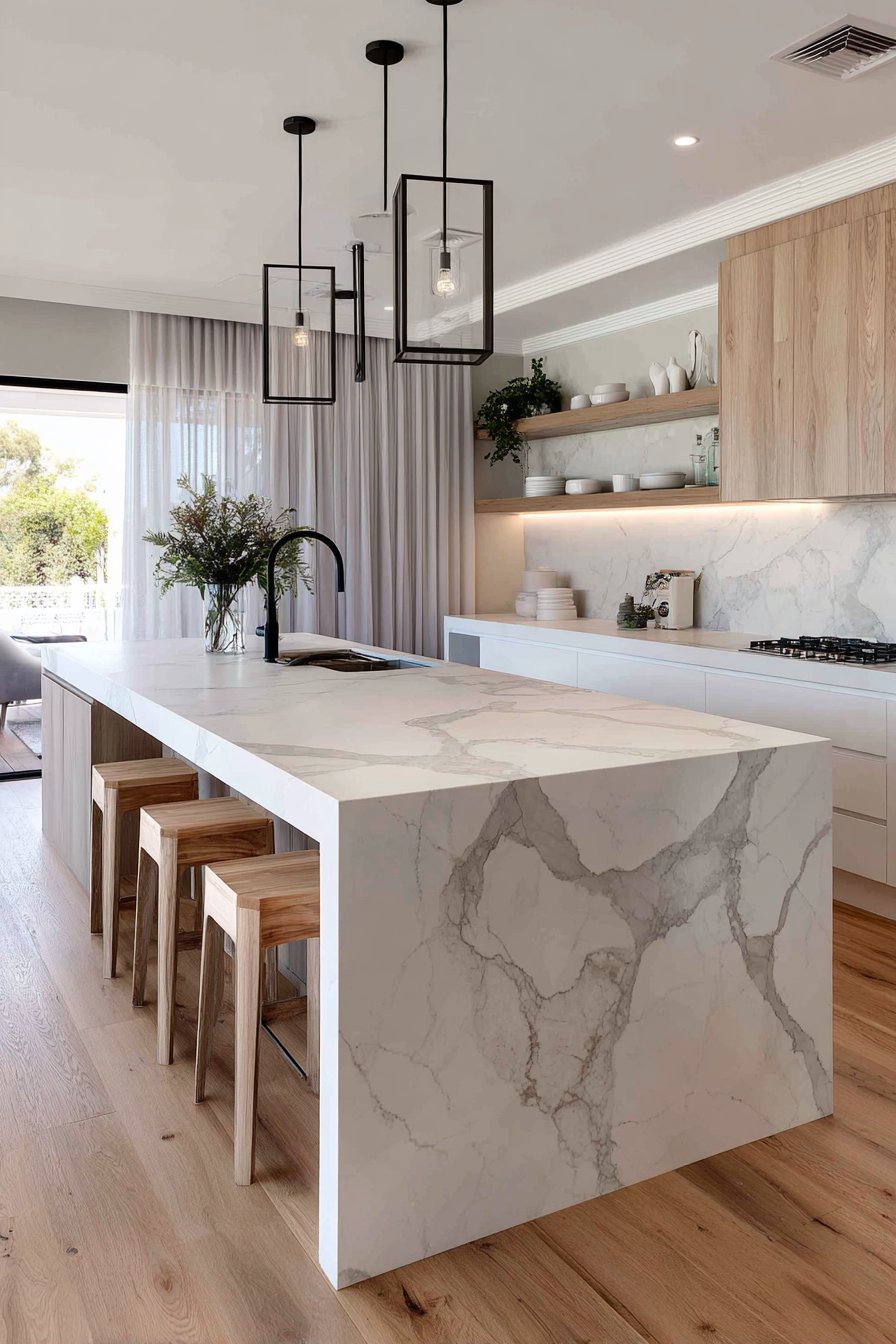
Pure white quartz with continuous veining pattern creates stunning waterfall edge island. The stone flows seamlessly over the sides, creating sculptural effect. The island stands as focal point in the center of the space. Two simple grey upholstered stools tuck underneath neatly when not in use.
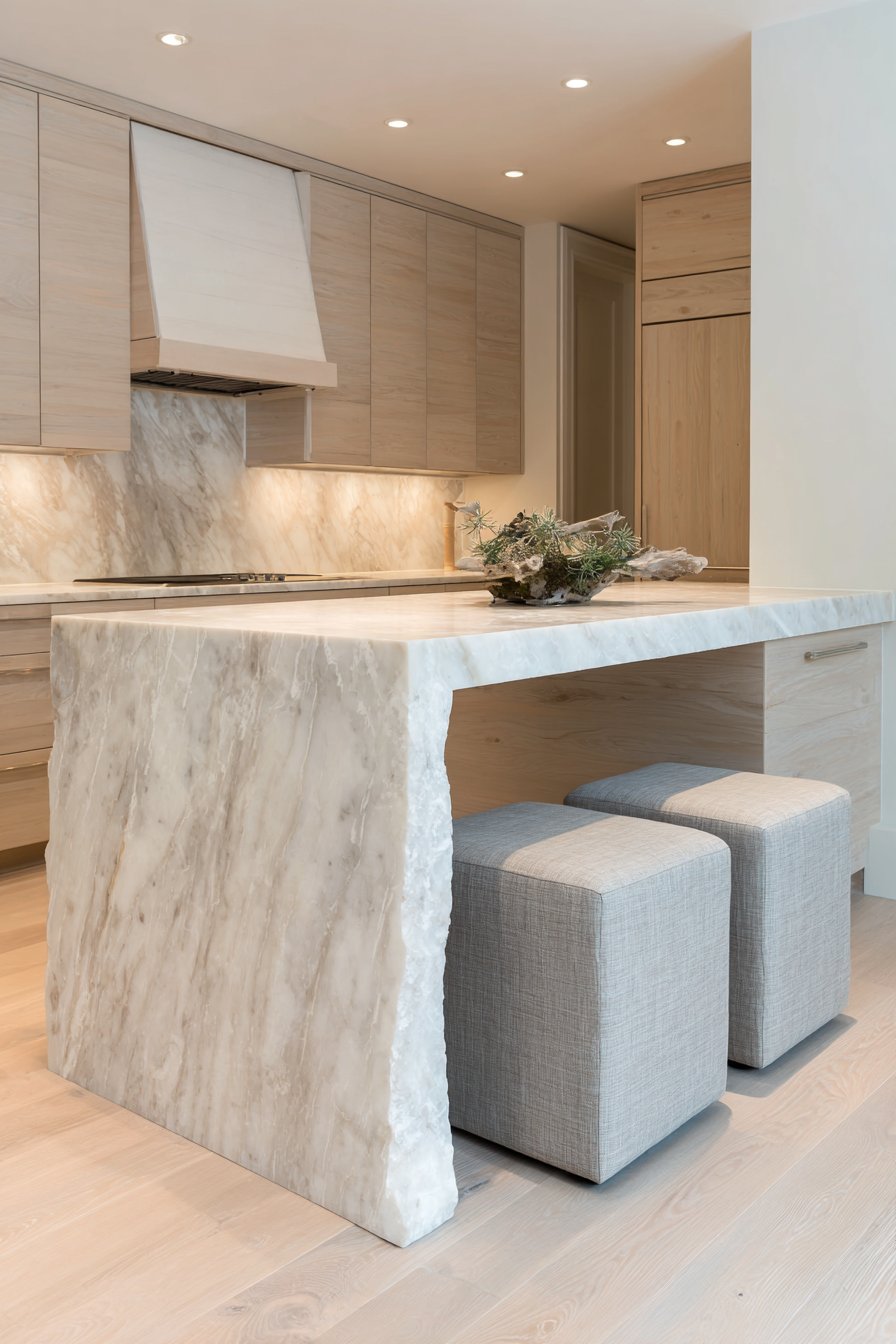
Surrounding perimeter cabinets in light wood tone provide warmth and storage. The natural wood balances the cool white island beautifully. A simple range hood in white matches the overall aesthetic seamlessly. White oak planks with natural grain variation cover the floor throughout.
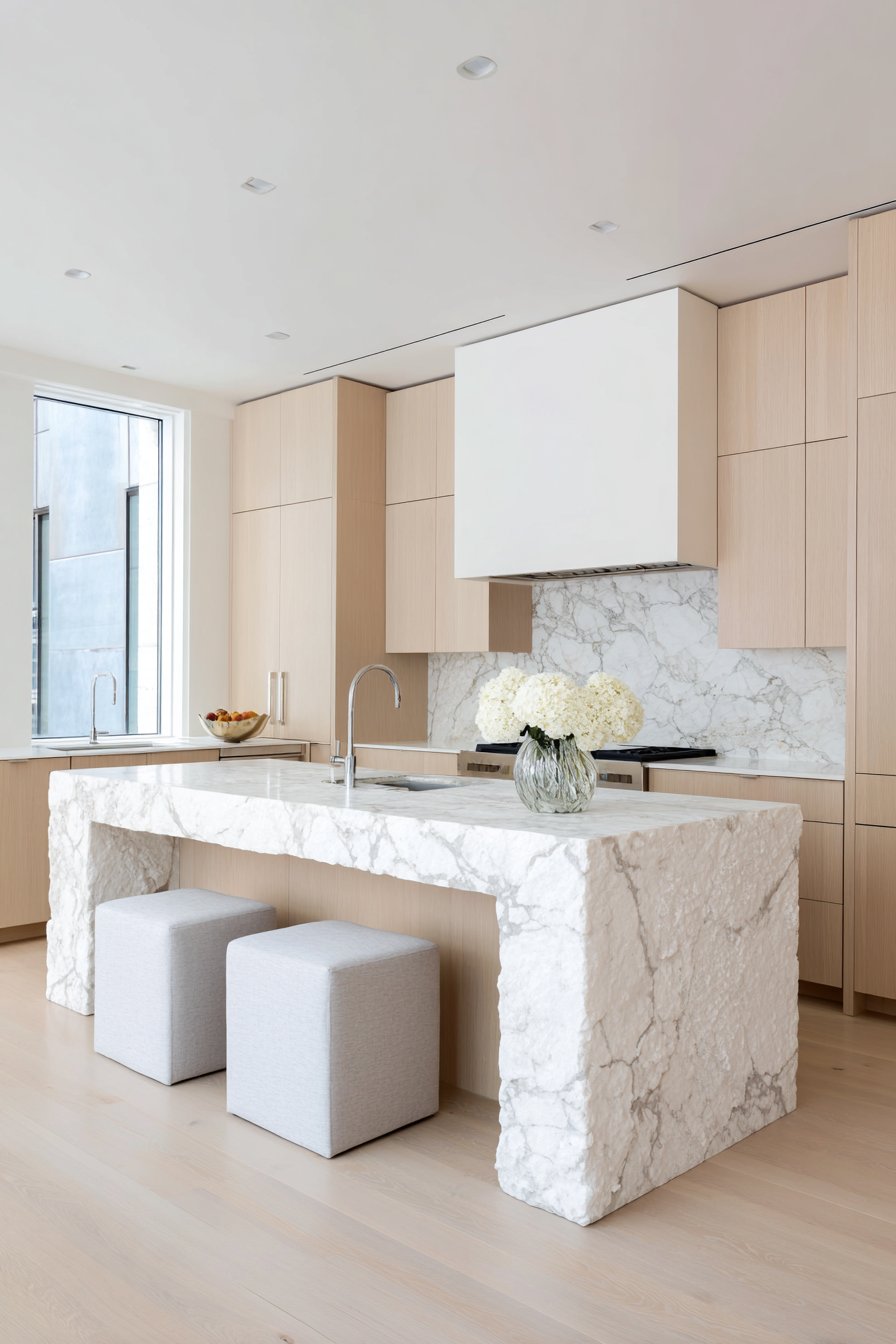
The waterfall edge detail creates remarkable visual impact through material continuity. The veining pattern flows naturally over the sides, emphasizing the design intention. This architectural detail elevates the island from functional element to sculptural statement. The effect justifies the additional material cost and fabrication complexity.
Natural lighting emphasizes the continuous stone pattern throughout the day. The illumination highlights the material quality and precise fabrication. Shadows define the waterfall edges dramatically. The design demonstrates that minimalism can incorporate bold architectural gestures successfully.
Key Design Tips:
- Use waterfall edges to transform islands into sculptural focal points
- Choose stone with continuous veining for dramatic visual effect
- Select simple stools that complement without competing with island
- Balance cool stone surfaces with warm wood perimeter cabinets
- Install matching range hoods to maintain color palette consistency
- Use natural wood flooring to add warmth to stone-focused designs
- Invest in professional fabrication for seamless waterfall edges
20. Smart Storage with Toe-Kick Drawers
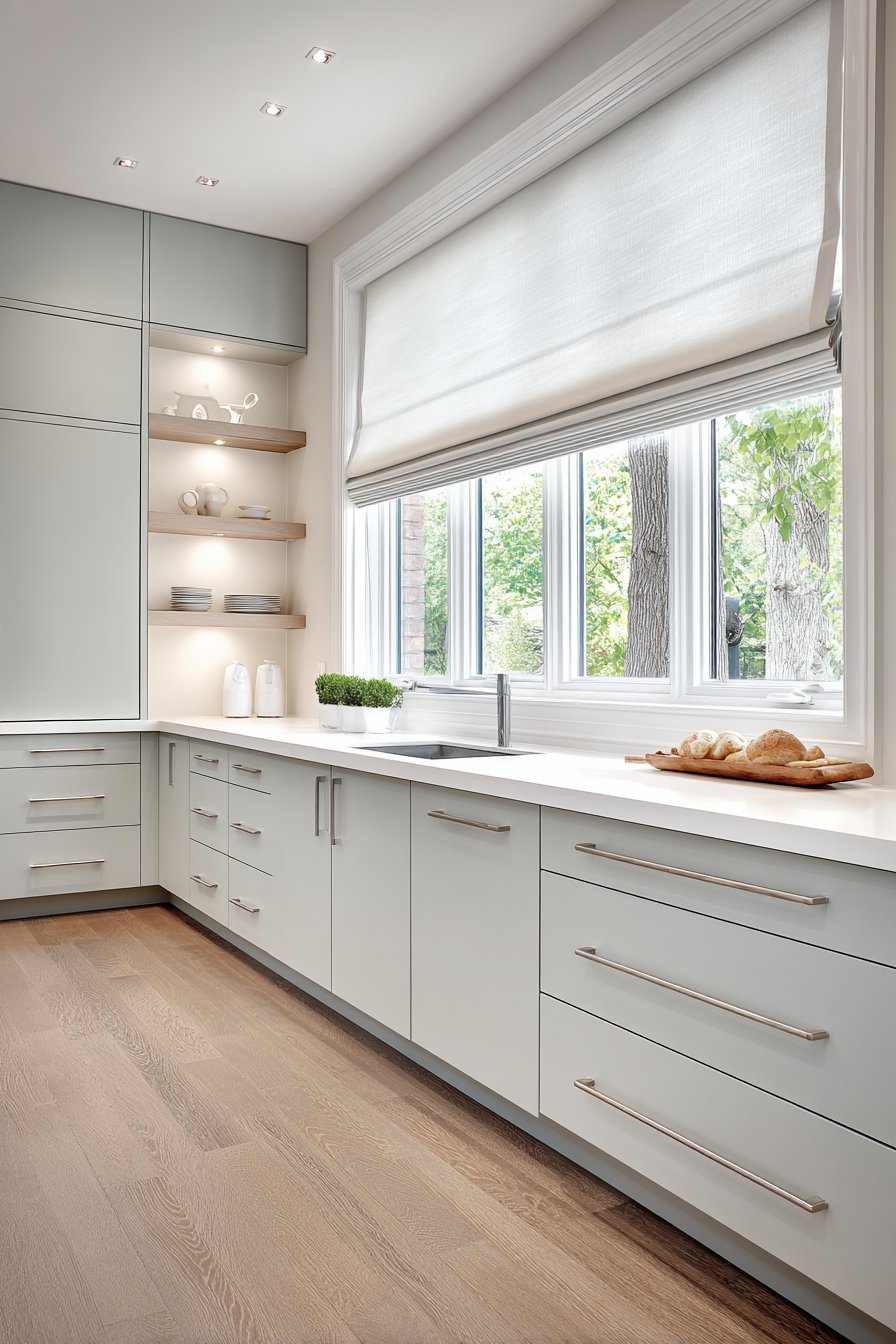
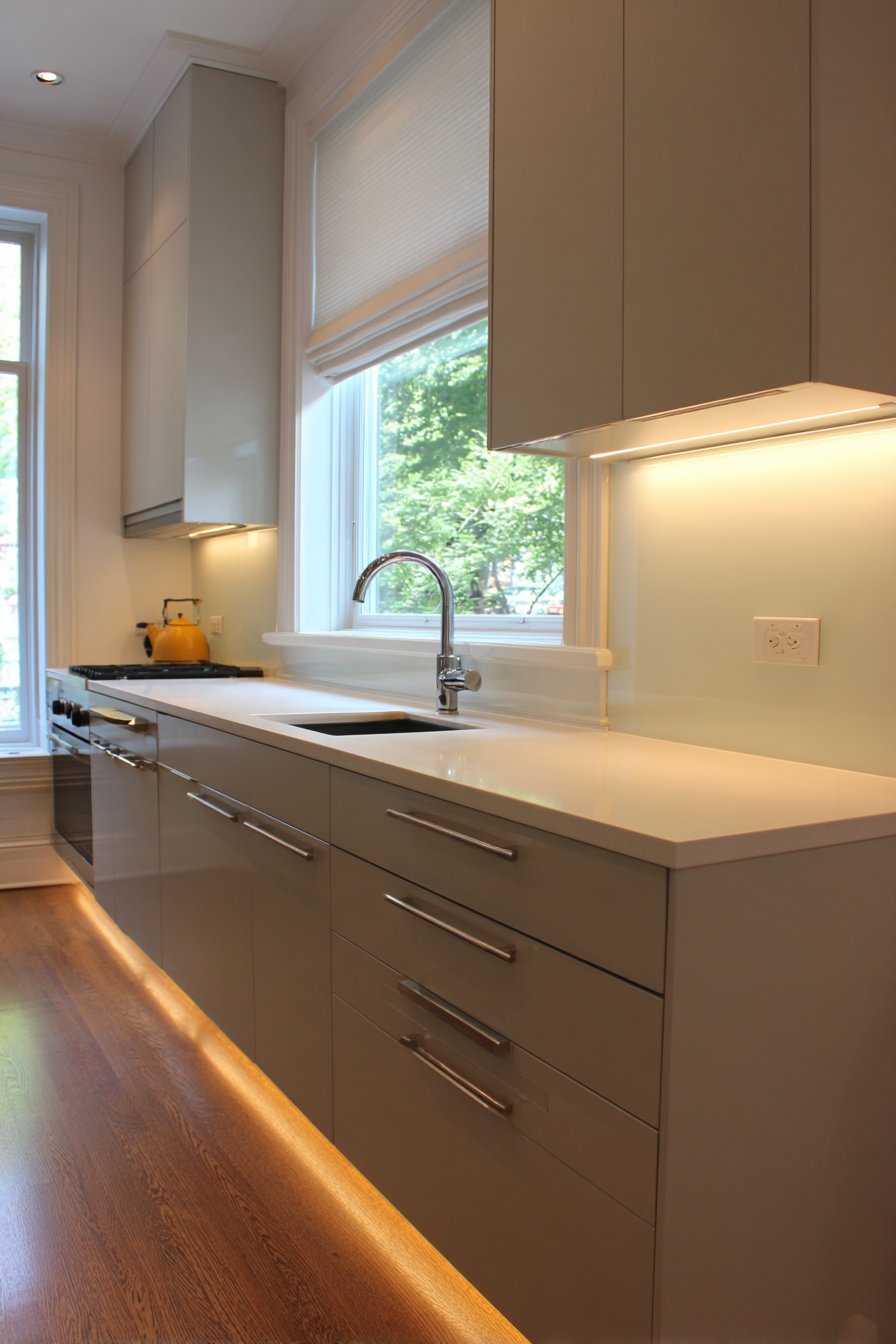
Toe-kick drawers in base cabinets utilize every inch of available space. The cabinetry in soft grey matte finish features simple horizontal pulls. Brushed nickel hardware provides subtle metallic accent throughout. White quartz countertops provide clean work surfaces that contrast with grey cabinetry.
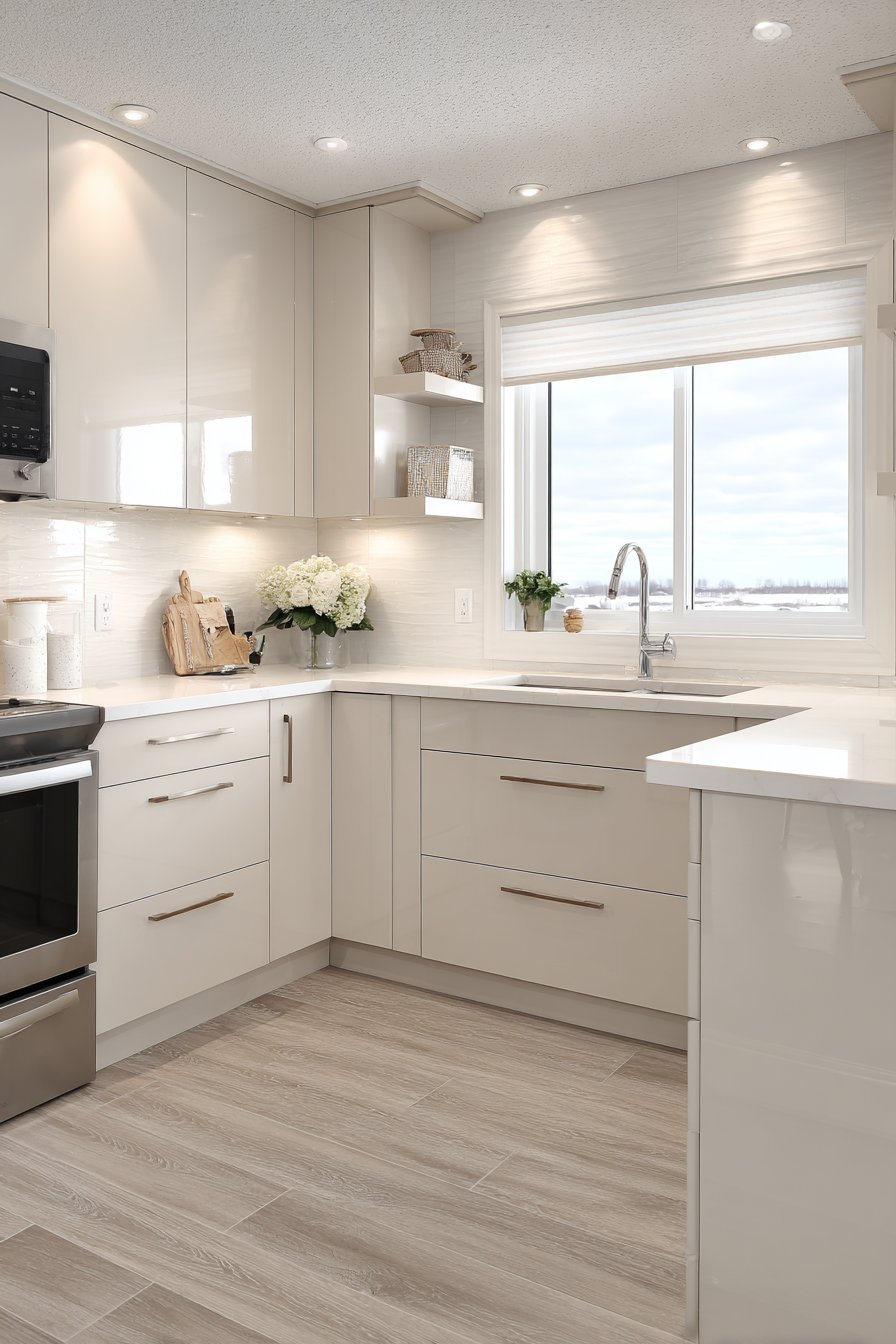
Large-format white porcelain panels cover the backsplash with minimal seams. This creates a continuous surface that reinforces minimalist aesthetic. A window above the sink dressed with simple cellular shade in white. Recessed lighting provides even illumination without visible fixtures.
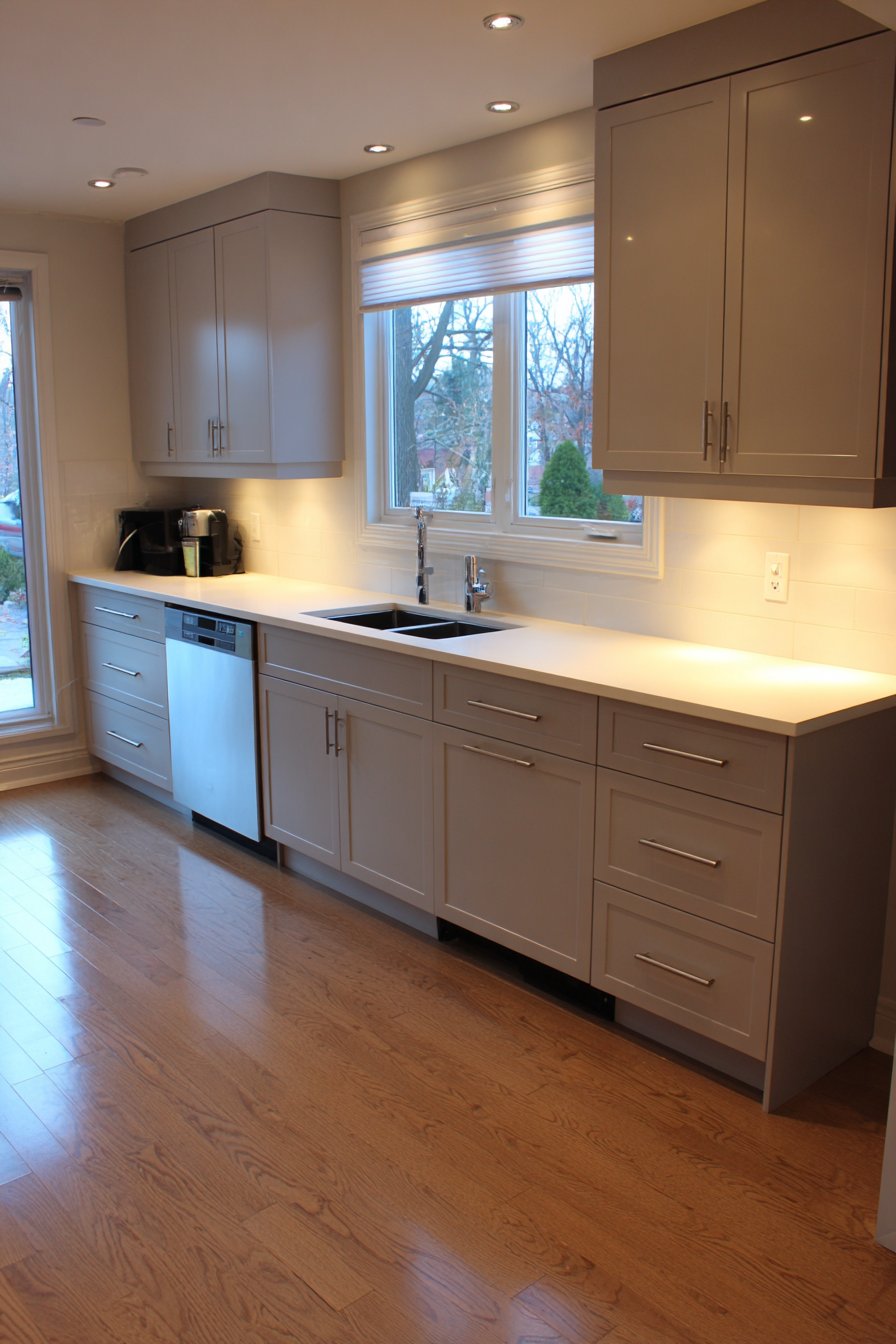
The toe-kick drawer innovation demonstrates thorough space planning principles. These typically wasted spaces become useful storage for flat items. The hidden drawers maintain clean exterior appearance while adding practical capacity. This exemplifies minimalism’s emphasis on efficient design and purposeful use of space.
The soft grey finish creates gentle, sophisticated atmosphere throughout the kitchen. The matte surface reduces glare while providing elegant appearance. Professional lighting highlights the efficient space use and clean design. The room achieves both aesthetic beauty and remarkable functionality through thoughtful planning.
Key Design Tips:
- Install toe-kick drawers to utilize typically wasted base cabinet space
- Choose horizontal pulls for contemporary clean-lined appearance
- Use large-format backsplash panels to minimize visible seams
- Select cellular shades for light control with minimal visual bulk
- Install recessed lighting to eliminate fixture clutter on ceilings
- Maintain matte finishes to reduce glare and soften hard surfaces
- Plan storage for flat items like baking sheets in toe-kick drawers
Why These Minimalist Kitchen Designs Are the Best
These minimalist kitchen designs represent the finest approaches to creating serene, functional cooking spaces. Each concept demonstrates thoughtful consideration of materials, spatial planning, and storage solutions. The designs showcase remarkable versatility that accommodates different home styles and personal preferences while maintaining core minimalist principles.
The emphasis on handleless cabinetry and integrated appliances eliminates visual clutter that plagues traditional kitchens. Clean lines and smooth surfaces create peaceful environments where cooking becomes meditative rather than stressful. The concealment of functional complexity behind simple facades represents minimalism’s highest achievement in practical residential design.
Storage innovation stands out as a defining characteristic across these exceptional designs. Pull-out pantries, toe-kick drawers, appliance garages, and floor-to-ceiling cabinetry maximize capacity without creating visual chaos. These solutions prove that minimalist kitchens can accommodate extensive storage requirements. The key lies in hiding complexity behind uniform, uncluttered surfaces that maintain visual calm.
Material selection plays crucial roles in these outstanding designs. Natural wood tones in oak, walnut, and ash provide organic warmth that prevents sterility. White quartz countertops offer durability alongside timeless beauty. Concrete surfaces introduce industrial character and honest materiality. Large-format porcelain tiles create seamless surfaces with minimal grout lines. These material choices balance aesthetic appeal with practical performance requirements.
Color palette discipline unifies these exemplary minimalist kitchen designs. Monochromatic schemes in whites, greys, and beiges create sophisticated harmony throughout spaces. Strategic contrast through black fixtures or dark lower cabinets adds visual interest without creating chaos. The limited color palettes allow material textures and architectural forms to dominate attention appropriately.
Lighting design receives thoughtful attention in these superior minimalist kitchens. Recessed fixtures eliminate ceiling clutter while providing even illumination. Under-cabinet LED strips offer task lighting without visible hardware. Simple pendant lights become sculptural elements rather than decorative excess. Natural daylight through unobstructed windows remains the most valued illumination source throughout these designs.
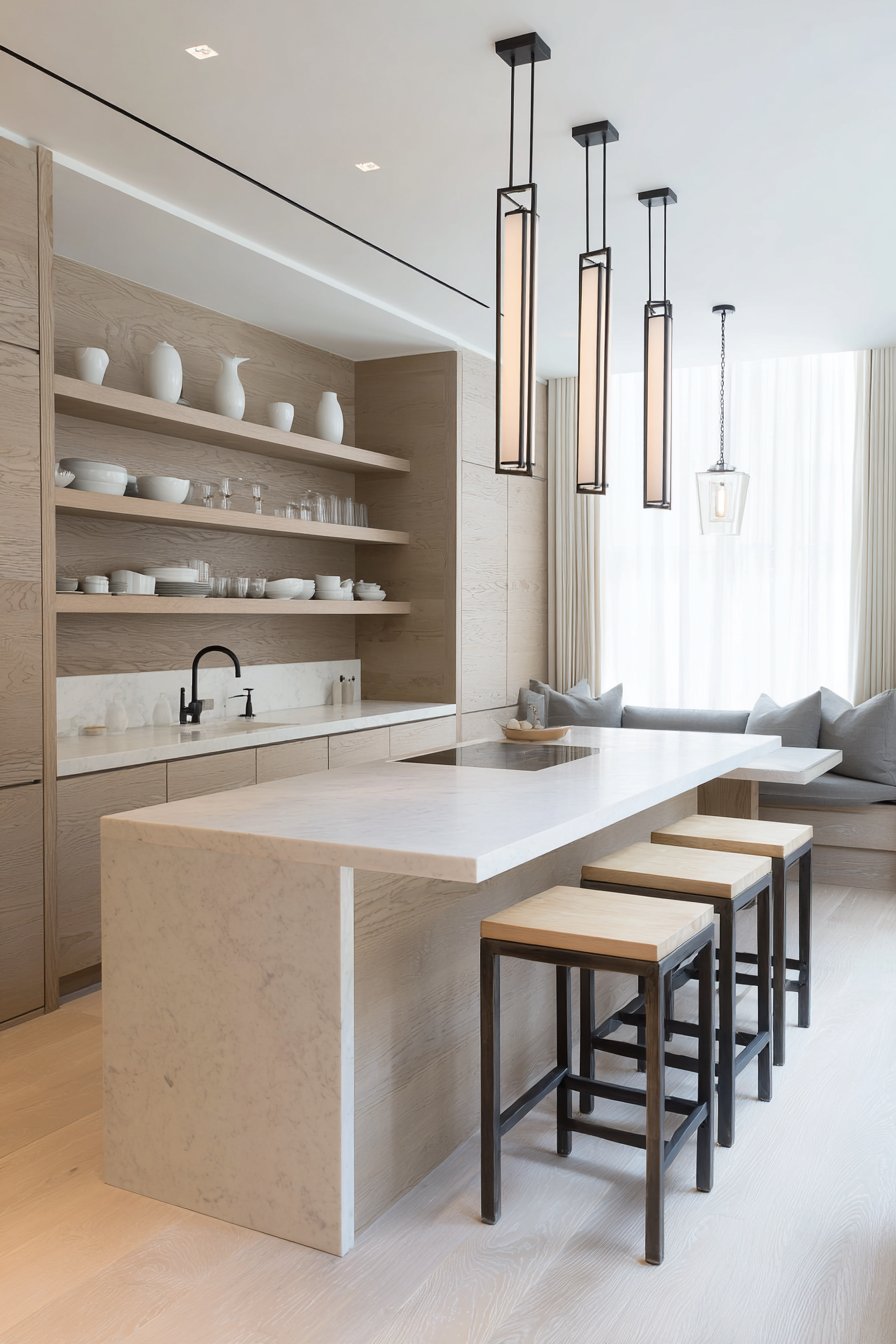
The integration of eating spaces demonstrates minimalism’s accommodation of comfort and functionality. Built-in breakfast nooks, island seating, and extended countertop breakfast bars provide dining options without requiring additional furniture. These integrated solutions save floor space while maintaining the clean aesthetic throughout the combined cooking and dining areas.
Open shelving appears strategically in several designs as alternative to solid upper cabinets. The floating shelves create airiness while displaying carefully curated essential items. This approach requires disciplined curation but rewards with remarkable spatial openness. The displayed items become decorative elements that add personality within the minimalist framework.
Industrial elements find successful incorporation in several designs through exposed concrete ceilings, metal shelving brackets, and polished concrete floors. These honest materials add character and texture without creating clutter. The combination of raw industrial elements with refined surfaces demonstrates minimalism’s flexibility and contemporary relevance in residential design.
Compact layouts receive particular attention in these exceptional designs, proving that minimalism thrives especially well in smaller spaces. Galley kitchens, single-wall configurations, and L-shaped layouts demonstrate efficient space planning principles. The designs maximize functionality within limited square footage through thoughtful organization and multi-functional elements.
Waterfall-edge countertops and islands emerge as signature elements that elevate minimalist designs beyond purely functional spaces. These architectural gestures transform practical work surfaces into sculptural focal points. The continuous material flow over edges creates visual drama while maintaining the clean lines essential to minimalist aesthetics.
The concealment of appliances behind matching cabinet panels represents the ultimate achievement in visual simplification. Refrigerators, dishwashers, and even range hoods disappear behind uniform fronts. This integration requires careful planning and investment but delivers unmatched visual serenity. Only essential cooking surfaces remain visible in these refined spaces.
Symmetry and alignment appear consistently throughout these superior designs as organizing principles. Cabinets align vertically, pendant lights hang in perfect rows, and tile patterns follow precise geometric layouts. This order creates visual calm and psychological comfort. The human eye finds pleasure in balanced, organized compositions that these designs provide abundantly.
Texture variation within limited color palettes prevents minimalist spaces from appearing flat or boring. Matte cabinet finishes contrast with glossy tiles, smooth quartz surfaces oppose natural wood grain, and polished concrete differs from brushed metal fixtures. These textural differences add richness and depth while maintaining visual simplicity and color discipline.
The breakfast bar solutions demonstrate clever space efficiency in these excellent designs. Extended countertops with minimal bracket support, waterfall-edge overhangs, and peninsula configurations provide casual dining without requiring separate tables. These integrated solutions maintain open floor plans while accommodating necessary eating functions within compact footprints.
Smart storage represents perhaps the most valuable contribution of these outstanding minimalist kitchen designs. The solutions go beyond aesthetic considerations to solve real organizational challenges. Homeowners gain remarkable storage capacity without visual penalty. The designs prove that minimalism enhances rather than limits practical functionality when approached with intelligence and planning.
Natural material incorporation prevents these minimalist kitchens from feeling cold or institutional. Wood countertops, oak flooring, and walnut shelving introduce organic warmth and tactile pleasure. The grain patterns and color variations add visual interest within disciplined palettes. These natural elements humanize the spaces while maintaining essential simplicity and cleanliness.
The monochromatic grey schemes demonstrate sophisticated maturity in minimalist design thinking. Grey offers more complexity and depth than stark white while maintaining neutral versatility. The various grey tones from light to charcoal create subtle hierarchy and definition. Combined with concrete textures and brushed metal accents, grey creates contemporary elegance that transcends temporary trends.
Frosted glass cabinet inserts provide a practical compromise between open shelving and solid fronts. The translucent panels soften the visual weight of upper cabinetry while concealing contents. This solution maintains the clean aesthetic without requiring the disciplined curation that open shelving demands. The glass allows light to penetrate while providing necessary storage concealment.
These minimalist kitchen designs succeed because they balance aesthetic principles with practical requirements. Beauty and function coexist rather than compete. The designs eliminate unnecessary elements while preserving everything essential. This careful editing creates spaces that feel both aspirational and livable, sophisticated yet comfortable, simple but never simplistic.
Conclusion
These minimalist kitchen designs demonstrate that simplicity creates the foundation for beautiful, functional spaces. The key takeaways include the importance of concealed storage, limited color palettes, quality materials, and strategic use of open space. Clean lines and uncluttered surfaces reduce visual stress while enhancing practical functionality throughout daily cooking routines.
Successful minimalist design requires thoughtful planning and disciplined execution. Start by eliminating unnecessary items and consolidating visible storage. Invest in handleless cabinetry and integrated appliances when possible. Choose quality materials in neutral tones that provide longevity alongside timeless appeal. Remember that minimalism celebrates what remains rather than mourning what’s removed.
The designs presented here offer diverse approaches to minimalist kitchen aesthetics. Whether you prefer warm wood tones or cool concrete finishes, monochromatic whites or sophisticated greys, possibilities abound. Select elements that resonate with your lifestyle and personal preferences. Your dream minimalist kitchen awaits creation through intentional choices and careful editing that honors both beauty and purpose.
