


Creating a baby nursery is one of the most exciting aspects of preparing for parenthood. The color scheme sets the entire mood of the space. Olive green has emerged as a sophisticated yet calming choice for modern nurseries. This earthy tone connects your baby to nature while providing a serene environment for rest and growth.
Olive green nurseries offer remarkable versatility in design possibilities. The color pairs beautifully with natural materials like oak, linen, and jute. It complements both minimalist and richly layered aesthetics. Whether you prefer clean Scandinavian lines or warm bohemian textures, olive green adapts seamlessly. This article explores twenty distinct approaches to olive green nursery design. Each concept demonstrates how this timeless color creates nurturing spaces for your newest family member.
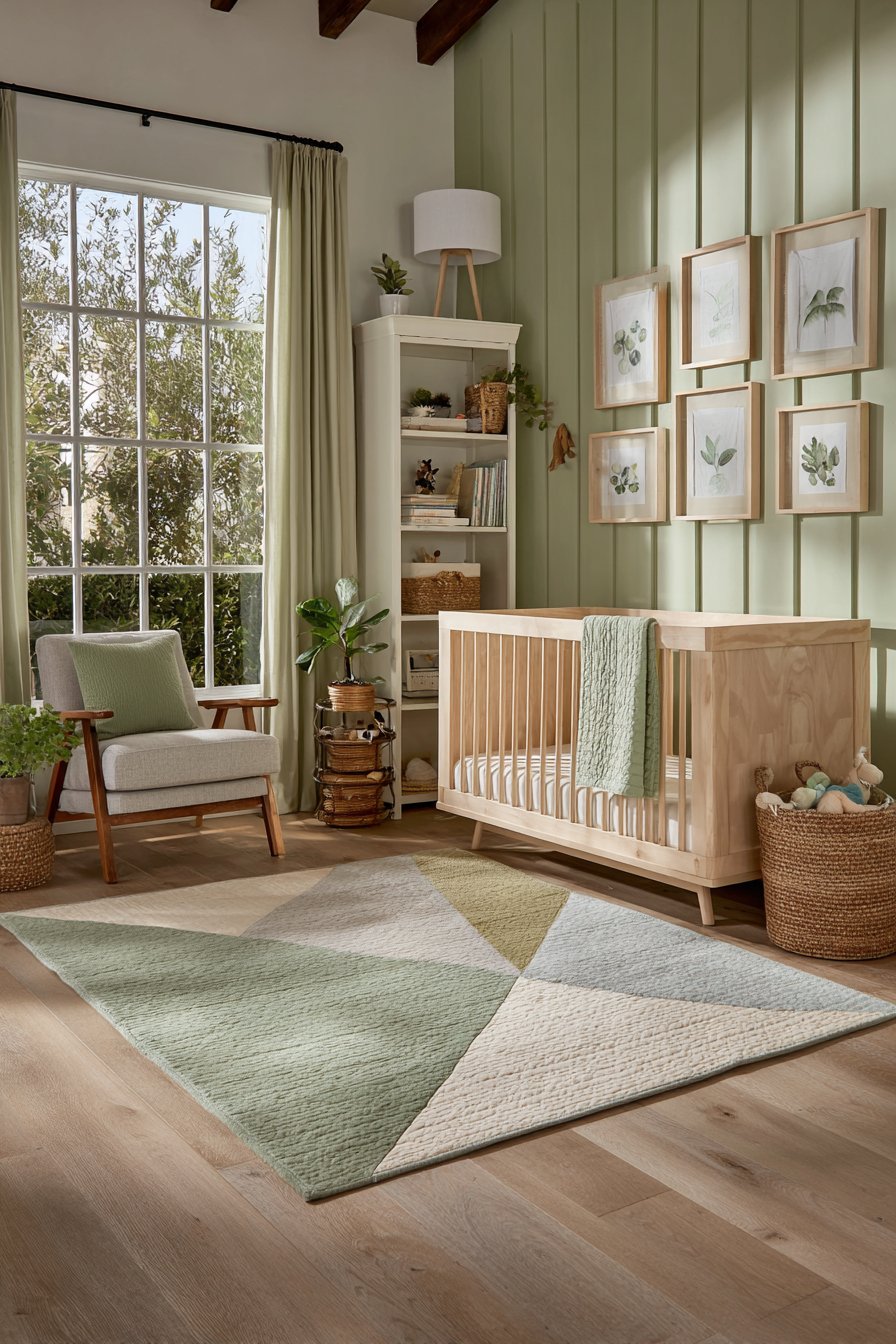
The following designs range from bold accent walls to subtle textile choices. They incorporate various materials and lighting strategies. Every concept balances aesthetic beauty with practical functionality. These ideas will inspire you to create a peaceful sanctuary where your baby can thrive.
1. Natural Oak Serenity with Olive Green Accent Wall
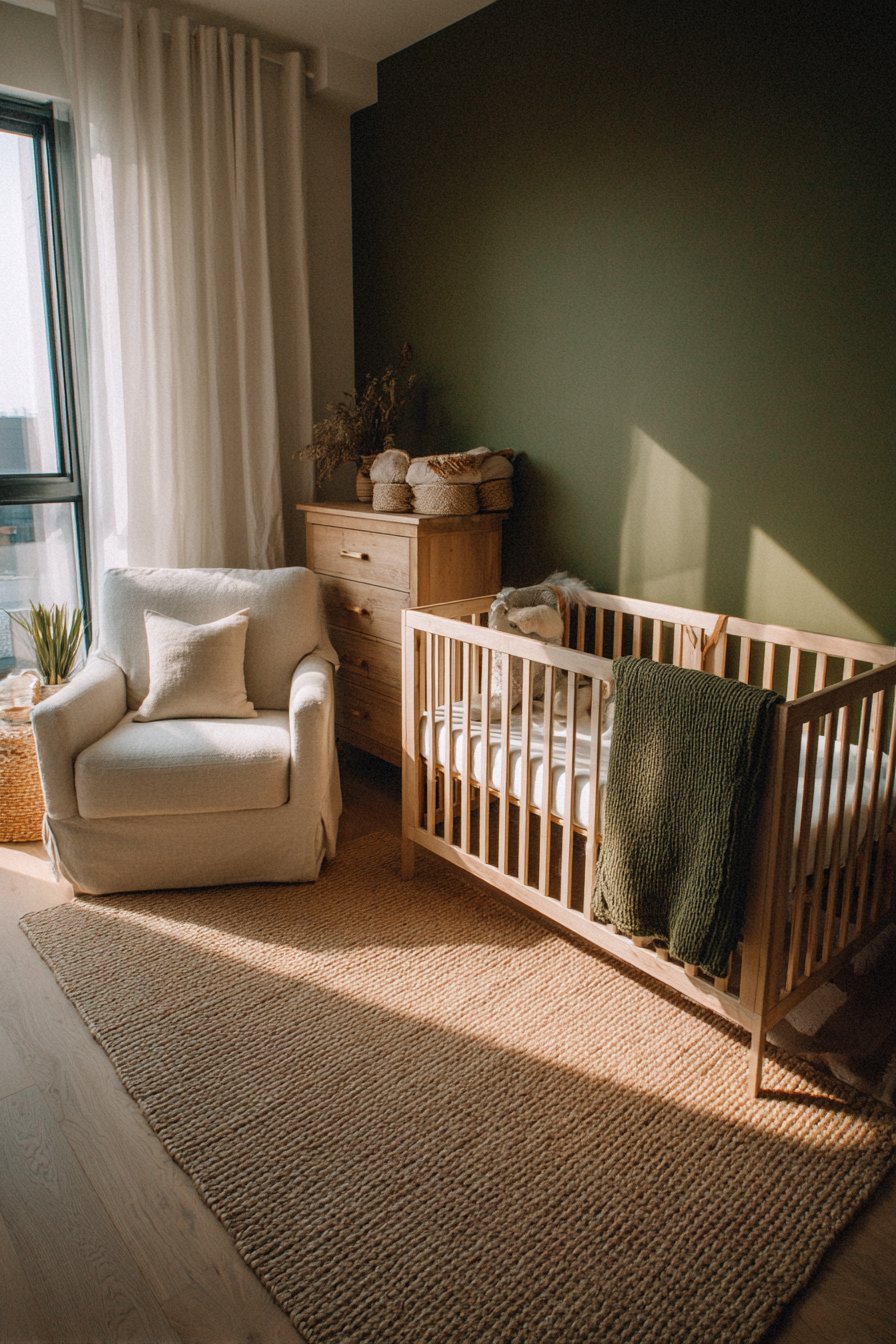
A natural oak crib with clean lines stands against a soft olive green accent wall. The combination creates immediate visual warmth. The crib’s simple design allows the wall color to shine. A comfortable glider chair upholstered in cream linen sits nearby. An olive green knitted throw drapes casually over the arm. This adds texture and visual interest to the seating area.
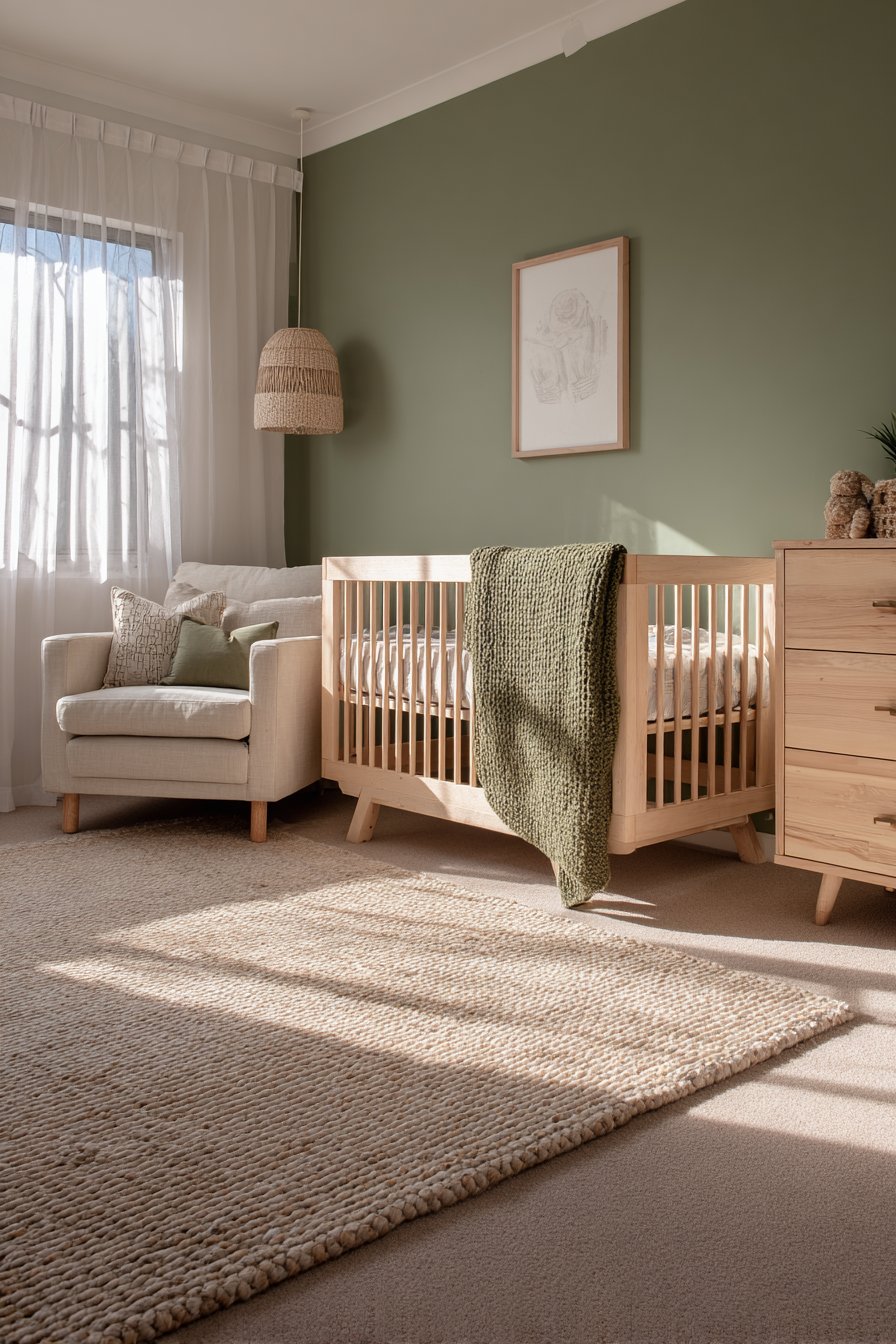
Sheer white curtains filter gentle morning light through the window. The filtered illumination creates a warm natural glow throughout the space. This lighting enhances the olive green tone beautifully. The room includes a woven jute rug with subtle texture beneath the crib. The natural fiber adds earthiness that grounds the design. A small wooden dresser with brass drawer pulls serves as a changing station.
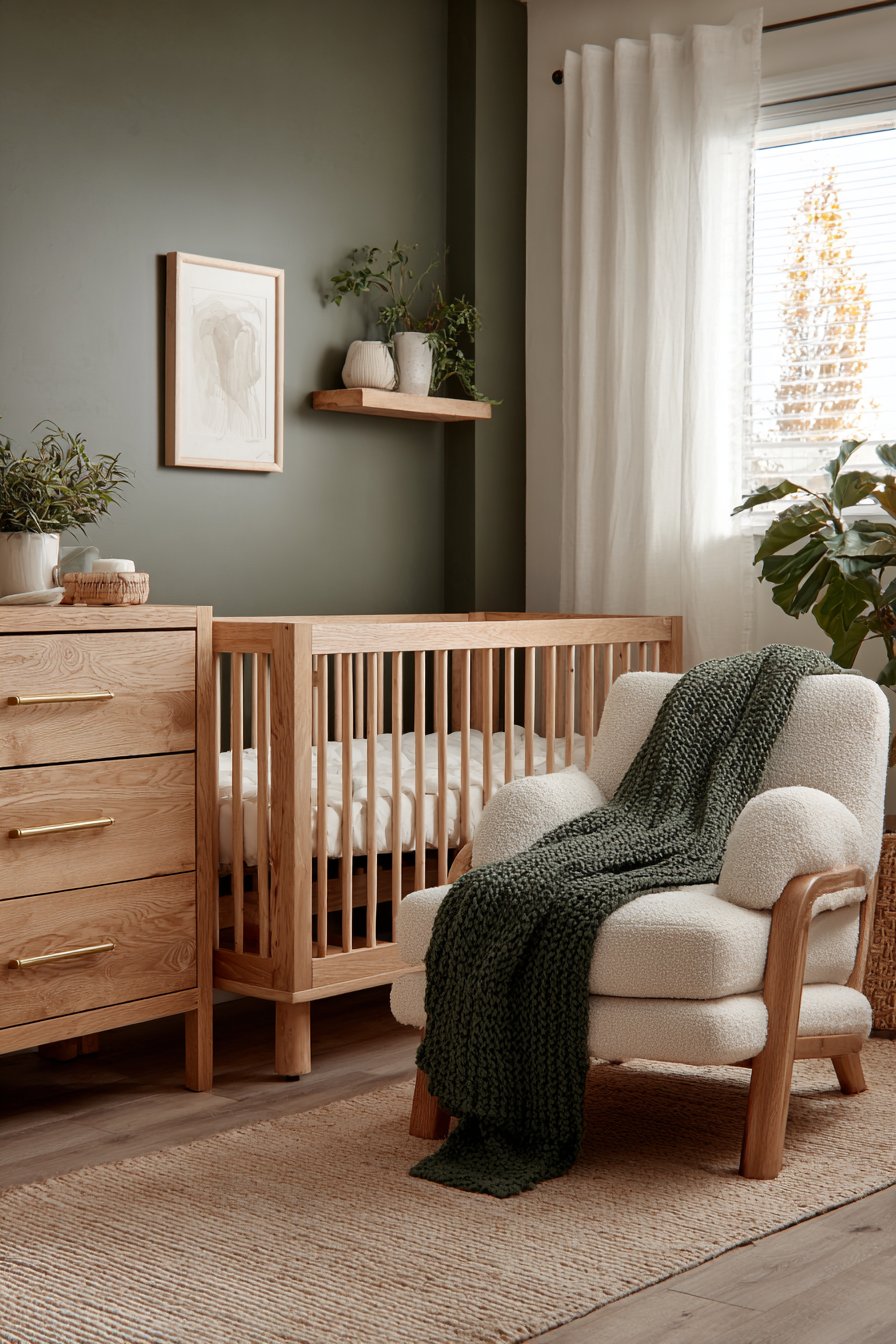
The brass hardware provides subtle metallic accents that catch the light. These details elevate the overall design without overwhelming the peaceful atmosphere. The materials work together harmoniously. Oak wood brings warmth, linen offers softness, and jute adds organic texture. Each element contributes to the nurturing environment.
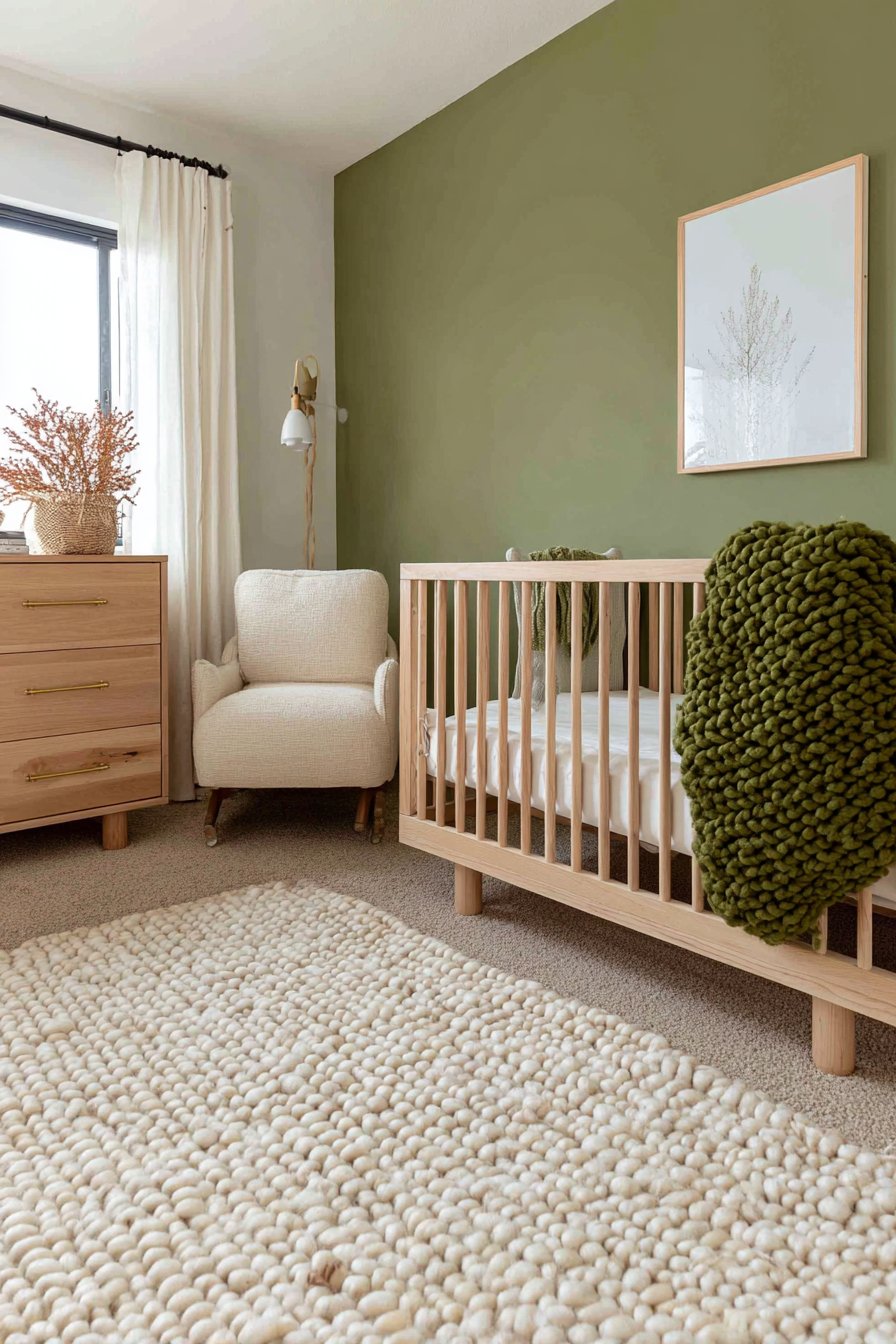
This design demonstrates how one accent wall can transform an entire space. The olive green creates a focal point that draws the eye. The neutral supporting elements prevent the room from feeling too dark. The balance between color and neutrals achieves sophisticated simplicity.
Key Design Tips:
- Paint only one accent wall in olive green to maintain brightness
- Choose natural oak furniture for warmth and durability
- Layer textures through throws, rugs, and upholstery fabrics
- Install sheer curtains to maximize natural light while maintaining privacy
- Add brass hardware for subtle metallic accents that enhance the earthy palette
2. Horizontal Wood Paneling with Olive Green Texture
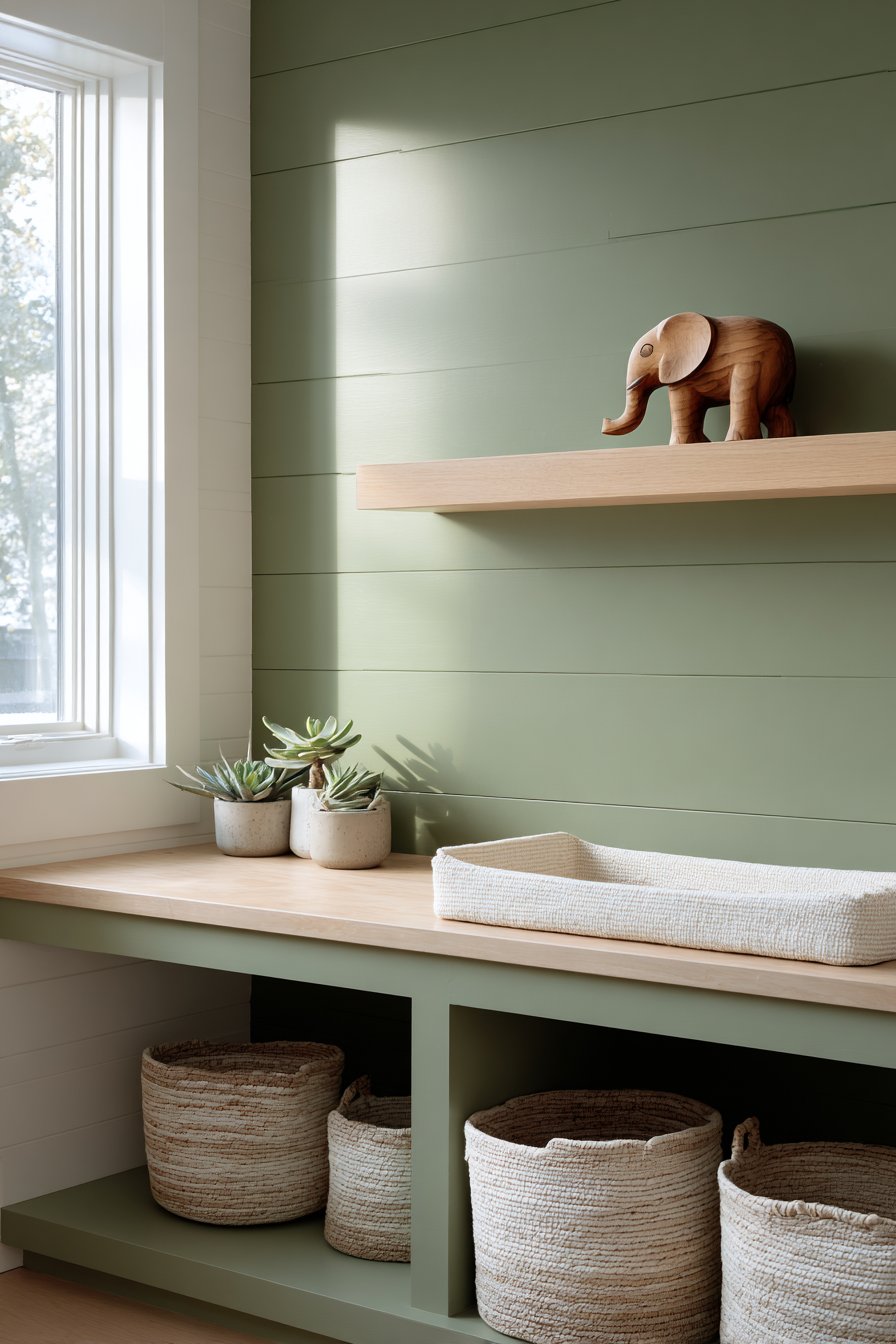
Horizontal wood paneling painted in muted olive green creates subtle texture and visual interest. The paneling adds architectural dimension to what might otherwise be a flat wall. A floating shelf made from light maple wood displays small potted succulents. Wooden elephant figurines and soft fabric storage baskets in complementary cream tones sit alongside. These carefully curated items add personality without cluttering the space.
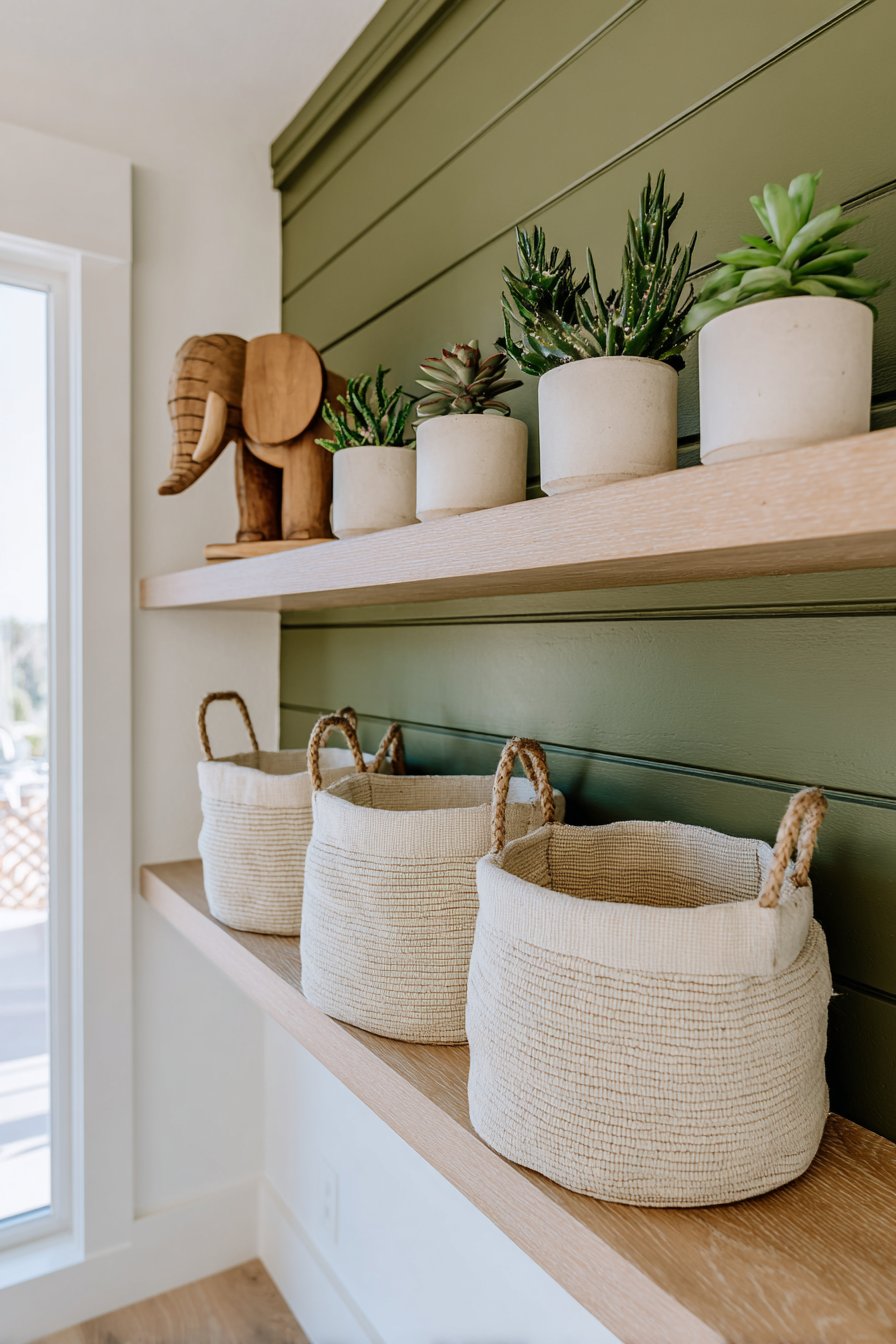
The paneling extends halfway up the wall with crisp white paint above. This creates a practical wainscoting effect that protects the lower wall from wear. The two-tone treatment adds visual height to the room. Natural daylight from an adjacent window casts gentle shadows. These shadows emphasize the wood grain texture beautifully. The interplay of light and shadow adds depth throughout the day.
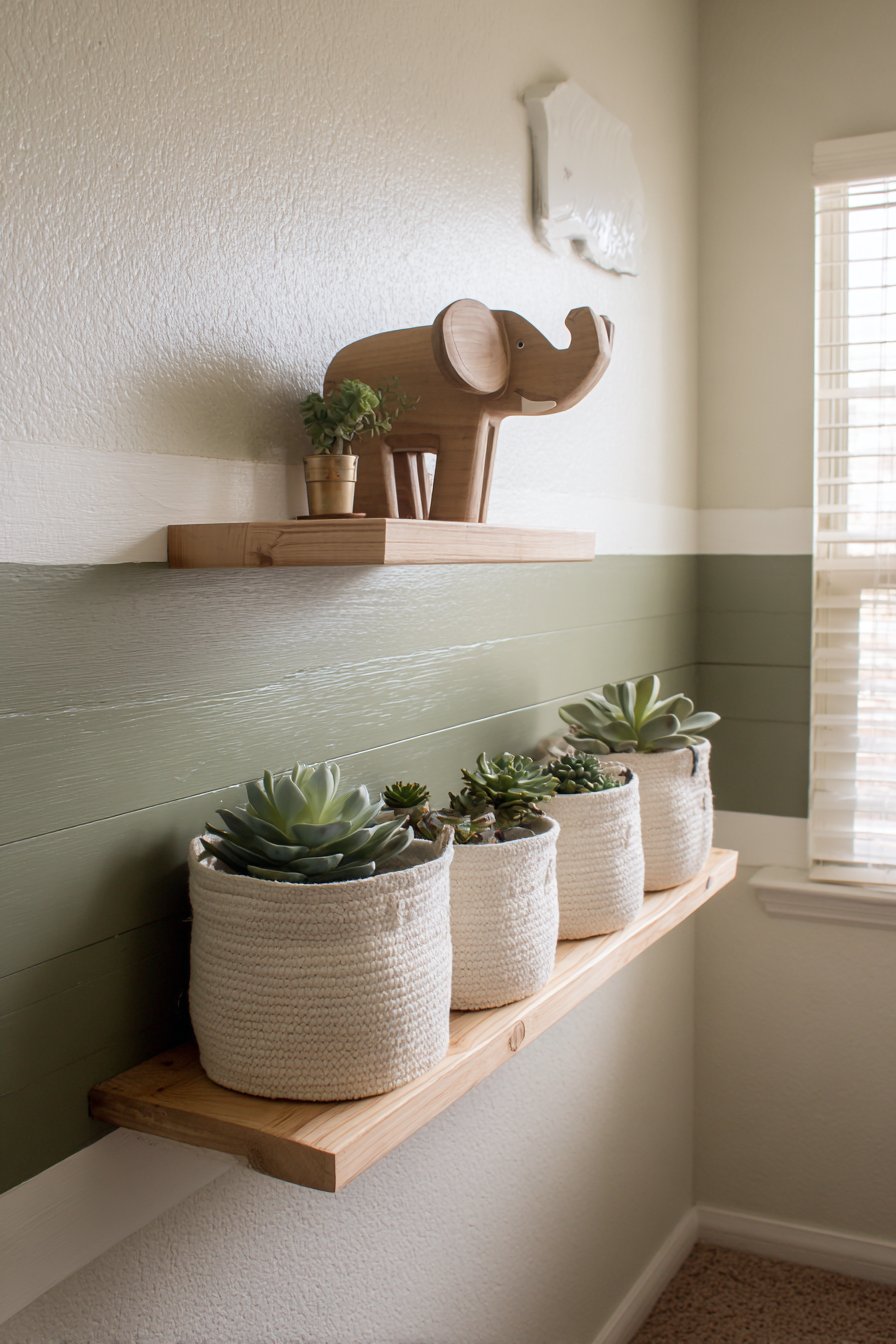
The maple floating shelf contrasts beautifully with the olive green paneling. The lighter wood tone keeps the design from feeling heavy. The combination of painted and natural wood creates layered interest. This approach works especially well in nurseries because it adds sophistication while remaining playful.
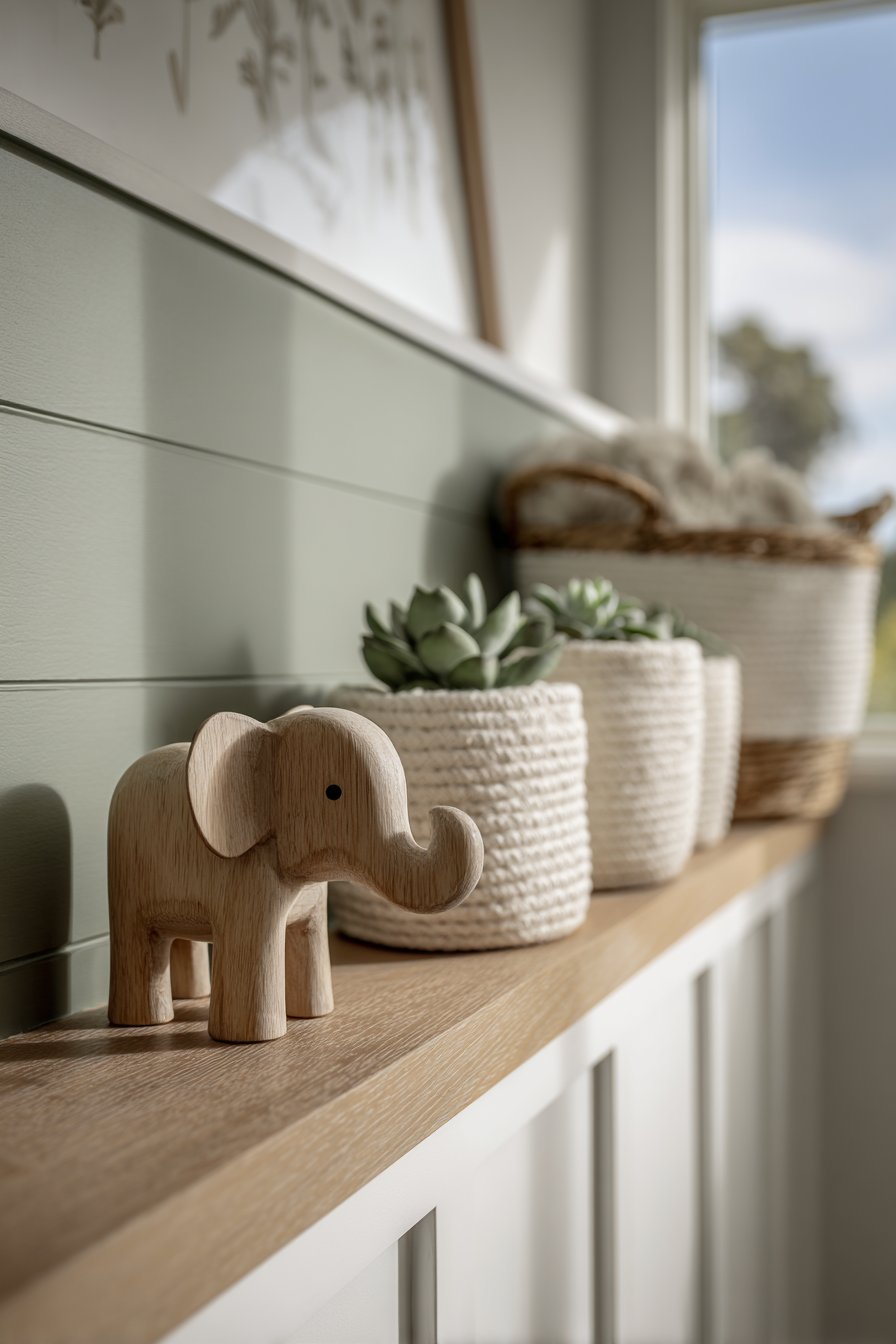
The storage baskets serve dual purposes as functional organization and decorative elements. They maintain the natural material palette. The succulents bring life into the space while requiring minimal maintenance. This design proves that wall treatments can be both beautiful and practical.
Key Design Tips:
- Install horizontal paneling halfway up walls for architectural interest
- Use wainscoting to protect walls in high-traffic areas near changing stations
- Pair olive green painted wood with lighter natural wood shelving
- Display functional storage baskets as decorative elements
- Add living plants for air quality and natural beauty
3. Vintage-Inspired Dresser with Olive Green Accent Drawer
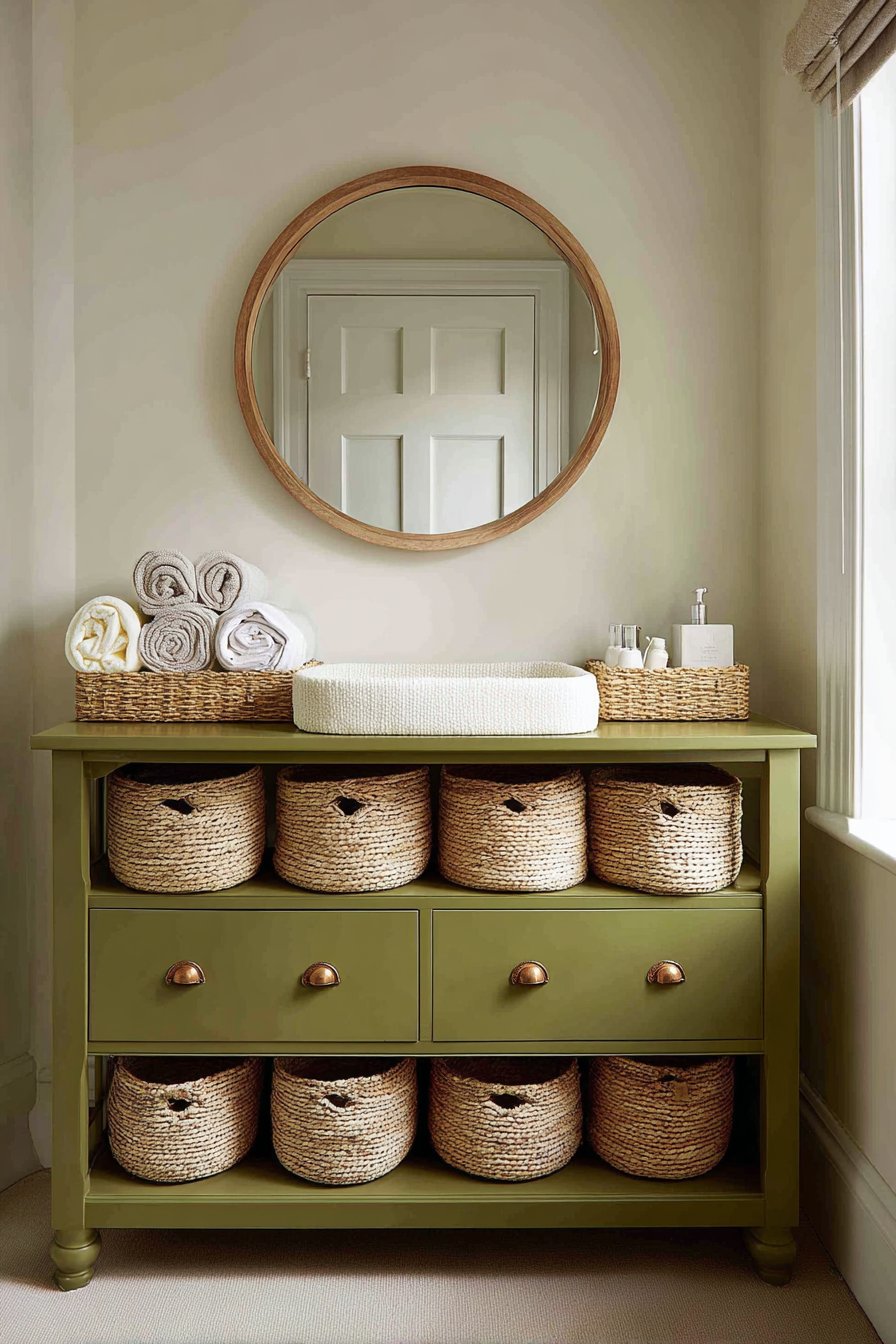
A vintage-inspired white dresser becomes a statement piece with thoughtful design choices. The top drawer painted in soft olive green creates an eye-catching accent. This simple modification transforms an ordinary dresser into custom furniture. Woven seagrass baskets sit atop the dresser containing rolled blankets and baby essentials. The baskets add texture while keeping necessities organized and accessible.
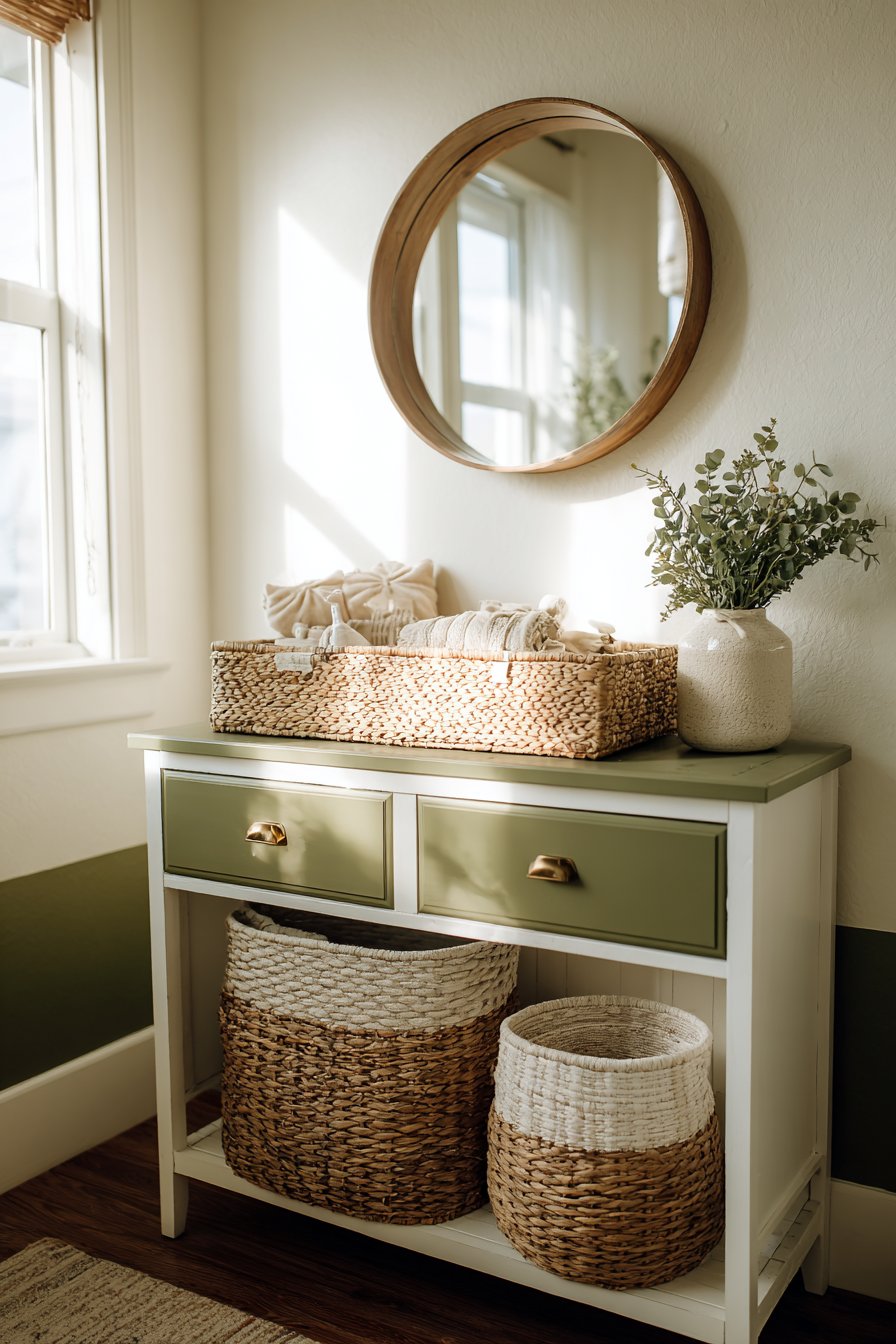
Brass cup pulls add subtle metallic detail that catches natural light. These small touches elevate the entire piece. A round mirror with a simple wooden frame hangs above. The mirror reflects natural light throughout the space, making the room feel larger. The surrounding walls are painted in pale cream. Olive green baseboards provide visual grounding that ties the room together.
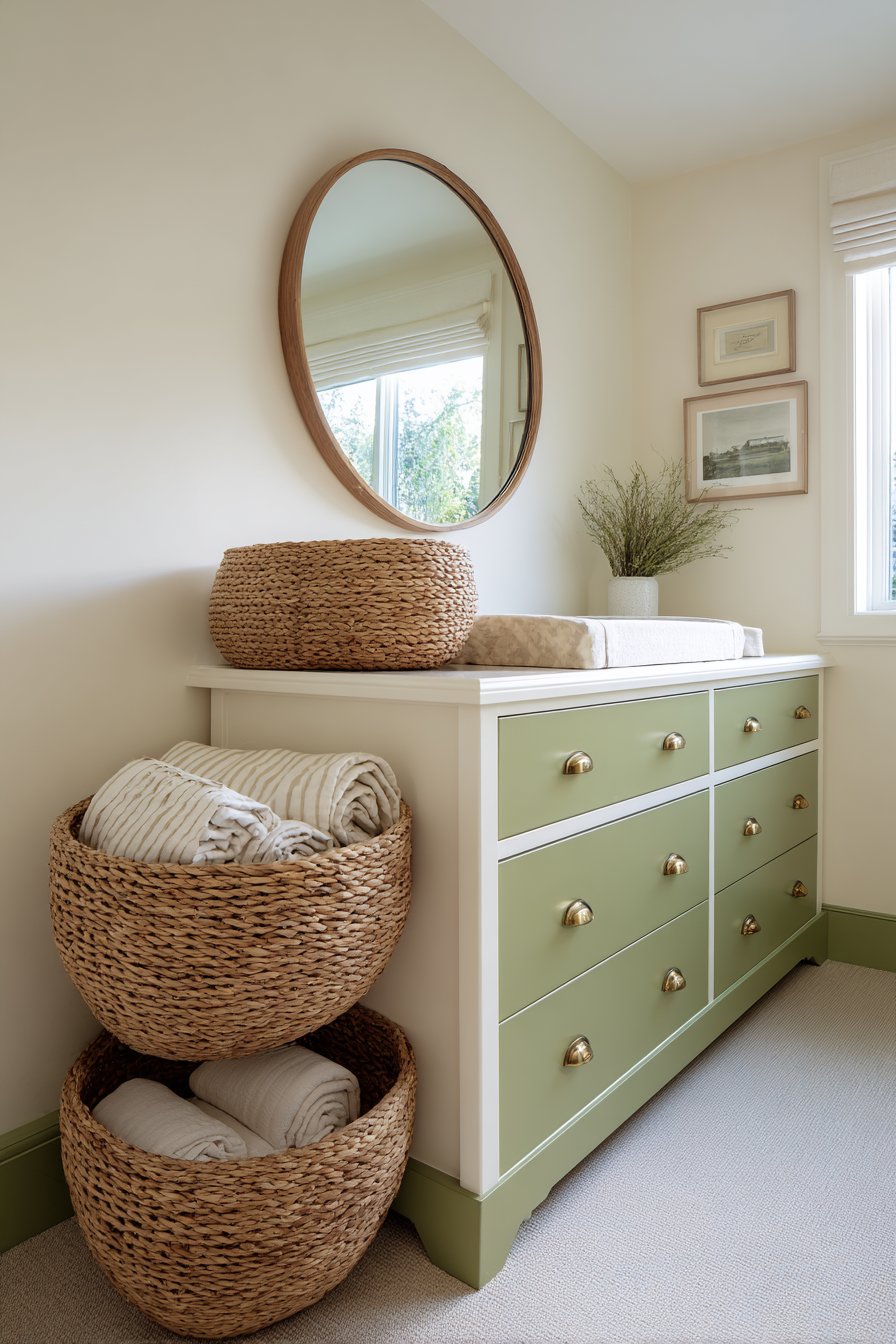
The combination of white and olive green creates a fresh, clean aesthetic. The cream walls soften the contrast between the furniture and trim. This prevents the design from feeling too stark. The natural materials in the baskets echo the organic theme throughout the nursery.
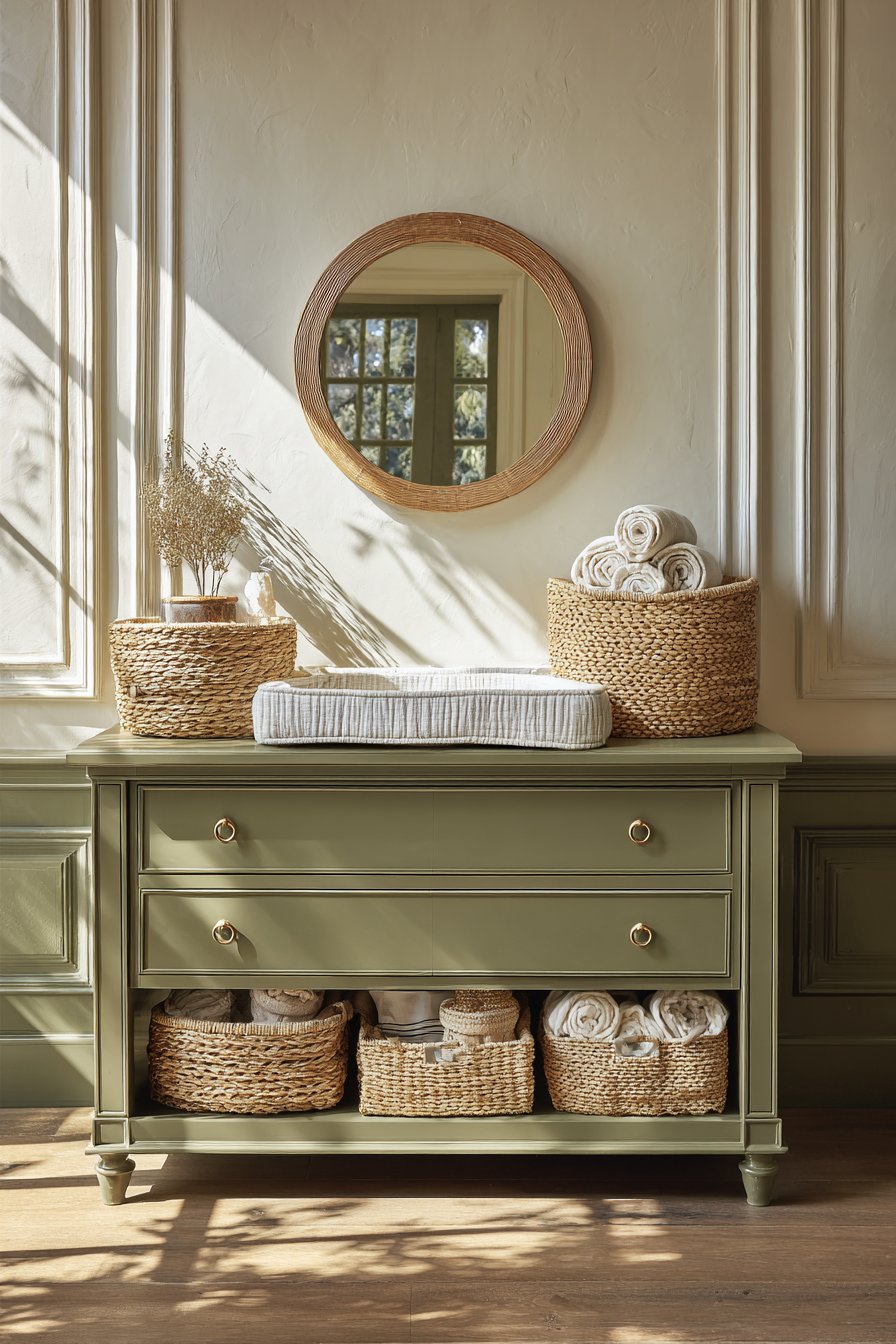
This approach demonstrates how strategic paint placement can customize budget-friendly furniture. You don’t need to invest in expensive custom pieces. A single painted drawer creates significant visual impact. The functional storage on top keeps daily essentials within reach during those frequent diaper changes.
Key Design Tips:
- Paint one drawer in olive green to create custom-looking furniture
- Use seagrass baskets for texture and practical storage
- Hang mirrors to reflect light and expand visual space
- Paint baseboards in olive green for cohesive design grounding
- Choose brass hardware to add warmth and sophistication
4. Mid-Century Modern Glider with Reading Nook
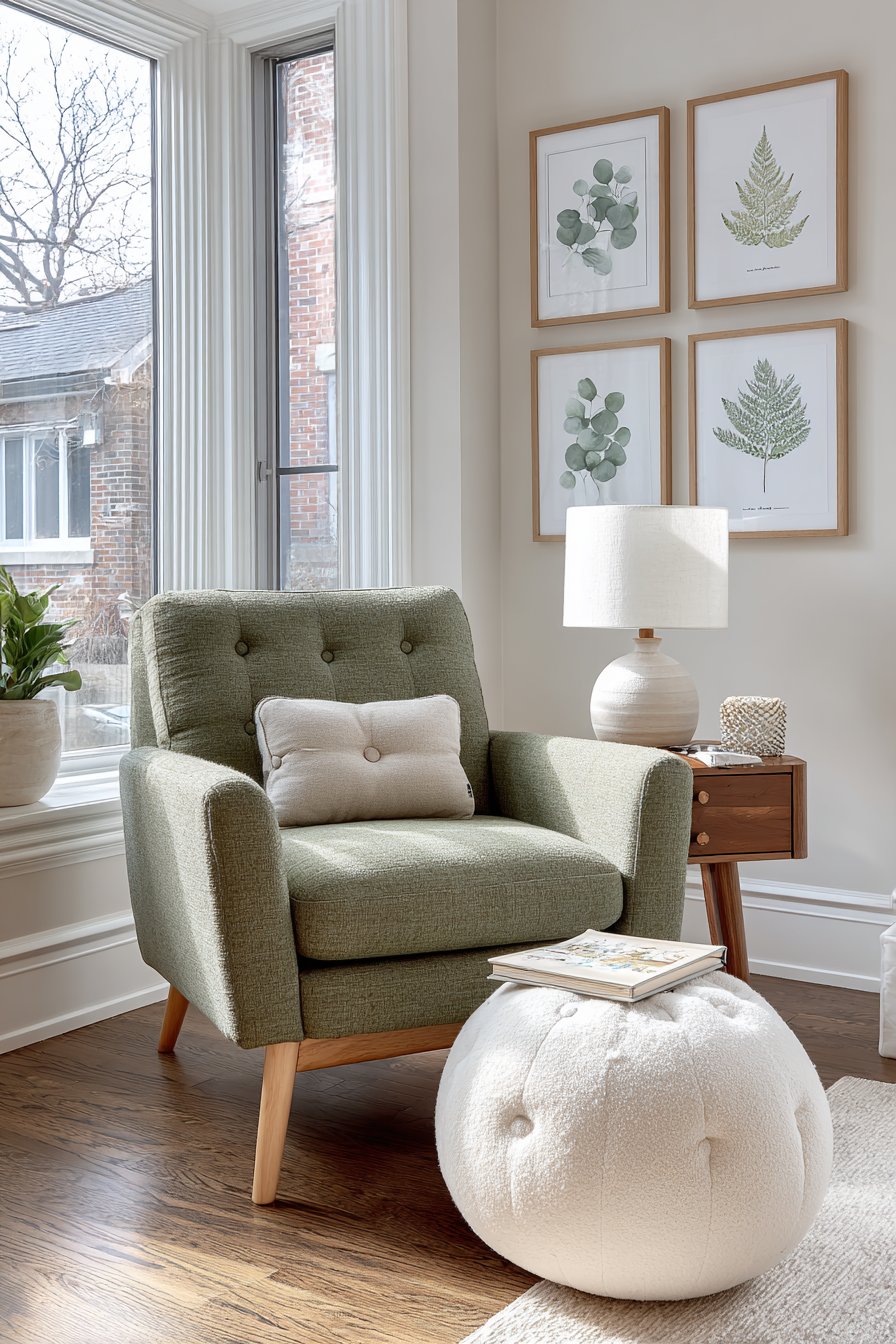
A mid-century modern glider chair in heathered olive green fabric anchors this comfortable seating area. The natural oak legs and armrests complement the chair’s upholstery beautifully. This piece combines comfort with timeless style. A small side table made from walnut wood holds essential items within reach. A white ceramic table lamp with linen shade provides task lighting. A children’s book rests nearby for late-night reading sessions.

A plush cream-colored ottoman with button tufting provides additional seating or leg support. The ottoman’s neutral tone balances the chair’s stronger color. Behind the chair, botanical wall art creates a nature-inspired focal point. Eucalyptus and fern prints in simple wooden frames celebrate organic forms. These prints reinforce the connection to nature that olive green naturally evokes.
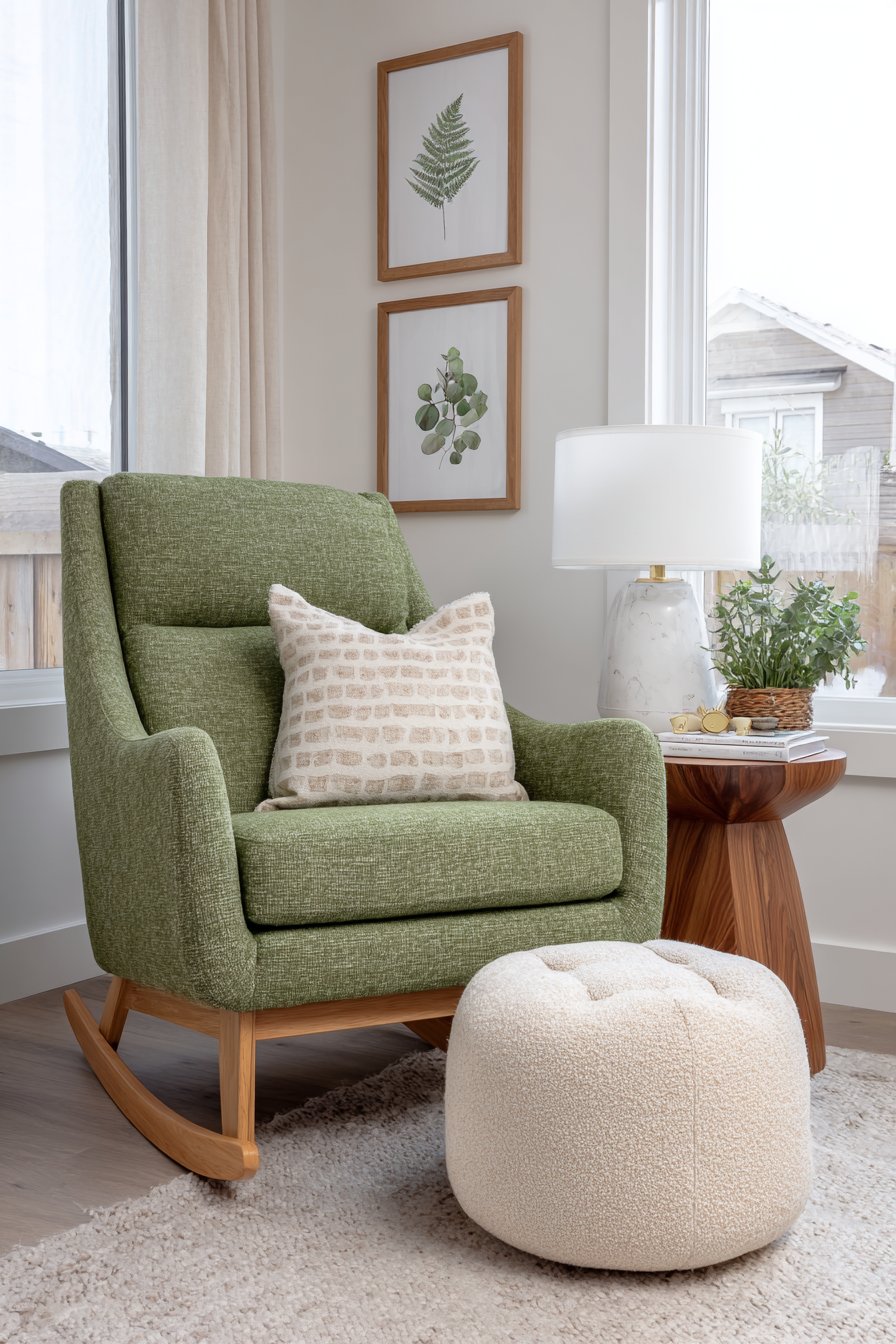
Morning light streaming through nearby windows illuminates this cozy corner. The natural illumination makes this spot perfect for feeding and bonding time. The combination of comfortable seating and good lighting creates an inviting reading nook. Parents will appreciate having a dedicated space for these quiet moments.

The mid-century modern style brings clean lines and functional beauty. The furniture’s simple forms don’t compete with the olive green color. Instead, they allow the hue to shine while maintaining visual interest through shape and proportion.
Key Design Tips:
- Choose a comfortable glider with ottoman for feeding and reading
- Position seating near windows to maximize natural light
- Add a small side table for lamps and essentials within arm’s reach
- Hang botanical prints to reinforce the natural theme
- Select mid-century modern furniture for timeless appeal
5. Painted Ceiling Beams for Architectural Interest
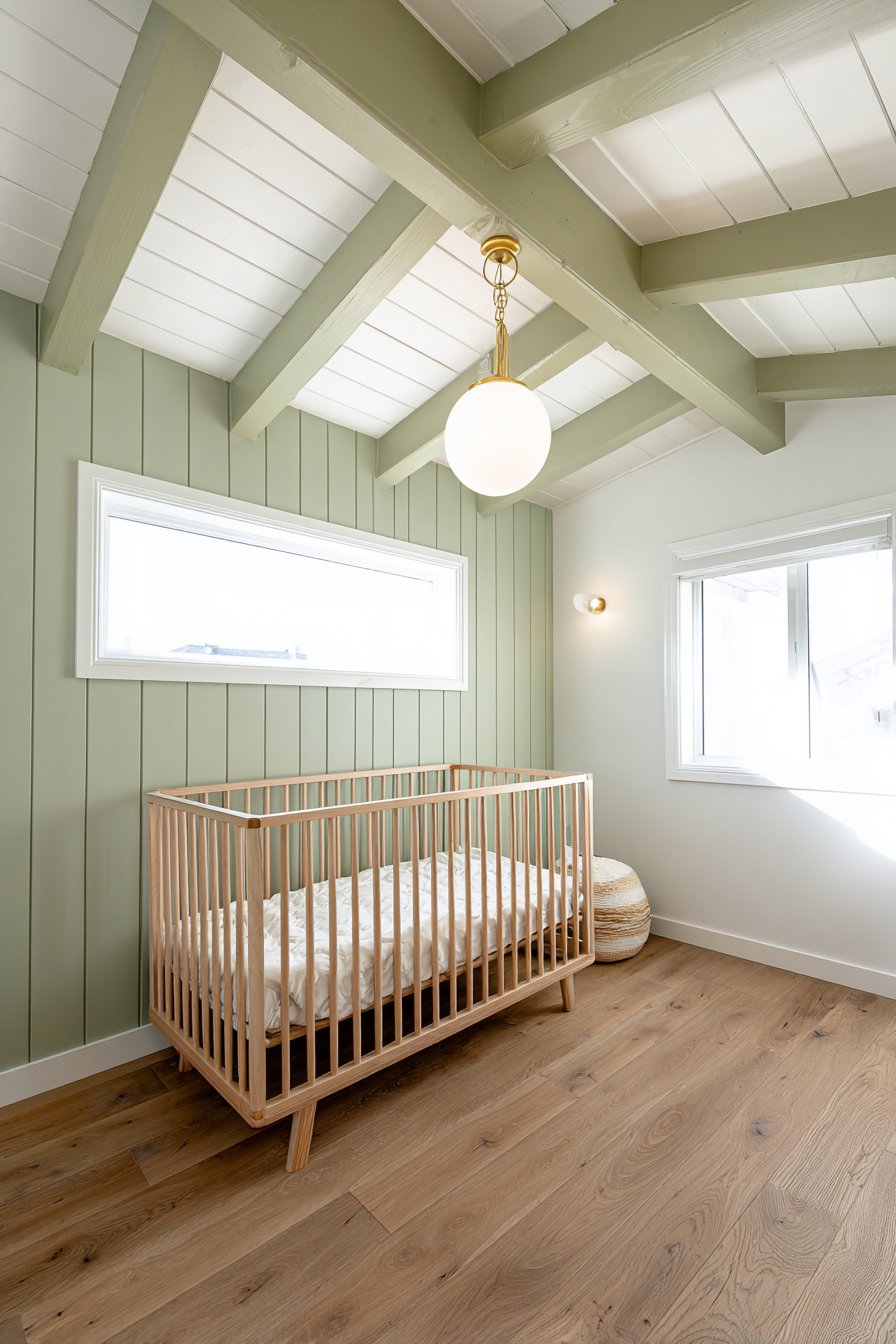
Painted ceiling beams in soft olive green add architectural interest without overwhelming the space. The beams stand against a warm white ceiling, creating subtle dimension. This unexpected design choice draws the eye upward. A simple white pendant light with brass accents hangs centrally. It provides ambient illumination while complementing the ceiling treatment. The brass detail ties to hardware elsewhere in the room.
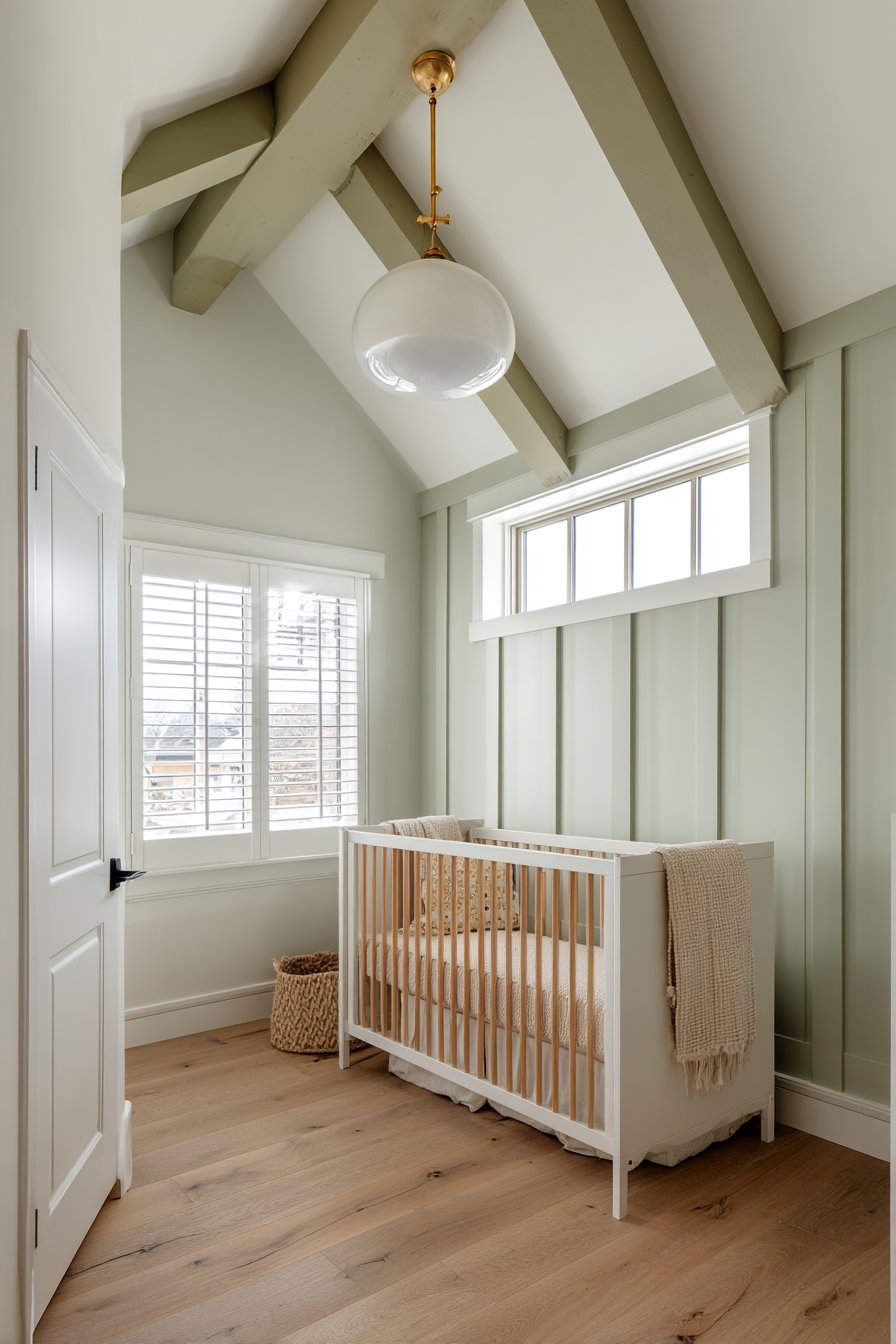
Below, a white convertible crib with natural wood accents sits on medium-toned oak flooring. The crib’s classic design allows other elements to shine. The walls are painted in the palest sage green. This creates subtle tonal variation with the olive ceiling beams. The layered greens add depth without creating harsh contrast.
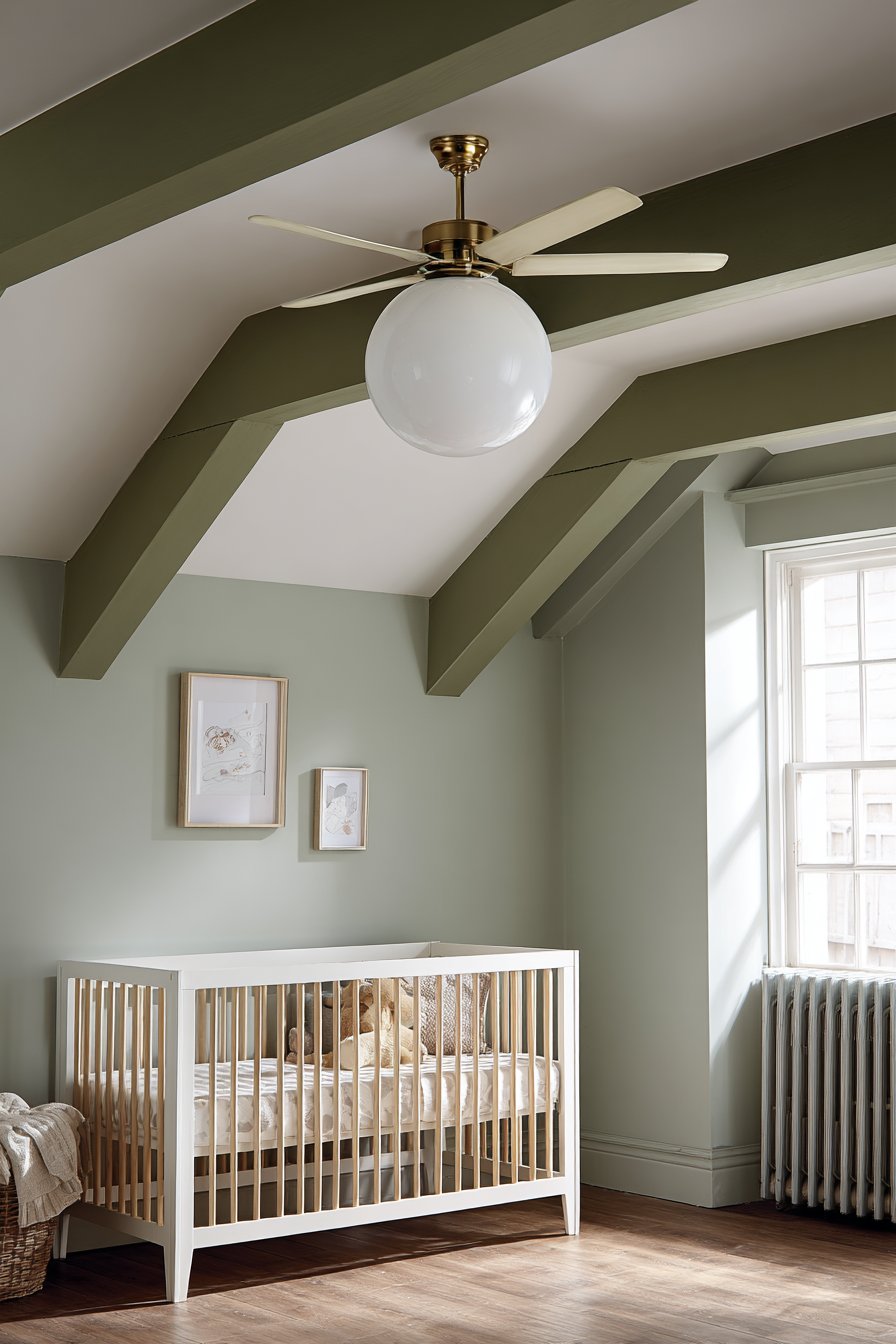
The oak flooring shows natural grain variation that brings warmth. The wood’s organic patterns complement the painted beams above. This vertical connection between ceiling and floor creates visual cohesion. The neutral crib serves as a calming anchor point between these elements.
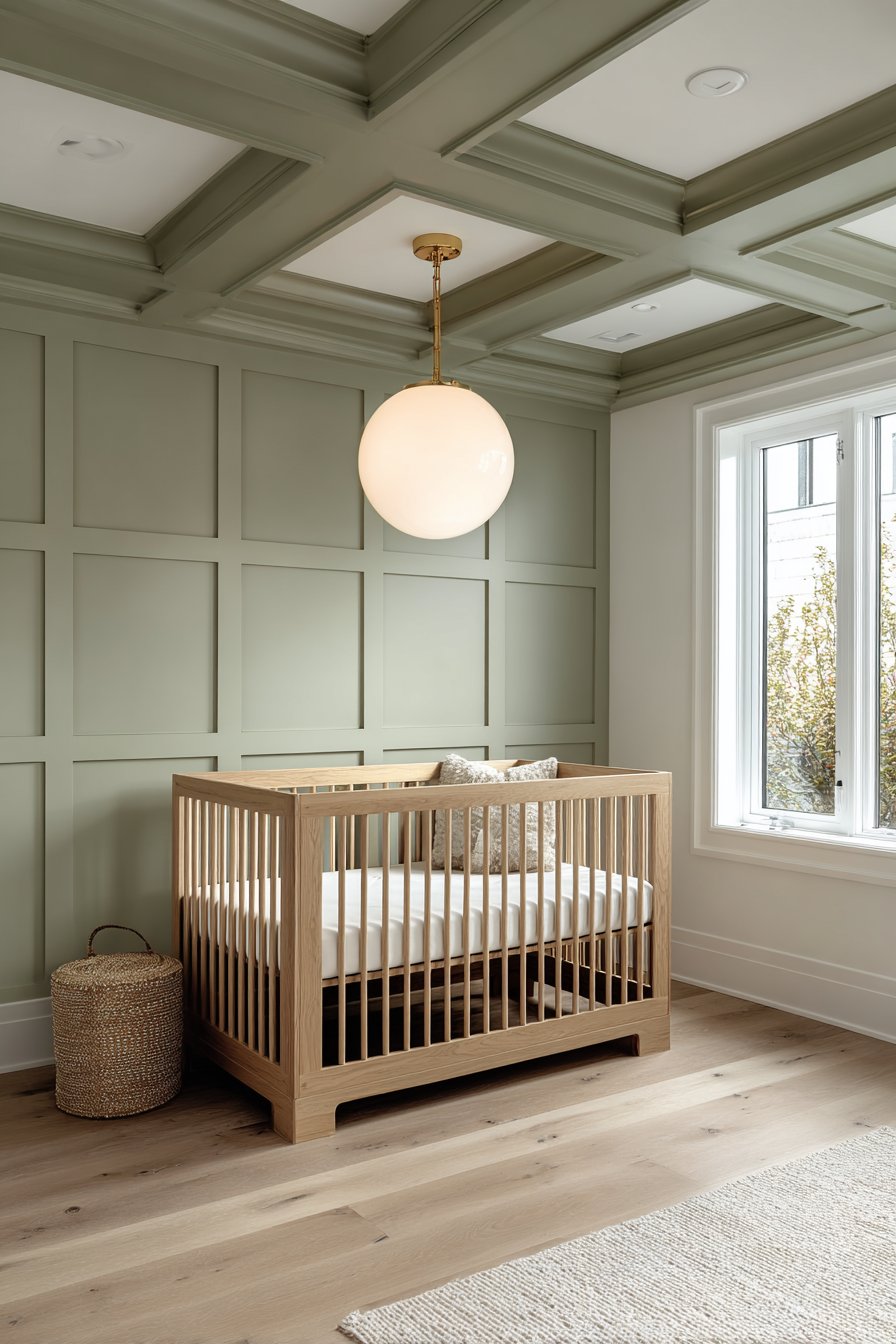
This design demonstrates how ceiling treatments can transform a space. Most nurseries leave ceilings white and unremarkable. Adding color to beams creates architectural character in newer homes. It also highlights existing architectural features in older structures. The effect feels sophisticated yet appropriate for a baby’s room.
Key Design Tips:
- Paint ceiling beams in olive green for unexpected architectural detail
- Choose white or neutral cribs to balance colorful ceiling treatments
- Layer different green tones for depth and sophistication
- Add brass lighting fixtures to tie metallic accents together
- Use natural wood flooring to ground colorful upper elements
6. Floor-Length Linen Curtains with Window Seat
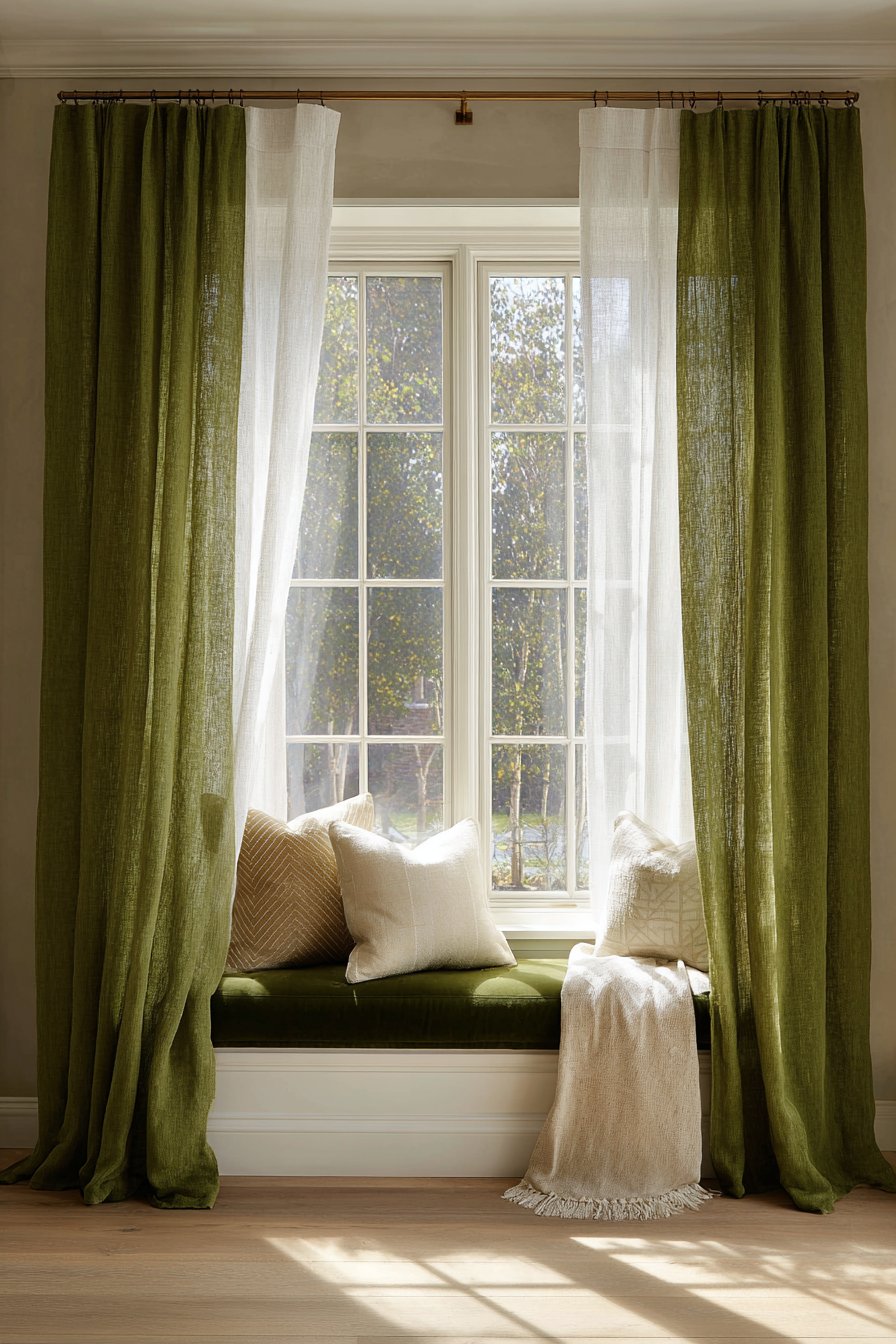
Floor-length curtains in heavyweight linen fabric provide both beauty and function. The subtle olive green tone frames the window elegantly. The curtains hang from simple brass rods with minimal hardware. They pool slightly on the light oak flooring, creating luxurious fullness. Sheer white under-curtains provide privacy while allowing filtered natural light. The dual-layer system offers flexibility for different times of day.
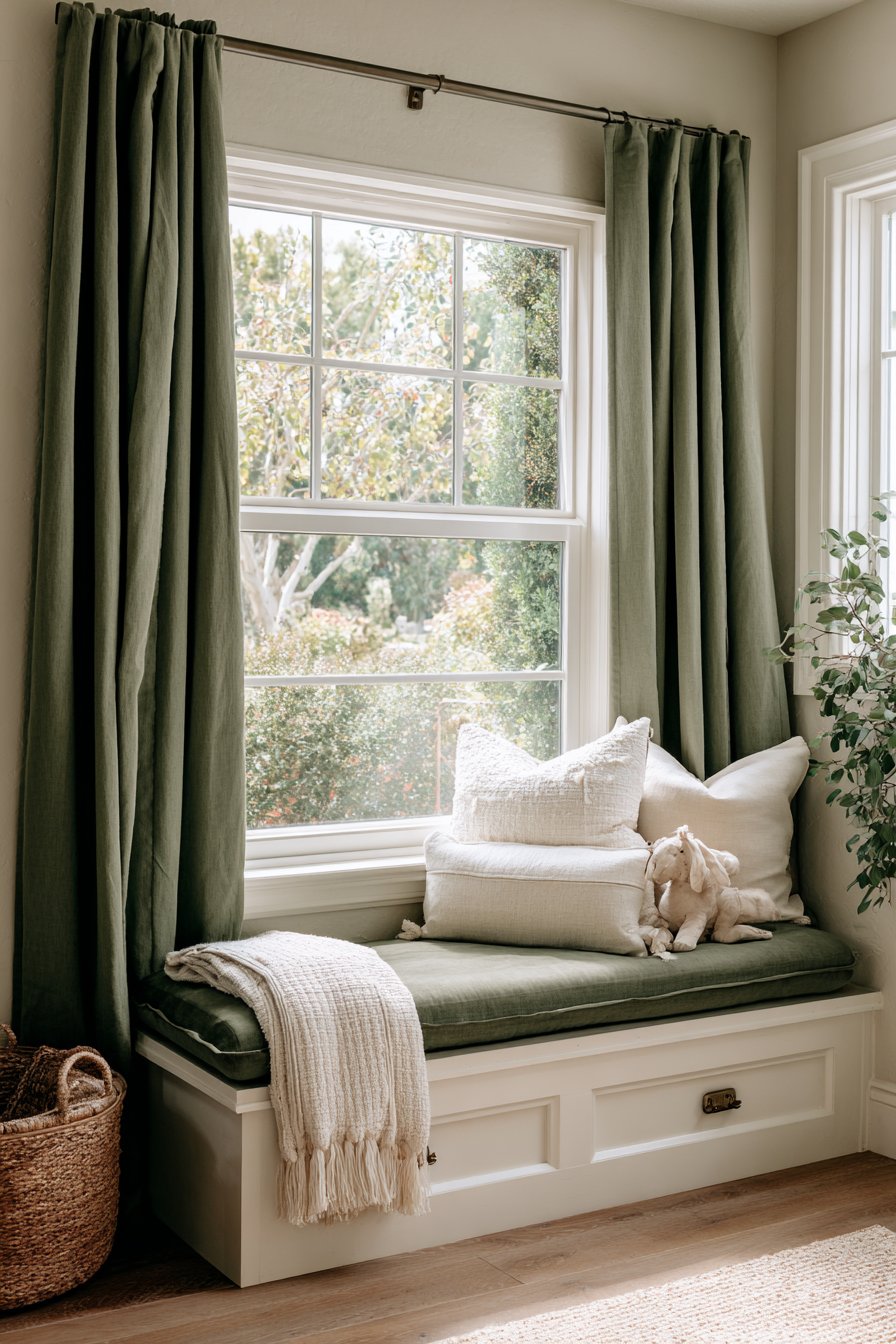
A cushioned window seat with olive green velvet upholstery creates a cozy spot beneath the window. Cream throw pillows add softness and comfort. This seating area becomes a favorite spot for reading or quiet contemplation. The velvet upholstery adds tactile richness that contrasts with the linen curtains.
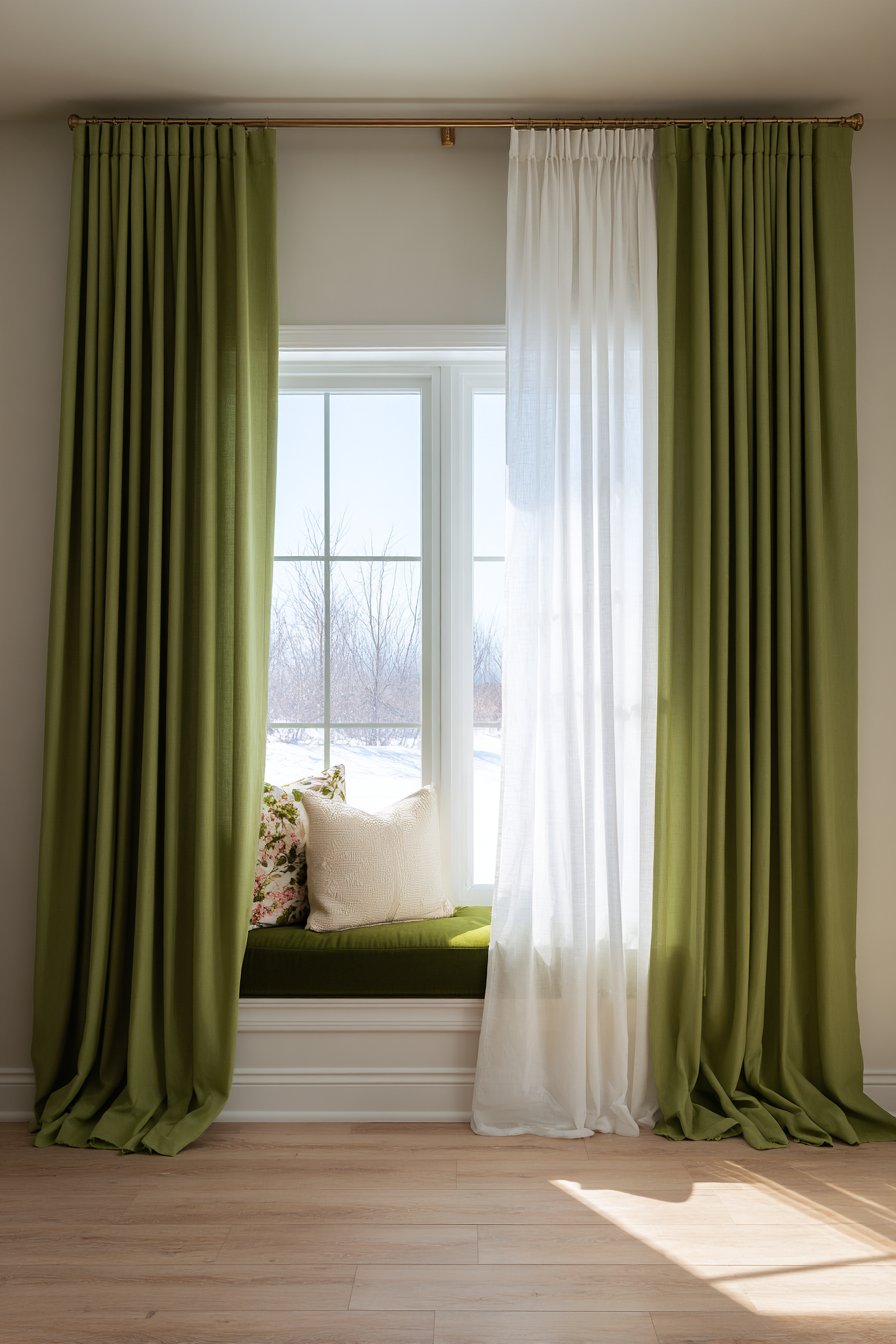
The combination of linen and velvet demonstrates sophisticated material mixing. Both fabrics bring luxury but in different ways. Linen offers casual elegance and light control. Velvet provides plush comfort and visual depth. Together they create layered interest that elevates the entire design.
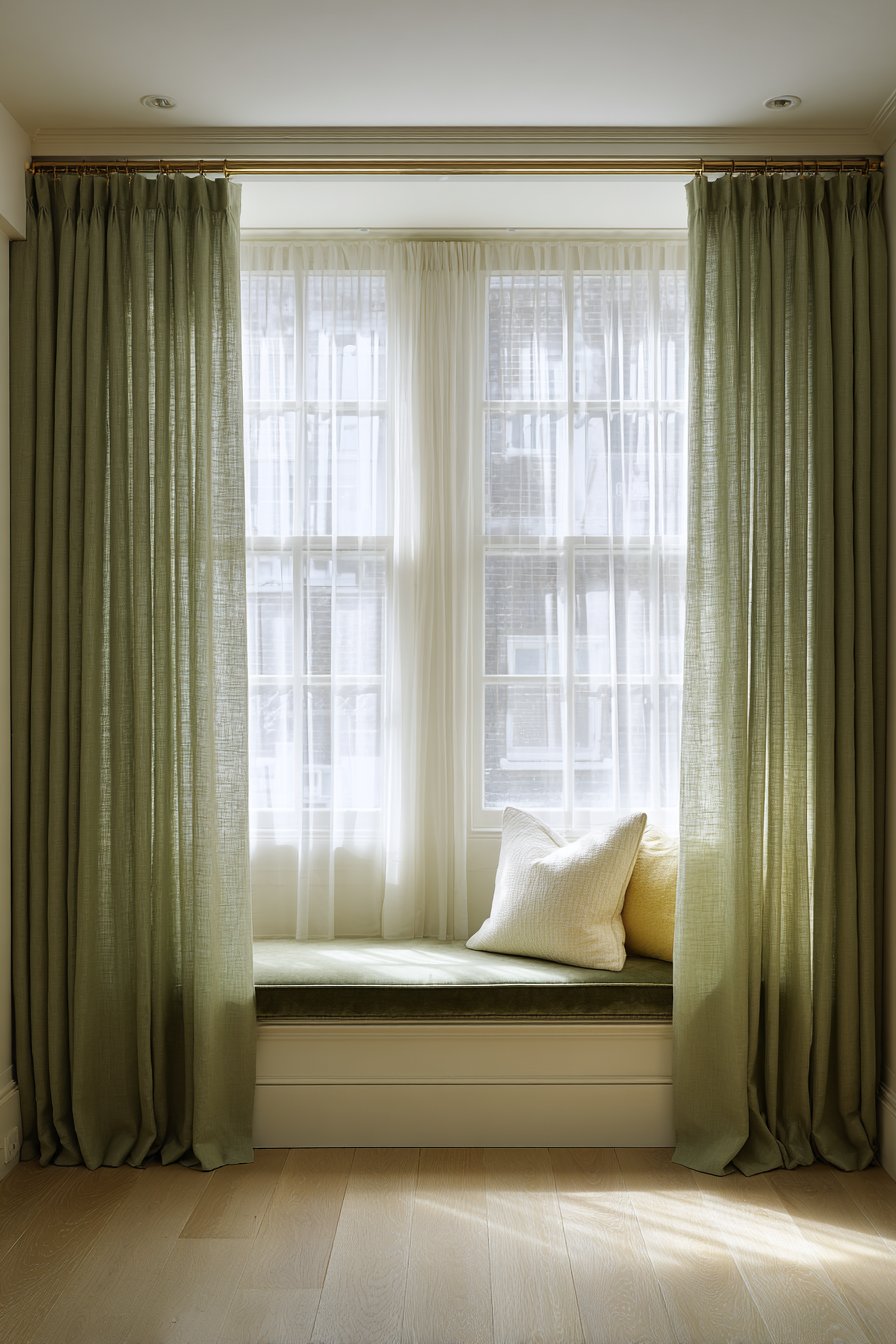
The brass curtain hardware ties to other metallic accents throughout the room. These consistent details create visual flow. The window seat maximizes functional space while adding architectural interest. It transforms a standard window into a special feature.
Key Design Tips:
- Use double-rod systems for layered light control
- Choose heavyweight linen for blackout capability without harsh blinds
- Add window seats to maximize functional space
- Upholster window seats in velvet for luxurious texture
- Install curtains at ceiling height to add visual height
7. Custom Built-In Shelving for Storage Solutions
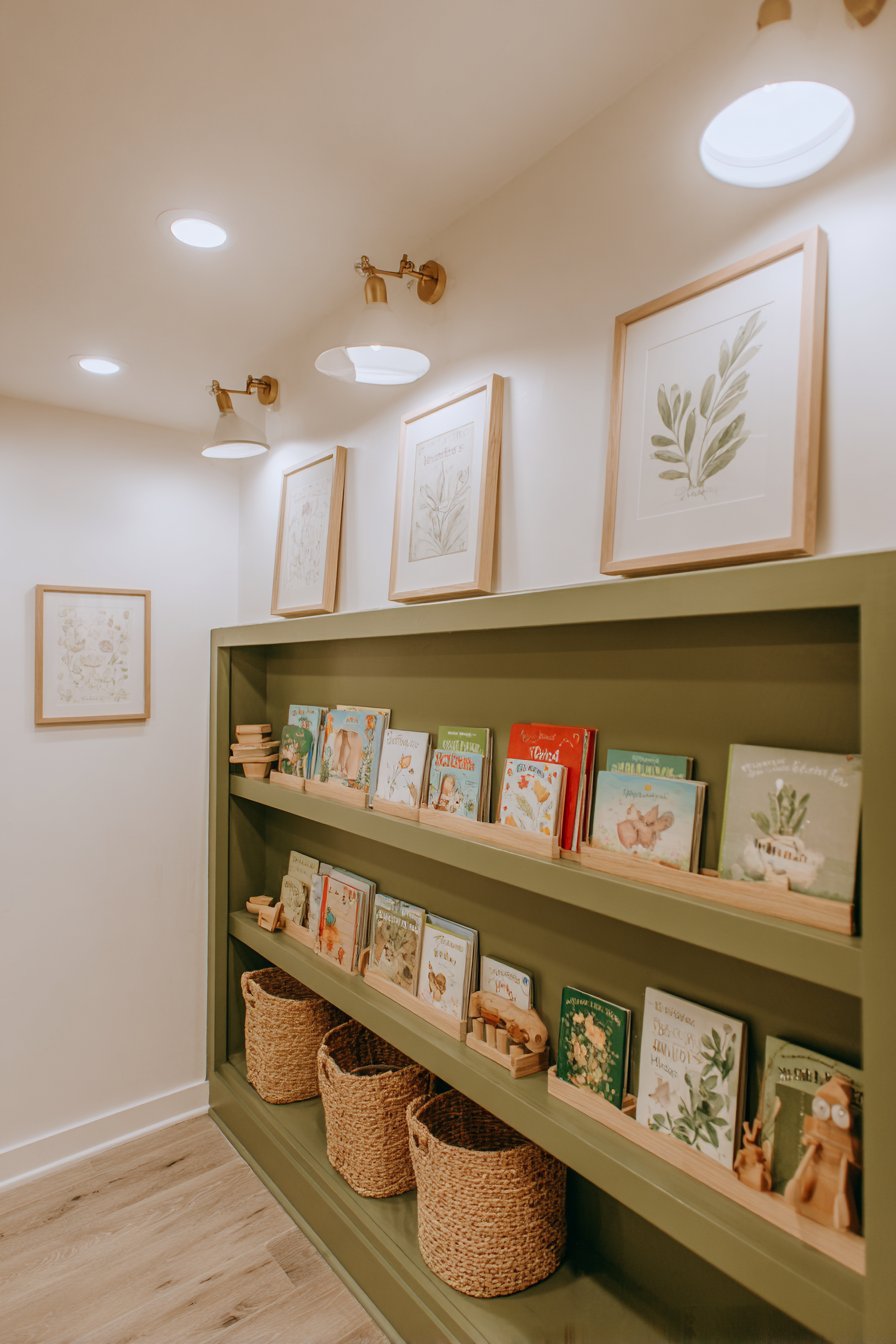
Custom built-in shelving painted in soft olive green transforms storage into design feature. White interior backing creates contrast that highlights stored items. The shelves display carefully arranged children’s books with colorful spines. Small wooden toys and woven storage baskets in natural tones maintain the organic aesthetic. Everything has its place yet remains accessible.
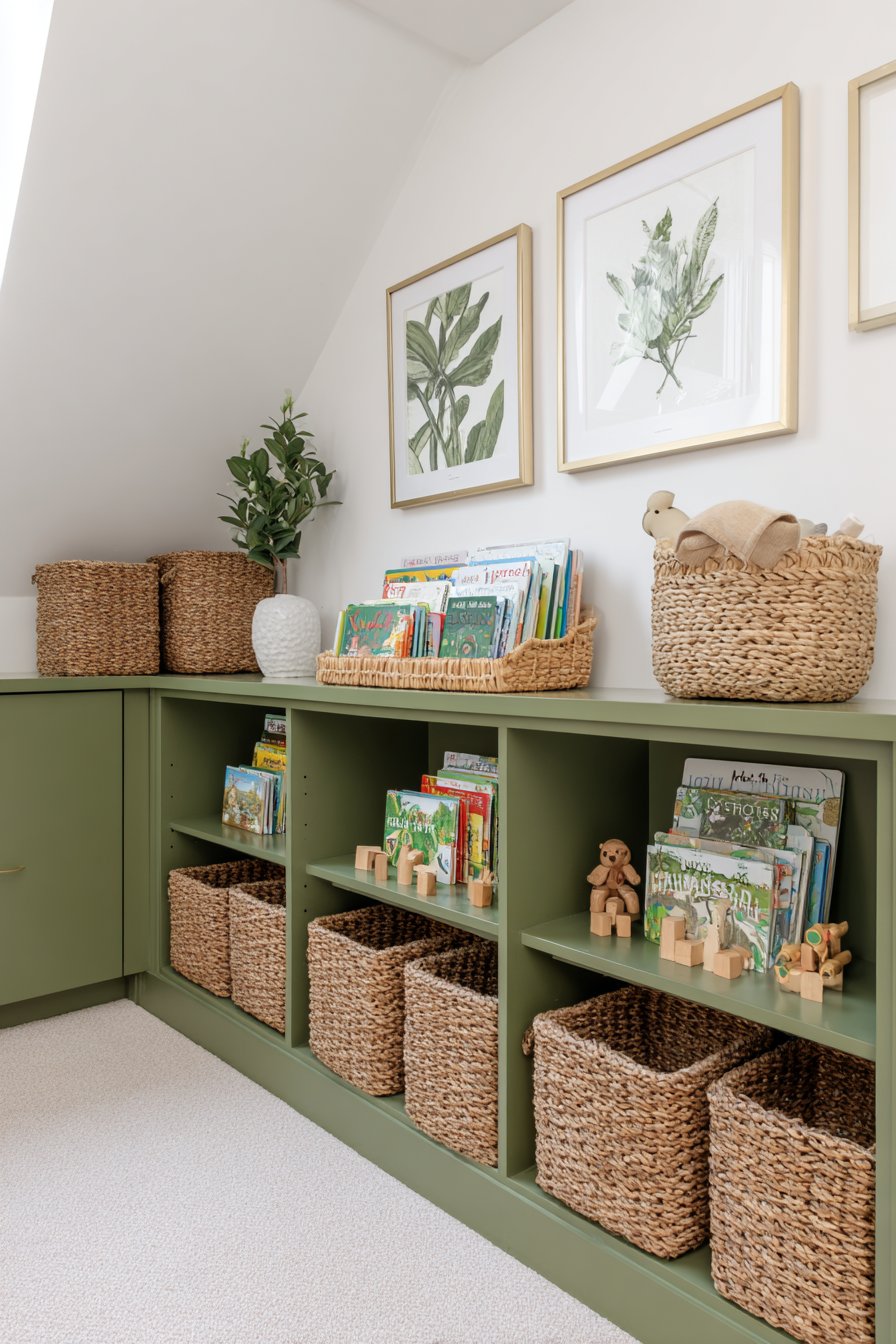
Brass picture ledges mounted below the shelving hold framed botanical prints and family photos. These ledges allow easy rotation of displayed items as baby grows. The surrounding walls are painted in warm white. This allows the olive green built-ins to serve as an attractive focal point. The storage solution becomes architectural art rather than mere function.
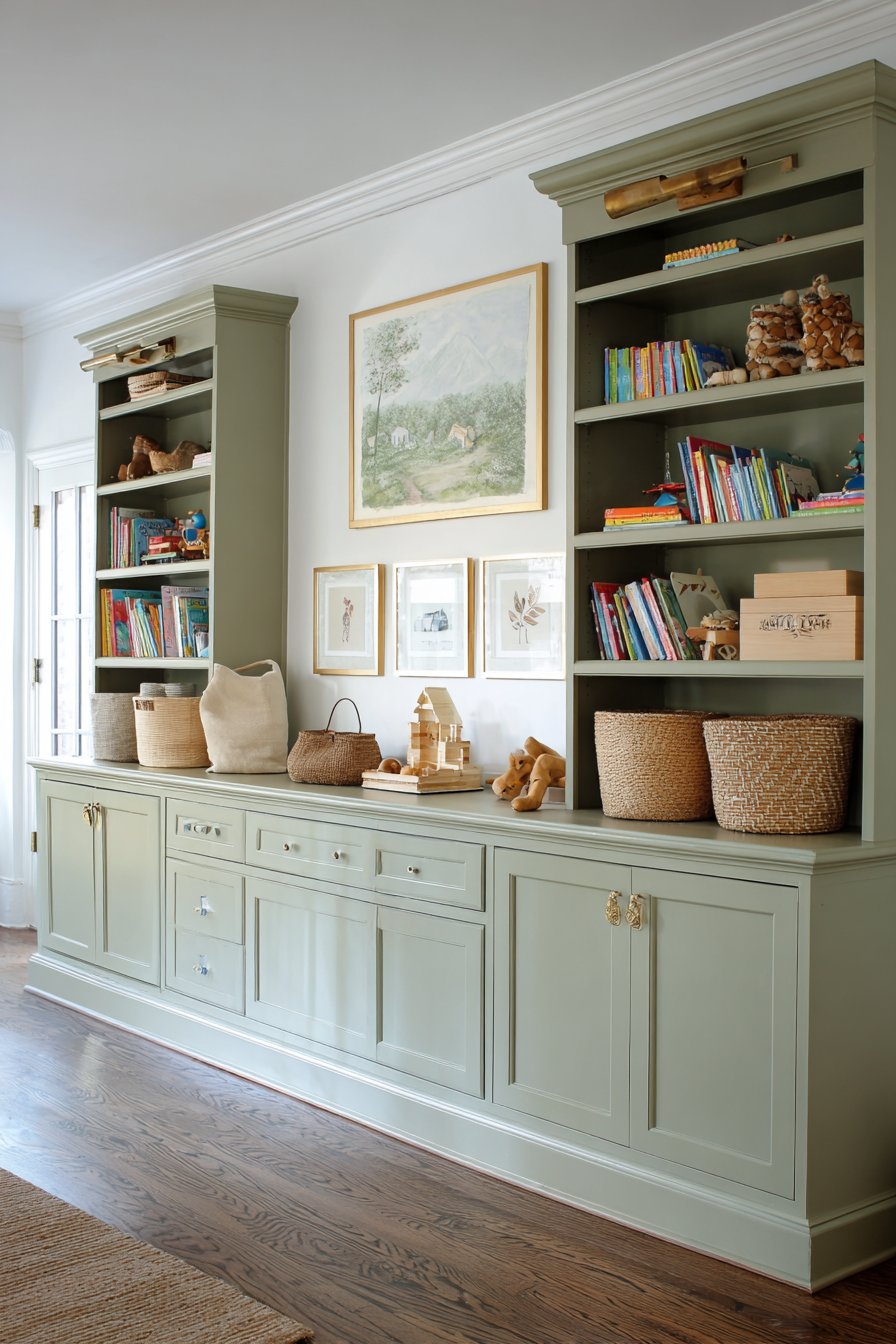
The open shelving encourages organization while displaying beautiful items. The colorful book spines add pops of color against the olive green. This creates visual interest that changes as the collection grows. The woven baskets hide less attractive necessities while maintaining the natural material palette.
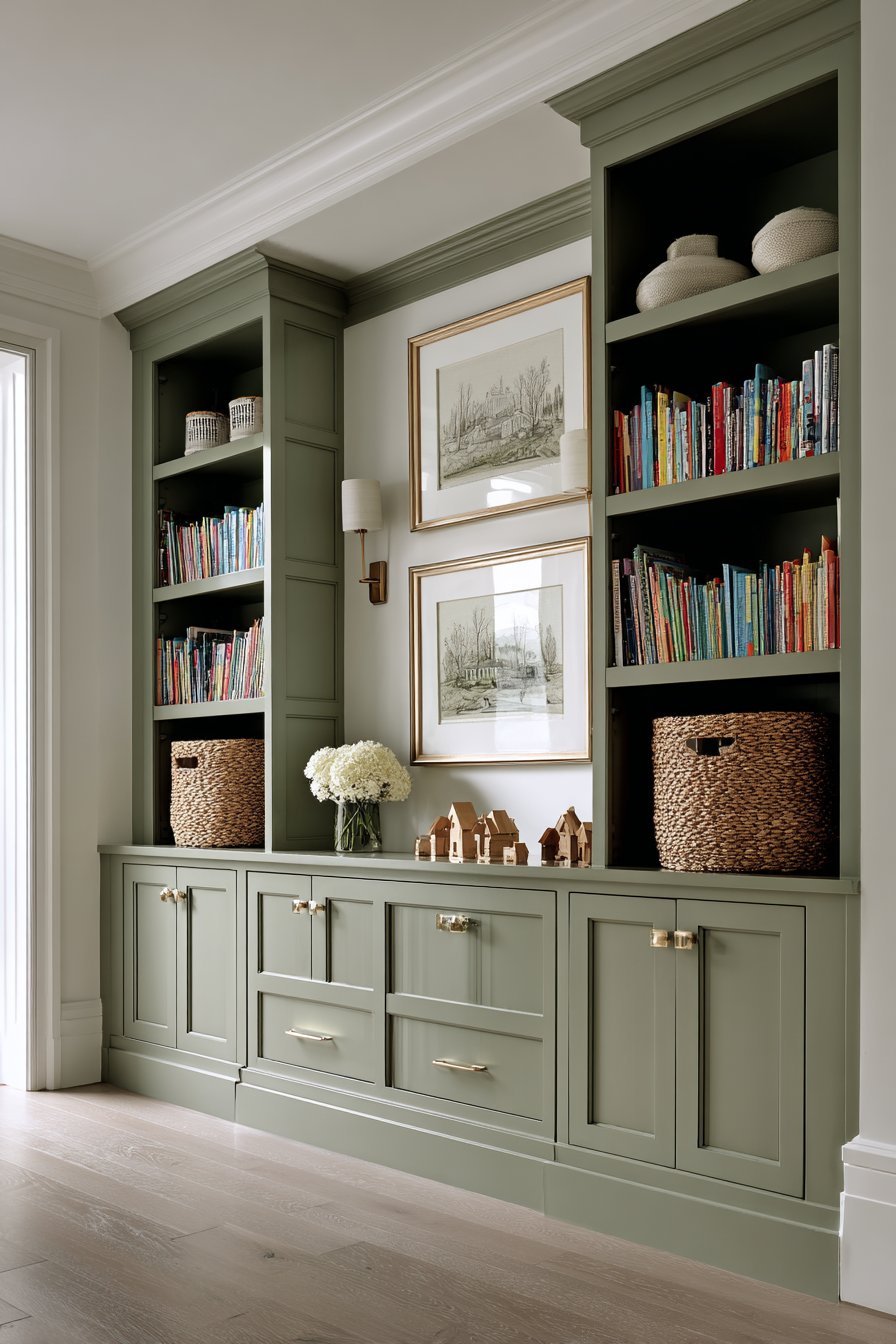
This design demonstrates how storage can enhance rather than detract from aesthetics. Built-in solutions maximize vertical space efficiently. They also add perceived value and custom quality to the nursery. The organized display teaches children about order from their earliest days.
Key Design Tips:
- Paint built-in shelving in olive green with white backing for contrast
- Use brass picture ledges for flexible display options
- Arrange books and toys as decorative elements
- Choose woven baskets to hide necessities while maintaining aesthetic
- Build shelving to ceiling height to maximize storage capacity
8. Geometric Area Rug as Grounding Element
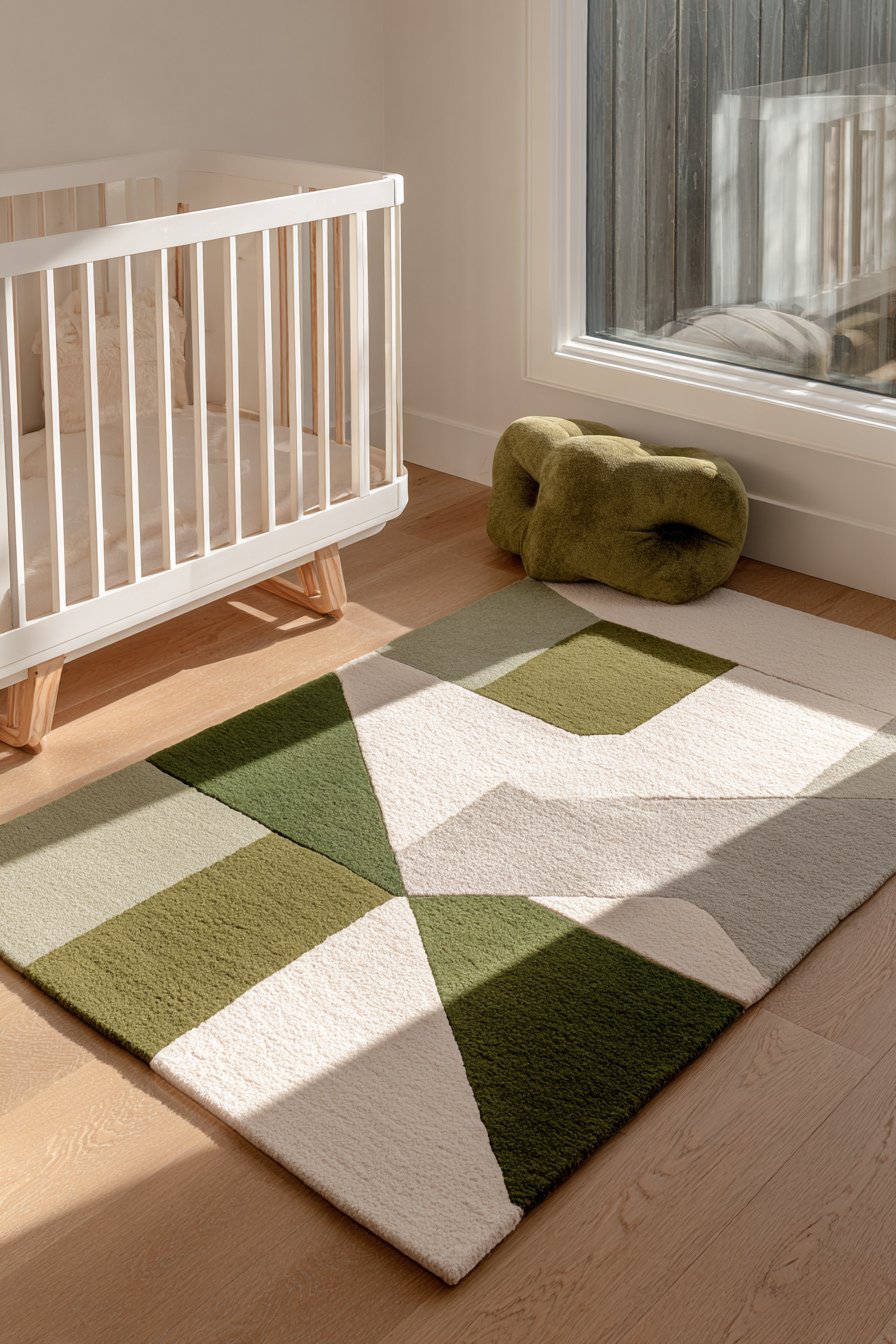
A large area rug with geometric patterns anchors the nursery’s central space. The design incorporates olive green, cream, and soft gray tones. The low-pile construction makes it practical for baby crawling. The rug adds warmth and texture to natural oak hardwood flooring beneath. This layering of materials creates visual and physical comfort.
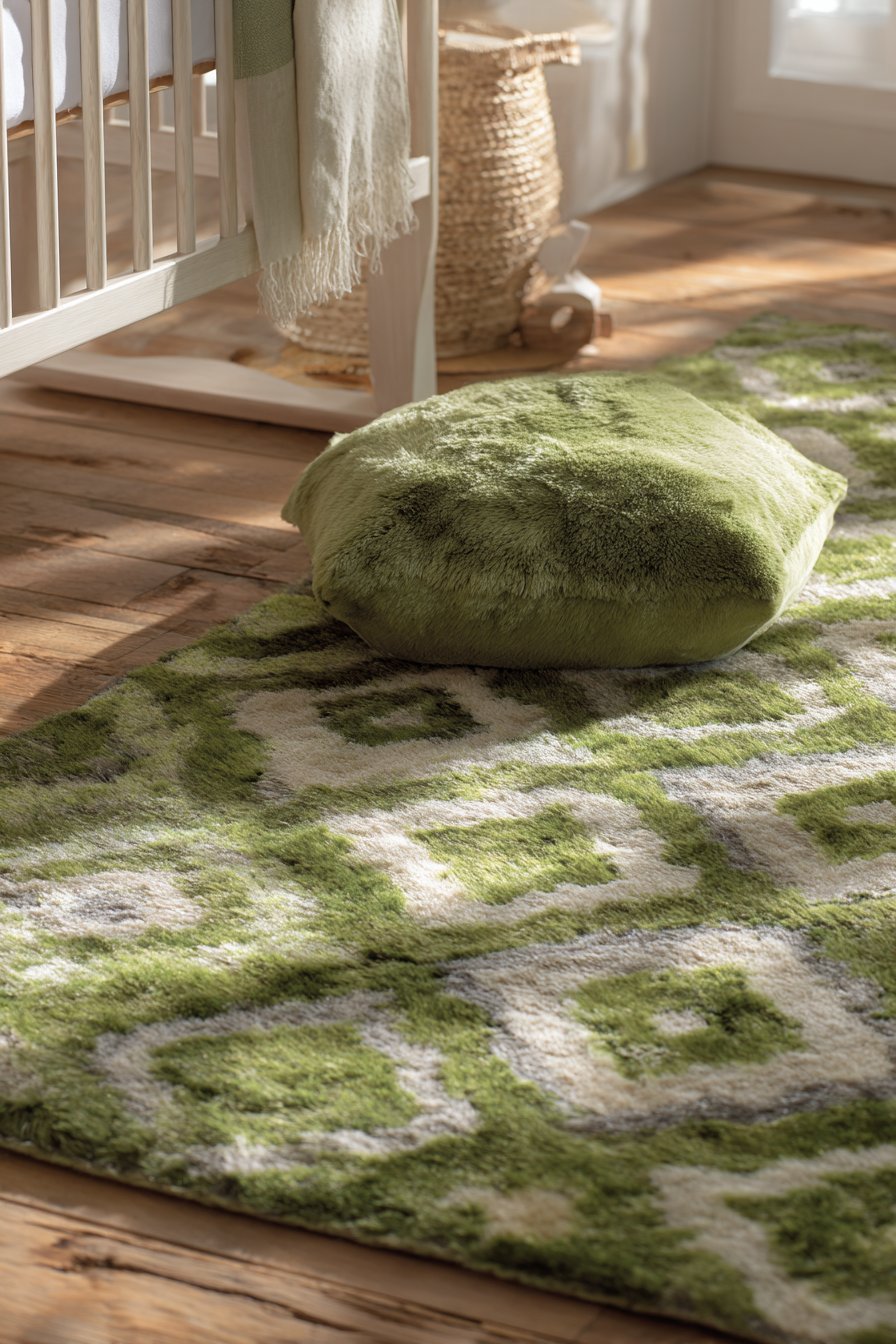
A white rocking bassinet sits partially on the rug’s edge. A plush olive green floor cushion for tummy time occupies another section. The rug defines the baby care area without walls or barriers. Natural morning light creates gentle shadows across the textured rug surface. These shadows emphasize the geometric pattern’s depth and dimension.
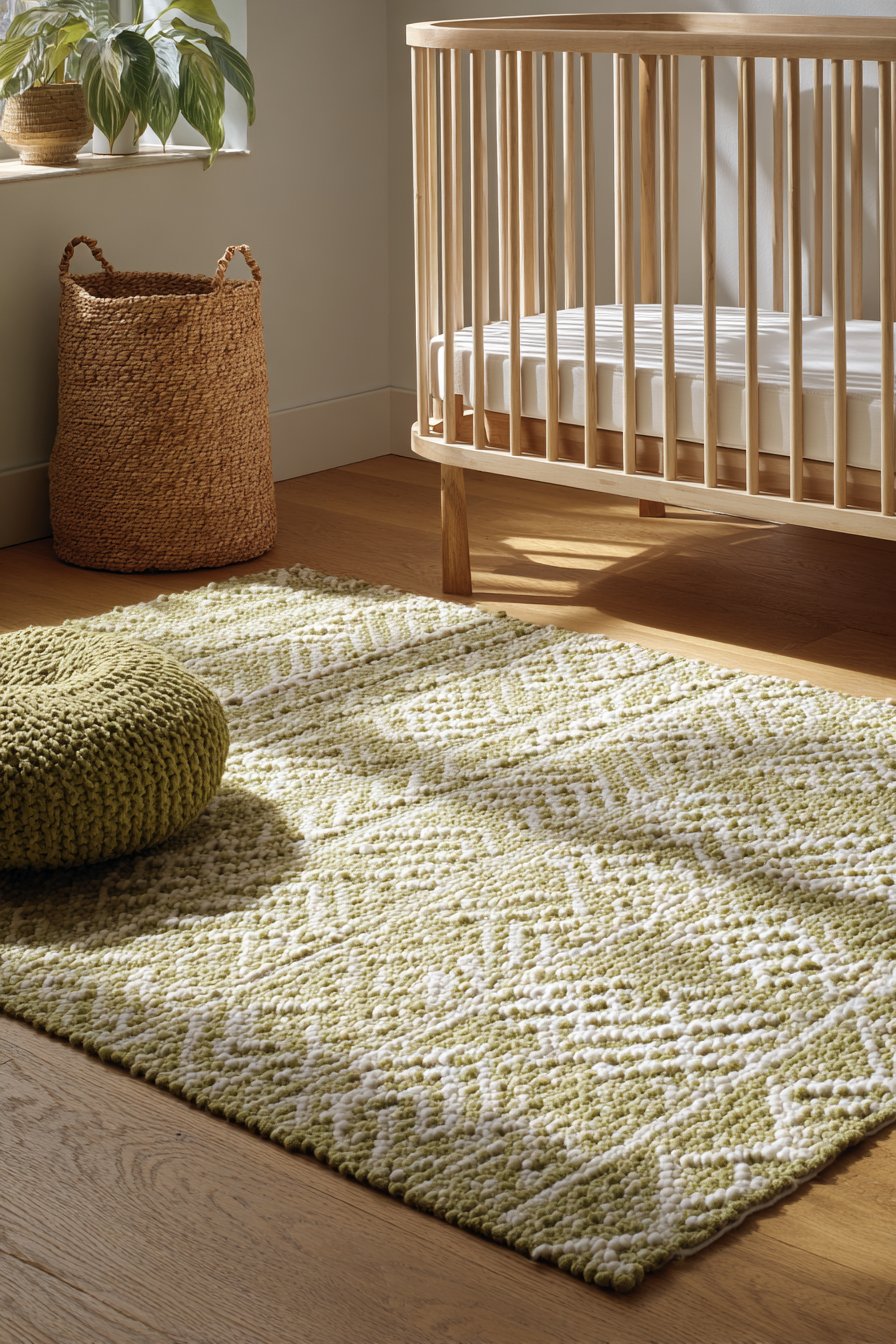
The geometric design adds modern sensibility to the organic olive green color. This balance prevents the room from feeling too rustic. The pattern provides visual interest that stimulates infant development. The contrasting colors within the pattern create gentle visual engagement appropriate for young eyes.
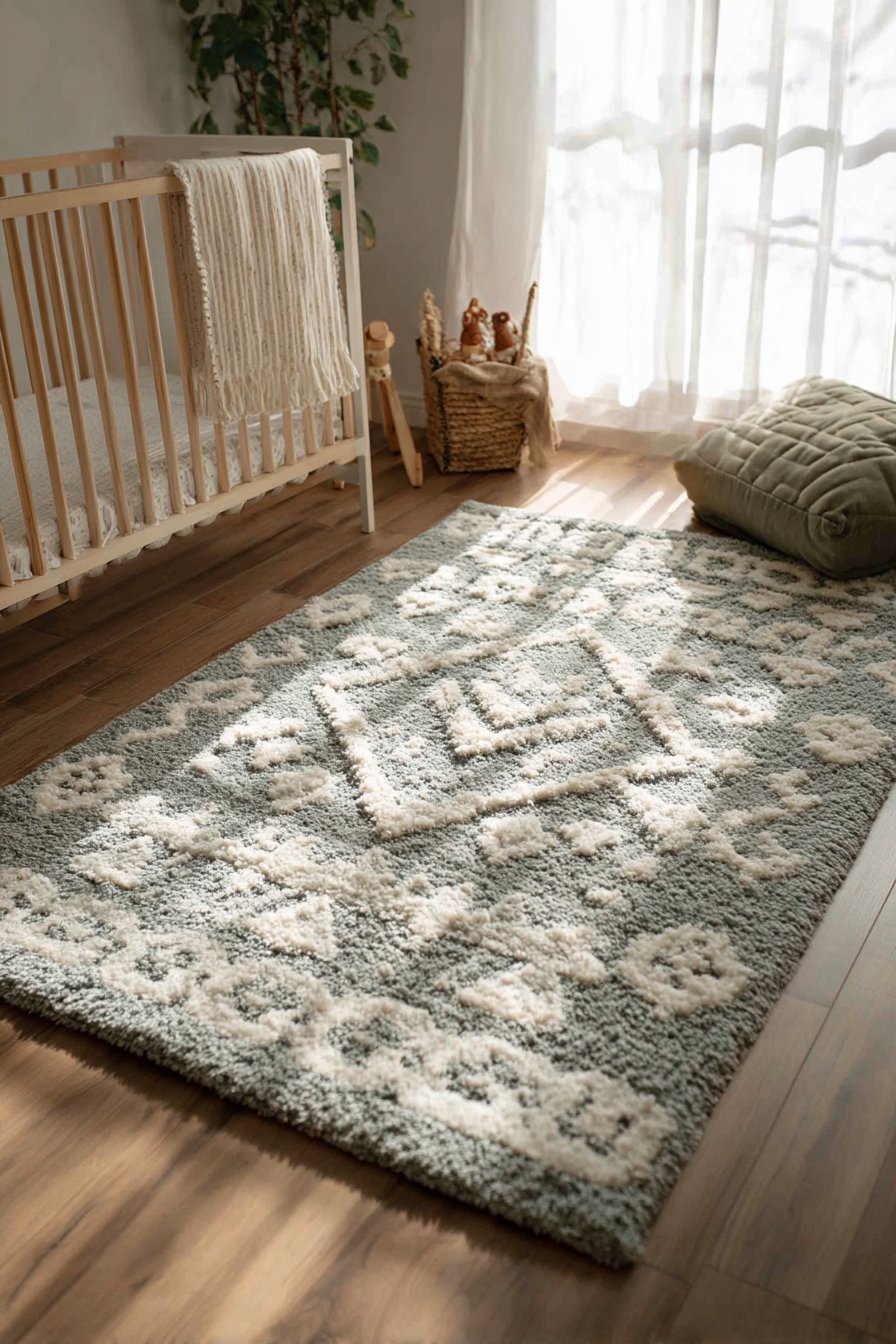
The practical benefits of this design choice cannot be overstated. The low pile allows easy cleaning of inevitable spills. The cushioned surface provides comfort for floor play. The defined area helps organize the room’s layout naturally. Parents appreciate how the rug protects flooring while adding beauty.
Key Design Tips:
- Choose low-pile rugs for easy cleaning and safe crawling
- Use geometric patterns to add modern sophistication
- Select rugs with multiple coordinating colors for flexibility
- Position rugs to define functional zones within larger spaces
- Add floor cushions for comfortable tummy time activities
9. Layered Lighting with Olive Green Shades
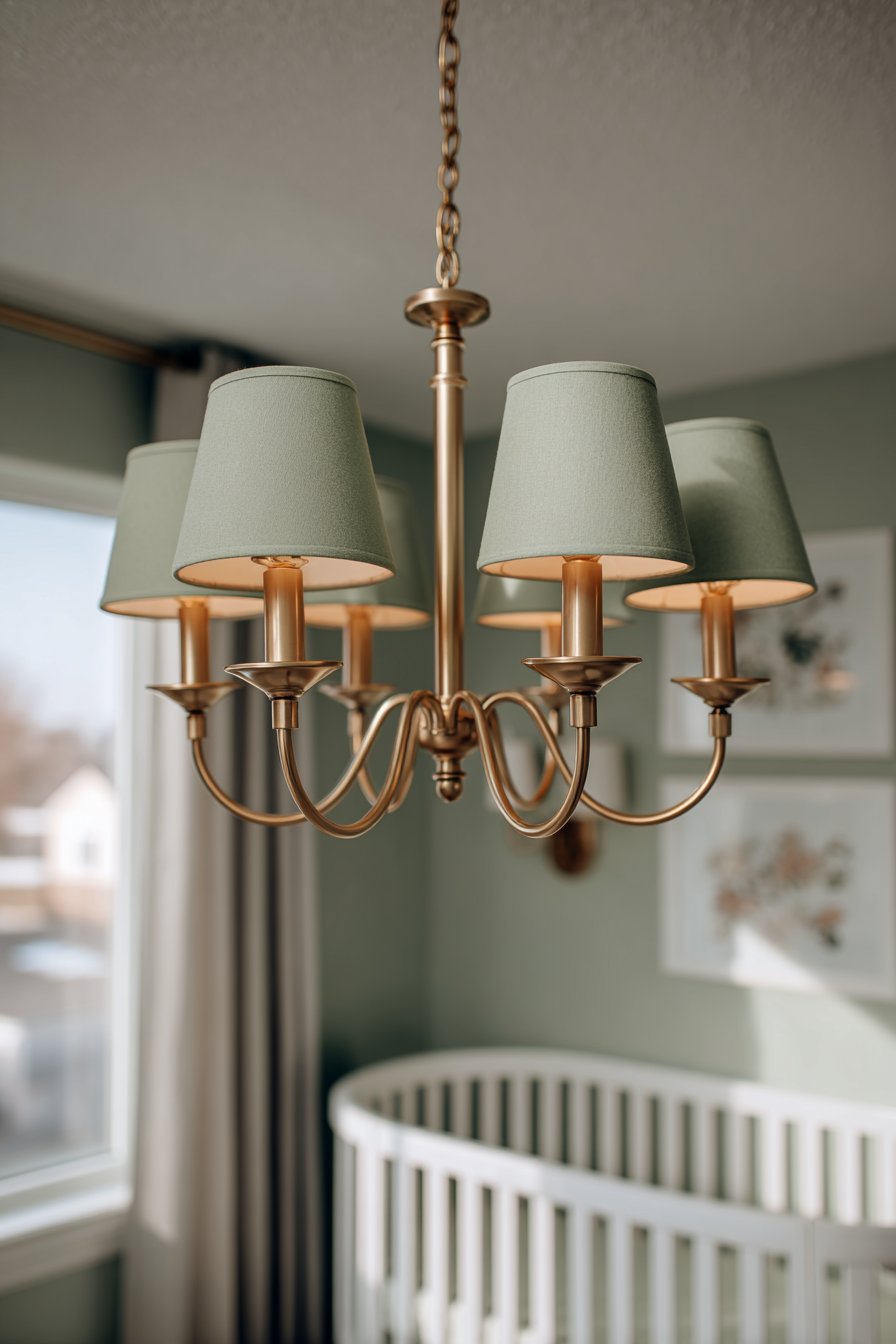
A statement brass chandelier features five fabric shades in soft olive green linen. The fixture hangs above a round white crib, creating a focal point. It casts warm, diffused light throughout the space. Wall sconces with matching olive green shades flank a changing station. These provide task lighting for nighttime diaper changes. The coordinated fixtures create visual rhythm and practical illumination.

The walls are painted in pale sage green. This color reflects and amplifies the gentle illumination from all sources. The room glows with warmth rather than harsh brightness. Natural window light during the day complements the artificial lighting beautifully. The layered approach ensures appropriate lighting for all activities and times of day.
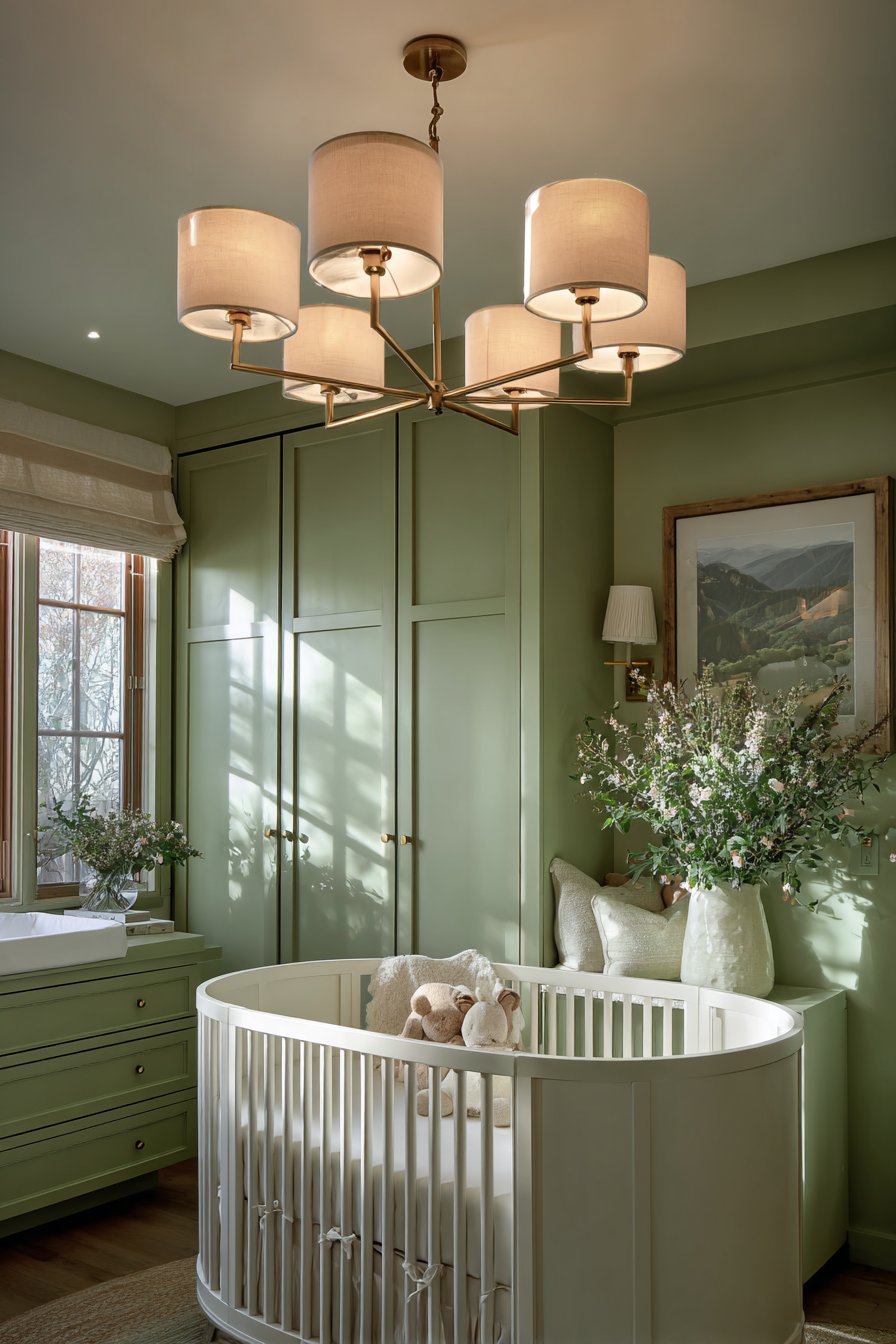
The brass fixtures add warmth that electric lighting alone cannot achieve. The metal’s natural patina develops character over time. The olive green linen shades soften the light while reinforcing the room’s color scheme. They transform functional fixtures into decorative elements.
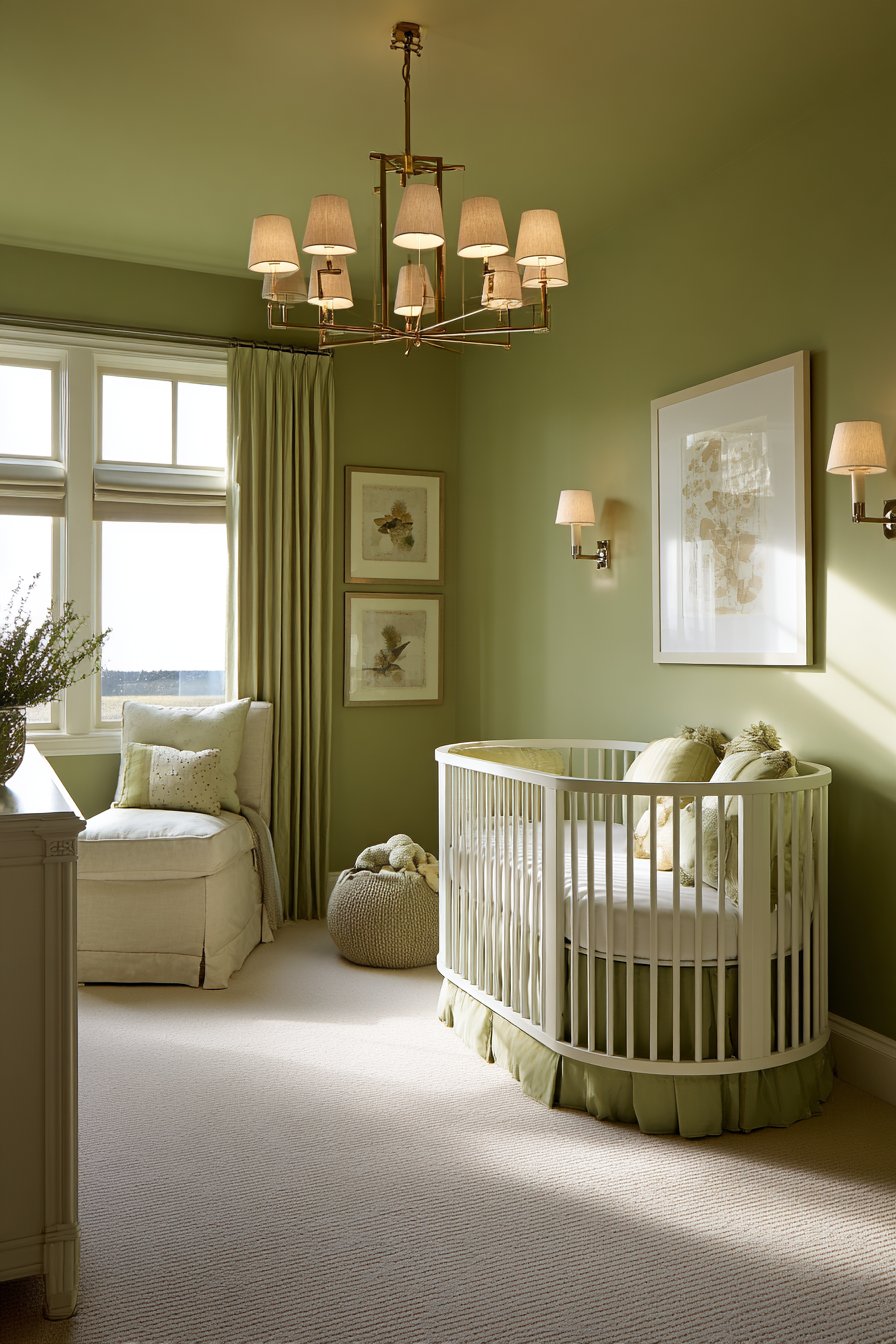
This design teaches an important lighting principle for nurseries. Multiple light sources at different levels create flexibility. Bright overhead light works for playtime. Dimmed sconces allow nighttime care without full wakefulness. The chandelier provides ambient beauty even when unlit. This thoughtful layering enhances both function and aesthetics.
Key Design Tips:
- Install multiple light sources for different activities and moods
- Choose matching shades to create cohesive design
- Add wall sconces near changing stations for task lighting
- Use dimmer switches to control brightness for nighttime care
- Select brass fixtures for warmth and timeless appeal
10. Botanical Wallpaper as Artistic Focal Point
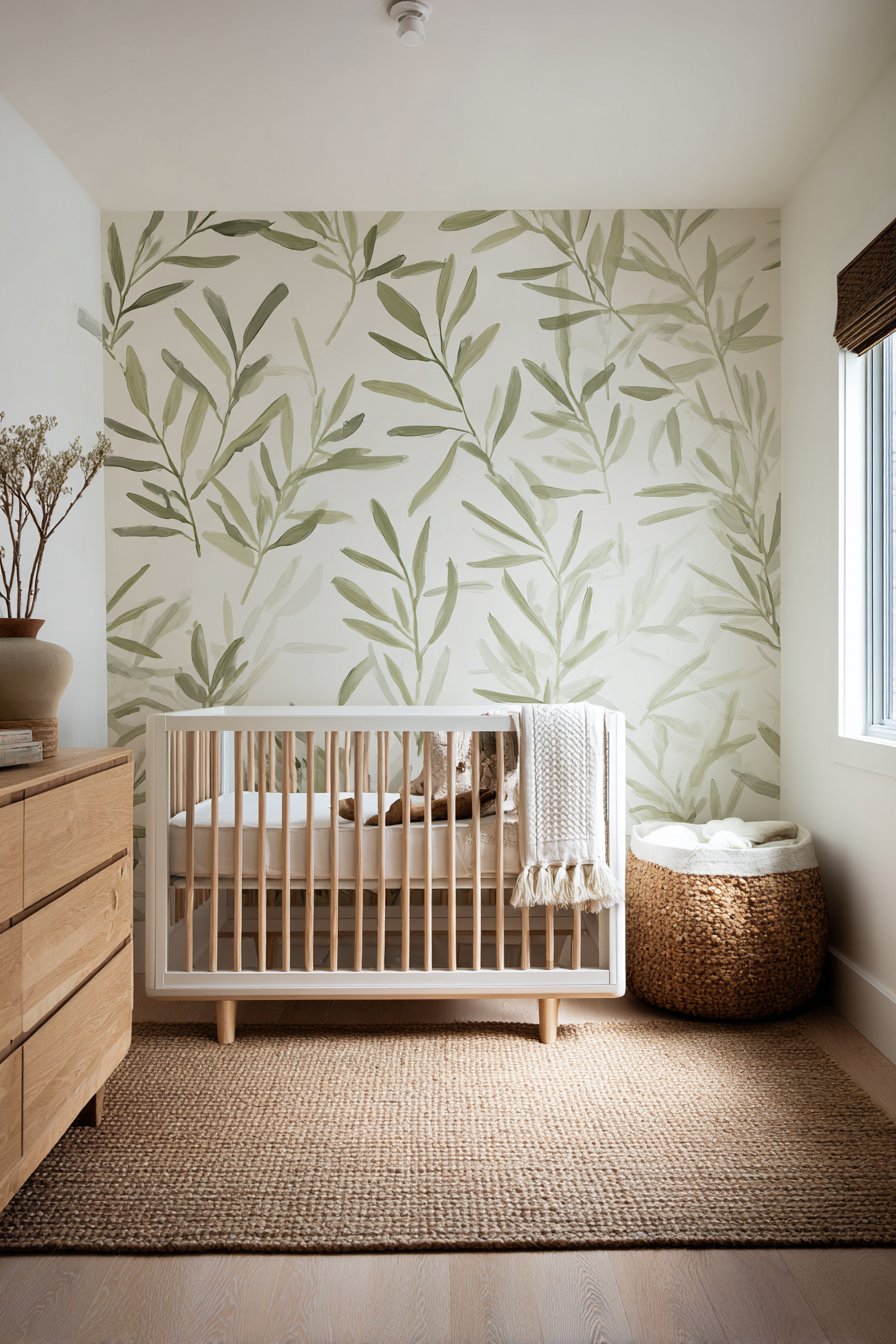
Removable wallpaper features a delicate botanical pattern of olive branches and leaves. The design includes varying shades of olive green on a cream background. A simple white crib sits centered against this accent wall. The wallpaper serves as large-scale artwork. The remaining walls are painted in soft white. This prevents the space from feeling too busy or overwhelming.
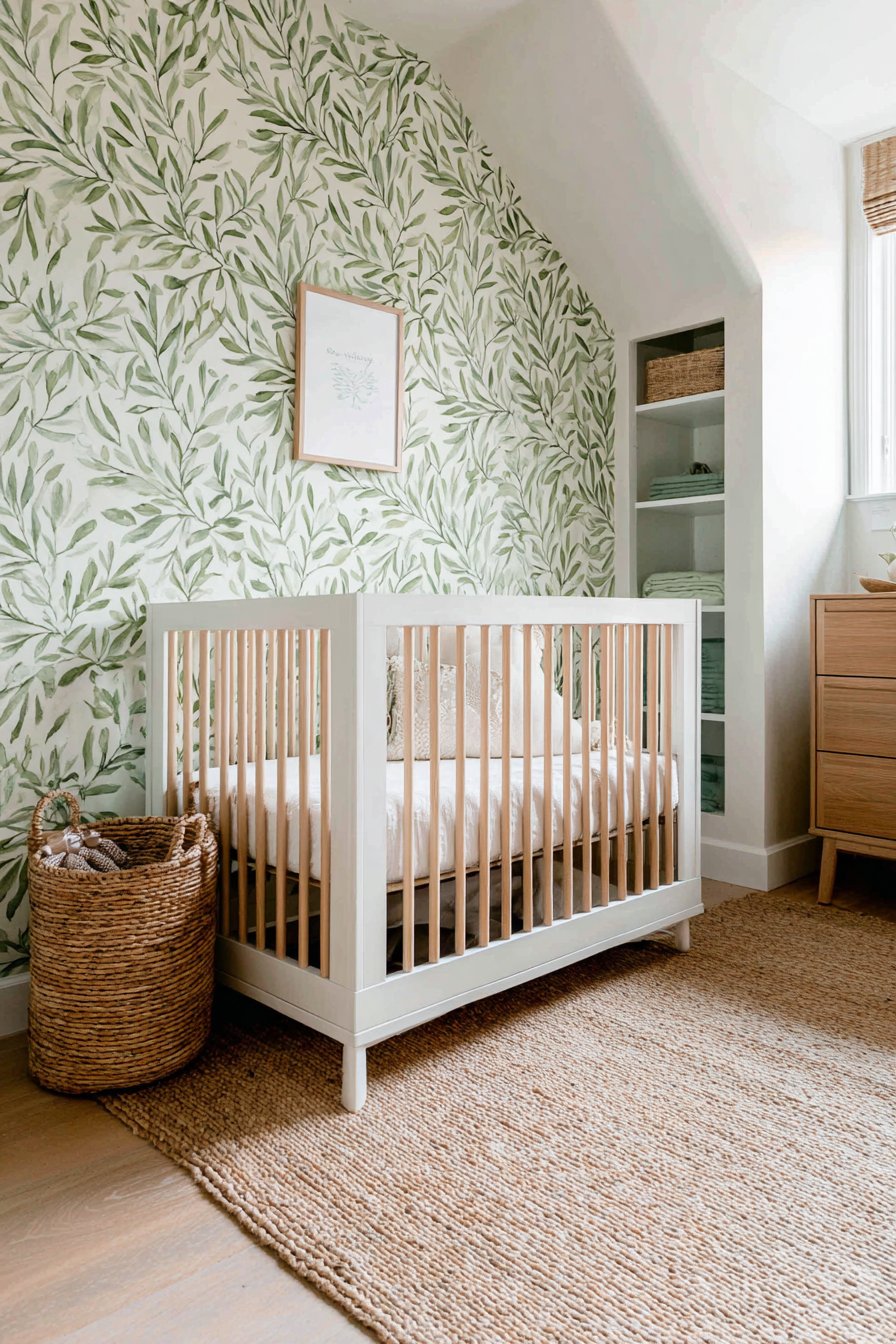
A natural jute rug and light wood furniture pieces complement the organic theme. The botanical pattern creates nature-inspired tranquility. The removable nature of the wallpaper offers flexibility as design preferences evolve. Parents can update the look without permanent commitment or damage.
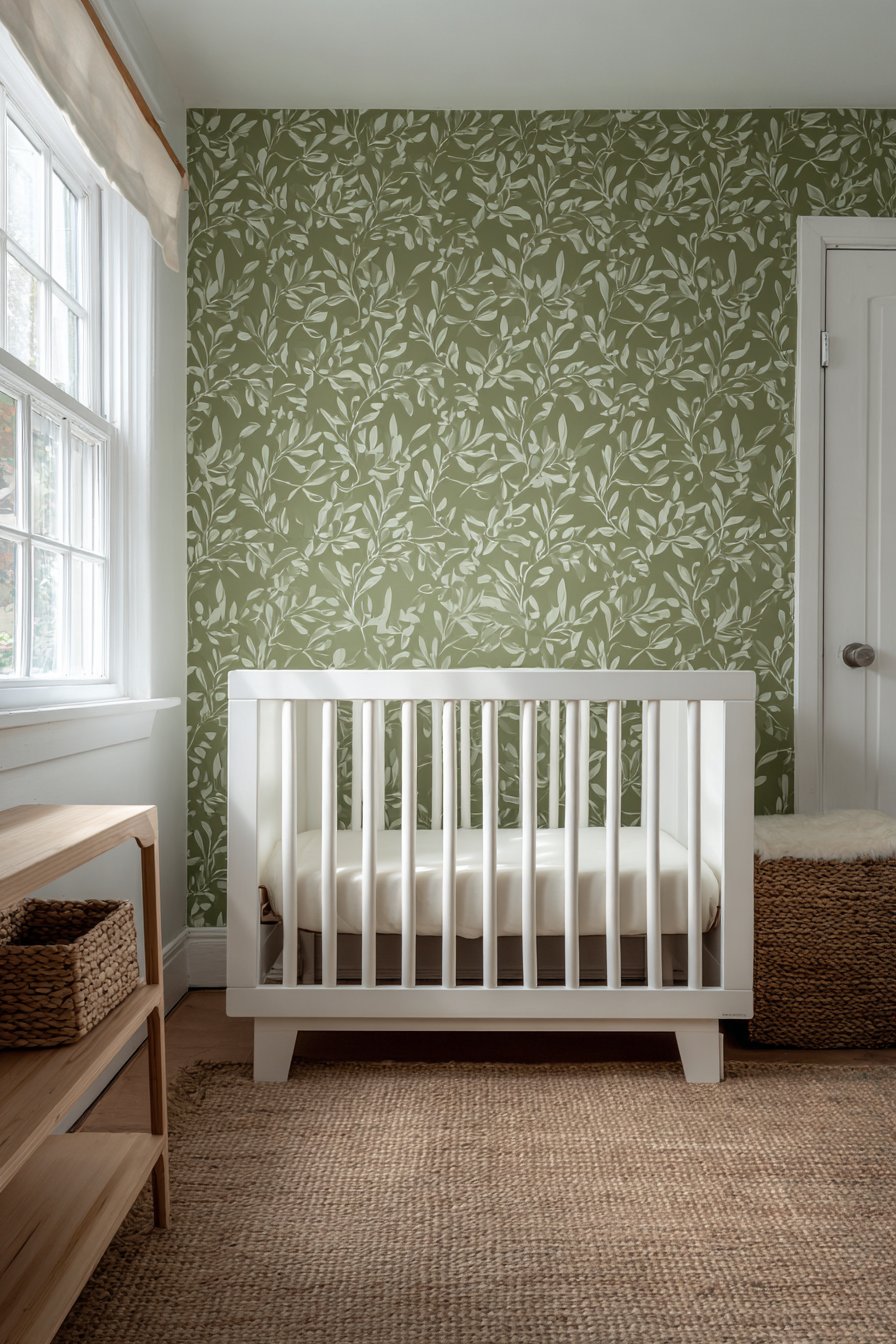
The pattern’s scale feels appropriate for a nursery without being juvenile. The olive branches and leaves create sophisticated botanical illustration. The subtle variation in green tones adds depth and interest. The cream background keeps the pattern from feeling heavy or dark.
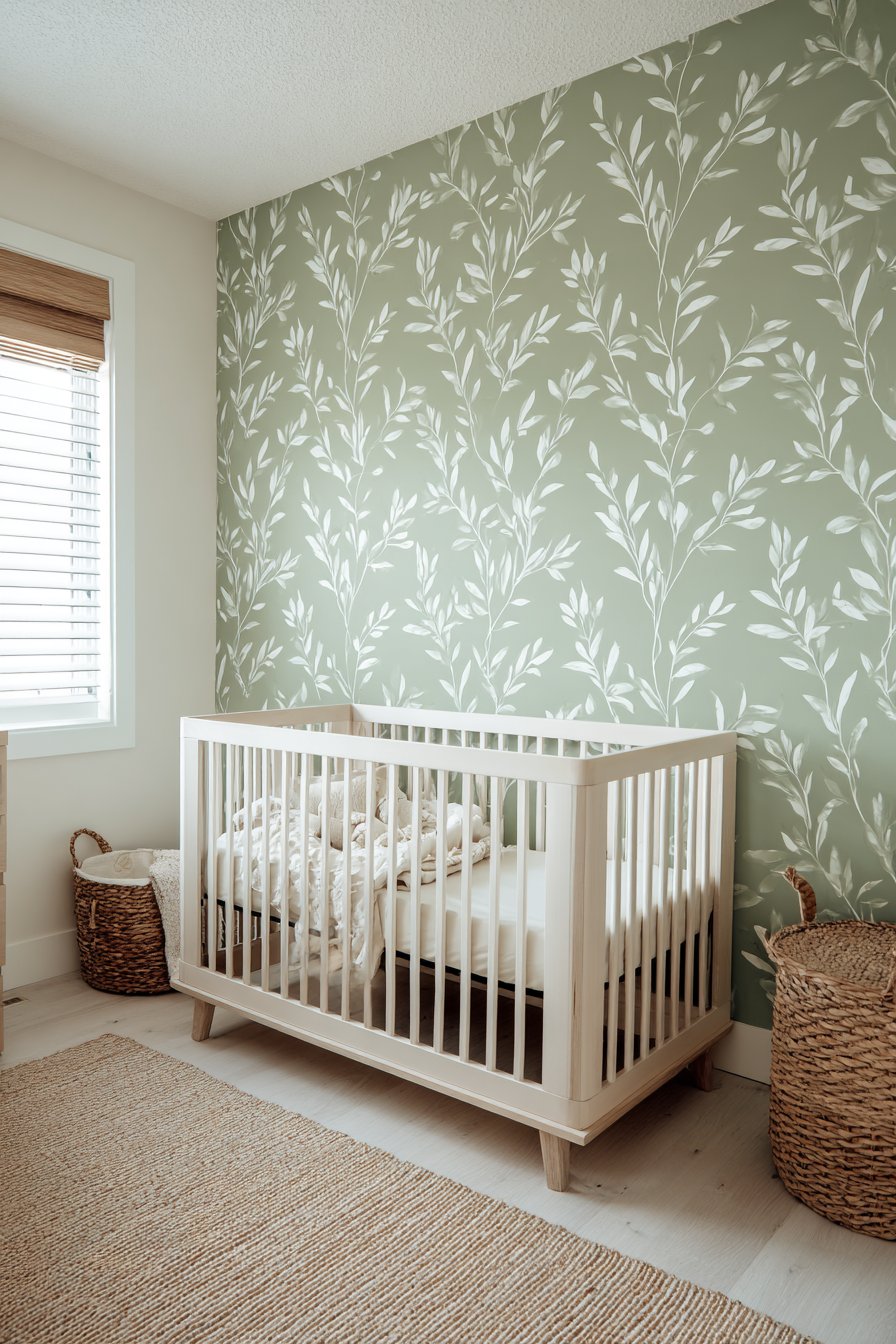
This approach demonstrates how wallpaper can transform a space dramatically. The single accent wall creates maximum impact with minimal commitment. The botanical theme reinforces the connection between olive green and nature. It brings the outdoors inside in an elegant, controlled way.
Key Design Tips:
- Use removable wallpaper for flexibility as child grows
- Apply wallpaper to only one accent wall for impact
- Choose botanical patterns to reinforce natural color connections
- Keep remaining walls neutral to prevent visual overwhelm
- Select patterns with varying tone for depth and interest
11. Handcrafted Mobile with Felt Leaves
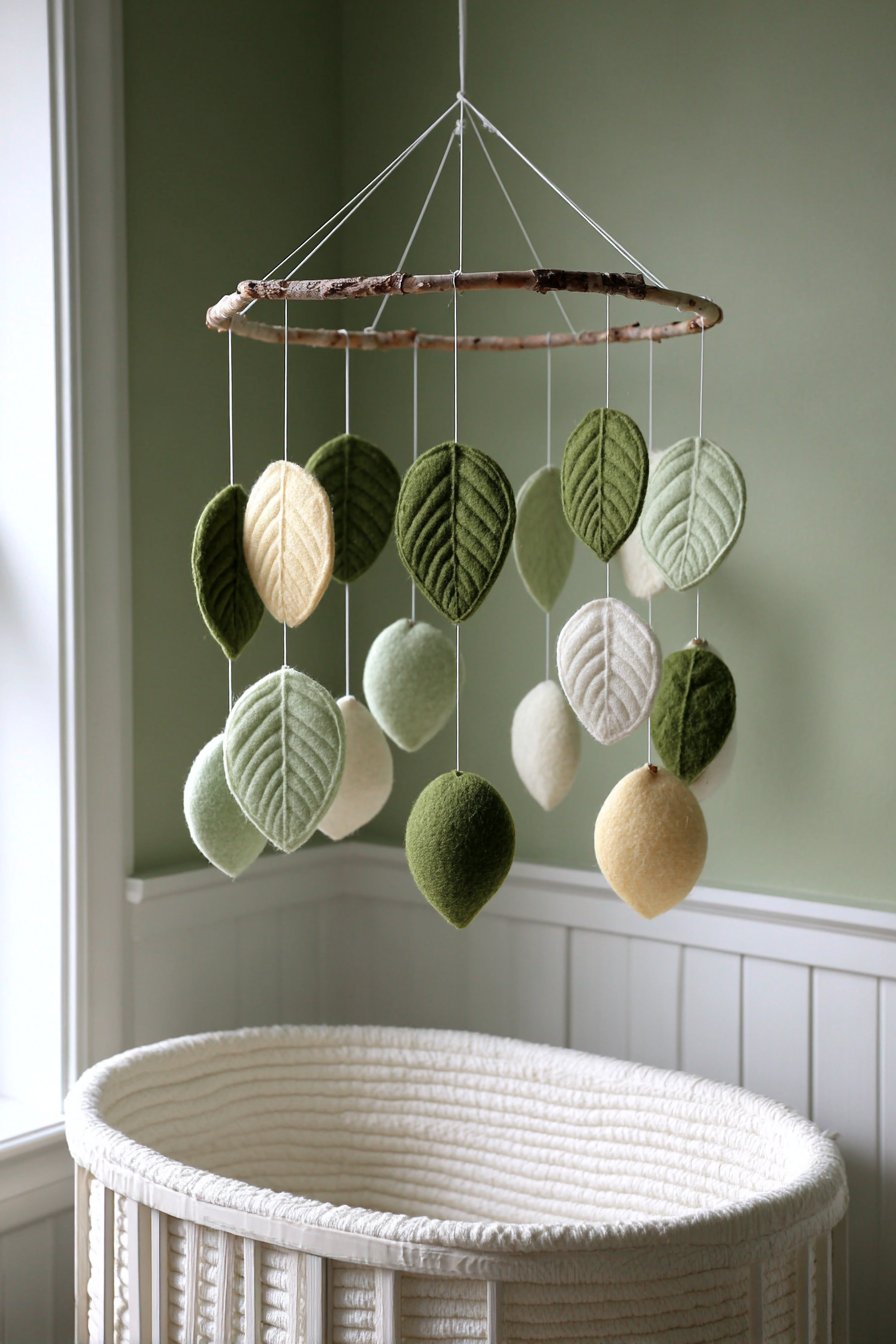
A handcrafted mobile hangs above a white oval bassinet. Felt leaves in various shades of olive green, sage, and cream suspend from a natural wooden ring. The mobile’s organic shapes create gentle visual stimulation. The earth-tone palette supports infant development without overstimulation. The nursery wall behind features the palest olive green. White trim work provides crisp contrast.
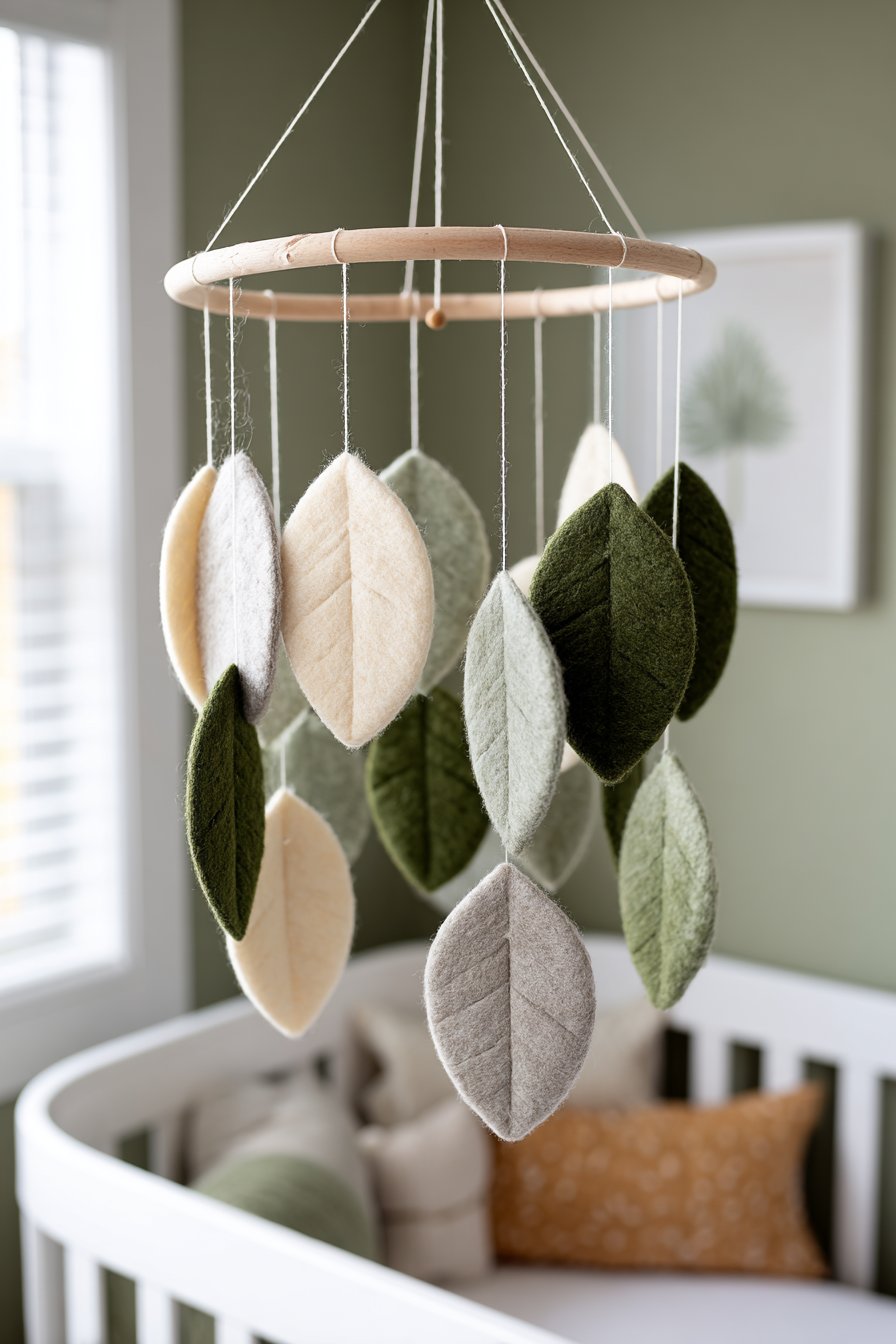
Soft natural light from a nearby window illuminates the mobile. Gentle breezes cause subtle movement that captures baby’s attention. The mobile creates delicate shadows on the wall. These shadows add another layer of visual interest that changes throughout the day.
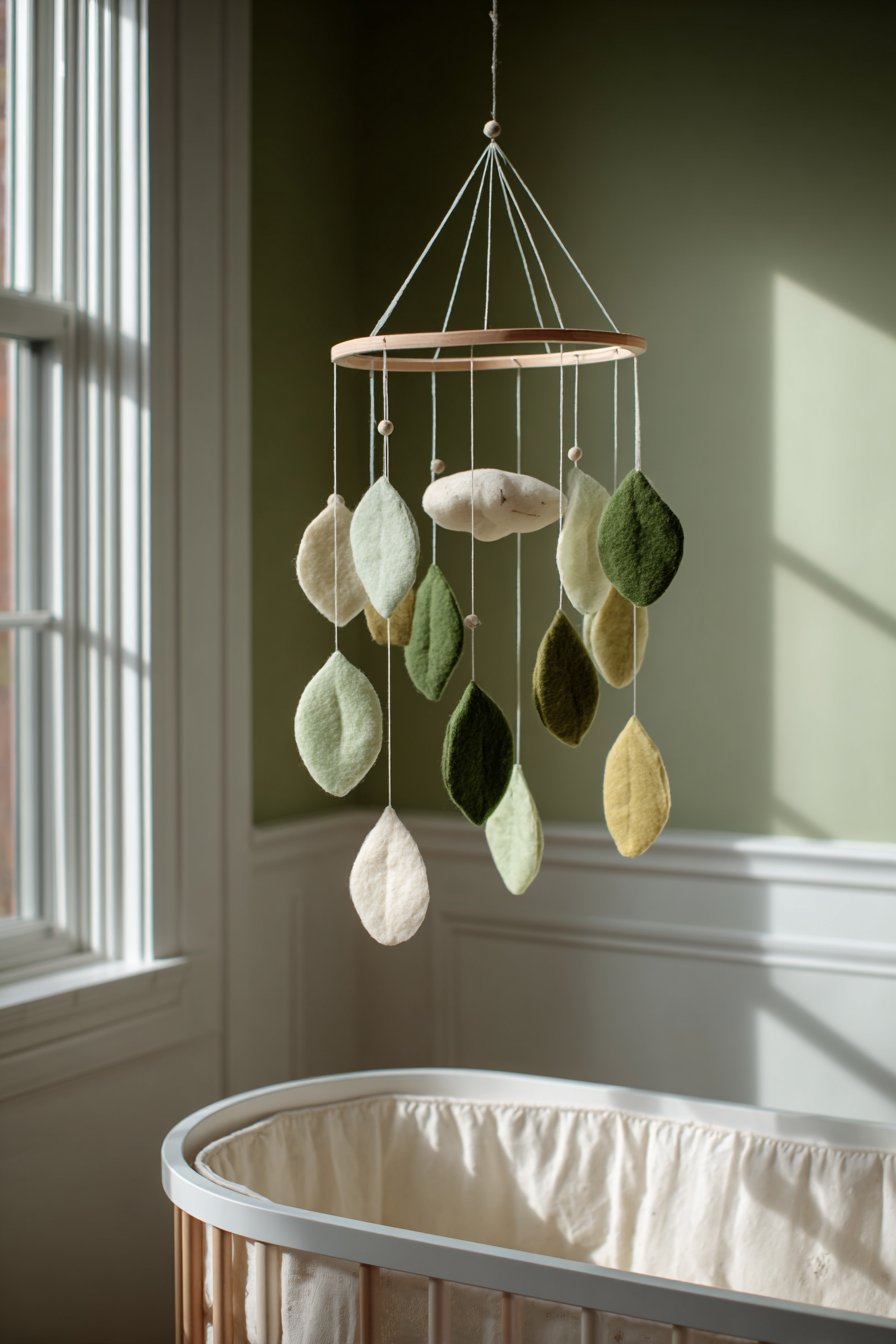
The handcrafted quality brings uniqueness that mass-produced items lack. Each felt leaf shows individual character. The natural wooden ring reinforces the organic material palette. The mobile functions as both developmental tool and decorative sculpture.
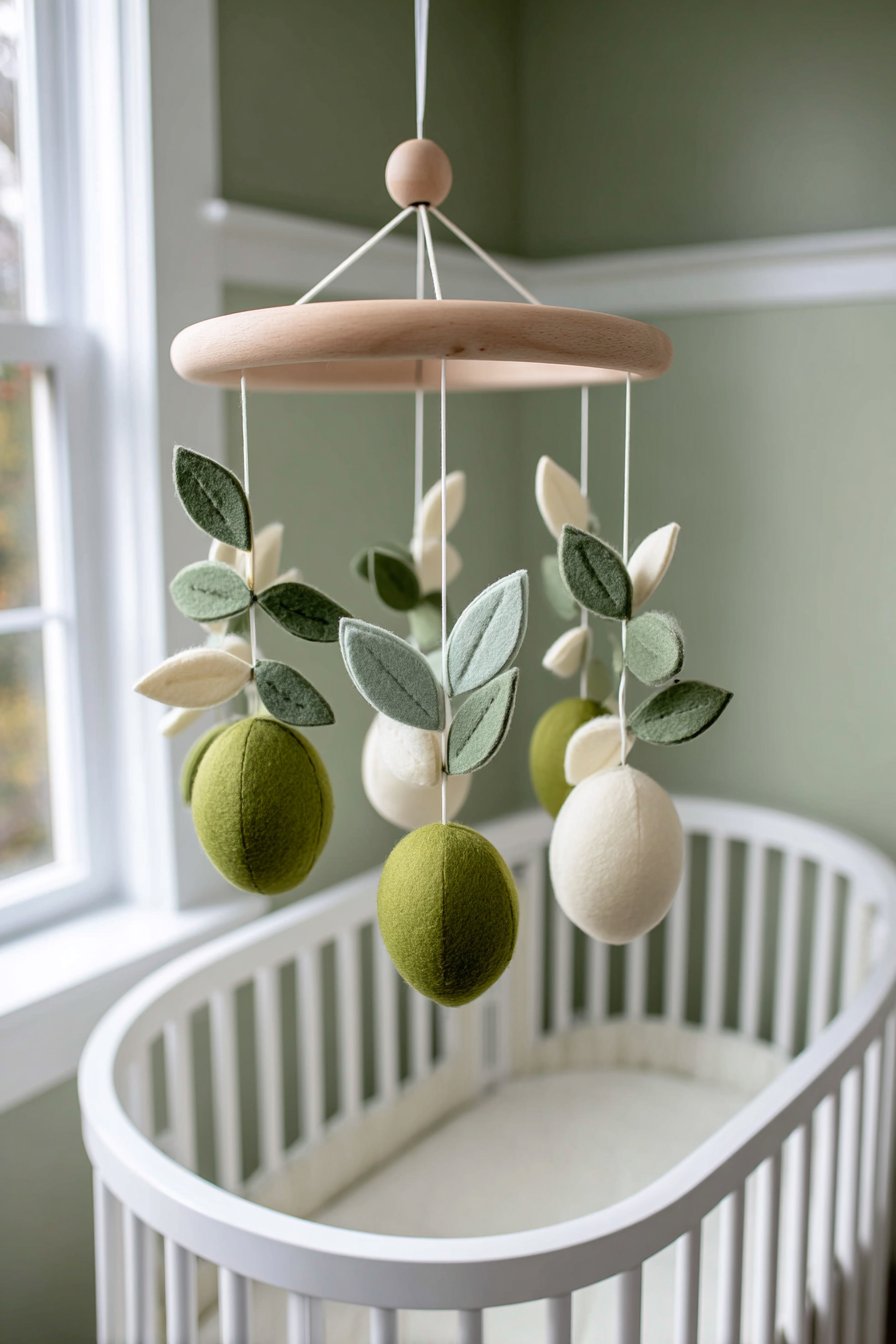
This design element demonstrates how even functional baby items can enhance aesthetics. The mobile serves its purpose of visual engagement while looking beautiful. The felt material is soft and safe if touched. The natural colors support the room’s overall scheme perfectly.
Key Design Tips:
- Choose handcrafted items for unique character and quality
- Select mobiles with organic shapes and natural materials
- Use earth tones to provide visual interest without overstimulation
- Position mobiles where natural light creates beautiful shadows
- Ensure all hanging items are securely mounted for safety
12. Organized Changing Station with Board and Batten
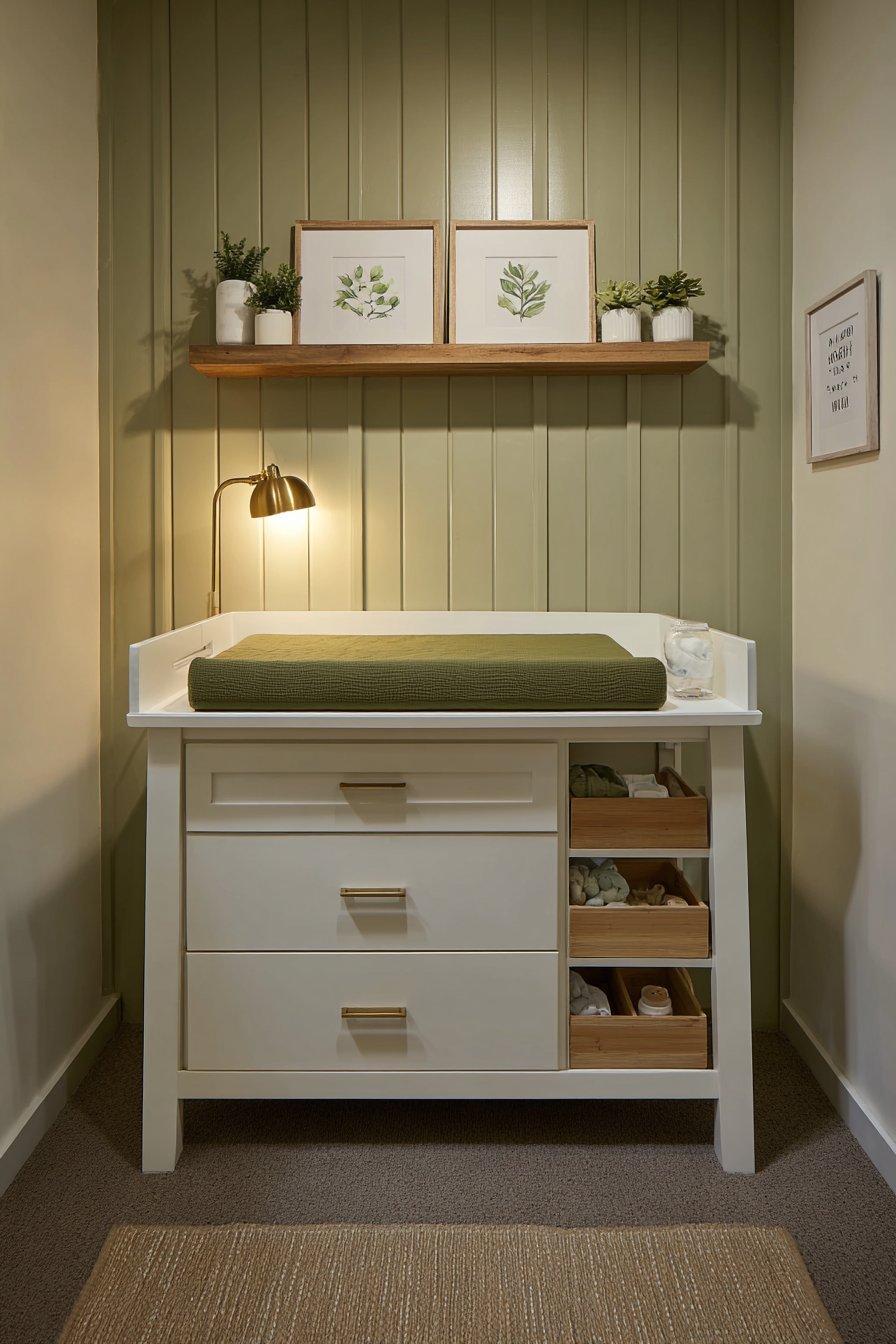
A white dresser serves as a well-organized changing station. The olive green changing pad cover in soft organic cotton provides comfort. Wooden organizers with compartments hold diapers, wipes, and baby care items. Everything stays neatly arranged and easily accessible. A wall-mounted shelf above displays small potted plants in white ceramic containers. Framed prints with olive green mats complete the display.
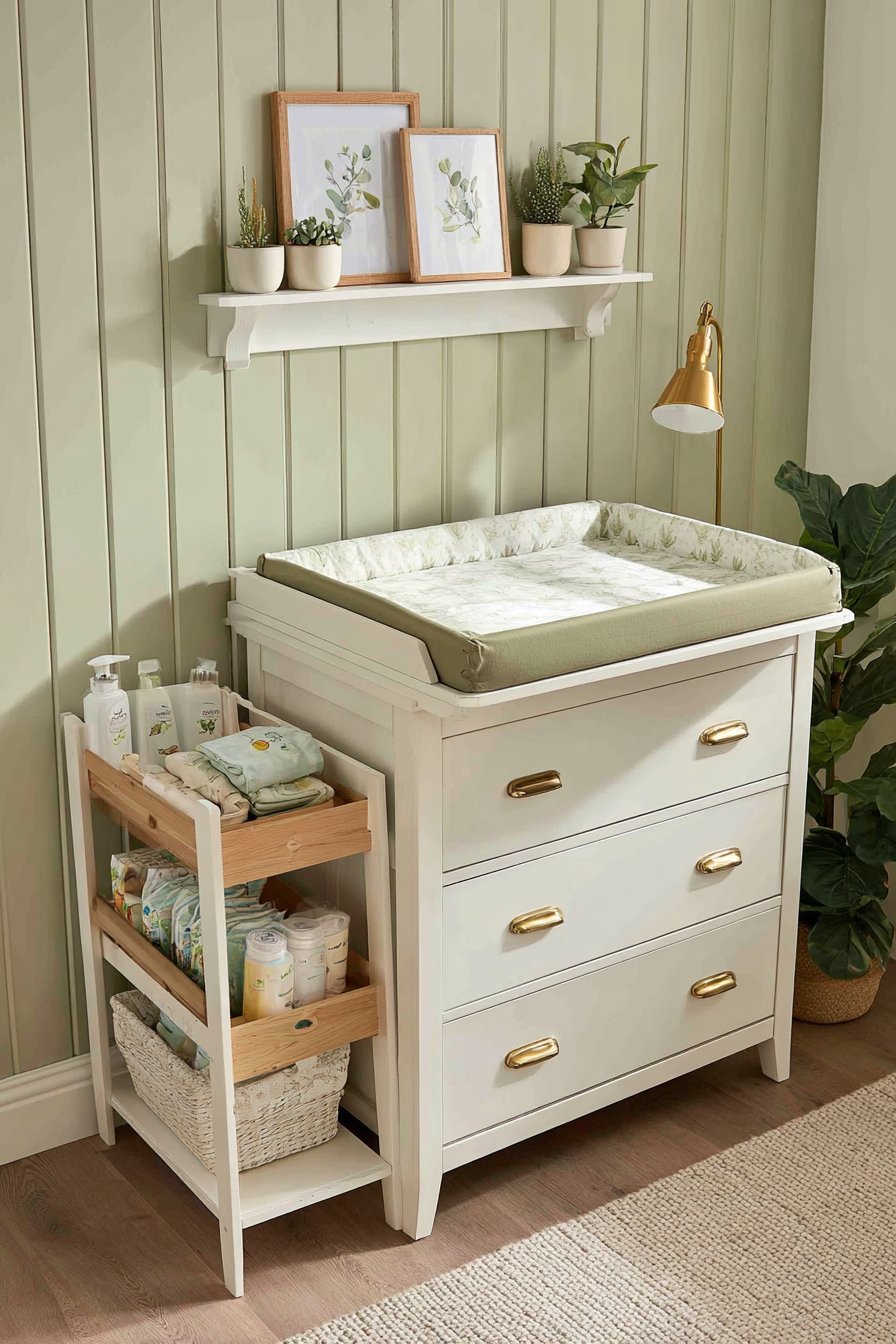
Brass drawer pulls and a small brass table lamp add warm metallic accents. The wall behind features board and batten treatment painted in pale olive green. This architectural detail adds dimension and interest. The vertical lines draw the eye upward, creating perceived height.
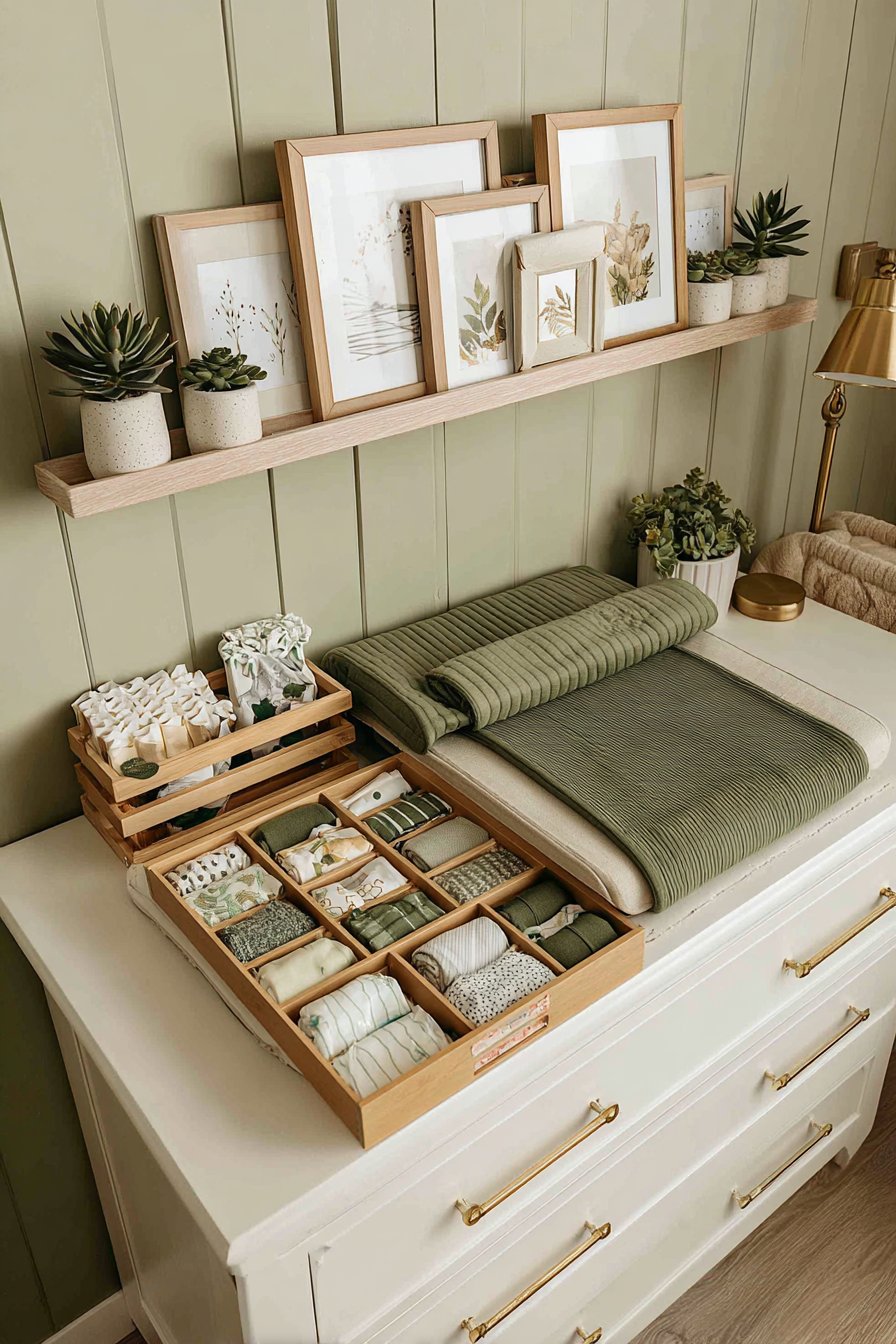
The organization system makes diaper changes efficient during sleep-deprived nights. Each item has a designated spot. The wooden organizers bring natural material warmth to practical storage. The plants add life and improve air quality naturally.
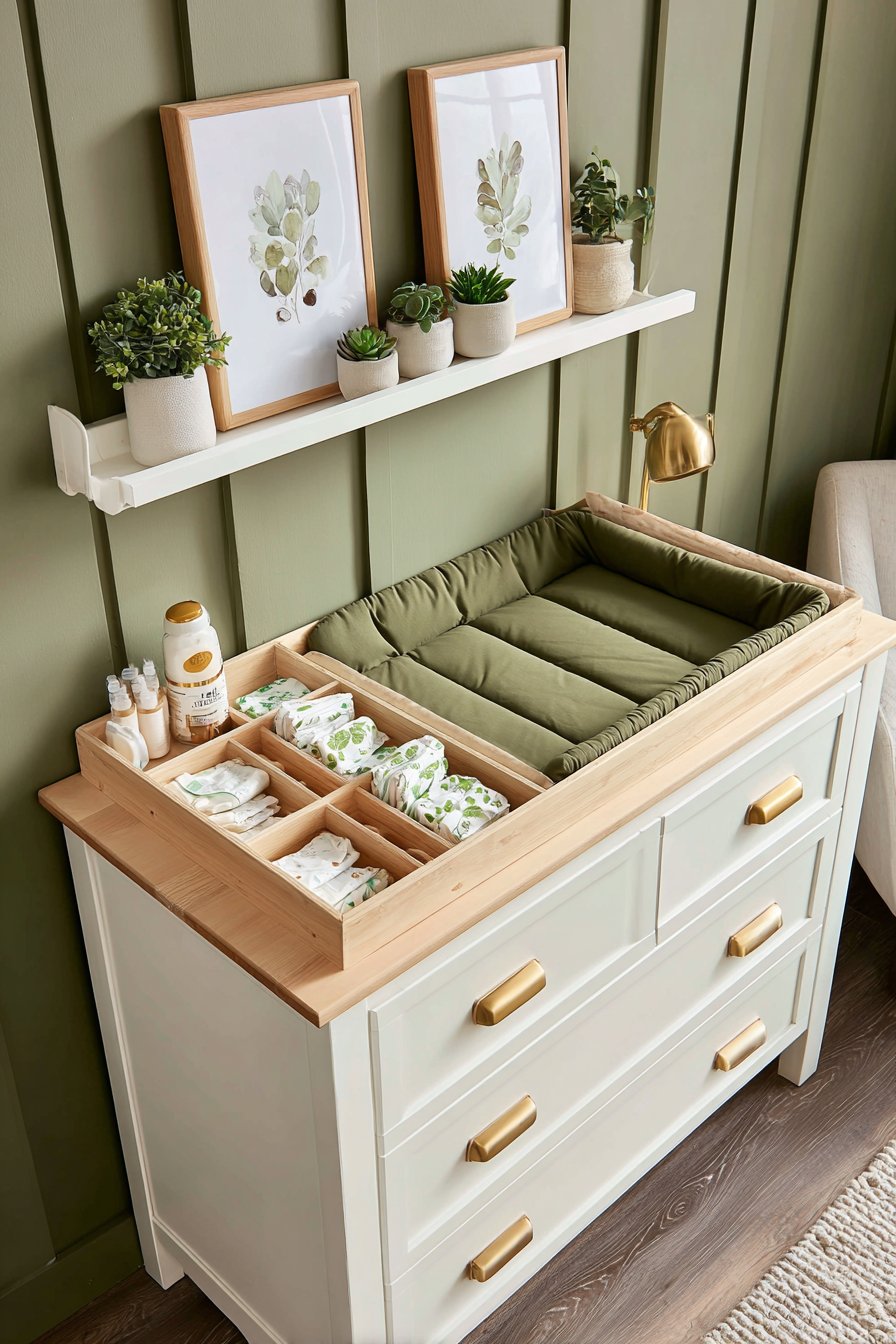
This functional space doesn’t sacrifice beauty for practicality. The board and batten treatment elevates the changing area. The coordinated accents create a cohesive look. Parents spend significant time at changing stations, so making this space beautiful improves daily experience.
Key Design Tips:
- Install board and batten treatment to add architectural interest
- Use wooden organizers for natural warmth and durability
- Keep changing supplies organized in compartmented containers
- Add wall shelves for display and additional storage
- Choose organic cotton changing pad covers for comfort and safety
13. Curated Gallery Wall with Olive Green Mats
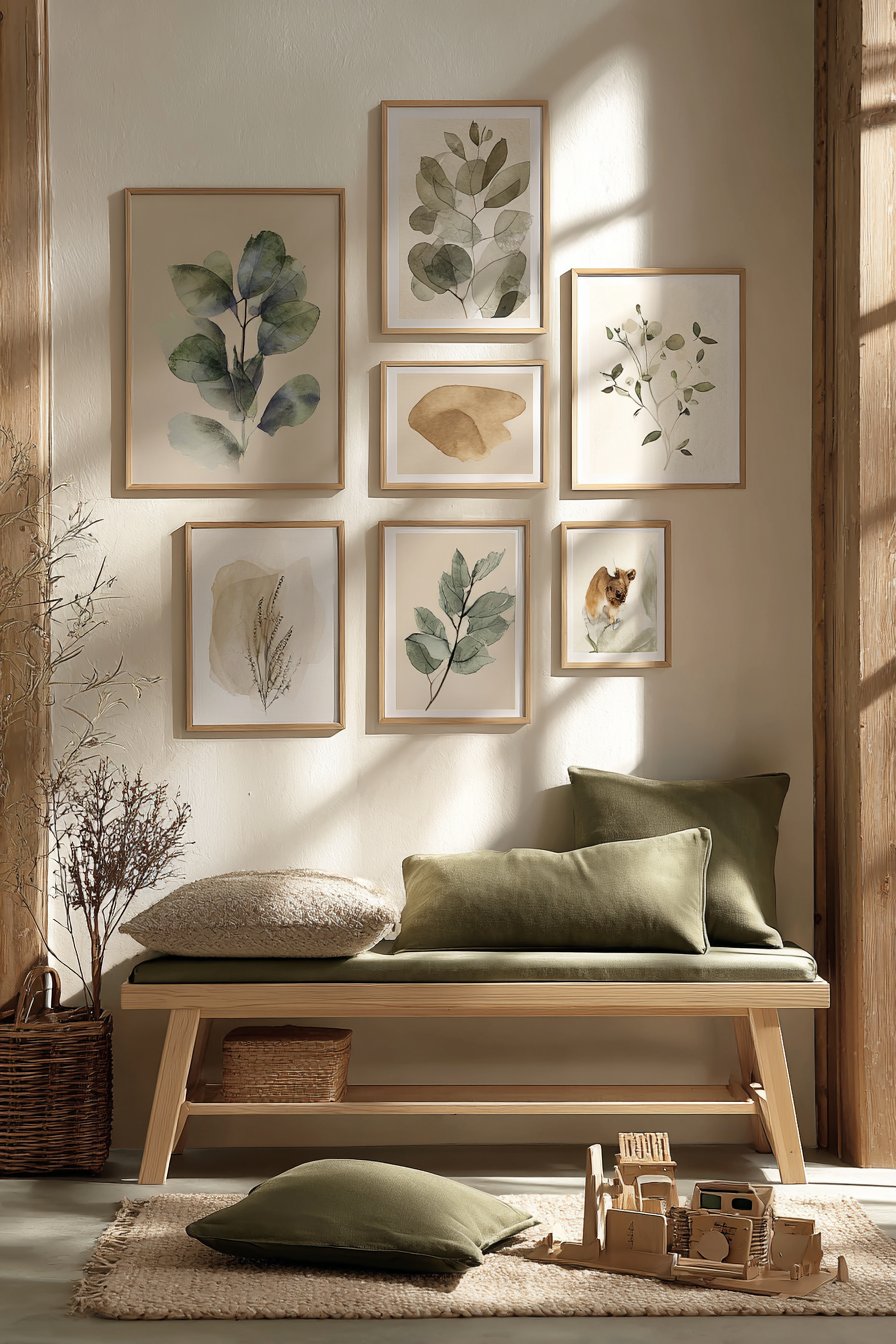
A gallery wall features carefully curated framed prints in various sizes. Olive green mats unify the diverse artwork collection. The pieces include watercolor eucalyptus leaves, abstract organic shapes, and gentle animal illustrations. The coordinating earth tones create harmony. Simple wooden frames in light oak and white create visual cohesion. The frames are arranged in an asymmetrical grid pattern.

The gallery wall hangs against a warm white wall above a low wooden toy chest. The toy chest is painted in soft olive green. Natural daylight creates subtle shadows around each frame. These shadows add depth and dimension to the display. The arrangement feels curated rather than random.
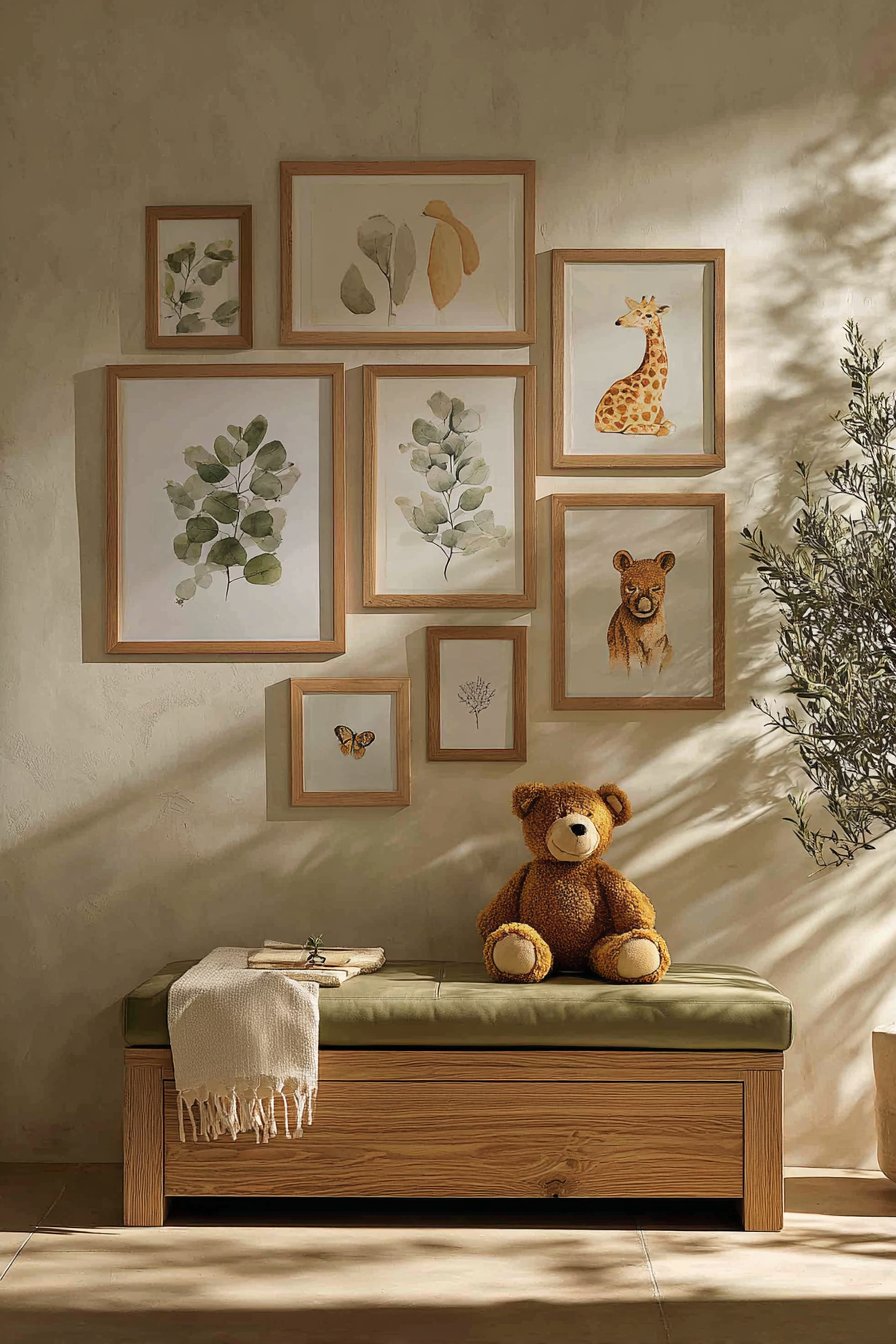
The olive green matting ties together artwork that might otherwise feel disconnected. This technique creates sophisticated presentation. The matting draws the eye to each image while maintaining overall unity. The collection can grow and change as the child develops.
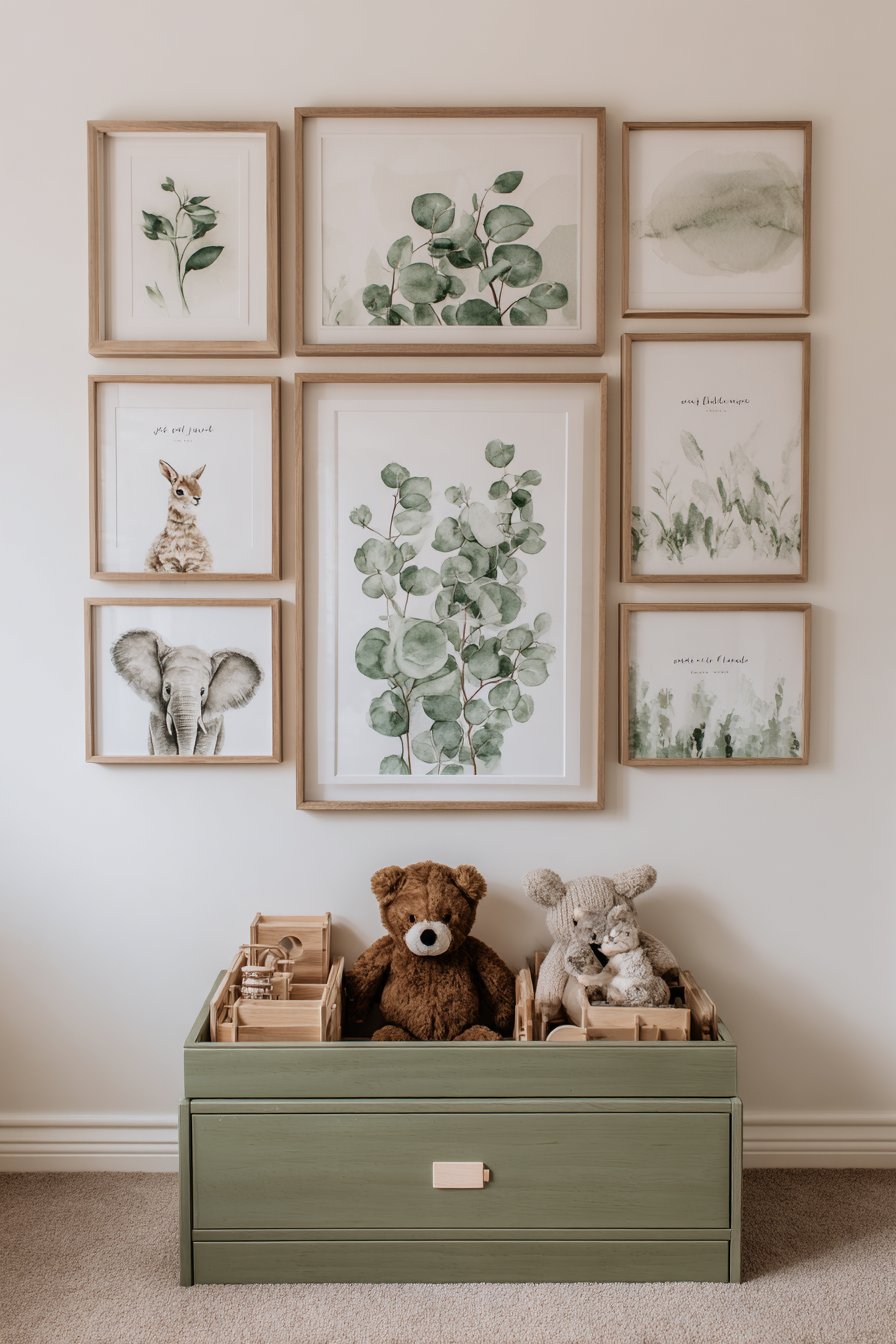
This design approach transforms multiple small pieces into one significant statement. The gallery wall becomes a focal point that celebrates creativity. It introduces art appreciation from the earliest days. The natural subjects reinforce the room’s organic theme beautifully.
Key Design Tips:
- Use consistent mat colors to unify diverse artwork
- Mix frame sizes for visual interest while maintaining cohesion
- Arrange frames in asymmetrical patterns for modern appeal
- Choose nature-inspired art to complement olive green palette
- Leave room for collection to grow as child develops
14. Canvas Teepee for Playful Sophistication
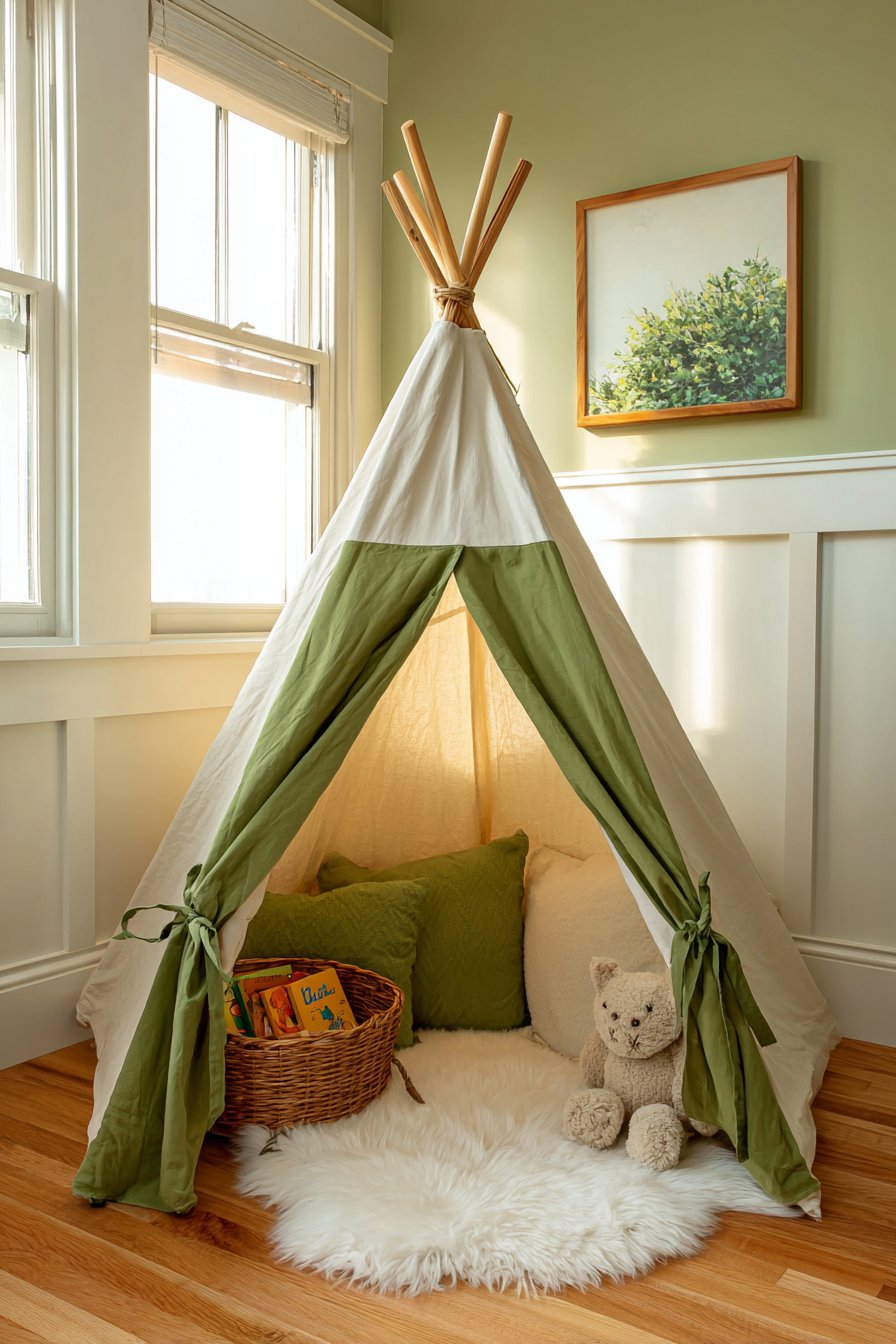
A teepee play tent in natural canvas features olive green trim and ties. Inside, soft cushions in cream and olive green create a cozy spot. The tent provides space for quiet play or reading. A small woven basket holds board books and soft toys nearby. The floor features light oak hardwood with a sheepskin rug. The plush texture invites barefoot exploration.
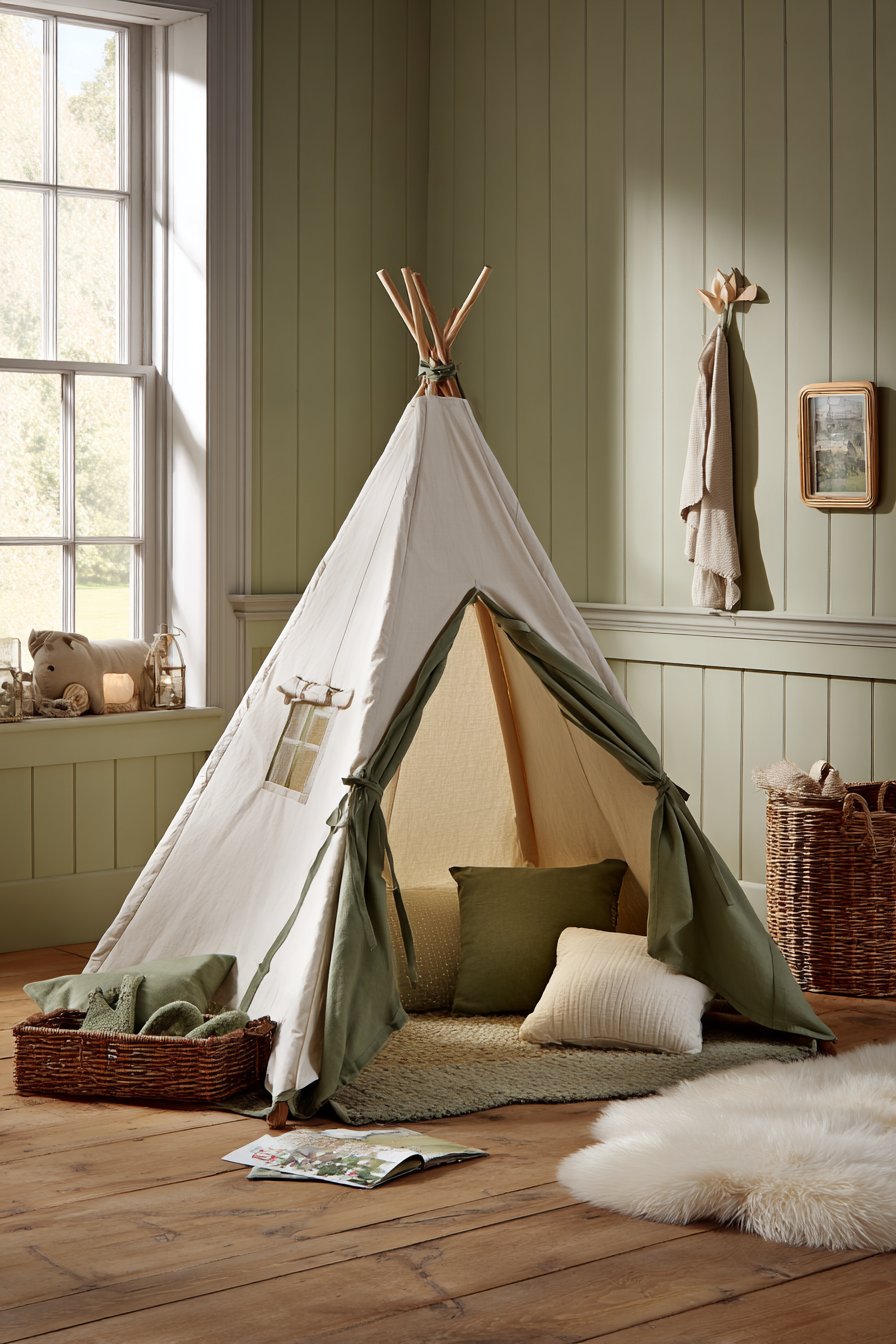
Behind the teepee, the wall is painted in soft olive green. White wainscoting below adds architectural detail. Morning light filters through a nearby window. The warm, inviting glow makes this corner especially appealing. The teepee creates a special space within the larger room.
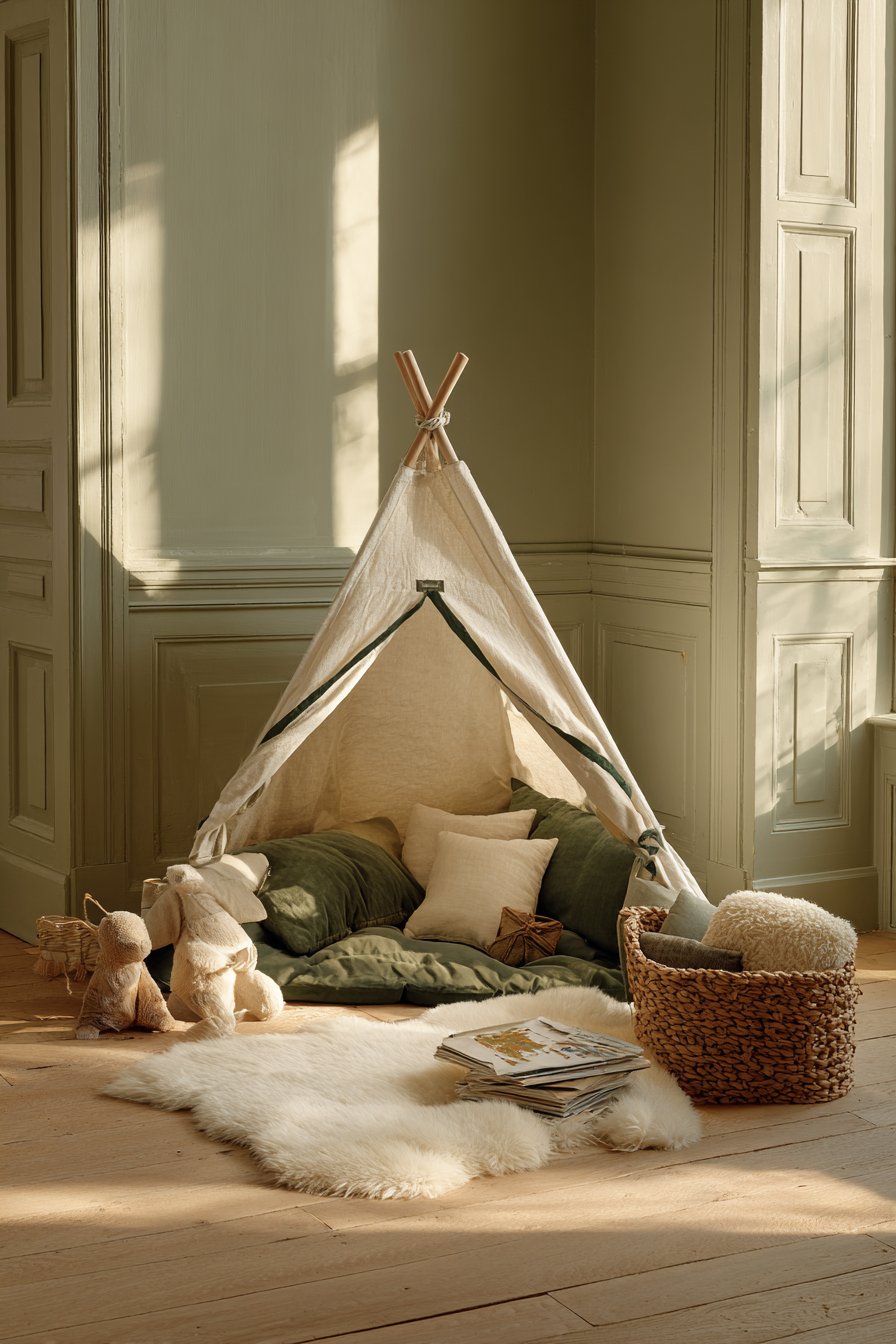
The canvas material feels substantial yet soft. The natural color works with the room’s palette perfectly. The olive green trim provides just enough color accent. The interior cushions make the space comfortable for extended play sessions.
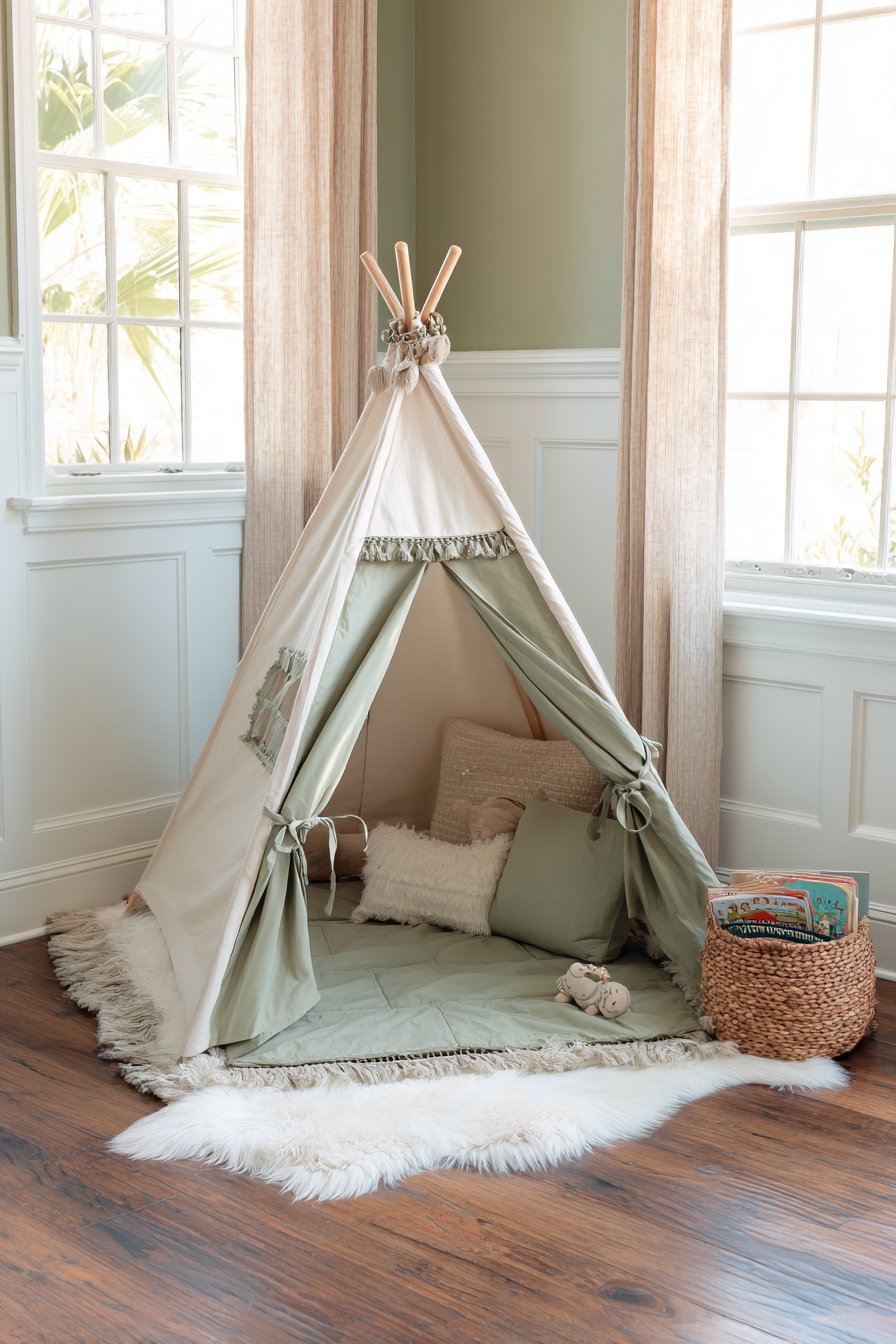
This element adds playfulness without sacrificing sophistication. The teepee serves multiple purposes as hideaway, reading nook, and imaginative play space. It grows with the child from infant observation spot to toddler adventure zone. The timeless design won’t feel outdated quickly.
Key Design Tips:
- Choose natural canvas teepees for durability and style
- Add cushions in coordinating colors for comfort
- Position teepees near natural light sources
- Include nearby storage for books and toys
- Use sheepskin rugs for soft, comfortable flooring
15. Organized Textile Collection on Open Shelving
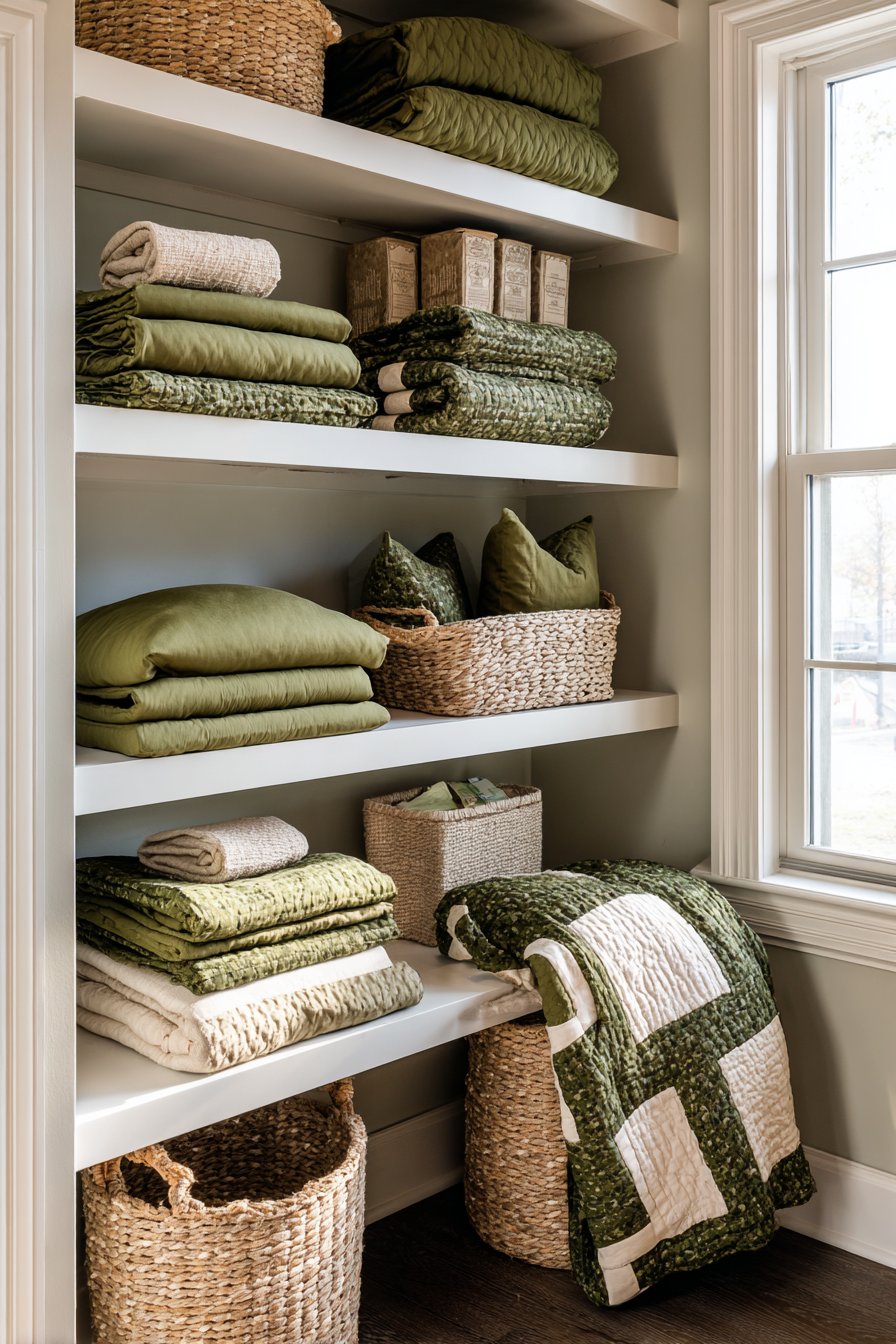
Open white shelving displays a carefully curated textile collection. Neatly folded receiving blankets, swaddles, and crib sheets range from deep forest to pale sage. The varied shades of olive green create visual interest. Woven baskets in natural seagrass organize smaller items. Burp cloths and washcloths stay accessible yet tidy. A quilted blanket with olive green and cream patchwork drapes over the shelf edge.
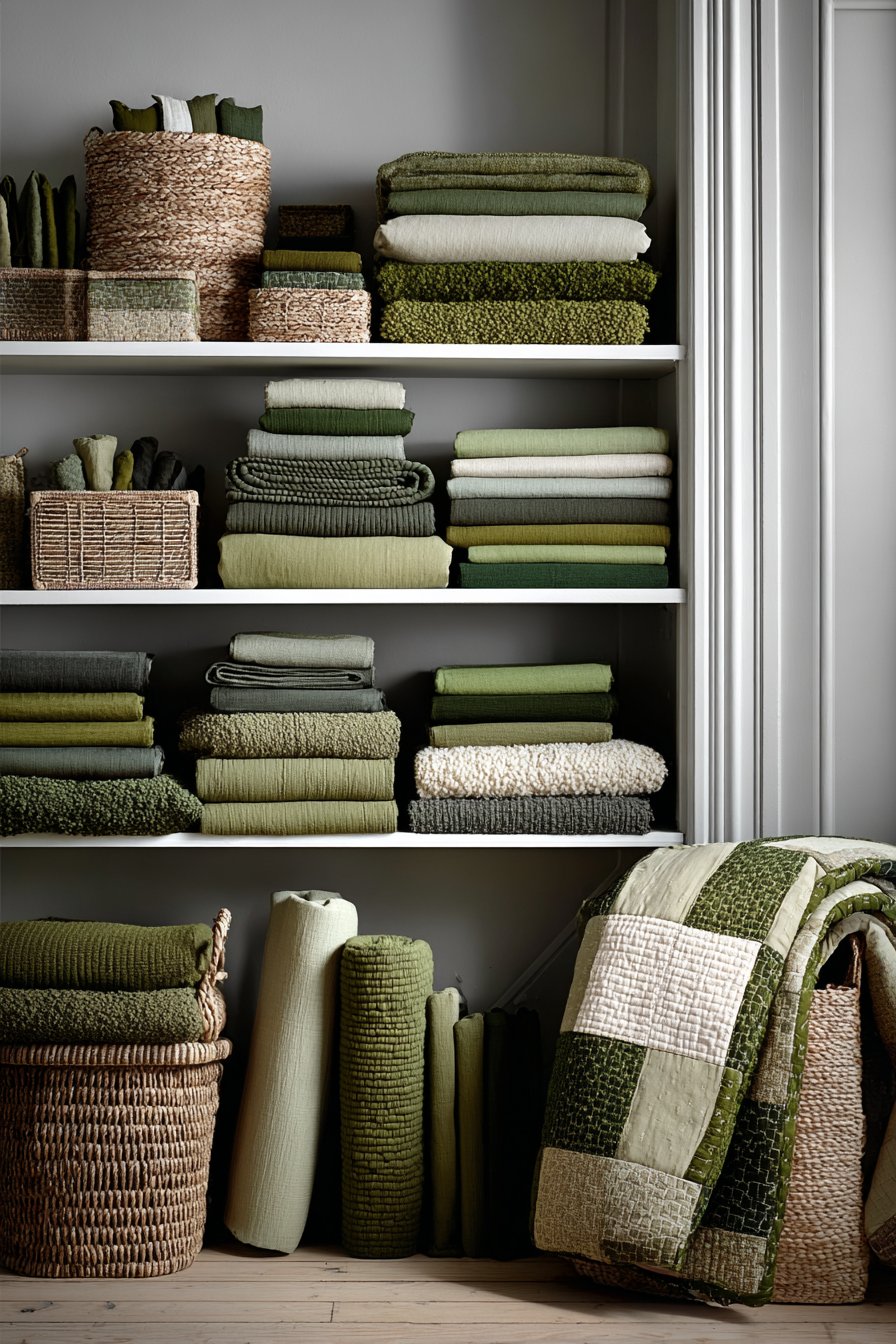
The shelving unit sits against a pale gray wall with white trim. Soft natural lighting emphasizes the varied textures. Smooth organic cotton contrasts with chunky knit varieties. The organized display celebrates material quality and craftsmanship. Each textile serves a purpose while looking beautiful.
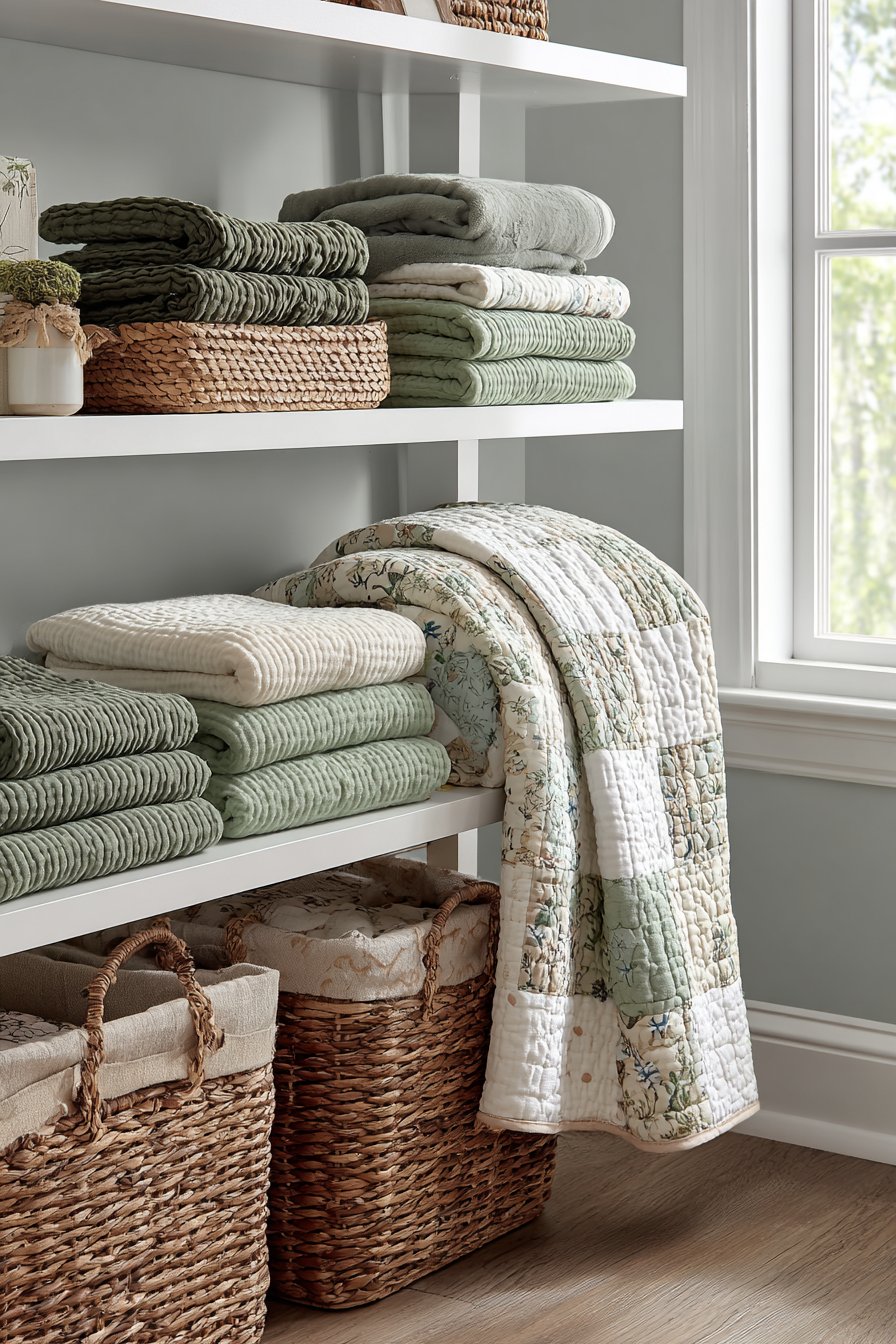
The collection demonstrates how functional items can enhance aesthetics. The folded textiles create color blocks of varying green tones. The handmade quilted blanket adds artisanal quality. The open shelving keeps everything visible and accessible during busy days and nights.
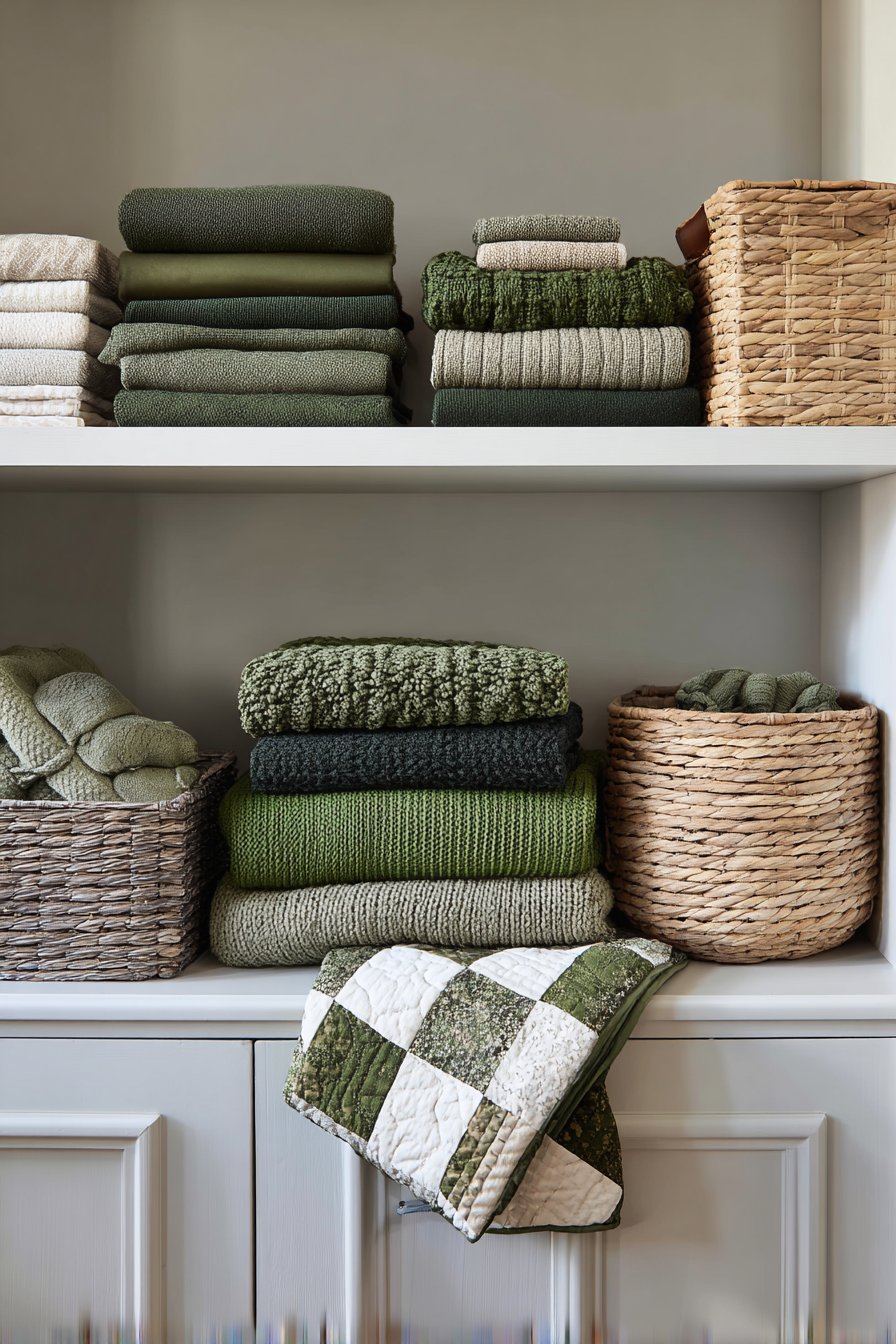
This approach transforms necessary baby items into decorative displays. The organization makes selecting the right item quick and easy. The natural materials feel good against baby’s sensitive skin. The visual appeal makes the nursery feel curated and intentional.
Key Design Tips:
- Organize textiles by color gradient for visual appeal
- Use open shelving to display beautiful fabrics
- Choose natural materials for baby’s sensitive skin
- Add woven baskets for small item organization
- Include handmade quilts for artisanal character
16. Personalized Growth Chart as Functional Art
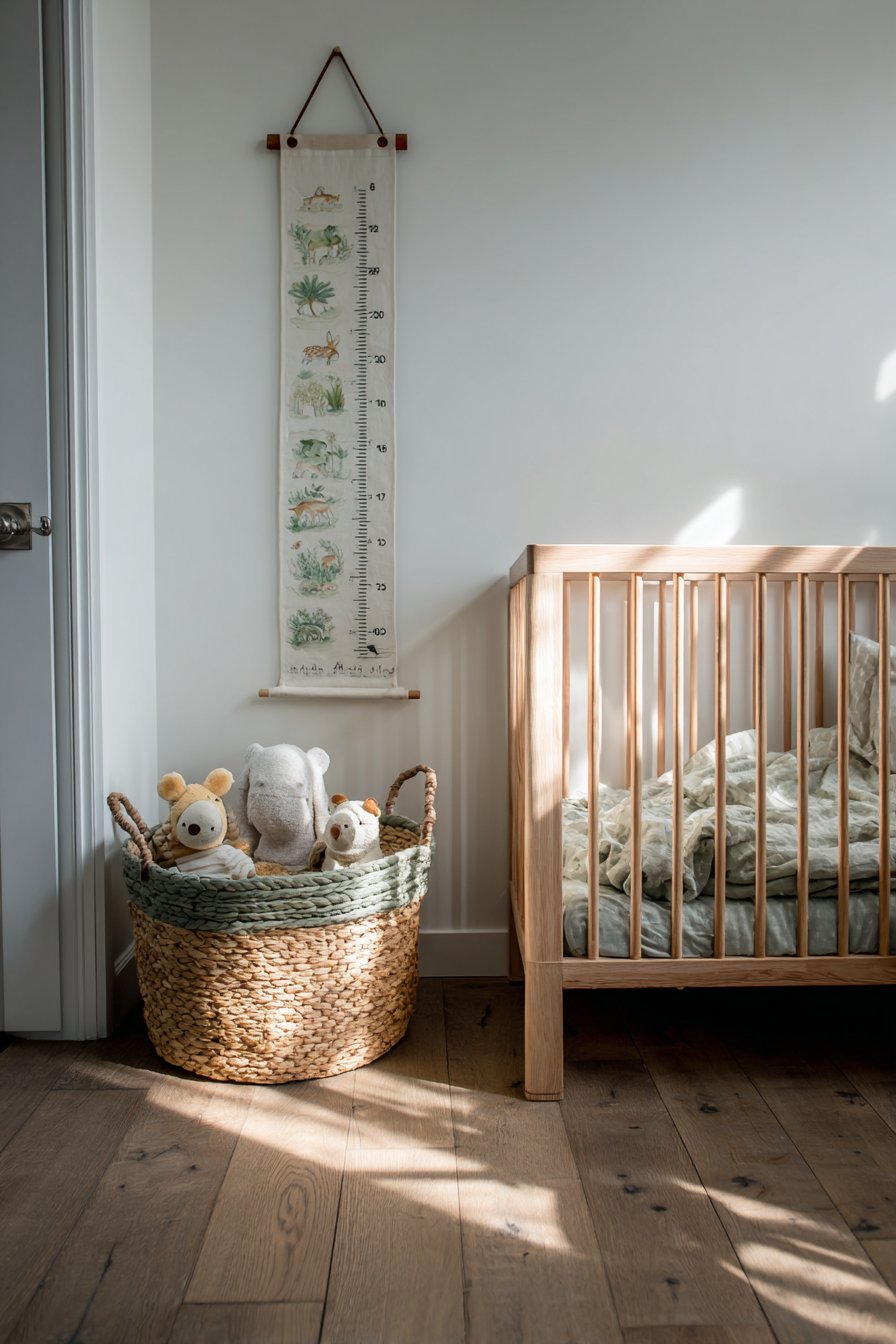
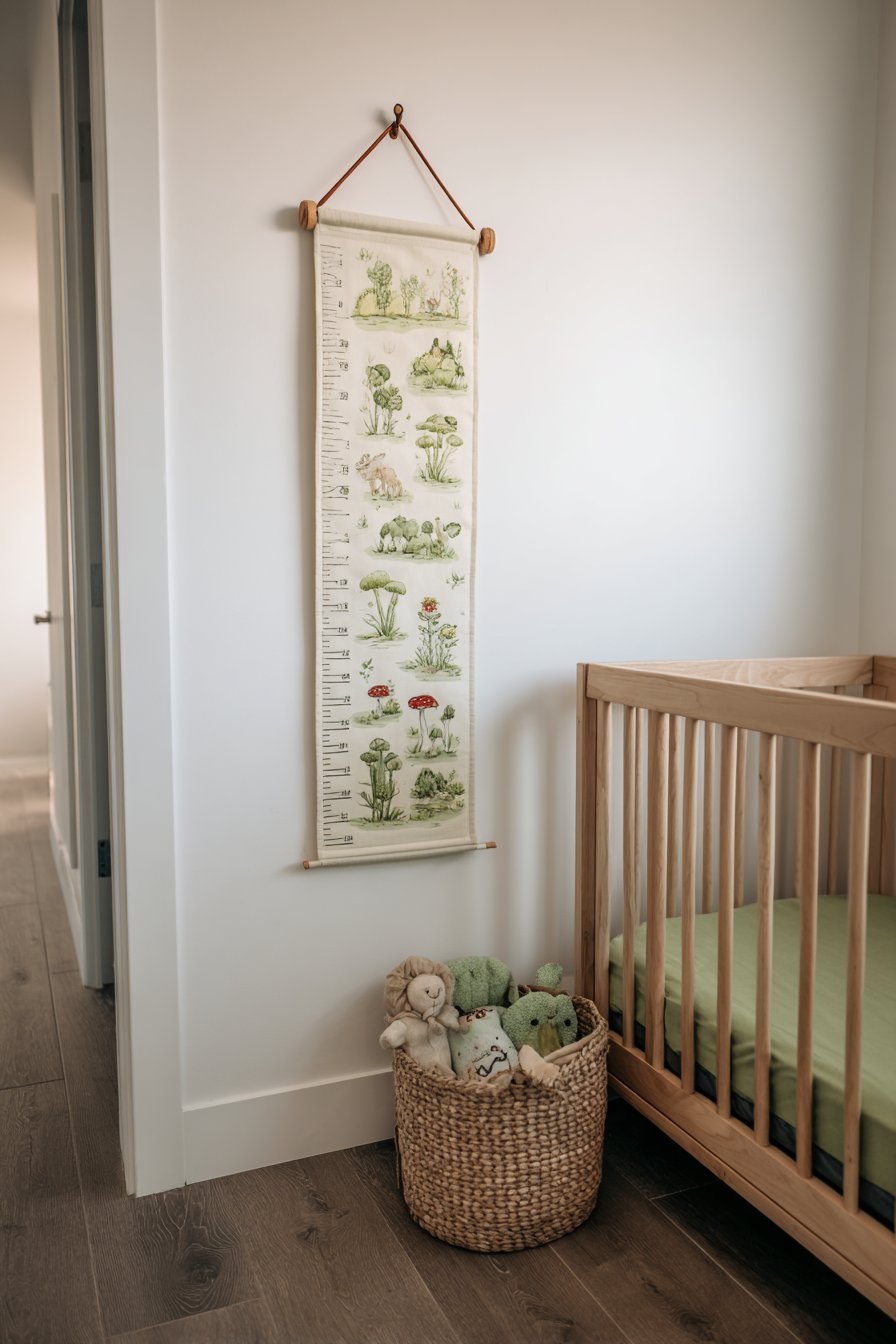
A growth chart crafted from natural canvas fabric hangs on the wall. Olive green printed measurements and whimsical forest animal illustrations personalize the piece. The chart hangs from a simple wooden dowel with leather cord. It’s positioned next to a natural wood crib against a white wall. Below, a woven storage basket in matching olive green holds stuffed animals and baby blankets.
The oak flooring shows natural grain variation that brings warmth. Soft morning light creates gentle shadows that emphasize the chart’s texture. The canvas material feels substantial and permanent. The forest animals add playful charm without feeling juvenile. The growth chart serves practical purpose while functioning as wall art.
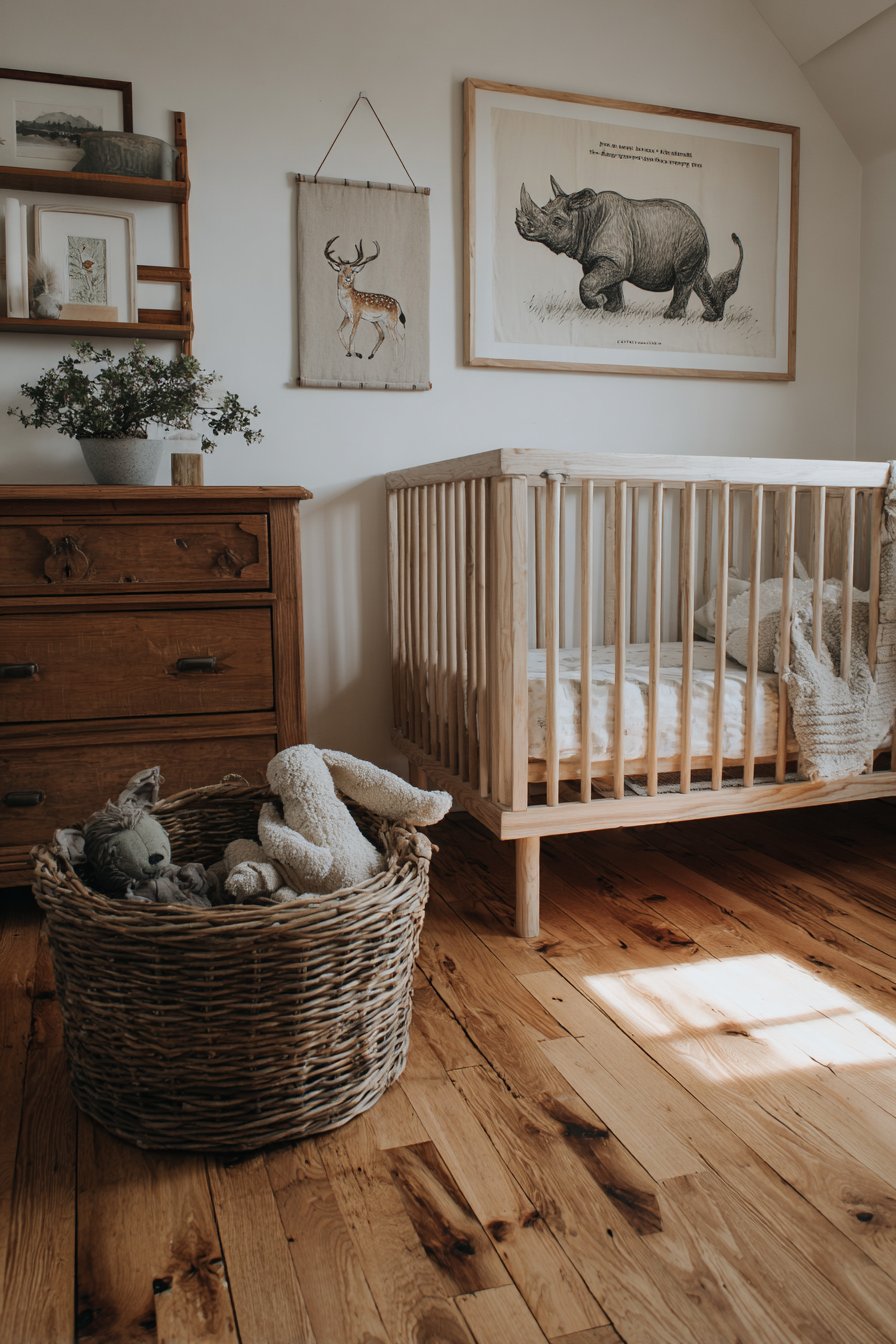
This personalized element makes the nursery feel special and unique. Tracking growth becomes a celebrated ritual rather than clinical measurement. The chart will document precious years of development. The handcrafted quality ensures it becomes a treasured keepsake.
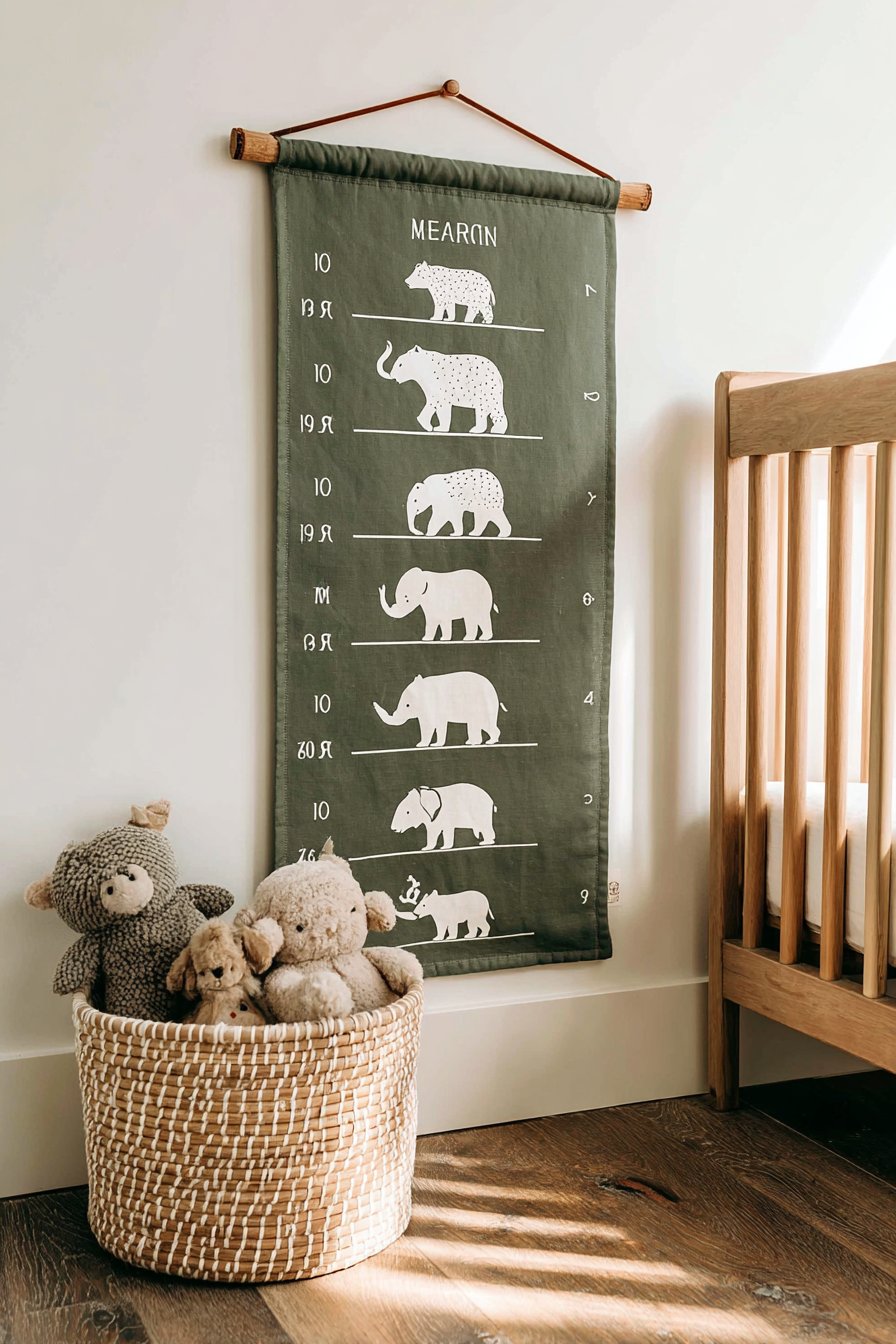
The positioning next to the crib makes the chart easily accessible. The white wall provides clean backdrop that highlights the design. The coordinating storage basket below creates a cohesive vignette. The natural materials maintain the room’s organic aesthetic throughout.
Key Design Tips:
- Choose canvas growth charts for durability and texture
- Personalize with baby’s name or meaningful illustrations
- Position charts on white walls for maximum visibility
- Hang from wooden dowels for rustic, handcrafted appeal
- Add coordinating storage baskets below for cohesive design
17. Double-Rod Blackout Curtain System
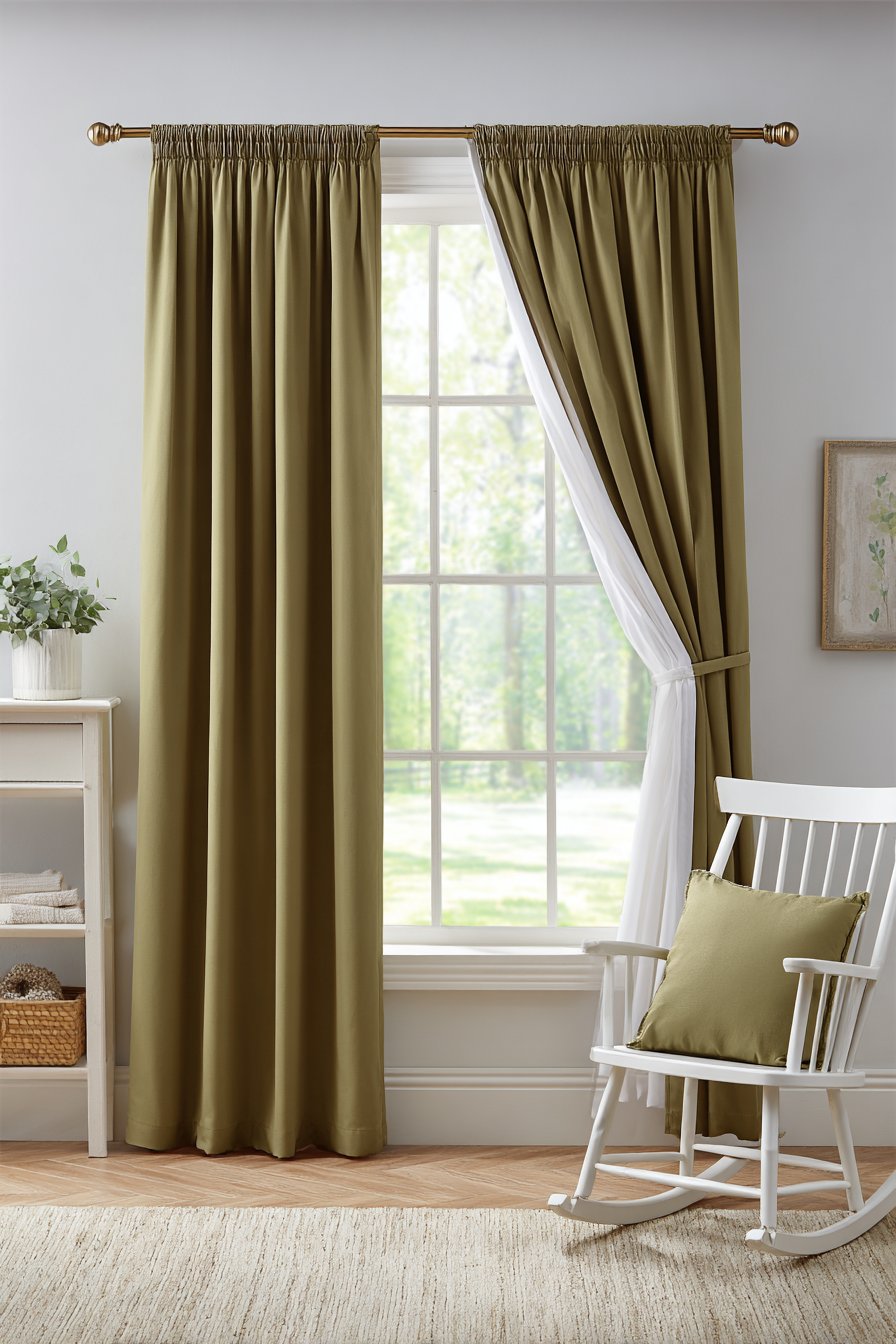
A sophisticated double-rod curtain system provides exceptional light control. Sheer white curtains hang on the inner rod. Heavyweight olive green linen blackout panels hang on the outer rod. Brass curtain rods and simple ring clips provide functional hardware. The system offers flexibility for different times of day and sleeping needs.
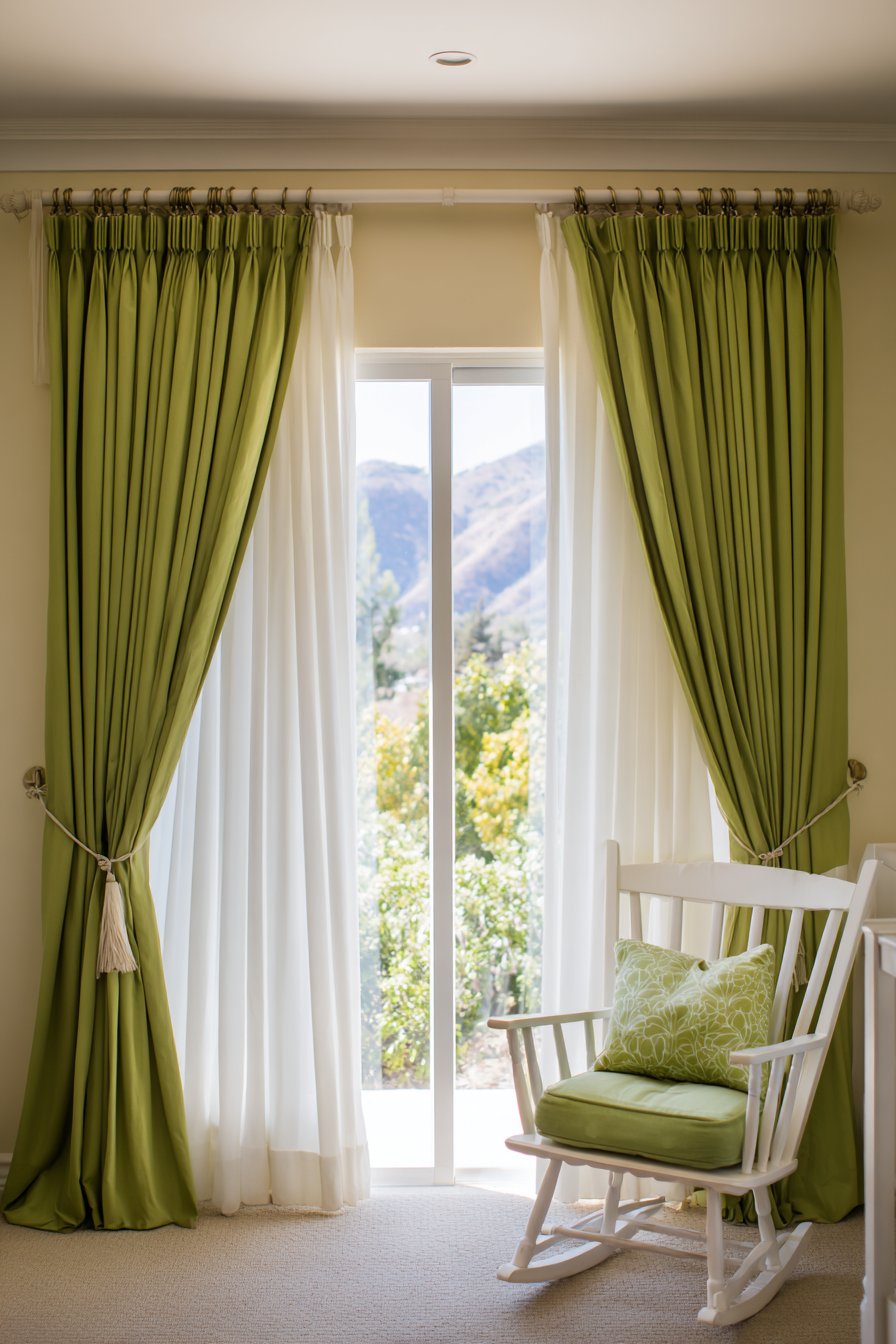
The curtains frame a large window overlooking greenery outside. This creates visual connection between interior and exterior nature elements. A white rocking chair with olive green cushion sits nearby. The chair is positioned to take advantage of natural light during daytime. The strategic furniture placement maximizes the window’s benefits.
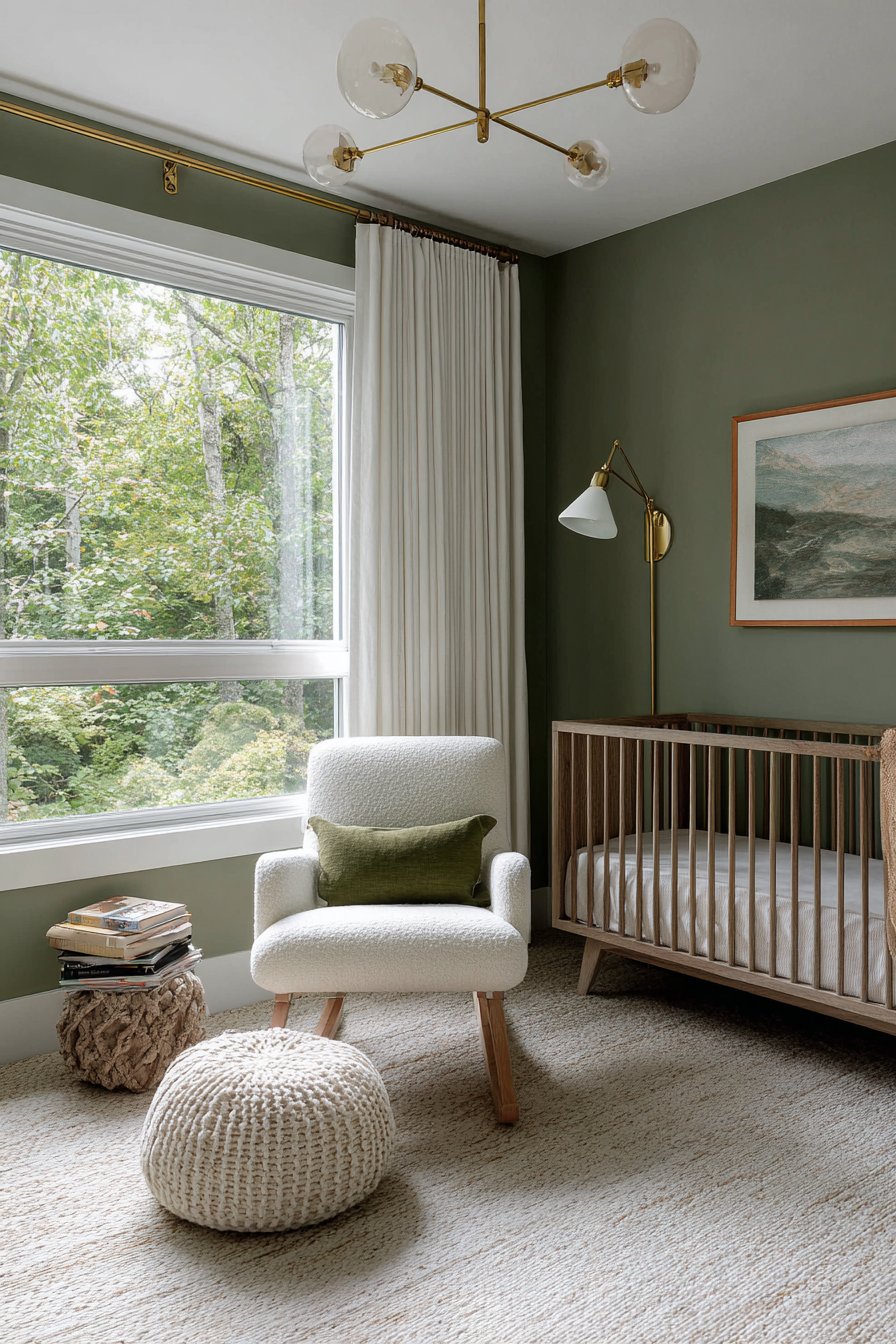
The blackout panels ensure darkness for daytime naps. The sheer under-curtains maintain privacy while allowing gentle light. The layered system looks luxurious and intentional. The olive green outer panels reinforce the room’s color scheme dramatically.
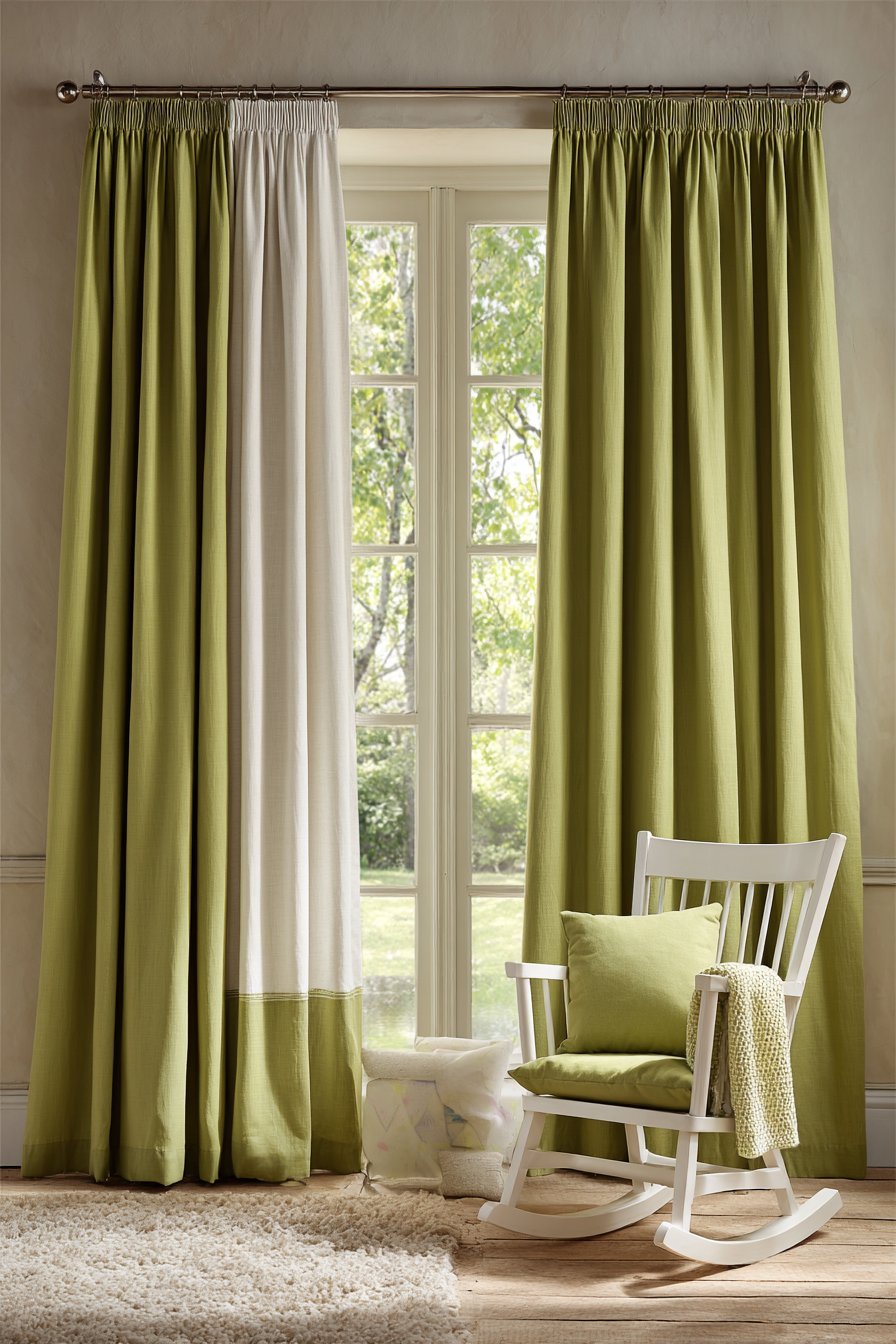
This practical solution doesn’t compromise aesthetics. The brass hardware adds warmth and quality. The heavyweight linen drapes beautifully with substantial presence. The system contributes significantly to the room’s sleep-friendly environment while looking stunning.
Key Design Tips:
- Install double-rod systems for maximum light control flexibility
- Choose heavyweight linen for effective blackout capability
- Use brass hardware to add warmth and quality
- Position seating near windows to maximize natural light
- Select blackout panels in room’s primary accent color
18. Custom Closet Organization with Painted Shelving
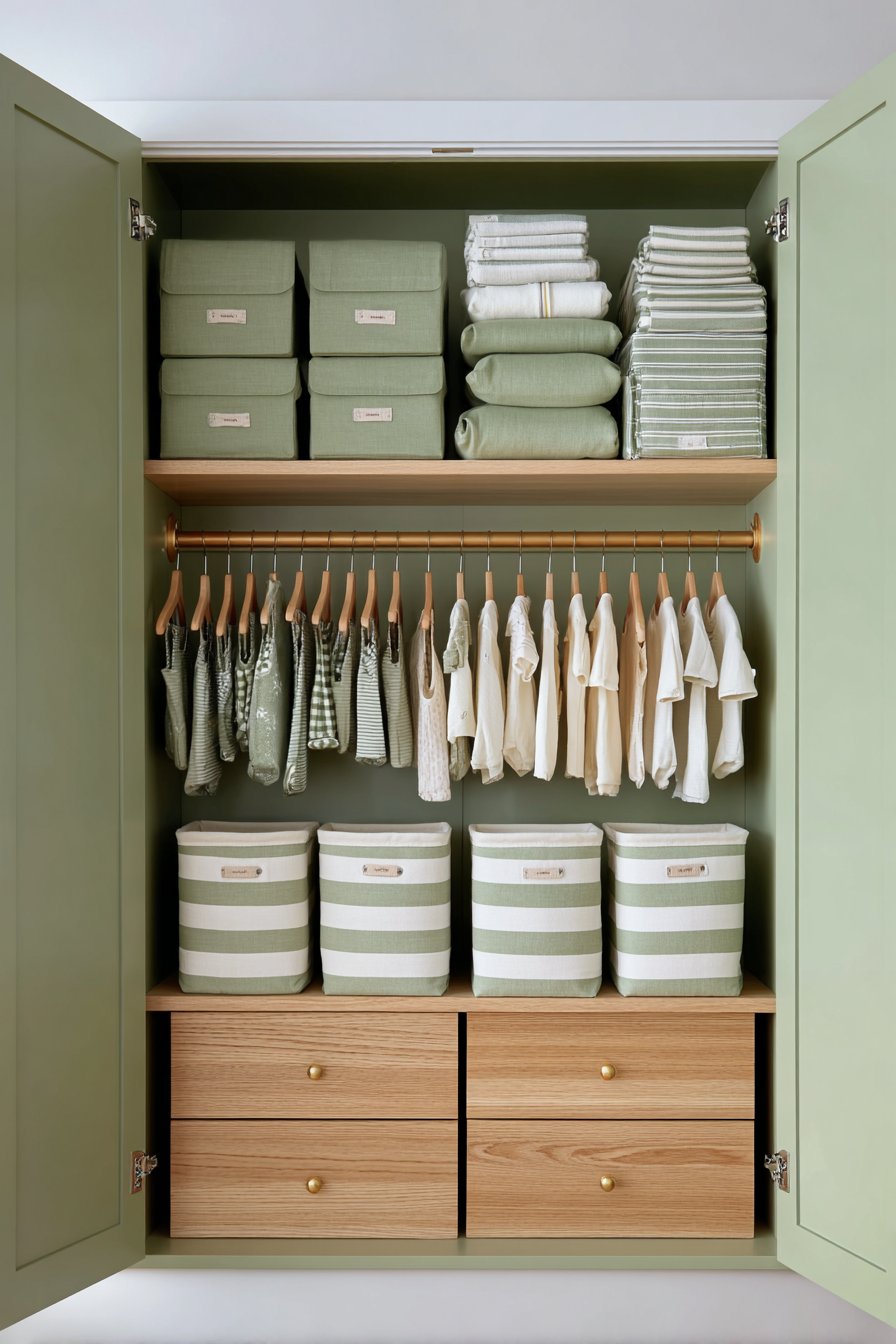
The nursery closet features a custom organization system. Open shelving is painted in soft olive green. Natural wooden drawer units provide closed storage. Small labeled fabric bins in cream and olive green stripes organize baby clothes. Items are sorted by size and type for easy access. Wooden hangers hold tiny garments. Upper shelves store out-of-season items in matching storage boxes.

Brass closet rods and simple brass hooks add functional hardware. Battery-operated LED strip lighting illuminates the interior. This makes items easy to locate during nighttime changes. The lighting transforms the closet from dark cave to functional workspace. The thoughtful organization eliminates morning stress and nighttime fumbling.
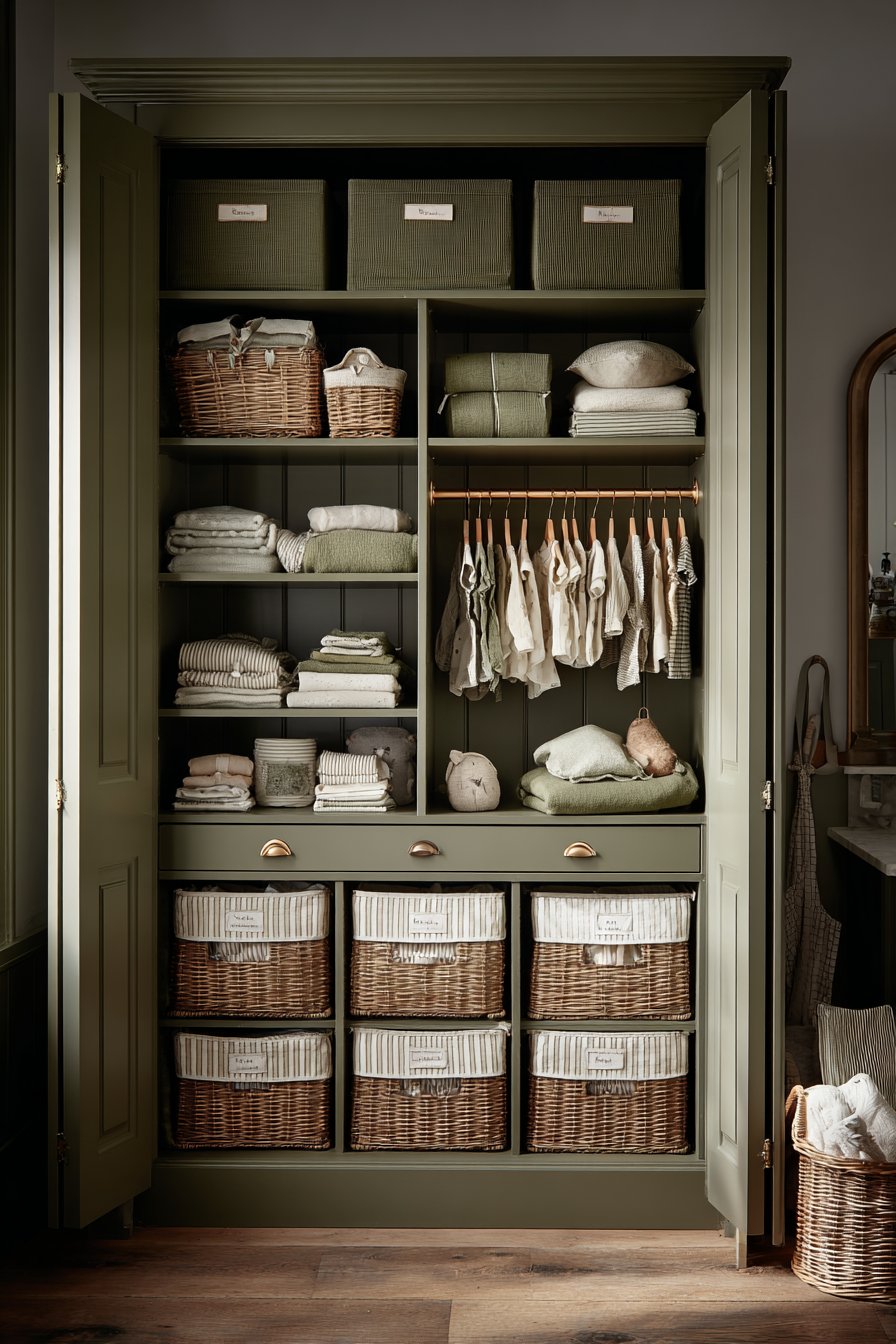
The olive green painted shelving creates cohesive design that matches the nursery. The closet becomes an extension of the room rather than hidden afterthought. The labeled bins make maintaining organization simple. Even sleep-deprived parents can find what they need quickly.
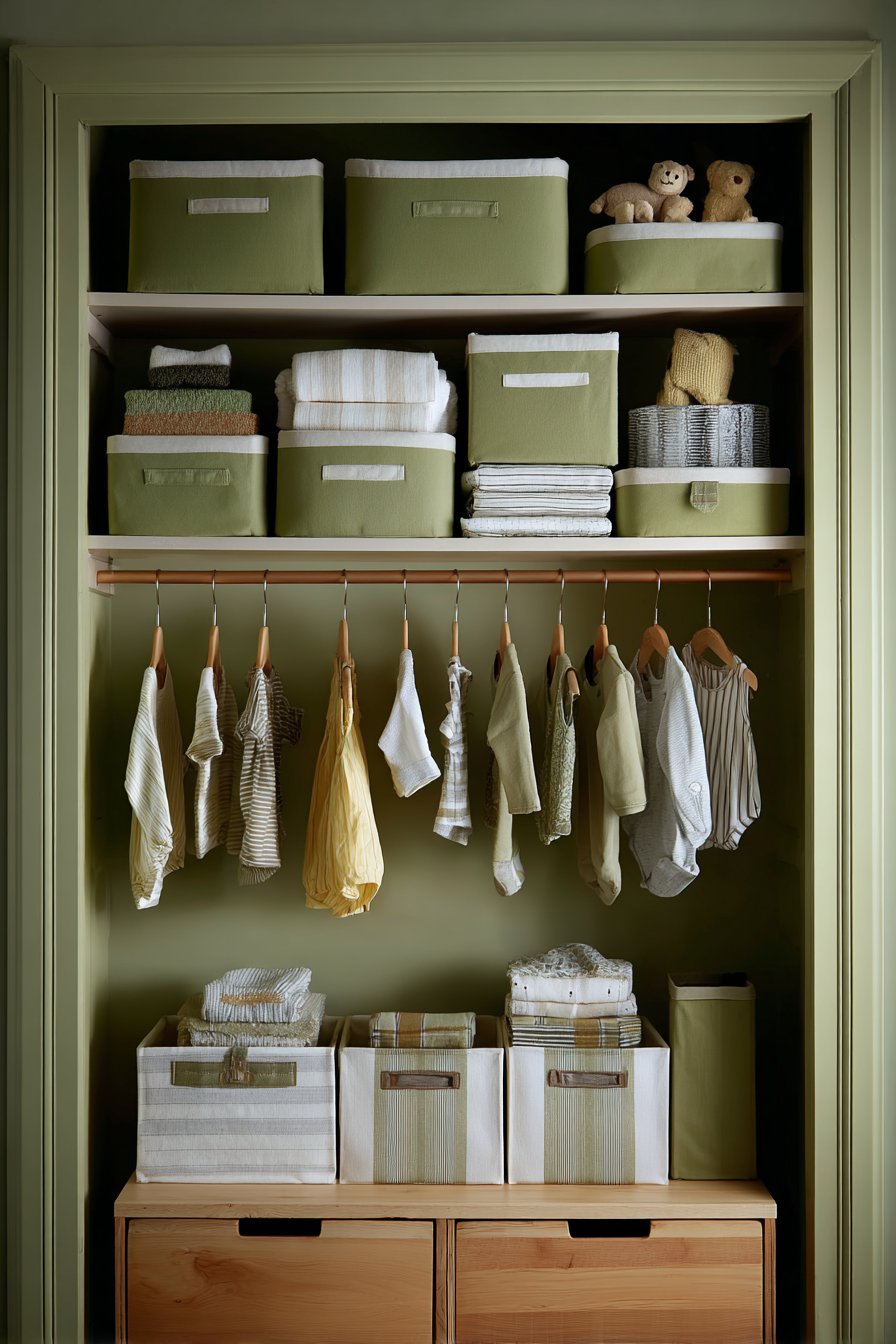
This system demonstrates how functional spaces deserve design attention. The closet organization affects daily life significantly. The beautiful system encourages maintaining order. The investment in good organization pays dividends through years of use.
Key Design Tips:
- Paint closet shelving to match nursery color scheme
- Use labeled fabric bins for easy organization
- Install LED lighting for nighttime visibility
- Add wooden hangers for gentleness on small garments
- Include drawer units for items best kept in closed storage
19. Comfortable Reading Nook with Upholstered Bench
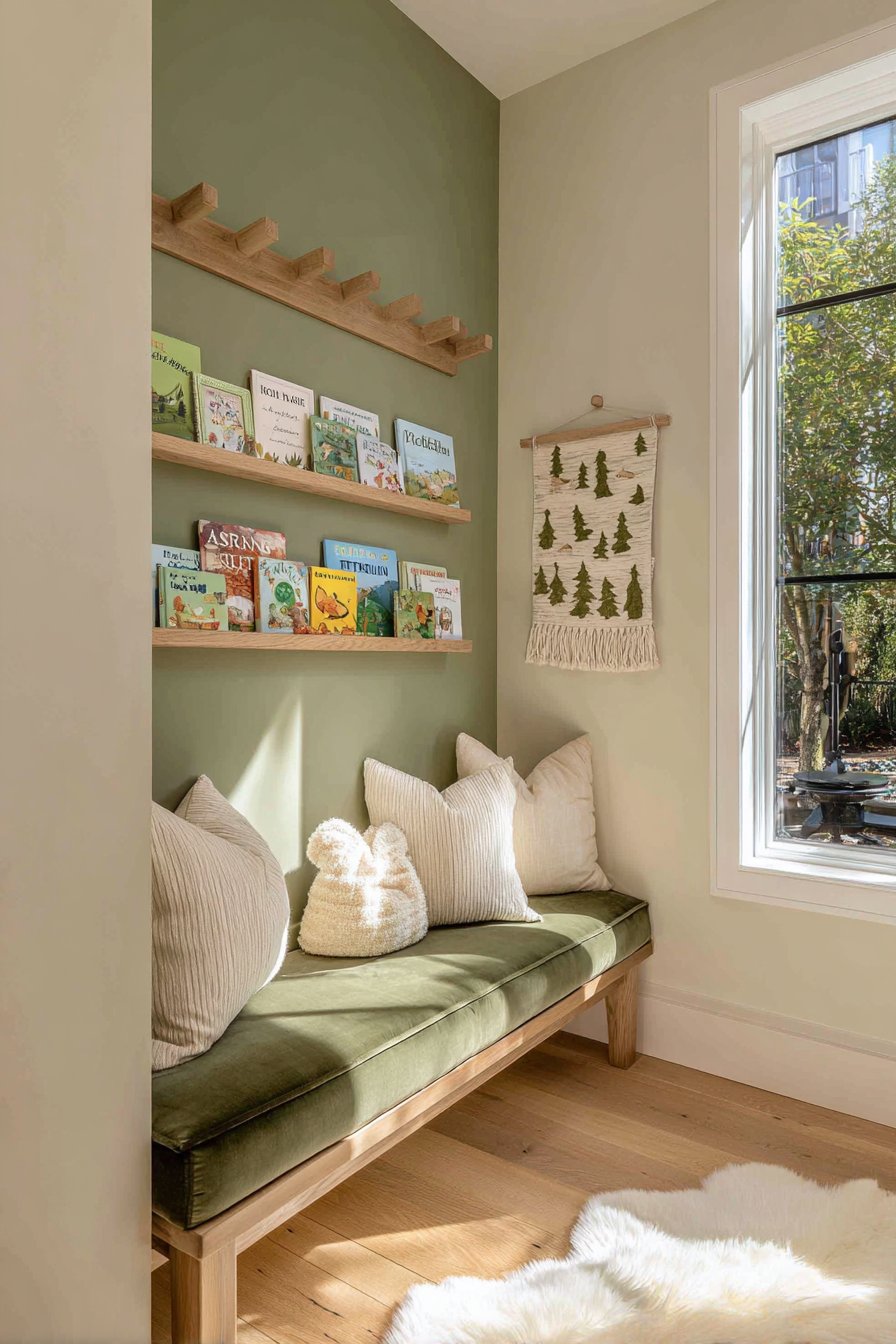
A low upholstered bench with olive green velvet cushioning creates an inviting reading nook. Cream throw pillows add softness and comfort. The bench is positioned beneath a wall-mounted bookshelf. Board books with colorful spines create a rainbow effect. A soft cream sheepskin rug provides comfortable floor seating. This creates flexible options for storytime positioning.
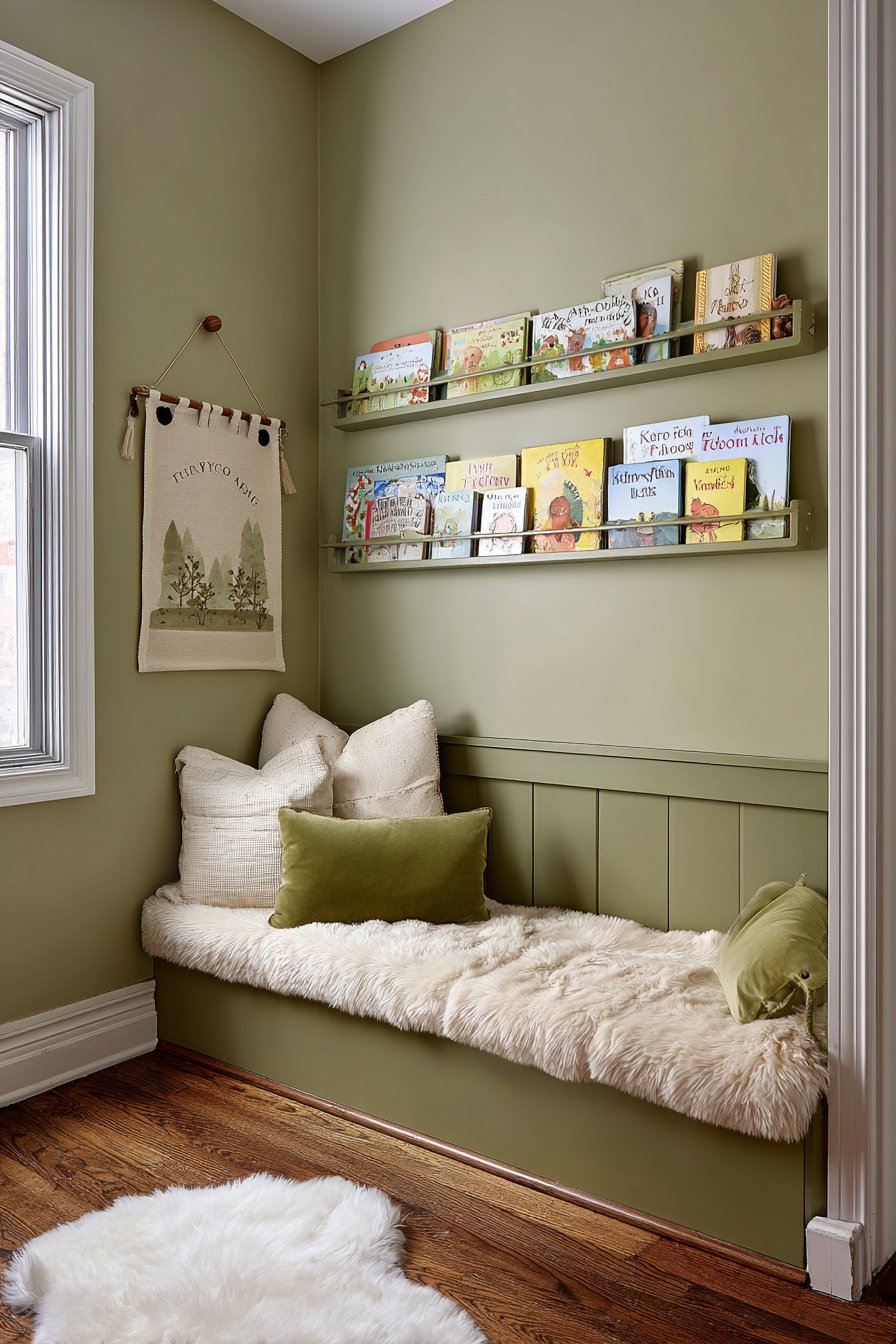
Above the bookshelf, a simple wooden peg rail painted in olive green holds decorative items. A fabric wall hanging with forest motifs adds artistic interest. Natural oak flooring extends throughout the space. Gentle afternoon light from a nearby window creates warm illumination. The lighting makes this corner perfect for reading at any time.
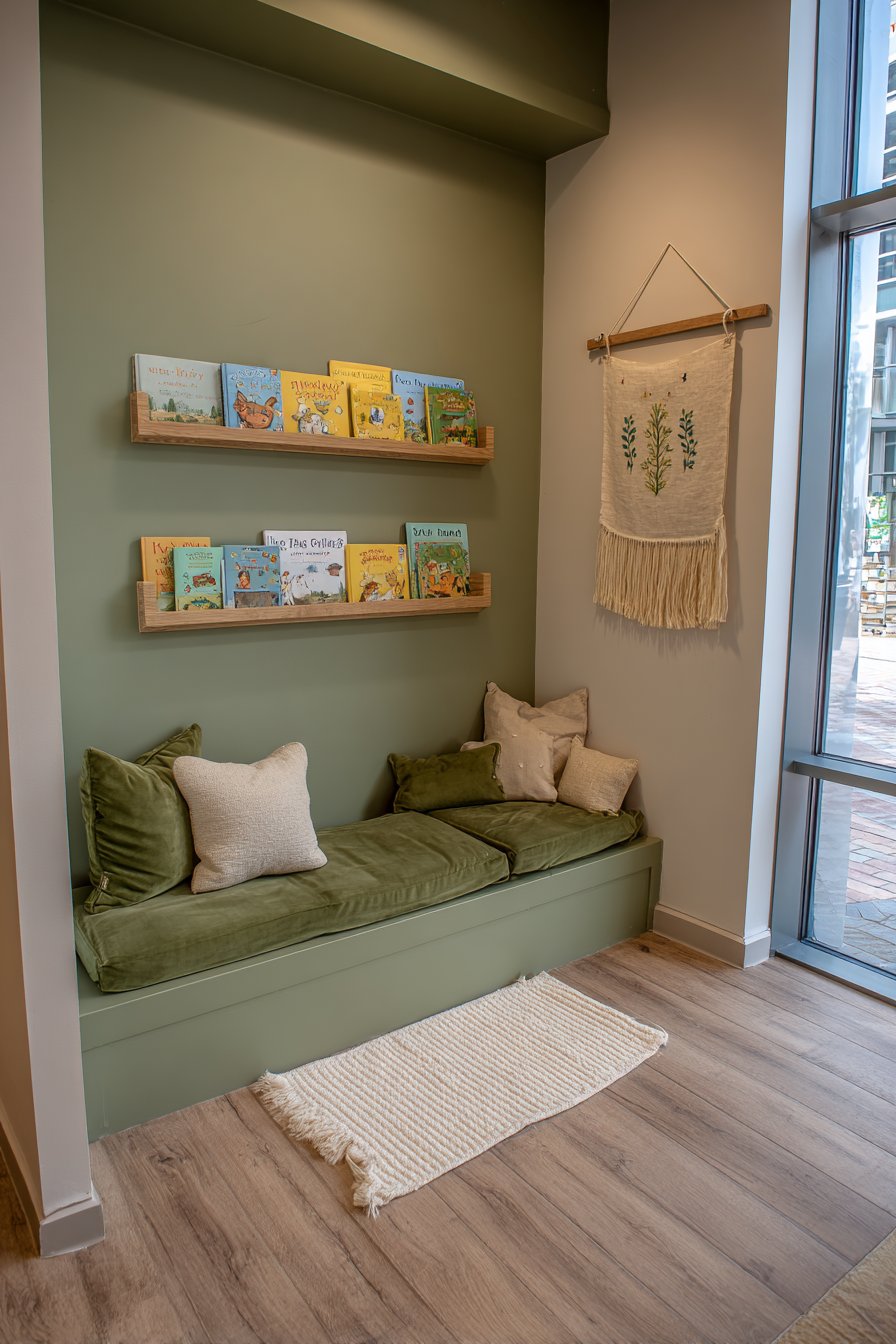
The low bench height suits both adult reading to baby and eventual independent child reading. The velvet upholstery feels luxurious yet durable. The sheepskin rug invites sitting and playing with books. The accessible bookshelf encourages early literacy engagement.
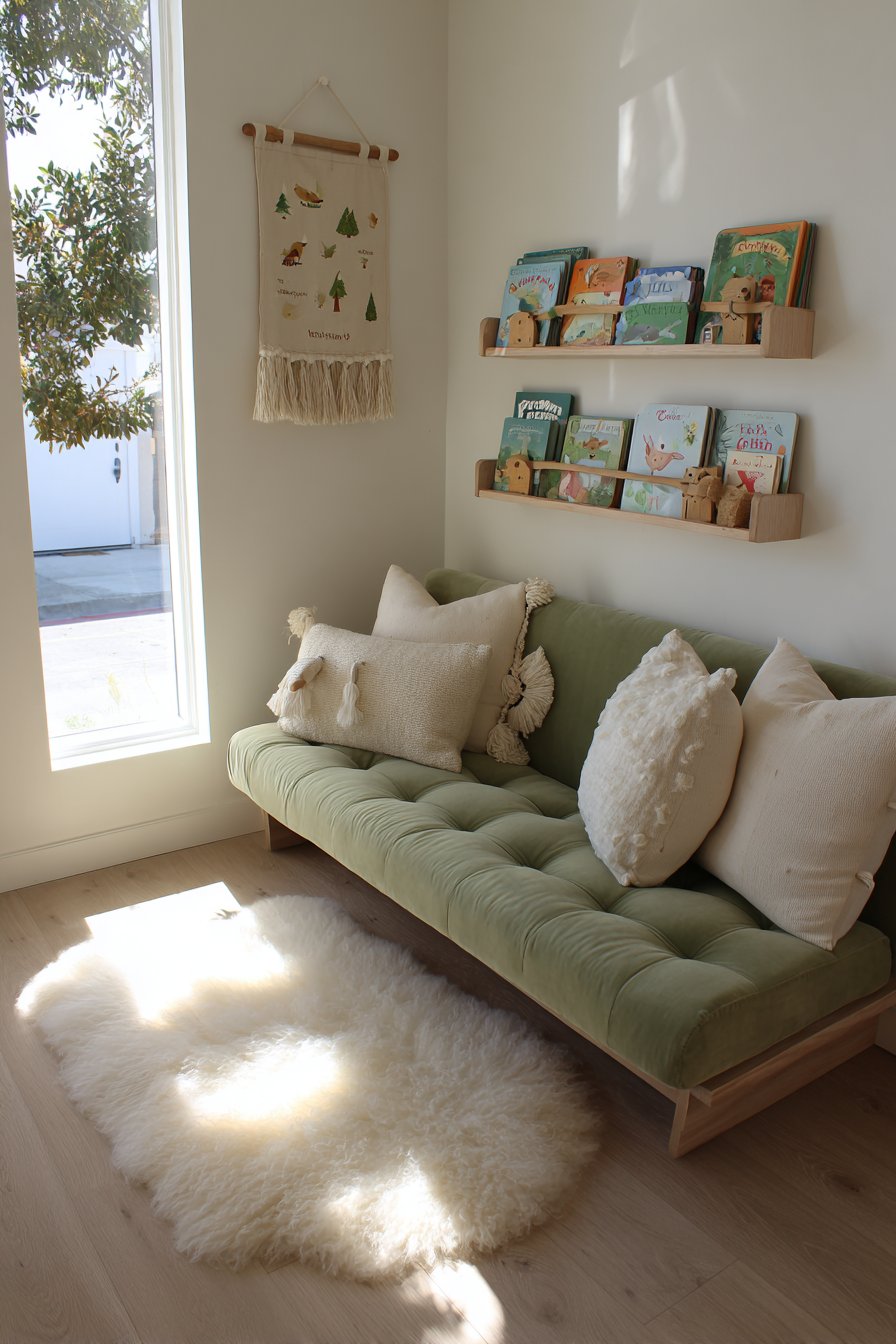
This dedicated reading space emphasizes the importance of books from the beginning. The comfortable seating ensures reading time feels special. The natural light makes the space inviting throughout the day. The thoughtful design creates positive associations with reading and learning.
Key Design Tips:
- Create dedicated reading nooks to encourage literacy
- Choose low seating appropriate for reading to babies
- Install wall-mounted bookshelves at accessible heights
- Add floor cushions for comfortable sitting during storytime
- Position reading areas near natural light sources
20. Custom Nameplate as Personalized Focal Point
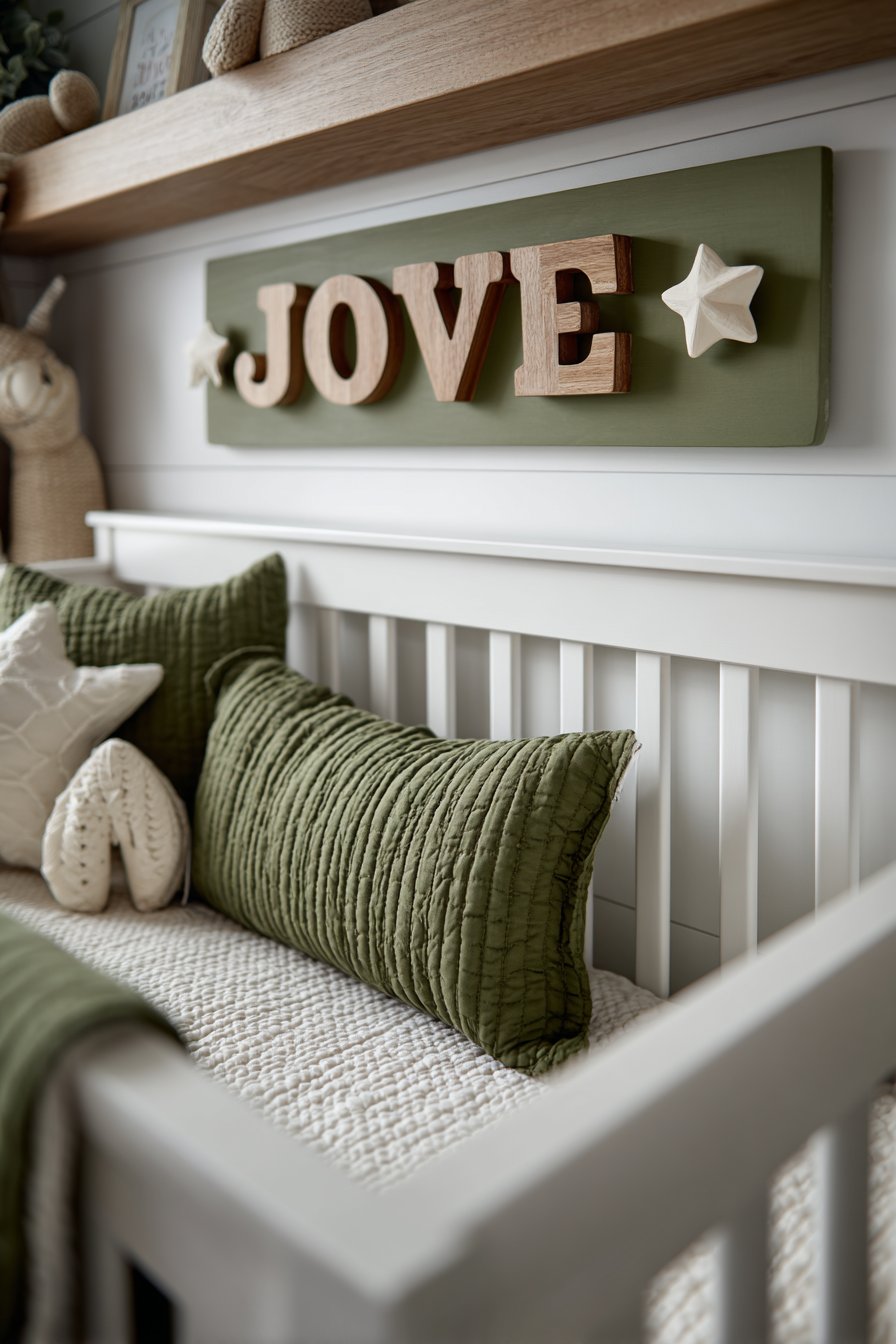
A custom nameplate mounted above the crib creates a personalized focal point. Laser-cut wooden letters in natural oak spell the baby’s name. The letters are backed by a painted board in soft olive green. Small wooden star embellishments in cream and olive green flank the name. The nameplate is mounted on a white wall with subtle texture. This creates crisp contrast that makes the name pop.
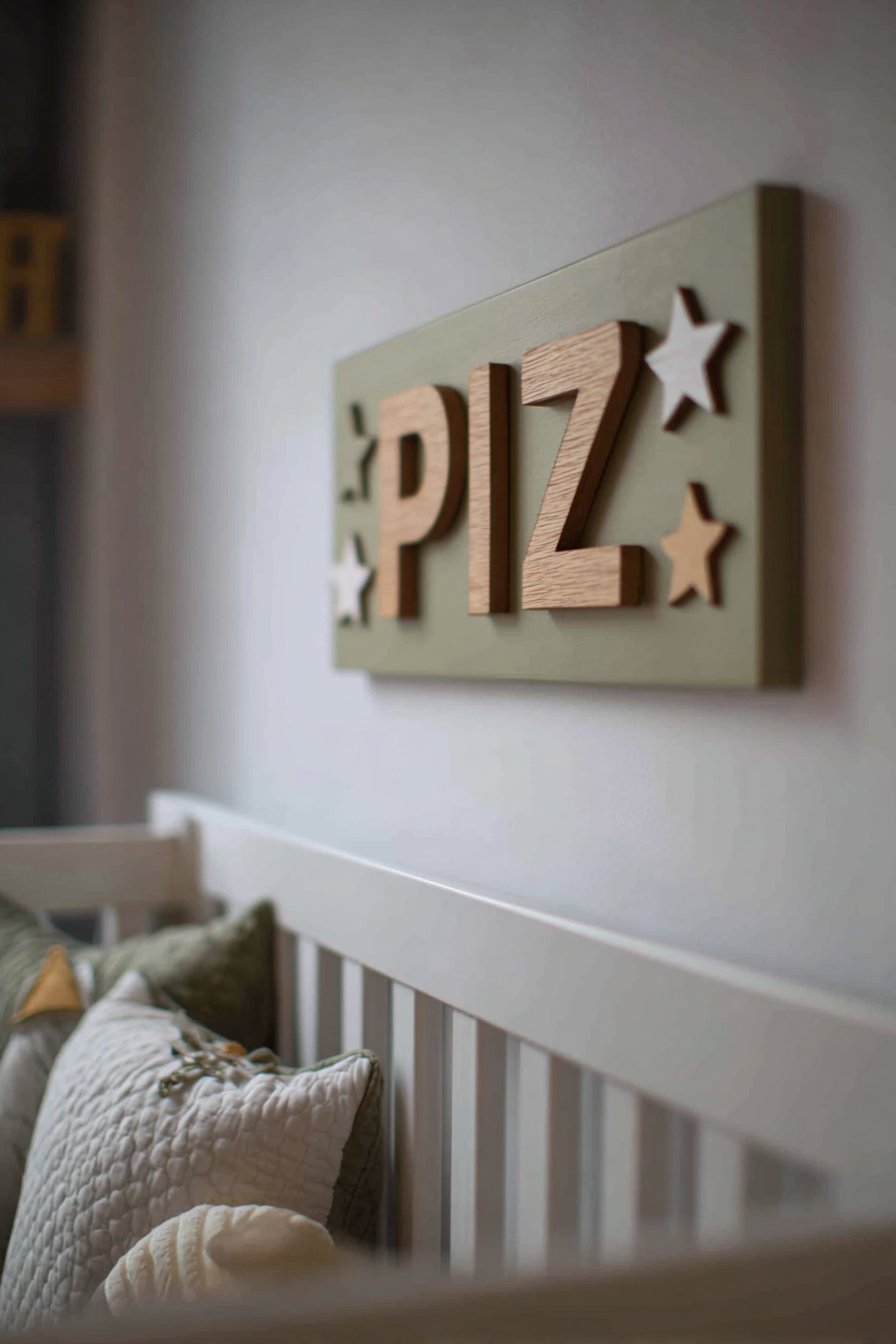
Below, the white crib features olive green crib bedding. Organic cotton sheets and a quilted bumper provide safety and comfort. Soft natural lighting from the side emphasizes the dimensional quality of the wooden letters. The handcrafted nature of this element adds personal meaning. The nameplate functions as both identification and decorative artwork.
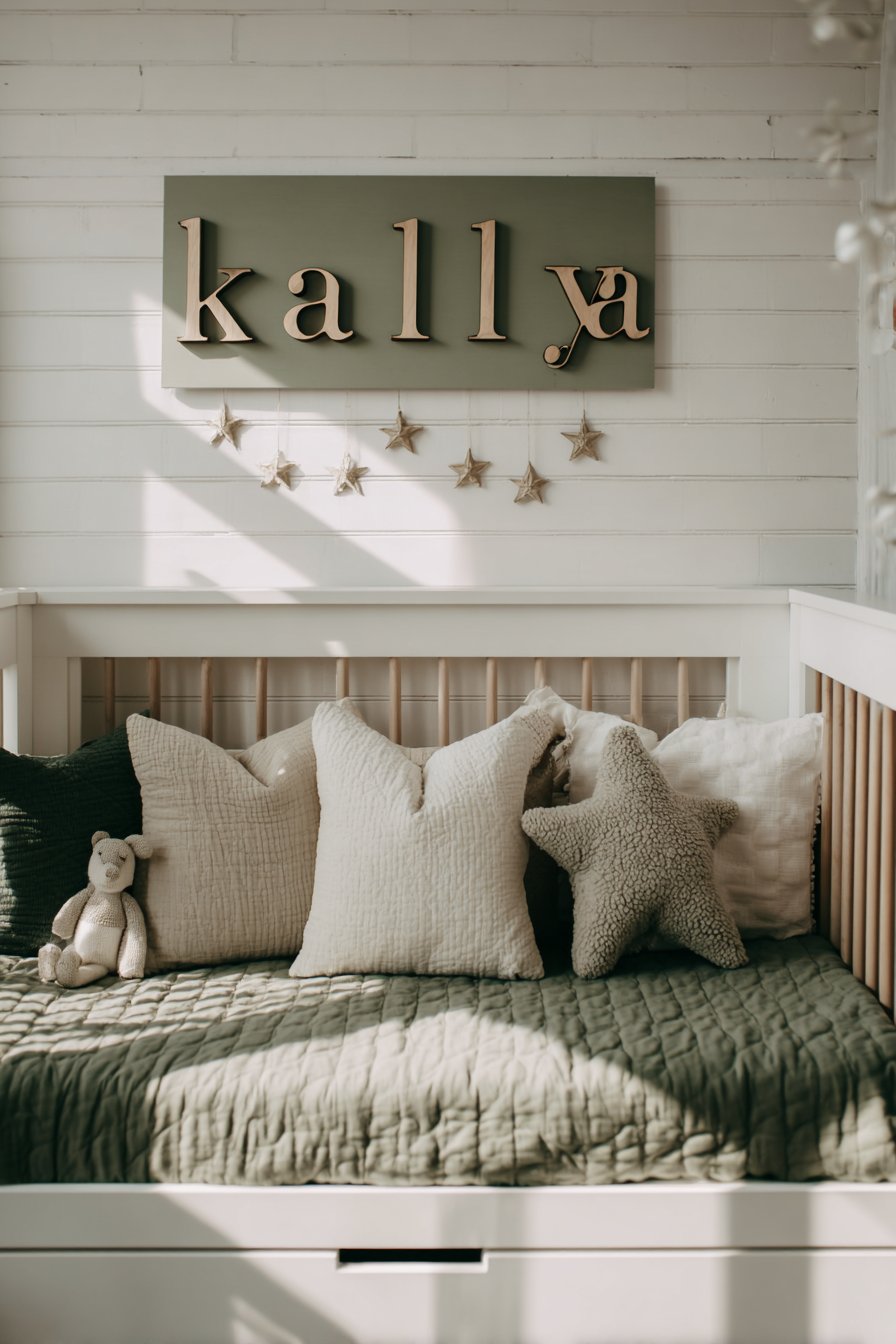
The laser-cut precision creates clean, professional appearance. The natural oak finish brings warmth and organic beauty. The olive green backing ties the element to the room’s overall design. The star embellishments add whimsy without overwhelming the main feature.
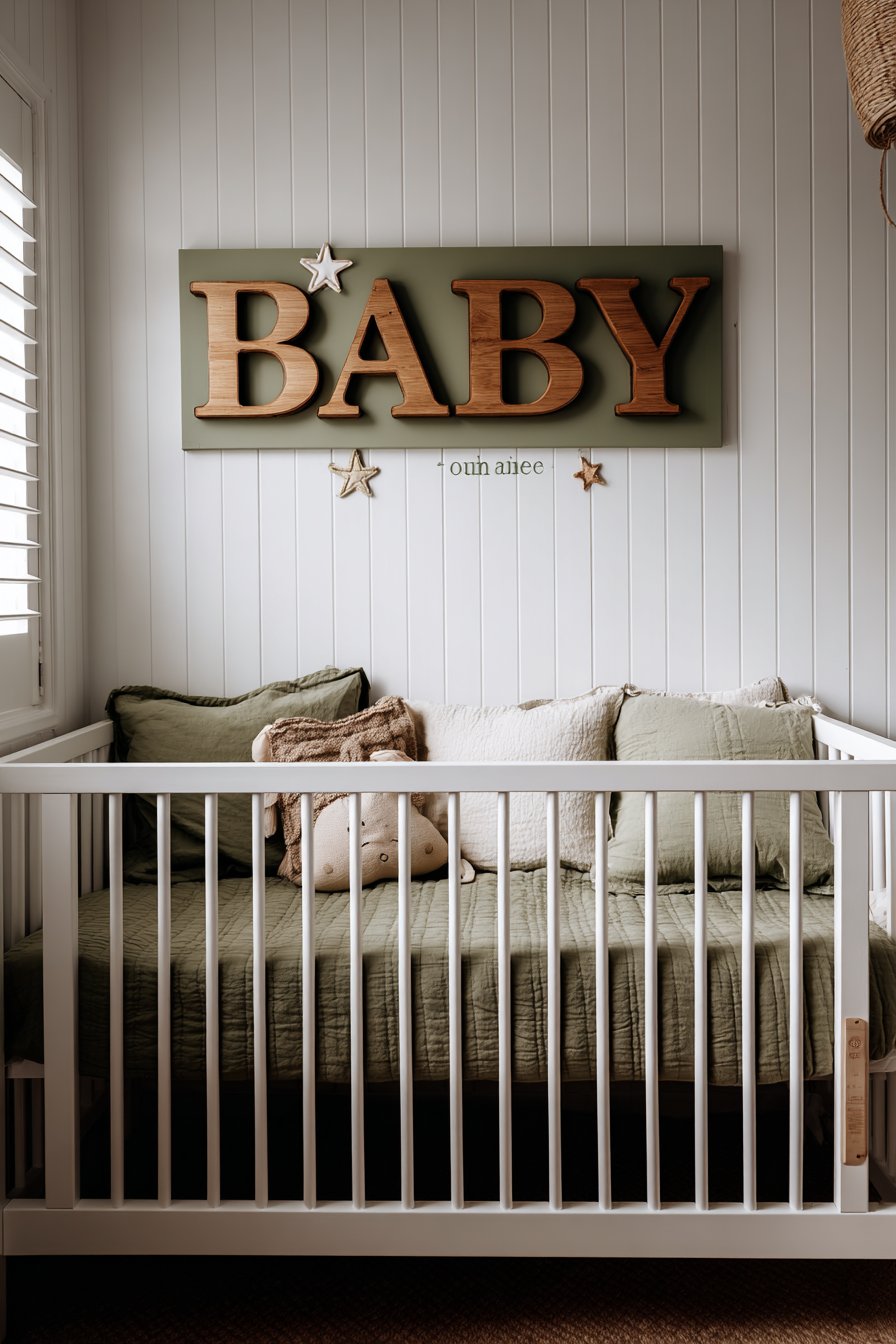
This personalized element makes the nursery uniquely yours. The name becomes celebrated feature rather than mere label. The custom piece demonstrates the love and care invested in preparing this special space. It becomes a treasured keepsake documenting this precious time.
Key Design Tips:
- Use laser-cut letters for professional, clean appearance
- Back nameplates with painted boards in room’s accent color
- Choose natural wood finishes for warmth and timelessness
- Add small embellishments for personality without overwhelm
- Position nameplates above cribs as focal points
Why These Olive Green Nursery Designs Are the Best
These olive green nursery designs represent thoughtful approaches to creating peaceful, nurturing spaces. The color’s natural connection to the outdoors brings calming influence appropriate for infant development. Olive green’s versatility allows it to work with various design styles from minimalist Scandinavian to warm bohemian aesthetics.
The designs emphasize natural materials that age beautifully and support sustainability. Oak wood, linen fabric, jute fiber, and organic cotton create healthy environments. These materials avoid off-gassing and synthetic chemicals concerning for babies’ developing systems. The investment in quality natural materials provides long-term value and timeless appeal.
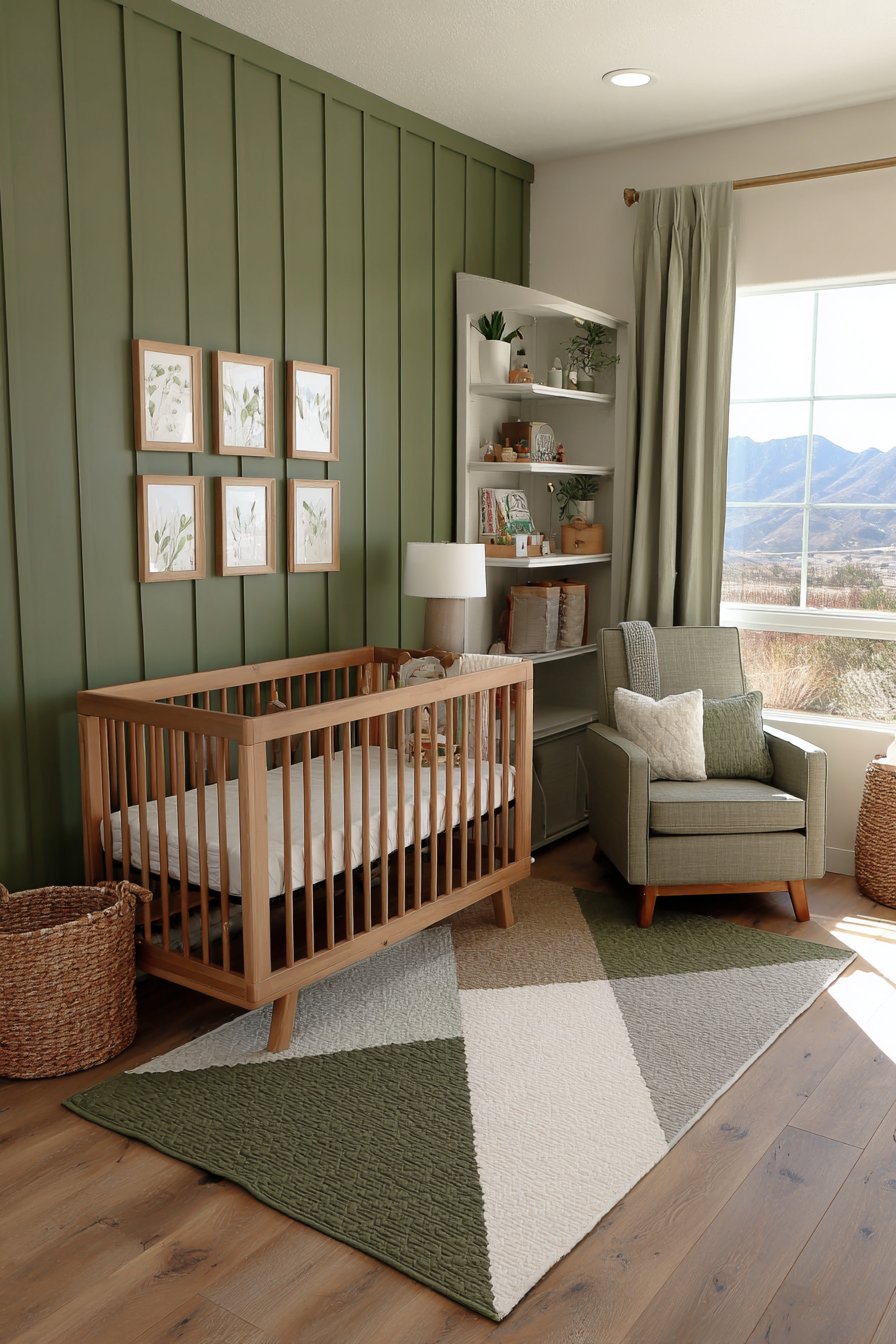
Color theory supports olive green’s effectiveness in nurseries. The hue combines blue’s calming properties with yellow’s warmth and optimism. This balance creates spaces that feel both peaceful and welcoming. The earthy tone works across different lighting conditions, looking beautiful in morning sun and evening lamplight alike.
The spatial considerations in these designs accommodate various room sizes. Accent walls create impact in small spaces without overwhelming. Larger rooms benefit from multiple olive green elements creating cohesive design flow. The adaptability makes these concepts accessible regardless of nursery dimensions or architectural constraints.
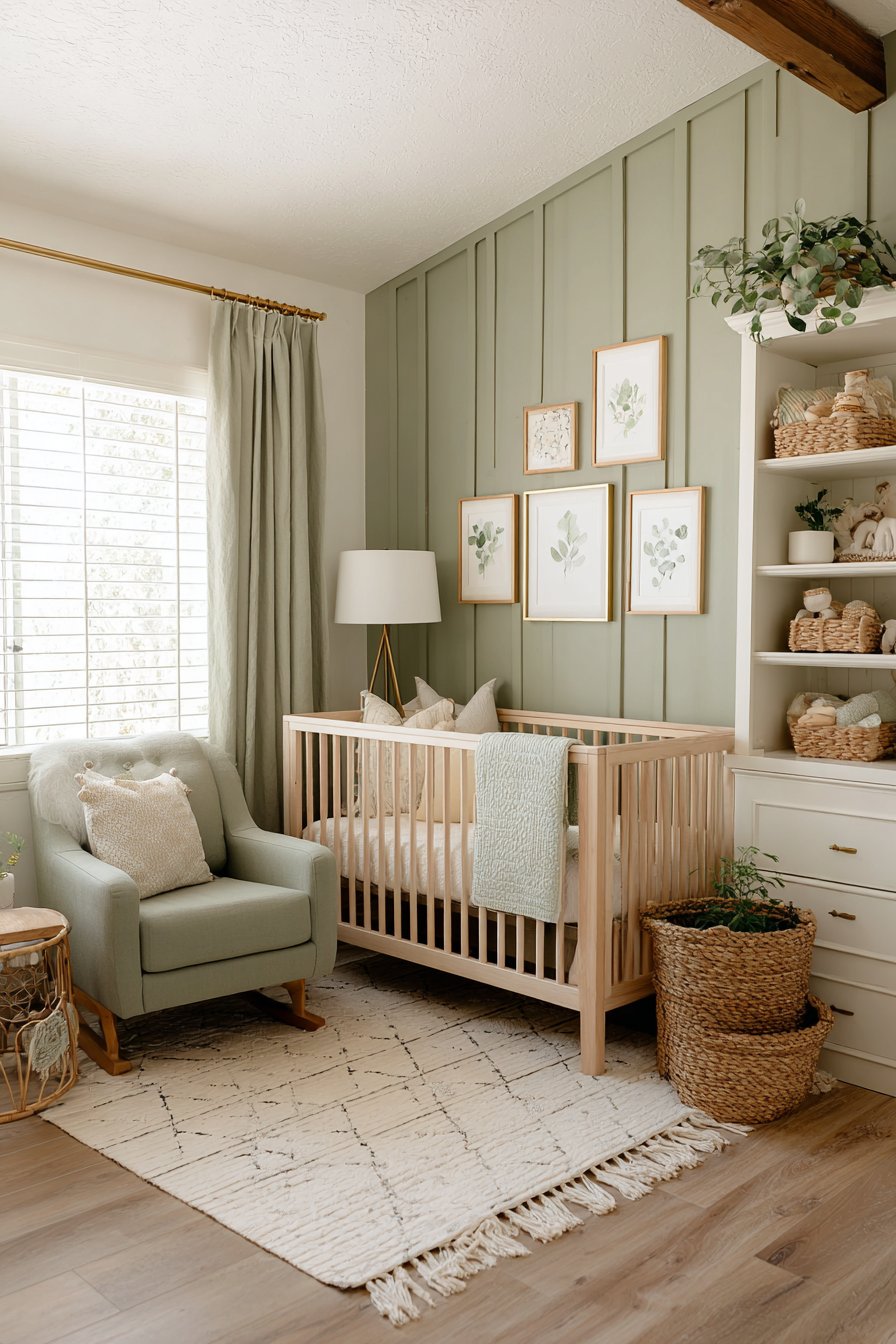
The designs balance aesthetic beauty with practical functionality essential for nurseries. Storage solutions integrate seamlessly into beautiful displays. Lighting schemes serve both daytime play and nighttime care. Furniture selections prioritize comfort during feeding and reading sessions. Every element serves purpose beyond mere decoration.
The longevity of these design approaches deserves emphasis. Olive green’s timelessness means the nursery won’t feel dated quickly. The sophisticated color grows with the child from infancy through early childhood. Simple updates to accessories and textiles refresh the space as needs change without requiring complete overhauls.
Conclusion
These olive green nursery designs demonstrate how thoughtful color choices create beautiful, functional spaces. The natural connection olive green provides brings outdoor serenity inside. Each design approach balances aesthetic sophistication with practical needs specific to nurseries.
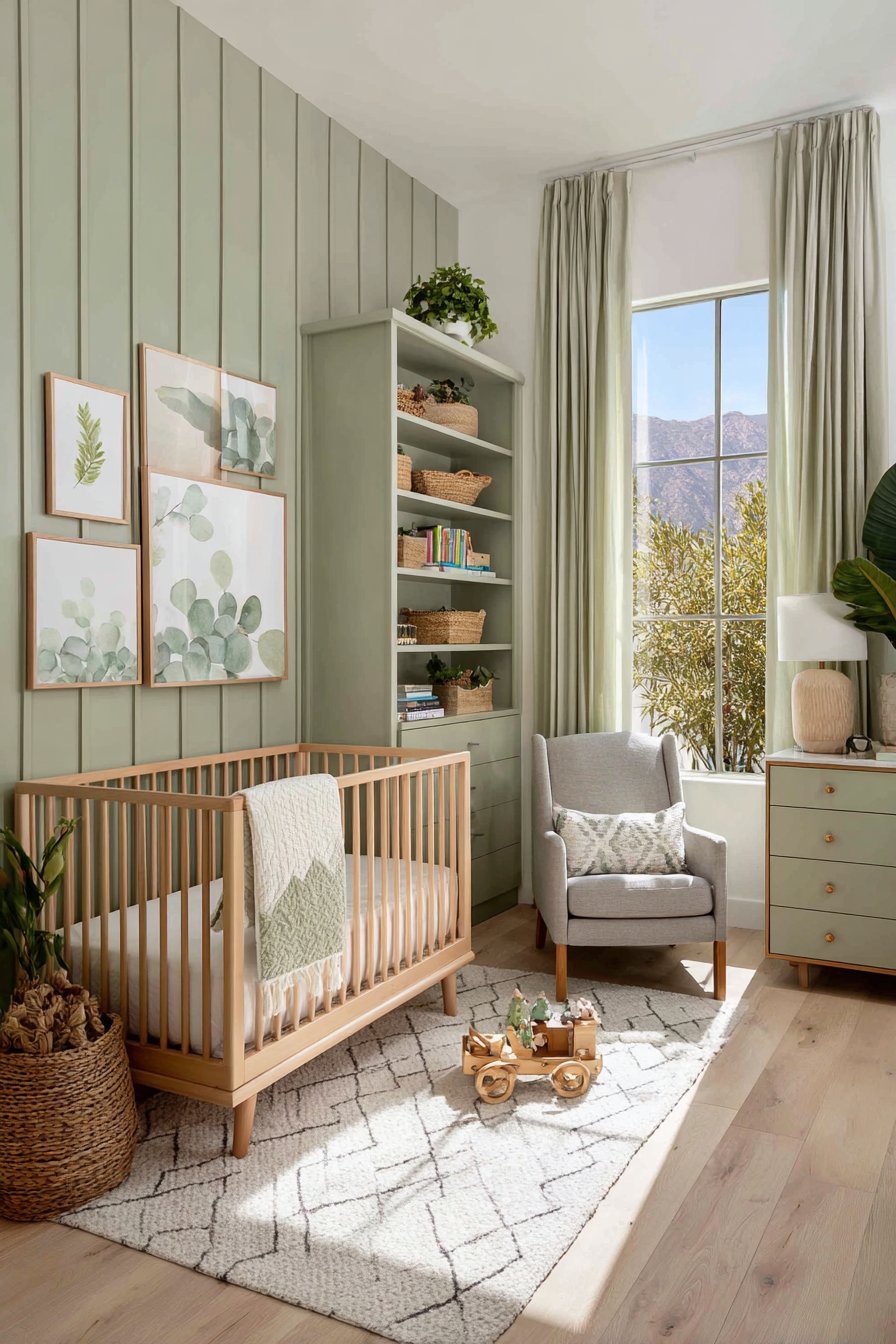
The key takeaways include embracing natural materials, layering lighting sources, and using olive green strategically rather than overwhelmingly. Quality pieces combined with personal touches create rooms that nurture both babies and parents. The versatility of olive green allows expression across different design styles and preferences.
Start by selecting one or two favorite approaches from this collection. Perhaps an accent wall combined with complementary textiles. Or invest in a statement piece of olive green furniture surrounded by neutral elements. Your baby’s nursery awaits transformation into a peaceful sanctuary where precious memories will unfold.
