


Creating an organic modern kitchen transforms your cooking space into a sanctuary of natural beauty. This design philosophy blends clean contemporary lines with warm natural materials. The result is a kitchen that feels both sophisticated and inviting, where functionality meets timeless aesthetic appeal.
Organic modern design has revolutionized kitchen aesthetics in recent years. This style celebrates the inherent beauty of natural materials while maintaining a minimalist sensibility. The approach emphasizes texture, craftsmanship, and sustainable choices. From waterfall-edge islands to handcrafted tile backsplashes, these designs prove that kitchens can be both practical and artful.
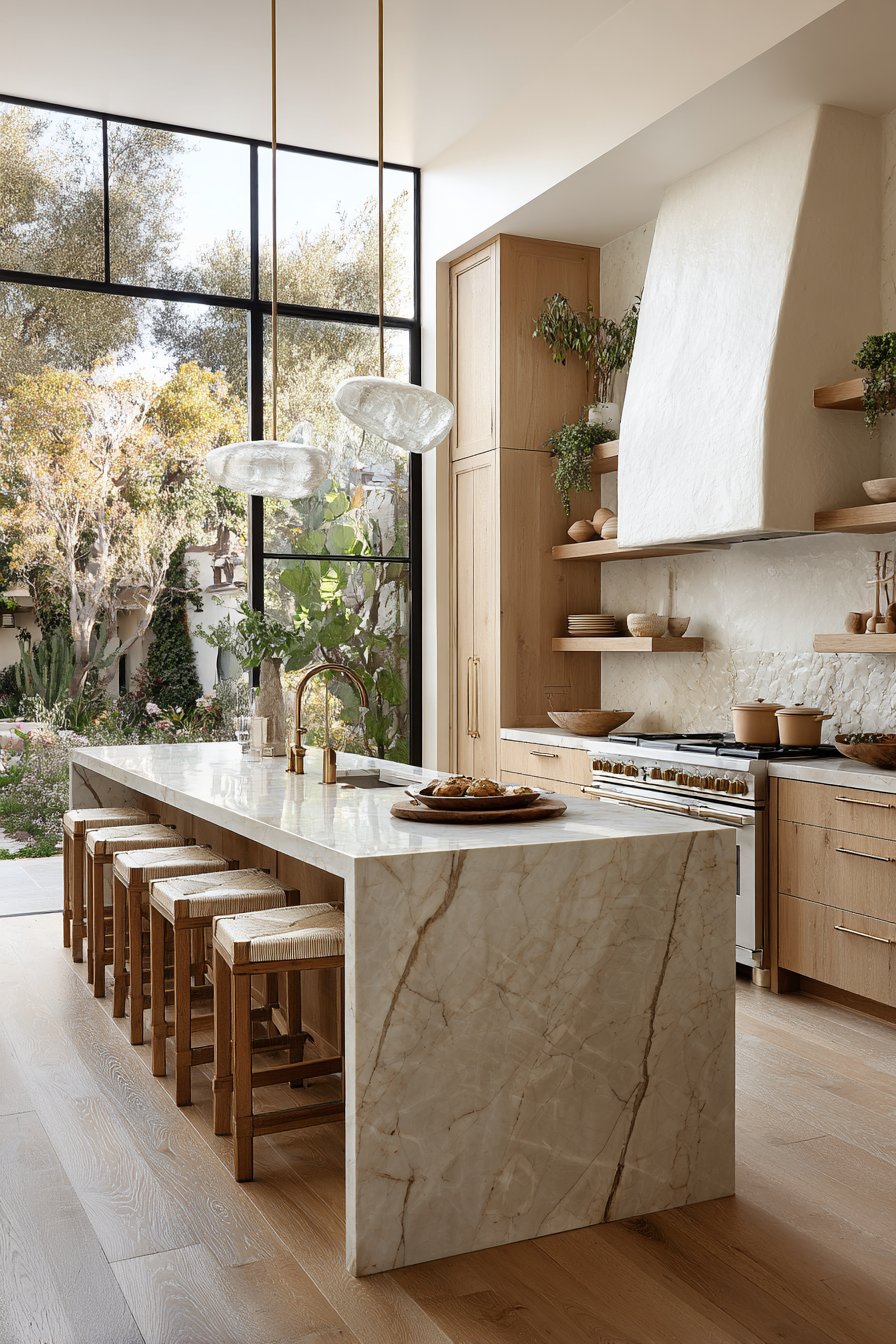
The twenty concepts explored here showcase diverse interpretations of organic modern style. Each design demonstrates how natural stone, wood, ceramic, and metal can harmonize beautifully. These kitchens inspire through their thoughtful material selections and refined simplicity. Whether you’re planning a complete renovation or seeking inspiration for updates, these ideas offer valuable insights.
1. Waterfall-Edge Quartzite Island Centerpiece
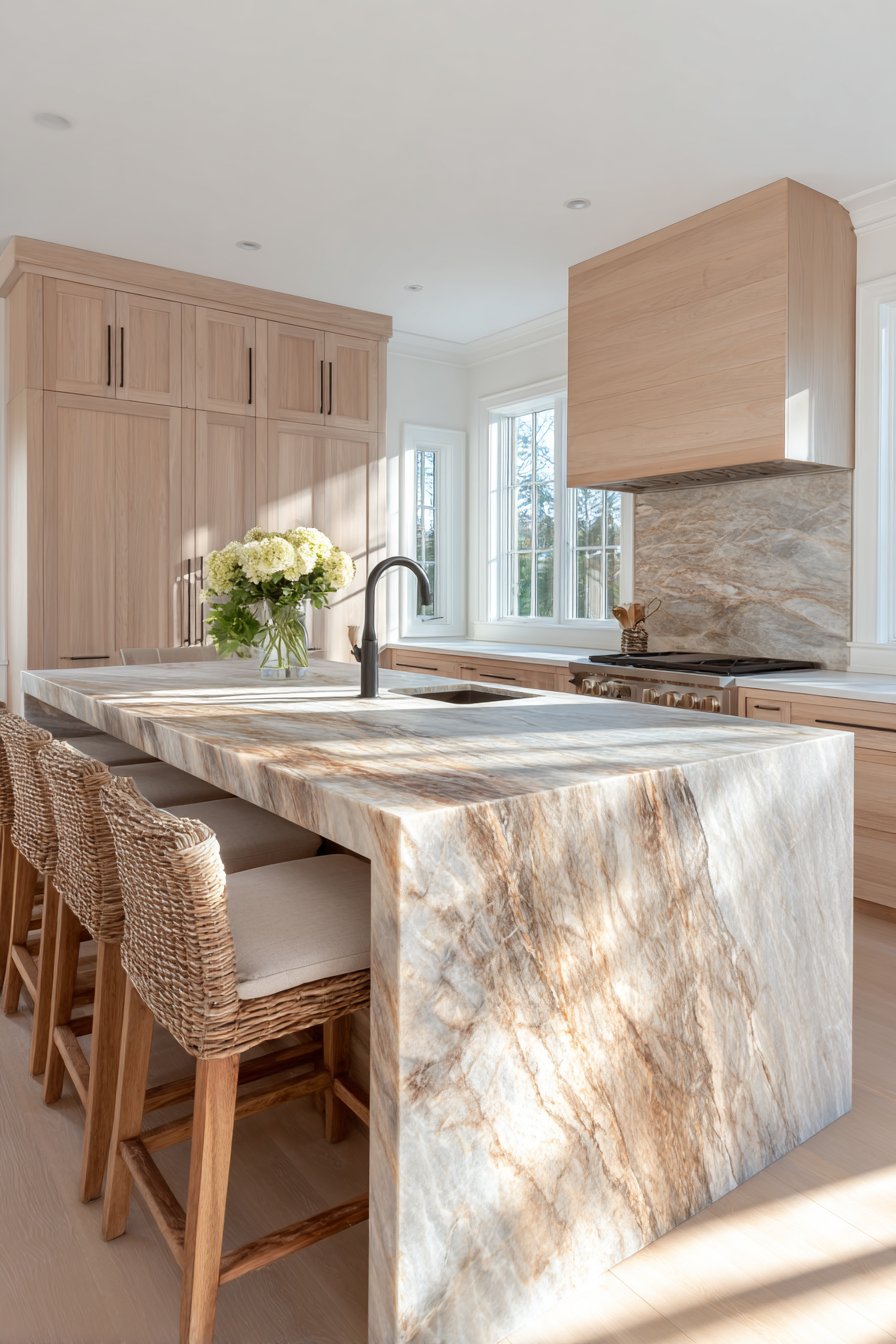
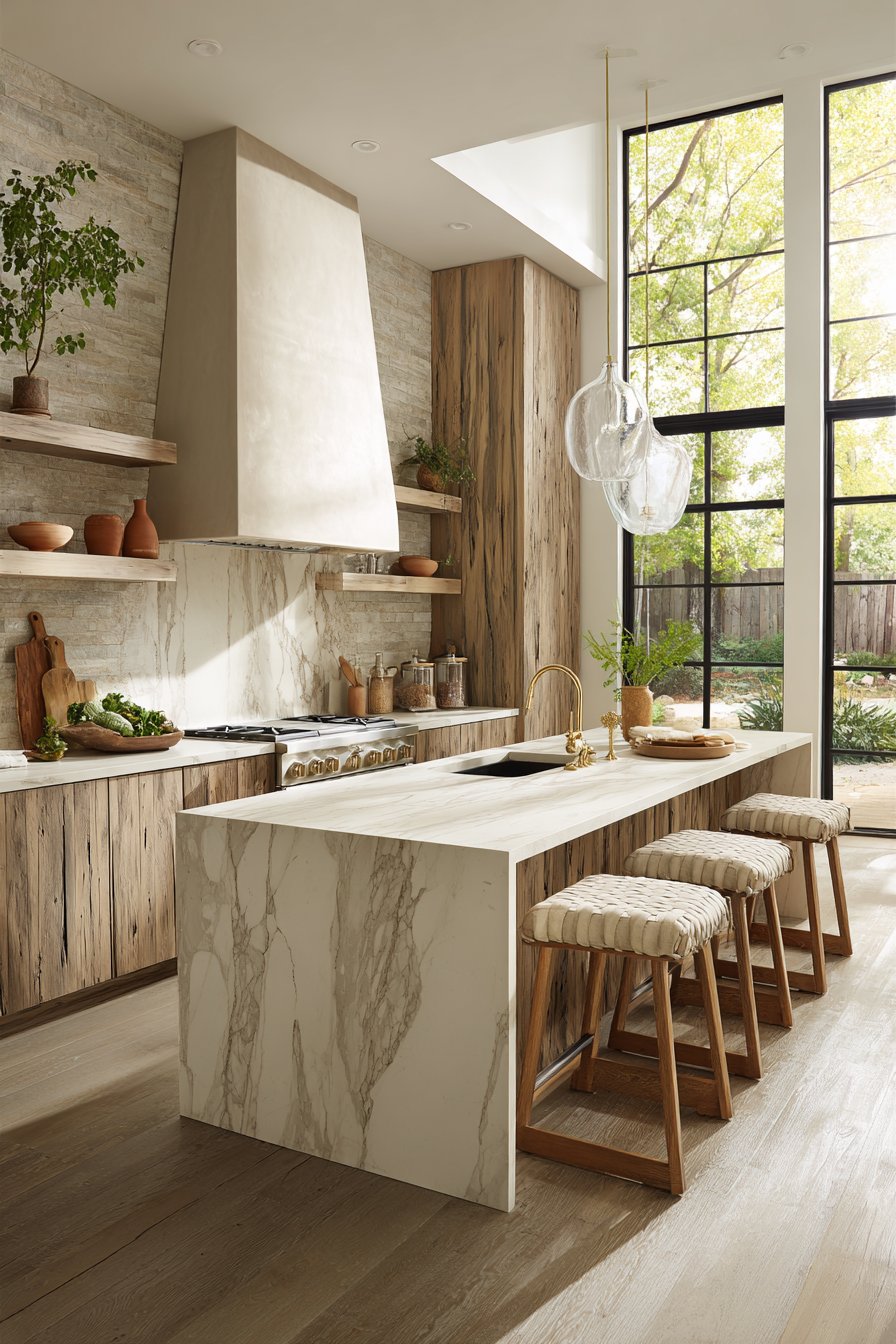
A magnificent waterfall-edge island commands attention with natural quartzite featuring grey and cream veining. The stone cascades elegantly down both sides. This creates a sculptural focal point that anchors the entire kitchen. Four woven rattan counter stools with warm oat linen cushions provide comfortable seating. The natural fiber adds texture against the smooth stone surface.
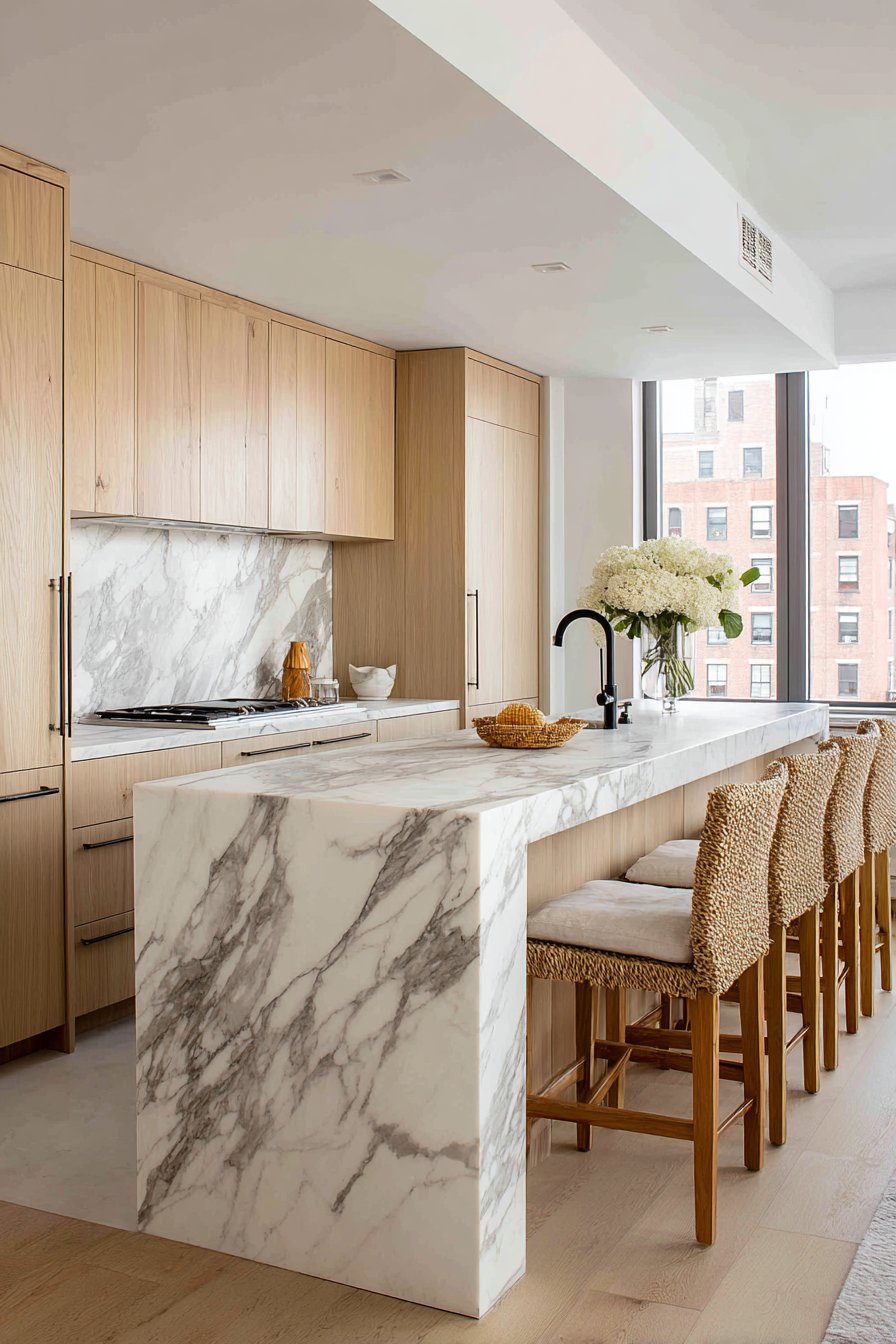
White oak cabinetry surrounds the island with minimal hardware. The wood grain remains visible throughout. This celebrates the organic character of the material. Matte black faucets and cabinet pulls offer subtle contrast. They punctuate the neutral palette without overwhelming it. The hardware choices demonstrate how small details impact overall design cohesion.
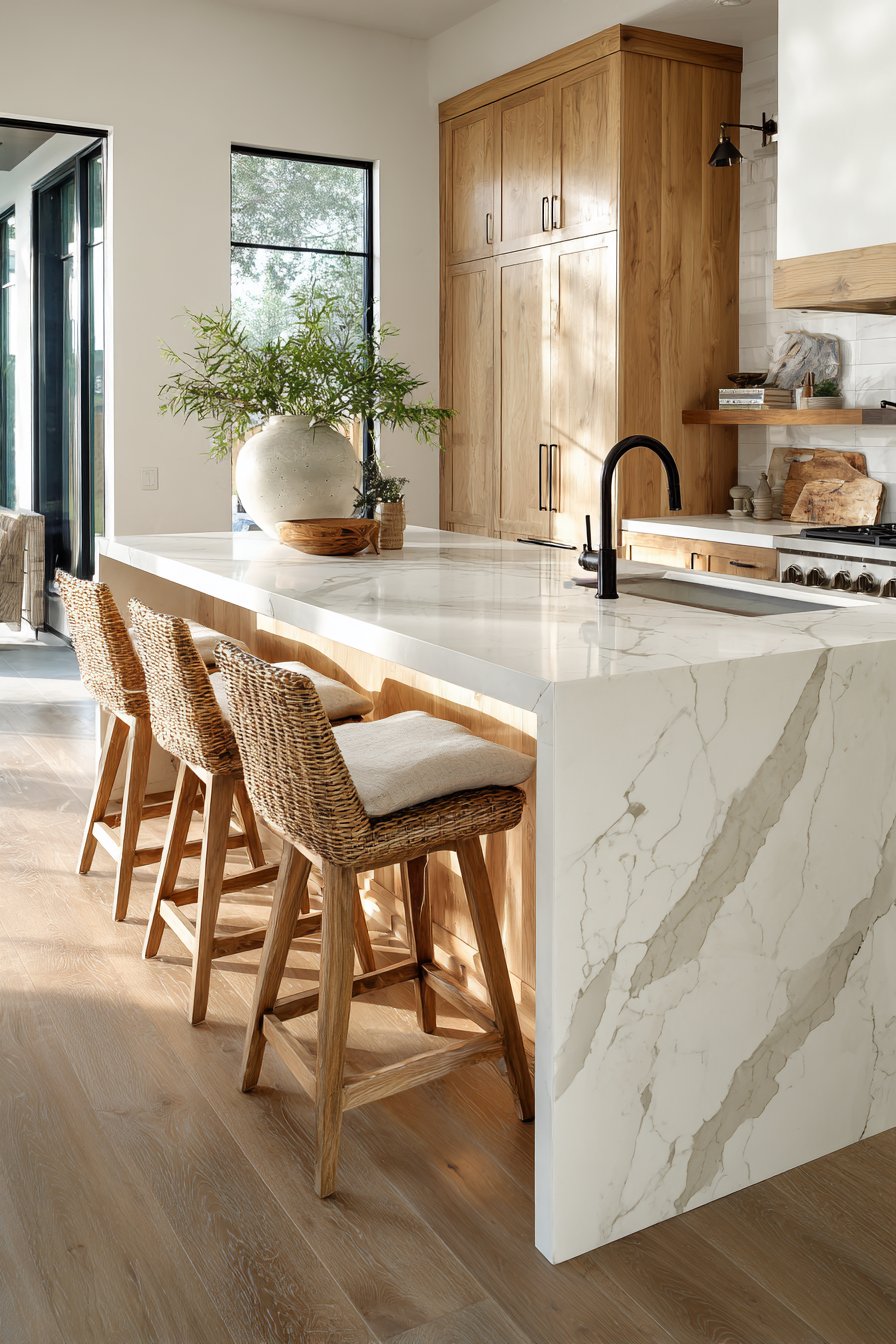
Morning light streams through nearby windows. It highlights the stone’s natural patterns and creates gentle shadows. The interplay between light and material texture brings the space alive. The composition feels balanced and serene. Every element has purpose and beauty.
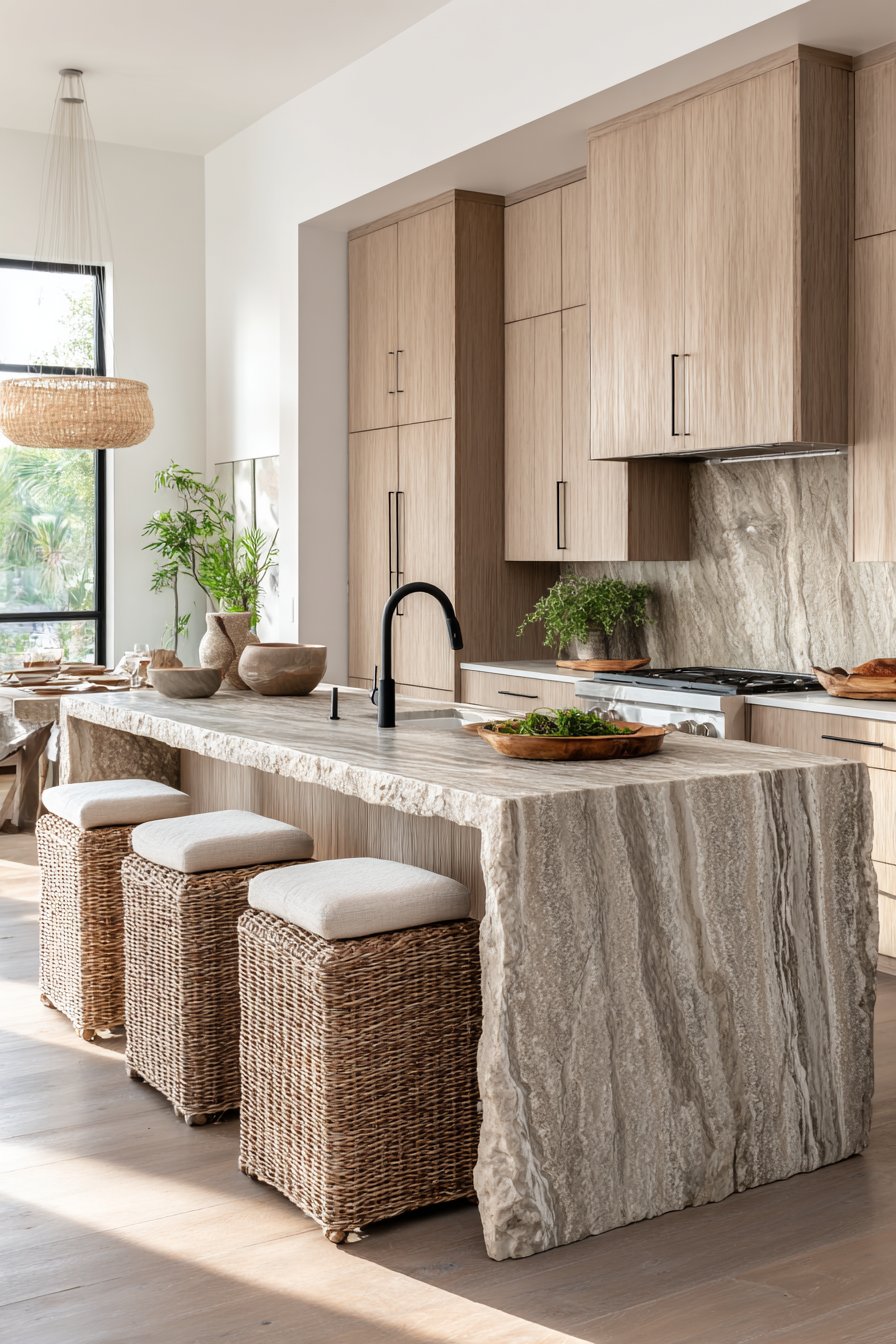
The quartzite selection proves particularly wise for high-traffic kitchen islands. This natural stone withstands daily use while maintaining its stunning appearance. The waterfall edge construction requires skilled fabrication. It transforms functional countertop into architectural statement.
Key Design Tips:
- Select quartzite with distinctive veining patterns for visual interest
- Position the island to maximize natural light exposure
- Choose woven seating to add organic texture against stone surfaces
- Opt for minimal hardware on cabinetry to maintain clean lines
- Use matte black finishes for subtle contrast without harshness
- Ensure proper lighting to showcase natural stone patterns throughout the day
2. Handmade Ceramic Tile Focal Wall
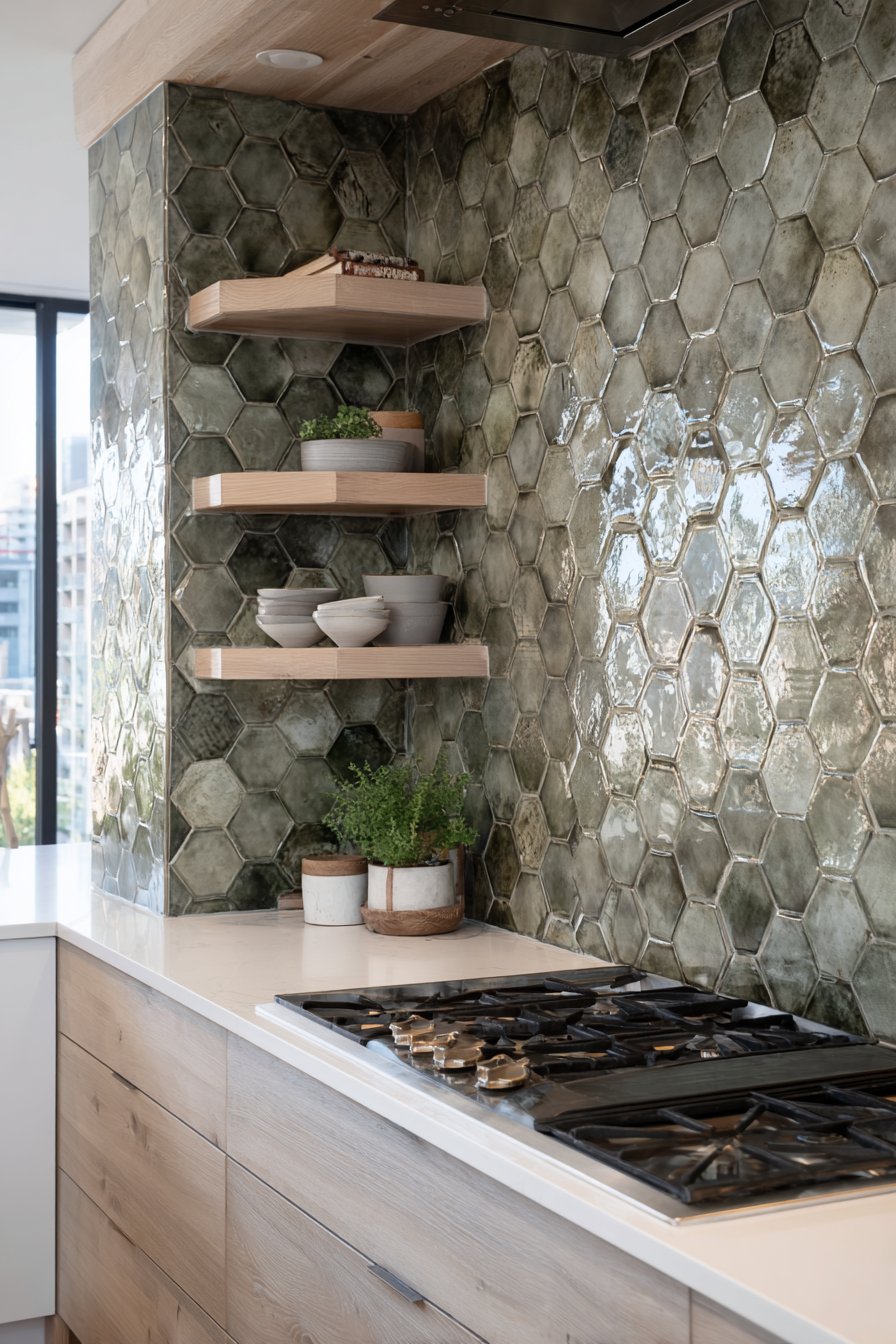
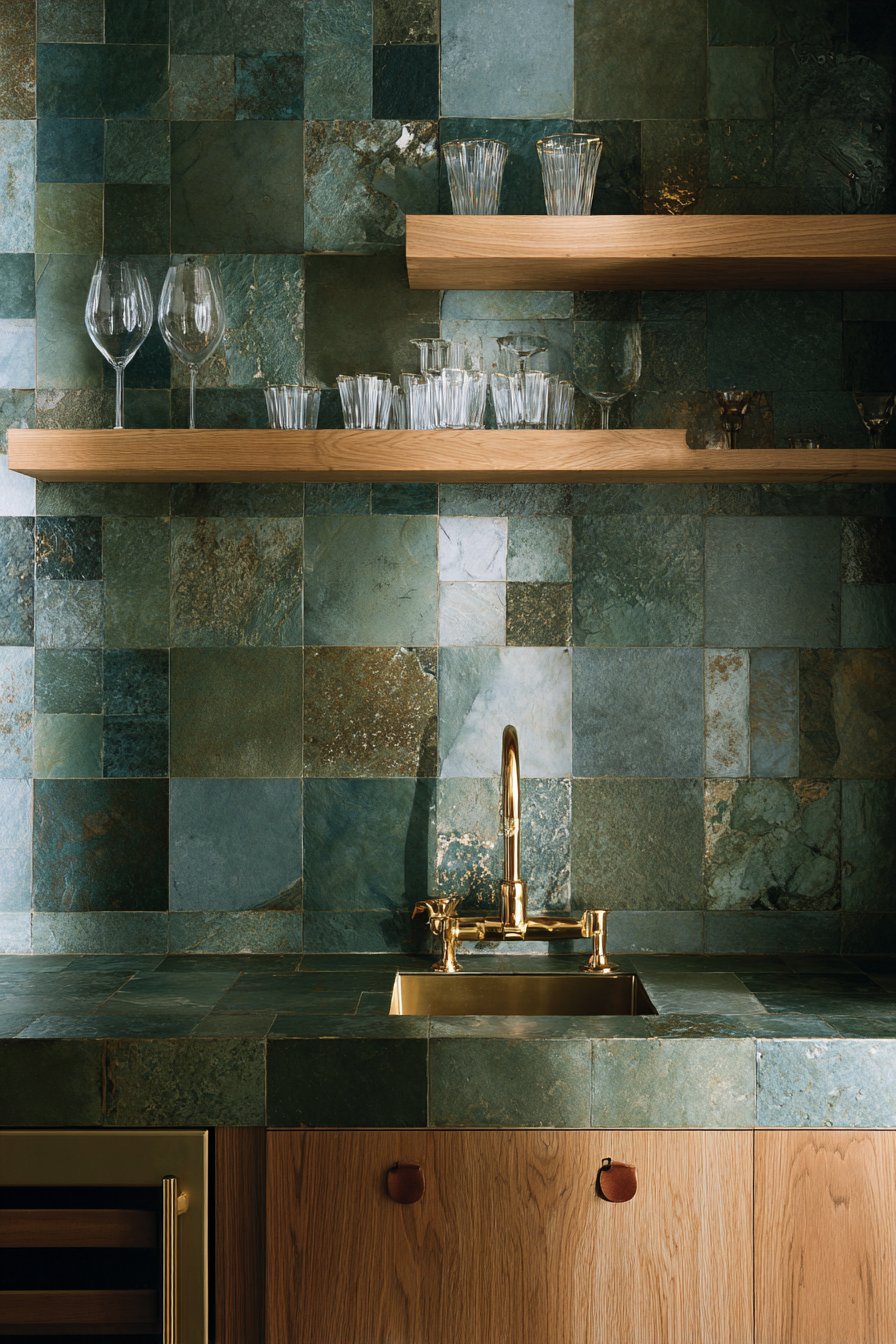
A handmade ceramic tile backsplash in soft sage green creates stunning visual impact. The irregular glaze patterns catch natural light differently throughout the day. Each tile shows unique character from the artisan’s hand. The backsplash extends from counter to ceiling behind the cooktop. This full-height treatment transforms functional surface into artistic feature.
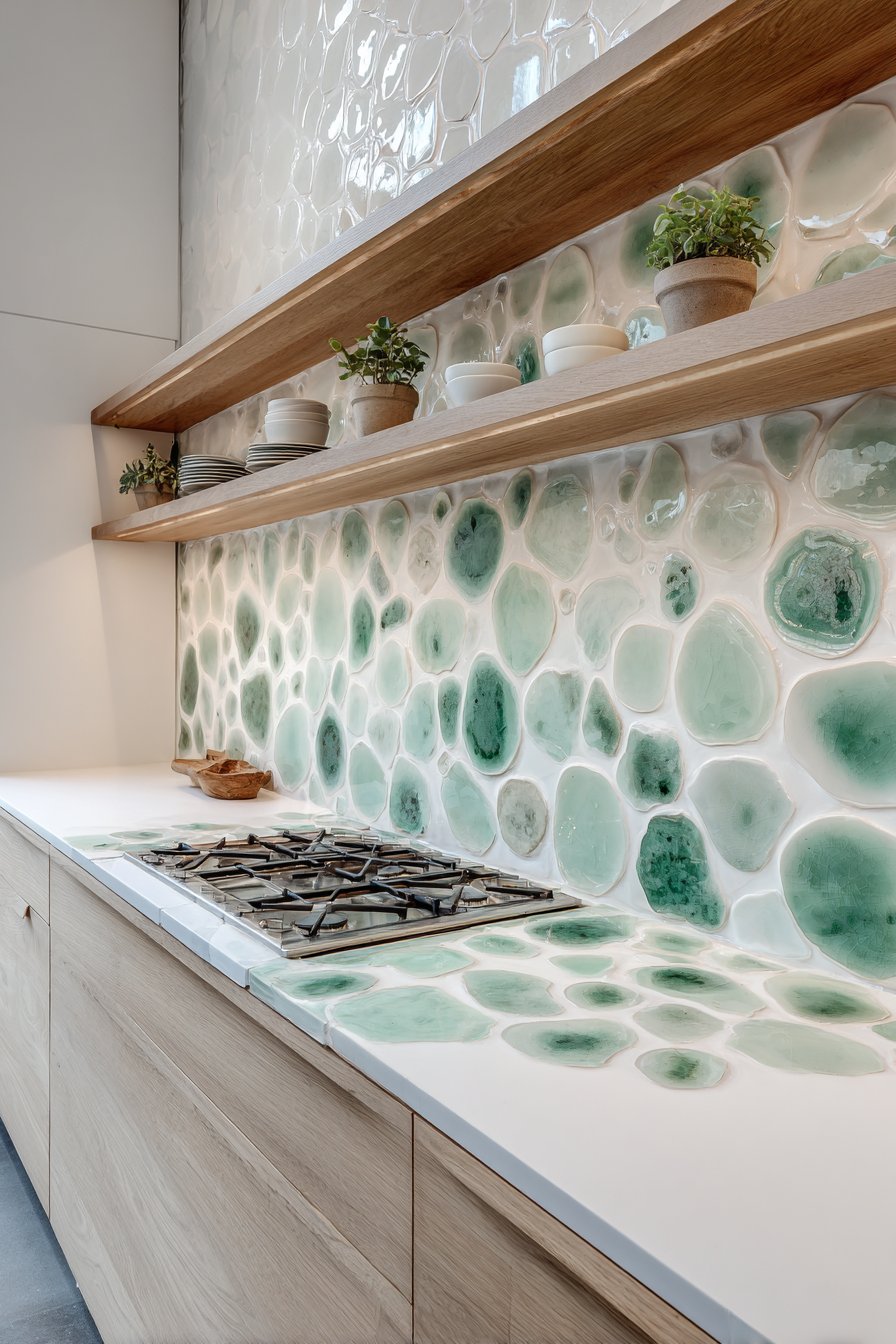
White oak cabinetry frames the tile installation beautifully. The warm wood tones complement the cool sage green. Open floating shelves in matching oak display minimal ceramic dishware. Small potted herbs add living elements to the composition. The shelving provides both function and decorative opportunity.
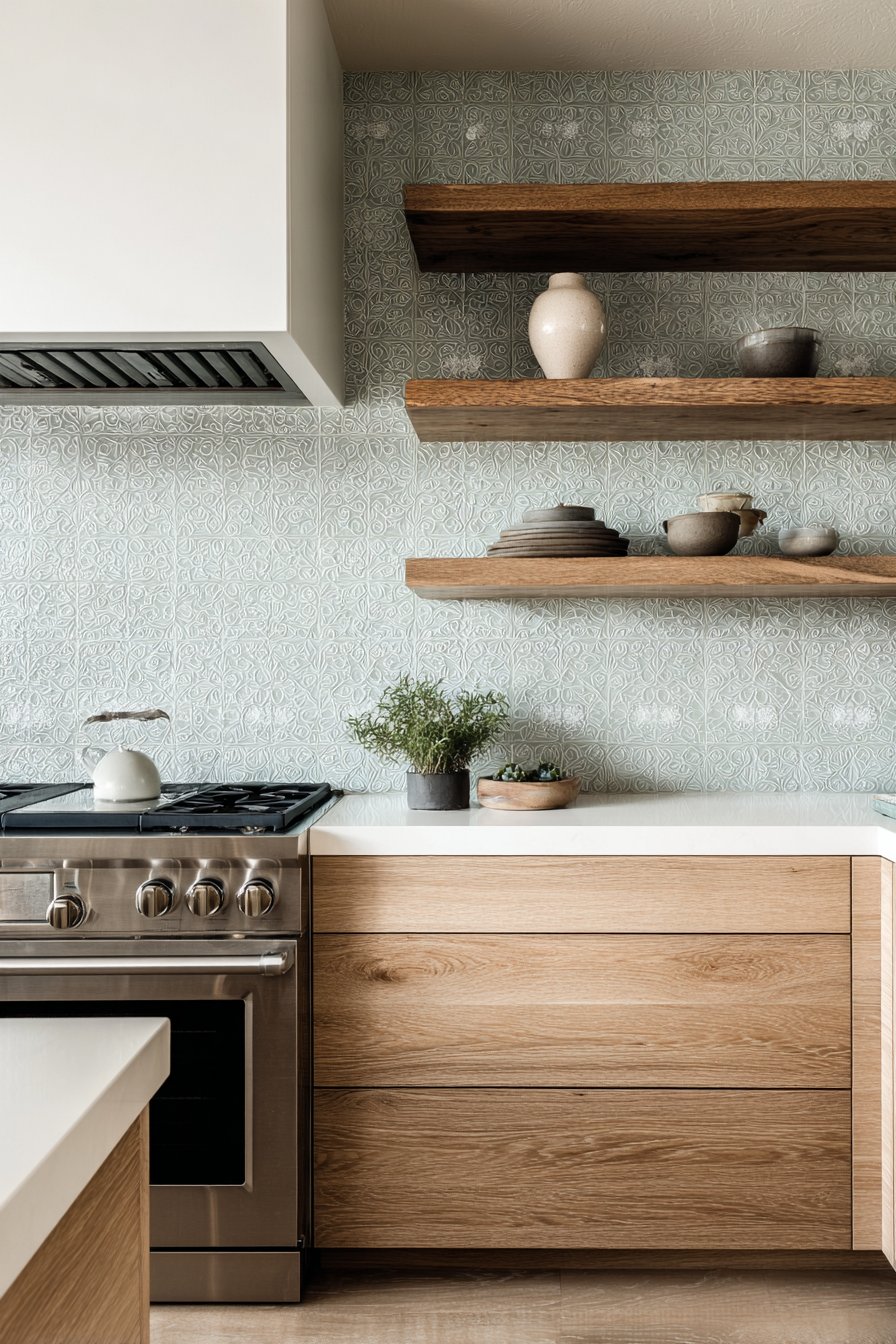
The handcrafted quality of these tiles distinguishes this kitchen from mass-produced alternatives. Slight variations in color and texture create depth and interest. The sage green hue brings nature indoors. It evokes feelings of calm and freshness. This color choice works particularly well in spaces with abundant natural light.
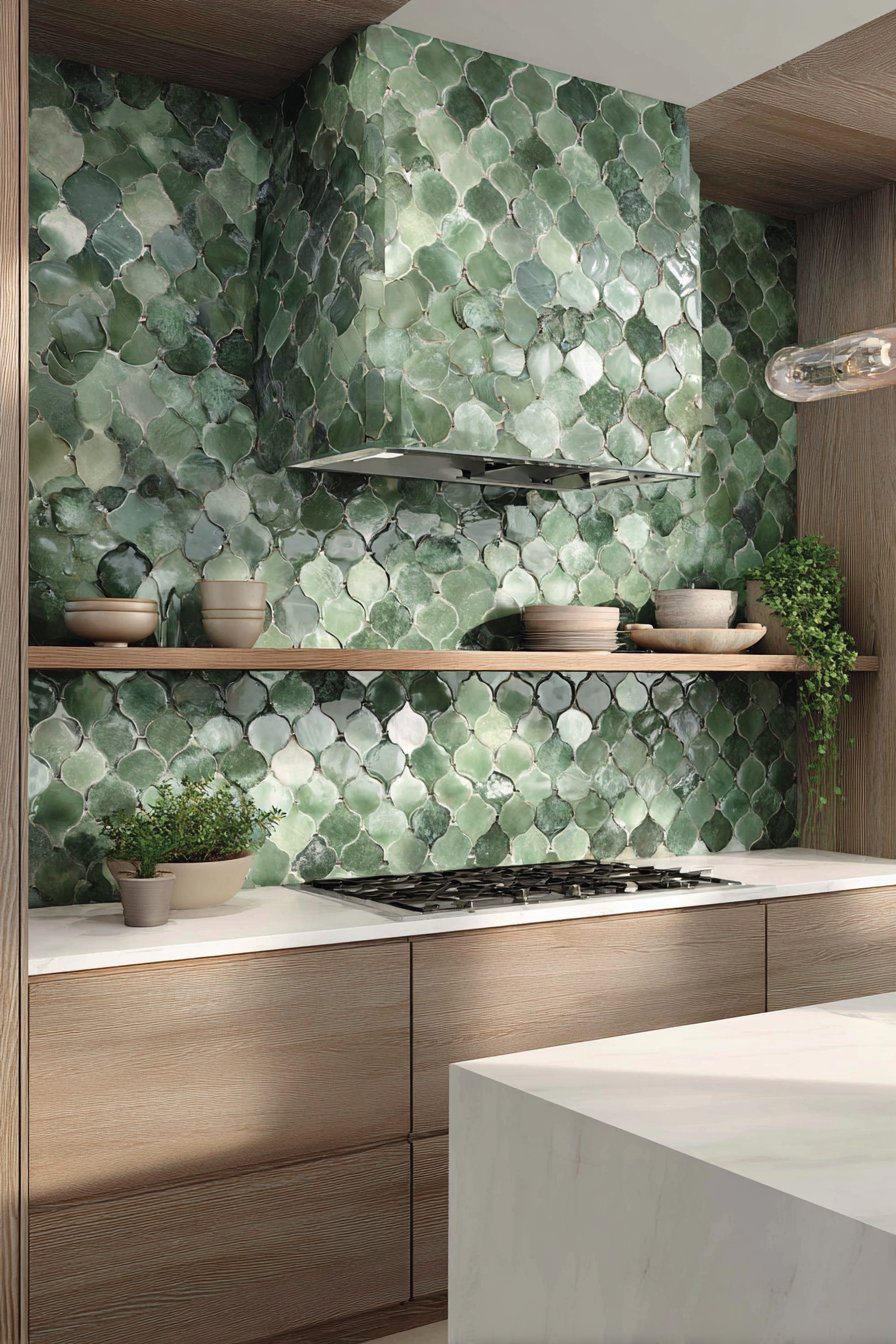
Professional installation ensures the tiles align properly while celebrating their handmade imperfections. The grout color selection matters significantly in tile installations. Neutral tones allow the tile beauty to shine. The overall effect balances organic character with modern restraint.
Key Design Tips:
- Choose handmade tiles for unique character and artisanal quality
- Extend backsplash to ceiling for dramatic architectural impact
- Select sage green or earth tones that connect with nature
- Install floating shelves in matching wood for cohesive design
- Display minimal dishware and herbs for functional styling
- Use neutral grout that doesn’t compete with tile beauty
3. Farmhouse Sink in Honed Marble
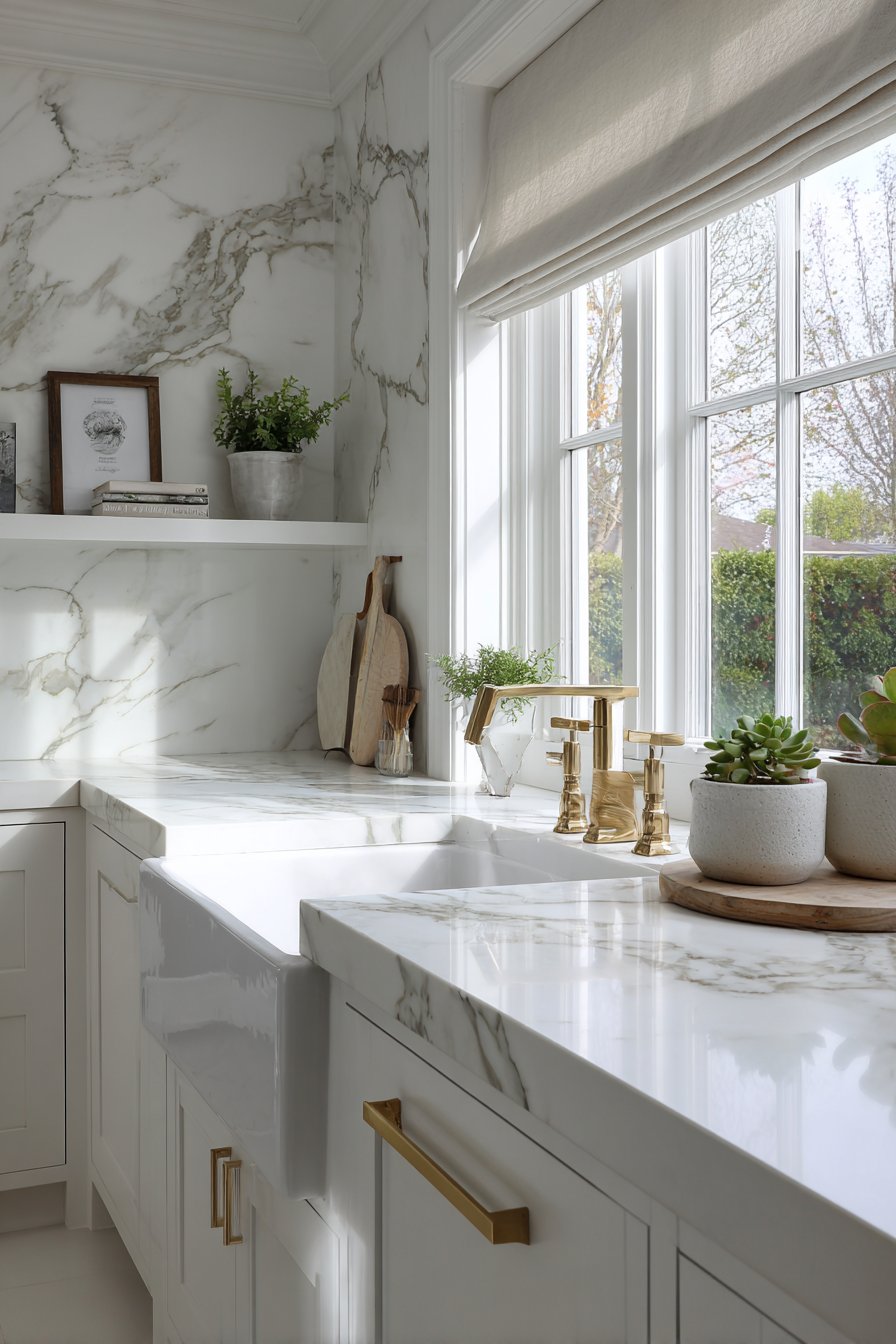
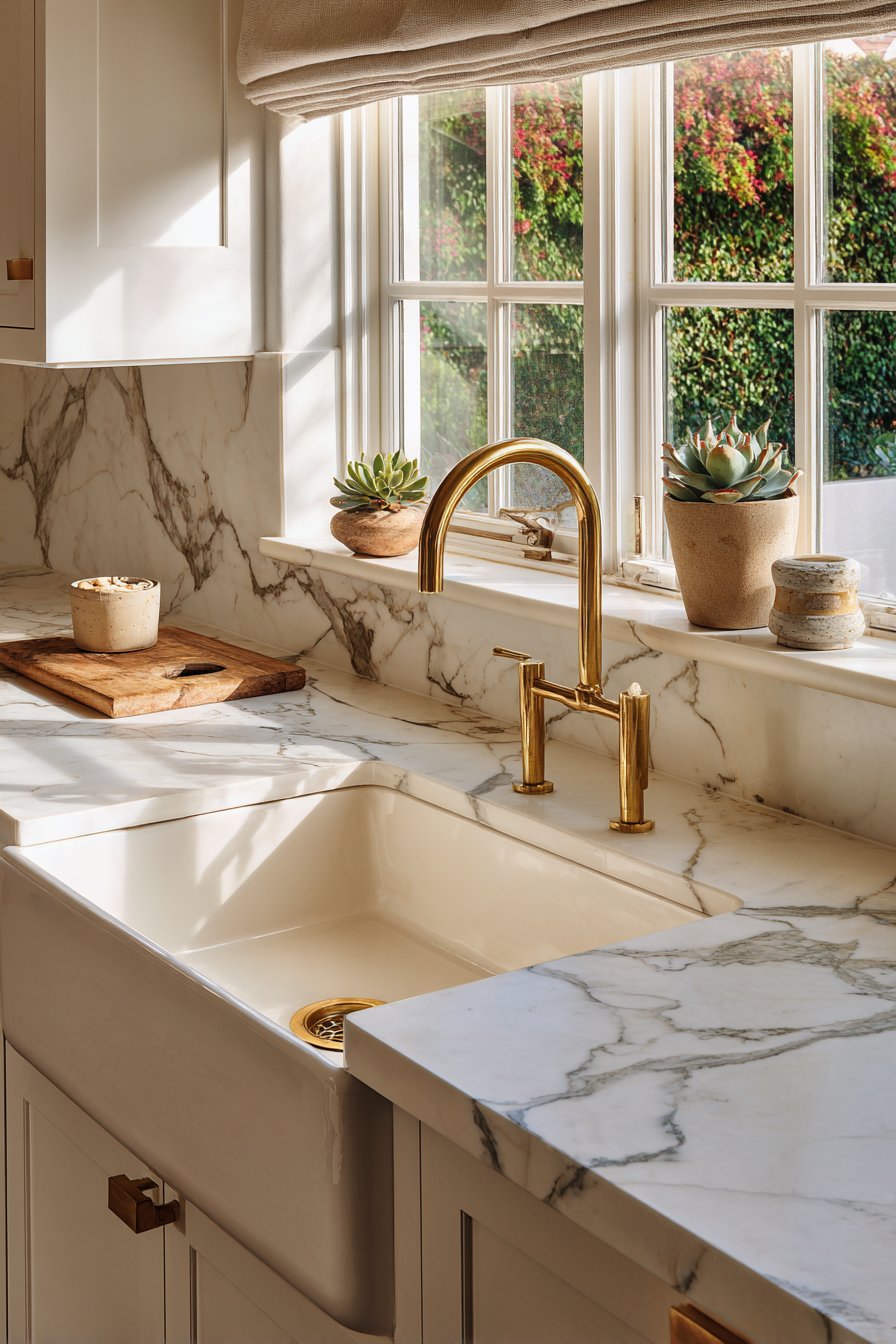
A matte white fireclay farmhouse sink nestles within honed Carrara marble countertops. The soft grey veining in the marble creates natural artistry. The honed finish offers subtle elegance without glossy shine. A sleek brass faucet with modern geometric lines provides warm metallic accent. The combination of materials feels both classic and contemporary.
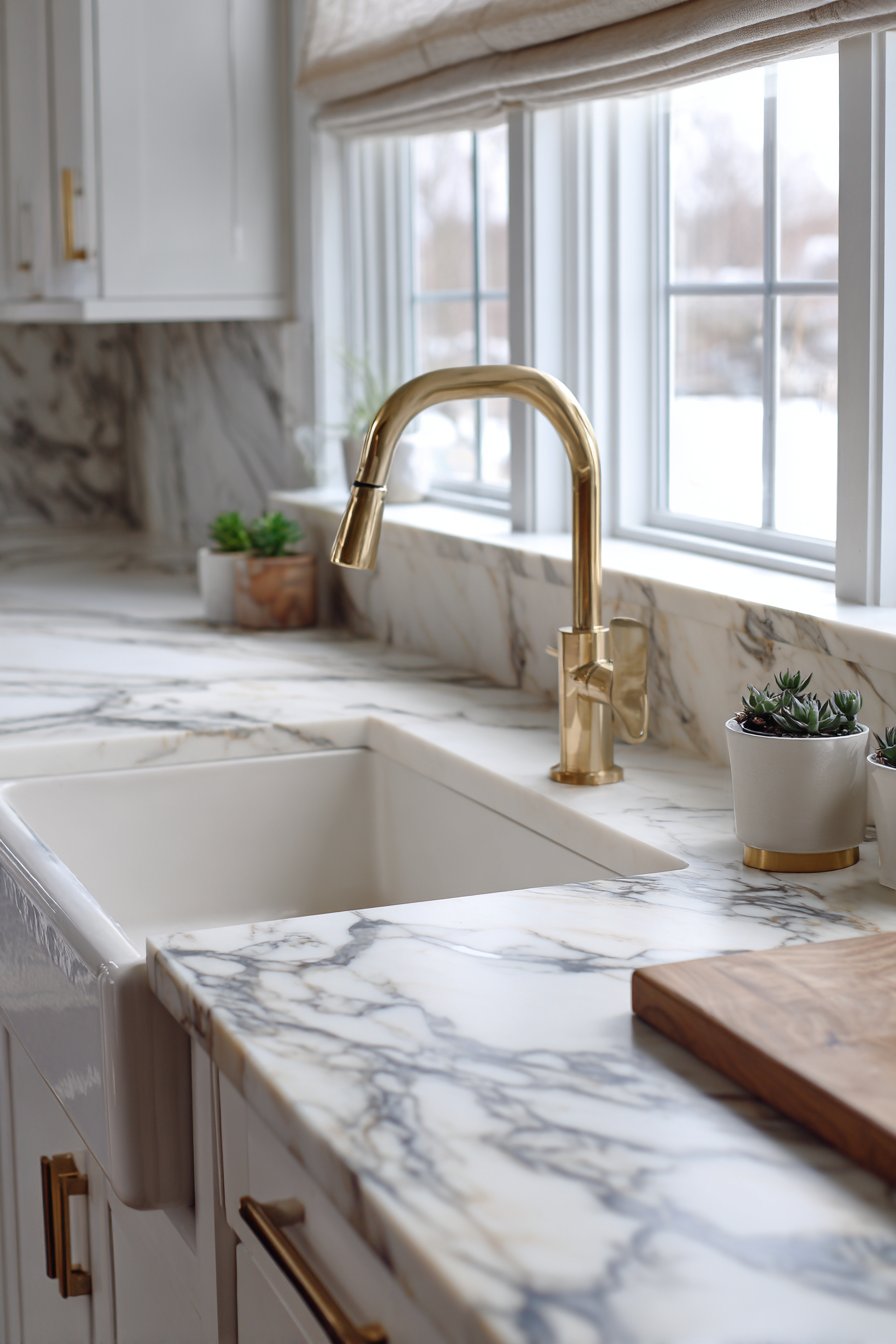
Above the sink, a simple roman shade in natural linen filters daylight softly. The window treatment adds textile warmth to the hard surfaces. Small potted succulents line the windowsill. A wooden cutting board rests nearby. These organic styling elements enhance the natural aesthetic without cluttering the space.
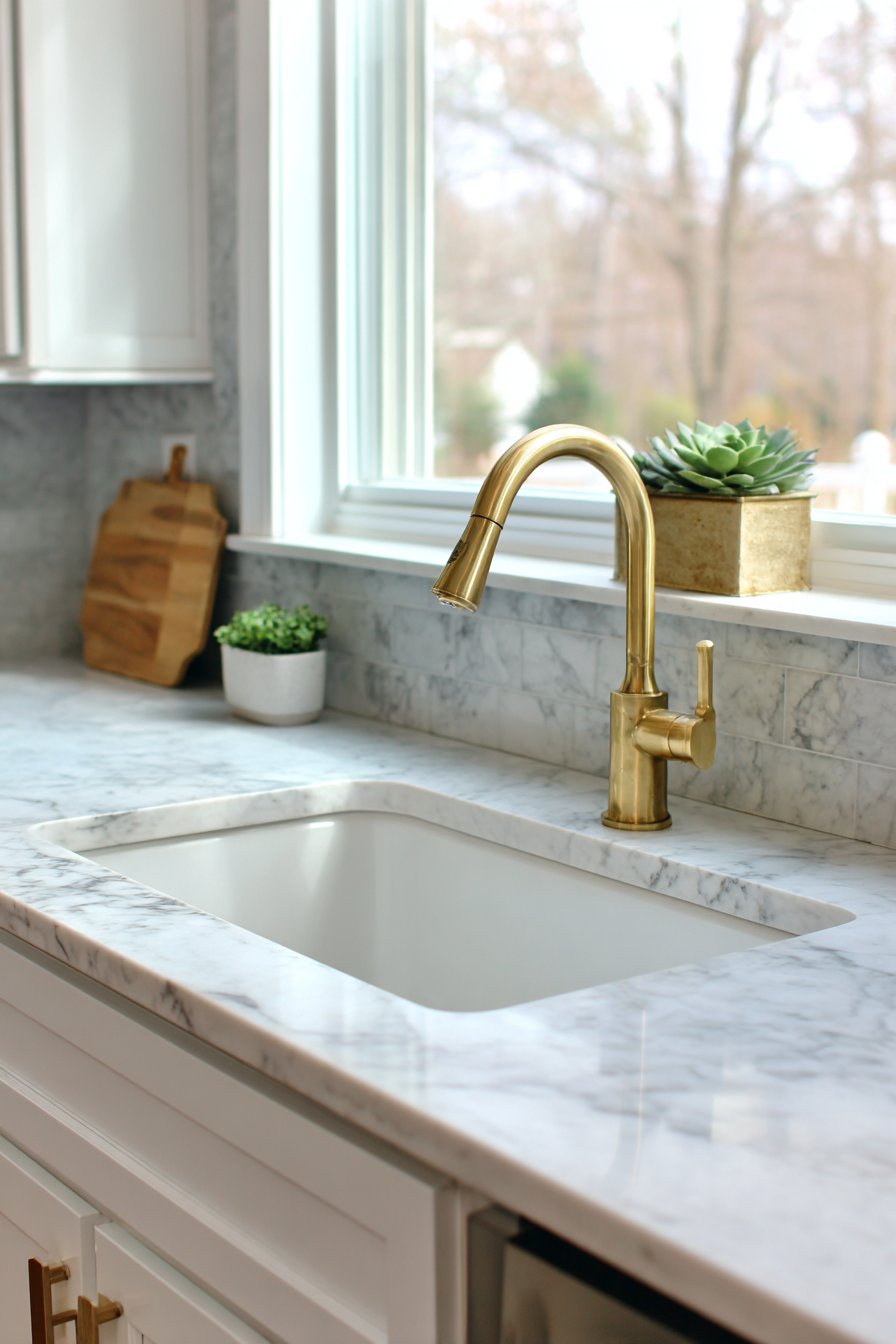
The fireclay sink material offers exceptional durability and timeless beauty. Its deep basin accommodates large pots and serving platters easily. The undermount installation creates seamless transition between sink and countertop. This detail-focused area demonstrates how functional zones can be beautiful.
Diffused daylight highlights the marble’s subtle variations. The natural stone shows unique patterns that machine-made materials cannot replicate. The brass faucet finish will develop patina over time. This aging process adds character rather than diminishing appeal.
Key Design Tips:
- Select honed marble for a sophisticated matte finish that hides water spots
- Choose fireclay farmhouse sinks for durability and timeless appeal
- Install brass fixtures that will patina beautifully with age
- Add natural linen window treatments for soft light diffusion
- Style with minimal organic elements like succulents and wood
- Ensure undermount sink installation for seamless countertop appearance
4. Floor-to-Ceiling Oak Cabinetry System
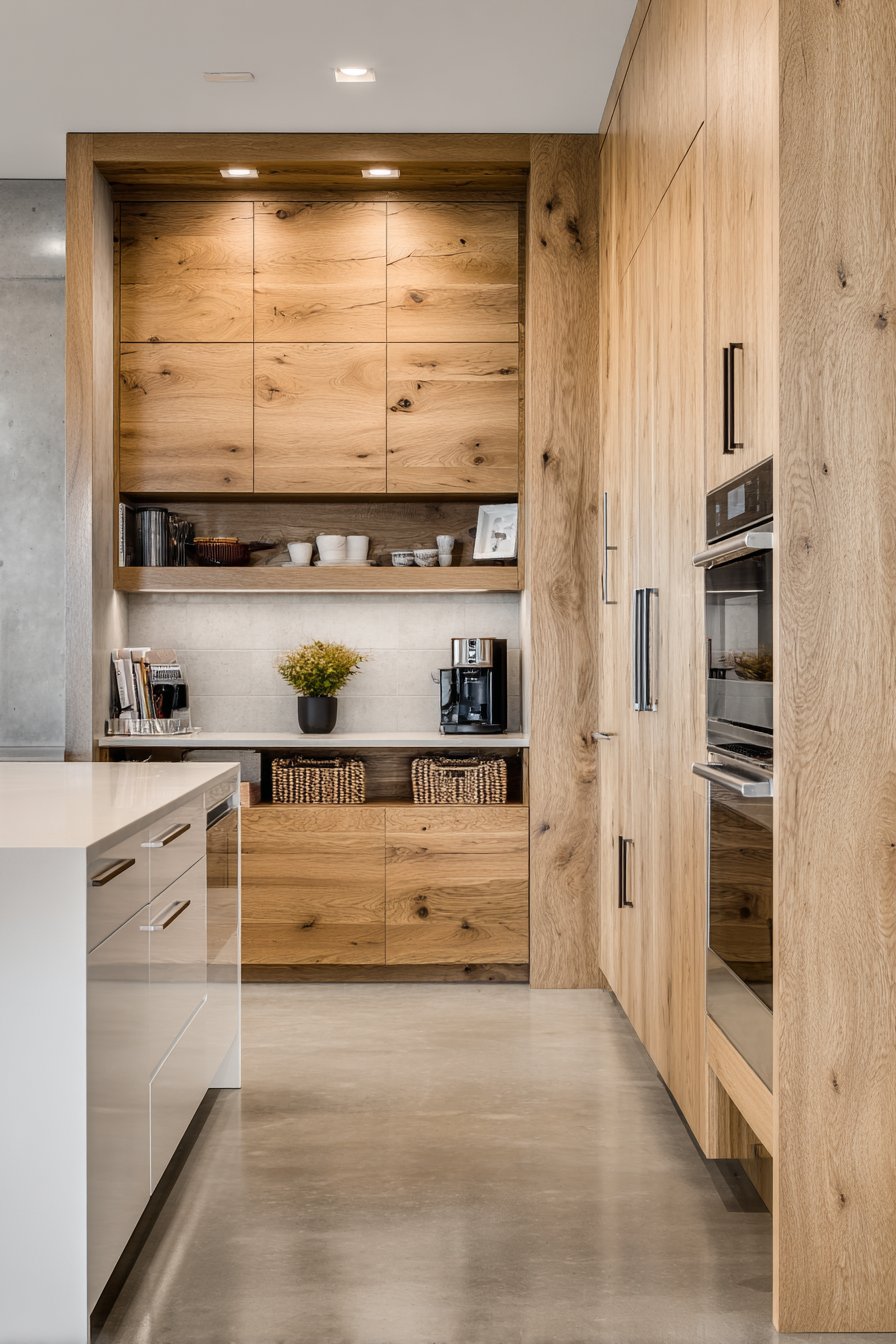
Floor-to-ceiling white oak cabinetry creates impressive vertical presence. The integrated appliances and push-to-open mechanisms eliminate visible hardware. The wood displays natural grain variations and knots. These imperfections are celebrated rather than hidden. The authentic character makes each cabinet unique.
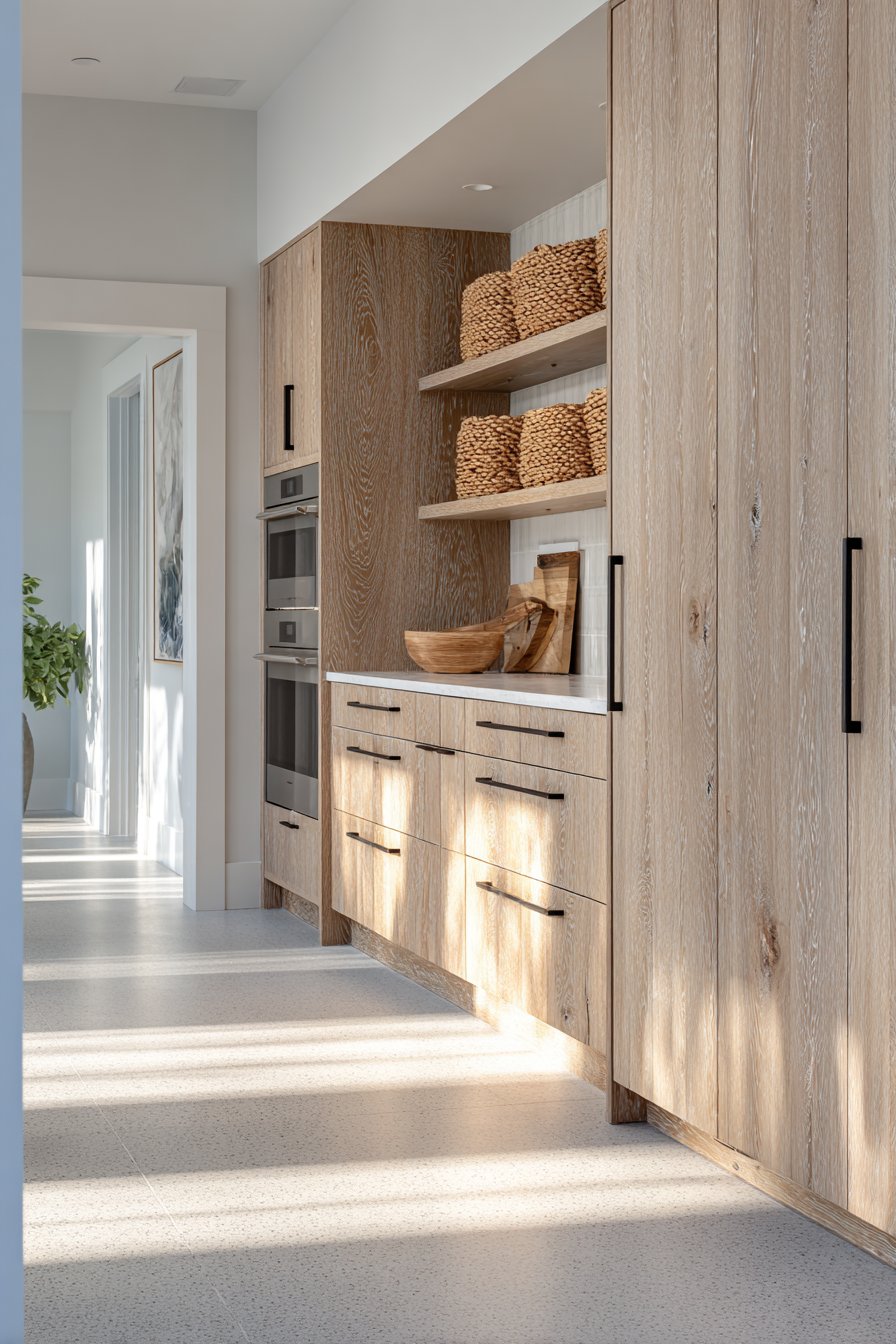
Lower cabinets combine drawers with open cubbies. Woven storage baskets fill the cubbies naturally. The mix of closed and open storage provides functional flexibility. Polished concrete flooring in light grey anchors the entire space. The cool concrete balances the warm wood tones perfectly.
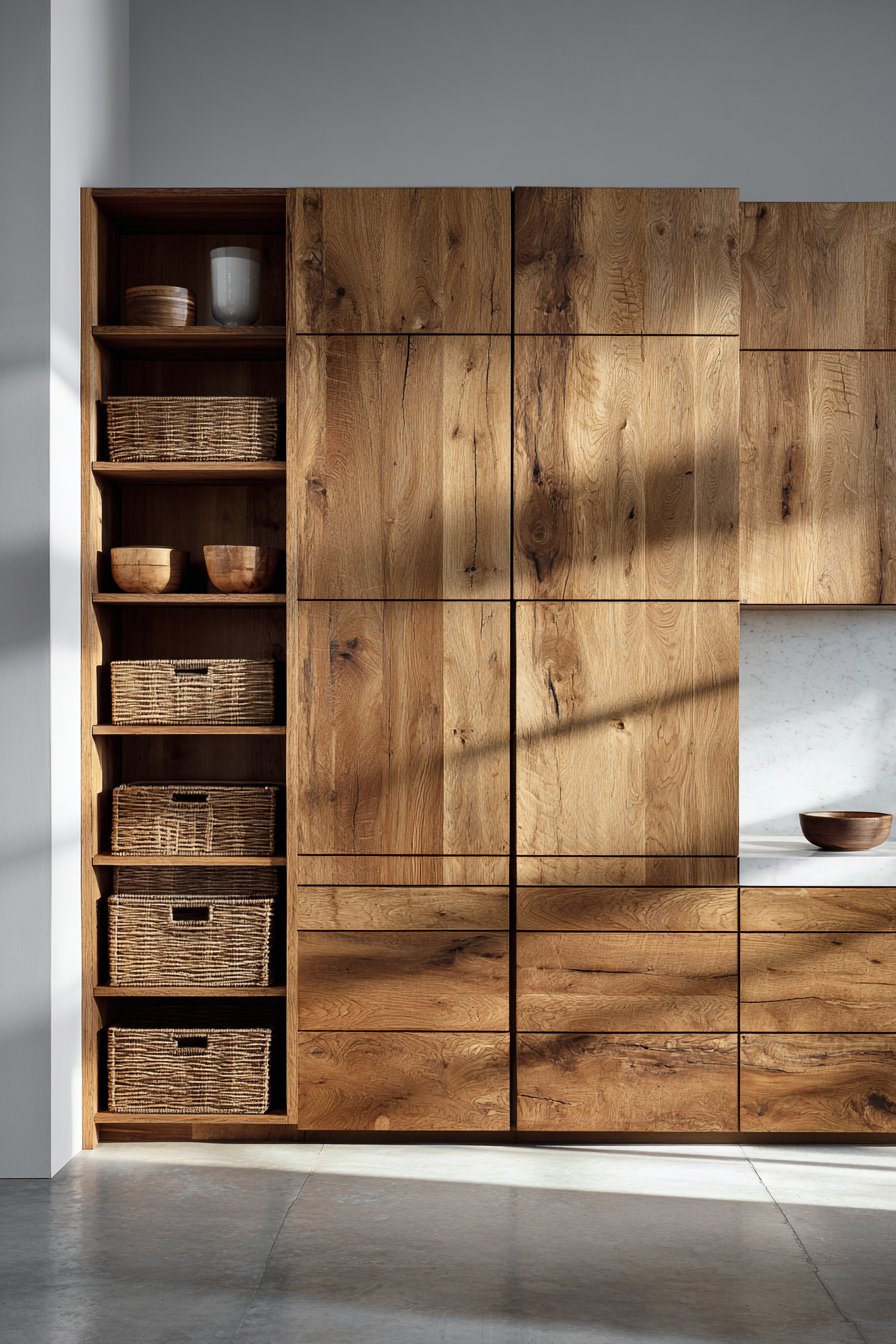
The handleless cabinet design maintains clean modern lines. Push-to-open technology provides seamless access without compromising aesthetics. This approach requires quality hardware for reliable daily use. The full-height cabinetry maximizes storage capacity efficiently. It draws the eye upward and makes ceilings feel taller.
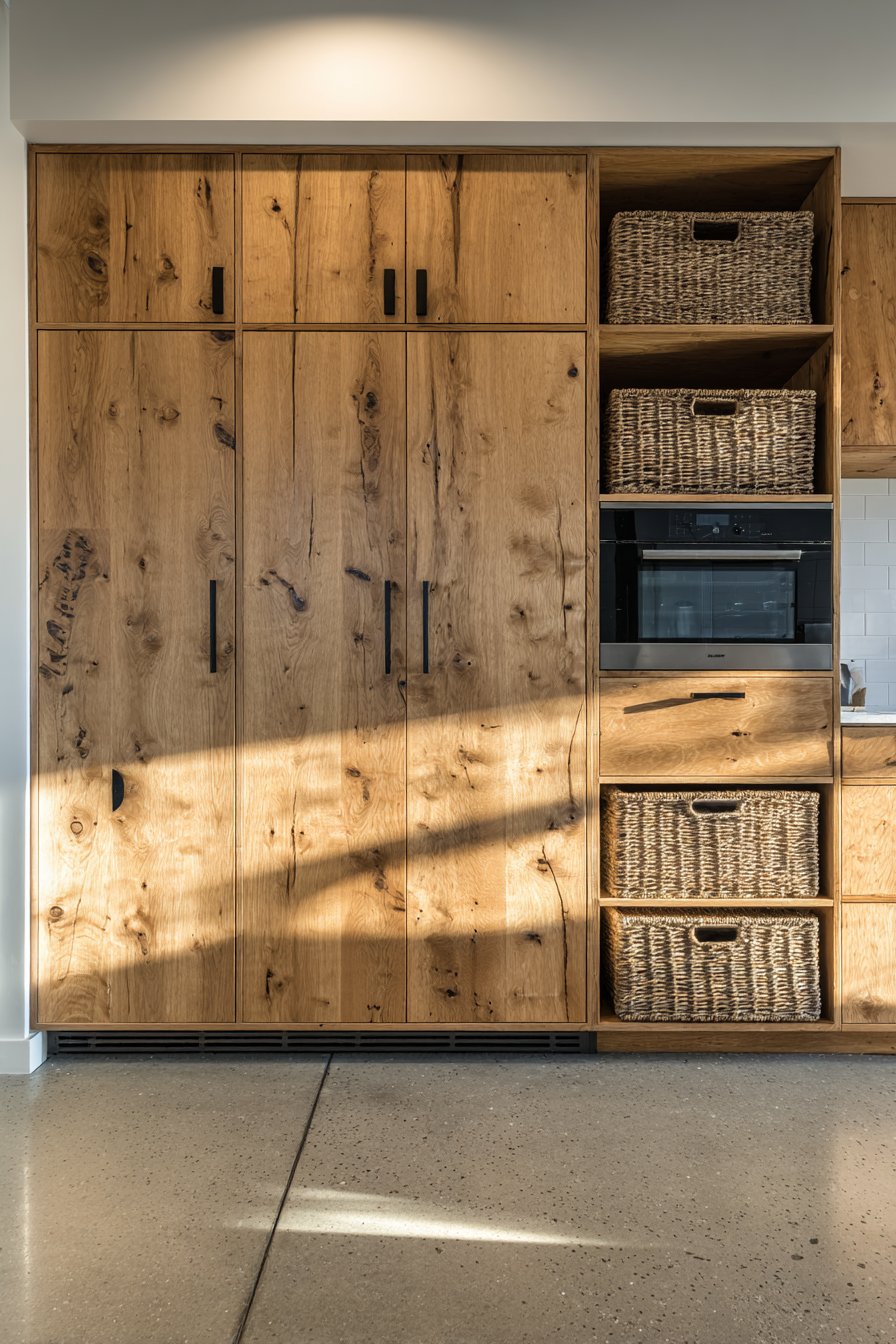
Natural lighting creates subtle shadows across the wood surfaces. These shadows add depth and dimension throughout the day. The concrete flooring choice offers durability and easy maintenance. Its neutral tone allows the wood cabinetry to shine.
Key Design Tips:
- Choose full-height cabinetry to maximize storage and create vertical drama
- Embrace natural wood imperfections for authentic organic character
- Install push-to-open mechanisms for a handleless modern appearance
- Incorporate open cubbies with woven baskets for textural interest
- Select polished concrete flooring for durable neutral foundation
- Position lighting to create dimensional shadows across wood grain
5. Walnut Butcher Block Peninsula
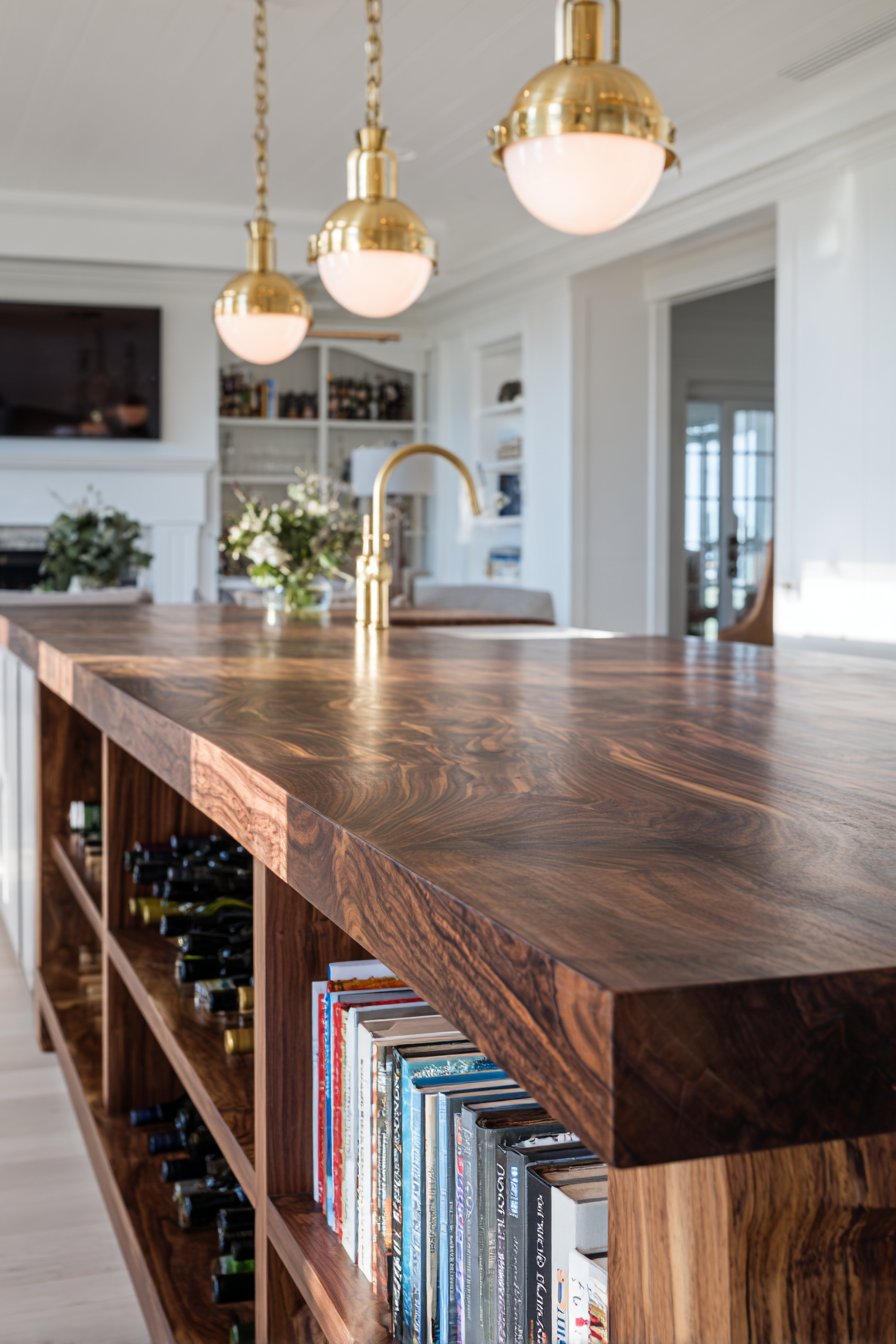
A thick edge-grain walnut butcher block countertop showcases natural beauty. The wood grain patterns and color variations create organic artistry. The peninsula includes built-in wine storage with horizontal bottle displays. Open shelving beneath provides cookbook storage. This functional design element serves multiple purposes elegantly.
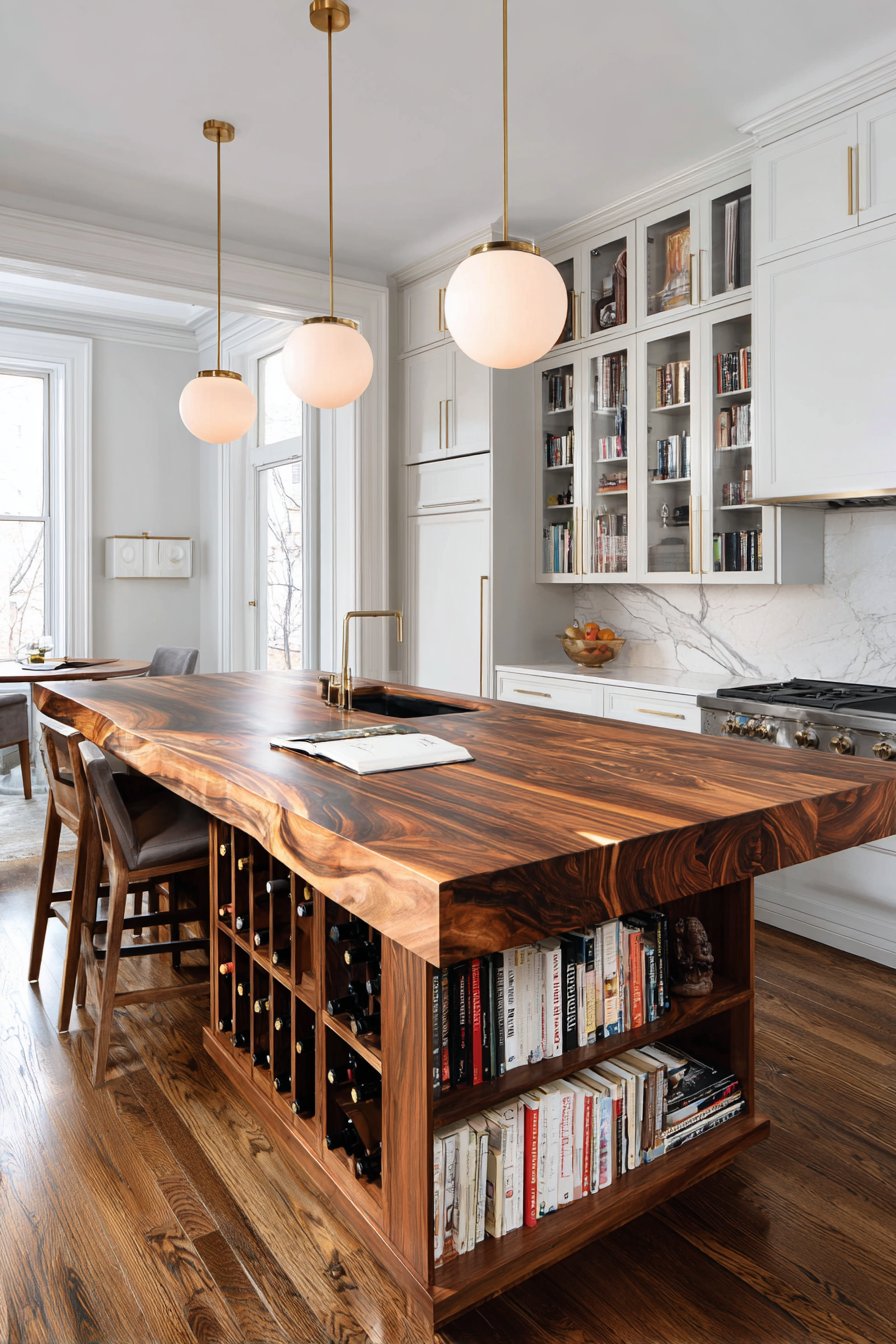
White plaster walls offer textured contrast to the smooth wood. The rough plaster finish adds tactile interest. Frosted glass globe pendants with brass fittings hang above. The lighting fixtures provide ambient illumination while enhancing the warm aesthetic. The brass details tie into other metallic accents throughout the kitchen.
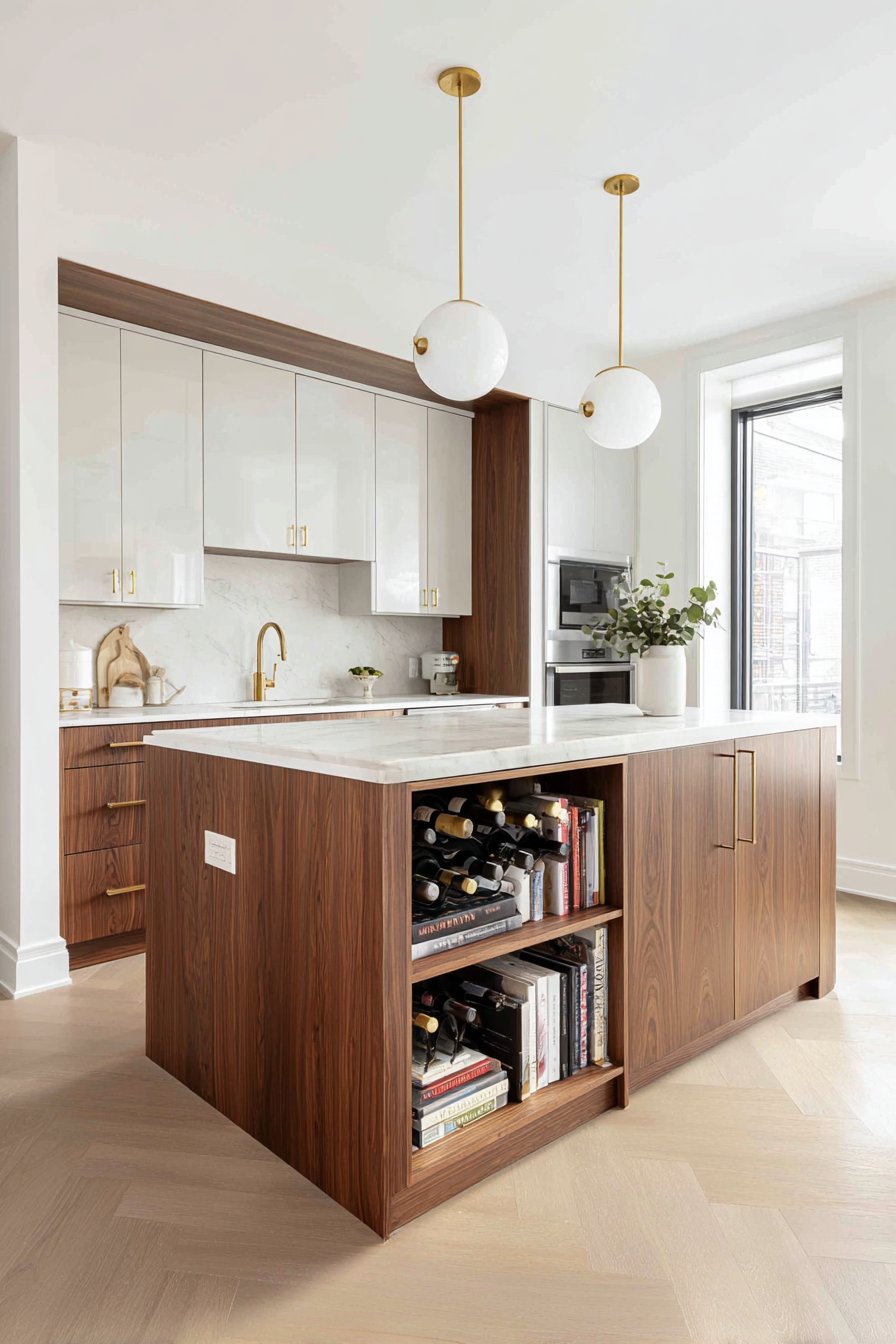
Edge-grain construction offers superior durability for work surfaces. The walnut species brings rich warmth and distinctive grain patterns. Golden hour lighting enhances the natural wood richness beautifully. The peninsula creates natural division between kitchen and living areas. It provides casual seating without formal dining commitment.
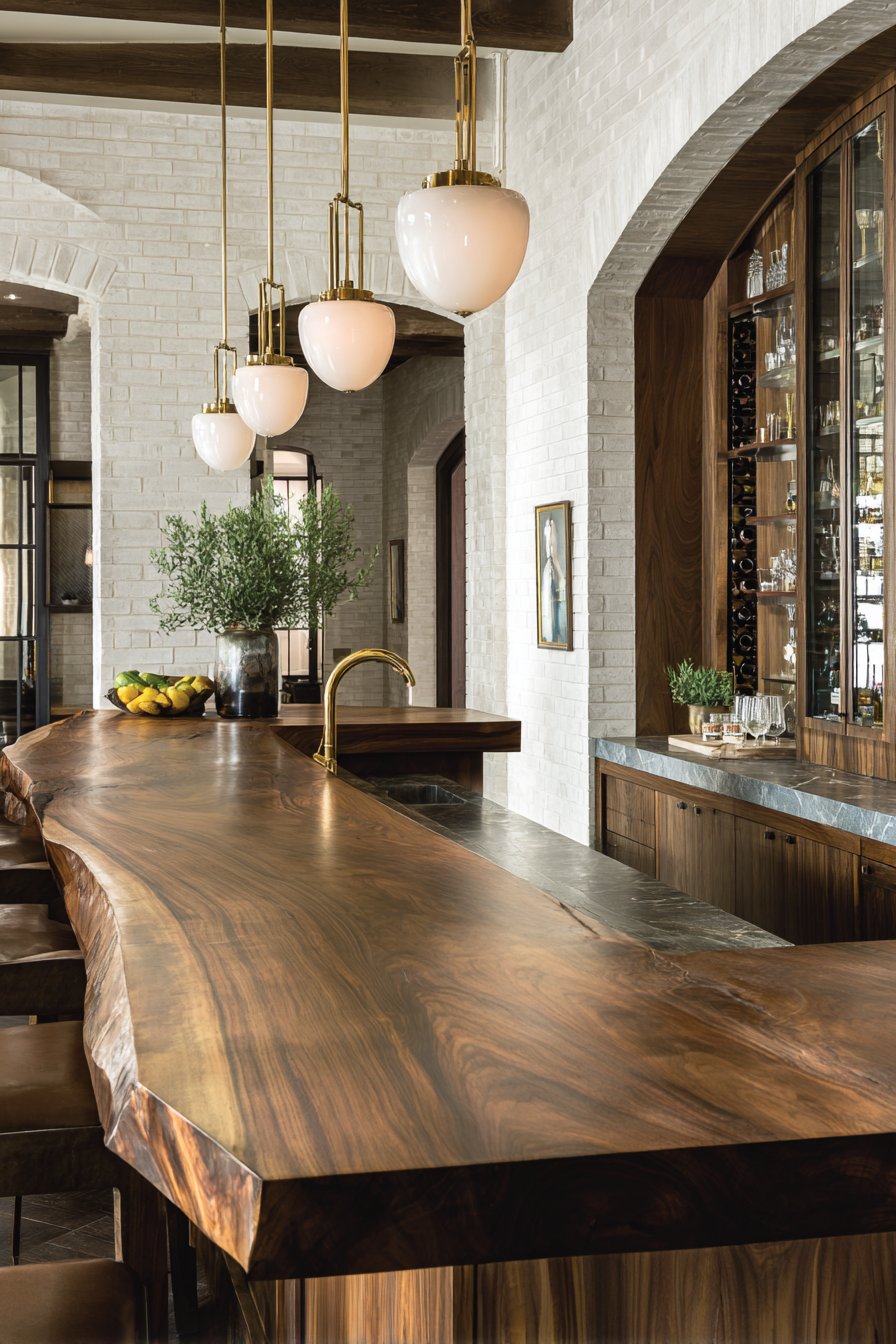
The wine storage integration demonstrates thoughtful planning. It transforms dead space into functional display. The cookbook shelving keeps recipes accessible while cooking. These practical touches make the peninsula more than just additional counter space.
Key Design Tips:
- Select edge-grain walnut for durability and beautiful natural patterns
- Integrate wine storage horizontally for easy selection and display
- Add open shelving for cookbooks to keep recipes accessible
- Choose frosted glass pendants for soft ambient lighting
- Use textured plaster walls for tactile contrast with smooth wood
- Position peninsula to create natural flow between kitchen and living areas
6. Custom Plaster Range Hood Feature
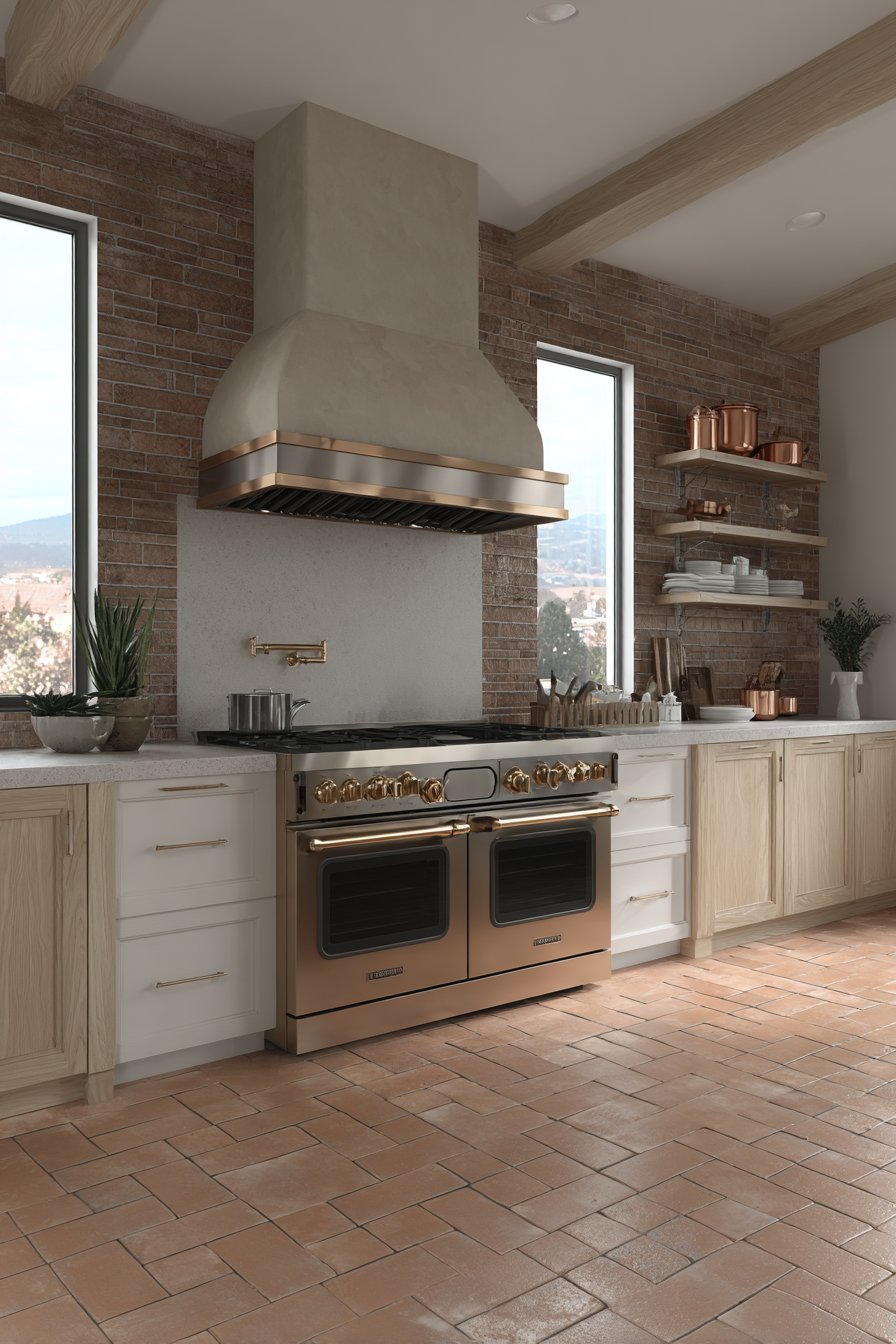
A custom range hood wrapped in natural plaster creates dramatic focal point. The textured finish shows subtle trowel marks. This handcrafted quality distinguishes the hood from standard options. A commercial-style stainless steel range with brass knobs sits below. White oak base cabinets with soft-close drawers flank both sides.
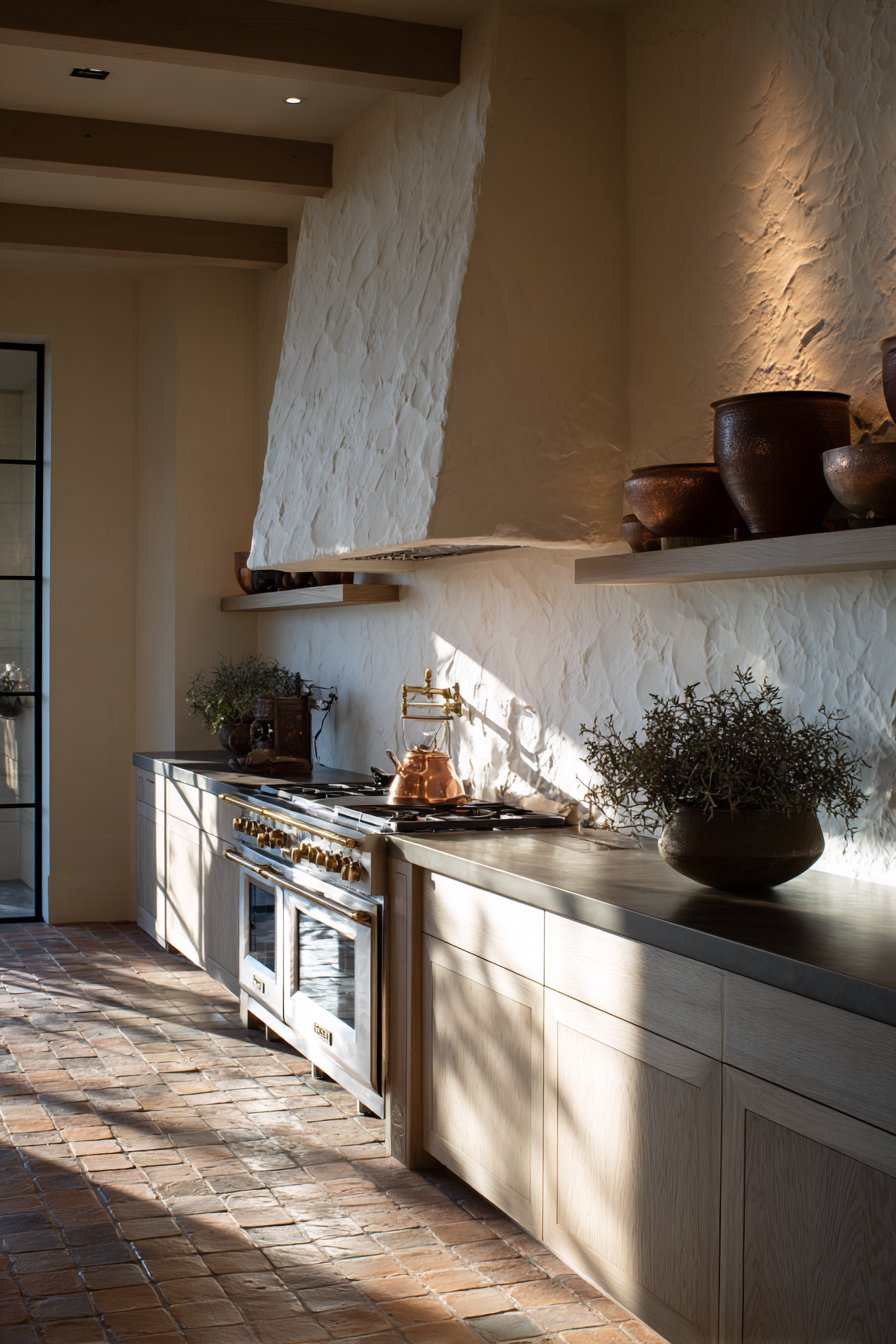
Terracotta floor tiles in herringbone pattern add earthy warmth underfoot. The clay material connects the kitchen to natural elements. Open shelving displays copper cookware and stoneware. The metallic copper catches light beautifully. Natural light from adjacent windows interacts with varied material surfaces throughout the day.
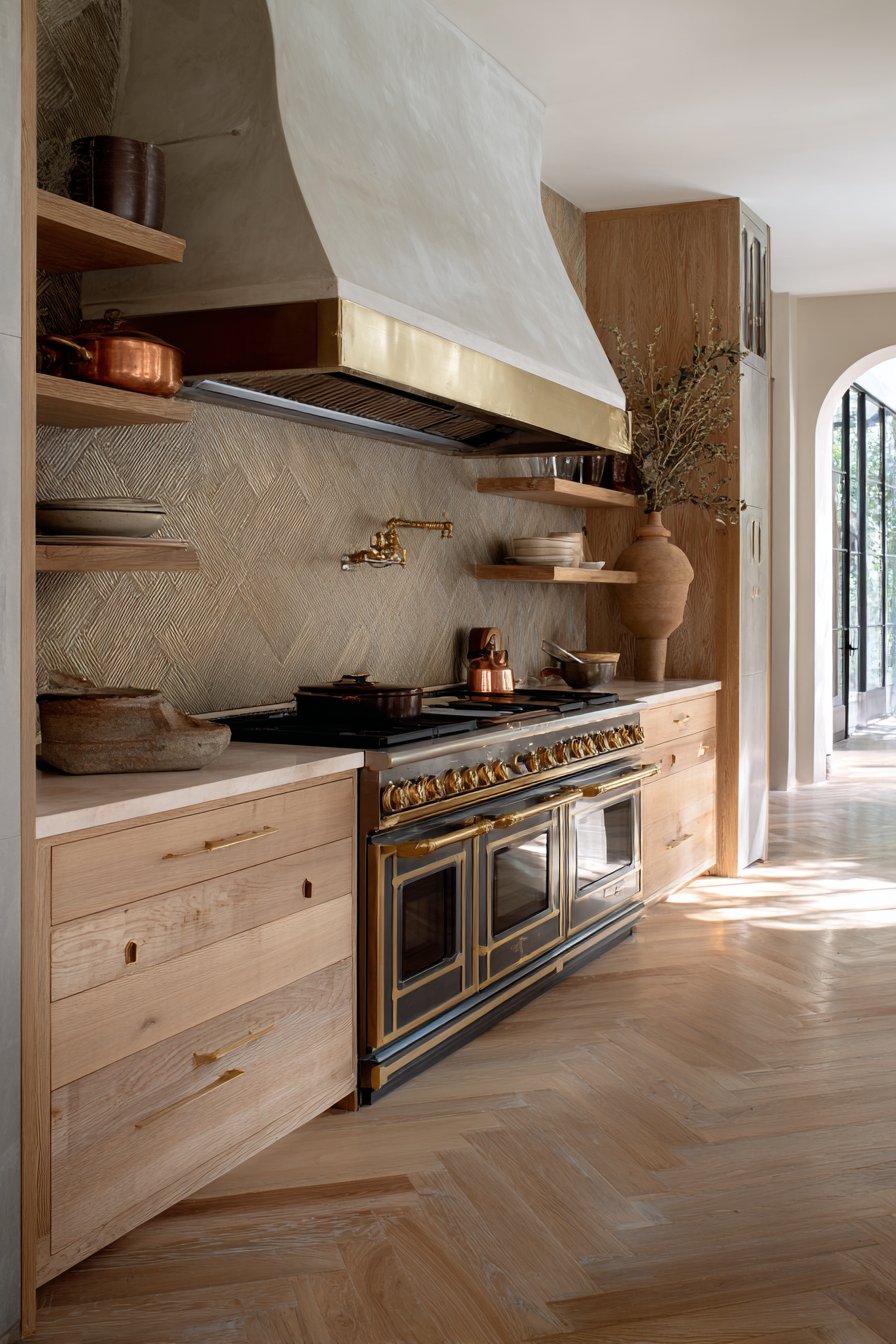
The plaster hood wrapping requires skilled craftsmanship. The organic material softens the typically industrial range hood form. This approach transforms functional necessity into architectural feature. The neutral grey plaster allows other elements to shine. The brass range knobs provide warm metallic accents that complement copper cookware.
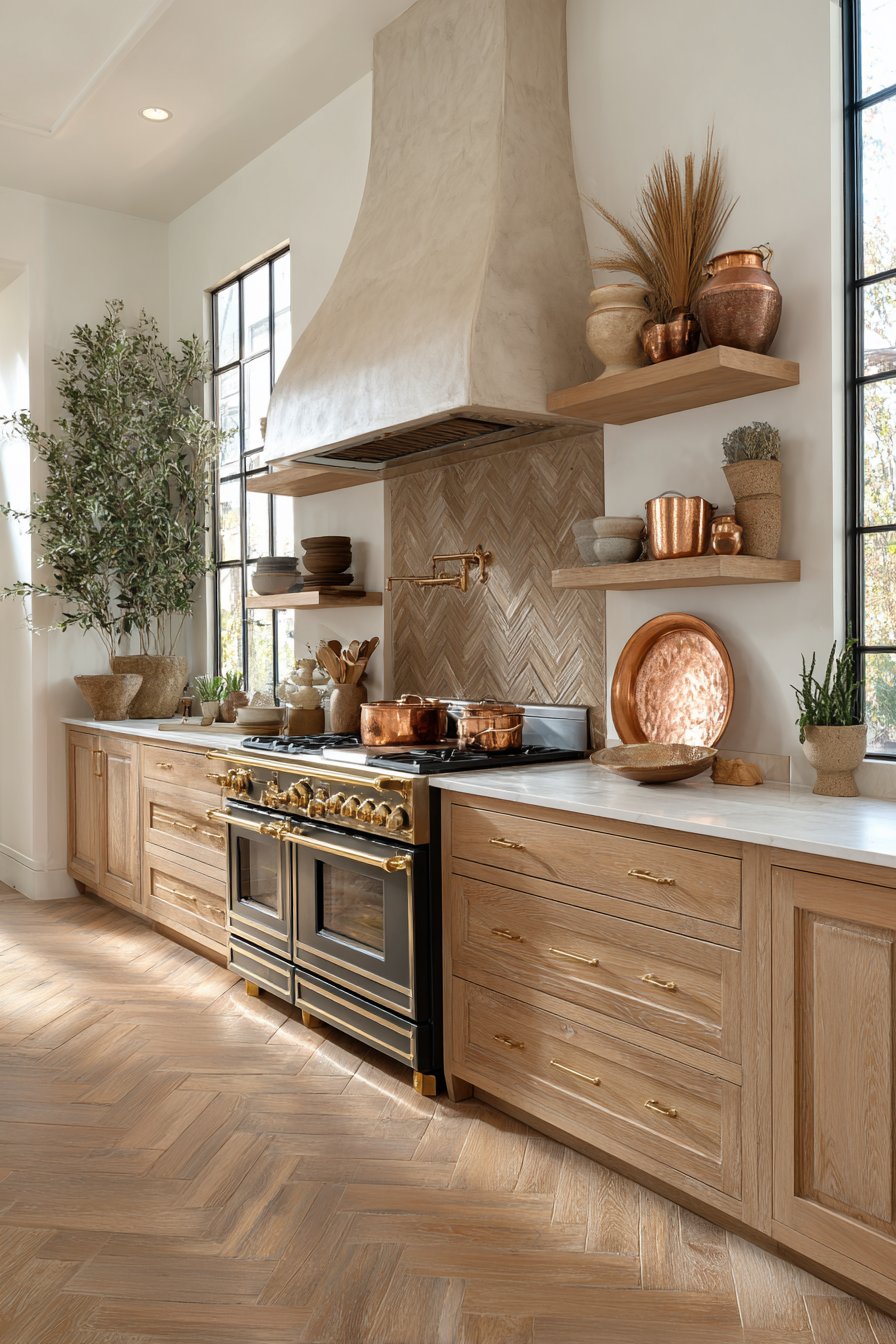
The herringbone tile pattern adds visual movement to the floor. This classic layout pattern never goes out of style. The terracotta material brings warmth and ages beautifully. Combined with the textured plaster hood, these elements create rich layered design.
Key Design Tips:
- Wrap range hoods in textured plaster for custom organic appearance
- Choose commercial-style ranges with brass details for professional function
- Install herringbone terracotta flooring for timeless warmth and pattern
- Display copper cookware on open shelves as functional art
- Select soft-close drawer mechanisms for quiet operation and longevity
- Position windows near range area for natural task lighting
7. Natural Oak Pantry with Live Edge Details
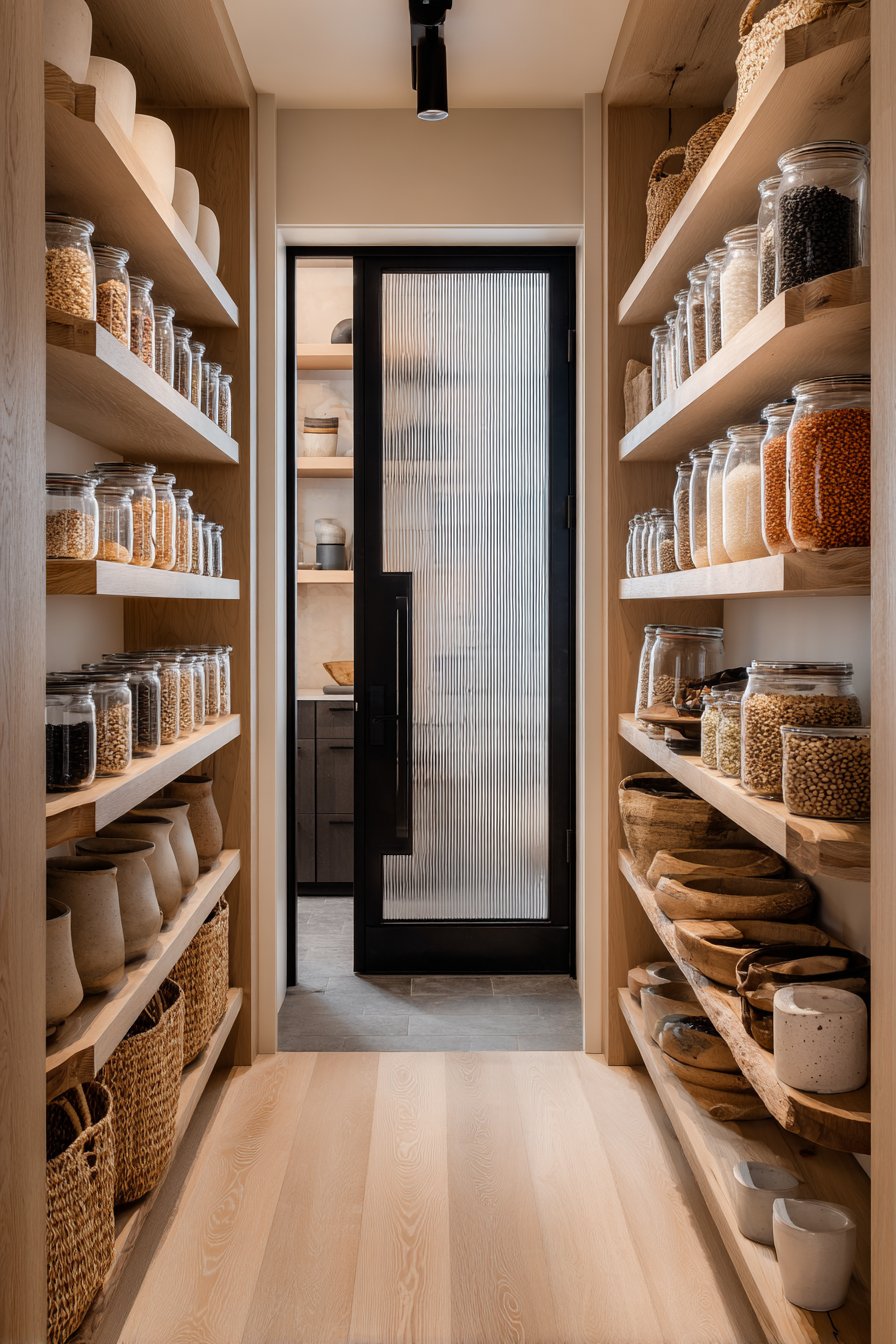
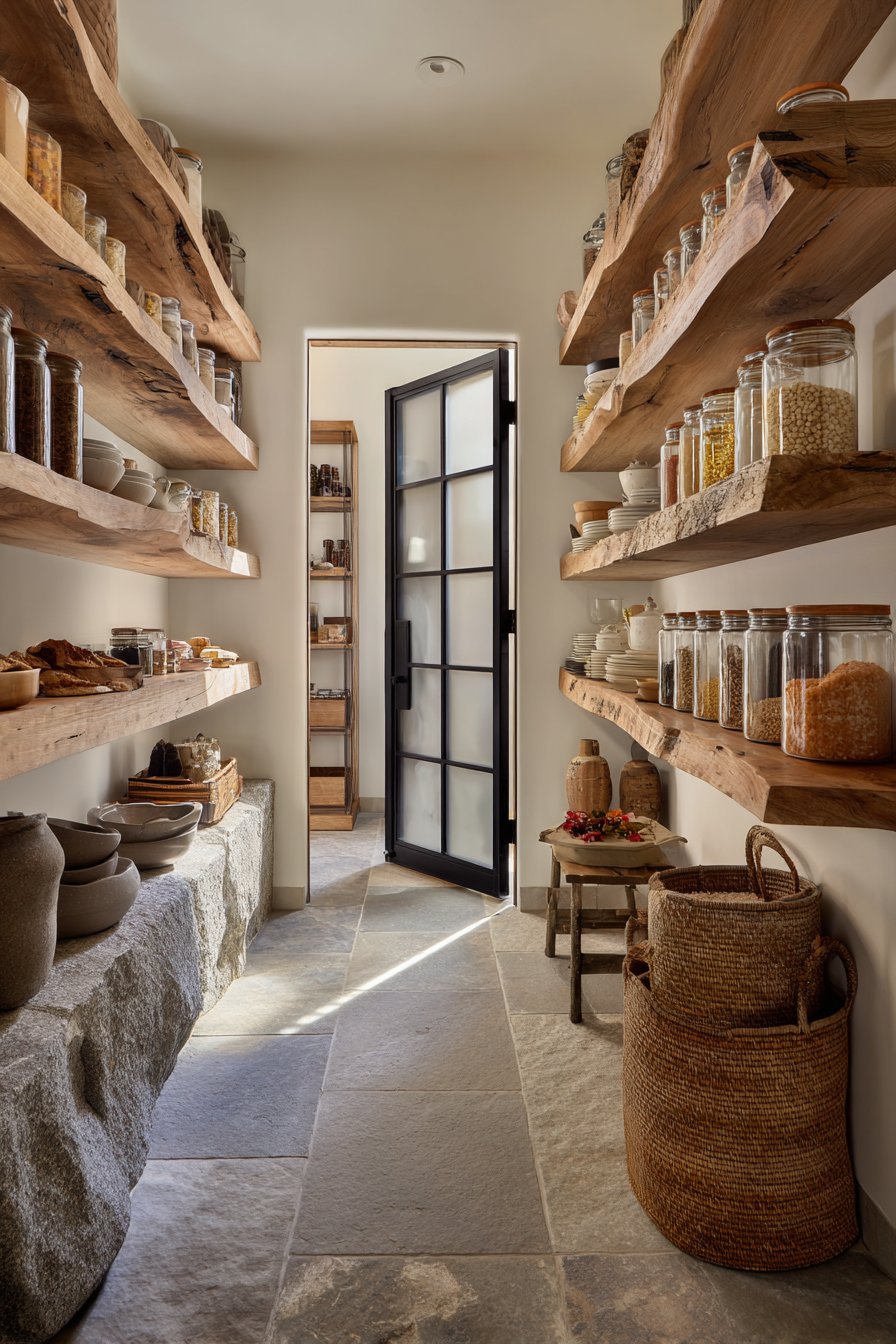
Floor-to-ceiling natural oak shelving transforms the pantry into beautiful storage. Select shelves feature live edge details that preserve the wood’s natural form. Glass jars filled with dry goods create organized display. Woven baskets hold produce naturally. Ceramic containers add artisanal touches throughout.
The pantry door features frosted glass panel in black metal frame. This allows soft light to filter through while maintaining privacy. Limestone tile flooring continues seamlessly from the main kitchen. The natural stone provides cool neutral foundation. The thoughtful organization makes cooking prep more efficient and enjoyable.
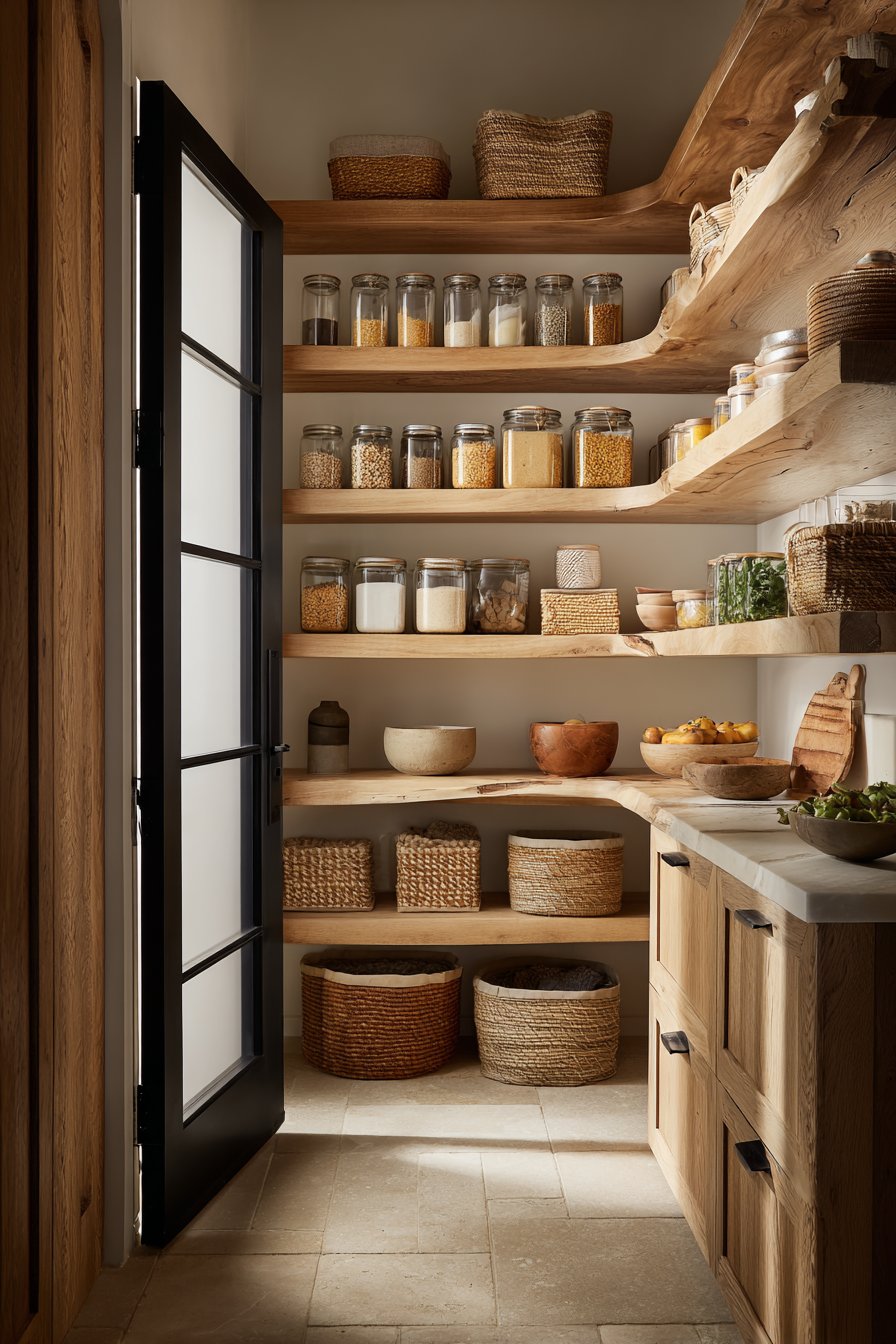
Live edge details celebrate the tree’s original form. These organic edges create visual interest in otherwise utilitarian space. The combination of glass jars and woven baskets balances transparency with texture. The ceramic containers provide variation in material and form.
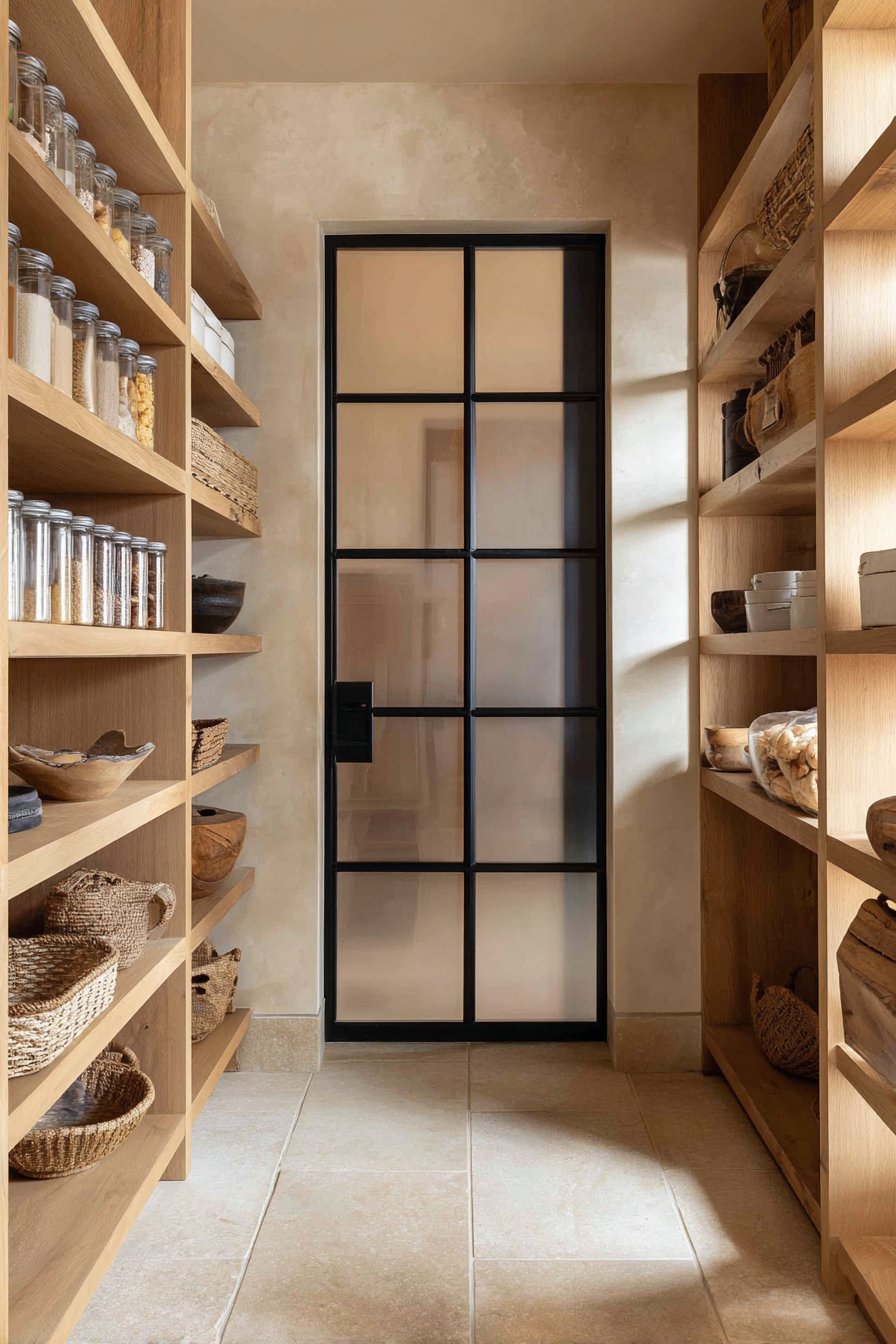
The frosted glass door serves dual purpose. It conceals pantry contents from main living areas while allowing light penetration. The black metal frame adds modern structural element. Natural lighting filtering through creates soft glow. This transforms functional storage into luminous feature.
Key Design Tips:
- Incorporate live edge shelving for organic character and uniqueness
- Use glass jars for dry goods to create an organized visual display
- Add woven baskets for produce storage that breathe naturally
- Install frosted glass doors to allow light while concealing contents
- Choose limestone flooring for cool neutral continuation from main kitchen
- Arrange items by category and container type for cohesive appearance
8. Live Edge Walnut Dining Integration
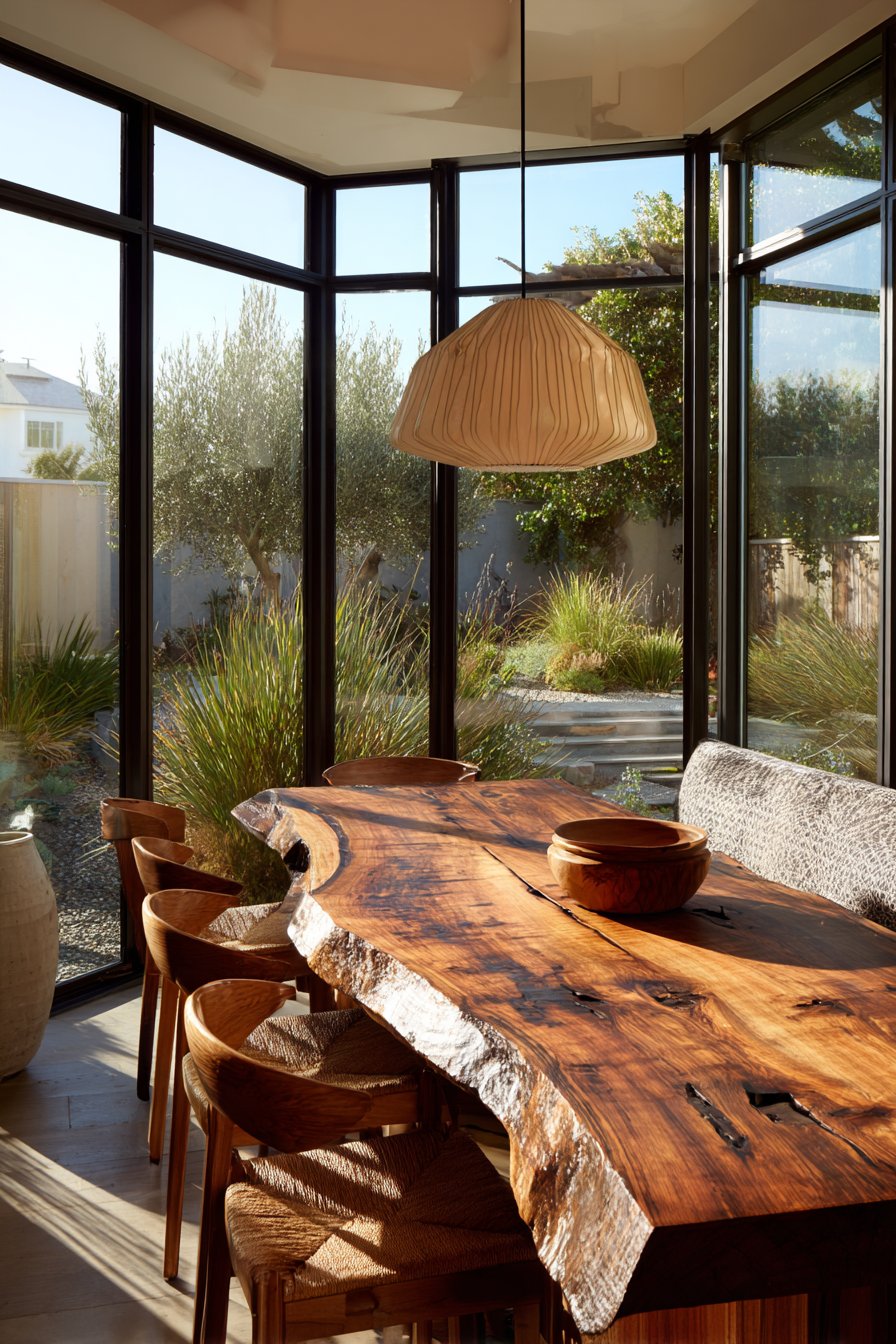
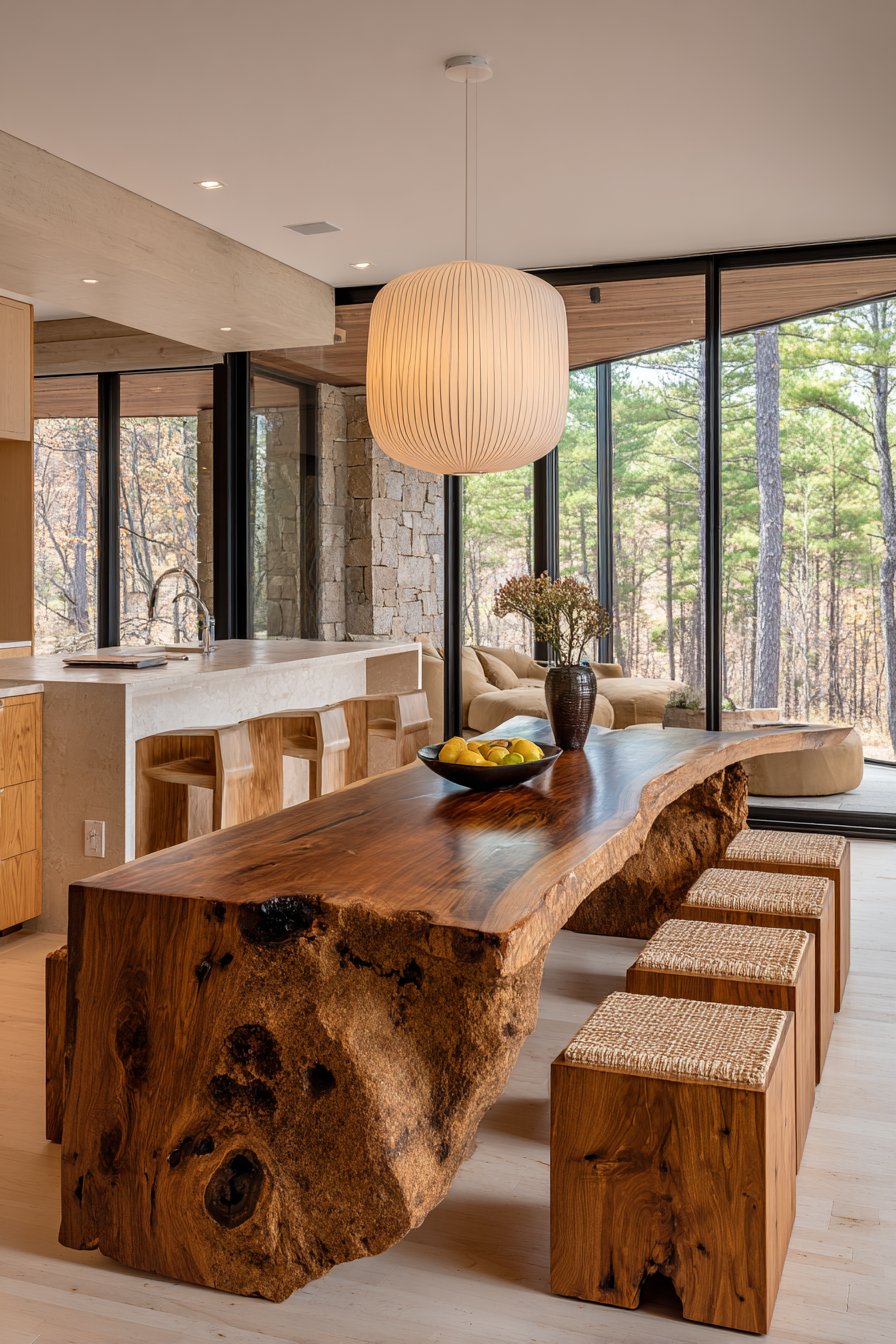
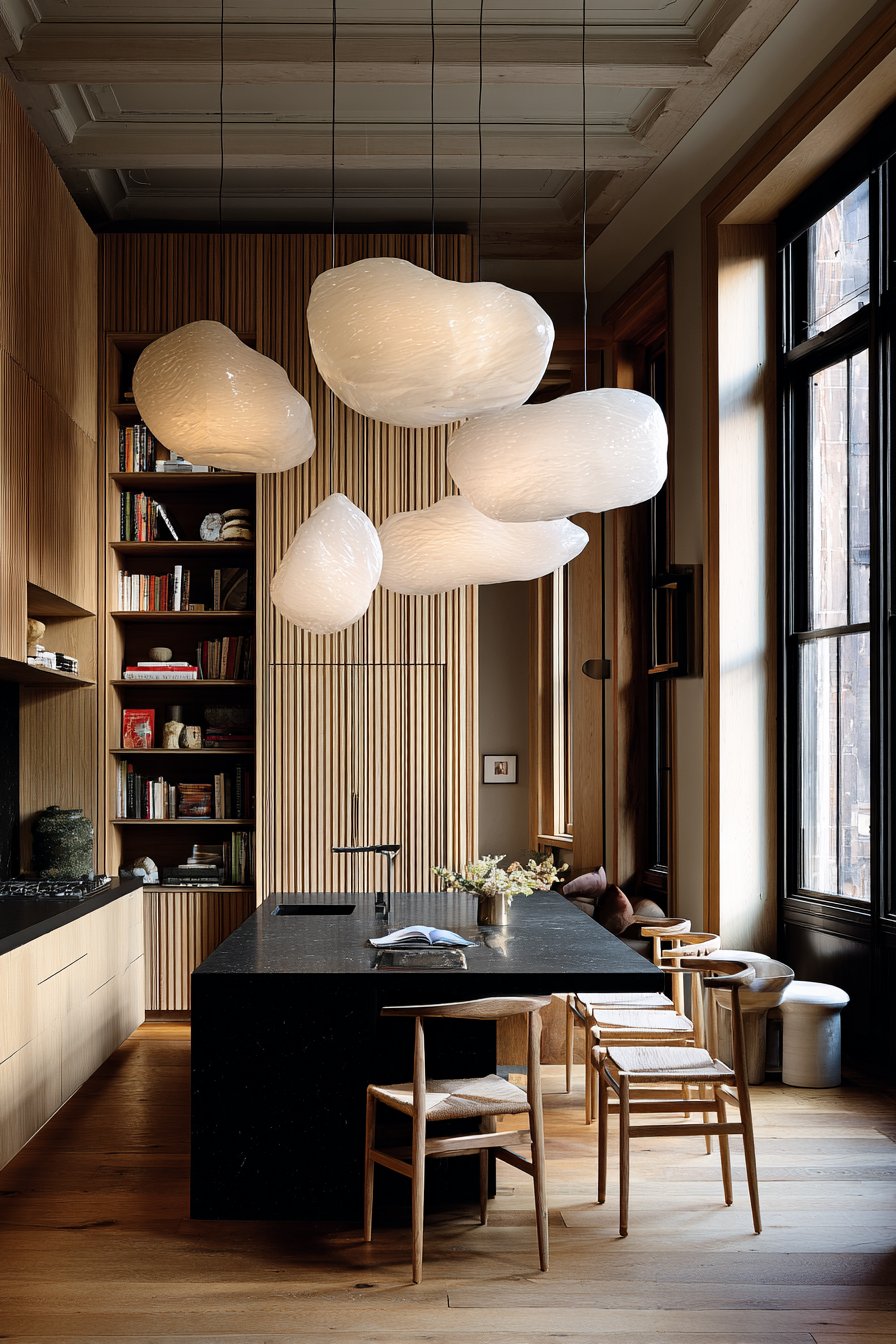
A live edge walnut dining table anchors the kitchen dining nook. Visible knots and natural wood movement patterns make it unique. Six sculptural dining chairs in curved ash wood with woven rush seats surround it. The chairs combine organic form with comfortable seating. A low-hanging paper shade pendant provides soft ambient lighting above.
Large windows with minimal black steel frames offer garden views. The connection between indoor dining and outdoor nature feels seamless. Morning light creates natural highlights across wood surfaces. The varied wood species between table and chairs adds depth. The rush seats introduce additional natural fiber texture.
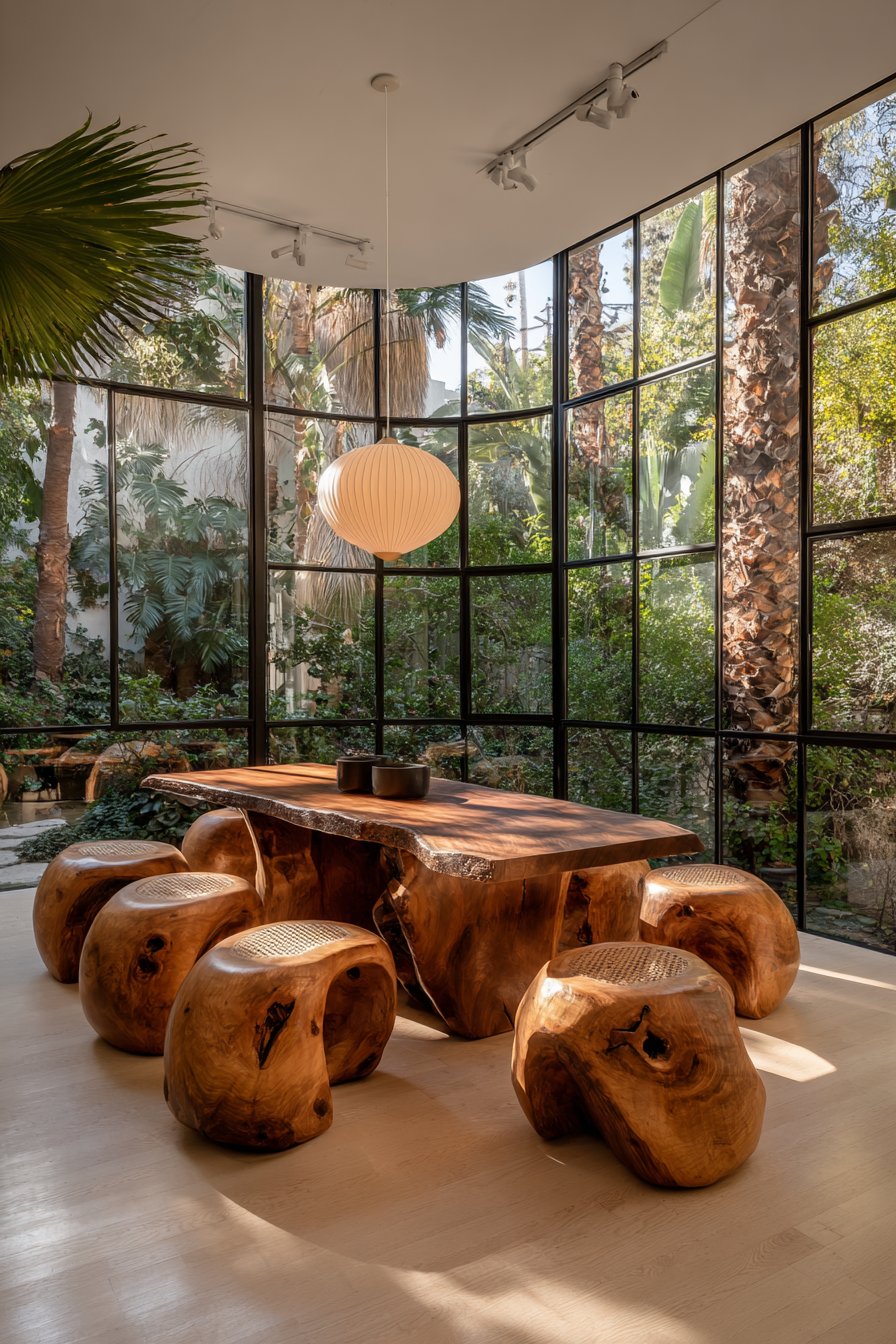
The live edge table celebrates the tree’s original form. No two pieces can ever be identical. The walnut species offers rich coloring and distinctive grain. The sculptural ash chairs provide comfort through curved forms. The woven rush seats age beautifully with use.
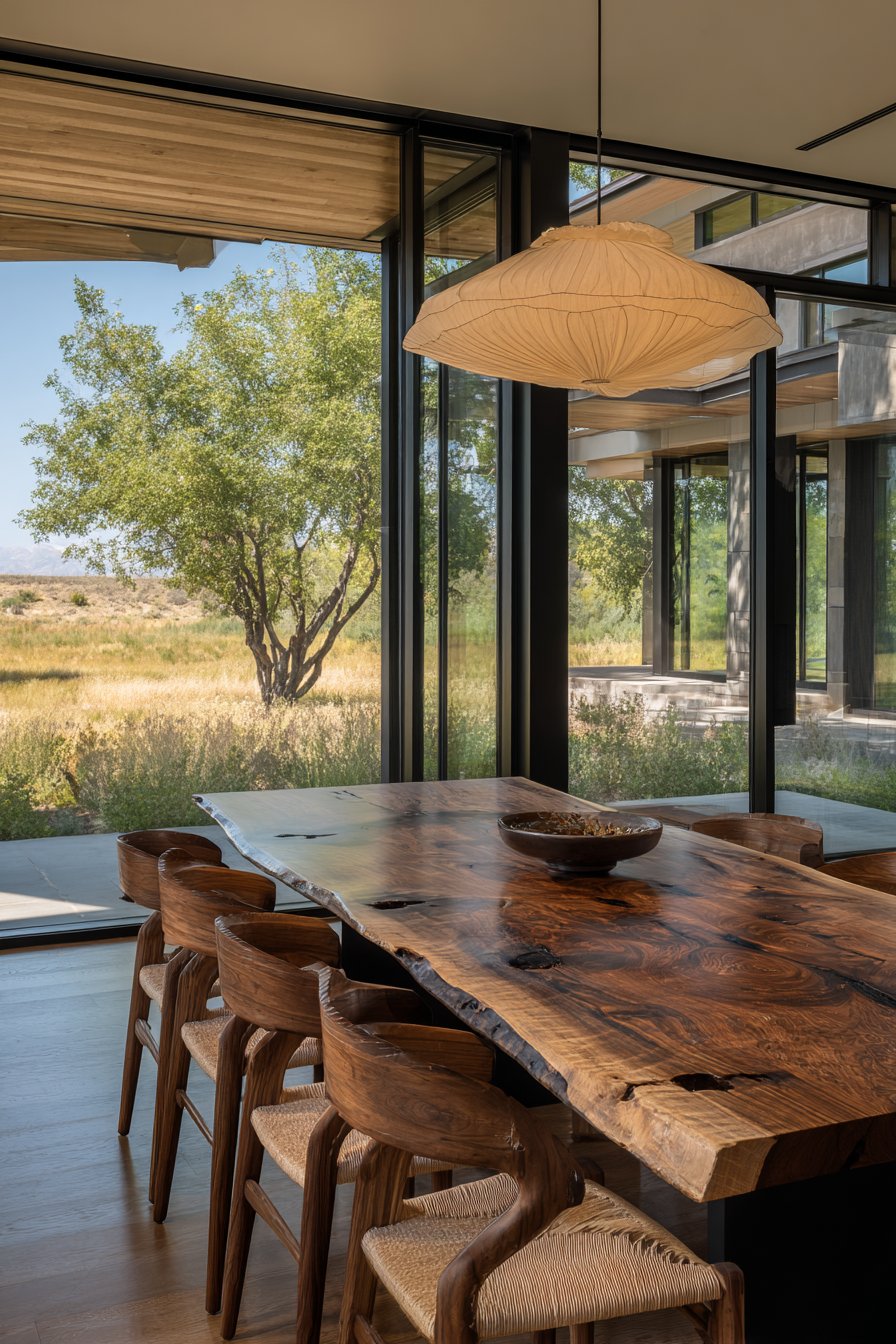
The paper pendant shade diffuses light softly. It prevents harsh glare during meals. The minimal window frames maximize glass area and views. This design choice connects diners with nature visually. The overall composition creates peaceful dining environment.
Key Design Tips:
- Choose live edge walnut for dining tables with unique character
- Select sculptural wood chairs with woven seats for comfort and style
- Install paper shade pendants for soft diffused ambient lighting
- Use minimal window frames to maximize views and natural light
- Position dining nook near windows for connection to outdoors
- Mix wood species between table and chairs for added interest
9. Reclaimed Wood Open Shelving Display
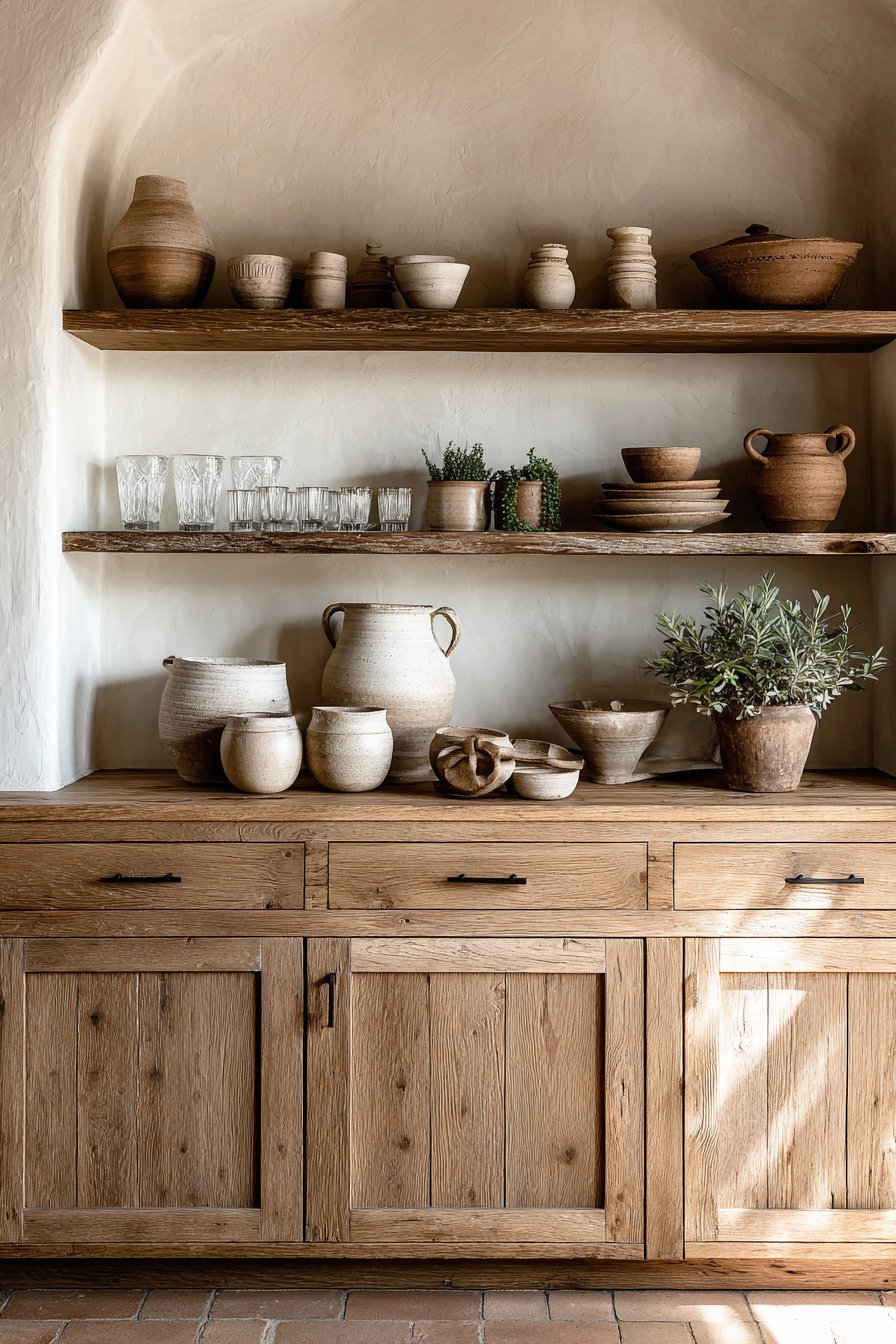
Open shelving crafted from reclaimed wood planks creates authentic character. Original patina and nail holes remain visible. This history adds depth that new materials cannot replicate. The shelves display curated handmade pottery in neutral earth tones. Vintage glassware catches light beautifully. Small potted herbs bring living elements to the display.
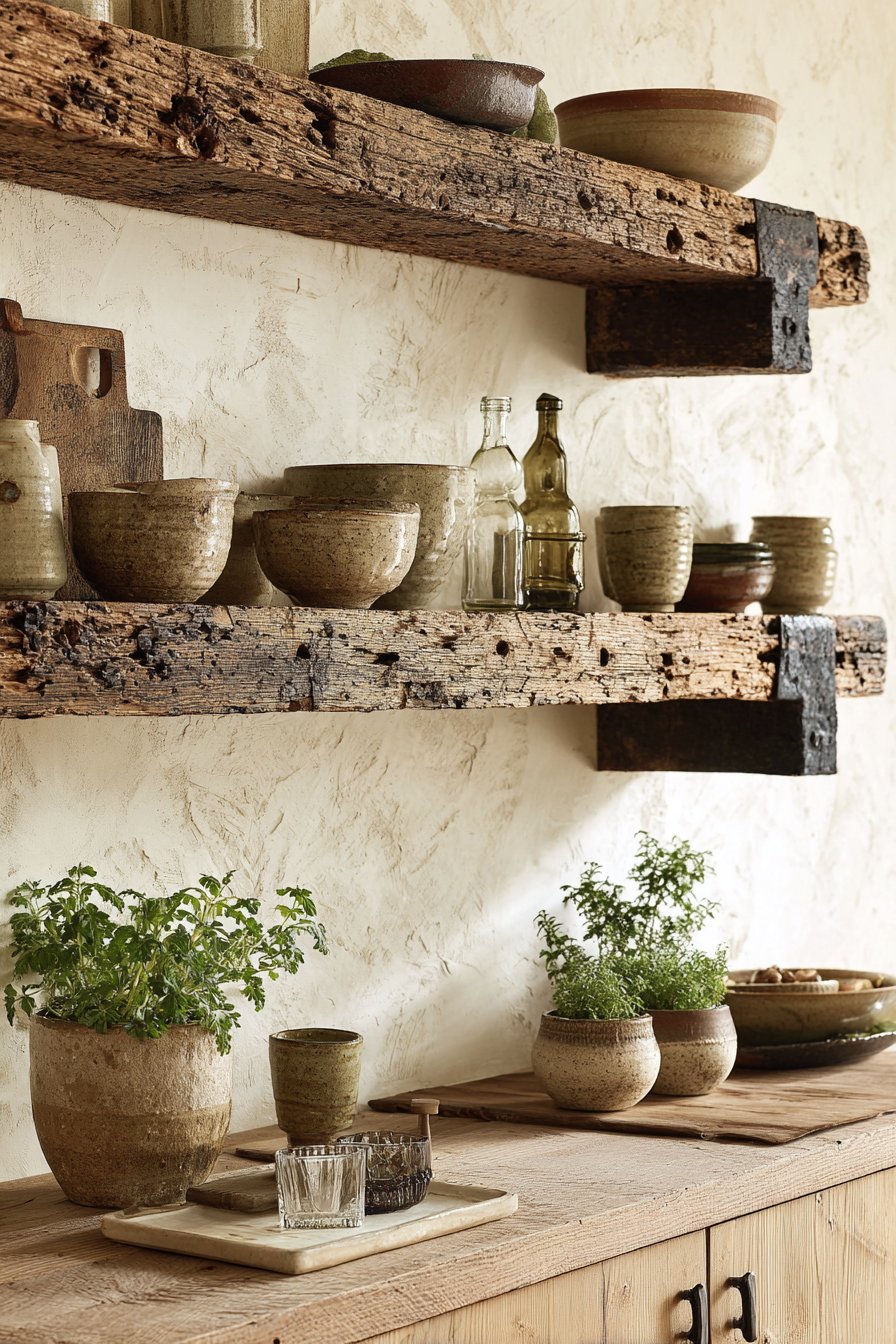
White oak base cabinets below provide necessary closed storage. The combination balances display with practical needs. Walls finished in warm white limewash show subtle texture variations. The rough wall finish complements the aged wood perfectly. Natural side lighting creates dimensional shadows that emphasize authentic materials.
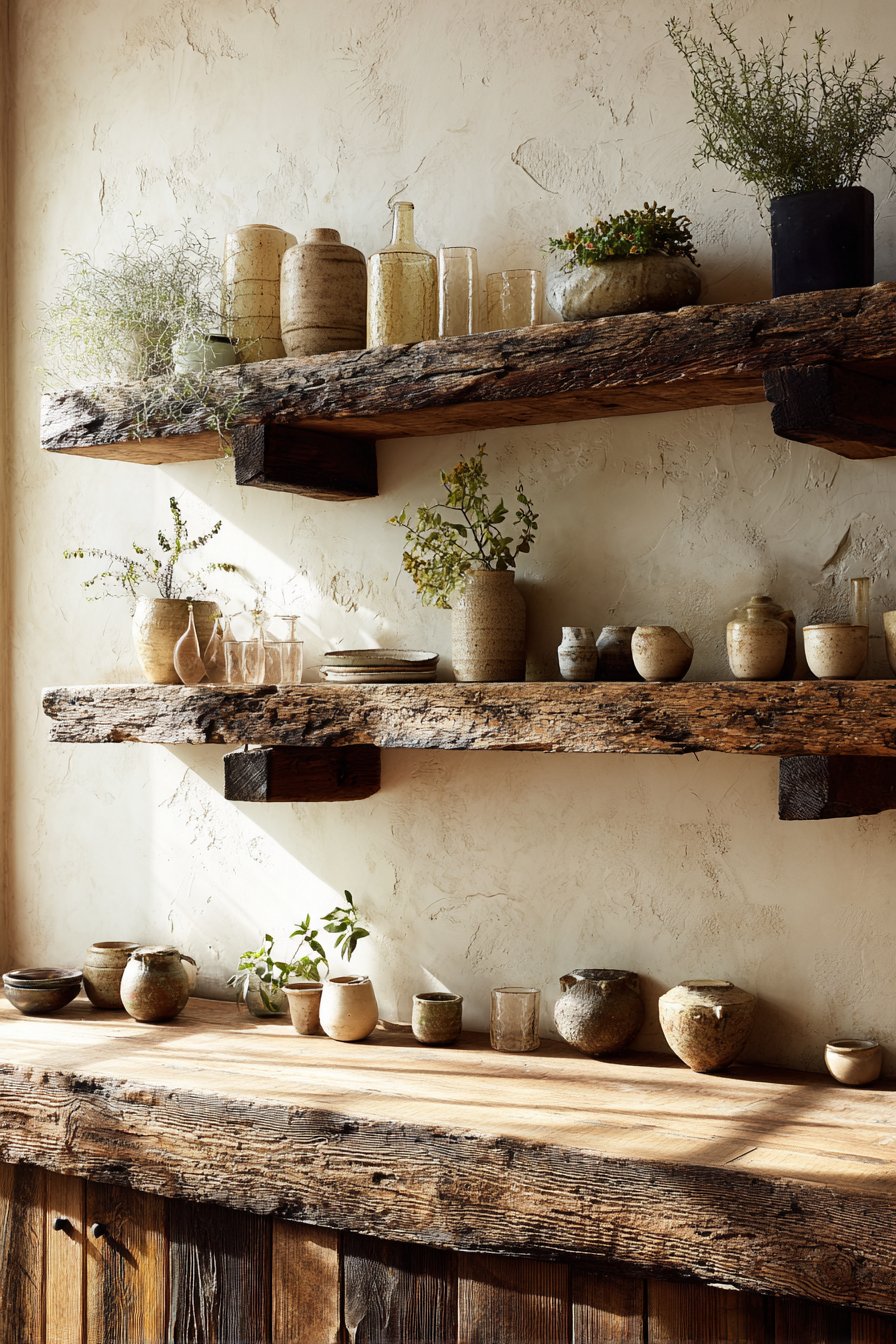
Reclaimed wood carries environmental benefits alongside aesthetic appeal. Each plank tells a story through wear and patina. The artisanal pottery displayed deserves quality presentation. The neutral earth tones create cohesive collection. Vintage glassware adds reflective elements that play with light.
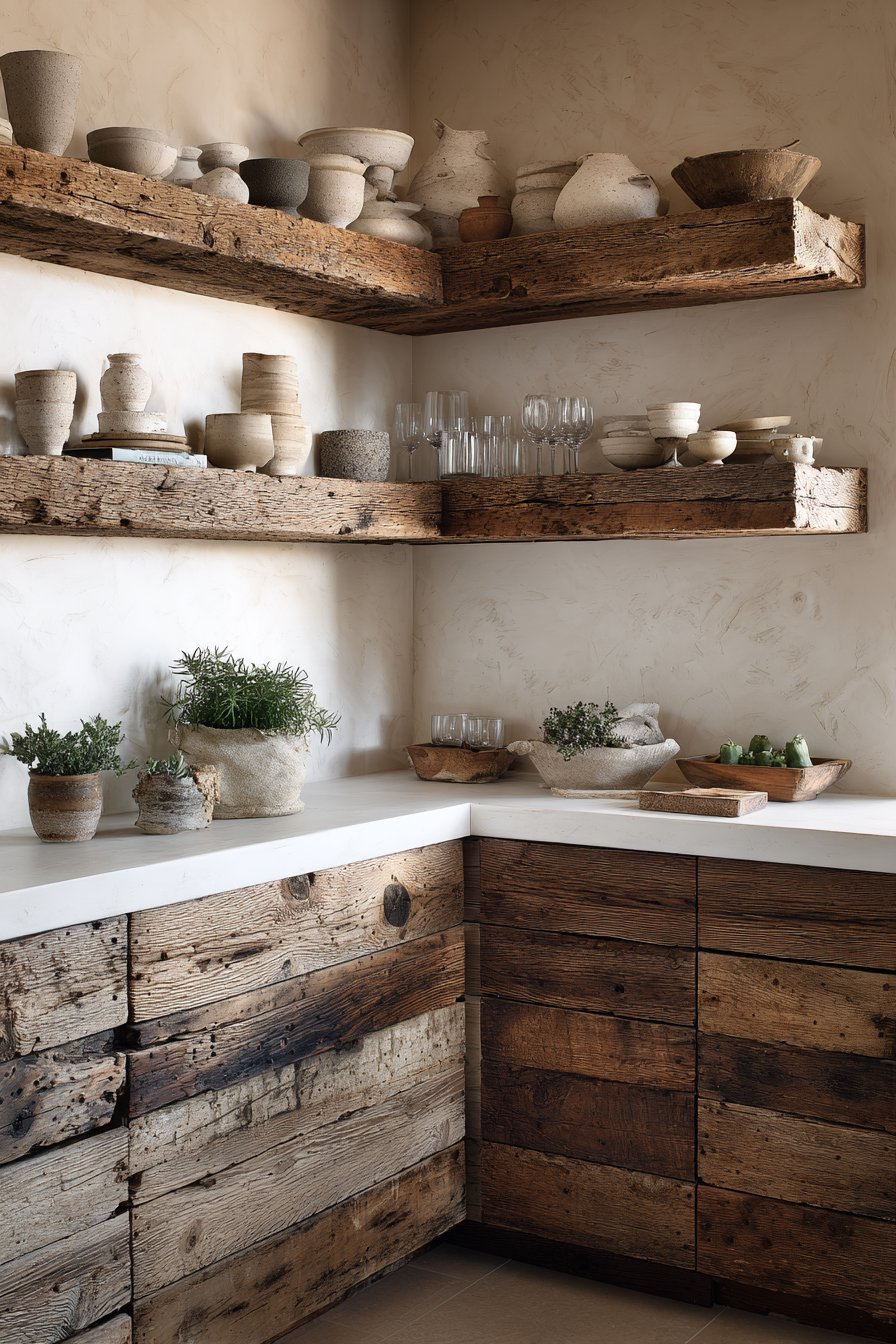
The limewash wall finish offers textured alternative to flat paint. This traditional material breathes naturally and ages gracefully. The white base allows displayed items to stand out. The overall composition demonstrates how open storage can be beautiful.
Key Design Tips:
- Source reclaimed wood shelving for authentic character and sustainability
- Display handmade pottery in earth tones for cohesive collections
- Add vintage glassware for reflective light-catching elements
- Combine open shelving with closed base cabinets for balance
- Apply limewash wall finish for subtle organic texture
- Use side lighting to create shadows that emphasize materials
10. Black Granite Island with Oak Slats
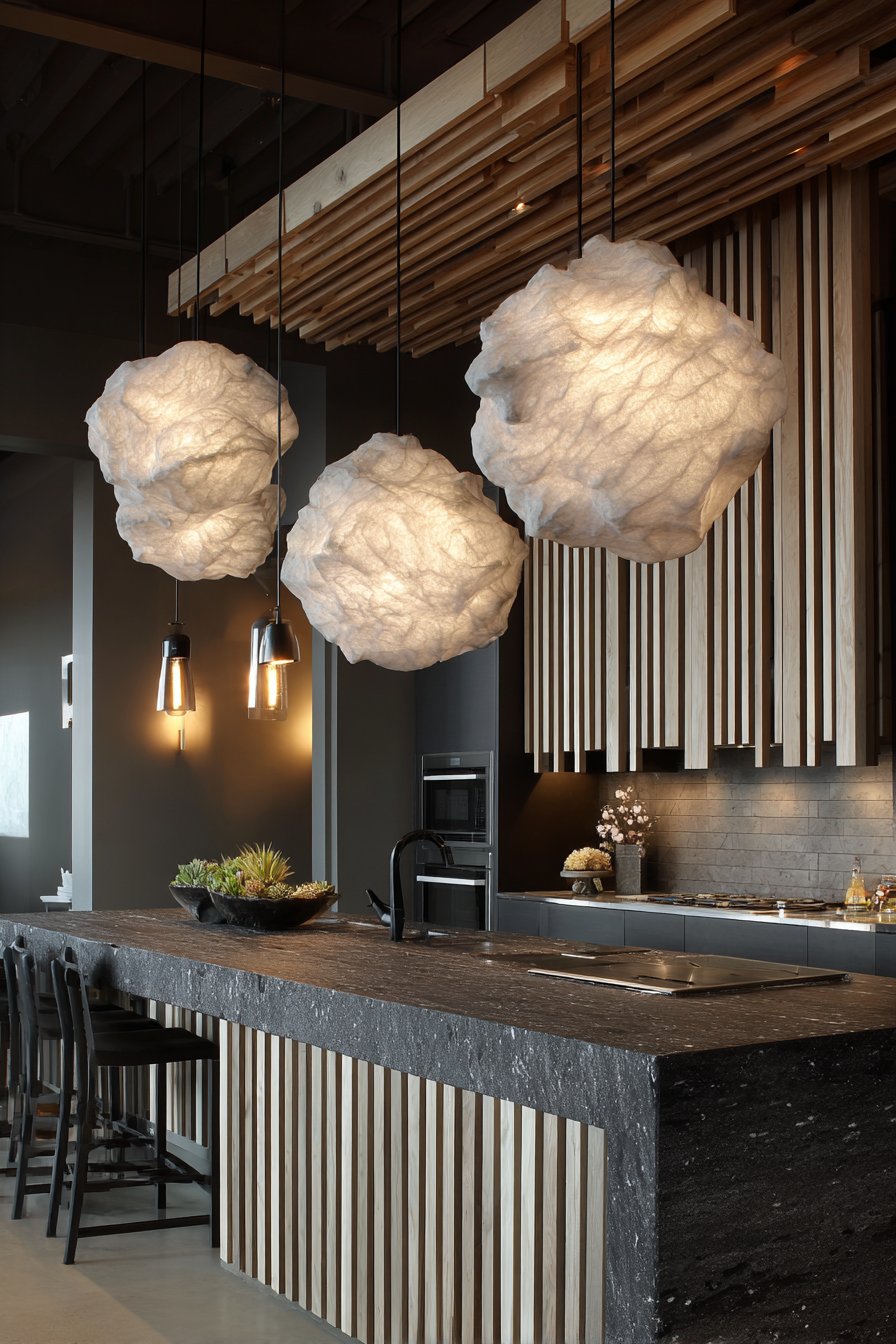
A honed black granite countertop creates sophisticated island surface. The subtle natural flecking and soft matte finish add understated elegance. The island base features white oak vertical slats. This creates texture and visual interest. Integrated power outlets hide discreetly within the structure.
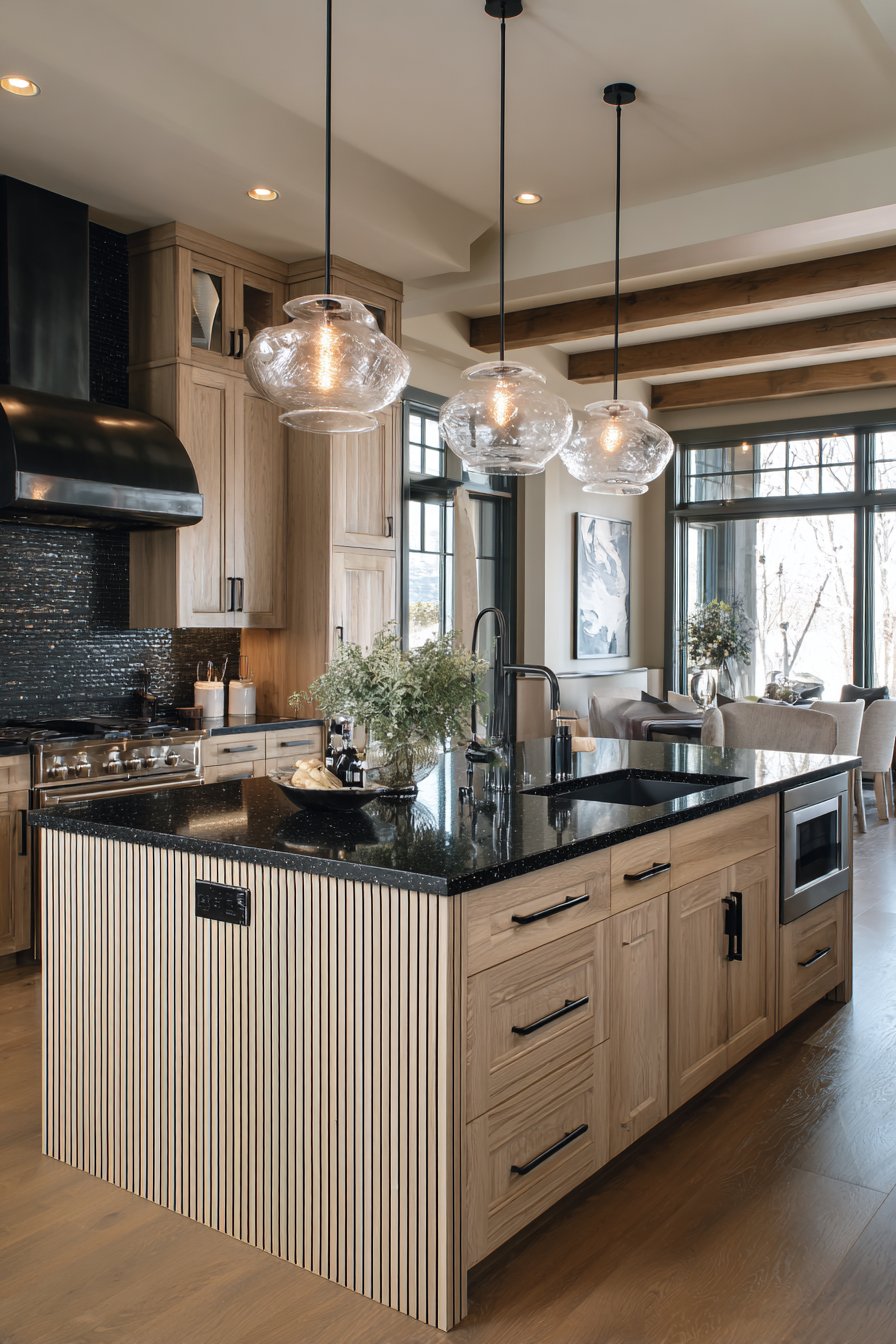
Three blown glass pendant lights hang above at varied heights. The organic irregular shapes add sculptural quality. The lighting becomes functional art. The material contrast between dark stone and light wood creates striking balance. Carefully planned lighting reveals texture details without harsh shadows.
Honed granite offers practical advantages over polished finishes. The matte surface shows fewer fingerprints and water spots. The black color grounds the space dramatically. The vertical oak slats add dimensional texture. This base treatment transforms simple island into architectural statement.
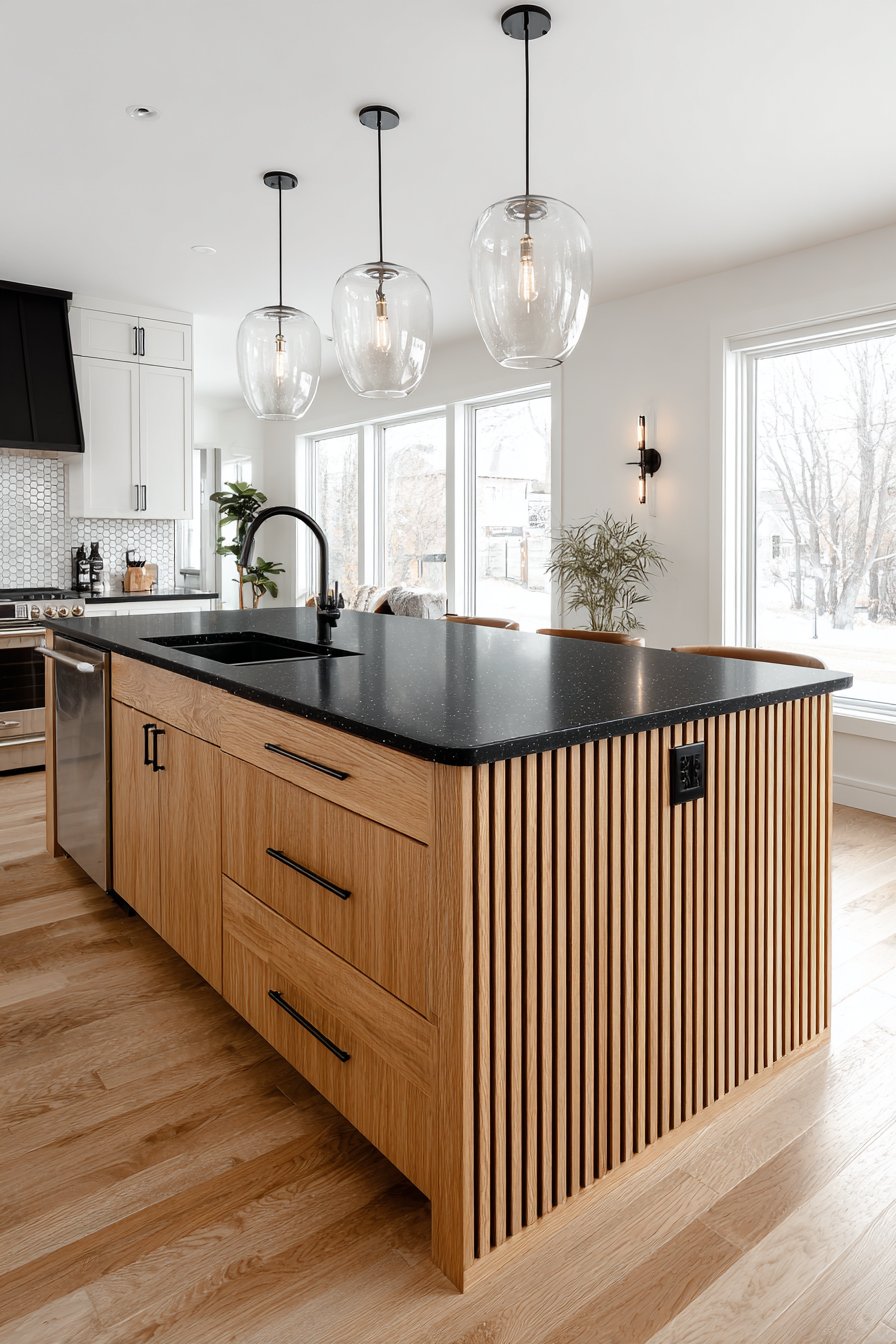
The blown glass pendants provide unique organic forms. Varied heights create dynamic visual interest above the island. The integrated power outlets demonstrate thoughtful planning. They provide convenience without compromising design. The overall composition balances dark and light masterfully.
Key Design Tips:
- Choose honed black granite for sophisticated matte finish that’s practical
- Design island bases with vertical wood slats for textural dimension
- Hang blown glass pendants at varied heights for sculptural lighting
- Integrate power outlets discreetly within island structure
- Balance dark stone countertops with light wood bases
- Layer lighting carefully to reveal textures without harsh shadows
11. Vertical Reclaimed Wood Statement Wall
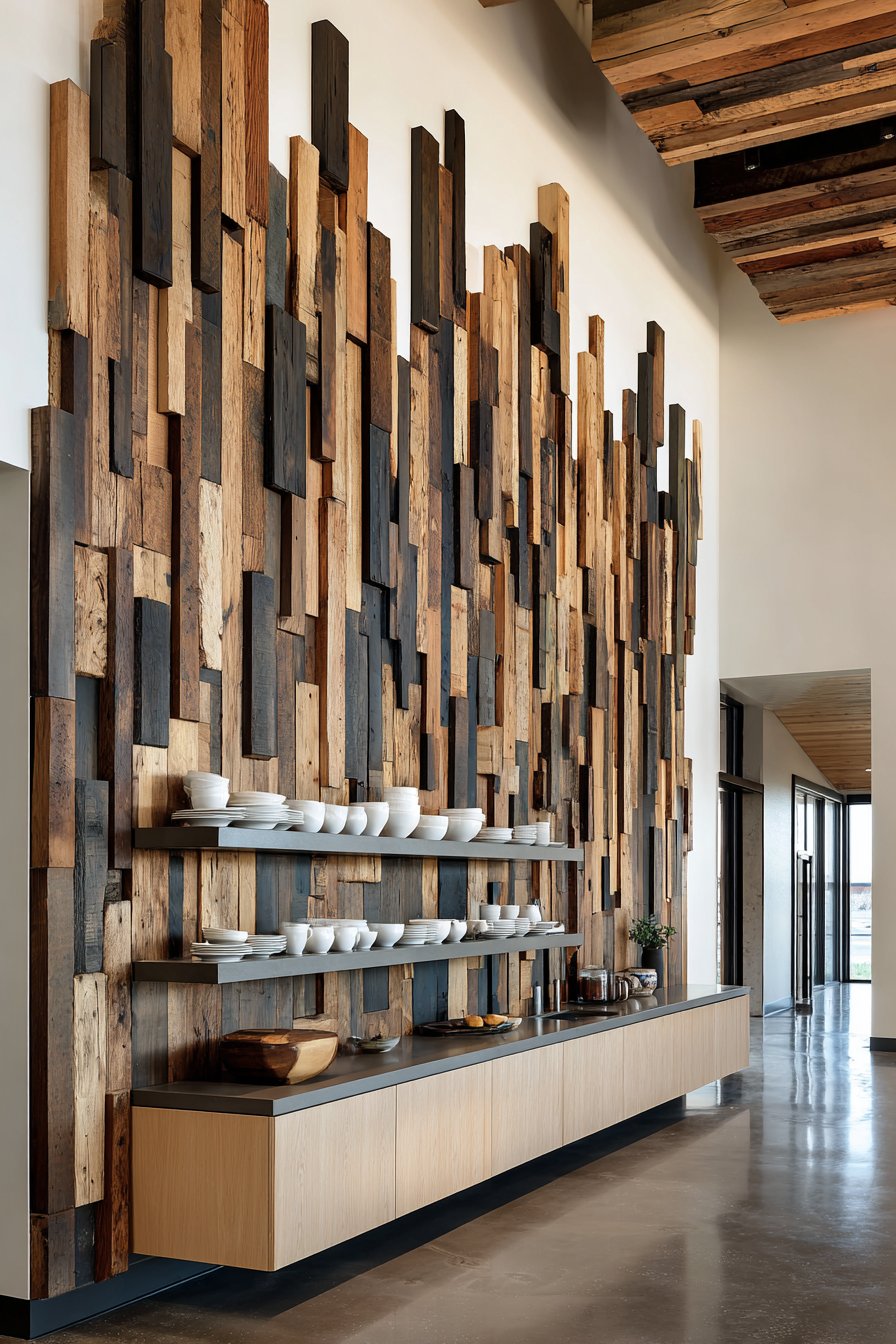
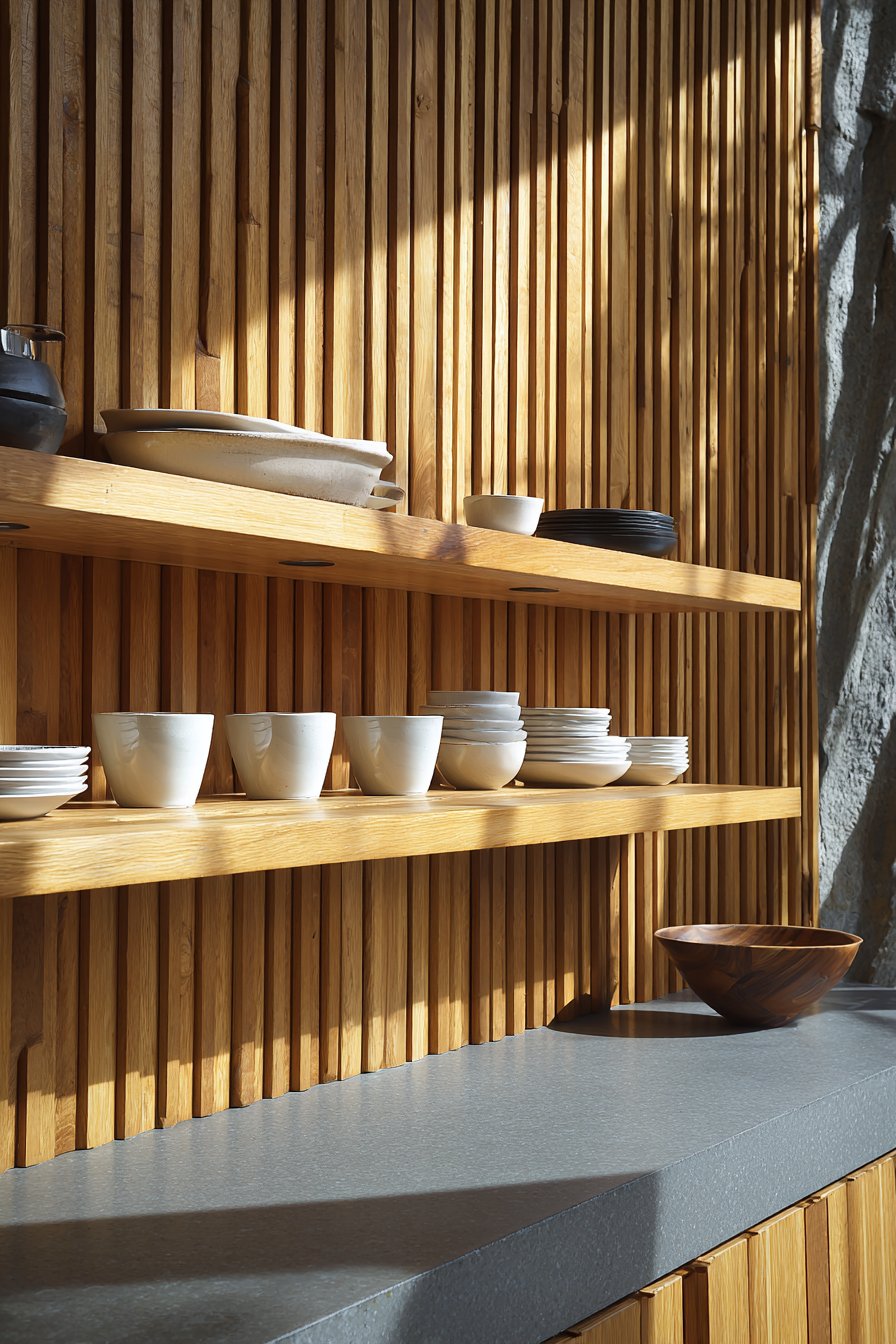
A statement wall clad in vertical reclaimed wood planks commands attention. Varied widths and natural color variations range from honey to deep walnut. The vertical arrangement draws eyes upward. Floating white oak shelves display minimalist dishware against this backdrop. Integrated LED lighting highlights the dimensional wood texture beautifully.
Polished concrete countertops in charcoal grey provide cool contrast. The dark surfaces balance the warm wood tones. Natural daylight from skylights above creates dynamic shadows. These shadows change throughout the day. They emphasize the three-dimensional quality of the wood surface.
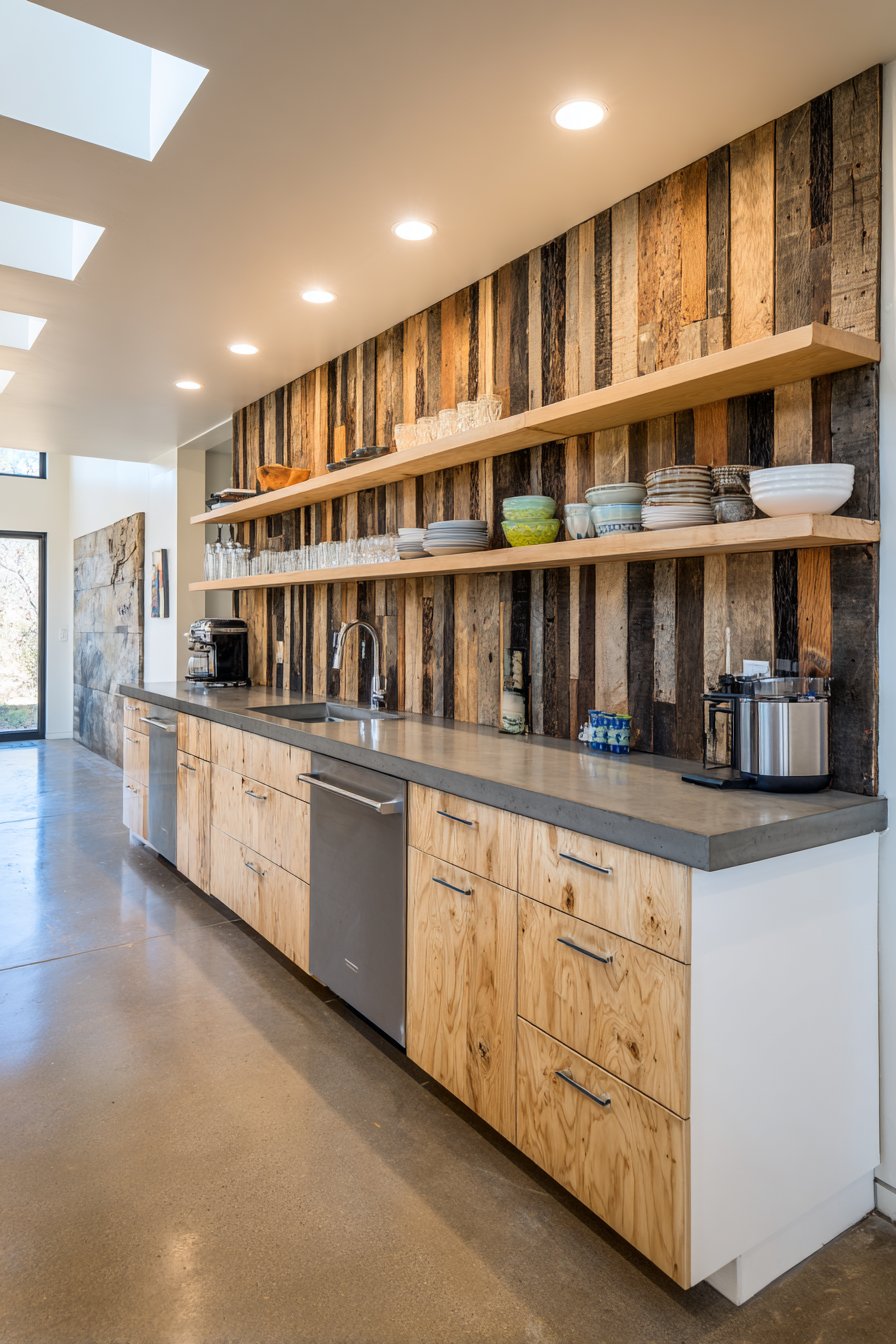
The reclaimed wood wall requires careful planning and installation. Planks must be securely mounted while celebrating their imperfections. The color variation tells the wood’s history. No staining or painting is necessary. The authentic patina provides instant character.
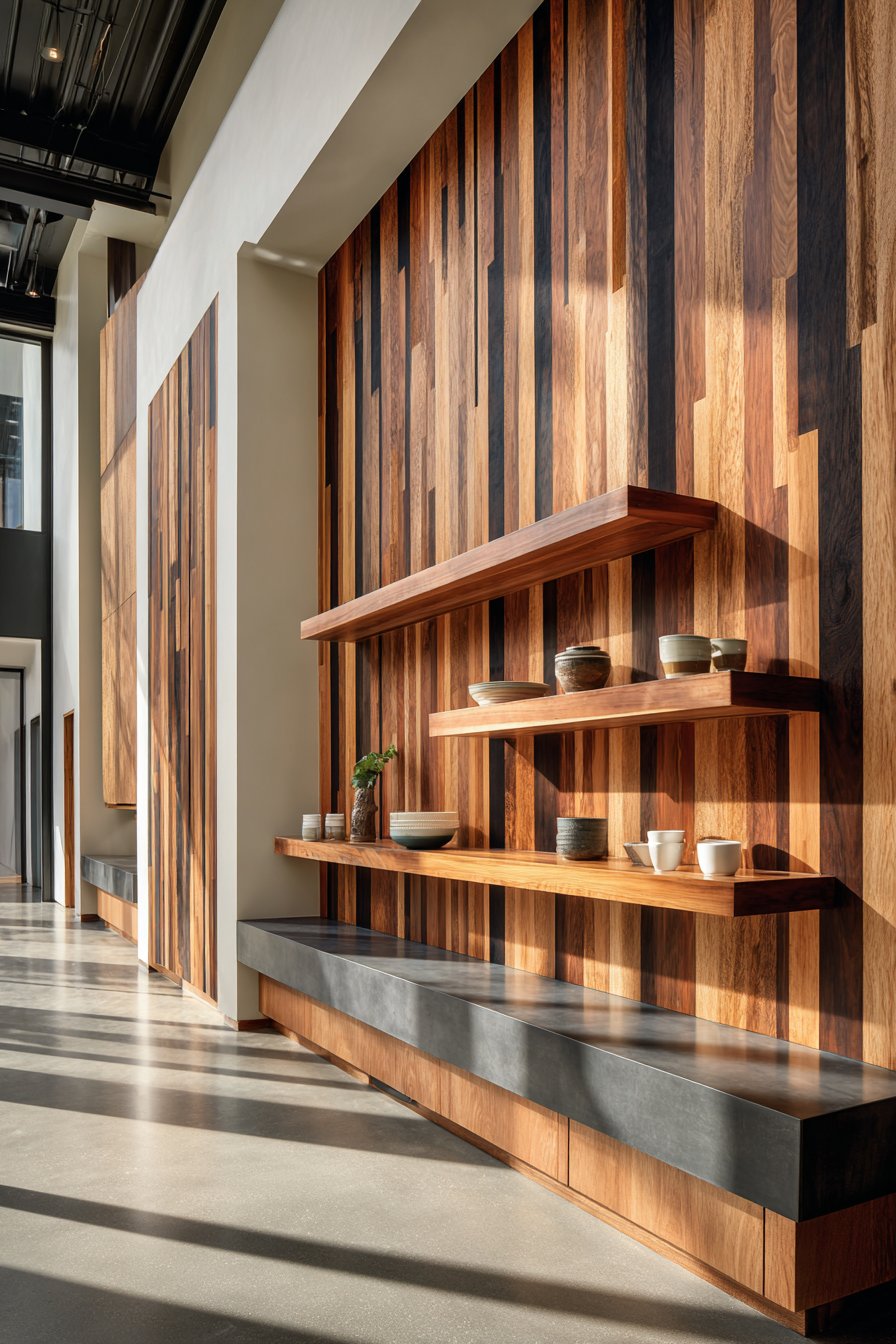
The skylight placement proves particularly effective in this design. Natural overhead light creates dramatic effects. The LED shelf lighting provides consistent illumination. The minimalist dishware allows the wood to remain the focal point. The concrete countertops ground the space with modern edge.
Key Design Tips:
- Install reclaimed wood vertically to create upward visual movement
- Embrace natural color variations from honey to deep walnut tones
- Add integrated LED lighting to highlight dimensional wood texture
- Position skylights above for dramatic natural light and shadow play
- Choose polished concrete countertops for modern cool contrast
- Display minimal dishware to keep focus on wood statement wall
12. Book-Matched Marble Breakfast Bar
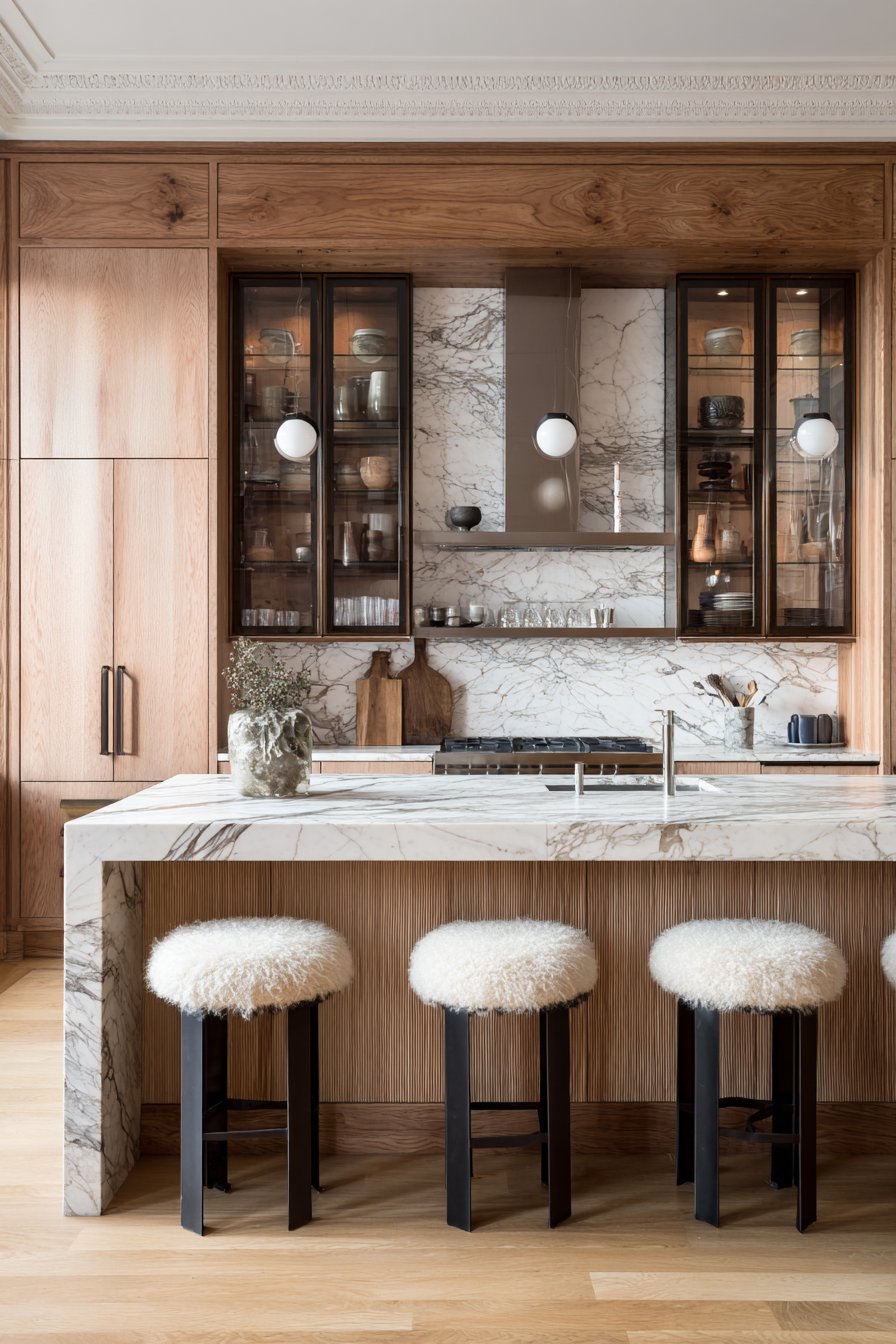
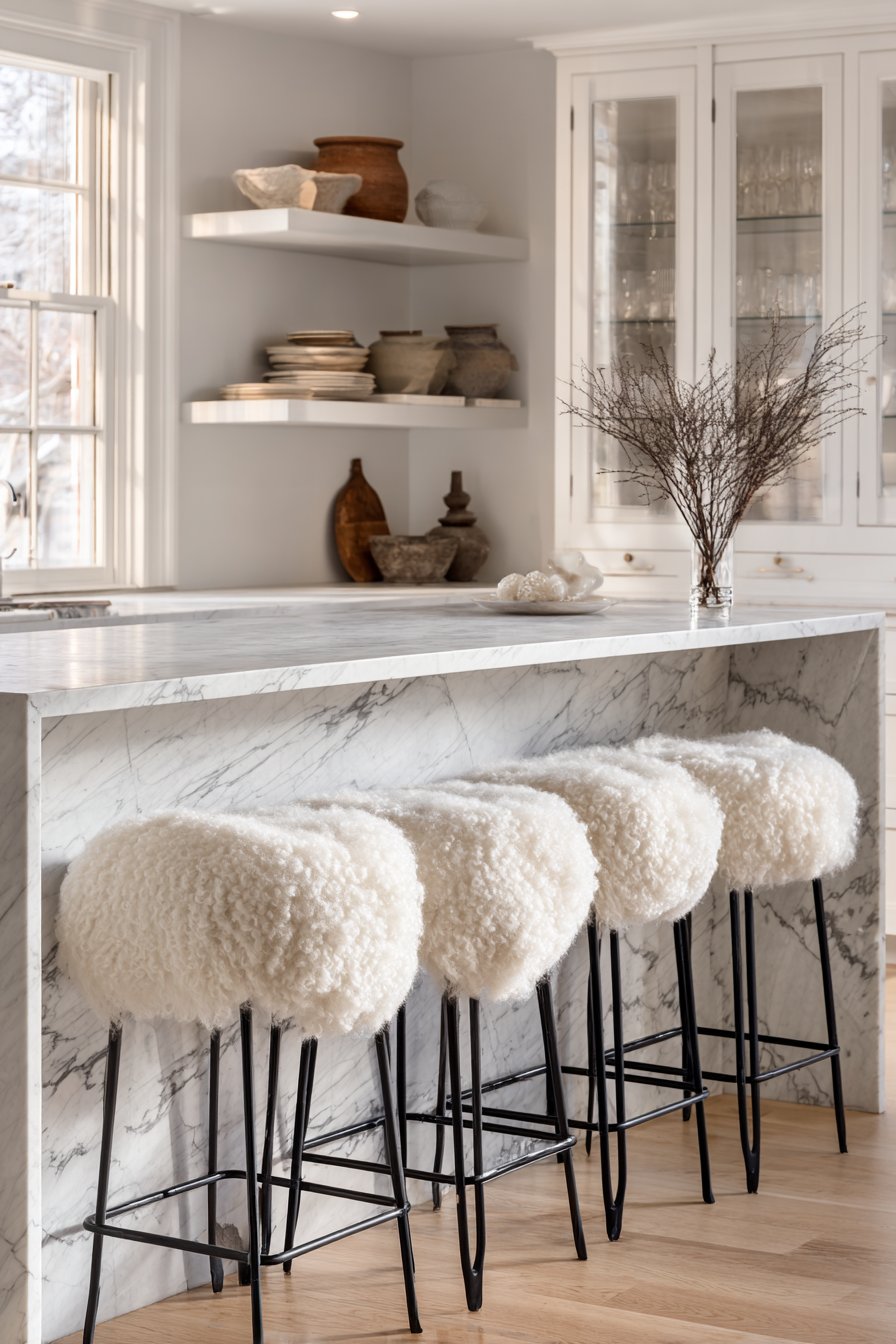
A cantilevered countertop showcases book-matched white marble with symmetrical veining. The matching patterns create stunning visual effect. The support structure features exposed matte black steel brackets. This reveals the engineering while adding industrial contrast. Four backless counter stools with natural sheepskin seats provide comfortable seating.
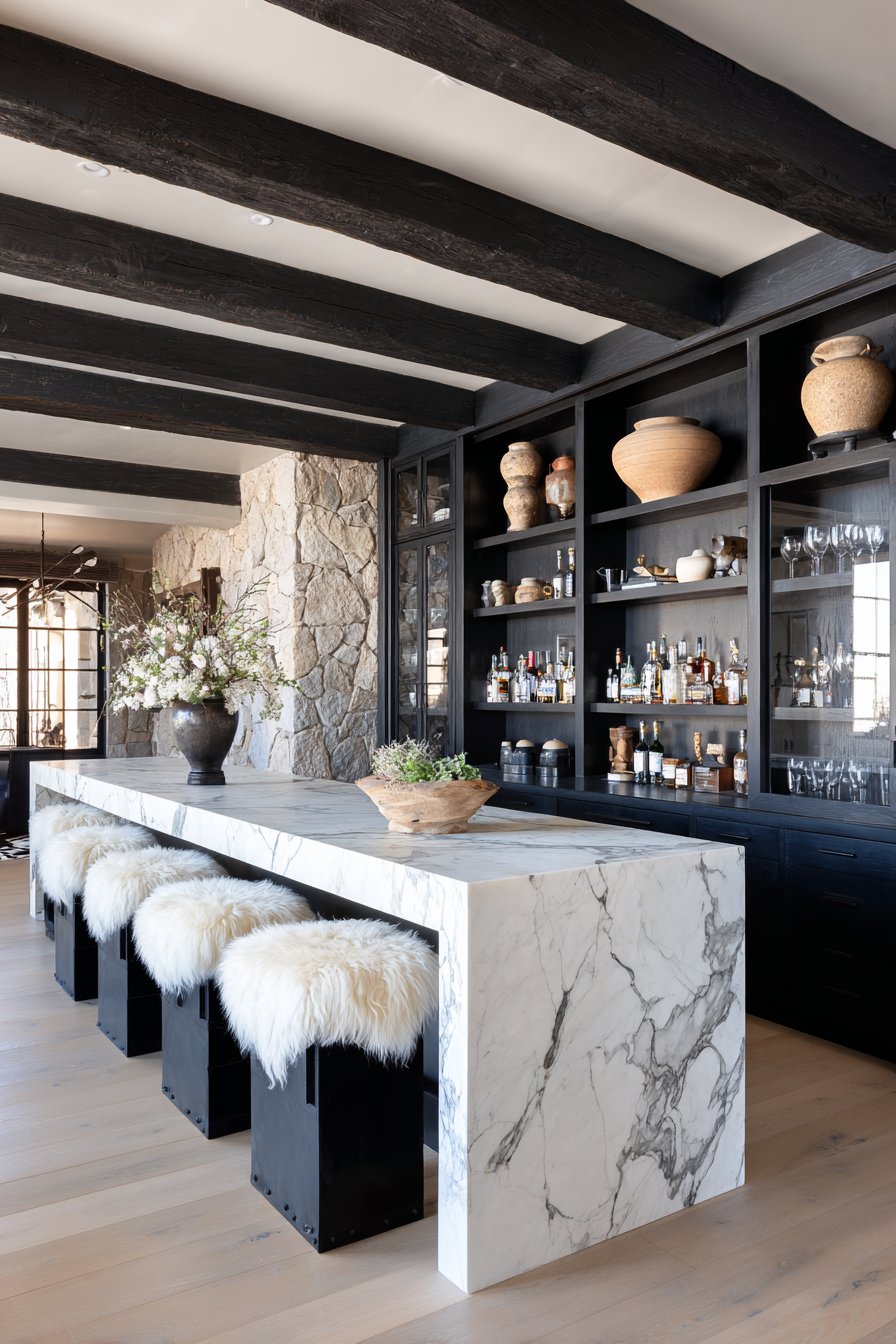
White oak cabinetry with glass-front upper cabinets displays pottery collections. The transparent doors create lightness while protecting displayed items. Soft morning light reflects off the polished marble surface. The reflective quality brightens the entire area. The careful material combination creates elegant yet approachable space.
Book-matching marble requires expert stone selection and fabrication. The symmetrical patterns must align perfectly. This attention to detail elevates simple breakfast bar into design feature. The cantilevered design appears to float. The exposed steel brackets add honest structural expression.
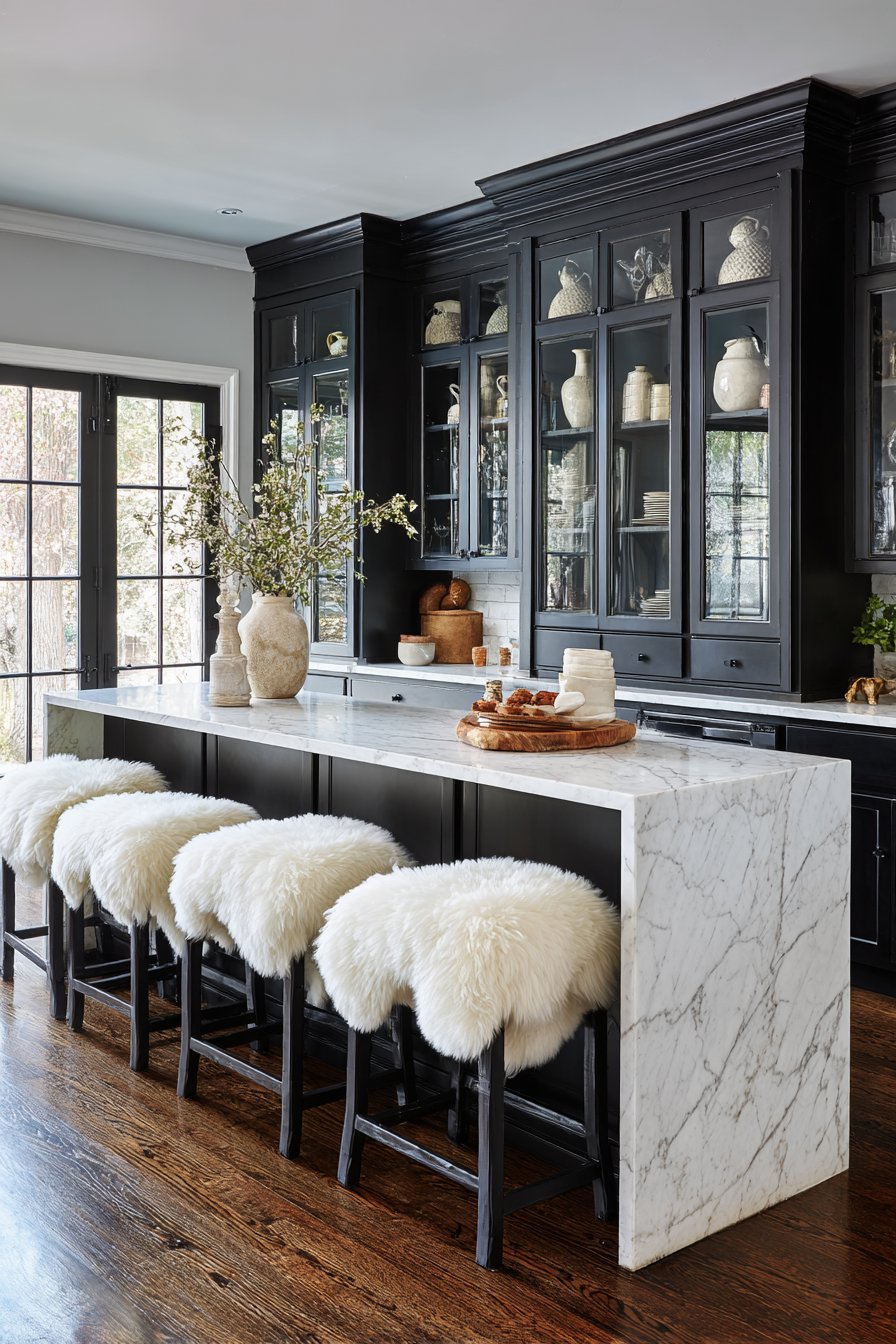
Natural sheepskin seat covers add unexpected softness. They provide comfort during casual meals and conversations. The glass-front upper cabinets display pottery while maintaining visual lightness. This prevents the space from feeling heavy. The morning light timing enhances the marble’s natural beauty.
Key Design Tips:
- Select book-matched marble for symmetrical veining patterns and drama
- Design cantilevered countertops with exposed brackets for honest structure
- Choose backless stools with sheepskin covers for comfortable casual seating
- Install glass-front upper cabinets to display pottery while maintaining lightness
- Position breakfast bar to capture morning light on marble surfaces
- Balance polished marble with matte finishes elsewhere for textural variety
13. Windowsill Herb Garden Feature
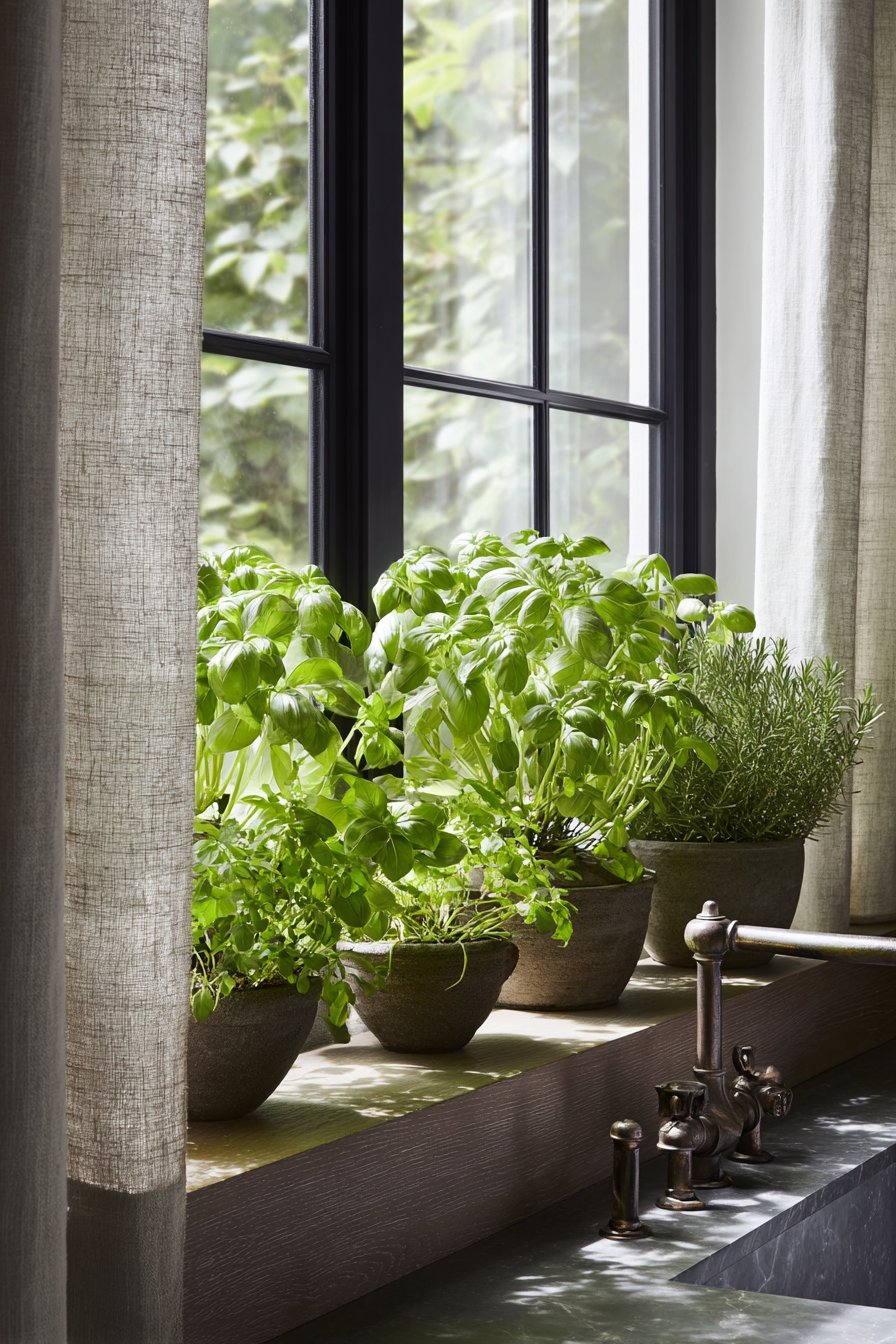
A deep windowsill in solid white oak creates perfect herb garden. Potted herbs including basil, rosemary, and thyme grow in hand-thrown terracotta pots. The minimal black steel window frame keeps focus on the plants. Below, a farmhouse sink with oil-rubbed bronze bridge faucet sits in soapstone countertops. Natural linen cafe curtains provide soft privacy when needed.
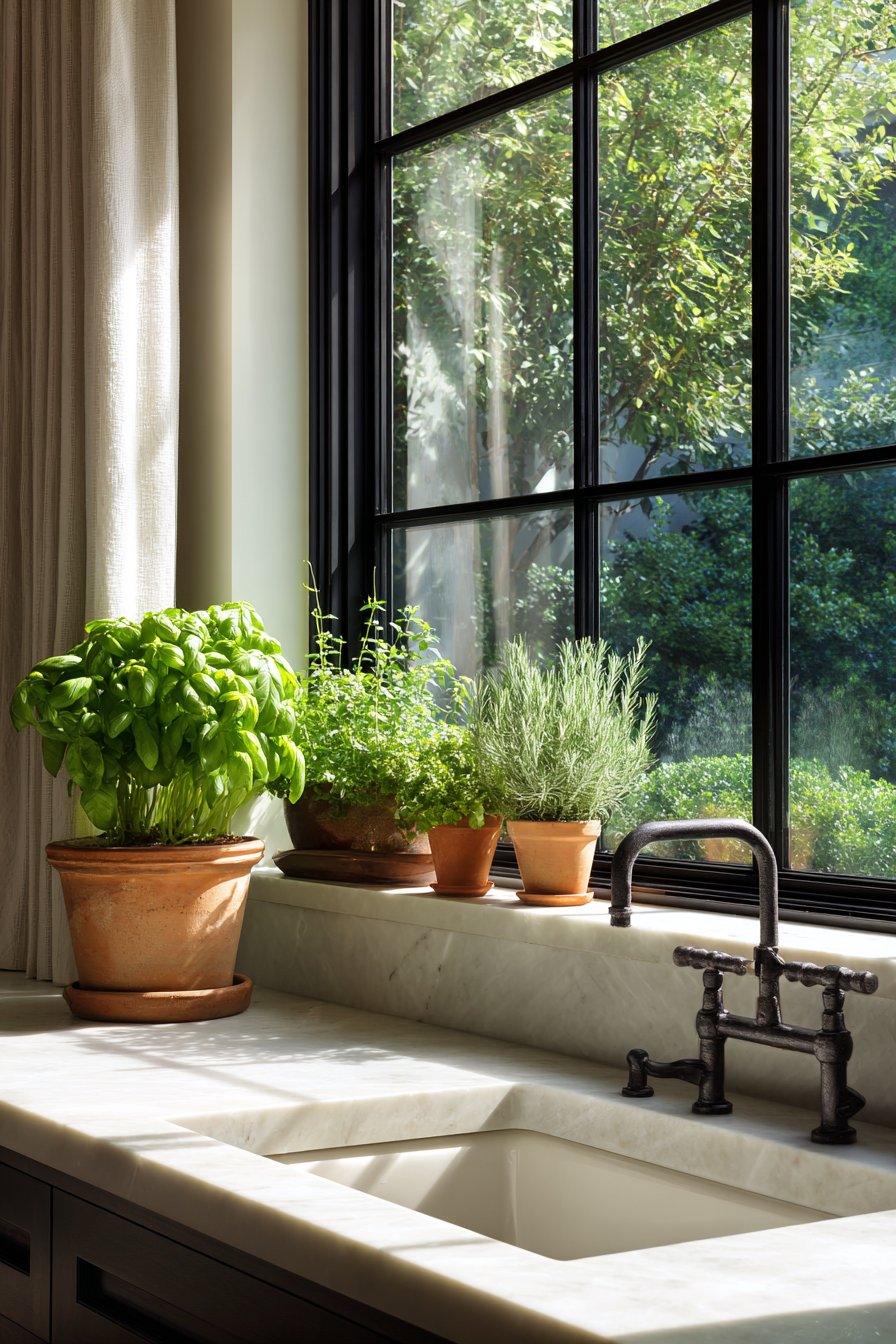
Morning light streams through the window naturally. It creates highlights on the herb leaves. The organic textures layer beautifully. The terracotta pots add earthy warmth. The black steel frame provides crisp modern contrast. The soapstone countertops show subtle natural veining that develops character over time.
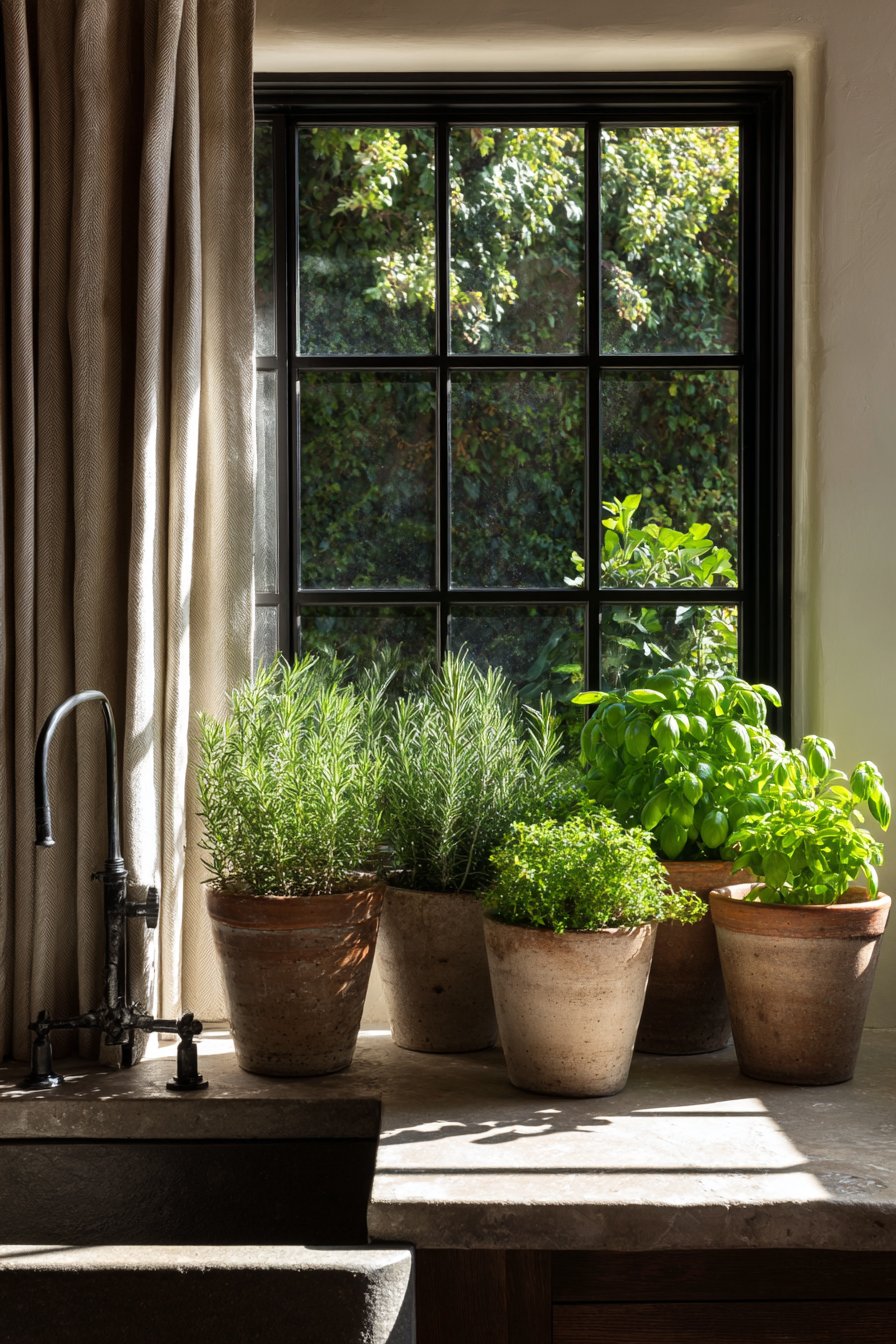
The windowsill herb garden serves multiple purposes. It provides fresh herbs for cooking. It adds living green elements to the kitchen. It creates connection with natural growing cycles. The hand-thrown terracotta pots show artisanal character. Each pot has unique form and surface quality.
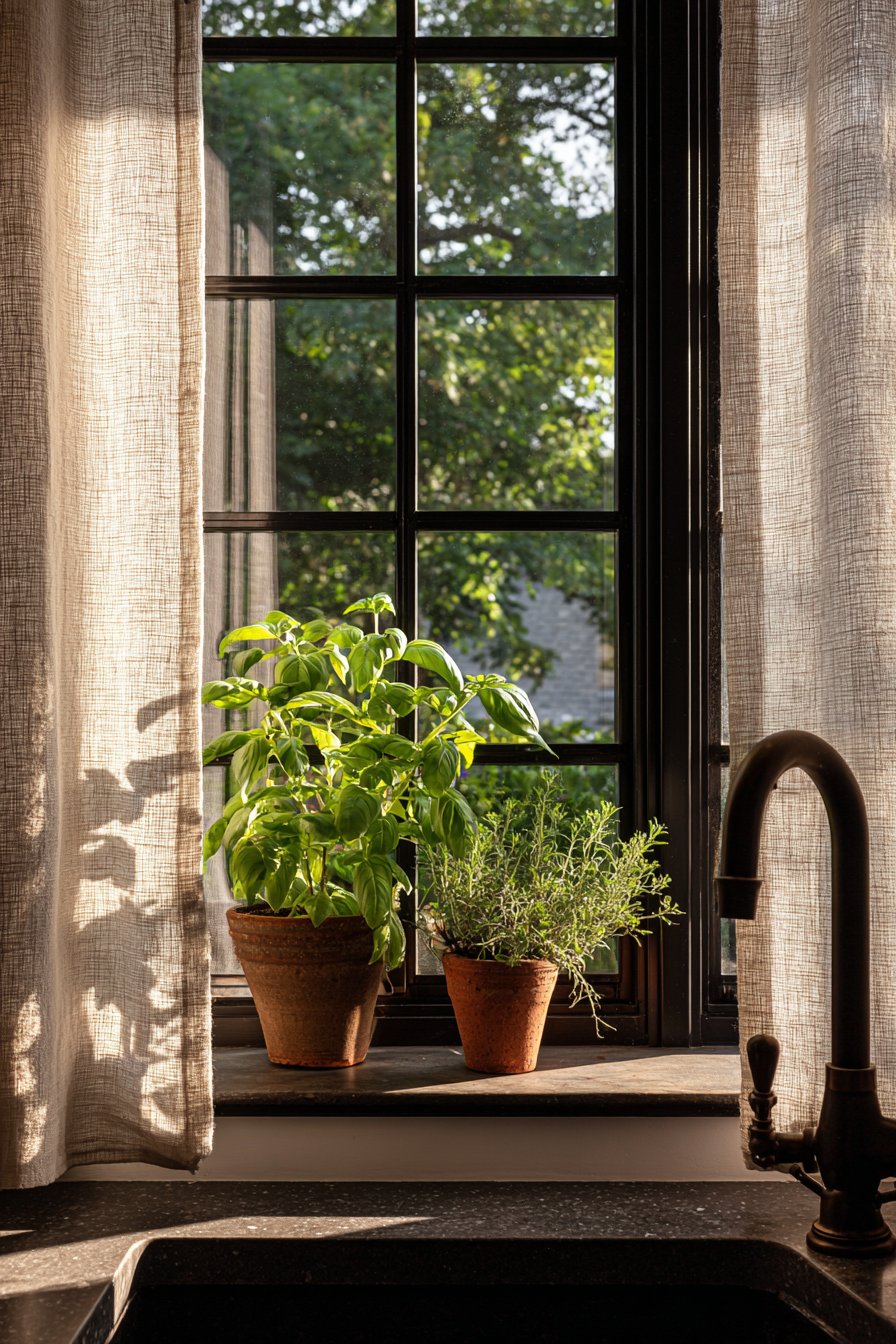
The oil-rubbed bronze faucet finish coordinates with warm metallic tones elsewhere. The bridge style adds vintage charm. The soapstone material offers heat resistance and natural antimicrobial properties. The linen cafe curtains add textile softness when privacy is desired.
Key Design Tips:
- Build deep oak windowsills specifically for potted herb gardens
- Choose hand-thrown terracotta pots for artisanal character and breathability
- Install minimal black steel window frames for modern clean lines
- Select soapstone countertops for natural antimicrobial properties and patina
- Add oil-rubbed bronze fixtures for warm vintage-inspired metallic tones
- Hang natural linen cafe curtains for soft light diffusion and privacy
14. Concrete Range Hood with Brass Details
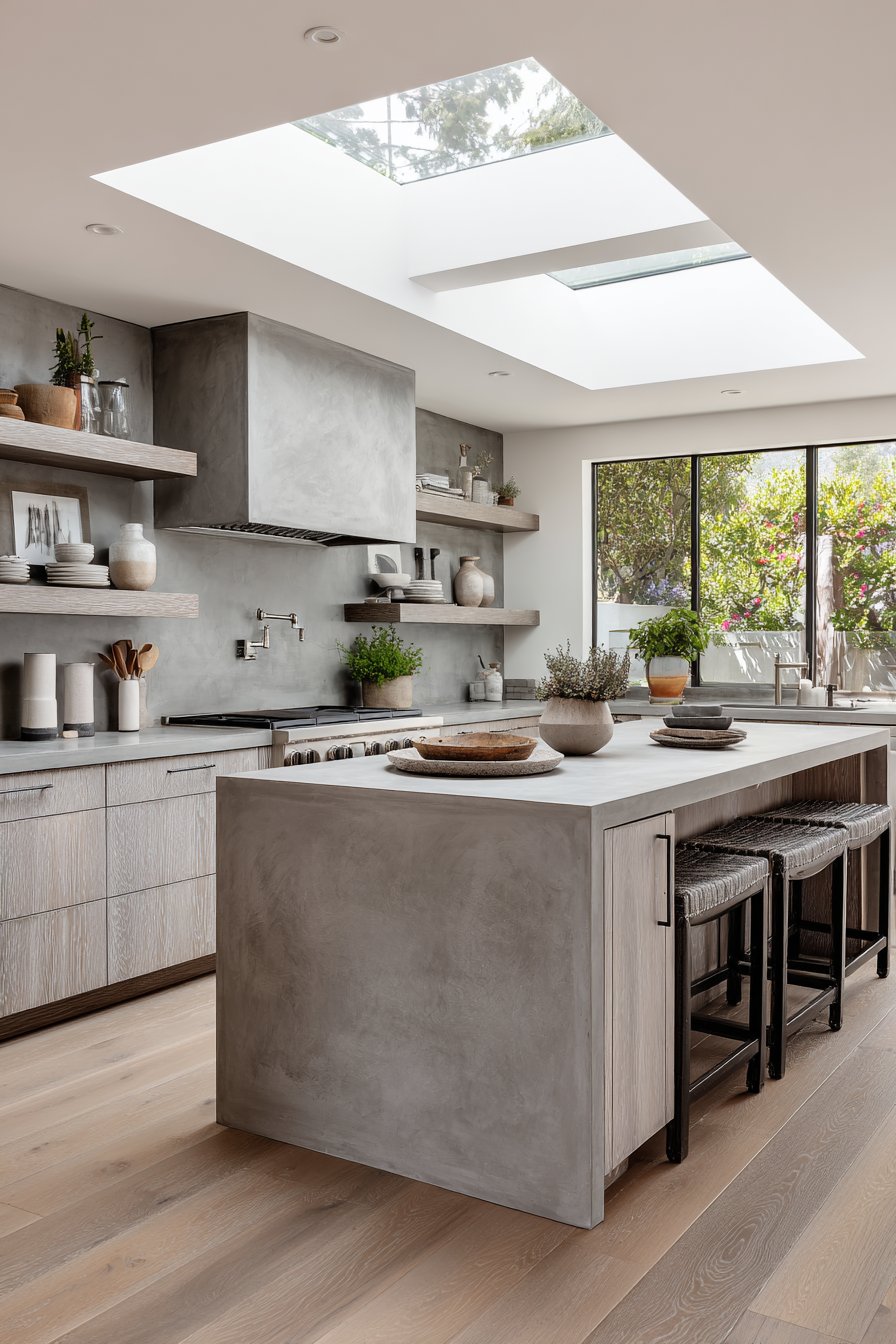
A custom range hood wrapped in smooth troweled concrete extends wall-to-wall. The natural grey finish shows subtle trowel marks from hand application. This creates architectural interest and focal point. Brass strapping details provide warmth against the cool concrete. White oak open shelving flanks both sides displaying ceramic vessels and small plants.
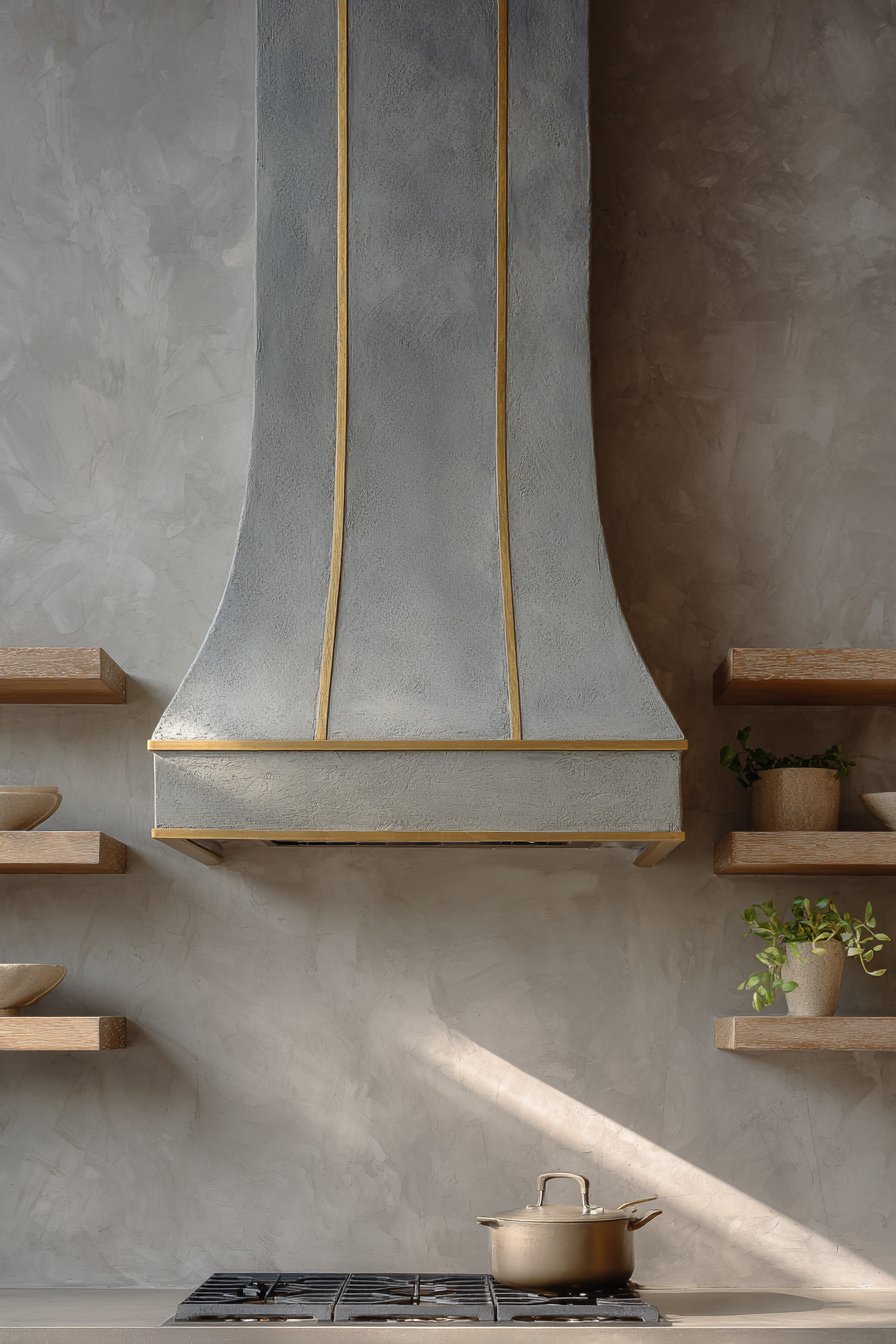
Overhead skylights create natural light patterns across the textured concrete. The light changes throughout the day. The shadows emphasize the trowel texture beautifully. The brass strapping adds unexpected metallic warmth. The ceramic vessels and plants soften the industrial concrete presence.
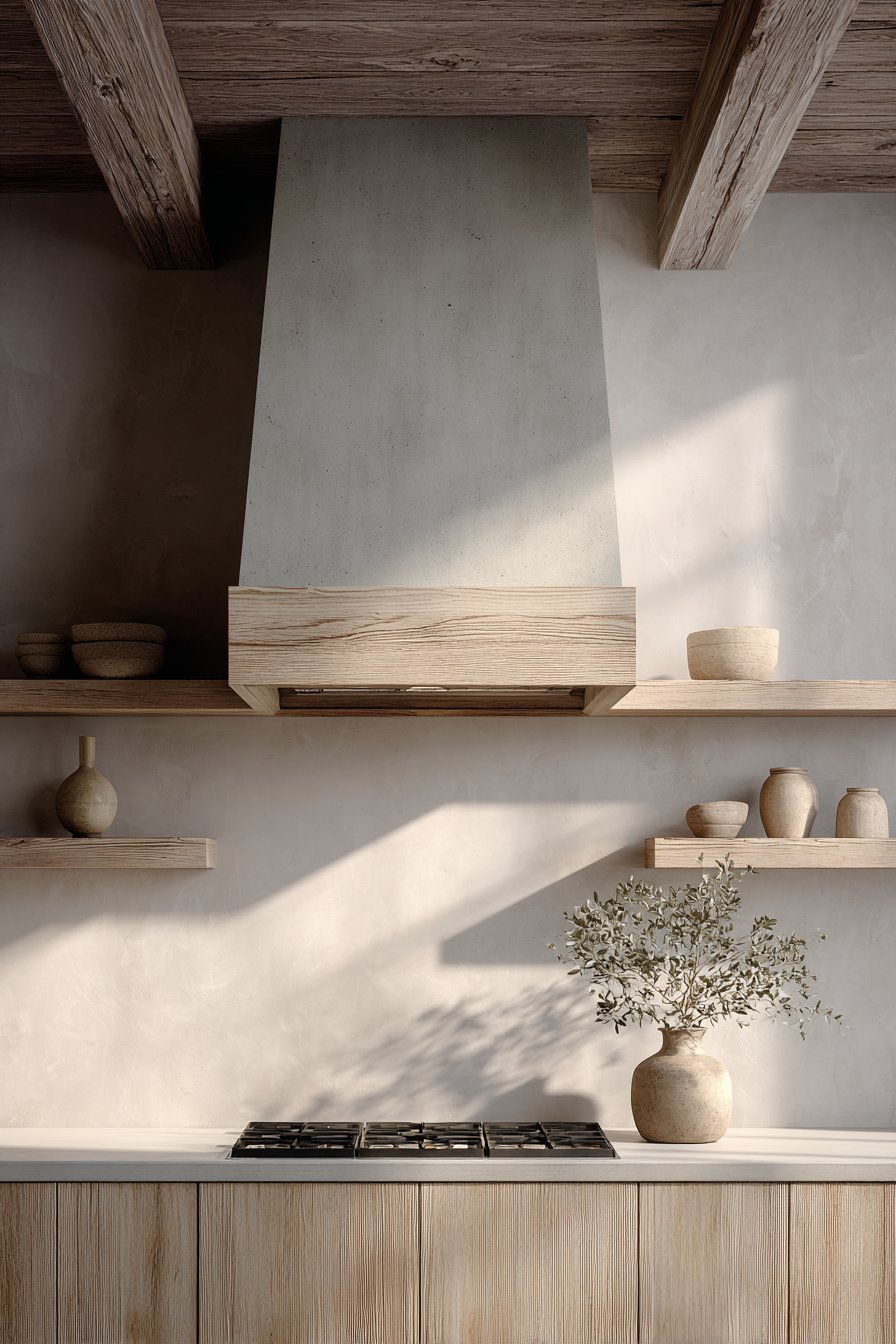
Smooth troweled concrete requires skilled artisan application. The technique creates refined finish while showing handcrafted quality. The wall-to-wall extension creates bold architectural statement. The material choice feels both contemporary and timeless. The grey concrete provides neutral backdrop for other elements.
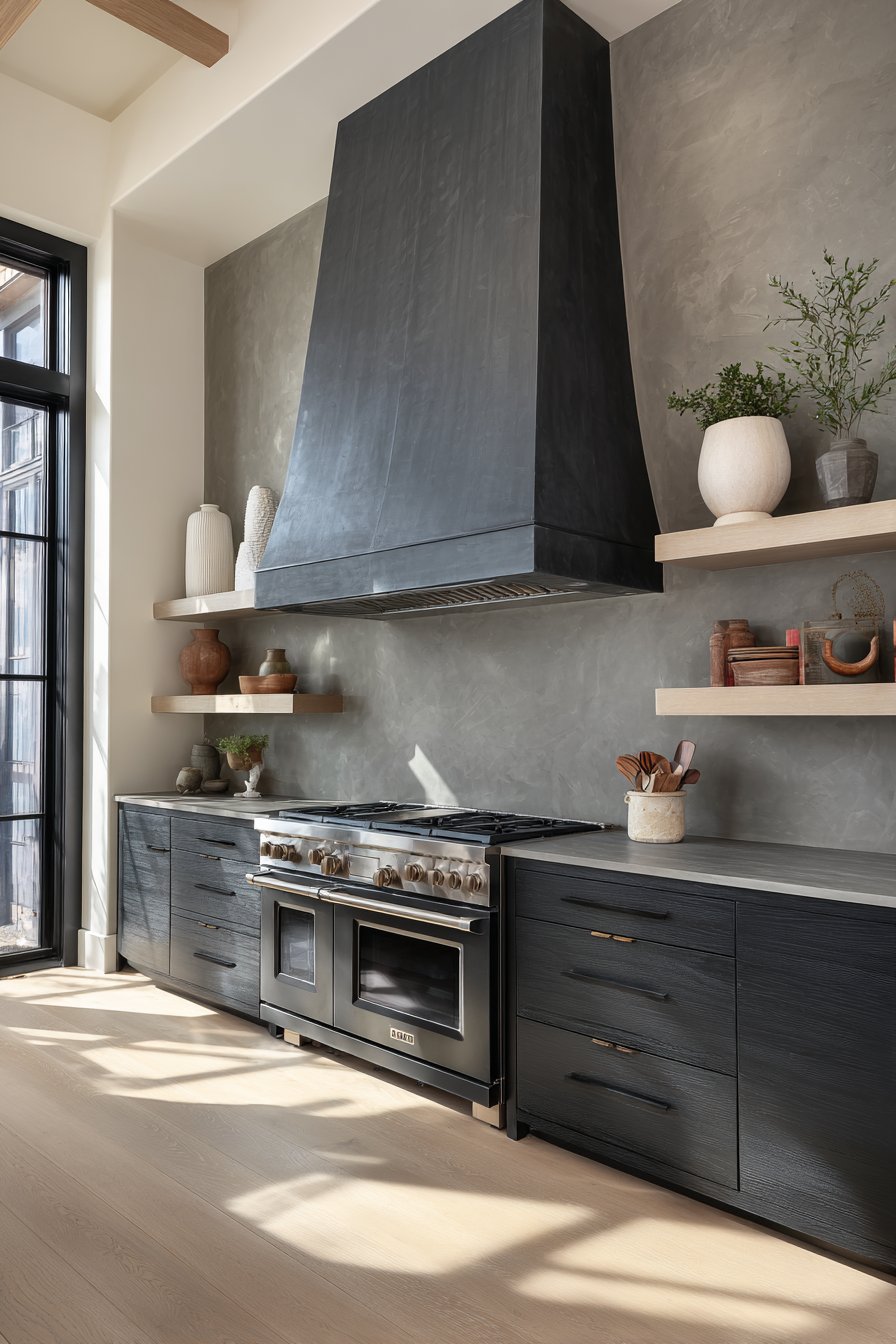
The skylight positioning proves essential to this design’s success. Natural overhead light creates ever-changing patterns. The brass strapping breaks up the concrete expanse. The white oak shelving adds organic warmth. The minimal styling keeps focus on materials and form.
Key Design Tips:
- Apply smooth troweled concrete to range hood for custom architectural feature
- Extend hood wall-to-wall for bold design statement and better ventilation
- Add brass strapping details for warm metallic contrast against concrete
- Install skylights overhead for natural light patterns across textured surfaces
- Flank hood with white oak open shelving for organic balance
- Style shelves minimally with ceramic vessels and small plants
15. Floor-to-Ceiling Storage Wall System
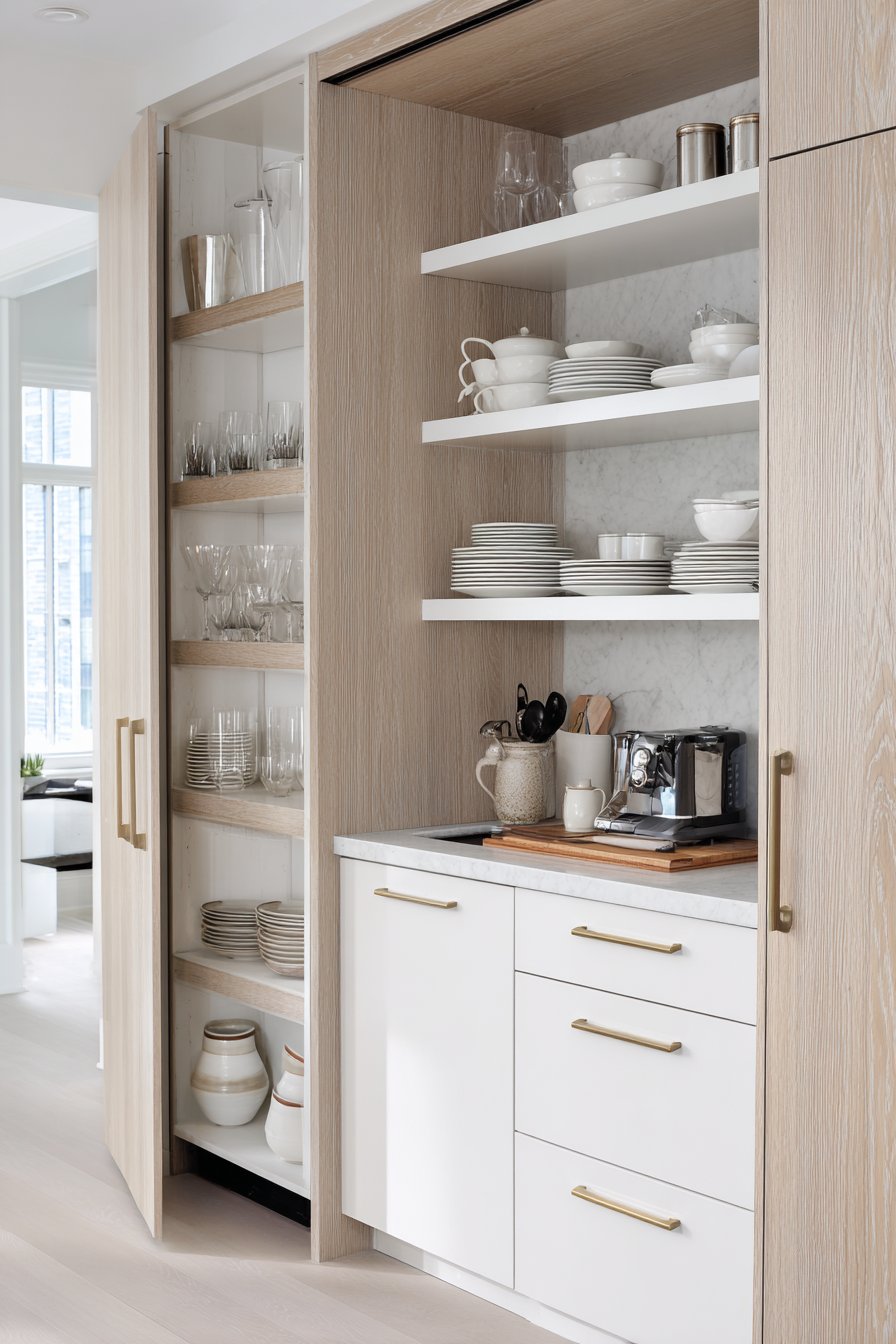
A comprehensive built-in storage system combines closed white oak cabinets with open cubbies. The floor-to-ceiling design maximizes vertical space efficiently. Open sections include woven rattan baskets for linen organization. Wire produce baskets hold fresh vegetables. A small coffee station features manual espresso maker and accessories.
Travertine tile flooring adds earthy texture underfoot. The matte finish complements the oak cabinetry. Natural light from adjacent windows highlights the varied storage solutions. The material combinations create visual interest. The practical organization makes daily kitchen tasks more efficient and enjoyable.
The mixed storage approach balances concealment with display. Closed cabinets hide utilitarian items. Open cubbies showcase beautiful storage vessels. The rattan baskets add natural fiber texture. The wire produce baskets allow air circulation. The integrated coffee station creates dedicated beverage preparation zone.
The travertine flooring brings natural stone beauty. Its neutral tone works with many design styles. The matte finish hides wear better than polished surfaces. The overall system demonstrates how storage can be beautiful. Function and aesthetics integrate seamlessly throughout.
Key Design Tips:
- Design floor-to-ceiling systems to maximize vertical storage capacity
- Mix closed cabinets with open cubbies for display and concealment balance
- Use woven rattan baskets for natural fiber texture and organization
- Install wire produce baskets for proper air circulation around fresh vegetables
- Create dedicated coffee station zones within storage systems
- Choose travertine flooring for earthy texture and durable neutral foundation
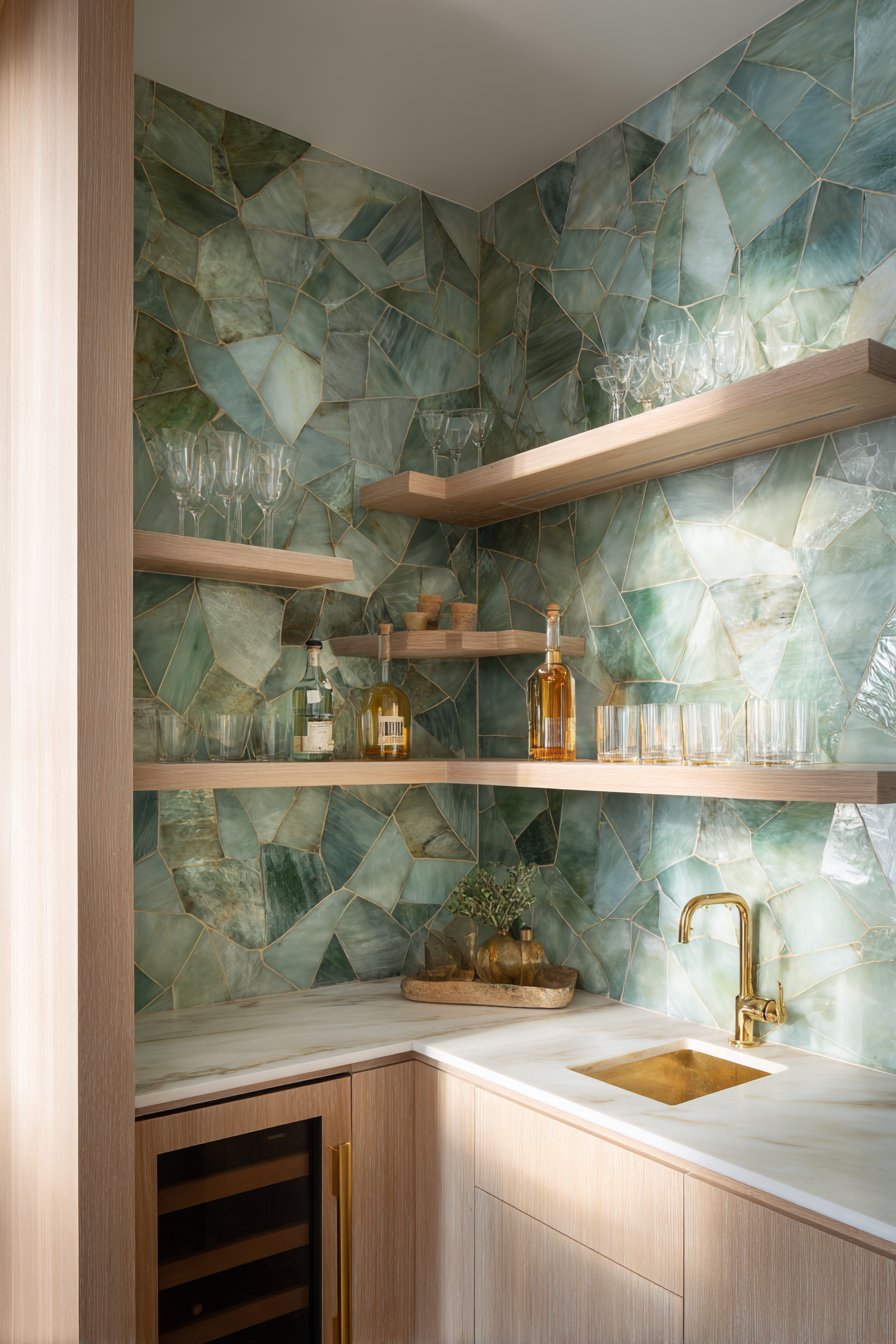
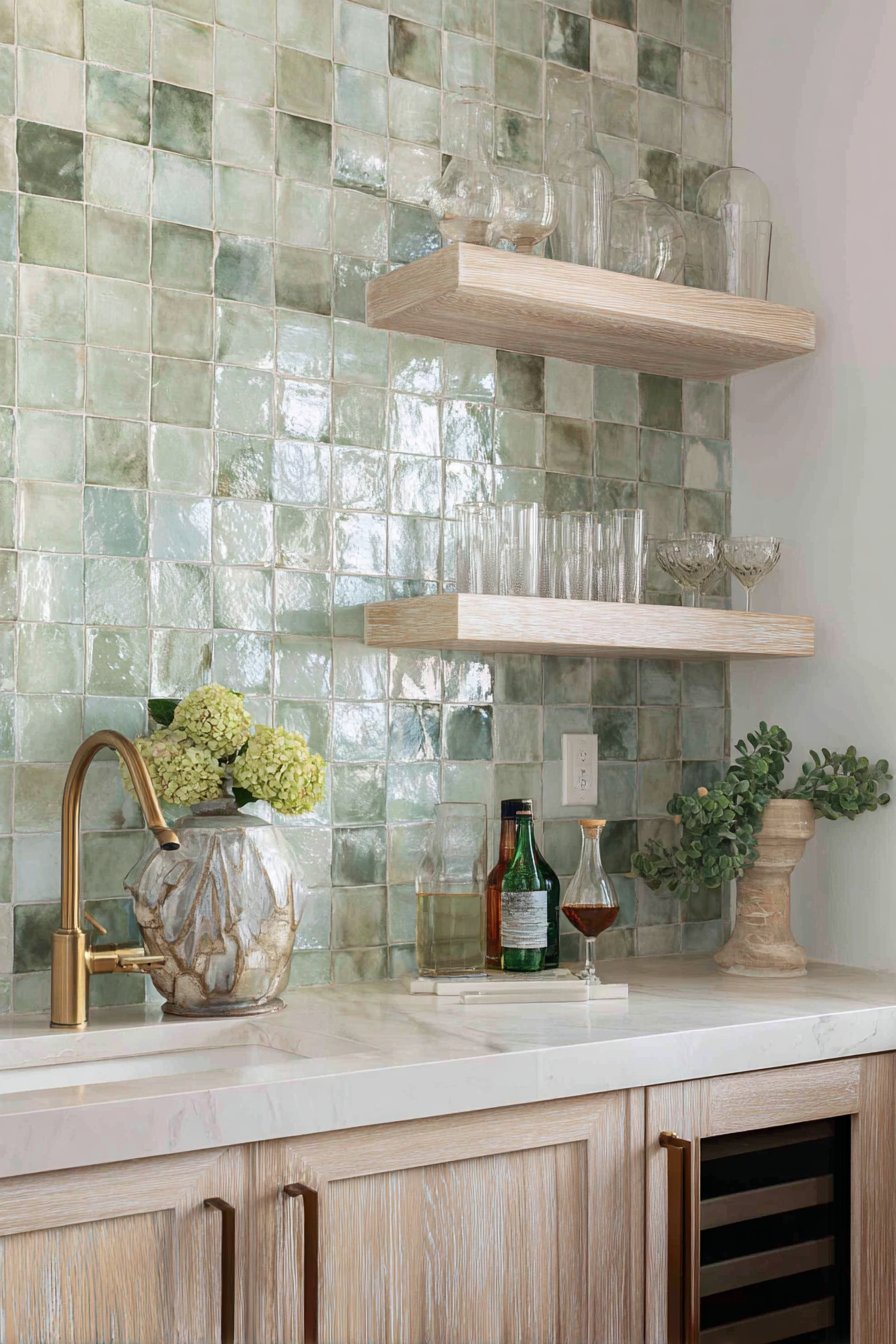
16. Zellige Tile Beverage Corner
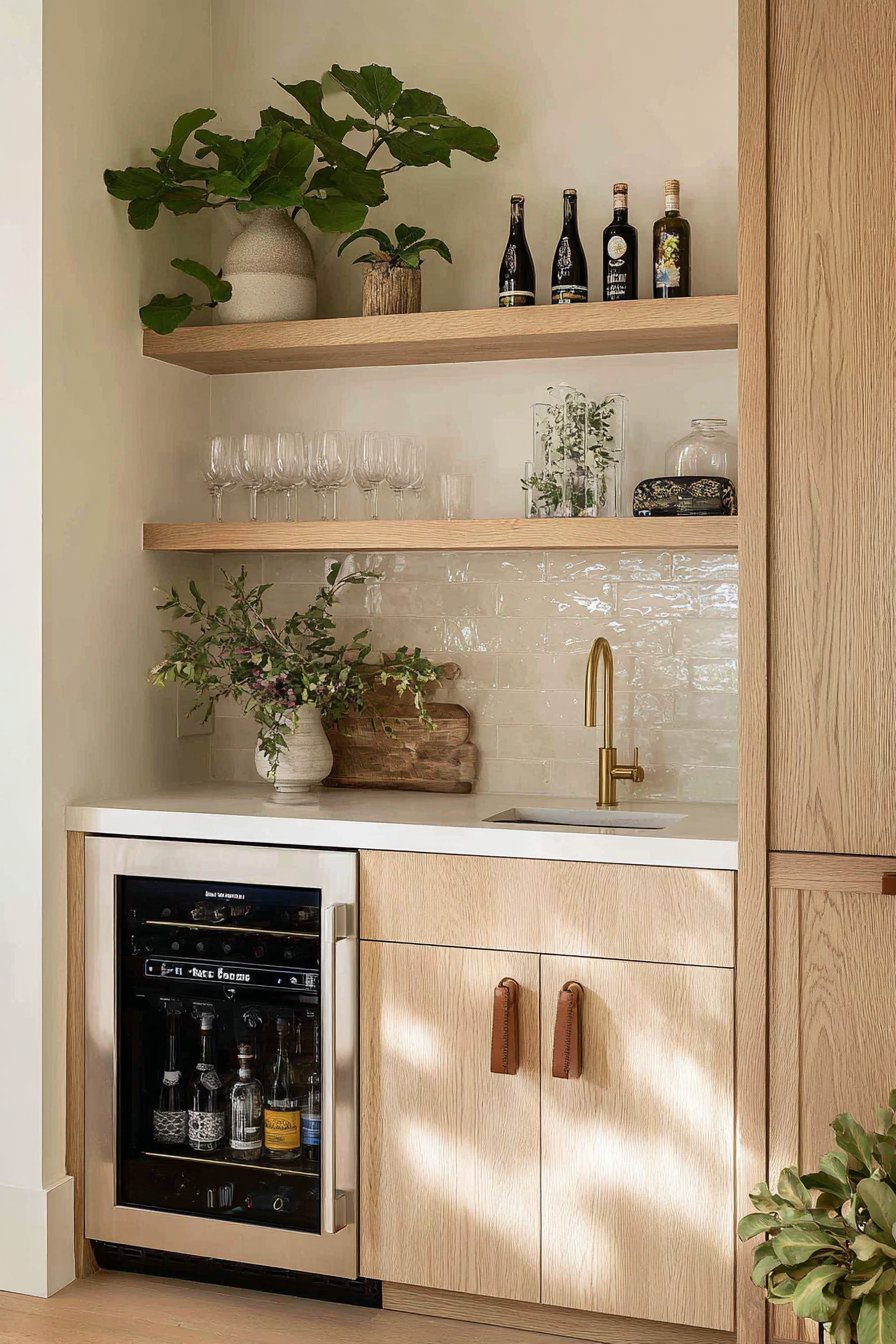
A beverage station corner features built-in wine refrigerator and floating white oak shelves. The shelves display glassware elegantly. A small sink area includes brass bar faucet. The backsplash showcases handmade zellige tiles in sage green. Natural glaze variations create subtle color depth that changes with light. Leather cabinet pulls add unexpected organic texture.
The intimate corner arrangement creates dedicated entertaining zone. Soft natural lighting emphasizes the artisanal tile quality. The warm brass finishes coordinate throughout. The zellige tiles bring North African craftsmanship to modern kitchen. Each tile shows unique character from traditional hand-cutting methods.
Zellige tiles offer distinct aesthetic that sets them apart from standard ceramics. The irregular edges and glaze pooling create organic beauty. The sage green hue feels fresh and sophisticated. The handmade quality justifies premium investment. These tiles become permanent art installation.
The leather cabinet pulls provide tactile surprise. They develop patina beautifully with use. The brass bar faucet adds functional elegance. The overall corner demonstrates how small spaces can make big impact through quality material choices.
Key Design Tips:
- Create dedicated beverage stations with wine refrigerators and glassware storage
- Choose handmade zellige tiles for unique artisanal character and color depth
- Install floating oak shelves for elegant glassware display and easy access
- Add brass bar faucets for warm metallic functional elegance
- Use leather cabinet pulls for unexpected organic texture and patina development
- Position beverage corners near entertaining areas for convenient guest service
17. Exposed Beam Ceiling Drama
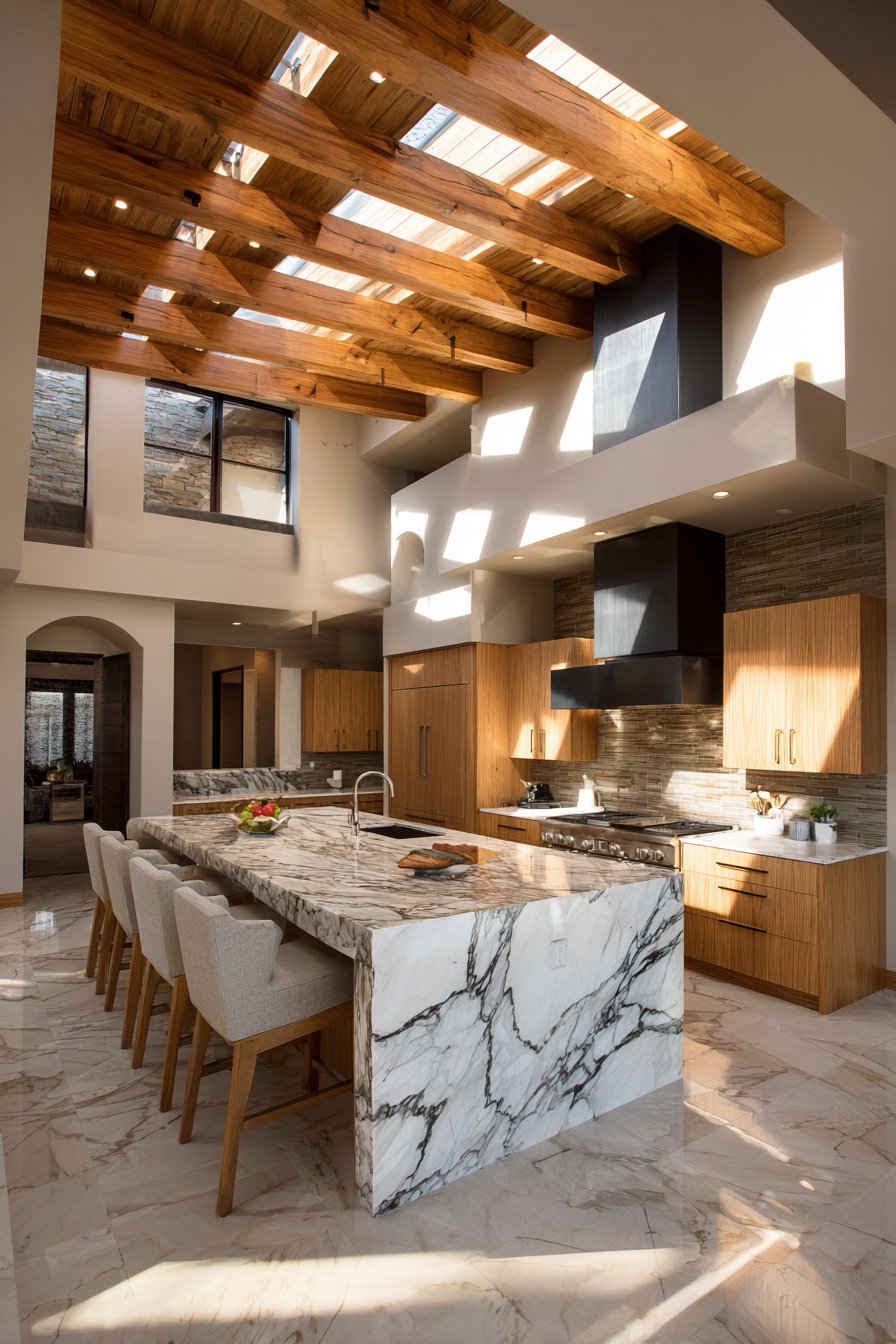
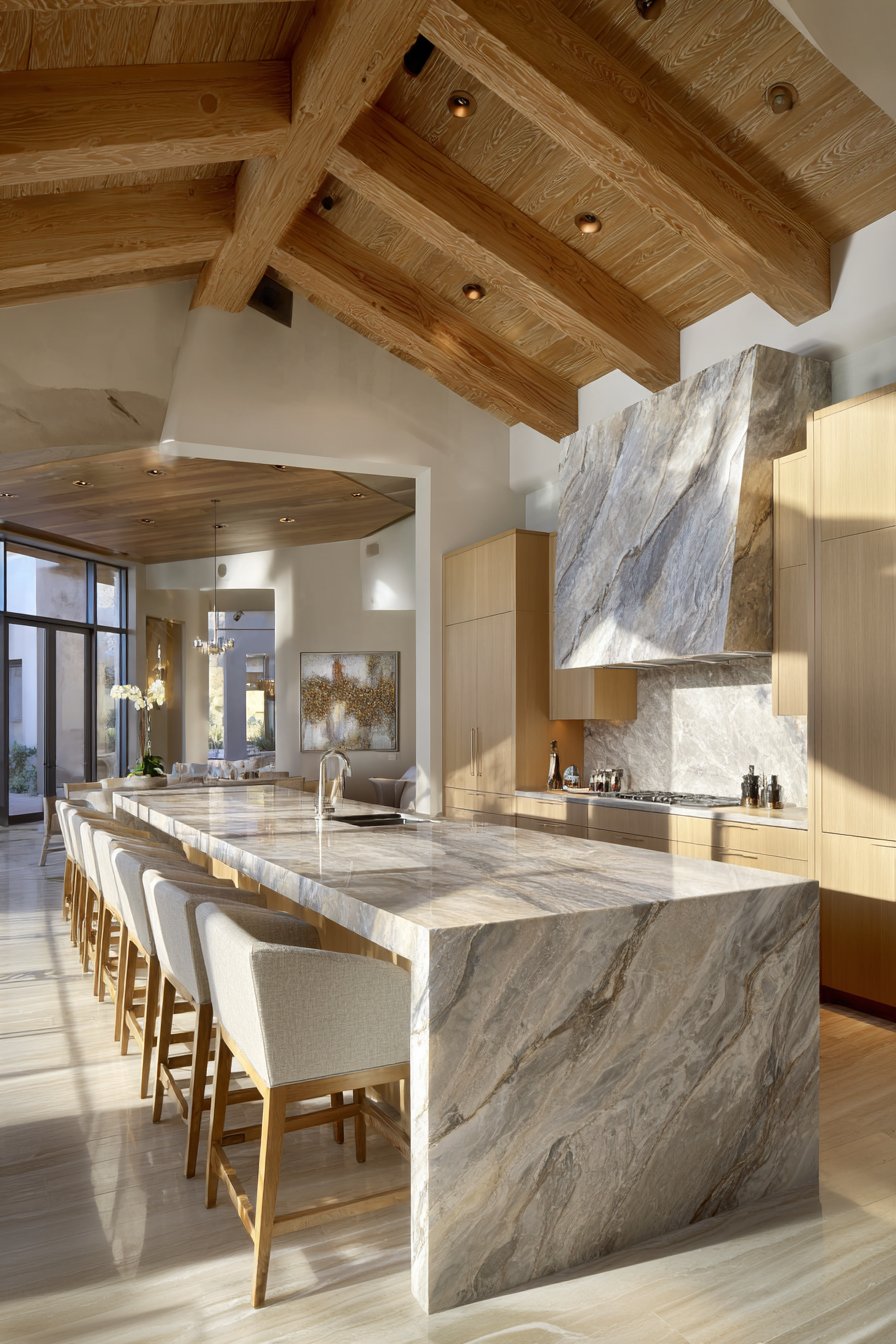
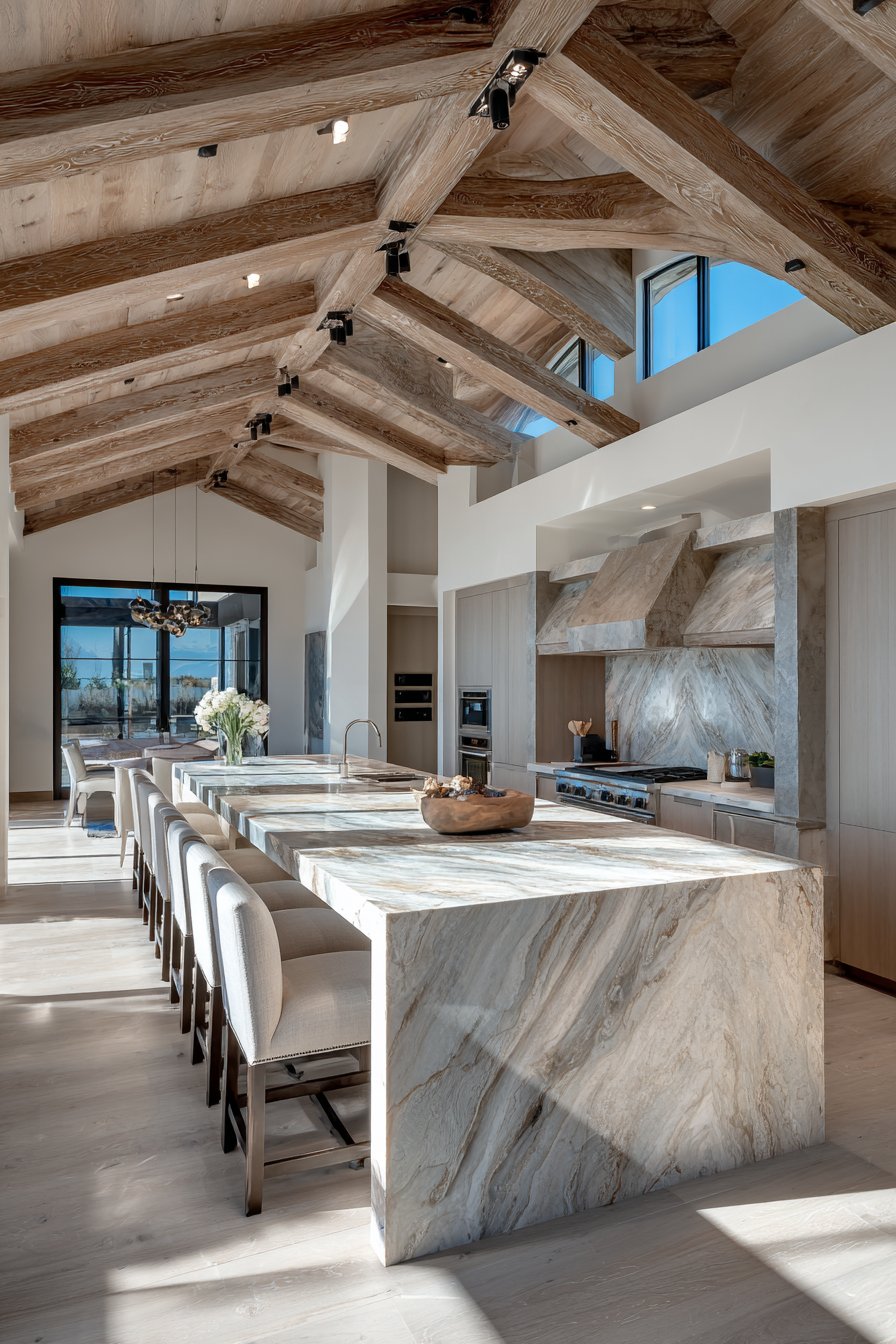
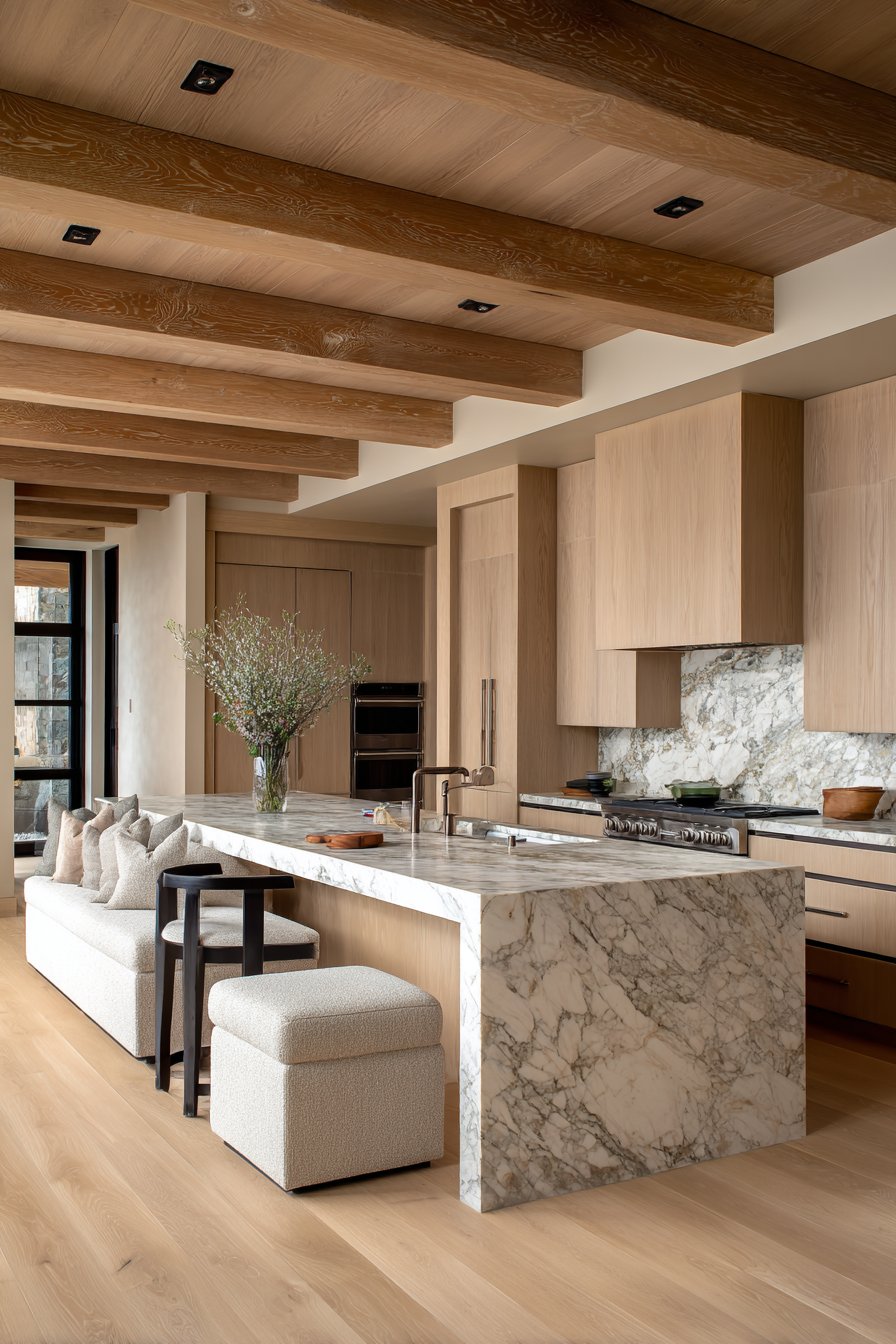
A dramatic ceiling treatment features exposed wooden beams in natural oak. Visible grain patterns and connecting joints add architectural interest. Recessed lighting between beams provides illumination. Below, a large waterfall-edge marble island anchors the space. The island includes integrated bench seating on one side with natural linen upholstery.
Natural light filters from clerestory windows creating dynamic shadows. The vertical interest draws eyes upward. The beam patterns create rhythm across the ceiling. The marble island provides cool contrast to warm wood above. The integrated seating creates casual gathering spot within the kitchen.
Exposed beams require structural planning during construction or renovation. The natural oak finish celebrates authentic wood character. The recessed lighting between beams provides even illumination. The clerestory windows bring light from above. This creates dramatic effects throughout the day.
The waterfall marble island anchors the space visually. Its horizontal mass balances the vertical beam pattern. The integrated bench seating adds unexpected function. The linen upholstery brings textile softness to hard surfaces. The overall composition demonstrates how ceiling treatments transform spaces.
Key Design Tips:
- Install exposed oak beams to create architectural interest and vertical drama
- Add recessed lighting between beams for even illumination without fixtures
- Include clerestory windows for dramatic natural light and shadow effects
- Design waterfall-edge islands with integrated bench seating for casual gathering
- Upholster bench seating in natural linen for soft textile contrast
- Balance warm wood ceilings with cool stone countertops for temperature variety
18. Integrated Appliance Wall Seamlessness
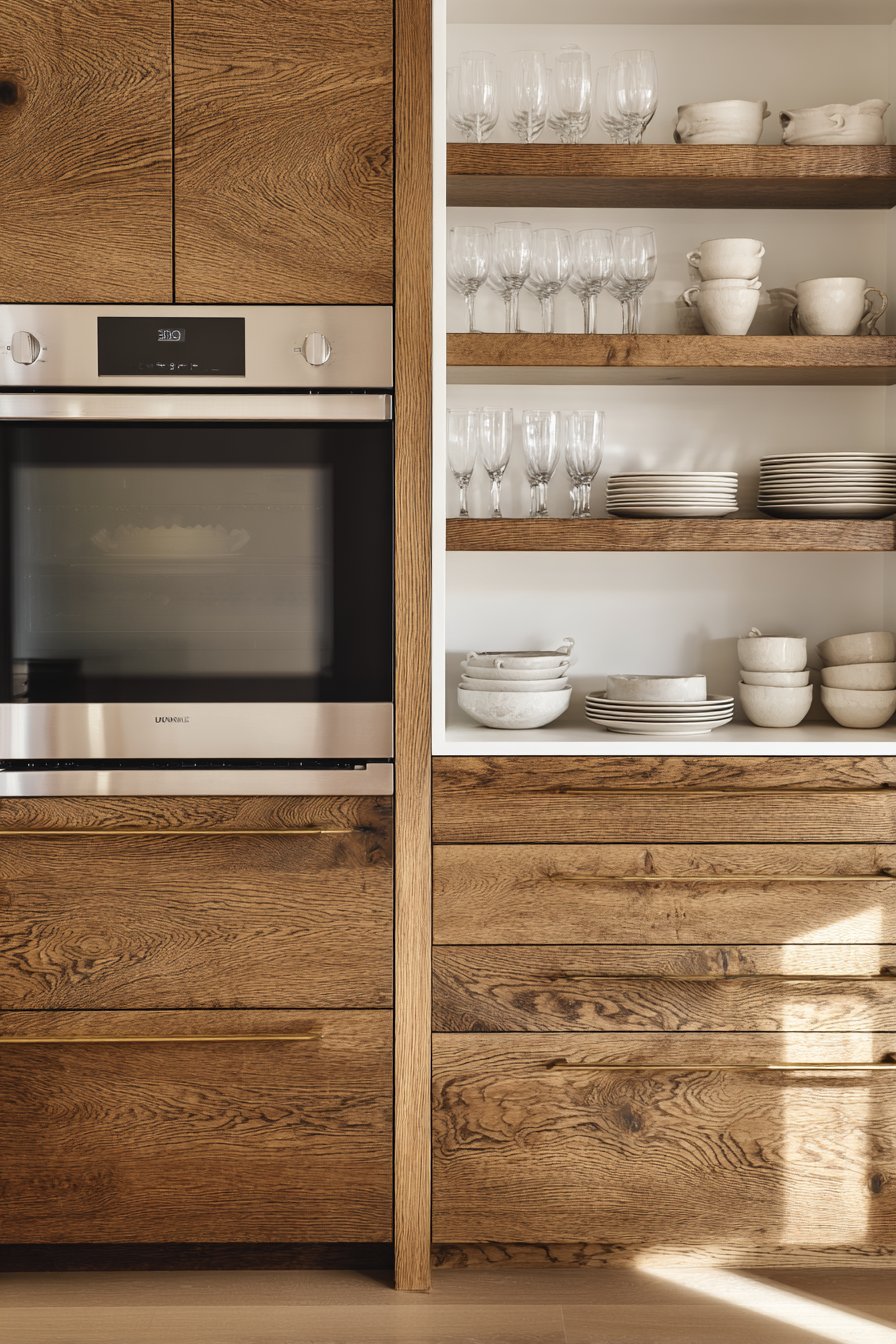
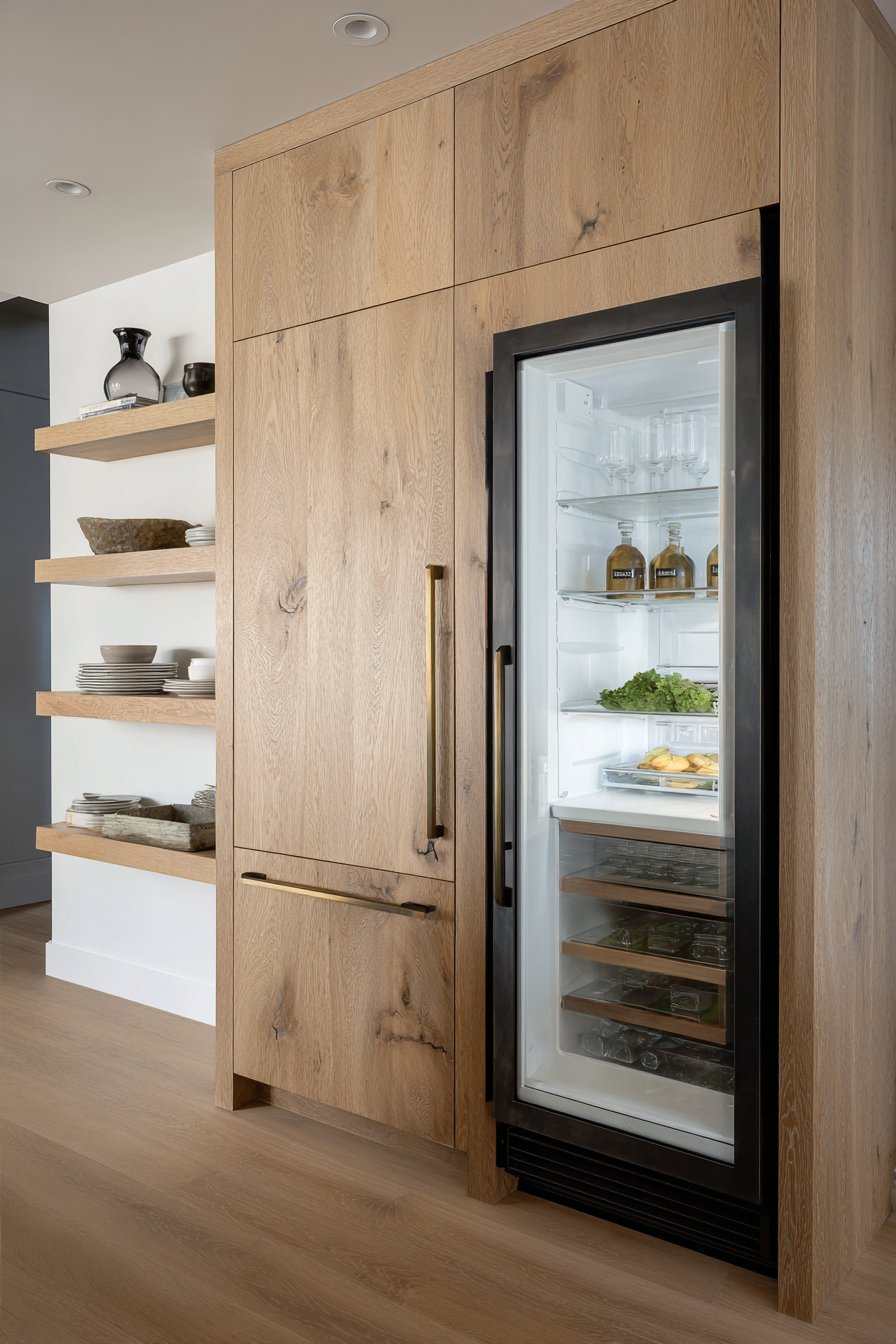
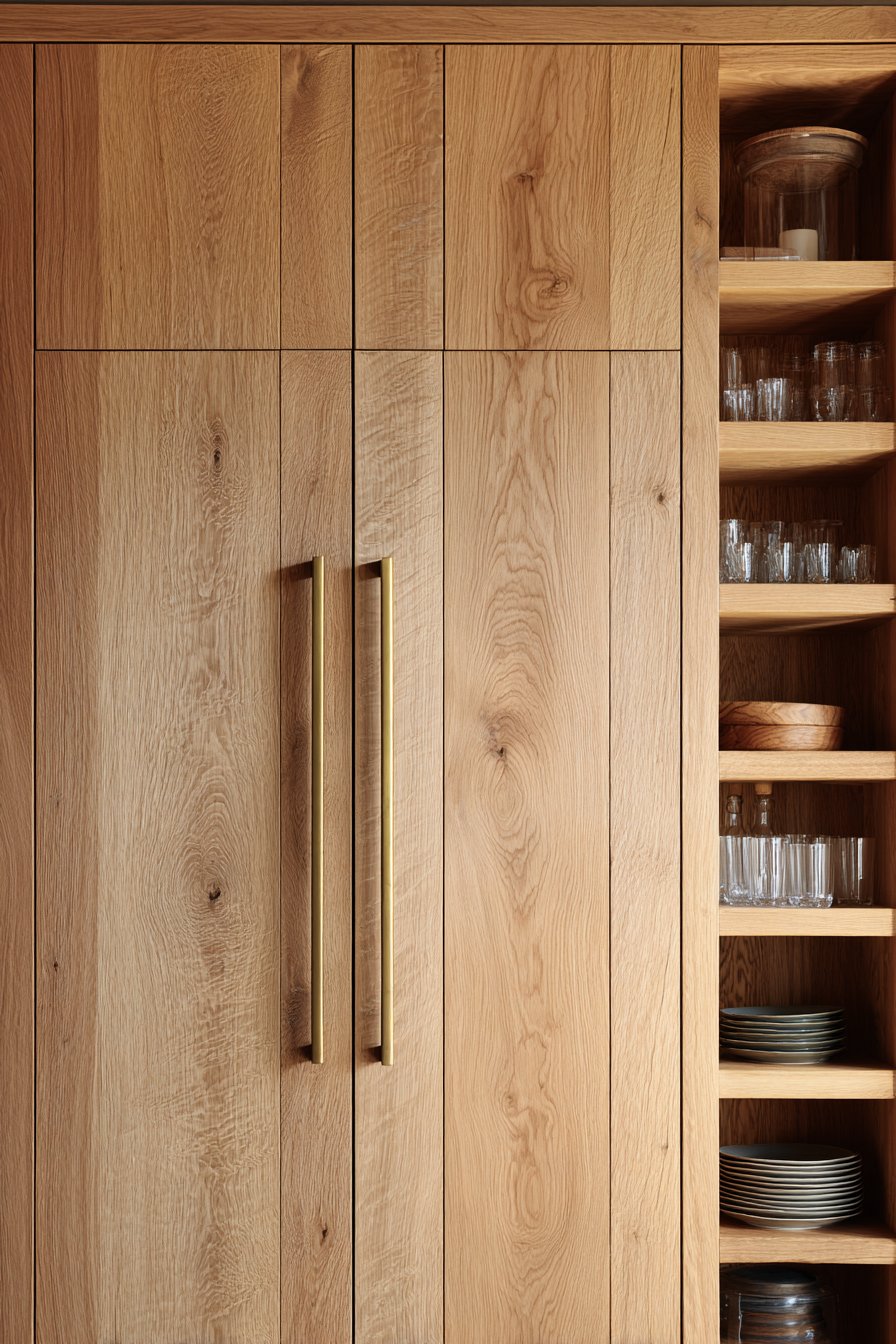
An appliance wall features panel-ready refrigerator and dishwasher concealed behind white oak fronts. The wood panels maintain seamless aesthetic throughout. Natural grain flow and subtle color variations show authentic wood character. Brushed brass hardware provides warm accent points. Adjacent floating shelves display everyday dishes in organized rows.
The thoughtful integration hides functional appliances within natural material palette. Soft diffused lighting prevents glare on wood surfaces. The brushed brass hardware catches light subtly. The floating shelves provide easy access to daily dishware. The overall effect prioritizes beauty without sacrificing function.
Panel-ready appliances require careful planning and custom panel fabrication. The wood panels must match surrounding cabinetry precisely. The grain flow should appear continuous. This creates illusion of uninterrupted wood walls. The hidden appliances maintain clean visual lines.
The brushed brass hardware adds warm metallic touches. The finish complements natural wood tones beautifully. The floating shelves create visual lightness. The organized dishware display shows daily function can be attractive. The careful lighting prevents wood from looking flat or dull.
Key Design Tips:
- Choose panel-ready appliances to maintain seamless cabinetry appearance
- Match wood panels precisely to surrounding cabinetry grain and color
- Select brushed brass hardware for warm metallic accents throughout
- Install floating shelves adjacent to appliances for daily dishware display
- Use diffused lighting to prevent glare on wood surfaces
- Organize displayed items in rows for clean functional aesthetic
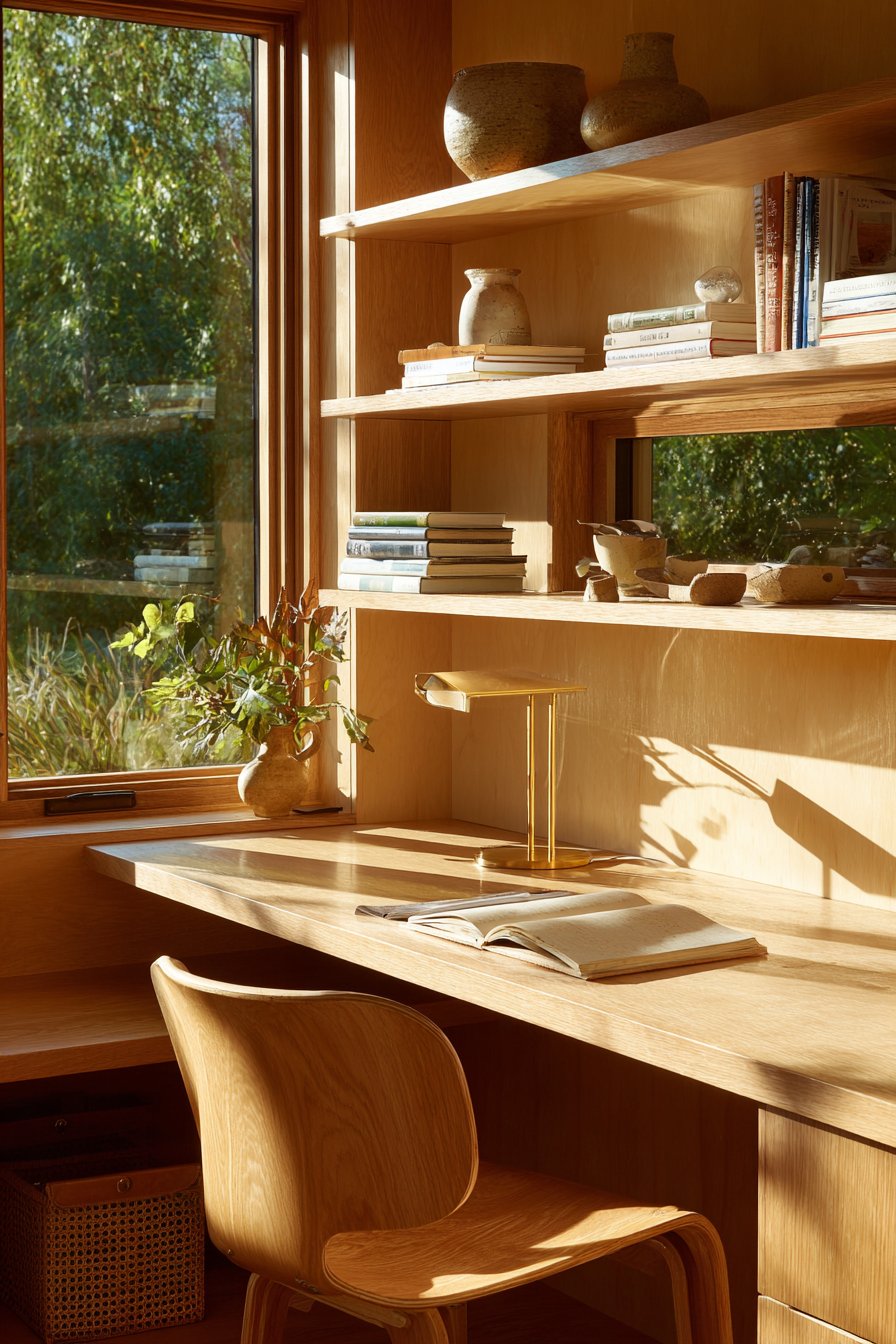
19. Built-In Kitchen Desk Nook
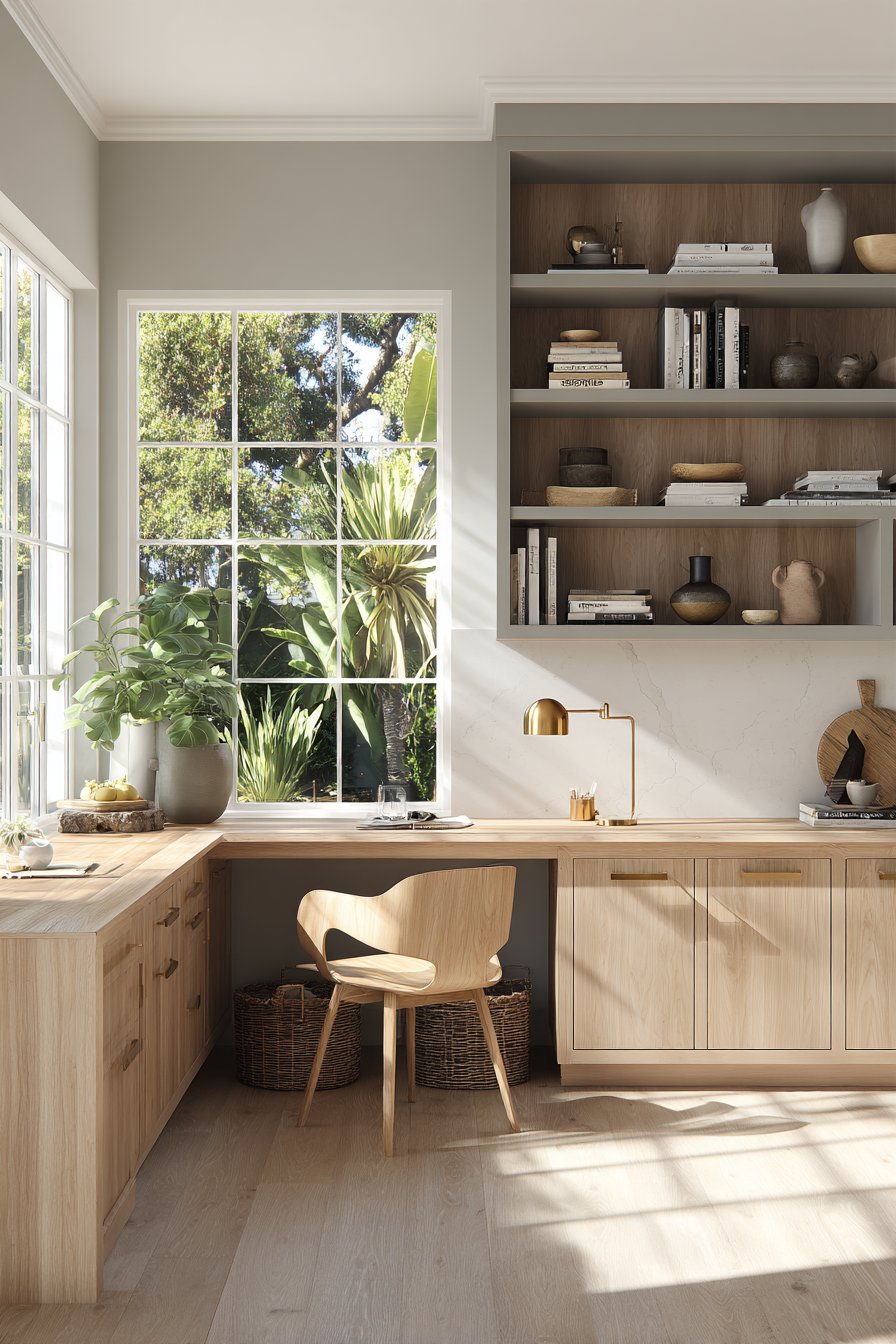
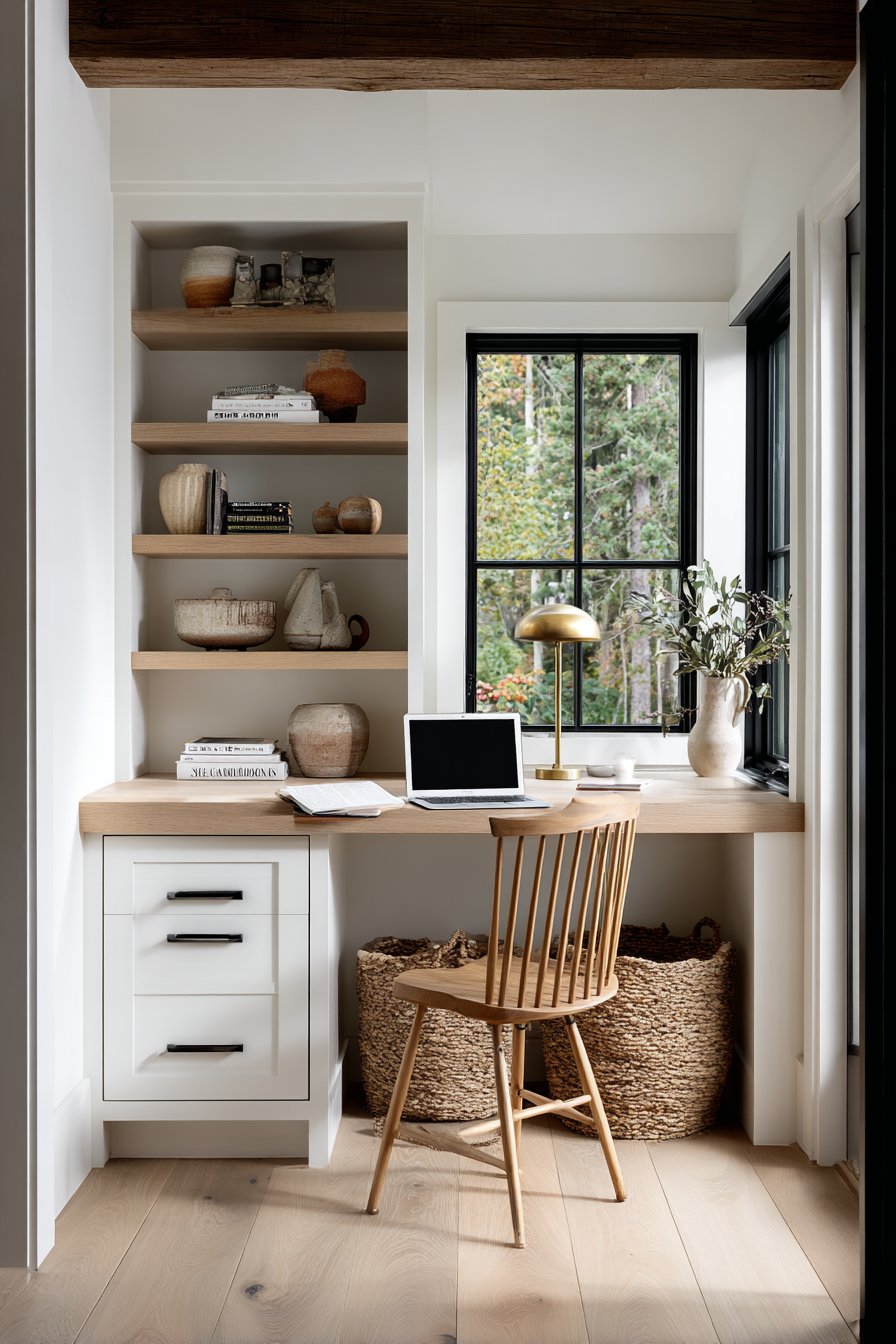
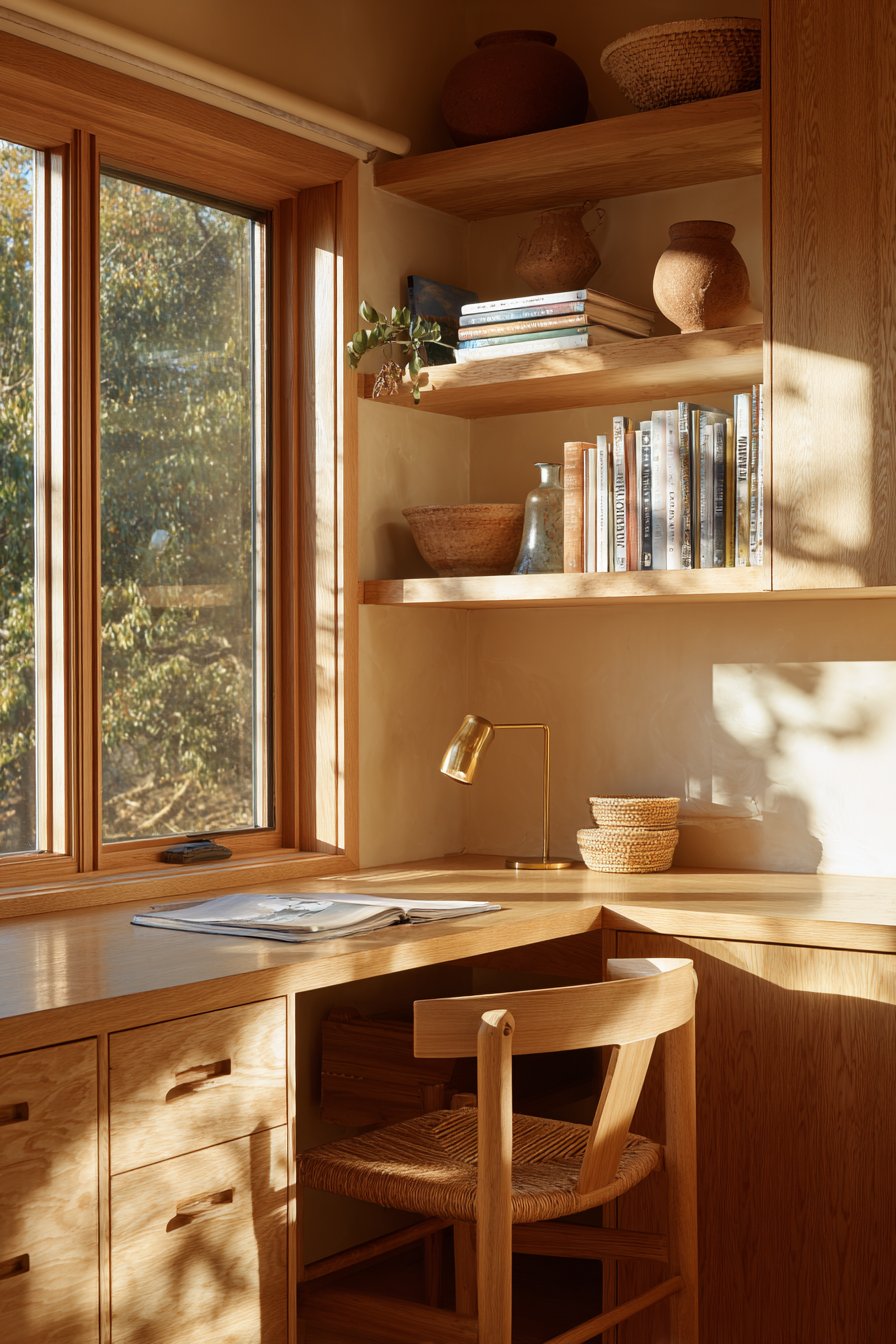
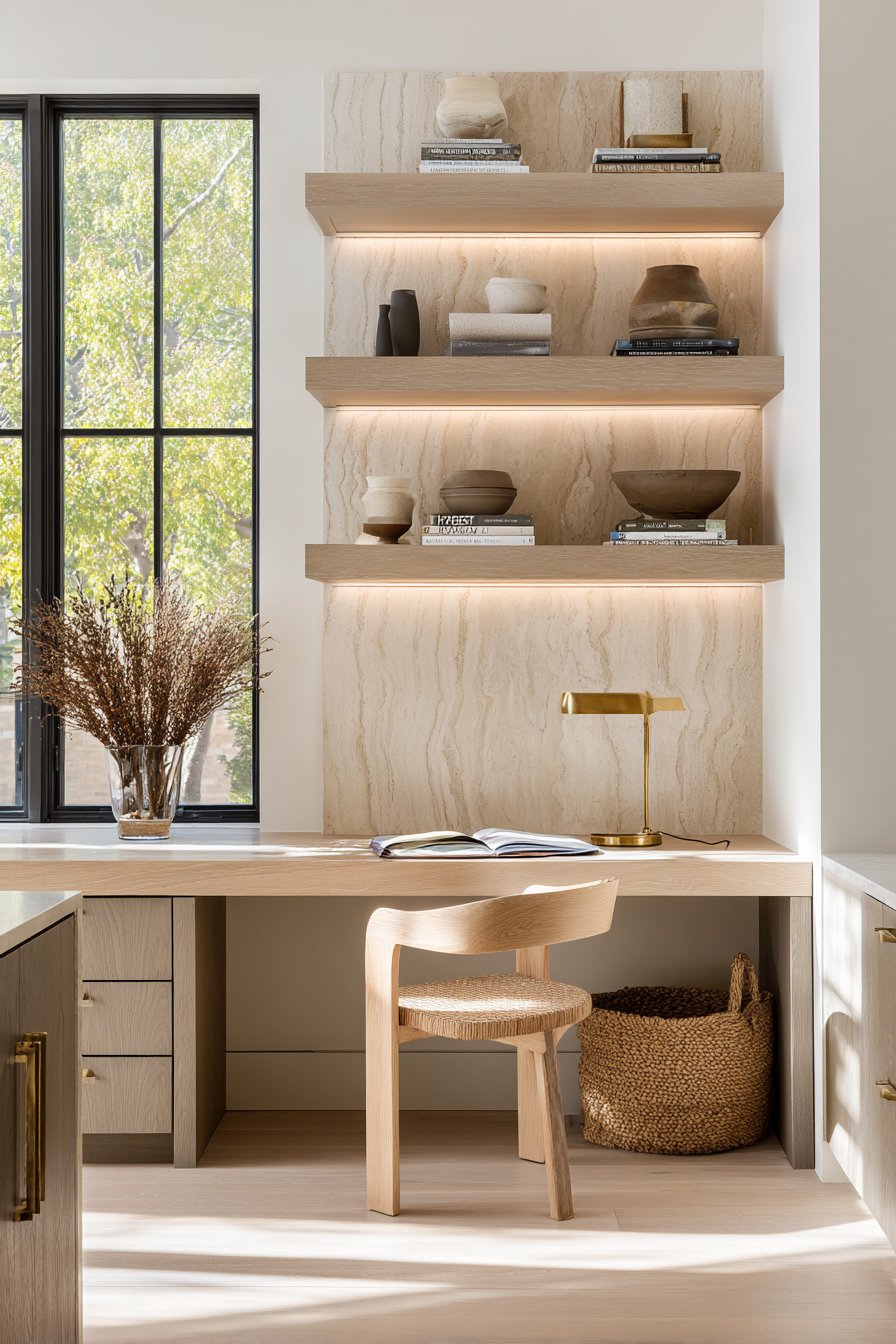
A workspace nook features floating white oak desktop with integrated power outlets. Open shelving above displays cookbooks and decorative pottery. The desk chair is molded plywood in natural ash. Beneath, woven baskets provide filing storage. A small brass task lamp provides focused lighting. The area sits near a window with greenery views outside.
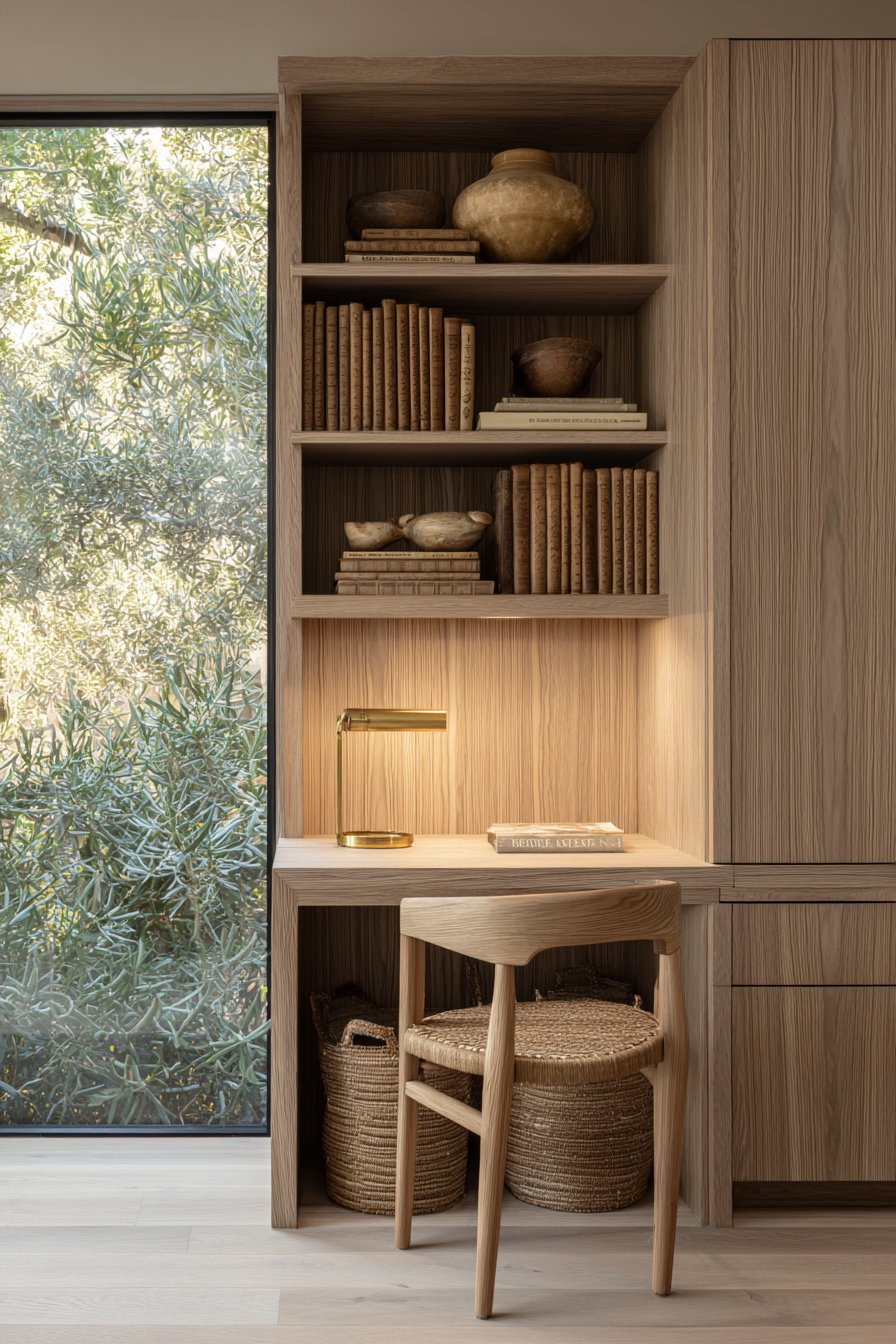
Natural side lighting highlights the wood grain beautifully. The workspace creates productive atmosphere within the kitchen. The cookbook storage keeps recipes accessible. The pottery adds decorative interest. The woven baskets maintain the natural material theme while organizing paperwork.
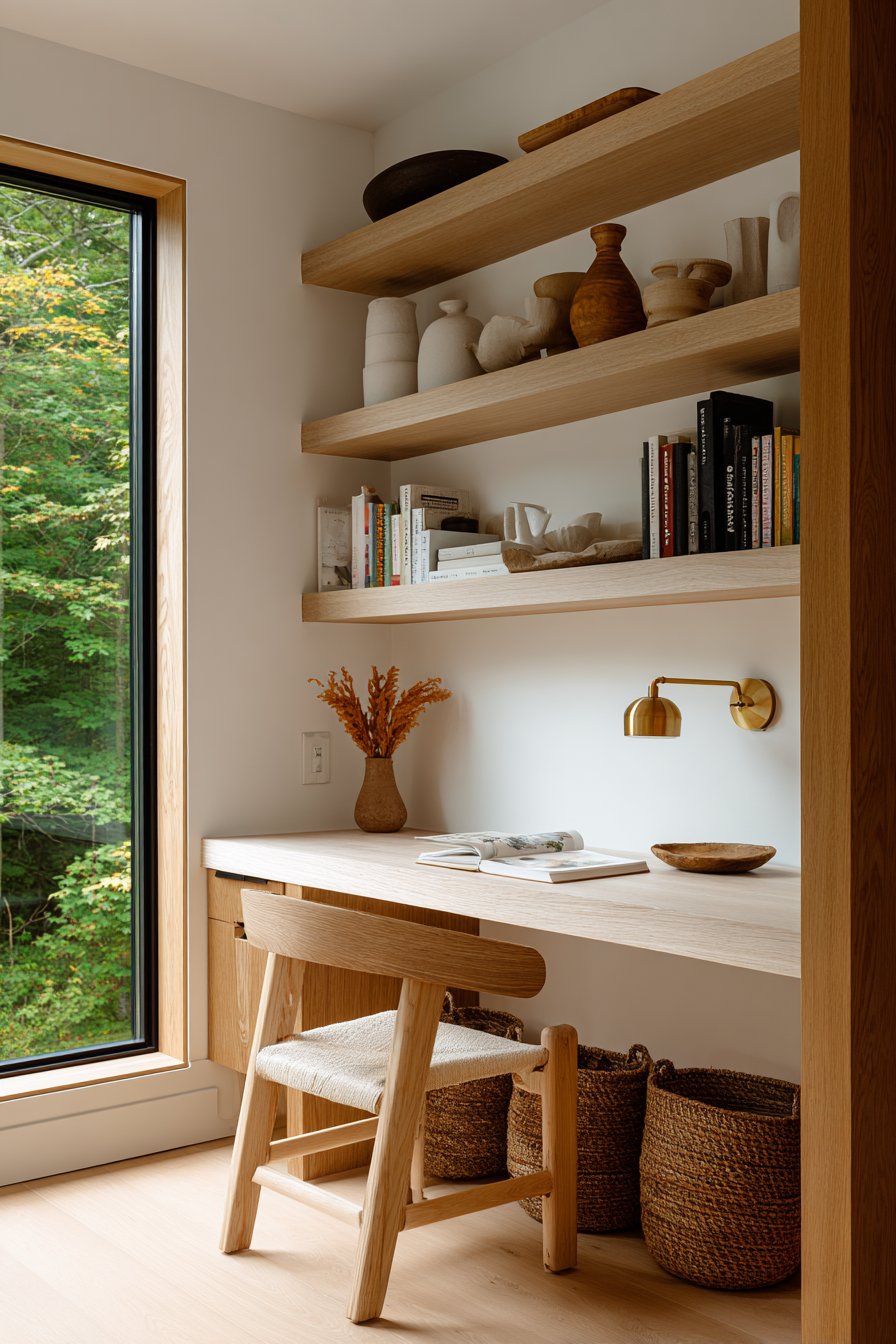
The floating desktop creates clean modern appearance. Integrated power outlets provide essential function without visible cords. The molded plywood chair combines ergonomic comfort with sculptural form. The brass task lamp adds warm focused light for detailed work.
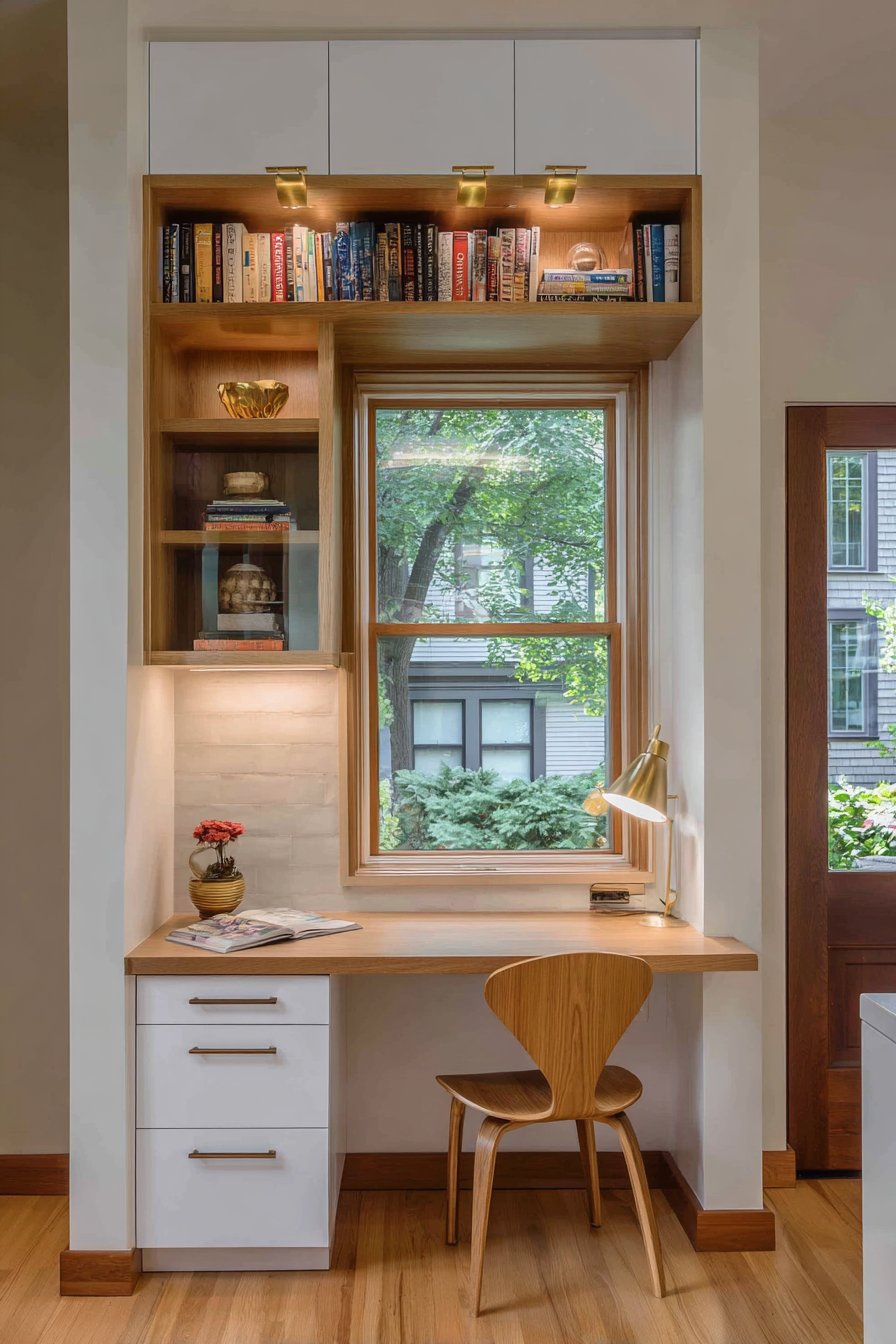
The window positioning proves essential. The greenery views reduce eye strain. The natural light makes working more pleasant. The overall nook demonstrates how kitchens can accommodate multiple functions. The workspace integrates seamlessly within the organic modern aesthetic.
Key Design Tips:
- Create floating oak desktops with integrated outlets for clean modern workspaces
- Install open shelving above desks for cookbook and pottery display
- Choose molded plywood chairs for comfortable ergonomic sculptural seating
- Add woven baskets beneath desks for organized filing storage
- Position desks near windows for natural light and greenery views
- Include brass task lamps for warm focused lighting during detail work
20. Large-Format Travertine Backsplash Drama
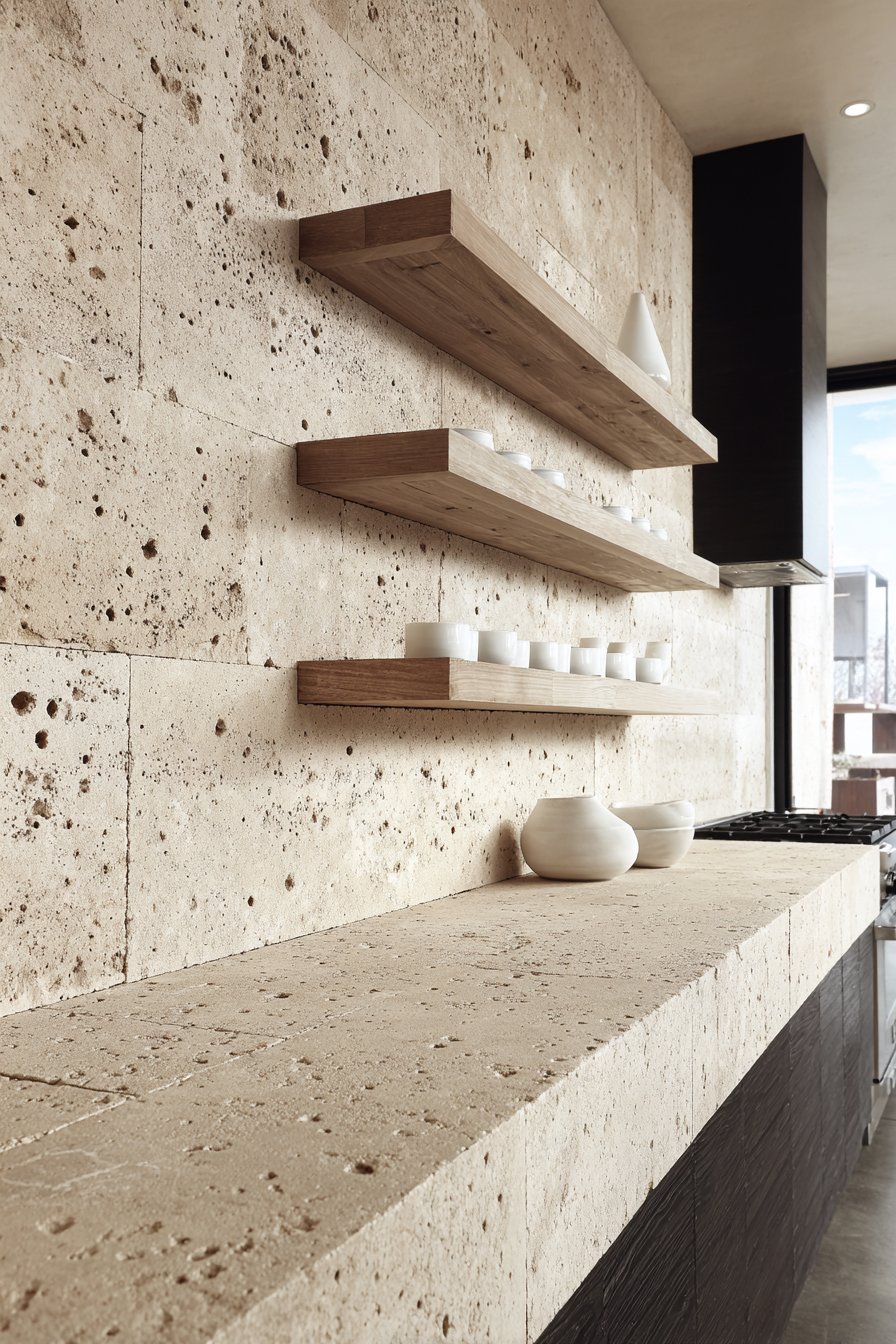
A statement backsplash features large-format natural travertine slabs in cream tones. The filled holes create organic patterns throughout. The stone extends from counter to ceiling behind the range. Natural color variations and veining make each slab unique. Floating white oak shelves interrupt the stone at eye level. They display minimal white ceramic pieces beautifully.
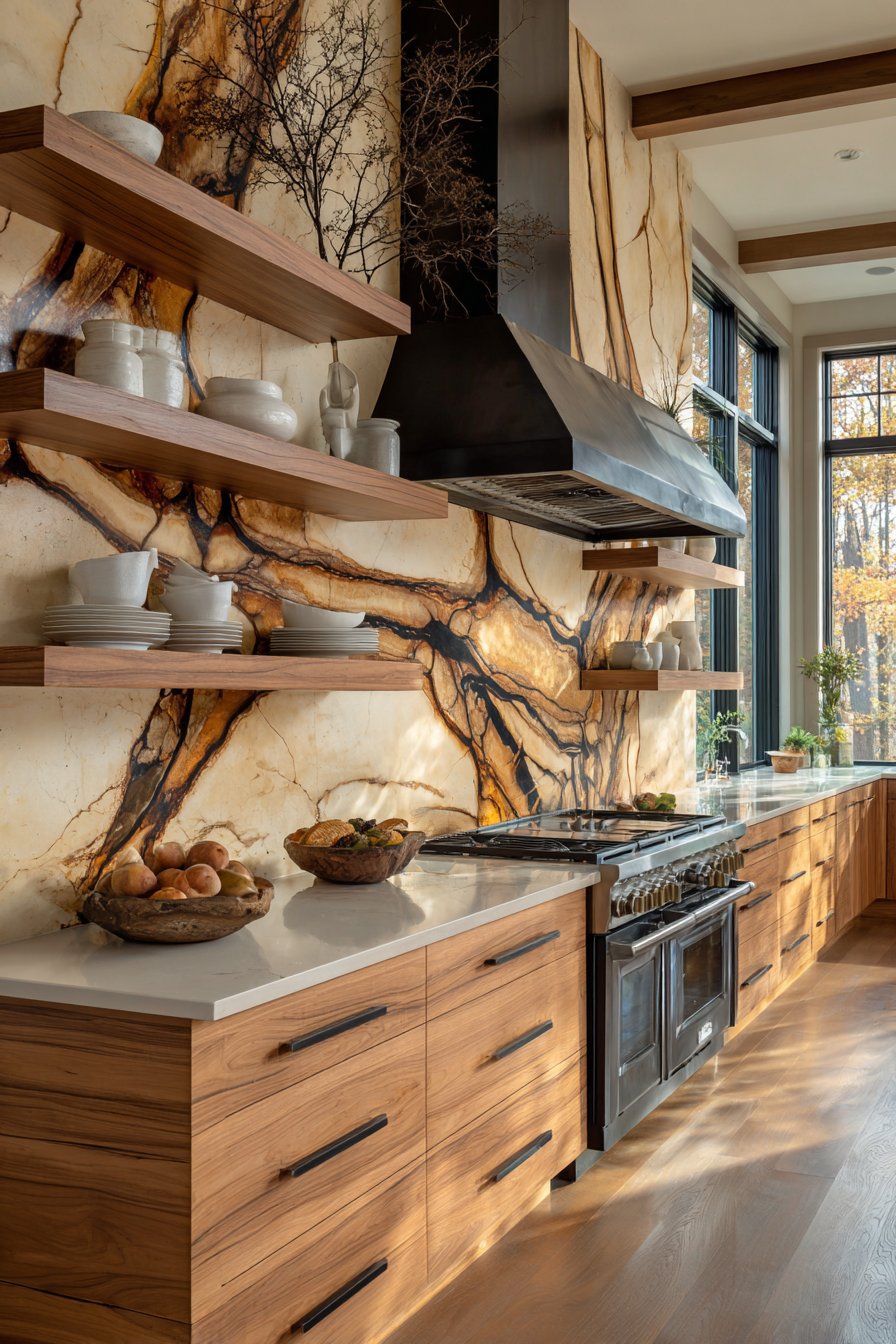
A matte black range and hood provide striking contrast. The dark elements ground the light stone. Professional photography captures the dramatic installation from multiple angles. Natural lighting from several windows emphasizes unique patterns. The texture variations inherent in natural material shine through clearly.
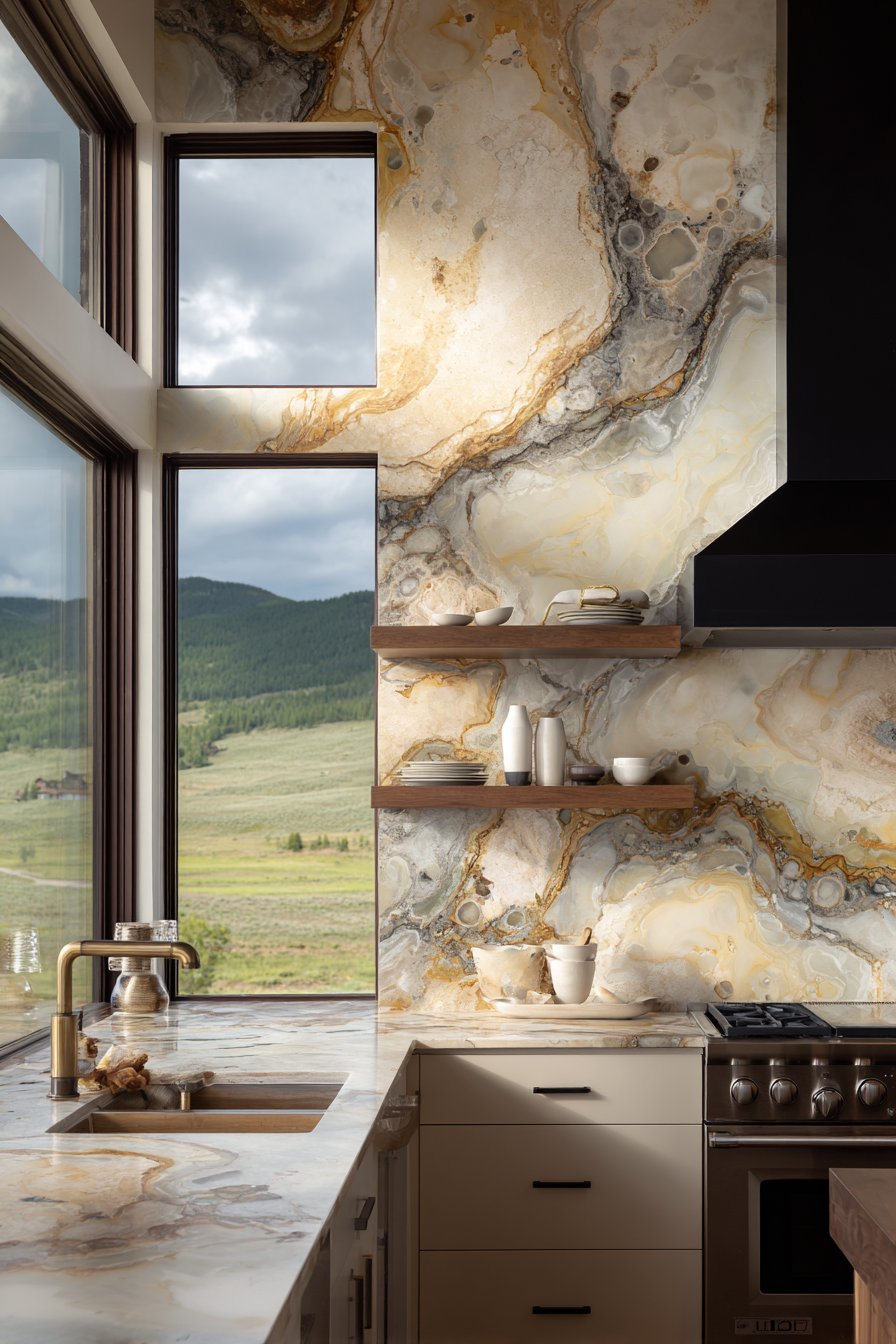
Large-format stone slabs minimize grout lines. This creates cleaner contemporary appearance. The travertine’s filled holes add organic texture. The cream color maintains brightness while adding warmth. The full-height installation creates impressive focal wall.
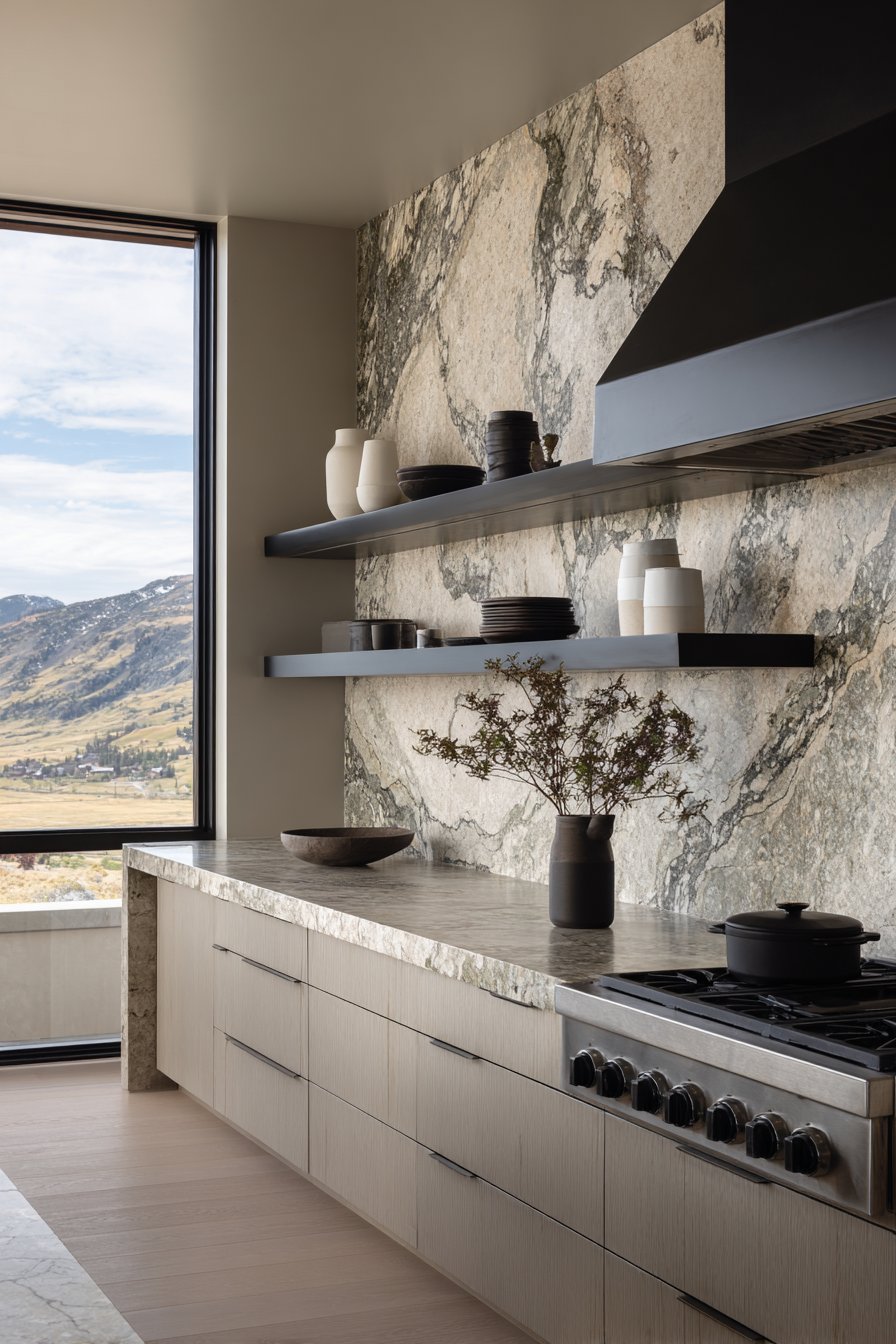
The floating oak shelves break up the stone expanse. They prevent visual overwhelm. The minimal white ceramic display keeps focus on materials. The matte black range provides necessary contrast. The overall composition balances light and dark masterfully.
Key Design Tips:
- Choose large-format travertine slabs to minimize grout lines and maximize impact
- Extend stone from counter to ceiling for dramatic full-height installations
- Embrace natural filled holes and color variations as organic pattern features
- Install floating oak shelves to break up large stone expanses
- Display minimal white ceramics that won’t compete with stone beauty
- Position matte black appliances for strong contrast against light stone
Why These Organic Modern Kitchen Designs Are the Best
These organic modern kitchen designs represent the finest approaches to creating spaces that balance natural beauty with contemporary function. Each concept demonstrates thoughtful material selection that honors sustainability while achieving stunning aesthetic results. The designs showcase versatility that suits different home styles and personal preferences.
The incorporation of natural stone materials like quartzite, marble, granite, travertine, and soapstone brings geological beauty into daily life. These materials offer durability that synthetic alternatives cannot match. The natural veining patterns and color variations ensure uniqueness. No two stone installations ever look identical. This creates personalized spaces that feel special and intentional.
White oak cabinetry appears throughout these designs for excellent reasons. Oak offers superior durability for heavily used kitchen environments. The wood grain patterns add warmth and texture. The natural material ages beautifully rather than showing wear. The versatility allows it to work with various stone choices and color palettes.
Handcrafted elements like ceramic tiles, blown glass lighting, and artisanal pottery elevate these kitchens beyond standard installations. These pieces bring human touch to mechanical spaces. The slight irregularities prove that skilled hands created them. Supporting artisan crafts adds meaning to kitchen design. These elements become conversation pieces and focal points.
The emphasis on natural lighting distinguishes exceptional organic modern kitchens from average ones. Strategic window placement, skylights, and clerestory openings bring daylight deep into spaces. Natural light reveals material textures beautifully. It changes throughout the day creating dynamic environments. The connection to natural light cycles improves occupant wellbeing significantly.
Reclaimed and salvaged materials provide both environmental benefits and instant character. Reclaimed wood brings history and patina that new materials lack. The sustainability aspect aligns with organic modern philosophy. Using existing materials reduces environmental impact. The authentic wear patterns tell stories and add depth.
The integration of living elements like herb gardens and potted plants connects kitchens to nature directly. Fresh herbs provide cooking ingredients while improving air quality. The greenery softens hard surfaces. The connection to growing cycles adds seasonal awareness. These living elements require care that creates meaningful daily rituals.
Metallic finishes in brass, oil-rubbed bronze, and matte black provide essential contrast and warmth. The brass develops patina that adds character over time. Oil-rubbed bronze offers vintage charm while remaining practical. Matte black grounds lighter elements and provides crisp definition. The careful mixing of metal finishes adds sophisticated layering.
Natural fiber textiles including linen, rattan, rush, and sheepskin introduce essential softness. Hard kitchen surfaces benefit from textile balance. The natural fibers age gracefully and feel pleasant to touch. The woven textures add visual interest and organic pattern. These elements make kitchens feel welcoming rather than sterile.
The emphasis on craftsmanship throughout these designs ensures longevity and quality. Waterfall-edge fabrication, custom plaster applications, and precise tile installation require skilled trades. Investing in quality craftsmanship creates kitchens that last decades. The attention to detail shows in finished results. Well-executed details elevate entire spaces.
Floor material choices including travertine, terracotta, polished concrete, and limestone provide durable neutral foundations. These natural materials withstand heavy traffic while maintaining beauty. The matte finishes hide wear better than glossy surfaces. The neutral tones allow other elements to shine. The cool underfoot feeling provides comfort during long cooking sessions.
Storage solutions combining open and closed options balance display with practical needs. Open shelving showcases beautiful items while providing easy access. Closed cabinetry conceals utilitarian necessities. The mix prevents visual clutter while celebrating meaningful objects. The woven baskets and wire containers add organizational style.
The organic modern aesthetic proves timeless because it relies on fundamental design principles rather than passing trends. Natural materials never go out of style. Clean lines maintain relevance across decades. The emphasis on quality over quantity creates lasting value. These kitchens improve with age rather than dating quickly.
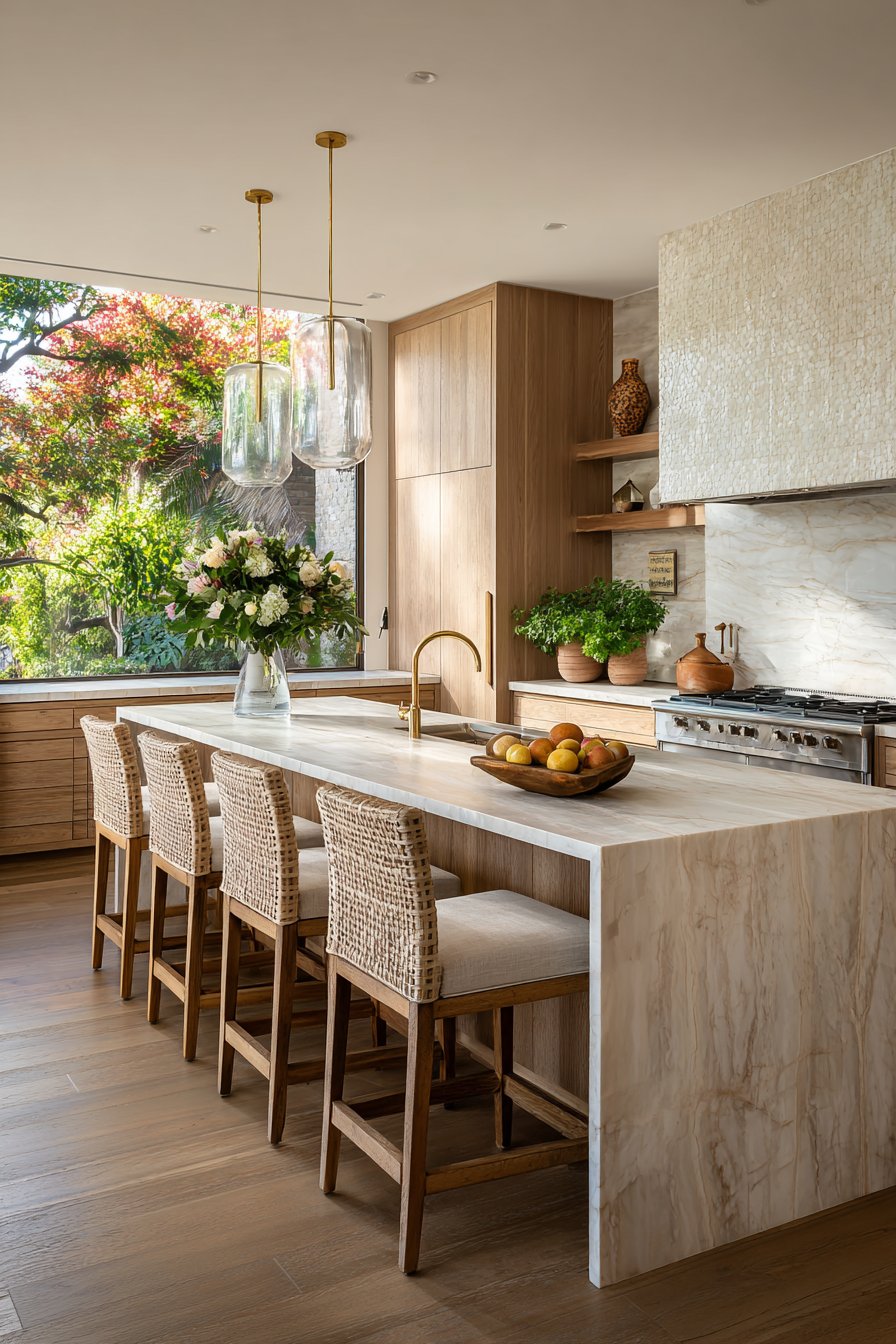
Lighting layers including natural daylight, ambient pendants, recessed fixtures, and task lighting create flexible atmospheres. The varied sources prevent harsh shadows and dark corners. The ability to adjust lighting suits different activities and moods. The careful planning ensures proper illumination for food preparation while maintaining beauty.
The connection between indoor and outdoor spaces enhances organic modern kitchens significantly. Large windows frame garden views. The visual connection to nature reduces stress. The borrowed landscape extends the sense of space. This integration creates environments that feel expansive and connected to surroundings.
Color palettes emphasizing neutral tones with natural variations create serene sophisticated environments. Cream, grey, sage green, and warm whites work together harmoniously. The subtle hues allow material textures to shine. The restrained palette prevents visual competition. The overall effect feels calm and grounded.
These organic modern kitchen designs succeed because they prioritize both aesthetic beauty and practical function. They prove that sustainable material choices can be stunning. They demonstrate that craftsmanship matters in creating meaningful spaces. The designs honor natural materials while embracing contemporary living needs.
Conclusion
These organic modern kitchen designs demonstrate that natural materials and contemporary aesthetics can harmonize beautifully. The key takeaways include prioritizing quality natural stone, authentic wood with visible grain, handcrafted artisan elements, and thoughtful integration of living plants. The successful spaces balance hard surfaces with soft textiles, cool tones with warm metals, and closed storage with open display.
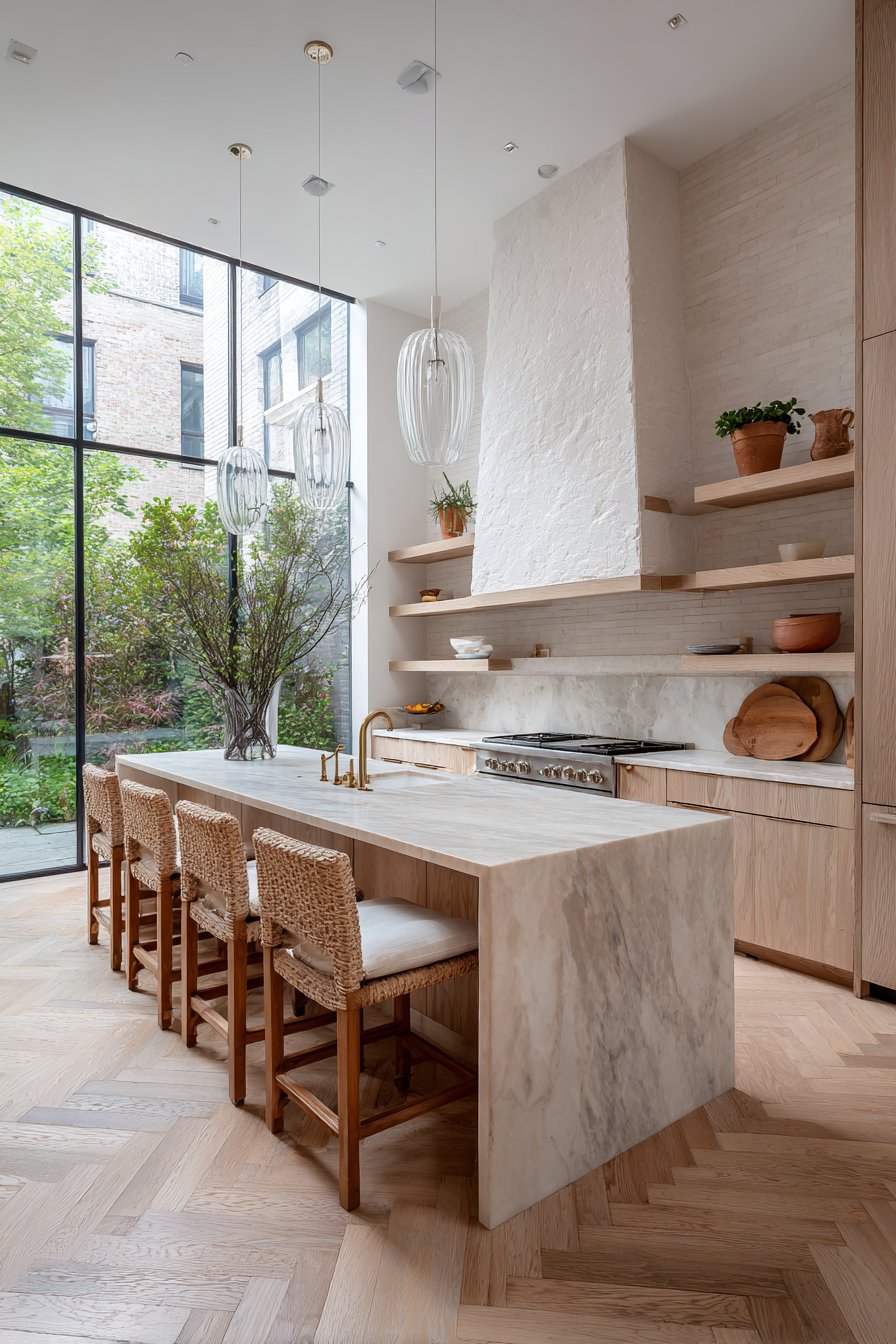
Quality materials combined with skilled craftsmanship create kitchens that improve with age. The emphasis on natural light, honest material expression, and connection to nature distinguishes exceptional spaces from ordinary ones. Start incorporating these principles by selecting one quality natural material or handcrafted element. Your dream organic modern kitchen awaits creation through thoughtful planning and appreciation for authentic materials.
