


Creating a Peter Rabbit nursery brings timeless charm and whimsical wonder to your baby’s first space. This beloved literary character offers endless design inspiration rooted in natural beauty. The gentle garden themes and soft pastoral elements create nurturing environments perfect for newborns and growing toddlers.
Peter Rabbit nurseries have captivated parents for generations with their innocent appeal and connection to nature. The watercolor aesthetics of Beatrix Potter’s original illustrations translate beautifully into modern nursery design. These spaces honor literary heritage while embracing contemporary functionality and safety standards.
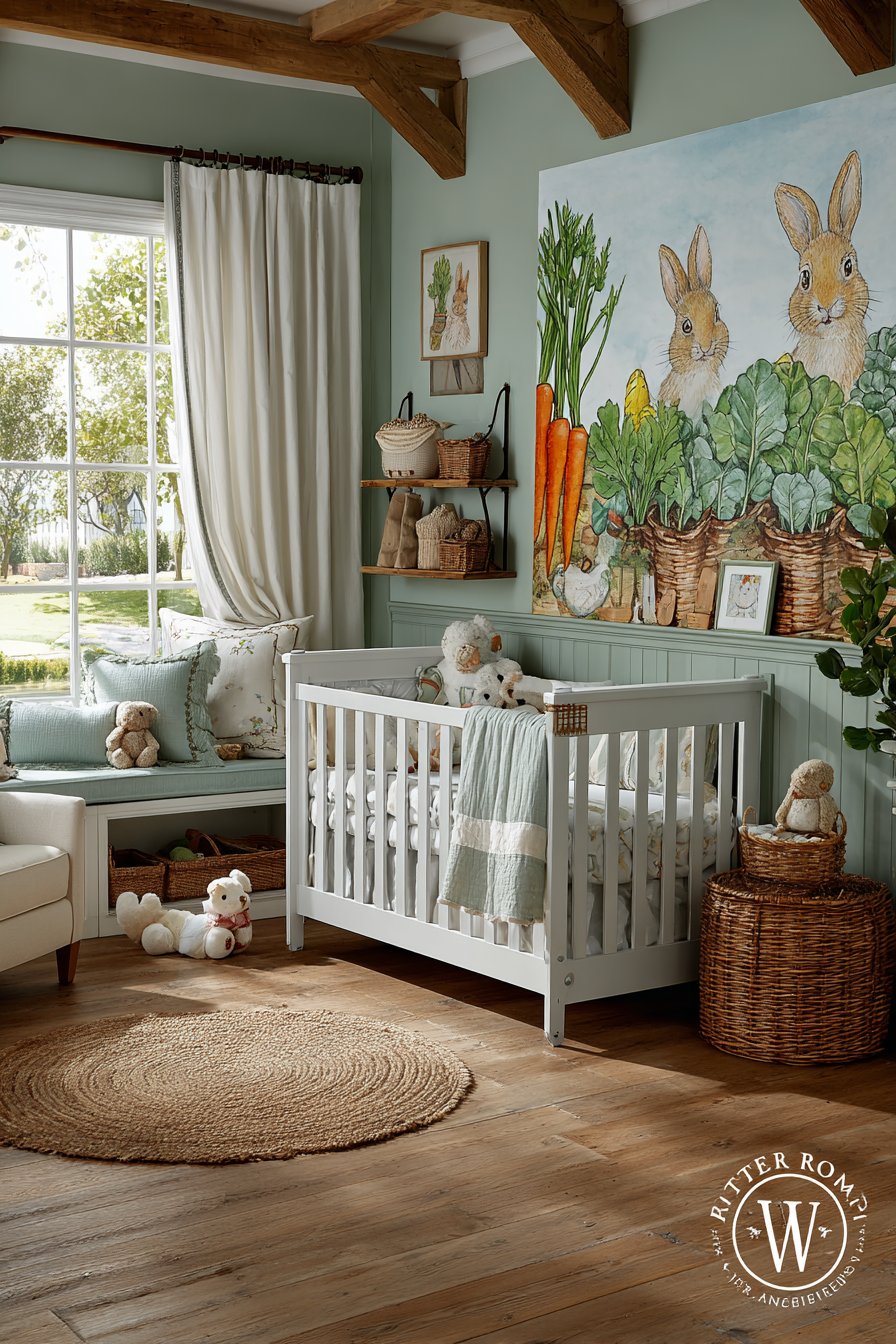
The designs featured in this article showcase diverse approaches to the Peter Rabbit theme. From subtle nods to the classic tale to immersive garden sanctuaries, each concept offers unique possibilities. Whether you prefer minimalist touches or elaborate themed spaces, these ideas provide inspiration for every decorating style and budget.
1. Sage Green Garden Sanctuary with Watercolor Wall Art
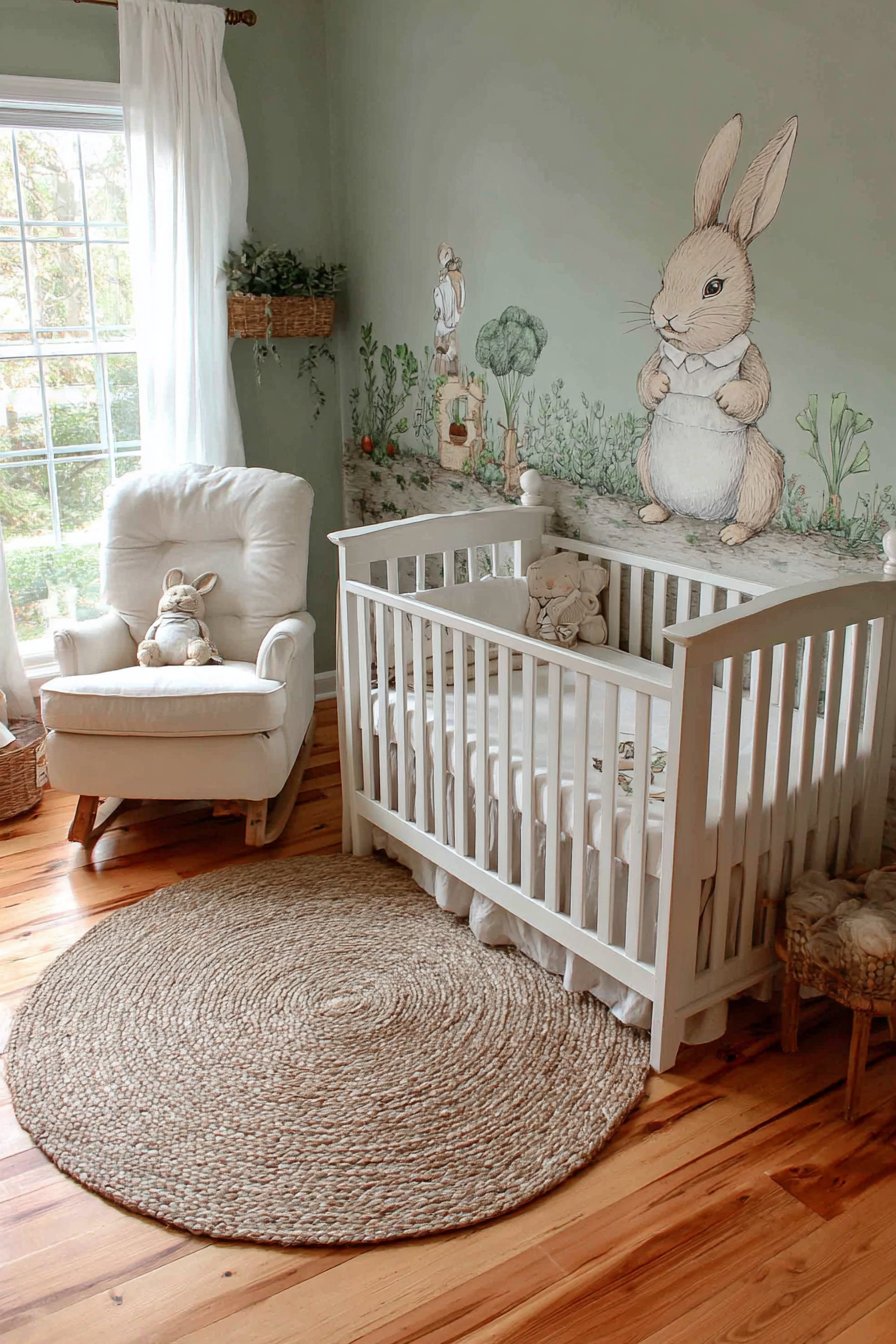
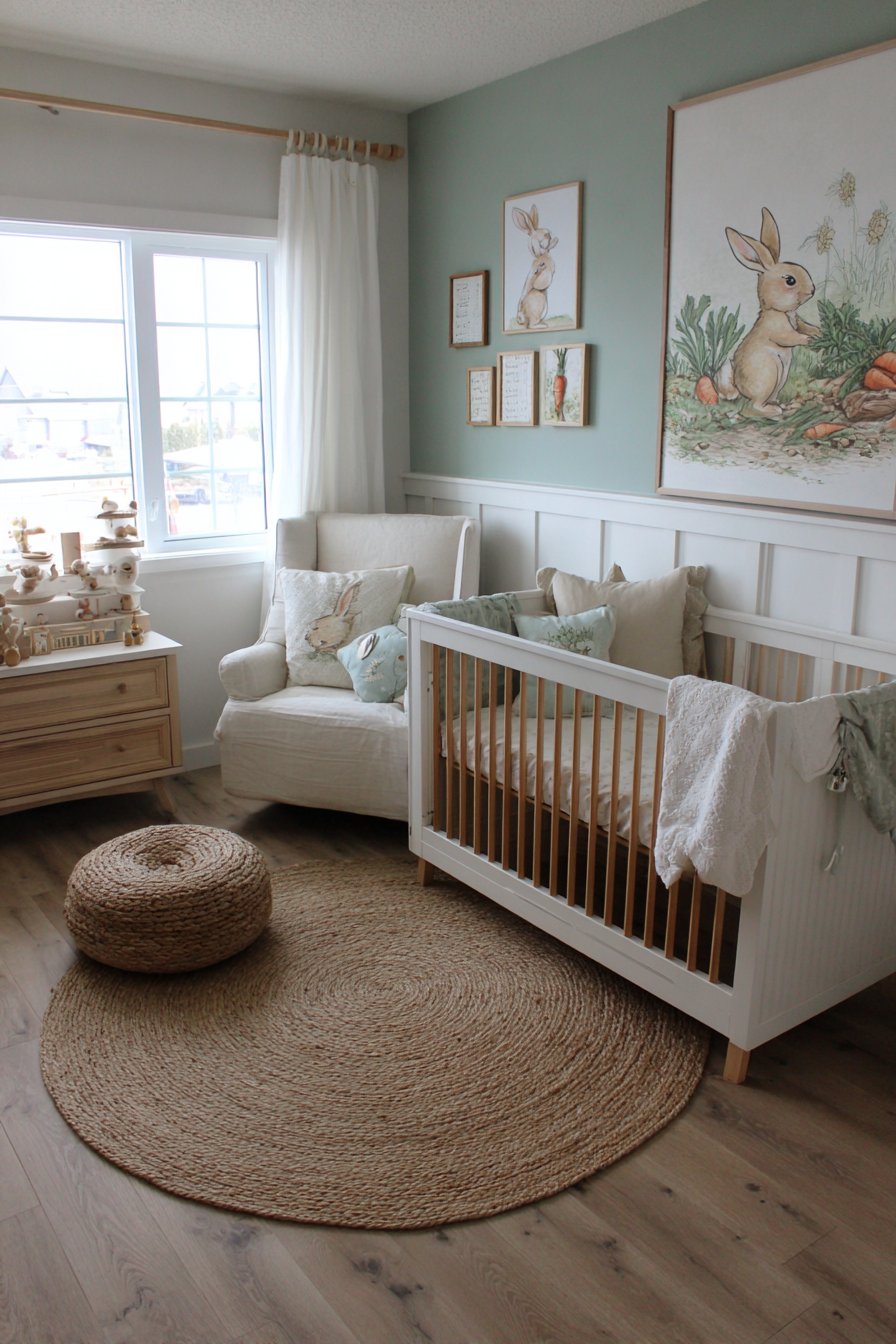
A soft sage green accent wall creates the foundation for this charming nursery design. Hand-painted watercolor Peter Rabbit characters dance among garden vegetables across the wall surface. The artistic details bring storybook magic directly into the room. A white wooden crib with natural linen bedding sits prominently against this backdrop. The organic cotton materials ensure comfort and safety for your little one.
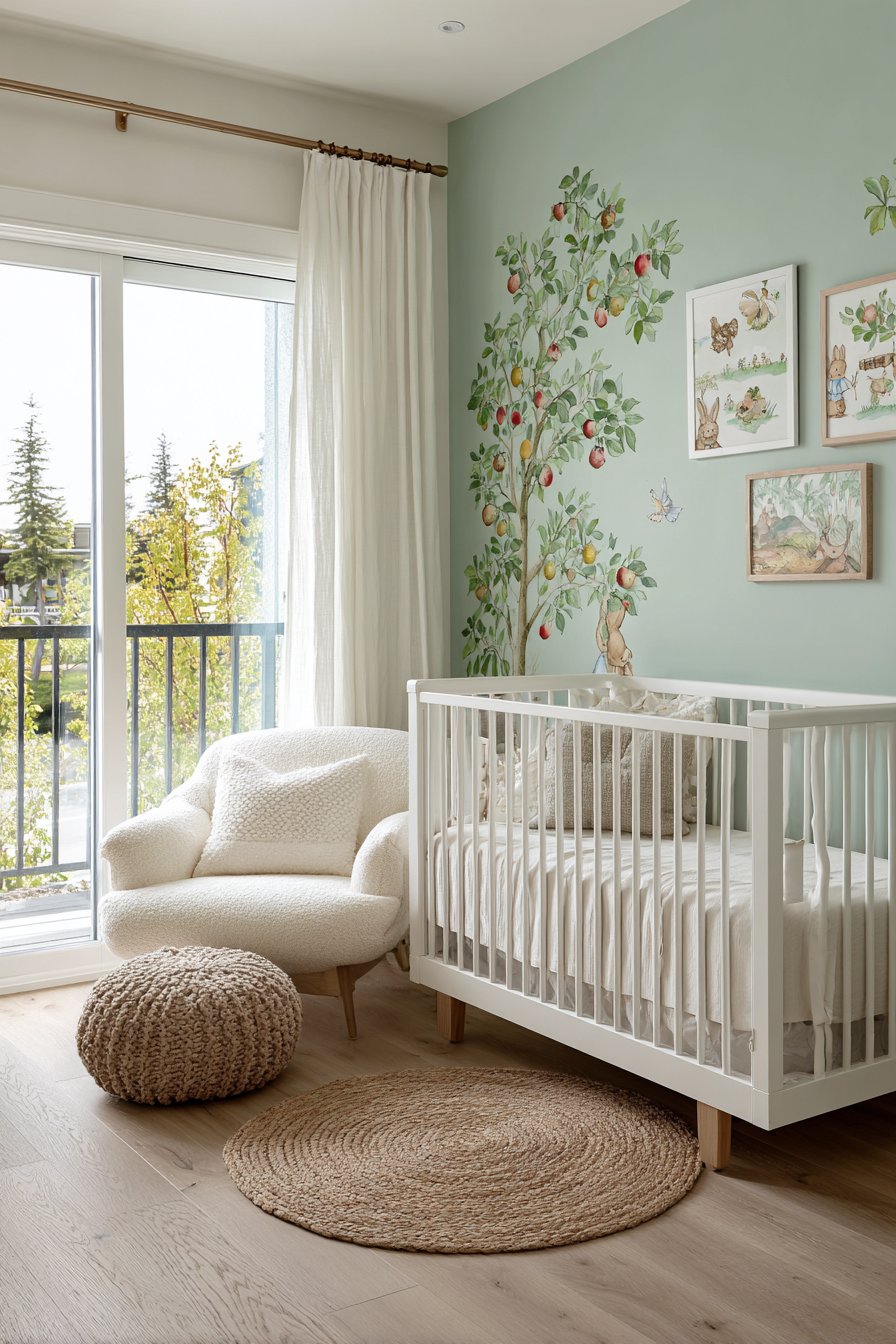
The furniture selection emphasizes natural materials and timeless construction. A plush cream-colored glider chair occupies the corner near the window. This positioning takes advantage of natural morning light for feeding times. Sheer white curtains filter the sunlight creating a gentle, diffused glow throughout the space. The soft illumination enhances the watercolor details without creating harsh shadows or glare.
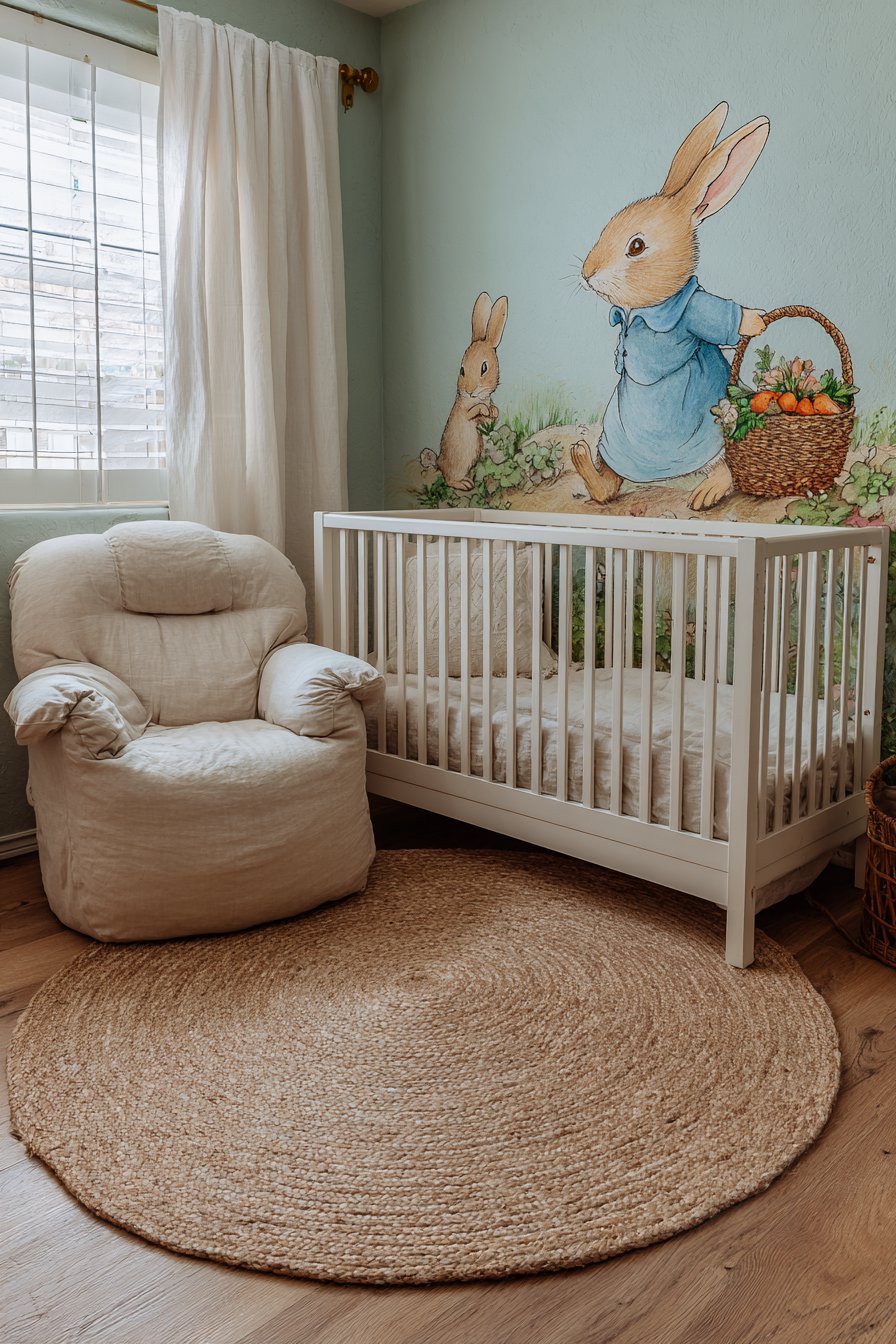
Natural oak flooring anchors the entire design with warmth and durability. A round braided jute rug adds texture beneath the crib area. The natural fiber connects the floor to the garden theme seamlessly. The combination of soft greens, creams, and natural wood tones creates a cohesive palette. This color scheme remains calming yet visually interesting for developing minds.
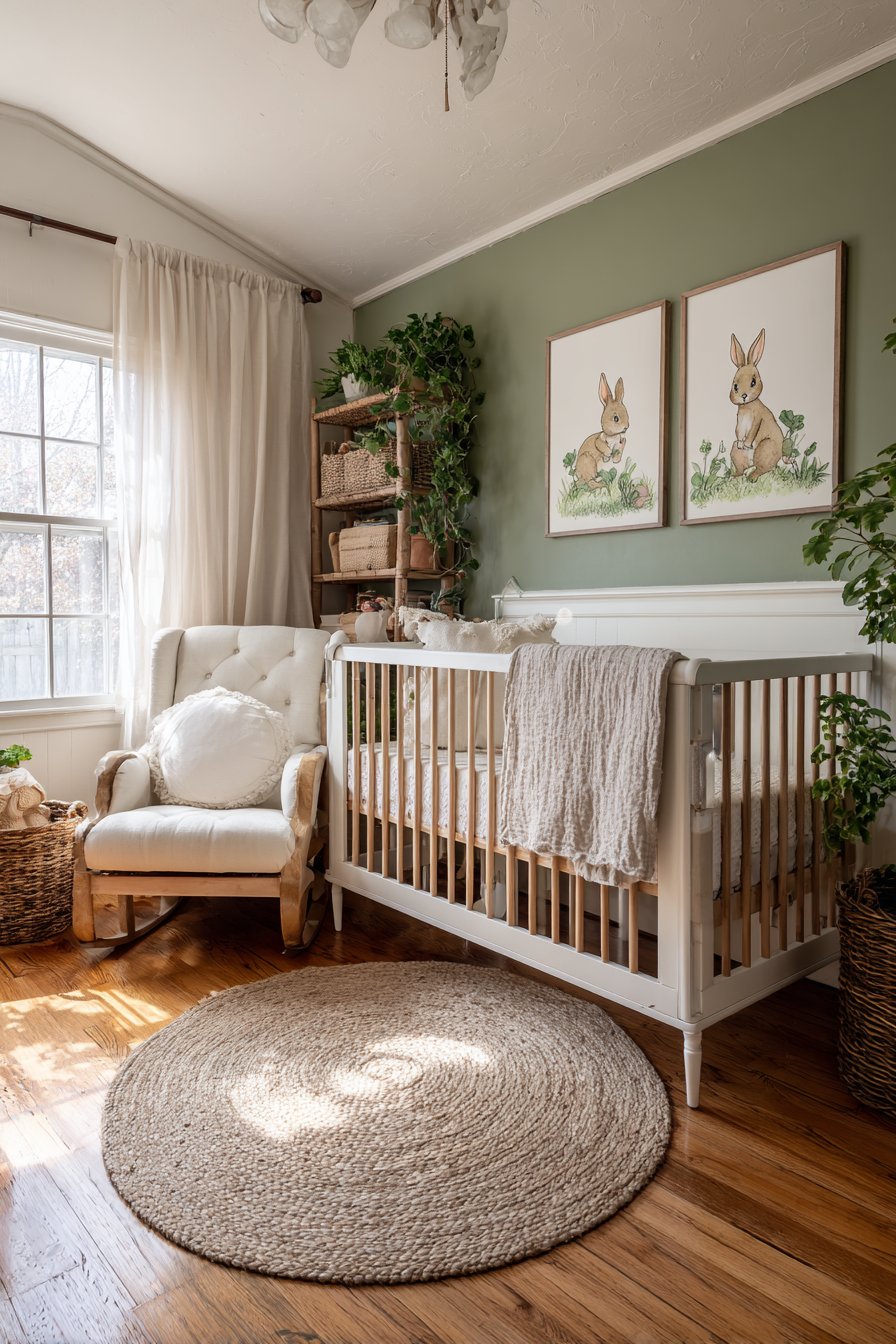
The overall atmosphere balances peaceful serenity with gentle stimulation. The watercolor characters provide visual interest without overwhelming the senses. This design proves that themed nurseries can remain sophisticated and age-appropriate. The natural materials will transition beautifully as your child grows from infant to toddler.
Key Design Tips:
- Choose sage green paint with warm undertones to avoid cold, clinical appearances
- Commission or create hand-painted watercolors rather than vinyl decals for authentic charm
- Select natural linen bedding in neutral tones to complement themed wall art
- Position the glider chair near windows to maximize natural light during feeding times
- Use jute or sisal rugs to add texture while maintaining the natural aesthetic
- Keep furniture white or natural wood to allow wall art to remain the focal point
2. Literary Corner with Vintage Book Displays
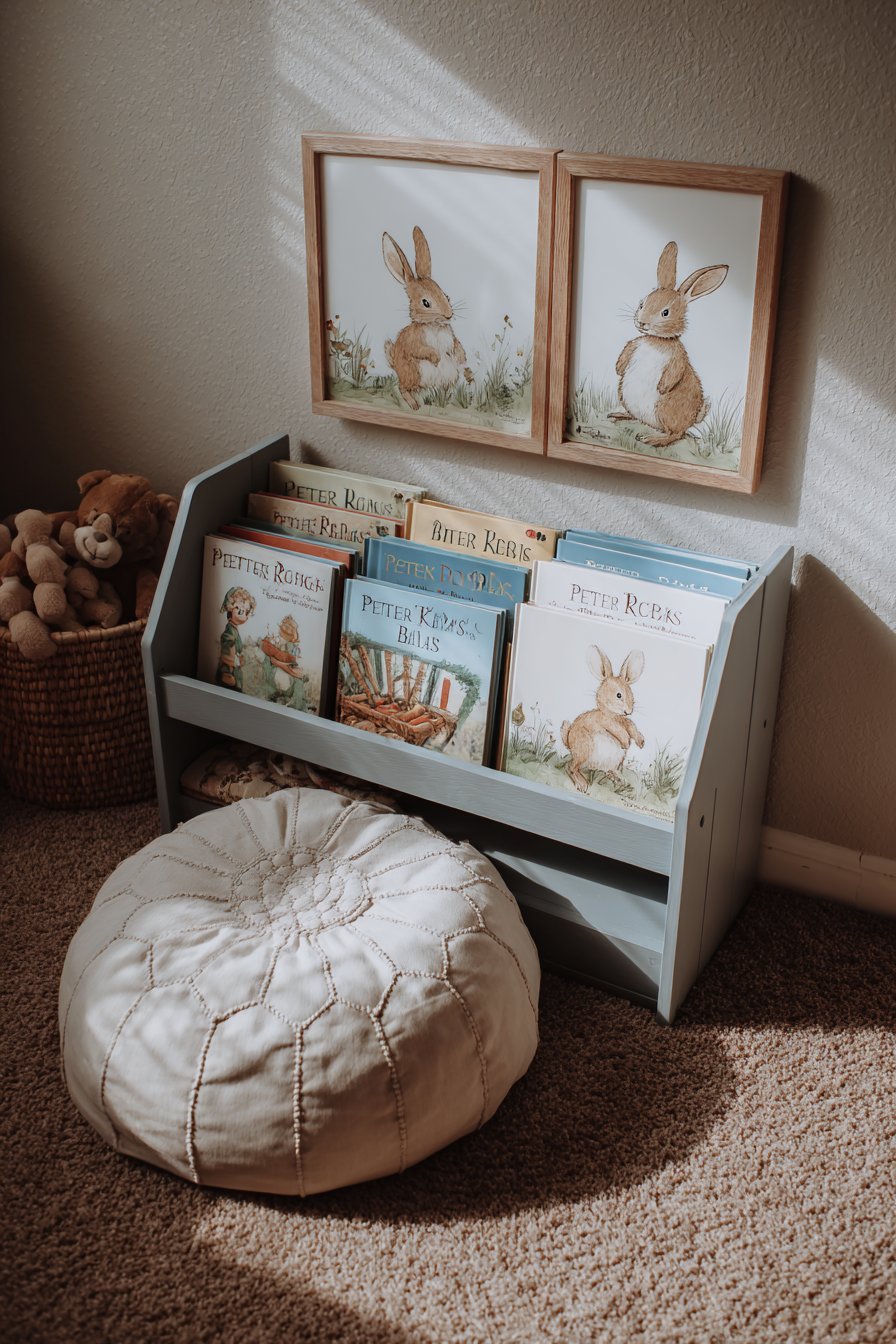
This dedicated reading nook celebrates the literary origins of the Peter Rabbit theme. A low wooden bookshelf painted in soft blue-grey displays board books at toddler height. The accessible design encourages early literacy and independence. Peter Rabbit titles sit with spines visible, creating instant recognition and connection to the story. The shelf serves both functional storage and decorative purposes beautifully.
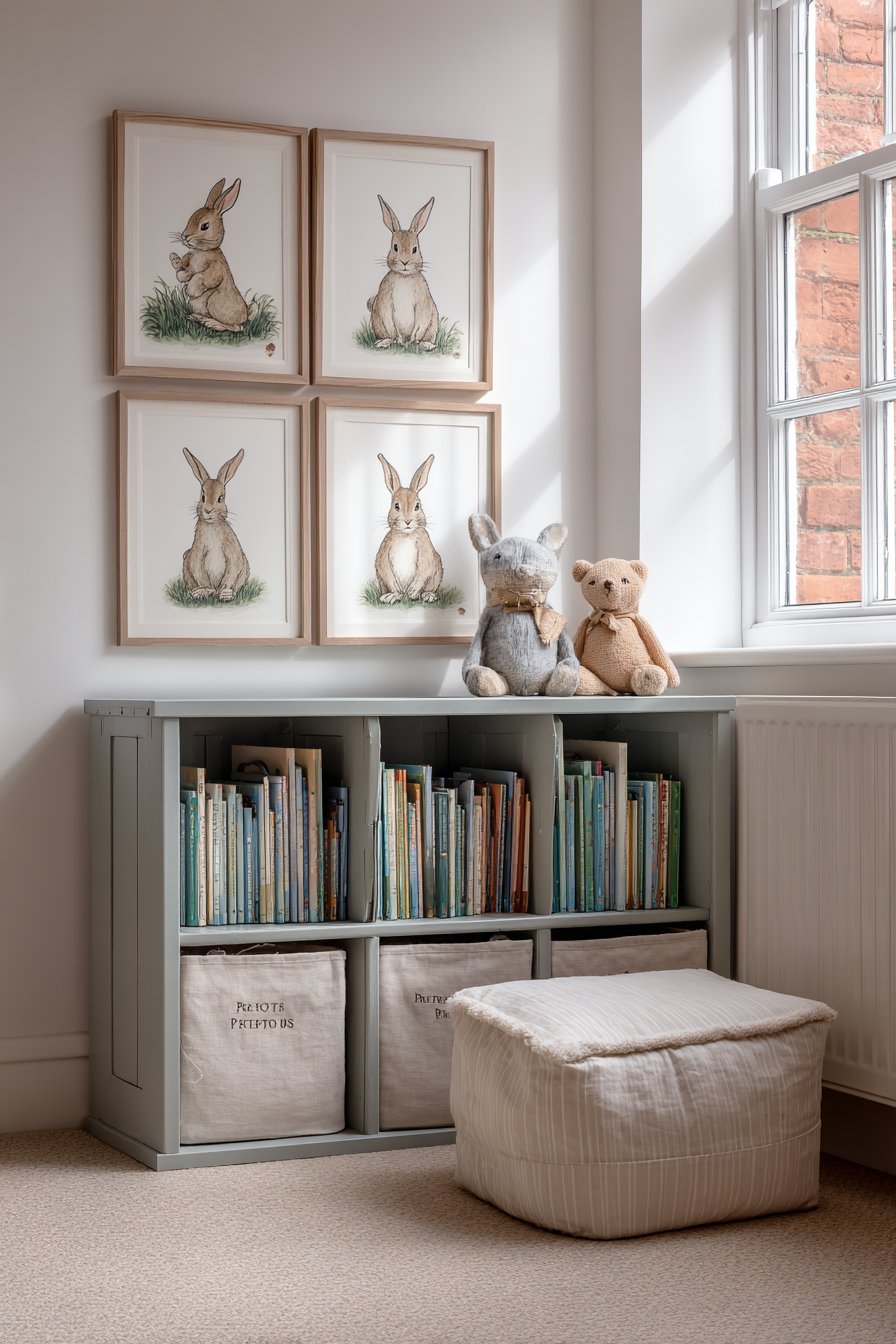
Above the bookshelf, three framed vintage-style Peter Rabbit illustrations create a gallery wall. Simple white frames keep the focus on the artwork itself. Each illustration depicts different scenes from Mr. McGregor’s garden. The sequential storytelling adds educational value to the decorative element. These prints connect your child to Beatrix Potter’s original artistic vision.
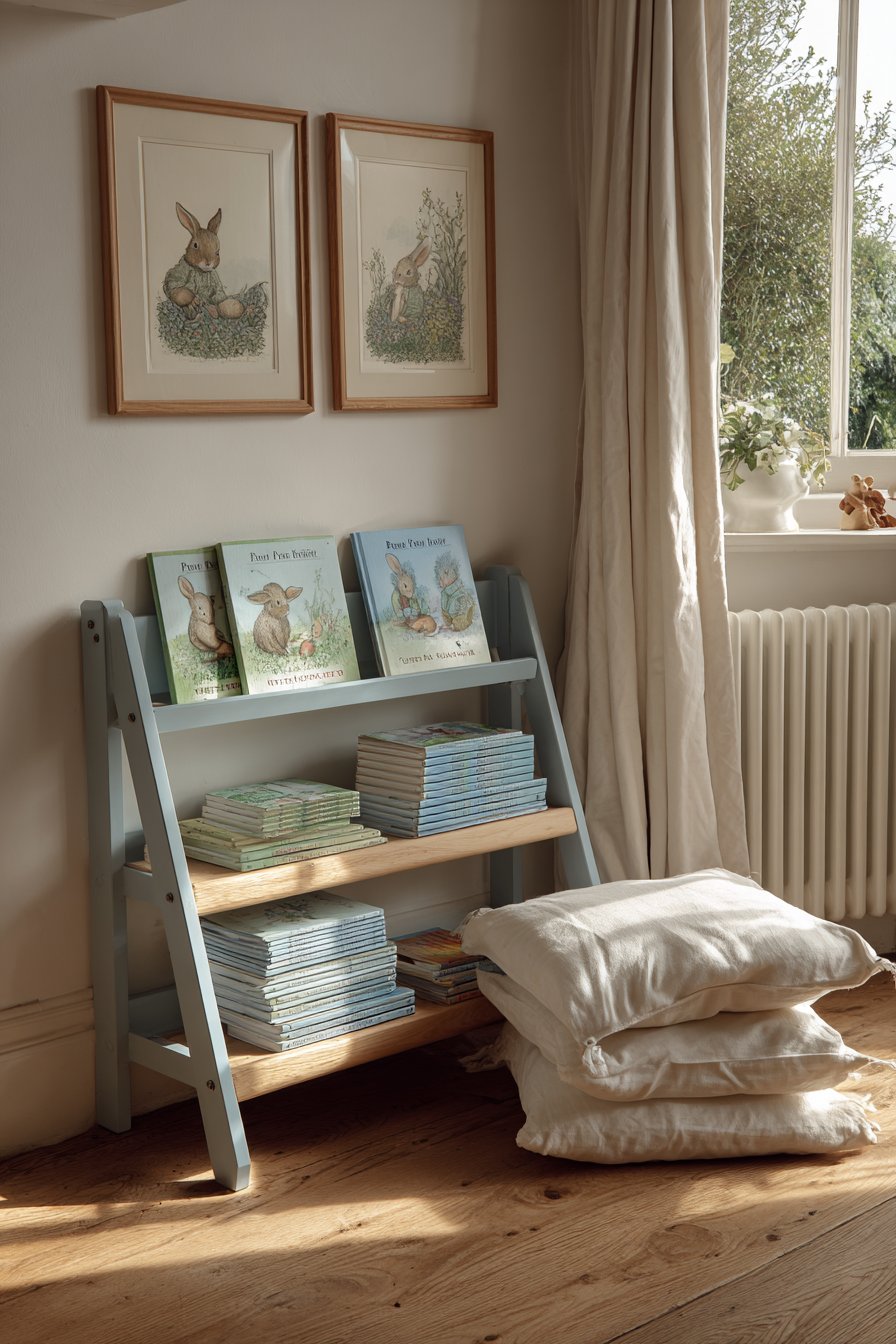
A small cushioned floor pouf in cream linen provides comfortable seating at child height. This thoughtful addition makes the reading corner inviting and accessible. The soft fabric invites touch and exploration while maintaining durability. Natural daylight from a nearby window illuminates this cozy corner perfectly. The lighting makes colors vibrant and creates an inviting atmosphere for story time.
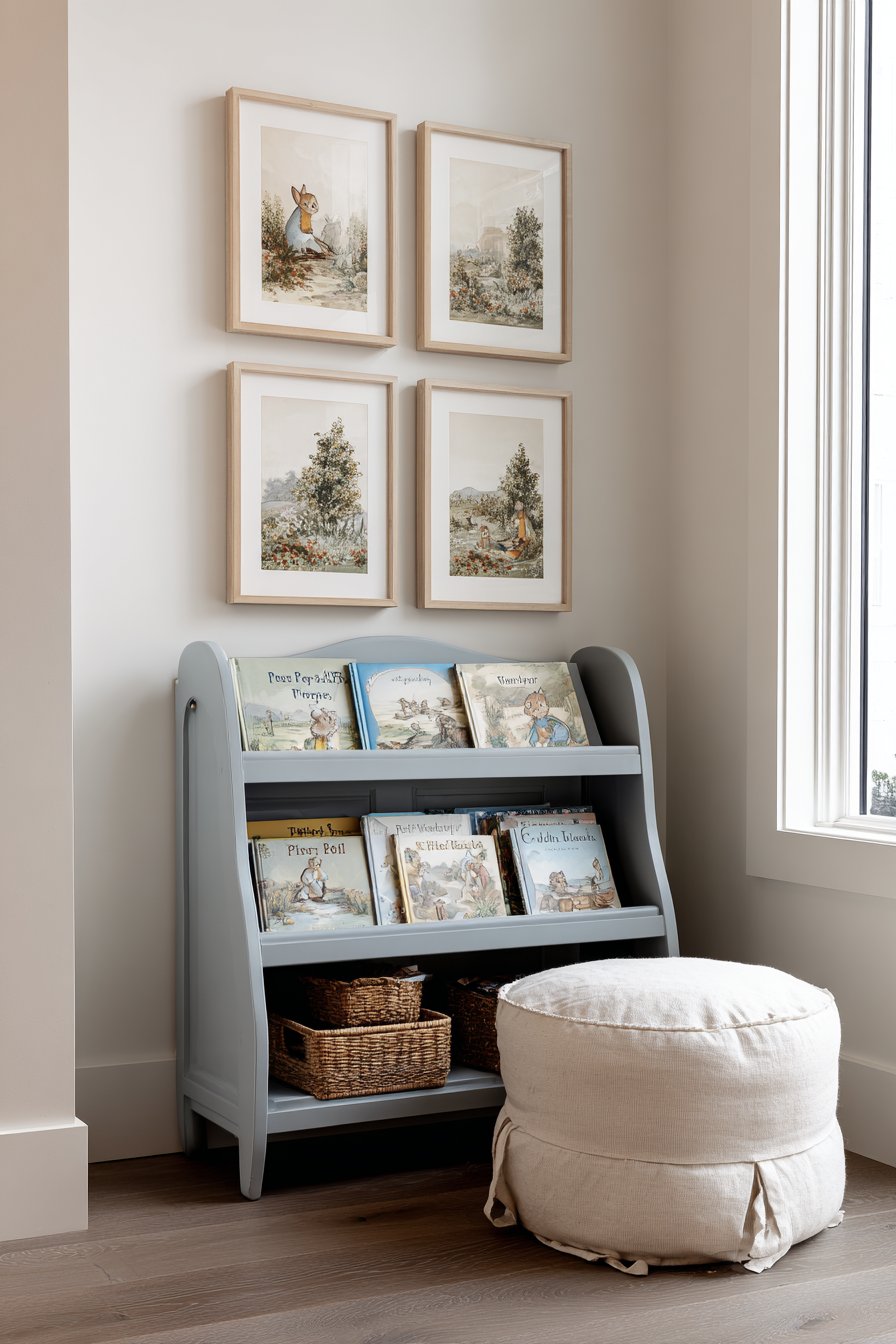
The organization in this space deserves special attention and appreciation. Books remain within easy reach encouraging self-directed play and learning. The low shelving promotes fine motor skill development as children grasp and replace books. This design element grows with your child from infant observation to toddler interaction.
Key Design Tips:
- Paint shelving in muted blue-grey tones that complement but don’t match wall colors
- Frame illustrations in identical frames for cohesive gallery wall presentation
- Position the bookshelf near natural light sources for comfortable reading conditions
- Choose a floor pouf with removable, washable covers for practical maintenance
- Arrange books with covers or spines facing outward for easy identification
- Keep the bottom shelf stocked with board books suitable for independent toddler handling
3. Functional Changing Station with Garden Map Accent
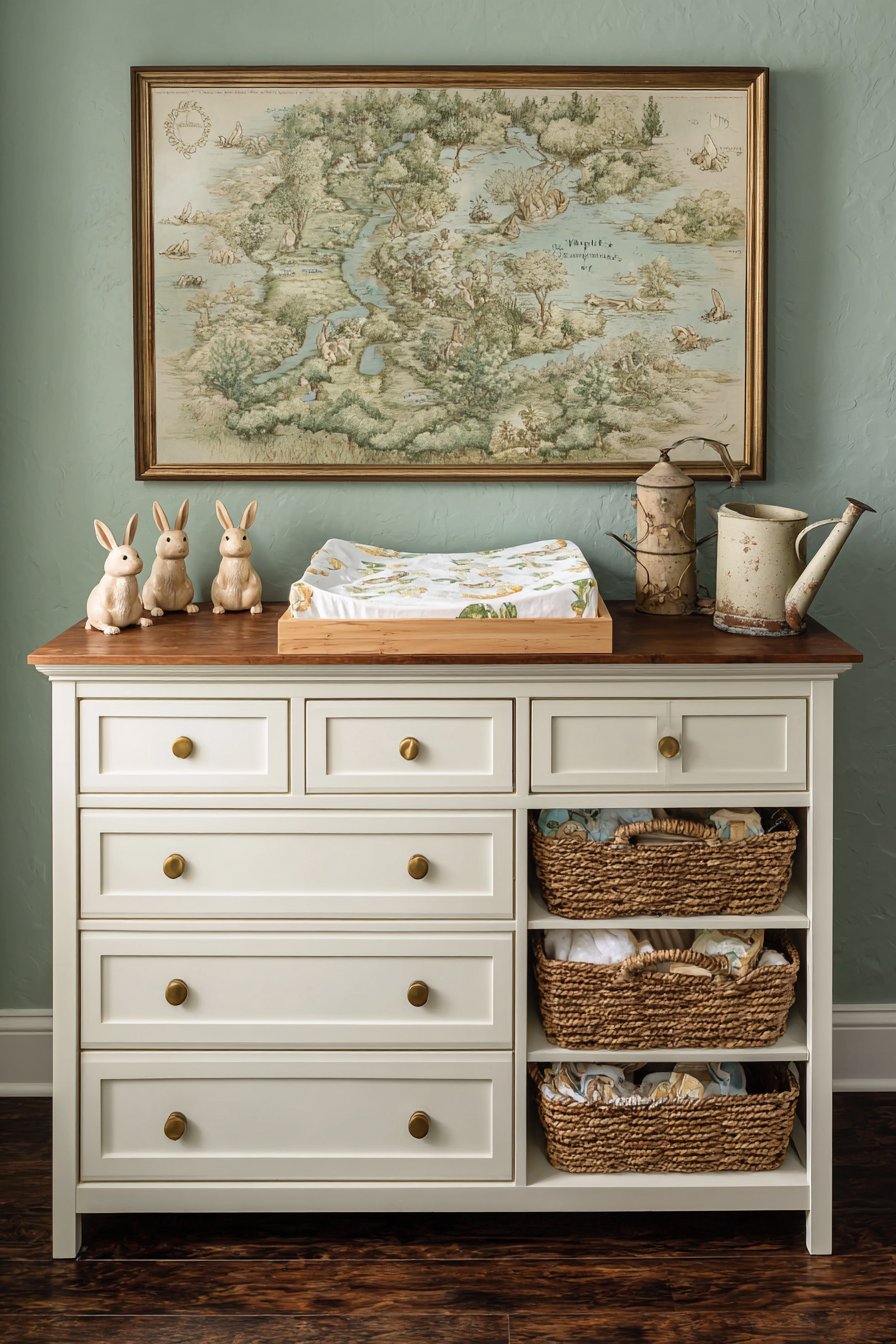
Practicality meets whimsy in this thoughtfully designed changing station. A white wooden dresser with brass knob hardware provides ample storage for baby essentials. The classic furniture piece serves double duty as a changing table surface. A natural wood changing pad sits securely on top with woven baskets containing diapers nearby. The organization keeps everything within arm’s reach during diaper changes.
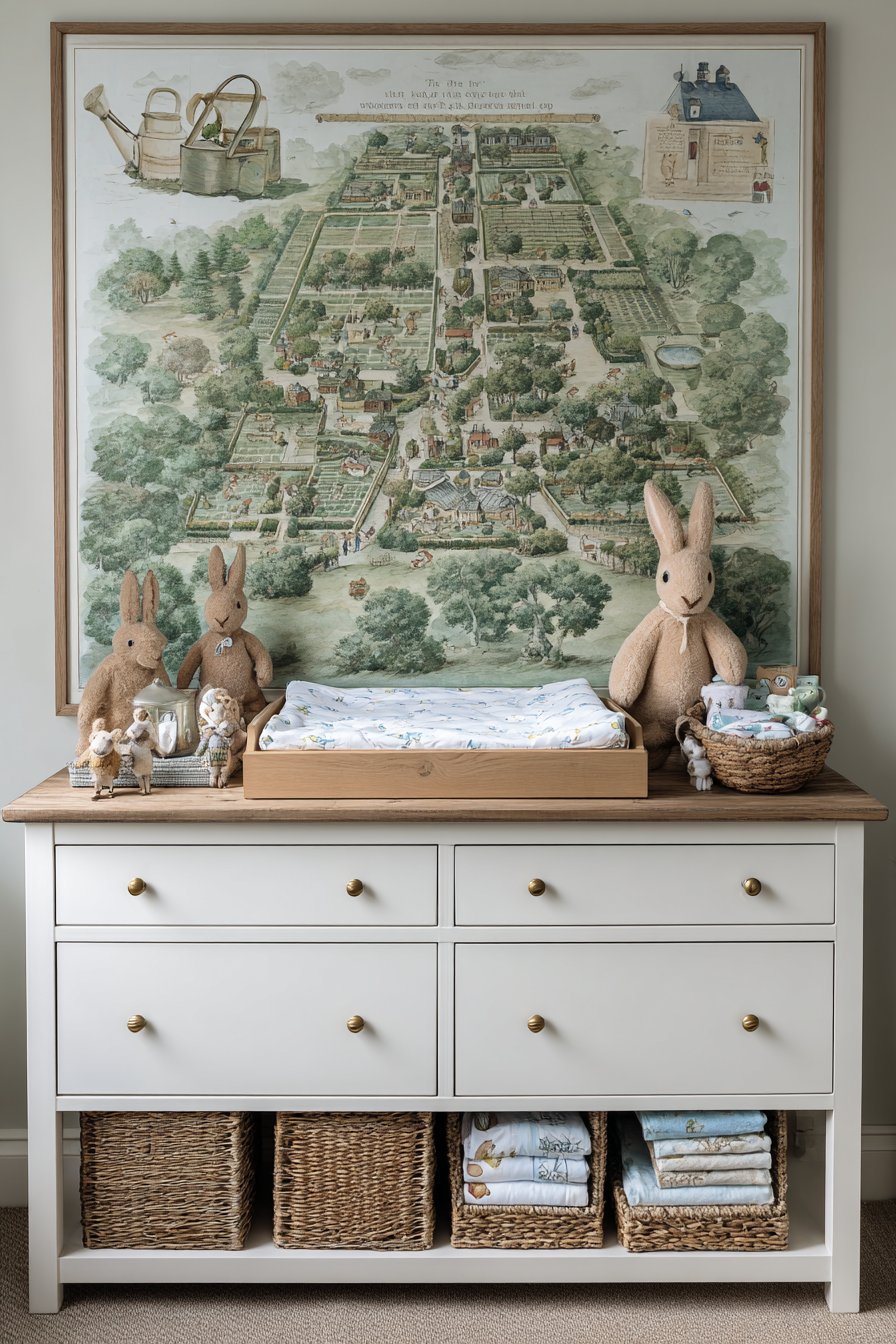
The wall above features a large custom Peter Rabbit garden map illustration. Muted greens and blues create a soothing backdrop during changing times. The map shows Mr. McGregor’s garden with illustrated paths and vegetable patches. This decorative element provides visual interest during potentially fussy moments. The artistic detail gives babies something engaging to focus on.
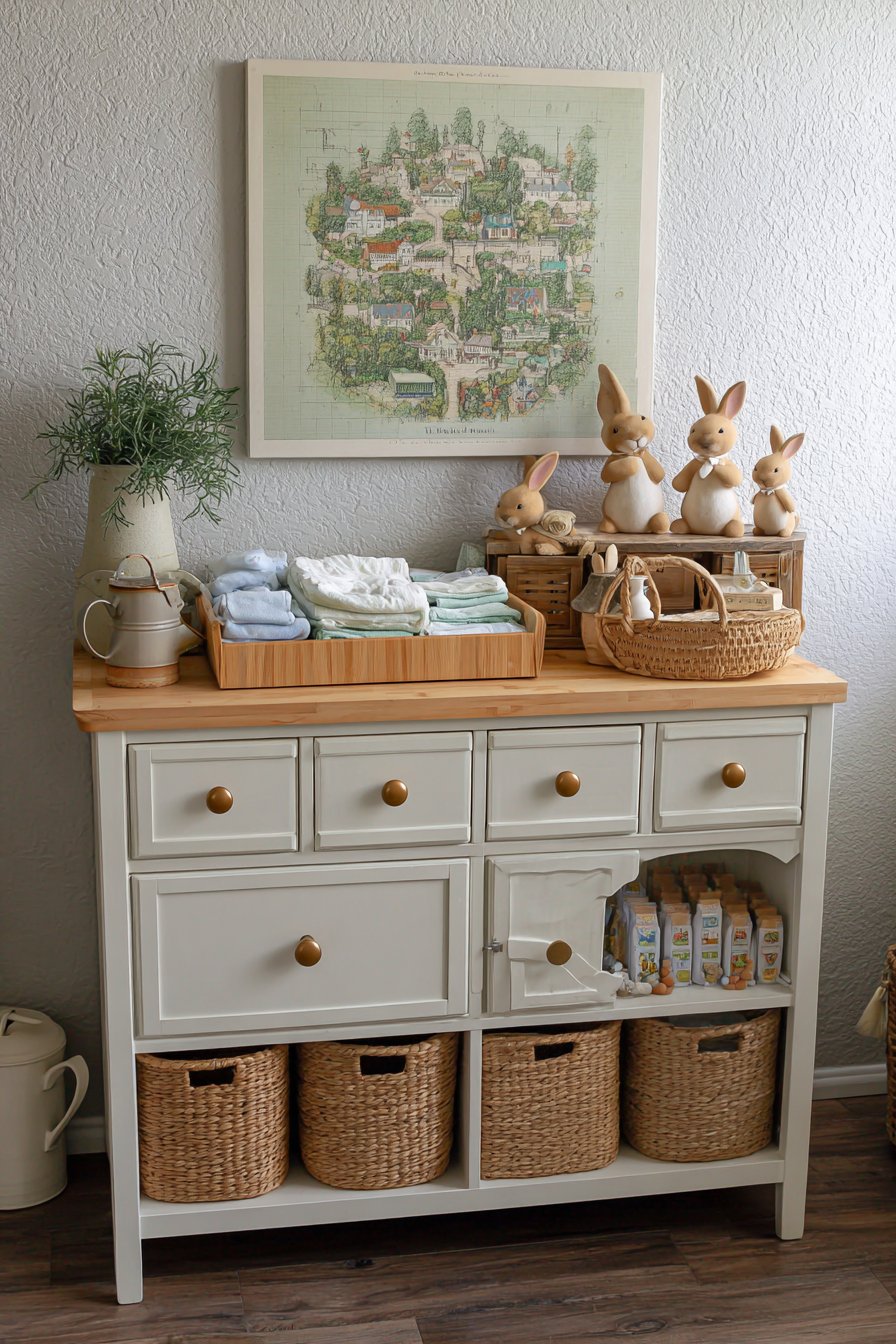
Small ceramic Peter Rabbit figurines dot the dresser top as decorative accents. These collectible pieces add personality without cluttering the functional workspace. A vintage-style watering can serves as both decoration and conversation starter. The brass hardware on the dresser coordinates with other metallic accents throughout the room. This attention to detail creates cohesion across different design elements.
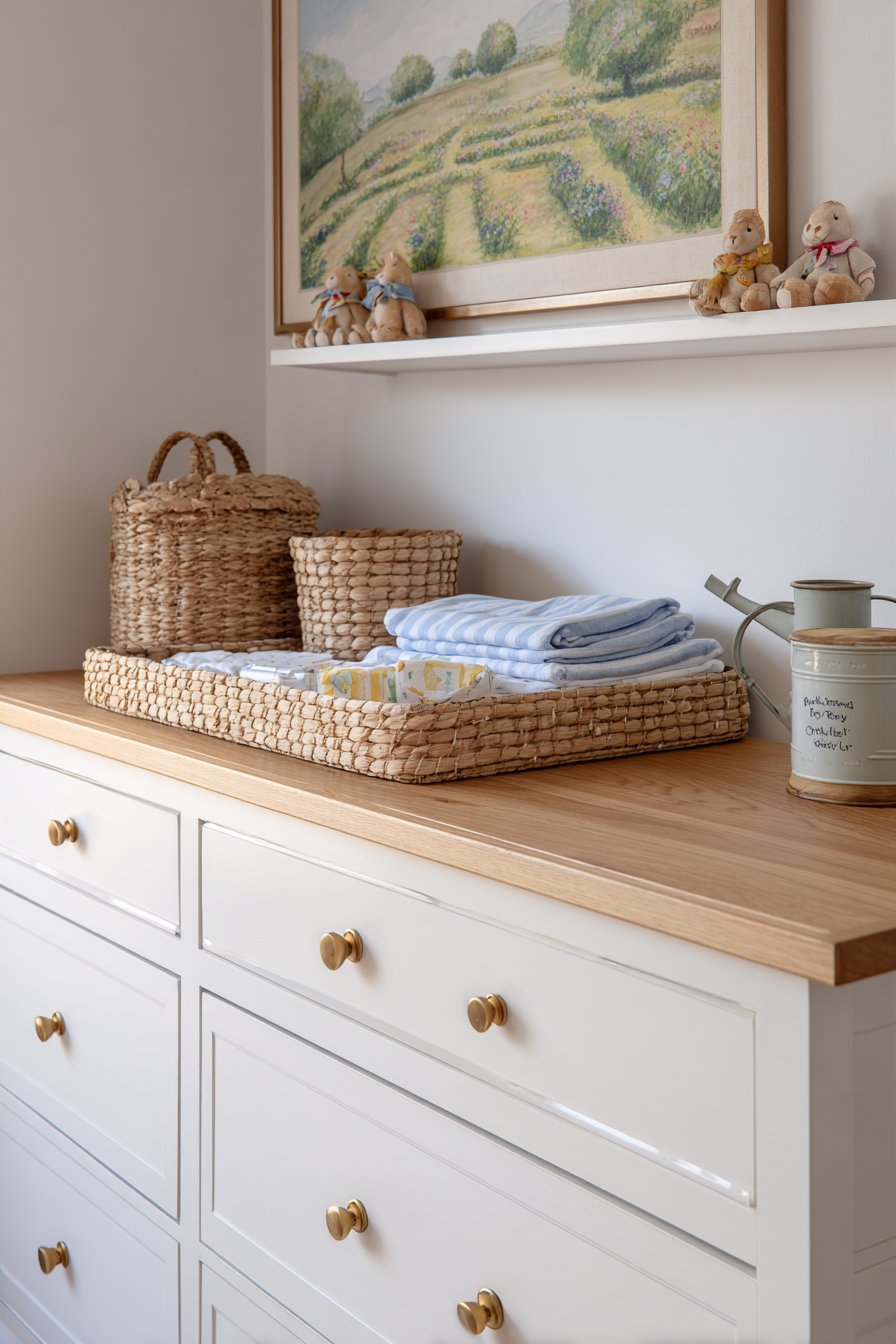
Natural light highlights the hand-painted details on the garden map beautifully. The illumination brings depth to the muted color palette. The varied wood tones between the dresser and changing pad add warmth and dimension. This practical area proves that functional spaces can maintain strong aesthetic appeal.
Key Design Tips:
- Select dressers with deep drawers to maximize storage for growing baby wardrobes
- Choose brass or bronze hardware to add warmth against white painted surfaces
- Commission custom artwork sized appropriately for the wall space above furniture
- Use woven baskets to corral small items while maintaining the natural aesthetic
- Secure the changing pad with non-slip material to ensure safety during use
- Keep decorative items toward the back of the dresser away from baby’s reach
4. Window Treatment with Embroidered Garden Details
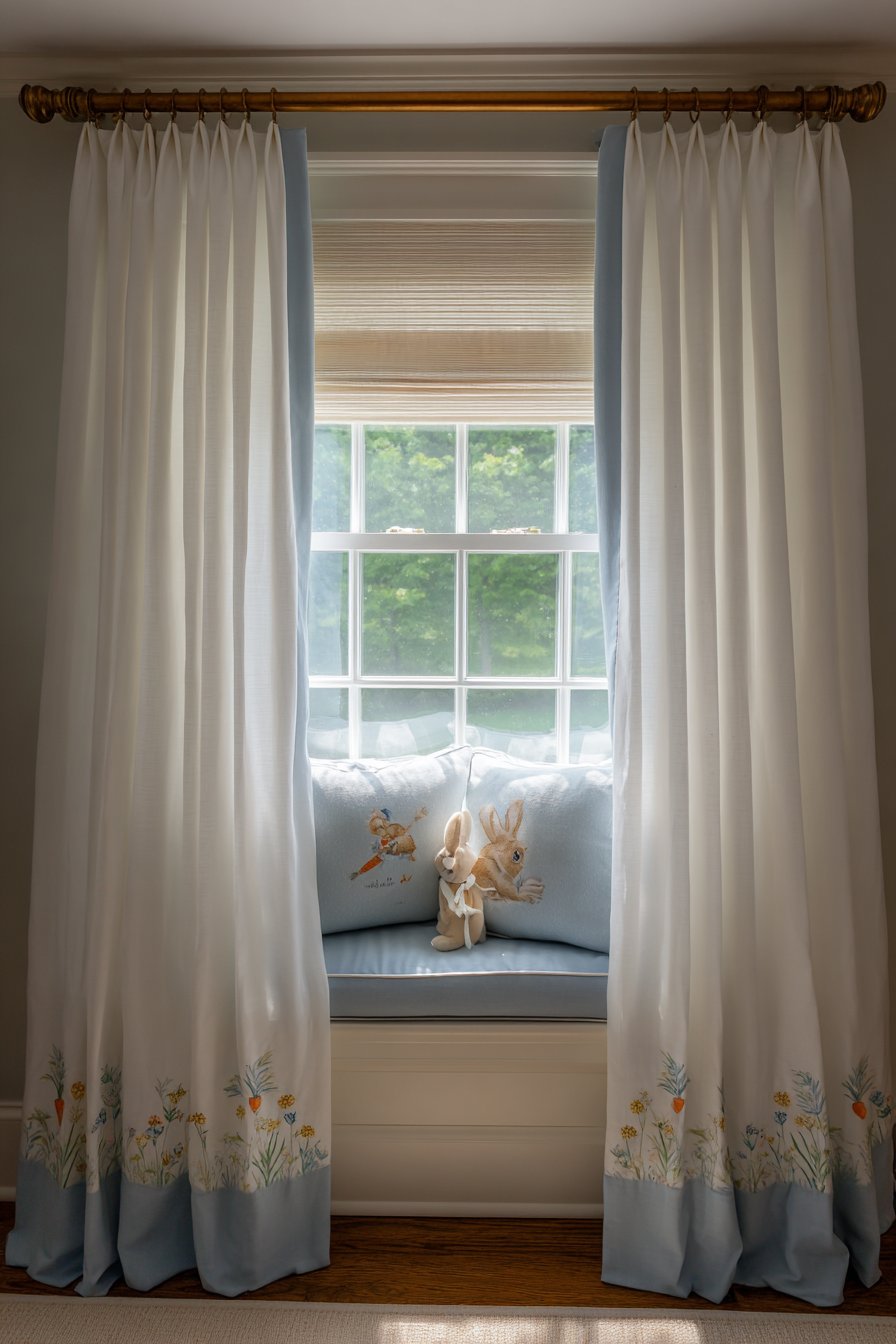
Floor-length white linen curtains bring elegant simplicity to this nursery window. The natural fabric filters light beautifully while maintaining privacy. A subtle embroidered carrot and radish border detail runs along the bottom hem. This delicate touch connects the window treatment to the overall Peter Rabbit theme. The embroidery adds interest without overwhelming the clean design lines.
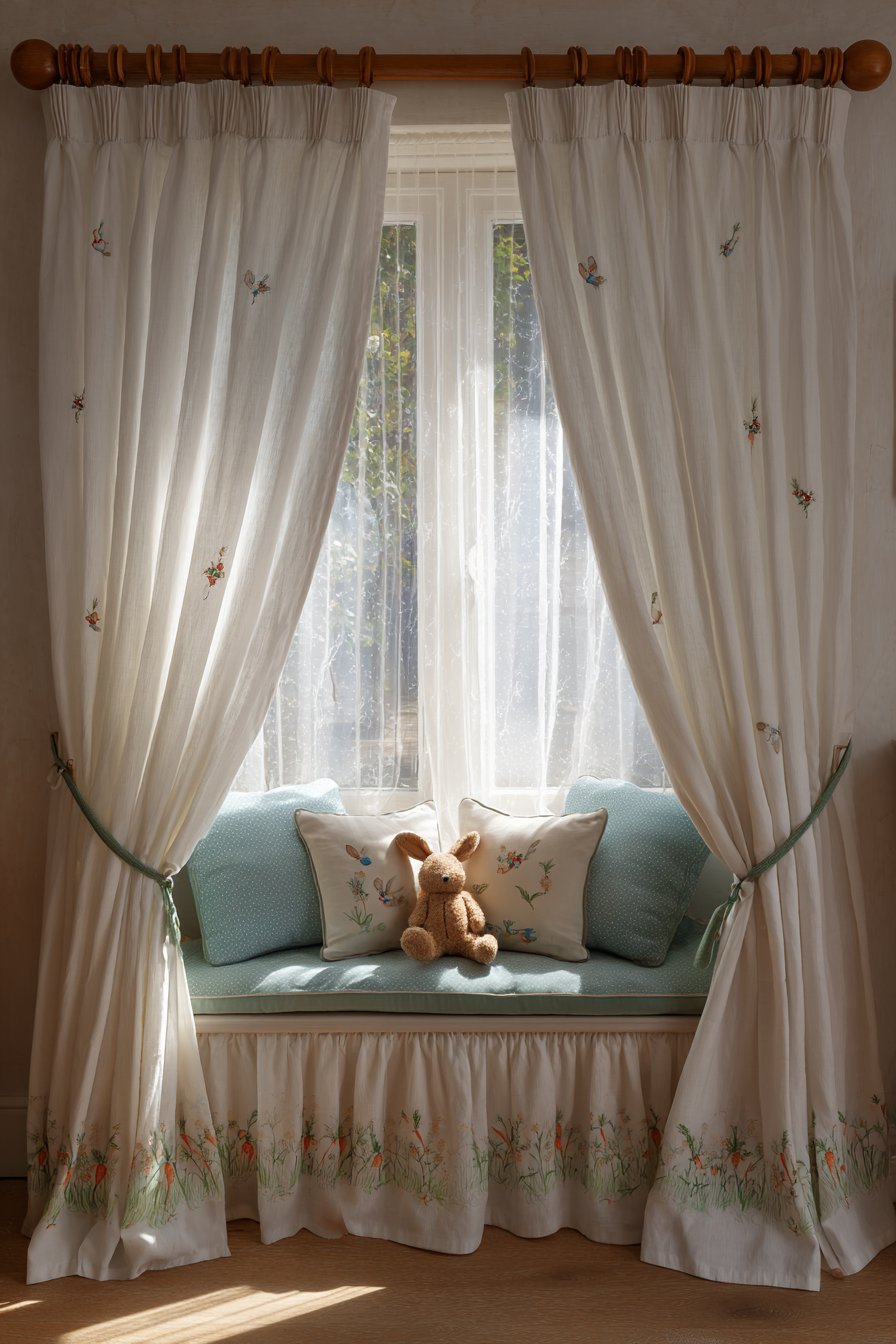
A natural wood curtain rod with simple brass finials spans the window width. The hardware choice complements other brass elements throughout the room. Sage green fabric tiebacks pull the curtains to either side gracefully. These tiebacks add a pop of color while serving practical function. The exposed window reveals a cushioned window seat beneath.
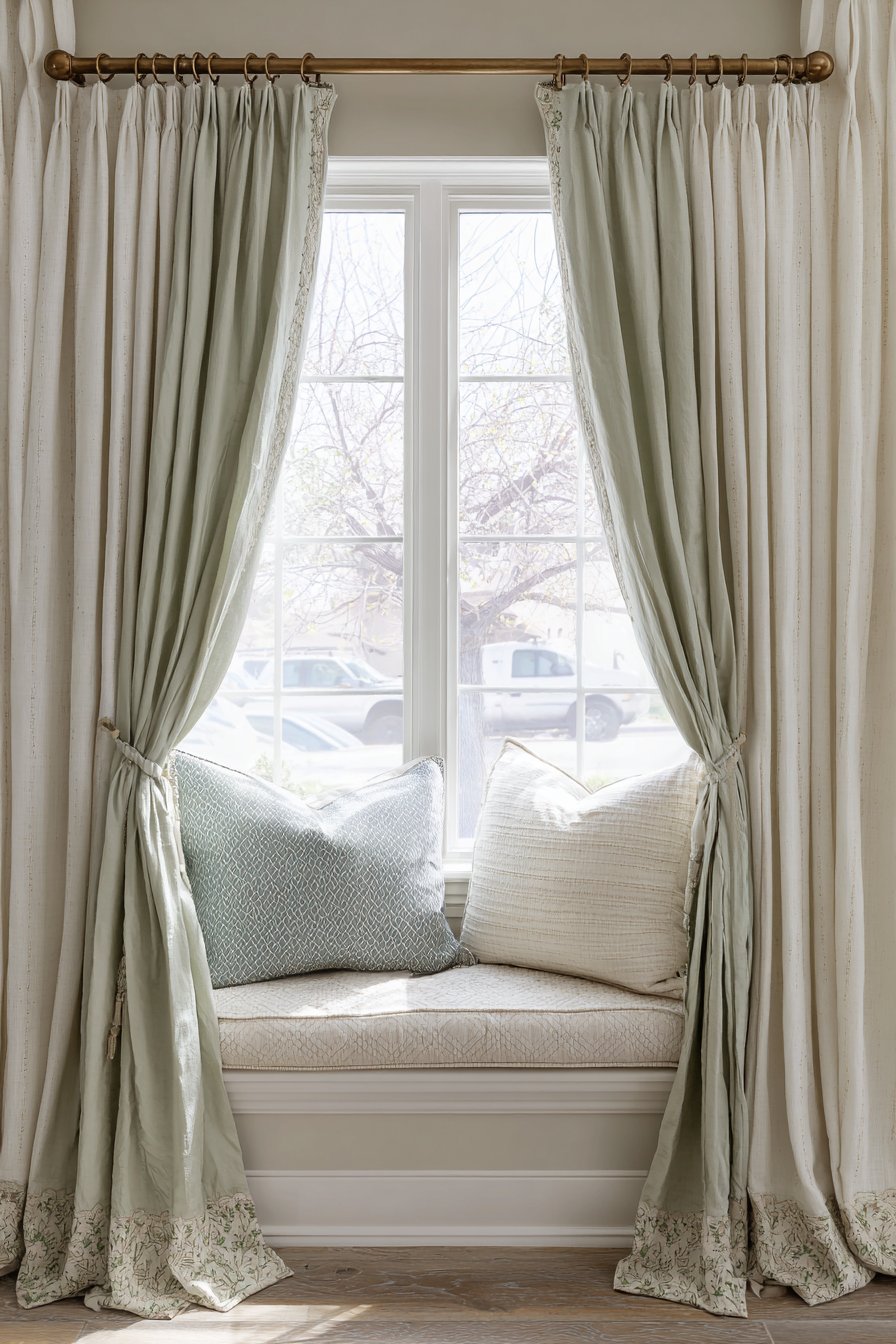
The window seat features Peter Rabbit themed throw pillows in soft blues and creams. These comfortable cushions create an additional seating area in the nursery. The seat becomes a perfect spot for older siblings or visiting family members. Morning light filters through creating a gentle glow across the fabric surfaces. The natural illumination enhances the embroidery details and fabric textures beautifully.
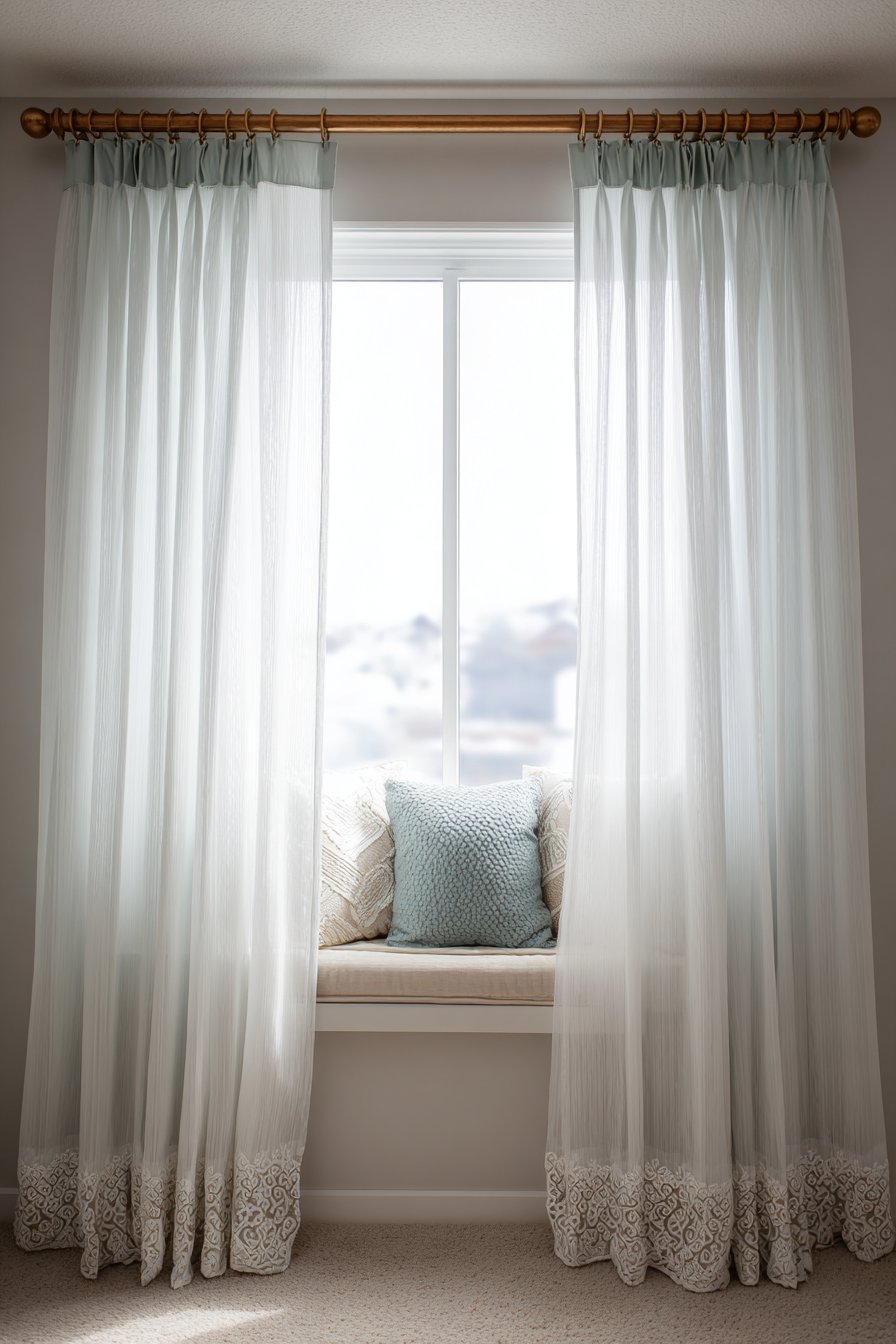
The layered window treatment adds depth and dimension to the wall. The combination of curtains, tiebacks, and seat cushions creates visual interest. This design element demonstrates how functional items can enhance overall room aesthetics. The window area becomes a destination within the nursery rather than mere background.
Key Design Tips:
- Choose linen curtains in white or cream to maximize natural light transmission
- Add custom embroidery to ready-made curtains for personalized touches
- Select curtain rods in natural wood to maintain the organic material palette
- Install tiebacks at appropriate height to create elegant draping curves
- Use window seat cushions with removable covers for easy cleaning
- Layer throw pillows in varying sizes for comfortable seating arrangements
5. Vintage Gallery Wall with Mixed Frame Styles
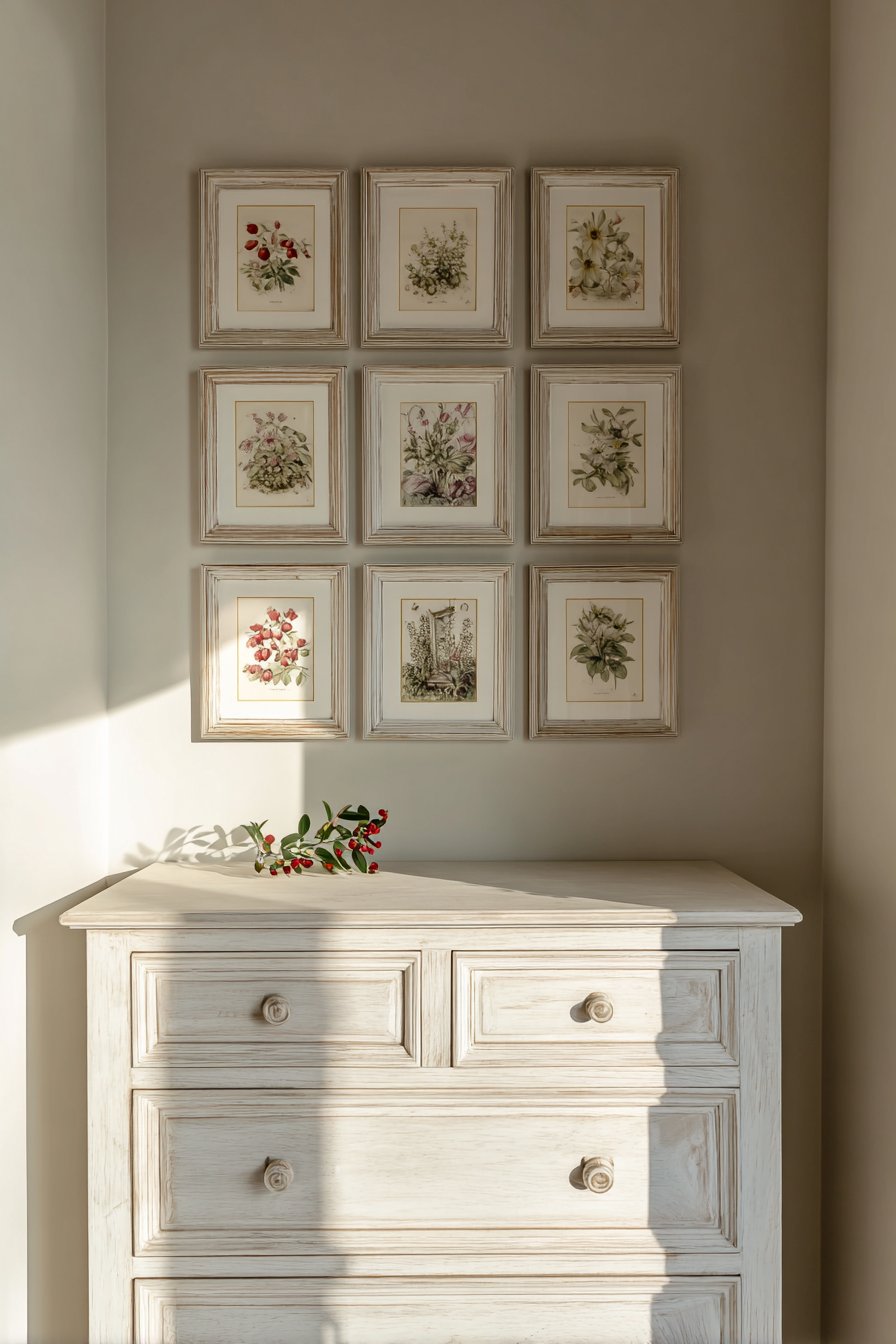
This wall gallery showcases vintage Beatrix Potter Peter Rabbit book illustrations beautifully. Mismatched antique-style frames create an organic, collected-over-time appearance. The frames feature distressed white and natural wood finishes that complement each other. Each illustration depicts different Peter Rabbit garden scenes with muted watercolor tones. The varying frame sizes create visual interest and dynamic composition.
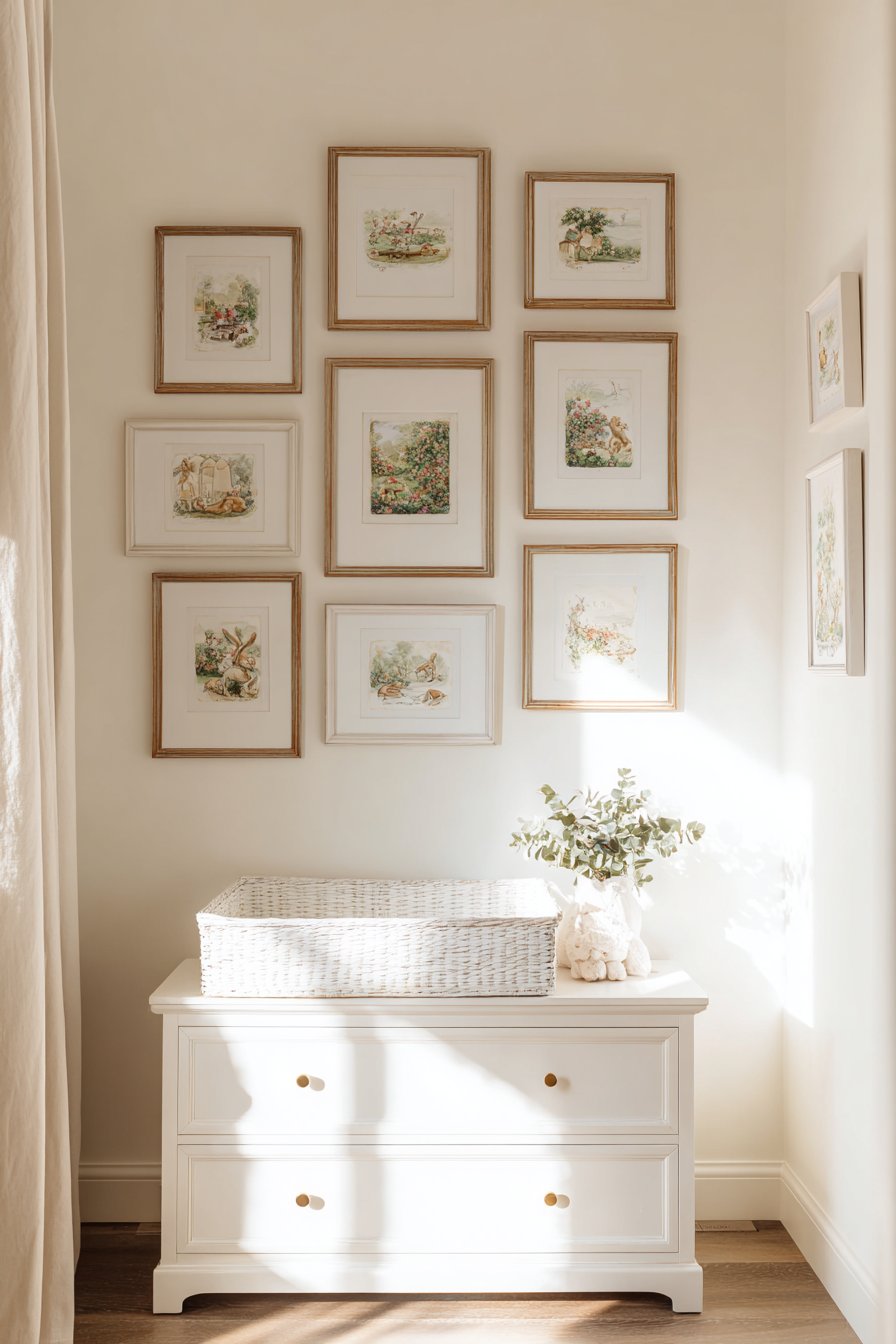
The gallery arrangement sits above a simple white wooden toy chest. This placement creates a cohesive vertical design element in the nursery. The toy chest provides practical storage while serving as the gallery’s visual anchor. Each framed illustration represents a different moment from the classic tale. The sequential storytelling adds narrative depth to the decorative display.
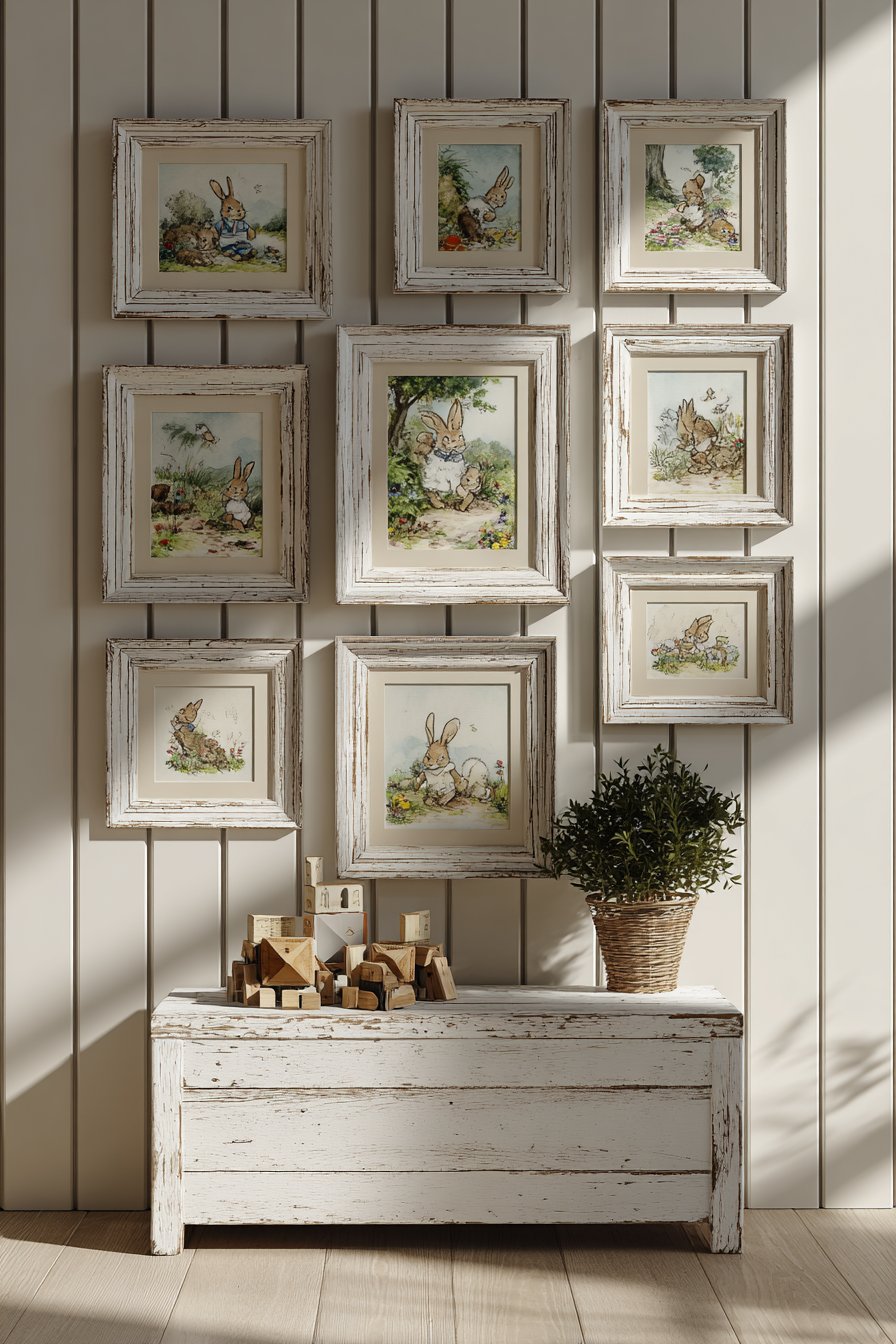
Soft natural lighting from the side creates gentle shadows emphasizing frame textures. The illumination brings depth to the gallery wall arrangement. The shadow play adds dimension that flat lighting cannot achieve. The distressed frame finishes catch light differently throughout the day. This creates an ever-changing visual display that rewards repeated viewing.
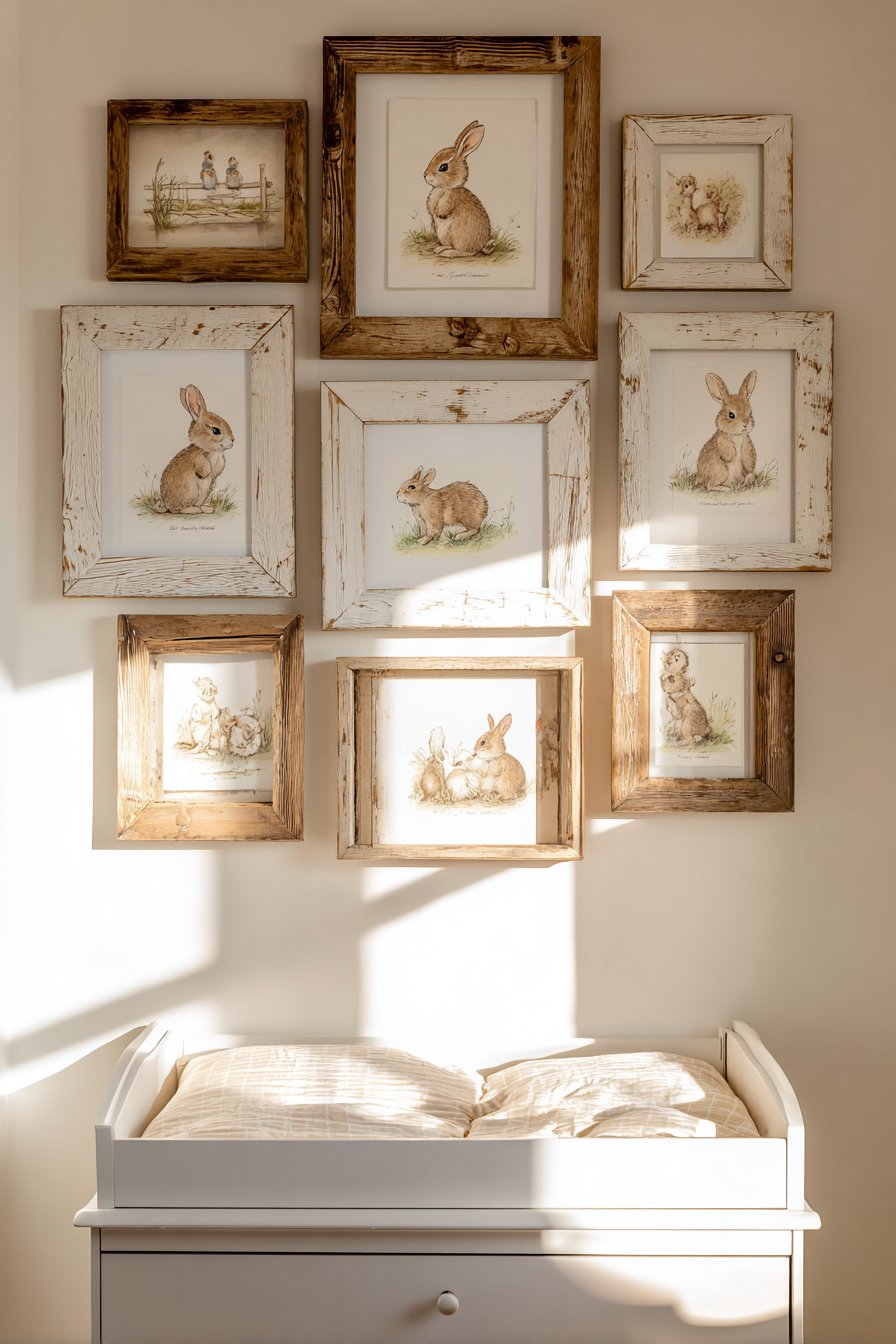
The literary heritage shines through in this carefully curated presentation. The vintage aesthetic connects the nursery to the timeless quality of the original books. This design choice honors Beatrix Potter’s artistic legacy while creating modern nursery appeal. The gallery becomes an heirloom-quality installation that can move through generations.
Key Design Tips:
- Collect frames gradually from antique stores and estate sales for authentic vintage appeal
- Mix frame sizes but maintain consistent color palette of whites and natural woods
- Arrange frames on the floor before hanging to perfect the composition
- Use museum-quality mats to protect valuable vintage illustrations from direct contact with glass
- Hang the gallery at adult eye level for best viewing and appreciation
- Leave adequate spacing between frames to allow each piece individual attention
6. Handcrafted Mobile with Garden Vegetables
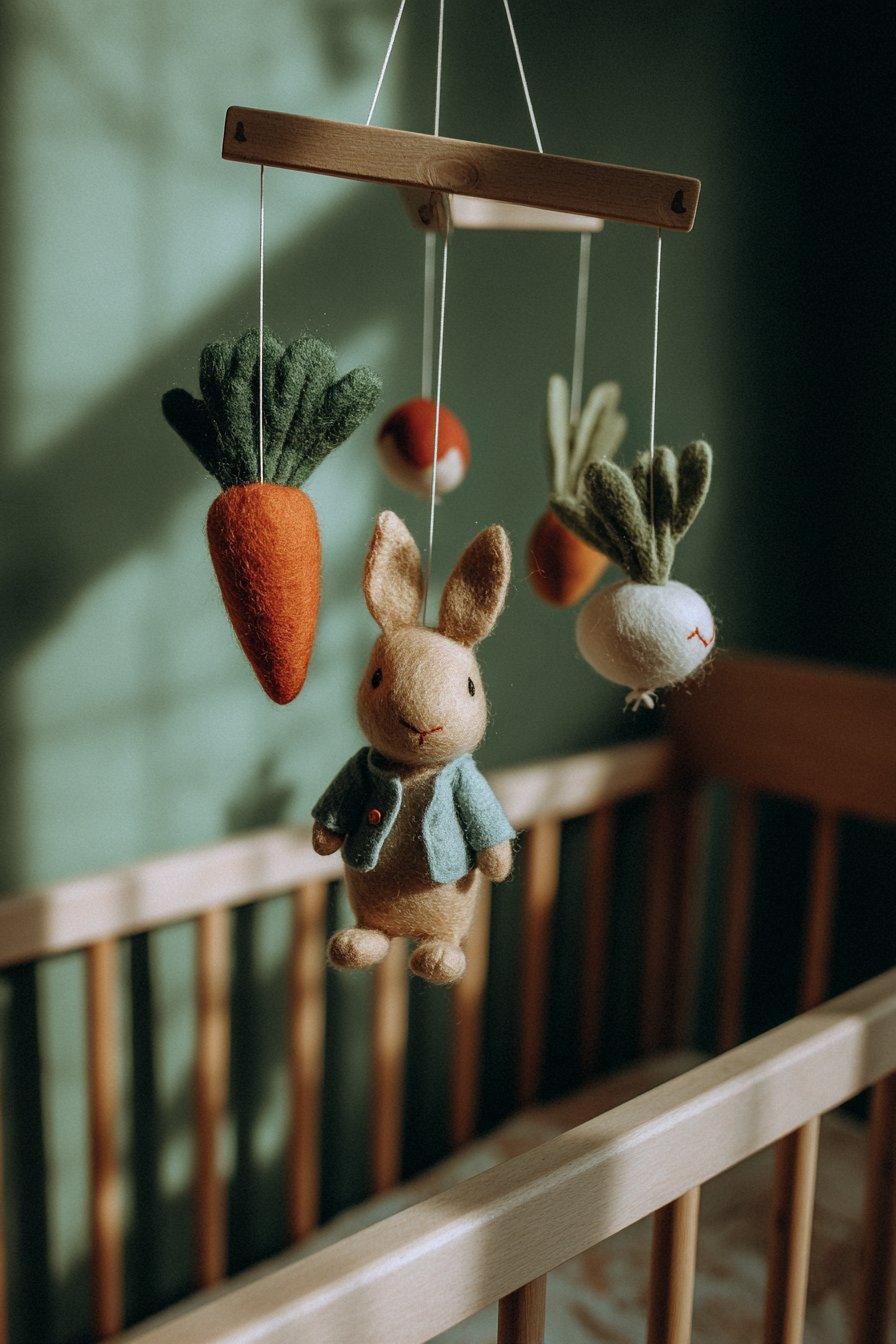
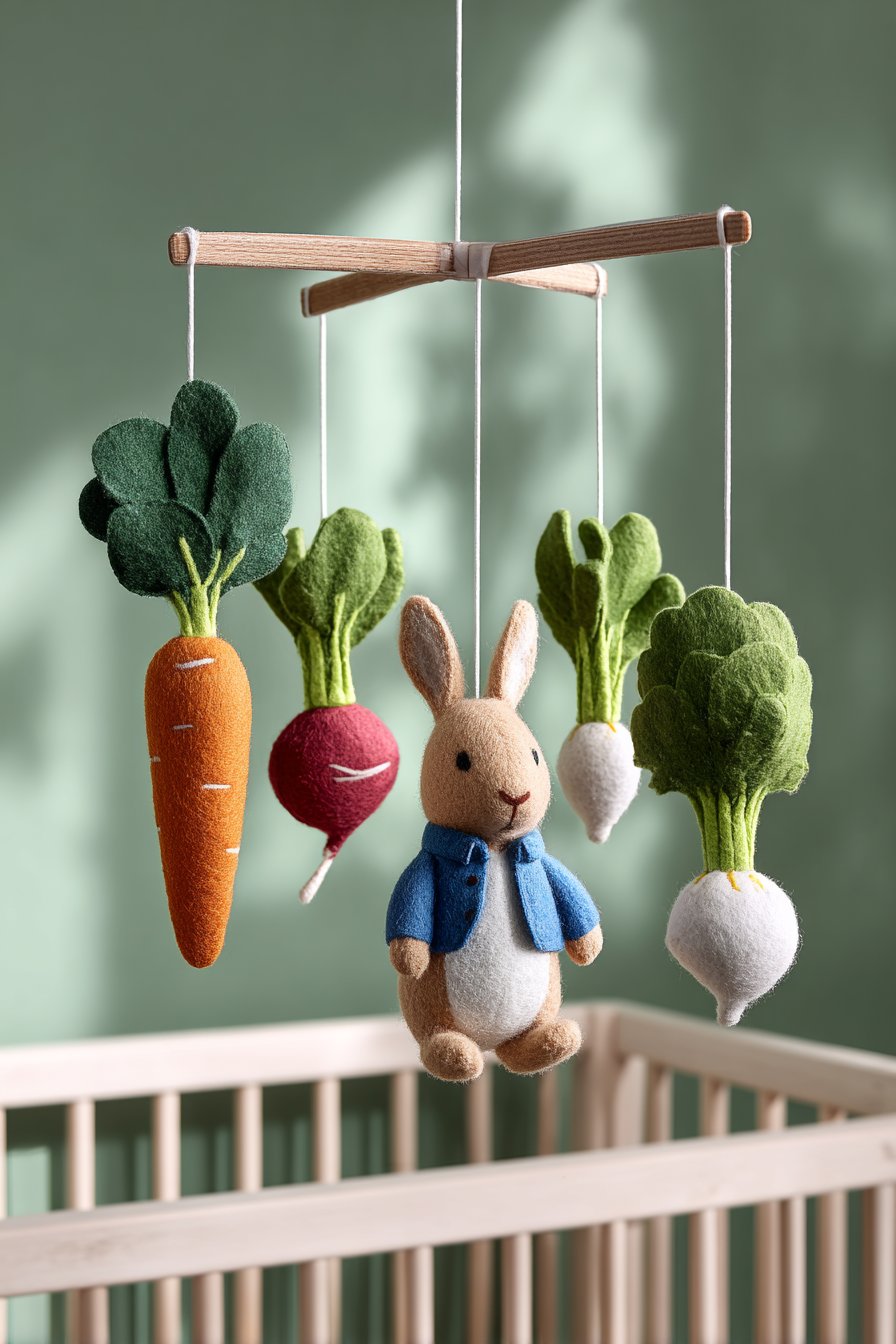
A charming handcrafted mobile hangs above the white wooden crib as a focal point. Hand-stitched felt vegetables include carrots, radishes, and lettuce in realistic colors. The central Peter Rabbit figure wears his iconic blue jacket recognizable from the stories. The mobile structure uses natural birch wood for organic appeal. White cotton string suspends the elements at varying heights for visual interest.
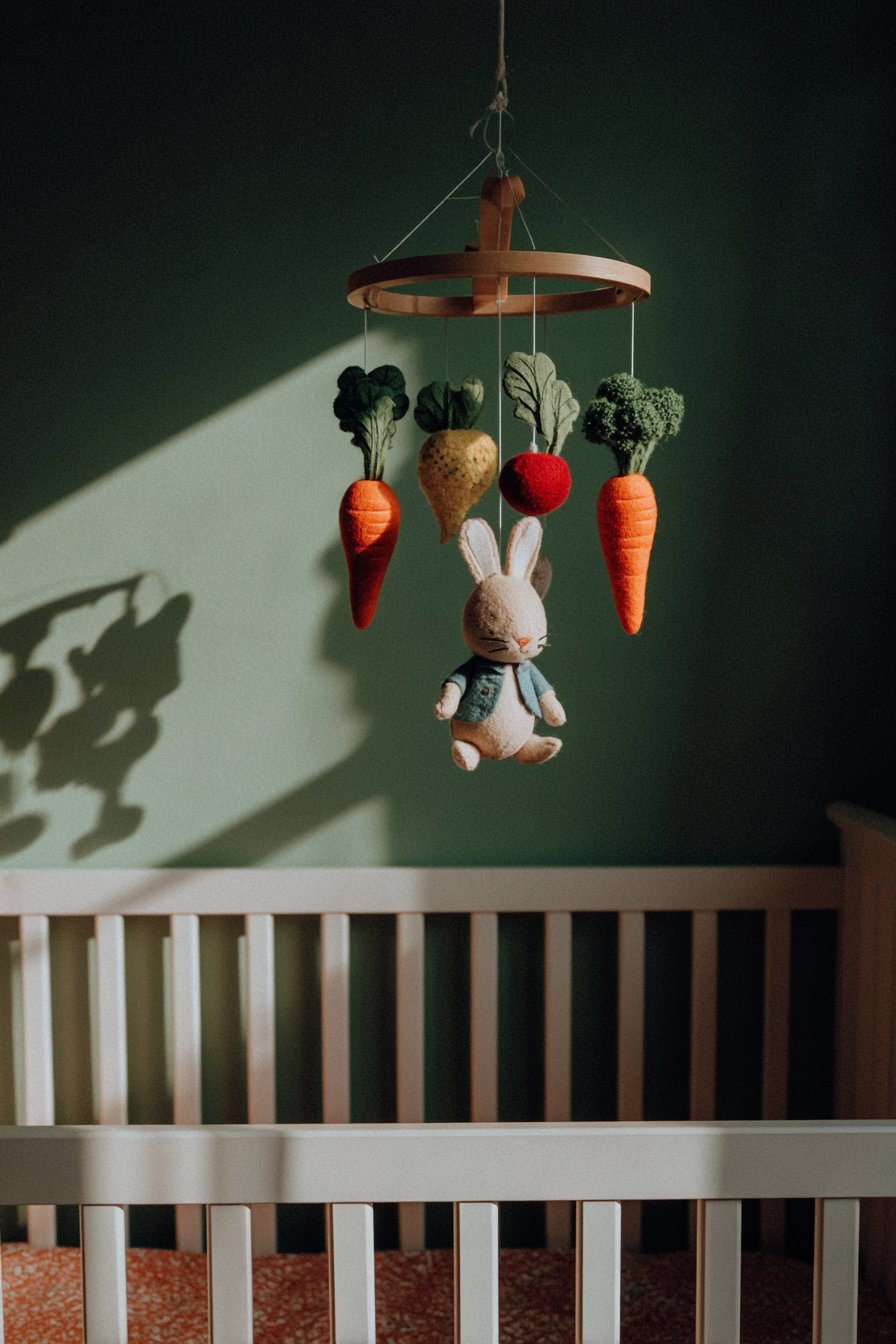
The handcrafted quality distinguishes this mobile from mass-produced alternatives. Each felt piece shows careful stitching and attention to detail. The vegetables display dimensional construction rather than flat cutouts. This craftsmanship creates shadows and depth as the mobile rotates. The movement captures baby’s attention during awake time in the crib.
Soft diffused natural light from a nearby window creates gentle shadows on the wall. The mobile’s movement casts shifting shadows that provide gentle visual stimulation. The sage green wall behind allows the colorful felt pieces to stand out. The white and natural wood elements coordinate with surrounding furniture pieces beautifully. This creates cohesion between the mobile and the broader room design.
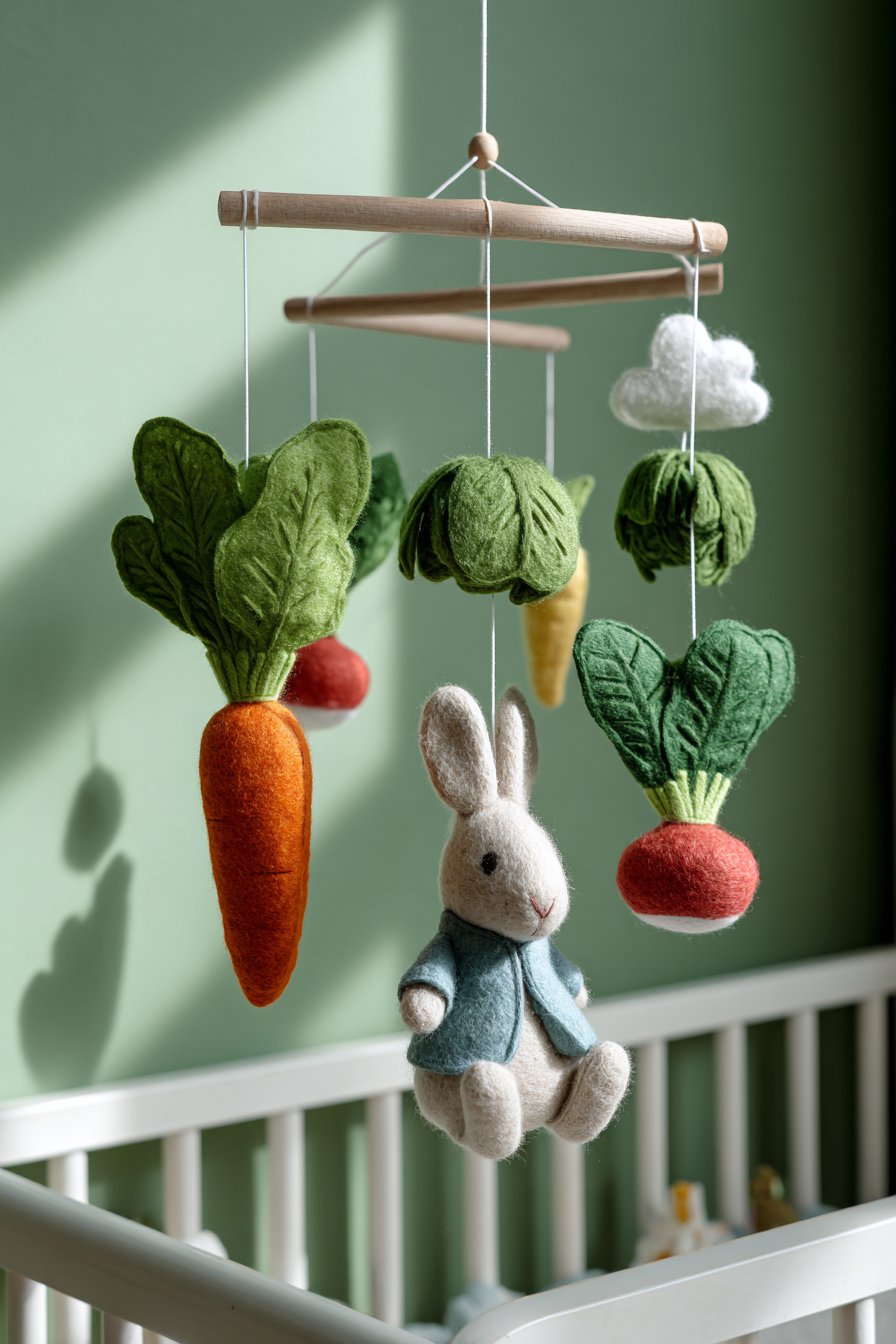
The mobile serves both decorative and developmental purposes in the nursery. The contrasting colors and shapes stimulate developing vision during early months. The gentle movement encourages visual tracking skills. The garden theme connects the crib area to the overall room narrative. This practical decoration demonstrates thoughtful design that serves multiple purposes.
Key Design Tips:
- Choose handcrafted mobiles over plastic alternatives for better aesthetic quality
- Ensure mobile components are securely attached and cannot detach into the crib
- Hang mobiles at appropriate height above the crib for safe viewing distance
- Select felt in colors that coordinate with the overall nursery palette
- Position mobiles to catch natural light for interesting shadow effects
- Remove mobiles once babies can sit up or reach overhead for safety
7. Changing Station with Watercolor Mural Backdrop
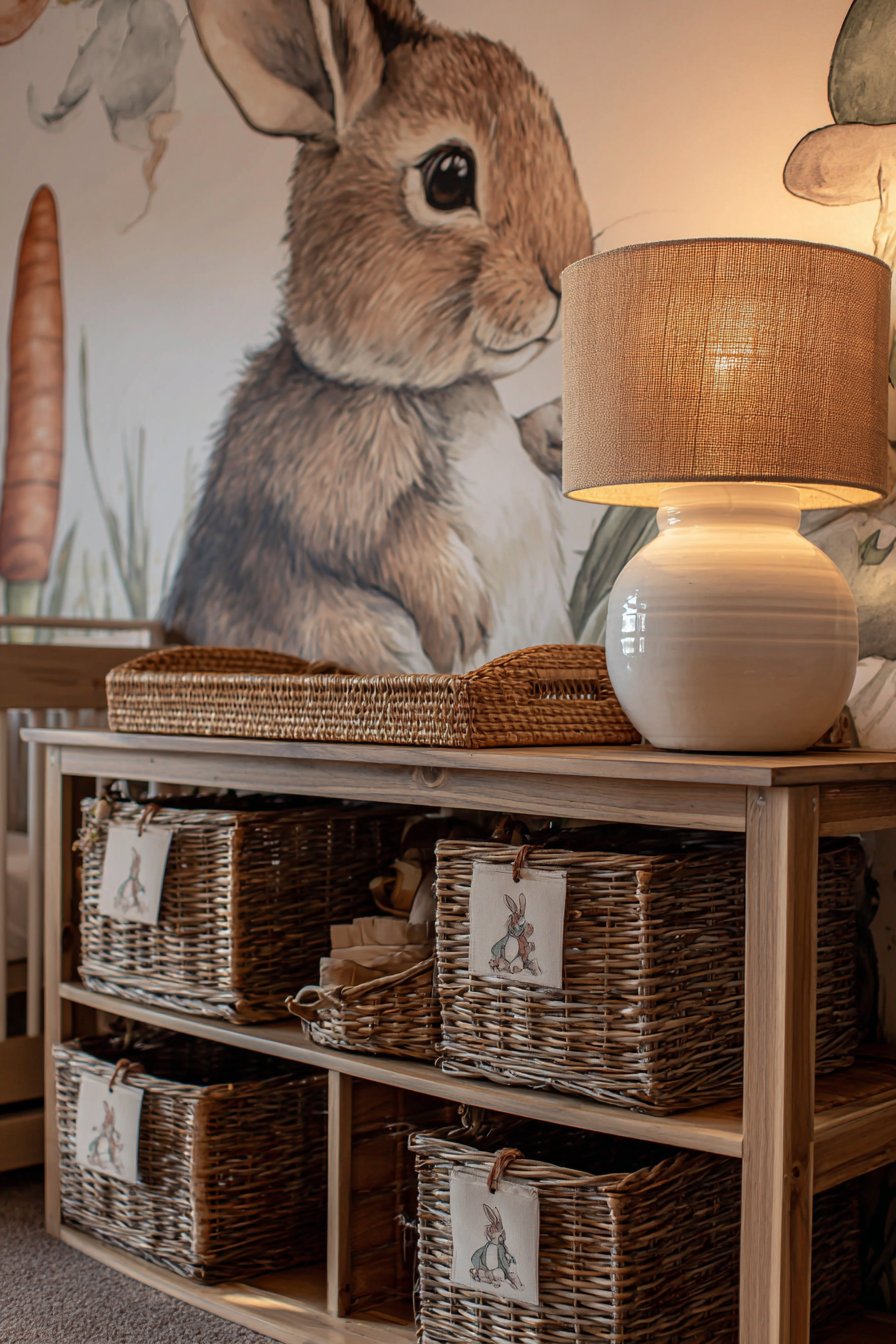
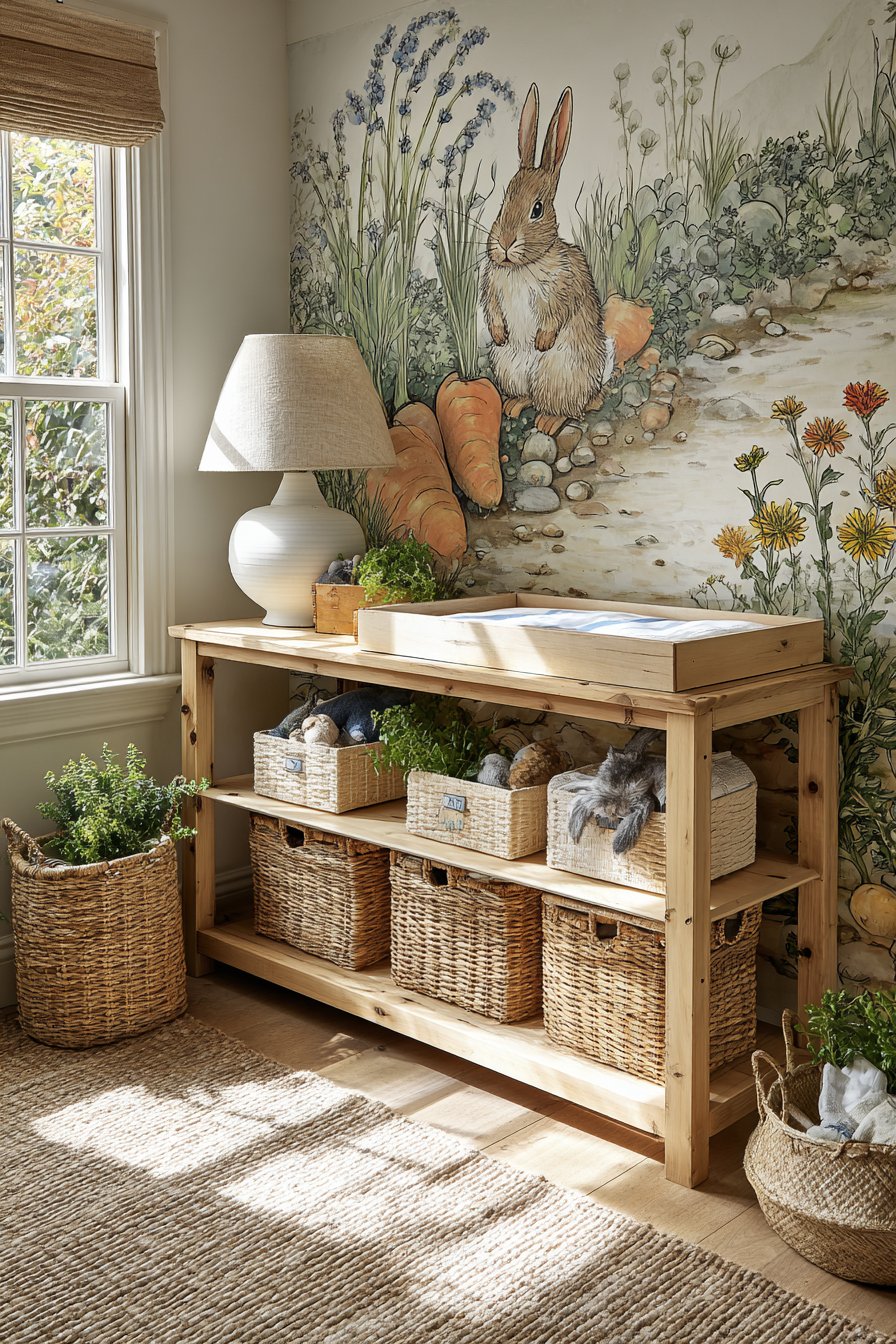
This dedicated changing station features a natural pine changing table with practical design. Open shelving below stores wicker baskets labeled with fabric tags. Each tag displays Peter Rabbit illustrations for charming organization. The baskets keep diapers, wipes, and changing supplies within easy reach. The open design allows quick access during busy diaper changes.
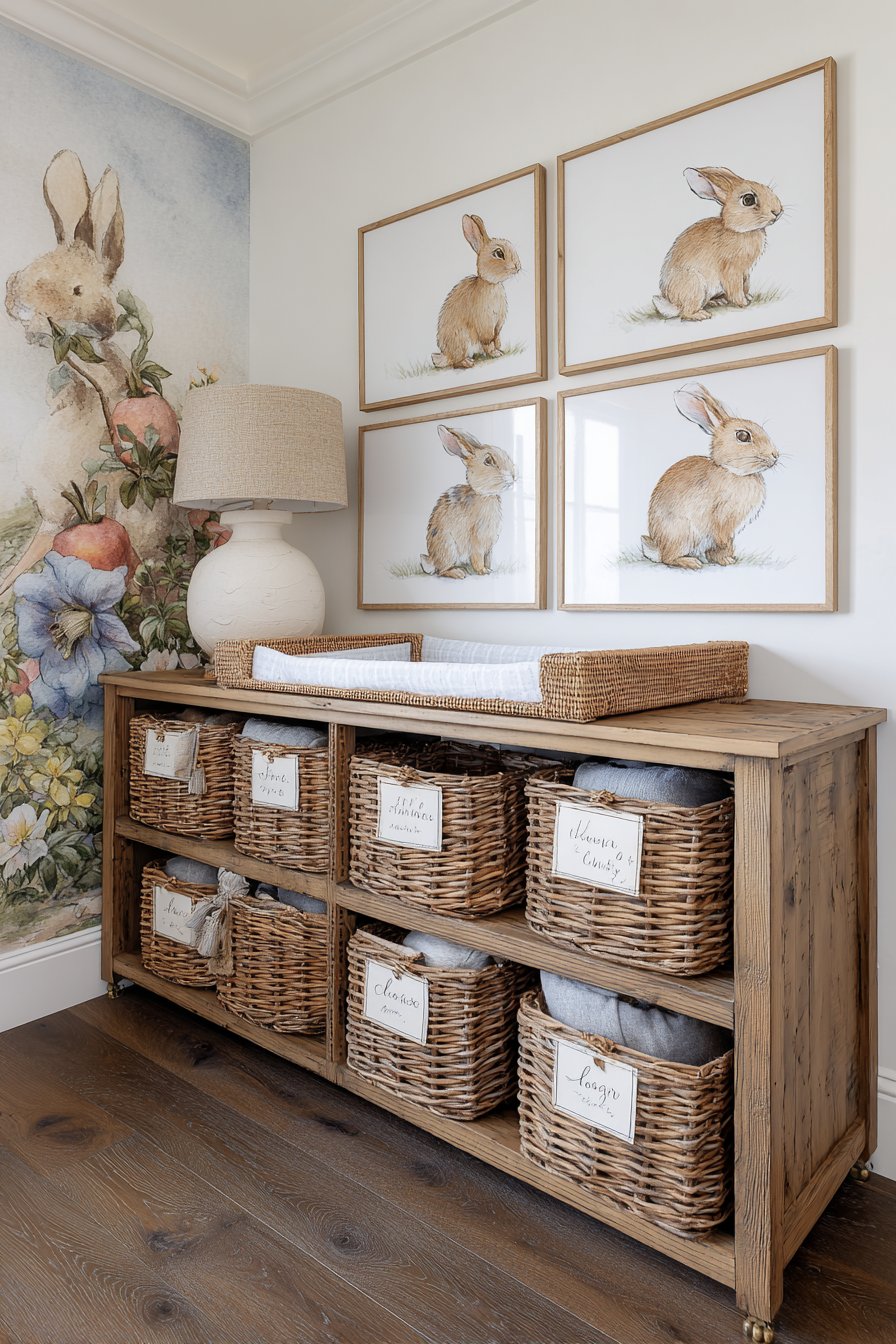
The wall behind showcases a large-scale Peter Rabbit garden mural in soft watercolors. Peter appears among oversized vegetables and flowers creating an immersive backdrop. The soft watercolor style maintains calming qualities appropriate for the nursery. The oversized scale makes the details visible from across the room. This mural becomes the changing station’s defining feature and conversation piece.
A white ceramic lamp with a burlap shade provides task lighting for nighttime changes. The lamp sits securely on the changing table within reach but away from baby. The burlap shade diffuses light softly reducing harsh shadows. The neutral tone coordinates with the natural materials throughout the space. The lighting ensures safe, well-lit diaper changes at any hour.
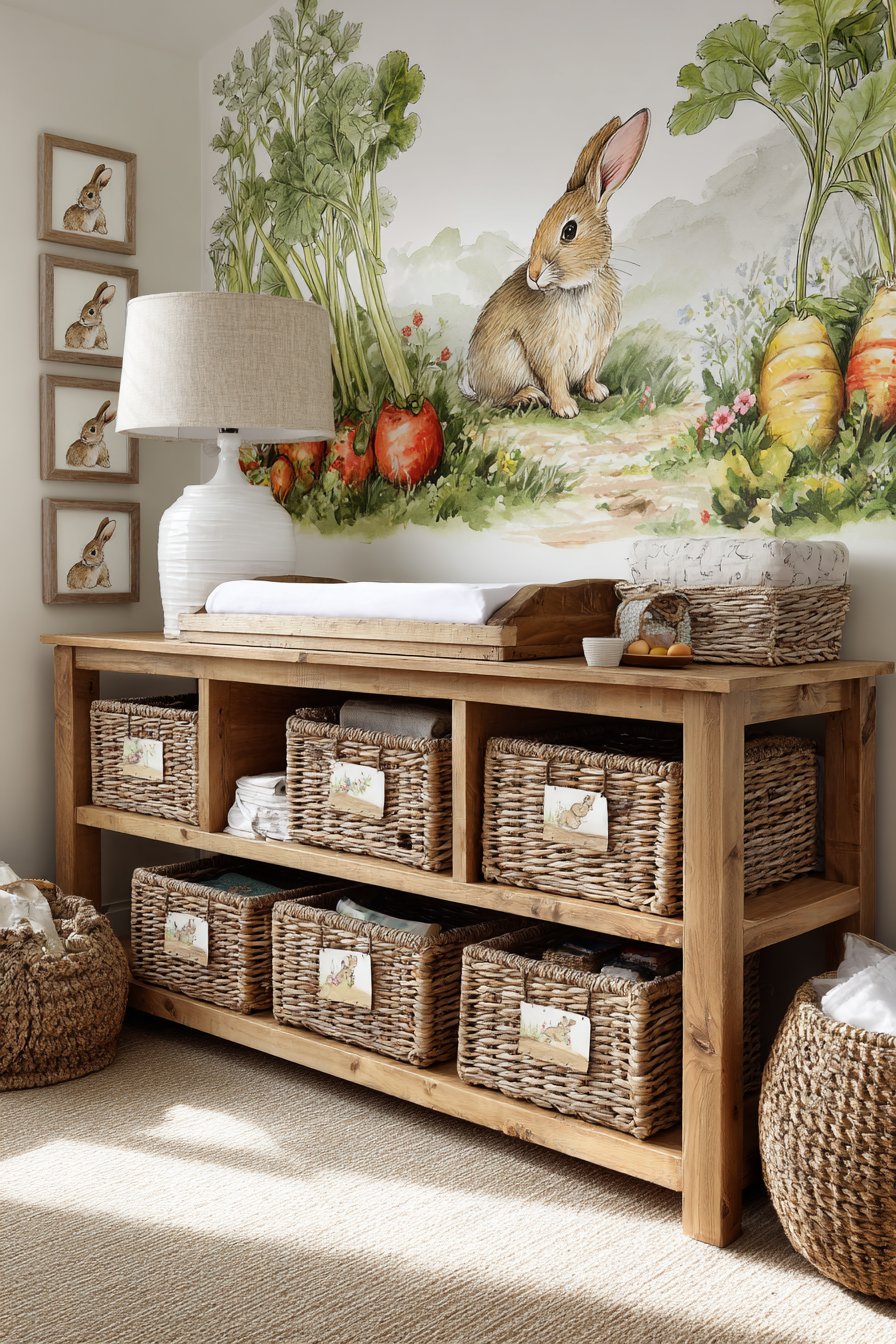
Natural daylight creates soft highlights on the pine wood grain during daytime. The wood’s natural variations add warmth and organic beauty to the functional piece. The woven basket textures contrast beautifully with smooth painted walls. The combination of materials creates tactile and visual interest in this practical area.
Key Design Tips:
- Choose changing tables with safety rails on all sides for secure diaper changes
- Use wicker baskets to organize supplies by category for efficient access
- Commission murals in soft watercolors rather than bold graphics for calming effect
- Install task lighting that can dim for nighttime changes without disturbing sleep
- Keep frequently used items in the most accessible basket positions
- Select natural pine furniture that will patina beautifully over time
8. Floor Play Area with Cream Wool Rug
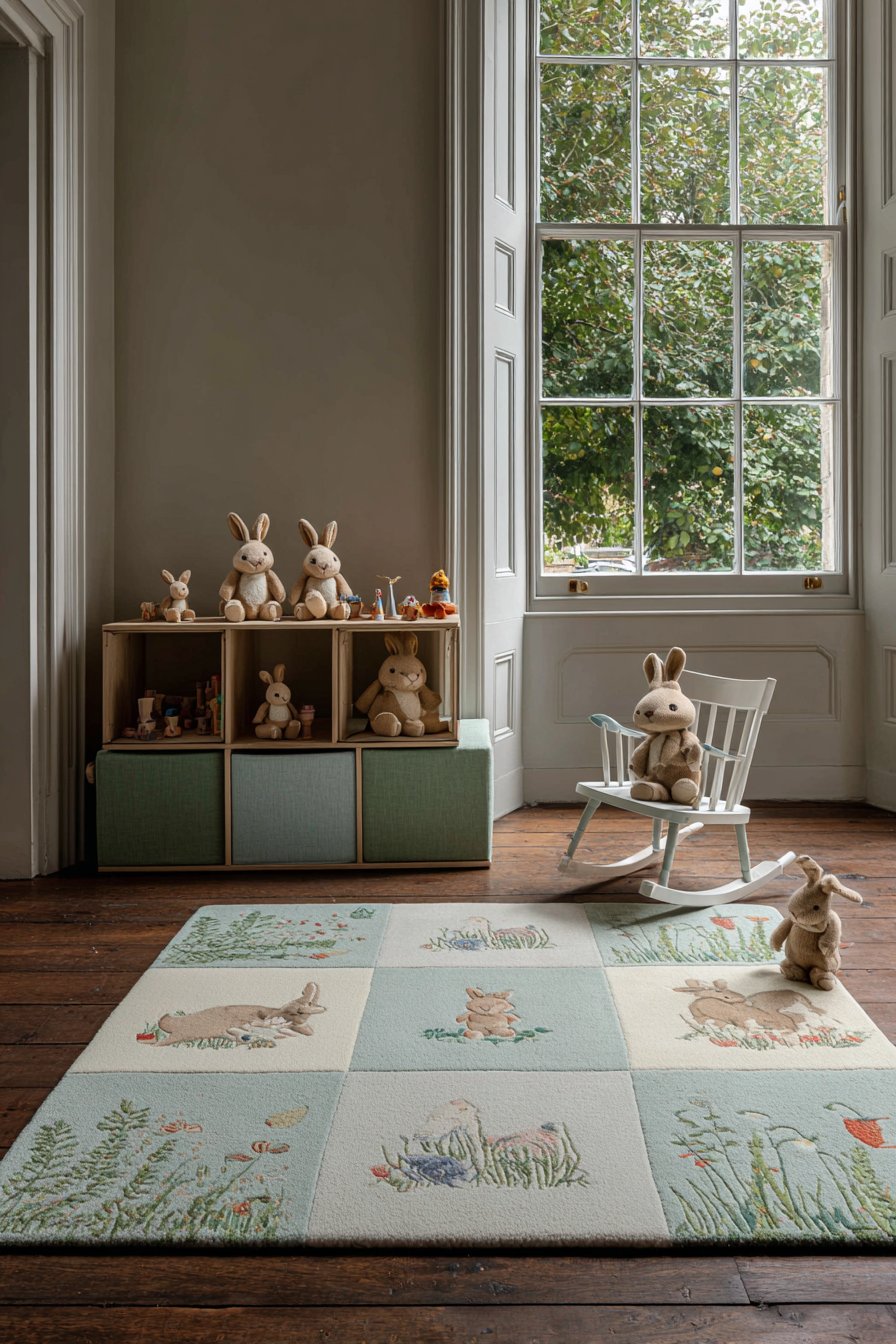
This dedicated floor play area centers on a thick cream wool rug. The rug features a subtle vegetable garden border pattern connecting to the theme. The plush surface provides comfortable cushioning for tummy time and early crawling. The natural wool fiber offers durability while remaining soft against delicate skin. The cream color provides a neutral backdrop that highlights colorful toys.
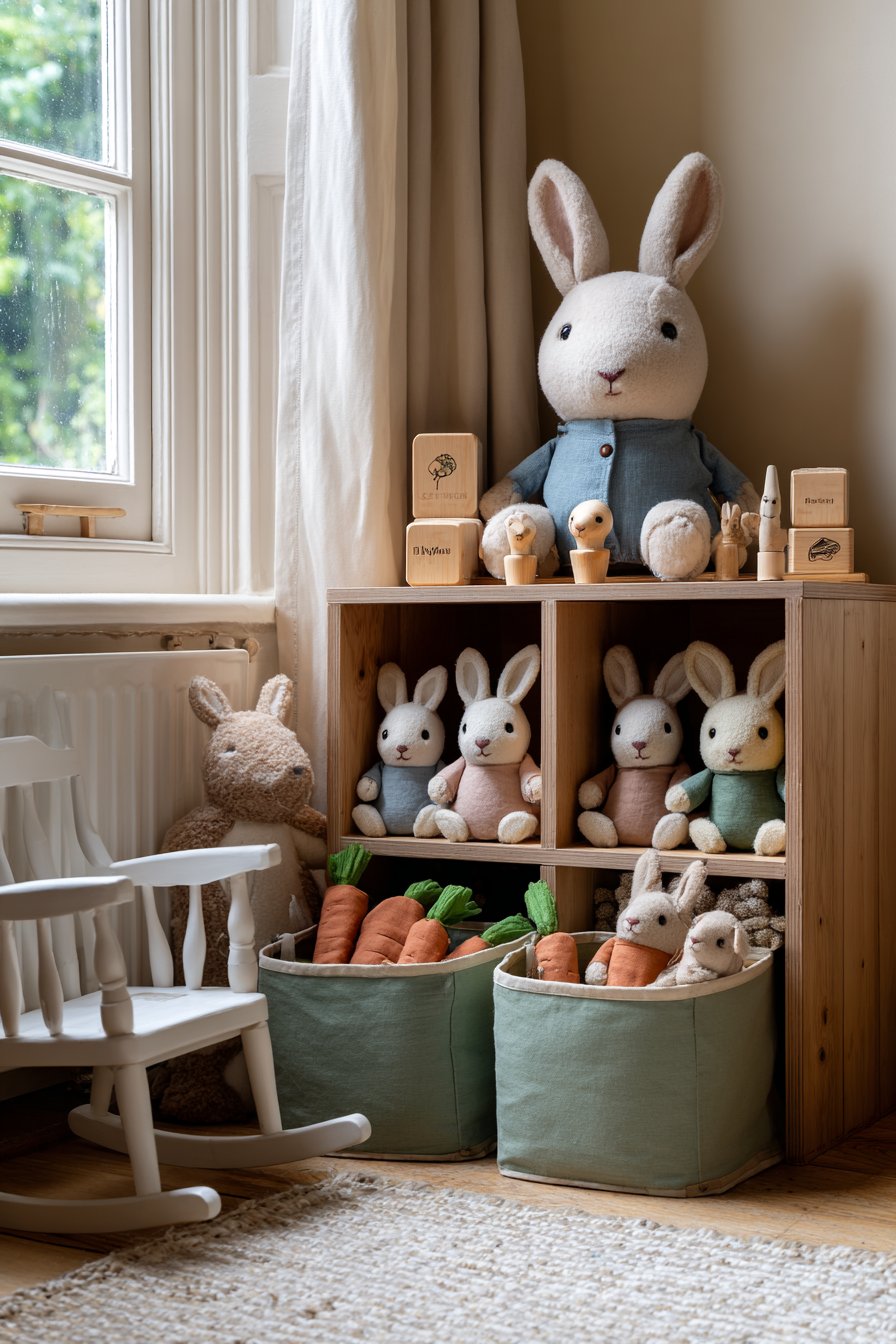
A low natural wood toy storage unit displays wooden Peter Rabbit character figurines. The accessible height encourages independent play as your child grows. Garden-themed toys complement the room’s overall aesthetic perfectly. Soft fabric storage cubes in sage green and cream sit nearby. These cubes contain plush Peter Rabbit toys within easy toddler reach.
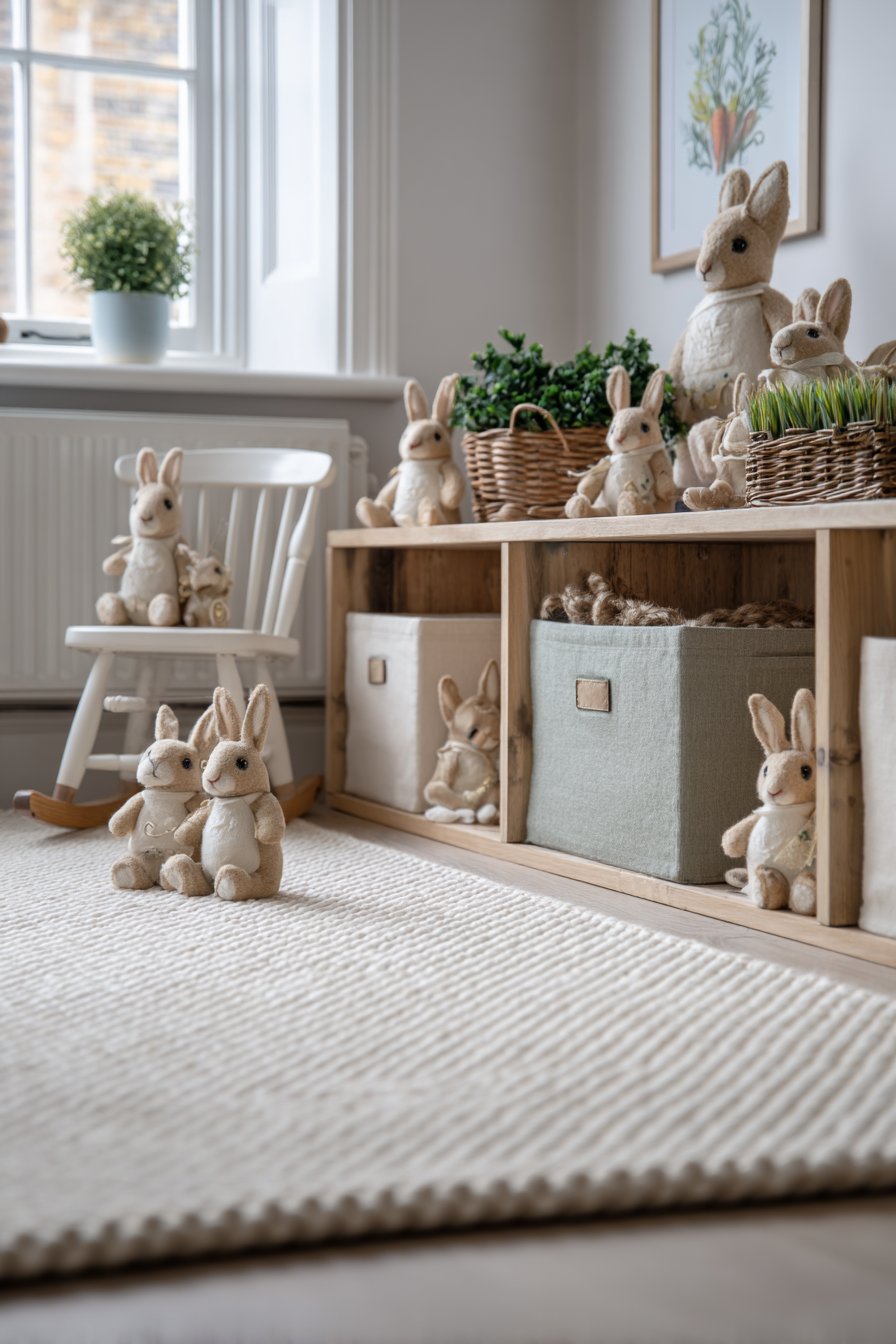
A small wooden rocking chair painted white sits in the corner of the play area. This child-sized furniture piece creates ownership and special space within the nursery. The rocking motion provides sensory input and soothing movement. Natural morning light floods the play space creating an energizing atmosphere. The bright illumination makes playtime inviting and cheerful.
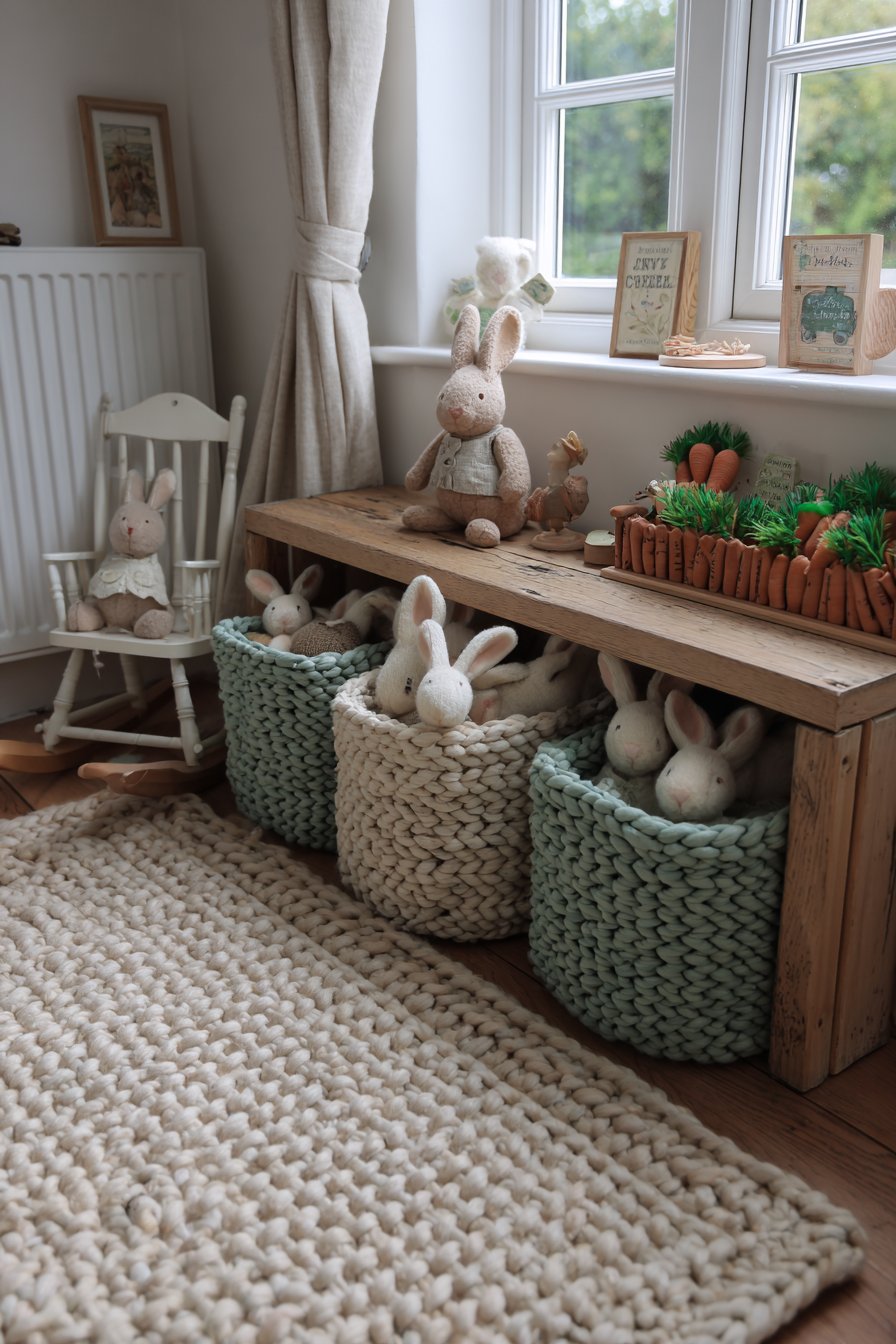
The practical organization shines in this thoughtfully planned space. Everything remains accessible at child height promoting independence and motor skill development. The natural materials withstand years of active play while maintaining aesthetic appeal. This play area grows with your child from infant floor time to active toddler play.
Key Design Tips:
- Invest in quality wool rugs that resist staining and provide natural cushioning
- Choose toy storage at heights children can reach independently as they grow
- Use fabric storage cubes with handles for easy transportation around the room
- Select wooden toys that align with the natural material aesthetic
- Position the play area near windows for optimal natural lighting during the day
- Anchor the rug with furniture or rug pads to prevent slipping during active play
9. Custom Wallpaper with Repeating Garden Scenes
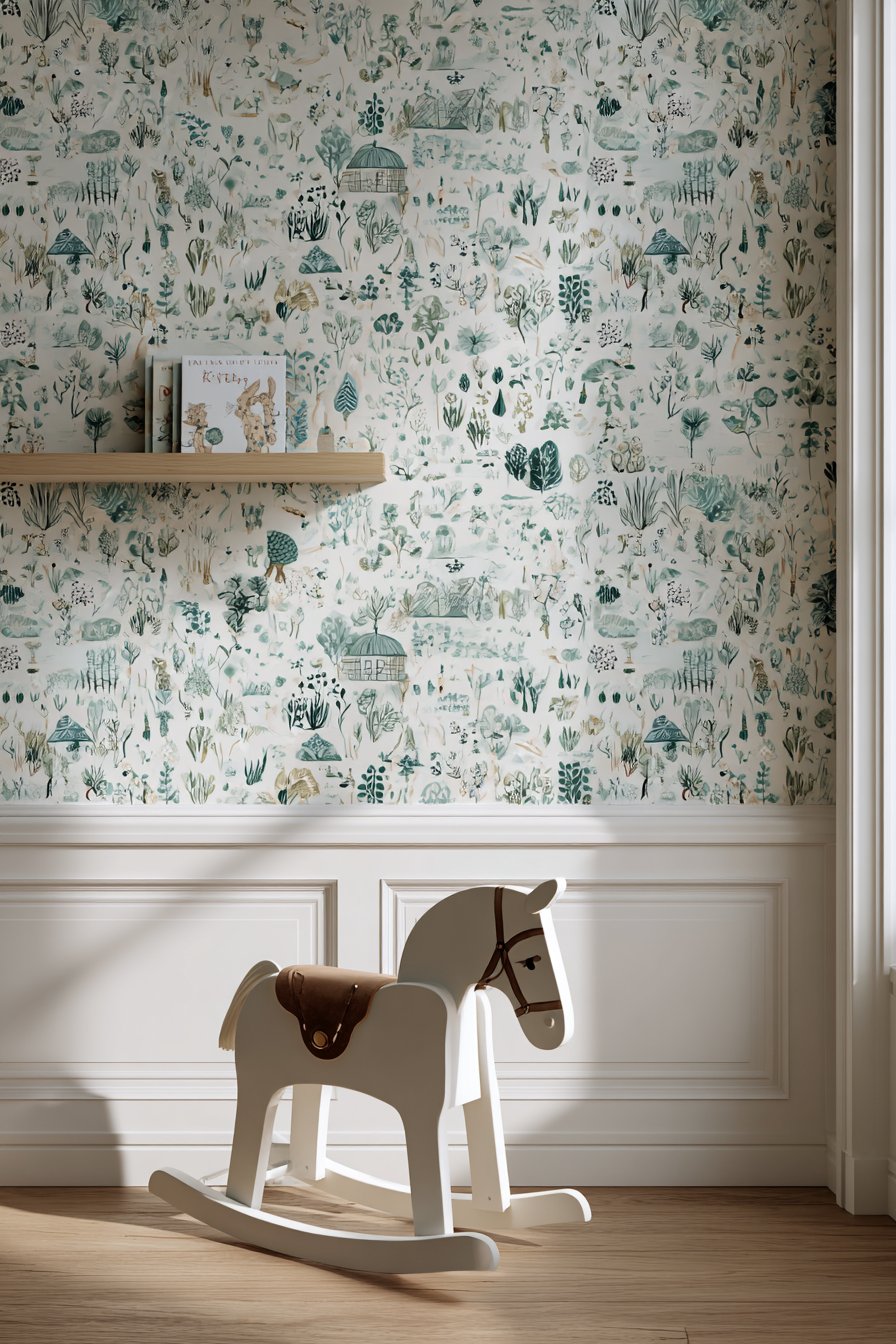
Custom wallpaper transforms an accent wall into an immersive Peter Rabbit experience. The repeating pattern shows Peter in various garden scenes among vegetables. Carrots, radishes, and lettuce appear in muted watercolor tones throughout. The color palette of sage green, soft blue, and cream creates cohesion. The pattern repeat keeps visual interest without overwhelming the space.
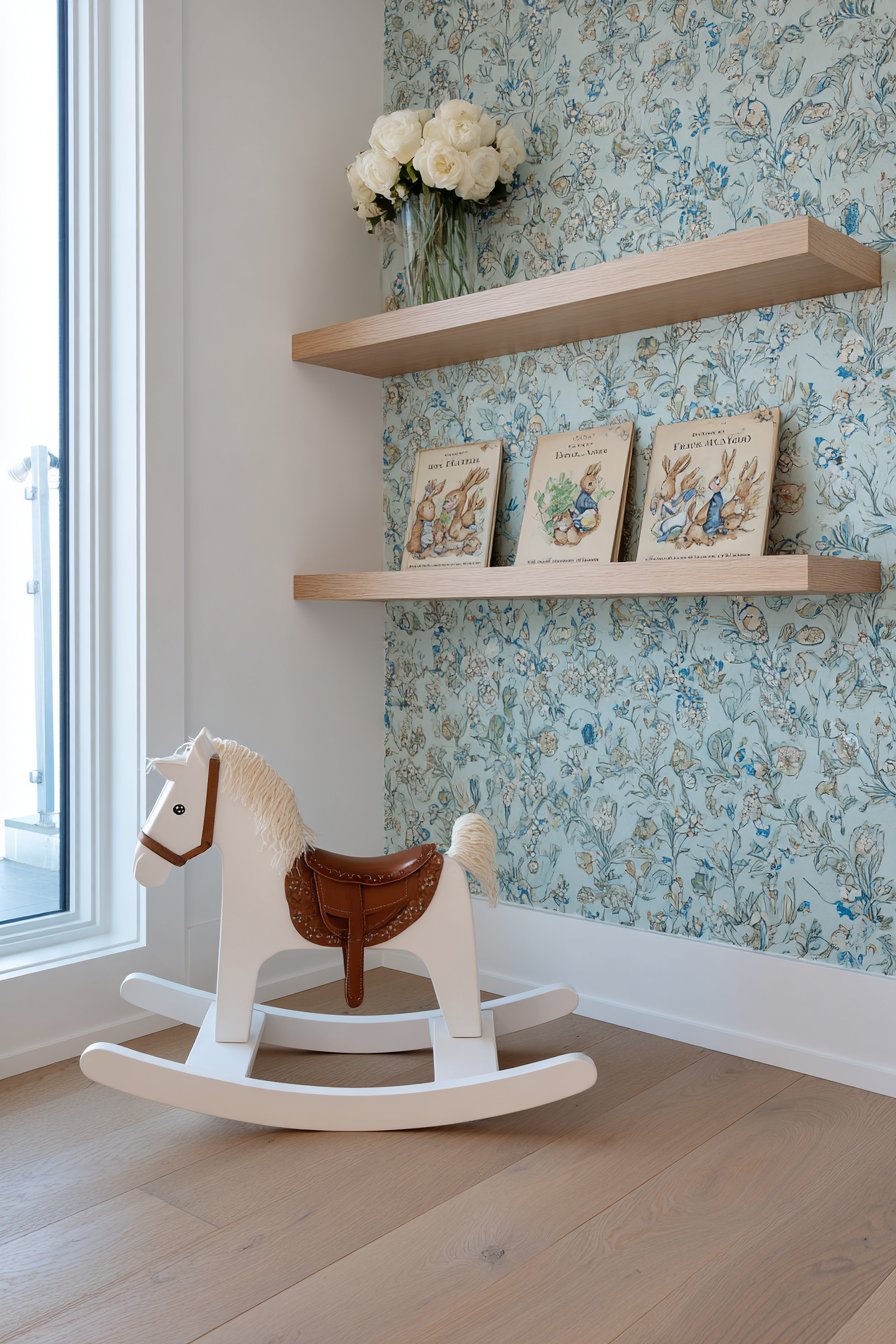
A white wooden rocking horse with leather saddle detail sits against the wallpapered wall. The classic toy provides both decoration and interactive play opportunities. The leather saddle adds authentic detail and textural contrast. A simple wooden shelf beside the horse holds Peter Rabbit books at accessible height. The shelf styling keeps the wall from feeling cluttered despite the patterned paper.
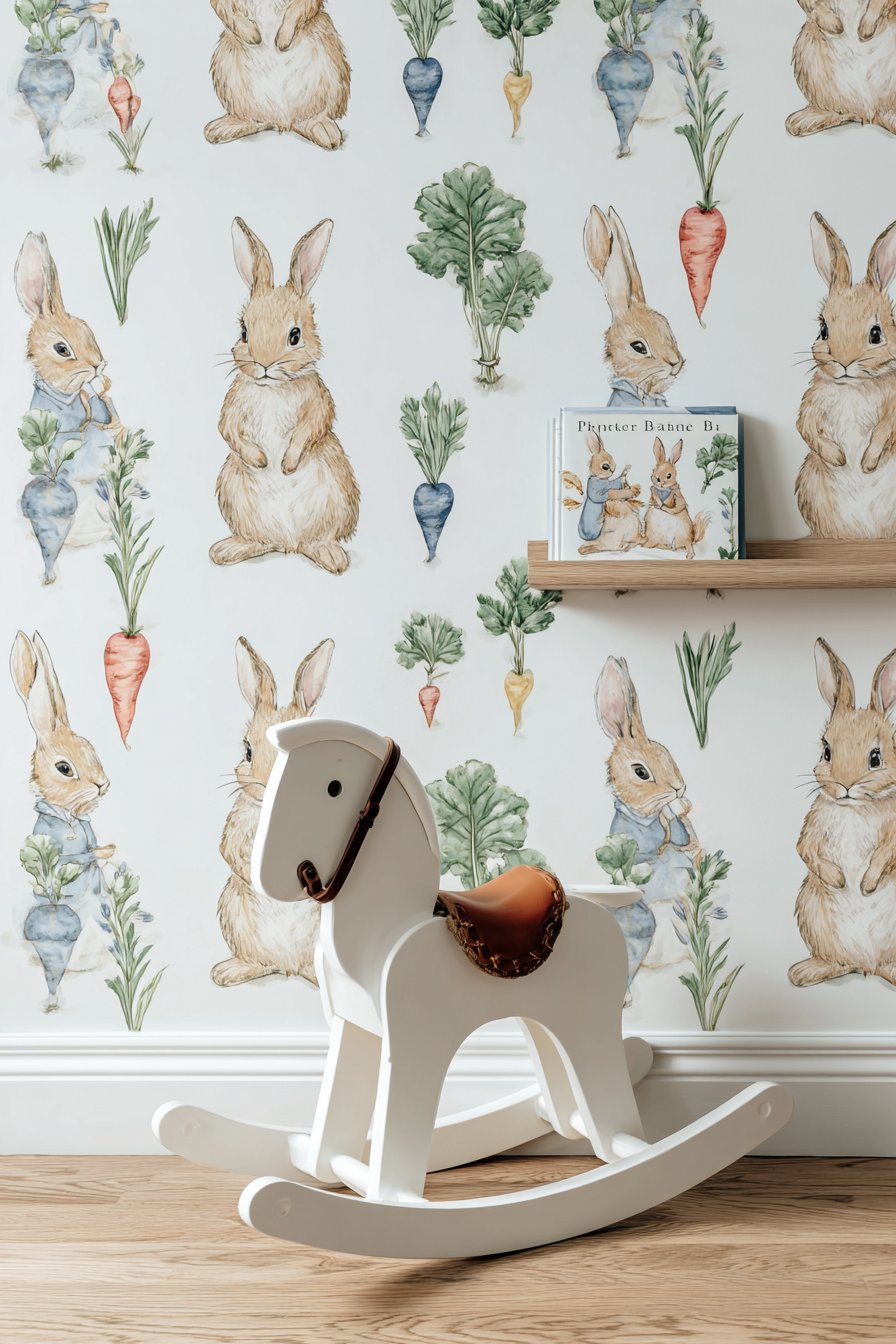
Natural oak flooring and white baseboards frame the wallpapered space beautifully. The clean lines create definition between wall and floor surfaces. The white trim makes the wallpaper appear more intentional and finished. Balanced natural daylight brings out the subtle watercolor variations in the illustrations. The lighting reveals depth and dimension in the printed pattern.
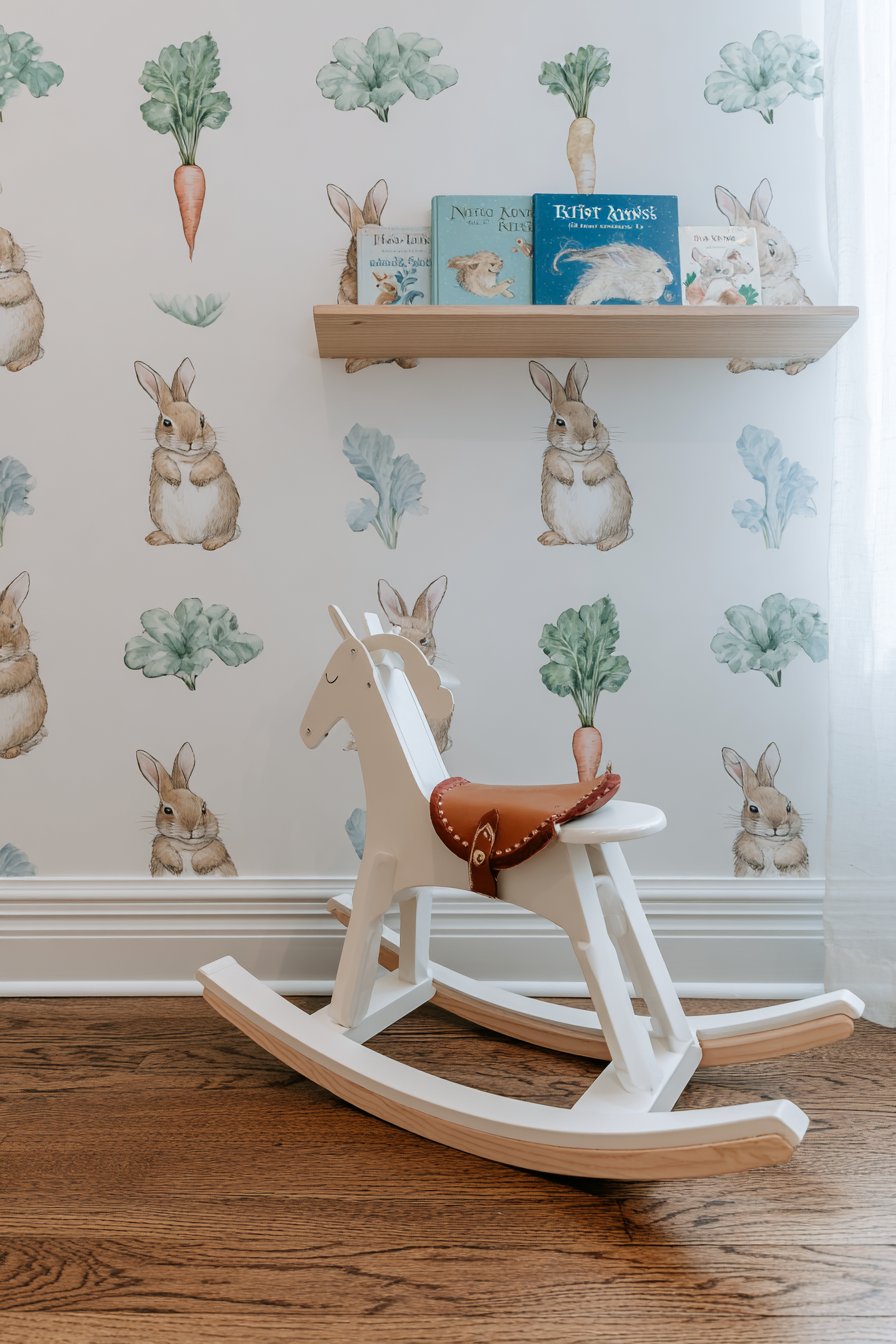
The wallpaper creates immediate impact without permanent commitment to painted murals. The installation process proves simpler than hand-painting complex scenes. The repeating pattern provides consistency while the watercolor style maintains softness. This design choice makes a bold statement while respecting the nursery’s peaceful atmosphere.
Key Design Tips:
- Order wallpaper samples to test colors against existing room elements before purchasing
- Apply wallpaper to one accent wall rather than the entire room to prevent visual overwhelm
- Choose removable wallpaper products for easier updates as child’s interests evolve
- Position major furniture pieces against the wallpapered wall to create focal points
- Select patterns with appropriate scale for the room size and ceiling height
- Hire professional installers for best results with pattern matching and seam alignment
10. Organized Closet with Vegetable-Shaped Drawer Pulls
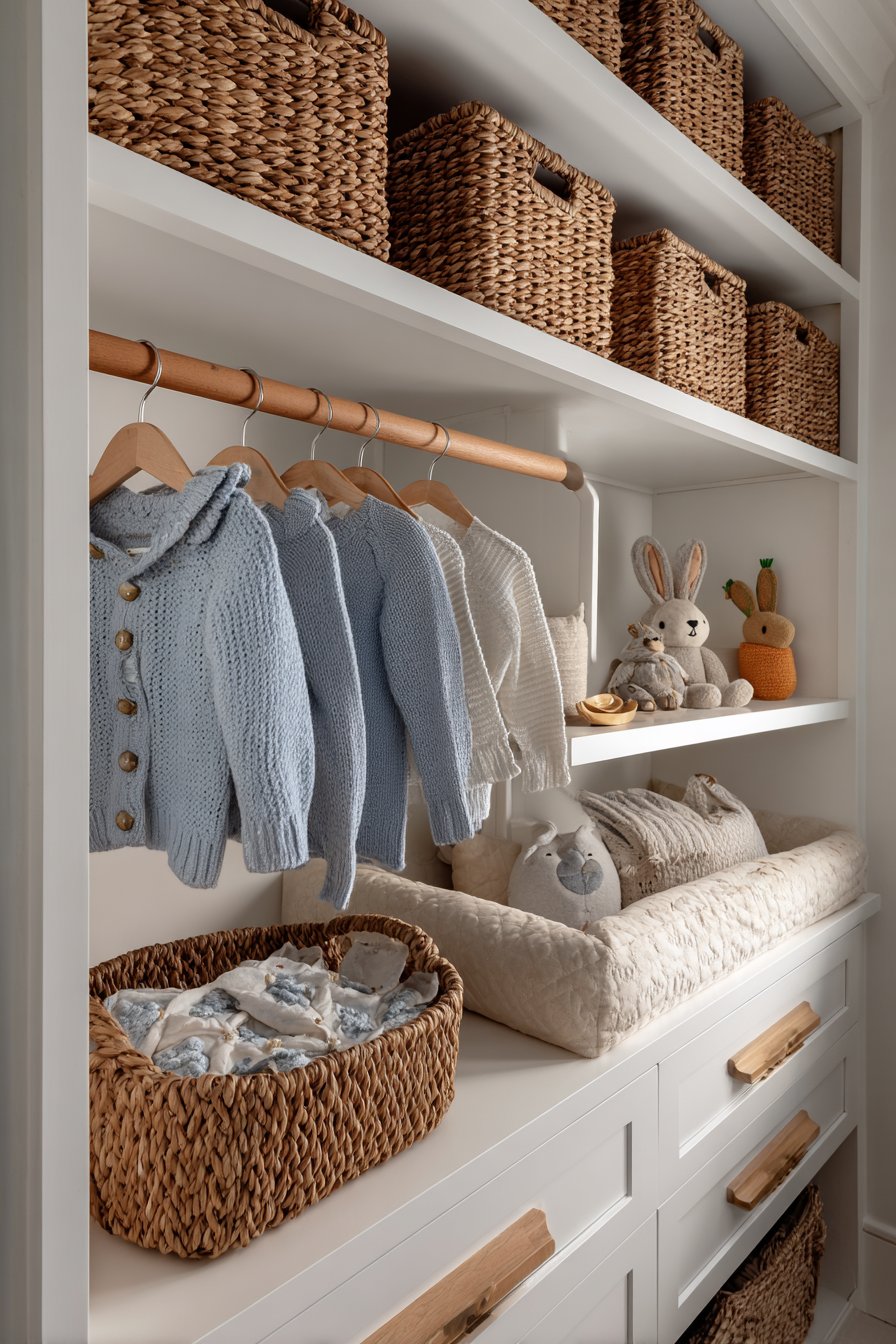
The nursery closet features white built-in shelving for maximum organization potential. Wicker baskets on shelves store baby clothes and accessories by category. The basket system keeps items organized while maintaining accessibility. Small wooden hangers display tiny garments creating a miniature wardrobe. A handmade blue jacket reminiscent of Peter Rabbit’s coat adds thematic charm.
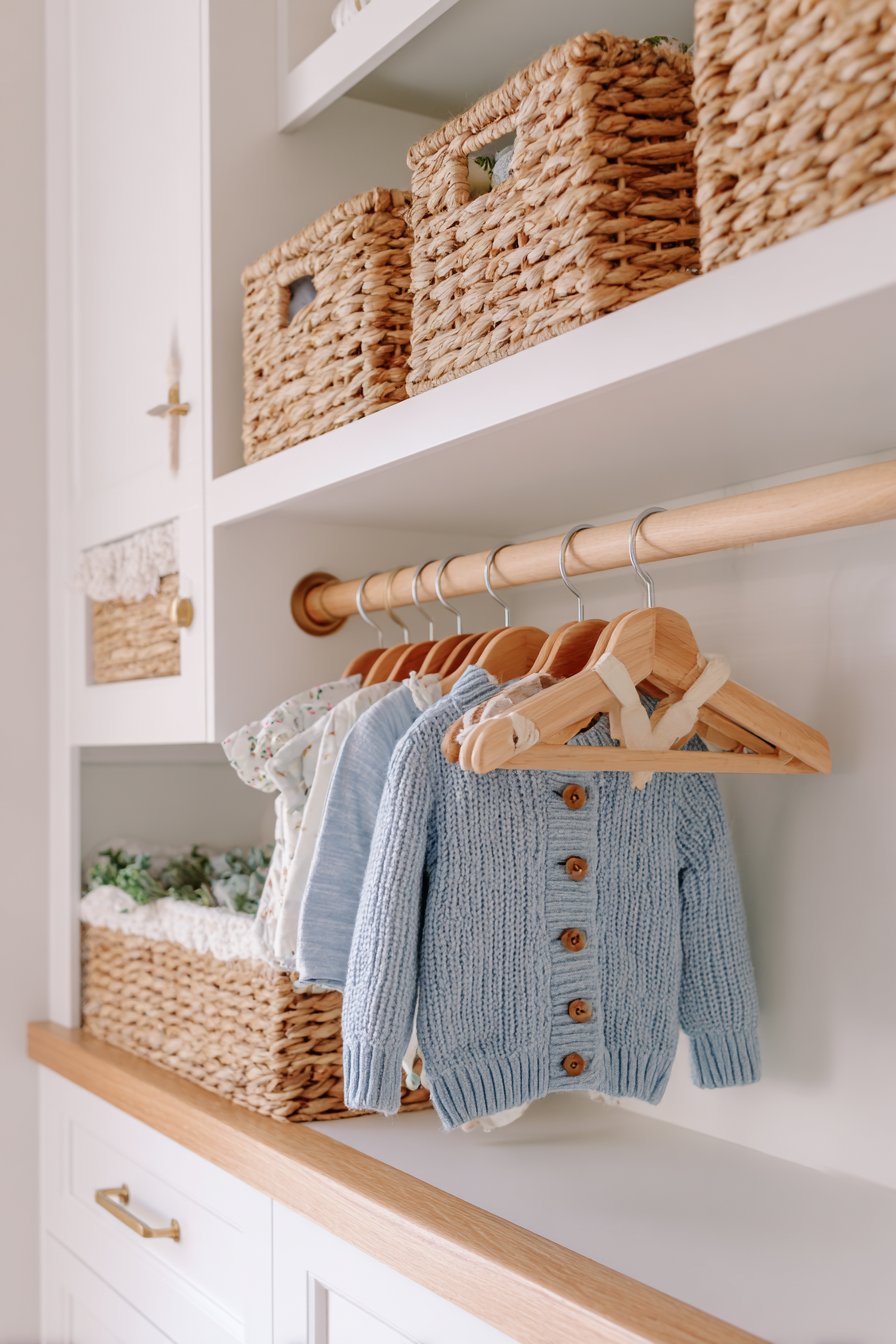
Peter Rabbit themed drawer pulls shaped like vegetables add whimsical functional detail. These small touches bring personality to storage spaces. The vegetable shapes connect the closet organization to the broader room theme. The closet interior displays soft white paint with natural wood shelf edges. The two-tone approach adds visual interest to the storage space.
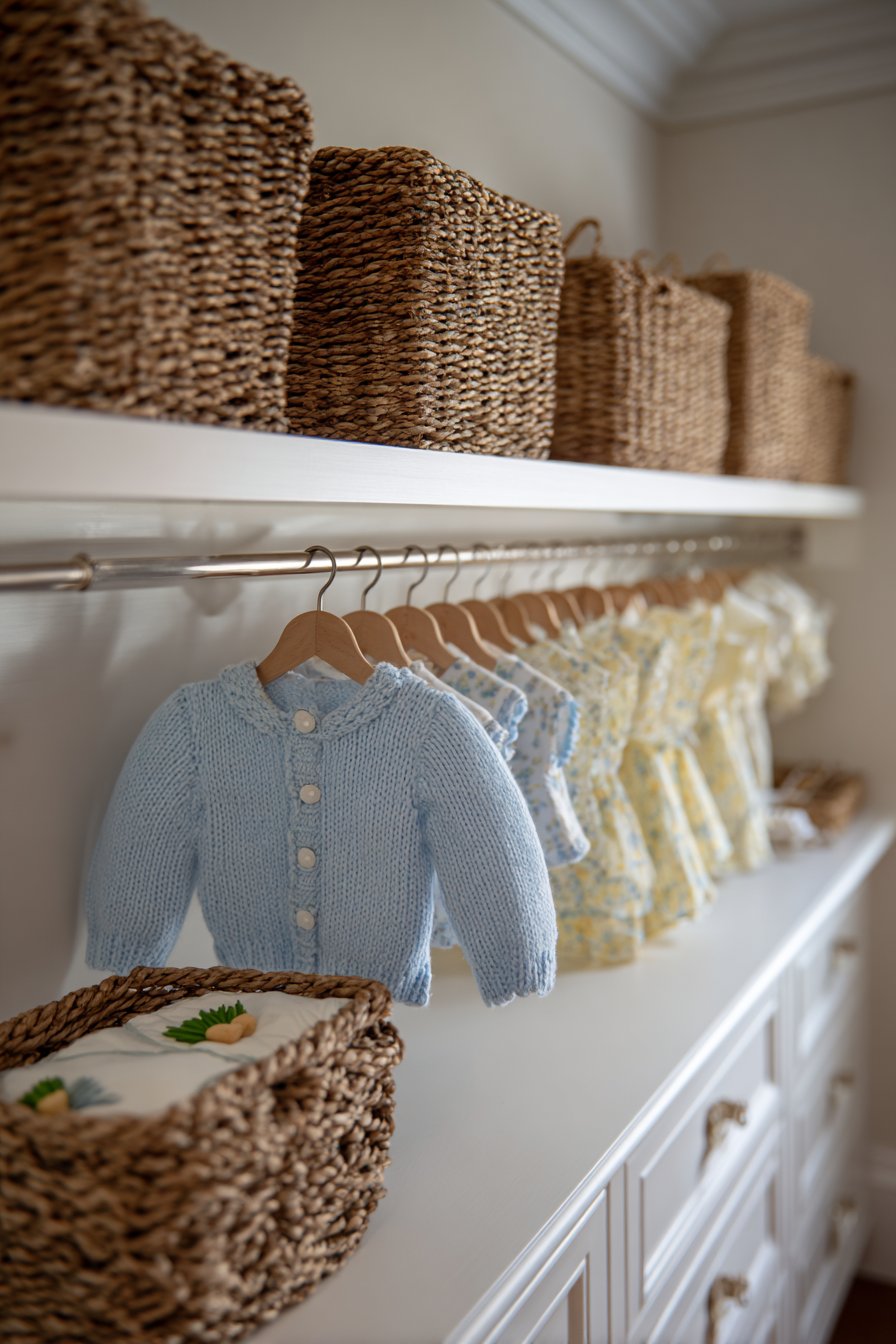
The practical organization allows efficient morning routines and quick outfit changes. Everything has a designated place reducing search time for specific items. The system grows with your child as storage needs evolve. The built-in nature maximizes every inch of closet space efficiently. The white finish keeps the closet bright and easy to navigate.
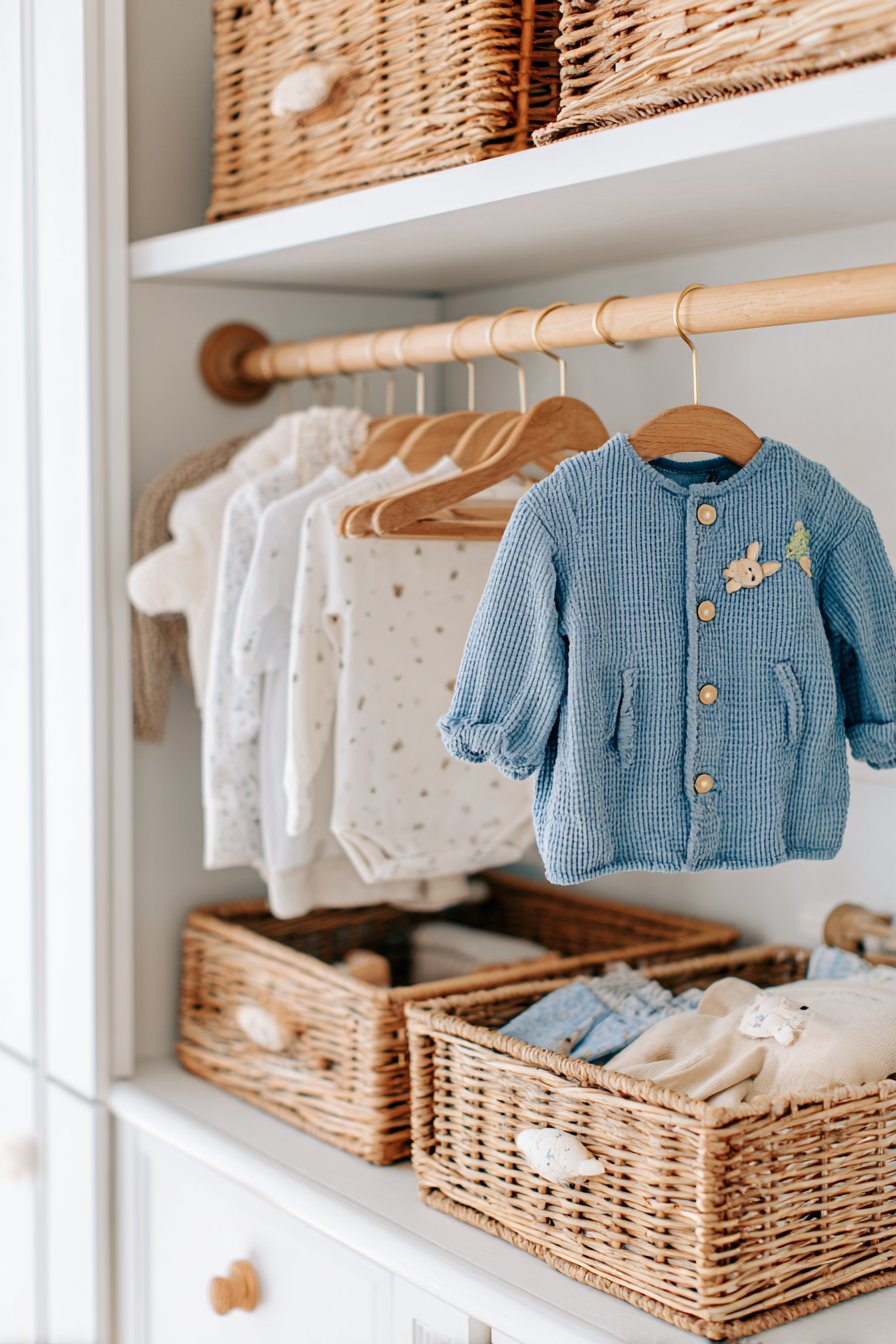
Soft lighting emphasizes natural material textures and handcrafted elements throughout the closet. The illumination makes color coordination and outfit selection simple. The organized system reduces stress during already busy parenting moments. This attention to closet design proves that even hidden spaces deserve thoughtful planning.
Key Design Tips:
- Install closet systems before the baby arrives to reduce post-birth stress
- Use wicker baskets that can be labeled for different clothing categories or sizes
- Choose wooden baby hangers to prevent garments from slipping off plastic versions
- Add drawer pulls that children can grip easily as they grow into dressing themselves
- Paint closet interiors in light colors to maximize visibility and brightness
- Include a small step stool for toddlers beginning to participate in dressing routines
11. Comfortable Glider with Needlepoint Accent Pillow
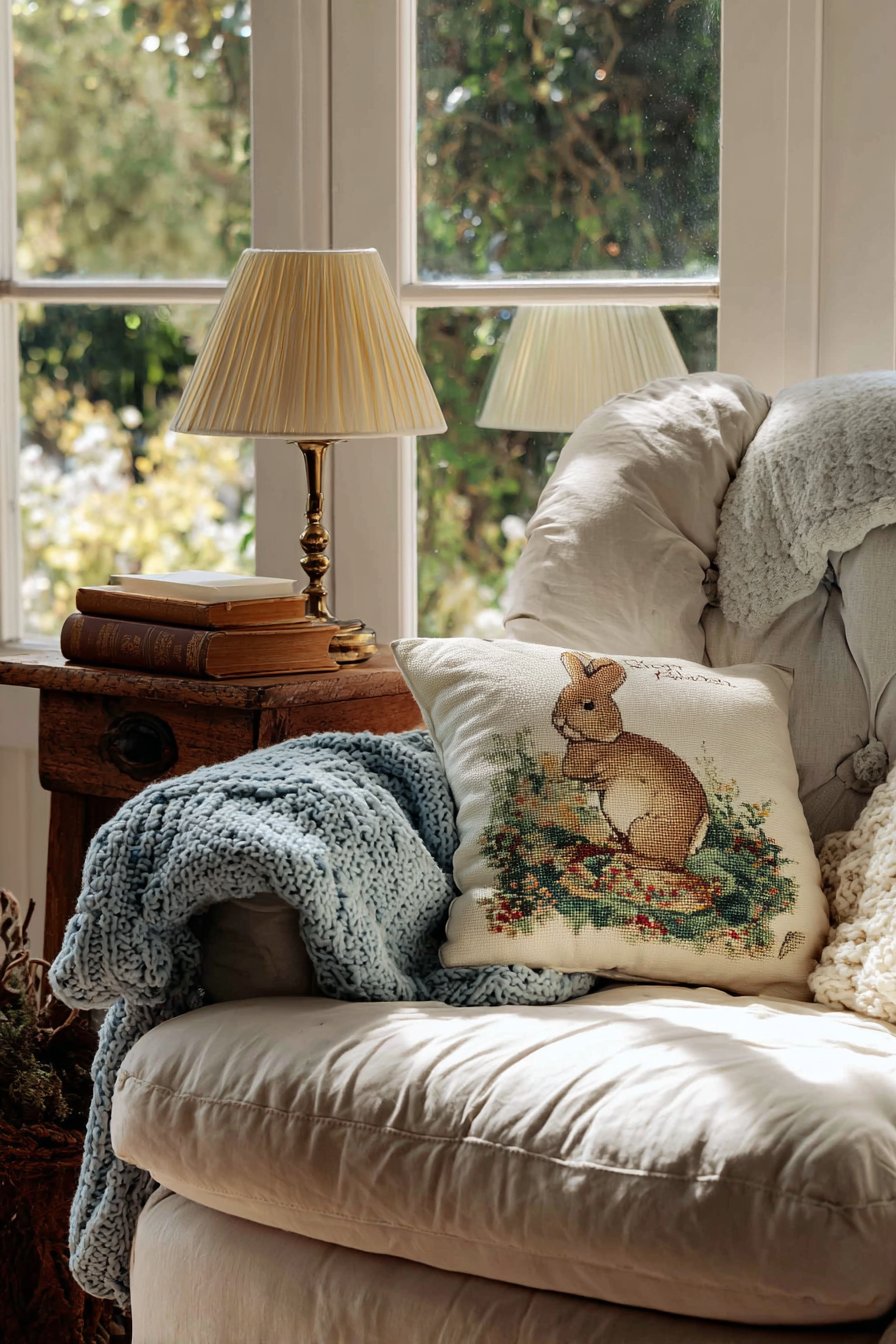
A comfortable upholstered glider chair in natural linen fabric anchors this cozy corner. The neutral upholstery works with various color schemes and design changes. A Peter Rabbit themed needlepoint throw pillow shows Peter in the garden with detailed stitching. The handcrafted pillow adds personal touch and heirloom quality. The needlepoint technique demonstrates dedication to theme authenticity and craftsmanship.
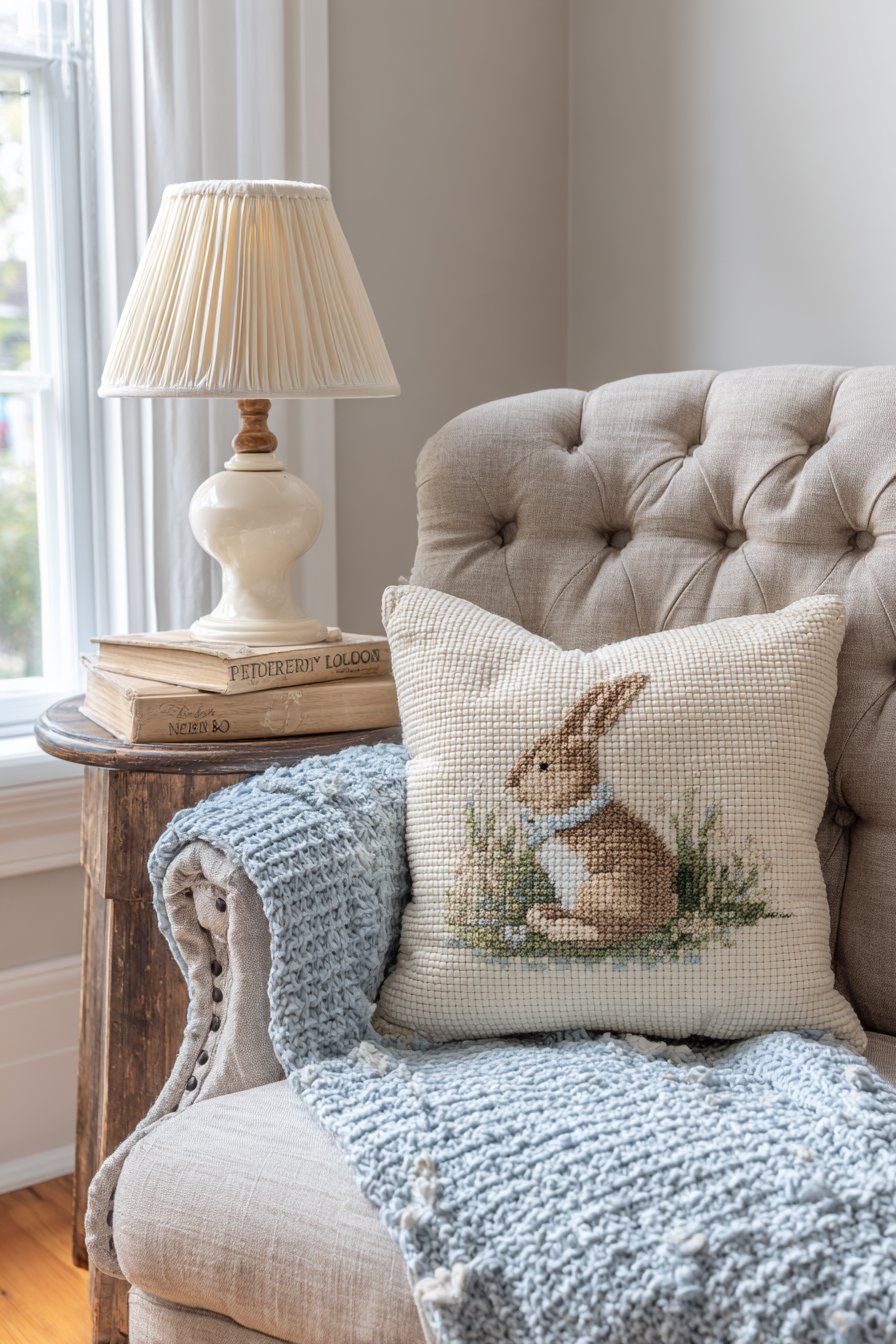
A small side table made of reclaimed wood sits within arm’s reach. The weathered wood adds character and supports the natural material aesthetic. A vintage-style lamp with cream linen shade provides reading light for bedtime stories. A well-worn copy of The Tale of Peter Rabbit rests on the table. The book’s presence reinforces the literary foundation of the entire room theme.
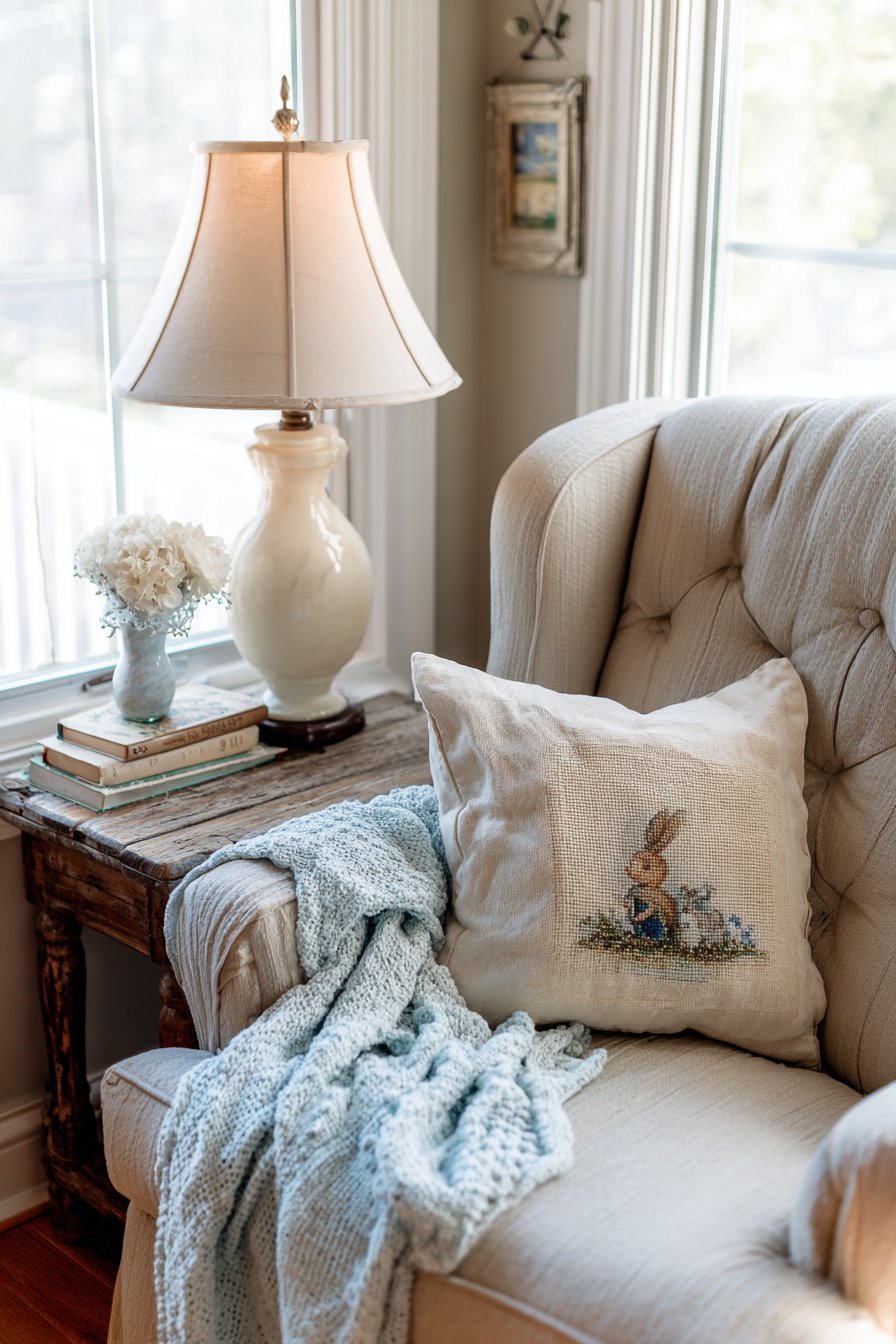
A knitted baby blanket in soft blue and cream drapes over the chair arm. The handmade quality suggests family heritage or thoughtful gift-giving. The blanket provides warmth during nighttime feedings while adding textural interest. Natural window light creates a warm reading atmosphere during daytime hours. The lighting makes this corner inviting for both parent and child.
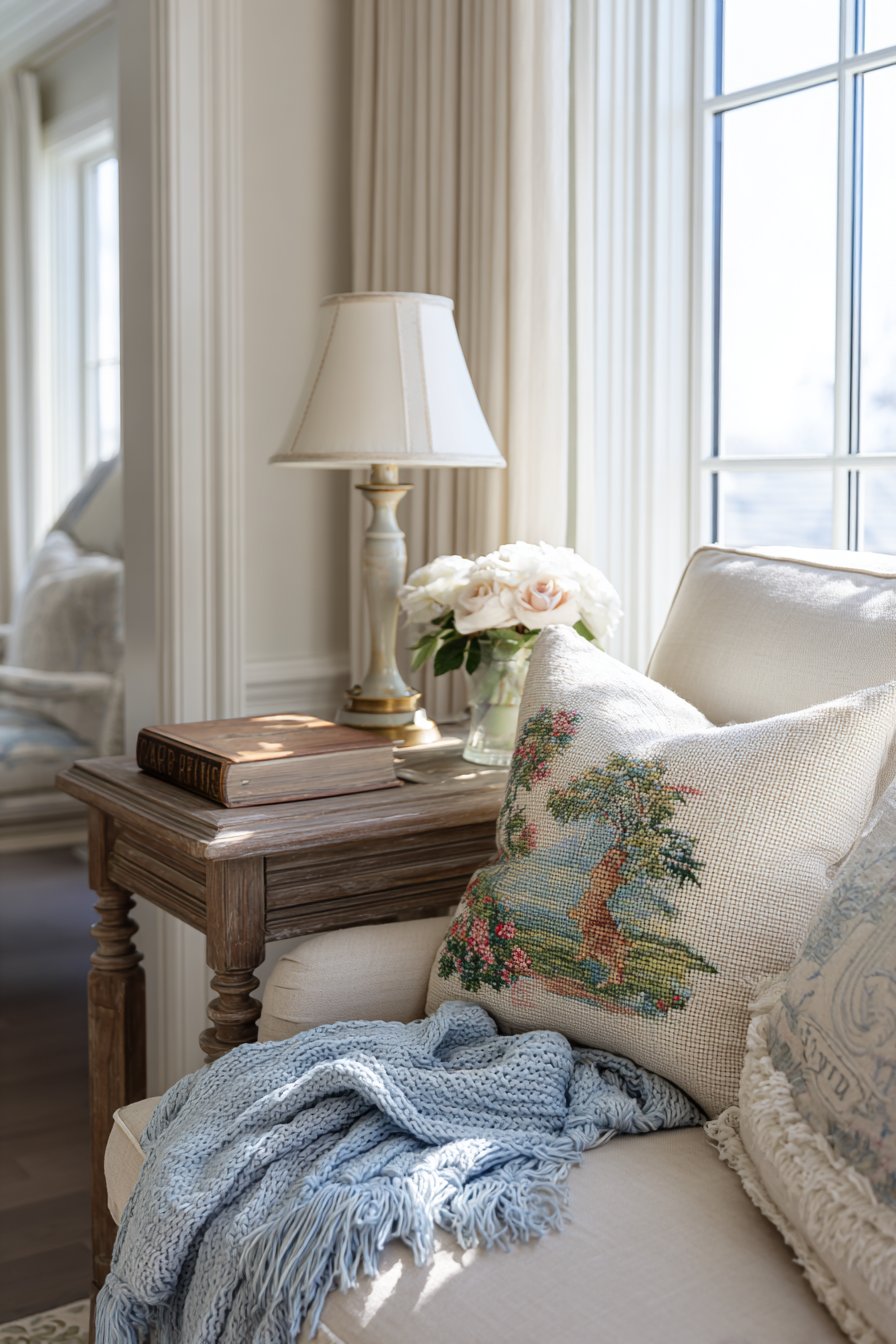
The cozy quality makes this corner the nursery’s emotional heart. This becomes the space where bonds form during quiet feeding times. The comfortable seating encourages parents to linger during story time. The lived-in quality makes the nursery feel welcoming rather than showroom perfect.
Key Design Tips:
- Choose glider chairs with high backs for proper neck and head support during feeding
- Select natural linen upholstery that ages gracefully and cleans relatively easily
- Add needlepoint pillows as heirloom pieces that can move through generations
- Position side tables within reach without creating obstacles for the chair’s gliding motion
- Use lamps with three-way bulbs allowing lighting adjustments for different times of day
- Keep favorite storybooks on display rather than hidden away to encourage reading routines
12. Ceiling Banner with Hand-Painted Characters
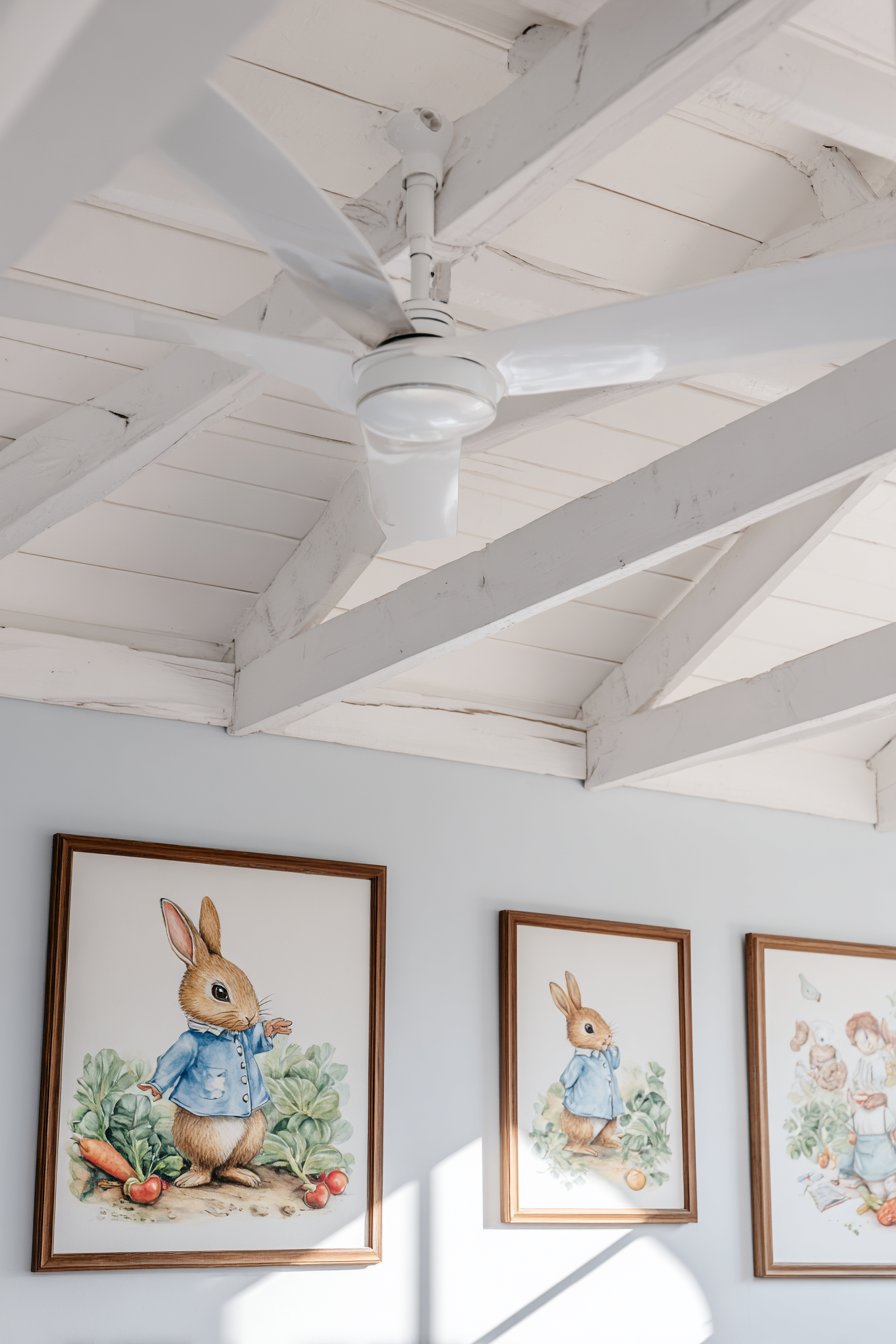
The ceiling features simple white-painted wood beam structure adding architectural interest. A modern white ceiling fan provides air circulation while maintaining clean aesthetics. The fan blades remain unobtrusive within the overall design scheme. Suspended from one beam hangs a fabric banner with hand-painted Peter Rabbit characters. Garden vegetables appear in watercolor style throughout the banner length.

The walls below show the top portion of framed Peter Rabbit illustrations. This creates vertical continuity from wall art through the ceiling element. The banner draws eyes upward expanding the perceived room height. Soft natural daylight from an unseen window creates gentle shadows. The shadow play adds dimension to the flat fabric surface.

The hand-painted details demonstrate commitment to custom, personalized nursery elements. The watercolor technique maintains consistency with other artwork throughout the space. The fabric medium allows the banner to move gently with air circulation. This subtle movement adds life to an otherwise static ceiling plane. The white beam structure frames the banner beautifully against the ceiling.
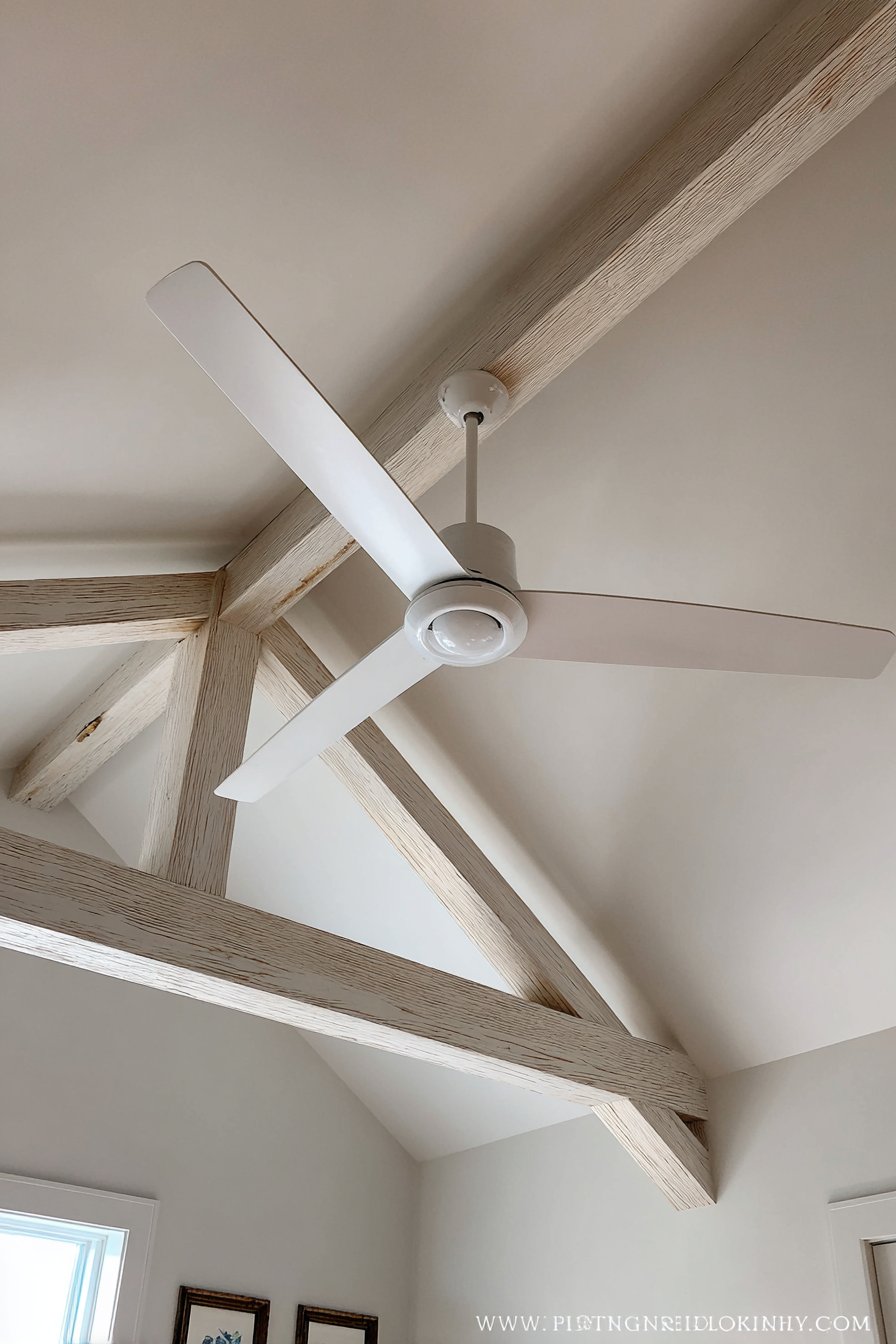
The upward composition photography captures architectural detail and whimsical theme integration. The balanced exposure shows hand-painted details and natural wood beam texture simultaneously. This ceiling treatment demonstrates that every surface offers design opportunity. The often-overlooked ceiling becomes an integral part of the cohesive theme.
Key Design Tips:
- Use lightweight fabrics for ceiling banners to allow gentle movement without sagging
- Paint banners with fabric-specific paints to ensure colorfastness and durability
- Secure ceiling decorations properly to beams or joists, never to drywall alone
- Keep ceiling decorations away from ceiling fan blade paths for safety
- Choose banner lengths appropriate to the beam span without overwhelming the space
- Coordinate ceiling decoration colors with wall and floor elements for cohesion
13. Parent Workspace with Bulletin Board Organization
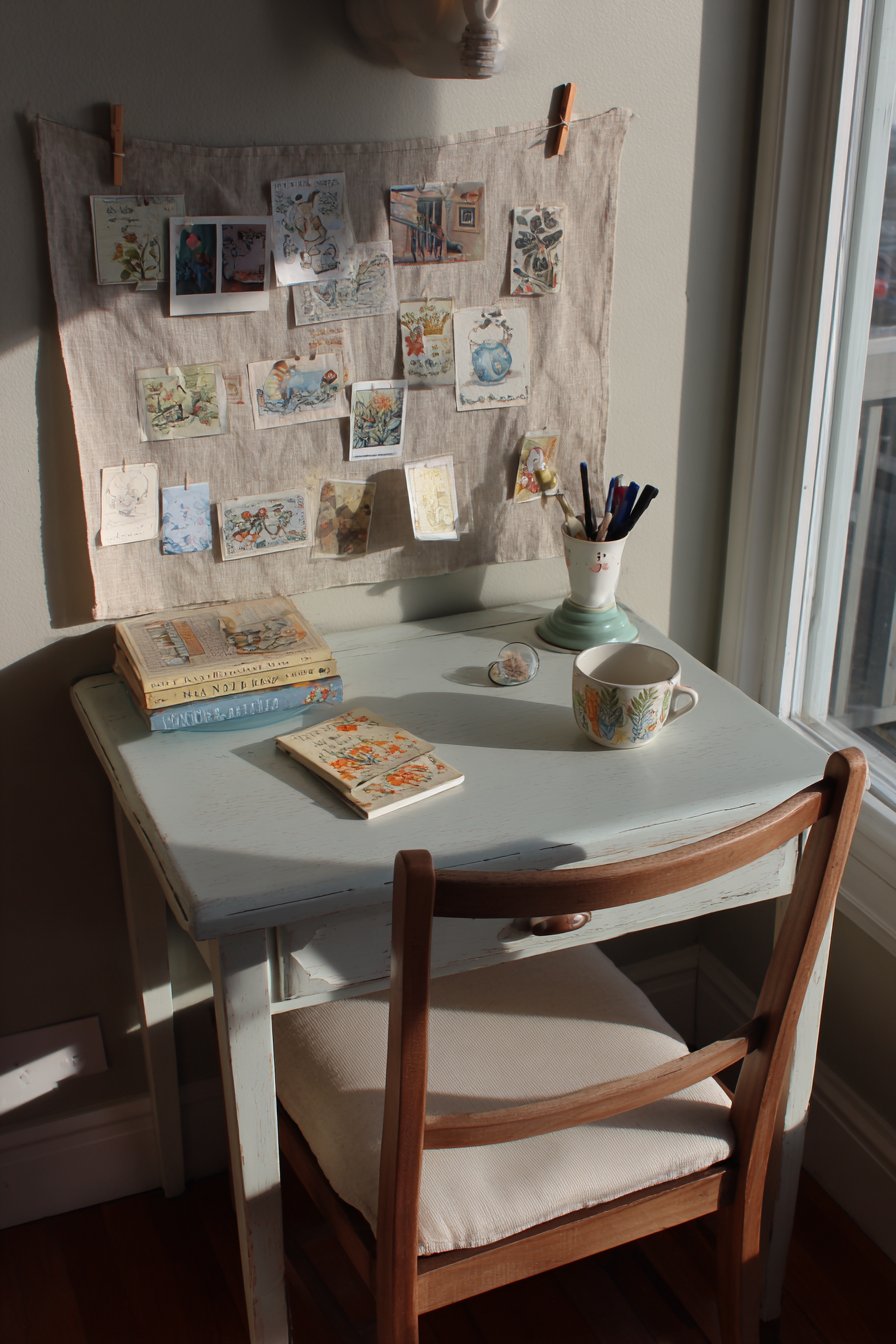
A small white wooden desk provides dedicated workspace for parents within the nursery. The desk keeps important documents and baby-related paperwork organized. A vintage-style task lamp illuminates the work surface without harsh glare. A stack of Beatrix Potter books including Peter Rabbit adds decorative height. A ceramic mug holding pens displays tiny carrot illustrations maintaining theme consistency.
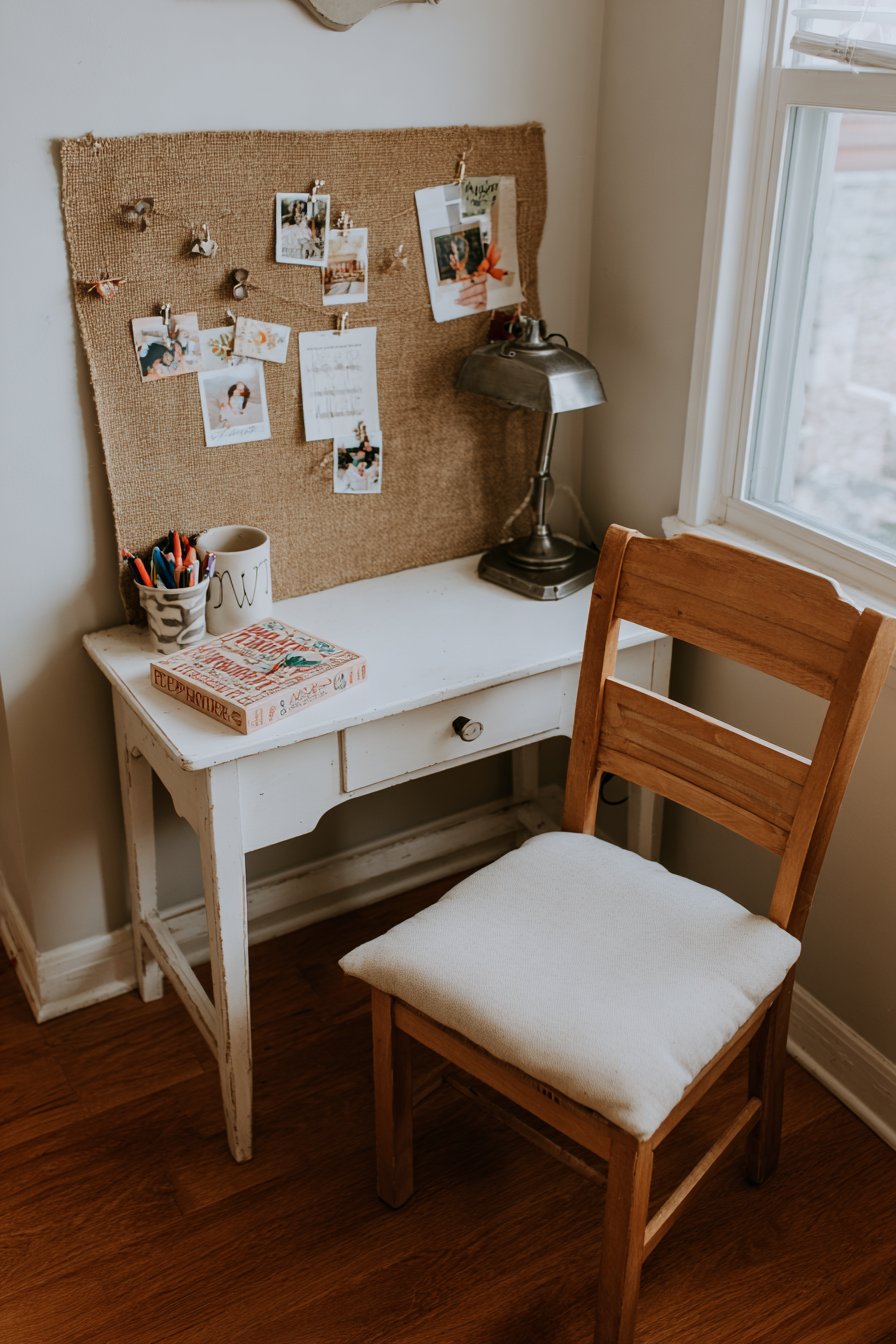
Above the desk, a bulletin board covered in natural burlap provides organizational function. Peter Rabbit themed notes and photos attach with wooden clothespins. The clothespin system allows easy updates as needs change. The burlap texture adds organic warmth to the practical organizational tool. The bulletin board keeps important information visible and accessible.
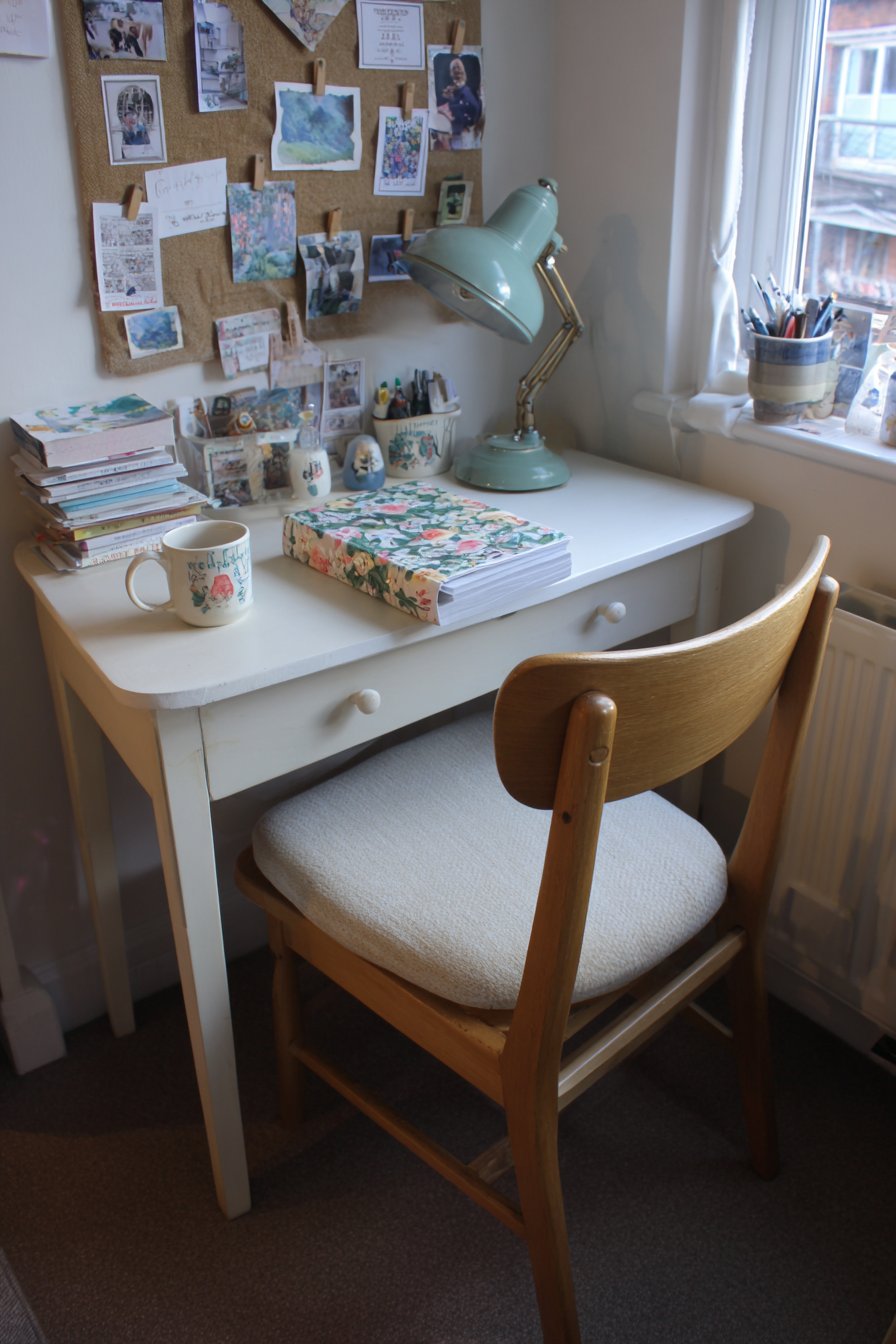
A simple wooden chair with cream cushion provides comfortable seating for desk work. The cushion adds comfort without requiring elaborate upholstery. Natural daylight from a nearby window illuminates the organized workspace during the day. The lighting makes reading documents and writing notes comfortable. The desk area integrates seamlessly into the Peter Rabbit nursery theme.
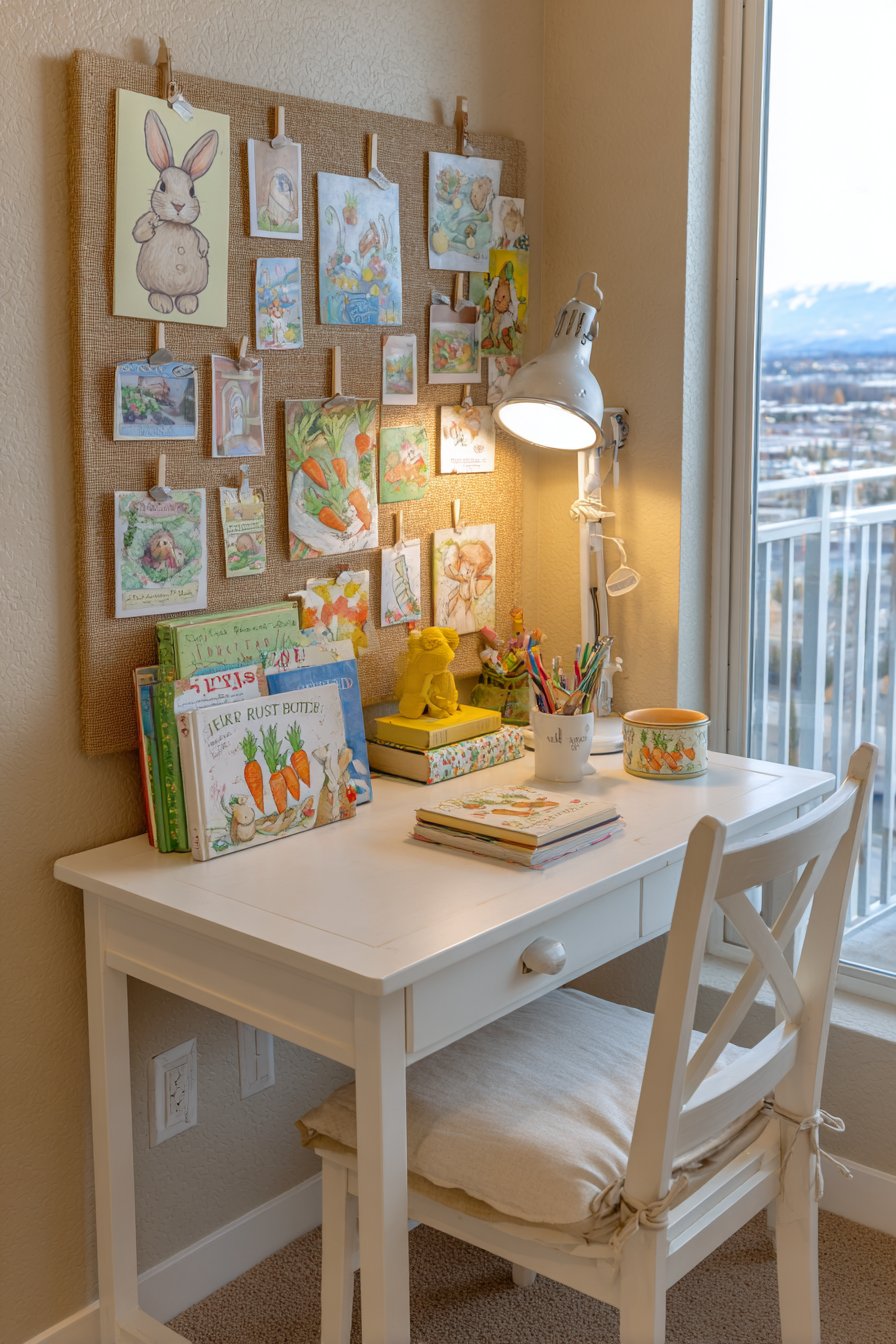
This functional parent area proves that nurseries can serve multiple purposes effectively. The workspace keeps parenting administration contained and organized. The thoughtful integration prevents the desk from feeling out of place. The Peter Rabbit themed accessories ensure aesthetic continuity throughout the space.
Key Design Tips:
- Position parent workspaces near windows for optimal natural lighting during the day
- Choose desks with drawers to hide paperwork clutter when not in use
- Use bulletin boards to track feeding schedules, growth charts, and important contacts
- Maintain theme consistency even in functional areas through small decorative touches
- Select task lighting that can adjust for different types of desk work
- Keep frequently referenced items like contact lists at eye level for quick access
14. Dresser Top Vignette with Vintage Styling
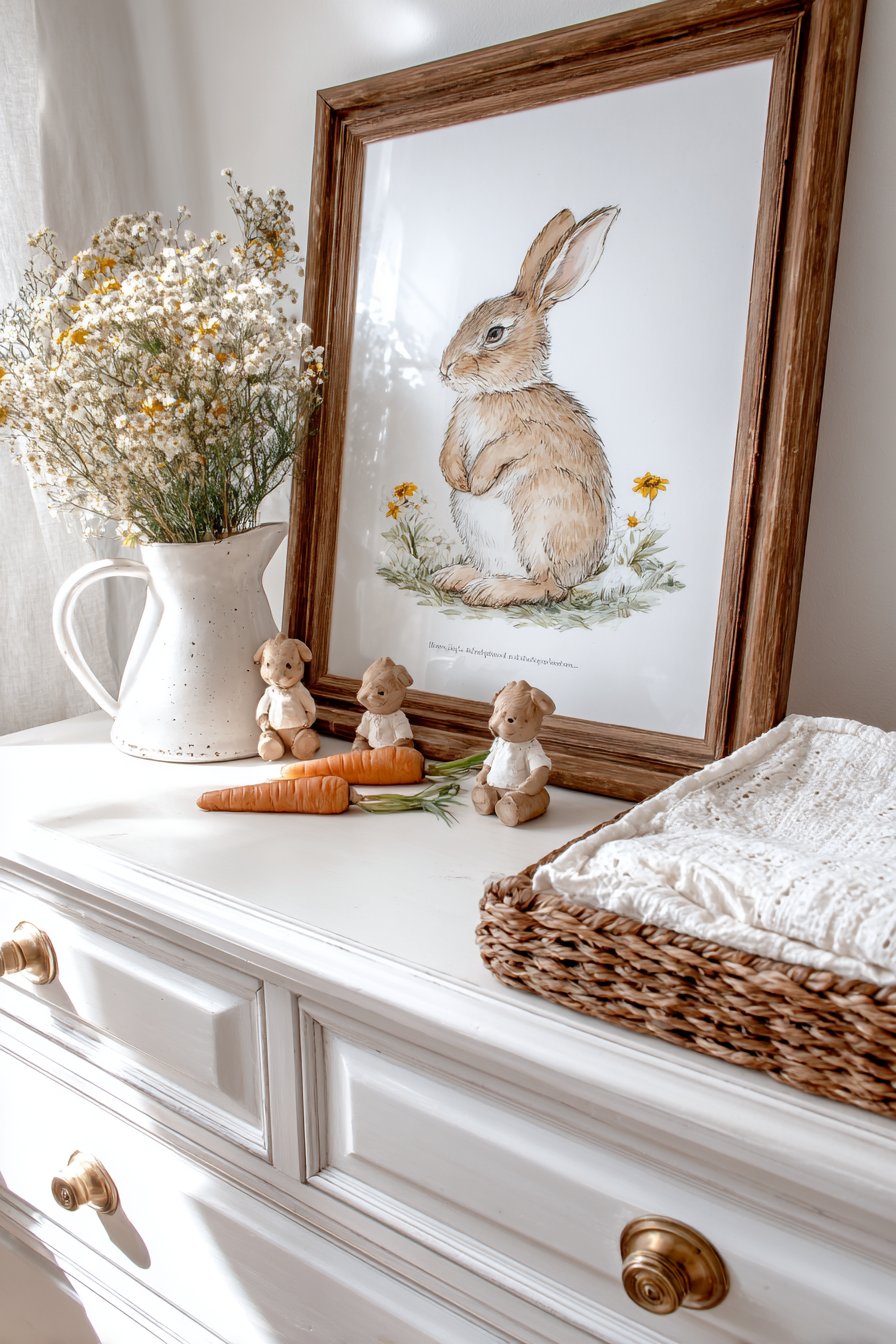
This white-painted vintage dresser with brass drawer pulls displays curated decor arrangement. The dresser top becomes a styled surface rather than purely functional storage. A large framed watercolor illustration of Peter Rabbit props against the wall as centerpiece. Small ceramic rabbit figurines flank the frame adding dimensional interest. A vintage wooden toy carrot adds whimsical detail and color contrast.
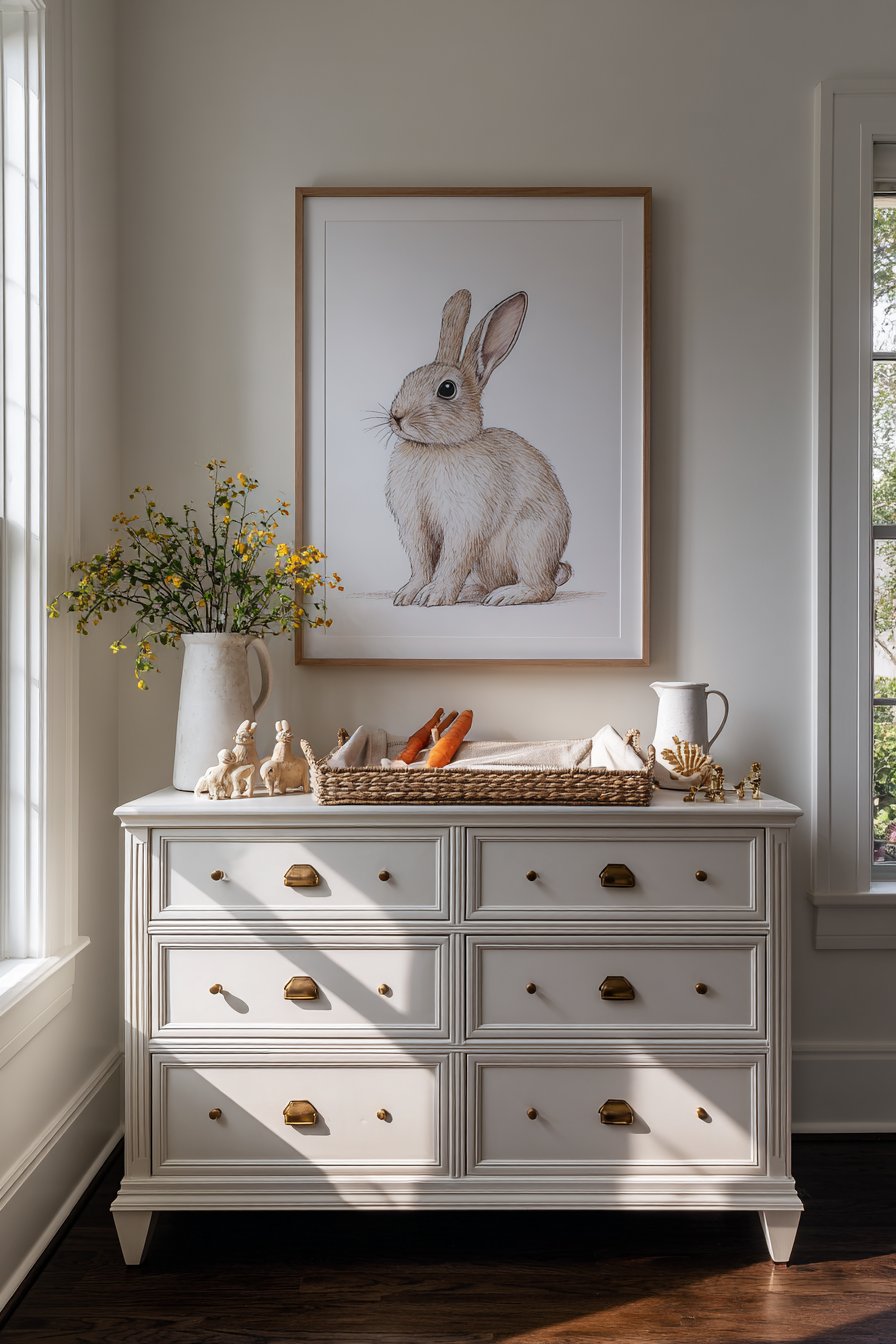
A white ceramic pitcher holding fresh wildflowers brings life to the arranged vignette. The flowers add organic movement and natural fragrance to the nursery. The wildflower selection connects to the garden theme authentically. A woven changing pad sits ready on one side balancing decoration with function. The pad placement shows this dresser serves double duty beautifully.
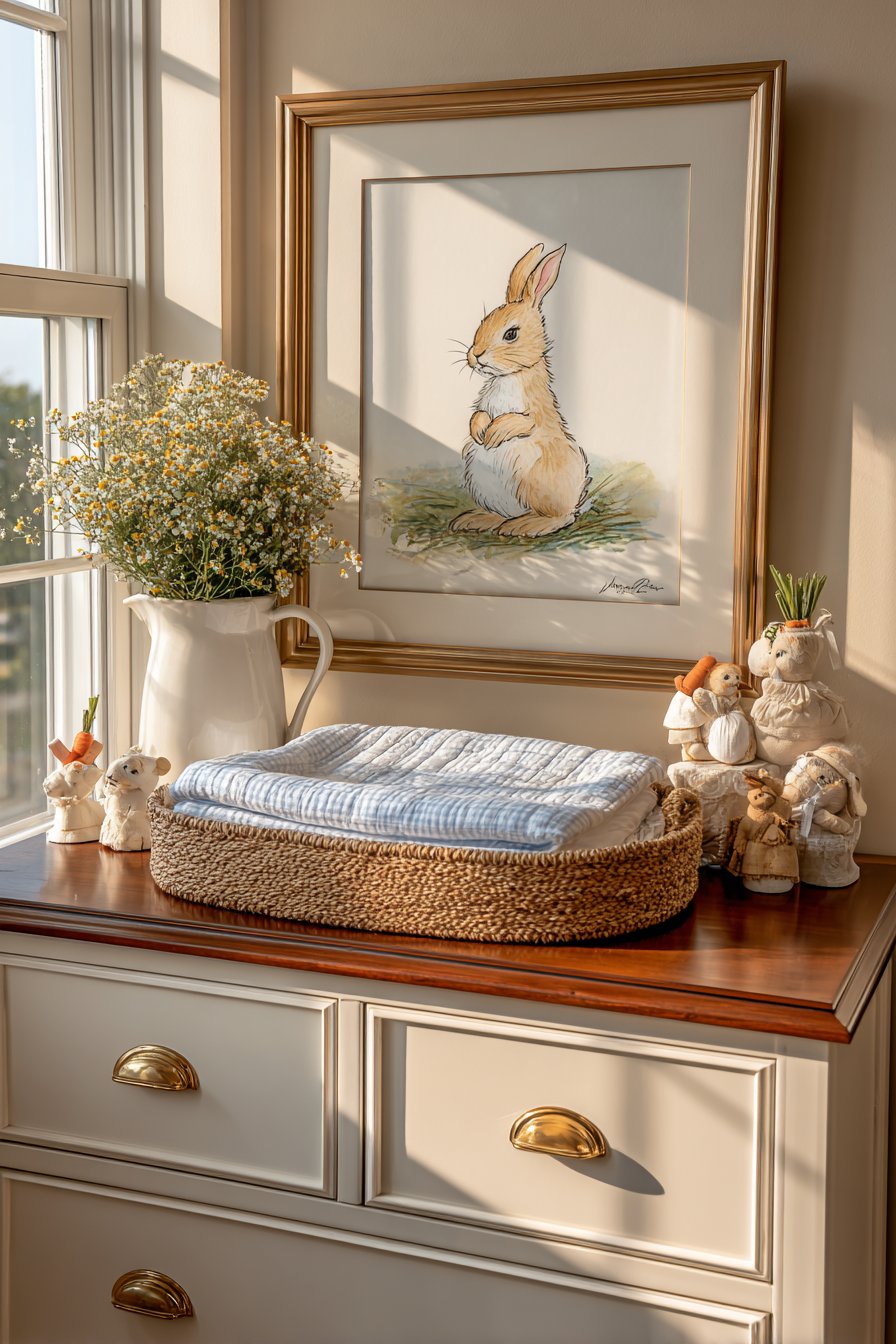
Morning light through a nearby window creates soft highlights on surfaces. The lighting reveals ceramic glazes and painted wood textures. The interplay between light and surface creates depth in the arrangement. The brass drawer pulls catch light adding sparkle to the vintage piece. The careful arrangement demonstrates that functional furniture can display aesthetic intention.
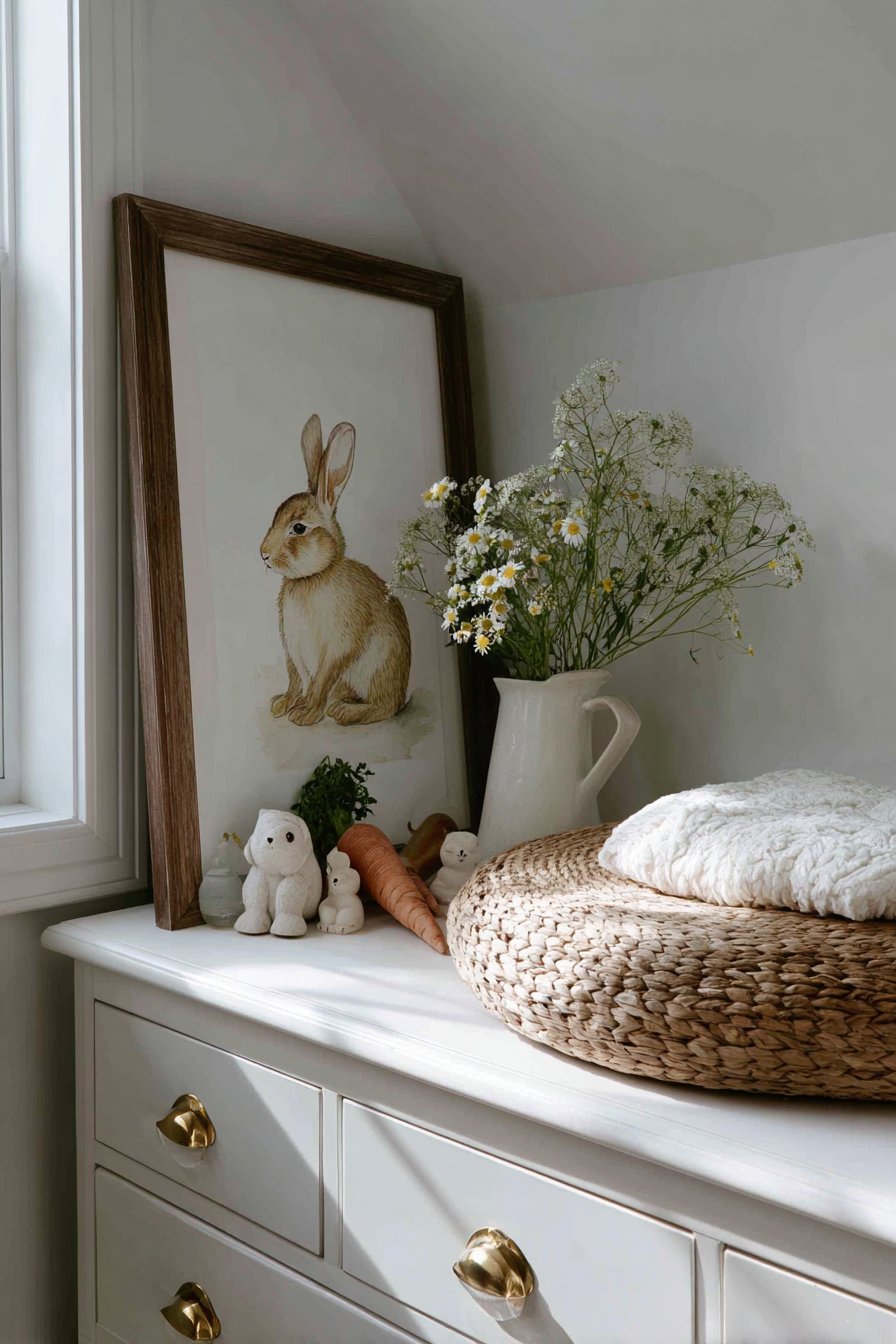
The curated styling suggests thoughtfulness and attention to detail throughout the nursery. The vintage aesthetic connects to Peter Rabbit’s timeless quality and heritage. The arrangement balances multiple small items without appearing cluttered. This vignette proves that dresser tops offer valuable real estate for theme expression.
Key Design Tips:
- Group decorative items in odd numbers (three or five) for pleasing visual composition
- Vary heights within dresser top arrangements using books or risers under items
- Keep changing pad secured to one side rather than centered for safer access
- Change fresh flowers weekly to maintain freshness and prevent wilting displays
- Choose vintage furniture pieces with good bone structure that paint covers beautifully
- Maintain some negative space in arrangements to prevent overcrowded appearances
15. Rocking Chair Nursing Area with Botanical Prints
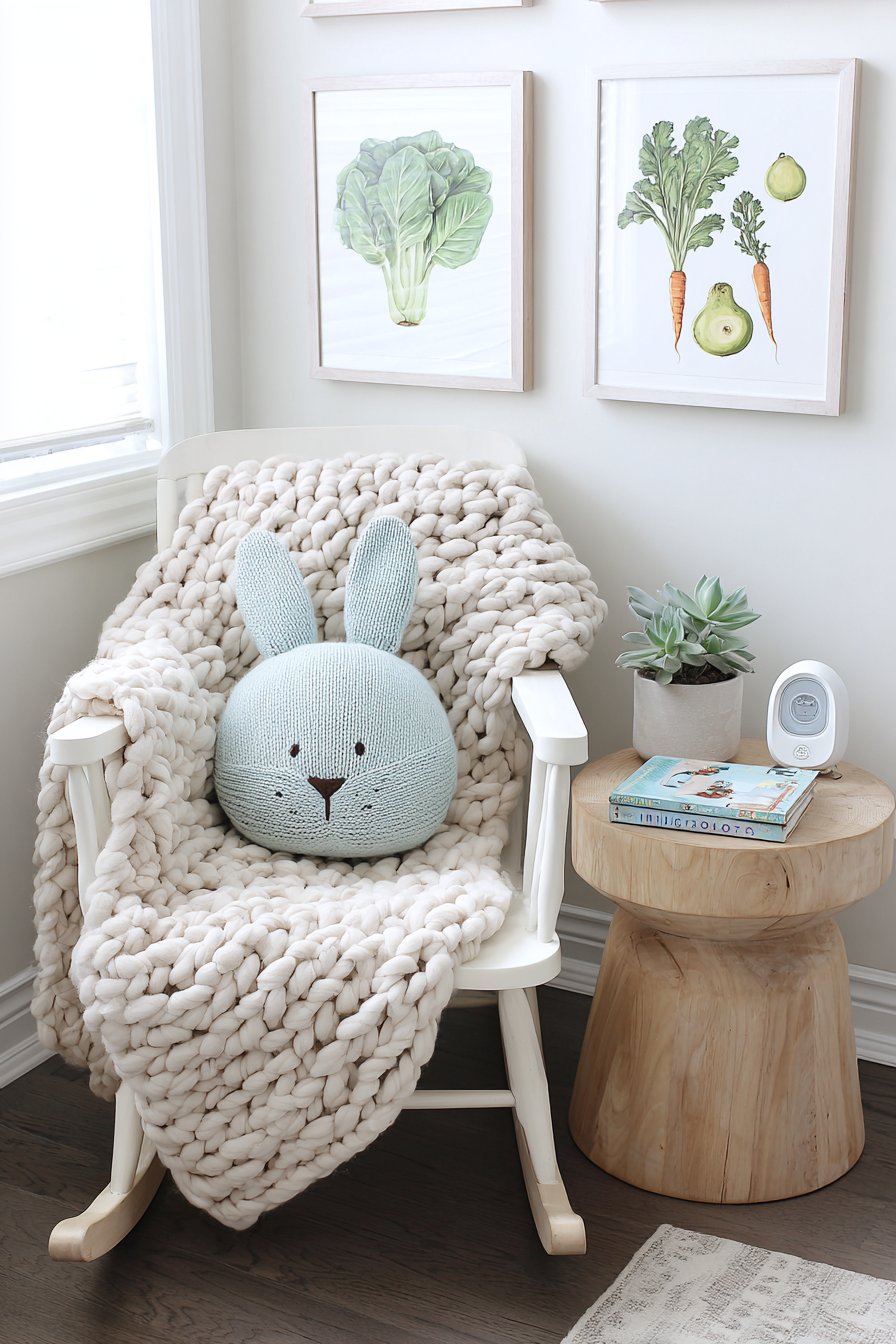
This white wooden rocking chair creates a dedicated nursing area in the nursery. A hand-knitted cream blanket drapes over the chair back adding texture and warmth. A Peter Rabbit themed lumbar pillow in soft blue linen provides lower back support. The pillow placement addresses practical comfort needs during extended feeding sessions. The blue color adds subtle theme reinforcement without overwhelming the space.
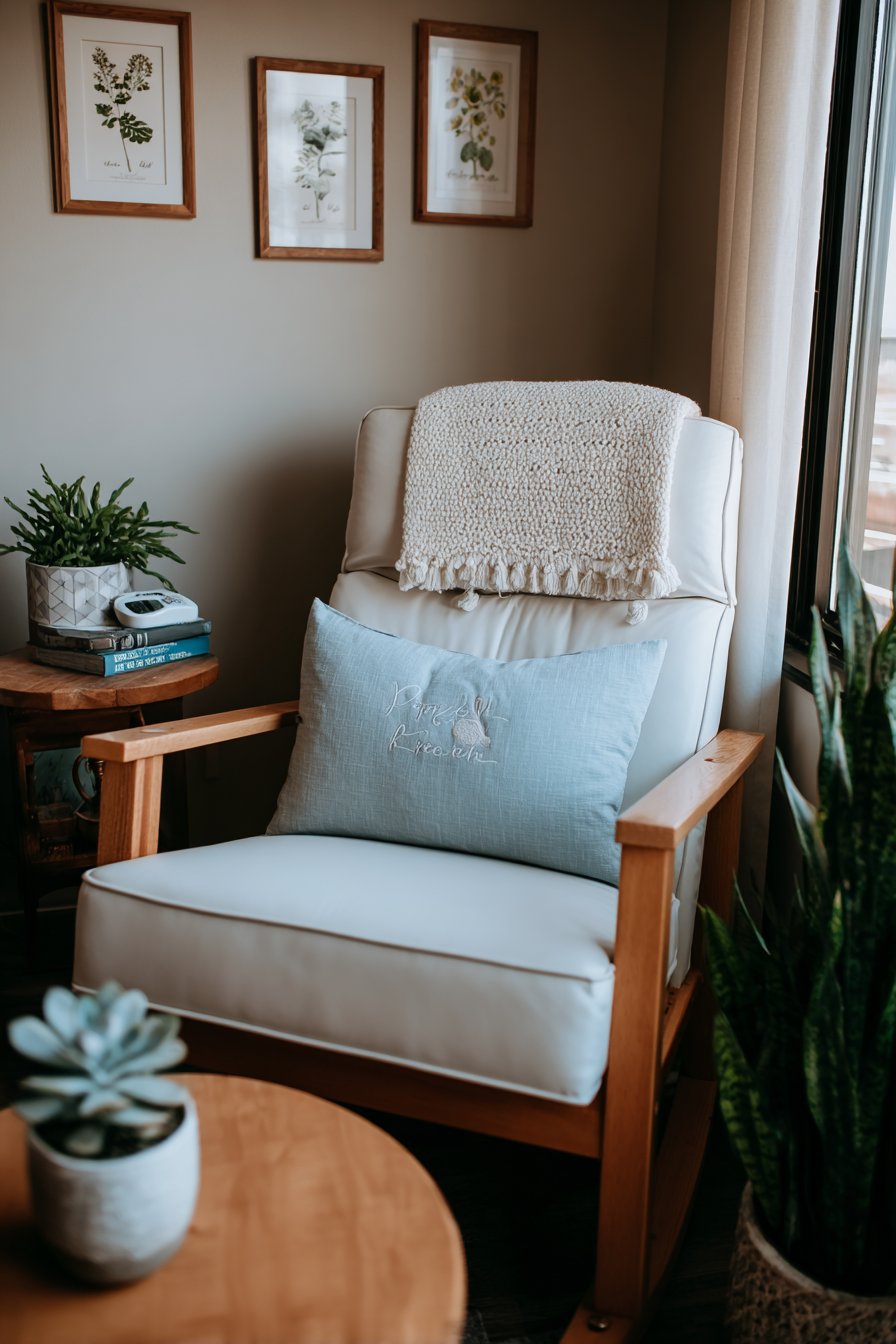
A round wooden side table holds essential items within arm’s reach. A baby monitor sits ready for naptime transitions from rocking to crib. A small succulent in a ceramic pot adds living greenery requiring minimal care. A hardcover edition of The Tale of Peter Rabbit awaits bedtime story reading. The table organization keeps frequently used items accessible but uncluttered.
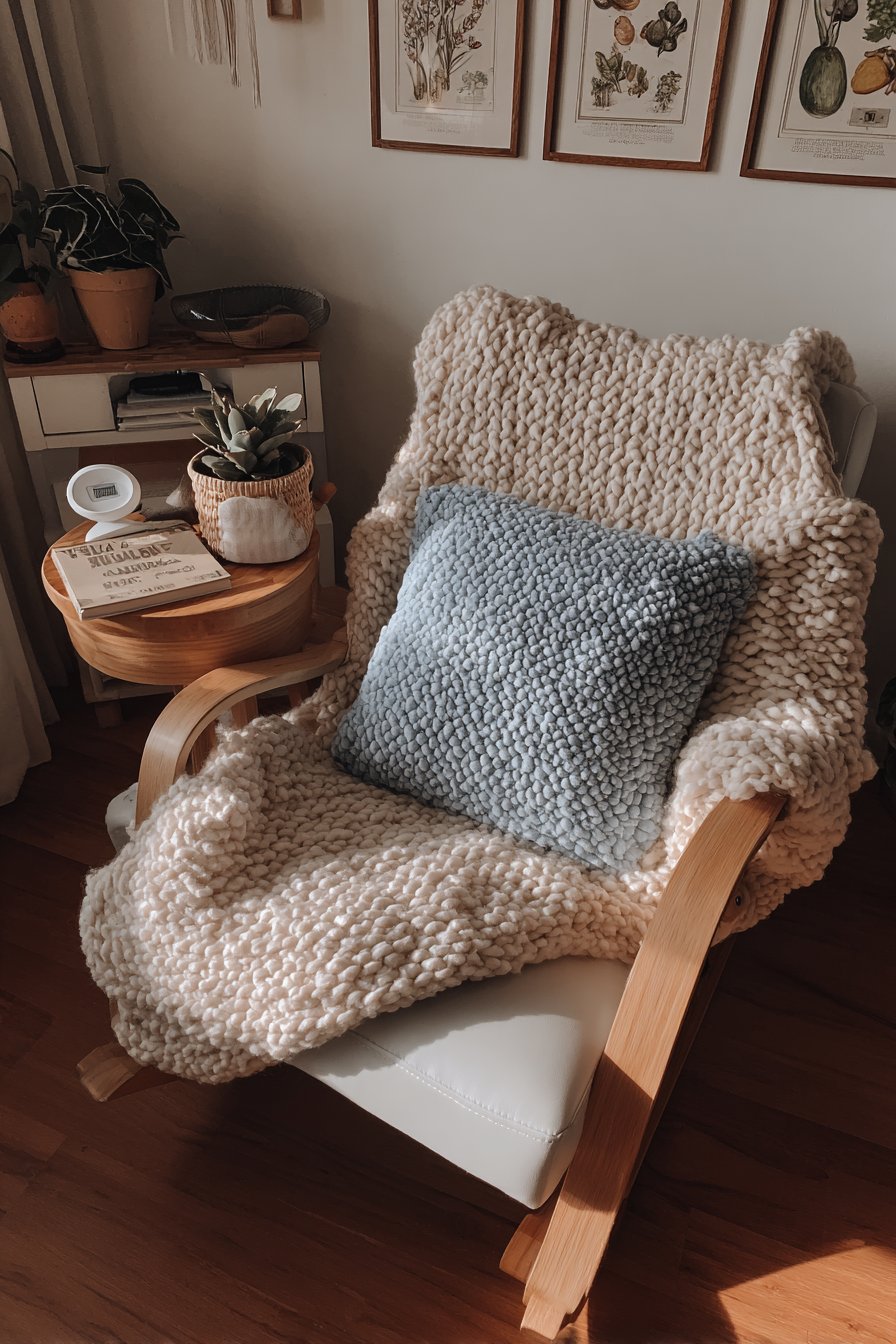
The wall behind displays framed botanical prints of garden vegetables. These prints connect to Peter Rabbit’s garden setting through botanical accuracy. The scientific illustration style adds sophistication to the thematic elements. Natural afternoon light creates a peaceful atmosphere perfect for bonding time. The gentle illumination supports calm feeding sessions and story time.
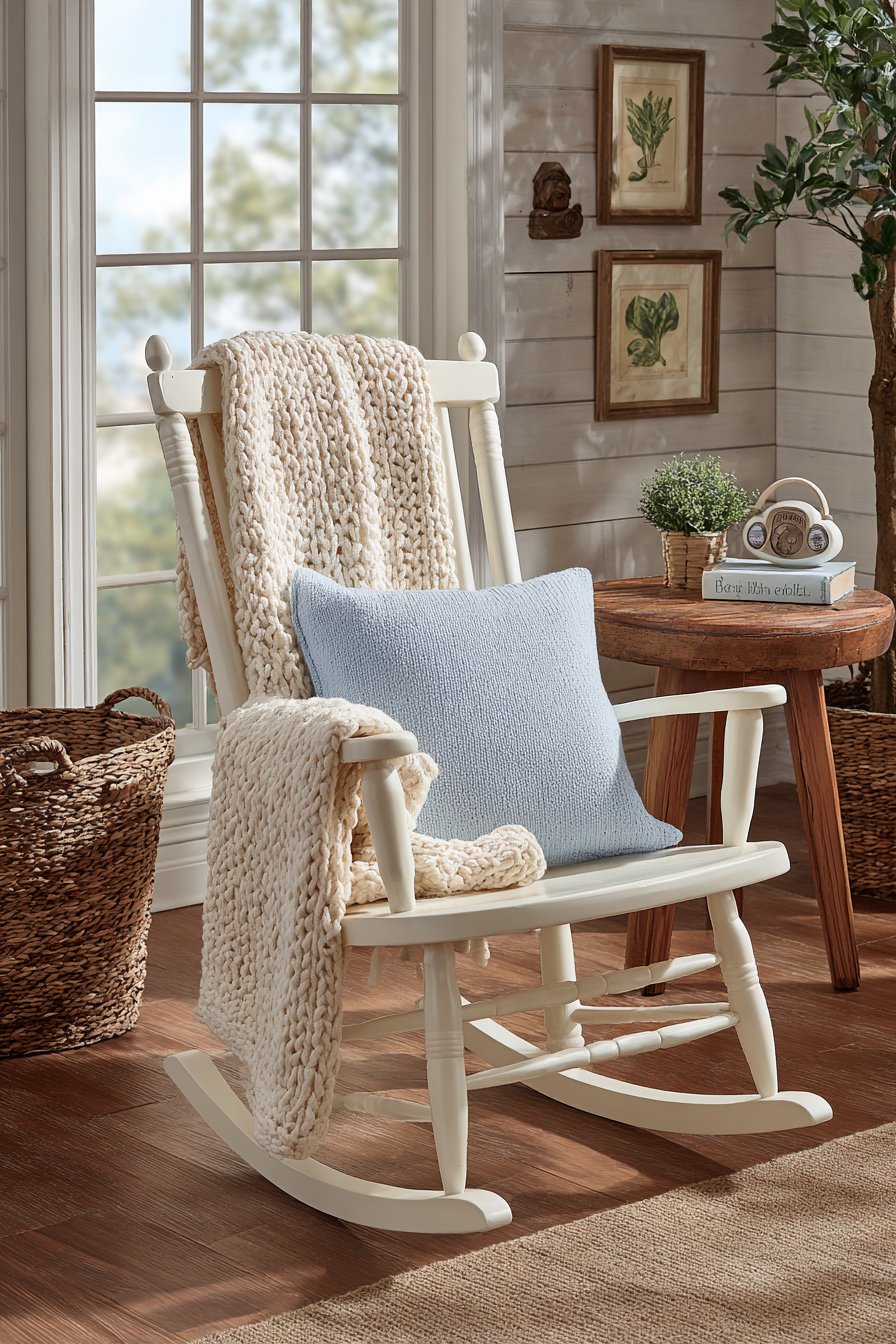
The comfortable nursing area acknowledges the practical needs of new parenthood. The rocker’s gentle motion soothes both parent and baby during sessions. The knitted textures invite touch and add handcrafted warmth. The natural wood grain and botanical prints create an organic, nurturing environment. This corner becomes central to daily routines and precious memories.
Key Design Tips:
- Choose rocking chairs with armrests at comfortable height for supporting baby during feeding
- Add lumbar pillows to address the back strain common during nursing sessions
- Keep side tables within reach without interfering with the chair’s rocking radius
- Display botanical prints in simple frames to maintain focus on the illustrations themselves
- Use succulents for greenery requiring minimal care during busy newborn phase
- Position rocking chairs away from direct window glare while maintaining natural light access
16. Wicker Basket Toy Storage with Accessible Organization
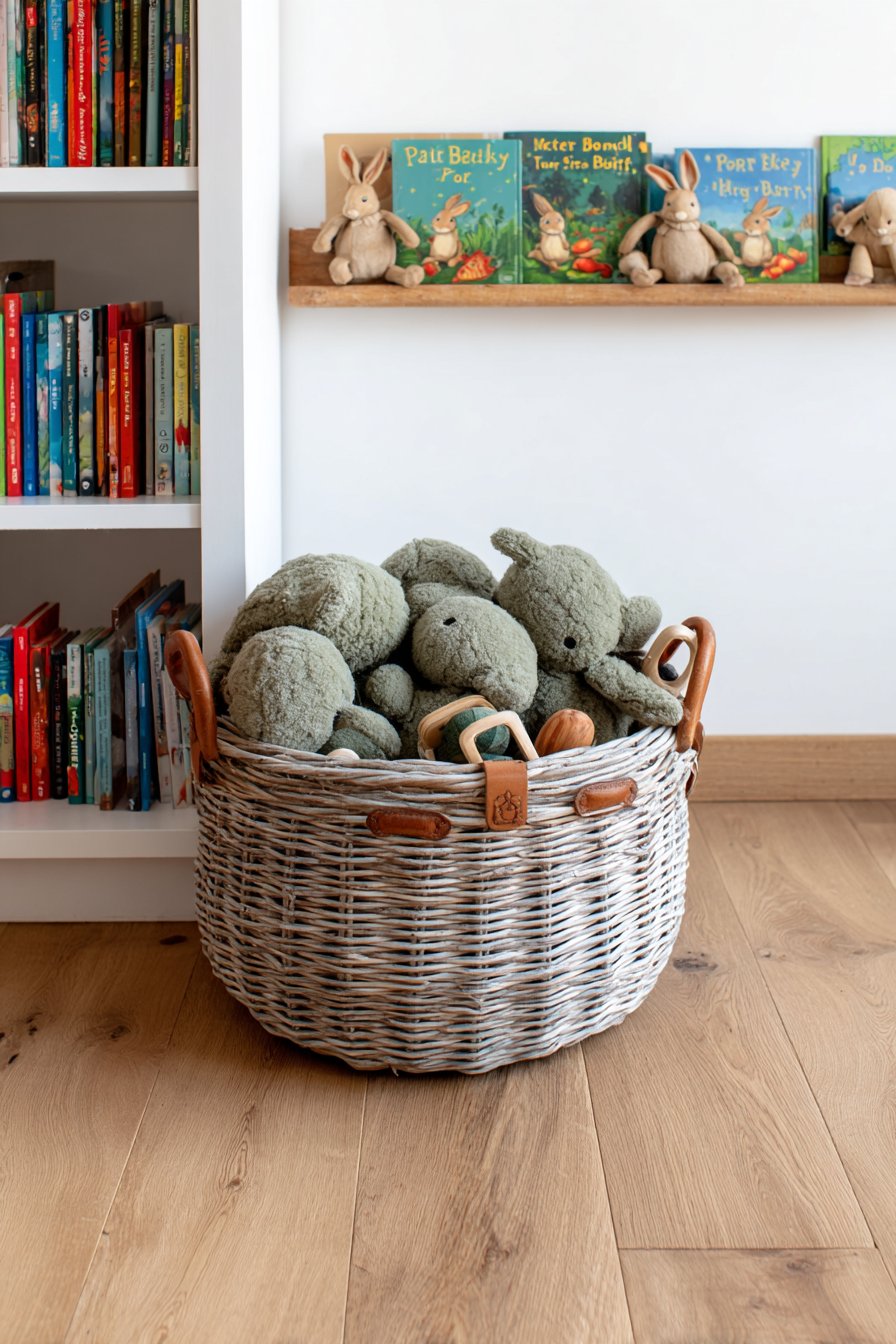
A large wicker basket with leather handles provides primary toy storage in this nursery. The basket fills with plush Peter Rabbit toys and wooden garden-themed playthings. The wicker material adds natural texture while remaining lightweight enough to move. The leather handles provide grip for relocating the basket during cleaning routines. The basket sits on natural oak flooring creating grounding visual weight.
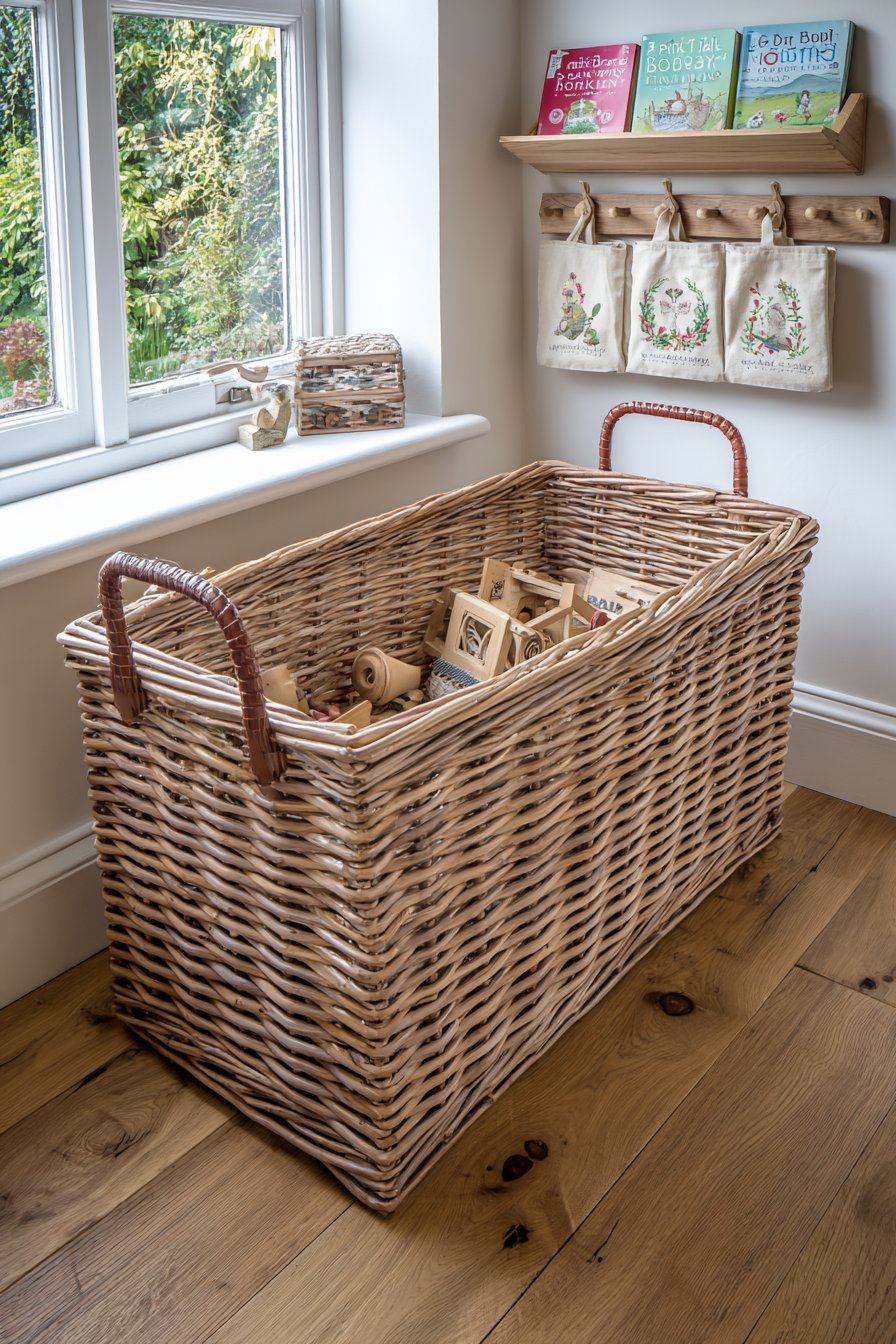
A low white bookshelf displays Peter Rabbit board books with organized efficiency. The spines show colorful vegetable illustrations making book identification easy for toddlers. The shelf height promotes independence as children learn to select their own books. Above the bookshelf, a simple wooden peg rail holds small fabric bags. The bags feature Peter Rabbit appliques for additional storage options.
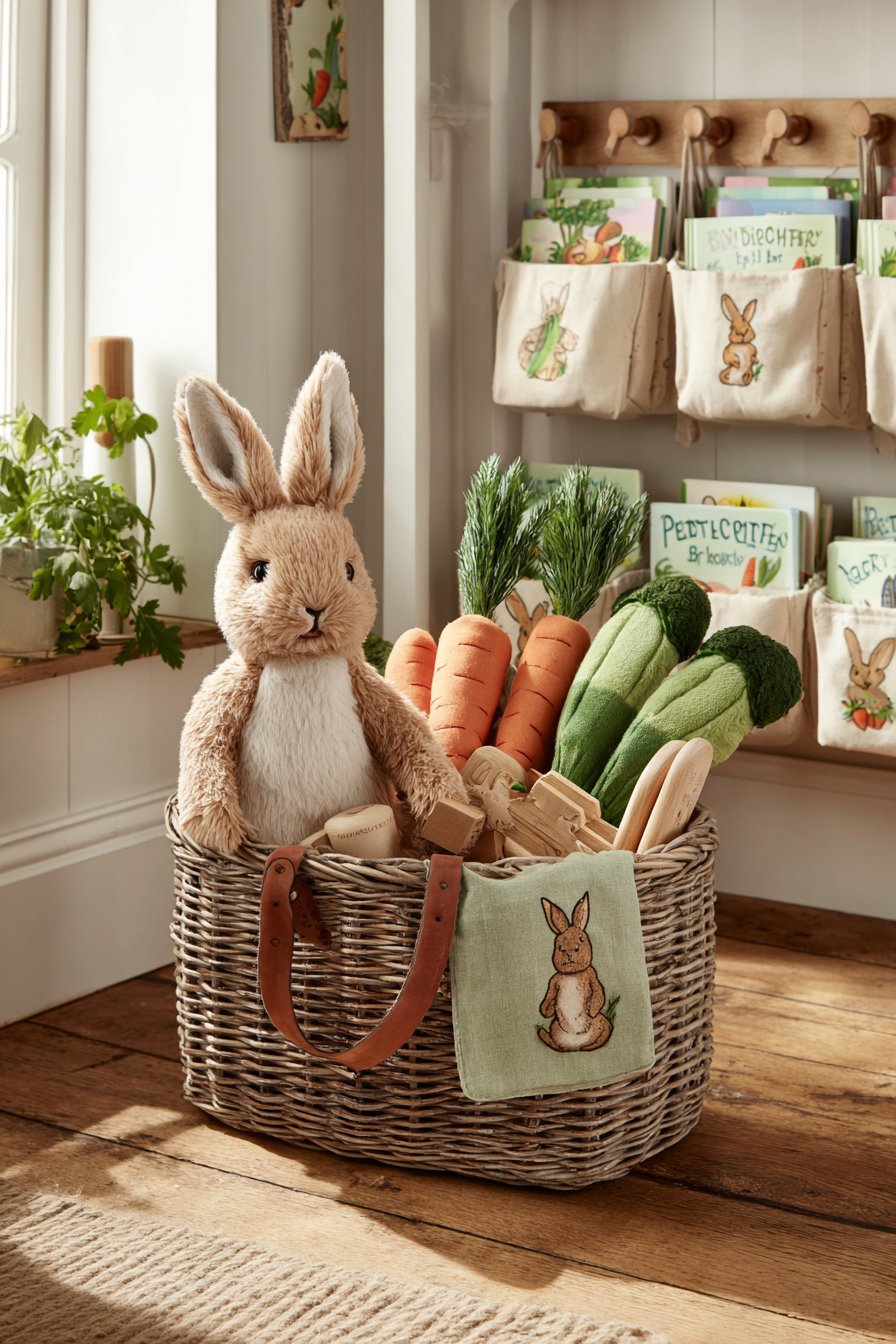
Natural daylight from a window creates soft shadows throughout the storage area. The lighting makes colors vivid and inviting during play times. The shadow play adds dimension to the organized display. The practical organization system grows with your child’s changing needs. The accessible height encourages participation in cleanup routines from early ages.
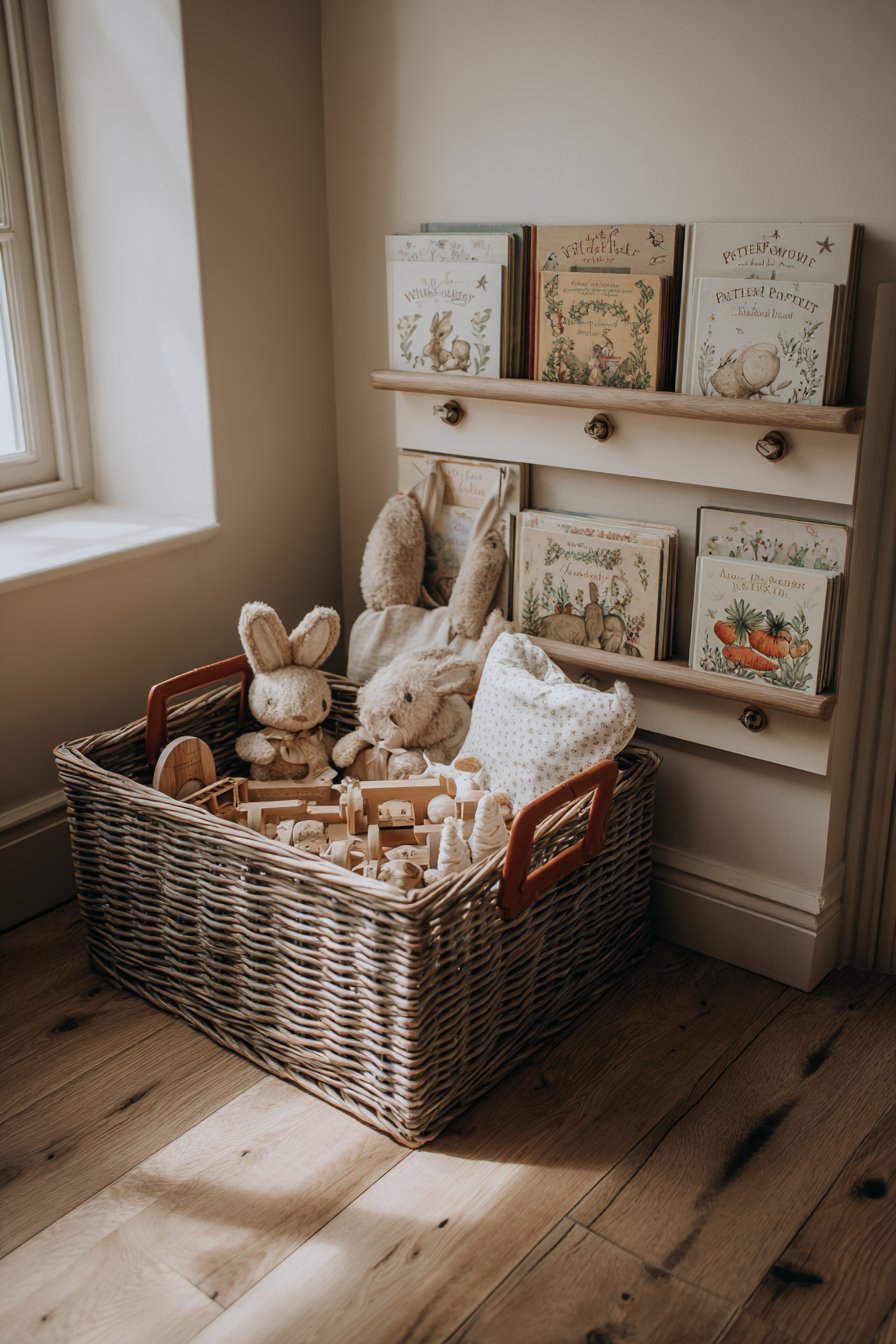
The storage solutions prove that organization can maintain aesthetic appeal and thematic consistency. The natural materials align with the broader nursery design philosophy. The system keeps toys contained while remaining visually pleasing. This practical approach demonstrates that function and beauty coexist successfully.
Key Design Tips:
- Choose wicker baskets with smooth interiors to prevent snagging on delicate toy materials
- Select baskets with sturdy handles rated for the weight of filled containers
- Keep the most frequently used toys in the most accessible storage positions
- Use peg rails for items needing to hang such as dress-up costumes or bags
- Position bookshelves perpendicular to windows to prevent sun damage to book spines
- Rotate toys seasonally, storing some away to maintain manageable quantities
17. Layered Crib Bedding with Organic Textiles
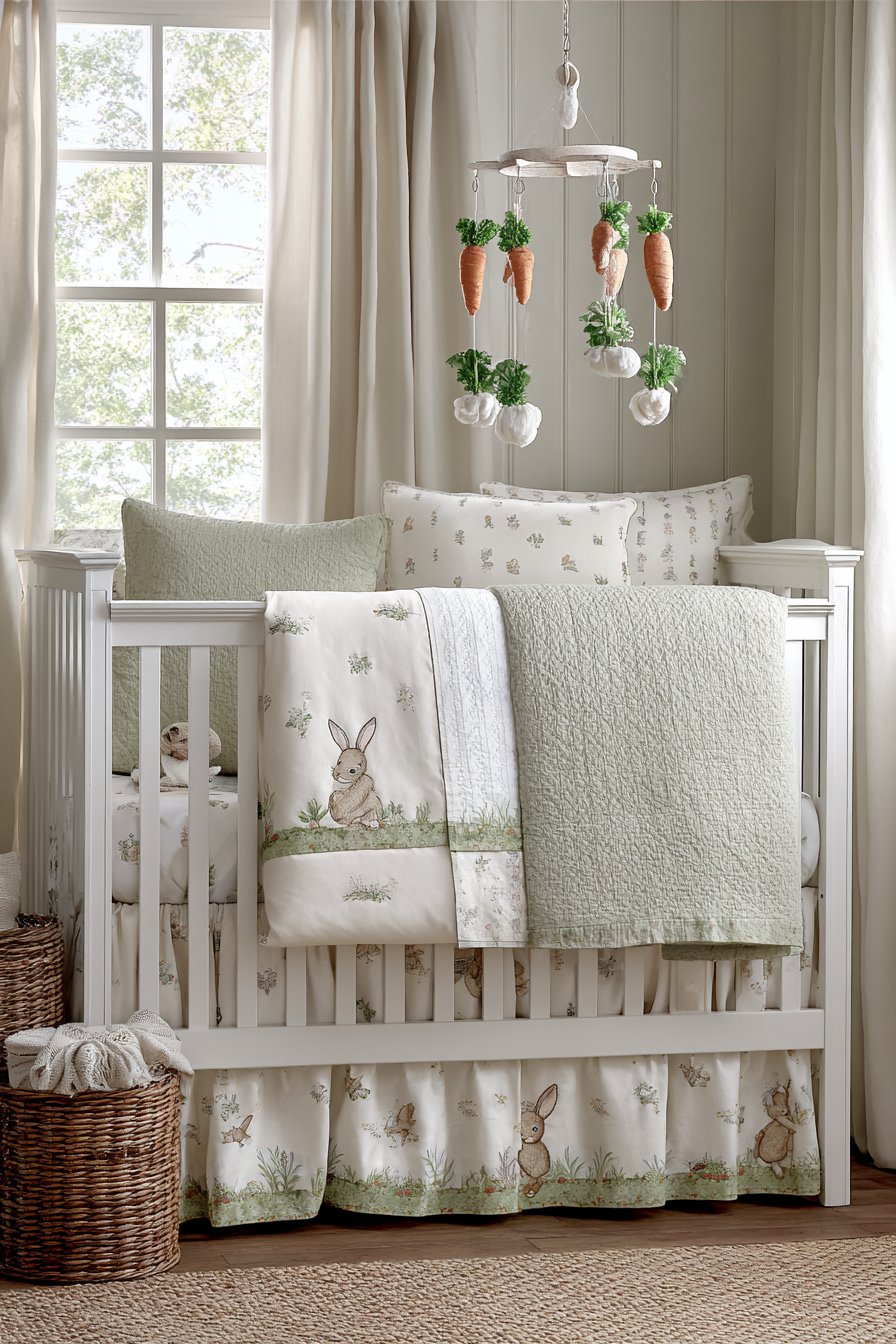
The white wooden crib showcases carefully layered organic bedding creating comfort and style. Organic cotton sheets in soft sage green provide the base layer. A cream cellular blanket with subtle texture adds warmth without bulk. The cellular weave provides breathability important for infant safety. A fitted sheet features an all-over print of tiny Peter Rabbit characters in various garden poses.
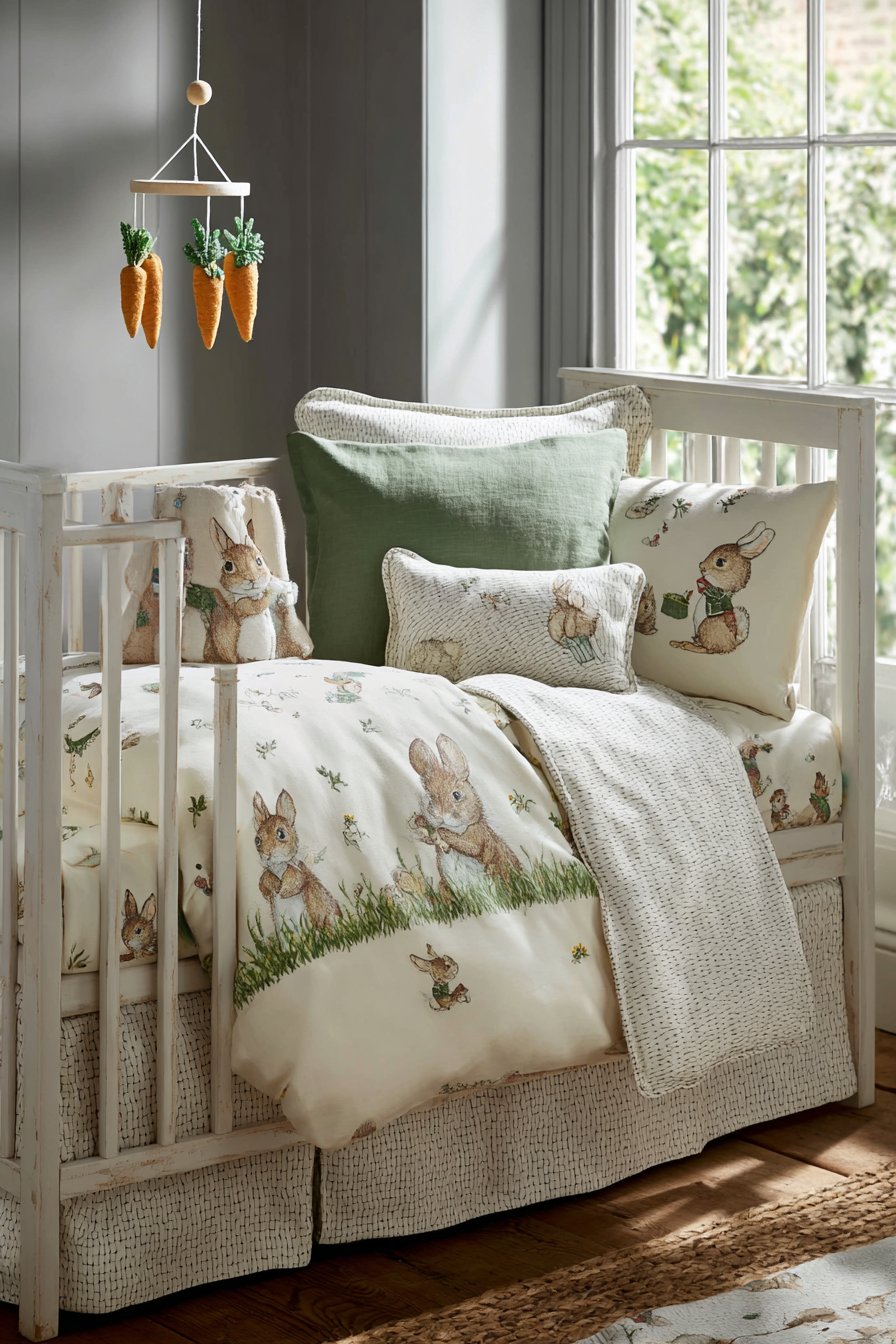
A decorative crib skirt in natural linen with carrot embroidery detail completes the layered look. The embroidery adds handcrafted detail connecting to the garden theme. The linen fabric coordinates with curtains and other textile elements throughout the room. A white wooden mobile with felt vegetables hangs above at safe distance. The mobile components echo the garden vegetables featured in wall art and textiles.
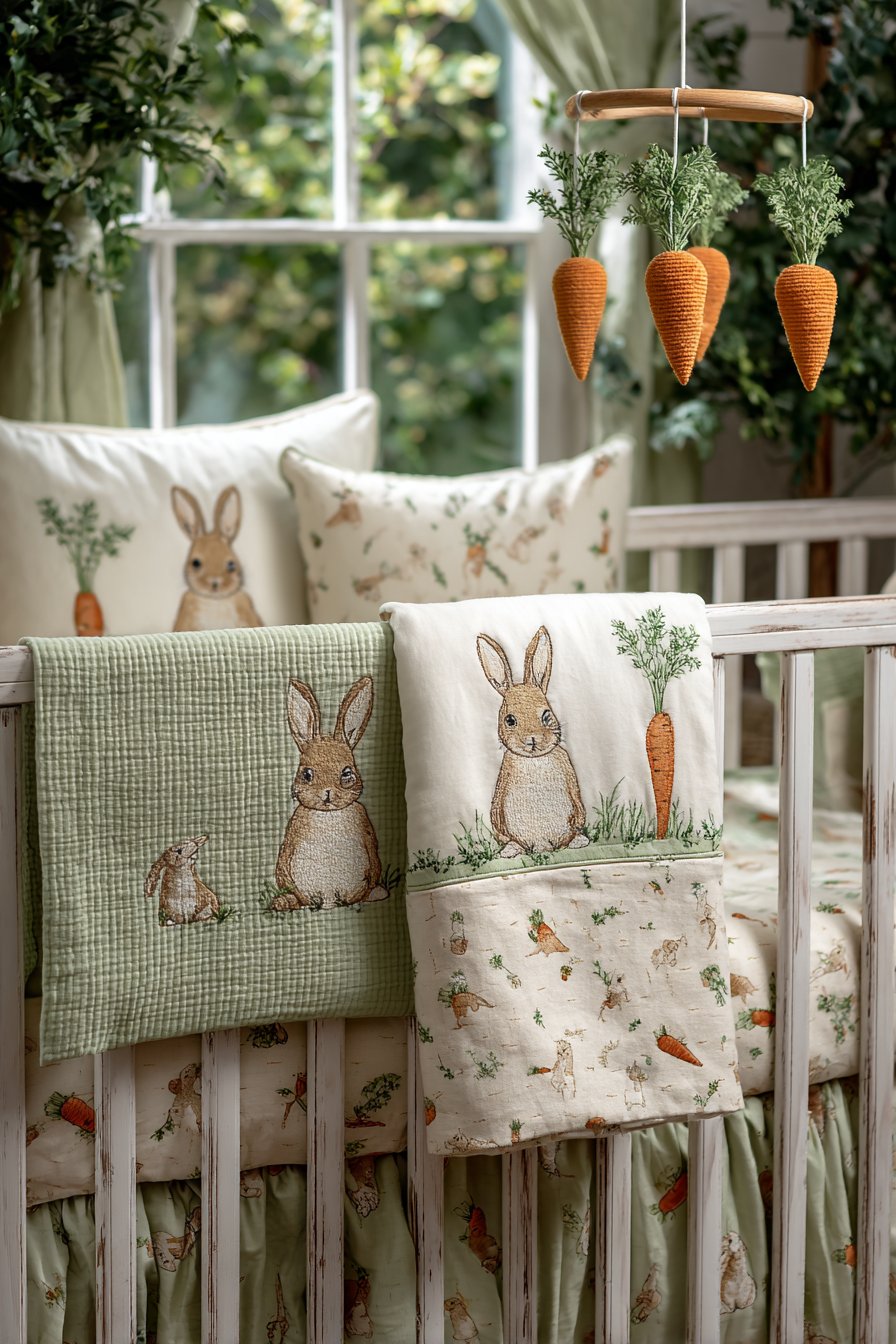
Natural window light illuminates the crib area creating an inviting sleeping space. The lighting reveals the fabric weaves and embroidery details beautifully. The layered textiles create depth and visual interest in the neutral palette. The organic materials ensure the safest sleeping environment for your baby. The quality fabrics will withstand countless wash cycles while maintaining softness.
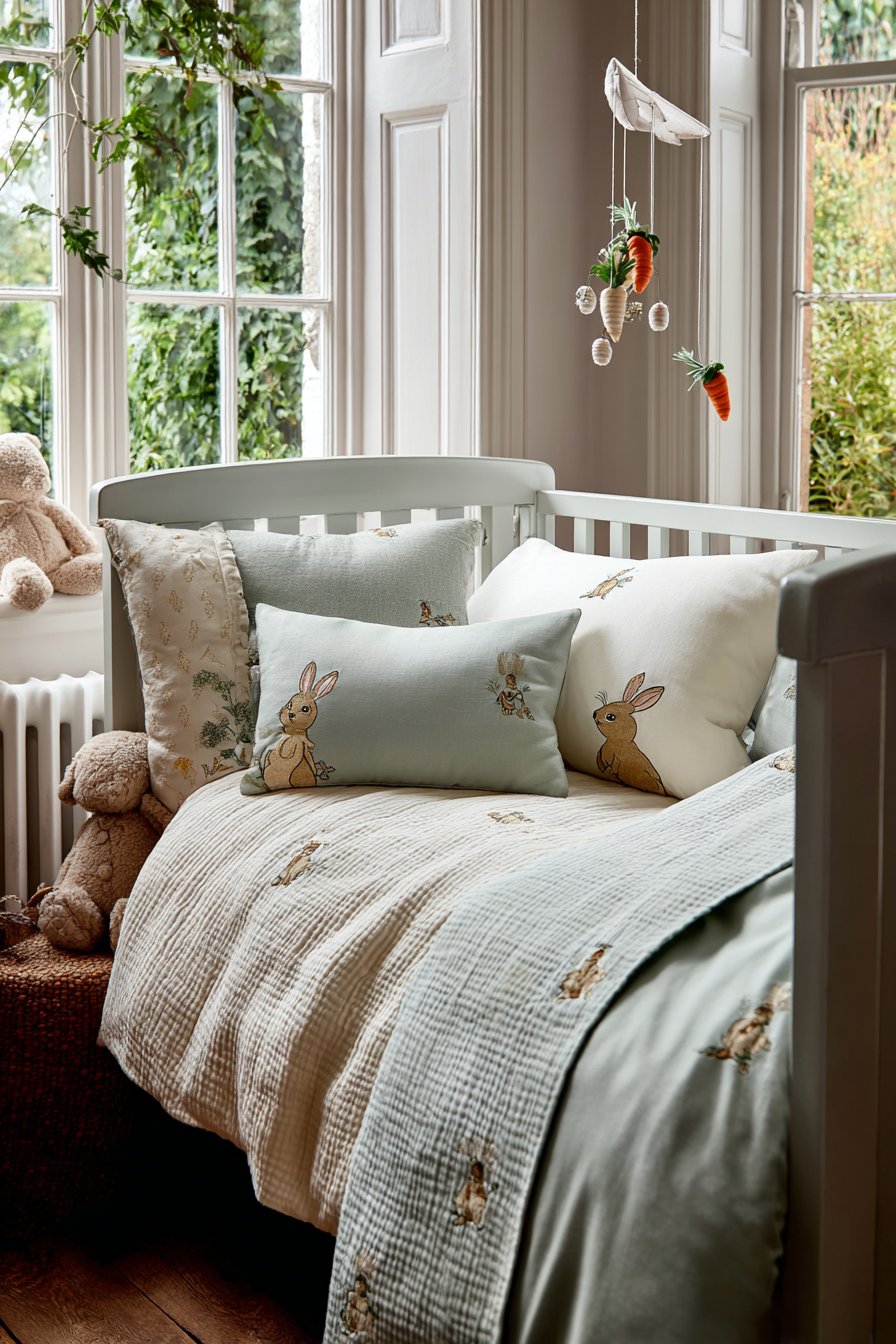
The bedding demonstrates that safety standards and beautiful design coexist successfully. The layering allows temperature adjustment by removing or adding the cellular blanket. The Peter Rabbit print remains subtle enough to work as baby grows. This crib dressing proves that the smallest details contribute to cohesive room design.
Key Design Tips:
- Choose organic cotton bedding certified free from harmful chemicals and dyes
- Layer blankets outside the crib for decoration but keep crib interior clear for safe sleep
- Select fitted sheets with deep pockets to fit securely on crib mattresses
- Use cellular blankets for breathability and temperature regulation
- Wash all bedding before first use to soften fabrics and remove sizing
- Keep at least three sets of crib sheets available for middle-of-night changes
18. Welcoming Entrance with Hand-Painted Name Plaque
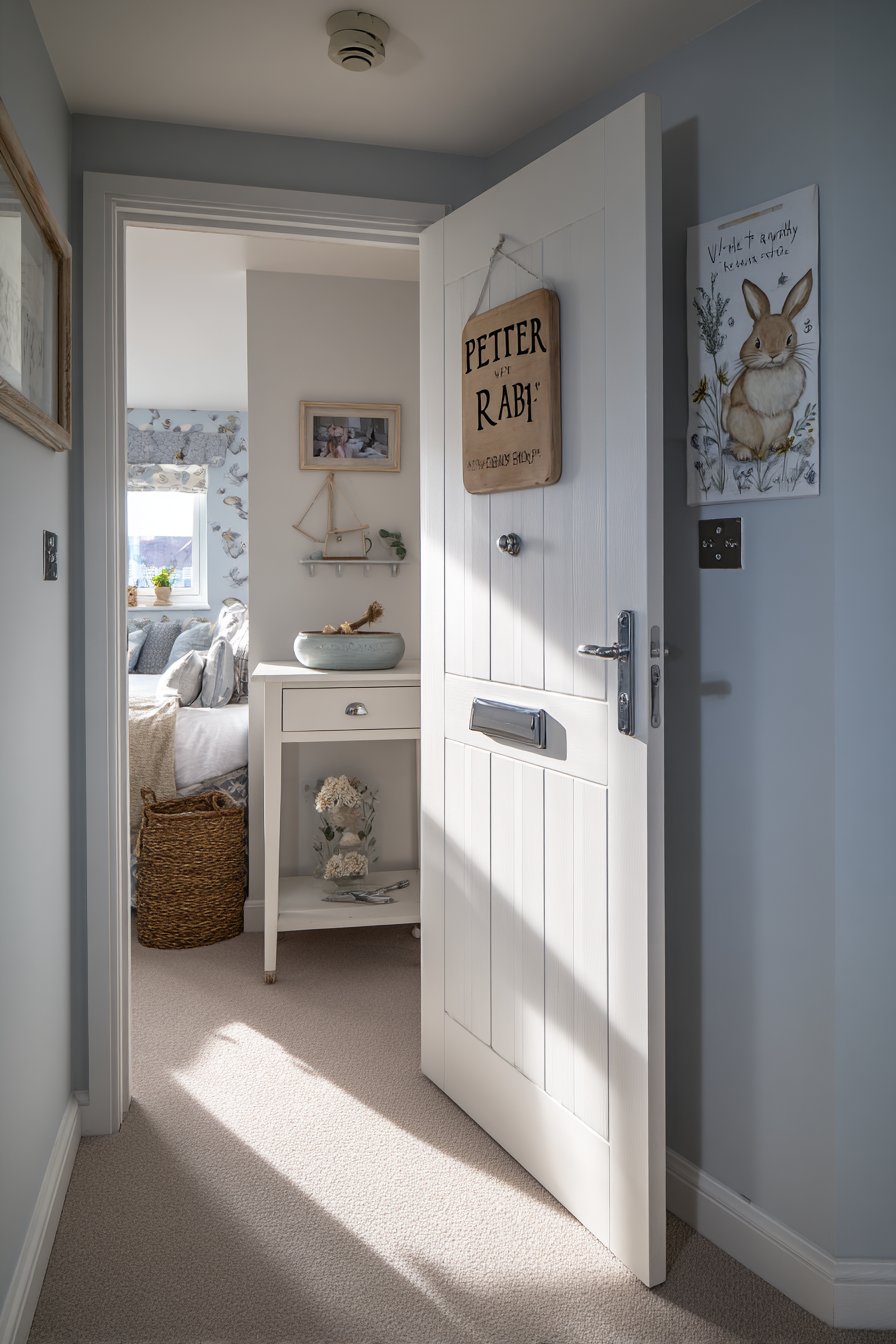
The white-painted doorway creates a welcoming entrance into the nursery space. A wooden name plaque hangs on the door displaying the baby’s name prominently. The plaque features watercolor Peter Rabbit and garden vegetable illustrations surrounding the name. The hand-painted details make this a one-of-a-kind personalized element. The plaque announces the room’s special occupant with charm and style.
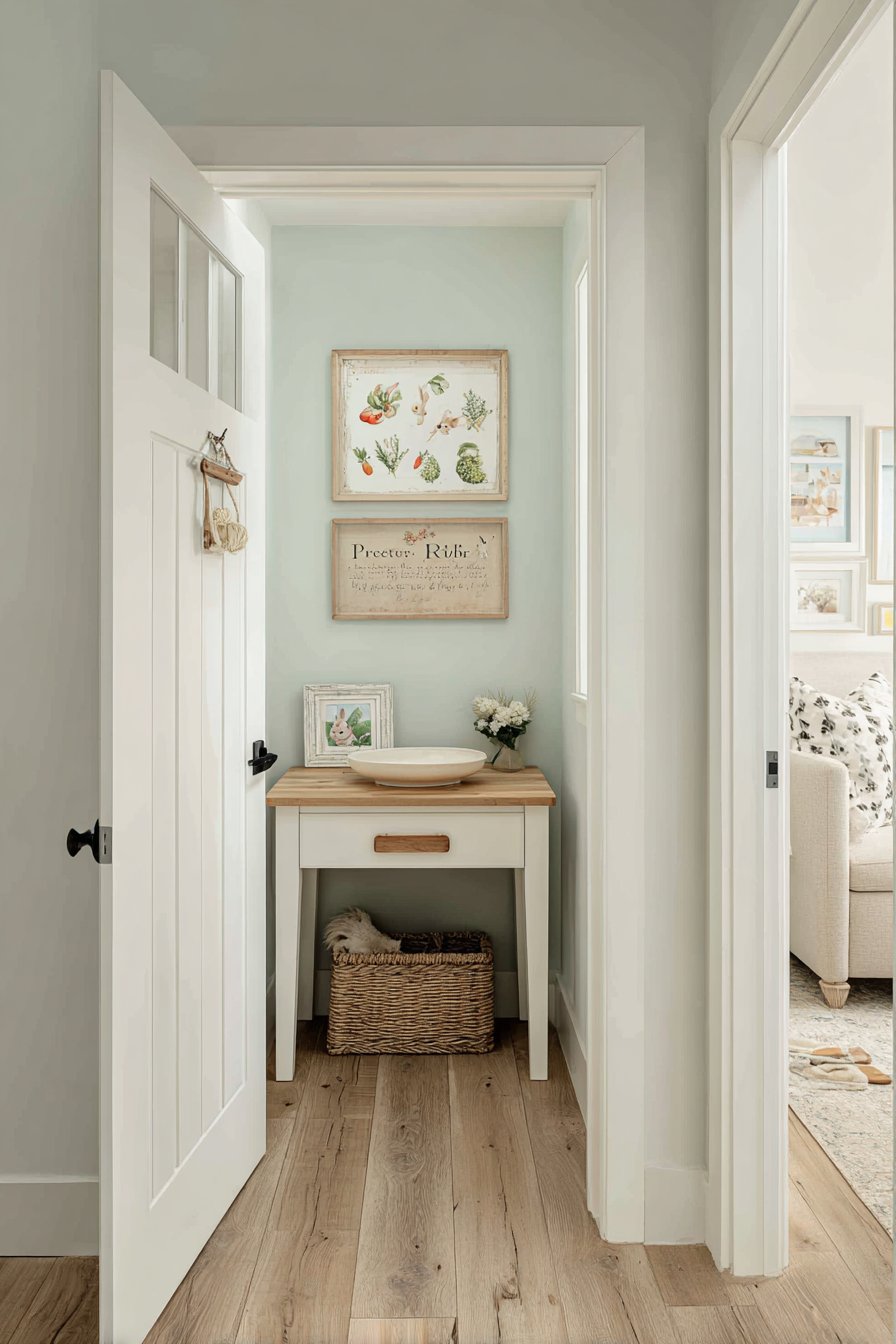
Just inside the doorway, a small white console table provides practical function. A ceramic bowl holds small items like pacifiers or hair accessories. A framed photo displays ultrasound images or newborn portraits. A woven basket underneath stores shoes keeping the entrance tidy. The organized entry system prevents nursery clutter from spreading into surrounding spaces.
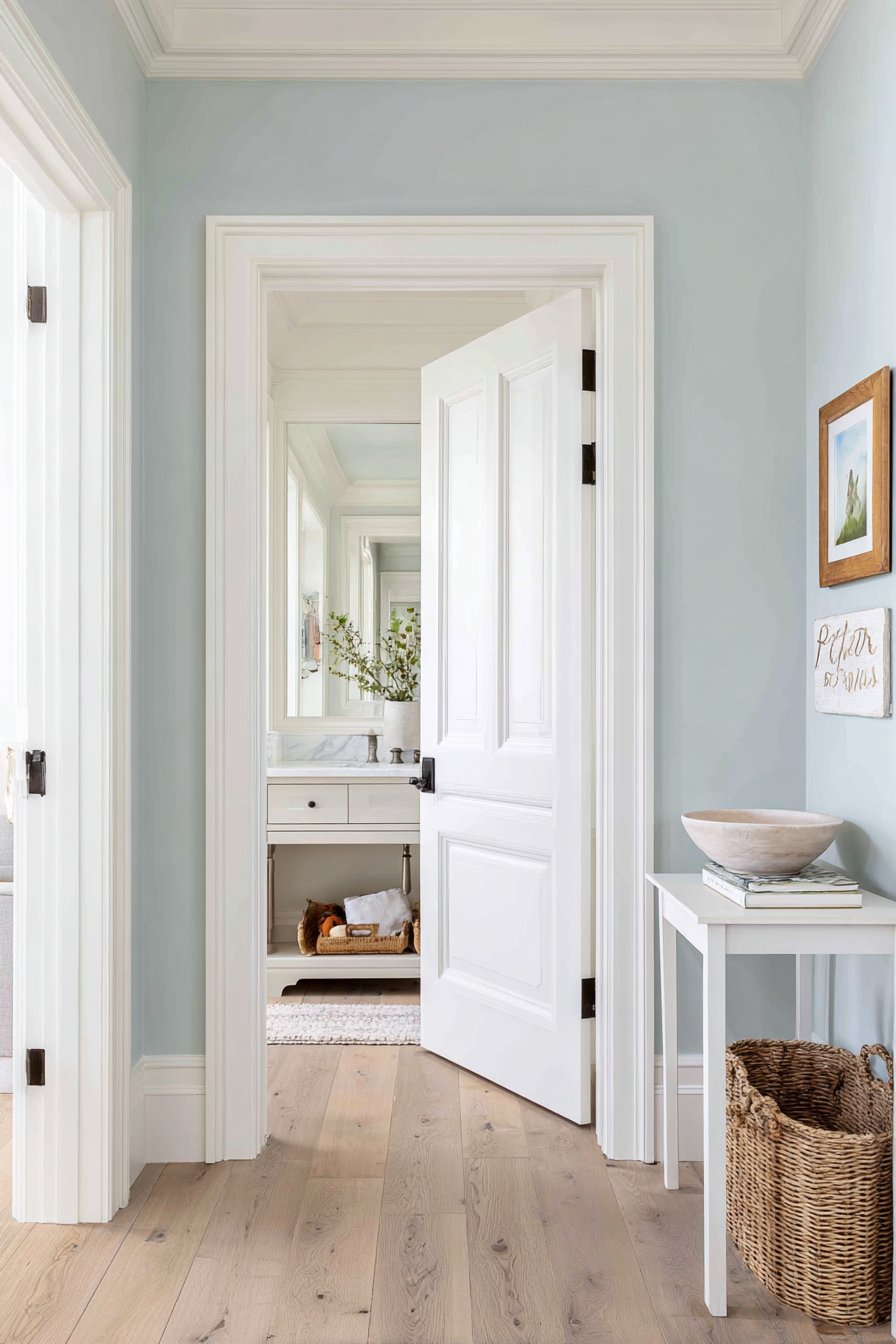
The walls show soft blue-grey paint with crisp white trim throughout. The trim creates definition between walls and doorways enhancing architectural detail. Natural light from the room beyond creates an inviting glow drawing visitors inward. The lighting creates anticipation for the complete nursery experience awaiting inside. The threshold becomes a transition space between ordinary hallway and special nursery.
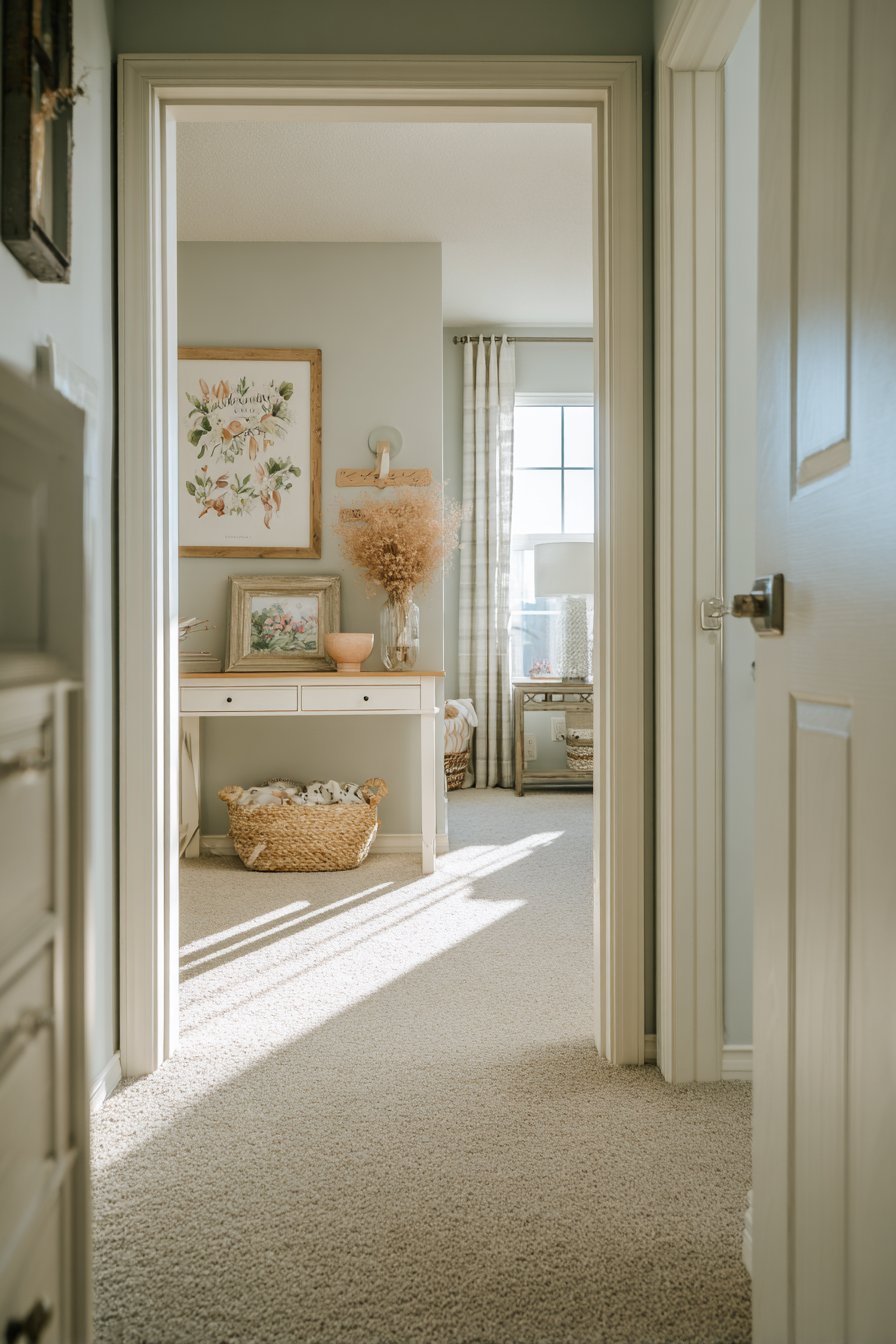
The welcoming entrance sets the tone for the entire nursery experience. The personalized name plaque makes the space feel claimed and loved. The practical console table addresses real-world needs without sacrificing aesthetics. This entrance design proves that first impressions matter even in private home spaces.
Key Design Tips:
- Commission name plaques before the baby’s arrival or shortly after naming decisions
- Hang name plaques at adult eye level for best visibility and appreciation
- Choose console tables narrow enough to avoid blocking doorway traffic flow
- Use ceramic or wooden bowls rather than plastic for more elevated aesthetic
- Keep the entrance area relatively minimal to avoid visual clutter
- Paint door frames and trim in semi-gloss for durability in high-traffic areas
19. Layered Lighting with Hand-Painted Shade
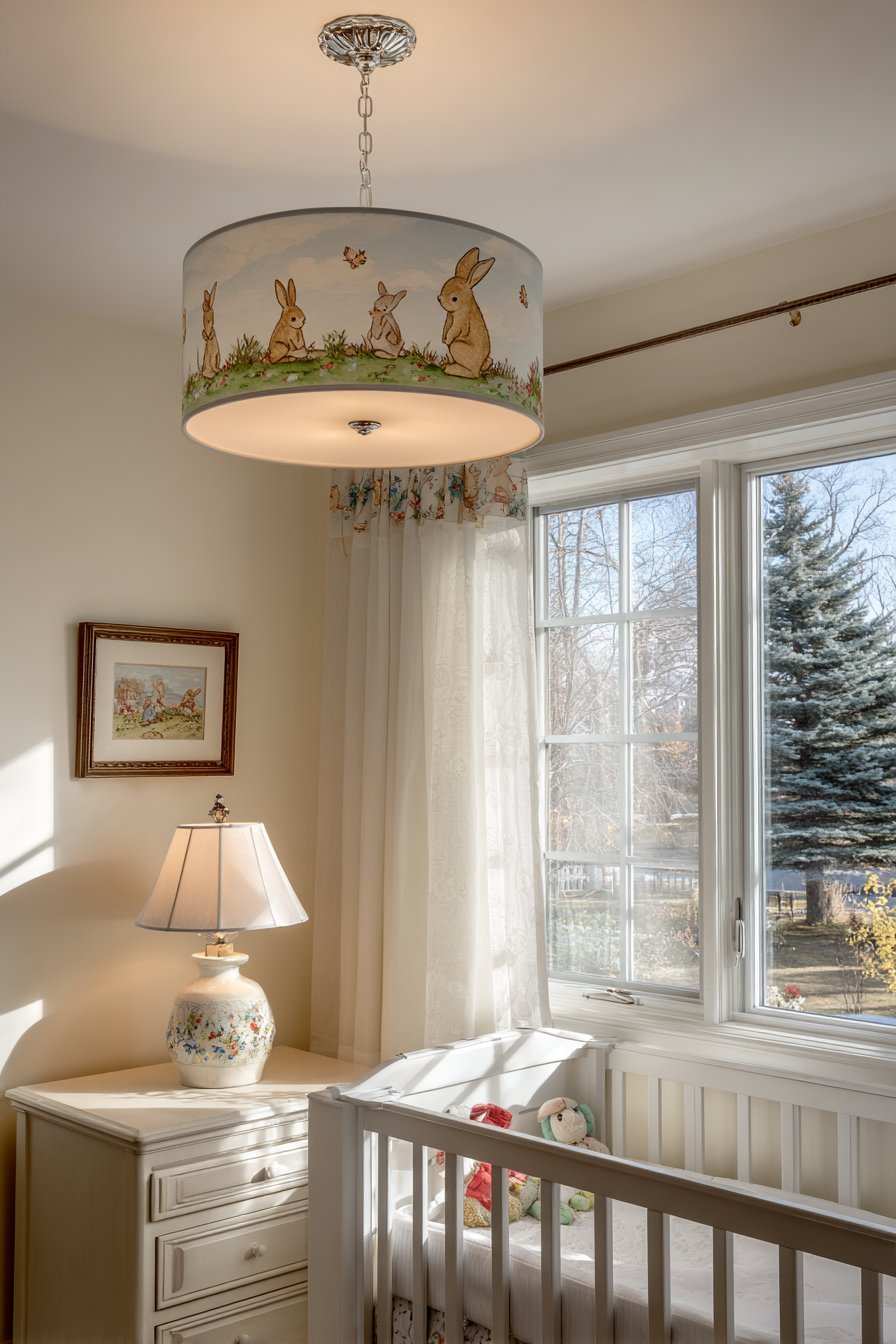
This nursery features a thoughtful layered lighting approach serving multiple functions. A central ceiling fixture displays a white drum shade with hand-painted borders. The border shows a Peter Rabbit garden scene in watercolor style. The custom shade transforms standard overhead lighting into thematic art. The fixture provides ambient room lighting for general activities and play.
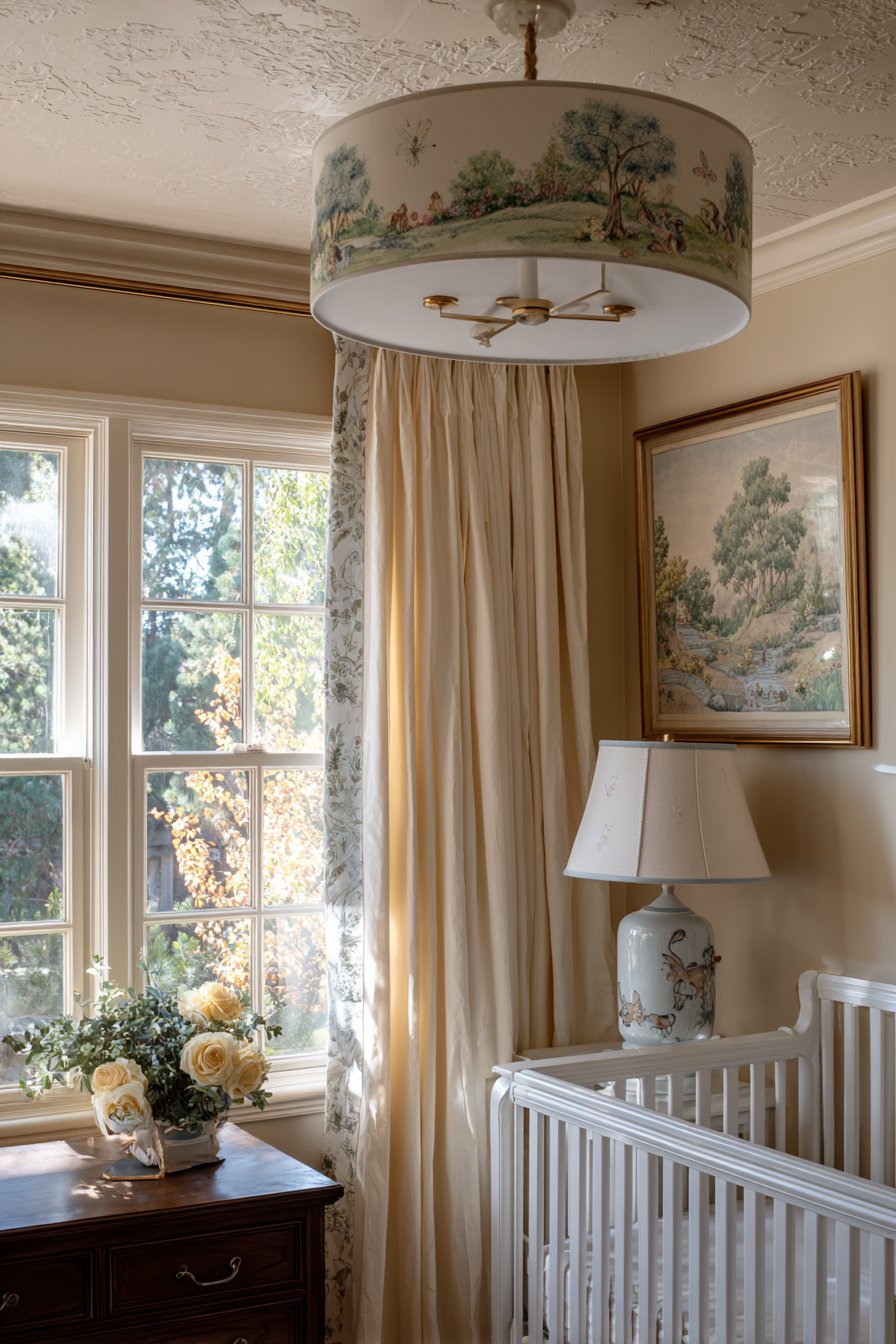
The white wooden crib positions to receive optimal natural daylight from a large window. Sheer curtains filter harsh sunlight while maintaining bright room illumination. The natural light supports healthy circadian rhythm development for your baby. A small table lamp with ceramic base sits on the bedside dresser. The lamp base features Peter Rabbit illustrations adding decorative detail while providing task lighting.
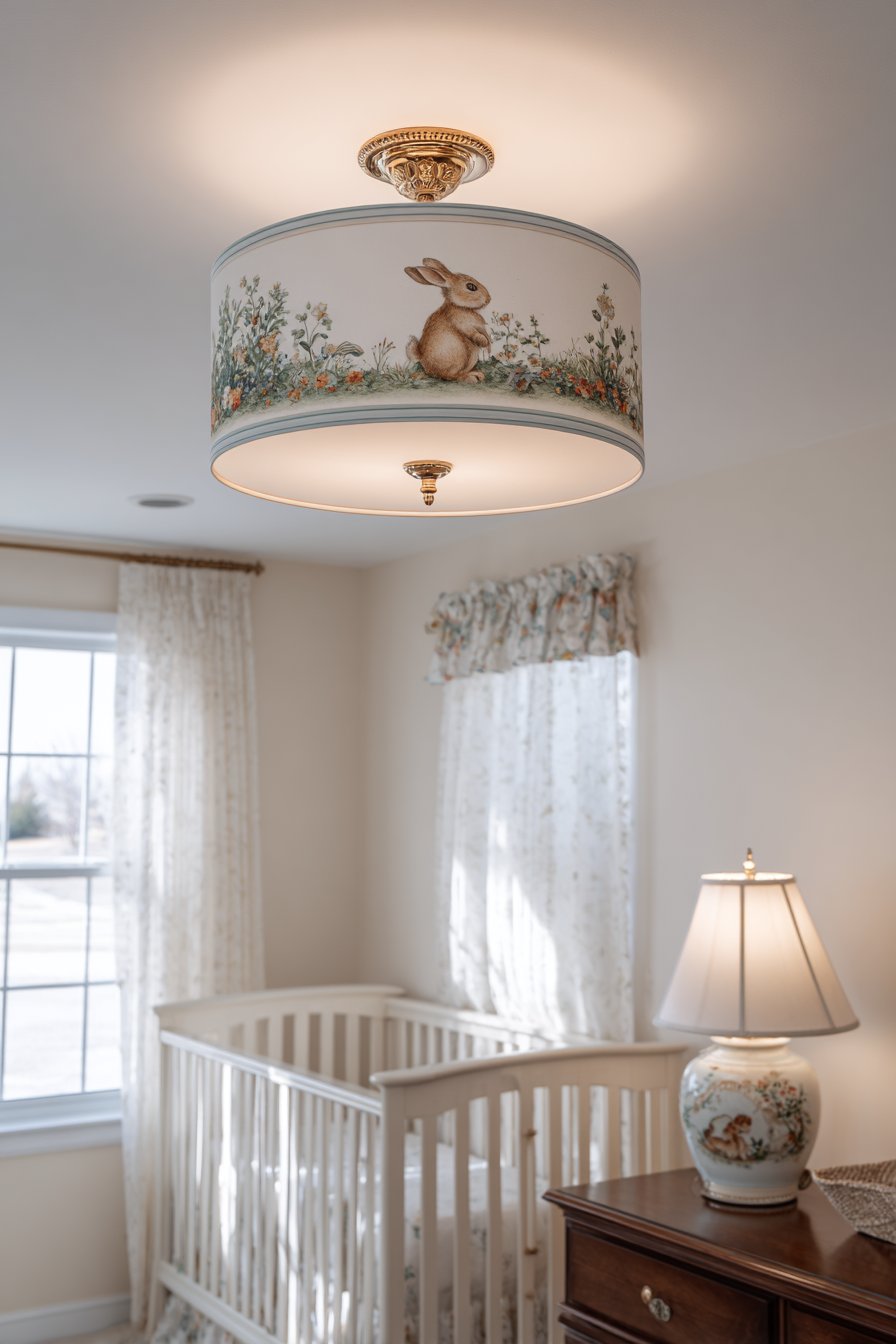
The walls display soft cream paint that reflects light throughout the space. The light-colored walls maximize brightness from both natural and artificial sources. Balanced lighting creates safe movement during nighttime care routines. Golden hour sunlight demonstrates how natural light enhances the Peter Rabbit themed elements. The warm illumination creates a peaceful atmosphere supporting bedtime routines.
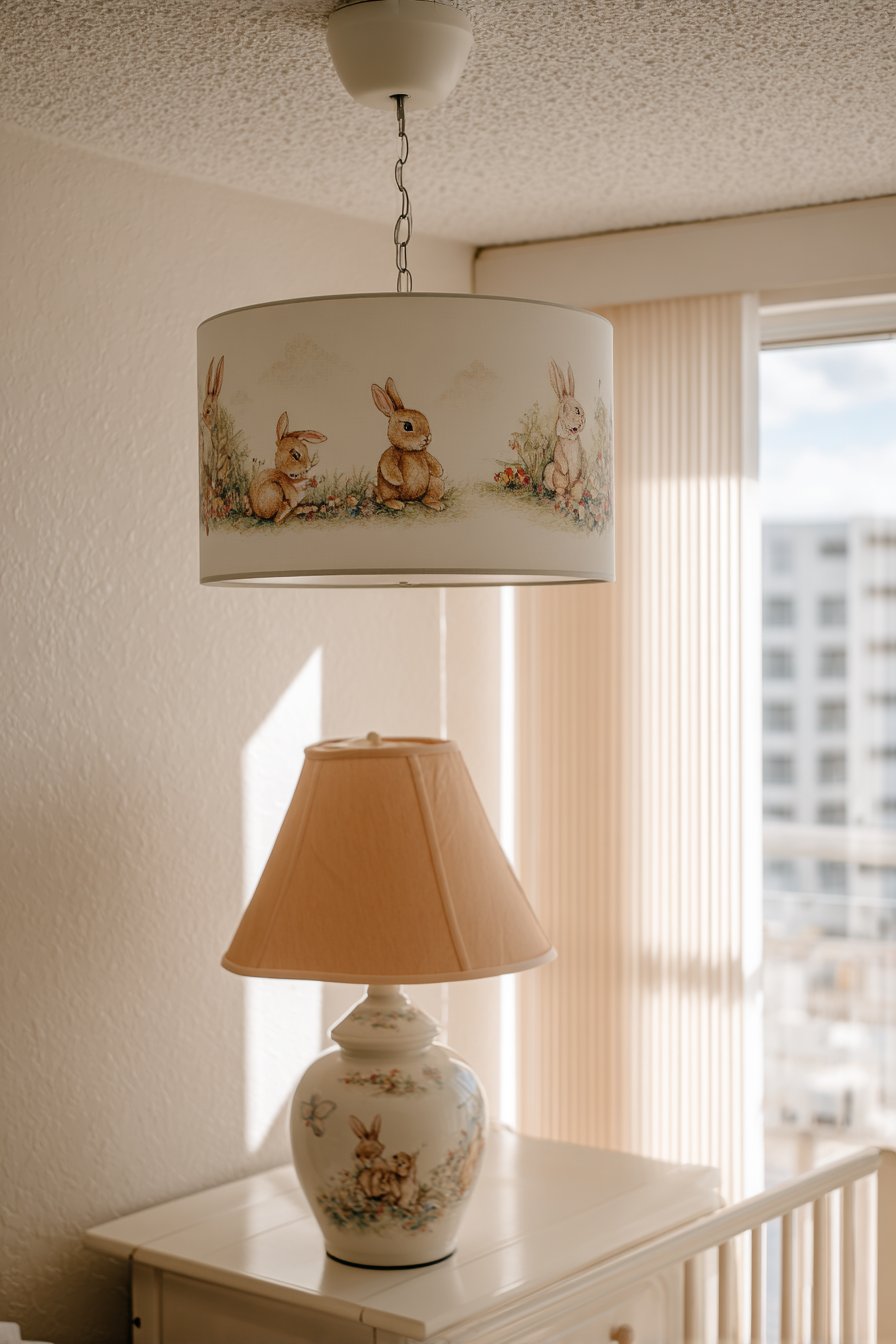
The comprehensive lighting strategy addresses all nursery activities and times of day. The layered approach allows appropriate lighting for each situation. The hand-painted shade proves that even functional elements deserve artistic attention. This lighting design demonstrates that technical planning supports beautiful outcomes.
Key Design Tips:
- Install dimmer switches on overhead fixtures for nighttime lighting flexibility
- Choose table lamps with three-way bulbs allowing low light for night feeding
- Position cribs away from direct window glare while maintaining natural light access
- Use sheer curtains to diffuse harsh sunlight without blocking all natural illumination
- Paint walls in light colors to maximize light reflection and room brightness
- Add nightlights in outlets near the door for safe navigation during nighttime entries
20. Architectural Crown Molding with Stenciled Border
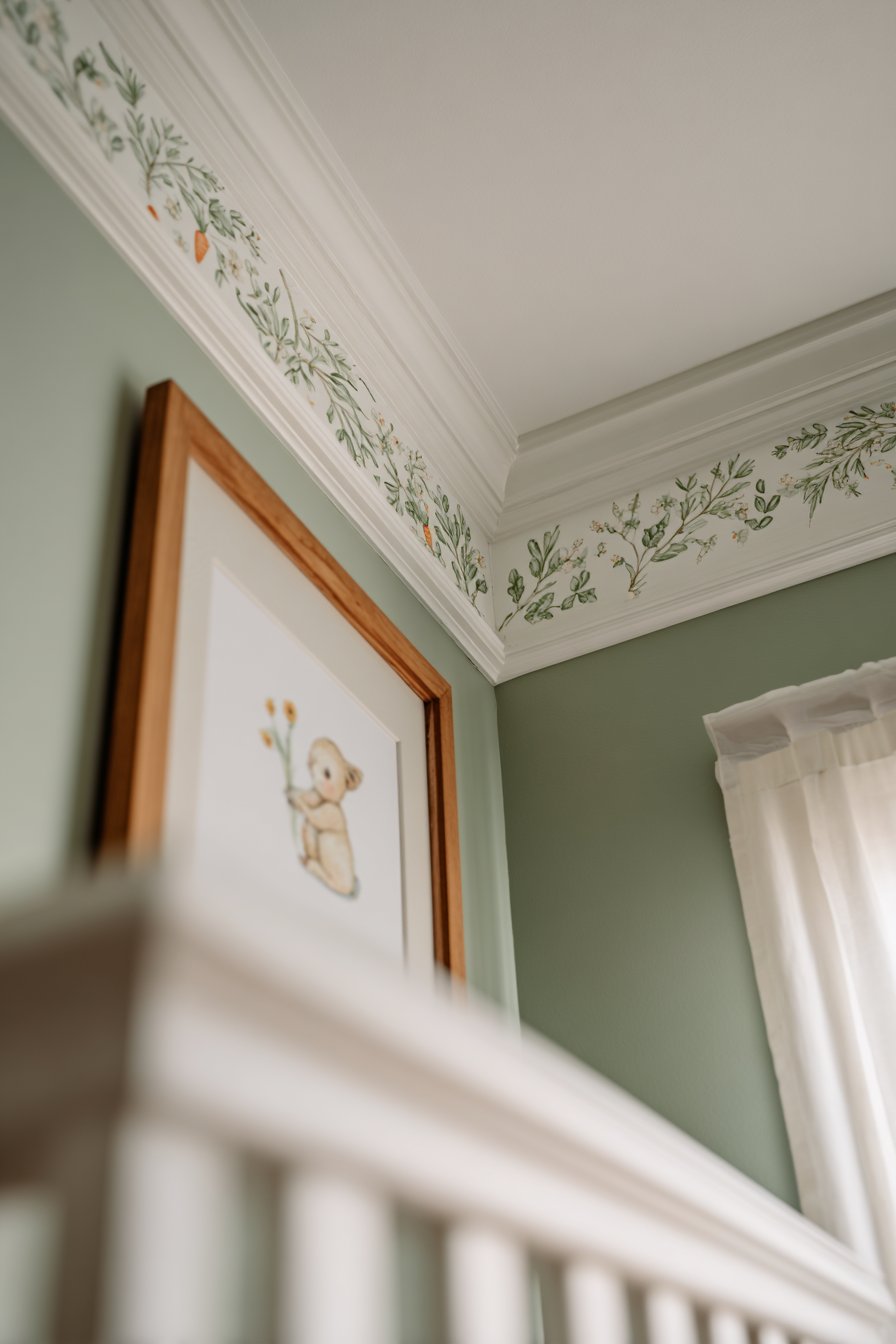
Custom crown molding painted in soft white adds architectural sophistication to the nursery. A hand-stenciled border of tiny carrots and radishes runs just below the molding. The vegetables appear in muted green and orange tones maintaining the garden theme. The stenciled detail requires close inspection to fully appreciate the craftsmanship. The subtle pattern adds character without overwhelming the space.
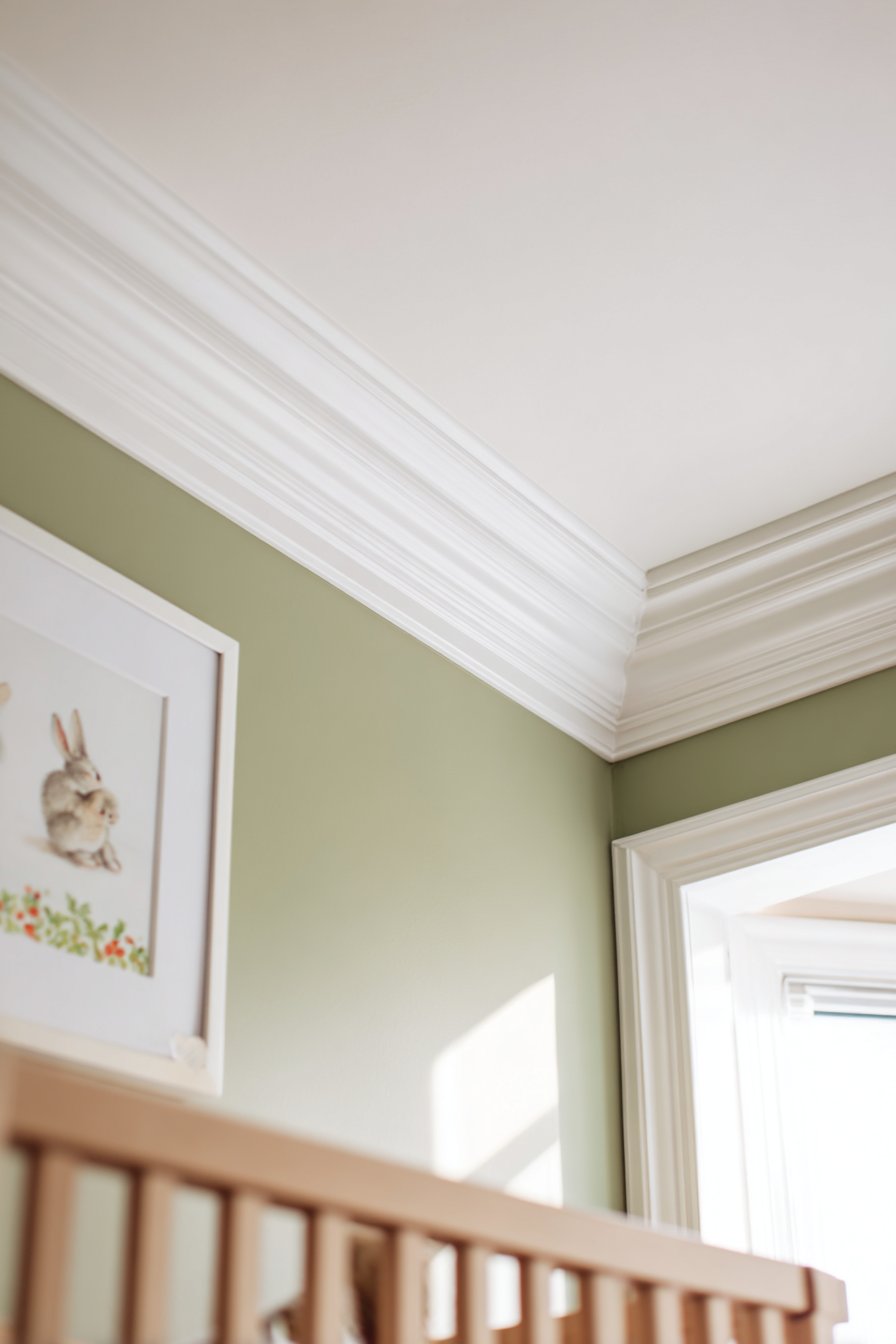
The walls display soft sage green color creating a calming backdrop. The ceiling shows crisp white paint creating clear definition between surfaces. The color transition at the crown molding provides visual interest and height emphasis. A portion of the white wooden crib and framed Peter Rabbit illustration appear in the composition. These elements ground the architectural detail within the broader room context.
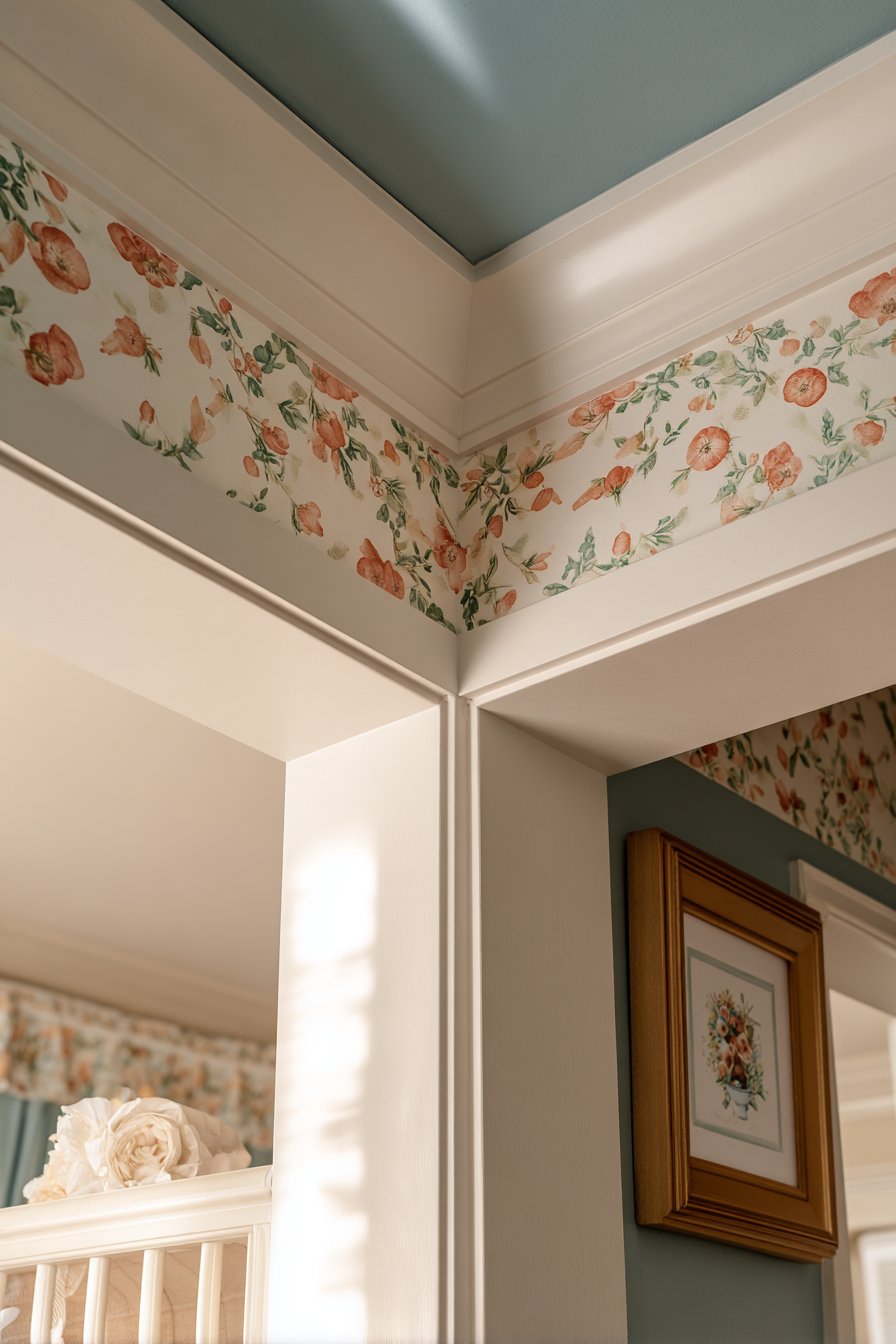
Natural daylight from an unseen window creates gentle shadows emphasizing the molding’s dimensional quality. The shadows reveal the depth and projection of the crown molding profile. The lighting changes throughout the day creating ever-shifting shadow patterns. The hand-stenciled vegetables catch light differently than flat painted walls. This creates subtle visual texture that rewards close observation.
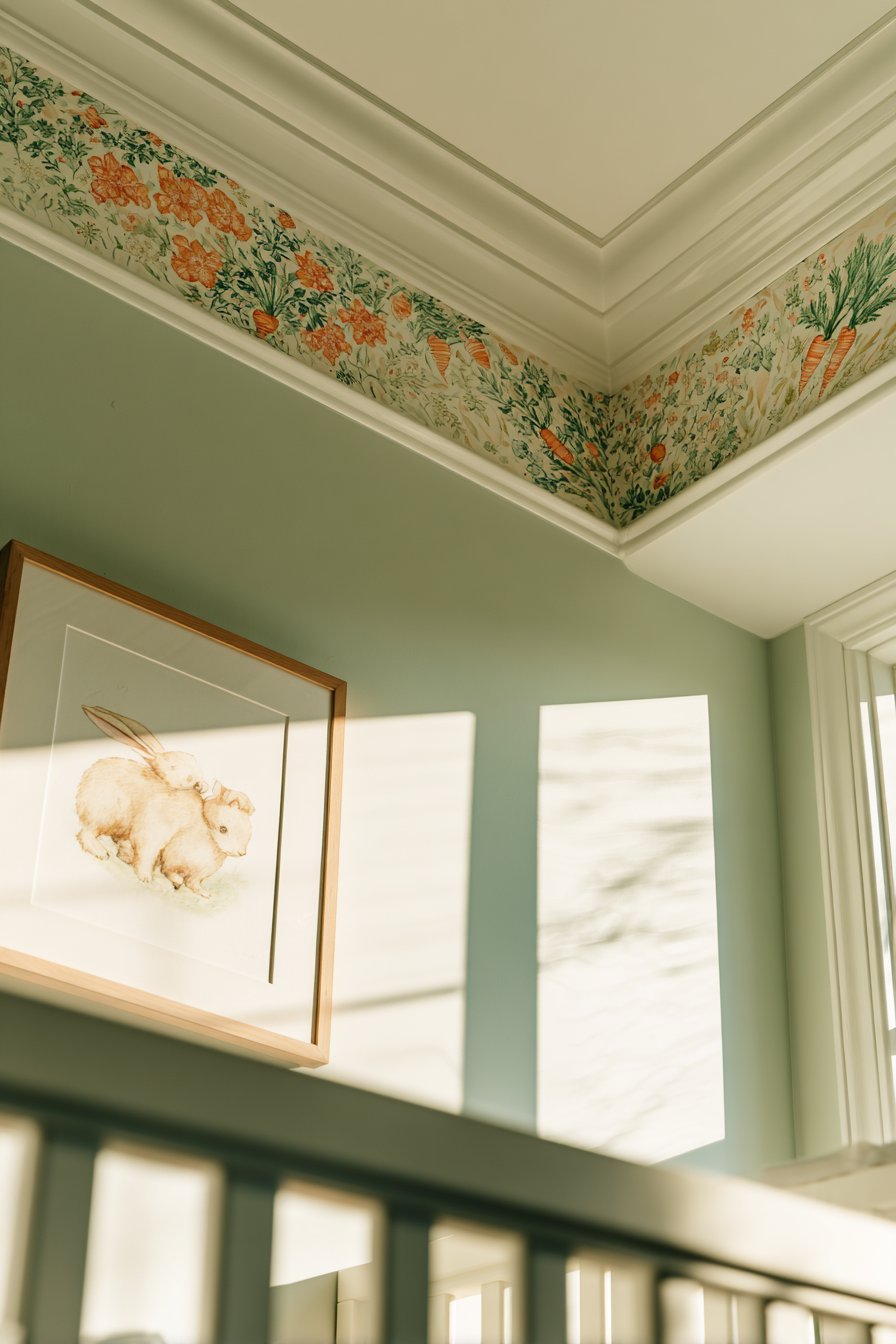
The architectural craftsmanship elevates the entire nursery beyond simple decorated room. The crown molding adds traditional elegance suitable for growing into different room purposes. The delicate stencil work demonstrates that themed elements can remain subtle and sophisticated. This architectural approach proves that bones of a room matter as much as furniture and accessories.
Key Design Tips:
- Install crown molding before painting to achieve the cleanest finish results
- Use stencils consistently along the full border for pattern uniformity
- Choose muted paint colors for stenciled elements to maintain subtlety
- Apply multiple thin paint coats rather than heavy single applications for crisp edges
- Practice stencil technique on sample boards before applying to walls
- Consider hiring professional painters for crown molding and stencil work if lacking confidence
Why These Peter Rabbit Nursery Designs Are the Best
These Peter Rabbit nursery designs represent the finest approaches to creating literary-themed spaces for infants and toddlers. Each concept demonstrates thoughtful integration of Beatrix Potter’s timeless illustrations with modern nursery functionality and safety standards. The designs showcase remarkable versatility accommodating different budget levels, space constraints, and personal style preferences while maintaining thematic cohesion.
The emphasis on natural materials throughout these designs provides lasting value and sustainable choices. Organic cotton bedding, solid wood furniture, natural fiber rugs, and authentic linen textiles create environments that age gracefully rather than appearing dated after brief periods. These material selections support healthier indoor air quality compared to synthetic alternatives while offering superior durability through years of active use. The neutral base palette of sage greens, creams, and natural woods allows themed elements to shine without creating overwhelming visual stimulation inappropriate for infant development.
The layered approach to theme integration demonstrates sophistication that typical character-themed nurseries lack. Rather than plastering walls with licensed graphics, these designs incorporate Peter Rabbit through subtle watercolor artwork, hand-painted details, embroidered accents, and carefully selected accessories. This restraint allows the nursery to transition as children grow without requiring complete redesign. The literary foundation adds educational value and cultural connection missing from purely decorative themes.
The practical considerations woven throughout these designs address real parenting needs without sacrificing aesthetics. Strategic furniture placement maximizes natural light for feeding and play times. Accessible storage solutions encourage independence as toddlers develop. Multiple seating areas accommodate various activities from nursing to reading. The lighting strategies support both energizing daytime play and calming nighttime routines. These functional elements prove that beautiful spaces can simultaneously serve practical purposes.
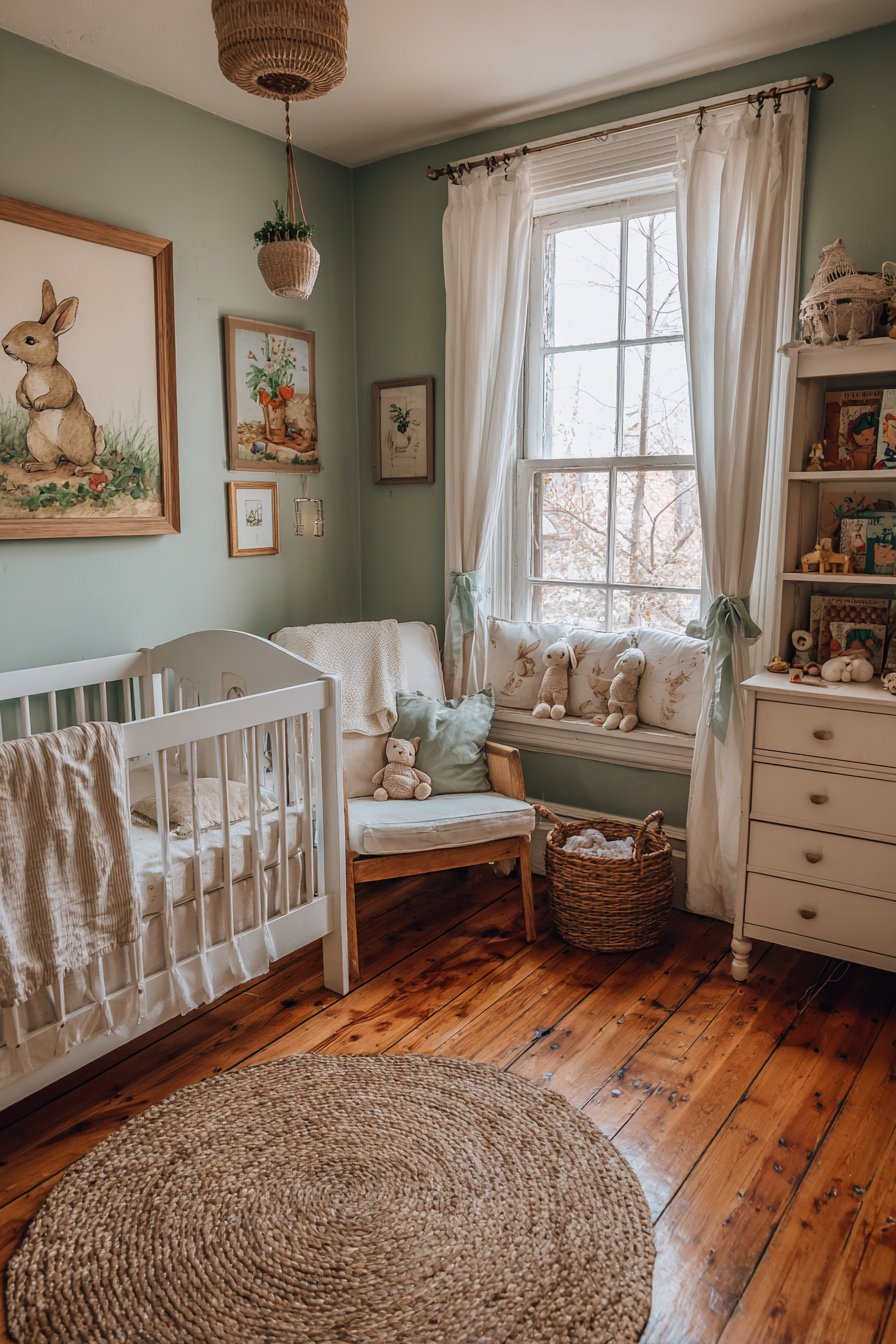
The color theory applications create psychologically beneficial environments for infant development. Sage green walls provide calming qualities supporting rest and focus. Cream and white elements reflect light maximizing room brightness. The muted watercolor palette stimulates visual development without overstimulation. Strategic pops of soft blue add interest while maintaining overall serenity. These thoughtful color choices demonstrate understanding of how environment affects mood and behavior.
Conclusion
These Peter Rabbit nursery designs prove that literary themes create timeless, sophisticated spaces supporting infant development and family bonding. The key principles include natural material selection, subtle theme integration through artwork and textiles, practical storage and organization systems, and comprehensive lighting strategies. Each design honors Beatrix Potter’s artistic legacy while embracing contemporary functionality and safety standards.
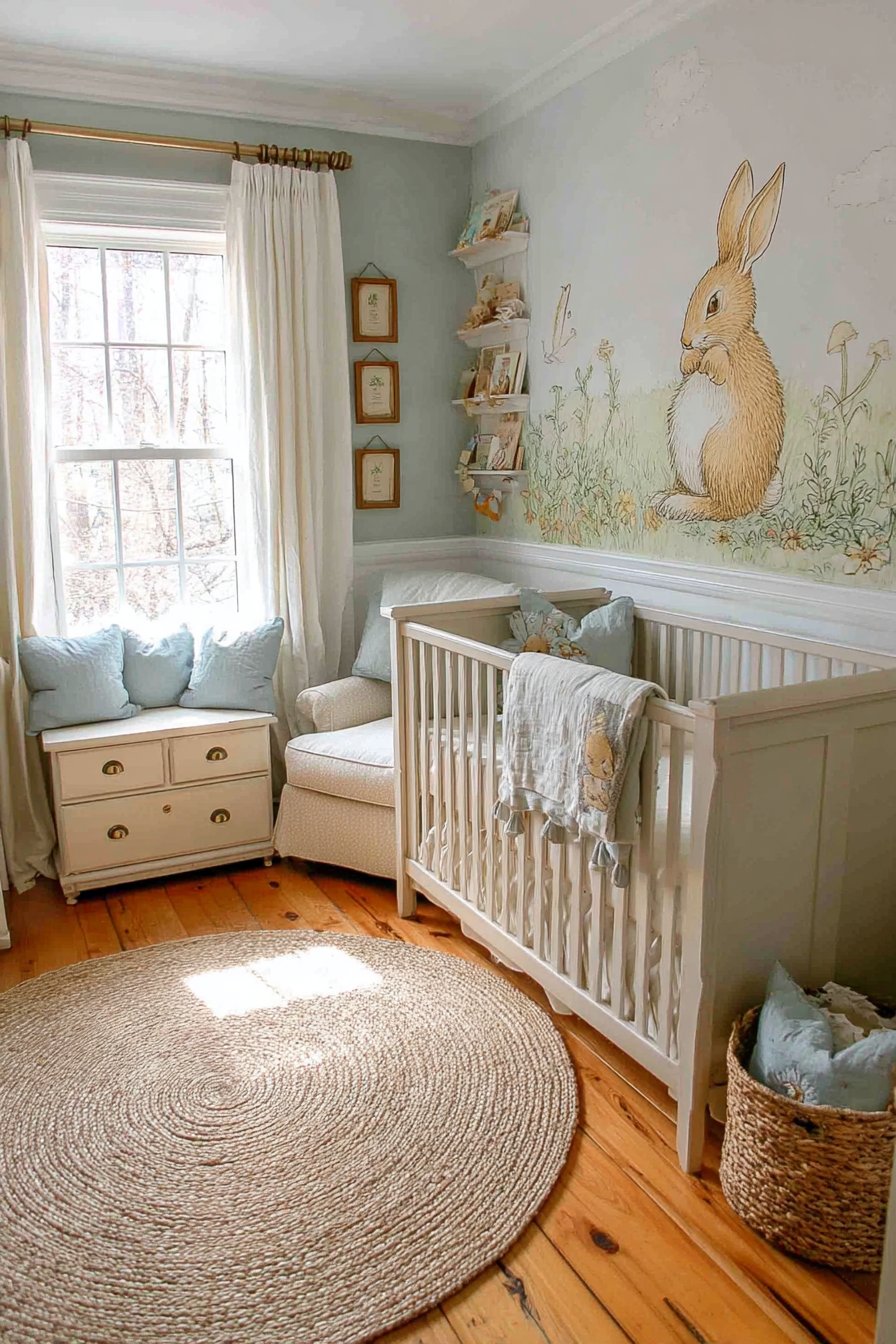
The versatility across these concepts allows personalization, matching individual circumstances and preferences. Whether creating a complete themed sanctuary or incorporating subtle Peter Rabbit touches into existing designs, these ideas provide actionable inspiration. Start with foundational elements like sage green walls and natural wood furniture, then layer in themed details through bedding, artwork, and accessories. Your baby’s Peter Rabbit nursery awaits creation through thoughtful planning and attention to timeless design principles that will serve your growing family for years ahead.
