


Creating a nursery that balances beauty with functionality requires careful planning and thoughtful design choices. The combination of pink and green offers a refreshing, gender-neutral palette that works beautifully in any baby’s room. These soft, complementary colors create peaceful environments that support healthy development and restful sleep.
Pink and green nurseries have become increasingly popular among modern parents. This color combination moves beyond traditional gender stereotypes while maintaining a gentle, soothing atmosphere. The pairing works across various design styles, from minimalist modern to vintage-inspired spaces. Whether you prefer soft pastels or bolder jewel tones, pink and green adapt beautifully to your vision.
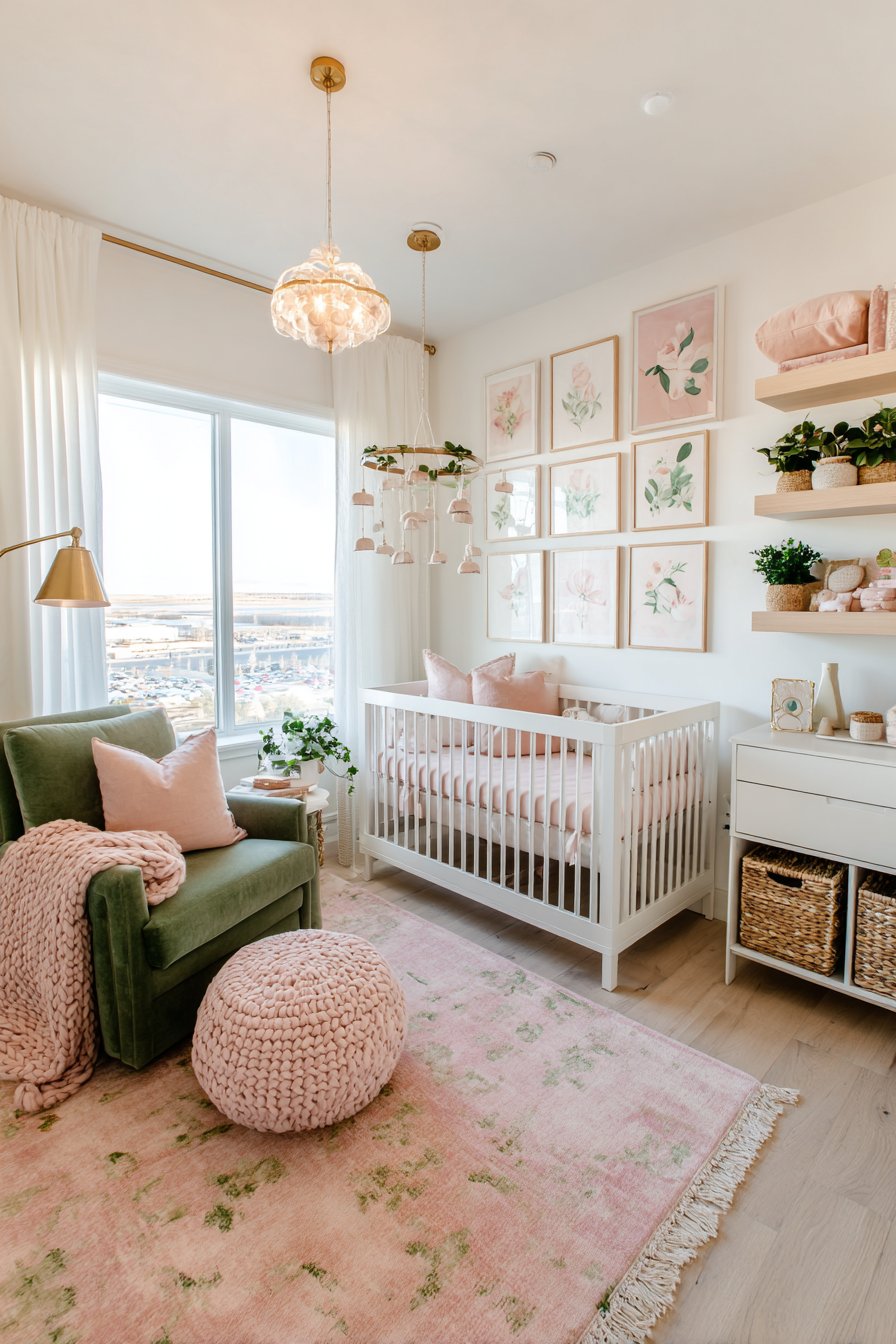
The following designs showcase diverse approaches to incorporating these colors into your nursery. Each concept demonstrates how materials, textures, and lighting transform simple color choices into cohesive, inspiring spaces. From practical storage solutions to dreamy canopy cribs, these ideas prove that nursery design can be both beautiful and functional.
1. Serene Sage and Blush Nursery Foundation
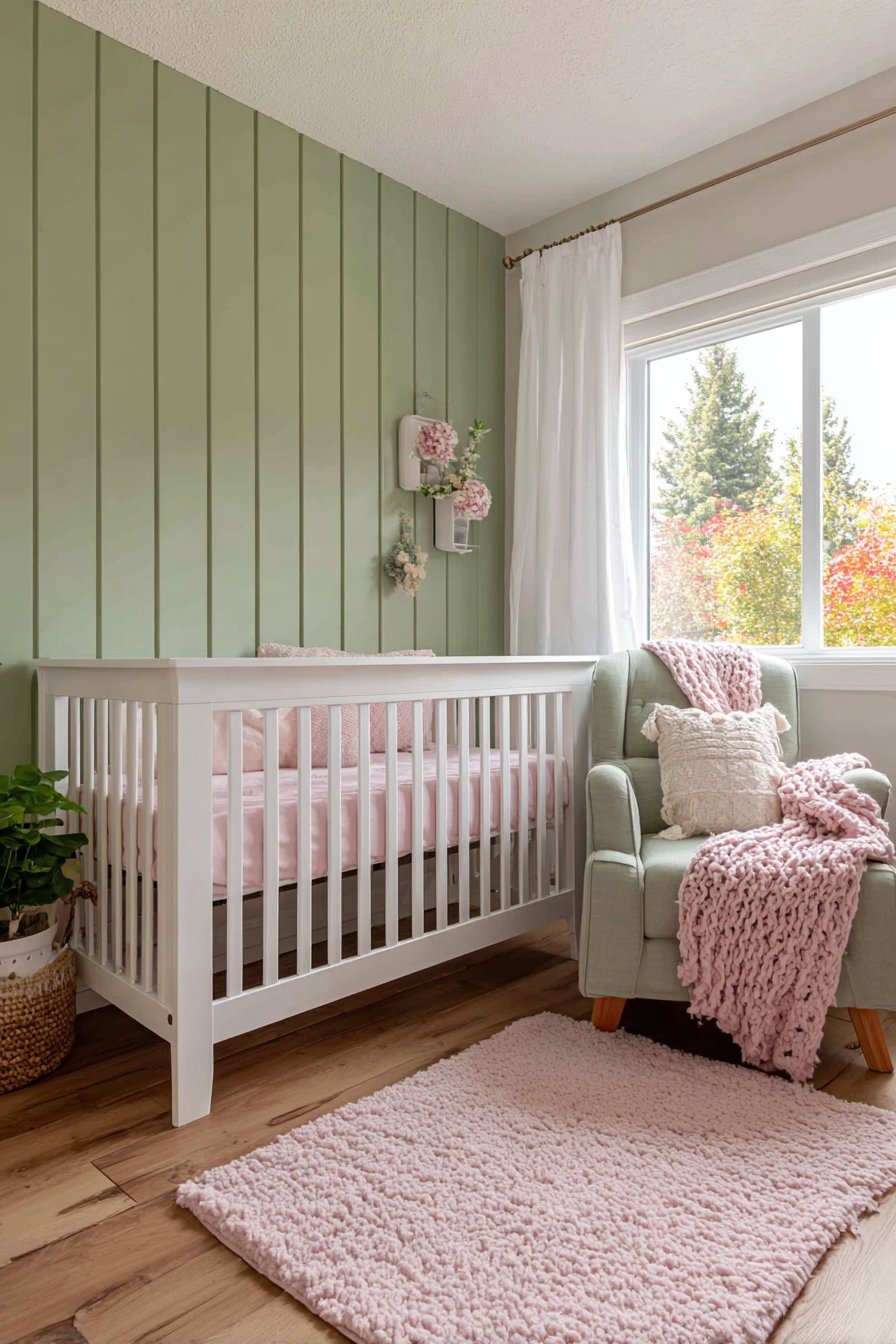
A white wooden crib sits against a sage green accent wall. Soft pink bedding creates gentle contrast against the neutral frame. The plush blush pink area rug anchors the entire space beautifully. Natural oak hardwood flooring provides warmth beneath these soft elements.
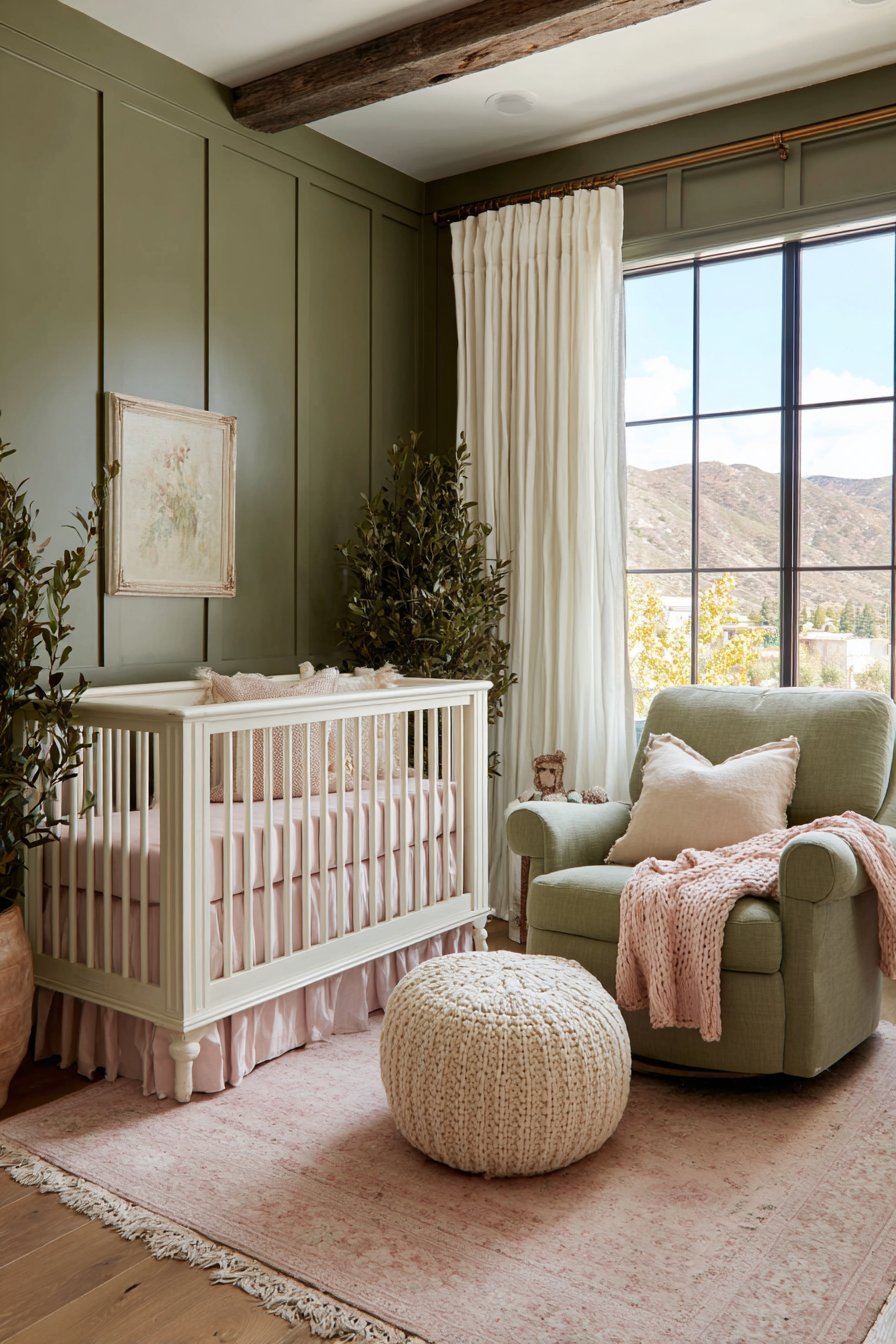
Sheer white curtains filter morning light through the large window. The diffused sunlight creates gentle shadows across pastel surfaces. A comfortable glider chair upholstered in muted green linen occupies the corner perfectly. A knitted pink throw blanket drapes casually over the arm, adding texture.
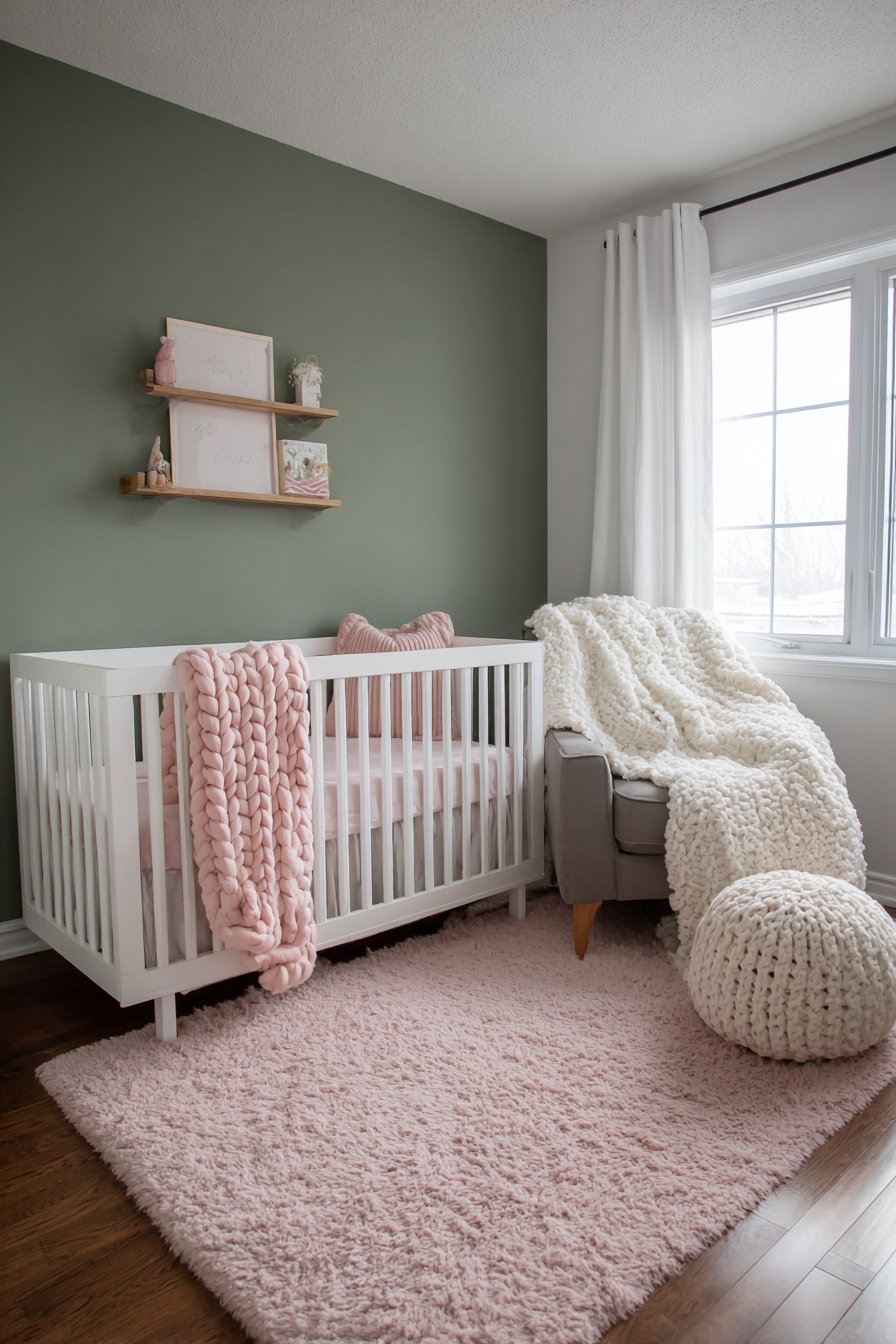
The peaceful atmosphere emerges from the careful balance of pink and green tones. Natural lighting plays a crucial role in this design’s success. The wide-angle view captures how each element contributes to the harmonious whole. This foundational approach works for any nursery size or shape.
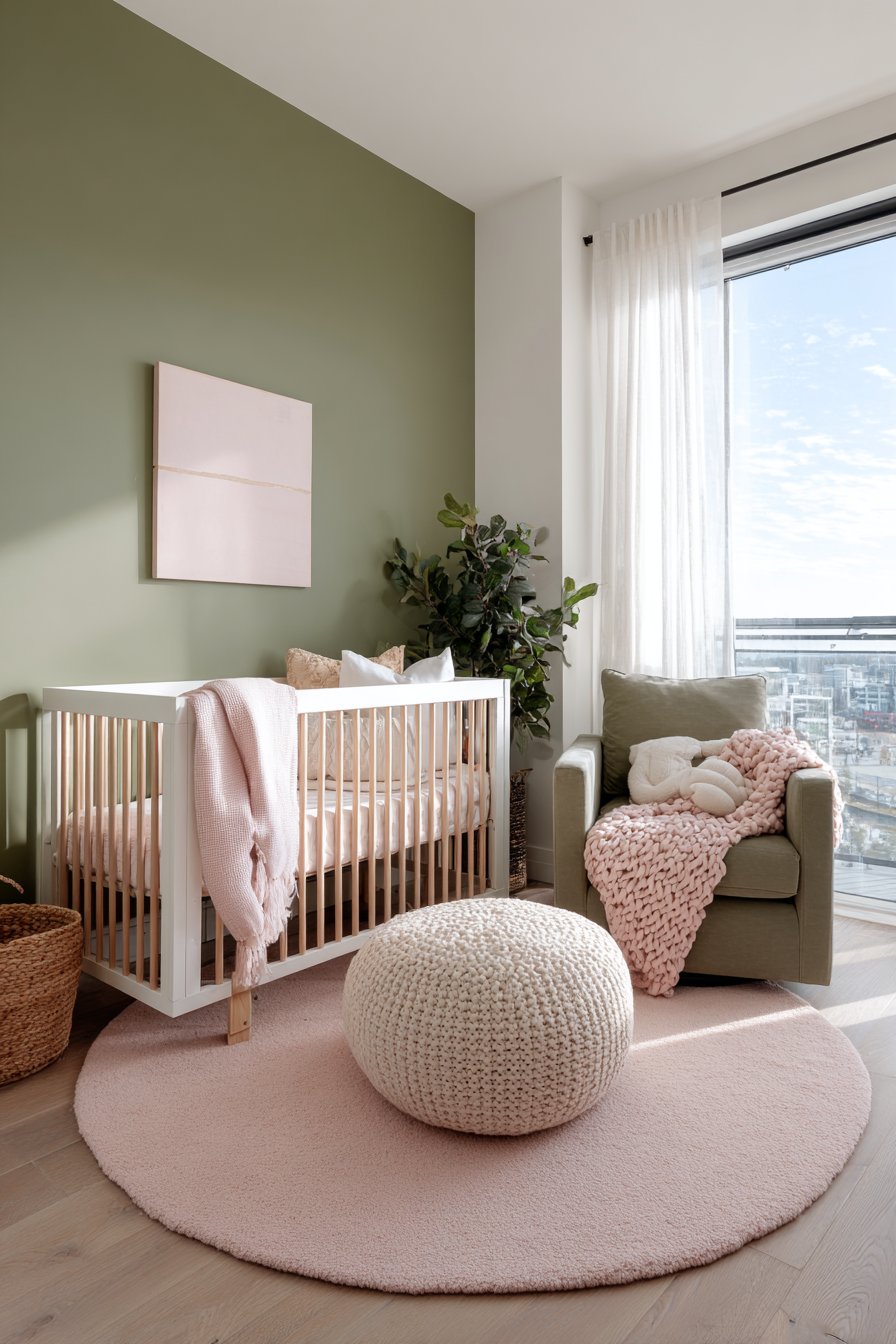
The color palette demonstrates restraint and sophistication. Sage green provides grounding without overwhelming the senses. Blush pink adds warmth without appearing too juvenile or trendy. Together, these colors create timeless appeal that grows with your child.
Key Design Tips:
- Select a sage green accent wall to create a focal point without overwhelming the space
- Choose white furniture to maintain brightness and maximize light reflection
- Layer textures through rugs, throws, and upholstery for visual depth
- Position the glider near windows for natural light during feeding times
- Use sheer curtains to filter harsh sunlight while maintaining brightness
2. Organized Storage Wall in Mint and Rose
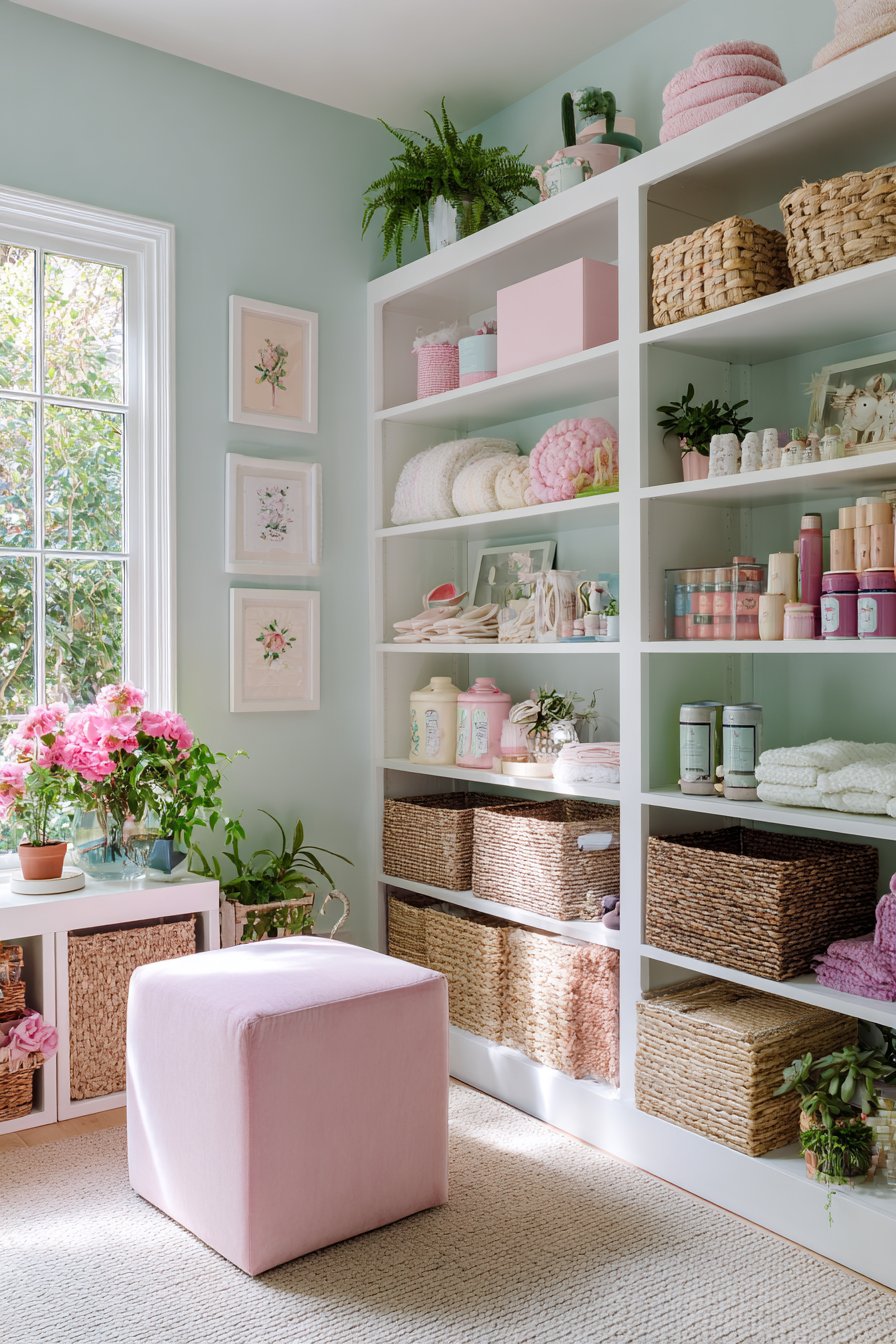
Built-in white shelving units line the wall with precision. Woven baskets in natural materials provide organized storage solutions. Baby essentials display neatly alongside decorative accents in coordinating colors. Small potted plants, framed botanical prints, and ceramic containers complete the arrangement.
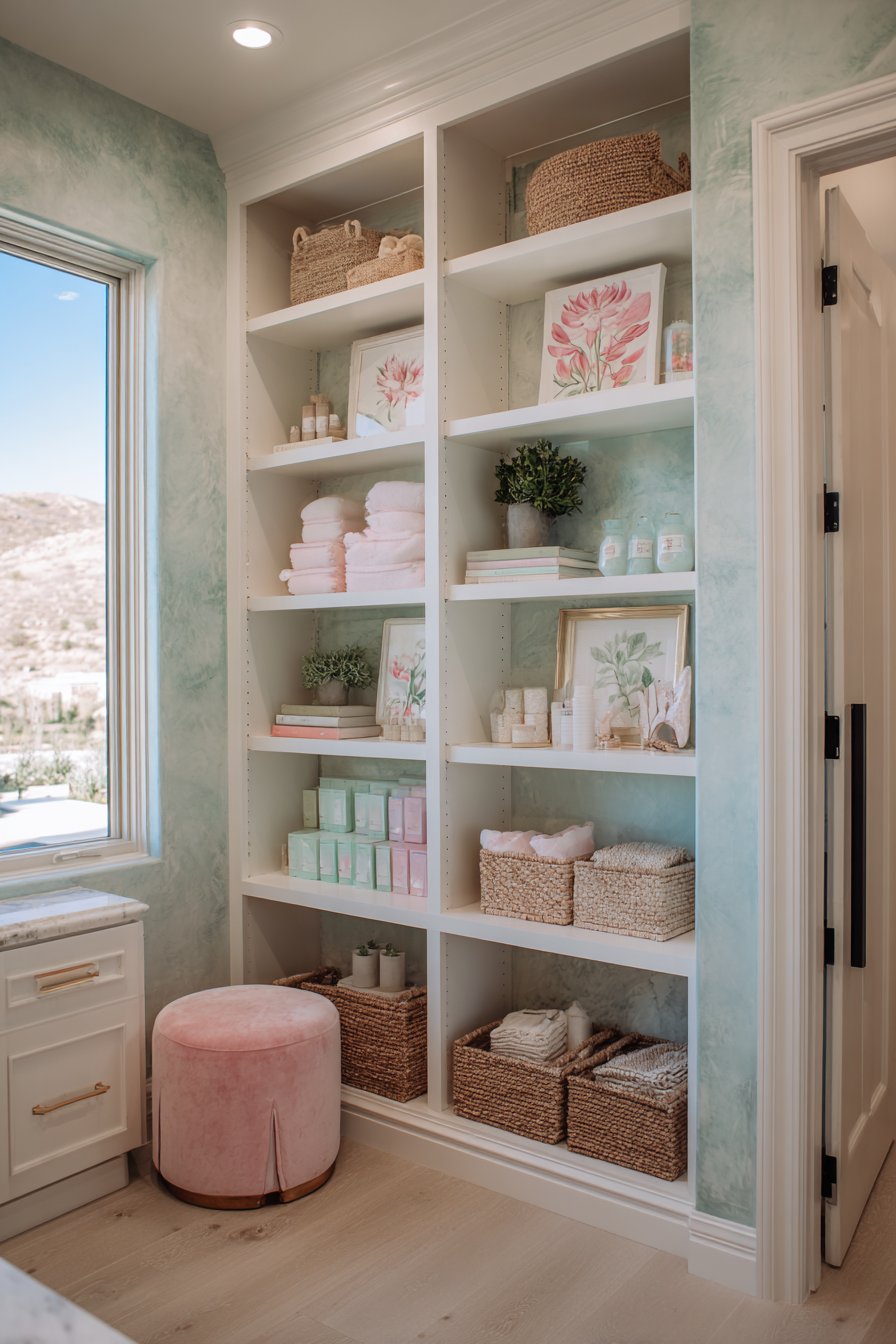
The wall behind features soft mint green paint with subtle texture. This creates visual interest without competing with the organized shelves. A small pink upholstered ottoman provides additional seating below the shelving. Natural daylight from the adjacent window creates soft highlights on surfaces.
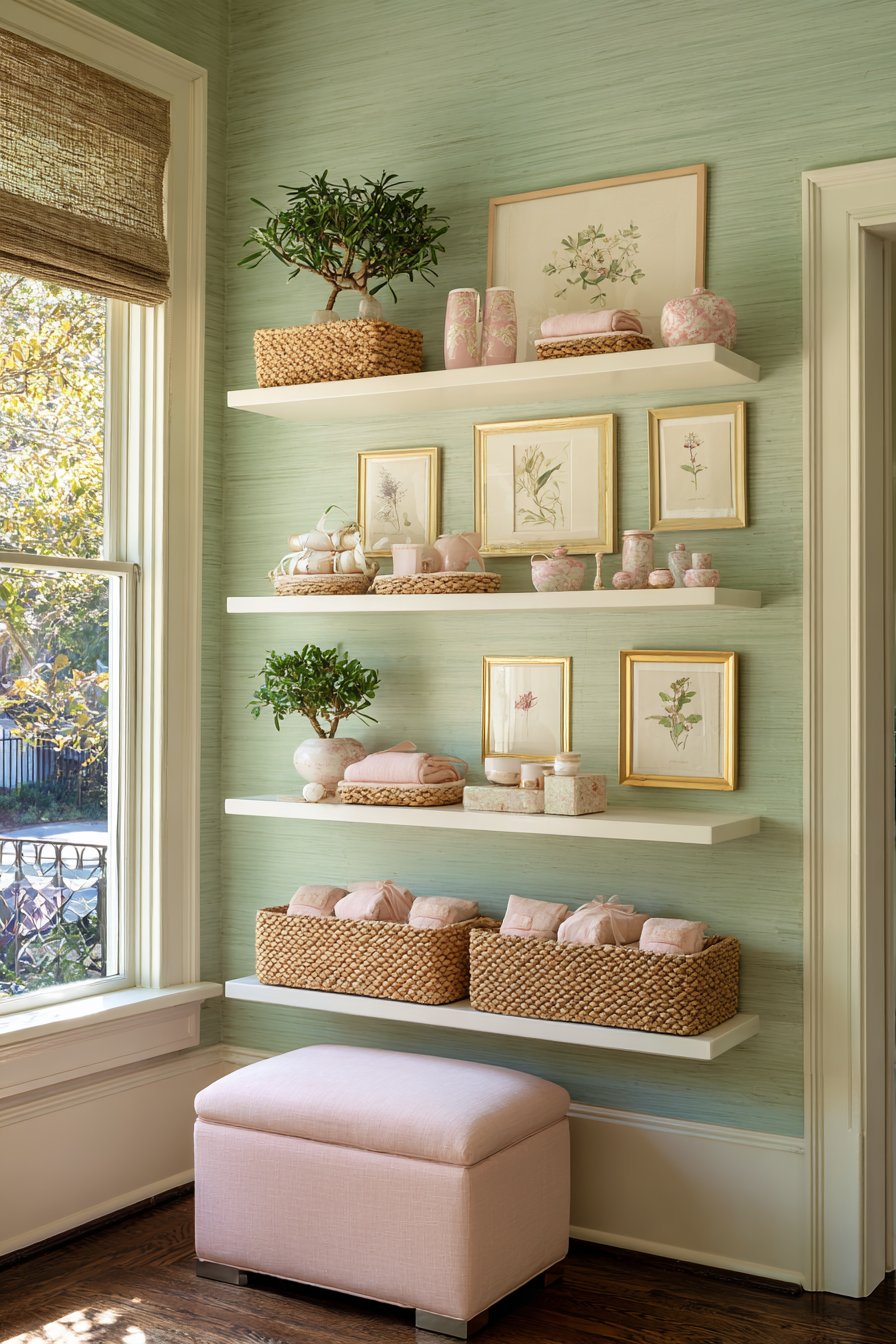
Professional organization meets beautiful design in this practical approach. The functional storage maintains the cohesive pink and green color story throughout. Every item serves a purpose while contributing to the overall aesthetic. This proves that organization and beauty coexist successfully.
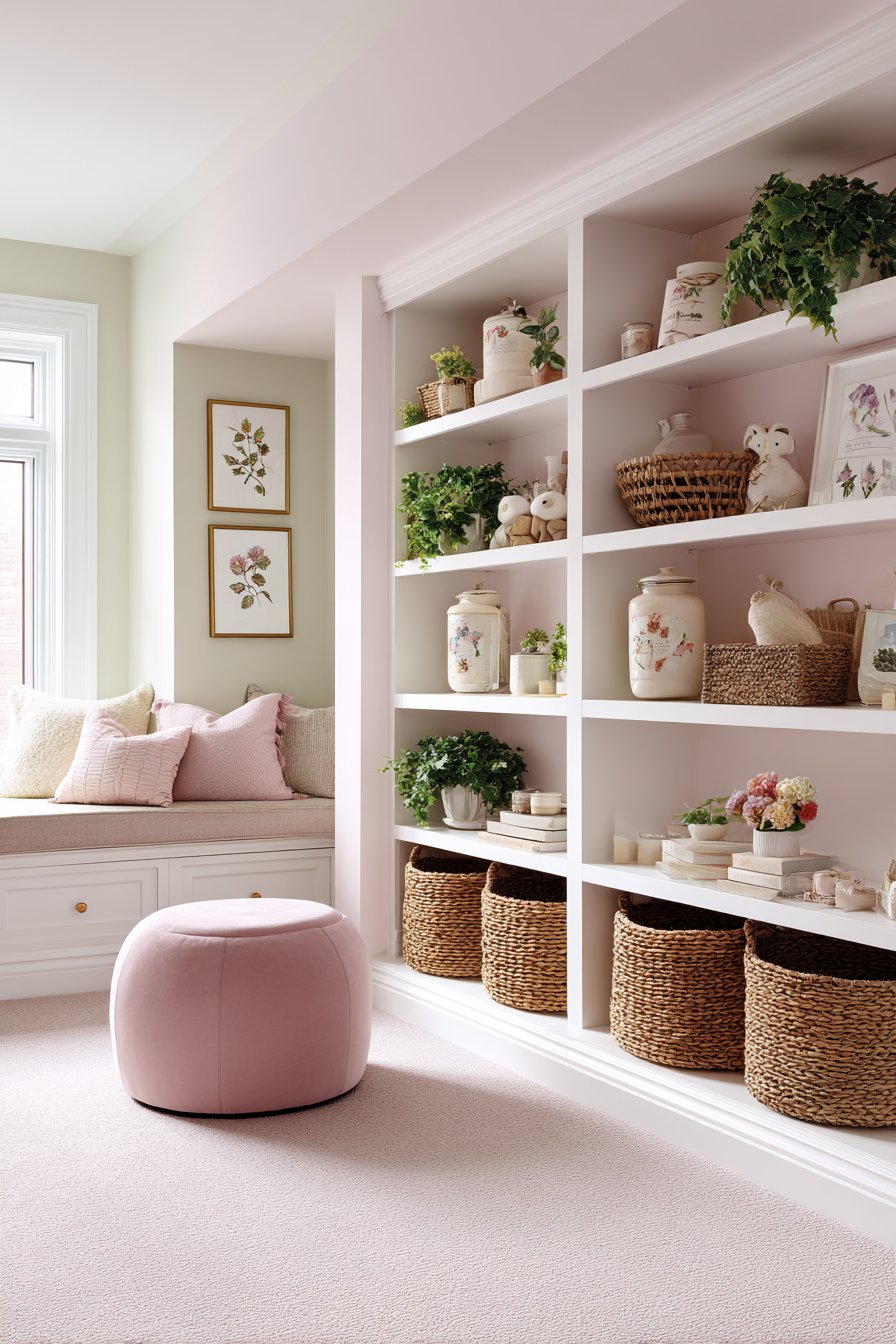
The varied basket sizes accommodate different storage needs efficiently. Upper shelves hold decorative items and less frequently used supplies. Lower shelves keep daily essentials within easy reach. The ottoman serves dual purposes as seating and additional hidden storage.
Key Design Tips:
- Install built-in shelving to maximize vertical storage space efficiently
- Use woven natural baskets to add warmth and hide clutter
- Display decorative items sparingly to maintain organized appearance
- Paint the wall behind shelving in accent color for cohesion
- Position an ottoman below for comfortable access to lower shelves
- Rotate displayed items seasonally to keep the space fresh
3. Cozy Reading Corner with Botanical Touches
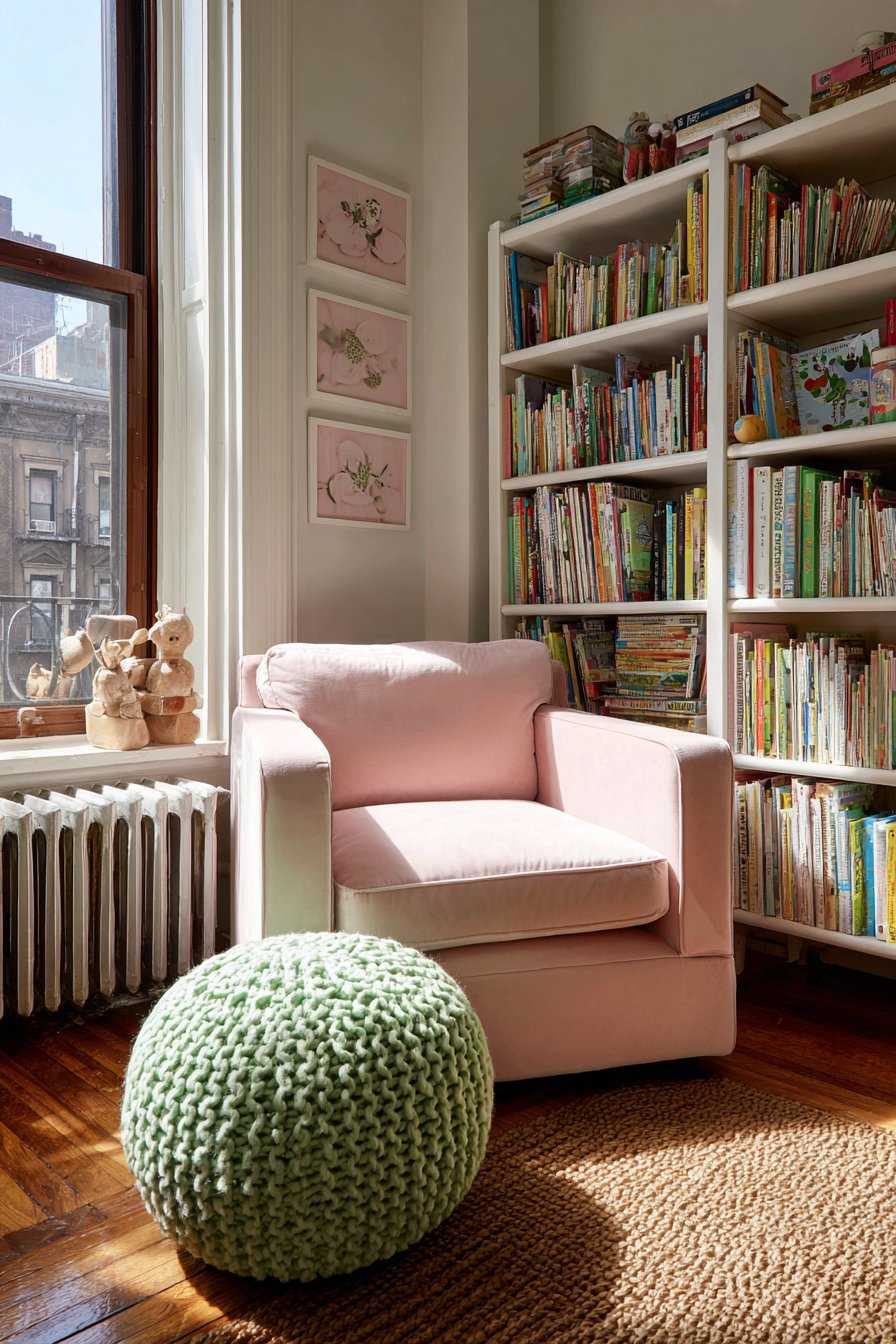
A low-profile pink velvet armchair anchors this intimate reading nook. The white bookshelf beside it holds colorful children’s books at accessible height. A gallery wall above displays watercolor prints in botanical themes. Simple white frames maintain clean lines throughout the arrangement.
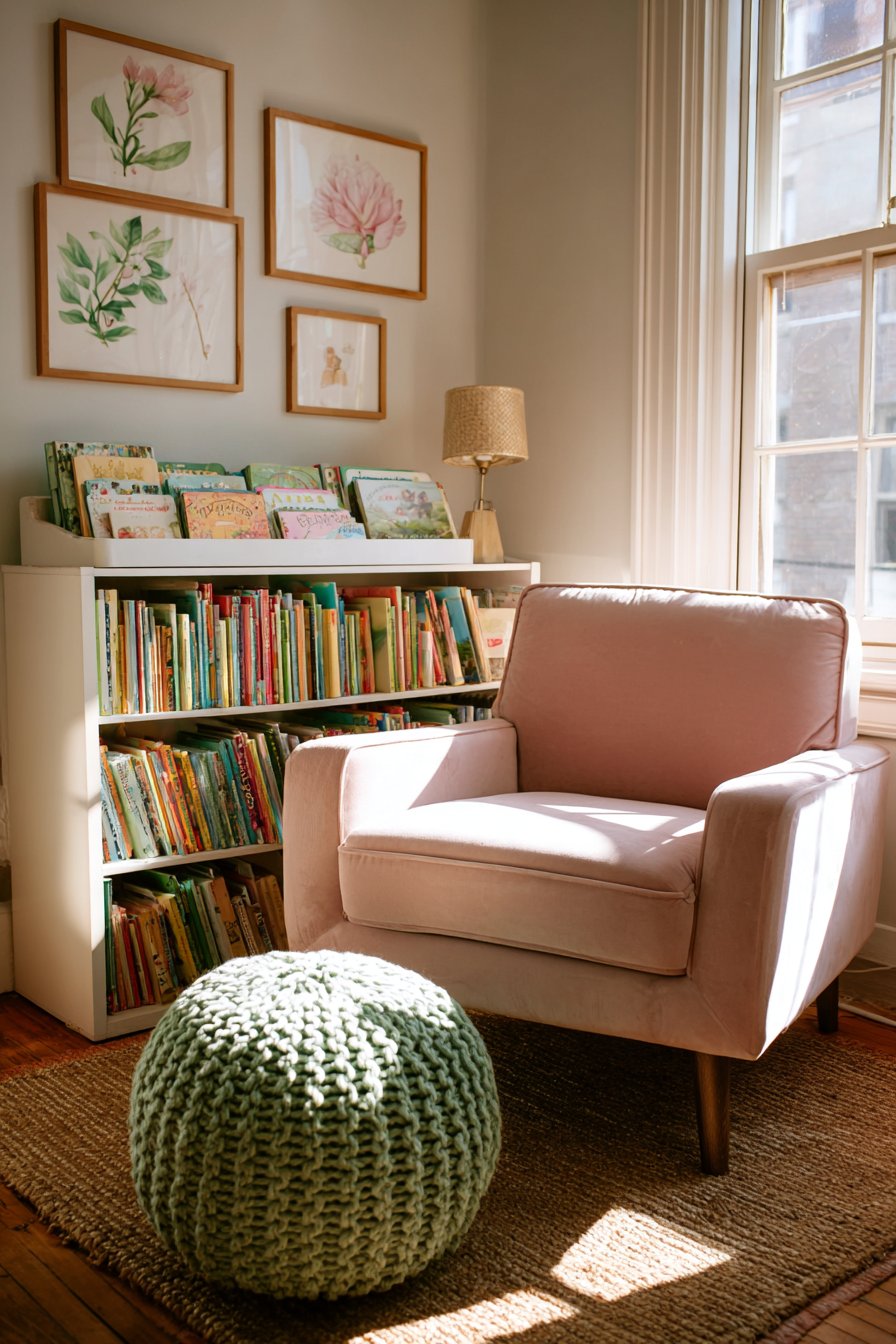
Natural jute fiber flooring adds welcome texture beneath the seating area. A soft green knitted pouf serves as a comfortable footrest. Warm afternoon sunlight streams through the nearby window consistently. The lighting highlights the gentle color coordination beautifully.
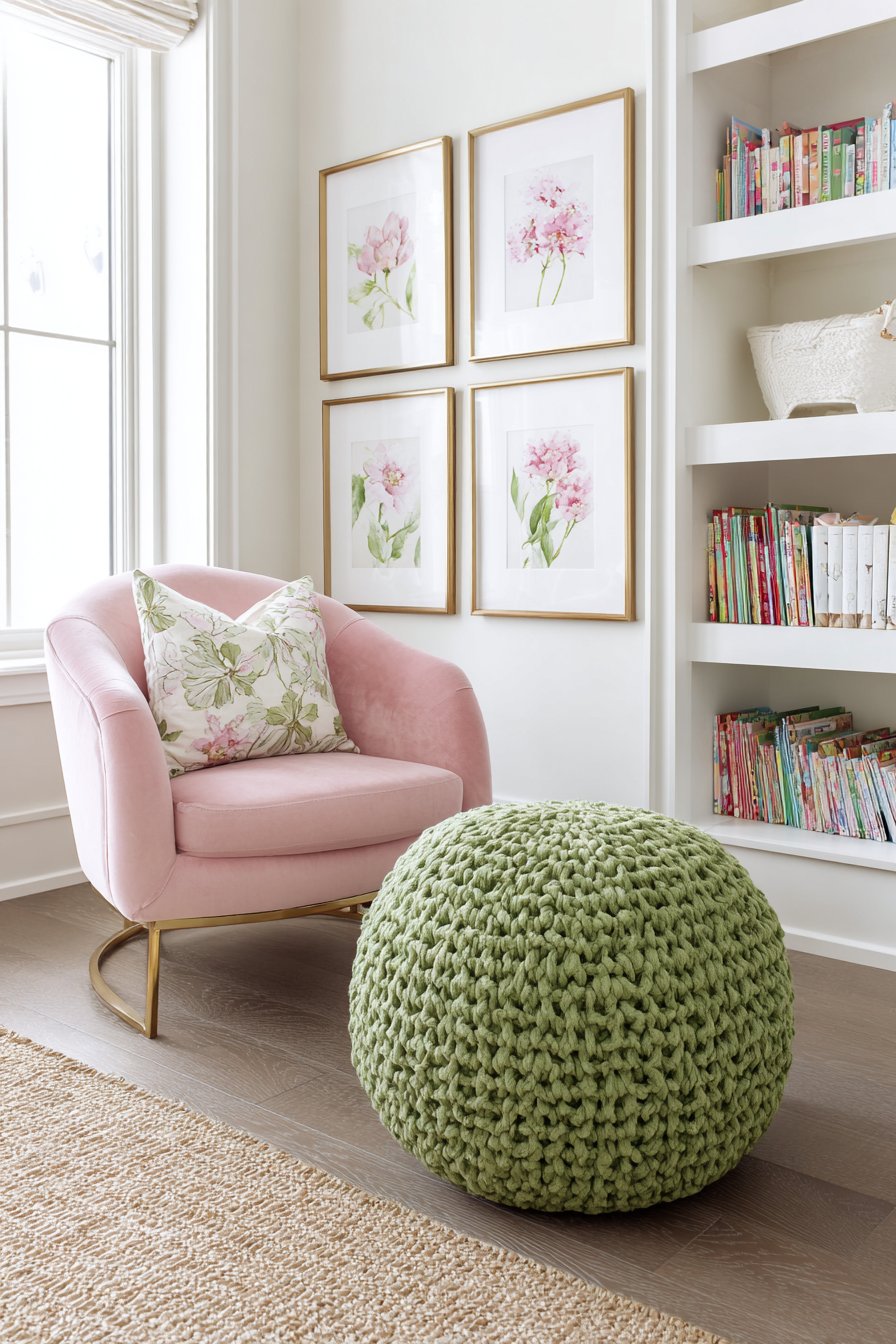
The reading nook creates a dedicated space for bonding and learning. Velvet upholstery adds luxury while remaining practical and durable. The varied textures of velvet, woven materials, and natural wood create sensory interest. This corner becomes a favorite spot for bedtime stories.
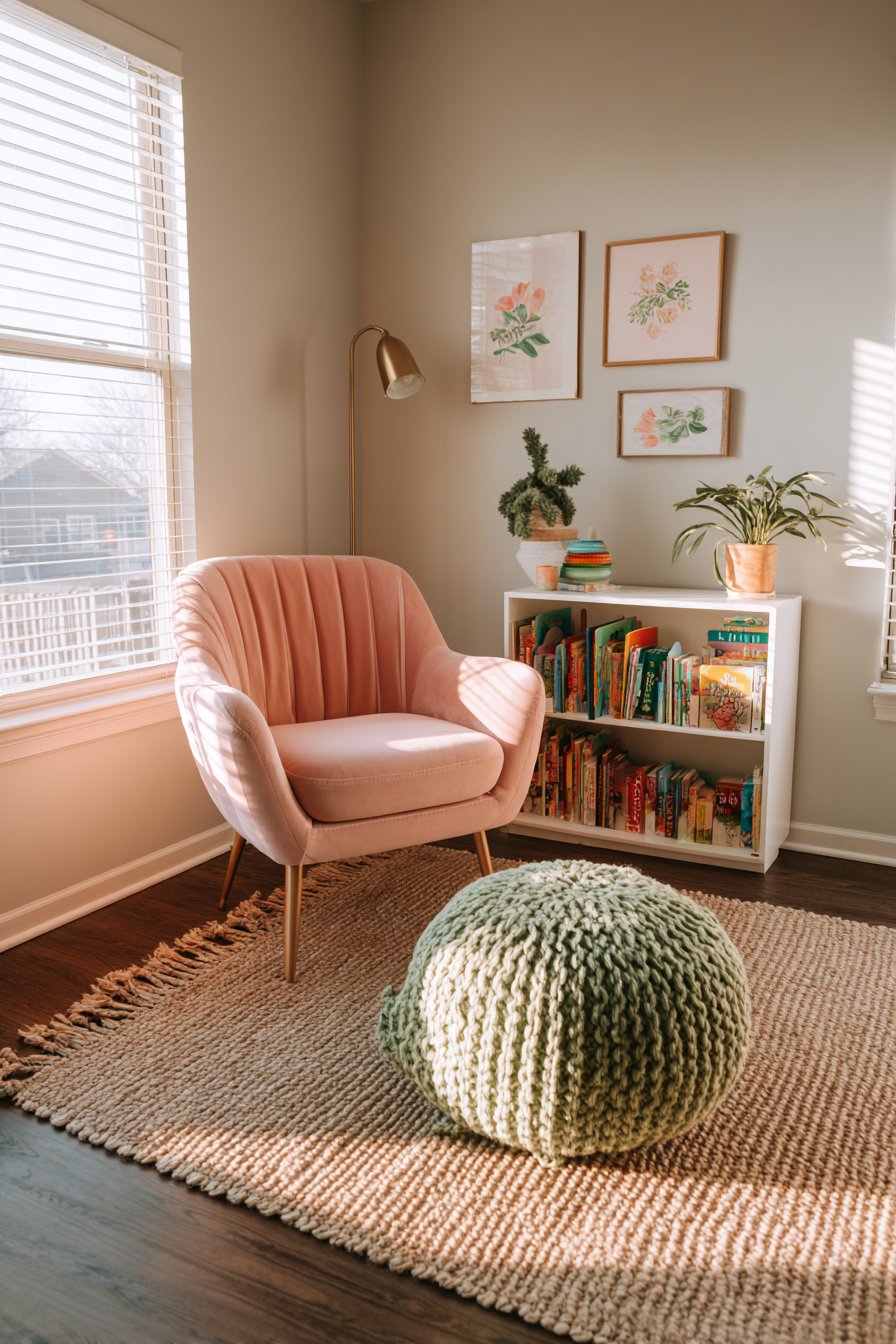
The gallery wall introduces art appreciation from an early age. Botanical prints reinforce the nature-inspired pink and green theme. White frames prevent the display from feeling too busy or overwhelming. The low bookshelf encourages independence as children grow older.
Key Design Tips:
- Choose low-profile furniture that suits parent comfort and child accessibility
- Select velvet upholstery for luxurious texture that’s surprisingly durable
- Create a gallery wall with consistent frame colors for cohesion
- Add natural fiber flooring to introduce organic texture
- Position seating near windows for optimal reading light
- Include a footrest for nursing comfort during early months
4. Functional Changing Station with Floral Accents
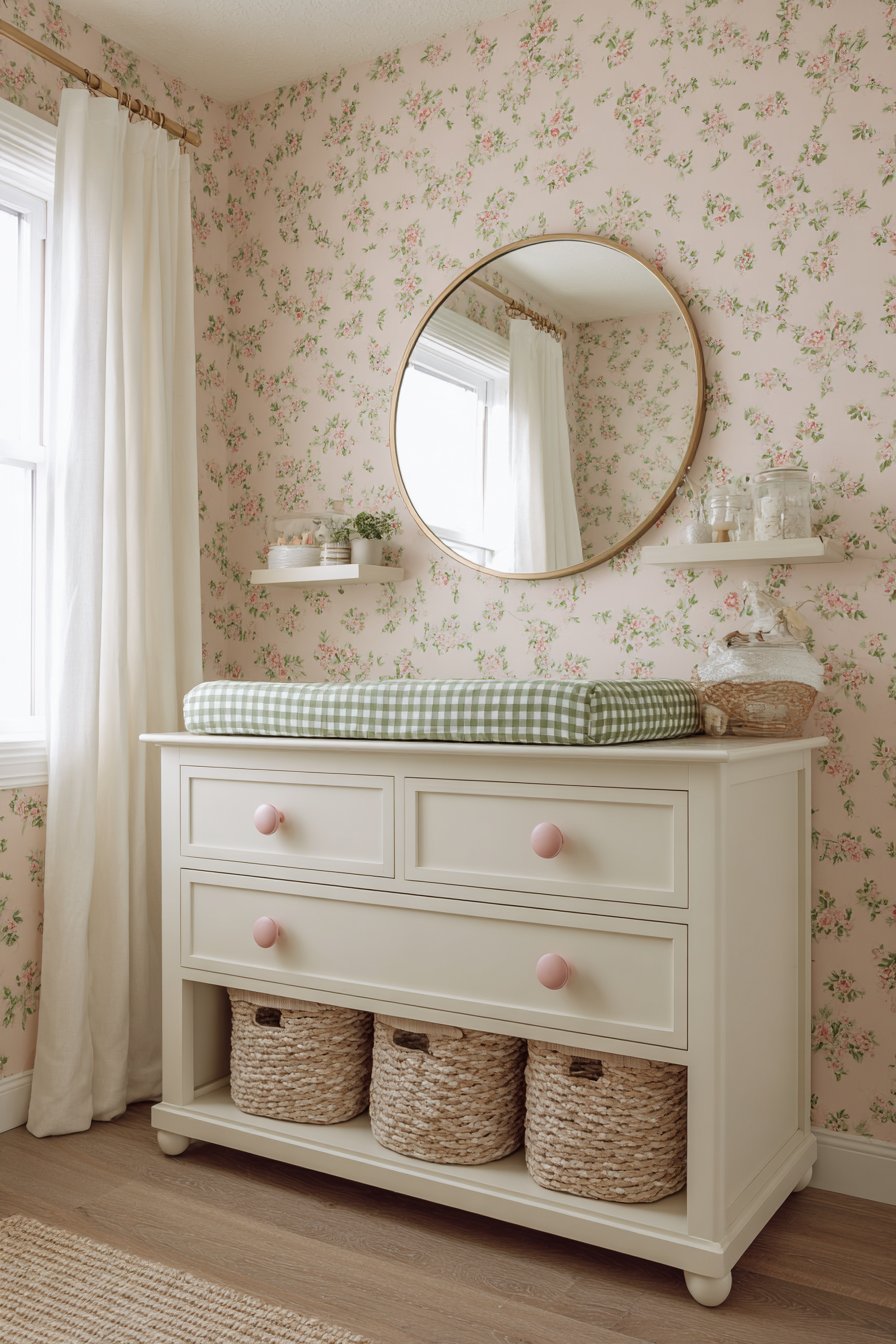
A white dresser with pink ceramic knobs converts into a changing table. The top surface includes a contoured changing pad with green and white gingham cover. Organized baskets flank both sides holding diapers and essential supplies. Above hangs a simple round mirror with a brass frame.
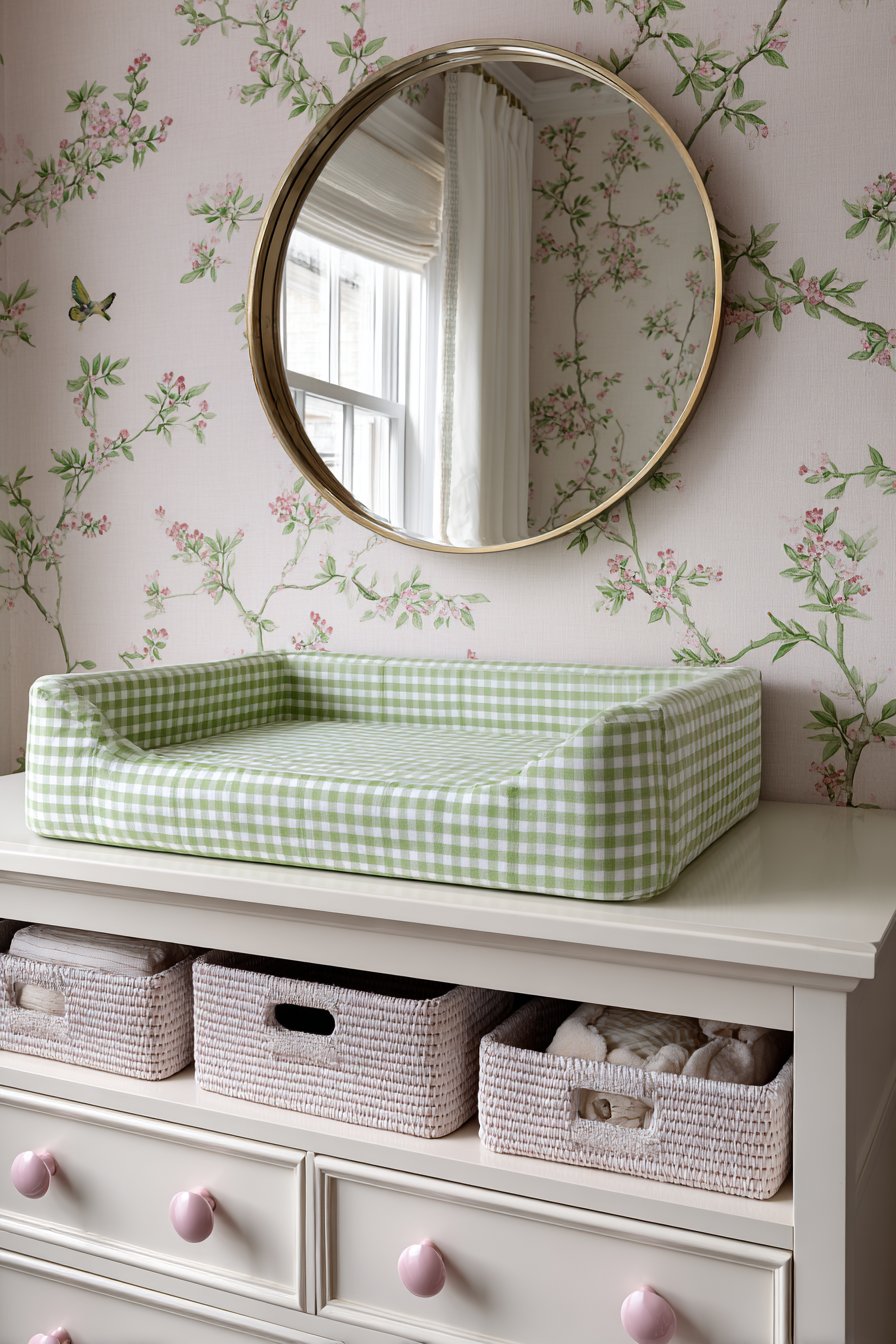
The wall features removable wallpaper in delicate pink and green floral pattern. The watercolor aesthetics add softness without permanent commitment. The brass mirror reflects soft natural light throughout the space. This functional workspace maintains beauty alongside practicality.
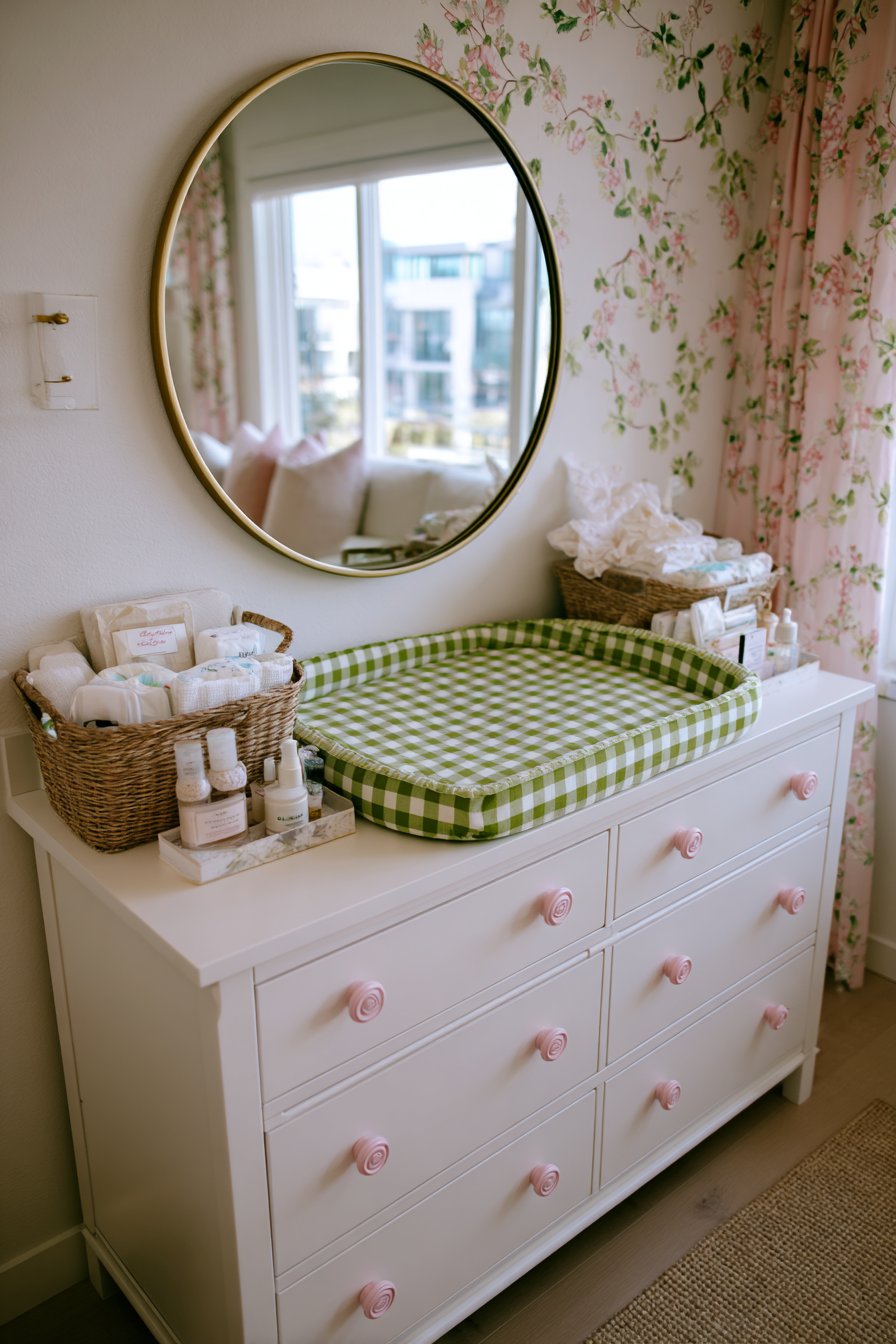
The changing station demonstrates how everyday activities deserve beautiful surroundings. Pink ceramic knobs add personality to standard white furniture. The gingham changing pad cover introduces pattern in controlled doses. Organized baskets ensure everything stays within easy reach during diaper changes.
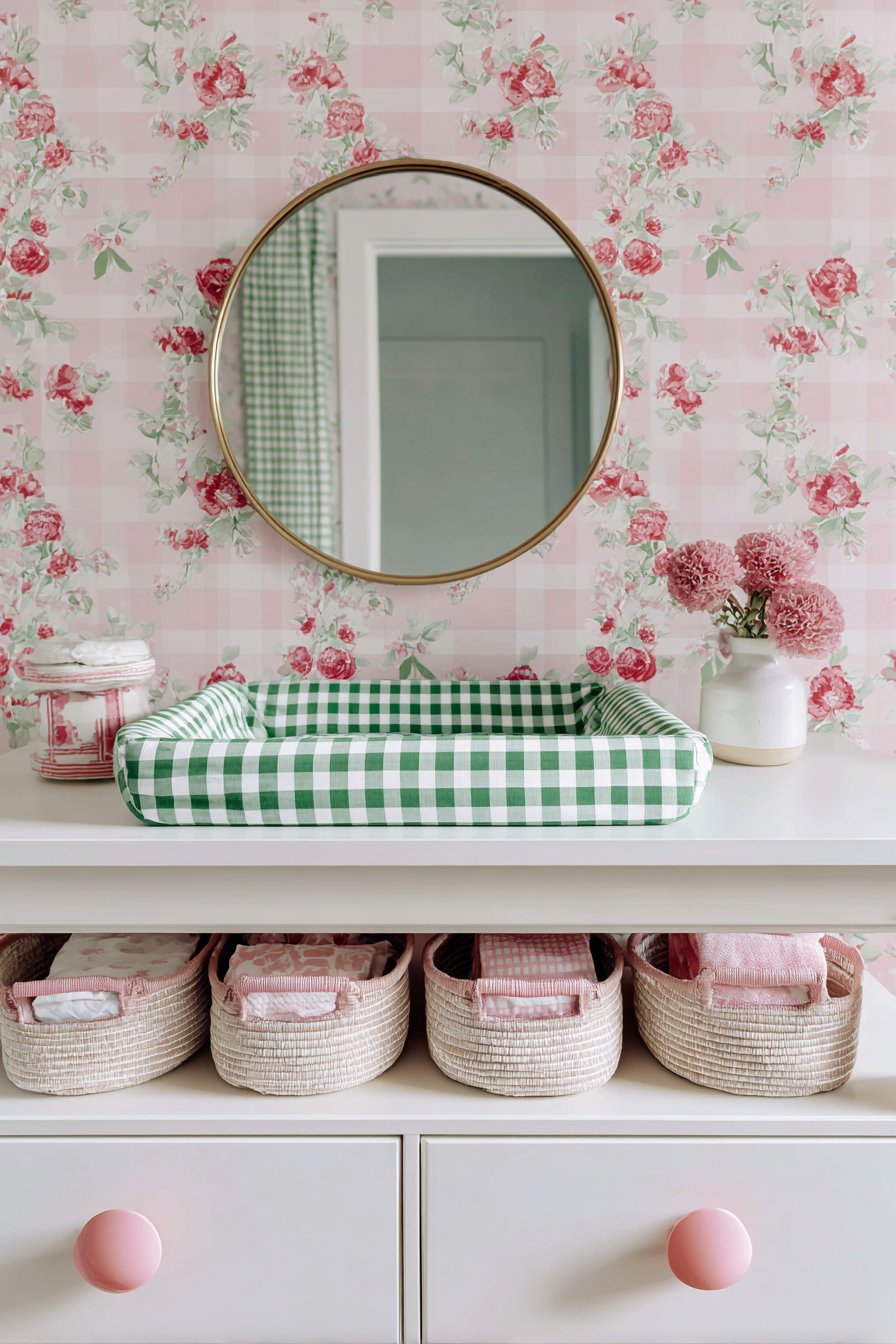
Removable wallpaper offers flexibility as your child’s needs evolve. The floral pattern feels sophisticated rather than overly juvenile. The brass frame mirror adds warmth against cooler pink and green tones. This area proves that functional spaces need not sacrifice style.
Key Design Tips:
- Convert an existing dresser to save money and add character
- Replace hardware with colored knobs for personalized touches
- Use removable wallpaper for commitment-free pattern introduction
- Choose gingham patterns for classic, timeless appeal
- Hang a mirror to reflect light and create spaciousness
- Keep frequently used supplies in open baskets for quick access
5. Whimsical Hand-Painted Tree Mural
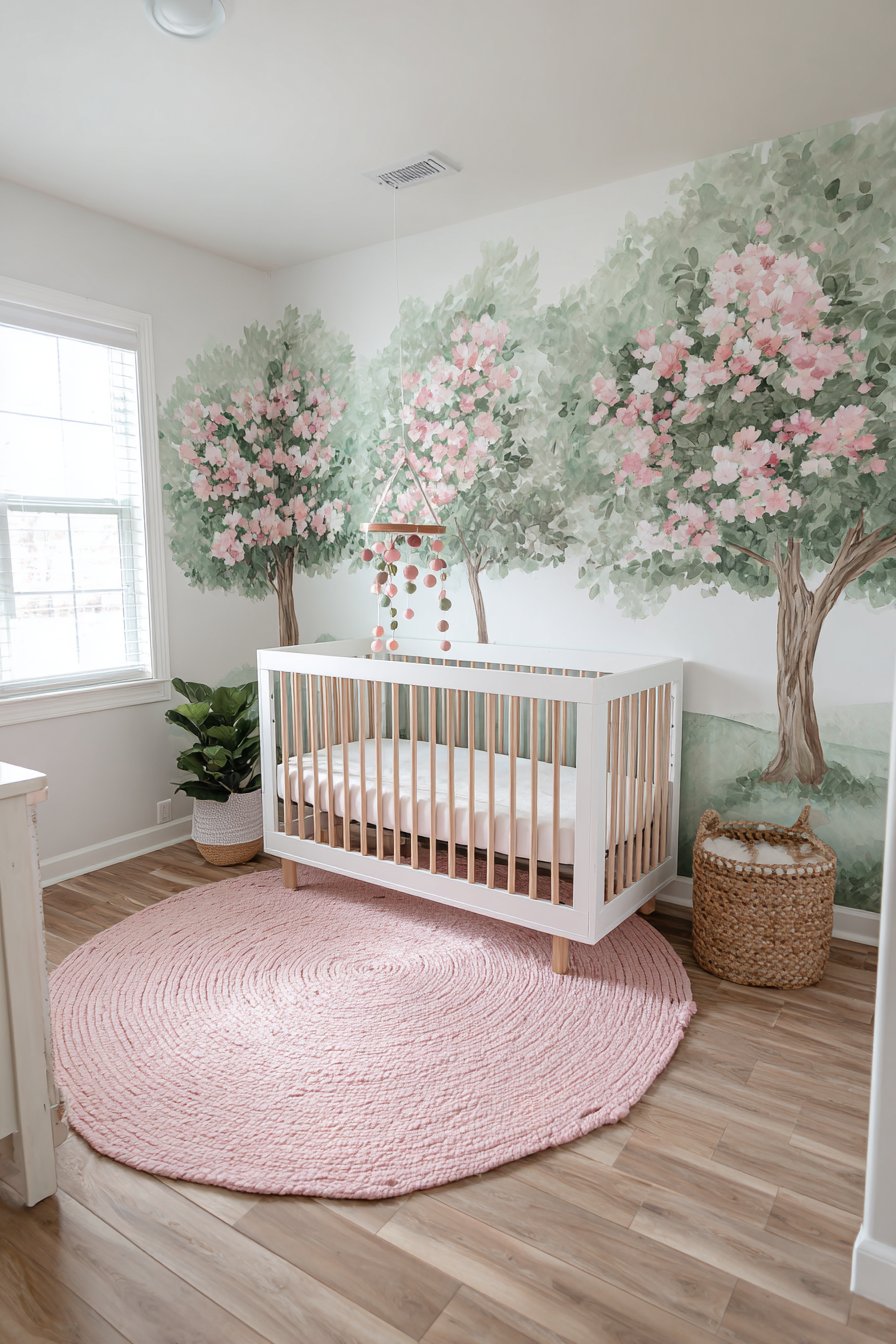
Hand-painted murals depicting whimsical trees cover the statement wall. Soft green tones form the tree trunks and branches beautifully. Pink blossoms scatter across the branches like gentle spring flowers. A modern white crib with clean lines sits centered against this artwork.
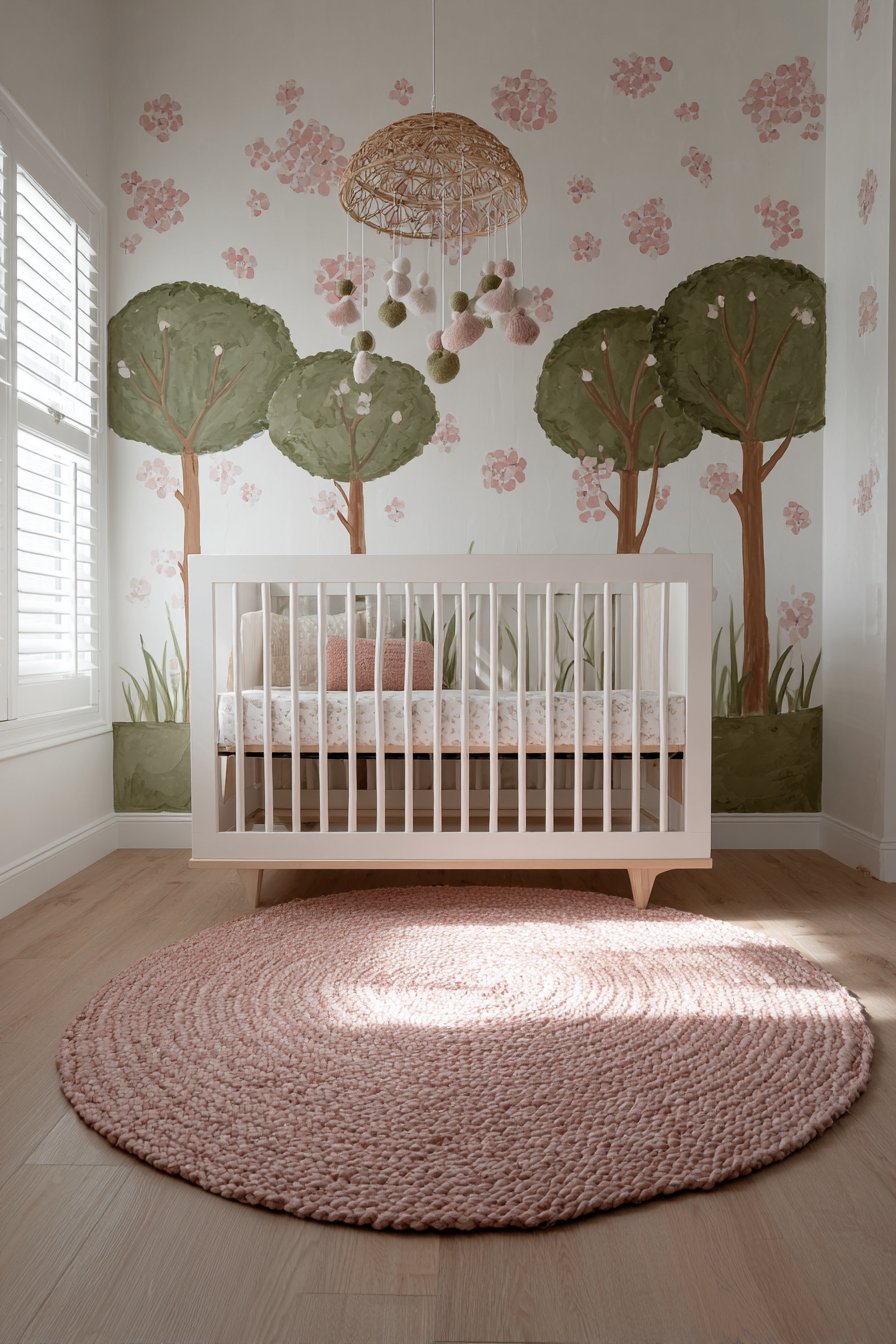
Light oak flooring contrasts beautifully with the circular braided rug. The blush pink rug adds softness beneath the crib area. A mobile crafted from natural wood and felt elements hangs above. Pink and green felt pieces cast gentle shadows in soft daylight.
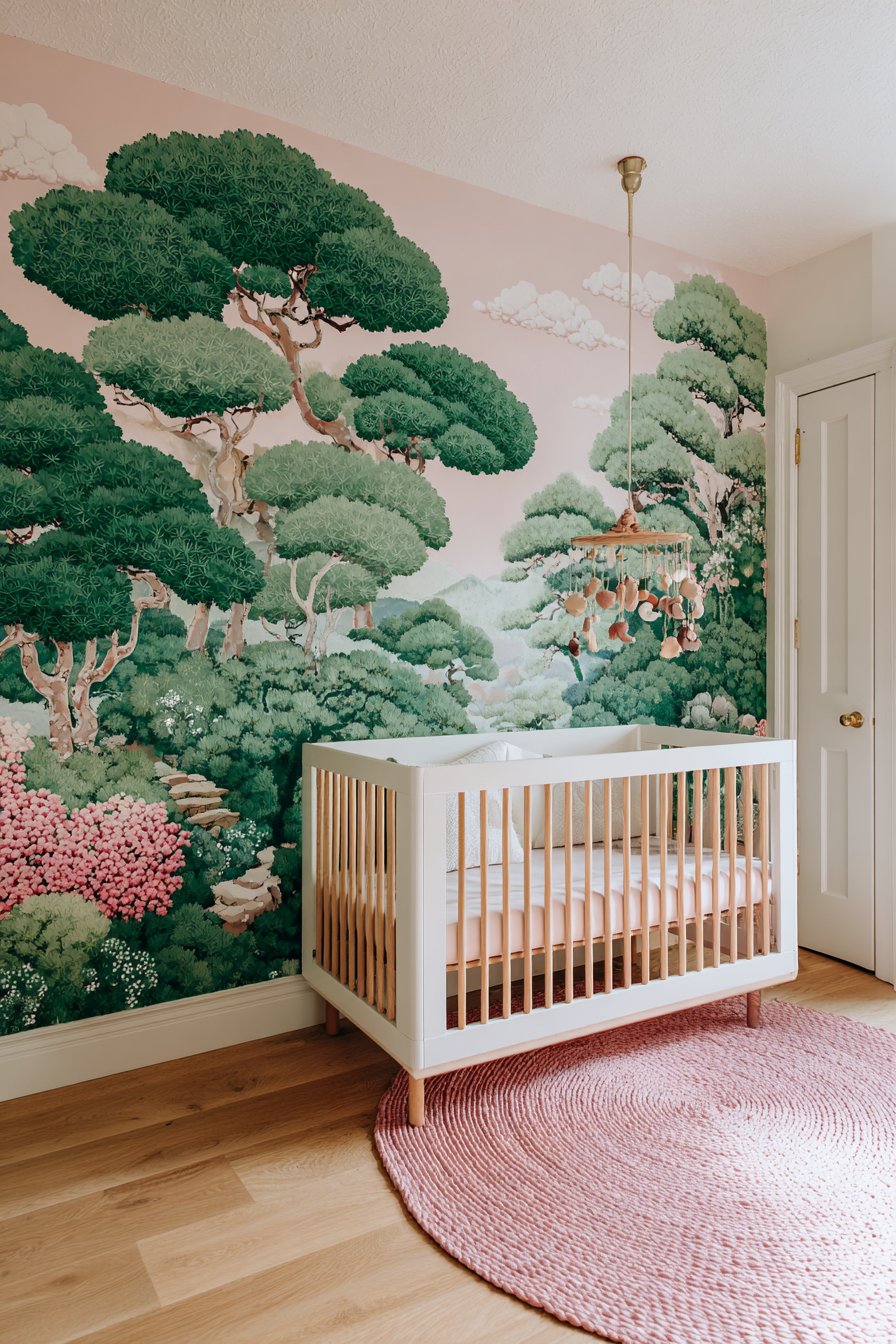
The artistic wall treatment transforms the nursery into a unique space. Hand-painted details show care and personalization throughout the design. The modern crib prevents the room from feeling overly themed or juvenile. Natural materials in the mobile and rug ground the whimsical elements.
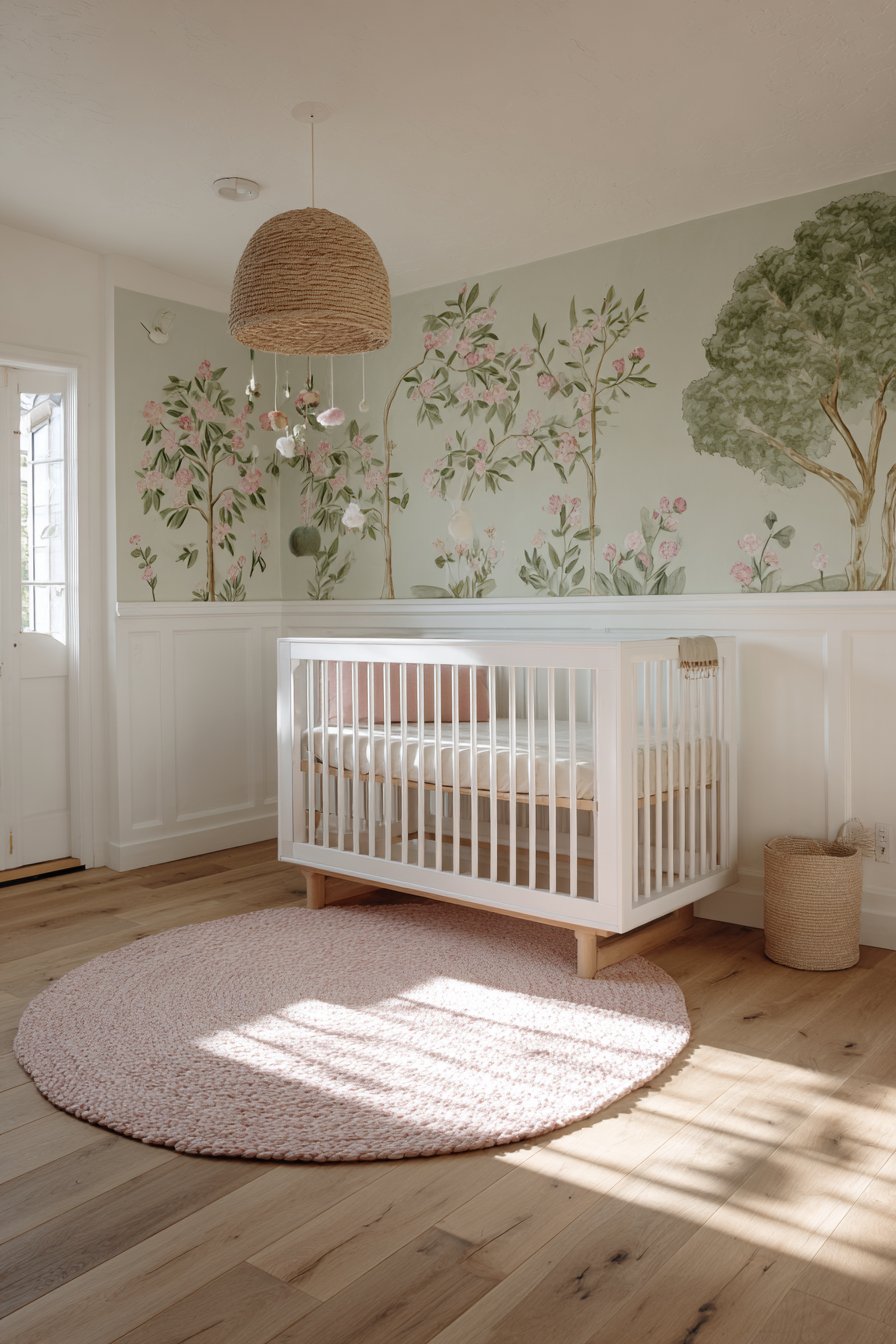
This approach creates a one-of-a-kind nursery that grows with your child. The mural serves as artwork that continues to delight for years. The soft color palette ensures the bold statement remains soothing. Professional execution makes the hand-painted details appear effortless.
Key Design Tips:
- Commission a local artist for custom hand-painted murals
- Choose soft watercolor-style paintings over bold graphics
- Balance artistic walls with simple, modern furniture
- Create or purchase handmade mobiles for personalized touches
- Use circular rugs to soften angular furniture lines
- Ensure adequate natural lighting to showcase artistic details
6. Active Play Corner for Growing Toddlers
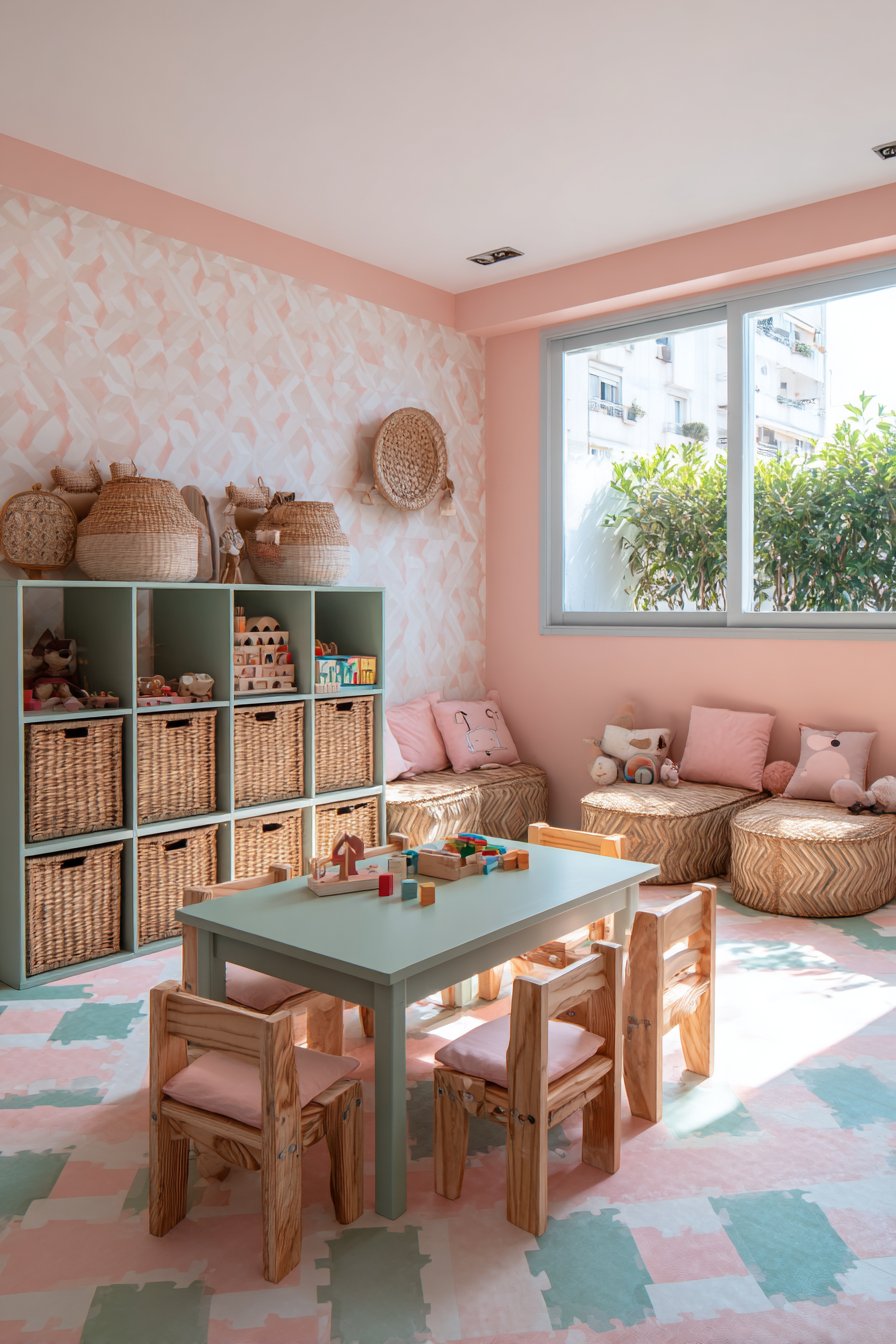
A low wooden activity table painted in soft sage green anchors the play area. Small chairs in natural wood with pink cushions surround the table. Open storage cubbies along the wall hold toys in coordinating colors. Woven baskets provide additional organization within the cubbies.
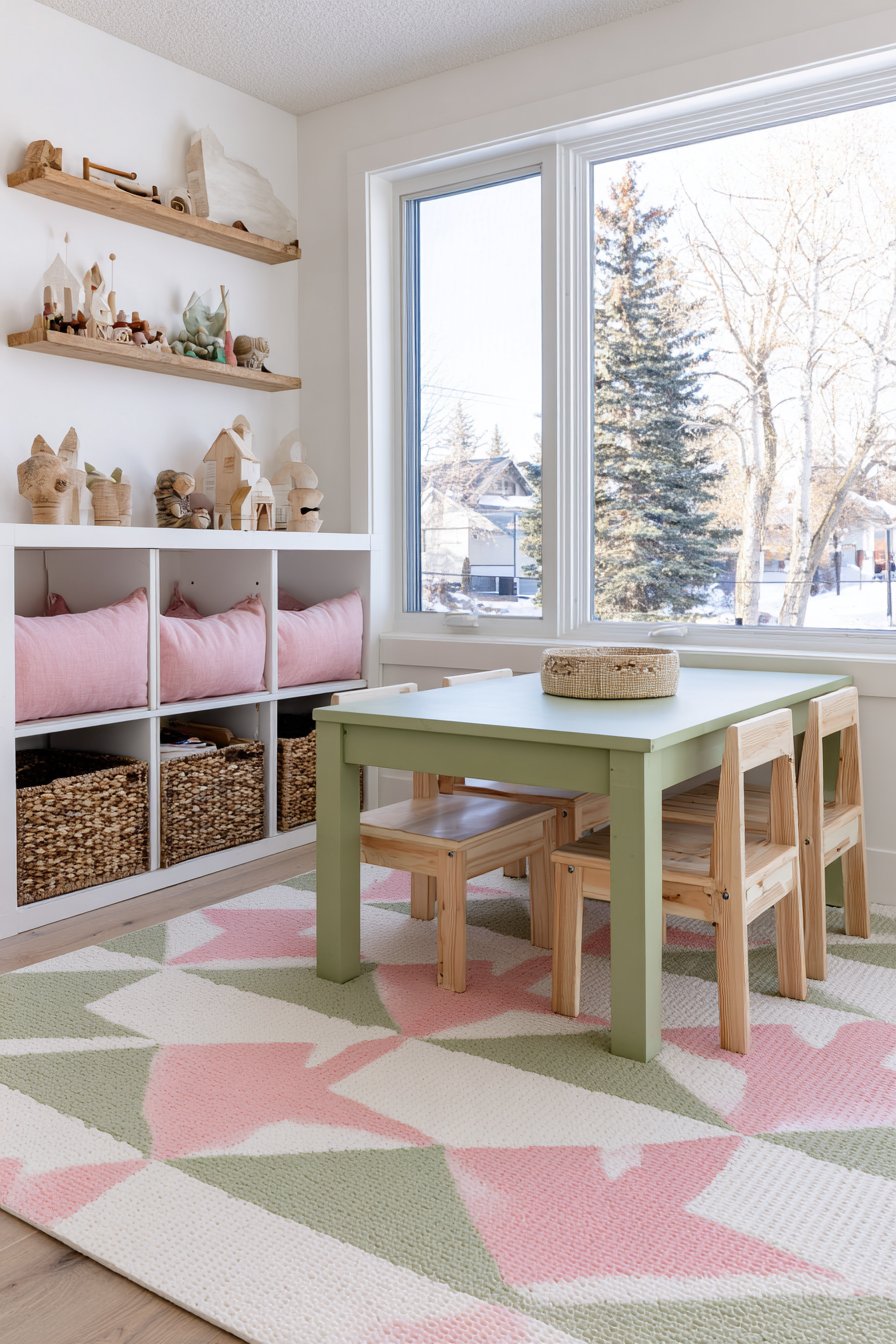
The floor features interlocking foam tiles in cream with pink and green geometric patterns. These tiles provide cushioning for active play and crawling. Natural light from the large window illuminates the functional space abundantly. This play corner grows with your child’s developing needs.
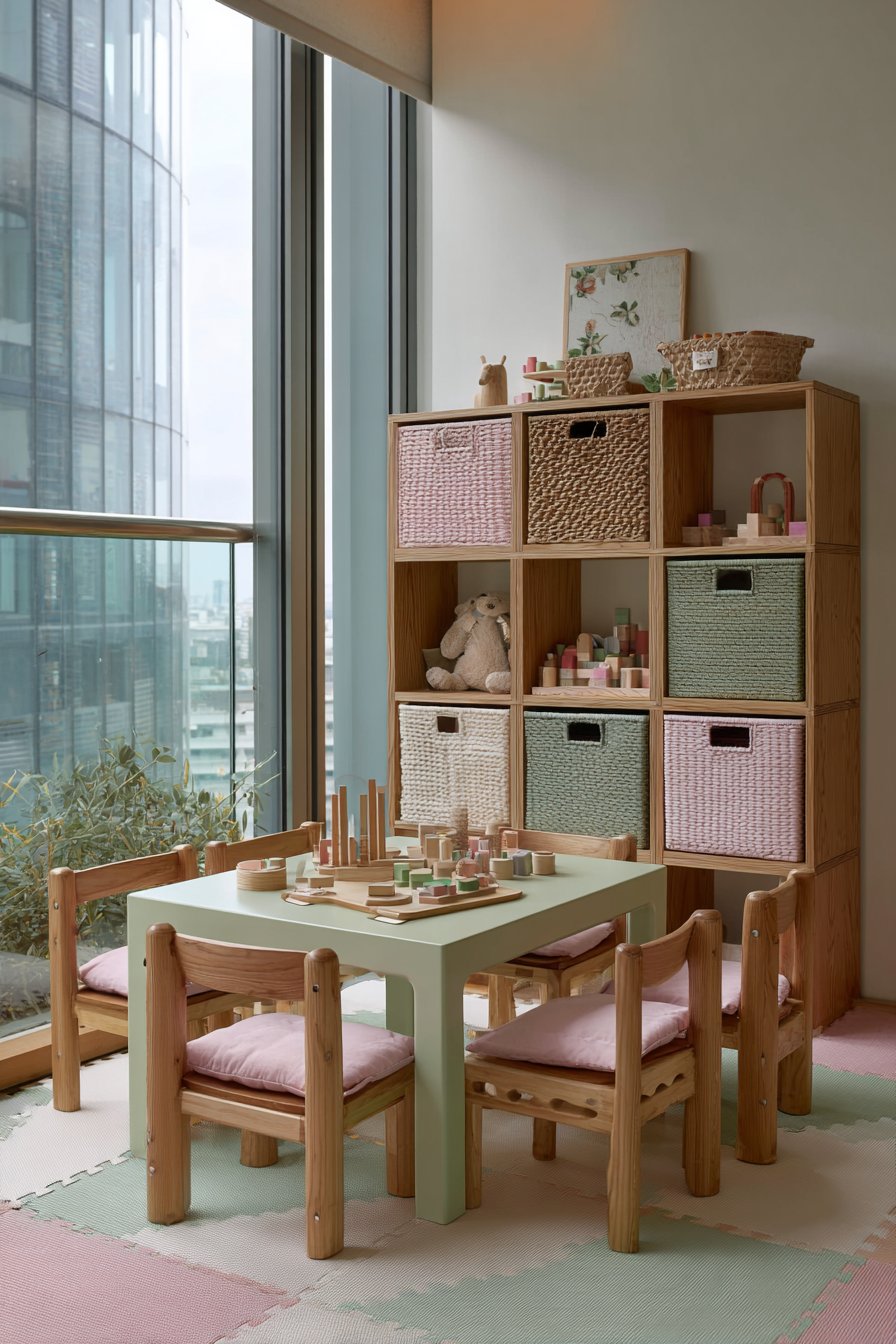
The activity table supports creative play, puzzles, and art projects. Low height ensures accessibility as children develop independence. Pink cushions add comfort while maintaining the color scheme throughout. Storage cubbies teach organization skills from an early age.
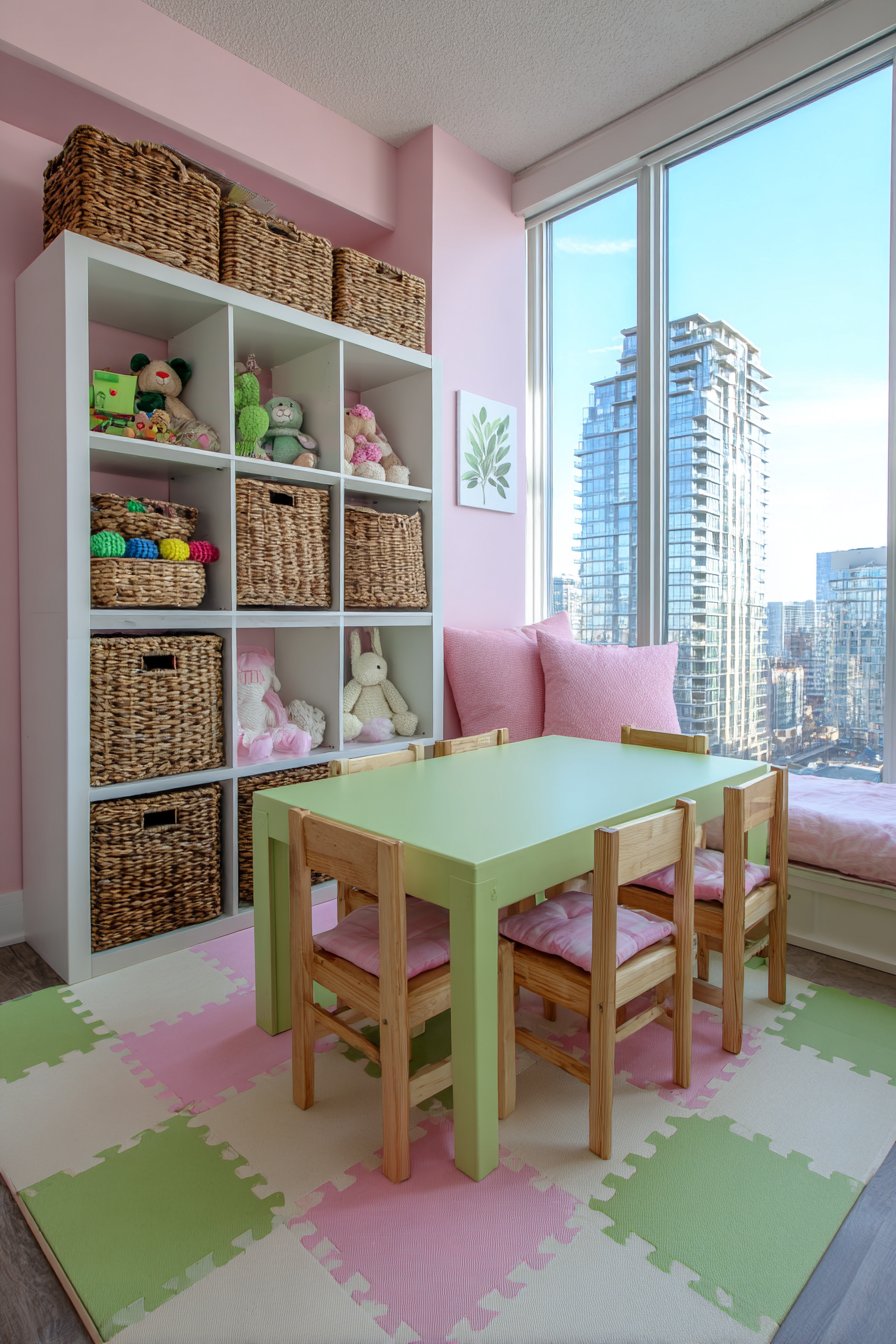
Foam floor tiles offer practical protection without sacrificing style. The geometric pattern adds visual interest underfoot. Easy-to-clean surfaces prove essential in active play areas. This corner balances child-friendly function with thoughtful design aesthetics.
Key Design Tips:
- Choose low activity tables that accommodate growing children
- Paint wooden furniture in accent colors for cohesion
- Use foam floor tiles for safe, comfortable play surfaces
- Install open storage cubbies at child-height for independence
- Add washable cushions for comfort and easy maintenance
- Position play areas near natural light sources
- Select toys in coordinating colors for aesthetic harmony
7. Romantic Canopy Crib with Flowing Fabric
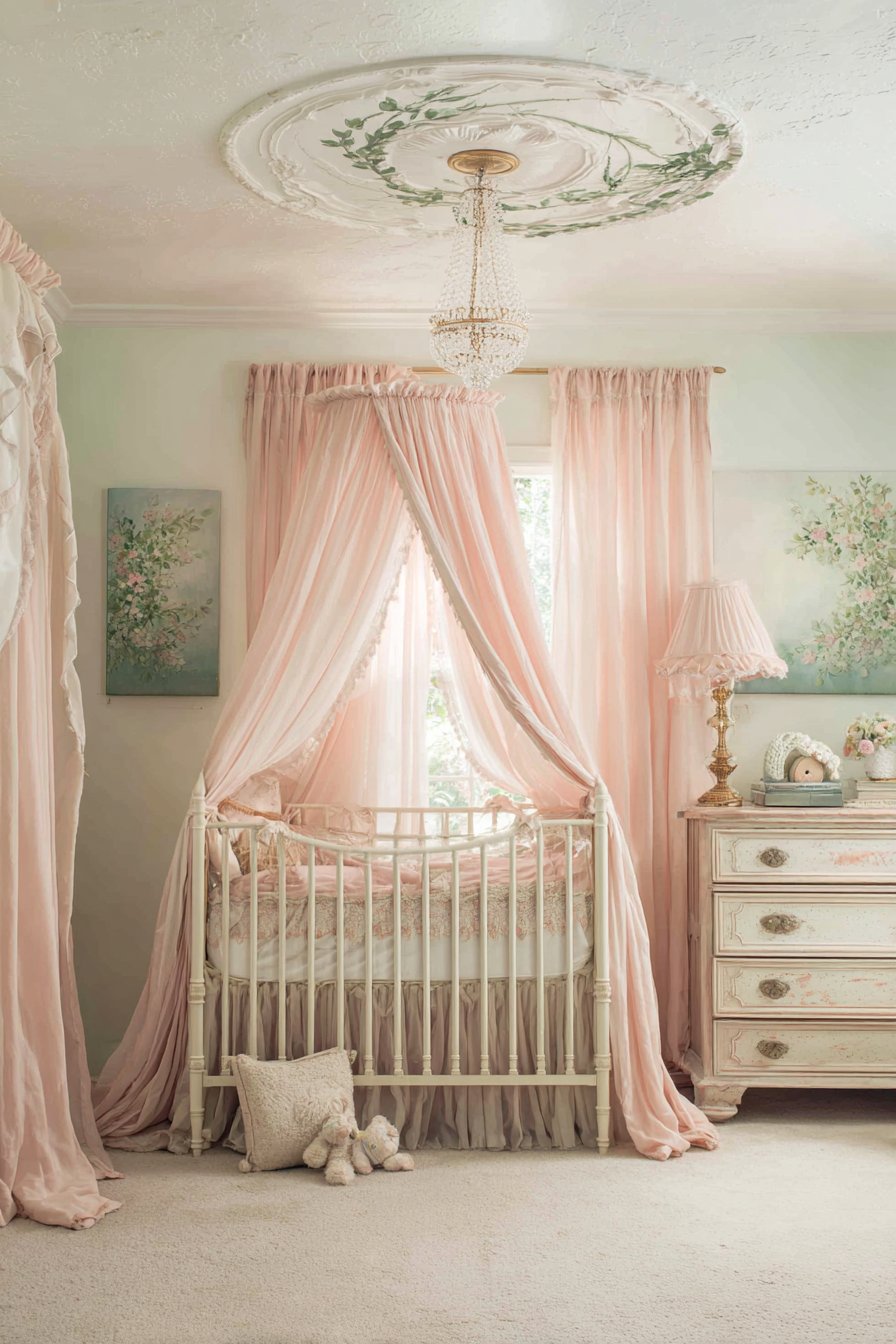
Sheer pink fabric drapes elegantly from a white ceiling medallion. The canopy flows down both sides of the white wooden crib. This creates a dreamy focal point against pale green walls. The romantic atmosphere feels both elegant and soothing.
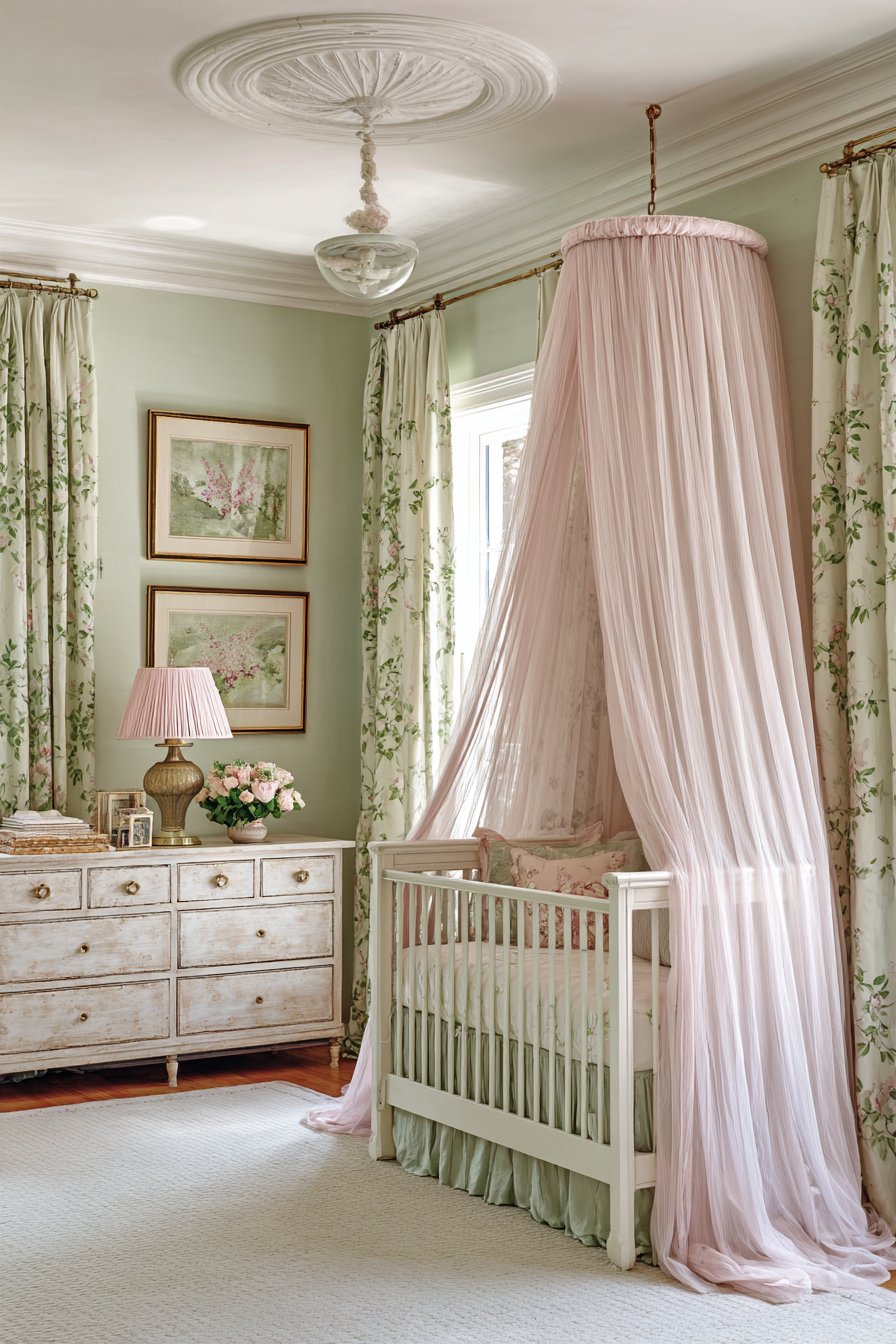
A vintage-inspired dresser in distressed white holds essential items. A brass table lamp with a pink linen shade provides soft lighting. Pale pink curtains with green leaf embroidery frame the window beautifully. Diffused natural light filters through the delicate fabric layers.
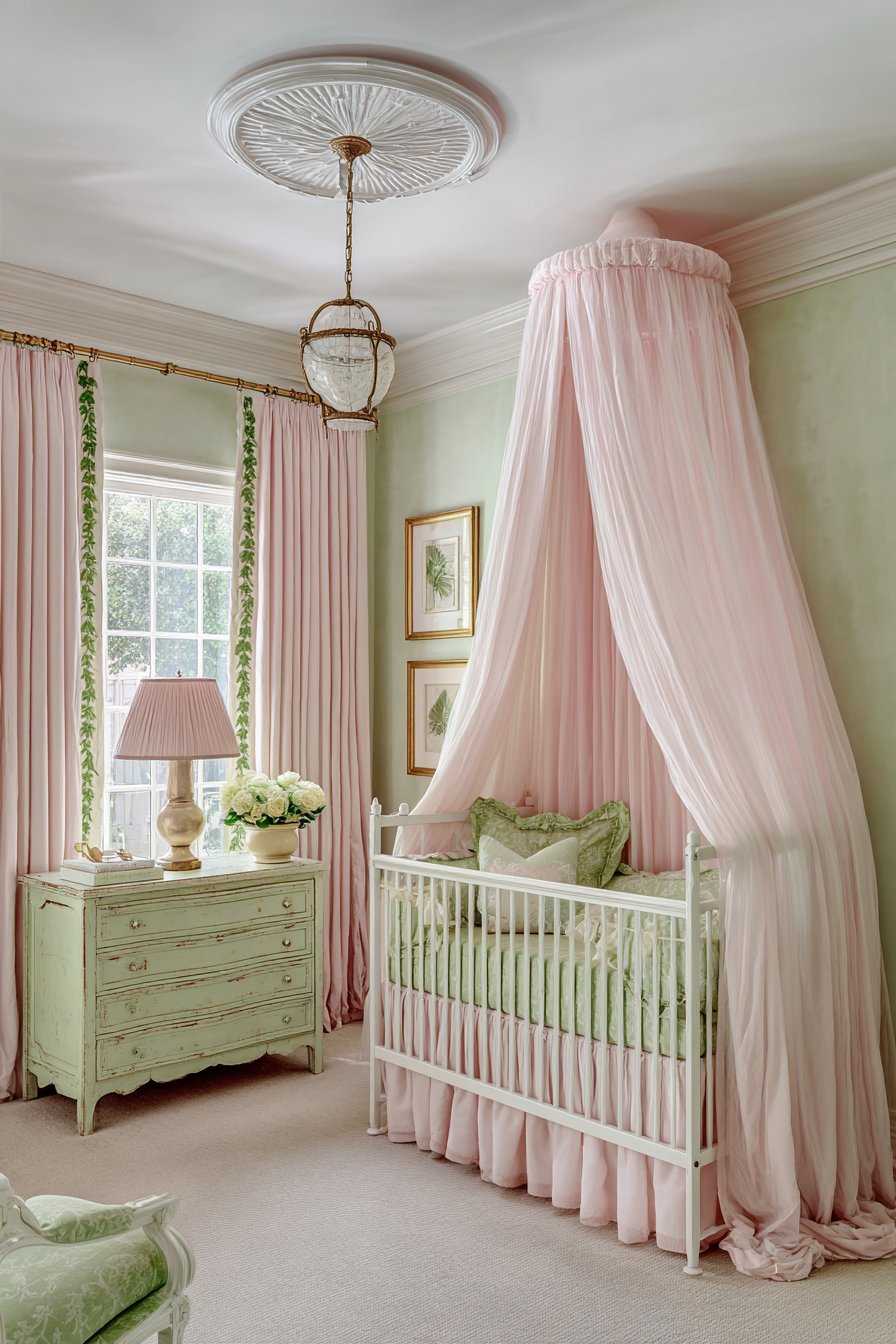
The canopy transforms an ordinary crib into a statement piece. Sheer fabric maintains airiness while adding architectural interest. The vintage dresser introduces character without overwhelming the gentle aesthetic. Embroidered curtains tie the pink and green theme together perfectly.
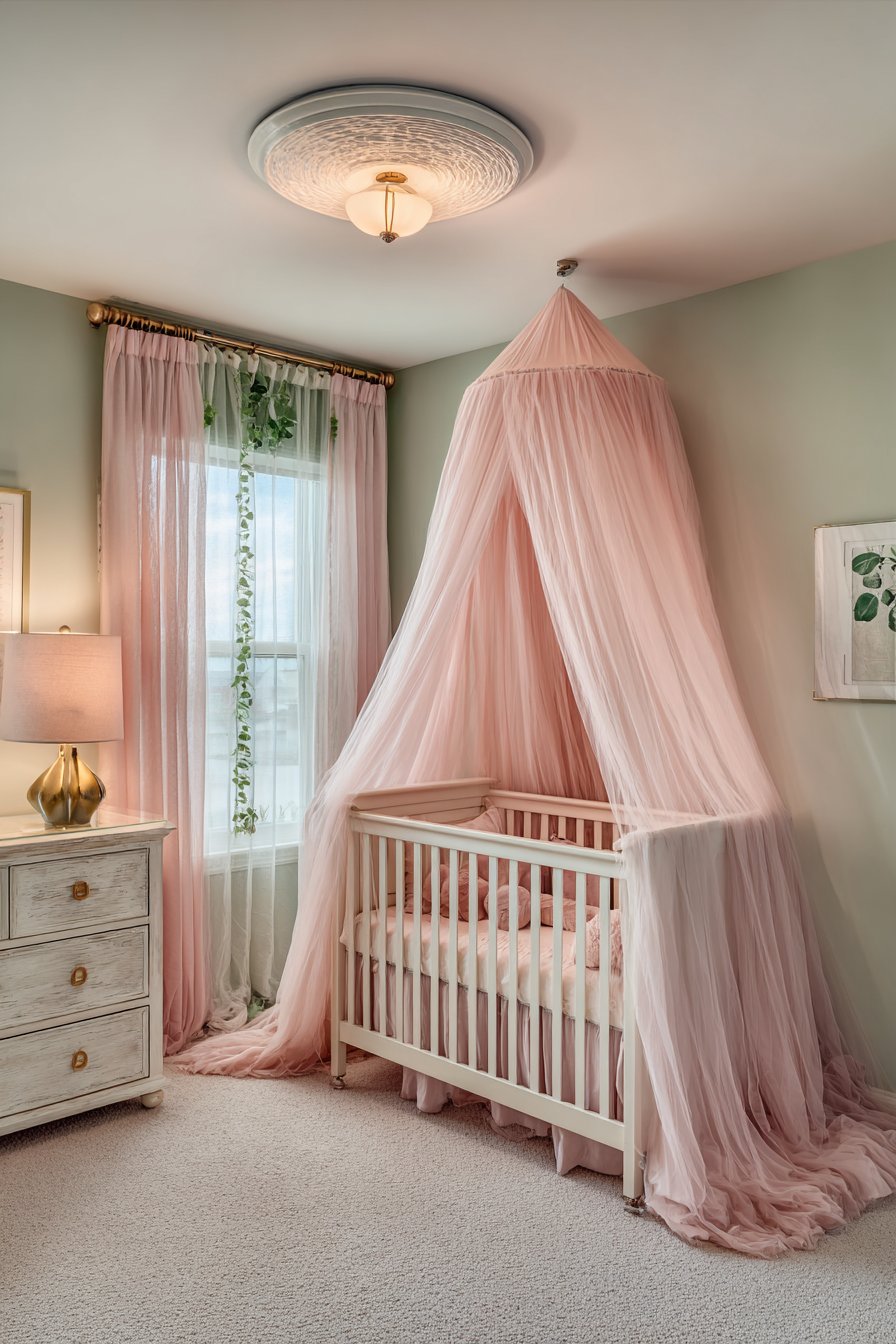
This approach works particularly well in rooms with high ceilings. The flowing fabric draws the eye upward, emphasizing vertical space. The brass accents add warmth against the cool pastels. Layered lighting creates ambiance appropriate for different times of day.
Key Design Tips:
- Install ceiling medallions as anchors for canopy fabric
- Choose sheer fabrics to maintain lightness and airflow
- Select vintage furniture pieces for added character
- Use embroidered details to subtly incorporate both colors
- Layer lighting sources for flexibility throughout the day
- Distress new furniture for vintage appeal on a budget
- Ensure canopy fabric stays safely away from crib interior
8. Practical Workspace for Nursery Organization
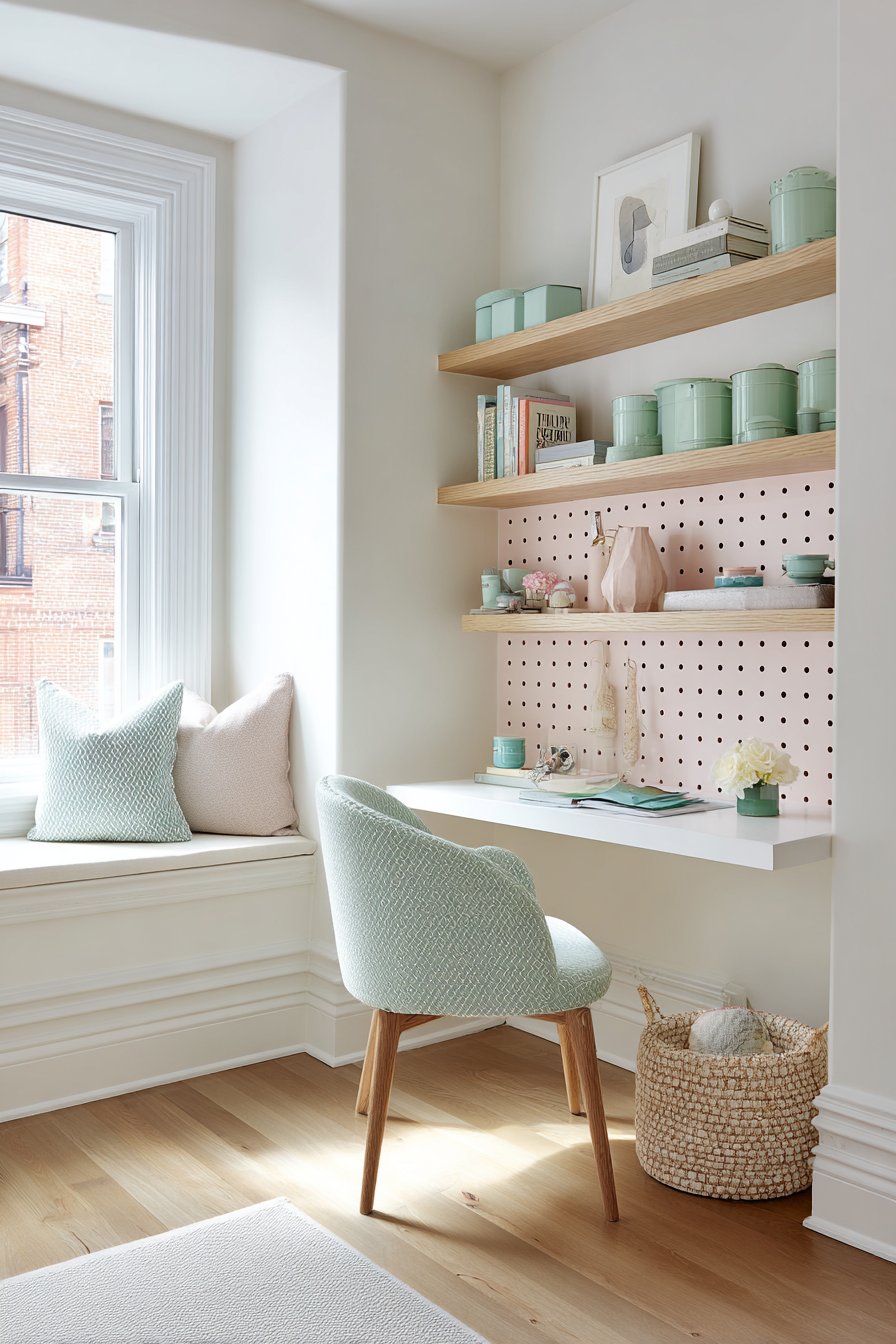
A compact white desk positions near the window for optimal lighting. The wall above displays a pegboard painted in soft pink. Matching green containers and baskets organize supplies efficiently. A comfortable desk chair with green upholstery provides proper seating.
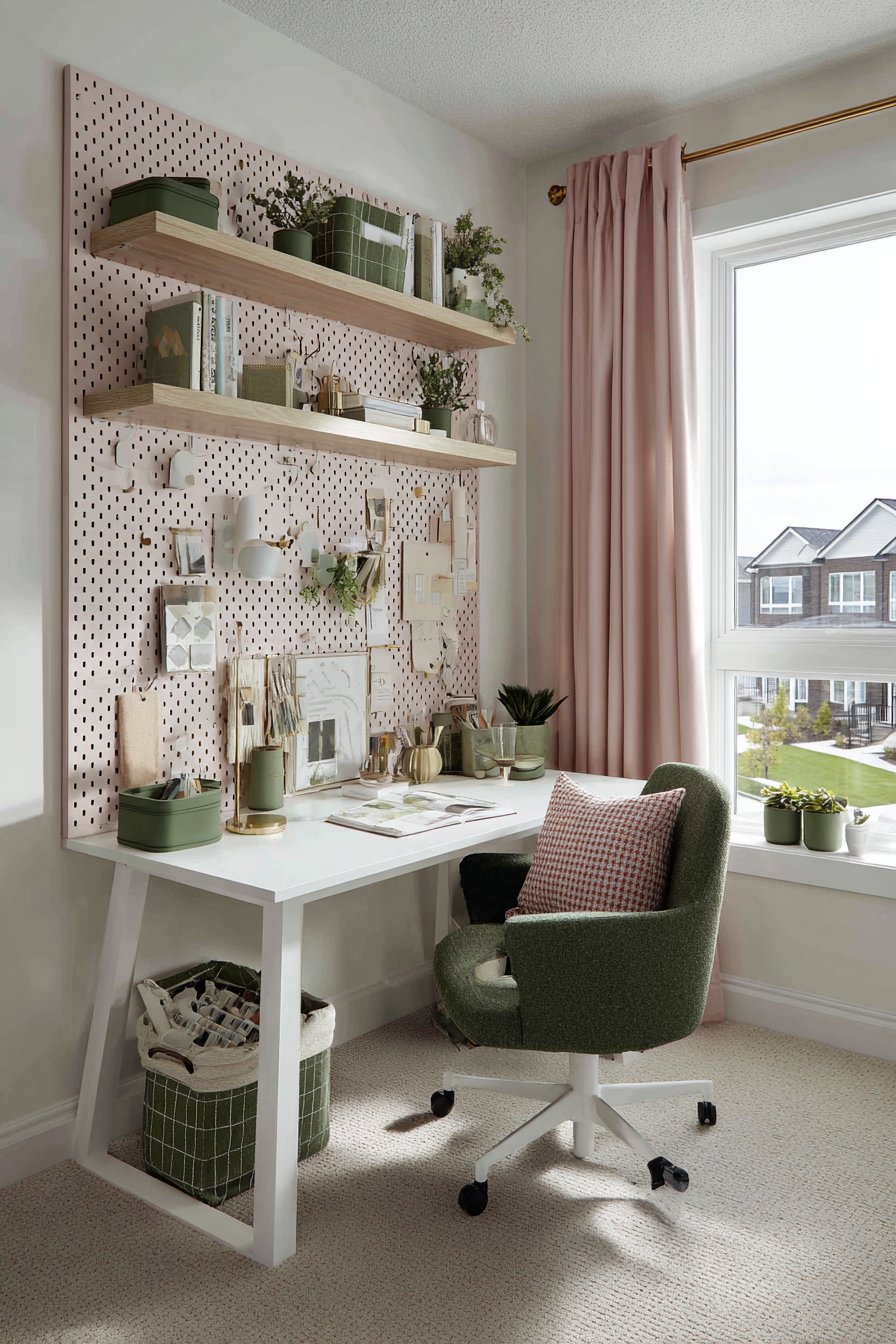
Floating shelves in natural wood hold reference books and decorative items. The coordinating color palette continues throughout this functional area. Golden hour sunlight creates warm highlights across the workspace. This integration proves nurseries can accommodate multiple functions successfully.
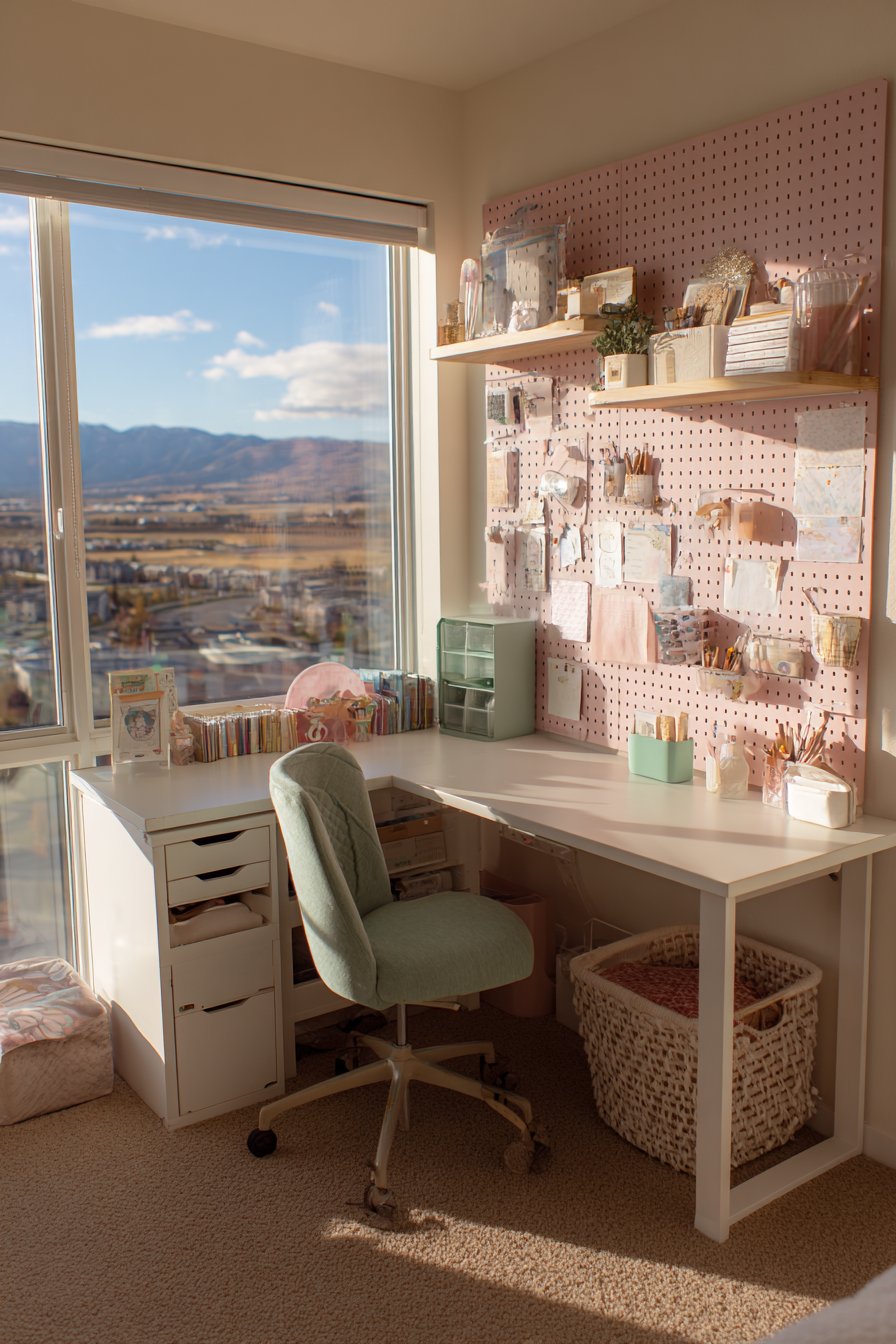
The workspace serves parents during late-night research and planning sessions. The pegboard system offers flexible organization that adapts to changing needs. Green containers maintain visual consistency while maximizing functionality. Natural wood shelves add warmth against painted surfaces.
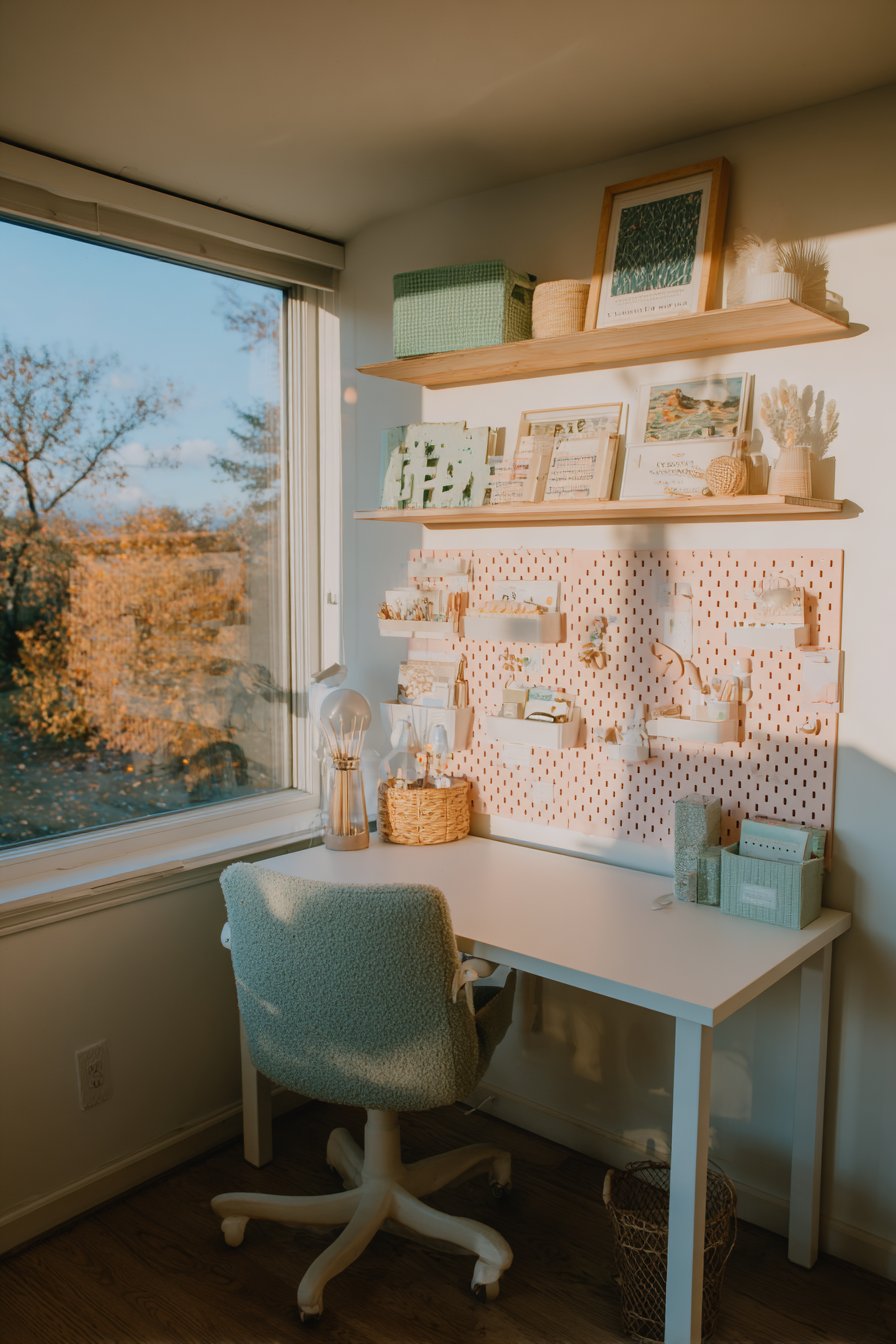
This area demonstrates thoughtful space planning for modern parents. The desk remains within the nursery yet feels like a separate zone. Proper lighting reduces eye strain during evening hours. The organizational system keeps important documents and supplies accessible.
Key Design Tips:
- Position desks near windows for natural task lighting
- Paint pegboards in accent colors for visual interest
- Use matching containers to maintain organized appearance
- Choose comfortable seating for extended use
- Install floating shelves to maximize vertical space
- Designate specific zones within multipurpose rooms
- Keep frequently referenced materials within arm’s reach
9. Customized Closet Organization System
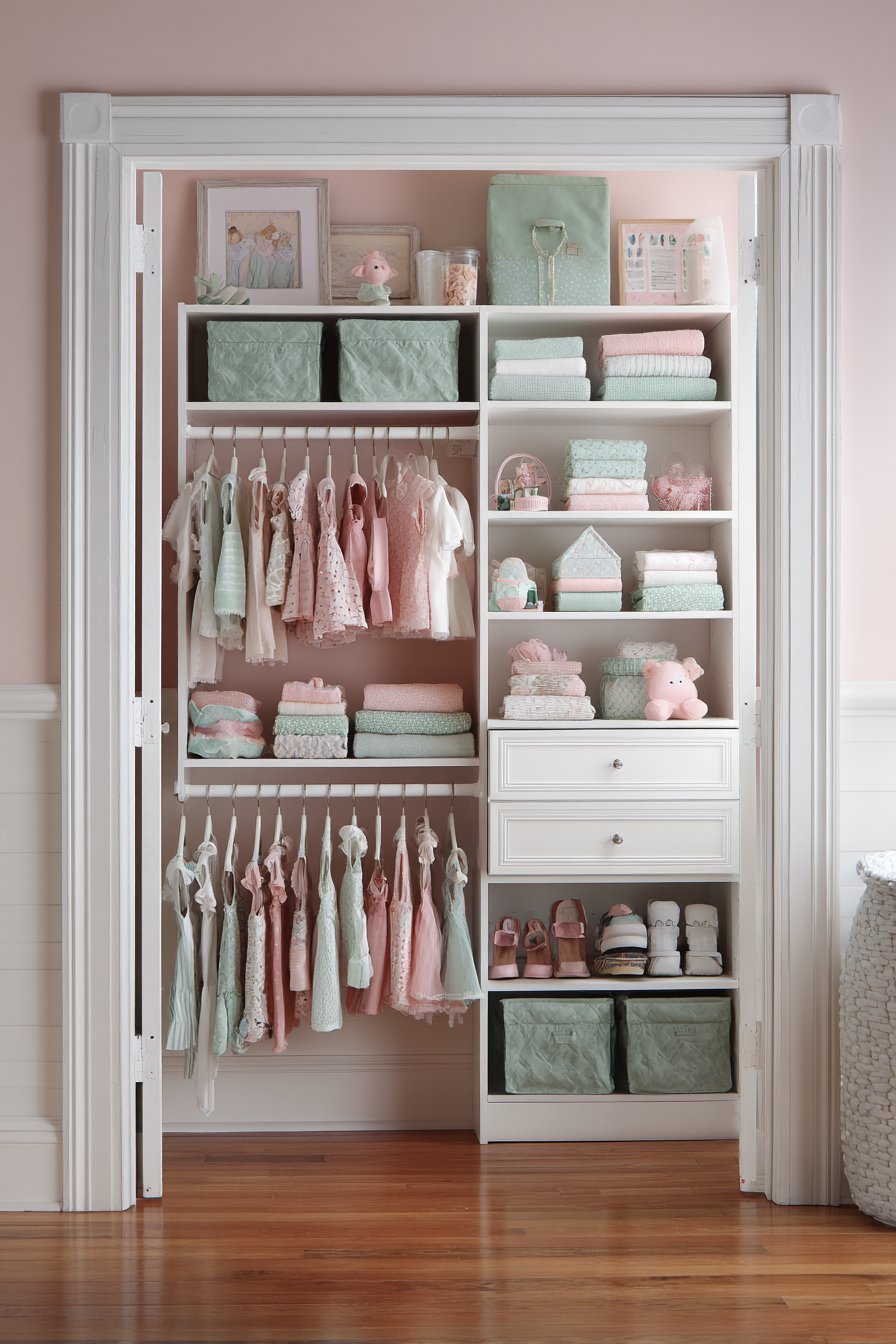
White built-in organization features adjustable shelving and hanging rods. Drawer units provide closed storage for smaller items. Hanging rods at varying heights accommodate growing wardrobes. Clothing arranges neatly on pink hangers throughout.
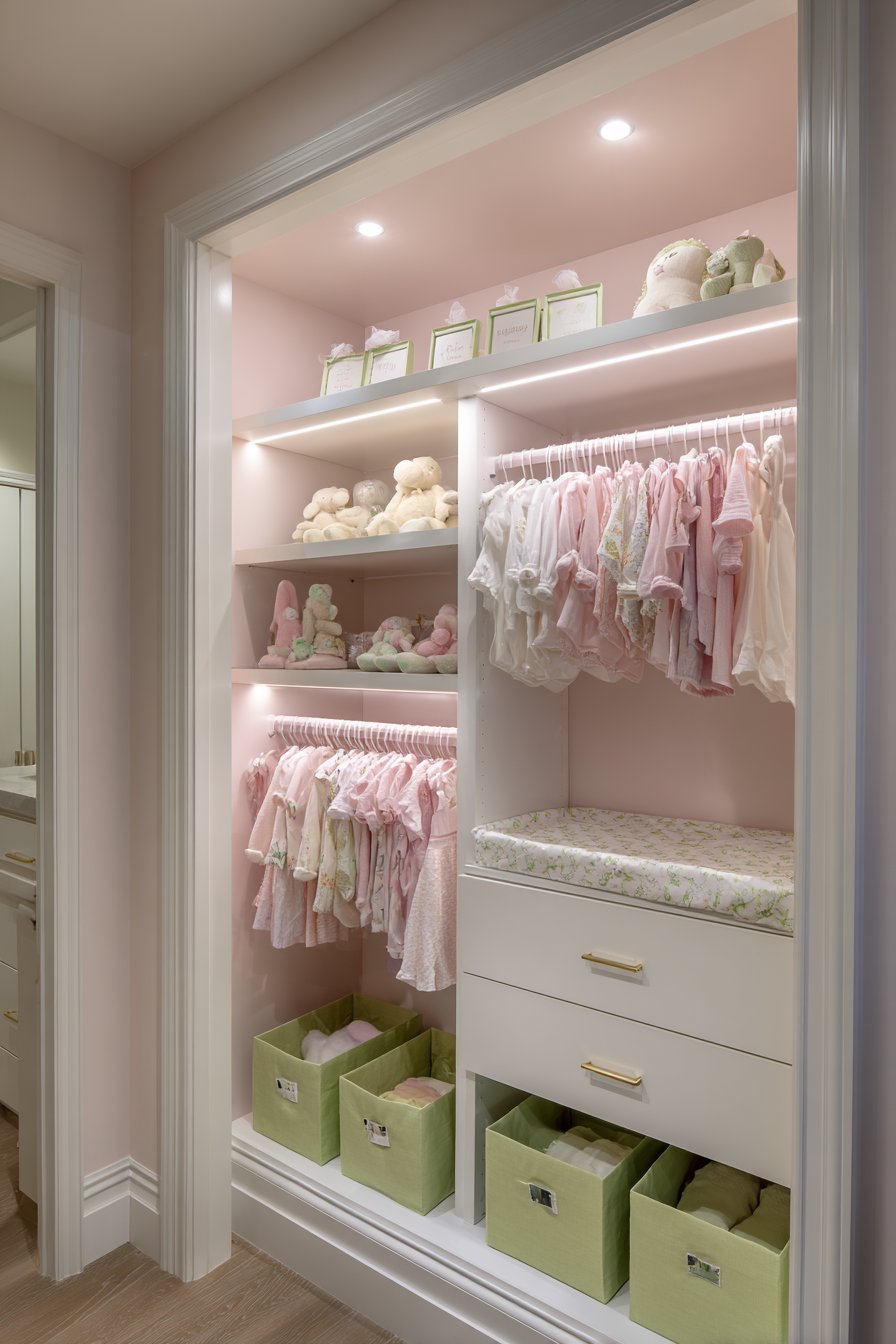
Green fabric bins hold accessories and shoes in organized fashion. The closet interior features very soft pink paint. LED strip lighting along the shelves provides even illumination. Organizational labels in simple white frames maintain clean aesthetics.
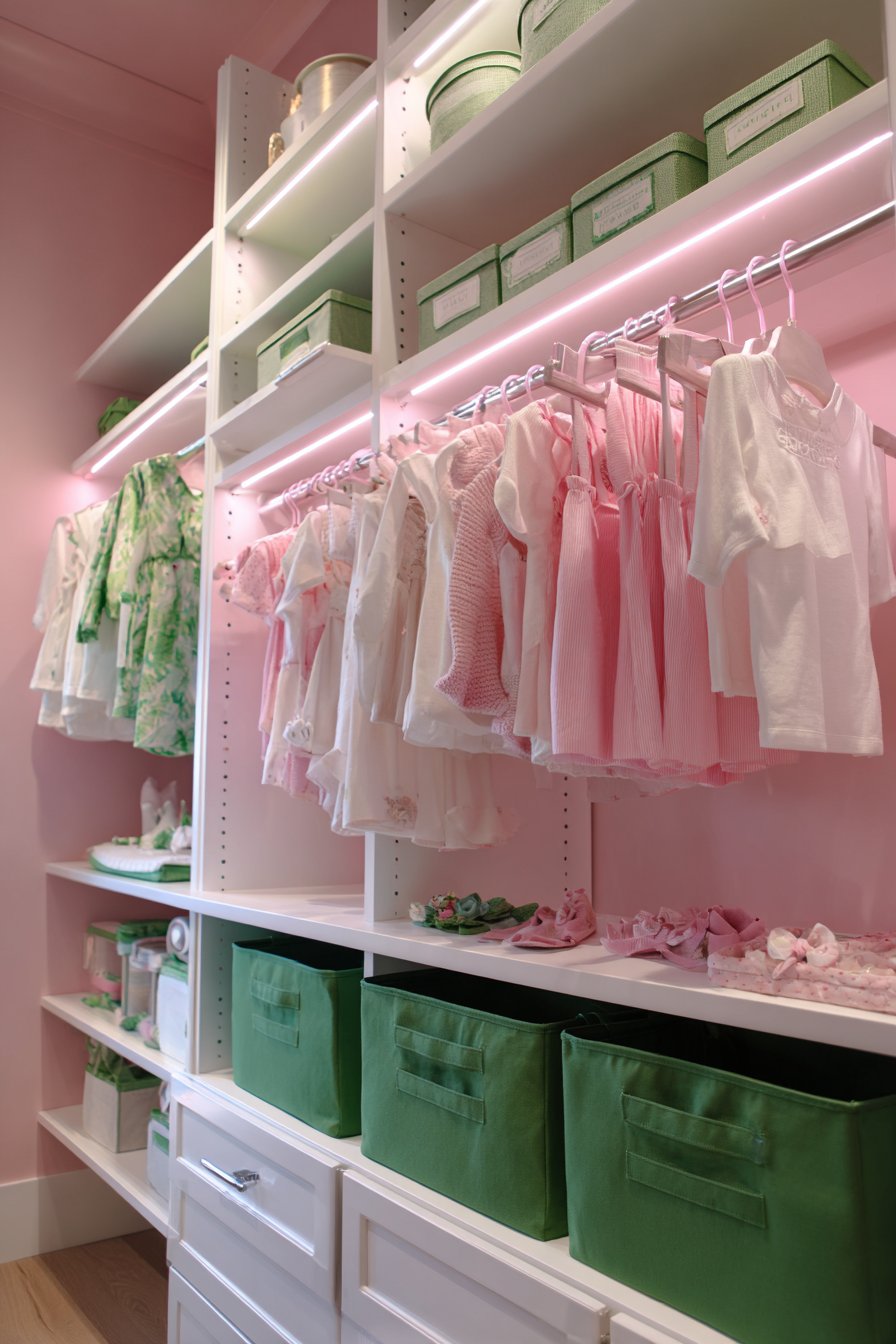
The customized system maximizes every inch of closet space efficiently. Adjustable components adapt as your child’s needs change over time. Pink hangers and green bins maintain the color theme even in hidden spaces. LED lighting makes finding items easy during early morning hours.
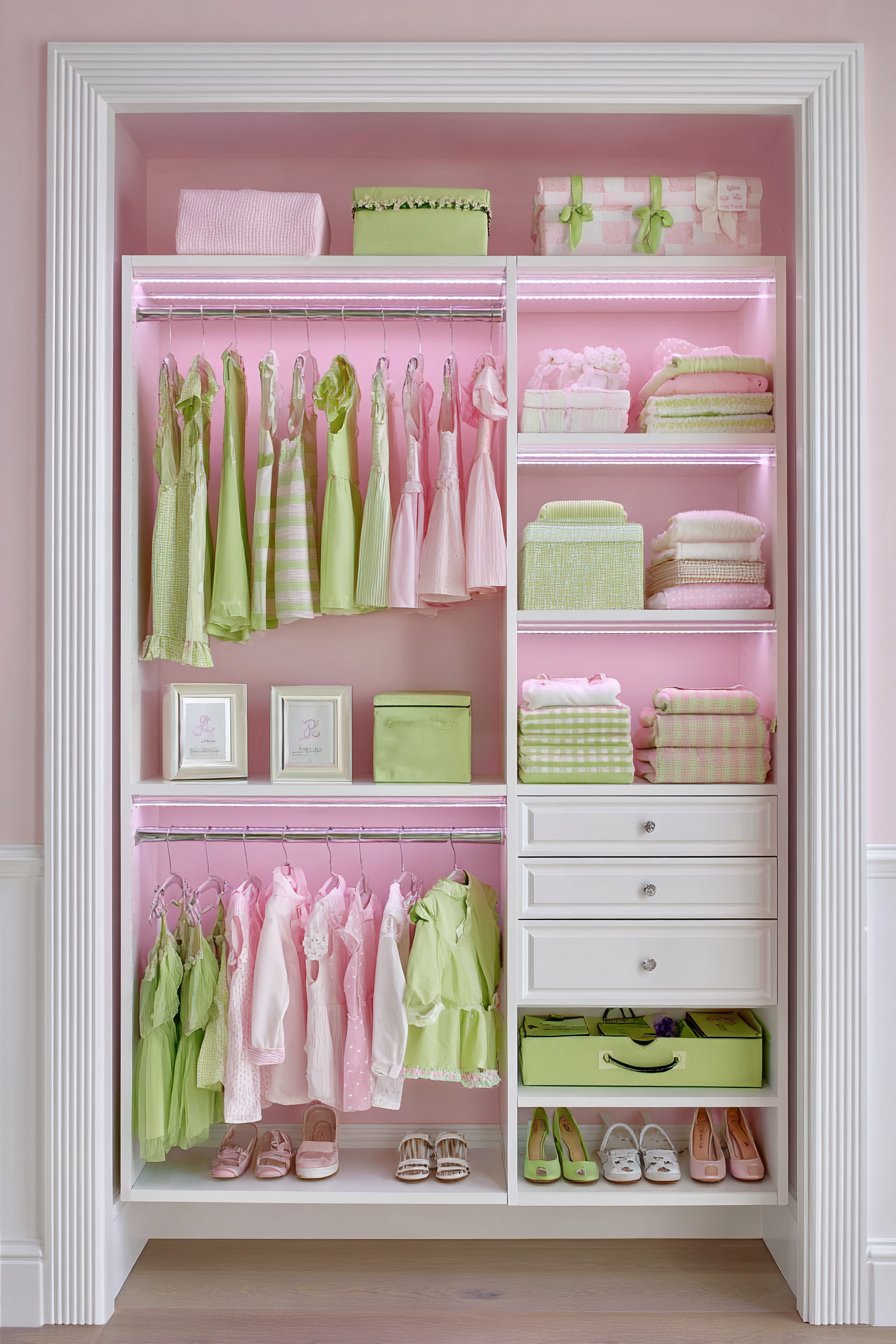
This approach transforms a standard closet into a functional showcase. The soft pink interior feels special rather than purely utilitarian. White frames around labels add polish to practical organization. Fabric bins protect delicate items while maintaining visual consistency.
Key Design Tips:
- Install adjustable systems that grow with your child
- Use LED strip lighting for energy-efficient illumination
- Choose fabric bins for soft storage of accessories
- Match hanger colors to your overall design scheme
- Paint closet interiors in accent colors for cohesion
- Label storage areas for easy maintenance
- Include drawer units for small item organization
- Position hanging rods at multiple heights for versatility
10. Textured Grasscloth Accent Wall
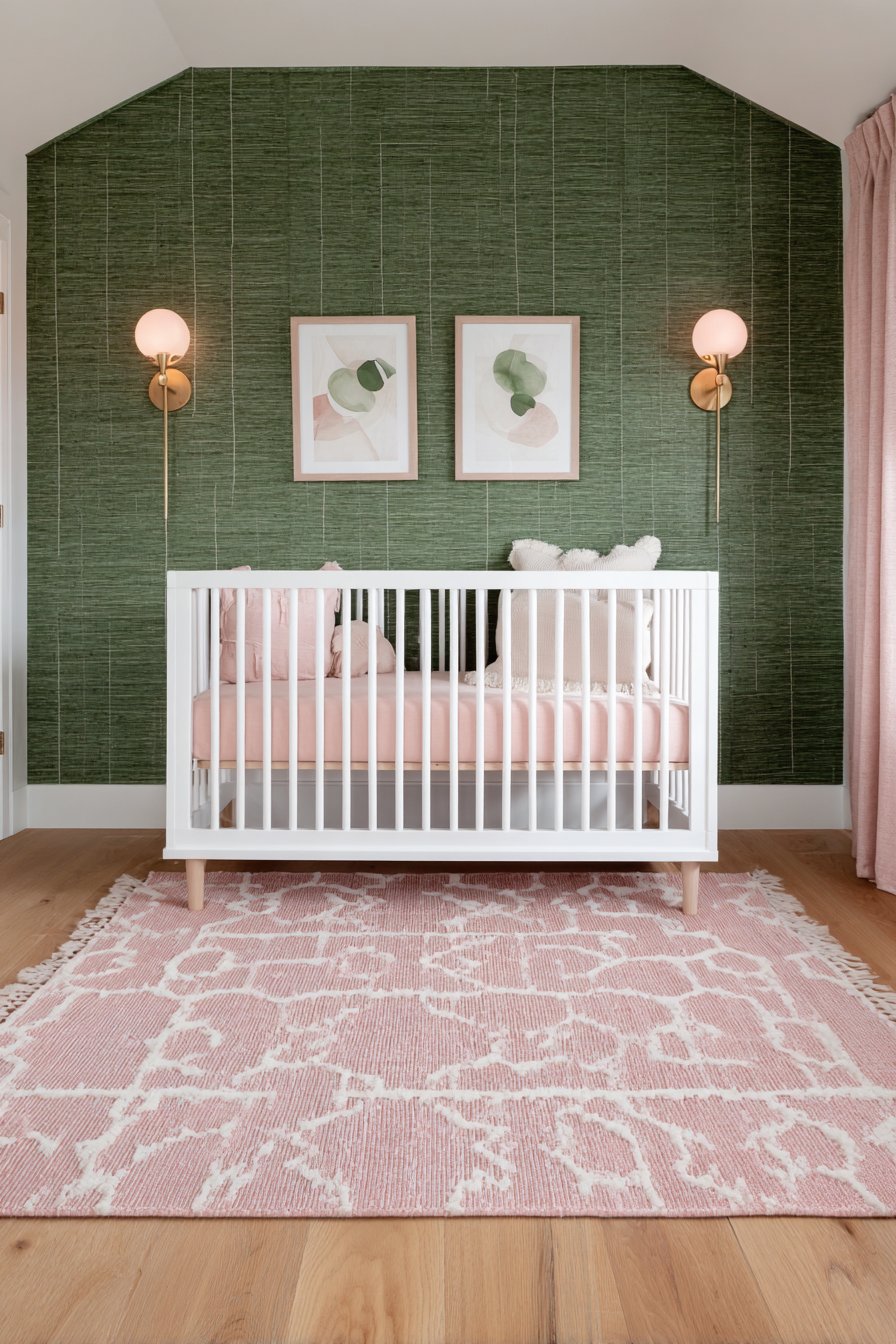
Sage green grasscloth wallpaper creates the textured accent wall. Natural fiber variations add organic interest and depth. A white wooden crib with pink bedding centers against this feature. The grasscloth brings nature-inspired texture into the space.
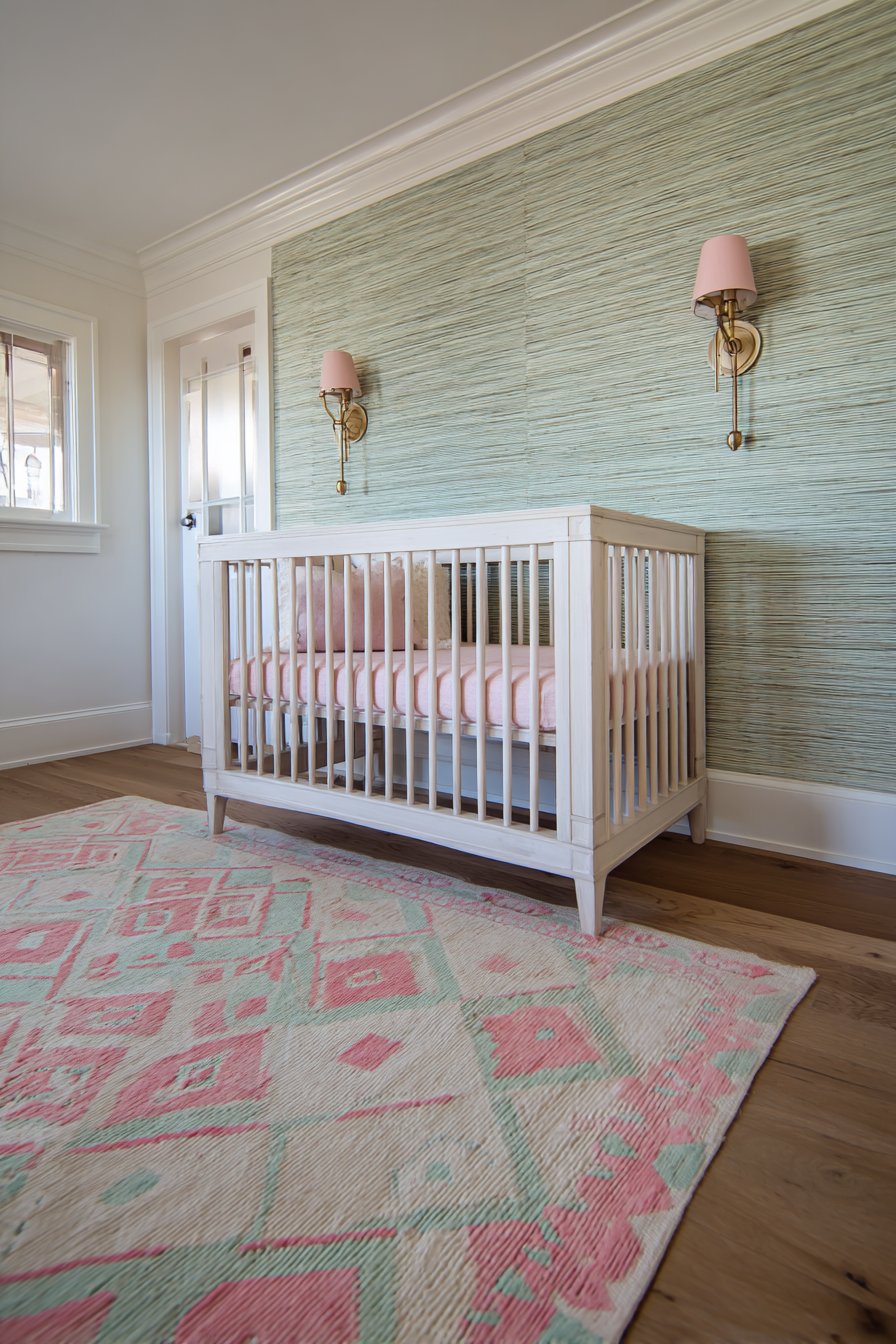
Two matching wall sconces with brass fixtures flank the crib. Pink glass shades provide soft ambient lighting during evening hours. Remaining walls feature warm white paint for balanced brightness. Natural oak flooring grounds the design with warmth and stability.
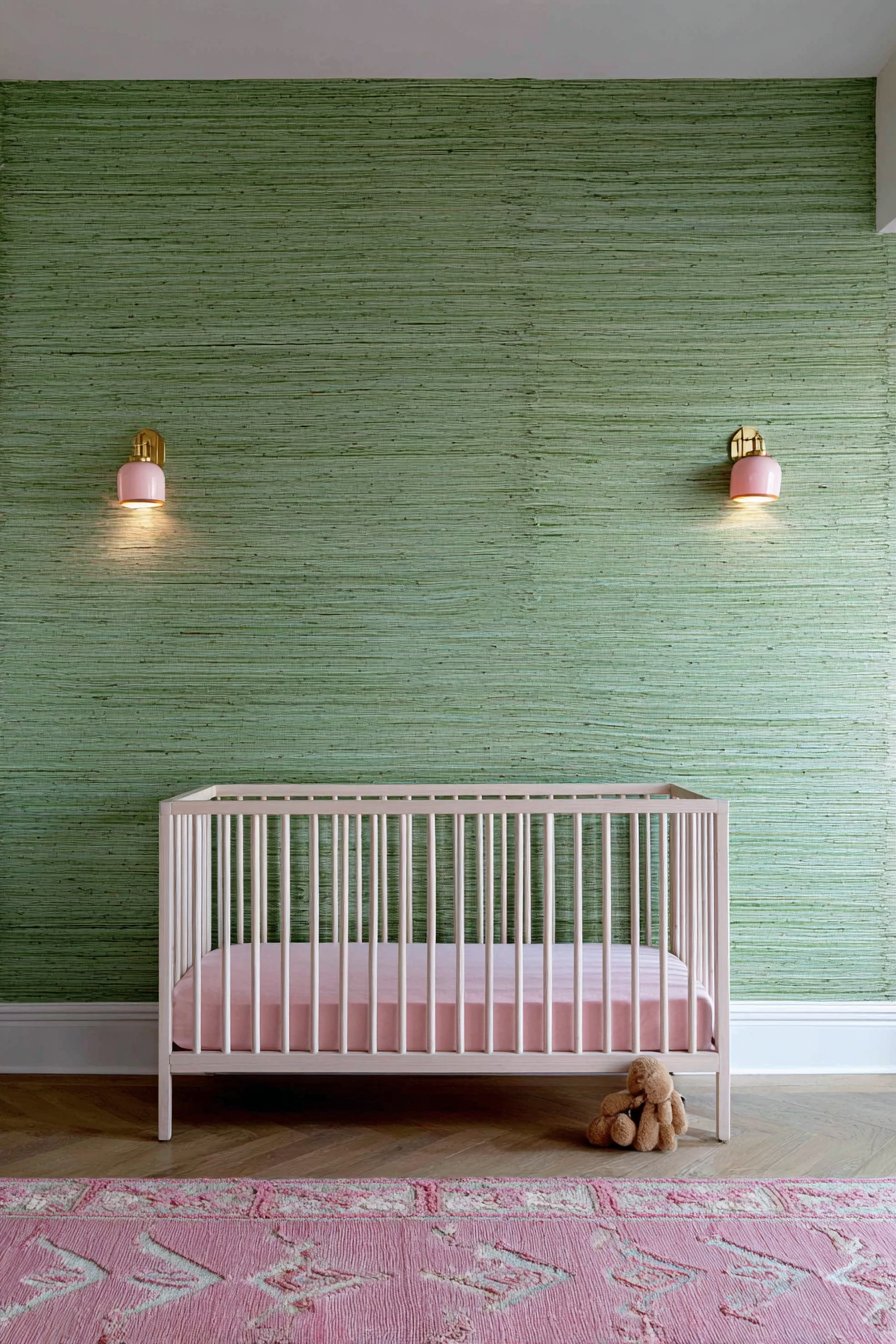
A pink and green patterned area rug with geometric designs adds visual interest. The material contrasts create sophisticated layering throughout the room. Natural daylight supplements the warm glow of wall sconces beautifully. This combination demonstrates professional-level design thinking.
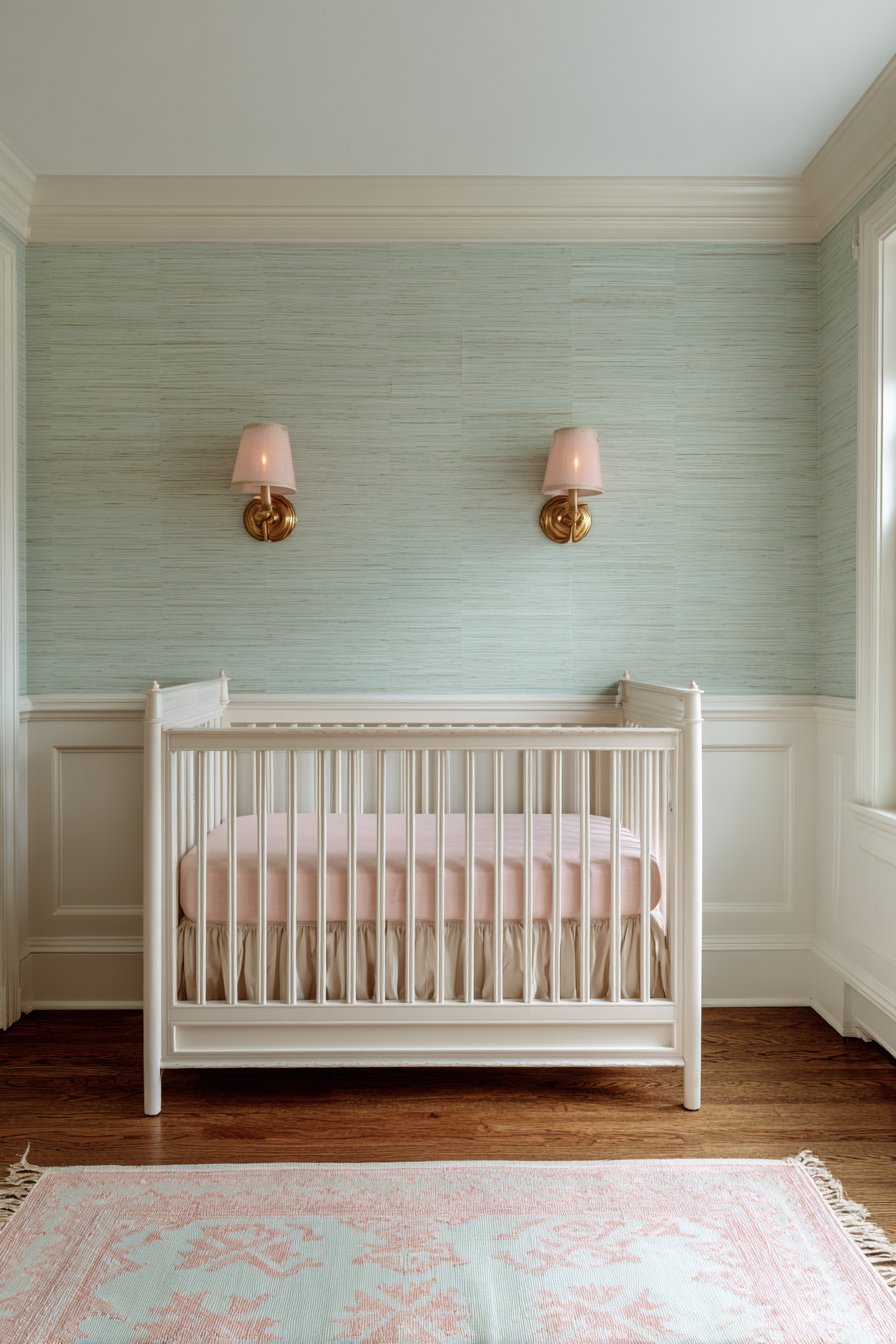
The grasscloth wallpaper introduces texture without overwhelming the senses. Natural fibers add subtle variation that feels organic and calming. The brass sconces provide functional lighting while serving as decorative elements. Geometric rug patterns prevent the soft colors from feeling too sweet.
Key Design Tips:
- Choose grasscloth wallpaper for natural texture and sophistication
- Install wall sconces for practical ambient lighting
- Select colored glass shades to incorporate accent colors
- Balance textured walls with smooth painted surfaces
- Use geometric patterns to add visual interest
- Layer natural materials for organic warmth
- Position lighting symmetrically for balanced illumination
- Combine natural and artificial light sources thoughtfully
11. Versatile Daybed for Multiple Functions
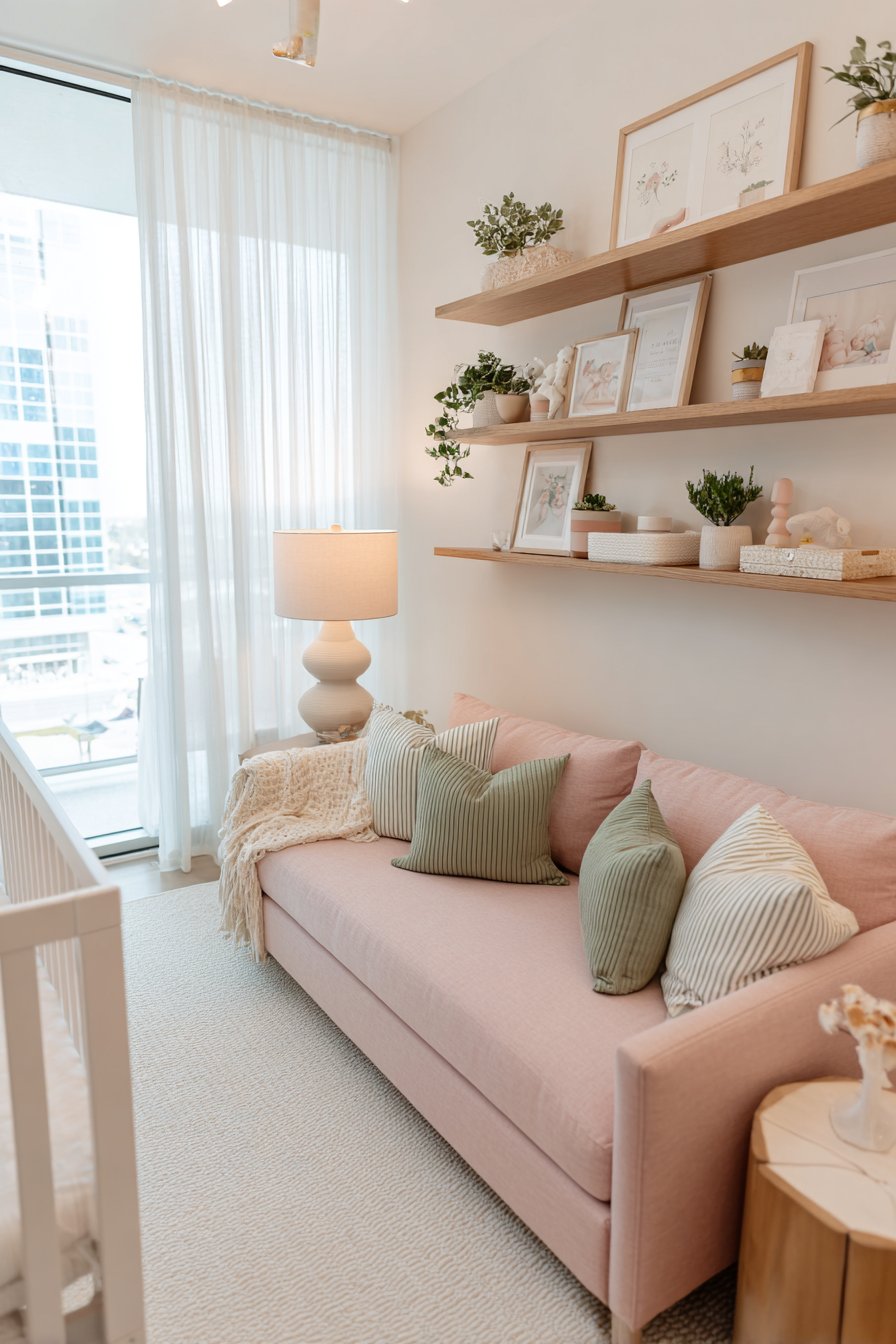
A pink linen upholstered daybed positions along one wall. Green and white striped throw pillows add pattern and comfort. The daybed serves dual purposes for nursing and spare sleeping. This multifunctional furniture maximizes space efficiency beautifully.
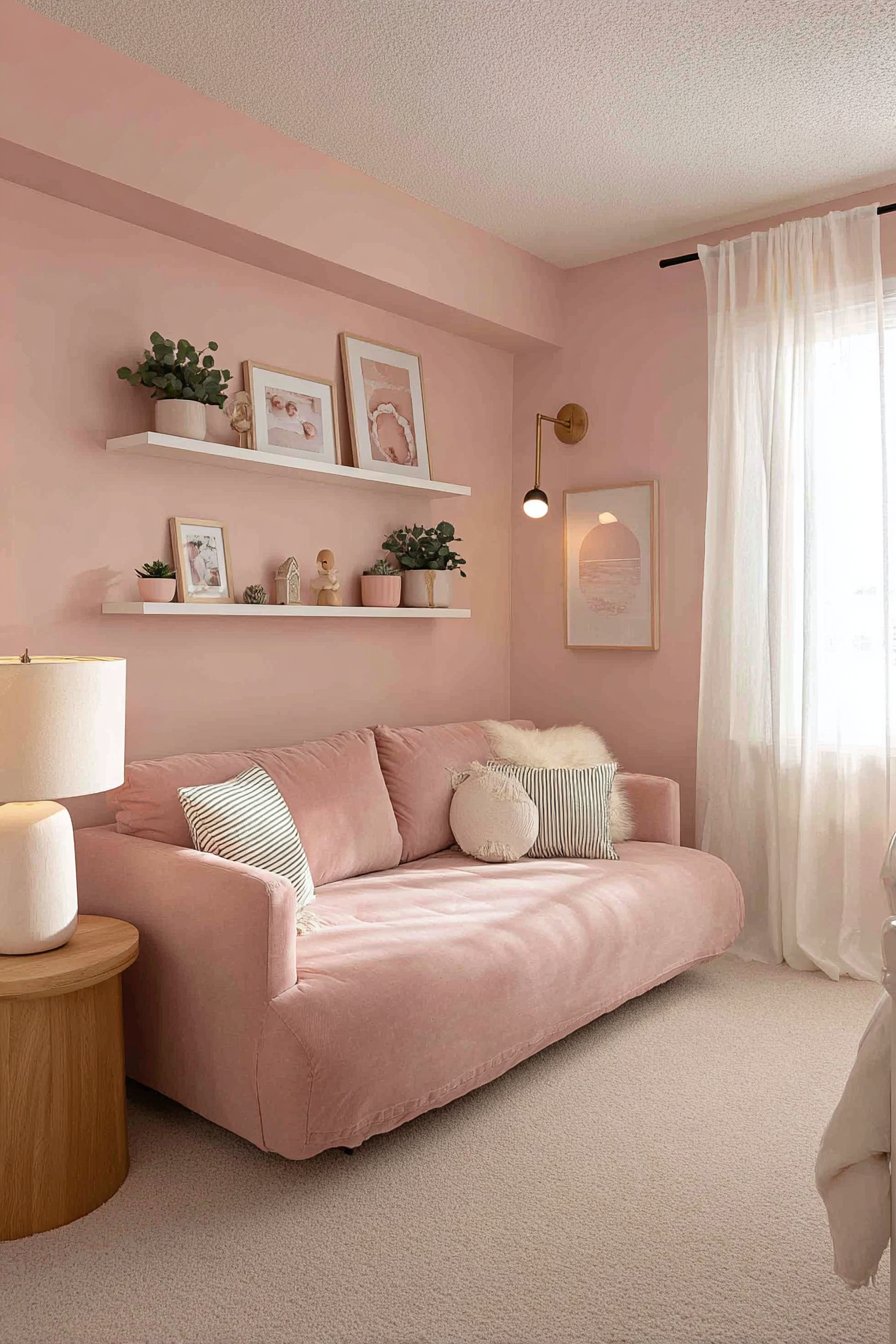
Floating shelves above display small potted succulents and framed photos. Decorative items in coordinating hues maintain visual consistency. A side table in natural wood holds a modern lamp. The white ceramic base and pink shade provide soft lighting.
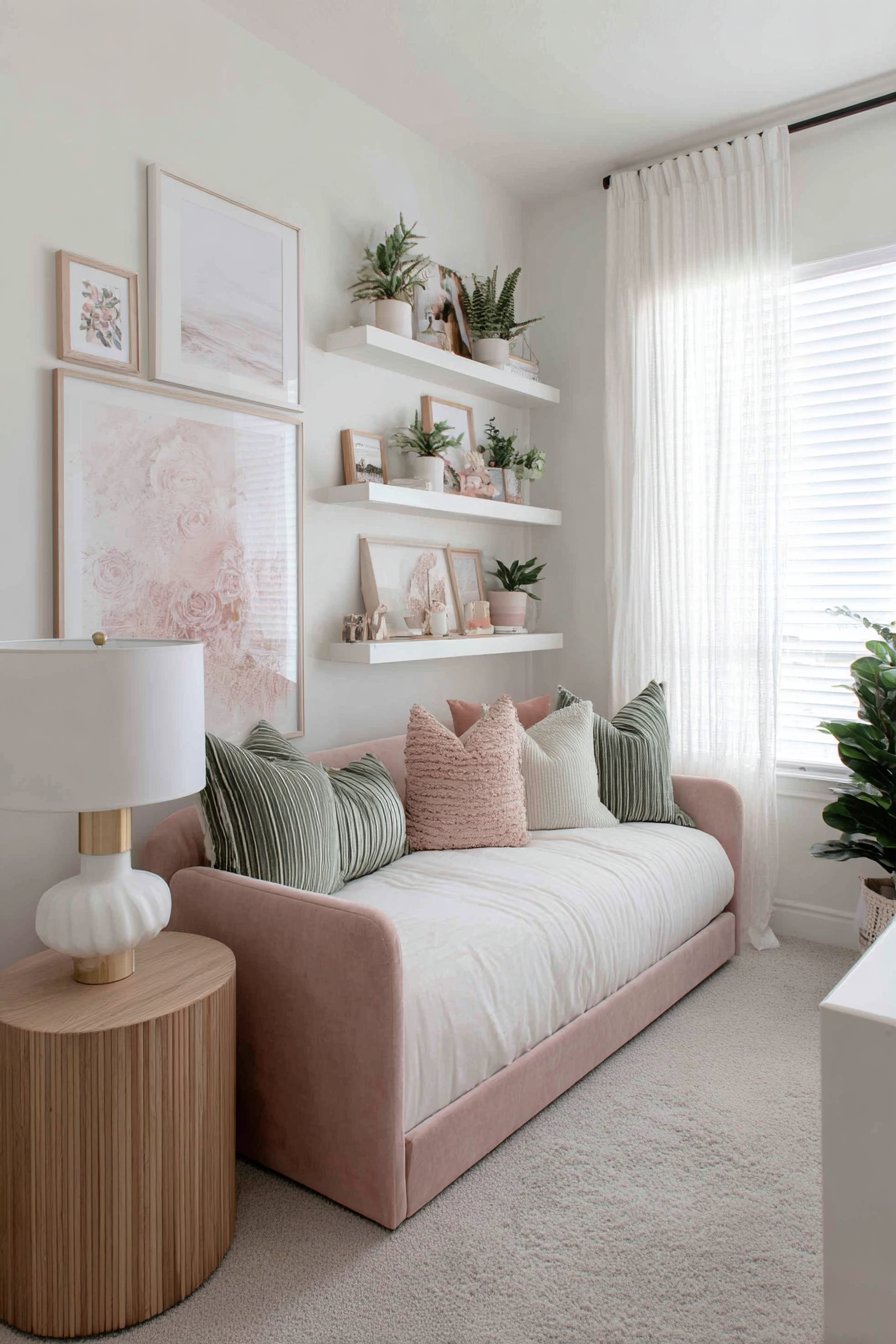
Sheer white curtains filter morning light creating welcoming atmosphere. The daybed becomes a favorite spot for quiet moments and rest. Linen upholstery offers durability while maintaining an elegant appearance. Striped pillows introduce pattern without overwhelming the gentle palette.
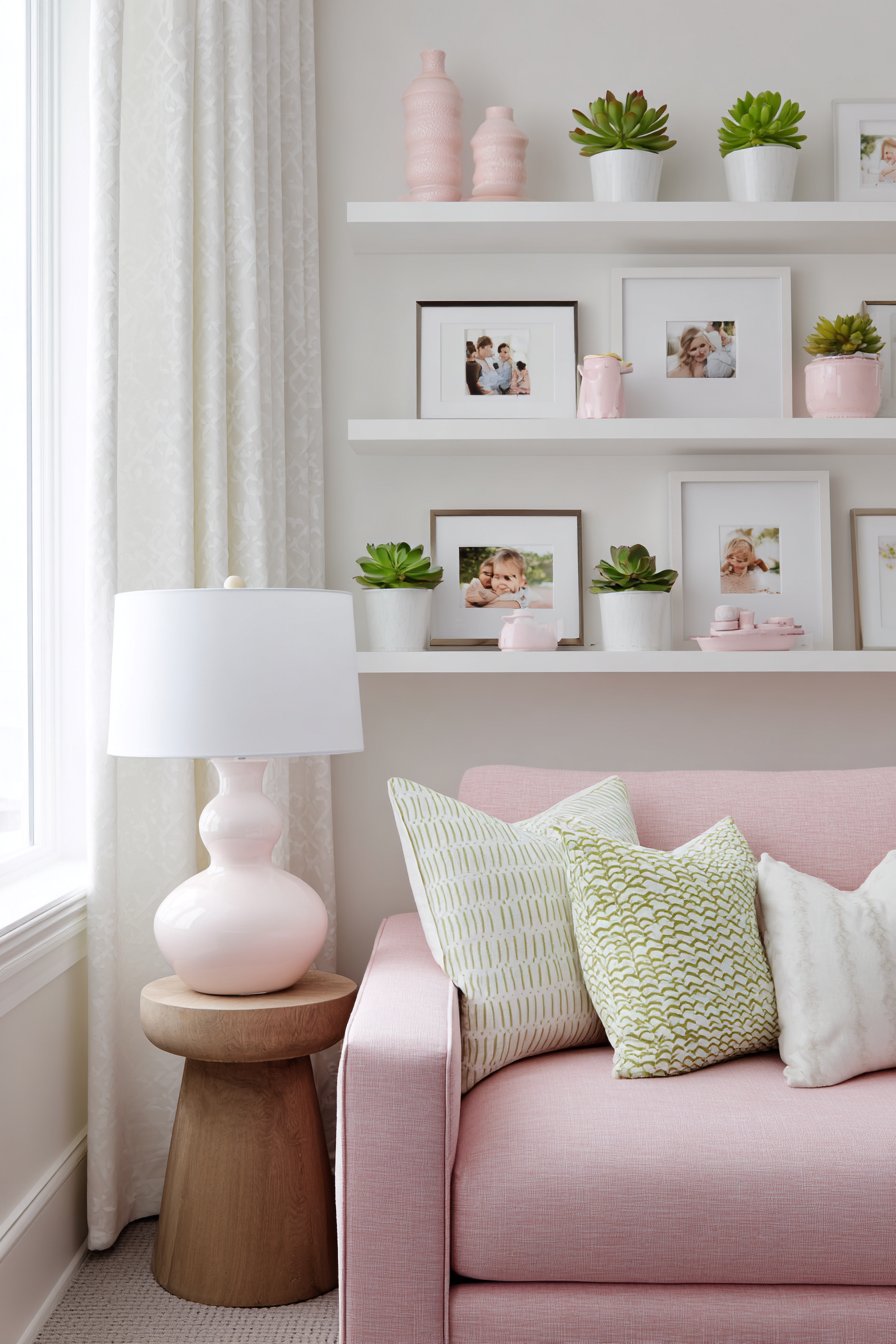
This approach proves particularly valuable in smaller nurseries. The daybed provides comfortable seating during nursing sessions. It later serves as a reading spot or guest sleeping area. The furniture investment continues providing value as needs evolve.
Key Design Tips:
- Choose daybeds for multifunctional space solutions
- Select linen upholstery for durability and elegance
- Add patterned pillows to introduce visual interest
- Install floating shelves above furniture for display
- Include living plants for air quality and aesthetics
- Position furniture to maximize room flow
- Invest in pieces that serve multiple purposes
- Layer lighting with table lamps for flexibility
12. Curated Gallery Wall Above Crib
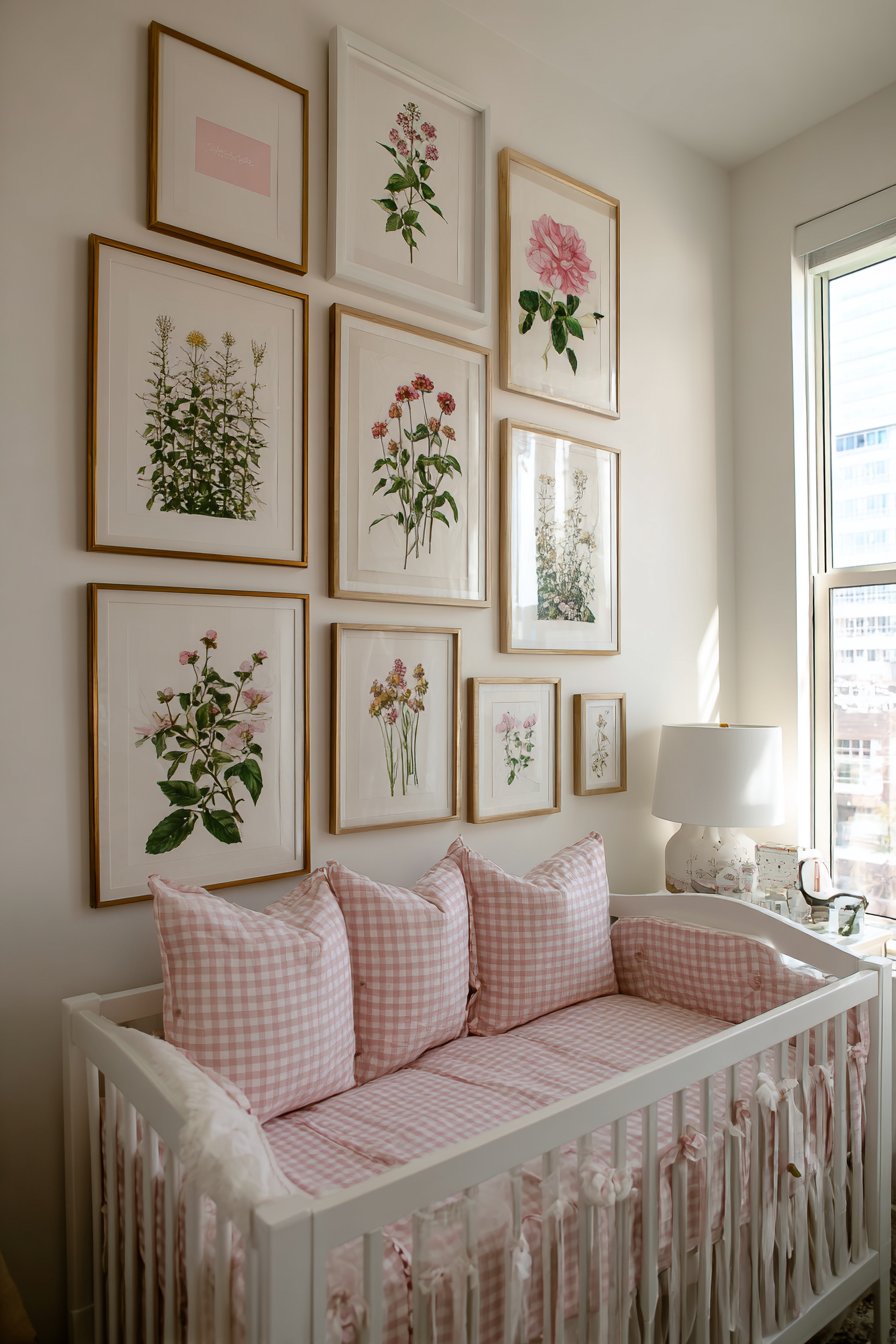
Botanical prints and watercolor flowers create a curated collection. Simple typography in matching pink and green tones completes the arrangement. Frames alternate between white, natural wood, and soft gold finishes. This creates visual rhythm throughout the gallery display.
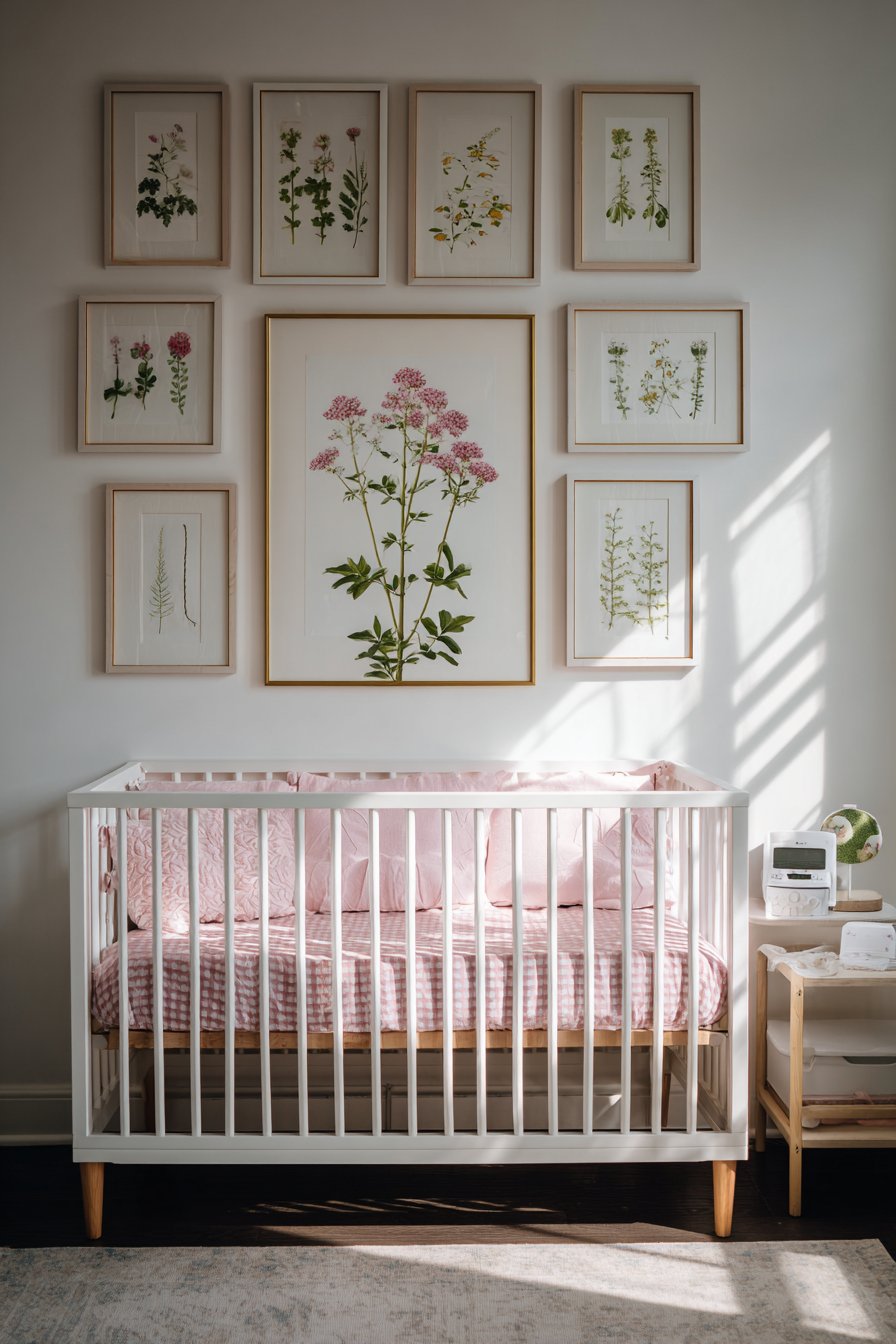
Below the gallery, a white crib with pink gingham bedding anchors the space. A small side table holds a white noise machine and monitor. Natural light from the nearby window illuminates the wall display beautifully. Subtle shadows add depth to the framed artwork.
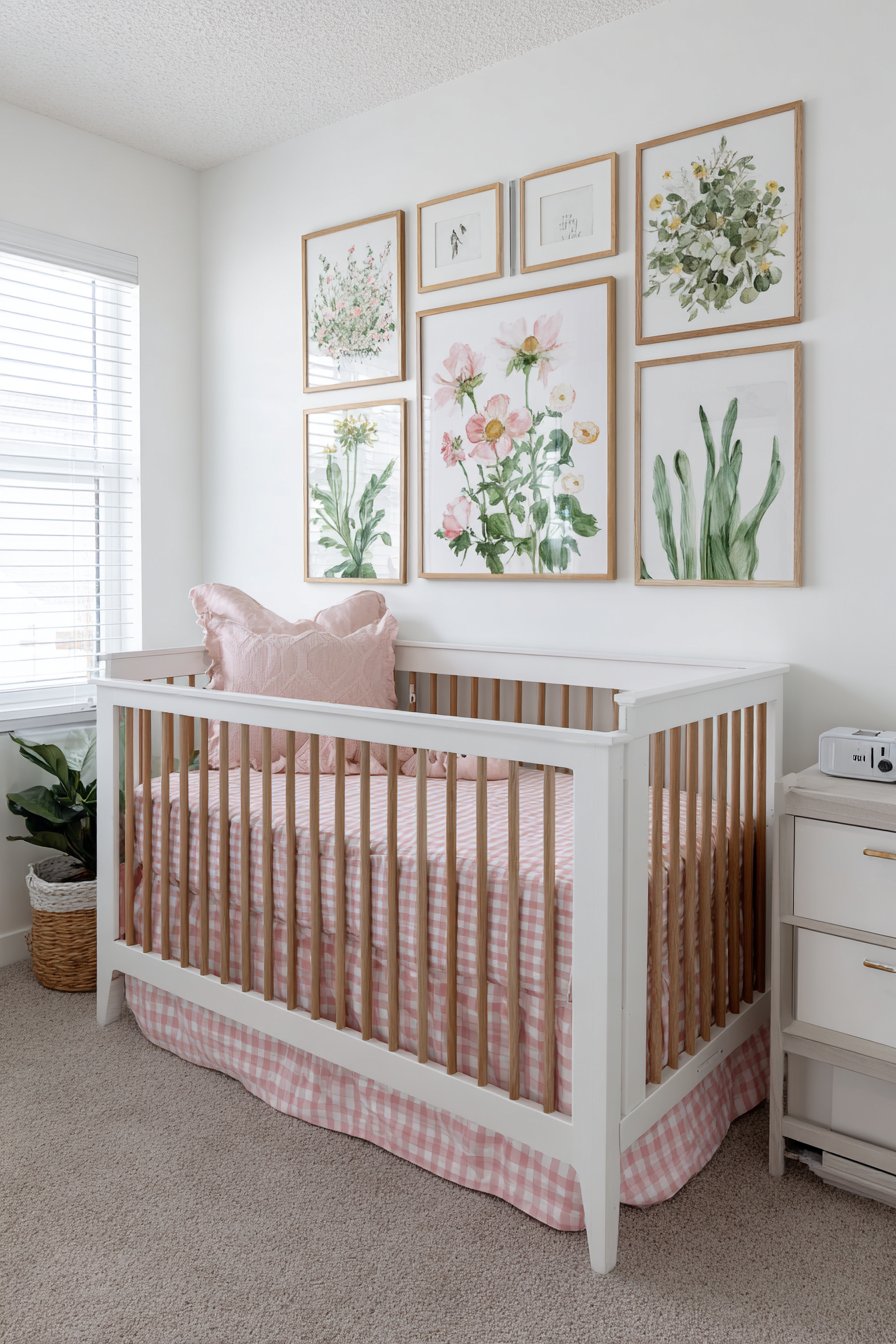
The gallery wall introduces art appreciation from the earliest days. Botanical themes reinforce the natural color palette throughout the room. Varied frame finishes prevent monotony while maintaining cohesion. The arrangement feels intentional yet collected over time.
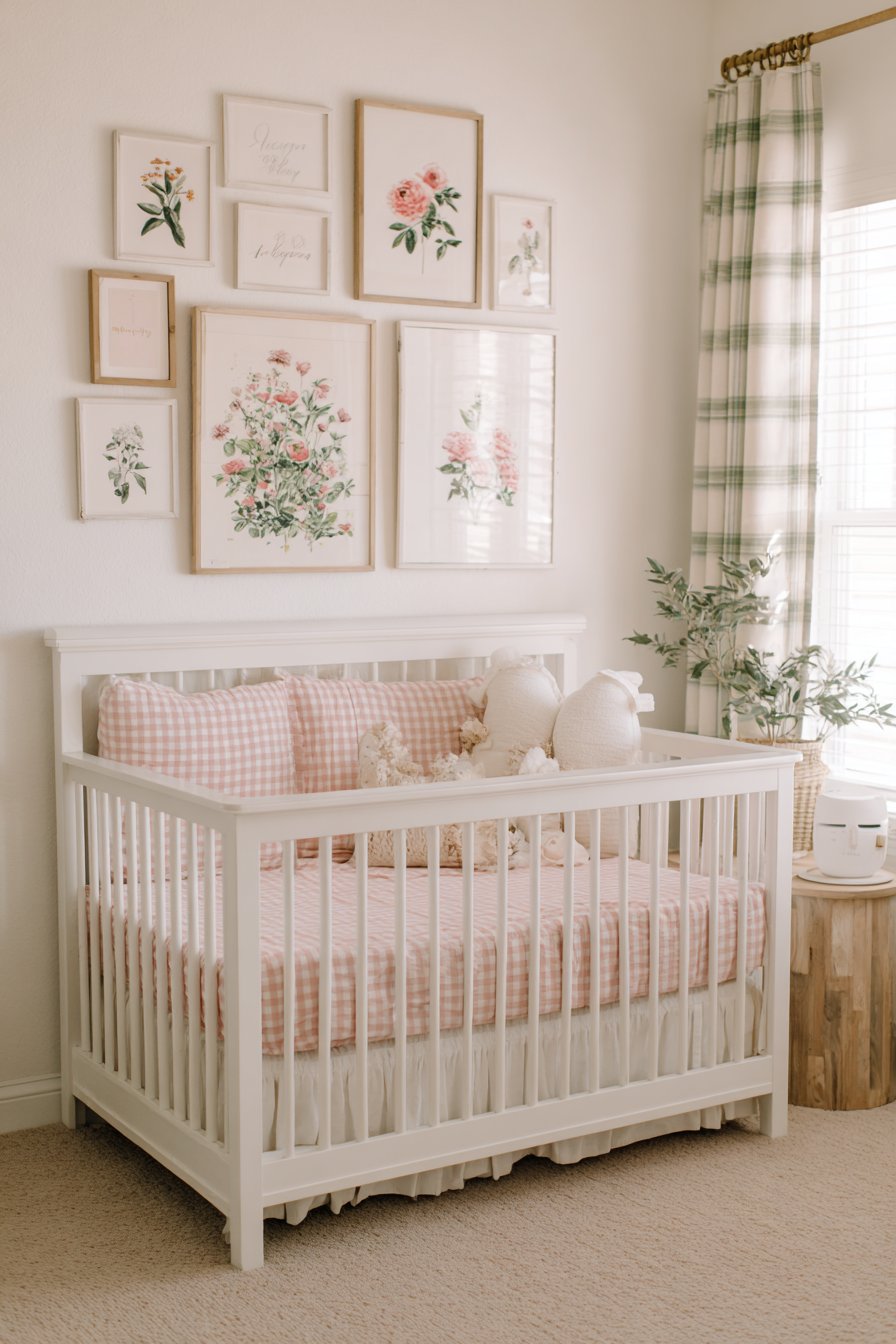
Gingham bedding adds classic pattern that complements the artistic display. The side table keeps essential items within reach during nighttime care. Strategic lighting enhances the artwork throughout different times of day. This proves that nurseries deserve thoughtful art curation.
Key Design Tips:
- Mix frame finishes for collected, curated appearance
- Choose botanical prints for nature-inspired themes
- Vary frame sizes while maintaining consistent spacing
- Position gallery walls to receive natural light
- Include simple typography for visual variety
- Use gingham patterns for timeless bedding choices
- Keep nighttime essentials on bedside tables
- Hang artwork at appropriate heights for viewing
13. Layered Window Treatment with Reading Nook
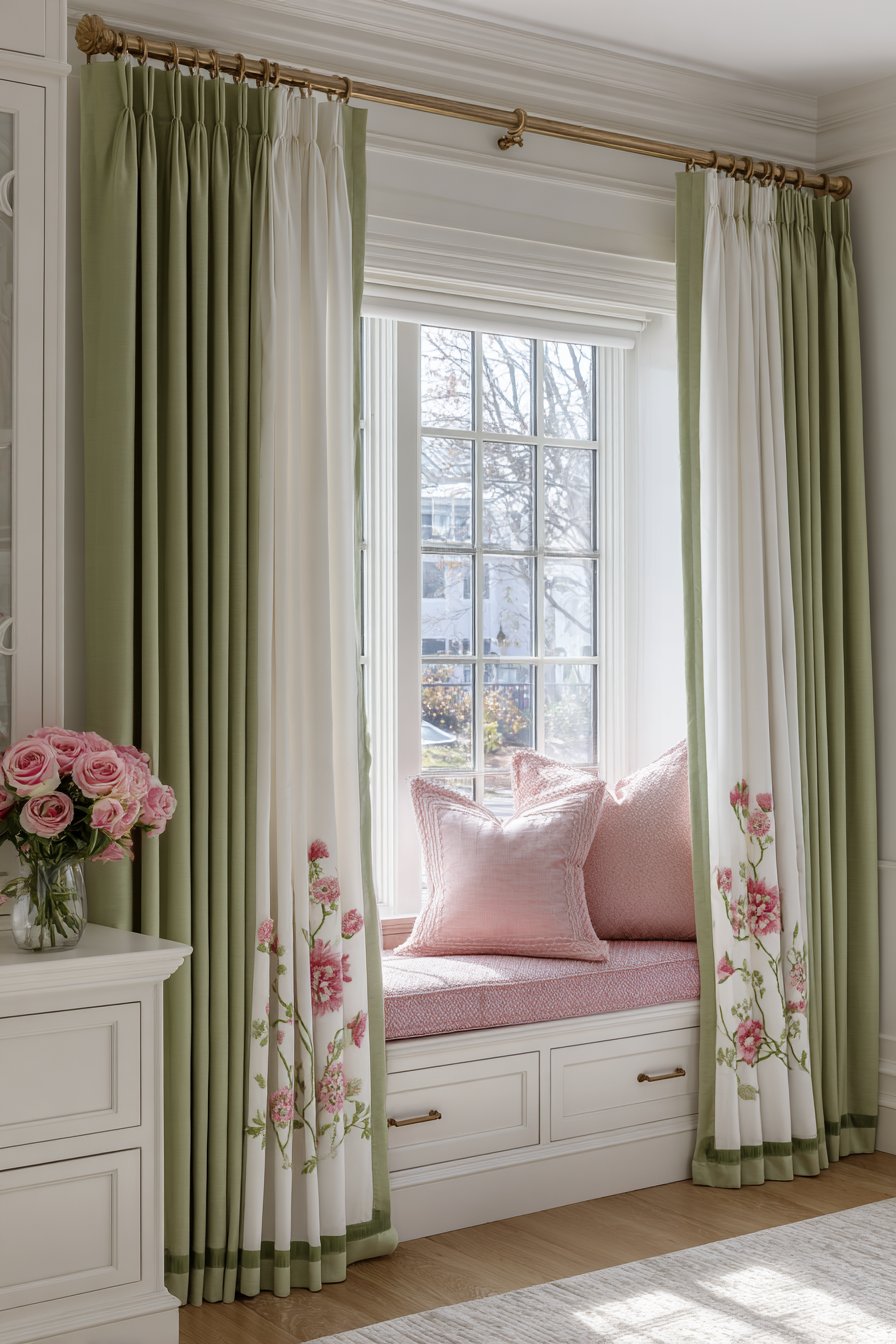
Layered curtains feature sheer white panels underneath outer curtains. The outer curtains showcase soft green linen with pink floral embroidery. A white wooden curtain rod with brass finials spans the window. This creates elegant window dressing with functional light control.
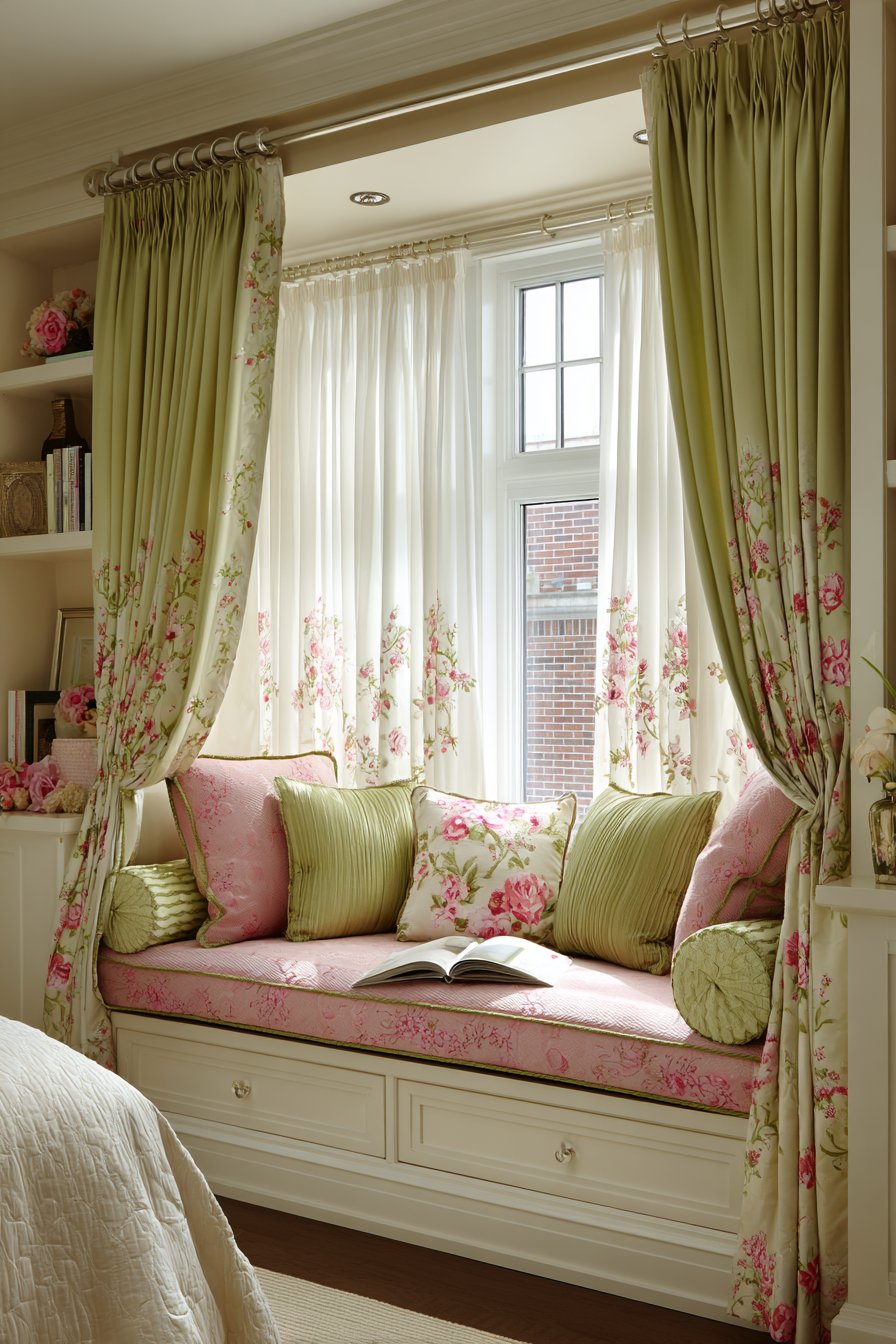
Below sits a cushioned window seat with storage built into the base. Pink fabric with green piping upholsters the comfortable seating area. Matching throw pillows in various textures create a cozy reading spot. Natural daylight filters through layered fabrics creating soft diffused lighting.
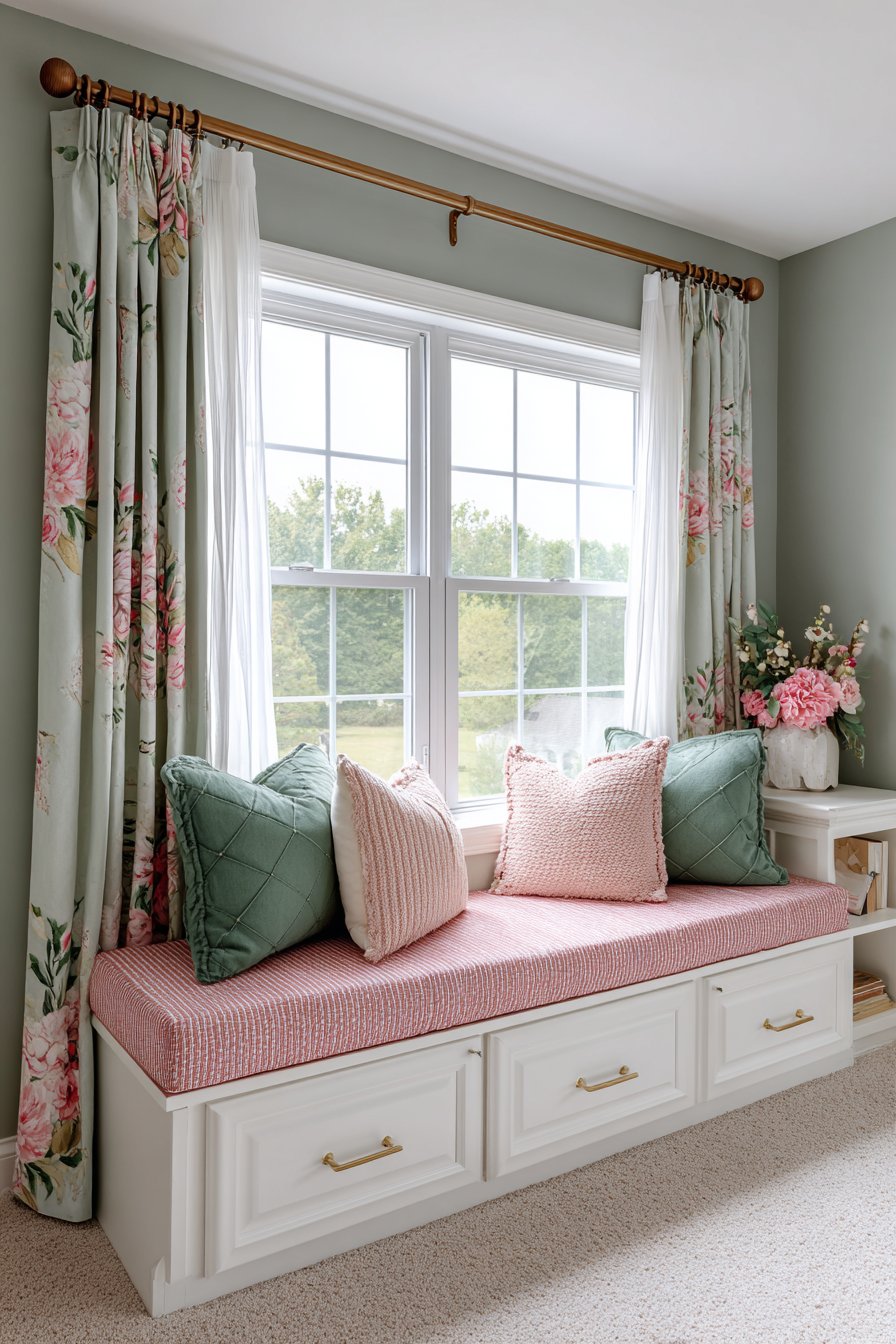
The window seat transforms unused space into a functional feature. Built-in storage below maximizes efficiency in smaller rooms. Layered window treatments allow flexible light control throughout the day. Embroidered details introduce handcrafted quality to the design.
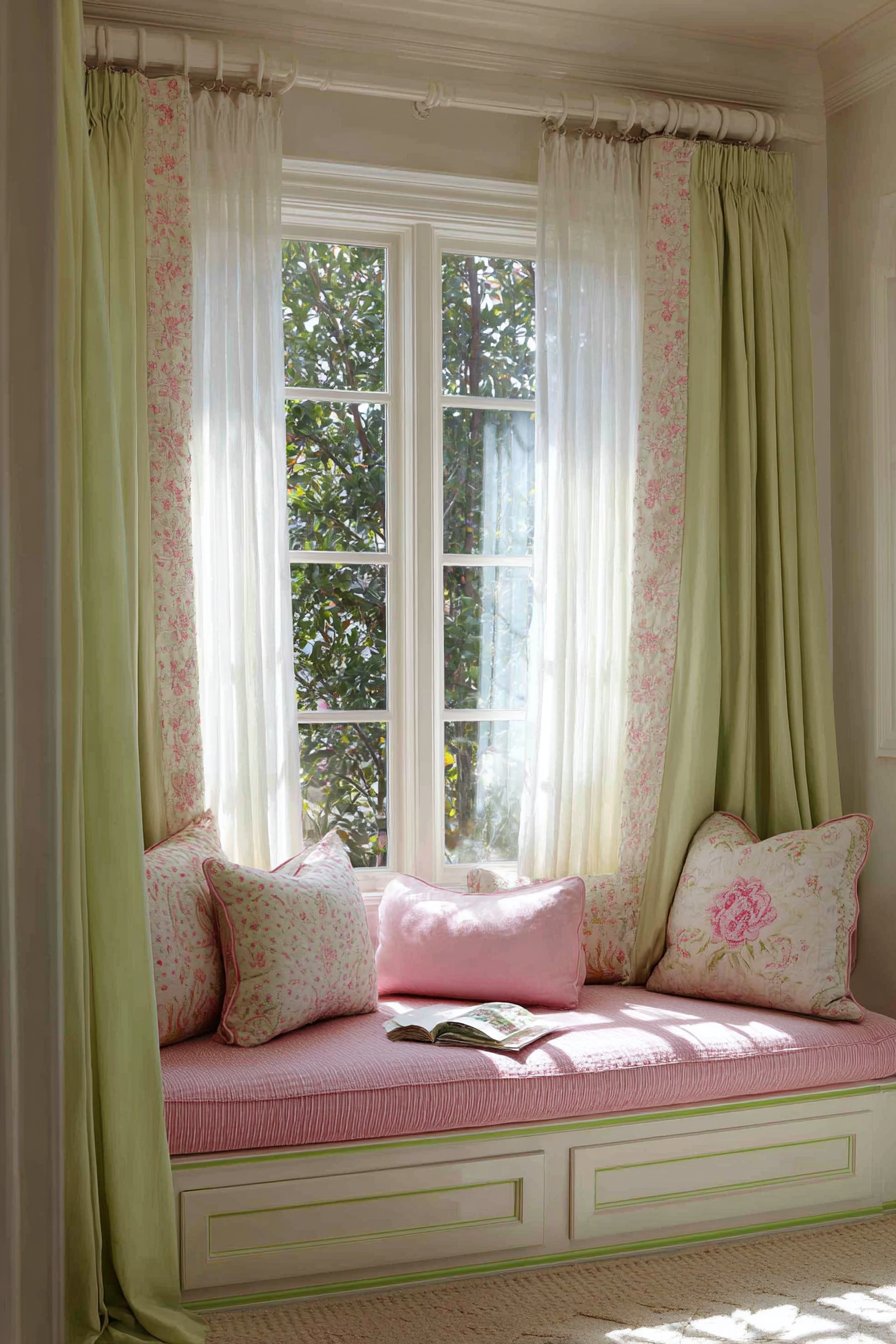
This approach adds architectural interest to standard windows. The window seat becomes a favorite spot for quiet time. Varied pillow textures invite touching and sensory exploration. The brass finials add refined details that elevate the overall design.
Key Design Tips:
- Layer window treatments for light control and visual depth
- Build window seats to maximize unused space
- Choose embroidered fabrics for handcrafted appeal
- Include built-in storage beneath seating areas
- Mix pillow textures for sensory interest
- Add decorative finials for polished finishing touches
- Use piping details to define upholstered edges
- Position seating near natural light sources
14. Sophisticated Layered Lighting Scheme
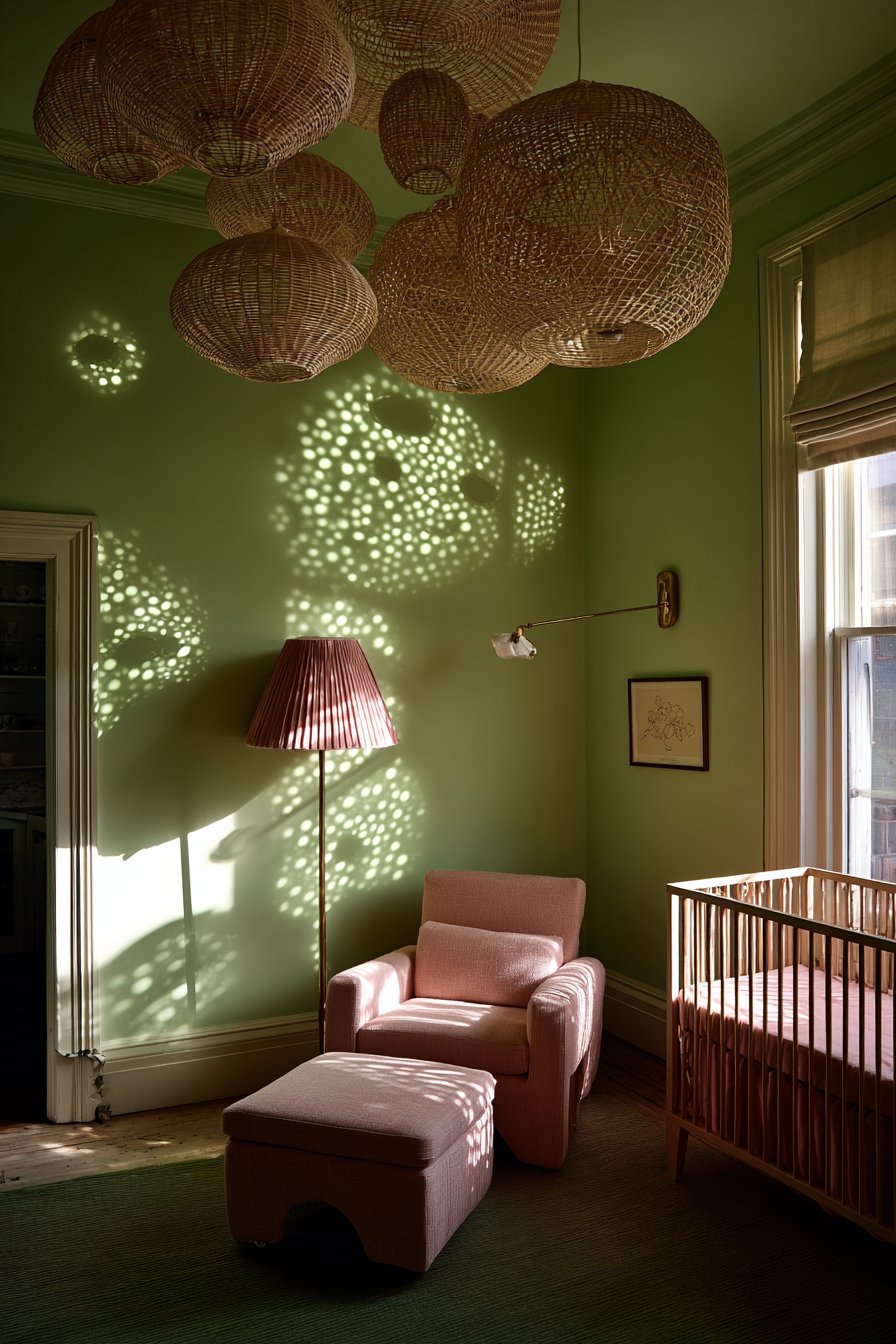
A statement pendant light with natural rattan shade suspends above the room’s center. The fixture casts beautiful organic shadow patterns across pale green walls. Additional lighting includes a floor lamp with pink fabric shade. Plug-in wall sconces with brass arms flank the changing area.
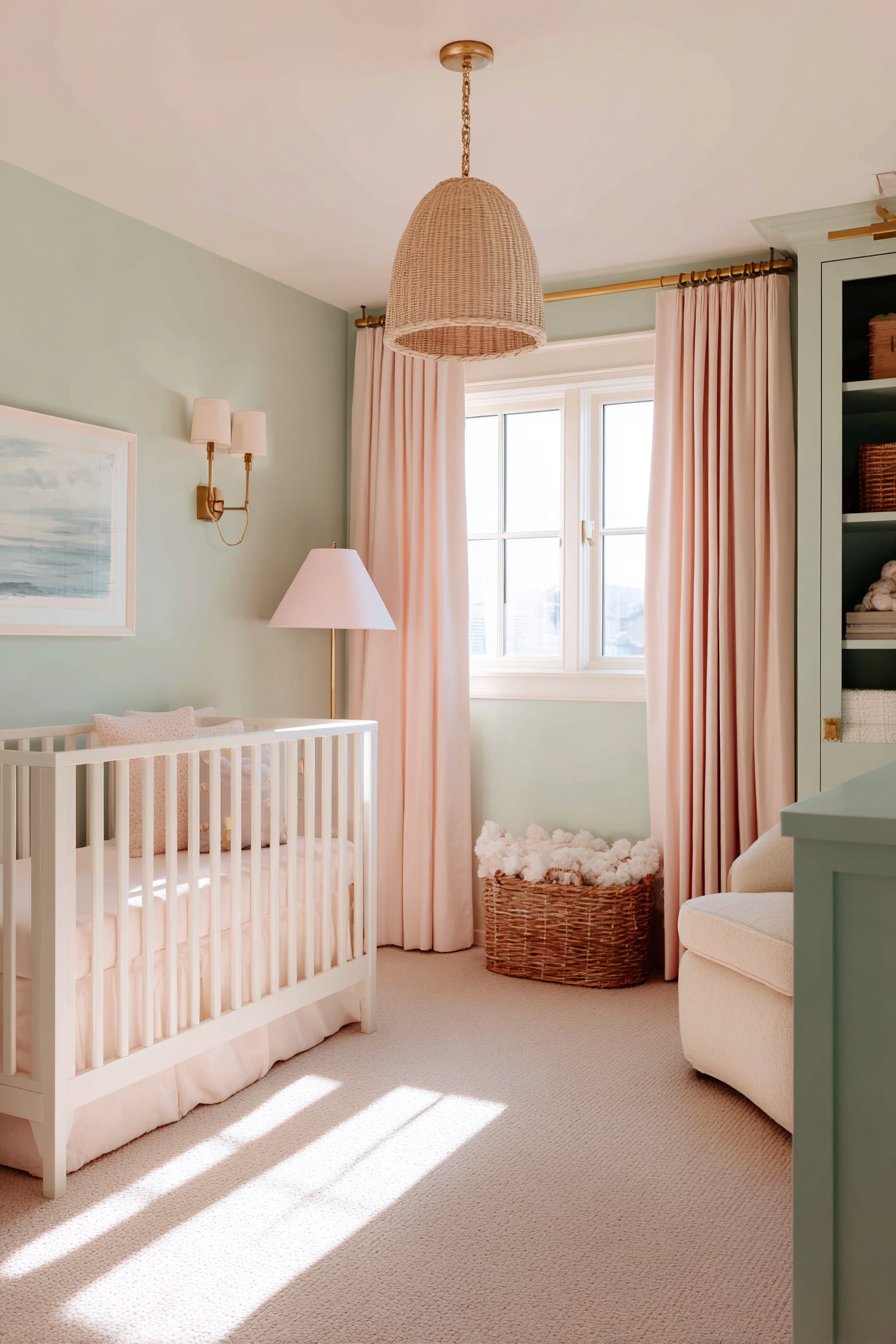
The varied lighting sources create layered illumination for different activities. Natural window light combines with artificial sources during golden hour. The rattan pendant introduces organic texture from above. Pink and brass accents warm the overall lighting scheme.
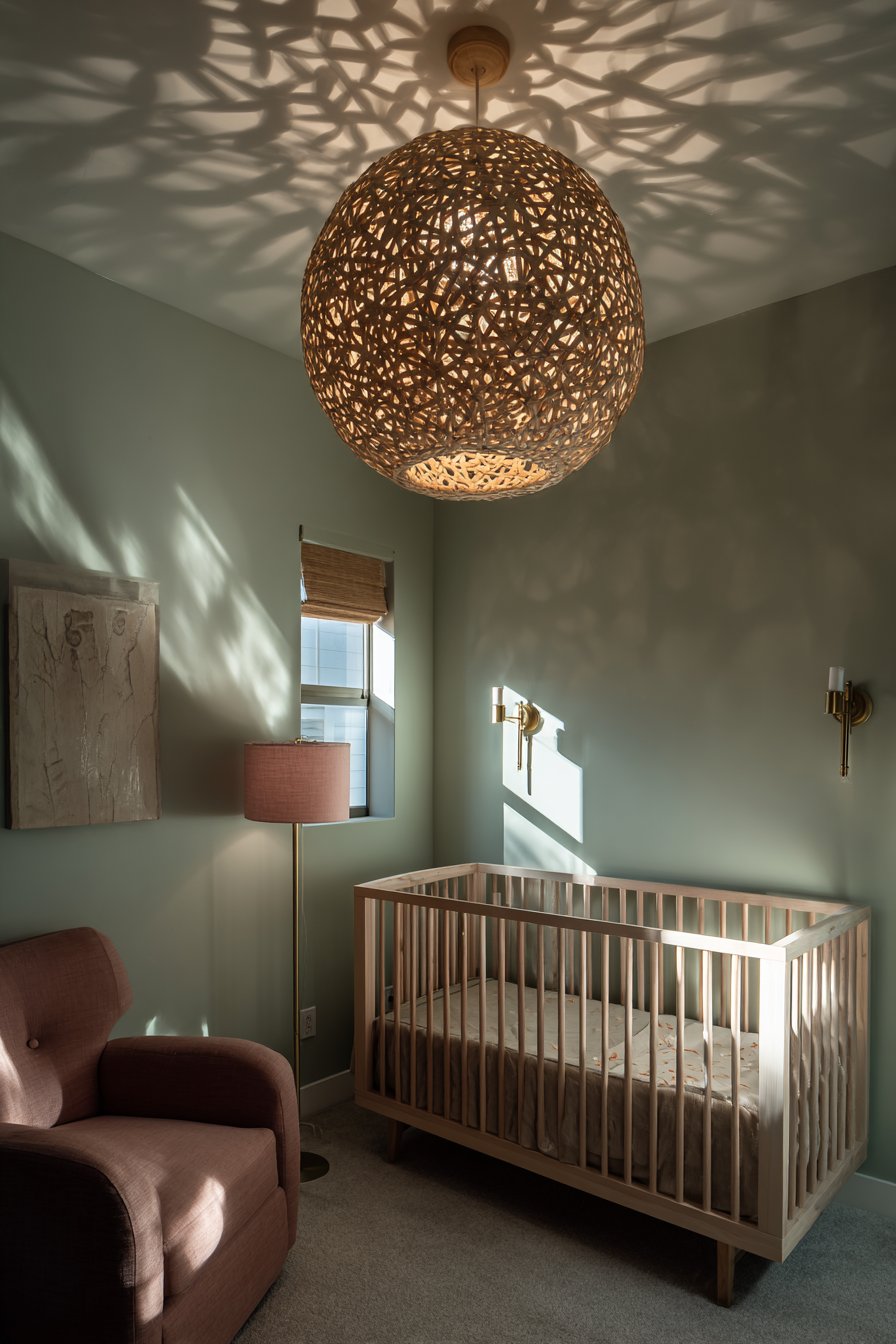
Layered lighting proves essential for nursery functionality and ambiance. The pendant provides general illumination throughout the space. The floor lamp offers focused lighting for reading and nursing. Wall sconces ensure adequate task lighting during diaper changes.
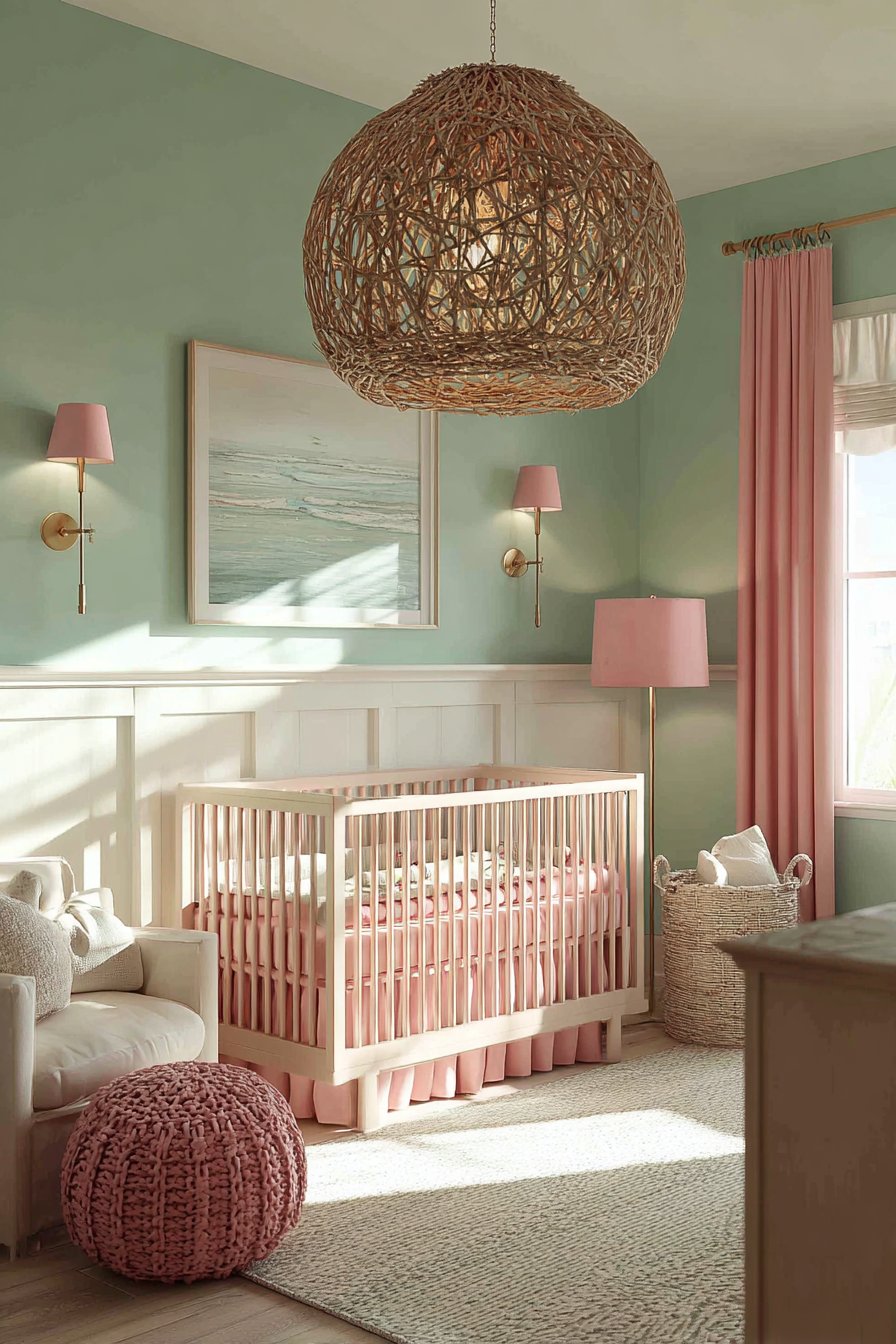
This thoughtful lighting design enhances the pink and green palette. The organic shadow patterns add visual interest to plain walls. Multiple light sources allow customization based on time and activity. Professional lighting design elevates the entire nursery experience.
Key Design Tips:
- Layer three types of lighting: ambient, task, and accent
- Choose natural materials like rattan for organic warmth
- Install dimmers for flexible light intensity control
- Position task lighting near functional areas
- Use colored shades to reinforce color palette
- Add brass fixtures for warm metallic accents
- Consider how natural light changes throughout the day
- Create shadow interest with textured light fixtures
15. Foundation Rug with Botanical Pattern
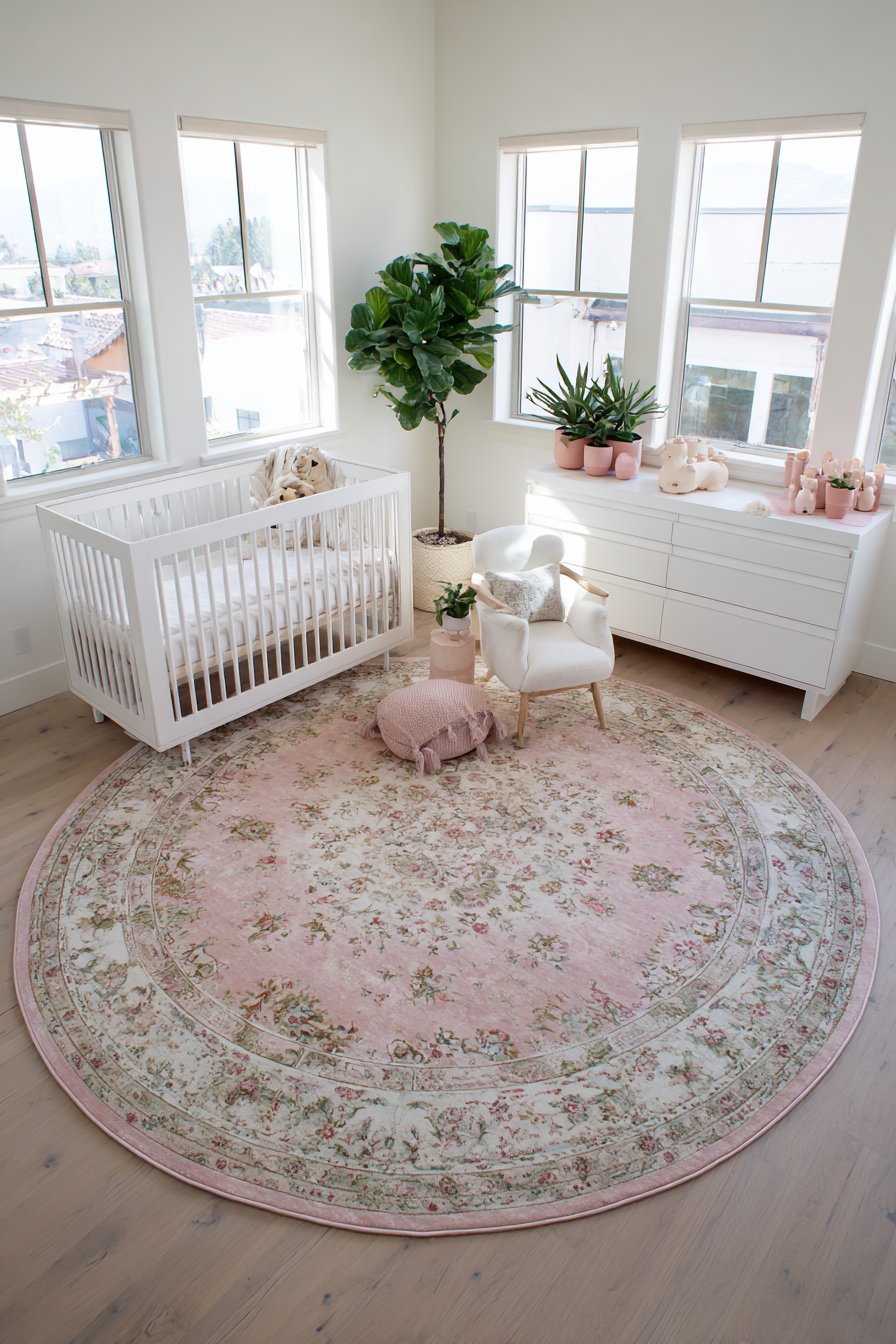
An oversized circular rug in blush pink anchors the room’s foundation. Green botanical patterns scatter throughout the high-pile texture. The soft surface provides comfortable area for floor play and tummy time. White crib and matching dresser sit atop the rug in clean lines.
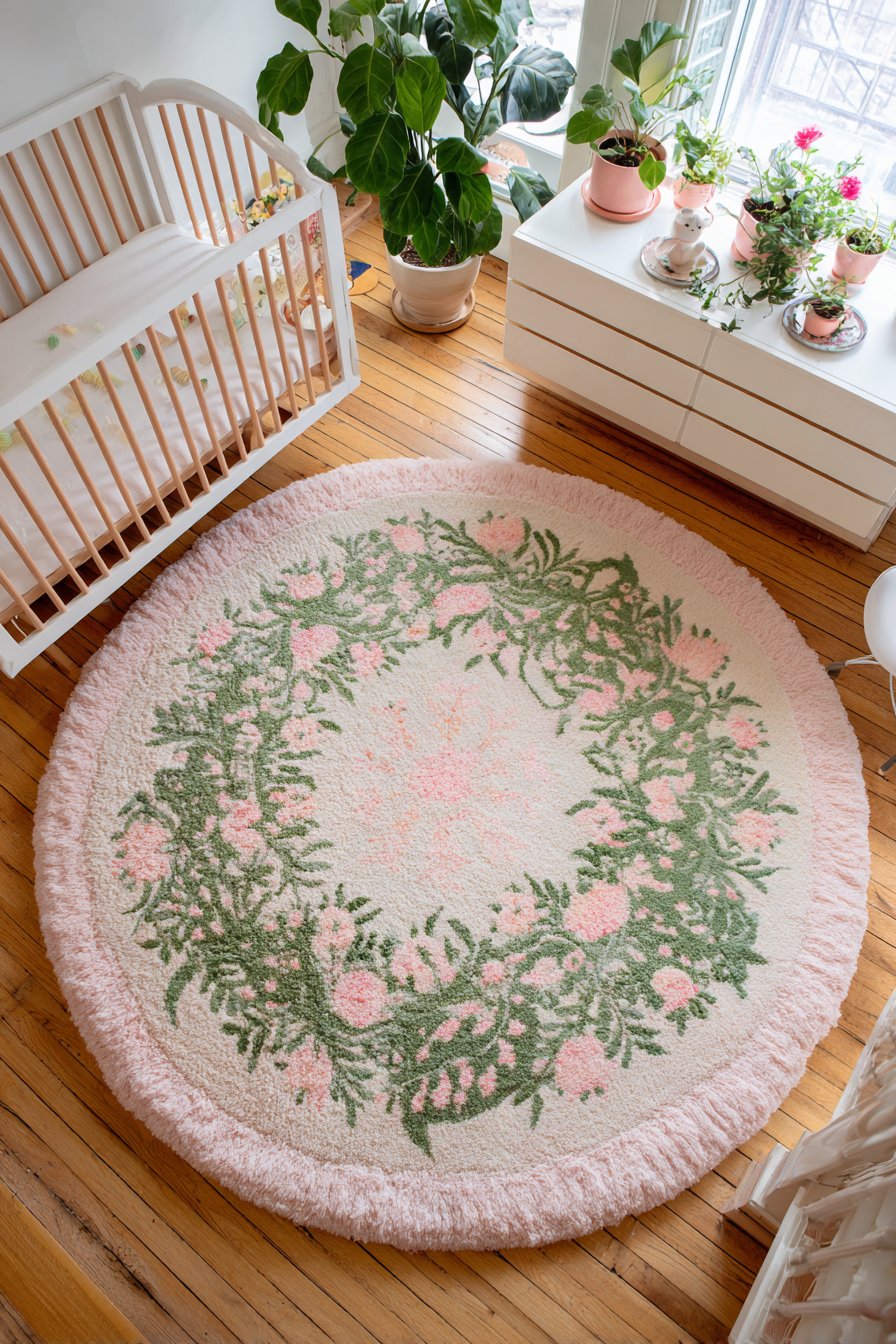
Natural light oak flooring remains visible around the rug’s edges. Small green potted plants in pink ceramic planters dot the space. These living elements add freshness and natural beauty. The rug’s plush texture invites barefoot walking and floor activities.
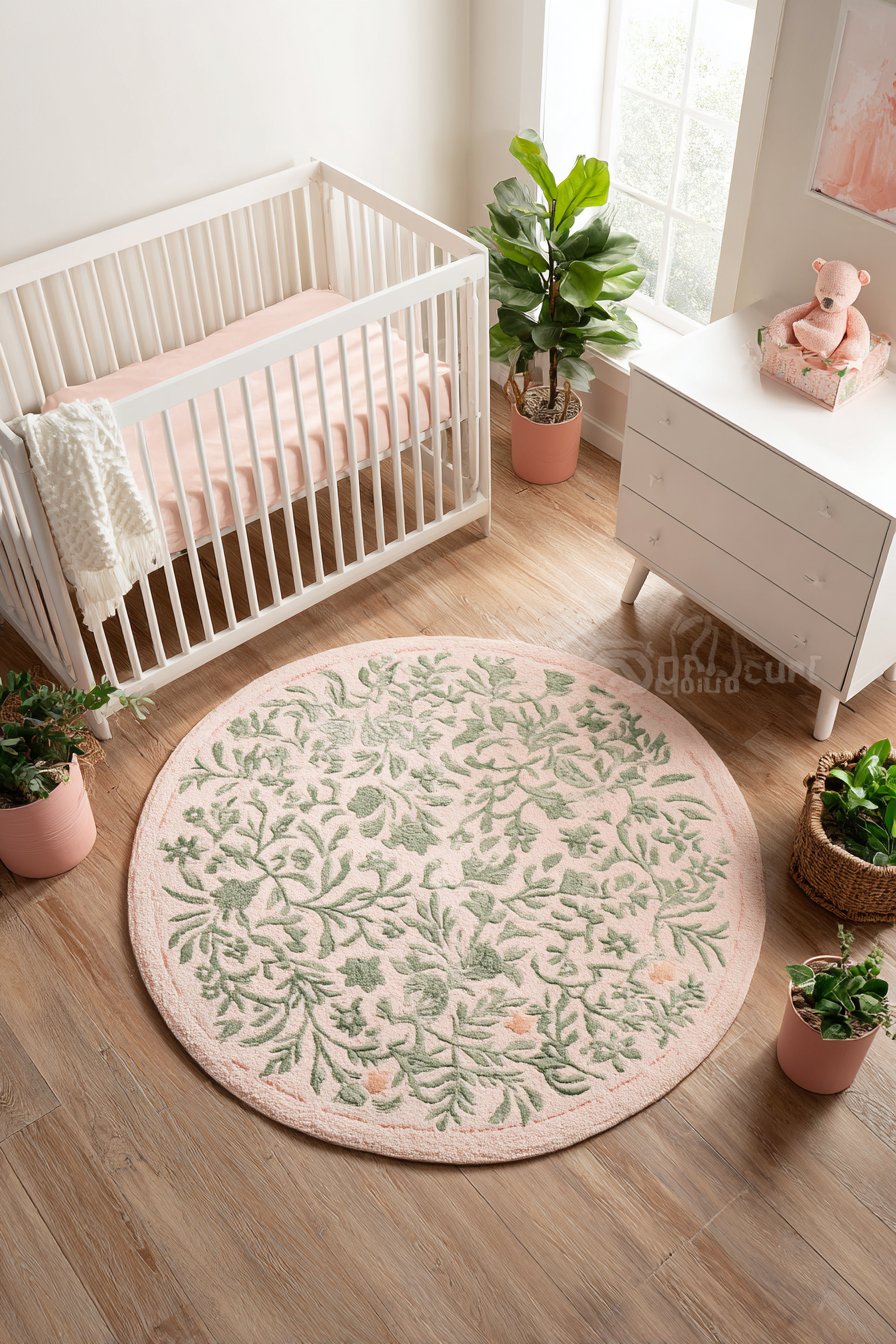
The circular shape softens angular furniture lines throughout the room. High-pile texture adds luxury while remaining practical for daily use. Botanical patterns introduce nature without literal plant representations. The oversized scale ensures furniture groupings feel cohesive and grounded.
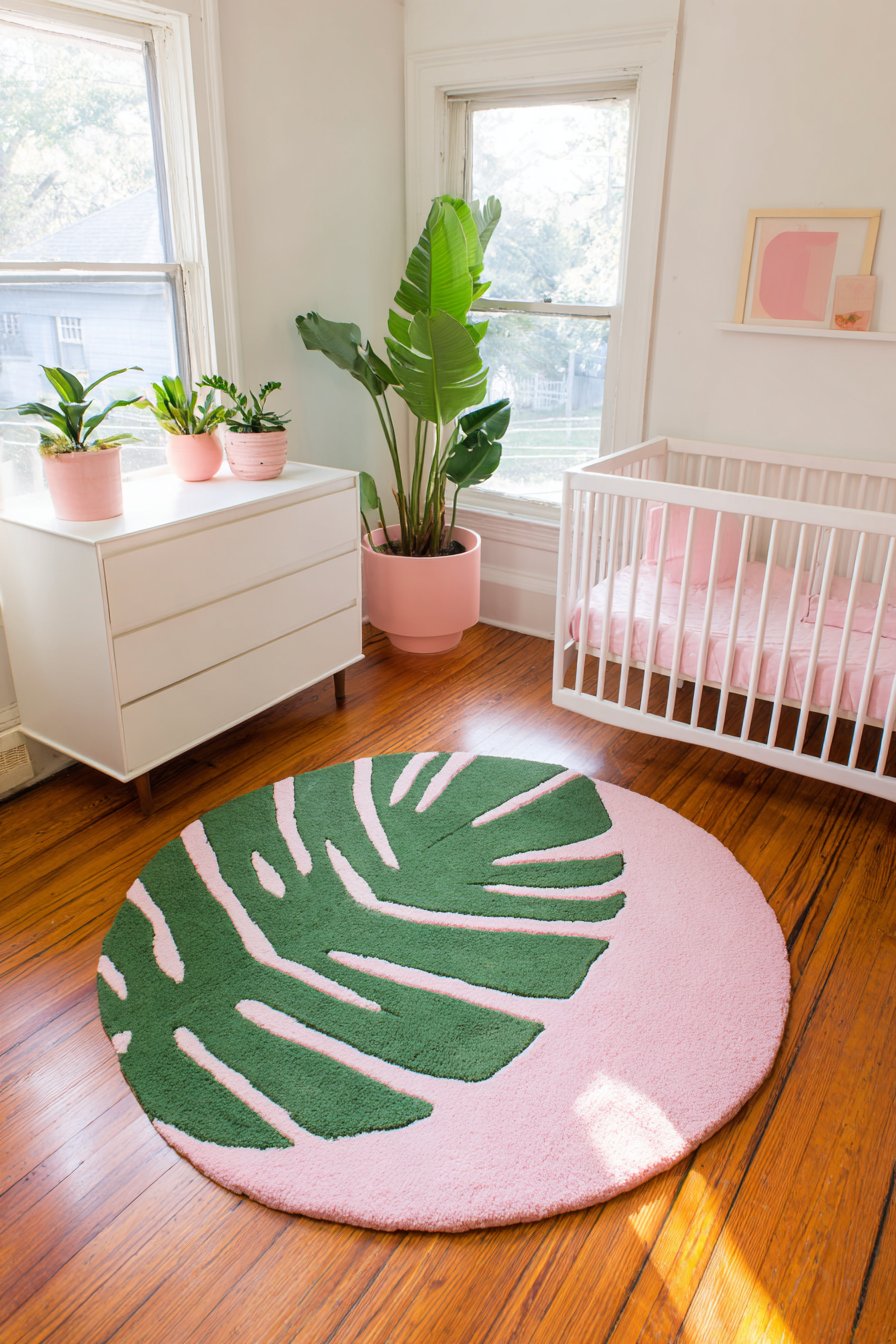
This approach demonstrates how rugs define spaces and anchor arrangements. The circular design creates visual interest against rectangular room dimensions. Pink ceramic planters tie decorative elements to the foundation piece. Living plants improve air quality while supporting the color scheme.
Key Design Tips:
- Choose oversized rugs to anchor furniture arrangements
- Select high-pile textures for comfort during floor time
- Use circular rugs to soften angular room layouts
- Position furniture partially on rugs for cohesion
- Add living plants in coordinating planters
- Consider rug maintenance with high-pile selections
- Layer botanical patterns in subtle, sophisticated ways
- Ensure rugs extend beyond furniture footprints
16. Vintage-Inspired with Collected Character
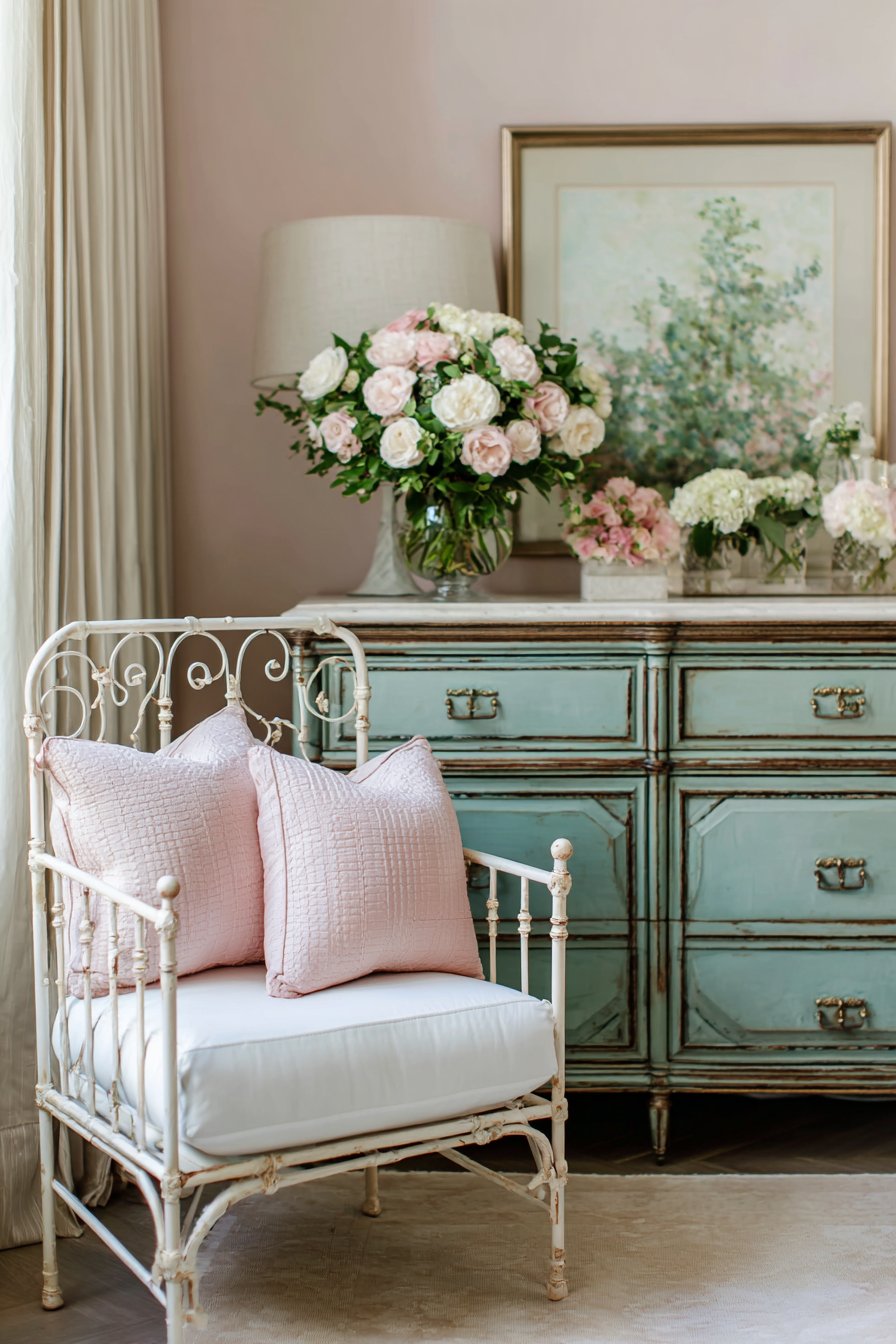
An antique white iron crib features delicate scrollwork details. A refinished dresser in soft sage green showcases original brass hardware. The vintage furniture creates nostalgic charm throughout the space. Very pale pink walls with white wainscoting add architectural interest.
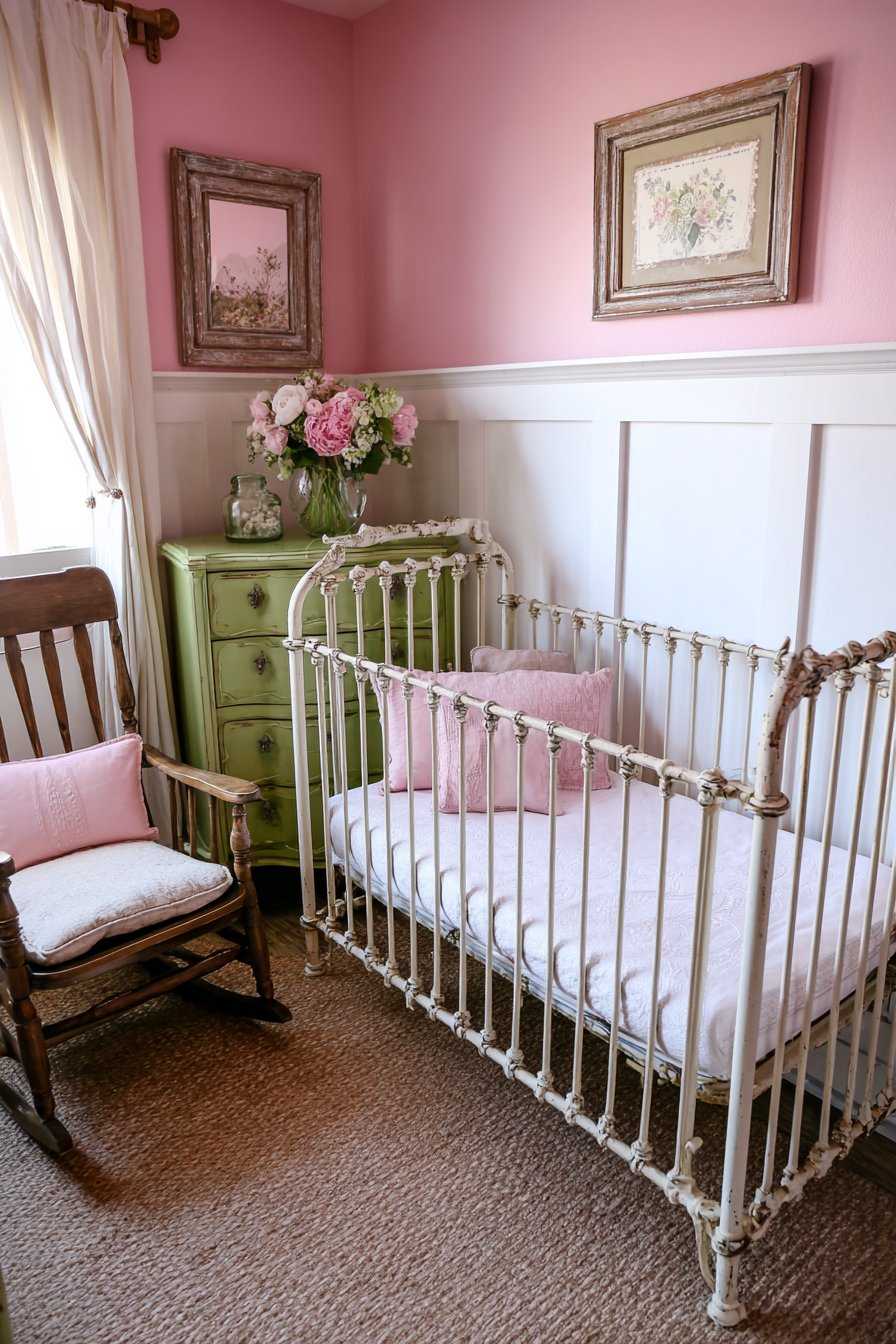
A distressed wood rocking chair with pink cushions occupies the corner. Fresh flowers in a simple glass vase add life to the dresser. Natural morning light creates soft highlights on metal and aged wood. The patina on vintage pieces tells stories of previous generations.
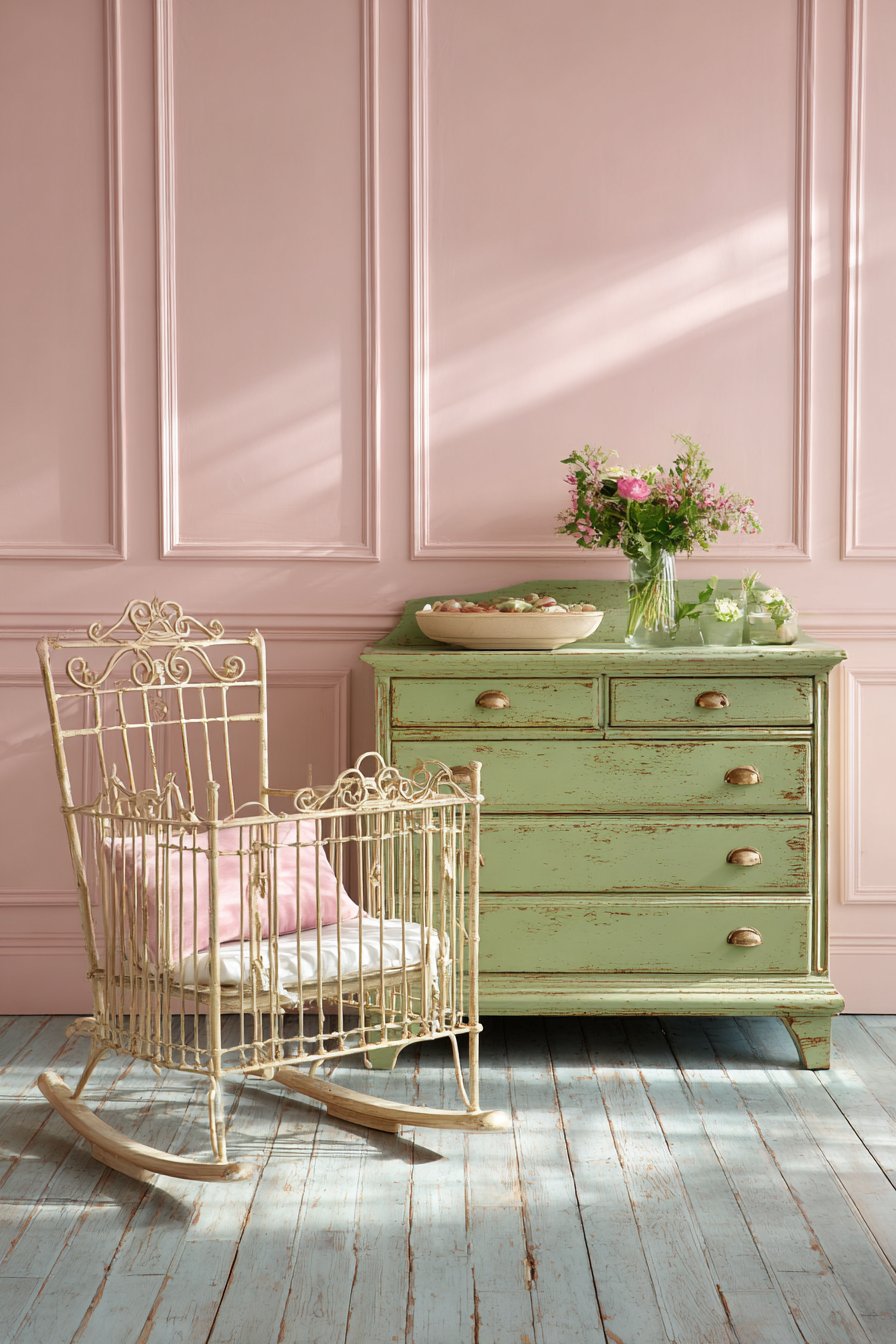
The vintage approach celebrates sustainability through furniture reuse. Scrollwork details add feminine touches without feeling overly decorated. Original brass hardware proves more substantial than modern alternatives. White wainscoting provides classic architectural detail that enhances vintage aesthetics.
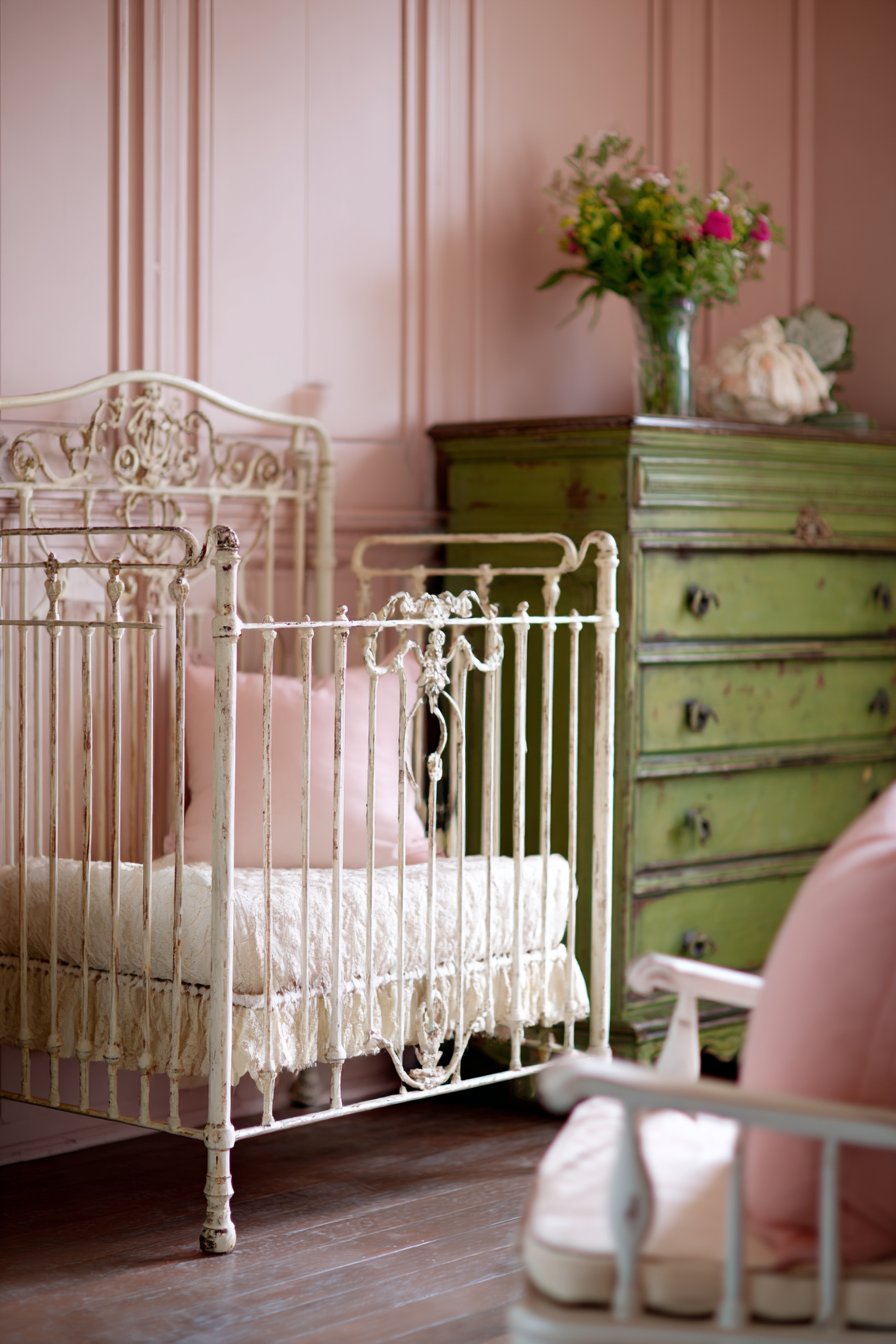
This collected-over-time appearance feels authentic and personal. The sage green dresser introduces color through furniture rather than walls. Pink cushions update vintage pieces with contemporary color choices. Fresh flowers maintain connection to nature and living beauty.
Key Design Tips:
- Source vintage furniture from estate sales and antique shops
- Refinish old pieces in accent colors for updated appeal
- Preserve original hardware for authentic character
- Add wainscoting for classic architectural detail
- Update vintage pieces with contemporary cushions
- Display fresh flowers for natural beauty
- Embrace patina and wear as design features
- Mix vintage finds with necessary new safety-compliant items
17. Modern Minimalist Two-Tone Wall
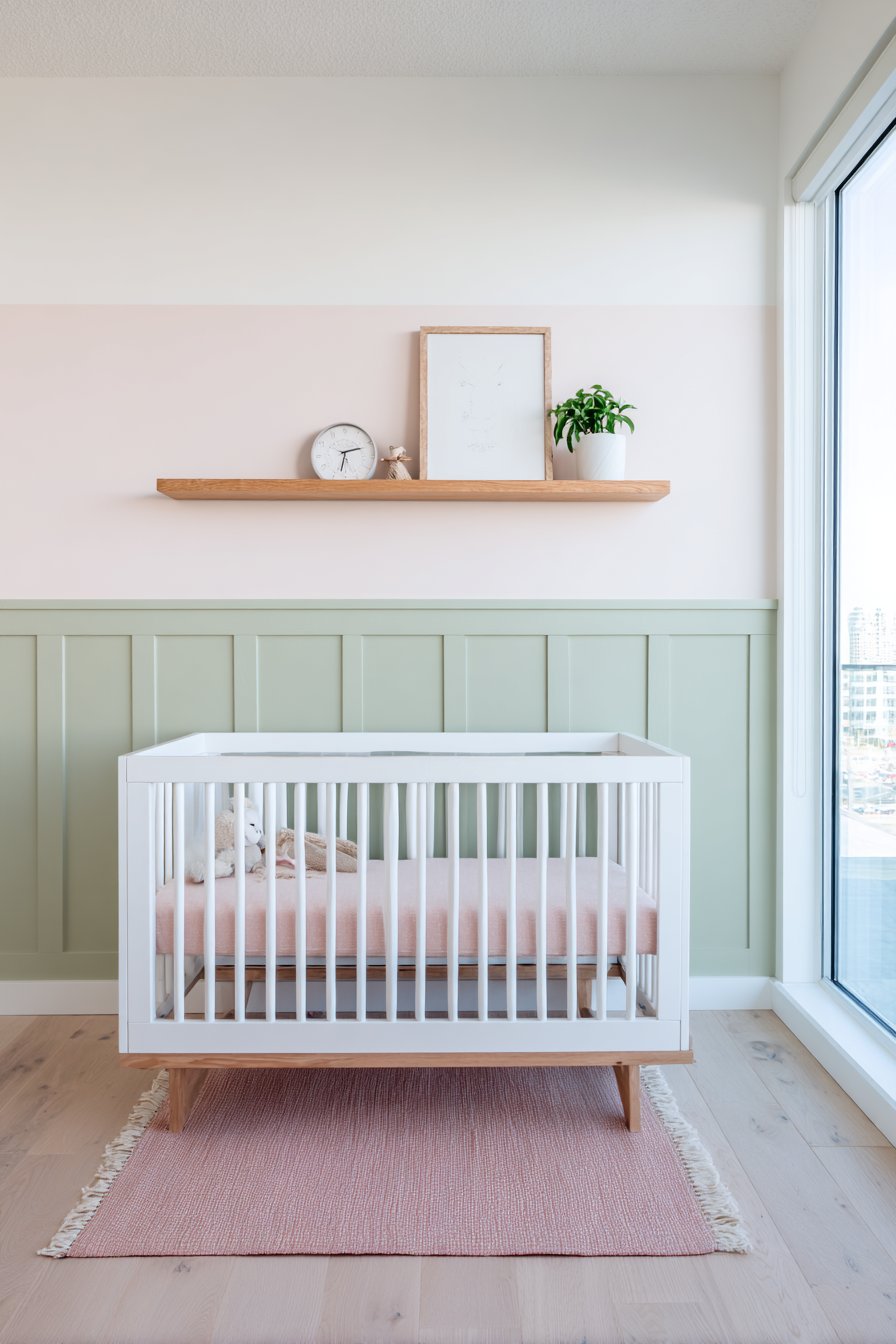
A white crib with simple geometric design centers against two-tone walls. The lower third features sage green while the upper portion shows soft pink. A simple white chair rail divides the color sections cleanly. This modern minimalist approach embraces clean lines throughout.
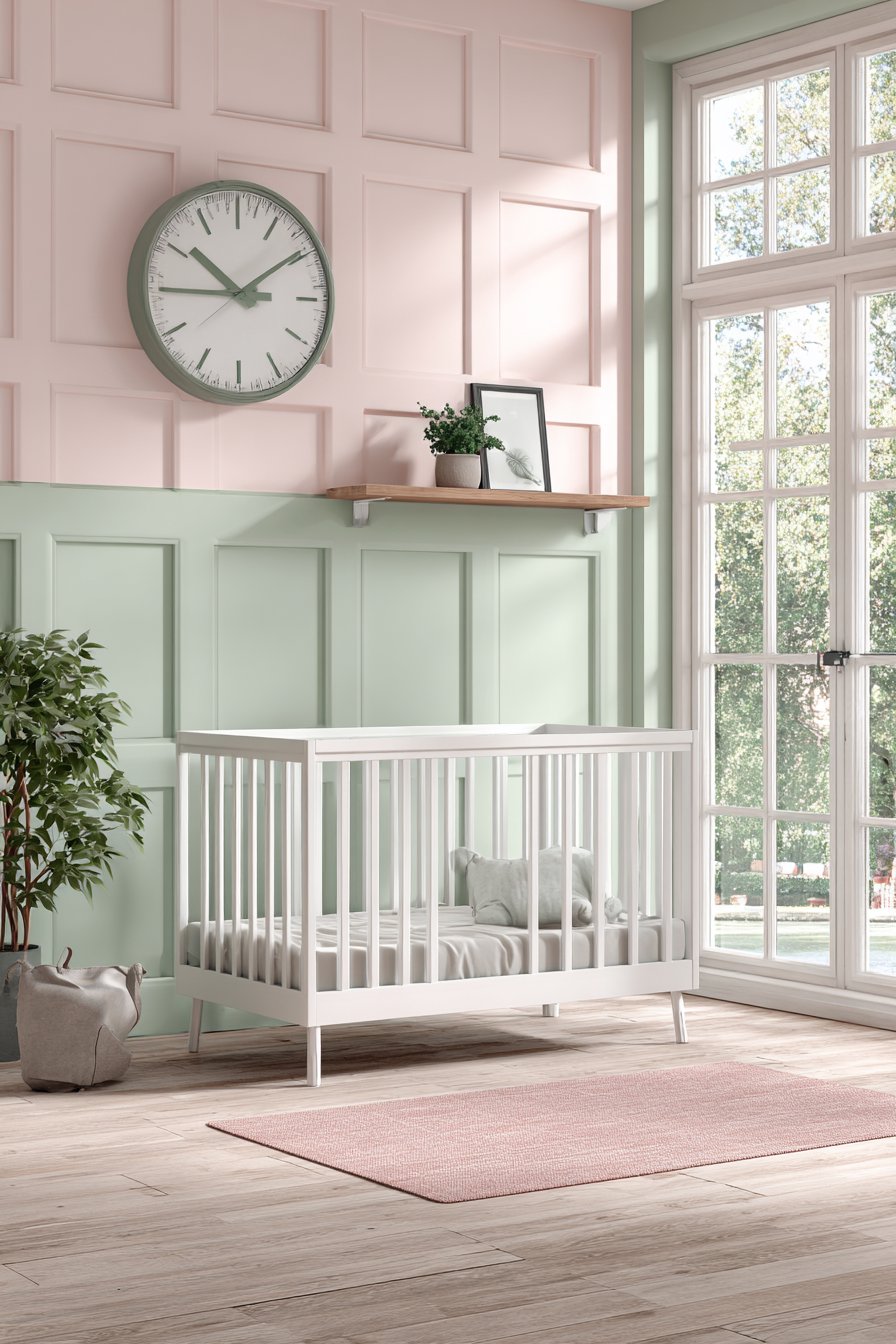
A single floating shelf in natural wood holds three carefully chosen items. A small plant, modern clock, and simple frame maintain the uncluttered aesthetic. Pale oak flooring supports the minimalist design philosophy. A small rectangular rug in muted pink adds softness underfoot.
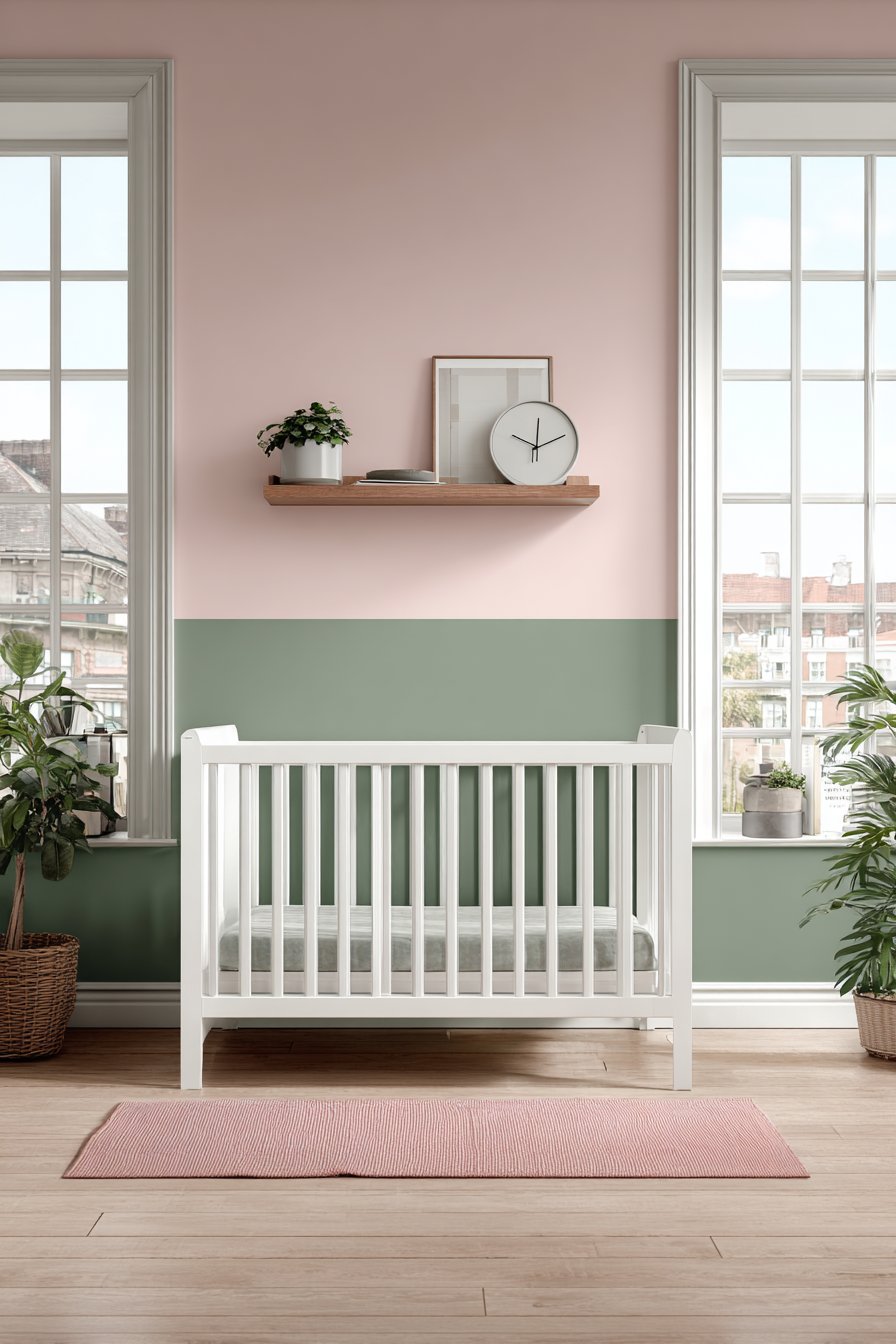
Large windows allow abundant natural light to define the space. The two-tone wall treatment creates visual interest without overwhelming the senses. Minimal decorative elements ensure the space feels calm and focused. Each item serves a clear purpose within the design.
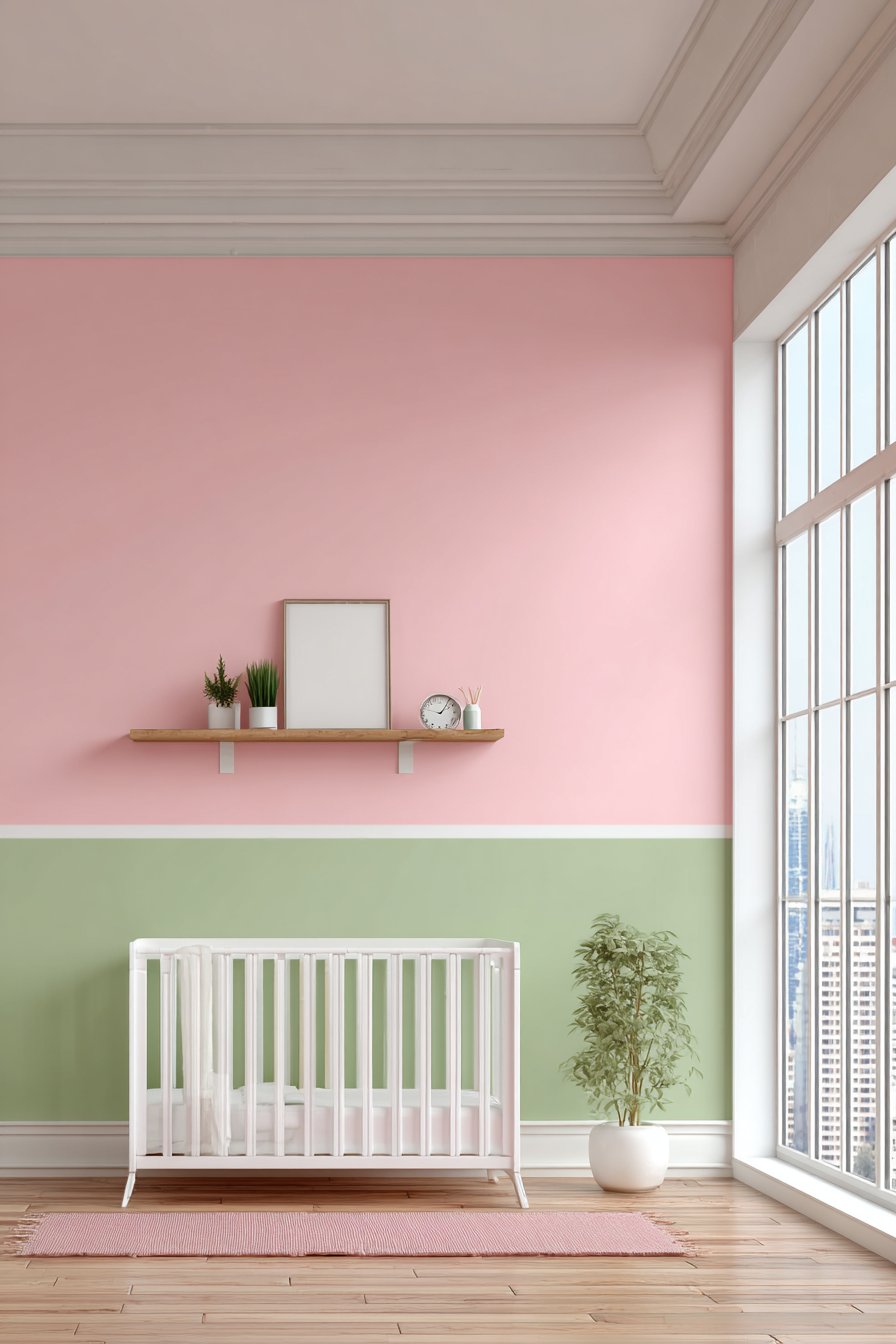
This approach proves that less truly becomes more in nursery design. The geometric crib design complements the linear wall division. Limited decorative elements reduce visual noise for better sleep. The minimalist philosophy creates peaceful environments that support infant development.
Key Design Tips:
- Divide walls horizontally with two complementary colors
- Use chair rails to create clean color divisions
- Limit decorative elements to three per display area
- Choose furniture with simple geometric lines
- Maximize natural light through large uncovered windows
- Select minimal patterns in limited quantities
- Embrace negative space as a design element
- Focus on quality over quantity in furnishings
18. Nature-Inspired Theme with Organic Elements
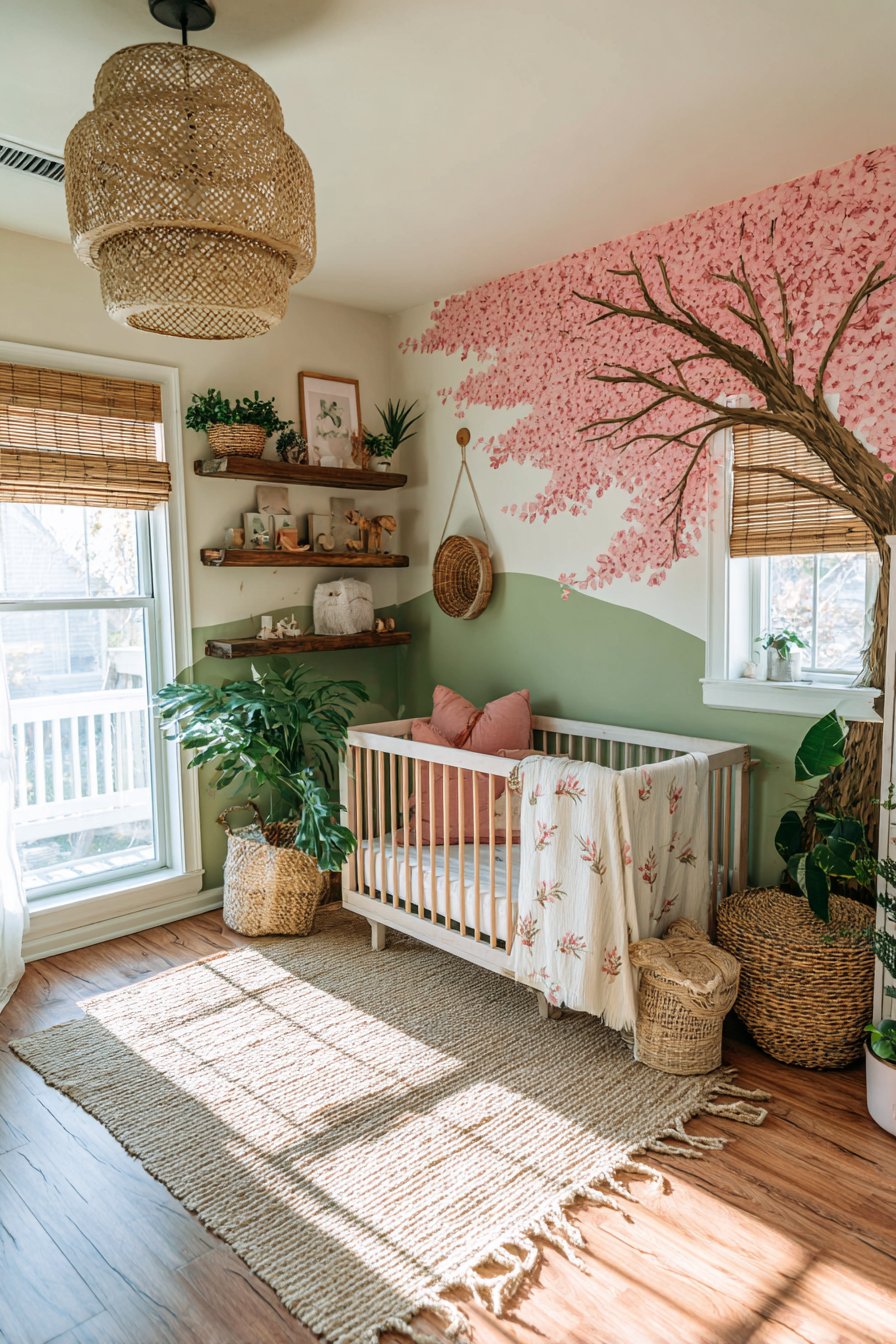
A large wall decal depicts a tree in soft green with pink blossoms. The tree extends gracefully across one wall creating focal interest. Three-dimensional elements include small wooden shelves shaped like branches. Tiny decorative items sit on these sculptural shelves.
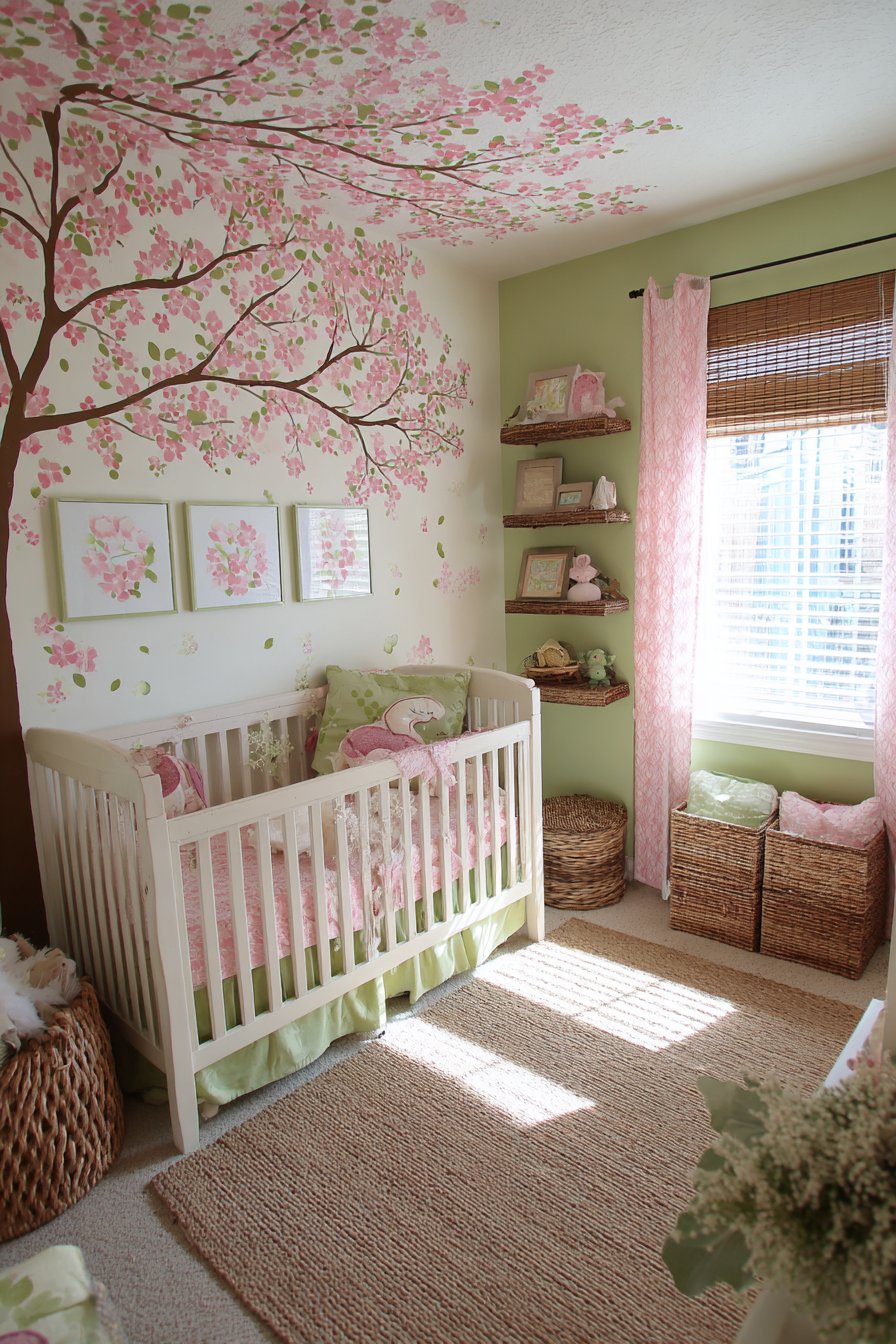
Crib bedding features organic cotton in cream with pink and green leaf prints. Natural woven baskets provide storage while maintaining organic aesthetics. Light streams through bamboo blinds creating striped shadow patterns. Living plants integrate seamlessly into the nature-themed design.
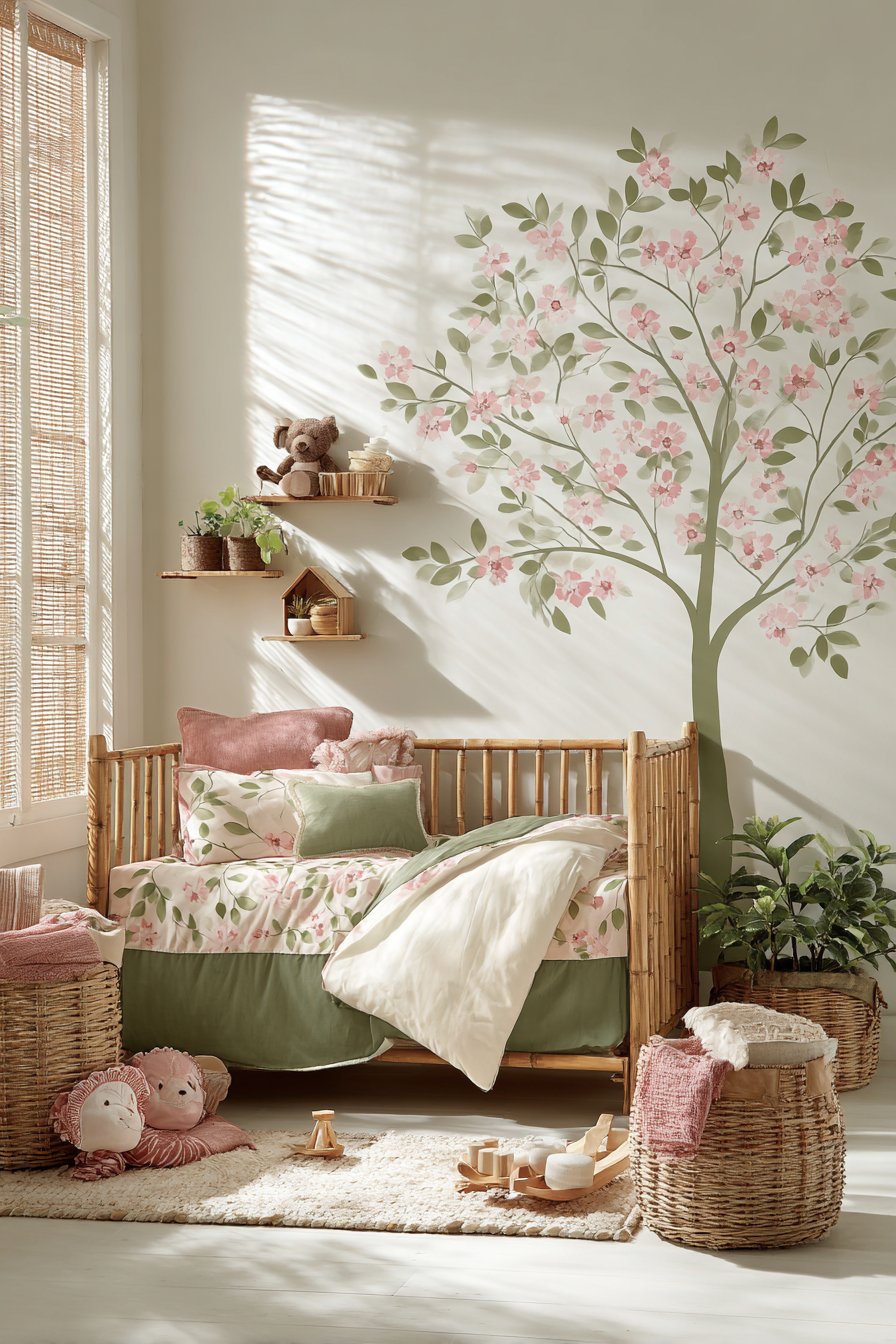
The nature-inspired approach creates peaceful connection to the outdoors. Wall decals offer commitment-free decorative options for renters. Branch-shaped shelves add whimsy without appearing childish or temporary. Organic cotton bedding supports health and environmental consciousness.
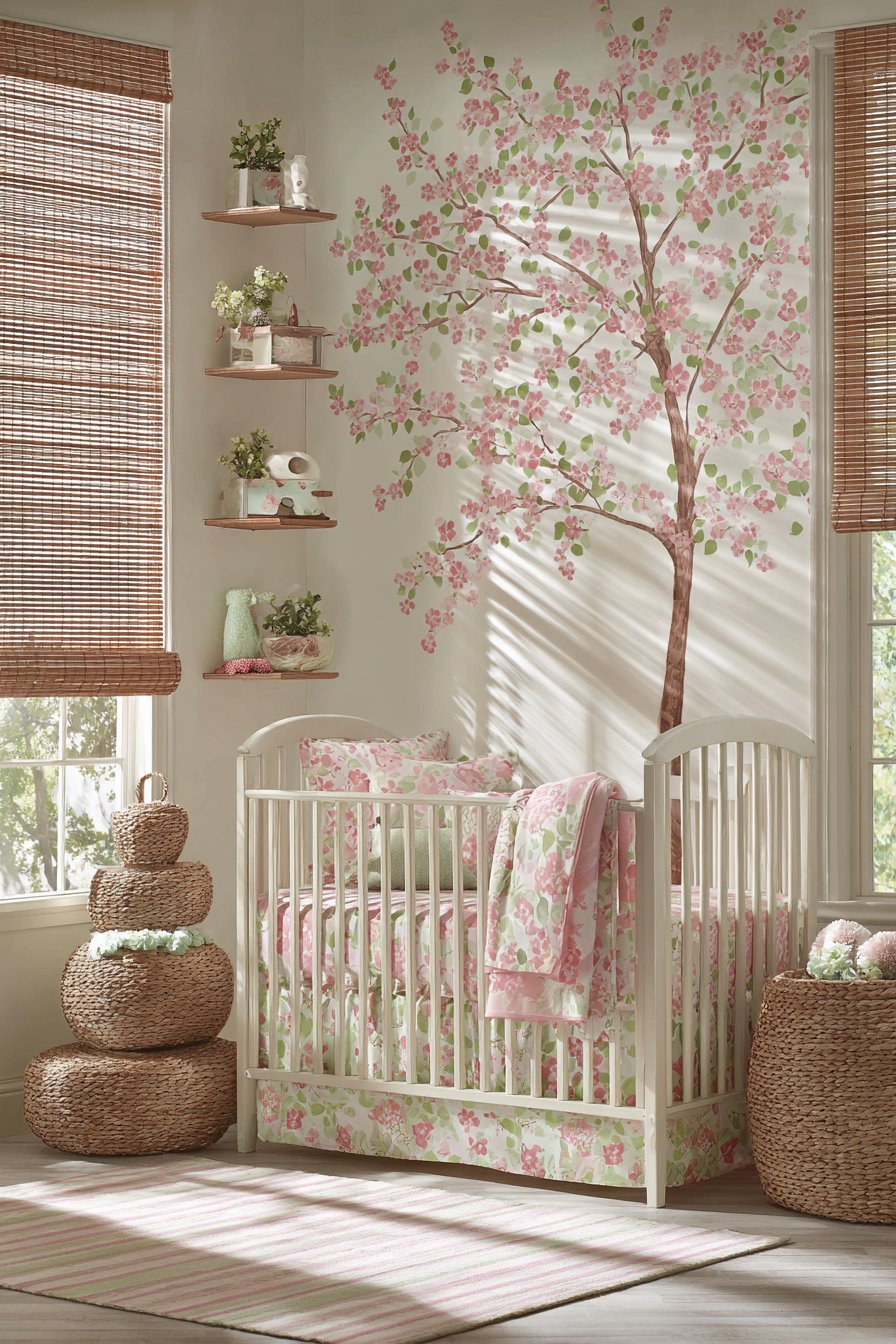
Bamboo blinds introduce natural materials while controlling light effectively. The striped shadows add dynamic visual interest throughout the day. Living plants improve air quality while reinforcing the natural theme. This cohesive approach creates environments that support wellbeing.
Key Design Tips:
- Use removable wall decals for flexible design options
- Choose three-dimensional decorative elements for depth
- Select organic cotton bedding for health benefits
- Install bamboo blinds for natural light filtering
- Include living plants appropriate for nurseries
- Add branch-shaped shelving for thematic storage
- Layer natural materials throughout the space
- Consider shadow patterns when selecting window treatments
19. Smart Storage Solutions Throughout
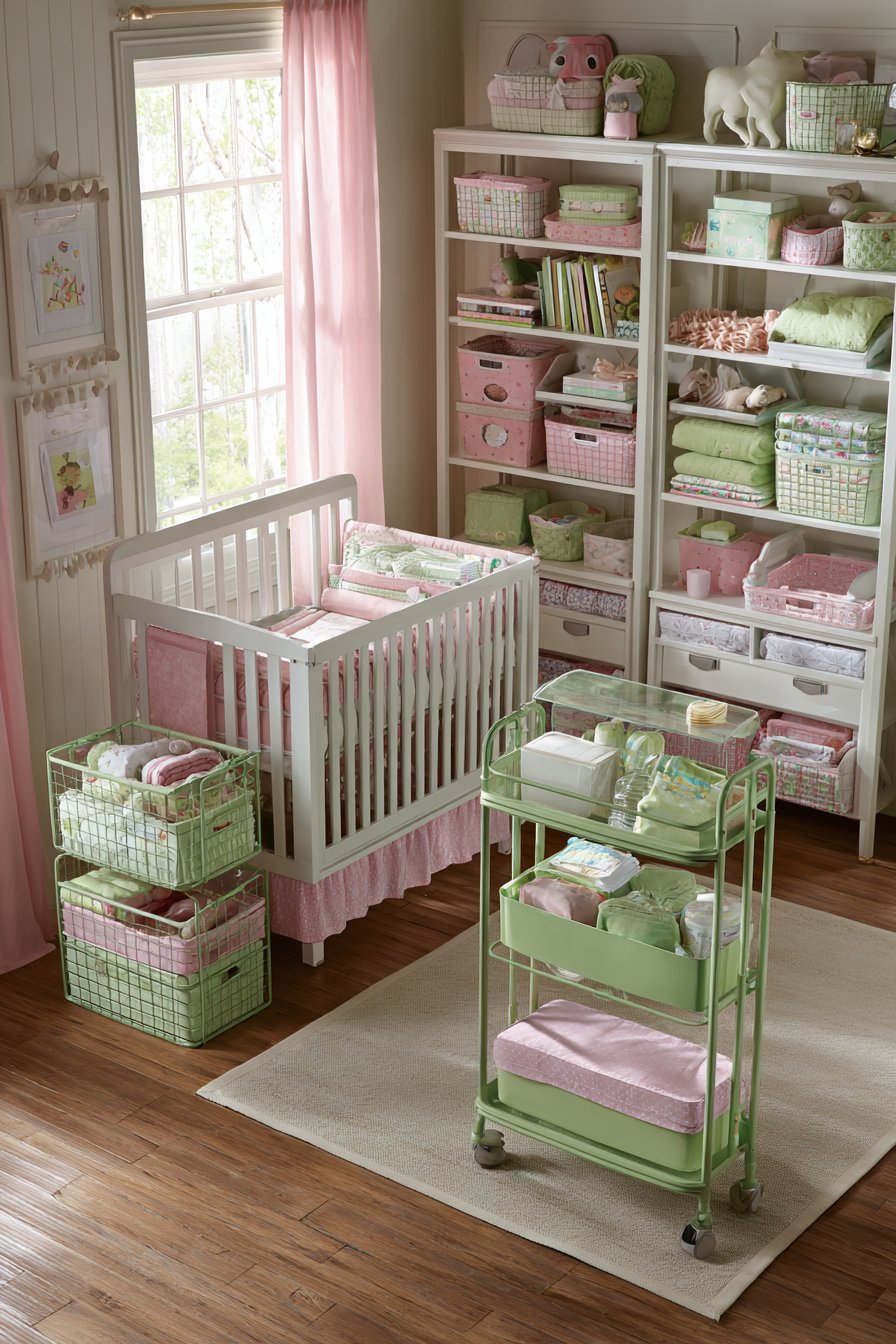
A rolling cart in mint green holds three tiers of organized supplies. The cart positions conveniently between the crib and changing table. Built-in corner shelving in white displays books and toys by color. This creates pleasing visual organization throughout the space.
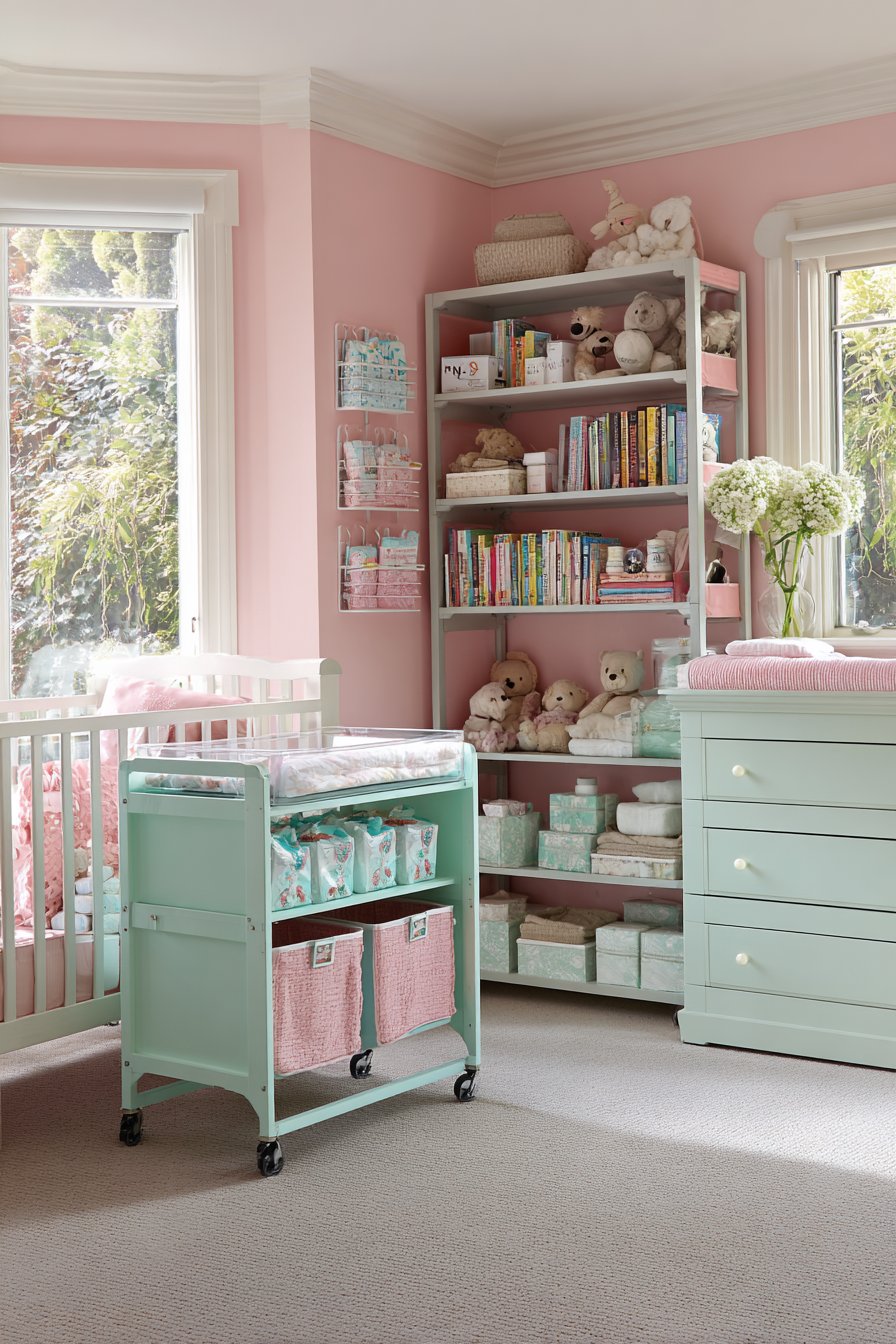
Under-crib storage drawers in white feature pink fabric liners. These maximize space efficiency in smaller rooms. Wall-mounted organizers in matching colors keep frequently used items accessible. Natural window light illuminates the organized space throughout the day.
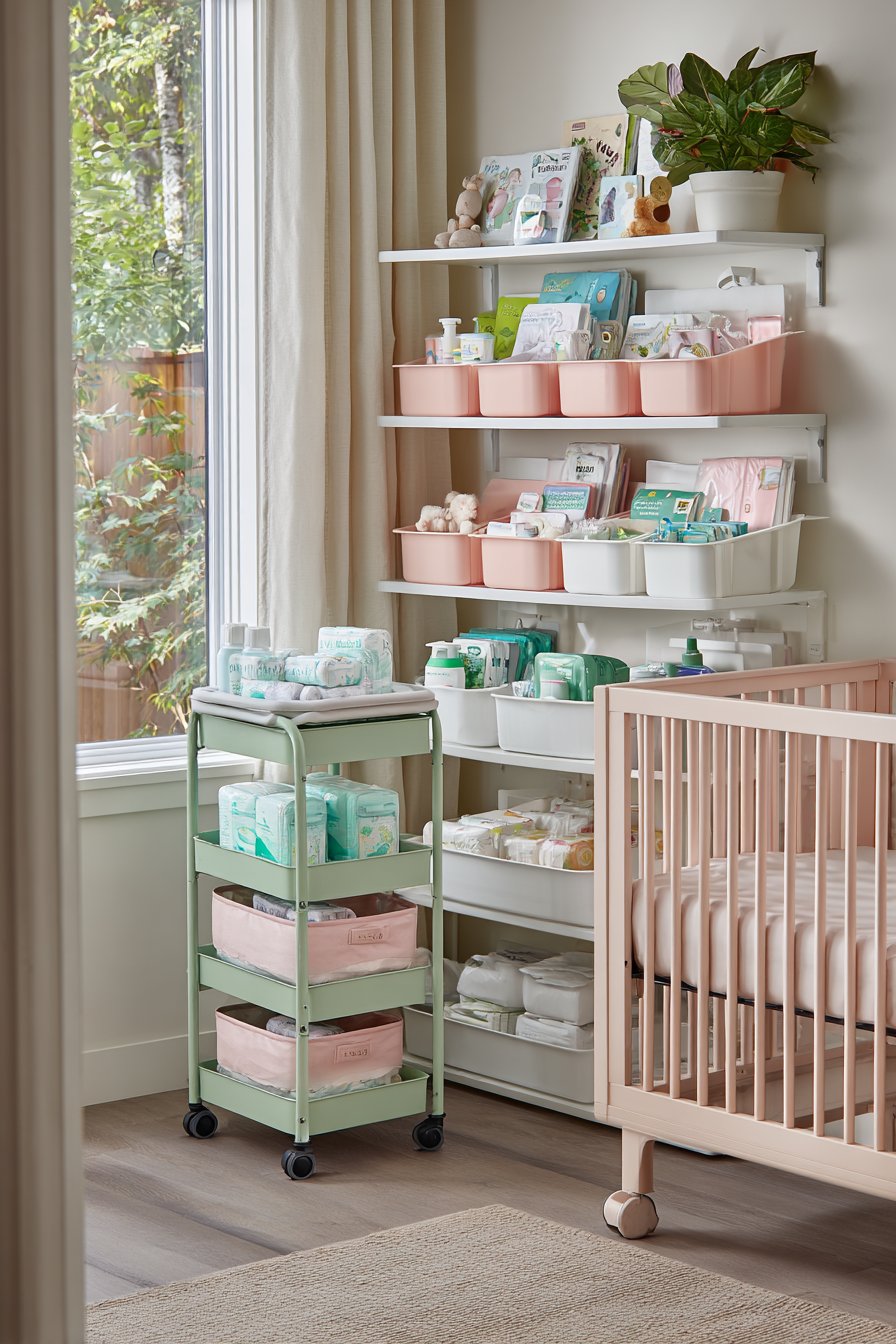
Smart storage proves essential in maintaining nursery functionality. The rolling cart moves easily to wherever supplies are needed. Color-coordinated toy storage teaches organizational skills from early childhood. Under-crib drawers utilize often-wasted space effectively.
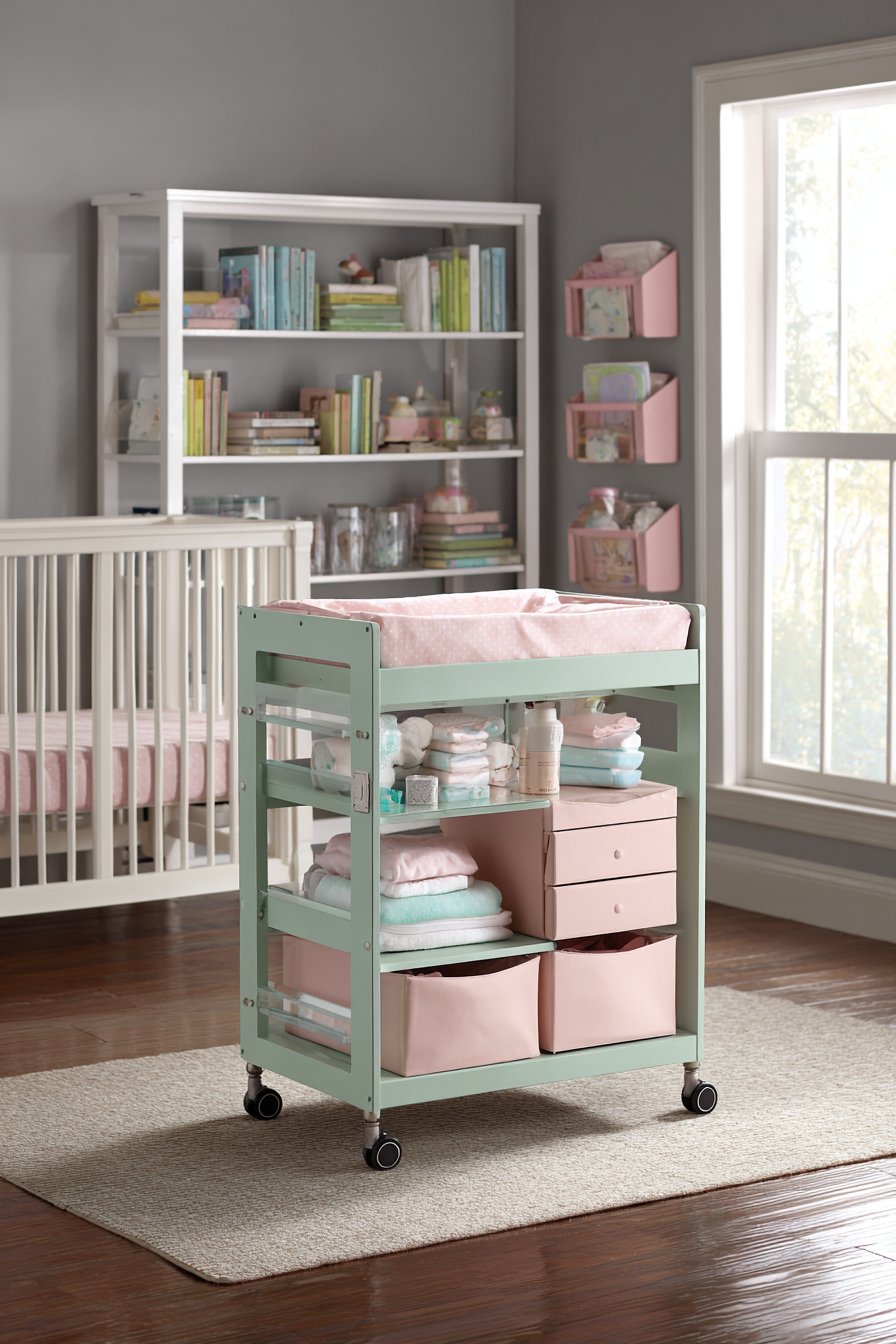
This approach demonstrates how functional elements enhance design aesthetics. Mint green and pink storage solutions maintain color consistency. Wall-mounted organizers free up valuable floor space. The entire system adapts as your child’s storage needs evolve.
Key Design Tips:
- Use rolling carts for flexible mobile storage
- Install corner shelving to maximize unused space
- Add under-crib drawers for hidden storage
- Organize toys by color for visual appeal
- Mount wall organizers at convenient heights
- Choose storage solutions in coordinating colors
- Plan storage that adapts to changing needs
- Keep daily essentials within easy reach
- Use fabric liners for soft storage compartments
20. Personalized Name Sign with Custom Details
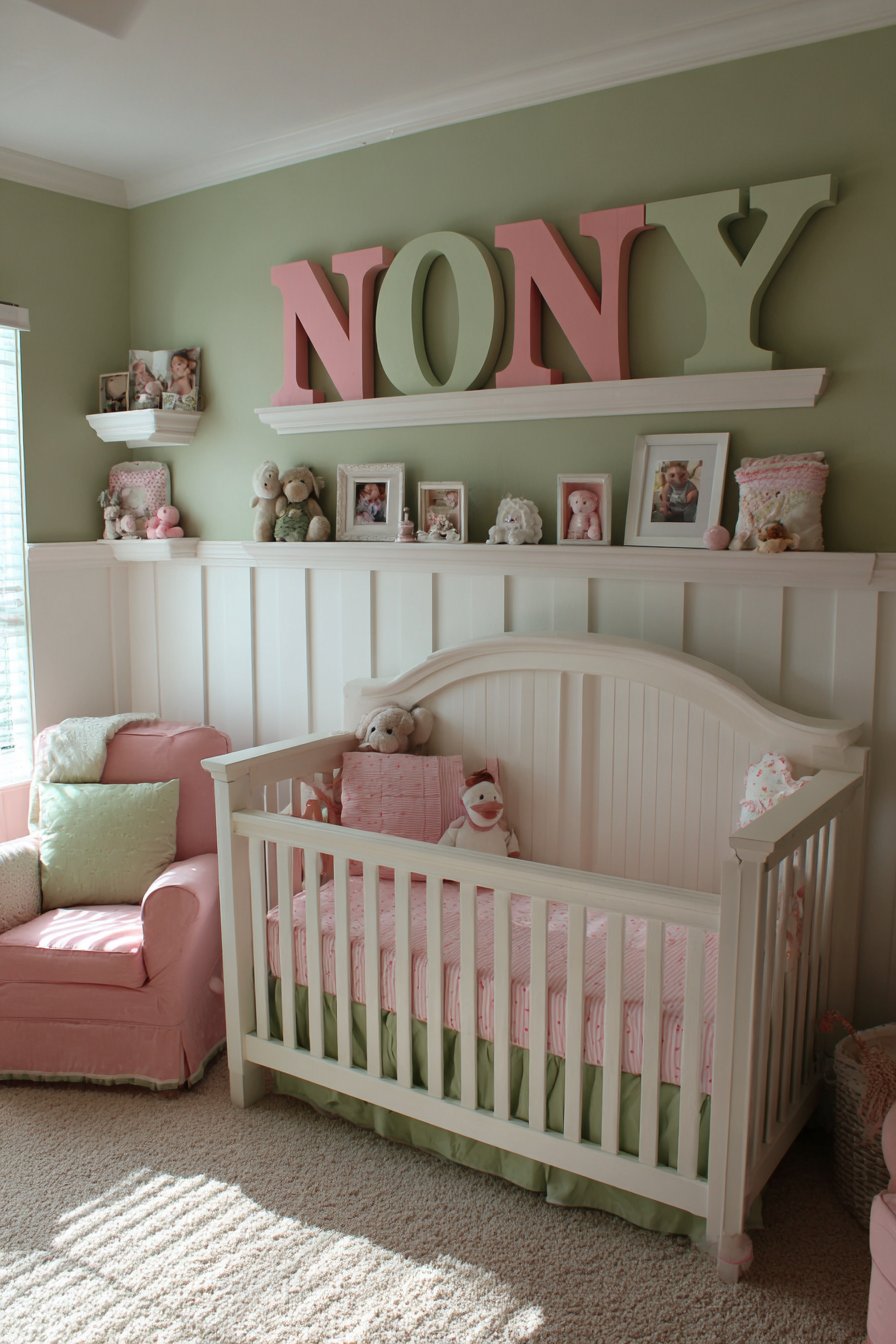
A custom name sign crafted from natural wood letters crowns the crib. Letters alternate between pink and green paint finishes. The sign mounts on a soft green accent wall creating clear focal interest. This personalization makes the nursery feel uniquely special.
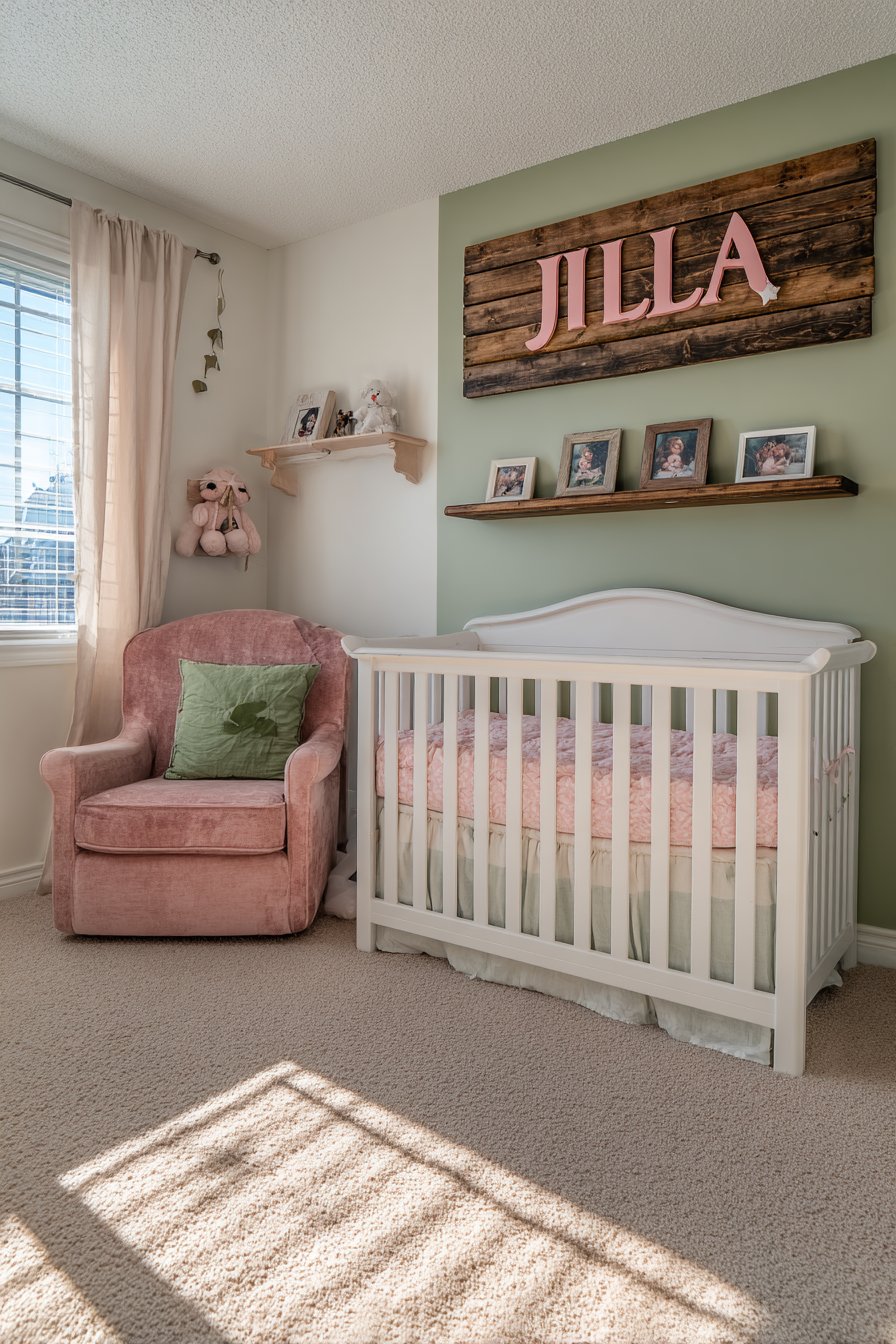
Below sits a white Jenny Lind style crib with classic spindle details. Pink bedding with green trim continues the color coordination. Two matching wall-mounted shelves flank the personalized sign. Framed photos and small decorative items complete the symmetrical arrangement.
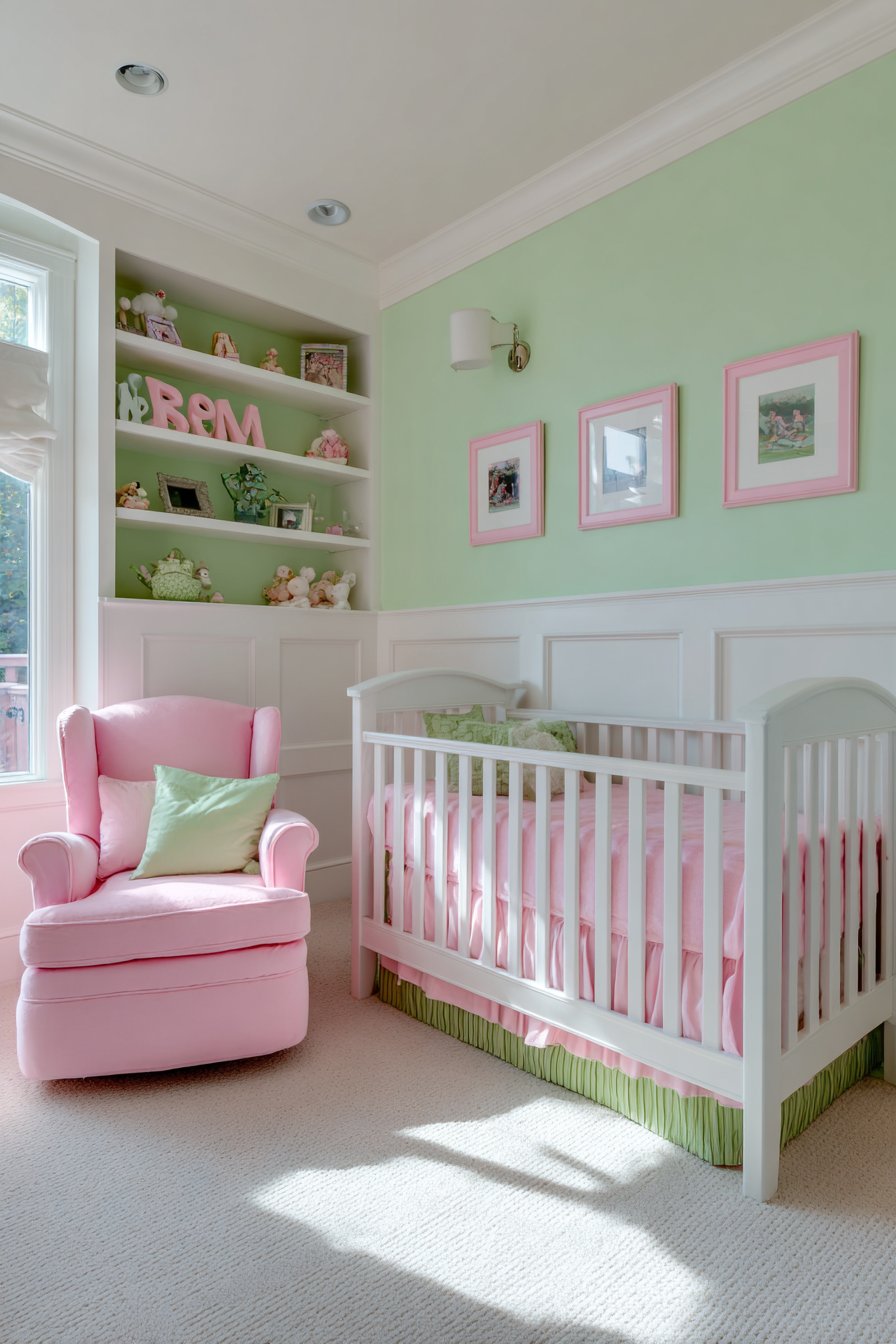
A plush pink armchair with green throw pillow sits adjacent to the crib. This provides comfortable seating for bedtime stories and bonding. Natural afternoon light creates soft shadows adding dimensional interest. The personalized details integrate seamlessly into the cohesive design.
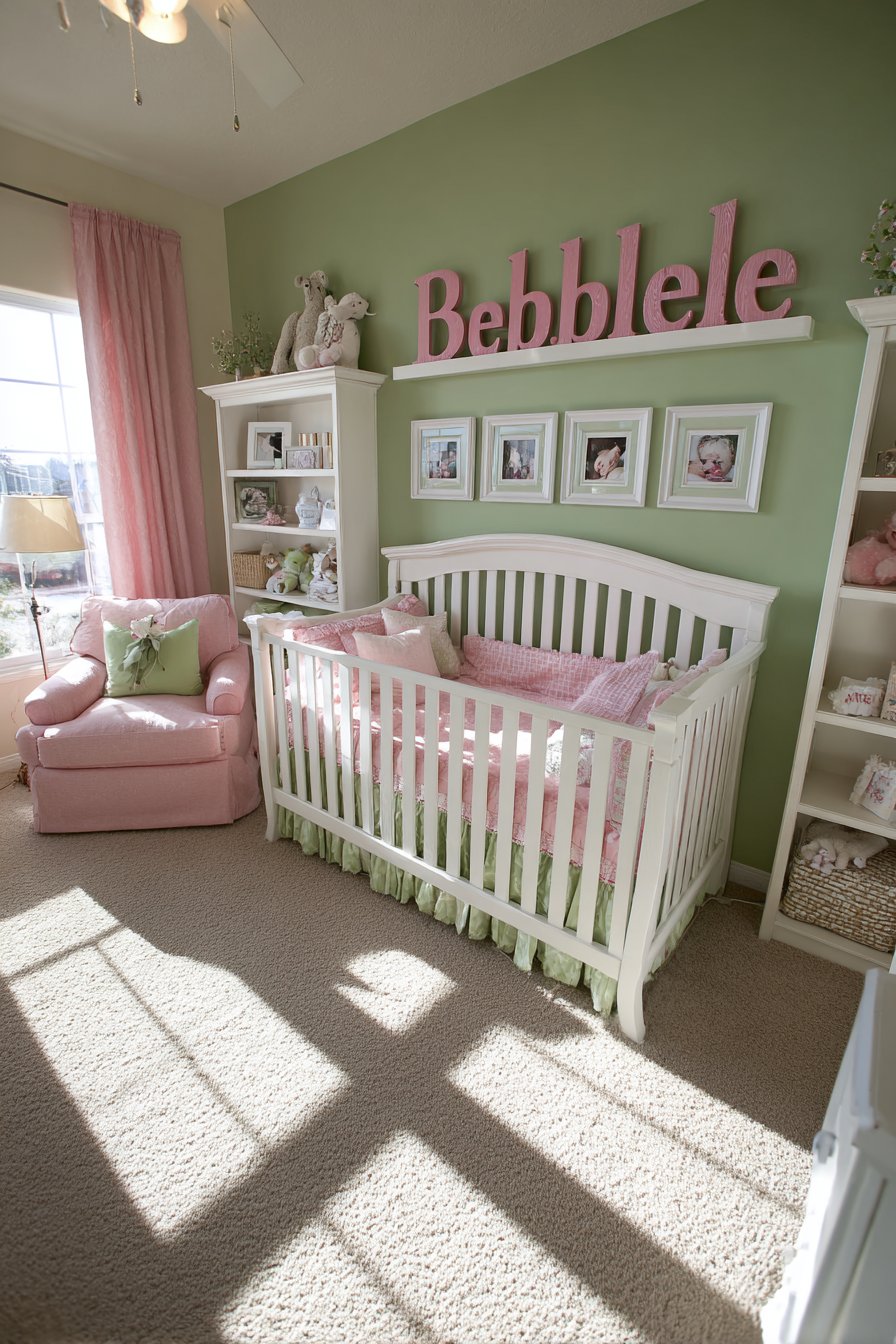
Custom name signs celebrate your child’s unique identity from birth. The alternating colors demonstrate attention to coordinating details. Jenny Lind cribs offer timeless style that suits multiple design aesthetics. Symmetrical arrangements create visual balance and professional appearance.
Key Design Tips:
- Commission or create custom name signs for personalization
- Alternate colors in lettering for coordinated interest
- Choose classic crib styles like Jenny Lind for timeless appeal
- Create symmetrical arrangements for balanced appearance
- Add matching shelving flanking focal points
- Include comfortable seating near the crib
- Use bedding trim to incorporate accent colors
- Position furniture to optimize natural lighting
Why These Pink and Green Nursery Designs Work Best
These pink and green nursery designs represent thoughtful approaches to creating peaceful, functional spaces. The color combination offers gender-neutral sophistication while maintaining warmth and softness. Each design demonstrates how complementary colors create visual harmony without overwhelming developing senses.
The versatility of pink and green accommodates diverse design styles successfully. From vintage-inspired spaces to modern minimalist approaches, these colors adapt beautifully. Soft pastels create gentle environments while deeper jewel tones add richness. This flexibility allows personal expression within a cohesive framework.
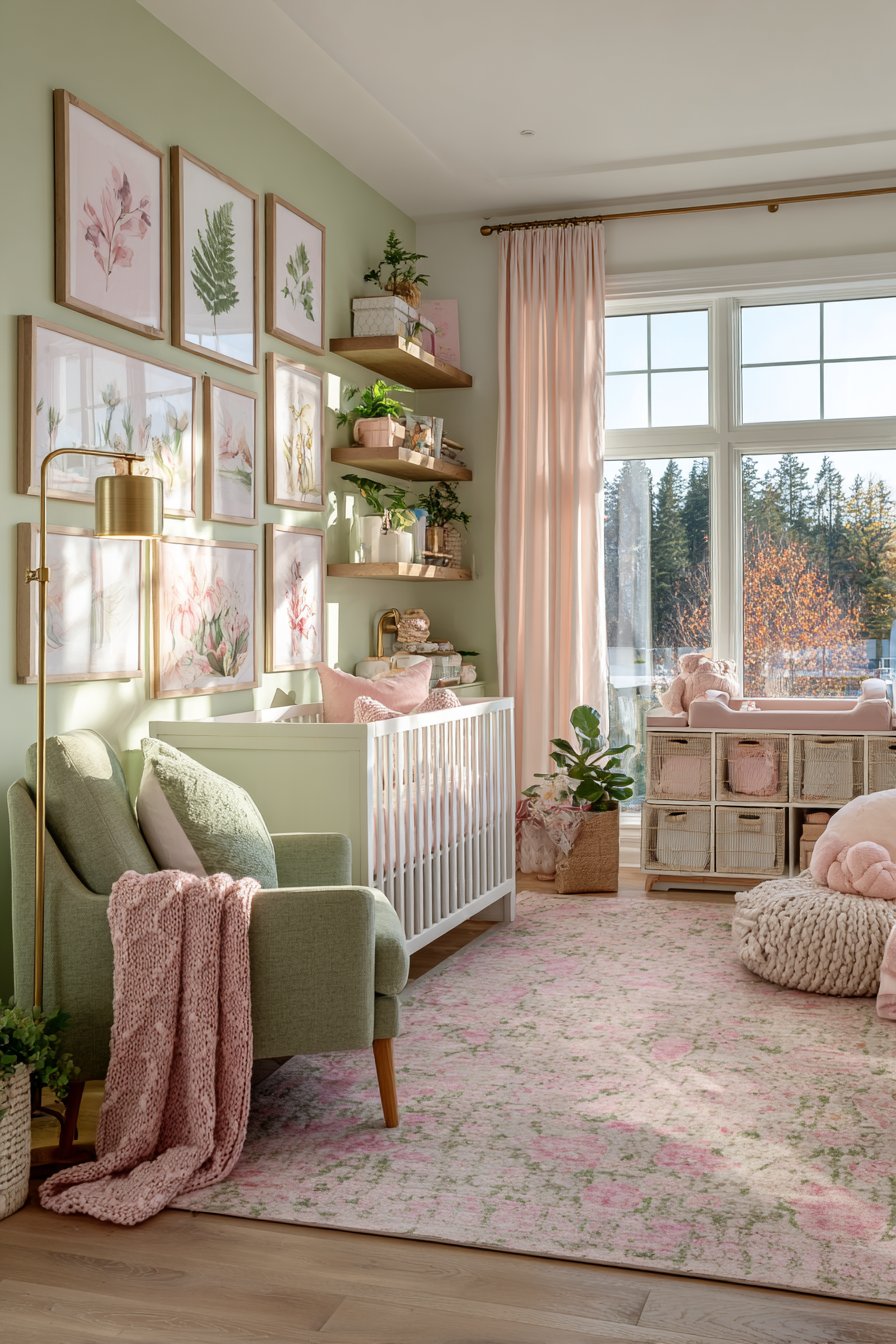
Material choices play crucial roles in these successful designs. Natural woods, organic textiles, and authentic finishes provide lasting quality. These materials age gracefully, developing character rather than appearing worn. Sustainable selections support environmental consciousness while creating healthier nursery environments.
Practical considerations enhance each design’s functionality. Strategic storage solutions, layered lighting, and multipurpose furniture maximize space efficiency. These elements prove that beautiful design serves daily life rather than existing separately. The integration of aesthetics and functionality creates spaces that truly work.
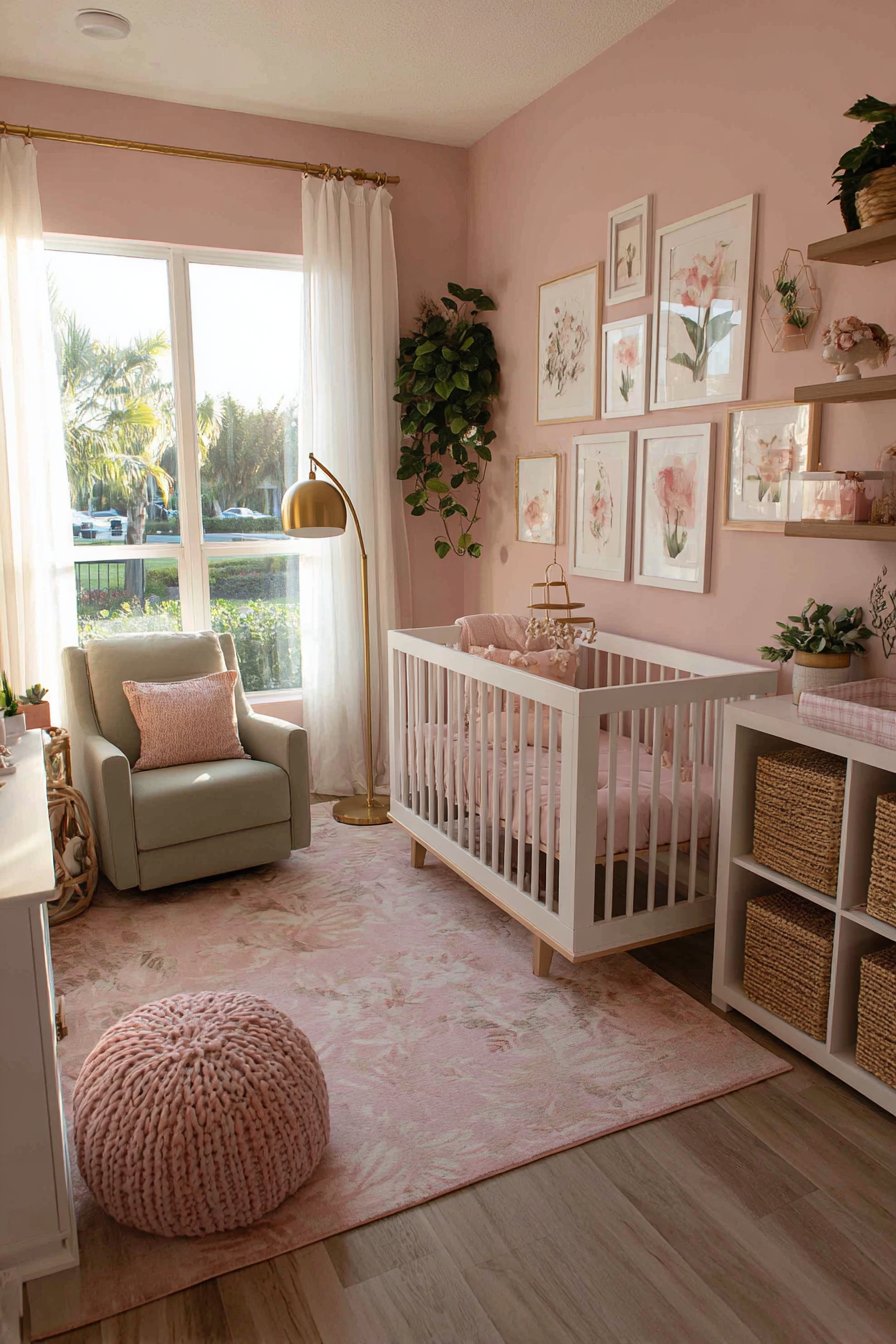
Color theory principles guide these successful combinations. Pink and green sit opposite on the color wheel, creating natural balance. This complementary relationship produces visual interest without jarring contrasts. The varied saturations and tones prevent monotony while maintaining cohesion.
Spatial considerations address different room sizes and configurations. Circular rugs soften angular layouts while vertical elements maximize limited space. Strategic furniture placement optimizes traffic flow and functional zones. These designs prove that thoughtful planning overcomes spatial constraints effectively.
Conclusion
These pink and green nursery designs demonstrate endless possibilities within a cohesive color palette. The key takeaways include balancing complementary colors, selecting quality materials, and planning for functionality. Each design approach offers unique advantages while maintaining the gentle harmony of pink and green.
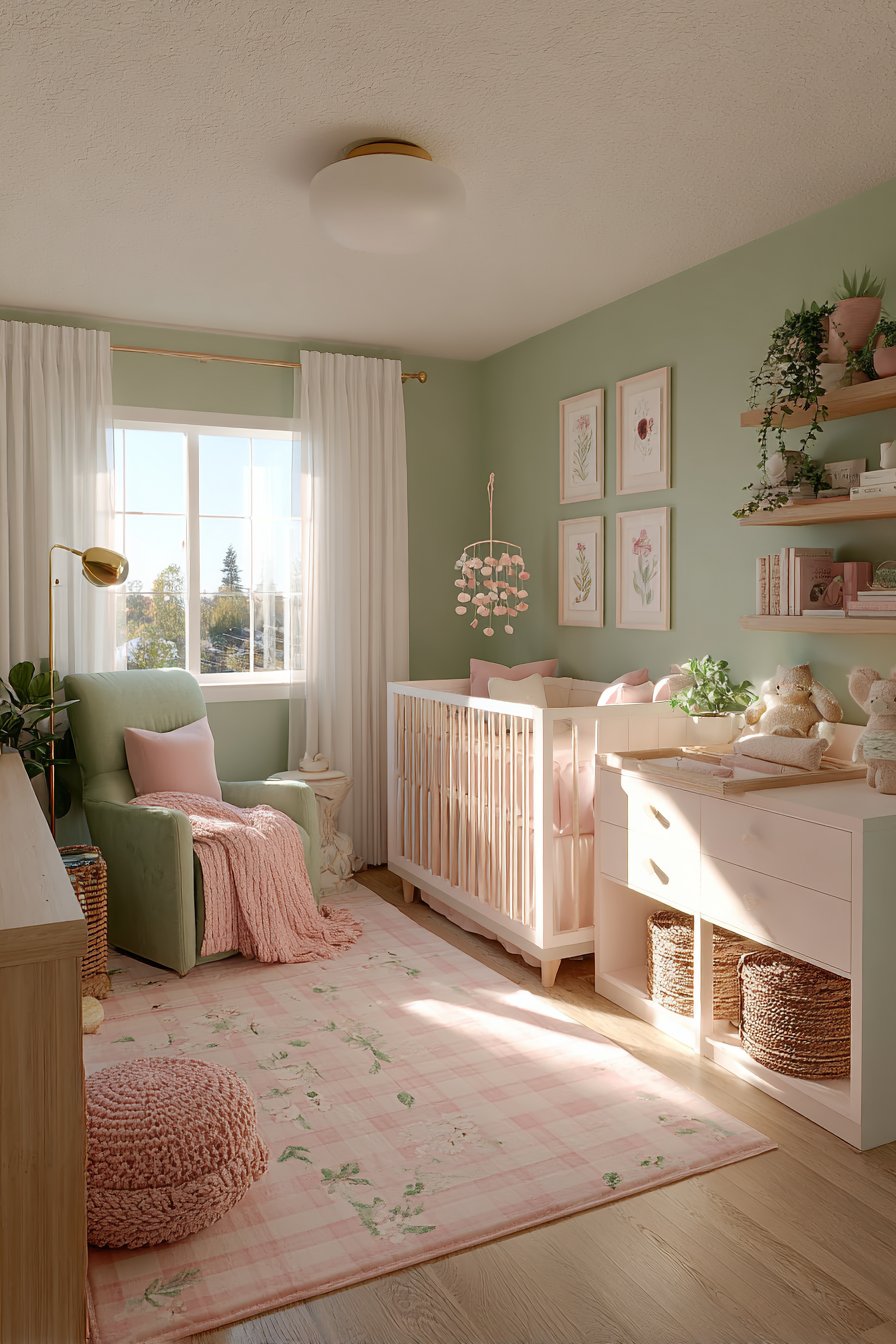
Successful nursery design grows with your child’s developing needs. Start with foundational pieces in neutral tones, then layer colors through textiles and accessories. This approach allows easy updates as preferences evolve. Your baby’s beautiful pink and green nursery awaits creation through thoughtful planning and creative expression.
