


Creating a plant aesthetic living room transforms your space into a verdant sanctuary. This design approach celebrates nature’s beauty while improving air quality and mental wellbeing. The combination of lush greenery and thoughtful interior design creates peaceful retreats perfect for modern living.
Plant-filled living rooms have surged in popularity as people seek stronger connections with nature. These spaces offer refreshing alternatives to sterile minimalist designs. The presence of living greenery creates calming atmospheres that reduce stress and enhance creativity. From trailing pothos to dramatic fiddle leaf figs, plants become living art installations that evolve with the seasons.
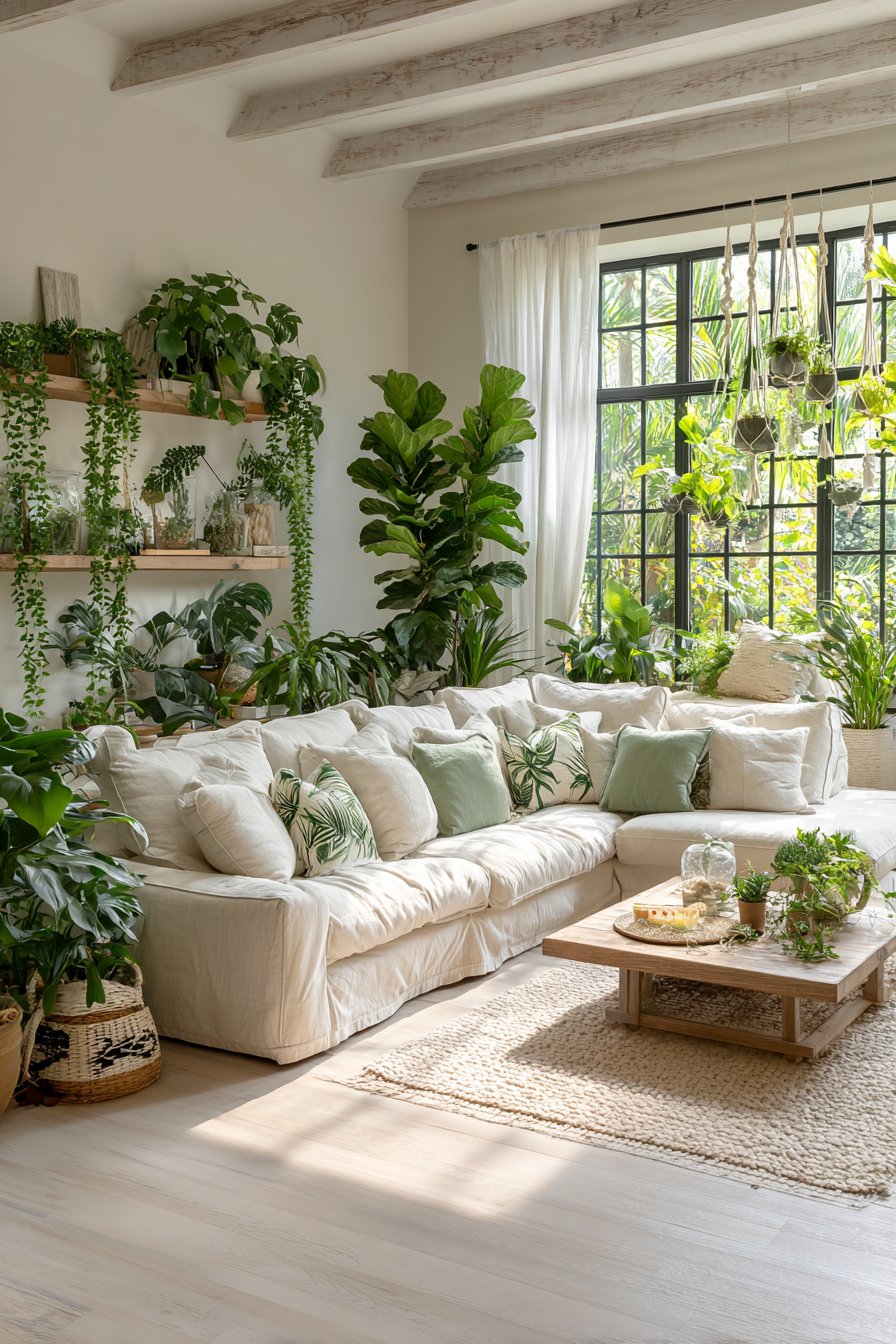
The designs featured here range from maximalist jungle-inspired rooms to refined Scandinavian plant displays. Each concept demonstrates unique approaches to incorporating greenery into living spaces. Whether you prefer cascading vines or sculptural succulents, these ideas provide inspiration for every style preference and skill level.
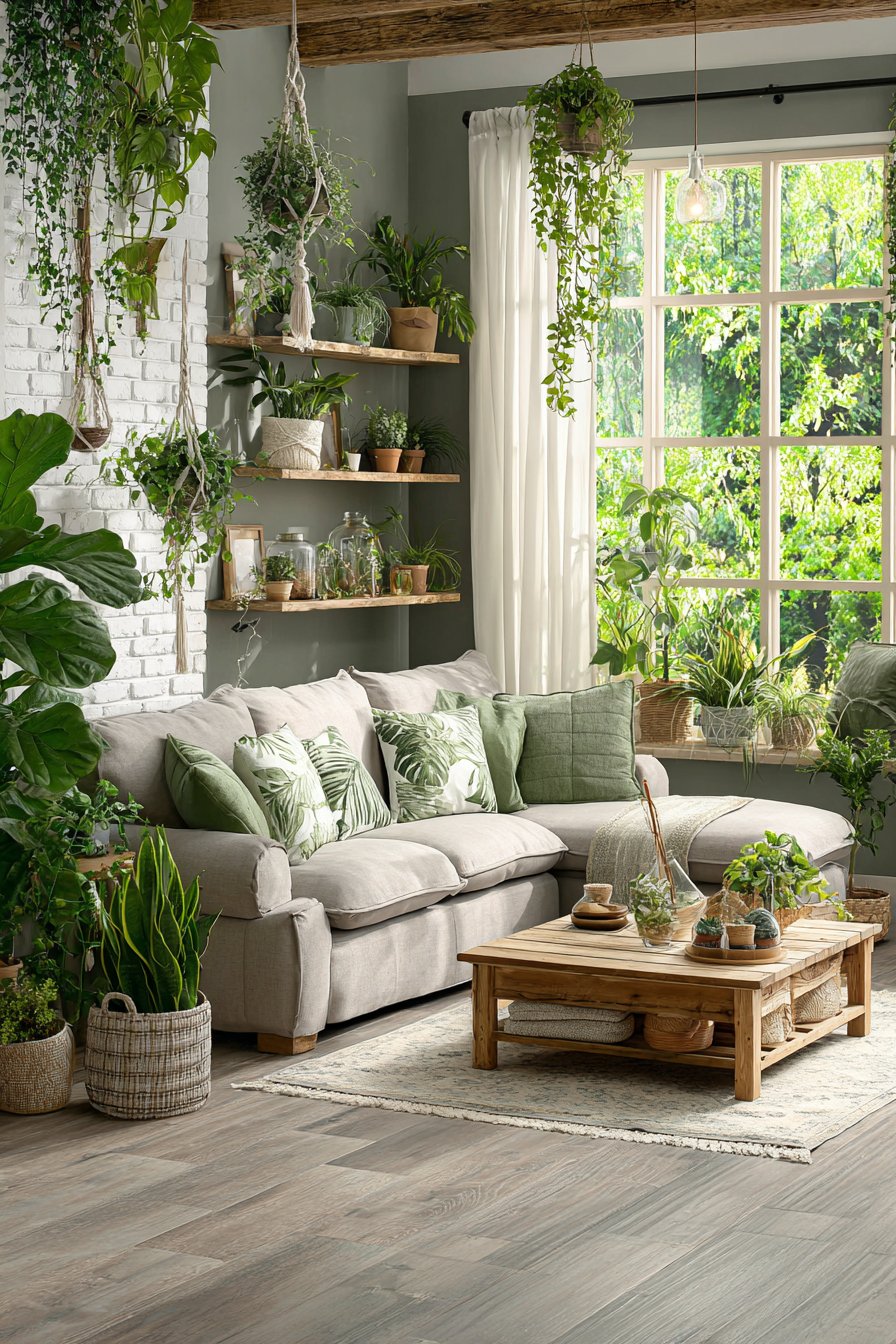
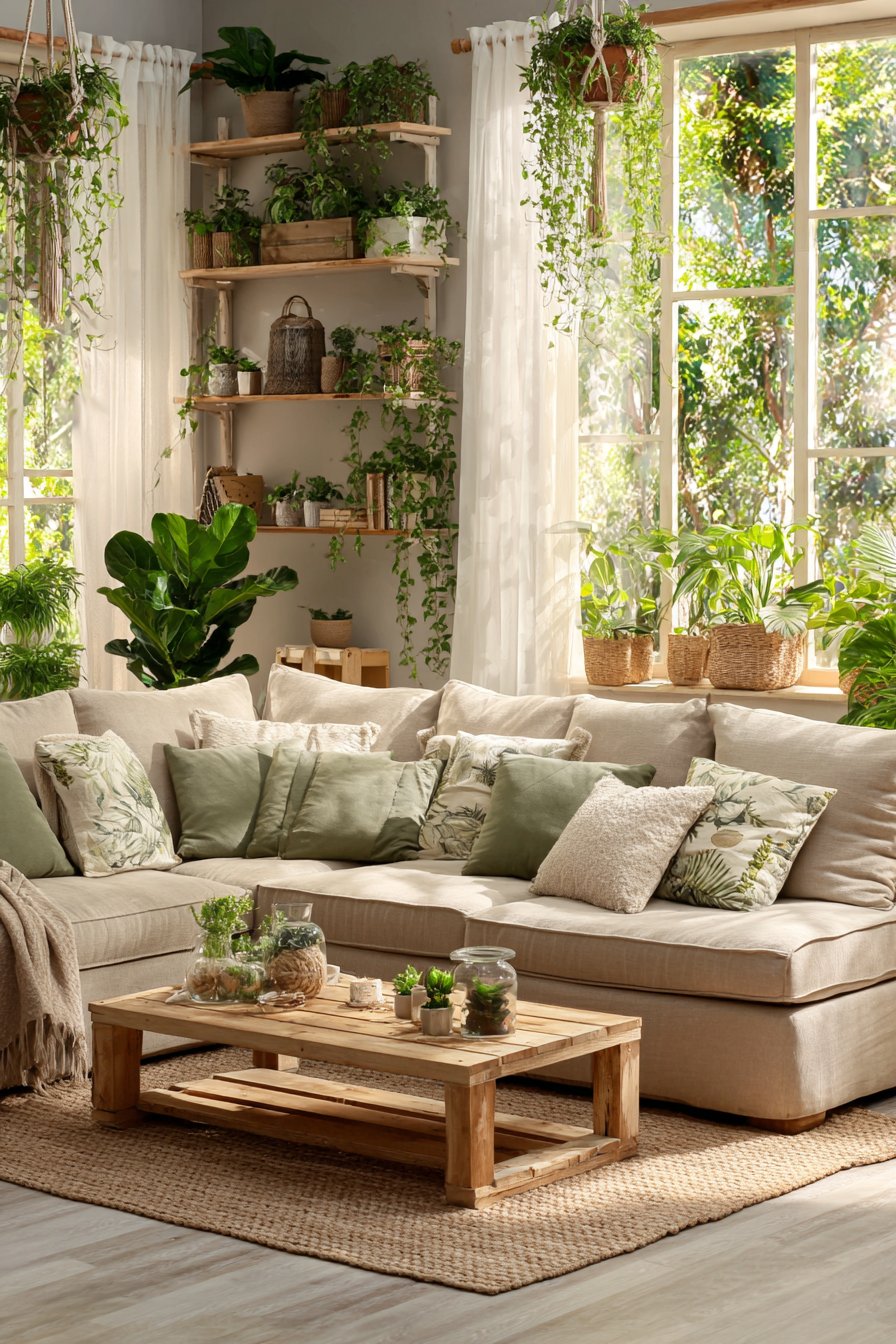
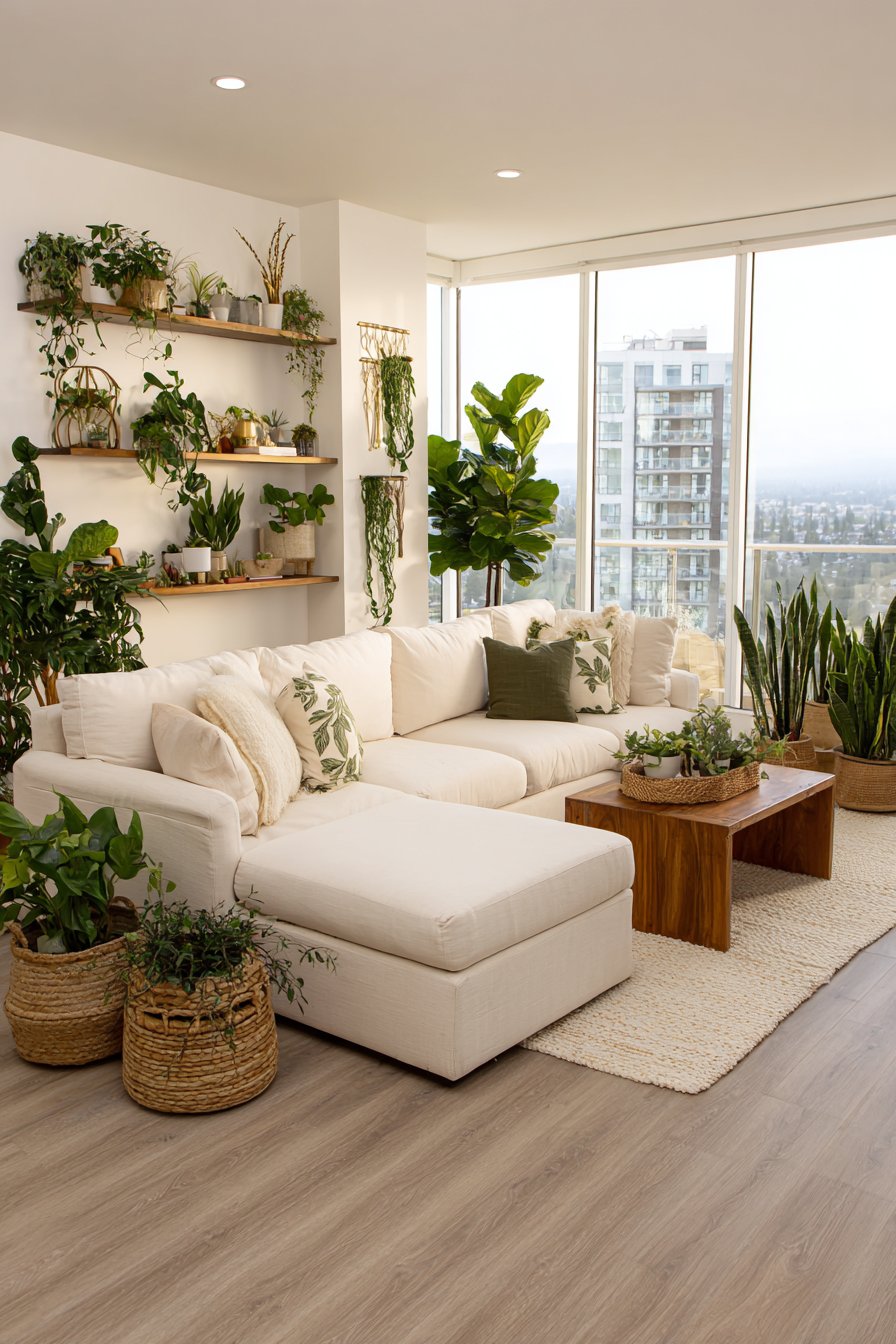
1. Oversized Sectional with Lush Indoor Garden
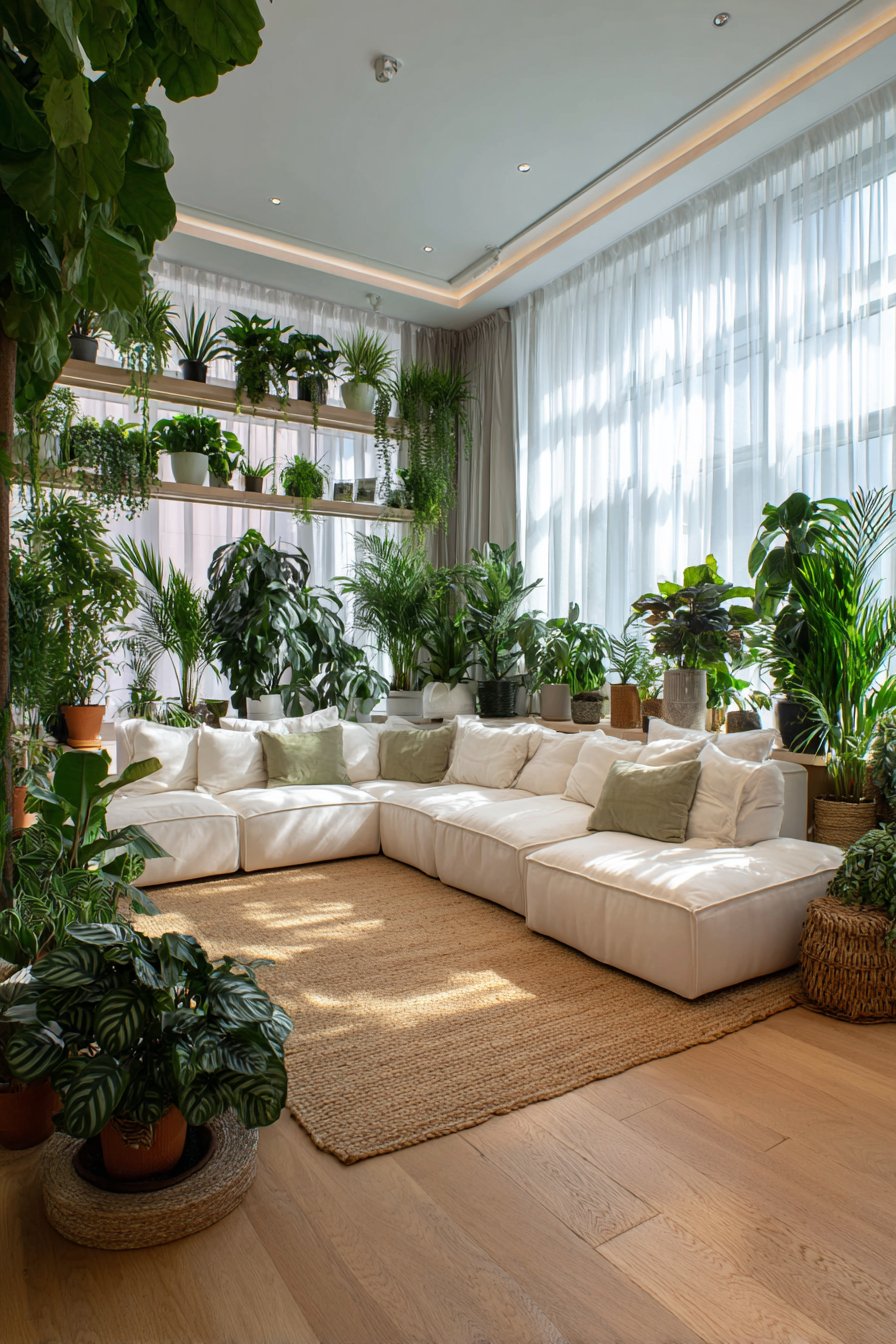
A comfortable oversized beige linen sectional creates the foundation for this plant lover’s paradise. Sage green and cream throw pillows provide subtle color coordination with the abundant greenery. The neutral furniture allows plants to command attention as the room’s primary design element.
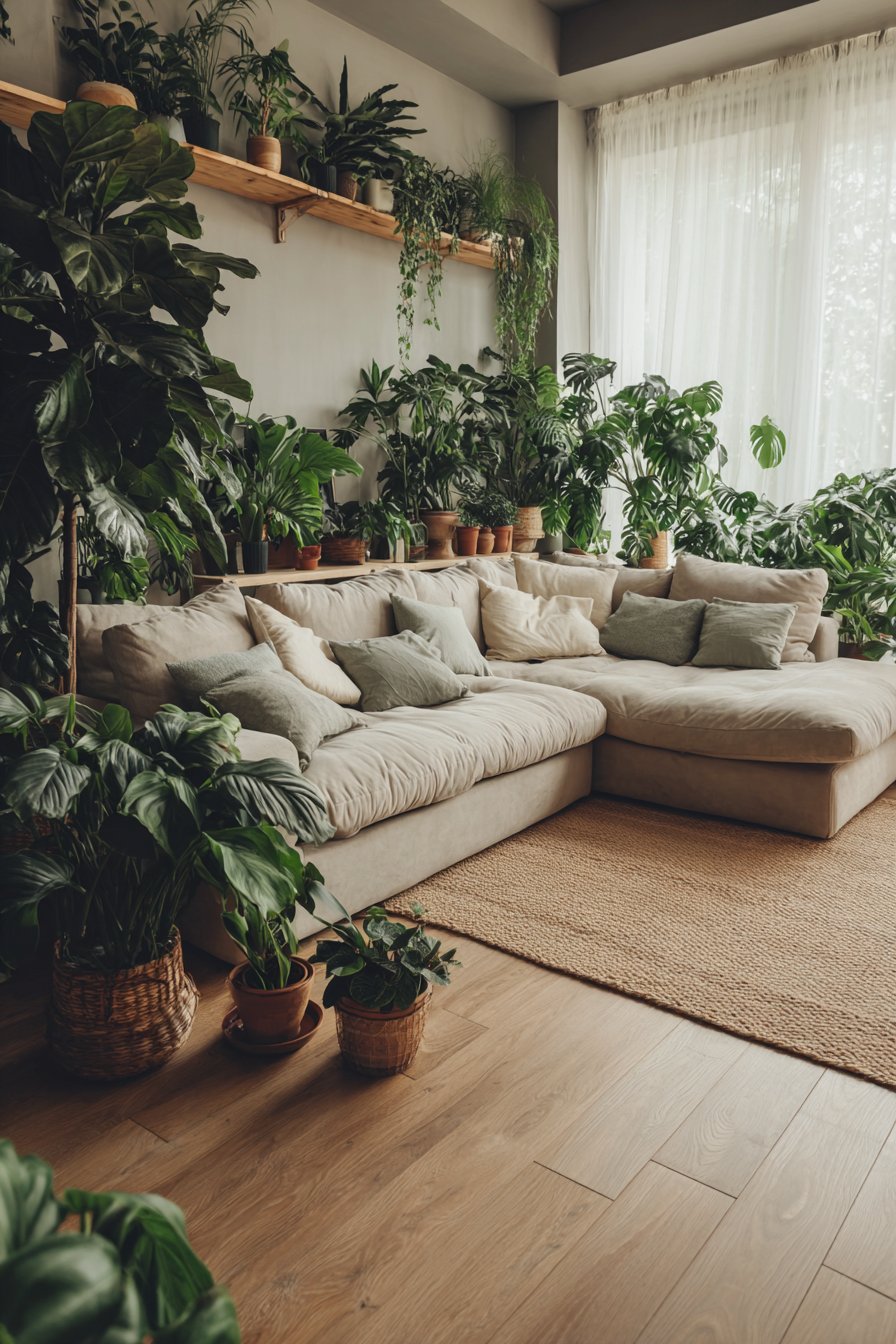
Multiple potted plants of varying sizes create dynamic visual layers throughout the space. A tall fiddle leaf fig stands proudly in a natural woven basket. Cascading pothos drapes gracefully from floating shelves above. Snake plants and monstera specimens occupy corners and empty spaces in terracotta and ceramic planters.
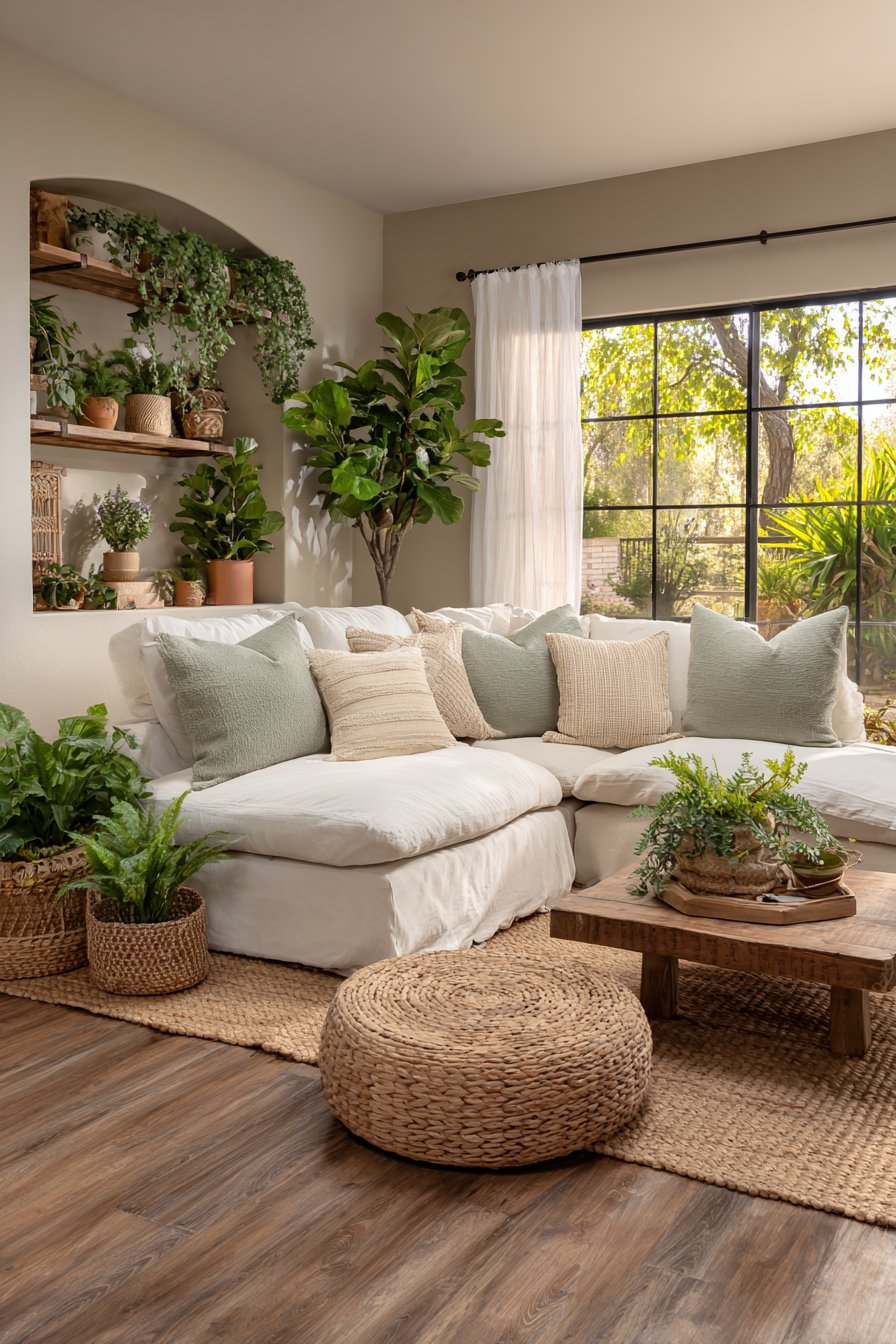
Natural oak flooring grounds the organic aesthetic while supporting the nature-inspired theme. A jute area rug adds textural warmth beneath the seating arrangement. Large windows dressed with sheer white curtains diffuse bright natural light perfectly. This soft illumination showcases varied leaf textures and creates beautiful natural shadows.
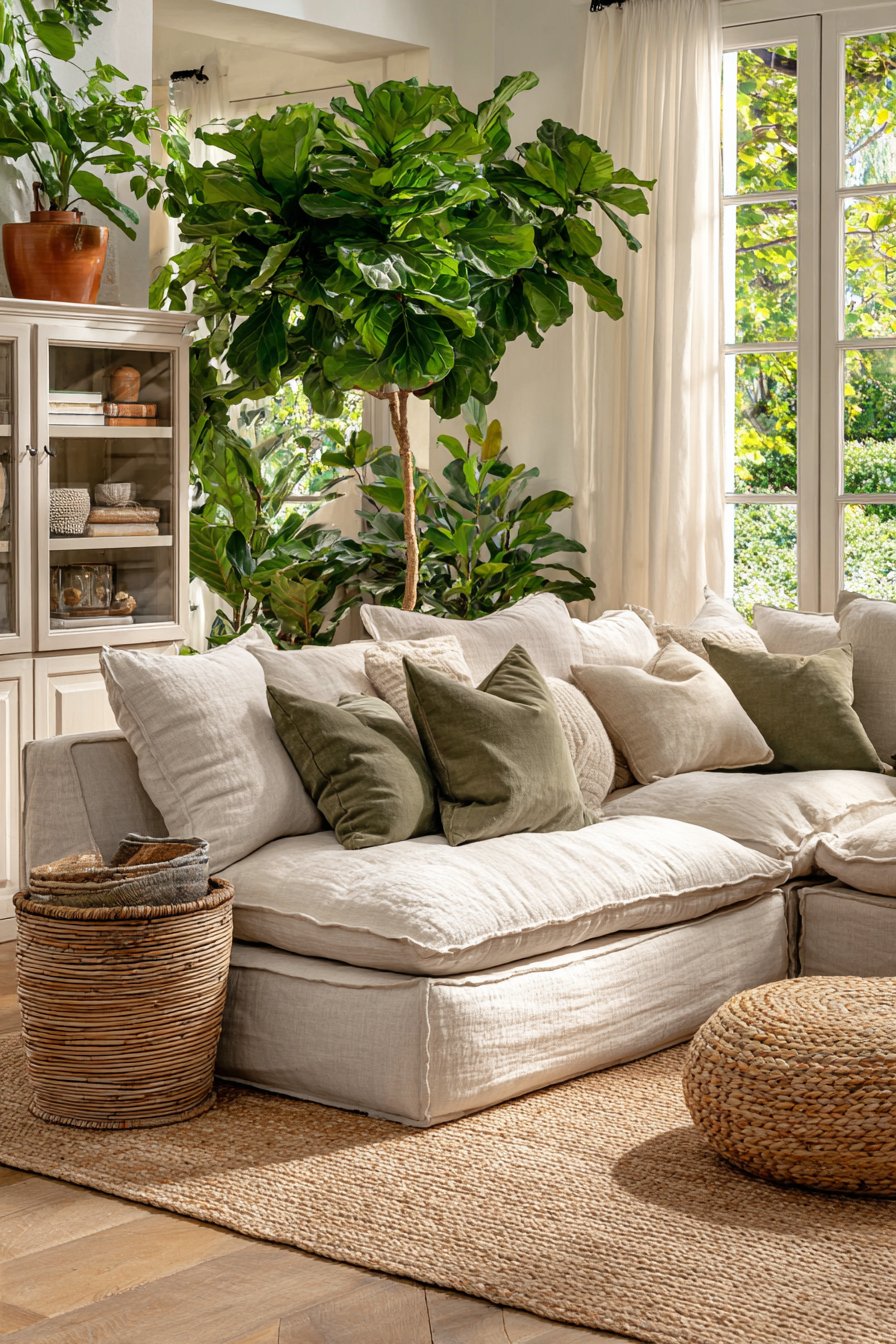
The overall effect feels like bringing the outdoors inside. Every plant receives adequate light for healthy growth. The abundant greenery purifies air while creating a serene visual experience. This design proves that comfort and nature can coexist beautifully in modern living spaces.
Key Design Tips:
- Position tall plants like fiddle leaf figs in corners to maximize vertical space
- Use neutral furniture tones to let greenery become the focal point
- Install floating shelves at varying heights for trailing plant displays
- Choose sheer curtains to diffuse light without blocking essential plant illumination
- Mix planter materials including woven baskets, terracotta, and ceramics for visual interest
- Layer plants from floor to ceiling to create depth and dimension
2. Vintage Ladder Plant Display Corner
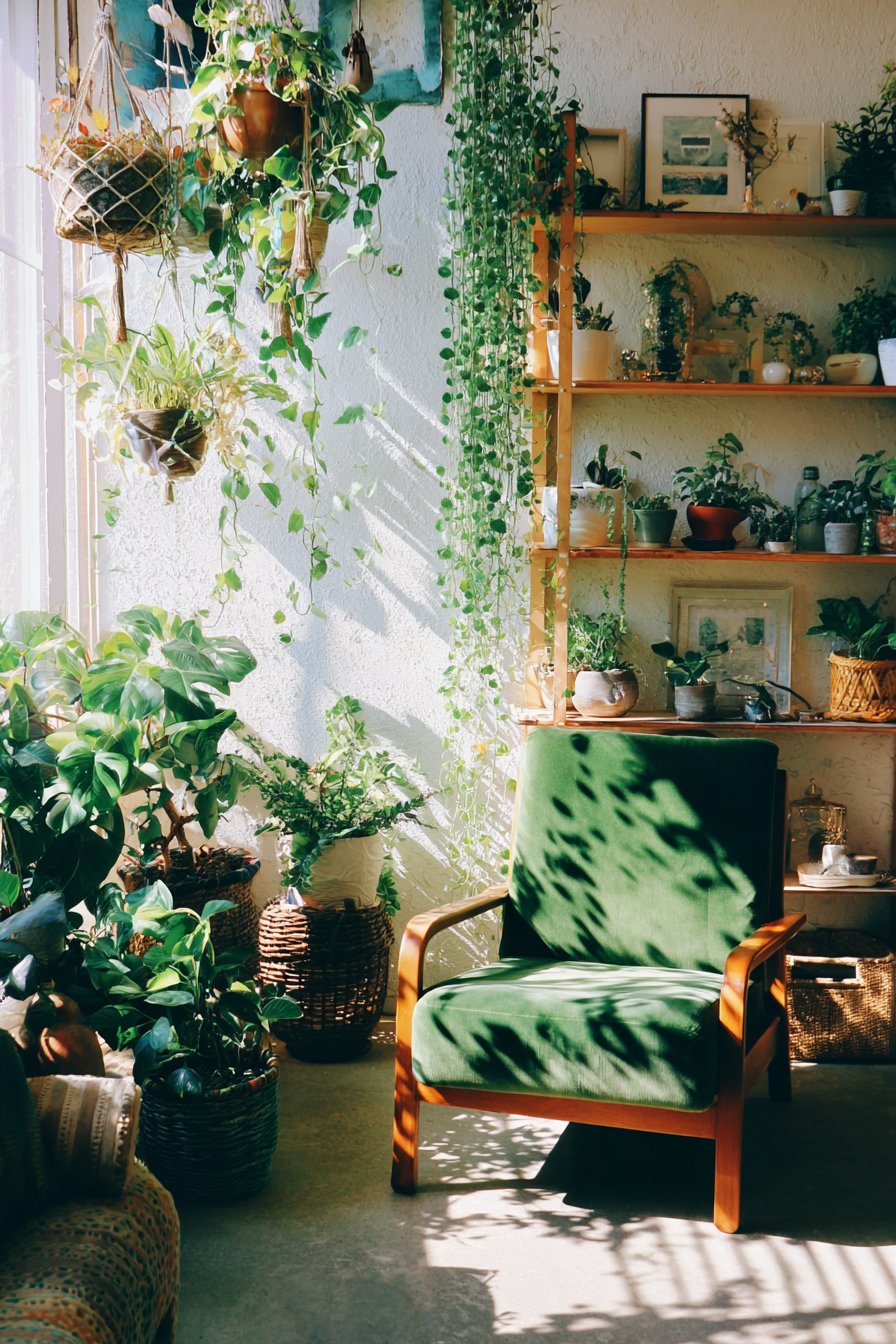
A dedicated plant corner transforms unused space into a captivating green focal point. A vintage wooden ladder shelf holds an array of small to medium specimens. Philodendrons, prayer plants, and trailing ivy create a curated botanical collection. Each plant receives individual attention while contributing to the overall composition.
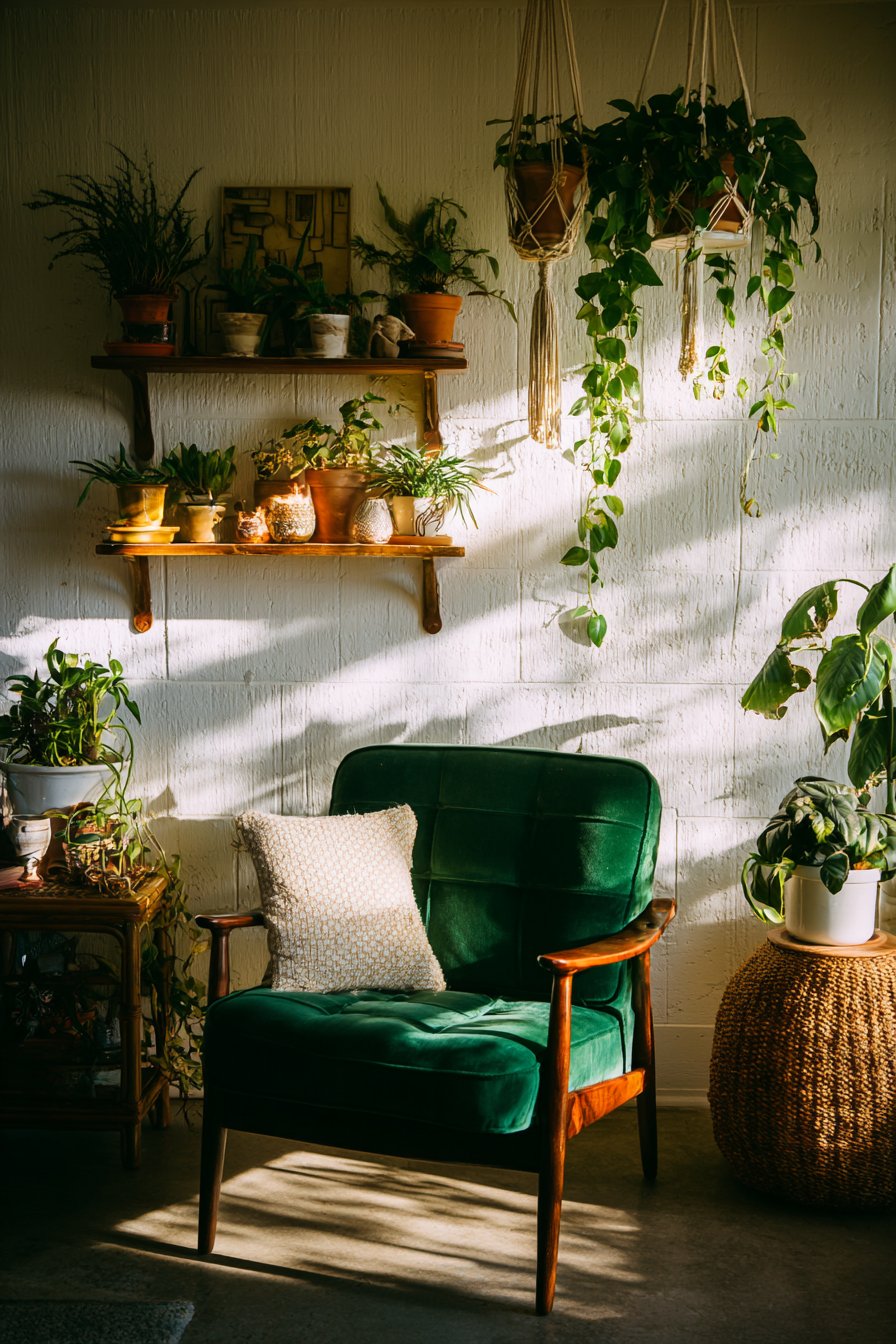
A mid-century modern armchair in forest green velvet provides comfortable seating for plant admiration. The rich color complements the greenery while adding sophisticated style. The positioning allows optimal viewing of the vertical garden display. Morning coffee becomes a ritual of botanical appreciation.
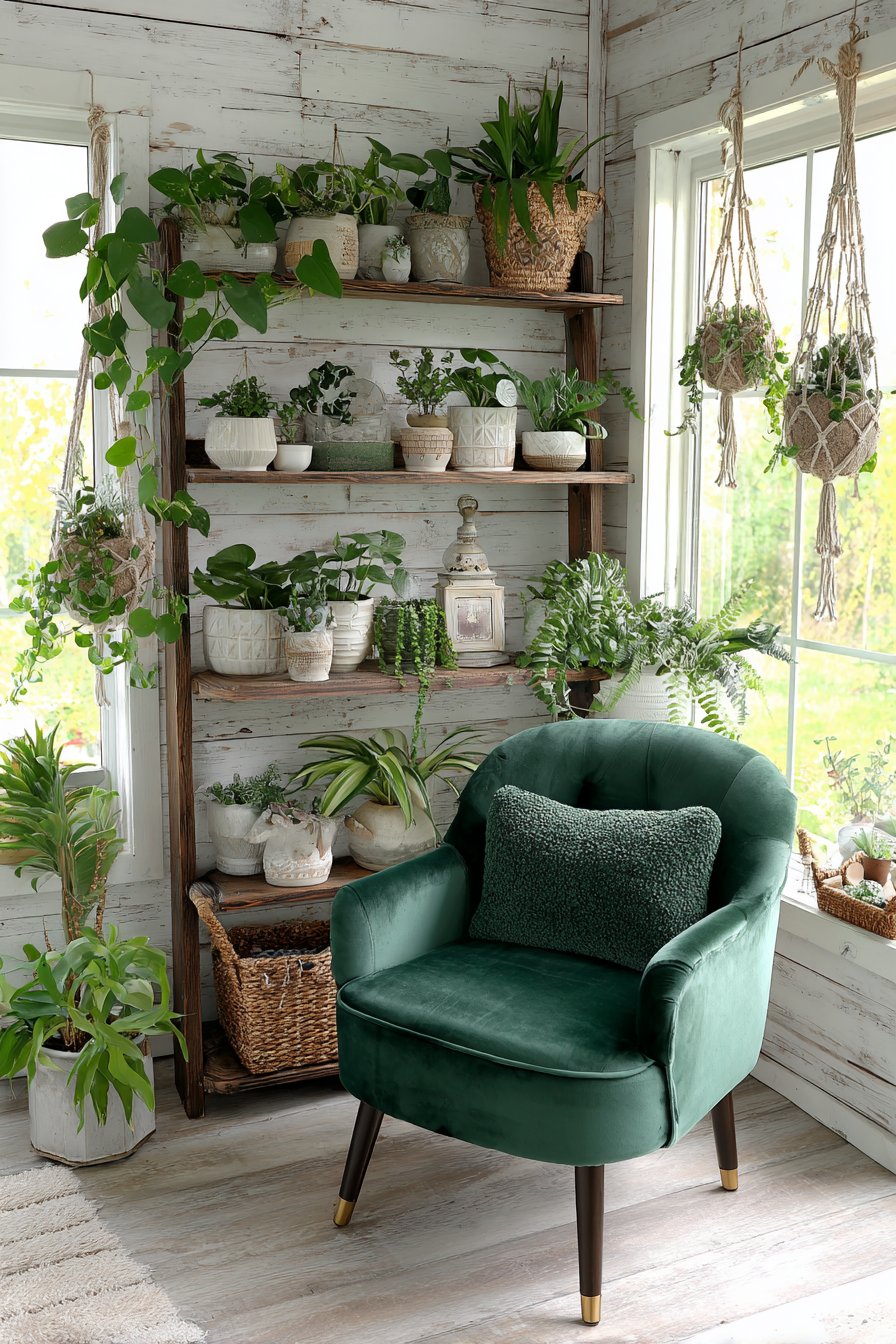
Macramé plant hangers suspended from the ceiling add vertical dimension to the corner. Spider plants and string of pearls cascade downward from their hanging positions. Natural morning light streams through nearby windows creating dappled patterns across white shiplap walls. These shadows add dynamic visual interest throughout the day.
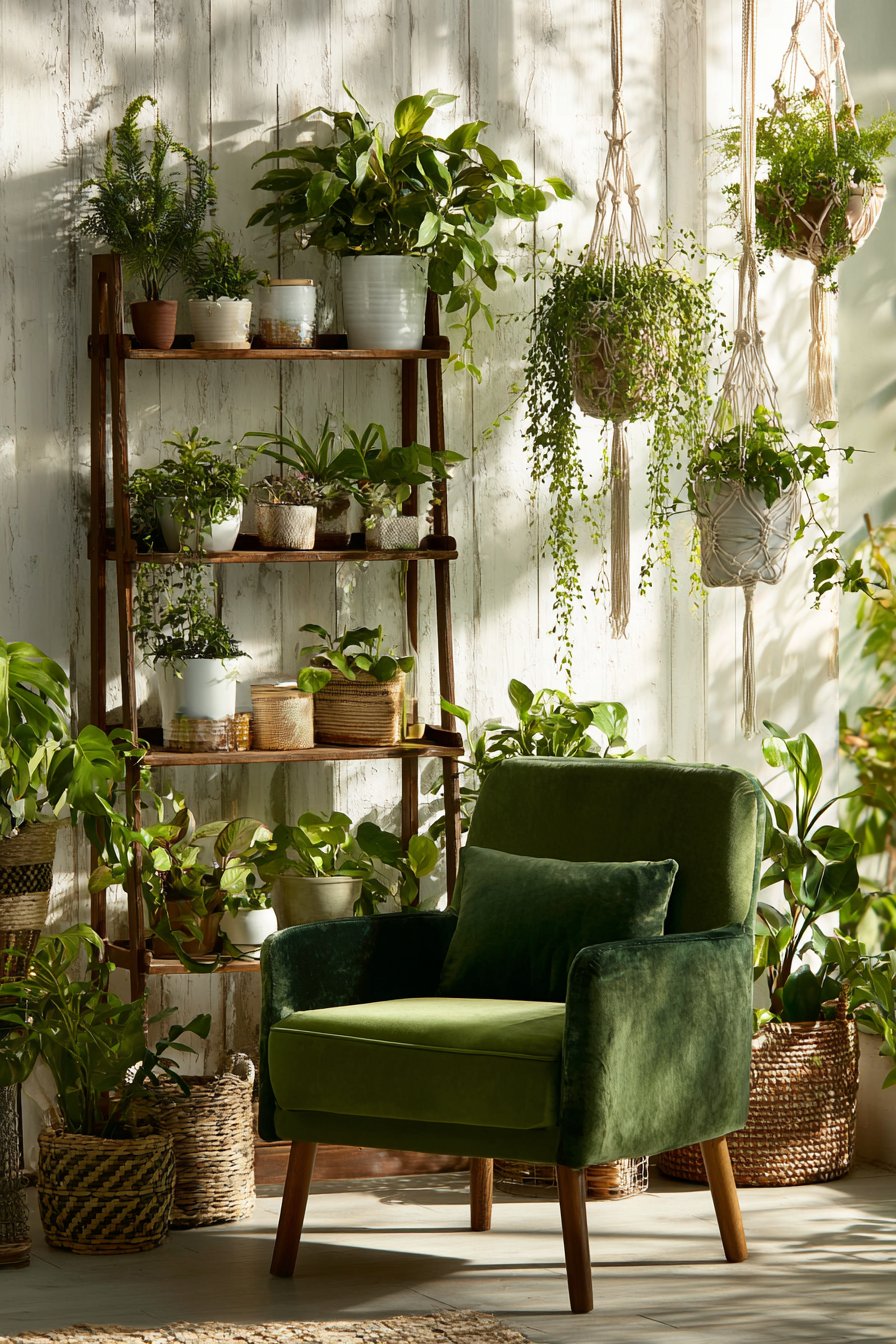
The layered greenery demonstrates thoughtful curation and varied planter materials. Ceramic pots mix with woven baskets for textural diversity. The vintage ladder adds character while serving practical display purposes. This corner proves small spaces can accommodate impressive plant collections when designed with intention.
Key Design Tips:
- Repurpose vintage ladders as unique vertical plant stands
- Group plants with similar light requirements for easier maintenance
- Use macramé hangers to maximize vertical growing space
- Position seating to create intentional plant viewing areas
- Select trailing varieties for hanging displays to add movement
- Paint walls in light colors to reflect natural light throughout the space
3. Botanical Gallery Wall with Living Elements
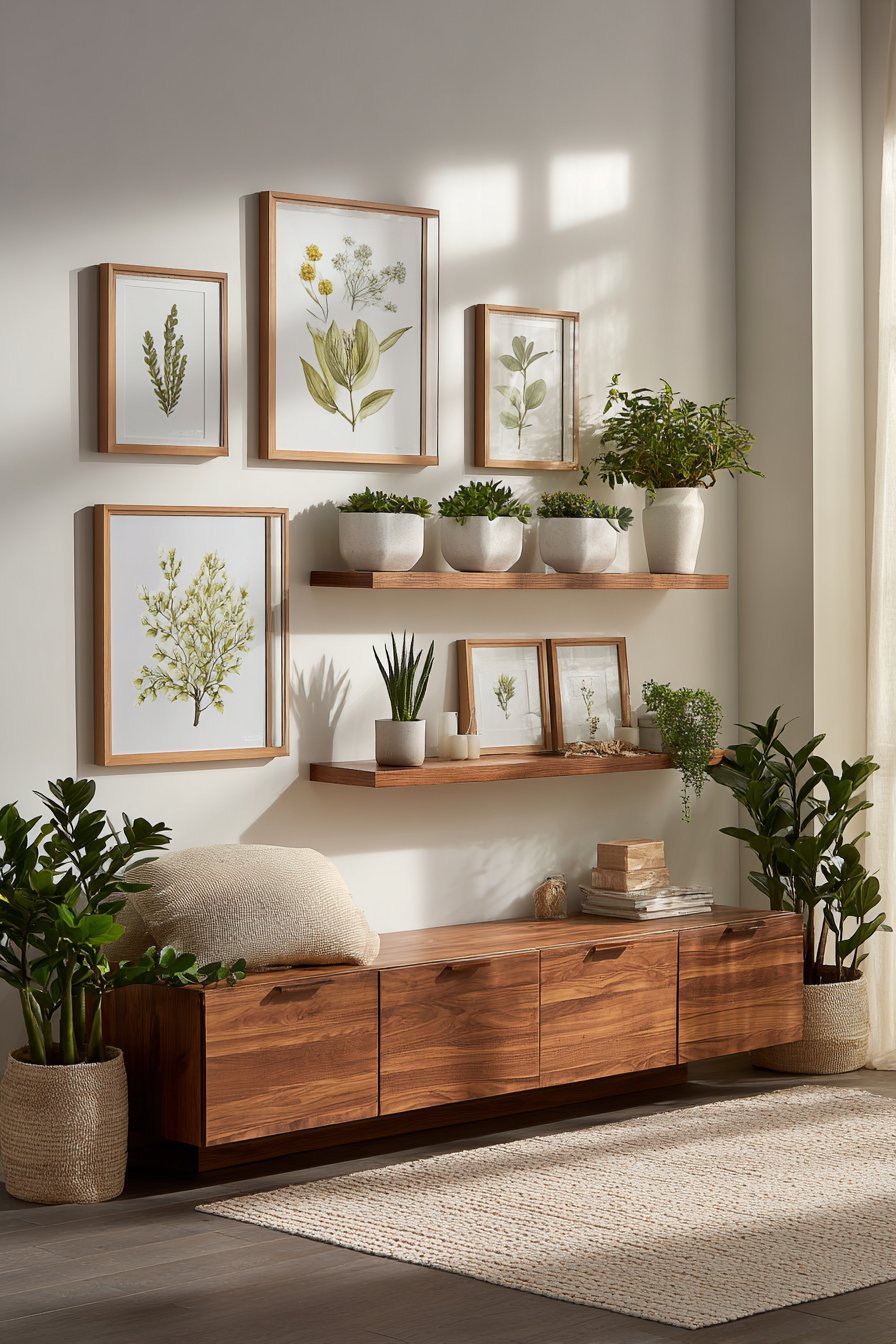
A gallery wall arrangement merges framed botanical prints with living plant displays. Floating shelves hold small succulents and air plants in minimalist planters. The combination of art and living specimens creates visual continuity between static and growing elements. White and concrete planters maintain clean aesthetic lines.
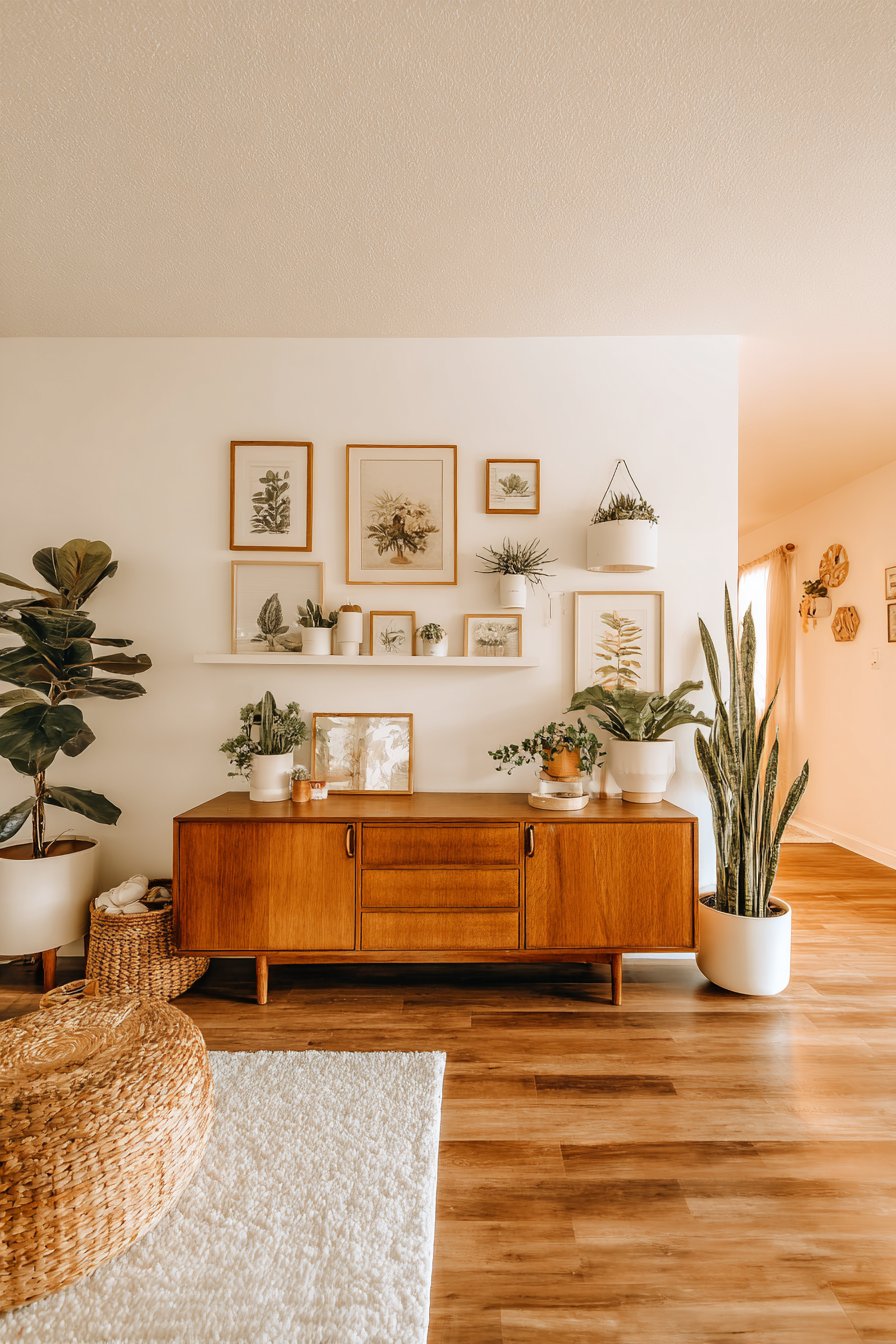
Below the gallery arrangement, a low-profile credenza in warm walnut provides substantial plant display space. A ZZ plant and rubber tree occupy this surface with room to grow. The furniture piece offers storage while serving as a functional plant stand. This dual purpose maximizes space efficiency.
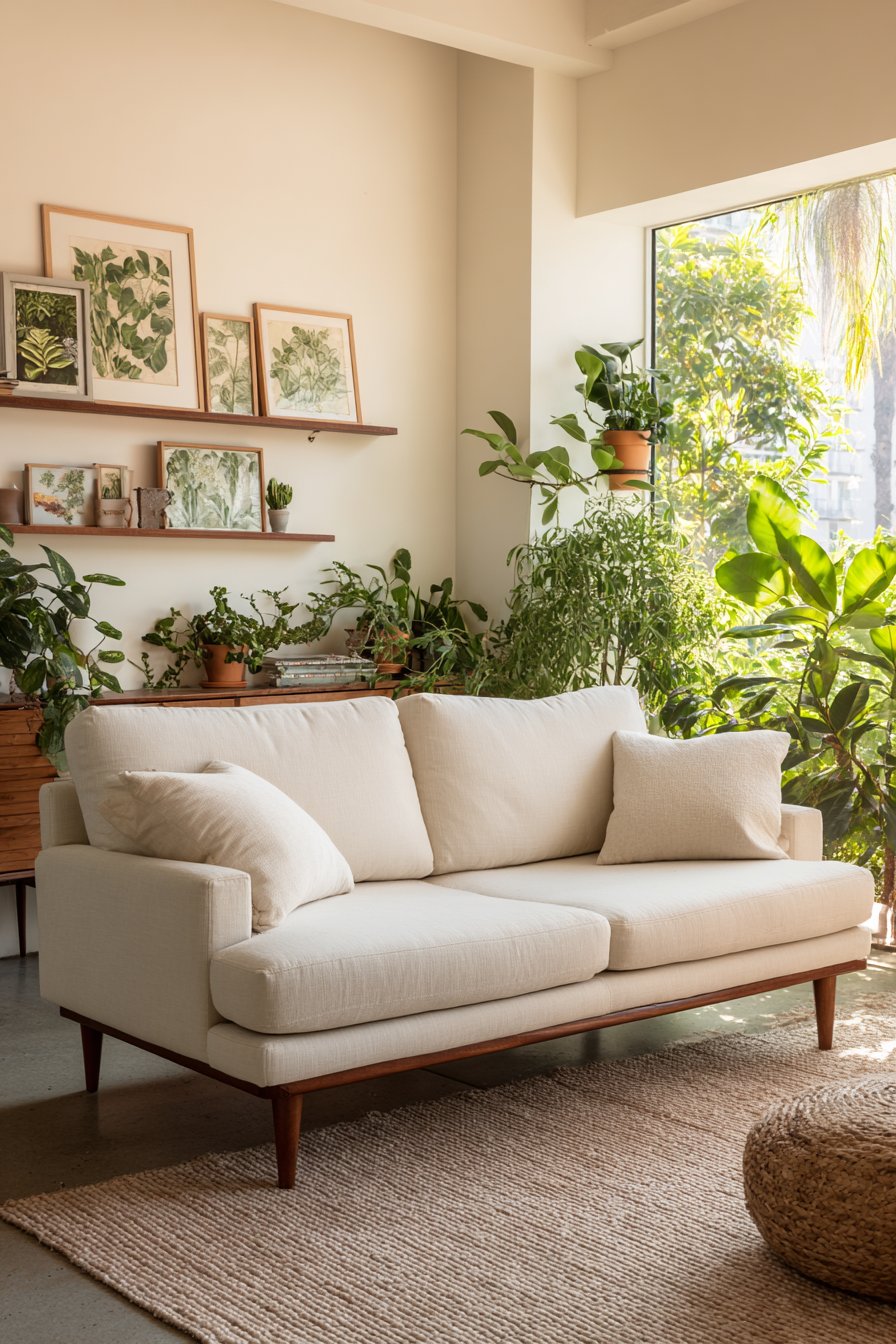
The surrounding space maintains a neutral color palette that supports botanical elements. Cream walls provide a calming backdrop for both artwork and living greenery. Natural fiber textures appear in rugs and decorative accessories. Soft afternoon light highlights the botanical artwork while nurturing the living plants.
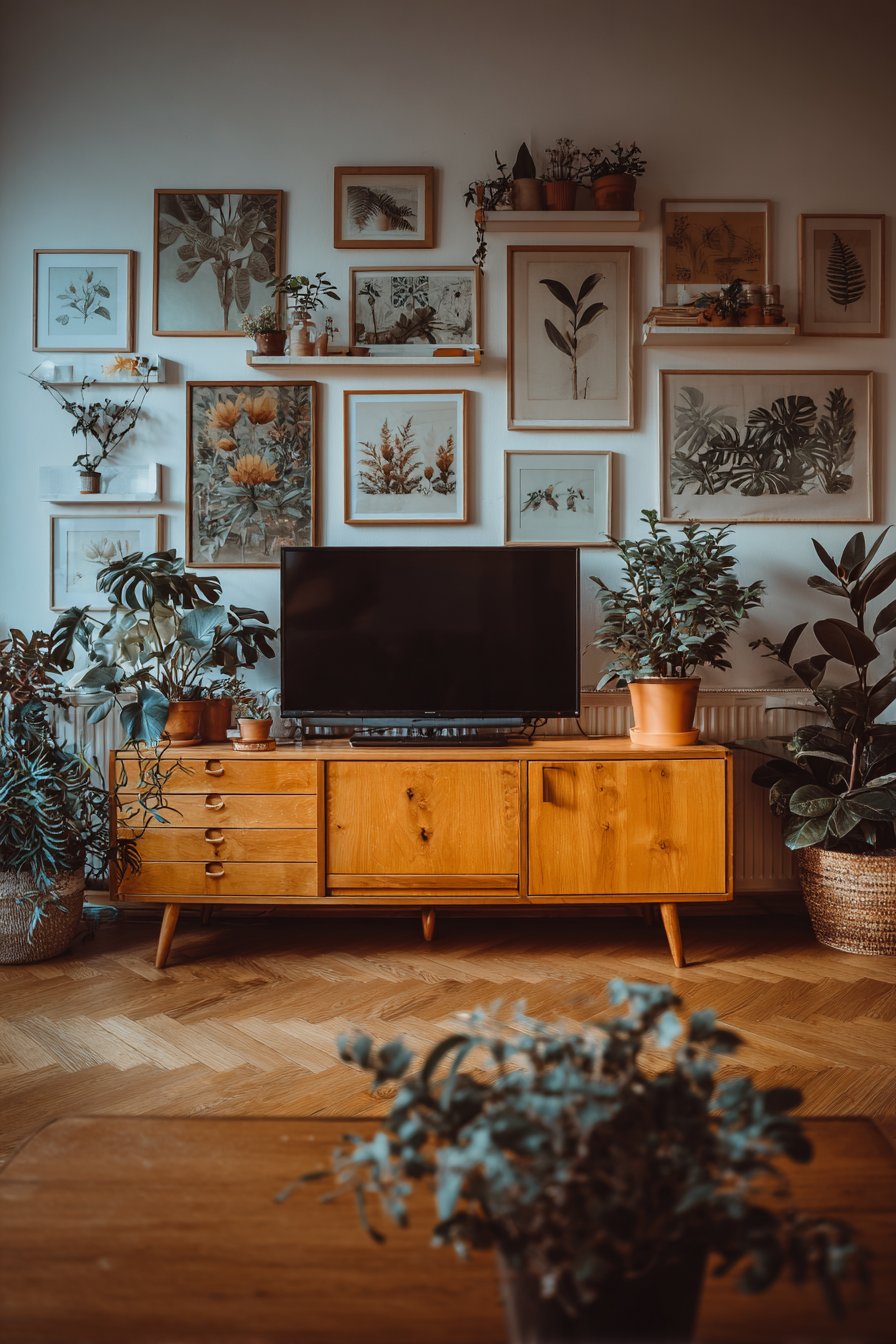
This design approach suits those who appreciate both traditional art and living greenery. The gallery wall creates a permanent focal point that evolves as plants grow. Small succulents require minimal maintenance while providing maximum visual impact. Air plants add sculptural interest without demanding extensive care routines.
Key Design Tips:
- Mix framed botanical prints with small living plants for dimensional interest
- Use floating shelves to display lightweight plants without floor space
- Choose low-maintenance varieties like succulents and air plants for shelving
- Maintain neutral planter colors to create cohesive visual flow
- Position furniture below wall displays to create layered plant arrangements
- Select credenzas with adequate surface space for larger plant specimens
4. Dramatic Vertical Living Wall Feature
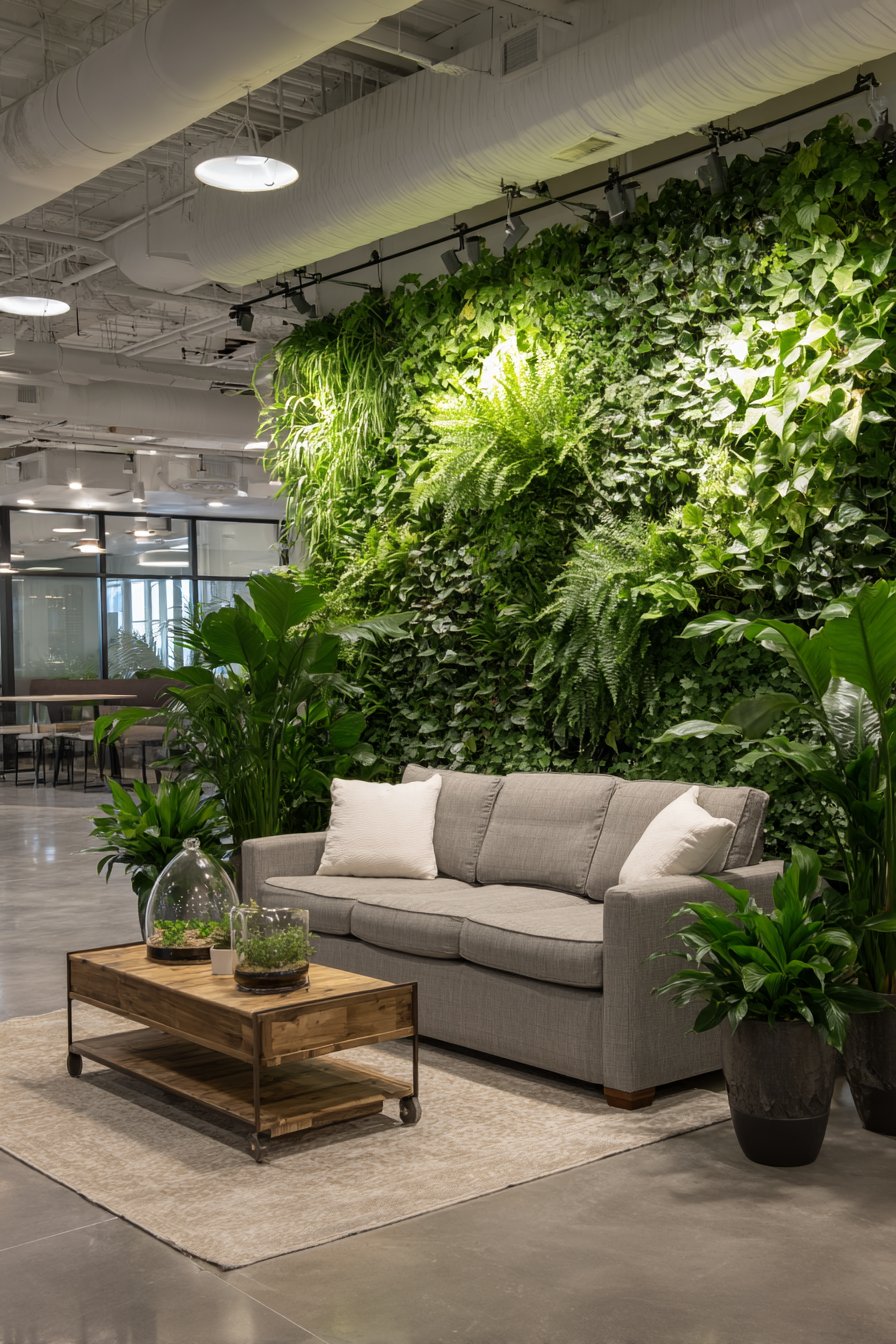
A stunning vertical living wall installation creates an unforgettable focal point. Mixed ferns, pothos varieties, and peperomia form a lush green tapestry. This dramatic feature demonstrates commitment to bringing nature indoors. The living wall becomes functional art that purifies air and inspires daily.
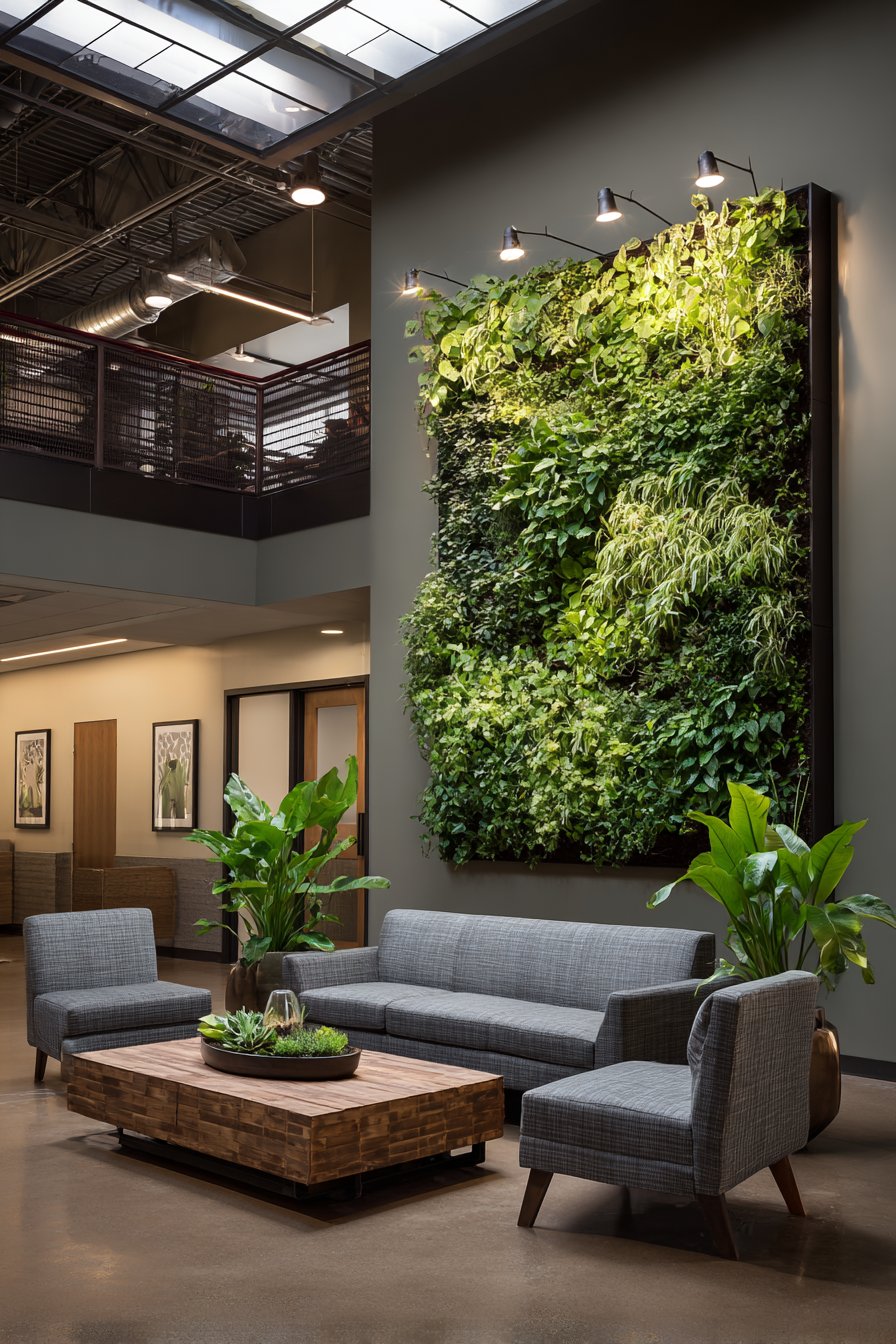
A contemporary grey sofa with linen upholstery faces the impressive plant wall. The neutral furniture allows the verdant installation to command complete attention. A natural wood coffee table displays a terrarium garden and small potted herbs. These smaller plant elements echo the larger wall installation.
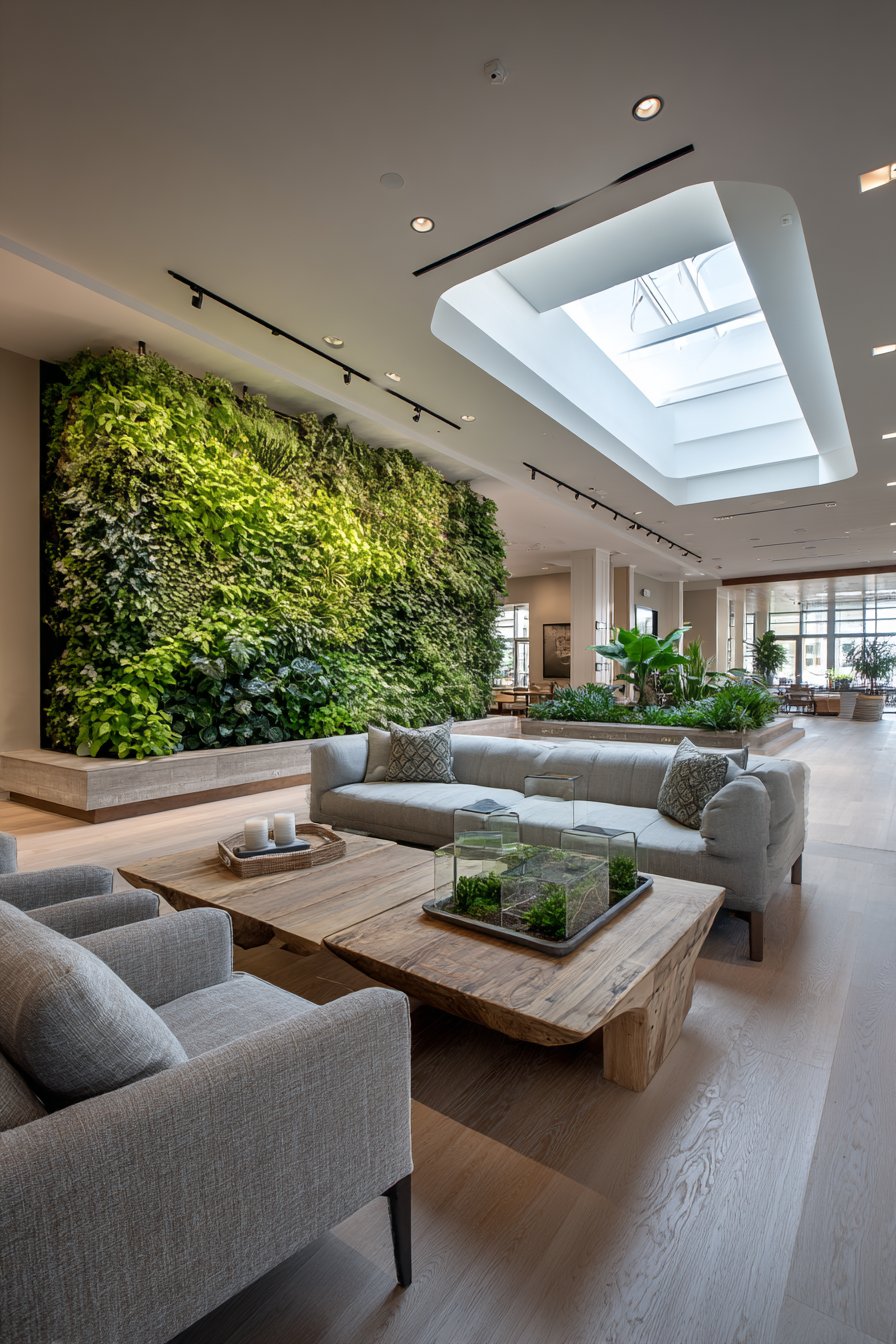
Additional floor plants including bird of paradise and rubber plants flank the seating area. These specimens create visual balance and prevent the living wall from overwhelming the space. Recessed lighting with adjustable spots illuminates the wall feature during evening hours. Natural light from skylights provides ambient daytime illumination.
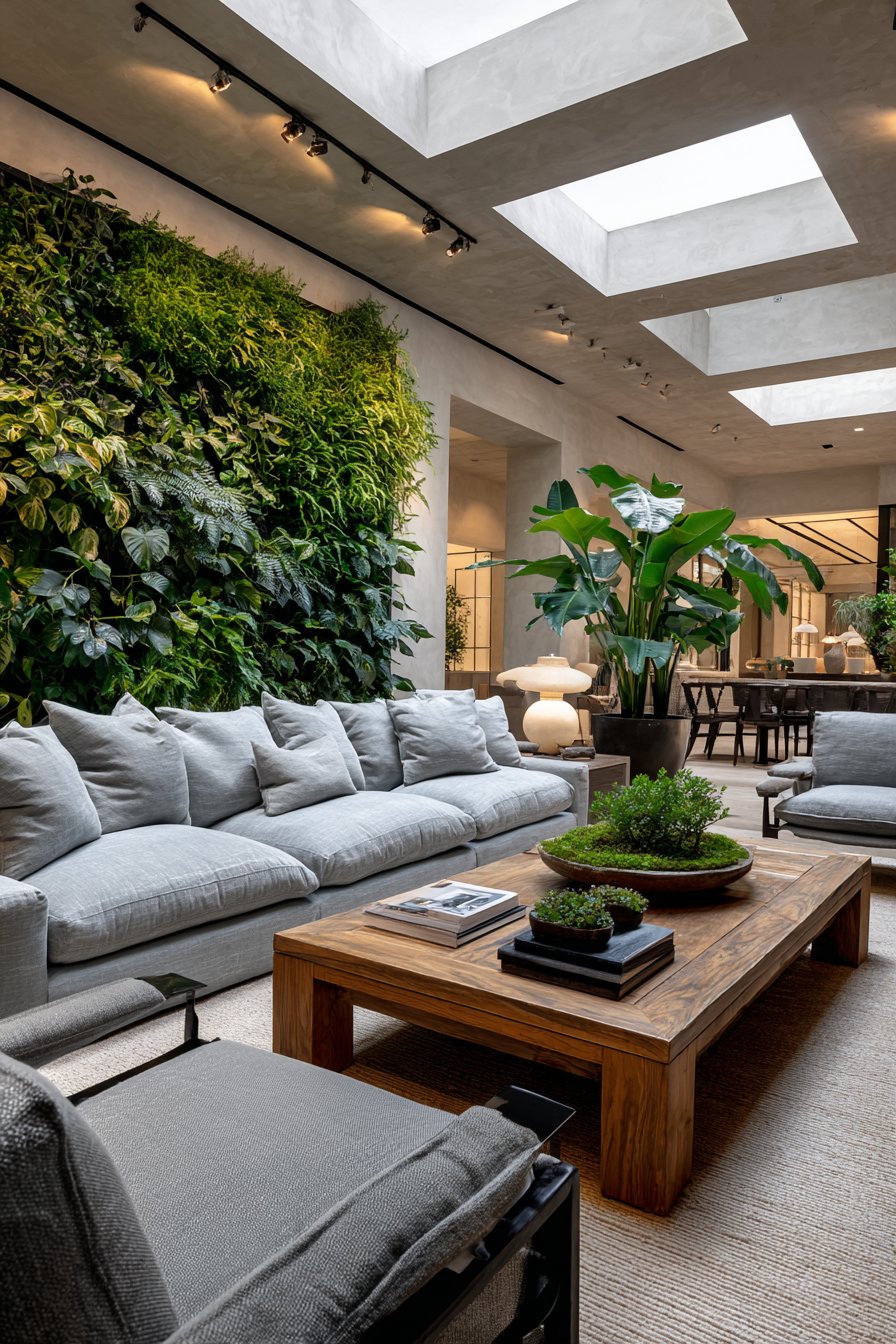
The scale of this living wall transforms ordinary rooms into extraordinary botanical experiences. Professional installation ensures proper irrigation and drainage systems. The variety of plants creates textural diversity within the green palette. This design suits those ready to make significant commitments to indoor gardening.
Key Design Tips:
- Consult professionals for living wall installation and irrigation systems
- Mix plant varieties with different textures for visual complexity
- Install adjustable lighting to supplement natural light sources
- Balance dramatic features with simpler furniture selections
- Include smaller plant displays to create cohesive design flow
- Plan for regular maintenance access when designing living walls
5. Cozy Reading Nook Plant Canopy
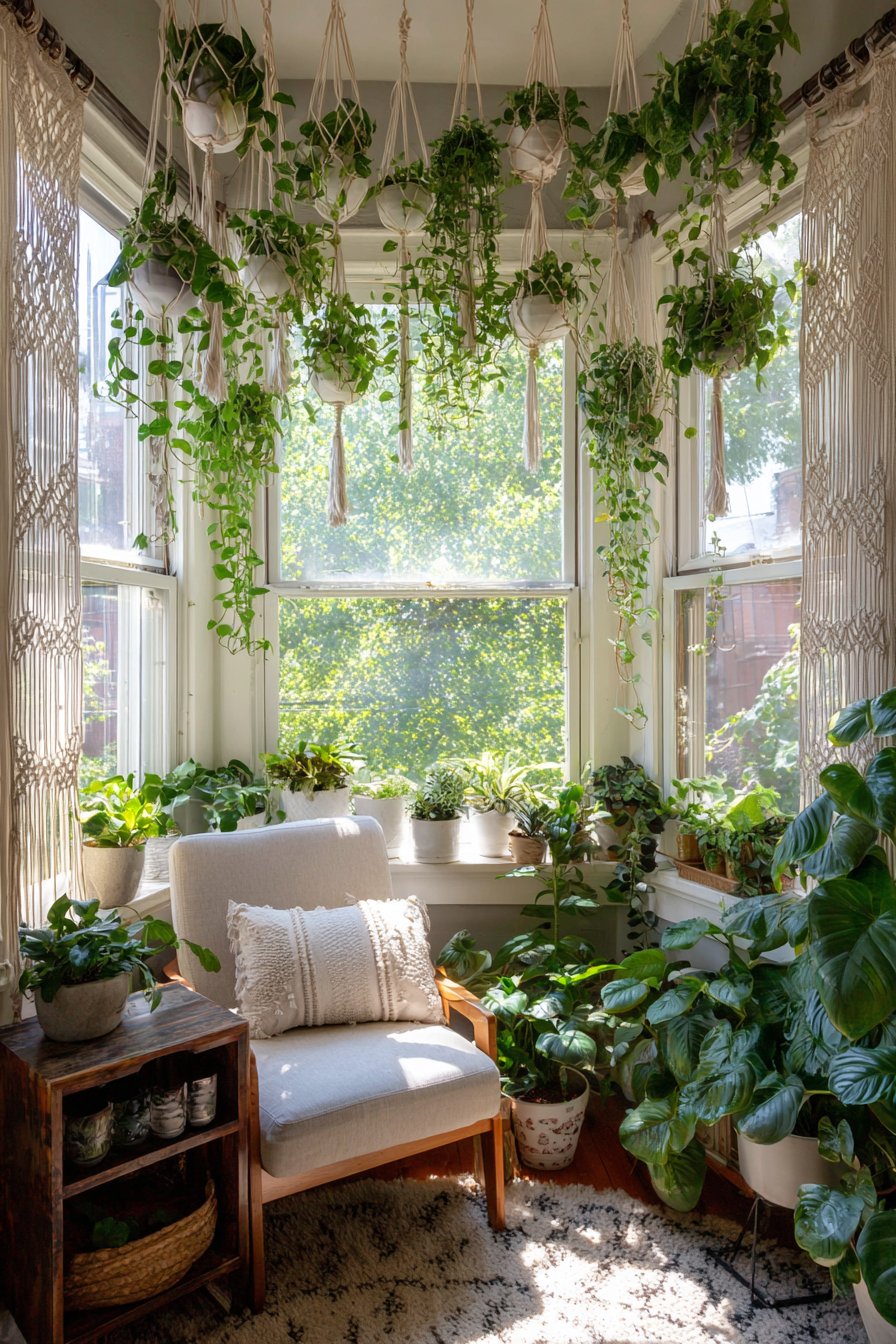
A comfortable reading chair in natural linen creates an intimate retreat surrounded by greenery. Multiple macramé plant hangers suspend above holding pothos, string of hearts, and Boston ferns. The hanging plants create a canopy effect that feels protective and peaceful. This layered approach maximizes plant presence without consuming floor space.
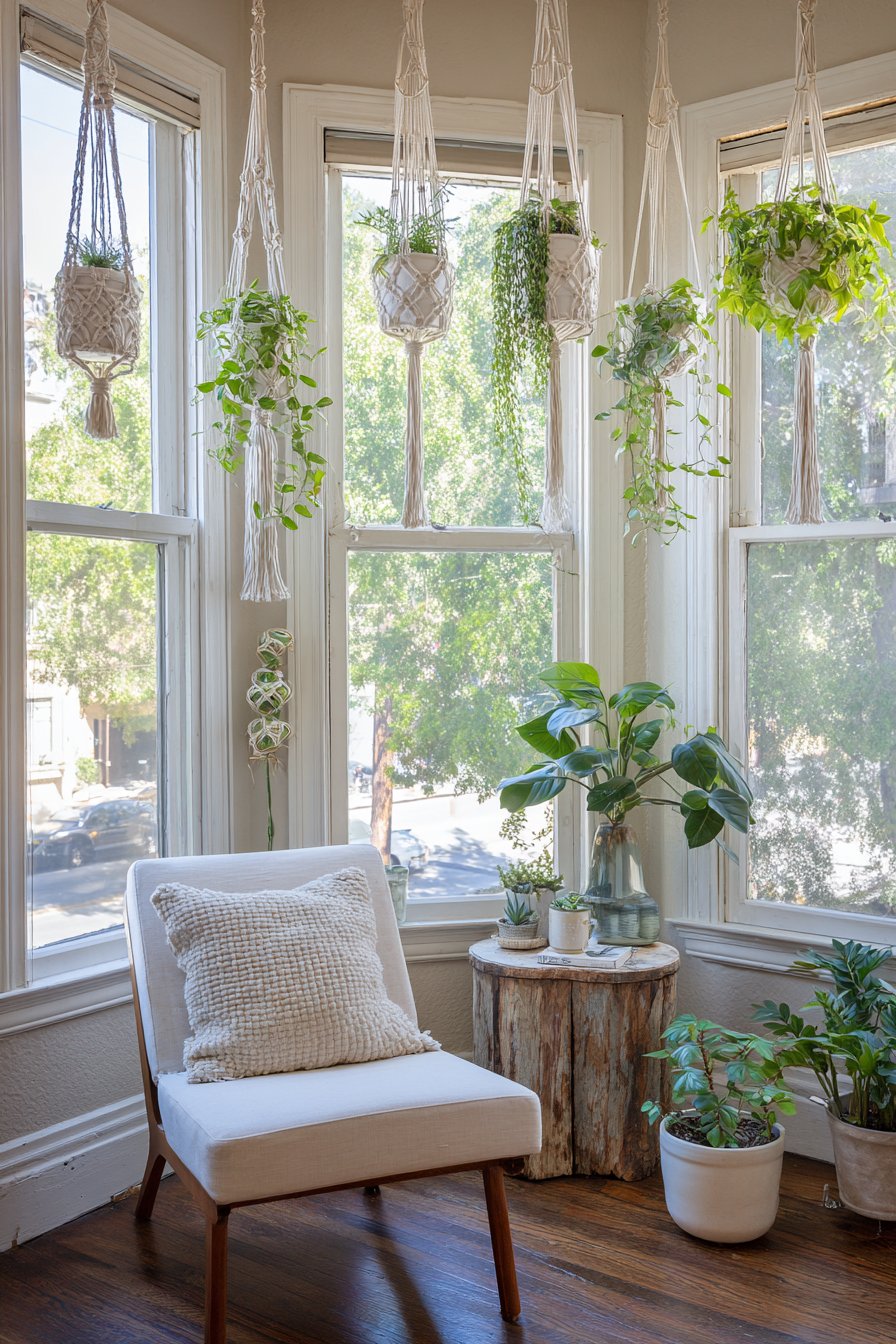
Floor plants including monstera deliciosa and fiddle leaf fig frame the reading nook perimeter. These larger specimens provide structural anchoring for the vertical hanging displays. A small side table crafted from reclaimed wood holds trailing ivy in a ceramic planter. Every surface contributes to the immersive botanical experience.
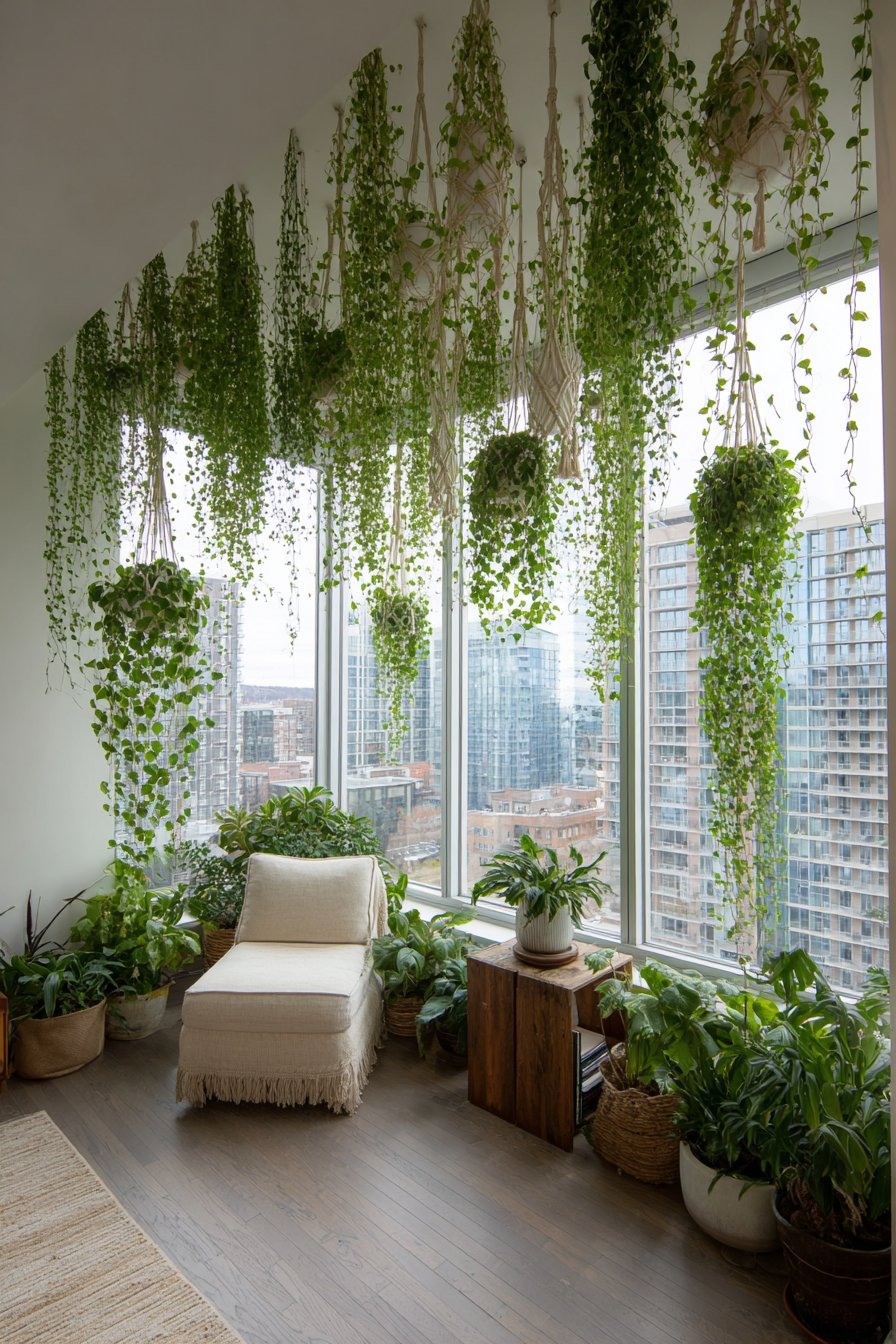
Large windows provide bright indirect light perfect for plant growth and comfortable reading. The natural illumination filters through hanging greenery creating dappled shadow patterns. This play of light and shadow adds dynamic visual interest throughout the day. The overall effect resembles sitting beneath a forest canopy.
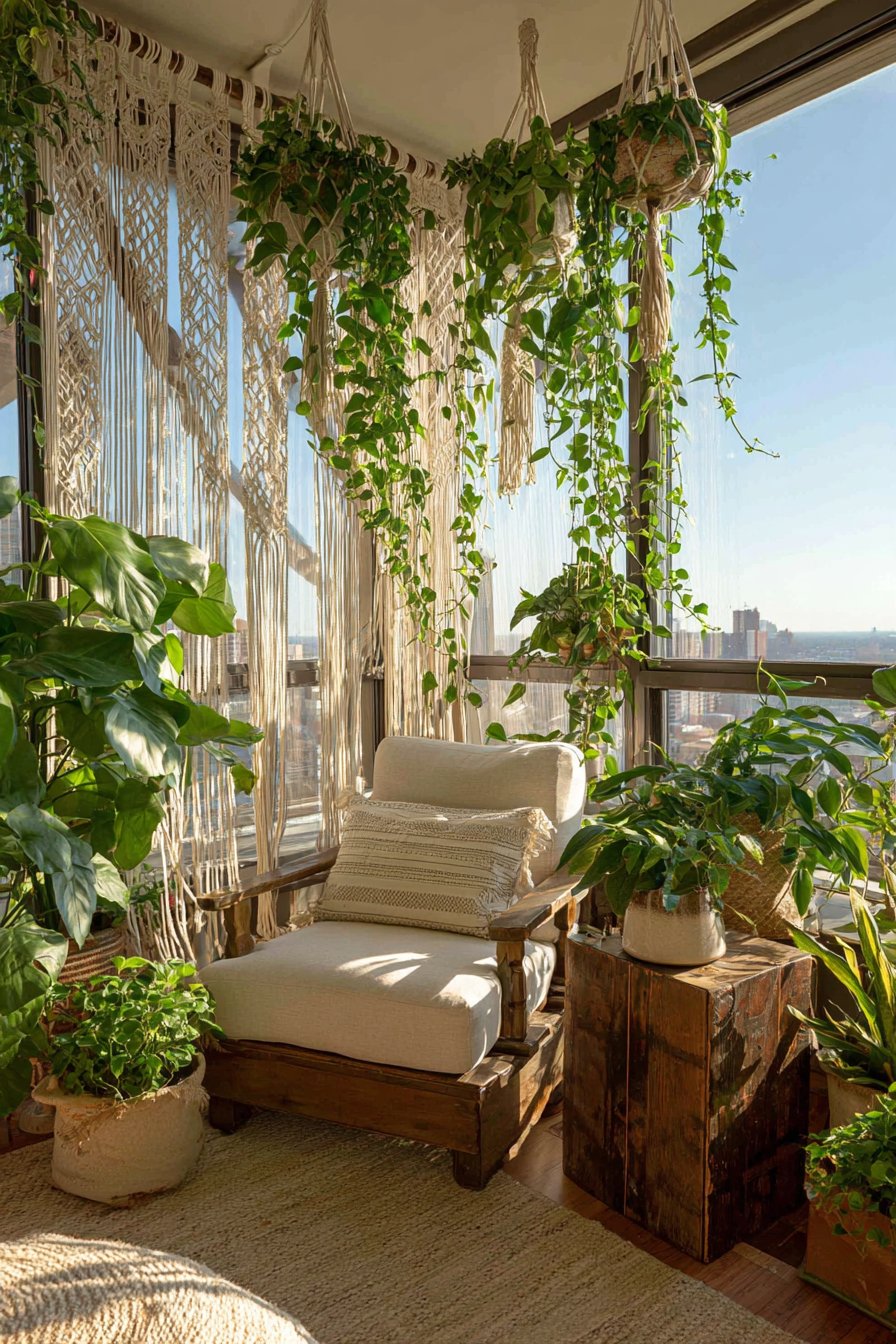
This design creates a dedicated space for relaxation and contemplation. The abundant greenery provides psychological benefits alongside aesthetic appeal. The intimate scale makes this approach accessible for smaller homes or apartments. Plant lovers can create personal sanctuaries within limited square footage.
Key Design Tips:
- Install ceiling hooks rated for plant weight including wet soil
- Vary hanging plant heights to create natural canopy layers
- Choose trailing varieties that cascade downward for maximum effect
- Position reading lights to supplement natural window illumination
- Use reclaimed wood furniture to enhance organic aesthetic
- Select comfortable seating that encourages extended relaxation time
6. Indoor Tree as Living Sculpture
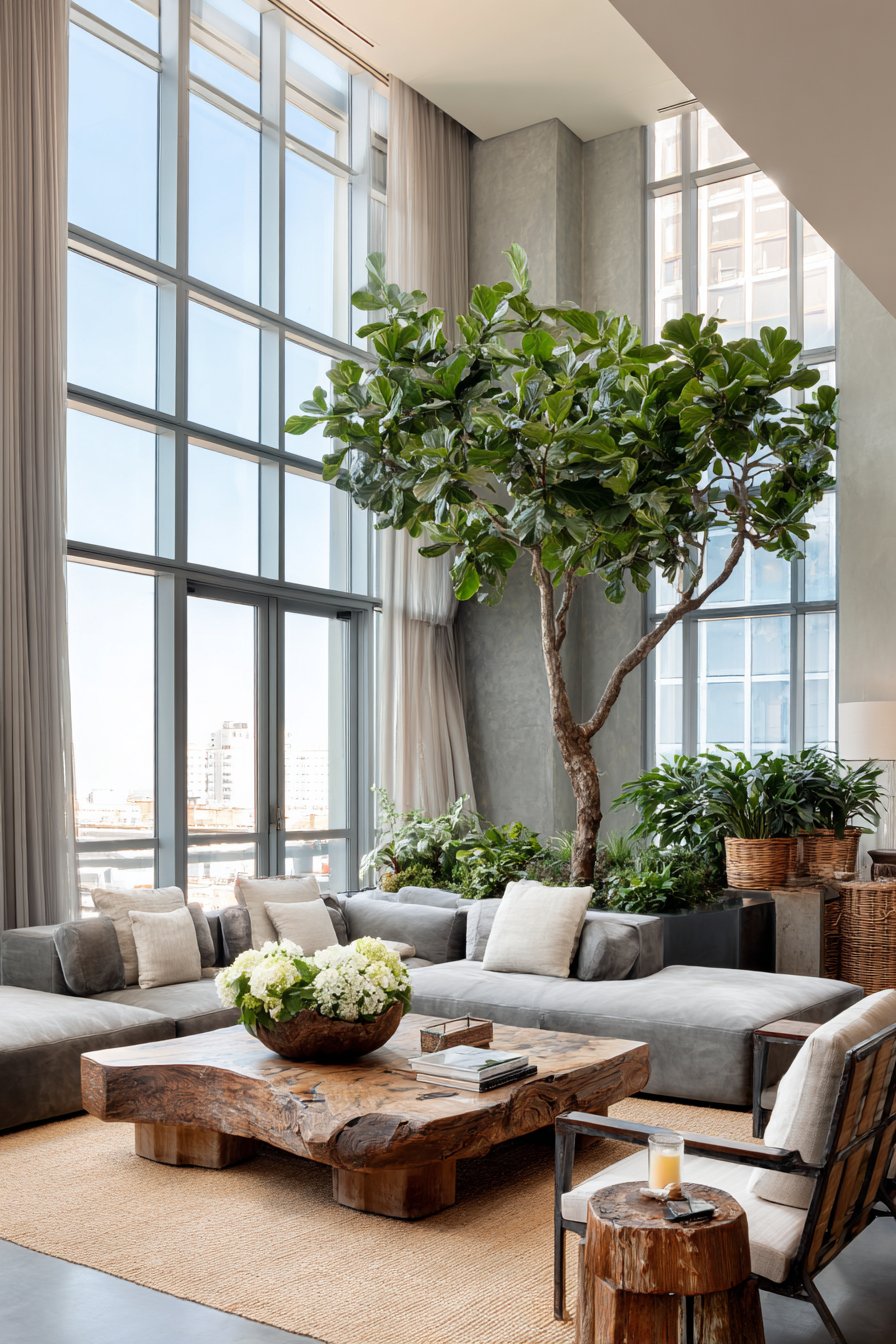
A substantial indoor tree positioned as living sculpture transforms the room’s entire character. A mature fiddle leaf fig or rubber tree stands near floor-to-ceiling windows. This placement provides essential bright indirect light while creating dramatic silhouettes. The tree becomes architectural sculpture that happens to be alive.
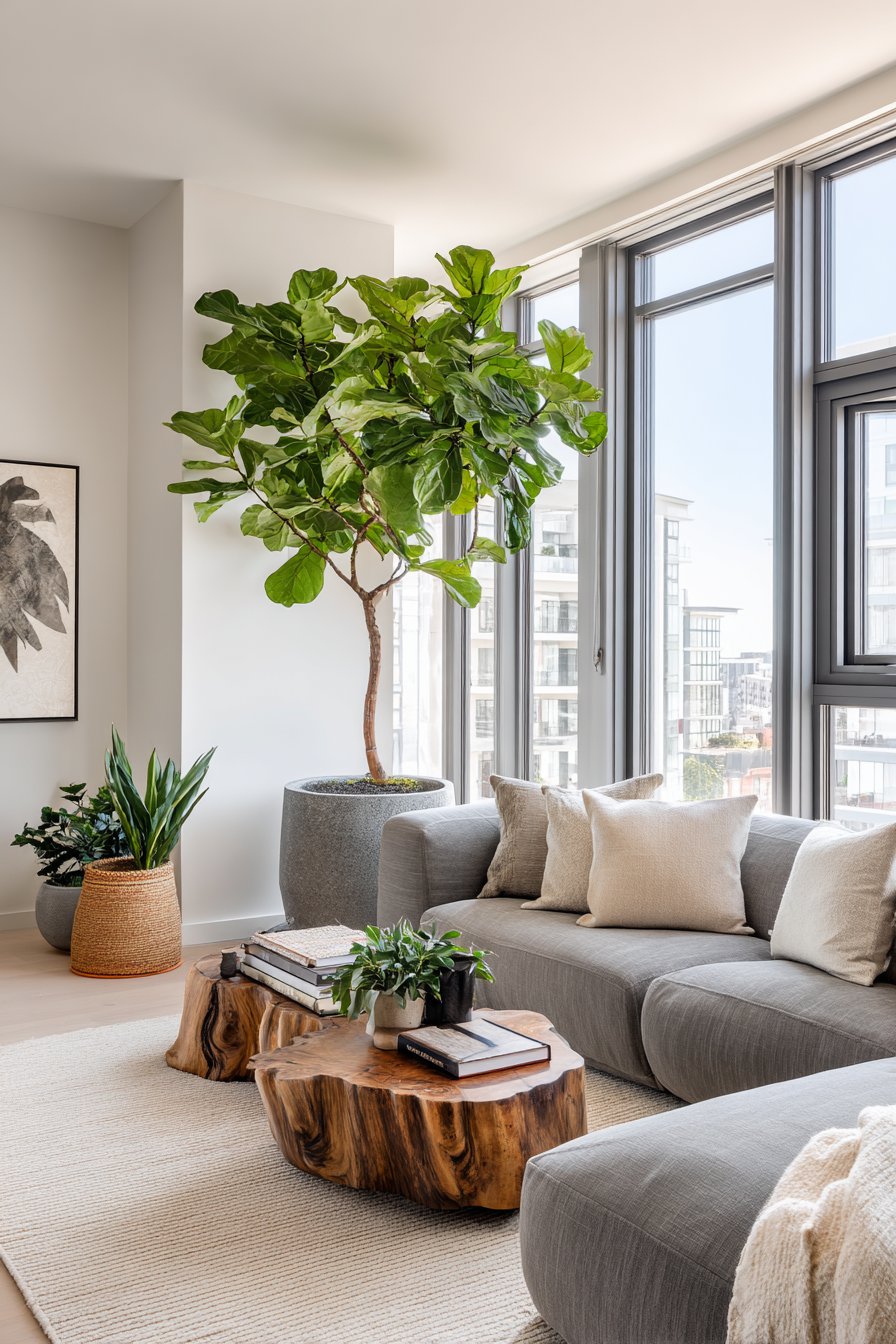
Surrounding furniture includes a modular sofa in warm grey tones with organic cotton cushions. The neutral palette prevents competition with the statement tree. A live-edge wood coffee table echoes natural forms found in the tree’s structure. Material choices reinforce the nature-inspired theme throughout.
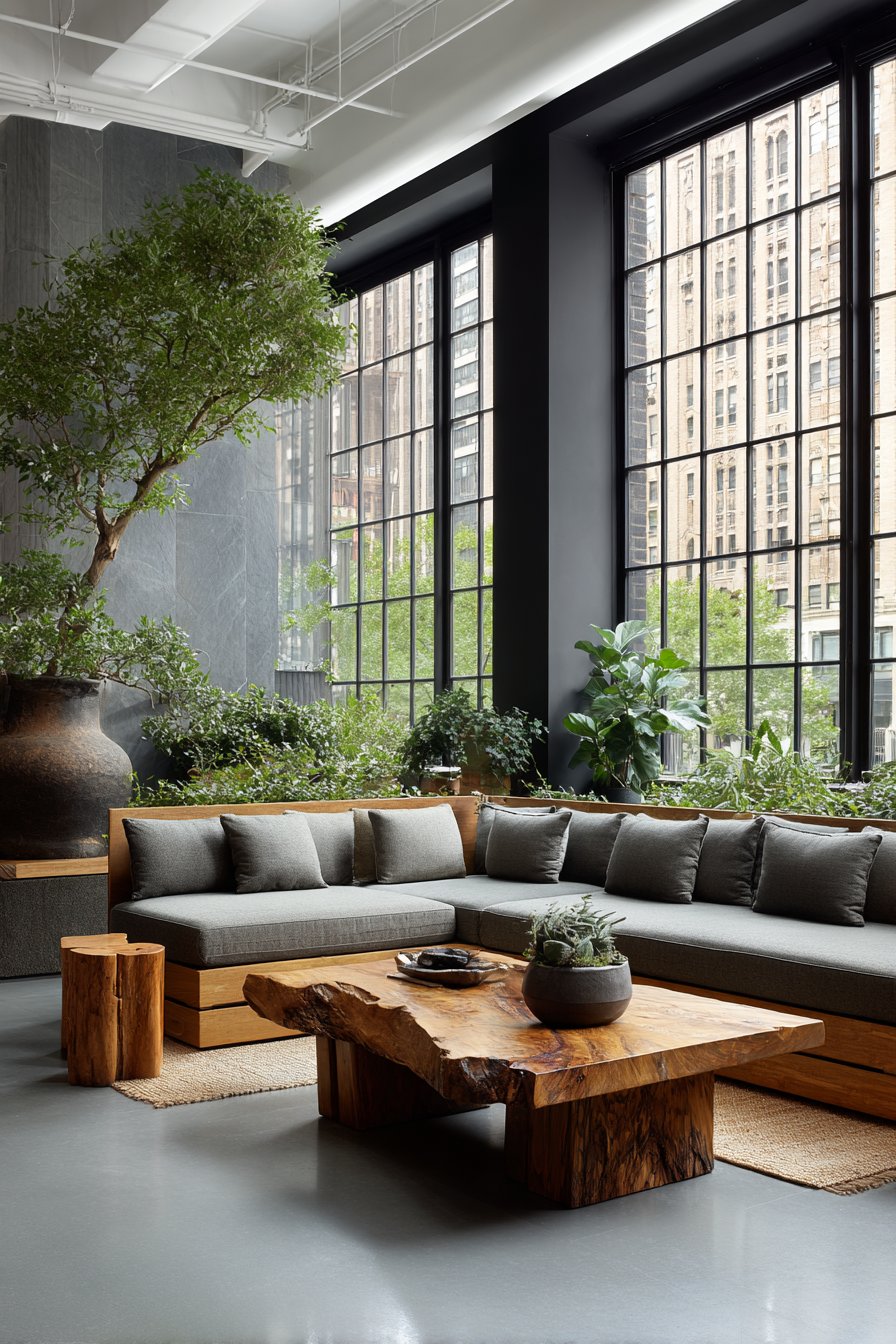
Smaller companion plants create layers at varying heights around the space. Snake plants, peace lilies, and Chinese evergreens fill intermediate zones. Natural jute and sisal textures appear in rugs and baskets used as planters. These organic materials complement the dominant tree presence.
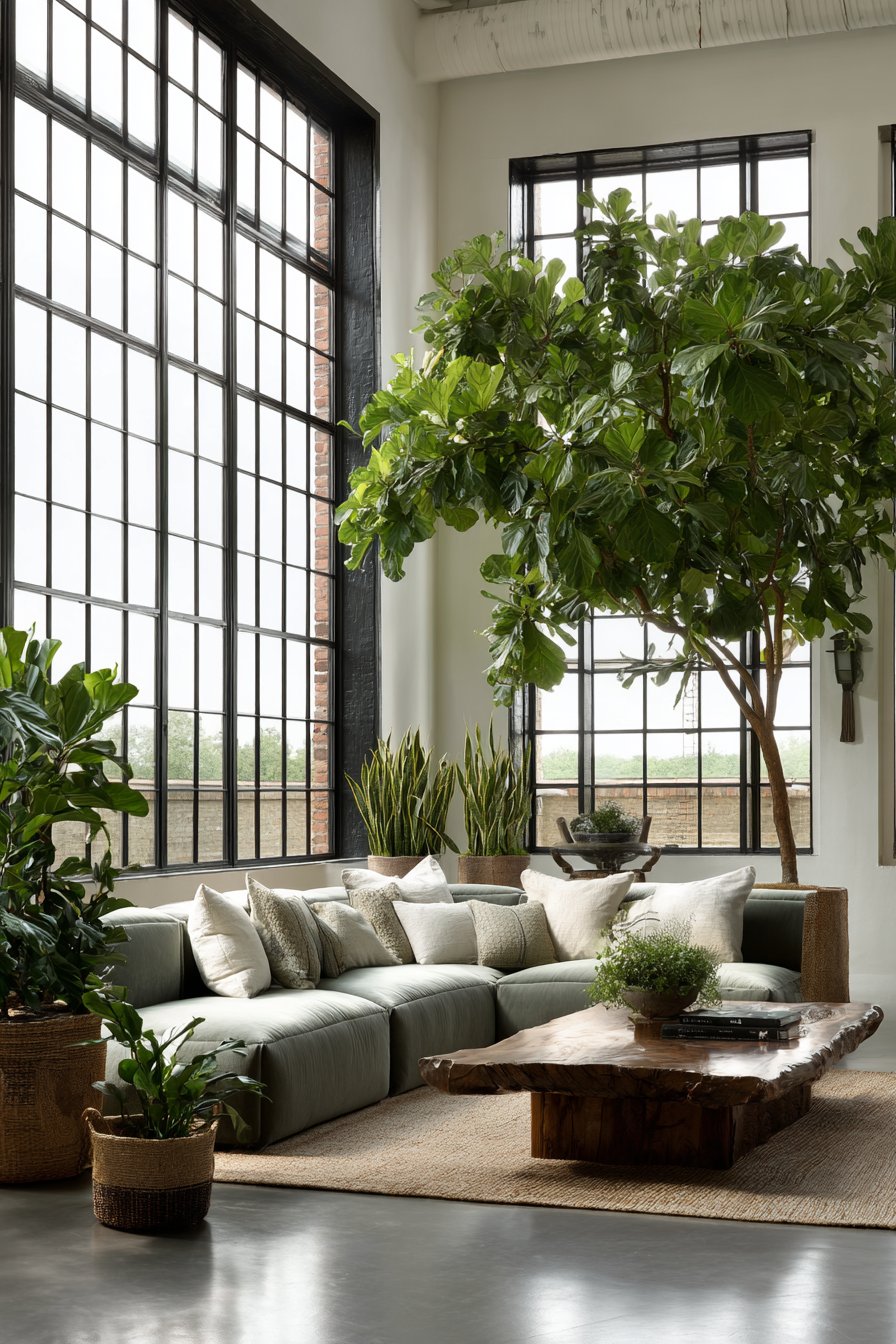
The impressive scale of the indoor tree anchors the entire room design. Smaller plants create visual rhythm without diminishing the tree’s impact. This approach suits spacious rooms with abundant natural light. The investment in a mature specimen pays dividends through years of growth and presence.
Key Design Tips:
- Choose tree species appropriate for indoor light conditions and ceiling height
- Position large trees near windows without direct harsh sunlight
- Use plant dollies for easy repositioning during cleaning or rearranging
- Select furniture that complements rather than competes with the tree
- Add smaller plants to create balanced composition throughout the room
- Maintain consistent watering schedules for large specimens requiring significant moisture
7. Built-In Window Seat Garden
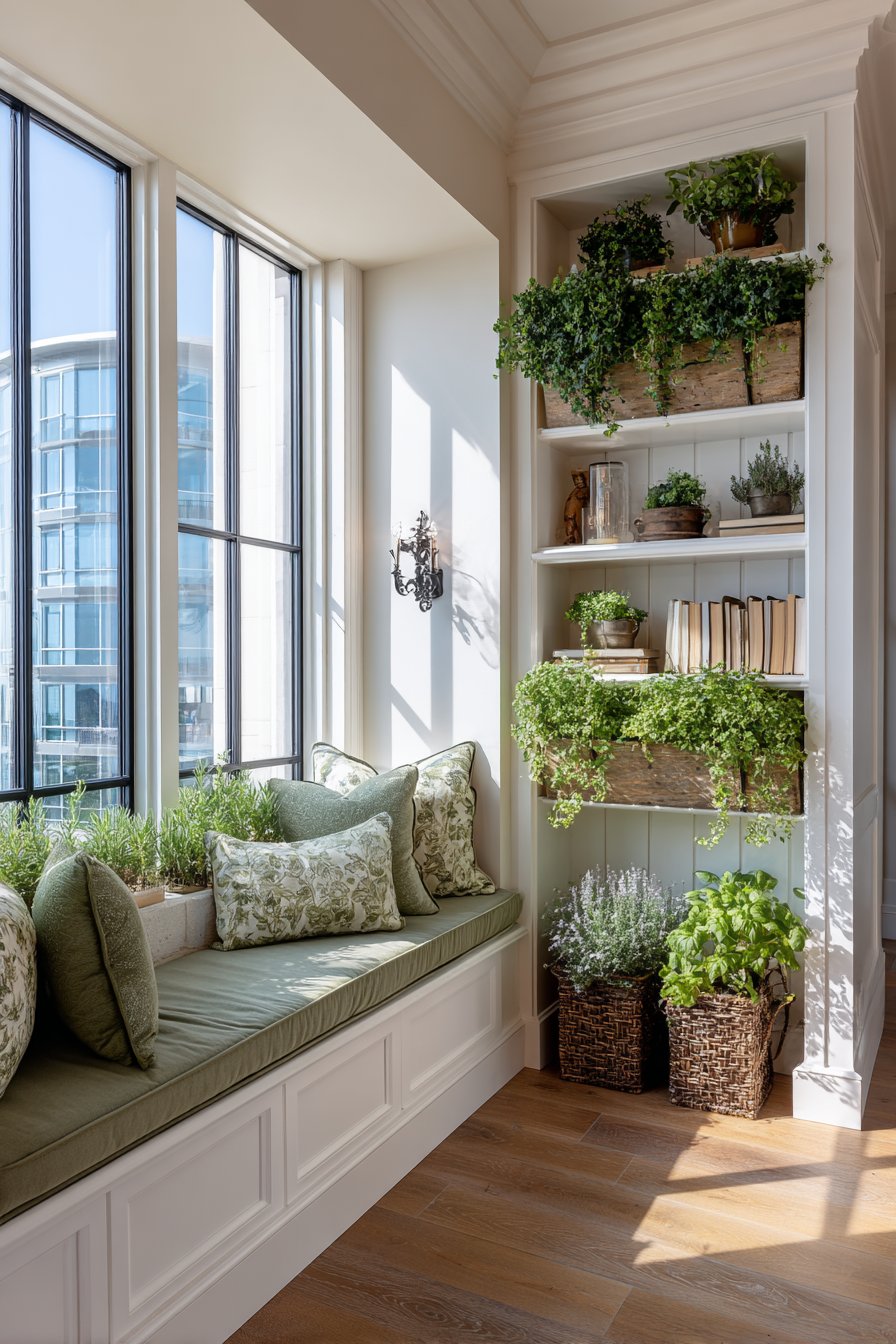
Built-in window seats with integrated planter boxes create functional indoor gardens. The seating area includes comfortable cushions in botanical green prints coordinating with living plants. This design merges architectural elements with living greenery seamlessly. Herbs and trailing plants fill the integrated planters.
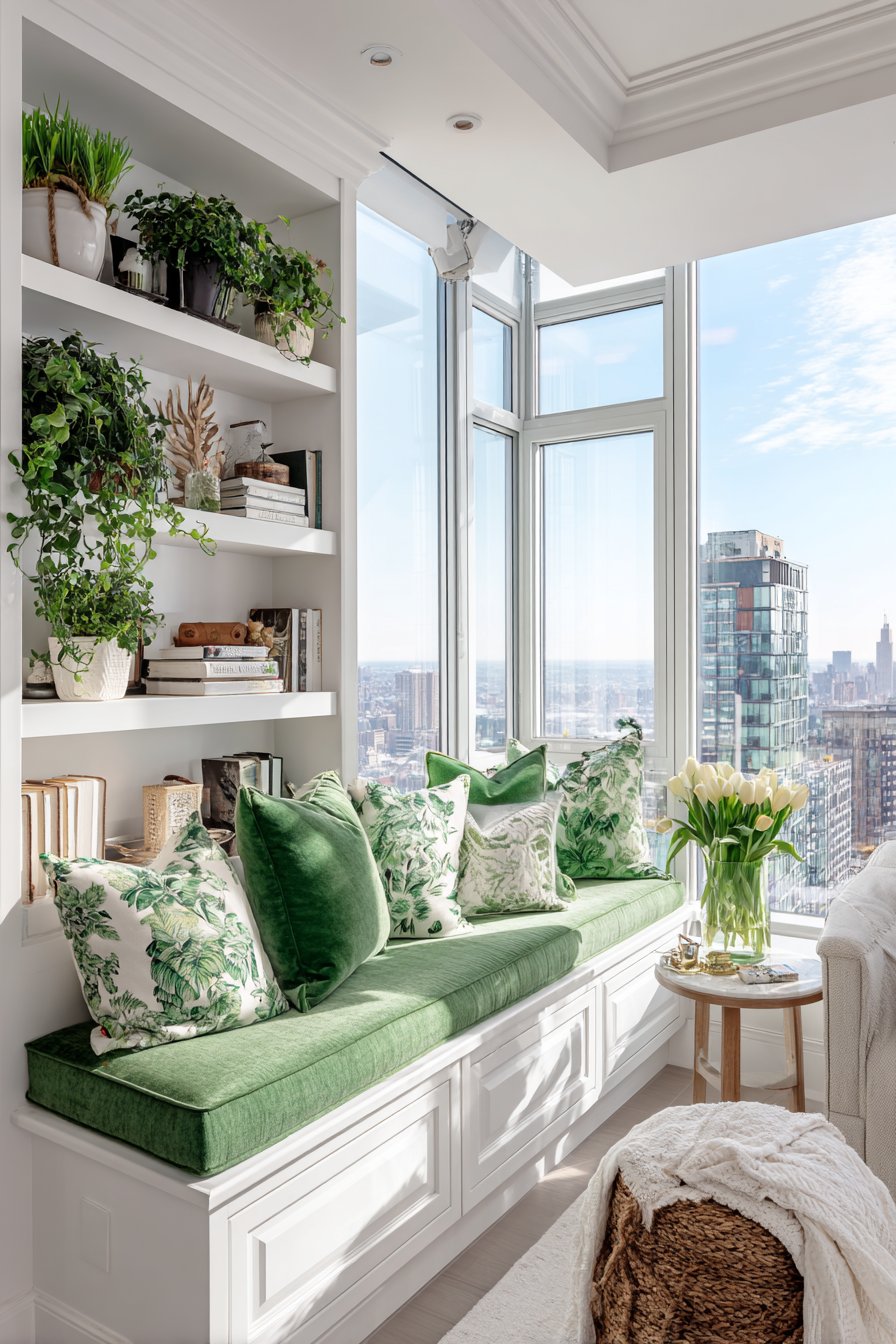
Open shelving on adjacent walls displays curated plant collections at varying heights. Books and natural décor items share space with potted specimens. White painted wood paneling provides a clean backdrop that enhances greenery. The architectural detailing feels custom and intentional.
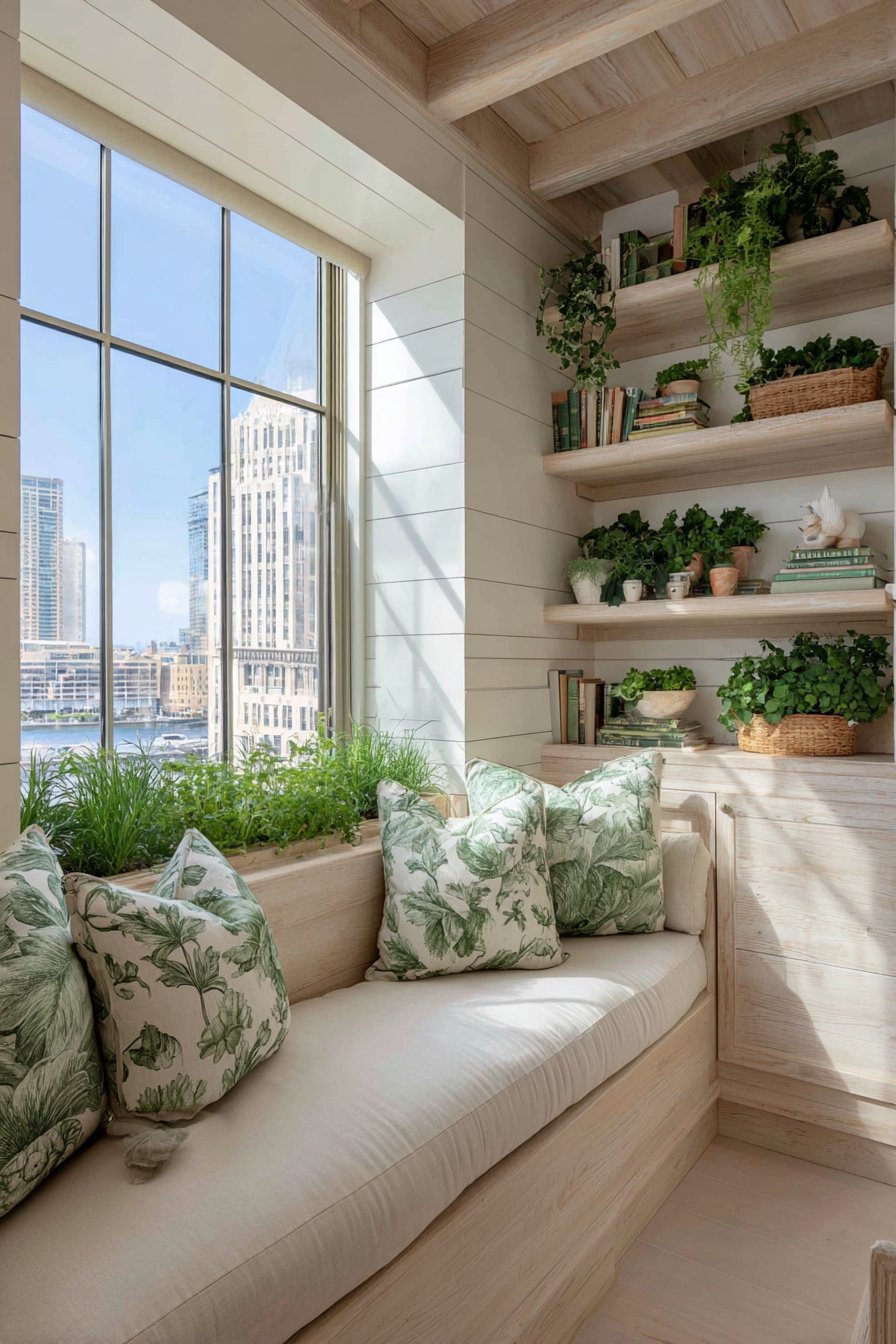
Bright natural light from large windows illuminates the plant-filled space perfectly. The proximity to windows ensures herbs receive adequate light for healthy growth. Edible herbs add practical functionality alongside aesthetic appeal. Fresh basil, mint, and rosemary become readily accessible during meal preparation.
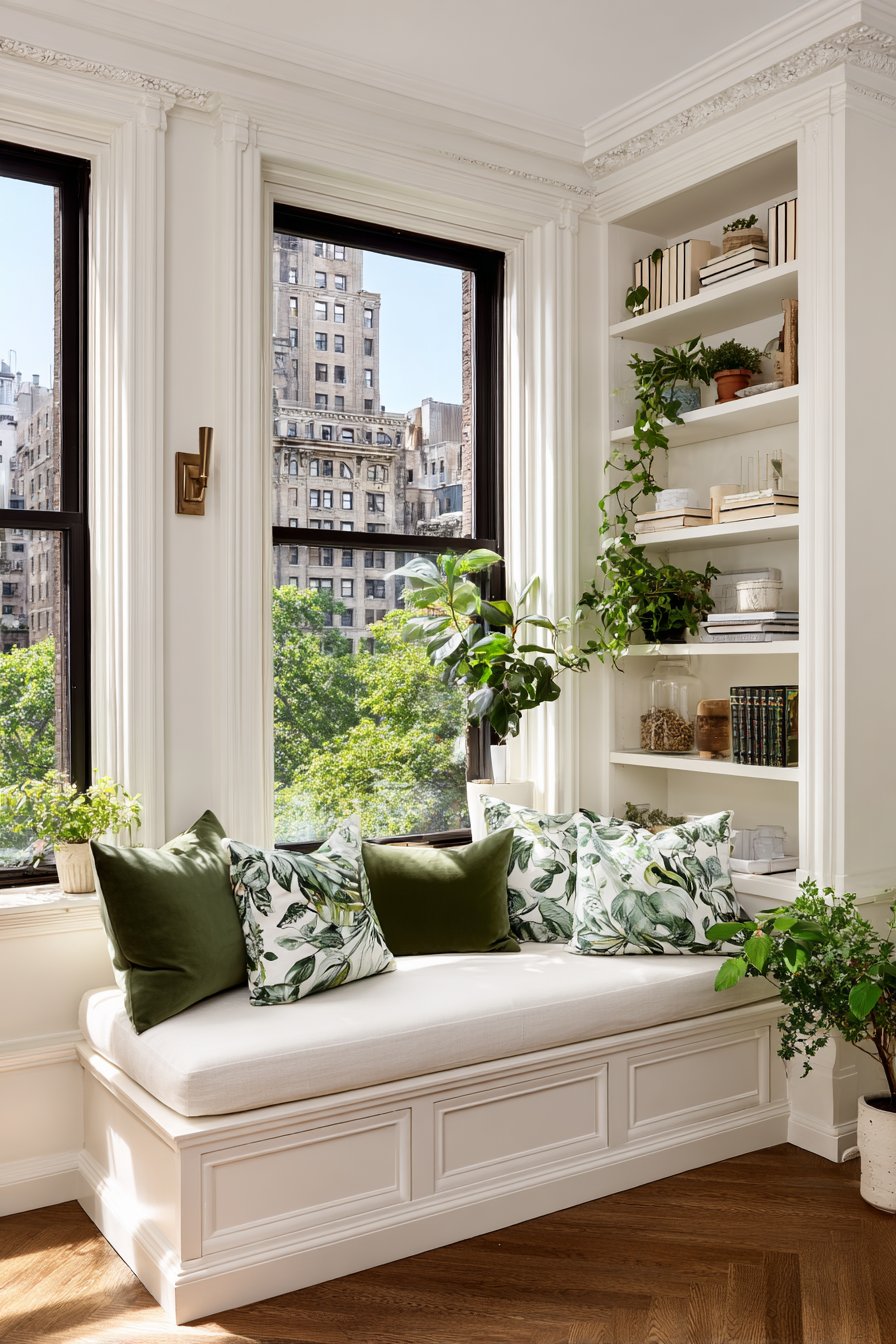
This design demonstrates clever integration of planters into architectural features. The built-in approach maximizes space efficiency while creating permanent botanical elements. Different plant varieties create visual interest across the integrated garden. The practical beauty of edible herb gardens enhances daily living.
Key Design Tips:
- Install proper drainage in integrated planter boxes to prevent water damage
- Choose herb varieties that thrive in available light conditions
- Add cushions in botanical prints to reinforce the plant aesthetic
- Use open shelving to display plants alongside decorative objects
- Paint built-ins in light colors to reflect natural light
- Select trailing plants that soften architectural edges beautifully
8. Tropical Jungle-Inspired Paradise
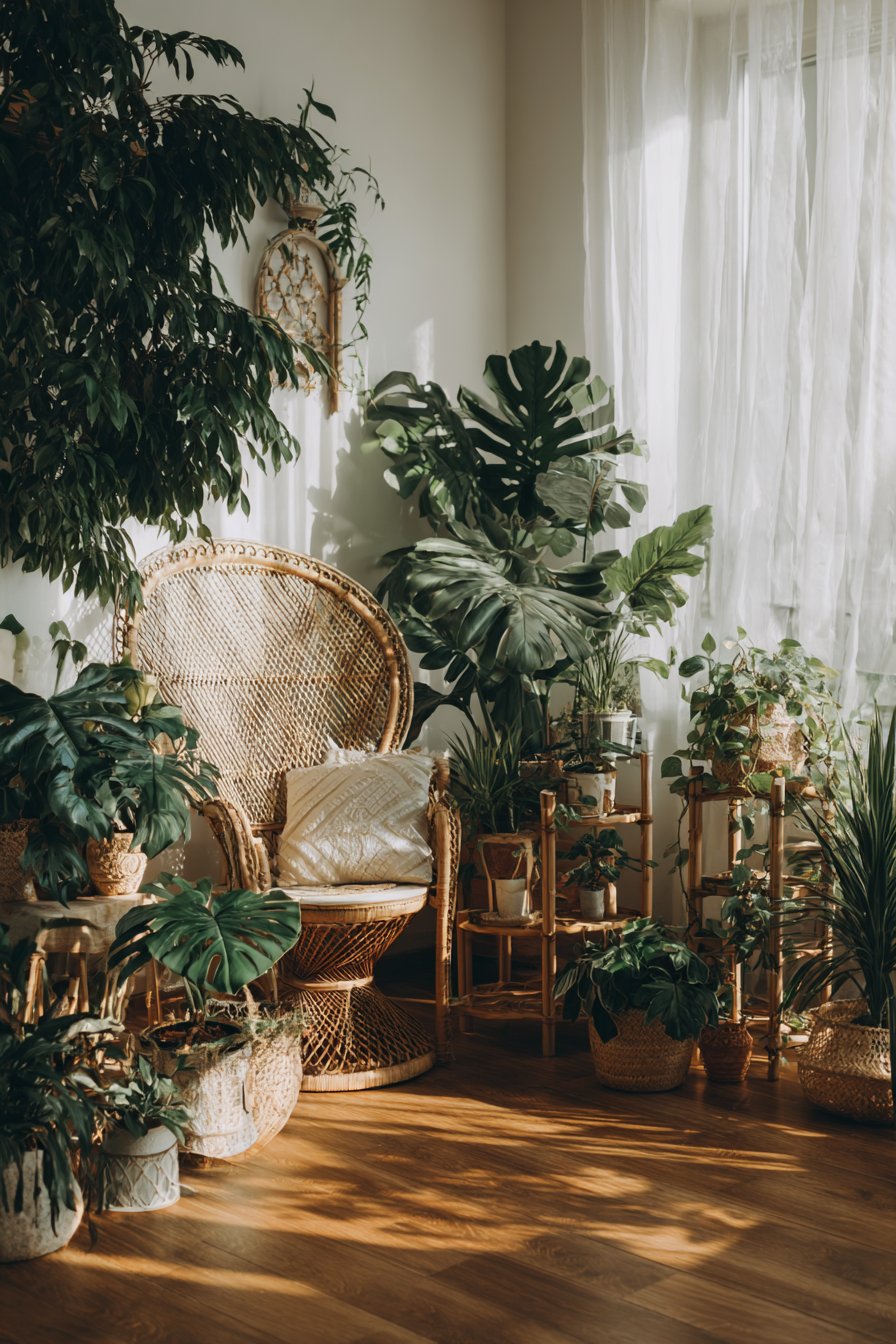
Large-scale tropical plants create an immersive jungle-inspired atmosphere. Banana leaf plants, bird of paradise, and split-leaf philodendron dominate the space. These dramatic specimens transform ordinary rooms into exotic retreats. The broad leaves create bold visual statements.
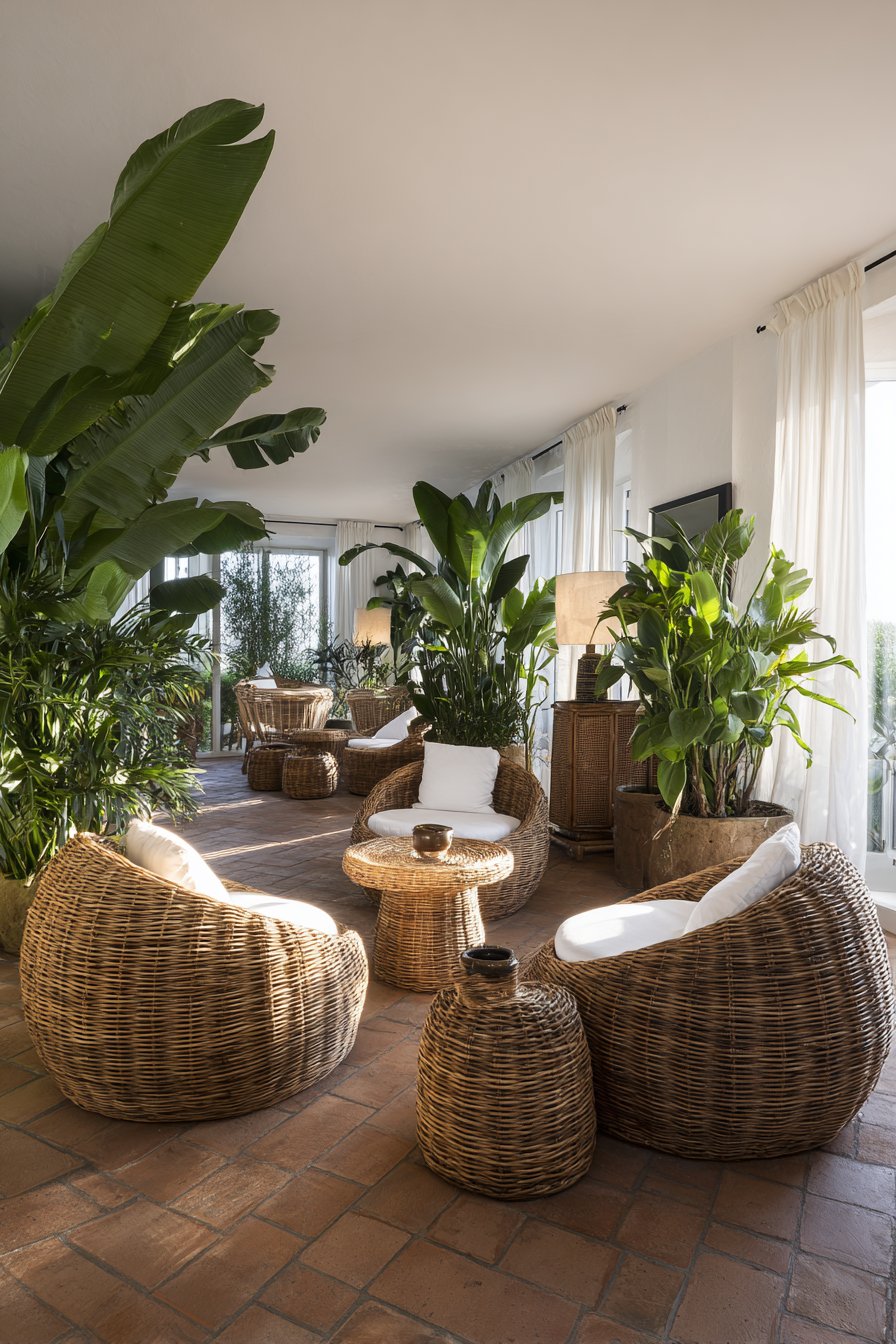
Natural rattan furniture including a peacock chair and woven coffee table complement the tropical theme. These organic materials enhance the vacation-like ambiance. Terracotta floor tiles in warm tones ground the space with earthy color. White walls keep abundant greenery as the undisputed focal point.
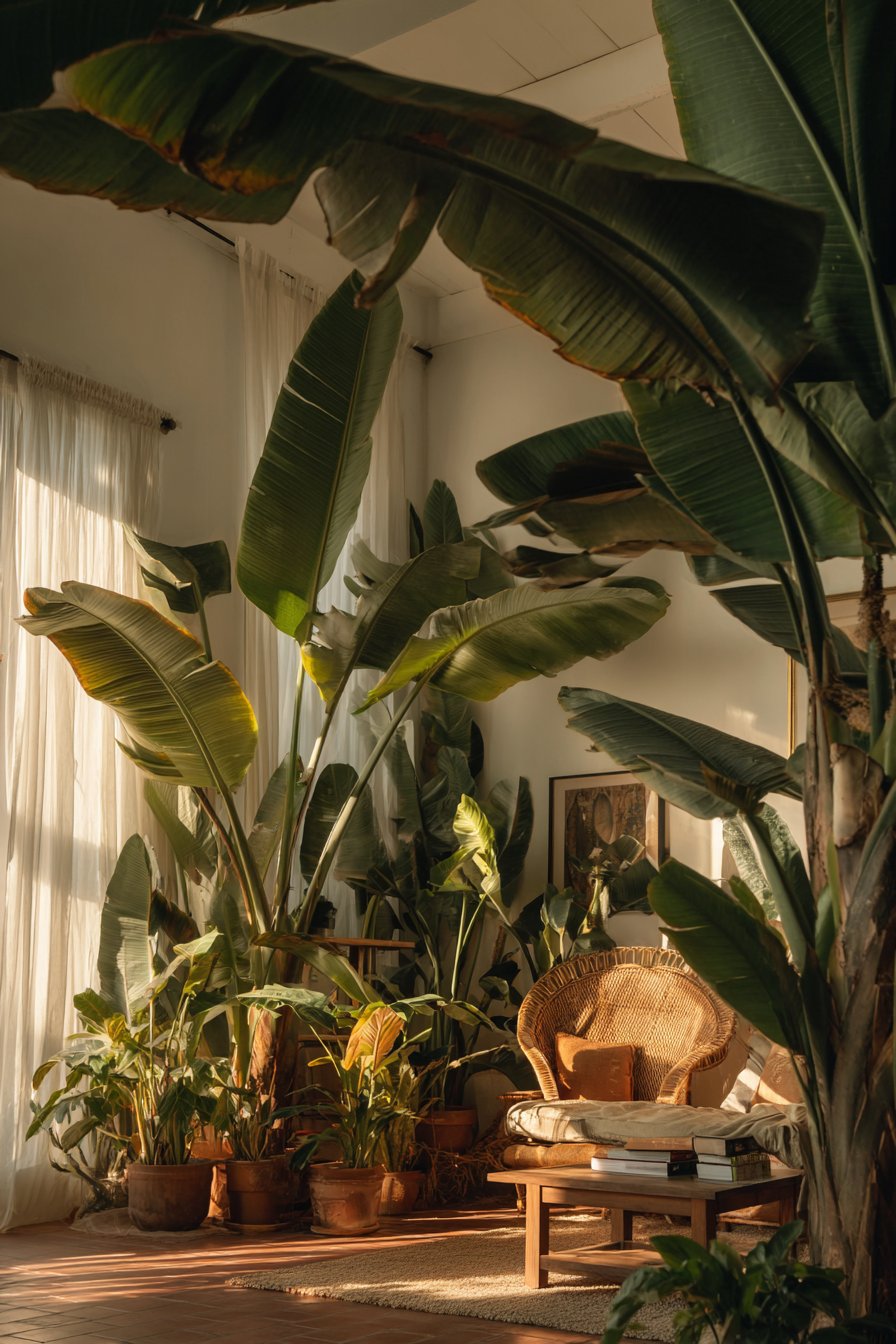
Plants are arranged at varying heights using stands crafted from natural wood and woven materials. This elevation creates jungle-like layering from ground to ceiling. Golden hour lighting streams through sheer curtains creating warm highlights on broad tropical leaves. The lighting enhances the exotic atmosphere significantly.
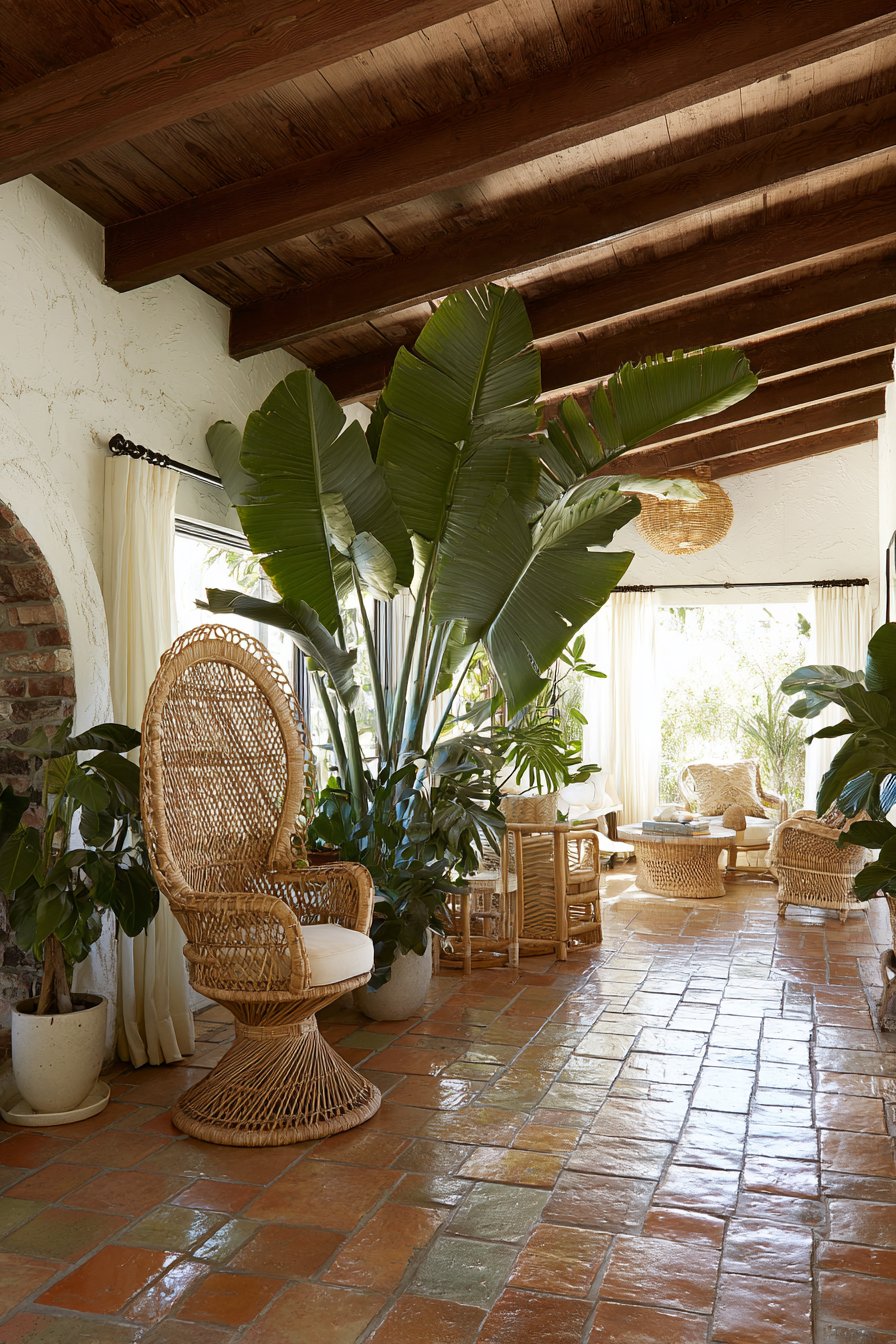
This maximalist approach suits those craving bold botanical statements. The immersive quality transports inhabitants to tropical destinations. Maintenance requirements increase with plant quantity but committed enthusiasts embrace this reality. The result justifies the effort for true plant lovers.
Key Design Tips:
- Select tropical varieties that tolerate indoor humidity levels
- Use plant stands to create varied heights mimicking natural jungle layers
- Choose rattan and woven furniture to reinforce tropical themes
- Maintain warm room temperatures for tropical plant health
- Install humidifiers if necessary for plant varieties requiring moisture
- Position largest specimens as focal points with smaller plants supporting
9. Sophisticated Rare Plant Collection
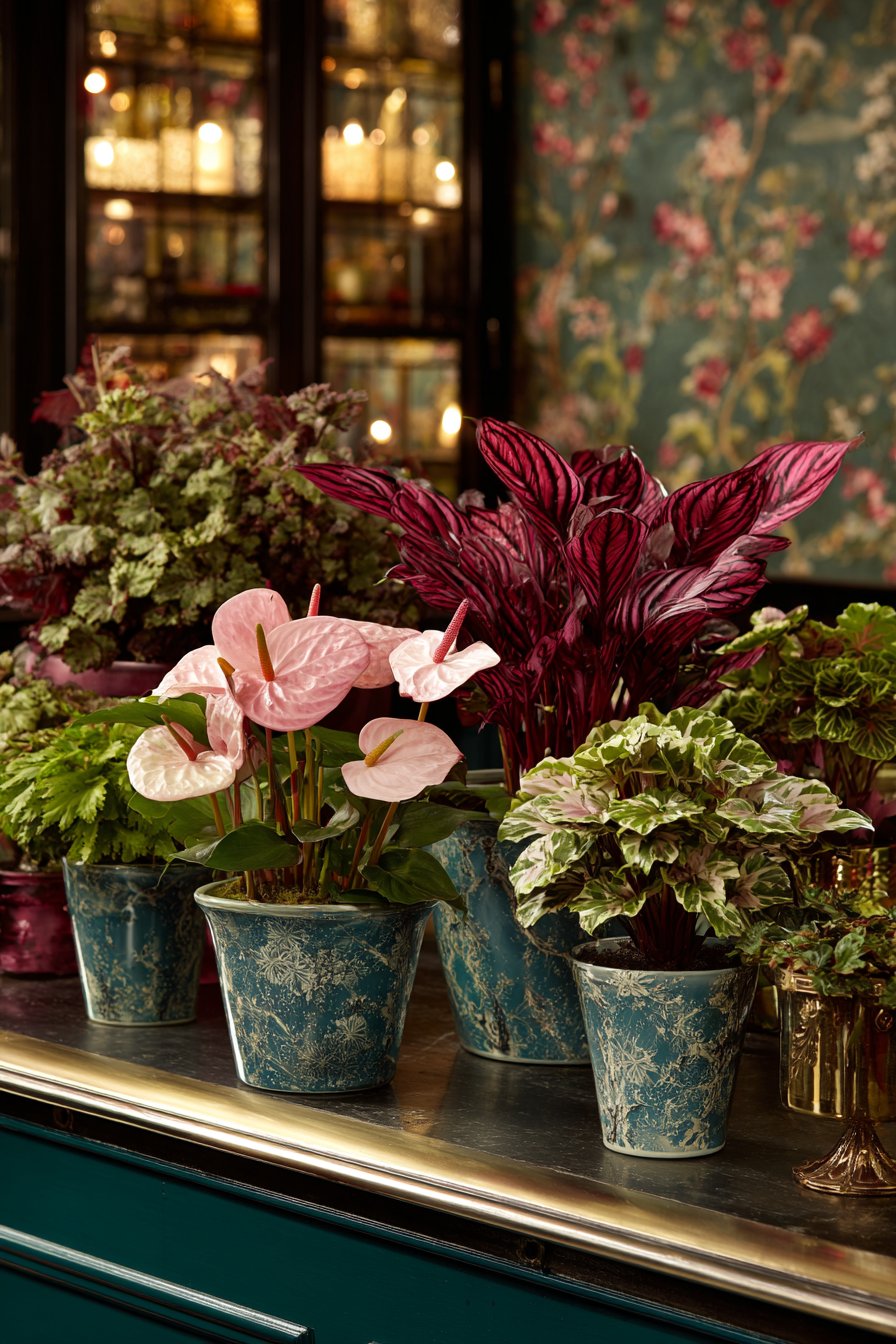
A vintage étagère shelf unit displays a curated collection of rare and unusual houseplants. Calatheas, anthuriums, and variegated varieties showcase refined horticultural taste. The elevated display method creates a gallery-like presentation. Each plant receives individual appreciation as a living art piece.
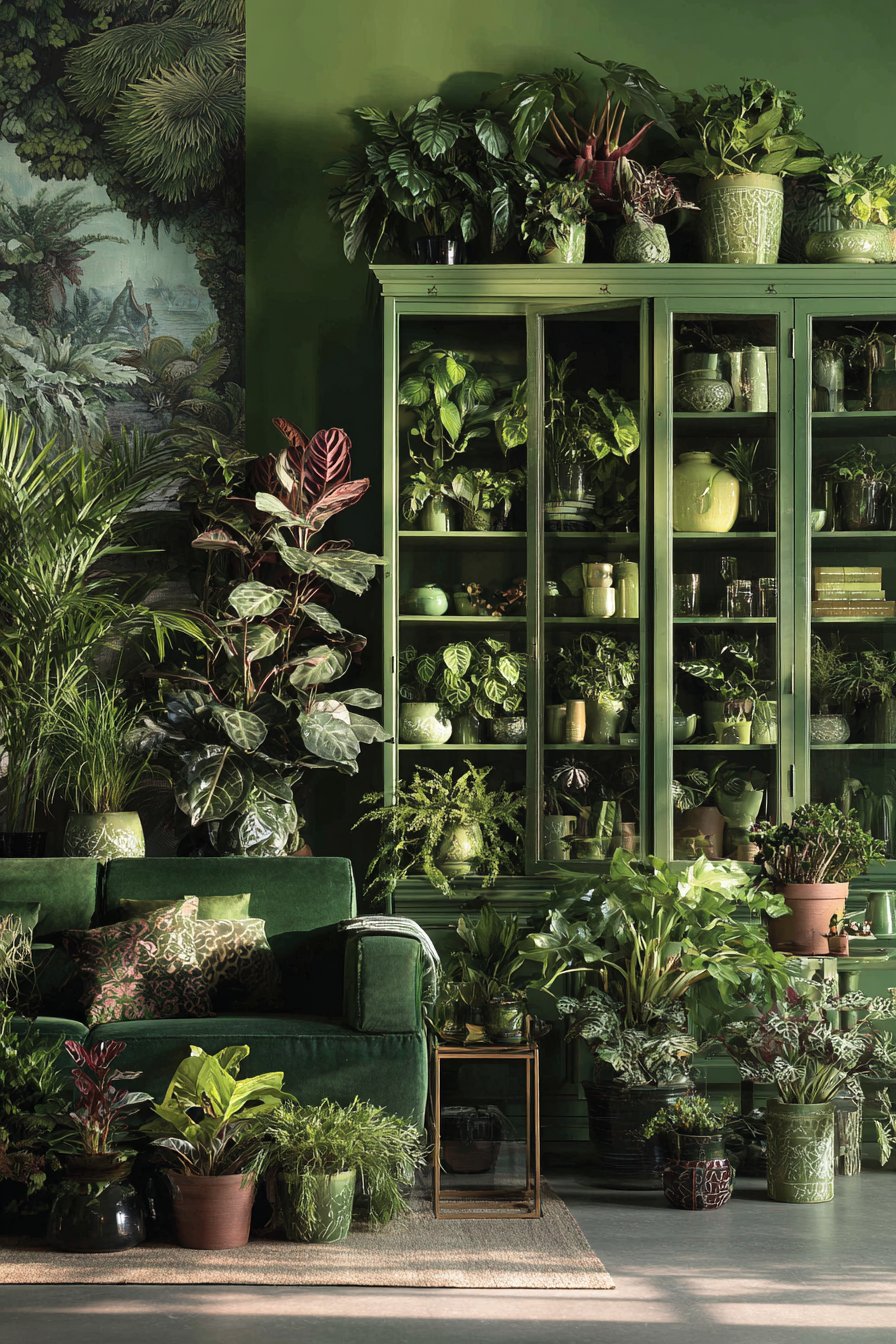
Surrounding décor maintains a refined aesthetic with a velvet sofa in deep emerald green. Brass and glass accent tables add luxurious touches without overwhelming the space. Botanical wallpaper in muted tones creates a sophisticated backdrop. Additional statement plants in decorative ceramic planters punctuate the seating area.
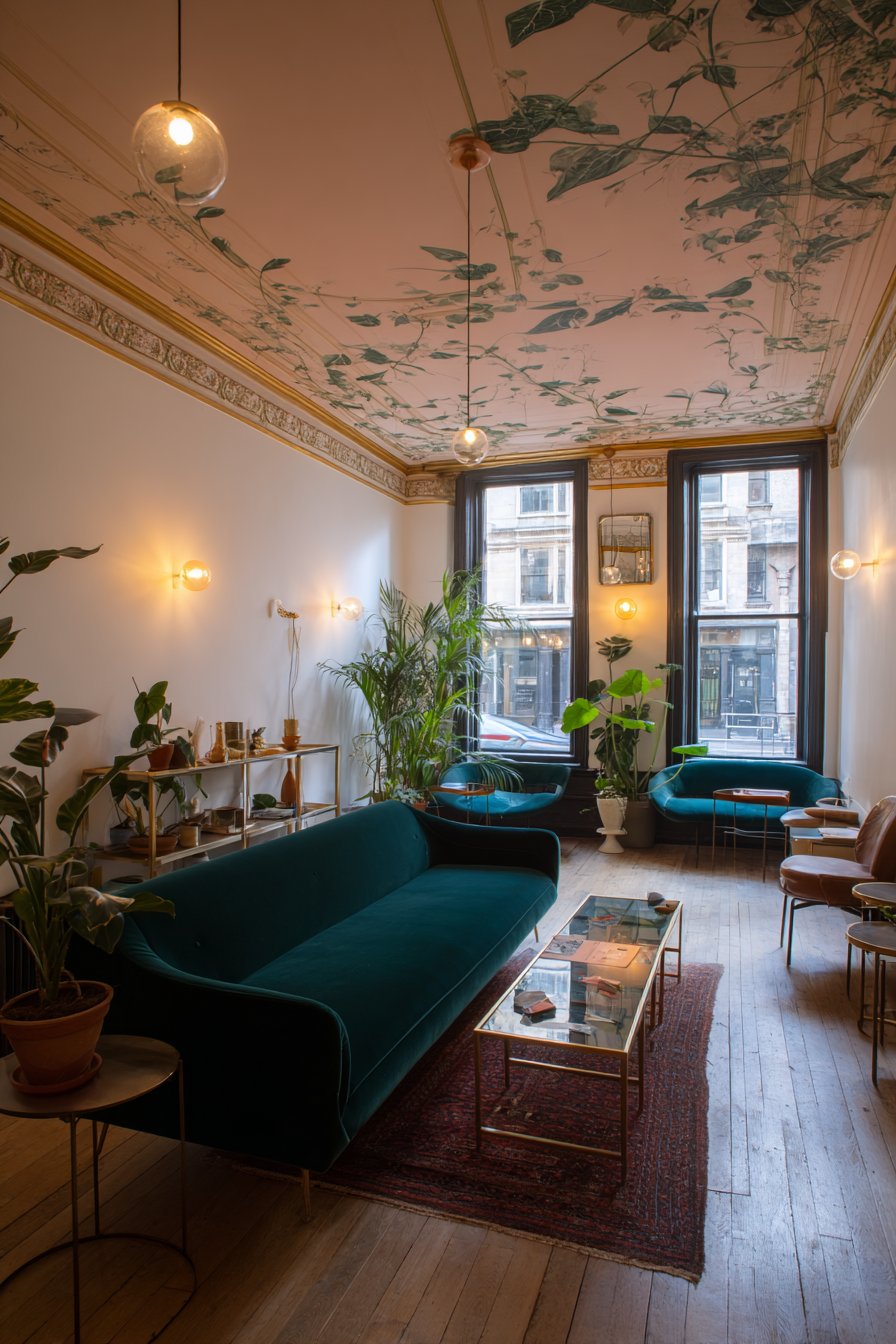
Ambient lighting includes both natural window light and strategically placed picture lights. The picture lights illuminate key specimens during evening hours. This lighting approach treats plants as valuable art deserving special attention. The overall effect feels curated and intentional.
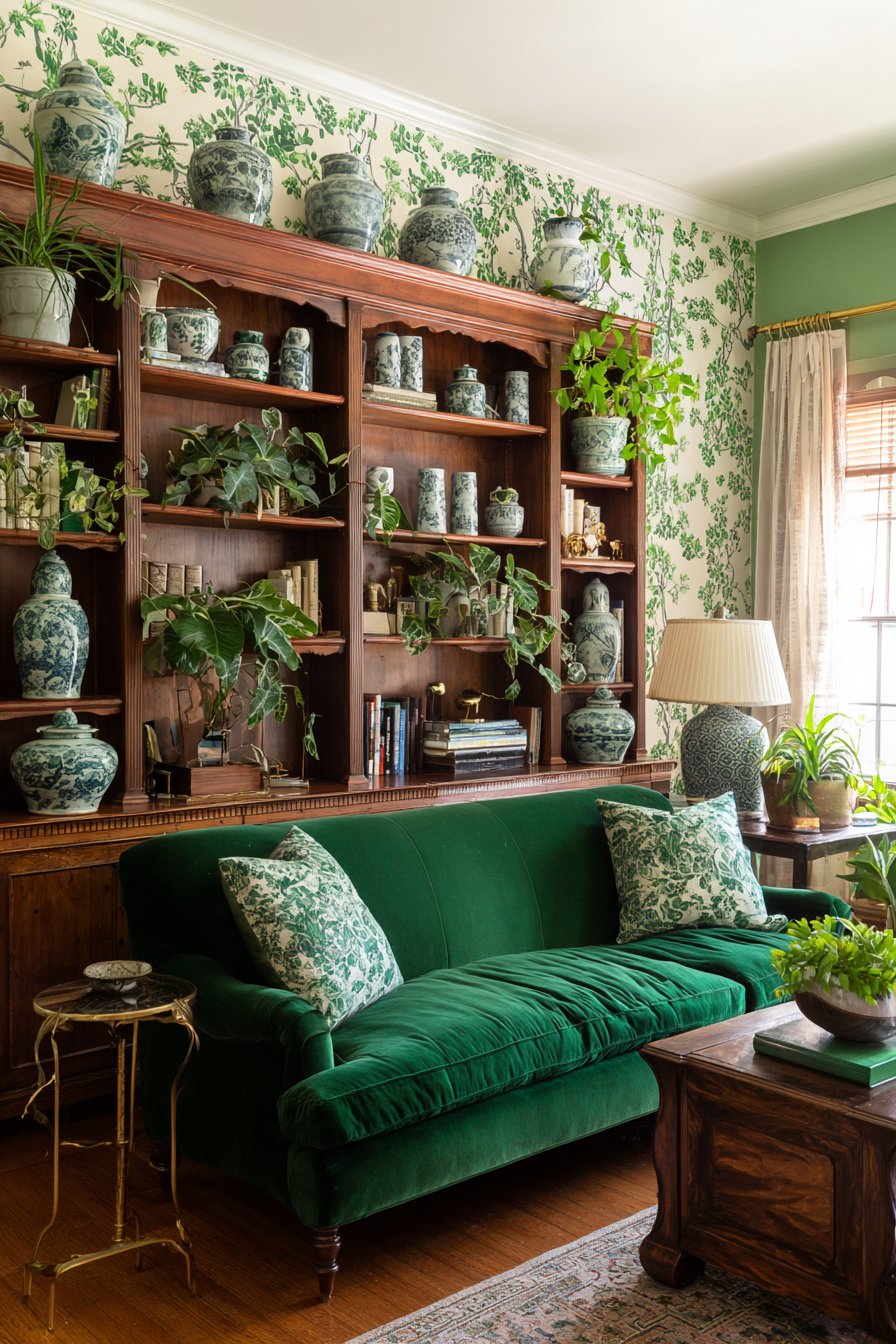
This elevated approach to plant collecting suits serious enthusiasts with developed tastes. The focus shifts from quantity to quality and rarity. Decorative ceramic planters become part of the overall aesthetic investment. The design demonstrates that plant collections can appear sophisticated rather than casual.
Key Design Tips:
- Invest in quality étagère shelving to showcase prized specimens
- Choose rare varieties that demonstrate horticultural knowledge and commitment
- Install picture lights to highlight special plants during evening hours
- Select decorative planters that complement rather than distract from plants
- Maintain cohesive color schemes between plants and interior finishes
- Create gallery-like spacing that allows individual plant appreciation
10. Indoor Greenhouse Cabinet Feature
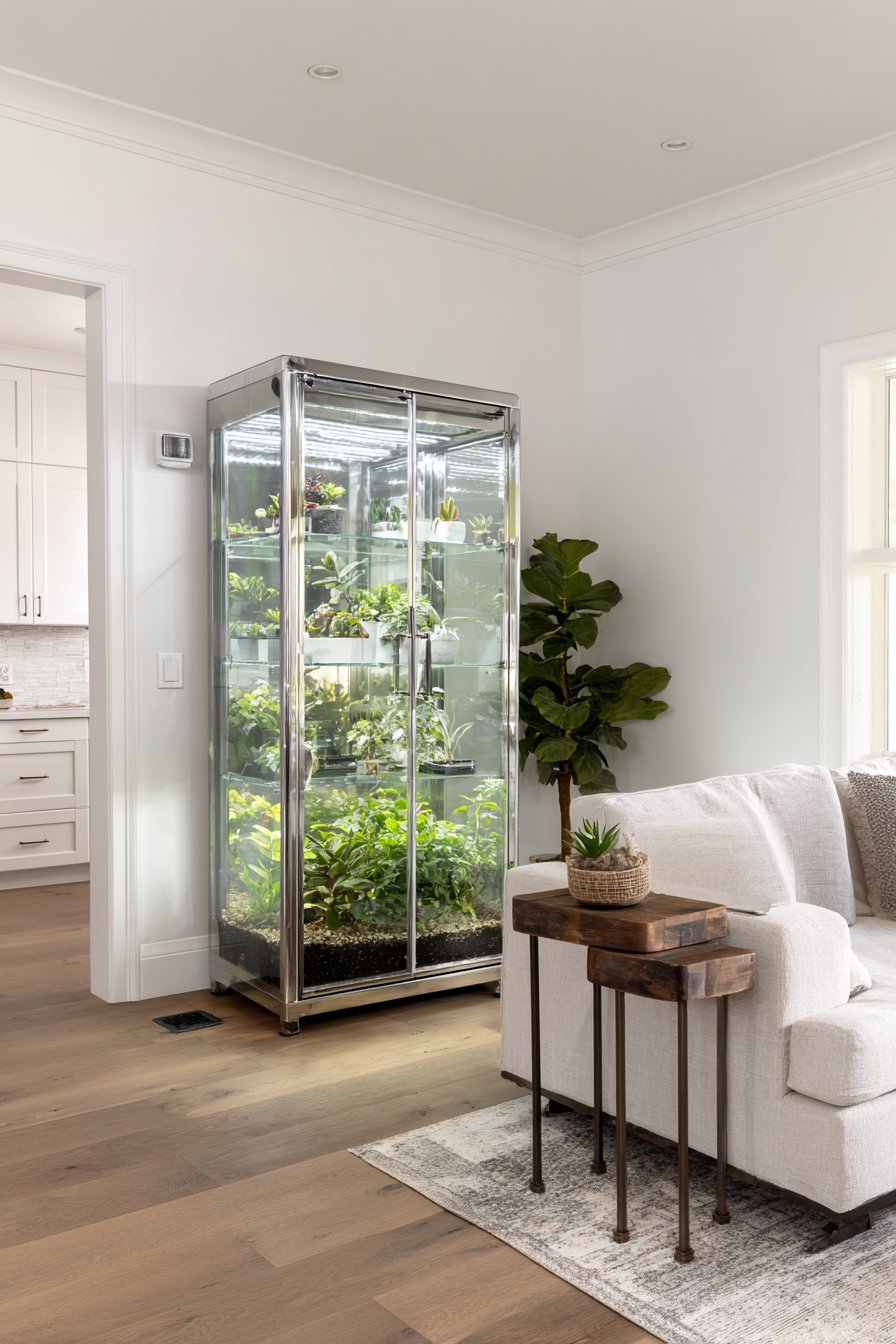
A central indoor greenhouse cabinet featuring glass panels and controlled lighting creates a specialized environment. The cabinet showcases orchids, African violets, and rare tropicals requiring specific conditions. Surrounding areas include hardier plants like snake plants and dracaena. This contrast demonstrates varied horticultural approaches.
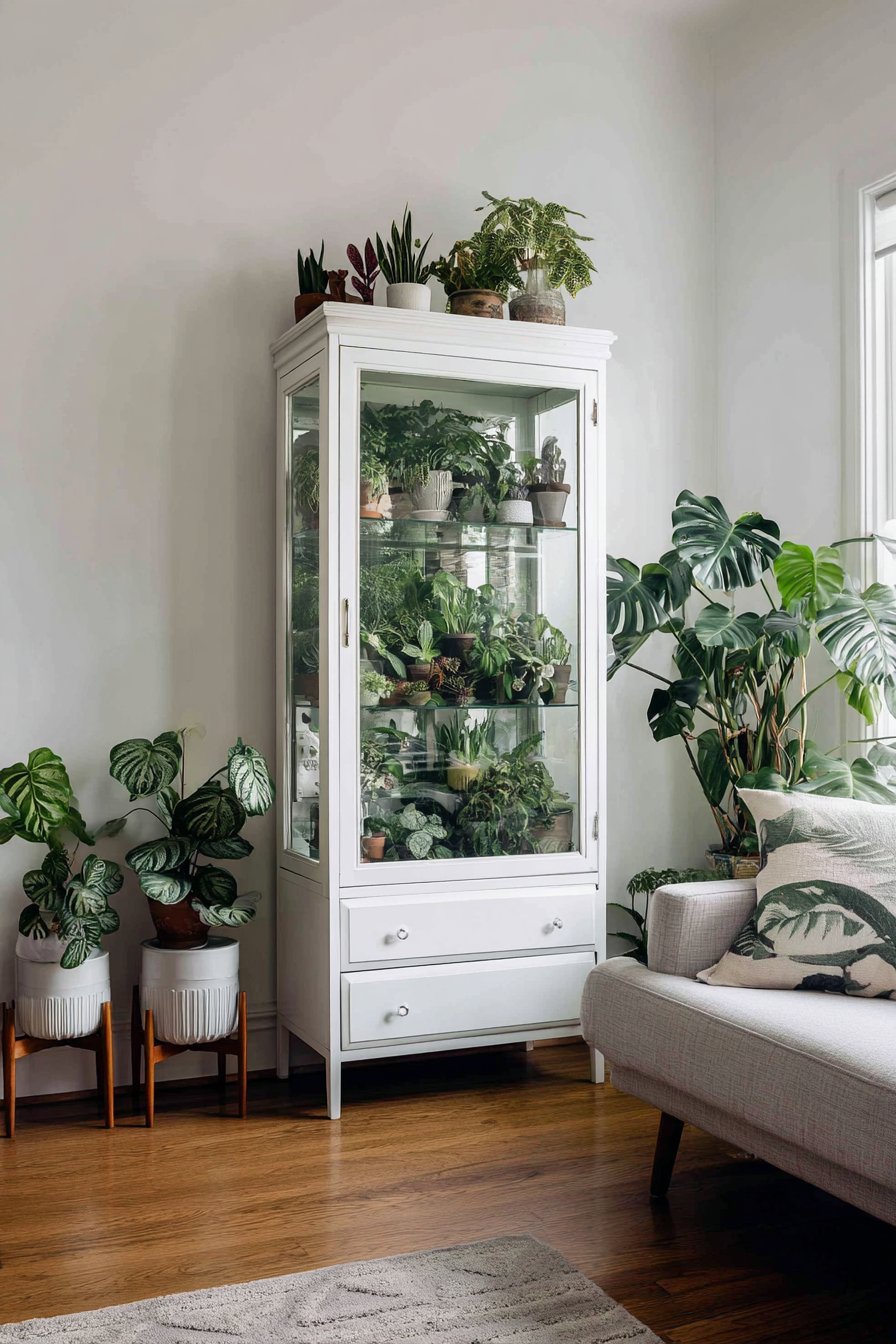
Modern furniture in neutral tones including a low-profile sofa and minimalist side tables allows the greenhouse to command attention. Natural oak flooring and white walls create a gallery-like setting. The specialized cabinet becomes functional art and conversation piece simultaneously.
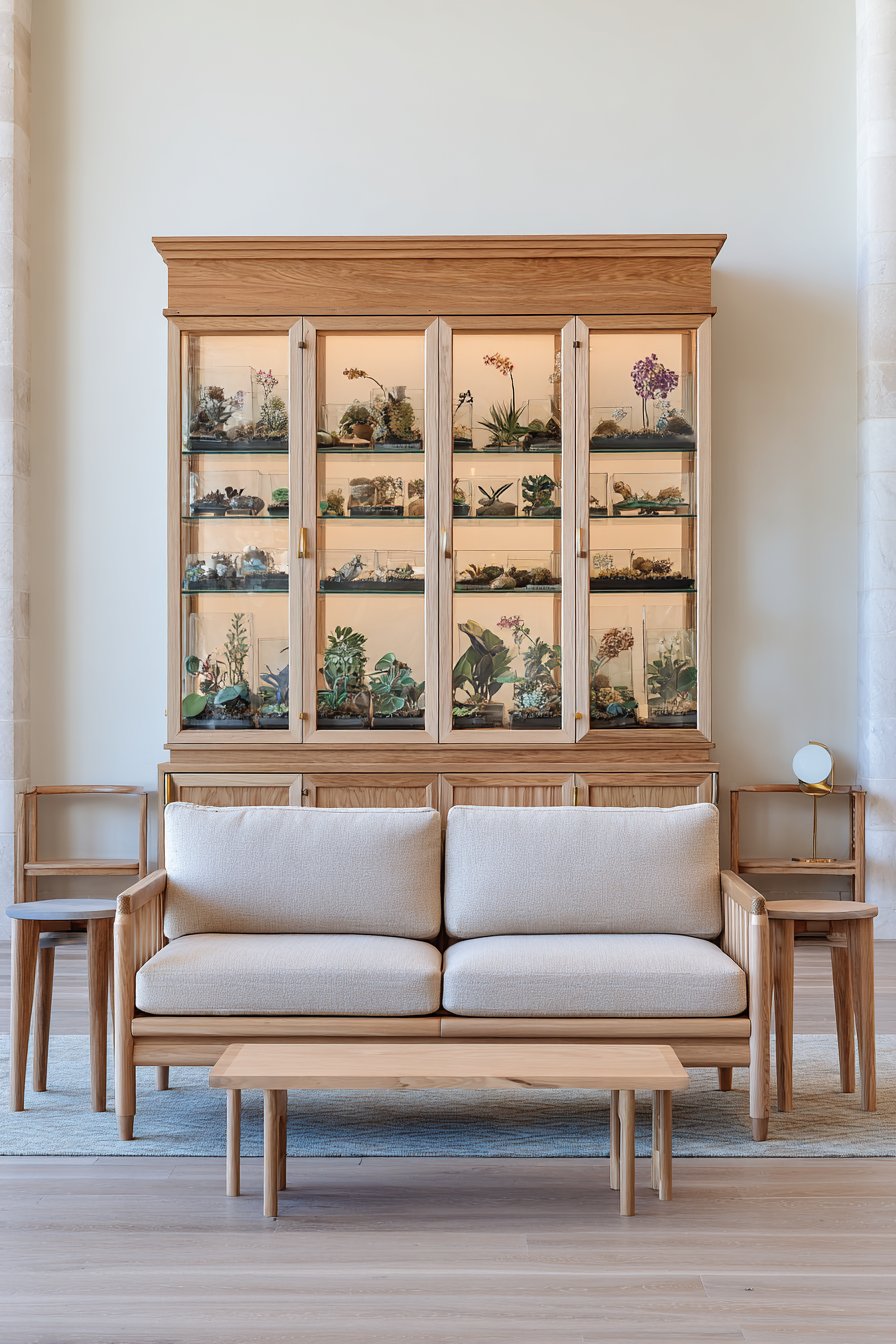
Interior cabinet illumination supplements natural room light for delicate specimens. Temperature and humidity controls protect sensitive varieties. The transparent construction allows viewing from all angles. This design element satisfies both aesthetic and horticultural purposes.
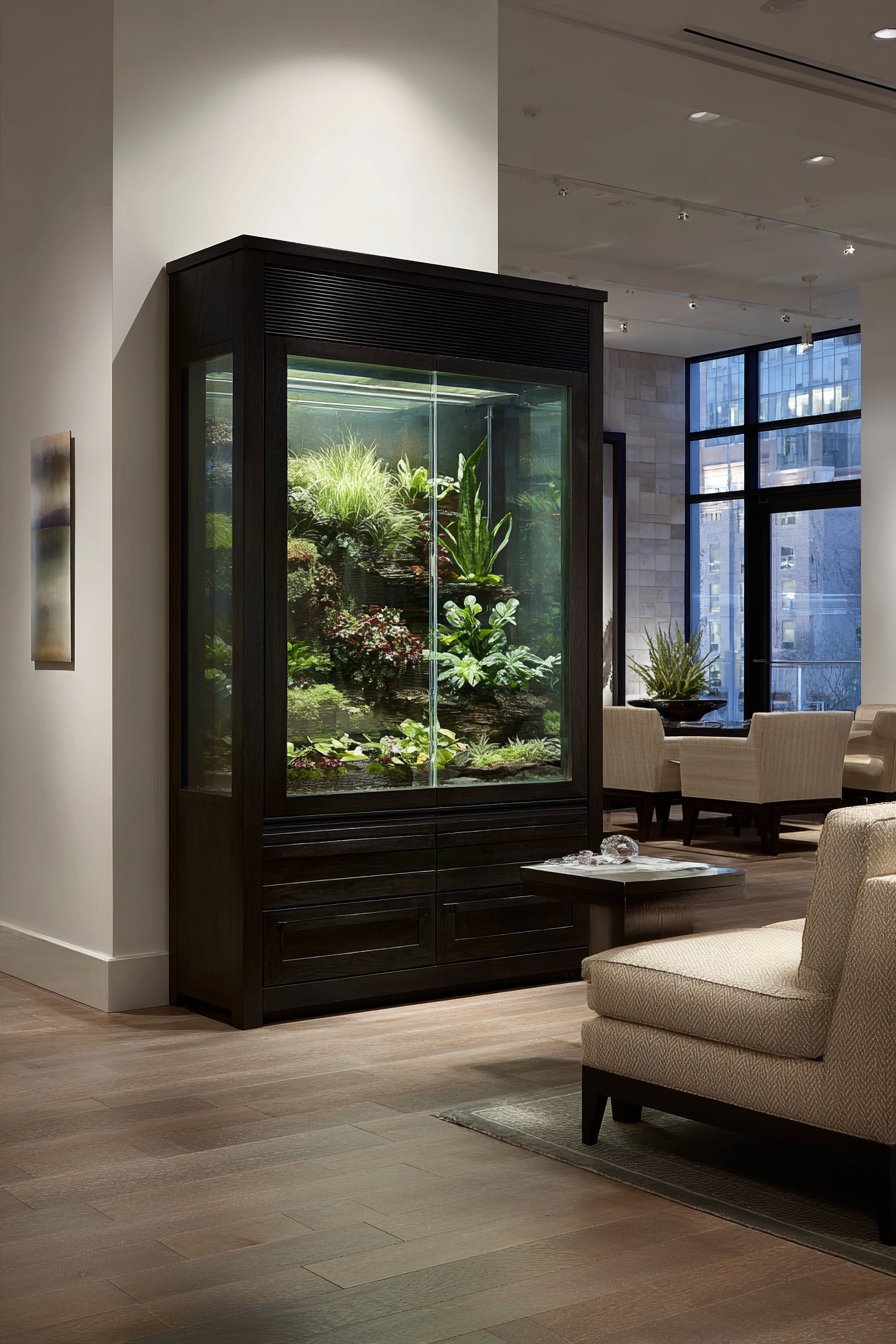
The specialized plant cabinet represents significant commitment to indoor gardening. Professional results require understanding of plant-specific requirements. The architectural feature elevates the entire room’s design sophistication. This approach suits dedicated enthusiasts ready to invest in specialized equipment.
Key Design Tips:
- Research greenhouse cabinet options with proper ventilation and lighting
- Select plants with similar environmental requirements for each cabinet section
- Maintain simple surrounding décor to highlight the specialized feature
- Install proper humidity controls for moisture-loving varieties
- Use transparent materials that allow visual access from multiple angles
- Plan for electrical requirements when positioning greenhouse cabinets
11. Scandinavian Minimalist Plant Display
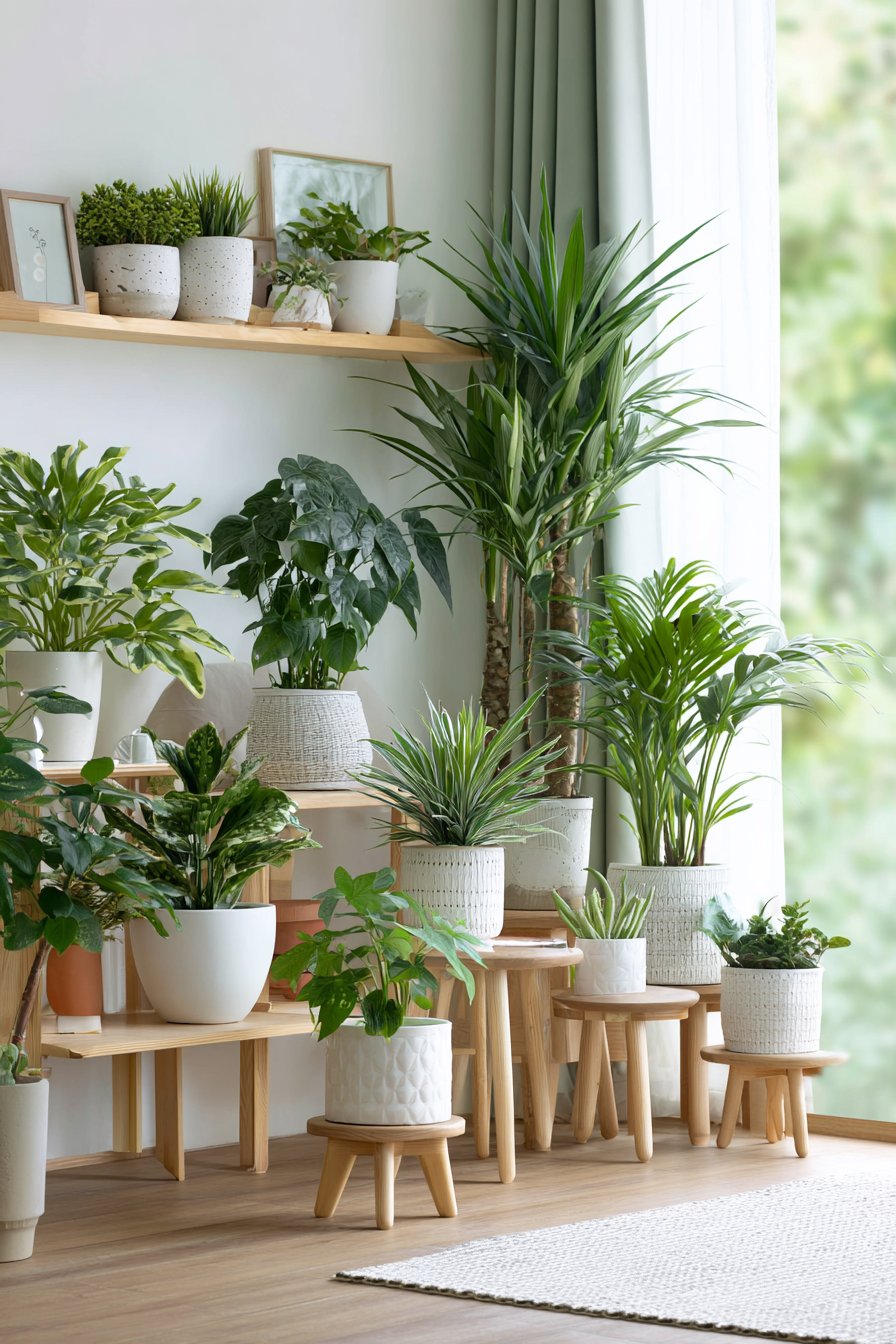
A Scandinavian-inspired design features multiple plants on simple wooden stands at various heights. The layered forest effect creates visual interest within minimal aesthetic frameworks. White walls and light blonde wood furniture provide subtle backdrops. The greenery stands out against the neutral palette.
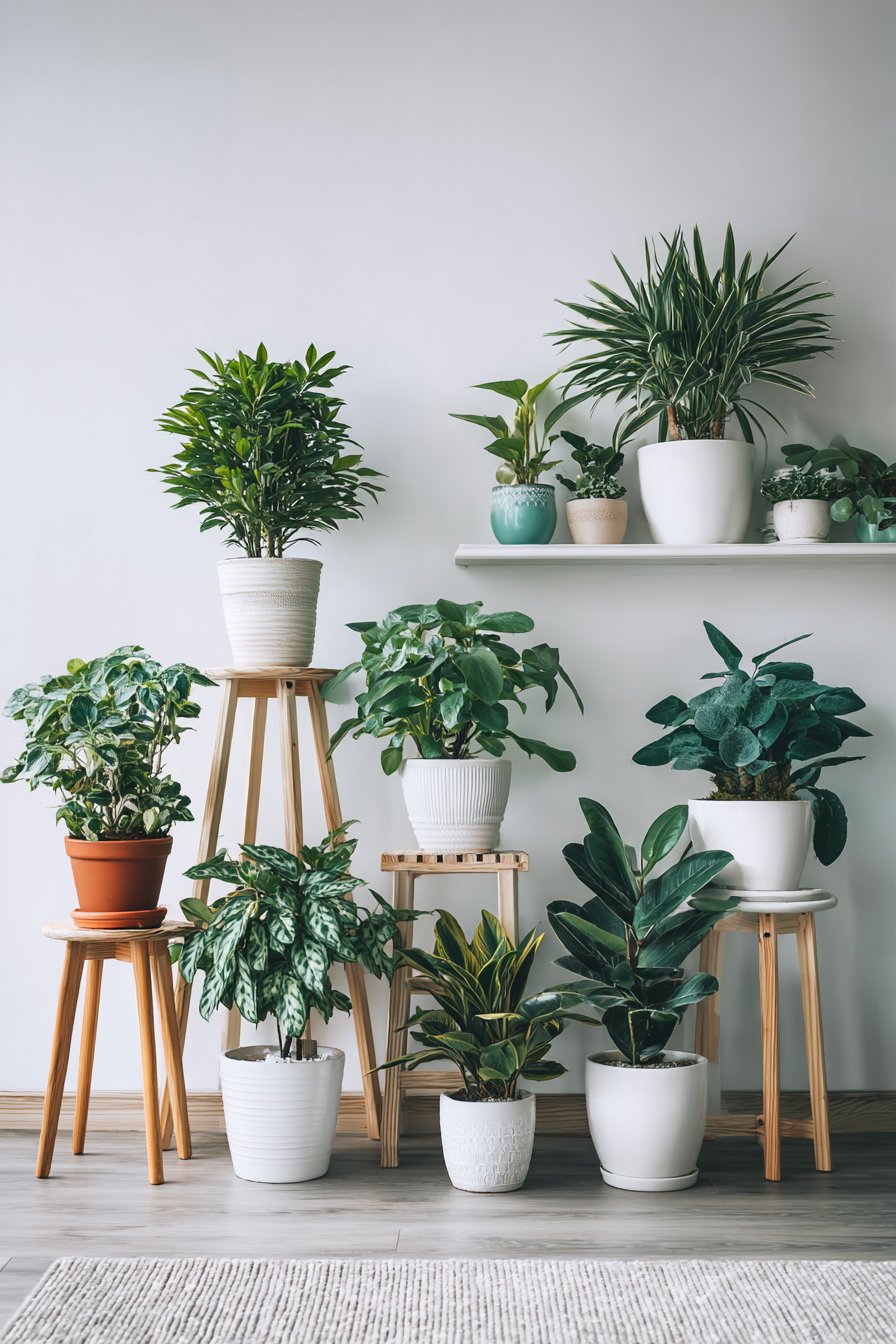
Plants include easy-care varieties like pothos, philodendrons, and dracaena in simple containers. White and terracotta pots maintain the minimalist aesthetic without unnecessary decoration. Large windows without heavy treatments maximize natural light essential for plant health. The unobstructed windows support both plants and Scandinavian design principles.
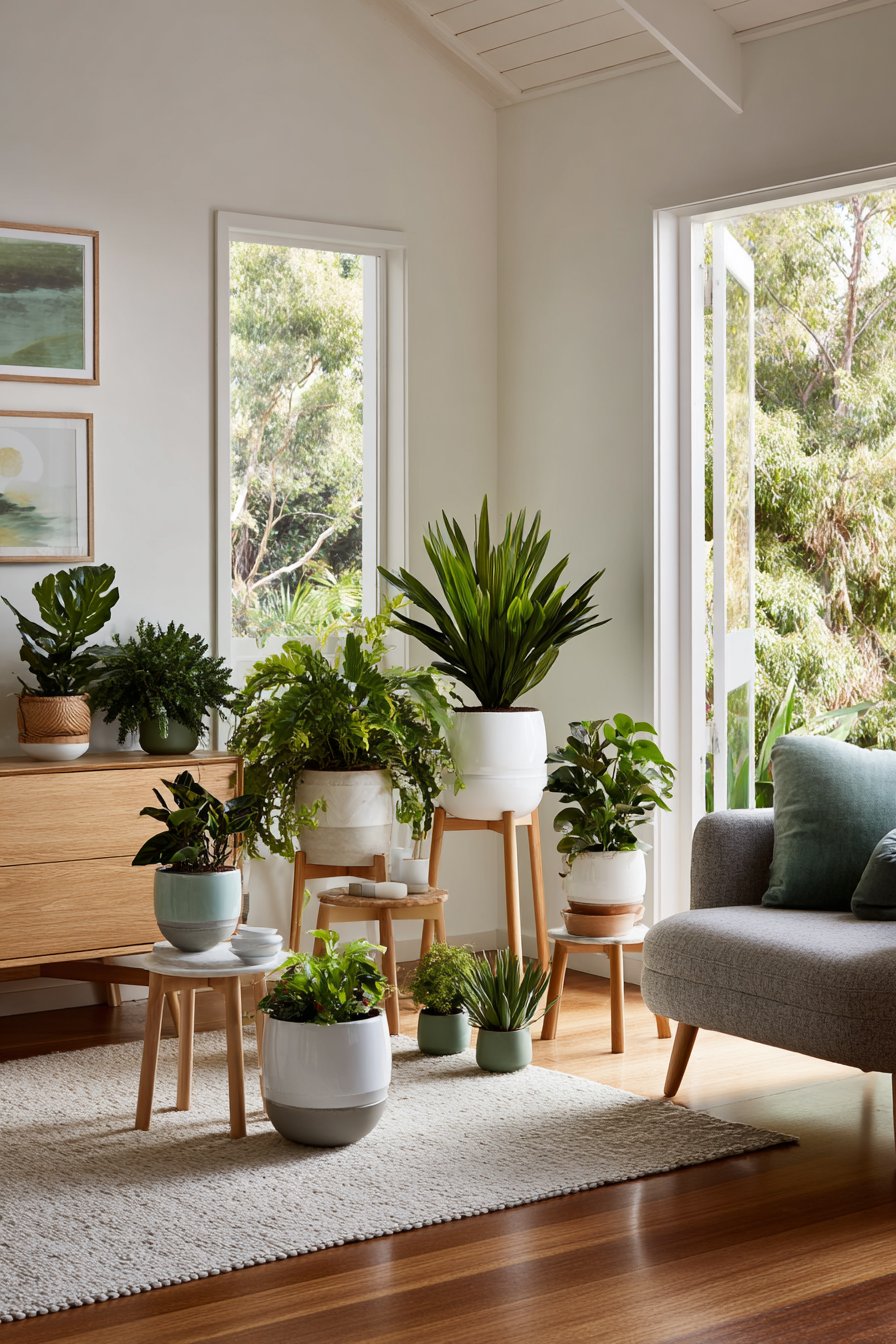
A neutral wool area rug and linen textiles in soft greens complement the natural theme. The limited color palette creates calm and cohesion. The clean lines and organic beauty demonstrate Scandinavian design’s enduring appeal. Simplicity enhances rather than diminishes the plant presence.
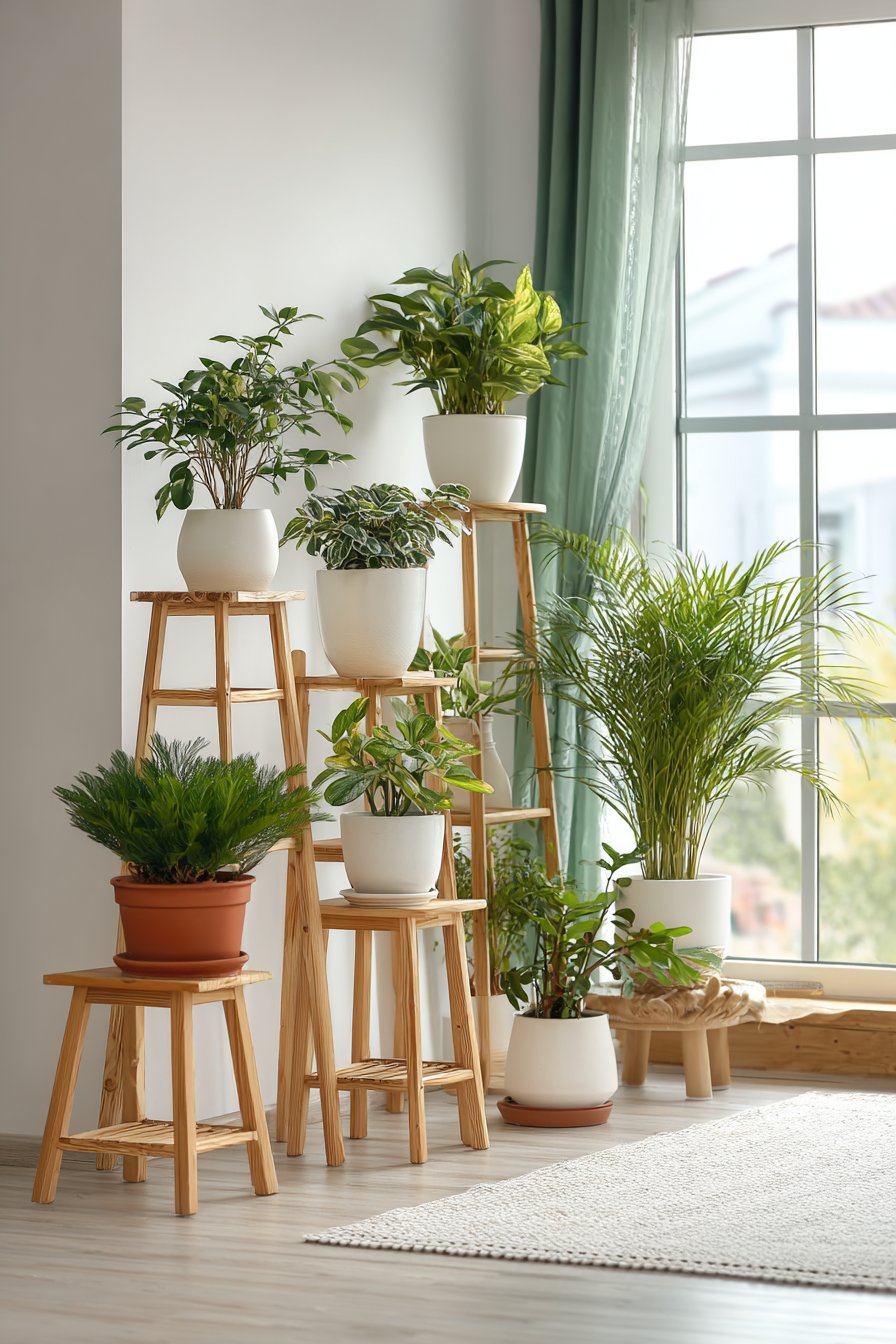
This approach suits those preferring restraint over abundance. The careful curation prevents visual clutter while maintaining green presence. Easy-care plant selections reduce maintenance requirements. The result feels serene and manageable for busy lifestyles.
Key Design Tips:
- Choose simple wooden plant stands in light wood tones
- Limit planter styles to two or three complementary options
- Select easy-care plant varieties for low-maintenance beauty
- Maximize natural light with minimal window treatments
- Maintain neutral color palettes throughout furniture and accessories
- Create height variation using stands rather than hanging planters
12. Creative Living Art Installations
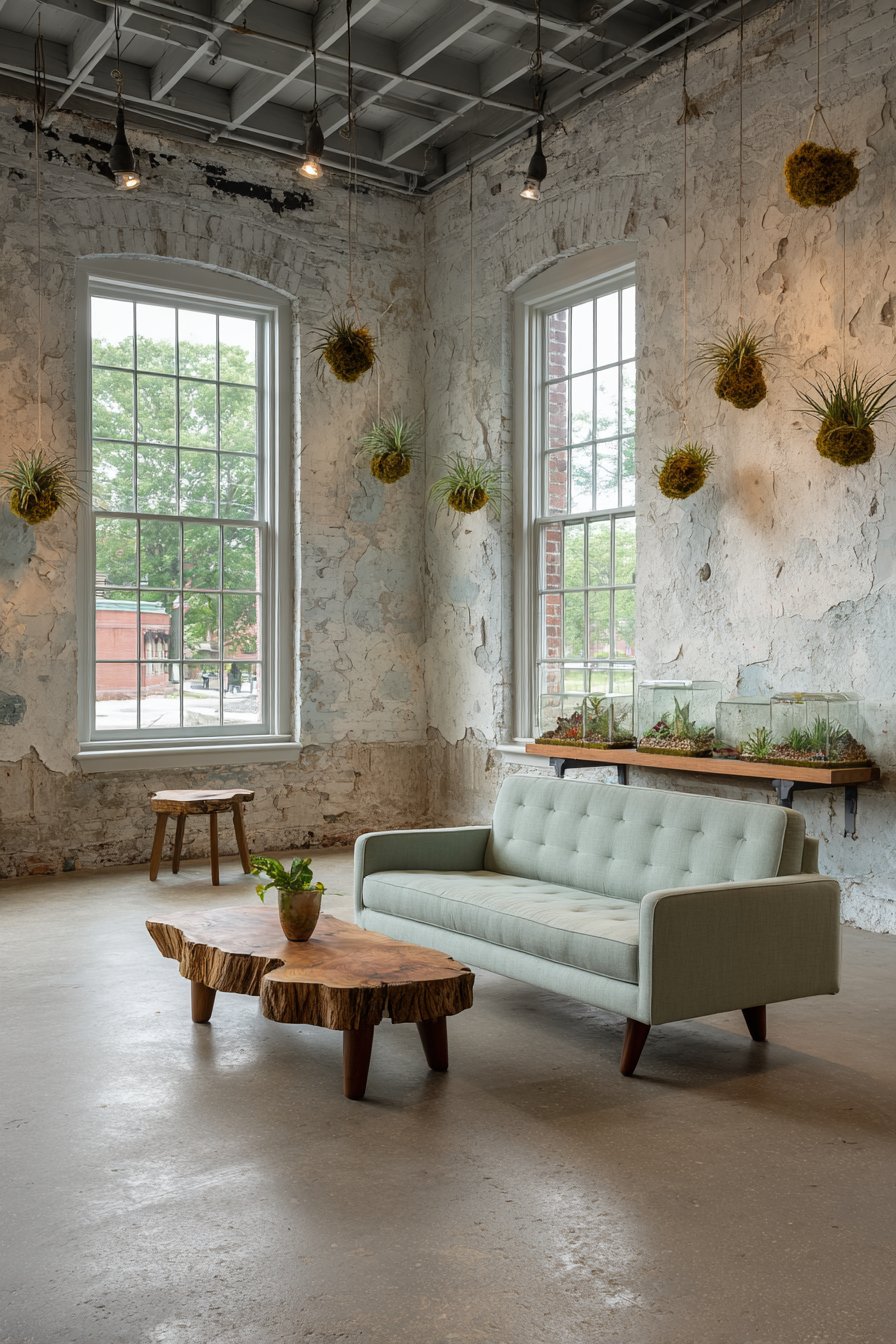
Creative plant arrangements serve as living art installations throughout the space. Kokedama moss balls hang at varying heights creating sculptural interest. Air plant displays mounted on driftwood add natural textural elements. A terrarium collection arranged on a console table showcases miniature planted landscapes.
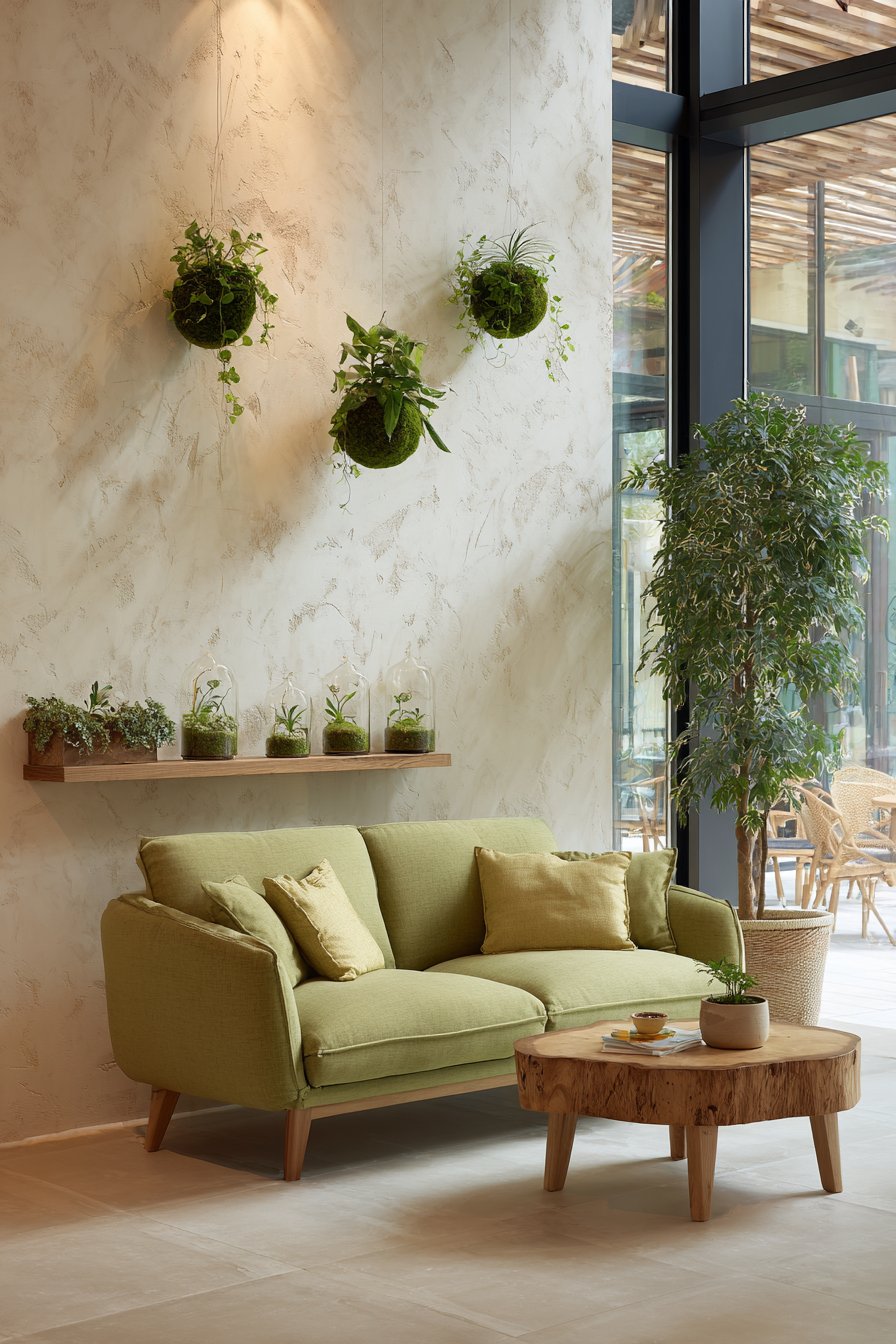
Innovative plant presentations replace traditional potted arrangements. Furniture includes a contemporary sofa in sage green with wooden legs. A coffee table fashioned from a thick wood slice reinforces natural themes. Natural plaster walls in warm white provide textured backdrops.
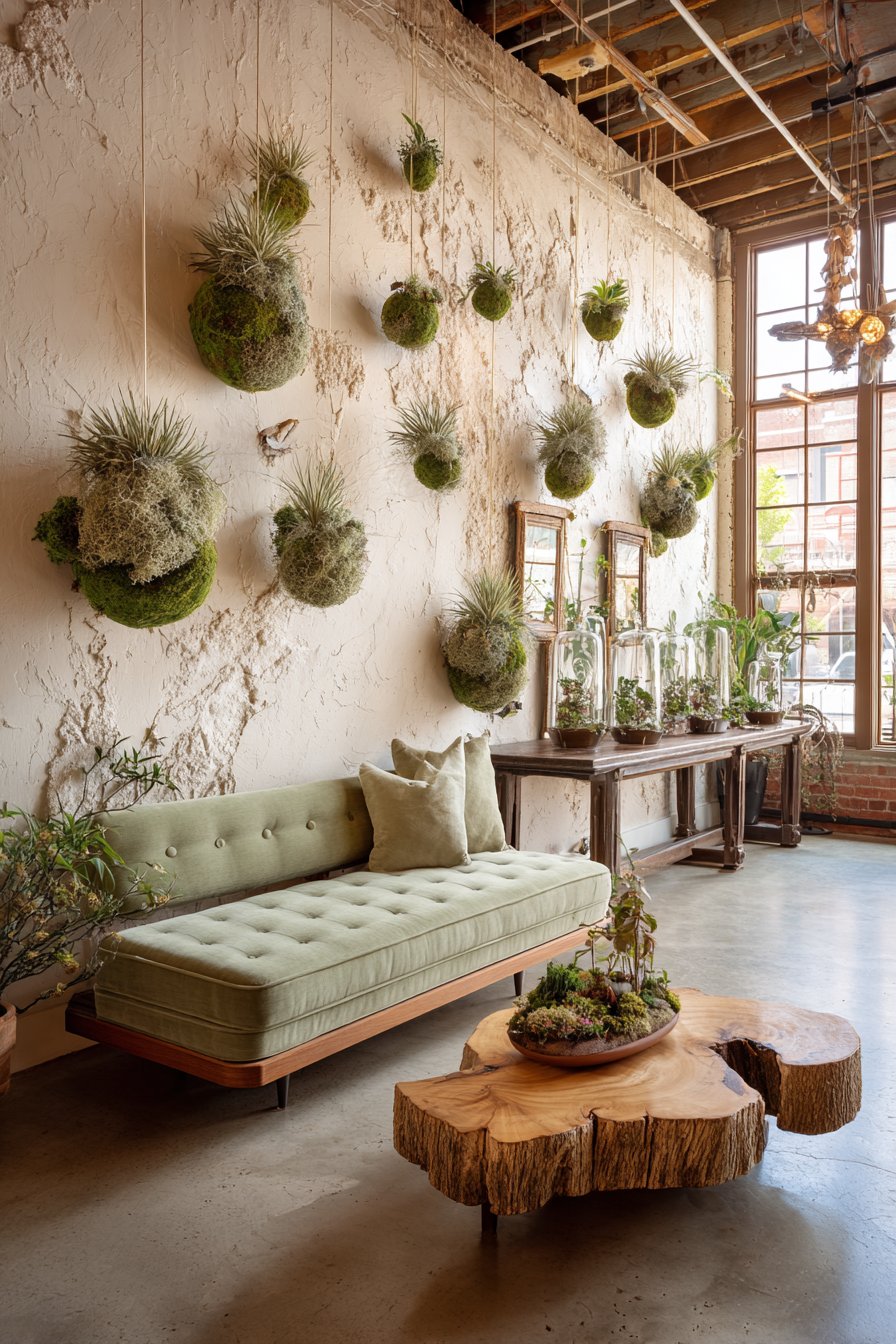
Soft natural light from multiple windows illuminates various plant presentations. The artistic approach to plant display elevates greenery beyond decoration into art. Different mounting methods demonstrate creativity and horticultural innovation. The sculptural elements function as conversation starters.
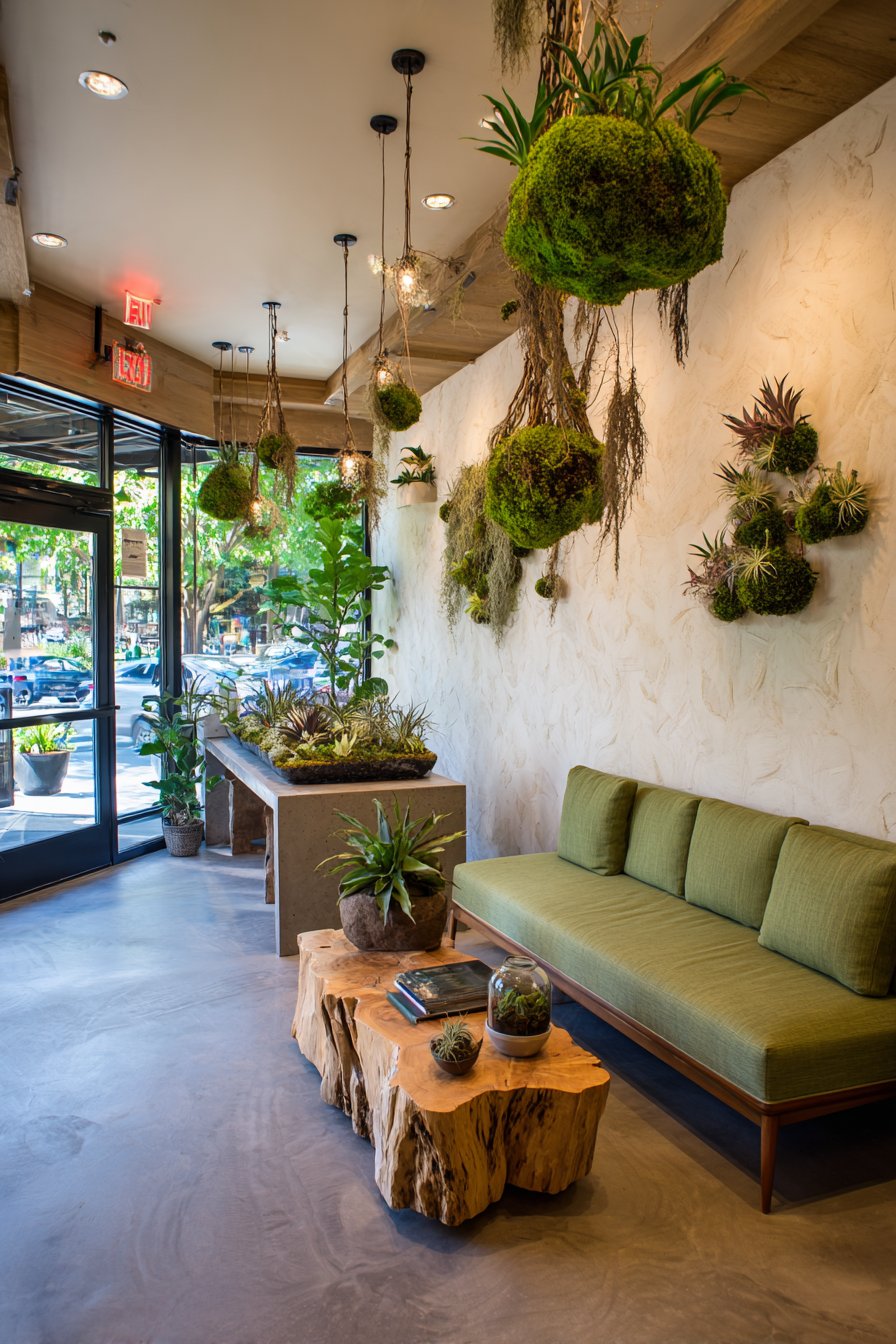
This design suits creative individuals seeking unique expressions. The unconventional presentations require more effort than standard potting. The artistic payoff justifies the additional complexity. Plant enthusiasts appreciate the opportunity to showcase innovative techniques.
Key Design Tips:
- Experiment with kokedama for unique hanging plant displays
- Mount air plants on interesting driftwood pieces for sculptural effects
- Create terrarium collections that function as miniature landscapes
- Use multiple windows to ensure adequate light for various displays
- Choose furniture in complementary green tones to reinforce the theme
- Display creative plant arrangements as intentional art installations
13. Bohemian Maximalist Green Haven
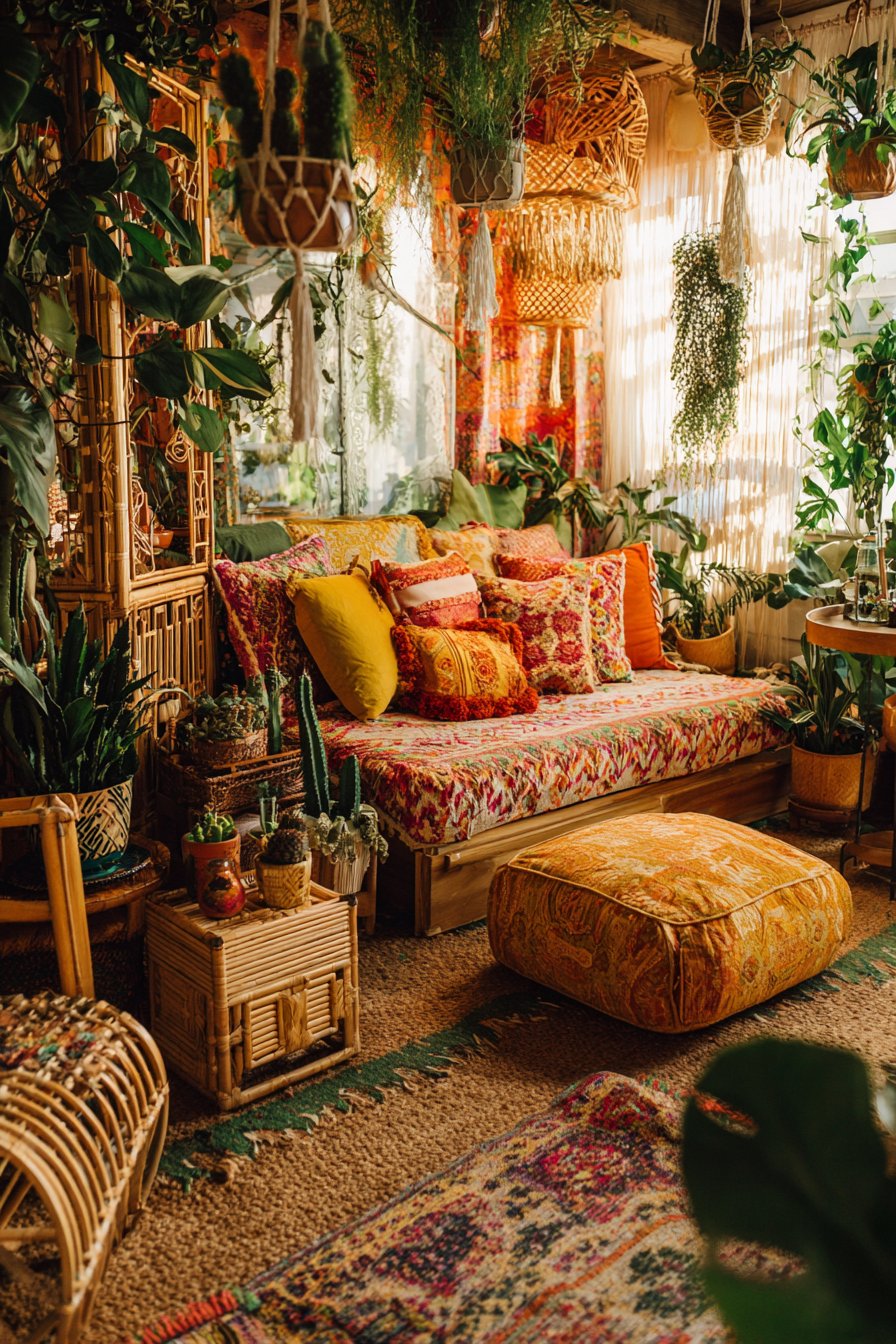
Plants cascade from every surface in this bohemian-inspired design. Macramé hangers hold trailing plants from exposed ceiling beams. Floor plants occupy woven baskets and vintage planters throughout the space. Window sills display small potted succulents and cacti in abundance.
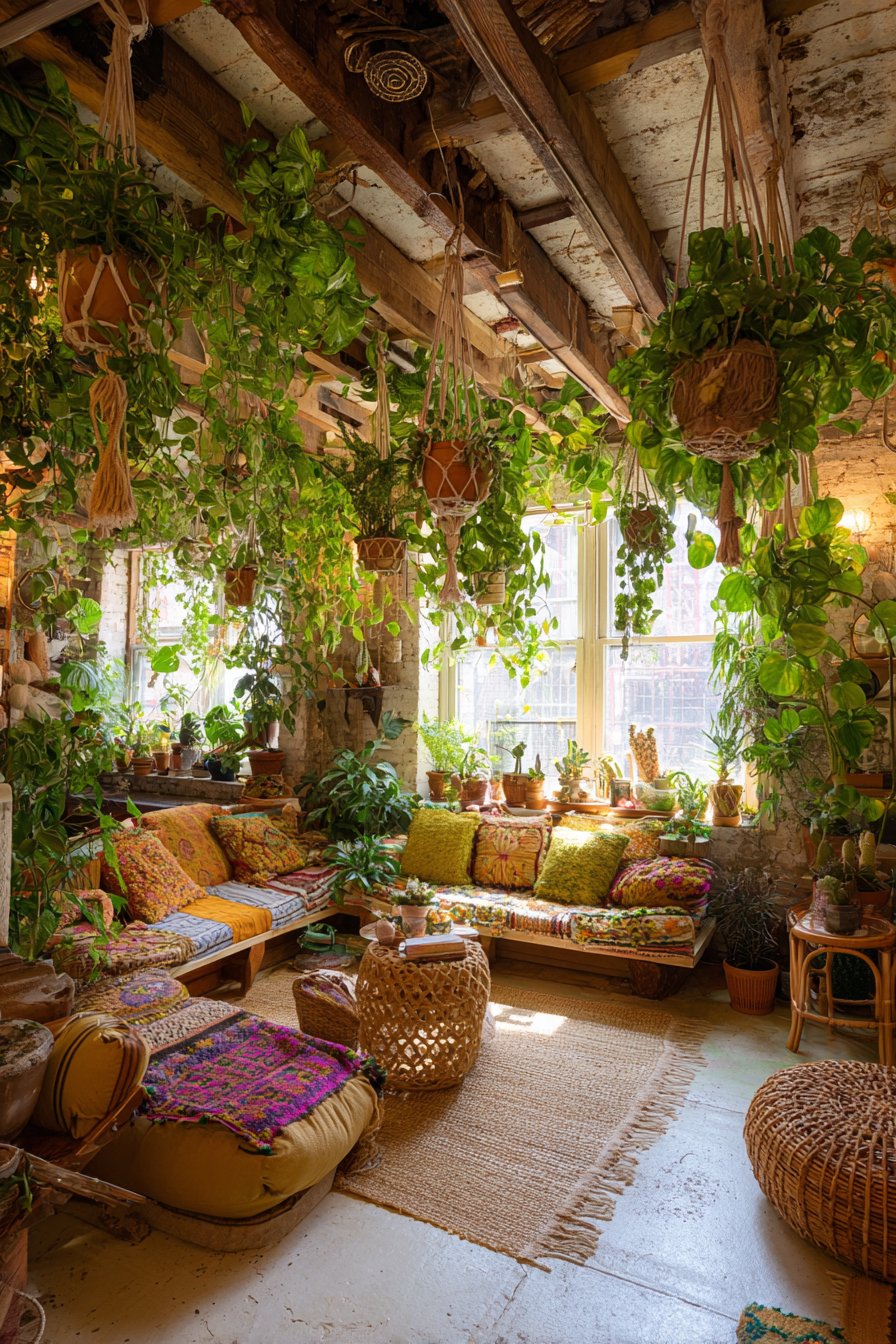
A low-slung sofa with colorful patterned pillows creates comfortable seating surrounded by greenery. Layered textiles add bohemian character and warmth. Natural fiber rugs overlap on floors while rattan and bamboo furniture adds organic texture. The eclectic mix feels intentional rather than chaotic.
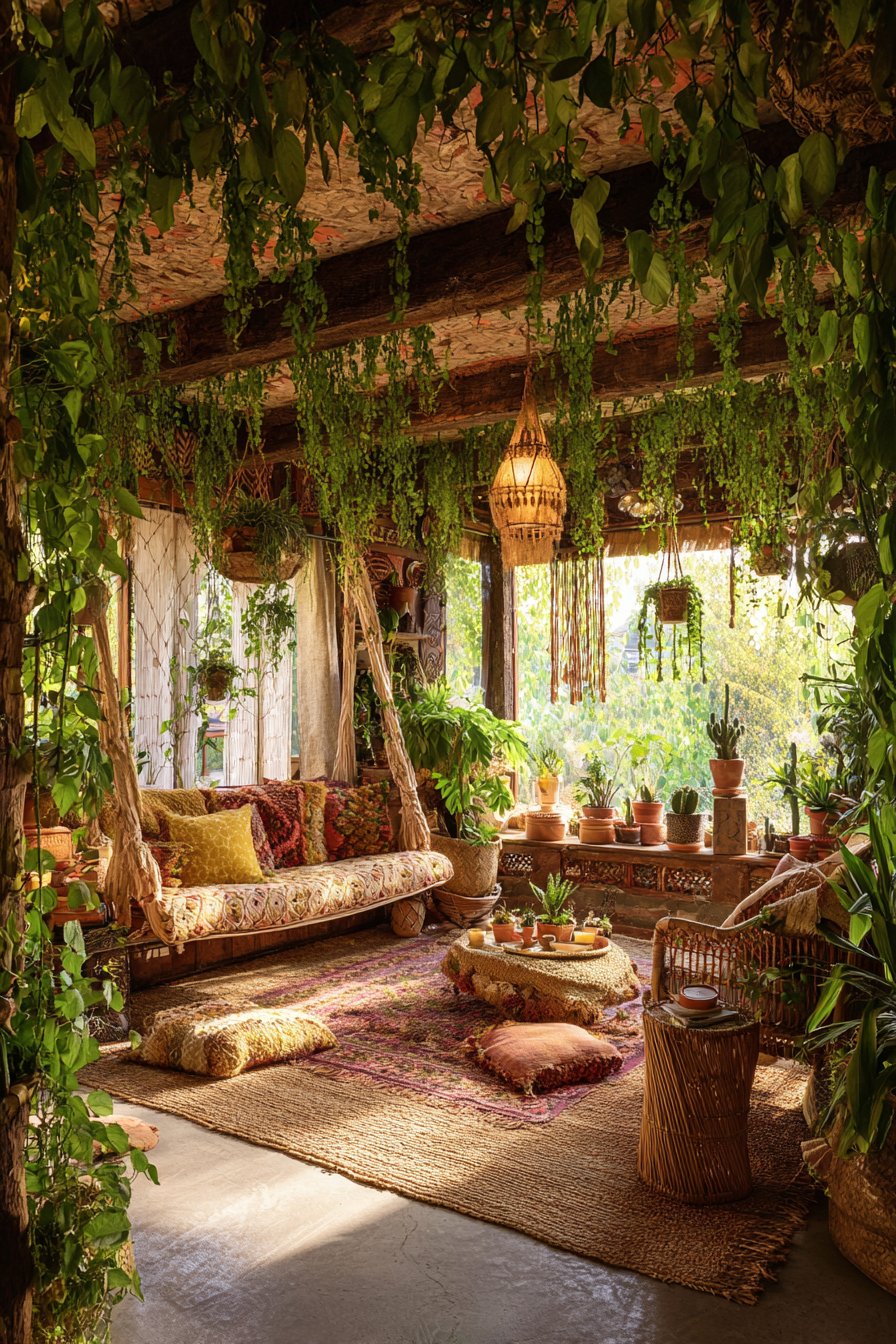
Warm natural light creates dappled effects through abundant hanging plants. The filtered illumination adds to the relaxed bohemian atmosphere. The maximalist approach embraces abundance over restraint. Every available surface becomes potential plant territory.
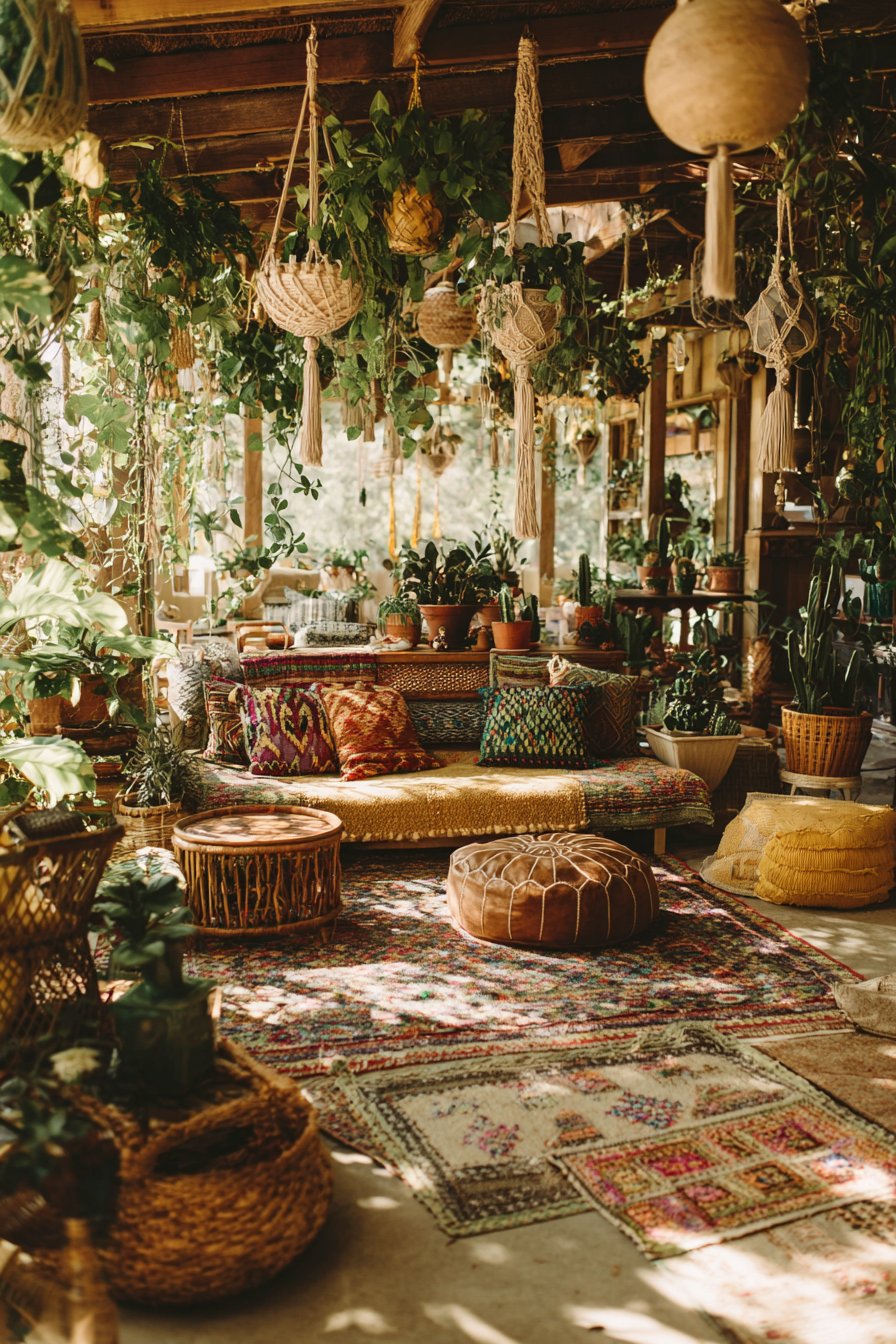
This design celebrates the joy of collecting and displaying plants without rigid rules. The profusion of greenery creates immersive botanical experiences. Varied textures of plants and textiles create rich sensory environments. The approach suits free-spirited individuals embracing abundance.
Key Design Tips:
- Install sturdy ceiling hooks in exposed beams for multiple hanging plants
- Mix plant container styles from woven baskets to vintage finds
- Layer textiles in colorful patterns for bohemian character
- Embrace maximalist abundance rather than minimalist restraint
- Use natural fiber rugs and rattan furniture for organic warmth
- Allow plants to occupy every surface including floors, shelves, and window sills
14. Living Green Room Divider
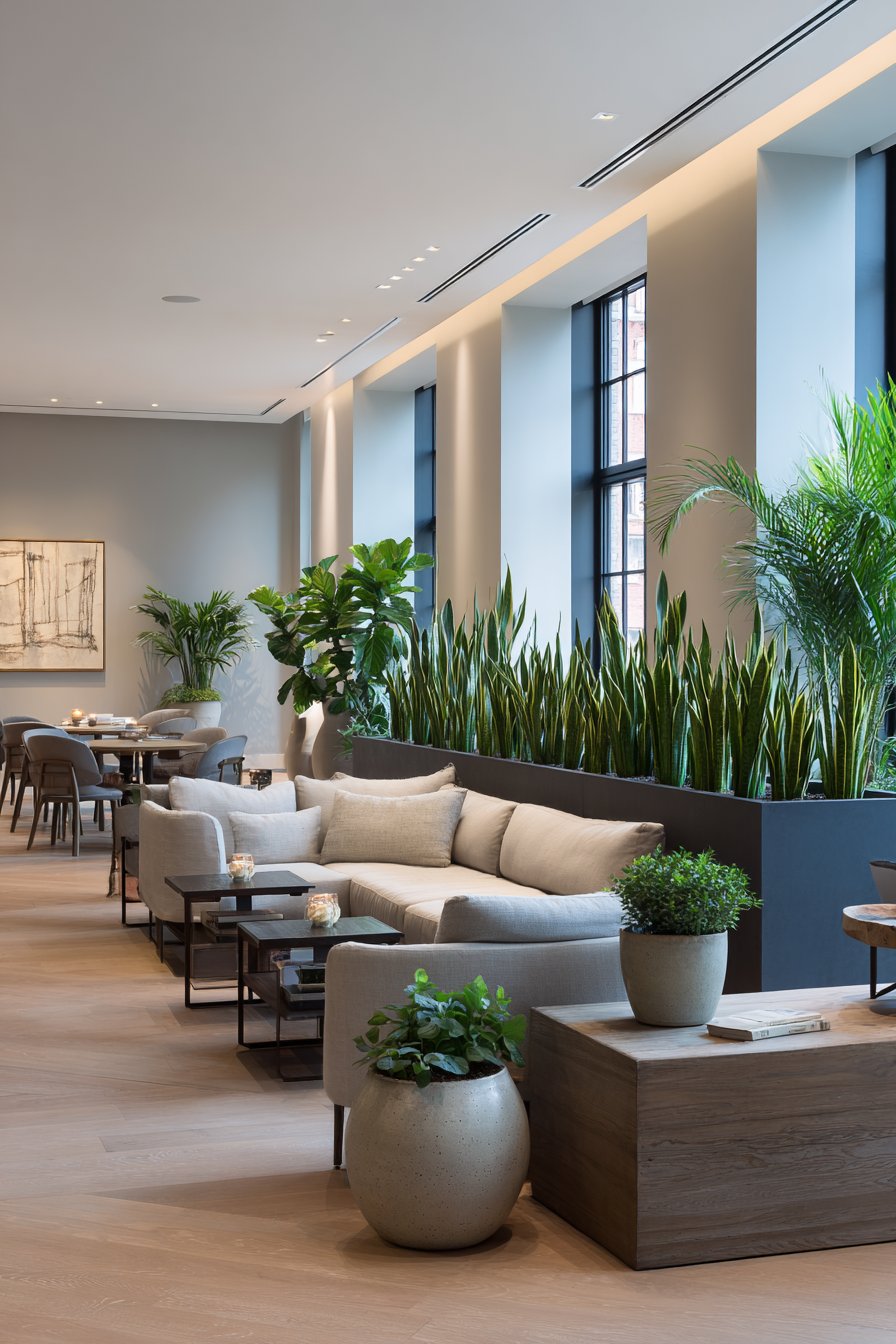
A planted room divider using tall plants in long rectangular planters creates functional separation. The living green wall separates living areas from dining or workspace zones. Dracaena, bamboo palms, and trailing pothos create privacy and visual interest simultaneously. The divider serves practical and aesthetic purposes.
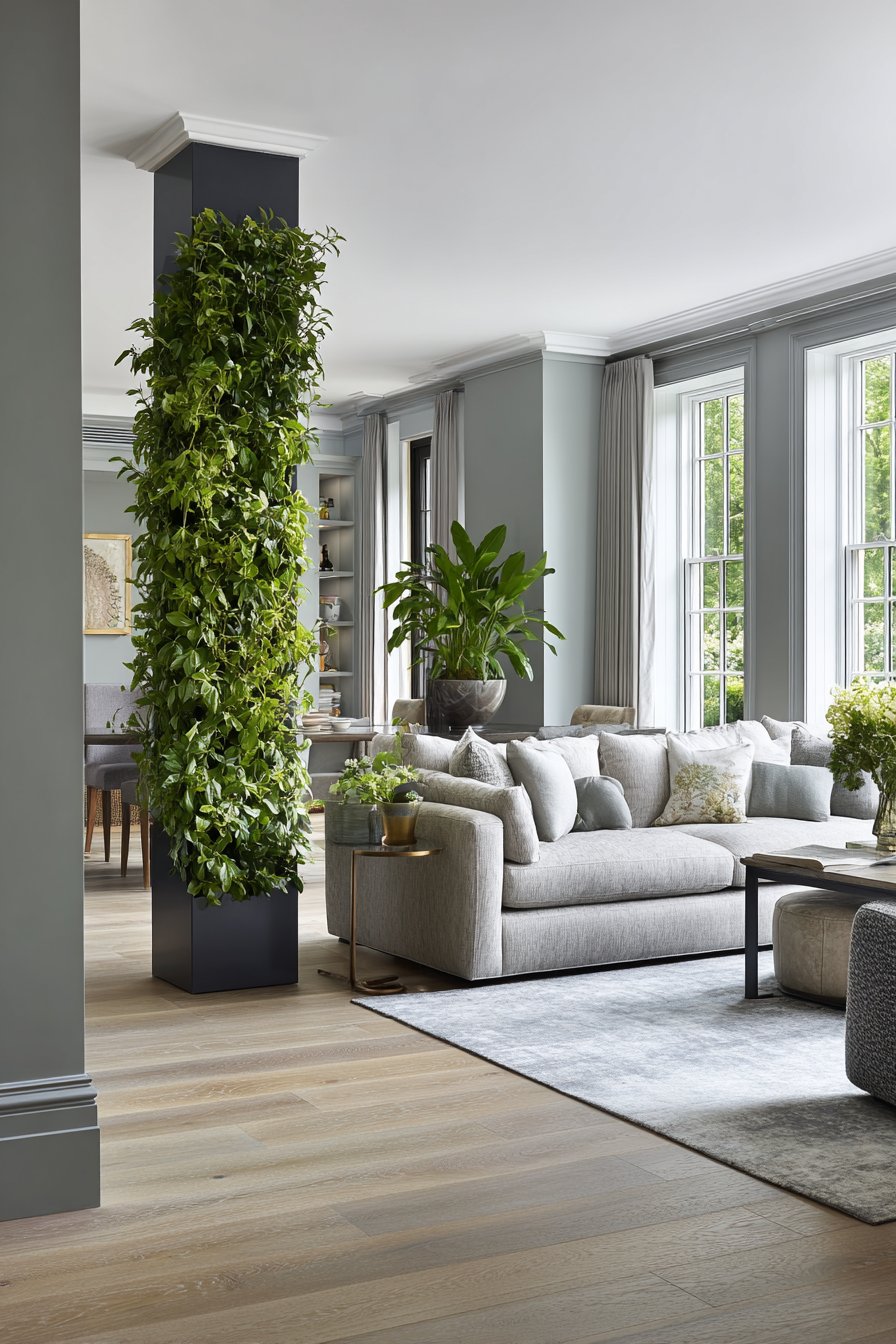
On the living room side, a comfortable sectional in neutral fabric faces the green divider. Additional potted plants on side tables and shelving reinforce the botanical theme. Natural wood flooring and soft grey walls allow the plant divider to command attention. The architectural element becomes the room’s defining feature.
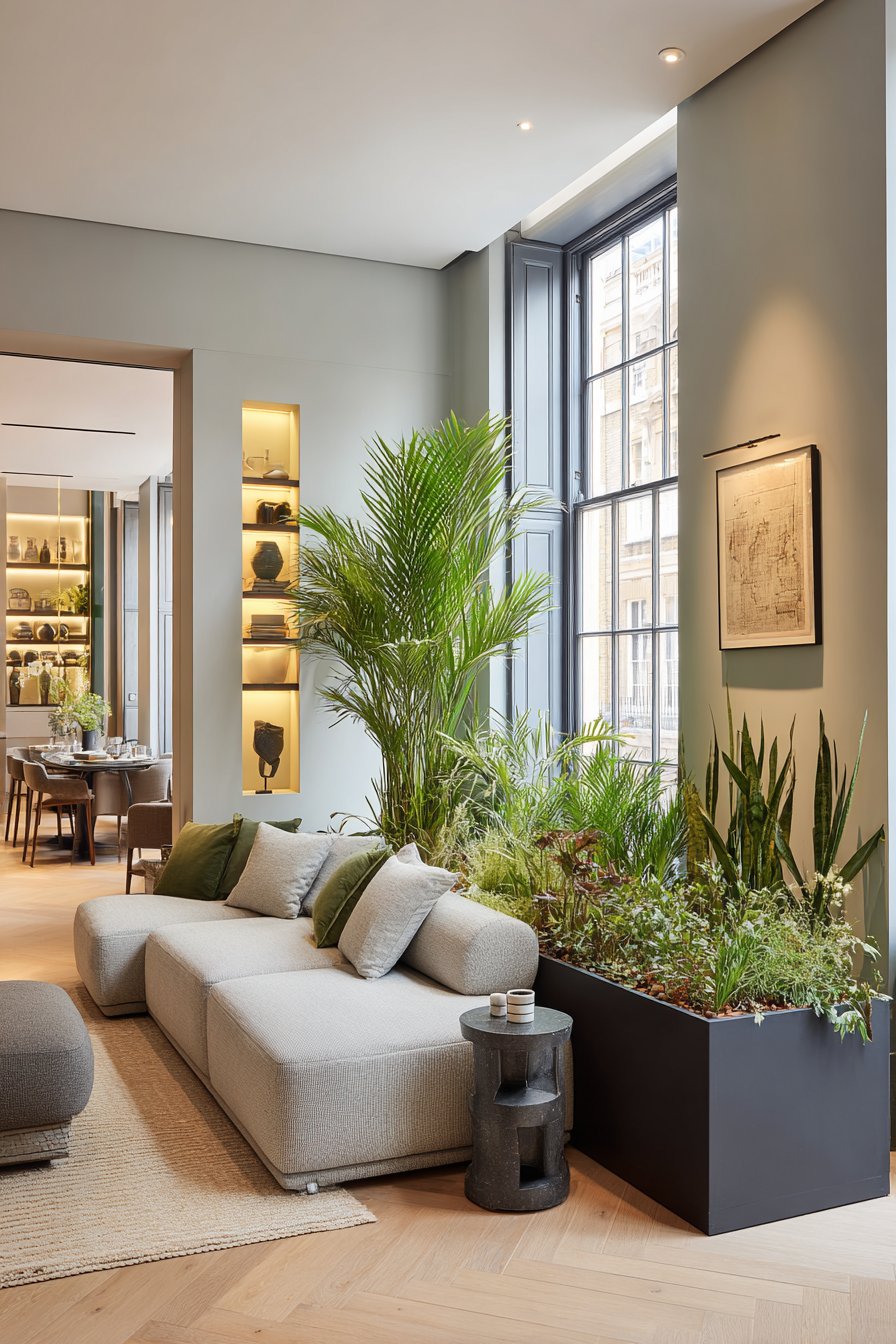
Balanced natural lighting from windows on both sides ensures plant health. The divider receives adequate illumination from multiple directions. The strategic placement allows light to filter through creating beautiful shadow patterns. The living wall functions beautifully while defining distinct spaces.
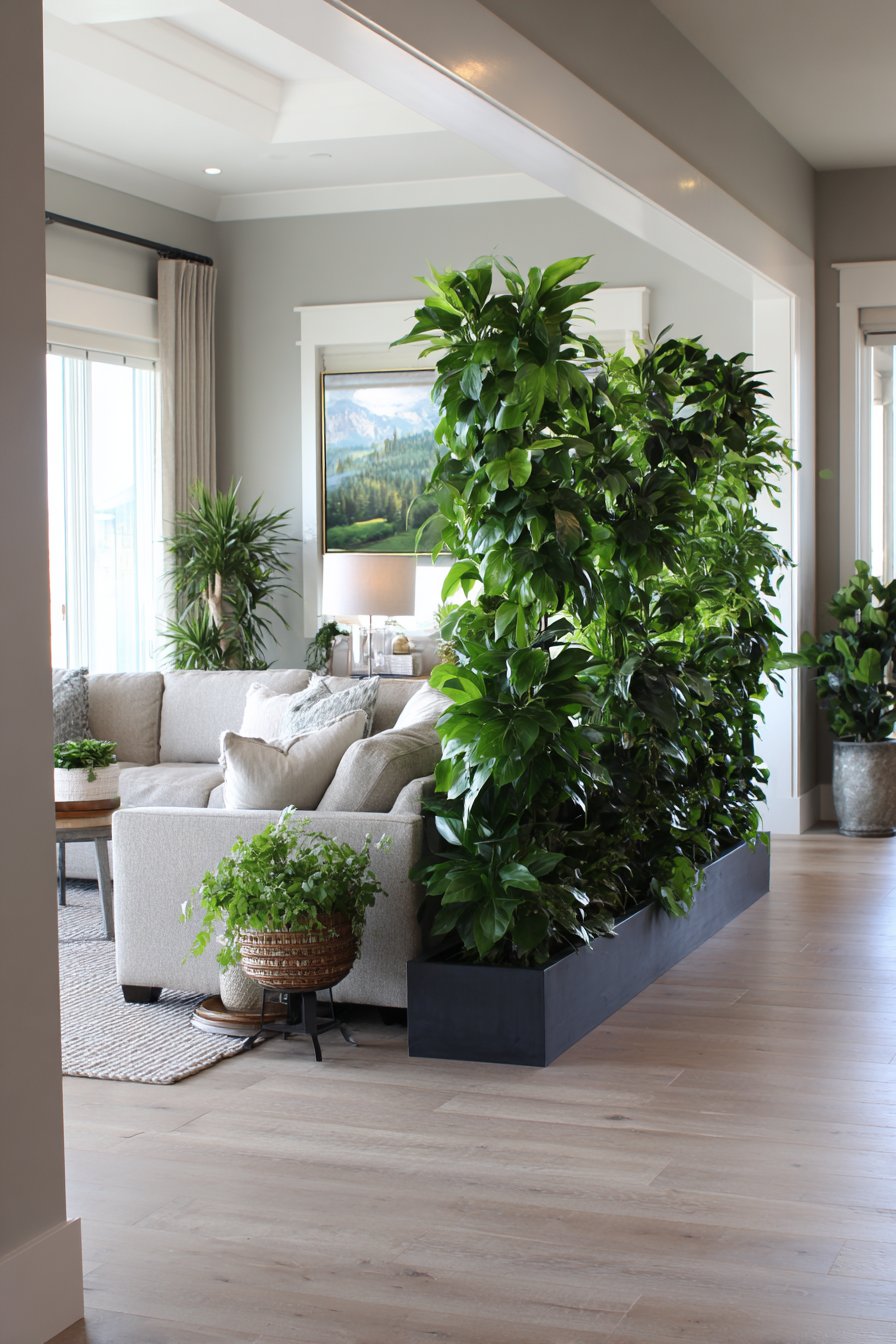
This design solves spatial challenges through botanical solutions. The plant divider provides privacy without solid walls. The living element adds beauty to functional space division. This approach suits open floor plans requiring subtle separation.
Key Design Tips:
- Use long rectangular planters for linear room divider arrangements
- Select tall plants like dracaena and bamboo palms for height and privacy
- Ensure adequate light from both sides of the divider
- Add trailing plants for softness and visual interest at various heights
- Maintain neutral surrounding décor to highlight the green divider
- Plan for easy watering access when positioning permanent planters
15. Monochromatic Green Color Story
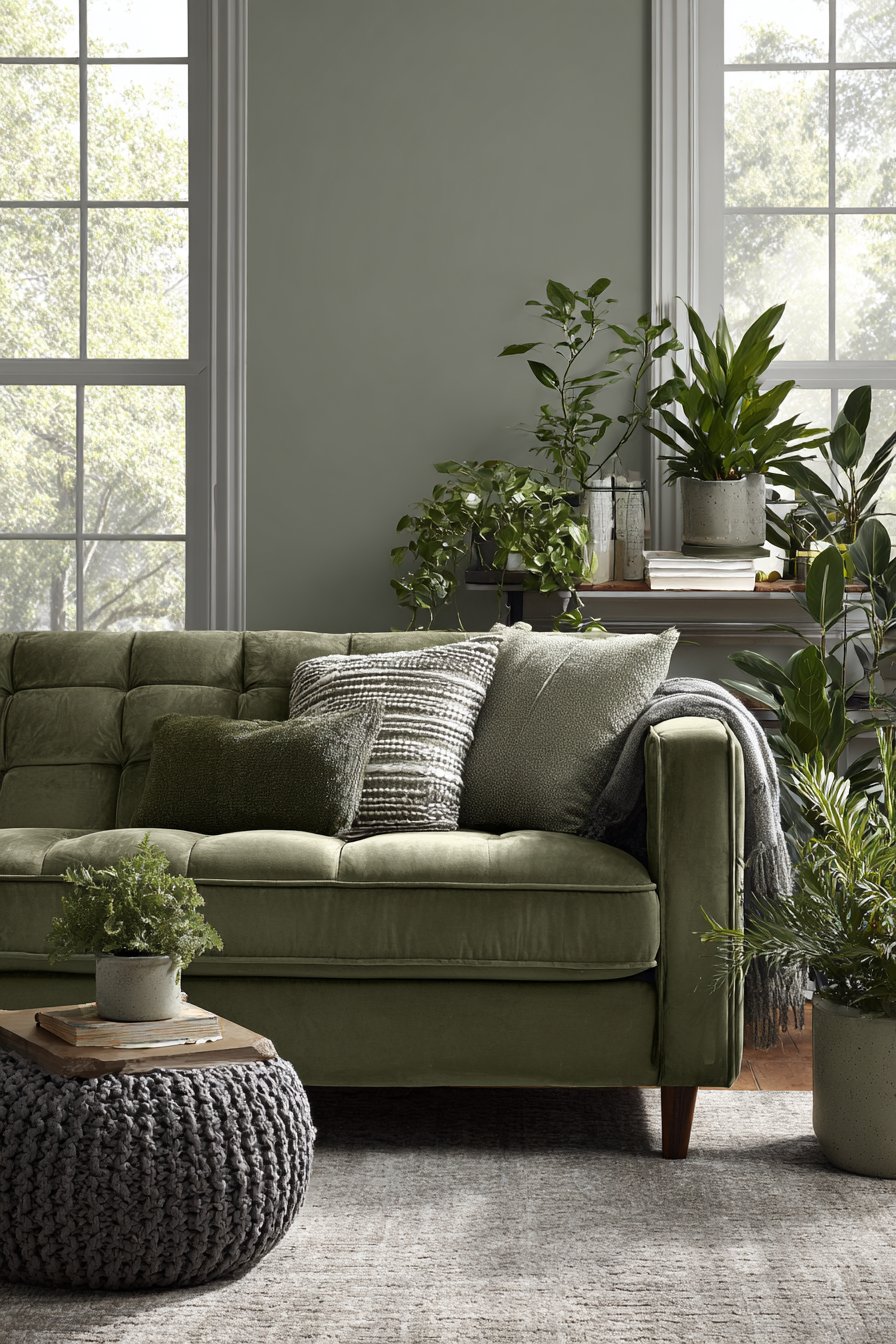
A monochromatic green color scheme creates cohesive nature-inspired environments. Sage green walls provide backdrops for deeper green velvet sofas. Various plants range from pale jade pothos to deep green rubber plants. The tonal variations create sophisticated depth within limited palettes.
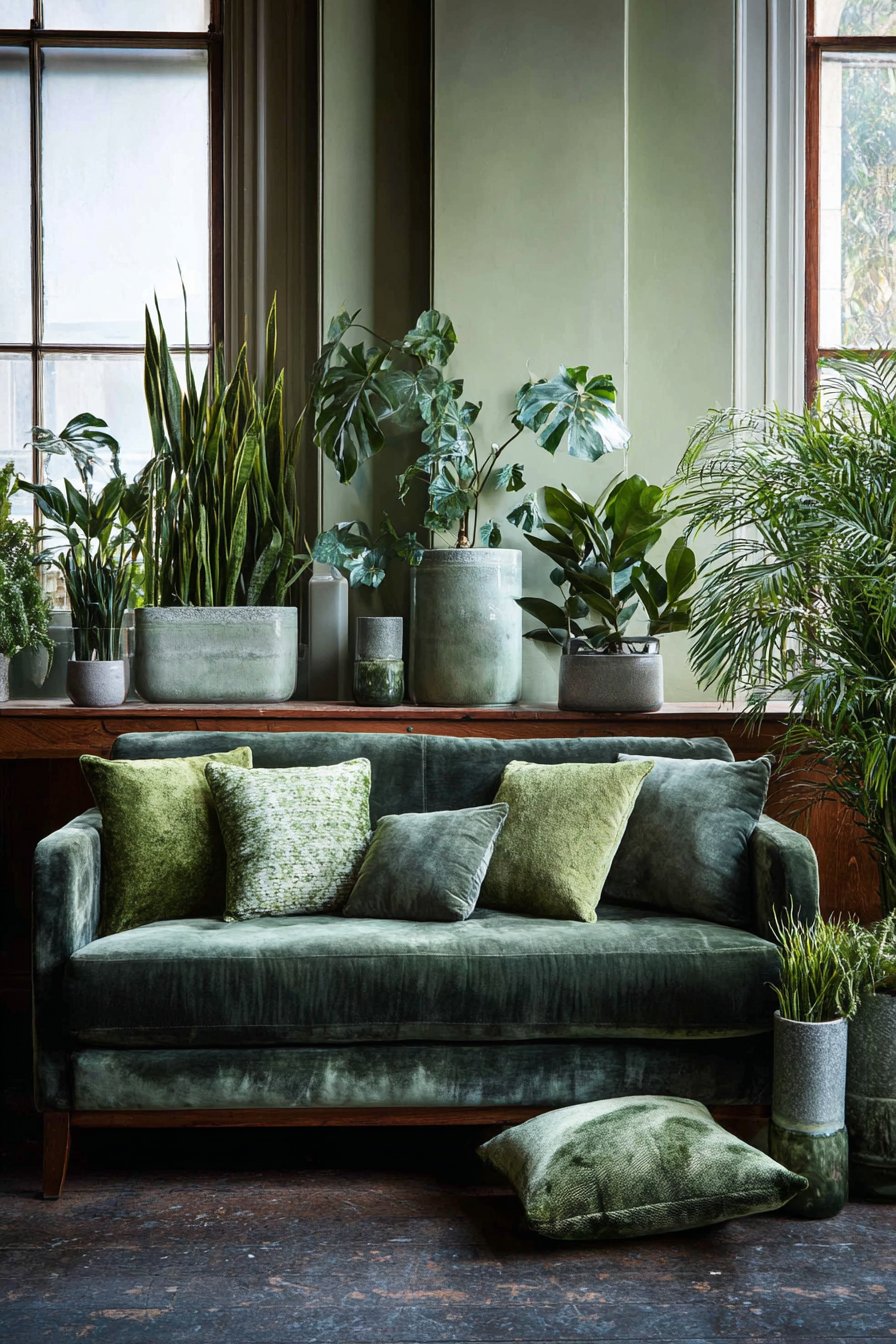
Eucalyptus and olive green accents appear in throw pillows and blankets. Ceramic planters in tones of celadon and forest green continue the color story. Natural wood elements in warm tones provide necessary contrast. The cohesive palette feels intentional and refined.
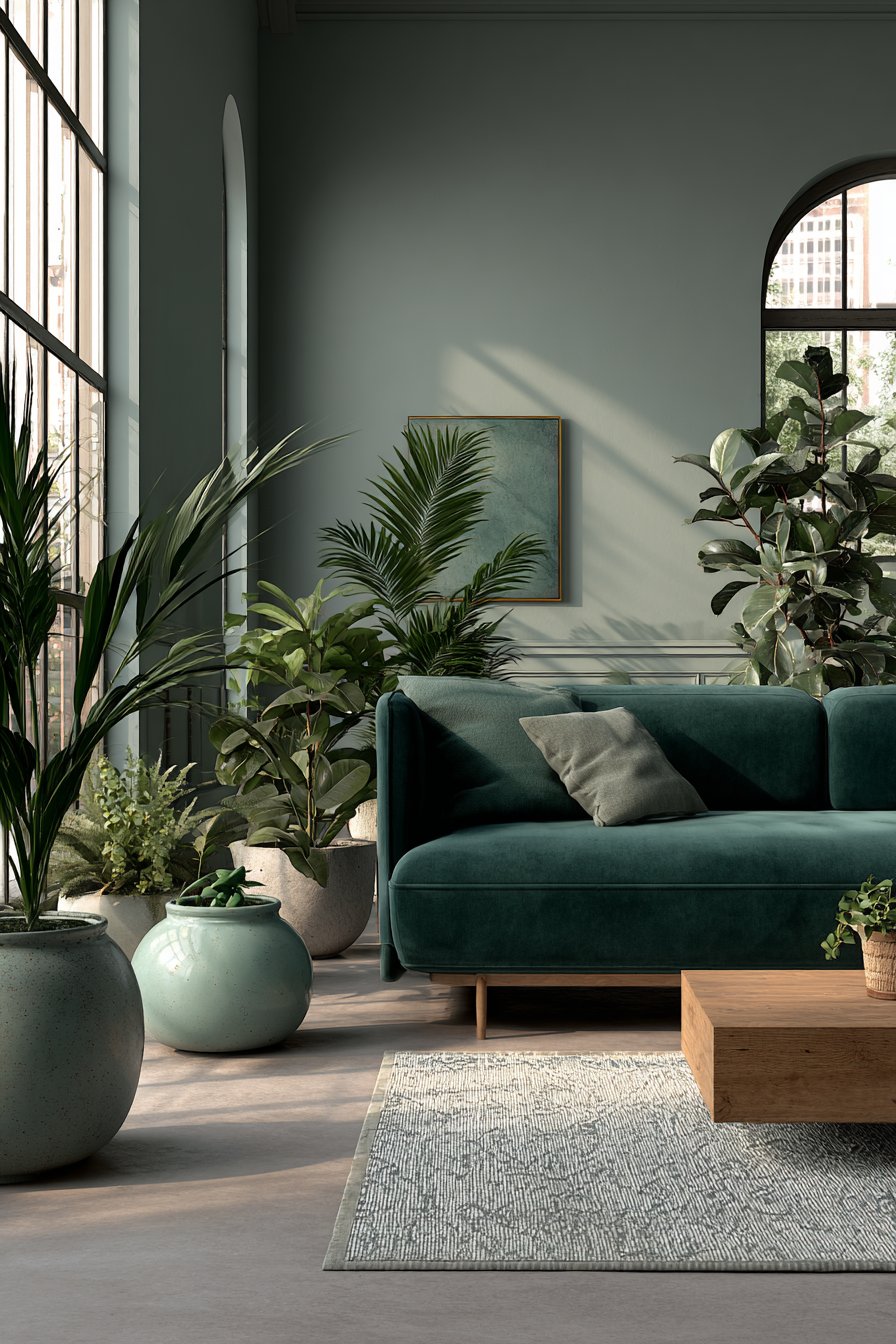
Large windows with simple white sheers allow bright natural light to showcase tonal variations. The illumination reveals subtle differences between similar green shades. Material textures become more important within limited color ranges. Velvet, linen, and ceramic surfaces create visual interest through tactile variation.
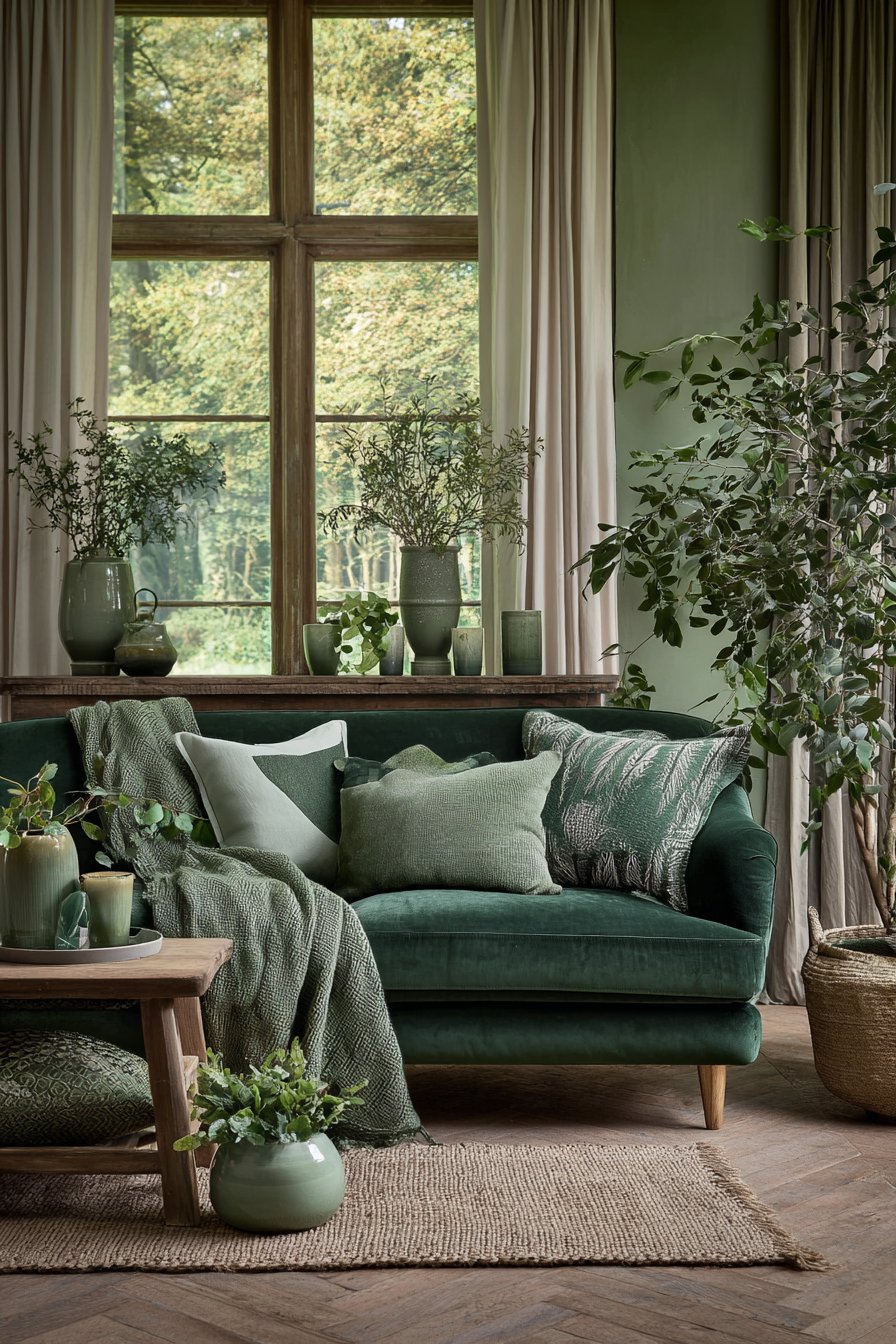
This approach demonstrates sophisticated color theory understanding. The living plants integrate seamlessly with intentional interior choices. The monochromatic scheme feels calming and cohesive. The design suits those appreciating subtle sophistication over bold contrast.
Key Design Tips:
- Select multiple shades within the green color family for depth
- Use varied materials and textures to create interest within limited palettes
- Choose plants spanning from pale to deep green tones
- Add natural wood elements for necessary contrast and warmth
- Maintain cohesive color stories across furniture, textiles, and planters
- Install adequate lighting to showcase subtle tonal variations
16. Plant Propagation Station Feature
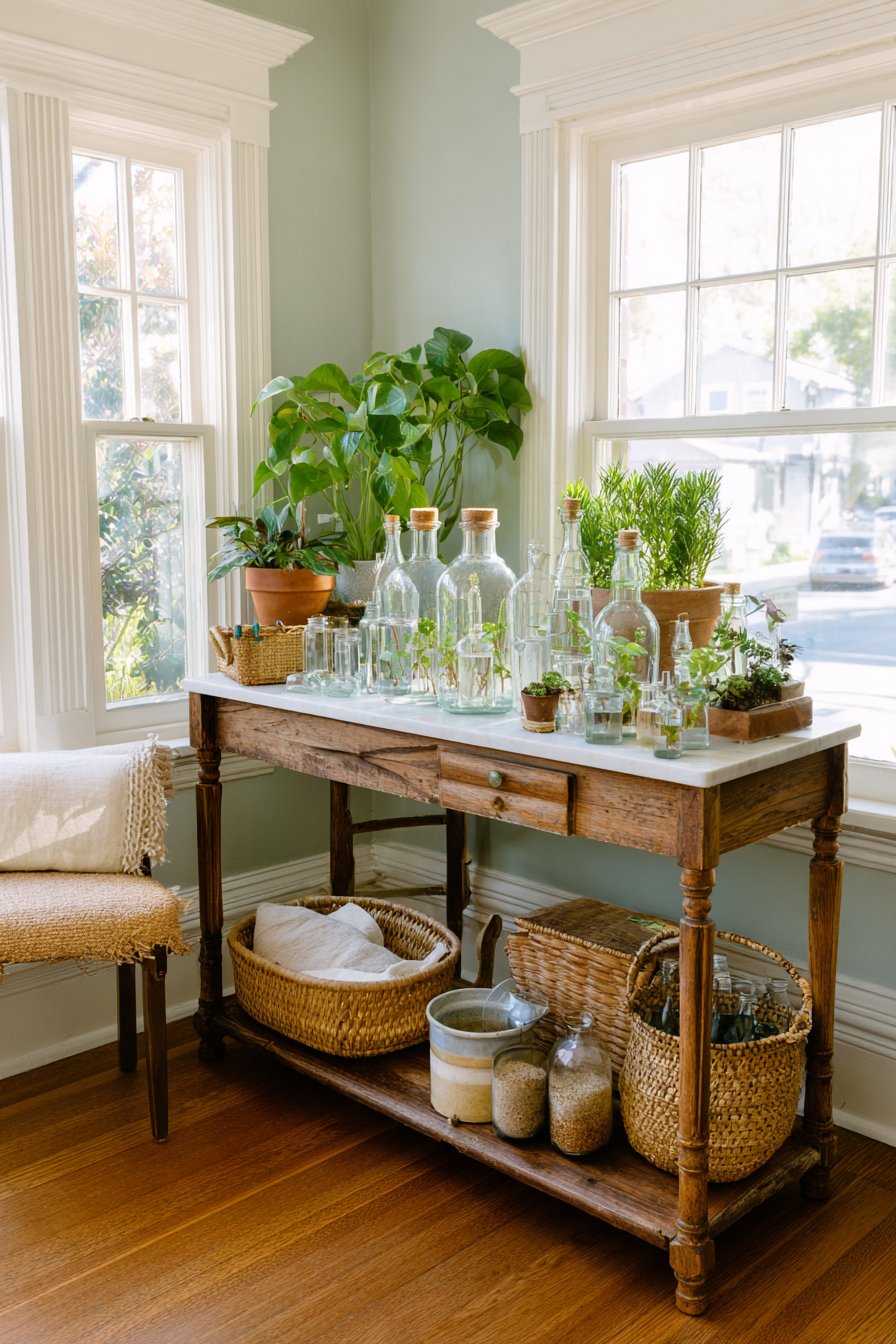
A dedicated plant propagation station features prominently near bright indirect light. A vintage wooden console holds glass vessels with plant cuttings in water. Small starter pots contain new growth while gardening tools arrange artfully nearby. The functional area becomes part of the overall aesthetic.
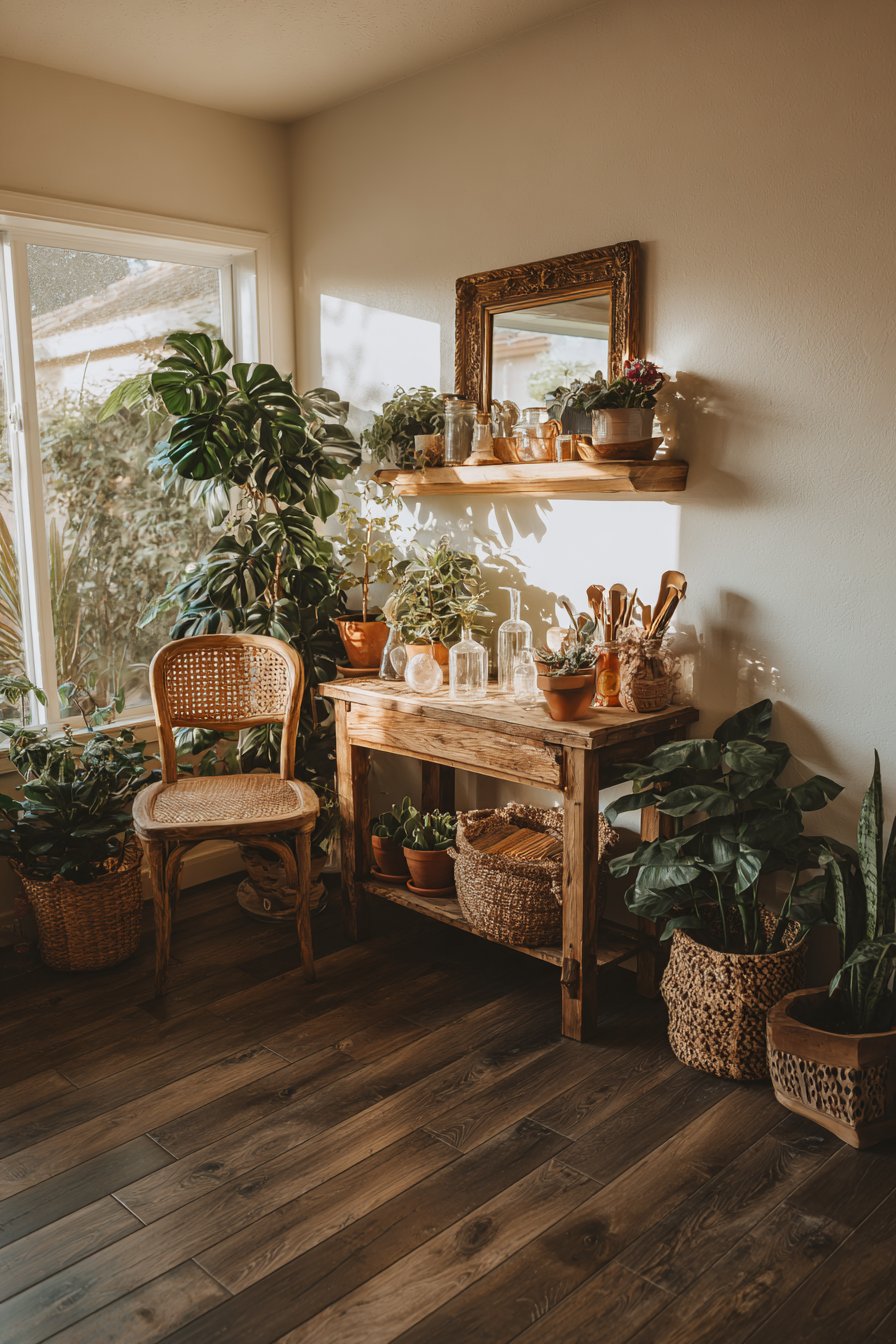
The propagation station sits surrounded by mature mother plants including pothos, philodendrons, and begonias. A comfortable chair positioned nearby creates a dedicated plant care zone. Natural materials dominate with wooden furniture, woven baskets, and ceramic accessories. The space celebrates the plant growth cycle.
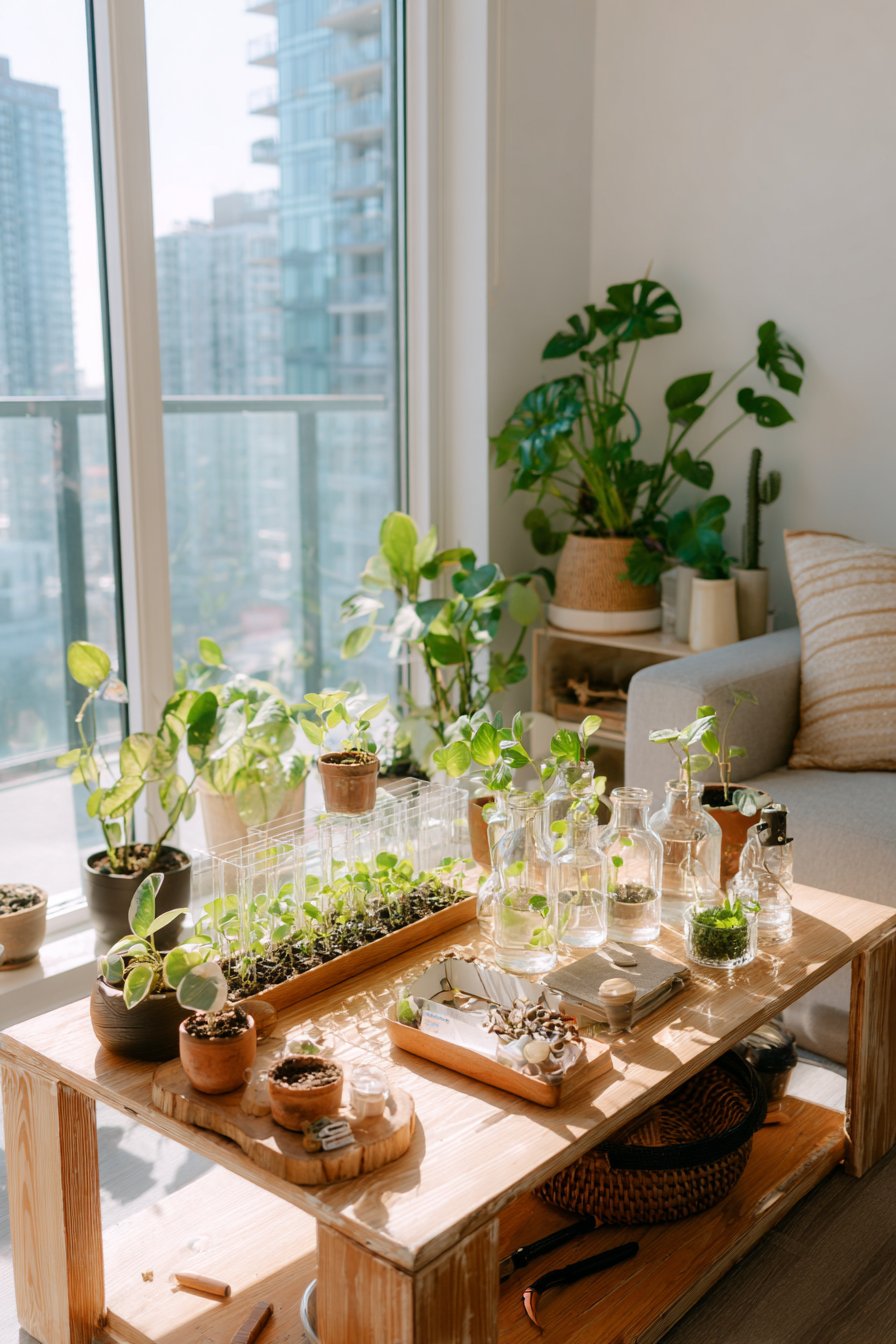
Soft morning light illuminates the propagation station highlighting water-rooted cuttings. Glass vessels display developing root systems creating educational visual interest. The functional beauty demonstrates that plant care can be decorative. This design element speaks to serious plant enthusiasts.
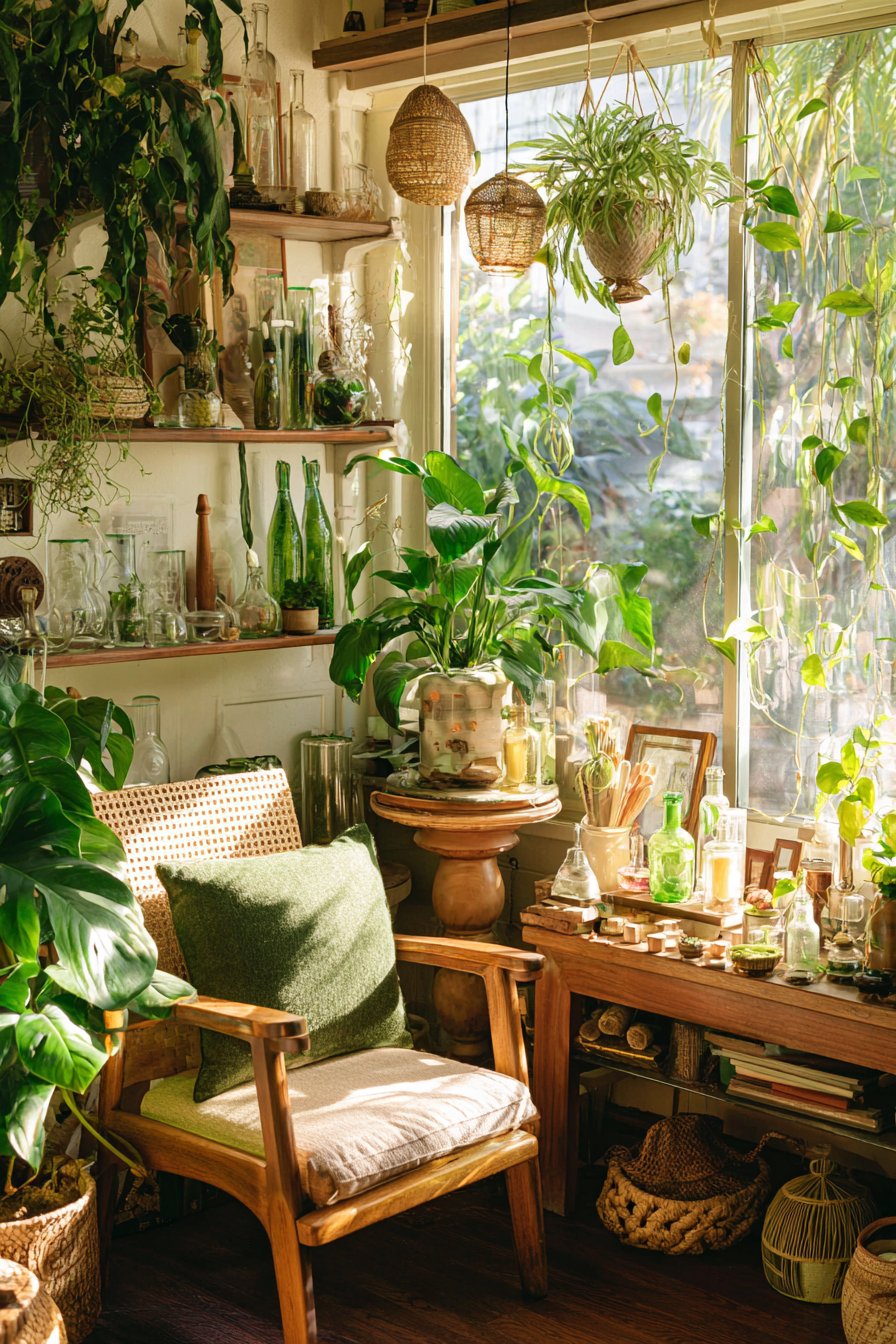
The propagation focus celebrates plant parenthood and horticultural engagement. The visible root development provides satisfaction and anticipation. The dedicated space acknowledges that plant care requires time and attention. This approach suits committed gardeners embracing the entire growing process.
Key Design Tips:
- Position propagation stations near bright indirect light sources
- Use clear glass vessels to display developing root systems
- Arrange gardening tools and supplies as decorative elements
- Place comfortable seating nearby for extended plant care sessions
- Select vintage wooden furniture for warm character
- Create dedicated zones specifically for plant propagation and care
17. Mounted Staghorn Fern Feature Wall
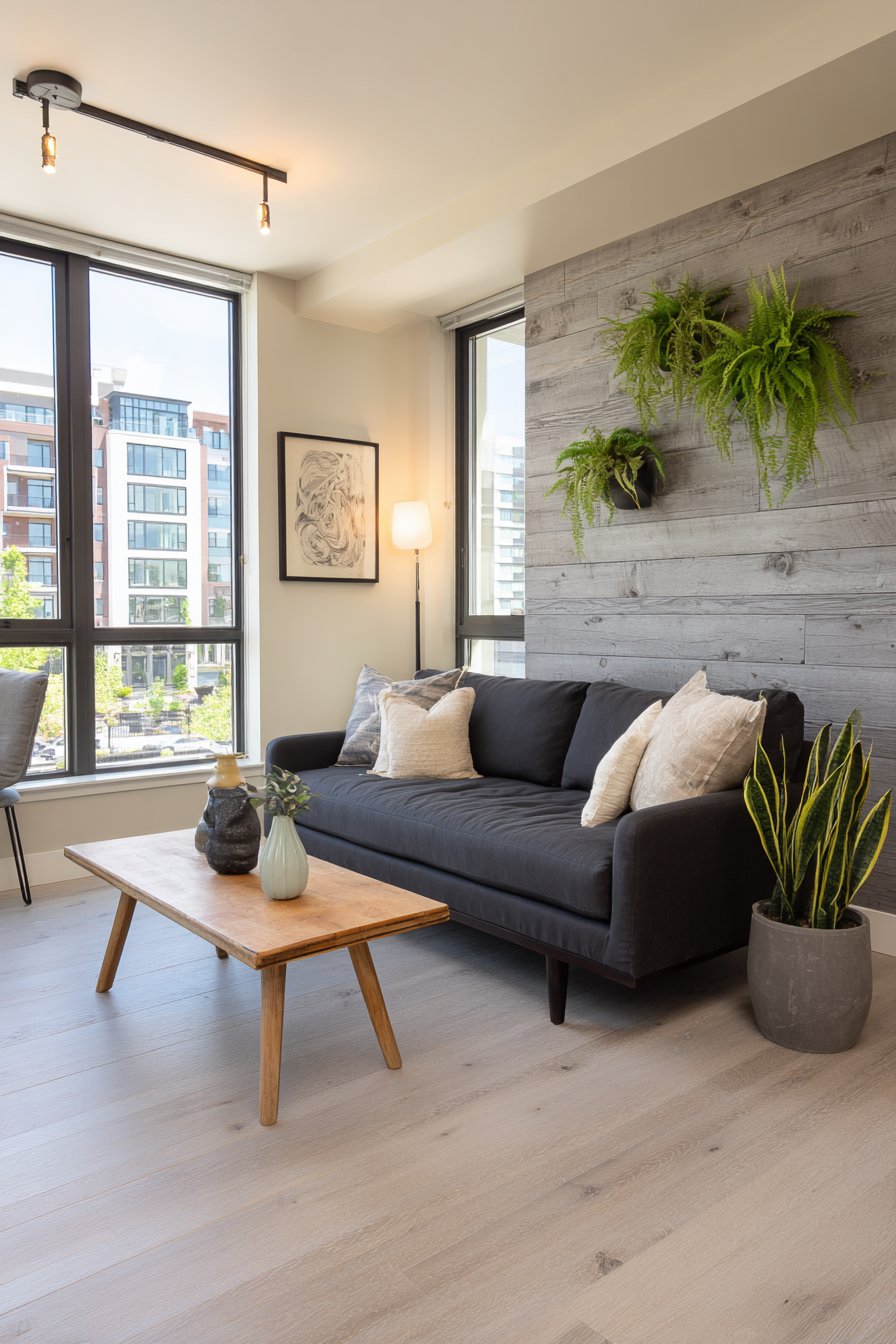
A statement wall of mounted staghorn ferns and epiphytic plants creates dramatic vertical impact. The mounted specimens arrange on weathered wood panels creating organic textural backdrops. The installation demonstrates advanced horticultural techniques and commitment. Wall-mounted plants function as living art requiring specialized care.
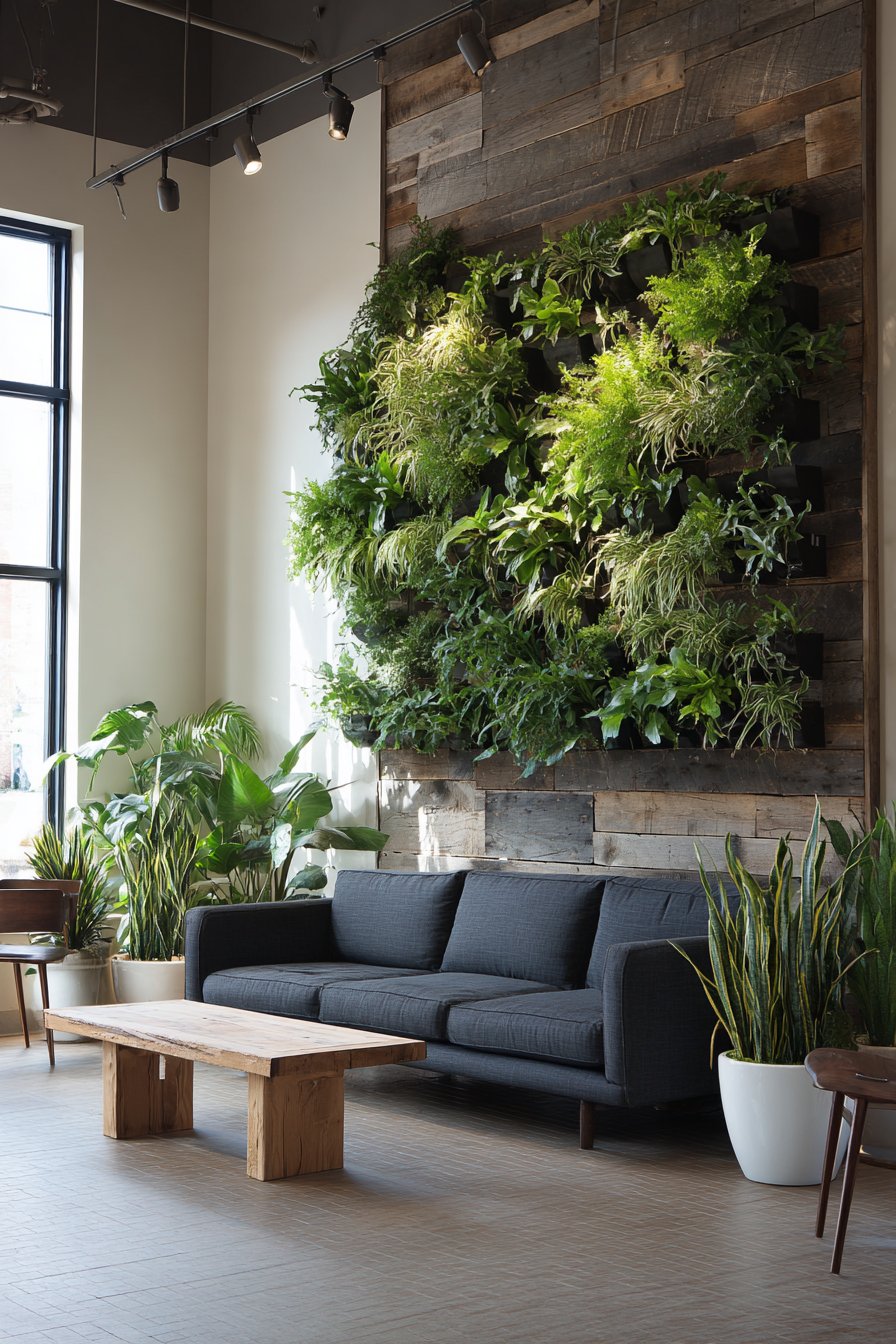
Below the feature wall, a modern sofa in charcoal linen provides viewing seating. A simple wooden coffee table and additional floor plants including snake plants and ZZ plants complete the arrangement. Track lighting illuminates the mounted plant collection during evening hours. Natural side windows provide ambient daytime illumination.
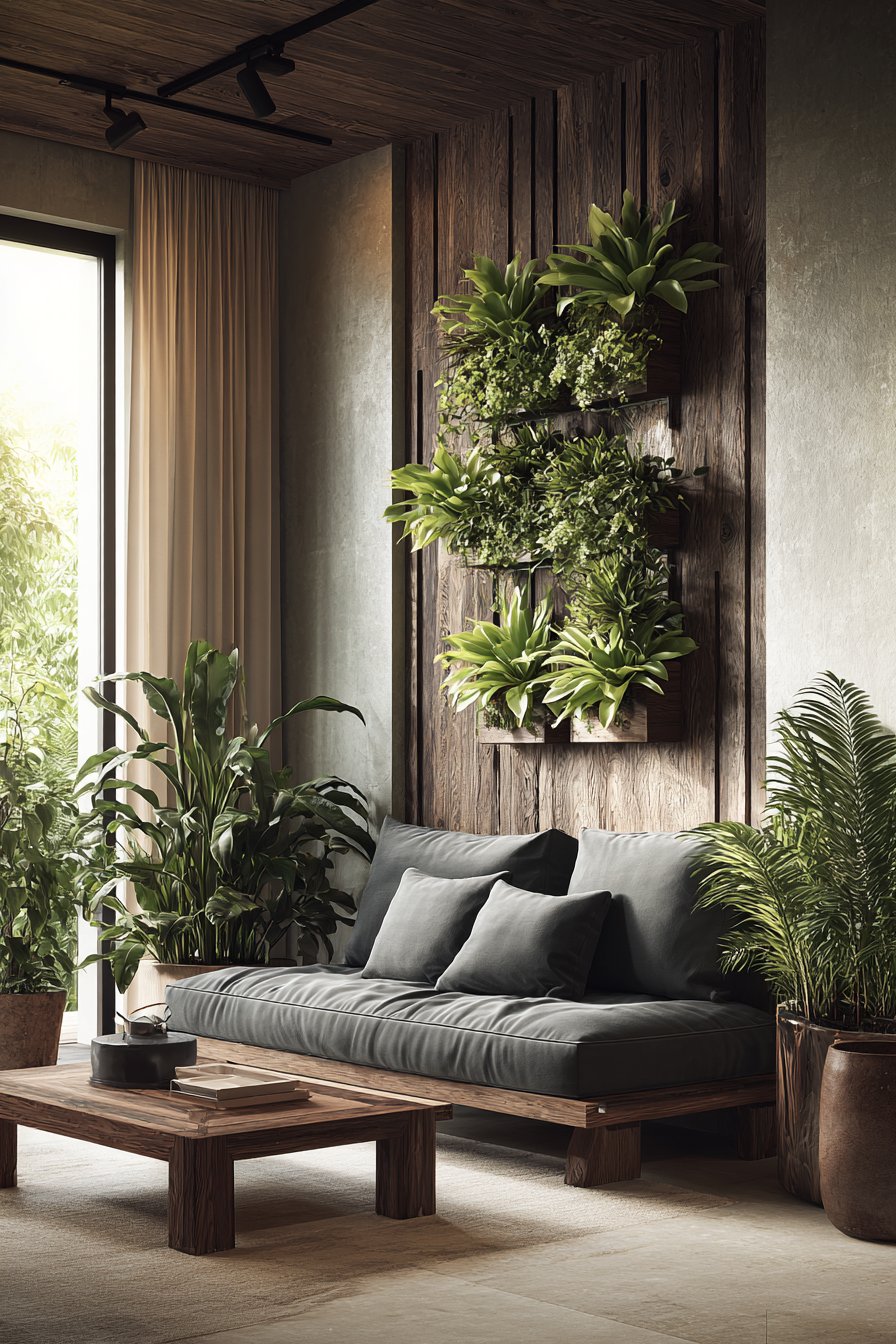
The architectural impact of wall-mounted plants elevates entire room designs. The mounting technique becomes part of the visual interest. Plant health indicators remain visible encouraging proper care. The dramatic installation suits those seeking bold botanical statements.
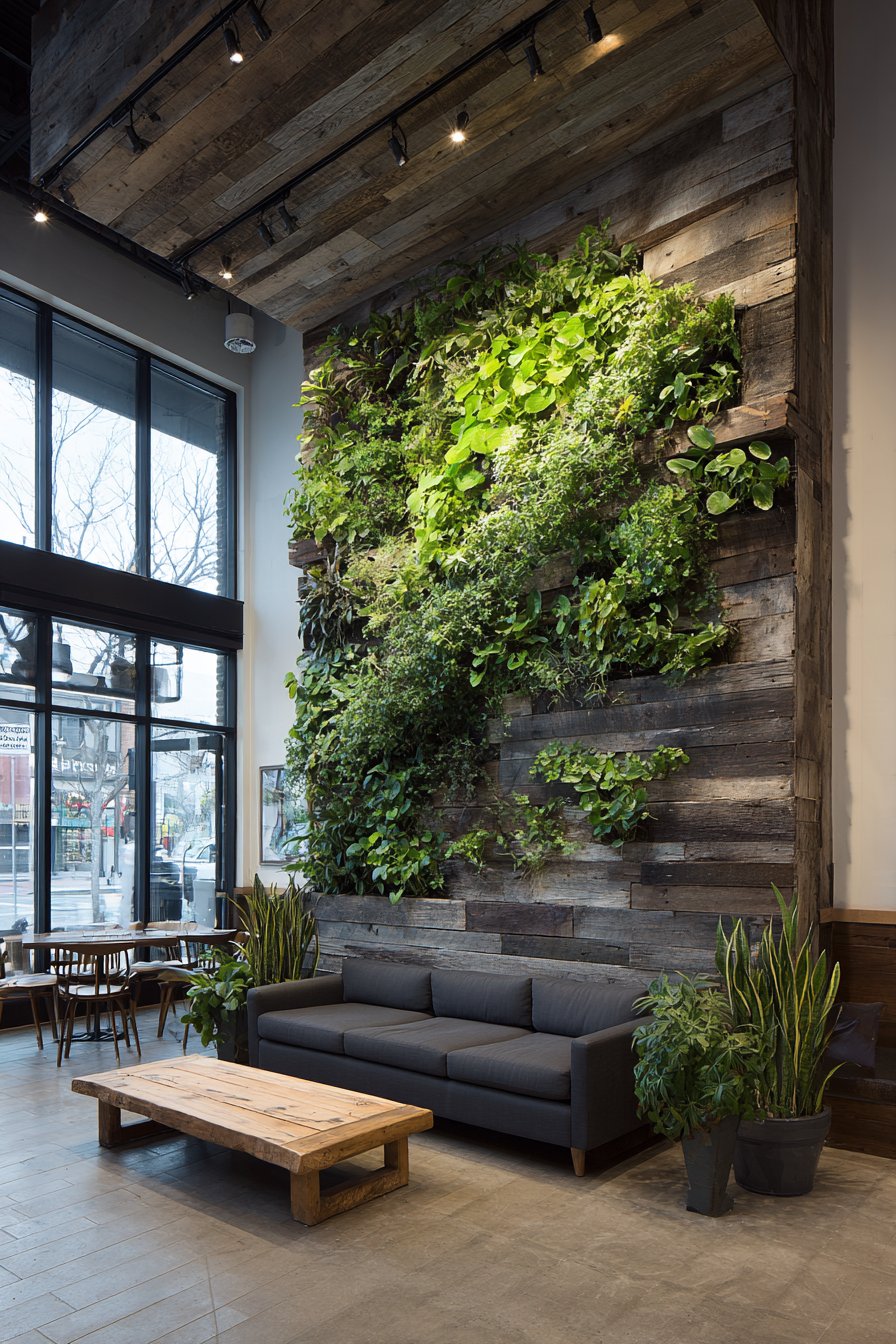
This specialized approach requires understanding of epiphytic plant requirements. Professional mounting ensures plant health and wall protection. The result creates unforgettable focal points in living spaces. The design demonstrates serious commitment to indoor horticulture.
Key Design Tips:
- Research proper mounting techniques for staghorn ferns and epiphytes
- Use weathered wood backing for organic textural interest
- Install track lighting to supplement natural light for mounted plants
- Maintain simple surrounding furniture to highlight the dramatic feature
- Plan for specialized watering approaches required by mounted specimens
- Ensure wall structure can support mounted plant installations safely
18. Comprehensive Multi-Level Integration
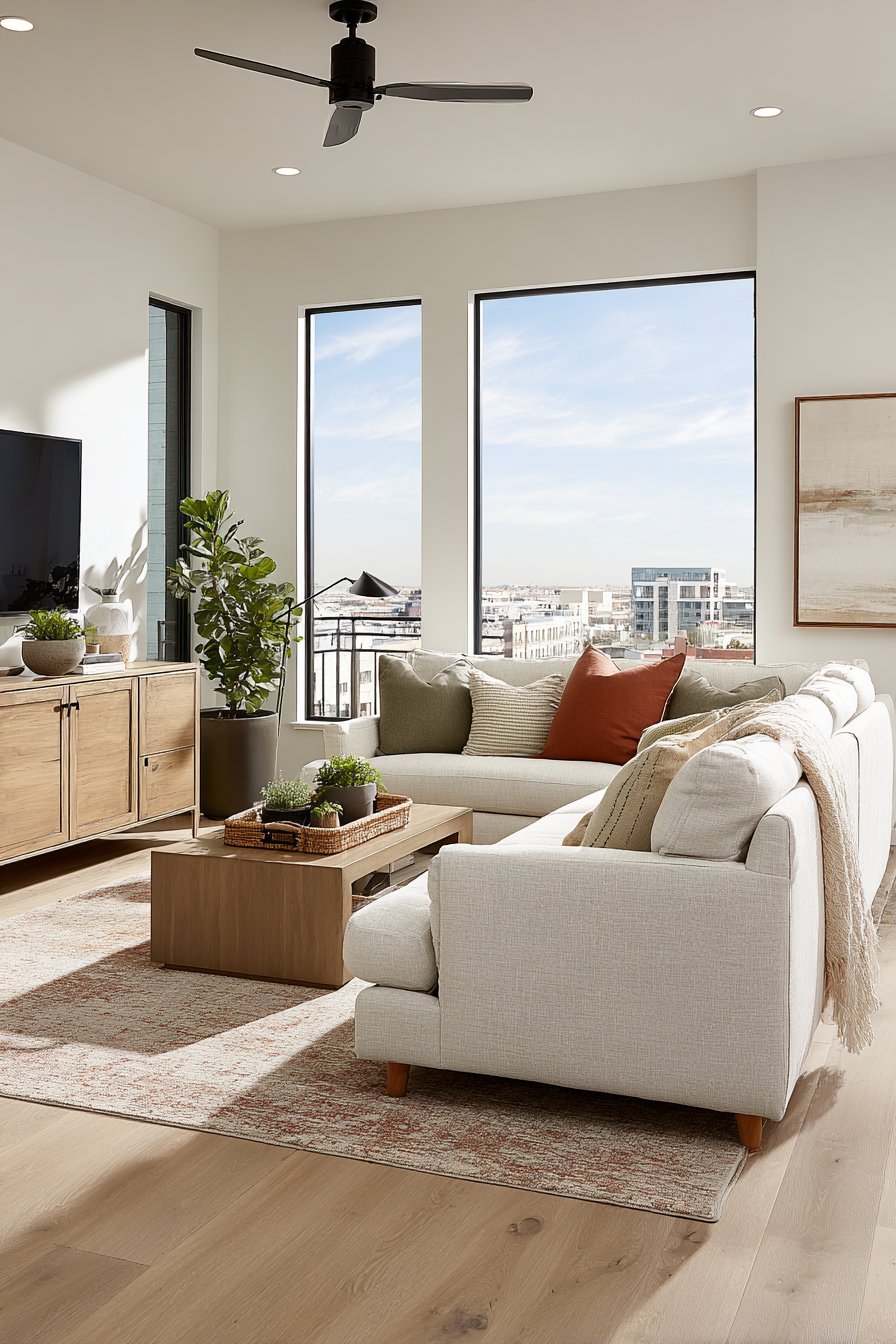
Plants incorporate into every functional surface throughout this thoroughly green space. Trailing plants cascade from floating shelves at upper levels. Small succulents arrange on coffee tables in decorative trays. Larger floor plants flank entertainment centers providing vertical elements.
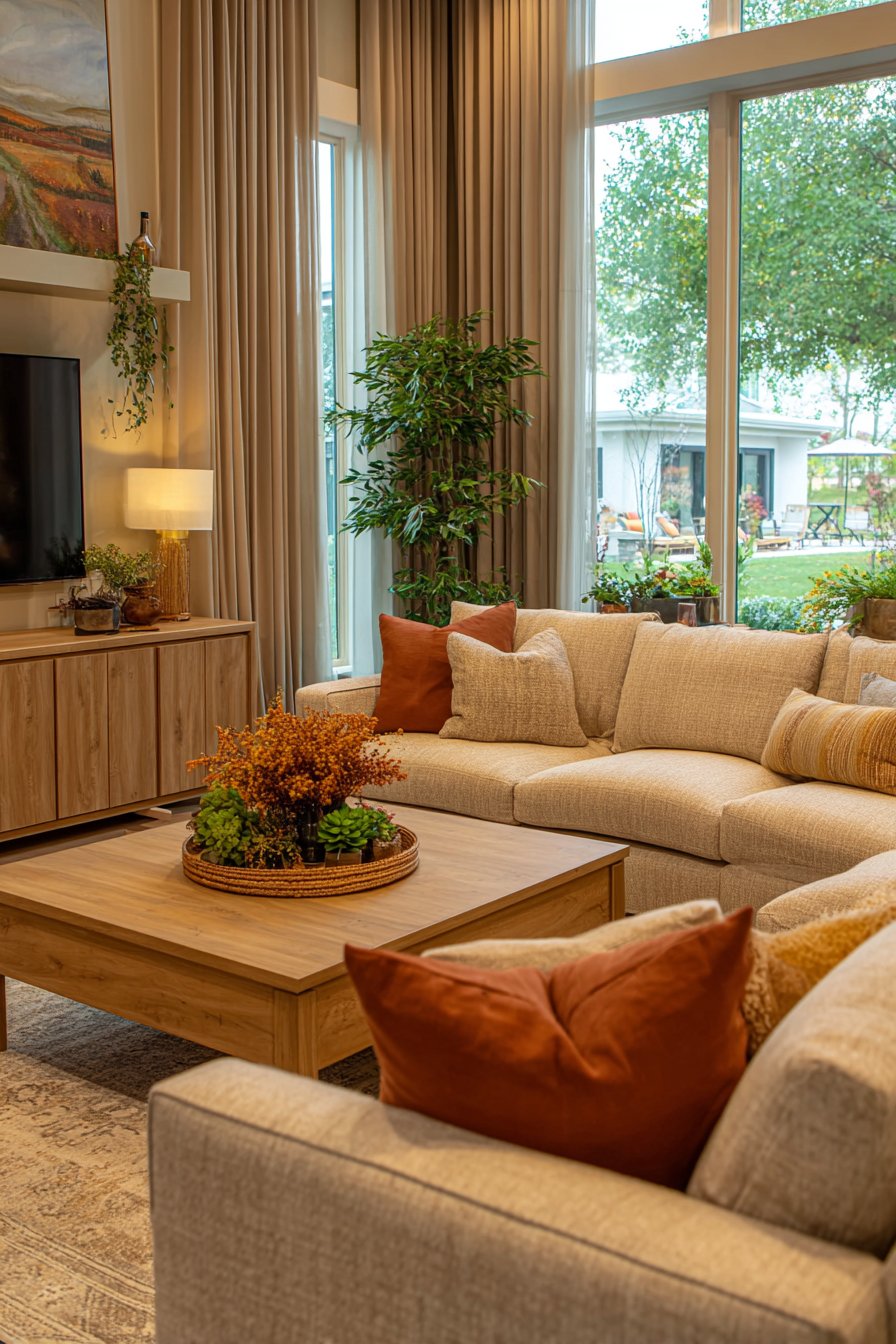
Window sill herb gardens remain within easy reach of seating areas. The furniture includes a comfortable sectional in natural oatmeal linen with wooden legs. A media console in warm walnut provides storage and plant display surfaces. Earth-tone accents in rust, terracotta, and sage complement the greenery.
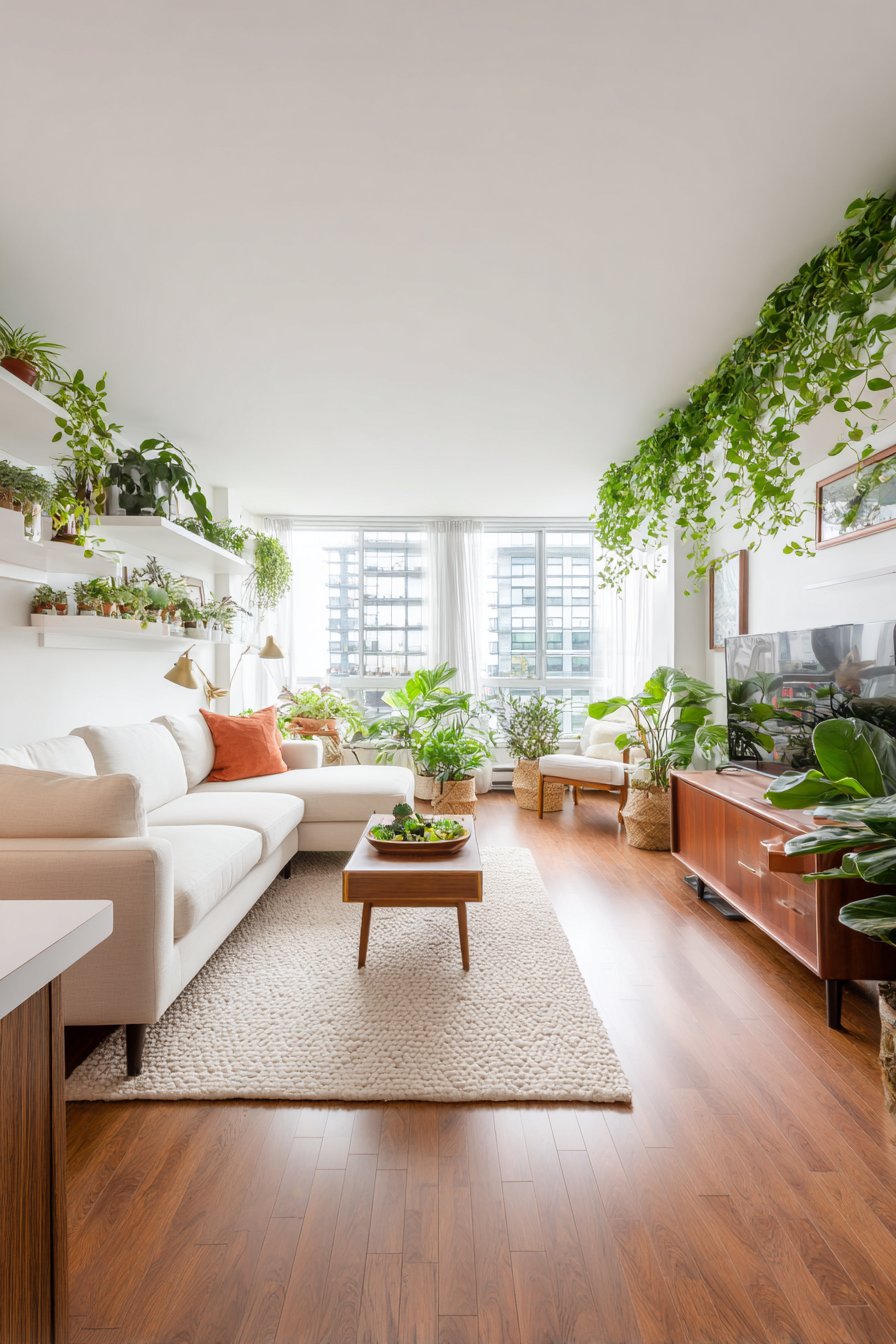
Multiple light sources including natural window light and adjustable reading lamps ensure adequate illumination. Plants throughout the space receive light regardless of distance from windows. The comprehensive integration creates thoroughly nature-immersed environments. Every level from floor to ceiling features living greenery.
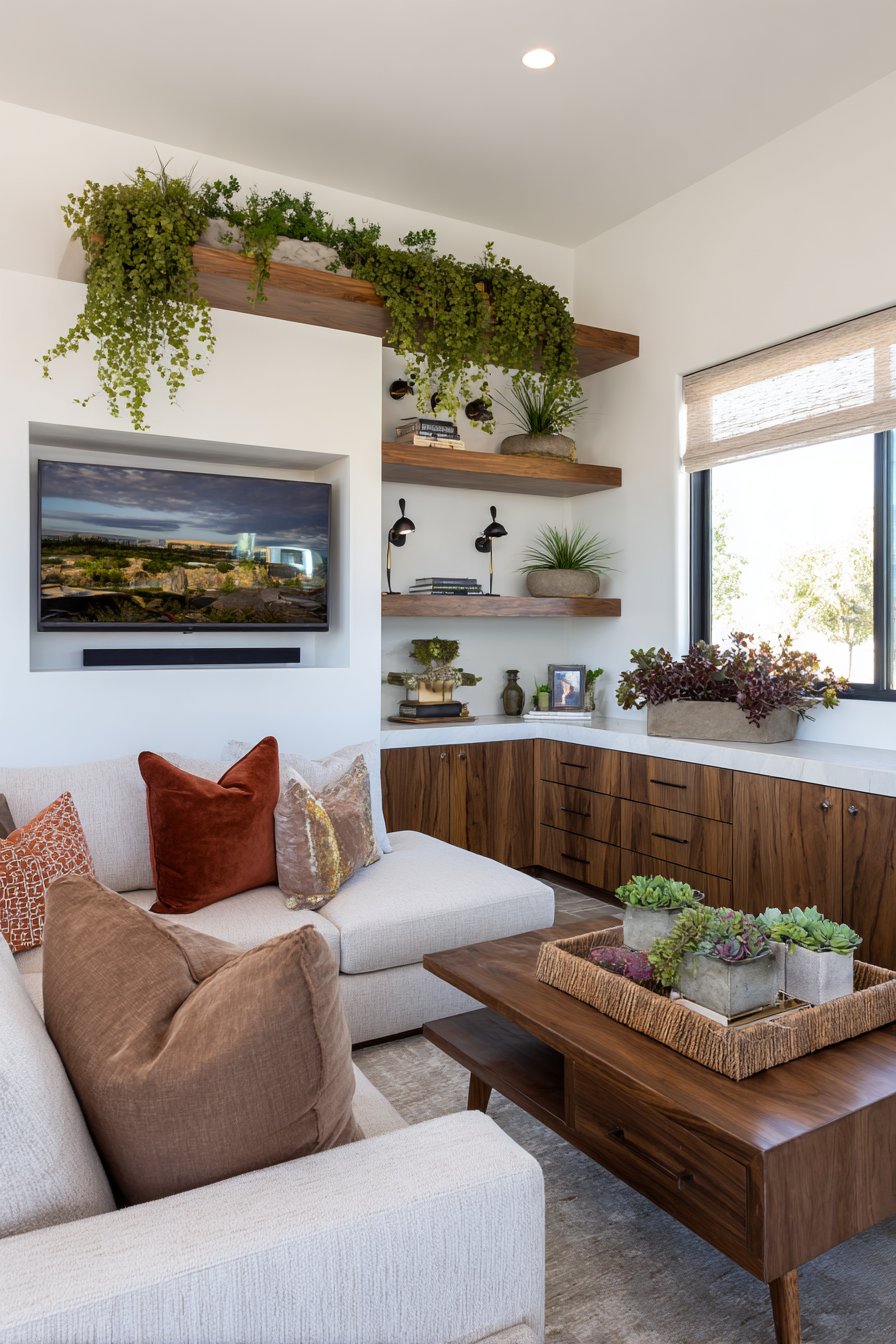
This approach maximizes plant presence within available square footage. The multi-level integration demonstrates commitment to botanical living. Adequate lighting planning enables plant health throughout the space. The result feels completely immersed in nature.
Key Design Tips:
- Install floating shelves for trailing plants at multiple heights
- Use decorative trays to contain small plant groupings on surfaces
- Position larger floor plants beside furniture and architectural features
- Create window sill herb gardens for practical and aesthetic purposes
- Add adjustable lighting to supplement natural light in distant areas
- Integrate plants at every level from floor arrangements to ceiling displays
19. Sun-Drenched Bay Window Sanctuary
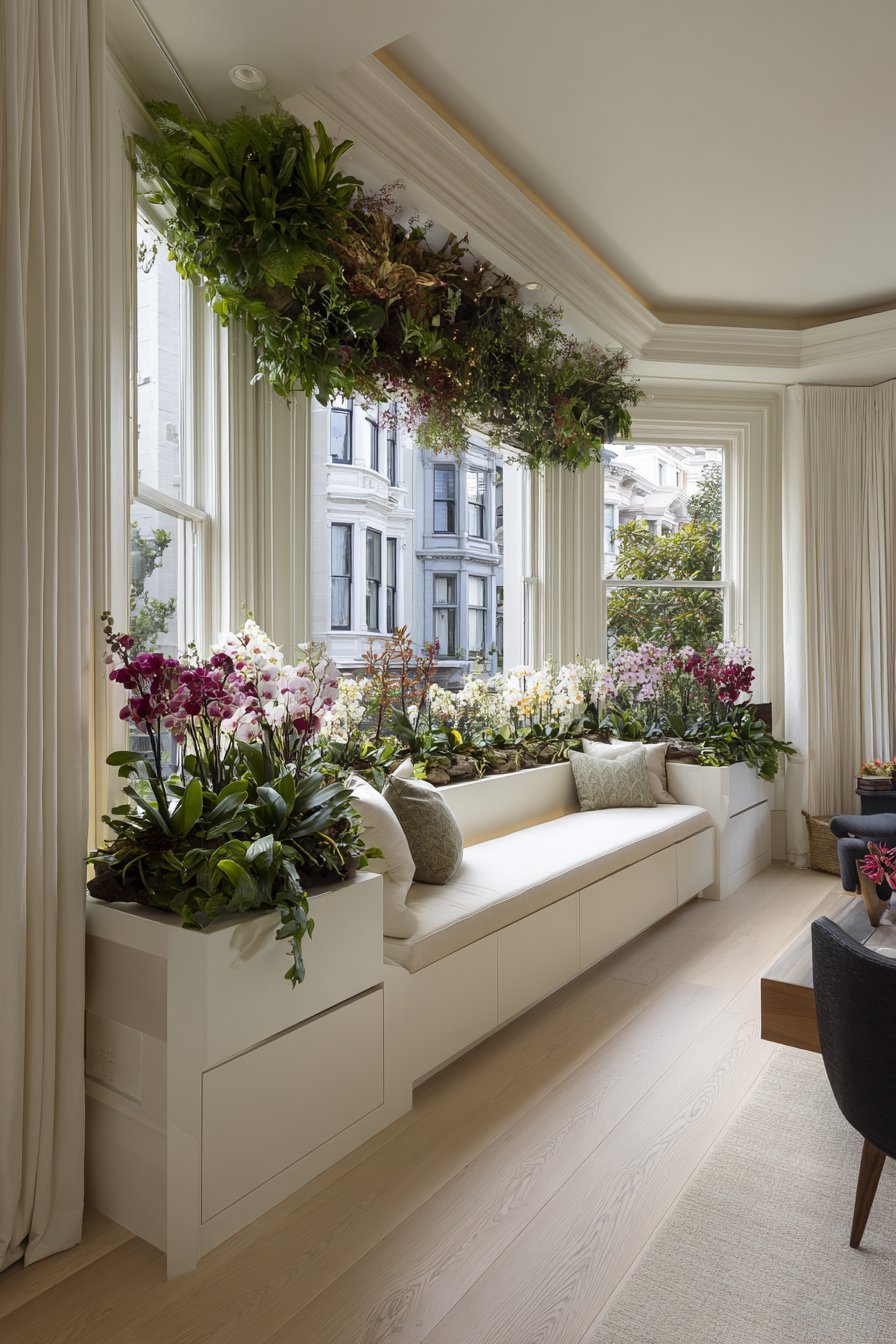
A sun-drenched bay window converts into a lush indoor garden sanctuary. Built-in bench seating with storage below holds plant supplies. The window ledge and hanging space above accommodate abundant specimens. Flowering varieties like orchids and African violets thrive alongside foliage plants.
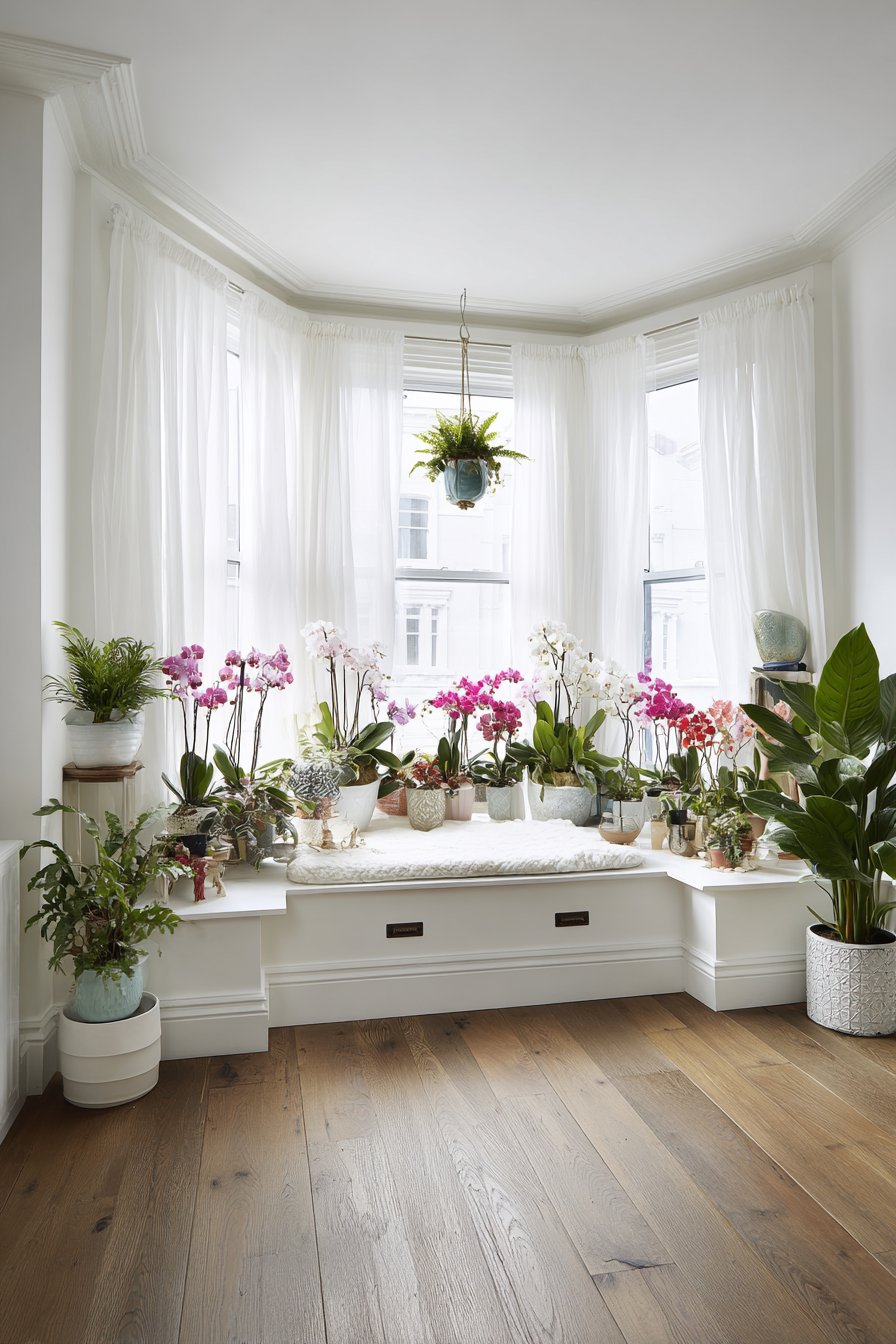
The surrounding living room maintains simple aesthetics with white walls and natural wood floors. Minimal furniture allows the bay window plant display to command attention. Sheer curtains on side windows soften light while bay window plants receive direct sunlight. The architectural feature becomes the room’s primary focus.
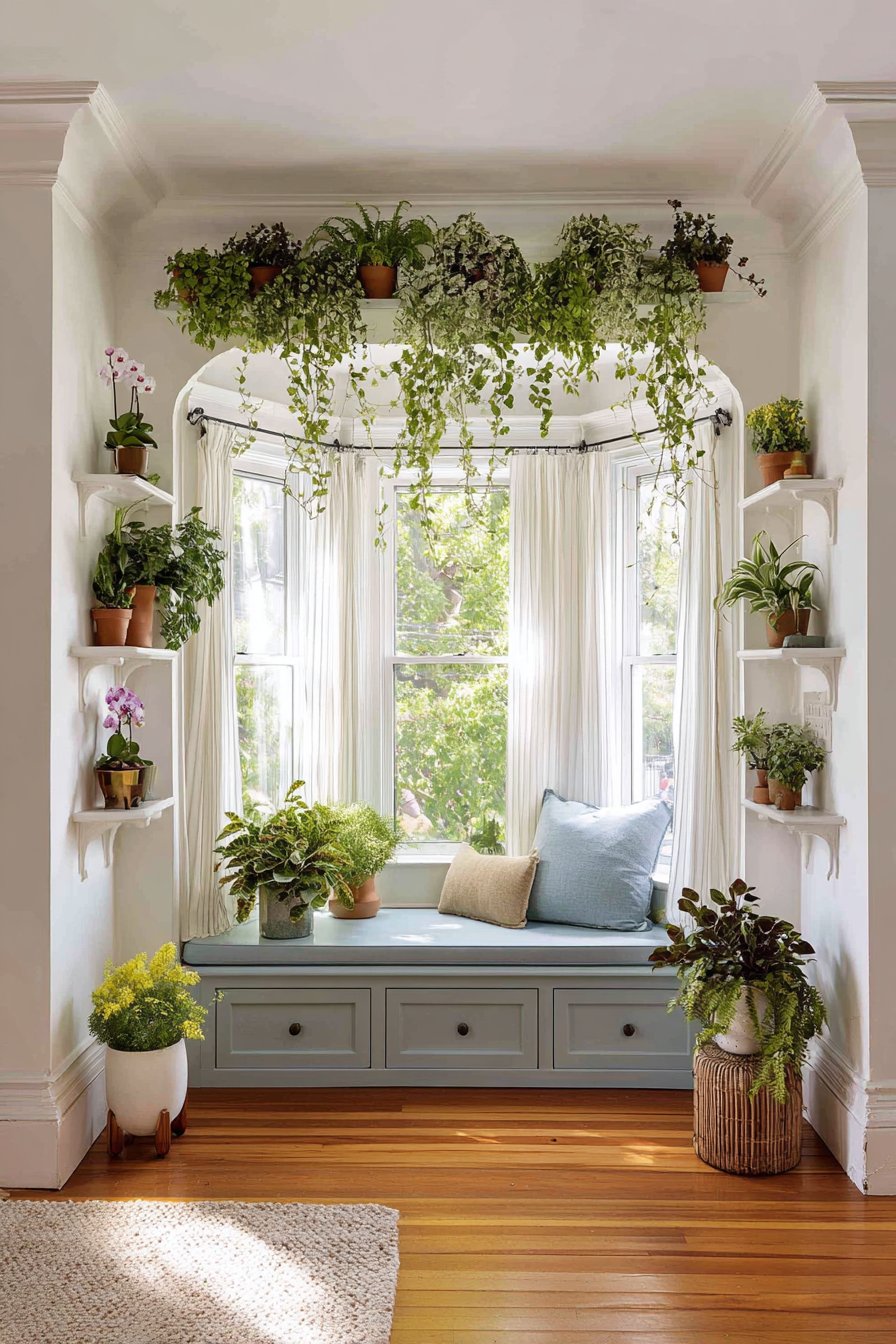
The transformation demonstrates creative use of existing architectural elements. Storage below bench seating keeps supplies organized and accessible. The dedicated growing space supports plants requiring brighter conditions. The sanctuary feels separate yet integrated with the broader room.
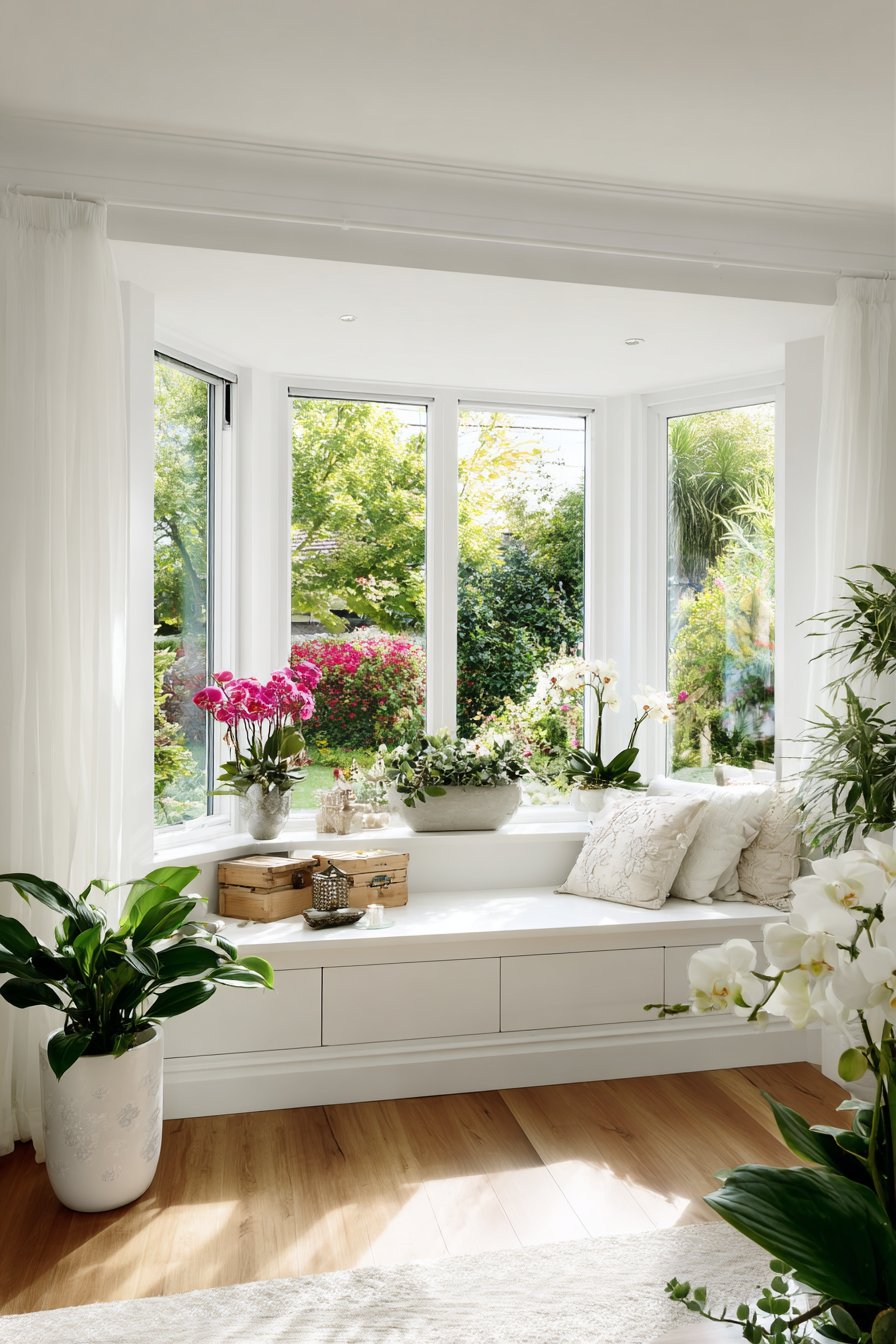
This design maximizes natural light advantages in bay window configurations. The architectural feature gains purpose through botanical transformation. Plant varieties requiring different light levels find appropriate positions. The result creates dedicated growing zones within living spaces.
Key Design Tips:
- Convert bay windows into dedicated plant growing areas
- Install bench seating with storage for plant care supplies
- Use window ledges and hanging space for maximum plant capacity
- Select flowering and foliage varieties appropriate for direct light
- Maintain simple surrounding décor to emphasize the bay window feature
- Position sheer curtains on adjacent windows to soften harsh light
20. Authentic Collected Plant Lover’s Space
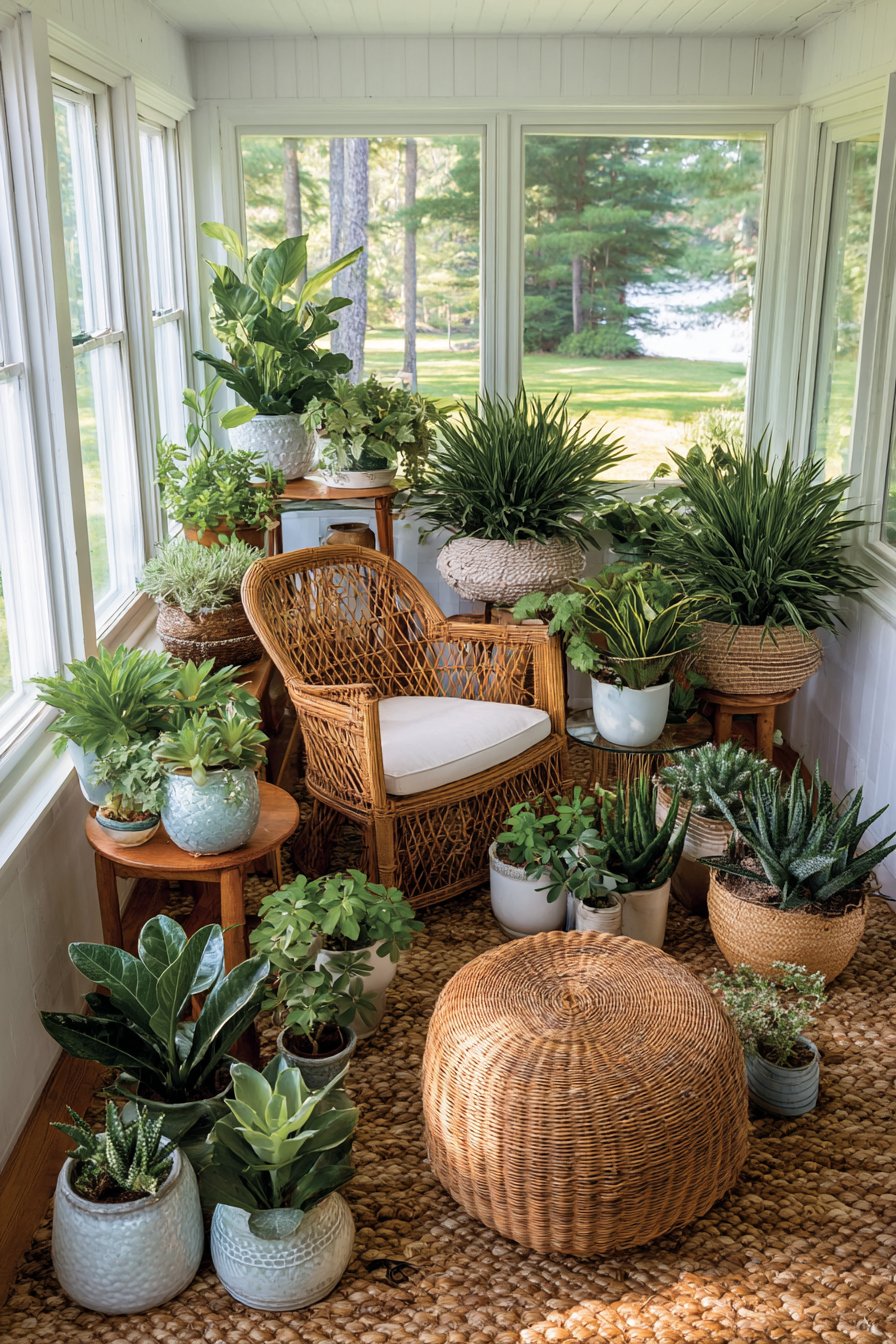
A collected-over-time approach creates authentic plant lover’s environments. Mismatched vintage and thrifted planters hold various easy-care houseplants. Plants of all sizes occupy every available surface in diverse containers. The eclectic collection feels genuine rather than staged.
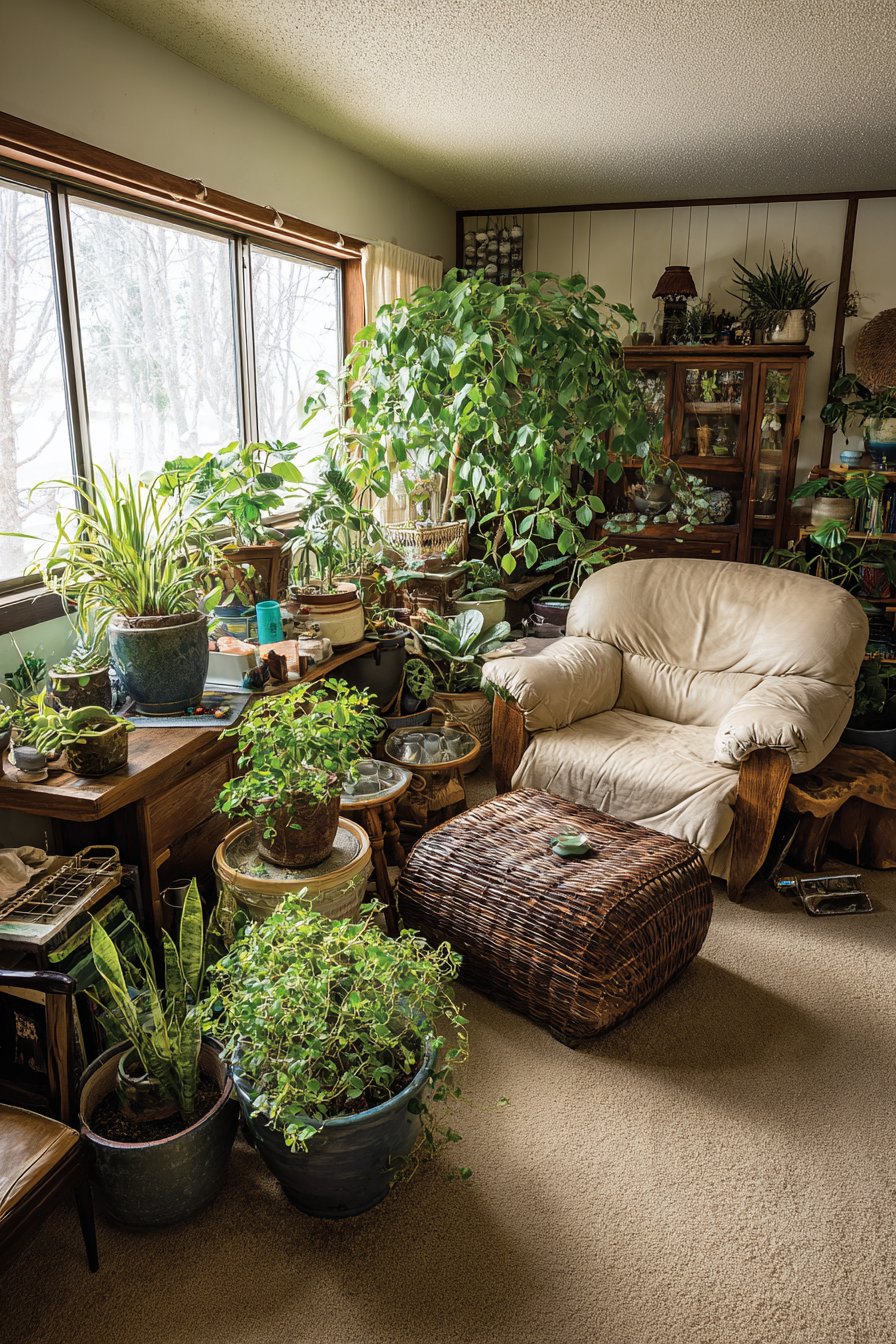
Well-worn comfortable furniture in soft neutrals shows signs of real use. Plant care supplies remain casually visible acknowledging the ongoing maintenance reality. Natural light from multiple windows supports the varied plant collection. The overall aesthetic feels lived-in and authentic.
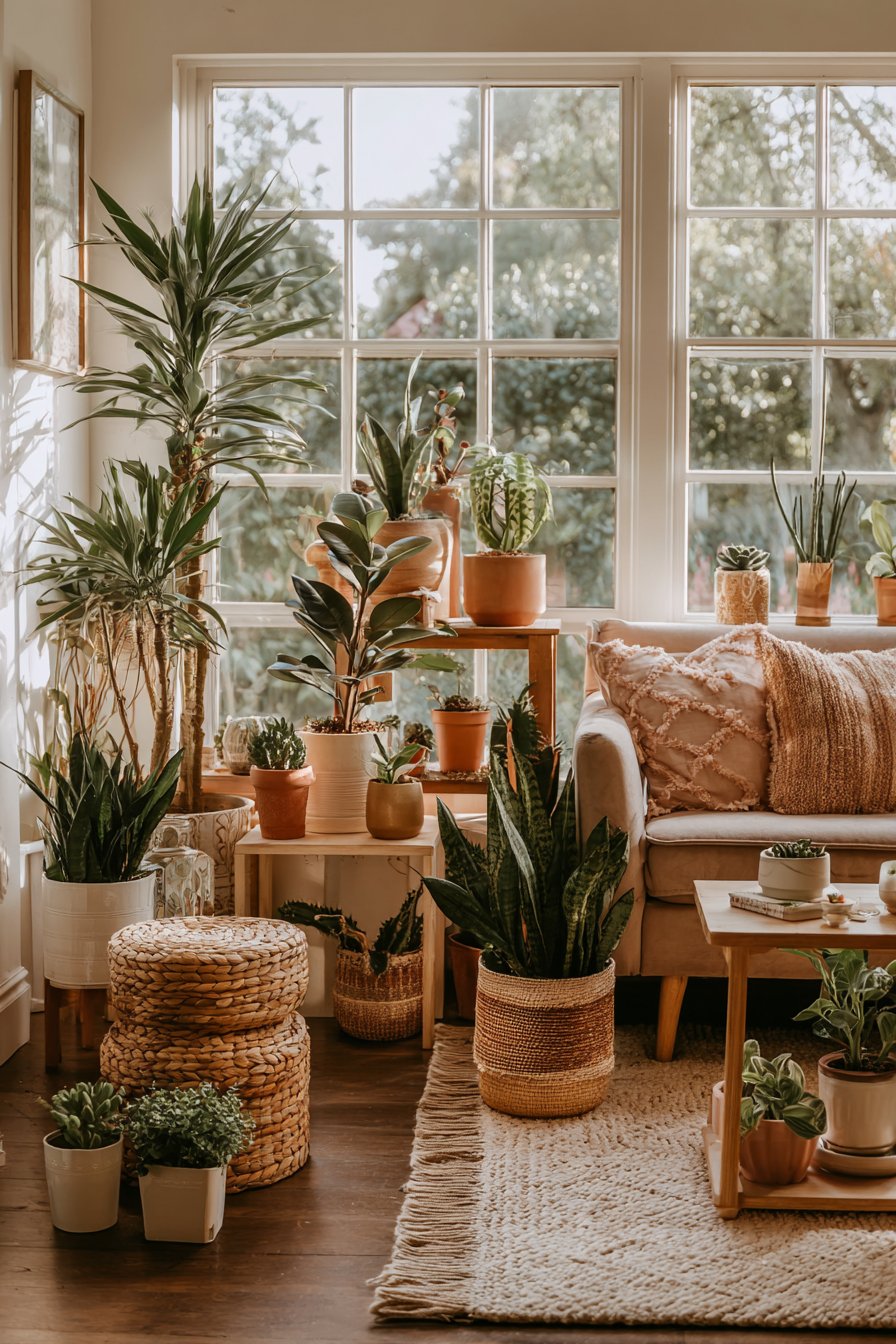
The genuine character differs from perfectly styled showrooms. The mismatched planters tell stories of gradual collection and discovery. Natural plant arrangements occupy spaces where they thrive best. The comfortable quality reflects true plant enthusiasm over design perfection.
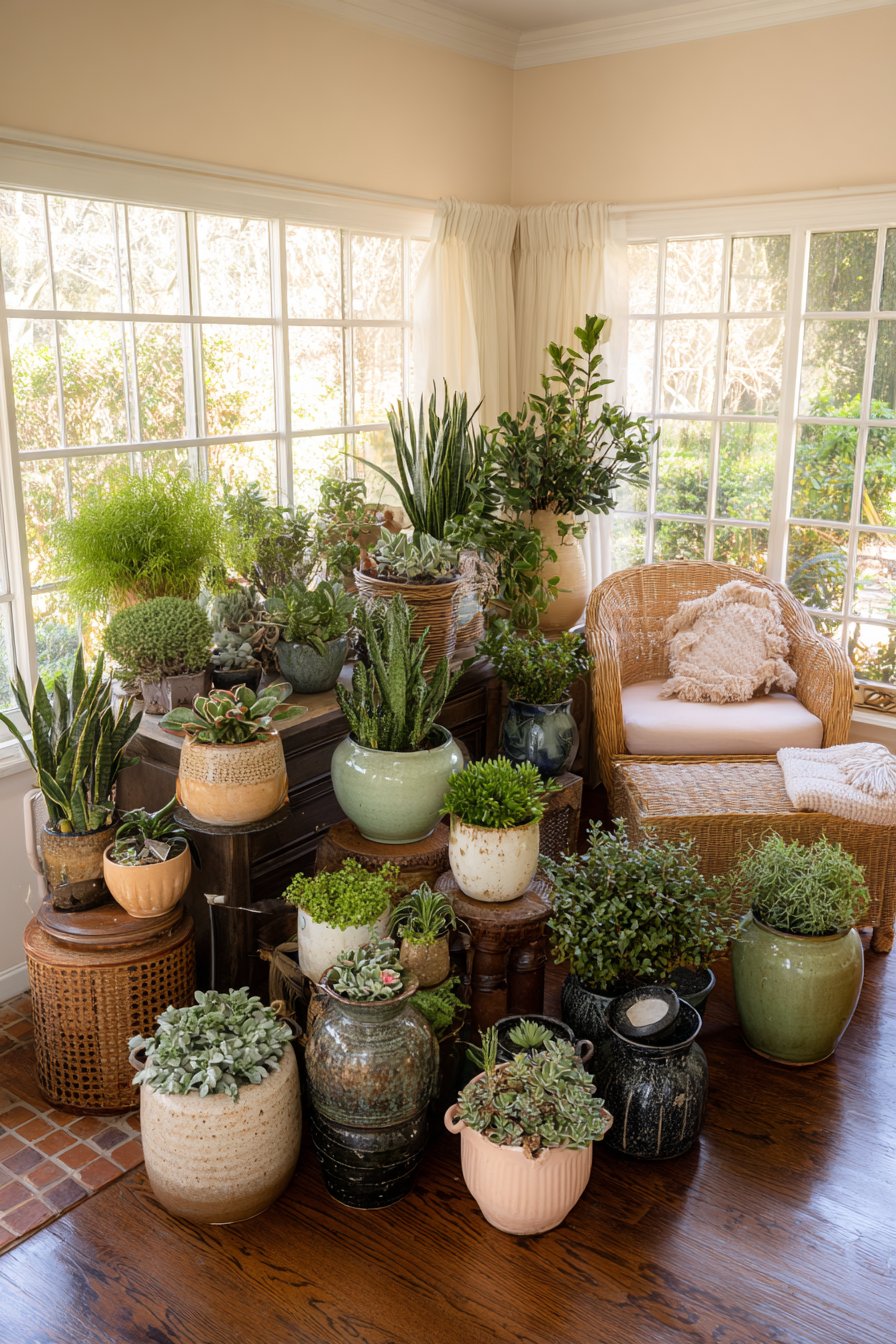
This approach celebrates the reality of plant parenthood and collecting. The authentic character resonates with committed plant lovers. The lived-in quality feels welcoming and approachable. The design demonstrates that plant love transcends perfect styling.
Key Design Tips:
- Embrace mismatched planters collected over time for authentic character
- Allow plants to occupy surfaces where they receive optimal light
- Keep plant care supplies visible acknowledging maintenance realities
- Choose comfortable furniture showing signs of real daily use
- Position plants based on their needs rather than design aesthetics alone
- Create lived-in environments where plants are genuinely tended and loved
Why These Plant Aesthetic Living Room Designs Are the Best
These plant aesthetic living room designs represent exceptional approaches to creating verdant indoor sanctuaries. Each concept demonstrates thoughtful integration of living greenery with functional living spaces. The versatility shown accommodates different commitment levels from casual plant enthusiasts to serious collectors.
The designs succeed through careful attention to plant-specific light requirements and spatial considerations. Vertical growing solutions maximize limited square footage while horizontal arrangements suit spacious rooms. The variety spans minimalist Scandinavian approaches to maximalist bohemian abundance, proving plant aesthetics work across style preferences.
Material choices consistently favor natural elements including wood, jute, linen, and ceramic that complement organic greenery. These materials age gracefully while supporting nature-inspired themes. Color theory applications range from monochromatic green schemes to neutral palettes letting plants provide color interest.
Practical considerations include accessible plant care, adequate natural and artificial lighting, and drainage solutions. Successful designs balance aesthetic beauty with horticultural requirements ensuring plant health. The longevity of these approaches depends on selecting appropriate varieties for available conditions.
Sustainability naturally accompanies plant-filled living through improved air quality and biophilic design benefits. The psychological advantages include stress reduction and enhanced creativity from nature connections. These designs demonstrate that beautiful spaces can simultaneously support wellbeing and environmental consciousness through thoughtful botanical integration.
Conclusion
These plant aesthetic living room designs demonstrate that greenery transforms ordinary spaces into extraordinary botanical sanctuaries. The key takeaways include understanding light requirements, selecting appropriate varieties, and integrating plants at multiple levels. Quality planters combined with thoughtful positioning create rooms that feel alive and nurturing.
Successful plant aesthetic design balances horticultural needs with interior design principles. Start small by adding trailing varieties to shelves or a statement fiddle leaf fig. Gradually expand your collection as you understand your space’s light and your maintenance capacity. Your dream plant-filled living room awaits creation through patient cultivation and creative expression.
