


In the ever-evolving world of interior design, certain color combinations stand the test of time while offering profound psychological benefits. Sage green and brown represent one such pairing that has captivated homeowners and designers alike. This nature-inspired palette creates living spaces that feel both grounding and rejuvenating, offering a sanctuary from the chaos of modern life.
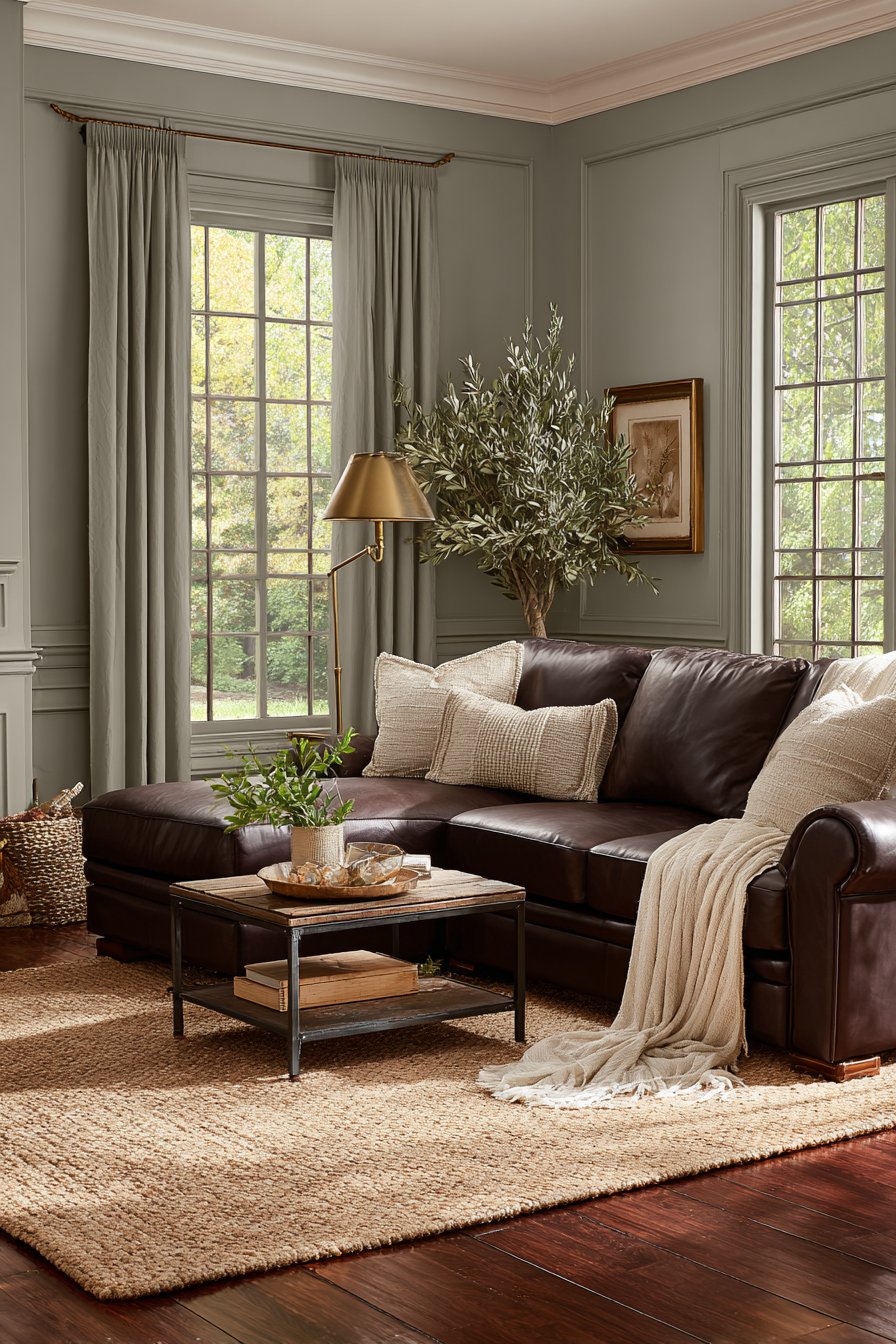
The magic of sage green and brown living rooms lies in their ability to bring the outdoors inside. These colors mirror the natural world—think forest floors, weathered tree bark, and morning mist over meadows. When you incorporate this palette into your living space, you’re not just decorating; you’re creating an environment that naturally reduces stress and promotes well-being. Research consistently shows that earth tones have a calming effect on the human psyche, making this combination ideal for spaces where relaxation is paramount.
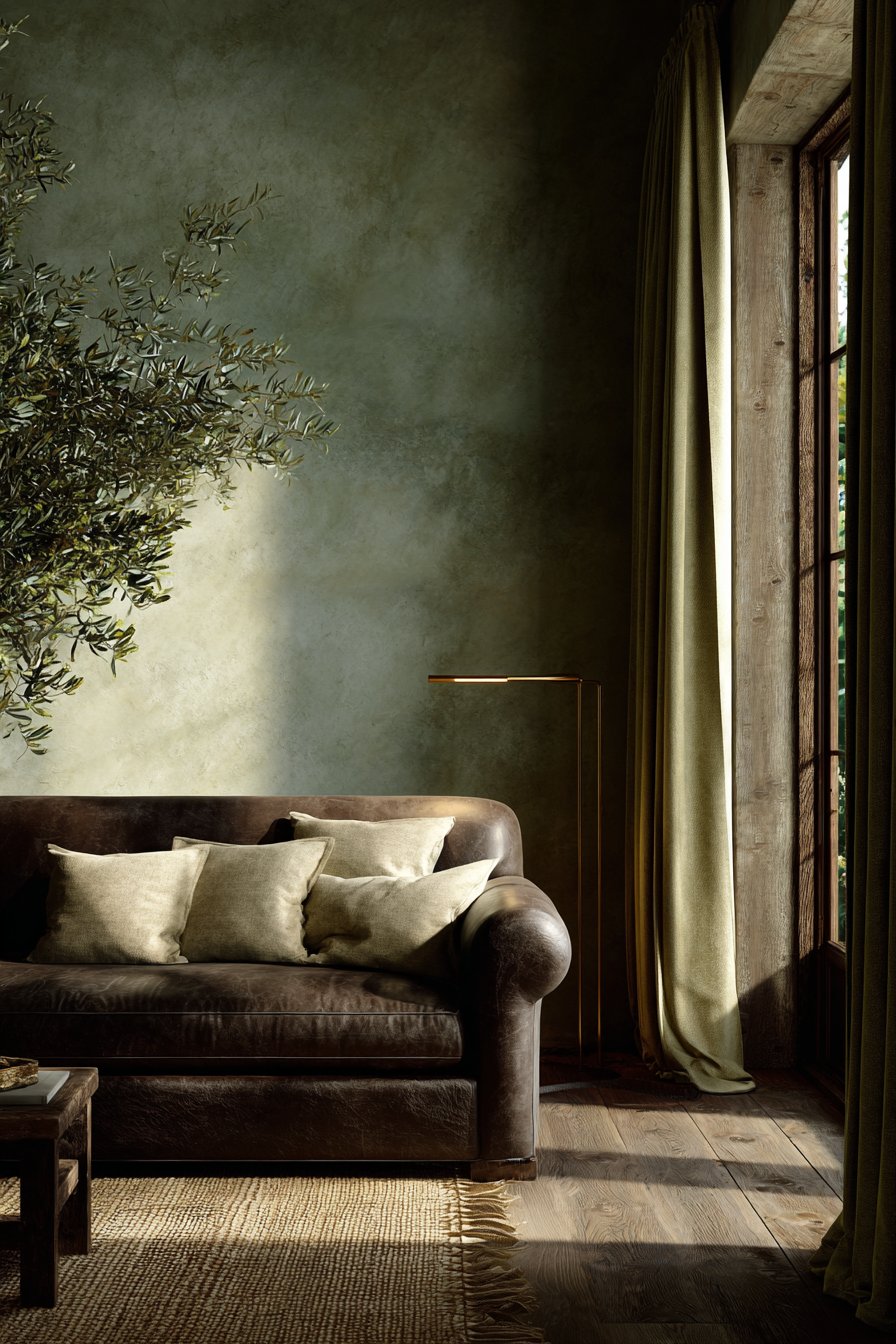
This article explores the essential elements that make sage green and brown living rooms exceptionally soothing. From understanding the psychological impact of these colors to implementing practical design strategies, you’ll discover how to transform your living space into a peaceful retreat. Whether you’re planning a complete renovation or simply seeking refresh ideas, these insights will help you harness the restorative power of this timeless color scheme.
1. The Psychology Behind Nature-Inspired Colors
The human brain is hardwired to respond positively to colors found in natural environments. Sage green activates the same neural pathways as spending time in nature, triggering feelings of calm and balance. This soft, muted green doesn’t overwhelm the senses like brighter hues might; instead, it provides a gentle visual anchor that helps reduce mental fatigue and anxiety.
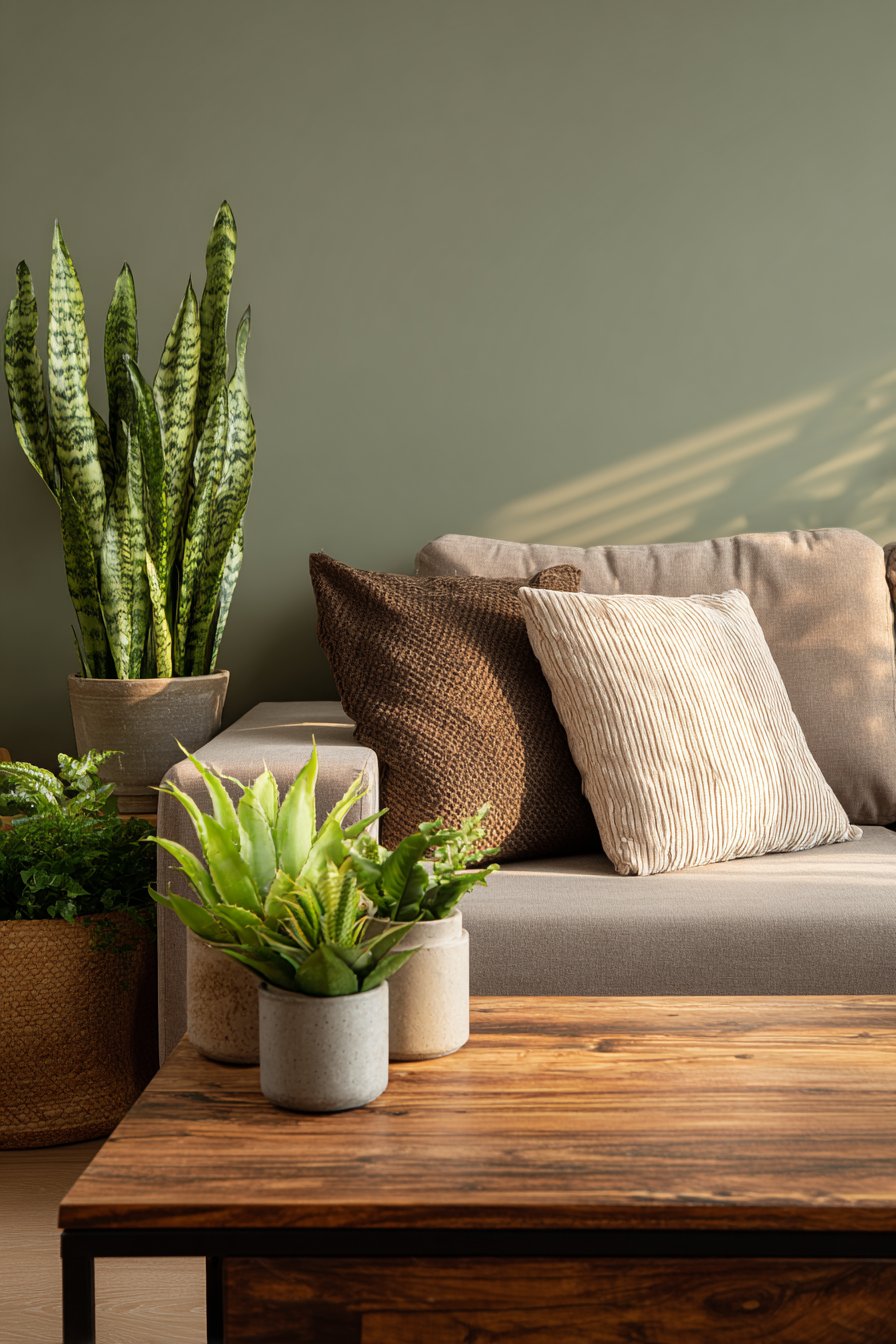
Brown tones complement this effect by adding warmth and stability to the space. As the color of earth and wood, brown evokes feelings of security and groundedness. When paired with sage green, it creates a sophisticated balance between coolness and warmth. This combination prevents the space from feeling cold or sterile while maintaining its calming qualities.

The biophilic response to these colors runs deeper than simple preference. Studies in environmental psychology demonstrate that exposure to earth-toned environments can lower blood pressure and cortisol levels. Your living room becomes more than just a place to watch television—it transforms into a therapeutic space that actively supports your mental and physical health.
- Choose matte finishes for sage walls to enhance the calming effect
- Incorporate various brown shades from taupe to chocolate for depth
- Use the 60-30-10 rule: 60% sage, 30% brown, 10% accent colors
- Add natural textures like linen and cotton to reinforce the organic feel
- Consider the room’s natural light when selecting specific shades
- Test paint samples at different times of day before committing
2. Creating Visual Softness Through Texture Layering
Texture plays a crucial role in making sage green and brown living rooms feel inviting and relaxing. Tactile variety prevents the space from appearing flat or one-dimensional while adding sensory richness. Smooth sage walls benefit from the introduction of woven textiles, rough-hewn wood, and plush fabrics that create visual and physical interest.
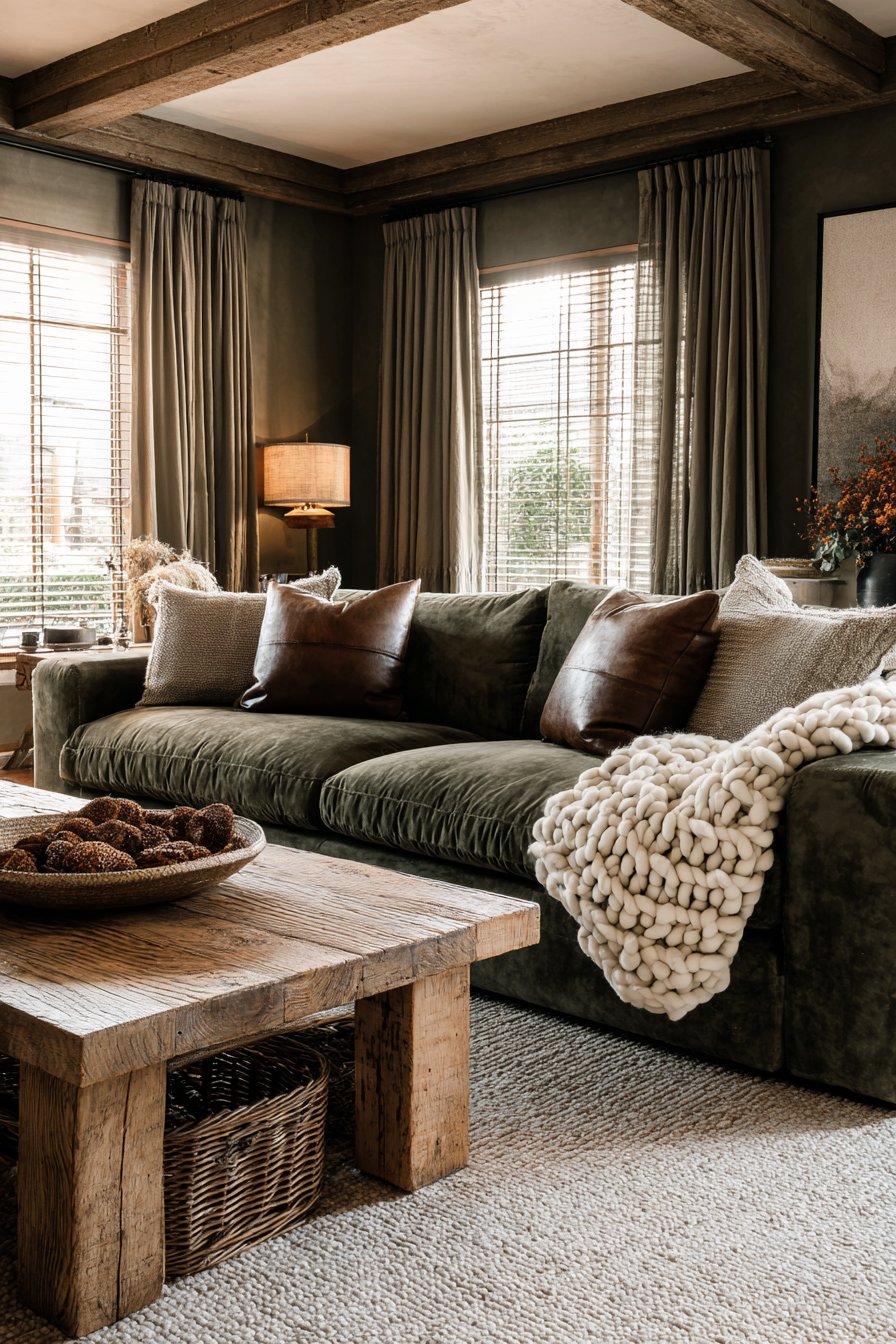
The key is to mix textures thoughtfully without creating visual chaos. A velvet sage sofa paired with a chunky knit throw and smooth leather accent pillows demonstrates this principle perfectly. Each texture catches light differently, creating subtle variations in the sage green that keep the eye engaged. Meanwhile, brown elements like a rustic coffee table or rattan baskets add contrasting textures that complement rather than compete.

Layering textures also has a practical benefit for relaxation. Soft, touchable surfaces encourage physical comfort and make the space feel more inhabitable and lived-in. This approach transforms your living room from a showroom into a genuine sanctuary where you want to spend time.
- Combine at least five different textures in your space
- Use jute or sisal rugs to add organic brown texture underfoot
- Include sage green velvet, linen, or chenille upholstery
- Add wooden elements with visible grain patterns for visual interest
- Incorporate metal accents in bronze or brass for subtle contrast
- Layer throw pillows with different fabric weights and patterns
3. Balancing Light and Shadow for Ambient Comfort
Lighting dramatically affects how sage green and brown colors appear and how relaxing they feel. Natural light enhances the organic quality of these hues, making them appear fresh and vibrant during daylight hours. However, the right artificial lighting ensures your space remains calming after sunset, which is often when you need relaxation most.
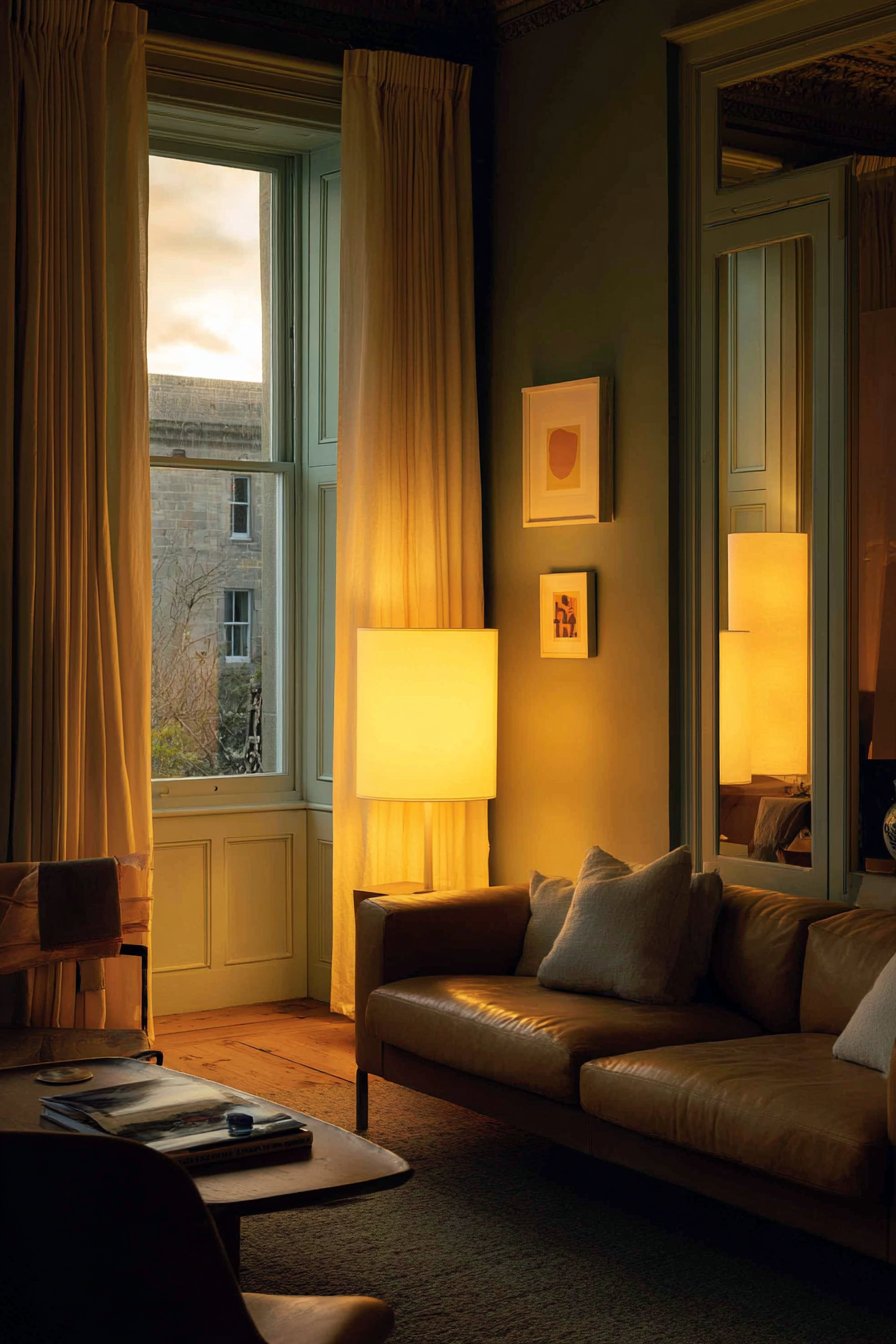
Sage green reflects light beautifully without creating harsh glare. This makes it ideal for rooms with large windows where diffused sunlight can create a soft, ethereal atmosphere. Brown accents absorb light selectively, adding depth and preventing the space from feeling washed out. The interplay between these reflective and absorptive qualities creates visual interest without stimulation.
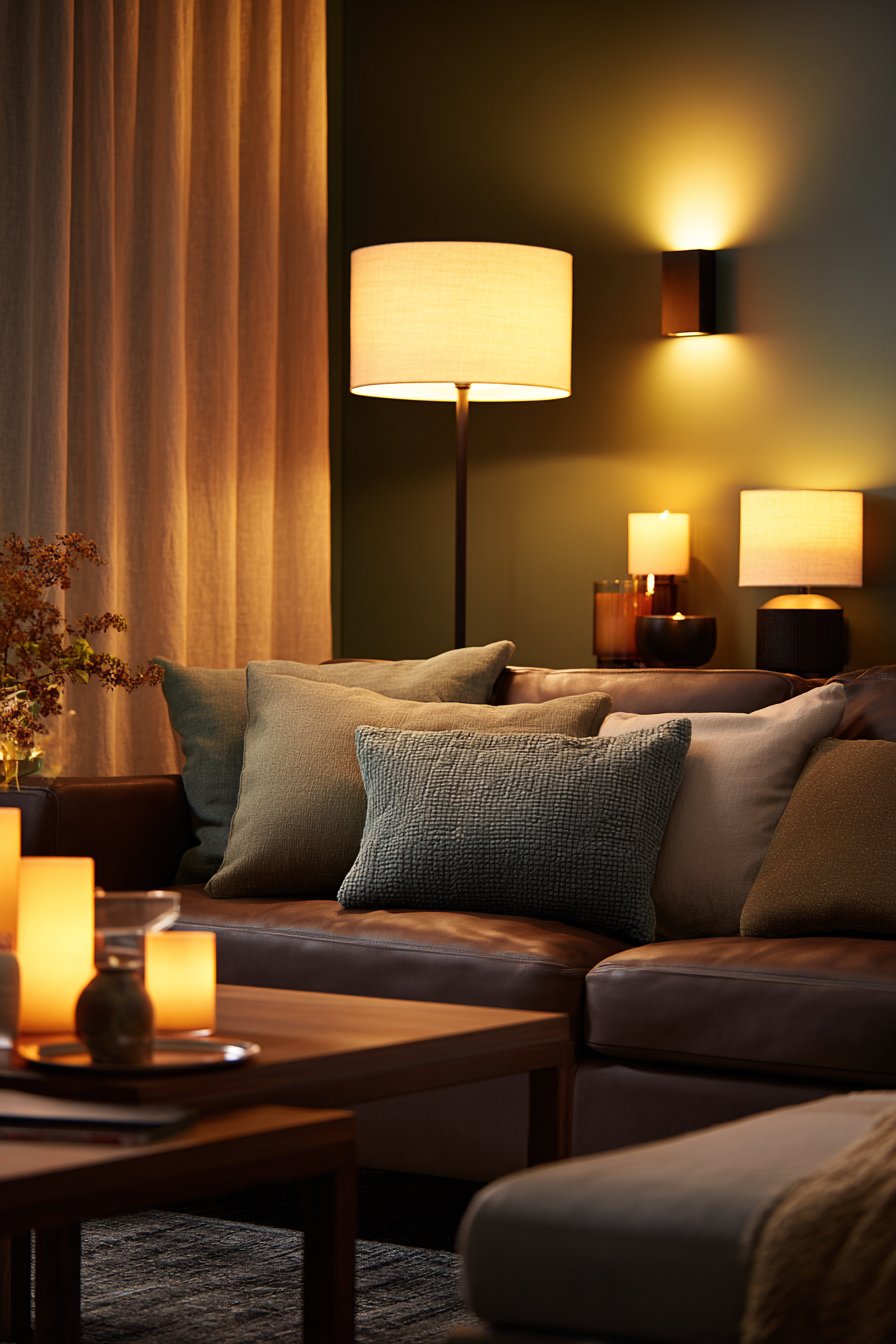
For evening ambiance, focus on warm, layered lighting rather than harsh overhead fixtures. Multiple light sources at different heights mimic the varied lighting found in nature. This approach allows you to adjust brightness according to mood and activity, maintaining the room’s calming character throughout the day.
- Install dimmer switches on all light fixtures for flexibility
- Use warm white bulbs (2700-3000K) to complement brown tones
- Add table lamps with sage or cream linen shades
- Position floor lamps in corners to create soft ambient lighting
- Incorporate LED strip lighting behind furniture for subtle glow
- Avoid cool white or blue-toned bulbs that undermine warmth
4. Incorporating Natural Materials for Authenticity
The relaxing quality of sage green and brown living rooms intensifies when you use genuine natural materials. Synthetic alternatives may match the color palette, but they lack the subtle variations and organic imperfections that make spaces feel authentic. Real wood, stone, plants, and natural fibers create a multisensory experience that deepens the connection to nature.
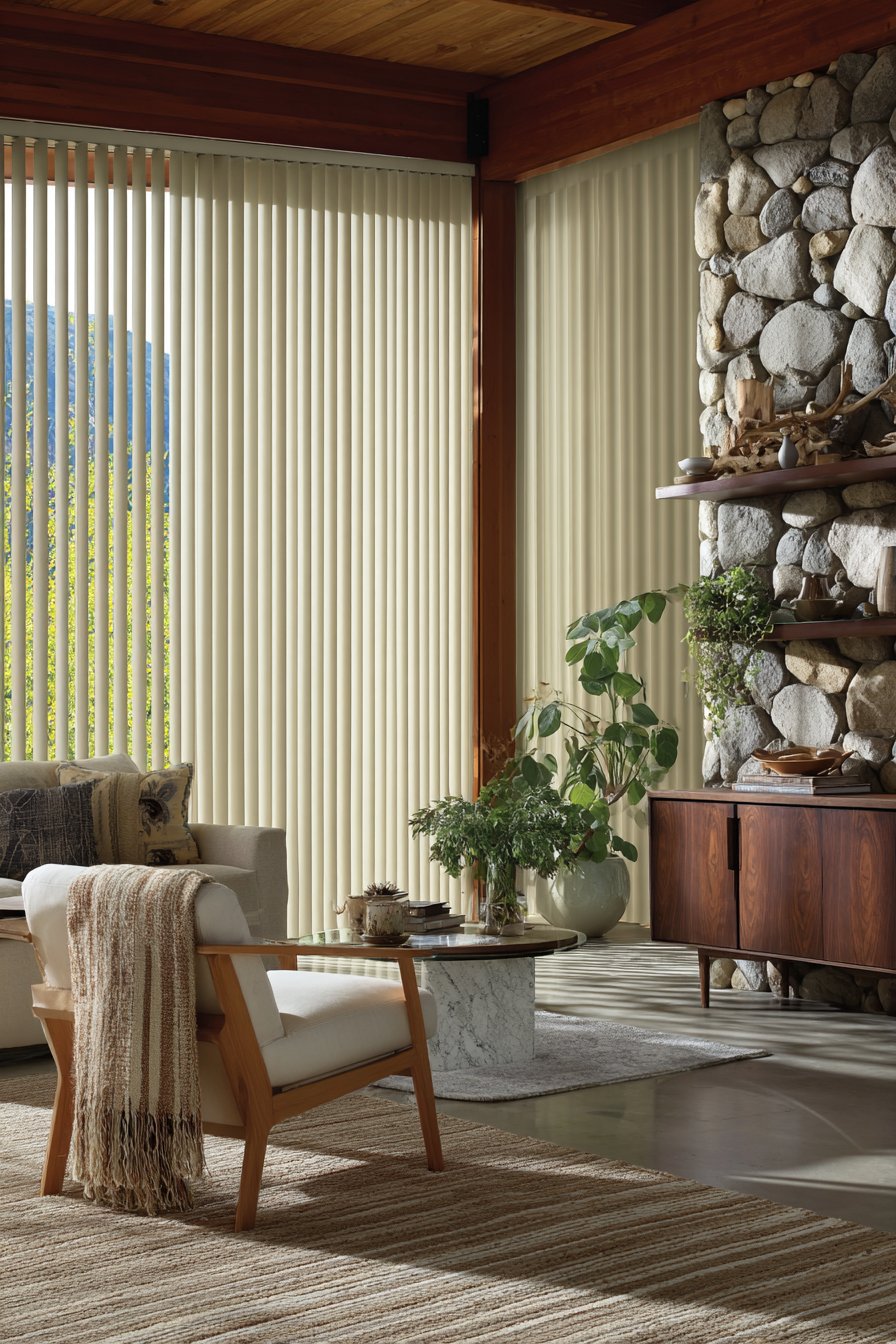
Wooden furniture in various brown tones—from light oak to dark walnut—adds architectural interest while reinforcing the earthy theme. Each piece contributes unique grain patterns and color variations that synthetic materials can’t replicate. These natural variations prevent monotony and create a more dynamic, engaging space that remains peaceful.
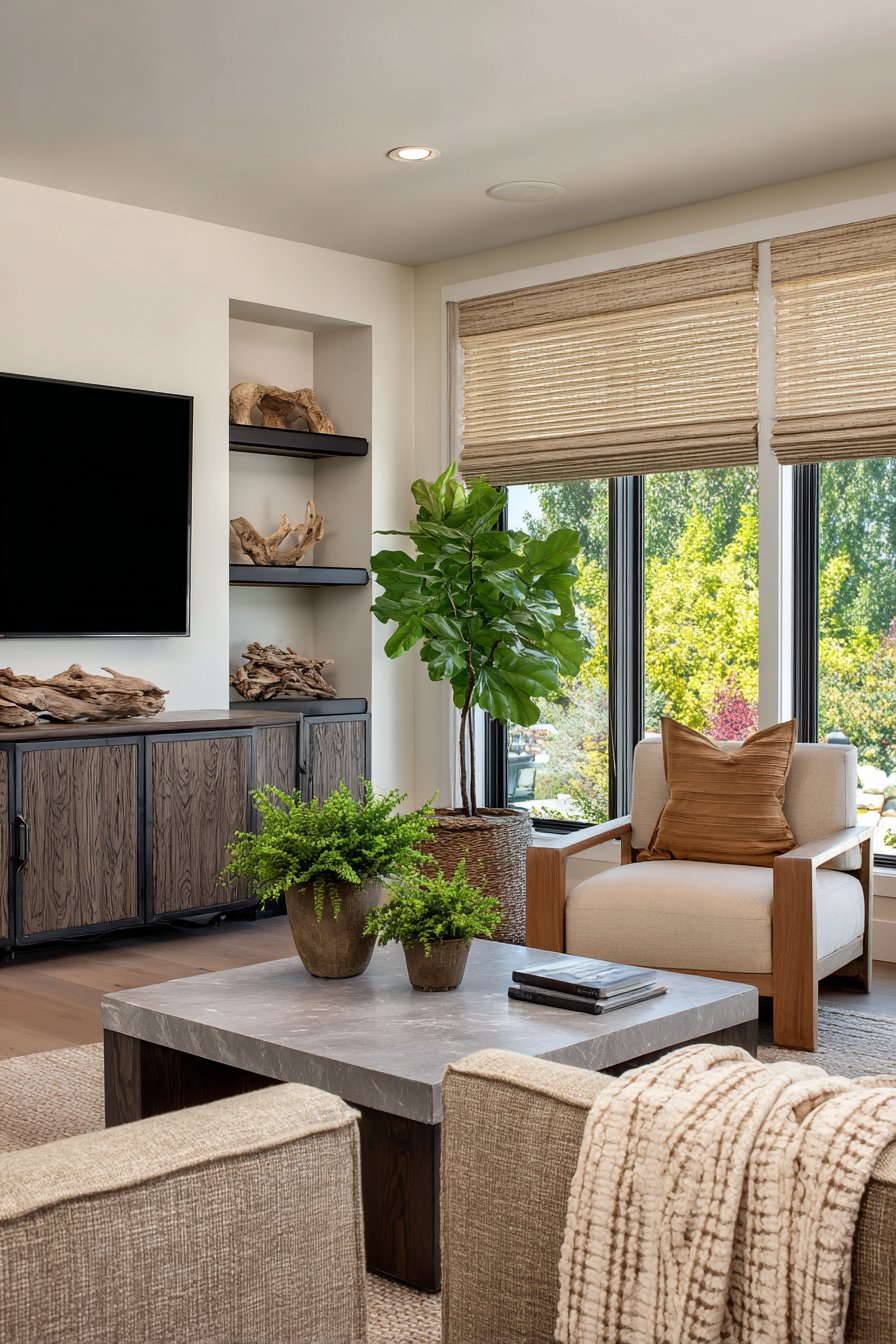
Living plants deserve special mention in sage green and brown schemes. They provide literal biophilic elements while introducing fresh green tones that complement sage beautifully. Plants also improve air quality and add gentle movement that enhances the room’s living, breathing quality.
- Choose solid wood furniture over veneer when budget allows
- Add a stone or marble coffee table for cool contrast
- Include at least three live plants of varying sizes
- Use bamboo blinds or wooden shutters for window treatments
- Incorporate wool, cotton, or silk fabrics exclusively
- Display natural objects like driftwood or river stones as decor
5. Minimizing Visual Clutter for Mental Clarity
Relaxation requires more than just color choice—it demands thoughtful curation of what appears in the space. Visual clutter activates stress responses even in beautifully colored rooms. Sage green and brown palettes work best when combined with a minimalist approach that emphasizes quality over quantity and purposeful placement over random accumulation.
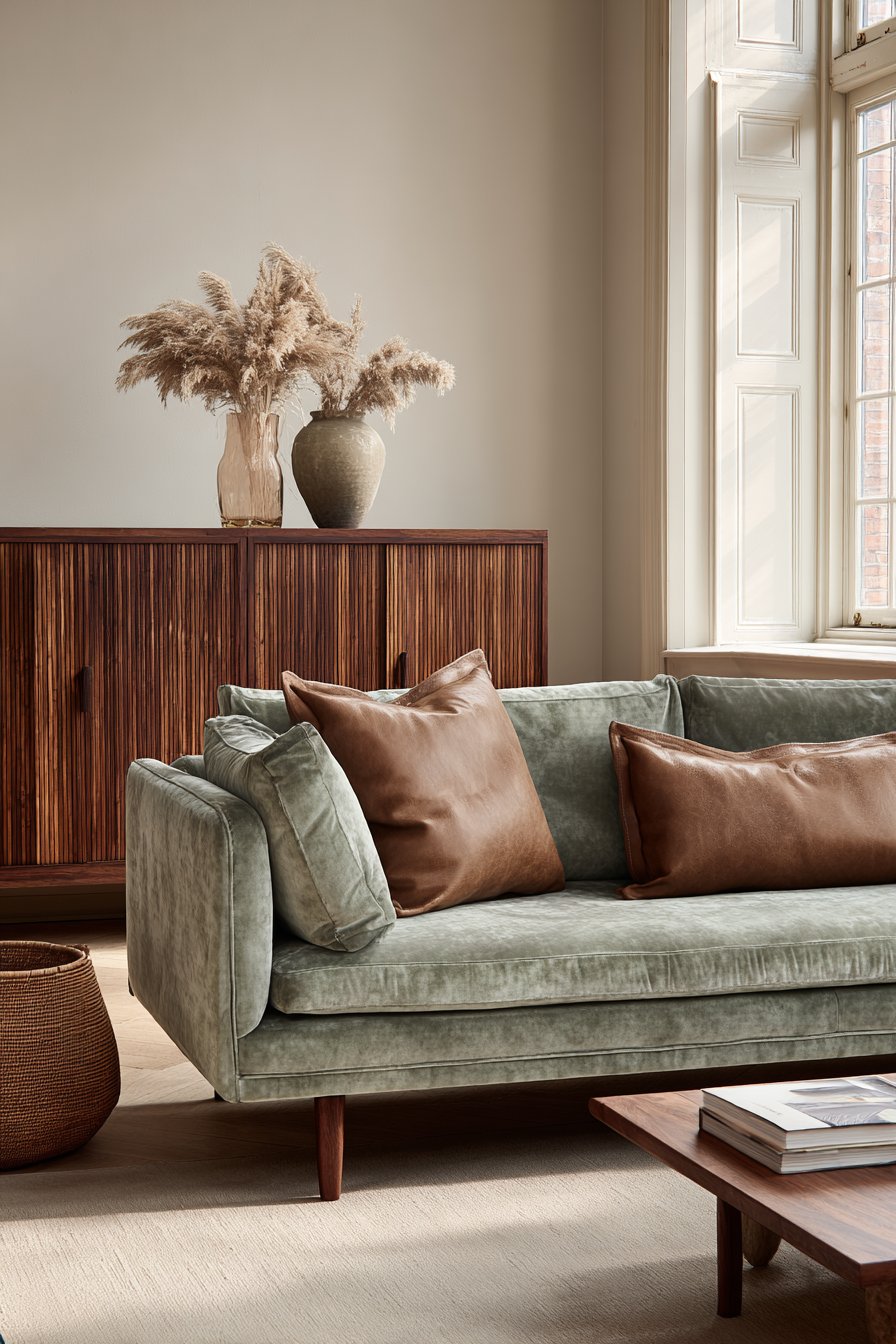
The calming nature of these colors can be undermined by too many competing elements. Each item in your living room should serve a purpose or bring genuine joy. This doesn’t mean stark emptiness; rather, it suggests intentional selection where every piece contributes to the overall sense of peace. A few well-chosen accessories make more impact than dozens of trinkets.
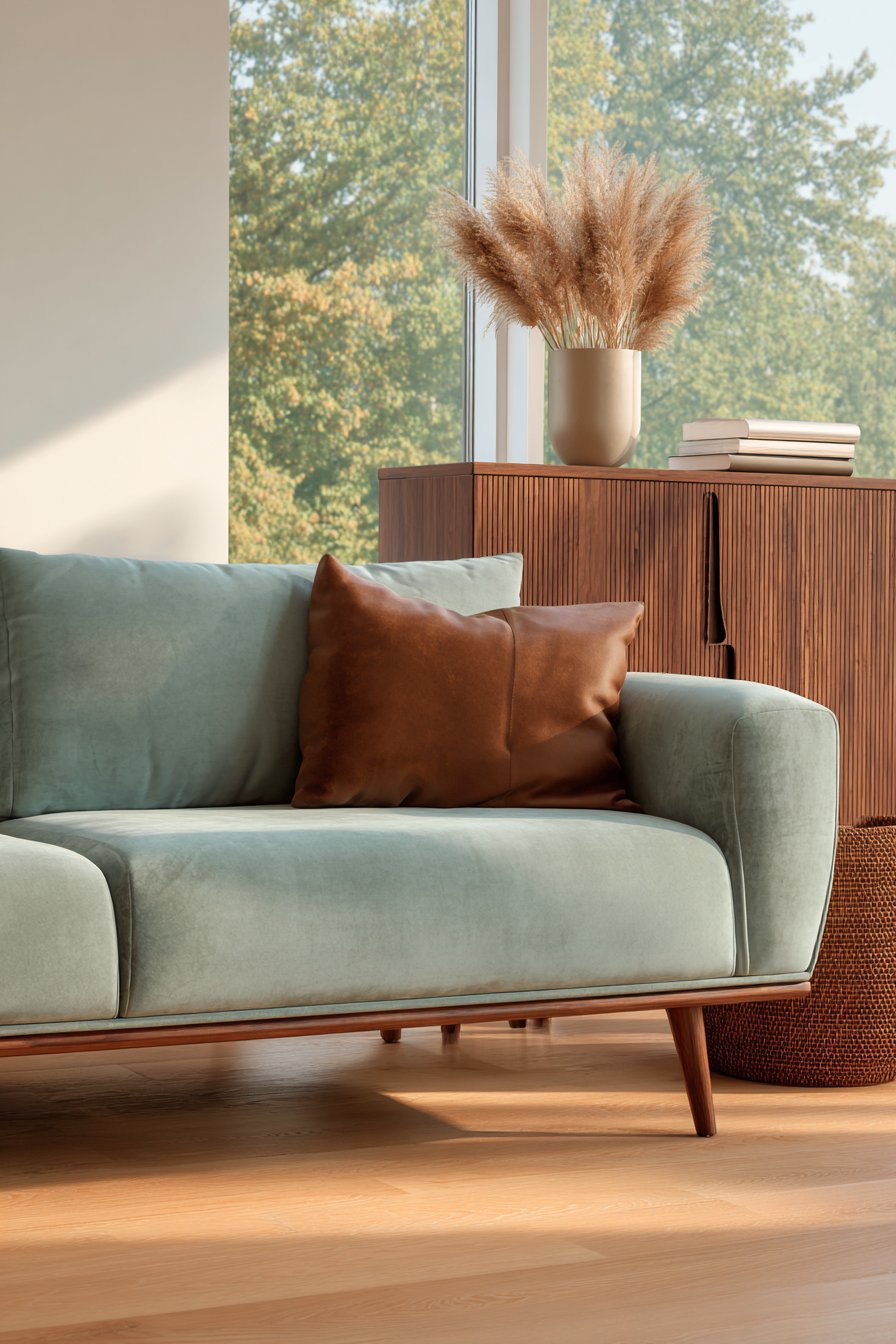
Storage solutions in brown tones help maintain this clarity by concealing necessary items behind closed doors. Woven baskets, wooden cabinets, and built-in shelving keep the visual field clean while providing practical functionality. This organization reduces mental load and allows the room’s calming colors to work their magic.
- Follow the one-in-one-out rule for new decorative items
- Use closed storage for 80% of belongings in the space
- Display books and objects in odd-numbered groupings (3, 5, 7)
- Choose multifunctional furniture like storage ottomans in brown leather
- Implement regular decluttering sessions monthly to maintain order
- Keep surfaces mostly clear with just one or two focal objects
6. Harmonizing Accent Colors for Cohesive Serenity
While sage green and brown form the foundation, carefully chosen accent colors enhance rather than disrupt the relaxing atmosphere. The right accents add visual interest and personality without creating jarring contrasts. Soft neutrals like cream, ivory, and warm gray work beautifully, as do deeper nature-inspired tones like terracotta or dusty blue.
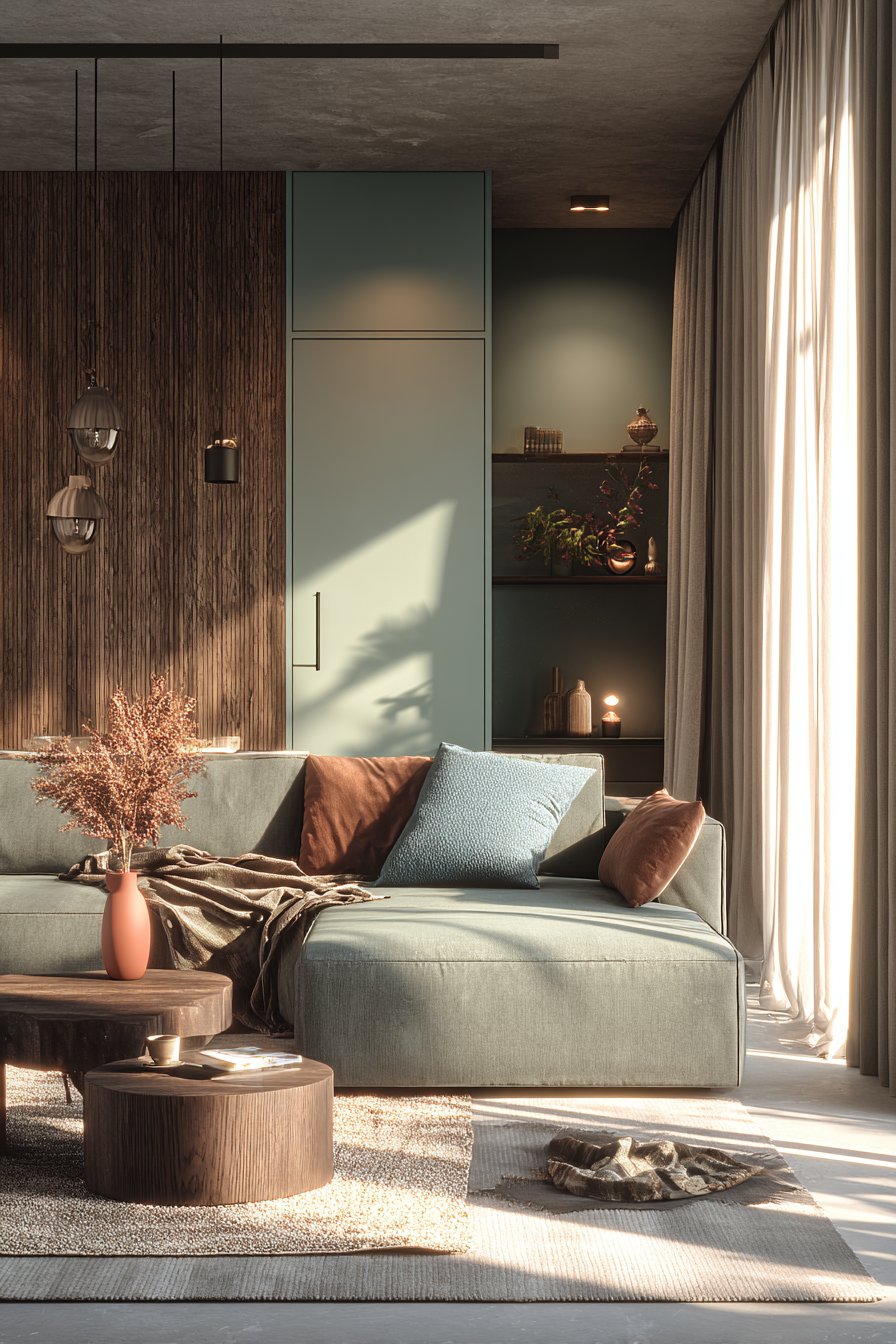
The key is maintaining tonal harmony throughout the space. Accents should feel like natural extensions of the primary palette rather than bold statements. Muted versions of colors rather than saturated hues preserve the room’s tranquil character. This approach creates sophistication and depth while respecting the psychological benefits of the main color scheme.
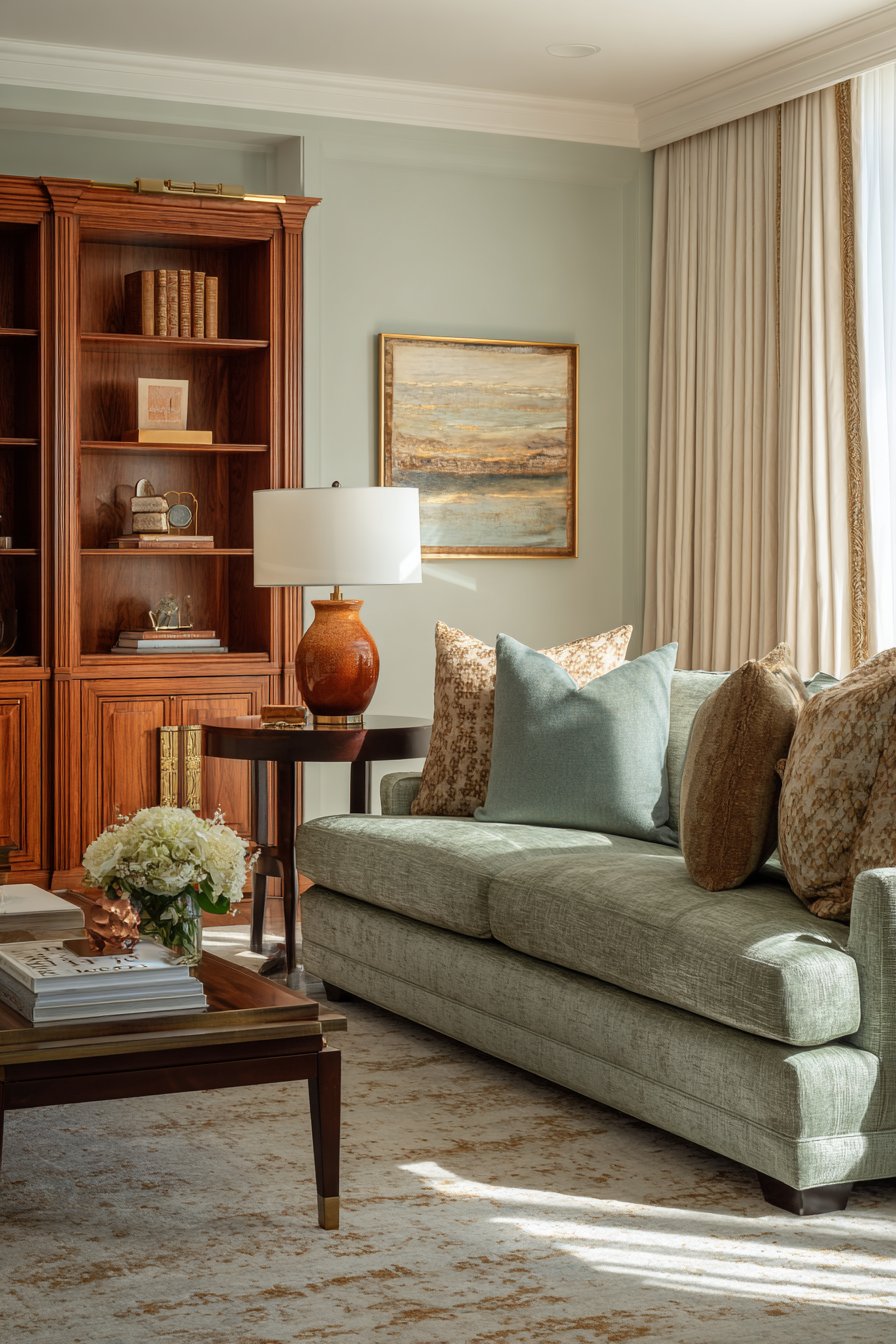
Metallic accents deserve careful consideration in this palette. Warm metals like brass, copper, and bronze complement brown tones while adding subtle glamour. These reflective surfaces catch light without creating harsh glare, contributing to the room’s overall sense of gentle luminosity.
- Limit accent colors to two beyond sage and brown
- Choose muted, desaturated versions of any accent hue
- Use cream or ivory for larger accent pieces like curtains
- Add terracotta through small items like vases or planters
- Incorporate brass hardware on furniture and light fixtures
- Test accent colors against both sage and brown before purchasing
Creating a relaxing sage green and brown living room involves more than selecting paint colors—it requires thoughtful integration of psychology, texture, lighting, materials, organization, and harmony. This nature-inspired palette offers proven stress-reducing benefits while providing endless opportunities for personal expression. By implementing these principles, you’re investing in your daily well-being and creating a space that nurtures rather than drains your energy.
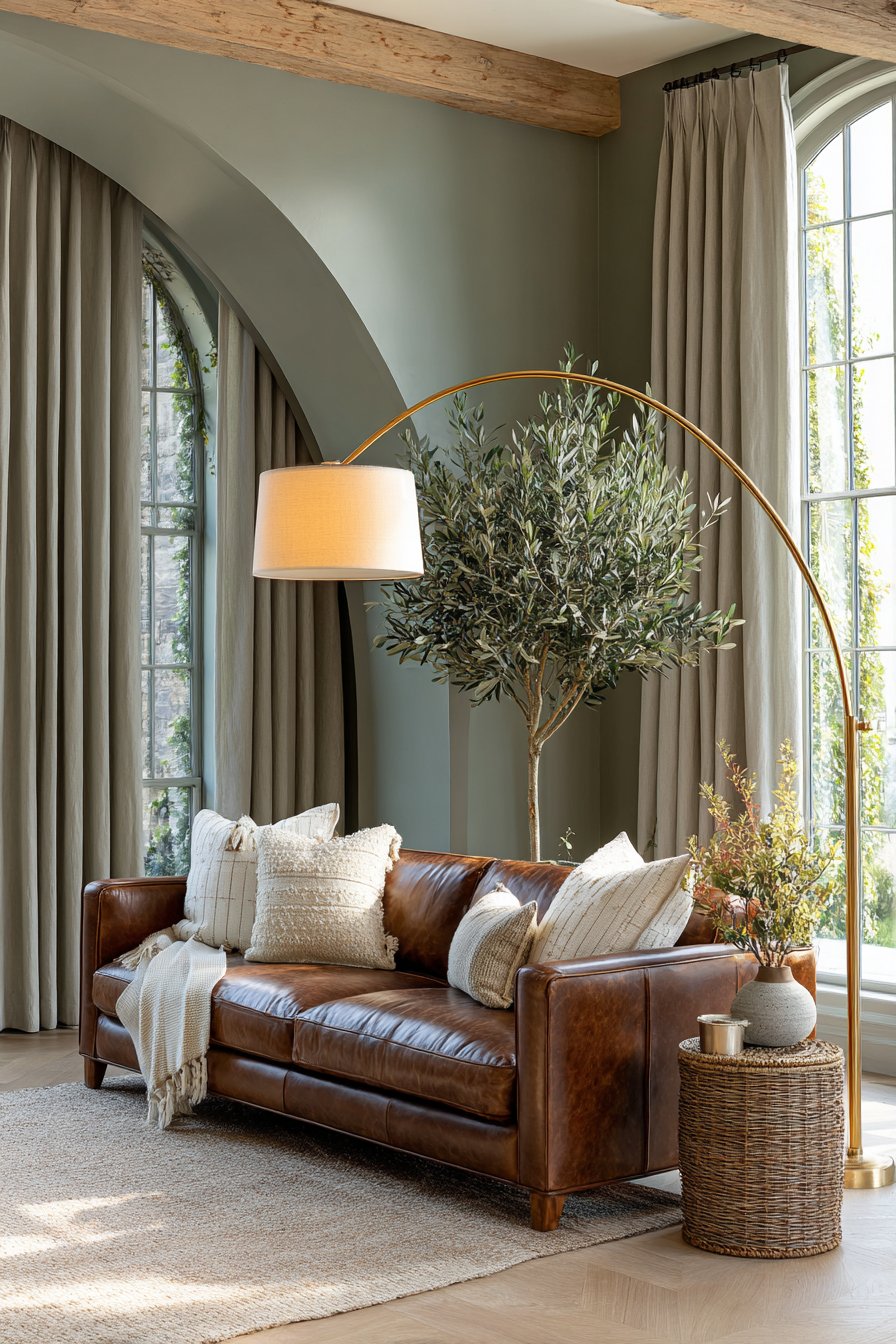
Remember that the most successful rooms evolve gradually as you discover what truly brings you peace. Start with one or two elements that resonate most strongly, then build intentionally from there. Your living room should reflect your unique needs and aesthetic preferences while honoring the calming potential of this timeless color combination. Trust the process, embrace natural materials, and create the sanctuary you deserve.
