


Slanted ceilings often feel like architectural challenges rather than design opportunities. Many homeowners struggle to maximize these unique spaces, leaving awkward corners unused and potential beauty unrealized. However, with the right approach, a slanted ceiling bedroom can become your home’s most charming and distinctive retreat.
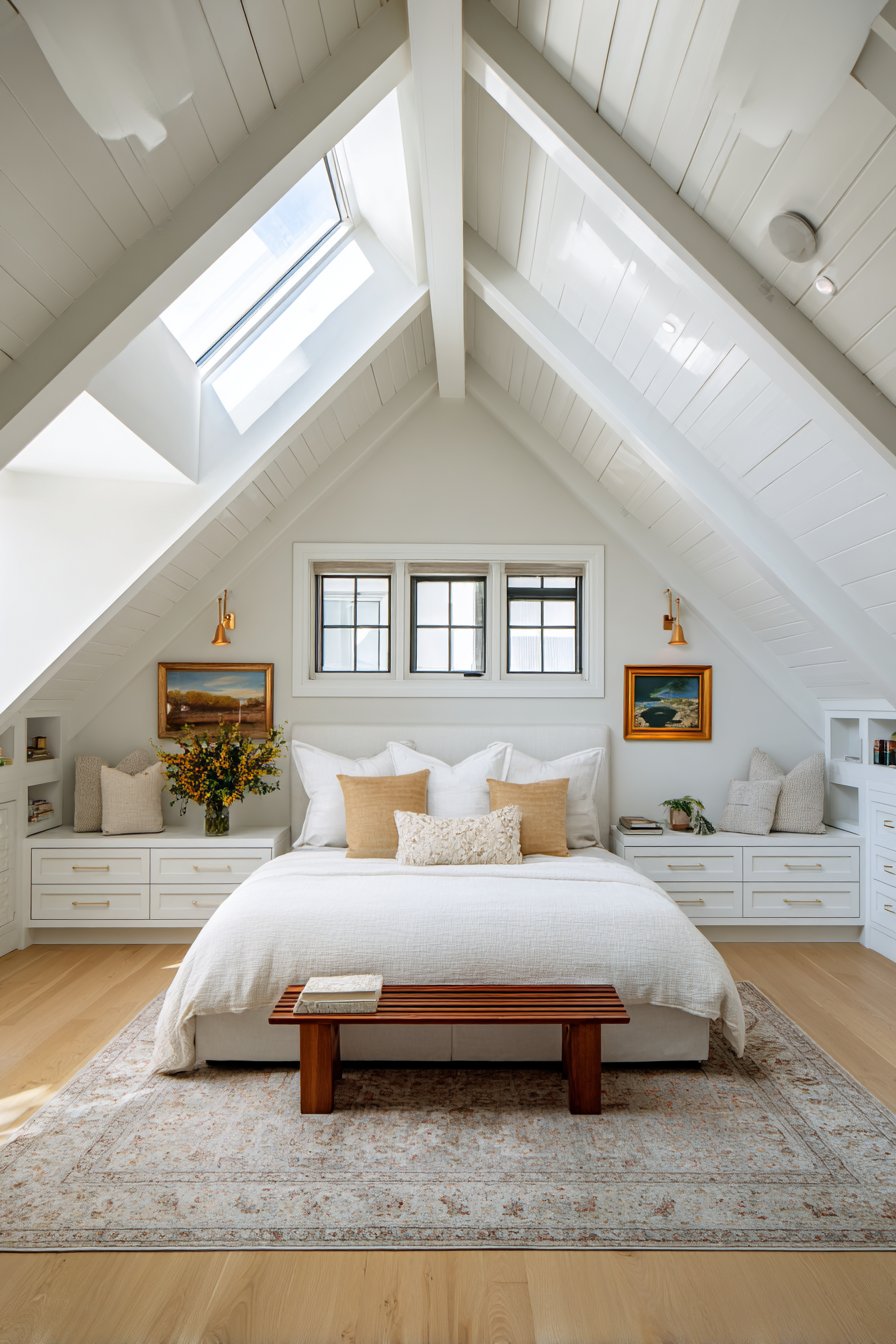
Thoughtful interior design transforms functional spaces into inspiring sanctuaries that reflect individual personalities and lifestyles. The way you style a room with angled architecture reveals creative problem-solving while honoring the space’s inherent character. Whether you’re working with a converted attic, a cape-style home, or a modern architectural feature, slanted ceilings demand strategic planning that balances aesthetics with practicality.
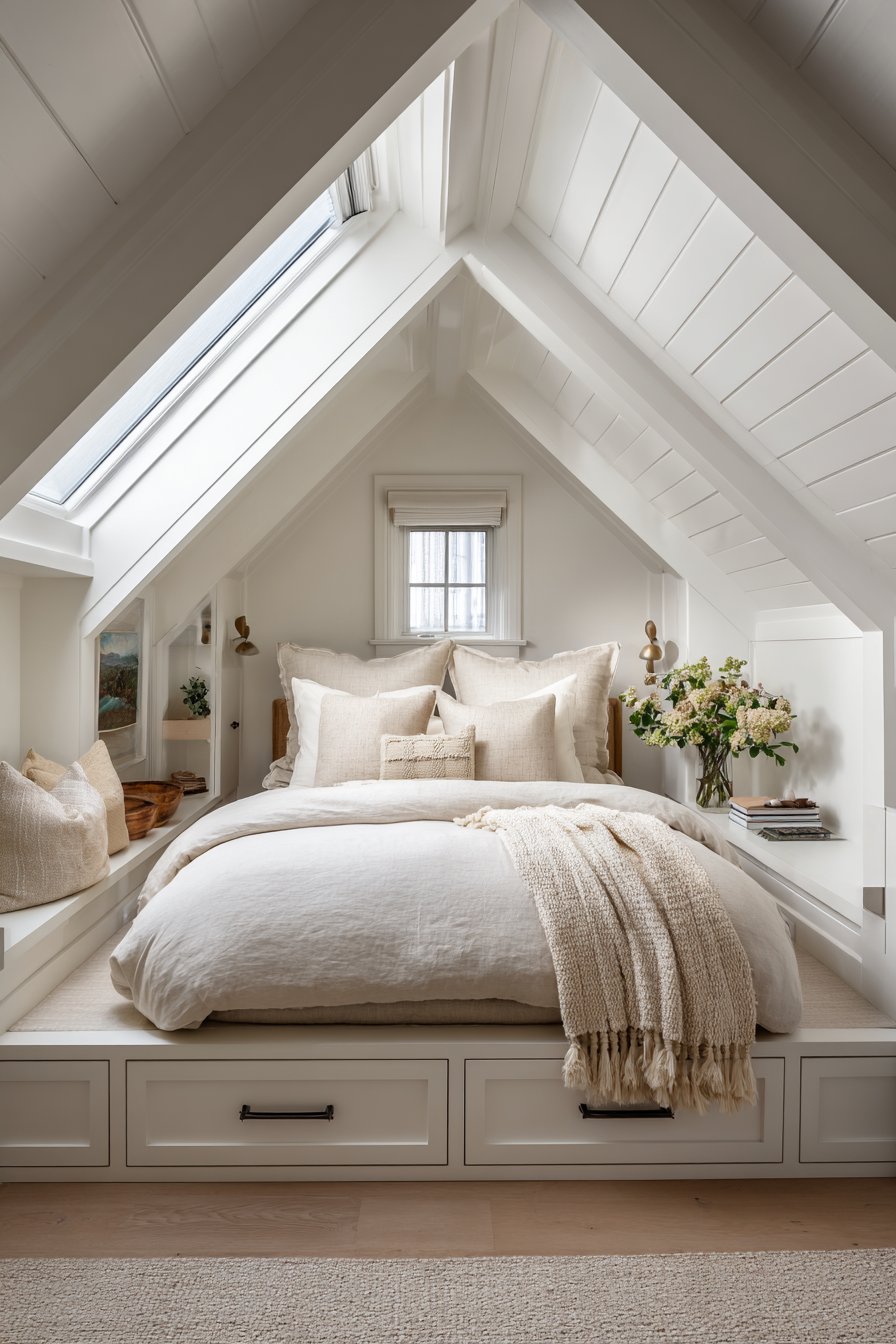
This article explores seven essential tips for styling slanted ceiling bedrooms with confidence and flair. From furniture placement to lighting strategies, each recommendation addresses common design dilemmas while celebrating what makes these spaces special. You’ll discover how to turn architectural quirks into stunning focal points that enhance both functionality and visual appeal.
1. Embrace Low-Profile Furniture Placement
The most crucial decision in any slanted ceiling bedroom involves strategic furniture positioning that works with, not against, the room’s natural angles. Placing low-profile pieces under the lowest ceiling points maximizes usable space while creating harmonious visual flow throughout the room.
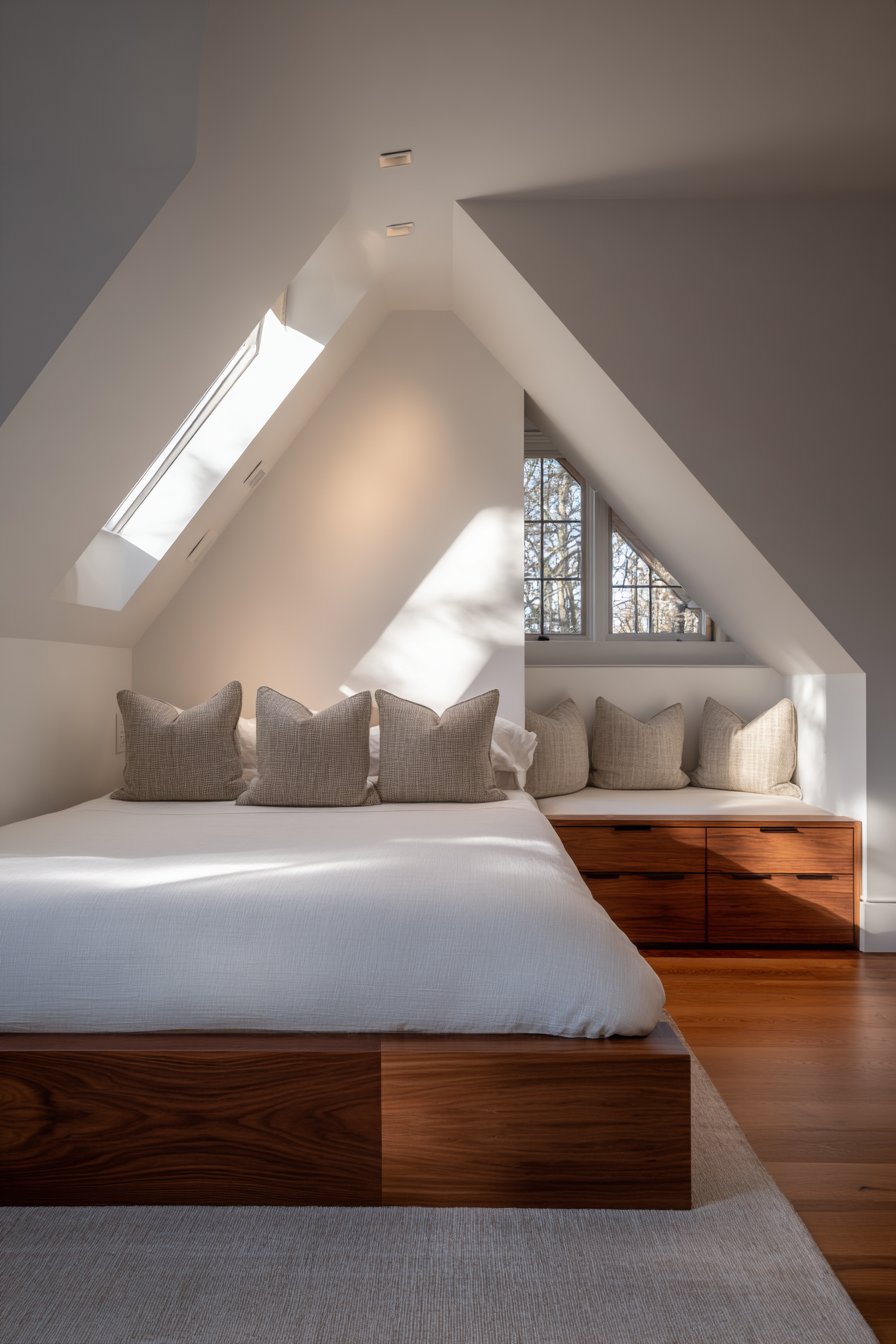
Consider positioning your bed directly beneath the slant where headroom matters least during sleep. This approach leaves higher ceiling areas free for standing, dressing, and movement. Platform beds, futons, and mattresses on low frames work exceptionally well in these configurations, typically measuring under 24 inches in total height.
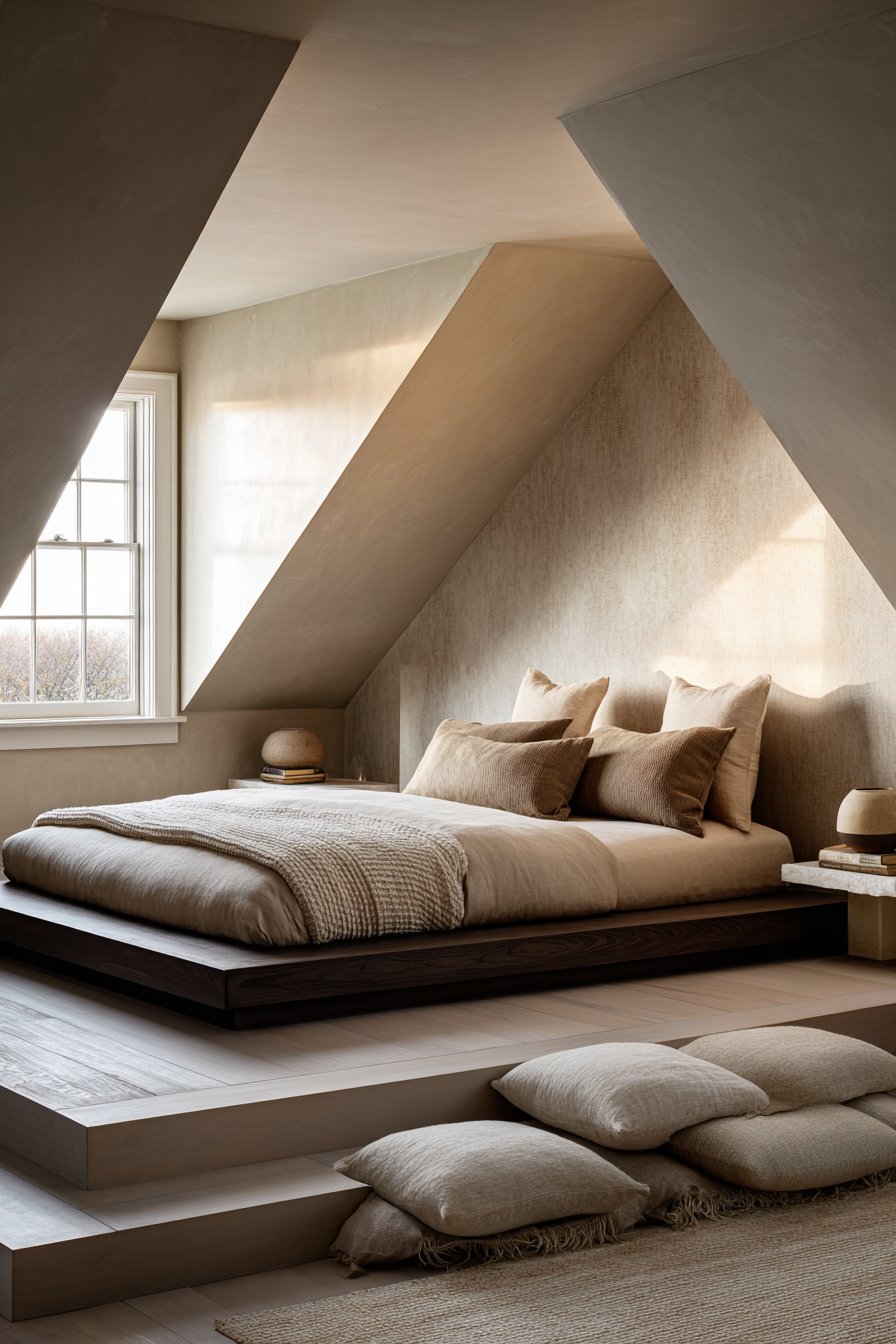
Built-in solutions offer even greater space efficiency for slanted ceiling challenges. Custom storage drawers integrated beneath beds or along knee walls eliminate wasted square footage. These installations transform awkward corners into functional assets while maintaining the room’s clean, uncluttered aesthetic.
- Position beds, daybeds, or seating under the lowest ceiling points
- Choose furniture with heights under 30 inches for slanted areas
- Install built-in drawers or cabinets along knee walls
- Keep pathways clear in high-ceiling zones for easy movement
- Use floor cushions or poufs in extremely low areas
- Measure ceiling heights at multiple points before purchasing furniture
2. Optimize Lighting for Dimensional Interest
Slanted ceilings create unique lighting challenges that require layered solutions combining ambient, task, and accent illumination. Poor lighting emphasizes awkward angles, while thoughtful placement highlights architectural character and expands perceived space.
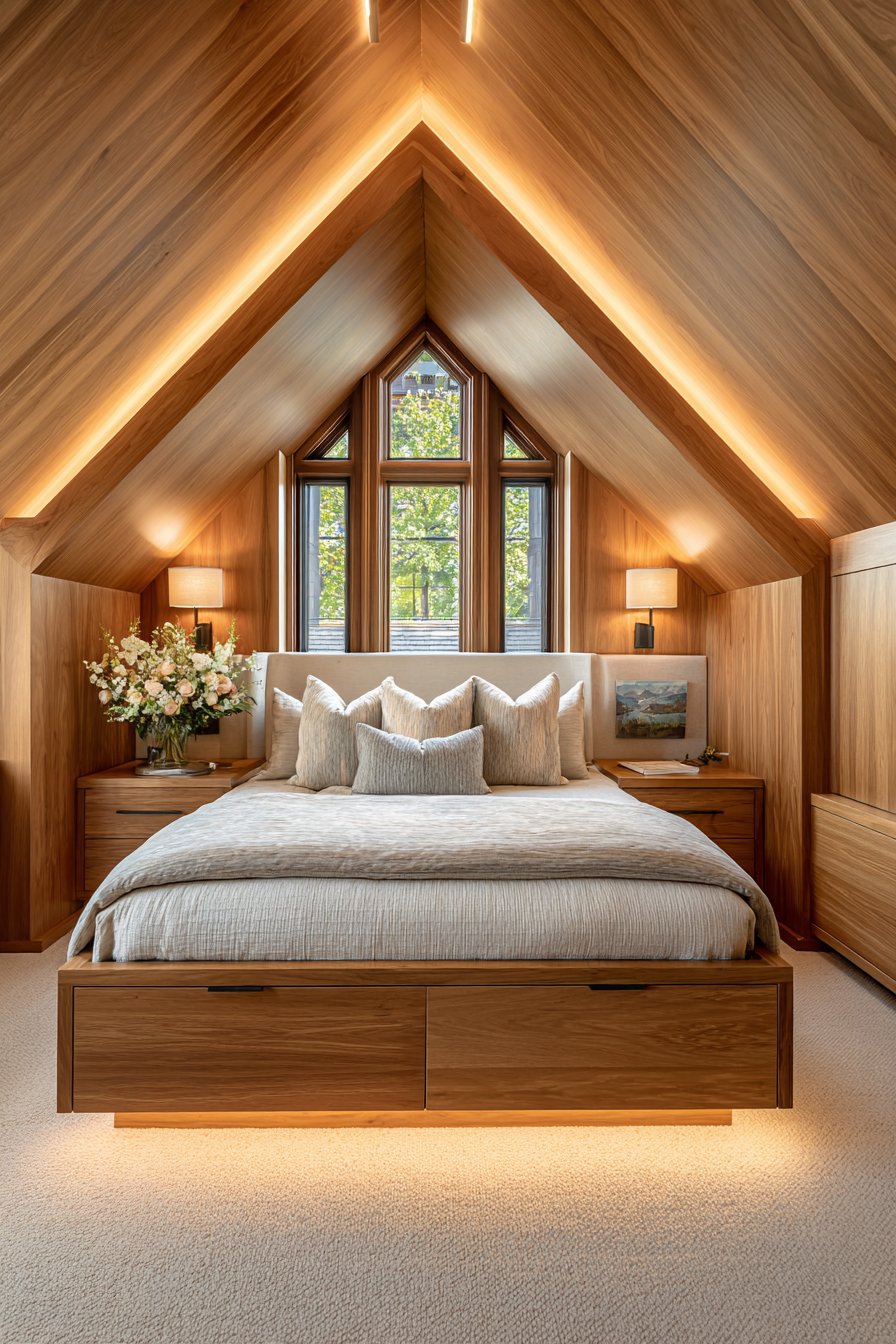
Recessed lighting installed along the slant prevents head bumps while providing even, overhead illumination. Track lighting offers adjustable directionality, allowing you to highlight specific areas or artwork despite unusual ceiling angles. Both options maintain precious headroom that hanging fixtures would compromise.
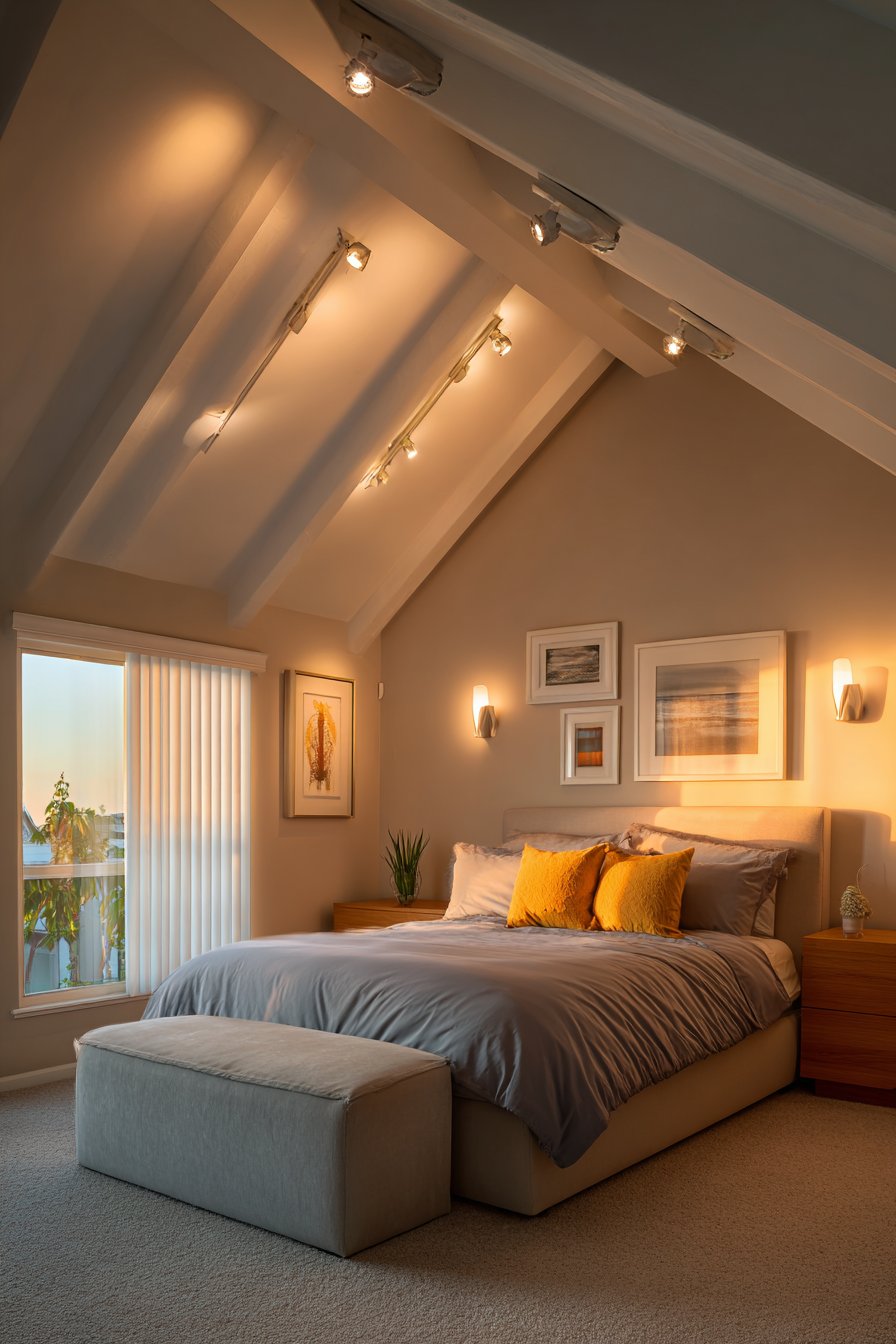
Wall sconces mounted at medium height deliver task lighting without ceiling constraints. These fixtures prove especially valuable for reading nooks or dressing areas where vertical clearance is limited. String lights or LED strips along ceiling edges add ambient glow that softens harsh angles and creates cozy atmosphere.
- Install recessed lights following the ceiling’s natural slope
- Use track lighting for flexible, adjustable illumination
- Mount wall sconces at 60-66 inches for optimal task lighting
- Add LED strip lighting along ceiling transitions for soft ambiance
- Place table lamps on low furniture for supplemental light
- Consider dimmer switches for mood and versatility control
3. Create Vertical Interest with Strategic Paint
Paint choices dramatically affect how slanted ceilings feel within a space, making them either oppressive obstacles or striking design features. The right color strategy enhances room proportions while celebrating unique architectural elements.
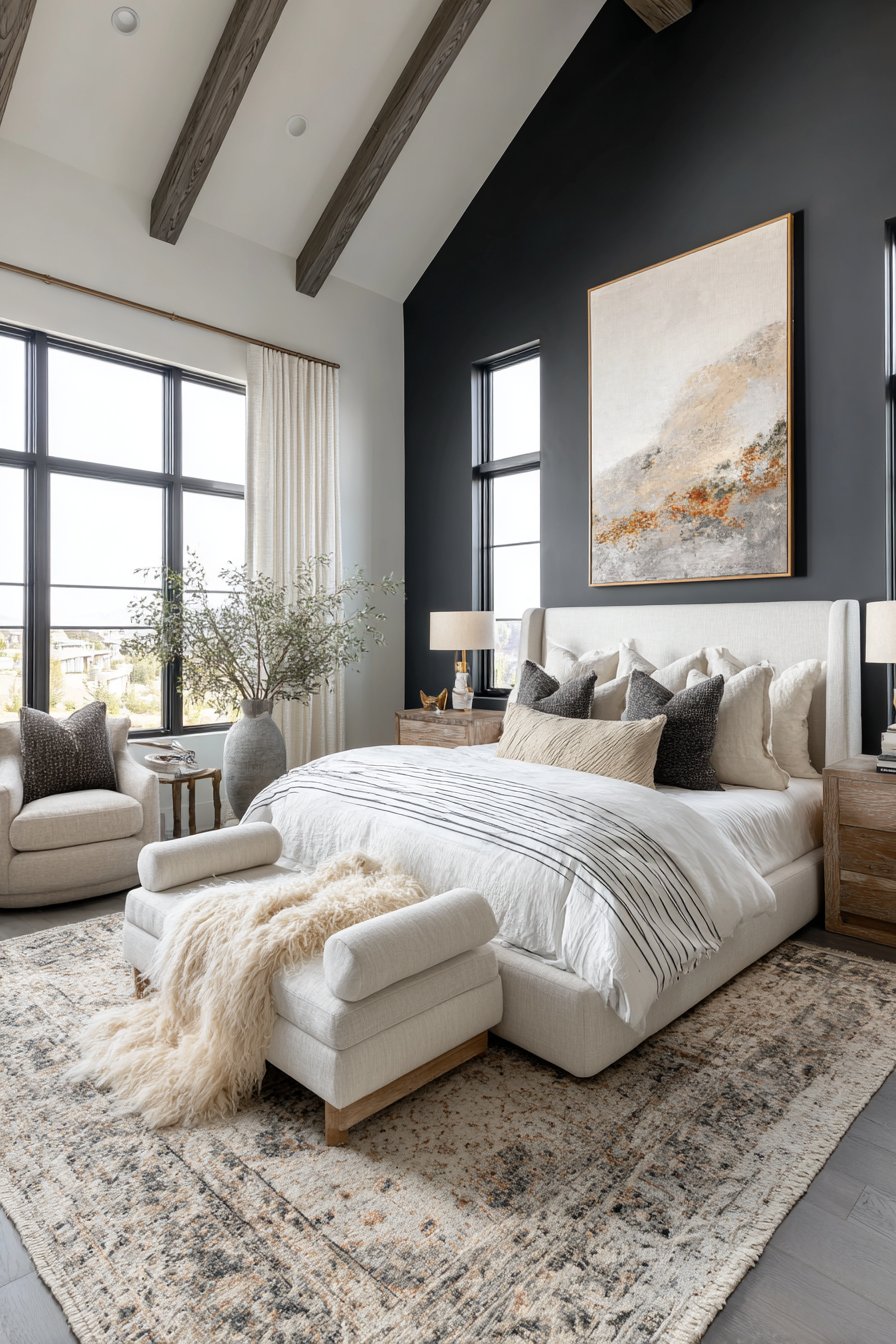
Painting slanted ceilings the same color as walls creates seamless flow that minimizes the ceiling’s visual disruption. This technique makes rooms feel more cohesive and spacious, particularly effective with light neutrals or soft pastels. The unified color plane tricks the eye into perceiving larger, more open dimensions.
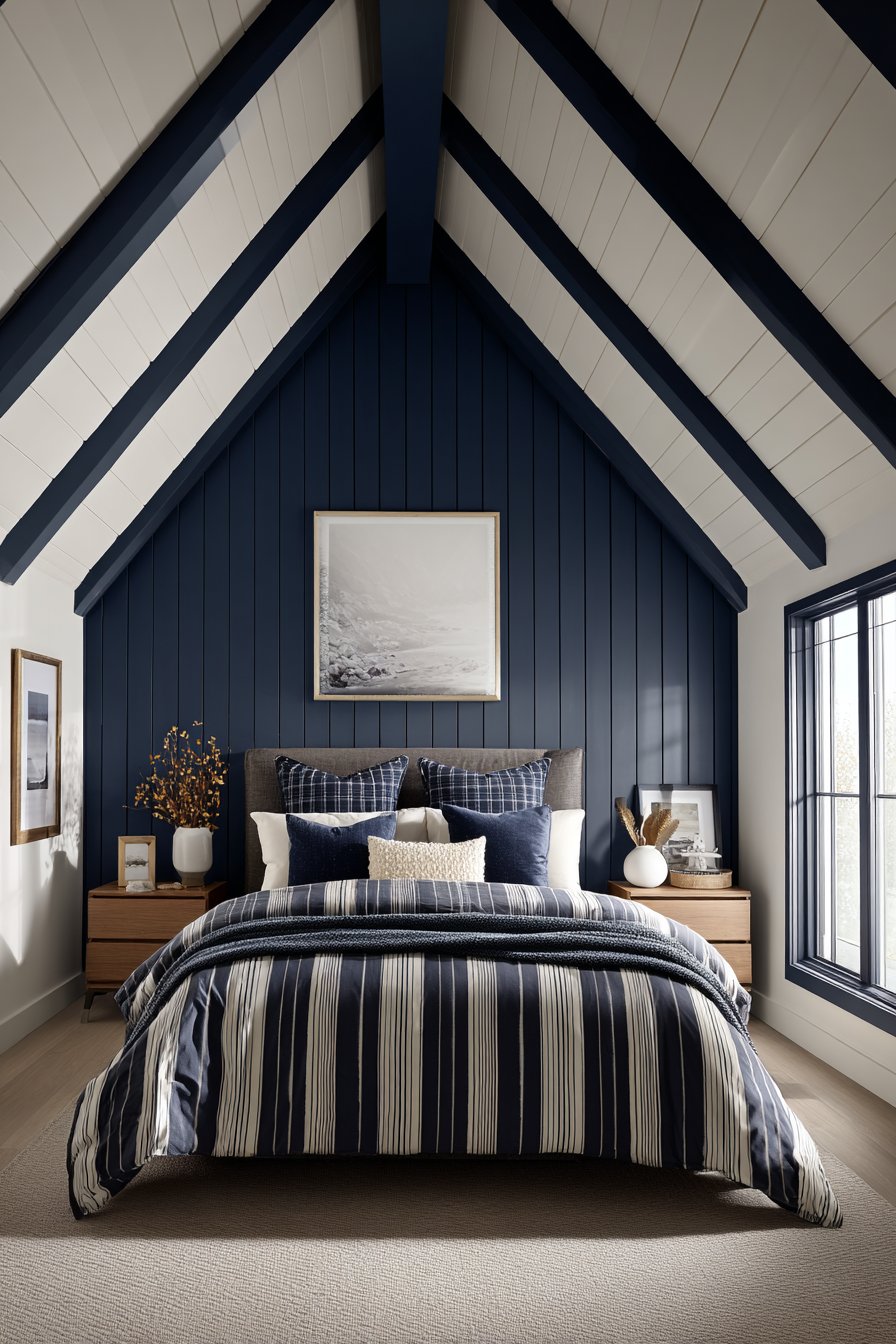
Conversely, painting the slant a contrasting accent color transforms it into an intentional focal point that adds character and depth. Dark colors on slanted portions can create dramatic, cozy effects while making flat ceilings appear higher by comparison. This approach works beautifully in larger bedrooms with adequate natural light.
- Paint walls and slanted ceiling the same color for continuity
- Use light colors to maximize brightness and openness
- Try accent colors on slants to create architectural interest
- Apply horizontal stripes to visually widen narrow slanted rooms
- Consider matte finishes to minimize light reflection irregularities
- Test samples at different times of day before committing
4. Maximize Storage in Unconventional Spaces
Slanted ceiling bedrooms demand creative storage solutions that capitalize on every available inch, especially in areas too low for standard furniture. Custom approaches transform dead space into highly functional organizational systems.
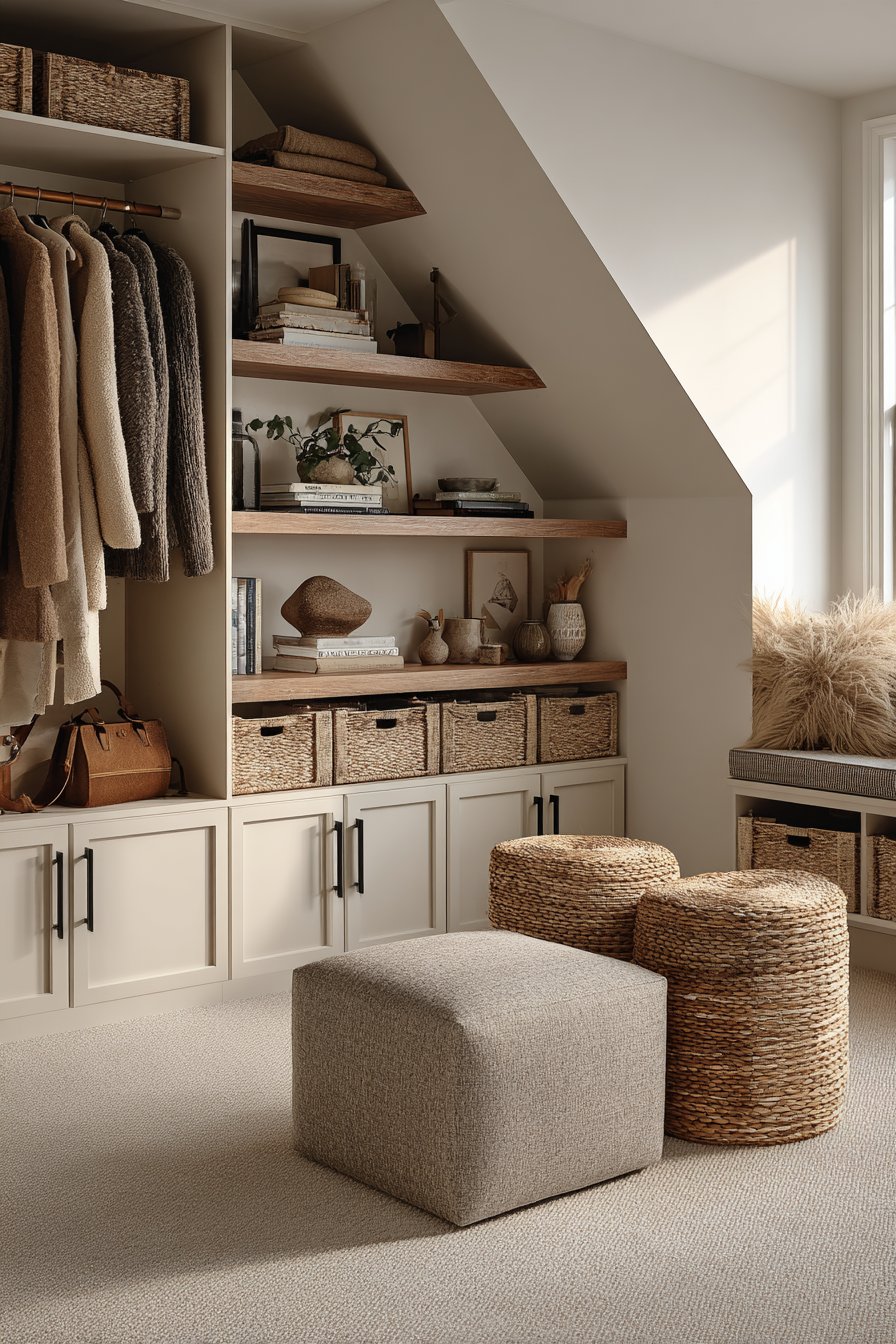
Built-in wardrobes designed to follow ceiling angles provide maximum storage without wasting vertical space. These custom installations can include hanging rods at varying heights, shelving units, and drawer systems precisely fitted to awkward dimensions. While requiring upfront investment, they deliver unmatched space efficiency.
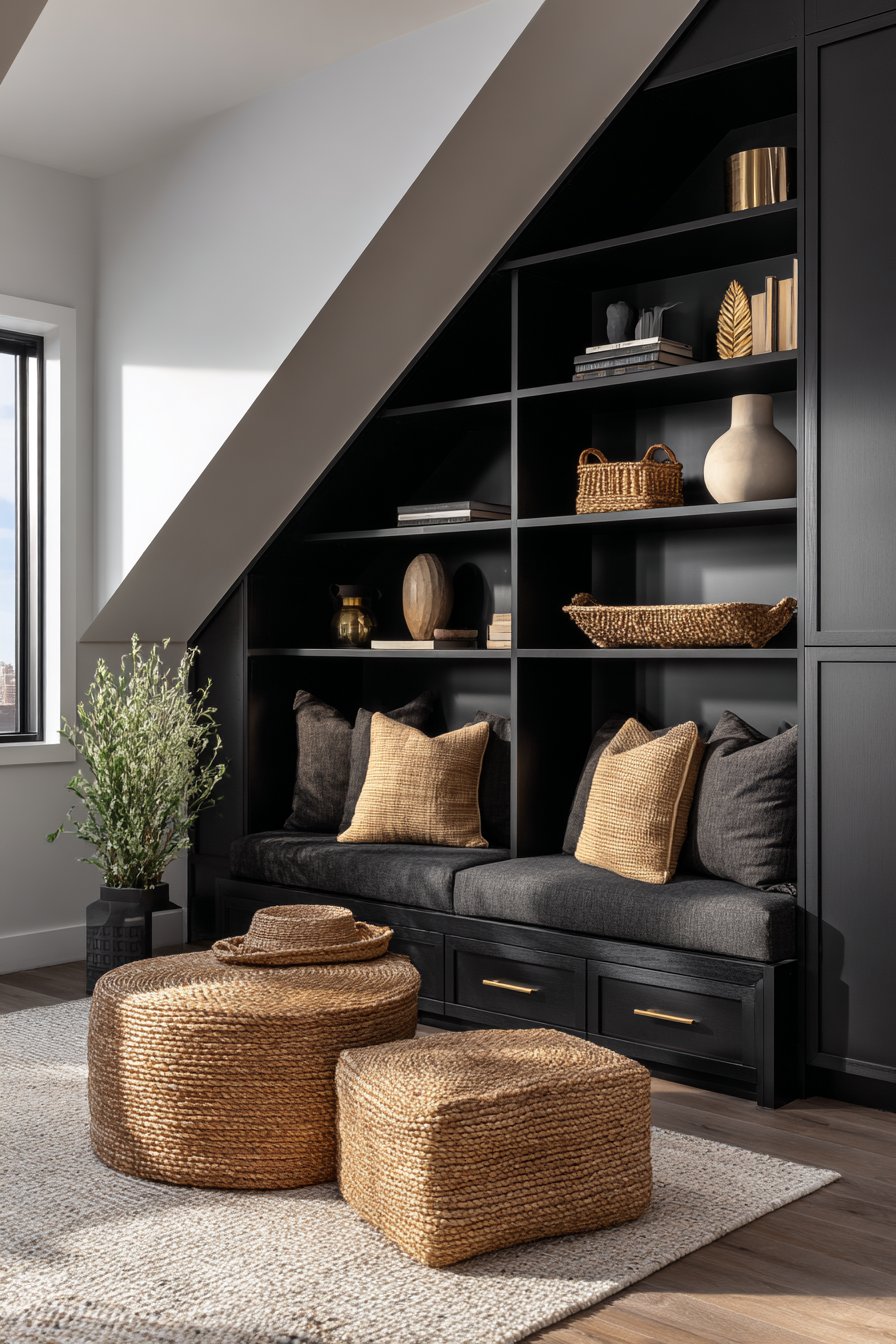
Freestanding storage ottomans, trunks, and low chests thrive under slanted sections while serving dual purposes as seating or display surfaces. Rolling storage bins slide easily beneath knee wall areas, keeping seasonal items accessible yet hidden. Open shelving mounted on knee walls displays books and decorative objects without encroaching on headroom.
- Install custom built-ins that follow ceiling angles precisely
- Use low storage ottomans and chests under slanted areas
- Add open shelving on knee walls for books and décor
- Incorporate rolling bins for under-slope accessibility
- Hang pegboards or rail systems on angled walls
- Utilize vacuum-sealed bags for compact seasonal storage
5. Draw Eyes Up with Vertical Design Elements
Vertical design elements counterbalance the downward pull of slanted ceilings, creating balanced visual interest that prevents spaces from feeling compressed or claustrophobic. Strategic use of height draws attention upward and enhances perceived room volume.
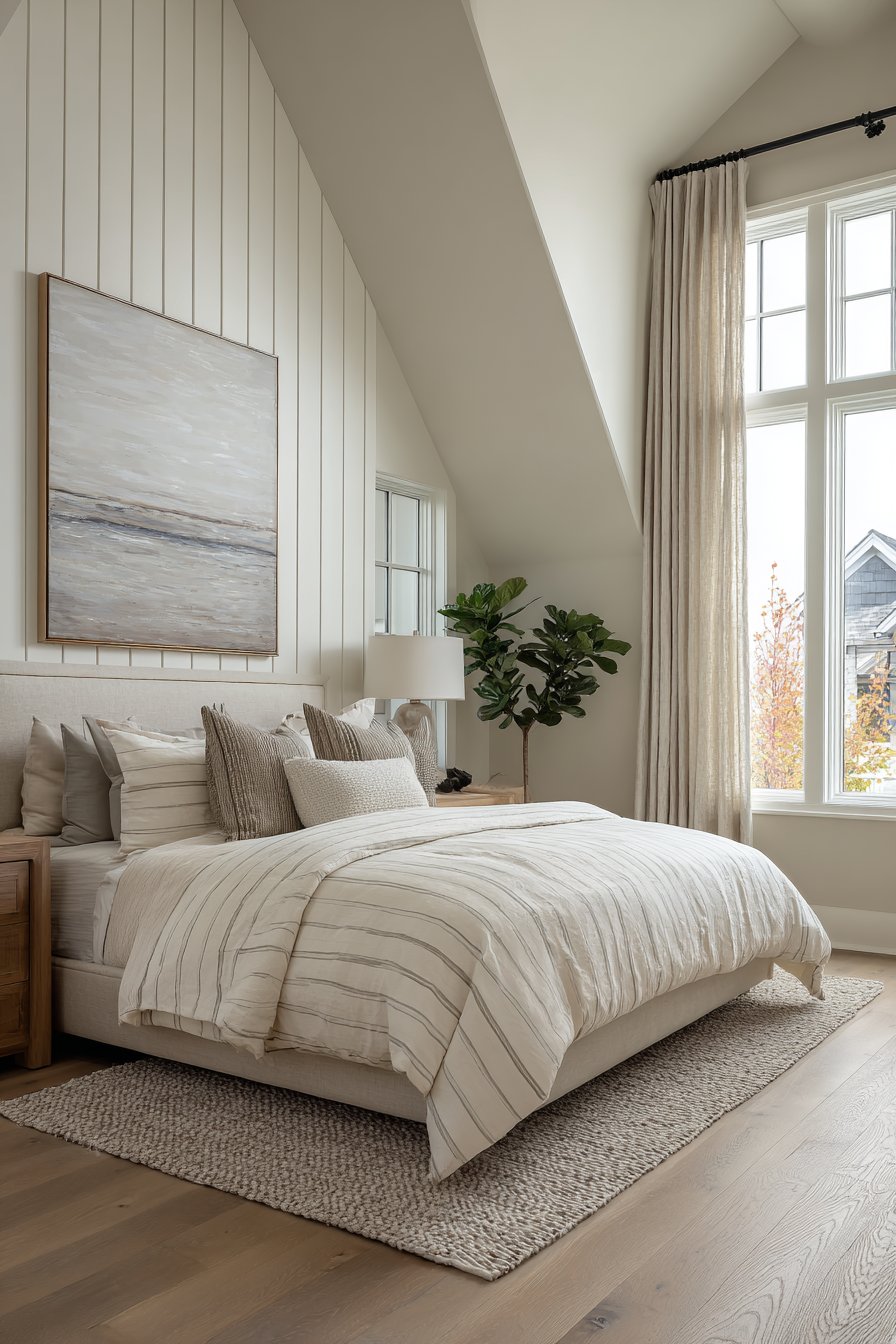
Tall, narrow artwork or mirrors positioned on straight walls pull the eye vertically, emphasizing ceiling height where it exists. Vertical stripe patterns in wallpaper, curtains, or bedding reinforce this upward movement. These elements create optical illusions that make rooms feel taller and more spacious.
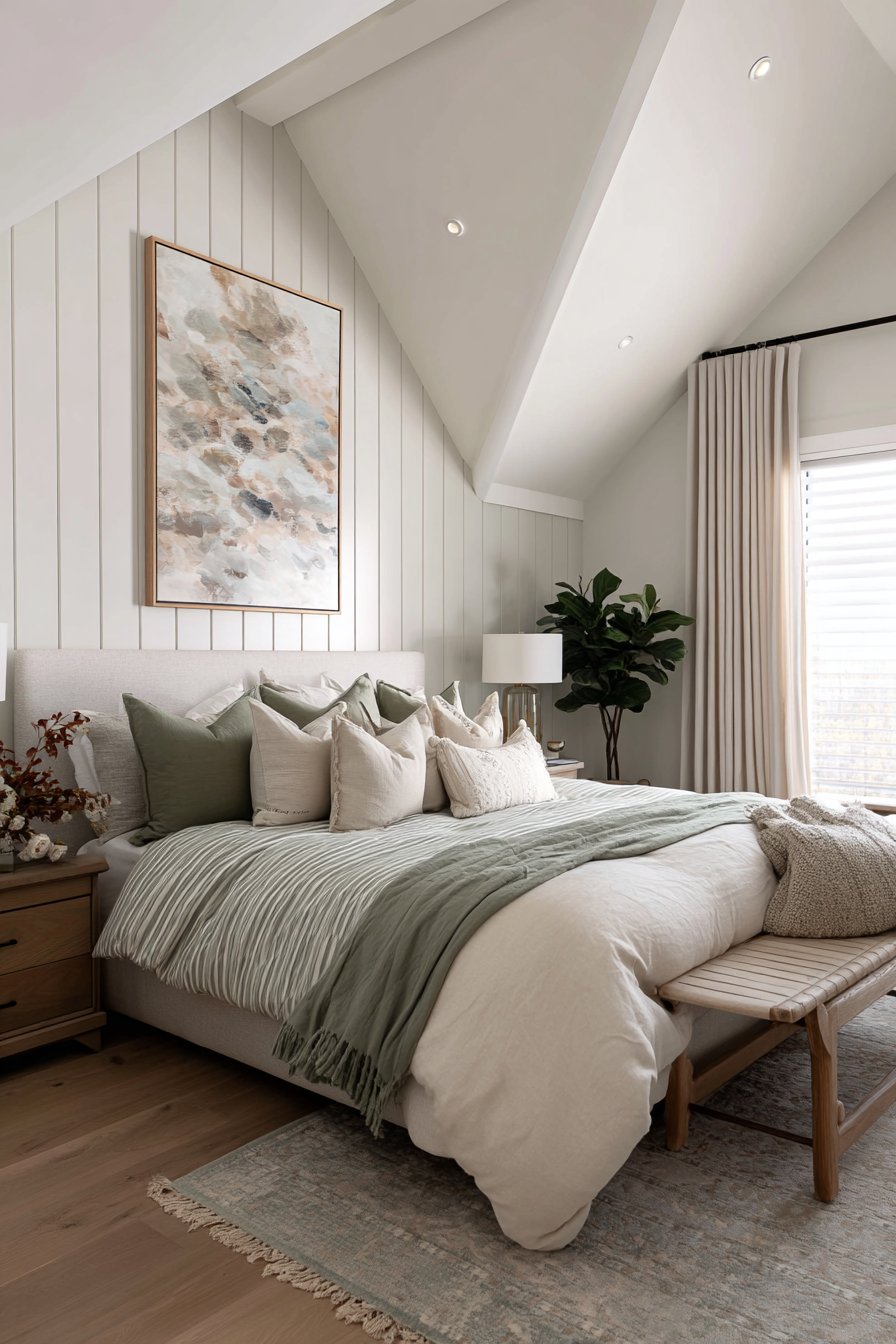
Floor-to-ceiling curtains, even on slanted walls, add dramatic vertical lines that enhance architectural drama. Installing curtain rods as high as possible, just below the ceiling peak, maximizes this effect. Sheer fabrics work particularly well, filtering light while maintaining airiness.
- Hang tall, vertical artwork on straight walls
- Install floor-to-ceiling curtains at maximum height
- Choose bedding and textiles with vertical patterns
- Add tall plants in high-ceiling corners
- Use vertical shiplap or board-and-batten treatments
- Display collections in vertical arrangements on walls
6. Incorporate Skylights and Window Treatments
Natural light becomes especially critical in slanted ceiling bedrooms where architectural constraints can create darker corners and shadowy zones. Skylights and thoughtful window treatments dramatically improve both illumination and ambiance.
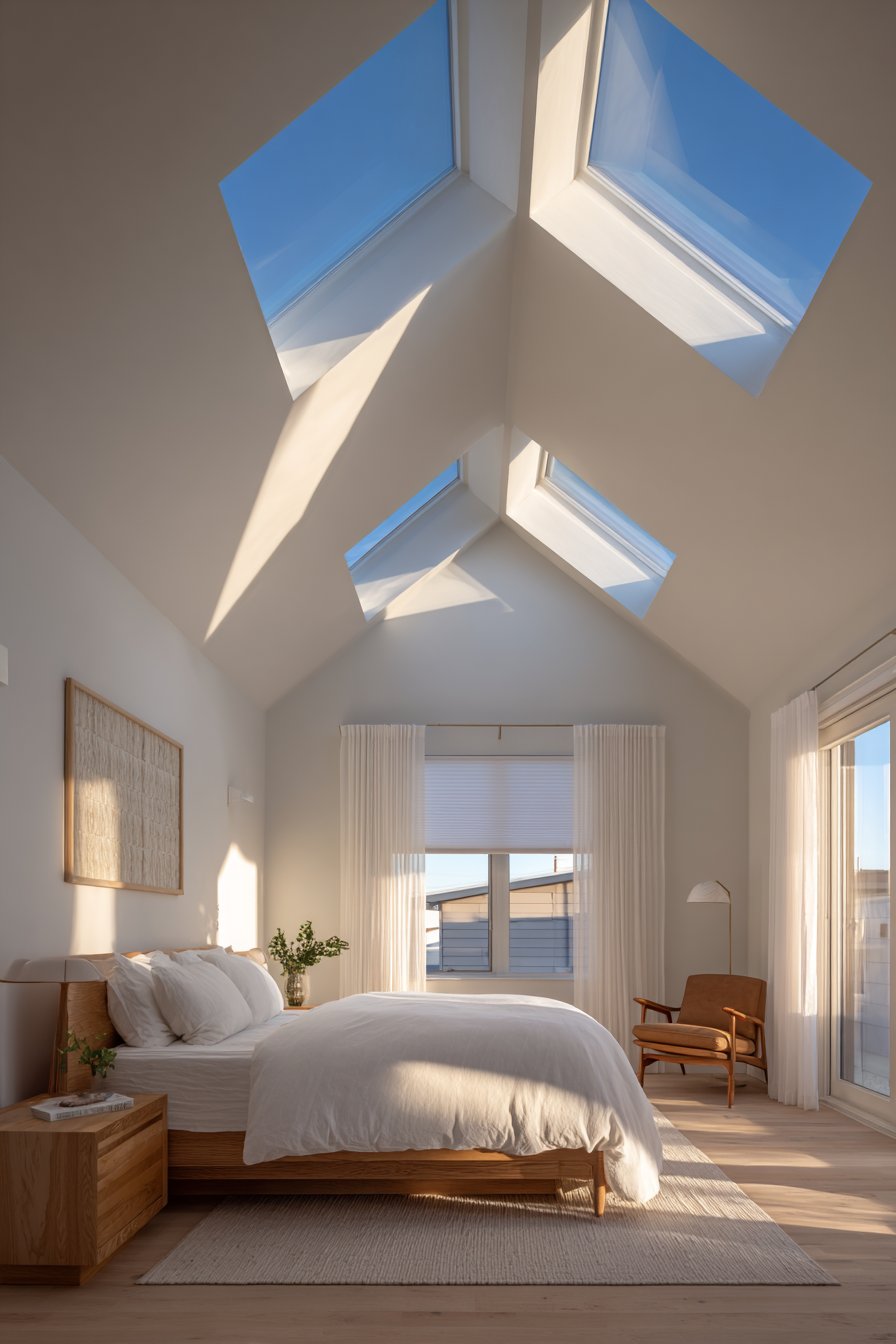
Skylights installed in slanted ceilings flood rooms with natural light while providing ventilation and stargazing opportunities. Even small skylights make substantial impacts, reducing daytime reliance on artificial lighting. Modern skylights include remote-controlled shades for privacy and temperature management.
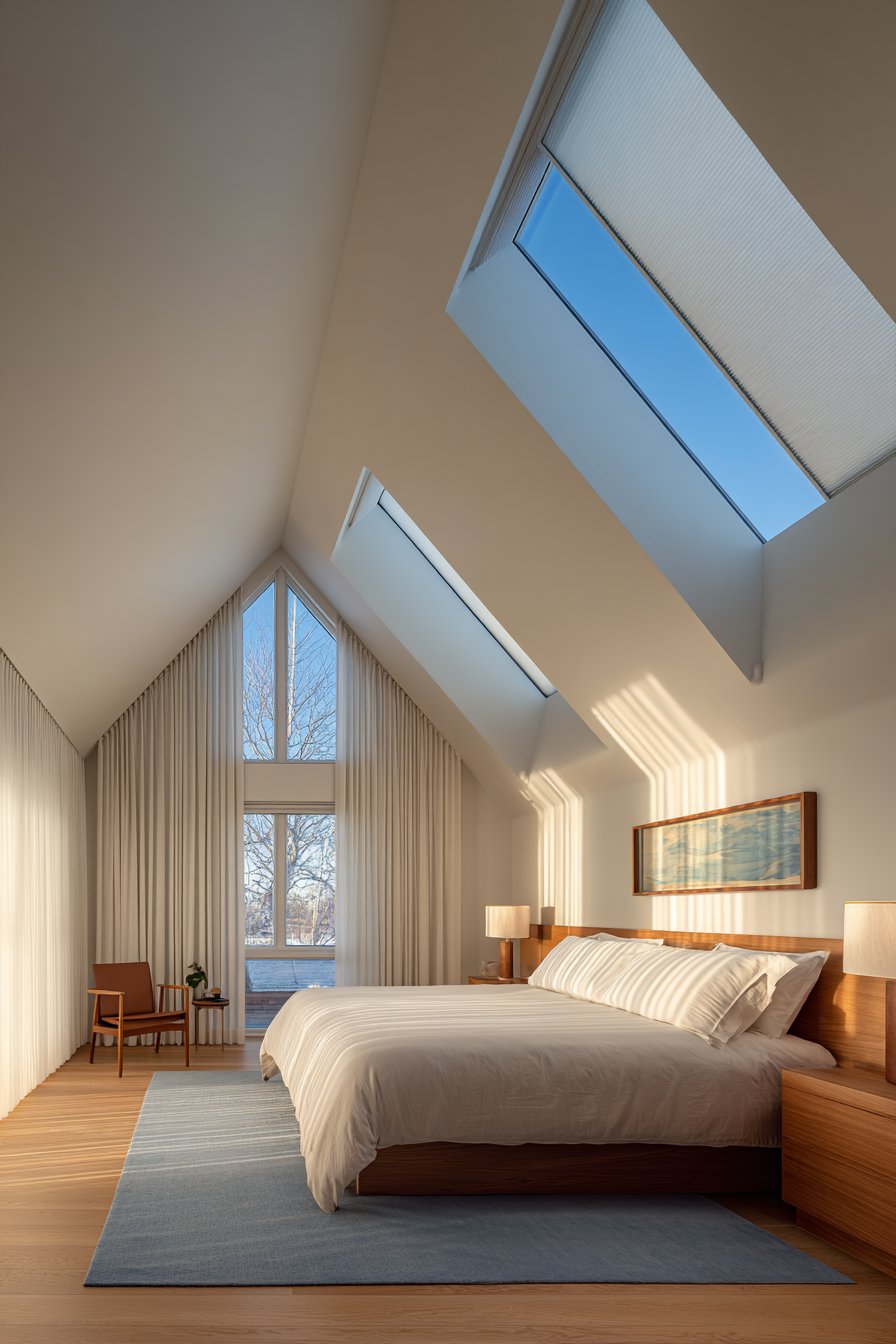
Window treatments for slanted windows require specialized approaches that accommodate unusual angles. Cellular shades designed for skylights provide insulation and light control without hanging awkwardly. For side windows on slanted walls, simple roller shades or café curtains maintain function without overwhelming limited wall space.
- Install skylights where roof structure permits
- Choose cellular shades for insulation and light control
- Use simple roller shades on angled windows
- Avoid heavy drapes that visually weigh down slants
- Consider top-down bottom-up shades for privacy flexibility
- Add sheer curtains for softness without blocking light
7. Define Zones for Multi-Functional Use
Slanted ceiling bedrooms often serve multiple purposes beyond sleeping, requiring thoughtful zone definition that maximizes functionality without creating visual chaos. Strategic area designation helps organize activities and maintain flow.
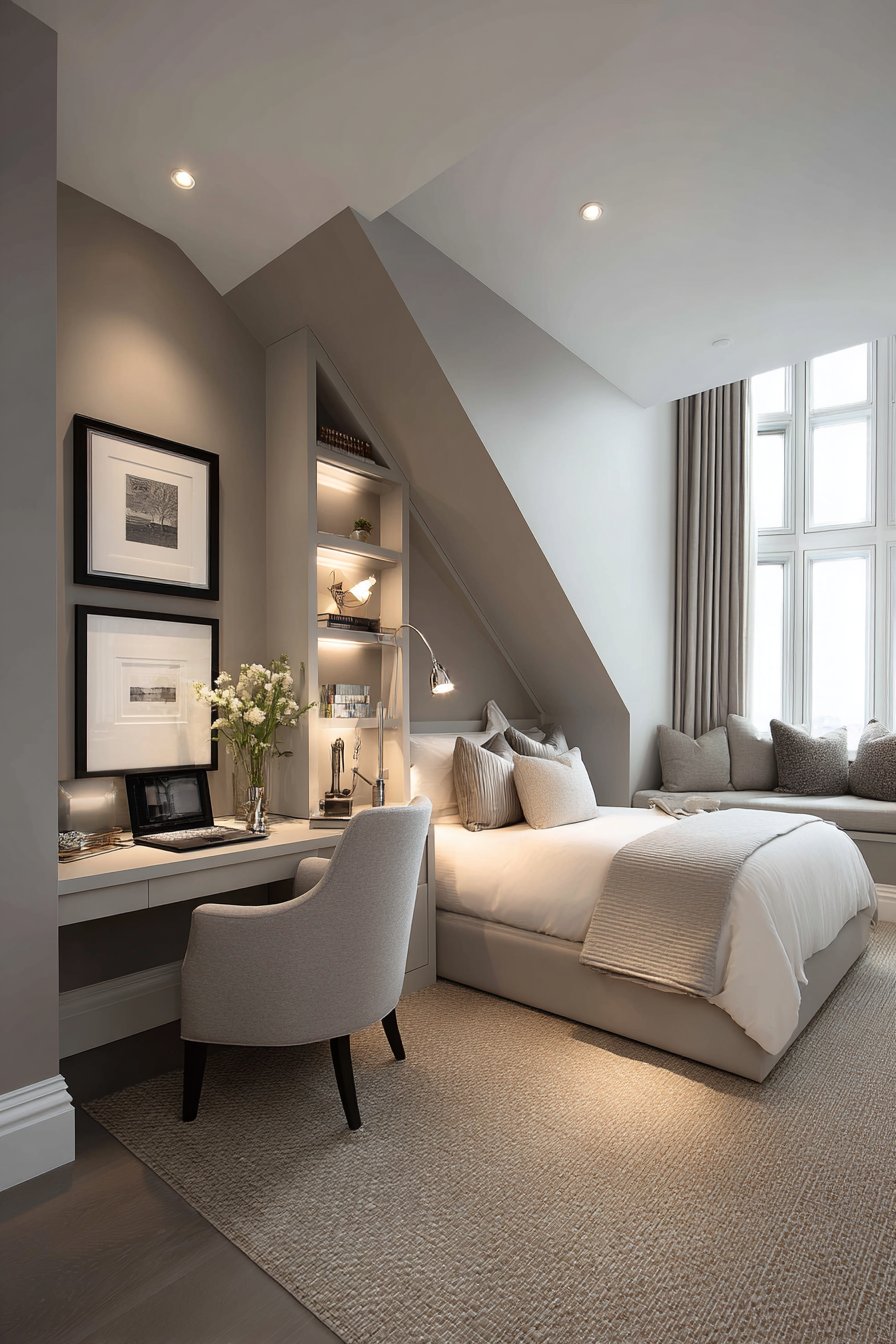
Create a dedicated sleeping zone under the slant while positioning a reading nook, workspace, or dressing area in higher ceiling sections. Area rugs, lighting changes, and furniture arrangements clearly delineate these zones without physical barriers. This approach optimizes each area according to its ceiling height and intended use.
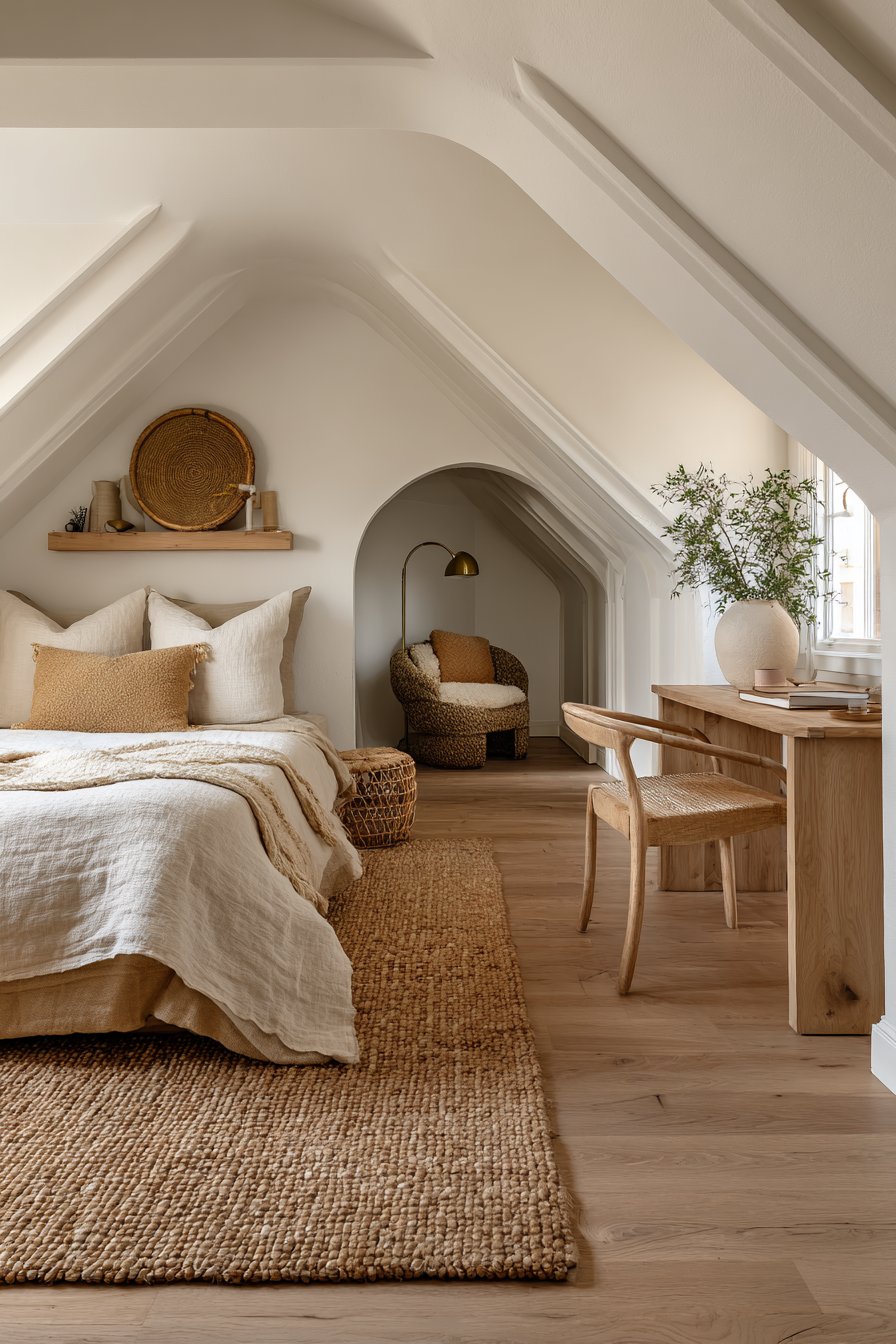
Multi-functional furniture enhances zone efficiency in compact slanted spaces. A daybed serves as sofa by day and guest bed by night. A fold-down desk transforms walls into workspace without permanent floor space commitment. These flexible solutions adapt to changing needs while respecting spatial limitations.
- Position sleeping areas under lower ceiling sections
- Create workspace or reading nooks in high-ceiling zones
- Use area rugs to visually define different functional zones
- Incorporate fold-down or multi-functional furniture pieces
- Arrange furniture to create natural traffic flow patterns
- Add room dividers like bookcases if zones need separation
Conclusion
Slanted ceiling bedrooms present unique opportunities to showcase creative design thinking and personalized style. By embracing low-profile furniture, optimizing lighting, making bold paint choices, and maximizing every storage opportunity, you transform architectural challenges into distinctive advantages. Strategic vertical elements, natural light enhancements, and thoughtful zone planning complete the transformation.
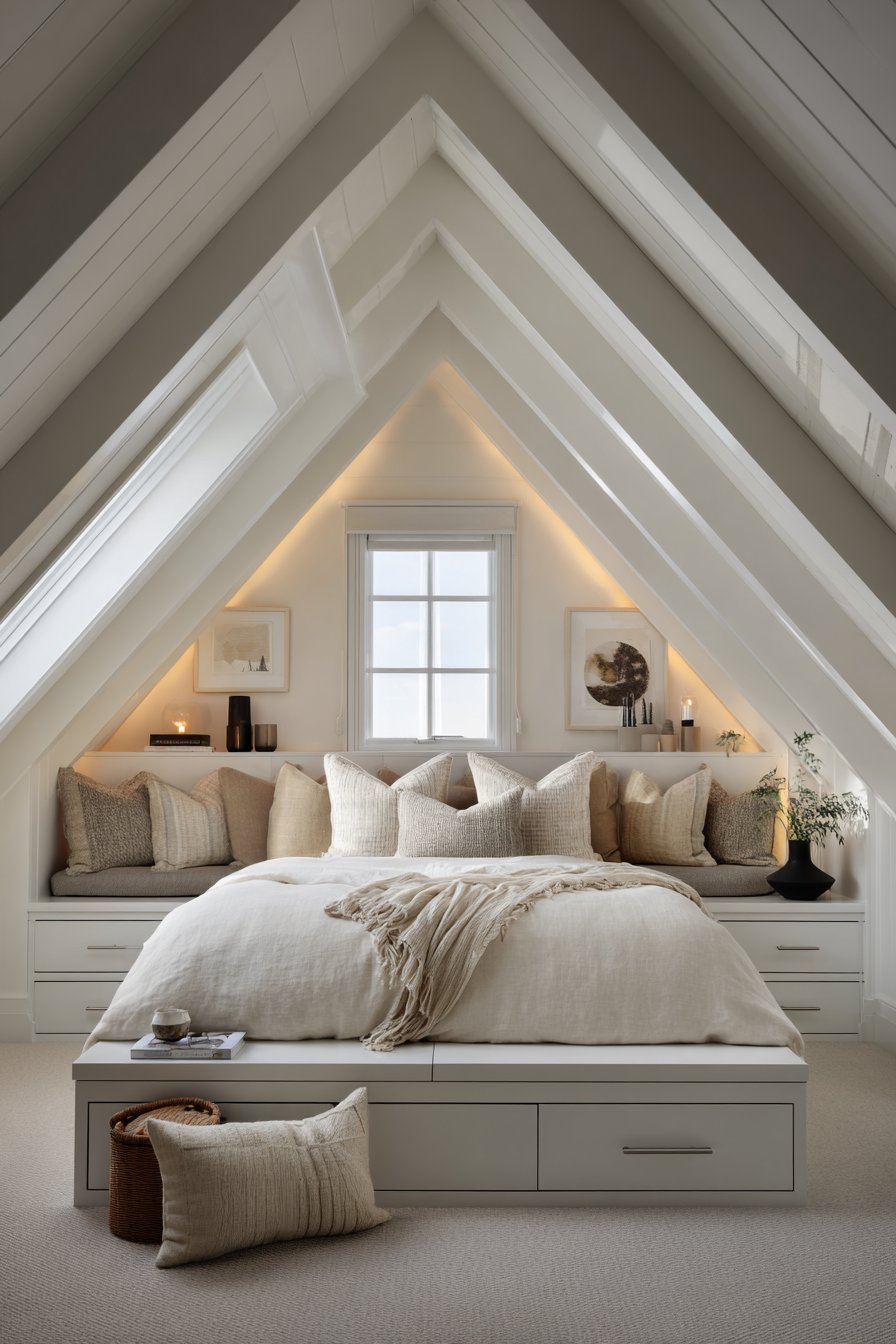
Remember that the most successful designs honor a room’s inherent character rather than fighting against it. Experiment with these seven tips, adapting them to your specific space and personal aesthetic. Your slanted ceiling bedroom can become a cozy, functional retreat that celebrates its unique architectural personality while serving your everyday needs beautifully.
