


A small laundry room doesn’t have to feel cramped, chaotic, or uninspiring. With the right design strategies, even the tiniest laundry spaces can become functional, organized, and visually appealing. Homeowners often overlook this hardworking room when planning home improvements — but a well-designed laundry space can genuinely transform your daily routine.
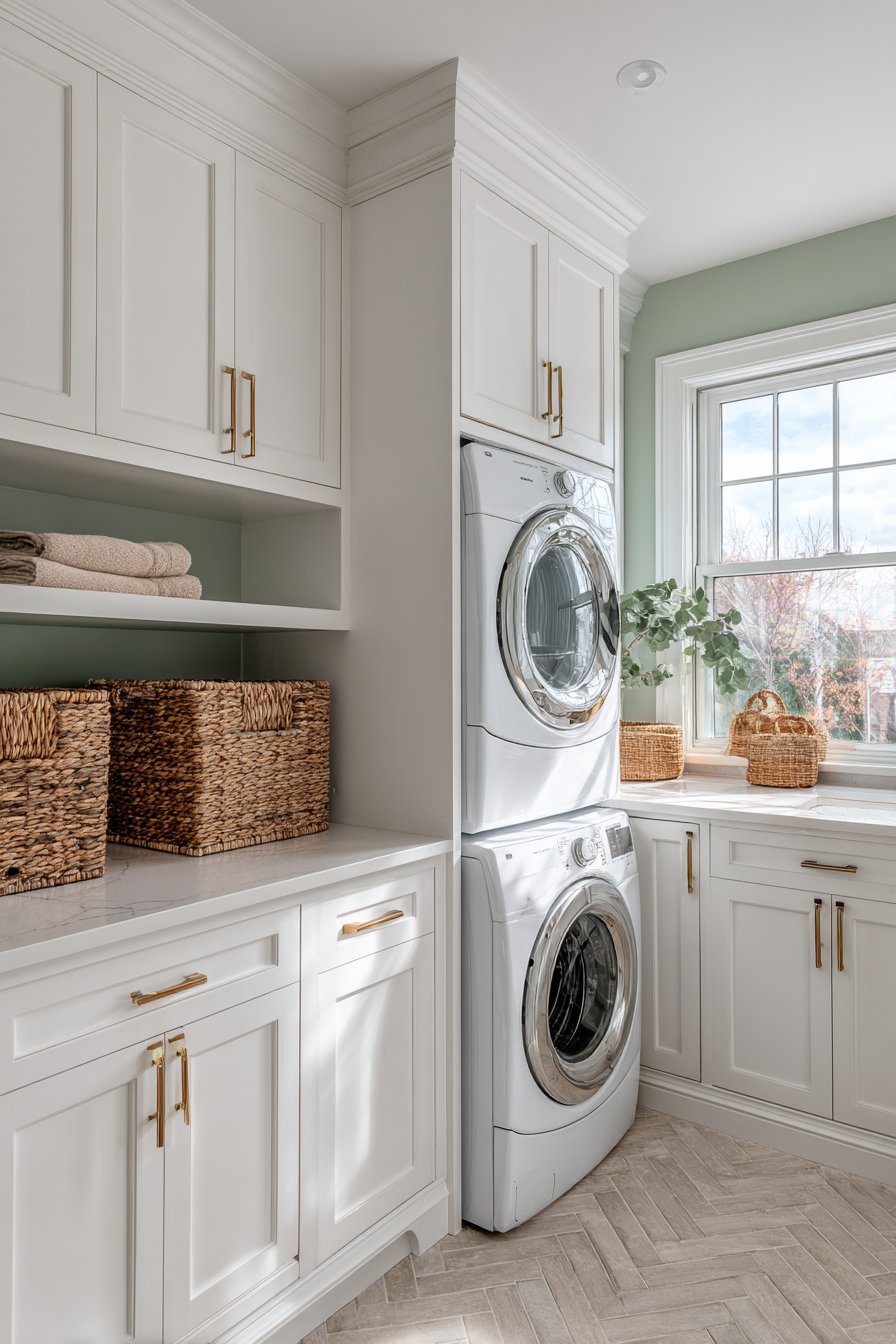
Thoughtful interior design in a laundry room is about far more than aesthetics. It’s about maximizing every square inch while keeping the space efficient and easy to navigate. Whether you’re working with a closet-sized nook, a narrow galley layout, or a compact dedicated room, smart design choices can make a dramatic difference.
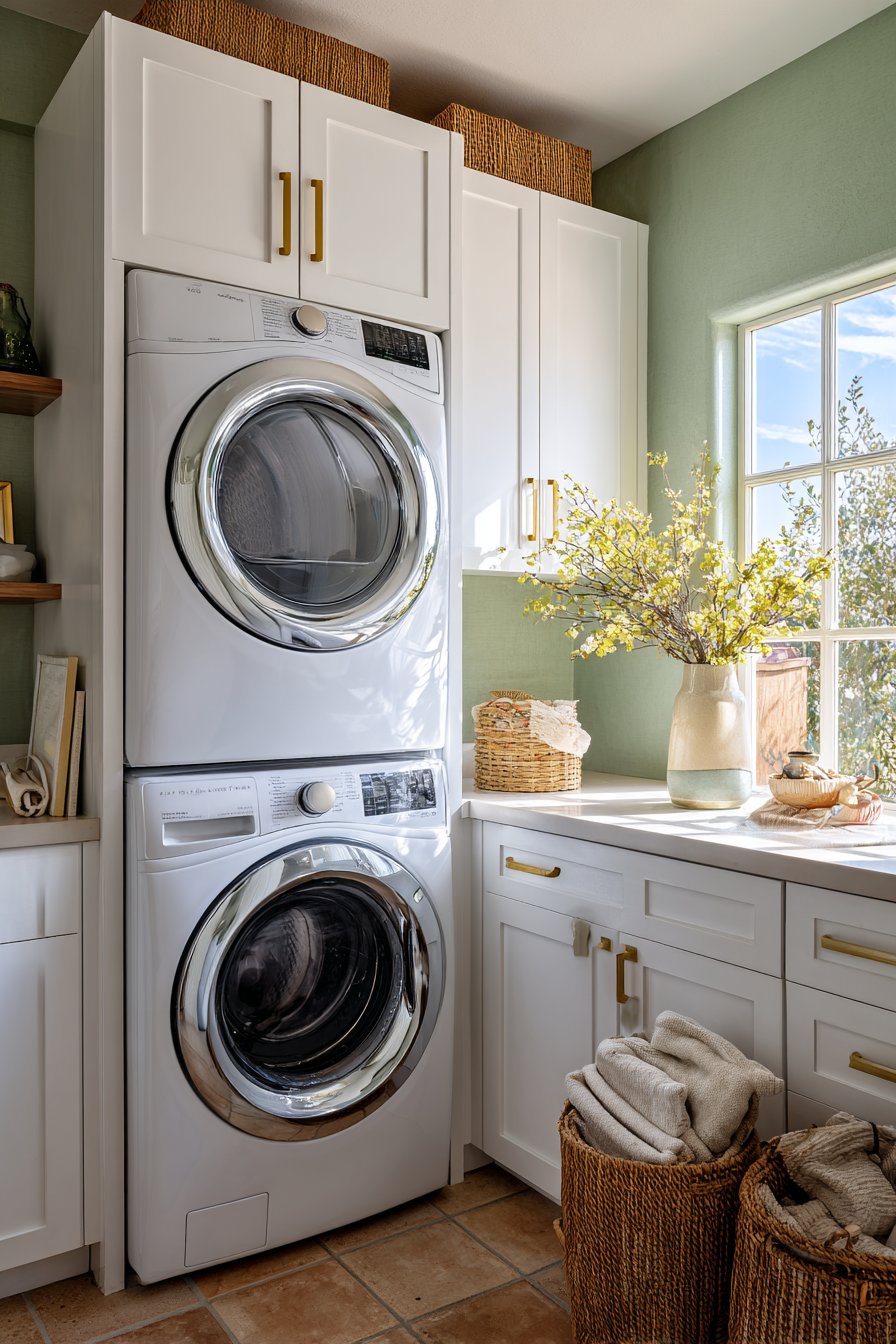
This article covers seven powerful tips that will help you reimagine your small laundry room. From vertical storage solutions to clever color choices, each strategy is practical, budget-conscious, and easy to implement. Let’s dive in and unlock the full potential of your laundry space.
1. Maximize Vertical Wall Space
When floor space is limited, your walls become your greatest asset. Vertical storage is the single most effective strategy for small laundry room makeovers. Most homeowners use only the lower half of their walls, leaving valuable overhead space completely unused.
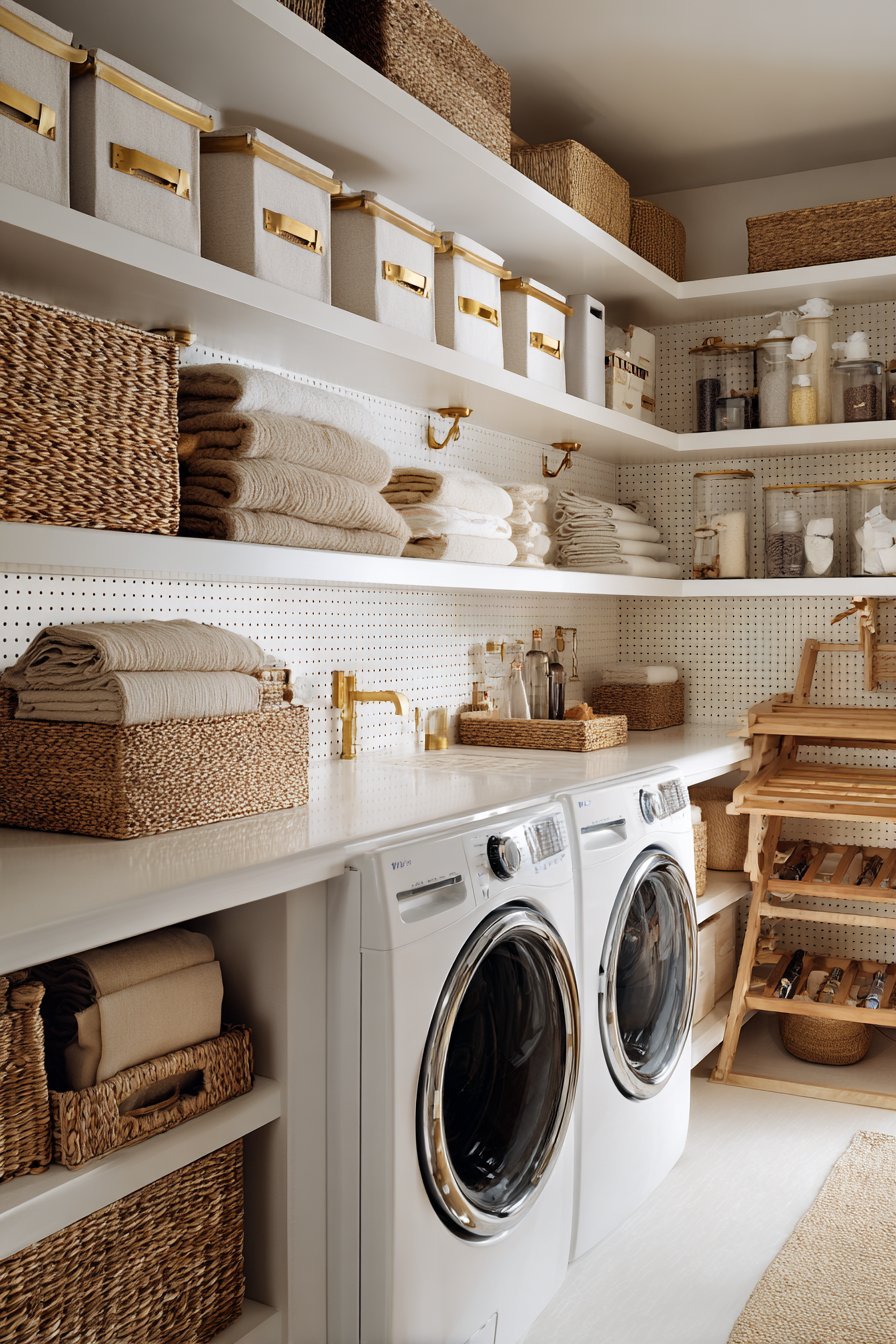
Install open shelving or closed cabinets from floor to ceiling to dramatically increase storage capacity. Upper shelves work perfectly for detergent, fabric softener, and laundry supplies. Lower shelves or cabinets can house hampers, cleaning tools, and spare linens. When you build upward instead of outward, you free up precious floor space for movement and functionality.
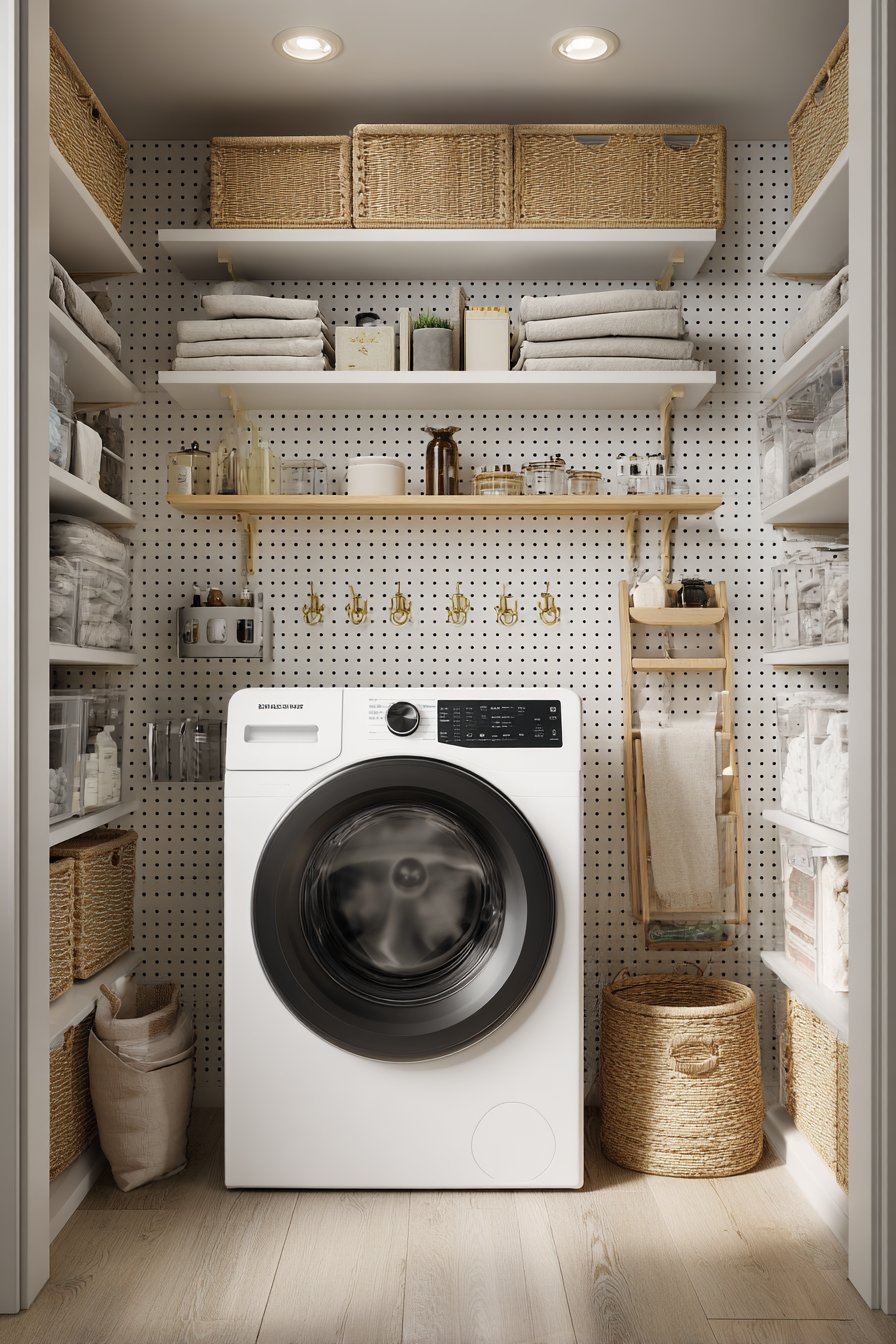
Consider adding a wall-mounted drying rack that folds flat when not in use. This clever solution eliminates the need for a freestanding rack that clutters the floor. Pair it with a pegboard system for hanging tools, ironing accessories, and small baskets — the combination creates a highly organized wall system that keeps everything within arm’s reach.
- Install floor-to-ceiling shelving units to maximize vertical capacity
- Use the top shelf for rarely used items stored in labeled bins
- Mount a fold-down drying rack at a comfortable height (around 60–66 inches from the floor)
- Add pegboards with hooks for flexible, adjustable storage
- Use cabinet doors to hang shoe organizers for small supply storage
- Keep frequently used items at eye level for easy access
2. Choose Light and Bright Colors
Color has an enormous impact on how spacious a room feels. Light, bright colors visually expand small spaces by reflecting natural and artificial light. Dark walls in a compact laundry room can make the space feel cave-like and oppressive — the opposite of what you want in a functional workspace.
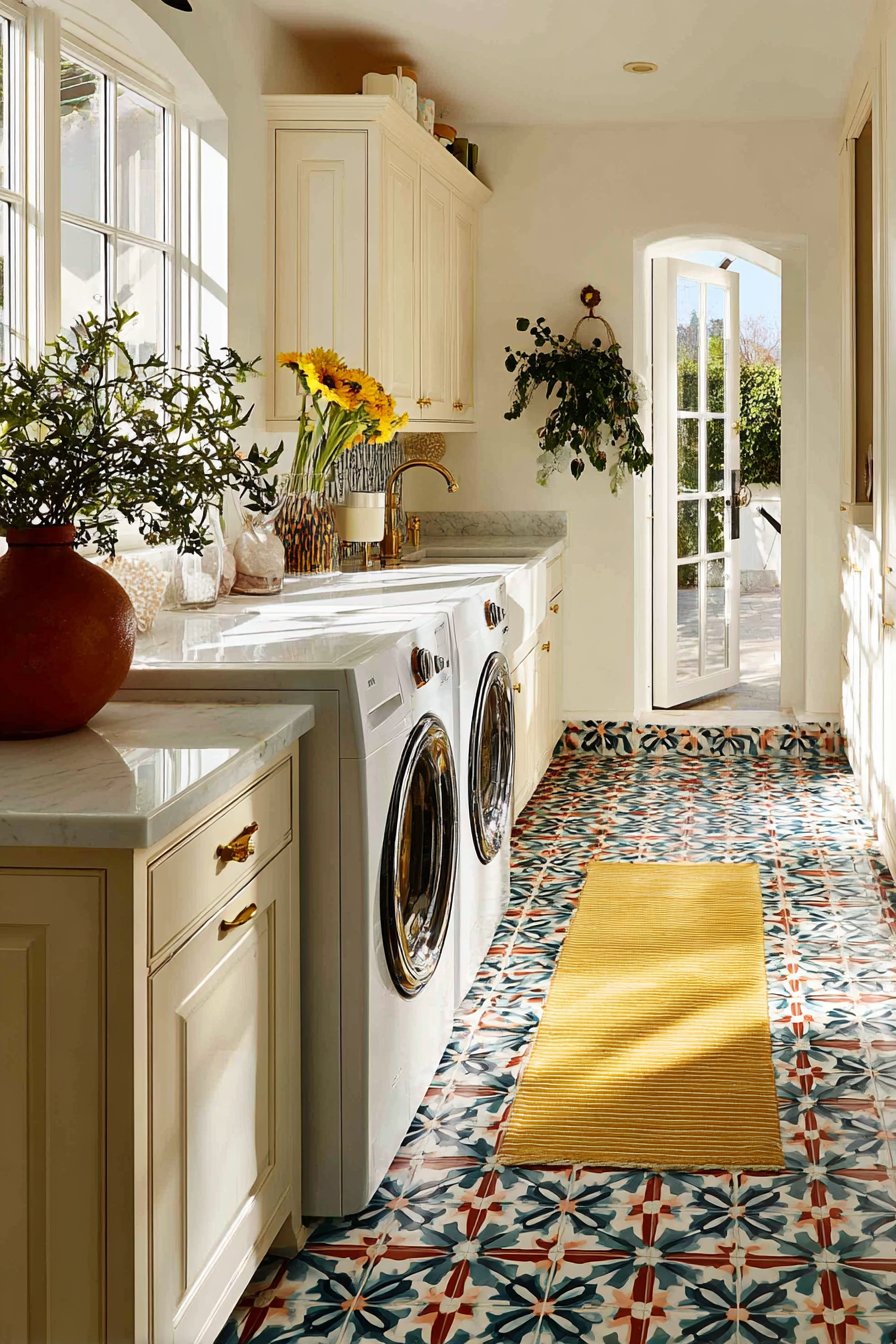
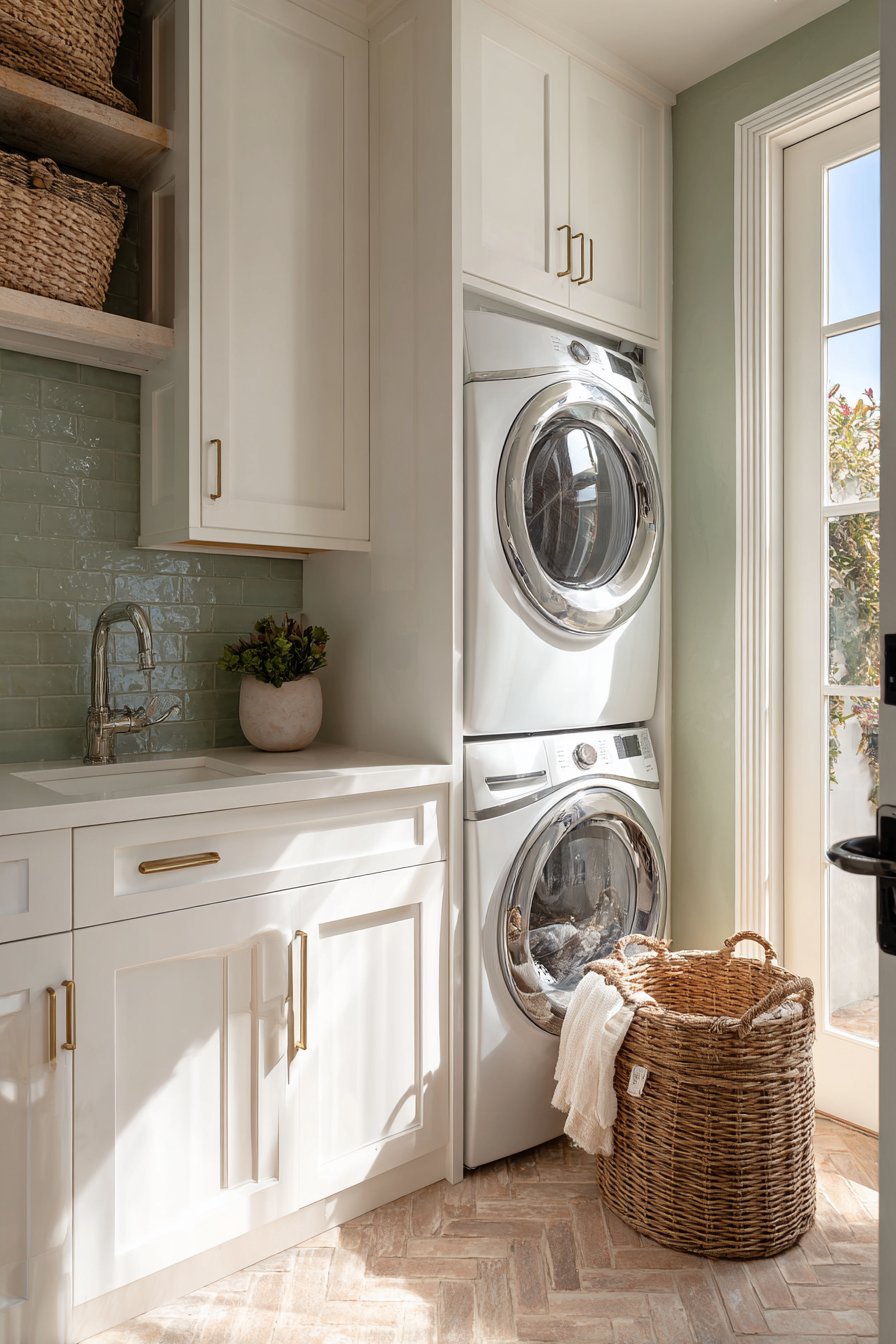
Opt for crisp white, soft gray, pale blue, or warm cream as your primary wall color. These tones create an airy, open atmosphere that feels clean and refreshing. White cabinetry paired with a light wall color creates a seamless, expansive visual effect that tricks the eye into perceiving more space.
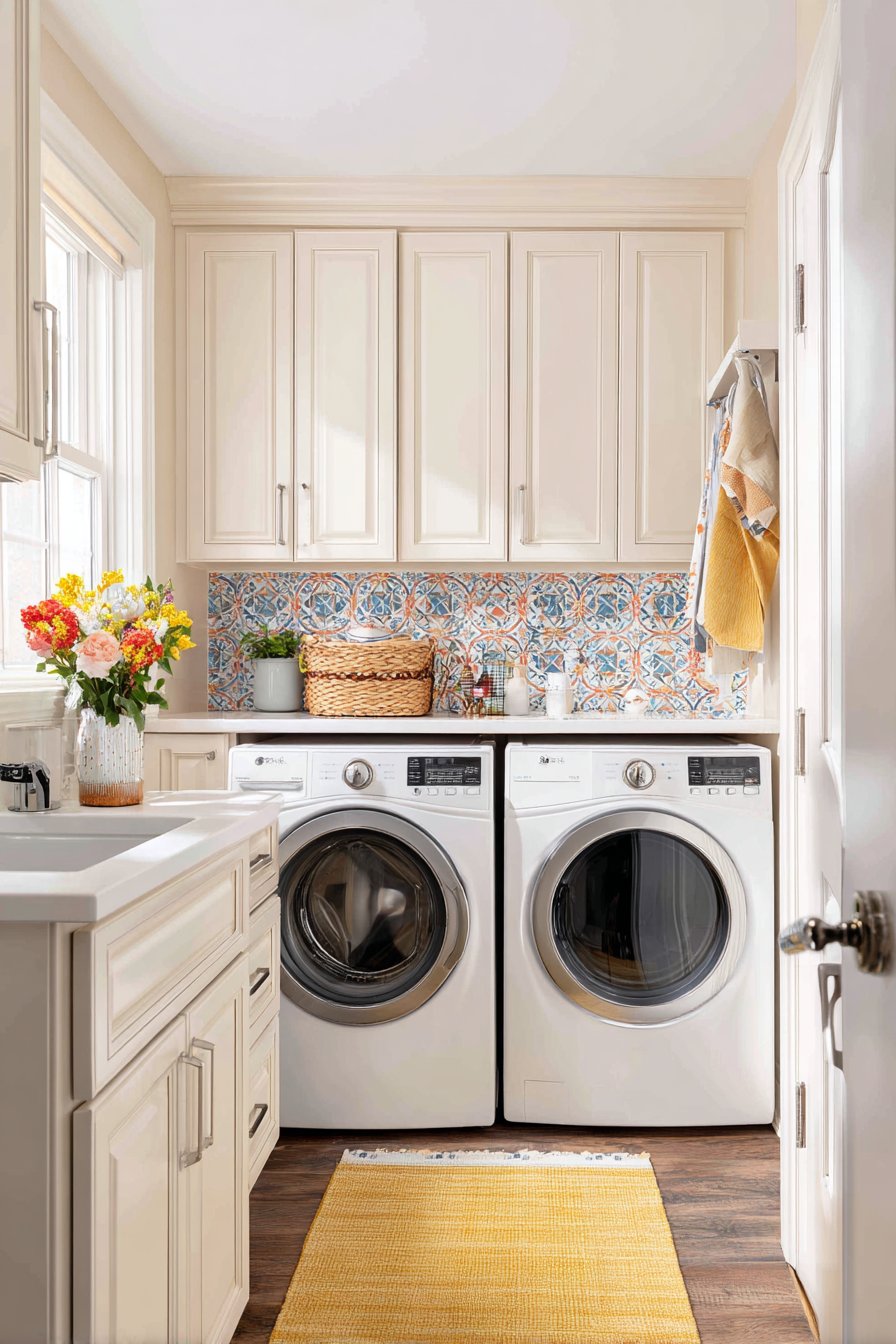
You don’t have to sacrifice personality for brightness. A bold accent wall, colorful tile backsplash, or vibrant laundry accessories can inject life into a light color palette. Consider using patterned tiles on a single wall or a cheerful rug to add visual interest without overwhelming the space. The key is maintaining color balance — let light tones dominate while accents add character.
- Paint walls in shades with LRV (Light Reflectance Value) above 65 for maximum brightness
- Use semi-gloss or satin finishes on walls to improve light reflection
- Choose white or light-toned cabinetry to unify the space visually
- Add one colorful element — a rug, artwork, or painted door — for personality
- Use the same flooring color throughout to avoid visual interruption
- Avoid dark grout in small spaces as it can make the room feel choppy
3. Install a Fold-Down or Wall-Mounted Ironing Board
A traditional ironing board is one of the biggest space wasters in a small laundry room. When standing upright, it blocks pathways. When laid flat, it takes up critical floor space. The solution is simple: go wall-mounted.
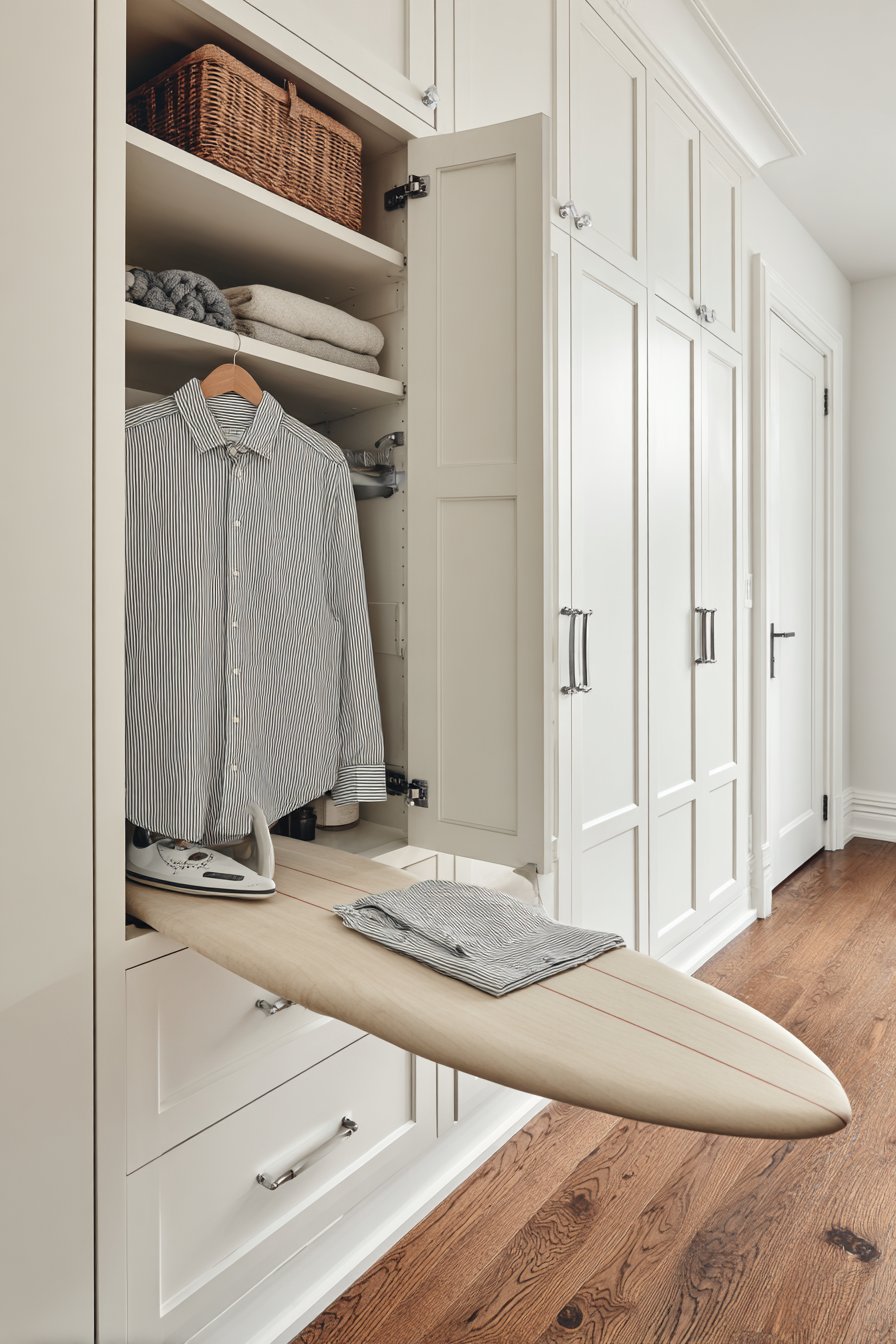
Wall-mounted ironing boards fold completely flat against the wall when not in use, occupying virtually no space. They’re available in cabinet-style enclosures that look like a standard cabinet door, making them completely hidden. When you need to iron, the board pulls down in seconds — and folds away just as quickly when you’re done.
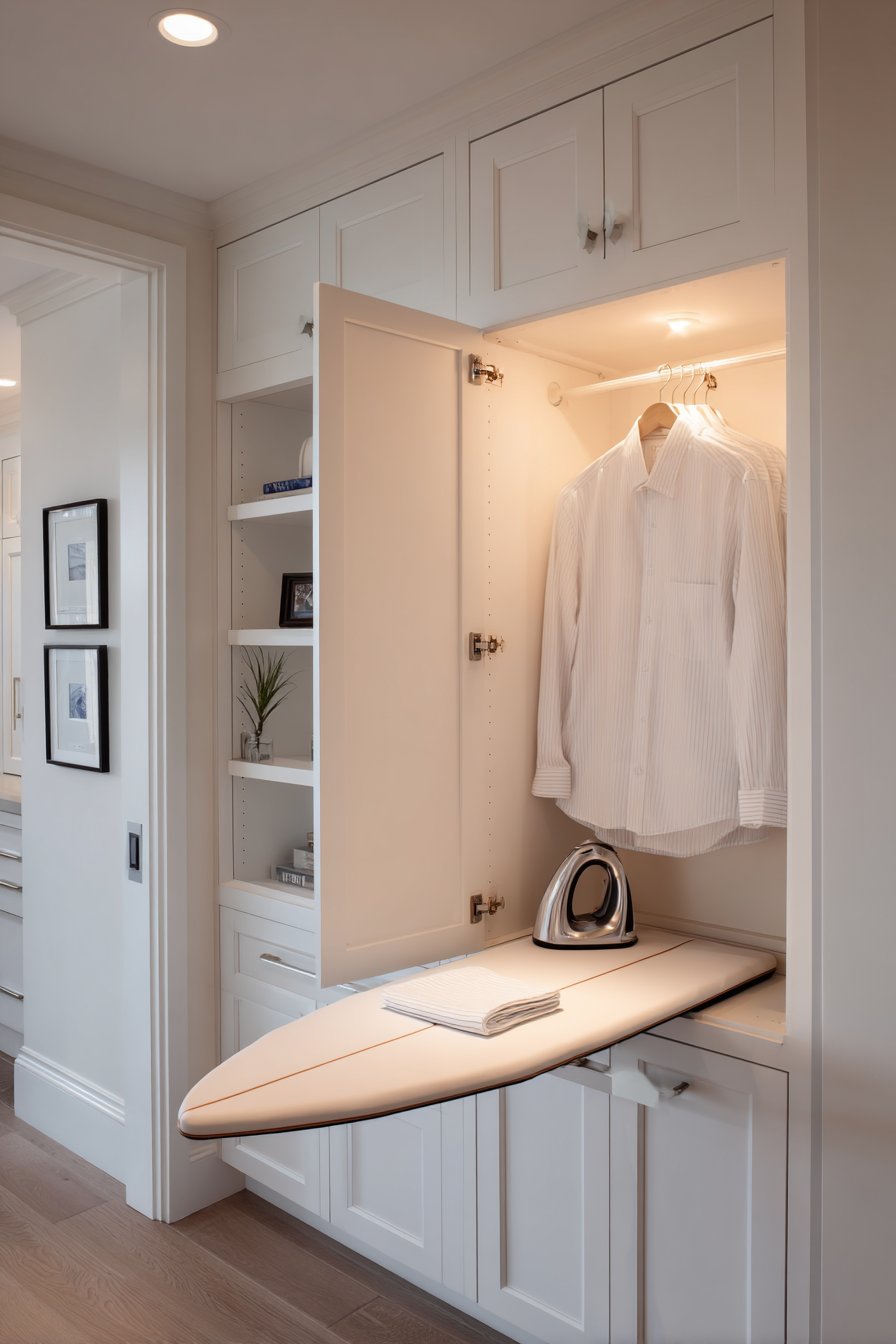
The installation process is straightforward for most homeowners. Position the ironing board at a comfortable working height of around 34–36 inches from the floor. Choose a location near an outlet for easy iron access. Some models even include built-in storage for the iron and cord, making them a complete ironing station in one compact unit.
- Choose a cabinet-style ironing board enclosure to keep it completely hidden
- Install at the correct height — 34 to 36 inches works for most adults
- Ensure mounting location is near a power outlet
- Look for models with integrated iron storage and heat-resistant compartments
- Opt for a full-size board (at least 42 inches long) for comfortable use
- Use the cabinet door exterior as additional decor space with a small chalkboard or hooks
4. Use Stackable or Compact Appliances
Your washer and dryer are the most space-consuming elements in any laundry room. In small spaces, appliance configuration is critical. The layout of your machines directly affects how much room you have for storage, movement, and workflow.
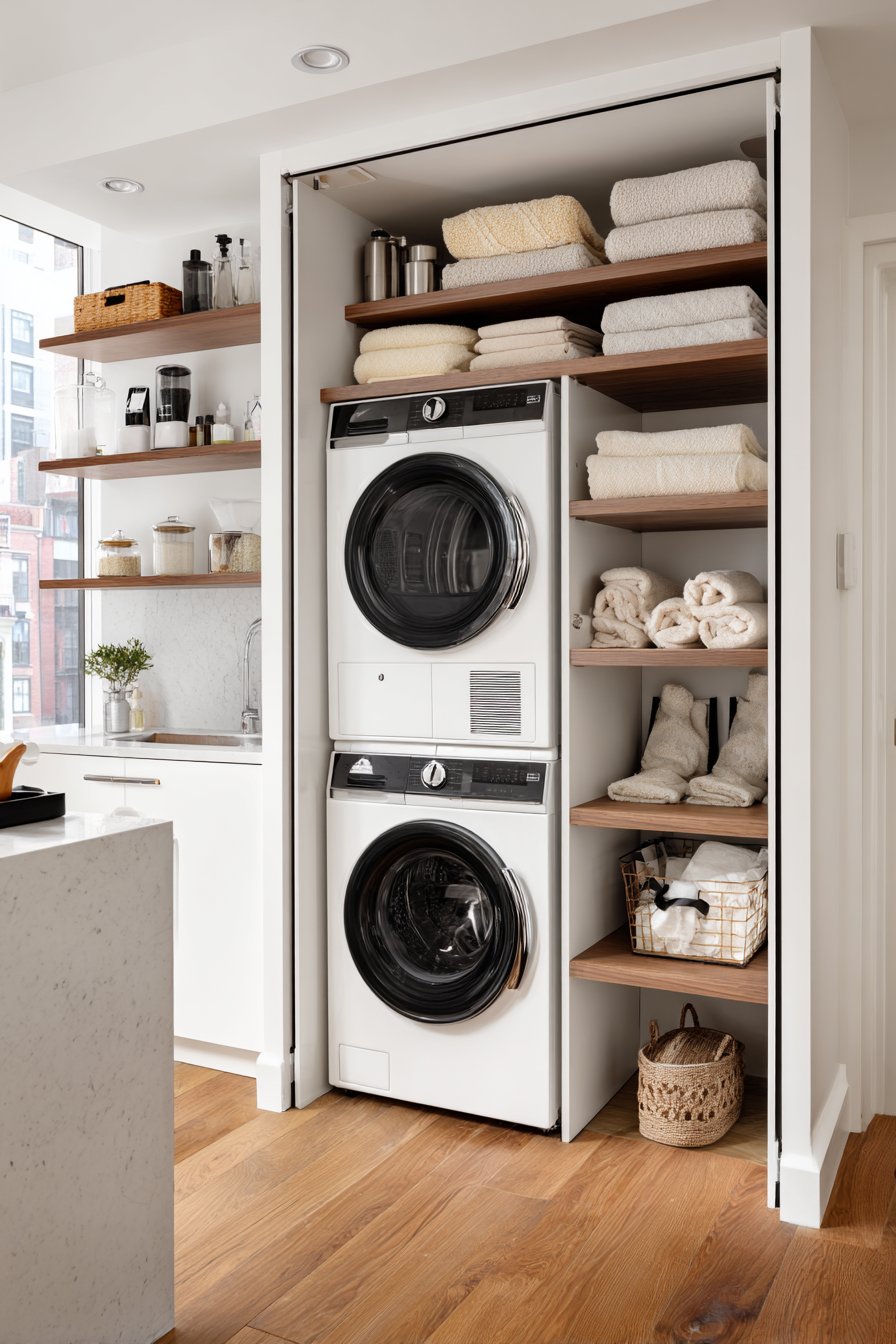
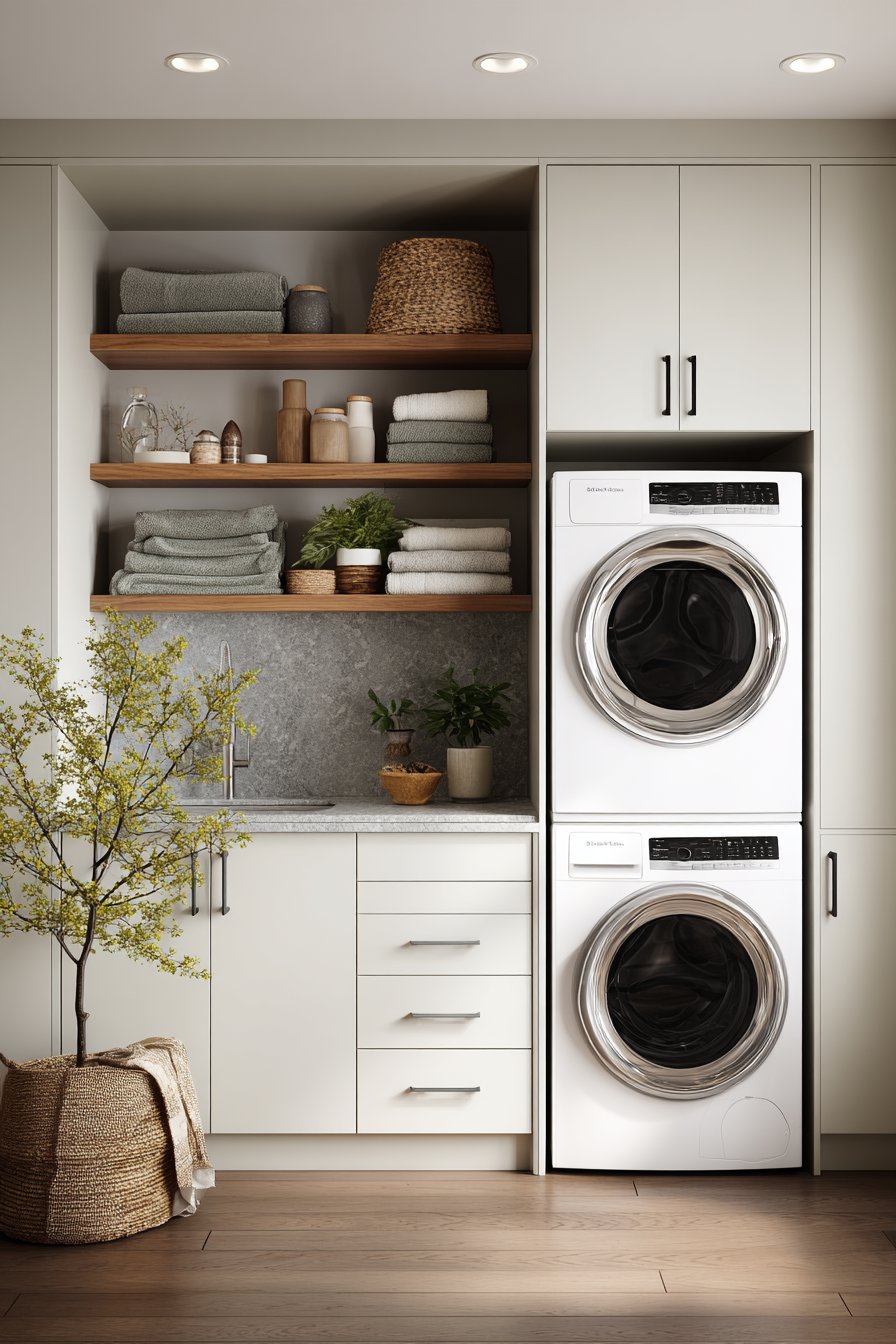
Stacked washer-dryer units are the gold standard for compact laundry rooms. By placing the dryer directly on top of the washer, you cut the floor footprint in half. This single change can free up enough space for a folding counter, additional shelving, or even a small sink. Many modern stacked units are designed specifically for small spaces and offer full-size capacities.
If stacking isn’t possible with your current machines, consider side-by-side compact units (typically 24 inches wide each) instead of full-size 27-inch models. The three-inch difference per machine may seem minimal, but across two machines it saves six inches of linear space — enough for a narrow shelf or pull-out storage tower. Alternatively, washer-dryer combo units offer all-in-one convenience in the footprint of a single machine.
- Stack your washer and dryer to cut floor footprint by up to 50%
- Choose compact 24-inch-wide machines if full stacking isn’t possible
- Consider all-in-one washer-dryer combo units for the smallest spaces
- Use the space above a top-loading washer as a folding surface when closed
- Add a stacking kit for safety and stability when stacking appliances
- Measure your space precisely — allow 6 inches behind machines for ventilation and hoses
5. Add a Folding Counter or Pull-Out Surface
One of the most frustrating aspects of small laundry rooms is the lack of a dedicated folding surface. Without one, clean laundry ends up piled on beds, sofas, or dining tables — defeating the purpose of an organized laundry space. A smart countertop solution solves this entirely.
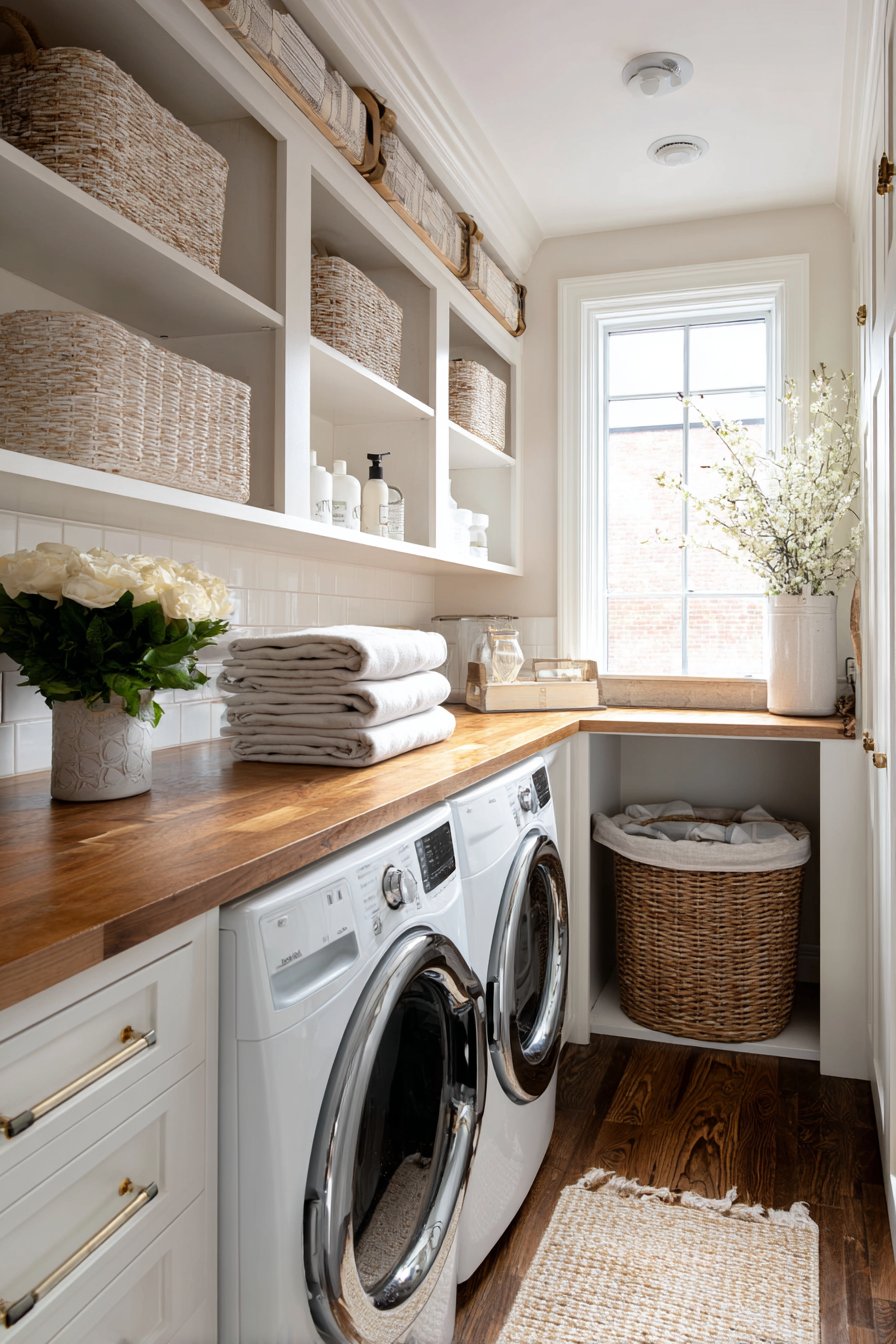
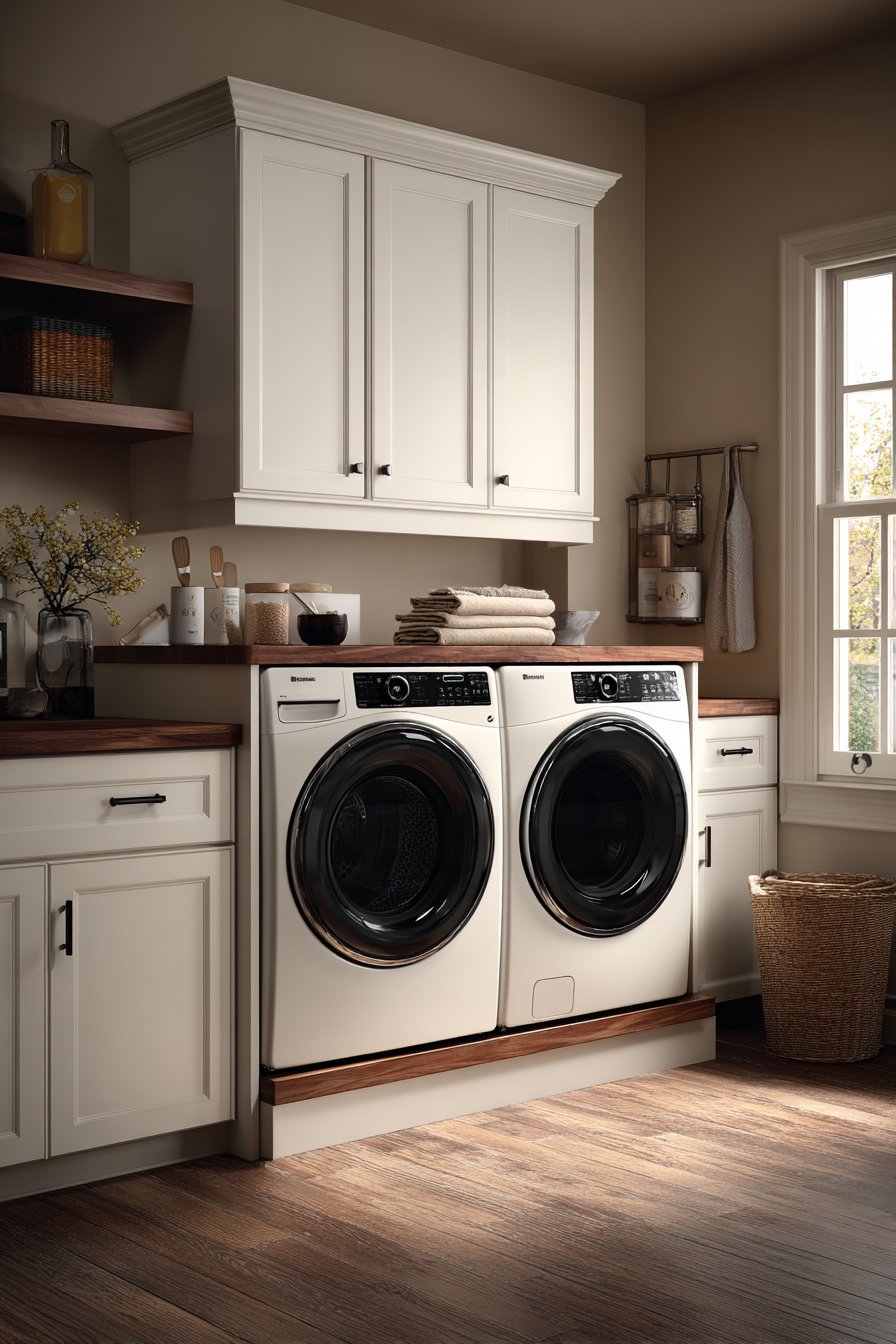
Install a custom countertop directly above front-loading washers and dryers. This is one of the most efficient uses of space in a compact laundry room. A countertop spanning both machines creates a wide, flat work surface without consuming any additional floor space. Choose a durable, moisture-resistant material like quartz, butcher block, or laminate for longevity.
If you prefer flexibility, a pull-out or fold-down table is an excellent alternative. These surfaces extend when needed and tuck away completely when not in use. Some laundry room cabinets come with integrated pull-out shelves specifically designed for folding. Wall-mounted drop-leaf tables are another option — they can support the weight of a full laundry load while folding to just 3–4 inches deep when closed.
- Build a countertop over front-loading machines using a depth of 24–25 inches
- Use moisture-resistant materials to withstand the humid laundry environment
- Install a pull-out shelf inside a cabinet for a hidden folding surface
- Consider a wall-mounted drop-leaf table for flexible folding space
- Add a rubber mat or silicone padding on the counter surface to prevent items from sliding
- Keep a small folding caddy under the counter to store freshly folded items
6. Optimize Door and Corner Storage
In small rooms, every square inch counts — and that includes the areas most people forget entirely. Door storage and corner solutions can add significant storage capacity without touching your main wall or floor space. These often-overlooked zones are perfect for frequently used items.
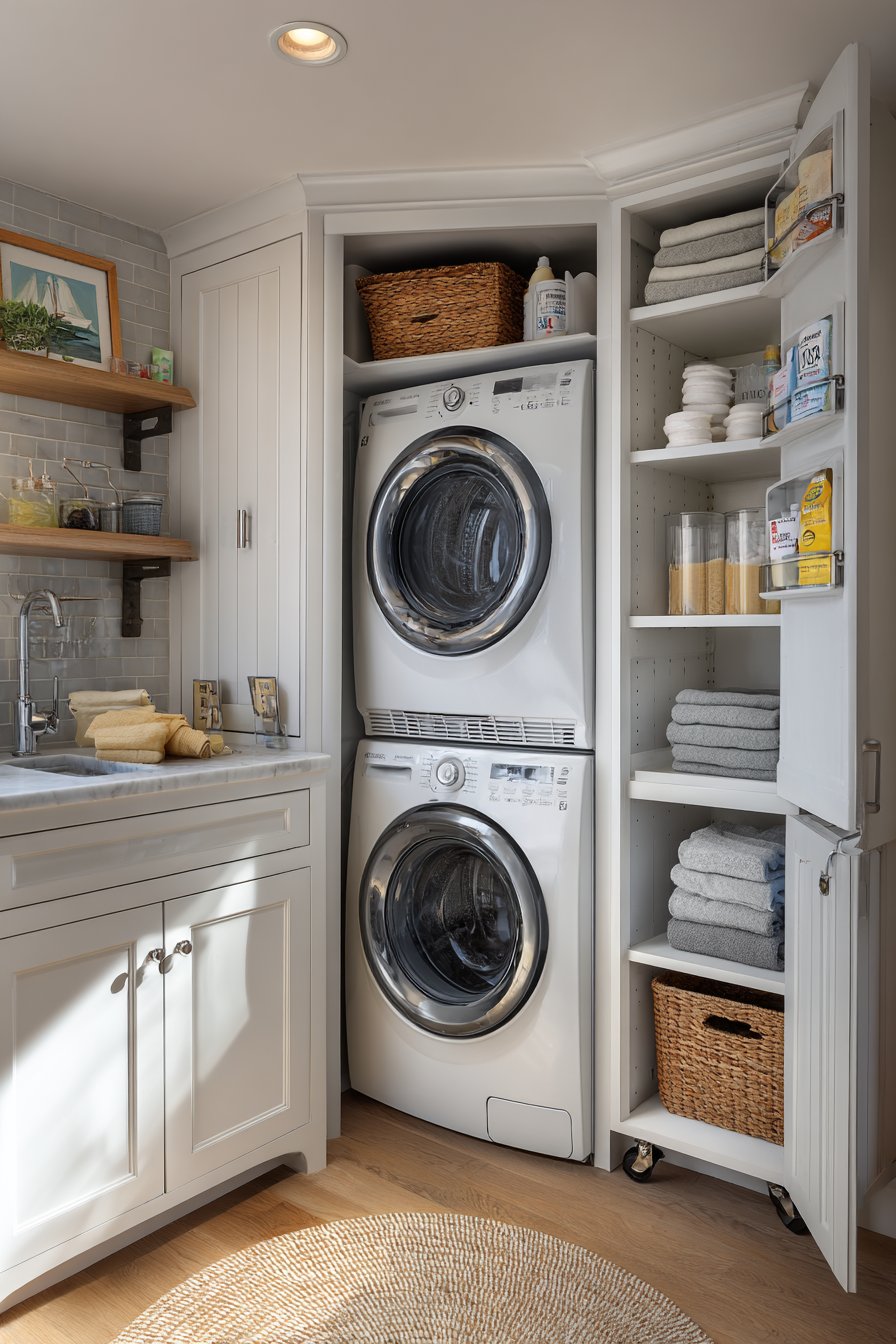
The back of your laundry room door is prime real estate for storage. An over-the-door organizer can hold detergent pods, dryer sheets, lint rollers, and stain removers — clearing your shelves for larger items. Choose an organizer with clear pockets so you can see contents at a glance. Alternatively, mount a small magnetic board or corkboard on the door interior for notes, schedules, or pinned receipts.
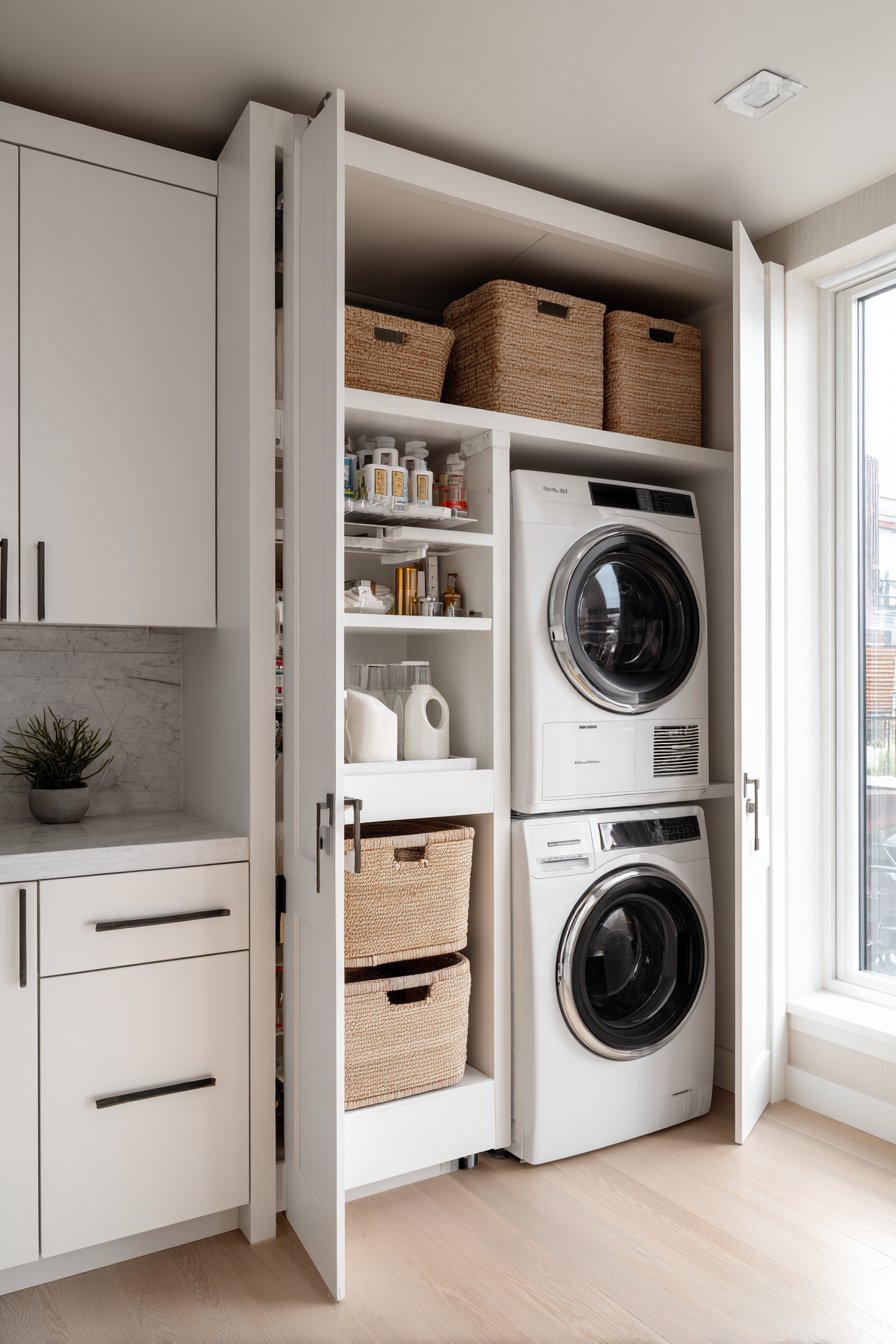
Corners present a different kind of opportunity. Traditional shelving wastes corner space because shelves stop short at the wall. Corner shelving units or lazy Susans are specifically designed to use these awkward angles efficiently. A corner shelf tower can hold multiple laundry baskets vertically, keeping them organized and off the main floor. Even a simple triangular corner shelf can hold a plant, timer, or small basket to make the corner purposeful.
- Use an over-the-door organizer with clear pockets for daily laundry supplies
- Mount hooks on the door interior for hanging garment bags or lint brushes
- Install a corner shelf unit to maximize otherwise unused angled space
- Use a rotating lazy Susan in corner cabinets for easy access to all items
- Add a small tension rod inside a corner cabinet for hanging spray bottles
- Place a slim rolling cart in the corner beside the washer for additional flexible storage
7. Improve Lighting for Functionality and Style
Lighting is often the last thing homeowners consider in a laundry room makeover — but it’s one of the most impactful. Poor lighting makes the space feel smaller, dingier, and harder to work in. Good lighting does the exact opposite, transforming the room’s atmosphere while improving practical usability.
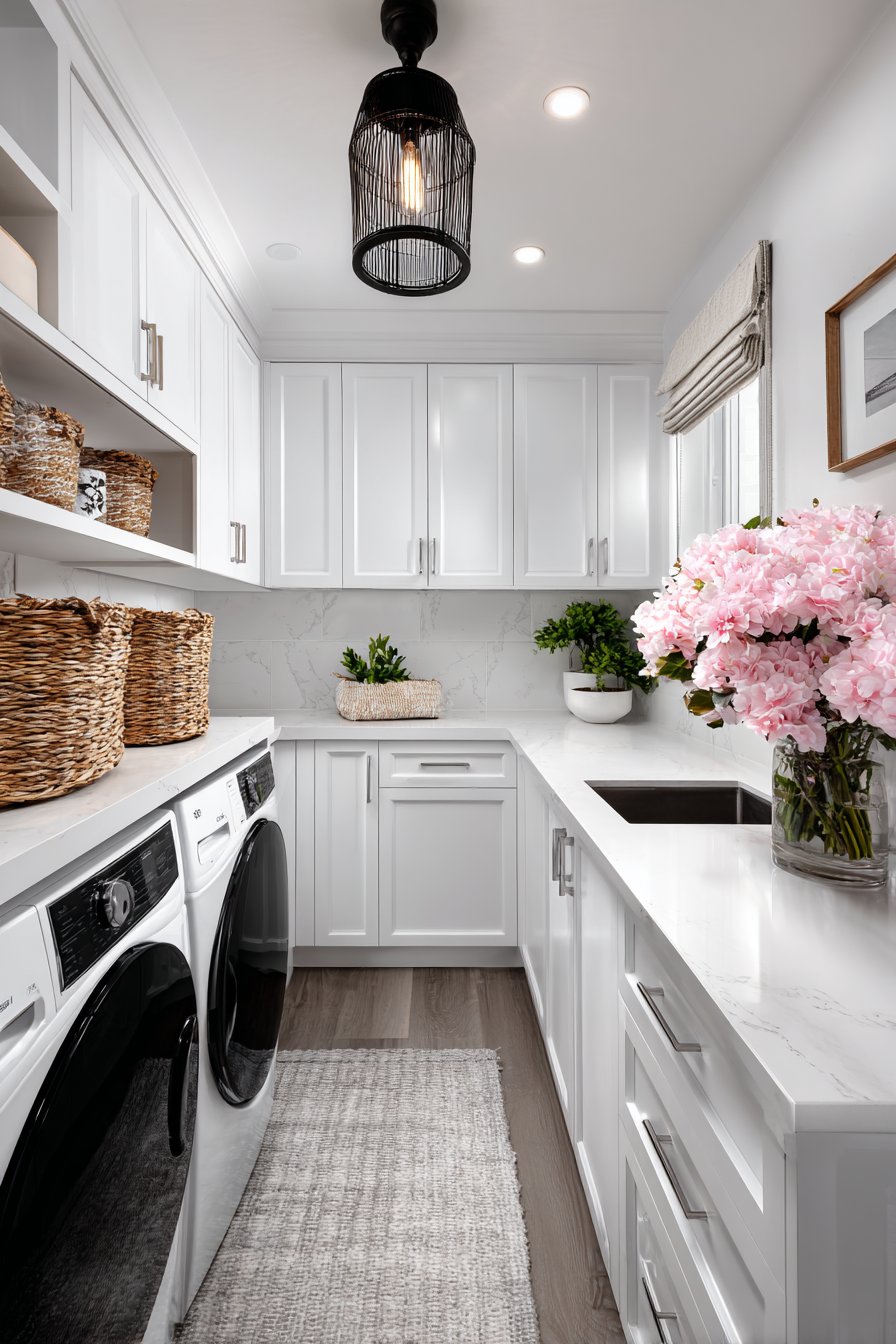
Start with overhead lighting. Many laundry rooms rely on a single ceiling fixture that casts uneven shadows. Replace it with recessed LED lighting for even, consistent illumination throughout the space. LED lights consume less energy, last longer, and produce bright, natural-toned light that’s ideal for checking whether stains have been fully removed — something dimmer yellow bulbs can’t do effectively.
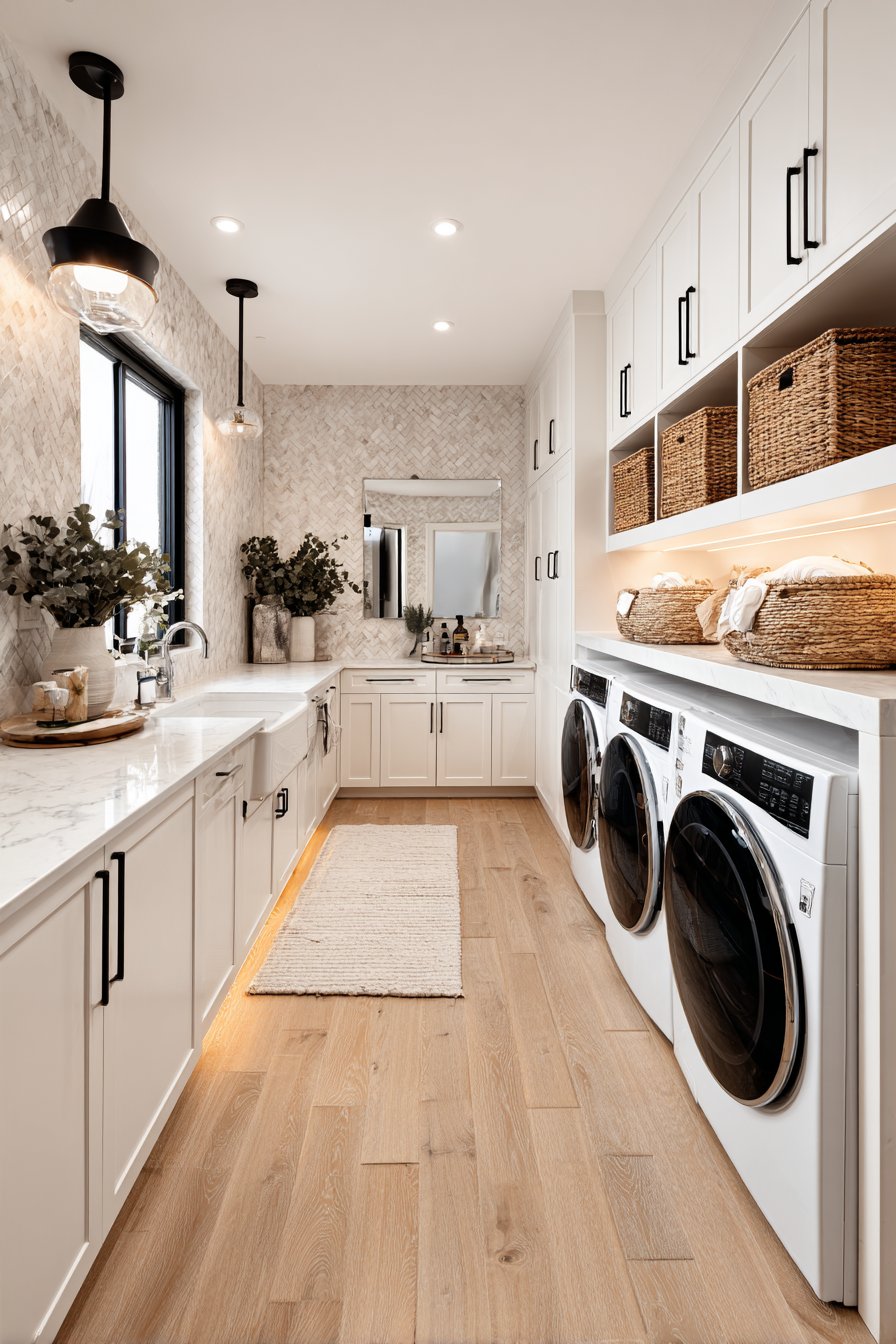
Layer your lighting for maximum impact. Under-cabinet LED strip lights illuminate your countertop workspace beautifully, making folding and sorting much easier. A small decorative pendant light or sconce can add style and personality if your ceiling height allows. Consider lighting with a color temperature of 4000–5000K for a clean, daylight-quality appearance that makes the whole room feel fresher and larger.
- Replace single overhead fixtures with recessed LED downlights for even coverage
- Choose bulbs with a color temperature of 4000K for clean, natural-looking light
- Add LED strip lights under shelves and cabinets to illuminate work surfaces
- Use a dimmer switch to adjust lighting mood for different tasks
- Consider a motion-sensor light if the laundry room is inside a closet or alcove
- Use mirrors strategically to reflect light and visually expand the room
Conclusion
A small laundry room makeover doesn’t require a massive budget or a complete renovation. By implementing these seven smart strategies — from maximizing vertical space and choosing bright colors to upgrading your lighting and optimizing hidden storage zones — you can create a laundry room that is both highly functional and genuinely enjoyable to use.
The best approach is to start with the changes that will have the greatest impact for your specific space. Whether that means stacking your appliances, installing a fold-down ironing board, or simply painting the walls a brighter color, each step moves you closer to a laundry room that works harder and looks better. Don’t be afraid to experiment — small spaces reward creative, intentional design more than almost any other room in the home.
