


Creating a tan and green living room brings nature’s most soothing palette into your home. This timeless color combination offers endless design possibilities. The pairing creates spaces that feel both grounded and refreshing.
Tan provides warmth and neutrality that make any room feel welcoming. Green adds vitality and connection to the natural world. Together, these colors work harmoniously across multiple design styles. From minimalist Scandinavian to maximalist bohemian, this palette adapts beautifully.
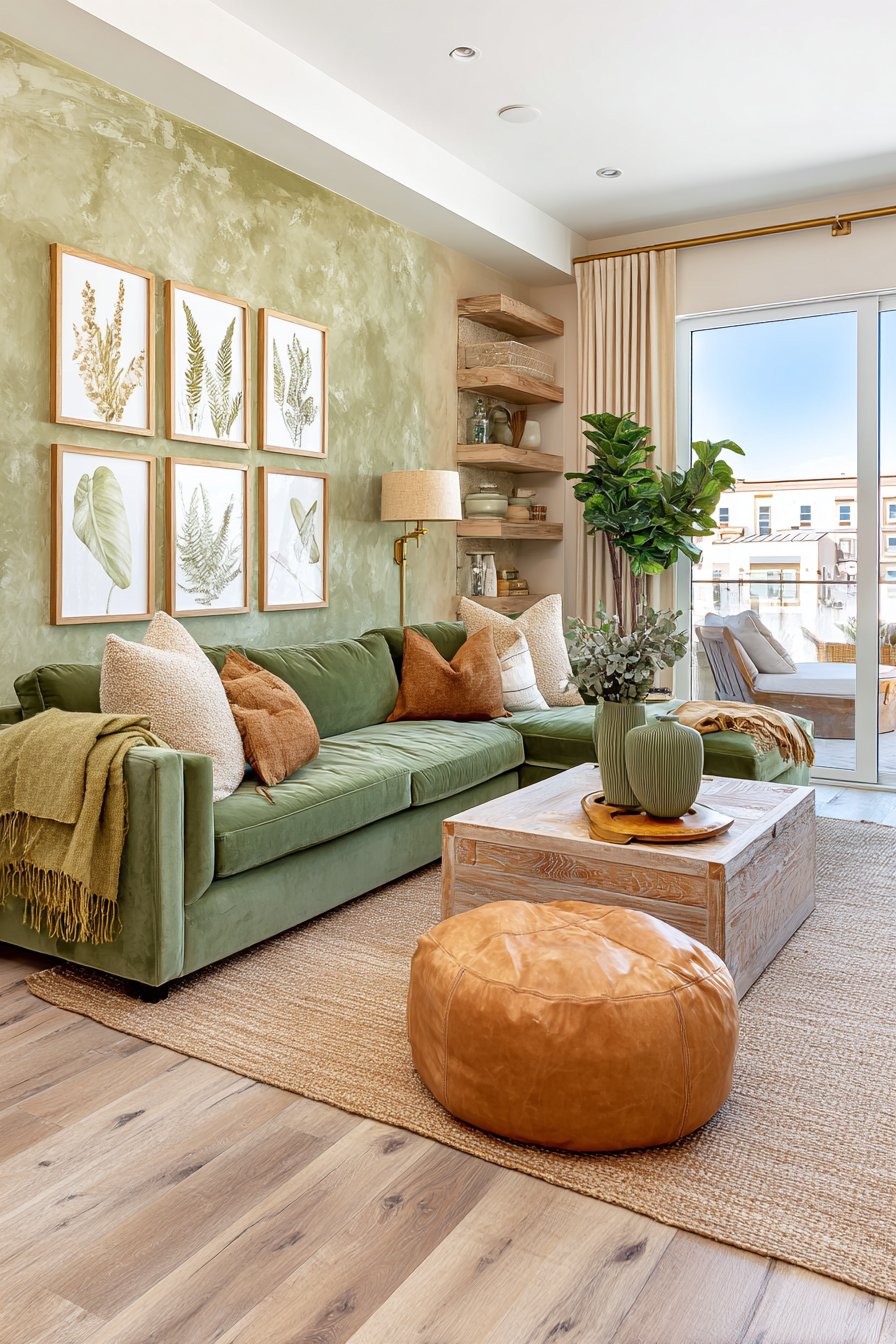
The following designs showcase twenty distinct approaches to tan and green living rooms. Each concept demonstrates unique material choices, furniture arrangements, and styling techniques. These ideas will inspire your next decorating project regardless of your space size or design preference.
1. Deep Sage Velvet Serenity
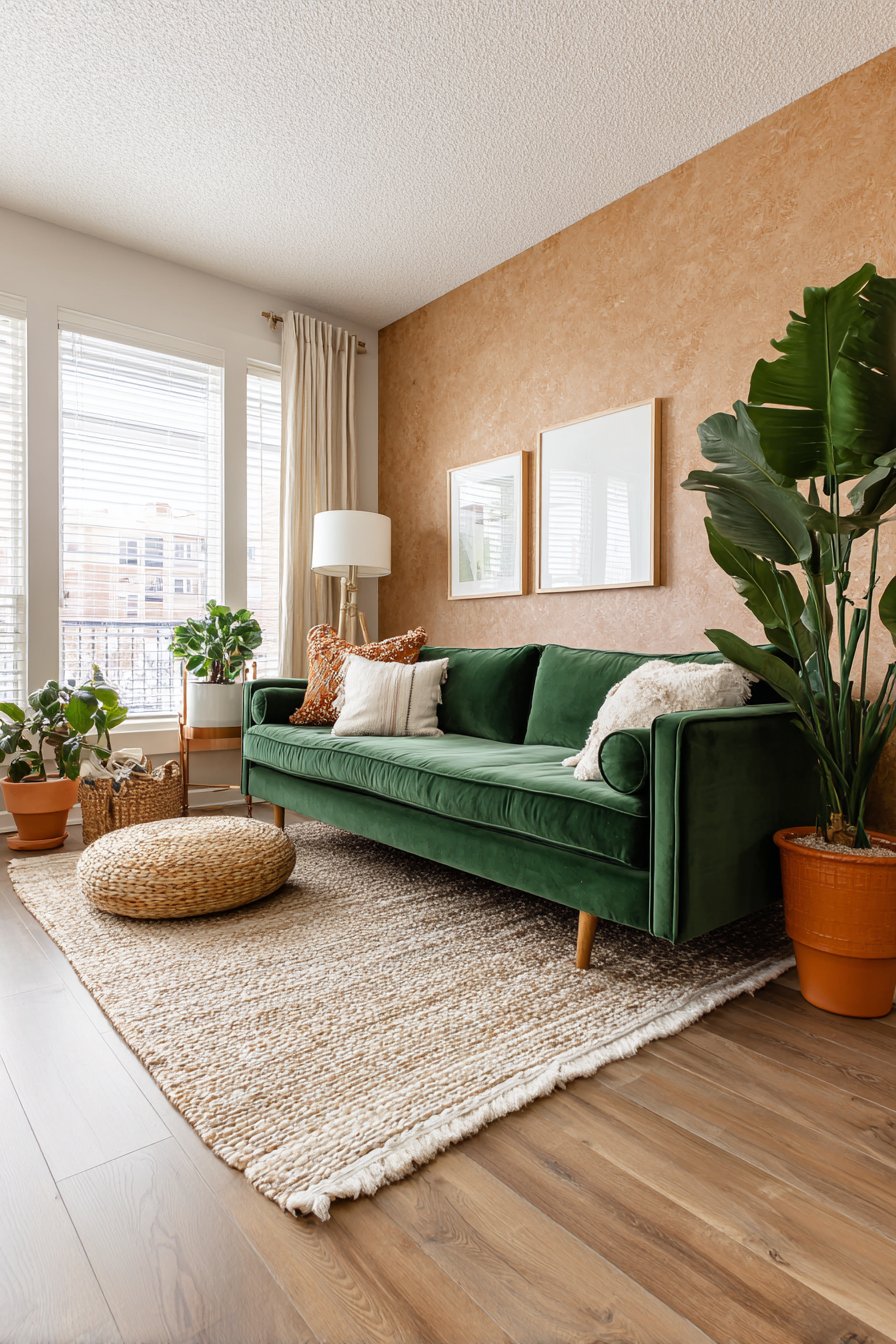
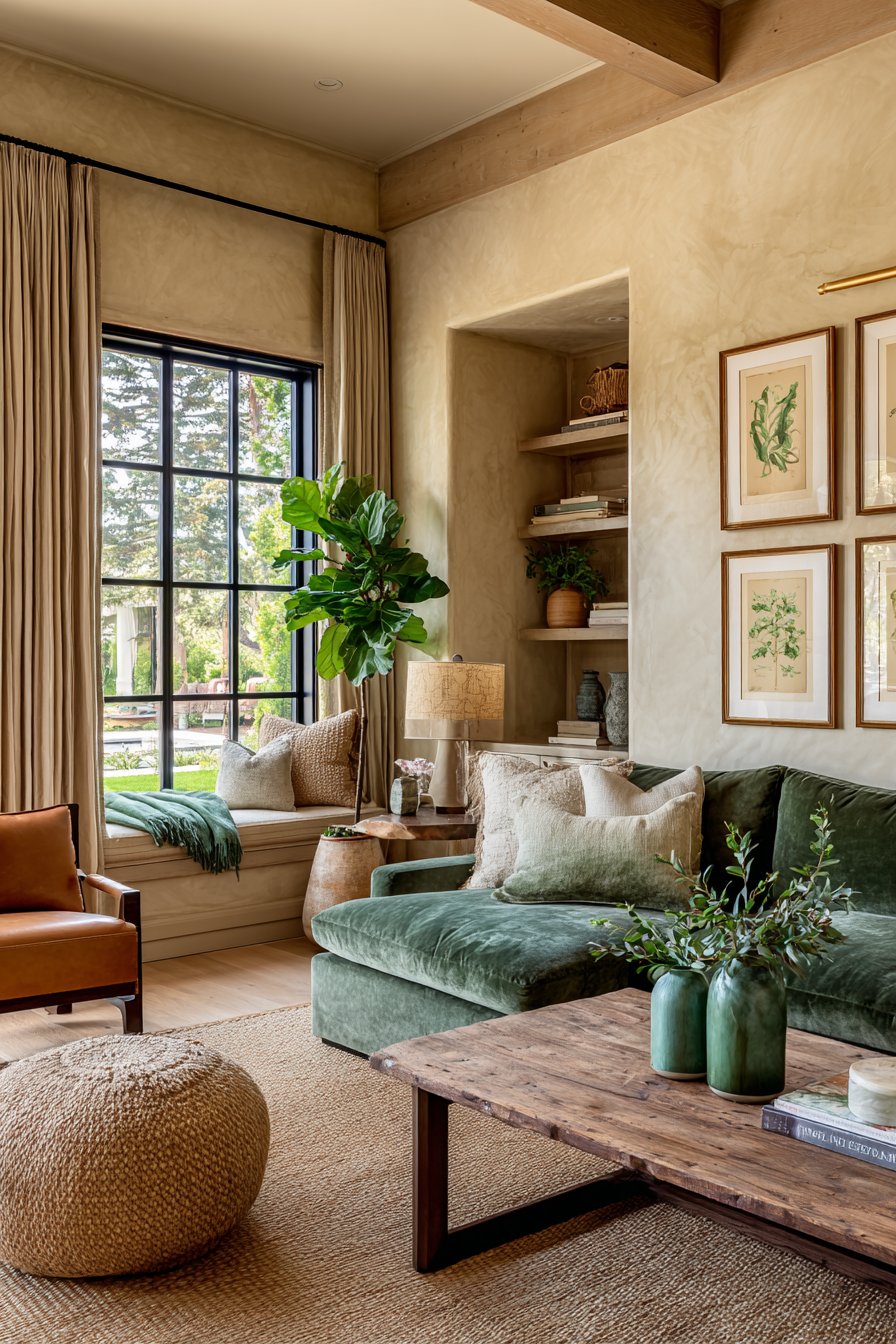
A deep sage green velvet sofa commands attention as the centerpiece of this serene living space. The luxurious fabric catches light beautifully throughout the day. Positioned against a warm tan accent wall, the contrast creates visual interest without overwhelming the senses.
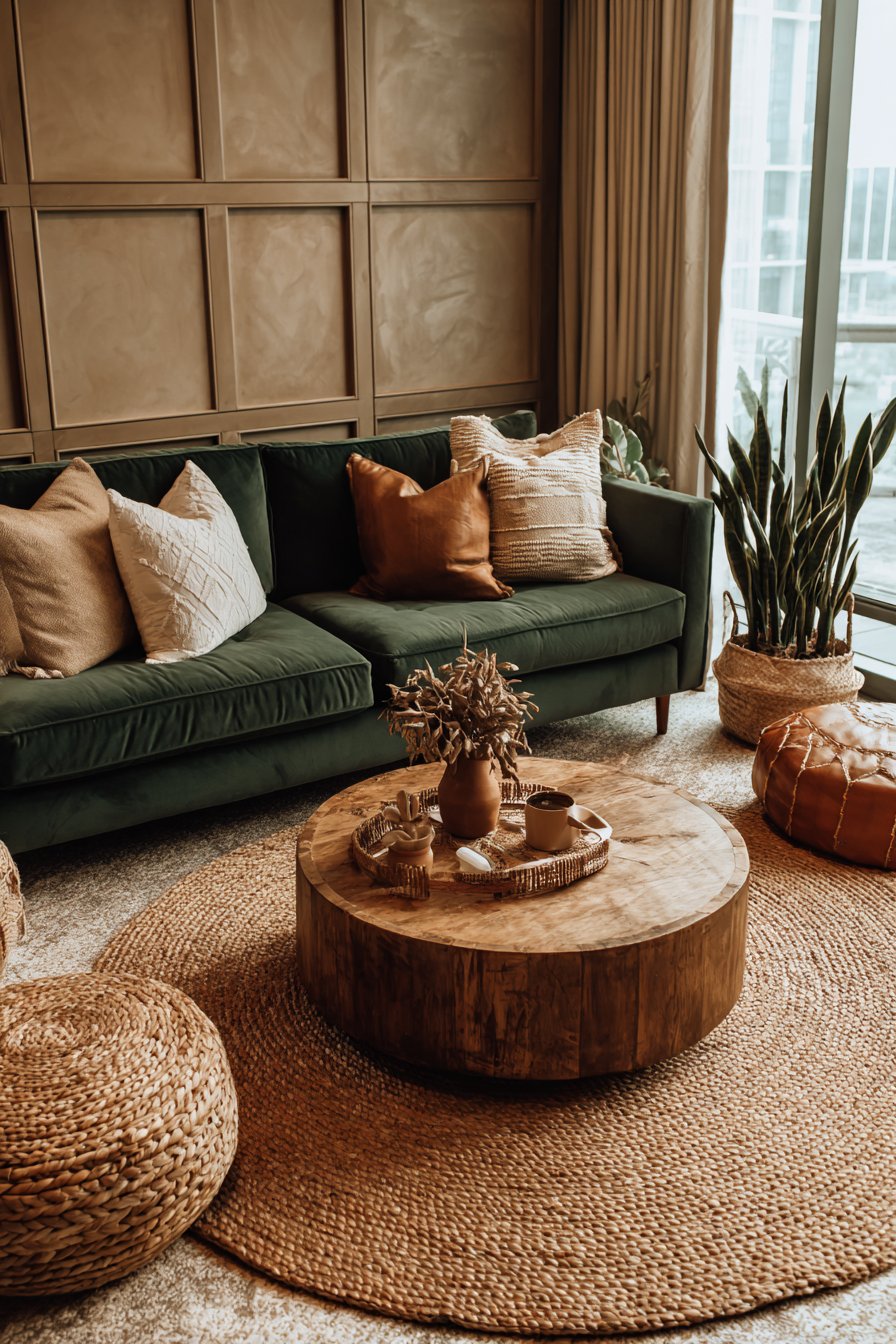
Natural linen curtains in sandy tan tones frame large windows perfectly. These window treatments allow soft diffused daylight to illuminate the entire space. The gentle filtering creates an ever-changing play of light and shadow. A jute area rug anchors the seating area with organic texture underfoot.
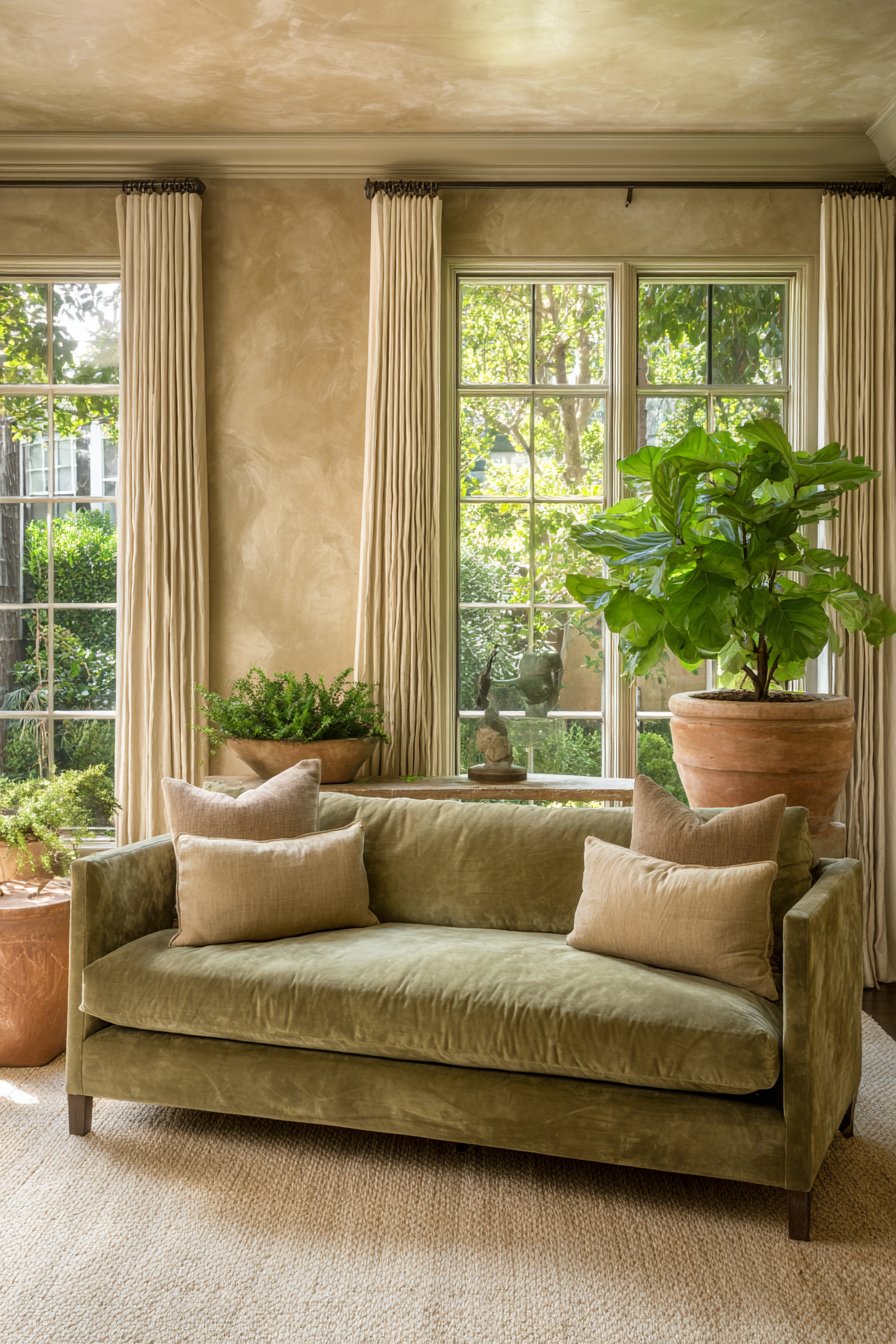
Living greenery adds another dimension to this design. Potted fiddle leaf fig and snake plants introduce varied green accents naturally. Terracotta planters complement the warm tan palette while adding earthy richness. Tan leather throw pillows create layered warmth across the velvet sofa.
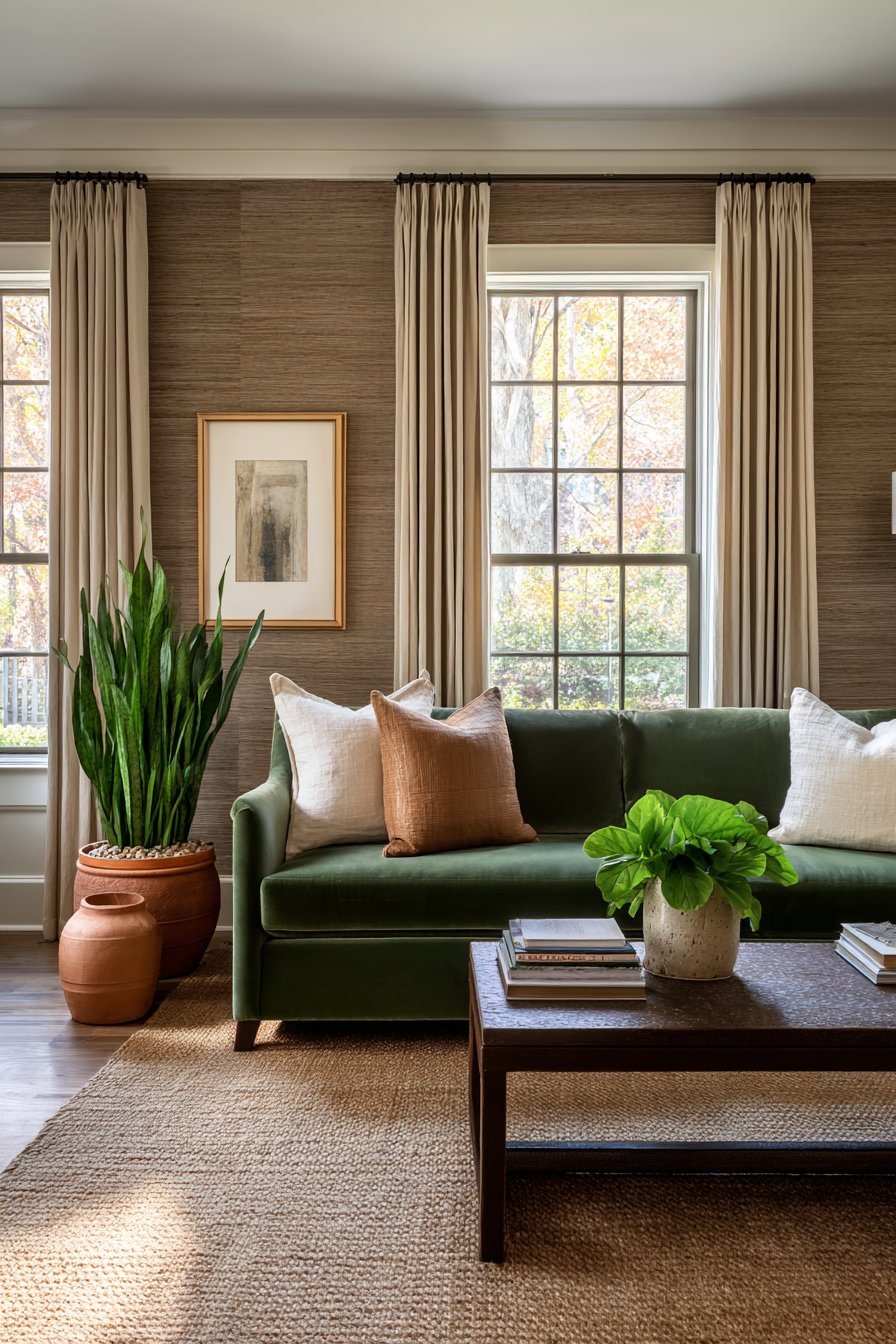
The textures in this room work together harmoniously. Smooth velvet contrasts with rough jute beautifully. Natural linen adds softness while leather introduces subtle sheen. This thoughtful layering prevents the space from feeling flat or one-dimensional.
Key Design Tips:
- Choose velvet upholstery in deep sage for luxurious texture and rich color
- Layer multiple natural materials like jute, linen, and leather for depth
- Position furniture against contrasting wall colors to create focal points
- Add living plants in terracotta planters for organic green accents
- Use sheer curtains to maximize natural light while maintaining privacy
2. Modern Leather and Forest Green Sophistication
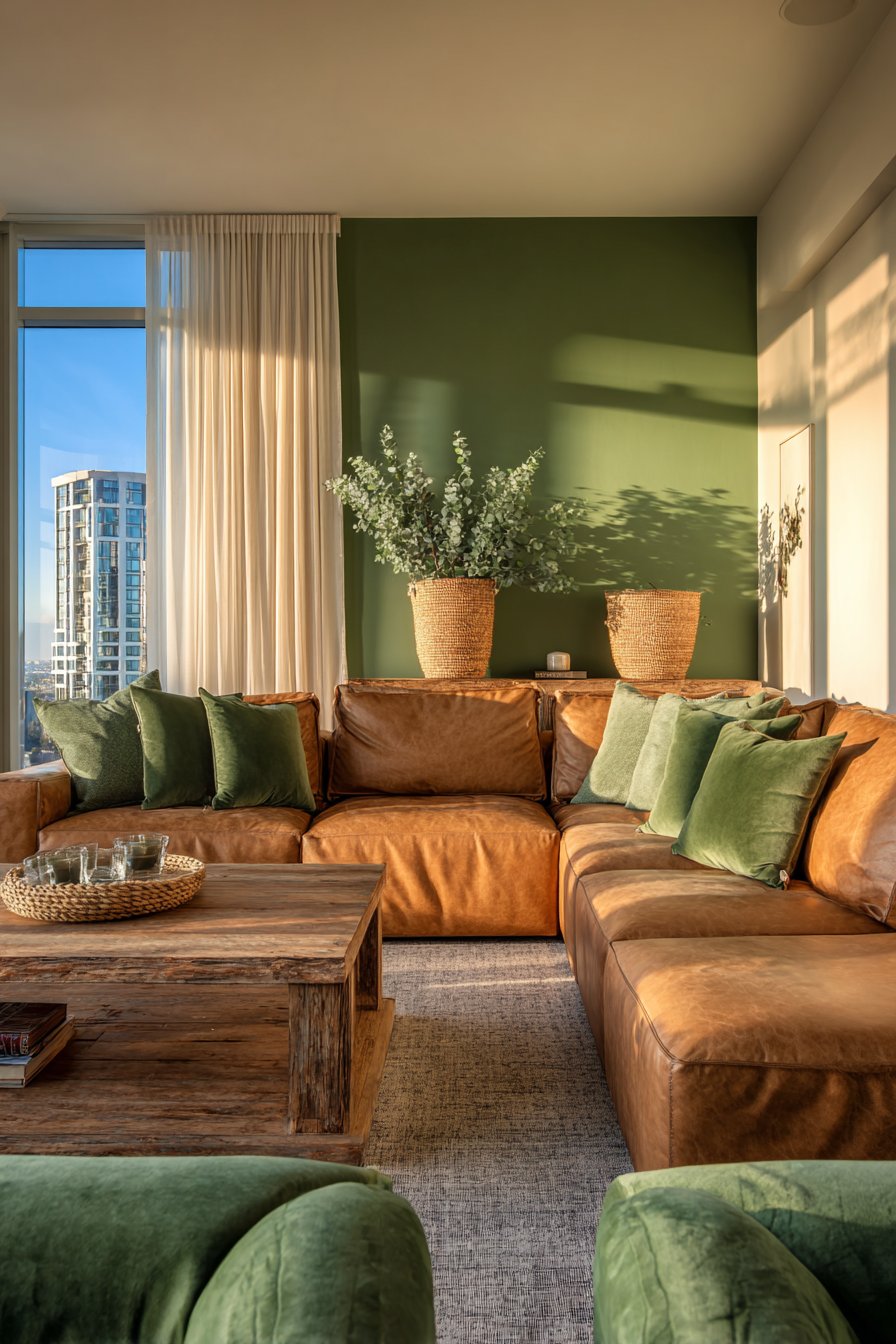
This modern living room showcases a tan leather sectional sofa that defines the seating area. The leather’s natural patina adds character and warmth. Forest green velvet accent chairs positioned around a natural wood coffee table create a conversation zone.
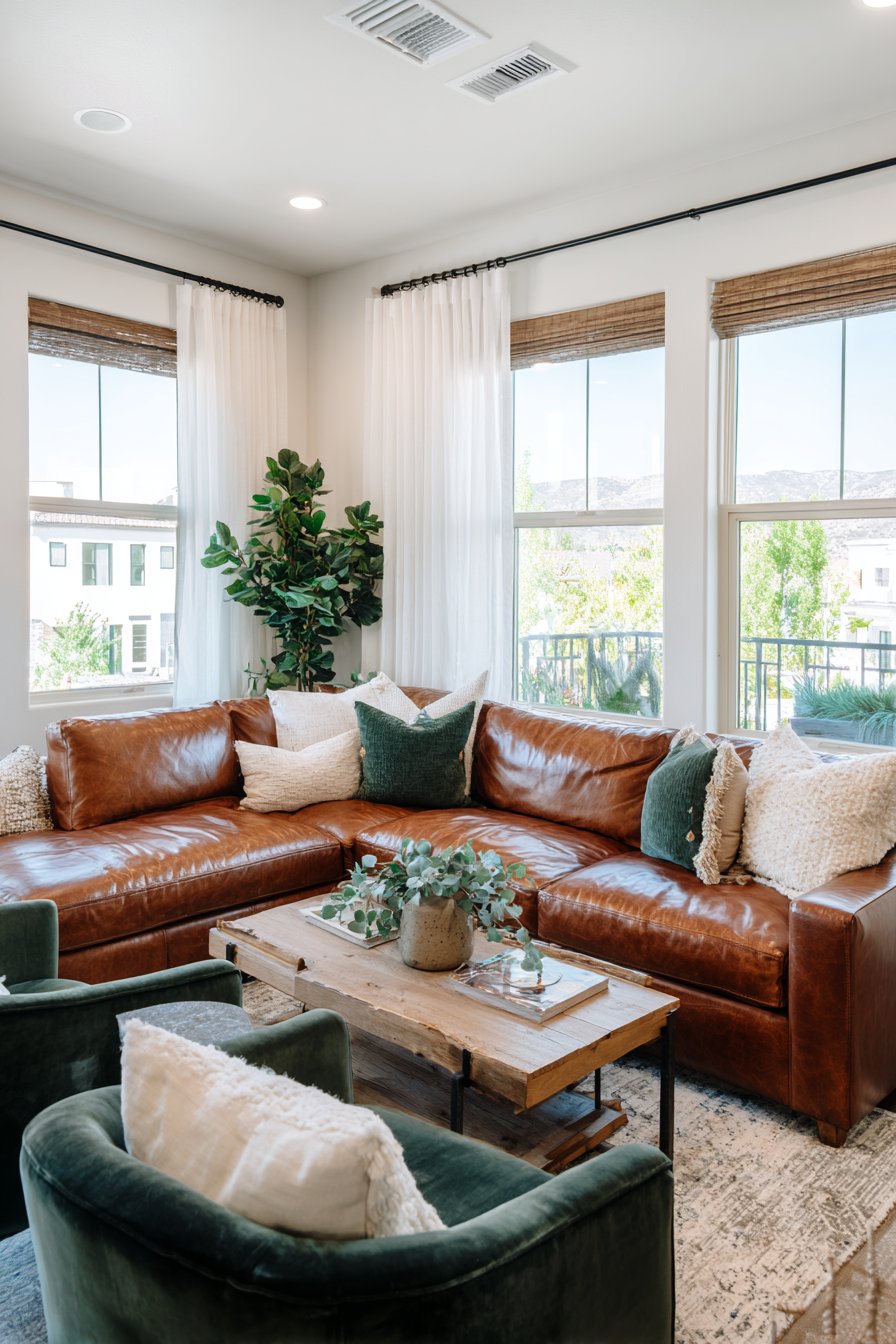
The walls feature warm beige paint as the foundation. One feature wall in deep olive green provides dramatic depth. This strategic color placement draws the eye and creates architectural interest. Eucalyptus branches in ceramic vases add natural green elements with wonderful fragrance.
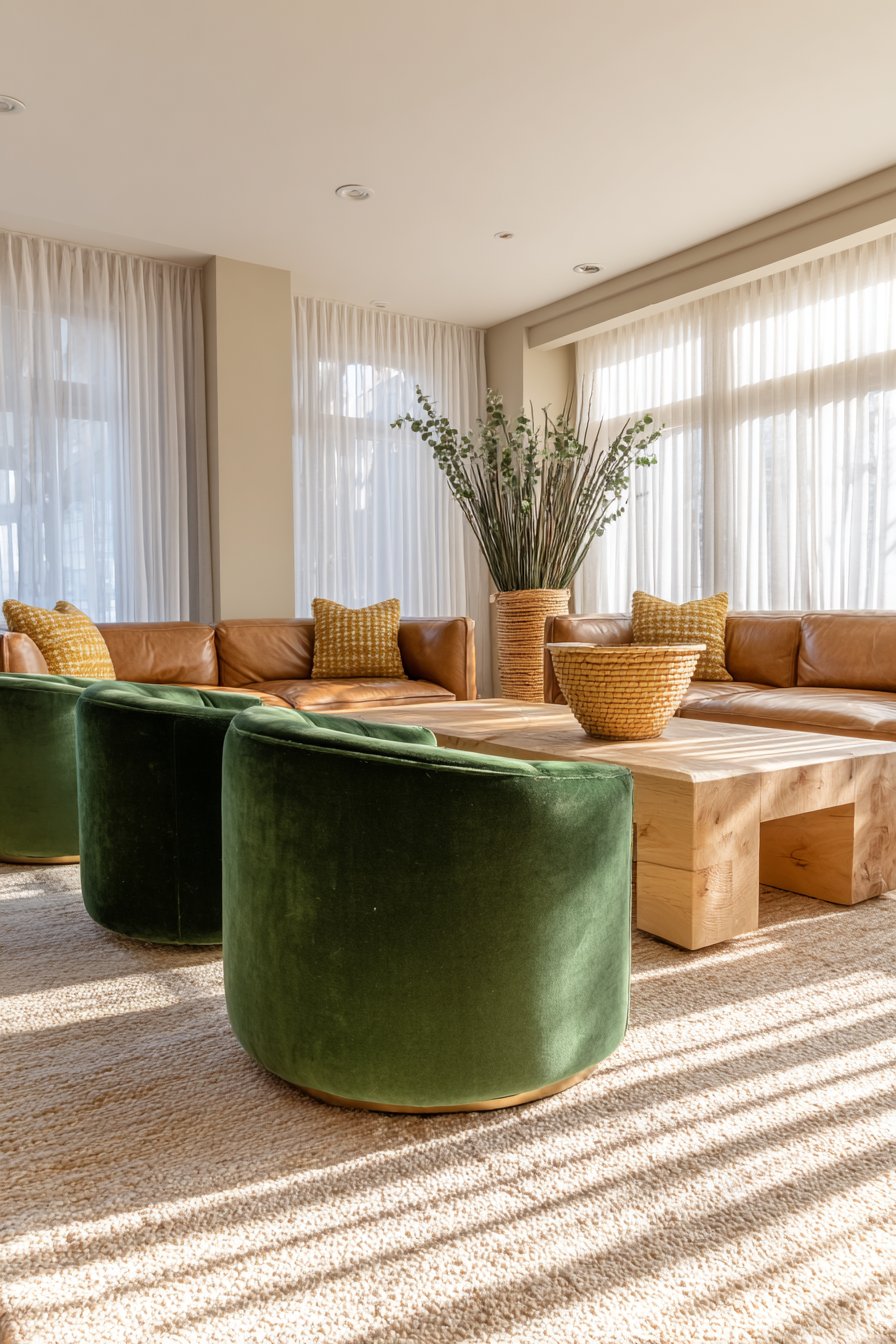
Woven tan baskets serve dual purposes in this design. They provide practical storage while contributing to the overall aesthetic. The natural fiber texture complements the leather sectional beautifully. Golden hour sunlight streams through sheer curtains creating magical lighting conditions.
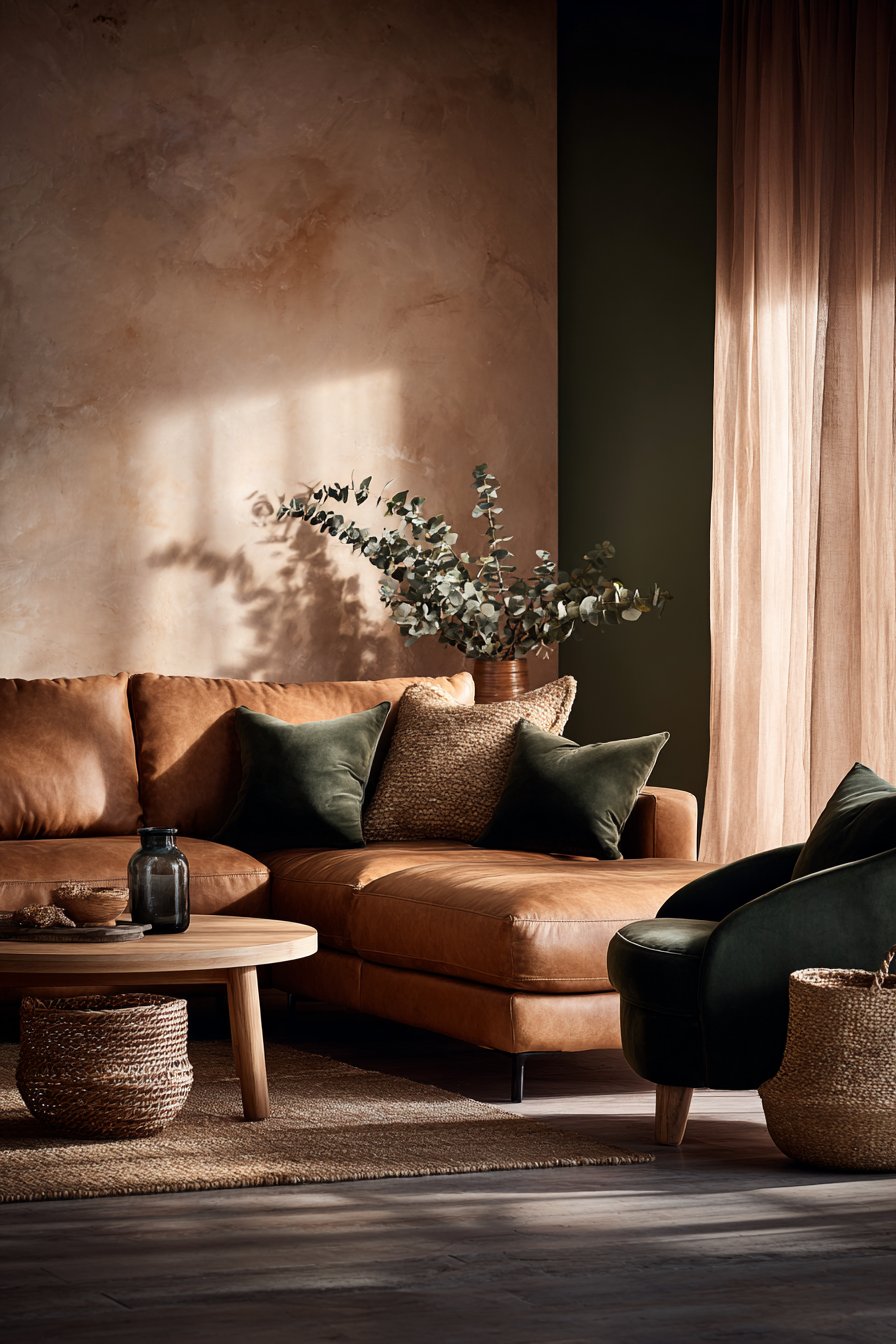
Material variety prevents this sophisticated space from feeling too formal. Smooth leather contrasts with plush velvet perfectly. Natural wood grain adds organic warmth. The ceramic vases introduce subtle sheen that catches light beautifully.
Key Design Tips:
- Invest in quality leather furniture that develops beautiful patina over time
- Paint one accent wall in deep olive for dramatic contrast
- Mix velvet and leather upholstery for textural interest
- Use natural branches in vases for fresh green accents
- Position seating to maximize golden hour sunlight exposure
3. Cozy Corner Reading Retreat
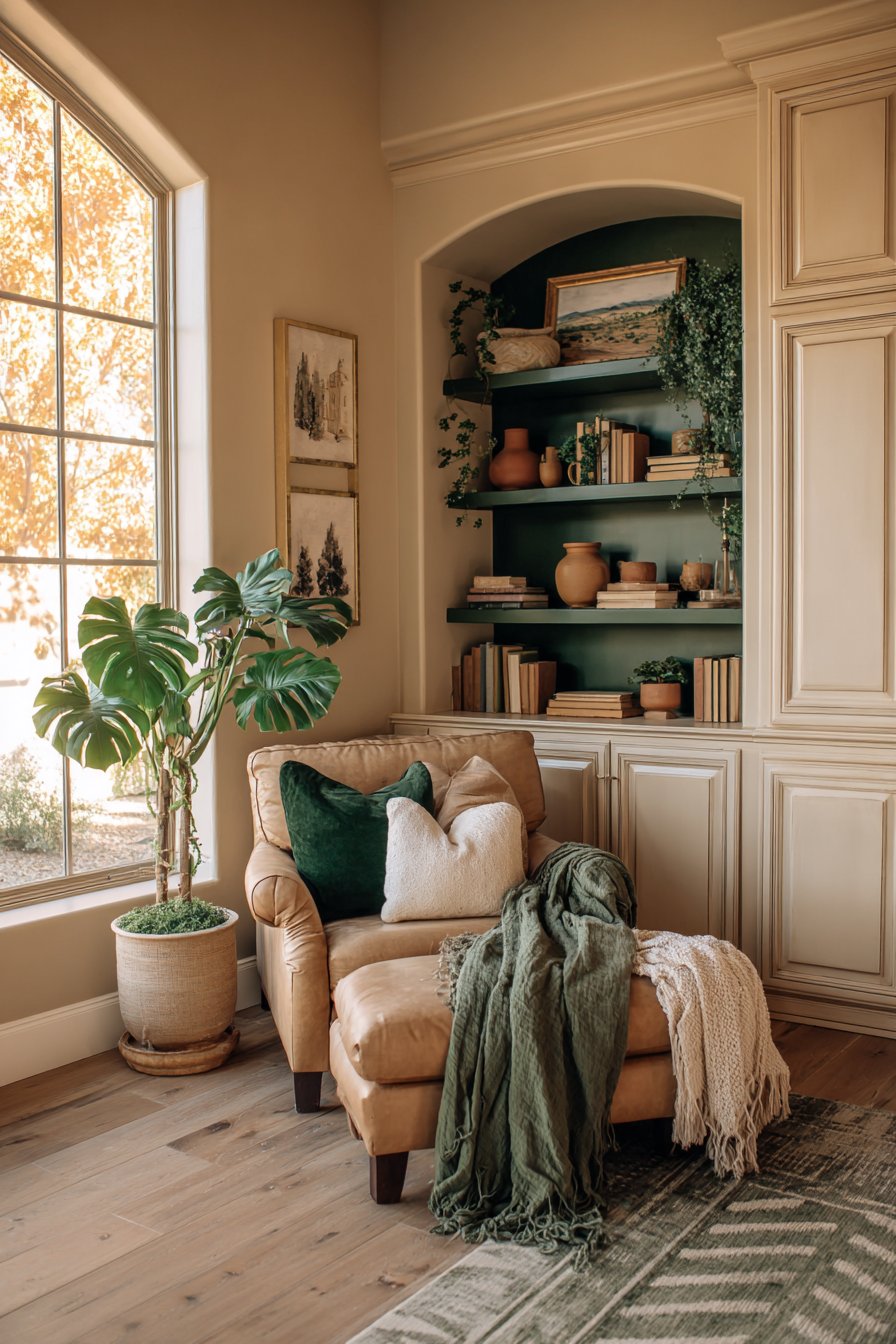
A tan fabric armchair creates the perfect reading nook in this cozy corner. The comfortable proportions invite hours of relaxation. A sage green throw blanket drapes casually over the arm. This adds color while maintaining an effortless, lived-in feel.
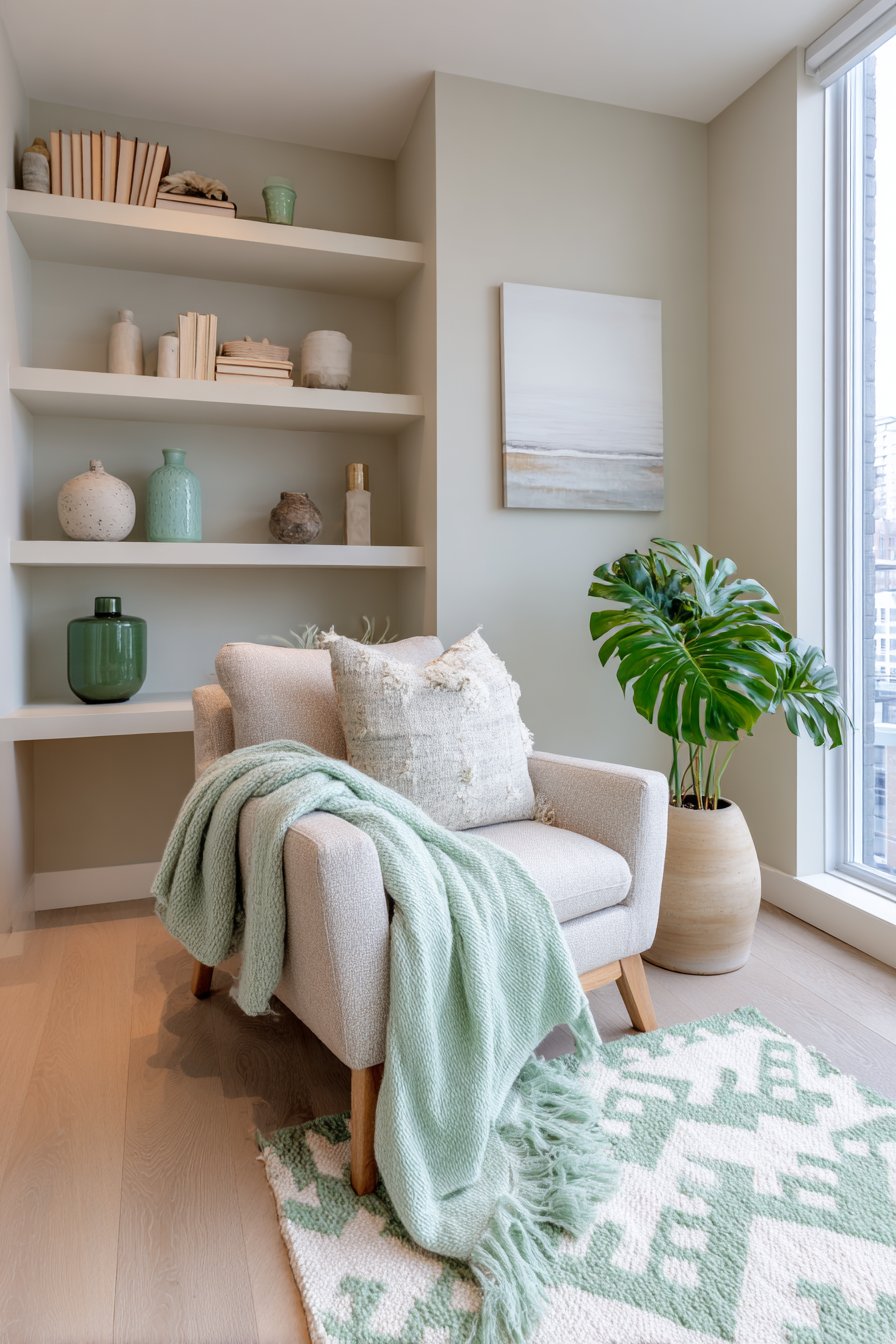
A tall monstera plant in a tan ceramic pot stands nearby. The dramatic foliage creates a natural focal point. Walls finished in creamy tan paint provide a neutral backdrop. Built-in shelving displays green pottery and tan leather-bound books artfully.
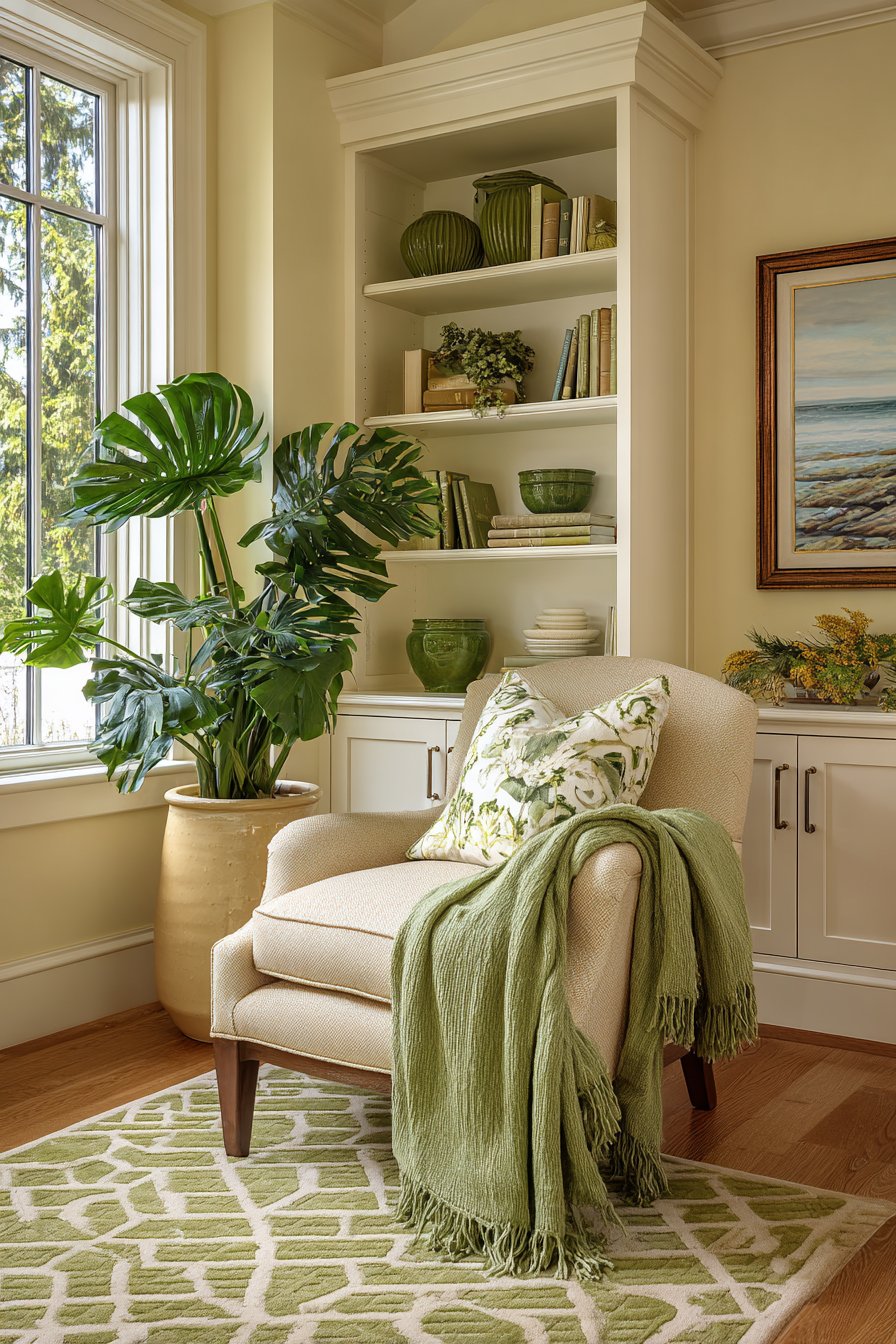
Natural oak flooring adds warmth beneath layered rugs. The green and tan geometric rug defines the reading area clearly. Soft morning light from a nearby window highlights the organic color scheme. This gentle illumination creates the ideal reading environment.
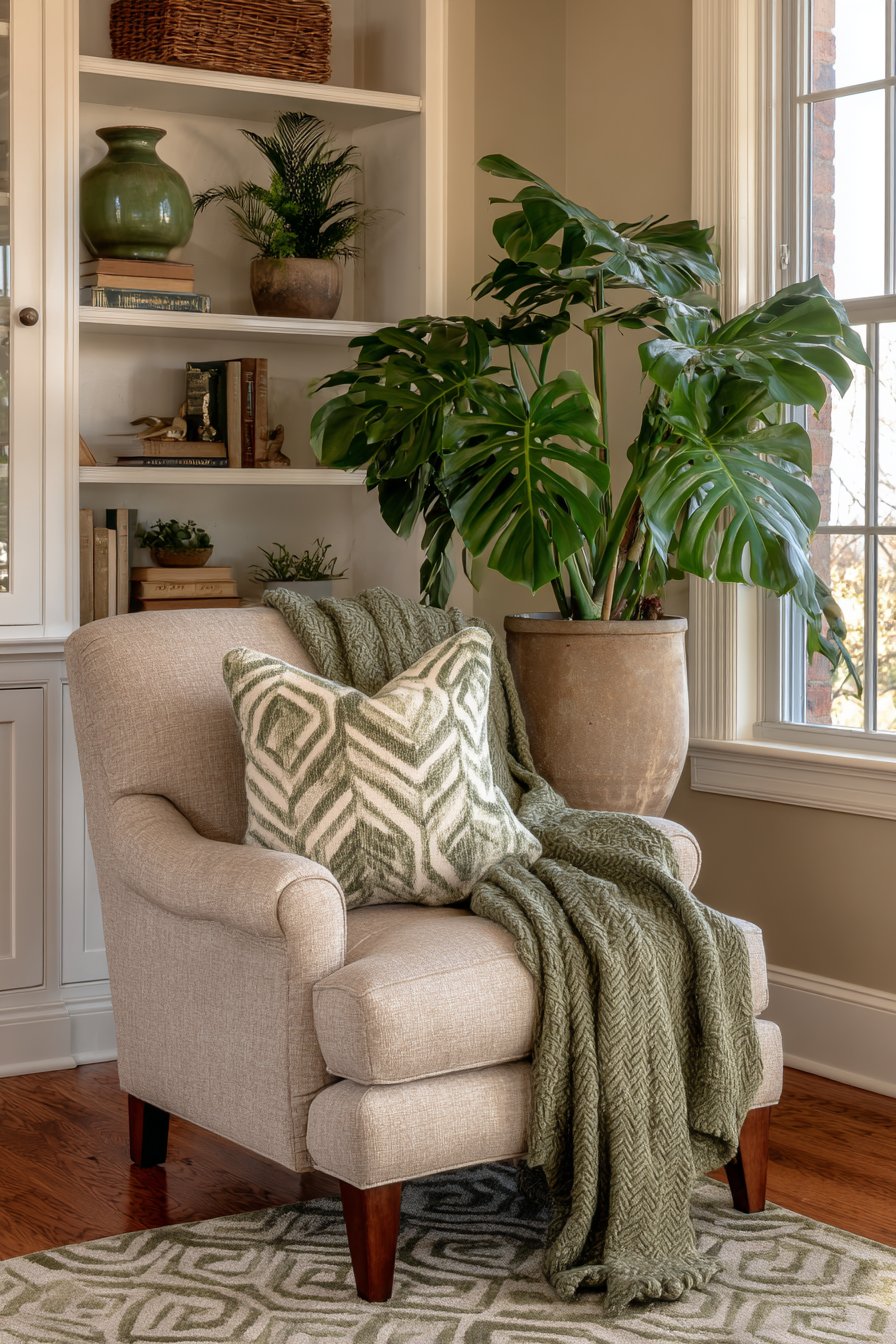
The styling in this corner feels intentional yet relaxed. Books arranged by color create visual harmony. Green pottery pieces echo the plant’s foliage beautifully. The overall effect feels curated without appearing staged or fussy.
Key Design Tips:
- Create dedicated reading corners with comfortable armchairs and good lighting
- Layer throw blankets for added color and texture
- Use built-in shelving to display collections that reinforce your color palette
- Position seating near windows for optimal natural light
- Add statement plants to bring life and vertical interest
4. Sophisticated Floor-to-Ceiling Elegance
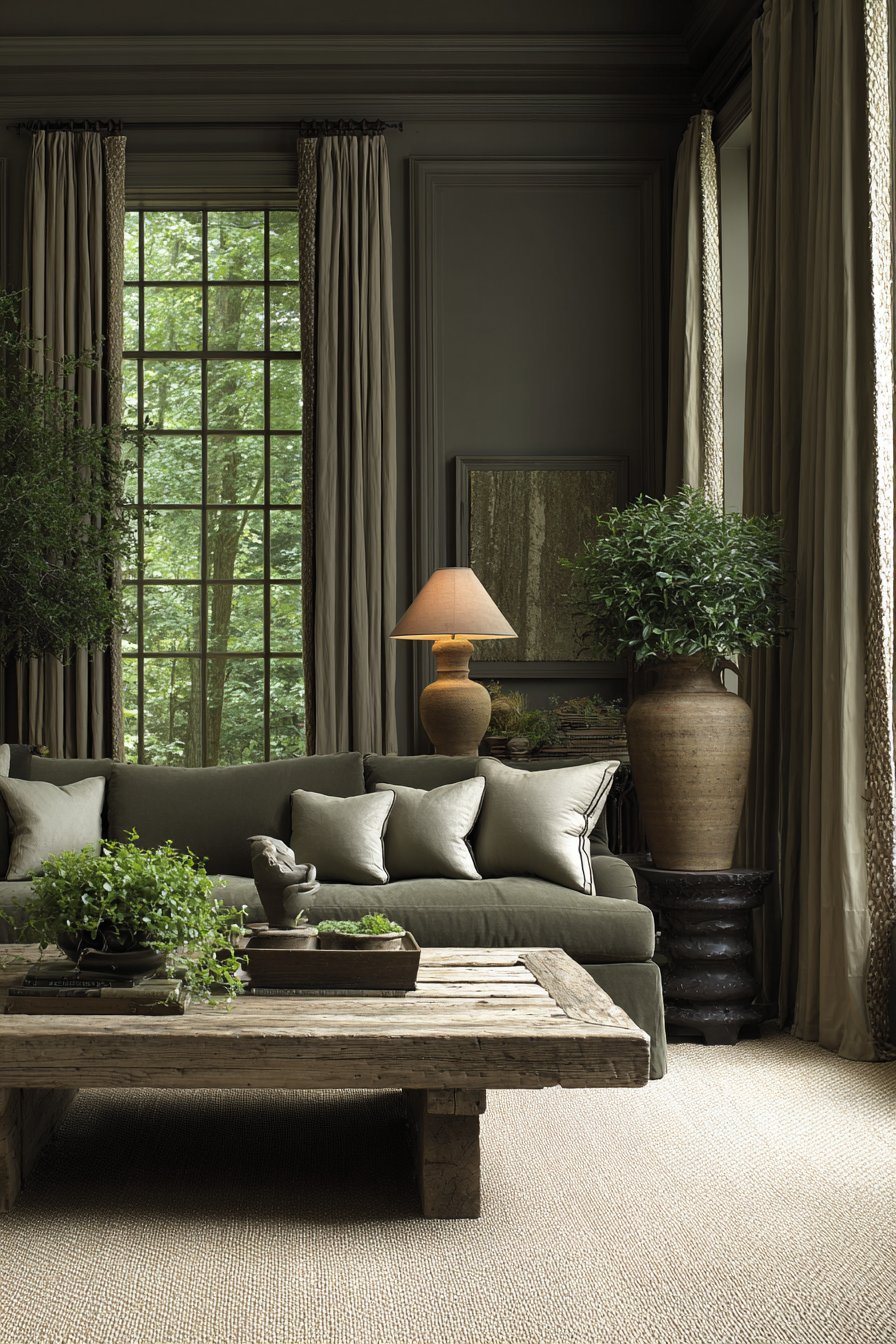
Floor-to-ceiling tan linen drapes create dramatic vertical lines in this sophisticated space. The generous fabric folds add luxury and softness. Large windows behind the drapes flood the room with natural light. A plush green velvet sofa sits atop a sisal rug in natural tan tones.
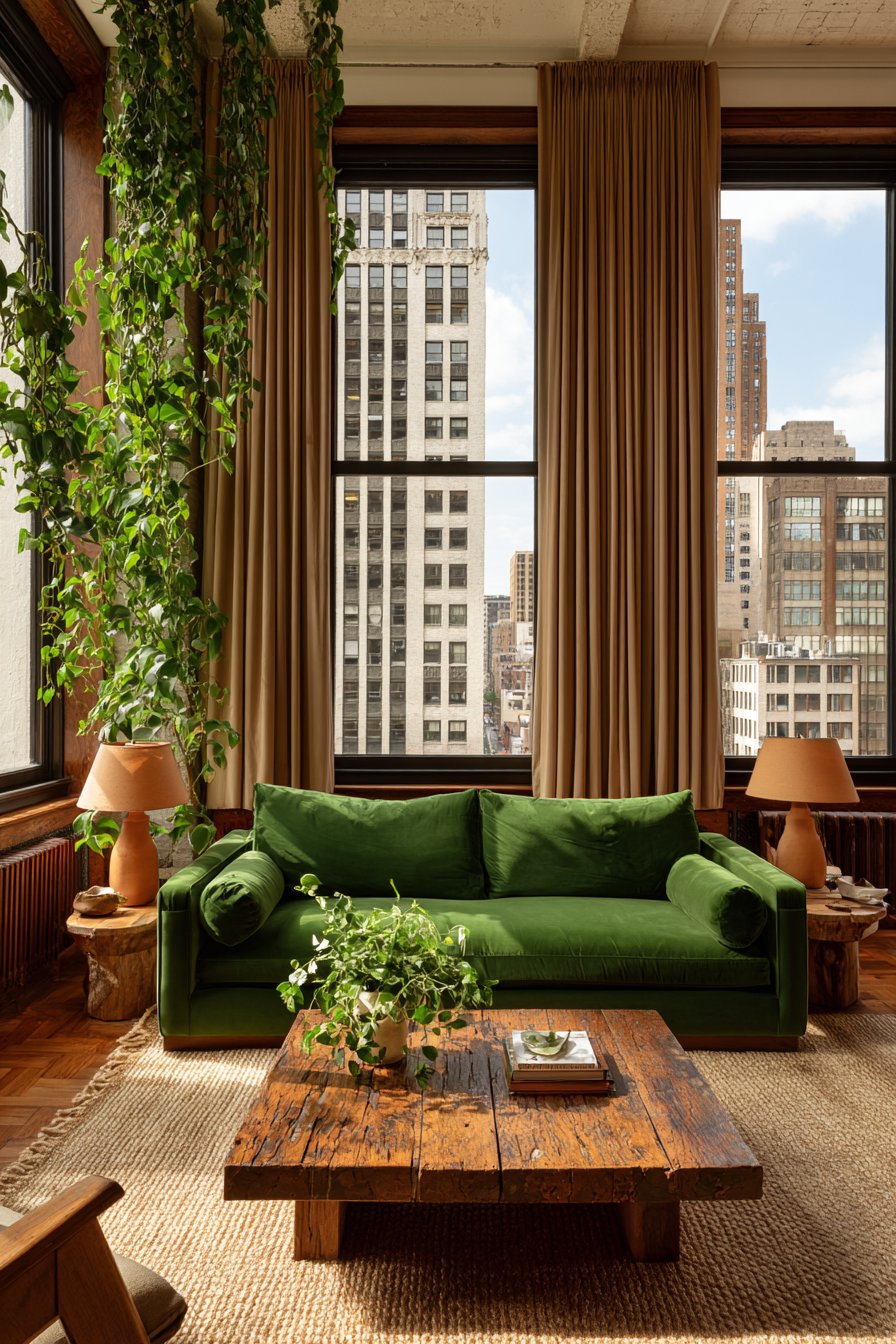
The coffee table features reclaimed wood with visible grain patterns. These honey tan shades add organic warmth to the design. Multiple green plants including pothos and rubber trees create vertical interest throughout. The varied leaf shapes and sizes prevent monotony.
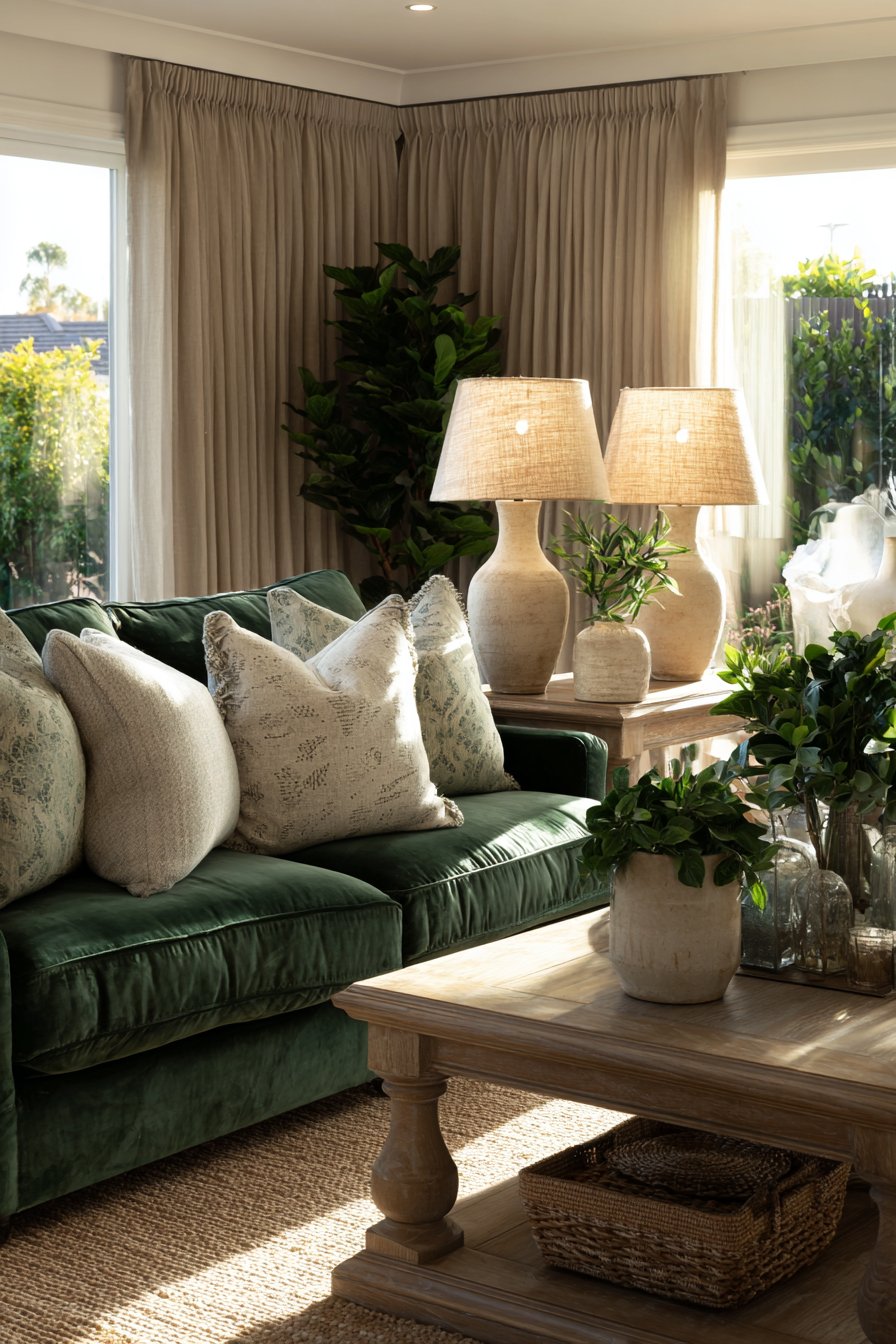
Tan ceramic table lamps with linen shades provide warm ambient lighting. The matching lamps create symmetry and balance. Their soft glow complements natural afternoon light beautifully. This layered lighting approach works for any time of day.
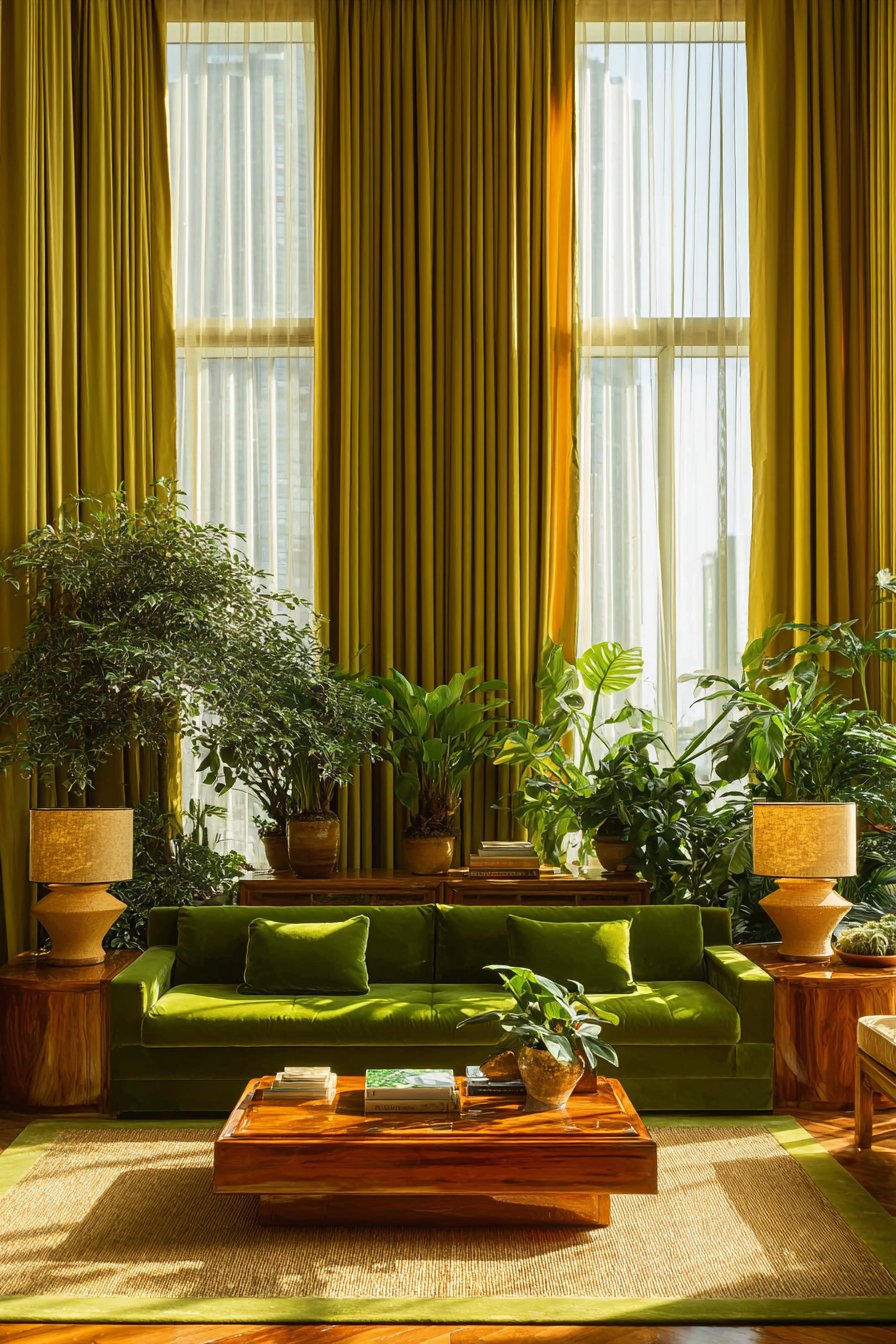
Material authenticity defines this sophisticated design. Real wood, natural fibers, and genuine leather create timeless appeal. These quality materials age gracefully over time. The investment in authentic materials pays dividends in longevity and beauty.
Key Design Tips:
- Install floor-to-ceiling curtains to emphasize room height and add drama
- Choose reclaimed wood furniture for character and sustainability
- Layer multiple plant varieties for diverse green tones and textures
- Use matching table lamps to create symmetry and balance
- Invest in authentic materials that develop beautiful patina over time
5. Contemporary Gallery Wall Statement
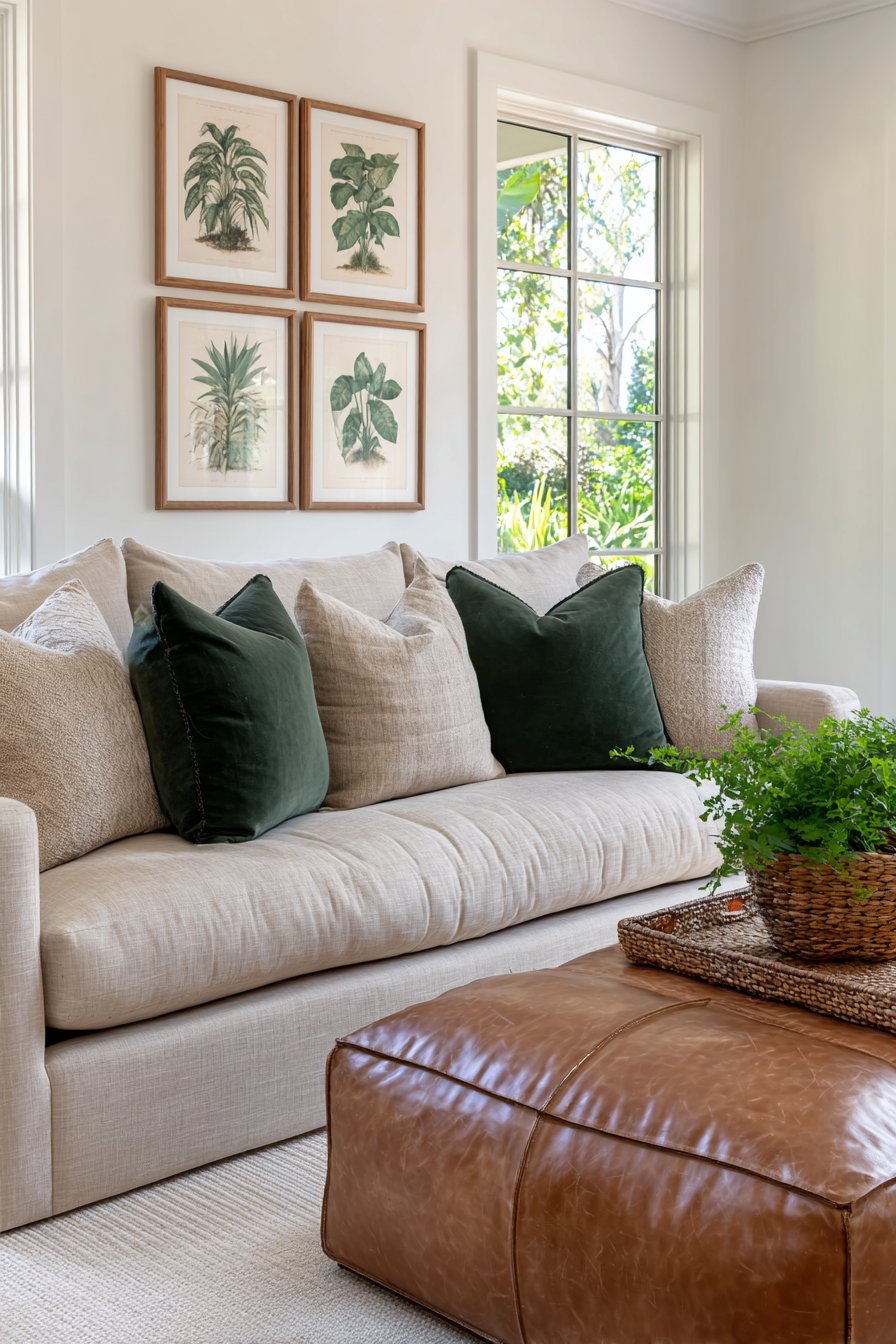
A low-profile tan linen sofa provides clean-lined seating in this contemporary space. Hunter green accent pillows in varied textures add visual interest. The pillows include velvet, leather, and woven options for dimensional appeal.
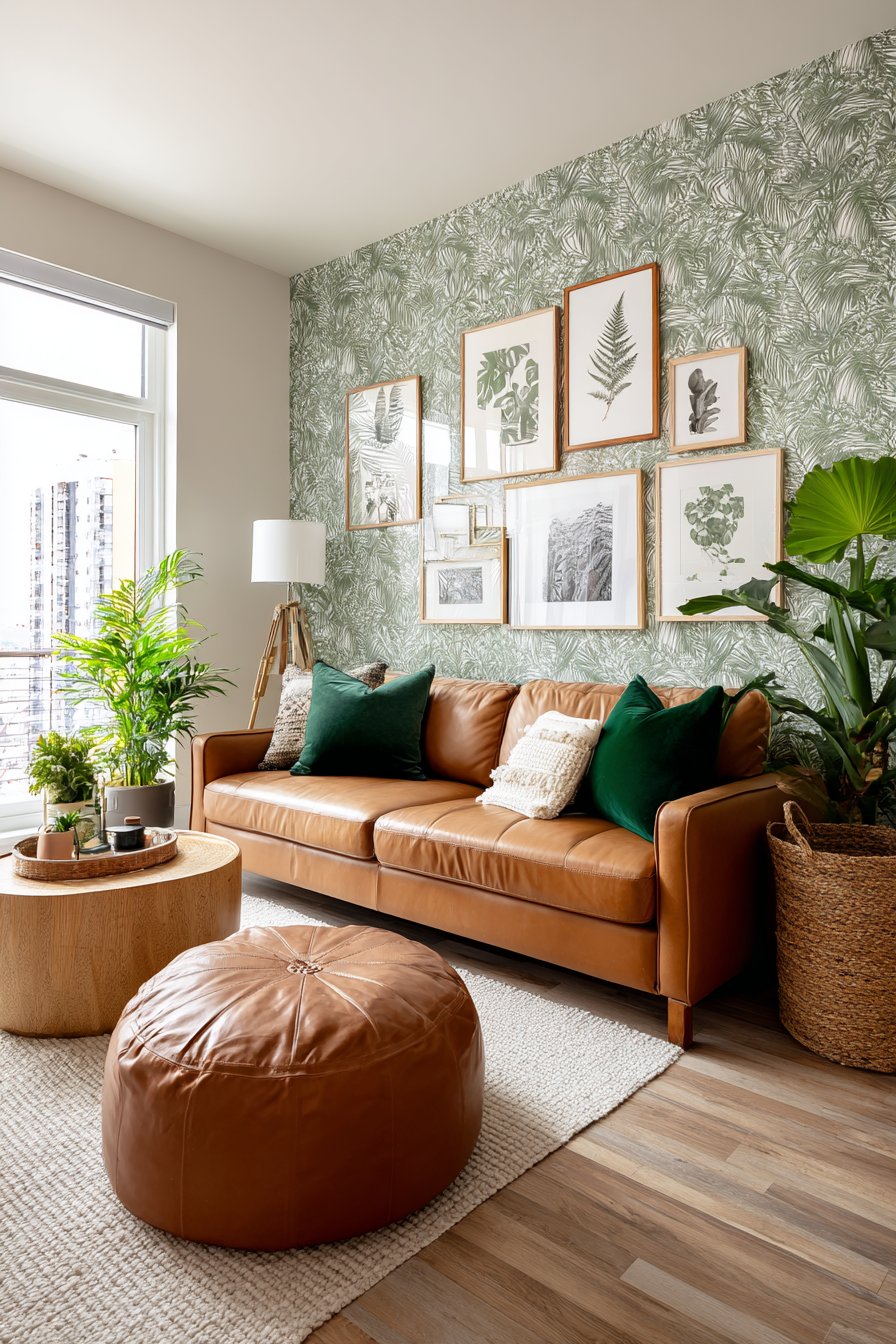
Above the sofa, a gallery wall displays botanical prints beautifully. Green foliage stands out against tan matting in natural wood frames. The collection feels cohesive yet varied. An adjacent accent wall features removable wallpaper with sage green and tan tropical leaf patterns.
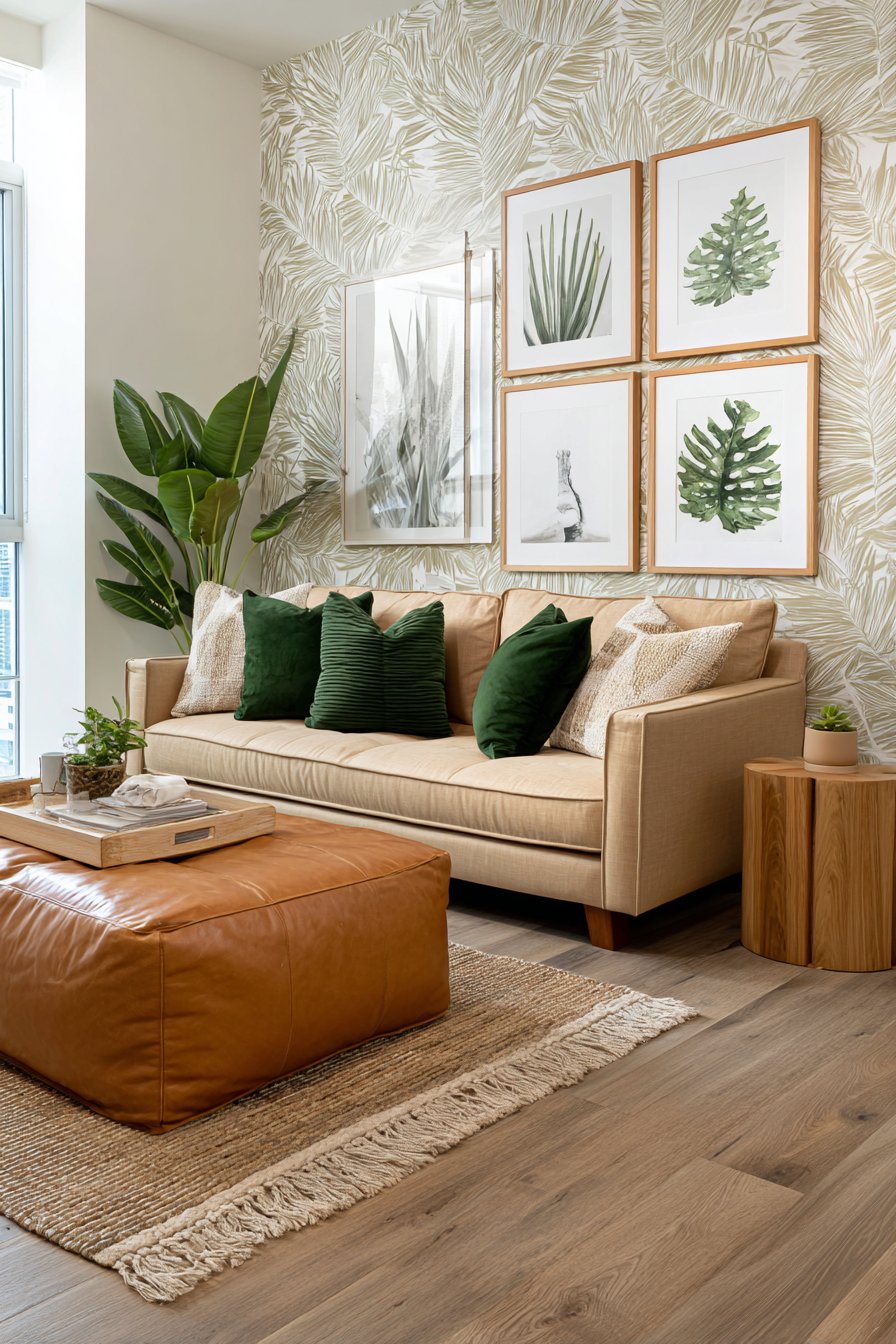
A tan leather ottoman serves as a coffee table centerpiece. The versatile piece provides both surface area and additional seating. Its soft edges create a family-friendly focal point. The leather adds warmth and tactile appeal.
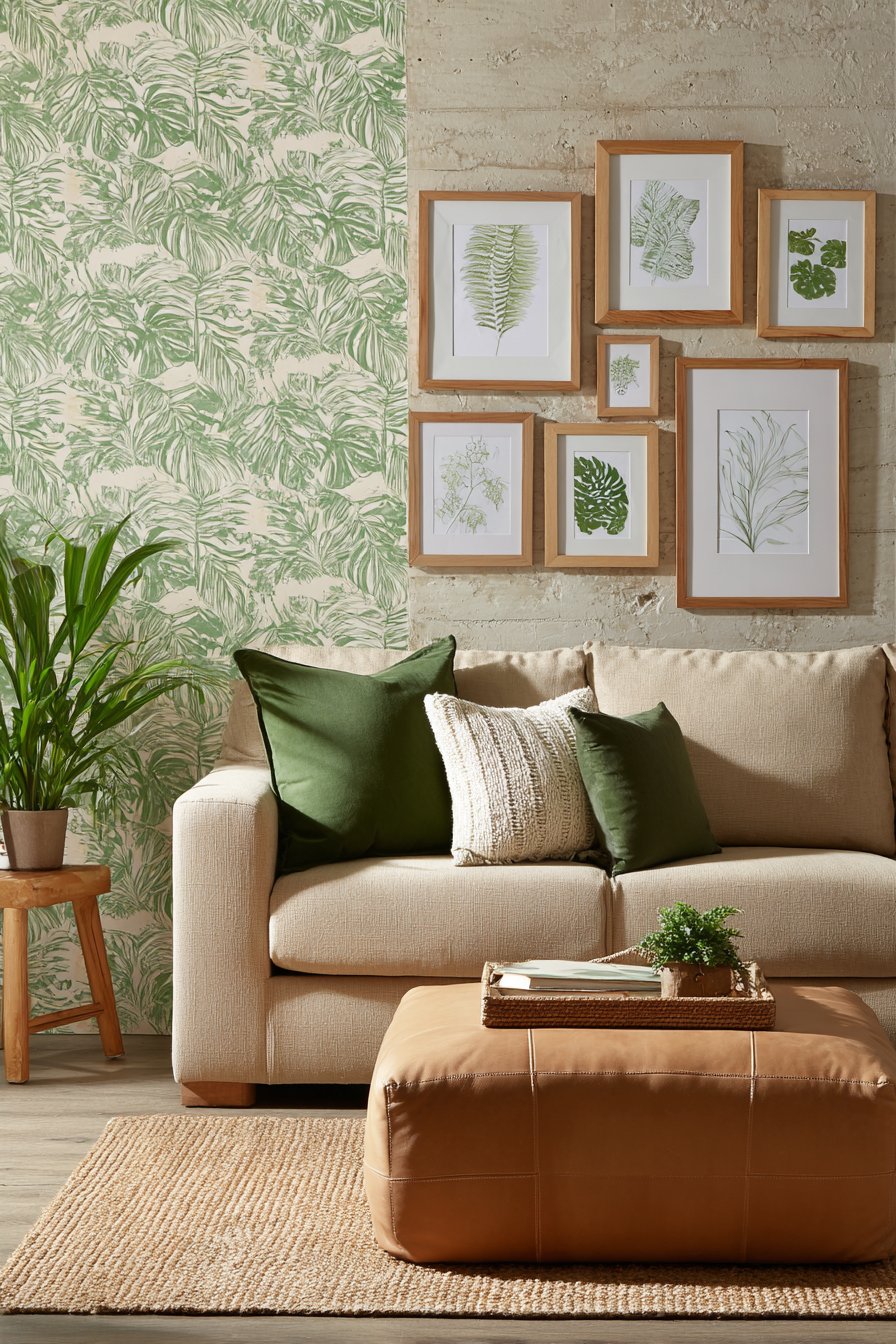
The botanical theme extends throughout this design thoughtfully. Framed prints echo the wallpaper’s leaf motifs. Real plants would complement but aren’t necessary given the strong botanical presence. This demonstrates how artwork can fulfill design needs creatively.
Key Design Tips:
- Create gallery walls with cohesive themes and consistent framing
- Use removable wallpaper on accent walls for commitment-free pattern
- Mix pillow textures in coordinating colors for depth
- Choose ottoman coffee tables for versatile, family-friendly functionality
- Repeat design motifs through different mediums for cohesive aesthetic
6. Transitional Fireplace Focal Point
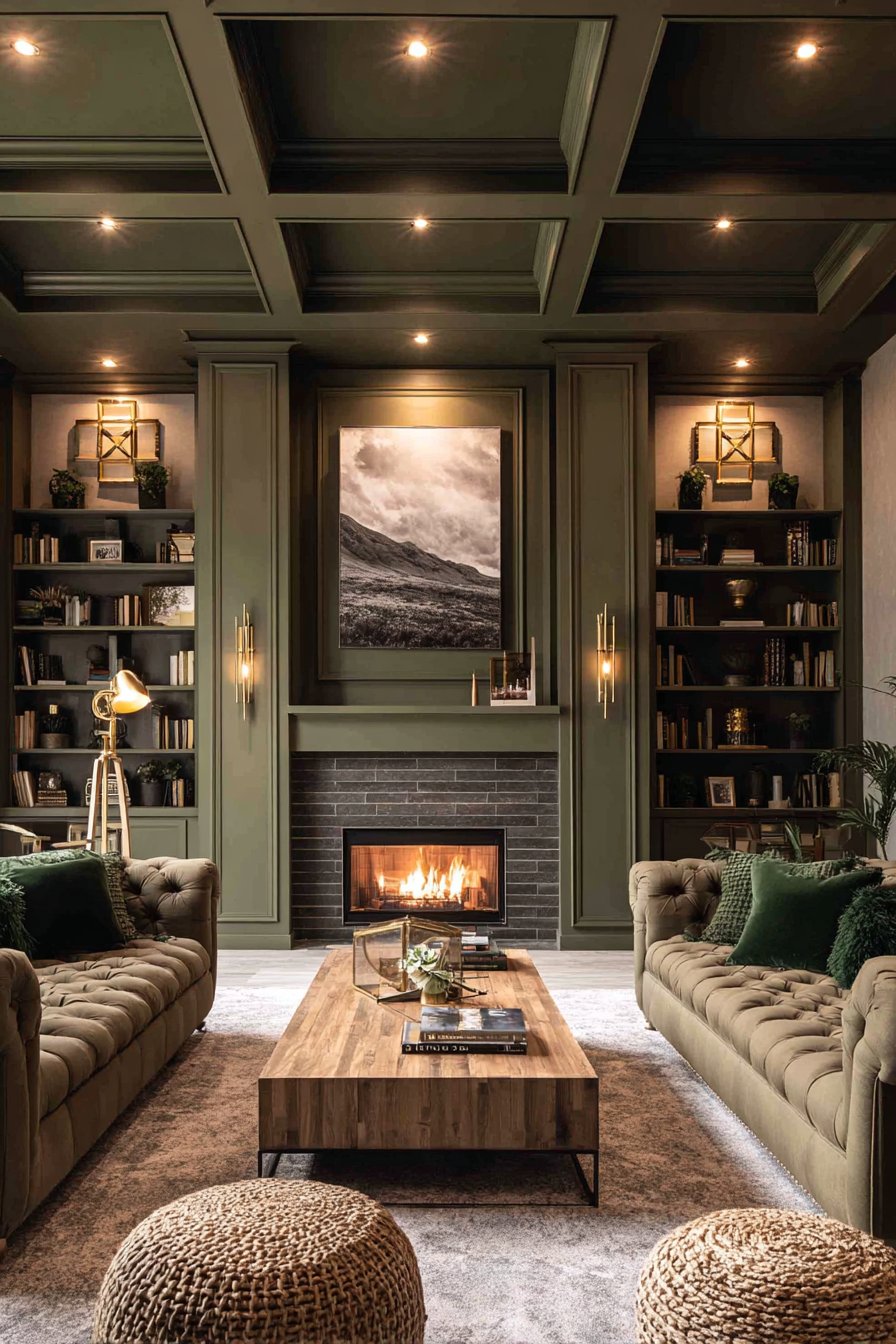
Built-in bookshelves painted in warm tan flank a dramatic fireplace in this transitional design. The green-painted brick surround creates an unexpected focal point. A tan tufted sofa faces the fireplace for cozy viewing. Emerald green velvet accent chairs positioned at angles encourage conversation.
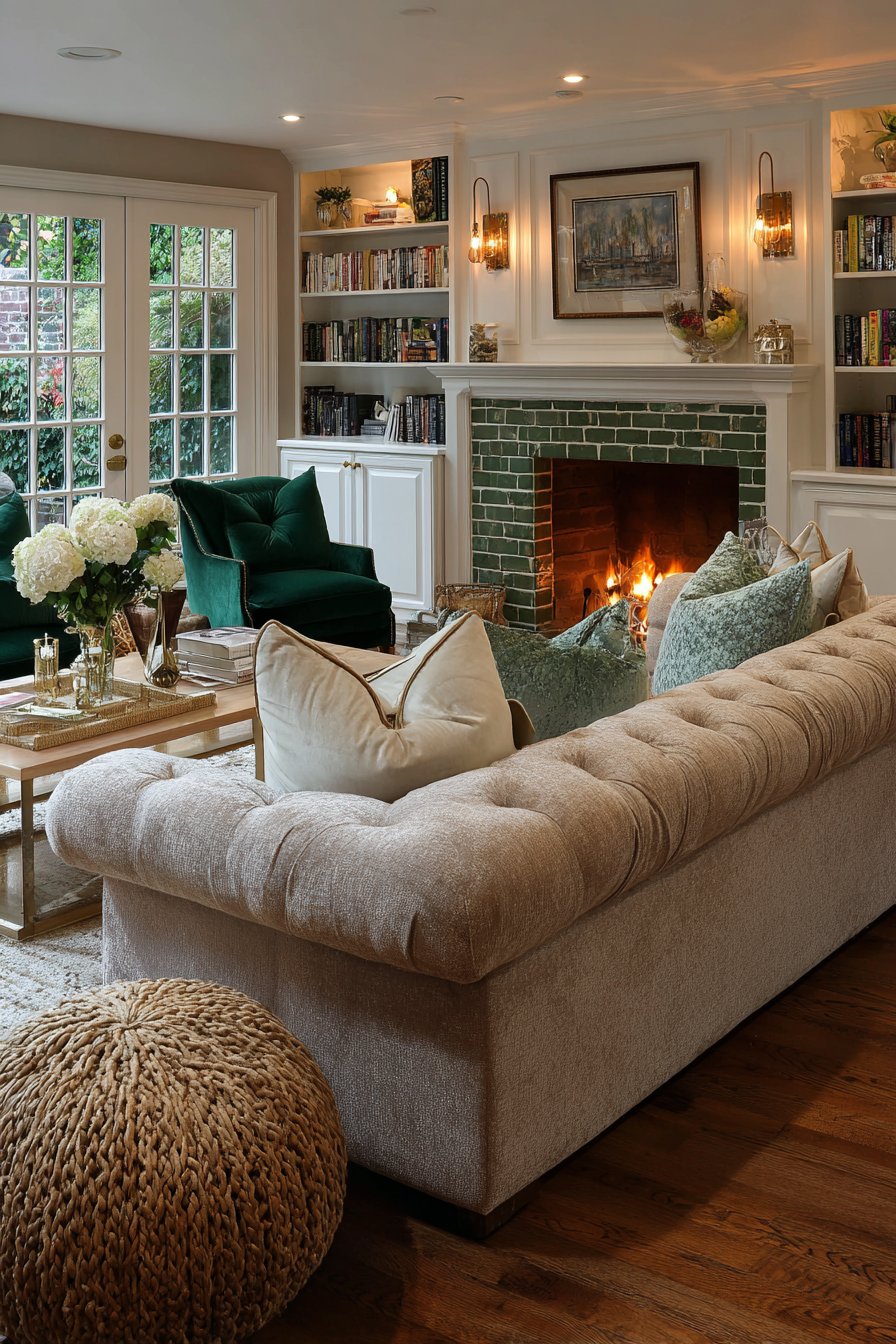
Natural jute poufs provide additional flexible seating options. They maintain the tan and green theme while offering practicality. Brass floor lamp and picture lights add warm illumination. The metallic accents introduce subtle glamour without overwhelming the space.
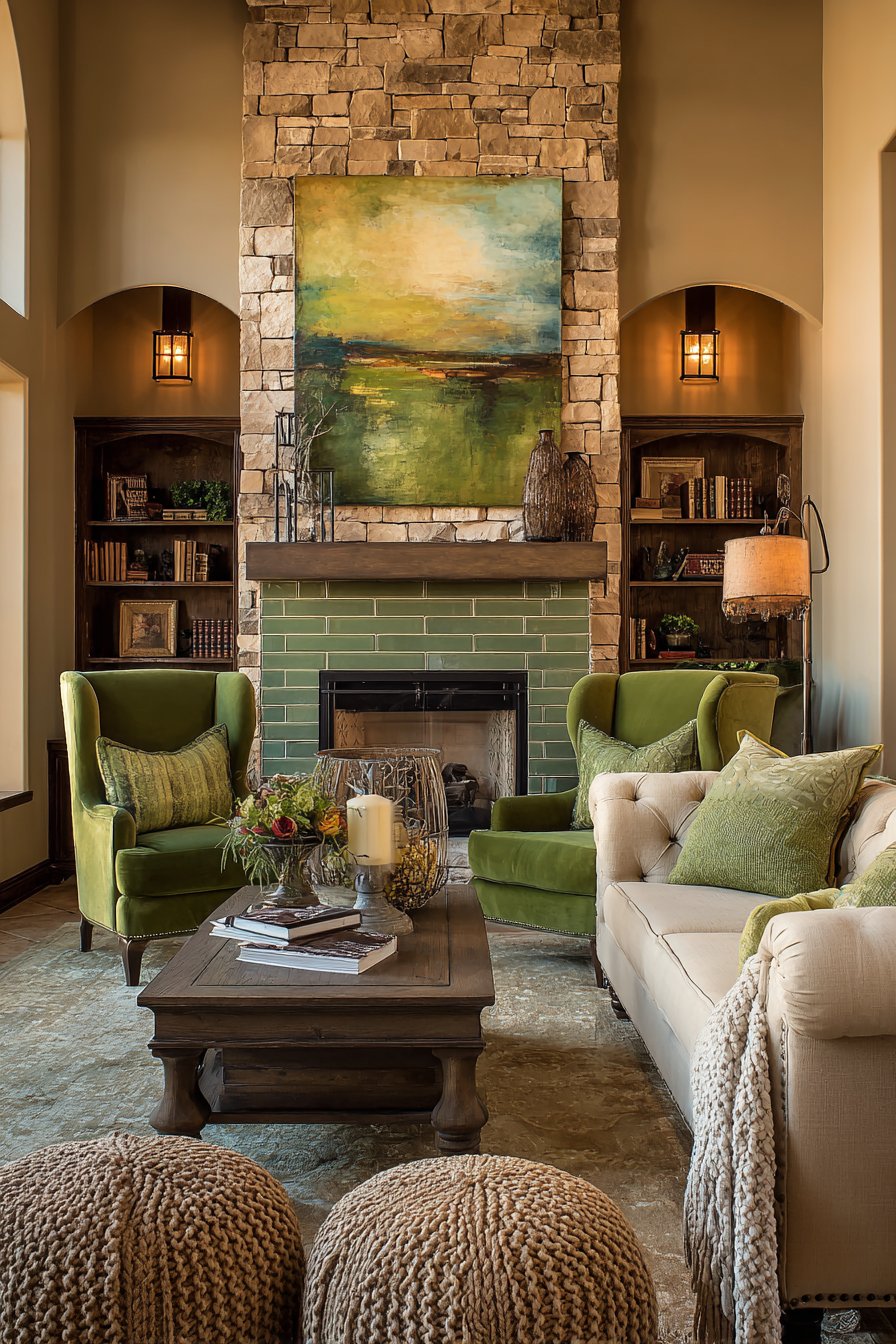
The architectural details elevate this living room significantly. Built-in shelving provides both storage and display opportunities. The painted brick fireplace surround demonstrates how paint transforms existing features. These permanent improvements add value beyond temporary decor.
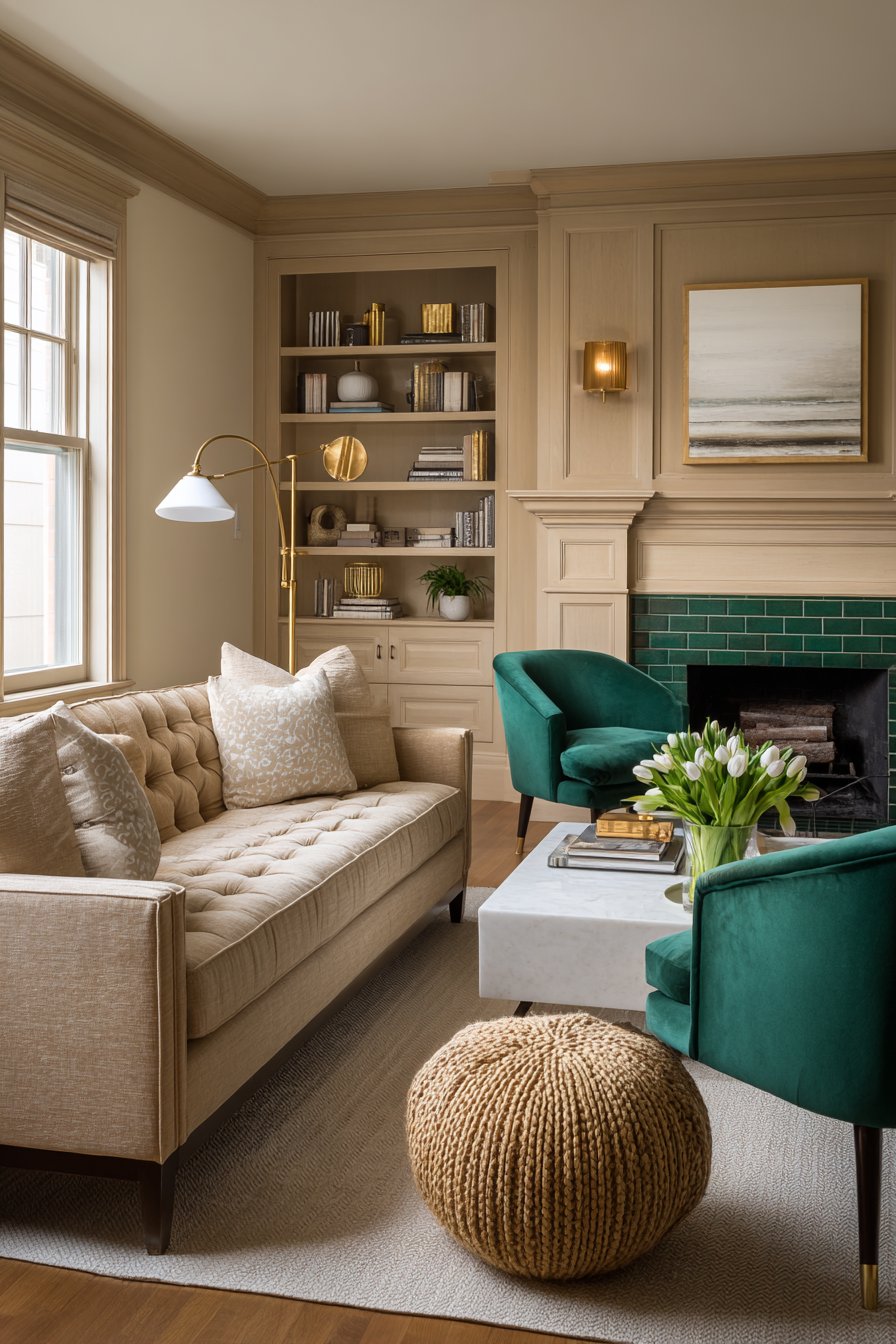
Lighting layers create ambiance for different occasions. Overhead lighting, floor lamps, and picture lights offer flexibility. Dimmer switches would enhance the versatility further. This attention to lighting makes the space functional day and night.
Key Design Tips:
- Paint existing brick fireplaces in unexpected colors for drama
- Flank fireplaces with built-in shelving for symmetry and storage
- Use brass accents to add warmth and subtle glamour
- Incorporate poufs for flexible, easily moved seating
- Layer multiple light sources for versatile ambiance options
7. Scandinavian Simplicity and Light
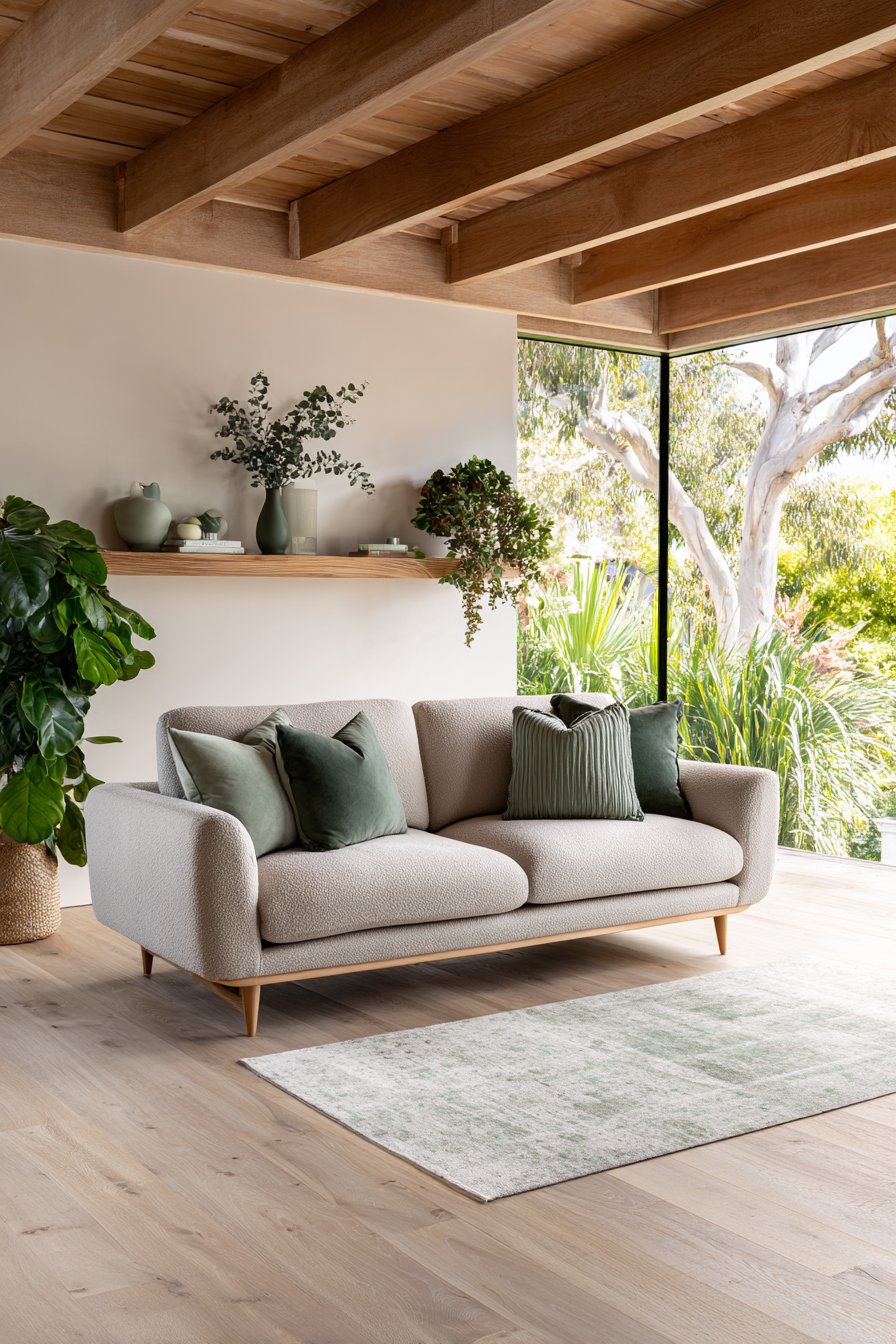
A tan bouclé sofa with clean lines embodies Scandinavian design principles perfectly. Green linen cushions add color without overwhelming the minimalist aesthetic. Light oak flooring in natural tan tones extends throughout the space seamlessly.
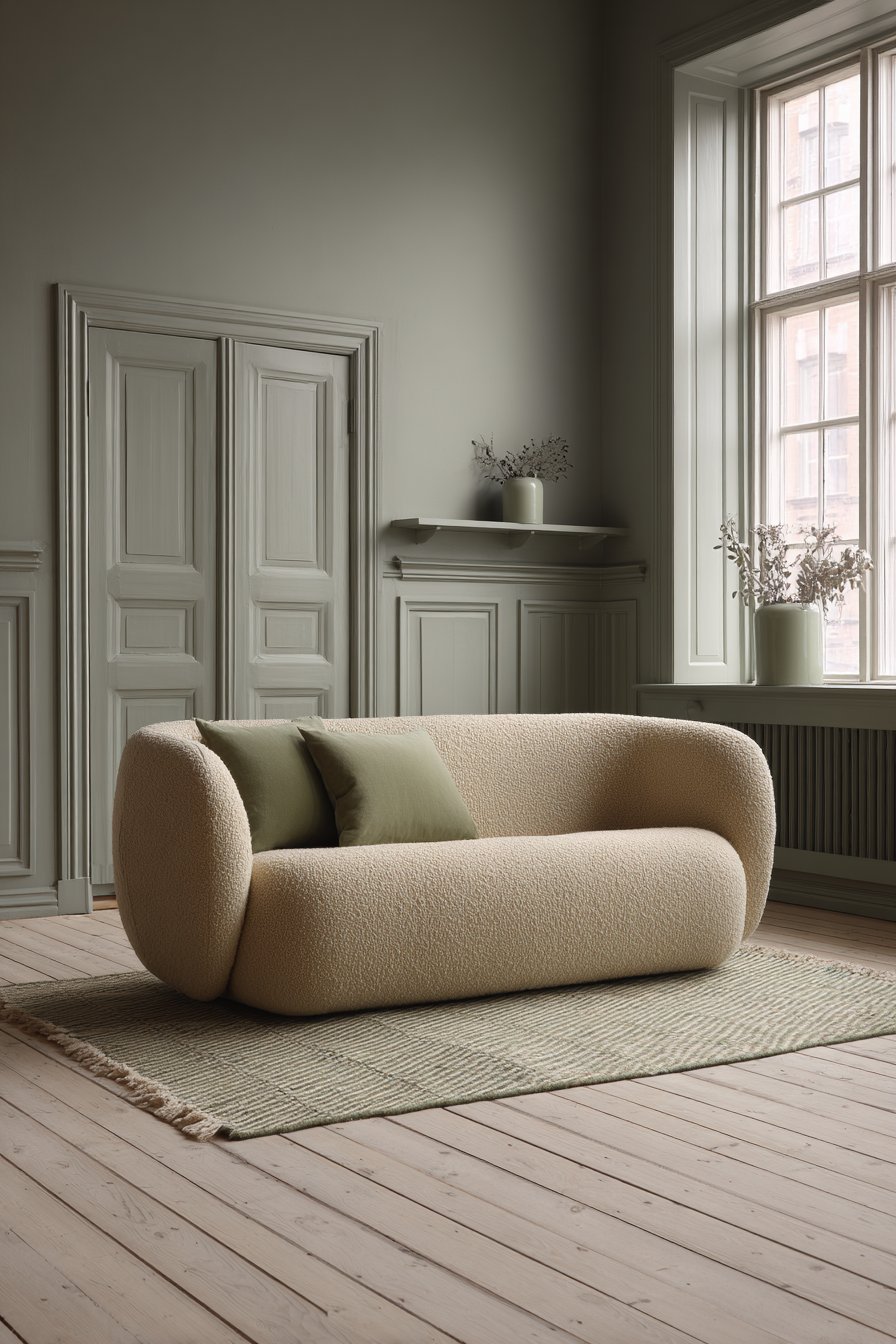
A hand-woven rug combines sage green and beige patterns beautifully. The geometric design adds visual interest while remaining understated. Minimalist green ceramic vases hold eucalyptus branches on floating tan oak shelves. Large windows without treatments maximize natural daylight penetration.
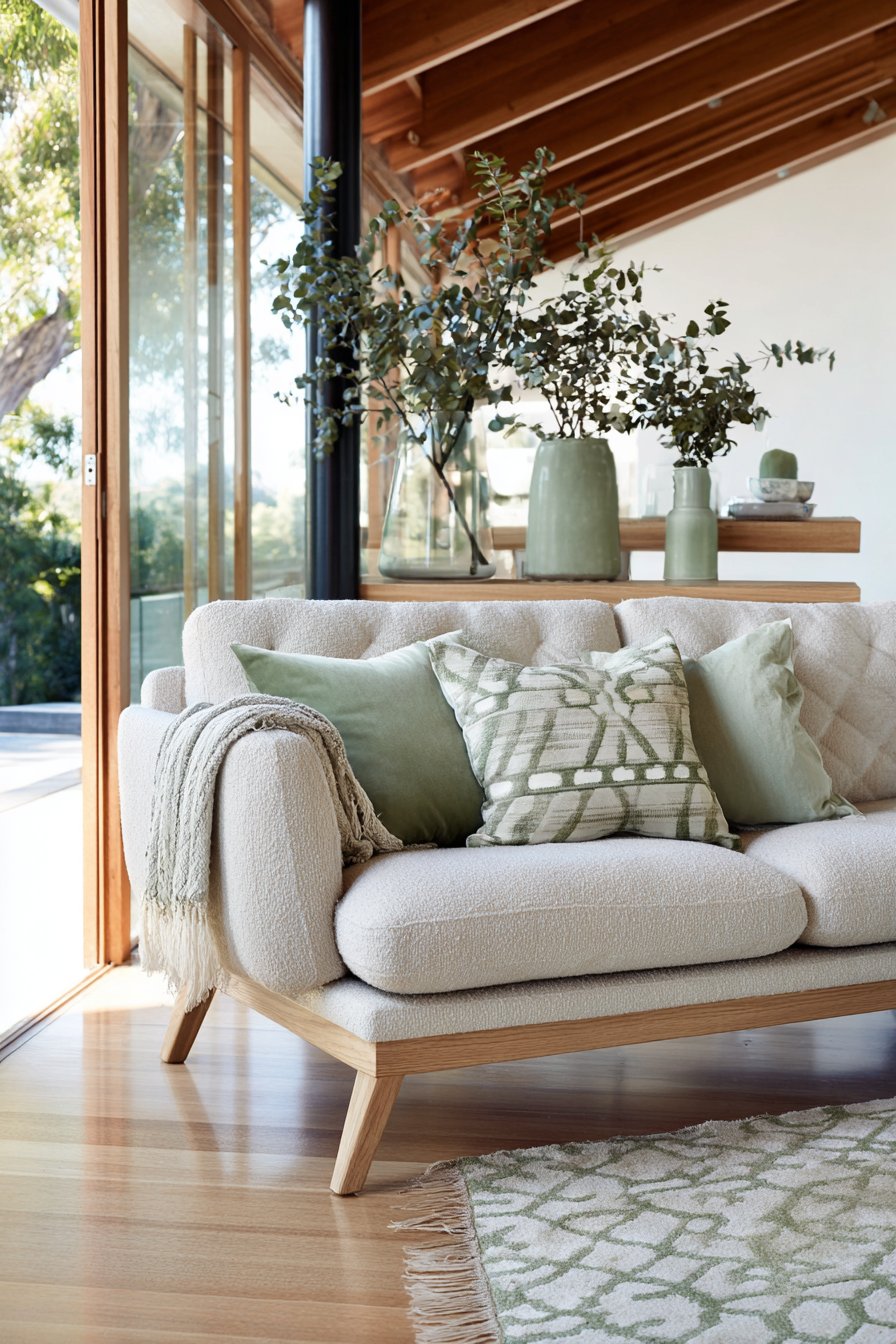
The restraint in this design creates powerful impact. Every element serves a purpose without excess. Negative space receives as much attention as filled areas. This approach creates a calm, uncluttered environment that promotes relaxation.
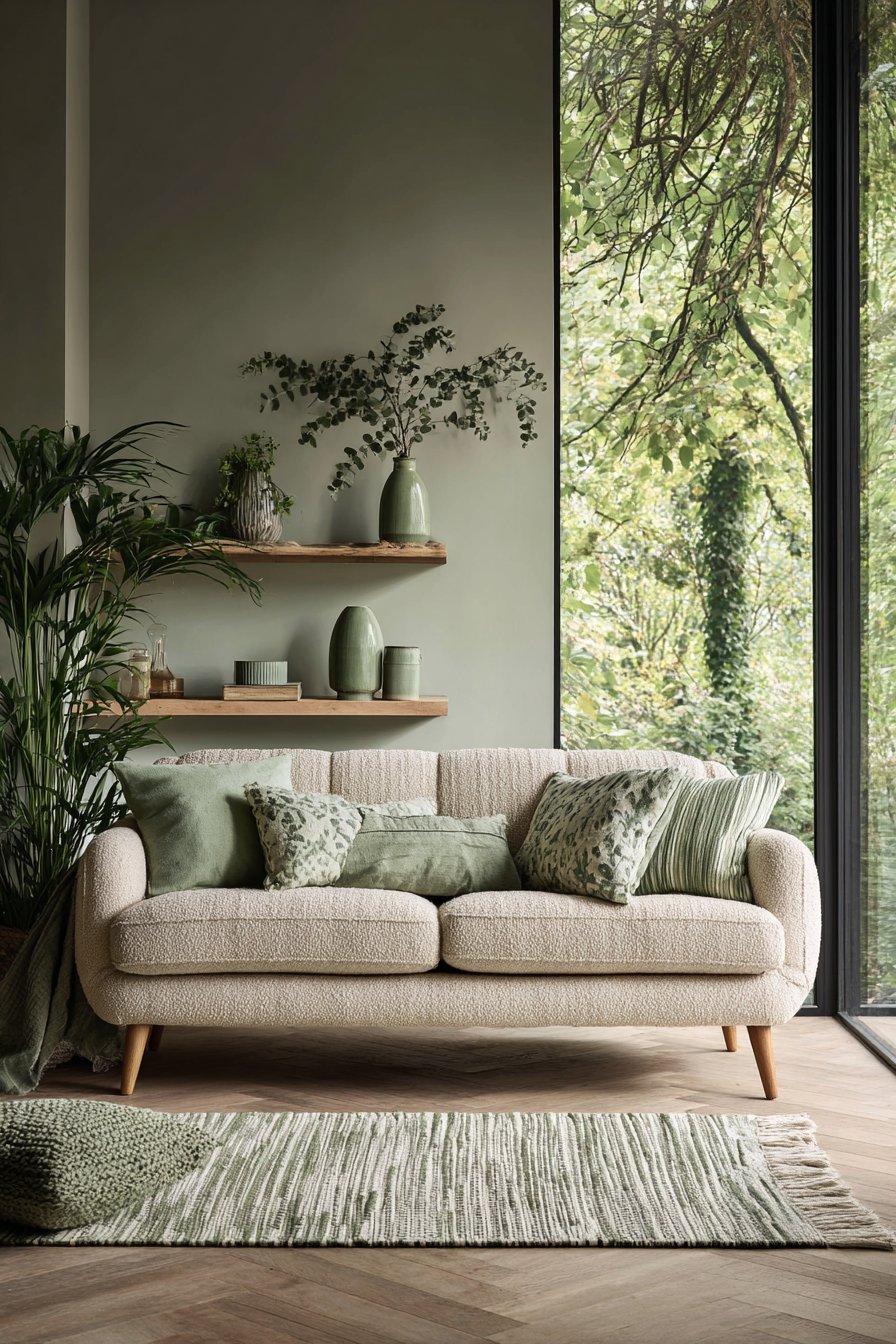
Natural materials dominate this Scandinavian-inspired space. Oak, linen, bouclé, and ceramic all feature prominently. These authentic materials age beautifully and feel good to touch. The investment in quality over quantity reflects core Scandinavian values.
Key Design Tips:
- Embrace negative space as an important design element
- Choose natural materials like oak, linen, and ceramic
- Keep window treatments minimal or eliminate them for maximum light
- Select furniture with clean lines and simple silhouettes
- Use geometric patterns sparingly for visual interest without clutter
8. Bohemian Layered Textures
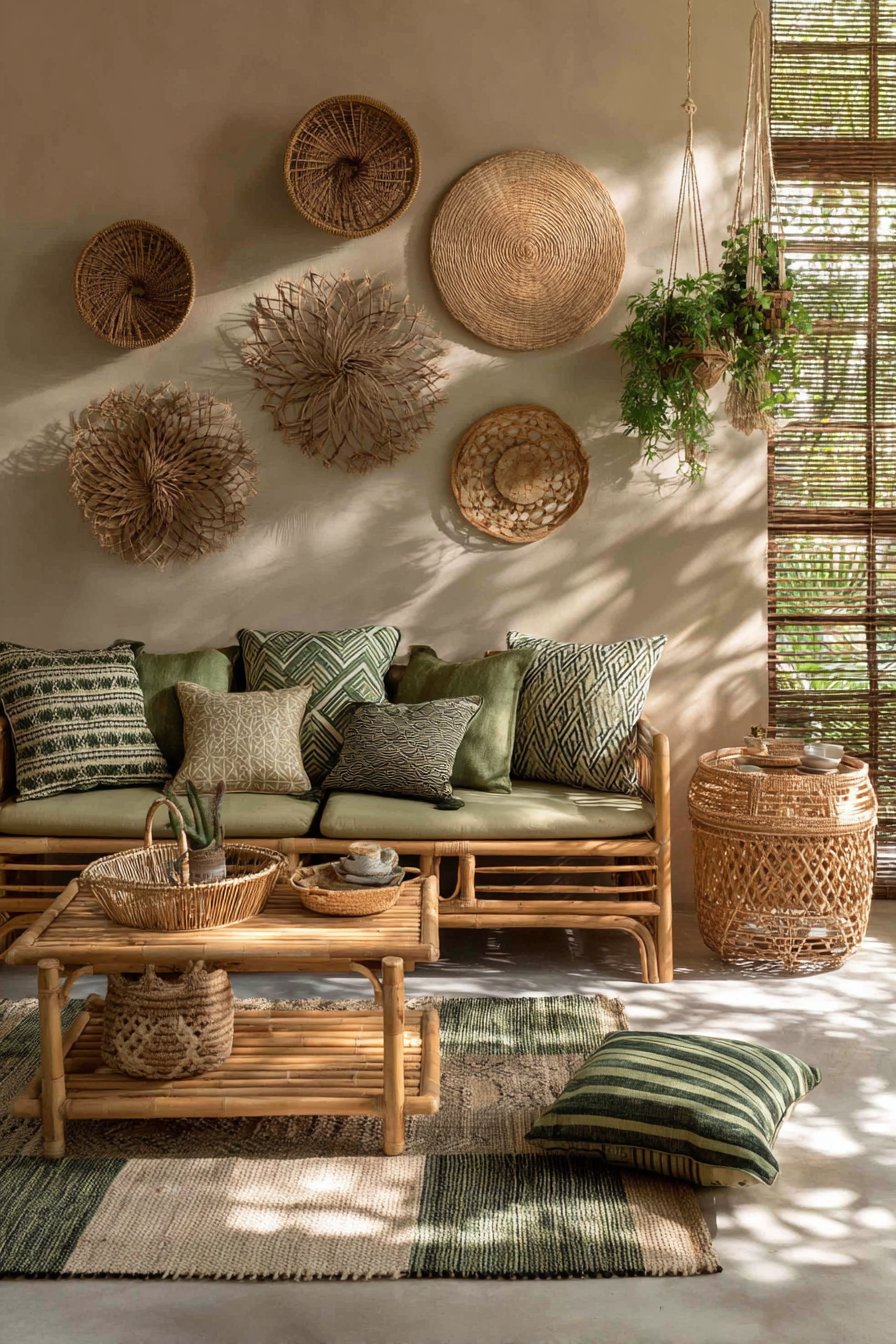
A tan rattan sofa creates casual comfort in this bohemian living space. Abundant green and tan patterned throw pillows invite relaxation. The varied patterns include geometric, floral, and ethnic-inspired designs. Macramé wall hangings in natural tan cotton fiber create textural interest.
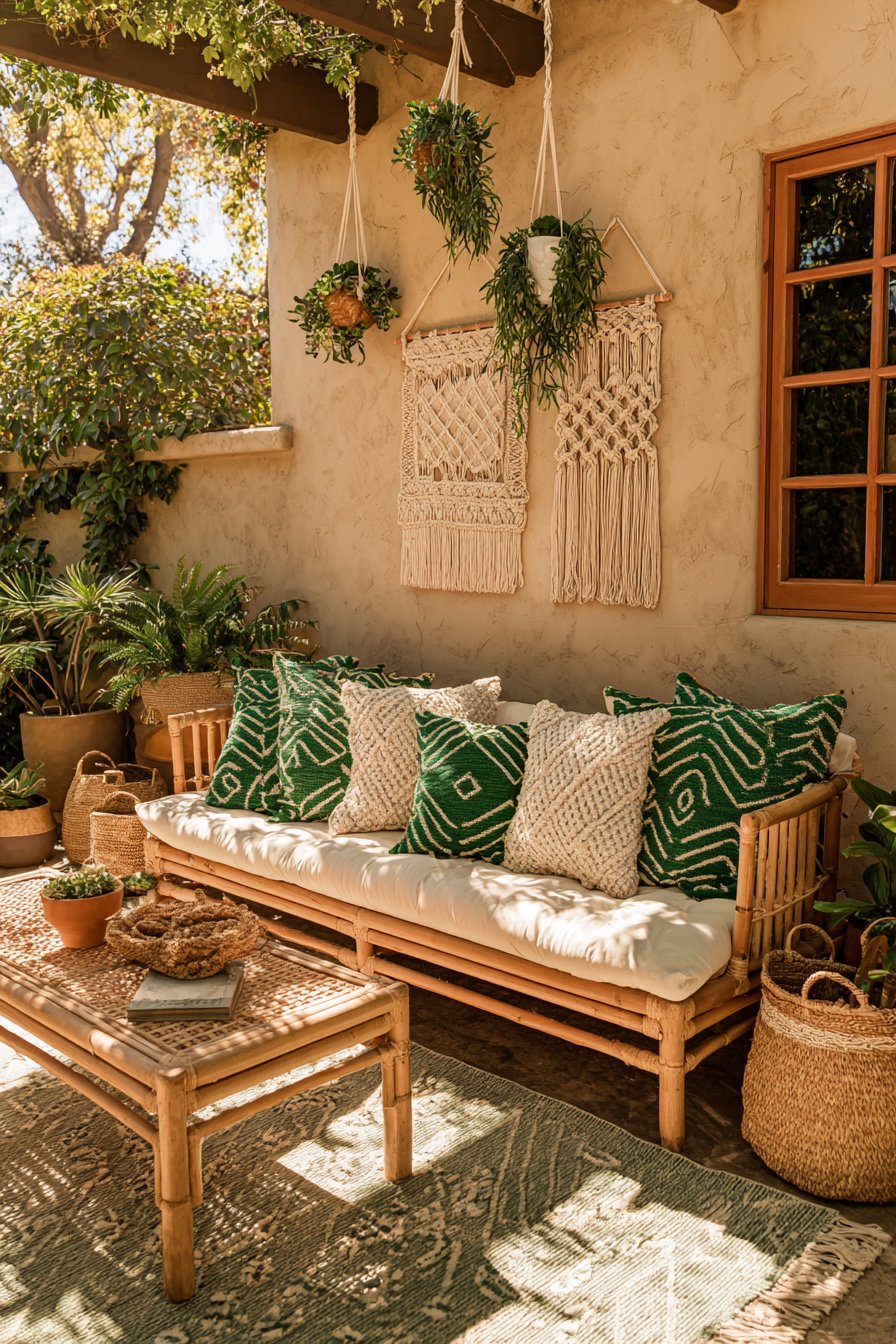
Multiple hanging plants with trailing green vines add organic movement. The plants cascade at different lengths creating dynamic visual flow. Woven tan baskets provide stylish storage throughout the room. A low wooden coffee table in natural tan finish anchors the seating area.
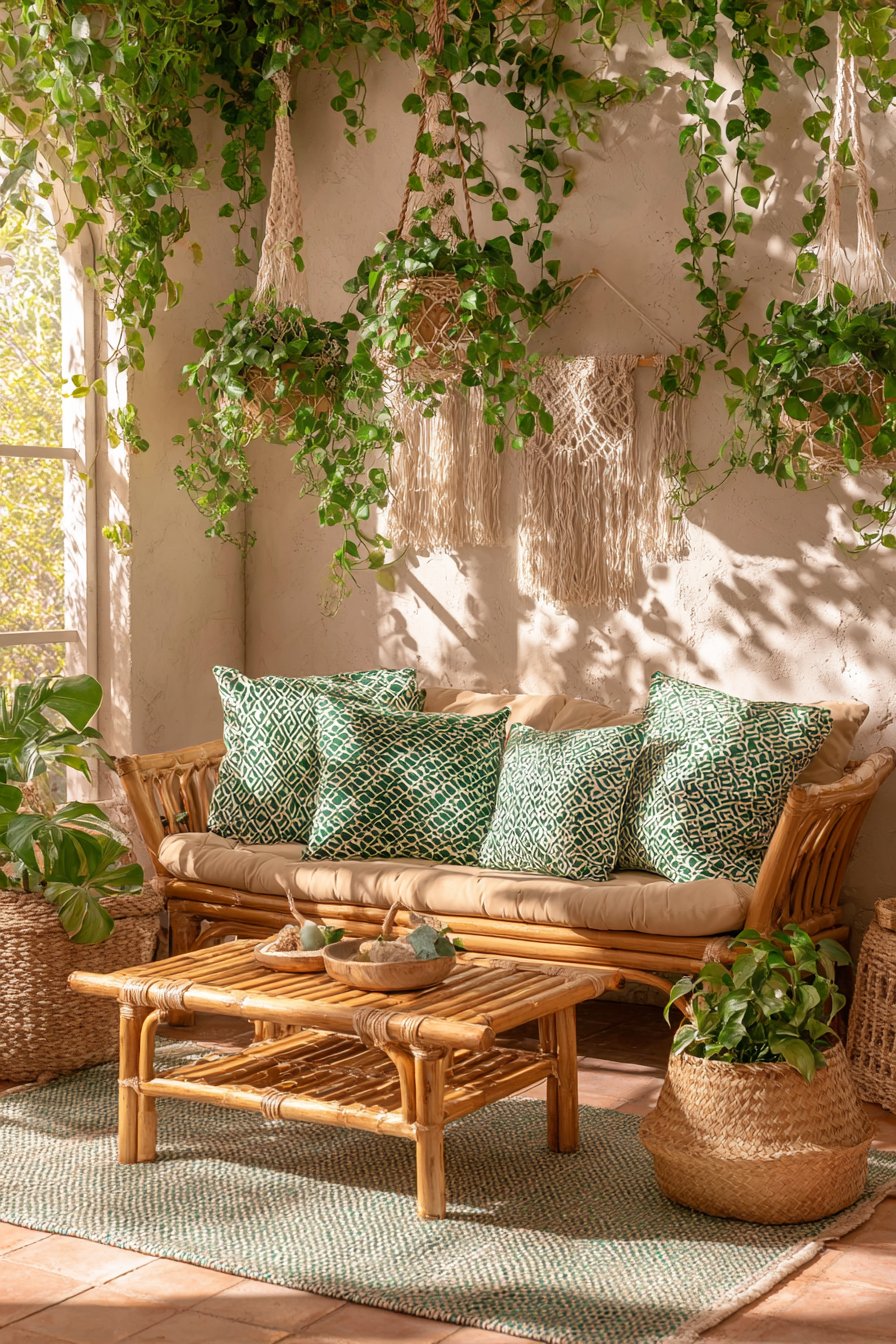
Layered rugs combine green and neutral tones with varied patterns. This signature bohemian technique adds depth and comfort underfoot. Natural window light creates dappled shadows through the hanging plants. The ever-changing light patterns add living artwork to the walls.
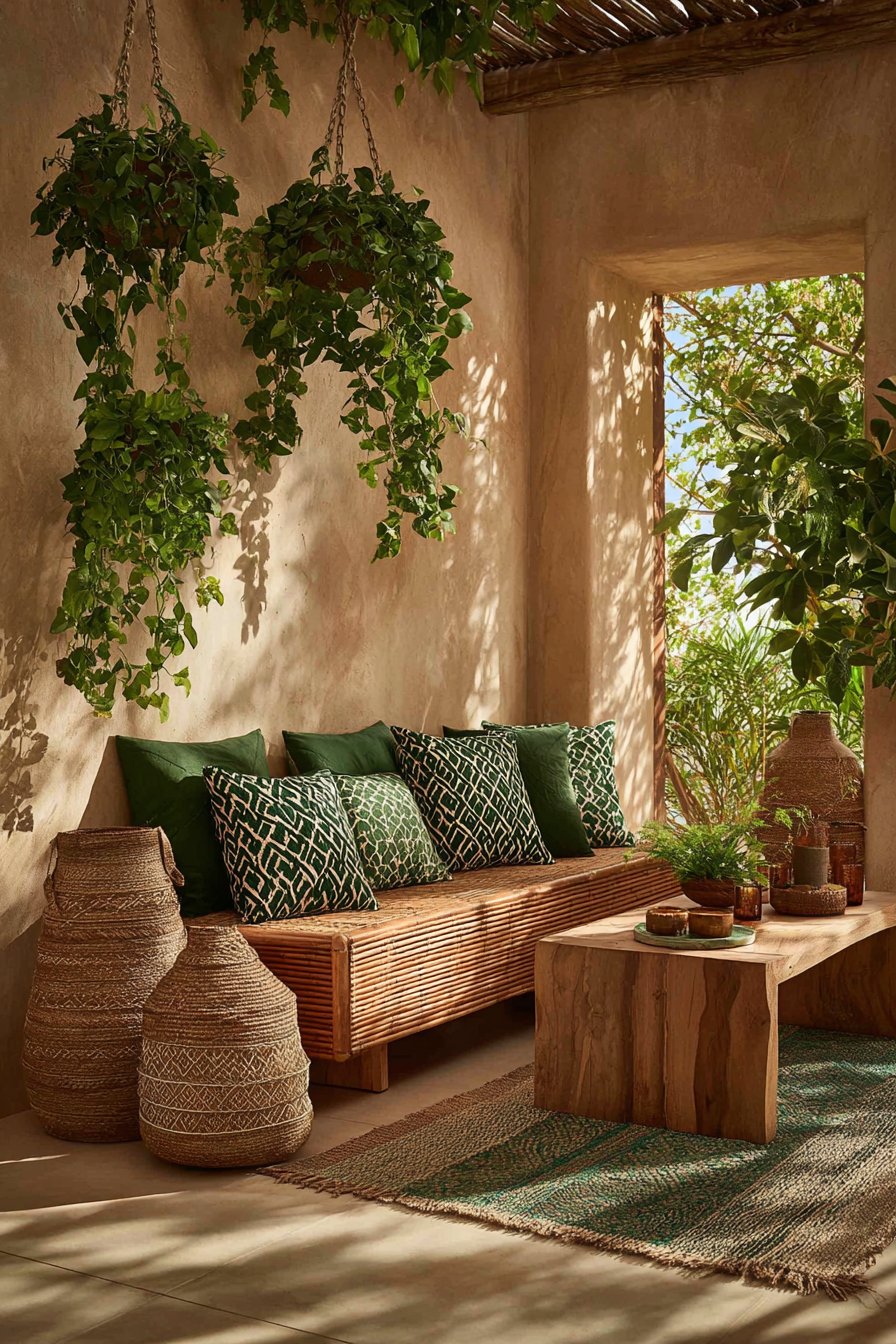
The eclectic mix in this room feels cohesive through color consistency. While styles vary widely, the tan and green palette unifies everything. This demonstrates how a strong color story permits adventurous mixing. The result feels collected over time rather than purchased all at once.
Key Design Tips:
- Mix multiple pattern styles while maintaining color consistency
- Incorporate macramé and woven textures for bohemian authenticity
- Layer rugs of different sizes and patterns for depth
- Use hanging plants to add movement and vertical interest
- Embrace eclectic mixing unified by a strong color palette
9. Mid-Century Modern Classic Appeal
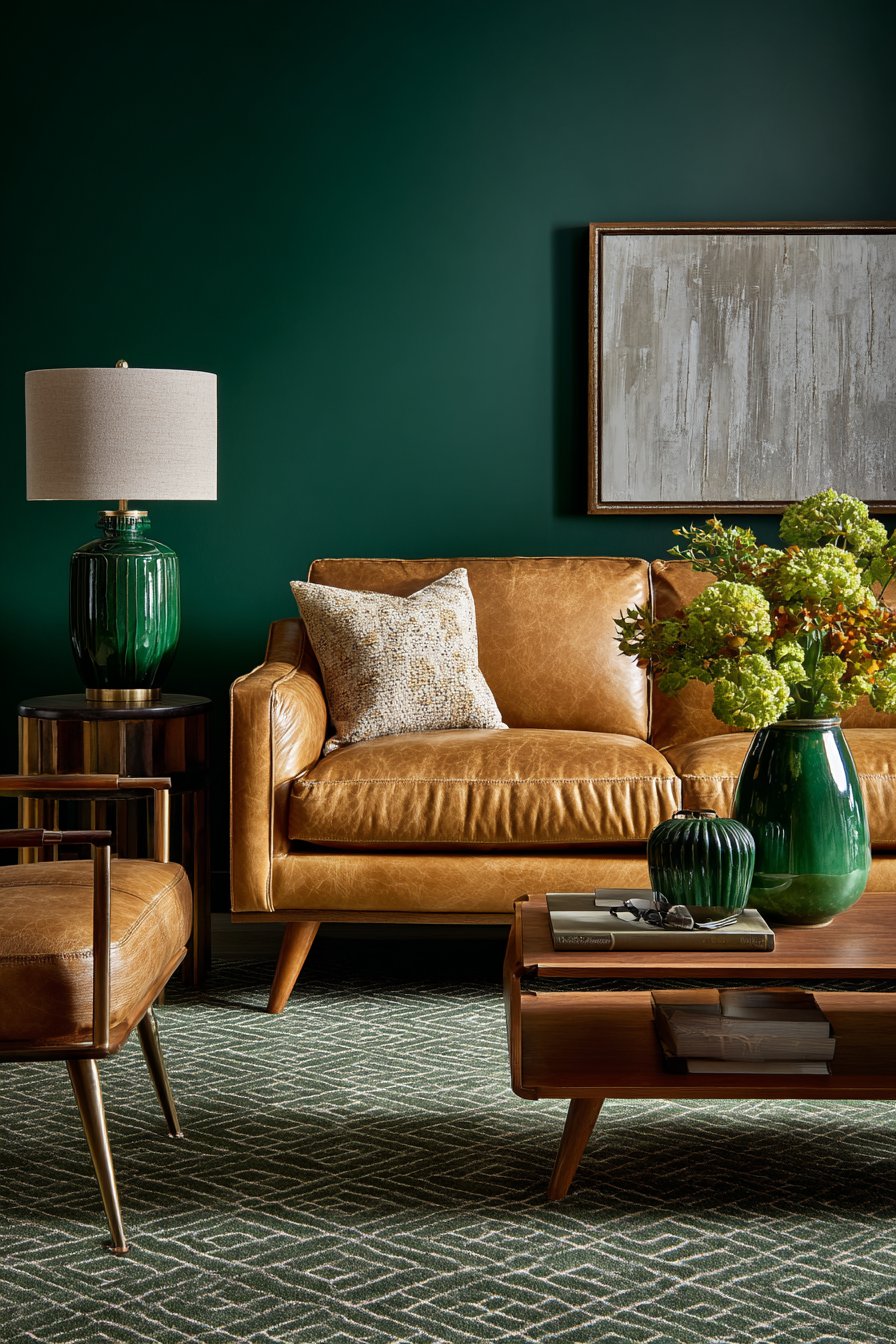
A tan leather sofa with tapered wooden legs embodies mid-century modern design. The walnut finish legs add warmth and period authenticity. A statement accent wall in deep forest green provides dramatic contrast. Remaining walls stay in warm sand tan for balance.
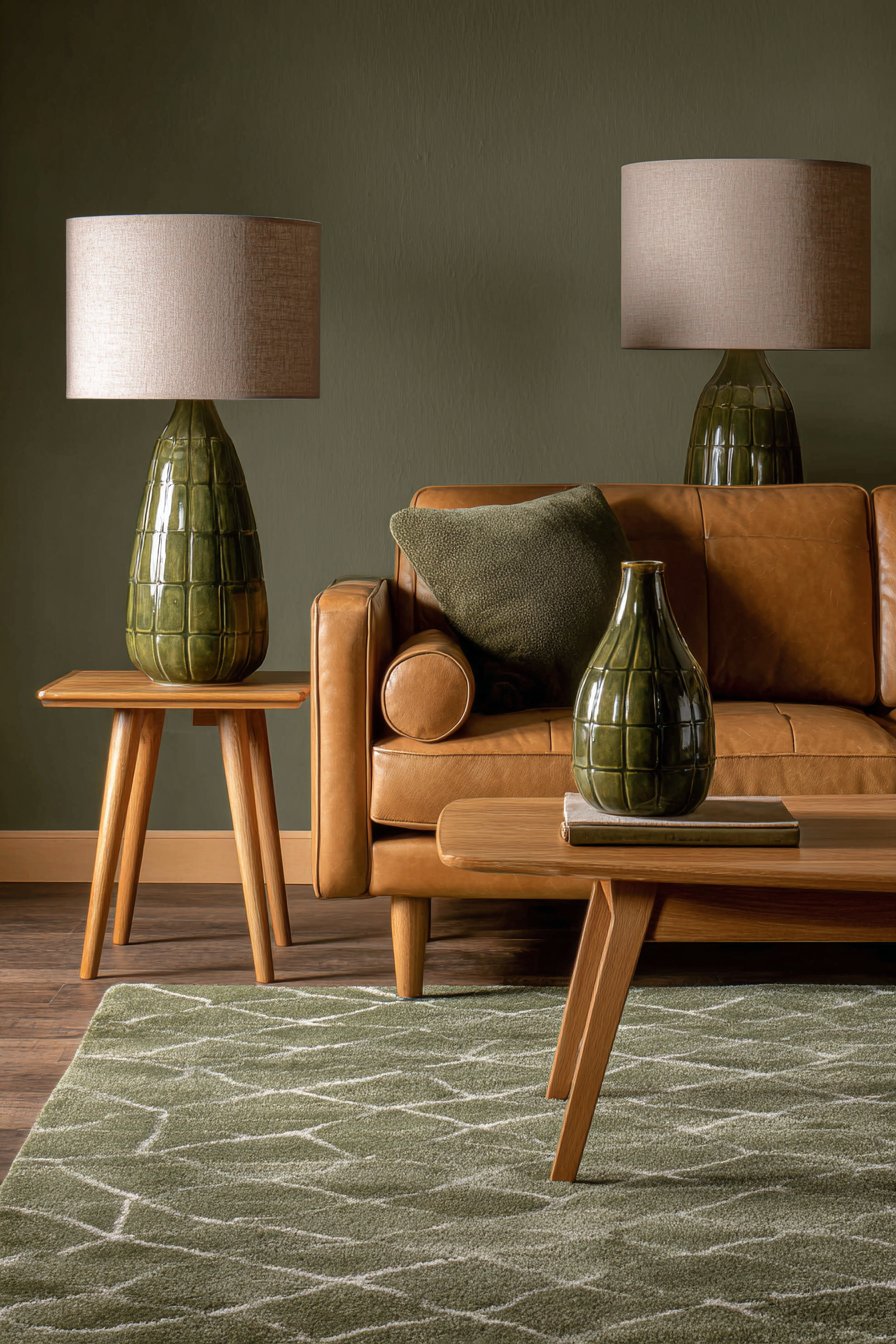
Vintage green ceramic table lamps flank the sofa on tan oak side tables. The lamps’ sculptural forms demonstrate mid-century craftsmanship. A geometric area rug in green and tan tones anchors the space beneath a teak coffee table.
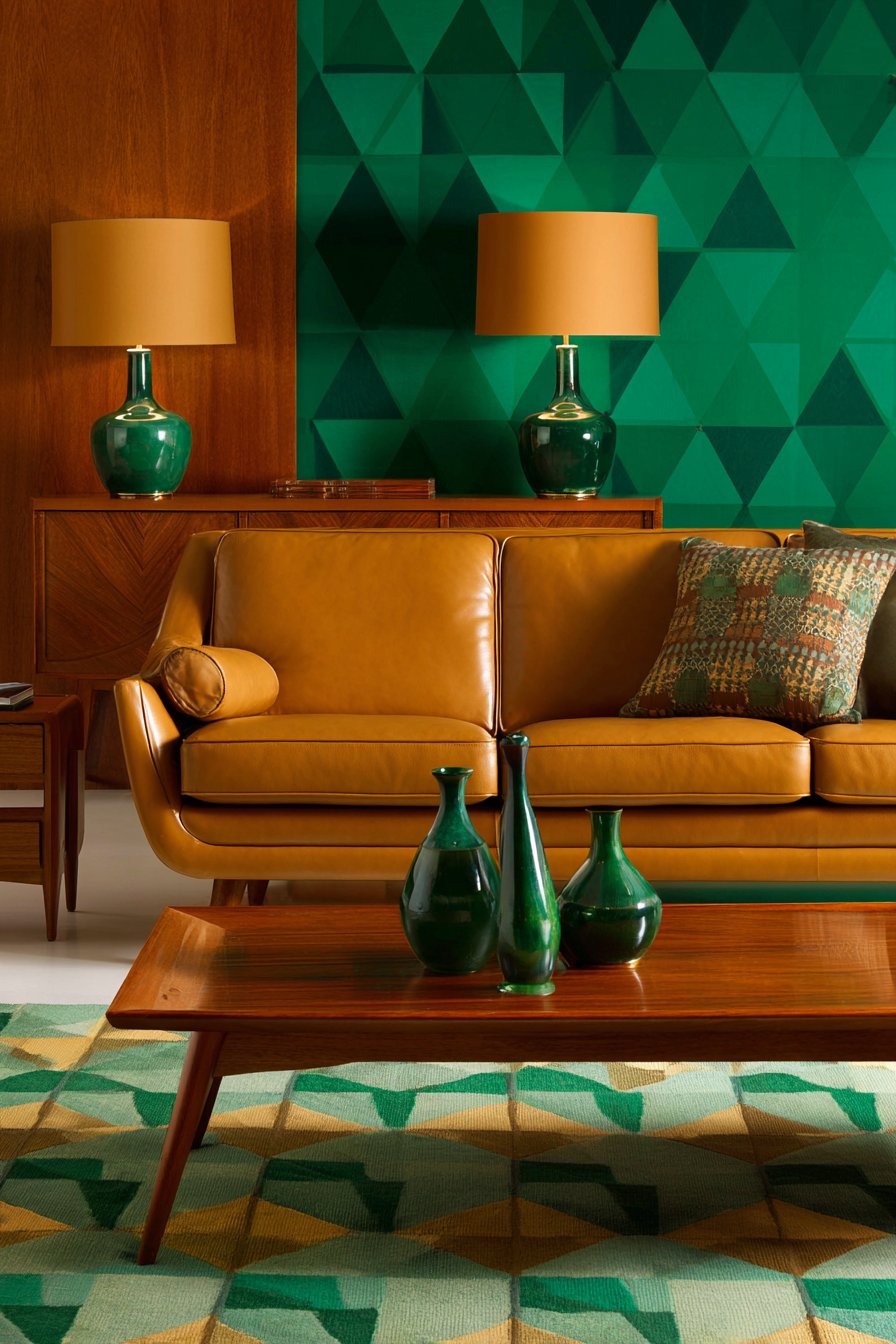
The iconic silhouettes in this room create instant recognition. Mid-century furniture features organic shapes and functional beauty. Every piece demonstrates the era’s “form follows function” philosophy. These timeless designs remain relevant decades after their introduction.
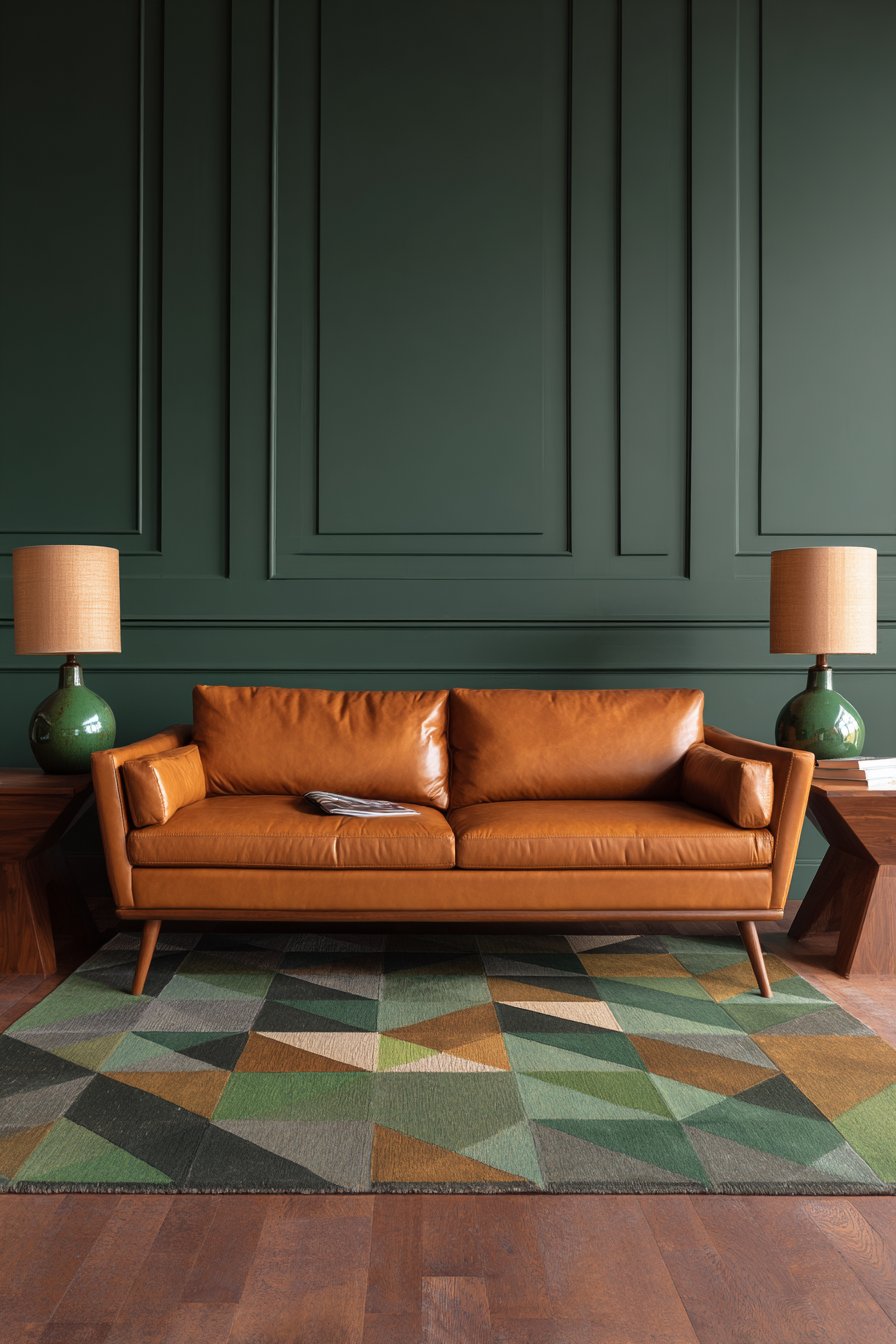
Wood species selection matters greatly in mid-century design. Teak, walnut, and oak appear throughout authentic pieces. The warm wood tones complement the tan and green palette perfectly. Investing in quality vintage or reproduction pieces ensures longevity.
Key Design Tips:
- Choose furniture with tapered legs and organic shapes
- Paint one accent wall in deep forest green for drama
- Use teak, walnut, or oak wood tones authentically
- Incorporate vintage ceramic lamps for period character
- Select geometric rugs that reflect mid-century patterns
10. Farmhouse Casual Elegance
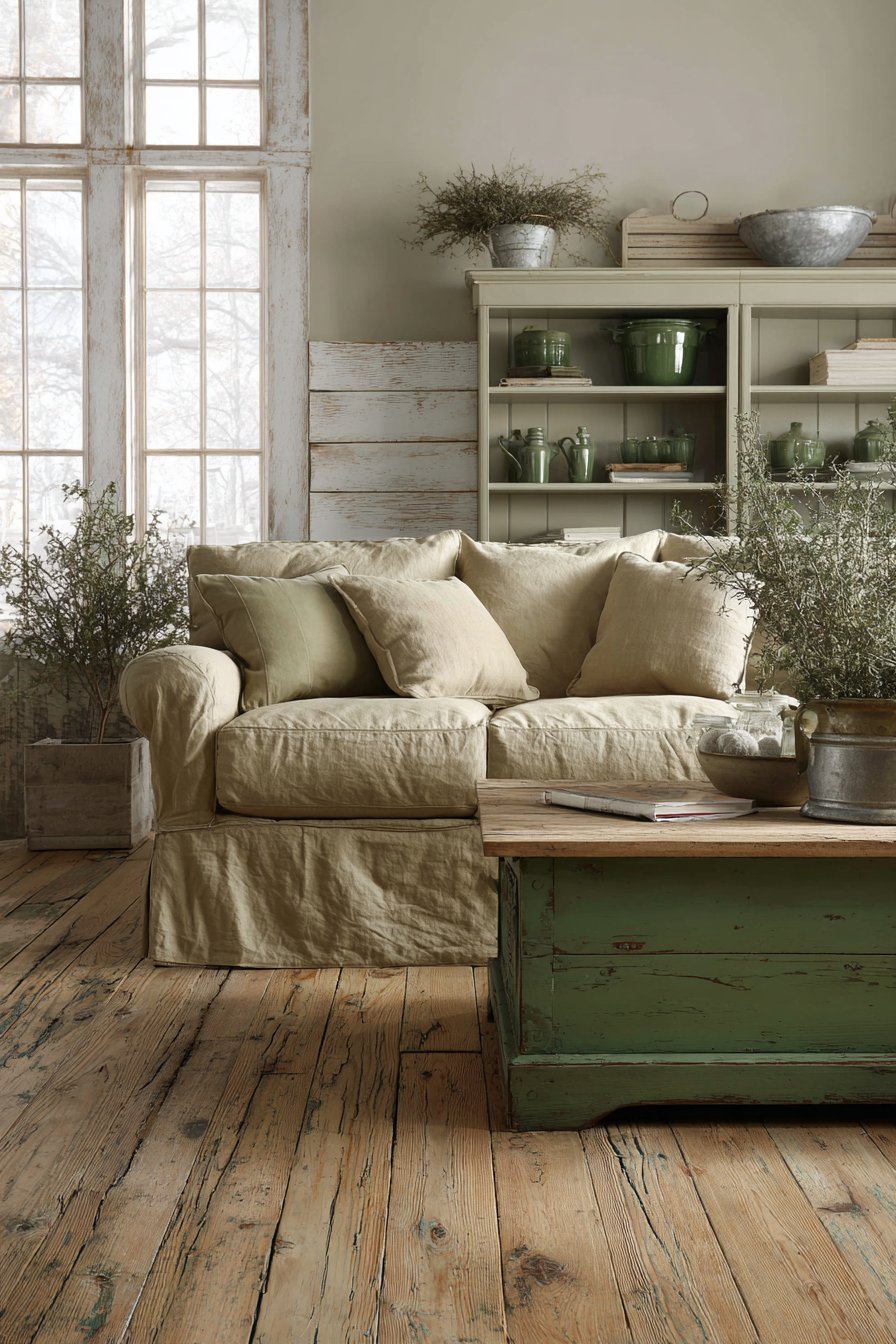
A tan slipcovered sofa with relaxed linen texture creates approachable comfort. The washable slipcover offers practicality for family living. A distressed green painted wood coffee table adds rustic charm. Shiplap accent wall in creamy tan creates architectural interest authentically.
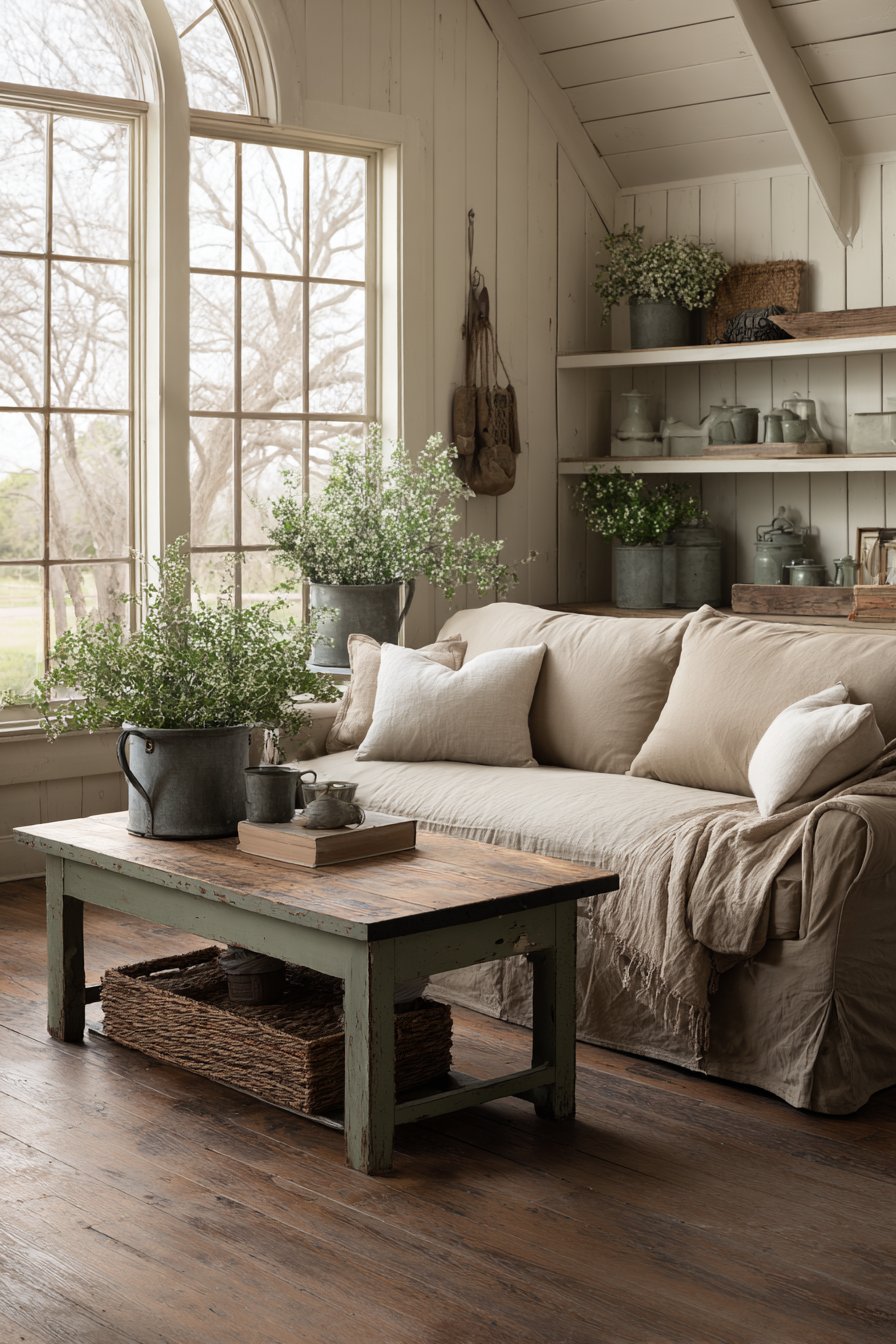
Open shelving displays green stoneware and tan ironstone collections. The mix of pottery styles reflects collected-over-time appeal. Natural greenery in galvanized tan metal containers adds fresh elements. Wide plank flooring in honey tan oak extends throughout the space.
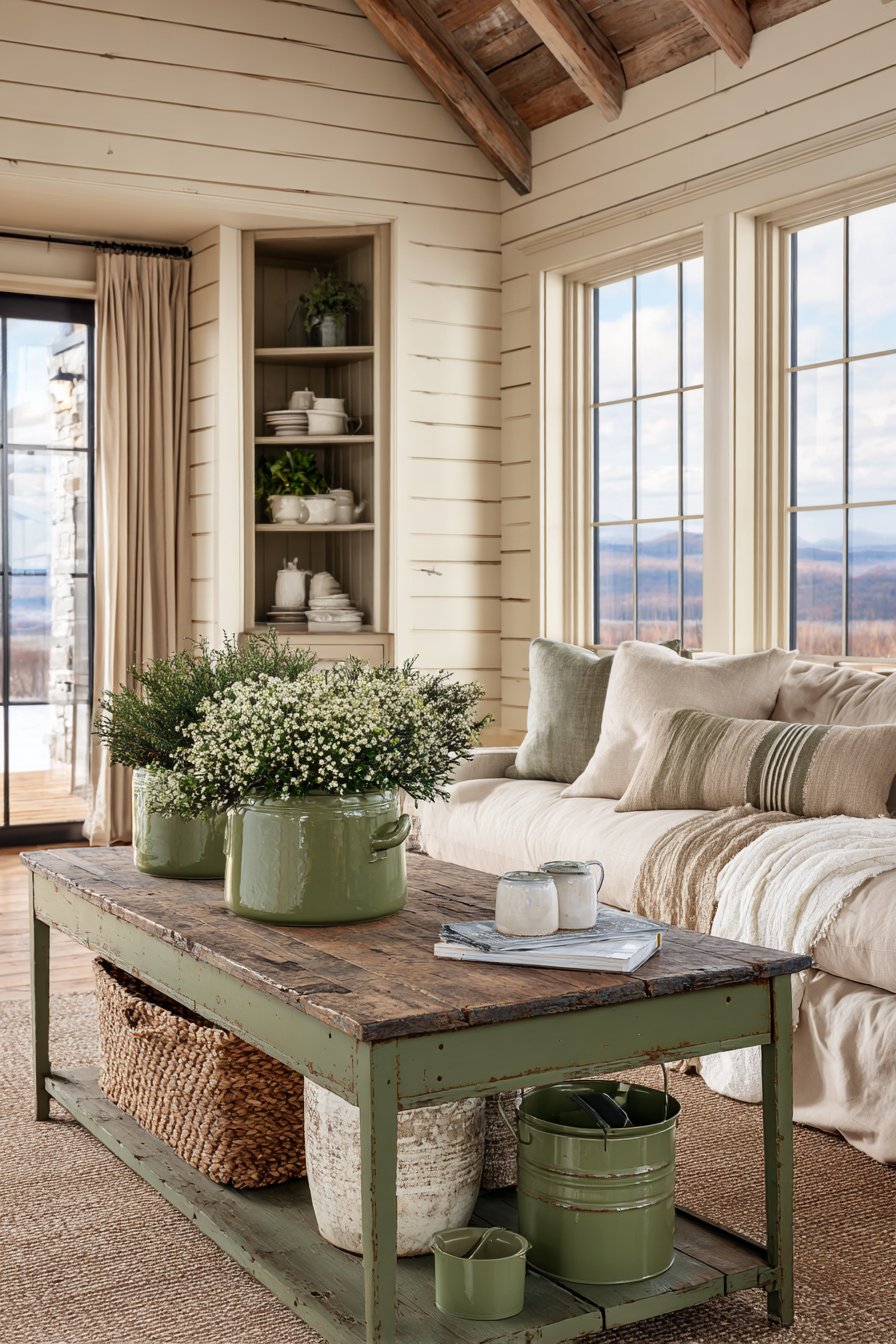
Morning light through farmhouse windows illuminates the space beautifully. The generous natural light enhances the casual, welcoming atmosphere. Simple window treatments allow maximum light penetration. This connection to natural rhythms feels inherently farmhouse.
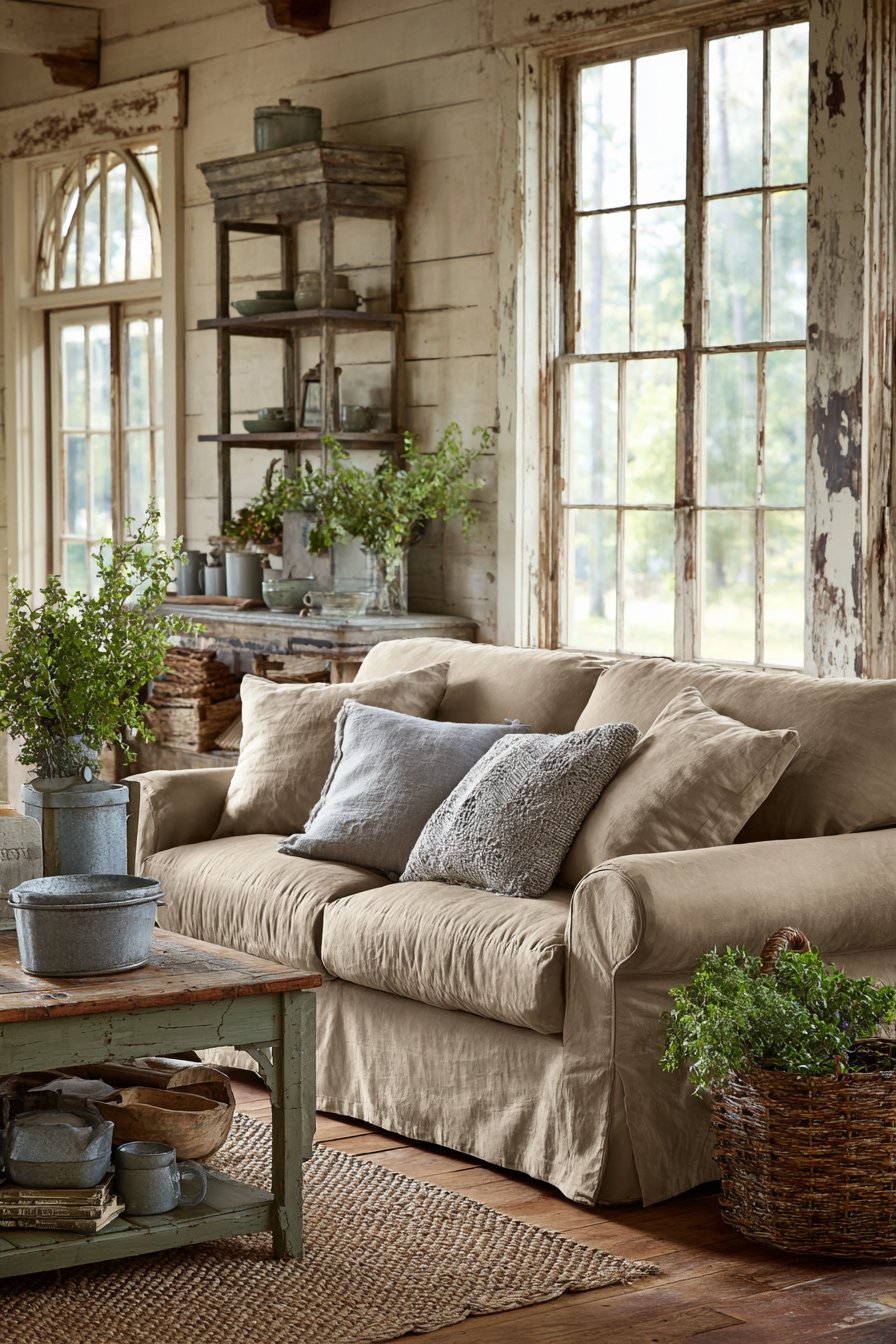
The distressed finish on the coffee table tells a story. Whether authentically aged or artfully distressed, the patina adds character. This imperfection makes the piece feel loved and lived-with. Farmhouse style celebrates these signs of life and use.
Key Design Tips:
- Choose slipcovered furniture for casual comfort and easy cleaning
- Add shiplap to accent walls for authentic farmhouse character
- Display collections on open shelving for personal touches
- Use distressed painted furniture for lived-in charm
- Incorporate galvanized metal containers for rustic authenticity
11. Minimalist Restrained Sophistication
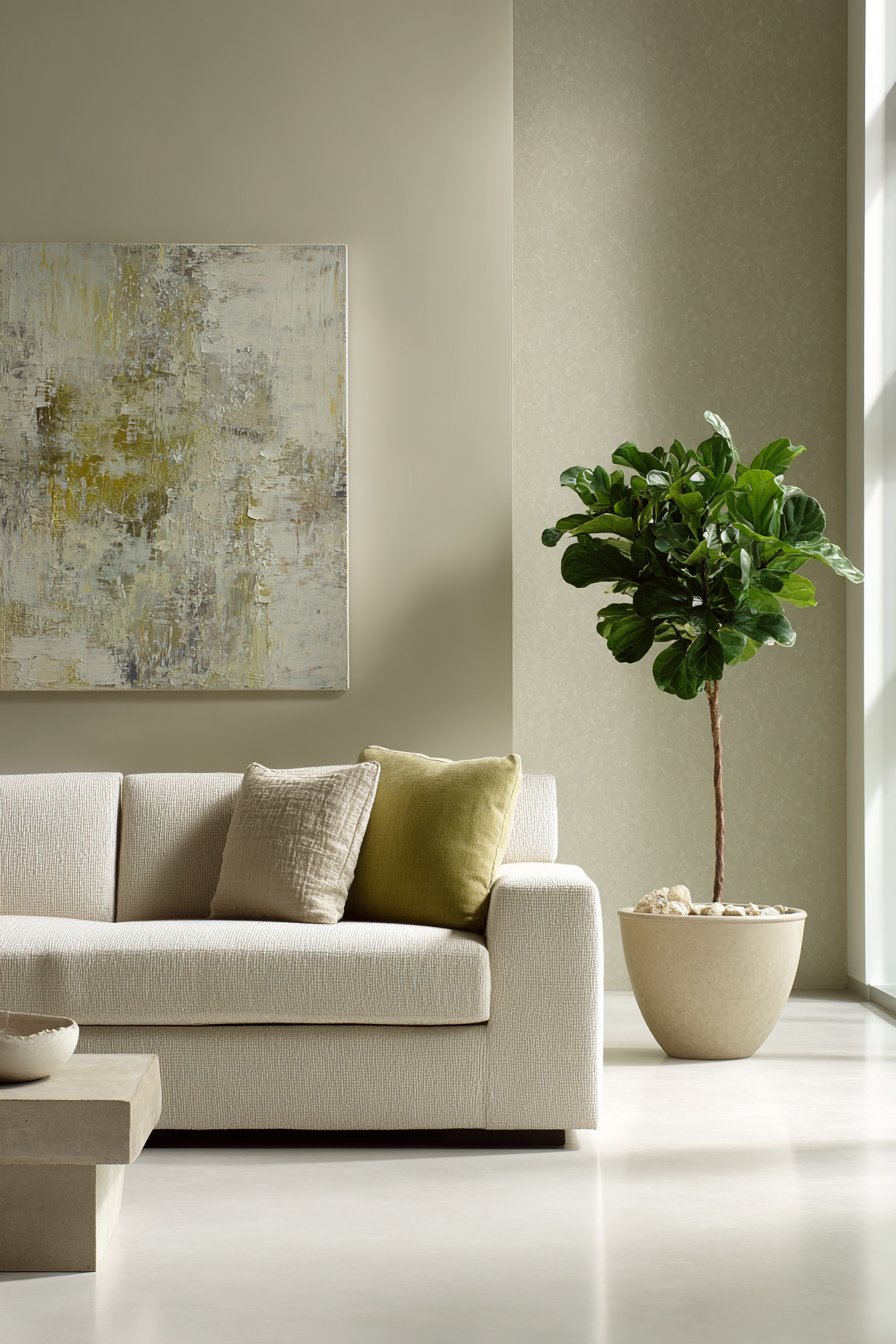
A low tan platform sofa with single sage green accent pillow embodies minimalist restraint. The singular pillow makes a statement through its isolation. Walls painted in warm greige tan create a neutral backdrop. A large abstract painting incorporating olive green and tan brushstrokes provides the focal point.
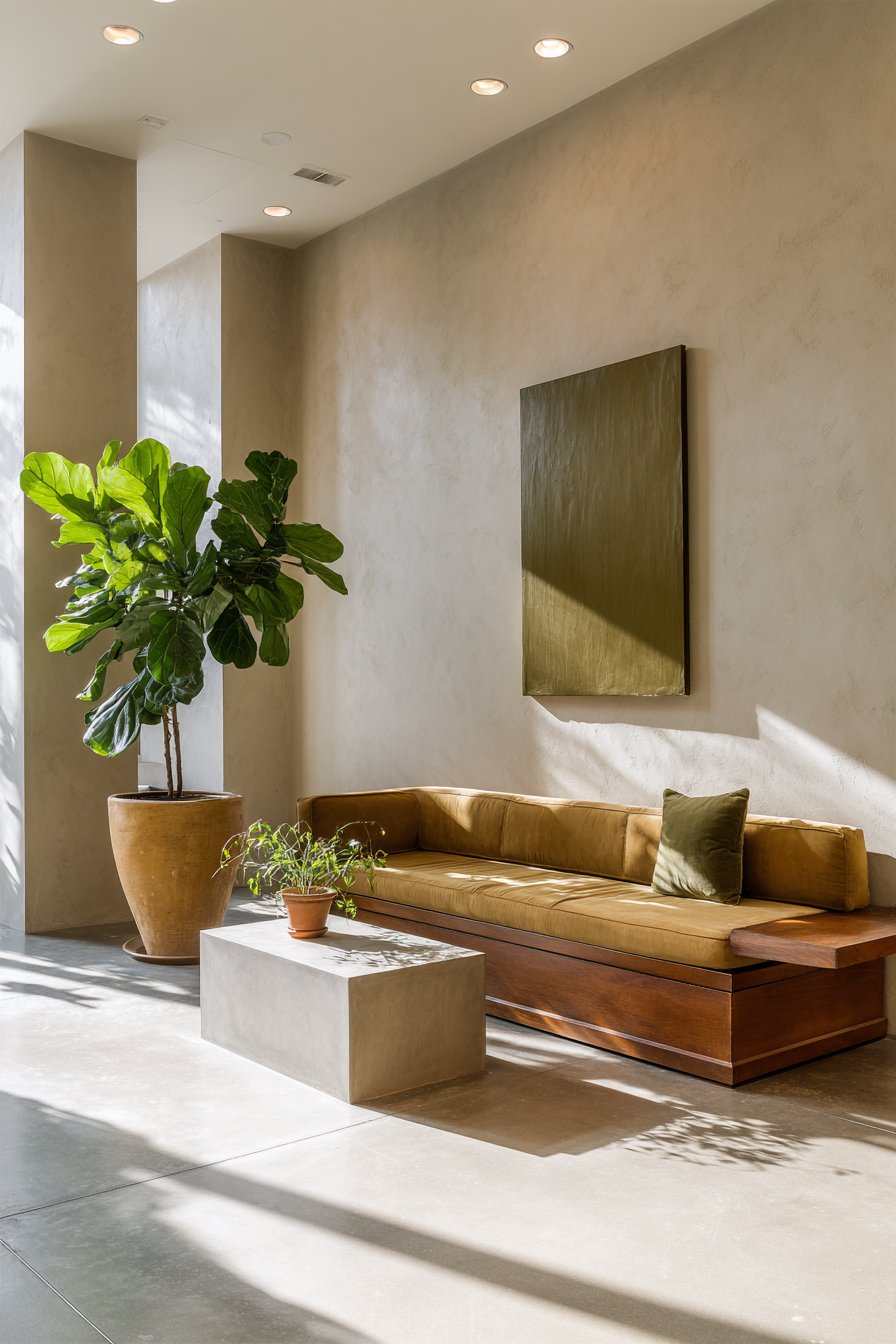
A simple tan concrete coffee table centers the space on polished concrete floors. The monochromatic material choice creates seamless flow. One substantial fiddle leaf fig in a tan ceramic planter provides the only living green element. Recessed lighting creates clean shadows without visible fixtures.
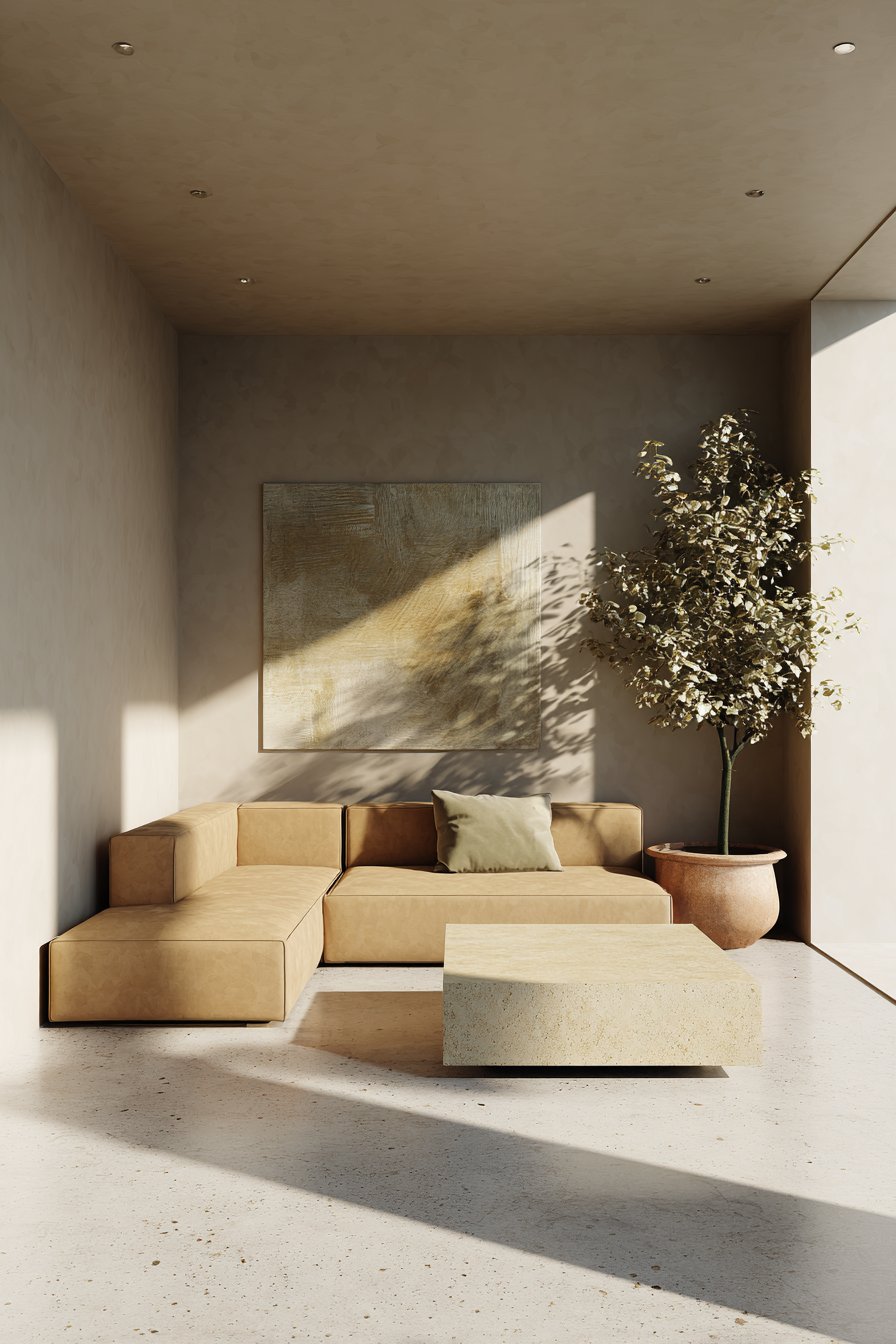
The emphasis on negative space creates breathing room visually. Every element receives consideration for its necessity and impact. Removing non-essential items allows appreciation of remaining pieces. This discipline creates powerful, peaceful environments.
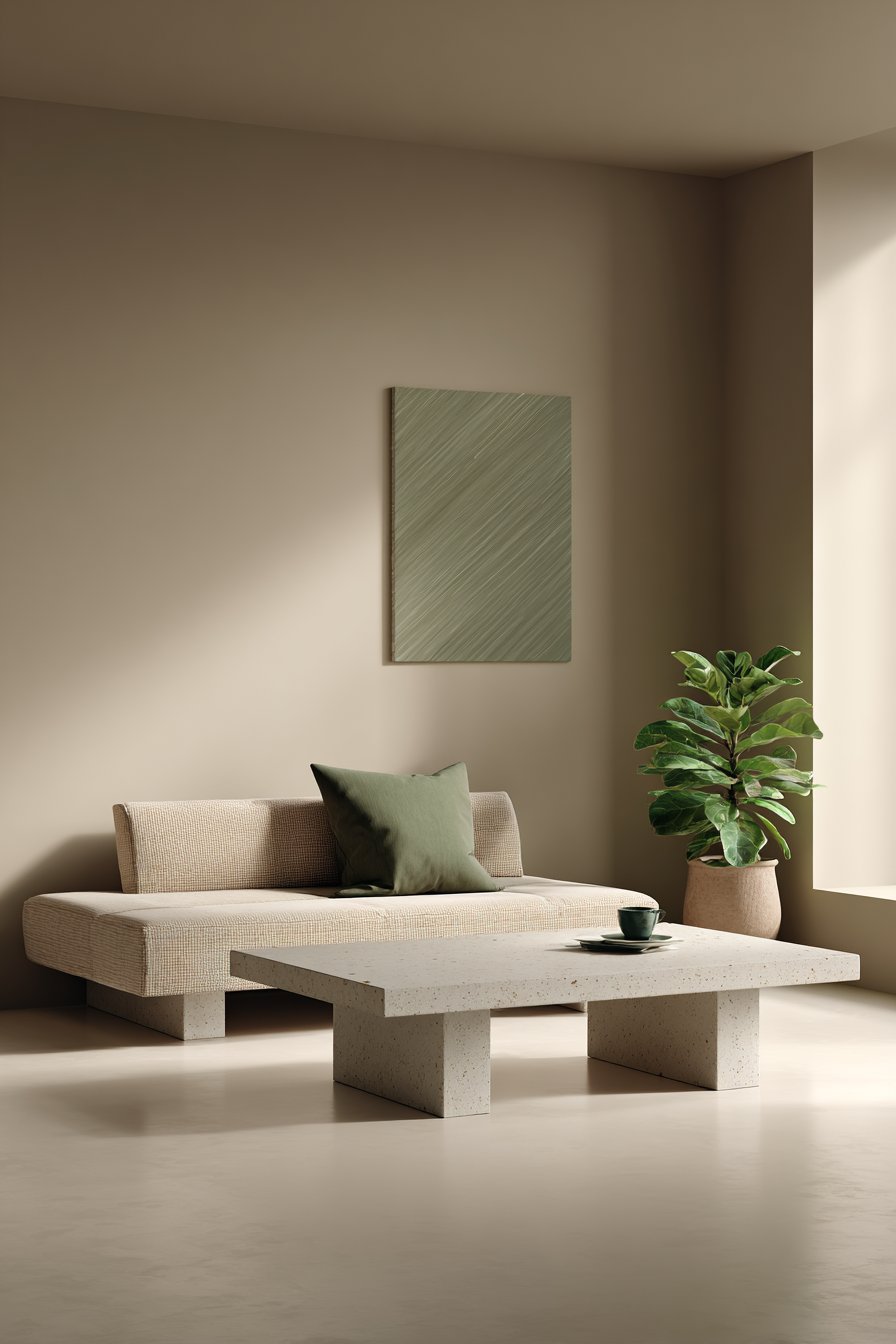
Material simplicity doesn’t mean cheapness in minimalist design. The concrete, linen, and ceramic all demonstrate quality. Surface finishes receive special attention in sparse environments. Polished concrete floors and smooth plaster walls become design features themselves.
Key Design Tips:
- Limit accent pillows to create intentional minimalist statements
- Use abstract art to introduce color without clutter
- Choose monochromatic materials for seamless flow
- Incorporate one substantial plant rather than multiple small ones
- Emphasize negative space as an important design element
12. Traditional Formal Grandeur
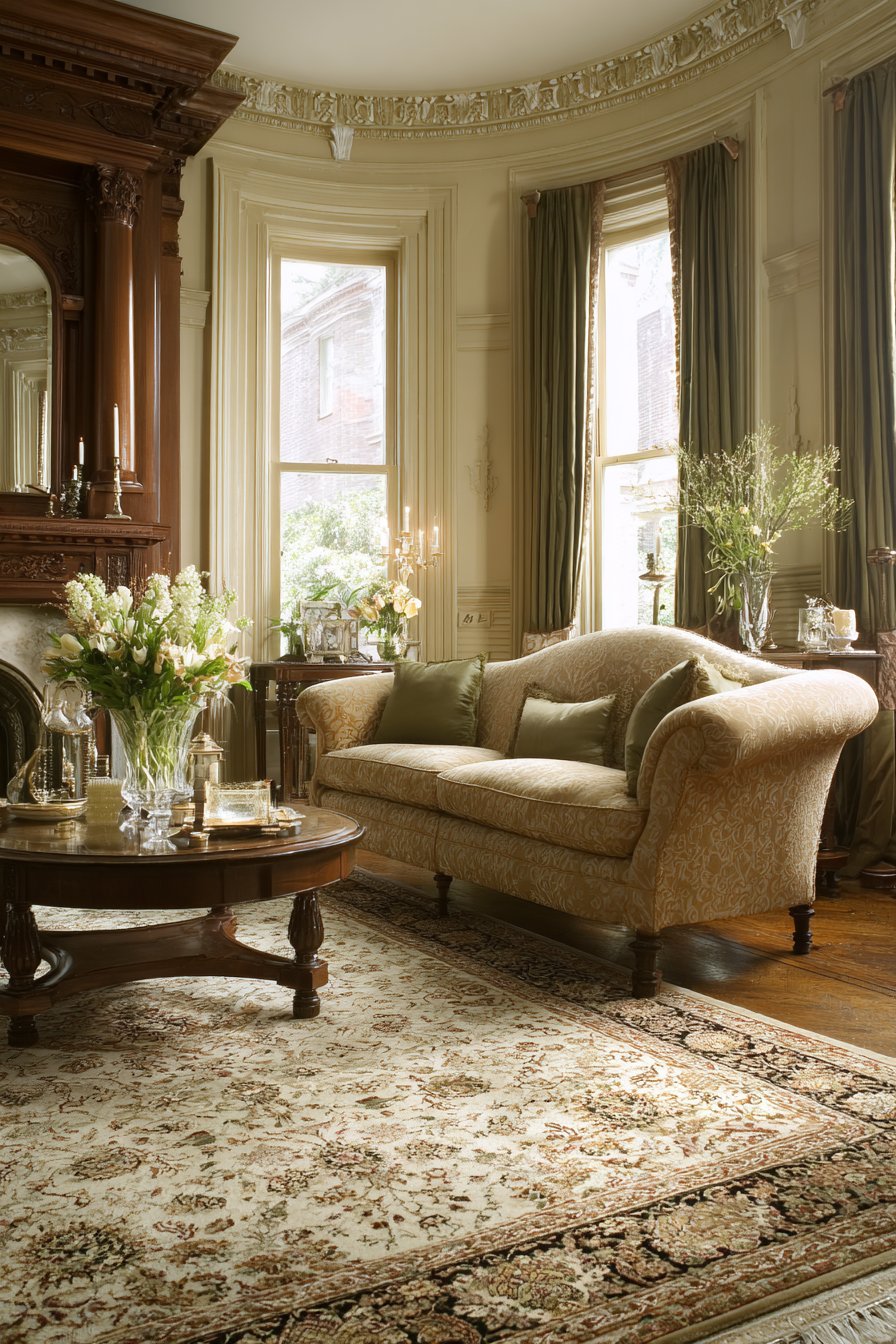
A tan damask sofa with rolled arms represents traditional upholstery at its finest. Green silk throw pillows with subtle sheen add luxurious contrast. Crown molding and wainscoting painted in creamy tan provide architectural detail. These permanent features elevate the entire room significantly.
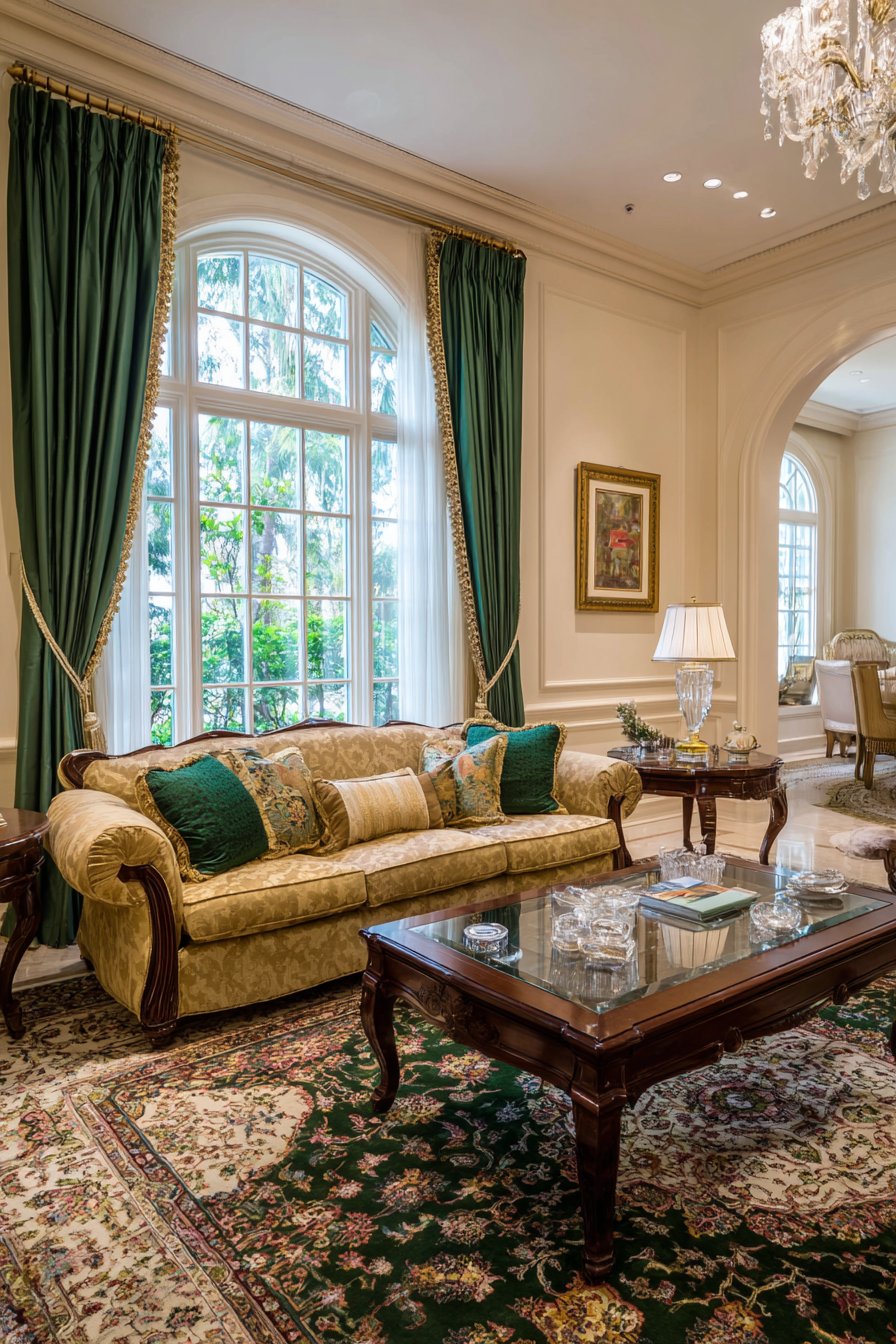
A Persian-style area rug combines deep green and tan medallion patterns. The intricate design anchors the space beneath a cherry wood coffee table. Green velvet window treatments with tan trim frame tall windows elegantly. Crystal table lamps with tan silk shades provide refined lighting.
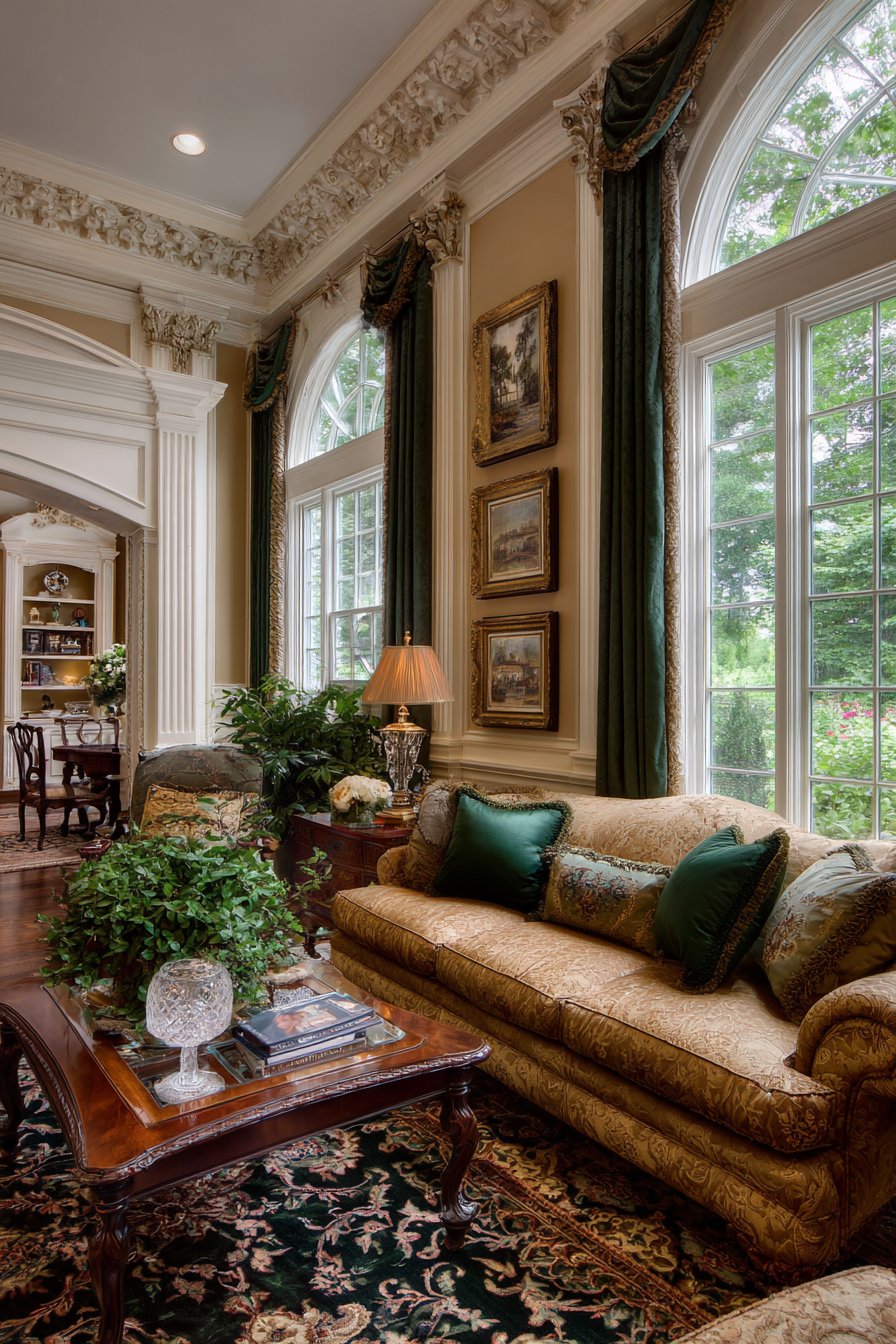
The formal arrangement in this room follows traditional design principles. Symmetry creates balance and order throughout. Pairs of matching elements reinforce this classical approach. The result feels established and permanent rather than trendy.
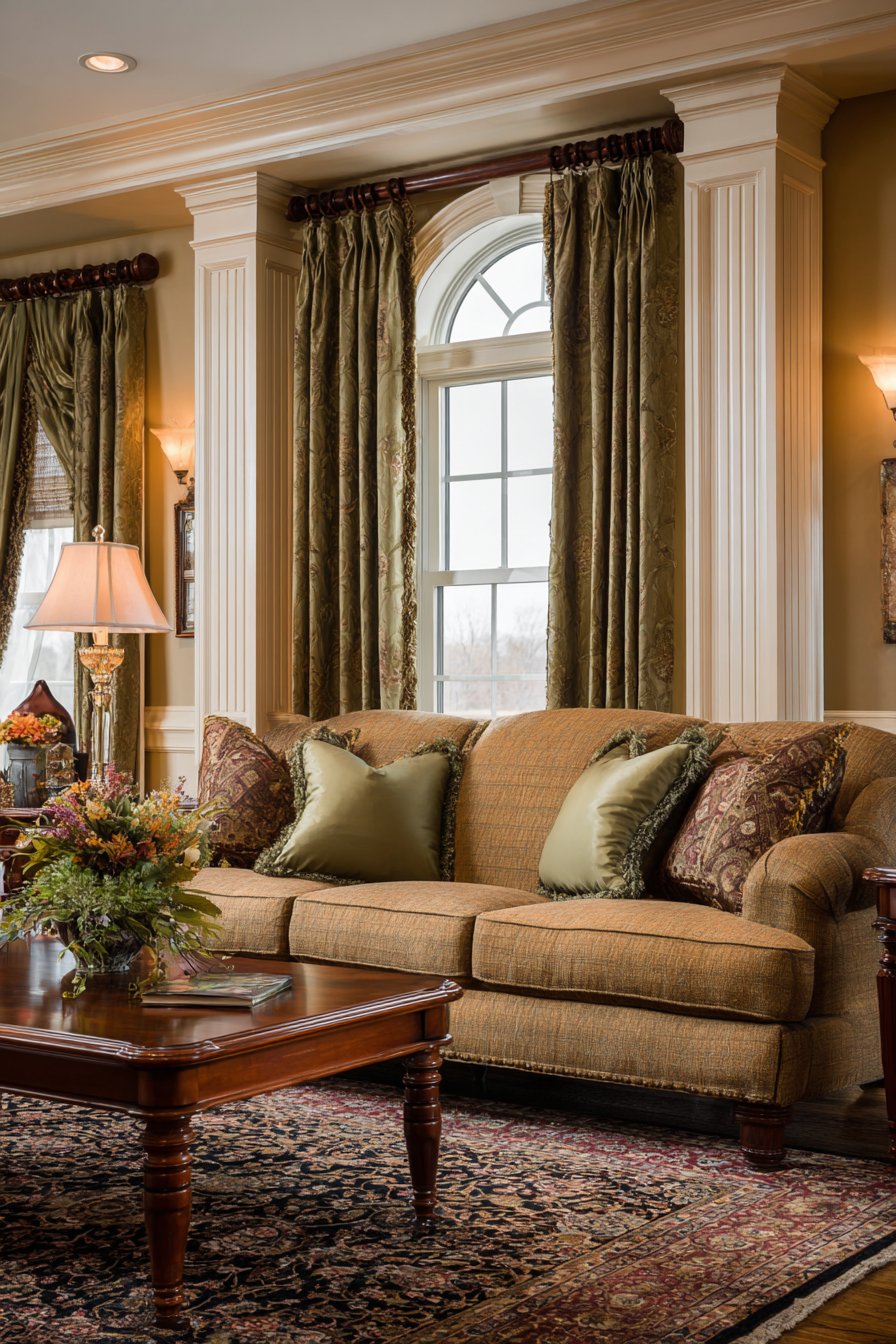
Quality fabrics define traditional design success. Damask, silk, and velvet all appear prominently here. These luxurious materials require proper care but reward with longevity. The investment in fine fabrics creates rooms that endure for generations.
Key Design Tips:
- Choose traditional upholstery with rolled arms and damask fabrics
- Add architectural details like crown molding and wainscoting
- Use Persian-style rugs for pattern and traditional authenticity
- Incorporate crystal lamps for refined, elegant lighting
- Arrange furniture symmetrically following classical design principles
13. Coastal Breezy Relaxation
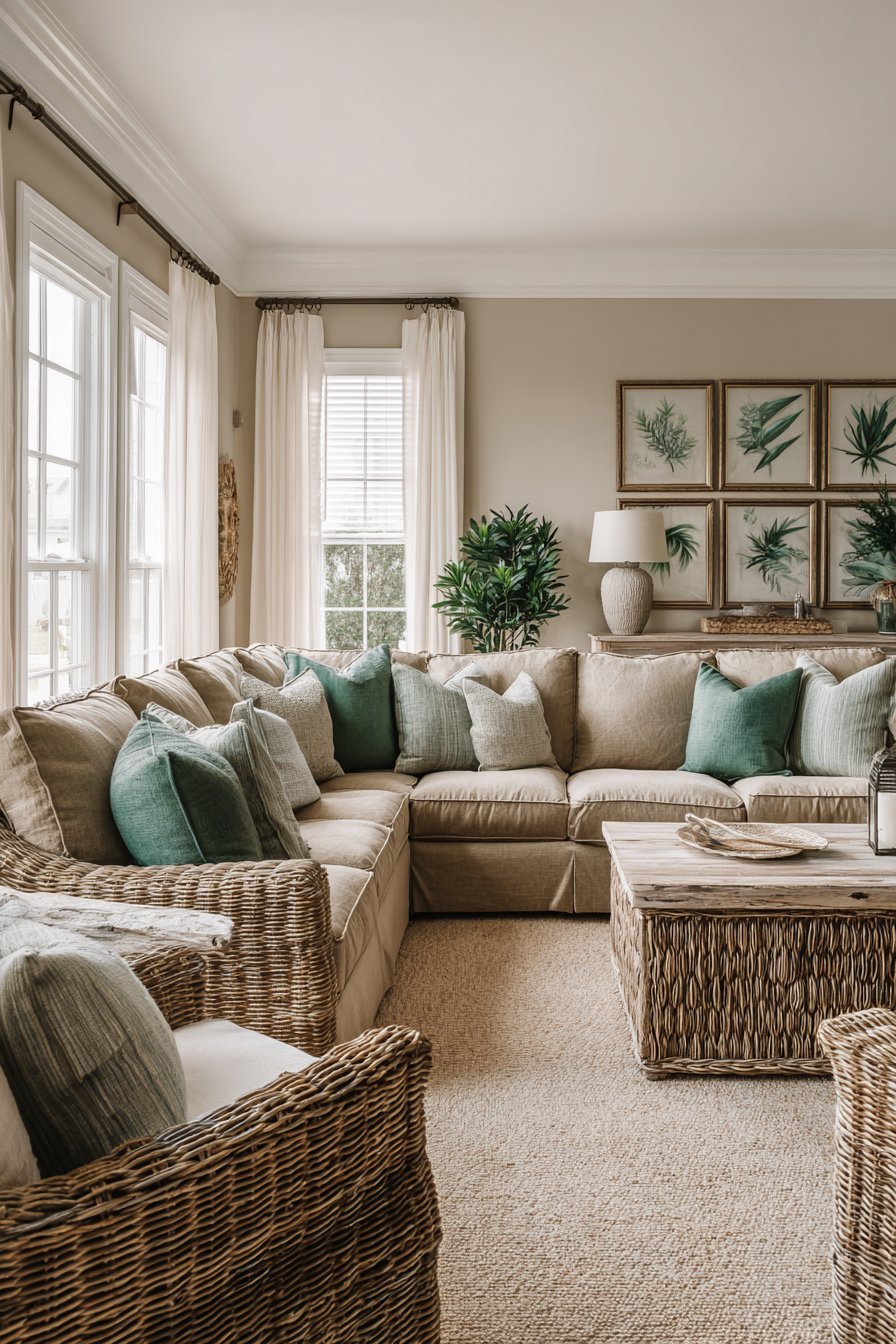
A tan linen sectional with relaxed slipcovers creates laid-back coastal comfort. Seafoam green accent pillows add soft color reminiscent of ocean waves. Walls finished in sandy tan evoke beach tones naturally. A natural driftwood coffee table adds organic texture and coastal authenticity.
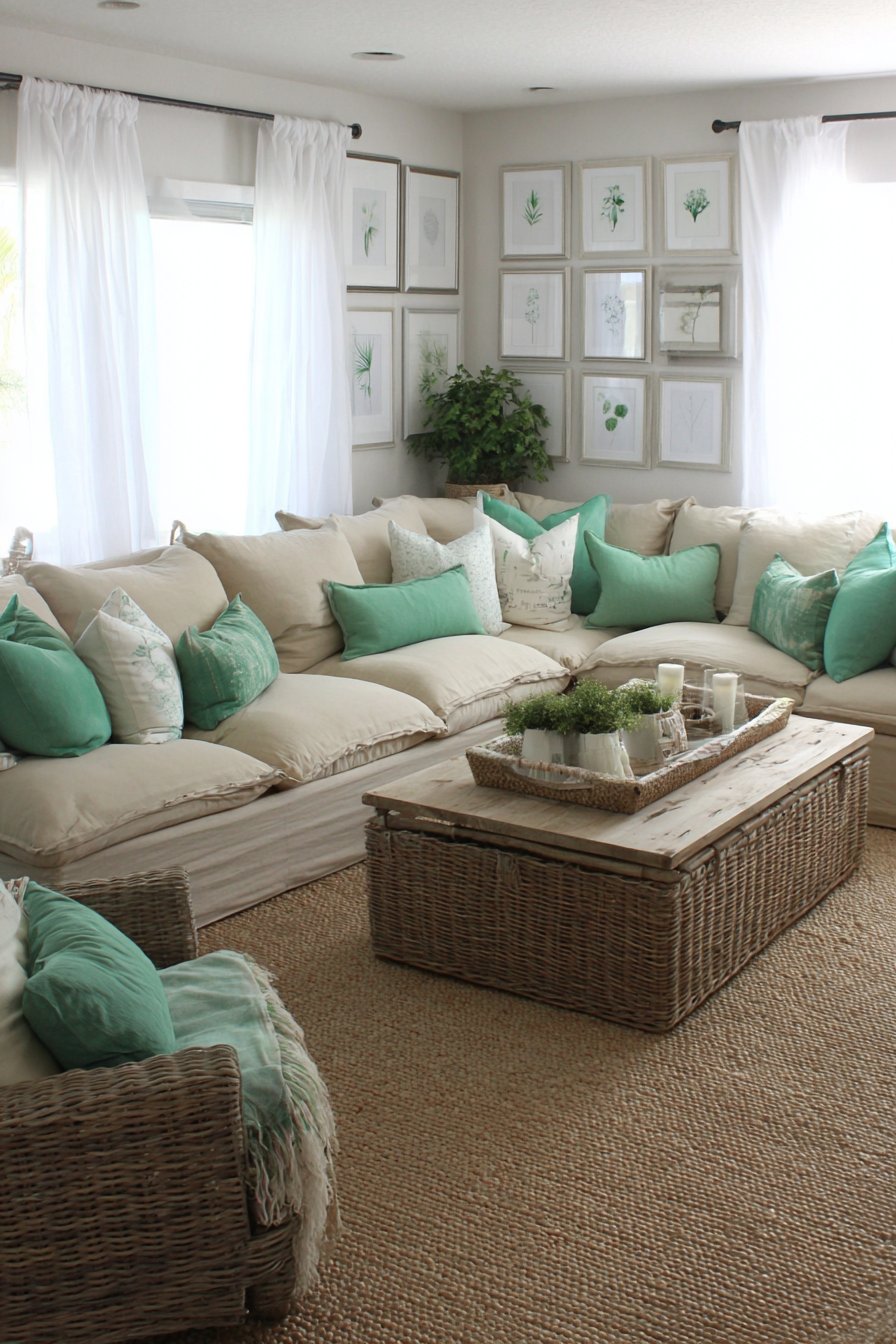
A seagrass rug in tan tones grounds the space beneath rattan accent chairs. Green cushions on the rattan chairs maintain color consistency. Botanical prints of green coastal plants in tan driftwood frames create a gallery wall. Sheer white curtains filter bright seaside light beautifully.
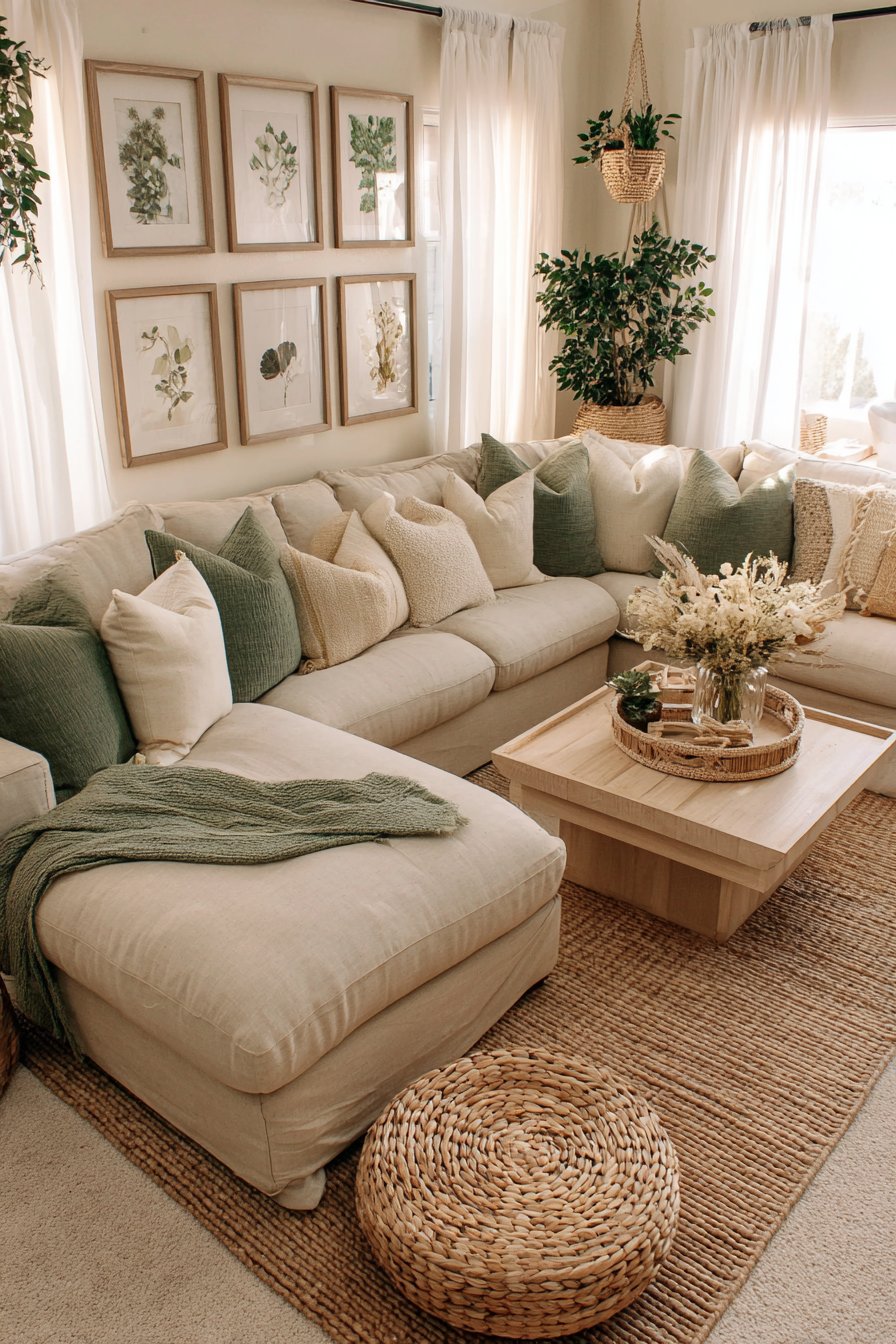
The breezy atmosphere comes from both color and material choices. Natural fibers like linen, seagrass, and rattan all breathe well. These materials stay cool in warm climates. The light colors reflect rather than absorb heat.
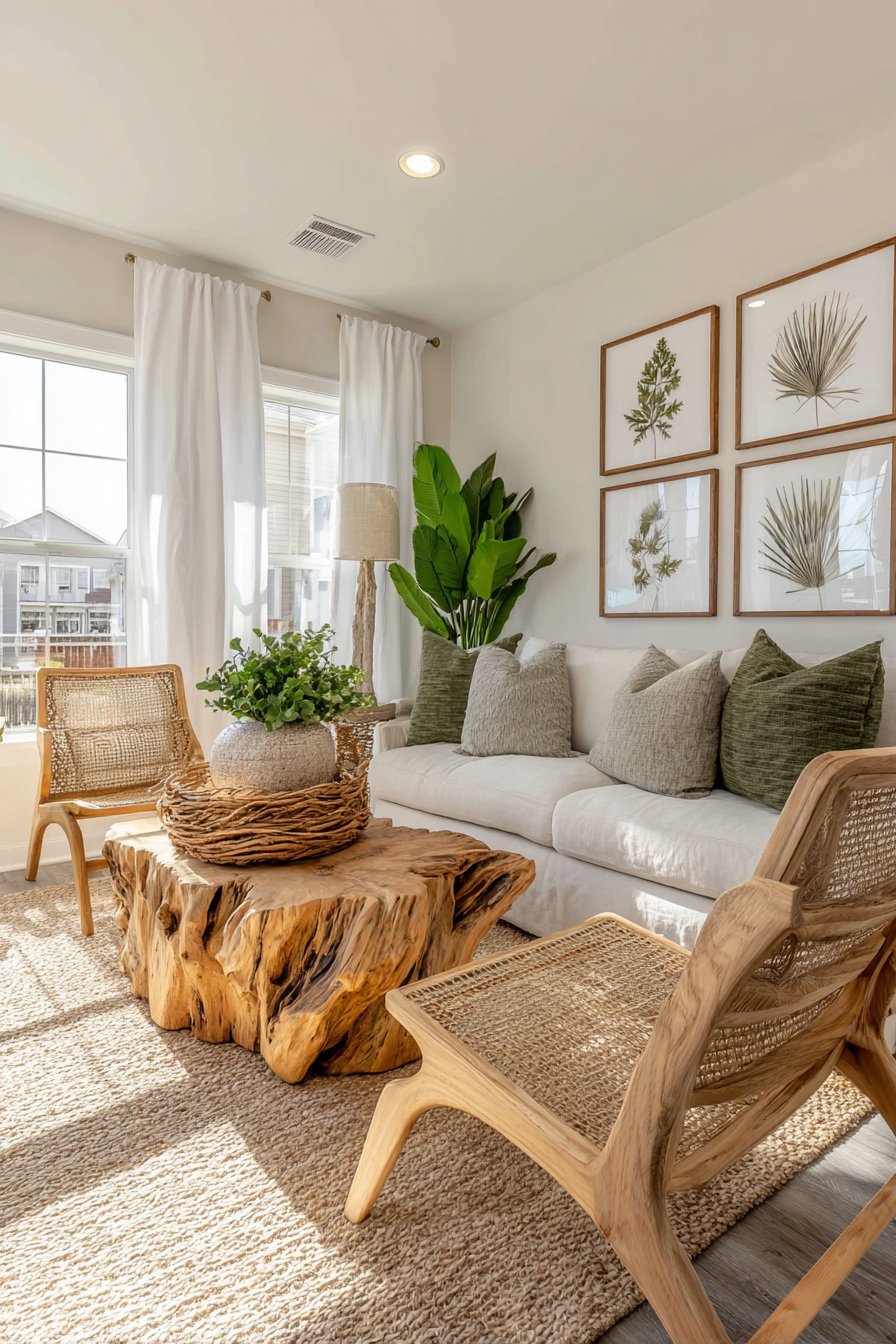
Driftwood elements connect this interior to its coastal setting. Whether collected from local beaches or purchased, driftwood adds character. Each piece features unique weathering and shape. These natural sculptures bring the outdoors inside organically.
Key Design Tips:
- Use linen slipcovers for relaxed, washable coastal comfort
- Incorporate driftwood furniture and frames for authentic beach appeal
- Choose seagrass and rattan for natural, breathable materials
- Display botanical prints of coastal plants for thematic consistency
- Keep colors light and reflective for bright, breezy atmospheres
14. Industrial Urban Edge
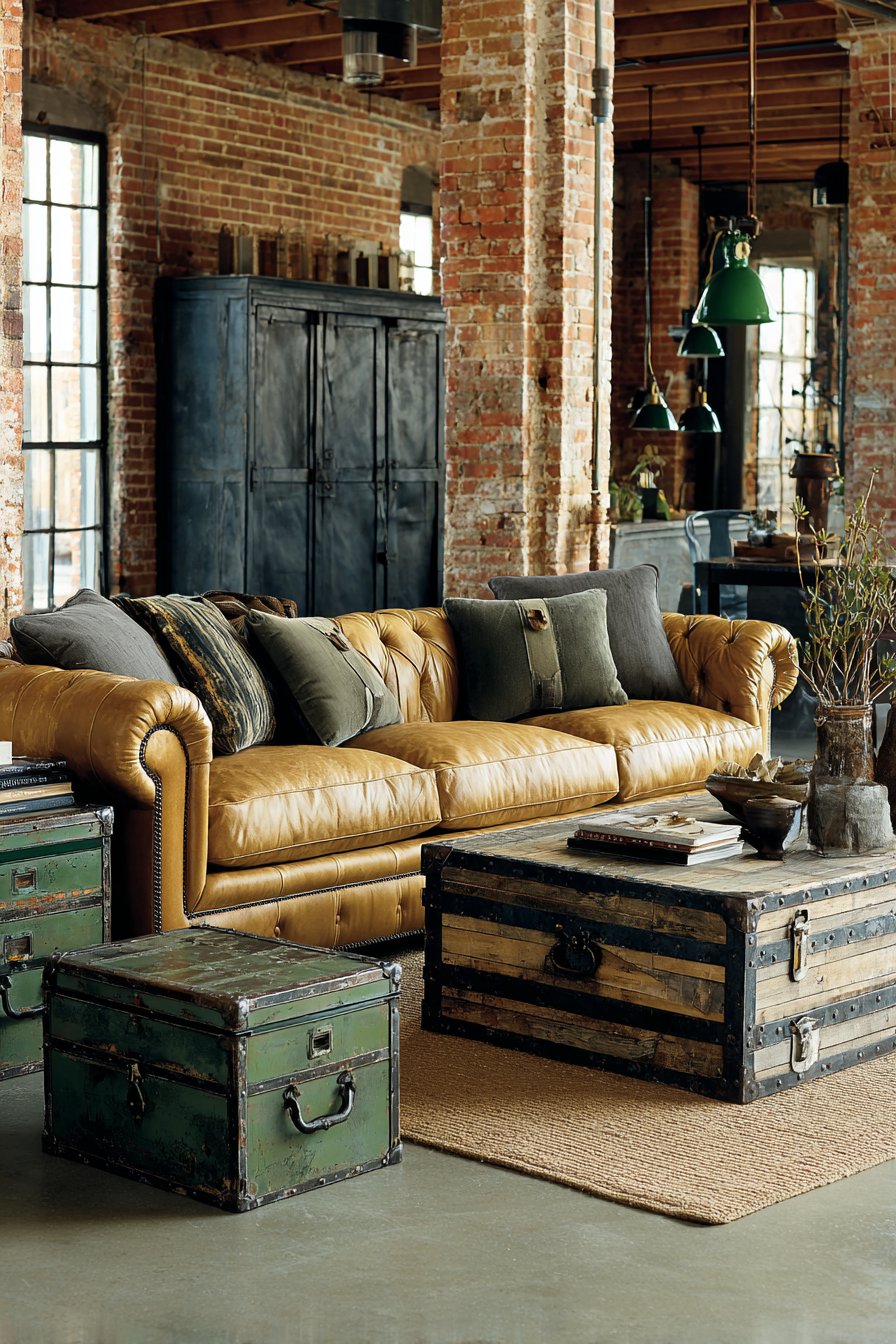
A tan leather chesterfield sofa provides classic contrast against exposed brick walls. The brick painted in muted tan tones softens the industrial edge. Metal and reclaimed wood coffee table features aged patina with green metal accents. Factory-style pendant lights with green enamel shades hang from exposed ceiling beams.
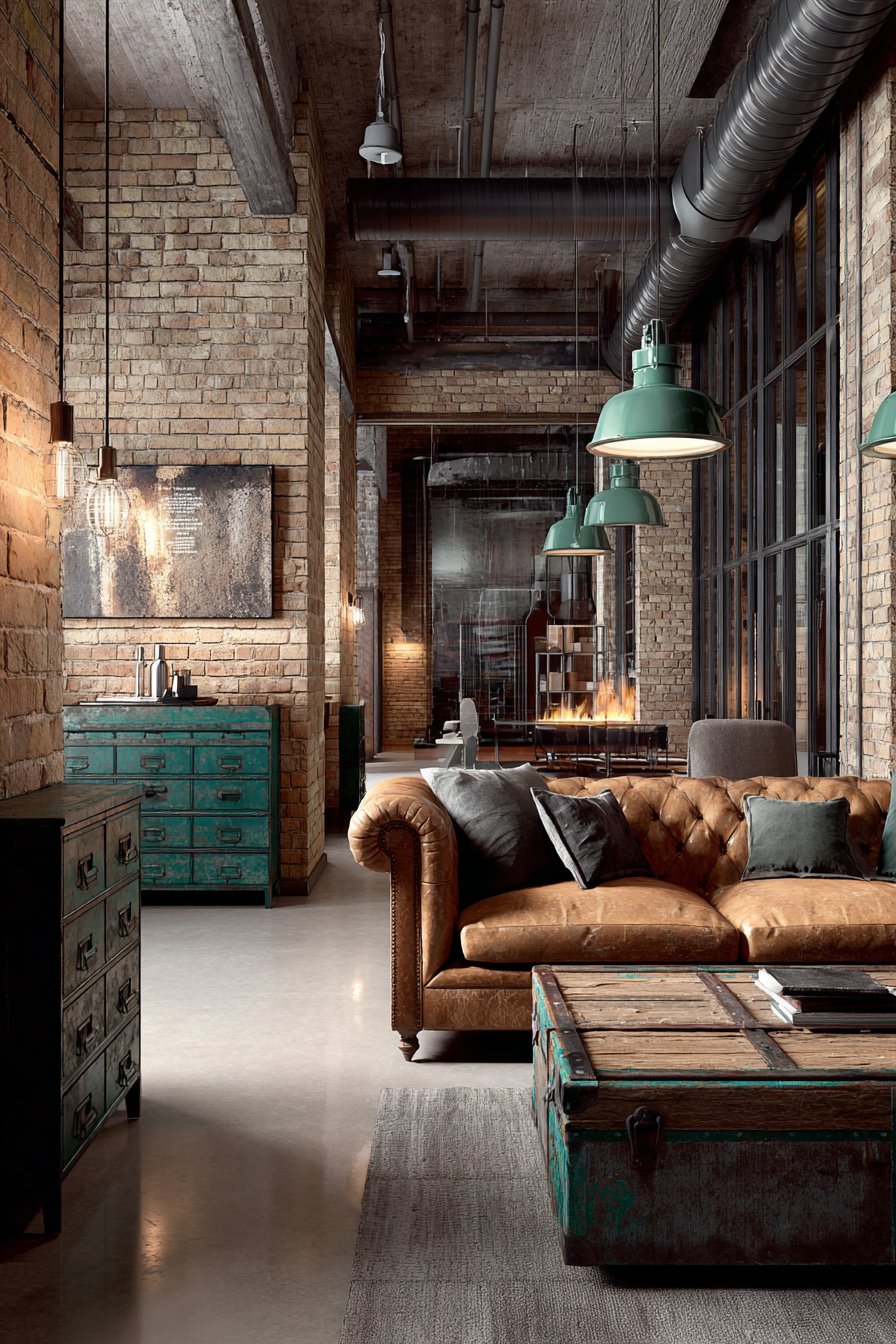
Natural tan wood ceiling beams add warmth to the industrial space. Concrete floors in light tan polished finish extend throughout. Green metal storage lockers repurposed as side tables add functional style. The vintage industrial pieces tell stories of previous lives.
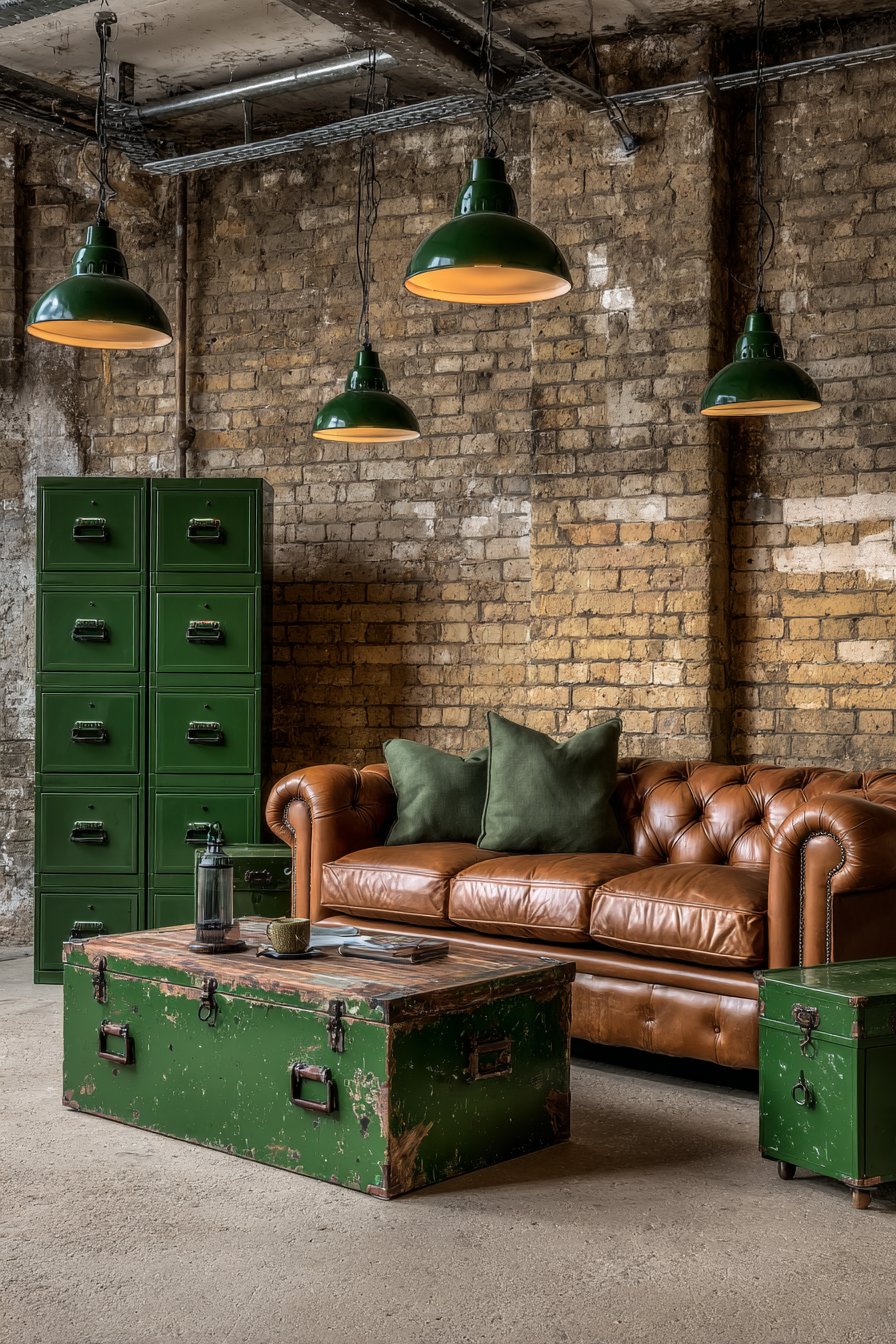
The mix of rough and refined creates industrial appeal. Exposed brick contrasts with smooth leather beautifully. Raw concrete meets polished metal surfaces. This juxtaposition creates visual interest and textural depth.
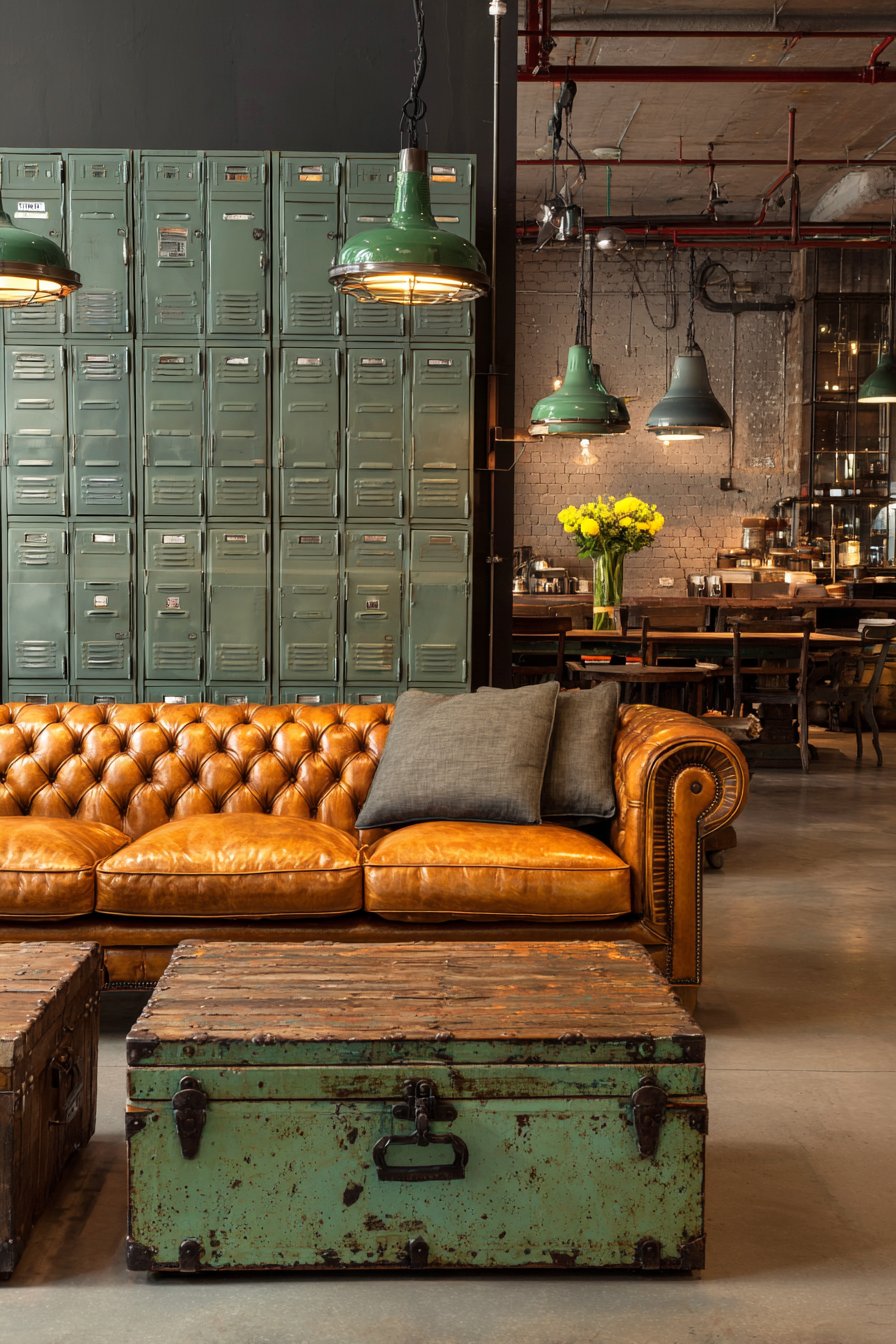
Repurposed industrial elements add authenticity and sustainability. Vintage lockers, factory lights, and reclaimed wood all have previous histories. These pieces often cost less than new furniture while offering more character. The environmental benefits add another advantage.
Key Design Tips:
- Paint exposed brick in muted tones to soften industrial edges
- Incorporate factory-style lighting with colored enamel shades
- Use repurposed industrial elements for authentic character
- Mix rough textures like brick with refined leather
- Choose polished concrete floors for durable, industrial aesthetic
15. Maximalist Layered Opulence
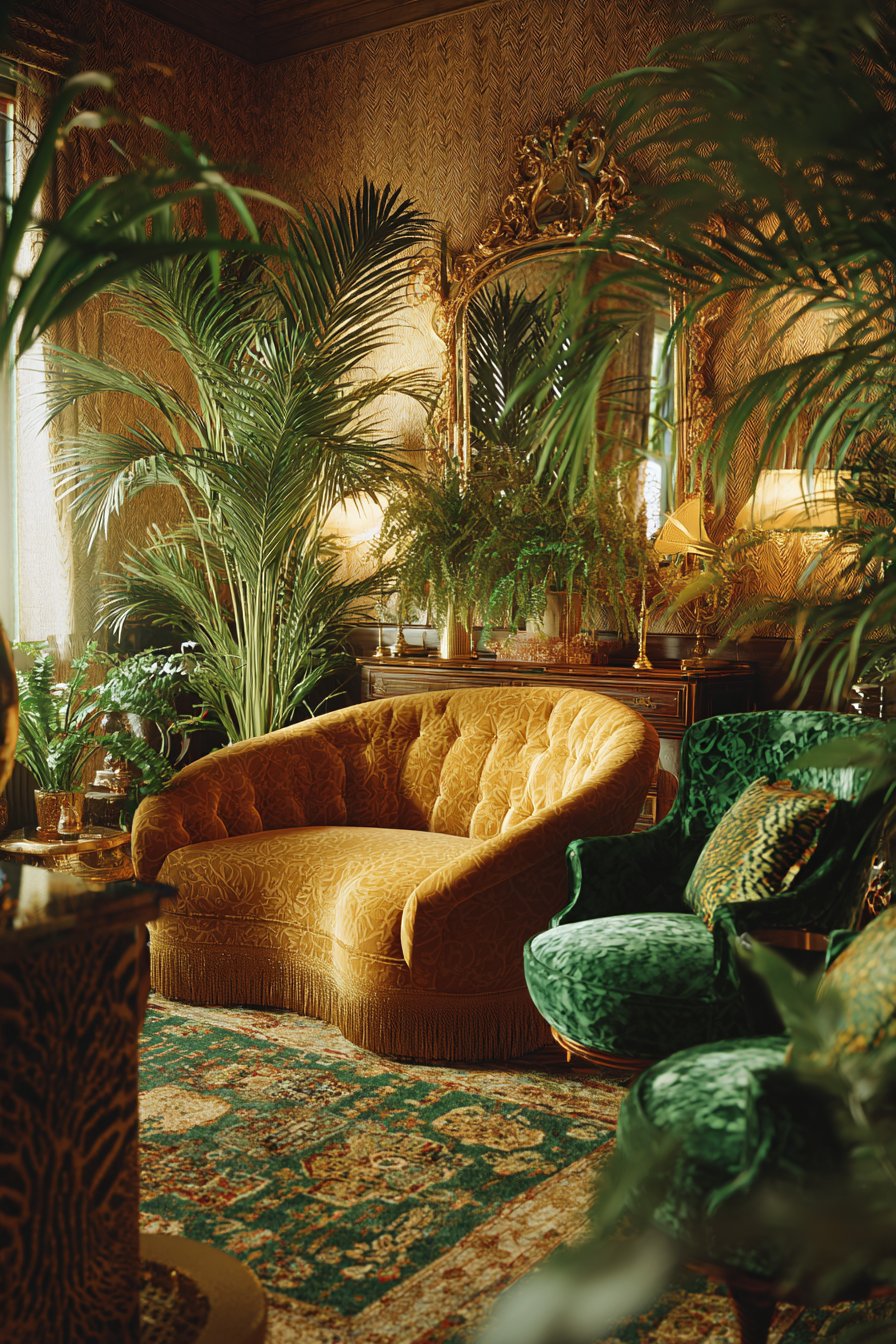
A tan velvet curved sofa creates sculptural seating in this maximalist space. Emerald green velvet armchairs surround it creating intimate conversation areas. Walls covered in tan grasscloth wallpaper provide rich texture. An ornate green and gold mirror reflects natural light multiplying its impact.
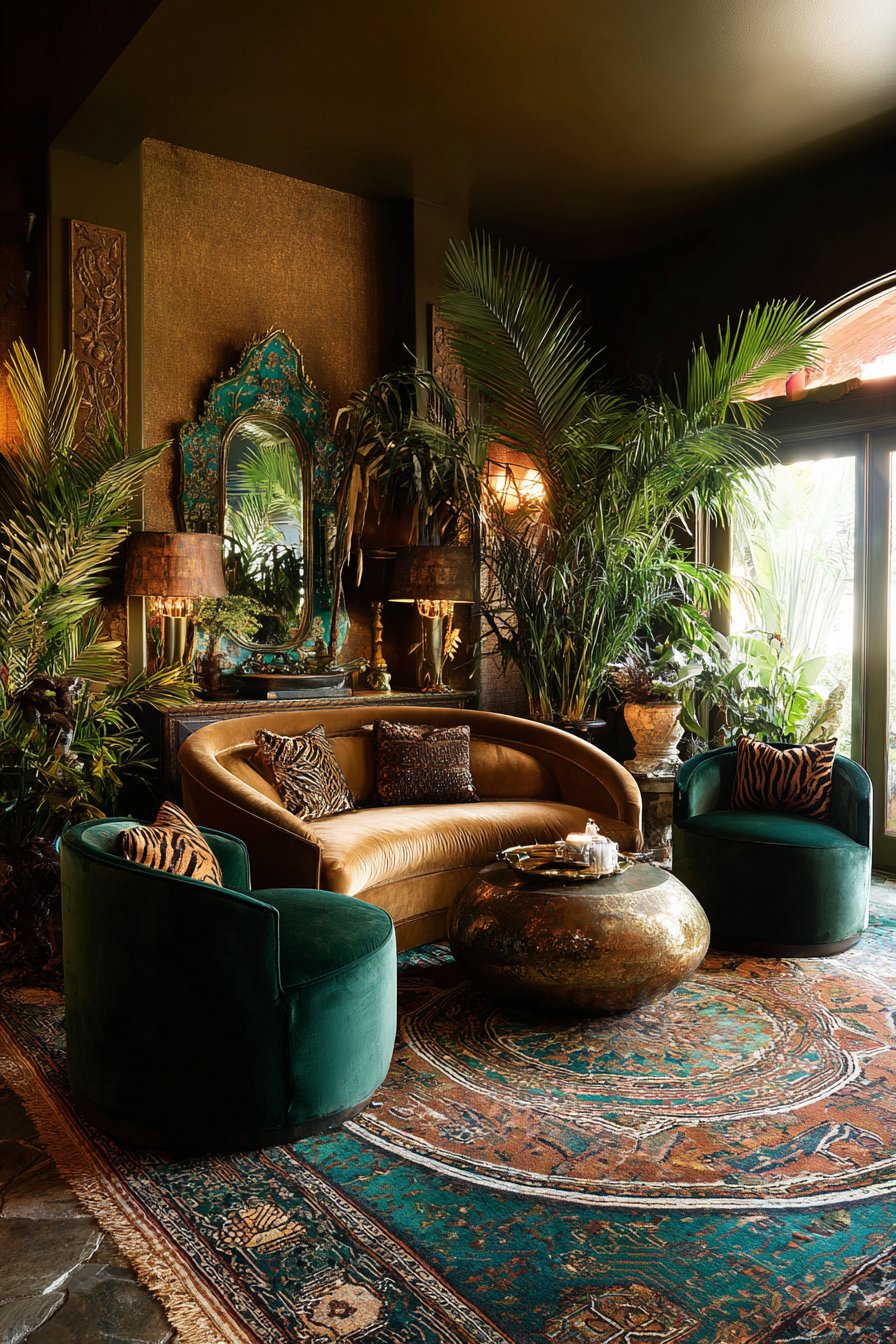
Layered rugs combine Persian patterns in green and tan with animal prints. This bold mixing defines maximalist confidence. Abundant plants including palms and ferns add green organic elements throughout. Brass accents and tan marble surfaces create luxurious details.
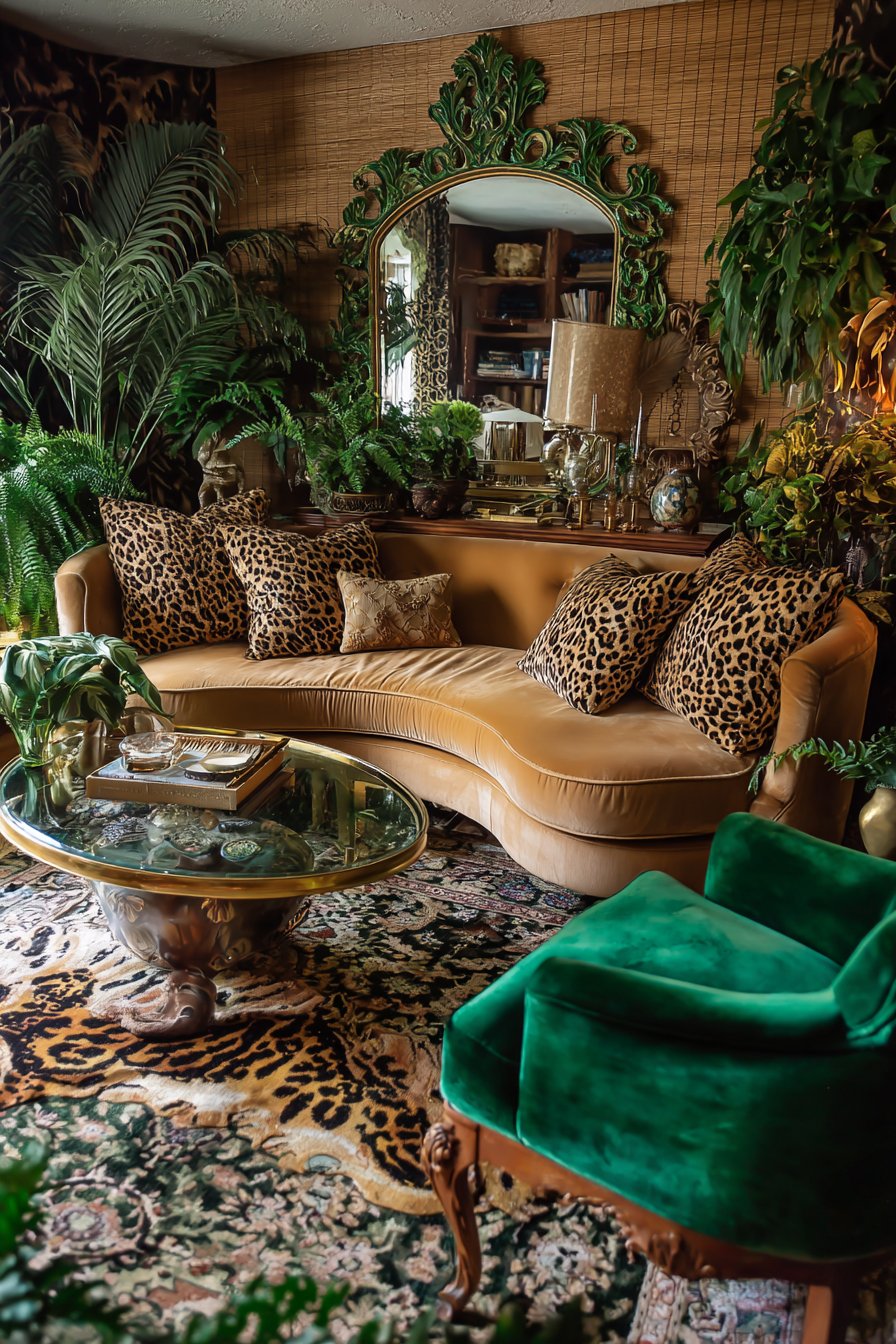
The philosophy of “more is more” guides maximalist design. Every surface receives attention and decoration. Collections, patterns, and textures layer abundantly. The key is maintaining color consistency amidst the visual richness.
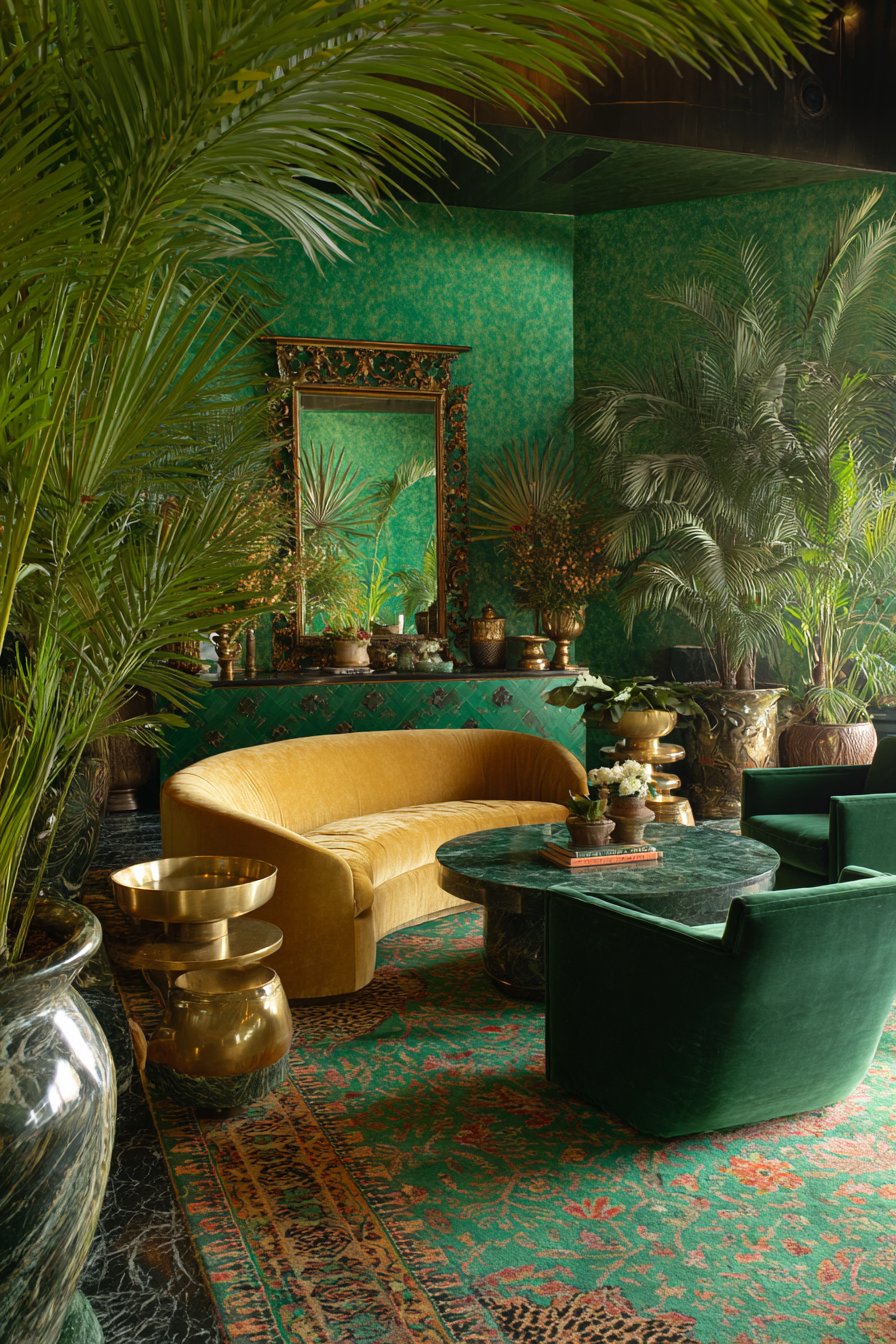
Quality materials justify the maximalist approach aesthetically. Velvet, marble, brass, and grasscloth all offer luxury. These rich materials deserve display rather than minimalist restraint. The layering creates depth impossible in sparse designs.
Key Design Tips:
- Layer multiple rugs with different patterns for maximalist impact
- Cover walls in textured materials like grasscloth for richness
- Mix abundant plants of varying sizes throughout the space
- Use brass and marble for luxurious surface details
- Embrace curved furniture for sculptural, dramatic statements
16. Contemporary Clean Lines
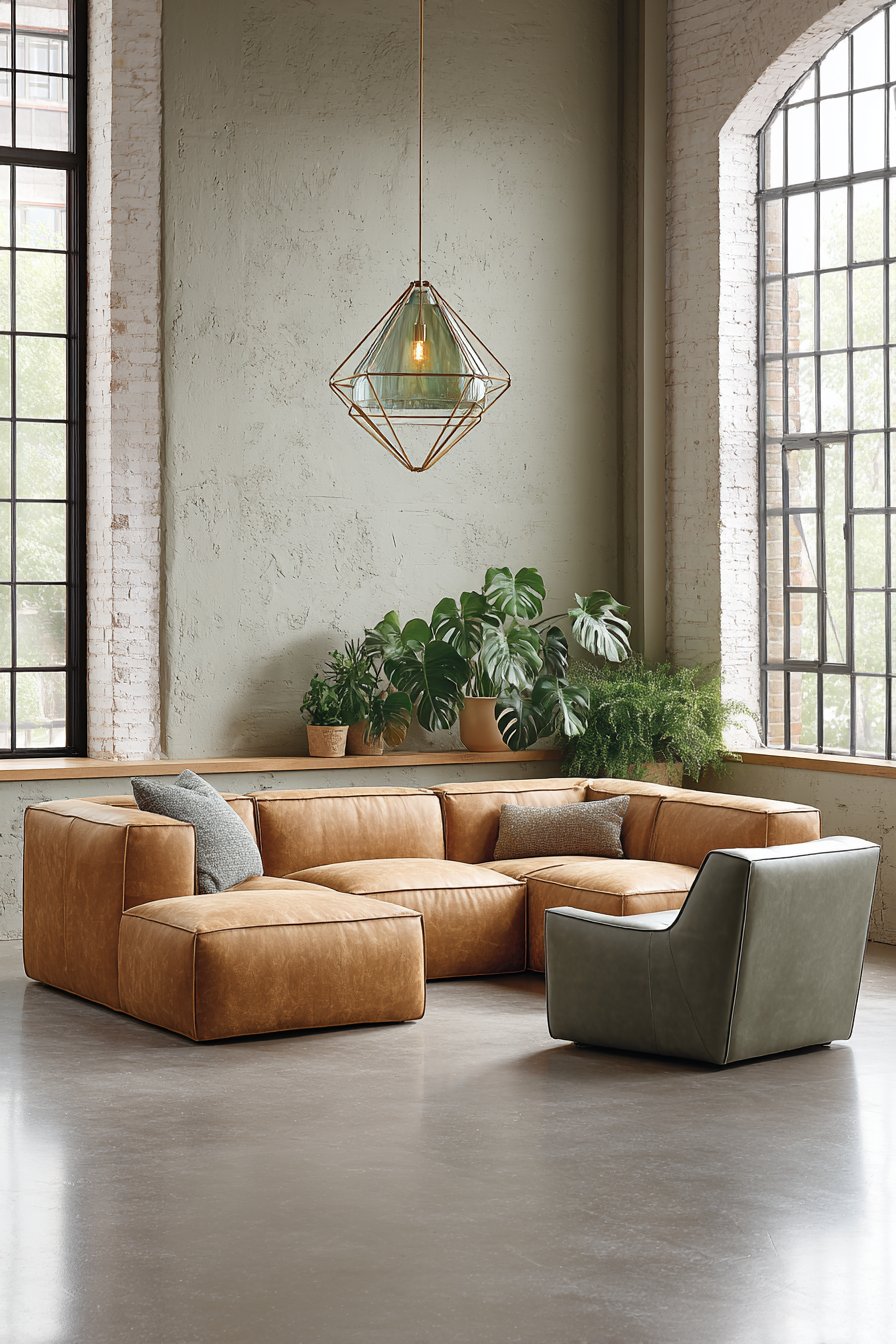
A modular tan fabric sofa in L-configuration provides flexible seating arrangements. An olive green leather accent chair offers contrast in both color and material. An accent wall in muted sage green complements remaining walls in warm latte tan. A sleek tan oak floating media console spans one wall efficiently.
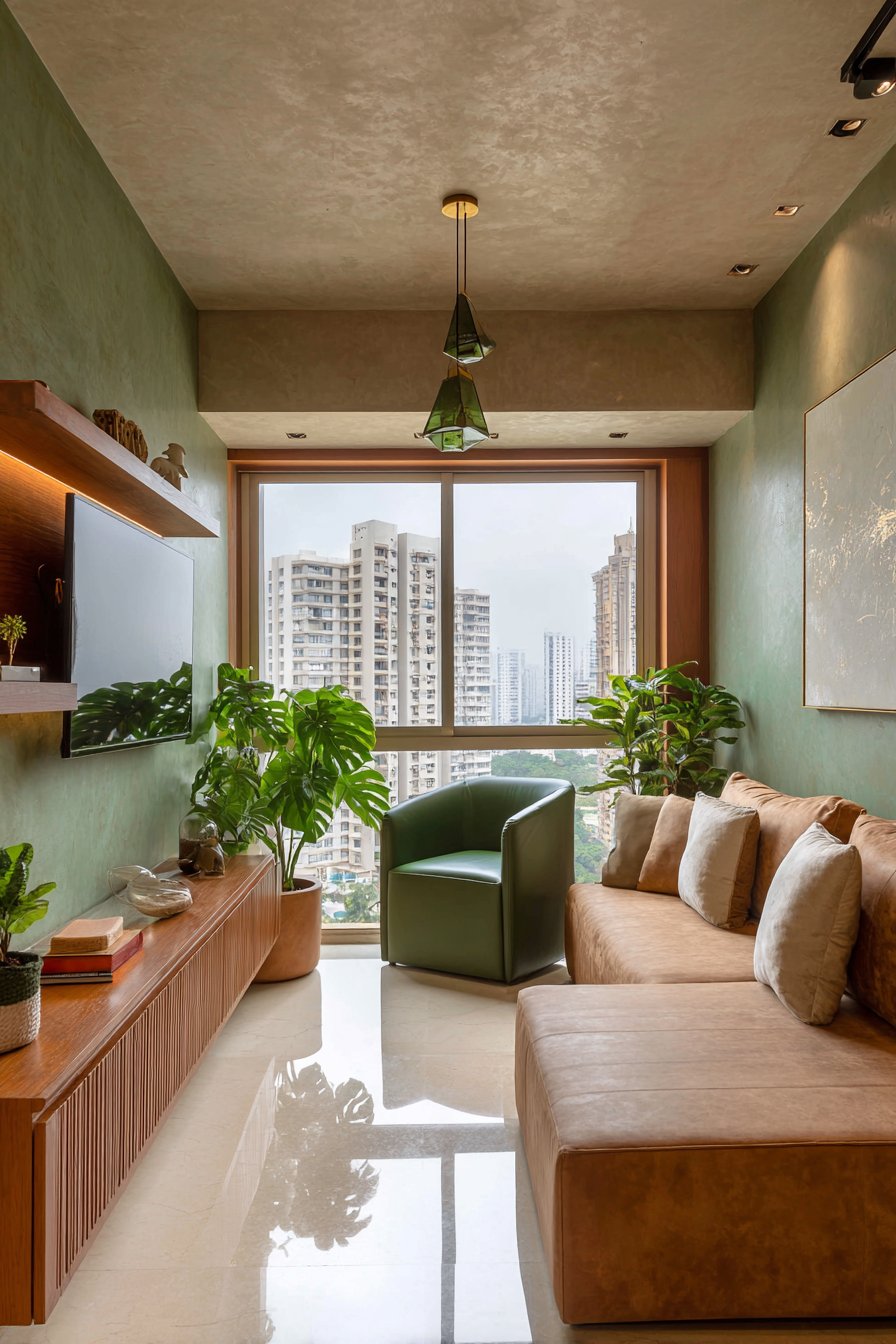
A geometric pendant light in brass and green glass creates a focal point. Polished concrete floors in light tan tones reflect natural light from floor-to-ceiling windows. Monstera and rubber plants in tan ceramic planters add greenery without clutter. The clean lines throughout create contemporary elegance.

Modular furniture offers flexibility for changing needs. Sections rearrange for different occasions or room configurations. This adaptability suits modern living patterns. The investment in quality modular pieces pays long-term dividends.
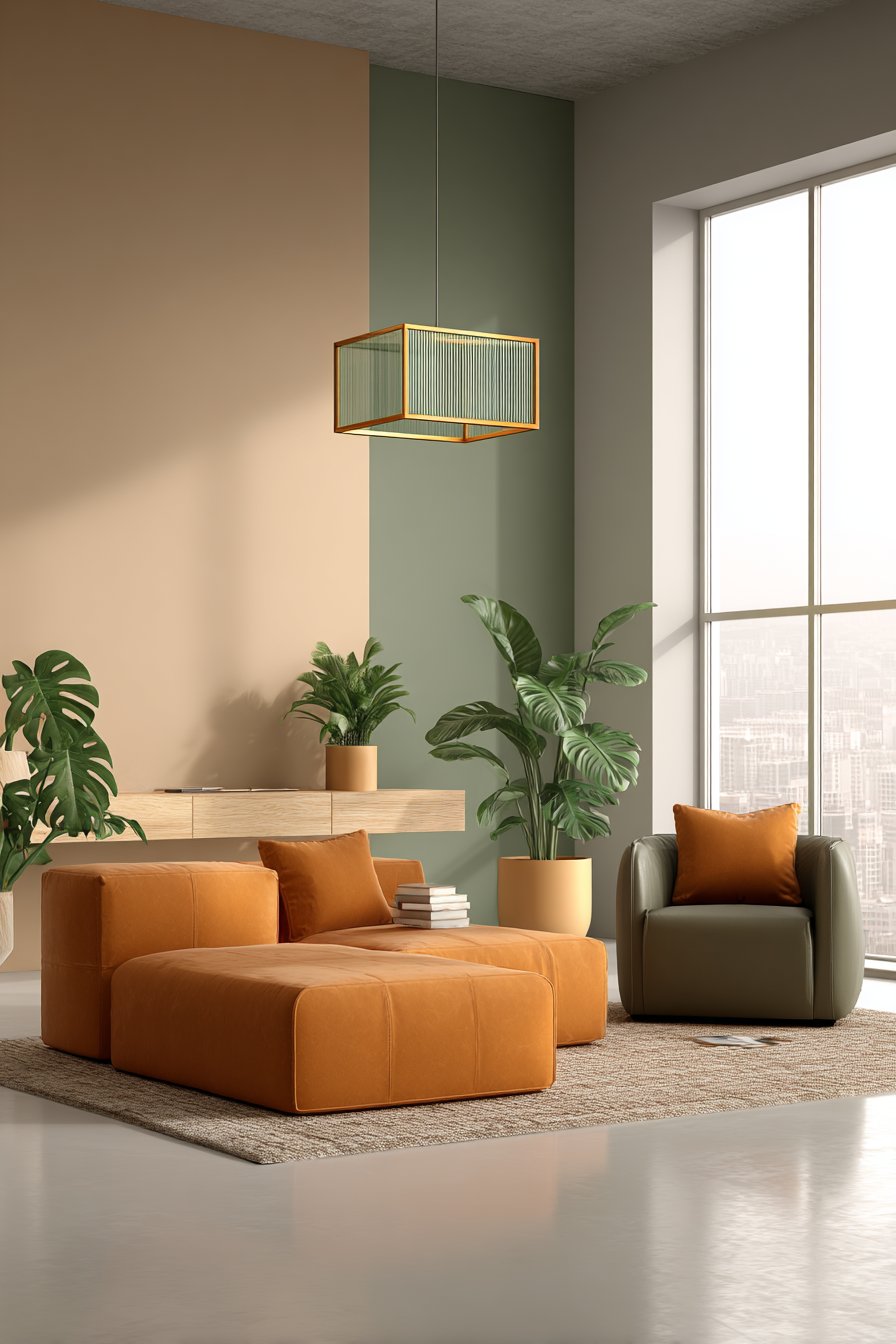
Floor-to-ceiling windows flood contemporary spaces with natural light. This connection to outdoors expands the perceived space. Window placement often drives furniture arrangement in contemporary design. Maximizing light and views takes priority over traditional layouts.
Key Design Tips:
- Choose modular furniture for flexible arrangement options
- Use floating media consoles for sleek, contemporary storage
- Install floor-to-ceiling windows to maximize natural light
- Select geometric light fixtures as sculptural focal points
- Mix leather and fabric upholstery for material contrast
17. Eclectic Collected Character
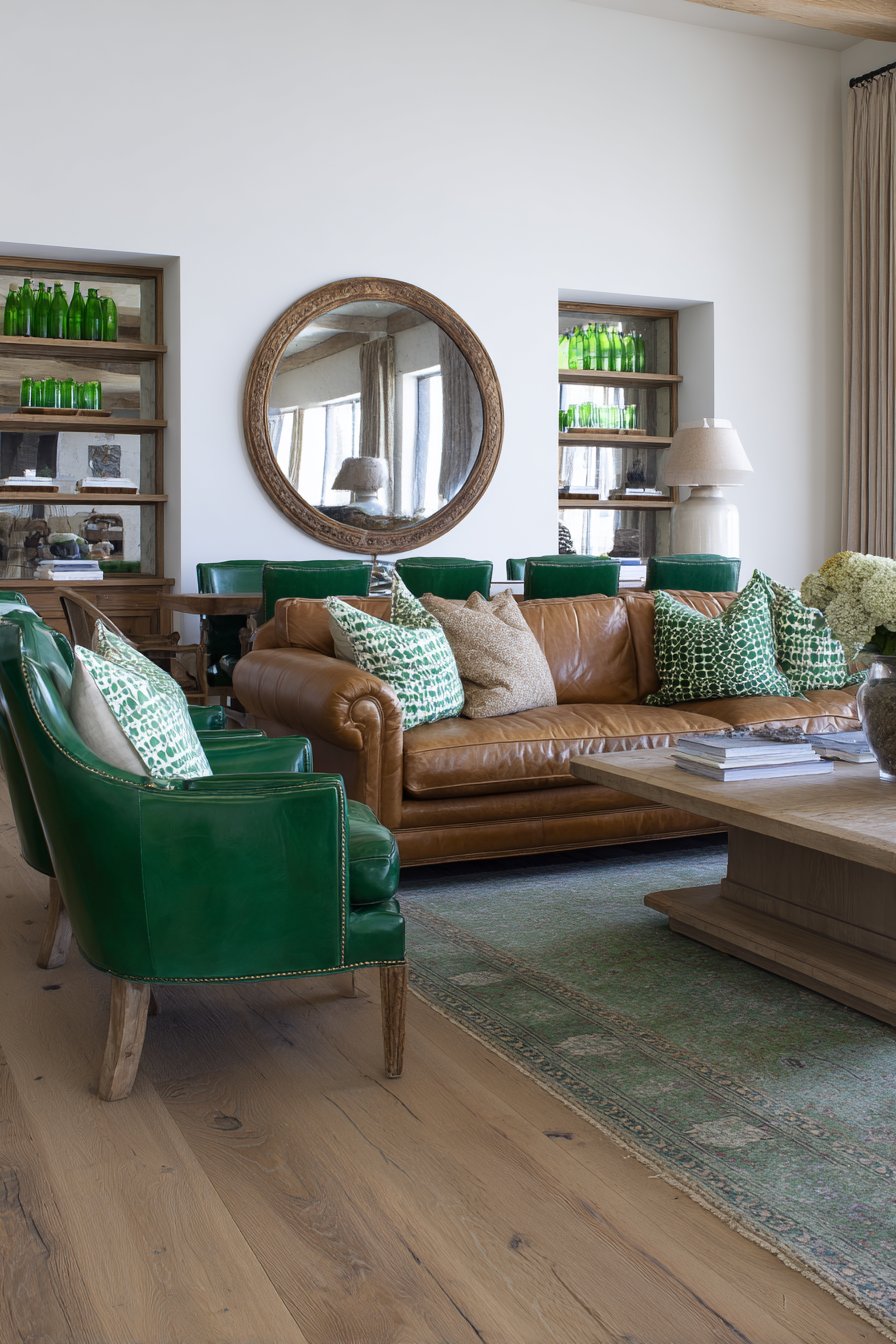
A vintage tan leather sofa pairs with reupholstered antique chairs in emerald green velvet. The mix of eras and styles creates eclectic charm. A gallery wall combines artwork in green tones with tan vintage mirrors. Botanical specimens add scientific curiosity to the artistic mix.
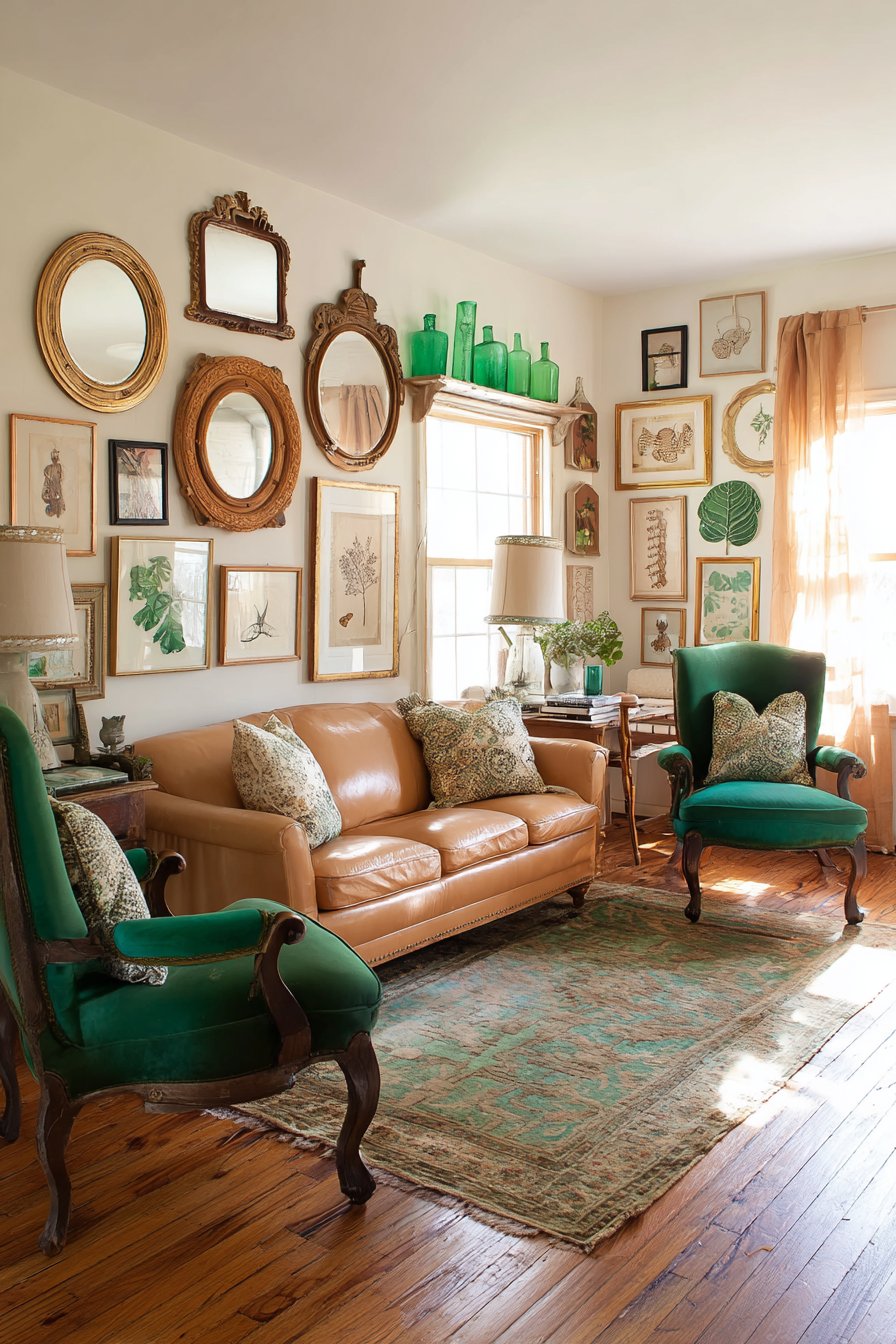
A Persian runner in faded green and tan leads to the seating area. Wide plank floors in natural tan oak provide a neutral foundation. Collected green glass bottles on tan wooden shelves catch afternoon light magically. Mismatched tan and green patterned pillows add playful touches.
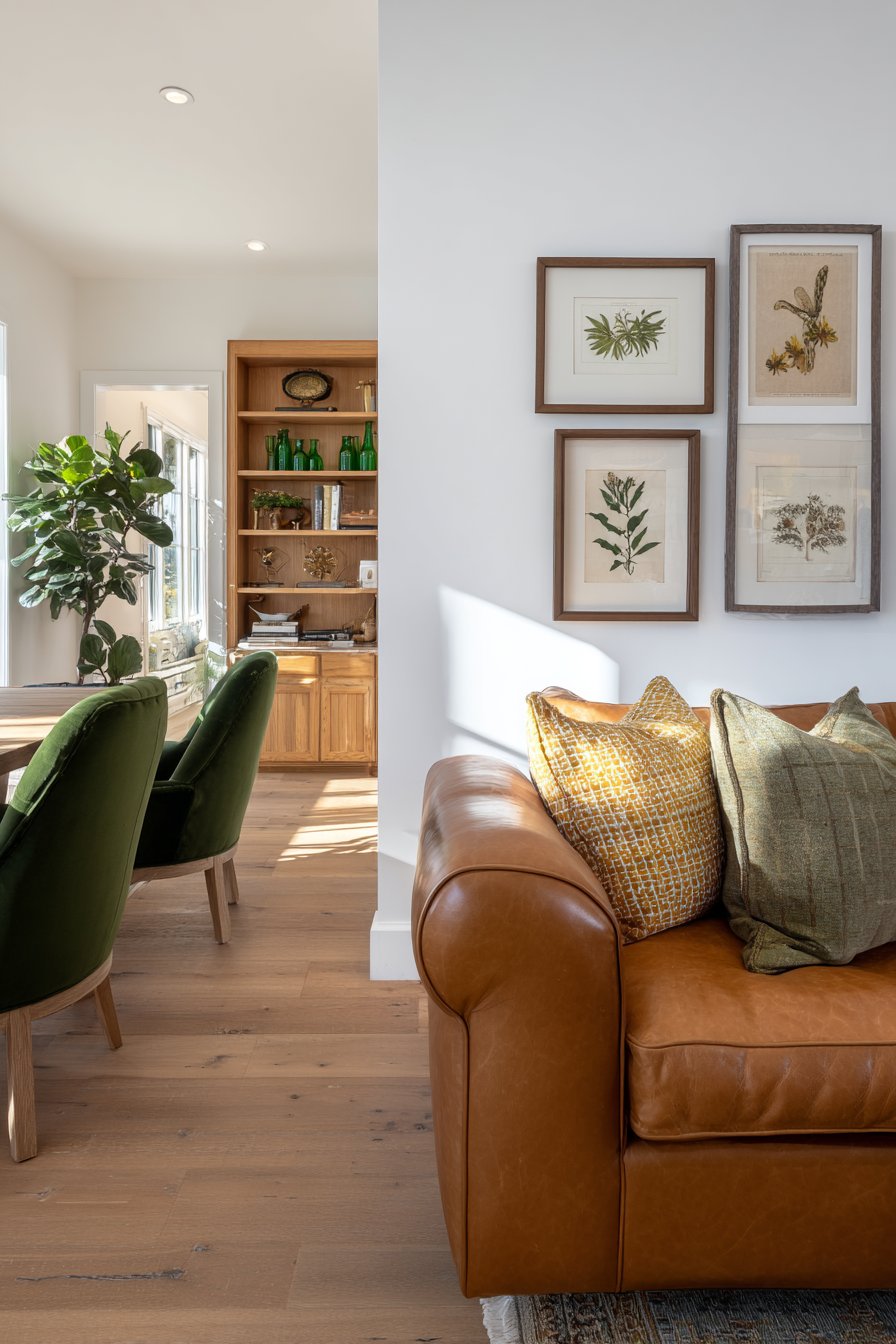
The collected-over-time aesthetic requires patience and curation. Pieces accumulate gradually from various sources. Flea markets, antique shops, and family heirlooms all contribute. This approach creates unique spaces impossible to replicate exactly.
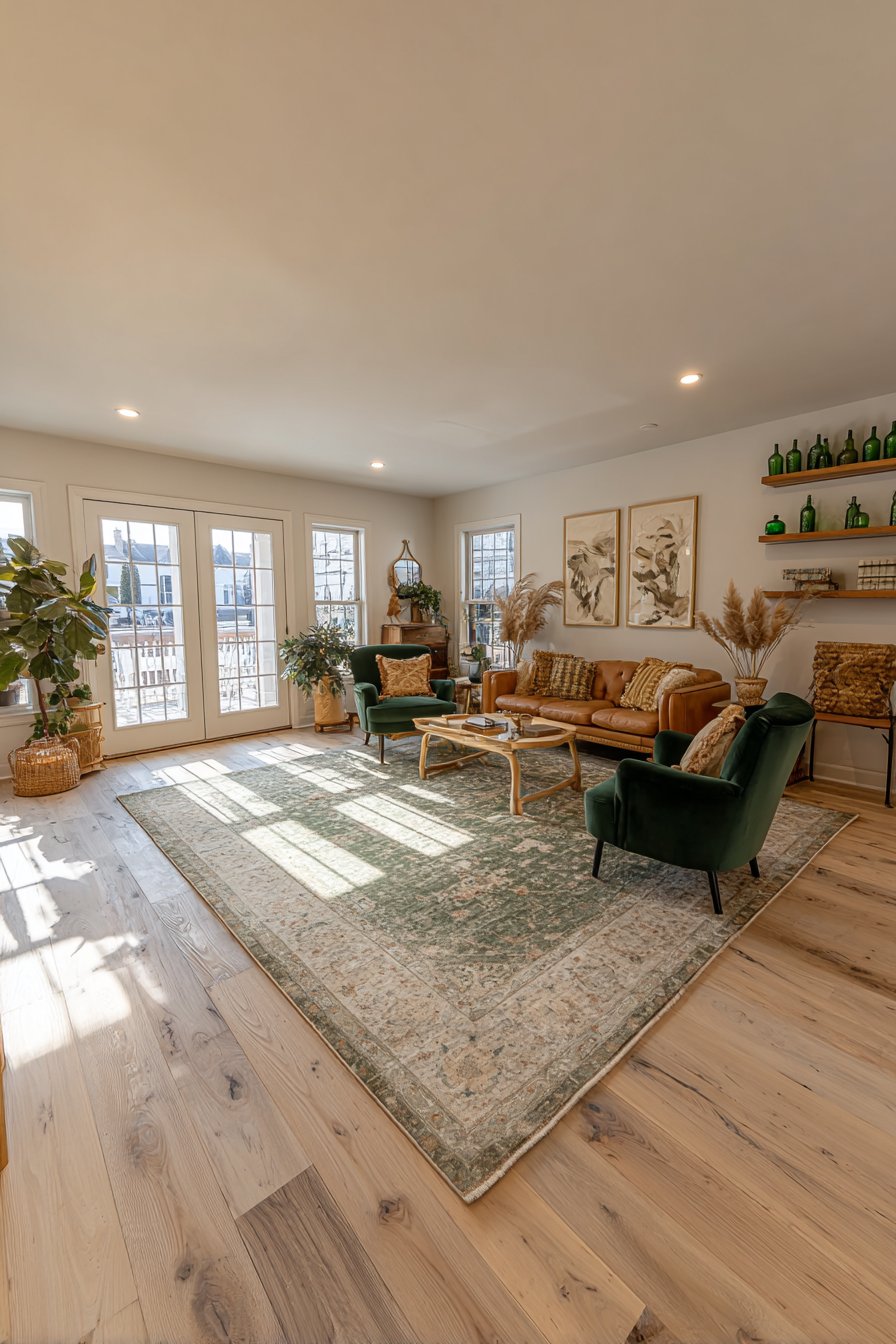
Reupholstering vintage furniture combines sustainability with customization. Quality antique frames often surpass modern construction. New fabric in contemporary colors updates pieces for current aesthetics. This practice honors craftsmanship while reducing waste.
Key Design Tips:
- Mix vintage and antique pieces from different eras
- Reupholster quality antique furniture in contemporary fabrics
- Create gallery walls combining different artistic mediums
- Collect glass bottles or objects that catch light beautifully
- Layer patterns and textures through mismatched pillows
18. Japandi Zen Simplicity
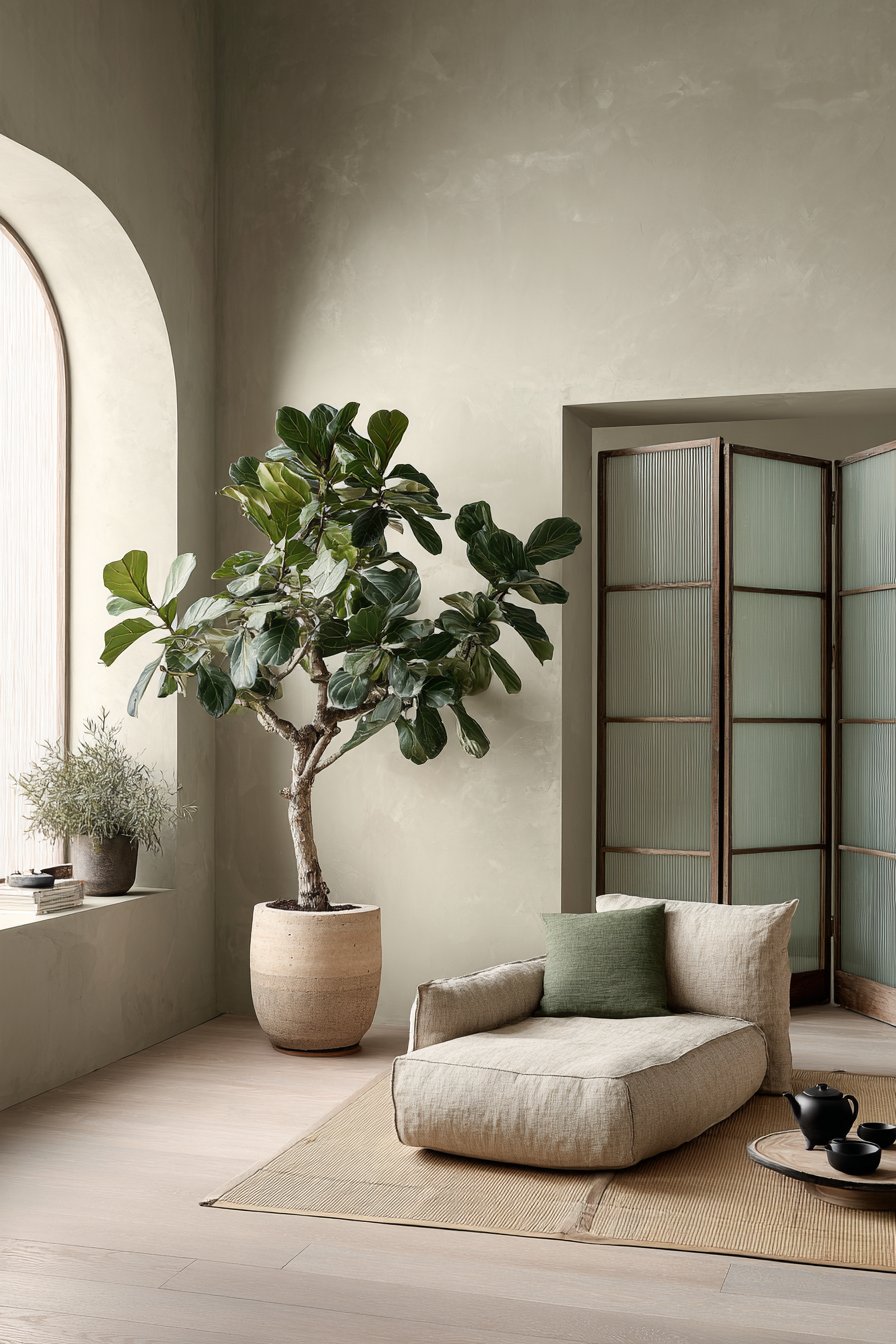
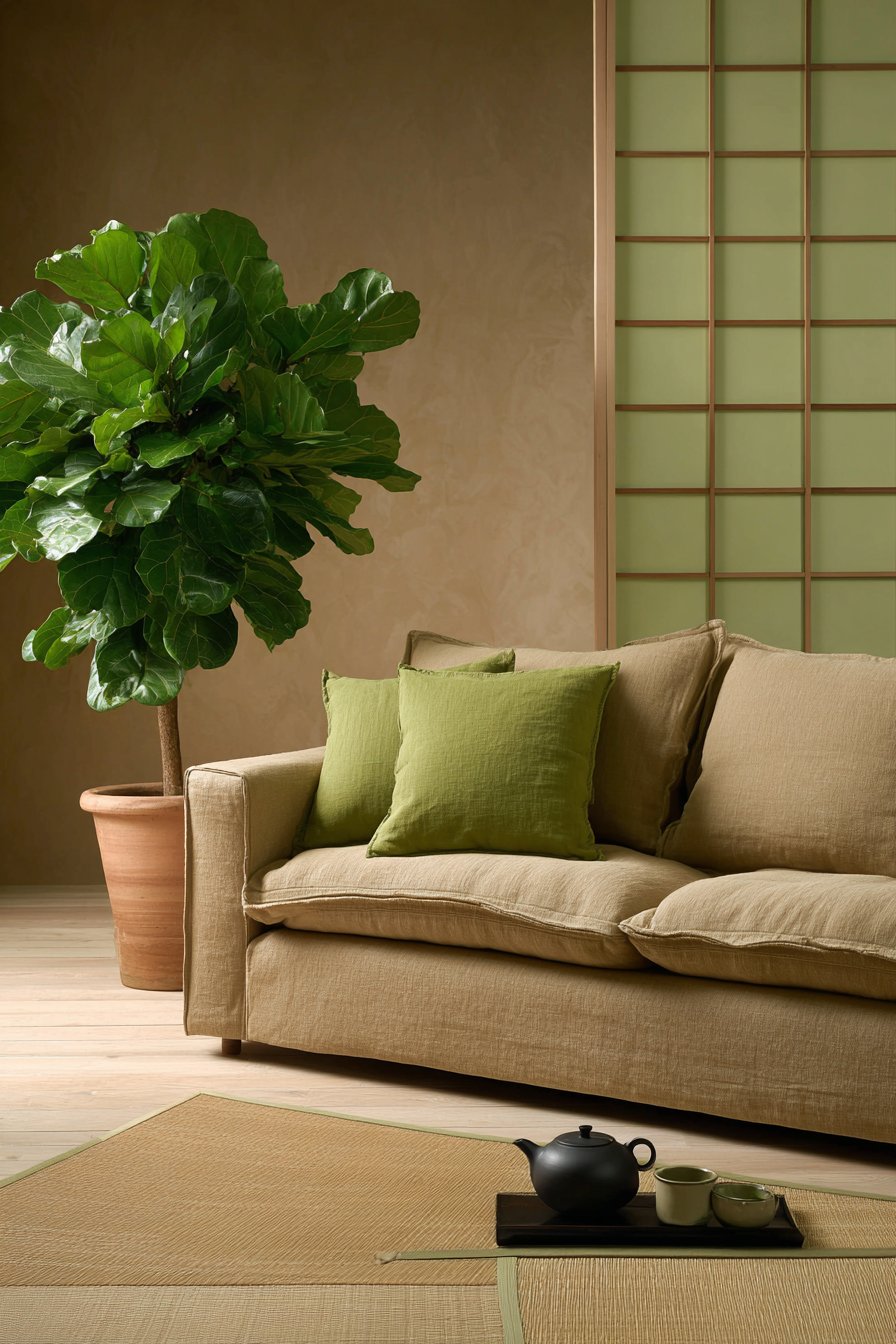
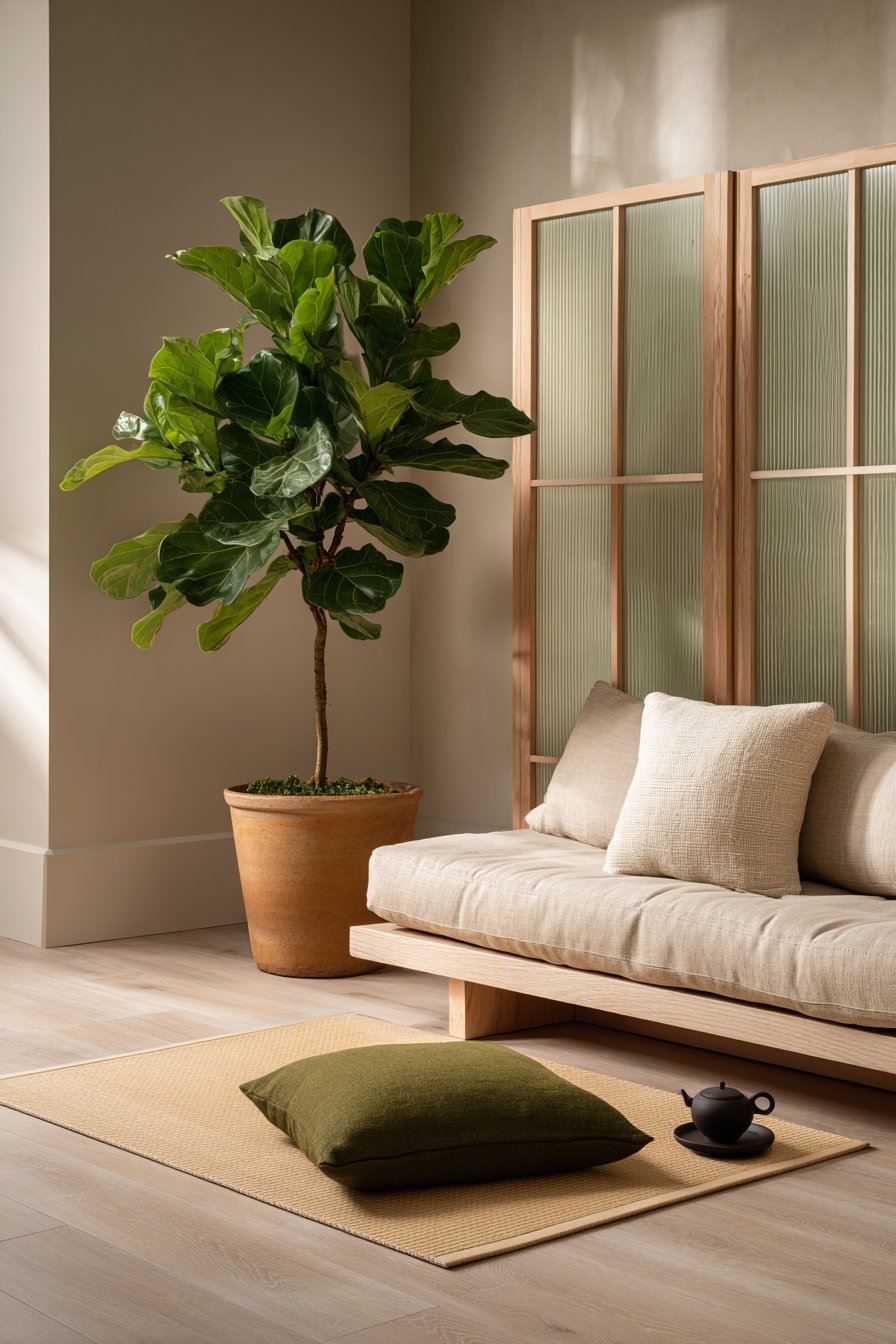
A low tan linen sofa with simple lines embodies Japandi restraint. A single green zabuton floor cushion provides additional minimal seating. Walls in warm tan plaster finish create a serene backdrop. A mature fiddle leaf fig in handmade tan ceramic pot becomes the focal point.
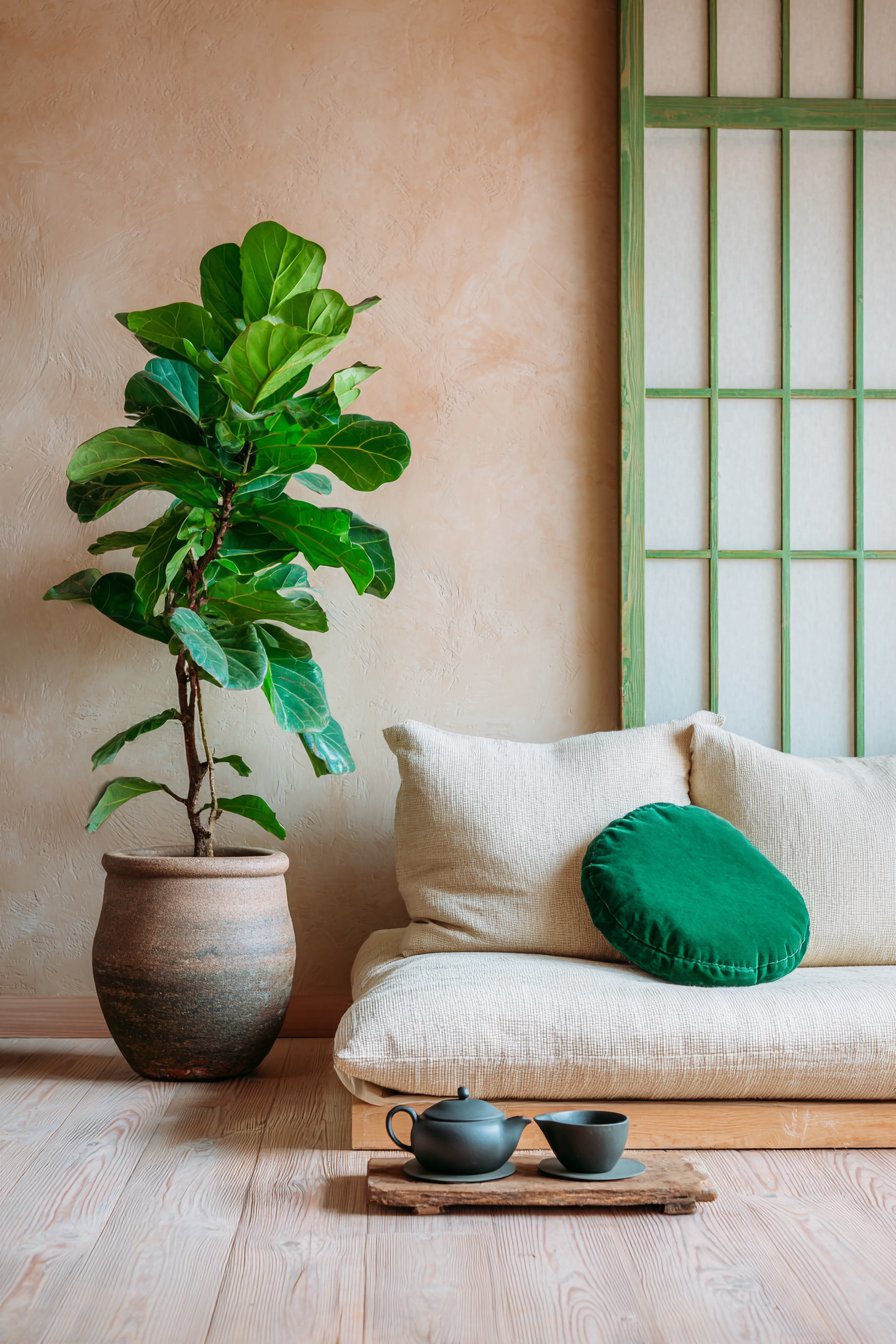
A natural tan tatami-style mat defines the seating area on light oak floors. Shoji-inspired screens in tan wood frames with green-tinted paper panels divide the space. Minimal black accents include a simple tan ceramic tea set. Soft diffused natural light creates peaceful atmosphere throughout.
Japandi combines Japanese minimalism with Scandinavian functionality. Both traditions value natural materials and clean lines. The fusion creates warm minimalism rather than cold austerity. This balance makes the style accessible and livable.
The emphasis on craftsmanship appears in every detail. Handmade ceramics, natural wood joinery, and woven textiles all demonstrate skill. These artisanal pieces add value beyond mass-produced alternatives. The connection to makers enriches the living experience.
Key Design Tips:
- Combine Japanese and Scandinavian design principles for Japandi aesthetic
- Use low-profile furniture to create calm, grounded spaces
- Incorporate shoji-inspired screens for flexible space division
- Choose handmade ceramics and artisanal pieces for quality
- Emphasize natural light and minimal window treatments
19. Transitional Fireplace Warmth
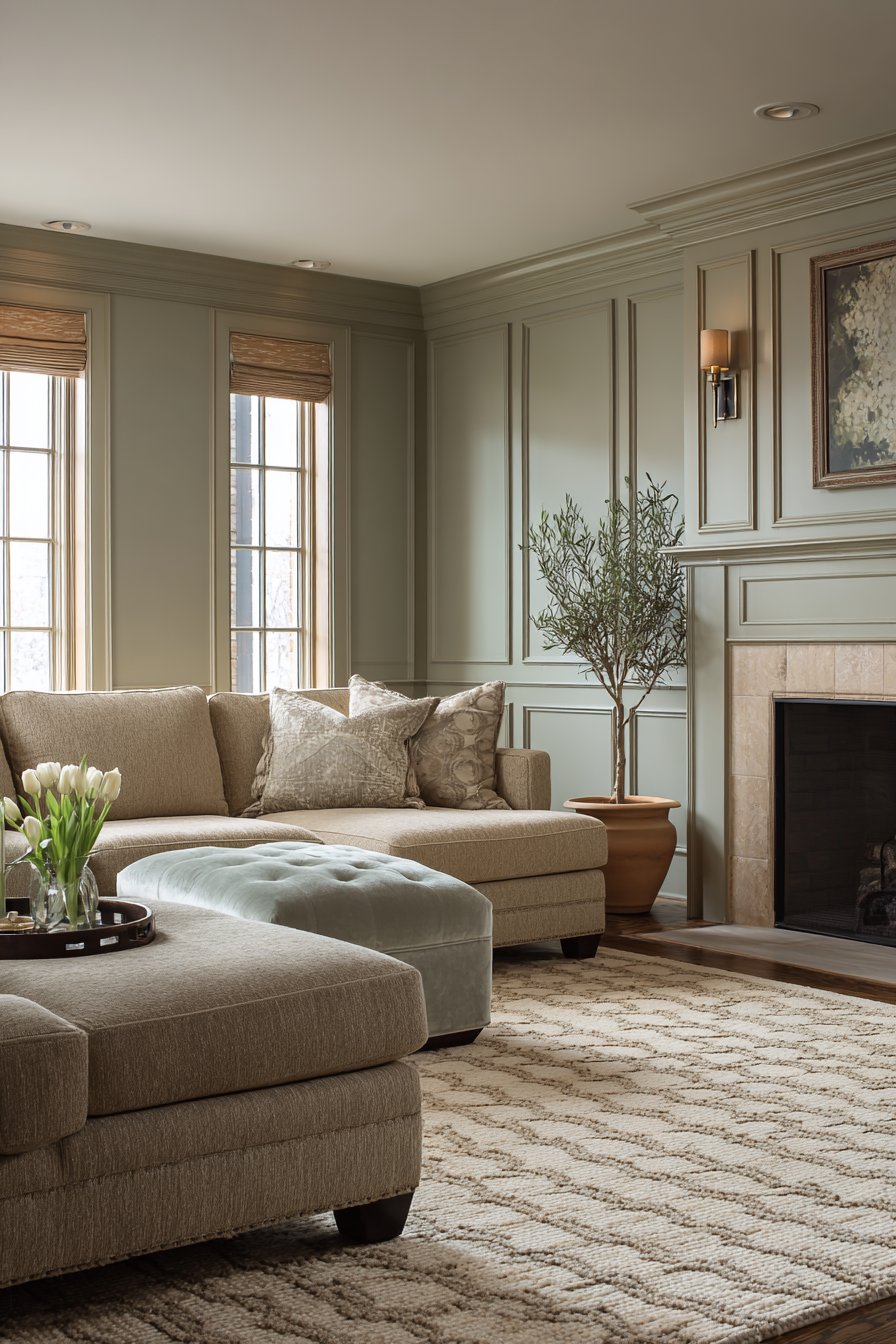
A tan fabric sofa with track arms provides clean-lined comfort. A sage green velvet ottoman serves as a coffee table alternative. Built-in cabinetry painted in soft tan frames a fireplace with green-painted interior. The tan limestone surround adds natural stone elegance.
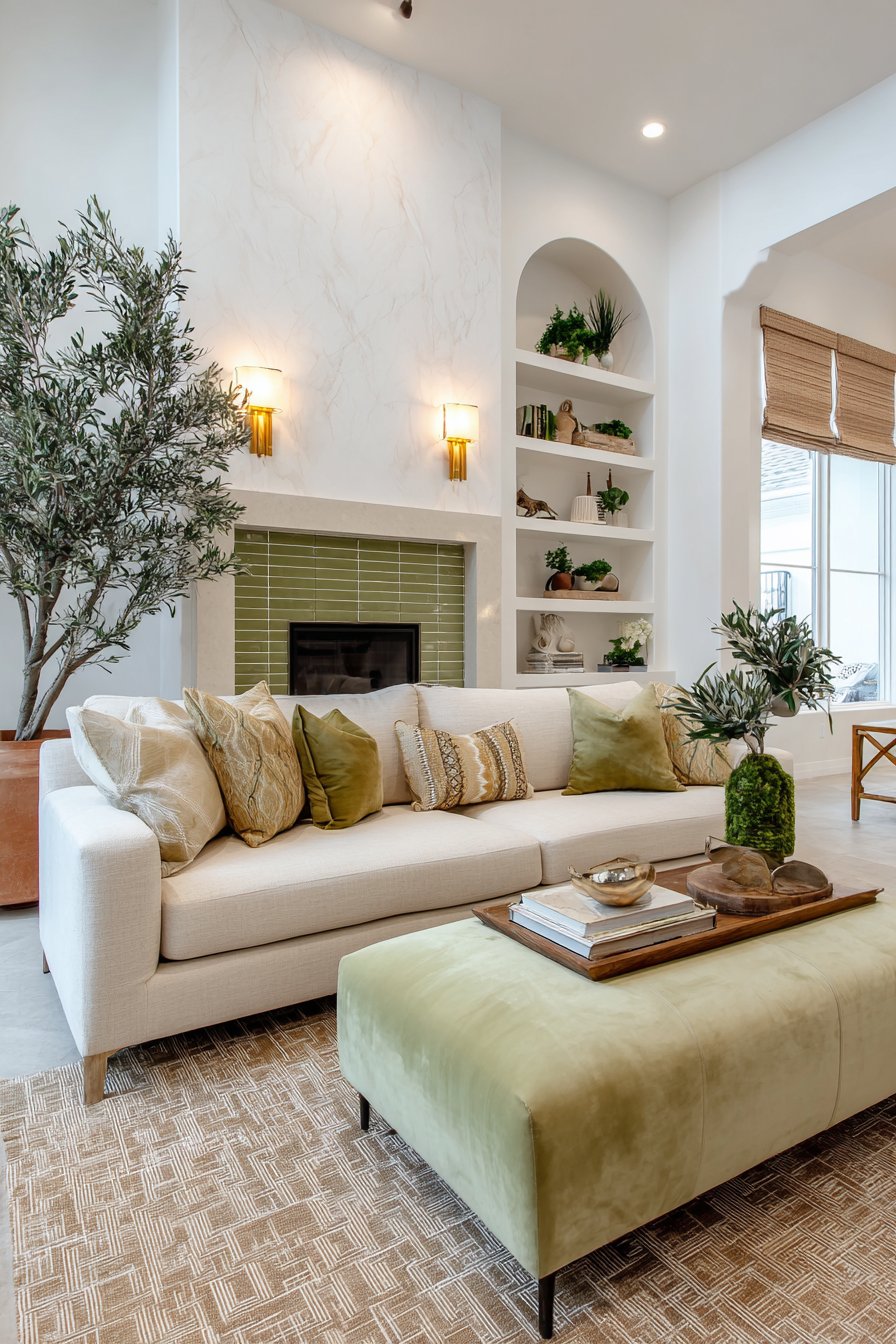
Woven tan roman shades filter natural light while maintaining privacy. A potted olive tree in tan terracotta planter adds sculptural green presence. An area rug combines geometric patterns in green and tan on natural fiber background. Warm lighting from brass sconces creates evening ambiance perfectly.
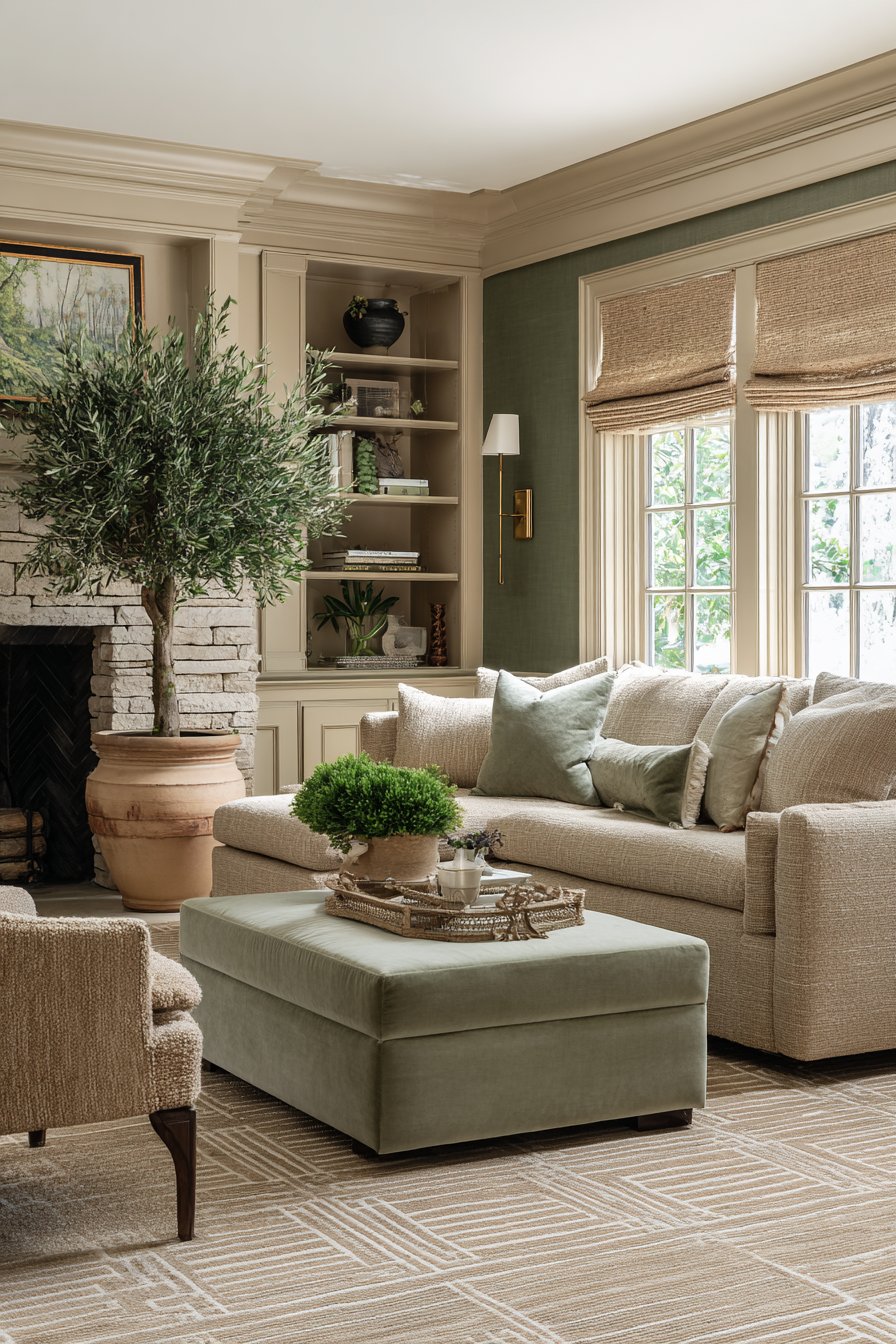
Transitional design bridges traditional and contemporary aesthetics successfully. Clean lines meet comfortable proportions. Modern materials appear alongside classic elements. This versatility suits diverse tastes and existing architecture.
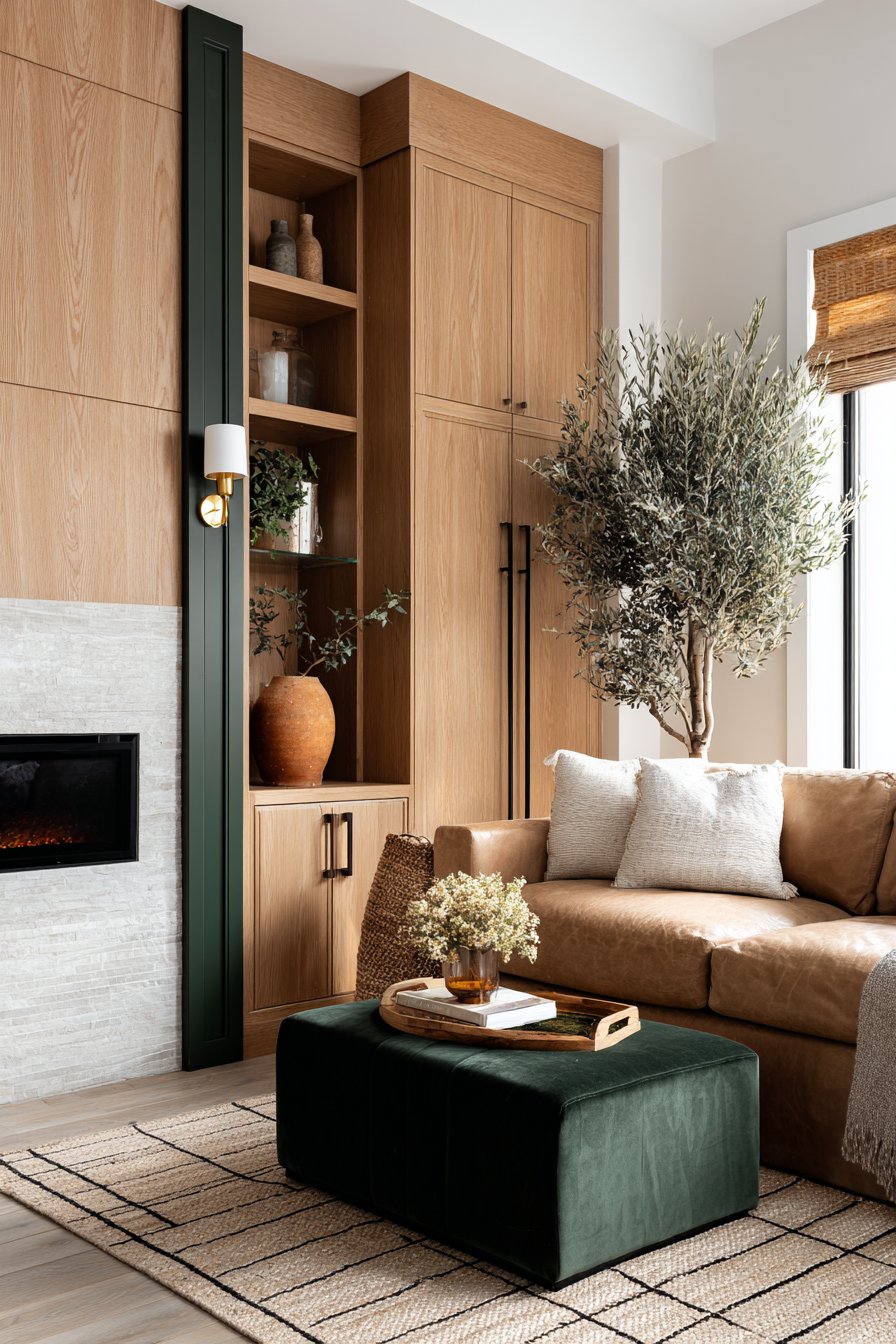
The fireplace treatment demonstrates transitional design flexibility. Traditional stone surround meets unexpected green paint inside. Built-in cabinetry offers classical symmetry with contemporary hardware. These combinations create fresh takes on familiar elements.
Key Design Tips:
- Use ottoman coffee tables for soft edges and flexibility
- Paint fireplace interiors in unexpected colors for interest
- Choose roman shades for tailored window treatment style
- Incorporate sculptural plants like olive trees for living art
- Blend traditional elements with contemporary materials and finishes
20. Small-Space Smart Solutions
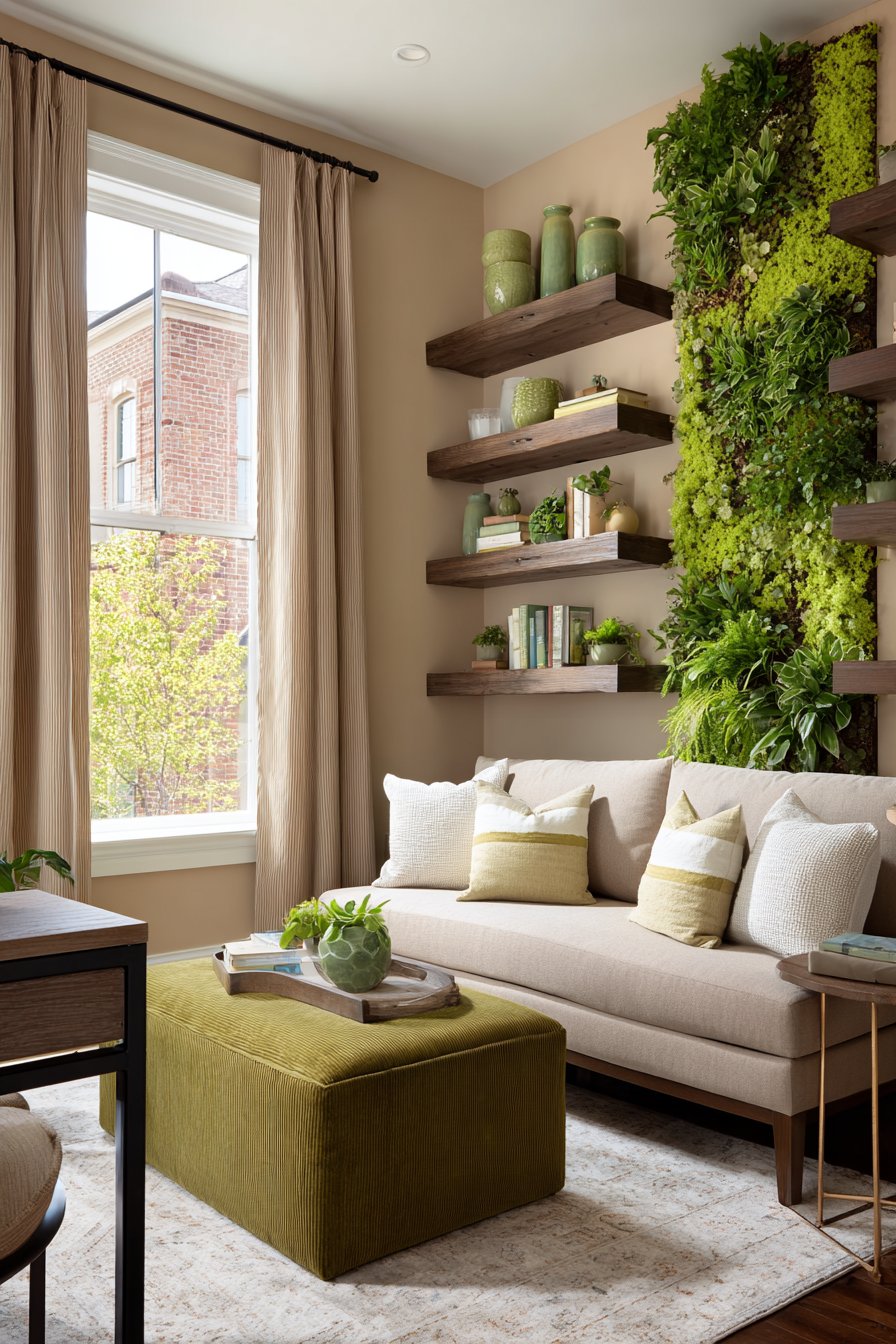
A tan loveseat against the main wall maximizes limited floor space. A green velvet storage ottoman provides hidden organization and seating. Walls painted in light tan expand the space visually. A vertical green plant wall creates living art without floor footprint.
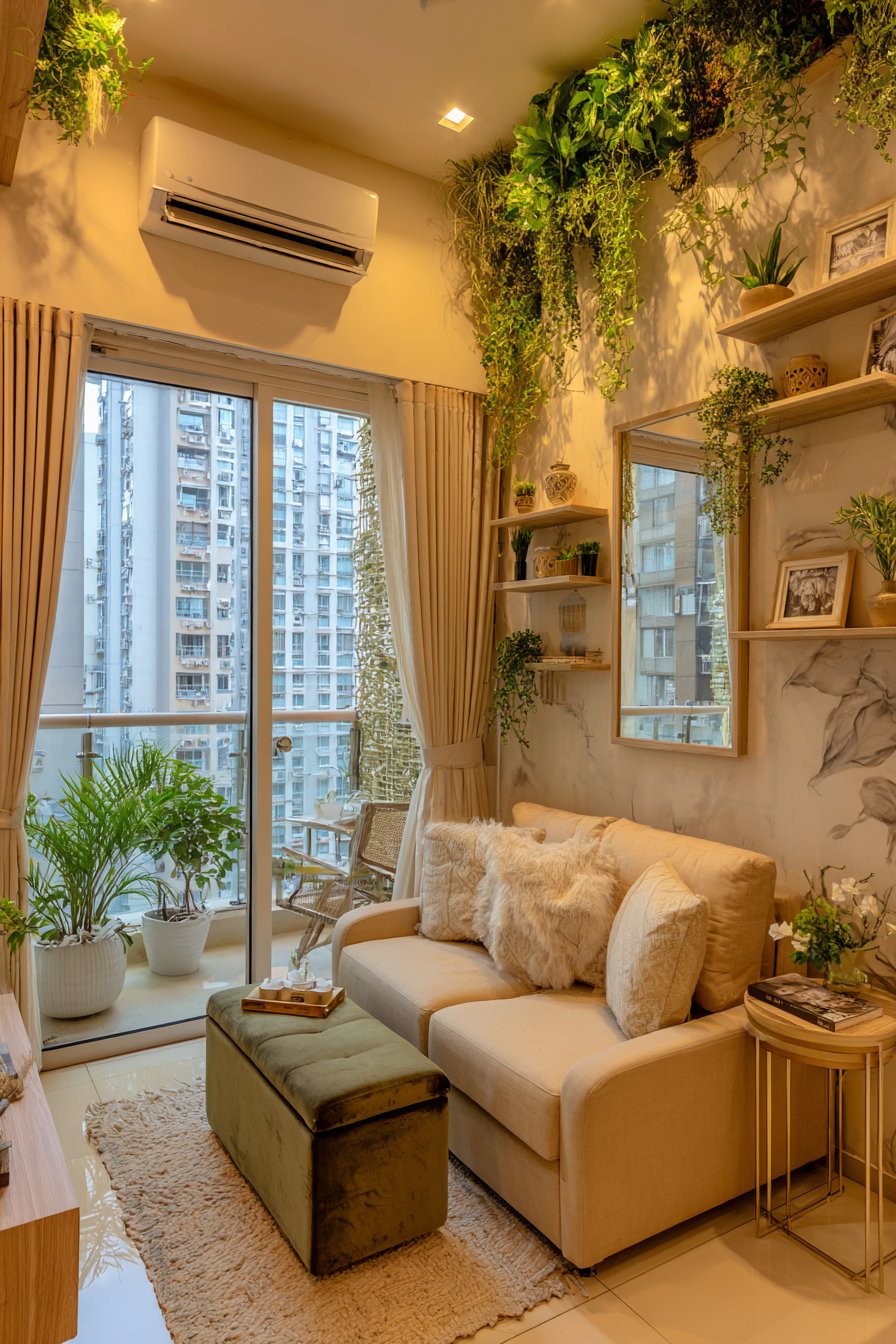
Floating tan oak shelves display green pottery and books efficiently. Tan linen curtains soften a single window while allowing natural light. Space-saving tan nesting tables tuck beside seating when not needed. A mirror with tan frame reflects light and green elements expanding perceived space.
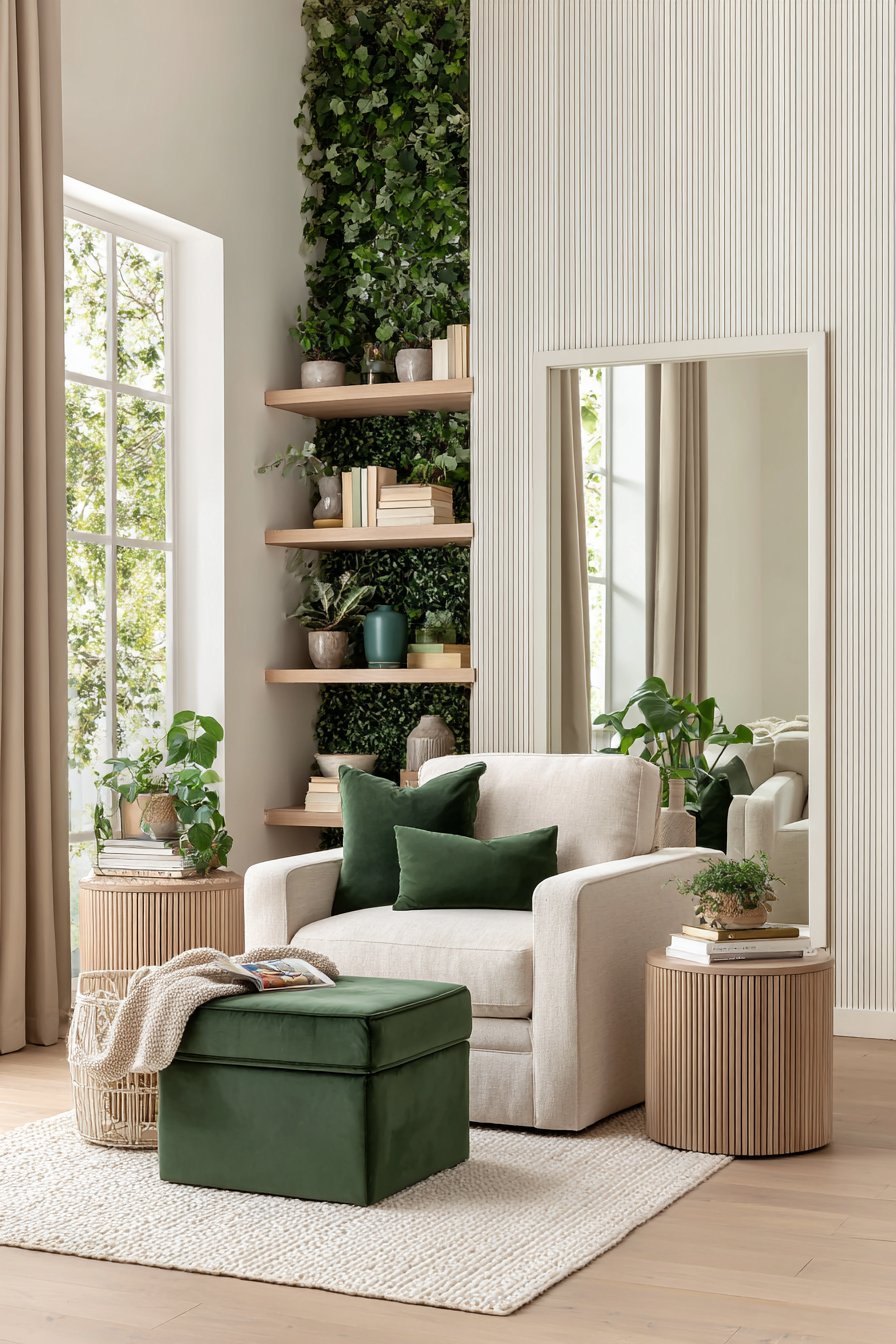
Small-space design requires strategic choices about every element. Multi-functional furniture provides dual purposes. Vertical storage maximizes wall space. Light colors and mirrors create visual expansion beyond actual dimensions.
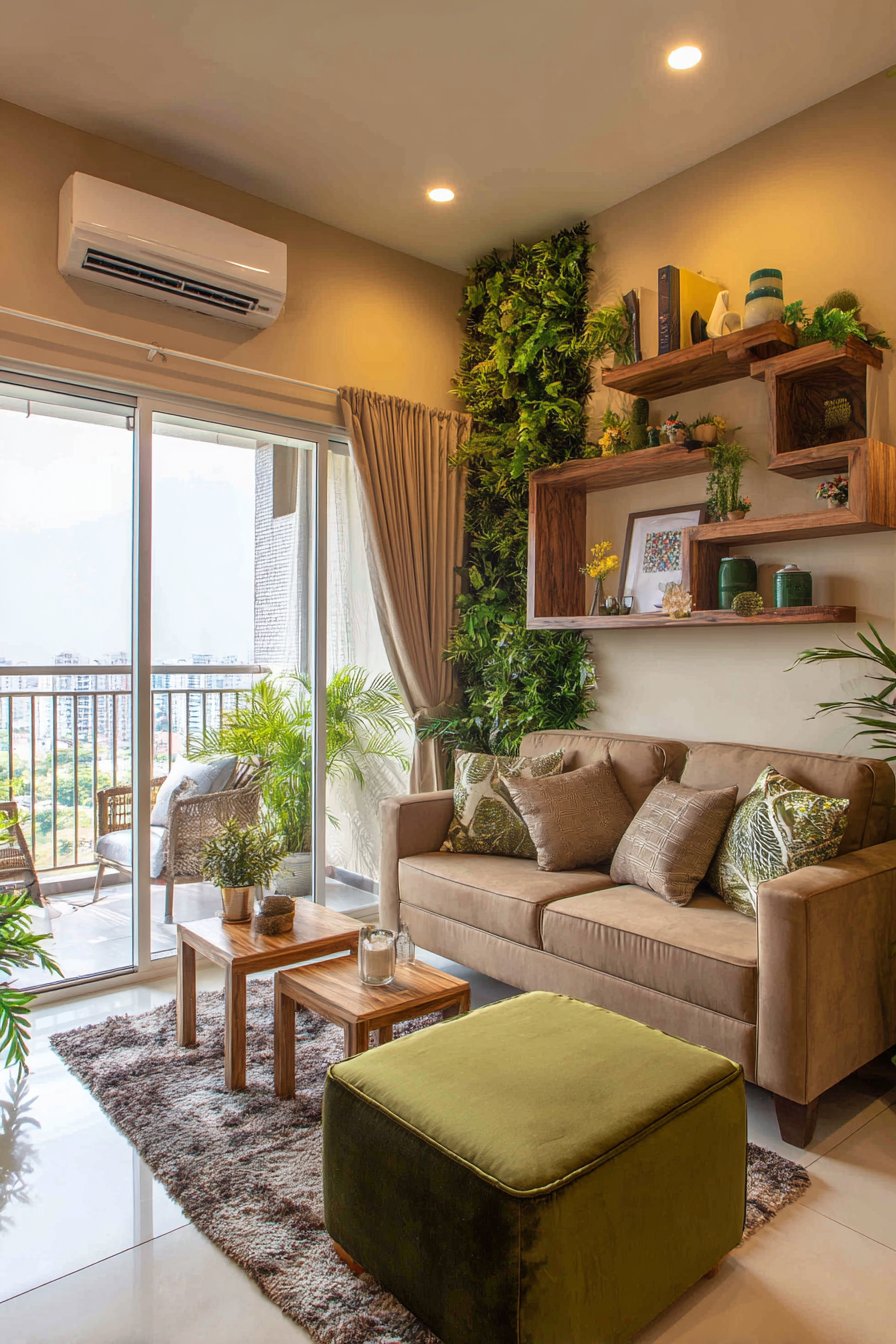
The vertical plant wall offers greenery without sacrificing floor space. These installations provide dramatic impact in compact areas. Various systems exist from simple shelving to hydroponic walls. The investment transforms walls into living features.
Key Design Tips:
- Choose loveseats instead of full sofas in small spaces
- Use storage ottomans for hidden organization and flexibility
- Install vertical plant walls to maximize greenery without floor space
- Incorporate floating shelves for storage without bulk
- Use mirrors strategically to reflect light and expand perceived space
Why These Tan and Green Living Room Designs Are the Best
These tan and green living room ideas represent superior design approaches for multiple compelling reasons. The color combination provides timeless appeal that transcends fleeting trends. Tan serves as a versatile neutral foundation that complements virtually any green shade. Green brings vitality and natural connection that humans instinctively respond to positively.
The psychological benefits of this color pairing contribute significantly to its excellence. Tan creates feelings of warmth, stability, and groundedness in living spaces. Green promotes relaxation, renewal, and connection to nature. Together, these colors create environments that support both social gathering and personal relaxation.
Material versatility enhances these designs’ superiority across different budgets and preferences. Tan appears beautifully in leather, linen, cotton, jute, oak, and countless other materials. Green translates equally well through velvet, silk, painted surfaces, plants, and decorative accessories. This flexibility allows personalization while maintaining cohesive aesthetics.
The adaptability across design styles demonstrates exceptional versatility. From minimalist Scandinavian to maximalist bohemian, tan and green work harmoniously. Traditional formal rooms benefit from this palette as effectively as contemporary industrial spaces. Coastal, farmhouse, mid-century modern, and eclectic styles all embrace these colors successfully.
Sustainability considerations make these designs environmentally responsible choices. Natural tan materials often come from renewable sources like wood, cotton, and jute. Living green plants improve indoor air quality while providing color. The timeless nature of this palette discourages frequent redecoration and associated waste.
Light quality throughout the day enhances tan and green living rooms beautifully. Morning light makes tan tones glow warmly while greens appear fresh and vibrant. Afternoon sunlight deepens both colors creating cozy ambiance. Evening artificial light can be adjusted to emphasize warmth or coolness as desired.
The practical maintenance of tan and green rooms offers real-world advantages. Tan upholstery and rugs hide minor staining better than stark whites or blacks. Green accent pieces refresh spaces easily and affordably. Plants require care but reward with living beauty that artificial decor cannot match.
Resale value considerations favor neutral tan foundations with green accents. Prospective home buyers respond positively to neutral base colors. Green elements demonstrate current occupant personality without overwhelming potential buyers’ imaginations. This balance protects property values while allowing personal expression.
Budget flexibility makes these designs accessible at multiple price points. Tan paint costs the same as any other color. Green throw pillows provide affordable color injections. Investment pieces in quality tan leather or green velvet reward buyers with longevity. The palette works equally well with budget finds and luxury purchases.
The health benefits of incorporating living plants justify green elements beyond aesthetics. Plants filter indoor air pollutants effectively. They increase humidity in dry environments. The act of caring for plants provides therapeutic benefits. These practical advantages enhance the purely visual appeal.
Cultural universality contributes to this palette’s broad appeal. Earth tones appear in traditional design across virtually all cultures. Green’s association with nature transcends geographic and cultural boundaries. This universal resonance makes tan and green comfortable for diverse households and guests.
Seasonal flexibility allows year-round relevance for these color schemes. Warm tan tones provide coziness during cold months. Fresh green accents refresh spaces during spring and summer. Simple accessory changes shift seasonal emphasis without requiring complete redesigns.
The wealth of available tan and green products simplifies sourcing. Major furniture retailers stock tan upholstery and green accent pieces consistently. Paint companies offer extensive tan and green color selections. This availability reduces the frustration often associated with executing specific color schemes.
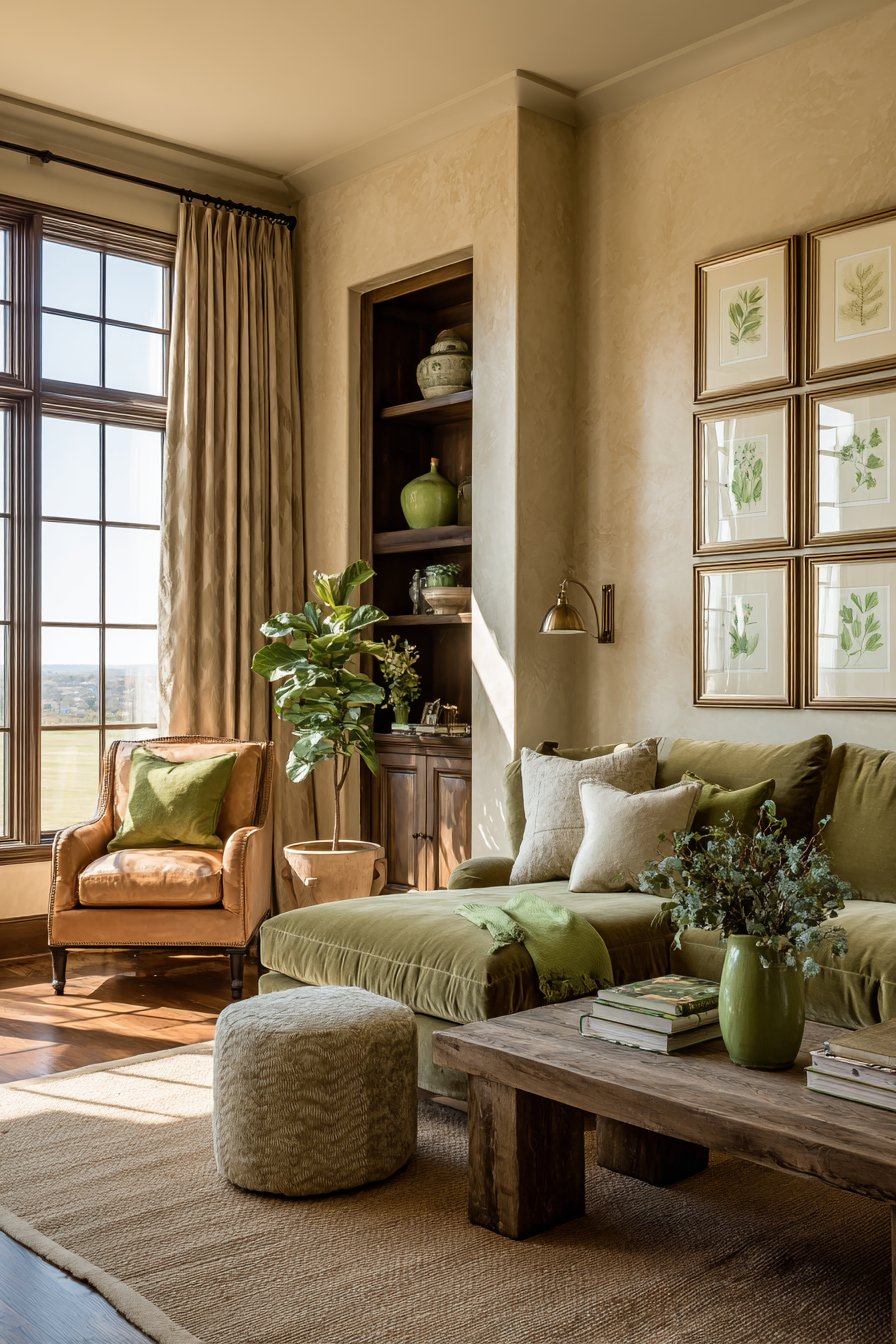
Photography and social media presence favor these colors aesthetically. Tan and green rooms photograph beautifully in natural light. The colors reproduce accurately across digital platforms. This consideration matters increasingly as people share their homes online and seek inspiration digitally.
The calming effect of earth tones supports modern wellness trends. As people seek refuge from overstimulating environments, these colors provide visual rest. The connection to nature through color psychology supports biophilic design principles. These wellness considerations elevate interior design beyond pure aesthetics.
Historical precedent demonstrates the enduring appeal of these colors together. Earth tone palettes appear throughout design history across movements and eras. This track record suggests continued relevance rather than temporary trendiness. Choosing tan and green connects contemporary spaces to design heritage.
The ease of gradual implementation makes these designs approachable for hesitant decorators. Starting with tan walls provides a neutral foundation. Adding green through pillows, plants, and accessories builds confidence incrementally. This low-risk approach encourages experimentation and personal discovery.
Professional designer preference for tan and green validates these choices. Interior design professionals regularly specify this combination for client projects. The palette’s versatility and reliability make it a safe professional recommendation. Homeowners benefit from this professional endorsement when making confident design decisions.
The sensory richness possible within this palette creates engaging environments. Smooth tan leather, rough jute, soft velvet, and living plants all offer tactile variety. Visual interest comes from mixing these textures within the cohesive color story. Multi-sensory design creates memorable, comfortable spaces.
Energy efficiency considerations favor lighter tan tones in many climates. Light colors reflect rather than absorb heat. This reduces cooling costs in warm environments. Green plants provide natural humidification. These practical benefits complement the aesthetic advantages.
Conclusion
These twenty tan and green living room designs demonstrate the remarkable versatility of this timeless color palette. From serene minimalist spaces to abundantly layered maximalist rooms, the combination adapts beautifully. The key takeaways include the importance of quality natural materials, thoughtful texture layering, and strategic use of living plants.
Successful tan and green living rooms balance warm neutrals with fresh accents. They incorporate multiple materials to create tactile interest. They consider lighting throughout the day and across seasons. Most importantly, they reflect the personalities and lifestyles of their occupants.
Start your tan and green living room transformation today. Begin with a quality tan foundation piece or paint color. Add green through plants, pillows, or artwork. Layer textures and materials gradually. Your dream living room awaits creation through thoughtful planning and creative expression. The harmonious beauty of nature’s palette will transform your space into a welcoming retreat you’ll enjoy for years to come.
