


Creating a toddler girl room requires a careful balance between functionality and imagination. These spaces must support development while sparking creativity. The right design transforms an ordinary room into a nurturing environment. Parents face unique challenges when designing for this age group. Safety remains paramount while aesthetic appeal matters too.
Toddler rooms serve multiple purposes throughout the day. They provide spaces for sleep, play, learning, and quiet time. Thoughtful design accommodates these varied activities seamlessly. The concepts presented here range from Montessori-inspired minimalism to whimsical princess themes. Each approach offers distinct advantages for different families and living situations.
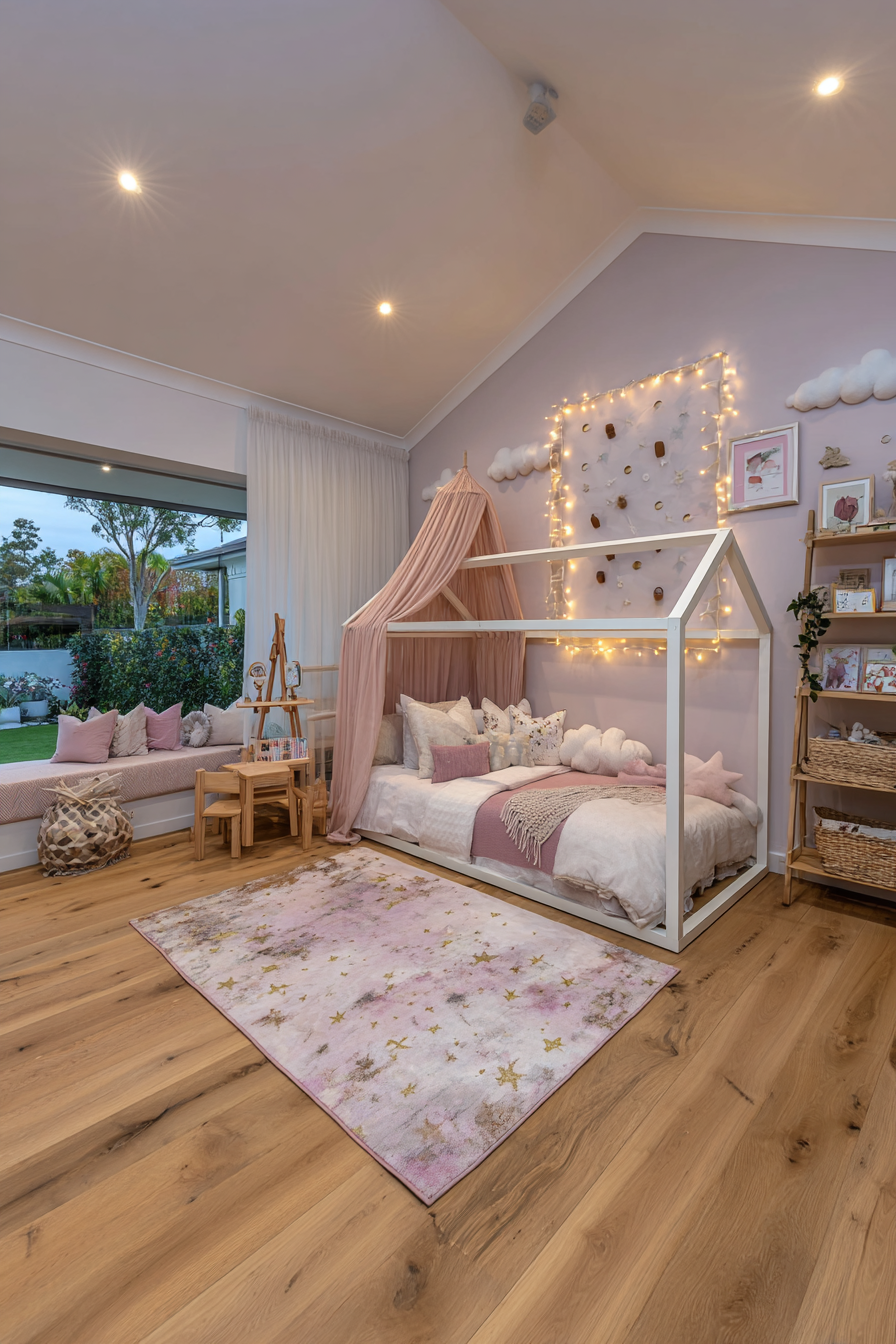
The twenty designs featured showcase diverse styles and philosophies. Some emphasize educational elements while others prioritize sensory experiences. Modern farmhouse aesthetics blend with bohemian eclecticism throughout. Space-efficient solutions address urban living challenges. Nature themes introduce calming elements. Every concept demonstrates how intentional design creates rooms that grow with your child.
1. Cloud-Soft Pink Sanctuary with Playful Elements
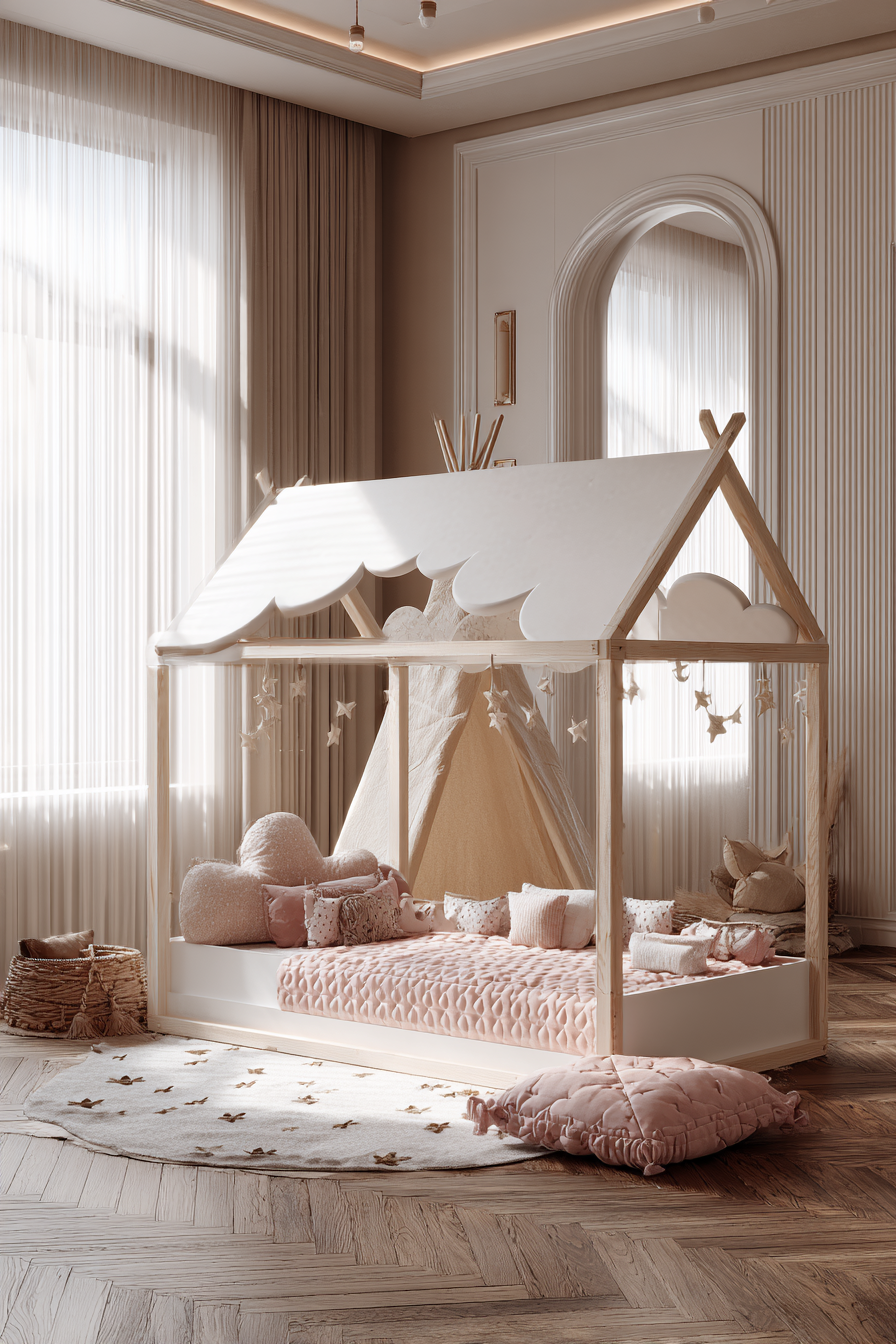
A low-profile white wooden bed anchors this charming space with effortless grace. Soft pink quilted coverlets drape across the mattress in gentle folds. Cloud-shaped decorative pillows add whimsical touches without overwhelming the design. The bed’s low height ensures easy access for small legs. Safety considerations merge seamlessly with aesthetic choices.
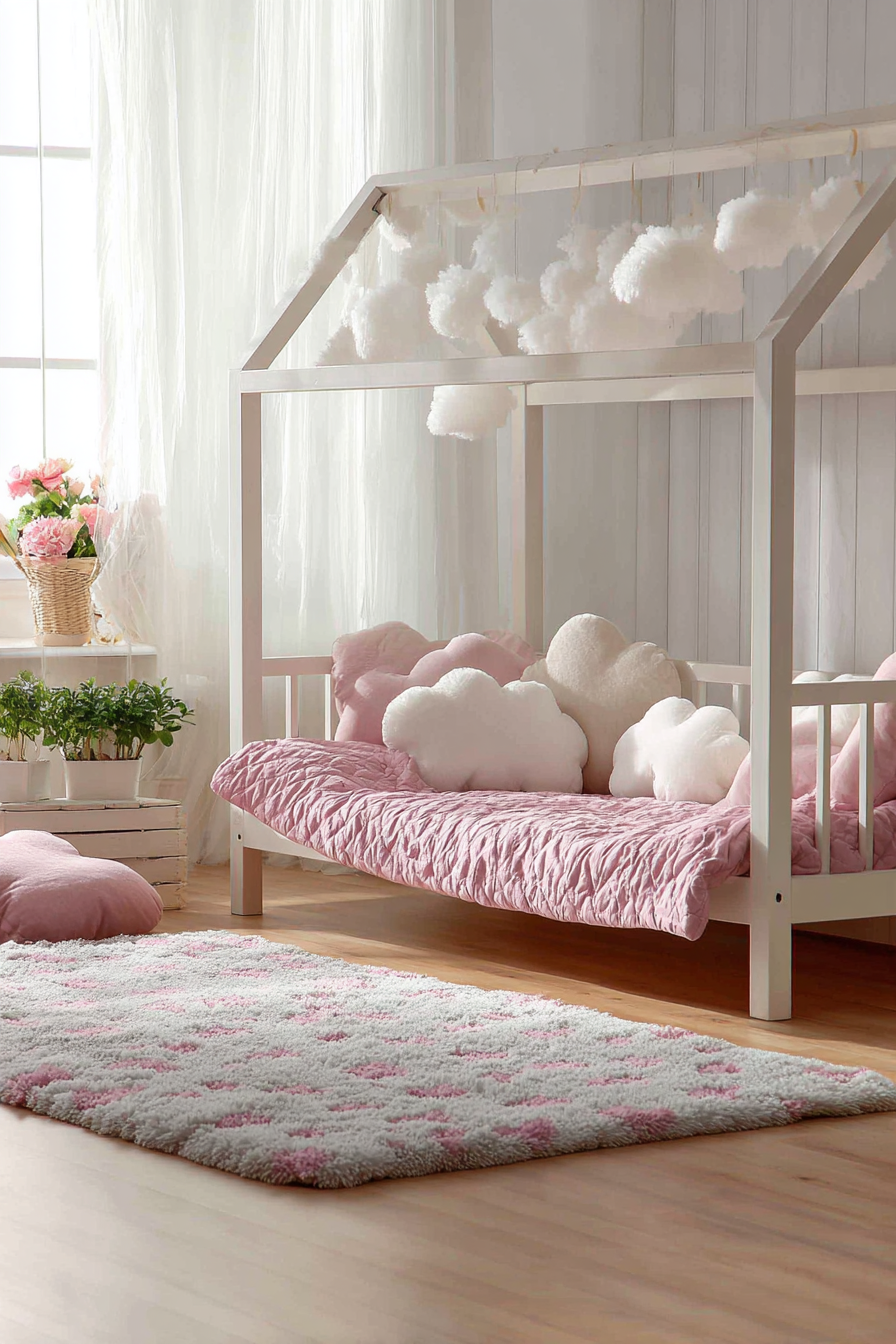
Light oak flooring provides natural warmth underfoot throughout the room. A hand-tufted wool rug featuring whimsical star patterns defines the play area. The texture invites little ones to sit and explore. Sheer white curtains filter morning light beautifully. The filtered illumination creates soft, gentle ambiance that changes throughout the day.
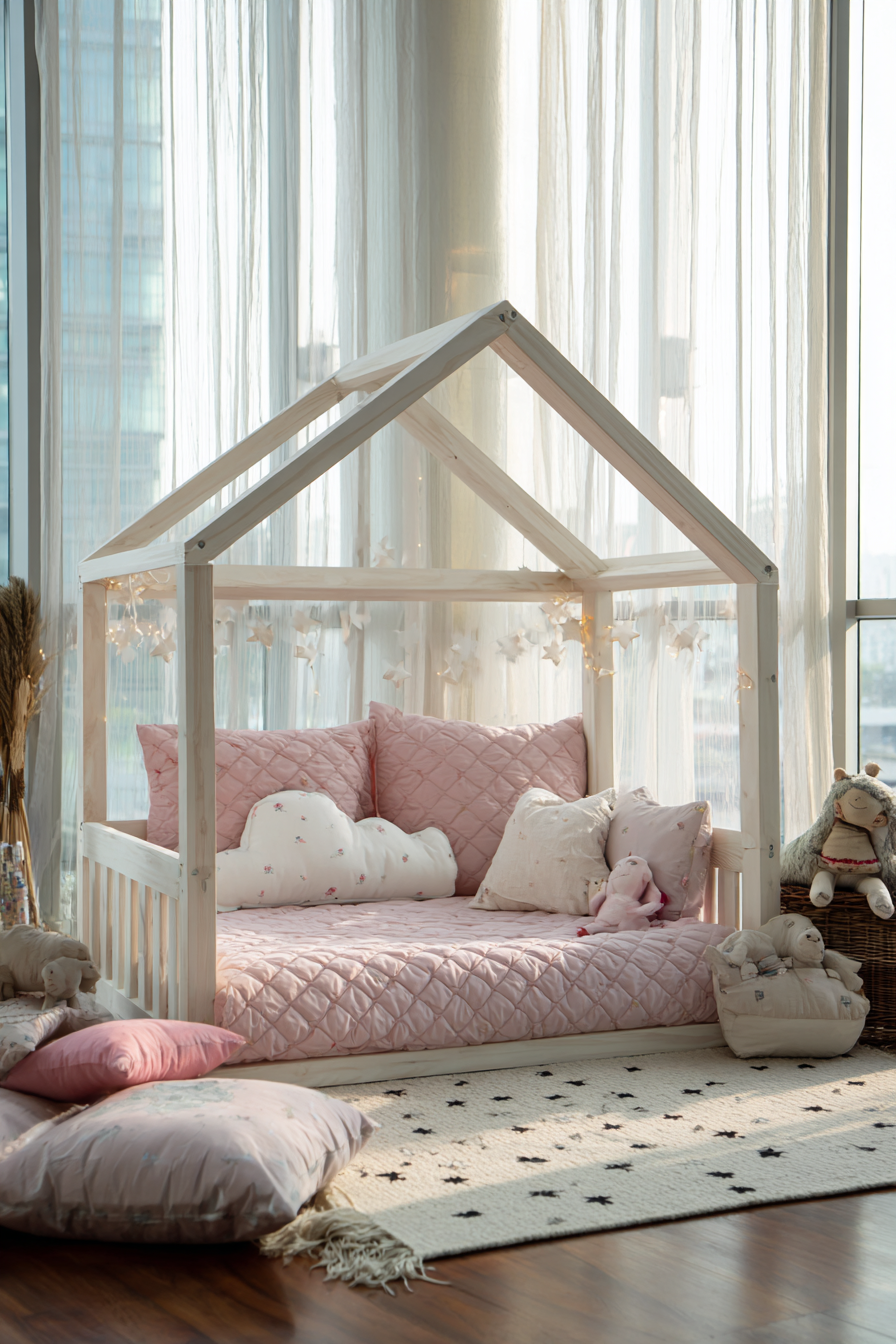
A canvas teepee tent establishes a cozy reading nook nearby. Plush floor cushions in pastel tones surround the entrance invitingly. This designated quiet space encourages independent reading habits early. The arrangement promotes both imagination and literacy development. Natural light reaches this corner perfectly for afternoon story sessions.
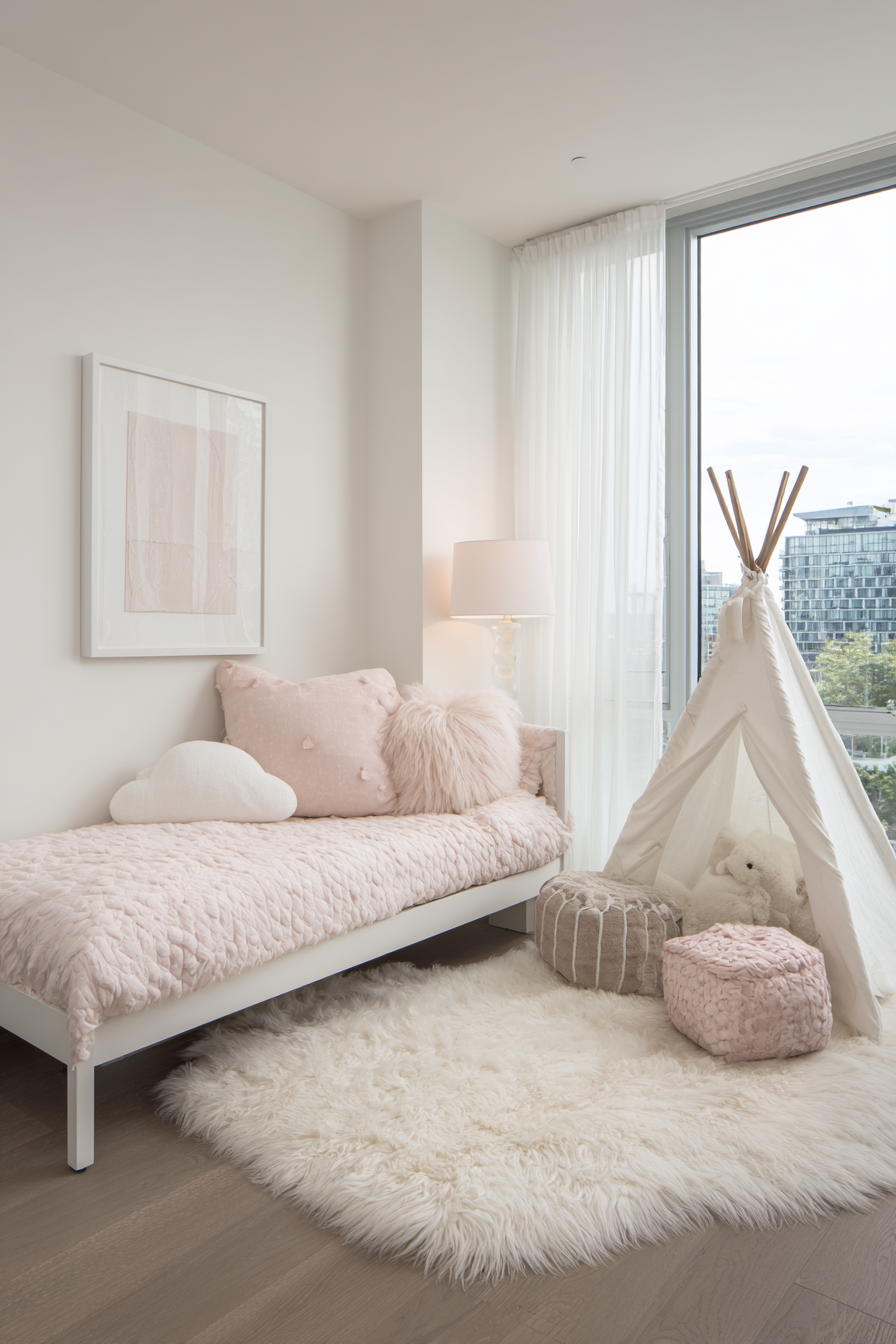
The overall composition balances playfulness with practicality throughout. Every element serves a purpose while maintaining visual harmony. Child-safe furniture arrangements prevent accidents during active play. The color palette remains soothing rather than overstimulating. This design grows with your toddler seamlessly over several years.
Key Design Tips:
- Select low-profile beds that toddlers can access independently
- Layer textures through rugs, cushions, and bedding for sensory development
- Create designated activity zones like reading nooks to encourage specific behaviors
- Use sheer curtains to control light while maintaining brightness
- Choose hand-tufted rugs for durability and comfort during floor play
- Install child-safe furniture with rounded edges and stable construction
2. Organized Accessibility with Mint and Blush Storage
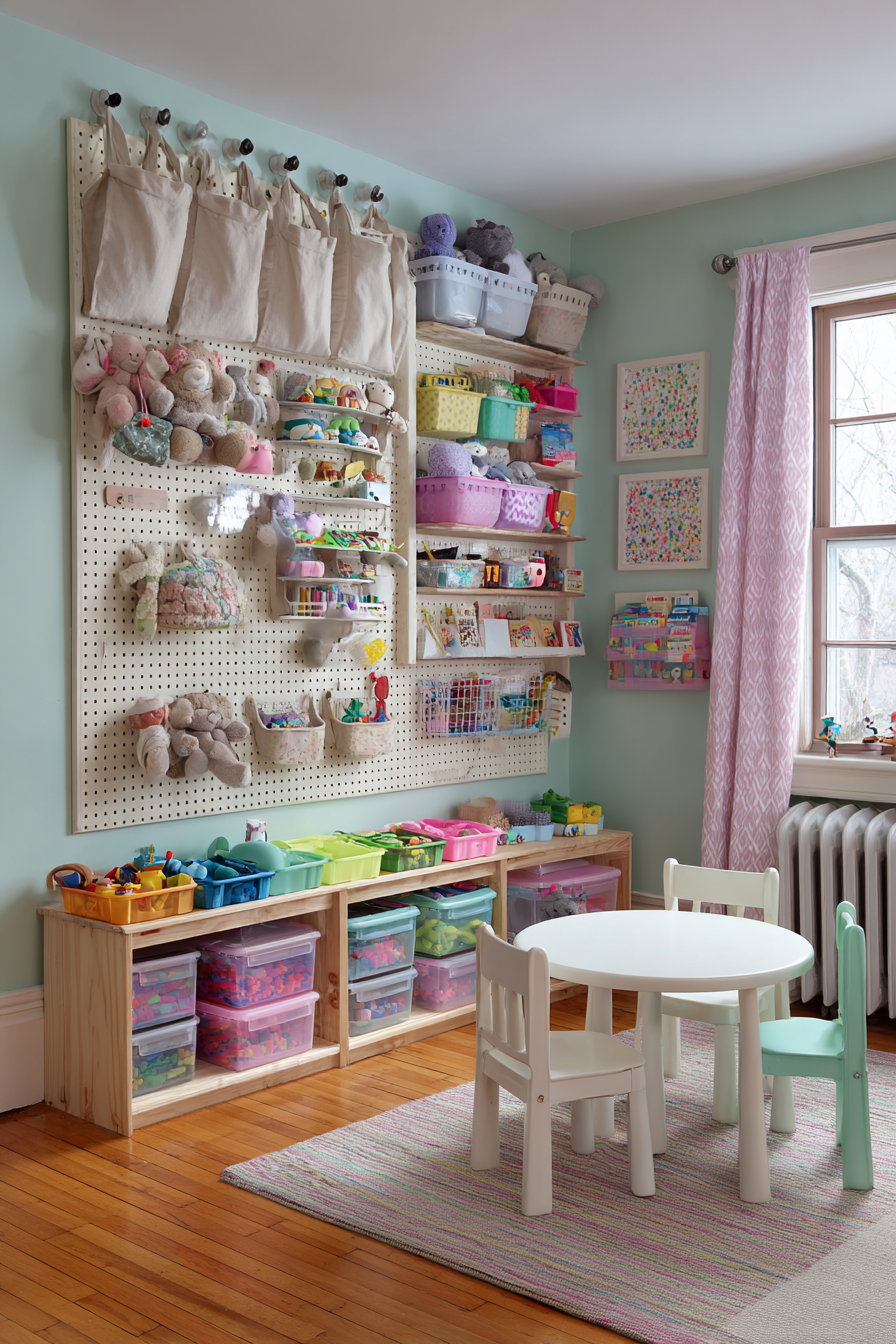
Open storage solutions transform this toddler girl room into an organizational masterpiece. Low wooden shelving displays sorted toy bins at accessible heights. Soft mint and blush colors create visual harmony across containers. The system teaches categorization skills through daily use. Toddlers develop independence by selecting and returning toys themselves.
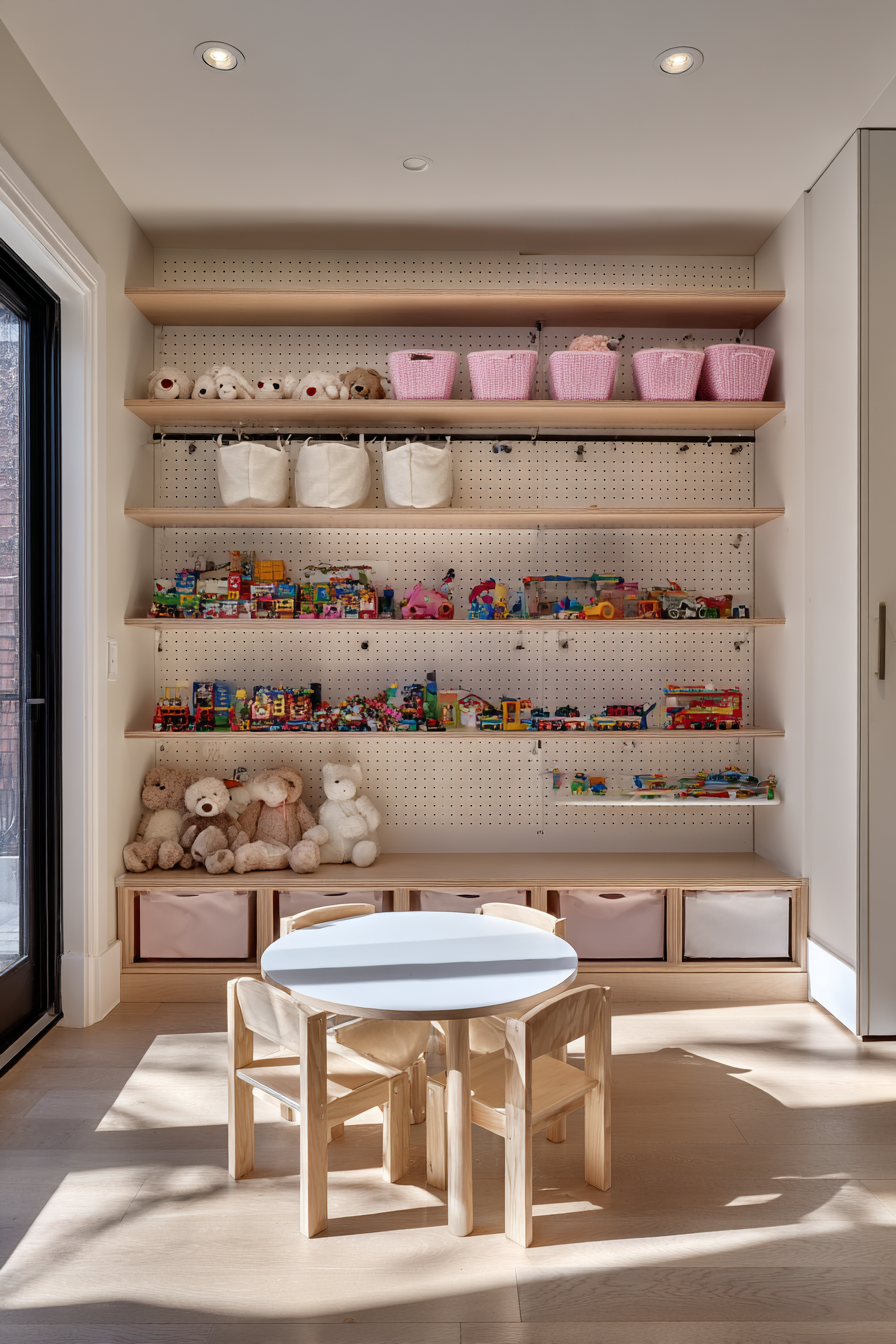
A pegboard organization system hangs at perfect child height on one wall. Hanging fabric baskets hold books and stuffed animals securely. The vertical storage maximizes floor space for active play. Picture labels help pre-readers identify contents quickly. This approach supports cognitive development through visual association.
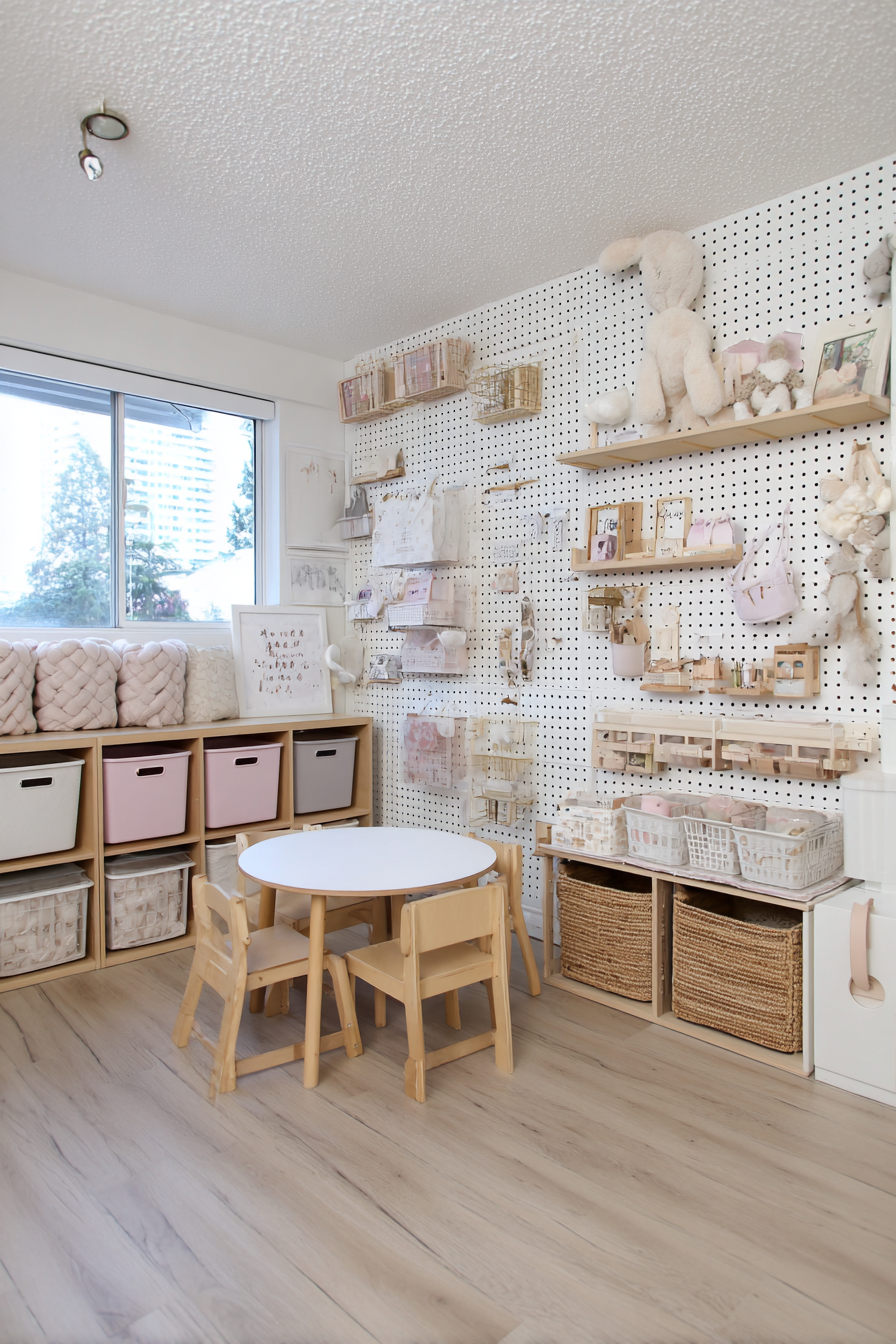
Easy-clean laminate flooring handles inevitable spills and accidents gracefully. A small round activity table with two matching chairs sits nearby. The scaled furniture encourages creative projects and puzzles comfortably. Natural daylight from a nearby window illuminates the organized space. The brightness makes finding specific toys easier throughout the day.
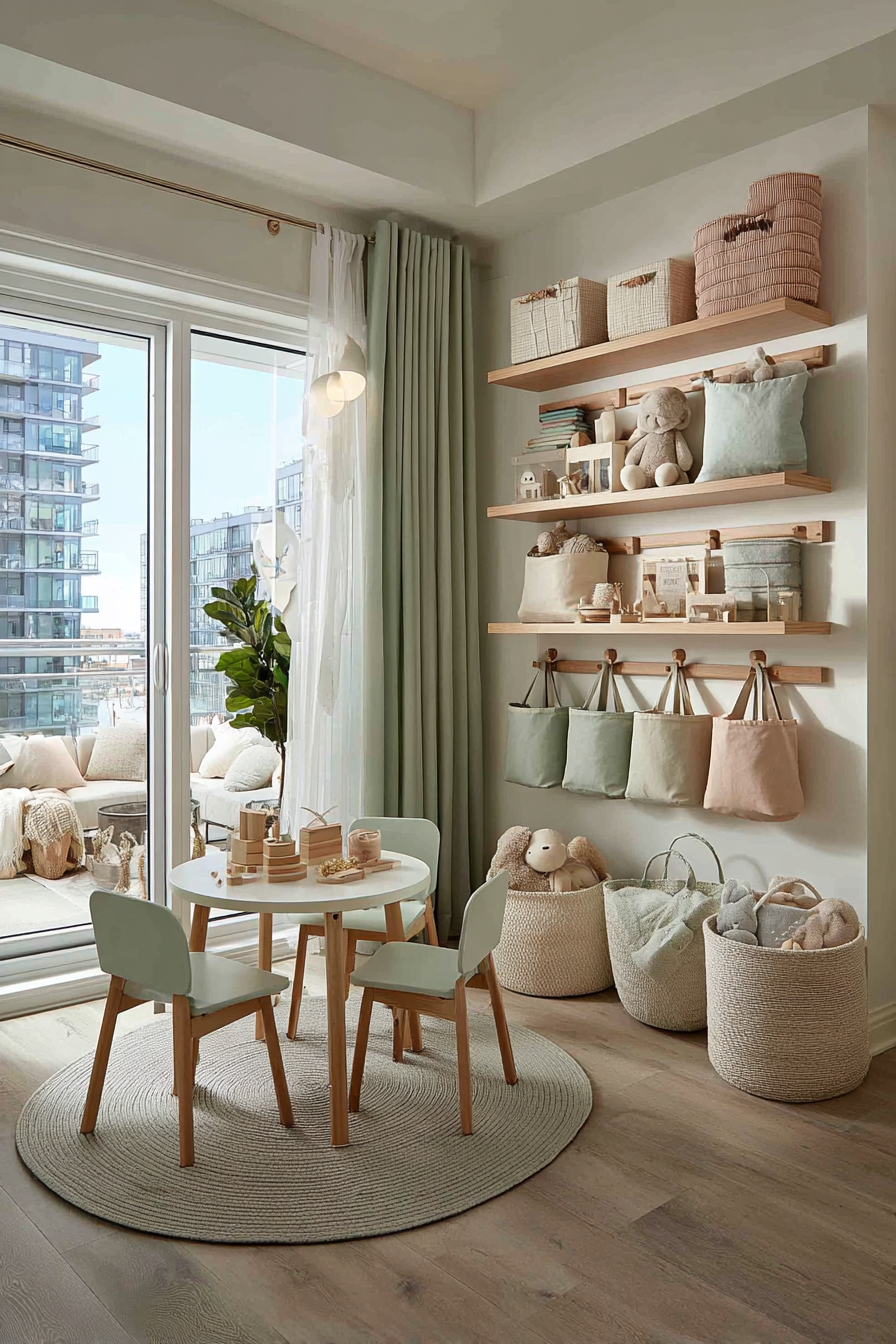
The practical focus doesn’t sacrifice aesthetic appeal in this design. Coordinated color schemes create cohesive visual flow. Accessible storage empowers toddlers to maintain tidiness independently. The system adapts easily as interests and toy collections evolve.
Key Design Tips:
- Install open shelving at toddler shoulder height for true accessibility
- Use fabric bins in coordinated colors for both organization and aesthetics
- Add picture labels to storage containers for pre-reading identification
- Choose round tables to eliminate sharp corner hazards
- Select laminate flooring in wood tones for warmth with easy maintenance
- Create defined activity zones with furniture placement and area rugs
3. Creative Expression Through Lavender Cloud Murals
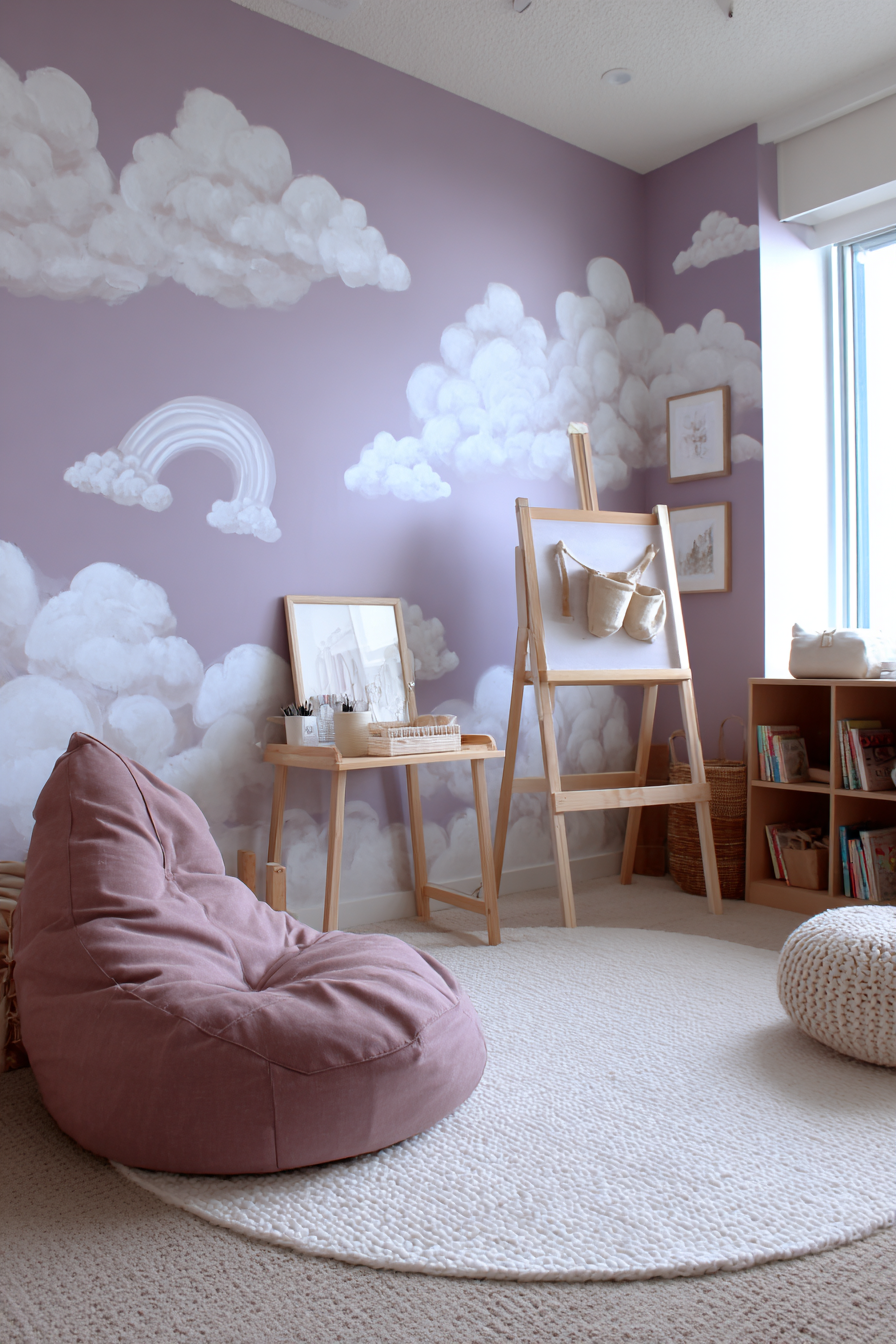
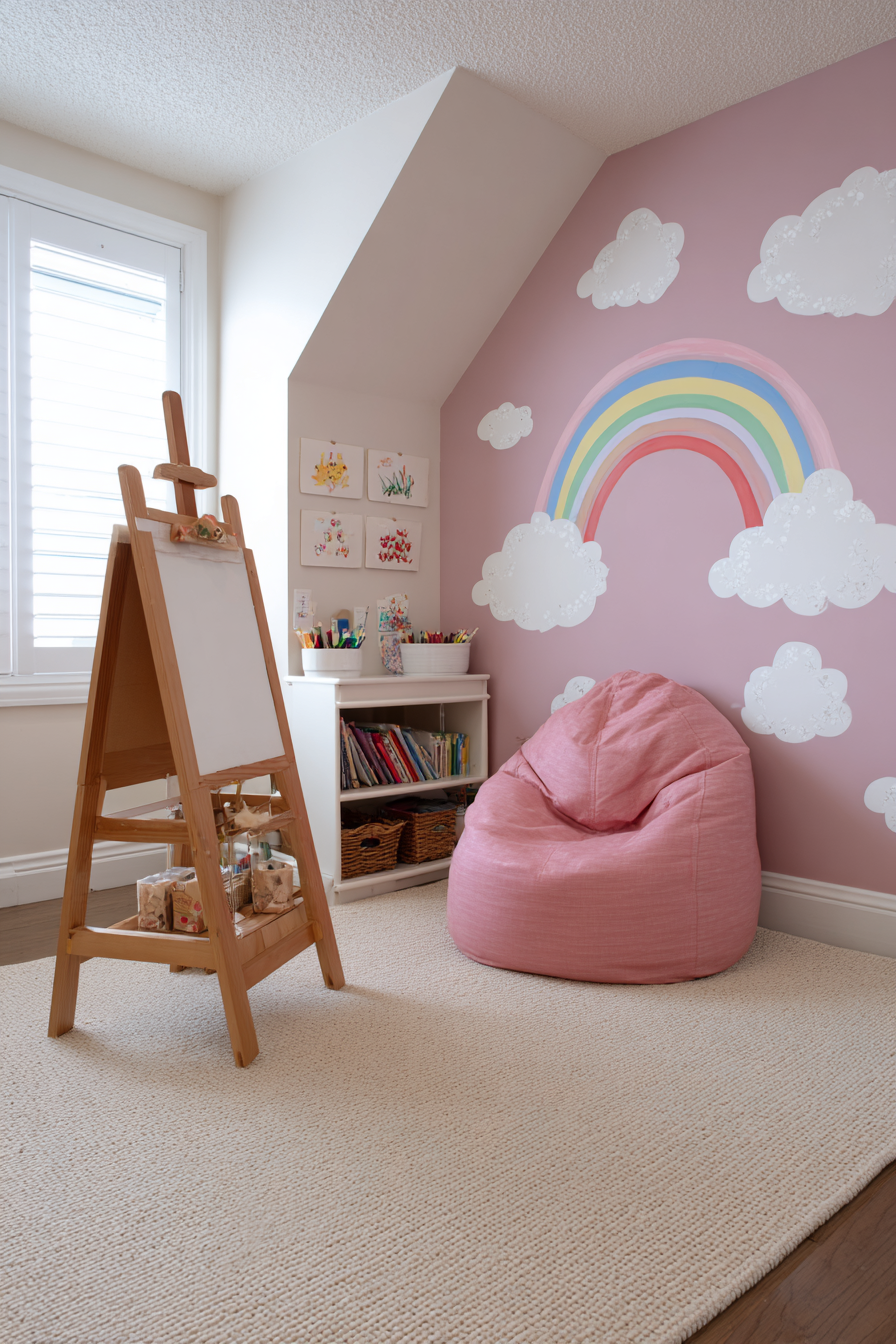
A feature wall painted in soft lavender sets this room apart immediately. Hand-painted white clouds float across the surface dreamily. A simple rainbow mural arcs overhead with gentle watercolor transitions. The artistic elements inspire creativity without overwhelming young minds. The paint choices remain calming despite the playful imagery.
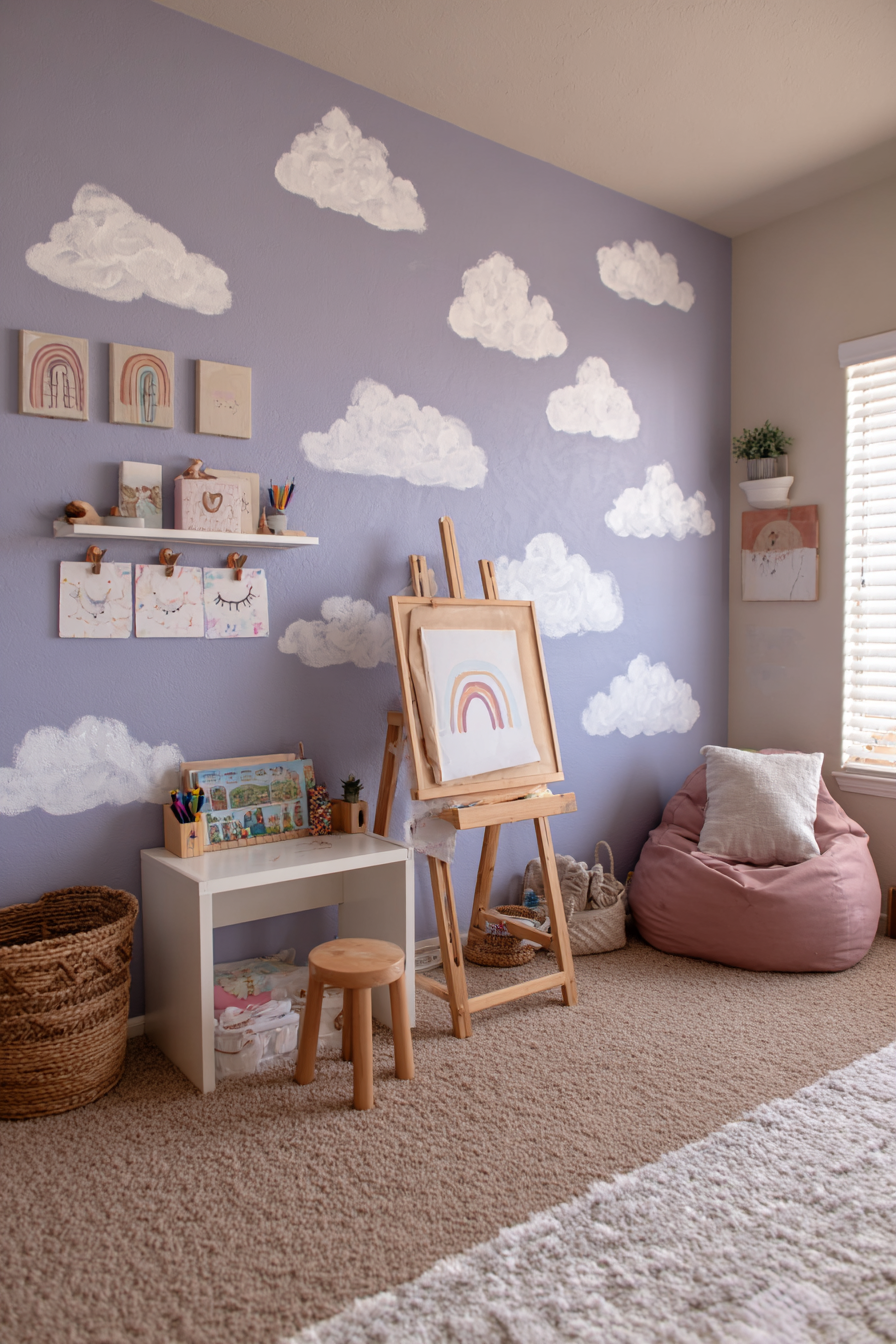
A small art station encourages daily creative expression beautifully. A wooden easel stands ready with washable supply caddies nearby. Protective floor mats prevent paint damage during enthusiastic projects. Child-safe wall hooks display finished artwork at toddler eye level. This gallery approach validates creative efforts and builds confidence.
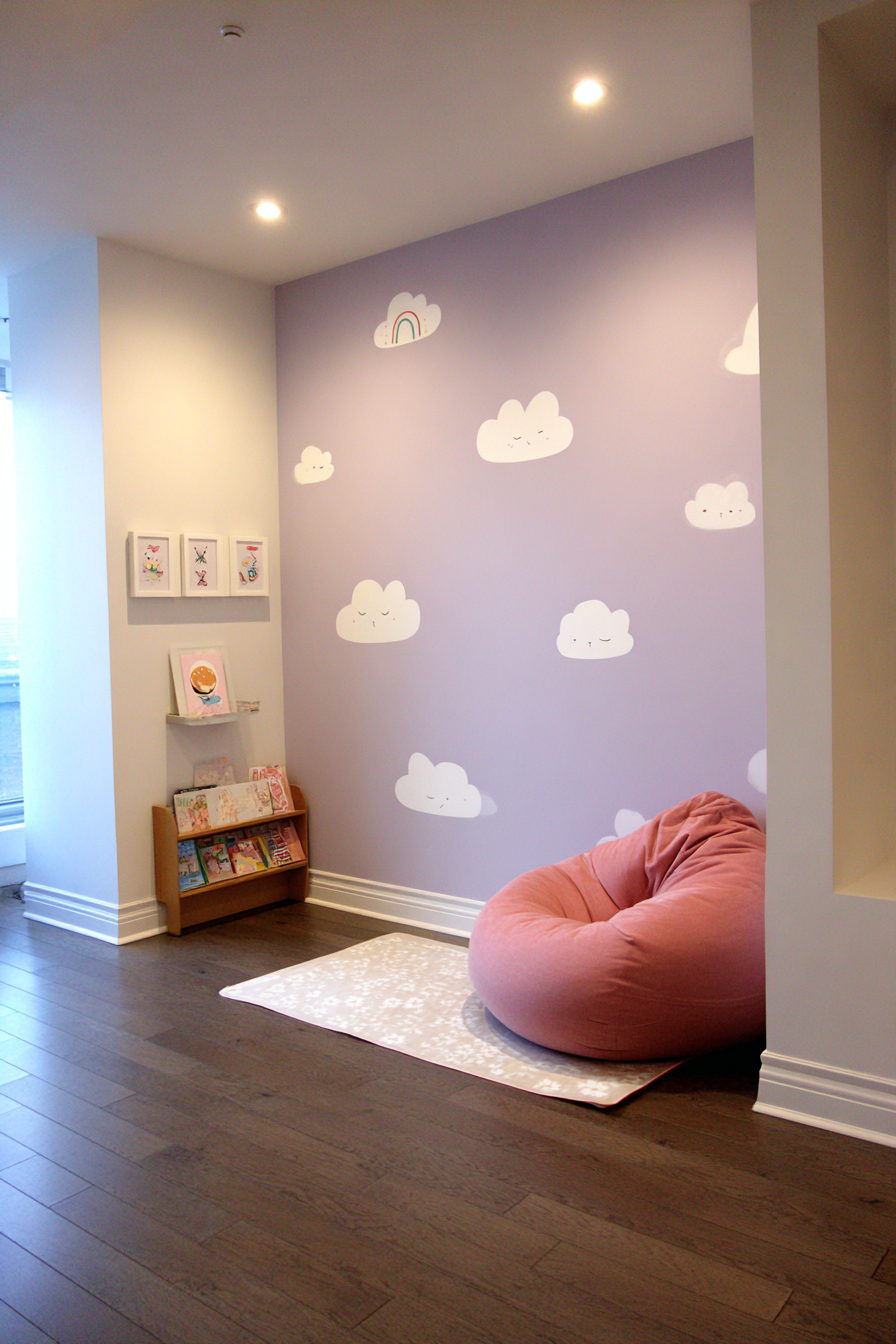
The cozy reading corner features a low bookshelf and beanbag chair. Dusty rose fabric provides soft seating for quiet moments. Books display with covers facing forward for easy selection. The arrangement promotes literacy through accessibility and comfort. Natural lighting reaches this space perfectly for afternoon reading sessions.
Washable materials dominate surface selections throughout the room. The practical choices acknowledge the messy nature of toddler creativity. Easy cleanup encourages more frequent art activities. The design philosophy celebrates process over perfection beautifully.
Key Design Tips:
- Use washable paint for murals that can be refreshed easily
- Install easels at adjustable heights to grow with your child
- Choose washable markers, paints, and crayons exclusively for toddlers
- Create art display systems at child height to celebrate their work
- Add protective mats under art stations for stress-free creativity
- Position reading areas near natural light sources for eye health
4. Safety-First Design with Feminine Aesthetic Appeal
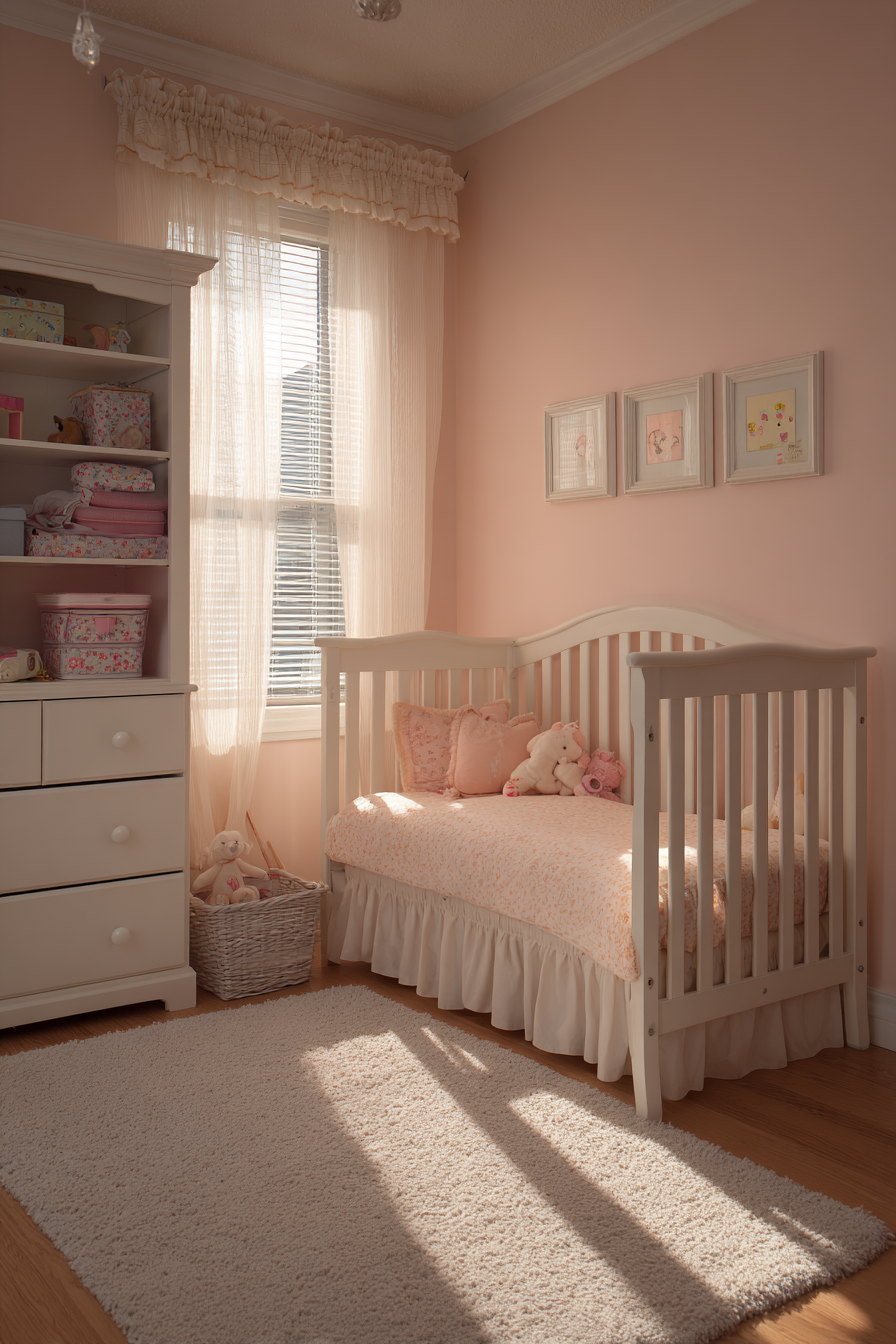
Corner guards, outlet covers, and furniture anchoring systems define this space. Visible safety elements integrate seamlessly into the attractive design. A convertible crib-to-toddler bed features protective side rails. Soft cotton bedding in gentle peach tones provides cozy comfort. The bed transitions easily as your child grows.
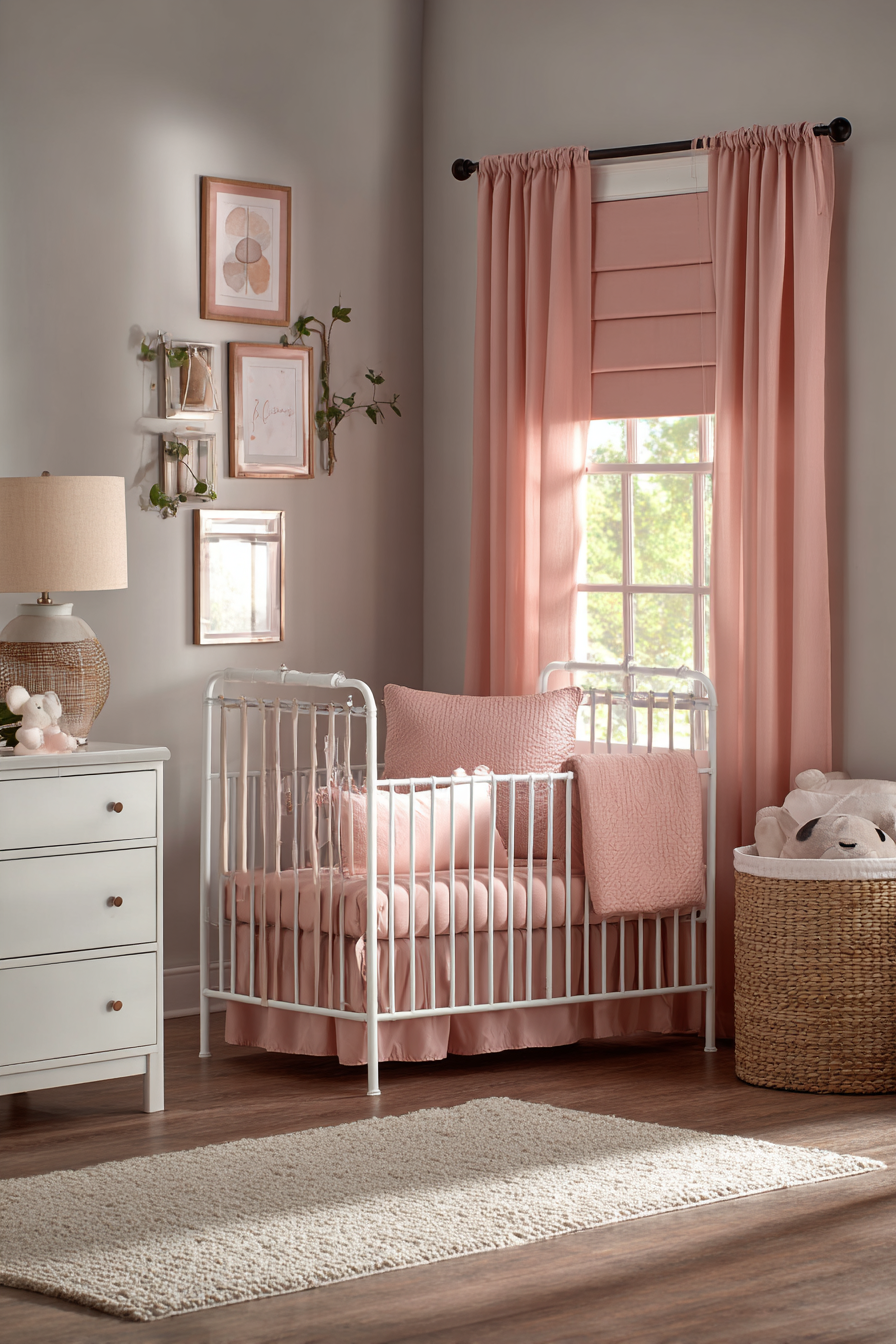
Cordless window treatments eliminate dangerous hanging cords completely. Sheer fabric provides light control without safety hazards. The cellular construction offers insulation benefits year-round. Natural light filters through gently throughout the day. Privacy remains adequate without heavy drapes.
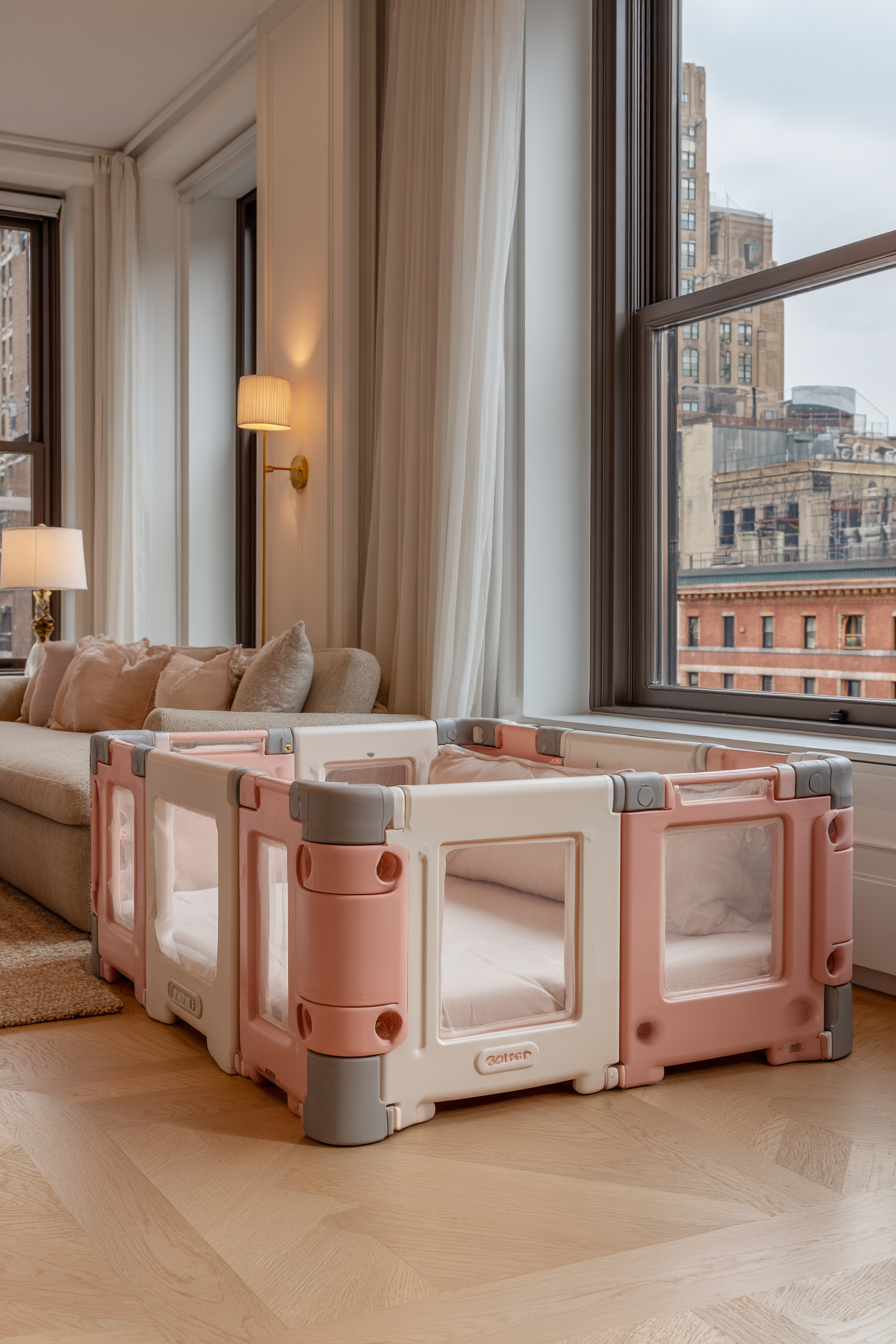
Soft-close drawer units prevent pinched fingers during daily use. Rounded-edge furniture pieces eliminate sharp corner dangers. Every piece undergoes stability testing before placement. Wall anchors secure tall furniture against tipping accidents. The comprehensive approach addresses common toddler injury risks.
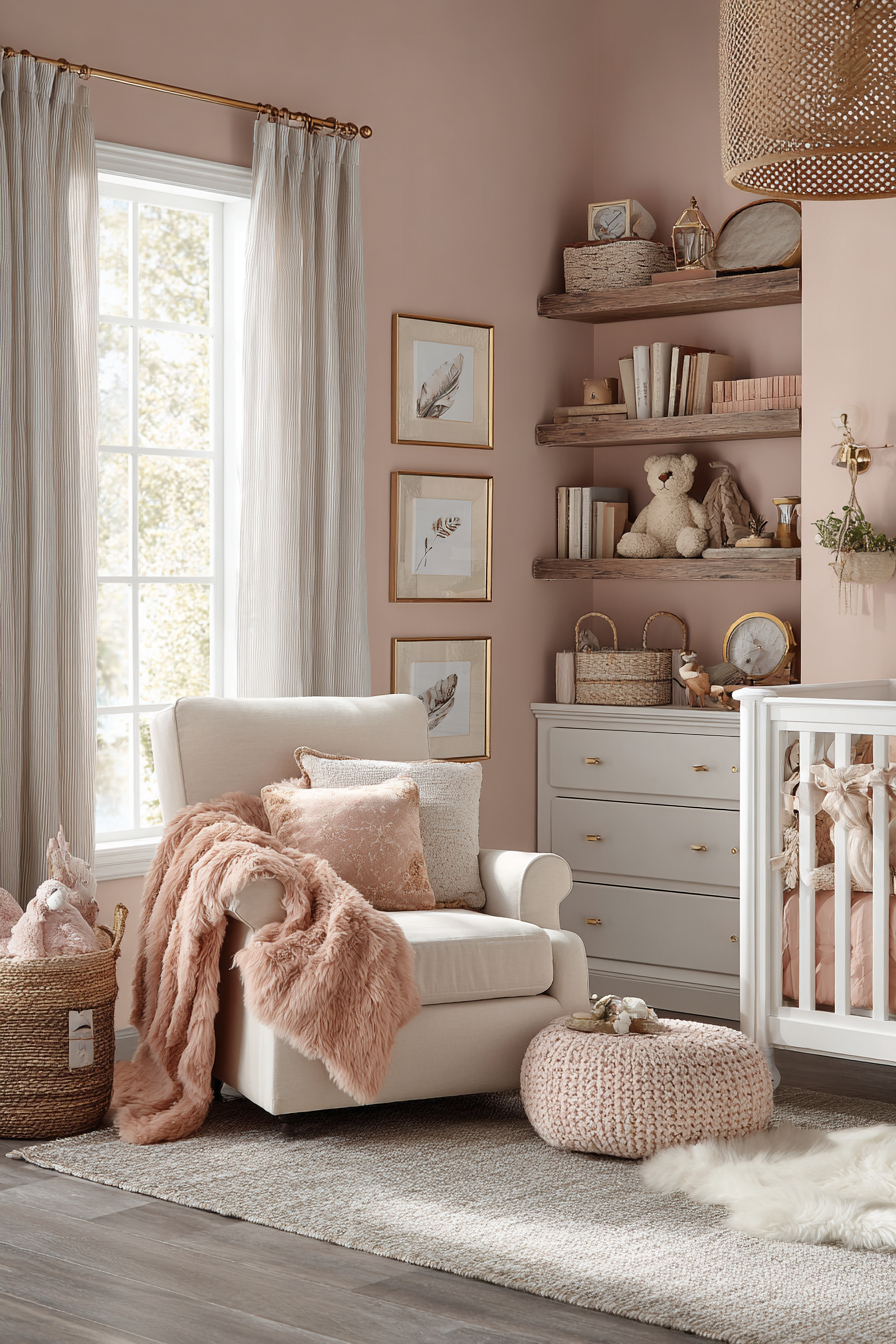
The feminine aesthetic doesn’t compromise on safety standards anywhere. Peach and cream tones create warmth without gender stereotyping. Functional beauty defines every selection throughout the space. Parents rest easier knowing comprehensive childproofing supports carefree play.
Key Design Tips:
- Anchor all tall furniture to walls using earthquake-rated hardware
- Choose cordless window treatments or cord cleats mounted high
- Install corner guards on all furniture with sharp edges
- Select beds with side rails that meet current safety standards
- Use soft-close mechanisms on all drawers and cabinet doors
- Cover electrical outlets with tamper-resistant covers or plates
5. Woodland Wonderland with Muted Watercolor Creatures
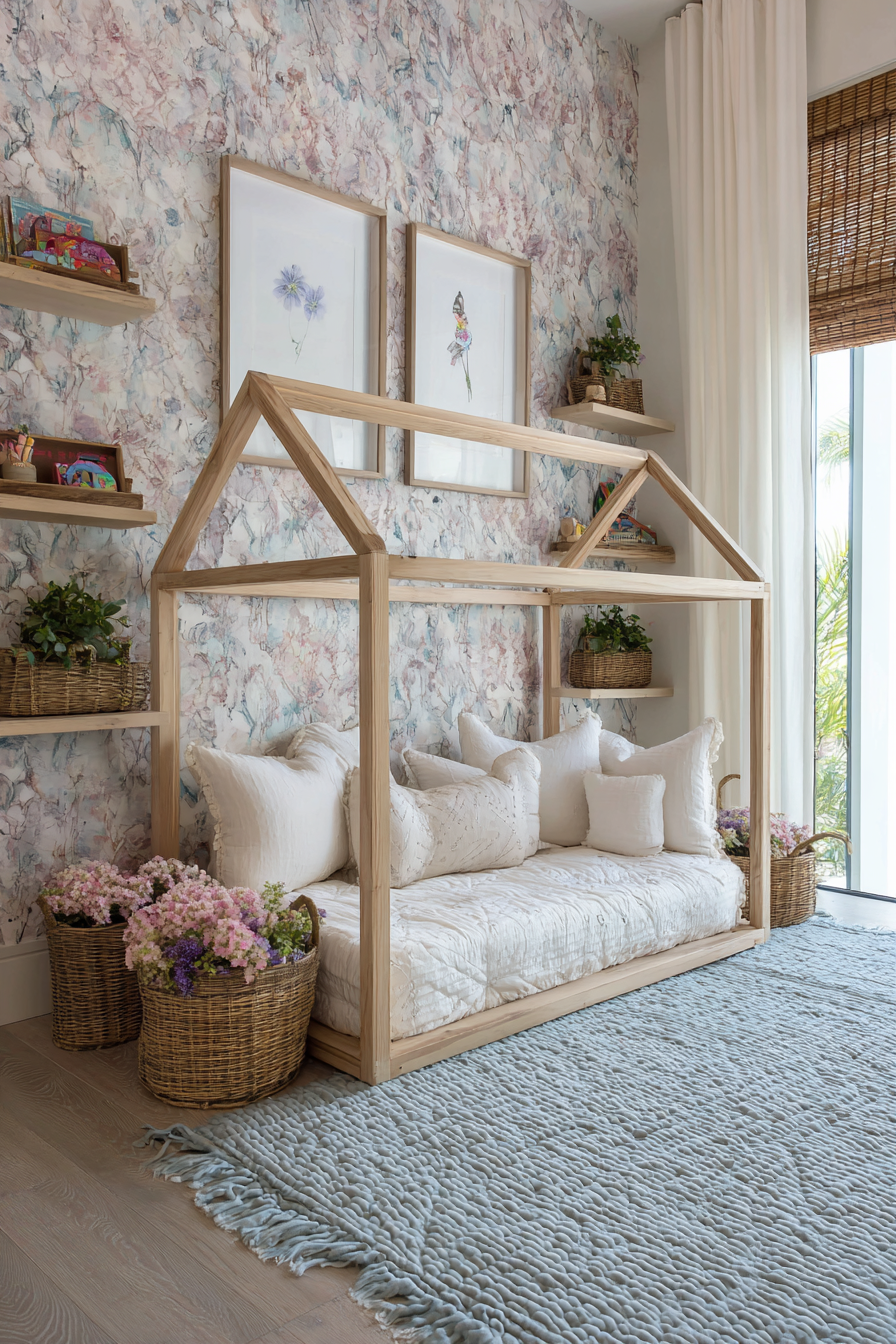
Forest wallpaper featuring gentle woodland creatures covers the walls beautifully. Muted watercolor tones keep the imagery soft and soothing. Deer, rabbits, and birds appear throughout without overwhelming patterns. The nature theme creates calming environments for rest and play. Young children connect with animal imagery naturally.
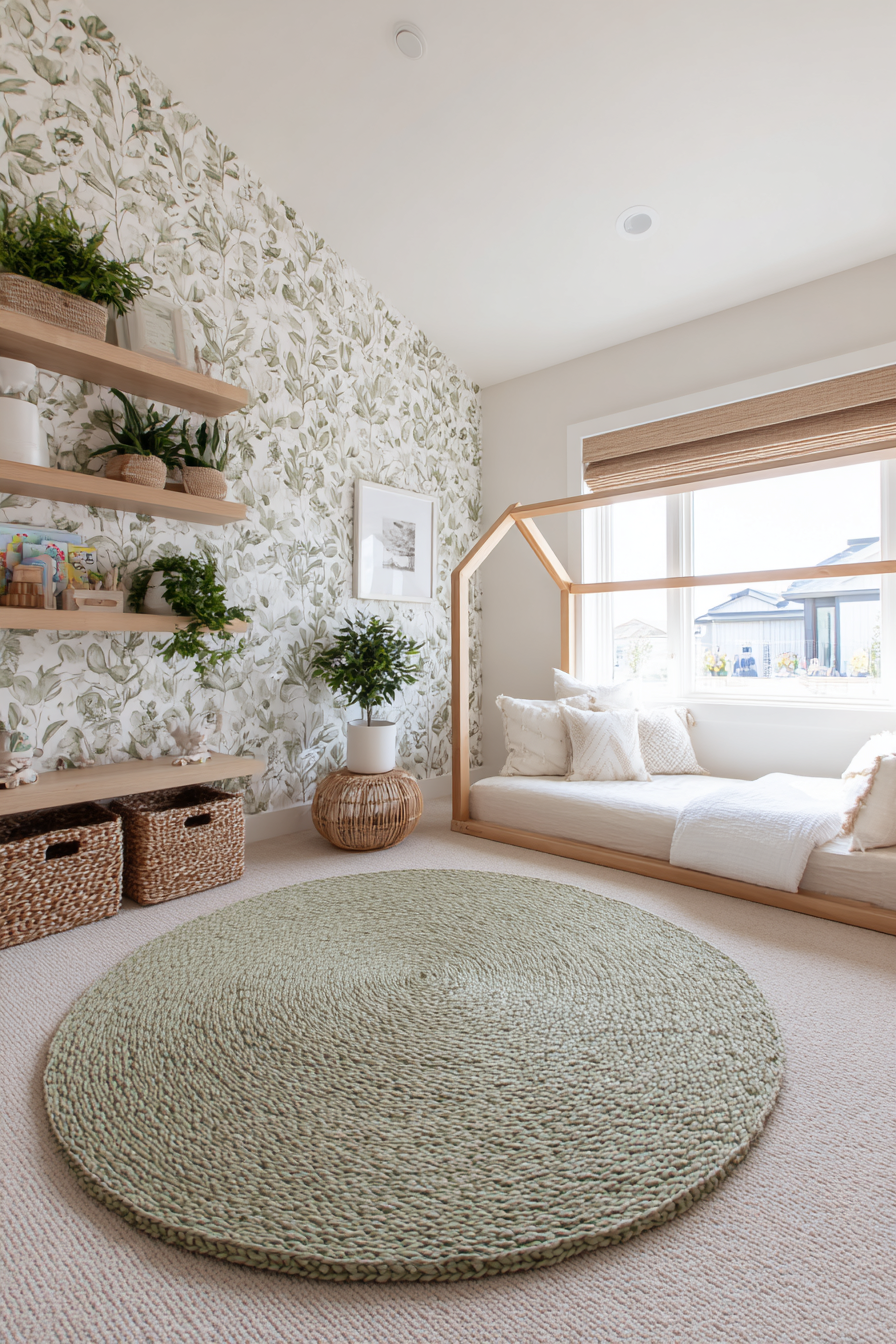
A small wooden house-frame bed serves as the room’s centerpiece. White cotton bedding maintains simplicity within the frame structure. The design encourages imaginative play about forest houses. The low height ensures safe entry and exit. Natural wood finish complements the woodland theme perfectly.
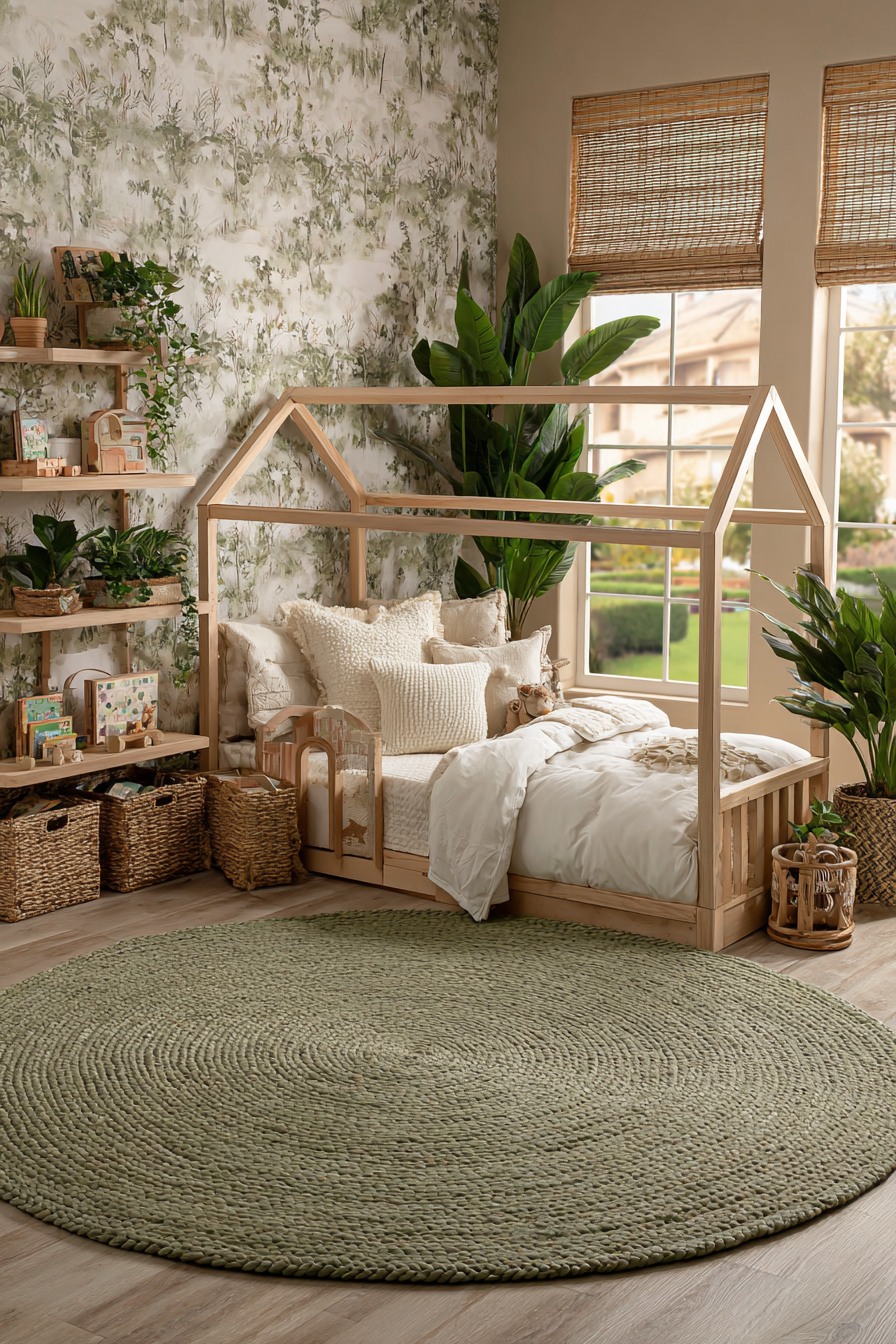
Natural fiber baskets on low shelves provide organized storage solutions. The woven textures add tactile interest throughout the space. Toys and books nestle inside these sustainable containers. A wool felt playmat in soft green grounds the floor area. The natural material feels comfortable during extended play sessions.
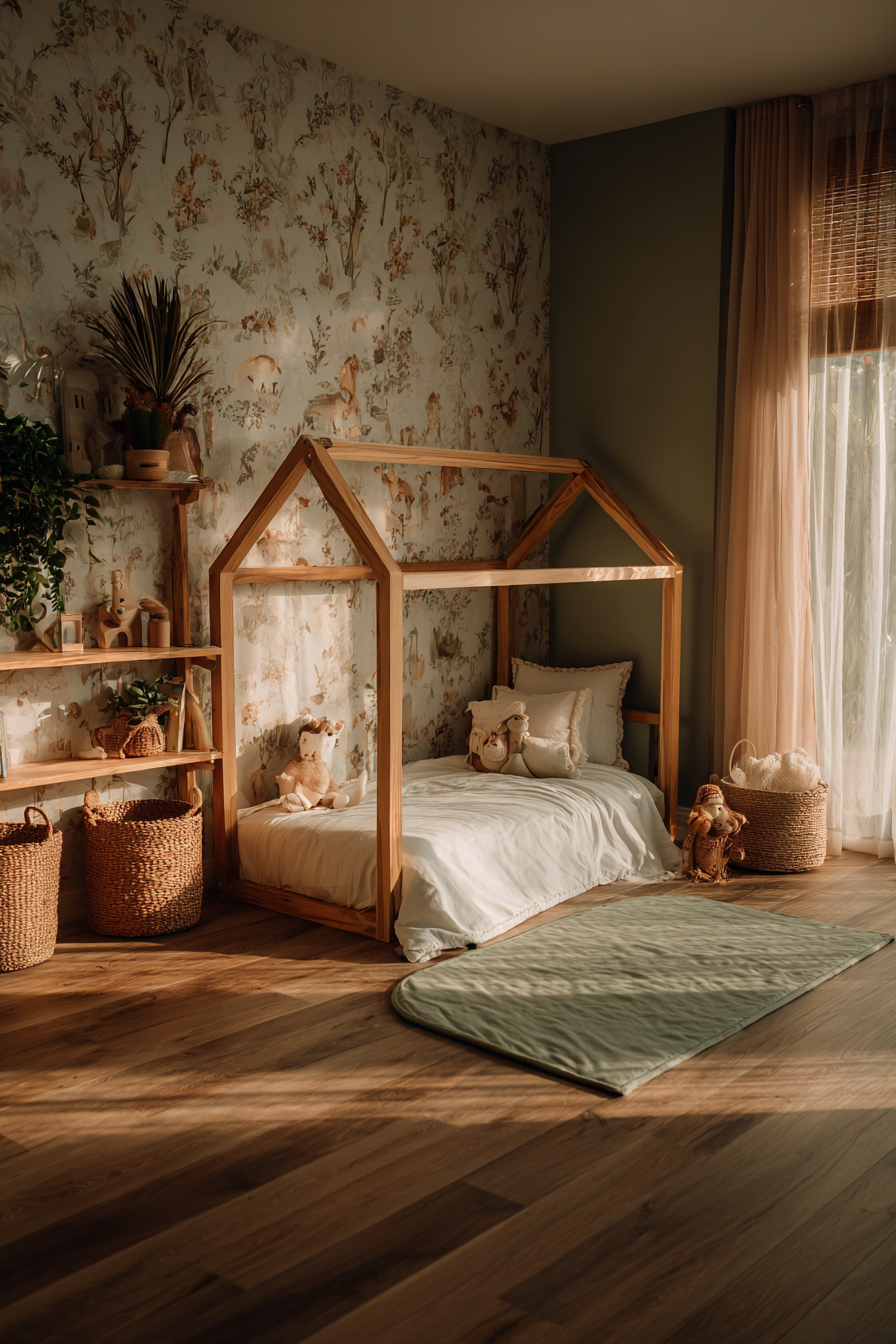
Child-safe potted plants on high shelves introduce real greenery. Spider plants and pothos varieties clean the air naturally. The living elements teach responsibility through simple care routines. Bamboo roller shades filter morning light with natural beauty.
Key Design Tips:
- Choose wallpaper with non-toxic, water-based inks for safety
- Select house-frame beds for imaginative play opportunities
- Use natural fiber storage for sustainability and texture
- Add real plants on high shelves for air quality benefits
- Install bamboo or natural fiber window treatments for cohesive themes
- Maintain muted color palettes in nature themes for calming effects
6. Montessori-Inspired Independence and Movement
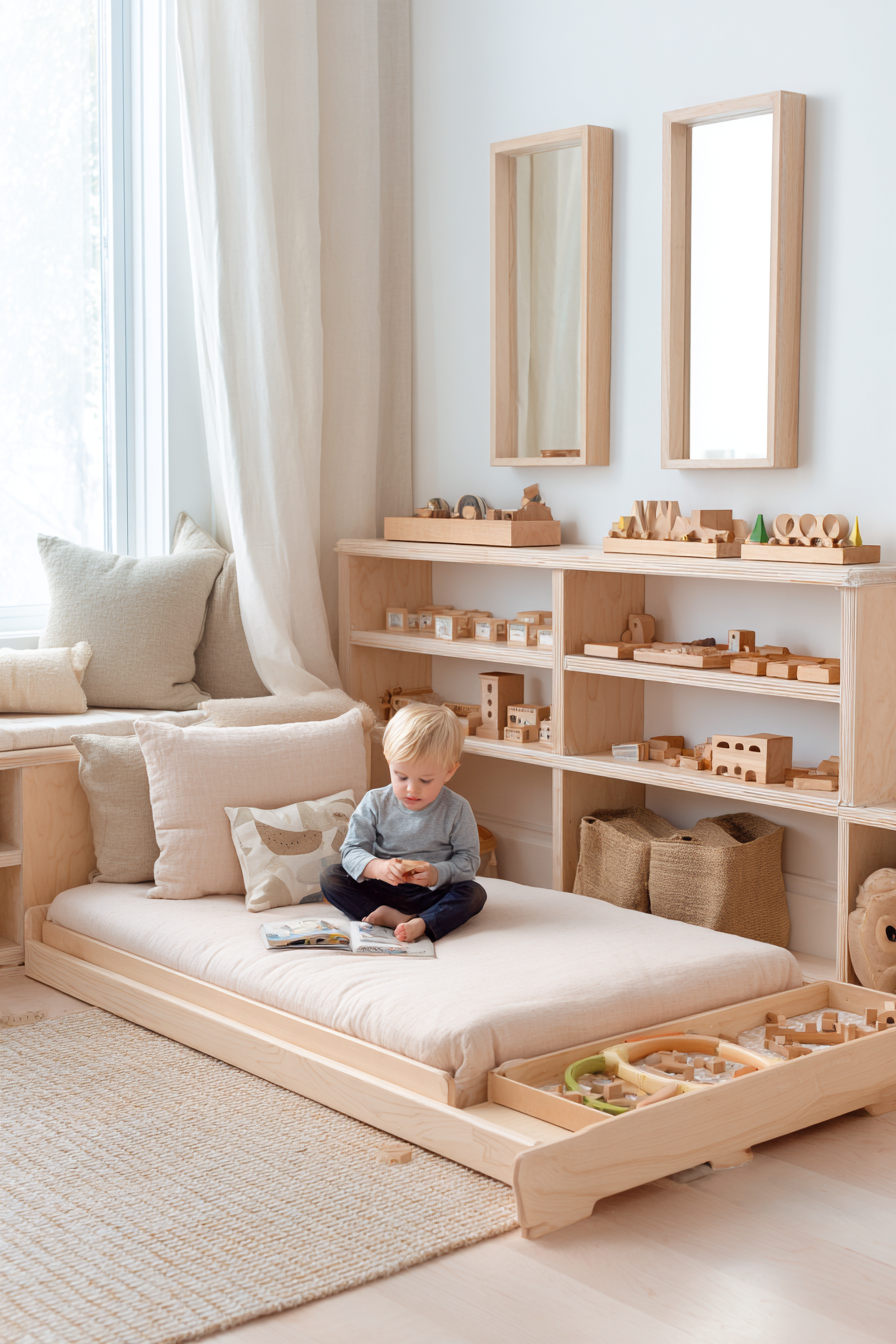
A floor bed with low wooden frame promotes independent sleep habits. The organic cotton mattress in soft blush ensures healthy rest. Toddlers climb in and out freely throughout the day. This freedom supports natural sleep rhythms without crying. The Montessori philosophy emphasizes child-led development consistently.
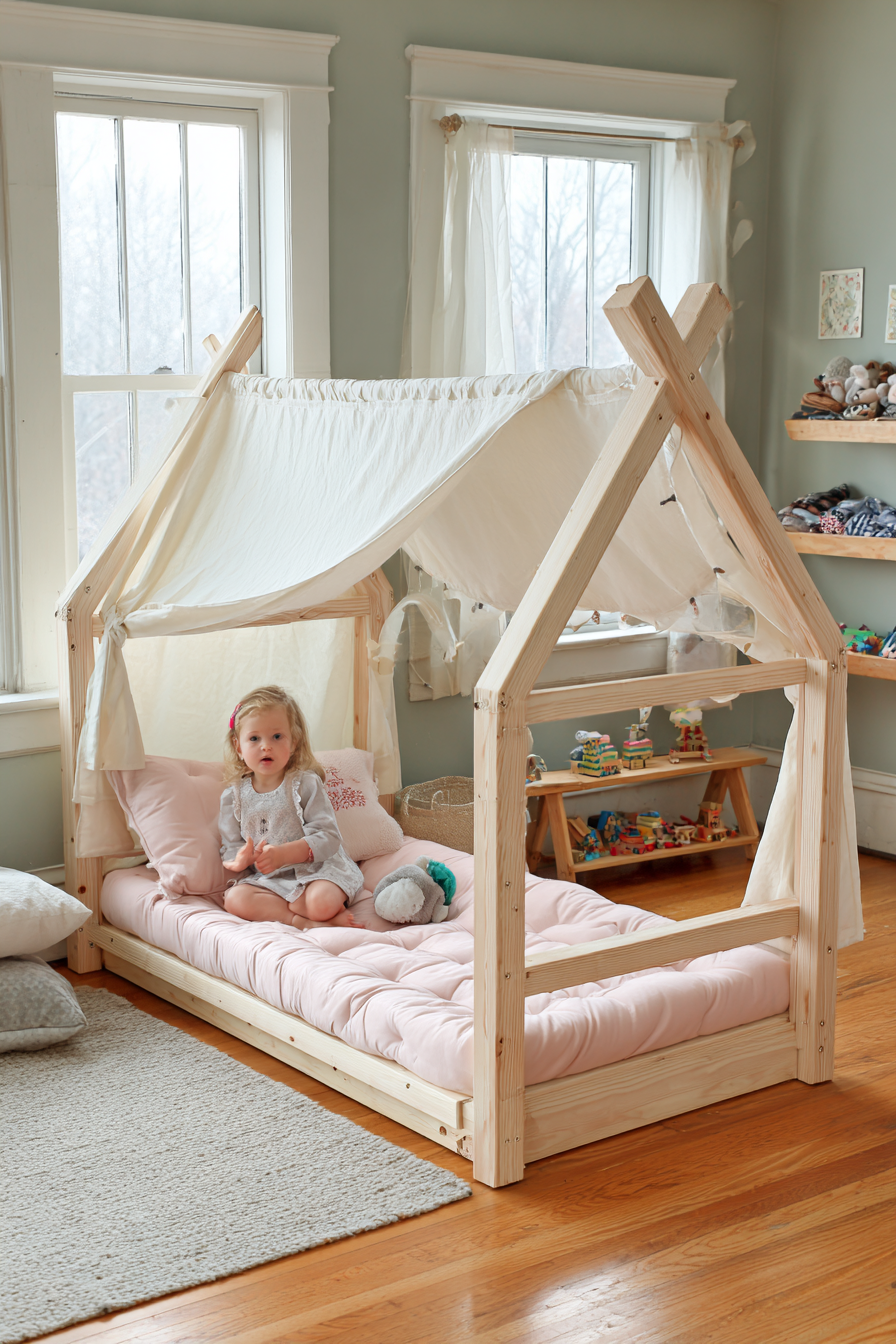
Child-height mirrors mounted securely encourage self-awareness and movement. Toddlers observe themselves walking, dancing, and playing confidently. The mirrors support gross motor skill development through visual feedback. Safety mounting prevents tipping accidents during active exploration. The reflective surfaces also brighten the space naturally.
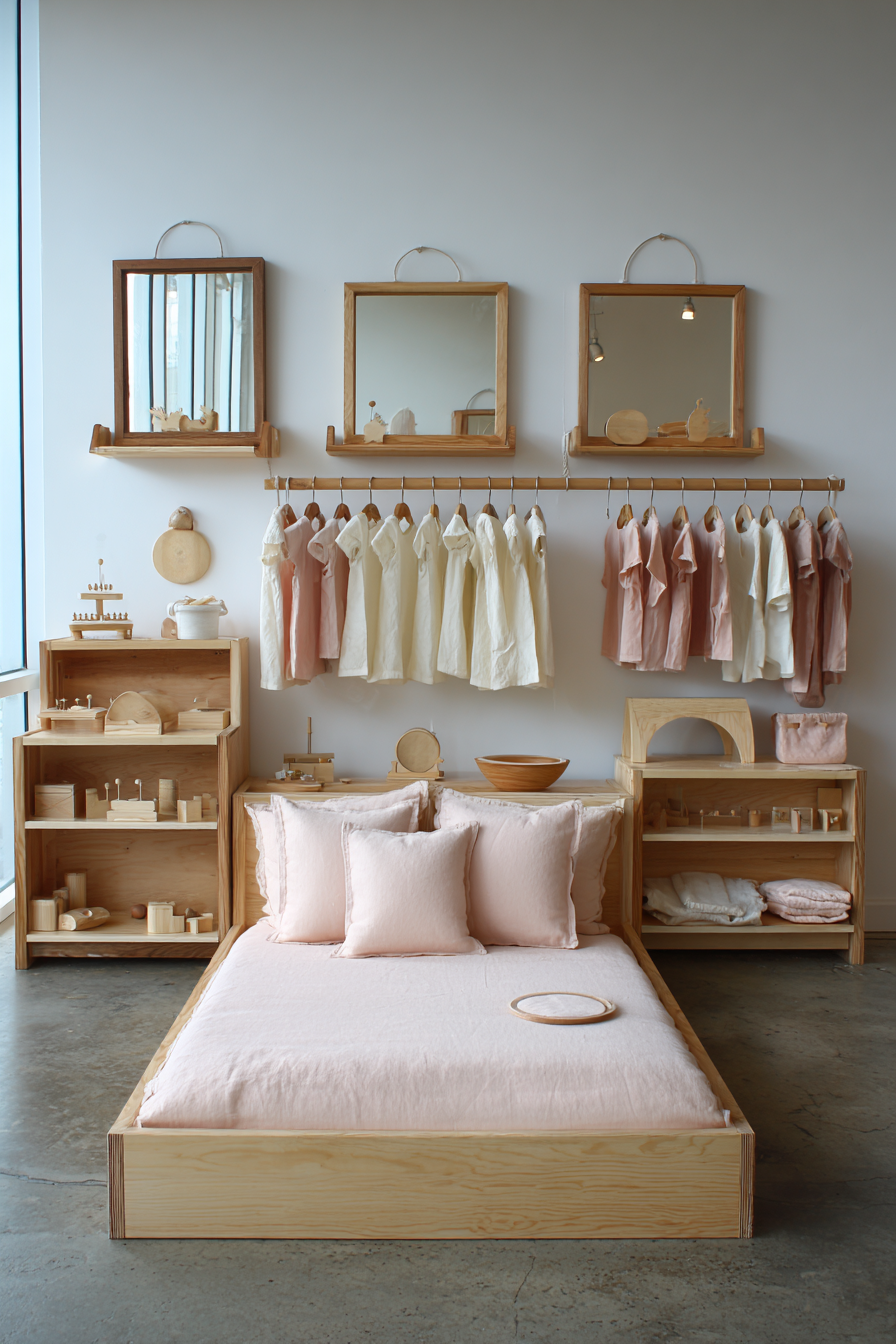
Open shelving displays rotating toy selections in natural wood trays. Accessible heights allow independent selection and return. The rotation system prevents overstimulation from too many choices. Limited options encourage deeper engagement with each item. This approach supports concentration development significantly.
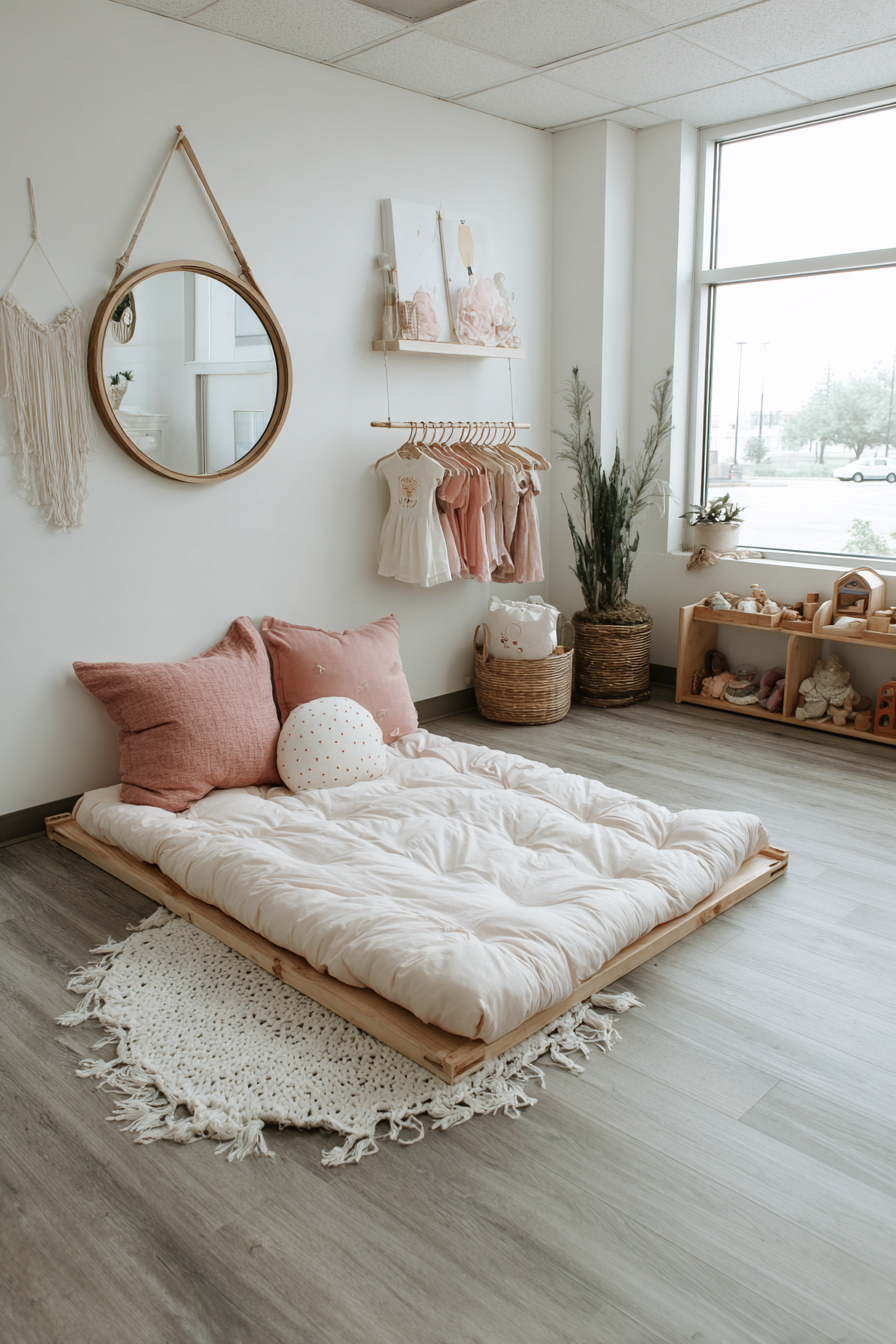
A low clothing rack empowers toddlers to choose daily outfits. Seasonal selections hang within easy reach consistently. This responsibility builds decision-making skills gradually. Natural light emphasizes the uncluttered, purposeful design throughout. The minimalist approach reduces visual distractions during activities.
Key Design Tips:
- Position floor beds away from walls for access from all sides
- Mount mirrors at toddler standing height, not adult eye level
- Rotate toys weekly to maintain interest and reduce clutter
- Limit shelf displays to 8-10 items maximum per rotation
- Install low clothing racks for morning routine independence
- Choose natural materials like wood and cotton throughout
7. Dreamy Canopy Haven with Layered Textures
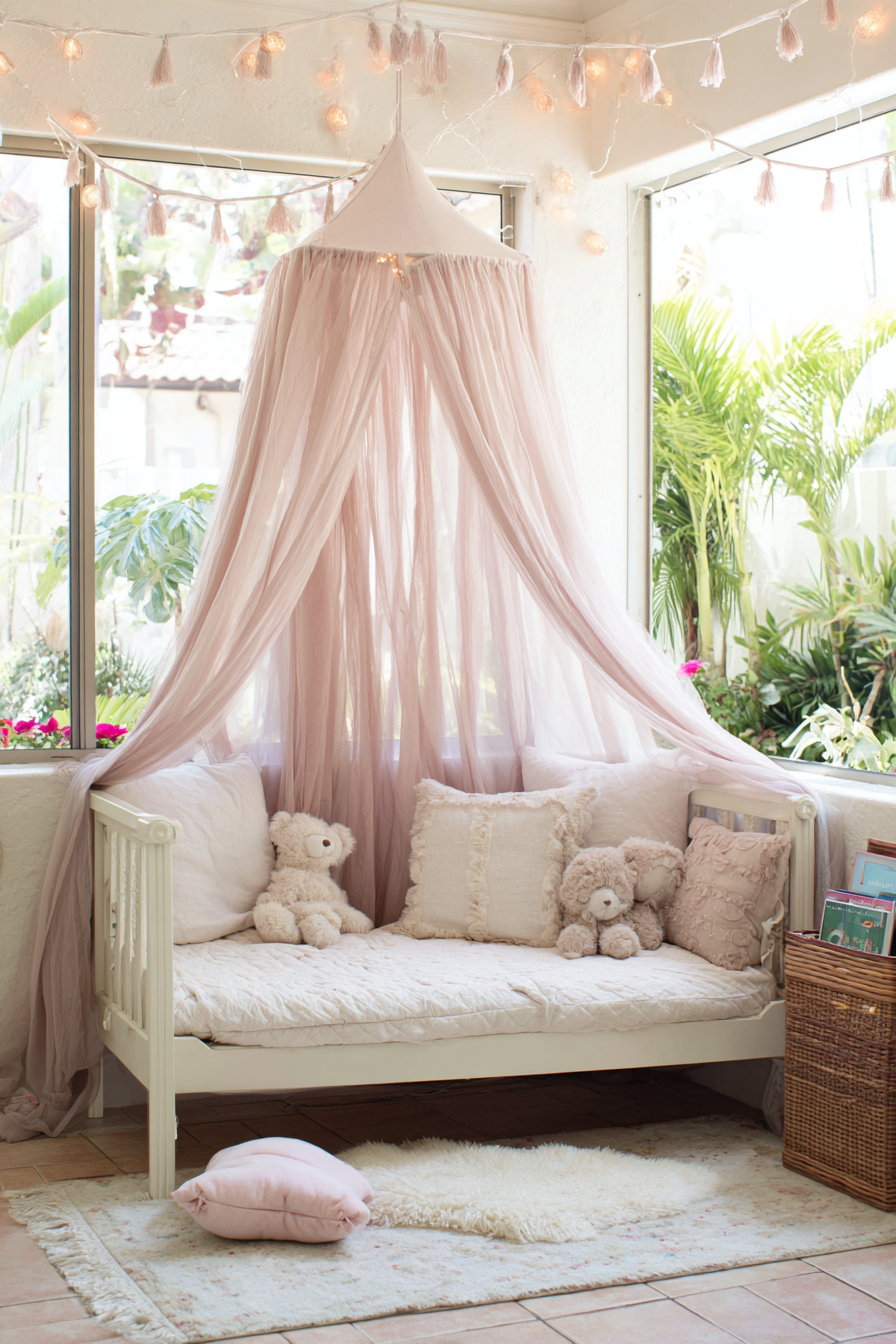
A ceiling canopy in sheer blush fabric creates a magical sleeping area. The fabric drapes from a single ceiling point gracefully. A white wooden toddler bed nestles underneath protectively. The canopy defines the sleep zone without enclosing completely. Soft lighting filters through the sheer material beautifully.
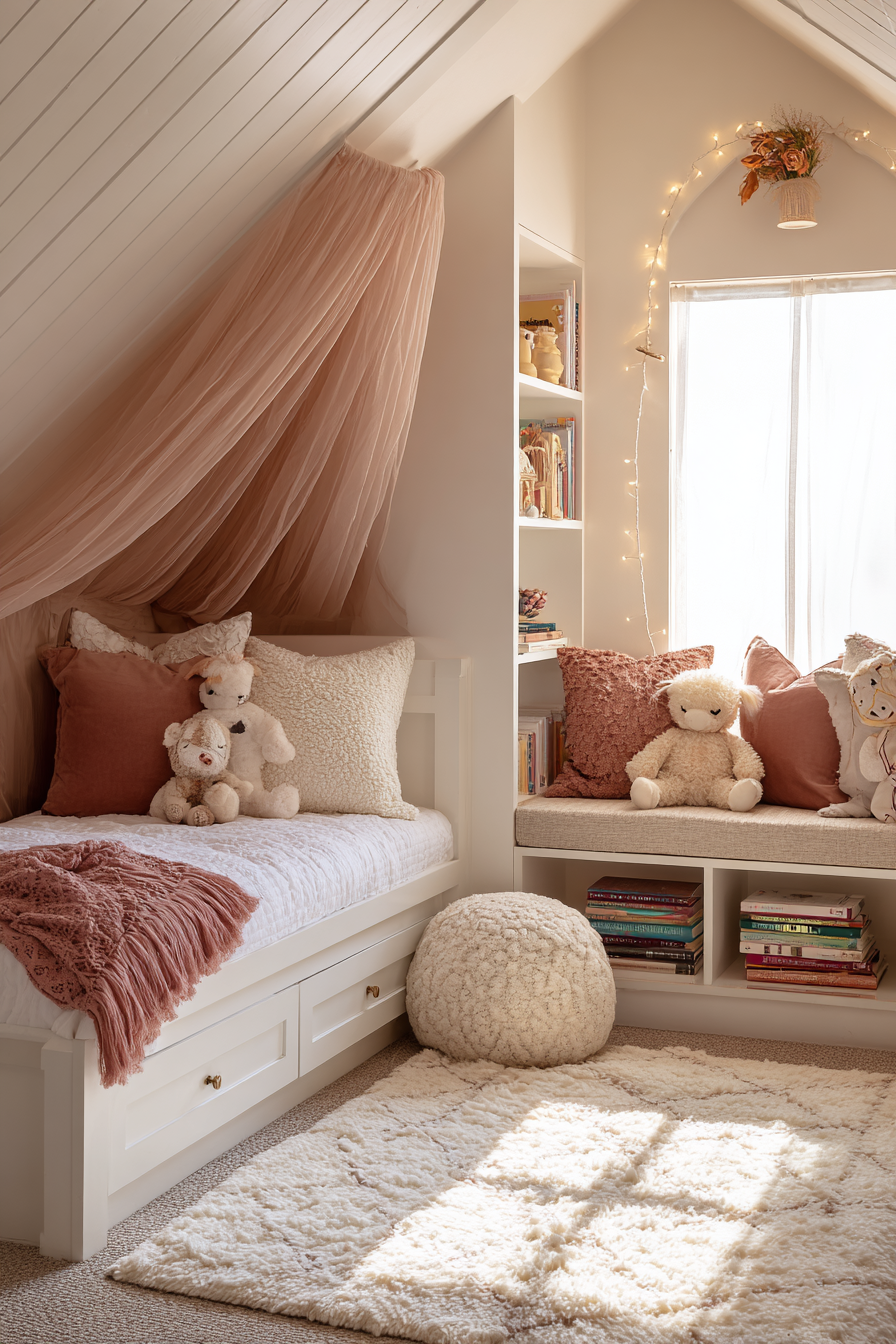
String lights with warm LED bulbs outline the ceiling perimeter safely. The lights provide gentle illumination during bedtime routines. Low wattage ensures the brightness remains soothing. The installation keeps cords safely out of reach. The ambient lighting creates peaceful atmospheres for settling down.
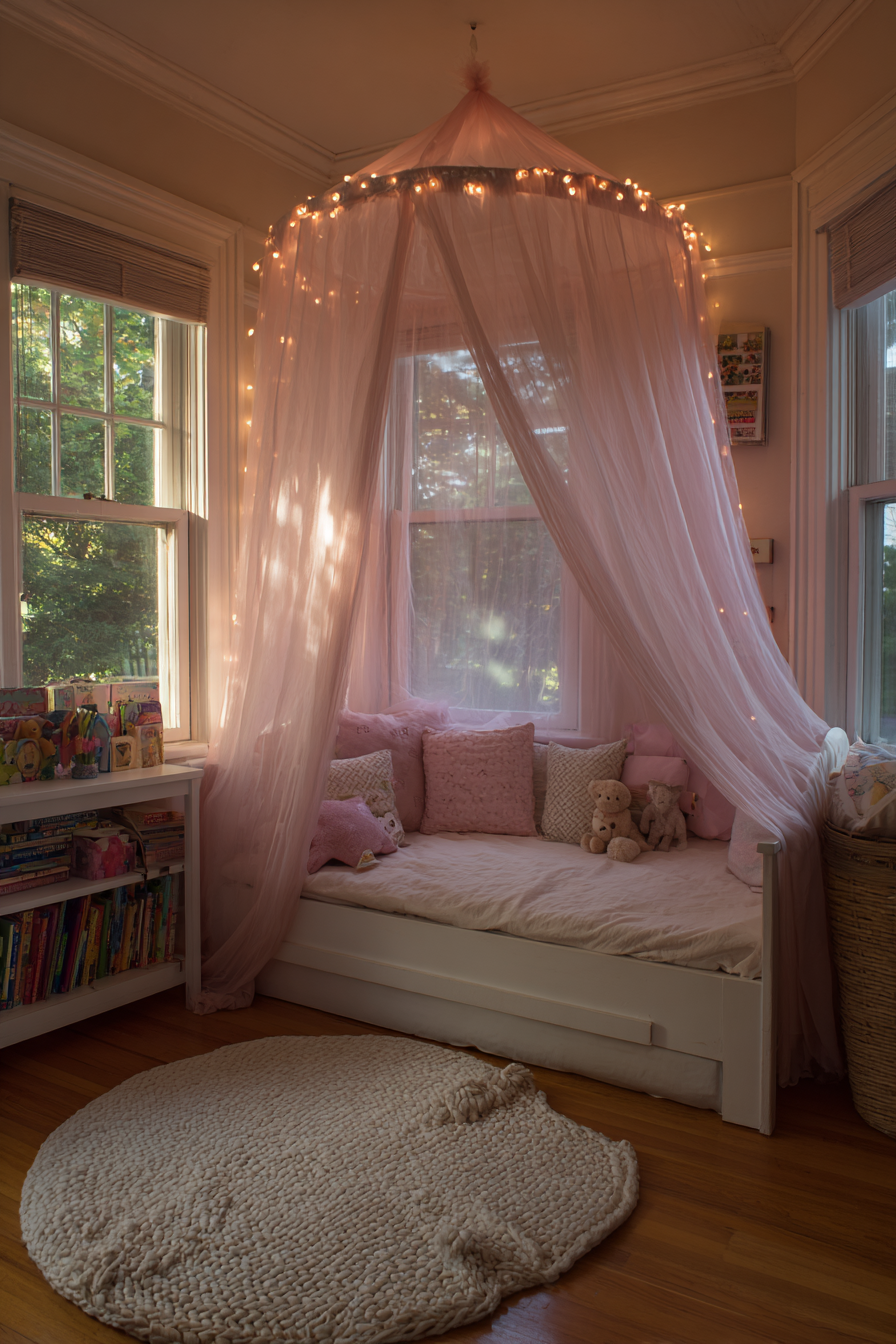
Layered rugs in cream and soft pink provide textured floor space. The combination adds visual interest and practical comfort. The layers define different activity zones subtly. Plush textures invite barefoot play throughout the day. The colors coordinate without exact matching.
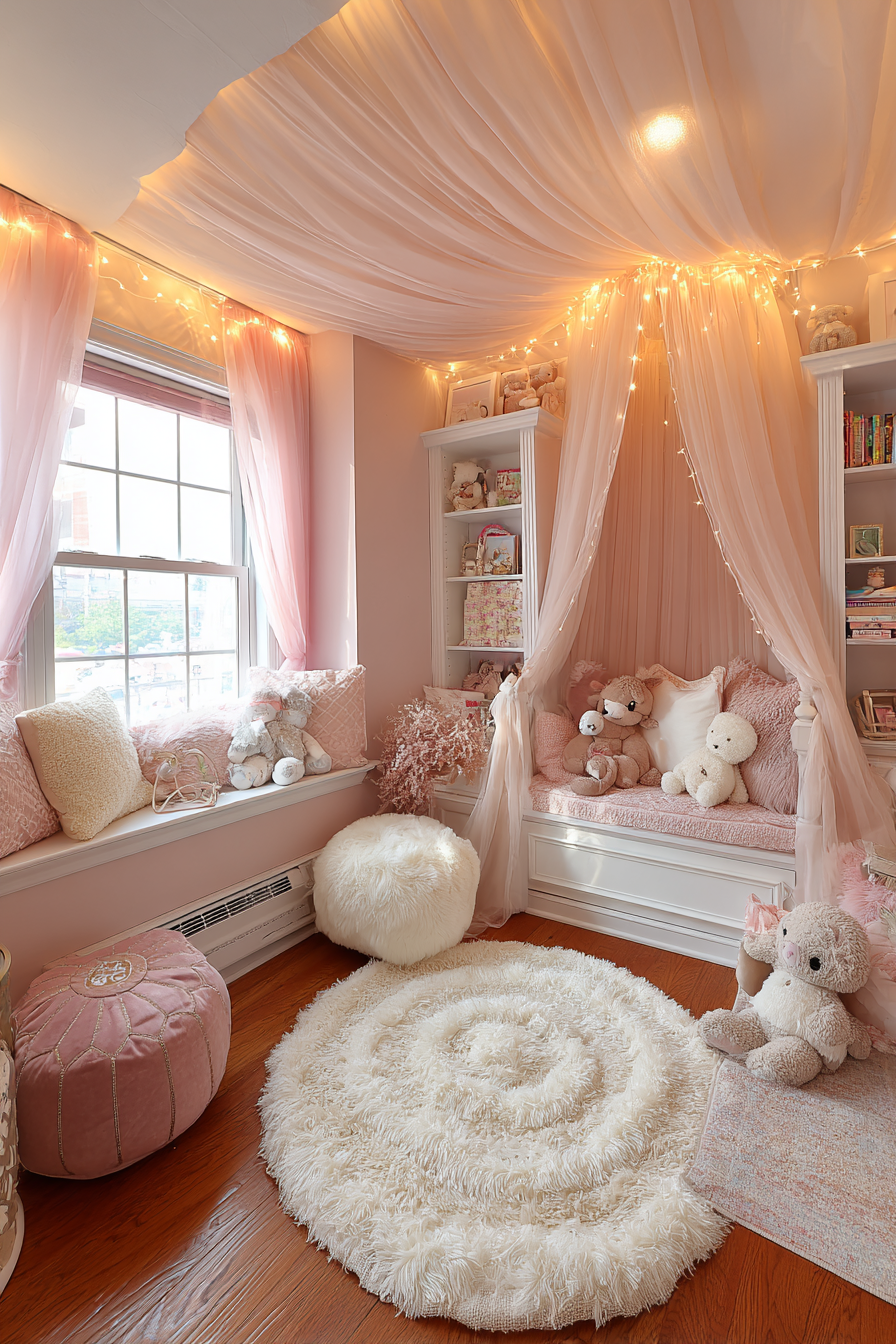
A cushioned window seat with storage underneath serves multiple purposes. Stuffed animals and books display on the cozy surface. The hidden storage reduces visible clutter significantly. Golden hour sunlight streams through nearby windows. The warm lighting creates enchanting shadows and depth.
Key Design Tips:
- Hang canopies from ceiling-mounted hardware, never free-standing poles
- Use battery-operated LED string lights to eliminate outlet cords
- Layer rugs in varying textures for sensory development
- Add window seats with lift-top storage for dual functionality
- Choose sheer fabrics in light colors to maintain brightness
- Position beds near windows but away from direct drafts
8. Musical Discovery Through Interactive Stations
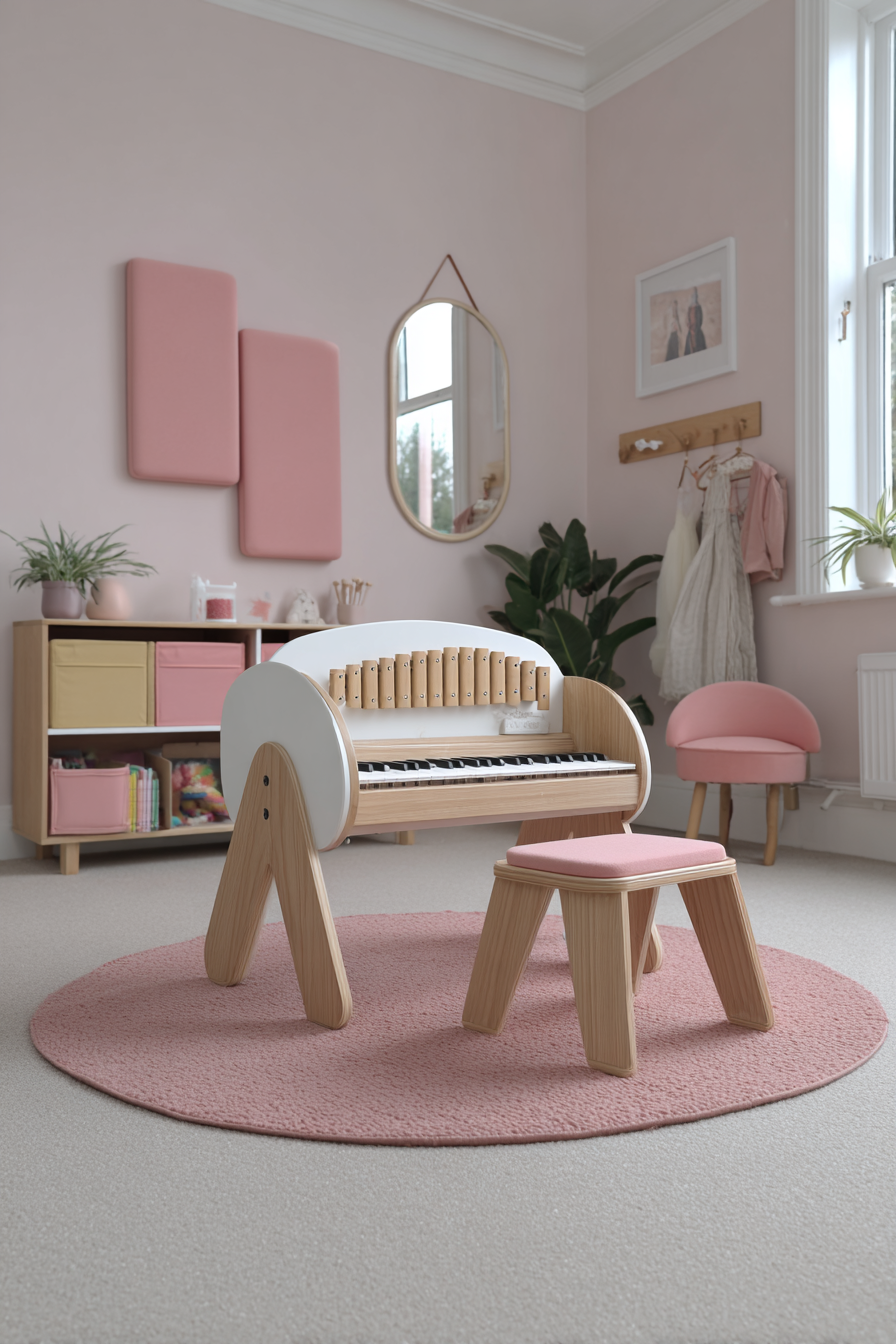
A small keyboard station with child-sized stool encourages musical exploration. The scaled furniture ensures proper posture during play. A wall-mounted xylophone hangs at an accessible height nearby. The colorful bars invite experimentation with sound creation. Multiple instruments provide varied auditory experiences.
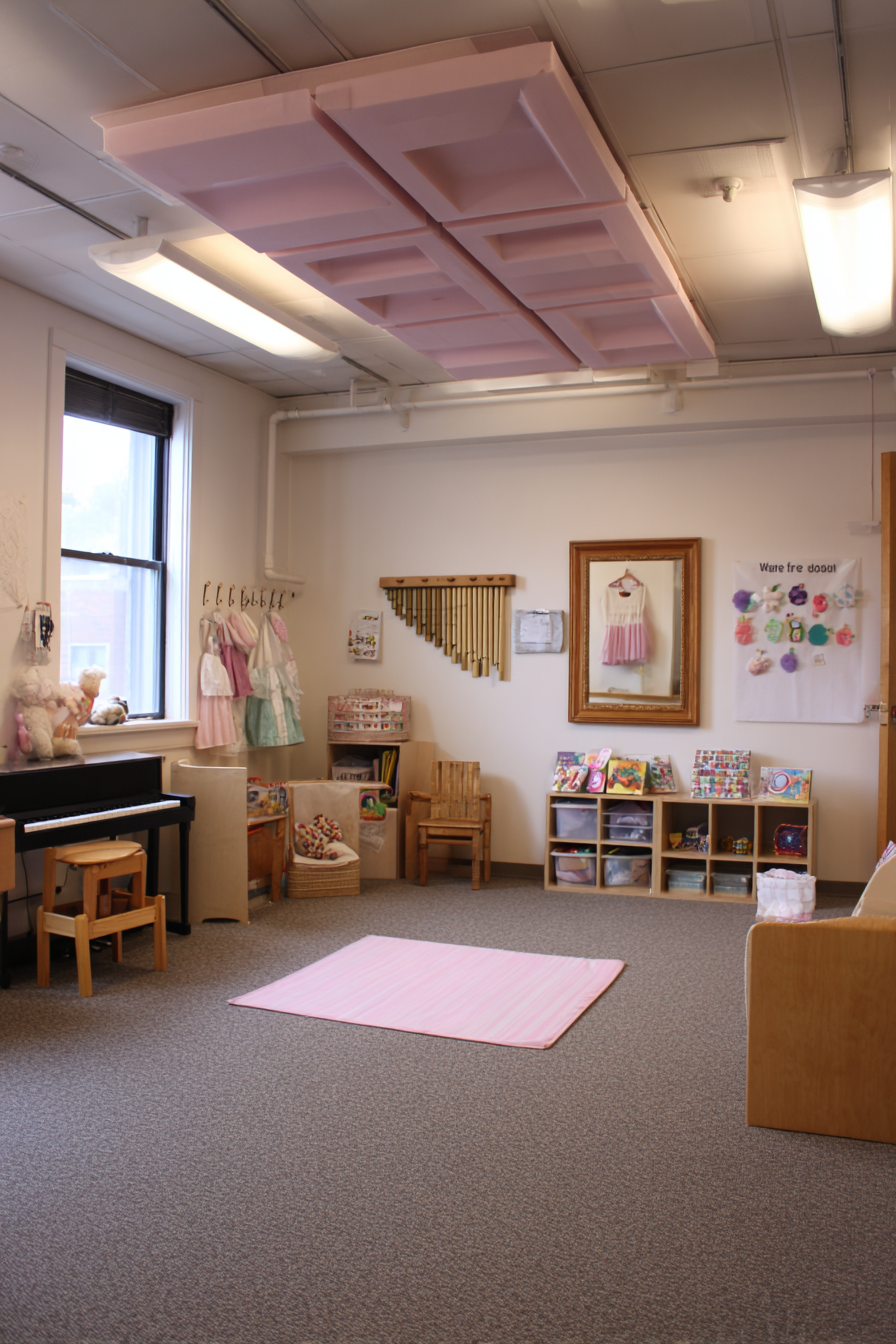
Open storage cubbies hold rhythm instruments and music books. Colorful fabric bins organize tambourines, maracas, and shakers. The visual system helps toddlers return items correctly. Picture labels identify contents for pre-readers. The organization supports independent music time confidently.
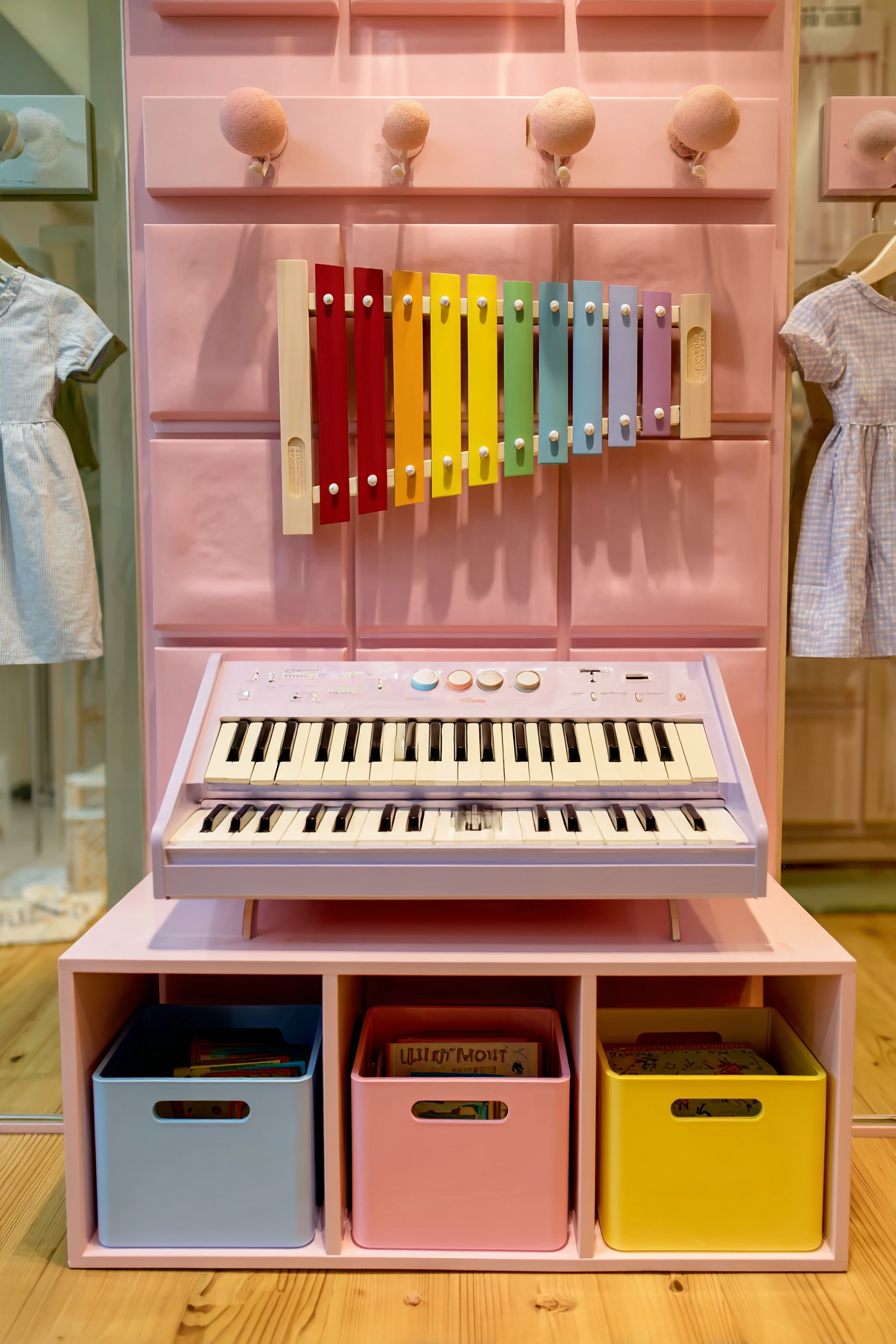
A dress-up area with child-height mirror complements the musical theme. Costume hooks in rose gold finish hold performance outfits. The mirror encourages self-expression through movement and costume. The dedicated space validates creative play as important activity.
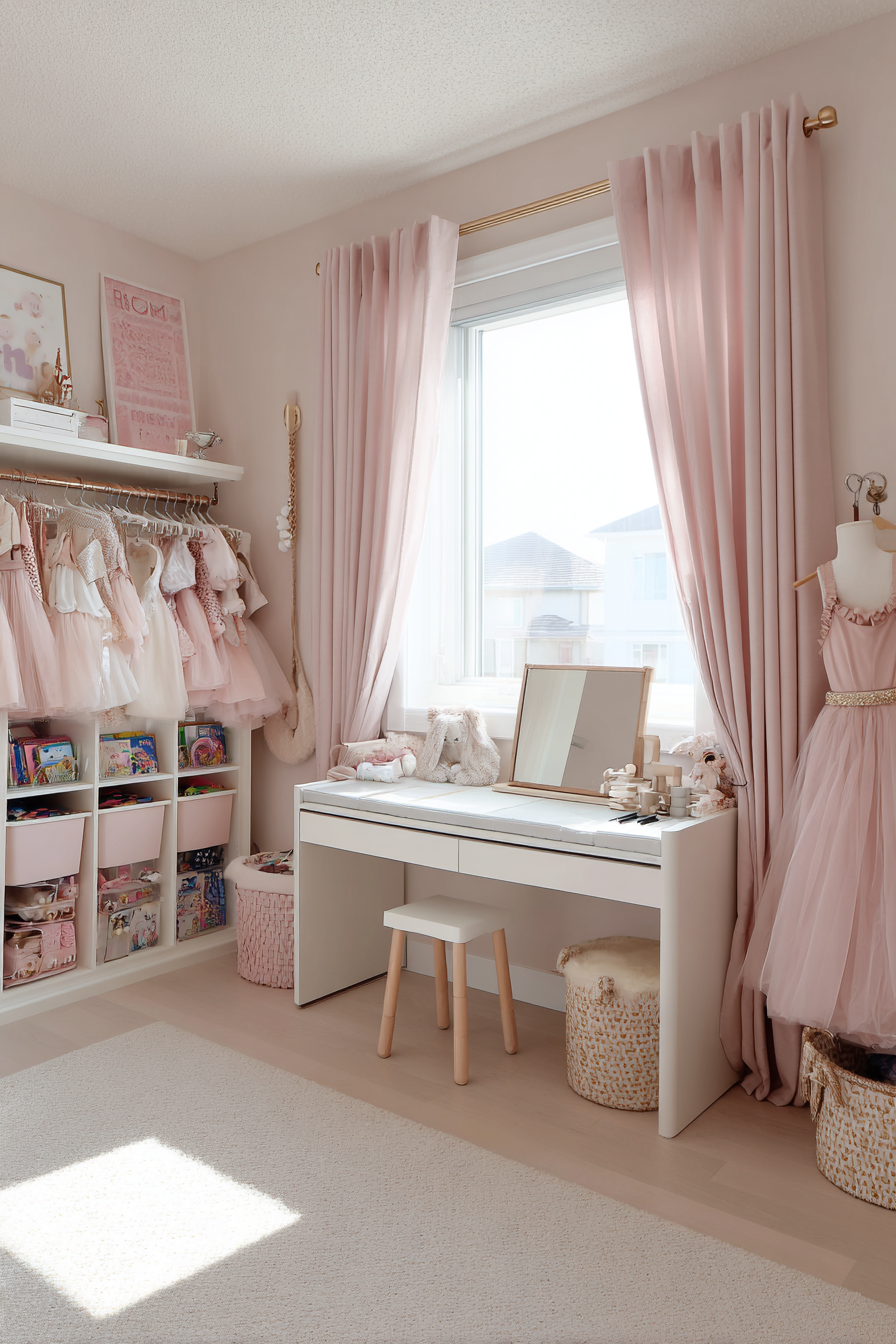
Acoustic foam panels in soft pink provide sound dampening. The panels reduce noise transmission to other rooms. The decorative installation adds interesting wall texture. Parents appreciate quieter practice sessions throughout the day. The pink color maintains a feminine aesthetic while serving practical purposes.
Key Design Tips:
- Choose instruments specifically designed for toddler hands and abilities
- Install wall-mounted instruments securely with appropriate anchors
- Add acoustic panels to reduce noise in shared living spaces
- Create dedicated areas for different activities using furniture arrangement
- Use rose gold or brass finishes for sophisticated metallic accents
- Organize instruments in labeled bins for easy cleanup routines
9. Transitional Design That Grows with Your Child
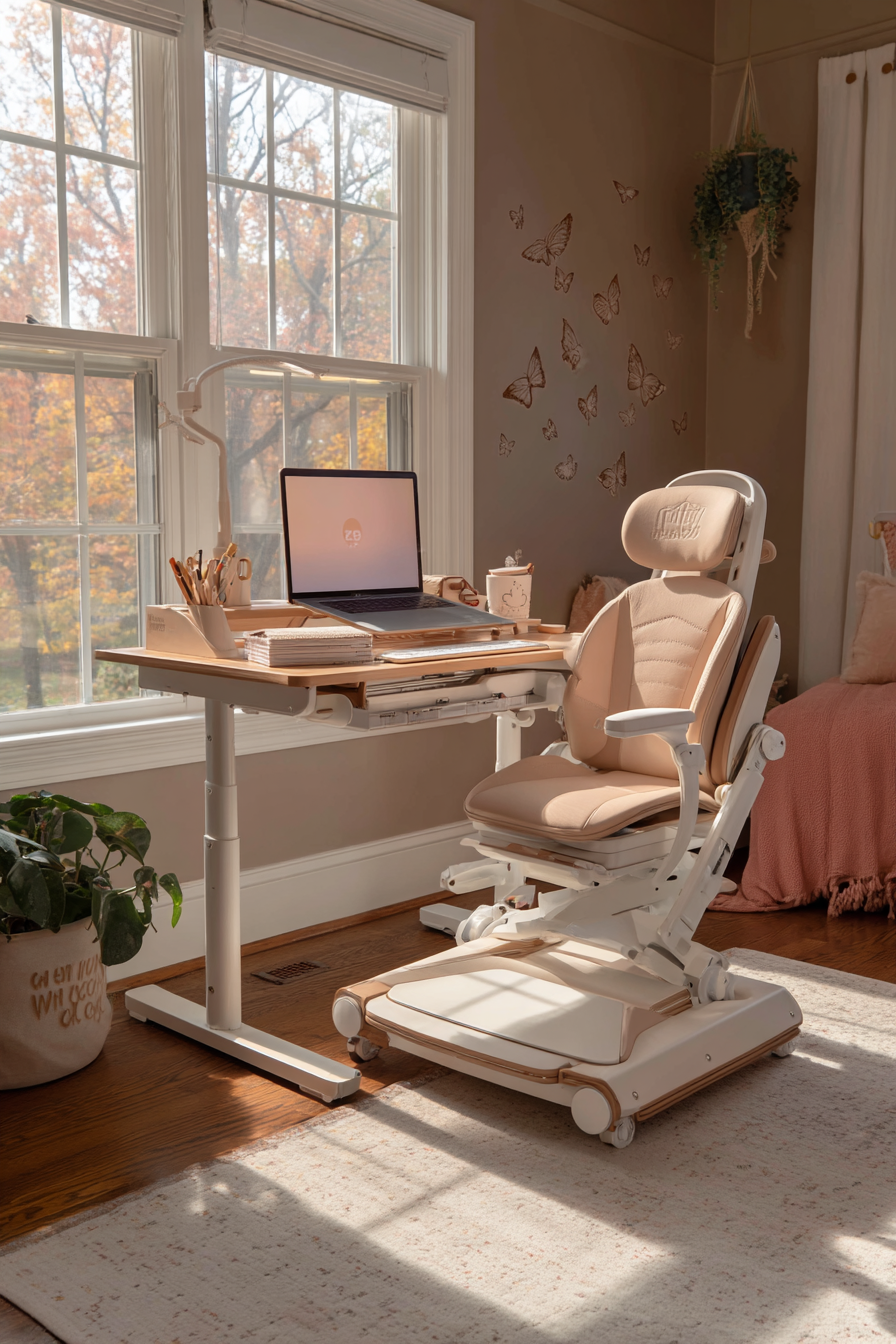
Adjustable-height desk and ergonomic toddler chair accommodate growth stages. White frames with natural wood accents provide timeless appeal. The desk height increases as your child grows taller. This investment piece serves for many years successfully. The ergonomic design supports healthy posture from early ages.
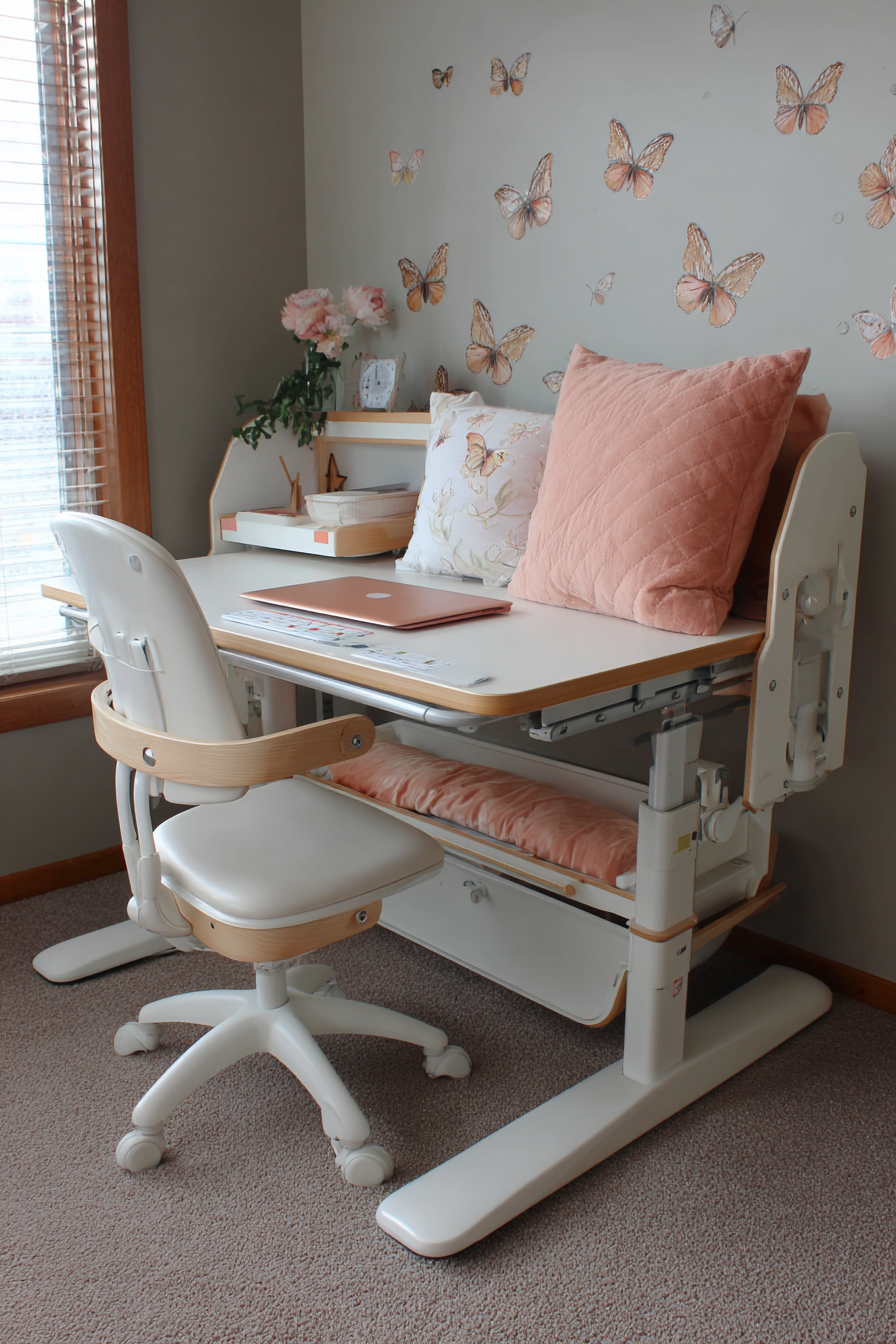
Removable wall decals in gentle butterfly patterns allow easy updates. The temporary decoration satisfies current interests without permanent commitment. Changing the decals refreshes the room affordably over time. The gentle patterns add interest without overwhelming young minds.
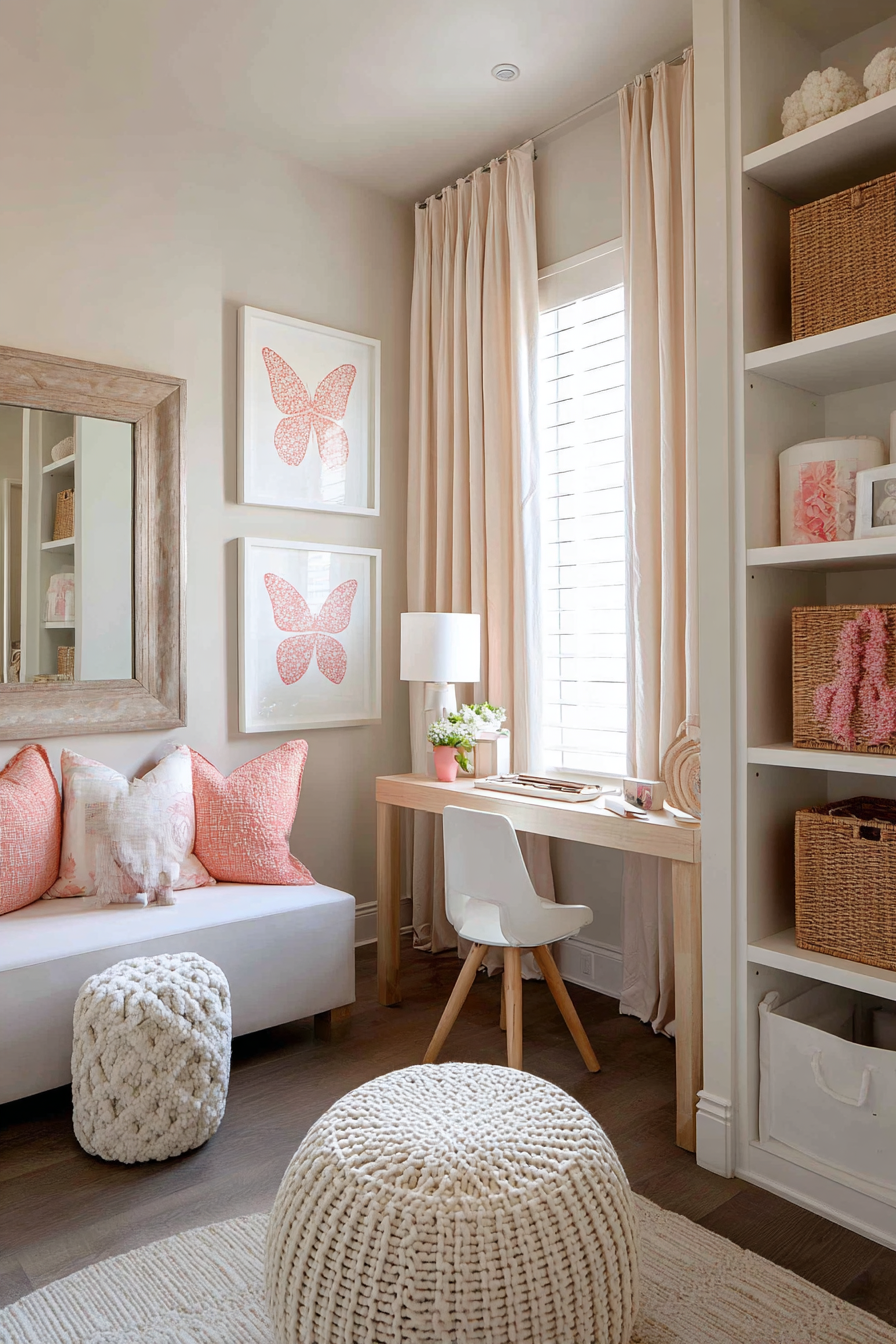
A modular storage system with labeled bins accommodates changing needs. Bins at various heights serve different developmental stages. Lower bins hold current toys while higher storage contains future items. The flexible system adapts as interests evolve naturally. Picture and word labels grow with literacy development.
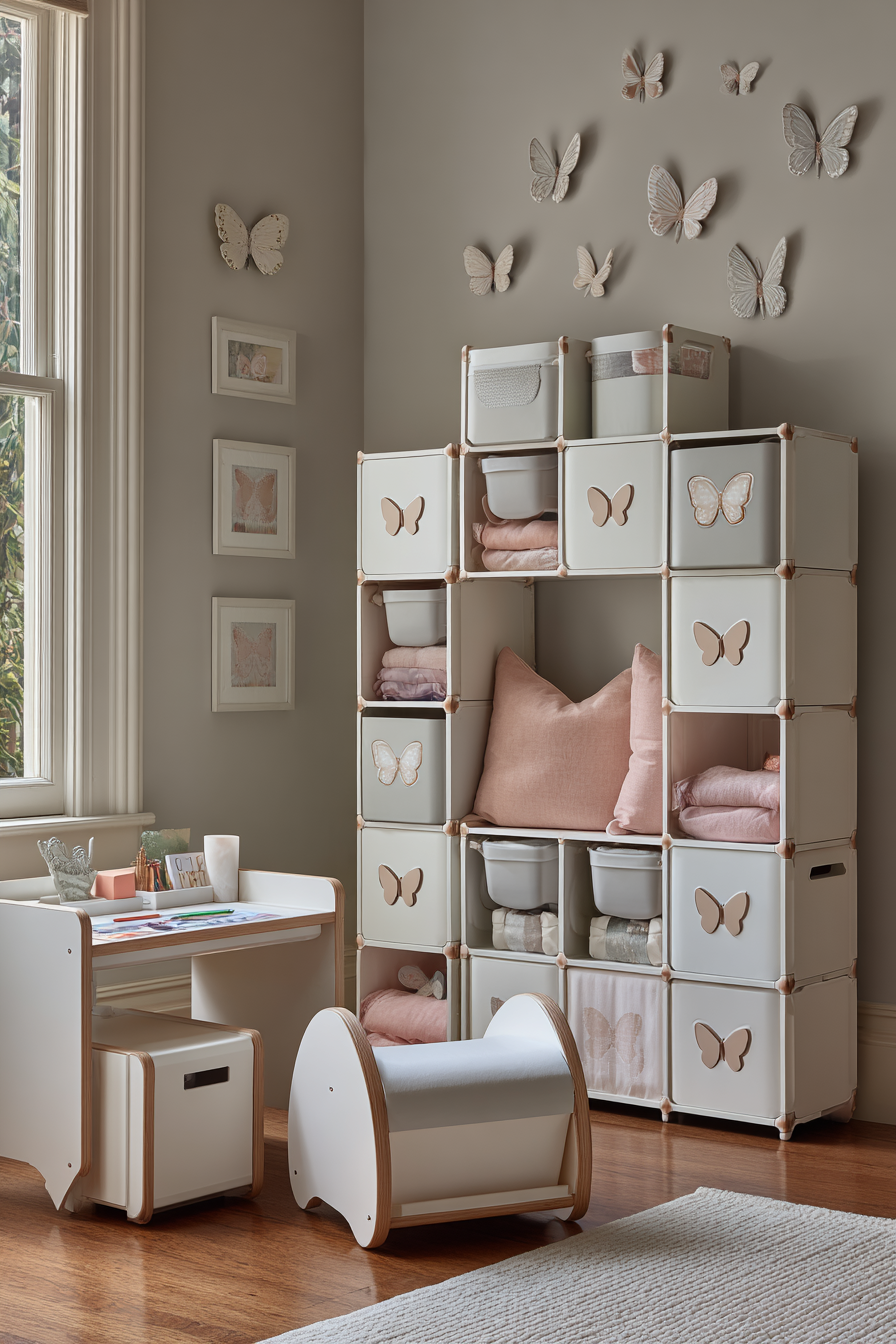
Neutral greige walls create sophisticated bases for accent colors. Coral accent pillows provide feminine touches without permanent commitment. The neutral backdrop allows easy style updates over years. The color scheme transitions from toddler to elementary years gracefully.
Key Design Tips:
- Invest in adjustable furniture that serves multiple age ranges
- Use removable wall decals instead of paint for temporary themes
- Choose neutral wall colors that accommodate changing accent colors
- Select modular storage systems that reconfigure as needs change
- Add personality through easily changeable textiles and accessories
- Consider five-year usability when selecting major furniture pieces
10. Sensory-Friendly Calm for Sensitive Toddlers
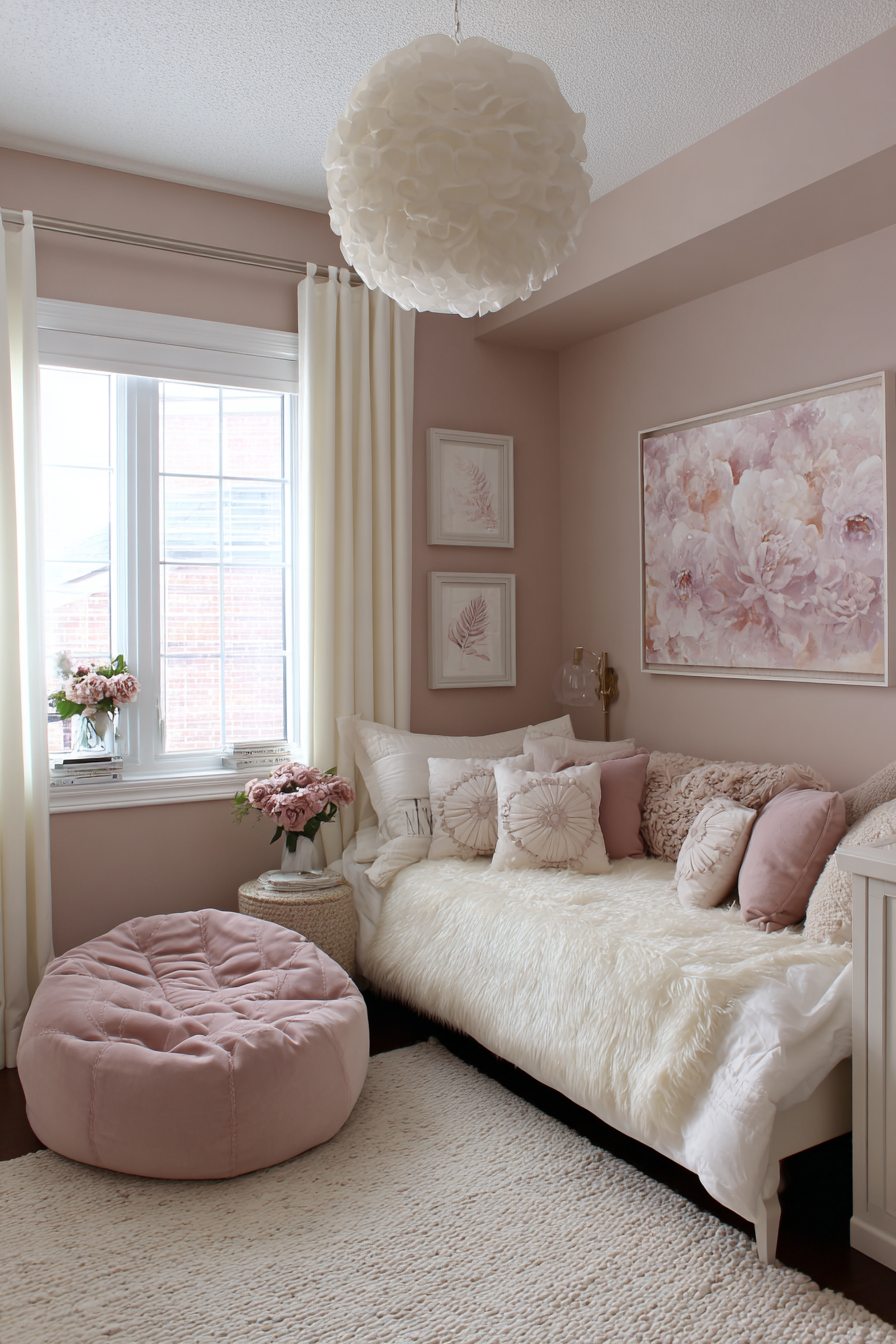
Soft tactile elements create soothing environments for sensory-sensitive children. A faux fur rug in cream provides plush comfort underfoot. Velvet floor cushions in dusty rose invite quiet sitting time. A bubble tube nightlight provides calming visual stimulation. The gentle movement soothes without overstimulating.
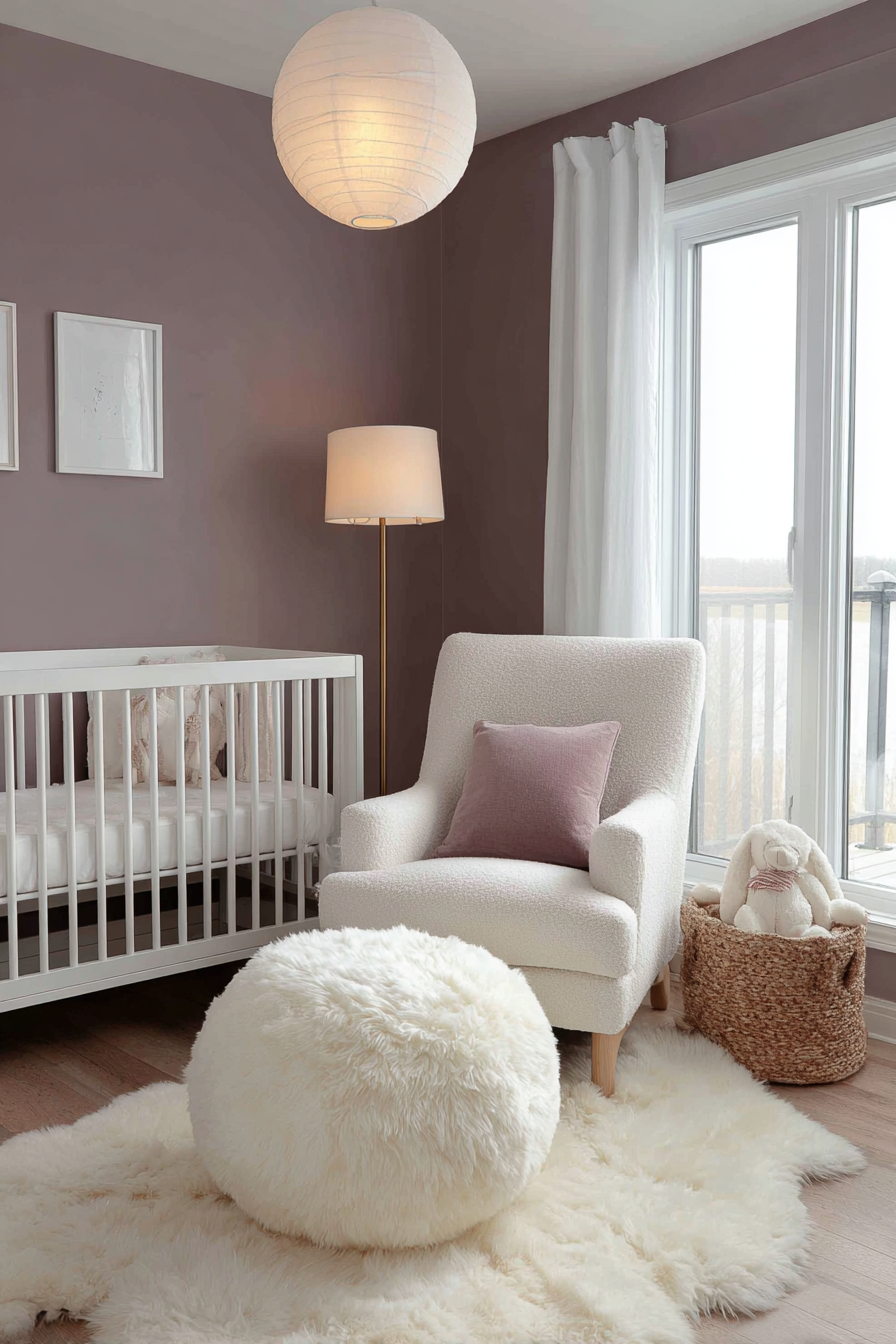
Blackout cellular shades offer complete light control when needed. The top-down bottom-up functionality provides flexible options. A white noise machine integrates into the design discretely. The consistent sound masks household noises during rest time. The ambient sound promotes better sleep quality.
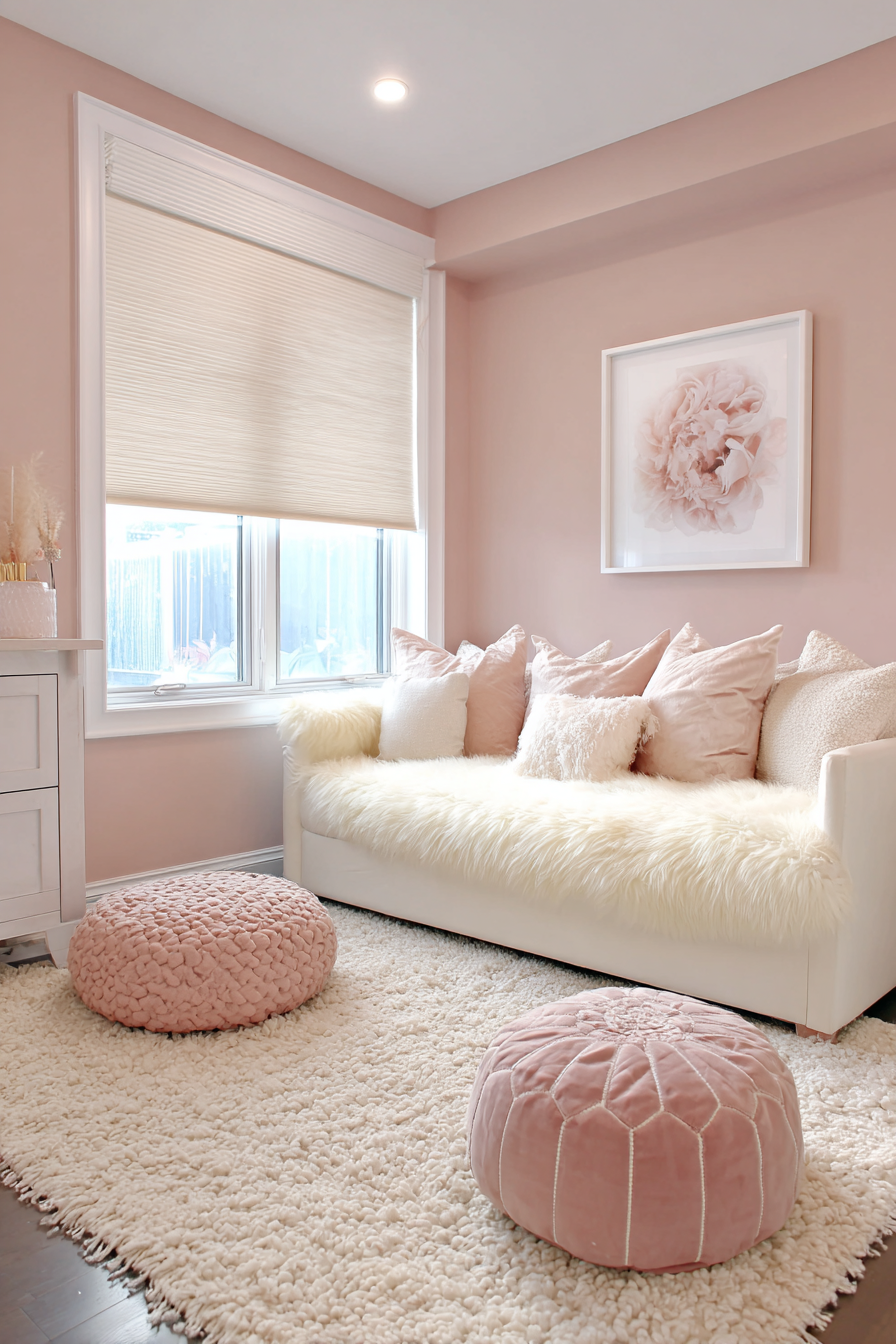
Minimal clutter with enclosed storage keeps visual stimulation manageable. Solid cabinet doors hide toys when not in use. The reduced visual input prevents overwhelm throughout the day. Muted mauve walls create soothing backdrops for activities. The subtle color calms rather than excites.
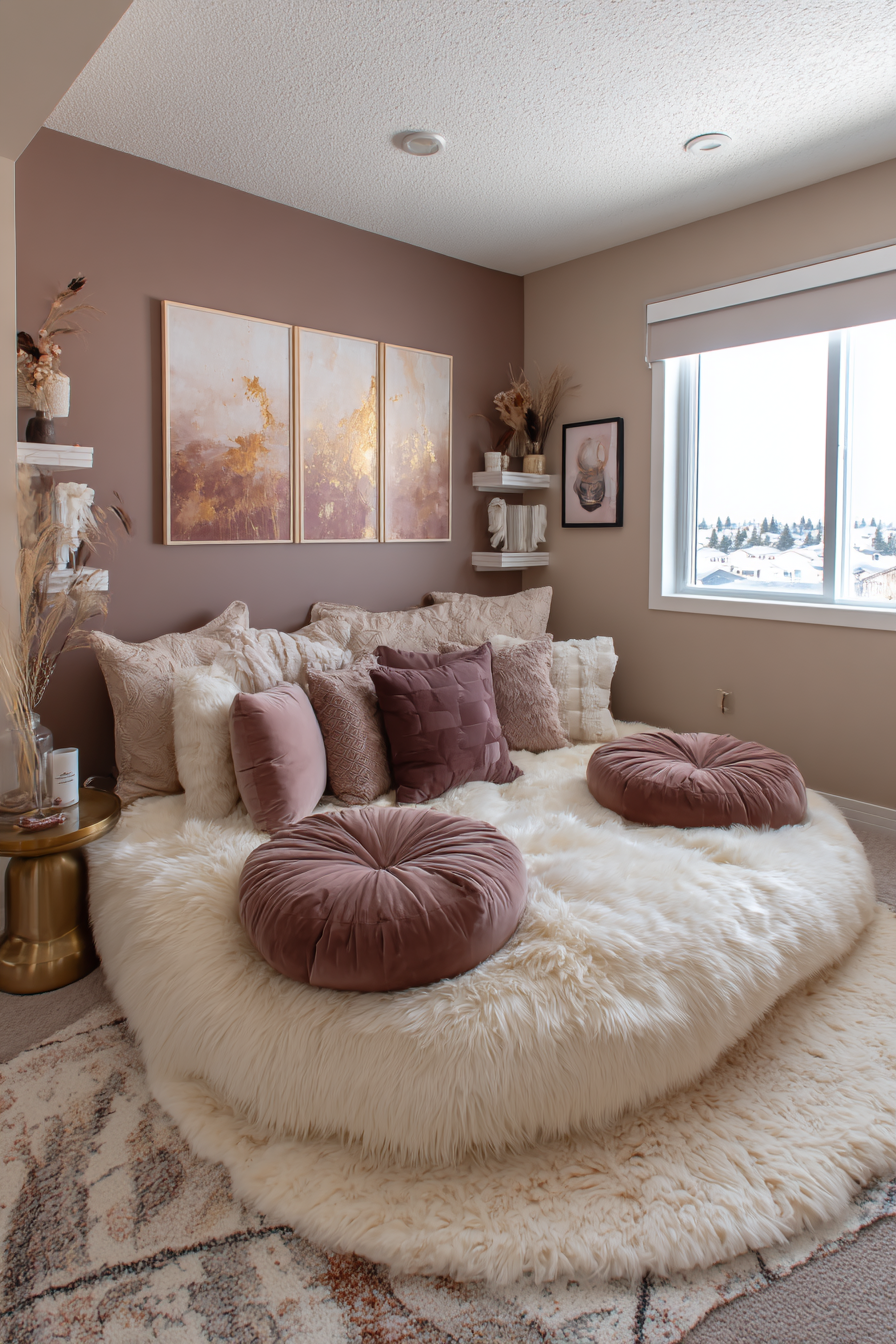
The therapeutic design elements support emotional regulation naturally. Sensory-friendly spaces help toddlers develop coping strategies independently. The calm environment reduces meltdowns and anxiety triggers. Parents notice improved sleep and calmer daily routines.
Key Design Tips:
- Choose solid cabinet doors instead of open shelving for visual calm
- Install blackout shades with top-down capability for flexibility
- Add weighted blankets or lap pads for proprioceptive input
- Use white noise machines to mask unpredictable household sounds
- Select muted colors in cool tones for calming effects
- Incorporate various textures for healthy sensory exploration
11. Vintage Charm with Modern Safety Standards
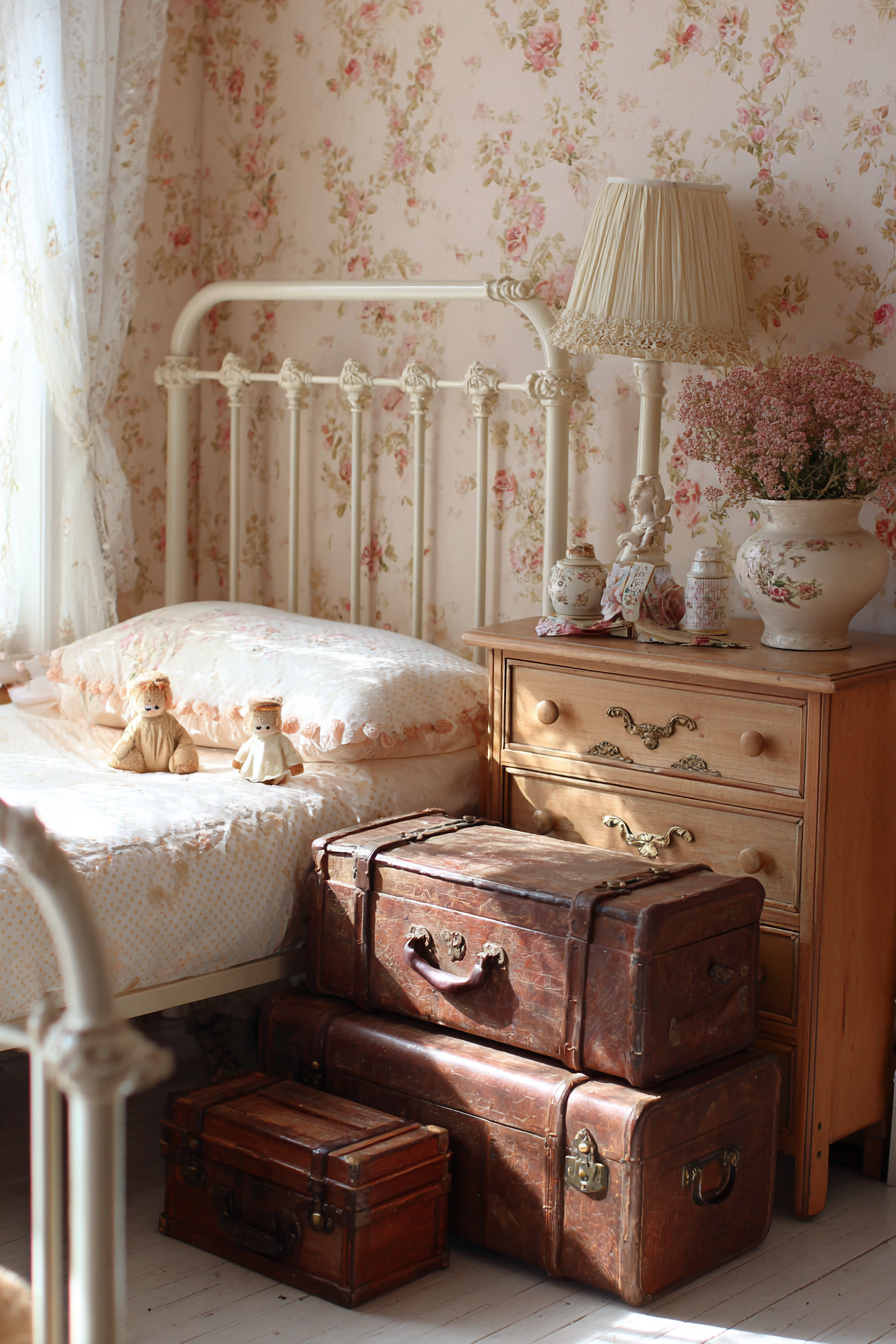
An antique-style white metal bed frame features ornate details scaled appropriately. The vintage aesthetic provides character without actual antique risks. Modern construction meets current safety standards completely. The low profile allows easy toddler access independently. White finish brightens the space while maintaining nostalgic appeal.
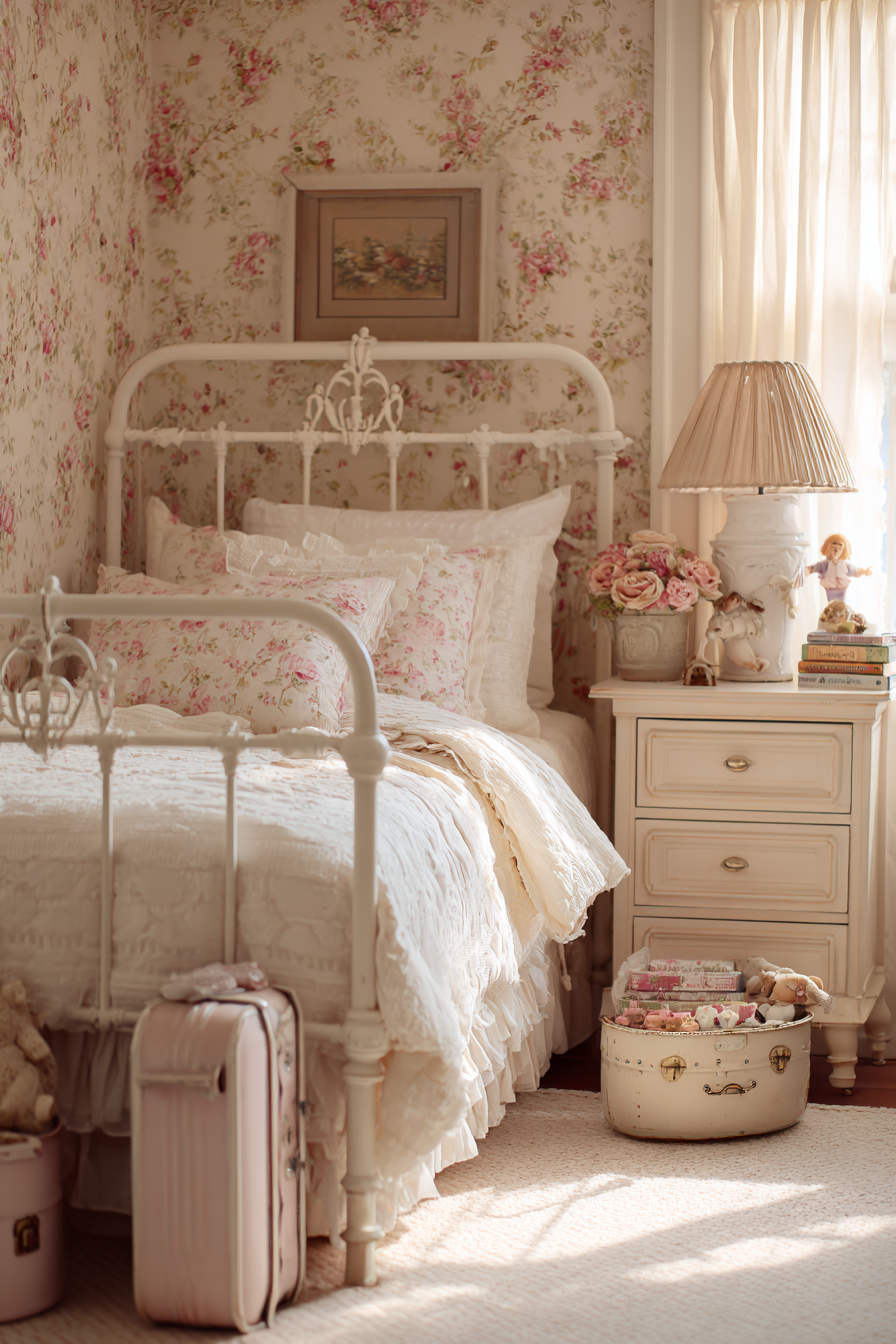
A restored wooden dresser displays vintage-inspired decor on high surfaces. Modern safety latches prevent drawer tip-out accidents. Ceramic figurines and retro lamps sit safely beyond reach. The high placement prevents choking hazards while maintaining aesthetic appeal. The restoration process ensures structural stability.
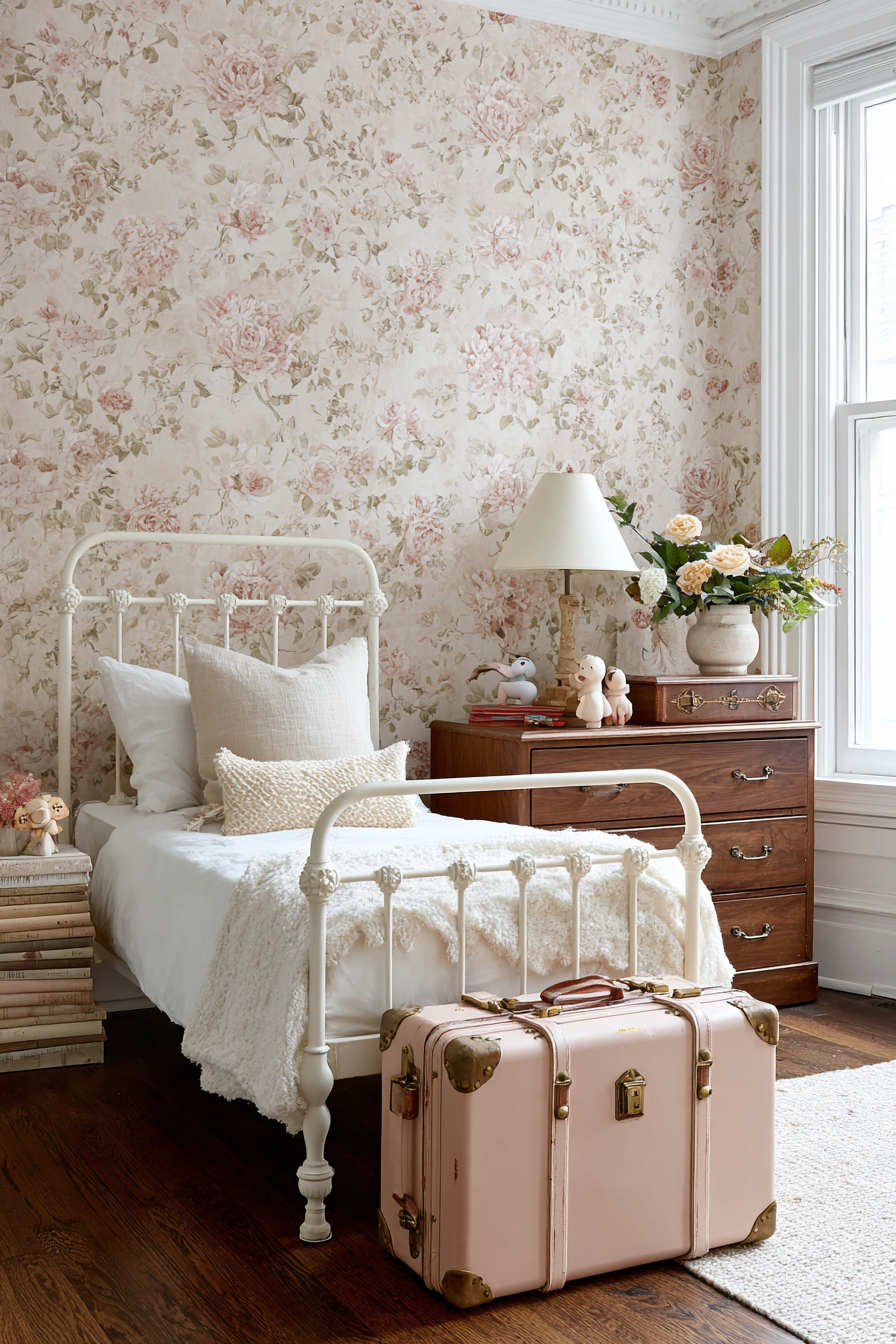
Floral wallpaper in soft pink and cream covers one accent wall. Small-scale patterns suit young children better than large prints. The vintage pattern adds sophistication without adult formality. Coordinating solid walls balance the patterned feature wall.
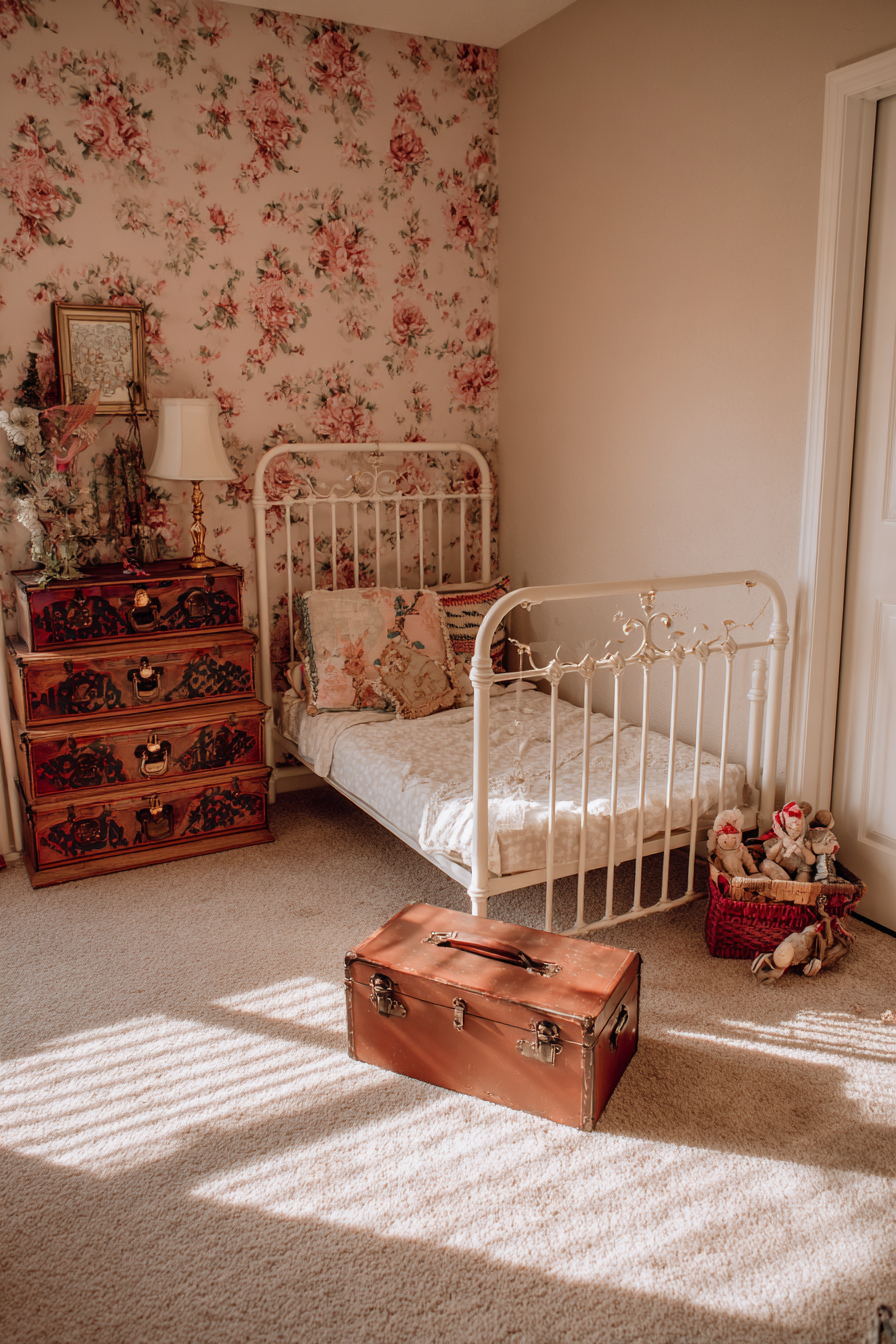
Vintage-style storage trunks hold toys and dress-up clothes safely. Child-safe hinges prevent finger pinching during enthusiastic play. The trunks double as seating during play sessions. The nostalgic storage solutions combine beauty with practicality. Warm afternoon light enhances authentic vintage atmospheres.
Key Design Tips:
- Choose reproduction furniture over actual antiques for safety compliance
- Add modern safety hardware to vintage-style pieces
- Use small-scale patterns in wallpapers for age-appropriate designs
- Place decorative items on high surfaces beyond toddler reach
- Install soft-close hinges on all trunks and storage boxes
- Balance patterned walls with solid paint on remaining surfaces
12. Minimalist Serenity Through Simplified Design
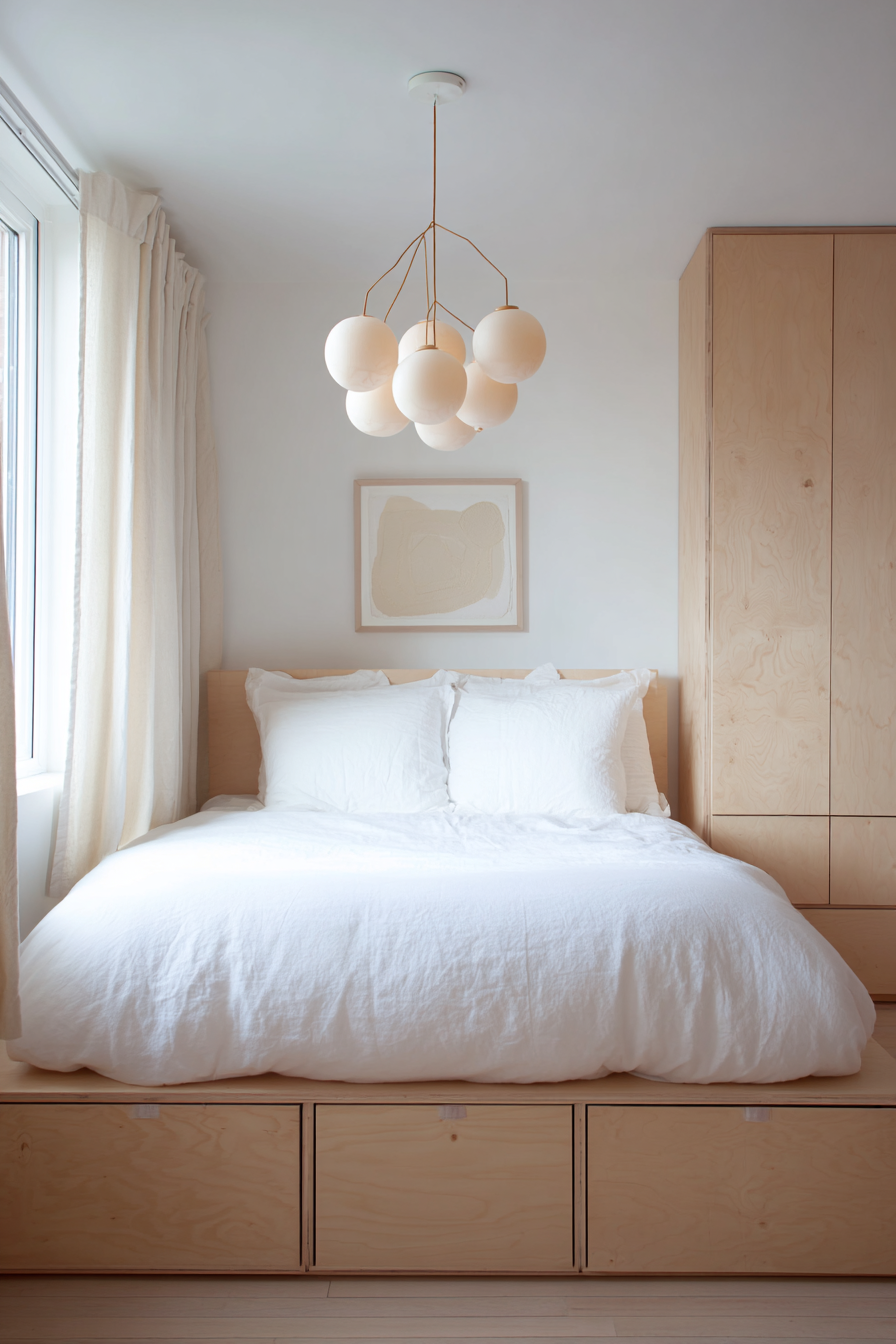
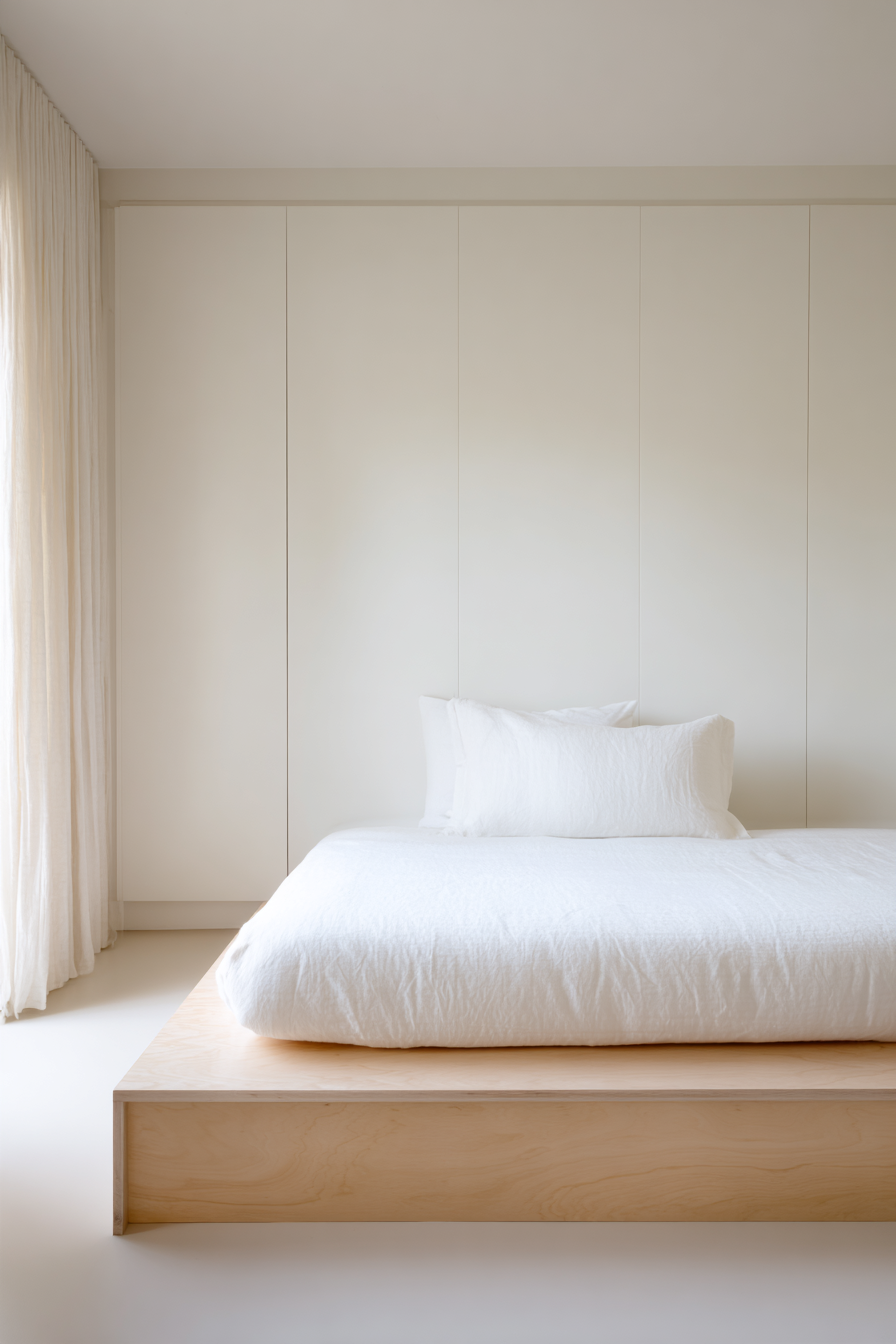
Clean lines and uncluttered surfaces define this peaceful space. A simple platform bed in light birch provides natural warmth. Crisp white organic cotton bedding maintains purity and simplicity. The minimal styling reduces visual noise significantly. The streamlined aesthetic promotes calm throughout the day.
A single elegant mobile in natural wood and felt hangs above. The simple movement provides subtle visual interest without overstimulation. Natural materials connect the design to organic origins. The mobile serves as the room’s only decorative suspended element.
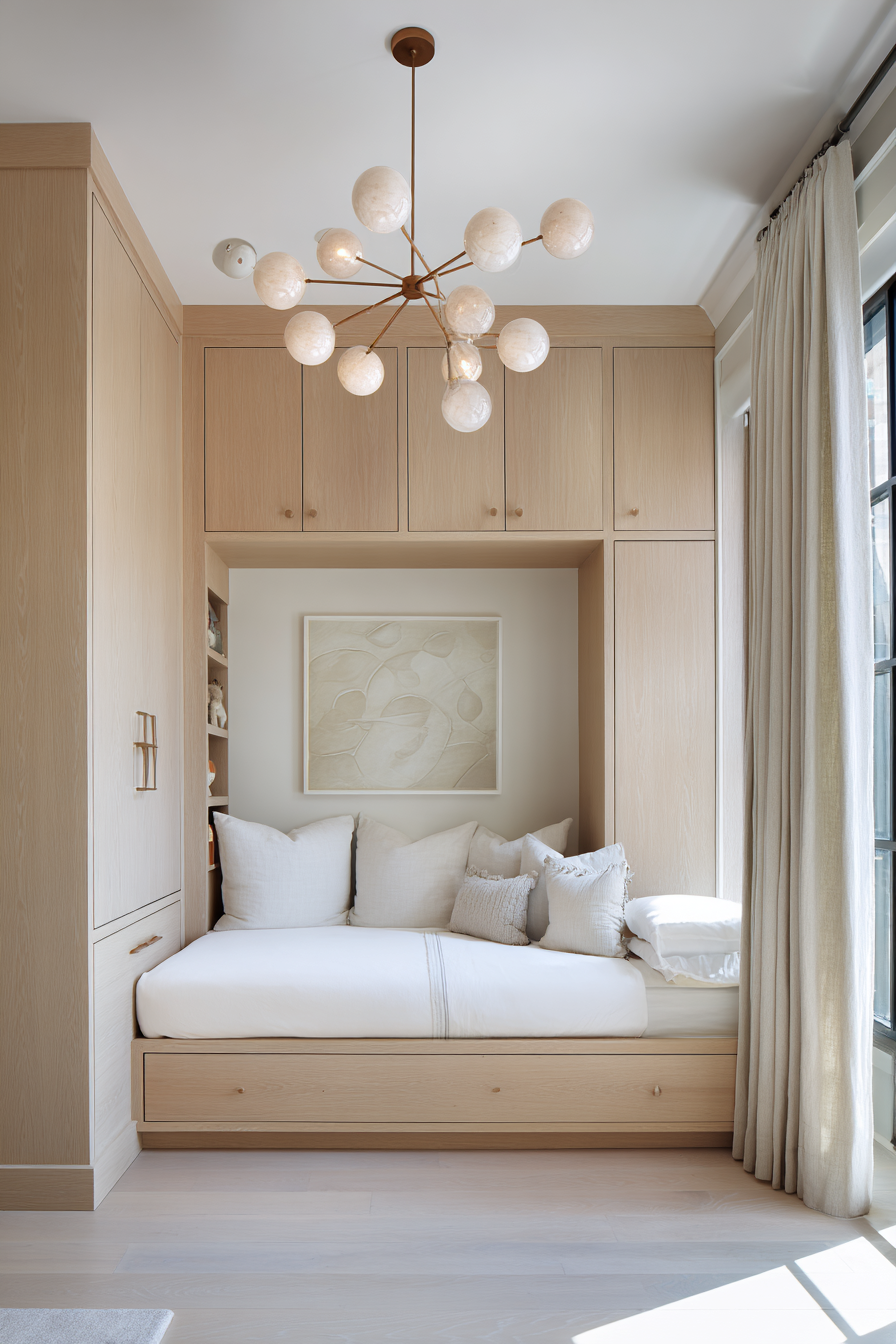
Concealed storage behind smooth cabinet doors maintains streamlined aesthetics. The hidden organization prevents visual clutter completely. Every item has a designated place behind closed doors. The system teaches organization without displaying the process. Clean surfaces reduce cleaning requirements significantly.
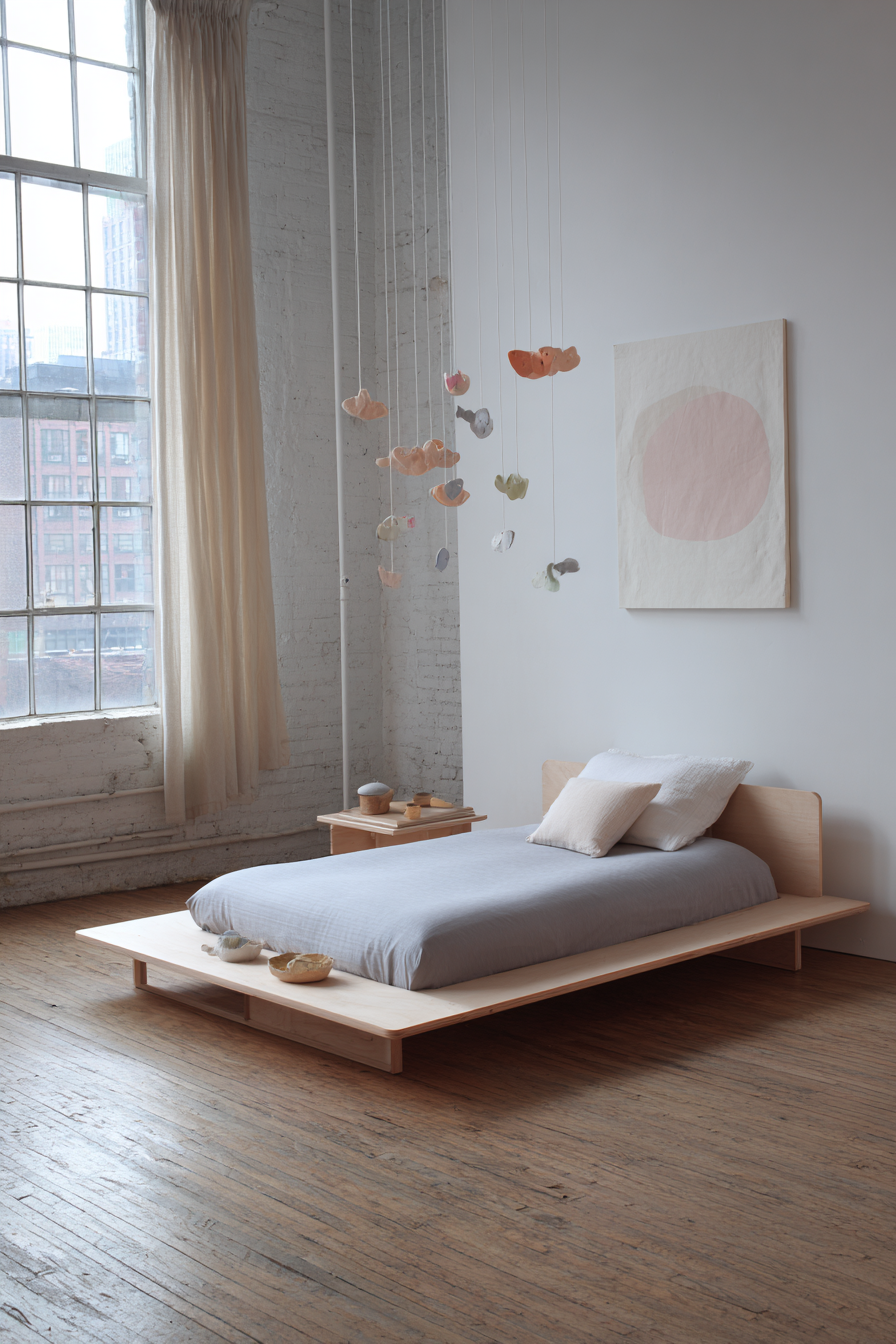
One statement art piece in soft abstract shapes provides focal interest. The single artwork prevents visual competition throughout the space. Soft shapes feel more appropriate than geometric patterns. Natural light through simple linen curtains emphasizes serene simplicity. The minimalist approach creates restorative environments for sensitive children.
Key Design Tips:
- Limit decorative items to one statement piece per wall
- Choose concealed storage to maintain uncluttered surfaces
- Select platform beds without headboards for clean lines
- Use only white or off-white bedding for visual simplicity
- Install simple linen or cotton curtains without patterns
- Maintain negative space on walls and surfaces intentionally
13. Botanical Garden Theme with Immersive Elements
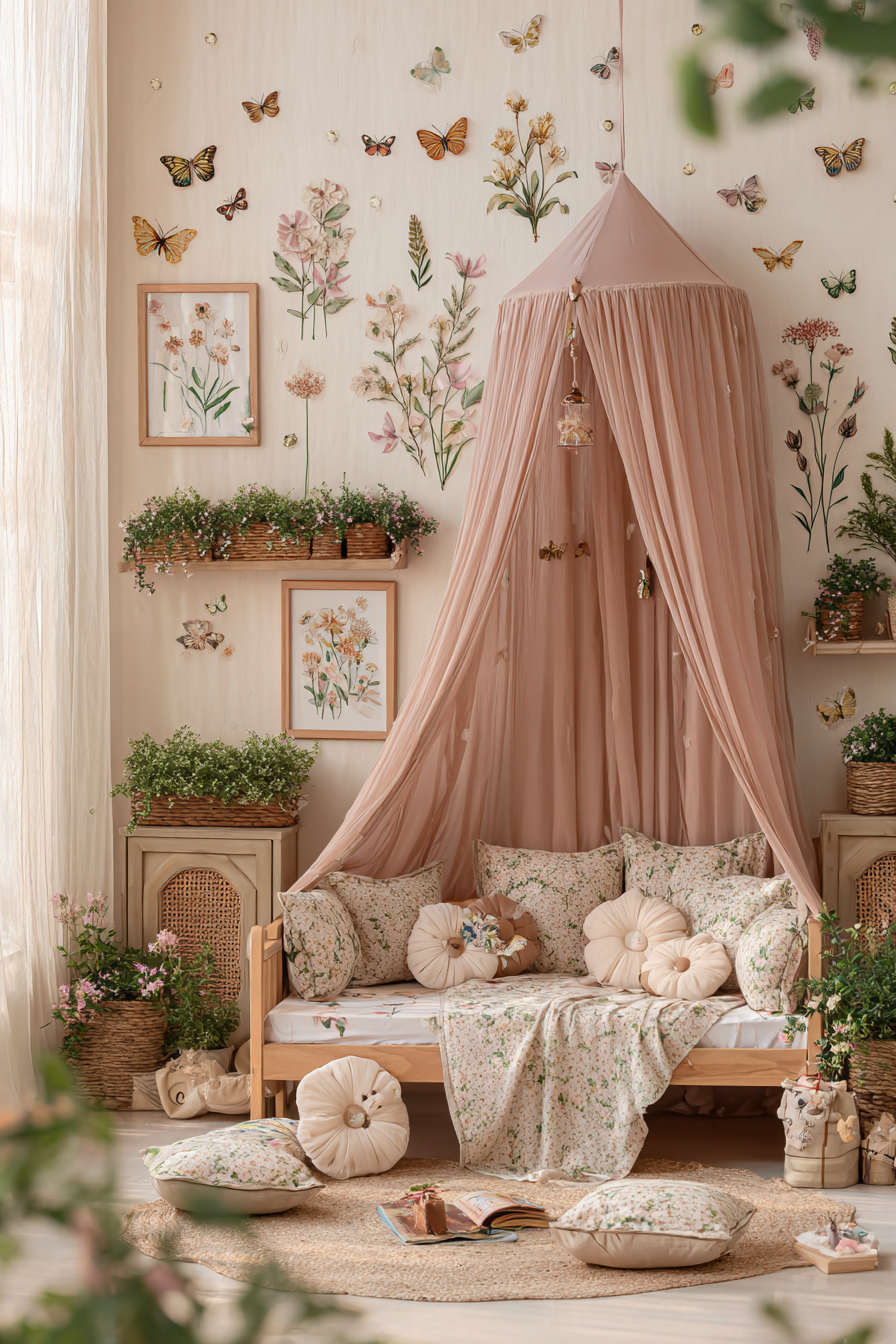
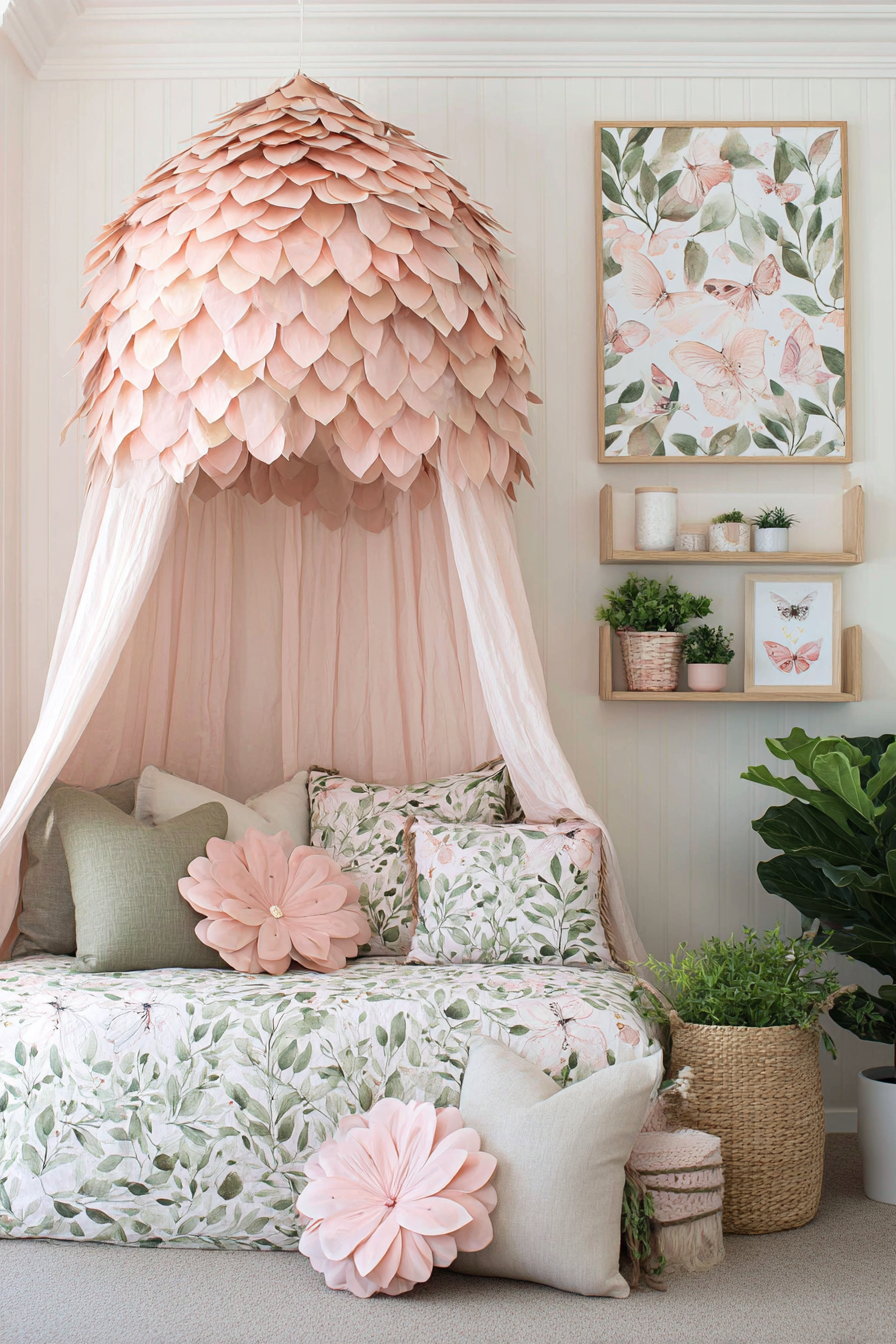
A fabric canopy designed like flower petals creates magical sleeping areas. Soft peachy pink tones blend beautifully with natural light. The canopy suspends from a single ceiling point securely. The petal design adds whimsy without overwhelming the space. Gentle colors prevent overstimulation during rest times.
Wall decals of butterflies and flowers appear at various heights. The scattered placement creates immersive garden atmospheres throughout. Three-dimensional effects make insects appear to float. The removable decals update easily as interests change. The garden theme connects children to nature concepts.
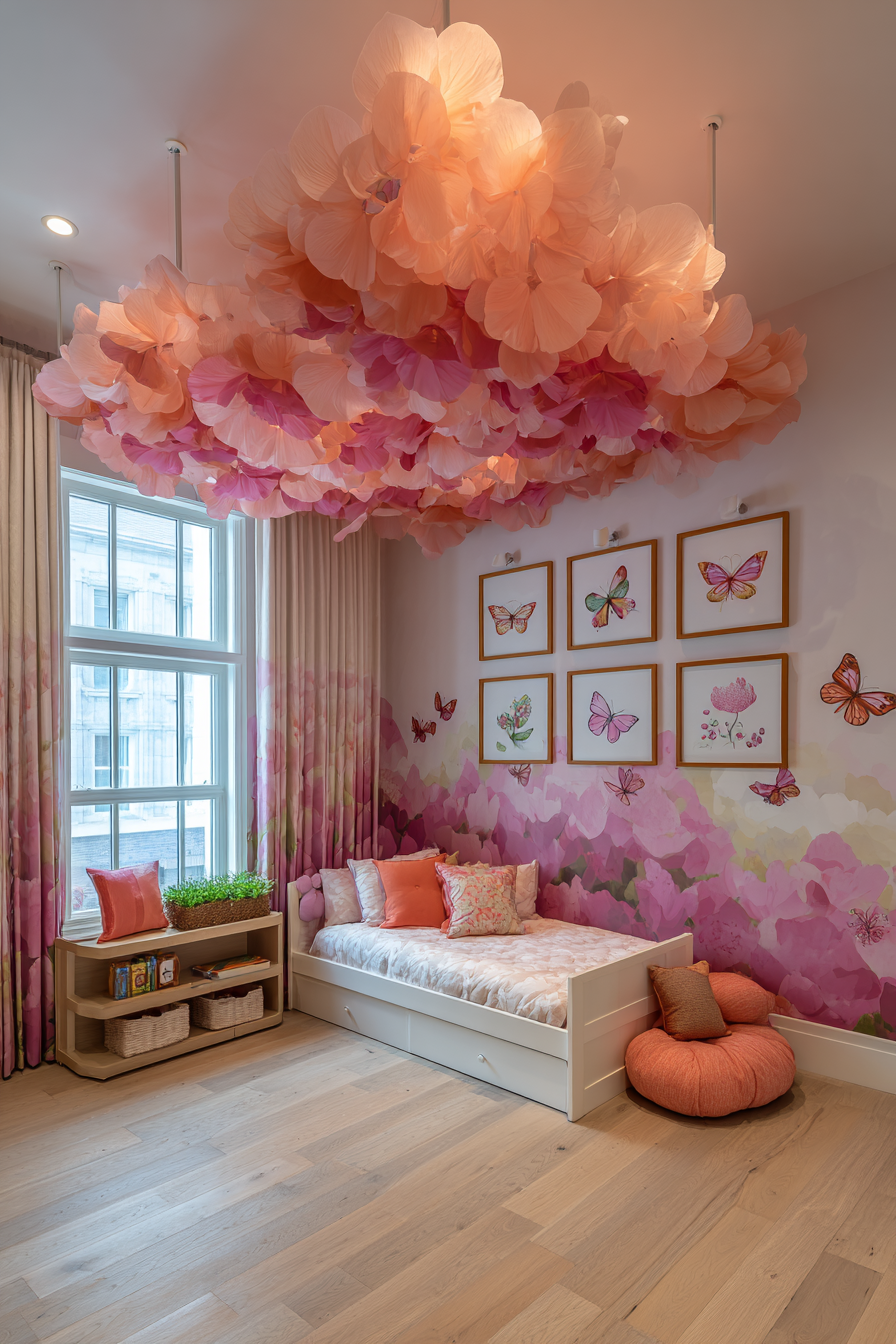
A small indoor-safe herb garden sits on a low shelf. Basil, mint, and parsley grow in child-safe containers. The living elements teach plant care and responsibility. Toddlers observe growth cycles through daily interaction. The herbs provide sensory experiences through touch and smell.
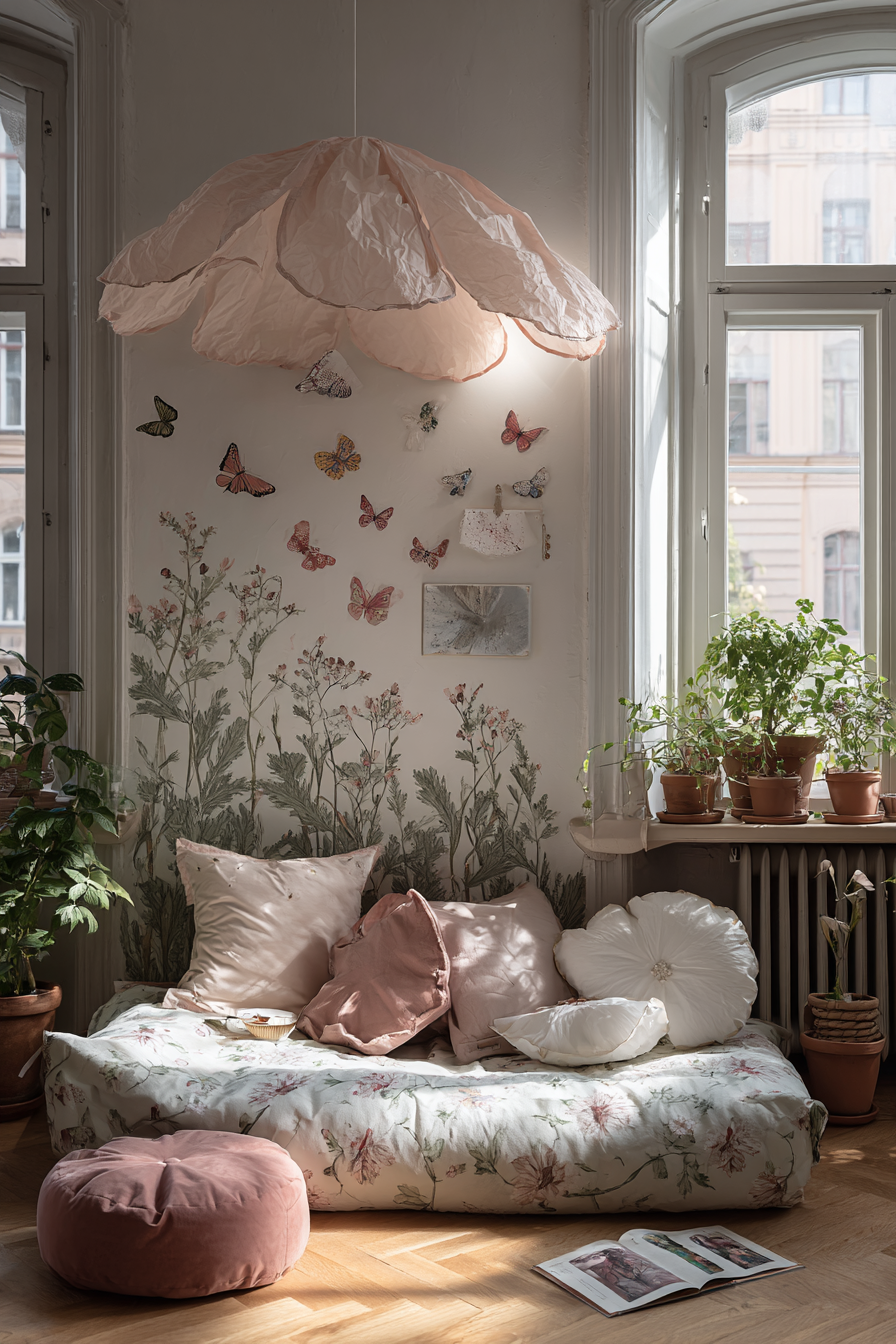
Flower-shaped cushions and botanical prints complete the cohesive theme. Simple frames display pressed flowers and plant illustrations. The coordinated elements reinforce nature concepts throughout. Morning light creates fresh, airy ambiance consistently. The garden theme feels soothing rather than busy.
Key Design Tips:
- Choose petal-shaped canopies in soft colors for feminine themes
- Scatter wall decals at varying heights for immersive effects
- Introduce real plants in sturdy, tip-proof containers
- Select indoor-safe herb varieties like basil and mint
- Frame botanical prints in simple wood or white frames
- Position plants near windows with appropriate light exposure
14. Space-Efficient Vertical Living for Small Apartments
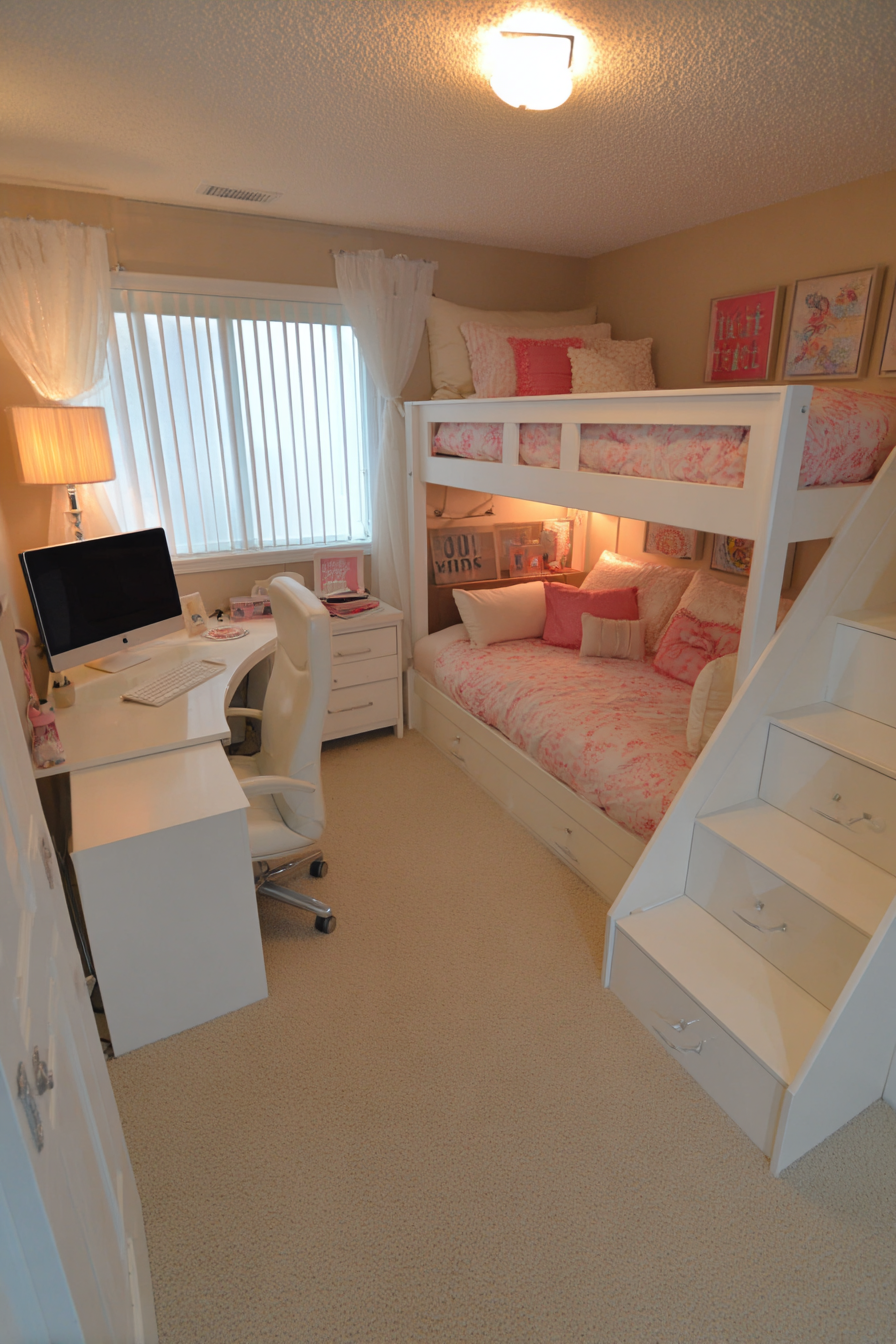
A loft-style bed with play area underneath maximizes limited square footage. The elevated sleeping platform frees valuable floor space. The underneath area accommodates various activities throughout the day. This vertical approach works perfectly in urban apartments. The design proves small spaces can function beautifully.
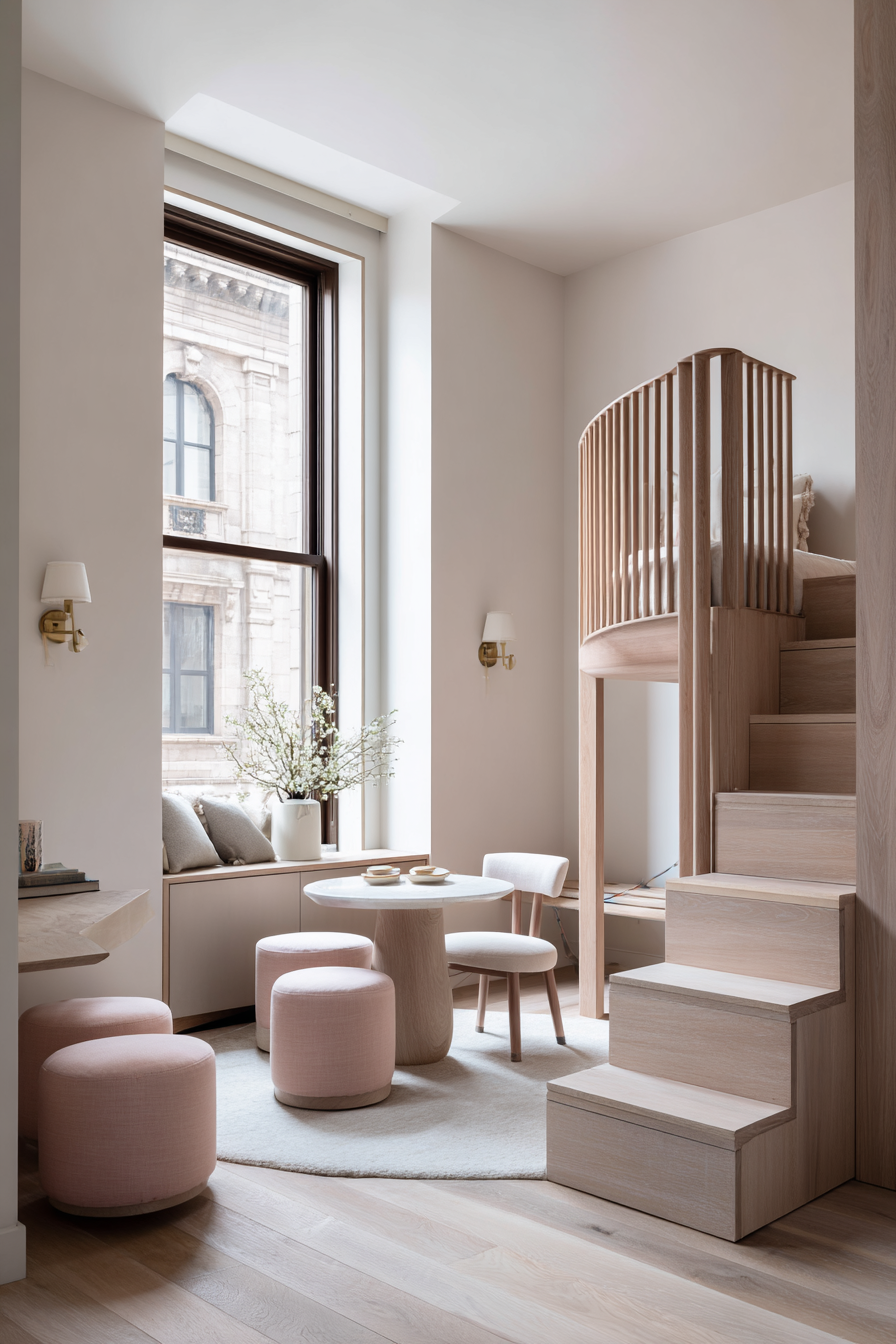
Built-in storage stairs with soft-close drawers lead upward safely. Each stair tread contains a drawer for clothing or toys. The dual-purpose construction eliminates separate dresser needs. Soft-close mechanisms prevent loud slamming and pinched fingers. The integrated approach saves significant floor space.
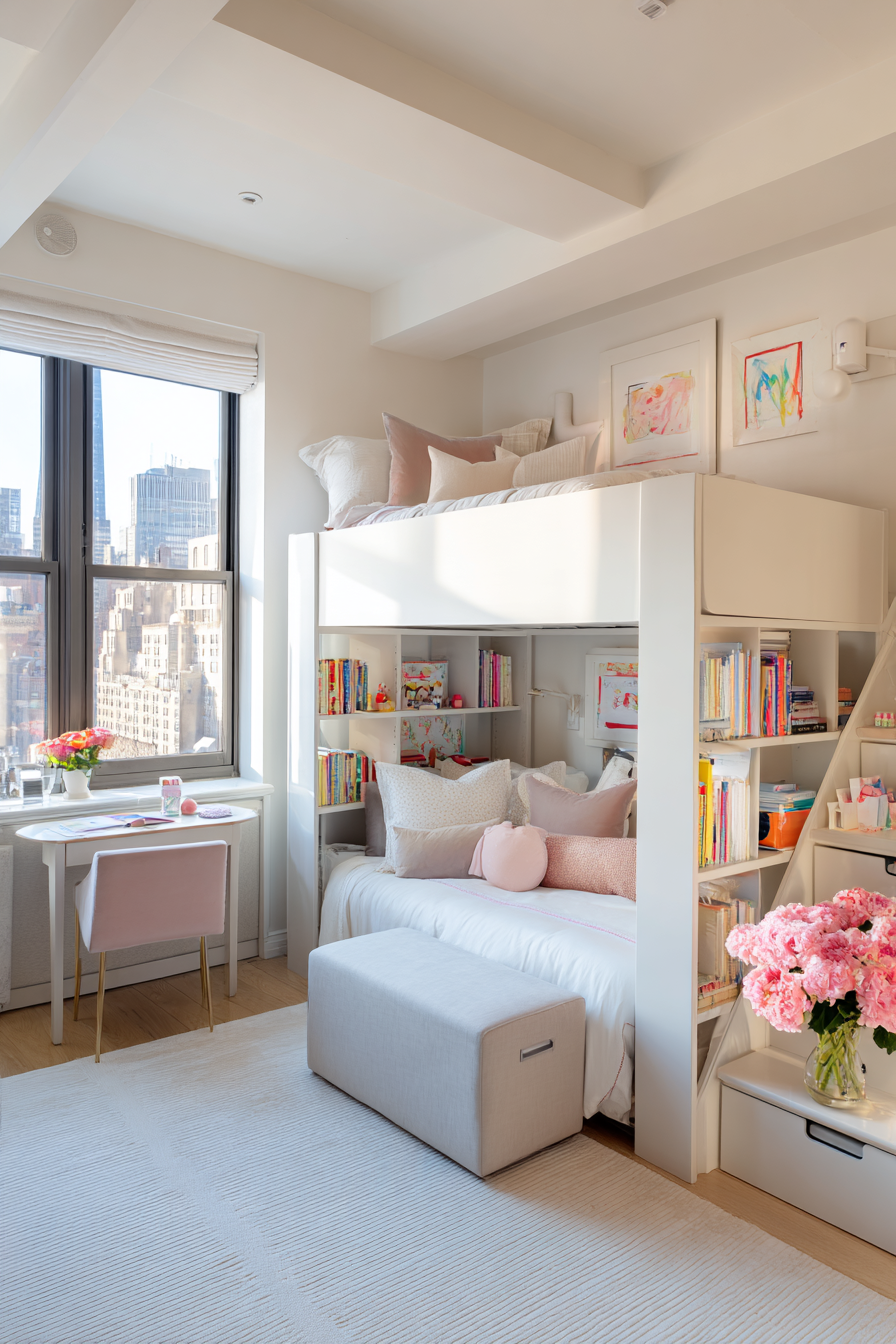
A fold-down desk attaches to the wall for art activities. The surface folds up completely when not in use. The disappearing desk eliminates permanent furniture footprint. The hinged design installs securely into wall studs. The workspace appears only when needed.
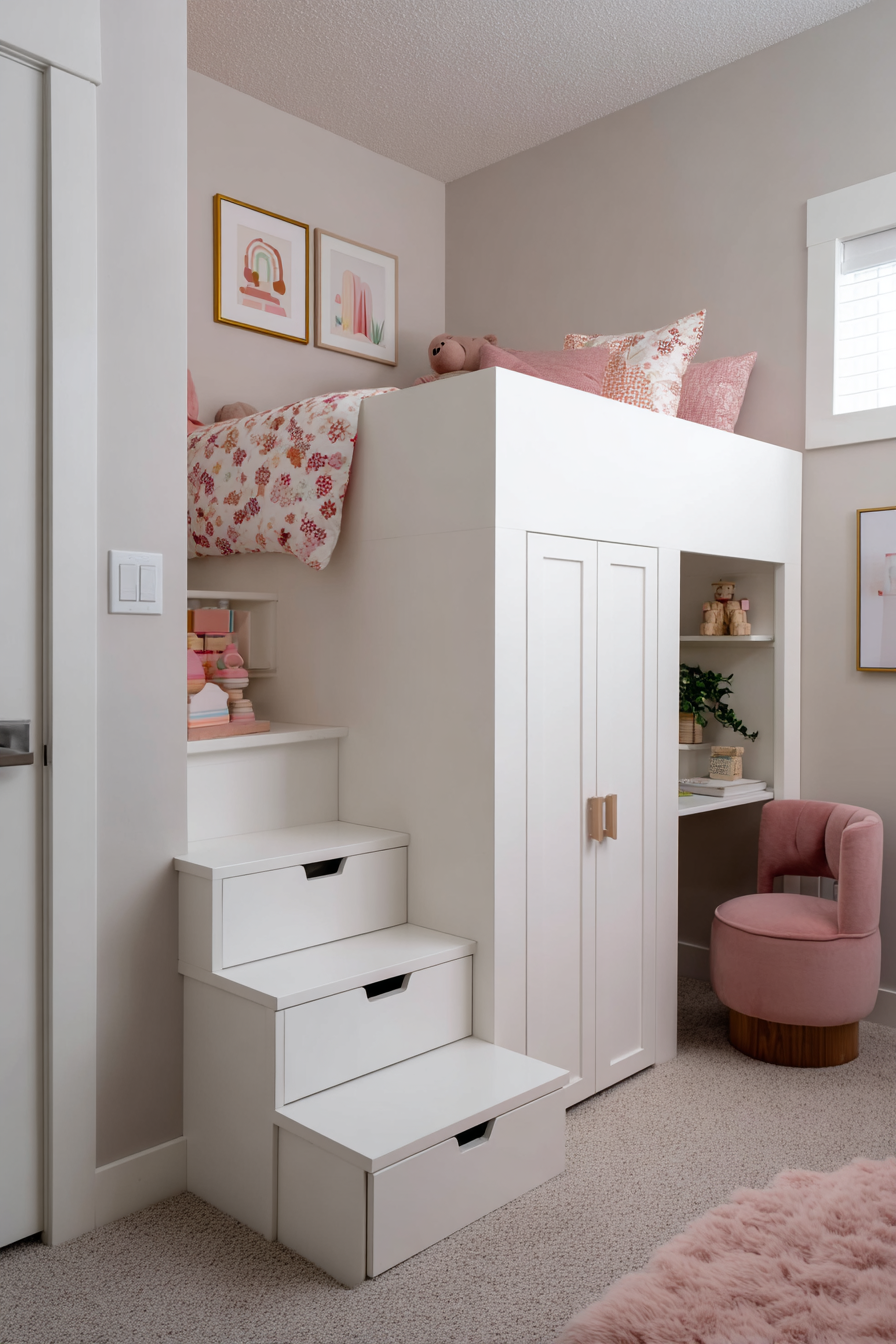
Multi-functional furniture includes storage ottomans and convertible chairs. Light neutral walls keep the compact space feeling open. Soft pink accessories add feminine touches without visual weight. The space-efficient design proves size limitations needn’t limit functionality. Professional planning maximizes every square inch available.
Key Design Tips:
- Choose loft beds with minimum 33 inches of clearance underneath
- Ensure loft guardrails meet safety height requirements
- Install fold-down furniture into wall studs, not drywall alone
- Use light colors on walls to maintain openness in small spaces
- Select multi-functional furniture that serves dual purposes
- Add mirrors strategically to visually expand compact rooms
15. Princess Dreams with Age-Appropriate Sophistication
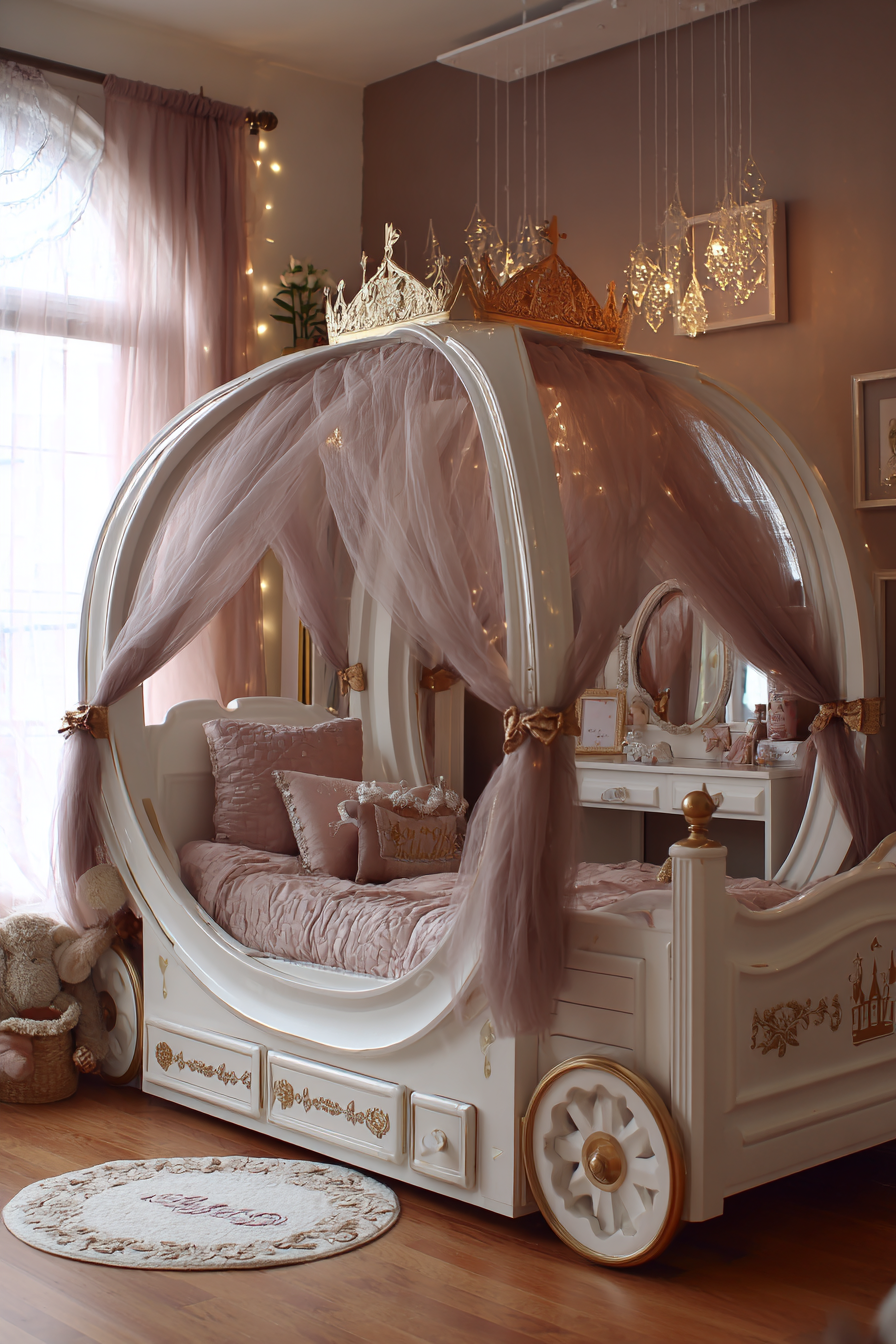
A carriage-style bed frame in soft white features gold accent details. The elegant design references princess themes without cartoon characters. A sheer canopy in blush tulle drapes romantically overhead. The sophisticated approach grows with your child gracefully. The magical elements remain tasteful and refined.
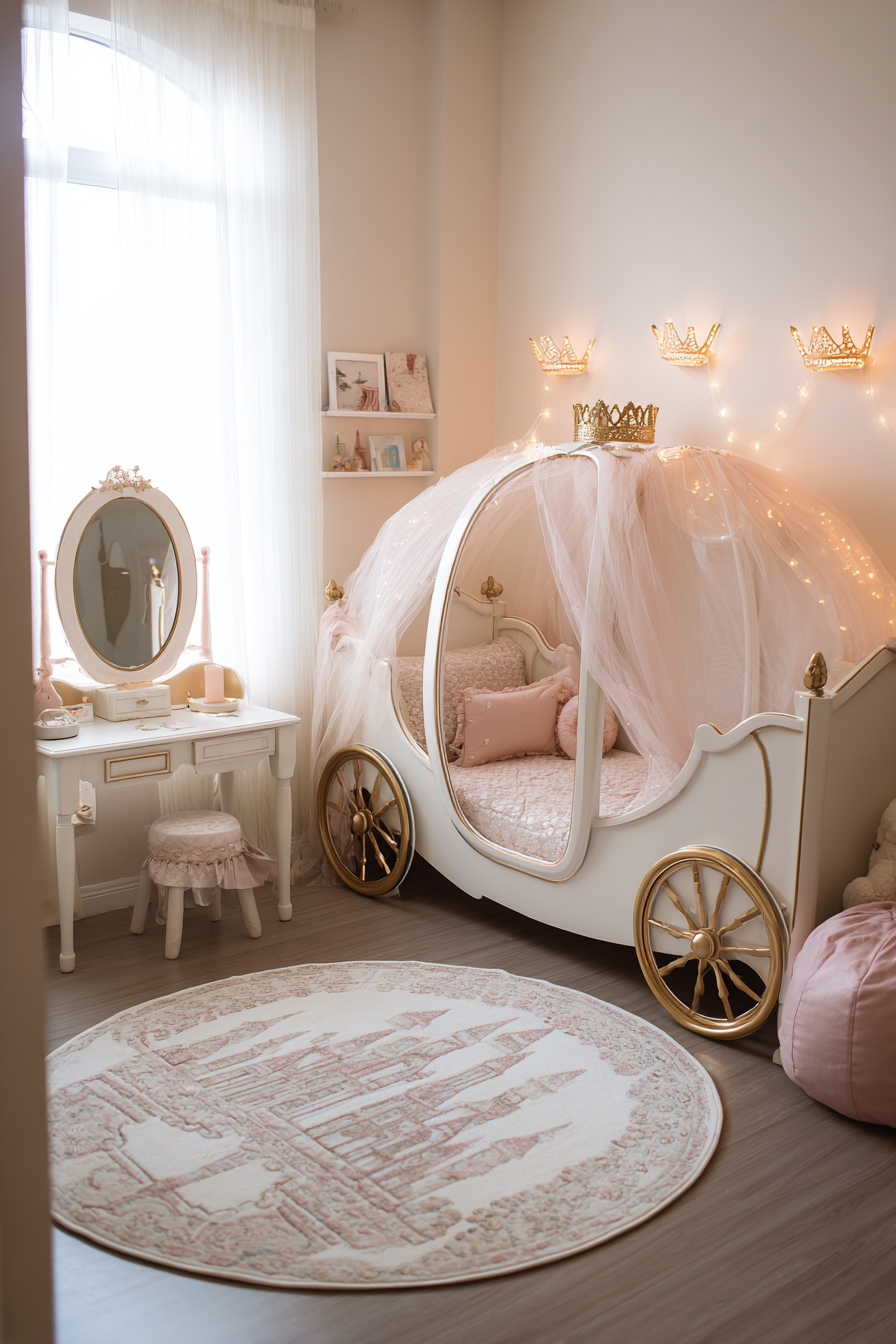
A small dress-up vanity with child-safe mirror includes drawer storage. Costume jewelry and play makeup organize inside designated spaces. The mirror mounts securely to prevent tipping accidents. The dedicated vanity validates imaginative play as important activity. The scaled furniture suits toddler proportions perfectly.
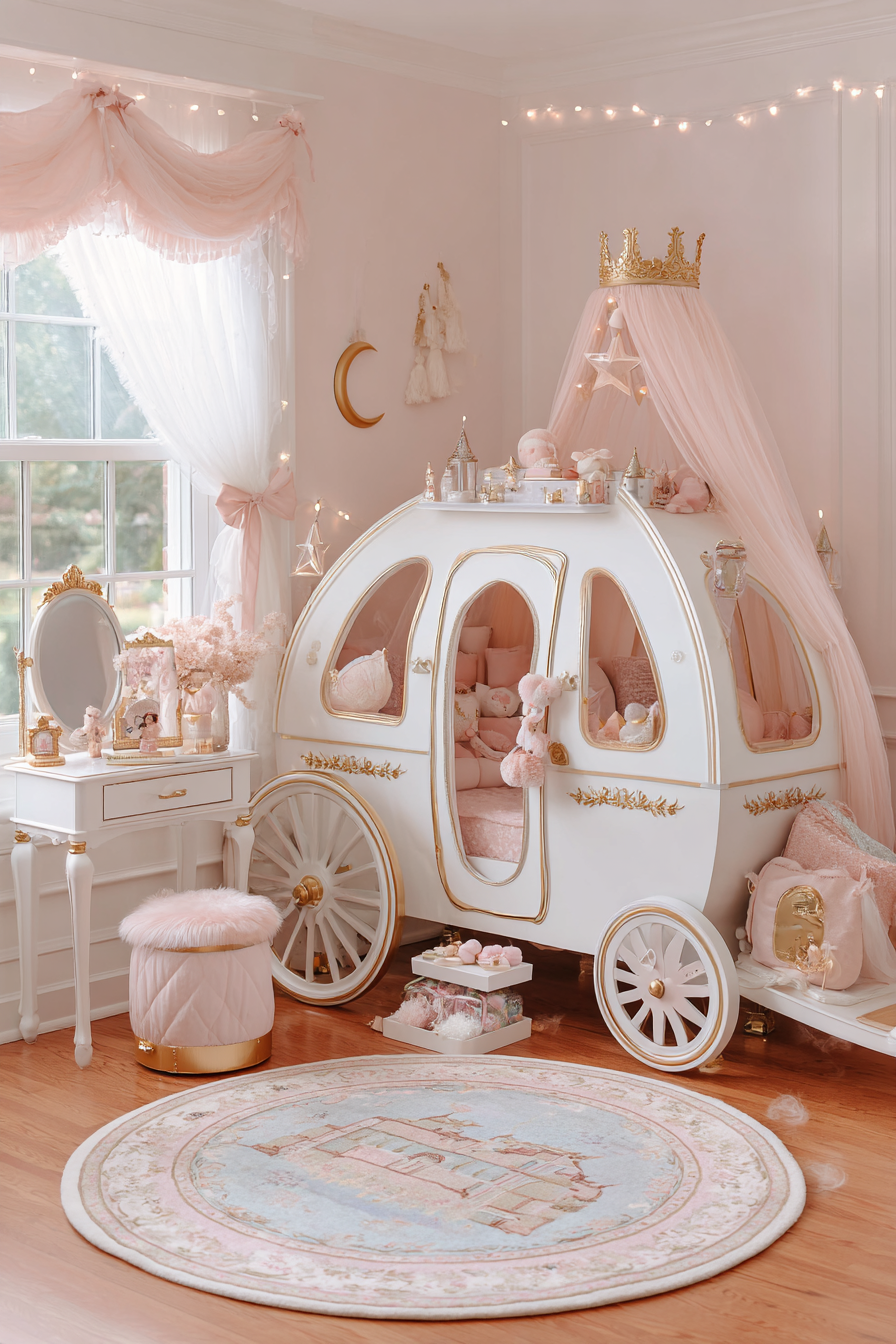
A round rug with castle pattern centers the play area. The circular shape defines the space without harsh lines. Fairy lights in crown-shaped fixtures provide gentle illumination. The thematic lighting enhances the magical atmosphere subtly. The low wattage ensures safety and appropriate brightness.
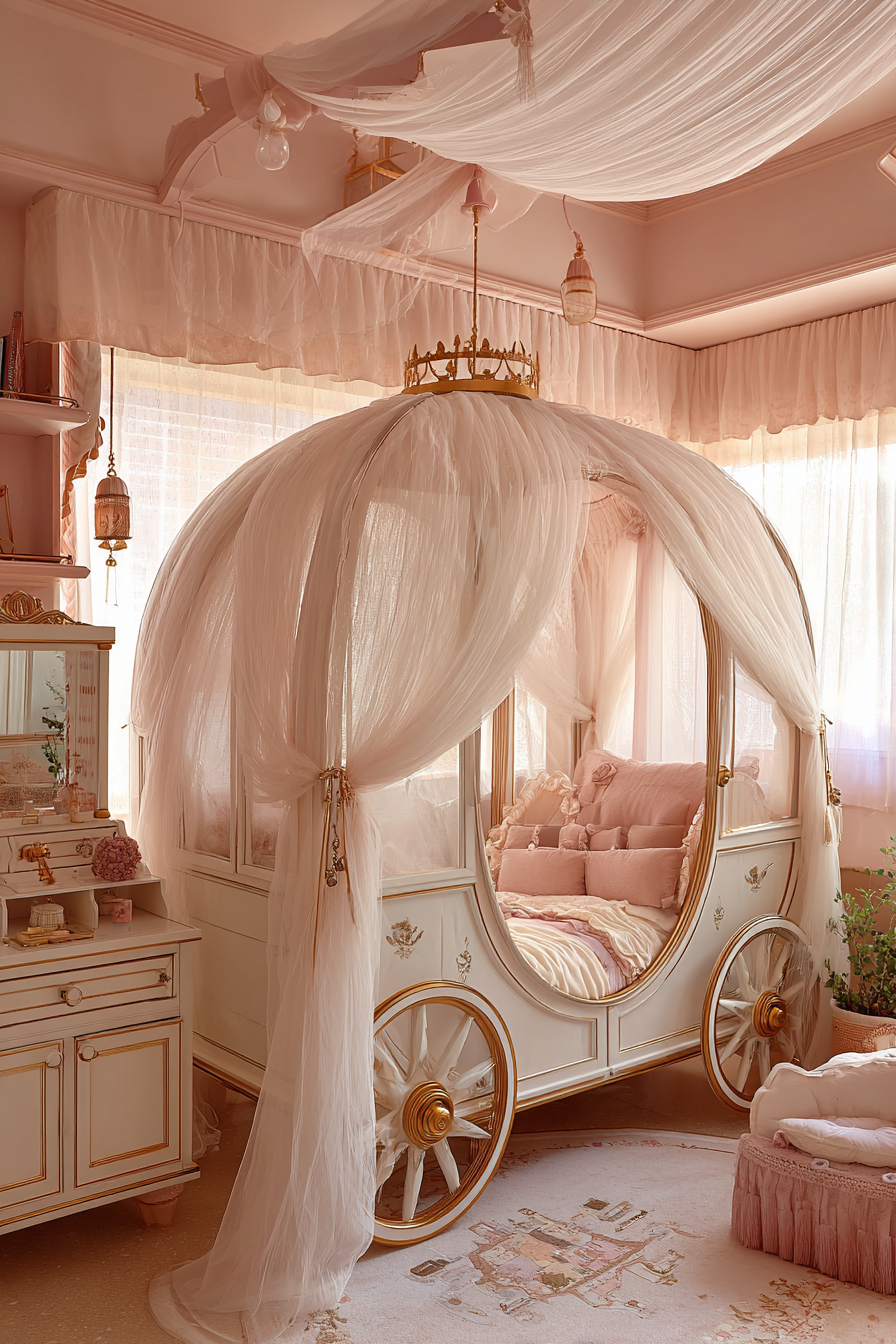
The princess theme remains age-appropriate without overwhelming young minds. Soft colors prevent garish appearances common in licensed character rooms. The design transitions beyond toddler years successfully. Dreamy lighting captures magical yet practical design goals.
Key Design Tips:
- Choose sophisticated princess themes over licensed characters
- Use metallic accents in rose gold or champagne instead of bright yellow gold
- Install sheer canopies that allow air circulation and visibility
- Select LED fairy lights with low wattage for safety
- Add dress-up storage to contain costume clutter
- Keep color palettes soft with blush, cream, and gold tones
16. Educational Focus Through Integrated Learning Zones
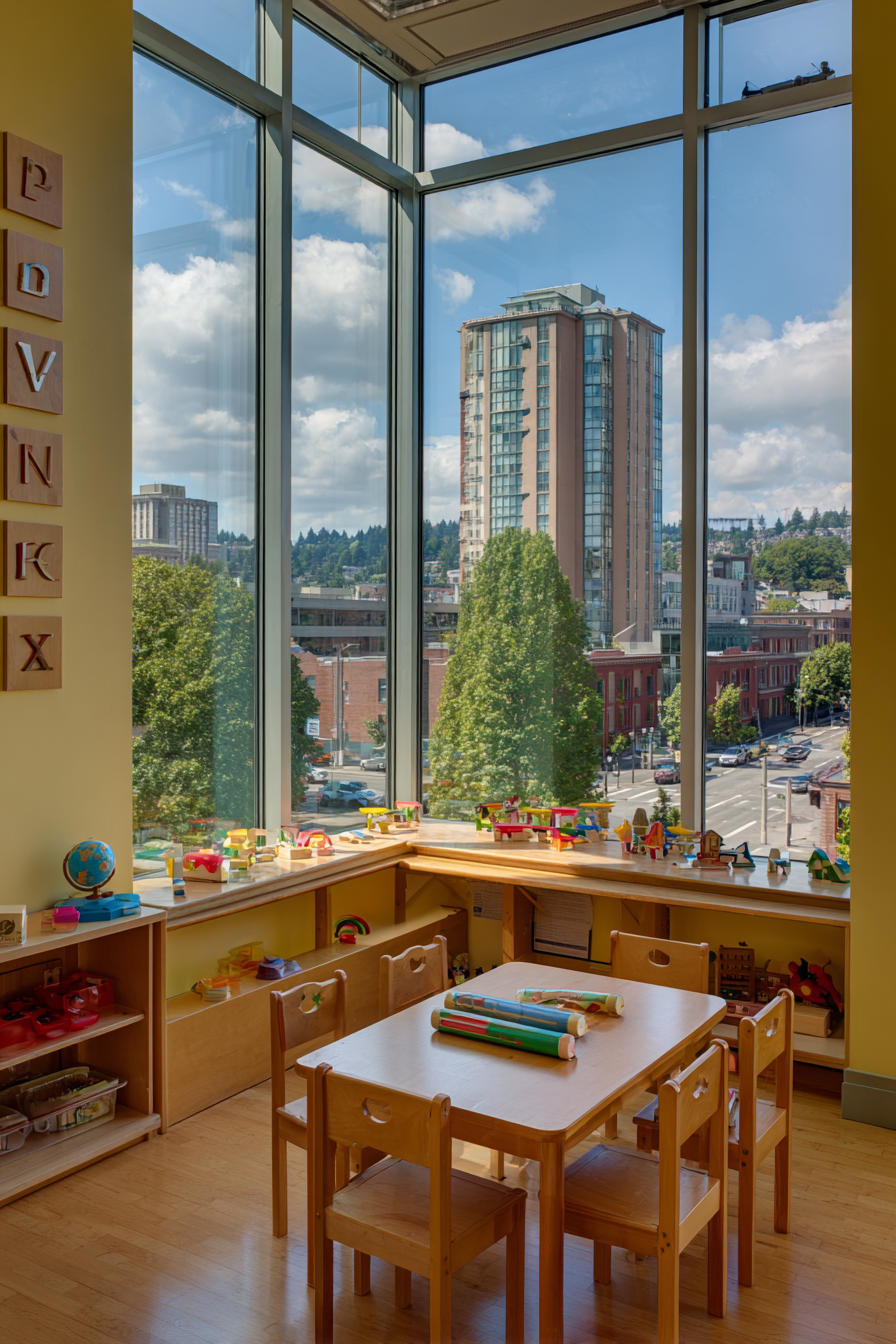
An alphabet wall features textured letters at child height. The three-dimensional letters encourage tactile learning naturally. Toddlers trace shapes while learning letter recognition. The hands-on approach supports multiple learning styles. The wall becomes interactive educational space.
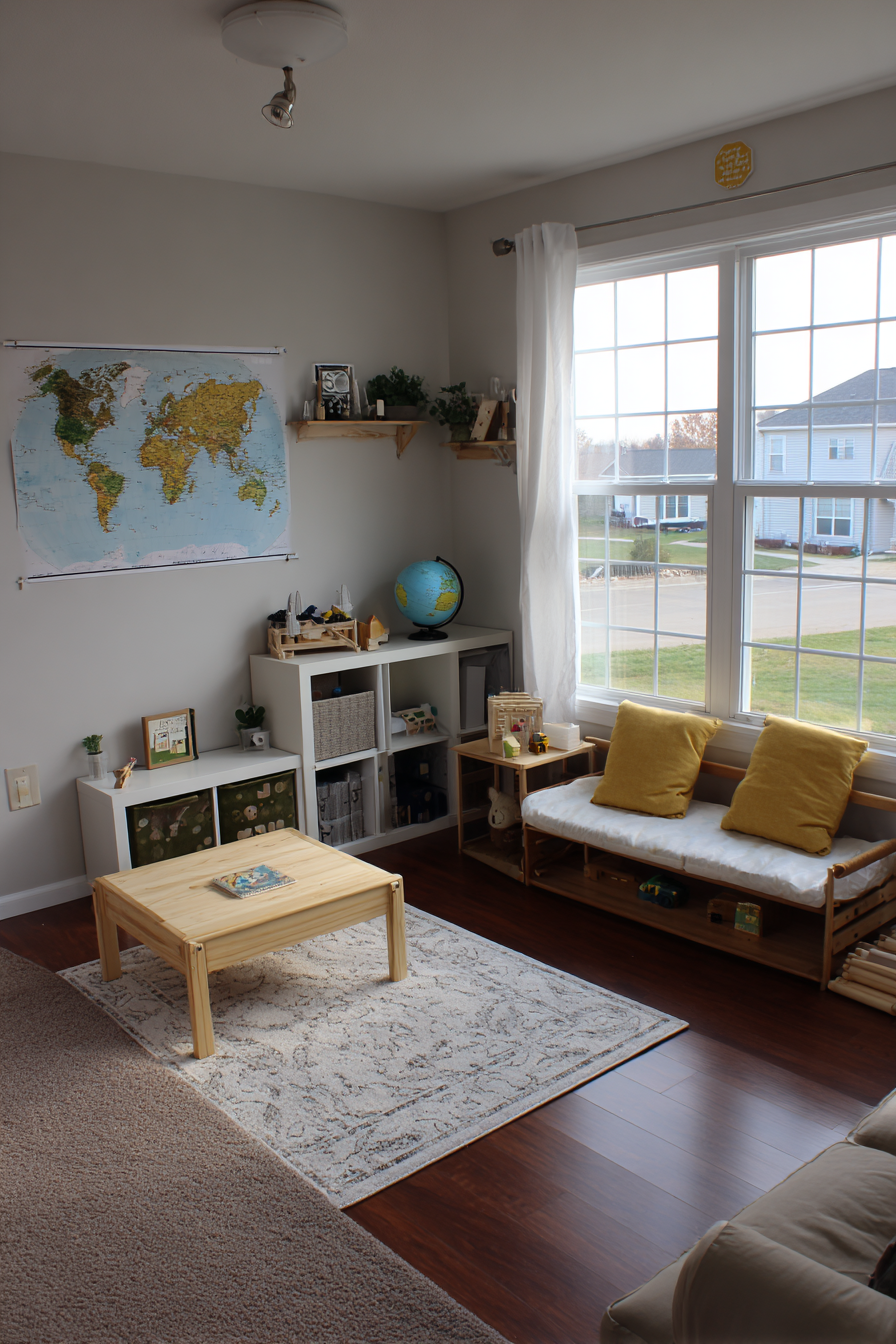
A low art table with paper roll holder encourages daily creativity. The roll holder provides unlimited paper supply continuously. Fine motor skills develop through drawing and coloring. The dedicated space validates creative expression as important learning. Washable surfaces withstand enthusiastic art sessions.
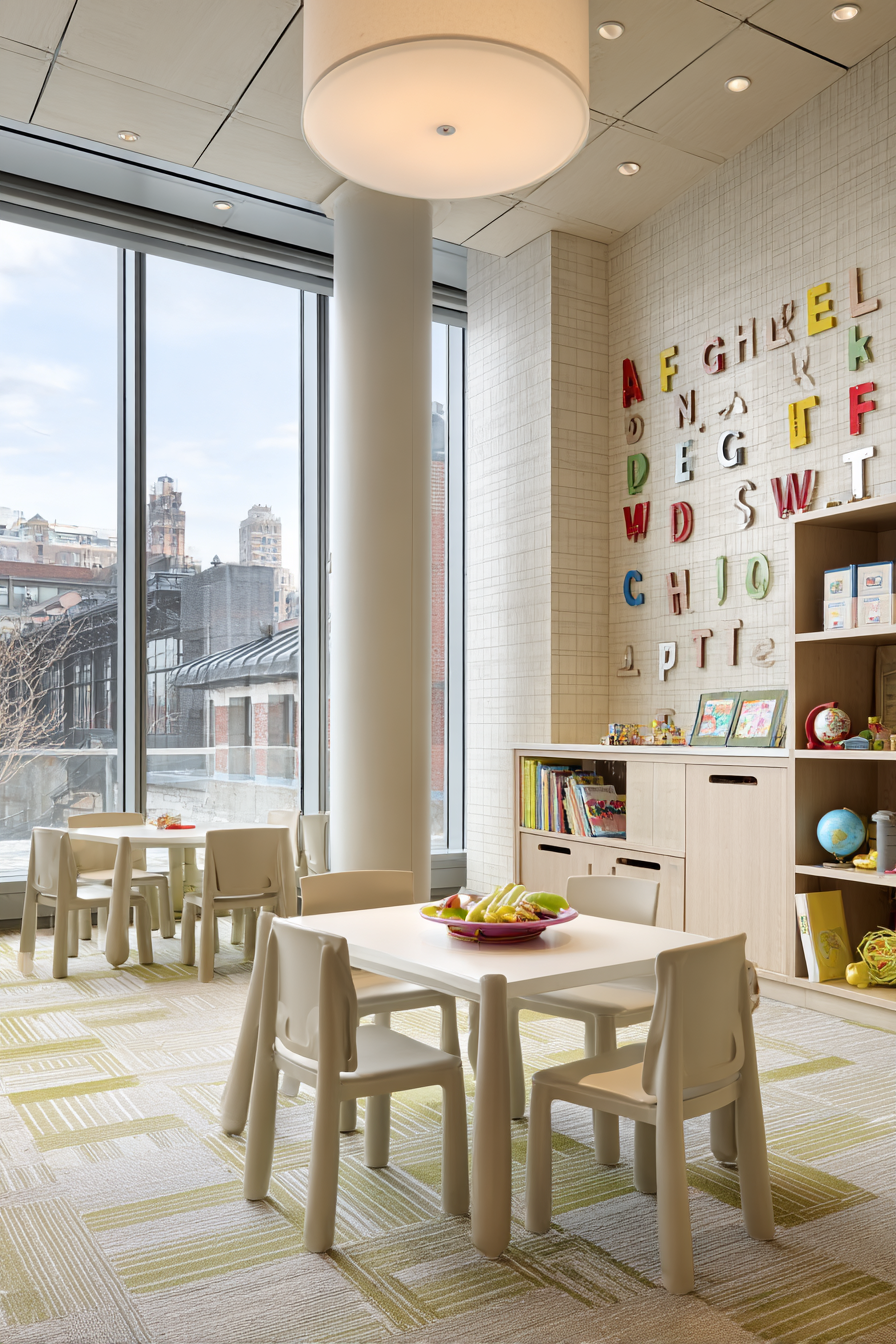
Number blocks and educational toys display on accessible open shelving. Picture labels help toddlers identify and categorize items. The organization system teaches early math and literacy concepts. A small globe and world map introduce geography concepts. The learning tools remain accessible throughout the day.
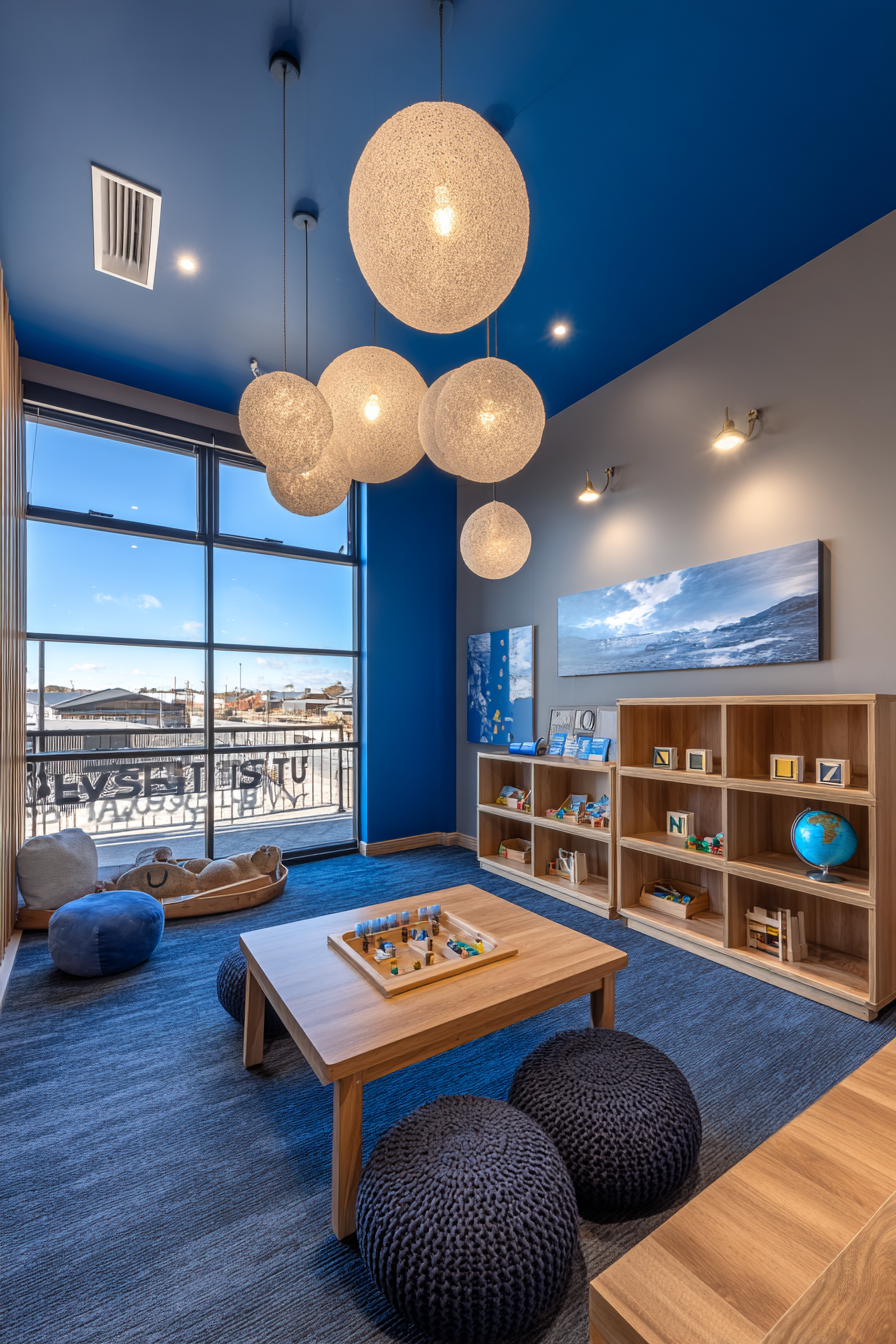
Natural light from large windows illuminates the learning zones. The bright environment supports visual learning activities. Educational elements integrate into attractive, organized spaces. The design proves learning environments needn’t sacrifice aesthetic appeal.
Key Design Tips:
- Install tactile alphabet letters at toddler shoulder height
- Choose art tables with washable surfaces and storage underneath
- Add paper roll holders for continuous creative supply
- Display educational toys on low, accessible shelving
- Include world maps and globes at child viewing height
- Position learning zones near natural light sources
17. Cottage Charm with Timeless Traditional Elements
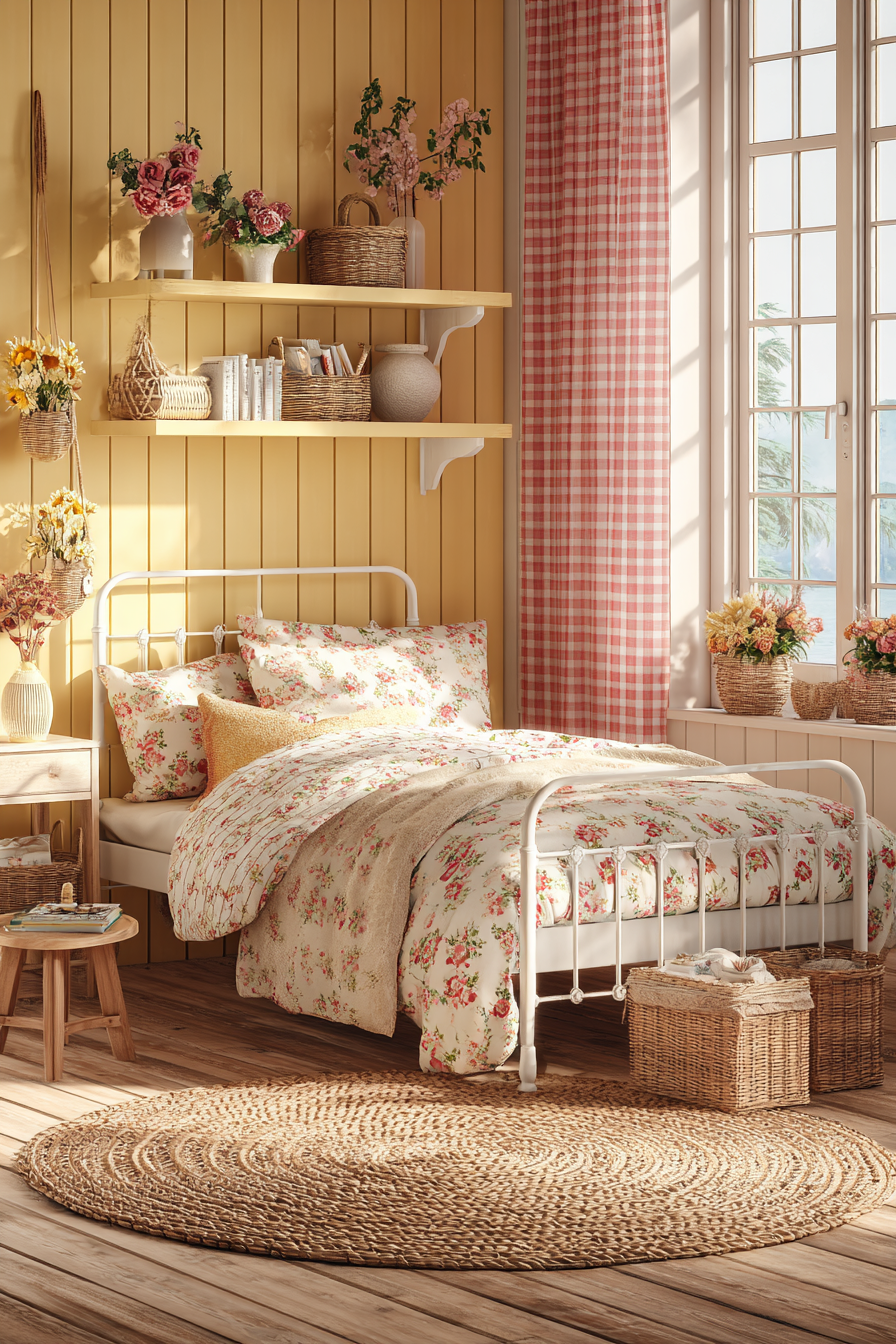
White beadboard wainscoting and soft yellow walls create cheerful atmospheres. The traditional architectural detail adds character without overwhelming. The yellow tone brings sunshine indoors year-round. The cottage style provides warmth and welcoming comfort. The classic approach transcends temporary trends.
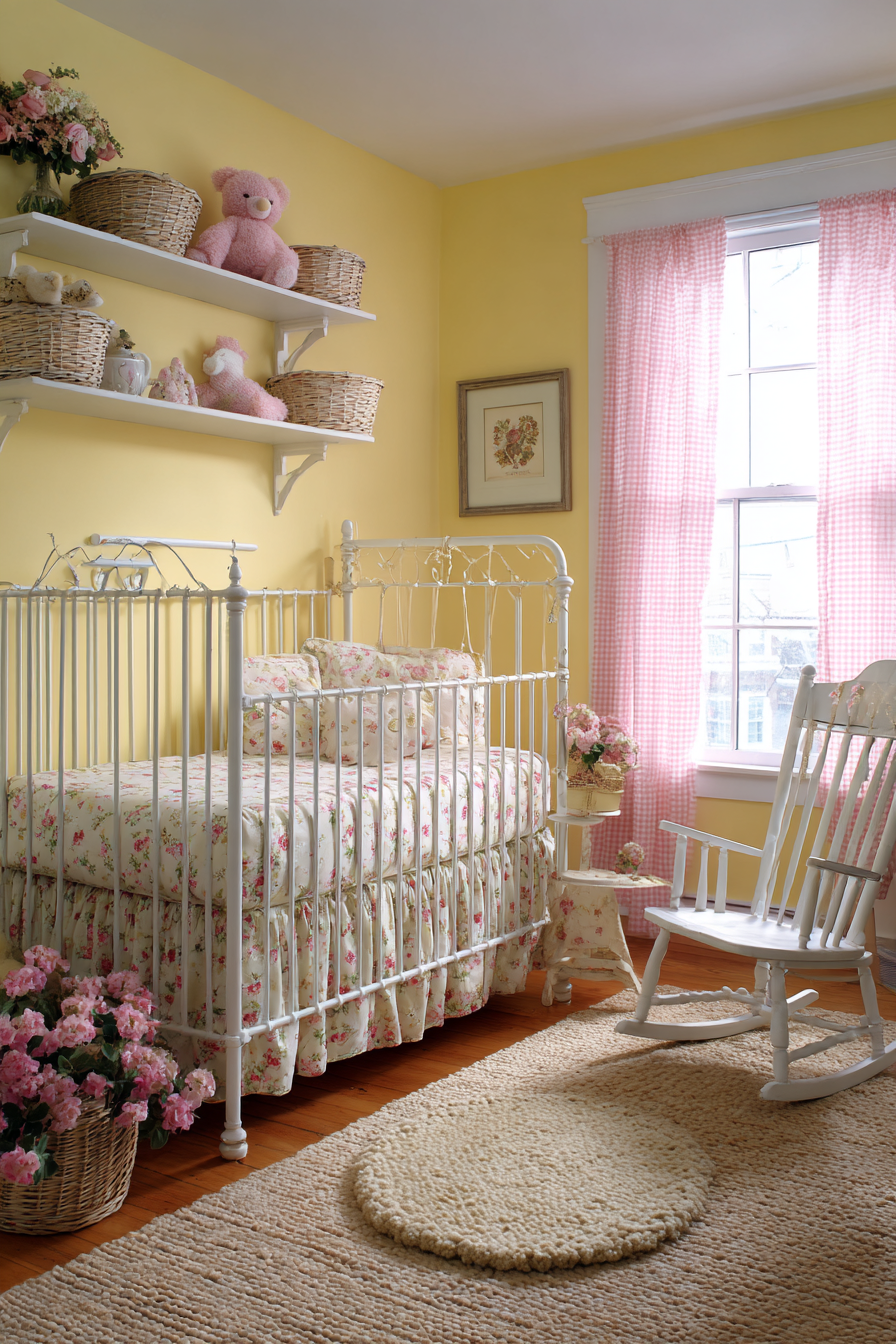
A vintage-inspired iron bed frame in white houses floral bedding. Small-scale patterns suit young children appropriately. The traditional styling ages gracefully over many years. The iron construction provides durability with classic beauty. White finish brightens while maintaining nostalgic appeal.
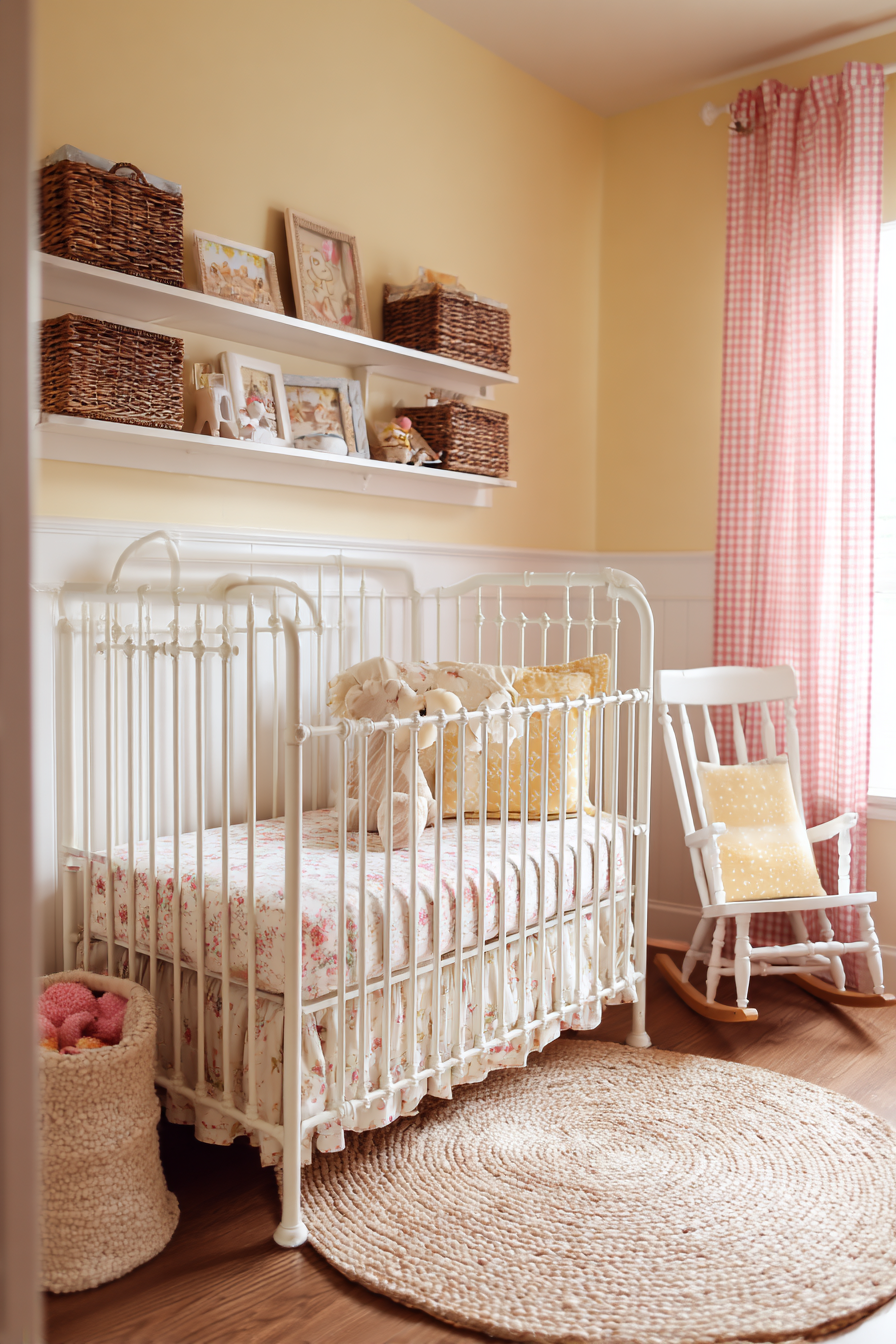
Gingham curtains in pink and white filter natural light softly. The classic pattern adds traditional cottage charm. The lightweight fabric moves gently in breezes. A small wooden rocking chair provides cozy seating. Braided oval rugs add authentic cottage character underfoot.
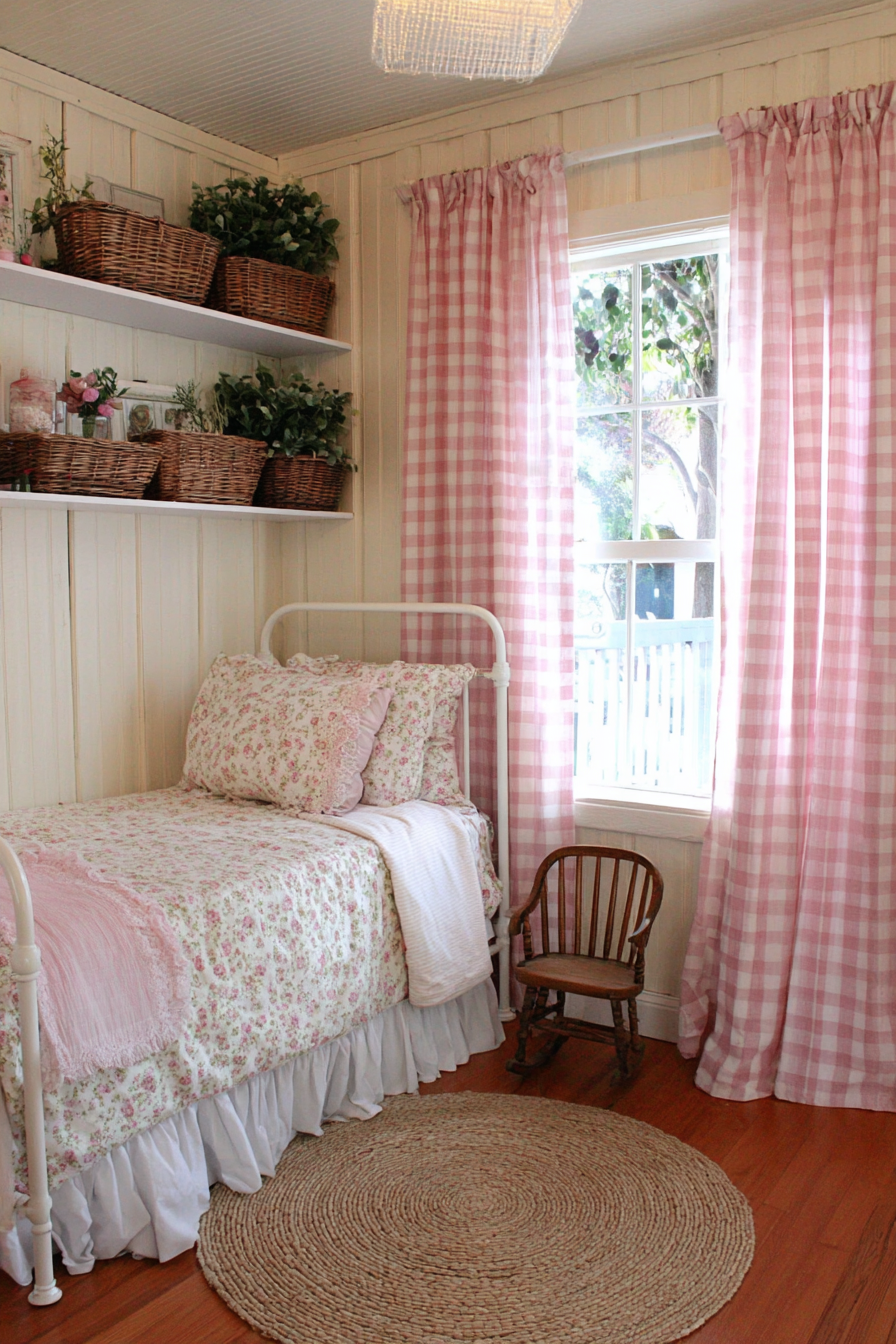
Wicker baskets on open shelving provide pretty storage solutions. The natural materials add texture and warmth. The cottage aesthetic combines beauty with comfortable functionality. Warm natural lighting enhances the homey atmosphere. The timeless design serves across multiple childhood stages.
Key Design Tips:
- Install beadboard wainscoting to add architectural interest
- Choose soft yellow walls for cheerful, sunny atmospheres
- Use small-scale floral patterns appropriate for young children
- Add gingham textiles in traditional pink and white
- Include wooden rocking chairs for reading and cuddling
- Select wicker storage for pretty, functional organization
18. Modern Farmhouse Blend of Contemporary and Rustic
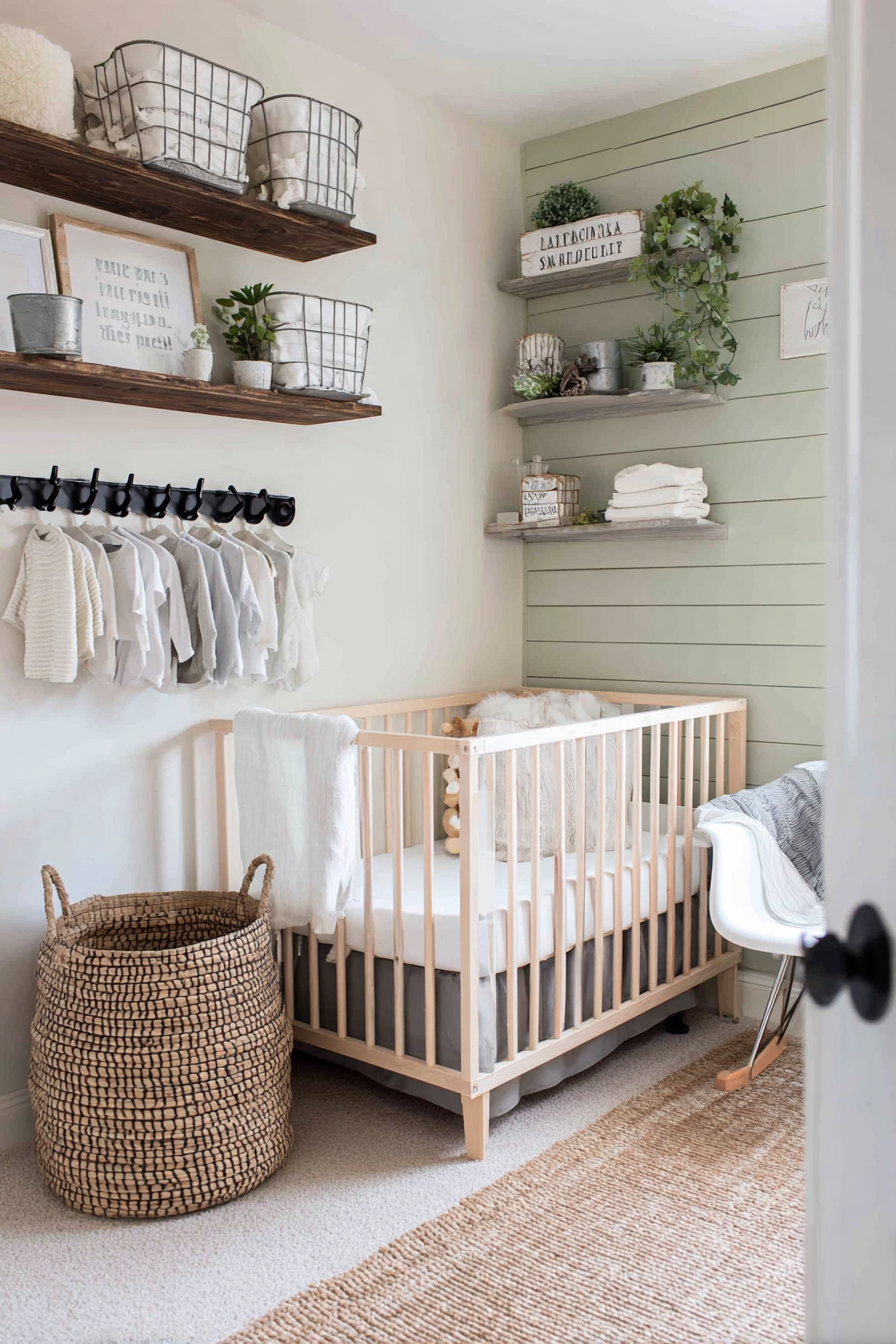
A shiplap accent wall painted in soft sage green provides textural interest. The horizontal lines add visual movement behind the bed. A simple wooden bed with natural finish showcases wood grain beauty. The modern farmhouse style balances contemporary and rustic elements. The blend creates fresh yet timeless appeal.
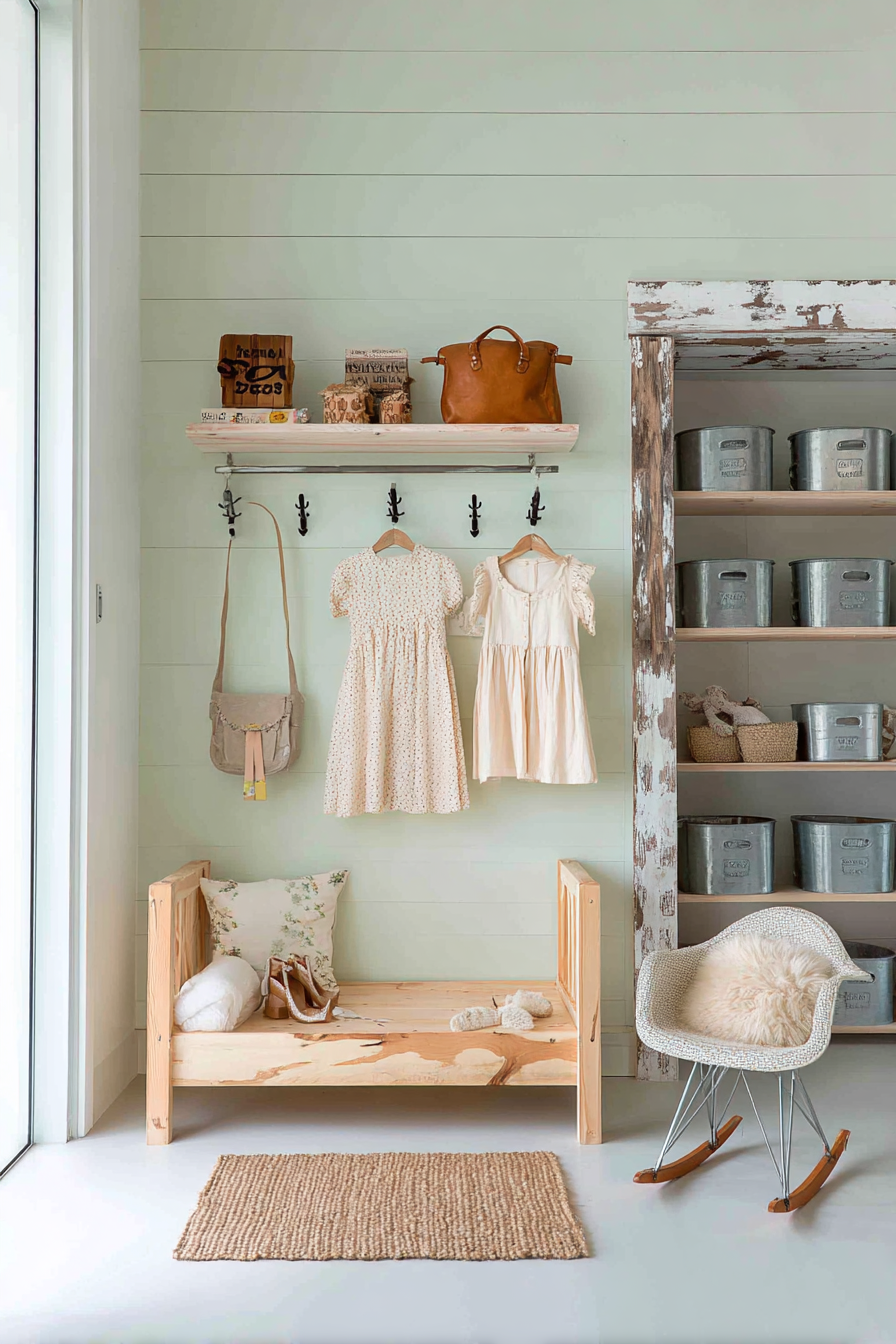
Industrial-style wall hooks in matte black provide practical storage. The metal hooks hold bags and dress-up clothes securely. The dark finish creates sophisticated contrast against light walls. Galvanized metal storage bins sit on distressed wood shelving. The combination of materials adds layered visual interest.
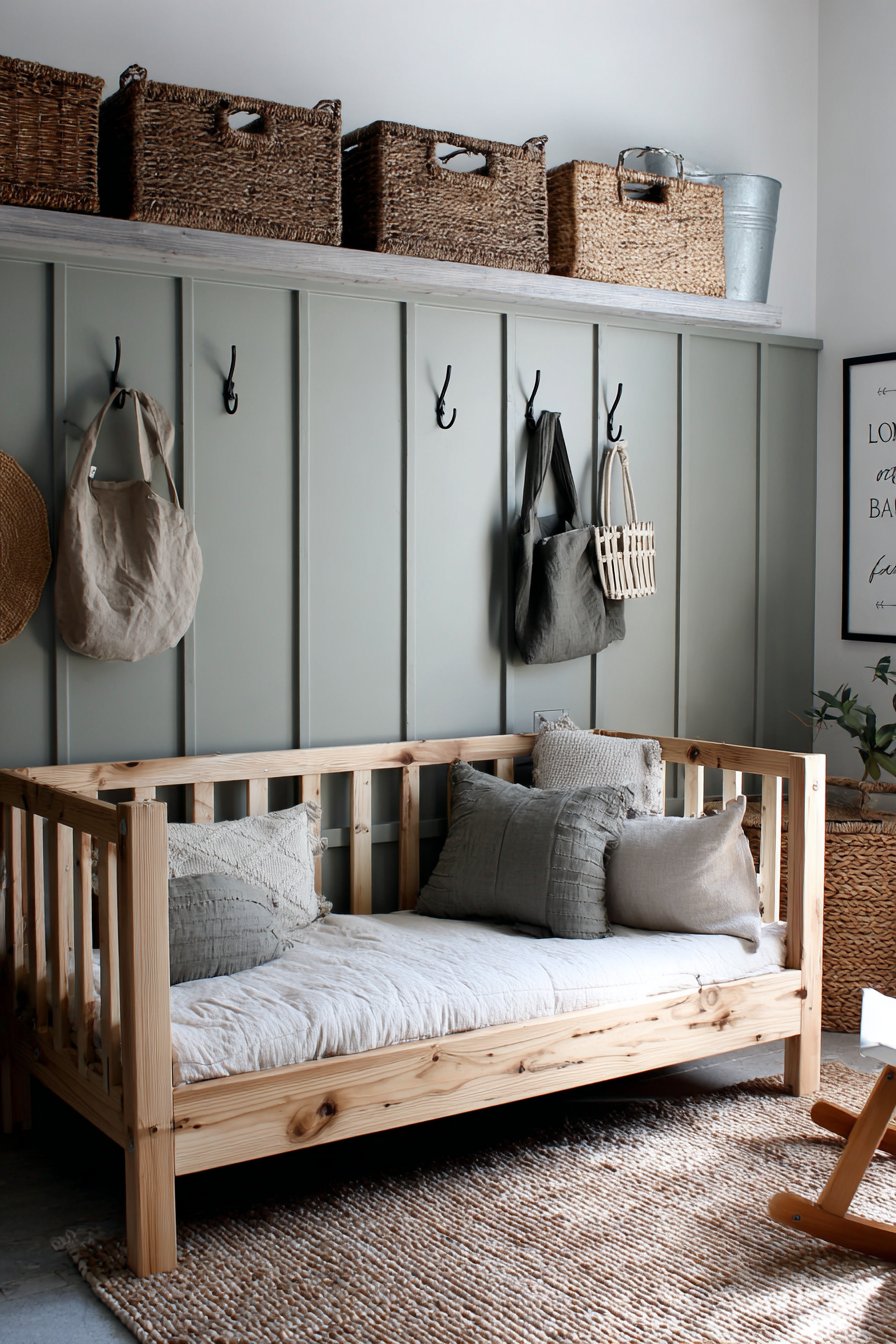
A jute area rug grounds the space beneath modern rocking chairs. The natural fiber adds organic texture underfoot. The neutral color coordinates with various accent colors. Modern rocking chairs provide comfortable seating for reading time. The clean-lined furniture contrasts beautifully with rustic elements.
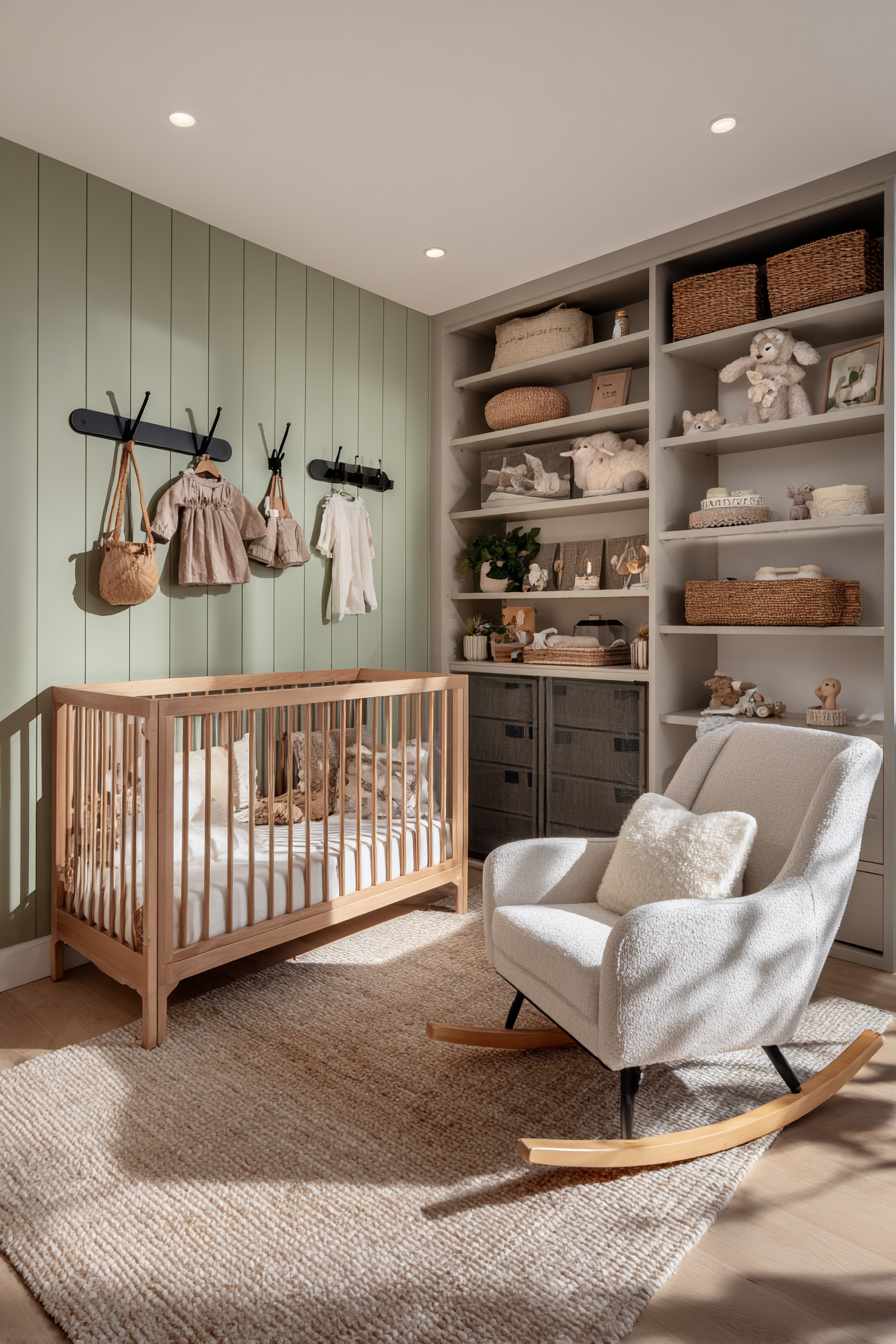
Natural daylight emphasizes the blend of modern and rustic elements. The shiplap adds farmhouse character without overwhelming. The color palette remains soft and sophisticated throughout. The design style grows from toddler through elementary years.
Key Design Tips:
- Install horizontal shiplap for modern farmhouse authenticity
- Paint accent walls in muted colors like sage or gray-green
- Add matte black hardware and fixtures for contrast
- Use galvanized metal containers for rustic storage
- Select natural fiber rugs for organic texture
- Balance rustic elements with clean-lined modern furniture
19. Bohemian Eclectic with Layered Global Textiles
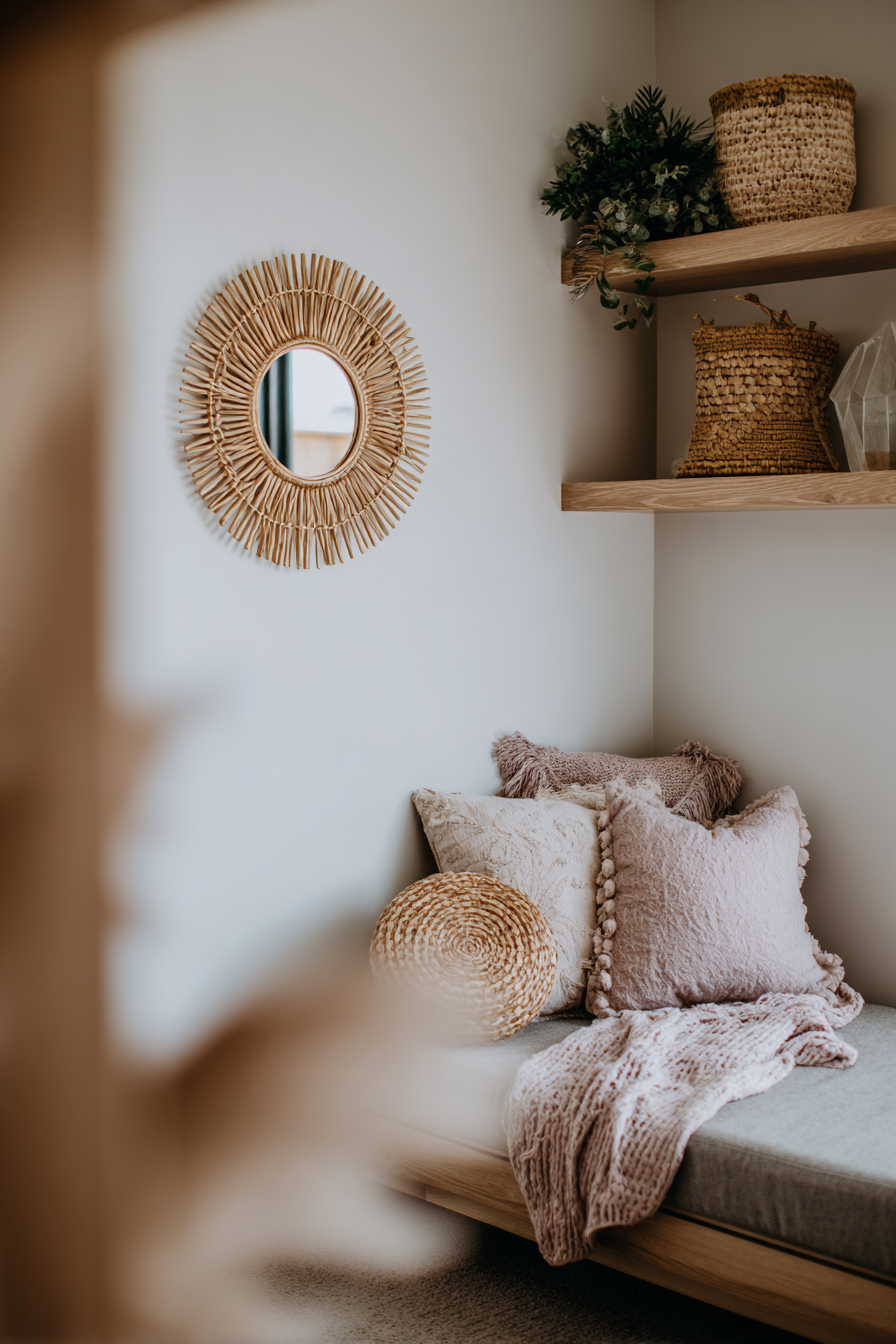
A low daybed features layered textiles creating bohemian comfort. Woven throws and tasseled cushions pile in earthy pinks and neutrals. The collected appearance develops over time naturally. Multiple textures create visual and tactile interest. The relaxed styling encourages comfortable lounging.
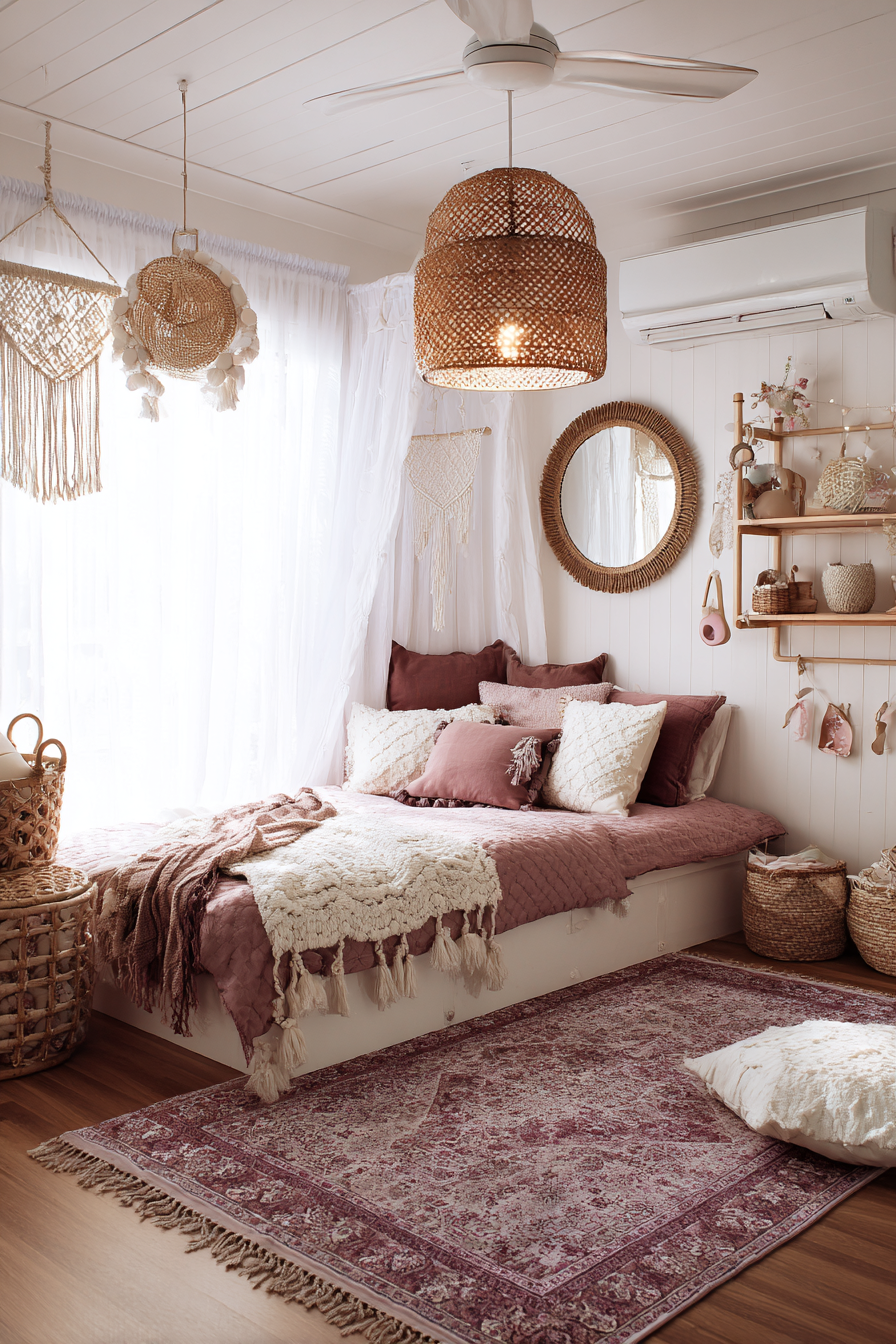
Macramé wall hangings and woven baskets provide textural interest. The handcrafted elements add artisanal character throughout. Various basket sizes offer flexible storage solutions. The natural materials connect the design to global traditions. The bohemian aesthetic celebrates handmade craftsmanship.
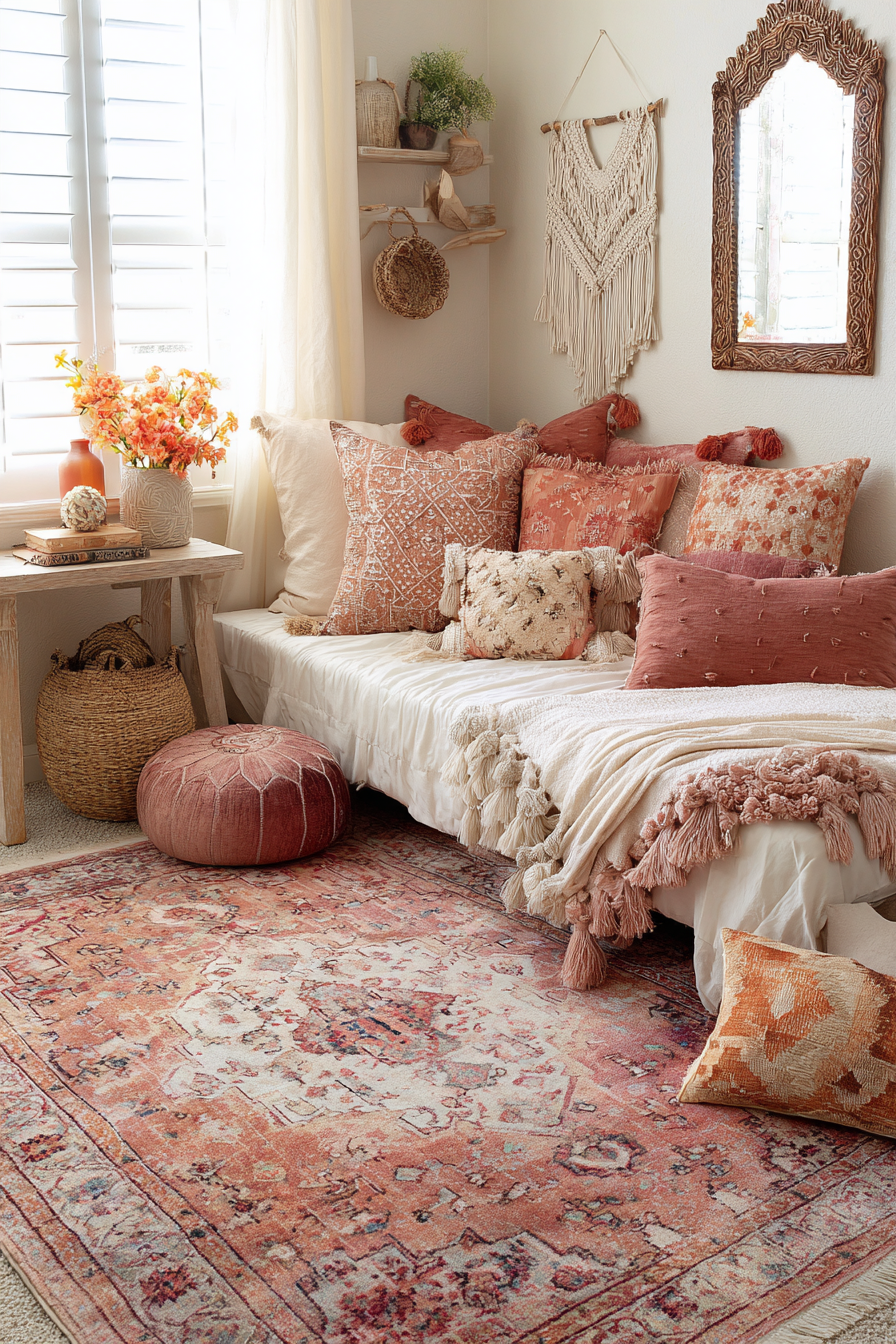
A vintage kilim rug in faded rose tones defines the play area. The authentic textile adds sophisticated pattern underfoot. The muted colors prevent overwhelming young sensibilities. Natural wood elements including ladder shelving add organic warmth. Rattan mirror frames contribute additional natural texture.
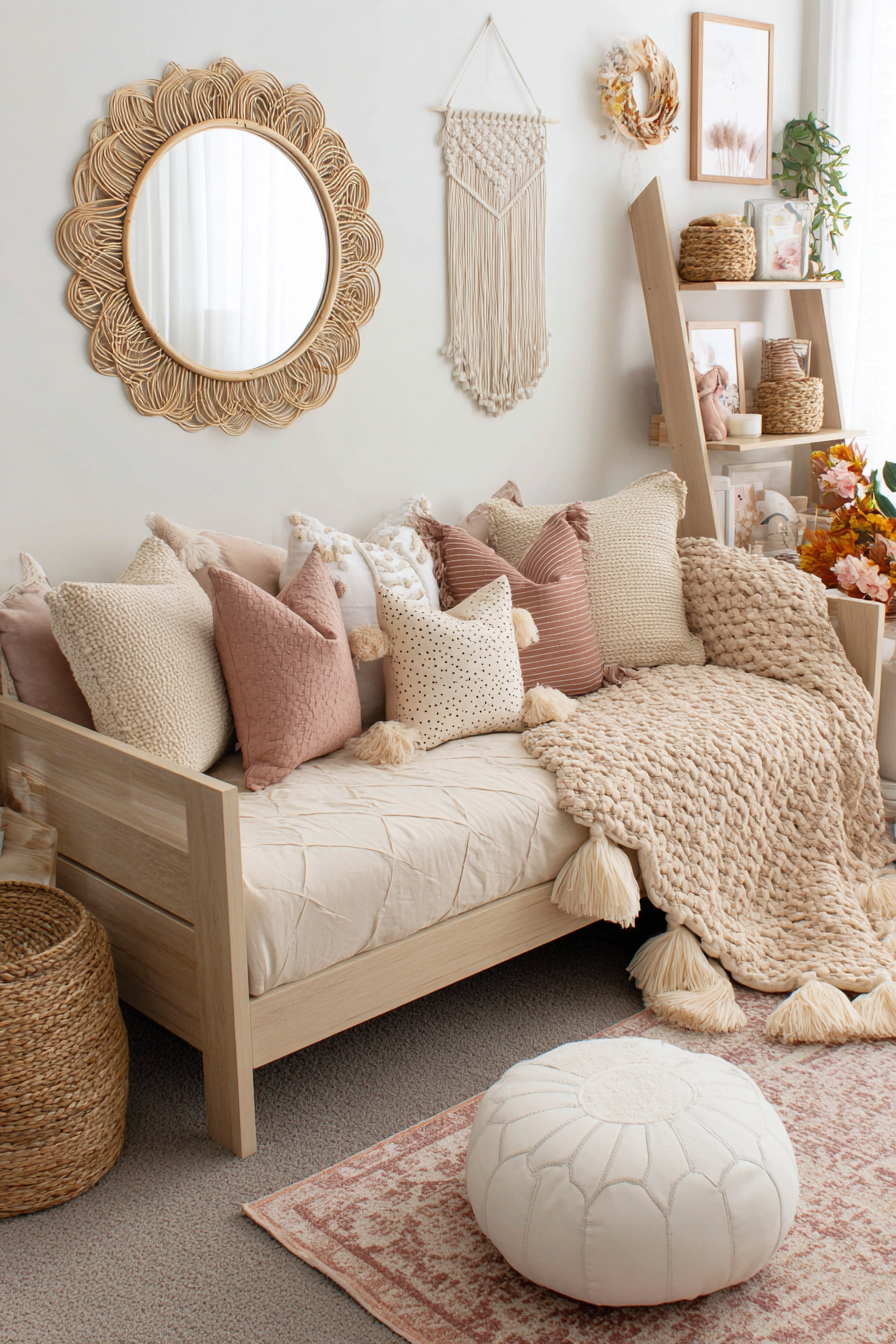
The collected, eclectic aesthetic feels curated yet casual. Soft diffused natural lighting highlights the varied textures. The bohemian style proves perfect for creative, free-spirited children. The design approach allows continuous evolution and personalization.
Key Design Tips:
- Layer multiple textiles in coordinating earth tones
- Add handmade elements like macramé and woven baskets
- Use vintage rugs for an authentic bohemian character
- Include natural materials like rattan, jute, and wood
- Create collected appearances through varied accessories
- Position daybeds low to the ground for safety
20. Rainbow Ombre with Sophisticated Color Progression
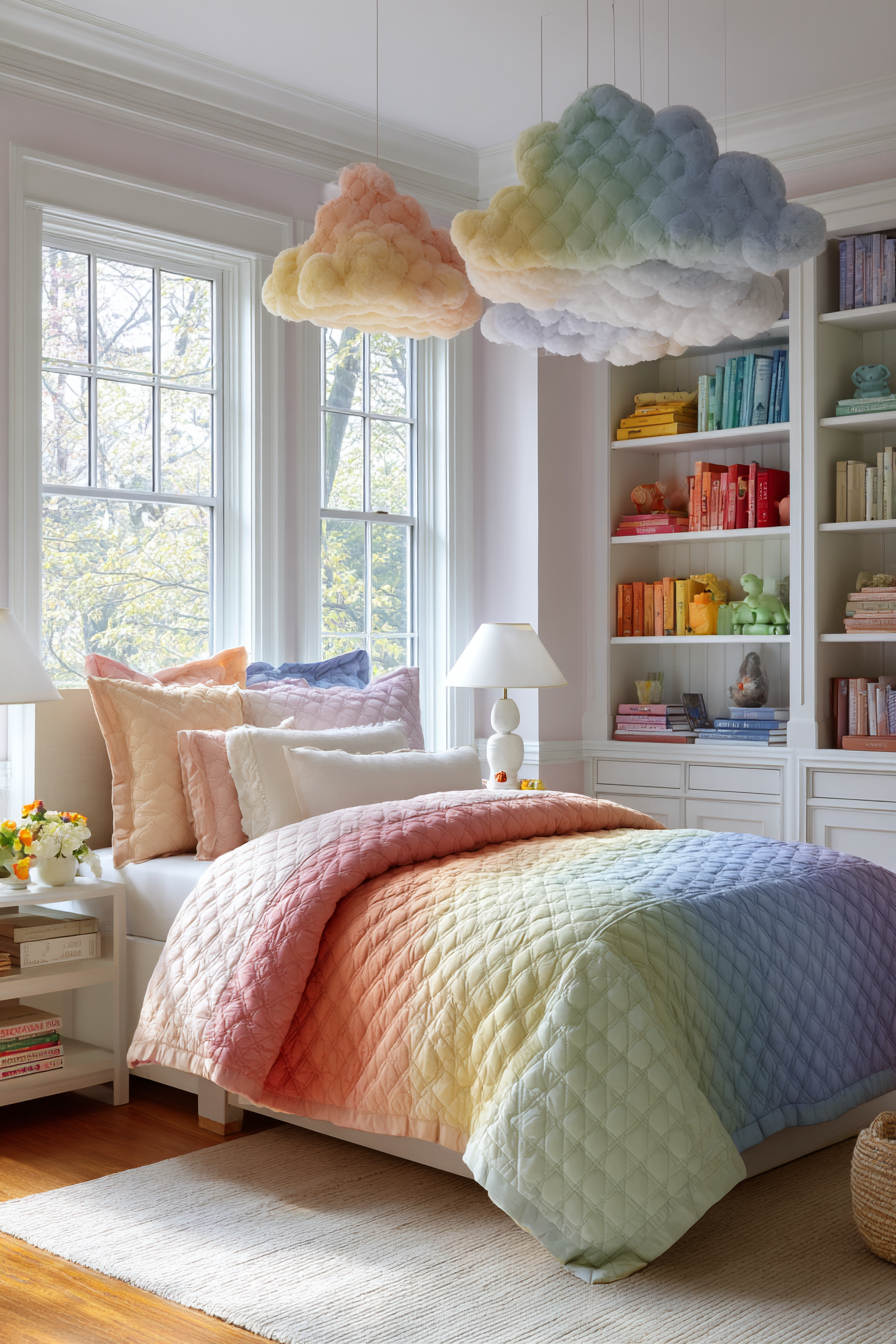
A subtle ombre wall treatment progresses from soft pink to lavender to mint. The gentle gradient creates magical effects without overwhelming brightness. A white wooden bed with rainbow quilted bedding anchors the space. The color progression feels sophisticated rather than juvenile. The gradual transitions soothe rather than stimulate.
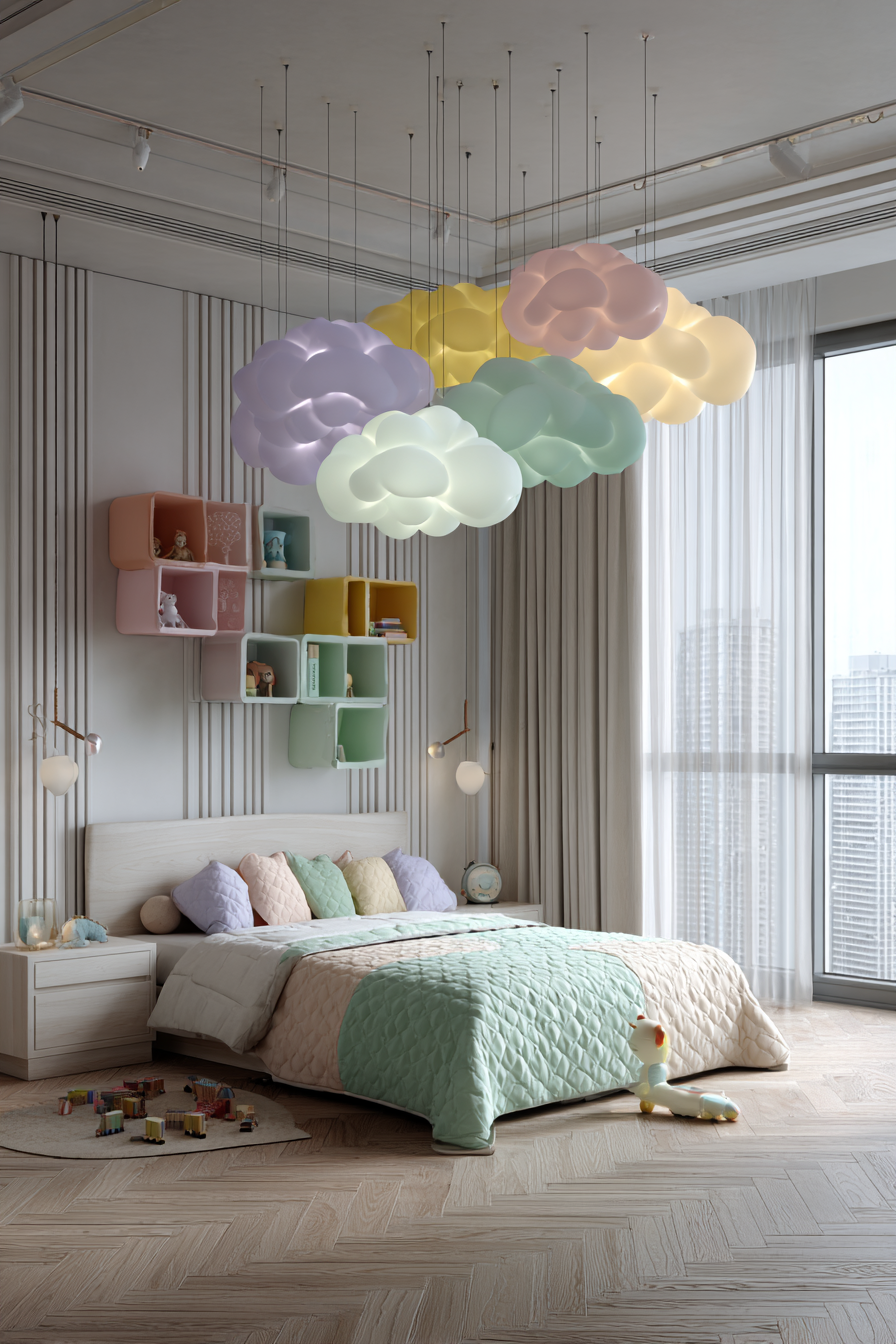
Cloud-shaped shelves in graduated colors hold books and small toys. The floating shelves add functional storage with whimsical shapes. The color coordination continues the rainbow theme subtly. A rainbow mobile in muted tones hangs from the ceiling. The gentle movement adds visual interest overhead.
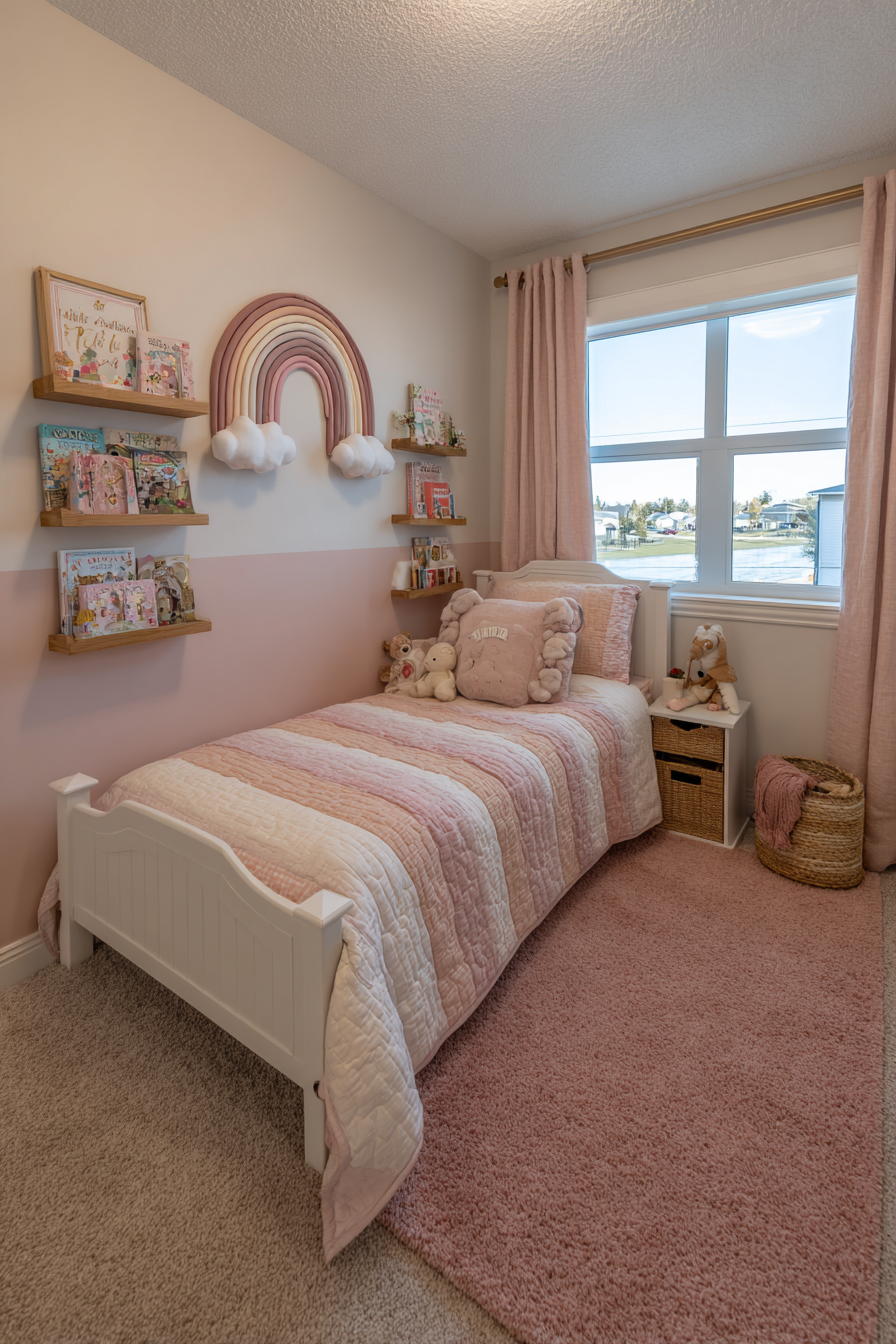
The color scheme remains gentle and calming throughout. The muted rainbow avoids harsh primary colors common in children’s spaces. The sophisticated palette transitions through multiple developmental stages. Morning light showcases the whimsical color progression beautifully. The thoughtful design details create cohesive environments.
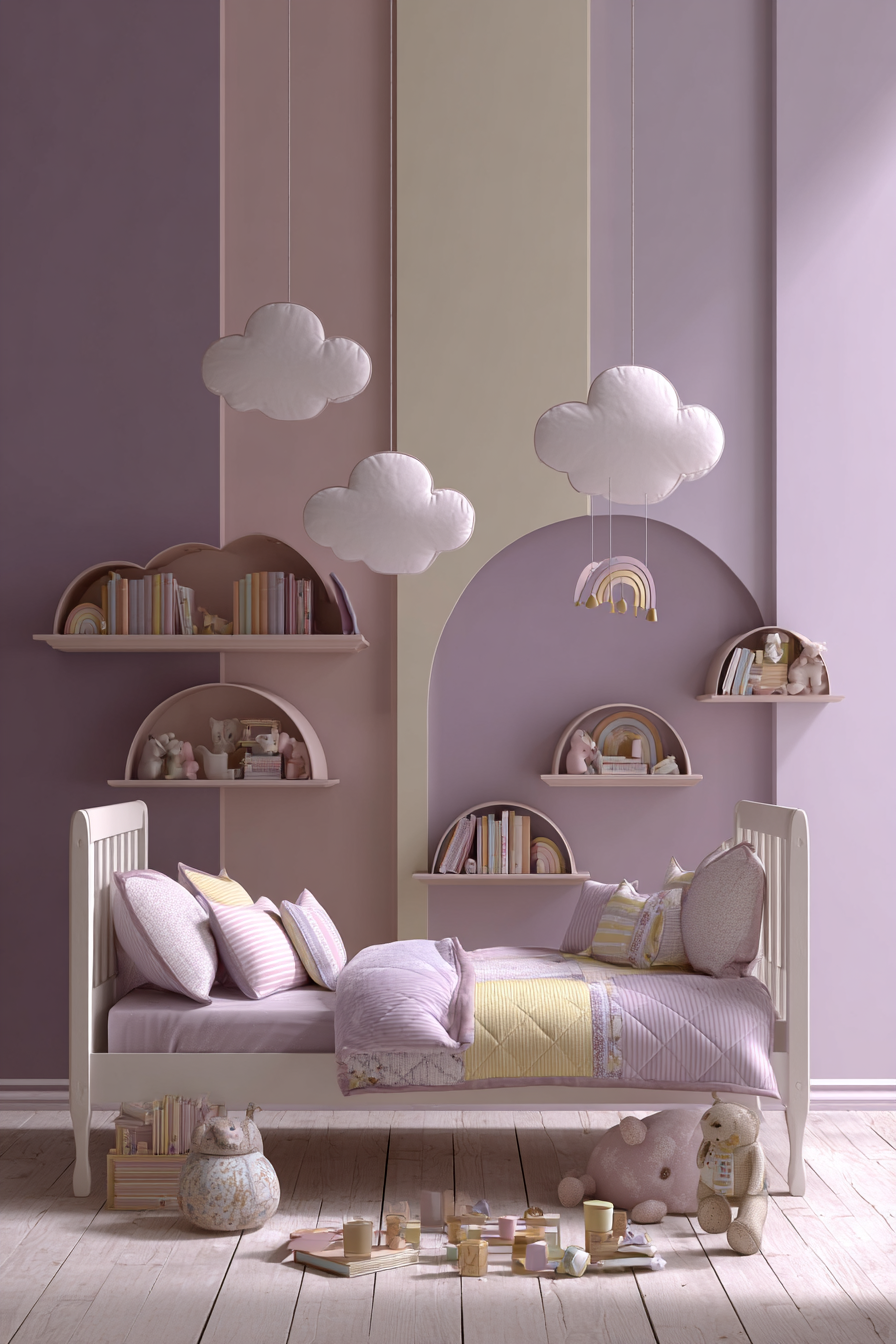
The rainbow theme proves that colorful rooms needn’t feel chaotic. The ombre technique provides interest without visual competition. The design demonstrates sophisticated approaches to playful themes.
Key Design Tips:
- Use at least three colors in ombre progressions for smooth transitions
- Choose muted versions of rainbow colors instead of bright primaries
- Blend colors with sponge or spray techniques for seamless gradients
- Add coordinating rainbow elements in bedding and accessories
- Install cloud-shaped shelves for thematic storage solutions
- Keep furniture white or neutral to showcase colorful walls
Why These Toddler Girl Room Designs Work Best
These designs represent thoughtful approaches to creating nurturing childhood environments. Each concept demonstrates a balance between safety, functionality, and aesthetic appeal. The variety accommodates different parenting philosophies from Montessori principles to traditional styles.
Material choices throughout these designs prioritize child safety and longevity. Natural woods, organic cottons, and non-toxic finishes ensure healthy indoor environments. These materials age gracefully while withstanding active toddler use. The emphasis on quality over quantity teaches valuable lessons about mindful consumption.
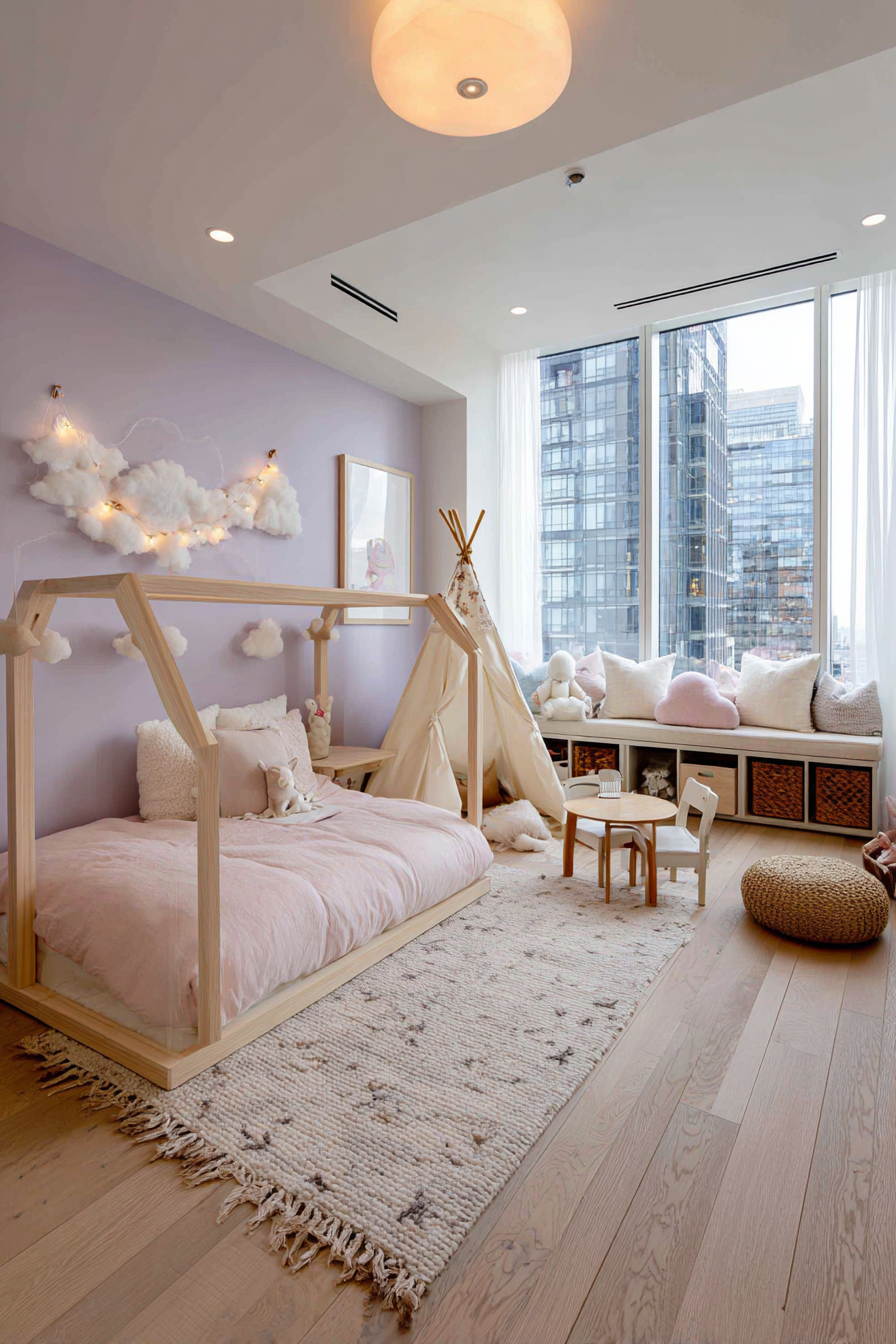
Color theory applications range from calming neutrals to cheerful pastels throughout. Muted palettes prevent overstimulation while maintaining visual interest. The sophisticated color approaches grow with children beyond toddler years. Strategic accent colors allow easy updates as preferences evolve.
Storage solutions address the practical challenge of toy organization consistently. Low, accessible systems teach independence and responsibility early. The combination of open and closed storage balances display and concealment. This practical approach reduces daily cleanup frustration significantly.
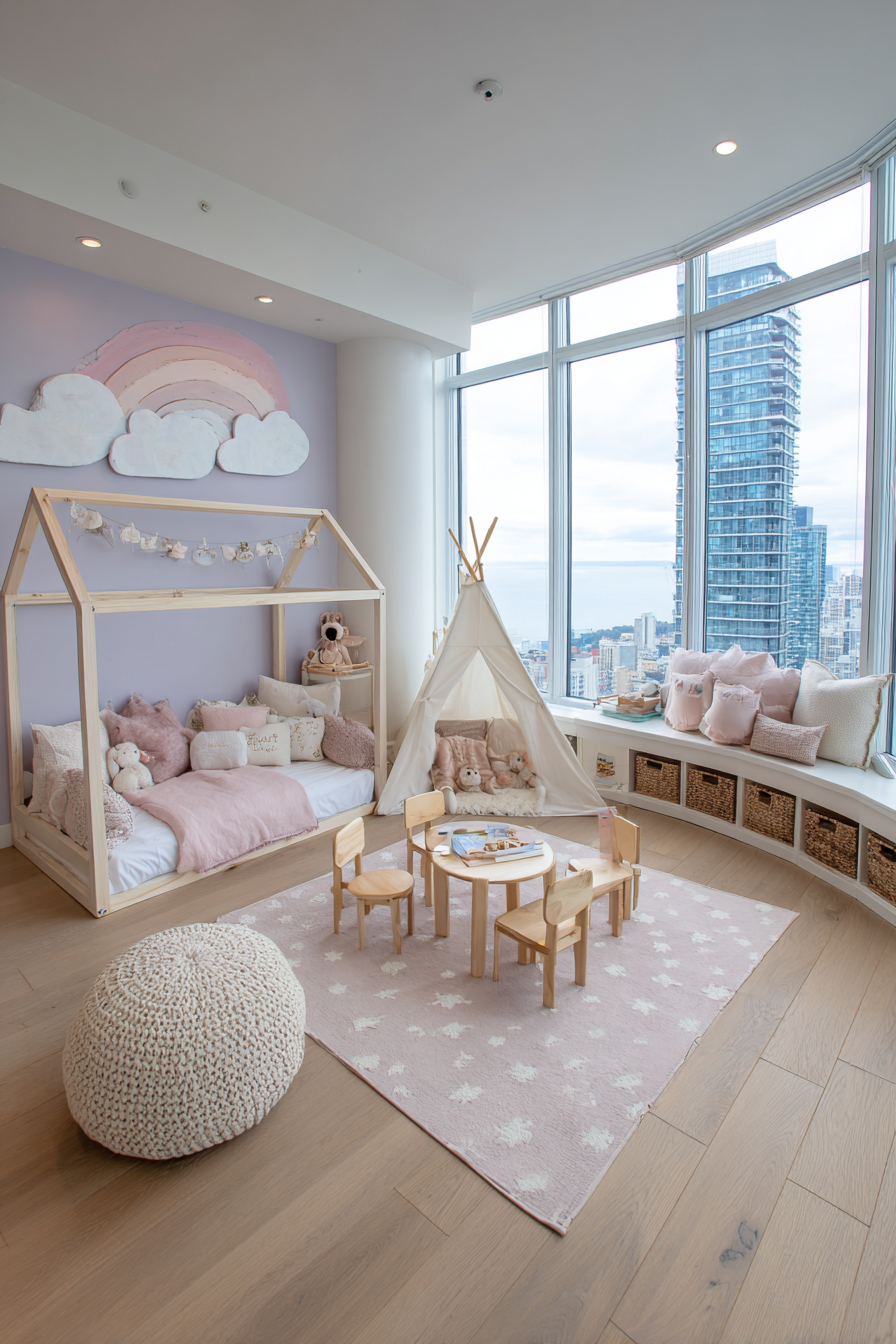
Space planning considerations accommodate various activities throughout the day. Defined zones for sleeping, playing, reading, and creating support healthy routines. The layouts work in both spacious rooms and compact urban apartments. Vertical storage solutions maximize limited square footage effectively.
These design concepts prove that toddler rooms needn’t sacrifice style for function. The approaches demonstrate how safety features integrate seamlessly into beautiful spaces. Each design supports developmental needs while respecting aesthetic sensibilities. The versatility ensures options for diverse family situations and preferences.
Conclusion
These twenty toddler girl room designs demonstrate that early childhood spaces deserve thoughtful planning. The concepts balance safety requirements with developmental support and aesthetic beauty. From Montessori-inspired minimalism to whimsical princess themes, each approach offers distinct advantages.
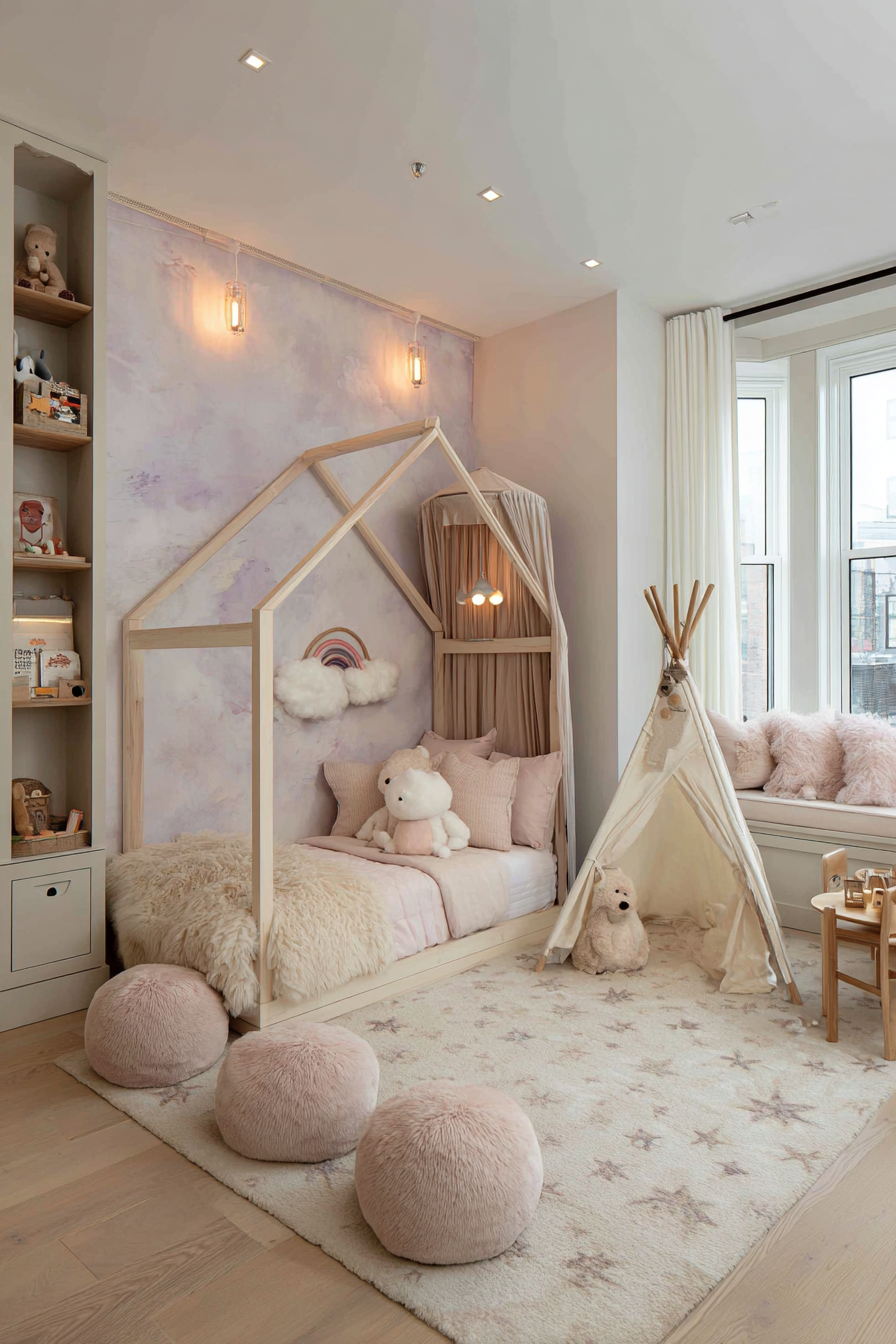
Key takeaways include the importance of accessible storage, child-height furniture, and quality materials. Safety features integrate seamlessly into attractive designs throughout. Color choices affect mood and development significantly. Natural materials and non-toxic finishes create healthier environments.
Start by identifying your parenting philosophy and your child’s temperament. Consider available space and budget constraints realistically. Implement changes gradually rather than attempting complete transformations overnight. Remember that the best toddler room grows and adapts alongside your child. These designs provide inspiration for creating nurturing spaces where imagination and development flourish together.
